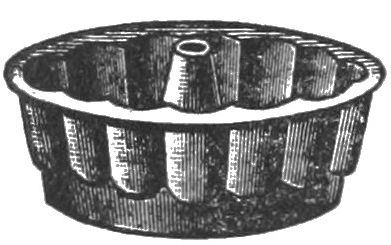
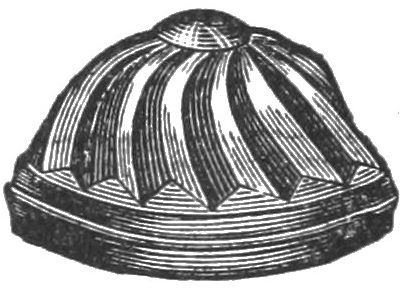
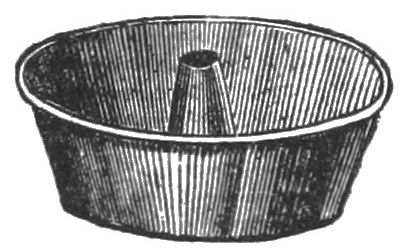
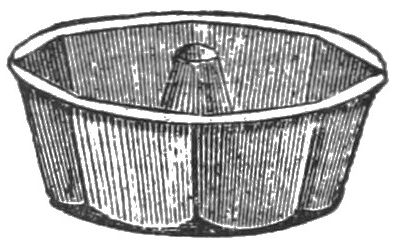
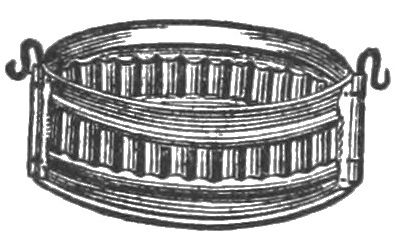
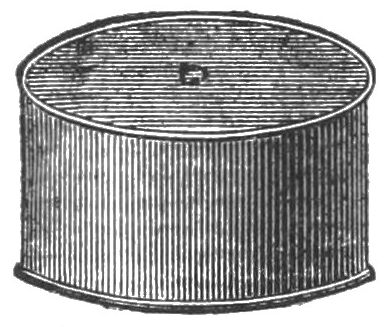
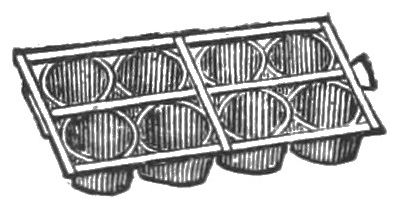
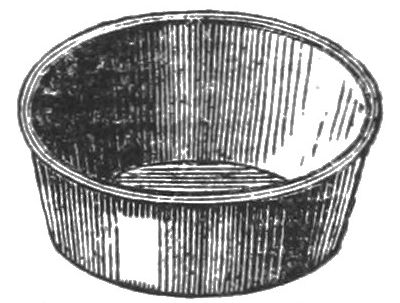
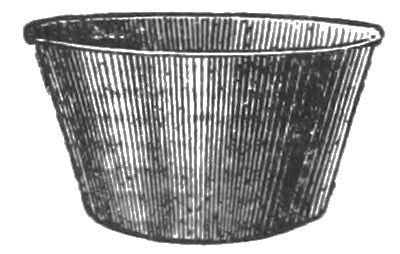
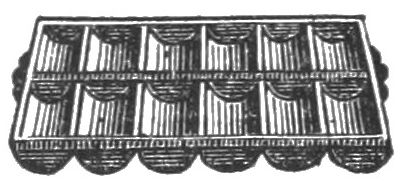
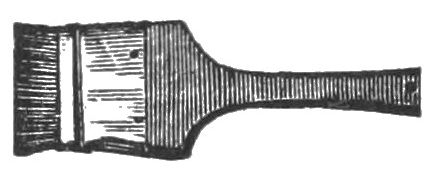
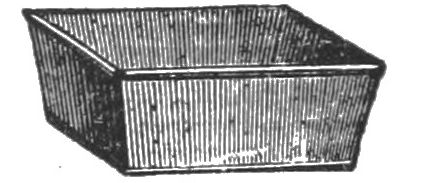
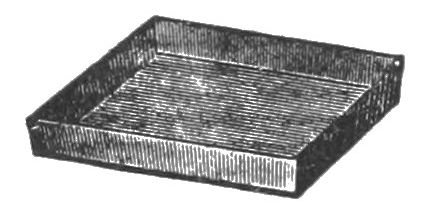
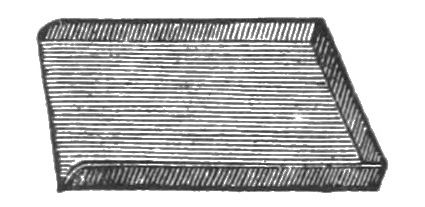
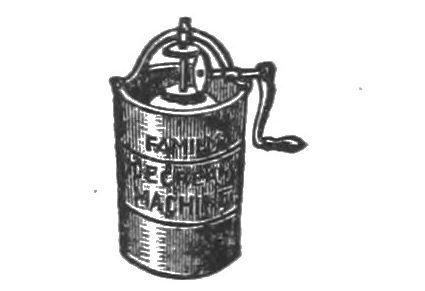
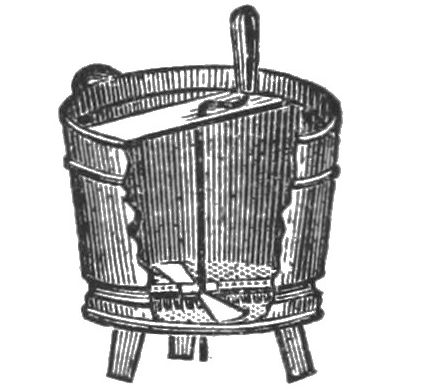
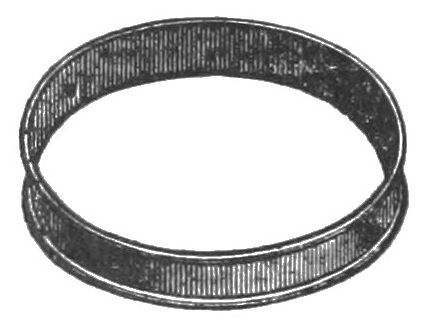
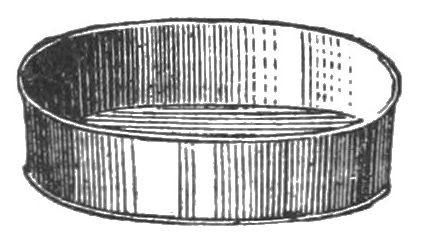
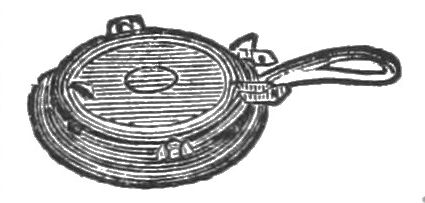
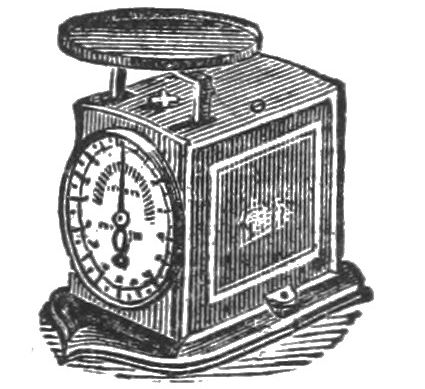
The cuts on this page represent utensils used in the various kinds of baking, and are referred to in the Receipts according to numbers.
Fig. I. 2 Qt. Cake Mold.
Fig. II. 3 Qt. Pudding Mold.
Fig. III. 2 Qt. Cake Mold.
Fig. IV. 3 Qt. Cake Mold.
Fig. V. Timbale Mold.
Fig. VI. Pudding Mold.
Fig. VII. Muffin Pans.
Fig. VIII. Oval Pudding Pan.
Fig. IX. Lemon Cake Pan.
Fig. X. Cast Gem Pans.
Fig. XI. Wash Brush.
Fig. XII. Tin Bread Pan.
Fig. XIII. Square Cake Pan.
Fig. XIV. Baking Sheet.
Fig. XV. One Gallon Ice Cream Freezer.
Fig. XVI. Flour Sieve.
Fig. XVII. Muffin Rings.
Fig. XVIII. Oval Tin Pan.
Fig. XIX. Waffle Iron.
Fig. XX. Family Scale.
DO NOT BUY BAKING POWDER LOOSE OR IN BULK.—(What is meant by loose is
weighed out in any quantity asked for.) All examinations made by Boards of Health, Government
Chemists, and others, prove loose powders are, almost without exception, made from
alum, and at a cost of about one tenth of what a pure Cream Tartar powder, like the “Royal”
Baking Powder, can be made for. The argument that the consumer will save, in the purchase
of such poisonous stuff, the cost of can, label, etc., is used simply to enable the seller to make
a larger profit in selling an alum bulk, or loose, powder at the expense of the unsuspecting
consumer, than can be made by selling the absolutely pure “Royal” brand. Remember this,
and insist on getting the “Royal” in cans.
Do not buy alum baking powders under any circumstances.
GENERAL DIRECTIONS
MUST BE CAREFULLY READ BY EVERY ONE USING THIS BOOK
Hints on Baking.—To achieve perfect success, the cook must use discrimination and
care. Some flour requires more water, or milk, than others; so that the quantity
may have to be varied to make dough of a proper consistency. Different bakings will
vary as to time and heat required, and should, therefore, be examined occasionally. To
ascertain whether the bread is sufficiently done in the center of the loaf or cake, thrust a clean
straw or long thin splinter into it. If done, there will be no dough on it when drawn out.
Measure the flour, and be careful to mix with it the baking powder in a dry state, and before sifting.
You can always substitute water for milk, or milk for water; butter for lard, or lard for
butter. The number of eggs may be increased or diminished, or, in plainer cake, etc., dispensed
with entirely. Where fewer eggs are used than directed, always use a little more baking
powder. Never use sour milk.
When about to cut new bread or cake, heat the knife very hot; this will prevent its
crumbling.
Cake Baking.—For a plain cake made with one pound of flour, Royal Baking Powder,
etc., the time to be allowed in baking would be from 40 to 50 minutes; at the outside not more
than 1 hour. Very rich cakes, in which butter and eggs predominate, take, of course, very
much longer time to bake, a pound cake taking from 1½ to 2 hours, and a bride’s cake 3½.
On no account should an oven be too hot when the cake is put in—that is, hot enough to
brown at once; if so, in 5 minutes the whole outside will be burned and the interior will stand
little chance of being baked. The old plan of feeling the handle of the oven door to test the
heat is not always successful; it is better to sprinkle a little flour inside and shut the door for
about 3 minutes; if at the end of that time it is of a rich light brown, the cake may be put in,
but if burned the heat must be lessened.
In baking loaf cake, remember that unless you place a piece of paper over for protection at
first, a top crust will be formed at once that prevents the raising. When cake is well raised,
remove the paper for browning on top.
Advice to the Cook.—Great cleanliness, as well as care and attention, are required
from a cook. Keep your hands very clean; try to prevent your nails from getting black or
discolored; don’t “scatter” in your kitchen; clean up as you go; put cold water into each
saucepan or stewpan as you finish using it. Dry your saucepans before you put them on the
shelf. Scour tins with good mineral soap and rinse thoroughly in hot water. In cleaning a
frying-pan, scour the outside as well as the inside. In cleaning greasy utensils, such as the
soup-pot and frying-pan, wipe off the worst of the grease with soft paper (which can be
burned), then soak in warm water to which soap-powder or a little ammonia has been added,
finishing with mineral soap. Wash your pudding-cloths, scald, and hang them to dry directly
after using them; air them before you put them away, or they will be musty: keep in dry
place. Be careful not to use a knife that has cut onions till it has been cleaned. Keep sink
and sink-brush very clean; be careful never to throw anything but water down sink. Do not
throw cabbage water down it; throw it away out of doors; its smell is very bad. Never have
sticky plates or dishes; use very hot water for washing them; when greasy, change it. Take
care that you look at the meat the butcher brings, to see that it is good. Let there be no
waste in the kitchen.
Bread and Rolls
Bread was first made without leaven,
heavy and solid. Then yeast was discovered,
and yeast-risen bread came into
use throughout the civilized world. Finally
baking powder was devised, the most healthful,
economical, and convenient of all leavening
or lightening agents.
Yeast is a living plant. Mixed with the
dough it causes fermentation and destruction
of a part of the flour, and this produces carbonic-acid
gas. The bubbles of this gas become
entangled in the dough, swelling it up and
making it spongy. In this process, however,
a part of the most nutritious elements of the
flour (estimated at ten per cent.) is destroyed
in producing the leavening gas; there is always
danger of sour dough, and there is a
delay of many hours for the sponge to rise.
Perfect bread is that in which wheat is transposed
into an available food without loss of
any of its valuable properties.
Royal Baking Powder is now largely used in
place of yeast to leaven bread. It does precisely
the same work—that is, swells up the
dough and makes it porous and spongy. But
the process is not destructive: the baking
powder by itself produces the leavening gas.
No part of the flour is decomposed or destroyed.
Moreover, there is no mixing or
kneading with the hands, no setting of sponge
overnight, as the loaf is mixed and ready for
the oven at once. Bread thus made cannot
sour, but will retain its moisture and freshness,
and may be eaten while hot or fresh without
distress even by persons of delicate digestion.
The ease with which Royal Baking Powder
bread is made, its cleanliness and healthfulness,
have caused it to supersede yeast bread
with many of the best pastry cooks.
In making this bread the materials and
utensils should be brought together before the
mixing of the dough is begun. The fire must
be looked to so as to secure a steady, moderate
heat. Remember to mix the flour and Royal
Baking Powder together before sifting, and
sift thoroughly before wetting.
Royal Baking Powder Bread.—1 quart flour,
1 teaspoon salt, ½ teaspoon sugar, 2 heaping
teaspoons Royal Baking Powder,* ½
medium-sized cold boiled potato, and water.
Sift together thoroughly flour, salt, sugar, and
baking powder; rub in the potato; add sufficient
water to mix smoothly and rapidly into a
stiff dough, about the consistency of cake batter:
about a pint of water to a quart of flour
will be required—more or less according to the
brand and quality of the flour used. Do not
make a stiff dough as in yeast bread. Put the
dough into a greased pan 4½ by 8 inches, and
4 inches deep, filling about half full. The loaf
will rise to fill the pan when baked. Bake in
very hot oven about 45 minutes, placing paper
over first 15 minutes’ baking, to prevent crusting
too soon on top. Bake immediately after
mixing.
* Perfect success can be had only with the Royal Baking
Powder.
Household Bread.—Sift twice together 1
quart of flour, 1 teaspoon salt, 2 heaping teaspoons
Royal Baking Powder. Make a well
in the center; add gradually sufficient cold
liquid—water, milk, or equal quantities of
each—to mix to a stiff batter or soft dough;
this will require about 1 pint of liquid. Turn
at once into a greased loaf-pan (fig. XII),
smooth the top with a knife dipped in melted
butter, and bake immediately in a moderate
oven about 1 hour. When done take from the
pan, moisten with the hand dipped in cold
water, wrap in bread-cloth till cold.
Graham Unfermented Bread.—1½ pints
Graham flour, ½ pint flour, 1 tablespoon sugar,
1 teaspoon salt, 2 teaspoons Royal Baking
Powder, 1¼ pints milk, or equal parts milk
and water. Sift together Graham flour, flour,
sugar, salt, and powder; add the milk, or milk
and water; mix rapidly into soft dough, which
put into greased tin (fig. XII). Bake in rather
hot oven about 40 minutes. Protect loaf with
paper first 15 minutes.
Brown Bread.—1 pint Indian corn meal, 1
pint rye flour, 1 teaspoon brown sugar, 1 teaspoon
salt, 2 teaspoons Royal Baking Powder,
1 tablespoon butter or lard, ¾ pint milk. Sift
together corn meal, rye flour, sugar, salt, and
powder. Rub in the shortening; add the milk,
and mix the whole into a batter. Put into
greased tin (fig. XII), and bake about 40 minutes
in rather hot oven. Protect at first with
paper.
Brown Bread, 2.—Mix together 3 cups
Graham flour, 1 cup wheat flour, 2 teaspoons
Royal Baking Powder, 1 teaspoon salt; rub in
1 tablespoon butter or other shortening. Beat
3 eggs; add 1 cup milk and 1 tablespoon molasses;
stir into dry mixture. Add more milk
if needed to make a drop batter. Put into a
greased loaf-pan (fig. XII), smooth with knife
dipped in cold water. Bake about 1 hour in
moderate oven.
Boston Brown Bread.—½ pint flour, 1
pint Indian corn meal, ½ pint rye flour, 2 potatoes,
1 teaspoon salt, 1 tablespoon brown
sugar, 2 teaspoons Royal Baking Powder, ½
pint water. Sift flour, corn meal, rye flour,
sugar, salt, and baking powder together thoroughly.
Peel, wash, and boil well 2 mealy potatoes,
rub them through a sieve, diluting with
water. When this is quite cold use it to mix
flour, etc., into a batter. Pour into well-greased
mold (fig. VI) having a cover. Place it in
saucepan half full of boiling water, where the
loaf will simmer 1 hour, without water getting
into it. Remove it, then take off cover, finish
by baking in fairly hot oven about 30 minutes.
Boston Brown Bread, 2.—1 cup corn meal,
2 heaping cups rye meal, 1 teaspoon salt, ½
teaspoon soda, 1 teaspoon Royal Baking Powder,
1 cup molasses. Mix dry ingredients; add
molasses and 1 pint warm water; beat smooth.
Pour at once into greased mold (fig. VI) with
cover, steam or boil 3 hours. Uncover, set
in oven 10 minutes.
Boston Brown Bread, 3.—2 cups yellow
Indian corn meal, 1 cup rye meal, 1 cup flour,
2 cups milk, 1 cup molasses, ½ teaspoon salt,
3 teaspoons Royal Baking Powder. Mix well
together, pour into greased brown-bread mold,
steam 4 hours. Dry off 10 minutes in moderate
oven.
Norwegian Bread (for Dyspeptics).—1
pint barley meal, ½ pint Graham flour, ½ pint
flour, 1 teaspoon salt, 2 teaspoons Royal Baking
Powder, 1 pint milk. Sift together barley
meal, Graham flour, flour, salt, and powder;
mix into firm batter with the milk; pour into
greased tin (fig. XII), bake in moderate oven
about 40 minutes. Cover with paper 20
minutes.
Oatmeal Bread.—½ pint oatmeal, 1½ pints
flour, ½ teaspoon salt, 3 teaspoons Royal Baking
Powder, ¾ pint milk. Boil oatmeal in 1½
pints salted water 1 hour; add milk; set
aside until cold. Then place in bowl, sift together
flour, salt, and powder, and add. Mix
smoothly and deftly. Bake in greased tin (fig.
XII) about 45 minutes, protected with paper
20 minutes.
Peculiars.—1 pint flour, sifted with 1 teaspoon
Royal Baking Powder and a little salt;
add 1 egg; mix with 1 pint sweet milk, beat
well to a batter, and bake quickly in buttered
gem-pans already hot.
Pennsylvania Brown Bread.—Mix well
together 1 quart Graham flour, 1 pint Indian
corn meal, 2 scant teaspoons salt, 2 scant teaspoons
Royal Baking Powder. Dissolve 1 scant
teaspoon soda in 1 teaspoon boiling water;
mix with 1 cup molasses. To the dry ingredients
add 1 quart cold water, then the molasses.
Beat 1 minute, pour into 2 well-greased
molds, steam or boil 4 hours. Dry off on pan
in moderate oven 10 minutes.
Graham Lunch Bread.—1½ pints Graham
flour, ½ pint flour, 1 tablespoon sugar, 1
teaspoon salt, 2 teaspoons Royal Baking Powder,
¾ pint milk. Sift together Graham
flour, flour, sugar, salt, and powder; add the
milk; mix into smooth dough that can be easily
handled. Flour the board, turn out dough,
give it a quick, vigorous additional kneading to
complete its smoothness; then divide into four
large pieces, which form into long loaves, lay
them just touching in a square shallow cake-pan
(fig. XIII), wash them over with milk.
Bake in rather hot oven 30 minutes. When
removing from oven rub them over with a little
butter on a clean piece of linen.
Corn Bread (New Orleans).—1½ pints Indian
corn meal, ½ pint flour, 1 tablespoon
sugar, 1 teaspoon salt, 2 heaping teaspoons
Royal Baking Powder, 1 tablespoon butter or
lard, 1¼ pints milk, 2 eggs. Sift together corn
meal, flour, sugar, salt, and powder; rub in the
shortening, add eggs (beaten) and the milk;
mix into a moderately stiff batter; pour from
bowl into shallow cake-pan (fig. XIII). Bake
in rather hot oven 30 minutes.
St. Charles Corn Bread.—Beat 2 eggs, add
1 pint milk, 1 pint Indian corn meal, 1 tablespoon
melted butter, 1 teaspoon salt, 1 teaspoon
Royal Baking Powder. Beat hard 2
minutes, pour into greased pan (fig. XIII),
bake about 30 minutes in hot oven.
Loaf Corn Bread.—Scald 1 pint milk; dissolve
in it 1 tablespoon butter, ½ cup sugar,
1 teaspoon salt. While on fire sift in sufficient
Indian corn meal to make a thick mush, cook 5
minutes, and set away till cold; add 3 beaten
eggs, 2 cups flour mixed with 2 teaspoons Royal
Baking Powder, and turn into greased loaf-pan.
Bake about 2 hours in moderate oven,
and serve hot.
Nonpareil Corn Bread.—2 heaping cups Indian
corn meal, 1 cup flour, 2½ cups milk, 1
tablespoon lard, 2 tablespoons sugar, 2 teaspoons
Royal Baking Powder, 1 teaspoon salt.
Beat 2 eggs, whites and yolks separately. Sift
together dry ingredients, melt lard. Mix all
together, beat hard 1 minute, turn into greased
shallow pan, and bake about ½ hour in hot
oven.
Spider Corn Bread.—Beat 2 eggs with 2
tablespoons sugar. Add 1 pint milk, 1 teaspoon
salt, 1⅓ cup Indian corn meal, ⅓ cup
flour, 1 teaspoon Royal Baking Powder. In a
spider melt 2 tablespoons butter; turn so as to
grease sides. Pour in batter, add 1 cup milk,
but do not stir. Bake about 30 minutes in hot
oven. When done it should have a streak of
custard through the middle.
Rice and Indian Bread.—Beat 3 eggs very
light; add 1 pint milk, 2 cups white Indian
corn meal, 1 cup cold boiled rice, 2 tablespoons
melted butter, ½ teaspoon salt, 2 teaspoons
Royal Baking Powder, ½ cup more milk. Beat
hard, bake in shallow greased pan in hot oven.
Delicate Graham Bread (for Invalids).—1
pint Graham flour, 1 pint flour, 1 teaspoon
sugar, 1 of salt, 2 of Royal Baking Powder.
Sift all well together, rejecting coarse bran
left in sieve; add 1½ pints milk. Mix quickly
into smooth, soft dough. Bake in 2 small
greased tins (fig. XII) 25 minutes. Protect
with paper 10 minutes.
Entire Wheat Bread.—1 quart entire
wheat flour, 1 teaspoon salt, 1 teaspoon sugar,
2 teaspoons Royal Baking Powder. Sift all
well together; add sufficient liquid (water,
milk, or equal quantities of each) to mix to a
very thick batter or soft dough. Turn at once
into a greased loaf-pan (fig. XII), smooth with
knife dipped in cold water, and bake about 1
hour in moderate oven.
Rye Bread.—1 pint rye flour, ½ pint Indian
corn meal, ½ pint wheat flour, 1 teaspoon
sugar, 1 teaspoon salt, 2 teaspoons Royal Baking
Powder, 1 tablespoon butter or lard, ¾ pint
milk. Sift together rye flour, corn meal, flour,
sugar, salt, and powder; rub in the shortening;
add milk. Mix into smooth batter. Pour
into well-greased tin (fig. XII), bake in moderate
oven about 45 minutes. Protect loaf with
paper first 20 minutes.
Mush Bread.—1 pint milk cooked in a double
boiler, with sufficient Indian corn meal to
make a thick mush. Cook 1 hour; add 1 tablespoon
butter; stir, let cool; add 3 eggs, whites
and yolks beaten separately, 1 cup flour, ½ teaspoon
salt, 1 teaspoon Royal Baking Powder.
Turn into shallow greased pan, bake 40 minutes
in moderate oven.
Rice Bread.—1 cup cold boiled rice, 1 cup
white Indian corn meal, 1 cup wheat flour, 1
teaspoon Royal Baking Powder, 2 eggs, ½ teaspoon
salt, 1 tablespoon melted butter, 1 cup
milk. Mix the dry ingredients; add beaten
eggs mixed with milk and the melted butter.
Pour into shallow greased pans. Bake 30 minutes
in a moderate oven.
Hominy Bread.—Mix together 1 pint soft-boiled
hominy, 1 teaspoon salt, 2 tablespoons
melted butter, 4 beaten eggs, 2 cups milk.
Mix together 1 cup flour, 2 teaspoons Royal
Baking Powder; add to batter, with more flour
if needed to mix to a drop batter. Beat hard,
bake in a shallow pan in very hot oven.
Graham Rolls.—1 pint Graham flour, 1 pint
wheat flour, 1 teaspoon salt, 2 teaspoons Royal
Baking Powder, 1 tablespoon butter or lard,
¾ pint milk. Sift together Graham flour, flour,
salt, and powder; rub in the shortening; add
milk, and mix the whole into smooth dough
that can be handled—not too soft; flour board,
turn it out, and form into rolls shape and size
of large fingers. Lay them on baking-sheet
(fig. XIV) so that they will not touch. Wash
their surfaces with soft brush (fig. XI) dipped
in milk to glaze them. Bake in hot oven
from 10 to 12 minutes.
Breakfast Rolls.—1½ pints flour, ½ pint
Indian corn meal (white), 1 teaspoon salt, 2
teaspoons Royal Baking Powder, 1 tablespoon
butter or lard, ¾ pint milk. Sift together
flour, corn meal, salt, and powder; rub in
shortening; add the milk, mix smoothly into
rather firmer dough than usual. Flour the
board, turn out the dough, give it 1 or 2 turns
to complete its smoothness. Divide it, thus
prepared, into pieces size of an egg; again divide
these in half, which roll out under the
hand until they are long and half the size of
one’s little finger. Lay on greased baking-tin
(fig. XIV) so that they do not touch, wash
them over with milk. Bake in hot oven 7 or 8
minutes.
Lunch Rolls.—1 quart flour, 1 teaspoon salt,
2 teaspoons Royal Baking Powder, 1 tablespoon
butter or lard, 1 pint milk. Sift together
flour, salt, and powder; rub in the shortening;
add milk, mix to a smooth dough to be easily
handled. Flour the board, turn out dough, give
1 or 2 quick kneadings to give it smoothness.
Roll out little over ½ inch thick, cut out with
round cutter about 2½ inches in diameter;
lay them on greased baking-tin (fig. XIV),
just touching (in rows evenly), wash over with
milk, bake in fairly hot oven 25 minutes.
Wash them over again with milk when taken
from oven.
Twist Rolls.—Prepare dough as for lunch
rolls. Cut in pieces size of egg. Roll each
with hands into plain roll tapering at ends
and 5 inches long. Lay 3 together; begin in
middle and braid to end; turn over and braid
opposite end. Mold and twist all the pieces of
dough in the same way. Lay well apart on
flat greased pans. Brush with milk, bake
golden brown in very hot oven.
Dinner Rolls.—Prepare dough as for lunch
rolls, but slightly stiffer. Knead and roll out
quite thin. Cut in strips 3 inches wide. Roll
strips up very tight; they should not be too
thick. Lay well apart on greased flat pans,
brush with milk, and bake in very hot oven.
French Rolls.—Make dough as for lunch
rolls. Knead on board. Divide into pieces
size of an egg. Form each into a short, thick,
tapering roll. Put together by twos, side by
side, pinching ends together a little. Place
on flat greased pans. Brush with milk. Bake
in very hot oven.
Parker House Rolls.—Prepare firm dough
as for dinner rolls. Knead and roll out ½
inch thick. Cut into 3-inch circles. Press
pencil down across middle of each; rub edges
with soft butter. Double each, lay 1 inch
apart on flat greased pans. Brush with milk,
and bake in hot oven.
Fruit Rolls.—Mix together 1 quart flour, 1
teaspoon salt, 2 tablespoons sugar, 2 teaspoons
Royal Baking Powder; rub in 2 tablespoons
butter. Cut fine ¼ pound citron, seed and
halve ¼ pound raisins. Mix fruit evenly with
dry ingredients, make to a firm dough with
milk. Knead on board for a moment, divide
into pieces size of egg, make into long rolls,
lay 1 inch apart on flat greased pans, brush
with milk. Bake in a very hot oven.
Hot Biscuits, Cakes, and Muffins
Experienced housekeepers agree that
breakfast is difficult to cater for. Even
the appetite ordinarily easy to satisfy is
likely to be captious when approaching the
first meal of the day. Every article of food
upon the breakfast-table, therefore, should be
perfect—the coffee as clear as amber, the
bacon white and crisp, the biscuits flaky, tender,
delicious.
As a nation we approve of hot-breads, and
most of all at the breakfast-table. And while
we eat and enjoy them, we have the satisfaction
of knowing that American methods and
American cookery have made them healthful
as well as appetizing and nutritious.
And of all the breakfast foods, nothing is
so appetizing, so appetite-whetting, so always
dependable, so satisfying, as the light, flaky,
hot biscuit, with a crisp, brown crust, just
from the oven, broken apart without use of
knife, and spread with butter; or, to top off
the meal, with honey, jam, or marmalade.
The very simplicity of the methods of making
and the familiar, every-day use of this
little hot bread-morsel have, however, sometimes
led to lack of care in its preparation, so
that we too seldom find it in perfection upon
our tables.
It is the object of this chapter to stimulate
an interest in and awaken a love for this most
healthful and economical of our purely American
foods, so that it will be found, as it deserves
to be, a prominent part of every day’s
food in every household.
With a basis of flour, salt, and Royal Baking
Powder, we can add other ingredients to vary
and enrich the cakes and biscuits generally
known to the housewife, and produce in almost
endless variety breakfast and luncheon
foods that shall be dainty and delicious or substantial
and hearty.
Are eggs scarce and high, does too much
shortening disagree with some member of the
family, Royal Baking Powder permits the lessening
of both or either of these ingredients,
without impairing the delicacy or digestibility
of the finished biscuit.
Royal Baking Powder is pure and healthful,
and its use in excess can produce no harm; yet
for cooking results it is best to be guided by the
quantity specified in the receipts. Baking
powder could be added until a dry, powdery
biscuit resulted.
The mixing of the baking powder, flour, and
other dry ingredients should be thorough.
This is imperative if a delicate, evenly leavened
biscuit is wanted. The other ingredients
can then be added, following the special directions
as given in each receipt.
In using shortening for biscuits, especially
through the winter season, with some limitation,
good, sweet home-made lard may take
the place of butter. Butter will color slightly
yellow; lard will whiten the biscuits. This
substitution will not do when considerable
shortening is called for, as in cake; but in
receipts where the quantity does not exceed
2 ounces or tablespoons to the quart of flour,
butter may, in the majority of cases, be replaced
by lard without impairing the taste.
Biscuits are mixed to a soft dough, which is
turned out, patted down or rolled to a proper
thickness, and then cut out and baked. From
long experience it has been found that the result
is much better and the food more digestible
when the finished biscuit is small and not too
thick. The scientific reason for this is that the
oven heat necessary for biscuit, if they are made
very large, will brown the outside before the
center is as thoroughly baked as it ought to be.
The dough should be rolled out until ½ inch
thick; the biscuits should be of medium size,—2
inches or less across,—and placed slightly
apart in the pans. A favorite cutter of expert
biscuit-makers is the open end (not the cover)
of a ¼-pound Royal Baking Powder can. A
good oven heat will bake the biscuit perfectly
in from 15 to 20 minutes, and even a dyspeptic
can eat them without fear of consequences.
The biscuit may, of course, be made thicker or
thinner, as more or less of the soft inside part
may be preferred, but the time of baking must
be regulated accordingly.
The same directions will apply to hot baking
powder breads made with a batter. If baked
in a sheet the batter should rarely be more
than an inch deep in the pan, sometimes less;
if in cups or molds they should not be more
than ⅔ full. This allows the heat to penetrate
the mixture quickly; the moisture and
heat start the baking powder into life; each
tiny grain of the powder acts on the materials
surrounding it; the dough or batter expands,
then is stiffened by the heat, and all the starch
grains are thoroughly and evenly cooked.
Royal Hot Biscuit.—1 quart flour, 1 teaspoon
salt, 2 teaspoons Royal Baking Powder,
1 tablespoon lard or butter, 1 pint sweet milk,
cold (never use sour milk); use cold water
when milk cannot be obtained. Sift together
flour, salt, and powder; rub in shortening;
add milk; form into smooth, consistent dough.
Flour the board, turn out dough, roll out to
thickness of ½ inch, cut with small round cutter;
lay them close together on greased baking-tin;
bake in good hot oven. Old biscuit
can be made fresh by moistening and placing in
oven until heated through.
Breakfast Biscuit.—Take 1 quart sweet
milk, ½ cup melted butter, a little salt, 2 teaspoons
Royal Baking Powder, flour enough to
make a stiff batter; do not knead into dough,
but drop into buttered tins from a spoon; bake
in a hot oven—unless it is hot they will not
be light and tender.
Emergency Biscuit.—2 cups flour, ½ teaspoon
salt, 1 teaspoon Royal Baking Powder;
mix and sift; rub in 1 tablespoon butter. Mix
to a thick batter with milk, drop by small
spoonfuls on greased pans, and bake in quick
oven.
Egg Biscuit.—Mix and sift well together 1
pint flour, ½ teaspoon salt, 1 teaspoon sugar,
1 teaspoon Royal Baking Powder. Beat 1 egg,
add ½ cup milk, stir into dry mixture, adding
more milk if necessary to mix to soft dough.
Turn out on board, knead for a moment, cut
into circles, place 1 inch apart on greased pans.
Brush with little beaten egg, and bake in very
hot oven.
Sandwich Biscuit.—Sift together 1 pint
flour, ⅓ teaspoon salt, 1 teaspoon Royal Baking
Powder. Rub in 1 heaping tablespoon butter.
Mix to a soft dough with milk. Roll out
⅜ inch thick. Cut into rounds. On ½ of the
rounds spread a little soft butter, add a thick
layer of finely chopped and seasoned cold
meat; cover with remaining rounds and press
together. Brush tops with milk, place 1 inch
apart on greased pans, and bake in hot oven.
Nut Biscuit.—Sift together 2 cups flour, ½
teaspoon salt, 1 heaping teaspoon Royal Baking
Powder. Rub in 1 heaping tablespoon butter,
add 1 cup ground or very finely chopped
nuts—English walnuts, hickory nuts, or
almonds—and 2 tablespoons sugar; mix to a
soft dough with milk. Mold with the hands
into small balls, place well apart on greased
pans, brush each with milk, put a pinch of
chopped nuts on top, and bake in hot oven.
Diamonds.—Prepare dough as for Royal
biscuit. Knead and roll out ½ inch thick.
Cut in strips 2 inches wide, then cut strips
into diamonds; place on greased pans 1 inch
apart, brush with milk, and bake in very hot
oven.
Royal Muffins.—Beat 3 eggs, add 1 pint
milk, ½ teaspoon salt, 1 teaspoon sugar, and
sufficient flour to make a drop batter—about
3 cups—into which has been thoroughly sifted
2 teaspoons Royal Baking Powder. Beat hard
for 1 minute, fill greased muffin-cups or -pans
⅔ full, bake in hot oven about 20 minutes.
Boston Muffins.—1½ pints flour, ½ pint
Indian corn meal, 1 tablespoon sugar, 1 teaspoon
salt, 2 teaspoons Royal Baking Powder,
1 tablespoon butter, 3 eggs, and 1 pint (full
measure) milk, 1 teaspoon extract cinnamon
(which may be omitted without detriment).
Sift together flour, corn meal, sugar, salt, and
powder; rub in butter or lard; add eggs,
beaten, milk, and extract cinnamon. Mix into
batter a little stiffer than ordinary griddle cake
batter. Have griddle heated regularly all
over; grease it, lay on it muffin-rings, also
greased; half fill them with batter. As soon
as risen to tops of rings, turn them over gently
with cake-turner; bake nice brown on either
side. They should bake in 7 or 8 minutes.
French Muffins.—1½ pints flour, 1 cup
honey, ½ teaspoon salt, 2 teaspoons Royal
Baking Powder, 2 tablespoons butter, 3 eggs,
and little over ½ pint milk or thin cream.
Sift together flour, salt, and powder; rub in
butter, cold; add beaten eggs, milk or thin
cream, and honey. Mix smoothly into batter
as for pound cake; about ½ fill sponge-cake
tins, cold and fully greased, and bake in good
steady oven 7 or 8 minutes.
Rice Muffins.—2 cups cold boiled rice, 1
pint flour, 1 teaspoon salt, 1 tablespoon sugar,
1½ teaspoons Royal Baking Powder, ½ pint
milk, 3 eggs. Dilute rice, made free from
lumps, with milk and beaten eggs; sift together
flour, sugar, salt, and powder; add to
rice preparation, mix into smooth, rather firm
batter; muffin-pans (fig. VII) to be cold and
well greased, then fill ⅔; bake in hot oven 15
minutes.
Hominy Muffins.—Same as rice muffins,
substituting 1 cup boiled hominy for the rice.
Royal Sally-Lunn Muffins.—1 quart flour,
1 tablespoon sugar, 1 teaspoon salt, 2 teaspoons
Royal Baking Powder, 1 tablespoon butter or
lard, 1 egg, 1¼ pints milk. Sift together
flour, sugar, salt, and powder; rub in shortening;
add egg, beaten, and milk; mix into
rather firm batter; muffin-pans to be cold and
well greased, then fill ⅔. Bake in hot oven
15 minutes.
Rye Muffins.—1 pint rye flour, ½ pint corn
meal, ½ pint flour, 1 teaspoon sugar, 1 teaspoon
salt, 3 teaspoons Royal Baking Powder,
1 tablespoon butter, 2 eggs, 1 pint milk. Sift
together rye flour, corn meal, flour, sugar,
salt, and powder; rub in butter; add beaten
eggs, and milk; mix into smooth, rather firm
batter; muffin-pans to be cold and well greased,
then fill ⅔. Bake in hot oven 15 minutes.
Royal Corn Muffins.—1 pint Indian corn
meal, 1 pint flour, 1 tablespoon sugar, 1 teaspoon
salt, 2 teaspoons Royal Baking Powder,
1 tablespoon butter or lard, 2 eggs, 1 pint milk.
Sift together corn meal, flour, sugar, salt, and
powder; rub in the shortening, add eggs, beaten,
and milk; mix into batter of consistence of cup
cake; muffin-pans to be cold and well greased,
then fill ⅔. Bake in hot oven 15 minutes.
English Muffins.—1 quart flour, ½ teaspoon
sugar, 1 teaspoon salt, 2 large teaspoons
Royal Baking Powder, 1¼ pints milk. Sift
together flour, sugar, salt, and powder; add
milk, and mix into smooth batter trifle stiffer
than for griddle cakes. Have griddle heated
regularly all over, grease it, and lay on muffin-rings
(fig. XVII); half fill them, and when risen
well up to top of rings, turn over gently with
cake-turner. They should not be too brown—just
a buff color. When all cooked, pull each
open in half, toast delicately, butter well, serve
on folded napkin, piled high and very hot.
Mountain Muffins.—Pour 1¼ cups scalding
milk on 1 cup white Indian corn meal;
cover; let stand 10 minutes; add 1 cup cold
boiled rice; mix; add 1 cup flour mixed with
3 teaspoons Royal Baking Powder, 2 tablespoons
sugar, 1 teaspoon salt, 2 well-beaten eggs, 2
tablespoons melted butter. Beat hard; bake in
greased muffin-pans in hot oven.
Berry Muffins.—1 pint flour, ¼ teaspoon
salt, 2 tablespoons melted butter, ¼ cup sugar,
2 small teaspoons Royal Baking Powder, 1 egg,
1 cup milk, 1 cup berries. Mix as for plain
muffins; add berries last, dusting them with a
little flour. Bake in muffin-pans in hot oven.
Graham Muffins.—1 quart Graham flour,
1 tablespoon brown sugar, 1 teaspoon salt, 2
teaspoons Royal Baking Powder, 1 egg, 1 pint
milk. Sift together Graham flour, sugar, salt,
and powder; add beaten egg and milk; mix
into batter like pound cake; muffin-pans (fig.
VII), well greased, ⅔ full; bake in hot oven
15 minutes.
Oatmeal Muffins.—1 cup oatmeal, 1½ pints
flour, 1 teaspoon salt, 2 teaspoons Royal Baking
Powder, 1 tablespoon lard, 2 eggs, 1 pint milk.
Sift together oatmeal, flour, salt, and powder;
rub in lard cold, add beaten eggs and milk;
mix smoothly into batter rather thinner than
cup cake; fill muffin-pans (fig. VII) ⅔ full;
bake in good hot oven 15 minutes.
Potato Muffins.—Boil and mash 3 potatoes;
add 1 teaspoon salt, 1 tablespoon butter; beat
well. Add 2 beaten eggs, ½ cup milk, flour to
make a drop batter, and 1 teaspoon Royal Baking
Powder. Bake on hot greased griddle in
greased rings.
Royal Egg Muffins.—1 quart flour, 1 tablespoon
sugar, 1 teaspoon salt, 1 large tablespoon
butter, 2 teaspoons Royal Baking Powder,
3 eggs, 1¼ pints milk. Sift together flour,
sugar, salt, and powder; rub in the butter;
add the beaten eggs and milk; mix quickly into
a smooth batter, a little firmer than for griddle
cakes; ⅔ fill cold, carefully greased muffin-pans
(fig. VII); bake in hot oven 15 minutes.
Sweet Muffins.—1 cup sugar, 1 egg, 1 tablespoon
melted butter, 1 pint sweet milk, 3 cups
flour, 2 teaspoons Royal Baking Powder, 1
teaspoon salt. Mix and sift dry ingredients;
add milk and beaten egg and butter. Beat
hard, bake in greased muffin-pans.
Butter Cakes.—Mix 1 quart flour, 1 teaspoon
salt, 2 teaspoons Royal Baking Powder.
Rub in 3 tablespoons butter. Mix to a soft
dough with milk, roll out ¾ inch thick, cut in
round cakes. Lay on a moderately hot greased
griddle, and when pale brown turn and brown
on other side. Tear open, butter liberally, and
send to table.
Gems.—1 pint flour, 1 teaspoon Royal Baking
Powder, ½ teaspoon salt, 1 teaspoon sugar, 3
teaspoons melted butter, 1 cup milk, 3 eggs,
whites and yolks beaten separately. Mix as
for muffins, adding beaten whites last; bake in
hot, well-greased iron gem-pans.
Royal Graham Gems.—1½ pints Graham
flour, ½ pint Indian corn meal, 1 teaspoon salt,
2 teaspoons Royal Baking Powder, 1¼ pints
milk. Sift together Graham flour, corn meal,
salt, and powder. Add the milk, and mix into
a moderately stiff batter. ½ fill cold gem-pans
(fig. X), well greased. Bake in a solid hot oven
10 to 12 minutes.
Rice Gems.—1 egg, 1 cup milk, 1 cup cold
boiled rice, 1 cup flour, 1 teaspoon Royal Baking
Powder, ¼ teaspoon salt, 1 tablespoon
melted butter. Mix as for plain gems, and bake
in hot oven in gem-pans.
Apple Gems.—Chop fine 4 sour apples, add
1 beaten egg, 2 tablespoons molasses, 1½ cups
Indian corn meal, 1½ cups flour, ½ teaspoon
salt, 2 teaspoons Royal Baking Powder. Add
sufficient milk to make thick drop batter, and
bake in hot greased gem-pans.
Crumpets.—Melt 1 heaping tablespoon lard;
add 2 beaten eggs and 1½ cups milk. Beat
well, add 1 teaspoon salt, 2 teaspoons sugar,
3 teaspoons Royal Baking Powder sifted with
2½ cups flour. Crumpet-rings are larger than
muffin-rings. Put greased rings on hot greased
griddle; fill ⅔ full with batter. Turn when
half done.
London Crumpets.—1½ pints flour, ½ teaspoon
salt, 1 teaspoon sugar, 2 teaspoons Royal
Baking Powder, 1 egg, nearly a pint milk
and cream in equal parts, 1 teaspoon extract
cinnamon. Sift together flour, salt, sugar,
and powder; add beaten egg, milk, cream,
and extract; mix into rather firm batter; half
fill large greased muffin-rings (fig. XVII) on
hot, well-greased griddle. Bake on one side
of them only. Serve hot with cottage cheese.
Rice Crumpets.—3 eggs, 1½ cups milk, 1
cup cold boiled rice, 1 tablespoon melted butter,
1 cup Indian corn meal, ½ cup flour, 2 teaspoons
Royal Baking Powder, ½ teaspoon salt.
Mix in order named, and bake in crumpet-rings
on hot greased griddle.
Hominy Crumpets.—1 scant cup boiled
hominy, 2 cups milk, 1 tablespoon sugar, 1 teaspoon
salt, 2 tablespoons melted butter, enough
flour to make thin drop batter, with 2 teaspoons
Royal Baking Powder sifted into the
first cup. Bake as directed for plain crumpets.
Bannocks.—Scald 2 cups Indian corn meal
with just enough boiling water to moisten.
Cover; let stand 30 minutes; add 4 beaten
eggs, 2 cups milk, 1 teaspoon salt, 2 tablespoons
melted butter, 1 cup flour, 1 teaspoon Royal
Baking Powder. Bake in greased shallow
pans in hot oven.
Slappers.—Put 2 cups Indian corn meal in
bowl with ½ teaspoon salt and 2 tablespoons
butter. Pour on slowly sufficient boiling
water to thoroughly moisten without being
sloppy. Cover; let stand for some hours or
overnight. Add 3 well-beaten eggs, 1 cup milk,
and 1 cup wheat flour, the first half-cupful of
flour being mixed with 2 teaspoons Royal Baking
Powder, to make a very thick drop batter.
Drop by spoonfuls on a hot greased griddle,
cook slowly till brown, turn and brown other
side.
Scotch Scones.—1 quart flour, 1 teaspoon
sugar, ½ teaspoon salt, 2 teaspoons Royal Baking
Powder, 1 large tablespoon lard, 2 eggs, nearly
1 pint milk. Sift together flour, sugar, salt,
and powder; rub in lard cold; add beaten eggs
and milk; mix into dough smooth and just
consistent enough to handle. Flour the board,
turn out dough, give it one or two quick
kneadings to complete its smoothness; roll it
out with rolling-pin to ⅛ inch in thickness,
cut with sharp knife into squares larger than
soda crackers, fold each in half to form three-cornered
pieces. Bake on hot griddle 8 or 10
minutes; brown on both sides.
Hot Cross Buns.—Sift together 1 quart
flour, ½ teaspoon salt, 1 cup sugar, 3 scant
teaspoons Royal Baking Powder. Rub in ½
cup butter, then add ½ pound cleaned currants,
½ teaspoon nutmeg, ¼ pound cut citron, ¼
pound seeded raisins, ½ teaspoon allspice.
Beat 2 eggs, add ½ cup milk, and stir into the
dry mixture, adding enough more milk to mix
to a firm dough. Mold into round buns, lay 2
inches apart on greased pans, brush with milk.
Cut cross on each, sprinkle cut with granulated
sugar, bake in hot oven.
German Coffee Cake.—Sift together 3 cups
flour, ½ teaspoon salt, 3 tablespoons sugar, 2
scant teaspoons Royal Baking Powder. Rub
in 2 heaping tablespoons butter. Beat 2 eggs,
add ⅔ cup milk, stir into dry mixture, adding
more milk if necessary to mix to very stiff
batter. Spread ⅔ inch thick in well-buttered
shallow pan. Mix together 2 tablespoons flour,
4 tablespoons granulated sugar, 1 heaping
tablespoon cinnamon. Rub in 2 tablespoons
butter until it is crumbly. Spread thickly
over top of dough, bake about ½ hour in
moderate oven.
Drop Cakes.—1 pint flour, ½ teaspoon salt,
½ teaspoon sugar, 1 teaspoon Royal Baking
Powder sifted together. Rub in ½ tablespoon
lard. Mix with milk to a thick batter. Drop
by spoonfuls on greased pans, and bake in a
very hot oven.
Yorkshire Breakfast Cake.—Sift together
3 cups flour, ½ teaspoon salt, 3 level teaspoons
Royal Baking Powder. Rub in 1 heaping
tablespoon butter. Mix to a soft dough with
milk. Roll out ½ inch thick. Place without
cutting on hot greased griddle, and cover.
Place on moderate fire, cook about 10 minutes.
Slip off on board, turn without breaking, return
to griddle and cook 10 minutes longer.
Break into pieces and serve with butter.
Royal Sally Lunns.—Sift together 1 pint
flour, 1½ teaspoons Royal Baking Powder, ½
teaspoon salt. Stir in the beaten yolks of 2
eggs mixed with ½ cup milk and ½ cup melted
butter. Beat hard, add the whites whipped to
a stiff froth. Bake in well-greased muffin-pans
in a hot oven.
Rusks.—1½ pints flour, ½ teaspoon salt, 2
tablespoons sugar, 2 teaspoons Royal Baking
Powder, 2 tablespoons butter, 3 eggs, 1 teaspoon
each extract nutmeg and cinnamon, ¾
pint milk. Sift together flour, salt, sugar,
and powder; rub in butter; add milk, beaten
eggs, and extracts. Mix into dough soft enough
to handle; flour the board, turn out dough,
give it quick turn or two to complete its
smoothness. Roll under the hands into round
balls size of a small egg; lay them on greased
shallow cake-pan (fig. XIII), put very close together,
sprinkle a little sugar over, bake in
moderately heated oven about 30 minutes.
Yankee Puffs.—Mix together 1½ cups flour,
¼ teaspoon salt, scant teaspoon Royal Baking
Powder, 1 tablespoon sugar. Cream 1 tablespoon
butter, add the beaten yolks of 2 eggs,
then alternately the dry mixture and 1½ cups
milk, ½ teaspoon vanilla, whipped whites of
2 eggs. Bake in hot greased muffin-pans in a
hot oven.
German Puffs.—1 pint flour, 2 tablespoons
sugar, 1½ teaspoons Royal Baking Powder,
3 tablespoons butter, 4 eggs, 1 cup cream.
Cream butter and sugar; add beaten eggs, then,
alternately, the cream and dry ingredients
sifted together. Bake in well-greased cups in
hot oven.
Fritters and Waffles
Fritters are served as a vegetable or a
sweet, for a lunch, dinner, or supper,
according to the ingredients used in making
them. Whether sweet or plain, the foundation
batter is much the same, and, with some
additions, the first receipt given in this chapter
can be used for many kinds of fritters.
By the use of Royal Baking Powder a fine fritter
batter may be stirred up in a moment, and
a meal which it may be thought necessary to
extend, perhaps because of unexpected guests,
can be embellished by the addition of a delicate
and tasty dish.
A fritter batter which is to be used as a
medium for whole or sliced fruit should be
quite thin, as it is to serve as a cover for the
fruit. When chopped fruits or vegetables are
stirred in, or the batter is to be used plain, it
should be thick enough to retain its shape
when dropped by spoonfuls into the frying-kettle.
The fat should be deep enough to
cover the fritters, and it should be smoking
hot when used. Each fritter will at first sink
to the bottom of the kettle; then, as the heat
starts the baking powder into action and the
dough begins to swell, it will rise to the surface,
and should be gently turned, the turning to be
repeated until the fritter is finely colored. Most
fritters are done within five minutes, the time
needed to cook them being determined by one
which should be cooked as a tester.
The very word “waffles” brings to our minds
a host of pleasant recollections. The only
drawback, in the old days, was that they must be
started so long before they were ready for the
irons, for home-made yeast took time to raise
the batter to the requisite degree of lightness.
Now, by the use of Royal Baking Powder, they
can be prepared in five minutes. They are
better than of old, too, for there is no yeasty
taste to them; they are light, tender, and
toothsome, and, what is most important, entirely
digestible and wholesome.
Plain Fritter Batter.—1 cup flour, ½ teaspoon
Royal Baking Powder, ¼ teaspoon salt, 2
eggs, 1 cup milk. Sift dry ingredients together;
add beaten eggs and milk; beat till smooth.
Apple Fritters.—4 large sound apples,
peeled, cored, and cut each into 4 slices, ½ gill
wine, 2 tablespoons sugar, 1 teaspoon extract
nutmeg. Place slices of apples in bowl with
sugar, wine, and extract; cover with plate;
set aside to steep two hours, then dip each slice
in plain fritter batter, fry to light brown in
plenty of lard made hot for the purpose; serve
with sugar.
Fruit Fritters.—Any kind of fruit may be
made into fritters, as directed for apple fritters.
Whole canned fruits, drained from
syrup, may also be used. Apples and other
fruits may also be prepared, coarsely chopped,
stirred into a plain fritter batter, and dropped
by small spoonfuls into smoking hot fat, finishing
as already directed.
Banana Fritters.—Peel bananas, cut in
lengthwise slices. Let them steep an hour
with sugar and lemon juice, dip in fritter batter,
and fry as directed for apple fritters.
Corn Fritters.—To 1 pint scraped corn add
½ cup milk, ½ cup flour, 1 tablespoon melted
butter, 2 beaten eggs, 1 teaspoon salt, ⅓ teaspoon
pepper, 1 teaspoon Royal Baking Powder.
Beat well, and fry in small spoonfuls as
directed.
Clam Fritters.—Wash and dry 25 good-sized
clams or 2 strings soft-shell clams, discarding
black part. Chop fine. Make a plain
fritter batter, using the clam liquor (or that
and milk) in place of milk. Stir in the chopped
clams, season well with salt and pepper, and
fry as directed.
Oyster Fritters.—Substitute oysters for
clams as in above receipt.
Pineapple Fritters.—Sprinkle half-inch
slices of fresh pineapple with sugar and sherry;
let stand 1 hour. Dip each into plain fritter
batter, drop into deep kettle of smoking hot
fat, fry brown. Drain on paper and sprinkle
with powdered sugar.
Strawberry Fritters.—Crush and sieve
fresh berries to make 1 cup pulp. Add 3 beaten
eggs, 1 teaspoon sugar, 1 cup flour mixed with
1 teaspoon Royal Baking Powder and enough
more flour to make thick drop batter. Fry in
deep kettle of smoking hot fat, and serve with
plenty of mashed berries.
Meat Fritters.—Cut cold cooked meat in
slices or fingers and dip in batter; or chop and
stir into the batter, seasoned with salt, pepper,
and herbs or chopped onion, as desired. Fry
as directed.
Rice Fritters.—1 cup rice, 1 pint milk, 3
eggs, 1 tablespoon sugar, 2 tablespoons butter.
Boil rice in milk until soft and all the milk is
absorbed, then remove, add yolks of eggs,
sugar, and butter; when cold add whites,
whipped to dry froth; drop in spoonfuls in
plenty of lard, made hot for the purpose; fry
them deep buff color. Serve with cream, wine
or lemon sauce.
Hominy Fritters.—To 1 pint hot boiled
hominy add 2 beaten eggs, ½ teaspoon salt,
dash of pepper, ½ cup milk. When cool add
flour to make a thin drop batter, and 1 teaspoon
Royal Baking Powder. Beat and drop
in hot fat by small spoonfuls.
Waffles.—Sift together 1 quart flour, ⅓
teaspoon salt, 1 teaspoon sugar, 2 teaspoons
Royal Baking Powder. Rub in ⅓ cup butter.
Add 3 eggs, whites and yolks beaten separately,
and sufficient milk to make a thin batter.
Cook in hot greased waffle-irons.
Waffles, 2.—1 quart milk, 2 teaspoons Royal
Baking Powder mixed with 3 cups flour, 1 cup
melted butter, ½ teaspoon salt, whites and
yolks 6 eggs, more flour to make thin batter.
Bake at once.
German Waffles.—1 quart flour, ½ teaspoon
salt, 3 tablespoons sugar, 2 large teaspoons
Royal Baking Powder, 2 tablespoons lard, rind
of 1 lemon, grated, 1 teaspoon extract cinnamon,
4 eggs, and 1 pint thin cream. Sift together
flour, sugar, salt, and powder; rub in lard
cold; add beaten eggs, lemon rind, extract,
and milk. Mix into smooth, rather thick batter.
Bake in hot waffle-iron, serve with sugar
flavored with extract of lemon.
Soft Waffles.—1 quart flour, ½ teaspoon
salt, 1 teaspoon sugar, 2 teaspoons Royal Baking
Powder, 1 large tablespoon butter, 2 eggs,
1½ pints milk. Sift together flour, salt, sugar,
and powder; rub in butter cold; add beaten
eggs and milk; mix into smooth, consistent
batter that will run easily and limpid from
mouth of pitcher. Have waffle-iron hot and
carefully greased each time; fill ⅔, close it up;
when brown turn over. Sift sugar on them,
serve hot.
Rice Waffles.—Into a batter as directed for
soft waffles stir 1 cup of rice, free from lumps;
cook as directed in same receipt.
Virginia Waffles.—Cook ½ cup white
Indian corn meal in 1½ cups boiling water 30
minutes, adding 1½ teaspoons salt. Add 1½
cups milk, 2 tablespoons sugar, 2 tablespoons
melted butter, 2 cups flour mixed with 2 heaping
teaspoons Royal Baking Powder, and 2 eggs,
whites and yolks beaten separately. Cook in
hot, well-greased waffle-iron.
Jolly-Boys.—Mix and sift together 3 cups
rye meal, 1 cup flour, ½ cup Indian corn meal,
¼ teaspoon powdered cinnamon, ½ teaspoon
salt, 2 teaspoons Royal Baking Powder, and
2 tablespoons sugar. Add 1 beaten egg, 2
tablespoons molasses, and sufficient cold water
to make a thick batter. Drop by small
spoonfuls in a kettle of smoking hot fat, and
cook till brown.
Griddle Cakes, Etc.
The griddle cake as made to-day with
Royal Baking Powder is another article
of food which has taken high rank
upon the American table. The heavy, sour,
grease-soaked, indigestible griddle cake of old
is, where modern methods are employed, a
thing of the past. The properly made griddle
cake is a delicious food, healthful, appetizing,
and nutritious.
Raising the griddle cake with yeast is altogether
obsolete with expert cooks. Mixtures
of soda, saleratus, sour milk, buttermilk, etc.,
are likewise not permissible. Royal Baking
Powder has altogether redeemed the griddle
cake. It makes the cake light, tender, digestible,
and its preparation and baking are the
work of a moment only.
Royal Baking Powder, plain, sweet milk,
flour, and a little salt make a food fit for a
feast. What so simple, so easily prepared?
Eggs are altogether unessential.
The batter must be thin, the cakes made
small and not too thick,—about a good ⅛ inch
thick when baked,—browned, and neatly
turned. The griddle must be merely rubbed
with grease, not grease-soaked. This is highly
important. Take a thick piece of salt pork
on a fork, or a lump of suet in a piece of
cheese-cloth, and rub lightly over the hot griddle
and pour the batter on immediately.
Remember that buckwheat is one of the
most difficult flours to lighten. Where it enters
into combination with other materials this
fact must be recognized and a somewhat larger
proportion of Royal Baking Powder allowed.
Made in the manner directed in these receipts
buckwheat cakes can be safely and profusely
eaten by every one.
Royal Wheat Cakes.—This is the best plain
hot griddle cake without eggs. The cakes will
be light, tender, and healthful. 1 quart flour,
3 teaspoons Royal Baking Powder, ½ teaspoon
salt. Sift well together and add sweet milk to
make into a soft batter. Bake immediately on
hot griddle. Should be full ⅛ inch thick when
baked. Smother with butter and maple syrup
or honey.
Griddle Cakes with Eggs.—3 cups flour, 2
teaspoons Royal Baking Powder, 1 teaspoon
salt. Mix well together, add 2 well-beaten
eggs and sufficient sweet milk to make a thin
drop batter. Bake at once on a hot, well-greased
griddle. Make them thin.
Graham Griddle Cakes.—1 pint Graham
flour, ½ pint Indian corn meal, ½ pint flour,
1 heaping teaspoon brown sugar, ½ teaspoon
salt, 2 teaspoons Royal Baking Powder, 1 egg,
½ pint each of milk and water. Sift together
Graham flour, corn meal, flour, sugar, salt,
and powder. Add beaten egg, milk, and water.
Mix together into a smooth batter. Heat
griddle hot, pour batter into cakes as large as
a tea saucer. Bake brown on one side, carefully
turn and brown other side. Pile one on
the other, serve very hot, with sugar, milk,
cream, or maple syrup.
Rye Griddle Cakes.—1 pint rye flour, ½
pint Graham flour, ½ pint flour, 1 tablespoon
sugar, ½ teaspoon salt, 2 teaspoons Royal
Baking Powder, 1 egg, 1 pint milk. Sift
together rye flour, Graham flour, sugar, salt,
and baking powder, add beaten egg and milk,
mix into smooth batter. Bake deep brown
color on hot griddle.
Geneva Griddle Cakes.—1½ pints flour,
4 tablespoons sugar, ½ teaspoon salt, 1½ teaspoons
Royal Baking Powder, 2 tablespoons
butter, 4 eggs, nearly ½ pint milk. Rub butter
and sugar to white, light cream; add yolks
of eggs, 1 at a time. Sift flour, salt, and powder
together; add to butter, etc., with milk
and egg whites whipped to dry froth; mix
together into a smooth batter. Bake in small
cakes; as soon as brown, turn and brown the
other side. Have buttered baking-tin; fast as
browned, lay them on it, and spread raspberry
jam over them; then bake more, which lay on
others already done. Repeat this until you
have used jam twice, then bake another batch,
which use to cover them. Sift sugar plentifully
over them, place in a moderate oven to
finish cooking.
Three-Egg Griddle Cakes.—3 cups milk, 2
heaping cups flour, ½ teaspoon salt, 3 eggs, 2
teaspoons Royal Baking Powder. Mix as for
plain griddle cakes, adding whites and yolks
of eggs beaten separately.
Huckleberry Griddle Cakes.-½ pint huckleberries,
1½ pints flour, 1 teaspoon salt, 1
tablespoon brown sugar, 2 teaspoons Royal
Baking Powder, 2 eggs, 1 pint milk. Sift
together flour, sugar, salt, and powder; add
beaten eggs, milk, and huckleberries (washed
and picked over). Mix into batter that will
run from pitcher in thick, continuous stream.
Have griddle hot enough to form crust soon as
batter touches it. In order to confine juice of
berries, turn quickly, so as to form crust on
other side; turn once more on each side to
complete baking. Blackberry or raspberry
griddle cakes in same manner.
Rice Griddle Cakes.—2 cups cold boiled
rice, 1 pint flour, 1 teaspoon sugar, ½ teaspoon
salt, 1½ teaspoons Royal Baking Powder, 1
egg, little more than ½ pint milk. Sift together
flour, sugar, salt, and powder; add
rice free from lumps, diluted with beaten egg
and milk; mix into smooth batter. Have
griddle well-heated, bake nice brown, not too
thick; serve with maple syrup.
Crushed Wheat Griddle Cakes.—1 cup
crushed wheat, 1½ pints flour, 1 teaspoon
brown sugar, ½ teaspoon salt, 2 teaspoons
Royal Baking Powder, 1 egg, 1 pint milk.
Boil 1 cup crushed wheat in ¾ pint of water
1 hour, then dilute with beaten egg and milk.
Sift together flour, sugar, salt, and powder;
add to crushed wheat preparation when quite
cold; mix into smooth batter. Bake on hot
griddle; brown delicately on both sides; serve
with hygienic cream sauce.
Corn Meal Griddle Cakes.—2 cups corn
meal, 1 cup flour, ½ teaspoon salt, 1 tablespoon
molasses, 2 teaspoons Royal Baking Powder,
milk or milk and water to mix to thin batter.
Bake as already directed.
Indian Griddle Cakes.-⅔ quart corn meal,
⅓ quart flour, 1 teaspoon brown sugar, ½ teaspoon
salt, 2 heaping teaspoons Royal Baking
Powder, 2 eggs, 1 pint milk. Sift together
corn meal, flour, salt, sugar, and powder, add
beaten eggs and milk, mix into a smooth batter.
Bake on very hot griddle to a nice brown.
Serve with molasses or maple syrup.
Royal Buckwheats.—This is the most delicious
of all the griddle cakes. It has been
against buckwheat cakes when made from
yeast or risen overnight that it was difficult
to make them light and sweet, and that disagreeable
effects followed their eating. It is
found that by the use of the Royal Baking
Powder to raise the batter these objections
have been entirely overcome, and that buckwheat
cakes are made a most delicious food,
light, sweet, tender, and perfectly wholesome,
that can be eaten by any one without the
slightest digestive inconvenience. 2 cups
pure buckwheat (do not use the so-called “prepared”
or “self-raising” flours), 1 cup wheat
flour, 2 tablespoons Royal Baking Powder,
½ teaspoon salt, all sifted well together.
Mix with sweet milk into thin batter, and bake
at once on a hot griddle.
Buckwheat Cakes.—To 1½ pints pure
buckwheat flour (never use prepared or self-raising
flour) add ¼ pint each wheat flour
and Indian meal, 3 heaping teaspoons Royal
Baking Powder, 1 teaspoon salt, 1 tablespoon
brown sugar or molasses. Sift well together,
in dry state, buckwheat, Indian meal, wheat
flour, and baking powder, then add remainder;
when ready to bake add 1 pint water or sufficient
to form smooth batter that will run in a
stream (not too thin) from pitcher; make
griddle hot and cakes as large as a saucer.
When surface is covered with air-holes it is
time to turn cakes over; take off when sufficiently
browned.
Bread Cakes.-½ pound bread, 1 pint flour,
1 teaspoon brown sugar, ½ teaspoon salt, 1½
teaspoons Royal Baking Powder, ¾ pint milk,
1 egg. Put bread, free from crust, to steep in
warm water. When thoroughly soaked, wring
dry in a towel; dilute with beaten egg and
milk. Sift together flour, sugar, salt, and
powder, add to prepared bread, mix together
into a smooth batter. Bake on well-heated
griddle. Serve with sugar and cream.
Wheat (or Flannel) Cakes.—1½ pints flour,
1 tablespoon brown sugar, 1 teaspoon salt, 2
heaping teaspoons Royal Baking Powder, 2
eggs, 1½ pints milk. Sift together flour,
sugar, salt, and powder; add beaten eggs and
milk, mix into smooth batter that will run
in rather continuous stream from pitcher.
Bake on good hot griddle rich brown color, in
cakes large as tea saucers. Serve with maple
syrup.
Hominy Griddle Cakes.—Proceed as directed
for rice griddle cakes; serve with maple
syrup.
Pancakes.—1 pint flour, 6 eggs, 1 saltspoon
salt, 1 teaspoon Royal Baking Powder, and
milk to make a thin batter. Add the baking
powder to the flour, beat the whites and yolks
of eggs separately; add the yolks, salt, 2 cups
milk, then the whites and the flour alternately
with milk, until the batter is of right consistency.
Run 1 teaspoon lard over the bottom
of a hot frying-pan, pour in a large ladleful of
batter, and fry quickly. Roll pancake up like a
sheet of paper, lay upon a hot dish, put in more
lard, and fry another pancake. Keep hot over
boiling water. Send ½ dozen to table at a
time. Serve with sauce, jelly, or preserves.
English Pancakes.—1 pint milk, 2 eggs, 1
tablespoon sugar, 1 cup flour, 1 teaspoon Royal
Baking Powder, 1 cup cream, pinch salt. Sift
flour, salt, and powder together; add to it eggs
beaten with sugar and diluted with milk and
cream; mix into thin batter. Have small
round frying-pan; melt little butter in it; pour
about ½ cup batter in it, turn pan round, that
batter may cover the pan, put on hot fire;
turn it and brown other side. Butter each and
roll it up; sprinkle with powdered sugar.
French Pancakes.—Proceed as directed for
English pancakes; when all are done, spread
each with any kind of preserves, roll up, sift
over plenty sugar, glaze with red-hot poker.
Cakes — Flour — Royal Baking Powder — To Mix Cakes Containing Butter — To Mix Cakes Containing No Butter — To Bake Cakes — Weights and Measures
Fancy-cake makers and confectioners
prefer to use “pastry” flour for the
making of cakes and pastry, which is a
flour of different grade from that used for
bread and general baking purposes. Bread
flour contains a large proportion of gluten, the
nitrogenous property of the wheat grain, which
gives bone and muscle, and makes bread a
nutritious food. When bread flour is used for
cake and pie crust the result is not quite as
flaky and light as it should be, because of the
gluten in the flour. A special sack of pastry flour
for use in making fine cakes and pastry will be
advantageous. In appearance pastry flour is
whiter than bread flour. When rubbed between
the fingers it feels as soft and fine as corn-starch;
if squeezed in the hand it forms a firm
ball. Because of this tendency to “pack” it
should always be sifted very thoroughly.
Generally speaking, Royal Baking Powder
used with any good flour will make satisfactory
cake which will be creditable to any housekeeper.
In no department of cookery is Royal Baking
Powder of greater use and importance than
in making fine cake. Eggs are too expensive
nowadays to be used as lavishly as they were
a generation ago—ten or more to a cake. Not
as a substitute wholly, but as an accessory,—as
an aid toward producing the lightness and
digestibility of the food,—we use the Royal
Baking Powder. We thereby obtain uniformly
good results and do a large amount of work at
a minimum expense. The quantity called for
by the receipt should be thoroughly mixed
with the flour before the latter is sifted.
The Royal Baking Powder has worked a
revolution in cake-making. It is now no
trouble to make at home the finest cakes in
almost endless variety, which shall rival the
productions of the confectioner. If you follow
these directions there will be no spoiled or
heavy cakes, no wasted materials through failures
in mixing or baking.
Cream the butter, beating till light. Gradually
add the sugar, beating till light and
creamy. Add the yolks of eggs beaten till
light, then the flavoring. Beat in alternately
the liquid and flour, the latter mixed with salt
and baking powder. Lastly, add the beaten
whites, and fruit, if used.
Beat the egg yolks until very light and thick.
Add the sugar gradually, beating till very
light and spongy. Add the flavoring and
liquid, if used. Have the whites of eggs
whipped to a stiff froth. Add them alternately
with the sifted flour (mixed with baking powder),
and cut both in very lightly and quickly.
Thin cakes need a hotter oven than loaf
cakes. Cakes without butter (sponge cakes)
should have a more moderate, longer baking
than cakes of same size containing butter.
The process of baking may be divided into
four periods or quarters of time: in first quarter
the cake begins to rise; in second quarter
it is still rising and begins to color; in third
quarter it browns all over; in last quarter it
shrinks from sides of pan.
To test, insert a clean broom-straw into the
middle of the cake; if it comes out clean, the
cake is done. Hold the pan to the ear; it
should scarcely “sing.”
Line loaf-cake pans with buttered paper;
fruit cakes need several thicknesses of the
same.
Do not use sour milk, buttermilk, or any of
the so-called prepared or self-raising flours.
1 cup, medium size
½ pint or ¼ pound.
4 cups, medium size, of flour weigh
1 pound.
1 pint flour weighs
½ pound.
1 pint white sugar weighs
1 pound.
2 tablespoons of liquid weigh
1 ounce.
8 teaspoons of liquid weigh.
1 ounce.
1 gill of liquid weighs
4 ounces.
1 pint of liquid weighs
16 ounces.
Adelaide Cake.—1 cup butter, 1½ cups sugar,
4 eggs, 1 pint flour, 1 teaspoon Royal Baking
Powder, 1 cup dried, stoned cherries, ½
cup cream, 1 teaspoon extract vanilla. Rub
butter and sugar to white, light cream; add
eggs, 2 at a time, beating 5 minutes after each
addition. Sift flour and powder together,
add to butter, etc., with cherries, cream, and
extract vanilla. Mix smoothly and gently into
rather firm batter. Bake in paper-lined cake-tin
(fig. IX) 40 minutes in moderate, steady
oven. Watch carefully; if getting too brown,
protect with paper.
Almond Cake.-½ cup butter, 2 cups sugar,
4 eggs, ½ cup almonds blanched—by pouring
water on them until skins easily slip off—and
cut in fine shreds, ½ teaspoon extract bitter
almonds, 1 pint flour, 1½ teaspoons Royal
Baking Powder, 1 glass brandy, ½ cup milk.
Rub butter and sugar to smooth white cream;
add eggs, 1 at a time, beating 3 or 4 minutes
after each. Sift flour and powder together,
add to butter, etc., with almonds, extract of
bitter almonds, brandy, and milk; mix into
smooth, medium batter, bake carefully in
rather hot oven 20 minutes in a fluted mold
(fig. I).
Almond Cake, 2.-¾ cup butter, 1 cup sugar,
½ cup milk, 3 eggs, 2 cups flour, 2 level teaspoons
Royal Baking Powder, 1 pound almonds
blanched and cut in strips. Cream the butter,
add the sugar, and cream again; add the beaten
yolks, then, alternately, the milk and the flour
sifted with the baking powder. Lastly, add
the whites whipped to a stiff froth and the
almonds. Bake in a loaf in a moderate oven.
Angel Food Cake.—Whites 11 eggs, 1½ cups
fine granulated sugar, 1 cup flour sifted four
times with 1 teaspoon Royal Baking Powder,
1 teaspoon vanilla. Whip the whites to a firm,
stiff froth. Cut in lightly the sugar, then the
flour mixed with the baking powder, lastly
the vanilla. Pour into an ungreased pan (fig.
IV) and bake 40 minutes in moderate oven.
When baked invert pan on 2 cups; let stand
till cold.
Apple Jelly Cake.—1 cup butter, 2 cups sugar,
4 eggs, 3 cups flour, 1½ teaspoons Royal
Baking Powder, 1 cup milk, 6 apples, 6 ounces
sugar, 1 teaspoon butter. Rub together butter
and sugar to fine, light, white cream, add eggs
2 at a time, beating 10 minutes after each addition.
Sift flour and Royal Baking Powder
together, add to butter, etc., with milk, and
mix into rather thin batter. Bake in jelly-cake
tins carefully greased. Meanwhile have
apples peeled and sliced, put on fire with sugar;
when tender remove, rub through fine
sieve, and add butter. When cold use to spread
between layers. Cover cake plentifully with
sugar sifted over top.
Bride’s Cake.—1 scant cup butter, 3 cups
sugar, 1 cup milk, whites 12 eggs, 3 teaspoons
Royal Baking Powder, 1 cup corn-starch, 3
cups flour, ¼ teaspoon salt. Cream butter and
sugar. Mix flour, baking powder, and corn-starch,
and add alternately with milk and
whipped whites. Flavor with vanilla or almond
extract and bake in loaf-tin lined with 4 thicknesses
of paper; have oven moderate.
Banana Cake.-½ cup butter, 1 cup sugar,
½ cup milk, 2 scant cups flour, 1½ teaspoons
Royal Baking Powder, whites 4 eggs, ½ teaspoon
vanilla. Mix flour and baking powder.
Cream butter and sugar, add milk and flour
alternately, then vanilla and beaten whites.
Bake in 3 layer-tins in hot oven. To receipt
for boiled icing (see Cake Fillings) add ½ cup
mashed banana and use as filling. Dust top
with powdered sugar.
Chocolate Cake.—Make a cake as for banana
cake, and bake in 3 layers. Put together
with chocolate filling (see Cake Fillings).
Chocolate Cream Cake.—1½ pounds each
butter, sugar, and flour, 14 eggs. Beat the yolks
separate with sugar and butter. Beat the
whites separately, and add to above. To ½ of
the dough mix ¼ pound chocolate, and bake of
each part (the dark and light) 6 cakes. For
filling take ¾ pint cream, yolks 8 eggs. Sugar
to taste; flavor with extract vanilla, put on
fire and stir until it thickens, then put
between the cakes.
Chocolate Layer Cake.—2 eggs, 2 cups
powdered sugar, 1 cup milk, 2 cups flour, 2
scant teaspoons Royal Baking Powder, ¼ teaspoon
salt, 1 teaspoon vanilla. Mix flour, salt,
and baking powder. Beat egg yolks till thick.
Gradually add and beat in the sugar. Add
vanilla and milk, whites whipped stiff, and
flour. Bake in 3 layer-cake pans in hot oven.
Put together with chocolate filling, No. 2 (see
Cake Fillings).
Chocolate Loaf Cake.-½ cup butter, 1½
cups sugar, 2 cups flour, 2 teaspoons Royal
Baking Powder, ¼ teaspoon salt, ½ cup milk,
4 eggs, 4 ounces chocolate dissolved in 5 tablespoons
boiling water, 1 teaspoon vanilla. Mix
flour, salt, and baking powder. Cream butter
and sugar, add egg yolks, vanilla, and dissolved
chocolate. Alternate the milk and flour and
beat hard, then add whipped whites, turn into
buttered loaf-pan lined with 3 thicknesses of
paper. Bake in moderate oven.
Cinnamon Chocolate Cake.-½ cup butter,
1 cup sugar, 2 eggs, ½ cup milk, 1½ cups
flour, 1½ teaspoons Royal Baking Powder, ¼
teaspoon salt, 3 teaspoons powdered cinnamon.
Mix flour, salt, and baking powder. Cream
butter and sugar. Add cinnamon and beaten
yolks, then alternate milk and flour. Add
whipped whites, beat hard, and bake in 3 layer-pans
in quick oven. When cold put together
with boiled icing containing melted chocolate.
Centennial Cake.-¾ pound butter, 1½
pounds brown sugar, 6 eggs, 2 cups milk, 1¾
pounds flour, ⅓ teaspoon salt, 2 teaspoons
Royal Baking Powder, ¾ pound cleaned currants,
¼ pound seeded raisins, ¼ pound sliced
citron, 1 grated nutmeg, 1 glass wine. Dredge
fruit well with a little of the flour. Mix flour,
salt, and baking powder. Cream butter and
sugar. Add beaten yolks, nutmeg, and wine.
Beat in alternately the milk and flour, add
whipped whites, and beat hard. Stir in prepared
fruit. Line 2 loaf-pans with 3 thicknesses
of paper. Divide the batter between
the pans and bake about 1¼ hours in moderate
oven.
Cocoanut Layer Cake.-½ cup butter, 1¼
cups sugar, whites 8 eggs, 2½ cups flour, ¼
teaspoon salt, 1 teaspoon Royal Baking Powder,
1 teaspoon vanilla. Mix flour, salt, and baking
powder. Cream butter and sugar. Add vanilla,
then, alternately, the flour and whipped whites.
Beat hard; bake in 3 layer-cake pans. When
cold put together with cocoanut filling, No. 2
(see Fillings).
Cocoanut Loaf Cake.-½ cup butter, 1 cup
sugar, 5 eggs, 2 cups flour, 1 cup milk, 2 teaspoons
Royal Baking Powder, ¼ teaspoon salt,
2 cups freshly grated cocoanut. Put together
same as chocolate loaf cake, and bake in loaf-pan
in moderate oven.
Citron Cake.—1½ cups butter, 2 cups sugar,
6 eggs, 1 teaspoon Royal Baking Powder, 1
pint flour, 1 cup citron cut in thin, large slices,
1 teaspoon extract nutmeg. Rub the butter
and sugar to a smooth, light cream, add the
eggs, 2 at a time, beating 5 minutes after
each addition. Sift the flour and powder together,
which add to the butter, etc., with the
citron and extract nutmeg. Mix into a firm
batter, and bake carefully in paper-lined shallow,
flat cake-pan (fig. XIII), in a moderate
oven, 50 minutes.
Coffee Cake.—1 cup very strong coffee, 1
cup butter, 2 cups sugar, 3 eggs, 1½ pints
flour, 1½ teaspoons Royal Baking Powder, 1
cup stoned raisins, cut in two, ½ cup chopped
citron, 10 drops each extract allspice and nutmeg,
and ½ cup milk. Rub the butter and
sugar to a white cream; add the eggs, 1 at
a time, beating 3 or 4 minutes after each.
Sift together flour and powder, which add to
the butter, etc., with the coffee, raisins, citron,
milk, and extracts. Mix into a smooth batter.
Bake in paper-lined cake-tin (fig. IX), in a hot
oven, 50 minutes.
Coffee Cake, No. 2.—1 cup brown sugar,
1 cup butter, 2 eggs, ½ cup molasses, 1 cup
strong coffee, ½ teaspoon soda dissolved in
the molasses, 2 teaspoons powdered cinnamon,
1 teaspoon cloves, ¼ teaspoon salt, 1 cup
chopped raisins, 5 cups flour, 2 teaspoons
Royal Baking Powder. Sift together the flour,
salt, baking powder, and spices. Dredge raisins
with some of the flour. Cream butter and
sugar. Add beaten yolks and molasses, then
alternate the coffee and flour; lastly beat in
whipped whites. Divide into 2 loaves and
bake in moderate oven.
Cream Cakes (Éclaires à la Crême).—10
eggs, ½ cup butter, ¾ pound flour, 1 pint water.
Set the water on the fire in a stewpan with the
butter; as soon as it boils, stir in the sifted
flour with a wooden spoon; stir vigorously
until it leaves the bottom and sides of pan;
remove from fire, beat in the eggs, 1 at a time.
Place this batter in a pointed canvas bag
having a nozzle at small end, press out the
batter, in shape of fingers, on a greased tin, a
little distance apart. Bake in steady oven
20 minutes. When cold, cut the sides and fill
with following:
PASTRY CREAM
2 cups sugar, 1½ pints milk, 3 large tablespoons
corn-starch, yolks of 5 eggs, 1 tablespoon
good butter, 2 teaspoons extract vanilla.
Bring the milk to a boil; with the sugar add
the starch dissolved in a little cold water; as
soon as it reboils, take from the fire. Beat in
the egg yolks. Return to the fire 2 minutes
to set the eggs. Add the extract and butter.
Spread tops, when cold, with chocolate or vanilla
icing.
Cream Cake.-¾ cup butter, 2 cups sugar,
1½ pints flour, 5 eggs, 1 teaspoon Royal
Baking Powder, 1 cup milk. Rub the butter
and sugar to a white, light cream. Add the
eggs, 2 at a time, beating 5 minutes after
each addition. Sift the flour with the powder,
which add to the butter, etc., and the milk.
Mix into rather thin batter, and bake in jelly-cake
tins, well greased, in hot oven 15 minutes.
When cold spread pastry cream between the
layers, and ice the top with clear icing. (See
pastry cream, above.)
Continental Fruit Cake.—1 pound butter,
1 pound sugar, 1½ pounds flour, 1 cup cream,
1 wine-glass each brandy and wine, 1 grated
nutmeg, 1 teaspoon each mace and cloves, 2
teaspoons cinnamon, ¼ teaspoon salt, 8 eggs,
¾ pound each raisins and currants, ½ pound
shred citron. Put together as for centennial
cake, and bake in 2 loaves in moderate oven,
lining pans with 3 thicknesses of paper.
Cup Cake.—1 cup butter, 2 cups sugar, 4
eggs, 1 teaspoon Royal Baking Powder, 3 cups
flour, 20 drops extract bitter almonds. Rub
the butter and sugar to a cream. Add the
eggs, 2 at a time, beating 5 minutes after
each addition. Sift together the flour and
powder, which add to the butter, etc., with the
extract. Mix into a smooth, medium batter.
Bake in well-greased cups or muffin-pans (fig.
VII), in a rather hot oven, 20 minutes.
Currant Cake.—1 cup butter, 1 cup sugar,
4 eggs, 1 teaspoon Royal Baking Powder, 1
pint flour, 1½ cups currants, washed and
picked, 2 teaspoons extract cinnamon, and
1 teaspoon extract lemon. Rub the butter
and sugar to a white, light cream. Add the
eggs, 1 at a time, beating a few minutes
after each. Add the flour sifted with the
powder, the currants, and the extracts. Mix
into a medium batter. Bake in paper-lined
cake-tin (fig. IX) 50 minutes, in a moderate
oven.
Currant Cake, No. 2.-½ cup butter, 1 cup
sugar, 3 eggs, ½ cup milk, 2 cups flour, ¼ teaspoon
salt, 1½ teaspoons Royal Baking Powder,
1 cup cleaned currants, 1 teaspoon vanilla.
Mix flour, salt, and baking powder, dredge the
currants. Cream butter and sugar. Add
beaten yolks and vanilla. Beat in flour and
milk; add whipped whites and currants, and
beat hard. Bake in shallow pan in moderately
hot oven.
Currant Cake (English).—1½ cups butter,
2 cups sugar, 7 eggs, 1 teaspoon Royal Baking
Powder, ½ cup citron, in small thin slices, the
rind of an orange, peeled very thin and cut
in shreds, 2 cups currants, washed and picked,
1½ pints flour, 1 teaspoon extract nutmeg.
Rub the butter and sugar to a white, light
cream. Add the eggs, 2 at a time, heating 5
minutes after each addition. Sift the flour
and powder together. Add it to the butter,
etc., with the citron, orange peel, currants,
and the extract. Bake in a thickly paper-lined
tin (fig. XIII), 1 hour and 25 minutes, in
a moderate oven.
Duchesse Cake.—1½ cups butter, 1 cup
sugar, 6 eggs, 1 teaspoon Royal Baking
Powder, 1 pint flour, 1 teaspoon extract cinnamon.
Rub the butter and sugar to a light
cream. Add the eggs, 2 at a time, beating 10
minutes after each addition. Sift together
flour and powder, add to the butter, etc., with
the extract. Mix into a medium thick batter,
and bake in small, shallow, square pans (fig.
XII), lined with thin white paper, in a steady
oven 30 minutes. When they are taken from
the oven, ice them.
Soft Gingerbread.-½ cup butter, 2 cups
molasses, 1 cup sugar, 4 cups flour, 1 cup milk,
4 eggs, 1 teaspoon Royal Baking Powder, ginger
and cloves to taste.
Dark Fruit Cake.—2 cups butter, 2 cups
sugar, 12 eggs, 4 cups flour, 1 teaspoon Royal
Baking Powder, ½ teaspoon salt, 1 pound currants,
1 pound sliced citron, 3 pounds seeded
raisins, 1 pound chopped figs, ½ cup any kind
of wine, 2 tablespoons strained lemon juice, 2
teaspoons cinnamon, ½ teaspoon each cloves
and mace, ¾ teaspoon each allspice and nutmeg.
Sift together flour, salt, baking powder,
and spices. Dredge fruit thoroughly. Cream
butter and sugar, add beaten yolks and lemon
juice. Alternate flour and wine, add whipped
whites, and beat for 10 minutes. Stir in prepared
fruit. Line loaf-pans with 4 thicknesses
paper; pour in batter. Bake in slow oven from
3 to 5 hours, covering pans with paper until ⅔
baked.
Delicate Fruit Cake.-¾ cup butter, 2 cups
sugar, 1 cup milk, 2½ cups flour, ¼ teaspoon salt,
2 teaspoons Royal Baking Powder, whites 5
eggs, 2 tablespoon grated lemon rind. Cream
butter and mix dry ingredients. Cream butter
and sugar. Add whipped whites, flour, and
milk, and beat hard. To 5 tablespoons of this
batter add spices to taste, and 1 cup raisins
and ½ cup sliced citron, and bake in 1 layer.
Bake remainder of batter in 2 layer-pans.
When cold put together with boiled icing, having
dark layer in center.
Fig Cake.—1½ cups sugar, ½ cup butter, ½
cup sweet milk, 1½ cups flour, ¼ teaspoon salt, 1
teaspoon Royal Baking Powder, ½ cup corn-starch,
whites 6 eggs. Put together as for corn-starch
cake, and bake in 2 shallow oblong pans
in a quick oven. Put together with fig filling
(see Cake Fillings).
French Cake.—1½ cups butter, 2 cups sugar,
12 eggs, 1 quart flour, ½ teaspoon Royal Baking
Powder, 1 gill each of cream, wine, and
brandy, 20 drops each extract bitter almonds
and nutmeg, 1½ cups raisins, stoned, ½ cup
almonds, blanched, 1 cup chopped citron. Rub
butter and sugar to a white, light cream; add
the eggs, 2 at a time, beating 10 minutes between
the first 3 additions, and 5 minutes
between the rest; add the flour, sifted with
the powder, raisins, almonds, citron, extracts,
cream, wine, and brandy. Mix into a smooth,
consistent batter; bake in a thickly paper-lined
cake-pan (fig. XIII), in a steady oven, 2
hours.
Light Fruit Cake.-½ cup butter, 1 cup
sugar, ½ cup milk, 2 cups flour, 1½ teaspoons
Royal Baking Powder, whites 4 eggs, ½ cup
seeded raisins, ½ cup sliced citron, ⅓ cup
chopped blanched almonds, ¼ teaspoon salt.
Mix flour, baking powder, and salt. Dredge
fruit with flour. Cream butter and sugar,
add beaten whites, and beat hard; add flour
and milk and beat again; stir in the prepared
fruit. Line a loaf-pan with 3 thicknesses of
paper, and bake cake 1½ hours in moderate
oven, covering with paper for first hour.
Geranium Cake.-½ cup butter, 1 cup sugar,
⅔ cup water, ¼ teaspoon salt, 2 cups flour, 1
teaspoon Royal Baking Powder, whites 4 eggs.
Mix flour, salt, and baking powder. Cream butter
and sugar. Add alternately the water and
flour, then whites of eggs, and whip hard for 5
minutes. Line loaf-pan with buttered paper,
then with rose-geranium leaves. Bake in a
moderate oven. The leaves can be pulled off
with the paper.
Ginger Cake.-¾ cup butter, 2 cups sugar,
4 eggs, 1½ teaspoons Royal Baking Powder,
1½ pints flour, 1 cup milk, 1 tablespoon extract
ginger. Rub the butter and sugar to a light
cream; add the eggs, 2 at a time, beating 5
minutes between; add the flour, sifted with
the powder, the milk and extract; mix into a
smooth batter; bake in a cake-tin (fig. IX), in
rather hot oven, 40 minutes.
Ginger Sponge Cake.—2 cups brown sugar,
4 eggs, 1 pint flour, ⅔ cup water, 1½ teaspoons
Royal Baking Powder, 1 tablespoon extract
ginger, 1 teaspoon extract lemon. Beat the
eggs and sugar together for 10 minutes; add
the water, the flour sifted with the powder,
and the extracts; mix into a smooth sponge,
and bake in quick oven 30 minutes.
Gingerbread.—1 cup brown sugar and 3
tablespoons butter, stirred to a cream; add 1
cup New Orleans molasses, 2 eggs; mix well;
stir dry 2 teaspoons Royal Baking Powder in
2½ cups flour, put in ginger or spice to taste,
bake in 1 loaf 1 hour.
Gold Cake.-¾ cup butter, 2 cups sugar,
yolks 10 eggs, 1½ pints flour, 2 teaspoons
Royal Baking Powder, 1 cup thin cream, 1 teaspoon
each extract lemon and nutmeg. Rub
the butter and sugar to a white cream; add
the yolks, 3 at a time, beating a little after
each addition; add the flour sifted with the
powder, the thin cream, and the extracts; mix
into a pretty firm batter; bake in a paper-lined
cake-tin (fig. IX), in a steady oven, 50
minutes.
Gold Cake, No. 2.-½ cup butter, 1 cup sugar,
yolks 6 eggs, 2 cups flour, ¼ teaspoon
salt, 1 heaping teaspoon Royal Baking Powder,
grated rind and strained juice 1 large
orange. Mix the dry ingredients. Cream the
butter and sugar, add well-beaten yolks, orange
rind and juice, and flour. Bake in shallow
pan in moderate oven, and ice with
orange-water icing.
Harrison Cake.—1½ cups sugar, 1½ cups
butter, 1 cup thick molasses mixed with ⅓ teaspoon
soda, ½ cup milk, 1 teaspoon each cinnamon
and cloves, 5 eggs, 2 cups stoned raisins,
5 cups flour, 2 teaspoons Royal Baking Powder.
Mix flour, spices, and baking powder.
Cream butter and sugar. Add molasses, then
beat in ½ of flour. Add milk and beaten yolks,
add remainder of flour, then egg whites
whipped stiff. Beat hard, and bake in a loaf-pan
in moderate oven about 1½ hours.
Hazelnut Cake.—9 ounces flour, 4 ounces
butter, 4 ounces sugar, 4 ounces chopped hazelnuts,
4 eggs, 1 teaspoon vanilla, ¼ teaspoon
salt, 1 teaspoon Royal Baking Powder. Mix
flour, salt, and baking powder. Cream butter
and sugar, add vanilla, chopped nuts, and
beaten yolks. Add flour, then whipped whites,
and beat well. Bake in shallow pan in medium
oven, and when cold ice with boiled icing.
Honey Cake.-½ cup butter, 1 cup sugar,
1 cup honey, 1 pint flour, 1 teaspoon Royal
Baking Powder, 2 eggs, 1 teaspoon caraway
seeds. Mix the honey with the sugar; add the
butter melted, the eggs slightly beaten, the
flour, sifted with the powder, and the seeds;
mix into a smooth batter of the consistency of
sponge cake, and bake in a fairly hot oven 35
minutes.
Ice Cream Cake.—1 cup butter, 2 cups
sugar, 1 cup milk, 3½ cups flour, 2 teaspoons
Royal Baking Powder, whites 8 eggs, ¼ teaspoon
salt. Mix dry ingredients. Cream butter
and sugar, add milk, then flour, and beat.
Add whipped whites and beat again. Flavor
with almond extract. Bake in three jelly-tins
in hot oven, and when cold put together with
boiled icing flavored with almond extract.
Imperial Cake.—1 cup butter, 1 cup sugar,
5 eggs, 1 teaspoon grated lemon rind, 1 tablespoon
lemon juice, ½ pound seeded raisins, ½
cup sliced blanched almonds, ½ pound flour,
¼ teaspoon salt, 1 teaspoon Royal Baking
Powder. Mix dry ingredients. Cream butter
and sugar. Add 1 whole egg and beat hard
until incorporated. Stir in some of the flour.
Alternate eggs and flour in same way until all
the eggs are added, then beat hard 10 minutes.
Add lemon juice, almonds, and dredged raisins.
Line loaf-pan with 3 thicknesses paper.
Bake in moderate oven about 1¼ hours.
Jelly Cake.—Beat 3 eggs well, whites and
yolks separately; take a cup of fine white
sugar and beat in well with yolks, and 1 cup
sifted flour, stirred in gently; then stir in the
whites, a little at a time, 1 teaspoon Royal Baking
Powder, and 1 tablespoon milk; pour
into 3 jelly-cake plates and bake from 5 to 10
minutes in a well-heated oven; when cold
spread with currant jelly, place each layer on
top of the other, and sift powdered sugar on
top.
Rolled Jelly Cake.—4 eggs, ⅔ cup powdered
sugar, ⅔ cup pastry flour, ¼ teaspoon salt, ½
teaspoon Royal Baking Powder. Beat egg
yolks and sugar till light. Add mixed dry ingredients;
then stiffly beaten whites. Mix
lightly together. Bake in thin sheet in quick
oven. As soon as done turn quickly on a
towel wrung out of water, spread with jelly,
roll up, and dust with powdered sugar.
Lemon Cake.—1 cup butter, 2 cups sugar,
7 eggs, 1½ pints flour, 1 teaspoon Royal Baking
Powder, 1 teaspoon extract lemon. Rub
to a light cream the butter and sugar; add the
eggs, 2 at a time, beating 5 minutes after
each addition; add the flour, sifted with the
powder, and the extract; mix into a medium
batter; bake in paper-lined tin (fig. XIII), in a
moderate oven, 40 minutes.
Lady Cake.—1½ cups butter, 3 cups sugar,
whites 8 eggs, 1 pint flour, ½ teaspoon Royal
Baking Powder, 1 cup milk, 20 drops extract
bitter almonds. Rub the butter and sugar to
a cream; add the flour sifted with the powder,
milk, and extract; mix into a smooth batter;
then gently mix the 8 egg whites, whipped to a
dry froth; when thoroughly mixed, put into a
shallow cake-pan (fig. XIII), papered, and
bake carefully in steady oven 40 minutes.
When cool, ice the bottom and sides with
white icing.
Lightning Cake.—1 cup butter, 1 cup granulated
sugar, 3 eggs, 2 cups flour, ½ teaspoon
Royal Baking Powder, grated rind 1 lemon.
Mix flour and baking powder. Cream butter
and sugar, add lemon and beaten eggs, add
flour, and beat well. Spread 1 inch thick on
flat buttered pans, sprinkle with a mixture of
granulated sugar, powdered cinnamon, and few
chopped almonds. Bake pale brown in hot
oven, and when cold cut in squares.
Lunch Cake (Boston).—2 cups butter, 2
cups sugar, 1½ pints flour, 1 teaspoon Royal
Baking Powder, 6 eggs, 1 gill wine, 1 teaspoon
each extract rose, cinnamon, and nutmeg.
Rub the butter and sugar to a very light cream;
add the eggs, 2 at a time, beating 5 minutes
after each addition; add the flour sifted with
the powder, wine, extracts; mix into a smooth
batter, put into a thickly papered shallow
cake-pan (fig. XIII), and bake in moderate oven
1¼ hours. When cold, ice the bottom and
sides with white icing.
Marshmallow Cake.—1 egg, 1½ cups sugar,
1 tablespoon butter, 1 cup milk, 2 cups flour,
¼ teaspoon salt, 2 teaspoons Royal Baking
Powder. Mix flour, salt, and baking powder.
Cream butter, add ¼ of sugar, and beat. Add
beaten egg and remainder of sugar, and beat 4
minutes. Add alternately flour and milk,
beating well. Add vanilla and bake in layer-cake
pans in quick oven. Cut fine ½ pound
marshmallows. Spread them between cake
layers, and stand in open oven till they melt.
Marbled Cake.—This is made in separate
batters, a dark and a light one. For the dark
one, take ½ cup butter, 1 cup brown sugar,
2½ cups flour, 1 teaspoon Royal Baking Powder,
yolks of 4 eggs, ½ cup milk, 1 teaspoon
each extract cinnamon, cloves, and allspice.
For the light one take ½ cup butter, 1 cup
sugar, 2½ cups flour, 1 teaspoon Royal Baking
Powder, whites of 4 eggs, ½ cup milk, 1 teaspoon
extract lemon. Both batters are made
by rubbing the butter and sugar to a cream,
adding the eggs, beating a few minutes, then
adding the flour, sifted with the powder, the
extracts and milk, and mixing into smooth batter,
rather firm. Have a paper-lined tin (fig.
IX); with a spoon drop the two batters alternately
into it, and bake in a rather quick oven
35 minutes.
Minnehaha Cake.-½ cup butter, 1½ cups
sugar, 3 eggs, 1 cup milk, 2½ cups flour, 2 teaspoons
Royal Baking Powder, 1 teaspoon vanilla.
Mix dry ingredients. Cream butter and
sugar, add beaten yolks and vanilla, then, alternately,
the milk and flour. Beat well, and
bake in 3 layers in quick oven. Put together
with fruit filling (see Cake Fillings).
Orange Cake.-½ cup butter, 2 cups sugar,
5 eggs, 1 pint flour, 1½ teaspoons Royal Baking
Powder, 1 teaspoon extract orange, 1 cup
milk. Rub the butter and sugar to a cream;
add the eggs, 2 at a time, beating 5 minutes
after each addition; add the flour sifted with
the powder, the milk and extract; mix into
a smooth, fine batter, put in a paper-lined cake-tin
(fig. IX), and bake in a moderate oven
30 minutes. When cool, cover the top with
the following preparation: Whip the whites
of 3 eggs to a dry froth; then carefully mix in
4 cups sugar, the juice, grated rind, and soft
pulp, free of white pith and seeds, of 2 sour
oranges.
Nut Cake.-½ cup butter, 1½ cups sugar, 3
eggs, 2½ cups flour, 1½ teaspoons Royal Baking
Powder, ½ cup milk, 1 cup of any meats
of nuts preferred or at hand. Rub the butter
and sugar to a light, white cream; add the
eggs, beaten a little, then the flour, sifted with
the powder; mix with the milk and nuts into
a rather firm batter, and bake in a paper-lined
tin (fig. IX), in a steady oven, 35 minutes.
Peach-Blossom Cake.—1 cup pulverized
sugar, ½ cup butter, stirred together until
like thick cream, 2 teaspoons Royal Baking
Powder, ½ cup sweet milk; beat the whites
of 3 eggs, and add to a cup of flour, mixed
with the baking powder; stir and add ½
teaspoon corn-starch. Flavor strongly with
extract peach. Bake in 2 square sponge-tins
in moderately quick oven, and when done
sandwich with finely grated cocoanut and
pink sugar. Frost with clear icing, and sprinkle
this with pulverized pink sugar.
Molasses Cake.—1 cup butter, 1 cup brown
sugar, ½ cup molasses, 1 cup milk, 1½ pints
flour, 1½ teaspoons Royal Baking Powder,
1 egg. Rub smooth the butter and sugar;
add the milk, egg, and molasses; stir in flour,
sifted with the powder; mix into a consistent
batter, and bake in cake-tin (fig. IX) 40
minutes.
Pound Cake.—1½ cups butter, 2 cups sugar,
7 eggs, 1½ pints flour, 1 teaspoon Royal Baking
Powder, 1 teaspoon extract nutmeg. Rub the
butter and sugar to a white, light cream; add
3 of the eggs, 1 at a time, and the rest, two at
a time, beating 5 minutes after each addition;
add the flour, sifted with the powder;
add the extract; mix into a smooth, medium
batter, and bake in a paper-lined cake-tin (fig.
XIII), in a steady oven, 50 minutes.
Pond-Lily Cake.—1 cup butter, 1½ cups
sugar, whites 5 eggs, 1½ pints flour, 1½ teaspoons
Royal Baking Powder, 1 cup milk;
flavor with extract peach and a few drops extract
rose. Bake in 2 cakes, in very deep jelly-
or sponge-tins, and when done put together
with freshly grated cocoanut and pulverized
sugar between and on top of the cakes, and ice
with clear icing.
Queen Cake.—2 cups butter, 2½ cups sugar,
1½ pints flour, 8 eggs, ½ teaspoon Royal Baking
Powder, 1 wine-glass each wine, brandy,
and cream, ½ teaspoon each extract nutmeg,
rose, and lemon, 1 cup dried currants, washed
and picked, 1 cup raisins, stoned and cut in
two, 1 cup citron, cut in small, thin slices.
Rub the butter and sugar to a very light cream;
add the eggs, 2 at a time, beating 5 minutes
after each addition; add the flour, sifted
with the powder, the raisins, currants, wine,
brandy, cream, citron, and extracts; mix into
a batter, and bake carefully in a papered cake-tin
(fig. XIII), in a moderately steady oven,
1½ hours.
Sponge Cake.—2 cups sugar, 7 eggs, 1 cup
flour, 1 teaspoon Royal Baking Powder, pinch
salt, 1 teaspoon extract lemon. Whip sugar
and eggs together until thick and white; add
flour, sifted with powder and salt, and the extract;
mix together quickly; bake in tin (fig.
XII) lined with buttered paper, in hot oven,
35 minutes.
Sponge Cake (Almond).—1½ cups sugar,
8 eggs, 1½ cups flour, ½ teaspoon Royal Baking
Powder, 1 teaspoon extract bitter almonds.
Boil sugar in 1½ gills water until, taking some
up on end of spoon-handle and cooling in water,
it breaks brittle, when at once pour it on
the eggs, previously whipped 10 minutes; continue
the whipping 20 minutes longer; add
flour, sifted with powder, and extract; bake in
well-buttered cake-mold (fig. I), in quick oven,
30 minutes.
Sponge Cake (Berwick).—6 eggs, 3 cups
sugar, 4 cups flour, 2 teaspoons Royal Baking
Powder, 1 cup cold water, pinch salt, 1 teaspoon
extract lemon. Beat eggs and sugar together
5 minutes; add flour, sifted with salt
and powder, water, and extract; bake in shallow
square cake-pan (fig. XIII), in quick, steady
oven, 35 minutes; when removed from oven,
ice it with clear icing.
Cream Sponge Cake.—6 eggs, their weight
in powdered sugar, and ½ their weight in flour,
½ teaspoon Royal Baking Powder, pinch salt,
grated rind 1 orange. Beat egg yolks and
sugar till thick. Sift in the mixed flour, salt,
and baking powder. Mix lightly, add orange
rind and stiffly whipped whites. Cut them in
lightly, and bake in 2 shallow pans in moderate
oven. Put together with cream filling
flavored with orange.
Silver Cake.—Whites 6 eggs, 1 cup milk, 2
cups sugar, ⅔ cup butter, 4 cups flour, ¼ teaspoon
salt, 2 teaspoons Royal Baking Powder,
1 teaspoon almond extract. Cream butter and
sugar; add alternately the milk and flour
mixed with salt and baking powder; then the
extract and the stiffly whipped whites. Beat
well, and bake in loaf-pan in moderate oven.
Snow Cake.—1 pound arrowroot, ¼ pound
sugar, 1 cup butter, whites 6 eggs, ½ teaspoon
Royal Baking Powder, 1 teaspoon almond extract.
Cream butter and sugar. Add whipped
whites and ⅓ teaspoon salt, then the arrowroot
mixed with baking powder. Beat well
for 10 minutes; add extract, and bake in loaf-pan
lined with 3 thicknesses paper. Have
oven moderate, bake 1½ hours, and cover pan
with paper for first hour.
Spice Cake.—1 cup butter, 1 cup brown
sugar, 1 pint flour, 2 teaspoons Royal Baking
Powder, 1 teaspoon each caraway and coriander
seeds, 1 teaspoon each extract nutmeg,
cinnamon, and ginger, 1 cup milk. Sift flour,
sugar, and powder together; rub in butter;
add milk, seeds, and extracts; mix smooth
into batter of medium thickness; fill greased
patty-pans ⅔ full; bake in hot oven 8 or 10
minutes.
Delicate Spice Cake.-⅔ cup melted butter,
⅔ cup sugar, 2½ cups flour, 1 egg, ⅔ cup molasses,
1 cup milk, 2 scant teaspoons Royal Baking
Powder, 1 tablespoon vinegar, 1 tablespoon
mixed ground spice, pinch salt. Beat egg,
add milk. Add, mixed, flour, baking powder
and salt, spice, sugar, melted butter, molasses,
and vinegar. Bake in two shallow pans in
quick oven.
Scotch Cake.—1½ cups butter, 2½ cups
sugar, 8 eggs, 1½ pints flour, ½ teaspoon
Royal Baking Powder, 3 cups raisins, stoned,
1 tablespoon extract lemon. Rub butter and
sugar to light, white cream; add eggs, 2 at a
time, beating 5 minutes after each addition;
add flour sifted with powder, raisins, and extract;
mix into smooth batter; put into paper-lined
square, shallow cake-pan (fig. XIII);
bake in moderate oven 1 hour.
Washington Cake (St. Louis, 1780).—2
cups butter, 3 cups sugar, 4 cups flour, 2 teaspoons
Royal Baking Powder, 5 eggs, 1 cup milk,
1 cup stoned raisins, ½ cup washed and picked
currants, ¼ cup chopped citron, 1 teaspoon
each extract nutmeg and cinnamon. Rub butter
and sugar to light, white cream; add beaten
eggs gradually, the flour sifted with powder,
milk, raisins, currants, citron, and extracts;
mix into smooth, medium batter; bake in shallow
square cake-pan (fig. XIII), in rather
quick, steady oven, 1½ hours; when cold ice
with white icing.
Shrewsbury Cake.—1 cup butter, 3 cups
sugar, 1½ pints flour, 3 eggs, 1 teaspoon Royal
Baking Powder, 1 cup milk, 1 teaspoon extract
rose. Rub butter and sugar to smooth, white
cream; add eggs, 1 at a time, beating 5 minutes
after each; add flour, sifted with powder,
and extract; mix into medium batter;
bake in cake-mold (fig. I), well and carefully
greased, in quick oven, 40 minutes.
Vanilla Cake.—1½ cups butter, 2 cups
sugar, 6 yolks eggs, 1 pint flour, 1½ teaspoons
Royal Baking Powder, 1 cup cream, 1 teaspoon
extract vanilla. Rub butter and sugar
until very light and creamy; add egg yolks and
cream, flour, sifted with powder, and extract;
mix into smooth, rather firm batter; bake in
shallow square pan (fig. XIII), in fairly hot
oven, 35 minutes.
Wedding (or Bride) Cake.—4 cups butter,
4 cups sugar, 10 eggs, 4 pints flour, 6 cups
currants, washed, dried, and picked, 3 cups
sultana raisins, 3 cups citron, ½ cup candied
lemon peel, 2 cups almonds, blanched
and cut in shreds, ½ pint brandy, 2 teaspoons
each nutmeg, mace, and cinnamon, tablespoon
each cloves and allspice. Prepare all these
ingredients in following manner: place butter
and sugar in large bowl; break eggs into quart
measure or pitcher; cover small waiter with
clean sheet of paper; on it lay sifted flour, fruit,
citron and lemon peel cut into shreds, the
almonds and spices, with brandy measured at
hand; also get ready large cake-tin (fig. XVIII),
by papering it inside with white paper and outside
and bottom with 4 or 5 thicknesses of coarse
wrapping-paper, which can be tied on. Having
thus prepared everything, and banked up fire
to last, with addition from time to time of a
shovel of coal, by which means you will not
reduce oven heat, proceed to beat to very light
cream the butter and sugar, adding eggs, 2 at
a time, beating a little after each addition,
until all are used; then put in contents of waiter
all at once, with brandy; mix very thoroughly
and smooth, put into prepared cake-tin, smooth
over the top, put plenty of paper on to protect
it; bake 8 hours, keeping oven steadily up to
clear, moderate heat; watch carefully and you
will produce a cake worthy of the occasion; remove
from oven very carefully, and suffer it to
stay on tin until quite cold; next day ice it with
thin coat of white icing, both top and sides;
place in cool oven to dry the icing. Now spread
a second coat of icing, which will prevent any
crumbs or fruit being mixed up with the icing
when you are icing to finish; now with broad
knife proceed, when first coat is dry, to ice sides,
then pour icing on center of cake, in quantity
sufficient to reach the edges, when stop; decorate
with vase of white, made flowers, etc., to
taste.
White Mountain Cake.—1 cup butter, 3
cups sugar, 1 pint flour, 1½ teaspoons Royal
Baking Powder, whites 6 eggs, 1 cup milk, 20
drops extract bitter almonds. Rub butter and
sugar to light, white cream; add the 6 whites
whipped to dry froth, the flour sifted with the
powder, the milk, and extract; mix together
thoroughly, but carefully, and bake in jelly-cake
tins in a quick oven 15 minutes; then
arrange in layers with white icing and grated
cocoanut mixed, in the proportion of 2 cups
of former to 1 of latter.
Wild Rose Cake.—Make the dough after
the receipt given for pond-lily cake, flavoring
with rose and strawberry instead of peach.
Bake in 2-inch-deep jelly-tins, and sandwich
with pink icing, and the same on top. (Made
by substituting finely pulverized pink sugar
for white.) When you have put the last layer
of pink icing on top, sift very lightly over
with granulated white sugar.
Webster Cake.—1 cup butter, 3 cups
sugar, 2 eggs, 5 cups flour, 1 teaspoon Royal
Baking Powder, 2 cups raisins, seeded, 1 teaspoon
each extract bitter almonds and vanilla,
1½ cups milk. Rub butter, sugar, and eggs
smooth; add flour sifted with powder, raisins,
milk, and extracts; mix into medium batter;
bake in cake-mold (fig. I), in quick, steady
oven, 45 minutes.
Wine Cake.—1 cup butter, 2 cups sugar,
2 cups flour, ½ teaspoon Royal Baking Powder,
1 gill wine, 3 eggs. Rub butter and sugar
to light cream, add eggs, 1 at a time, beating
5 minutes after each addition; add flour sifted
with powder, and wine; mix into medium, firm
batter; bake in shallow square cake-pan (fig.
XIII), in moderate oven, 40 minutes; when
taken from oven carefully ice with transparent
icing.
Cookies and Small Cakes
Royal Cookies.—1 cup butter, 2 cups
sugar, 5 eggs, 1½ pints flour, ½ teaspoon
Royal Baking Powder, 1 cup milk. Mix
butter, sugar, and eggs smooth; add flour
sifted with powder, and milk; mix into dough,
soft enough to handle conveniently; flour the
board, roll out dough, thin; cut out with biscuit-cutter;
lay on greased baking-tin, bake in
hot oven 5 or 6 minutes.
Soft Cookies.—1 cup butter, 1½ cups
sugar, 2 eggs, 3 tablespoons milk, 1 teaspoon
Royal Baking Powder, just enough flour to roll
out to a soft dough. Sprinkle with sugar before
rolling, cut in rounds, bake in quick
oven.
Cocoanut Cookies.—1 cup butter, 2 cups
sugar, 2 eggs, 1 cup grated cocoanut, 1 teaspoon
vanilla, 2 teaspoons Royal Baking Powder,
flour to roll out. Bake pale brown.
Plain Cookies.-½ cup butter, 1½ cups
sugar, 2 beaten eggs, 1 cup water, 1 teaspoon
grated nutmeg, 1 cup flour sifted with 1 teaspoon
Royal Baking Powder, sufficient flour
added to make a soft dough. Roll out, cut into
cookies, and bake pale brown in moderate oven.
Anise-seed Cakes.—8 eggs, 1 pound sugar,
1 scant pound flour, 1 teaspoon Royal Baking
Powder, pinch salt, 1 tablespoon anise-seed.
Beat eggs and sugar together 30 minutes, then
add anise, flour mixed with powder, and roll
out thin. Cut in fancy shapes and bake on
flat tins in quick oven.
Albert Cakes.—Yolks 6 eggs, white 1 egg,
5 ounces sugar, 5½ ounces blanched and
chopped almonds, 3 ounces flour, ½ teaspoon
Royal Baking Powder, 1 ounce chopped candied
orange peel, ½ teaspoon extract cinnamon,
pinch cloves, grated rind ½ lemon. Bake in
small patty-pans in moderate oven.
Buttercups.—2 tablespoons butter, 1 cup
sugar, yolks 9 eggs, 1 teaspoon vanilla, ¾ cup
milk, 3 cups flour, 2 teaspoons Royal Baking
Powder. Bake in patty-pans, ice with boiled
icing, tinted yellow.
Jumbles.—1 cup butter, 1 cup sugar, 4
eggs, 2 cups flour, ½ teaspoon Royal Baking
Powder. Rub together the butter and sugar;
add the beaten eggs, and flour sifted with the
powder; flour the board, roll out the dough
rather thin, cut with jumble-cutter, or any you
may have; roll in sugar, lay out on greased
tin (fig. XIII); bake in fairly hot oven 10
minutes.
Peanut Jumbles.—1½ cups butter, 2 cups
sugar, 6 eggs, 1½ pints flour, ½ cup corn-starch,
1 teaspoon Royal Baking Powder, 1 teaspoon
extract lemon, ½ cup chopped peanuts, mixed
with ½ cup granulated sugar. Rub the butter
and sugar smooth; add the beaten eggs,
the flour, corn-starch, and powder, sifted together,
and the extract; flour the board, roll
out the dough rather thin, cut out with biscuit-cutter,
roll in the chopped peanuts and
sugar, lay on greased baking-tin (fig. XIII);
bake in rather hot oven 8 to 10 minutes.
Little Spice Cakes.—1 cup butter, 1 cup
sugar, 5 eggs, 1 teaspoon vanilla, 1 tablespoon
black coffee, ¼ teaspoon salt, 2 teaspoons
cocoa, 1 teaspoon extract cinnamon, 1 teaspoon
extract nutmeg, 2 ounces corn-starch, 1 cup
flour, 1 teaspoon Royal Baking Powder. Mix
as for cakes with butter, and bake in patty-pans
in a hot oven.
Little Chocolate Cakes.—2 tablespoons
butter, 1 cup sugar, ½ cup water, 1½ cups
flour, pinch salt, 1 teaspoon Royal Baking
Powder, 2 eggs, 4 tablespoons grated chocolate
melted over hot water, 1 teaspoon extract
vanilla. Put together as for cake with butter;
bake in patty-pans in moderate oven.
Scotch Cakes.—1 pound flour, ½ pound
butter, ½ teaspoon Royal Baking Powder, ⅔
cup granulated sugar, 1 teaspoon extract vanilla.
Mix flour and baking powder. Rub in
butter as for biscuits. Work in the sugar and
flavoring. This gives a rather crumbly dough.
Work with hands to make it adhere, pat out
in cakes, sprinkle with caraway-seed. Bake
in moderate oven. Very rich.
Spencer Cakes.—2 cups sugar, 8 eggs, 1½
pints flour, 1 teaspoon Royal Baking Powder,
2 tablespoons coriander-seed, 1 teaspoon extract
lemon. Beat eggs and sugar together,
until they get thick and white; add flour
sifted with powder, the seed, and extract; mix
into rather thick sponge; drop in spoonfuls on
greased tin (fig. XIV), bake in hot oven 5 or
6 minutes.
Rice Cakes.-½ cup butter, 2 cups sugar, 4
eggs, 1½ cups rice flour, 1½ cups flour, 1 teaspoon
Royal Baking Powder, ½ cup cream, 1
teaspoon extract lemon. Beat the eggs and
sugar together 10 minutes; add the butter,
melted; sift together flour, rice flour, and the
powder, which add to the eggs, etc., with the
cream and the extract; mix into a thin batter,
and bake in patty-pans, well greased, in a hot
oven, 10 minutes.
Delicious Little Cakes can be made by
making a rich jumble-paste—rolling out in
any desired shape; cut some paste in thick,
narrow strips and lay around your cakes so as
to form a deep, cup-like edge; place on a well-buttered
tin and bake. When done, fill with
iced fruit, prepared as follows: Take rich, ripe
peaches (canned ones will do if fine and well
drained from all juice), cut in halves; plums,
strawberries, pineapples cut in squares or
small triangles, or any other available fruit,
and dip in the white of an egg that has been
very slightly beaten, and then in pulverized
sugar, and lay in the center of your cakes.
Cinnamon Cakes.—Whites 4 eggs, ½ cup
sugar, 1 cup flour, ½ teaspoon Royal Baking
Powder, 2 tablespoons cream, 1 teaspoon extract
cinnamon. Mix as for cakes without
butter, and bake in patty-pans in a quick oven.
Ice with water icing flavored with cinnamon
extract.
Cigarettes.—Mix and sift 2 cups flour, 1
teaspoon Royal Baking Powder, 2 tablespoons
sugar, ½ teaspoon salt. Rub in 2 tablespoons
butter, add ½ teaspoon extract cinnamon, 10
drops extract cloves, and milk to mix to a
rather firm dough. Knead till smooth, cut off
bits size of hickory nuts and mold into shape
of cigarettes. Take ½ cup granulated sugar
and 1 teaspoon powdered cinnamon, mix, and
roll each cigarette in it. Lay on greased pans,
bake in moderate oven.
Drop Cakes.—1 cup butter, ½ cup sugar, 2
eggs, 1 small teaspoon Royal Baking Powder,
1 pint flour, 1 cup washed and picked currants,
1 teaspoon each extract nutmeg and lemon, ½
cup milk. Rub the butter and sugar to a
white, light cream; add the eggs, beat 10 minutes;
add the flour and powder sifted together,
the milk and extracts. Mix into a rather firm
batter, and drop with a spoon on a greased
baking-tin (fig. XIV); bake in a quick oven 10
minutes.
Ginger Snaps.-½ cup lard, ½ cup butter,
1 large cup brown sugar, 1 cup water, 1 tablespoon
extract ginger, 1 teaspoon each extract
cinnamon and cloves, 1 quart flour, 1½ teaspoons
Royal Baking Powder. Rub to a
smooth paste the lard, butter, and sugar; then
rub it into the flour and powder sifted together.
Mix into a firm dough with the water and extracts.
Roll out the dough thin on a floured
board, cut out with a round biscuit-cutter, and
bake on greased pan (fig. XIV), in a hot, steady
oven, 8 minutes.
Edenkobers.—2 eggs, 1 cup sugar, ¼ pound
almonds, pounded to paste, ¼ pound chopped
citron, ¼ pound chopped candied lemon peel,
2 tablespoons drained honey, 2 cups flour, ½
teaspoon Royal Baking Powder. Mix to a
paste, roll out, and cut in small cakes. Bake in
moderate oven.
Hermits.—3 eggs, 1 cup butter, 1½ cups
sugar, 1 cup chopped raisins, 2 tablespoons
chopped citron, 1 teaspoon each extract cloves,
allspice, and cinnamon, pinch of salt, 1 teaspoon
Royal Baking Powder, flour to roll out.
Cut in rounds, bake in moderate oven.
Soft Gingerbread.—1 cup molasses, ½ cup
sugar, ½ cup butter, ½ cup milk, 2 eggs, 1
tablespoon ginger, 1 teaspoon allspice, 2 cups
flour, 1½ teaspoons Royal Baking Powder.
Bake in shallow pans or gem-pans in moderate
oven.
Spice Drop Cakes.—Yolks 3 eggs, ½ cup
butter, 1 cup molasses, ½ cup milk, 3 cups
flour, 2 teaspoons Royal Baking Powder, pinch
of salt, spice to taste. Drop on buttered paper
on tins, and bake in hot oven.
Sand Tarts.—1 cup butter, 1½ cups sugar,
3 eggs, 1 tablespoon water, ½ teaspoon Royal
Baking Powder, flour to roll out. Cut in
squares, sprinkle with granulated sugar and
powdered cinnamon before baking in hot oven.
Walnut Wafers.-½ pound brown sugar,
½ pound broken walnut meats, 2 level tablespoons
flour, ¼ teaspoon Royal Baking Powder,
⅓ teaspoon salt, 2 eggs. Drop small
spoonfuls on buttered pans, bake in quick
oven.
Fillings and Icings for Cake
Cream Filling.—2 cups sugar, 3 cups
milk, 3 heaping tablespoons corn-starch,
yolks 5 eggs, 1 tablespoon butter, 2 teaspoons
extract vanilla. Scald milk in double
boiler, add corn-starch dissolved in little cold
milk, stir till smooth. Add sugar, cook 10 minutes.
Add egg yolks, cook 4 minutes, take off
and add vanilla.
Cream Filling, 2.—2 cups milk, 2 eggs, 3
tablespoons sifted flour, 1 cup sugar, flavoring.
Cook as above.
Cream Filling, 3.—1 cup thick cream
whipped to a solid froth, ½ cup powdered
sugar, 1 teaspoon extract vanilla. Mix lightly
together and use at once.
Cocoanut Filling.—1 cup grated cocoanut,
1 cup sugar, 1 cup milk, 2 eggs. Cook all together
5 minutes.
Fruit Filling.—4 tablespoons finely chopped
citron, same of chopped seeded raisins, ½ cup
chopped blanched almonds, ¼ pound chopped
figs, whipped whites 3 eggs, ½ cup sugar.
Whip whites with sugar, add fruits, and beat
well.
Prune and Nut Filling.—Soak ½ pound
large prunes over night. Steam until plump
and soft. Remove pits. When cold add ½
cup chopped blanched almonds and stir into
this whites 3 eggs, beaten stiff, with ½ cup
powdered sugar.
Almond Icing.—Whites 3 eggs, 1 pound
Jordan (sweet) almonds, 3 cups sugar, 10 drops
extract rose. Pound to fine paste almonds,
with a little sugar; then add whites of eggs,
rest of sugar, and extract; pound few minutes
to thoroughly mix. Take up in bowl and use
as directed.
Clear Icing, for Cake.—Put 1 cup sugar
in a bowl with a tablespoon lemon juice and
whites of 2 eggs. Mix together smooth and
pour over the cake; if the cake is not hot
enough to dry it, place it in the mouth of a
moderately warm oven.
Transparent Icing.—Place 1 pound pulverized
white sugar in saucepan with ½ pint water.
Boil to consistency of mucilage, then rub sugar
with wooden spatula against sides of pan until
it assumes white, milky appearance. Stir in
2 tablespoons extract vanilla; mix well together.
Pour this while hot over top of cake
so as to completely cover it.
Chocolate Transparent Icing.—Melt 3
ounces fine chocolate with small quantity water
in pan over fire (stirring constantly) until it
becomes soft. Dilute this with ½ gill of
syrup; work until perfectly smooth. Then
add to boiled sugar as above.
White Icing.—The whites of 4 eggs, 1½
pounds white sugar dust, the juice of ½
lemon, ¼ ounce extract rose. Place the whites
and the sugar in a bowl with the juice and extract.
Beat with a wooden spoon until, letting
some run from the spoon, it maintains the
thread-like appearance for several minutes,
when use as directed.
Bakers’ Soft Icing.—Boil 2 cups granulated
sugar with 1 cup water without stirring till it
ropes when dropped from fork. Take quickly
from fire, let stand untouched till blood-warm.
Beat till thick as soft dough, take in hands and
knead till soft, smooth, and creamy. Pack in
covered glass and keep in cold place. To use,
put some in bowl, set in hot water, stir constantly
till soft enough to spread. Flavor and
use. Will keep indefinitely.
Boiled Icing.—Boil 1 cup granulated sugar
with ½ cup water till it ropes when dropped
from fork. Pour gradually over stiffly whipped
whites of 2 eggs, beating hard. Add flavoring
and use at once.
Chocolate Water Icing.—Melt 3 ounces fine
chocolate in a few spoons water until creamy.
Boil 2 cups granulated sugar with 1 cup water
without stirring till it can be rolled in soft ball
between fingers in cold water. Take from fire,
stir for a moment till it becomes slightly
cloudy. Add chocolate and use at once on
cake.
Plain Icing.—Whip white 1 egg till frothy.
Add 1 teaspoon cold water, then 1 tablespoon
at a time, sufficient sifted confectioners’ sugar
to make stiff enough to spread. Flavor as
desired.
Royal Icing.—Put whites 2 eggs in a bowl,
add 1 tablespoon sifted confectioners’ sugar,
beat 3 minutes. Add another tablespoon sugar,
beat again, continue till icing is very stiff and
glossy, adding 1 teaspoon lemon juice. Spread
on cake, let stand till dry.
Water Icing.—To 2 tablespoons boiling
water add enough confectioners’ sugar to make
thick enough to spread. Add any flavoring
desired.
Maple Sugar Frosting.—Boil ½ pound
broken maple sugar with 3 tablespoons water
till dissolved and thick enough to rope when
dropped from fork. Pour gradually on whipped
whites of 2 eggs. Beat till thick enough to
spread.
Marshmallow Frosting.—Heat 2 tablespoons
milk and 6 tablespoons sugar over fire;
boil 6 minutes without stirring. In double
boiler heat ¼ pound cut marshmallows. When
very soft add 2 tablespoons boiling water,
cook till smooth. Beat in hot sugar; keep
beating till partly cool, add ½ teaspoon extract
vanilla. Use at once.
Plain Cakes
German Apple Cake.—1 pint flour,
1½ teaspoons Royal Baking Powder, ½
teaspoon salt, mixed and sifted. Rub
in 2 tablespoons butter, add 1 beaten egg, and
milk to make very thick batter. Spread 1 inch
deep in greased shallow tin; have ready several
pared, cored, and quartered apples. Press
points into dough, sprinkle thickly with sugar
mixed with little cinnamon. Bake in hot oven.
Dutch Peach Cake.—Make a soft biscuit-dough
with 1 quart flour, 2 tablespoons butter,
½ teaspoon salt, 2 teaspoons Royal Baking
Powder, and sufficient cold milk to mix. Roll
out ⅔ inch thick, lay on flat greased pans.
Have ready some peaches pared and quartered.
Press these into the top of the dough in rows.
Sprinkle with granulated sugar and bake in a
quick oven. Cut in squares while hot.
Coffee Cake.—Mix 1 pint flour, ½ teaspoon
salt, 1 heaping teaspoon Royal Baking Powder,
2 tablespoons sugar. Rub in 2 tablespoons
butter. Beat 2 eggs, add ½ cup milk, add
more milk if necessary to mix to soft dough.
Roll out 1 inch thick, sprinkle with 1 cup
chopped dates, almonds, figs, mixed together.
Roll little thinner, sprinkle with granulated
sugar. Lay on greased shallow pan, bake in
hot oven. Break in squares, serve hot.
Tea Cakes.—3 cups flour, 1½ teaspoons
Royal Baking Powder, ½ teaspoon salt, ⅔ cup
sugar, 3 tablespoons butter, 1 teaspoon caraway-seeds,
milk to mix to soft biscuit-dough.
Roll out ¼ inch thick, cut in circles, and bake
in flat pan in hot oven.
Strudel Cakes.—Mix 1 quart flour, 1 teaspoon
salt, 1 tablespoon sugar, 2 teaspoons
Royal Baking Powder. Rub in 4 tablespoons
butter, mix to soft dough with milk, roll out
½ inch thick. Have ready mixed 1 cup chopped
almonds, ½ pound seedless raisins, ½ cup
grated maple sugar. Cut dough in 2 pieces.
On 1 piece spread nut mixture, cover with
other piece, roll together with pin. Cut in 4-inch
squares, brush tops with milk, sprinkle
with maple sugar, bake in quick oven.
Bath Buns.—Mix and sift 1 quart flour, 2
teaspoons Royal Baking Powder, ½ teaspoon
salt, ⅔ cup sugar, 1 teaspoon powdered cinnamon.
Add grated rind 1 lemon, ½ cup chopped
citron. Rub in ½ cup butter. Beat 6 egg yolks,
add ⅔ cup milk, and mix all to soft dough,
adding more milk if needed. Mold with the
hands in round buns. Place 1 inch apart on
greased pans. Brush with milk, sprinkle with
chopped citron, and bake in quick oven.
Cinnamon Buns.—Sift together 1 pint
flour, 1 tablespoon sugar, ½ teaspoon salt, 1
heaping teaspoon Royal Baking Powder. Rub
in 2 tablespoons butter, mix with milk to soft
dough. Roll out ½ inch thick, spread with
soft butter, granulated sugar, and powdered
cinnamon. Roll up like jelly roll, cut in inch
slices, lay close together in greased pan, and
bake in quick oven.
Buchtels.—Prepare dough as for cinnamon
buns, but take double quantity butter. Roll
out ½ inch thick, cut in 4-inch squares with
jagging-iron. In center of each place 2 stewed
and pitted prunes and pinch of grated lemon
rind. Draw corners of dough together, pinch.
Place close together in greased pan, brush with
white of egg, sprinkle with granulated sugar,
and bake in hot oven.
Triangles.—Prepare dough as for cinnamon
buns. Roll out, cut in strips, then in 3-cornered
pieces. Brush each with white of egg,
press in center ½ lump sugar, surround with
seeded raisins, and bake in hot oven.
Eccles Biscuit.—Sift together 1 pint flour,
½ teaspoon salt, 1 teaspoon Royal Baking
Powder. Rub in 2 scant tablespoons butter.
Mix to a soft dough with milk; roll out ⅓ inch
thick. Have ready a mixture of ½ cup each
chopped seeded raisins, citron, cleaned currants,
finely chopped almonds or other nuts,
2 tablespoons granulated sugar, ¼ teaspoon
cinnamon, ¼ teaspoon allspice, pinch cloves,
and just enough good sherry or brandy to
moisten. Cut the dough in ovals. On each
put a spoonful of the filling; brush edges with
white of egg; fold over to make pointed oval
cakes. Turn plain side up, press lightly to
flatten. With sharp scissors make 3 short cuts
across top. Sift over little powdered sugar,
place well apart on greased pans, and bake in
quick oven till pale brown. Good for lunch.
Currant Loaf.—3 cups flour, ⅔ cup butter,
½ cup sugar, ½ teaspoon salt, 1 cup cleaned
currants, grated rind 1 lemon, 2 teaspoons
Royal Baking Powder. Mix dry ingredients,
rub in butter, add currants and lemon rind,
mix to a very thick drop batter with cold milk.
Turn into well-greased loaf-pan, bake 1 hour
in moderate oven.
Fruit Wheels.—Sift together 2 cups flour,
1 heaping teaspoon Royal Baking Powder, ½
teaspoon salt, 1 tablespoon sugar. Rub in 2
large tablespoons butter. Mix to soft dough
with milk; roll out ½ inch thick. Spread
thickly with soft butter, dust with 1 teaspoon
flour, 4 tablespoons granulated sugar, 1 teaspoon
cinnamon; sprinkle over ⅓ cup each of
seeded and cut raisins, chopped citron, and
cleaned currants. Roll up, out in 1-inch slices,
put 1 inch apart on greased flat pans, and bake
in hot oven.
Fruit Short Cakes
The old-fashioned fruit short cakes were
generally made with flour, soda, sour
milk, and shortening, and were restricted
to the strawberry season. We now use Royal
Baking Powder for lightening them, employ
all the fruits of the various seasons, and thus
feast ourselves upon the delicate confections
almost the whole year through. The short
cake made with Royal Baking Powder and
sweet milk is incomparably better, surer, and
more healthful than the old-fashioned concoction.
Too much skill was required in combining
soda and sour milk. The milk had to be
at just the right stage of sourness; not a grain
more of soda could be used than was sufficient
to neutralize the acid in the milk, or the cake
would be yellow, with a disagreeable odor and
soapy taste; if too little, the cake was heavy.
But even the young or inexperienced housekeeper
will find that with Royal Baking Powder
a perfect short cake is an easy and agreeable
task. The baking powder only needs to be
thoroughly sifted with the flour, so that it may
evenly lighten the cake. Use sweet milk always.
For the old-fashioned short cake no
eggs are needed, the dough being put together
in the same way as for baking powder biscuit.
Throughout the summer fresh fruit of all
kinds can be used. With cold weather substitutes
are found in tropical fruits such as bananas
and oranges, stewed fruits such as prunes,
dried, and all varieties of canned fruits; but it
is better to keep the fruit short cake for those
seasons when ripe, fresh fruits are obtainable.
The cake part for a fruit short cake may be
made from any one of the following receipts:
Short Cake.—1 quart flour, 1 teaspoon salt,
2 heaping teaspoons Royal Baking Powder, 2
tablespoons butter, 1 pint milk. Sift the flour,
salt, and powder together, rub in the butter
cold; add the milk and mix into a smooth
dough, just soft enough to handle; divide in
half, and roll out to the size of breakfast-plates;
lay on a greased baking-tin (fig. XIV), and
bake in hot oven 20 minutes; separate the
cakes without cutting, as cutting makes them
heavy.
Short Cake, 2.—1 quart flour, ½ cup butter,
½ teaspoon salt, 1 tablespoon sugar, 2
heaping teaspoons Royal Baking Powder, milk
to make soft dough. Mix as in first receipt,
and bake.
Short Cake, 3.—1 pint flour, 3 tablespoons
butter, ½ teaspoon salt, 2 teaspoons sugar, 2
scant teaspoons Royal Baking Powder, milk
to mix to stiff batter. Sift dry ingredients;
add milk to make very thick batter in which
spoon will stand upright. Turn into shallow
greased pan (fig. XIII), and steam 30 minutes;
place in hot oven 10 minutes. When cold split
in 2 or 3 thicknesses.
Short Cake, 4.—Cream ½ cup butter and
1 cup sugar. Add 2 well-beaten eggs, ½ teaspoon
salt; then, alternately, ½ cup milk and
2 cups flour in which is sifted 2 teaspoons
Royal Baking Powder. Bake in layer-cake
tins and use when cold.
Apple Short Cake.—Pare, core, and cut 8
sour apples into eighths. Put in earthen dish
with 1 tablespoon butter, 1 tablespoon lemon
juice, ½ cup sugar, and a pinch of cinnamon
or nutmeg. Cover and bake in moderate oven
till dark red and tender. When cold spread
between layers of short cake and serve with
plain or whipped cream or a cold boiled custard.
Blackberry Short Cake.—Wash and drain
1 quart berries. Sweeten, spread between layers
of short cake, and serve with cream or a
cold custard.
Strawberry Short Cake.—Pick, hull, wash,
and drain berries. Sweeten, spread between
bottom layers of short cake. Garnish top layer
with large whole berries, dust with sugar, and
serve with cream or custard.
Raspberry Short Cake.—Prepare as for
strawberry short cake.
Cherry Short Cake.—Make as for strawberry
short cake, using pitted sweet or tart
cherries.
Peach Short Cake.—Pare and slice peaches.
Finish as for strawberry short cake.
Banana Short Cake.—Peel and slice bananas.
Finish as for strawberry short cake.
Canned Fruit Short Cake.—Any canned
fruit, drained from syrup, may be used in place
of fresh fruit, finishing as for other short cakes.
Huckleberry Short Cake.—2 cups sugar,
½ cup butter, 1 teaspoon salt, 1 pint milk, 2
heaping teaspoons Royal Baking Powder sifted
into 3 cups flour, 1 quart washed and well-drained
huckleberries, more flour to make a
very thick batter. Bake in greased dripping-pan,
break in squares, serve hot with butter.
Individual Short Cakes.—Make short cake,
2. Roll out ½ inch thick, cut in rounds size
of small saucer. Bake and finish as for other
short cakes.
Doughnuts and Crullers
These old-fashioned “fried cakes,” as
they used to be called, need the addition
of Royal Baking Powder to make them
light. By its use less shortening is necessary
and the cakes are more tender and far more
digestible. After it is mixed with the flour
the other ingredients are added and the dough
quickly rolled out, cut, and at once cooked.
The fat should be in a deep pot (to obviate any
danger of boiling over), and should be of sufficient
depth to cover the dough when first
dropped in. It should be smoking hot, or the
dough will absorb grease and be soggy. Not
more than half a dozen should be dropped in
at one time, or the fat will be unduly cooled
and some of the cakes submerged during the
entire cooking; in which case the cakes when
cooked will be greasy and not light. One
or two pieces of dough should be cooked first
as testers. When done the cakes should be
drained on unglazed paper, then rolled in powdered
sugar.
Doughnuts.—Beat well together 2 eggs and
2 cups granulated sugar. Add 1 pint milk and
1 quart flour in which are mixed and sifted 3
teaspoons Royal Baking Powder, 1 teaspoon
salt, and 1 grated nutmeg. Beat well, then
add more flour to make a soft dough. Roll
out ½ inch thick, cut in rings or small balls,
and fry brown in a deep kettle of smoking-hot
fat.
Doughnuts, 2.-½ cup butter, 1 cup sugar,
1½ pints flour, 1½ teaspoons Royal Baking
Powder, 1 egg, 1½ cups milk, 1 teaspoon extract
nutmeg. Rub the butter, sugar, and egg together
smooth. Sift the flour and powder together,
add it to the butter, the milk, etc. Mix
into a soft dough; well flour the board, roll
out the dough to ½ inch in thickness, cut out
with large biscuit-cutter, and fry to a light
brown in plenty of lard made hot for the purpose.
Serve with sifted sugar over them.
Doughnuts, 3.-¾ cup granulated sugar,
yolks and whites 2 eggs, 3 tablespoons melted
butter or lard, 3 cups flour, 3 heaping teaspoons
Royal Baking Powder, ½ teaspoon grated nutmeg.
Add beaten whites last, then add enough
more flour to make a soft dough. Roll ½ inch
thick, cut, and fry as directed.
Doughnuts, 4.—Sift together 2 teaspoons
Royal Baking Powder, 1 quart flour, ½ cup
sugar, ⅓ teaspoon salt. Add 2 well-beaten
eggs, 1 cup milk, 1 teaspoon vanilla, a little
more flour if necessary to make a soft dough.
Roll out, cut, and fry.
Doughnuts, 5.—Scald 1 cup milk, add ½
cup sugar, stir till dissolved, and cool. Add
1½ cups flour sifted with ¼ teaspoon salt and
2 teaspoons Royal Baking Powder, the well-beaten
whites 3 eggs, 1 tablespoon melted butter,
and enough more flour to make a soft
dough. Roll, cut, and fry.
German Doughnuts.—Scald 1 pint milk,
pour hot over 1 pint flour, and beat till smooth;
add ½ teaspoon salt, and let cool. Add beaten
yolks 4 eggs, 1 tablespoon melted butter, 1
teaspoon flavoring, ½ cup sugar, beaten whites
of eggs, 1 cup flour mixed with 2 teaspoons
Royal Baking Powder, and more flour to make
a soft dough. Roll, cut, and fry.
Puffball Doughnuts.—3 eggs, 1 cup sugar,
1 pint milk, ½ teaspoon salt, 1 teaspoon extract
vanilla, 2 heaping teaspoons Royal Baking
Powder sifted with 2 cups flour, more flour to
make a thick batter in which spoon will stand
upright. Drop by small spoonfuls in kettle of
smoking-hot fat and fry brown.
Crullers.—1½ cups sugar, 1 cup milk, 2
eggs, 2 tablespoons butter, melted, 1 teaspoon
vanilla, 1 teaspoon powdered cinnamon, ½ teaspoon
salt, 2 teaspoons Royal Baking Powder
mixed with 2 cups flour, more flour to make a
soft dough. Roll out, cut in squares, cut slits
in each with jagging-iron, and braid together.
Fry in smoking-hot fat.
Crullers, 2.—1 quart flour, ½ cup lard, ½
cup butter, 1 cup sugar, 1½ teaspoons Royal
Baking Powder, ¾ pint milk, 2 eggs, 1 teaspoon
extract nutmeg. Sift the flour, sugar,
and powder together; rub in the lard and butter;
add the beaten eggs, extract, and milk.
Mix into a smooth dough, just soft enough
to handle conveniently. Roll out with the
rolling-pin on a well-floured board; cut into
strips about ½ inch wide, twist in different
shapes, and fry to a light brown color in plenty
hot lard. Serve with sifted sugar.
Crullers, 3.—2 cups brown sugar, 1½ cups
butter, 6 eggs, ½ nutmeg, grated, 2 teaspoons
Royal Baking Powder, flour to make soft
dough. Roll, cut with jagging-iron, fry as
directed.
Crullers, 4.—1 cup sugar, 3 tablespoons
butter, 1 cup cream, 3 cups flour mixed with 2
teaspoons Royal Baking Powder, and ½ teaspoon
salt, adding enough flour to make soft
dough. Roll out, cut in 2-inch squares, and
slash with jagging-iron. Fry, drain, and roll
in sugar.
Dutch Crullers.—2 eggs, 1 teaspoon grated
nutmeg, 1 cup sugar, 1 cup cream, ¼ teaspoon
salt, 1 teaspoon Royal Baking Powder, sufficient
flour to mix to a soft dough. Roll out,
cut in squares, cut several times in center with
jagging-iron; fry brown in kettle of deep
smoking-hot fat.
Fried Cakes.—2½ cups flour, 2 teaspoons
Royal Baking Powder, ½ cup milk, ½ teaspoon
salt, 2 eggs, 1 scant tablespoon melted
butter, 5 tablespoons sugar. Sift dry materials
together. Add beaten eggs, milk, and melted
butter. Drop by small spoonfuls in deep
smoking-hot fat, fry brown, drain on unglazed
paper.
Rye Drop Cakes.—1 heaping cup rye meal,
1 heaping cup flour, 1 teaspoon salt, 3 tablespoons
molasses, 1 cup milk, 2 eggs, 2½ teaspoons
Royal Baking Powder. Sift dry materials
together. Add milk, molasses, and
beaten eggs. Drop by spoonfuls in deep smoking-hot
fat. When brown drain on paper.
Wonders.—3 eggs, 3 tablespoons melted
shortening, 3 tablespoons sugar, 1 teaspoon
Royal Baking Powder mixed with 1 cup flour.
Add more flour to make stiff dough, roll very
thin. Cut in 3-inch squares; in each cut several
slits; run finger through and separate,
then dent them. Fry and roll in sugar.
Dumplings
Apple Dumplings, Royal.—1 quart
flour, thoroughly mix with it 3 teaspoons
Royal Baking Powder and a small teaspoon
salt; rub in a piece of butter or lard
the size of an egg, and then add 1 medium potato,
grated in the flour; after the butter is
well mixed, stir in milk and knead to the consistency
of soft biscuit-dough; break off pieces
of dough large enough to close over 4 quarters
of an apple (or other fruit as desired) without
rolling, and lay in an earthen dish and steam
until the fruit is tender. Serve with brandy
sauce.
Apple Dumplings, 2.—Paste, 2; 6 apples,
peeled, cored, and sliced, 1 cup sugar. Line
6 cups, well greased, with the paste rolled out
thin, wet edges, fill with apples, some of the
sugar, cover with more paste; put in shallow
stewpan, large enough to contain them,
with boiling water to reach half-way up the
cups; steam thus 45 minutes; turn out on
dish, sift sugar over them; serve with spice
sauce.
Apple Dumplings, 3.—Paste, 3; 8 apples,
peeled and cored, 1 cup sugar. Roll out the
paste thin, cut into 8 squares of 4 inches,
lay on each an apple with sugar in aperture
made by removing core, wet four corners of
paste, and bring them to top of apple and fasten;
sift sugar over them; lay on baking-sheet
and bake in hot oven 25 minutes; serve with
hard sauce.
Berry Dumplings.—Use berries of any
kind carefully picked, hulled or prepared, and
make as for apple dumplings, putting 1 or
2 tablespoons of berries in each dumpling.
English Dumpling.—1 pint flour, 1 cup
finely chopped suet, 1 teaspoon salt, 1 teaspoon
Royal Baking Powder. Mix and sift flour, salt,
and baking powder. Add suet; mix to firm
dough with ice-water. Knead for 2 minutes;
roll out ½ inch thick. Put a floured cloth over
a bowl; on it spread the crust. Fill with
sliced apples mixed with sugar and a little
powdered cinnamon. Draw up crust and cloth
so as to completely cover apples; tie cloth, allowing
a little room to swell. Drop in kettle
of rapidly boiling water, with trivet at bottom
to prevent scorching. Keep at a rapid boil for
2 hours. If water stops boiling the dumpling
will be heavy. Or place in steamer and steam
3 hours. Serve hot with cream and sugar or a
liquid sauce.
Farina Dumplings.—1 quart milk, 10 ounces
farina, 3 eggs, 1½ teaspoons Royal Baking
Powder, a tablespoon fresh butter, ½ pound
flour. Bring milk to a boil, stir in farina, and
boil till well done, continually stirring. After
cooling, stir in the melted butter and eggs
previously beaten up, and last add flour sifted
with baking powder and salt. Drop with tablespoon
into boiling water, well salted; boil
about 15 minutes till they rise; take out with
skimmer and serve with fruit sauce.
Peach Dumplings.—Proceed as directed
for apple dumplings, 1.
Peach Dumplings, 2.—Bring 1 cup water,
2 tablespoons butter, to boiling point; turn in
quickly 1 cup dry flour; stir till mixture draws
away from sides of pan. Take from fire and
cool. Work in 4 eggs, ⅔ cup flour mixed with
½ teaspoon Royal Baking Powder, more flour
if necessary to make a soft dough. Pat out in
a cake, cut in rounds with a saucer. On each
place a pared, unpitted peach. Draw dough
round to cover the fruit. Place in greased
pan, brush with milk, and bake 30 minutes in
moderate oven. Serve with clear sauce.
Receipts for making dumplings for a stew
or fricassee frequently call for shortening.
This is a mistake, and usually results in
heavy, soggy dumplings. Heaviness may also
be caused by a removal of the lid of pot or
steamer before the dumplings are done. Flour,
salt, Royal Baking Powder, and sweet milk
are all that are needed to make tender, fluffy
dumplings of this kind. The dry ingredients
should be sifted carefully together, then quickly
mixed with the milk. During the cooking the
liquid in pot or steamer should be kept at a
steady boil. No more batter or dough should
be dropped in at one time than will cover the
surface of the liquid or rest on top of the meat,
for, if too many dumplings are dropped in at
once, those underneath are sure to be soggy.
The cover should not be lifted until the dumplings
are done.
Dumplings for Soup.—1 cup flour, ¼ teaspoon
salt, 1 teaspoon Royal Baking Powder,
sifted together. Add ⅓ cup finely chopped
suet, and enough milk to make stiff dough.
Make
into dumplings size of marbles, drop into
soup, cover, and boil 10 minutes.
Egg Dumplings for Soup.—Beat 2 eggs, add
¼ teaspoon salt, 2 tablespoons milk. Sift 1
cup flour with 1 scant teaspoon Royal Baking
Powder, add egg mixture, and more flour if
necessary to make thick batter. Drop by half
teaspoonfuls in boiling soup; cover, cook 10
minutes.
Dumplings for Stews.—Mix and sift 1 pint
flour, 2 teaspoons Royal Baking Powder, ½ teaspoon
salt. Mix to soft dough with milk.
Turn on board, roll out 1 inch thick, cut in
small circles. Roll each in flour, drop on top
simmering stew. Cover, cook 20 minutes
without opening pot.
Dumplings for Stews, 2.—Mix 2 cups flour,
1 teaspoon Royal Baking Powder, ⅓ teaspoon
salt. Add milk to mix to thick batter. Drop
by small spoonfuls over boiling stew, and cook
as in preceding receipt.
Suet Dumplings.—1 cup bread crumbs, 2
tablespoons finely chopped beef suet, whites
and yolks 2 eggs beaten separately, ½ teaspoon
salt, 1 teaspoon Royal Baking Powder sifted
with 1 cup flour, sufficient milk to mix to stiff
paste. Flour hands and make into balls.
Wring small cloths in hot water, dust with
flour, lay ball in each and tie, leaving room to
swell. Cook in rapidly boiling water 45 minutes,
and serve with liquid sauce (see Sauces).
Potato Dumplings.—1 dozen large potatoes,
6 tablespoons flour, 2 tablespoons Royal Baking
Powder, 1 tablespoon butter, 3 eggs, salt,
and nutmeg. Grate potatoes, which have been
boiled and skinned the day before; mix with
the flour, previously sifted together with baking
powder, add the melted butter, and eggs
one by one, and salt and nutmeg to taste;
form into balls about size of a small apple, put
into boiling water, which has been well salted,
boil 15 minutes; take out with skimmer, and
serve with any kind of fricassee or pot-roast.
Suet Dumplings (Danish).—1 cup suet,
chopped fine, 1 cup grated English muffins or
bread, 1 cup flour, ½ teaspoon Royal Baking
Powder, ½ cup sugar, 2 eggs, 1 pint milk, large
pinch salt. Sift together powder and flour,
add beaten eggs, grated muffins, sugar, suet,
and milk; form into smooth batter, which
drop by tablespoons into pint boiling milk,
three or four at a time; when done, dish and
pour over them milk they were boiled in.
Puddings
Apple Pudding (Boston).—Paste, 3;
12 or 14 apples, peeled, cored, and sliced;
1 teaspoon extract nutmeg, 1½ cups
sugar. Line edge of deep earthenware dish
with the paste; pack in the apples, add sugar,
⅓ cup water, and extract; wet edge of paste;
lay on cover of paste, press two together, ornament
edge, wash with milk, bake in moderate
oven; serve with rich cream.
Apple Pudding (English).—Paste, 2; 12 or
14 apples, peeled, cored, and sliced; 1 teaspoon
extract nutmeg, 1½ cups sugar. Line earthenware
pudding-mold with paste, pack in apples,
sugar, and extract; wet edges; cover, pinch
edges together firmly; place in saucepan ½ full
boiling water.
Apple Tapioca Pudding.—Pare and core
enough apples to fill dish; put into each apple
bit of lemon peel. Soak ½ pint tapioca in 1
quart lukewarm water 1 hour, add a little salt;
flavor with lemon; pour over apples. Bake
until apples are tender. Serve cold with
cream and sugar.
Blackberry Pudding.—Paste, 2; 1 quart
berries, 1½ cups sugar. Proceed as directed
for apple pudding.
Blackberry Pudding, 2.—Proceed as directed
for cottage pudding, adding 1½ cups
blackberries; serve with liquid sauce.
Batter Pudding (Baked).—Proceed as directed
for batter pudding (boiled), baking it in
well-buttered pudding-dish 35 minutes; serve
with foaming sauce.
Batter Pudding (with Fruit).—1 cup flour,
1 teaspoon Royal Baking Powder, pint milk,
4 eggs, 2 cups any kind of fruit prepared as
usual, 1½ cups sugar. Sift flour, sugar, and
powder together, add eggs, beaten, milk, and
fruit; pour into well-buttered pudding-dish,
bake in quick oven 40 minutes; serve with
wine sauce.
Batter Pudding (Boiled).—1½ cups flour, 1
teaspoon Royal Baking Powder, ½ teaspoon
salt, 1 tablespoon butter, 10 drops extract nutmeg,
2 eggs, 1 pint milk. Sift flour, salt, and
powder together; rub in butter cold; add eggs,
beaten, and milk; mix into batter as for muffins;
pour into well-buttered mold; set in saucepan
with boiling water ⅔ up sides of mold;
steam one hour, and serve with spice sauce.
Boston Baked Plum Pudding.—1½ cups
beef suet, freed of skin, chopped very fine, 1½
cups raisins, stoned, 1½ cups currants, washed
and picked, 1 cup brown sugar, 2 cups flour, 1
teaspoon Royal Baking Powder, 4 eggs, 1 cup
milk, ½ cup citron, chopped, pinch salt, 1
tablespoon extract nutmeg, 1 glass brandy.
Put all these ingredients in a bowl, eggs as
they drop from the shell, flour sifted with
powder, and brandy; mix into rather short
batter; pour into well-buttered clean cake-tin,
bake in steady oven 2 hours; serve with vanilla
sauce.
Cabinet Pudding.-½ pound stale sponge
cake, ½ cup raisins, ½ can peaches, 4 eggs,
1½ pints milk. Butter plain oval mold; lay
in some stale cake, ⅓ of the raisins, stoned, ⅓
of peaches; make two layers of remainder of
cake, raisins, and peaches; cover with very
thin slice of bread; then pour over milk beaten
with eggs and sugar; set in saucepan with
boiling water to reach ⅔ up sides of mold,
steam it ¾ hour, turn out carefully on dish,
and serve with peach sauce.
Cottage Pudding.—1 cup sugar, 2 eggs, 2
cups cream, 1 pint flour, 1½ teaspoons Royal
Baking Powder. Beat the eggs and sugar together;
add cream, flour with the powder
sifted in, and a pinch of salt; mix into smooth
batter as for cup cake; put into long narrow
or oval buttered mold, bake in hot oven 30
minutes; serve with liquid or foaming sauce.
Cottage Pudding, 2.—1 cup sugar, 1 cup
milk, 1 egg, lump butter size of egg, 1 pint
flour, salt, 1 heaping teaspoon Royal Baking
Powder. Sauce.—1 cup sugar, 1 egg, 1 teaspoon
flour, small piece of butter, mixed. Add
boiling water, let come to boil, flavor with
extract vanilla.
Cherry Pudding.—2 eggs, 1 cup milk, ½
teaspoon salt, 1 tablespoon melted butter, 1½
cups flour, 1 teaspoon Royal Baking Powder,
pinch salt. Mix in order given, turn into
shallow greased pan. Over top put 2 pounds
cherries, press into the batter, sprinkle with 3
tablespoons granulated sugar. Bake 30 minutes
in moderate oven, serve hot with cream
and sugar.
Chocolate Pudding.—1 quart milk, scalded;
1½ squares chocolate, grated; wet with cold
milk, and stir into scalded milk. When chocolate
is dissolved, pour into pudding-dish; add
yolks of 6 eggs, well- beaten, and 6 tablespoons
sugar. Bake about ¾ hour. Beat
whites of eggs to stiff froth; add 6 tablespoons
sugar. Spread the frosting over top; set again
in oven until a light brown.
Custard Pudding.—1½ pints milk, 4 eggs,
1 cup sugar, 2 teaspoons extract vanilla, and
pinch of salt. Beat eggs and sugar together;
dilute with milk and extract; pour into buttered
pudding-dish, set in oven in dripping-pan
⅔ full of boiling water; bake until firm,
about 40 minutes, in moderate oven.
Fig Pudding.-½ pound good dried figs,
washed, wiped, and minced; 2 cups fine dry
bread crumbs, 3 eggs, ½ cup beef suet, powdered;
2 scant cups sweet milk, ½ cup white
sugar, in which 1 teaspoon Royal Baking Powder
has been mixed, little salt. Soak the
crumbs in milk, add eggs, beaten light with
sugar, salt, suet, and figs. Beat 3 minutes; put
in buttered mold with tight top, set in boiling
water with weight on cover to prevent mold
from upsetting, and boil 3 hours. Eat hot
with hard sauce made of butter, powdered
sugar, 1 teaspoon extract nutmeg.
Indian Pudding.-½ cup flour, 1½ cups
Indian corn meal, ½ cup syrup, ½ teaspoon
salt, 1 quart milk. Mix flour, corn meal, salt,
and cup milk together; pour the rest on it,
boiling; stir once in a while for 30 minutes;
bake in moderate oven 2 hours in well-buttered
pudding-dish; serve with wine sauce.
Lemon Suet Pudding.—3 cups stale bread,
1 cup suet, ½ cup sugar, mixed with 1 teaspoon
Royal Baking Powder, 4 eggs, 1 tablespoon
extract lemon, 1½ pints milk, pinch salt.
Grate bread, chop suet, freed of skin, very
fine, put them in bowl; add sugar, eggs, beaten,
salt, and extract; pour over boiling milk, stirring
it the while; suffer it to stand 30 minutes,
covered, then pour into well-buttered pudding-dish;
bake in moderate oven 40 minutes; serve
with sugar sauce.
Orange Pudding.—1½ cups stale Royal unfermented
bread, 1 cup finely chopped suet, 1 cup
sugar, 2 eggs, juice of 1 orange or 1 tablespoon
extract orange, ½ cup milk. Mix all thoroughly
together, fill 6 cups, well greased, boil
30 minutes. Turn out on dish, serve with
hard sauce flavored with 1 teaspoon extract
orange.
Peach Cottage Pudding.—Make a batter
with ½ cup sugar, 3 tablespoons melted butter,
1 beaten egg, 1 cup milk, 2 cups flour, 1½ teaspoons
Royal Baking Powder. Stir in 2 cups
sliced peaches, bake in a loaf and serve with
hard sauce.
Fine Peach Pudding.—Fill pudding-dish
with whole peeled peaches, pour over 1 pint
water, cover, and bake till peaches are tender.
Drain off juice and let cool. Add to it 2 cups
milk, 4 beaten eggs, 1 scant cup flour mixed
with 1 teaspoon Royal Baking Powder, 1 cup
sugar, 1 tablespoon melted butter, pinch salt.
Beat hard 4 minutes, pour over peaches in
dish, bake to rich brown and serve with cream.
“Poor Man’s Pudding.”-½ cup suet,
chopped, ½ cup seeded raisins, ½ cup currants,
washed and picked, 1½ cups grated bread, 1
cup flour, 1 teaspoon Royal Baking Powder, ½
cup brown sugar, 1 pint milk. Mix all well
together, put into well-greased mold, set in
saucepan with boiling water to reach ½ up
sides of mold; steam 2 hours; turn out on
dish carefully; serve with butter and sugar.
Plum Pudding (Royal Christmas).—2 cups
raisins, 2 cups currants, 2 cups suet, ½ cup
almonds, blanched, 2 cups flour, 2 cups grated
bread, ½ cup each citron, orange, and lemon
peels, 8 eggs, 1 cup sugar, ½ cup cream, 1 gill
each wine and brandy, large pinch salt, 1 tablespoon
extract nutmeg, 1 teaspoon Royal Baking
Powder. Put in large bowl raisins, seeded,
currants, washed and picked, suet, chopped
very fine, almonds, cut fine, citron, orange,
and lemon peels, chopped, sugar, wine,
brandy, and cream; lastly, add flour, sifted
with powder; mix all well together, put in large,
well-buttered mold (fig. II); set in saucepan
with boiling water to reach ½ up sides of
mold, steam thus 5 hours; turn out on dish
carefully; serve with Royal wine sauce.
Plum Pudding, 2.—1½ cups each grated
bread, very finely chopped suet, raisins, seeded,
currants, washed and picked, and coffee sugar,
½ cup each citron, milk, and orange marmalade,
4 eggs, 2 cups flour, 1 teaspoon Royal
Baking Powder, 1 teaspoon each extract cinnamon,
cloves, and nutmeg. Mix all these
ingredients well together in large bowl, put in
well-buttered mold, set in saucepan with boiling
water to reach ½ up its sides; steam
thus 3½ hours; turn out carefully on dish,
and serve with Royal wine sauce.
Princess Pudding.-⅔ cup butter, 1 cup
sugar, 1 large cup flour, 3 eggs, ½ teaspoon
Royal Baking Powder, small glass brandy. Rub
to smooth cream butter and sugar; add eggs,
1 at a time, beating few minutes after each
addition; add flour sifted with powder, and
brandy; put into mold well-buttered, set in
saucepan with boiling water to reach ½ up
its sides; steam thus 1½ hours; turn out on
dish carefully; serve with lemon sauce.
Raisin Roly Poly.—2 cups flour, ½ teaspoon
salt, 1 teaspoon Royal Baking Powder, sifted
together. Rub in 2 tablespoons butter, mix
with milk to soft dough, roll out ½ inch thick.
Spread with a little soft butter. Sprinkle
thickly with seeded raisins, then with 2 tablespoons
granulated sugar. Roll up, pinch
ends together, lay on buttered pie-plate, and
steam 30 minutes. Dry off in oven 10 minutes.
Serve with creamy or liquid sauce.
Raisin Pudding.—1 cup finely chopped suet,
½ cup sugar, 2 eggs, ½ cup milk, 1 cup entire
wheat flour, 1 teaspoon Royal Baking Powder,
1 cup floured raisins. Steam 3 hours. Serve
with liquid sauce.
Rice Pudding.-½ cup rice, 1½ pints milk,
½ cup sugar, large pinch salt, 1 tablespoon
lemon rind chopped fine. Put rice, washed and
picked, sugar, salt, and milk in quart pudding-dish;
bake in moderate oven 2 hours, stirring
frequently first 1½ hours, then permit it to
finish cooking with light-colored crust, disturbing
it no more. Eat cold with cream.
Rice Pudding, 2.-½ cup rice, ¾ pint milk,
4 apples, peeled, cored, and stewed, ⅓ cup sugar,
4 eggs. Boil rice in milk until reduced to pulp;
beat well with apple sauce and sugar for 10
minutes, then set aside to cool; then carefully
mix in whites of eggs, whipped to stiff froth,
butter the mold, pour in pudding, set in saucepan
with boiling water to reach ½ up its
sides; steam slowly for 25 minutes; permit it
to stand 3 minutes before turning out; serve
with custard sauce.
Sago Pudding.—1 quart milk, 4 tablespoons
sago boiled in the milk till soft; set dish in
kettle of hot water, and let sago swell gradually.
Beat up 3 eggs, and stir into cooked
milk and sago; salt and sugar to taste. Then
put in oven and bake very lightly. Serve
with creamy sauce.
Soufflé of Different Fruits.—With fruits
of a soft and juicy nature, such as peaches,
plums, apricots, bananas, etc., proceed in this
manner: Remove the kernels and press the
fruit through a sieve; put what you have thus
obtained in a bowl, adding ½ pound powdered
sugar and the whites of 3 eggs; beat well with
an egg-beater for 5 or 6 minutes. Then take
the whites of 6 or 7 eggs and beat them into a
stiff froth; mix well together. Put this on a
dish in a well-heated oven 5 or 6 minutes before
serving. Sprinkle powdered sugar on
top. For hard fruits, such as apples, pears,
etc., cook them first and then press through a
sieve. The treatment is exactly the same as
for the others.
Suet Pudding.—2 eggs, 1 cup milk, ½ cup
molasses, ½ cup finely chopped suet, 1 teaspoon
salt, 2 teaspoons Royal Baking Powder, 3 scant
cups flour, spices to taste, and 1 cup mixed
chopped fruit—raisins, citron, currants, or
almonds. Steam 2 hours and serve with a soft
sauce.
Tapioca Pudding.—1 small cup tapioca, 1
quart milk, 1 teaspoon butter, 3 tablespoons
sugar. Soak tapioca in water 4 or 5 hours,
then add the milk; flavor with extract lemon,
or anything else you prefer. Bake slowly 1
hour. To be made day before it is wanted,
and eaten cold with cream or milk and sugar.
Some prefer the pudding made with 3 pints
milk and no water.
Tapioca and Cocoanut Pudding.—1 cup
tapioca soaked overnight, 1 quart milk, yolks
4 eggs, whites of 2, 1 cup sugar, 2 tablespoons
grated cocoanut; bake ½ hour. Make frosting
of whites 2 eggs, 3 tablespoons sugar, 2 tablespoons
grated cocoanut; spread over pudding
when baked. Set in oven until a light brown.
Sauces for Puddings, Etc.
Brandy Sauce.—Proceed as directed
for wine sauce, 2, substituting brandy
for wine.
Canned Fruit Sauce.—Take the syrup from
any canned fruit, add sufficient sugar to
sweeten, and an equal quantity of boiling
water. Measure, and for 1 pint thicken with
1 tablespoon arrowroot blended in a little water.
Boil 10 minutes; add 1 tablespoon butter
and stir till melted.
Currant Jelly Sauce.—Melt 1 cup red-currant
jelly, add 1 glass white wine, and 1 teaspoon
extract raspberry.
Currant Jelly Sauce, 2.—Cream 2 tablespoons
butter; add gradually ¾ cup stiff currant
jelly slightly softened by standing in
warm room. Beat well and serve very cold.
Cream Sauce.—Bring ⅔ pint cream slowly
to boil; set in stewpan boiling water; when it
reaches boiling point add sugar, then pour
slowly on whipped whites of 2 eggs in bowl;
add 1 teaspoon extract vanilla and use.
Creamy Sauce.—Cream 2 tablespoons butter;
beat in by degrees ½ cup powdered sugar,
2 tablespoons each of thick cream and sherry.
Beat long and hard. Just before serving stand
bowl over hot water and beat till sauce looks
creamy but is not hot enough to melt the
butter.
Custard Sauce.—1 pint milk, yolks 4 eggs,
½ cup sugar. Set over fire and stir until thick.
Duchesse Sauce.—Boil 2 ounces grated
chocolate in ½ pint milk 5 minutes; strain
on 2 yolks of eggs beaten with ½ gill cream
and ½ cup sugar; strain, return to fire, stir
until thick as honey; remove and add 1 teaspoon
extract vanilla.
Foaming Sauce.—Whip white 1 egg and ½
cup powdered sugar to a stiff froth. Whip
separately 1 cup thick cream to a solid froth.
Mix lightly together, flavor with 1 tablespoon
sherry.
Hard Sauce.—Beat 1 cup sugar and ½ cup
butter to white cream; add whites 2 eggs;
beat few minutes longer; add tablespoon
brandy and teaspoon extract nutmeg; put on
ice until needed.
Golden Sauce.—Make hard sauce as above
without egg whites or flavoring. Beat in
gradually the yolks of 2 raw eggs and add
flavoring to suit. The color may be accentuated
by the addition of a little yellow color-paste.
Hygienic Cream Sauce.-½ pint milk, ½
pint cream, yolk 1 egg, 1 tablespoon buckwheat
dissolved in little milk, large pinch salt. Bring
milk and cream to boil in thick, well-lined
saucepan; add to it buckwheat dissolved in
milk, stirring rapidly to prevent lumping; allow
it to boil 5 minutes; remove from fire,
beat in the yolk of egg diluted with a tablespoon
milk.
Lemon Sauce.—Boil 1 cup sugar and 1 cup
water together 15 minutes, then remove; when
cooled a little, add ½ teaspoon extract lemon
and 1 tablespoon lemon juice.
Molasses Sauce.—Boil together 10 minutes
1 cup molasses, 1 tablespoon vinegar, 1 tablespoon
butter, pinch salt. For apple puddings.
Orange Sauce.—To golden sauce made as
above add the grated yellow rind and 1 tablespoon
of the juice of an orange.
Peach Sauce.—Place peach juice from can
in small saucepan; add equal volume of water,
little more sugar, and 8 or 10 raisins; boil
this 10 minutes, strain, and just before serving
add 8 drops extract bitter almonds.
Rexford Sauce.—Dissolve 1 teaspoon corn-starch
in little water; add it to 1 cup boiling
water, with ⅔ cup brown sugar; boil 10 minutes;
remove from fire; add ½ cup cider,
scalding hot, 1 large tablespoon good butter,
and yolks 2 eggs.
Royal Wine Sauce.—Bring slowly to boiling
point ½ pint wine; then add yolks of 4
eggs and 1 cup sugar; whip it on fire until in
state of high froth and a little thick; remove
and use as directed.
Sugar Sauce.—Beat to light cream ½ cup
sugar, flavored with ½ teaspoon extract lemon
and ½ cup butter; add yolks of 2 eggs and
place on ice until wanted.
Vanilla Sauce.—Put ½ pint milk in small
saucepan over fire; when scalding hot, add
yolks 3 eggs; stir until thick as boiled custard;
add, when taken from the fire and cooled, 1
tablespoon extract vanilla and whites of eggs
whipped stiff.
Wine Sauce.-¾ pint water, 1 cup sugar,
1 small teaspoon corn-starch, 1 teaspoon each
extract lemon and cinnamon, ½ gill wine.
Boil water, add corn-starch dissolved in little
cold water, and the sugar; boil 15 minutes,
strain; when about to serve, add extracts and
wine.
Wine Sauce, 2.-½ pint water, 1 cup sugar,
½ teaspoon corn-starch, 1 teaspoon each extract
bitter almonds and vanilla, ½ cup white
wine. Stir 2 tablespoons of sugar on the fire
in thick saucepan, with 1 tablespoon water,
until very dark, but not burned; add water
boiling, rest of sugar, the corn-starch dissolved;
boil 10 minutes; when about to serve, strain,
add extracts and wine.
Pies
The richest pastry for pies is called puff
paste, and much skill and practice
are required to make it flaky, tender,
and very light. First-class puff paste will rise
in baking to double its thickness and be in
light, flaky layers and without greasiness. The
novice must learn to handle it as lightly and
little as possible in rolling and turning. It
should be put in the ice-box as soon as made
and stand at least twelve hours before being
used.
Pastry flour should always be used for pie
crust. It is whiter than bread flour and when
rubbed between the fingers it feels very smooth
and soft, like corn-starch. Carefully sift before
using.
Where it is desired to have a plainer pastry,
or one less troublesome to make and more
economical, the use of a small quantity of
Royal Baking Powder will give a light and
tender crust. As in other cases, the baking
powder must be mixed and sifted with the
flour before the shortening is added. Sweet
home-made lard may be used in place of butter,
either wholly or in part, giving a less expensive
but equally good and light paste. Never
use sour milk or so-called prepared or self-raising
flours.
Paste for Pies.—3 cups sifted flour, ½ teaspoon
Royal Baking Powder, large pinch salt,
1 cup cream, ½ cup butter. Sift flour, salt,
and powder together; add the cream; mix
into smooth, rather firm paste; flour the board,
roll it out thin; spread the butter on it evenly,
fold in three; roll out thin, and fold in three;
repeat twice more and use.
Paste, 2.—3 cups flour, ½ teaspoon Royal
Baking Powder, ½ pound beef suet, freed of
skin and chopped very fine, 1 cup water.
Place the flour, sifted with the powder, in
bowl; add suet and water; mix into smooth,
rather firm dough.
Paste, 3.—3 cups sifted flour, ½ cup lard,
1½ cups butter, ½ teaspoon Royal Baking
Powder, 1 cup water. Cut lard into flour,
sifted with powder; mix into smooth, firm
paste with the water; place it to cool for 15
minutes; meanwhile press milk and salt from
butter by pressing in clean, wet towel, and
flour it. Roll out dough on well-floured board;
place butter on it; fold dough over it, completely
covering butter; roll it out lightly to
½ inch in thickness, turn it over, fold each
end to middle, flour it, roll out again; fold
ends to middle, and turn it; repeat this 3
times more, and use. If this paste is made in
summer, put on ice after each operation of
folding and rolling.
Paste, 4.—5 cups flour, 1 cup butter, 1 cup
lard, 1 cup water, ½ teaspoon Royal Baking
Powder. Sift flour with powder; rub in lard
and butter cold; add the water; mix into a
smooth, lithe dough.
Paste, 5 (Puff Paste).—3 cups sifted flour,
2 cups butter, 1 egg yolk, a little salt. This is
difficult to make. The essentials are: A cool
place to make it in, ice broken up in 2 shallow
cake pans, good flour, and butter, firm, with
salt and buttermilk worked out. Sift flour on
pastry slab, form it in a ring with back of
your hand. Place in center the egg yolk and
salt; add a little ice-water, and from inside of
ring gradually take flour, adding a little at a
time, as you require it, more ice-water, about a
cup altogether, until you have smooth, fine
paste, very tenacious and lithe. Place in ice-box
15 minutes, then roll out to size of a dinner-plate;
lay on it butter, and wrap over it
edges of dough, carefully covering it; turn it
upside down, roll out very thin; then turn
face down—the face is side of paste next to
rolling-pin—folding it in three, squarely; repeat
this three times more, placing it in thin tin
on the broken ice, and other tin containing
ice on it, after each turn or operation of folding
and rolling. By this method this difficult
puff paste may be made successfully in
hottest weather.
Paste, 6.—3 cups sifted flour, 1 large cup
butter, ½ teaspoon Royal Baking Powder, 3
tablespoons sugar, ½ cup milk. Sift flour
with powder and sugar, rub in butter, add
milk; mix into a smooth dough of medium
stiffness.
Apple Pot-Pie.—14 apples, peeled, cored,
and sliced, 1½ pints flour, 1 teaspoon Royal
Baking Powder, 1 cup sugar, ½ cup butter, 1
cup milk, large pinch salt. Sift flour with
powder and salt, rub in butter cold, add milk,
mix into dough as for tea biscuits; with it line
shallow stewpan to within 2 inches of bottom;
pour in 1½ cups water, apples, and sugar; wet
edges and cover with rest of dough; put cover
on, set it to boil 20 minutes, then place in
moderate oven until apples are cooked; then
remove from oven, cut top crust in four equal
parts; dish apples, lay on them pieces of side
crust cut in diamonds, and pieces of top crust
on a plate; serve with cream.
Apple Pie.—5 or 6 apples, 1 cup sugar, ⅓
cup water, 1 teaspoon extract lemon, paste,
4. Peel, quarter, and core apples, put in stewpan
with sugar and water; when tender, remove;
when cold, add extract and fill pie-plate,
lined with paste; wet the edges, cover with
paste rolled out thin, and wash with milk;
bake in steady, moderate oven 20 minutes.
Apple Pie, 2.—3 tart apples, ½ cup sugar,
½ lemon rind grated, paste, 4. Peel, core, and
slice apples very thin; line pie-plate with paste;
put in apples, sugar, and little water; wet the
edges, cover with paste rolled out very thin;
wash with milk; bake in steady, moderate
oven 25 minutes—or till apples are cooked.
Dried Apple Pie.—Stew apples until quite
soft; rub through a colander; have them juicy.
Beat 2 eggs, saving the white of 1; ½ cup
butter, ½ cup sugar to every pie; season to
taste. Quantity of sugar must be governed
somewhat by the acidity of the apples. Bake
with a bottom crust; while they are baking
make a frosting of the white of 1 egg; when
pies are done spread frosting evenly over the
top; set again in the oven and brown slightly.
Cream Pie and Oranges.—Cut the oranges
in thin slices and sprinkle sugar over them;
let them stand for 2 or 3 hours; serve in ordinary
fruit-plates. The pie is made with a
bottom crust only, and that not thick, but
light and flaky. Take 1 coffee-cup thick, sweet
cream, ½ cup pulverized sugar, 1 tablespoon
flour, 1 egg; flavor with extract lemon; bake
until you are sure the crust is brown and hard,
so that it will not absorb the custard.
Banbury Tarts.—Chop 1 cup seeded raisins,
add ½ cup cleaned currants, 1 cup sugar, 2
tablespoons cracker dust, 1 beaten egg, juice
and grated rind 1 lemon. Roll pie crust,
5 very thin, cut in circles. Lay on each a tablespoonful
of filling; wet edges of paste; fold
each side over the middle to form pointed ovals,
dust with granulated sugar, and bake 20 minutes
in slow oven.
Cocoanut Pie.—Proceed as for custard pie,
(plain), adding 1½ cups grated cocoanut, and
leaving out ½ pint milk.
Cranberry Pie.—Paste, 4, 3 cups cranberries,
stewed with 1½ cups sugar, and
strained. Line pie-plate with paste; put in
cranberry jam; wash the edges, lay 3 narrow
bars across; fasten at edge, then 3 more
across, forming diamond-shaped spaces. Lay
rim of paste, 5, or of same; wash with egg
wash; bake in quick oven until paste is cooked.
Custard Pie (Plain).—Paste, 6, 1½ pints
milk, 4 eggs, 1 cup sugar, 1 teaspoon extract
lemon, add pinch salt. Line well-greased pie-plate
¼ inch thick, take ball of paste, flour
it well, and proceed, with palm of left hand
pressed against edge, to push the paste from
center into a thick, high rim on edge of plate.
Fill while in oven with sugar, eggs, and milk,
beaten with extract and strained; bake in
moderate oven 20 minutes.
Custard Pie (Apple).—Proceed as for custard
pie (peach), substituting thick, stewed
apples.
Custard Pie (Peach).—Proceed as for custard
pie (plain), laying in bottom of pie some
cooked, fresh, or canned peaches, then adding
the custard.
Fruit Pies of all Kinds.—Use about 3 cups
prepared fruit for each pie. Heap fruit in
center. Sprinkle with sugar to sweeten; if
juicy, add 1 teaspoon or more of flour with
sugar. Use pie crust, 4 or 6.
Gooseberry Pie.—Paste, 5, 3 cups gooseberries,
stewed with 1½ cups sugar 15 minutes,
and strained. Proceed as directed for cranberry
pie.
Lemon Cream Pie.—Paste, 5, 1½ pints milk,
3 tablespoons corn-starch, 1 cup sugar, 2 tablespoons
butter, grated rind and juice of 2 lemons,
yolks 4 eggs. Boil milk, add corn-starch
dissolved in a little cold milk; when it reboils,
take off, beat in yolks, butter, lemon
juice, and rind; pour at once into pie-plates
lined with paste, having high rim—as
described in custard pie; bake in hot oven
until paste is cooked—about 20 minutes.
Lemon Cream Meringue Pie.—Having
made the lemon cream pie, whip whites of 4
eggs to dry froth; gently incorporate 1 cup
sugar; spread over top of pie; dust with
powdered sugar; return to oven to set fawn
color.
Lovers of Chocolate, in any and every
form, can make this addition to a common
custard pie. Beat 1 egg to a stiff froth, then
add pulverized sugar and grated chocolate
with ½ teaspoon extract vanilla; spread this
on the top of the pie and let it harden for a
moment in the oven. Or you may prepare it
in still another way. Put the chocolate in a
basin on the back of the stove, and let it melt
(do not put a drop of water with it); when
melted beat 1 egg and some sugar in with it.
In the latter case it will be a regular chocolate
brown in color, and in the other a sort of gray.
Mince Pie.—Paste, 3, 2 cups mince-meat.
Mince-meat.—7 pounds currants, 3½ pounds
peeled and cored apples, 3½ pounds beef, 3½
pounds suet, ½ pound each citron, lemon, and
orange peel, 2½ pounds coffee sugar, 2 pounds
raisins, 4 nutmegs, 1 ounce cinnamon, ½ ounce
each cloves and mace, 1 pint brandy, and 1
pint white wine. Wash currants, dry, pick
them; stone the raisins; remove skin and
sinews from beef and suet. Chop each ingredient,
separately, very fine; put into large pan
as they are finished, finally adding spices,
brandy, and wine; thoroughly mix together;
pack in jars; store in cold, dry place. This
mince-meat will keep from 12 to 18 months.
The fruit should never be floured in making
mince pie.
Mince-meat, 2.—2 pounds currants, 5
pounds peeled and cored apples, 2 pounds lean
boiled beef, 1 pound beef suet, ¾ pound citron,
2½ pounds coffee sugar, 2 pounds raisins, 1
pound seedless raisins, 2 tablespoons cinnamon,
1 nutmeg, 1 tablespoon each mace,
cloves, and allspice, 1 pint each Madeira wine
and brandy. Wash currants, dry, pick them;
stone the raisins; remove skin and sinews
from the beef. Chop each ingredient up,
separately, very fine; place as soon as done
in large pan, finally adding spices, Madeira,
and brandy; mix thoroughly; pack in jars;
keep in cold place.
Peach Tart.—For each large peach allow
1 tablespoon sugar and 1 tablespoon water.
Fill baking-dish with sliced peaches, add sugar
and water. Cover with pie crust, 6, bake in
moderate oven about 30 minutes. Serve hot
with cream.
Plum Pie.—Paste, 5, 3 cups plums; simmer
in water, cover with 1½ cups sugar, until tender.
Line pie-plate with the paste; wet edges;
cover; wash with egg; bake in quick oven 20
minutes.
Pumpkin or Squash Pie.—Use pie crust,4
or 6. Mix 3 cups thick stewed and sieved
pumpkin or squash, 2 cups milk, 1 cup sugar,
1 teaspoon salt, 2 eggs, ½ teaspoon cinnamon,
pinch cloves. Line 2 pie-plates as for custard
pie; bake in moderate oven.
Rhubarb Pie.—Paste, 4, 1½ bunches rhubarb,
1½ cups sugar. Cut fruit in small pieces
after stripping off skin, cook it very fast in
shallow stewpan, with sugar. Line pie-plate
with the paste; wet rim; add rhubarb, cold;
lay 3 bars paste across, fastening ends; lay 3
more across, forming diamond-shaped spaces;
lay round a rim, wash over with egg, and bake
in quick oven 15 minutes.
Tarts: Gooseberry, Currant, Apple, or
any other Fruit.—Time to bake, from ¾ to 1
hour. 1 quart gooseberries, rather more than
½ pound paste, moist sugar to taste. Cut off
tops and tails from gooseberries, or pick currants
from their stems, or pare and quarter the
apples or peaches; put them into pie-dish with
sugar, line edge of dish with paste, pour in a
little Water, put on cover, ornament edge of
paste in the usual manner, and bake it in a
brisk oven.
Tartlets.—Time to bake, ¼ hour. Line
some patty-pans with puff paste, fill them with
any jam or preserve, and bake lightly.
Open Jam Tart.—Time to bake, until paste
loosens from the dish. Line shallow tin dish
with puff paste, put in the jam, roll out some
of paste, wet it lightly with yolk of an egg
beaten with a little milk and a tablespoon of
powdered sugar; cut it in very narrow strips,
then lay them across the tart; lay another strip
round the edge, trim off outside, and bake in
quick oven.
Other Desserts
Baked Custards.—For each quart
milk allow 4 large or 5 small eggs and
3 tablespoons sugar. Warm milk; pour
over eggs and sugar beaten together. Fill
small earthen cups or pudding-dish. Stand in
pan of warm water; add flavoring to suit, and
bake in moderate oven till firm in center. For
chocolate custards melt chocolate with sugar.
Corn-starch Custard.—Scald 1 quart milk.
Dissolve 2 level teaspoons corn-starch in little
cold milk. Turn quickly into hot milk; stir
till thickened, then cover and cook 10 minutes.
Beat 2 eggs with 3 tablespoons sugar, add to
custard, stir a moment longer, strain. Add
flavoring when partly cooled.
Tapioca Custard.—Put 2 tablespoons fine
tapioca in double boiler with 1 pint milk, cook
and stir till tapioca is transparent. Add yolks
2 eggs beaten with 3 tablespoons sugar, and
pinch salt; stir till thickened. Add whites
whipped to stiff froth, stir lightly 3 minutes;
take from fire; add flavoring when cooled. If
pearl or lump tapioca is used, it must be
soaked in cold water for several hours before
cooking.
Apple Snow.—Core, quarter, and steam 3
large, sour apples. Rub through sieve, cool;
whip whites 3 eggs to very stiff froth with ½
cup powdered sugar, gradually add apple, and
whip long time till white and stiff. Pile in
dish, garnish with dots currant jelly.
Snow Eggs.—To whites 5 eggs add pinch
salt, and whip to very stiff froth; gradually
add 1 tablespoon powdered sugar and few
drops flavoring. Scald 1 quart milk in large
pan. Shape whites in tablespoon, drop a few
at a time in hot milk. Turn until cooked.
Lift out with skimmer, lay on glass dish.
When all are cooked make custard with egg
yolks, milk, and 3 tablespoons sugar, and serve
with eggs.
Charlotte Russe.—Mix 1 pint rich cream,
½ cup powdered sugar, 1 teaspoon vanilla.
Have very cold and whip to stiff froth, turning
under cream when it first rises. Line dish
with sponge cake or ladyfingers, fill with
whipped cream.
Chocolate Blanc-mange.—Quart milk. ½
box gelatine soaked in 1 cup water, 4 tablespoons
grated chocolate rubbed smooth in a
little milk, 3 eggs, extract vanilla to taste.
Heat milk until boiling, then add other ingredients;
boil 5 minutes. Pour into mold.
Serve cold with sugar and cream, or custard.
Iced Fruits for Desserts.—Any desirable
fruit may be easily iced by dipping first in the
beaten white of an egg, then in sugar finely
pulverized, and again in egg, and so on until
you have the icing of the desired thickness.
For this purpose oranges or lemons should be
carefully pared, and all the white inner skin
removed that is possible, to prevent bitterness;
then cut either in thin horizontal slices if
lemons, or in quarters if oranges. For cherries,
strawberries, currants, etc., choose the largest
and finest, leaving stems out. Peaches should
be pared and cut in halves, and sweet, juicy
pears may be treated in the same way, or look
nice when pared, leaving on the stems, and
iced. Pineapples should be cut in thin slices,
and these again divided into quarters.
Floating Island.—1 quart milk, 4 eggs,
yolks and whites beaten separately, 4 tablespoons
sugar, 2 teaspoons extract vanilla or
bitter almonds, ½ cup currant jelly. Heat
milk to scalding, but not boiling. Beat the
yolks; stir into them the sugar, and pour upon
them gradually, mixing well, a cup of the hot
milk. Put into saucepan and boil until it
begins to thicken. When cool, flavor and
pour into a glass dish. Heap upon top meringue
of whites whipped until you can cut it,
into which you have beaten the jelly, a teaspoon
at a time.
Frozen Desserts
How to Freeze.—Pound ice to bits
size of hickory nut. Use salt in lumps
½ size of a pea. Allow 1 part salt to 3
parts ice. Mix together in pail. In bottom of
freezer put 1 inch layer of mixture, and pack.
Arrange and fasten can in freezer. Fill up
space between with the mixture, packing hard.
Turn can occasionally to make sure it will
run freely. When ice is within 1 inch of top
of can open and fill can, replace and fasten top.
Turn slowly at first. Increase speed, adding
more ice and salt as mixture sinks. When
cream is very firm open can, draw out dasher,
work cream down in can with wooden spoon,
cover top with paper, then with can cover, add
more ice and salt, heaping it over top of can.
Cover with heavy blanket, set away in cold
place for 2 hours.
Plain Ice Cream.—Scald 1 pint milk; mix 1
cup sugar with 2 tablespoons flour, pinch salt,
and 2 beaten eggs. Add to hot milk, stir over
fire till thick and smooth, cover and cook 20
minutes. Strain and cool. Add 1 pint cream, flavoring
desired, and freeze. One can condensed
milk and 1 cup milk may be mixed and added
in place of cream. Very good ice cream may
be made without the addition of any cream.
Philadelphia Ice Cream.—Scald 1 pint
cream. Add 1 cup sugar and stir till dissolved.
Take from fire and add 1 pint chilled cream.
Freeze when cold.
Delmonico Ice Cream.—Make a cooked
custard with 1 pint milk, 5 eggs, 1 cup sugar;
strain and cool. Add 1 pint rich cream, 2
tablespoons flavoring, and freeze.
To this as well as to any cream may be added
at will 1 cup fresh fruit or berries rubbed
through sieve, ½ cup cake crumbs, or any
variety flavorings and colorings desired.
Water Ices.—Boil 1 quart water and 1 pint
sugar 5 minutes. Add ⅛ box gelatine soaked
in cold water, stir till dissolved and chill. Add
1 cup lemon juice and freeze.
All water ices are made in this way, varying
the proportion of sugar according to the acidity
of the fruit used. Canned fruit syrups may be
substituted for fresh fruit juice.
Biscuit Glacé.—1½ pints cream, 12 ounces
sugar, yolks of 8 eggs, and 1 tablespoon extract
vanilla. Take 6 ounces crisp macaroons, pound
in mortar to dust. Mix cream, sugar, eggs,
and extract. Place on fire, and stir composition
until it begins to thicken. Strain and
rub through hair-sieve into basin. Put into
freezer; when nearly frozen, mix in macaroon
dust, another tablespoon extract vanilla, and
finish freezing.
Chocolate Ice Cream.—3 pints best cream,
12 ounces pulverized white sugar, 4 whole
eggs, 1 tablespoon extract vanilla, 1 pint rich
cream whipped, 6 ounces chocolate. Dissolve
chocolate in small quantity of milk to smooth
paste. Now mix with cream, sugar, eggs, and
extract. Place all on fire, stir until it begins to
thicken. Strain through hair-sieve. Place in
freezer; when nearly frozen, stir in lightly the
whipped cream, and 1 tablespoon extract vanilla,
and finish freezing.
Crushed Strawberry Ice Cream.—3 pints
best cream, 12 ounces pulverized white sugar,
2 whole eggs. Mix all in porcelain-lined basin;
place on fire; stir constantly to boiling
point. Remove and strain through hair-sieve.
Place in freezer and freeze. Take 1 quart ripe
strawberries, select, hull, and put in a china
bowl. Add 6 ounces pulverized white sugar,
crush all down to pulp. Add this pulp to frozen
cream, with 2 tablespoons extract vanilla; mix
in well. Now give freezer few additional turns
to harden.
Orange Water Ice.—Juice 6 oranges, 2 teaspoons
extract orange, juice 1 lemon, 1 quart
water, 1 pound powdered sugar, 1 gill rich,
sweet cream; add all together and strain.
Freeze same as ice cream.
Peach Ice Cream.—One dozen of best and
ripest red-cheeked peaches; peel and stone;
place in china basin, crush with 6 ounces pulverized
sugar. Now take 1 quart best cream,
8 ounces pulverized white sugar, 2 whole eggs.
Place all on fire until it reaches boiling point;
now remove and strain; place in freezer and
freeze. When nearly frozen stir in peach pulp,
with teaspoon extract almonds; give few more
turns of freezer to harden.
Raspberry Water Ice.—Press sufficient
raspberries through hair-sieve to give 3 pints
juice. Add 1 pound pulverized white sugar
and juice of 1 lemon, with 1 teaspoon extract
raspberry. Place in freezer and freeze.
Canning and Preserving
Canning.—The important points to be
observed in canning are, to use only
sound, ripe fruit; to have hot syrup and
air-tight jars; to fill jars to overflowing and
seal immediately. Jars should be scalded and
tested before using. Patent canners greatly
simplify the work.
Pick over the fruit, stem, pare, cut, wash,
etc., and pack in jars. Make syrup by adding
½ pint boiling water to 1 pound sugar. When
clear, bring to boiling point and carefully fill
the jars. Stand in canner or on board in wash-boiler
containing water up to shoulders of
jars. Cover and cook according to directions
or till tender. Take from canner or boiler, add
more syrup till overflowing, cover and seal
immediately.
Amount of Sugar per Quart Jar
Canned
Preserved
Cherries
4 oz.
8 oz.
Strawberries
8 ”
12 ”
Raspberries
4 ”
6 ”
Blackberries
6 ”
9 ”
Quinces
8 ”
12 ”
Pears
4 ”
8 ”
Grapes
4 ”
8 ”
Peaches
4 ”
8 ”
Pineapples
8 ”
12 ”
Crab-apples
6 ”
10 ”
Plums
6 ”
9 ”
Rhubarb
8 ”
12 ”
Sour apples
6 ”
9 ”
Currants
8 ”
12 ”
Cranberries
8 ”
12 ”
Preserving.—Preserves require from ¾ to
1 pound of sugar to each pound of fruit, and
½ cup water to each pound sugar. The fruit
should be simmered in the syrup until tender,
a little at a time; skimmed out into the jars;
when all are done the syrup should be brought
to boiling point, jars filled and sealed. Hard
fruits like quinces should be first steamed or
cooked in boiling water till tender.
Jams.—Jams are usually made with small
fruits or with chopped large fruits; they are
cooked with an equal weight of sugar till rich
and thick, then put into tumblers or small
jars and sealed.
Jellies.—Use equal parts of sugar and
drained fruit juice. Mash and heat berries
till juice runs readily, then turn into bags of
unbleached muslin or 2 thicknesses of cheese-cloth
and let drip. Measure juice and sugar.
Boil juice 20 minutes. Have sugar in shallow
pan, heat through in open oven. Add to boiling
juice, boil up once, take off fire and pour
into tumblers. Fruit like apples and quinces
should be chopped and covered with water,
then simmered till tender before turning into
jelly-bags.
Spiced Fruits.—These are also called sweet
pickled fruits. For 4 pounds prepared fruit
allow 1 pint vinegar, 2 pounds brown sugar,
½ cup whole spices—cloves, allspice, stick cinnamon,
and cassia-buds. Tie spices in thin
muslin bag, boil 10 minutes with vinegar and
sugar. Skim, add fruit, cook till tender. Boil
down syrup, pour over fruit in jars, and seal.
If put in stone pots, boil syrup 3 successive
mornings and pour over fruit. Currants,
peaches, grapes, pears, and berries may be
prepared in this way, also ripe cucumbers,
muskmelons, and watermelon rind.
Soups
Soup Stock is made from cheap, tough
cuts. The meat should be cut in small
pieces and soaked in cold water for
half an hour to draw out the juices. Bone is
added for the sake of the gelatine which it contains,
and which will give body to the soup. A
good proportion is 1 pound each of meat and
bone to each quart of water. Use a kettle with
a very tight cover and simmer slowly for a
number of hours. Stock is better when made
the day before it is to be used.
Soup Stock.—1 pound lean beef, 1 pound
bone (or 2 pounds of shin), 1 quart cold water,
1 teaspoon salt, ½ teaspoon peppercorns, 2
cloves, 2 allspice berries, 1 sprig parsley, 1 teaspoon
mixed herbs, 1 tablespoon each kind
chopped vegetable. Prepare meat as above,
soak in water ½ hour, heat slowly and simmer
3 hours, add vegetables and seasonings, simmer
1 hour longer, and strain. Next day remove
cake of fat.
To clear stock beat white 1 egg till frothy,
add with broken shell to above stock when
cold (after fat is removed); heat slowly and
stir constantly. Boil 10 minutes without stirring;
set aside 10 minutes; strain through 2
thicknesses cheese-cloth dipped in cold water.
Soups with Pastes or Vegetables.—Prepare
and clear stock as above. In salted water
boil macaroni, vermicelli, barley, rice, tapioca,
or other vegetables or dry material until done;
drain and add to the clear soup and simmer together
10 minutes. Proportion, ½ cup cooked
material to 1 quart stock. Vegetables should
be boiled in salted water, cut in shapes, and
added to stock in same proportion.
Tomato Soup with Stock.—1 quart stock,
1 can tomatoes, salt, pepper, and sugar to taste.
Stew and strain tomatoes; add to boiling stock,
season, and simmer 10 minutes.
Tomato Soup without Stock.—Stew together
for 10 minutes 1 can tomatoes, 1 pint
water, 1 teaspoon salt, 1 tablespoon sugar, 5
cloves, ½ teaspoon peppercorns, 1 tablespoon
chopped onion, 1 tablespoon chopped parsley.
Rub through sieve, return to fire, and thicken
with 1 tablespoon butter and 1 tablespoon flour
rubbed together and stirred in.
Mock Bisque Soup.-½ can tomatoes, 1½
tablespoons butter, 1½ tablespoons flour, 1
quart milk, salt and pepper. Stew and strain
tomatoes; scald milk in double boiler and
thicken with the flour and butter; season tomatoes
well and reheat. Take both from fire
and mix together; if tomatoes are acid add
pinch of soda. If mixed on fire soup is apt to
curdle.
Scotch Broth.—Soak ½ cup pearl barley
overnight. Cut 2 pounds neck of mutton in
bits, add 2 quarts water, soak 1 hour. Heat
slowly, skim, add barley, skim again; simmer
1 hour, add ½ cup each diced onion, carrot,
turnip, celery fried for 5 minutes in 1 tablespoon
dripping. Simmer 3 hours. Season
well, thicken a little with flour, add 1 tablespoon
chopped parsley, and serve.
Consommé.—1 chicken, 3 pounds lean beef,
1 onion, 1 turnip, 2 carrots, bunch sweet herbs,
7 quarts cold water, ½ cup sago soaked in cold
water, pepper and salt. Cut beef in strips and
disjoint chicken, slice vegetables, chop herbs,
put all on with water to cook slowly for 6 hours.
Take out chicken and beef; salt and pepper
and put into jar. Strain soup, pulping vegetables
through a sieve. Season and divide it,
pouring ½ on meat in jar, and setting in pot
of hot water to cook, covered, 2 hours more.
Heat the rest and skim; put in sago, simmer
for ½ hour, then pour out. When 2 hours
have passed, pour out stock in bowl; when
cold put on ice.
Bean Soup.—Soak quart white beans overnight;
in morning pour off water; add fresh,
and set over fire until skins will easily slip off;
throw them into cold water, rub well, and
skins will rise to top, where they may be removed.
Boil beans till perfectly soft, allowing
2 quarts water to 1 quart beans; mash beans,
add flour and butter rubbed together, also salt
and pepper. Cut cold bread into small pieces,
toast, and drop on soup when you serve.
Family Soup.—Time, 6 hours; 3 or 4 quarts
pot liquor, i. e., the water in which mutton or
salt beef has been boiled. Any bones from
dressed meat, trimmings of poultry, scraps of
meat or 1 pound gravy beef, 2 large onions, 1
turnip, 2 carrots, a little celery seed tied in a
piece muslin, bunch savory herbs, 1 sprig parsley,
5 cloves, 2 blades mace, a few peppercorns,
pepper and salt to taste. Put all your meat-trimmings,
meat-bones, etc., into stewpan.
Stick onions with cloves, add them with other
vegetables to meat; pour over all the pot liquor;
set over slow fire and let simmer gently,
removing all scum as it rises. Strain through
fine hair-sieve.
Clam Soup.—Boil juice of clams, make a
little drawn butter and mix with the juice; stir
till it boils, chop up clams and put them in;
season to taste with pepper, salt, and little
lemon juice; cream or milk is to be added. Boil
over slow fire 1 hour.
Soups of Dried Peas or Beans.—Pick and
soak split peas, dried green peas, or black or
white beans overnight. Drain, measure, add
4 times as much cold water; to each quart of
water, ½ onion. Simmer slowly till soft. Rub
through sieve. Return to fire, season with
salt and pepper; for each quart thicken with 1
teaspoon each butter and flour. Boil up again
for a few minutes. Black bean soup should
also have a pinch of mustard and a little lemon
juice added, and slices of hard-boiled egg.
Croutons.—Trim crust from stale bread and
cut in ½-inch dice. Fry golden brown in a
little butter or in a kettle of smoking-hot fat.
Drain and serve hot with soups. Instead of
frying they may be browned in the oven.
Ox-tail Soup.—1 ox-tail, 2 pounds lean beef,
4 carrots, 3 onions, thyme and parsley, pepper
and salt to taste, 4 quarts cold water. Cut tail
into joints, fry brown in good dripping. Slice
onions and 2 carrots and fry in the same, when
you have taken out the pieces of tail. When
done tie the thyme and parsley in lace bag,
and drop into the soup-pot. Put in the tail,
then the beef cut into strips. Grate over
them 2 whole carrots, pour over all the water,
and boil slowly 4 hours; strain and season;
thicken with brown flour wet with cold water;
boil 15 minutes longer and serve.
Fish
Directions for Preparing.—Clean
fish carefully, slit it low enough so as
not to have any blood on the backbone,
but do not make too large a cut so as to spoil
look of fish; wash thoroughly in cold water.
Great care must be taken not to break gall, for
it would make fish bitter. Use good dripping
or lard for frying.
To Broil Fish.—Clean, wash, and wipe dry.
Split so that when laid flat the backbone will
be in the middle, or take the backbone out.
Sprinkle with salt and lay, inside down, upon
a buttered gridiron over a clear fire until it is
nicely colored, then turn. When done, put
upon a hot dish, butter plentifully, and pepper.
Put a hot cover over it and send to table.
Boiled Bass, or other Fish.—Put sufficient
water in pot to enable fish, if alive, to swim
easily. Add ½ cup vinegar, 1 teaspoon salt,
1 onion, 1 dozen whole black peppers, 1 blade
mace. Sew up fish in piece of clean net or
muslin, fitted to shape. Heat slowly for first
½ hour; then boil 8 minutes, at least, to
pound, quite fast. Unwrap, and pour over it
cup of drawn butter, based upon the liquor in
which fish was boiled, with juice of ½ lemon
stirred into it.
Creamed Fish.—Steam 2 pounds codfish,
break in flakes, removing bones and skin.
Make 1 pint white sauce (see Meat and Fish
Sauces). Grease a baking-dish, fill with alternate
layers of fish and sauce, seasoning with
salt, pepper, chopped parsley, and lemon juice
or a few drops of vinegar. Mix together 1 cup
dry bread crumbs and 3 tablespoons melted
butter; spread over top and brown in quick
oven.
This may be varied by using tomato, bechamel,
curry, or any other sauce, or by adding
grated cheese or sliced hard-boiled eggs to the
white sauce; by baking in shells or patty-pans
in place of the deep dish, or by covering with
mashed potato or biscuit crust instead of
crumbs.
Broiled Salt Mackerel.—Freshen by soaking
it overnight in water, taking care that the
skin lies uppermost. In the morning dry it
without breaking, cut off the head and tip of
the tail, place it between the bars of a buttered
fish-gridiron, and broil to a light brown; lay it
on a hot dish, and dress with a little butter,
pepper, and lemon juice, vinegar, or chopped
pickle.
Broiled Halibut.—Slices of halibut, salt,
pepper, butter. Cut the slices of fish about an
inch thick, season with pepper and salt, and
lay them in melted butter ½ hour, allowing 3
tablespoons of butter to a pound of fish, then
roll them in flour, and broil about 20 minutes.
Serve very hot.
Codfish Balls.—Put fish in cold water, set
on back of stove; when water gets hot, pour
off and put on cold again until fish is fresh
enough; then pick it up. Boil potatoes and
mash them; mix fish and potatoes together
while potatoes are hot, taking ⅔ potatoes and
⅓ fish. Put in plenty of butter; make into
balls and fry in plenty of lard. Have lard hot
before putting in balls.
Variation may be had by rolling each ball
in beaten egg, then in dry bread crumbs before
frying.
Fried Blue Fish, and other Kinds.—Clean,
wipe dry, inside and out. Sprinkle with flour,
and season with salt. Fry in hot butter or
sweet lard. ½ lard and ½ butter make a good
mixture for frying fish. The moment fish are
done to good brown, take them from fat and
drain in hot strainer; garnish with parsley.
Fish Chowder.—Cut 2 or 3 slices of salt pork
into dice pieces; fry to crisp, and turn the
whole into chowder-kettle. Pare 6 medium-sized
potatoes and cut them in two. Peel small
onion and chop fine. Put potatoes into kettle
with part of onion. Cut fish (which should be
fresh cod or haddock) into convenient pieces,
and lay over potatoes; sprinkle over it rest of
the onion. Season well with salt and pepper,
add just enough water to come to top of fish.
Pour over the whole quart can tomatoes;
cover closely and allow to cook about as long
as takes to boil potatoes; then add 2 quarts
milk, and let it scald up again. Season with
tomato catsup, and more salt and pepper if
required.
To Fry Brook Trout or any other Small
Fish.—Clean fish, and let them lie few minutes
wrapped singly in clean dry towel; season
with pepper and salt; roll in corn meal, fry in
⅓ butter and ⅔ lard; drain on sieve, and
serve hot.
Shell Fish
Clam Chowder.—25 clams cut up, ½
pound salt pork chopped fine, 6 potatoes
sliced thin, 4 onions sliced thin. Put
pork in kettle; after cooking a short time add
potatoes, onions, and juice of clams. Cook
2½ hours, then add clams; 15 minutes before
serving add 2 quarts milk.
Fried Oysters.—Select largest and finest
oysters. Drain and wipe them by spreading
upon cloth, laying another over them,
pressing lightly. Roll each in beaten egg,
then in cracker crumbs with which has been
mixed a very little pepper. Fry in mixture of
equal parts of lard and butter.
Oysters Roasted in the Shell.—Wash and
scrub the shells. Cook in hot oven, on top of
stove, over red-hot coals, or in steamer until
shells open. Always place them round shell
down to retain juice. Serve melted butter and
vinegar or lemons with them.
Panned Oysters.—Pick over the opened
oysters to remove bits of shell. Wash quickly
in cold water and drain on sieve. Put into
saucepan with 1 tablespoon butter for 25 oysters
and a dash of salt and pepper. Cover
and shake over a hot fire until edges ruffle
and oysters are plump. May be served on toast.
Stewed Oysters.—Pick over and wash 1
quart oysters. Scald 1 pint milk. Strain, boil,
and skim oyster liquor; when clear add oysters.
Cook till oysters are plump and well ruffled;
take from fire, add hot milk, salt, and pepper.
If desired thicker, rub together 1 tablespoon
each of butter and flour; add to milk and stir
until smooth. This may be varied by addition
of a little chopped celery or onion.
Creamed Oysters.—Prepare 1 cup thick
cream sauce (see Sauces). Pan 1 pint cleaned
oysters; drain and add to sauce. Season with
salt, pepper, pinch of mace, and few drops
lemon juice.
Scalloped Oysters.—Pick, wash, and drain
1 solid quart oysters. Put in layers in baking-dish,
alternating with dry bread or cracker
crumbs and seasoning. When dish is filled add
strained oyster liquor and sufficient milk to
moisten. Cover with crumbs, add 1 tablespoon
butter in bits, and bake ½ hour in hot oven.
Broiled Oysters.—Pick, wash, and drain
large oysters. Dip each in melted butter, roll
in fine crumbs, and broil in fine wire broiler
over a clear, hot fire. Serve on toast with
sliced lemons.
Pickled Oysters.—2 gallons large oysters,
drain and rinse them; put 1 pint oyster juice
in 1 quart vinegar over fire; scald and skim
until clear; add 1 tablespoon whole pepper, 1
tablespoon cloves, 1 tablespoon mace, 1 even
tablespoon salt; scald a minute, then throw in
oysters; let them just come to a boil. The
oysters should be pickled day before being
wanted, as they grow tough after standing a
few days in vinegar.
Oyster Pâtés.—1 quart oysters, minced fine
with a sharp knife; 1 cup rich drawn butter
based upon milk; cayenne and black pepper to
taste. Stir minced oysters in drawn butter
and cook 5 minutes. Have ready some shapes
of pastry, baked in pâté-pans, then slipped out.
Fill these with the mixture; set in oven 2 minutes
to heat, and send to table.
Oyster Pie.—1 quart oysters, drained; pepper,
salt, and butter to taste. 1 quart flour, 2
tablespoons lard, 1 tablespoon salt, mix with
water for pie crust. Butter plate, then line
pie-plate with crust; fill with oysters, seasoned;
put over a crust and bake.
Scallops in Batter.—Wash and dry large
scallops. Dip each in fritter batter (see Fritters)
and fry golden brown in smoking-hot fat.
To Boil Lobsters or Crabs.—The lobster is
in good season from April to December, and
should be purchased alive and plunged into
boiling water in which a good proportion of
salt has been mixed. Continue to boil according
to size about 20 minutes. Crabs should be
boiled in the same manner, but a little more
than half the time is necessary.
Deviled Crabs.—1 cup crab meat, picked
from shells of well-boiled crabs, 2 tablespoons
fine bread crumbs or rolled cracker, yolks two
hard-boiled eggs chopped, juice of a lemon, ½
teaspoon mustard, a little cayenne pepper and
salt, 1 cup good drawn butter. Mix 1 spoon
crumbs with chopped crab meat, yolks, seasoning,
drawn butter. Fill scallop shells—large
clam shells will do—or small pâté-pans—with
the mixture; sift crumbs over top, heat to
slight browning in quick oven.
Soft Shell Crabs.—Fry in butter or lard.
To Open a Boiled Lobster.—Wipe off shell,
break off large claws; separate tail from body;
take body from shell, leaving “lady,” or
stomach, on shell. Put aside green fat and coral;
remove small claws; remove woolly gills from
body, break latter through middle, and pick out
meat from joints. Crush or cut under side of
tail, draw meat from shell. Draw back flesh
on upper end and pull off intestinal cord.
Break edge of large claws and remove meat.
Lobster Newburg.—Season 1 pint diced
lobster with ½ teaspoon salt, dash cayenne,
pinch nutmeg. Put in saucepan with 2 tablespoons
butter, heat slowly. Add 2 tablespoons
sherry; cook 5 minutes; add ½ cup cream
beaten with yolks 2 eggs, stir till thickened.
Take quickly from fire.
The rules for roasting meat apply to broiling,
except that instead of cooking it in
the oven it is to be quickly browned,
first on one side and then on the other, over a
hot fire, and removed a little from the fire to
finish cooking. Meat an inch thick will broil
in about 4 minutes. It should be seasoned
after it is cooked.
There are two distinct methods of frying:
One with very little fat in the pan, to practise
which successfully the pan and the fat must
be hot before the article to be fried is put into
it. For instance, in frying chops, if the pan
is hot, and only fat enough is used to keep the
chops from sticking to it, the heat being maintained
so that the chops cook quickly, they
will be nearly as nice as if they were broiled.
Frying by the other method consists in entirely
immersing the article to be cooked in sufficient
smoking-hot fat to cover it, and keeping the
fat at that degree of heat until the food is
brown. It should then be taken up with a
skimmer and laid upon brown paper for a moment
to free it from grease.
Fresh meat for boiling should be put into
boiling water and boiled very gently about 20
minutes for each pound. A little salt, spice,
or vegetables may be boiled in the water with
the meat for seasoning. A little vinegar put
in the water with tough meat makes it tender.
The broth of boiled meat should always be
saved to use in soups, stews, and gravies.
Stewing and simmering meats means to place
them near enough to the fire to keep the water
on them bubbling moderately, constantly, and
slowly. Salt meats should be put over the fire
in cold water, which as soon as it boils should
be replaced by fresh cold water, the water to
be changed until it remains fresh enough to
give the meat a palatable flavor when done.
Salted and smoked meats require about 30
minutes’ very slow boiling, from the time the
water boils, to each pound. Vegetables and
herbs may be boiled with them to flavor them.
When they are cooked the vessel containing
them should be set where they will keep hot
without boiling until required, if they are to
be served hot; if they are to be served cold,
they should be allowed to cool in the pot liquor
in which they were boiled. Very salt meats,
or those much dried in smoking, should be
soaked overnight in cold water before boiling.
Wipe meat with damp cloth. Trim and tie
into shape if necessary. In the bottom of pan
put some pieces of fat from meat. Arrange
meat on rack in pan. Dredge with salt, pepper,
and flour. Have oven very hot at first;
when meat is half done reduce heat. Baste
every 10 or 15 minutes. If there is danger
of fat in pan being scorched add a few spoons
of boiling water. Allow from 10 to 20 minutes
per pound of meat, according as it is desired
rare or well done. When done remove to hot
platter. Thicken gravy in pan with browned
flour, adding more water as necessary and add
seasoning.
Yorkshire Pudding.-¾ pint flour, 3 eggs,
1½ pints milk, pinch salt, 1½ teaspoons Royal
Baking Powder. Sift flour and powder together,
add eggs, beaten with milk, stir quickly
into rather thinner batter than for griddle
cakes, pour into dripping-pan, plentifully
greased with beef-dripping, bake in hot oven
25 minutes; serve with roast beef.
Braised Beef.—Wipe and trim 6 pounds
round or rump of beef without bone. Sear
brown on all sides in very hot frying-pan over
hot fire. In braising-pan or iron kettle put
layers of sliced onions, turnips, and carrots;
add bunch of sweet herbs, 1 teaspoon salt, ½
teaspoon pepper; on this lay meat. Add 1 pint
boiling water (or water and stewed tomatoes).
Cover closely and cook 4 hours in moderate
oven. If water evaporates rapidly add more.
Transfer meat to hot platter. Strain, thicken,
and season gravy. The vegetables may be
served separately if desired.
Braised Veal Shoulder.—Have shoulder
boned. Fill with stuffing (see Stuffings). Prepare
bed of vegetables as for braised beef.
Lay veal on it, add 1 pint boiling water, 1 pint
stewed tomatoes, ½ teaspoon salt, ¼ teaspoon
pepper. Cover and cook 4 hours in moderate
oven. Uncover and brown. Serve strained
gravy separately.
Broiled Steak.—Trim and wipe steak, which
should be at least 1 inch thick. Rub broiler
with fat, arrange steak with thickest part in
center of broiler. Have fire clear and very
hot, but without blaze. Hold steak close to fire.
Turn every ½ minute, that it may sear quickly.
When ½ done season with salt and pepper.
Steak 1 inch thick will broil in 4 minutes.
Panned Steak or Chops.—Trim and wipe
steak. Heat frying-pan until it smokes all
over. Rub bottom with a bit of fat. Lay in
steak and turn every 10 seconds. Keep pan
very hot. Season when ½ done.
Mutton and pork chops, ham and bacon, may
be panned in same way.
If hot platter for steak is rubbed with a cut
onion it will give a delightful flavor to the meat.
Broiled Ham and Poached Eggs.—Cut
slices of boiled ham of equal size; broil on a
gridiron over a clear fire; lay on a hot dish.
Lay on each a poached egg, neatly trimmed,
and serve.
Beefsteak Pie (French style).—Take a
nice piece of beef, rump or sirloin, cut in small
slices; slice also a little raw ham; put both in
a frying-pan, with some butter and small quantity
chopped onions; let them simmer together
a short time on the fire or in the oven; add a
little flour and enough stock to make sauce;
salt, pepper, chopped parsley, and a little Worcestershire
sauce as seasoning; add also a few
sliced potatoes, and cook together for about 20
minutes; put this into a pie-dish, with a few
slices of hard-boiled eggs on the top, and cover
with a layer of common paste. Bake from 15
to 20 minutes in a well-heated oven. All dark-meat
pies can be treated precisely in the same
way. If poultry, leave the potatoes out.
To Boil a Ham.—A blade of mace, a few
cloves, a sprig of thyme, and 2 bay-leaves. Well
soak ham in large quantity of water for 24
hours, then trim and scrape very clean; put
into large stewpan, with more than sufficient
water to cover it; put in mace, cloves, thyme,
and bay-leaves. Boil 4 or 5 hours, according
to weight; when done, let it become cold in
liquor in which it was boiled. Then remove
rind carefully, without injuring the fat; press
cloth over it to absorb as much of the grease
as possible. It is always improved by setting
in the oven for nearly an hour, till much of
the fat dries out, and it also makes it more
tender. Shake some bread raspings over the
fat. Serve cold garnished with parsley.
Boiled Mutton or Lamb.—Trim and wipe
the meat. Have ready kettle of rapidly boiling
salted water. Immerse meat, boil hard 5 minutes,
then reduce to gentle simmer. Allow 12
to 15 minutes per pound. Lamb should always
be well done; mutton may be rare. A little
rice may be added to water to keep meat white;
if a few vegetables are also added the pot liquor
will make a good thick soup.
Boiled Corned Beef and Turnips.—Select a
piece not too salt. The brisket is a good cut
for family use when not too fat. Cook beef in
plenty cold water. Bring slowly to boil. Cook
18 minutes to the pound after it begins to simmer.
When fully ¾ done put in a dozen turnips,
peeled and quartered. When both beef
and turnips are thoroughly done dish out the
beef, and lay the turnips, unmashed, about it.
Serve with drawn butter, having as a base the
pot liquor. Remaining liquor will make a good
soup for next day’s dinner.
Pork Chops with Tomato Gravy.—Trim
off skin and fat; rub the chops over with a
mixture of powdered sage and onion; put
small piece butter into a frying-pan; put in
the chops and cook slowly, as they should be
well done. Lay chops on hot dish; add a little
hot water to gravy in pan, 1 large spoon
butter rolled in flour, pepper, salt, and sugar,
and ½ cup juice drained from can tomatoes.
The tomatoes themselves can be used for a
tomato omelet. Stew 5 minutes and pour over
the chops and serve.
Sausages.—Have ¾ lean and ¼ fat pork
chopped very fine, 1 pound salt, ¼ pound
pepper, and tea-cup sage to every 40 pounds
meat. Warm the meat, that you can mix it
well with your hands, do up a part in small
patties mixed with a little flour, the rest pack
in jars. When to be used, do it up in small
cakes, flour the outside, fry in butter or alone.
They should not be covered while frying, or
they will fall to pieces. They should be kept
where it is cool, but not damp. To prevent
sausages from bursting when cooking, never
make a hole in them with a fork while turning
them.
Fried Salt Pork.—Cut fat salt pork in thin
slices and soak in milk for a few hours. Pour
boiling water over, drain, and fry until crisp.
When partly fried they may be dipped into
batter (see Fritters), then finished in the same
pan, turning several times.
Pork and Beans.—Soak 1 quart white beans
overnight in cold water. Drain, add fresh
water, and simmer gently till tender. Put in
baking-pan and place in center, rind up, gashed,
½ pound fat salt pork parboiled. Mix 1 teaspoon
salt, ½ teaspoon dry mustard, and 1 tablespoon
molasses; add to the beans, with enough
boiling water to cover. Bake 8 hours in a
moderate oven, adding more water as necessary.
Liver and Bacon.—Cut liver in ½-inch
slices, soak in cold water 20 minutes, drain,
dry, and roll in flour. Have pan very hot. Put
in bacon thinly sliced, turn until brown, transfer
to hot platter. Fry liver quickly in the
hot fat, turning often. When done pour off
all but 1 or 2 tablespoons fat, dredge in flour
until it is absorbed, and stir till brown. Add
hot water gradually to make smooth gravy,
season and boil 1 minute. Serve separately.
Few people know that lamb’s liver is as tender
and well flavored as calf’s liver; it is much
less expensive.
Stew, Irish.—Time, about 2 hours. 2½
pounds chops, 8 potatoes, 4 turnips, 4 small
onions, nearly a quart of water. Take some
chops from loin of mutton, place them in a
stewpan in alternate layers of sliced potatoes
and chops; add turnips and onions cut into
pieces, pour in nearly quart cold water; cover
stewpan closely, let stew gently till vegetables
are ready to mash and greater part of gravy is
absorbed; then place in a dish; serve it up
hot.
Brown Beef Stew.—Cut 2 pounds beef in
small pieces. Melt some of the fat in a pan,
brown in it ½ the meat. Put rest of meat in
kettle with 1 pint cold water, let stand 20 minutes,
then heat slowly. Transfer browned
meat to kettle; thicken fat with two tablespoons
browned flour, add 1 pint boiling water
and stir; when thick strain into kettle. Add
1 cup diced carrot, cover, and simmer. When
half done add 1 pint diced potatoes. Season
well with salt and pepper.
Mutton Haricot.—Cut 2 pounds breast
mutton in pieces, roll in flour, and brown in
drippings. Transfer to a stewpan,
add
2 sliced
onions, cover with boiling water, and simmer
until very tender. Add 1 pint parboiled potatoes
or 1 pint boiled macaroni and 1 pint
shelled peas; season, simmer till vegetables
are done.
Brown Kidney Stew.—From a beef kidney
cut off the outside meat in bits, rejecting tubes
and purplish cores. Cover with cold water;
heat slowly till steaming, drain, add cold water,
and heat a second and again a third time. To
the drained kidneys add 1 cup brown sauce
(see Sauces), season very highly with Worcestershire
and catsup, and stand over hot water
for 10 minutes.
To Roast a Leg of Pork.—Choose a small
leg of fine young pork; cut a slit in the knuckle
with a sharp knife, and fill the space with sage,
and onions chopped, and a little pepper and
salt. When half done score the skin in slices,
but do not cut deeper than the outer rind.
Apple sauce and potatoes should be served to
eat with it.
Sweetbreads.—Scald in salted water; remove
stringy parts; put in cold water 5 or 10
minutes; drain in towel; dip in egg and bread
or cracker crumbs, fry in butter, or broil them
plain.
Veal Cutlets, Breaded.—Trim and flatten
the cutlets, pepper and salt, and roll in beaten
egg, then in pounded cracker. Fry rather
slowly in good dripping, turning when the
lower side is brown. Drain off the fat, squeeze
a little lemon juice upon each, and serve in a
hot flat dish.
Stuffings
Veal Stuffing.—3 cups stale bread
crumbs, 3 onions chopped fine, 1 teaspoon
salt, ½ teaspoon white pepper, 2
tablespoons chopped parsley, ½ cup melted
butter or suet.
Poultry Stuffing.—1 quart stale bread
crumbs, salt, pepper, and dried thyme to
season highly, ½ cup melted butter.
Chestnut Stuffing for Poultry.—1 pint fine
bread crumbs, 1 pint shelled and boiled French
chestnuts chopped fine, salt, pepper, and
chopped parsley to season, ½ cup melted butter.
Oyster Stuffing for Poultry.—Substitute
small raw oysters, picked and washed, for
chestnuts in foregoing receipt.
Celery Stuffing.—Substitute finely cut
celery for chestnuts.
Stuffing for Pork.—3 large onions parboiled
and chopped, 2 cups fine bread crumbs, 2
tablespoons powdered sage, 2 tablespoons
melted butter or pork fat, salt and pepper to
taste.
Stuffing for Geese and Ducks.—2 chopped
onions, 2 cups mashed potato, 1 cup bread
crumbs, salt, pepper, and powdered sage to
taste.
Stuffing for Tomatoes, Green Peppers,
etc.—1 cup dry bread crumbs, ⅓ teaspoon
salt, ¼ teaspoon pepper, 1 teaspoon onion juice,
1 tablespoon chopped parsley, 2 tablespoons
melted butter. Hominy, rice, or other cooked
cereal may take the place of crumbs.
Poultry
To Clean Poultry.—Put 2 tablespoons
alcohol in saucer, ignite, and
over this singe the fowl. Cut off head
just below bill. Untie feet, break bone, and
loosen sinews just below the joint; pull out sinews
and cut off feet. Cut out oil-sac. Lay
breast down, slit skin down backbone toward
head; loosen windpipe and crop and pull
them out. Cut off neck close to body. Make
small slit below end of breast-bone, put in
the fingers, loosen intestines from backbone,
take firm grasp of gizzard and draw all out.
Cut round the vent so that the intestines are
unbroken. Remove heart and lungs. Remove
kidneys. See that inside looks clean,
then wipe out with wet cloth. Wipe off skin
with cloth.
To Truss Poultry.—Fill inside with stuffing
(see Stuffings). Have at least 1 yard fine
twine in trussing-needle. Turn wings across
back so that pinions touch. Run needle
through thick part of wing under bone, through
body and wing on other side; return in same
way, but passing needle in over bone, tie firmly,
leave several inches of twine. Press legs up
against body, run needle through thigh, body,
and second thigh, and return, going round
bone in same way; tie firmly. Run needle
through ends of legs, return, passing needle
through rump; if opening is badly torn, 1 or 2
stitches may be needed, otherwise not.
To Roast Poultry.—Rub all over with soft
butter and sprinkle with salt and pepper.
Place on rack in roasting-pan and put in very
hot oven. Make basting-mixture with ½ cup
each of butter or chicken-fat and water; keep
hot and baste every 10 or 15 minutes. Roast 3
hours for 8-pound turkey, 1 to 1½ hours for
fowls. Keep oven very hot. If fowl is very
large and heavy, cover breast and legs with
several thicknesses paper to keep from burning.
Poultry Gravy.—Pour off excess of fat in
pan. Set pan on stove and sprinkle in sufficient
flour to absorb fat. Stir until well
browned. Gradually add hot water, or the
chopped giblets with water in which they were
cooked; stir till smoothly thickened. Season,
simmer for few minutes, and serve.
Broiled Chicken.—Singe, split down backbone,
and clean. Grease broiler, arrange
chicken on it, crossing legs and turning wings.
Rub inside and out with soft butter, and season.
Have fire clear and hot. Cook flesh side
first, holding up well that it may not brown too
quickly. Should cook in about 20 or 25 minutes,
then turn and brown skin side.
Fried Spring Chicken.—Clean and disjoint,
then soak in salt water for 2 hours. Put in
frying-pan equal parts of lard and butter—in
all enough to cover chicken. Roll each
piece in flour, dip in beaten egg, then roll in
cracker crumbs, and drop into the boiling fat.
Fry until browned on both sides. Serve on
flat platter garnished with sprigs of parsley.
Pour most of fat from frying-pan, thicken the
remainder with browned flour, add to it cup of
boiling water or milk. Serve in gravy-boat.
Chicken Fricassee.—Clean and disjoint
chicken. Wipe each piece. Put in pot, cover
with boiling water and simmer till tender. To
the liquor add 1 cup or more hot milk, and
thicken with flour dissolved in cold water.
Season well, boil up for a few minutes. Serve
with dumplings or Royal biscuit.
Brown Fricassee of Chicken.—Clean and
disjoint. Brown in a few spoons hot butter
or pork fat. Transfer to a kettle. To fat in
pan add sufficient flour to absorb. Stir and
brown. Gradually add 1 pint hot water, stir
till thickened, strain over chicken. Cover and
simmer gently till tender.
Chicken Pâtés.—Chop meat of cold chicken
coarsely and season well. Make large cup rich
drawn butter, and while on fire stir in 2 eggs,
boiled hard, minced very fine, also a little
chopped parsley, then chicken meat. Let almost
boil. Have ready some pâté-pans of
good paste, baked quickly to light brown. Slip
from pans while hot, fill with mixture and set
in oven to heat. Arrange upon dish and serve
hot.
Boned Chicken.—Boil a chicken in little
water as possible until meat will fall from
bones; remove all skin, chop together light
and dark parts; season with pepper and salt.
Boil down liquid in which chicken was boiled,
then pour it on meat; place in tin, wrap tightly
in cloth, press with heavy weight several hours.
Serve cold, cut in thin slices.
Chicken Pot-pie.—2 large chickens disjointed
and boiled in 2 quarts water; add a few
slices salt pork; season. When nearly cooked,
add crust made of 1 quart flour, 4 teaspoons
Royal Baking Powder, 1 saltspoon salt; stir in
stiff batter with water; drop into kettle while
boiling; cover close and cook 25 minutes.
Chicken Pot-pie, 2.—Disjoint 2 fowls and
cook in 2 quarts water till very tender. Slip
out bones and season. Line sides of clean kettle
with rich biscuit crust (see Biscuits). Add
chicken and thickened liquor. Stand on moderately
hot fire. Build fire of dry cobs or small
sticks round kettle, and keep burning till crust
is well browned. Put chicken on platter and
lay crust on it. Old-fashioned receipt.
Make thick dumpling batter (see Dumplings).
Drop by spoonfuls into thickened boiling liquor,
cover closely for 20 minutes. New receipt.
Chicken Pie.—Take 2 full-grown chickens,
or more if small, disjoint them, cut backbone,
etc., small as convenient. Boil them with few
slices of salt pork in water enough to cover
them, let boil quite tender, then take out breast-bone.
After they boil and scum is taken off,
put in a little onion out very fine—not enough
to taste distinctly, just enough to flavor a little;
rub some parsley very fine when dry, or
cut fine when green—this gives pleasant flavor.
Season well with pepper and salt, and
few ounces good fresh butter. When all is
cooked well, have liquid enough to cover
chicken, then beat 2 eggs and stir in some
sweet cream. Line 5-quart pan with crust
made like Royal Baking Powder biscuit, only
more shortening, put in chicken and liquid,
cover with crust same as lining. Bake till
crust is done, and you will have a good chicken
pie.
Creamed Chicken.—Make 1 cup cream
sauce (see Sauces). Prepare 2 cups diced
cooked chicken. Add to sauce, season well,
simmer 10 minutes.
Meat and Fish Sauces
White or Cream Sauce.—Put 1
tablespoon each of butter and flour in
saucepan over fire. When mixed
without browning add ½ teaspoon salt, ¼ teaspoon
white pepper, then, gradually, 1 cup hot
milk. Stir until smoothly thickened, and simmer
for 3 minutes.
Thick White or Cream Sauce.—Make as
above, but use double quantities of flour and
butter.
Bechamel Sauce.—1 tablespoon each of
flour and butter, ½ cup each thin cream and
white stock—chicken or veal—salt and pepper
to taste. Prepare same manner as white
sauce.
Allemande Sauce.—Same as white sauce,
with addition of 2 raw egg yolks added as
taken from fire.
Egg Sauce (for Fish).—1 cup white sauce,
2 chopped hard-boiled eggs, 1 tablespoon
chopped parsley, 1 teaspoon lemon juice or
vinegar. Add parsley after taking from fire.
Caper Sauce.—2 tablespoons butter, 1 tablespoon
flour; mix well; pour on boiling
water till it thickens; add 1 hard-boiled egg
chopped fine, and 2 tablespoons capers.
Drawn Butter.-½ cup butter, 2 tablespoons
flour; rub thoroughly together, then stir into
pint boiling water; little salt; parsley if wished.
Curry Sauce.—Slowly cook 1 tablespoon
chopped onion in 1 tablespoon butter 5 minutes
without coloring. Add 1 teaspoon curry powder,
cook 2 minutes, add 1 cup white sauce,
cook 2 minutes longer.
Soubise Sauce.—Peel 3 large white onions;
boil very soft in salted water. Drain, rub
through sieve, add 1 cup white sauce.
Bread Sauce.—Cook in double boiler for 15
minutes 1 pint milk, 2 tablespoons chopped
onion; add 1 tablespoon butter, ½ teaspoon
salt, ¼ teaspoon pepper, and rub through sieve.
Brown ½ cup coarse dry bread crumbs in 1
tablespoon butter in frying-pan. Add these to
sauce as it goes to table.
Brown Sauce.—In saucepan brown 1 tablespoon
butter until dark, but not burned. Add
1 tablespoon flour, stir and brown again. Add
gradually 1 cup good stock (beef is best) or hot
water and stir until smooth and thick. Season
with salt and pepper to taste. Simmer 5 minutes.
Sauce Piquante.—To 1 cup brown sauce add
1 tablespoon each of chopped capers and pickles
and simmer 5 minutes.
Mushroom Sauce.—Make 1 cup brown
sauce, using equal quantities stock and liquor
from canned mushrooms. Season, add 2 tablespoons
chopped mushrooms, simmer 5
minutes.
Sharp Brown Sauce.—1 tablespoon butter,
1 tablespoon flour, 3 tablespoons vinegar, 1
tablespoon tomato catsup, ⅔ cup stock. Make
same way as brown sauce, add salt and pepper
to taste.
Sauce Robert.—1 cup brown sauce made
with stock, 1 teaspoon sugar, 1 teaspoon made
mustard, 1 tablespoon vinegar. Simmer 5
minutes.
Olive Sauce.—1 cup brown sauce, 24 stoned
olives, 1 tablespoon sherry. Simmer olives in
hot water 10 minutes. Drain, add sauce, simmer
5 minutes; take from fire and add sherry.
Spanish Sauce.—Boil 1 quart strong stock
down one half. Make as directed for brown
sauce, and add 2 tablespoons sherry.
Currant Jelly Sauce.—Melt ½ glass currant
jelly over slow fire. Add 1 cup hot brown
sauce; stir well and simmer 1 minute.
Tomato Sauce.—Simmer ½ can tomatoes,
1 chopped onion, ½ teaspoon salt, ¼ teaspoon
pepper, 1 clove together 10 minutes. Rub
through sieve. Cook together 1 tablespoon
each of flour and butter 1 minute, add tomato
gradually, stir till smooth, and simmer 5
minutes.
Italian Tomato Sauce.—Simmer together
for 20 minutes ½ can tomatoes, 6 cloves, 3
sprigs parsley, 1 teaspoon mixed herbs, ½ teaspoon
whole allspice, ½ teaspoon peppercorns.
Slowly brown 2 tablespoons chopped onion and
1 tablespoon butter until very dark; add 2 tablespoons
flour, brown again; add gradually 1
cup rich brown stock, then the cooked tomatoes.
Simmer 10 minutes, rub through a sieve
and add more seasoning if necessary.
Hollandaise Sauce.—Cream ½ cup butter;
add gradually 2 beaten egg yolks; stir well.
Add 1 tablespoon lemon juice, dash each of
salt and cayenne. Add ½ cup boiling water,
and stir over boiling water till thick as boiled
custard. Serve immediately.
Sauce Tartare.—Make 1 cup mayonnaise
(see Salads). Chop very fine 1 tablespoon each
of capers, olives, green cucumber pickle, and
parsley. Press in a cloth till quite dry. Blend
gradually with the mayonnaise. For fried or
broiled fish.
Maître d’Hôtel Butter.—Cream 2 tablespoons
butter, add gradually ½ teaspoon salt,
⅛ teaspoon white pepper, 1 tablespoon each of
lemon juice and chopped parsley. Keep very
cold. Serve with fried fish or broiled steak.
Horse-radish Sauce.—Cream 2 tablespoons
butter; add 2 tablespoons fresh grated horse-radish,
1 tablespoon very thick cream, ½ teaspoon
lemon juice. Keep very cold.
Mint Sauce.—1 cup chopped green mint
leaves, ½ cup vinegar, ¼ cup powdered sugar.
Mix 1 hour before serving.
Salads and Cheese
Mayonnaise.—Have dishes and ingredients
very cold. If summer, set
dish in pan of pounded ice. In soup-plate
or shallow bowl put yolk 1 raw egg, add
¼ teaspoon salt and dash cayenne, a few drops
of Tobasco and a teaspoon Worcestershire
sauce, stir with fork till very thick. Add few
drops olive oil and stir; add more oil, few
drops at a time, until mixture balls on fork.
Thin with few drops lemon juice or vinegar,
then add more oil. Alternate in this way until
1 cup olive oil is used and dressing is thick
and glossy, like a jelly. About 3 tablespoons
lemon juice or 2 of vinegar will be needed, according
to its acidity. Always stir in the same
direction. Keep covered and on ice until
needed.
French Dressing.—Mix ¼ teaspoon salt,
dash white pepper, and 3 tablespoons olive oil.
Stir for few minutes, then gradually add 1 tablespoon
vinegar, stirring rapidly until mixture
is slightly thickened and vinegar cannot
be noticed. Mixture will separate after about
20 minutes.
Boiled Dressing.—3 beaten eggs, 1 cup
rich milk, ⅔ teaspoon dry mustard, 2 teaspoons
salt, 2 dashes cayenne, 2 tablespoons olive oil
or melted butter, ½ cup vinegar. Cook in
double boiler till thick as custard. Strain and
keep in cold place.
Cream Dressing.—1 cup cream, 1 tablespoon
flour, 3 tablespoons vinegar, 2 tablespoons butter,
½ teaspoon powdered sugar, 1 teaspoon salt,
¼ teaspoon pepper, ½ teaspoon dry mustard,
whites 2 eggs. Cook in double boiler, stirring
constantly, and adding whipped whites just before
taking from fire.
Celery Salad.—2 bunches celery, 1 tablespoon
salad oil, 4 tablespoons vinegar, 1 small teaspoon
fine sugar, pepper and salt to taste.
Wash and scrape celery; lay in ice-cold water
until dinner-time. Then cut into inch lengths,
add above seasoning. Stir well together with
fork and serve in salad-bowl.
Chicken Salad.—Cut cold roast or boiled
chicken in small dice, add ½ as much blanched
celery cut fine, season with salt and pepper.
Mix with French dressing and set away for
an hour or more. Just before serving stir in
some mayonnaise slightly thinned with lemon
juice or French dressing, arrange on lettuce
leaves and cover with thick mayonnaise.
Lobster Salad.—Tear the meat of lobster
into shreds with two forks, and let it get cold.
Mix with blanched celery cut in small pieces-¼
celery, ¾ lobster. Mix with mayonnaise.
Make cups of small blanched leaves of lettuce,
fill with salad, garnish with mayonnaise, capers,
and lobster coral. Keep on ice until served.
Salmon Salad.—Remove bones and skin
from can salmon. Drain off liquid. Mix
with French dressing or thin mayonnaise; set
aside for a while. Finish same as lobster
salad. Other fish salads may be prepared in
same manner.
Tomato Salad.—Pare with sharp knife.
Slice and lay in salad-bowl. Make dressing as
follows: Work up saltspoon each of salt, pepper,
and fresh made mustard with 2 tablespoons
of salad oil, adding only a few drops at
a time, and, when thoroughly mixed, whip in
with an egg, beaten, 4 tablespoons vinegar;
toss up with fork.
Cucumber and Onion Salad.—Pare cucumbers
and lay in ice-water 1 hour; do same with
onions in another bowl. Then slice them in
proportion of 1 onion to 3 large cucumbers;
arrange in salad-bowl, and season with vinegar,
pepper, and salt.
Potato Salad.—Make ½ amount of boiled
dressing given; when cold, thin with vinegar
or lemon juice, and add 2 tablespoons onion
juice. Pour over diced boiled potatoes while
hot. When cold serve with watercress or field
salad, garnishing with diced pickled beets and
sliced hard-boiled egg.
Potato and Egg Salad.—Hard boil 3 eggs
30 minutes; shell and cut fine with silver
knife. Boil 3 or 4 potatoes. Dice while hot,
mix with cut eggs and add French dressing.
Let stand till cold. Serve on bed of watercress
with more French dressing or boiled
dressing thinned with vinegar.
Cold Slaw.—Prepare ½ quantity boiled
dressing. While hot pour over 1 quart shaved
cabbage, cover closely; set away till cold.
Red cabbage may also be used.
Cheese Straws.—Roll out pie crust, 5,
very thin. Sprinkle with grated sharp cheese
and a dust of cayenne, fold in three, roll out,
and dust a second time with cheese. Fold,
roll out quite thin, cut in fine strips or straws
with jagging-iron, lay on flat pans and bake in
very moderate oven.
Welsh Rarebit.—Select richest and best
American cheese, the milder the better, as
melting brings out strength. To make 5 rarebits,
take 1 pound cheese, grate and put in tin
or porcelain-lined saucepan; add ale (old is
best) enough to thin the cheese sufficiently,
say about a wine-glass to each rarebit. Place
over fire, stir until it is melted. Have slice of
toast ready for each rarebit (crusts trimmed);
put a slice on each plate, and pour cheese enough
over each piece to cover it. Serve while hot.
Eggs
Soft and Hard Boiled Eggs.—For
soft boiled drop into boiling water and
boil 3 to 3½ minutes. A better way is
to have water boiling in a saucepan. Take
from fire, add eggs quickly, cover, and let
stand off fire away from drafts from 8 to 10
minutes, according to freshness of eggs.
Hard boiled eggs should be simmered at
least 20 minutes. This gives mealy yolks,
which digest more readily than sodden ones.
Poached Eggs.—Toast small slice of bread
for each egg; trim and lay on hot platter.
Have frying-pan partly filled with salted water.
When simmering, carefully break in 1 egg at
a time. Baste with the water until white is
firm, take up with skimmer, trim edge of
white and slip on toast.
Scrambled Eggs.—Beat together 4 eggs,
½ cup cream or rich milk, ½ teaspoon salt, ¼
teaspoon pepper. Turn into hot buttered pan,
stir till set. Serve on toast.
Chopped boiled ham or other cold meat may
be mixed with the eggs before cooking.
Omelet.—Break 3 eggs in bowl; add 1 teaspoon
cold water. Beat with fork till mixed.
Add ½ teaspoon salt. Turn into very hot buttered
pan, shake and stir till eggs begin to set.
Let form, fold and turn out on hot platter.
Fancy Omelets.—Finely chopped cooked
meats, vegetables cut fine, chopped parsley,
etc., may be added to plain omelet and dish
named according to what is added, as ham
omelet, omelet with peas, etc.
Orange or other Sweet Omelet.—Separate
and whip whites and yolks of 3 eggs.
Pour yolks over whites, add grated rind of
orange and 1 tablespoon of orange juice, 1 tablespoon
powdered sugar. Mix and cook as above.
Omelet Soufflé.—Break 6 eggs into separate
cups; beat 4 of the yolks, mix with them
teaspoon flour, 3 tablespoons powdered sugar,
very little salt; flavor with extract lemon or
any other flavors that may be preferred.
Whisk the whites of the 6 eggs to firm froth;
mix them lightly with yolks; pour the mixture
into a greased pan or dish; bake in quick oven.
When well risen and lightly browned on the
top it is done; roll out in dish, sift pulverized
sugar over and send to table. You can also
pour some rum over it and set it on fire, as for
an omelet au rhum.
Plain and Fancy Baked Eggs.—Butter
small stoneware dishes. Carefully break egg
in each. Add salt, pepper, and bit of butter.
Bake in oven till white is set.
May be varied by buttering dish and adding
chopped parsley or ham, soaked bread crumbs,
chopped onions, or a little stewed tomato.
Vegetables
Hints on Cooking Vegetables.—First—Have
them fresh as possible.
Summer vegetables should be cooked
on same day they are gathered. Second—Look
them over and wash well, cutting out
all decayed or unripe parts. Third—Lay
them, when peeled, in cold water for some
time before using. Fourth—Always let
water boil before putting them in, and continue
to boil until done.
Turnips.—Should be peeled, and boiled from
40 minutes to an hour.
Beets.—Boil from 1 to 2 hours; then put in
cold water and slip skin off.
Spinach.—Boil 20 minutes.
Parsnips.—Boil from 20 to 30 minutes.
Onions.—Best boiled in 2 or 3 waters, adding
milk the last time.
String Beans.—Should be boiled 1½ hours.
Shell Beans.—Require an hour.
Green Corn.—Boil 20 or 30 minutes.
Green Peas.—Should be boiled in little
water as possible; boil 20 minutes.
Asparagus.—Same as peas; serve on toast
with cream gravy.
Winter Squash.—Cut in pieces and boil 20
to 40 minutes in small quantity of water; when
done, press water out, mash smooth, season
with butter, pepper, and salt.
Cabbage.—should be boiled from 1 to 2
hours in plenty of water; salt while boiling.
Asparagus on Toast.—Have stalks of equal
length; scrape lower ends; tie in small bunches
with tape. Cook 20 to 30 minutes, according
to size. Dip 6 or 8 slices dry toast in asparagus
liquor, lay on hot platter, place asparagus on
them, and cover with a white or drawn butter
sauce; in making sauce use asparagus liquor
and water or milk in equal quantities.
String Beans.—Top and tail the beans, and
strip off all strings carefully; break into short
lengths and wash. Boil in salted water until
tender—from 1½ to 3 hours. Drain, season
with butter, salt, and pepper.
Kidney Beans, Brown Sauce.—Cook 1 pint
fresh shelled beans in salted water till tender.
Drain; shake in saucepan with 1 teaspoon butter
3 minutes. Add 1 cup brown sauce (see
Sauces), and simmer 5 minutes.
Beets, Cream Sauce.—Wash and boil beets
till tender. Rub off skins and slice or dice.
To 1 pint add 1 cup white sauce (see Sauces);
simmer 5 minutes. Other root vegetables may
be finished same way.
Boiled Cabbage.—Strip off outer leaves, cut
in quarters, cut out stalk. Soak in salted water
1 hour. Drain. Have kettle of rapidly
boiling water. Add ½ teaspoon baking soda
and cabbage. Cover and keep at galloping boil.
Unless very old, cabbage will be done in 1 hour.
Press out all water; season well; put in hot dish.
Carrots and other Root Vegetables.—Scrape
or pare carrots, parsnips, turnips. Dice
and cook gently in unsalted water till tender.
Drain and reheat in seasoned butter, 1 tablespoon
to 1 pint, or in a drawn butter or white
sauce. In early summer, when roots are small,
water should be salted. Onions should also be
boiled in salted water, then finished as here
directed.
Stewed Corn.—Husk corn. Draw sharp
knife down center of each row of grains; press
out pulp with back of knife. To 1 pint add ½
teaspoon salt, ½ teaspoon sugar, dash pepper,
½ cup cream or rich milk. Heat and simmer
10 minutes.
Corn Pudding.—To 1 pint scraped corn pulp
add 4 beaten eggs, 1 pint milk, 1 teaspoon salt,
⅓ teaspoon pepper. Mix, bake in moderate
oven till set in center.
Fried Egg Plant.—Wipe the egg plant, cut
in ¼—inch slices, soak in salted cold water 1
hour. Dip each slice in beaten egg and fry in
butter until inside is very soft, outside brown.
Fried Onions.—Peel (holding onions and
hands under water to prevent tears), wash and
cut crosswise so as to form undivided rings.
Flour them, fry 5 or 6 minutes. Drain,
sprinkle with salt and pepper, and serve with
beefsteak.
Fried Potatoes.—Pare raw potatoes; cut
thin as wafers with sharp knife or patent
slicer. Soak 20 minutes in cold water; dry on
towel. Throw a handful at a time in kettle of
smoking-hot fat; skim out fast as browned and
drain on unglazed paper. Sprinkle with salt.
Fried Potatoes, 2.—Cut cold boiled potatoes
in thick slices, season and sauté in a little hot
fat in a frying-pan.
Mashed Potatoes.—Boil potatoes in salted
water; while hot put through ricer or mash
with fork till smooth. Season with salt and
pepper; to 1 pint add 1 tablespoon butter and
2 tablespoons hot milk. Beat till light, heap
in hot dish.
Baked Potatoes.—Scrub potatoes of same
size. Bake in very hot oven until tender. Press
till skin breaks slightly, serve hot with butter.
Potato Croquettes.—Mix together 1 pint
hot mashed potato, 1 teaspoon salt, ⅓ teaspoon
pepper, 1 teaspoon onion juice, 1 tablespoon
butter, 1 tablespoon chopped parsley, yolks 2
beaten eggs. Stir over fire till mixture leaves
sides of saucepan. When cool, shape into croquettes,
dip each in beaten egg, roll in crumbs,
and fry brown in deep kettle of smoking-hot fat.
Lyonnaise Potatoes.—Heat 1 tablespoon
butter in frying-pan. Add 1 tablespoon
chopped onion. When pale brown add 1 pint
diced boiled potatoes, seasoned. Shake till
butter is absorbed; potatoes should not color.
Add 1 tablespoon chopped parsley and take up.
Creamed Potatoes.—To 3 cups diced
boiled potatoes add 1 pint cream sauce (see
Sauces), more seasoning if necessary, and
simmer 10 minutes. Or, season cold sliced
potatoes, cover with milk, and stew till milk is
reduced one half, then add a little butter.
Stewed Squash.—Pare small squash, remove
seeds, boil in salted water till tender.
Drain, mash, season, and stir over slow fire till
quite dry. Add butter and seasoning to taste.
Stewed Tomatoes.—Scald and skin tomatoes,
remove hard ends and cut up. Stew in
agate saucepan till tender, add salt, pepper,
and sugar to taste, also 1 teaspoon butter to
each pint. If liked, thicken with fine crumbs
or with a little flour dissolved in cold water.
Stuffed Tomatoes.—Choose large tomatoes;
cut off stem ends and take out centers.
Fill with stuffing (see Stuffings), lay on buttered
baking-pan, and bake in hot oven 30
minutes. Peppers, summer squash, large ripe
cucumbers, onions, and egg plant may be prepared
in same way.
Panned Tomatoes.—Cut firm tomatoes in
halves. For 4, heat 1 tablespoon butter in
frying-pan. Dip tomatoes in flour, put cut
side down in pan, cover, and cook over hot fire
until browned. Transfer to hot dish, sprinkle
1 tablespoon flour in pan, stir, add 1 cup milk;
stir till thickened, season, boil 1 minute, and
pour round tomatoes.
Mashed Turnips.—Pare and dice turnips,
boil in unsalted water till tender. Mash, adding
salt, pepper, and butter to taste. If cut small
they will cook in less time and be less odorous.
Ragout of Vegetables.—Parboil 1 carrot,
1 turnip, 2 potatoes, 2 ears of corn, 1 cup of
lima beans, and the same of peas, 1 onion, and
with them ¼ pound of fat salt pork. Drain
off the water and lay aside the pork. Slice
carrots, turnips, potatoes, and onion. Put
into a saucepan with a cup of some good meat
soup before it has been thickened. Season
well; cut the corn from the cob and add with
the peas, beans, and a sliced tomato as soon as
the rest are hot. Stew all together ½ hour.
Stir in a great lump of butter rolled in flour.
Stew 5 minutes, and serve in a deep dish.
Dried Sweet Corn.—Soak 1 pint overnight.
Drain, add fresh cold water, and cook slowly.
When tender drain, add ½ cup rich milk, 1
tablespoon butter, salt and pepper to taste,
simmer 10 minutes.
Boiled Rice.—Wash 1 cup rice through several
waters till water runs off clear. Have at
least 4 quarts rapidly boiling water in kettle.
Add rice and 1 tablespoon salt. Boil at a gallop
until rice is tender—this takes 12 to 20 minutes
according to kind and age of rice. Drain,
set colander over boiling water for 10 minutes
or more to steam. Each grain will be distinct
yet tender.
Macaroni.—Have a large kettle nearly full
of rapidly boiling salted water. Break macaroni
into 2 or 3 inch lengths, drop into the
water, and boil as directed for rice until tender,
which will take from 30 to 45 minutes. Drain,
then pour cold water through the colander to
remove pastiness. Reheat in a little butter,
or in a white, brown, or tomato sauce. Before
sending to table, sprinkle thickly with grated
cheese or stir the cheese through it.
Spaghetti, vermicelli, or any of the forms of
paste may be prepared in the same way.
Pickles, Etc.
Use glass bottles for pickles, also wooden
knives and forks in preparation of
them. Fill bottles 3 parts full with
articles to be pickled, then fill bottle with
vinegar. Use saucepans lined with earthenware,
or stone pipkins, to boil vinegar in.
Chow Chow.—1 quart large cucumbers, 1
quart small cucumbers, 2 quarts onions, 4 heads
cauliflower, 6 green peppers, 1 quart green
tomatoes, 1 gallon vinegar, 1 pound mustard,
2 cups sugar, 2 cups flour, 1 ounce turmeric.
Put all in salt and water one night; cook all the
vegetables in brine until tender, except large
cucumbers. Pour over vinegar and spices.
Pickling Cauliflowers.—Take whitest and
closest cauliflowers in bunches; spread on
earthen dish, cover them with salt, and let
stand 3 days to draw out all the water. Then
put in jars, pour boiling salt and water over
them, let stand overnight; then drain with a
hair-sieve, and put in glass jars; fill up jars
with vinegar; cover tight.
Piccalilly.—1 peck green tomatoes, sliced;
½ peck onions, sliced; 1 cauliflower, 1 peck
small cucumbers. Leave in salt and water 24
hours; then put in kettle with handful scraped
horse-radish, 1 ounce turmeric, 1 ounce cloves
(whole), ¼ pound pepper (whole), 1 ounce
cassia-buds or cinnamon, 1 pound white mustard
seed, 1 pound English mustard. Place in
kettle in layers, and cover with cold vinegar.
Boil 15 minutes, constantly stirring.
Pickled Red Cabbage.—Slice it into a colander,
sprinkle each layer with salt; let it
drain 2 days, then put into a jar, pour boiling
vinegar enough to cover, put in a few slices of
red beet-root. Choose purple red cabbage.
Those who like flavor of spice will boil it with
the vinegar. Cauliflower cut in bunches, and
thrown in after being salted, will look red and
beautiful.
Tomato Catsup.—1 gallon tomatoes
(strained), 6 tablespoons salt, 3 tablespoons
black pepper, 1 tablespoon cloves, 2 tablespoons
cinnamon, 2 tablespoons allspice, 1½ pints
vinegar; boil down one half. 1 peck tomatoes
will make 1 gallon strained.
Walnut Catsup.—Take green walnuts before
the shell is formed (usually in a proper
state early in August). Grind them or pound
them in an earthen or marble mortar. Squeeze
out the juice through a coarse cloth, and add to
every gallon of juice 1 pound of anchovies, 1
pound salt, 4 ounces cayenne pepper, 2 ounces
black pepper, 1 ounce each ginger, cloves, and
mace, and the root of one horse-radish. Boil all
together till reduced to half the quantity.
Pour off, and when cold bottle tight. Use in 3
months.
Beverages
Boiled Coffee.—For 4 heaping tablespoons
ground coffee allow 1 quart
freshly boiling water and ½ white 1 raw
egg. Mix the egg white with 3 tablespoons
cold water, beating with fork. Add coffee and
stir till well wet. Scald coffee-pot, put in prepared
coffee. Pour in boiling water, cover
spout, and boil 5 minutes. Pour in quickly
¼ cup cold water, let stand 3 minutes to settle.
Strain into hot pot or have strainer on
table.
Coffee for Six Persons.—Take 1 full cup
ground coffee, 1 egg, a little cold water; stir
together, add 1 pint boiling water, boil up;
then add another pint boiling water, and set
back to settle before serving.
French Coffee.—1 quart water to 1 cup very
fine ground coffee. Put coffee grounds in
bowl; pour over about ½ pint cold water and
let stand for 15 minutes; bring remaining
water to a boil. Take coffee in bowl, strain
through fine sieve, then take French coffee-pot,
put coffee grounds in strainer at top
of French pot, leaving water in bowl. Then
take boiling water and pour over coffee very
slowly. Then set coffee-pot on stove 5 minutes;
must not boil. Take off and pour in
cold water from bowl that coffee was first
soaked in, to settle. Serve in another pot.
The French, who have the reputation of making
the best coffee, use 3 parts Java, 1 part
Mocha.
Vienna Coffee.—Equal parts Mocha and
Java coffee; allow 1 heaping tablespoon of
coffee to each person, and 2 extra to make good
strength. Mix 1 egg with grounds, pour on
coffee ½ as much boiling water as will be
needed, let coffee froth, then stir down grounds
and let boil 5 minutes; then let coffee stand
where it will keep hot, but not boil, for 5 or
10 minutes, and add rest of water. To 1 pint
cream add white of an egg, well-beaten; this
is to be put in cups with sugar, and hot coffee
added.
Tea.—Water for tea should be freshly
heated and just boiling. Teas are of differing
strengths, but a safe rule is 1 teaspoon dry tea
to ½ pint boiling water. Scald tea-pot; put in
dry tea and cover for 1 minute. Add boiling
water, cover closely. Let stand 3 to 6 minutes,
strain off into second hot pot. A wadded
cozy will keep tea hot for a long time off the
fire.
Cocoa.—The usual rule is 1 teaspoon cocoa
to each cup. Mix dry cocoa with little cold
water, add scalded milk or boiling water, and
boil 1 minute.
Chocolate.—1 square unsweetened chocolate,
1 tablespoon sugar, 2 tablespoons hot water.
Grate chocolate, boil all together till
smooth, add gradually 1 pint scalded milk,
cook in double boiler 5 minutes. Some like
to add 1 teaspoon vanilla. It can be made
stronger by using more chocolate.
Cookery for the Sick
Always prepare food for the sick in the
neatest and most careful manner. In
sickness the senses are unusually acute,
and far more susceptible to carelessness, negligence,
and mistakes in the preparation and
serving of food than when in health.
Corn Meal Gruel.—Mix 1 tablespoon corn
meal, ½ teaspoon salt, and 2 tablespoons cold
water. Add 1 pint boiling water, simmer
slowly 1 hour. In serving bowl put 2 tablespoons
cream, 1 lump sugar, strain in gruel,
stir for a moment, and serve.
Flour and arrowroot gruel is made in the
same way, but cooked only 10 minutes.
Farina gruel is made with milk and cooked 1
hour in double boiler.
Boil oatmeal gruel 1 hour and strain.
Barley Water.—Wash 2 tablespoons pearl
barley, scald with boiling water, boil 5 minutes,
strain. Add 2 quarts cold water, simmer till
reduced ½. Strain, add lemon juice to taste.
Good in fevers.
Wine Whey.—Scald 1 cup milk, add 1 cup
wine, cook gently till it wheys. Strain through
cheese-cloth.
Beef Tea.—Chop very fine 1 pound lean
beef round. Cover with ½ pint cold water.
Stand in cold place 1 hour. Set over hot
water, stir till liquid begins to turn color.
Strain, add pinch salt. To reheat, set cup in
pan of hot water.
Restorative Jelly.—Put in glass jar ½ box
granulated gelatine, 1 tablespoon granulated
gum arabic, 2 cloves, 3 tablespoons sugar, 2
tablespoons lemon juice, 1 cup port wine.
Stand in kettle cold water, heat till all is dissolved.
Strain into shallow dish. Chill. Cut in
½-inch squares.
Candies
Granulated sugar is preferable.
Candy should not be stirred while boiling.
Cream tartar should not be added
until syrup begins to boil. Butter should be
put in when candy is almost done. Flavors
are more delicate when not boiled in candy
but added afterward.
Butter Scotch.—2 cups sugar, 2 tablespoons
water, piece butter size of an egg. Boil without
stirring until it hardens on a spoon. Pour
out on buttered plates to cool.
Cream Candy.—1 pound white sugar, 3
tablespoons vinegar, 1 teaspoon extract lemon,
1 teaspoon cream tartar. Add little water to
moisten sugar, boil until brittle. Put in extract,
then turn quickly out on buttered plates.
When cool, pull until white, and cut in squares.
Cream Walnuts.—2 cups sugar, ⅔ cup
water. Boil without stirring until it will
spin a thread; flavor with extract vanilla.
Set off into dish with cold water in; when at
blood heat stir briskly until white and creamy,
then knead and work with the hands for several
minutes. Have walnuts shelled: make
cream into small round cakes with your fingers;
press half a walnut on either side, and drop
into sifted granulated sugar. For cream dates,
take fresh dates, remove stones, and fill center
of dates with this same cream. Drop into
sugar.
Creamed Nuts.—Mix 1 pound confectioners’
sugar, white 1 unbeaten egg, 1 teaspoon vanilla,
and 2 teaspoons cold water to a stiff
paste. Shape in little balls, press between
halved walnut or other nut meats. Stoned
dates and large raisins may be filled with this
cream, or it may be mixed with chopped nuts,
shaped in bars, and cut in squares.
Butter Taffy.—Boil 3 cups brown sugar, ½
cup molasses, ¼ cup each hot water and vinegar.
When it crisps in cold water, add 2
tablespoons butter, 1 teaspoon vanilla, cook 3
minutes, cool on buttered pans.
Candied Popcorn.—Put into an iron kettle
1 tablespoon butter, 3 tablespoons water, 1
tea-cup white pulverized sugar. Boil until
ready to candy, then throw in 3 quarts nicely
popped corn. Stir briskly till candy is evenly
distributed over corn. Take kettle from fire,
stir until it is cooled a little and you have each
grain separate and crystallized with sugar,
taking care that corn does not burn. Nuts of
any kind may be prepared in same way.
Cocoanut Cream Candy.—1 cocoanut, 1½
pounds granulated sugar. Put sugar and milk
of cocoanut together, heat slowly until sugar
is melted; then boil 5 minutes; add cocoanut
(finely grated), boil 10 minutes longer, stir
constantly to keep from burning. Pour on
buttered plates, cut in squares. Will take
about 2 days to harden. Use prepared cocoanut
when other cannot be had.
Hickory Nut Candy.—1 cup hickory nuts
(meats), 2 cups sugar, ½ cup water. Boil
sugar and water, without stirring, until thick
enough to spin a thread; flavor with extract
lemon or vanilla. Set off into cold water;
stir quickly until white; then stir in nuts;
turn into flat tin; when cold cut into small
squares.
Chocolate Caramels.—2 cups molasses, 1
cup brown sugar, 1 cup cream or milk, ½
pound chocolate, piece of butter size of an
egg. Beat all together; boil until it thickens in
water; turn into large flat tins, well-buttered.
When nearly cold, cut into small squares.
Ice Cream Candy.—3 cups sugar, crushed
or cut loaf, a little less than ½ cup vinegar, 1½
cups cold water, piece of butter size of a walnut,
flavor with extract vanilla. Boil until it
hardens, then pull until white.
Molasses Candy.—3 cups yellow coffee
sugar, 1 cup molasses, 1 cup water, ½ teaspoon
cream tartar, butter size of a walnut.
Follow directions for cream candy.
Velvet Molasses Candy.—Put 1½ pounds
sugar, ½ pint molasses, ½ pint water, ¼ cup
vinegar, in agate kettle. Heat; when boiling
add ½ teaspoon cream tartar. Boil till it crisps
in cold water. Stir; when almost done add ¼
pound butter, ¼ teaspoon soda. Cool in buttered
pan and pull.
Peanut Brittle.—Shell and chop roasted
nuts to measure 1 pint. Put 2 pounds granulated
sugar in clean frying-pan. Stir over slow
fire. It will lump, then gradually melt. When
pale coffee color and clear add nuts and pour
quickly on buttered tin sheet. Roll thin as
possible. When cold break up.
Fudge.—Cook 3 cups sugar, 1 cup milk, and
1 tablespoon butter. When sugar is melted
add 4 or 5 tablespoons cocoa. Stir and boil 15
minutes. Take from fire, add 1 teaspoon vanilla,
stir till creamy, pour on buttered plates,
cut in squares.
THE ROYAL BAKING POWDER IS ABSOLUTELY PURE.
ROYAL A STRICTLY PURE, CREAM OF TARTAR BAKING POWDER
The tests made by the Government chemists show that Royal
Baking Powder is of the highest efficiency and usefulness as a
leavening agent; that it does not contain alum, ammonia, or lime, and
is absolutely pure. The official tests by the various State Food Commissions,
Boards of Health, and official analysts show no other baking
powder so pure, strong, and healthful.
More ill health and physical discomfort result from unwholesome
food than from any other one cause, and chief among unwholesome
foods are the alum and other cheaply made baking powders.
The market is full of low-grade powders, mostly made from burnt
alum and phosphatic acid. The sale of these powders is urged by some
dealers because they are bought cheap at wholesale and yield them
large profits. Consumers should ask for Royal and take no substitute.
Alum baking powders are classed as poisonous by the most eminent
physicians. They cost but three cents a pound to make, and being sold
at from twenty to forty cents, are also a commercial fraud. They cause
indigestion, heartburn, dyspepsia, and diseases of the liver and kidneys.
Consumers who value their health must be on their guard against
these dangerous powders. It will be safer in all cases to demand the
Royal and take no other.
The housewife will find no possible substitute for the Royal Baking
Powder. There is no other baking powder or preparation that will
render the food so excellent in every quality.
Instead of cream of tartar and soda, or soda and sour milk, the
best housekeepers now use Royal Baking Powder. It is almost impossible
for the housekeeper to procure pure cream of tartar. Professor
Chandler, when president of the New York Board of Health, stated in
an official report that he found upon investigation that nearly all the
cream of tartar sold by grocers was adulterated with white clay, alum,
or other hurtful substance. These ingredients are dangerous to health,
impoverishing the blood, producing dyspepsia, etc. Professor Chandler
strongly recommends the use of a well-known baking powder (like the
Royal) in all kinds of baking as more convenient, economical, and
healthful.
Royal Baking Powder is sold only in securely labeled tin cans.
Remember, in all old receipts where cream of tartar and soda or
saleratus are called for, you can substitute Royal Baking Powder and
get better results.
The usual proportions, old way, are: 2 teaspoonfuls cream of tartar
to 1 of soda or saleratus;
Instead of which use 2 teaspoonfuls of Royal Baking Powder,
and mix it with the flour while dry. This powder is so pure and perfectly
combined that one third less will do better work.
Never use so-called prepared or self-raising flours. They
mostly contain alum, phosphates, or other injurious ingredients.
THE OFFICIAL TESTS SHOW ROYAL BAKING POWDER SUPERIOR TO ALL OTHERS
The United States Government, after elaborate tests, reports the Royal Baking Powder
a pure cream of tartar powder of greater leavening strength than any other.
Bulletin 13, U. S. Ag. Dep., p. 599.
The Canadian official tests, recently made, show the Royal Baking Powder highest of all
in leavening strength.
Bulletin 10, Inland Rev. Dep., p. 16.
The Royal Baking Powder is superior to any other powder which I have examined; a
baking powder unequaled for purity, strength, and wholesomeness.
Willis G. Tucker, M.D., Ph.D., New York State Analyst.
As the excellence of a baking powder is dependent upon the yield of leavening gas, and
upon the wholesomeness and purity of its ingredients, the Royal is unquestionably the best.
Massachusetts State Analyst.
The best baking powder made is, as shown by analysis, the Royal.
Cyrus Edson, M.D., Com’r of Health, New York City.
I find the Royal Baking Powder superior to all the others in every respect. It is purest
and strongest.
Walter S. Haines, M.D., Consulting Chemist, Chicago Board of Health.
Our test shows that Royal Baking Powder has greater leavening power than any other
of which we have knowledge.
W. B. Rising, State Analyst, California.
I have from time to time analyzed the Royal Baking Powder, and have uniformly found it
to be high in leavening power and to be composed of pure ingredients.
H. A. Weber, State Analyst, Ohio.
My tests show the Royal Baking Powder of very superior leavening power; a cream of
tartar powder of the highest purity, containing no alum, lime, ammonia, or any unwholesome
material.
R. C. Kedzie, late State Analyst, Michigan.
Royal Baking Powder is composed of the best and purest ingredients. It is absolutely
pure, with perfect keeping qualities, and as strong as such a powder can be made. Royal
makes the food much finer, besides assuring its perfect healthfulness.
G. N. Failure, Kansas State Chemist.
I have submitted the Royal Baking Powder to careful chemical tests, and find it to be
perfectly free from any substance in any way deleterious or injurious.
H. A. Huston, Indiana State Chemist.
Royal Baking Powder is free from alum and every adulteration, and it has a larger amount
of leavening gas than any of the others analyzed.
M. A. Scovell, Director Kentucky Agl. Exp. Station.
I have made a large number of analyses of Royal Baking Powder, and have found it to be
an absolutely pure cream of tartar powder, entirely free from alum, ammonia, and all adulterations
and impurities. In leavening power it is of the very highest.
Charles W. Drew, late State Chemist, Minnesota.
In this market I find but one powder besides Royal made from cream of tartar. Royal is
the strongest, purest, most economical.
H. H. Nicholson, Nebraska State Chemist.
I find the Royal to be absolutely pure and highest in leavening power.
Albert Menke, Arkansas State Chemist.
From actual analysis made by me, I pronounce the Royal Baking Powder to be the
strongest and purest Baking Powder before the public.
W. T. Wenzell, Analyst San Francisco Board of Health.
The Royal Baking Powder is superior in regard to purity, leavening power, and keeping
qualities.
Geo. S. Cox, State Chemist, Wisconsin.
I allow no baking powder other than the Royal to be used in my kitchen, for I know it to
be absolutely pure and all that is claimed for it.
Wm. T. Cutter, Connecticut State Chemist.
The Royal was found the highest in leavening strength, and the best powder analyzed.
George F. Payne, State Chemist, Georgia.
There is no baking powder known to us equal to the Royal. We confidently recommend
it for purity and wholesomeness.
W. Q. Webb, M.D., President Board of Health, Spokane, Washington.
Royal Baking Powder has been found by every examination—official or competitive—to
be the highest of ALL in leavening power, and of absolute purity and wholesomeness.
TRANSCRIBER’S NOTE
In versions of this eBook that support hyperlinks, the page references
in the List of Illustrations lead to the corresponding illustrations.
The index was not checked for correct page references.
Obvious typographical errors and punctuation errors have been
corrected after careful comparison with other occurrences within the
text and consultation of external sources.
Some hyphens in words have been silently removed, some added, when a
predominant preference was found in the original book.
Except for those changes noted below, all misspellings in the text,
and inconsistent or archaic usage, have been retained.