Man, though a member of the animal kingdom, is so superior and distinctive that
he must be set entirely apart for special consideration. The branches of knowledge
or science, concerning his nature, origin and development are of the highest importance
to us because of their relation to our very selves as part of the great family of Mankind.
Strictly speaking, there can be but one science of man—Anthropology—but the various
parts of this supreme science have received various district names. (1) Man as an animal
belongs to Biology and Zoology; (2) his structure and functions belong to Anatomy
and Physiology; (3) his mind falls under Psychology; (4) the facts and theories as to
his speech and language come under Philology; (5) the study of the various races,
their origin, physical and mental differences, migrations, and geographical distribution,
falls under Ethnology; and (6) human culture, or civilization, which includes government,
social institutions, customs and usages, traditions, folklore, religion, etc., belong
to Sociology. In a certain sense, Anthropology also includes History, which is the record
of the doings of civilized man in the order in which they occurred; but this branch of
knowledge is so vast in itself that it is usually assigned a province of its own.
In the colorless language of science,
man is classed under the order
Primates (Lat., primus, first) and suborder
Bimana (Lat., bis, twice; manus, a
hand) which means a two-handed animal.
Although the contrast between man
and other animals is more distinct among
the higher members of the human species,
it may be traced in all. It is less of
degree than of kind, and is rather intellectual
and spiritual than physical.
In size man is dwarfed by numerous
animals; in strength he is no match for
some that do not attain his proportions.
He is short-sighted compared to the
eagle; deaf compared to the hare; and
almost without the sense of smell compared
to the wild dog or the vulture,
who perceives the faintest scent borne
to it upon the breeze.
In adult life man is unique in his
erect posture, and in the freedom of his
hands from any direct share in locomotion.
His body is usually naked, his
canine teeth are not longer than their
neighbors, his thumbs are larger than
those of monkeys, and his feet are distinguished
by the horizontal sole which
rests flatly on the ground. His face is
notably more vertical than that of apes,
lying below rather than in front of the
forepart of the brain-case; the jaws, the
orbits, and the ridges above them are
relatively smaller; the nose-bones project
more beyond the upper jaw; and
the chin is more prominent than in
other Primates.
Probably the most important difference
between man and other members of
the same or any order, is the higher
physical development of the brain. Not
only is the size greater in proportion to
the rest of the body, but it presents a
more elaborate series of folds, or convolutions.
When it is understood that
the physical processes corresponding to
the highest mental activities are located
in the cortex, or rind of the brain, it is
seen that the extent and number of the
convolutions, by increasing the area of
the cortex, must play a considerable part
in determining the intellectual effectiveness
of the animal.
In addition to mere size of brain, may
be noted the adaptability of his hands to
many uses, allowing a degree of skill impossible
to other animals. The senses,
too, are so nicely balanced and accurately
adjusted as to enable him to obtain an
intimate acquaintance with the properties
of the world around him, in a
manner that will contribute to his
pleasure, and at the same time ensure
his elevation and happiness. He possesses
the gift of language by which to
denote his wants; the colors of the earth
and sea and sky gladden his eye; melody
enchants his ear; the sweet odors of
flowers delight his nostrils; the fruits of
summer please his palate; the glorious
sun and the spangled canopy of heaven
entrance him—and all lead him to the
contemplation of the Deity, of whose
wondrous scheme he is himself the
corner-stone.
When differences other than physical
are considered, the superiority of man is
so great as to incline many to the opinion
that he is a separate creation on the
ground of his mentality alone.
However great this superiority is, it
does not appear that man possesses any
faculty or fairly fundamental mental
process which is not possessed in some
degree by some lower animal or other.
Memory, the powers of abstraction, and
of reasoning are possessed by certain
animals, if only in a very simple form.
He alone can produce fire; and this
acquaintance with fire and the art of
cooking has also frequently been regarded
as the most distinctive characteristic of
the human race. Clothing and decoration
are also early peculiarities of man.
Alone among animals, he covers himself
with the skins of the beasts he has slain,
and adorns himself with feathers, shells,
teeth, and bones. Yet from these simple
beginnings all the arts gradually
developed.
Man is one of the few animals to pay
special attention to his dead. Funeral
rites differ much from place to place, and
form a special subject of anthropological
study. Tumuli, pyramids, standing-stones,
and other forms of funeral
monument have each their history and
implications. Especially does man almost
everywhere believe in some sort of
survival of the individual after death,
and in the existence within himself of a
soul or spirit which outlives its fleshly
habitation. The origin of religion is
largely connected with these ideas of a
future life and a future world. Herbert
Spencer traces it directly to the theory
of hosts and ancestor-worship; Dr.
Tylor, to what he calls animism, or the
belief in souls universally pervading all
natural objects.
Man alone also wilfully indulges in
intoxicating, stupefying, or exciting substances,
such as alcohol, tobacco, bhang,
opium, hashish, etc.
As to man’s origin, two main views
may be said at present to contest the
field. Has man sprung from a single or
from several stocks? Do the races of
men constitute so many members of one
family, or are they four or more unrelated
groups? One answer, formerly the accepted
one, is based either upon the
literal interpretation of Scripture or
upon natural theology, and regards him
as a distinct creation, separate from and
superior to the remaining animals. The
other, accepted by many competent
authorities, regards him as descended
from a hairy ancestor, more or less
remotely allied to the anthropoid apes.
This theory of his antecedents has been
elaborated in profuse detail by Charles
Darwin, whose Descent of Man forms the
great storehouse of information and
speculation on the question. In the
beginning, according to the evolutionary
view, man was apparently homogeneous—a
single species, speaking a single
primitive rude tongue (largely eked out
by signs and gesture-language), and not
divided into distinct varieties. At an
early period, however, the species broke
up into several races, now inhabiting
various parts of the world.
If man is therefore essentially one, he
cannot have had more than one primeval
home. This human cradle, as it may
be called, has been located with some
certainty in the Eastern Archipelago,
and more particularly in the island of
Java, where in 1892 Dr. Eugene Dubois
brought to light the earliest known
remains that can be described as distinctly
human. From the Pliocene (late
Tertiary) beds of the Trinil district he
recovered some teeth, a skull, and a
thigh-bone of a being whom he named
the Pithecanthropus erectus, thereby indicating
an “Ape-man that could walk.”
In this “first man,” as he has been
designated, the erect position, shown by
the perfectly human thigh-bone, implies
a perfectly prehensile (grasping) hand,
with opposable thumb, the chief instrument
of human progress, while the cranial
capacity suggests vocal organs sufficiently
developed for the first rude utterances of
articulate speech.
The Javanese man was thus already
well equipped for his long migrations
round the globe. Armed with stone,
wooden, bone, and other weapons that
lay at hand, and gifted with mental
powers far beyond those of all other
animals, he was assured of success from
the first. He certainly had no knowledge
of navigation; but that was not
needed to cross inland seas, open waters,
and broad estuaries which, indeed, did
not exist in Pliocene and later times.
The road was open across the Indian
Ocean to Madagascar and South Africa
by the now submerged Indo-African
Continent. The Eastern Archipelago
still formed part of the Asiatic mainland
from which it is separated even now by
shallow waters, in many places scarcely
fifty fathoms deep. Eastwards the way
was open to New Guinea, and thence
across Torres Strait to Australia and
thence to the Islands of the Pacific
Ocean. In the northern hemisphere
Europe could be reached from Africa by
three routes, one across the Strait of
Gibraltar, another between Tunis, Malta,
Sicily and Italy, and a third from Cyrenaica
across the Ægean to Greece, and
the British Isles from Europe via the
Strait of Dover and the shallow North
Sea. Lastly, the New World was accessible
both from Asia across Bering Strait,
and from Europe through the Orkneys,
the Shetlands, the Faroes, Iceland, and
Greenland. Here were, therefore, sufficient
land connections for early man to
have gradually spread from his Javanese
cradle to the uttermost confines of the
habitable globe.
Much trustworthy evidence has been
collected to show that the whole world
had really been peopled during the
period which roughly coincides with
what is known in geology as the Ice Age;
that is, when a large part of the northern
and southern hemispheres was subject
to invasions of thick-ribbed ice advancing
successively from both poles. The
migrations were most probably begun
before the appearance of the first great
ice-wave, then arrested and resumed
alternately between the glacial intervals,
and completed after the last glacial
epoch, say, some two or three hundred
thousand years ago.
At that time the various wandering
groups had already made considerable
progress both in physical and mental
respects, as is seen in the Neanderthal
skull, which is the oldest yet found in
Europe, standing about midway between
the Javanese ape-man and the present
low races. All were still very much alike,
presenting a sort of generalized human
type which may be called Pleistocene
man, a common undeveloped form, which
did not begin to specialize—that is, to
evolve the existing varieties until the
several primitive groups had reached
their respective homes as disclosed at the
dawn of history.
From human remains, weapons, tools
and other vestiges of human activity,
found in the more recent deposits on the
earth’s surface, the presence of man in
these far off ages is made increasingly
certain. The Pleistocene or Quaternary
epoch, as represented by these objects
of primitive culture, ranged over a vast
period of time which has been conveniently
divided into two great epochs,
the Paleolithic or Old Stone, and the
Neolithic or New Stone Age, these
being so named from the material chiefly
used by primitive peoples in the manufacture
of their weapons and other
implements. The distinction between
the two periods, which are not to be
taken as chronological, since they overlap
in many places, is based essentially
on the different treatment of the material,
which during the immeasurably longer
Old Stone Age was at first merely chipped,
flaked, or otherwise rudely fashioned,
but in the New more carefully worked
and polished.
Evidence is, however, that it is not
always possible to draw any clear line
between the Old and New Stone Ages.
In one respect the former was towards
its close even in advance of the latter,
and quite a “Paleolithic School of Art”
was developed during a long period of
steady progress in the sheltered Vézère
valley, of South France. Here were
produced some of those remarkable
stone, horn, and even ivory scrapers,
gravers, harpoons, ornaments and statuettes
with carvings on the round, and
skilful etchings of seals, fishes, reindeer,
harnessed horses, mammoths, snakes, and
man himself, which also occur in other
districts.
In Tunisia many implements lie under
a thick bed of Pleistocene limestone
deposited by a river which has since
disappeared. The now absolutely lifeless
Libyan plateau is strewn with innumerable
worked flints, showing that
early man inhabited this formerly fertile
region before it was reduced by the
slowly changing climate to a waste of
sands. The same story of man’s great
age is told by discoveries in Burma,
India, North and especially South America,
and now also in Great Britain.
Outstanding features of the New
Stone Age are the Swiss and other lake-dwellings,
the Danish peat-beds with
their varied contents, the shell-mounds
occurring on the seaboard in many parts
of the world.
In the more civilized regions, such as
Egypt, Babylonia, parts of Asia Minor,
and the Ægean lands, the Stone Ages
were at an early date followed by a
period vaguely designated as “prehistoric,”
during which stone as the material
of human implements was gradually
replaced by the metals, first copper, then
various copper alloys (arsenic, sulphur,
nickel, cobalt, zinc, and especially tin)
generally called bronze, lastly iron.
Thus were constituted the so-called
Metal Ages, during which, however,
overlappings were everywhere so frequent
that in many localities it is quite
impossible to draw any well-marked
dividing lines between the successive
metal periods. Indeed a direct transition
from Stone to Iron may be suspected
in some places, and in any case the pure
copper period appears to have nowhere
been of long duration except in America,
where there was no iron and little bronze.
Besides the metals, letters also, or at
least pictorial writings such as the old
rock carvings of Upper Egypt, were introduced
in the Prehistoric Age, which
comprises that transitional period dim
memories of which lingered on far into
historic times. It was an age of popular
myths, folklore, demi-gods, heroes, traditions
of real events, and even philosophic
theories on man and his surroundings,
which supplied ready to hand the copious
materials afterwards worked up by the
early poets, founders of new religions,
and later lawgivers.
So also in China the early historians
still remembered the still earlier “Age of
the Three Rulers,” when people lived in
caves, ate wild fruits and uncooked food,
drank the blood of animals, and wore the
skins of wild beasts (our Old Stone Age).
Later they became less rude, learned to
obtain fire by friction, and built themselves
habitations of wood and foliage
(our New Stone Age).
Of strictly historic times the most
characteristic feature is the general use
of letters, most fruitful of human inventions,
since by its means everything
worth preserving was perpetuated, and
all useful knowledge thus tended to
become accumulative. Writing systems,
as we understand them, were not suddenly
introduced, but gradually evolved
from pictures representing things and
ideas to conventional signs or symbols
which first represent words, as in the
Chinese script and our ciphers, and then
articulate sounds, as in our alphabet.
Between the two extremes—the pictograph
and the letter—there are various
intermediate forms, such as the rebus
and the full syllable, and these transitional
forms are largely preserved both
in the Egyptian and Babylonian systems,
which thus help to show how the pure
phonetic symbols were finally reached.
That was probably six thousand years
ago, since we find various ancient scripts
widely diffused over the Greek Archipelago
(Crete, Cyprus, Asia Minor) in
very early times. The hieroglyphic and
cuneiform systems whence they originated
were very much older, since the
rock inscriptions of Upper Egypt are
prior to all historic records, while the
Mesopotamian city of Nippur already
possessed half-pictorial, half-phonetic
documents some six thousand years before
the New Era.
From the pictorial and plastic remains
recovered from these two earliest seats
of the higher cultures it is now placed
beyond doubt that all the great divisions
of the human family had at that time
already been fully developed. Even in
the New Stone Age, the present European
type had been thoroughly established,
as shown by the remains of the “Cro-Magnon
Race,” so called from the cave
of that name in Perigord, France, where
the first specimens were discovered. In
Egypt, where a well-developed social and
political organization may be traced
back to the seventh century B. C.,
Professor Petrie discovered in 1897 the
portrait statue of a prince of the fifth
dynasty (3700 B. C.) showing regular
Caucasic features. Still older is the
portrait of the Babylonian King Sargon
(3800 B. C.), also with handsome features
which might be either Semitic or even
Aryan. Thus the Caucasic, that is, the
highest human type, had already been
not only evolved but spread over a wide
area (Europe, Egypt, Mesopotamia)
some thousands of years before the New
Era. The other chief types (Mongol,
Negro, and even Negrito) are also clearly
portrayed on early Egyptian monuments,
so that all the primary groups had already
reached maturity probably before the
close of the Old Stone Age.
But these primary groups did not
remain stationary in their several original
homes; on the contrary they have
been subject to great and continual
fluctuations throughout historic times.
Armed with a general knowledge of
letters and other cultural appliances, the
higher races soon took a foremost place
in the general progress of mankind, and
gradually acquired a marked ascendency,
not only over the less cultured peoples,
but to a great extent over the forces of
nature herself. With the development
of navigation, and improved methods of
locomotion, inland seas, barren wastes,
and mountain ranges ceased to present
insurmountable obstacles to their movements,
which have never been completely
arrested, and are still going on.
On the basis of bodily characteristics,
including form, color and features, modern
ethnologists have divided mankind
into four primary groups, or families: the
Caucasian, Mongolian (or Tartar), Negro
and American; or, according to color,
the white, yellow, black and red races.
It must not be supposed that these types
were sharply marked off from one another;
indeed, there must have been a
great range of varieties then, as now,
due to the conditions under which
man lived, as well as to actual race
mixtures.
It is probable, however, that all these
primary groups had reached definite
characteristics before the close of the
Stone Age.
The term Caucasian is taken from the
mountain-range between the Black and
Caspian seas, near which region the
finest physical specimens of man have
always been found. Mongolian is derived
from the wandering races that
inhabited the plateaus of central Asia.
Negro is the Spanish word for “black.”
American is applied to the red, or copper-colored,
race found in this continent
when it was discovered.
The sub-joined table brings into
parallel columns the chief distinguishing
characteristics of the races:
Out of the general polytheism were slowly
evolved various shades of monotheism, whence
arose the historical religions of the West, such as
Judaism, Christianity and Mohammedanism, while
crass polytheism persisted in the East—Brahmanism
in India, degraded forms of Buddhism in Ceylon
and elsewhere. Intermediate between monotheism
and polytheism was the Persian religion, which
refers light and all good to Ormuzd and his host
of angels, night and all evil to Ahriman and his
host of demons. Although already denounced by
Isaiah, whose Jehovah is the one source of all
things, this twofold principle no doubt found its
way into the early Christian teachings.
The historical religions are largely a question
of race, the Mongols proper, Manchus, Koreans,
Japanese, Chinese, Indo-Chinese, and Tibetans
being at least nominal Buddhists. The Turks,
Tartars, and most Malays are Mohammedans; and
the Finns, Lapps, and Magyars now Christians.
Other so-called state religions—Confucianism and
Taoism in China, Shintoism and Bushidoism in
Japan are other ethical codes fostered and upheld
for political purposes.
Among African tribes, though religion is
animistic, ancestor-worship seems much more
prevalent than nature-worship. There is no
supreme being anywhere. The chief deities are
Munkulunkulu, with many variants along the
eastern seaboard, and Nzambi, also with many
variants on the west side, both intermingling in
the interior. Witchcraft, omens, and ordeals
are very prevalent; pure fetishism and human
sacrifices prevail in Upper Guinea, in Uganda
and other parts.
Solar worship prevailed in Peru, while the
cultured peoples of Mexico (Aztecs, Mayas,
Zapotecs and others) had developed a complete
pantheon of ferocious deities, such as Tezcatlipoca,
Quetzalcoatl and Tlaloc, whose thirst for
human blood was insatiable. Thus arose an
established order of priests, who sacrificed human
victims on solemn occasions, and presided over
other sanguinary rites often accompanied by
unutterable horrors. Aztec women cast their
infants into the Mexican lagoons to propitiate
the Rain-god Tlaloc.
Some modern races, like the Zuñis, have an
elaborate and highly mystical ritual, to the
exhibitions of which none but the initiated are
admissible. The snake-dance of the Moquis of
Arizona is a most curious ceremonial and
attracts many visitors. The ritual of the
Roman Catholic Church has strong attractions
for the Indian; and the less elaborate service
of the Episcopalians has in several instances
helped to win over to Christianity tribes which
had long rejected the teachings of missionaries
of other denominations.
Of all these races the only one whose history
is important for us is the Caucasian or white
race, to which we ourselves belong. This race
is “historical” because it displays the most
highly civilized type of mankind,—that type
whose progress and achievements are the true
province of history.
This grand stock—the Caucasian race—has
been classified into three main branches,—(1)
the Aryan or Indo-European; (2) the Semitic;
(3) the Hamitic.
The Hamitic branch is named from Ham, the
son of Noah, and ancestor of some of its peoples,
most notable of which was the ancient empire
in Egypt. Accounts of their conquests, under
great dynasties of kings, have come down to us
in hieroglyphic inscriptions. The Egyptians
became highly civilized at a very early time, and
exerted a marked influence on the civilization
of succeeding ages.
The Semitic branch is so called from Shem,
also a son of Noah, described in the Bible as
ancestor of some of the nations which it includes.
Its chief historical representatives are the
Hebrews, Phœnicians, Assyrians, Arabs, and
Babylonians. The early Semitic race conquered
Chaldea, united Sumer and Accad, and have
similarly left us records of their early civilization
in cuneiform inscriptions and tablets. It is
distinguished in religious history, because from
it originated the three faiths whose main doctrine
is that there is but one God; namely, the
Jewish, the Christian, and the Mohammedan.
Apart from this, and with the special exception
of the ancient Phœnicians and Carthaginians,
the Semitic nations have not been generally
distinguished for progress and enterprise, but
have mainly kept to their old home between the
Mediterranean, the river Tigris, and the Red
Sea.
The leading part in the history of the world
has been, and is still, played by the Aryan
nations. The Caucasian presents us with the
highest type among the five families of man;
the Aryan branch of the Caucasian family presents
us with the noblest pattern of that highest
type.
The Aryan branch includes nearly all the
present and past nations of Europe, the Greeks,
Latins, Teutons or Germans, Celts and Slavonians;
as well as three Asiatic peoples,—the
Hindus, the Persians, and the Afghans and the
modern Americans. It is the Aryans that have
been the parents of new nations, and that have
reached the highest point of intellectual development,
as shown in their political freedom, and
in their science, literature, and art.
The term Aryan is derived either from one
ancient word implying that they were “cultivators
of the soil,” or from another meaning
“worthy, noble.” There was a time when these
ancestors of the Celts, the Germans, the Slavonians,
the Greeks and Italians, the Persians, the
Hindus, and of nearly all the European nations,
were living together, separate from the ancestors
of the Semitic race. Their earliest known
home was the high tableland of central Asia,
north and northwest of the Himalaya Mountains,
near the sources of the Oxus and Jaxartes rivers.
Through pressure of numbers, and spurred
on by their own enterprising nature, these
Aryan peoples for ages moved mainly westward,
from their ancestral seats. A branch went
southward across the Himalayas, and peopled
Hindustan, Persia, and the intervening lands;
another branch at different times and long
intervals moved westward into Europe.
The Celts were the first European emigrants
and spread themselves over a great part of the
continent; as a distinct people they are now
only found in parts of the British Isles and
France. Later came the Italic (Latin) tribes
who possessed the peninsula now known as
Italy; the Hellenic (or Grecian) tribes, who
occupied the peninsula of Greece; the Teutonic
tribes, who replaced the Celts in central Europe,
and finally also occupied Denmark and the
Scandinavian peninsula (Sweden and Norway).
The last of the Aryans were the Slavonians,
[278]
now spread over Russia, Poland, and Bohemia,
and the Lithuanians, settled on the Baltic coast,
partly in Prussia, partly in Russia. Thus was
Europe gradually overspread by successive
waves of Aryan settlement.
The study of the early Aryan languages tells
us what progress had been made by this race,
before the time arrived for starting south and
west, to possess the Western world. Whatever
words are alike in these Aryan tongues must be
the names of implements, or institutions, or
ideas, used or conceived before the first wave
of migration made its way. We thus learn
that, at that far distant time, the Aryans had
houses, plowed the earth, and ground their corn
in mills. The family life was settled—basis as
it is of all society and law—and had risen far
above the savage state. The Aryans had
sheep, cattle, horses, dogs, goats, and bees; drank
a beverage made of honey; could work in copper,
silver, gold; fought with the sword and bow;
and had the beginnings of kingly rule which
subsequently became the central element of
the state.
The Albanians are today a mixed race, as is
every European people. They are brave, but
turbulent in spirit—warriors rather than workers.
Even their own tribes are at enmity among themselves
and tribal and family feuds are common.
It is the most backward in cultivation of all; and
therefore not surprising that the rate of illiteracy
is one of the highest in Europe.
In religion the Albanians are about equally
divided among the Mohammedan, the Catholic,
and the Greek faiths.
The Albanians go under many different names.
Skipetar and Arnaut are equivalents of Albanian.
All mean “highlander.” Until about the fifteenth
century they were called Illyrians, or Macedonians.
From them came the name of the ancient Roman
province of Illyricum, embracing Epirus and parts
of Macedonia. All the Slavs of the Balkan
Peninsula made their settlements during the
middle ages. The Albanians, or Illyrians proper,
previously occupied the entire country north to
the Danube.
Only a fraction of the Armenians are found in
their own country, Armenia; perhaps one-eighth.
Over 1,000,000 live in Russia; 400,000 in European
Turkey; 100,000 in Persia; about 15,000
in or near Hungary; and 6000 in India and
Africa. About half their number still live in
different parts of the Turkish dominions. Large
numbers have migrated because of the persecutions
of the Turks and Kurds directed against
them.
These people were not aboriginal to the plains
of Chaldea, but came, as their traditions indicate,
from the mountains to the northeast, and brought
with them the already fairly advanced elements
of civilization which they planted in Chaldea.
At a very early period in the history of Babylonia
the Semites appear as an element in the population,
their type being clearly indicated in the
sculptures connecting them with the Hebrew
and northern Arabs, while the same relationship
is linguistically established. From time to time,
by war or commerce, other elements were introduced
into the population, until almost every
nation finds its representative in the “mixed
crowd of nations” inhabiting the plains of
Chaldea.
The Semites, having once obtained a footing in
Babylonia, soon assimilated themselves to the
more advanced culture of their Sumero-Accadian
masters. They borrowed the cuneiform mode of
writing, the religion, mythology, and much of the
science of that inventive people, and so rapidly
increased in numbers and power, that as early as
about 3800 B. C. we find a dynasty of Semitic
kings under Sargon of Accad and his son Naram-Sin,
ruling in northern Babylonia.
There would appear to be little doubt that the
Bulgars came through southern Russia to their
present home in the time of the early migrations
of the middle ages. Some records locate them
in the second century on the river Volga, from
which they appear to have taken their name.
In fact, a country called “Greater Bulgaria” was
known there as late as the tenth century. If the
common supposition be correct, the Bulgarians
are most nearly related in origin to the Magyars
of Hungary and the Finns of northern Russia.
After these they are nearest of kin to the Turks,
who have long lived among them as rulers. But
Turks and Finns alike are but branches of the
great Ural-Altaic family, which had its origin in
northern Asia, probably in Mongolia.
Irish, because of its more extensive literature
and greater antiquity, is considered to be the
chief branch of the Gaelic group. Modern Erse
or Scotch is thought to be a more recent dialect
of Irish. Manx is the dialect spoken by a small
number of persons in the Isle of Man. Welsh is
the best preserved of the Cymric group. It has
a literature nearly if not quite as rich as that of
Irish, and is spoken by a larger population than
any other Celtic language found in the British
Isles. Low Breton, or Armorican, is the speech
found in Lower Brittany, in France. It is spoken
by nearly two-thirds as many persons as are all
other Celtic dialects combined.
This “Celtic” race seems to have had its main
center of dissemination in the highlands of the
Alps of midwestern Europe. While all Celtic-speaking
peoples are mixed races, those of the
British Isles are distinctly long-headed and tall,
in fact, are among the tallest of all Europe. It is
almost impossible to give the population of the
Celtic race—that is, of those whose ancestral
language was Celtic—since most of its members
now speak English or French only.
The Chinese physical type is well known—yellowish
in color, with slanting eyes, high cheek
bones, black hair, and a flat face. The eye is
more properly described as having the “Mongolic
fold” at the inner angle. This mark is found to
some extent in all Mongolian peoples, in the
Japanese, and now and then in individuals of the
European branches of this race in Russia and
Austria-Hungary.
The origin of the Egyptians is still a matter of
dispute. It is quite probable that they were
Hamitic and belonged to the Berber type. They
have no real negroid trace about them, though
probably there is a strain from intermarrying;
thus it is likely that they may have been a fair-skinned
indigenous race, mixed also with people
of Asiatic origin, and a certain amount of negro
blood. The earliest types, as pictured by themselves
on monuments, show men of fine build
with no trace of the negroid type; the males are
painted red-brown and the females a light yellowish
tint.
The fellah (Arabic for ploughman) forms the
bulk of the peasantry. They are chiefly Mohammedan
in faith, though the Copts, also natives of
Egypt, have kept their Christian belief.
The fellah is a hard-working and industrious
person, of big build, with a fine, oval face, smooth
black hair (the head is usually shaved), and well
formed features. The women are often of great
beauty, both in form and figure, though they
lose their youth early. The Copts are racially
the purest descendants of the ancient Egyptians.
The coloring of the fellah varies from a fair
[282]
yellowish shade in Lower Egypt to a deeper tone
in Middle Egypt, and in Upper Egypt the majority
are a deep bronze. The Arab portion of the
population are of two classes: the Arabic speaking
tribes who come from the deserts, and the
Hamitic tribes who speak a language of their
own. The Nubians are chiefly mixed with
Arab blood. The foreigners are mainly Greeks,
Turks, Italians, British, French, Syrians,
Levantines, and Persians.
The Etruscans were proverbially a religious
people. Their tombs bear witness to a belief in
a future life, and a dread of the malignant power
of their deities.
The modern Greek race or people is that which
has descended, with considerable foreign admixture,
from the ancient Greeks. While the stock
has changed much, physically and otherwise, the
modern language is more nearly like the ancient
Greek than Italian, for instance, is like the
ancient Latin.
The Greek race of today is intensely proud of
its language and its history, and naturally wishes
to be considered as genuinely Hellenic. The
official title of the country is now the “Kingdom
of Hellas,” and any citizen, however mixed in
race, styles himself a Hellene. The people are
wide-awake on political questions, are avid
readers of newspapers, and, like the Greek of
older times, eager to learn some new thing.
Generally speaking, in customs, superstitions,
and folklore, the modern race is a continuation
of the ancient.
It may not be commonly known that the
greater part of the Greeks live outside of Greece,
probably twice as numerous as those in Greece.
Ripley says that they form a third of the total
population of the Balkan States. On the other
hand, von Hellwald says that of the population of
Greece itself only about 1,300,000 are truly
Greek in race.
The Gypsy calls himself “Rom,” whence comes
Romany as a name for the language. Special
names are applied to Gypsies in the different
countries where they are found. Some of these
relate to the supposed origin of this singular
people, as Gypsy or Egyptian in the British
Isles, Bohémien in France, Gitano (Egyptian) in
Spain, and Tatare in Scandinavia. In some
countries they are known, by a term of contempt,
as Heiden (heathen) in Holland, Harami
(robbers) in Egypt, and Tinklers in Scotland, but
in most parts of Europe a local form of the word
Zingani is used to designate them, as Zigeuner
in Germany, Cygany in Hungary, and Zingari in
Spain.
Intermarriage with other peoples is becoming
more frequent. Through loss of language, the
assumption of a sedentary life, and intermarriage,
Gypsies are decreasing in numbers and seem
everywhere doomed to extinction by absorption.
Of the total population of Gypsies in the world,
three-fourths are in Europe. There are 200,000
in Roumania, 100,000 each in Hungary and the
Balkan Peninsula, 50,000 each in Spain, Russia
and Servia, and 50,000 in Germany and Italy
combined. The number in the British Isles is
variously estimated at from 5,000 to 20,000.
There are thought to be 100,000 in Asia and
25,000 in Africa. Only a few thousand are found
in the Americas.
Physically the Hebrew is a mixed race. In
every country, however, they are found to approach
in type the people among whom they have
long resided. The two chief divisions of the
Jewish people are the northern type, and the
Spanish or southern type. The latter are now
found mainly in the countries southeast of
Austria. They consider themselves to be of
purer race than the northern Jews and in some
countries refuse to intermarry or worship with
the latter. Their features are more truly Semitic.
The social solidarity of the Jews is chiefly a
product of religion and tradition. Taking all
factors into account, and especially their type of
civilization, the Jews of today are more truly
European than Asiatic or Semitic.
The Jews are endowed with the most varied
qualities, as shown by the whole course of their
checkered history. Originally pure nomads, the
Israelites became excellent husbandmen after the
settlement in Canaan, and since then they have
given proof of the highest capacity for poetry,
letters, erudition of all kinds, philosophy, finance,
music, and diplomacy. The reputation of the
medieval Arabs as restorers of learning is largely
due to their wise tolerance of the enlightened
Jewish communities in their midst.
In late years the persecutions, especially in
Russia and Roumania, have caused a fresh exodus,
and flourishing agricultural settlements have
been founded in Argentina and Palestine.
Jewish immigrants usually, however, settle in
the cities. New York City, for example, has the
largest Jewish population of any city in the
world, now estimated by some at about 1,000,000,
or nearly one-fourth of the total population.
About 50,000 more are added annually. Among
large cities, Warsaw and Odessa have a still
larger ratio of Jewish population, namely,
one-third. In London, on the contrary, only
one-fiftieth of the population is Hebrew. The Jewish
population of the entire United States is less
than 2,000,000.
It is not generally realized how great a number
of races and tribes there are in India, many of
them extremely low in civilization and approaching
the Negro in physical characteristics. Such
are some of the Dravidas and Mundas, who
occupy all of southern India. In greatest
contrast with these are the Aryan Hindus of the
north, more closely related in language, if not in
physical appearance, to the northern Europeans
than are the Turks, Magyars, and various peoples
of eastern Russia.
Hindi and Hindustani are the most widely
spread modern languages or group of dialects of
India. Hindustani is generally understood to
be the polite speech of all India, and especially
of Hindustan. Hindi, in the wider sense of the
term, is spoken by 97,000,000 of people, mainly
of northern India. The darker non-Aryans and
Mongolians alone of India nearly equal the
population of the United States. There are
one hundred and forty-seven peoples or tribes
speaking different languages.
Explorers and early settlers gave fanciful names
to many of the groups of Indians which they
encountered. Efforts to reproduce native tribal
names (unpronounceable in foreign tongues) in
the traveler’s own language, resulted in many
different names for the same tribes. Several
thousand names for Indian tribes or groups are
found in the English and European writings of
the last three hundred years.
Recent ethnological study tends to recognize
possibly two marked types of North American
Indians, (1) those facing the Pacific and the
Asiatic Continent with its broad-headed Mongolic
races; and (2) those found chiefly on the Eastern
Slope, looking toward Africa and Europe. They
incline to the view, also, that the race is not
traceable to a “single origin, but that
immigrants came by many routes from many regions.”
While a similarity in the new environment tended
to bring the fragments of the old populations into
similarity of physical type, likenesses in language,
are accepted as the sound basis for classification
of Indian tribes and groups.
Major J. W. Powell, in 1891, recognized “fifty-eight
linguistic families,” and mapped the geographic
distribution of these great stocks over
the continent. The Pacific coast has a multiplicity
of small linguistic families; while the more
populous central and eastern parts have comparatively
fewer linguistic stocks. Dr. McGee,
in 1896 estimated the number of Indian tribes
belonging to various linguistic families at 782—the
largest number of these, tribes of little
importance, numerically or historically. Some of the
principal linguistic families are:
1. The Algonquian (including thirty-six tribes)
originally distributed along the Atlantic Coast
from Newfoundland and Nova Scotia as far south
as North Carolina, and throughout the middle
portion of the continent from Tennessee,
northward throughout the main part of Canada.
Among them were the tribes found in New
England and Virginia by the earliest settlers from
Europe,—the Abnaki, Delawares, Narragansetts,
Pequots, Powhatans, Mohegans, Ottawas, Illinois,
Objibwa (Chippewa), Cheyennes, Siksika and
Arapaoes, with the now largely civilized and
dispersed Potawatomi.
2. The Athabascan (fifty-three tribes) chiefly
found now in Northwestern Canada, but including
also the large Southwestern tribe of about
30,000 Navahoes, in Arizona and New Mexico;
the Apaches and the Mescaleros, with a few small
tribal groups on the coast of central and northern
California.
3. The Iroquoian (thirteen tribes) among
which were the famous “Five Nations” of New
York, including the Cayugas, Oneidas, Senecas,
Onondagas, Tuscaroras, Mohawks, the numerous
Cherokees, and the Hurons, nearly annihilated
in 1650 by the Iroquois.
4. The Siouan (sixty-eight tribes) including
the great Dakota (Sioux) tribes, with their
numerous sub-divisions; the Omahas, Poncas,
Osages, the Winnebagos, Iowas, Crows; and the
Catawbas in Carolina, who perhaps mark the
original eastern habitat from which Siouan tribes
moved northwest.
5. The Shoshonean (twelve tribes) including
the Comanches, Utes, Hopis, and Shoshone.
6. The Muskhogean (nine tribes) including
the Creeks, Choctaws, Chickasaws, and Seminoles.
7. The Eskimauan family (seventy tribes)
scattered through Greenland and the Arctic
Coast and islands of Central and North America
and Alaska.
8. The Pueblo, including the Zuñi, Hopi and
Tegna.
On the continent of North America, north of
Mexico, three or four hundred years ago, there
were probably about 1,150,000 Indians. Of
these, perhaps 850,000 were on territory now
that of the United States proper; 220,000 in
British America; 72,000 in Alaska; and 10,000
in Greenland. Numerous and prolonged intertribal
wars, ravages of tuberculosis, and fevers,
are known to have swept off entire populations
of large districts, before contact with Whites had
greatly accelerated the death-rate of the American
Indians. Smallpox, introduced by the
Whites, has nearly extinguished entire tribes,
time after time. Whiskey, and attendant dissipation,
sexual diseases brought in by Whites,
and the lowered vitality which results from
changed conditions of life, with tuberculosis,
rendered much more deadly in the conditions of
life forced upon Indians by the Whites, had
largely reduced the Indian population before
1800, and have steadily tended toward the
extermination of Indians since that date, although
intermarriages and enrolment of mixed-bloods
have kept up the numbers on tribal rolls.
The most interesting groups of Indians in
Central and South America have been the (a)
Aztecs, (b) Pipils, making the Nahuatlan group;
and the (a) Mayas, (b) Quichés, (c) Pocomans,
making the Huastecan group.
Possessed of a high degree of culture, the Aztecs
were also notorious for their cruelty and the
barbarous character of their religious rites.
Some of their descendants, comparatively pure in
blood and retaining the ancient language, are
still to be found in the neighborhood of the city
of Mexico.
Although many people may mistake a Japanese
face for Chinese, the Mongolian traits are much
less pronounced. The skin is much less yellow,
the eyes less oblique. The hair, however, is true
Mongolian, black and round in section, and the
nose is small. These physical differences no
doubt indicate that the Japanese are of mixed
origin. In the south there is probably a later
Malay admixture. In some respects their early
culture resembles that of the Philippines of today.
Then there is an undoubted white strain in
Japan. The Ainos, the earliest inhabitants of
Japan, are one of the most truly Caucasian-like
people in appearance in eastern Asia. They have
dwindled away to less than 20,000 under the
pressure of the Mongolian invasion from the
mainland, but they have left their impress upon
the Japanese race. The “fine” type of the
aristocracy, the Japanese ideal, as distinct from
the “coarse” type recognized by students of the
Japanese of today, is perhaps due to the Aino.
The race, as a whole, is physically under-developed,
the men being small, and harsh in feature,
while the women lose their good looks after the
first bloom of youth is over. The girls, with
their rosy cheeks, fascinating manners, and
exquisitely tasteful dress, are, however, particularly
attractive, and the children are bright and
comely, being allowed full liberty to enjoy themselves—indeed
Japan is the paradise of children.
The Japanese have many excellent qualities,
they are kindly, courteous, law-abiding, cleanly
in their habits, frugal, and possessed of a high
sense of personal honor which makes sordidness
unknown. This is associated, moreover, with an
ardent patriotic spirit, quite removed from
factiousness. On the other hand the people are
deficient in moral earnestness and courage, which
leads to corruption in social life and institutions.
The town costume of the Japanese gentleman
consists of a loose silk robe extending from the
neck to the ankles, but gathered in at the waist,
round which is fastened a girdle of brocaded silk.
Over this is worn a loose, wide-sleeved jacket,
decorated with the wearer’s armorial device.
White cotton socks, cleft at the great toes, and
wooden pattens complete the attire. European
costume has been prescribed by government as
the official dress, and the empress and her suite
have recently adopted foreign costume, being
followed to a certain extent by the fashionable
ladies of the capital. Hats are not generally
worn, except by those who follow European
fashions or in the heat of summer.
The women wear a loose robe, overlapping in
front and fastened with a broad heavy girdle of
silk (obi), often of great value. In winter a
succession of these robes are worn, one over the
other. The formerly universal chignon coiffure
of the women, stiff with pomatum, which was
done up by the hair-dresser once or twice a week,
is rapidly yielding to the simpler Grecian knot.
Until lately the only vehicles in Japan were two
kinds of palanquin; but in all the more level
districts these have now been superseded by the
jinrikĭsha (man-power-carriage), a sort of two-wheeled
perambulator drawn by a man who runs
between the shafts. In many of the more
mountainous regions the roads are impracticable
even for the jinrikĭsha.
The Japanese are essentially a pleasure-loving
people, and spend comparatively large sums upon
amusements. The theater, though formerly
despised by the samurai class, who refused to
enter its doors, forms one of the chief national
resorts. The time of greatest festivity is the
New Year, now held contemporaneously with our
own, when pinetrees are planted before the doors,
the houses are gay with decoration, and presents
are lavishly made. The favorite game at this
season is oyobane, a kind of battledore and shuttlecock.
January is the kite season; the smaller
kites are of various fantastic shapes, while the
larger and more powerful ones are usually rectangular.
Wrestling, juggling, and archery are
favorite sports.
The characteristics of Shintoism in its pure
form are the absence of an ethical and doctrinal
code, of idol-worship, of priestcraft, and of any
teachings concerning a future state, and the
deification of heroes, emperors, and great men,
together with the worship of certain forces and
objects in nature.
Of Buddhists there are no fewer than thirty-five
sects. The monks have assumed the functions
of priests, and Japanese Buddhist worship
presents striking resemblances to that of the
Roman Catholic Church. Notwithstanding the
increased patronage recently bestowed upon
Shintoism by the government, Buddhism is still
the dominant religion among the people.
Japan is a land of temples, but many are now
falling into decay, while others are turned into
schoolhouses. Every grove has its shrine and
torii, a structure in wood or stone, consisting of
two upright pillars joined at the top by two
transverse beams or slabs; metal torii are also
not unknown. The Buddhist monasteries in the
Japanese middle ages were
undoubtedly wonderful centers
of civilization, and the
priests for long commanded
reverence by their self-denial.
All the languages spoken by the Malay race
belong to the great Malayo-Polynesian family of
languages, which are found everywhere among
Polynesians; that is, as far east as the waters of
South America and northward to include the
Hawaiian Islands. The term Malay is also
applied in a narrower sense to that part of the
Malay race called the “true Malay” or “Orang
[288]
Malaya,” that is, the section speaking the
standard Malay tongue and which lived originally
in and about the Malay Peninsula.
While linguistically the Malays are radically
distinct from the Mongolians, physically they
approach them more nearly than any other great
race. The lighter brown color found in some
sections approaches the yellow of the Chinese,
and the slanting eye or “Mongol fold” of the
upper lid is frequently found where no intermixture
can be assumed. The appearance of
the face and head is also somewhat similar in
these races. In temperament and native civilization,
however, the Malay is quite distinct. He
has primitive, cruel instincts more like those of
the American Indian. He has nowhere accepted
the Mongolian type of civilization so much as
the Caucasian type. The Filipinos are far in
advance of any other Malay people in the latter
respect, although the earlier Malayan civilization
was most highly developed in Java. Buddhism
has here been replaced by Mohammedanism,
which has extended even into the southern
Philippines.
The question of their origin has been much discussed,
some fixing the cradle of the race on the
Asiatic mainland, others in Sumatra.
The Malay intellect is of a low order, and the
race has never developed a native culture, their
civilization being entirely due to foreign influences,
chiefly Hindu and Arab.
Just as the Caucasian
race extends
into southwestern
and southern Asia,
so the Mongolian
race extends far
into Europe, embracing
not only
the Lapps of Scandinavia,
the Finns,
Cossacks, and
many other peoples
of Russia, and the
Turks of southern
Europe, but even
the Magyars of
Hungary, the most
advanced of all the
Europeans of Mongolian
origin. The
main western
branches of the
Mongolians,
although Europeanized
in blood
as well as in culture,
still possess a
Mongolian speech.
Brinton divides
the Mongolian
race into two great
branches, the Sinitic
and the Sibiric.
The Sibiric branch of the Mongolian race comprises
the Japanese, Arctic, Tungusic, Finnic,
Tataric, and Mongolic groups, and therefore all
the Mongolian peoples which have invaded
Europe, such as the Finns, Lapps, Magyars, and
Osmanlis or Turks.
To some extent the northern Negro stock has
become intermixed with the African Caucasian,
especially about the Upper Nile, in Abyssinia,
and in Gallaland and Somaliland farther east.
Keane’s theory is that the Australians and
Africans represent the earliest offshoots of the
precursors of man who inhabited the continent
now submerged in the Indian Ocean. In line
with this theory is the claim that the Veddahs
and Dravidians of India are still more divergent
branches toward the north which have become
more affected by Caucasian or, perhaps, Mongolian
elements.
The Papuans and Nigritos of Australasia, having
all or most of the characteristics of the African
negroes, are classed with them.
There is a bewildering confusion in the terms
used to indicate the different mixtures of white
and dark races in America. Thus, all natives of
Cuba, whether colored or white, are called
“creoles,” as this word is loosely used in the
United States; but creole, as more strictly defined,
applies only to those who are native-born but
of pure European descent. This is the use of
the word in Mexico. In Brazil and Peru, on the
contrary, it is applied to those possessing colored
blood in some proportion; in Brazil to Negroes
of pure descent; and in Peru to the issue of
whites and mestizos. “Mestizo” is the Spanish
word applied to half-breeds (white and Indian.)
In the United States the traffic was open and
active until the passage of the Act of 1794
prohibiting the importation of slaves into any of the
federal ports. Long after this it continued to be
[289]
a brisk business in the West Indies and South
America. As late as 1840 there were seventy-five
ships plying constantly between Brazilian
ports and the African coast, bringing cargoes of
three or four hundred slaves at each trip. The
principal points at which the slaves were obtained
were along the coast of Guinea, especially on
what was known as the Slave Coast, between
the rivers Lagos and Assinie, where were
the crowded marts of Waidah and Anamaboe,
and again along the Angola coast. In these two
regions the traders encountered two quite different
branches of the African race, and their human
wares in America show that they were derived
from different sources. Along the Guinea coast,
whence most of the slaves brought to the United
States were derived, the population belongs to
the true negro type.
In Brazil and other parts of South America the
preponderance of importations was from the
negroid stock of the equator, whose dialects and
physical traits are allied to those of the Kaffirs
and Zulus of the east coast (Bantus). The slaves
in all parts, however, being from mixed stocks,
their descendants do not present any well-marked
peculiarities inside those of the race. As a rule,
they are in strength equal to the whites, and in
endurance of exposure and labor under a tropical
sun are superior to all other immigrants.
It is usually held that the negro is not naturally
industrious; but this seems to some extent
answered by the severe field labor of many tribes,
both men and women, in their native continent,
and by the official reports of the United States
government showing a greater acreage of land
under cultivation in the former slave states and
a larger crop of cotton than before the Civil War.
When under the control of a strong social organization,
and with obvious motives for industry
and economy before his eyes, the American
negro is both industrious and provident, and the
instances are numerous where members of the
race have accumulated fortunes of respectable
size. Their vitality appears on the whole to be
about the same as the whites, except in the more
northern states, where it is unquestionably much
less. In New England and Canada negroes
gradually but surely perish.
One of the principal figures is the rabbit—the
“brer rabbit” of the “Uncle Remus” tales. He
figures conspicuously not only in the southern
United States, but in the West Indies and on the
Amazons, and in the folklore of the Venezuelan
negroes.
Along with story-telling, singing and music are
favorite diversions of the colored population.
This tendency is a direct inheritance from their
African ancestry, as throughout that continent
the natives are passionately fond of these diversions.
In Central America the negroes still
employ the marimba, a native African instrument
with wooden keys placed over jars or gourds, the
keys being struck with a stick. In the United
States the violin, the fife, and the guitar are used,
but the favorite is the banjo, an instrument of
African derivation, modified from the guitars
with grass strings still in use on the Guinea coast.
With these simple means they produce music of
pleasant though not artistic character. In individual
instances (as Blind Tom, born in Georgia
in 1849) members of the race have attained
remarkable skill on the piano and organ, rendering
the most difficult compositions with spirit.
No negro composer, however, has attained wide
celebrity. Their songs are numerous, many of
them of a religious character, others turning on
the incidents of daily life. They are generally
defective in prosody and without merit, being
often little more than words strung together to
carry an air.
Of the 9,500,000 estimated population of Persia
about two-thirds are true Persian or “Tajik.”
The other third is also Caucasian for the most
part, including Kurds (400,000), Armenians
(150,000), and other Iranians (820,000), and the
non-Aryan Arabs (350,000). There are 550,000
Turks and 300,000
Mongols in
the Empire. The
only Christians
are the Armenians
and a small
group of 25,000
“Chaldeans,”
“Assyrians,” or
“Nestorians,”
really eastern
Syrians, about
Lake Urmia, on
the northwestern
border.
In intellect, if
not in civilization
the Persian is
perhaps more
nearly a European
than is the
pure Turk. He is
more alert and
accessible to innovation.
Yet he
is rather brilliant
and poetical than
solid in temperament.
Like the
Hindu he is more
eager to secure the
semblance than
the substance of
modern civilization.
Physically, and perhaps temperamentally, the
Slavs approach the Asiatic, or particularly the
Tartar, more closely
than do the peoples
of western
Europe. In language
they are as
truly Aryan as ourselves.
Of course,
languages do not
fuse by interbreeding;
physical races
do. There is some
truth in the old
saying, “Scratch a
Russian and you
find a Tartar,” especially
if he come
from southern
Russia, where once
lived the Mongol
conquerors of the
Russians.
Yet the common
conception of the
Slav as dreamy and
impractical does
not seem to fit with
the greatness of the
new nation which
impresses the imagination
of the beholder
more than
any other in Europe.
The fact is
that we do not
know the Slav.
Unfortunately the
unlikeness of the
language to those
of western Europe,
perhaps even the unfamiliarity of the alphabet
used, has delayed the study of what must soon be
regarded as one of the great languages and
literatures of civilization. Its spread, like that
of the Russian Empire, has been more rapid
than that of any other in the present century.
If the Slav be still backward in western ideas,
appliances, and form of government, it is nevertheless
conceivable that the time is not far distant
when he will stand in the lead. The race
is still young. Its history is shorter than that of
any other important people of Europe.
Turning to the physical characteristics of the
Slavs, it is found that there is not, properly
speaking, a Slavic race. Deniker says that no
fewer than five European races are represented
among the Slavs, besides Turkic and Ugric or
Mongolian elements. These are the fair, but
broad-headed and short races, in Poland and
White Russia especially; the dark, very broad-headed,
and short peoples among the Little
Russians of the south, the Slovaks, and some
Great Russians; and the taller, but still dark and
broad-headed races among the southwestern
Slavs or Serbo-Croatians and some Czechs and
Ruthenians. In the northwest the Russians
have been modified by the blond or Teutonized
Finns, in the northeast by the dark Finns, and in
the southeast by the Tartars; but all such alike
are broad-headed Mongolians in origin. With
the exception of these Asiatic remnants and the
related Magyars and Turks, and the Greeks, all
of Europe east of Germany is filled with Slavs.
They occupy more than one-half of the continent
of Europe, and their presence has been a fertile
source of political and governmental dissensions
for many centuries, particularly in the Balkan
countries. Indeed the scourge of war which has
been ravaging all Europe, since 1914, is traceable
in no small degree to this admixture of racial
elements.
In Scandinavia we cannot doubt that the present
Teutonic inhabitants were the first Aryan
settlers; for they found a Mongolian people
there, some of whom still remain, by the name of
Lapps and Finns, in the extreme north of Sweden
and Norway and on the eastern coast of the Baltic.
But in most places the Teutons, as the second
wave, came into land where other Aryan settlers
had been before them. Sometimes they may
have simply come in the wake of the Celts as
they were pressing westward; but, sometimes
they found the Celts in the land and drove them
out, as was specially the case in Britain. Of the
first coming of the Teutons into Europe we can
say nothing from written history, any more than
of the first coming of the Celts.
The Teutonic stock of nations, as they exist at
the present day, is divided into two principal
branches: (1) The Scandinavian, embracing
Danes, Swedes, Norwegians, Icelanders; and
(2) the Germanic, which includes, besides the
German-speaking inhabitants of Germany proper
and Switzerland, also the population of the
Netherlands (the Dutch), the Flemings of Belgium,
and the descendants of the Angles, Saxons
and Jutes in Great Britain, together with their
offspring in North America, Australia, and other
British colonies—the English-speaking peoples
of the world. It is necessary in this case, as in
all similar cases, to guard against making language
the sole test of race. In many parts of
Germany, where German now prevails, Slavic
dialects were spoken down to recent times, and
in some places are not yet quite extinct. And
in Great Britain it is unreasonable to suppose
that the Anglo-Saxon invaders exterminated the
native Celtic population, or even drove more
than a tithe of them into Wales and the Highlands.
The Turks are in the minority in their own
country, especially in the European part of
Turkey, where the Turks, Greeks, Albanians,
and “Slavs” (Bulgarians and Servians) are to be
found in nearly equal parts. The first three
named have been estimated to constitute seventy
per cent of the population. No census of Turkey
has ever been taken. The following estimates
are compiled from various sources. The entire
Ottoman Empire, excluding states practically
independent, has a population of about 24,000,000.
Of these 10,000,000 are Turks. In European
Turkey, 1,500,000 out of a population of 6,000,000
are Turks. Here they are without doubt decreasing
in numbers. In Macedonia the Turks number
about 500,000 out of a population of 2,200,000.
Of the latter number, however, only about
1,300,000 are Christians. In the capital itself,
Constantinople, the Turks constitute only about
one-half of the population of 1,200,000. In
Turkey in Asia, on the other hand, the Turkish
race is in the majority. The Mohammedans
number perhaps 10,000,000 in a total population
of 13,000,000 in Asiatic Turkey and Armenia.
There are about 500,000 Turks in Bulgaria out of
a total population of 4,000,000. The Mohammedan
population of Bosnia and Herzegovina—550,000
out of a total of 1,600,000—is mainly
Slavic rather than Turkish.
Showing also the latest estimated population of the various subdivisions
throughout the world, together with a view of the numerous races entering
into the population of the United States.
THE BOOK OF NATIONS Geographical, Historical, Descriptive — THE ANCIENT EXTINCT NATIONS — HISTORICAL GEOGRAPHY AND DISCOVERY — WHERE THE FIRST CIVILIZATIONS BEGAN — THE REGION WEST OF THE EUPHRATES — THE HISTORIC PLATEAU OF IRAN — THE FAR DISTANT ORIENT — EGYPT WAS A GIFT TO MANKIND FROM THE NILE — THE DIVISIONS OF UPPER AND LOWER EGYPT — THE MOST HISTORIC SEA IN THE WORLD — THE WORLD’S GREATEST EXPLORERS — COMPARATIVE HISTORY OF NATIONS Showing their Origin, Chief Events, Changes or Extinction, from the Earliest Period to the Present — I. [1] FROM EARLIEST HISTORIC RECORDS TO THE TIME OF ABRAHAM, X-2250 B. C. — II. FROM THE AGE OF ABRAHAM TO THE RISE OF ASSYRIA, 2250-1100, B.C. — III. FROM THE DEVELOPMENT OF THE ASSYRIAN EMPIRE TO THE TIME OF XERXES THE GREAT, 1100-485 B. C. — IV. FROM THE ACCESSION OF XERXES THE GREAT TO THE PERIOD OF THE PUNIC WARS, 485-264, B. C. — V. FROM THE BEGINNING OF THE PUNIC OR CARTHAGINIAN WARS TO THE FOUNDING OF THE ROMAN EMPIRE, 264-30, B. C. — VI. FROM THE BEGINNING OF THE ROMAN EMPIRE UNDER AUGUSTUS TO ITS PERMANENT DIVISION, B. C. 30-395, A. D. — VII. FROM THE BEGINNING OF THE MIDDLE AGES TO THE FORMATION OF THE MOHAMMEDAN EMPIRE, 395-622 A. D. — VIII. FROM THE BEGINNING OF MOHAMMEDAN POWER TO THE TREATY OF VERDUN, 622-843 A. D. — EXTINCT NATIONS OF THE PAST — THE SPELL OF EGYPT: ANCIENT AND MODERN — THE HISTORY OF EGYPT — EGYPTIAN GOVERNMENT AND CIVILIZATION — RELIGION OF THE EGYPTIANS — EGYPTIAN ARCHITECTURE AND SCULPTURE — SCULPTURE AND PAINTING — CITIES AND HISTORIC MONUMENTS — BABYLONIA—ASSYRIA — THE HEBREWS AND THE HOLY LAND—PALESTINE — THE PHŒNICIANS — THE MEDO-PERSIAN EMPIRE — THE GREEKS: GLORY OF THE ANCIENT WORLD — ROME: MISTRESS OF THE WORLD — THE DARK AND MIDDLE AGES — THE ROMAN WORLD SUCCEEDED BY THE GERMANIC — THE HISTORIC DARK AGES — REAL NATURE OF THIS PERIOD — THE EASTERN OR BYZANTINE EMPIRE — NOTABLE REIGN AND SERVICE OF JUSTINIAN — CONQUESTS OF THE FAMOUS GENERAL BELISARIUS — LOMBARDS CONQUER AND CONTROL ITALY UNTIL TIME OF CHARLEMAGNE — THE EMPIRE OVERRUN BY PERSIANS AND GREEKS — DECLINE OF THE EASTERN EMPIRE AND CONQUEST BY THE TURKS — THE SARACEN EMPIRE: ITS FANATICISM, ART AND LEARNING — THE “KORAN” BECAME THE BASIS OF BOTH RELIGION AND EMPIRE — THE HEGIRA OR FLIGHT OF MOHAMMED — HIS RELIGION SPREAD BY THE SWORD — EMPIRE EXTENDED BY CONQUESTS OF THE CALIPHS — SARACEN CONQUESTS IN THE EAST — THE FURY OF CONQUEST IN THE WEST — SUBJUGATION OF SPAIN AND SOUTHERN GAUL — THEIR DEFEAT BY CHARLES MARTEL — DIVISION OF SARACENIC EMPIRE — SARACENS SUCCEEDED BY THE MOORS IN SPAIN — SARACEN CONTRIBUTIONS TO LEARNING AND ART — GERMANIC EMPIRE OF CHARLEMAGNE — WHAT THE DOMINIONS OF CHARLEMAGNE COMPRISED — THE CENTRAL PLAN OF CHARLEMAGNE’S EMPIRE — OBJECT OF HIS WARS AND HIS CHIEF FOES — HE SUBDUES THE SAXONS AND BAVARIANS — THE FIRST UNION OF THE GERMANS UNDER ONE HEAD — NORTHERN ITALY UNITED TO HIS EMPIRE — CROWNED BY THE POPE AS EMPEROR OF THE WEST — CHARLEMAGNE’S CONTRIBUTIONS TO THE CIVILIZATION OF HIS TIME — HIS EFFORTS FOR EDUCATION OF HIS PEOPLE — CAPITAL AND FAVORITE RESIDENCE OF CHARLEMAGNE — THE END OF CHARLEMAGNE’S GREAT EMPIRE — COMPARATIVE HISTORY OF NATIONS--Continued — IX. FROM THE TREATY OF VERDUN TO THE SIGNING OF MAGNA CHARTA BY KING JOHN, 843-1215 A. D. — X. FROM THE SIGNING OF MAGNA CHARTA TO THE DISCOVERY OF AMERICA BY COLUMBUS, 1215-1492 A. D. — XI. FROM THE DISCOVERY OF AMERICA BY COLUMBUS TO THE PEACE OF WESTPHALIA, 1492-1648 A. D. — XII. FROM THE PEACE OF WESTPHALIA TO THE CLOSE OF AMERICAN WAR OF INDEPENDENCE, 1648-1783 A. D. — XIII. FROM THE RECOGNITION OF AMERICAN INDEPENDENCE TO THE ESTABLISHMENT OF THE SECOND FRENCH REPUBLIC, 1783-1848 A. D. — XIV. FROM THE ESTABLISHMENT OF THE SECOND FRENCH REPUBLIC TO THE FOUNDING OF THE GERMAN EMPIRE, 1848-1871 A. D. — XV. FROM THE FOUNDING OF THE GERMAN EMPIRE TO THE CLOSE OF THE EUROPEAN WAR AND THE RECONSTRUCTION OF EUROPE, 1871- —— — LIVING NATIONS OF THE WORLD TO-DAY — INDEPENDENT COUNTRIES OF THE WORLD TODAY — WEALTH OF NATIONS — THE CONTINENT OF EUROPE — THE NATIONS OF EUROPE—THE GREAT POWERS — SECONDARY POWERS OF EUROPE — THE CONTINENT OF NORTH AMERICA — LEADING COUNTRIES OF SOUTH AMERICA — LEADING COUNTRIES OF ASIA — THE COLONIAL DIVISIONS OF THE WORLD — THE GREAT FOREIGN WARS OF UNIVERSAL HISTORY — GREAT AMERICAN AND FOREIGN BATTLES.
EXTINCT NATIONS OF THE PAST
CHIEF HISTORICAL PEOPLES: Egyptians—Babylonians—Assyrians—Hebrews—Phœnicians—Medes
and Persians—Hindus—Greeks—Romans
PROGRESS OF HISTORICAL GEOGRAPHY AND DISCOVERY,
B.C. 3800 TO THE PRESENT, WITH 16 MAPS
THE WORLD’S GREATEST EXPLORERS, B.C. 1400 TO 1917 A.D.
COMPARATIVE OUTLINE HISTORY OF ANCIENT NATIONS,
B.C. 5000 TO 843 A.D.
DESCRIPTIVE GEOGRAPHY, HISTORY AND GOVERNMENT:
LIVING NATIONS OF TO-DAY
COMPARATIVE OUTLINE HISTORY OF MODERN NATIONS
TRANSITION PERIOD FROM THE ANCIENT TO THE MODERN
GEOGRAPHICAL AND HISTORICAL DEVELOPMENT OF THE
GREAT POWERS: Great Britain—France—Germany—Italy—Austria-Hungary—Russia—United
States—Japan
THE LESSER MODERN NATIONS: In Europe, Spain
and Portugal—Scandinavia
(Norway, Sweden, Denmark)—The
Netherlands—Switzerland—The
Balkan States (Bulgaria, Roumania,
Turkey, Greece, Servia); In Asia,
China, Persia, Turkey; In
America, Brazil—Argentina—Chile—Mexico—Canada
DICTIONARY OF HISTORY AND GOVERNMENT, including
Great Wars, Great Battles, Dynasties, Rulers, Historic and Literary
Shrines, Allusions, etc.
HISTORICAL CHARTS AND TABLES, MAPS AND PLANS
HISTORICAL GEOGRAPHY OF THE WORLD
Showing its Territorial Growth Due to Successive Discoveries
The Known World about 3800 B. C.
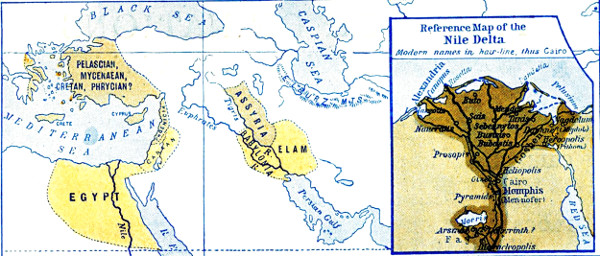
Large map (339 kB)
Mycenean Greece and the Orient about 1450 B. C.
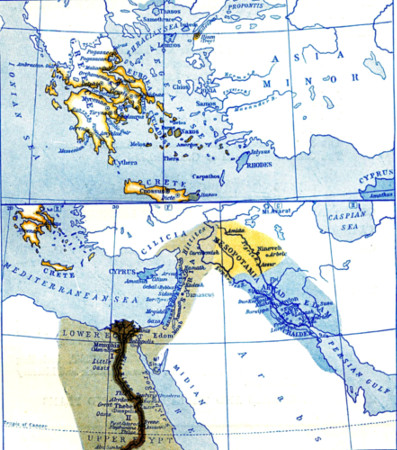
Large maps (488 kB)
THE BOOK OF NATIONS
We shall perhaps gain the best idea of the gradual expansion of the world to-day
if we go back to the earliest times of which we have any definite historical records,
and from that as a starting point, picture to ourselves the world at important epochs
as it was divided among the more civilized nations. In spite of revolutions and the
rise and fall of nations, the course of history has been continuous. The periods of
history are not separated by gaps or breaks, but really merge gradually one into another.
Bearing this in mind, the general history of the world may be viewed in two great divisions—ancient
and modern. Ancient history begins with the dawn of civilization,
and traces the progress of mankind among those nations which have now ceased to
exist—or at least have ceased to contribute anything to the world’s progress. Modern
history, on the other hand, deals with the origin and growth of those nations which
still exist and are working out the problems and ideals peculiar to their own national
life.
In the Oriental world we see the beginnings
of civilized life—the first successful
efforts of man to subdue the earth and
to utilize the resources of nature; the
beginnings of science and of a well-defined
written language; the first evidences
of architectural skill in the construction
of great buildings; and the
first marked tendency in the direction
of great empires and of centralized
governments. The chief nations may be
summarized as follows:
Egyptians.—One of the earliest civilized nations—the
great representative of the Hamitic race—developed
apart—were not a conquering or
aggressive people—wonderful builders in the
massive style—made great progress in mechanical
arts, and some advances in science—government
a monarchy restricted in authority by
law, custom, and powerful priesthood—religion
a nature-worship—popular worship the
adoration of animals—an artistic, industrious
and peculiar nation—always wonderful and
interesting to foreigners—-did not greatly influence
others.
Babylonians.—As ancient a race in civilization
as the Egyptians—partially of Tartar race,
mainly Semitic—made great progress at an
early date in science—reached a high pitch of
power and civilization—known to us, in great
measure, from ruins with inscriptions in cuneiform
writing—invented permanent system of
weights and measures—great in astronomy—the
Chaldæan priests developed into a caste
of learned men, continuing (in the later Babylonian
and Persian empires) long after extinction
of their own nation as an independent
power.
Assyrians.—A Semitic people—warlike and
conquering race—great in architecture and
sculpture—very wealthy and luxurious—empire
extended over Asia Minor (east of river
Halys), Syria, Phœnicia, Palestine, most of
Egypt, Media, and countries on Tigris and
Euphrates to Persian Gulf—artistic workers
in glass, metals, gems—rule despotic over
loosely connected nations.
Babylonians (Later kingdom).—A Semitic people—as
a political power ruled for only eighty-seven
years, 625-538 B.C., from end of Assyrian
power to conquest by Persians under Cyrus—were
a commercial and luxurious race—city of
Babylon emporium for trade between eastern
Asia and western Asia, Egypt and Europe—great
in manufactures of woven stuffs and
gem-engraving.
Hebrews.—A pure Semitic race—little influence
on political history of antiquity—distinguished
by their worship of one God, and for the
Scriptures transmitted to future ages—a great
monarchy under David and Solomon, then
declined—a non-artistic, unscientific nation in
ancient history.
Phœnicians.—A pure Semitic people—greatest
commercial and colonizing race of early times—distinguished
as transmitters of civilization
from East to West—never formed one great
independent state—several independent cities,
sometimes in alliance, sometimes hostile—Tyre
and Sidon famous for dyes, glass-making,
embroideries, brass-work, weaving of cloth in
linen and cotton, ship-building, mining—developers
of alphabet still used by modern
nations—religion a sensual worship—a crafty,
money-making people—Carthage was the
greatest of all the Phœnician colonies.
Medes and Persians.—Pure Aryans in race—warlike
people, great in cavalry and as archers—Median
monarchy ended 558 B.C., then
Persian monarchy arose—Persians a lively,
brave, poetical people, simple in life at first,
after their great conquests degenerated into
luxury—more like Europeans in civilization
than any other Asiatics—were the great ruling
power in Asia from time of Cyrus to conquest
by Alexander the Great (558-331 B.C.)—first
Asiatics that tried to conquer in Europe—signally
failed—empire extended over all
western Asia, and over Egypt—religion recognized
two principles, a good and a bad spirit—had
taste in architecture—no literature of
importance.
Hindus.—Until recent times almost isolated
from the western world—unwarlike, dreamy
specimens of Aryan stock—early advance in
civilization—a rich and remarkable religious
and poetical literature in Sanscrit, one of the
oldest of the Indo-European tongues—first
known in real history on invasion by Alexander
the Great, 327 B.C.—progress greatly checked
by rigid system of castes—government of
native princes thoroughly despotic—no free
aspirations or political instincts in the people—popular
religion grossly superstitious—Brahminism
(a philosophic deism), creed of the
educated, along with Mohammedanism, introduced
by conquest in thirteenth century A.D.—skilled
at an early period in mathematics,
manufactures, architecture—a tasteful, intelligent,
but unpractical, non-historical people.
THE ASSYRIAN EMPIRE AND THE REGION ABOUT THE EASTERN MEDITERRANEAN, 750-625 B. C.
Large map (482 kB)
Greeks.—In the Greek world we see a
finer type of humanity: a versatile
intellect, expressed in exalted works of
philosophy and literature; a refined
æsthetic taste embodied in the most
beautiful specimens of architecture and
sculpture; and a strong love of freedom,
shown in the development of
democratic institutions.
Romans.—In the Roman world we see a
more practical genius and a more
vigorous manhood; a great capacity
for military and political organization;
a broad sense of civil justice, expressed
in an enduring system of law; a wide
cosmopolitan spirit, capable of appropriating
the ideas of other peoples—in
short, a civilization which expressed the
highest unity and broadest culture of
the ancient world.
No intelligent knowledge of the historical
nations is possible without a corresponding
knowledge of their geography. The first and
most important question that geography answers
for us is where. Historical Geography answers
both where and when? Where is Rome located?
Where and when did the Babylonian Empire
exist?
History not only answers the questions when
and who but, in addition, gives us a consecutive
account of the doings of civilized mankind in
their progress toward the most valued and elevating
of social and political blessings. It deals
rather with the life of nations than with races of
men; and its special function is to sketch the
career and describe the conditions of those great
nations whose ideas and institutions, or whose
achievements in politics, war, literature, art and
science, were remarkable in their own epoch, or,
by influencing other nations, helped to make
the civilized world what it is now.
The first scenes in the drama of human history
are laid in two remarkable river valleys—the
one formed by the Euphrates and the Tigris
in western Asia, and the other formed by the
river Nile in northeastern Africa. The Euphrates
and the Tigris poured their waters into
the Persian Gulf, the Nile flowed north into the
Mediterranean Sea. Both these valleys were
possessed of a rich, alluvial soil, that favored
the early development of industrial life among
their dwellers. Along the lower courses of the
Asiatic rivers were the Babylonians, and later,
by conquest, the Chaldeans. In the upper
reaches were the Assyrians. On the banks of
the Nile were the Egyptians. Such, according
to our present knowledge, is the first historic
zone in which the real history of the civilized
world began.
In the basins of the Tigris and the Euphrates
were several distinct territories: Armenia, or
the mountainous region between Asia Minor
and the Caspian Sea; Assyria proper, between
the Tigris and the Zagros Mountains; Babylonia,
the great plain between the lower courses of the
Tigris and of the Euphrates, and extending westward
to the Syrian Desert; Chaldæa (in the
narrower sense, as a province of the Babylonian
Empire), west of the Euphrates, at the head of
the Persian Gulf; Mesopotamia, between the
middle courses of the Tigris and the Euphrates;
Elam or Susiana, east of the Tigris, and at the
head of the Persian Gulf.
West of the Euphrates we have the peninsula
of Asia Minor which later contained the
important Lydian nation, and many Greek
colonies connected with later history; Syria, on
the eastern shore of the Mediterranean Sea,
divided into three distinct parts,—Syria proper;
Phœnicia, or the strip of coast between Mount
Lebanon and the sea; and Palestine, south of
Phœnicia; the peninsula of Arabia, extending
southeastward, and having little to do with
ancient history.
East of the Zagros Mountains lay Media and
Persia proper,—Media, northeastward, towards
the Caspian Sea; and Persia, on the tableland
of Iran stretching southward to the Persian Gulf.
The latter absorbed the great monarchies of
Babylonia and Assyria in the sixth century B. C.,
and extended almost from the Indus to the
Mediterranean, Ægean, Euxine, and Caspian Seas,
when it had reached the summit of its power.
Farthest to the east was ancient China,
drained by two great rivers, the Hoang and the
Yangtze. Its remote situation and the barriers
on the west formed by the spurs of the Himalayas,
combined to make this land the most
isolated of the civilized lands of the Old World.
To the west of China lies India, also drained
by two great rivers, the Indus and the Ganges,
which rise among the slopes of the Himalayas
and flow in different directions to the sea. These
two countries—China and India—stood nearly
alone in ancient times, separated from the
peoples of western Asia by the wide, dry plateau
of Iran, and hence these countries did not
exercise a great influence upon the ancient
world, or come into historical view until much
later.
THE KNOWN WORLD—ABOUT B.C. 450.
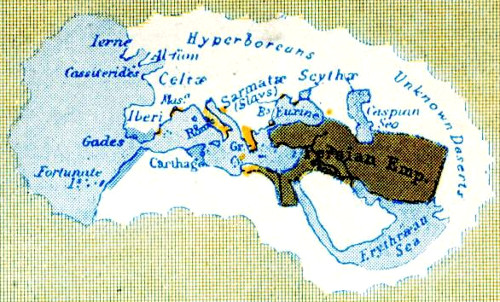
ABOUT B.C. 325
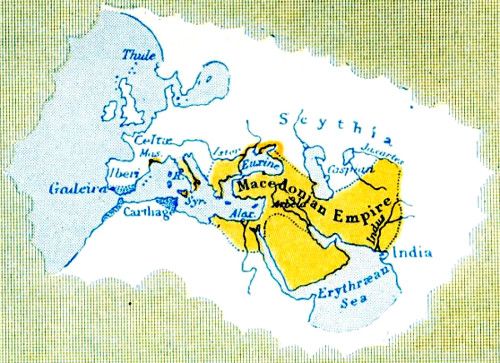
ABOUT A.D. 300
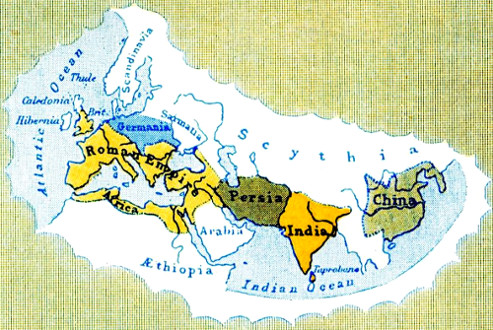
The Nile is one of the longest rivers of the
world; rising in the distant lakes of central
Africa, it pursues a course of about four thousand
miles on its way to the sea. But the part of
the valley occupied by the Egyptian people
extended only about six hundred miles from the
mouth of the river—to the rapids called the
“first cataract,” on the borders of Ethiopia.
The valley is inclosed on either side by low
ranges of mountains, which furnish stone
suitable for building; and it should be noticed
that this abundant supply of stone gave to the
Egyptians a great advantage over the Babylonians,
who were obliged to use the less durable
materials, clay and brick, for building.
The valley of the Nile is only about seven
or eight miles in width—except at the delta,
where it spreads out into an open plain. Not
only has this valley been cut by the Nile, but
its fertility was anciently due to the annual
overflow of the river, for the climate is dry and
rain rarely falls. This river was also the great
highway of Egypt, affording a ready means of
communication from one part of the country
to another. The fertile soil of Egypt was
especially suitable for the raising of vegetables
and grain. Rice, oats, barley, and wheat grew
there in great abundance, so that the country
became the granary of the ancient world.
Egypt may be divided into two principal
parts. (1) The lower, or northern, part includes
the extended plain about the delta, where the
soil is most fertile, and where the earliest civilization
was developed. It was here that the
first empire was established, with its center at
Memphis. (2) The upper, or southern, part
includes the remainder of the valley as far as the
“first cataract.” This formed a second area of
civilization, with its center at Thebes. In either
direction from these two centers the banks of
the Nile became dotted with a multitude of towns
and villages, each one of which was a seat of
industry and art.
But the most important center of ancient
civilization was the Mediterranean Sea. This
body of water formed the world’s greatest highway,
and was possessed successively by the
Phœnicians, the Greeks, and the Romans, who
made it an important factor in the development
of a wider world commerce and a higher world
culture.
Known World about B. C. 450.—About this
period the decadence of the great Persian Empire
had already begun. Greece was becoming
a strong power, and had flourishing colonies all
round the Mediterranean and Black Seas, at
Syracuse in Sicily, on the southern shores of
Italy, at Massilia (the present Marseilles), on
the coast of Spain, at Cyrene in North Africa,
at Cypress, at Byzantium (Constantinople),
and at many points between these.
Carthage had already risen from its condition
of a colony to that of a great independent
state, which held practically all the north
African coast. The Carthaginians had come
in contact with the Greeks in Sicily, and in
their first trial of strength the Carthaginian
army under Hamilcar had been defeated.
Rome had been founded for perhaps three
hundred years. Already the Romans had
taken the lead in Latium, and the Republic
was in constant warfare with its neighbors on
all sides—the southern Etruscans, the Volscians,
and the Æqui.
Thus the great events of this period were
clustered round the Mediterranean shores.
As yet the unknown peoples of the west and
north beyond these were vaguely called the
Hyperboreans by the Greeks, “the dwellers
behind the north wind;” and eastward, beyond
Persia and the Indies, Herodotus could only
mark “unknown deserts” on his map.
World About B. C. 325.—This little map
represents the short-lived Macedonian empire
of Alexander, at the date of his return to
Persia, when his power was at its height. To
his victorious career the world owed a vast
increase of geographical knowledge; all
eastern Asia had been unveiled, and the road
to India, with its boundless wealth, was disclosed
to Europeans.
Westward also, about Alexander’s time, the
geography of the Greeks was greatly extended
by Pytheas, a bold navigator of the Greek
colony of Massilia (Marseilles), who, from
Gadiera (Cadiz), coasted Iberia and the country
of the Celts (France), and reached Britain.
He followed the southern and eastern shores
of the islands, and, after six days’ sail from
the Orcades (Orkney Islands), discovered
Thule, a land of fogs in the north, which has
been variously identified as the Shetland
Islands, the Norwegian coast, or even Iceland.
In Italy the Romans were continuing their
struggles with the neighboring nations. The
whole of southern Etruria had yielded to their
supremacy, and was kept in check by Roman
garrisons; while towards the south, at this
time, a terrible conflict was in progress with
the heroic Samnite highlanders. Of Sicily the
Carthaginians held the western, the Greek
colonists the eastern half, a brief lull having
taken place in the fierce wars which had been
waging between these powers for the possession
of the island, during which the prosperity of
the great fortified city and seaport of Syracuse
was rapidly reviving.
World About A. D. 300.—Almost six hundred
years has elapsed, and the Great Roman
Empire is already in its decline. A special
map of the Roman Empire at its height will
be found later on. This little map represents
the empire in the time of Constantine.
Under Constantine the Great two great
changes took place—the introduction of
Christianity as the religion of the State, and
the transference of the seat of government
from Rome to Byzantium (A. D. 330), which
was re-named after the emperor, Constantinople.
Persia at this time, under the Sassanian
dynasty, attained a height of prosperity and
power such as it had never before reached, and
against it even the veteran Roman legions
could gain no lasting laurels.
ABOUT A.D. 500
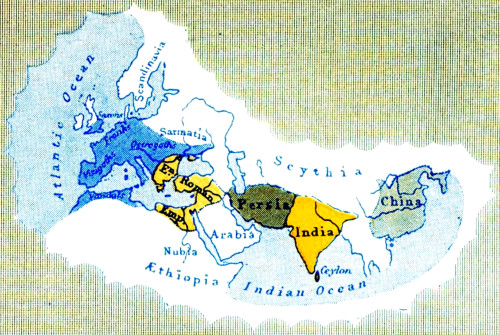
ABOUT A.D. 800
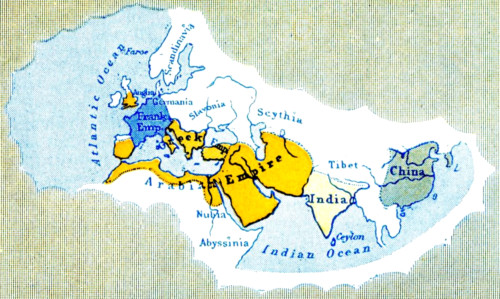
ABOUT A.D. 1000
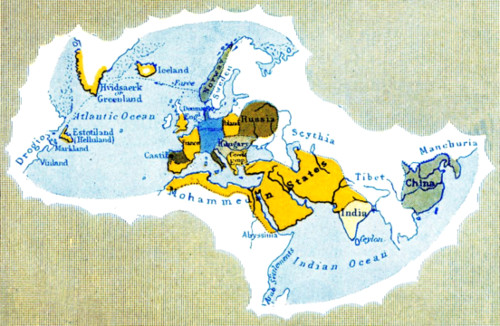
In China authentic history begins with the
Chow dynasty (1122-255 B. C.) when Confucius
and Mincius flourished (600 B. C).
In the next (Tsin) dynasty Shih Hwang Ti
(221-209 B. C.) reduced the independent petty
states, and built the Great Wall as a protection
against the barbarous Hiong-non (Huns)
or Tartars of the north. Shortly after the
beginning of the Christian era the Chinese
seem to have begun intercourse with the
Parthians and to have known the Roman
Empire as Ta-tsin; and about the time of
Constantine’s establishment of his new capital
the Chinese emperor’s court was fixed at
Nanking, the southern capital.
The increase of geographical knowledge
during the period in which Rome was spreading
out its power in all directions could not
fail to be very considerable. Already in the
latter part of the first century B. C., a general
survey of the Roman Empire had been begun
by the collection and arrangement of the
itineraries of the roads to places in the empire.
One of these traces the main roads of all the
region stretching from Britain to the mouth of
the Ganges in India.
World About A. D. 500.—For more than two
centuries prior to this map, the whole of
northern Europe, had begun to pour forth
wave after wave of barbarian hordes, against
the Roman Empire. By the invasions of the
tribes of Goths, Franks, Vandals, etc., the
western emperors lost their power outside of
Italy, and the empire itself ceases to exist in
476, when it is nominally joined to the Eastern
Empire. The Vandals had established their
rule along north Africa; the Visigoths ruled
in Spain; the Ostrogothic monarchy of
Theodoric the Great extended over Italy,
France, and all the countries round the Alps
as far as the middle Danube; and the Franks,
under Clovis, had possession of the whole of
Gaul between the Loire and Somme.
Persia, still under the energetic Sassanian
dynasty, not only maintained its integrity as an
empire, but had begun to repel the Roman
or Byzantine power in Asia, and had added
part of Armenia. Westward, however, the
arms of the Byzantine Empire were triumphant,
the reign of the Emperor Justinian
having been rendered famous by the expedition
of his great general Belisarius to Africa,
where, after a campaign of two years, he completely
overthrew the Vandals and led their
king captive to Constantinople. In a second
war, Belisarius wrested all southern Italy from
the Ostrogoths, pursuing them northward to
Rome and Ravenna, and thus began the re-conquest
of the peninsula, which was completed
by his successor, the imperial general Narses,
after which the Ostrogoths disappear as a
distinct nation.
At this time, under Khosru, the greatest of
the great monarchs of the Sassanian dynasty,
the Persian Empire stretched from the Red
Sea to the Indus, and from Arabia far into
central Asia.
World About A. D. 800.—The end of this
century finds three great empires in Europe
and eastern Asia: the Mohammedan or
Saracenic Empire, the Eastern or Byzantine
Empire, and the Frankish Empire of Charlemagne.
The Mohammedan Empire had spread
itself out to central Asia and to Spain, and
had already passed the zenith of its greatness.
The dynasty of the Ommiades of Damascus
had given place to that of the Abassides in the
east, though a branch from it had set up an
independent Califate at Cordova, in Spain.
The Abbaside Haroun-al-Rashid, whose praises
are sung by eastern poets, had his capital at
Bagdad, on the Tigris, a city which had been
founded by his predecessor in 762.
Charlemagne had consolidated and extended
the Frankish Empire, received the ambassadors
sent from the court of Bagdad to salute him,
and had been crowned by the Pope at Rome.
Irene, the mother of the Byzantine emperor,
Constantine VI., had conceived the bold plan
of uniting the east and west of Europe in
one great empire, by marrying the Frankish
emperor, a scheme which was frustrated by
her overthrow and her banishment to the Isle
Lesbos in the Ægean Sea (802).
Britain, so far as occupied by the Angles and
Saxons, was divided into seven (or eight) little
kingdoms, known as the Saxon Heptarchy.
World About A. D. 1000.—Germany, or the
Eastern Franks, becomes at this time the
greatest power in Europe, uniting to itself
Upper Italy and Lotharingia.
France, or the Western Franks, early in this
century is invaded by the Norsemen or Normans,—bold
seafaring adventurers from Denmark
and other northern lands, from whom
the name Normandy is derived. The kingdom
of France, however, began in 987.
The Saracen Empire was divided at the
beginning of this century into no less than
seven independent califates, of which the
most distinguished was that of the Fatimites.
The Saracenic civilization in Spain is now at its
height. By the end of the century the power
of the Saracens in the East is of but little
account politically.
The Magyars, or Hungarians, before the end
of the century have established a strong kingdom
in the southeast of Europe; and to the
north the Slavonic states of Poland and
Bohemia are planted.
Denmark, Norway, and Sweden are powerful
kingdoms by the close of this century and
England, now one kingdom, is engaged in
struggles with the Danes.
The hardy Scandinavian seamen had pushed
back the clouds of ignorance over the vast
region of the north Atlantic, and had reached
the shores of the American continent nearly
five centuries before Columbus. About the
year 994 an expedition under Leif, son of
Erik the Red, set sail for this new country.
The regions discovered were named Helluland
(Slateland), supposed to be Labrador; Markland,
or Woodland, probably Southern Labrador;
and Vinland, a country named from the
wild vine growing there, which some identify
with Newfoundland, while others transfer it
to the New England coast, opposite the island
of Martha’s Vineyard.
World About A. D. 1300.—Before the middle
of the thirteenth century the vast Mongol
Empire, under Ghengis Khan, had stretched
out from China to Poland and Hungary, over
all Asia except India and Asia Minor—an
empire which far surpassed in extent any that
had yet been known on the surface of the
globe.
ABOUT A.D. 1300
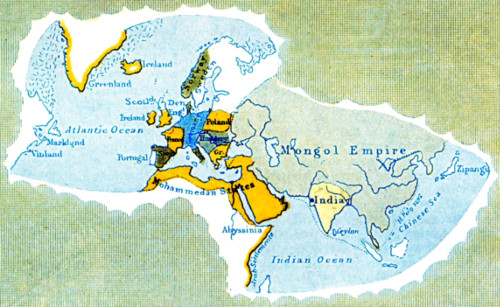
ABOUT A.D. 1500
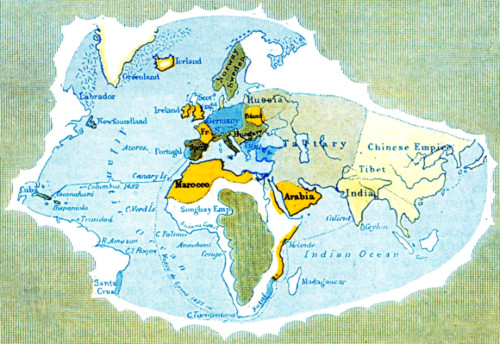
The great Mongol expansion forced the
removal of the Ottoman Turks, who retreated
from the steppes east of the Caspian to the
mountains of Armenia. Othman or Osman,
a chief of the tribe, on the destruction of the
Seljuk power, obtained possession of Bithynia,
attacked the Asiatic portion of the sinking
Byzantine empire with success and founded
there (1299) the subsequently great empire of
the Ottoman or Osmanli Turks, as they are
named from him.
In the course of his conquest Genghiz Khan
had carried off multitudes of western Asiatics
as slaves. Twelve thousand of these, mostly
Turks and Circassians, were bought by the
Sultan of Egypt (a successor of Saladin), who
formed them into a body of troops. From
being servants these well-armed slaves rose to
be masters in Egypt, and placed one of their
own number in the sultanate (1254), thus
founding the Mameluke (or slave) dynasty in
Egypt, which lasted for nearly three centuries,
bringing the country again into great prosperity
and power.
Thus, about the year 1300 the once great
Mohammedan Empire had been restricted to
its original seat, and to the western region of
north Africa, all else having fallen into the
hands of the Turks. The Calif of Bagdad
had taken refuge under the protection of the
Mamelukes of Egypt, retaining his spiritual
power only; the Ommiade califate in Spain
had long fallen.
The English, under Edward I., had incorporated
Wales after ten years’ contest; Scotland
was fighting for independence, led by
Wallace and Bruce; and long wars engaged
England and France, leading finally to a
great increase in French territory and power.
Denmark, Sweden and Norway were separate
states. In central Europe, Poland and Hungary
had been brought to the verge of ruin by
the Mongol invasions, which had swept away
for the time the divided principalities of Russia.
In the south, the old Greek Empire was
fast sinking through the assaults on it by the
Turks.
The German Empire in this century both
loses and gains territory, without material
change.
Italy is still divided into independent commonwealths,
which more and more fall under
the power of princely families or tyrants.
In the Spanish Peninsula there are few
geographical changes in this century, but
Spain is steadily consolidating into a great
power.
The Venetian, Marco Polo, the greatest of
medieval travelers, passed seventeen years in
exploring the kingdoms of Asia, and opened
up to accurate knowledge not only the vast
region of the central Asiatic continent, but
also the disclosure of the existence of Japan,
which he called Zipangu. While Venice
opened up new paths to commerce towards the
east, Genoa looked westward, sought to open
up a new road to India by sailing through
the Strait of Gibraltar and round the southern
extremity of Africa. It was Genoese who
first, in modern times, ventured upon the
Atlantic; discovered the Canaries, Madeira,
and the Azores; and who first felt their way
along the west coast of Africa.
World About A. D. 1500.—Previous to this
century the nations with which we have been
concerned has been restricted to Europe, a
little of western Asia, and a small part of
northern Africa. An immense enlargement of
these bounds now suddenly occurs in consequence
of the application of the compass to
navigation. From this time dates the period
of greatest maritime enterprise and discoveries.
The Portuguese took the lead in bold projects
of adventure by sea. The Cape of Good
Hope was discovered and doubled by Bartholomew
Diaz in 1487, and in 1498 the feat of
reaching India by water was accomplished by
Vasco da Gama, who, rounding the Cape of
Good Hope, reached Calicut in Malabar.
The general excitement about maritime discovery
among the Portuguese suggested to
Columbus the bold plan of reaching India, not
by way of Africa, but by steering to the west
across the Atlantic. The result of his voyage
was the final discovery of the American continents.
India he did not reach, but discovered
instead, the island of Guanahani or San Salvador,
in 1492, the main continent being discovered
a few years later (June 24, 1497) by John
Caboto, or Cabot, a Venetian sailor.
In the far east China had recovered its
independence under the Ming dynasty, and its
supremacy was acknowledged over Mongolia
and eastern Turkestan, though the states of
Tonquin and Cochin China, in the southern
peninsula beyond India, had assumed a political
independence. Western Asia had been
reconquered by Timur, or Tamerlane, of
western Turkestan. The Ottoman Turks had
extended their European territory to its
widest limit over the ruins of the Greek
Empire; and Russia had become a united
kingdom under Ivan the Great, and threw off
the Tartar yoke.
In western Europe, the Swiss mountaineers
had secured their independence. France was
recovering from the calamities inflicted on it
by the English, who had all but lost their hold
on the land. In the south the reaction of
Christendom against Mohammedanism had
begun. The Christian kingdoms of Spain
and Portugal had driven back the Moors
across the Straits into Africa, and had
consolidated their strength over the whole
Peninsula. The Moors in turn settled along the
north African coast. Morocco at this time
had been formed into a monarchy, and enjoyed
great prosperity.
World About A. D. 1600.—Spain is the chief
power at this time. Besides vast continental
dominions in the New World, its European
possessions comprised the whole of the Spanish
Peninsula, the Netherlands and other lands of
the House of Austria, the Sicilies, Sardinia,
and Milan. But, by the revolt of the United
Provinces of the Netherlands, Spain loses a
considerable portion of her territory before
the end of the century.
ABOUT A.D. 1600
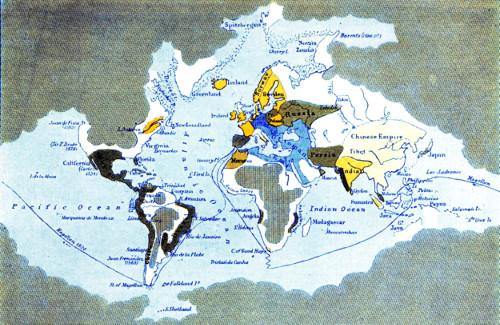
ABOUT A.D. 1700
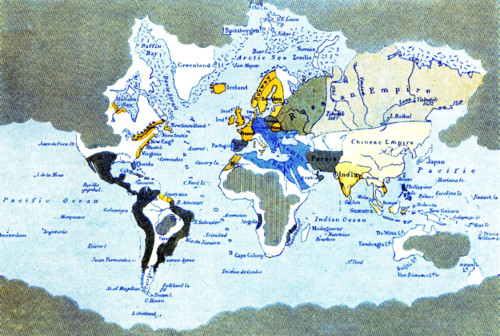
Large map top (466 kB)
bottom (515 kB)
The German Empire continues, but more as
a dignity than as an independent power. The
emperors are uniformly chosen from the princes
of the House of Austria, which now by its
hereditary possession becomes one of the chief
powers of Europe. In the person of the
Emperor Charles V., who united the crown of
Spain with the sovereignty of Austria, the
imperial power reached its greatest extent.
France is engaged in wars civil and religious
and foreign, but without much change of
territory, except in America, where some
colonies were established. England makes
some attempts at colonization in America
during this century, but the real settlements
begin in the next.
Italy, during this period, is a battle-field of
contention among the rival princes of Europe.
The peninsula was made up of principalities
and commonwealths, some of which were
independent, but the most of which, during
the greater part of this century, were under
the dominant influence of Austria and of
Spain. The northern provinces of the Netherlands
throw off the yoke of Spain, and are
united in a federal commonwealth. The union
of Denmark, Norway, and Sweden ceases in
the early part of this century, by the independence
of Sweden, which now plays an
important part in European history. Poland
is an important state in this century, with
extensive possessions.
The Turkish or Ottoman Empire is largely
extended in this century by the annexation of
Syria, Egypt, a great part of the northern
coast of Africa, and the conquest of a large
part of Hungary.
In Asia the Chinese Empire remained unshaken;
Persia had again become an independent
empire; the Mohammedan Moguls had
begun to reign in northern India; the once
great Tartar empire had been reduced to the
states east of the Caspian. In the north,
Russia was spreading eastward over Asia, and
had come in contact with the Ottoman Empire,
now expanding to its greatest extent in the
South, and with Sweden in the northwest.
The great Reformation had passed over
Europe, separating its Catholic states of the
south from the Protestants of the north, and
giving rise to fierce wars and many political
changes. Maritime discovery and adventure
and commerce were being eagerly extended by
the nations of western Europe. Four times the
world had been circumnavigated—by the
Portuguese Magellan, by the English Drake
and Cavendish, and lastly by the Dutchman
Van Noort. Spain had extended her conquests
to Mexico, Peru, and Chile, which were
now ruled by Spanish viceroys. The Portuguese
had established themselves firmly on
the African shores; their possessions and
settlements in the East Indies included the
Malabar coast of India, Ceylon and Malacca;
and their traffic reached to all the islands
of the Asiatic archipelago, to China and
Japan.
The English and Dutch, after vainly seeking
an independent highway to the northeast
or northwest through the ice-fields of the
Arctic region, had become formidable rivals of
the Spaniards and Portuguese in their own
lines, both in the West Indies and round the
Cape of Good Hope to the eastward.
World About A. D. 1700.—In Europe, France
under Louis XIV., now becomes the leading
power, and makes great accessions of territory.
England also becomes one of the important
nations, and, besides being engaged in civil
and foreign wars, was planting colonies in
America and in India. Austria had increased
her power in Italy and Hungary. The Spanish
monarchy is broken up, and Spain sinks to an
inferior position. Prussia has risen into prominence
under the great elector, Frederick William.
The United Provinces held a high place
and had been engaged in a long struggle with
France. Italy had fallen to a low condition.
Savoy was slowly gaining in power, and Venice
was engaged in wars with the Turks. Sweden
was at the height of its power and possessions.
Russia is rapidly rising, and Poland is declining.
The Turks press forward into Austria, from
which they are driven out, and make some
important conquests in other parts; but their
power is on the decline.
In Asia, this was the period at which the
Mohammedan Empire in India was raised to
its highest point of splendor and greatness by
Shah Jehan, the “King of the World,” and by
his son, the famous Aurungzeb, the crafty and
ambitious “reviver of religion.” It was during
these reigns that the English began to gain a
hold on India.
Outside of Europe it cannot fail to be
observed how completely the spread of knowledge
on the outer borders of the known
world was controlled by events which took
place in western Europe. Chief of these was
the gradual crippling and decay of the maritime
supremacy of Spain and Portugal, and
the rise of that of the Dutch and British into
strength. Maritime enterprise had passed to
Holland, England, and France.
In America the British dominion was
extended by the formation of the Hudson
Bay Company. In 1690 this fur company
had built several forts and factories on the
coasts, whence from time to time their operations
extended inland.
The French also, after La Salle first descended
(1682) the great river, Mississippi, “the father
of waters,” invaded Spanish claims by settling
in Louisiana, about the mouth of the great
river, in 1699.
World About A. D. 1800.—In Europe France
holds about the same position till near the
close of the century, when the Revolution
breaks out, and the republic makes large
accessions of territory in the Austrian
Netherlands, Savoy, Piedmont, and the
islands of the Mediterranean. Through the
very enormity of the excesses of the
revolutionary period, the form of government soon
gave way to a new constitution, known as the
Directory, under which Napoleon Bonaparte
came to the front as the central figure in the
affairs of Europe. During these last years of
the century the French Republic was engaged
in constant wars with the various coalitions
formed against it by the other powers. In the
year 1799 the Directory came to an end, and
the supreme control was vested in the hands
of Napoleon, who was made First Consul.
ABOUT A.D. 1800
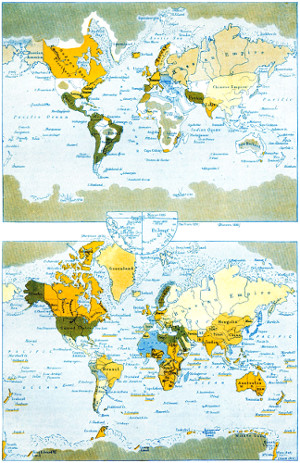
ABOUT 1915
Large map (558 kB)
Great Britain is engaged in foreign wars, and
has lost a large part of her American colonies,
which win their independence in 1783. The
British dominion in India is greatly extended
during this period. The scattered settlements
of British merchants and of the East India
Company, now became firmly established by
the military achievements of Clive. The
French and native troops were overthrown,
and one after another the provinces of India
were brought under English control. Spain
rises very considerably in importance. The
United Provinces become in the last years of
the seventeenth century a dependency of
France. The Turkish dominion, though with
occasional successes, is on the decline. Prussia
becomes an important European state under
Frederick the Great. Austria is engaged in
frequent wars, with somewhat diminishing
power. The German Empire, though still in
existence, is more a dignity than a power, its
functions being wielded chiefly by the great
kingdoms of Austria and Prussia. Russia,
under Peter the Great, rises to a front rank
among the states of Europe and makes large
gains of territory.
In the latter part of the seventeenth century
Poland disappears from the map of Europe,
the territory being divided between Russia,
Prussia, and Austria; and in 1795 Poland, as
a kingdom, ceased to exist.
In America, the United States of America
come into being as an independent nation in
1783.
France, at the beginning of the nineteenth
century under Napoleon I., was the chief
power in Europe. The battle of Waterloo
finally overthrew the empire of Napoleon, and
brought to an end the succession of wars which
had lasted with little interruption for twenty-three
years. By the terms of peace agreed
upon by the Allies, the conquests of France
were given up, and the boundaries of the
European states re-established.
From the starting-point of this re-arrangement
of the map of Europe we may now
follow rapidly the subsequent changes of
territory in each of the leading states of
Europe which have given them the limits they
occupy at the present day.
England rises to the front rank of European
states, by her part in the Napoleonic wars.
In the nineteenth century she made some
small acquisitions of territory in Europe, and
greatly extended her colonial empire.
The marked feature of the political movements
in Europe in the last quarter of the
nineteenth century was the tendency to
consolidate the petty and weak states, into
which a great part of the Continent had been
broken up, into strong central governments.
This tendency is shown specially in the
confederation of the smaller German states
under the leadership of Prussia, and the
formation of the present German Empire
which has become the first military power in
Europe. The old German Empire came to an
end in 1806. In Italy the same tendency has
shown itself in the establishment of the new
kingdom of Italy, with Rome for its capital.
Austria was entirely separated from Germany,
and united into one state with Hungary.
Russia has become one of the greatest
European powers. Denmark lost considerable
territory, taken from her by Prussia. The
new kingdom of Belgium has been formed.
Spain loses Mexico and the republics of Central
America. Greece secured its independence,
and became a kingdom. The power of
Turkey is still declining.
In America, the United States were greatly
increased by the addition of new States and
Territories. The attempt at secession of the
southern States in 1861 proved abortive; and
the restored Union, freed from the disturbing
element of slavery, advanced in wealth, power,
and the arts of peace, at a rate of progress
never equalled in past history.
Mexico, which had belonged to Spain,
revolted and became an independent republic.
In Asia, Japan renounced its former isolation,
opened her ports to foreign trade, and changes
of almost startling rapidity were adopted in
the country. The whole political constitution
of the empire was remodeled; and Japan
took rank with the great powers of the world.
The continent of South America was apportioned
among the various present-day countries;
Africa has been colonized and divided
among the European powers; and the commonwealths
of Canada, Australia and New
Zealand have taken a foremost place among
the colonies of Great Britain.
World About A. D. 1915.—In the realm of
geographical discovery the supreme events
were the attainment of the North Pole by
Admiral Peary, and that of the South Pole by
Captain Roald Amundsen.
The geographical changes resulting from the
great European War are noted in connection
with the nations and colonies directly affected.
Explanation of Abbreviations.—Arab., Arabian; Brit., British; Carthag.,
Carthaginian; Dan.,
Danish; Dut., Dutch; Egypt., Egyptian; Eng., English; Fr., French; Gen., Genoese; Ger.,
German; Ital.,
Italian; Norw., Norwegian; Port., Portuguese; Rus., Russian; Scot., Scotch; Span., Spanish:
Swed.,
Swedish; U. S., United States; Ven., Venetian.
B.C.1400-1250.—Egyptians make invasions of
Habesh, Arabia, Phœnicia, Syria.
B.C.1350(?).—Greeks undertake Argonautic expedition
to Colchis.
B.C.1000.—Phœnicians voyage to Ophir, Gades,
Britain.
B.C.750.—Greeks extend colonies in the Mediterranean
and Pontus Euxinus.
B.C.700.—Samians discover Spain (Tartessus)
for the Greeks.
B.C.600.—Phœnicians circumnavigate Africa by
order of Necho.
B.C.—Himilco (Carthag.) visits Atlantic coast
of Europe, Sargasso Sea. Said to have visited
Britain.
B.C.500.—Anaximander (of Miletus) makes the
first maps.
B.C.500.—Hecatæus (of Miletus) writes the
first geography.
B.C.470.—Hanno (Carthag.) coasts west Africa
as far as Cape Palmas.
B.C.330.—Pytheas of Massilia sails to Thule,
North Sea, Scandinavia.
B.C.330.—Nearchus (Macedon.) sails from the
Indus to Red Sea.
B.C.329-325.—Alexander the Great makes
expedition to Iran, Turan and India.
B.C.290.—Egyptians navigate the east coast of
Africa.
B.C.218.—Hannibal crosses the Alps.
B.C.120 (about).—Eudoxus of Cyzicus attempts
circumnavigation of Africa.
B.C.61-58.—Romans, under Julius Cæsar in
Gaul, Germany, and Britain.
B.C.30 (since).—Romans extend their geographical
knowledge and commerce as far as central
Asia.
B.C.20—Strabo (Greek) describes Roman Empire
and first mentions Thule and Ireland.
B.C.15.—Tiberius discovers the Lake of Constance;
Drusus, the Brenner Pass.
A.D.84.—Roman general, Agricola, circumnavigates
Britain.
150.—Claudius Ptolemy (Egypt.) constructs his
geography and atlas.
518-21.—Hoei-sing (Chinese) visits Pamirs and
Punjab.
671-95.—I-tsing (Chinese) visits Java, Sumatra
and India.
861.—Norsemen discover the Faroe Islands.
North Cape of Europe rounded.
865.—Naddod (Norse) discovers Iceland. Visited
by Irish monks about 795.
876.—Gunnbjörn (Norse) reaches Greenland
coast. Rediscovered by Erik the Red (983).
985.—Erik the Red (Norse) colonizes Greenland.
1000(?).—Lief Erikson (son of Erik the Red)
discovers Newfoundland (Helluland), Nova Scotia
(Markland), and coast of New England (Vinland)[?].
1154.—Edrisi (Sicily), geographer to King of
Sicily, produces his geography.
1200 (about)—Arabian trading merchants discover
Siberia.
1253.—Ruysbroek reaches Karakorum, the
ancient seat of the Mongol Empire.
1271-95.—Marco Polo (Venet.) travels in central
Asia, China, India, Persia.
1290.—Genoese reach the Canaries, Azores, etc.
1325-52.—Ibn Batuta (Arab.) travels through
the whole Mohammedan world, northern Africa,
eastern Africa, southern Russia, Arabia, India and
China.
1327.—Sir John Mandeville (Eng.) travels in
India.
1415-60.—Prince Henry (Port.) gives an impetus
to Portuguese voyages of discovery.
1419-20.—J. Gonzales and Martin Vaz (Port.)
discover Porto Santo and Madeira.
1442.—Nuno Tristao (Port.) reaches Cape
Verde, etc.
1460(?).—Cintra and Costa (Port.) sail to coast
of Guinea.
1474.—Toscanelli (Ital.) sends Columbus his
map showing the western route to Cathay (China).
1485.—Diego Cam (Port.) reaches the mouth of
the Congo river.
1487.—Bartholomew Diaz (Port.) rounds Cape
of Good Hope.
1492-98.—Columbus (Gen.) discovers America,
West Indies, Trinidad, Cuba, etc.
1497-98.—John Cabot (Anglo-Ven.) sails along
eastern coast of America from Labrador as far as
Florida.
1498.—Vasco da Gama (Port.) finds route to
India by Cape of Good Hope.
1499.—Amerigo Vespucci (Ital.) discovers Venezuela,
and that America was not “part of Asia.”
1499.—Pinzon (Span.) discovers mouth of
Amazon river and Cape St. Roque.
1500.—G. Cortereal (Port.) reaches entrance of
Hudson Strait, called by him Strait of Anian.
1500.—Alvarez Cabral (Port.) coasts Brazil
(named by him Ilha da Vera Cruz, being southern
part of Bahia State).
1502.—Columbus(Gen.) reaches central America
on his fourth voyage.
1512.—Ponce de Leon (Span.) reaches Florida.
1513.—Portuguese reach the Moluccas.
1513.—Balboa (Span.) crosses Isthmus of
Panama and discovers Pacific Ocean.
1516.—Solis (Span.) reaches La Plata.
1517.—Sebastian Cabot (Eng.) discovers Hudson
Strait.
1519-21.—Cortez (Span.).—conquers Mexico.
1519-21.—Magellan (Span.) first to circumnavigate
the globe. Passes through the Strait of
Magellan, crosses the Pacific, and discovers the
Philippines.
1534.—Pizarro (Span.) completes the conquest
of Peru.
1535.—Diego d’Almagro (Span.) conquers Chili.
1535-42.—Jacques Cartier (Fr.) finds Gulf of St.
Lawrence. Ascends river to Hochelaga (Montreal).
1539.—Francesco de Ulloa (Span.) explores
Gulf of California.
1540 (about).—French continent of Australia
seen by French sailors.
1541.—Pizarro and Orellana (Span.) discover
Amazon river.
1542.—Antonio de Mota first reaches Japan.
1542.—Ruy Lopez de Villalobos (Span.) discovers
Pelew Islands, and takes possession of
Philippine Islands for Spain.
1542.—Pinto (Port.)—visits Japan,
1553.—Sir H. Willoughby (Eng.) reaches Nova
Zembla.
1576.—Frobisher (Eng.) coasts Labrador and
Baffin Land.
1577-80.—Sir F. Drake (Eng.) made second
circumnavigation of the globe, and first saw Cape
Horn. Explored western coast of North America
nearly as far as Vancouver Archipelago.
1587.—J. Davis (Eng.) finds Davis Strait.
1596.—Barentz and Heemskerk (Dut.) discover
Spitzbergen, Bear Islands, etc.
1598.—Mendaña (Span.) discovers Marquesas
Islands.
1606.—Quiros (Span.) reaches Tahiti (Sagittaria),
and other South Sea Islands.
1606.—Torres (Span.) discovers Torres Strait.
Dutch reach Australia.
1608.—Champlain (Fr.) discovers Lake Ontario.
1610.—H. Hudson (Eng.) reaches Hudson Bay
and makes discoveries in North America.
1614-17.—Spillbergen (Dut.) circumnavigated
the globe.
1616.—W. Baffin (Eng.) enters Baffin Bay.
1616.—La Maire and Schouten (Dut.) round
Cape Horn.
1616.—Dirk Hartog (Dut.) sails up west coast
of Australia.
1618.—G. Thompson (Eng.) sails up Gambia.
1642.—Abel Tasman (Dut.) discovers Van
Diemen’s Land (Tasmania) and New Zealand.
1643.—Vries (Dut.) explores eastern coast of
Japan, Saghalien, and Kurile Island.
1645.—Deshnev (Cossack) rounds east cape of
Asia from the Kolyma to the Anadyr.
1660.—French discover the lake region of the
St. Lawrence.
1673.—Marquette and Joliet (Fr.) explore the
Mississippi from the north.
1725-43.—Russians explore the coasts of Siberia.
1728 and 1741.—Bering (Dan.) and Tishirikov
(Rus.) explore Bering Strait and the northwestern
coast of America.
1768-79.—Capt. Cook (Eng.) voyages round the
world. Surveys the Society Islands, Sandwich
Islands, eastern coast of Australia, Cook Strait in
New Zealand, Antarctic Ocean, northwestern coast
of America, etc.
1770.—James Bruce (Scot.) discovers sources of
the Blue Nile.
1770.—Liakhov (Rus.) discovers New Siberian
Islands.
1785-88.—La Perouse (Fr.) explores north of
Japan, Saghalien, etc.
1789.—A. Mackenzie (Scot.) explore the Mackenzie
river.
1792.—Vancouver (Eng.) visits Vancouver
Island, discovered by Perez, 1774. Exploration of
the northwestern coast of America.
1795-1806.—Mungo Park (Scot.) journeys to
and explores the Niger districts.
1799-1804.—Alex, von Humboldt (Ger.) makes
explorations in South America and writes “Cosmos.”
1801-1804.—Flinders (Eng.) explores southern
coasts of Australia.
1803-6.—Krusenstern (Rus.) surveys in Sea of
Japan and Sea of Okhotsk, Saghalien, etc.
1804-6.—Lewis and Clark make extensive explorations
in northwestern United States from the
Mississippi to the Columbia river.
1805-9.—Salt (Eng.) makes visit to Abyssinia.
1807-8.—Klaproth (Ger.) makes exploration of
the Caucasus.
1819.—Long (U.S.) makes exploration of Rocky
Mountains.
1819.—Wm. Smith (Eng.) explores South
Orkney Islands and South Shetlands. Visited by
Weddell in 1822.
1823.—Wrangel (Rus.) discovers Wrangel Land.
1823.—Denham and Clapperton (Eng.) discover
Lake Chad.
1825-26.—A. G. Laing (Scot.) reached Timbuktu
from Tripoli, Africa.
1827-8.—René Caillie (Fr.) made journey from
Kakandy to Timbuktu and Morocco, Africa.
1830-32.—Biscoe (Eng.) discovers Enderby
Land and Graham Land.
1831.—Sir J. C. Ross (Eng.) finds magnetic
North Pole.
1832.—Laird and Oldfield (Scot.) explore the
Niger and Benué rivers.
1835.—Sir F. Schomburgk (Ger.) makes explorations
in Guiana, South America.
1837.—Wood (Eng.) discovers sources of the Oxus.
1840.—Trümmer discovers remains of ancient
Nineveh.
1841.—Sir James C. Ross (Eng.) discovers
Victoria Land, with volcanoes Erebus and Terror.
1841-73.—D. Livingstone (Scot.) spends thirty
years’ travel in central South Africa.
1845.—Sir John Franklin (Eng.) sails on his last
voyage never to return.
1848.—Rebmann and Krapf (Ger.) discover Mt.
Kilima-njaro. Sighted Mt. Kenia.
1849-55.—Richardson and Barth (Eng.-Ger.)
explore western Sudan and Sahara.
1850.—Sir R. M’Clure (Irish) discovers Northwest
Passage.
1852-4, 1861.—Sir C. R. Markham (Eng.) makes
explorations in Peru.
1856-59.—Du Chaillu (Fr.) explores basin of
Ogowé river, west Africa.
1858.—Sir R. Burton (Scot.) discovers Lake
Tanganyika.
1858.—Speke and Grant (Brit.) discover Victoria
Nyanza.
1860.—Sir S. Baker (Eng.) explores Upper Nile.
Discovers Albert Nyanza, 1864.
1867-72.—Richthofen (Ger.) makes extensive
explorations in China.
1869.—G. Nachtigal (Ger.) makes explorations
in Lake Chad region and central Sudan, Africa.
1870-1886.—Prejevalsky (Rus.) journeys in
Mongolia, Tibet, etc.
1872.—Payer and Weyprecht (Austrian) explore
Franz Josef Land.
1872-76.—“Challenger” Expedition (Brit.) explores
the depths of the oceans.
1874-75.—Lieut. Cameron (Eng.) crosses equatorial
Africa.
1876-90.—H. M. Stanley (Eng.) explores Congo
Basin; Mt. Ruwenzori; Forests on the Aruwimi, etc.
Africa.
1878-79.—Nordenskjold (Swed.) finds northeast
passage.
1878-89.—Thomson (Scot.) journeys through
Masai Land, British South Africa, Sokoto, Morocco,
etc.
1878-85.—Major Serpa Pinto (Port.) twice
crosses Africa.
1878-92.—Emin Pasha (Ger.) travels and surveys
in Equatorial Africa.
1879.—Moustier and Zweifel (Swiss) find sources
of the Niger.
1881-85.—Greely (U. S.) discovers Grinnell Land
and northwestern coast of Greenland.
1885.—Wiesmann (Ger.) journeys across Africa
from west coast, Congo Basin.
1886.—Peary (U. S.) explores North Greenland.
1887.—Capt. Younghusband (Eng.) travels from
Pekin to Kashmir.
1893-96.—Nansen (Norw.) reached his “Farthest
North” in lat. 86° 13′ 6′′ N.
1897.—Jackson (Scot.) makes surveys and
explorations in Franz Josef Land.
1893-97.—Sven Hedin (Swed.) makes explorations
in north central Asia.
1895-96.—Pr. Henri d’Orléans travels in Tonkin
and China.
1897.—Andrée (Swed.) attempts to cross over the
North Pole in a balloon, with fatal results.
1898-99.—De Gerlache (Belgian) attempts to
reach the South Pole with the “Belgica,” first ship
to winter within Antarctic circle.
1899.—Major Gibbons makes explorations in
Congo and Zambezi headwaters.
1900.—Borchgrevink (Brit. Ex.) reached lat. 78°
50′ S. via Victoria Land.
1900.—Duke of Abruzzi (Ital.) reached lat. 86°
33′ N. via Franz Josef Land.
1900-02.—Sven Hedin (Swed.) made important
journey in central Asia.
1908.—F. A. Cook (U. S.) claims to have reached
the North Pole, April 21.
1909.—R. E. Peary (U. S.) reached the North
Pole, April 6.
1911.—Roald Amundsen (Norw.) reached the
South Pole, December 14.
1912.—Capt. Scott (Eng.) reached the South
Pole, but perished before returning.
The earliest history of mankind, so far as we now know, begins with the
peoples known as
Semites. Northern Arabia is generally accepted as their primitive home. Issuing thence, they
conquered or settled Babylonia and Egypt, and through amalgamations with the native races
(of which we know very little), became the earliest historic Babylonians, Assyrians, and Egyptians.
Historians sometimes assume that the native races were Mongolians, traces of which still persist
in China, Thibet, Finland, The Caucasus, and perhaps, among the American Indians.
| B. C. |
Greeks
(Cretans and Mycenæan) |
Egypt
(Heb. Misraim) |
Border Peoples
(Between Egypt and Babylonia) |
Babylonia
(Heb. Shinar) |
Border Peoples
(East of Babylonia) |
| |
|
I. Prehistoric Period |
|
I. Sumerian Period |
|
| 5000 |
5000. Extensive excavations in Crete reveal a prehistoric civilization before the Bronze
Age. |
5000. Egyptian records name the Gods as the earliest rulers and Kings, who were decendents
of gods, succeeded them. Actual history begins by revealing, in the Nile valley, a number of districts or nomes held together chiefly by a
religious bond. |
A variety of tribes and peoples dwelt on the ill-defined borders of Egypt and Babylonia.
We come to know their names later through their attacks upon the various states. These tribes and other migratory peoples from the older
Semitic centers became the founders of the Syrian states and Asia Minor. |
5000. Government in Babylonia had reached the form known as the city state. The southern
group of cities (known collectively as Sumer) comprised Eridu, Lagash (Shirpurlo), Ur, Larsa, Uruk (Erech) and Isin: the northern group
(known as Accad or Akkad) comprised Agade (Accad), Sippar, Nippur, Kutha, and later Babylon. |
Out of these tribes developed the Elamites, Medes, Persians, and Hindus. |
| 4241. Earliest fixed date marking the introduction of the calendar. |
| 4000 |
|
4000. Pre-dynastic kingdoms flourish in Upper and Lower Egypt. |
4000. Lugalzaggisi of Uruk, first great conqueror made expeditions to the Mediterranean and north of
Mesopotamia. |
| II. Semitic or Chaldean Period |
| 3800-3600. Pre-dynastic kings Ka-ap and Ro are placed within these dates according to recent
interpretations of tombs and vases. |
3800. Sargon I. begins to rule. He and his son Naram-Sin, kings of Agade, extend
their conquests to Armenia, Elam, Arabia and the Mediterranean.
These reigns were an early “Golden Age” of
Babylonia. |
II. The Old Kingdom
(Includes Dynasties 1 to 10) |
3750. Naram-Sin built temple of Sun-god at Sippur. Fusion of Sumerians and Semites follows his
reign. |
| 3400. Accession of Menes and beginning of dynasties. Under Menes the kindgoms were
unified. |
| I. Prehistoric Period |
Tombs erected at Abydos by successive kings; wars with Libyans and others; mining in Sinai. |
| 3000 |
3000-2500. Rising civilization on coasts and islands of the Aegean Sea and in Crete. |
2900-2750. Fourth dynasty is most important. Kings
memorialized by Pyramids at Gizeh and Abu Roash. Capital probably at Memphis. |
3000. The Kings of Ur. Under this dynasty Ur became the seat of government. Temples were built in both North
and South. |
3000. Assyria (Asshur) founded by a colony from Babylonia. Niniveh also in existence. |
2700. The Phœnicians settle on the Sidonion coast
and build Aradus (Arvad); later Tyre and Byblos. |
2800. Gudea, priest-king, or governor of Lagash (Shirpurla or Tello) became the chief
ruler. Built a palace, temples and statues of bronze. |
2590-2570. Primitive sea-voyages made to Palestine. Government
centralized at Memphis. Landed nobles in evidence. |
2600-2400. Dynasties of Isin and Larsa, respectively. This was a period of strife among the various centers. |
| 2500 |
2500. The cities of Mycenæ and Tiryns already founded. |
2500. Semitic (Amoritic) migrations into Syria and Palestine, about Jerusalem. |
2445-2160. Kings resided at Heracleopolis; numerous struggles
with Thebes to which seat of government was finally removed. |
2400. First Babylonian dynasty. The South lost its
political
power and the city of Babylon became for the first time the seat of government. |
2400. Chedorlaomer, king of Elam, invades South
Babylonia. |
| B. C. |
Greeks
(Cretans and Mycenæan) |
Egypt
(Heb. Misraim) |
Border Peoples
(Between Egypt and Babylonia) |
Babylonia
(Heb. Shinar) |
Border Peoples
(East of Babylonia) |
| |
|
I. Prehistoric Period |
|
I. Sumerian Period |
|
| 5000 |
5000. Extensive excavations in Crete reveal a prehistoric civilization before the Bronze
Age. |
5000. Egyptian records name the Gods as the earliest rulers and Kings, who were decendents
of gods, succeeded them. Actual history begins by revealing, in the Nile valley, a number of districts or nomes held together chiefly by a
religious bond. |
A variety of tribes and peoples dwelt on the ill-defined borders of Egypt and Babylonia.
We come to know their names later through their attacks upon the various states. These tribes and other migratory peoples from the older
Semitic centers became the founders of the Syrian states and Asia Minor. |
5000. Government in Babylonia had reached the form known as the city state. The southern
group of cities (known collectively as Sumer) comprised Eridu, Lagash (Shirpurlo), Ur, Larsa, Uruk (Erech) and Isin: the northern group
(known as Accad or Akkad) comprised Agade (Accad), Sippar, Nippur, Kutha, and later Babylon. |
Out of these tribes developed the Elamites, Medes, Persians, and Hindus. |
| |
|
4241. Earliest fixed date marking the introduction of the calendar. |
|
|
|
| 4000 |
|
4000. Pre-dynastic kingdoms flourish in Upper and Lower Egypt. |
|
4000. Lugalzaggisi of Uruk, first great conqueror made expeditions to the Mediterranean and north of
Mesopotamia. |
|
| |
|
|
|
II. Semitic or Chaldean Period |
|
| |
|
3800-3600. Pre-dynastic kings Ka-ap and Ro are placed within these dates according to recent
interpretations of tombs and vases. |
|
3800. Sargon I. begins to rule. He and his son Naram-Sin, kings of Agade, extend
their conquests to Armenia, Elam, Arabia and the Mediterranean.
These reigns were an early “Golden Age” of
Babylonia. |
|
| |
|
II. The Old Kingdom
(Includes Dynasties 1 to 10) |
|
3750. Naram-Sin built temple of Sun-god at Sippur. Fusion of Sumerians and Semites follows his
reign. |
|
| |
|
3400. Accession of Menes and beginning of dynasties. Under Menes the kindgoms were
unified. |
|
|
|
| |
I. Prehistoric Period |
Tombs erected at Abydos by successive kings; wars with Libyans and others; mining in Sinai. |
|
|
|
| 3000 |
3000-2500. Rising civilization on coasts and islands of the Aegean Sea and in Crete. |
2900-2750. Fourth dynasty is most important. Kings
memorialized by Pyramids at Gizeh and Abu Roash. Capital probably at Memphis. |
|
3000. The Kings of Ur. Under this dynasty Ur became the seat of government. Temples were built in both North
and South. |
3000. Assyria (Asshur) founded by a colony from Babylonia. Niniveh also in existence. |
| |
|
|
2700. The Phœnicians settle on the Sidonion coast
and build Aradus (Arvad); later Tyre and Byblos. |
2800. Gudea, priest-king, or governor of Lagash (Shirpurla or Tello) became the chief
ruler. Built a palace, temples and statues of bronze. |
|
| |
|
2590-2570. Primitive sea-voyages made to Palestine. Government
centralized at Memphis. Landed nobles in evidence. |
|
2600-2400. Dynasties of Isin and Larsa, respectively. This was a period of strife among the various centers. |
|
| 2500 |
2500. The cities of Mycenæ and Tiryns already founded. |
2500. Semitic (Amoritic) migrations into Syria and Palestine, about Jerusalem. |
2445-2160. Kings resided at Heracleopolis; numerous struggles
with Thebes to which seat of government was finally removed. |
2400. First Babylonian dynasty. The South lost its
political
power and the city of Babylon became for the first time the seat of government. |
2400. Chedorlaomer, king of Elam, invades South
Babylonia. |
Great Events of Period. Abraham becomes first great leader of the Hebrews.
Egyptian
revolt from the Shepherd Kings. New Egyptian empire. Rise of Assyria—originally settled
by emigrants from Babylonia. Wars with Babylonia. Sidon, a Phœnician city, at its zenith.
Phœnician colonies established round the Mediterranean. Advanced civilization in Crete.
Exodus of the Hebrews from Egypt under Moses. Hittites rise to great power, contending
equally with Egypt and Assyria.
| B. C. |
Greeks |
Egypt |
Hebrews and Phœnicia |
Babylonia-Assyria |
Border Peoples |
| |
|
|
I. Patriarchal Age (2250-1200) |
III. Early Babylonian Empire (2250-1750) |
|
| 2500 |
|
2250. Rise and triumph of Thebes. |
2250. Period of Abraham,
patriarch of the Hebrews, who left Ur, wandered
north to Horan and finally entered Canaan (Palestine). |
2250. HAMMURABI (Amraphel?), great ruler and lawgiver, united the
whole of Babylonia. His code of laws one of the
most important of Oriental discoveries. Under him Babylon reached high degree of culture. |
|
III. Middle Kingdom
(Includes Dynasties 11 to 17) |
2100. Second Babylonian dynasty: lasted about 300 years. |
| 2000 |
2000-1000. Achæans and Greeks settle in Greece proper, and Ionians in Asia Minor. |
2000-1788. This period reached its highest development in the Twelfth dynasty, which was Theban. Obelisks,
public works, regulation of Nile, Lake Mœris, and the Labyrinth belong to this period. |
2000. Semitic emigrants enter Phœnicia. |
|
|
| |
1800-1600. “Golden Age” of Cretan civilization. Great palace at Knossos completed. |
1788-1580. The Hyksos, or
Shepherd Kings, conquer Egypt and rule about 100 years. The invaders introduce the horse into Egypt. Period of comparative obscurity. |
1800. Hiksos (Hittites?) consolidate Syrian power at Kadesh and over-run Egypt. |
IV. Kassite Period
(1750-1150) |
1800-1500. Assyria ruled by patesis or governors. |
| 1750. Third, or Kassite, dynasty of foreign kings in power for nearly 600 years. |
1750. The Kassites, a mountain people north of Elam, subdue Babylonia.
An Elamite dynasty with its capital at Susa, gave rise to the Persian nation (1750-836).
|
IV. The Egyptian Empire
(Includes Dynasties 18-20) |
| 1580. After the expulsion of the Hyksos, Egypt was organized as a military state. Syria was conquered and made
tribute by 1500. |
1550. Phœnicia made tributary to Egypt. |
| 1500 |
|
1479-1447. Thutmose III. rules at Thebes and the Empire increased
rapidly in power and extent. Egyptian fleet was developed, temple at Karnak erected. |
1500-1220. Palestine under Egyptian domination. |
|
| 1414-1383. Amenhotep III., Great king, called the
“Magnificent.” Built temple at Luxor and elsewhere. Tel-el-Amarna Letters with Syria and Babylon. |
1400 |
1400. Probable Mycenæan invasion destroyed Cretan
civilization. |
1400. Burnaburiash, greatest of Kassite
kings, established political relations with Egypt. Settled boundary with Assyria. See Tel-el-Amarna Letters. |
| 1400-1300. Bloom of the Agean and Mycenæan civilization. |
1383-1365. Amenhotep IV. Very important
reign. Official religion changed from polytheism to monotheism; chief seat of worship removed from Thebes to Tel-el-Amarna. Syria
lost. |
1350. Joseph in
Egypt. Hebrews settle in Goshen. |
V. Period of Decline
(1300-745) |
1350. Great expansion of Assyria; capital
removed from Asshur to Kalkhi (Ninevah). |
| 1326-1300. Seti I. Restorer of ancient monuments; great temple at Abydos; began great
hall at Karnak; tomb in Valley of Kings. |
| 1300 |
|
1300-1234. RAMESES II., the Great. Subdues Syria at Kadesh; built temples at Abu and Simbel; built Pithom and
Raamses. Supposed Pharaoh of the Israelite oppression. |
1300. Period of Sidon’s greatest power. |
1300. Kassites absorbed into the Semitic population of Babylonia. |
1275. Continuous struggle between Assyria and Babylonia. |
| |
|
1234-1214. Merneptah drove out foreign invaders. Supposed Pharaoh of
the Exodus. |
1250. Oppression of the Israelites. |
1250-1210. Decline of Babylonian power and rise of Assyria. |
1250. King of Assyria conquers Babylon and rules seven years. |
1200 |
1200. Dorian invasion ended the grand prehistoric age of
Greece. |
1202-1171. Rameses III., greatest king in
twentieth dynasty. Built temples at Karnak and Medinet Habu. Great naval battle at Pelusium. |
1220. Exodus of the Israelites under MOSES. |
|
|
| |
1193-1184. TROJAN WAR. |
V. Decay of the Empire
(1150-525) |
II. Period of the Judges (1160-1020) |
1100. Babylon subjected by TIGLATH PILESER I. of Assyria.
Great expansion of Assyrian empire. |
| B. C. |
Greeks |
Egypt |
Hebrews and Phœnicia |
Babylonia-Assyria |
Border Peoples |
| |
|
|
I. Patriarchal Age (2250-1200) |
III. Early Babylonian Empire (2250-1750) |
|
| 2500 |
|
2250. Rise and triumph of Thebes. |
2250. Period of Abraham, patriarch of the Hebrews, who left Ur, wandered
north to Horan and finally entered Canaan (Palestine). |
2250. HAMMURABI (Amraphel?), great ruler and lawgiver, united the whole of Babylonia. His code of laws one of the
most important of Oriental discoveries. Under him Babylon reached high degree of culture. |
|
| |
|
III. Middle Kingdom
(Includes Dynasties 11 to 17) |
|
2100. Second Babylonian dynasty: lasted about 300 years. |
|
| 2000 |
2000-1000. Achæans and Greeks settle in Greece proper, and Ionians in Asia Minor. |
2000-1788. This period reached its highest development in the Twelfth dynasty, which was Theban. Obelisks,
public works, regulation of Nile, Lake Mœris, and the Labyrinth belong to this period. |
2000. Semitic emigrants enter Phœnicia. |
|
|
| |
1800-1600. “Golden Age” of Cretan civilization. Great palace at Knossos completed. |
1788-1580. The Hyksos, or
Shepherd Kings, conquer Egypt and rule about 100 years. The invaders introduce the horse into Egypt. Period of comparative obscurity. |
1800. Hiksos (Hittites?) consolidate Syrian power at Kadesh and over-run Egypt. |
IV. Kassite Period
(1750-1150) |
1800-1500. Assyria ruled by patesis or governors. |
| |
1750. Third, or Kassite, dynasty of foreign kings in power for nearly 600 years. |
|
|
1750. The Kassites, a mountain people north of Elam, subdue Babylonia.
An Elamite dynasty with its capital at Susa, gave rise to the Persian nation (1750-836). |
|
| |
|
IV. The Egyptian Empire
(Includes Dynasties 18-20) |
|
|
|
| |
|
1580. After the expulsion of the Hyksos, Egypt was organized as a military state. Syria was conquered and made
tribute by 1500. |
1550. Phœnicia made tributary to Egypt. 1500-1220. Palestine
under Egyptian domination. |
|
|
| 1500 |
|
1479-1447. Thutmose III. rules at Thebes and the Empire increased
rapidly in power and extent. Egyptian fleet was developed, temple at Karnak erected. |
1500-1220. Palestine under Egyptian domination. |
|
|
| |
|
1414-1383. Amenhotep III., Great king, called the
“Magnificent.” Built temple at Luxor and elsewhere. Tel-el-Amarna Letters with Syria and Babylon. |
|
|
|
1400 |
1400. Probable Mycenæan invasion destroyed Cretan
civilization. |
|
|
|
1400. Burnaburiash, greatest of Kassite
kings, established political relations with Egypt. Settled boundary with Assyria. See Tel-el-Amarna Letters. |
| |
1400-1300. Bloom of the Agean and Mycenæan civilization. |
1383-1365. Amenhotep IV. Very important
reign. Official religion changed from polytheism to monotheism; chief seat of worship removed from Thebes to Tel-el-Amarna. Syria
lost. |
1350. Joseph in
Egypt. Hebrews settle in Goshen. |
|
1350. Great expansion of Assyria; capital
removed from Asshur to Kalkhi (Ninevah). |
| |
|
1326-1300. Seti I. Restorer of ancient monuments; great temple at Abydos; began great
hall at Karnak; tomb in Valley of Kings. |
|
V. Period of Decline
(1300-745) |
|
| 1300 |
|
1300-1234. RAMESES II., the Great. Subdues Syria at Kadesh; built temples at Abu and Simbel; built Pithom and
Raamses. Supposed Pharaoh of the Israelite oppression. |
1300. Period of Sidon’s greatest power. |
1300. Kassites absorbed into the Semitic population of Babylonia. |
1275. Continuous struggle between Assyria and Babylonia. |
| |
|
1234-1214. Merneptah drove out foreign invaders. Supposed Pharaoh of
the Exodus. |
1250. Oppression of the Israelites. |
1250-1210. Decline of Babylonian power and rise of Assyria. |
1250. King of Assyria conquers Babylon and rules seven years. |
1200 |
1200. Dorian invasion ended the grand prehistoric age of
Greece. |
1202-1171. Rameses III., greatest king in
twentieth dynasty. Built temples at Karnak and Medinet Habu. Great naval battle at Pelusium. |
1220. Exodus of the Israelites under MOSES. |
|
|
| |
1193-1184. TROJAN WAR. |
V. Decay of the Empire
(1150-525) |
II. Period of the Judges (1160-1020) |
1100. Babylon subjected by TIGLATH PILESER I. of Assyria.
Great expansion of Assyrian empire. |
Great Events of Period. 1100-1000: Heroic age of Greece; Hebrews reach their
highest point of national power. Beginning of the Medo-Persian nations. Celts disperse over western
Europe and into British Isles. 1000-900: Homeric age. Celts already in Britain, with bronze in use. Phœnician trade extended from
Senegal to India. 900-800: Decline of Phœnician cities.
800-700: Ethiopian supremacy in Egypt. Assyrian conquests continue; Tiglath-Pileser III.; Sargon; Babylonia rises to height of its power.
700-600: Zenith and fall of Nineveh, and
Assyrian empire. Media rises to power. Perhaps last migrations from the Aryan center—Teutonic and Slav races. 600-500: Zenith and
fall of Babylon. Long reign of Nebuchadnezzar;
he ravages Egypt. The seventy years’ captivity of Judah. Rise of Persia. Founding of the Roman republic. Establishment of democracy
in Athens.
| B. C. |
Rome |
Greeks |
Egypt |
Phœnicia-Lydia Phrygia |
Hebrews |
Babylonia-Assyria |
Persians |
China, Japan, India |
B. C. |
| |
|
II. Formation of Greek States
(1100-500) |
|
|
|
|
VI. The Assyrian Empire. |
|
|
|
1100 |
1100. The Etruscans already in central Italy. |
1100-950. Great migrations in Greece of Dorians and Thessalians.
Ionic colonies founded in Asia Minor. |
1091. At beginning of the twenty-first
dynasty two lines of kings: one at Thebes and another at Tanis. Power of Tanis established and great wall built. |
1100. Tyre attains first rank among Phœnician
seacoast towns. |
|
1100-930. History of Babylon of little
importance until 600 B. C. Assyria the great power of Western Asia till the rise of the New Babylonian Empire after the destruction
of Nineveh in 607 B. C. |
1100. Formation of a powerful empire in Bactria. Deeds
of kings celebrated in the Shahnameh of Firdusi. |
China: 1123-255. Chow dynasty. Feudal system developed. |
1100 |
| 1068. Codrus, last king of Athens. Beginning of rule of archons. |
1040. Samuel, last of the
“Judges.” |
| |
|
|
|
|
III. Period of Monarchy |
|
|
|
|
| |
|
|
|
|
1020. Saul, king. Jerusalem, the capital of all Israel. |
|
|
|
|
| 1000 |
|
1000. Period of HOMER. Poems of Homer reflect the Mycenæan and Aegean period of the
Greeks. |
A very complex and obscure period. |
|
1000. David, king. |
|
1000. Period of ZOROASTER and Zoroastrianism, was chief of the Magi, a priestly tribe of
Media. |
|
1000 |
| 987-952. Pasebkhanu II. King Solomon married one of his daughters. |
970. King Hiram sent material for
Solomon’s Temple. |
977-937. SOLOMON, king. Began building the
temple about 973. Married a daughter of King Pasebkhanu II. of Egypt. |
| 952. Sheshanq (Shishak of the Bible), married to sister of the wife of King Solomon. Great conquests in Syria.
Capture of Jerusalem. |
930-640. Brilliant epoch of Assyria. A
period of conquest, expansion, architecture, sculpture and literary activity. |
| |
|
|
|
|
IV. Divided Monarchy
(937) |
|
|
|
|
| 900 |
|
|
|
|
Judah and Israel |
886-858. Ashur-Nasir-Pal. One of the greatest Assyrian
kings. Extended the empire. Moved the government to Calah (Nimrod) from Ashur. Built a great palace there. |
|
|
900 |
| |
|
820. Legislation of Lycurgus founded the stability of Sparta. |
|
846. Carthage founded by
Elissa (Dido). |
|
858-823. Shalmaneser II. Ceaseless wars made him master of Western Asia. First contact with
Israelites. Jehu, King of Israel, among those who sent tribute. Built palace at Calah (Nimrod). Protectorate over Babylon. |
I. Ancient Persian Period
(836-640) |
|
|
| 810-781. Ramari-nirrari IV. captured Damascus. Married Babylonian princess Semiramis. |
| 800 |
|
|
|
800. Phrygia an independent monarchy. |
|
|
|
India: 800. Bramanic period of Vedic literature. |
800 |
| |
I. Mythical Period of the Kings
(753-510) |
776. First Olympiad, or first year the
Olympian victor was recorded. |
780. Rise of independent kingdom in Nubia. |
|
|
|
|
China: 780-700. Constant struggles between central power and feudal states. |
|
| |
753-716. Romulus. |
|
|
|
|
|
|
|
| |
753. Rome founded. |
|
|
|
|
|
|
|
| |
750. Sabines incorporated with Romans. |
750-550. Colonizing period of the Greeks. |
|
|
|
745-727. Tiglath-Pileser II. (Identical with the king Pul
of the Bible) made Babylonia subject to Assyria. |
|
|
|
| |
|
743-724. FIRST MESSENIAN WAR between Messenia and Sparta. |
|
728. Midas of Phrygia foments rebellion against rule of
Sargon in Northern Syria. |
735-715. Ahaz became tributary to Assyria. Isaiah denounced the alliance. |
728. END OF OLD BABYLONIAN EMPIRE. |
740. Western Iran (Media and Persia) subject to Assyria. |
|
|
| |
|
|
VI. Nubian Period
(722-654) |
727. Tyre captured by Assyria. Phœnician decline begins. |
|
|
727-722. Shalmaneser IV. suppressed the revolt of the Phœnician cities and the kingdom of
Israel. |
|
|
|
| |
715-673. Numa Pompilius. Traditional founder of religious
institutions. |
|
722. Egypt lost Palestine to Assyria. |
|
715-686. Hezekiah. Began religious and social
reforms. |
722-705. Sargon II. conquered Samaria and destroyed the Kingdom of
Israel. He received tribute from Arabia, Egypt, and Cyprus; suppressed revolts in Armenia, Media and Babylonia, and united the latter with
Assyria. |
|
|
|
| 707. Shabako, the Nubian, gains all Egypt, incites revolt in Syria and Palestine against Sargon.
Later is defeated by Sennacherib. |
705. Sennacherib.
Invaded Judah. Palace at Nineveh and library.
Assyrian art most flourishing from Ninth to end of Seventh
Century. |
| 700 |
700-200. Etruscan influence very strong. |
|
700. Cimmerian invasion shortly destroys Phrygian Kingdom. |
|
700-600. Scythians sweep over Media, Persia and Assyria. |
|
700 |
| |
|
|
|
689. Gyges, first important King of Lydia. |
681. Esarhaddon. Wars with
Phœnicia, Cilicia, Edom, Medes, and Arabs. Conquest of Lower Egypt. |
|
|
| |
673-641. Tullus Hostilius. Alba Longa destroyed. |
|
670-660. Assyrian supremacy. Nubians expelled by
Ashur-bani-pal but hold Thebes until 654. |
|
|
668. Ashur-Bani-Pal (Sardanapalus). Expelled Nubians from Egypt and established his supremacy for a time. Best period of
art. Creation tablets and Deluge tablets. Gyges, King of Lydia, killed during a revolt. |
II. Period of the Median Empire. |
|
|
| 655-633. Phraortes united Media. |
| |
641-616. Ancus Marcius. Capture of Ostia. War
with Latins. |
645-628. SECOND MESSENIAN WAR. Sparta victorious. |
653-610. PSAMETIK I. re-united Egypt. In alliance with Gyges, King of
Lydia, made Egypt independent of Assyria. Built a magnificent palace at Sais, the new capital. Revival of art, religion and
literature. |
636. Last Assyrian governor of Phœnicia. |
|
|
640. Medes revolt from Assyria and
establish the Median Empire (640-558). |
Japan: 660-585. Jimmu Tenno, first Mikado. Largely legendary. |
|
| |
|
625. Corinth at its zenith. Periander, tyrant. |
|
|
|
626. Assyrian power declining at death of
Ashur-bani-pal. NABOPOLASSOR, Assyrian governor of Babylon, makes the latter independent, and wars against Assyria. |
633-593. Cyaxeres, with Nabopolassor of Babylonia, capture Nineveh and
destroy the Assyrian Empire. |
|
|
| 621. Laws of Draco at Athens. |
| |
616-578. Tarquinius Priscus. Treaty with Latins. Temple of Jupiter on the capitol.
Important
advance in power and civilization. |
|
610-595. Neku II. Invades
Syria, but is vanquished at Carchemish by Nebuchadnezzar II. of Babylonia. |
610. Alyattes, King of Lydia, battles with Cyaxares of
Media. Erected magnificent buildings at Sardis. |
|
610. Fall of Nineveh. END OF ASSYRIAN EMPIRE, divided
among Medes and Babylonians. |
|
|
|
| 608-597. Jehoiakim. Jeremiah. |
608. New Babylonian Empire. |
604-551. NEBUCHADNEZZAR II. makes Babylonia the leading nation of the East. Conquered
Jerusalem (586) and subdued Tyre (585).
Splendid architectural era at Babylon. |
|
| 600 |
|
600-590. FIRST SACRED WAR. |
|
|
|
|
|
600 |
| |
|
594. Solon, archon of Athens.
Laws and reforms. |
|
586-573. Tyre besieged by Nebuchadnezzar. Phœnicia a Persian
province (538). |
586. Capture of Jerusalem by
Nebuchadnezzar, temple destroyed and Jews made captive. |
|
593-558. Astyoges, last King of Medes. Cyrus revolted, deposed the king, became king of Persia and
master of the East. |
|
|
| |
578-534. Servius Tulius. Rome consolidated. Rise of patricians and plebians. |
560-527. Pisistratus, tyrant of Athens. Ionia and Greek cities of Asia conquered by Cyrus of Persia. |
570-526. Aahmes II. Encouraged Greek
settlement. Magnificent buildings at Naucratis and Sais. |
568. Crœsus, son of
Alyattes, subdued all the Grecian cities of the coast. |
|
II. Period of the Persian Empire
(558-330) |
|
|
| |
|
|
|
546. Sardis
captured and Lydia absorbed into Persian Empire. |
|
555. Nabonidus, father of the
Biblical Belshazzar, great builder and restorer of temples. |
558-529. CYRUS, emperor. Conquered Crœsus, King of Lydia. |
China: 551. CONFUCIUS born. Greatest
figure in Chinese history. |
|
538. Phœnicia became a Persian province. |
538-332. Palestine under Persian dominion. |
539-538. War of Cyrus against the Babylonians. Babylon
captured. The Babylonian Empire incorporated with the Persian. |
|
| |
534-510. Tarquinius Superbus. End of the Kings. Rome a Republic with two Consuls. |
The Rise of Athens. |
|
530. CARTHAGE becomes independent. |
529-522. Cambyses
conquered Egypt by his victory at Pelusium. |
|
|
| |
|
525. Psametik III. defeated by Cambyses at Pelusium. Egypt a Persian
province. |
|
|
|
|
|
| |
|
|
520. Capture of Thebes (Luxor) and transplantation of
6000 Egyptians to Susiana. |
|
520-516. Temple rebuilt at Jerusalem. |
521-485. DARIUS son of Hystaspes was made king. |
|
|
Phœnicia: through its influence the whole
country is allowed to carry on its trade as usual, under the authority and protection of the king of Persia. |
Darius has special interest because he was first to extend Persian authority into Europe, and thus
paved the way for the subsequent invasion of Greece. |
This
great
Chinese
philosopher,
introduces
a
new
religion,
opposed to
that of
Fohi,
and boldly
inveighs
against the
vice
and
immorality
of the
times. |
|
| |
II. The Republic to the Beginning of the Punic Wars
(510-264) |
|
The Persian kings exact a large tribute. The fisheries of Lake Mœris, etc. |
|
518. Revolt of Babylon, and destruction of that city after a twenty months? siege. Indian campaign,
in which the countries north of the Indus become subject to Persia. Indus the boundary of the empire. |
|
| |
Struggle between patricians and plebians and development of Roman consolidation. |
510. Athenian democracy fully established. |
|
|
513. (?). Unsuccessful expedition of Darius against the
Scythians with a land force of 700,000 men. Macedonia and Thrace tributary. |
|
| |
508. First commercial treaty with Carthage. |
|
|
508. Carthage makes its first commercial treaty with Rome. |
|
|
|
| 500 |
|
III. Persian Wars
(500-449) |
|
500. Carthage trades with the Greeks. |
|
500-494. The Ionian colonies rebel, and are assisted by the Athenians, which gives rise
to the Perso-Grecian wars and the national hatred between the two countries. |
500 |
| See under Persia. |
| |
498. First Dictator. |
|
|
Carthage effects an alliance with the Persians against Sicily. |
According to Philo, the history of Judith and Holofernes
falls under the reign of Artaxerxes.
Under the same king lived Esther and Haman. |
499. Sardis burnt by the Ionians. Grecian wars follow. |
|
| First struggle, on account of the oppression of the debtors. |
494. The Greeks and their allies defeated in naval
engagement at the island of Lade. |
| |
493. Tribunes of the people. |
|
|
|
493-490. War of Darius against the European Greeks. Revolt among the Egpyptians. |
|
| 492. First expedition, under Mardonius, unsuccessful. |
| |
491. Comitia Tributa, in which the people have the preponderance. |
490. Marathon. The Athenians under Miltiades defeated the
Persians under Datis. Free government and Greek civilization saved. |
|
|
490. Second expedition, defeated at Marathon by
Miltiades. |
|
| |
Second struggle, respecting the division of lands. |
Athens mistress of the sea. |
|
|
|
|
| |
486. First Agrarian law. |
489. Miltiades attacks Poros and fails. His condemnation and death follow. |
486. Revolts, but is again subdued by Xerxes. |
|
|
486. Egypt revolts and is not reduced to subjection until
484. |
|
| |
Continual wars against the neighboring states. |
485. Gelo, master of Syracuse. |
The tribute increased. |
|
|
485. Death of Darius. He was succeeded by his son XERXES. |
|
| B. C. |
Rome |
Greeks |
Egypt |
Phœnicia-Lydia Phrygia |
| |
|
II. Formation of Greek States
(1100-500) |
|
|
| 1100 |
1100. The Etruscans already in central Italy. |
1100-950. Great migrations in Greece of Dorians and Thessalians.
Ionic colonies founded in Asia Minor. |
1091. At beginning of the twenty-first
dynasty two lines of kings: one at Thebes and another at Tanis. Power of Tanis established and great wall built. |
1100. Tyre attains first rank among Phœnician
seacoast towns. |
| |
|
1068. Codrus, last king of Athens. Beginning of rule of archons. |
|
|
| 1000 |
|
1000. Period of HOMER. Poems of Homer reflect the Mycenæan and Aegean period of the
Greeks. |
A very complex and obscure period. |
|
| |
|
|
987-952. Pasebkhanu II. King Solomon married one of his daughters. |
970. King Hiram sent material for
Solomon’s Temple. |
| |
|
|
952. Sheshanq (Shishak of the Bible), married to sister of the wife of King Solomon. Great conquests in Syria.
Capture of Jerusalem. |
|
| 900 |
|
|
|
|
| |
|
820. Legislation of Lycurgus founded the stability of Sparta. |
|
846. Carthage founded by
Elissa (Dido). |
| 800 |
|
|
|
800. Phrygia an independent monarchy. |
| |
I. Mythical Period of the Kings
(753-510) |
776. First Olympiad, or first year the
Olympian victor was recorded. |
780. Rise of independent kingdom in Nubia. |
|
| |
753-716. Romulus. |
|
|
|
| |
753. Rome founded. |
|
|
|
| |
750. Sabines incorporated with Romans. |
750-550. Colonizing period of the Greeks. |
|
|
| |
|
743-724. FIRST MESSENIAN WAR between Messenia and Sparta. |
|
728. Midas of Phrygia foments rebellion against rule of
Sargon in Northern Syria. |
| |
|
|
VI. Nubian Period
(722-654) |
727. Tyre captured by Assyria. Phœnician decline begins. |
| |
715-673. Numa Pompilius. Traditional founder of religious
institutions. |
|
722. Egypt lost Palestine to Assyria. |
|
| |
|
|
707. Shabako, the Nubian, gains all Egypt, incites revolt in Syria and Palestine against Sargon.
Later is defeated by Sennacherib. |
|
| 700 |
700-200. Etruscan influence very strong. |
|
|
700. Cimmerian invasion shortly destroys Phrygian Kingdom. |
| |
|
|
|
689. Gyges, first important King of Lydia. |
| |
673-641. Tullus Hostilius. Alba Longa destroyed. |
|
670-660. Assyrian supremacy. Nubians expelled by
Ashur-bani-pal but hold Thebes until 654. |
|
| |
641-616. Ancus Marcius. Capture of Ostia. War
with Latins. |
645-628. SECOND MESSENIAN WAR. Sparta victorious. |
653-610. PSAMETIK I. re-united Egypt. In alliance with Gyges, King of
Lydia, made Egypt independent of Assyria. Built a magnificent palace at Sais, the new capital. Revival of art, religion and
literature. |
636. Last Assyrian governor of
Phœnicia. |
| |
|
625. Corinth at its zenith. Periander, tyrant. |
|
|
| |
|
621. Laws of Draco at Athens. |
|
|
| |
616-578. Tarquinius Priscus. Treaty with Latins. Temple of Jupiter on the capitol.
Important
advance in power and civilization. |
|
610-595. Neku II. Invades
Syria, but is vanquished at Carchemish by Nebuchadnezzar II. of Babylonia. |
610. Alyattes, King of Lydia, battles with Cyaxares of
Media. Erected magnificent buildings at Sardis. |
| 600 |
|
600-590. FIRST SACRED WAR. |
|
|
| |
|
594. Solon, archon of Athens.
Laws and reforms. |
|
586-573. Tyre besieged by Nebuchadnezzar. Phœnicia a Persian
province (538). |
| |
578-534. Servius Tulius. Rome consolidated. Rise of patricians and plebians. |
560-527. Pisistratus, tyrant of Athens. Ionia and Greek cities of Asia conquered by Cyrus of Persia. |
570-526. Aahmes II. Encouraged Greek
settlement. Magnificent buildings at Naucratis and Sais. |
568. Crœsus, son of
Alyattes, subdued all the Grecian cities of the coast. |
| |
|
|
|
546. Sardis
captured and Lydia absorbed into Persian Empire. |
| |
|
|
|
538. Phœnicia became a Persian province. |
| |
534-510. Tarquinius Superbus. End of the Kings. Rome a Republic with two Consuls. |
The Rise of Athens. |
|
530. CARTHAGE becomes independent. |
| |
|
|
525. Psametik III. defeated by Cambyses at Pelusium. Egypt a Persian
province. |
|
| |
|
|
520. Capture of Thebes (Luxor) and transplantation of 6000 Egyptians to Susiana. |
|
| |
|
|
|
Phœnicia: through its influence the whole
country is allowed to carry on its trade as usual, under the authority and protection of the king of Persia. |
| |
II. The Republic to the Beginning of the Punic Wars
(510-264) |
|
The Persian kings exact a large tribute. The fisheries of Lake Mœris, etc. |
|
| |
Struggle between patricians and plebians and development of Roman consolidation. |
510. Athenian democracy fully established. |
|
|
| |
508. First commercial treaty with Carthage. |
|
|
508. Carthage makes its first commercial treaty with Rome. |
| 500 |
|
III. Persian Wars
(500-449) |
|
500. Carthage trades with the Greeks. |
| |
|
See under Persia. |
|
|
| |
498. First Dictator. |
|
|
Carthage effects an alliance with the Persians against Sicily. |
| |
First struggle, on account of the oppression of the debtors. |
|
|
|
| |
493. Tribunes of the people. |
|
|
|
| |
491. Comitia Tributa, in which the people have the preponderance. |
490. Marathon. The Athenians under Miltiades defeated the
Persians under Datis. Free government and Greek civilization saved. |
|
|
| |
Second struggle, respecting the division of lands. |
Athens mistress of the sea. |
|
|
| |
486. First Agrarian law. |
489. Miltiades attacks Poros and fails. His condemnation and death follow. |
486. Revolts, but is again subdued by Xerxes. |
|
| |
Continual wars against the neighboring states. |
485. Gelo, master of Syracuse. |
The tribute increased. |
|
| B. C. |
Hebrews |
Babylonia-Assyria |
Persians |
China, Japan, India |
| |
|
|
VI. The Assyrian Empire. |
|
|
1100 |
|
1100-930. History of Babylon of little
importance until 600 B. C. Assyria the great power of Western Asia till the rise of the New Babylonian Empire after the destruction
of Nineveh in 607 B. C. |
1100. Formation of a powerful empire in Bactria. Deeds
of kings celebrated in the Shahnameh of Firdusi. |
China: 1123-255. Chow dynasty. Feudal system developed. |
| |
1040. Samuel, last of the
“Judges.” |
|
|
|
| |
III. Period of Monarchy |
|
|
|
| |
1020. Saul, king. Jerusalem, the capital of all Israel. |
|
|
|
| 1000 |
1000. David, king. |
|
1000. Period of ZOROASTER and Zoroastrianism, was chief of the Magi, a priestly tribe of
Media. |
|
| |
977-937. SOLOMON, king. Began building the
temple about 973. Married a daughter of King Pasebkhanu II. of Egypt. |
|
|
|
| |
|
930-640. Brilliant epoch of Assyria. A
period of conquest, expansion, architecture, sculpture and literary activity. |
|
|
| |
IV. Divided Monarchy
(937) |
|
|
|
| 900 |
Judah and Israel |
886-858. Ashur-Nasir-Pal. One of the greatest Assyrian
kings. Extended the empire. Moved the government to Calah (Nimrod) from Ashur. Built a great palace there. |
|
|
| |
|
858-823. Shalmaneser II. Ceaseless wars made him master of Western Asia. First contact with
Israelites. Jehu, King of Israel, among those who sent tribute. Built palace at Calah (Nimrod). Protectorate over Babylon. |
|
|
| |
|
810-781. Ramari-nirrari IV. captured Damascus. Married Babylonian princess Semiramis. |
I. Ancient Persian Period
(836-640) |
|
| 800 |
|
|
|
India: 800. Bramanic period of Vedic literature. |
| |
|
|
|
China: 780-700. Constant struggles between central power and feudal states. |
| |
|
745-727. Tiglath-Pileser II. (Identical with the king Pul
of the Bible) made Babylonia subject to Assyria. |
|
|
| |
735-715. Ahaz became tributary to Assyria. Isaiah denounced the alliance. |
728. END OF OLD BABYLONIAN EMPIRE. |
740. Western Iran (Media and Persia) subject to Assyria. |
|
| |
|
|
727-722. Shalmaneser IV. suppressed the revolt of the Phœnician cities and the kingdom of
Israel. |
|
|
| |
715-686. Hezekiah. Began religious and social
reforms. |
722-705. Sargon II. conquered Samaria and destroyed the Kingdom of
Israel. He received tribute from Arabia, Egypt, and Cyprus; suppressed revolts in Armenia, Media and Babylonia, and united the latter with
Assyria. |
|
|
| |
|
705. Sennacherib.
Invaded Judah. Palace at Nineveh and library.
Assyrian art most flourishing from Ninth to end of Seventh
Century. |
|
|
| 700 |
|
|
700-600. Scythians sweep over Media, Persia and Assyria. |
|
| |
681. Esarhaddon. Wars with
Phœnicia, Cilicia, Edom, Medes, and Arabs. Conquest of Lower Egypt. |
|
| |
|
668. Ashur-Bani-Pal (Sardanapalus). Expelled Nubians from Egypt and established his supremacy for a time. Best period of
art. Creation tablets and Deluge tablets. Gyges, King of Lydia, killed during a revolt. |
II. Period of the Median Empire. |
|
| |
|
|
655-633. Phraortes united Media. |
|
| |
|
|
640. Medes revolt from Assyria and
establish the Median Empire (640-558). |
Japan: 660-585. Jimmu Tenno, first Mikado. Largely legendary. |
| |
|
626. Assyrian power declining at death of
Ashur-bani-pal. NABOPOLASSOR, Assyrian governor of Babylon, makes the latter independent, and wars against Assyria. |
633-593. Cyaxeres, with Nabopolassor of Babylonia, capture Nineveh and
destroy the Assyrian Empire. |
|
| |
|
610. Fall of Nineveh. END OF ASSYRIAN EMPIRE, divided
among Medes and Babylonians. |
|
|
| |
608-597. Jehoiakim. Jeremiah. |
608. New Babylonian Empire. |
|
|
| |
|
604-551. NEBUCHADNEZZAR II. makes Babylonia the leading nation of the East. Conquered
Jerusalem (586) and subdued Tyre (585).
Splendid architectural era at Babylon. |
|
|
|
| 600 |
|
|
|
|
|
| |
586. Capture of Jerusalem by
Nebuchadnezzar, temple destroyed and Jews made captive. |
|
593-558. Astyoges, last King of Medes. Cyrus revolted, deposed the king, became king of Persia and
master of the East. |
|
| |
|
|
II. Period of the Persian Empire
(558-330) |
|
| |
|
555. Nabonidus, father of the
Biblical Belshazzar, great builder and restorer of temples. |
558-529. CYRUS, emperor. Conquered Crœsus, King of Lydia. |
China: 551. CONFUCIUS born. Greatest
figure in Chinese history. |
| |
538-332. Palestine under Persian dominion. |
539-538. War of Cyrus against the Babylonians. Babylon captured. The Babylonian Empire incorporated
with the Persian. |
|
| |
|
529-522. Cambyses
conquered Egypt by his victory at Pelusium. |
|
| |
520-516. Temple rebuilt at Jerusalem. |
521-485. DARIUS son of Hystaspes was made king. |
|
| |
|
Darius has special interest because he was first to extend Persian authority into Europe, and thus
paved the way for the subsequent invasion of Greece. |
This great Chinese philosopher, introduces a
new religion, opposed to that of Fohi, and boldly inveighs against the vice
and immorality of the times. |
| |
|
518. Revolt of Babylon, and destruction of that city after a twenty months? siege. Indian campaign,
in which the countries north of the Indus become subject to Persia. Indus the boundary of the empire. |
|
| |
|
513. (?). Unsuccessful expedition of Darius against the
Scythians with a land force of 700,000 men. Macedonia and Thrace tributary. |
|
| 500 |
|
500-494. The Ionian colonies rebel, and are assisted by the Athenians, which gives rise
to the Perso-Grecian wars and the national hatred between the two countries. |
|
| |
According to Philo, the history of Judith and Holofernes
falls under the reign of Artaxerxes. |
499. Sardis burnt by the Ionians. Grecian wars follow. |
|
| |
Under the same king lived Esther and Haman. |
494. The Greeks and their allies defeated in naval
engagement at the island of Lade. |
|
| |
|
493-490. War of Darius against the European Greeks. Revolt among the Egpyptians. |
|
| |
|
492. First expedition, under Mardonius, unsuccessful. |
|
| |
|
490. Second expedition, defeated at Marathon by
Miltiades. |
|
| |
|
486. Egypt revolts and is not reduced to subjection until
484. |
|
| |
|
485. Death of Darius. He was succeeded by his son XERXES. |
|
Great Events of the Period. 500-400: Zenith of Persia; and glorious century of
Greece. Struggles of Patricians and Plebeians at Rome. 400-300: Decline and fall of Persia before
Alexander the Great; Greek language and Greek civilization extended all through the Levant. Roman wars with the Samnites. Internal
quarrels of the Romans diminish. 300-200: Semi-Greek
Kingdoms built on the ruins of the Persian Empire; in Egypt the Ptolemies; in Syria, the Antiochi. Many Jews at
Alexandria.
| B. C. |
Carthage |
Rome |
The Greeks |
Egypt |
Hebrews |
Persia |
China-Japan-India |
B. C. |
| |
Carthage became independent of Phœnicia in 530. |
|
ÆSCHYLUS (525-456). |
485. Xerxes quelled a revolt. |
|
485-465. XERXES I. |
|
|
| 481-475. Wars with Veii. |
481-480. Third expedition of the Persians against Greece, under Xerxes. |
| |
480. Carthaginians invaded Sicily; defeated at Himera by Gela. |
|
480. Battle of the Greeks under Leonidas, at Thermopylæ. Naval battle of Salamis saved
Athens. |
|
|
480. Xerxes invaded Greece, Thermopylæ, Salamis. Elaborate great palace at Persepolis.
Hypostyle Hall, fine bull-capitals, good bas-reliefs with invocations to Ahura Mazda. Propylæa, winged human-headed bulls. Hanging
draperies. Xerxes and his eldest son murdered. |
|
|
| |
|
|
479. Fourth expedition of the Persians against Greece. Greek victories at Platæa and Mycale.
Persian army destroyed. |
|
|
479. Persians expelled from Greece. |
478. China: Death of Confucius. China distracted by
internal wars. |
|
| 475 |
|
|
SOPHOCLES (495-406). |
|
|
475 |
| |
|
471. First Publilian Laws. |
465. Battle of the Eurymedon. |
|
|
465-424. Artaxerxes I. succeeded to the throne. |
|
| |
|
|
464-456. THIRD MESSENIAN WAR. |
|
458(?). Ezra. |
462-455. Second revolt of the Egyptians. |
|
|
| |
|
|
457-445. War of the Spartans and Bœotians against Athens. |
|
|
|
|
|
| |
|
451-449. The Decemvirate. |
|
455(?). Herodotus in Egypt. |
|
|
|
|
| 450 |
|
450. The Twelve Tables. |
449. Battle of Salamis in Cyprus. |
|
|
|
450. India: Brick and stone buildings in existence. |
450 |
| |
|
448. Valerian and Horatian Laws. |
HERODOTUS (484-408). |
|
|
|
|
| EURIPIDES (480-406). |
| |
|
445. Canuleian Laws. |
445. End of Persian war. Thirty years’ peace between Athens and Sparta. |
|
|
|
|
|
| |
|
|
IV. Age of Pericles and Greek Luxury |
|
|
|
|
|
| |
|
|
PERICLES (499-429). |
|
|
|
|
|
| |
|
444. Consular Tribunes. |
444-429. Athens under the administration of Pericles, reached the zenith of its greatness. |
|
444. Nehemiah, governor of Jerusalem. Rebuilds the city walls. |
|
|
|
| PHIDIAS (fl. 448-440). |
| 431-404. PELOPONNESIAN WAR—between Athens and Sparta. |
| 425 |
|
|
SOCRATES (469-399). |
|
|
424. Xerxes II. murdered by his brother Sogdianus same
year. |
|
425 |
421. Alcibiades in power at
Athens. |
423. Darius II. |
| THUCYDIDES (471-402). |
| |
410. HANNIBAL and Hamilcar invade Sicily. |
|
415-413. Expedition of the Athenians against Syracuse. Greek defeat. Decline of Athenian
power. |
|
415. Death of Nehemiah. High priests rule under Persian authority. |
412. Sparta recognized Persian rule in Asia minor. |
|
|
| |
405. Treaty between Carthage and Syracuse. Landed aristocracy created at Carthage. |
|
405. Lysander of Sparta destroyed Athenian fleet. |
|
405. Egypt declared its independence. |
|
|
| The Spartan Supremacy (405-371). |
| 404. Surrender of Athens and end of Peloponnesian War. Sparta supreme in Greece. |
404. Egypt independent of Persia for short period. |
404. Artaxerxes II. Revolt of his younger brother Cyrus, aided by
Greeks. |
| 401. Cyrus defeated at Cunaxa and slain. “Retreat of the Ten Thousand.” |
| 400 |
|
|
399-394. War between the Spartans and Persians. Fall of
Spartan power in Asia. |
|
|
398. Artaxerxes II. War with Greece. Egypt
and Cyprus assisted Greece. |
|
400 |
| |
|
390. GAUL’S INVASION OF ITALY. Rome burned. |
PLATO (429-347). |
|
|
394. Persian fleet defeated the Spartans at Cnidus. |
|
|
| 379-362. War between Thebes and Sparta. Thebes freed. |
| |
|
377-367. Licinian Laws. |
|
|
|
|
|
|
| 375 |
|
366. First Plebeian Consul. |
|
361. Treaty with Sparta vs. Persians. |
370. Persian satrap suppressed civil war. |
370-363. Renewed revolts in Asia Minor. Egypt joined the
rebels and invaded Syria. |
372. China: Mencius born. |
375 |
| |
|
|
359. Rise of the Macedonian power. Philip of Macedon. |
359-342. Persian invasions of Egypt. Nectanebo II. last native king. |
|
|
|
|
| DEMOSTHENES (382-347). |
358. Artaxerxes III. seized the throne. Persians defeated in Egypt. |
| 357-355. The Social War. |
| 360. Carthaginians form settlements in Spain. |
355-346. Second Sacred War against the Phocians, who
seized Delphi. |
| 350 |
|
348. Treaty of commerce with Carthage. |
ARISTOTLE (384-322). |
|
350. Temple destroyed by Persians. Many Jews deported. |
|
|
350 |
| |
343. Greek cities of Sicily freed from Carthage. |
343-341. FIRST SAMNITE WAR. |
|
|
|
|
|
| 340-338. Great Latin War. |
V. The Macedonian Period
(338-146) |
340. Conquest of Egypt. |
| 339-338. THIRD SACRED WAR. Macedonians against Athens and Greece. |
|
| 338. Macedonia supreme under Philip II. |
337. Mithridates I. of Pontus
became independent of Persia. |
| 336. Philip assassinated. |
|
| 336-323. ALEXANDER THE GREAT, King of Macedonia. Great extension of power. |
335. Darius III. ascended the throne. |
| 334-328. WARS OF ALEXANDER IN ASIA. |
334-323. Alexander the Great overthrows Persians, and is master of Egypt. Greek domination.
Alexandria founded. |
|
334-332. Alexander the Great defeated Darius at Granicus and Issus. |
|
|
| 334. Battle at Granicus. |
|
|
|
| 333. Founded Alexandria in Egypt. Occupied Babylon, subdued Persia and Darius III. Invaded
India in 327. |
333. Palestine under Alexander the Great. Remained under Greek domination to 198
B. C. |
331. Battle of Arbela. The Persians defeated by
the Macedonians and Greeks under Alexander the Great. END OF THE PERSIAN EMPIRE. |
|
|
| |
|
|
|
Euclid (Alexandria). (fl. 325). |
|
326. India: Alexander’s invasion. |
|
| |
Carthage |
Rome |
The Immense Greek Empire of Alexander The Great |
China-Japan-India |
|
| |
|
326-304. SECOND SAMNITE WAR. |
|
|
|
| 325 |
|
|
325-315. India: Maurya Dynasty, most brilliant of old Hindu dynasties. |
325 |
| |
Carthage rises in wealth and political importance. |
|
323. Death of Alexander at Babylon. His empire split up among his generals after his death.
Perdiccas became regent in Asia for Alexander’s half brother and his posthumous son. Antipater and Craterus shared the regency of
the west. The other generals received lieutenancies: Ptolemæus, Egypt; Antigonus, Pamphylia, Phrygia and Lycia; Eumenes,
Alexander’s secretary, Paphlygonia and Cappadocia; and Cassander, Caria; Leonnatus, Phrygia on the Hellespont. |
|
| |
|
|
323-301. Wars of Alexander’s Successors for his Asiatic Dominions.
The first partition of the empire was made 322, but twenty-two years elapsed before peace was concluded between the contending
claimants. |
|
| |
|
|
KINGDOMS AND STATES which arose upon the DIVISION OF THE MACEDONIAN
EMPIRE AT THE DEATH OF ALEXANDER THE GREAT. |
|
|
| |
|
|

Macedonia |
Greece |
Thrace |
Egypt |
Palestine |
Phrygia,
Lycia,
Pamphylia |
Syria |
|
|
| |
|
|
323. Perdiccas appointed regent; slain 321. |
323-322. Lamian War; Phocian at head of affairs. Death of Demosthenes. |
323. Lysimachus is appointed governor of Thrace. |
323. Ptolemy I. Soter, the son of Lagus. |
323. Annexed with Phœnicia to Syria. |
|
|
|
|
| |
|
321. The Samnites defeat the Romans at the Caudine Forks and send them under the yoke. |
319. Polysperchon succeeds
Antipater, and proclaims liberty to the Grecian cities. |
321. Antipater, regent of the empire. |
|
320. Ptolemy makes himself master of Cyprus and
Syria. |
|
320. Phrygia, Lycia, Pamphylia fell to the share of
Antigonus, who defeats Eumenes and makes himself master of all Asia Minor. |
321. The Kingdom of the Seleucidæ founded by Seleucus Nicator, who
received Babylon as his province. |
|
|
| 317. Carthage and Syracuse at war. |
317. Phocion put to death by the Athenians.
Demetrius Phalereus
governs Athens. |
| |
|
|
|
315. Cassander rebuilds Thebes. |
|
|
312. Capture of Jerusalem by Ptolemy. Colony of Jews in
Alexandria. |
315. Formation of a league against Antigonus by Ptolemy, Cassander, Seleucus, and Lysimachus. |
312. Syria ruled by Seleucus Nicator; he takes Babylon.
Era of the Seleucidæ. |
312-306. India: Seleucus attempts to recover provinces of
Alexander. |
|
| |
310. Agathocles invades Carthaginian territory in Africa. |
309. Fabius Maximus defeats the Etrurians at the
Vadimonian Lake. |
|
|
|
|
311-301. Subject to Antigonus. |
|
|
|
| |
306. Peace with Syracuse. |
307. The Carthaginians defeat Agathocles and besiege Syracuse. |
|
303. Demetrius
Poliorcetes, general of the Grecian states, opposes Cassander. |
307. Lysimachus seizes the throne. |
305. Ptolemy assumes the regal title of
Egypt.
Alexandria begins a great period. |
|
|
|
|
|
| |
|
|
302. Cassander, king of Macedonia. |
302. Invades Asia. |
301. Again under Egypt. |
301. Battle of Ipsus. Antigonus killed. |
301. After the battle of Ipsus, Seleucus gains the provinces of
Syria, Cappadocia, Mesopotamia, and Armenia. |
|
|
301. AFTER THE BATTLE OF IPSUS ALEXANDER’S EMPIRE WAS AGAIN DIVIDED INTO
FOUR CHIEF PARTS. |
| Macedonia |
Greek States |
Egypt |
Palestine |
Seleucid Kingdom |
| 300 |
|
298-290. THIRD SAMNITE WAR.
These
wars pave the way to the subjugation of Italy, and the future greatness of Rome. |
296. Death of Cassander. Quarrels
of his two sons, Antipater and Alexander. |
|
The empire of the Ptolemies extended over Egypt, Libya, Cyrene, Arabia Pettræa, Judæa,
Phœnicia, Damascus, and Cyprus.
Golden age of the Ptolemies. |
300. Canon of Old Testament, under Simon the Just. |
299. Seleucus built or improved a great number of cities
including Antioch, Seleucia, Apamea, and Laodicea. |
300. India: Brahmanic system of caste instituted. |
300 |
| |
|
286. Law of Hortensius, by which the
decrees of the Plebs are made absolute in the state. The end of the long struggle between Patricians and Plebeians. |
287. Demetrius expelled by Pyrrhus. Lysimachus drives Pyrrhus out of Macedonia. |
287. Athens revolts from Demetrius. |
|
|
287. Seleucus defeats Demetrius Poliorcetes and keeps him prisoner. |
|
|
| |
|
282-272. ROMAN WAR WITH TARENTUM.
Tarentum seeks the aid of Pyrrhus, king of Epirus. |
283. Death of Demetrius.
281. Lysimachus defeated and slain by Seleucus. |
281. The
Achæan League created.
Lysimachus defeated and slain by Seleucus in the
battle of Korupedion. |
283-247. Ptolemy II. Philadelphus, the
most magnificent of the Egyptian kings, is associated by his father in the kingdom.
Canal of
Arsinoë.
Obelisk. |
284. The Septuagint translation of the Old Testament, begun at Alexandria, by order of Ptolemy
Philadelphus. |
|
|
|
| |
|
278. Pyrrhus lands in Sicily, and makes himself master
of all the Carthaginian towns. |
280. Sosthenes ascends the throne and liberates his country; but falls, 278. |
|
|
|
280. Antiochus I. succeeds Seleucus.
278-250. Nicomedes I. |
|
|
| |
|
277. Antigonus Gonatas, King of Macedonia, descendant of one
of Alexander’s generals, master of all Greece except Sparta. |
|
|
|
277. Gauls (Galatia) invaded Asia Minor. |
|
|
| 275 |
|
|
274. Pyrrhus invades Macedonia, defeats Antigonas, and
is proclaimed king. |
273. Ambassadors sent to Rome. |
|
|
275 |
| |
|
|
|
272. Pyrrhus besieges Sparta and Argos—is slain, and Antigonus is restored. |
272. Roman embassy sent to Egypt. |
|
|
270. India: Asoka descendant
of Chandragupta, reigns in Magadha; he is a friend of Buddhism. |
|
| |
|
266. Roman subjugation of Italy is completed. |
|
266. The Chremonidean War. Athens and Sparta allied in revolt against Macedonia. |
|
|
|
|
| |
264-241. FIRST PUNIC WAR. Contest over Sicily. |
|
|
|
|
|
|
| B. C. |
Carthage |
Rome |
China-Japan-India |
| |
Carthage became independent of Phœnicia in 530. |
|
|
| |
|
481-475. Wars with Veii. |
|
| |
480. Carthaginians invaded Sicily; defeated at Himera by Gela. |
|
|
| |
|
|
478. China: Death of Confucius. China distracted by
internal wars. |
| 475 |
|
|
|
| |
|
471. First Publilian Laws. |
|
| |
|
451-449. The Decemvirate. |
|
| 450 |
|
450. The Twelve Tables. |
450. India: Brick and stone buildings in existence. |
| |
|
448. Valerian and Horatian Laws. |
|
| |
|
445. Canuleian Laws. |
|
| |
|
444. Consular Tribunes. |
|
| 425 |
|
|
|
| |
410. HANNIBAL and Hamilcar invade Sicily. |
|
|
| |
405. Treaty between Carthage and Syracuse. Landed aristocracy created at Carthage. |
|
|
| 400 |
|
|
|
| |
|
390. GAUL’S INVASION OF ITALY. Rome burned. |
|
| |
|
377-367. Licinian Laws. |
|
| 375 |
|
366. First Plebeian Consul. |
372. China: Mencius born. |
| |
360. Carthaginians form settlements in Spain. |
|
|
| 350 |
|
348. Treaty of commerce with Carthage. |
|
| |
343. Greek cities of Sicily freed from Carthage. |
343-341. FIRST SAMNITE WAR. |
|
| |
|
340-338. Great Latin War. |
|
| |
|
|
326. India: Alexander’s invasion. |
| |
|
326-304. SECOND SAMNITE WAR. |
|
| 325 |
|
|
325-315. India: Maurya Dynasty, most brilliant of old Hindu dynasties. |
| |
Carthage rises in wealth and political importance. |
|
|
| |
317. Carthage and Syracuse at war. |
|
|
| |
|
|
312-306. India: Seleucus attempts to recover provinces of
Alexander. |
| |
310. Agathocles invades Carthaginian territory in Africa. |
309. Fabius Maximus defeats the Etrurians at the
Vadimonian Lake. |
|
| |
306. Peace with Syracuse. |
307. The Carthaginians defeat Agathocles and besiege Syracuse. |
|
| 300 |
|
298-290. THIRD SAMNITE WAR.
These
wars pave the way to the subjugation of Italy, and the future greatness of Rome. |
300. India: Brahmanic system of caste instituted. |
| |
|
286. Law of Hortensius, by which the
decrees of the Plebs are made absolute in the state. The end of the long struggle between Patricians and Plebeians. |
|
| |
|
282-272. ROMAN WAR WITH TARENTUM.
Tarentum seeks the aid of Pyrrhus, king of Epirus. |
|
| |
|
278. Pyrrhus lands in Sicily, and makes himself master
of all the Carthaginian towns. |
|
| 275 |
|
|
|
| |
|
|
270. India: Asoka descendant
of Chandragupta, reigns in Magadha; he is a friend of Buddhism. |
| |
|
266. Roman subjugation of Italy is completed. |
|
| |
264-241. FIRST PUNIC WAR. Contest over Sicily. |
|
| B. C. |
The Greeks |
Egypt |
Hebrews |
Persia |
| |
ÆSCHYLUS (525-456). |
485. Xerxes quelled a revolt. |
|
485-465. XERXES I. |
| |
481-480. Third expedition of the Persians against Greece, under Xerxes. |
|
|
|
| |
480. Battle of the Greeks under Leonidas, at Thermopylæ. Naval battle of Salamis saved
Athens. |
|
|
480. Xerxes invaded Greece, Thermopylæ, Salamis. Elaborate great palace at Persepolis.
Hypostyle Hall, fine bull-capitals, good bas-reliefs with invocations to Ahura Mazda. Propylæa, winged human-headed bulls. Hanging
draperies. Xerxes and his eldest son murdered. |
| |
479. Fourth expedition of the Persians against Greece. Greek victories at Platæa and Mycale.
Persian army destroyed. |
|
|
479. Persians expelled from Greece. |
| 475 |
SOPHOCLES (495-406). |
|
|
|
| |
465. Battle of the Eurymedon. |
|
|
465-424. Artaxerxes I. succeeded to the throne. |
| |
464-456. THIRD MESSENIAN WAR. |
|
458(?). Ezra. |
462-455. Second revolt of the Egyptians. |
| |
457-445. War of the Spartans and Bœotians against Athens. |
|
|
|
| |
|
455(?). Herodotus in Egypt. |
|
|
| 450 |
449. Battle of Salamis in Cyprus. |
|
|
|
| |
HERODOTUS (484-408). |
|
|
|
| |
EURIPIDES (480-406). |
|
|
|
| |
445. End of Persian war. Thirty years’ peace between Athens and Sparta. |
|
|
|
| |
IV. Age of Pericles and Greek Luxury |
|
|
|
| |
PERICLES (499-429). |
|
|
|
| |
444-429. Athens under the administration of Pericles, reached the zenith of its greatness. |
|
444. Nehemiah, governor of Jerusalem. Rebuilds the city walls. |
|
| |
PHIDIAS (fl. 448-440). |
|
|
|
| |
431-404. PELOPONNESIAN WAR—between Athens and Sparta. |
|
|
|
| 425 |
SOCRATES (469-399). |
|
|
424. Xerxes II. murdered by his brother Sogdianus same
year. |
| |
421. Alcibiades in power at
Athens. |
|
|
423. Darius II. |
| |
THUCYDIDES (471-402). |
|
|
|
| |
415-413. Expedition of the Athenians against Syracuse. Greek defeat. Decline of Athenian
power. |
|
415. Death of Nehemiah. High priests rule under Persian authority. |
412. Sparta recognized Persian rule in Asia minor. |
| |
405. Lysander of Sparta destroyed Athenian fleet. |
|
|
405. Egypt declared its independence. |
| |
The Spartan Supremacy (405-371). |
|
|
|
| |
404. Surrender of Athens and end of Peloponnesian War. Sparta supreme in Greece. |
404. Egypt independent of Persia for short period. |
|
404. Artaxerxes II. Revolt of his younger brother Cyrus, aided by
Greeks. |
| |
|
|
|
401. Cyrus defeated at Cunaxa and slain. “Retreat of the Ten Thousand.” |
| 400 |
399-394. War between the Spartans and Persians. Fall of
Spartan power in Asia. |
|
|
398. Artaxerxes II. War with Greece. Egypt
and Cyprus assisted Greece. |
| |
PLATO (429-347). |
|
|
394. Persian fleet defeated the Spartans at Cnidus. |
| |
379-362. War between Thebes and Sparta. Thebes freed. |
|
|
|
| 375 |
|
361. Treaty with Sparta vs. Persians. |
370. Persian satrap suppressed civil war. |
370-363. Renewed revolts in Asia Minor. Egypt joined the
rebels and invaded Syria. |
| |
359. Rise of the Macedonian power. Philip of Macedon. |
359-342. Persian invasions of Egypt. Nectanebo II. last native king. |
|
|
| |
DEMOSTHENES (382-347). |
|
|
358. Artaxerxes III. seized the throne. Persians defeated in Egypt. |
| |
357-355. The Social War. |
|
|
|
| |
355-346. Second Sacred War against the Phocians, who
seized Delphi. |
|
|
|
| 350 |
ARISTOTLE (384-322). |
|
350. Temple destroyed by Persians. Many Jews deported. |
|
| |
V. The Macedonian Period
(338-146) |
|
|
340. Conquest of Egypt. |
| |
339-338. THIRD SACRED WAR. Macedonians against Athens and Greece. |
|
|
|
| |
338. Macedonia supreme under Philip II. |
|
|
337. Mithridates I. of Pontus
became independent of Persia. |
| |
336. Philip assassinated. |
|
|
|
| |
336-323. ALEXANDER THE GREAT, King of Macedonia. Great extension of power. |
|
|
335. Darius III. ascended the throne. |
| |
334-328. WARS OF ALEXANDER IN ASIA. |
334-323. Alexander the Great overthrows Persians, and is master of Egypt. Greek domination.
Alexandria founded. |
|
334-332. Alexander the Great defeated Darius at Granicus and Issus. |
| |
334. Battle at Granicus. |
|
|
|
| |
333. Founded Alexandria in Egypt. Occupied Babylon, subdued Persia and Darius III. Invaded India
in 327. |
|
333. Palestine under Alexander the Great. Remained under Greek domination to 198
B. C. |
331. Battle of Arbela. The Persians defeated by the
Macedonians and Greeks under Alexander the Great. END OF THE PERSIAN EMPIRE. |
| |
|
Euclid (Alexandria). (fl. 325). |
|
|
| |
The Immense Greek Empire of Alexander The Great |
| 325 |
|
| |
323. Death of Alexander at Babylon. His empire split up among his generals after his death.
Perdiccas became regent in Asia for Alexander’s half brother and his posthumous son. Antipater and Craterus shared the regency of
the west. The other generals received lieutenancies: Ptolemæus, Egypt; Antigonus, Pamphylia, Phrygia and Lycia; Eumenes,
Alexander’s secretary, Paphlygonia and Cappadocia; and Cassander, Caria; Leonnatus, Phrygia on the Hellespont. |
| |
323-301. Wars of Alexander’s Successors for his Asiatic Dominions.
The first partition of the empire was made 322, but twenty-two years elapsed before peace was concluded between the contending
claimants. |
| |
KINGDOMS AND STATES which arose upon the DIVISION OF THE MACEDONIAN
EMPIRE AT THE DEATH OF ALEXANDER THE GREAT. |
| |
Macedonia |
Greece |
Thrace |
Egypt |
Palestine |
Phrygia,
Lycia,
Pamphylia |
Syria |
| |
323. Perdiccas appointed regent; slain 321. |
323-322. Lamian War; Phocian at head of affairs. Death of Demosthenes. |
323. Lysimachus is appointed governor of Thrace. |
323. Ptolemy I. Soter, the son of Lagus. |
323. Annexed with Phœnicia to Syria. |
|
|
| |
319. Polysperchon succeeds
Antipater, and proclaims liberty to the Grecian cities. |
321. Antipater, regent of the empire. |
|
320. Ptolemy makes himself master of Cyprus and
Syria. |
|
320. Phrygia, Lycia, Pamphylia fell to the share of
Antigonus, who defeats Eumenes and makes himself master of all Asia Minor. |
321. The Kingdom of the Seleucidæ founded by Seleucus Nicator, who
received Babylon as his province. |
| |
|
317. Phocion put to death by the Athenians.
Demetrius Phalereus
governs Athens. |
|
|
|
|
|
| |
|
315. Cassander rebuilds Thebes. |
|
|
312. Capture of Jerusalem by Ptolemy. Colony of Jews in
Alexandria. |
315. Formation of a league against Antigonus by Ptolemy, Cassander, Seleucus, and Lysimachus |
312. Syria ruled by Seleucus Nicator; he takes Babylon.
Era of the Seleucidæ. |
| |
|
|
|
|
311-301. Subject to Antigonus. |
|
|
| |
|
303. Demetrius
Poliorcetes, general of the Grecian states, opposes Cassander. |
307. Lysimachus seizes the throne. |
305. Ptolemy assumes the regal title of
Egypt.
Alexandria begins a great period. |
|
|
|
| |
302. Cassander, king of Macedonia. |
|
302. Invades Asia. |
|
301. Again under Egypt. |
301. Battle of Ipsus. Antigonus killed. |
301. After the battle of Ipsus, Seleucus gains the provinces of
Syria, Cappadocia, Mesopotamia, and Armenia. |
| |
301. AFTER THE BATTLE OF IPSUS ALEXANDER’S EMPIRE WAS AGAIN DIVIDED INTO
FOUR CHIEF PARTS. |
| |
Macedonia |
Greek States |
Egypt |
Palestine |
Seleucid Kingdom |
| 300 |
296. Death of Cassander. Quarrels
of his two sons, Antipater and Alexander. |
|
The empire of the Ptolemies extended over Egypt, Libya, Cyrene, Arabia Pettræa, Judæa,
Phœnicia, Damascus, and Cyprus.
Golden age of the Ptolemies. |
300. Canon of Old Testament, under Simon the Just. |
299. Seleucus built or improved a great number of cities
including Antioch, Seleucia, Apamea, and Laodicea. |
| |
287. Demetrius expelled by Pyrrhus. Lysimachus drives Pyrrhus out of Macedonia. |
287. Athens revolts from Demetrius. |
|
|
287. Seleucus defeats Demetrius Poliorcetes and keeps him prisoner. |
| |
283. Death of Demetrius.
281. Lysimachus defeated and slain by Seleucus. |
281. The
Achæan League created.
Lysimachus defeated and slain by Seleucus in the
battle of Korupedion. |
283-247. Ptolemy II. Philadelphus, the
most magnificent of the Egyptian kings, is associated by his father in the kingdom.
Canal of
Arsinoë.
Obelisk. |
284. The Septuagint translation of the Old Testament, begun at Alexandria, by order of Ptolemy
Philadelphus. |
|
| |
280. Sosthenes ascends the throne and liberates his country; but falls, 278. |
|
|
|
280. Antiochus I. succeeds Seleucus.
278-250. Nicomedes I. |
| |
277. Antigonus Gonatas, King of Macedonia, descendant of one
of Alexander’s generals, master of all Greece except Sparta. |
|
|
|
277. Gauls (Galatia) invaded Asia Minor. |
| 275 |
|
274. Pyrrhus invades Macedonia, defeats Antigonas, and
is proclaimed king. |
273. Ambassadors sent to Rome. |
|
|
| |
|
272. Pyrrhus besieges Sparta and Argos—is slain, and Antigonus is restored. |
272. Roman embassy sent to Egypt. |
|
|
| |
|
266. The Chremonidean War. Athens and Sparta allied in revolt against Macedonia. |
|
|
|
Great Events of Period. 300-200: Rome mistress of Italy; then, victorious over
Carthage, extends her influence to Greece and Spain. Peasant proprietors replaced by slaves in
Italy. 200-100: Greece, Macedonia, Carthage, and Spain under Roman rule; decline of the Roman Oligarchy; the Gracchi begin the democratic
revolution which ends in the empire.
Eastern luxury introduced among the Romans. 100-1: The Romans govern all the countries around the Mediterranean. Roman Oligarchy is
followed by establishment of the empire.
| B. C. |
Carthage |
Rome |
Macedonia |
Greek States |
Seleucid Empire |
Palestine |
Egypt |
Parthia |
China, India, Japan |
B. C. |
| |
|
III. Epoch of the Punic Wars, and Beginning of the Universal Rule of Rome
(264-146) |
|
|
|
|
|
|
|
|
| |
264-241. FIRST PUNIC WAR. Carthaginians led by Hamilcar, father of Hannibal. |
262. Antigonus took Athens. End of its independence and
political importance. |
|
261. Revolt of Parthians from Seleucid rule.
Parthian kingdom formed. |
The
Jews
remained
subject
to
Egypt
down
to
B. C.
203,
in
comparative
peace. |
|
|
|
|
| |
256. Regulus invades Africa and is defeated by
Xanthippus, a Spartan general. |
260. First Roman fleet built. Victory at sea. |
255. Antigonus liberates Athens.
Athens joins the Achæan League. |
|
|
|
|
| Scipio Africanus. |
| ARCHIMEDES (287-212). |
| 250 |
|
|
|
|
250-248. Arsaces I. founds the kingdom of Parthia, having killed Agathocles, and expelled the
Macedonians. |
|
250 |
| |
241. Peace with Carthage. The ceded parts of Sicily
formed the first Roman province there. |
|
|
|
247-30. Ptolemy III., Euergetes. Extended his empire by conquests in Mesopotamia, Babylonia, Persia,
Susiana, and Media, and extends his influence as far as Thrace and Macedonia. |
|
|
| |
238. Hamilcar begins establishment of
Carthaginian power in Spain. |
241. The Roman fleet under Catulus defeats the Carthaginians off the Ægatian Islands. |
|
|
|
|
|
| |
HANNIBAL (247-183). |
|
227. War between Cleomenes, King of Sparta, and the Ætolian league. |
|
|
|
|
| 226. Athens freed from Macedonia allied with Rome. |
| 225 |
|
224. The Romans first cross the Po. |
|
|
223. Antiochus
III., the Great, ruled Syria, Phœnicia to Egypt. |
|
|
|
225 |
| |
221. Hannibal succeeds Asdrubal in the command. |
219. Hannibal takes Saguntum and crosses the Alps. |
|
|
|
|
221-210. China: Chi-Huang-Ti, first universal emperor. Great wall built. |
|
| |
218-201. SECOND PUNIC WAR. Hannibal crossed the Alps. |
|
|
|
|
|
|
|
| |
|
217. Romans defeated at Lake Trasimeno. |
|
|
217. Antiochus III. defeated by Ptolemy Philopater in the battle of Raphia. |
|
|
|
|
| |
|
216. Romans at Cannæ totally defeated by Hannibal. Fabius Maximus, Dictator. |
|
|
|
216. Arsaces III., King of Persia. |
|
|
| |
|
215. Treaty between Hannibal and Philip V. of Macedonia. |
|
|
|
|
|
|
| |
|
214-205. FIRST WAR WITH MACEDONIA. |
|
|
|
|
|
|
| |
|
212. Syracuse taken by Marcellus. Archimedes killed. |
|
|
212-206. Campaigns in Upper Asia against the Parthians and Bactrians. |
|
|
|
|
| |
|
211. Capua taken by the Romans. |
211. Alliance of Rome, the Ætolians, Spartans, Eleans and Illyria. |
211. The Ætolians secure the alliance of Rome against the Achæans and the
Macedonians. |
|
|
|
|
| |
|
209. Publius Scipio takes New Carthage. |
|
|
|
|
|
| |
|
207. Nero and Livy defeat Hasdrubal at the Metaurus—Hasdrubal killed. Here it was
decided that the civilization of the world was to be Roman rather than Carthaginian. |
|
207. Battle of Mantinea: Philopœmen, the general of the Achæan League, defeats the
Spartans. |
|
|
|
|
|
| |
|
206. The Carthaginians defeated in the battle of Ilipa and driven out of Spain. |
|
|
|
|
206. China: The dynasty of Han founded; it lasts until 221 A. D. One of the most brilliant
periods in the history of China. |
|
| |
204. Scipio carries the war into Africa. |
|
204. General peace. |
|
|
205. Ptolemy V., Epiphanes. Lost most of the cities of Palestine and Phœnicia to Antiochus and
the cities of the Hellespont to Philip V. of Macedon. Egypt assisted by Rome. |
|
|
| |
202. Flight of Hannibal. Carthage conquered. Battle of
Zama. End of Punic War. |
203. Philip wages war against Attalus and the Rhodians. |
|
|
203. Judæa submits to Antiochus the Great. |
Roman influence prevails from this time |
|
| 200 |
|
|
200-197. SECOND MACEDONIAN WAR. |
198. The Achæans and Spartans join the
Romans against Macedonia. |
198. Antiochus defeats the Egyptians
under Scopas in a great battle in Palestine. |
198. The Jews assist Antiochus in expelling
Scopas and the Egyptian troops from Jerusalem; final establishment of the Syrian power in Palestine. |
|
|
199-138. India: So-called “Greek Kings.” |
200 |
| |
|
|
197. Philip V. defeated at Cynoscephalæ by the Romans under Flamininus. |
|
|
|
| |
196. Hannibal joins Antiochus, whom he urges to carry on war against the Romans. |
195. Cato in Spain. |
196. Macedonian Greece declared free by the Romans. |
|
195. Hannibal flees to Antiochus III. |
|
196. Arsaces IV., King of Parthia. |
|
| |
193. Masinissa, King of Numidia, harasses the Carthaginians, and injures their commerce. |
192-190. War with Antiochus of Syria, who is totally
defeated at Magnesia by Scipio Asiaticus. |
|
|
192. Syria at war with Rome.
190. Scipio Asiaticus defeats Antiochus III. at Magnesia and compels him to cede all of Asia Minor excepting
Cilicia. |
|
193. Ptolemy marries the daughter of Antiochus the Great. |
|
|
|
| |
|
Rome the Arbitress of Nations, from the Atlantic to the Euphrates. |
|
189. The Ætolian League crushed by the Romans. |
189. Armenia revolts from the Seleucid rule and establishes its independence. |
|
|
|
|
|
| |
The dangers which threaten Carthage are much increased by the rising jealousy of Rome, the daring
hostilities of Masinissa, and the factious spirit of her own citizens. |
|
|
188. Philopœmen abrogates the laws of Lycurgus in Sparta. |
187. Antiochus III. killed; succeeded by Seleucus IV.
Philopator. |
|
187. Ptolemy renews his alliance with the Achæans. |
|
|
|
181. Demetrius is put to death by his father. |
183. Philopœmen is taken prisoner and put to death by the Messenians. Decline of the
Achæan League. |
|
181-146. Ptolemy VI. (Philometor). |
181-174. Arsaces V., conquers the Mardians on the
Caspian. |
|
|
177. Istria subdued. |
179. Death of Philip. |
|
| 175 |
|
|
|
172. The Romans effect the dissolution of the
Bœotian confederacy. |
175-164. Antiochus IV. Epiphanes. Universally hated and despised. |
175. Deposition of the high priest Onias. |
|
174-136. Mithridates I., raises Parthia to an exalted
rank. |
|
175 |
| |
|
171-168. THIRD MACEDONIAN WAR. |
|
171. Invades Egypt, and gains a victory at Pelusium. |
|
171-168. War with Antiochus Epiphanes. |
|
|
| |
|
168. Decisive battle of Pydna, and overthrow of
the kingdom of Macedon. |
|
|
170. Another victory. Subjugation of Egypt as far as Alexandria. |
170. Tyranny of Antiochus. |
|
|
|
|
| |
|
|
|
|
|
167. Revolt of Mattathias, which proves remarkably successful. |
|
|
|
|
| |
|
The Romans aspire to universal empire. Increased patronage of literature and the arts.
Grecian system of education adopted at Rome. |
|
|
164. Dies on his way to Babylon. Loss of Babylonia, Persia, and all
the countries between the Euphrates and Indus. |
166-161. Judas Maccabæus. |
164. Partition of the kingdom. Physcon receives Cyrene
and Libya. |
|
166. China: Tartar invasion. |
|
| 161-150. Demetrius I. Soter. |
161-142. Jonathan joins the party of Alexander Bala, and becomes the leading man in
Judæa.
Continued struggle of the Jews, in defence of their civil and religious rights to
130. |
| |
152. Masinissa’s party expelled from Carthage,
which leads to a war. Masinissa defeats the Carthaginians.
Carthage at this time contained 700,000
inhabitants. |
155-150. Spanish War. The Roman arms unsuccessful in Spain. |
|
155. Embassy of Diogenes, Carniades, and Critolaus to Rome. |
153-152. Alexander Bala. Occupies Ptolemais. |
|
|
|
|
| 150 |
149-146. THIRD PUNIC WAR. |
148. Macedon reduced to a Roman
province. |
150. Dissensions between the Spartans and Achæans. |
150. Demetrius killed in battle.
150-125. Demetrius II. Nicator.
regains his father’s kingdom by the aid of Ptolemy Philometor. |
|
|
|
150 |
| |
146. P. Scipio Æmilianus takes and destroys
Carthage.
A Roman province. |
149-8. FOURTH MACEDONIAN WAR.
Cato’s continual harangue
“Delenda est Carthage.” |
146. Fall of Corinth. Roman province of
Achæa. |
|
146-117. Ptolemy VII. (Euergetes II.), a cruel and odious tyrant. |
|
|
|
| |
|
IV. Epoch of the Civil Wars
Down to the Absolute Rule of Octavian, After the Battle of Actium. |
|
|
|
|
|
|
| |
Affairs in the West |
Affairs and Civil Wars in Rome |
Affairs in the East |
|
|
|
|
|
|
| |
146-140. War with Viriathus, the gallant leader of the Lusitani, who maintains a six years’ war with
Rome. |
A struggle arises between the aristocracy (the nobiles and optimates, or rich families of
senators and magistrates) and the plebs, or common people. |
|
|
|
|
|
|
|
| 145. Æmilianus is sent against Viriathus. |
|
| |
143-133. Numantine War of ten years. |
|
|
|
|
143. Embassy of Scipio Africanus to Alexandria. |
|
|
|
| |
140. Viriathus is treacherously murdered, and Lusitania becomes a Roman province. |
|
|
|
|
|
|
140. China: Vouti, Emperor, Great Ruler. Invasion of Huns. |
|
| |
|
133-121. Civil
Troubles under the Gracchi. |
133. Pergamus bequeathed to Rome by Attalus III. |
137-128. Antiochus VI. Sidetes, marries Cleopatra. |
|
|
138. The invasion of Demetrius II. of Syria. |
|
|
| |
128. Flaccus reduces the Transalpine Ligurians.
Increase of Roman power in Transalpine Gaul. |
130. The Tribunes obtain a seat and the right of voting in the senate. |
|
129. War with Parthia, in which Antiochus is slain,
126.
The succeeding history of the Seleucidæ is a horrid picture of civil wars, family
feuds, and deeds of violence. |
130. John Hyrcanus, aided by the Parthians, asserts his entire independence. |
130. The Alexandrines rebel. The king flees to Cyprus. |
128. Invasion of Antiochus. Parthian empire is
henceforward freed from the attacks of the Syrian kings. |
|
|
| 125 |
122. Aix, the first Roman
colony in Gaul.
Gaul a Roman province. |
123. Tribunate of Caius Gracchus. Renewal of the Agrarian Law. |
|
|
|
124-87. Mithridates II., restores tranquillity to the
East after a long succession of bloody wars.
He meets with a powerful rival in Tigranes I., King of
Armenia. |
|
125 |
| 121. General struggle in the city. C. Gracchus and 3000 citizens killed.
Triumph of the aristocracy. |
118. Death of Micipsa, King of Numidia, and
assassination of Hiempsal by Jugurtha. |
111. Conclusion of war by a
partition of territory. Syria and Phœnicia are the only provinces that acknowledge the sway of the king of Syria. |
110. Hyrcanus joins the
Sadducees. |
117-81. Ptolemy VIII. (Soter II.) |
| 106. Alexander Jannæus. |
Cleopatra and her younger son, Alexander, jointly reign in Egypt. |
| |
Rome
Affairs in the West |
Affairs and Civil Wars in Rome |
Rome
Affairs in the East |
Seleucid Empire |
Palestine |
Egypt |
Parthia |
China, India, Japan |
|
| |
113-101. Cimbrian War. The Cimbrians and Teutones migrate along the Danube to the
boundaries of Illyria. |
|
111-106. JUGURTHINE WAR. Mummius and Metellus take part in it; and
Marius ends it by the capture of Jugurtha, 106. |
Syria |
|
|
|
|
|
| 100 |
|
|
96. Cyrene bequeathed to the Romans by
Apion. |
|
98-97. Jannæus besieges and takes Gaza. |
|
|
97-30. Japan: Sujin, Mikado. Important reforms. |
100 |
| |
91-88. Marsian or Social
War which costs the lives of 300,000 men; and ends in the concession of the rights and privileges of Roman citizenship to the
Italian states. |
92. Sulla settles the affairs of Asia Minor. |
|
|
|
92. First public transaction between Rome and Parthia. |
|
|
| |
83-72. Sertorius, the opponent of Sulla, goes into
Spain, becomes general of the Lusitani. |
88-82. FIRST ROMAN CIVIL WAR OF MARIUS AND SULLA. Sulla obtains the command against Mithridates.
Marius by an alliance with Sulpicius and the people. Sulla is created perpetual dictator. |
88-63. Wars with Mithridates the Great, King of Pontus. |
83. Tigranes, King of Armenia, is invited by the Syrians
to assume the crown. |
|
82. Revolt and three years’ siege of
Thebes, which is captured and destroyed. |
|
|
| CICERO (106-43). |
| |
78. War with Rome. |
79-78. Abdication and death of Sulla.
Rising splendor of
Rome. Marble theater of Saurus for 80,000 spectators. Magnificent houses of the Roman nobles. Library of Lucullus. |
|
|
|
|
|
|
|
| |
72. The Helvetii and other tribes, under
Ariovistus, advance into Gaul, but are defeated by JULIUS CÆSAR, 58. |
73-71. WAR WITH SPARTACUS the gladiator, at the head
of 70,000 slaves in Italy. Concluded by Crassus and Pompey. |
74. Bithynia bequeathed to Rome by King Nicomedes III. |
69. He is expelled by Lucullus. |
|
|
68-60. Arsaces XII.
contemporary with the third Mithridatic War. |
|
|
65-62. Catiline’s conspiracy suppressed by the
vigilance of Cicero. |
66. Pompey in Asia, about the Caucasus, 65, in Syria, 64. Settles the affairs of Asia, 63. |
65-62. Antiochus Asiaticus is expelled by Pompey, who
reduces Syria to a Roman province. |
63. Judæa dependent upon Romans. |
This period of Egyptian history is very obscure. |
| 60. First Triumvirate: Cæsar, Pompey and Crassus. |
| |
|
|
|
|
|
|
|
|
| |
58-51. GALLIC WAR. Cæsar’s eight campaigns in Gaul—he arrests the invasion of the Helvetii
and expels the Germans. |
|
|
By the absorption of Syria, Rome comes into touch with the Parthian power. |
|
|
|
|
|
| 55. First invasion of Britain, and expedition into Germany. |
|
| |
54. Second invasion of Britain.
54-53. Cæsar crosses
the Rhine, but is unsuccessful in his attack upon the Germans. |
|
54-53. Parthian War, in which Crassus is slain. |
|
54. Crassus pillages the Temple. |
|
54. First war with Rome caused by the invasion of Crassus. |
|
|
| 52. Parthians overrun Syria and threaten Antioch. |
52-51. The Parthians invade Syria. |
| 50 |
49-31. SECOND ROMAN CIVIL WAR between Cæsar and
Pompey: Cæsar crosses the Rubicon with 6,000 men, and in sixty days makes himself master of Italy. Cæsar marches into Spain,
and forces Pompey’s troops to surrender. |
|
|
|
|
|
|
50 |
| |
48. Cæsar gains the decisive victory of Pharsalla over Pompey, who flees into Egypt
and is there slain. |
48. Antipater, by the influence of Julius Cæsar, he is appointed procurator of Judæa. |
48. Alexandrine War. Ptolemy perishes in the contest, and the crown falls
to CLEOPATRA, who reigns jointly with Ptolemy II. |
| VIRGIL (70-19). |
| 47. Cæsar in Asia. War with Pharnaces, King of Bosporus, (“veni, vidi,
vici.”) |
| 46. African War: defeat of Scipio and Juba at Thapsus. Cato kills
himself at Utica. Cæsar returns to Rome. Dictator for ten years. |
| |
45. War in Spain: defeat of Pompey’s two sons at Munda—Cæsar returns to
Rome—Perpetual dictator, and Consul for ten years. |
|
|
|
|
|
|
|
| |
|
44. Plans an expedition against the Parthians, but is assassinated in the senate house by Brutus,
Cassius, and other conspirators, on the ides of March. Antony and Octavianus (Cæsar’s heir) obtain the upper hand in
Rome.
Second Triumvirate: Antony, Octavianus, and Lepidus. |
|
|
|
44. Cleopatra removes her brother by poison. |
|
|
|
| 42. Civil war of the triumvirate against the republicans—Philippi—death of Brutus and
Cassius. |
|
| 41-30. Quarrels of the Oligarchy. |
| |
40. Parthians invade Syria, take Antioch and Sidon, plunder Jerusalem and advance as far as the
Mediterranean. |
38. Herod, his second son, rises to power by the friendship of Antony
and is appointed king. |
38. Arsaces XV. |
40. India: Trade with Greece, Rome, Egypt, China, and the East. Period of Hindu power. |
| 37. He takes possession of Jerusalem and Judæa. |
| |
|
36. Defeat and death of Pompey. |
36. Marcus Antonius invades Parthia but is compelled to retreat with loss. |
|
|
36. Cleopatra obtains from Antony grant of Phœnicia, Cyrene and Cyprus. |
36. Defeats Antony. |
|
|
33-30. Civil war between Octavianus and Antony. |
34. Antony subdues Armenia. |
31. Defeat of Antony at Actium. Cæsar gains his fleet and army—death of
Antony.
Octavianus Cæsar sole master of the republic. |
30. Dies by her own hand.
A Roman province. |
| |
30. PERIOD OF THE ROMAN EMPIRE BEGINS. HISTORY OF THE EMPIRE IS NOW PRACTICALLY THAT OF THE
CIVILIZED WORLD, DIVIDED INTO LATIN, GREEK AND ORIENTAL PROVINCES. |
|
|
|
| B. C. |
Carthage |
Rome |
Macedonia |
Greek States |
Seleucid Empire |
| |
|
III. Epoch of the Punic Wars, and Beginning of the Universal Rule of Rome
(264-146) |
|
|
|
| |
264-241. FIRST PUNIC WAR. Carthaginians led by Hamilcar, father of Hannibal. |
262. Antigonus took Athens. End of its independence and
political importance. |
|
261. Revolt of Parthians from Seleucid rule.
Parthian kingdom formed. |
| |
256. Regulus invades Africa and is defeated by
Xanthippus, a Spartan general. |
260. First Roman fleet built. Victory at sea. |
|
255. Antigonus liberates Athens.
Athens joins the Achæan League. |
|
| |
|
Scipio Africanus. |
|
|
|
| |
|
ARCHIMEDES (287-212). |
|
|
|
| 250 |
|
|
|
|
|
| |
241. Peace with Carthage. The ceded parts of Sicily
formed the first Roman province there. |
|
|
|
| |
238. Hamilcar begins establishment of
Carthaginian power in Spain. |
241. The Roman fleet under Catulus defeats the Carthaginians off the Ægatian Islands. |
|
|
|
| |
HANNIBAL (247-183). |
|
227. War between Cleomenes, King of Sparta, and the Ætolian league. |
|
|
| |
|
|
226. Athens freed from Macedonia allied with Rome. |
|
|
| 225 |
|
224. The Romans first cross the Po. |
|
|
223. Antiochus III., the
Great, ruled Syria, Phœnicia to Egypt. |
| |
221. Hannibal succeeds Asdrubal in the command. |
219. Hannibal takes Saguntum and crosses the Alps. |
|
|
|
| |
218-201. SECOND PUNIC WAR. Hannibal crossed the Alps. |
|
|
|
| |
|
217. Romans defeated at Lake Trasimeno. |
|
|
217. Antiochus III. defeated by Ptolemy Philopater in the battle of Raphia. |
| |
|
216. Romans at Cannæ totally defeated by Hannibal. Fabius Maximus, Dictator. |
|
|
|
| |
|
215. Treaty between Hannibal and Philip V. of Macedonia. |
|
|
|
| |
|
214-205. FIRST WAR WITH MACEDONIA. |
|
|
|
| |
|
212. Syracuse taken by Marcellus. Archimedes killed. |
|
|
212-206. Campaigns in Upper Asia against the Parthians and Bactrians. |
| |
|
211. Capua taken by the Romans. |
211. Alliance of Rome, the Ætolians, Spartans, Eleans and Illyria. |
211. The Ætolians secure the alliance of Rome against the Achæans and the
Macedonians. |
|
| |
|
209. Publius Scipio takes New Carthage. |
|
|
|
| |
|
207. Nero and Livy defeat Hasdrubal at the Metaurus—Hasdrubal killed. Here it was
decided that the civilization of the world was to be Roman rather than Carthaginian. |
|
207. Battle of Mantinea: Philopœmen, the general of the Achæan League, defeats the
Spartans. |
|
| |
|
206. The Carthaginians defeated in the battle of Ilipa and driven out of Spain. |
|
|
|
| |
204. Scipio carries the war into Africa. |
|
204. General peace. |
|
|
| |
202. Flight of Hannibal. Carthage conquered. Battle of
Zama. End of Punic War. |
203. Philip wages war against Attalus and the Rhodians. |
|
|
| 200 |
|
|
200-197. SECOND MACEDONIAN WAR. |
198. The Achæans and Spartans join the
Romans against Macedonia. |
198. Antiochus defeats the Egyptians
under Scopas in a great battle in Palestine. |
| |
|
|
197. Philip V. defeated at Cynoscephalæ by the Romans under Flamininus. |
|
|
| |
196. Hannibal joins Antiochus, whom he urges to carry on war against the Romans. |
195. Cato in Spain. |
196. Macedonian Greece declared free by the Romans. |
|
195. Hannibal flees to Antiochus III. |
| |
193. Masinissa, King of Numidia, harasses the Carthaginians, and injures their commerce. |
192-190. War with Antiochus of Syria, who is totally
defeated at Magnesia by Scipio Asiaticus. |
|
|
192. Syria at war with Rome.
190. Scipio Asiaticus defeats Antiochus III. at Magnesia and compels him to cede all of Asia Minor excepting
Cilicia. |
| |
|
Rome the Arbitress of Nations, from the Atlantic to the Euphrates. |
|
189. The Ætolian League crushed by the Romans. |
189. Armenia revolts from the Seleucid rule and establishes its independence. |
| |
The dangers which threaten Carthage are much increased by the rising jealousy of Rome, the daring
hostilities of Masinissa, and the factious spirit of her own citizens. |
|
|
188. Philopœmen abrogates the laws of Lycurgus in Sparta. |
187. Antiochus III. killed; succeeded by Seleucus IV.
Philopator. |
| |
|
|
181. Demetrius is put to death by his father. |
183. Philopœmen is taken prisoner and put to death by the Messenians. Decline of the
Achæan League. |
|
| |
|
177. Istria subdued. |
179. Death of Philip. |
|
|
| 175 |
|
|
|
172. The Romans effect the dissolution of the
Bœotian confederacy. |
175-164. Antiochus IV. Epiphanes. Universally hated and despised. |
| |
|
171-168. THIRD MACEDONIAN WAR. |
|
|
171. Invades Egypt, and gains a victory at Pelusium. |
| |
|
168. Decisive battle of Pydna, and overthrow of
the kingdom of Macedon. |
|
|
170. Another victory. Subjugation of Egypt as far as Alexandria. |
| |
|
The Romans aspire to universal empire. Increased patronage of literature and the arts.
Grecian system of education adopted at Rome. |
|
|
164. Dies on his way to Babylon. Loss of Babylonia, Persia, and all
the countries between the Euphrates and Indus. |
| |
|
|
|
|
161-150. Demetrius I. Soter. |
| |
152. Masinissa’s party expelled from Carthage,
which leads to a war. Masinissa defeats the Carthaginians.
Carthage at this time contained 700,000
inhabitants. |
155-150. Spanish War. The Roman arms unsuccessful in Spain. |
|
155. Embassy of Diogenes, Carniades, and Critolaus to Rome. |
153-152. Alexander Bala. Occupies Ptolemais. |
| 150 |
149-146. THIRD PUNIC WAR. |
148. Macedon reduced to a Roman
province. |
150. Dissensions between the Spartans and Achæans. |
150. Demetrius killed in battle.
150-125. Demetrius II. Nicator.
regains his father’s kingdom by the aid of Ptolemy Philometor. |
| |
146. P. Scipio Æmilianus takes and destroys
Carthage.
A Roman province. |
149-8. FOURTH MACEDONIAN WAR.
Cato’s continual harangue
“Delenda est Carthage.” |
|
146. Fall of Corinth. Roman province of
Achæa. |
|
| |
|
IV. Epoch of the Civil Wars
Down to the Absolute Rule of Octavian, After the Battle of Actium. |
|
| |
Affairs in the West |
Affairs and Civil Wars in Rome |
Affairs in the East |
|
| |
146-140. War with Viriathus, the gallant leader of the Lusitani, who maintains a six years’ war with
Rome. |
A struggle arises between the aristocracy (the nobiles and optimates, or rich families of
senators and magistrates) and the plebs, or common people. |
|
|
| |
145. Æmilianus is sent against Viriathus. |
|
|
|
| |
143-133. Numantine War of ten years. |
|
|
|
| |
140. Viriathus is treacherously murdered, and Lusitania becomes a Roman province. |
|
|
|
| |
|
133-121. Civil
Troubles under the Gracchi. |
133. Pergamus bequeathed to Rome by Attalus III. |
137-128. Antiochus VI. Sidetes, marries Cleopatra. |
| |
128. Flaccus reduces the Transalpine Ligurians.
Increase of Roman power in Transalpine Gaul. |
130. The Tribunes obtain a seat and the right of voting in the senate. |
|
129. War with Parthia, in which Antiochus is slain,
126.
The succeeding history of the Seleucidæ is a horrid picture of civil wars, family
feuds, and deeds of violence. |
| 125 |
122. Aix, the first Roman
colony in Gaul.
Gaul a Roman province. |
123. Tribunate of Caius Gracchus. Renewal of the Agrarian Law. |
|
|
| |
|
121. General struggle in the city. C. Gracchus and 3000 citizens killed.
Triumph of the aristocracy. |
118. Death of Micipsa, King of Numidia, and
assassination of Hiempsal by Jugurtha. |
111. Conclusion of war by a
partition of territory. Syria and Phœnicia are the only provinces that acknowledge the sway of the king of Syria. |
| |
Rome
Affairs in the West |
Affairs and Civil Wars in Rome |
Rome
Affairs in the East |
Seleucid Empire |
| |
113-101. Cimbrian War. The Cimbrians and Teutones migrate along the Danube to the
boundaries of Illyria. |
|
111-106. JUGURTHINE WAR. Mummius and Metellus take part in it; and
Marius ends it by the capture of Jugurtha, 106. |
Syria |
| 100 |
|
|
96. Cyrene bequeathed to the Romans by Apion. |
|
| |
91-88. Marsian or Social
War which costs the lives of 300,000 men; and ends in the concession of the rights and privileges of Roman citizenship to the
Italian states. |
92. Sulla settles the affairs of Asia Minor. |
|
| |
83-72. Sertorius, the opponent of Sulla, goes into
Spain, becomes general of the Lusitani. |
88-82. FIRST ROMAN CIVIL WAR OF MARIUS AND SULLA. Sulla obtains the command against Mithridates.
Marius by an alliance with Sulpicius and the people. Sulla is created perpetual dictator. |
88-63. Wars with Mithridates the Great, King of Pontus. |
83. Tigranes, King of Armenia, is invited by the Syrians
to assume the crown. |
| |
|
CICERO (106-43). |
|
|
| |
78. War with Rome. |
79-78. Abdication and death of Sulla.
Rising splendor of
Rome. Marble theater of Saurus for 80,000 spectators. Magnificent houses of the Roman nobles. Library of Lucullus. |
|
|
| |
72. The Helvetii and other tribes, under
Ariovistus, advance into Gaul, but are defeated by JULIUS CÆSAR, 58. |
73-71. WAR WITH SPARTACUS the gladiator, at the head
of 70,000 slaves in Italy. Concluded by Crassus and Pompey. |
74. Bithynia bequeathed to Rome by King Nicomedes III. |
69. He is expelled by Lucullus. |
| |
|
65-62. Catiline’s conspiracy suppressed by the
vigilance of Cicero. |
66. Pompey in Asia, about the Caucasus, 65, in Syria, 64. Settles the affairs of Asia, 63. |
65-62. Antiochus Asiaticus is expelled by Pompey, who
reduces Syria to a Roman province. |
| |
|
60. First Triumvirate: Cæsar, Pompey and Crassus. |
|
|
| |
58-51. GALLIC WAR. Cæsar’s eight campaigns in Gaul—he arrests the invasion of the Helvetii
and expels the Germans. |
|
|
By the absorption of Syria, Rome comes into touch with the Parthian power. |
| |
55. First invasion of Britain, and expedition into Germany. |
|
|
|
| |
54. Second invasion of Britain.
54-53. Cæsar crosses
the Rhine, but is unsuccessful in his attack upon the Germans. |
|
54-53. Parthian War, in which Crassus is slain. |
|
| |
|
|
|
52. Parthians overrun Syria and threaten Antioch. |
| 50 |
49-31. SECOND ROMAN CIVIL WAR between Cæsar and
Pompey: Cæsar crosses the Rubicon with 6,000 men, and in sixty days makes himself master of Italy. Cæsar marches into Spain,
and forces Pompey’s troops to surrender. |
|
|
| |
|
48. Cæsar gains the decisive victory of Pharsalla over Pompey, who flees into Egypt
and is there slain. |
|
|
| |
|
VIRGIL (70-19). |
|
|
| |
|
47. Cæsar in Asia. War with Pharnaces, King of Bosporus, (“veni, vidi,
vici.”) |
|
| |
|
46. African War: defeat of Scipio and Juba at Thapsus. Cato kills
himself at Utica. Cæsar returns to Rome. Dictator for ten years. |
|
| |
45. War in Spain: defeat of Pompey’s two sons at Munda—Cæsar returns to
Rome—Perpetual dictator, and Consul for ten years. |
|
|
| |
|
44. Plans an expedition against the Parthians, but is assassinated in the senate house by Brutus,
Cassius, and other conspirators, on the ides of March. Antony and Octavianus (Cæsar’s heir) obtain the upper hand in
Rome.
Second Triumvirate: Antony, Octavianus, and Lepidus. |
|
|
| |
|
42. Civil war of the triumvirate against the republicans—Philippi—death of Brutus and
Cassius. |
|
|
| |
|
41-30. Quarrels of the Oligarchy. |
|
|
| |
|
|
|
40. Parthians invade Syria, take Antioch and Sidon, plunder Jerusalem and advance as far as the
Mediterranean. |
| |
|
|
|
|
| |
|
36. Defeat and death of Pompey. |
36. Marcus Antonius invades Parthia but is compelled to retreat with loss. |
|
| |
|
33-30. Civil war between Octavianus and Antony. |
34. Antony subdues Armenia. |
|
| |
|
31. Defeat of Antony at Actium. Cæsar gains his fleet and army—death of
Antony.
Octavianus Cæsar sole master of the republic. |
|
|
| |
30. PERIOD OF THE ROMAN EMPIRE BEGINS. HISTORY OF THE EMPIRE IS NOW PRACTICALLY THAT OF THE
CIVILIZED WORLD, DIVIDED INTO LATIN, GREEK AND ORIENTAL PROVINCES. |
| B. C. |
Palestine |
Egypt |
Parthia |
China, India, Japan |
| |
The Jews remained subject to Egypt down
to B. C. 203, in comparative peace. |
|
|
|
| |
|
|
|
|
| |
|
|
|
|
| 250 |
|
|
250-248. Arsaces I. founds the kingdom of Parthia, having killed Agathocles, and expelled the
Macedonians. |
|
| |
|
247-30. Ptolemy III., Euergetes. Extended his empire by conquests in Mesopotamia, Babylonia, Persia,
Susiana, and Media, and extends his influence as far as Thrace and Macedonia. |
|
|
| 225 |
|
|
|
|
| |
|
|
|
221-210. China: Chi-Huang-Ti, first universal emperor. Great wall built. |
| |
|
|
216. Arsaces III., King of Persia. |
|
| |
|
|
|
206. China: The dynasty of Han founded; it lasts until 221 A. D. One of the most brilliant
periods in the history of China. |
| |
|
205. Ptolemy V., Epiphanes. Lost most of the cities of Palestine and Phœnicia to Antiochus and
the cities of the Hellespont to Philip V. of Macedon. Egypt assisted by Rome. |
|
|
| |
203. Judæa submits to Antiochus the Great. |
|
Roman influence prevails from this time |
|
| 200 |
198. The Jews assist Antiochus in expelling
Scopas and the Egyptian troops from Jerusalem; final establishment of the Syrian power in Palestine. |
|
|
199-138. India: So-called “Greek Kings.” |
| |
|
|
196. Arsaces IV., King of Parthia. |
|
| |
|
193. Ptolemy marries the daughter of Antiochus the Great. |
|
|
| |
|
187. Ptolemy renews his alliance with the Achæans. |
|
|
| |
|
181-146. Ptolemy VI. (Philometor). |
181-174. Arsaces V., conquers the Mardians on the
Caspian. |
|
| 175 |
175. Deposition of the high priest Onias. |
|
174-136. Mithridates I., raises Parthia to an exalted
rank. |
|
| |
|
171-168. War with Antiochus Epiphanes. |
|
|
| |
170. Tyranny of Antiochus. |
|
|
|
| |
167. Revolt of Mattathias, which proves remarkably successful. |
|
|
|
| |
166-161. Judas Maccabæus. |
164. Partition of the kingdom. Physcon receives Cyrene
and Libya. |
|
166. China: Tartar invasion. |
| |
161-142. Jonathan joins the party of Alexander Bala, and becomes the leading man in
Judæa.
Continued struggle of the Jews, in defence of their civil and religious rights to
130. |
|
|
|
| 150 |
|
|
|
|
| |
|
146-117. Ptolemy VII. (Euergetes II.), a cruel and odious tyrant. |
|
|
| |
|
143. Embassy of Scipio Africanus to Alexandria. |
|
|
| |
|
|
|
140. China: Vouti, Emperor, Great Ruler. Invasion of Huns. |
| |
|
|
138. The invasion of Demetrius II. of Syria. |
|
| |
130. John Hyrcanus, aided by the Parthians, asserts his entire independence. |
130. The Alexandrines rebel. The king flees to Cyprus. |
128. Invasion of Antiochus. Parthian empire is
henceforward freed from the attacks of the Syrian kings. |
|
| 125 |
|
|
124-87. Mithridates II., restores tranquillity to the
East after a long succession of bloody wars.
He meets with a powerful rival in Tigranes I., King of
Armenia. |
|
| |
110. Hyrcanus joins the
Sadducees. |
117-81. Ptolemy VIII. (Soter II.) |
|
|
| |
106. Alexander Jannæus. |
Cleopatra and her younger son, Alexander, jointly reign in Egypt. |
|
|
| 100 |
98-97. Jannæus besieges and takes Gaza. |
|
|
97-30. Japan: Sujin, Mikado. Important reforms. |
| |
|
|
92. First public transaction between Rome and Parthia. |
|
| |
|
82. Revolt and three years’ siege of
Thebes, which is captured and destroyed. |
|
|
| |
|
|
68-60. Arsaces XII.
contemporary with the third Mithridatic War. |
|
| |
63. Judæa dependent upon Romans. |
This period of Egyptian history is very obscure. |
|
|
| |
54. Crassus pillages the Temple. |
|
54. First war with Rome caused by the invasion of Crassus. |
|
| |
|
|
52-51. The Parthians invade Syria. |
|
| |
48. Antipater, by the influence of Julius Cæsar, he is appointed procurator of Judæa. |
48. Alexandrine War. Ptolemy perishes in the contest, and the crown falls
to CLEOPATRA, who reigns jointly with Ptolemy II. |
|
|
| |
|
44. Cleopatra removes her brother by poison. |
|
|
| |
38. Herod, his second son, rises to power by the friendship of Antony
and is appointed king. |
|
38. Arsaces XV. |
40. India: Trade with Greece, Rome, Egypt, China, and the East. Period of Hindu power. |
| |
37. He takes possession of Jerusalem and Judæa. |
|
|
|
| |
|
36. Cleopatra obtains from Antony grant of Phœnicia, Cyrene and Cyprus. |
36. Defeats Antony. |
|
| |
|
30. Dies by her own hand.
A Roman province. |
|
|
| |
30. PERIOD OF THE ROMAN EMPIRE BEGINS. HISTORY OF THE EMPIRE IS NOW PRACTICALLY THAT OF THE
CIVILIZED WORLD, DIVIDED INTO LATIN, GREEK AND ORIENTAL PROVINCES. |
|
|
Great Events of the Period: Rome mistress of the world. The Augustan Age.
Golden Age of Roman literature. 1-100, A. D.: Christianity founded amid persecutions. Parthia a powerful
state but unequal rival of Rome. 100-200: Zenith of Roman Empire. The good emperors. Persecutions of the Christians continue. 200-300:
Emperors chosen by the army. Germanic
tribes on Roman borders. Persecutions continue. 300-400: Constantine moves the capital of the empire to Constantinople, and professes
Christianity. Rise of Christian Monasticism.
Great church disputes. Germanic incursions and settlements. The Roman Empire reaches its greatest territorial extent.
| B. C. |
The Roman Empire—In Europe, Asia and Africa—Under Augustus
Cæsar, Emperor |
Roman Empire |
Parthia |
China, Japan, India |
B. C. |
| |
31-14. Cæsar Octavianus Augustus. The surname Augustus (the Illustrious, the
Sublime), which was given Octavianus by the Senate in 27 B. C., is the name by which he was known as sole ruler of the Roman
world. |
Palestine |
|
|
|
| 30. Augustus bestows increase of territory on Herod. |
30. Japan: Suinin, a great civilizer. |
| 29. Herod kills his wife, Mariamne. |
| |
Countries Subject to Roman Dominion |
Age of Augustus |
|
|
|
|
| In Europe:—Spain, Gaul, Britain,
Italy, Rhætia, Vindelicia, Noricum, Pannonia, Illyria, Greece, Macedonia,
Thrace, Mœsia, Dacia. |
27-25. Expedition of Augustus against the Cantabri and Astures. |
27. India: Andhra kingdom very powerful. |
| 25 |
In Asia:—Asia Minor, Syria,
Phœnicia, Palestine, the northern and eastern coasts of the Black Sea, Armenia, Mesopotamia,
Assyria. |
25. Expedition to Arabia, without results, conducted by C. Ælius Gallus, prefect of
Egypt. |
25. Herod begins extensive building operations in Judea: rebuilds Samaria, reconstructs temple at
Jerusalem, 20-19. |
25. Tiridates aspires to the sovereignty but is defeated and takes refuge at the court of
Augustus. |
|
25 |
| 22-21. Successful war against the Ethiopians, by Petronius, the successor of Gallus in Egypt. |
| In Africa:—Egypt, and the whole of the
northern coast. |
20. Campaign of Augustus against the Parthians. Tigranes was reinstated in the kingdom of
Armenia. |
|
20. Phraates restores the standards taken from Crassus. |
| 19. Subjugation of Spain completed. |
|
18. Sends his sons as hostages to Rome. |
| Its distant territories were Scandia, Sarmatia, India,
Æthiopia, and Galatia; Rome itself being the common center of the whole. |
15. Rhætia made a Roman province, along with Vindelicia (now Augsburg) and Noricum. |
|
|
| 12-9. Drusus undertook four campaigns in Germany proper. |
4. Birth of Jesus Christ. Date now generally accepted though
not actually certain. |
Gradual decline of the Parthian Kingdom. |
| 1 A. D. |
German Nations |
|
The Christian Church |
Series of struggles for succession to the throne for over one hundred years. |
|
1 A. D. |
| |
6-9. Varus, in his camp on the Weser, governs Lower
Germany as a Roman province. |
4-6. Campaigns of Tiberius in Germany. |
6. Judea made a Roman province under a procurator. |
|
|
| |
9. Hermann, or Arminius defeats Varus at
Winfield-Lippe. Teutonic independence established by the defeat of the Roman legions. The line drawn between the Germanic and Latin
races. |
7. Germanicus is sent into Germany. |
|
|
|
| |
14-17. Expedition of Germanicus. |
14-37. Tiberius (Claudius Nero), step-son of Augustus. |
|
21. India: Gondophares, King of Kabul and Punjab. |
|
| 25 |
The Romans from this time maintain military power on the right bank of the Rhine and
from the Maine to the Danube. |
|
26. Pontius Pilate becomes procurator of Judea. |
|
25 |
| 28-29. Baptism of Jesus Christ and beginning of His public work. |
| 30. Crucifixion of Jesus Christ. |
37-41. Caligula (properly, Gaius Cæsar
Germanicus), youngest son of Germanicus. |
35-36. ST. PAUL converted to Christianity. |
| 41-54. Claudius (Tiberius Claudius Nero), son of Drusus, influenced largely by 1, the shameless
Messalina; 2, the ambitious Agrippina. |
42. St. Peter, the Apostle, after filling
the see of Antioch seven years, goes to Rome. |
| 43. Commencement of the conquest of Britain. |
49. Council of the Apostles at Jerusalem. |
| 50 |
50. Colony of Claudius. Agrippa (Cologne) founded. |
|
|
50. Vologeses I. |
|
50 |
54-68. Nero (Nero Claudius Cæsar Augustus
Germanicus). Destroys Britannicus and all the Julian family. |
56. Paul arrested in Jerusalem. |
52. War against Rome for the possession of Armenia Minor. |
|
59-62. Murders his wife and mother. |
59. Paul arrives in Rome. |
|
58. China: Ming-Ti introduces Buddhism. |
| 64. Fire at Rome, followed, |
64. First traditional persecution of Christians, by Nero. |
| 65. by the persecution of the Christians. |
66. Outbreak of Jewish war. |
65. Terminated at the death of Tigranes, when Tiridates accepts the crown of Armenia from Nero. |
68. Death of Nero, and extinction of the house of
Cæsar. |
67. Pope Linus. Vespasian despatched against the Jews. |
| 69-70. Revolt of the Batavians in Belgian Gaul. |
69-79. Vespasianus, (Titus Flavius Vespasianus), one best
of Roman princes. Eruption of Vesuvius and destruction of Herculaneum, Pompeii and Stabiæ. |
70. The destruction of Jerusalem by Titus. |
|
|
72. Conquest of Judea completed. |
71-130. Japan: Keiko and Yamato-Dake make large conquests. |
| 75 |
|
86-107. DACIAN WARS. |
95. Second traditional
persecution of the Christians, by Domitian. |
90. Death of Vologeses. Arsaces XXIV. in
alliance with the Romans, embellishes Ctesiphon. |
75 |
| PLUTARCH (50?-120?) |
98-117. TRAJAN (Marcus Ulpius Traianus). Excellent
ruler and general. Magnificent buildings in Rome (Forum Traianum) and throughout the empire. |
| 100 |
|
101-103. Victorious over the Dacians. |
|
|
|
100 |
| 106. Dacia a Roman province. The country is filled with Roman colonists. Origin of the
Latin language in Hungary. |
107. Reduction of part of Arabia. |
|
107. Chosroes (Arsaces XXV.), implicated in a war with
Trajan on account of Armenia. |
109. China: Conquest of Korea. |
114-116. War with the Parthians, in which
Rome is victorious. Armenia and Mesopotamia Roman provinces. |
112-113. Third traditional persecution, by Trajan. |
| PERIOD OF GREATEST EXTENT OF THE EMPIRE. |
|
|
| 117-138. Hadrian (Publius Ælius Hadrianus) a lover of peace, an excellent administrator,
learned and vain. |
|
117. Chosroes restored. |
|
| 117. Gives up the provinces of Armenia, Mesopotamia and Assyria. |
|
|
|
| |
121. Roman wall from the Rhine to the Danube by Hadrian. |
121. Builds a wall across the north of England. |
|
121. Vologeses II., (Arsaces XXVI.) |
|
|
| 125 |
|
|
|
|
125. India: Nagar-Juna, great apostle of Buddhism. |
125 |
| |
German Nations |
The Roman Empire—In Europe, Asia and Africa |
The Christian Church |
Parthia |
China, Japan, India |
|
| |
|
131. Improves Roman jurisprudence. |
|
|
|
|
140. The Goths migrate southwards. |
138-161. ANTONINUS PIUS, whose reign was the happiest period of the Roman empire. |
145. Rise of the Marcionites. |
149. Vologeses III., (Arsaces XXVII). Renewal
of the war with Rome. |
| 150 |
|
|
154. Canon of Scripture fixed about this time. Justin Martyr publishes his apology for the Christians. |
|
|
150 |
| 155. Martyrdom of Polycarp; appearance of Montanus. |
| 161-180. MARCUS AURELIUS, (Marcus Aurelius Antoninus), a wise and active sovereign, highly
educated, a stoic philosopher. |
|
| 162-165. Verus successful against the Parthians. |
|
| |
|
165. Death of Justin Martyr. |
165. Casius destroys Seleucia. |
167-180. War of the league against Rome. |
166. The Marcomanni, with their allies, penetrate as far as Aquileia. |
|
|
| 170. Invasion of Illyria as far as Aquileia. |
|
|
|
|
| 175 |
|
178. The Marcomanni and
their allies renew the war with Rome, and before the close of it M. Aurelius dies, 180, at Sirmium. |
177. Fourth traditional persecution, by Marcus
Aurelius—Irenæus becomes bishop of Lyons. |
|
|
175 |
| 180. Age of Theophilus and Tatian. |
| Franks |
Goths |
193-284. CIVIL WARS OF THE ROMAN EMPIRE. |
191. Vologeses IV., (Arsaces XXVIII.) |
| |
|
Period of Military Despotism |
| 193-211. Septimius Severus. Improvements in the administration of justice through the jurist
Papinianus. |
| 200 |
The name of Franks, (or free men), was given to a military confederacy of the lower Rhine and the
Weser. |
200. The Goths enter Dacia, and after crossing the Danube attack the Roman provinces. |
|
|
|
201-269. Japan: Jingu-Kogo,
most famous of Japanese female sovereigns. |
200 |
208. Expedition to Britain against the Scots. |
207. Defeated by Septimius Severus, who sacks the chief towns of Parthia. |
| 211-217. Caracalla, (Antoninus Bassianus). By the Constitutio
Antoniana Roman citizenship was conferred upon all the inhabitants of the provinces. Systematic plundering of the provinces, unsuccessful
wars against the Goths in Dacia, cruel treatment of the inhabitants of Alexandria. Plundering expedition against the Parthians. |
216. Artabanus IV., (Arsaces XXX), the last of the
Arsacidæ. |
222-235. Severus
Alexander. Excellent ruler, advised by the jurists Domitius Ulpianus and Julius Paullus. |
221-265. China: Epoch of the “Three Kingdoms.” |
| 225 |
|
|
|
|
Persia |
|
225 |
| 226-651. Dynasty of the Sassanides. |
238. They invade Gaul. |
236-237. They invade lower Mœsia, and
exact tribute of the Romans. |
235. Origen. Sixth persecution of the Christians, under
Maximinus. |
226-240. Artaxerxes becomes the founder of the new Persian monarchy. |
248. Celebration of the thousandth anniversary of the
foundation of Rome. |
248. Cyprian becomes bishop of Carthage. Monastic life originates
about this time. Dispute between the churches of Rome and Africa about baptism. |
| 250 |
|
250. The Goths, under their king, Ostrogotha, for the first time force their way into the Roman Empire by
crossing the Danube. |
|
251. Seventh persecution of the Christians, under Decius. |
|
|
250 |
258-69. Four great expeditions of the Goths into Asia
Minor and Greece. |
257. Eighth persecution, under Valerian. |
257. War against the Romans: Sapor advances as far as Cappadocia. The Emperor Valerian taken
prisoner. |
268-270. Claudius II. raised to the
throne by the soldiers. |
260. Paul, of Samosata, bishop of Antioch, denies the divinity of
Jesus Christ. |
272. They are driven from Illyricum and Thrace, and defeated also on
the Danube. |
270-275. AURELIANUS. He concluded peace with the Goths by the sacrifice of the
province of Dacia. He defeated Zenobia in two battles, at Antiochia and at Edessa, subdued Syria, besieged and destroyed Palmyra, captured
Zenobia, and reconquered Egypt, 273. Aurelian called “Restorer of the universal Empire.” |
270. Manes advocates his doctrines in Persia. |
The Sassanidæ, claiming to be descendants of the ancient kings of Persia, form pretensions
to all the Asiatic provinces of the Roman Empire. |
270-310. Japan: Ojin, a great warrior. |
| 274. They obtain Dacia from the Romans. |
274. Ninth persecution, under Aurelian. |
| 275 |
|
|
275. Tacitus, Imperator. He defeated the Alani, who had invaded Asia Minor. |
|
|
|
275 |
277. Extraordinary naval expedition of the Thracian
Franks, in the Mediterranean and northern seas. |
The Goths, in their progress southward, are joined by countless swarms of barbarians and thus
overwhelm the countries they invade. |
276-282. Probus. Drove back the Franks, Burgundians, Alamanni and Vandals, entered Germany, and
strengthened the wall between the Rhine and Danube. |
| 282-283. Carus succeeded. Conquered the Sarmatians. |
| 284-305. Diocletianus proclaimed imperator by the soldiers. |
| 288. Maximian transplants a part of them into Gaul. |
Gothic monarchy on the banks of the lower Danube and the northern coast of the Black Sea. |
Period of Absolute Imperialism. |
294. Repeated migrations. |
290. They conquer the Burgundiones. |
|
292-301. Narses. |
| 300 |
|
|
|
303. Tenth persecution of the Christians, by
Diocletian. |
301-309. Hormisdas II., builds Ormus. |
|
300 |
306. Constantine defeats the Franks, who had invaded
Gaul. |
308. Rebellion in Rome. Six emperors. |
305. Persecution of the Christians stopped by Constantius Chlorus. |
310-323. WARS OF CONSTANTINE THE GREAT. |
311. Pope Miltiades. Constantine issues Edict of
Toleration. |
309-380. Sapor II carries on a series of wars with Rome. |
313. Japan: Nintoku, the Sage Emperor. |
323-337. CONSTANTINE, THE GREAT, sole ruler.
Christianity recognized by the State and favored at the expense of paganism. |
320. Strife of the Donatists in Africa. |
320. India: Chandragupta, first supreme emperor of India.
Brilliant Gupta Period from 320 to 480. |
| 325 |
|
|
330. Seat of empire moved to
Constantinople. |
325. The Council of Nice, consisting of three hundred and eighteen bishops, who condemn Arianism. Athanasius, Arius, flourish in the reign of Constantine. |
326. Persecution of the Christians. |
325 |
| 337. On the death of Constantine the Great, the empire was divided between his three
sons: Constantine, Constans and Constantius. |
337. Pope Julius I. |
337-363. War with Rome. Sapor demands the restitution of all the provinces Persia had formerly
possessed in Asia Minor. |
| 340. Christianity propagated in Ethiopia by Frumentius.—Gothic version of Bible by Wulfila (Ulfilas). |
| 350 |
356-7. Franks and Alemanni pour into
Gaul. |
350. Hermanric, King of the Ostrogoths, founds an extensive empire. |
|
352. Pope Liberius. Hilary of Poitiers.—Cyril, Bishop of
Jerusalem. |
|
|
350 |
| 361. Julian, called the Apostate. Disliked Christianity, and tried to
restore paganism. |
363. Jovian. Restored Christianity. |
362-3. War with Julian, who is slain in repulsing the
Persians, on the Tigris. |
365-371. Valentinian drives the Alemanni
out of Gaul. |
366. The Goths invade Thrace, but
are defeated by the generals of Valens. Upon the invasion of the Huns, the Ostrogoths separate from the Visigoths. |
364. Empire divided into East and West with an
emperor ruling in each. |
| West |
East |
| 364. Valentinian I. |
364. Valens, killed by Goths. |
372-420. Peace with Rome. |
| 375 |
|
375-493. INVASION OF ROMAN EMPIRE BY NORTHERN BARBARIANS. |
|
|
|
375 |
| 375. Death of Hermanric and fall of his empire. |
375. Gratian and Valentinian II. |
|
375. Ambrose of Milan; Martin of Tours. |
375. India: Chandragupta II. extended the empire. |
| 376. The Visigoths pressed by the Huns, implore the protection of Valens, and cross the Danube into
Mœsia, which he cedes to them. |
383. Valentinian II. |
379. Theodosius I. Became a Christian; kept back the Goths;
divided Armenia between Rome and Persia. |
381. The second general council
of Constantinople. Gregory of Nazianzus made patriarch of Constantinople. |
380-383. Artaxerxes II. |
394. The whole empire was, for the last time,
reunited under |
383-388. Sapor III. Division of Armenia between Persia and Rome. |
| 394-395. Theodosius. After his death the division of administration
into an eastern and western section, which had existed for a hundred years, became a permanent division of the empire. |
|
| 395. DIVISION OF THE EMPIRE BETWEEN THE SONS OF THEODOSIUS, HONORIUS AND
ARCADIUS. |
| B. C. |
The Roman Empire—In Europe, Asia and Africa—Under Augustus
Cæsar, Emperor |
| |
31-14. Cæsar Octavianus Augustus. The surname Augustus (the Illustrious, the
Sublime), which was given Octavianus by the Senate in 27 B. C., is the name by which he was known as sole ruler of the Roman
world. |
| |
Countries Subject to Roman Dominion |
Age of Augustus |
| |
In Europe:—Spain, Gaul, Britain,
Italy, Rhætia, Vindelicia, Noricum, Pannonia, Illyria, Greece, Macedonia,
Thrace, Mœsia, Dacia. |
27-25. Expedition of Augustus against the Cantabri and Astures. |
| 25 |
In Asia:—Asia Minor, Syria,
Phœnicia, Palestine, the northern and eastern coasts of the Black Sea, Armenia, Mesopotamia,
Assyria. |
25. Expedition to Arabia, without results, conducted by C. Ælius Gallus, prefect of
Egypt. |
| |
|
22-21. Successful war against the Ethiopians, by Petronius, the successor of Gallus in Egypt. |
| |
In Africa:—Egypt, and the whole of the
northern coast. |
20. Campaign of Augustus against the Parthians. Tigranes was reinstated in the kingdom of
Armenia. |
| |
|
19. Subjugation of Spain completed. |
| |
Its distant territories were Scandia, Sarmatia, India,
Æthiopia, and Galatia; Rome itself being the common center of the whole. |
15. Rhætia made a Roman province, along with Vindelicia (now Augsburg) and Noricum. |
| |
|
12-9. Drusus undertook four campaigns in Germany proper. |
| 1 A. D. |
German Nations |
|
| |
6-9. Varus, in his camp on the Weser, governs Lower
Germany as a Roman province. |
4-6. Campaigns of Tiberius in Germany. |
| |
9. Hermann, or Arminius defeats Varus at
Winfield-Lippe. Teutonic independence established by the defeat of the Roman legions. The line drawn between the Germanic and Latin
races. |
7. Germanicus is sent into Germany. |
| |
14-17. Expedition of Germanicus. |
14-37. Tiberius (Claudius Nero), step-son of Augustus. |
| 25 |
The Romans from this time maintain military power on the right bank of the Rhine and
from the Maine to the Danube. |
|
| |
|
37-41. Caligula (properly, Gaius Cæsar
Germanicus), youngest son of Germanicus. |
| |
|
41-54. Claudius (Tiberius Claudius Nero), son of Drusus, influenced largely by 1, the shameless
Messalina; 2, the ambitious Agrippina. |
| |
|
43. Commencement of the conquest of Britain. |
| 50 |
50. Colony of Claudius. Agrippa (Cologne) founded. |
|
| |
|
54-68. Nero (Nero Claudius Cæsar Augustus
Germanicus). Destroys Britannicus and all the Julian family. |
| |
|
59-62. Murders his wife and mother. |
| |
|
64. Fire at Rome, followed, |
| |
|
65. by the persecution of the Christians. |
| |
|
68. Death of Nero, and extinction of the house of
Cæsar. |
| |
69-70. Revolt of the Batavians in Belgian Gaul. |
69-79. Vespasianus, (Titus Flavius Vespasianus), one best
of Roman princes. Eruption of Vesuvius and destruction of Herculaneum, Pompeii and Stabiæ. |
| 75 |
|
86-107. DACIAN WARS. |
| |
|
PLUTARCH (50?-120?) |
| |
|
98-117. TRAJAN (Marcus Ulpius Traianus). Excellent
ruler and general. Magnificent buildings in Rome (Forum Traianum) and throughout the empire. |
| 100 |
|
101-103. Victorious over the Dacians. |
| |
106. Dacia a Roman province. The country is filled with Roman colonists. Origin of the
Latin language in Hungary. |
107. Reduction of part of Arabia. |
| |
|
114-116. War with the Parthians, in which
Rome is victorious. Armenia and Mesopotamia Roman provinces. |
| |
|
PERIOD OF GREATEST EXTENT OF THE EMPIRE. |
| |
|
117-138. Hadrian (Publius Ælius Hadrianus) a lover of peace, an excellent administrator,
learned and vain. |
| |
|
117. Gives up the provinces of Armenia, Mesopotamia and Assyria. |
| |
121. Roman wall from the Rhine to the Danube by Hadrian. |
121. Builds a wall across the north of England. |
| 125 |
|
|
| |
German Nations |
The Roman Empire—In Europe, Asia and Africa |
| |
|
131. Improves Roman jurisprudence. |
| |
140. The Goths migrate southwards. |
138-161. ANTONINUS PIUS, whose reign was the happiest period of the Roman empire. |
| 150 |
|
|
| |
|
161-180. MARCUS AURELIUS, (Marcus Aurelius Antoninus), a wise and active sovereign, highly
educated, a stoic philosopher. |
| |
|
162-165. Verus successful against the Parthians. |
| |
167-180. War of the league against Rome. |
166. The Marcomanni, with their allies, penetrate as far as Aquileia. |
| |
170. Invasion of Illyria as far as Aquileia. |
|
| 175 |
|
178. The Marcomanni and
their allies renew the war with Rome, and before the close of it M. Aurelius dies, 180, at Sirmium. |
| |
Franks |
Goths |
193-284. CIVIL WARS OF THE ROMAN EMPIRE. |
| |
|
|
Period of Military Despotism |
| |
|
|
193-211. Septimius Severus. Improvements in the administration of justice through the jurist
Papinianus. |
| 200 |
The name of Franks, (or free men), was given to a military confederacy of the lower Rhine and the
Weser. |
200. The Goths enter Dacia, and after crossing the Danube attack the Roman provinces. |
|
| |
|
|
208. Expedition to Britain against the Scots. |
| |
|
|
211-217. Caracalla, (Antoninus Bassianus). By the Constitutio
Antoniana Roman citizenship was conferred upon all the inhabitants of the provinces. Systematic plundering of the provinces, unsuccessful
wars against the Goths in Dacia, cruel treatment of the inhabitants of Alexandria. Plundering expedition against the Parthians. |
| |
|
|
222-235. Severus
Alexander. Excellent ruler, advised by the jurists Domitius Ulpianus and Julius Paullus. |
| 225 |
|
|
|
| |
238. They invade Gaul. |
236-237. They invade lower Mœsia, and
exact tribute of the Romans. |
|
| |
|
|
248. Celebration of the thousandth anniversary of the
foundation of Rome. |
| 250 |
|
250. The Goths, under their king, Ostrogotha, for the first time force their way into the Roman Empire by
crossing the Danube. |
|
| |
|
258-69. Four great expeditions of the Goths into Asia
Minor and Greece. |
|
| |
|
|
268-270. Claudius II. raised to the
throne by the soldiers. |
| |
|
272. They are driven from Illyricum and Thrace, and defeated also on
the Danube. |
270-275. AURELIANUS. He concluded peace with the Goths by the sacrifice of the
province of Dacia. He defeated Zenobia in two battles, at Antiochia and at Edessa, subdued Syria, besieged and destroyed Palmyra, captured
Zenobia, and reconquered Egypt, 273. Aurelian called “Restorer of the universal Empire.” |
| |
|
274. They obtain Dacia from the Romans. |
|
| 275 |
|
|
275. Tacitus, Imperator. He defeated the Alani, who had invaded Asia Minor. |
| |
277. Extraordinary naval expedition of the Thracian
Franks, in the Mediterranean and northern seas. |
The Goths, in their progress southward, are joined by countless swarms of barbarians and thus
overwhelm the countries they invade. |
276-282. Probus. Drove back the Franks, Burgundians, Alamanni and Vandals, entered Germany, and
strengthened the wall between the Rhine and Danube. |
| |
|
|
282-283. Carus succeeded. Conquered the Sarmatians. |
| |
|
|
284-305. Diocletianus proclaimed imperator by the soldiers. |
| |
288. Maximian transplants a part of them into Gaul. |
Gothic monarchy on the banks of the lower Danube and the northern coast of the Black Sea. |
Period of Absolute Imperialism. |
| |
294. Repeated migrations. |
290. They conquer the Burgundiones. |
|
| 300 |
|
|
|
| |
306. Constantine defeats the Franks, who had invaded
Gaul. |
|
308. Rebellion in Rome. Six emperors. |
| |
|
|
310-323. WARS OF CONSTANTINE THE GREAT. |
| |
|
|
323-337. CONSTANTINE, THE GREAT, sole ruler.
Christianity recognized by the State and favored at the expense of paganism. |
| 325 |
|
|
330. Seat of empire moved to
Constantinople. |
| |
|
|
337. On the death of Constantine the Great, the empire was divided between his three
sons: Constantine, Constans and Constantius. |
| 350 |
356-7. Franks and Alemanni pour into
Gaul. |
350. Hermanric, King of the Ostrogoths, founds an extensive empire. |
|
| |
|
|
361. Julian, called the Apostate. Disliked Christianity, and tried to
restore paganism. |
| |
365-371. Valentinian drives the Alemanni
out of Gaul. |
366. The Goths invade Thrace, but
are defeated by the generals of Valens. Upon the invasion of the Huns, the Ostrogoths separate from the Visigoths. |
364. Empire divided into East and West with an
emperor ruling in each. |
| |
|
|
West |
East |
| |
|
|
364. Valentinian I. |
364. Valens, killed by Goths. |
| 375 |
|
|
375-493. INVASION OF ROMAN EMPIRE BY NORTHERN BARBARIANS. |
| |
|
375. Death of Hermanric and fall of his empire. |
375. Gratian and Valentinian II. |
|
| |
|
376. The Visigoths pressed by the Huns, implore the protection of Valens, and cross the Danube into
Mœsia, which he cedes to them. |
383. Valentinian II. |
379. Theodosius I. Became a Christian; kept back the Goths;
divided Armenia between Rome and Persia. |
| |
|
|
394. The whole empire was, for the last time,
reunited under |
| |
|
|
394-395. Theodosius. After his death the division of administration
into an eastern and western section, which had existed for a hundred years, became a permanent division of the empire. |
| |
|
|
395. DIVISION OF THE EMPIRE BETWEEN THE SONS OF THEODOSIUS, HONORIUS AND
ARCADIUS. |
| B. C. |
Roman Empire |
Parthia |
China, Japan, India |
| |
Palestine |
|
|
| |
30. Augustus bestows increase of territory on Herod. |
|
30. Japan: Suinin, a great civilizer. |
| |
29. Herod kills his wife, Mariamne. |
|
|
| |
|
|
27. India: Andhra kingdom very powerful. |
| 25 |
25. Herod begins extensive building operations in Judea: rebuilds Samaria, reconstructs temple at
Jerusalem, 20-19. |
25. Tiridates aspires to the sovereignty but is defeated and takes refuge at the court of
Augustus. |
|
| |
|
20. Phraates restores the standards taken from Crassus. |
|
| |
|
18. Sends his sons as hostages to Rome. |
|
| |
4. Birth of Jesus Christ. Date now generally accepted though
not actually certain. |
Gradual decline of the Parthian Kingdom. |
|
| 1 A. D. |
The Christian Church |
Series of struggles for succession to the throne for over one hundred years. |
|
| |
6. Judea made a Roman province under a procurator. |
|
|
| |
|
|
21. India: Gondophares, King of Kabul and Punjab. |
| 25 |
26. Pontius Pilate becomes procurator of Judea. |
|
|
| |
28-29. Baptism of Jesus Christ and beginning of His public work. |
|
|
| |
30. Crucifixion of Jesus Christ. |
|
|
| |
35-36. ST. PAUL converted to Christianity. |
|
|
| |
42. St. Peter, the Apostle, after filling
the see of Antioch seven years, goes to Rome. |
|
|
| |
49. Council of the Apostles at Jerusalem. |
|
|
| 50 |
|
50. Vologeses I. |
|
| |
56. Paul arrested in Jerusalem. |
52. War against Rome for the possession of Armenia Minor. |
|
| |
59. Paul arrives in Rome. |
|
58. China: Ming-Ti introduces Buddhism. |
| |
64. First traditional persecution of Christians, by Nero. |
|
|
| |
66. Outbreak of Jewish war. |
65. Terminated at the death of Tigranes, when Tiridates accepts the crown of Armenia from Nero. |
|
| |
67. Pope Linus. Vespasian despatched against the Jews. |
|
|
| |
70. The destruction of Jerusalem by Titus. |
|
|
| |
72. Conquest of Judea completed. |
|
71-130. Japan: Keiko and Yamato-Dake make large conquests. |
| 75 |
95. Second traditional
persecution of the Christians, by Domitian. |
90. Death of Vologeses. Arsaces XXIV in
alliance with the Romans, embellishes Ctesiphon. |
|
| 100 |
|
|
|
| |
|
107. Chosroes (Arsaces XXV.), implicated in a war with
Trajan on account of Armenia. |
109. China: Conquest of Korea. |
| |
112-113. Third traditional persecution, by Trajan. |
|
|
| |
PERIOD OF GREATEST EXTENT OF THE EMPIRE. |
|
|
| |
|
117. Chosroes restored. |
|
| |
|
121. Vologeses II., (Arsaces XXVI.) |
|
| 125 |
|
|
125. India: Nagar-Juna, great apostle of Buddhism. |
| |
The Christian Church |
Parthia |
China, Japan, India |
| |
145. Rise of the Marcionites. |
149. Vologeses III., (Arsaces XXVII). Renewal
of the war with Rome. |
|
| 150 |
154. Canon of Scripture fixed about this time. Justin Martyr publishes his apology for the Christians. |
|
|
| |
155. Martyrdom of Polycarp; appearance of Montanus. |
|
|
| |
165. Death of Justin Martyr. |
165. Casius destroys Seleucia. |
|
| 175 |
177. Fourth traditional persecution, by Marcus
Aurelius—Irenæus becomes bishop of Lyons. |
|
|
| |
180. Age of Theophilus and Tatian. |
|
|
| |
|
191. Vologeses IV., (Arsaces XXVIII.) |
|
| 200 |
|
|
201-269. Japan: Jingu-Kogo,
most famous of Japanese female sovereigns. |
| |
|
207. Defeated by Septimius Severus, who sacks the chief towns of Parthia. |
|
| |
|
216. Artabanus IV., (Arsaces XXX), the last of the
Arsacidæ. |
|
| |
|
|
221-265. China: Epoch of the “Three Kingdoms.” |
| 225 |
|
Persia |
|
| |
|
226-651. Dynasty of the Sassanides. |
|
| |
235. Origen. Sixth persecution of the Christians, under
Maximinus. |
226-240. Artaxerxes becomes the founder of the new Persian monarchy. |
|
| |
248. Cyprian becomes bishop of Carthage. Monastic life originates
about this time. Dispute between the churches of Rome and Africa about baptism. |
|
|
| 250 |
251. Seventh persecution of the Christians, under Decius. |
|
|
| |
257. Eighth persecution, under Valerian. |
257. War against the Romans: Sapor advances as far as Cappadocia. The Emperor Valerian taken
prisoner. |
|
| |
260. Paul, of Samosata, bishop of Antioch, denies the divinity of
Jesus Christ. |
|
|
| |
270. Manes advocates his doctrines in Persia. |
The Sassanidæ, claiming to be descendants of the ancient kings of Persia, form pretensions
to all the Asiatic provinces of the Roman Empire. |
270-310. Japan: Ojin, a great warrior. |
| |
274. Ninth persecution, under Aurelian. |
|
|
| 275 |
|
|
|
| |
|
292-301. Narses. |
|
| 300 |
303. Tenth persecution of the Christians, by
Diocletian. |
301-309. Hormisdas II., builds Ormus. |
|
| |
305. Persecution of the Christians stopped by Constantius Chlorus. |
|
|
| |
311. Pope Miltiades. Constantine issues Edict of
Toleration. |
309-380. Sapor II carries on a series of wars with Rome. |
313. Japan: Nintoku, the Sage Emperor. |
| |
320. Strife of the Donatists in Africa. |
|
320. India: Chandragupta, first supreme emperor of India.
Brilliant Gupta Period from 320 to 480. |
| 325 |
325. The Council of Nice, consisting of three hundred and eighteen bishops, who condemn Arianism. Athanasius, Arius, flourish in the reign of Constantine. |
326. Persecution of the Christians. |
|
| |
337. Pope Julius I. |
337-363. War with Rome. Sapor demands the restitution of all the provinces Persia had formerly
possessed in Asia Minor. |
|
| |
340. Christianity propagated in Ethiopia by Frumentius.—Gothic version of Bible by Wulfila (Ulfilas). |
|
|
| 350 |
352. Pope Liberius. Hilary of Poitiers.—Cyril, Bishop of
Jerusalem. |
|
|
| |
363. Jovian. Restored Christianity. |
362-3. War with Julian, who is slain in repulsing the
Persians, on the Tigris. |
|
| |
372-420. Peace with Rome. |
|
|
| 375 |
|
|
|
| |
375. Ambrose of Milan; Martin of Tours. |
|
375. India: Chandragupta II. extended the empire. |
| |
381. The second general council
of Constantinople. Gregory of Nazianzus made patriarch of Constantinople. |
380-383. Artaxerxes II. |
|
| |
|
383-388. Sapor III. Division of Armenia between Persia and Rome. |
|
| |
395. DIVISION OF THE EMPIRE BETWEEN THE SONS OF THEODOSIUS, HONORIUS AND
ARCADIUS. |
|
Great Events of Period. Invasion of the Germanic Tribes. Middle Ages begin.
Anglo-Invasion of Britain. 400-500: Fall of the Roman Empire. Beginning of new states.
500-600: Great disorders in the West. Beginnings of Feudalism; power of the clergy increases. In the East the great reign of Justinian.
600-700: Rise and wonderful spread of Mohammedanism
from Arabia to Siude on the east, and Carthage on the west. Christianizing of Germany.
| A. D. |
Britain |
Western Part of the Roman Empire |
Eastern Empire |
Persia |
China, India, Japan |
A. D. |
| Spain |
Gaul (Franks) |
Germans |
Italy |
Church |
| |
I. Roman Period
(B.C. 55-410 A.D.) |
|
|
|
395-423. Honorius, Emperor. Capital Rome, Ravenna imperial residence after 402. |
|
395. Arcadius received the Eastern Empire, also called the Byzantine or Grecian Empire.
Capital Byzantium or Constantinople. |
399-420. Isdegerdes favors the Christians. |
|
|
400 |
400. Chrysostom, patriarch of
Constantinople; ST. AUGUSTINE. |
400 |
| 402. Alaric invades Italy. Stilicho collects an army from Gaul, Britain, etc., and
defeats him at Pollentia and Verona. |
402. Pope Innocent I. |
409. Gerontius, the Roman governor, invites the Vandals,
Alani and Suevi into Spain. |
408. Stilicho slain. Alaric’s third invasion. |
| 410. The Roman troops being gradually withdrawn, the natives become independent. |
412. Ataulphus, with the Visigoths, leaves Italy,
conquers Narbonne and Toulouse. |
413. Kingdom of the Burgundians
founded by Gondicar. |
410. Alaric captures and sacks Rome. |
412. Cyril, Bishop of Alexandria. |
414-53. Regency of
Pulcheria. |
412. Conquers Armenia. |
| 415. The empire of the Visigoths. |
416. The Pelagian heresy condemned by the African bishops. |
423-455. The greater part of Gaul and Spain
lost. |
422. Pope Celestine I. |
420-22. Persian War on account of persecution of the Christians. |
420-440. Varanes V. |
420. China: Close of Isin dynasty. |
| 425 |
The Scots and Picts continually harass the island, and the Franks and Saxons infest its
coast. |
429. Empire of the Vandals. |
|
|
432. St. Patrick preaches the
Gospel in Ireland. |
431-440. Armenia divided between the Persians
and Romans. |
|
|
425 |
| 437. Pannonia, Dalmatia and Noricum, lost to the Greek Empire. |
438. Theodosian Code. |
| 440. Pope LEO I. the Great, greatly extends the power of the bishop of Rome. |
441. Invasion of the Huns; who ravage Europe
to the walls of Constantinople. |
440-457. Varanes VI., Legislator. |
II. Anglo-Saxon Period
(449-1066) |
448-456. Merovius powerfully assists in the defeat of
Attila, and thus gives his name to the first race of French kings. |
449. The Saxon invasion of England. |
| 450 |
|
451. Invasion of Attila, with
half a million Huns. The Huns under Attila, called the “Scourge of God,” defeated by the confederate armies of Romans and
Visigoths at Chalons. |
450. Dynasty of the Merovingians. |
|
452. Attila returns from Gaul into Italy. Pope Leo saves
Rome. |
451. The fourth general council at Chalcedon, at which
Eutychianism and Nestorianism are solemnly condemned. |
|
|
|
450 |
455-556. Saxon Octarchy. |
455. The Britons settle in Bretagne. |
455-476. From the assassination of Valentinian, ten emperors rapidly
succeed. |
454. The Ostrogoths, after Attila’s death, settle in Pannonia and Mœsia. |
| 455. Hengist founds the kingdom of Kent. |
457. Childeric conquers to the Loire,
including Paris. |
456. The Alemanni follow the Burgundians into Alsace. The
river Aar in Switzerland becomes the boundary between them. |
455. Genseric and the Vandals plunder Rome. |
457-474. Leo
the Great. The first emperor crowned by a patriarch of the Greek Church. |
457. Firoz, one of the most celebrated
princes of Persia. |
| 461. Ricimer, leader of the Goths, reigns under the name of Severus III. |
| 466-483. Gothic Monarchy of Spain. |
474. Ricimer sacks Rome. |
474-491. Zeno. |
| 475 |
|
|
|
|
476. Odoacer, King of the Heruli,
overthrows the Western Empire, and founds the Kingdom of Italy. |
|
475. The Ostrogoths. Theodoric brought up as a hostage at
Constantinople, becomes chief of the whole nation. He invades the empire, ravages Thrace with great cruelty. |
|
480. India: End of Gupta dynasty. |
475 |
| NEW NATIONS FORMED OUT OF THE ROMAN EMPIRE |
| Spain |
Franks |
Germans |
Italy |
| Kingdom of the Visigoths. |
Kingdom of the Franks. |
|
|
| |
481-511. Clovis the true founder of the French monarchy: capital Paris. |
|
|
482. The Emperor Zeno publishes the Henoticon. |
| 486. Defeats Syagrius at Soissons. End of the Roman Dominion. |
491-516. Gondebald, King of Burgundy. |
492. Pope Gelasius I. He advances
bold claims to authority. |
489-493. Theodoric’s expedition from Thrace, etc.,
into Italy. |
493. Italy conquered by Theodoric, King of
the Ostrogoths. Odoacer put to death. |
493. The Kingdom of the Ostrogoths. |
496. Conversion of Clovis. He defeats the Alamanni. |
493-555. Kingdom of the East Goths (Ostrogoths) in Italy. |
496. Christianity introduced among the Franks, whose
king, Clovis, accepts baptism. |
| 500 |
|
|
|
500. Edict of Theodoric. |
502-505. War with Persia. |
|
|
500 |
508-522. Theodoric the Great, King of the
Ostrogoths, rules the affairs of Spain—he preserves Narbonne, wrested from the Visigoths by Clovis, to this empire, but joins Arles
and Provence to his own. |
506. Burgundy tributary to the Franks. |
508. Conquest of Arles and Provence. |
507. Long walls built to protect Constantinople from the
Bulgarians. |
519. Kingdom of Wessex (West Saxons) which
ultimately unites to itself the whole English monarchy. |
516. Sigismond. |
518. The accession of Justin marks the downfall of the
Monophysites. |
518-527. Justin. Proclus his
minister.
518-565. Brilliant period of the Byzantine Empire. |
| 522-531. Amalaric, the first Gothic king who establishes his court in Spain: capital, Seville. |
523. Godomar. |
| 525 |
|
|
|
|
|
527. Separation of the Armenian from the Greek Church. |
527. JUSTINIAN I. becomes emperor; celebrated for his
code of laws and the victories of his generals, Belisarius and Narses. |
|
|
525 |
| 529. The Order of Benedictine Monks instituted at Monte Cassino, near Naples. |
530. Belisarius defeats the Persians at Daras. |
531-579. Chosroës I., “The
Just,” greatest of the Sassanid kings. War with Justinian. Invasion of Syria and capture of Antioch. Belisarius in Syria. |
| 532. Suppresses the Nika riot in the Hippodrome of Constantinople. |
| 533-555. WARS OF JUSTINIAN AGAINST THE VANDALS AND OSTROGOTHS. |
| |
|
533-534. Overthrows the Vandals in Africa. |
| 535-553. Unsuccessful war with Justinian, the troops revolt and elect Vitiges, 536-541. |
535. Subdues Sicily. |
| 536. Witiges, King of the Ostrogoths, surrenders his possessions in Gaul to the Franks. |
536. Belisarius takes Rome. |
536. Belisarius and Narses recover Italy. |
| |
| 537. Witiges besieges Belisarius in Rome. |
537. It endures a long and disastrous siege from Vitiges. |
|
|
| 540. Byzantine power established in Italy. |
541-552. Totila re-establishes the powers of the Ostrogoths. |
544. In the Edict of the Three Chapters,
Justinian largely repudiates the work of the Council of Chalcedon. |
|
Turks settled in Asia ab. 545-550 |
549-551.
Siege of Petra. |
| 550 |
|
|
|
|
|
|
550 |
| 552. Narses, the general of Justinian, invades Italy, overthrows the Gothic monarchy. |
553. Narses defeats and kills Totila and overthrows
Gothic kingdom in Italy. |
|
|
552. Japan: Buddhism introduced. |
558-561. Clotaire sole monarch. |
554. Italy under Greek Exarchs. |
| |
|
|
561. Chilperic I. (the French Nero), King of Neustria, married the
beautiful Fredegonda. |
Many Germanic tribes, particularly the Bavarians and Saxons join the Lombards and Avars in their invasion
of Italy. |
Kingdom of the Lombards |
560. Pope John III. The Tritheists maintain the separate existence of the persons of the Trinity. |
565. Death of Belisarius and Justinian. Justin II becomes
emperor. |
|
|
|
|
| 561-575. Sigebert, King of Austrasia, wife Brunehilda. |
568. Italy conquered by the Lombards under Alboin. He later fixes his
capital at Pavia. |
|
570-600. The Avars invade the Eastern Empire,
and spread over Hungary, Poland and Prussia. |
569-582. The Turks send embassies to the
Greek emperor—treaty between them. |
| 568-752. The Exarchate of Ravenna established. |
571-591. Wars with Persia. |
| 575 |
575. East-Anglia, is formed into a kingdom. The name of Angle-land was given to a small part of
the eastern coast, East-Engla-land. |
|
|
|
|
|
578-582. Tiberius II. |
|
579-590. Hormisdas III. |
|
575 |
| 580. The Latin language ceases to be spoken in Italy, while it supersedes Gothic in Spain. |
582-602. Maurice. |
| 586. The kingdom of Mercia was the last founded by the Angles. |
586-601. Recared good and prosperous reign establishes the Catholic faith throughout Spain—the
clergy obtain great authority. |
The empire extended to the Araxes, and almost to the Caspian. |
| 588-828. WARS OF THE HEPTARCHY. |
| 590-616. Supremacy of Ethelbert, King of Kent. |
The Latin language supersedes the Gothic. |
590-604. GREGORY I. the Great.
Canon of the mass
established. |
592. War with the Avars. |
591-628. Chosroes II. |
590-618. China: Dynasty of Suy. |
| 593-600. Japan: strong Chinese influences. |
| 600 |
Ethelbert publishes the first Code of Laws in
Britain. |
|
|
|
|
607-614. Boniface IV. |
603-628. War with Persia. |
600. Arabia became the theater of important events which greatly influenced the history of the East. |
603. Invades the Greek Empire—conquers Syria,
611; Palestine and Jerusalem, 614; Egypt, 616 and Asia Minor except the coasts—overrun Africa.
Splendid court of Persia. |
|
600 |
613-628. Clotaire II., sole monarch, grandson of Clovis, his power
extends over all the Gauls to the Pyrenees—the Saxons and Lombards tributary: capital, Paris. |
The Anglo-Saxons embrace Christianity—as do also, during this century, the Frieslanders,
Westphalians, Thuringians, Danes, Swedes, Germans, and Franks. |
609. MOHAMMED proclaims his religion. |
| A. D. |
Britain |
Eastern Empire |
Persia |
China, India, Japan |
| |
I. Roman Period
(B.C. 55-410 A.D.) |
395. Arcadius received the Eastern Empire, also called the Byzantine or Grecian Empire.
Capital Byzantium or Constantinople. |
399-420. Isdegerdes favors the Christians. |
|
| 400 |
400. Chrysostom, patriarch of
Constantinople; ST. AUGUSTINE. |
|
|
|
| |
410. The Roman troops being gradually withdrawn, the natives become independent. |
414-53. Regency of
Pulcheria. |
412. Conquers Armenia. |
|
| |
|
420-22. Persian War on account of persecution of the Christians. |
420-440. Varanes V. |
420. China: Close of Isin dynasty. |
| 425 |
The Scots and Picts continually harass the island, and the Franks and Saxons infest its
coast. |
431-440. Armenia divided between the Persians
and Romans. |
|
|
| |
|
438. Theodosian Code. |
|
|
| |
|
441. Invasion of the Huns; who ravage Europe
to the walls of Constantinople. |
440-457. Varanes VI., Legislator. |
|
| |
II. Anglo-Saxon Period
(449-1066) |
|
|
|
| 450 |
|
|
|
|
| |
|
454. The Ostrogoths, after Attila’s death, settle in Pannonia and Mœsia. |
|
|
| |
|
457-474. Leo
the Great. The first emperor crowned by a patriarch of the Greek Church. |
457. Firoz, one of the most celebrated
princes of Persia. |
|
| |
466-483. Gothic Monarchy of Spain. |
474-491. Zeno. |
|
|
| 475 |
|
475. The Ostrogoths. Theodoric brought up as a hostage at
Constantinople, becomes chief of the whole nation. He invades the empire, ravages Thrace with great cruelty. |
|
480. India: End of Gupta dynasty. |
| |
|
489-493. Theodoric’s expedition from Thrace, etc.,
into Italy. |
|
|
| |
|
493. The Kingdom of the Ostrogoths. |
|
|
| 500 |
|
502-505. War with Persia. |
|
|
| |
|
507. Long walls built to protect Constantinople from the
Bulgarians. |
|
|
| |
519. Kingdom of Wessex (West Saxons) which
ultimately unites to itself the whole English monarchy. |
518-527. Justin. Proclus his
minister.
518-565. Brilliant period of the Byzantine Empire. |
|
|
| 525 |
|
527. JUSTINIAN I. becomes emperor; celebrated for his
code of laws and the victories of his generals, Belisarius and Narses. |
|
|
| |
|
530. Belisarius defeats the Persians at Daras. |
531-579. Chosroës I., “The
Just,” greatest of the Sassanid kings. War with Justinian. Invasion of Syria and capture of Antioch. Belisarius in Syria. |
|
| |
|
532. Suppresses the Nika riot in the Hippodrome of Constantinople. |
|
|
| |
|
533-555. WARS OF JUSTINIAN AGAINST THE VANDALS AND OSTROGOTHS. |
|
|
| |
|
533-534. Overthrows the Vandals in Africa. |
|
|
| |
|
535. Subdues Sicily. |
|
|
| |
|
536. Belisarius and Narses recover Italy. |
|
|
| |
|
|
Turks settled in Asia ab. 545-550 |
549-551. Siege of Petra. |
|
| 550 |
|
|
|
|
|
| |
|
553. Narses defeats and kills Totila and overthrows
Gothic kingdom in Italy. |
|
|
552. Japan: Buddhism introduced. |
| |
|
565. Death of Belisarius and Justinian. Justin II becomes
emperor. |
|
|
|
| |
|
570-600. The Avars invade the Eastern Empire,
and spread over Hungary, Poland and Prussia. |
569-582. The Turks send embassies to the
Greek emperor—treaty between them. |
|
|
| |
|
571-591. Wars with Persia. |
|
|
|
| 575 |
575. East-Anglia, is formed into a kingdom. The name of Angle-land was given to a small part of
the eastern coast, East-Engla-land |
578-582. Tiberius II. |
|
579-590. Hormisdas III. |
|
| |
|
582-602. Maurice. |
|
|
|
| |
586. The kingdom of Mercia was the last founded by the Angles. |
The empire extended to the Araxes, and almost to the Caspian. |
|
|
|
| |
588-828. WARS OF THE HEPTARCHY. |
|
|
|
|
| |
590-616. Supremacy of Ethelbert, King of Kent. |
592. War with the Avars. |
|
591-628. Chosroes II. |
590-618. China: Dynasty of Suy. |
| |
|
|
|
|
593-600. Japan: strong Chinese influences. |
| 600 |
Ethelbert publishes the first Code of Laws in
Britain. |
603-628. War with Persia. |
600. Arabia became the theater of important events which greatly influenced the history of the East. |
603. Invades the Greek Empire—conquers Syria,
611; Palestine and Jerusalem, 614; Egypt, 616 and Asia Minor except the coasts—overrun Africa.
Splendid court of Persia. |
|
| |
|
|
609. MOHAMMED proclaims his religion. |
|
|
| A. D. |
Western Part of the Roman Empire |
| Spain |
Gaul (Franks) |
Germans |
Italy |
Church |
| |
|
|
|
395-423. Honorius, Emperor. Capital Rome, Ravenna imperial residence after 402. |
|
| 400 |
|
|
|
|
400. Chrysostom, patriarch of
Constantinople; ST. AUGUSTINE. |
| |
|
|
|
402. Alaric invades Italy. Stilicho collects an army from Gaul, Britain, etc., and
defeats him at Pollentia and Verona. |
402. Pope Innocent I. |
| |
409. Gerontius, the Roman governor, invites the Vandals,
Alani and Suevi into Spain. |
|
|
408. Stilicho slain. Alaric’s third invasion. |
|
| |
|
412. Ataulphus, with the Visigoths, leaves Italy,
conquers Narbonne and Toulouse. |
413. Kingdom of the Burgundians
founded by Gondicar. |
410. Alaric captures and sacks Rome. |
412. Cyril, Bishop of Alexandria. |
| |
415. The empire of the Visigoths. |
|
|
|
416. The Pelagian heresy condemned by the African bishops. |
| |
|
|
|
423-455. The greater part of Gaul and Spain
lost. |
422. Pope Celestine I. |
| 425 |
429. Empire of the Vandals. |
|
|
|
432. St. Patrick preaches the
Gospel in Ireland. |
| |
|
|
|
437. Pannonia, Dalmatia and Noricum, lost to the Greek Empire. |
|
| |
|
|
|
|
440. Pope LEO I. the Great, greatly extends the power of the bishop of Rome. |
| |
|
448-456. Merovius powerfully assists in the defeat of
Attila, and thus gives his name to the first race of French kings. |
|
449. The Saxon invasion of England. |
|
| 450 |
451. Invasion of Attila, with
half a million Huns. The Huns under Attila, called the “Scourge of God,” defeated by the confederate armies of Romans and
Visigoths at Chalons. |
450. Dynasty of the Merovingians. |
|
452. Attila returns from Gaul into Italy. Pope Leo saves
Rome. |
451. The fourth general council at Chalcedon, at which
Eutychianism and Nestorianism are solemnly condemned. |
| |
455-556. Saxon Octarchy. |
455. The Britons settle in Bretagne. |
|
455-476. From the assassination of Valentinian, ten emperors rapidly
succeed. |
|
| |
455. Hengist founds the kingdom of Kent. |
457. Childeric conquers to the Loire,
including Paris. |
456. The Alemanni follow the Burgundians into Alsace. The
river Aar in Switzerland becomes the boundary between them. |
455. Genseric and the Vandals plunder Rome. |
|
| |
|
|
|
461. Ricimer, leader of the Goths, reigns under the name of Severus III. |
|
| |
|
|
|
474. Ricimer sacks Rome. |
|
| 475 |
|
|
|
476. Odoacer, King of the Heruli,
overthrows the Western Empire, and founds the Kingdom of Italy. |
|
| |
NEW NATIONS FORMED OUT OF THE ROMAN EMPIRE |
|
| |
Spain |
Franks |
Germans |
Italy |
|
| |
Kingdom of the Visigoths. |
Kingdom of the Franks. |
|
|
|
| |
|
481-511. Clovis the true founder of the French monarchy: capital Paris. |
|
|
482. The Emperor Zeno publishes the Henoticon. |
| |
|
486. Defeats Syagrius at Soissons. End of the Roman Dominion. |
491-516. Gondebald, King of Burgundy. |
|
492. Pope Gelasius I. He advances
bold claims to authority. |
| |
|
|
|
493. Italy conquered by Theodoric, King of
the Ostrogoths. Odoacer put to death. |
|
| |
|
|
496. Conversion of Clovis. He defeats the Alamanni. |
493-555. Kingdom of the East Goths (Ostrogoths) in Italy. |
496. Christianity introduced among the Franks, whose
king, Clovis, accepts baptism. |
| 500 |
|
|
|
500. Edict of Theodoric. |
|
| |
508-522. Theodoric the Great, King of the
Ostrogoths, rules the affairs of Spain—he preserves Narbonne, wrested from the Visigoths by Clovis, to this empire, but joins Arles
and Provence to his own. |
506. Burgundy tributary to the Franks. |
|
508. Conquest of Arles and Provence. |
|
| |
|
516. Sigismond. |
|
|
518. The accession of Justin marks the downfall of the
Monophysites. |
| |
522-531. Amalaric, the first Gothic king who establishes his court in Spain: capital, Seville. |
523. Godomar. |
|
|
|
| 525 |
|
|
|
|
527. Separation of the Armenian from the Greek Church. |
| |
|
|
|
|
529. The Order of Benedictine Monks instituted at Monte Cassino, near Naples. |
| |
|
|
|
533-555. WARS OF JUSTINIAN AGAINST THE VANDALS AND OSTROGOTHS. |
| |
|
|
|
535-553. Unsuccessful war with Justinian, the troops revolt and elect Vitiges, 536-541. |
|
| |
|
536. Witiges, King of the Ostrogoths, surrenders his possessions in Gaul to the Franks. |
|
536. Belisarius takes Rome. |
|
| |
|
537. Witiges besieges Belisarius in Rome. |
|
537. It endures a long and disastrous siege from Vitiges. |
|
| |
|
540. Byzantine power established in Italy. |
|
541-552. Totila re-establishes the powers of the Ostrogoths. |
544. In the Edict of the Three Chapters,
Justinian largely repudiates the work of the Council of Chalcedon. |
| 550 |
|
|
|
|
|
| |
|
|
|
552. Narses, the general of Justinian, invades Italy, overthrows the Gothic monarchy. |
|
| |
|
558-561. Clotaire sole monarch. |
|
554. Italy under Greek Exarchs. |
|
| |
|
561. Chilperic I. (the French Nero), King of Neustria, married the
beautiful Fredegonda. |
Many Germanic tribes, particularly the Bavarians and Saxons join the Lombards and Avars in their invasion
of Italy. |
Kingdom of the Lombards |
560. Pope John III. The Tritheists maintain the separate existence of the persons of the Trinity. |
| |
|
561-575. Sigebert, King of Austrasia, wife Brunehilda. |
|
568. Italy conquered by the Lombards under Alboin. He later fixes his
capital at Pavia. |
|
| |
|
|
|
568-752. The Exarchate of Ravenna established. |
|
| 575 |
|
|
|
|
|
| |
|
|
|
580. The Latin language ceases to be spoken in Italy, while it supersedes Gothic in Spain. |
|
| |
586-601. Recared good and prosperous reign establishes the Catholic faith throughout Spain—the
clergy obtain great authority. |
|
|
|
|
| |
The Latin language supersedes the Gothic. |
|
|
|
590-604. GREGORY I. the Great.
Canon of the mass
established. |
| 600 |
|
|
|
|
607-614. Boniface IV. |
| |
|
613-628. Clotaire II., sole monarch, grandson of Clovis, his power
extends over all the Gauls to the Pyrenees—the Saxons and Lombards tributary: capital, Paris. |
|
|
The Anglo-Saxons embrace Christianity—as do also, during this century, the Frieslanders,
Westphalians, Thuringians, Danes, Swedes, Germans, and Franks. |
Great Events of Period. 700-800: Christianizing of Germany continues.
Hostile caliphates of Bagdad and Cordova. Mohammedan advance in the West checked by Charlemagne,
who nominally restores the Western Roman Empire. Norman ravages begin. 800-900: Norman ravages continue. Private wars. Charlemagne’s
Empire falls to pieces.
| A. D. |
Britain |
Spain |
Franks and Germans |
Italy and Church |
Eastern Empire |
Saracen Empire |
Persia |
China, Japan, India |
A. D. |
| |
617-685. The Northumbrian Supremacy: Northumbria, Mercia, and Wessex.
617. Edwin embraces Christianity and becomes powerful. Began a basilica at York. |
|
The power of the mayors of the palaces increases by their being appointed regents over the
countries conquered by Clotaire. |
|
|
|
|
618-907. China: Dynasty of Tang. |
|
| 622-625. Successful expeditions of Heraclius against the Persians. |
622. The Hegira, or Flight, of MOHAMMED. He enters Medina, and is acknowledged as prophet and
military sovereign. |
622. Invasion of Heraclius. |
|
| 623. The Greeks expelled from Spain. |
623-632. Conquers all Arabia. |
| 625 |
|
|
|
625-638. Honorius I. Much money spent in building churches. |
|
|
627. Victory of Nineveh. |
|
625 |
| 628-633. Dagobert I., King of all the Frankish realms. |
Africa and Asia, with the churches of Jerusalem,
Alexandria, and Antioch, lost to the Christian world by the progress of Mohammedanism. |
628. Peace with Persia. |
628. Conquest of Madain; Chosroes flees; revolution; he is deposed and murdered by his son. |
| 632-1492. SARACEN OR MOHAMMEDAN WARS. |
| |
|
Peace with Constantinople. |
| 632-634. Abu Bekr, Mohammed’s father-in-law, succeeds as Caliph, and reigns from the
Euphrates and Tigris to the Mediterranean. |
632-651. Yezdejird, the last king. |
| 633-655. Feuds among the Saxon Kings. |
633. Death of Dagobert I., and long minority rule of his sons. |
633. The Greeks defeated in Syria by the Arabs, under Khaled, who captures Damascus. |
The Arabs attack Persia and under Othman, completely subdue it. |
| 634-644. Omar. Egypt and part of Syria subdued. |
| |
|
638. Council of Toledo; decree against the
Jews. |
636-687. Continued decline and final decay of the Merovingians. |
636-652. Rotharis.
Legislation of Rotharis and gradual
formation of the Italian language.
Invasion of the Slavs, who are repulsed. |
|
637. Captures Jerusalem. The Christians allowed the
exercise of their religion—paying tribute. Omar founds a mosque at Jerusalem, which Moslems consider nearly as sacred as Mecca. |
637. Ctesiphon taken and sacked by the Arabs. |
|
|
| 640. The Slavs found the kingdom of Servia and Croatia. |
640. Alexandria captured by Amru, and its library burned. |
| 641-668. Constans II. |
|
| 644-655. Othman builds a fleet. |
645. Japan: Rise of the famous Fuji Wasa family,
influential for 400 years. |
| 647. Amru captures Mauritania and nearly all northern Africa. |
649. Pope Martin I. |
648. Cyprus captured, and |
| 650 |
656-675. Mercia, shakes off the yoke of
Northumbria. |
|
|
|
|
653. Rhodes—complete destruction of the
celebrated colossus. |
652. Persia passes under the Saracens. |
650 |
| |
662. Grimoald, Duke of Benevento, comes to aid Gondebert, but kills
him and seizes the crown. |
661-680. Moawiah makes Damascus his capital, forms a navy; invades Sicily; besieges
Constantinople. |
|
| Northumbria declines, but Wessex and Mercia increase in power. |
664. Roman Christianity triumphs in England at the Council at Whitby. |
668-685. Constantine IV. (Pogonatus.)
668-675. First siege of Constantinople by the Arabs—the Greek fire saves the city. |
| 675 |
|
|
|
680-681. The sixth general council at Constantinople
condemns the Monothelites. |
680. Kingdom of the Bulgarians founded between the Danube and the
Balkan, lasts till 1018, when it is again a Greek province. |
|
|
675 |
687-714. Pipin, Mayor of the Palace. |
685. Justinian II. breaks the truce with the Saracens, is defeated, and compelled to relinquish
Armenia. |
| The Alemani, Bavarians, Frisons, Thuringians and Saxons, while France is occupied with
the dissensions of the mayors of the palace, shake off the Frankish yoke. |
697. Venice begins to have its Doges. |
696. Armenia subdued, and
697-725. The provinces between the
Black and Caspian Sea.
698. Carthage razed, and the north coast of Africa completely subjugated. |
| 700 |
|
711. Tarik lands at Gibraltar, gains a
decisive victory at Xeres, 712, in which Rhoderic, the last of the Goths is killed. End of Gothic Monarchy of
Spain. |
710. Emperor Justinian II. confirms the Roman See in its
privileges. |
|
711. Battle of Xeres destroyed
the kingdom of the Visigoths in Spain. |
|
700 |
712. Constantine opposes the emperor Philippicus Bardanes in the question of the Monothelite
heresy.
712-744. Luitbrand, a great and virtuous prince. Luitbrand takes advantage of the civil
broils in Italy, captures Ravenna and several cities from the pope. |
712. India: Abab conquest begins. |
| 713-714. Tarik and Musa complete the conquest of Spain. The Christians maintain themselves in the
Asturias and Navarre. |
| 715. Death of Pipin, succeeded after a long struggle by his son. |
715. Pope Gregory II. engages in controversy with the Emperor Leo the
Isaurian over image-worship. |
| 715-741. Charles Martel. Complete master of the French monarchy. |
718-741. Leo III., the Isaurian. |
| 720-729. The Arabs invade France, but are several times defeated and driven back by
Eudes, Duke of Aquitaine. |
722. Boniface consecrated bishop of Germany. |
720. India: Parsees settle at Bombay. |
| 725 |
|
|
730. Gregory excommunicates the emperor. |
726. Edict forbidding image worship. |
|
|
725 |
732. Charles Martel gains the decisive victory of
Tours which saves the liberties and religion of Europe. |
731. Pope Gregory III. |
732. Saracens defeated by Charles Martel at
Tours. |
| 739. Alfonso founds the kingdom of Leon which maintains its independence till 1230. |
Carlovingian Dynasty |
749-756. Aistulf. |
| 750 |
|
751. With Pipin the Short (741-768), Charles
Martel’s son, the Carolingians became kings of the Franks. |
752. He defeats the Greek exarchs, and demands a tribute
from Rome. |
|
750. Savage civil wars among Saracens. Caliphate of Bagdad under the Abbasides
(750-1258). |
|
750 |
| End of the Greek Exarchate |
755-794. Offa, King of Mercia, overthrows the armies of
Sussex, Kent, Wessex and founds the Abbey of Bath and of St. Albans. |
755-1031. Caliphate at Cordova. |
754-756. Pipin makes two expeditions into Italy and bestows the exarchate upon the pope, thus laying
the foundation of the temporal power of the Papacy. |
755. Saracen Empire divided. Abderrahman, escaped to
Spain, and founded there the |
| 755-787. Abderrahman having escaped from Bagdad, wrests Spain from the caliphate of the
Abbassides—establishes a military government. |
|
756. Commencement of the pope’s temporal power
under the auspices of Pipin, who bestows on Stephen the exarchate of Ravenna. Didier, the last king, quarrels with Pope Adrian, 772, at
whose request Charlemagne crosses the Great St. Bernard from Geneva, takes Pavia, dethrones Didier, and thus, 774, ends
the Kingdom of the Lombards which had lasted 206 years. |
756. The exarchate of Ravenna lost. |
756. Caliphate of Cordova. |
| 762. Bagdad becomes the seat of Caliphs the center of commerce, and rises to great
opulence and splendor. |
763-80. China: Incessant Tartar invasion. |
| 768-814. CHARLEMAGNE, and Carloman, the former one of the greatest monarchs, becomes sole
ruler upon the death of Carloman, 771. |
768. Pope Stephen III. |
| 772. Pope Hadrian I., whom Charlemagne confirms in possession of Pipin’s
donation. |
| 775 |
789. First landing of Northmen in
Britain. |
|
787. The seventh general council at Nice, in which the
doctrine of the Iconoclasts was condemned. |
787. Irene restores the worship of images. |
786. Haroun-al-Raschid, Caliph at Bagdad. The
Empire broke into a number of separate States at his death.
Arab art flourishing, and Arab
civilization at its zenith. |
|
775 |
| 791-842. Alphonso II., the Chaste, defeats and expels the Arabs, who invade his dominions, and from
this time may be dated the real independence of the Christians. |
795. Pope Leo III.
Image-worship condemned by Synod of Frankfort. |
797-802. Irene reigns alone, after killing
her own son. |
794. Japan: Kioto becomes the capital. |
| 800 |
|
800. Charlemagne or Charles the Great crowned Emperor by Pope Leo III. The Holy Roman
Empire founded. It included all France, Germany, Spain to the Ebro, Italy to Benevento, several isles of the Mediterranean, and the
greater portion of Pannonia. |
801. Negotiations with Charlemagne respecting a marriage with him and
a union of the two empires. |
|
800-855. India: Rise of the Rajput states. |
800 |
| 802. Egbert, King of Wessex. |
802. Irene is deposed by Nicephorus, and banished to Lesbos—died 803. |
| 802-811. Nicephorus. |
| 803-806. The Saracens defeat the Greeks, ravage Asia Minor, capture Cyprus, and compel
Nicephorus to pay a tribute. |
806. Charlemagne divides the empire between his three
sons, two of whom die, 810, 811. |
| 808. Descent of the Normans or Northmen upon France. Many bishoprics founded—Great
increase of monastic institutions. |
811. Nicephorus is defeated and killed by Crunnus, King of the
Bulgarians. |
|
| 813. National assembly at Aix. Louis co-ruler. Charlemagne dies there 814. |
813-820. Leo, the Armenian. |
813-833. Mamun. The reign of this prince may be regarded as the Augustan period of
Arabian literature. |
| 814-840. Louis, the Pious, crowned emperor at Rheims, 816, by Pope Stephen IV. |
| 817. Louis divides the empire between his three sons, and, 823, a fourth, Lothaire, is associated in
the empire. |
Immediately after the reigns of Haroun-al-Raschid and Mamun the power of the caliphs
began to decline. |
| 820. Second invasion of the Normans. |
820-829. Michael II., the Stammerer. |
| 823. Crete lost to the Arabs, and Sicily to the African Aglabites. |
| 825 |
827. Egbert becomes king of all England. |
|
830. Rebellion of
Louis’s three sons, and succession of quarrels between them till Louis’s death—Field of lies at Alsace, 833—Louis
is deposed, but soon restored. |
829-842. Theophilus. |
827. Saracens landed in Sicily and gradually conquered
it. |
|
825 |
833. El Motassem, Caliph. Struggle with Byzantine
Empire continued throughout the century. Mohammedan rule firmly established in Egypt. |
| 837. Ethelwolf succeeds to the throne. |
841. Battle of Frontenai between Lothaire,
Charles and Louis; Louis is defeated. |
837. Wars with the Saracens. |
840. Arabs sailed up the Tiber to Rome. Sacked St.
Peter’s and St. Paul’s. |
840. Bhoga master of the country from Gwalior to the Himalayas. |
| 842. Ramiro I., King of Orildo. |
843. Partition of the Carlovingian
Empire at Verdun, when properly begins the history of France, Germany and Italy as separate states. |
842. Empress Theodora restores image worship. |
Though the political power of the Bagdad Caliphate continued to
decline, during the whole of the ninth century the eastern capital continued to be the chief center of learning, literature and culture in
striking contrast with the west. |
Great Stone Temple at Ellora about this period. |
The Treaty of Verdun was originally merely a family contract, made without regard to national
differences. In Louis’ kingdom, however, the German element was in the majority; in that of Charles the Romance element prevailed.
Thus there developed, in the course of the following centuries, from the East Frankish element the German, from the West Frankish the
French nationality. The East Franks called their language, in contrast to the Latin used by the educated clergy, the deutsche, i. e. the
language of the people, and gradually those who spoke Deutsche came to be called Deutsche, or German.
|
| France |
Germany |
Italy |
| 843-987. Carolingian Kings of France. |
843-911. Carolingians in Germany. |
843-875. Carolingians in Italy. |
844. Irruption of the sea kings. |
843-877. Charles the Bald obtains France; boundaries: the Meuse, Saone, Rhone, Scheldt and Ebro. |
843-876. Louis the German obtains Germany to the Rhine, with Mayence, Spires and Worms. |
843-855. Lothaire, Emperor, obtains Italy and Lotharingia, or Lorraine. |
| |
|
|
The empire, hard pressed by Arabs, Bulgarians, and Magyars. The Emperors Nicephorus Phocas and
John Zimisces, whom Theophano, widow of Romanus II. (died 962), placed on the throne, partially reconquered the provinces which the Arabs
and Bulgarians had torn from the empire. |
| The power of the monarchs declines, and the nobles become independent. The empire by the almost
universal system of division and subdivision, is broken up into an immense number of feudal states. |
| A. D. |
Britain |
Eastern Empire |
Saracen Empire |
Persia |
China, Japan, India |
| |
617-685. The Northumbrian Supremacy: Northumbria, Mercia, and Wessex.
617. Edwin embraces Christianity and becomes powerful. Began a basilica at York. |
|
|
|
618-907. China: Dynasty of Tang. |
| |
|
622-625. Successful expeditions of Heraclius against the Persians. |
622. The Hegira, or Flight, of MOHAMMED. He enters Medina, and is acknowledged as prophet and
military sovereign. |
622. Invasion of Heraclius. |
|
| |
|
|
623-632. Conquers all Arabia. |
|
|
| 625 |
|
|
|
627. Victory of Nineveh. |
|
| |
|
628. Peace with Persia. |
|
628. Conquest of Madain; Chosroes flees; revolution; he is deposed and murdered by his son. |
|
| |
|
632-1492. SARACEN OR MOHAMMEDAN WARS. |
|
| |
|
|
|
Peace with Constantinople. |
|
| |
|
|
632-634. Abu Bekr, Mohammed’s father-in-law, succeeds as Caliph, and reigns from the
Euphrates and Tigris to the Mediterranean. |
632-651. Yezdejird, the last king. |
|
| |
633-655. Feuds among the Saxon Kings. |
|
633. The Greeks defeated in Syria by the Arabs, under Khaled, who captures Damascus. |
The Arabs attack Persia and under Othman, completely subdue it. |
|
| |
|
|
634-644. Omar. Egypt and part of Syria subdued. |
|
|
| |
|
|
637. Captures Jerusalem. The Christians allowed the
exercise of their religion—paying tribute. Omar founds a mosque at Jerusalem, which Moslems consider nearly as sacred as Mecca. |
637. Ctesiphon taken and sacked by the Arabs. |
|
| |
|
640. The Slavs found the kingdom of Servia and Croatia. |
640. Alexandria captured by Amru, and its library burned. |
|
|
| |
|
641-668. Constans II. |
|
|
|
| |
|
|
644-655. Othman builds a fleet. |
|
645. Japan: Rise of the famous Fuji Wasa family,
influential for 400 years. |
| |
|
|
647. Amru captures Mauritania and nearly all northern Africa. |
|
|
| |
|
|
648. Cyprus captured, and |
|
|
| 650 |
656-675. Mercia, shakes off the yoke of
Northumbria. |
|
653. Rhodes—complete destruction of the
celebrated colossus. |
652. Persia passes under the Saracens. |
|
| |
|
|
661-680. Moawiah makes Damascus his capital, forms a navy; invades Sicily; besieges
Constantinople. |
|
| |
Northumbria declines, but Wessex and Mercia increase in power. |
668-685. Constantine IV. (Pogonatus.)
668-675. First siege of Constantinople by the Arabs—the Greek fire saves the city. |
|
|
| 675 |
|
680. Kingdom of the Bulgarians founded between the Danube and the
Balkan, lasts till 1018, when it is again a Greek province. |
|
|
| |
|
685. Justinian II. breaks the truce with the Saracens, is defeated, and compelled to relinquish
Armenia. |
|
|
| |
|
|
696. Armenia subdued, and
697-725. The provinces between the
Black and Caspian Sea.
698. Carthage razed, and the north coast of Africa completely subjugated. |
|
| 700 |
|
|
711. Battle of Xeres destroyed
the kingdom of the Visigoths in Spain. |
|
| |
|
|
|
712. India: Abab conquest begins. |
| |
|
718-741. Leo III., the Isaurian. |
|
|
| |
|
|
|
720. India: Parsees settle at Bombay. |
| 725 |
|
726. Edict forbidding image worship. |
|
|
| |
|
|
732. Saracens defeated by Charles Martel at
Tours. |
|
| 750 |
|
|
750. Savage civil wars among Saracens. Caliphate of Bagdad under the Abbasides
(750-1258). |
|
| |
755-794. Offa, King of Mercia, overthrows the armies of
Sussex, Kent, Wessex and founds the Abbey of Bath and of St. Albans. |
|
755. Saracen Empire divided. Abderrahman, escaped to
Spain, and founded there the |
|
| |
|
756. The exarchate of Ravenna lost. |
756. Caliphate of Cordova. |
|
| |
|
|
762. Bagdad becomes the seat of Caliphs the center of commerce, and rises to great
opulence and splendor. |
763-80. China: Incessant Tartar invasion. |
| |
|
|
|
|
| |
|
|
|
|
| 775 |
789. First landing of Northmen in
Britain. |
787. Irene restores the worship of images. |
786. Haroun-al-Raschid, Caliph at Bagdad. The
Empire broke into a number of separate States at his death.
Arab art flourishing, and Arab
civilization at its zenith. |
|
| |
|
797-802. Irene reigns alone, after killing
her own son. |
|
794. Japan: Kioto becomes the capital. |
| 800 |
|
801. Negotiations with Charlemagne respecting a marriage with him and
a union of the two empires. |
|
800-855. India: Rise of the Rajput states. |
| |
802. Egbert, King of Wessex. |
802. Irene is deposed by Nicephorus, and banished to Lesbos—died 803. |
|
|
| |
|
802-811. Nicephorus. |
|
|
| |
|
803-806. The Saracens defeat the Greeks, ravage Asia Minor, capture Cyprus, and compel
Nicephorus to pay a tribute. |
|
| |
|
811. Nicephorus is defeated and killed by Crunnus, King of the
Bulgarians. |
|
|
| |
|
813-820. Leo, the Armenian. |
813-833. Mamun. The reign of this prince may be regarded as the Augustan period of
Arabian literature. |
|
| |
|
|
Immediately after the reigns of Haroun-al-Raschid and Mamun the power of the caliphs
began to decline. |
|
| |
|
820-829. Michael II., the Stammerer. |
|
|
| |
|
823. Crete lost to the Arabs, and Sicily to the African Aglabites. |
|
|
| 825 |
|
827. Egbert becomes king of all England. |
827. Saracens landed in Sicily and gradually conquered
it. |
|
| |
|
|
833. El Motassem, Caliph. Struggle with Byzantine
Empire continued throughout the century. Mohammedan rule firmly established in Egypt. |
|
| |
837. Ethelwolf succeeds to the throne. |
837. Wars with the Saracens. |
840. Arabs sailed up the Tiber to Rome. Sacked St.
Peter’s and St. Paul’s. |
840. Bhoga master of the country from Gwalior to the Himalayas. |
| |
|
842. Empress Theodora restores image worship. |
Though the political power of the Bagdad Caliphate continued to
decline, during the whole of the ninth century the eastern capital continued to be the chief center of learning, literature and culture in
striking contrast with the west. |
Great Stone Temple at Ellora about this period. |
| |
|
The empire, hard pressed by Arabs, Bulgarians, and Magyars. The Emperors Nicephorus Phocas and
John Zimisces, whom Theophano, widow of Romanus II. (died 962), placed on the throne, partially reconquered the provinces which the Arabs
and Bulgarians had torn from the empire. |
|
|
| A. D. |
Spain |
Franks and Germans |
Italy and Church |
| |
|
The power of the mayors of the palaces increases by their being appointed regents over the
countries conquered by Clotaire. |
|
| |
623. The Greeks expelled from Spain. |
|
|
| 625 |
|
|
625-638. Honorius I. Much money spent in building churches. |
| |
|
628-633. Dagobert I., King of all the Frankish realms. |
Africa and Asia, with the churches of Jerusalem,
Alexandria, and Antioch, lost to the Christian world by the progress of Mohammedanism. |
| |
|
633. Death of Dagobert I., and long minority rule of his sons. |
|
| |
638. Council of Toledo; decree against the
Jews. |
636-687. Continued decline and final decay of the Merovingians. |
636-652. Rotharis.
Legislation of Rotharis and gradual
formation of the Italian language.
Invasion of the Slavs, who are repulsed. |
| |
|
|
649. Pope Martin I. |
| 650 |
|
|
|
| |
|
|
662. Grimoald, Duke of Benevento, comes to aid Gondebert, but kills
him and seizes the crown. |
| |
|
|
664. Roman Christianity triumphs in England at the Council at Whitby. |
| 675 |
|
|
680-681. The sixth general council at Constantinople
condemns the Monothelites. |
| |
|
687-714. Pipin, Mayor of the Palace. |
|
| |
|
The Alemani, Bavarians, Frisons, Thuringians and Saxons, while France is occupied with
the dissensions of the mayors of the palace, shake off the Frankish yoke. |
697. Venice begins to have its Doges. |
| 700 |
711. Tarik lands at Gibraltar, gains a
decisive victory at Xeres, 712, in which Rhoderic, the last of the Goths is killed. End of Gothic Monarchy of
Spain. |
|
710. Emperor Justinian II. confirms the Roman See in its
privileges. |
| |
|
|
712. Constantine opposes the emperor Philippicus Bardanes in the question of the Monothelite
heresy.
712-744. Luitbrand, a great and virtuous prince. Luitbrand takes advantage of the civil
broils in Italy, captures Ravenna and several cities from the pope. |
| |
713-714. Tarik and Musa complete the conquest of Spain. The Christians maintain themselves in the
Asturias and Navarre. |
|
|
| |
|
715. Death of Pipin, succeeded after a long struggle by his son. |
715. Pope Gregory II. engages in controversy with the Emperor Leo the
Isaurian over image-worship. |
| |
|
715-741. Charles Martel. Complete master of the French monarchy. |
|
| |
|
720-729. The Arabs invade France, but are several times defeated and driven back by
Eudes, Duke of Aquitaine. |
722. Boniface consecrated bishop of Germany. |
| 725 |
|
|
730. Gregory excommunicates the emperor. |
| |
|
732. Charles Martel gains the decisive victory of
Tours which saves the liberties and religion of Europe. |
731. Pope Gregory III. |
| |
739. Alfonso founds the kingdom of Leon which maintains its independence till 1230. |
Carlovingian Dynasty |
749-756. Aistulf. |
| 750 |
|
751. With Pipin the Short (741-768), Charles
Martel’s son, the Carolingians became kings of the Franks. |
752. He defeats the Greek exarchs, and demands a tribute
from Rome. |
| |
|
End of the Greek Exarchate |
| |
755-1031. Caliphate at Cordova. |
754-756. Pipin makes two expeditions into Italy and bestows the exarchate upon the pope, thus laying
the foundation of the temporal power of the Papacy. |
| |
755-787. Abderrahman having escaped from Bagdad, wrests Spain from the caliphate of the
Abbassides—establishes a military government. |
|
756. Commencement of the pope’s temporal power
under the auspices of Pipin, who bestows on Stephen the exarchate of Ravenna. Didier, the last king, quarrels with Pope Adrian, 772, at
whose request Charlemagne crosses the Great St. Bernard from Geneva, takes Pavia, dethrones Didier, and thus, 774, ends
the Kingdom of the Lombards which had lasted 206 years. |
| |
|
768-814. CHARLEMAGNE, and Carloman, the former one of the greatest monarchs, becomes sole
ruler upon the death of Carloman, 771. |
768. Pope Stephen III. |
| |
|
|
772. Pope Hadrian I., whom Charlemagne confirms in possession of Pipin’s
donation. |
| 775 |
|
|
787. The seventh general council at Nice, in which the
doctrine of the Iconoclasts was condemned. |
| |
791-842. Alphonso II., the Chaste, defeats and expels the Arabs, who invade his dominions, and from
this time may be dated the real independence of the Christians. |
|
795. Pope Leo III.
Image-worship condemned by Synod of Frankfort. |
| 800 |
|
800. Charlemagne or Charles the Great crowned Emperor by Pope Leo III. The Holy Roman
Empire founded. It included all France, Germany, Spain to the Ebro, Italy to Benevento, several isles of the Mediterranean, and the
greater portion of Pannonia. |
| |
|
806. Charlemagne divides the empire between his three
sons, two of whom die, 810, 811. |
| |
|
808. Descent of the Normans or Northmen upon France. Many bishoprics founded—Great
increase of monastic institutions. |
| |
|
813. National assembly at Aix. Louis co-ruler. Charlemagne dies there 814. |
| |
|
814-840. Louis, the Pious, crowned emperor at Rheims, 816, by Pope Stephen IV. |
| |
|
817. Louis divides the empire between his three sons, and, 823, a fourth, Lothaire, is associated in
the empire. |
| |
|
820. Second invasion of the Normans. |
| 825 |
|
830. Rebellion of
Louis’s three sons, and succession of quarrels between them till Louis’s death—Field of lies at Alsace, 833—Louis
is deposed, but soon restored. |
| |
|
841. Battle of Frontenai between Lothaire,
Charles and Louis; Louis is defeated. |
| |
842. Ramiro I., King of Orildo. |
843. Partition of the Carlovingian
Empire at Verdun, when properly begins the history of France, Germany and Italy as separate states. |
| |
|
The Treaty of Verdun was originally merely a family contract, made without regard to national
differences. In Louis’ kingdom, however, the German element was in the majority; in that of Charles the Romance element prevailed.
Thus there developed, in the course of the following centuries, from the East Frankish element the German, from the West Frankish the
French nationality. The East Franks called their language, in contrast to the Latin used by the educated clergy, the deutsche, i. e. the
language of the people, and gradually those who spoke Deutsche came to be called Deutsche, or German. |
| |
|
France |
Germany |
Italy |
| |
|
843-987. Carolingian Kings of France. |
843-911. Carolingians in Germany. |
843-875. Carolingians in Italy. |
| |
844. Irruption of the sea kings. |
843-877. Charles the Bald obtains France; boundaries: the Meuse, Saone, Rhone Scheldt and Ebro. |
843-876. Louis the German obtains Germany to the Rhine, with Mayence, Spires and Worms. |
843-855. Lothaire, Emperor, obtains Italy and Lotharingia, or Lorraine. |
| |
|
The power of the monarchs declines, and the nobles become independent. The empire by the almost
universal system of division and subdivision, is broken up into an immense number of feudal states. |
NOTE: The comparative outline of the History of Nations is continued by Table
IX.
EGYPT’S STORY SCULPTURED IN ETERNAL ROCKS
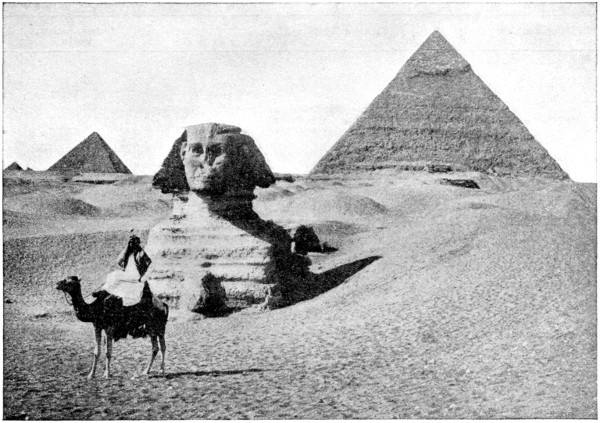
THE SPHINX AND PYRAMIDS AT GIZEH
This most mysterious of all Egyptian sculptures stands near the Second Pyramid. The body of the Sphinx is
one hundred and fifty feet long, its paws are fifty feet and its height is seventy feet (See page 351).
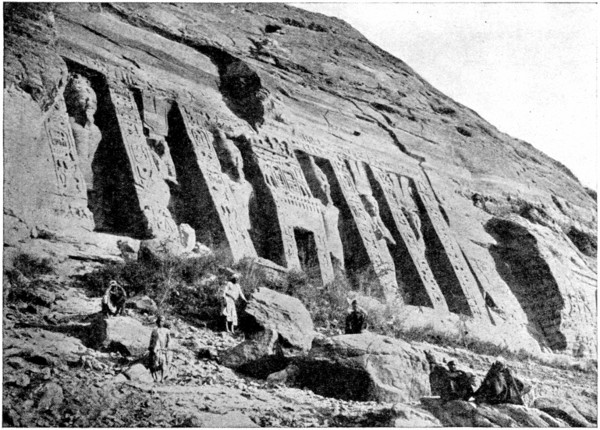
This wonderful temple at Abu-Simbel in Nubia is the most northerly of a group of three, but is separated from
the others by a deep ravine. It was dedicated to the goddess Hathor, and built by Rameses the Great in the side
of a deep cliff. The portrait statues are thirty-three feet in height and represent Aahmes and his queen Nefertari.
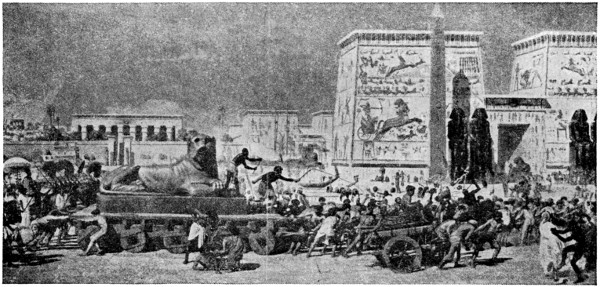
ISRAEL IN EGYPT—From a Painting by Sir Edward J. Poynter
This picture portrays the hardships of the enslaved peoples in Pharaoh’s time. Not only the Israelites but the
Egyptians as well were forced into service to build the great Pyramids to immortalize Egypt’s rulers.
For hoary antiquity, for the massive
and sublime, for the quaintly
picturesque, Egypt stands unrivalled in
the world,—the region where the Pharaohs
reigned, where Moses grew from
birth to manhood, where Joseph came
forth from a dungeon to rule in wisdom
at the king’s right hand, and whence the
chosen people of God went out into the
wilderness towards the promised land.
THE BEGINNINGS OF THE
OLDEST CIVILIZATION
When the Egyptians first appear on
the page of history they are already possessed
of a marvelously advanced civilization,
extending back thousands of
years before the even remote period of
the pyramid builders. Long before the
chosen people, the Hebrews, came into
possession of the promised land of
Canaan, Egypt had kings, priests, cities,
armies; laws, temples, learning; arts and
sciences and books. Egypt is, beyond
all other lands, the land of ruins, surpassing
all in gigantic and stately monumental
remains, the result of immense
human labor.
HOMELAND OF THE
EGYPTIANS
Egypt proper occupies little more than
twelve thousand square miles. Including
the oases in the Libyan Desert, the
region between the Nile and the Red
Sea, and El-Arish in Syria, but excluding
the Sudan, the area is about four hundred
thousand square miles.
In ancient as in modern times Egypt
was always divided into the Upper and
Lower, or the Southern and the Northern
country; and at a very early period it
was further sub-divided into a number of
nomes, or departments, varying in different
ages. It is practically confined to
the bed of the flooded Nile, a groove
formed by its waters in the desert; and
the bordering desert and the southern
provinces of Nubia, Khartum and others,
toward the equator form no part of the
Egypt of nature or of history, though
from time to time they have been
politically joined to it. Without the
Nile Egypt would never have existed;
and therefore a brief account of this
wonderful river is very important.
THE LIFE GIVING
RIVER NILE
Though the longest river in Africa,
the Nile has little historic interest above
Khartum, where the White Nile and
Blue Nile unite their waters. Below
Khartum navigation is rendered extremely
dangerous by the cataracts
which obstruct the bed of the river, the
sixth occurring not far north of Khartum,
the first near Assuan, in Egypt.
The Nile enters the Mediterranean
by a delta which separates into two
main channels, the Rosetta and the
Damietta, which are intersected with
canals. The valley of Upper Egypt is
narrow, and the fringe of mountains
on either side are of no great height, so
that the landscape varies but little and
might appear to be monotonous but for
the rich and wondrous coloring of all the
scenery, the vivid green of the fields,
the rich red-brown of the river, the bright
yellow of the rocks, with overhead a
deep blue sky and brilliant sunshine.
The river flows into Egypt proper north
of the second cataract, a little south of
Wadi-Halfa. The Blue Nile joins the
river at Khartum; this stream brings
down an immense quantity of red mud.
The cataracts are six in number.
THE NILE’S ANNUAL
OVERFLOW
The important feature of the river is
its annual inundation. At the end of
May the river is at its lowest level, it
rises gradually in June and continues
rising until the middle of September; it
then remains stationary from two to
three weeks, rising again until the end
of October; it is then at its highest level
and begins gradually to fall, until by
May it is once more at its lowest. The
river rises from twenty-one to twenty-eight
feet; when it did not reach this
level the crops failed, and when it
exceeded it, the land was overflowed and
ruin faced the people. Nowhere in the
world is there such a large population
depending solely on the produce of the
soil.
THE RISE OF IRRIGATION BEGINS
WITH THE NILE
As the climate is exceedingly dry,
irrigation became as early as the second
dynasty (about 4514 B. C.) an object of
national importance. All through the
ages can be marked the tireless persistence
and mechanical ingenuity employed
in the problems of irrigation. During
the nineteenth century, Mehemet Ali
Pasha began a gigantic system of canals
and locks and weirs. A French engineer
of great ability, Mougel Bey, was employed
to carry out this difficult task;
his great barrage across the Nile, at the
apex of the delta, is still a very impressive
work; unfortunately the system was a
failure. Later British engineers undertook
the management of irrigation, and
in 1902 the Nile dam, at the head of the
first cataract above Assuan, was completed.
The dam is such a height that
the beautiful temples on the islet of
Philæ are partially submerged; and during
several months of the year the ruins
are no longer visible.
EGYPTIAN LAKES, CLIMATE
AND OASES
The chief lakes of Egypt, from west
to east are Mareotis, Edku, Burlus, and
Menzala; these lie only a few miles from
the coast and are shallow and brackish.
The seven famous natron lakes lie in a
valley in the desert, eighty miles from
Cairo. In the province of the Fayum is
the Birket-el-Kerum, thirty miles long
and five miles wide, forming the remains
of the ancient Lake Moeris, which
Herodotus believed to have been artificially
constructed.
The climate is extremely dry. Egypt
lies in an almost rainless area. The days
are warm and the nights are cool.
January is the coolest month. On the
coast rain falls during the winter months,
but snow is unknown. In Sinai, snow
occasionally falls during the winter,
and heavy storms of rain occur, which
occasionally flood the rocky ravines.
One interesting feature of the climate is
the continuous north wind, which blows
throughout the year, and the sailing boats
are thus able to ascend the Nile against
the strong current. During the spring
the Kamsin occurs, a hot, dry south wind
laden with sand, forming a yellow stifling
fog almost obscuring the sun; it lasts
from one to three days.
There are five large oases or fertile
places in the western desert—Siwa,
Baharia, Kharga, Dakla, and Farafra.
These have been occupied since 1600 B. C.
Kharga possesses a temple of Ammon,
built by the Persian conqueror, Darius I.,
and also other interesting ruins of the
time of the Ptolemies. Siwa contains
the oracle temple of Jupiter Ammon,
consulted by Alexander the Great. The
town is built on the rocks and has the
appearance of a fortress.
ANCIENT POPULATION
OF EGYPT
The population of the country must
have been large at the earliest period, as
one hundred thousand men were employed
in the construction of the Great
Pyramid alone during the fourth dynasty,
nearly 3600 years B. C. It has been
placed at seven million under the
Pharaohs, distributed in eighteen hundred
towns, which had increased to two
thousand under Amasis (525 B. C.), and
upwards of three thousand under the
Ptolemies. In the reign of Nero it
amounted to seven million eight hundred
thousand. In 1707 it was eleven
million, one hundred and forty thousand
in Egypt proper, or, including Nubia and
other dependencies nearly twenty millions.
TITANIC IRRIGATION DAMS OF MODERN EGYPT
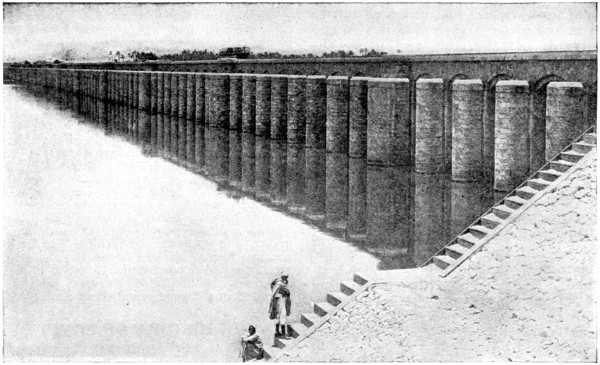
THE BARRAGE AT ASSIOUT ACROSS THE NILE
This dam, though not so large as that of Assuan, is still a gigantic structure. It is over half a mile in length
and its massive wall is pierced by one hundred and ten bays or sluices, each over sixteen feet in width.
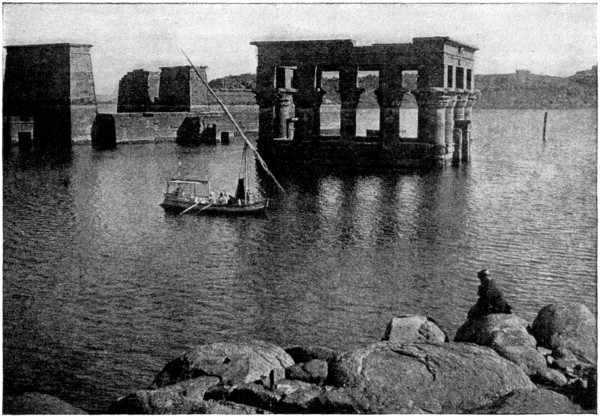
This is a view of the great dam at Assuan, across the Nile in upper Egypt, showing the ruins of the beautiful
Temple of Philæ partially submerged. The Assuan dam was the largest in the world until the completion of the
Elephant Butte dam, New Mexico, in May, 1916.
HOW WE KNOW THE
HISTORY OF EGYPT
Until the last century, what we knew
about ancient Egypt was mainly obtained
from Greek and Roman historians. At
the present time our knowledge of the
“land of pyramids and priests” has been
greatly increased by the deciphering
of the inscriptions on the monuments,
and by extended observation of the
countless sculptures in which the olden
Egyptians have recorded their ways of
life, their arts, arms, sciences, religion
and customs. In carving or in painting,
the obelisks, the temple walls, and temple
columns, the inner walls of tombs, the
coffins of the dead, artistic objects—all
are covered with the strange characters
known as hieroglyphics.
THE STORY OF THE
HIEROGLYPHICS
This word, of Greek extraction, means
“sacred carvings,” given to the sculptures in
the supposition that all such characters were of
religious import, and known only to the priests
of ancient Egypt. The meaning of the characters
had been lost for hundreds of years, and
the word “hieroglyphics” had long become
proverbial for mysteries and undecipherable
puzzles, when a keen-eyed Frenchman put into
the hands of scholars the clew to their translation.
DISCOVERY OF THE
ROSETTA STONE
An artillery officer of Napoleon’s army in
Egypt, named Bouchart, discovered near
Rosetta, in 1799, an oblong slab of stone
engraved with three inscriptions, one under the
other. The upper one (half of which was
broken off) was in hieroglyphics, the lowest one
was in Greek, and the middle one was stated in
the Greek to be in the written characters of the
country. The Greek inscription told scholars
that all three inscriptions expressed a decree of
the Egyptian priests, sitting in synod at Memphis,
in honor of King Ptolemy V.
Hieroglyphs are representations on stone,
wood, or papyrus, of objects or parts of objects,
including heavenly bodies, human beings in
various attitudes, parts of the human body,
quadrupeds and parts of quadrupeds, birds and
parts of birds, fishes, reptiles, etc., geometric
and fantastic forms, amounting in all to about
a thousand different symbols.
More than six hundred are ideographic
(idea-writing); i. e., the engraved or painted
figure, either directly or figuratively conveys
an idea which we express by a word composed
of alphabetic signs. Thus, directly, the figure
of a man means “man;” figuratively the same
figure means “power.”
PHONETIC
HIEROGLYPHICS
About one hundred and thirty of the hieroglyphs
are phonetic (sound-conveying); i. e.,
represent words (which are nothing but sound
with a meaning attached thereto) of which
the first letter is to be taken as an alphabetic
sign, and thus phonetic hieroglyphs answer the
same end as our letters of the alphabet. For
example: in ideographic writing, a bird, a
mason, a nest, mean “birds build nests;” in
phonetic hieroglyphic the figures of a bull, imp,
rope, door and ship would give the word “birds,”
and the words “build” and “nests” would be
expressed in the same round-about and clumsy
fashion.
From the old Greek writers and from records
of the monuments we have a fairly complete
story of this wonderful country and people.
FIRST MONARCH OF THE
OLD KINGDOM
The first king of Egypt, Menes, whose date
is set at 3400 years before Christ, is said to have
founded the city of Memphis, near the site of
the modern Cairo, which became the capital
of Egypt; Thebes, in Upper (or Southern)
Egypt, afterwards taking this position.
The building of the Great Pyramid at
Gizeh, near Cairo, is ascribed to a king named
Cheops (kē´ops) by Herodotus, otherwise called
Khufu (kōō´fōō), according to the hieroglyphic
royal name found inside the structure. He is
believed to have reigned about the twenty-eighth
century before Christ. Cheops was the
second and most celebrated monarch in the
fourth of the dynasties which ruled at Memphis.
The third king in this list, Khafra
(khaf´rä) also founded a pyramid, as did the
fourth, Menkaura (men-kȧ-rä´) or Nycerinus, a
sovereign beloved and praised in poetry for his
goodness. His mummified remains are in the
British Museum. In the sixth dynasty was a
female sovereign noted for her beauty, named
Nitocris, who built a pyramid and reigned at
Memphis. The monarchy then was for some
time divided, the chief power being held by the
kings ruling at Thebes, in Upper Egypt, who
developed great power, and constructed many
notable works.
THE INVASION AND RULE OF
THE SHEPHERD-KINGS
About 1800 B. C. the Hyksos or Shepherd-kings,
said to be of Arabian race, conquered
Lower Egypt, and then subdued the kingdom
of Thebes, ruling the whole land down to 1580
B. C. Probably to this period the story of
Joseph in Egypt belongs. The shepherd-kings
[347]
were expelled with the aid of the Ethiopians
from the south, and then came the great period
of Egyptian history. During this time, Egypt
was a great empire with Thebes for its capital.
Under Thutmose III., Amenhotep III. and IV.,
and Seti I., Egypt rose to great heights of
development and art.
GREAT EPOCH OF
RAMESES II.
The greatest monarch of this, or perhaps of
any, age of Egypt’s history was Rameses the
Great (called by the Greeks, Sesostris). To
him have been attributed many of the monuments
and pictures which represent triumphal
processions and captives. Rameses the Great
reigned for nearly seventy years in the fourteenth
century before Christ. Among his many monuments
two are chiefly remarkable, the Memnonium
or palace-temple at Thebes, and the great
rock-cut temple of Abu-Simbel in Nubia. These
architectural works possess an interest more
historical than that of the pyramids. He is
said to have subdued Ethiopia, carried his
arms beyond the Euphrates eastward, and
among the Thracians in southeast Europe.
The monumental sculptures and paintings tell
us of war-galleys of Egypt in the Indian seas,
and of Ethiopian tribute paid in ebony and
ivory and gold, in apes and birds of prey, and
even in giraffes from inner Africa. Other
sculptures display the Egyptians fighting with
success against Asiatic foes. To this monarch
was due a vast system of irrigation by canals
for conveying the waters of the Nile to every
part of the country.
The next sovereign of note was Sheshanq
(Shi´shak), who, in the latter part of the tenth
century before Christ, took and plundered
Jerusalem. The empire continued to decline,
and was entirely reduced by Esarhaddon and
Ashurbanipal, and became for a time tributary
to the Assyrian monarchs. In the early part
of the reign of the king Psametik I. (653-610
B. C.)
IMPORTANT REIGN OF PSAMETIK
FOLLOWS AN AGE OF DECAY
We find Egypt in connection, for the first
time in its history, with foreign countries, otherwise
than as conquering or conquered. Psametik
I. (653-610 B. C.) had in his pay a body of
Greek mercenaries, and sought to introduce the
Greek language among his subjects. In jealousy
at this, the great military caste of Egypt emigrated
into Ethiopia, and left the king dependent
on his foreign troops, with whom he successfully
warred in Syria and Phœnicia, and likewise
succeeded in making Egypt independent of
Assyria.
Neku, son of Psametik (610-595 B. C.), was
an enterprising prince, who built fleets on the
Red Sea and the Mediterranean, and strove to
join the Nile, by a canal, with the Red Sea.
Africa was circumnavigated by Phœnicians in
his service, who sailed from the Arabian Gulf,
and passed round by the Straits of Gibraltar to
the mouths of the Nile. He was the king who
defeated Josiah, king of Judah, sustaining
afterward defeat from Nebuchadnezzar II.,
king of Babylon, at Carchemish.
In 590 B. C., came Apries (the Pharaoh-Hophra
of Scripture), who conquered Sidon, and
was an ally of Zedekiah, king of Judah, against
Nebuchadnezzar. After being repulsed with
severe loss in an attack on the Greek colony of
Cyrene, west of Egypt, Apries was dethroned
by Aahmes II., who reigned from 570 to 526
B. C. His prosperous rule was marked by a
closer intercourse with the Greeks.
EGYPT IS CONQUERED
BY PERSIA
Psametik III., son of Aahmes, inherited a
quarrel of his father with Cambyses, king of
Persia, who invaded and conquered Egypt in
525 B. C. For nearly two centuries afterwards
the history of Egypt is marked, disastrously, by
constant struggles between the people and their
Persian conquerors, and, in a more favorable
and interesting way, by the growing intercourse
between the land of the Nile and the Greeks.
Greek historians and philosophers—Herodotus
and Anaxagoras and Plato—visited the country,
and took back stores of information on its
wonders, its culture, and its faith.
CONQUERED BY ALEXANDER THE GREAT
AND PASSES UNDER GREEK RULE
In 332 B. C., Egypt was conquered by
Alexander the Great; and its new capital, the
great Alexandria, destined to a lasting literary
and commercial renown, was founded. Subsequently
it passed under Greek rule, and the
language of the government, and the administration
and philosophy, became essentially
Greek. The court of the Ptolemies became the
center of learning and philosophy; and Ptolemy
Philadelphus, successful in his external wars,
built the Museum, founded the library of
Alexandria. He purchased the most valuable
manuscripts, engaged the most celebrated professors,
and had the Septuagint translation
made of the Hebrew Scriptures, and the Egyptian
history of Manetho drawn up. His successor,
Euergetes, pushed the southern limits of
his empire to Axum. Philopator (221-204
B. C.) warred with Antiochus, persecuted the
Jews, and encouraged learning. Epphanes,
(204-180 B. C.) encountered repeated rebellions
and was succeeded by Philometor (180-145
B. C.) and Euergetes II. (145-116 B. C.), by
Soter II. and Cleopatra till 106 B. C., and by
Alexander (87 B. C.), under whom Thebes
rebelled; then by Cleopatra, Berenice, Alexander
II. (80 B. C.), and Neos Dionysus (51 B. C.) and
finally by the famous Cleopatra who maintained
her power only through her personal influence
with Julius Cæsar and Mark Antony.
EGYPT BECOMES A
ROMAN PROVINCE
On the defeat of Mark Antony by Augustus,
B. C. 30, Egypt became a province of Rome. It
was still a Greek state, and Alexandria was the
chief seat of Greek learning and science. On
the spread of Christianity the old Egyptian
doctrines lost their sway. Now arose in Alexandria
the Christian catechetical school, which
produced Clemens and Origen. The sects of
Gnostics united astrology and magic with
religion. The school of Alexandrian Platonics
produced Plotinus and Proclus. Monasteries
were built all over Egypt; Christian monks took
[348]
the place of the pagan hermits, and the Bible
was translated into Coptic.
PASSES UNDER MOHAMMEDAN
RULE
On the division of the great Roman Empire
(A. D. 395), in the time of Theodosius, into the
Western and Eastern Empires, Egypt became a
province of the latter, and sank deeper and
deeper in barbarism and weakness. It was conquered
in 640 A. D. by the Saracens under
Caliph Omar. As a province of the caliphs it
was under the government of the celebrated
Abbasides—Haroun-al-Rashid and Al-Mamun—and
that of the heroic Sultan Saladin. The last
dynasty was, however, overthrown by the
Mamelukes (1250); and the Mamelukes in their
turn were conquered by the Turks (1516-17).
The Mamelukes made repeated attempts to cast
off the Turkish yoke, and had virtually done so
by the end of the eighteenth century, when the
French conquered Egypt and held it till 1801,
when they were driven out by the British.
BECOMES A PAWN OF TURKEY,
FRANCE AND ENGLAND
On the expulsion of the French a Turkish
force under Mehemet Ali Bey took possession
of the country. Mehemet Ali was made pasha,
and being a man of great ability, administered
the country vigorously and greatly extended
the Egyptian territories. At length he broke
with the Porte, and after gaining a decisive
victory over the Ottoman troops in Syria in
1839 he was acknowledged by the sultan as
viceroy of Egypt, with the right of succession
in his family.
By the Anglo-French agreement of 1904
France formally recognized the predominant
position of Great Britain, and agreed in no way
to obstruct British action in the government of
Egypt. The European War of 1914-1916 has
again thrown Egypt into the balance, and its
political future seems to be entirely a matter of
the fortunes of war and diplomacy.
At an early period the form of government
in Egypt became an hereditary monarchy, of a
peculiar kind. The power of the king was
restricted by rigid law and antique custom, and
by the extraordinary influence of the priestly
class. The soil was held by the priests, the
warriors, and the king.
Their Kings.—The Egyptian monarchs appear
to have used their authority well and wisely;
we rarely hear of insurrection or rebellion,
and many received divine honors after death
for their beneficence and regal virtues. The
common title “Pharaoh” is derived from the
Egyptian word “Phra,” the sun.
Social Castes.—The body of the people were
divided into castes, not rigidly separated, as in
India. The members of the different orders
might intermarry, and the children pass from
one caste to another by change of the hereditary
occupation. The castes were: (1) priests;
(2) soldiers; (3) husbandmen; (4) artificers
and tradesmen; (5) a miscellaneous class of
herdsmen, fishermen and servants. The priests
and warriors ranked far above the rest in
dignity and privilege.
The Priests.—The hierarchy in Egypt was the
highest order in power, influence and wealth.
To the priestly caste, however, many persons
belonged who were not engaged in religious
offices. They were a landowning class, and
the solely learned class. In their possession
were all the literature and science of the
country, and all employments dependent, for
their practice, on that knowledge. The
priesthood thus included the poets, historians,
lawyers, physicians, and the magicians who
did wonders before Moses. They paid no
taxes, had large landed possessions, exercised
immense influence over the minds of the
people, and put no slight check even on the
king.
Soldiers and Warriors.—Egypt had an army
of over four hundred thousand men, mainly
composed of a militia supported by a fixed
portion of land (six acres per man), free from
all taxation. The chariots and horses were
famous: the foot-soldiers were variously
armed with helmet, spear, coat of mail, shield,
battle-axe, club, javelin and dagger, for close
fighting in dense array; and with bows, arrows
and slings for skirmishing and conflict in open
order. The soldier was allowed to cultivate
his own land when he was not under arms,
but he could follow no other occupation.
The Lower Castes.—The castes below the
warriors and priests had no political rights,
and could not hold land; to-wit, The husbandmen
who tilled the soil paid rent in produce to
the king or to the priests who owned it; and
the artisan class, which included masons and
the usual tradesmen, whose occupations are
recorded upon the monuments. The herdsmen
were the lowest class, and of these the
swineherds were treated as outcasts, not permitted
to enter the temples, or to marry,
except among themselves.
In Egypt, life was the thing sacred. Hence
all that had life, all that produced and all that
ended life, was in a way divine. Hence death,
too, was sacred. The Egyptian lived in the
contemplation of death. His coffin was made
in his lifetime; his ancestors were embalmed.
The sovereign’s tomb was built to last for, not
centuries, but thousands of years.
The highest form of the religious belief of
the Egyptians included the idea that the soul
was immortal. In the religion of Egypt were
united the worship of Nature, and of the spirit
which underlies and animates Nature.
The Egyptian Gods.—Having depended on
the Nile and the Sun for the vegetation needed
for their food, the people conceived human
forms for them, and for the prolific Earth, as
deities; namely, Osiris as the Nile and the
Sun, and Isis as the Earth. These were the
only divinities that were worshiped throughout
Egypt. In later times they came to be
regarded as divinities of the sun and the
moon.
Another god, Anubis, worshiped in the form
of a human being with the head of a dog, is
represented as an Egyptian Hermes.
Whatever higher religious ideas may have
been held by learned priests, the worship of
the common people was chiefly adoration of
[349]
animals. The sacred bull, called Apis, was
worshiped at Memphis with the highest
honors. All Egypt rejoiced on his annual
birthday festival, and there was a public
mourning when he died. The dog, the hawk,
the white ibis, and the cat, were also specially
revered. The sparrow-hawk, with human
head and outspread wings, denoted the soul
flying through space, to animate a new body.
Thus we find mingled, in the religion of Egypt,
gross superstition in the masses of the people,
along with the spiritual conceptions of cultivated
minds.
The Future Life.—In a papyrus-book, discovered
in the royal tombs of Thebes, called
the Book of the Dead, we read in pictured
writing of a second life, and of a Hall of
Judgment, where the god Osiris sits, provided
with a balance, a secretary, and forty-two
attendant-judges. In the balance the soul is
weighed against a statue of divine justice,
placed in the other scale, which is guarded by
the god Anubis. The assistant-judges give
separate decisions, after the person on trial
has pleaded his cause before them. The soul
rejected as unworthy of the Egyptian heaven
was believed to be driven off to some dark
realm, to assume the form of a beast, in
accordance with a low character and sensual
nature. An acquitted soul joined the throng
of the blest.
Embalming.—The religion of the people was
connected with the practice of embalming the
bodies of the dead. This art seems to have
derived its origin from the idea that the preservation
of the body was necessary for the
return of the soul to the human form after it
had completed its cycle of existence of three
or ten thousand years. The art appears as
old as 4000 B. C., at least, for the bodies of
Cheops, Mycerinus, and others of the age of
the fourth dynasty, were embalmed.
The chief feature of Egyptian architecture
is its colossal, massive grandeur, from the use of
enormous blocks of masonry, and from the vast
extent of the buildings, which produce in the
beholder an unequalled impression of sublimity
and awe. The approaches to the palaces and
temples were paved roads, lined with obelisks
and sphinxes; and the temples and the palaces
themselves surpassed in size, and in elaborate
ornament of sculpture and of painting, all other
works of man.
The Pyramids.—Of about forty pyramids now
left standing in Middle Egypt, the most remarkable
are the group of nine at Gizeh, near
the site of ancient Memphis. The removal of
the vast blocks of stone from distant quarries,
and their elevation to heights, which have
sorely puzzled modern engineers, were effected,
not by the ingenuity of mechanical contrivance,
but by the lavish use of human labor. Thousands
of men were employed for months in
moving single stones.
The Temple Columns.—Egyptian columns
were formed by their architects on the model
of the palm-tree, whose feathery crown of
foliage was ever before their eyes, or of the
full-blown or budding papyrus. We find constantly
in the mural decorations the figure of
the famous lotus-plant, or lily of the Nile,
beheld by the Egyptians with veneration, and
used in sculpture and in painting as no mere
ornament, but as a religious symbol. This
water-lily of Egypt was consecrated to Isis and
Osiris, and typified the creation of the world
from water. It also symbolized the rise of
the Nile and the return of the sun in his full
power.
Egyptian sculpture displays size, simplicity,
stiffness, and little of what modern art calls
taste or beauty. Neither did the Egyptians
become true artists of the pictorial class. They
used simple colors of brilliant hue; but of light
and shade only little was known; and of
perspective, nothing.
Their monuments prove, however, that they
practiced the same mechanic arts, and used the
same variety of tools, as the moderns. They
were adepts at the finest work in every species
of handicraft. We have here ample proof that
the ancient Egyptians were a highly ingenious,
artistic, tasteful, and industrious race.
The land of Egypt, teeming with population,
abounded in cities and towns. Of these the
greatest were Thebes, in Upper Egypt, and
Memphis, in Middle Egypt, whose site was
near the modern Cairo.
Abu-Simbel (ä´bōō-sim´bel) on the Nile, in Lower
Nubia is the site of two very remarkable rockcut
temples, among the most perfect and noble
specimens of Egyptian architecture. Here there
is no exterior and constructed part; the rock out
of which they have been excavated rises too near
the river. Still the temples have their façade,
as richly decorated and as monumental in its
character as those of the most sumptuous edifices
of Thebes.
The colossal statues here, instead of being
isolated monoliths, are a part of the façade itself,
hewn out of the rock, though still forming part
of it. The façade of the smaller temple, that of
Hathor, is eighty-eight feet long and thirty-nine
feet high. It has six colossal figures, about
thirty-two feet high, of which four represent
Rameses, and the other two his wife, Nefert-Ari.
The façade of the great temple is larger, being
one hundred and twenty-six feet long and ninety-three
feet high.
Most striking are the four colossal figures of
Rameses, two to the right, two to the left of the
door. These are the largest figures of Egyptian
sculpture, being sixty-six feet high. Everywhere
are pictures like those at Luxor and Karnak,
representing the battles and triumphs of Rameses.
Abydos (a-bī´dos), next to Thebes the most important
city in the ancient kingdom of Upper
Egypt. Here was found, 1817, in a corridor of
the temple of Seti I. a very important tablet giving
a succession of sixty-five kings beginning with
Menes, covering a period of about 2,200 years.
A similar tablet containing eighteen names,
found in the temple of Rameses in 1818, was removed
by the French consul-general, sent to Paris,
and finally purchased for the British Museum.
Alexandria, the third capital of Egypt, was
founded by Alexander the Great in the autumn
of the year 332 B. C. It was situated originally
on the low tract of land which separates the lake
Marcotis from the Mediterranean, about fourteen
miles west of the Canopic mouth of the
Nile. Before the city, in the Mediterranean,
lay an island, upon which stood the famous
[350]
lighthouse, the Pharos, built in the time of
Ptolemy I. in the third century B. C, and said
to have been four hundred feet high. The island
was connected with the mainland by a mole,
thus forming the two harbors.
The most magnificent quarter of the city,
called the Brucheion, contained the palaces of
the Ptolemies, the Museum, for centuries the
focus of the intellectual life of the world, and
the famous library; the mausoleum of Alexander
the Great and of the Ptolemies, the temple of
Poseidon, and the great theater.
To the south was the beautiful gymnasium.
The Serapeum, or temple of Serapis, stood in the
Egyptian quarter.
Much of the space under the houses was
occupied by vaulted subterranean cisterns, which
were capable of containing a sufficient quantity
of water to supply the whole population of the
city for a year.
From the time of its foundation, Alexandria
was the Greek capital of Egypt. Its population
in the time of its prosperity, amounted to about
three hundred thousand free citizens, and probably
a larger number of slaves. This population
consisted mostly of Greeks, Jews and Egyptians,
together with settlers from all nations of the
known world.
After the death of Alexander the Great, Alexandria
became the residence of the Ptolemies.
They made it, next to Rome and Antioch, the
most magnificent city of antiquity, as well as
the chief seat of Greek learning and literature.
Alexandria had reached its greatest splendor
when, on the death of Cleopatra, the last of
the Ptolemies, in 30 B. C, it came into the
possession of the Romans. Its glory was long
unaffected, and it was the emporium of the
world’s commerce.
In the reign of Caracalla, however, it suffered
severely. The strife between Christianity and
heathenism in the third century—powerfully
described in Kingsley’s Hypatia—gave rise to
bloody contests in Alexandria. The rise of
Constantinople only served to hasten its fall.
The choice of Cairo as capital of the Egyptian
caliphs hastened the now rapid decay of the
city; the discovery of America, and of the
passage to India by the Cape of Good Hope,
very much diminished its trade; and when, in
1517, the Turks took the place, the remains of its
former splendor wholly vanished.
Under Mehemet Ali, however, the tide turned,
and the city recovered rapidly. It is now again
one of the most important commercial places on
the Mediterranean with a population of about
three hundred and fifty thousand. The Suez Canal
diverted part of its trade; but this was more
than compensated by the general impetus given
to Egyptian prosperity.
Of the few remaining objects of antiquity the
most prominent is Pompey’s Pillar, as it is
erroneously called. Of the so-called Cleopatra’s
Needles—two obelisks of the sixteenth century
B. C. which long stood here—one was taken to
England and erected on the Thames Embankment,
London, 1878; and the other, presented by
the khedive to the United States, was set up at
New York in 1881.
Assuan or Assouan (äs-swän), the ancient Syene
is the southernmost city of Egypt proper, on the
right bank of the Nile, and beside the first or
lowest cataract. It is noted for its granite, and
was the place of banishment of Juvenal, the
Roman poet. Here also is the great Nile irrigation
system, begun in 1898, including a dam at
Assuan and another at Assiout (two hundred and
fifty miles nearer Cairo). The Assuan dam,
finished in 1902 was designed to raise the level
of the Nile for one hundred and forty miles above
the first cataract. Its total length is one and
one-quarter miles, the maximum height from
the foundation about one hundred and thirty feet
and the total weight of masonry over one million
tons.
The difference of level of the water above and
below is sixty-seven feet, and navigation is provided
for by a series of four locks, each two
hundred and sixty feet by thirty-two feet. The
dam is pierced with one hundred and eighty
openings, twenty feet by six feet, capable of discharging
fifteen thousand tons of water per
second. The reservoir, when opened, held something
over one thousand million tons of water.
In 1907 the level was raised by twenty-three
feet, steps being taken to preserve (as far as is
consistent with partial submersion) the ruins of
the temples on the island of Philæ within the
area of the dam. Barrages at Zifteh and at
Esneh help to regulate the flow.
Cairo (kī´rō).—The present capital of Egypt, is
situated one mile east of the Nile. It has important
transit trade, and is the starting-point for
tours to neighboring pyramids, the sites of Memphis
and Heliopolis, and the upper Nile. Its
chief suburb is Bulak. It was founded by the
Fatimite caliphs about 970, and made the capital.
It was taken by the Turks in 1517, was held by
the French 1798-1801, and was occupied by the
British in 1882. It was the scene of the massacre
of the Mamelukes in 1811.
There are about four hundred Mosques, some
having six minarets, and adorned with beautiful
granite columns, brought from Heliopolis and
Memphis. About twenty deserve notice as works
of art. The largest mosque is El Azhar, at the
center of the city, regarded as a University for all
Islam. The next in size is that of Sultan Hasan,
in the Roumeyleh square, the finest structure in
modern Egypt, and extremely light and elegant.
It is built in the form of a parallelogram, and has
a deep frieze running round all the wall, adorned
with Gothic and Arabesque sculpture.
Other noticeable Mosques are the Tomb-Mosque
of Kait Bey, built about 1470, one of the finest
pieces of architecture in Cairo; and the Mosque
of Amra, the oldest mosque in Egypt (founded
643 A. D.), and a remarkable Mohammedan
monument.
The Citadel, or fortified Palace, erected by
Saladin in 1176, was the only place of defence in
the city; it fell into ruin, but was thoroughly
repaired by a late pasha. Formerly it included
a magnificent hall, Saladin’s Hall, environed with
twelve columns of granite, of prodigious height
and thickness, brought from the ruins of Alexandria.
These supported an open dome, under
which Saladin distributed justice to his subjects.
The view embraces the city, and above thirty
miles along the Nile, including the ruins of Old
Cairo, site of Memphis, great Pyramids, Obelisk
of Heliopolis, and Pyramids of Sakkara. The
Khedive resides at the Abdin and Kubbeh
Palaces.
The street scenes of Cairo are of inexhaustible
interest and amusement; civilization and semi-barbarism
constantly jostle, the garb of the east
perpetually comparing, in the season, with the
toilettes of London, Berlin and Paris; refinement
and coarseness, culture and ignorance, Mohammedanism,
paganism, Christianity, every tint of
skin, all conceivable phases of existence, present
themselves in the throng of a Cairo street.
Gizeh or Ghizeh (gē´ze) is situated on the Nile
about three miles west-southwest of Cairo. The
Gizeh group consists of the Great Pyramid, the
second and third pyramids, and eight small
pyramids.
The Great Pyramids is the tomb of the Pharaoh
Khufu (Cheops), of the fourth dynasty. Its
original height was four hundred and eighty-one
feet (present height, four hundred and fifty-one),
and the original length of the sides at the base,
seven hundred and fifty-five. It is built of solid
[351]
masonry in large blocks, closely fitted, with use
of mortar. The exterior forms a series of steps,
which were originally filled with blocks of limestone
accurately cut to form a smooth slope.
The entrance, originally concealed, is on the
north side, forty-five feet above the base and
twenty-four feet to one side of the center. The
passage slants downward for three hundred and
six feet; but the corridor, slanting upward to the
true sepulchral chambers, soon branches off from
it. A horizontal branch leads to the queen’s
chamber, about eighteen feet square, in the
center of the pyramid, and the slanting corridor
continues in the Great Gallery, one hundred and
fifty-one feet long, twenty-eight feet high, and
seven feet wide, to the vestibule of the king’s
chamber, which is thirty-four and one-half feet
long, and seventeen feet wide, and nineteen feet
high, and one hundred and forty-one feet above
the base of the pyramid. It contains a plain,
empty sarcophagus.
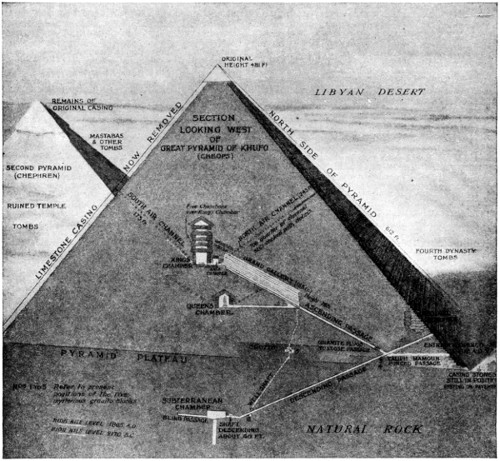
SECTIONAL VIEW OF THE GREAT PYRAMID OF CHEOPS OR KHUFU
This cross-section clearly exhibits the known passages within the seven million ton monument, which for six
thousand years has stood to commemorate Cheops (See page 350).
Large image (518 kB)
The Second Pyramid, or pyramid of Chephren
(Khafra), was originally four hundred and seventy-two
feet high and seven hundred and six feet in
base-measurement. It has two entrances, and
interior passages and chambers similar to those of
the Great Pyramid. It retains at the top, part
of its smooth exterior casing.
The Third Pyramid, that of Menkaura, was
two hundred and fifteen feet high, and three
hundred and forty-six feet to a side at the base.
The entrance-passages and sepulchral chambers
are similar to those of the other pyramids. All
three were built by the fourth dynasty. Temples,
now ruined, stand before the eastern faces
of the second and third pyramids.
Sphinx (sfingks).—This celebrated figure is
a quarter of a mile southeast of the Great Pyramid.
According to present opinion, it is older than any
of the pyramids. It consists of an enormous
figure of a crouching sphinx of the usual Egyptian
type, hewn from the natural rock, with the flaws
and cavities filled in with masonry. The body is
one hundred and forty feet long; the head measures
about thirty feet from the top of the forehead
to the chin, and is fourteen feet wide. Except
the head and shoulders, the figure has for ages
generally been buried in the desert sand.
Between the paws were found an altar, a
crouching lion with fragments of others, and
three large inscribed tablets, one, fourteen feet
high, against the Sphinx’s breast, and the two
others extending from it on each side, thus forming
a sort of shrine. The Sphinx was a local
personification of the sun-god.
Heliopolis (hē-li-op´ō-lis) the City of the Sun, or
On—the oldest, perhaps, in this land of antiquities—was
a sort of sacerdotal and university
town, where Herodotus sought the wisest men
in Egypt. Here Plato is said to have graduated.
[352]
Here also lived Potiphar, who bought Joseph the
patriarch. It consisted for the most part of temples
and colleges; of which nothing now remains
but a few isolated mounds, and one extremely
ancient Obelisk. At the village of Metariyeh is
reputed to be the place where the Virgin, St.
Joseph and the infant Jesus stopped, under a
sycamore.
Memphis (mĕm´fis) after the fall of Thebes, became
the capital of Egypt, and kept its importance till
the conquest by Cambyses. It was built by
Menes on the western bank of the Nile, south of
Cairo. It suffered from the Hyksos, and was
captured by the Assyrians and stormed by Cambyses.
It continued to exist under the Roman
Empire, but was gradually abandoned and ruined
after the Mohammedan conquest in the seventh
century A. D. The ruins of Sakkara are near it.
The desert sands have overwhelmed its famous
avenue of sphinxes; and the great Pyramids of
Gizeh, and the colossal Sphinx, are the chief
memorials of the past in its vicinity.
Although various opinions have prevailed as to
their use, the Pyramids were really nothing more
than the tombs of monarchs of Egypt who
flourished from the first to the twelfth dynasty.
With the exception of some very late pyramids in
Nubia, none were constructed after the twelfth
dynasty; the later kings were buried at Abydos,
Thebes, and other places, in tombs of a totally
different construction.
Thebes (thēbz) is the No or No Ammon of Scripture,
and is situated on the Nile opposite Karnak and
Luxor. It was at the height of its splendor, as
capital of Egypt from about 1600 to 1100 B. C.
Its vastness is shown by the existing remains,
known (from the names of modern villages) as
the ruins of Karnak, Luxor, etc. They consist
of obelisks, sphinxes, colossal statues, temples, and
tombs cut in the rock,—mighty monuments,
with their countless sculptured details and inscriptions,
themselves the historians of the Egyptian
Empire of three thousand years ago. It was
enriched by the spoils of Asia and the tributes
of Ethiopia, and its fame and reputation had
reached the early Greeks. At the Persian conquest
in the sixth century B. C. Cambyses destroyed
many of its noblest monuments.
At the present day the glory of Thebes consists
in its ancient temples. Of these the best known
are the El Kurna, the Rameseum and Medinet-Abu
temples, founded by Seti I., Rameses II., and
Rameses III. respectively. To Amenhotep III.
are ascribed two temples on the west side of the
city, as also the well-known temple at Luxor.
Luxor (luk´sor).—The present front of
the
latter temple was preceded, at the end of a
great dromos of sphinxes leading to Karnak, by
two beautiful obelisks of red granite, one of which
still remains, and the other stands in the Place
de la Concorde, Paris.
Before the large double gateway of the court
are two colossal seated statues. The court is
surrounded by a double range of columns. Beyond,
the avenue to the buildings of Amenhotep
makes a sharp angle and meets the gateway of
the court, which is surrounded by a double
colonnade. The buildings behind the court contain
a great number of chambers and an isolated
sanctuary, all profusely sculptured and colored.
Karnak (kär´nak).—The temple
here originally
founded in the twelfth dynasty, owes much
of its magnificence to later kings. The Great
Temple extends to a length of about twelve
hundred feet from west to east, and is comparatively
regular in plan. The double gateway of
the great court is about three hundred and
seventy feet wide; the court is colonnaded at the
sides, and has an avenue of columns in the
middle.
A second gateway follows, and opens on the
famous hall, one hundred and seventy by three
hundred and twenty-nine feet, with central avenue
of twelve columns sixty-two feet high and eleven
and one-half feet in diameter, and one hundred and
twenty-two columns forty-two and one-half feet
high at the sides. A narrow court follows, ornamented
with figures and containing two obelisks.
Behind this building is another large open
court, at the back of which stands the edifice of
Thothmes III., an extensive building containing
a large hall and many comparatively small halls
and chambers.
The mural sculptures are vast in quantity, and
highly interesting in character, particularly those
which portray the racial characteristics of various
conquered Asiatic peoples.
Suez (sōō-ez´).—A seaport of Egypt, situated at
the head of the Gulf of Suez, is best known as the
southern terminus of the Suez Canal. It was the
ancient Arsinoë and the terminus of an ancient
canal built by the Egyptian king, Rameses II.,
between the Nile delta and the Red Sea. This,
having been allowed to fill up and become disused,
was reopened by Darius I. of Persia. It was
once more cleared and made serviceable for the
passage of boats by Arab conquerors of Egypt.
In 1841 the French diplomat Lesseps set himself
to study the isthmus of Suez thoroughly,
and in 1854 he managed to enlist the interest of
Said Pasha, khedive of Egypt, in his scheme for
connecting the Mediterranean with the Red Sea.
Two years later the Porte granted its permission
and the Universal Company of the Maritime Suez
Canal was formed, receiving important concessions
from the ruler of Egypt. The work was
begun in 1859, and in 1869, the canal was duly
opened for vessels. Between 1885 and 1889 the
canal was enlarged and improved, and altogether
over one hundred million dollars were spent in its
construction. The total length is one hundred
miles; the width of the water-surface was at first
one hundred and fifty to three hundred feet, the
width at the bottom seventy-two feet, and the
minimum depth twenty-six feet. At Port Said
two strong breakwaters, six thousand nine hundred
and forty and six thousand and twenty feet
long respectively, were run out into the Mediterranean;
at Suez another substantial mole was
constructed.
The making of the canal was facilitated by the
existence of three or four valleys or depressions
(formerly lakes), which, when the water reached
them, became converted into lakes. Immediately
south of Port Said the canal crosses Lake
Menzaleh (twenty-eight miles long); and three
more—Lake Ballah, Lake Timsah (five miles
long), and the Bitter Lakes (twenty-three miles)
are traversed to the south of it. The highest
point or elevation that was cut through does not
exceed fifty feet above sea-level. At intervals of
five or six miles sidings or side-basins are provided
to enable vessels to pass one another. By
1890 the canal had been deepened to twenty-eight
feet, and widened between Port Said and the
Bitter Lakes to one hundred and forty-four feet,
and from the Bitter Lakes to Suez to two hundred
and thirteen feet.
In 1875 Lord Beaconsfield, Prime Minister of
England bought for the British Government the
khedive’s shares—nearly half the canal stock—for
$20,500,000. They are now valued at about
$150,000,000, and bring in over $5,000,000 annual
revenue.
From Suez there is a tourist route to Mount
Sinai, near the coast, under the range called Jebel-et-Tih
past Elim, Pharaoh’s Quarries, and Rephi-dim.
The Sinai District comprises Mount Horeb,
the Valley of Jethro, Church of the Burning
Bush, Chapel of Elijah, and other historical sites.
Thence it leads to Akabah, and up the deep pass
of Wady Moosa, to Mount Hor (or Petra), Zoar,
and Mount Seir, Beersheba and Hebron. (See
Holy Land).
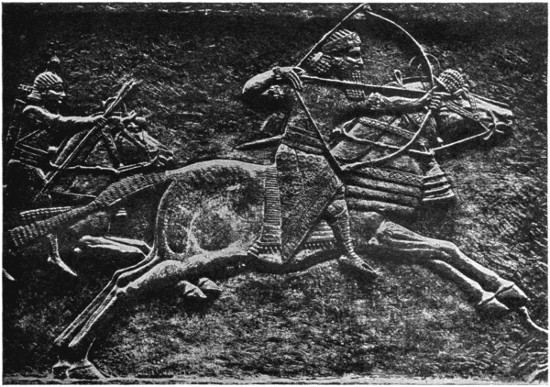
GREAT ASSYRIAN MONARCH, ASHURBANIPAL, AS A LION HUNTER
This famous conqueror was one of the most enlightened of Assyrian rulers. He encouraged literature, and
through his wise counsels the annals of Babylonia and Assyria, written on clay tablets, have been preserved for us
in the library of his palace. From these we have learned practically all we know of Babylonian-Assyrian history
and religion.
In the very first ages of the world,
Babylonia, with Egypt, led the way as
the pioneers of mankind in the arts of
civilization. Alphabetic writing, astronomy,
history, chronology, architecture,
plastic art, sculpture, navigation, agriculture,
textile industry, all had their origin
in one or other of these two countries.
GEOGRAPHY AND PHYSICAL FEATURES
OF THE REGION
The ancient kingdom of Babylonia
was bounded on the east by Elam or
Susiana; on the south by the Persian
Gulf; on the west by the deserts of
Arabia; and on the north by Assyria.
It was watered by two streams, the Tigris
and the Euphrates, and it was intersected
by a number of canals, branching out
from these great rivers, and dug in order
to save the country from the effects of
the annual inundations.
From the head waters of the Tigris and
Euphrates to the Persian Gulf is a distance
of about eight hundred miles. The
land included between the two rivers
divides itself naturally into two parts.
The northern one of these, Assyria, is a
great plain of limestone and selenite, in
area almost equal to England. The
northern and western portions of this
plain are broken by mountains and are
of a fertile character, as is also that
part of Assyria which lies east of the
Tigris.
The southern of the two principal
parts, Babylonia, is of alluvial character,
and in ancient times was about equal in
area to the combined territory of Holland
and Belgium or to the southern half of
Louisiana, the latter a region to which it
has been likened in character. On the
east of the Tigris, the Babylonian plain
stretches away for a distance of some
thirty to fifty miles, to the mountains of
Elam. On the west it merges into the
Arabian desert, twenty or thirty miles
from the Euphrates, where the low hills
check the overflow of the river.
EARLY DIVISIONS AND FAMOUS
CITIES OF BABYLONIA
Babylonia appears to have been
divided into the two large provinces of
Sumer or Shinar (South Babylonia), and
Accad or north Babylonia. The capital
of this latter province was, like Babylon,
built on both banks of the Euphrates,
the larger half being called Sippara of
Samas, the sungod (the modern Abu
Habba), and the smaller half Accad or
Agade. The latter was afterwards named
“Sippara of the moon-goddess.” The
greater part of Babylonia is now included
in the modern Turkish province of
Bagdad.
Ancient Babylonia also contained a
number of other large cities and there
was a succession of famous capitals:
Babylon, of the Babylonian Empire, and
afterwards of the Persian; Seleucia,
founded by Seleucus, king of Syria, after
the death of Alexander the Great;
Ctesiphon, capital of the Parthian Empire;
in modern times, Bagdad.
Babylon, on the Euphrates, is first mentioned in
a tablet of 3800 B. C. From 2250 B. C. it became
the capital of Babylonia and the holy city
of western Asia. The name Babylonia is the
Greek form of Babel, meaning “The Gate of the
God.” Its Persian name was Babirus. It was
according to the accounts of Greek writers, the
greatest city of antiquity.
Nebuchadnezzar, who took more pride in the
buildings constructed under his auspices than in
his victorious campaigns, concentrated all his
care upon the adorning and beautifying the city.
To this end he completed the fortification of the
city begun by his father Nabopolassar, consisting
in a double inclosure of mighty walls which were
strengthened by two hundred and fifty towers
and pierced by one hundred gates of brass. The
city itself was adorned with numerous temples,
chief among them Esagila (“the high-towering
house”), temple of the city and of the national
god Merodach (Babylonian Marduk) with his
spouse Zirpanit. In the neighborhood of it was
the royal palace, the site of which was identified
with the ruins of Al-Kasr. Sloping toward the
river were the Hanging Gardens, one of the
seven wonders, the location of which is in the
northern mound of ruins, Babel.
The Tower of Babel, which is supposed to be
the temple of Nebo in Borsippa, not far from
Babylon, represents the most imposing ruin of
Babylonia. It is termed in the inscriptions
Ezida (“the eternal house”), an ancient sanctuary
of Nebo, and was restored with great splendor by
Nebuchadnezzar. It represents in its construction
a sort of pyramid built in seven stages,
whence it is sometimes called “temple of the
seven spheres of heaven and earth,” and it is
assumed that the narrative of the “Tower of
Babel” which the builders intended to carry up
to heaven, was connected with this temple.
In the conquest of Cyrus, 538 B. C., the city of
Babylon was spared. Darius Hystaspis razed its
walls and towers. Xerxes (486-465 B. C.)
despoiled the temples of their golden statues and
treasures. Alexander the Great wished to restore
the city, but was prevented by his early death.
The decay of Babylon was hastened by the
foundation in its neighborhood of Selencia, 300
B. C., which was built from the ruins of Babylon.
The last who calls himself in an inscription
“King of Babylon” was Antiochus the Great
(223-187 B. C.)
EARLY HISTORY RIVALS
THAT OF EGYPT
It is now evident, from the monuments and
inscriptions which have been obtained from the
traditionally oldest cities, that the civilization
of the ancient people of Babylonia has an
antiquity rivaling that of ancient Egypt. The
American discoveries at Nippur in 1888-90 carry
back Babylonian civilization to about 7000 B. C.
The early struggles for supremacy among the
city states seem to have been confined to the
lower valley of the Tigris and Euphrates; but
about 4000 B. C. a mighty conqueror, Lugalzaggisi
of Uruk, made expeditions to the Mediterranean
and to the mountains at the north of
Mesopotamia. He styled himself “King of
Uruk,” “King of the Totality.”
Very early, however, a Semitic invasion must
have taken place, for the date of two Semitic
kings, namely, Sargon I. and Naram-Sin, of
Accad, is placed, according to the testimony of
the later Babylonians themselves, at about
B. C. 3800 and 3750 respectively. Gudea, the
priest-king, and a famous builder, was the
chief ruler about 2800 B. C.
GREAT PERIOD OF
HAMMURABI
About B. C. 2250 Hammurabi sat upon the
throne of Babylon, the name of which now first
appears in cuneiform records, although it may
have been founded centuries before. This great
monarch, Hammurabi, has left records of his
enlightened efforts for the agricultural development
of the land, and a great law code, cut in
the enduring rock, which carries our knowledge
of the history of law back a thousand years
before the age of Moses. As yet no inscription
has been discovered giving the details of his
wars; but it is evident that he destroyed the
Elamite power in Babylonia, and his assumption
of the ancient titles “King of Sumer and
Accad,” “King of the Four Quarters of the
World,” seems to indicate that his power extended
far. In Larsa and Sippar he erected
temples to the sun-god, and at Babylon and
Borsippa he enlarged those already standing.
His great canal running down through the heart
of Babylonia made the bordering territory
fertile; and the granary built at Babylon stored
the increased crops of grain. It may be that
Lugalzaggisi and Sargon I. exceeded Hammurabi
in the extent of their sway, but Hammurabi made
Babylon the center of culture for southwestern
Asia during millenniums.
After him we know little of the history until
Burnaburiash, a Hassite king who was on the
throne about 1400 B. C., exchanged letters
with Amenhotep III. of Egypt as recorded in
the Tel-el-Amarna Letters.
About 1250 B. C. Babylonia was conquered
by Assyria, and, though it soon regained its
independence and was again ruled by native
kings, it remained a politically subordinate
power, and was repeatedly conquered by its
more powerful neighbor, until the fall of Nineveh,
consequently we must now consider Assyria, as
the successor of the first Babylonian Empire,
and go back a little into its history up to the
time of Tiglath Pileser I., the conqueror of old
Babylon.
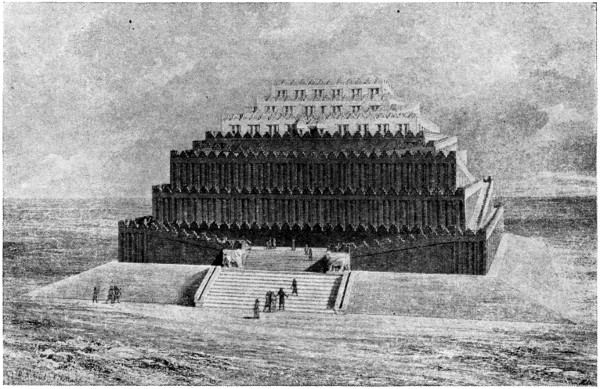
THE TOWER OF BABEL RESTORED
This model of the famous “tower that reached to Heaven” was constructed by Sir Henry Rawlinson after
years
of study and exploration. The drawing, by O. Schulz, is now in the United States National Museum at Washington,
D. C.
II. THE ASSYRIAN EMPIRE
Assyria proper, as heretofore stated, was a
table-land, bounded on the north by part of
Armenia; on the east by that part of Media
which lies towards Mt. Zagros; on the south
by Elam or Susiana and part of Babylonia; and
on the west by the river Tigris, or later by the
Chaboras, a branch of the Euphrates. The
greater part of the ancient kingdom of Assyria
is now contained in the modern province of
Kurdistan. In size it may be compared to
Great Britain.
DIVISIONS AND CITIES
OF ASSYRIA
It was divided into seven provinces, and
contained many great cities, of which the chief
after Nineveh, the capital, were Asshur, which
alone stood on the west bank of the Tigris,
Calah, Dur-Sargon, Arbela, Tarbisi. The ruins
of many cities are grouped around Nineveh;
while lower down the Tigris is exhibited an
almost unbroken line of ruins from Tekrit to
Bagdad.
Nineveh was situated on the eastern bank of the
upper Tigris opposite the modern Mosul, two
hundred and thirty miles northwest of Bagdad.
The ruins of the original capital, Asshur, now
called Kalah Sherghat, are some sixty miles south.
Nineveh, Calah (Nimrud), and Dur-Sargon (Khorsabad),
ultimately supplanted it in importance.
When Nineveh itself fell, the whole Assyrian
empire—essentially a military power—perished
with it. It was not until the excavations of
Botta in 1842 and Layard in 1845 that the
remains, first of Dur-Sargon, then of Nineveh
itself, were revealed to the world.
As a result of these excavations, the general
outline of the city, the remains of four palaces
and numerous sculptures, and thousands of
tablets (principally from the so-called library of
Ashurbanipal) were discovered. The greater part
of these is now in the British museum. The city
had a circumference of from seven to eight miles,
the ruins of the walls showing a height in some
parts of fifty feet. Shalmaneser I. built a palace
at Nineveh and made it the city of his residence.
Samsi-ramman III. decorated and restored the
temple of Ishtar, famous for a special phase of
the cult of the goddess. For a time Nineveh was
neglected, but Sennacherib (705-681 B. C.), was
a special patron of Nineveh. He surrounded it
with a wall, replaced the small palace at the
northeast wall by a large one, built another
palace which he filled with cedar wood and
adorned with colossal bulls and lions, and beautified
the city with a park. Esarhaddon finished
a temple, widened the streets, and beautified the
city, forcing the kings whom he conquered to
furnish materials for adorning the city and palaces.
Nineveh succumbed to the combined attack of the
Medes under Cyaxares and the Babylonians under
Nabopolassar in 608 B. C.
In its times of prosperity, Assyria extended
its borders on every side; and the Greeks and
Romans often included the whole of Syria and
of the regions watered by the Euphrates and
the Tigris under the name.
Assyria and the neighboring provinces were
celebrated for their great fertility; they were
the original home of wheat and barley, and the
date-palm grew there to perfection. The irrigation
of the crops was ensured by the annual
overflow of the Tigris.
EARLY ASSYRIAN HISTORY SHOWN
BY THE INSCRIPTIONS
The Assyrian kingdom first began to be
powerful about 1350. Shalmaneser I. had become
[356]
so powerful that he invaded and captured
Babylon about 1250 B. C. His descendant in
the direct line of kings was Tiglath-Pileser I.,
about 1100 B. C., the real founder of the first
Assyrian empire, whose reign forms the zenith
of the early empire. He spread the dominion
of Assyria over all western Asia, from the
frontiers of Elam to the shores of the Mediterranean,
and from the slopes of the mountains of
Armenia to the shores of the Persian Gulf. He
captured Babylon, Sippara, and reduced Babylonia
to the position of a tributary state. On
the west he advanced as far as Khilikhi
(Cilicia), defeated the Hittites, captured their
stronghold Carchemish, and received the homage
of the people of Arvad and the cities of
northern Phœnicia.
SECOND IMPORTANT DYNASTY
ESTABLISHED
In 960 B. C. a new dynasty was founded by
Assur-dân II., whose son Rimmon-nirari II., and
great-grandson Asshur-nasirpal, by a long series
of cruel wars once again extended the power of
Assyria. The extensive trade carried on by
Phœnician merchants in Assyria at this time is
largely illustrated by the Phœnician bronzes
and ivories disinterred in the palace of Asshur-nasirpal
at Nimrud.
His son, Shalmaneser II., was successful in
war against the monarch of Babylon, Benhadad,
king of Damascus, the rulers of Tyre and Sidon,
and Jehu, king of Israel. In 745 B. C., Tiglath-Pileser
II. became king of Assyria, made himself
master of Babylon, and had great successes in
war against Syria and Armenia, extending the
empire greatly.
REIGN OF SARGON THE
ASSYRIAN
Sargon (722-705 B. C.) was engaged in war
against Samaria, which he captured, carrying
the people into captivity; against King Sabako
of Egypt, whom he defeated; and the revolted
Armenians, whom he thoroughly subdued. He
then turned against Merodach-Baladan, king of
Babylonia, and drove him from his throne, and,
after extensive internal reforms, was succeeded
by his son, the famous Sennacherib.
ASSYRIA BEGINS PERIOD OF
GREATEST SPLENDOR
This warlike monarch marched into Syria in
701 B. C., captured Sidon and Askelon, defeated
the forces of Hezekiah, king of Judah, with his
Egyptian and Ethiopian allies, and made Hezekiah
pay tribute. In 700 B. C. Sennacherib
marched into Arabia, there defeated Tirhakah,
king of Egypt and Ethiopia, and then his army
perished before Libnah, in the south of Judah,
by the catastrophe recorded in the Hebrew
Scriptures. Sennacherib was engaged, on his
return to Assyria, in crushing rebellions of the
Babylonians, constructing canals and aqueducts,
and greatly adding to the size and splendor of
Nineveh.
In 681 he was murdered by two of his sons,
and another son, Esarhaddon, became king in
680. Esarhaddon made successful expeditions
into Syria, Arabia, Egypt, and as far as the
Caucasus Mountains, and after the erection of
splendid buildings at Nimrud and other cities,
was succeeded in 668 by his son Asshur-banipal
(the origin of the Greek “Sardanapalus”).
GREAT EXTENT OF THE EMPIRE
AT ITS HEIGHT
The Assyrian Empire was at its height of
power under the kings Sennacherib, Esarhaddon,
and Asshurbanipal. The states nominally subject
to the Assyrian king, paying tribute and
homage, extended from the river Halys, in Asia
Minor, and the seaboard of Syria, on the west,
to the Persian Desert on the east; and from the
Caspian and the Armenian Mountains, on the
north, to Arabia and the Persian Gulf, on the
south; and latterly included Egypt.
DECLINE AND FALL OF
THE EMPIRE
Ashurbanipal inherited Egypt as part of
his dominions, but his power was not firmly
established in that country until he led an
expedition there, and sacked the city of Thebes.
He erected splendid buildings at Nineveh and
Babylon, and did much for literature and the
arts; so that under him there was a great
development of luxury and splendor. He died
in 625 B. C.; and soon afterwards Babylonia,
for the last time, and with success, revolted.
The Babylonians marched from the south
against Nineveh, under their governor Nabopolassar;
and the now powerful Medes, from the
north, came against it under their king, Cyaxares.
Nineveh was taken and given to the flames,
which have left behind them in the mounds the
calcined stone, charred wood, and statues split
by the heat, that furnish silent and convincing
proof of the catastrophe. Thus, about 625 B. C.,
warlike, splendid, proud Assyria fell, after
which it became a Median province.
III. LATER BABYLONIAN EMPIRE
The founder of the later Babylonian Empire
(625 B. C. and ending 538, with its subjection
to Persia) was Nabopolassar, who joined the
Medes in the destruction of the Assyrian power.
Babylon then became an independent kingdom,
extending from the valley of the Lower Euphrates
to Mount Taurus, and partly over Syria, Phœnicia,
and Palestine.
THE FAMOUS REIGN OF
NEBUCHADNEZZAR
Nabopolassar was succeeded by his son, the
famous Nebuchadnezzar (604 to 561 B. C.), who
carried his arms with success against the cities
of Jerusalem and Tyre, and even into Egypt.
The empire was at its height of power and glory
under him, and extended from the Euphrates
to Egypt, and from the deserts of Arabia on the
south to the Armenian Mountains on the north.
The carrying into captivity of the Jews by
Nebuchadnezzar and the pride of his heart,—his
image of gold in the plain of Dura, his fiery
furnace, his strange madness, recovery, and
repentance,—are well known from the account
in the Hebrew Scriptures by the prophet Daniel.
Nebuchadnezzar was succeeded by his son
Evil-Merodach, the friend of Jehoiachin, captive
King of Judah. He was followed by
Neriglassar, a successful conspirator against his
power and life; and he in turn, after some years,
was defeated and slain in battle against the
Medes and Persians. The assassination, after
a few months, of the tyrant Laborosoarchod
brought the last Babylonian monarch, Nabonidus,
to the throne, in 555 B. C.
FALL OF BABYLON UNDER
BELSHAZZAR
The Medes and Persians to the north had
now become a formidable power, and in 540 the
Persian king, Cyrus, marched against Babylon,
and under its walls defeated Nabonidus, who
fled to Borsippa, south of Babylon. The capital
was held by a son of Nabonidus, who had been
made co-king with his father,—Belshazzar. The
revelries of this sovereign during the siege, the
handwriting on the wall, and his death the
same night, are given in the scriptural narrative
of Daniel. The Babylonian Empire fell in 538
B. C., and became a province of the Persian
Empire. The site of the great city of Babylon
is now a marsh, formed by inundations
of the river, due to the destruction of the
embankments and the choking up of the canals.
IV. CIVILIZATION IN BABYLONIA AND ASSYRIA
Commerce and Manufactures.—The Babylonians
were a commercial and luxurious people;
the Assyrians were pre-eminently warlike. The
position of the great city of Babylon on the
Lower Euphrates, near to the Persian Gulf,
made it a great emporium for the trade between
India and eastern Asia and western Asia, with
the nearest parts of Africa and Europe. From
Ceylon came ivory, cinnamon and ebony; spices
from the eastern islands; myrrh and frankincense
from Arabia; cotton, pearls, and valuable
timber, both for ship-building and ornament,
from the islands in the Persian Gulf. There was
also a great caravan trade with northern India
and adjacent lands, whence came gold, dyes,
jewels, and fine wool.
Manufactures.—The wealth of Babylon
became prodigious and proverbial, and her commerce
was, in large measure, due to ingenious
and splendid manufactures. Carpets, curtains,
and fine muslins, skilfully woven and brilliantly
dyed, of elegant pattern and varied hue, were
famous wherever luxury was known. The
Babylonian gems in the British Museum display
art of the highest order in cutting precious
stones.
Government and Learning.—The system
of government was a pure despotism, with
viceroys ruling the provinces under the monarch,
who dwelt in luxurious seclusion from his
people. The priests and learned men of Babylon
were mainly Chaldæans.
There were astronomers or, more properly,
astrologers, in several of the cities; and the
towers, such as that of Babel, were probably
both temples and observatories. The clearness
of the sky and the levelness of the horizon on
all sides favored the study of the stars, which
was more closely connected with religion than
any form of science. The Chaldæans worshipped
the heavenly bodies. When Babylon
was taken by Alexander the Great, in 331 B. C.,
there was found in the city a series of observations
of the stars dating from 2234 B. C.
Architecture and Art.—Assyrian art must
be considered great in architecture and sculpture.
The emblematic figures of the gods show dignity
and grandeur. The scenes from real life, of
war, and of the chase, are bold and vivid; and
in succeeding ages marked progress is shown in
the acquirement of a more free, natural, life-like
and varied execution, though the artists never
learned perspective and proportion.
The Assyrians constructed arches, tunnels,
and aqueducts; were skilled in engraving gems,
and in the arts of enamelling and inlaying; made
porcelain, transparent and colored glass, and
even lenses; ornaments of bronze and ivory,
bells, and golden bracelets and earrings of good
design and workmanship, were all produced.
In mechanics, and for measuring time, they
used the pulley, the lever, the water-clock, and
the sun-dial.
Implements and Method of Warfare.—The
implements and methods used in war, as
the monuments show, included swords, spears,
maces, and bows and arrows, as weapons of
offence; cavalry and chariots for charging;
movable towers and battering-rams for sieges;
and circular intrenched camps as quarters for a
military force.
Religion.—In common with all Semites,
the Babylonians were exceedingly religious, and
were consequently greatly in the power of their
priests, through whom tithes and offerings to
their numerous gods were made.
Their earliest chief divinity was apparently
the god Ea, lord of the deep, possessor of
unsearchable wisdom, and creator of all things.
When, however, Babylon became the chief of the
city states of Babylonia, Merodach, the god of
that city, assumed the first place. He was a
reflection of the sun, or the light of day, and
was worshiped as he who constantly sought to
do good to mankind. His chief title was Bel,
(Baal of the Bible) “the Lord”; and his vast
temples were maintained by the Babylonian
kings with pride. The priests attached to this
temple were richly endowed, and the maintenance
of the worship involved a great outlay.
The impression made by this temple and its
worship on the Jews during their captivity is
reflected in the account of Bel and the Dragon
in the Old Testament.
The other gods of Babylonia would seem to
have been the same as those of Assyria, which
borrowed its religion, as well as its other culture,
from Babylonia. Asshur was the chief god, and
is always named first in the invocations of the
kings. Sin was the moon-god, Shamash the
sun-god, Anum the god of the sky, Bel the god
of the earth, and Ea the god of the abyss and
of profound wisdom. Rammanu (the Biblical
Rimmon) was the ruler of the weather, Ishtar
(the Biblical Ashtoreth) the goddess of love,
Nebo the god of learning, and Nergal the god of
war and hunting. The Assyrian temples always
contained statues of the gods or goddesses, and
sometimes a particular statue was held in special
veneration, as the Ihstar of Nineveh, or the Ihstar
of Arbela; only two statues of a god have been
discovered in modern times, namely the two
limestone figures of Nebo, disinterred in a temple
at Nimrud, and dating from the eighth century
B. C. With regard to public worship, we
know that constant sacrifices and libations were
offered to the gods, images were carried in procession,
and a highly organized and richly
endowed priesthood existed. The building and
maintenance of temples were among the chief
functions of the king, who himself boasted of
the title of high priest.
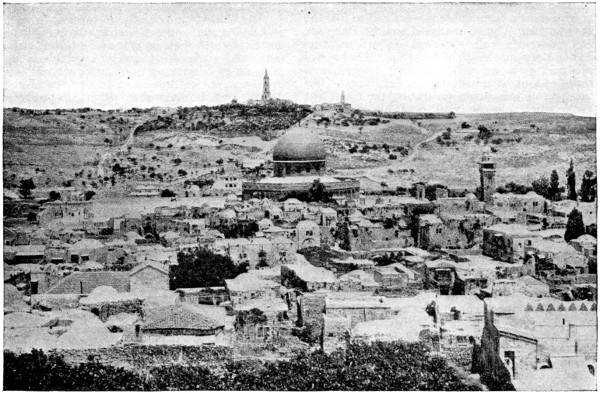
JERUSALEM, THE HOLY CITY OF THE JEWS
The history and characteristics of the
Hebrews are fully dealt with in the Old
Testament, the important parts of which
should be familiar to everyone.
They were a pure Semitic race, akin to
the Phœnicians, Chaldeans, and Assyrians.
The founder of the nation was Abraham,
who, about the twenty-third century
before Christ, removed from the plains
of Mesopotamia to the land of Canaan,
on the southeastern coast of the Mediterranean
Sea. This land has since been
variously named Palestine, Canaan, the
Land of Israel, or the Holy Land, and was
the scene of most of the great events of
the Bible. Just as the old name Canaan
denoted originally the low-lying country
along the coast, so Palestine means
literally “Land of the Philistines,” and
was not used of the inland districts before
the time of the Romans.
THE UNIQUE SITUATION AND IMPORTANCE
OF THE HOLY LAND
The whole region is practically an
isolated oasis, with a productive climate
due to proximity to the sea.
All communication between the Babylonians,
the Chaldeans and the Assyrians
on the one hand, and the Egyptians on
the other, was by the way of Palestine.
Thus the Holy Land was at the very
center of the ancient world. It is this
position with its fundamental significance
in history which renders it unique among
the lands of the earth. It has always
been the refuge of the drifting populations
of Arabia. Never sought for itself
alone, except by the Crusaders, it has
been over-run constantly by invaders
from the north seeking Egypt, or by the
return attack. Thus the Hittites, Ethiopians,
Assyrians, Egyptians, Scythians,
Parthians, Persians, Seljuk Turks, and
Mongols in turn devastated it. Alexander
passed through to Egypt in 322
B. C.; the wars of the Seleucids and
Ptolemies passed over it; Pompey in 65
B. C. brought it under the Roman
Empire; the Crusaders established themselves
there from 1098 to 1187; Napoleon
in 1799 abandoned his first ambition on
its soil. Yet its destiny was typified by
the Arab conquest in 634 A. D.; there is
everything to attract the desert tribes,
but nothing for others except the religious
sentiment of Christians.
HISTORY OF THE HEBREWS OR ISRAELITES
The ancestors of the Israelites were certain
of the pastoral tribes having their abode in the
wild tracts to the south and east of Palestine.
Their nearest kinsmen were Edom, Ammon, and
Moab. About 2200 B. C. they migrated under
their tribal chief, Abraham, from Haran in
Mesopotamia into the land of Canaan. Here
the tribes continued to lead a pastoral life, and
ultimately, in the time of Jacob, a famine in the
land of Canaan led to a fresh migration into
Egypt. This movement is especially associated
with the name of Joseph.
ISRAELITES UNDER THE
EGYPTIANS
Here they obtained leave from Pharaoh to
dwell in the land of Goshen, where their continued
adherence to their own customs and
pastoral life led them to be accounted barbarians
by the cultured Egyptians. In Egypt
a time of great oppression came upon the
Hebrews, and they were subjected to the
harshest treatment and repressive measures,
induced by a fear lest they should ally themselves
with Egypt’s foes. Then there arose the
figure of Moses, the great founder of both the
religion and the law of Israel.
THE EXODUS UNDER
MOSES
Moses was the son-in-law of a priest of
Midian, and at Horeb (i. e. Sinai), the mountain
of God, he heard the call of Yahweh (Jehovah),
his father’s God, to deliver Israel from the bondage
of Egypt. He had much difficulty in rousing
the enthusiasm of those he was sent to save,
but ultimately the work was accomplished by
means of the miracles wrought by Yahweh on
behalf of his people. Moses led the Israelites to
Mount Sinai, and here a covenant was solemnly
made with Yahweh, and the new religion of
Israel was inaugurated, a religion that may
rightly be called new, because based upon a
conception of the Deity, more spiritual than
any which had yet been conceived. From
Sinai they passed to the work of conquering
Canaan for which they had set out. An attempt
made at Kadesh on the southern frontier was
unsuccessful, and they returned to the wilderness,
for a time which according to the Biblical
narrative made the whole period forty years.
THEY ENTER THE LAND
OF CANAAN
During this time Moses died, and it was
under Joshua that the entry into Palestine was
finally made. The Canaanites were put down,
but intermarriage between Hebrews and Canaanites
was frequent. Hence came the ills of
idolatry. The Israelites now settled down to an
agricultural and commercial life, entering in
many cases into treaties of friendship with their
Canaanite neighbors. This weakened the bonds
of union between the various tribes and might
well have led to the ultimate fusion of the two
races; but it was prevented by the rise from
time to time of the Judges, who roused the
dying ardor of the tribes and led them to the
extermination of the enemies of Yahweh.
PERIOD OF THE
JUDGES
Fifteen such heroes are named in the Book
of Judges, from which book it will be seen how
various were the enemies with which they had
to contend. Their period shows a regular alternation
of sin, punishment, and salvation. After
Joshua, comes a long period of falling away,
followed by the rise of Othniel who delivers
Israel from the oppressions of Cushan of Mesopotamia,
into whose hands they had been given.
On his death, Israel again sins and is punished
by Eglon, king of Moab. This time salvation
comes through Ehud, but his death is followed
by another relapse into idolatry, and so things
continue. Among the rest of the “Judges,” the
most famous are Deborah the prophetess, and
Barak, Gideon, Jephthah, Samson, and the
prophet Samuel.
During this period Israel does not come at all
into contact with the great kingdoms of the
East. At the time of the Hebrew settlement in
Palestine, the country was under the suzerainty
of the Pharaohs, but it is probable that by this
time the suzerainty was little more than a name.
The conflicts were rather with their own kinsmen,
the Moabites, Ammonites, and also the
Midianites.
THE POWERFUL PHILISTINE
TRIBES
The Philistines were among the most powerful
opponents of Israel, and the story of
Samson relates particularly to them. It was
while suffering under defeat from this race that
the Israelites cried for a king, not only that by
this centralization of authority more head
might be made against the invaders, but also
that they might be like “all the other nations.”
Samuel the prophet, who was at that time their
leader, reluctantly consented to accede to their
desires and chose as their king Saul, the son of
Kish.
HEBREW MONARCHY, UNDER SAUL,
DAVID AND SOLOMON
The sole monarchy occupied three reigns,
those of Saul, David, and Solomon. Saul reigned
for nearly forty years, and, after wars with the
neighboring Moabites, Edomites, Amalekites,
and others, was defeated and driven to suicide
by the powerful Philistines.
Saul’s son-in-law, David, the son of Jesse,
reigned also about forty years, and, having conquered
Jerusalem from the Jebusites (1048 B. C.)
made it the capital of his kingdom, the seat of
the national government and religion. David
was a warlike monarch, and conquered the
Philistines, Moabites, Edomites, and Syrians,
extending his power from the Red Sea to the
Euphrates.
THE MAGNIFICENT REIGN
OF SOLOMON
His son, Solomon, succeeded him, and also
reigned forty years (977-937 B. C.). Then the
Hebrew nation attained the height of its power,
and he confirmed and extended the conquests
of David. Solomon married a daughter of a
Pharaoh, king of Egypt, formed an alliance with
Hiram, king of Tyre, built the magnificent temple
at Jerusalem, and made his kingdom the
supreme monarchy in western Asia.
An extensive commerce was carried on by
land and sea. Solomon’s ships, manned by
Phœnician sailors, traded to the farthest parts
of the Mediterranean westward, and from ports
[360]
on the Red Sea to southern Arabia, Ethiopia,
and perhaps India. From Egypt came horses,
chariots, and linen; ivory, gold, silver, peacocks
and apes from Tarshish or Tartessus, a district
in the south of Spain; and gold, spices, and
jewels from Ophir, variously regarded as in
southern Arabia, India, and eastern Africa, south
of the Red Sea. The corn, wine and oil of
Judæa were exchanged by Solomon for the
cedars of Lebanon supplied by Hiram, king of
Tyre.
DECLINE AND DIVISION OF
THE MONARCHY
On the death of Solomon, in 975 B. C., the
temporal glory of the Hebrews was eclipsed.
Ten of the twelve tribes revolted against Solomon’s
son and successor, Rehoboam, and formed
a separate kingdom of Israel, with Samaria as
capital; while the tribes of Judah and Benjamin
made up the kingdom of Judah, having Jerusalem
for the chief city. The Syrian possessions
were lost; the Ammonites became independent;
commerce declined; idolatry crept in and grew;
the prophets of God threatened and warned in
vain; gleams of success against neighboring
nations were mingled with defeat and disgrace
suffered from the Edomites, Philistines, and
Syrians, until, in 740 B. C., Tiglath-pileser II.,
king of Assyria, carried into captivity in Media
the tribes east, and partly west, of the Jordan.
FALL AND CAPTIVITY
OF ISRAEL
In 721 B. C., Sargon, king of Assyria, took
Samaria, and carried away the people of Israel
as captives beyond the Euphrates. The kingdom
of Israel thus came to an end after a duration
of about two hundred and fifty years.
In 713 B. C., Judah, under King Hezekiah,
was attacked by Sennacherib, king of Assyria,
and relieved by the destruction of the Assyrian
army. A time of peace and prosperity followed,
but in 677 the Assyrians again invaded the
country, and carried off King Manasseh to
Babylon.
FALL OF JUDAH AND BABYLONIAN
CAPTIVITY
In 624 B. C., the good king Josiah repaired
the temple and put down idolatry, but was
defeated and slain by the Egyptian king Pharaoh-Necho,
in 610. In 606 B. C., Nebuchadnezzar,
king of Babylon, took Jerusalem, and made the
king, Jehoiakim, tributary; on his revolt, Jerusalem
was again taken, and ten thousand captives
of the higher class were carried off to Babylon,
with the treasures of the palace and temple.
In 593 B. C., the Jewish king Zedekiah revolted
from Nebuchadnezzar, who now determined to
put an end to the rebellious nation. In 588 B. C.,
Jerusalem was taken and plundered; the walls
were destroyed; the city and temple burned, and
nearly the whole nation was carried away as
prisoners to Babylon. For over fifty years the
land lay desolate, and the history of the Hebrew
nation is transferred to the land where they
mourned in exile. Then were raised the voices
of the prophets Jeremiah and Ezekiel and Isaiah,
in their definite predictions of the Messiah.
The history of the Jews during the Babylonish
captivity.
RETURN OF THE HEBREWS
TO JERUSALEM
In 537 B. C., Cyrus the Great became
monarch of the Persian Empire. He issued an
edict in 536 B. C., by which the Jews were
allowed to return to Jerusalem and rebuild their
temple. Nearly fifty thousand Jews, chiefly of
the tribes of Judah and Benjamin, went to the
old home of their race under the command of
Zerubbabel and Jeshua, taking with them many
of the vessels of silver and gold carried away by
Nebuchadnezzar. Zerubbabel was appointed
governor of the land, now a dependency of the
Persian Empire. In 519 B. C., the Persian king
Darius Hystaspis confirmed the edict of Cyrus,
and in 515 the Temple was completed and dedicated.
The ten tribes disappeared at this time
from history, such of them as returned to their
land having united themselves with the tribe of
Judah, and henceforth the Hebrews are called
Jews and their country Judea.
THE JEWS UNDER EZRA AND
NEHEMIAH
In the reign of the Persian king Artaxerxes
more of the Jews emigrated from Babylonia to
Judea under the command of Ezra, 458 B. C.,
and Ezra was governor of the land until 445.
Nehemiah was governor (with an interval)
from 445 to 420, and under him the walls and
towers of Jerusalem were rebuilt, and the city
acquired something of its ancient importance.
With 420 B. C. the history of the Jews ends, as
far as the Scriptural narrative goes.
JUDEA BECOMES SUBJECT
TO PERSIA
From 420 to 332, Judea continued subject to
Persia, paying a yearly tribute, and being
governed by the high priest, under the Satrap
of Syria. In 332 B. C., Alexander the Great,
then engaged in the conquest of the Persian
Empire, visited Jerusalem, and showed respect
to the high priest and the sacred rites of the
Temple. In 330 the Persian Empire fell under
the arms of Alexander, who died at Babylon in
323 B. C. Judea was taken possession of by
Alexander’s general, Ptolemy Lagus, and from
300 to 202 B. C. was governed by the dynasty
of the Ptolemies, ruling Egypt, Petra and southern
Syria. The government was administered by
the high priests under the Ptolemies, whose
capital was at the new city of Alexandria in
Egypt. Now the Jews began to spread themselves
over the world, the Greek language became
common in Judea, and the Septuagint (or
Greek version of the Hebrew Scriptures) was
written during this and the following century.
In 202 B. C., Antiochus the Great, king of
Syria (including in its empire Asia Minor,
Mesopotamia, Babylonia, etc.), conquered Judea
from Ptolemy V. Antiochus Epiphanes, one of
the sons and successors of the great Antiochus,
drove the Jews to rebellion by persecution and
profanation of their Temple and religion.
STRUGGLE UNDER THE MACCABEES
AND HYRCANUS
Under the great patriot and hero Judas
Maccabeus, the Jews asserted their religious
freedom in 166 B. C. Antiochus Epiphanes died
in 164, and Maccabeus fought with success
against the Idumeans, Syrians, Phœnicians and
[361]
others, who had formed a league for the destruction
of the Jews. In 163, Judas Maccabeus became
governor of Judea under the King of
Syria, but fell in battle, in 161, while he was
resisting an invasion of his country by the
troops of Demetrius Soter, new ruler of the
empire. His brother, Jonathan Maccabeus,
ruled from 161 to 143 B. C., amidst many
troubles from Syria, and was succeeded by his
brother, Simon Maccabeus, who strengthened
the land by fortifications, was recognized by the
Romans as high priest and ruler of Judea, and
fell by assassination in 136 B. C.
His son, John Hyrcanus, threw off at last the
yoke of Syria, and made himself master of all
Judea, Galilee, and Samaria, reigning then in
peace till 106 B. C., when the line of the greater
Maccabean princes ended. A miserable time of
civil wars and religious and political faction
followed.
THE CONQUEST BY
ROME
These ended in the interference of Rome;
and in 63 B. C. Pompey took Jerusalem, after a
siege of three months, and entered the “Holy
of holies” in the Temple, with a profanation
before unheard of in Jewish history. From
this time the Jewish state was virtually subject
to Rome, and became, in the end, a part of the
Roman province of Syria.
The turbulence of the Jews under Roman
rule is well known, and a general rebellion ended,
after fearful bloodshed and misery, in the
capture and destruction of Jerusalem by Titus,
A. D. 70. The history, as a separate political
body, of the Hebrews thus ends with the dispersion
of their remnant over the face of the
civilized world.
GEOGRAPHY OF THE HOLY LAND
The area of the Holy Land is about eleven
thousand square miles—nearly as large as Belgium;
its greatest length, from Beyrout to the
southern point of the Dead Sea, being one
hundred and eighty miles, and its greatest
breadth, east to west, about sixty-five miles.
It has a nearly straight western coast-line, with
but two indentations—the Bay of Sidon, and the
Bay of Acre. Though the Sinaitic Peninsula
is not a geographical part of the Holy Land, its
history is really one with it, and is so considered
in this article.
Notwithstanding its narrow limits, Palestine
presents a remarkable variety of surface, scenery,
and climate. The central portion consists of an
undulating tableland (the “hills” or “hill-country”),
separated from Lebanon on the north by
the fertile Plain of Esdraelon (Jezreel). It has
a gentle slope towards the west, but descends
abruptly to the Jordan valley, the surface
gradually rising, as it extends southward, till it
reaches its greatest elevation (about 3,300 feet)
in the neighborhood of Hebron, beyond which,
near Beersheba, it sinks into the Idumæan
Desert. The northern part of this tract is more
fertile than that towards the south, the least
productive district being the country round
Jerusalem; but even there, the vine is grown
with success, and the barren aspect of the
plateau is relieved in many places by gardens
of olives and figs and luxuriant cornfields.
To the west of the central tableland and the
Lebanon ranges, there runs a strip of low seaboard,
which expands into the plain of Philistia;
to the north is the Valley of Sharon, once the
Garden of Palestine, but now for the most part
a marshy or sandy wilderness. The maritime
plain is intersected by deep gullies, traversed in
some cases by perennial streams. Oranges,
lemons, citrons, bananas and melons grow
luxuriantly, especially in the gardens of Jaffa
and Ascalon.
East of the central tableland is a deep fissure,
increasing in width from five to thirteen miles,
down which flows the Jordan. Beyond Jordan
is another upland district, forming a prolongation
of the Anti-Libanus ranges, with an elevation
of two to three thousand feet, succeeded on
the east by a plateau which stretches away to
the Arabian Desert. This region contains wide
tracts of excellent pasture.
The highest point in Palestine is Jebel Jermuk
(three thousand nine hundred and thirty-four
feet). The height of Carmel—a northwestern
spur of the uplands terminating in a promontory—one
thousand seven hundred and forty feet.
Mount Nebo, a summit of Abarim, Moab
(two thousand six hundred and forty-three feet),
seven miles northeast of the Dead Sea, was the
place of the death of Moses.
Mount Tabor (tā´bor), a wooded mountain
in Palestine, six miles east of Nazareth, on the
border of the plain of Esdraelon, according to a
tradition, was the scene of the Transfiguration;
and in the monastic ages it was peopled with
hermits. Height, about one thousand eight
hundred feet.
Mount Sinai (sī´nī or
sī-nā-ī) and the Sinaitic
(sī-nȧ-it´ik) Peninsula. This peninsula,
which, since 1907, has been included within the
boundaries of Egypt, is situated between the
Gulf of Suez and the Gulf of Akaba. In the
north of the peninsula is the desert Paran, a
desolate limestone plateau, bounded on the
south by a tract of low sandstone mountains,
ravines, and valleys rich in minerals which had
been worked as early as 3000 B. C. Then rises
the barren, rugged, and majestic triangle of the
Sinai Mountain (also called Horeb) on which,
tradition asserts, the Law was given to Moses.
From very early times it seems to have been
regarded as a sacred mountain, perhaps as dedicated
to the Babylonian moon-god Sin. These
peaks are over six thousand feet high. At the
base is a broad plain where the Israelites may
easily have encamped. In a valley on the
northeast of the same mountain, stands the
famous convent of St. Catharine, with its beautiful
gardens, which was originally founded by the
Emperor Justinian (527-565). It became celebrated
in recent years by the discovery of the
Codex Sinaiticus (the Greek version of the Old
Testament and the Greek New Testament), made
in it by Tischendorf in 1844. There are two
other valleys in the same vicinity, both of which
are comparatively fertile and well-watered. The
rocks of this region are steep and jagged and
richly colored. They are composed of granite,
porphyry, diorite, and gneiss. A path of stone
steps leads up from the convent to the summit.
Holy places marked by crosses cover the mountain.
Near the top of Jebel Musa stands a chapel
dedicated to Elijah.
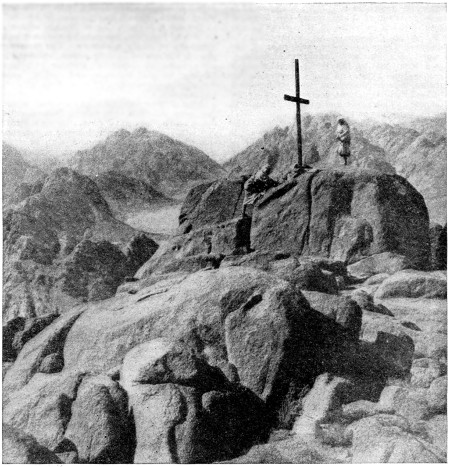
MOUNT SINAI
where the Laws of Moses were received. The site is disputed, but these heights on the northwest cliffs of
Jebel Mûsa
seem to answer the required conditions better than any other mountain on the Sinaitic Peninsula. The law given
from Sinai—“the book of the Covenant”—is contained in Exodus xx. to xxiii. 19. Besides the Ten Commandments
there are rules for justice, equity and purity far transcending any known ancient legislation.
RIVERS, LAKES AND OTHER
HISTORIC WATERS
The principal river of Palestine is the Jordan,
which rises in Anti-Libanus in several streams,
that unite to flow through Lake Merom, and
then through the Sea of Tiberias, or Galilee,
running due south into the Dead Sea. Several
other streams flow into the Dead Sea, of which
the best known is the Kedron, that rises near
Jerusalem. A similar series of small rivers flows
through the coast plains into the Mediterranean,
the principal being the Kishon and Leontes.
The Jordan (meaning “the descender”).—The
highest source of the Jordan is seventeen hundred
feet above sea-level on the west of Mt. Hermon,
near the village of Hasbeya. The most important
feature in its course between the Sea of Galilee and
the Dead Sea is the rocky cleft known as the Ghor,
some sixty-five miles long and from three to twelve
miles in breadth, through which it passes. It then
falls into the Dead Sea at a point twelve hundred
and ninety-two feet below the level of the Mediterranean.
The course of the Jordan is extremely
tortuous, its total length being about two hundred
miles.
The upper reaches are much obstructed by
growths of reeds and shrubs, and though narrow
it is deep, and can only be passed by the fords, of
which there are many, the most famous being that
of Bethabaca, near Jericho.
During its annual swelling it was miraculously
crossed by the Israelites, probably at the ford above
mentioned. In its waters Naaman was healed and
an iron axehead made to swim. In it our Saviour
was baptized.
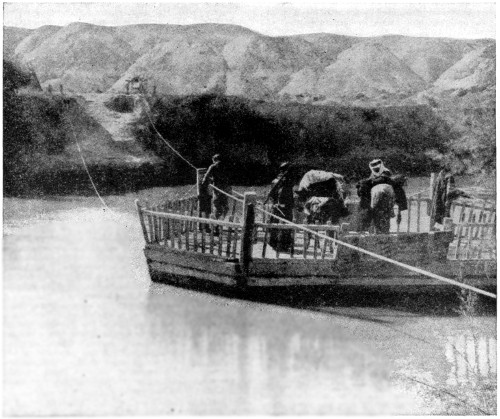
SUPPOSED FORD OF BETHABACA, NEAR JERICHO, WHERE THE CHILDREN OF ISRAEL CROSSED
THE RIVER JORDAN ON THEIR WAY TO THE “LAND OF PROMISE.”
Galilee, Sea of, called also in the New Testament
the Lake of Gennesaret and the Sea of
Tiberias, is a large lake in the north of Palestine.
Lying six hundred and eighty-two feet below sea-level,
it is thirteen miles long by six broad, and
more than eight hundred feet deep. It occupies a
great basin, and is of volcanic origin. Although
the Jordan runs into it red and turbid from the
north, and many warm and brackish springs also
find their way thither, its waters are cool, clear and
sweet. In the time of Jesus the region round about
the lake was the most densely populated in Galilee.
Dead Sea, scripturally called “Salt Sea,” “Sea
of the Plains,” “Sea of the Arabah,” is near the
southern extremity of Palestine. Its length is
forty-six miles and its greatest breadth is nine and
one-half (average eight and one-half) miles. The
long oval of the lake is unequally divided by the
El Lizan peninsula, of loose calcareous formation.
North of the peninsula the greatest depth is twelve
hundred and seventy-eight feet, south of that it is
only three to twelve feet. It receives the Jordan
and six other rivers, but has no outlet, the surplus
water being carried off by evaporation. The water
is intensely salt, with a specific gravity one-sixth
greater than water. Fish cannot live in the lake
but it has a healing reputation for lepers, and the
inhabitants on the banks are quite healthy. It is
surrounded by high cliffs of bare limestone, and
masses of sulphur exposed by periodically occurring
earthquakes lie on its borders.
CHIEF TOWNS AND
INDUSTRIES
Modern Palestine forms part of the “pashalic”
of Syria, under the Turkish Government, the chief
towns of importance in modern times include:
Jerusalem, with a population of about sixty
thousand consisting of Moslems, Jews, and
Christians; Damascus, with a population of
two hundred thousand, has a trade in silk and
cotton stuffs, jewelry, saddlery, and sword
blades; Acre, a seaport, twelve thousand;
Beyrout, one hundred and twenty thousand,
considered to be the port of Damascus; Joppa,
or Jaffa, a seaport, fifty-five thousand. The
country is mainly agricultural, the crops consisting
of wheat, barley, maize, vines and olives.
The land is naturally fertile, but it suffered
centuries of neglect.
Jerusalem (signifying probably “abode of peace”),
the “Holy City,” central point of Hebrew worship
and Christian tradition, was founded by the
ancient Canaanite inhabitants upon a spur of the
limestone ridge that forms the watershed of this
part of Palestine. Standing at an elevation of
twenty-six hundred feet upon a plateau about
half a mile square and cutoff by the deep valleys
of Gihon on the west, Hinnon on the south, and
Jehoshaphat east, the city held an almost impregnable
position, and was only wrested from the
[364]
Jebusites by David, who made it the base of his
military and political enterprises. The modern
city proper is surrounded by a wall of hewn stones,
two and one-half miles in circumference, and
probably built by the Sultan Solyman the
Magnificent. This wall is surmounted by thirty-eight
towers and pierced by eight gates. The
inner city is divided into four quarters—the
Armenian in the southwest, the Jewish in the
southeast, the Moslem in the northeast, and the
Christian in the northwest. Since 1858 extensions
have been made towards the north and
west. In the older part the streets are narrow,
dull, and dirty. The Mosque of Omar, the
Church of the Holy Sepulchre, and the Jews’
Wailing Place, are among the more interesting
places.
It has always been a sacred city. Its drama of
events included the reigns of David and Solomon;
the sieges of Egyptian, Assyrian, and Babylonian
hosts; the Greek conquest; the heroism of the
Maccabees; the events of the Roman dominion;
our Saviour’s appearance and crucifixion; the
siege of Titus and its destruction, A. D. 70; its
rebuilding by Hadrian, A. D. 120; the Crusades,
and its capture by Godfrey of Bouillon (first
Christian King of Jerusalem), Richard Cœur de
Lion, and its final capture by the Ottoman Turks
in 1516.
The later-built additions extend much beyond
the walls of Our Lord’s time, and beyond the
reputed site of Calvary (He “suffered without the
Gate”), which is now in the middle of the city.
Of the eight gates, one is called St. Stephen’s, or
Bâb Sitti Maryam (Lady Mary Gate), at the end
of the via Dolorosa, leading to Gethsemane,
Mount of Olives (where He beheld the city and
wept over it), and Bethany. The Golden Gate,
which He entered on Palm Sunday, is walled up.
The relics of the old city are buried twenty to
forty feet below the present site.
The Church of the Holy Sepulchre in the northwest
quarter of the city is so called because
alleged to contain under its roof the very grave
in which the Saviour lay. This church, which
was built by Helena, the mother of Constantine
the Great, is remarkable for the richness of its
decorations and the number of pilgrims by whom
it is visited.
On Mount Moriah, Solomon is supposed to have
built his famous temple, where a rectangular
walled space called the Harâm at present encloses
the Mosque of Omar and the El Aksa Mosque,
once, perhaps, a Christian church. Recent
explorers believe that they found traces of
Solomon’s masonry here, and the foundations of
the existing walls are more safely identified with
those of the sacred building as reconstructed by
Hadrian.
According to the Jews, Abraham sacrificed here,
the intended offering of Isaac was here, and
Jacob anointed the rock. The Order of Knights
Templar was founded in this Mosque. Just outside
the extreme northeast corner of the Harâm,
to be seen from the windows in north wall, down
in a ravine, is the Pool of Bethesda, rarely containing
water, half filled with rubbish.
North of the Harâm is a huge rocky platform,
where the residence of the Turkish governor
marks the site of the Court of Pontius Pilate.
The Golgotha Chapels on Mount Calvary are off
the south side of the east end of the Church of
the Crusaders. Steps lead up to them, their
elevation being fourteen and one-half feet above
the main building. Just beyond the top of the
steps is a silver lined opening where the Cross
was inserted in the rock; at a distance of about
five feet the spots of the thieves’ crosses are
indicated—some searches are satisfied that the
cross of the penitent thief would be the one to
the north.
Gethsemane is at the base of Mount Olivet,
and near it is the traditional Grotto of the
Agony, with the spot where Judas betrayed his
Master. This grotto is held in great veneration,
and near it is the Church of St. Salvatore, said to
have been erected by the mother of Constantine,
containing the tombs of St. James, St. Ann, and
St. Joseph.
The Via Dolorosa, or Way of the Cross,
possesses a number of places of much interest,
even if partly legendary. Among them the
place where Christ is said to have pronounced
the words “Daughters of Jerusalem, weep not
for me.” Where the Virgin is said to have
fainted on meeting her Son. At a truncated
column where Jesus fainted under the Cross, and
they called on Simon of Cyrene to help him.
The house of Dives, and the stone on which
Lazarus sat. The Gate of Judgment, formerly
marking the limits of the town, and the Calvary
itself, now inclosed within the Church of the
Holy Sepulchre.
Mount Zion (though used in the Scriptures as
identical with Jerusalem) is just outside the southwest
corner of the city wall. There were Christian
churches erected here at very early dates
over the spot where the Holy Ghost descended
upon the Apostles, but there followed so many
destructions, mutilations, and confusions, that
little certainty attaches to the cluster of buildings
now standing. Here is reputed to be the
tomb of David, and the Room of the Last Supper,
once part of a Christian Church.
The Mount of Olives is a range of eminences
and slight depressions on the east side of Jerusalem,
parallel with the hill of the Temple, but on
higher ground. Here is the Tomb of the Virgin
within a subterranean church, where she lay
until her “assumption.” A few yards from the
Tomb, off the south side of the road, is the
Garden of Gethsemane. The Chapel of the
Ascension marks the tradition of the Ascension
of Christ from this spot.
Bethlehem (beth´lē-em), (Heb., “house of bread”),
is six miles south of Jerusalem. It was the
birthplace of David, the scene of Ruth’s story, and,
most important of all (according to Matthew,
Luke and John), the birthplace of Christ. The
Church of St. Mary, at Bethlehem, is built over
the birthplace of Christ. The Chapel of the
Nativity is in the crypt of the church, under the
great choir; here in the pavement is a star and
the words “Hic de Virgine Maria Jesus Christus
natus est” (Here Jesus Christ was born to the
Virgin Mary); opposite the Chapel of the Nativity
is the Chapel of the Manger.
Hebron (hē´bron) is situated on a hill among the
mountains of Judah, about seven hours south of
Jerusalem. It is one of the oldest existing
biblical towns and was the home and burial-place
of the patriarchs. Afterward it became an
important city in the territory of Judah. David
resided here the first seven years of his reign.
Later it was taken possession of by the Idumeans,
from whom Judas Maccabeus recaptured it.
Upon the traditional site of the burial-place of the
patriarchs, Machpelah, a magnificent mosque is
erected.
Cana of Galilee, a decayed town near Nazareth,
is celebrated in Scripture as the scene of our
Saviour’s first miracle, where He turned water
into wine. Near it is the Mount of Beatitudes,
the supposed scene of the Sermon on the Mount.
Damascus (da-mas´kus) formerly the capital and
most important city of Syria, is situated in a
fertile valley east of the Anti-Lebanon, on the
edge of the desert. On account of its beautiful
fertile surroundings, its lofty position, and its
richness in fresh water, Damascus had been
praised in antiquity and in modern times as the
“paradise of the earth,” “the eye of the desert,”
[365]
and “the pearl of the Orient.” Originally a
Hittite city, it became the capital of Syria, and a
great part of the country was called by its name.
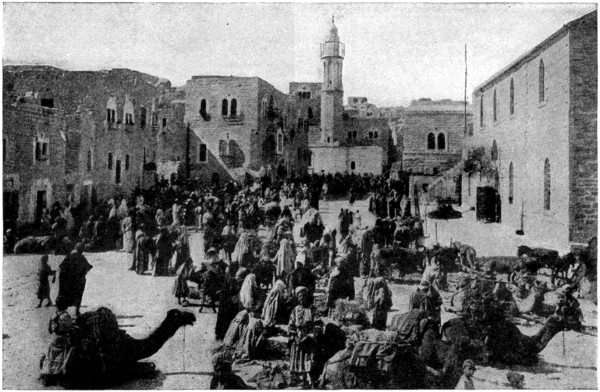
MARKET PLACE IN THE VILLAGE OF BETHLEHEM. THE CHURCH OF ST. MARY, NEARBY, IS
BUILT OVER THE BIRTHPLACE OF OUR SAVIOUR, AND CONTAINS THE
CHAPEL OF THE NATIVITY
In the Old Testament the name of Damascus
occurs as early as the history of Abraham. After
the time of David, Damascus often came into
sharp collision with Israel. In the New Testament
Damascus is known especially from the
history of Paul.
Its chief modern glory is the Omayyad Mosque,
and the ever changing color and variety of the
street traffic, the costumes and the animation of
the bazaars. The mosque was the subject of
extravagant description by Arabian writers.
In 1069 fire destroyed part of the building, and
again in 1893 immense injury was done by fire;
it has been restored, though it has not its ancient
magnificence.
Jericho (jer´i-kō), situated west of the Jordan and
fourteen miles east-northeast of Jerusalem, was
destroyed by Joshua and rebuilt by Ahab. It
was the residence of Herod the Great; was
destroyed by Vespasian, rebuilt by Hadrian, and
again destroyed by the Crusaders.
Nazareth (naz´a-reth) is celebrated as the dwelling-place
of Jesus during his childhood and early
manhood. The Church of the Annunciation
here was founded by the empress Helena, but
ruined in the middle ages, and rebuilt later. It is
well proportioned, and, while much of the architecture
is new, it preserves interesting memorials
of the past. In the crypt is the traditional place
of the Annunciation.
Petra (pē´trä).—On the northwest
edge of the
Arabian desert, about midway between the Gulf
of Okabah and the Dead Sea, among desolate
mountains, stand the remains of the rock-hewn
city of Petra, best reached from Jerusalem. These
ruins probably date from the time of Roman rule
in 105 A. D., though some of the magnificent
monuments were built by the Edomites who
dwelt here before the Greeks and Romans.
This wonderful city is approached through a
narrow gorge called the Sik, a kind of gateway in
the rocks, like the entrance to a Roman amphitheatre.
Here one is confronted by a temple cut in the
rock, with the most exquisite Corinthian columns,
and entering the doorway he finds himself in the
heart of the hill, surrounded by subterranean
architecture of the most elaborate beauty of form
and workmanship. This is called the Khaznet or
Treasury of Pharaoh, which is rightly regarded as
one of the wonders of the East. It is attributed
to the Emperor Hadrian, who visited the place
in A. D. 131, and erected here a temple to Isis.
The rock wall from which it is hewn is an exquisite
rose-pink. It is in a state of remarkable preservation.
The imposing facade shows two rows
each of six majestic columns, one row above the
other, with niches in which are rock-hewn equestrian
and other statues, the whole terminating
above in a miniature temple crowned by a huge
urn, the entire height being one hundred and two
feet. Within is a bare lofty room and some
chambers. The urn is said to contain treasures
of Pharaoh. Neither the Coliseum at Rome,
grand and interesting as it is, nor the ruins of the
Acropolis at Athens, nor the Pyramids, nor the
mighty temples of the Nile, present a more
marvelous spectacle.
But this is only an introduction to the marvels
behind. The gorge opens out into a narrow
valley, some three miles in circumference, everywhere
sunk deep beneath the enclosing mountains,
and the walls of this valley are filled with the
remains of other rock-cut temples, tombs and
dwelling places. In one place are the remains
of an open air theatre, the workmanship of which
is Greek. Some of the structures, cut in the face
of the rock, are several stories in height, while
their architectural details excite the wondering
admiration of the beholder. A stairway of many
hundreds of steps leads to the largest of the ruins,
[366]
El Deir, or Convent. In design it somewhat
resembles the Treasury of Pharaoh.
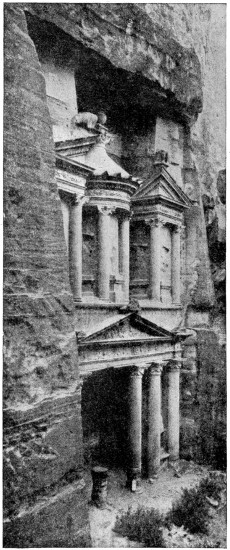
THE TREASURY OF PHARAOH
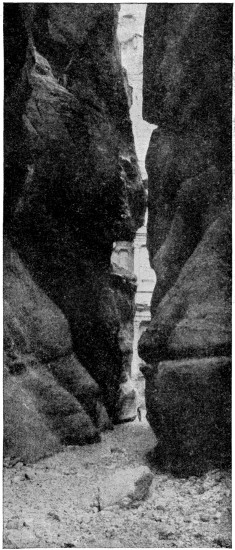
REMARKABLE NATURAL ENTRANCE
MARVELOUS ROCK-HEWN TEMPLES AT PETRA—(See under Petra)
The cliffs that enclose the valley are simply
dotted all over with the handiwork of artists of
a bygone age. Here is a portion of a heathen
temple, there the remains of a palace, yonder a
column, and beyond, again, a stately portico or
pediment. They stand at varying elevations.
Most of them are conspicuous, while others are
hidden in the mountain recesses. There are
tombs by the hundred, and on the mountain tops
many places of sacrifice, where strange religious
ceremonies were enacted. They challenge admiration
by the variety of styles they embody,
and by the exquisite hues of the sandstone from
which they are hewn, varying from the prevailing
purplish-red of the mountains and cliffs to a
delicate pink and rose.
Until quite recently, this ancient city built out
of rocks was seldom visited and almost unknown.
Now, however, by means of the new Damascus to
Mecca Railway, they are within easy reach. The
journey from Jerusalem to Maan may be made in
less than a day. From the latter place the ruins
can be reached in six to eight hours by horseback.
Palmyra (pal-mī´ra), or Tadmor (tad´môr), a
famous ancient city situated on an oasis in the
desert east of Syria, is said to have been built by
Solomon. After the decline of Petra in 105 A. D.,
Palmyra took its place as the chief commercial
center in northern Arabia. Its merchant aristocracy
reaped great advantage from the long-protracted
wars between Rome and Parthia by
acknowledging the supremacy of Rome. One of
its chiefs, Odænathus, husband of the more
famous Zenobia, extended his power over most
[367]
of the adjoining countries, from Egypt to Asia
Minor. Aurelian at length crushed in 272 the
attempt of the Palmyrenes to found an independent
empire. After the Roman empire became
Christian, Palmyra was made a bishopric. When
the Moslems conquered Syria, Palmyra also submitted
to them. From the fifteenth century it
began to sink into decay, along with the rest of
the Orient. Magnificent remains of the ancient
city still exist, chief among them being the great
temple of the Sun (or Baal); the great colonnade,
nearly one mile long, and consisting originally of
some fifteen hundred Corinthian columns; and
sepulchral towers, overlooking the city.
Jaffa, is a maritime city in Palestine, Syria, fifty-four
miles by rail northwest of Jerusalem, of which it
was the port in King David’s time. Extensive
fruit and orange orchards surround the city. Its
fortifications were destroyed by Saladin in 1188,
and, during the Crusades, Richard the Lion-Hearted
was confined here by sickness. In 1722
it was attacked by the Arabs, and in 1799 by
Napoleon. The principal exports are oranges,
wheat, soap, hides, olive oil, wool, and barley.
Phœnicia was a narrow strip of country
on the southeastern coast of the great
inland sea of antiquity, lying chiefly between
Mount Libanus (Lebanon) and the
Mediterranean shore, and extending for
about one hundred and twenty miles
north of Mount Carmel. Here lay the
cities Tyre and Sidon, Byblus and
Berytus, Tripolis and Ptolemais. The
land was fertile, and rich in timber trees
and fruits, such as the pine, fir, cypress,
sycamore, and cedar; figs, olives, dates,
pomegranates, citrons, almonds. Here
was material for trade abroad, and comfort
and prosperity at home, and the
coast was so thickly studded with towns
as almost to make one continuous populated
line.
HISTORY AND GOVERNMENT
OF PHOENICIA
The history of Phœnicia is peculiarly
a history of separate cities and colonies,
never united into one great independent
state, though now and then alliances
existed between several cities in order
to repel a common danger. Each city
of Phœnicia was governed by a king or
petty chief, under or with whom an
aristocracy, and at times elective magistrates,
appear to have held sway. But
the genius of the race cared little for
political development; they devoted
themselves almost exclusively to commercial
pursuits.
THE GREAT CITIES OF SIDON
AND TYRE
Sidon was probably the more ancient
of the Phœnician cities. Its richly embroidered
robes are mentioned in the
Homeric poems. It was the greatest
maritime city of the ancient world until
its colony, Tyre, surpassed it, and it seems
to have been subject to Tyre in the time
of David and Solomon. About 700 B. C.,
it became independent again, but was
taken by Nebuchadnezzar, king of Babylon,
about 600 B. C., and became subject
to Persia about 500 B. C. Under the
Persian rule, it was a great and populous
city, and, coming into the hands of
Alexander the Great in 333 B. C., helped
him with a fleet in his siege of Tyre. Its
history ends with submission to Roman
power, 63 B. C.
Tyre was a powerful city as early as
1200 B. C. The friendship of its king,
Hiram, with Solomon is well known from
the Hebrew Scriptures; and at this time
the commerce of Tyre was foremost in the
Mediterranean, and its ships sailed into
the Indian Ocean from the port of Elath
on the Red Sea. Tyre is celebrated for
its obstinate resistance to enemies. Sargon,
king of Assyria, besieged the city in
vain for five years (721-717 B. C).
Nebuchadnezzar took thirteen years (598-585
B. C.) to capture it only partially,
and it was taken by Alexander the Great
after a seven months’ siege, in 332 B. C.
The old glory of Tyre departed with the
transfer of its chief trade to the newly
created city of Alexandria, though the
indomitable energy of the Phœnicians
again, in Roman times, made it a great
seat of trade.
PHOENICIAN MARINERS FOUND
CARTHAGE
Phœnicia was at the height of prosperity
from the eleventh to the sixth
centuries B. C. As a colonizing country
it preceded the Greeks on the shores and
islands of the Mediterranean, and sent
ships to regions that the Greeks knew
nothing of, save by report of the bold
mariners of Tyre. Until the rise of
Alexandria about 300 B. C., the sea
trade of Phœnicia was rivaled only by
that of Carthage, its own colony; and
Phœnician merchants still kept up their
great land trade by caravans with Arabia,
central Asia and northern India, Scythia
and the Caucasian countries.
By far the most renowned of all
Phœnician colonies—famous in history
for Hannibal’s heroic hate of Rome and
warlike skill—was Carthage, in the
center of the northern coast of Africa.
The date of its foundation is put about
850 B. C. At Utica and Tunis, to the
north and south, Phœnician settlements
were already existing.
VAST EXTENT OF PHOENICIAN
COMMERCE
The trade of Tyre and her sister cities reached
almost throughout the world as then known.
They imported the spices—notably the myrrh
and frankincense—of Arabia; the ivory, ebony,
and cotton goods of India; linen yarn and corn
from Egypt; wool and wine from Damascus;
embroideries from Babylon and Nineveh; pottery,
in the days of Grecian art, from Attica;
horses and chariots from Armenia; copper from
the shores of the Euxine Sea; lead from Spain;
tin from Cornwall. Phœnicia exported not only
these articles of food and use and luxury, but
the rich purple dyes made from the murex (a
kind of shell-fish) of its own coast, the famous
hue of Tyre, with which were tinged the silken
costly robes of the despots. From Sidon went
the famous glass produced in part from fine
white sand, found plenteously near Mount Carmel.
There was gold from Ophir, and interchange
of cedar, sent by Hiram, king of Tyre,
for building Solomon’s Temple, in barter for the
wheat and balm and oil of Israel’s fertile land.
So important was the trade by caravans
through Babylon with the interior of Asia that
the great town Palmyra (or “Tadmor in the
desert”) was founded or enlarged by Solomon to
serve the traffic on its route through Syria to the
valley of the Tigris and Euphrates.
THEIR ARTS OF CIVILIZATION
INCLUDED OUR ALPHABET
As a money-making race the Phœnicians were
skilled in arts by which the grand aim of its life
could be attained. Great as they were at the
dyeing vat and loom, adepts in working brass
and other metals, and in fabricating glass, they
were also the best ship builders and the most
famous miners of their time. Their greatest
service to civilization seems rather to have been
in appropriating, developing, and spreading the
ideas of others, especially in forming an alphabet
for the Western world.
While the mythical story about Cadmus,
taking his sixteen letters from Phœnicia into
Greece, must be rejected, the European world
owes to this race of traders the alphabetic symbols
now in use. The gradual change of shape
is easily traced in most of the signs as here given.
The simple and ingenious device by which each
sign stands for one elementary sound of human
speech is largely due to the Phœnician people,
as an improvement on the cumbrous hieroglyphics
of Egypt. Of literature they have left
nothing whatever recognized as really theirs.
THEIR CHARACTER AND
RELIGION
They had a name for craftiness in trade, and
wealth led to worse than luxury,—to flagrant
vice. Their religion was a kind of nature worship
closely related to that of the Babylonians.
They adored the sun and moon and five planets,
the chief deities being the male Baal, and the
female Ashtoreth or Astarte. At Tyre a deity
was worshiped with the attributes of the Greek
god Hercules. There was also the worship of
Adonis, under the name of Thammuz, in the
coast towns; and this included a commemoration
of his death, a funeral festival, at which
the women gave way to extravagant lamentations.
It was Phœnician women that allured
Solomon to their form of religion; it was a
princess of Phœnicia, Jezebel, that brought
Ahab, her husband, king of Israel, to ruin; that
slew the prophets of God, and left a name
proverbial of infamy in life, and for ignominious
horror in her death. The work done by Phœnicia
in the cause of human progress was chiefly
important and interesting in material or practical
things.
With the Persian Empire we first enter on continuous history. A multiplicity of
histories first met and commingled in that of Persia. The Persian Empire extended
itself over the whole of western Asia, and into Europe and Africa; it drew together Bactria,
Parthia, Media, Assyria, Syria, Palestine, Phœnicia, Asia Minor, Armenia, Thrace, Egypt,
and the Cyrenaica. The voice of the Great King was law from the Indus on the east
to the Ægean Sea and Syrian Gulf on the west, from the Danube and the Caucasus on
the north to the Indian Ocean and the deserts of Arabia and Nubia on the south.
The empire of the Medes and Persians,
commonly known as “the Persian Empire,”
absorbed all the territories of
Western and Southwestern Asia (except
Arabia), as well as Egypt and a small
portion of Europe. The Medes and the
Persians are treated of together, because
of their intimate connection in race and
the fact that Media was conquered by
and included in Persia, as the latter
empire rose into power and importance
in the western Asiatic world.
GEOGRAPHICAL SITUATION OF
MEDIA AND PERSIA
The map shows the position of Media
on the tableland south of the Caspian
Sea, east of Armenia and the Zagros
Mountains, and north and west of the
mountains of Persia proper and the great
rainless Persian desert, or desert of Iran.
The mountain ranges enclosed fertile
valleys, rich in corn and fruits; and the
Zagros Mountains had on their pastures
splendid horses, which supplied the
chargers of the king and nobles of Persia.
Persis, or Persia proper, was a mountainous
district between the desert of
Iran and the northeastern shore of the
Persian Gulf. The country contained,
among its hills, fertile plains and valleys
abounding in corn, pasture and fruits.
ORIGIN AND CHARACTER
OF THE MEDES
The close connection of the Medes, in
origin and institutions, with the Persians,
is shown in the famous expression, “The
law of the Medes and Persians, which
altereth not.” The people migrated into
Media at an early period, from the original
abode of the Aryan race. By degrees
they overcame the Scythian races whom
they found in possession of the land.
The Medes were a warlike race, strong
in cavalry and archers. Their language
was a dialect of the Zend, the ancient
tongue of Persia, and their religion was
the Magian.
Probably about 800 B. C. the Medes
had established themselves in their new
home. About 710 B. C., Sargon, king of
Assyria, conquered some part of Media,
and made settlements of Israelites taken
captive by him from the cities of Samaria;
but the Assyrians could never conquer
the Medes, who at last grew into a powerful
kingdom under native princes.
MEDIAN POWER FIRST ESTABLISHED
BY CAYAXARES
The monarchy was founded by
Cyaxares about 633 B. C. He extended
the Median Empire westward, by conquest,
through Armenia to the river
Halys in Asia Minor. His great achievement
was the capture of Nineveh, about
620 B. C., in alliance with the revolted
Babylonians, and the consequent overthrow
of the Assyrian Empire. Cyaxares
reigned forty years, and died about
593 B. C.
He was succeeded by his son Astyages
(as-ty´a-jēz), who reigned for over thirty
years,—a despot of quiet life and peaceful
disposition. The end of the Median
monarchy came in 558 B. C., with his
dethronement by Cyrus of Persia.
ORIGIN AND CHARACTER OF
THE PERSIANS
The Persians, in race, language, and
religion, were closely connected with the
Medes. They appear first in human
records as hardy and warlike mountaineers,
noble specimens of the great
Aryan race,—simple in their ways of
life, noted for truthfulness, keen-witted,
generous, and quick-tempered. The language
which they brought with them
when they migrated is known as the
Zend, closely allied to the Sanscrit, and
now only existing in the sacred books of
the Zendavesta, containing the doctrine
of Zoroaster (Persian name, Zarathustra),
the founder of the Magian religion.
The Persians were, in their early history,
subject to the Medes, but governed
by their native princes. The Median
supremacy passed to the Persians with
the dethronement of Astyages, king of
Media, by Cyrus.
FOUNDING OF THE PERSIAN
EMPIRE BY CYRUS
Master of Media, Cyrus came next
into collision with the great kingdom of
Lydia,[2] in Asia Minor. Crœsus was king
of Lydia when Cyrus met his attack and
conquered him, in 546 B. C. The rising
empire of Persia was thus extended to
the western seaboard of Asia Minor.
The Greek colonies on the coast next
fell a prey to the arms of Cyrus, and in
538 B. C. he captured Babylon, as we
have seen, and added the provinces of
the later Babylonian Empire to the
Persian. Before this he had conquered
the territory eastwards between Media
and the Indus, and restored the Jews
from captivity. His power and life
ended in his expedition against the
Scythian people, by whom he was
defeated and killed, in 529 B. C. Cyrus,
the greatest as a king and the best as a
man among all the Persian monarchs,
had spread the Persian sway from the
Hellespont on the west to the Indus on
the east.
He was succeeded by his son Cambyses
who is distinguished by his conquest of
Egypt in 525. He died in 522, on his
march from Egypt against a Magian
pretender to the throne. The usurper
reigned for a few months, and was then
dethroned and slain in an insurrection
headed by Darius, son of Hystaspes, a
noble, who succeeded to the throne.
THE GREAT REIGN
OF DARIUS
Darius Hystaspis, or Darius I, reigned
from 521 to 485 B. C., and was a great
and able monarch. He finished the
work which Cyrus had begun, by setting
in order the affairs of the vast empire
which Cyrus and Cambyses had conquered.
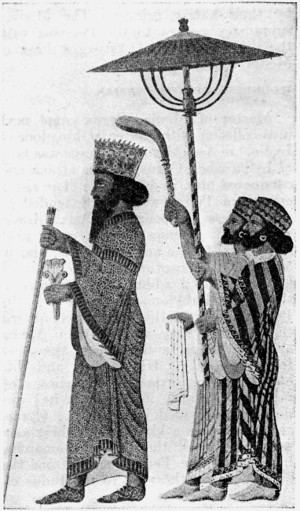
A PORTRAIT OF DARIUS THE GREAT
Here “The Great King,” with state umbrella and
attendants, as carved on one of the door-jambs of the
palace of Darius I. at Persepolis. The original bears
considerable traces of color.
Darius is credited with the establishment
of highroads and swift postal communication
between the provinces and
the court. The kings of Persia resided
in the winter at Susa, a warm place in
the plain east of the Lower Tigris; in the
summer at Ecbatana, in Media, by the
mountains; and Babylon was a third
capital of occasional residence in winter.
From these different centers of power the
Persian monarchs, according to their
measure of energy and resolution, controlled
the conduct of the satraps in
every quarter of their widespread dominions.
ATTEMPT TO INVADE EUROPE, AND
WAR WITH THE GREEKS
About 508 B. C. Darius invaded
Scythia, and, crossing the Danube,
marched far into the territory which is
now European Russia; but the expedition
ended in a retreat without encountering
the enemy, and with great loss of
men from famine. On his return his
generals subdued Thrace and Macedonia,
north of Greece, and added them to the
Persian Empire.
His famous war with the Greeks arose
out of the revolt of the Ionian Greek
cities in Asia Minor in 501, and the
burning of the city of Sardis by their
Athenian allies. An expedition sent
against Greece under the general Mardonius,
in 492 B. C., was defeated by the
Thracians on land, and frustrated by a
storm in the Ægean Sea. In 490 a great
armament was sent by Darius under
Datis and Artaphernes, and then was
fought the decisive battle of Marathon.
Darius’s proposed and long-prepared
revenge upon the Greeks was baffled by
a rebellion in Egypt; and he died in 485,
leaving the task to his son and successor,
Xerxes.
REIGN OF XERXES
THE GREAT
Xerxes reigned from 485-465 B. C.,
and he began with the suppression of the
Egyptian revolt in 484, devoting the next
four years to preparations against Greece.
The grand effort made in 480 has been
ever famous in history for the magnitude
of the host of men and ships employed,
for the heroism of the resistance on the
one side, and the completeness of the
final disaster on the other, as will be seen
in the history of Greece. Xerxes returned
to Sardis, after the destruction of his
fleet at Salamis, toward the end of the
year 480. The defeat of his general
Mardonius at Platæa ended the war in
Greece, and the Persians lost their last
foothold in Europe by the capture of
Sestos on the Hellespont.
ARTAXERXES II. AND THE “RETREAT OF
THE TEN THOUSAND GREEKS”
Artaxerxes II., reigned 405-359. At
the beginning occurred the revolt of his
younger brother Cyrus, satrap in Western
Asia, who marched against Babylon, and
fell in the battle of Cunaxa, 401 B. C.
He was supported by a body of Greek
mercenaries, whose retiring march to the
Black Sea over the mountains of Kurdistan
has been immortalized by Xenophon’s
description in his Anabasis, and is known
as the “Retreat of the Ten Thousand
Greeks.” After many conflicts between
the Persians and Greeks, the peace of
Antalcidas, concluded in 387 B. C., gave
to the Persians all the Greek cities in
Asia Minor. The Persian Empire, however,
was now going to decay. Artaxerxes
failed to recover revolted Egypt,
and was constantly at war with tributary
princes and satraps. The want of cohesion
in the unwieldy, ill-assorted aggregate
of “peoples, nations, and languages,”
was being severely felt.
DARIUS III. LAST OF THE
PERSIAN EMPERORS
In 336 B. C., the last king of the
Persian Empire, Darius III., surnamed
Codomannus, succeeded to power. With
the great battle in the plains of Gaugamela,
in Assyria, known as the battle of
Arbela, from a town fifty miles distant,
where Darius had his headquarters
before the struggle, the Persian Empire
came to an end in October, 331 B. C.
The defeat of Darius was decisive; and
in 330 he was murdered in Parthia by
Bessus, one of his satraps. Asiatic
Aryans had succumbed at last to their
kinsmen of Europe, who, after repelling
Oriental assaults upon the home of a new
civilization, had carried the arms of
avenging ambition into Asia, and struck
a blow to the heart of the older system.
SCIENCE AND THE ARTS IN PERSIA
In science, art, and learning, the Persians
developed nothing that was new, except in architecture.
In the conquest of the Assyrians, Babylonians,
Phœnicians, and Egyptians, the Persian
kings and nobles came into possession alike of the
scientific acquirements and learning of those peoples,
and of the products of their mechanical arts.
The Persians were soldiers, and not craftsmen, and
had no need to be producers, when they could be
purchasers, of the carpets and muslins of Babylon
and Sardis, the fine linen of Egypt, and the rich
variety of wares that Phœnician commerce spread
throughout the empire.
Architecture.—In architecture, they were at
first pupils of the Assyrians and Babylonians. The
splendid palaces and temples of Nineveh and
Babylon had existed for centuries before the Persians
were anything more than a hardy tribe of
warriors, and it was only after the acquirement of
imperial sway that they began to erect great and
elegant buildings for themselves. When that
time came, the Persians showed that they could
produce, by adaptation of older models, an architectural
style of their own. This style was one
that comes between the sombre, massive grandeur
of Assyrian and Egyptian edifices and the perfect
symmetry and beauty of the achievements of
Greek art.
Palaces and Tombs, not temples, were the
masterpieces of Persian building. The ruins of the
city of Persepolis, in the province of Persis, are the
most famous remains of Persian architecture.
Here, on a terraced platform, stood vast and
splendid palaces, the doorways adorned with
beautiful bas-reliefs. The great double staircase
leading up to the “Palace of Forty Pillars” is
especially rich in sculptured human figures. The
columns are beautiful in form, sixty feet in total
height, with the shaft finely fluted, and the pedestal
in the form of the cup and leaves of a pendent
lotus. Throughout the ruins a love of ornament
and display is visible. In the bas-reliefs are profuse
decorations of fretwork fringes, borders of
sculptured bulls and lions, and stone-work of
carved roses.
PERSIAN CITIES
Babylon has been already described.
Ecbatana, formerly the capital of the Median
Empire, was a very ancient city, surrounded by
seven walls, each overtopping the one outside it,
and surmounted by battlements painted in five
different colors, the innermost two being overlaid
with silver and with gold. The strong
citadel inside all was the royal treasury.
Susa was a square-built city unprotected by walls,
but having strongly fortified citadel, containing a
royal palace and treasury. The only remains of
the place are extensive mounds, on which are
found fragments of bricks and broken pottery
with cuneiform inscriptions.
Persepolis was one of the two burial-places of the
Persian kings, and also a royal treasury. Darius I.
and Xerxes greatly enlarged and adorned the city,
which retained its splendor till it was partially
burned by Alexander the Great. The tomb of
Cyrus and a colossal bas-relief sculpture of the
great founder of the monarchy, was at Murghab,
northeast of Persepolis.
Sardis, in western Asia Minor, once the capital
of the Lydian monarchy, was an almost impregnable
citadel, and the residence of the satrap of
Lydia, and is often mentioned in connection with
the Persian kings.
PERSIAN LIFE
The splendor of Persian life at court and abroad
is known to us from many sources. The sculptures
of Persepolis show something of the state and
ceremony attendant on a Persian king. In the
Book of Esther we read of King Ahasuerus (Xerxes)
entertaining all “the nobles and princes of the
provinces” for “a hundred and fourscore days,”
of his making a feast for seven days “in the court
of the garden of the king’s palace” for all the people
of Susa; of pillars of marble, silver curtain rings,
beds of gold and silver, pavements of marble that
was red, and blue, and white, and black; of drinking
vessels of gold diverse in shape and size, and
“royal wine in abundance, according to the state
of the king”; of garments of purple and fine linen;
and of the absolute power of a Persian despot in his
caprices and his wrath, with his “seven chamberlains
that served in his presence,” and with the lives of
men and women of all ranks held in the hollow of
his hand.
The Magi.—The priests or Magi had great
power, from the reverence of the people for them.
The great objects of worship were the heavenly
bodies. This national priesthood, like the Chaldeans
in the Babylonian Empire, formed a caste
to whom belonged all mental culture and legislation.
The modern term “magic,” in its superstitious
sense, is connected with their professions and
practices.
The interest of the great story of ancient Greece is inexhaustible. Of all histories of
which we know so much, this is the most abounding in consequences to us who now
live. The Greeks are the most remarkable people who have yet existed. This high
claim is justly made on the grounds of the power and efforts that were required for them
to achieve what they did for themselves and for mankind. With the exception of Christianity,
they were the originators of most of the great things of which the modern world
can boast. The period from the permanent settlements in Greece until its final reduction
to a Roman province covers about two thousand years.
The name Greece was almost unknown
by the people whom we call Greeks,
and was never used by them for their
own country. It has come to us from the
Romans, being really the name of a tribe
in Epirus, northwest of Greece, the part
of the country first known to them.
THE LAND OF HELLAS AND
THE HELLENES
The Greek writers and people called
their land Hellas, the term meaning all
territory in which their own people, the
Hellenes, were settled. Hellas included
not only the Greek peninsula, but many
of the islands of the Ægean Sea, and the
coast settlements and colonies above
referred to. The peninsula, much indented
by bays, was broken up into many
small divisions, connected by the sea.
There were numerous mountains in
ridges, offshoots, and groups; there were
plains, valleys and small rivers. All was
diversified. The position and conformation
of the country undoubtedly
helped to render the Greeks the earliest
civilized people in Europe, both by
developing, in a life of struggle with
nature on land and sea, their special and
innate character, and by bringing them
into contact with the older civilizations,
in Egypt and Phœnicia, on the eastern
shores of the Mediterranean. The mountains
that divided the country into small
isolated districts had a great political
importance in giving rise to many
separate and independent states, the
rivalries and conflicts of which favored
the working-out of political problems and
the growth of political freedom.
GREAT DIVISIONS OF
GREECE
Greece naturally divides itself into
Northern, Central and Southern. Northern
Greece contained two principal
countries, Thessalia and Epirus, though
the Greeks themselves did not regard the
inhabitants of Epirus (the Epirots) as
being of real Hellenic race. It was only
in later times that Macedonia, north of
Thessalia, was considered a part of
Hellas.
Central Greece had nine separate
states, the most important of which was
Attica, the peninsula jutting out southeastward,
and renowned forever through
its possession of the city of Athens.
Southern Greece, or the Peloponnesus
(meaning “island of Pelops,” a mythical
king), contained seven principal states,
Laconia being the most important, and
sharing the fame of Attica because it
contained the city of Sparta.
THE FAMOUS GRECIAN
ISLANDS
The largest of the islands on the
coast was Eubœa, about ninety miles in
length, noted for good pasturage and
corn. On the west coast was the group
known to modern geography as the
“Ionian Isles.” To the south lay Crete,
one hundred and sixty miles in length,
noted for the skill of its archers. In the
Ægean Sea were the two groups called
the Cyclades and Sporades. The Cyclades
(or “circling isles,” the chief being
Delos) are clearly shown upon the map.
The Sporades (or “scattered isles”) lay
to the east off the southwest coast of
Asia Minor. Northward in the Ægean, in
mid-sea, or on the Asiatic coast, were
Lemnos, Scyros, Lesbos, Chios and
Samos.
THE EFFECT OF
GREEK COLONIZATION
The establishment of so many colonies
in countries pre-eminently favored by
nature in productions and climate, and
so situated as to prompt the inhabitants
to navigation and commerce, gave a great
impulse to the civilization of the Hellenic
race, and may be regarded as the main
cause of its rapid progress.
HISTORY OF THE GREEKS
I. THE PRE-HISTORIC PERIOD
I. THE PRE-HISTORIC PERIOD.—This period includes the mythical accounts of the
origin of
the Greeks, the Trojan war, the more certain story of the excavations, and the establishment of the
peculiar Greek institutions under the so-called rule of the half-mythical kings. Down to the time of
the Trojan war very considerable progress had already been made, and civilization among the Greeks
had received its first important impulse. The oracles at Delphi and Dodona had been established; the
mysteries at Eleusis; the four sacred games; the court of Areopagus at Athens; and the celebrated
Amphictyonic Council. The arts and sciences likewise received considerable attention. Letters had
been introduced by Cadmus. The accounts of the siege of Thebes and that of Troy show that progress
had been made in the various arts pertaining to war, but the history of the period as a whole exhibits that
singular mixture of barbarism with cultivation, of savage customs with chivalrous adventures, which
marks what is called an heroic age.
According to the Greek historians, the earliest
inhabitants of Hellas were the so-called Pelasgians,
but the information afforded by the
ancients on the subject is scant and vague.[3]
For our knowledge of the inhabitants and
civilization of prehistoric Greece, we are therefore
dependent on the more certain witness of
the excavations, which, in recent years, have
yielded very important results.
THE MINOAN AGE
Excavations at Knossus in Crete have revealed
to us the civilization of the Minoan age of Greek
history. This civilization is the oldest of which
we have knowledge. It flourished about 2000
B. C. Prehistoric Knossus was a city of massive
structure in which the fine arts flourished and
had reached a remarkably high stage of development
(specimens of Minoan pottery are of
exceptional beauty and grace) and in which the
art of writing was known. This last fact is of
great importance, as until recently the art of
writing in Greece was supposed to be post-Homeric.
THE MYCENEAN AGE
The next age of Greek civilization on which
archæology has concentrated its searchlight is
the Mycenean (fl. c. 1600-1100 B. C.). The
Mycenean civilization is revealed to us by excavations
in the sites of Mycenæ, Tiryns, etc.
The characteristic features of these splendid
cities is their massiveness and solidity. Pausanias
relates that tradition attributed the
building of Tiryns and Mycenæ to the Cyclopes
(hence the expression “Cyclopean walls” used
to denote structures of this massive type), thus
testifying to the gigantic edifices of prehistoric
times as contrasted with the masonry of a later
date. The jewelry, pottery and weapons
excavated from these ancient cities are of rare
beauty. Iron was practically unknown in the
Mycenean age. Its use is more extensive in the
Homeric age, and therefore Homeric civilization
is probably post-Mycenean.
THE SO-CALLED DORIAN
INVASION
But vast invasions swept over Greece, and a
ruder civilization displaced this early culture.
In the latter half of the eleventh century B. C.,
the Dorians ravaged Greece. They were a
coarser, hardier stock than the peoples they
conquered, but they brought to Greece a new
vigor and a new robustness, which when toned
and harmonized by the finer influences of the
land, produced that civilization which is the
world’s marvel for all time.
II. PERIOD OF MIGRATIONS AND FORMATION OF STATES
II. PERIOD OF MIGRATIONS AND FORMATION OF STATES.—The
first governments of
Greece were small monarchies, and they continued such until after the Trojan war. Soon after this we
find the country involved in fatal civil wars, in which the people, under a number of petty chieftains hostile
to each other, suffered extremely from calamity and oppression. These evils led to change in the form
of government, and the substitution of the popular instead of the regal system. The same evils also
probably contributed to the spirit of emigration, which so strikingly marks the period. During this
period of colonization we notice the origin of the four principal dialects in the Greek language. In this
period two of the Grecian states are chiefly conspicuous—Athens and Sparta, whose special effort was to
provide themselves with a suitable political constitution, civil code and government.
These great migrations which swept over
Greece created a congestion of the population
which was eventually relieved by widespread
colonization on the west coast of Asia Minor
and in the neighboring islands of the Ægean
Sea. These colonies were settled by the three
races, the Æolians, Ionians and Dorians. The
Æolians colonized the northwestern part, the
coast of Mysia, and the island of Lesbos. The
Ionians settled in the central part, on the coast
of Lydia, and in the islands of Chios and Samos.
The Dorians occupied the southwest corner of
Asia Minor (the coast of Caria) and the adjacent
islands. Of all these by far the most important,
wealthy and powerful were the Ionians.
OTHER GREEK
COLONIES
The Greeks gradually spread themselves in
settlements along the northern coast of the
Ægean Sea and the Propontis, in Macedonia
and Thrace, so that the whole Ægean became
encircled with Greek colonies, and its islands
were covered with them. The tide of emigration
flowed westward also in great strength.
The coasts of Southern Italy were occupied
by Dorians, Achæans, and Ionians in settlements
which grew to such importance that the region
took the name of Magna Græcia, or Greater
Greece. The cities of Tarentum, Croton and
Sybaris became famous for their wealth, the
latter giving rise to the proverbial name for a
luxurious liver.
On the southwestern coast of Italy was
Rhegium, and farther north came Pæstum,
Cumæ, and Neapolis (Naples). In Sicily
flourishing Greek settlements abounded, the
chief being Messana, Syracuse, Leontini, Catana,
Gela, Selinus, and Agrigentum. Farther west
still a colony from Phocæa, in Asia Minor,
founded the city of Massilia, now Marseilles.
On the southern coast of the Mediterranean,
westwards from Egypt, the Greek colony of
Cyrene became the chief town of a flourishing
district called Cyrenaica.
The establishment of the later of these
colonies brings us down well within authentic
historical times, and the whole period of Greek
colonization extends from about 1100 to 600
B. C., the colonies being, in many cases, offshoots
of colonies previously established and risen to
wealth and over-population. In all these movements
and settlements, the enterprise and
ability of the Greeks made them great commercial
rivals to, and successors of, the Phœnicians.
CONTRAST BETWEEN IONIANS
AND DORIANS
The two leading races of Greece were the
Ionians and the Dorians, and they stand to
each other in a strong contrast of character
which largely affected Greek political history.
These prominent points of difference run through
the whole historical career of the two chief
states, Ionian Athens and Dorian Sparta, and
were the cause of the strong antagonism that
we find so often in action between them. The
Dorian was distinguished by severity, bluntness,
simplicity of life, conservative ways, and
oligarchic tendency in politics; the Ionian was
equally marked by vivacity, excitability, refinement,
love of change, taste in the arts, commercial
enterprise, and attachment to democracy.
The Dorian, in the best times of his history,
reverenced age, ancient usage, and religion; the
Ionian, at all periods of his career, loved enjoyment,
novelty and enterprise.
THE EARLY CAREER
OF SPARTA
The Spartans, or the people of Lacedæmon,
properly the southern half of Laconia, first became
the dominant nation in that part of
Greece. Of Spartan doings and fortunes we
know almost nothing until the time of the
great Legislator Lycurgus, who is said to have
organized, about 850 B. C. the famous Spartan
constitution. The probable account is that he
altered and reformed existing usages, and that
the reverence of after ages ascribed to him the
promulgation and establishment of a full grown,
brand new set of institutions, which must have
been, in many points, of gradual growth.
THE FAMOUS LAWS OF
LYCURGUS
The government was that of an aristocratic
republic under the form of a monarchy. There
were two kings, whose powers were nominally
those of high priests, judges, and leaders in
war, but in the two latter capacities their functions
were in time greatly restricted and almost
superseded. The chief legislative and judicial
and much of the executive, power lay with the
Senate, or council of twenty-eight elders. No
citizen could be a member of this body until
he had become sixty years of age, and the office
was held for life. The popular assembly, open
to every Spartan citizen over thirty years old,
really handed over its powers to a board of
five commissioners, officers called Ephors (“overseers”),
whom it annually elected. These high
officials had a secret and irresponsible control
over the executive power, both at home and
abroad; and in military enterprises, where the
kings were the nominal leaders, the two Ephors
who accompanied the army exercised much
influence. The whole body of Spartan citizens
was an aristocracy, and among themselves entire
political equality existed.
TRAINING OF THE SPARTAN
CITIZEN
The object of the peculiar training of Spartan
citizens, ascribed to Lycurgus, was the maintenance
of Spartan supremacy over the subject
population. It was necessary for safety that
the small body of men, surrounded by enemies
in their own land, should be ready at all points,
[375]
against every attempt at opposition or rebellion,
and against the outside world as well.
As every man had to be a soldier, and the
citizen existed only for the state, the state took
the Spartan citizen in hand at his birth, and
regulated him almost from the cradle to the
grave. From the age of seven the body was
cultivated, and every means was used to give
the instrument the finest temper, in a physical
sense, and to bring it to the sharpest edge.
Such training lasted till the sixtieth year of life,
when the Spartan became qualified by age, if
not by wisdom, for election to the Senate, or
“assembly of old men,” above described.
The girls were trained in athletic exercises
like those of the youths, and everything was
done to produce vigorous and stern women,
prepared to gladly see their sons die on the
battle-field for Sparta.
The result of all was that the Spartans became
a race of well-drilled and intrepid warriors,
but a state distinguished in the history of Greece
for the display of a domineering arrogance, a
rapacity, and a corruption, which contributed
not a little to its downfall. However, the
Spartan institutions were very successful in
giving the state security at home and success
in war abroad. Sparta was free from domestic
revolutions, and the spectacle it presented of
constancy to fixed maxims of policy gave it a
great ascendancy over the Hellenic mind.
EARLY HISTORY OF ATHENS.
THESEUS
The Athenians became by far the most
famous, in political ascendancy and in artistic
and intellectual eminence, of all the Ionian race,
to which they belonged.
At first they were under kings like the other
Hellenes; but about 1050 B. C. the title of king
became changed to that of archon (“ruler”),
though the office was still held for life, and continued
in the same family. The archon was
responsible for his acts to a general assembly
of the people, in which, however, the nobles
had the chief influence; and down to long after
the time of the first Olympiad, Athens may be
regarded as an oligarchic republic, in which the
supreme office, the archonship, was confined to
one family; and members of the chief court of
justice, called Areopagus (lit. “hill of Ares,” the
place of its assembly at Athens), were elected
only from the noble houses.
IMPORTANCE OF THE OLYMPIADS
IN GREEK CHRONOLOGY
We come, in the year 776 B. C., to the era
when the chronology of Grecian history becomes
consecutive, and dates are reckoned by
Olympiads. These were the periods of four
years each which elapsed between the successive
celebrations of the Olympic games in honor
of the Olympian Zeus (the chief Greek deity) in
the plain of Olympia in Elis (in Peloponnesus).
The First Olympiad began at midsummer, 776
B. C., the Second Olympiad at midsummer, 772
B. C., and so on—any event being dated by a
particular year of a specified Olympiad.
THE UNPOPULAR LAWS
OF DRACO
Down to the year 621 B. C. the people were
still without a substantial share in the government,
and popular discontent demanded a
written code. Consequently Draco, one of the
archons, drew up laws, the severity of which
has become proverbial, and which were intended,
by their rigor, to check the growth of the
democracy that was clamoring for a change.
The penalty of death was assigned to all offenses,
great or small, to enable the nobles to get rid
of dangerous leaders of the people; but such a
system did not long continue.
Anarchy prevailed in Attica, owing to the
various factions of the oligarchs, the democrats,
and a middle party (the moderates).
SOLON REFORMS
THE LAWS
A wise reformer was found in Solon, chosen
as an archon in 594 B. C., and invested by his
fellow citizens, for the special purpose of restoring
tranquility, with unlimited power to change
the laws. He was already distinguished as a
poet and as a general in the war of Athens
against her neighbor, Megara. His great object
was to remove the oppressive and excessive
power of the aristocracy without introducing
pure democracy.
Solon began with the abolition of Draco’s
code, but retained the penalty of death for
murder. His celebrated disburdening ordinance
for the relief of debtors won the complete confidence
of the people. This had the immediate
effect of mitigating the oppressions caused by
the old laws of debt: in future neither the
person, family, nor estate of the debtor might
be pledged in security for the loan. A further
democratic character was given at the outset to
the constitution of Solon by the division of the
people into four classes, according to property,
which was now substituted for birth as a qualification
for the higher offices of state.
A council of state, or senate, called the
Boule (council) was chosen annually by lot, to
prepare measures for submission to the popular
assembly, or Ecclesia, in which the citizens of
the fourth or lowest class (who could hold no
state office) had the right of voting. The
Ecclesia included all classes of the citizens, who
there legislated, elected the magistrates, decided
on peace or war, and other matters sent down
to it from the Boule.
For the courts of justice below the Areopagus,
a body of six thousand jurors was to be
annually selected by lot from the popular
assembly, and the causes were tried by divisions
of the whole body.
Solon was also the author of many laws
which regulated private life and rights, public
amusements, slavery, marriage, and other
matters. Among his miscellaneous enactments
may be noted that which legalized the export of
olive oil only, that which obliged the father to
teach his son a trade, that which penalized a
citizen for remaining neutral on the outbreak
of civil strife, and that which empowered a
man who died childless to dispose of his property
by will.
SOLON’S CONSTITUTION OVERTHROWN
BY PISISTRATUS
During Solon’s absence on a tour of travel
a renewal of factions followed and their struggles
ended in the seizure of power by Pisistratus,
in the year 560 B. C. He was one of the class
[376]
of rulers called “Tyrants” by the Greeks, who
held power in Greek states during this and the
preceding century.
The Greek Tyrants were aristocratic adventurers
who took advantage of their position and
of special circumstances to make themselves
masters of the government in their respective
states.
It is to Pisistratus, however, that the world
owes the preservation in their present form of
the poems of Homer, which he caused to be
collected and edited in a complete written text.
He was succeeded by his sons Hippias and
Hipparchus, as joint rulers; but the severity of
Hippias (after the murder of Hipparchus) caused
his expulsion by the people, and the end of the
despotism at Athens, 510 B. C.
ATHENS A PURE DEMOCRACY
UNDER CLEISTHENES
The government at Athens now (507 B. C.)
became a pure democracy, under the auspices
of Cleisthenes. At the head of the popular
party he effected important changes in the
constitution. The public offices of power were
thrown open to all the citizens, the whole people
was divided into ten tribes or wards, and the
senate (Boule) now consisted of five hundred
members, fifty from each ward or tribe.
Political Ostracism.—Cleisthenes introduced
the ostracism (from ostrakon, the oyster-shell,
on which the vote was written), by which
the citizens could banish for ten years, by a
majority of votes, any citizen whose removal
from the state might seem desirable. This
device was intended to secure a fair trial for the
new constitution by checking the power of
individuals who might be dangerous to popular
liberties, and by putting a stop to quarrels
between rival politicians.
Athens had at last secured a government of
the thoroughly democratic type, and from this
time began to assume a new and ever-growing
importance in Greece, and was soon regarded
as the chief of the Ionian States. The people,
through the Ecclesia, became thoroughly versed
in public affairs, and practically, as well as
legally, supreme in the state.
GROWTH AND IMPORTANCE
OF SPARTA
As Athens had Draco and Solon as its great
lawgivers, so Sparta found in Lycurgus her
lawgiver. His institutions gave a permanent
cast to the Spartan character, and were not
abolished until the last ages of Greece. The
system of Lycurgus, meanwhile, had made
Sparta a thoroughly military state, and in two
great wars (743-723 and 685-668 B. C.) it conquered
its neighbors on the west, the Messenians,
reducing them to the condition of the Helots,
and appropriating their land. By this and by
successful war against its northern neighbors,
the people of Argos, Sparta acquired the supremacy
and became the leading Dorian state of
Peloponnesus and of the Grecian world. These
two great states of Greece, Athens and Sparta,
now were (about 500 B. C.) with the rest of
Greece to encounter Persia; and Europe, with
united Greece for her champion and representative,
was to triumph over the older civilization
and prowess of Asia.
III. PERIOD OF PERSIAN WARS AND MILITARY GLORY
III. PERIOD OF PERSIAN WARS AND MILITARY GLORY.—To this age the Greeks ever
after looked back with pride, and from its history orators of every nation have drawn their favorite
examples of valor and patriotism. The Persian invasion called forth the highest energies of the people,
and gave an astonishing impulse to Grecian mind. The design of subjugating Greece originated in the
ambition of Darius the Persian king, the second in succession from Cyrus the Great. He found a pretext
and occasion for the attempt in a revolt of his Greek subjects in Asia Minor, in which Sardis, the capital
of Lydia, was pillaged and burned. The war was carried on by three successive kings, Darius, Xerxes
and Artaxerxes, but on neither of them did it confer any glory; while the battles of Marathon, Thermopylæ,
Salamis, Mycale, and Platæa, secured immortal honor to the Greeks. A succession of splendid names
adorns the history of Athens during this period. Miltiades, Themistocles, Aristides, Cimon, and Pericles,
acted distinguished parts in the brilliant scene. Sparta also justly gloried in the self-sacrifice of Leonidas
and his three hundred brave companions. The period of the Persian war was the age of the highest elevation
of the national character of the Greeks. Before it, there existed little union comparatively between
the different states, and it was not till Athens had alone and successfully resisted the strength of Persia
at the battle of Marathon, that other states were aroused to effort against the common enemy. In the
confederation which followed, Sparta was the nominal head, but the talents, which actually controlled
the public affairs, were found in the statesmen of Athens. To Athens, therefore, the supremacy was
necessarily transferred, and before the close of the war this state stood, as it were, the mistress of Greece.
Persia at this time was the chief power of
the world, and, by the conquest of the Lydian
kingdom, had become master of the Greek
cities on the coast of Asia Minor. In 500 B. C.
a general revolt of these Ionian cities took place,
and the Athenians sent a force of ships and
soldiers to help their kinsmen. The united
Ionians and Athenians took and burned Sardis,
the capital of Lydia, in 499, but, after a six
years’ struggle, the power of Darius conquered
the whole seaboard of Ionia, and left Persia
free to punish the Athenians for interfering
between the great Eastern empire and her
revolted subjects. In 490 B. C. a great Persian
force, under Datis and Artaphernes, was sent
across the Ægean, and the fleet landed the
Persian army near Marathon, on the east coast
of Attica, with a view to an advance upon
Athens.
THE FAMOUS BATTLE
OF MARATHON
The first and most important battle of the
Persian War, and one of the most momentous
in history, was that of Marathon. At the plain
of Marathon, near Athens, a small Athenian
force of about ten thousand men (with the help
of six hundred men from Platæa), under the
famous general Miltiades, routed a Persian
army of perhaps one hundred and ten thousand,
in 490 B. C. This memorable battle, resulting
as it did in the defeat of the power which had
conquered the greater part of the known world,
first taught the Greeks their own strength and
gave Athens a position in Greece which it had
never yet held. The leading men in Athens at
this time were Themistocles and Aristides.
The death of Darius, in 485 B. C., prevented
him from renewing the Persian attack on Greek
[377]
liberties, and the task was bequeathed to his
son Xerxes. The invasion of Greece by Xerxes
took place ten years after the battle of Marathon
with an immense force by sea and land (two
million five hundred thousand men according
to Herodotus).
STAND OF THE THREE HUNDRED
AT THERMOPYLAE
Then was fought the memorable battle of
Thermopylæ (gates of the hot springs, from
hot springs situated there), in which the Spartan
Leonidas with a mere handful of men held the
whole Persian army at bay in the narrow pass
of Thermopylæ; but, a way around the pass
being shown the Persians by a treacherous
Greek, they were able to attack Leonidas in the
rear. Part of the Greek forces retreated on
learning of this movement of the Persians, but
Leonidas with three hundred Spartans and
seven hundred Thespians refused to retreat, and,
advancing against the overwhelming numbers of
the enemy, sold their lives as dearly as possible.
This little remnant of the Greeks, armed
only with a few swords, stood a butt for the
arrows, the javelins, and the stones of the
enemy, which at length overwhelmed them.
Where they fell they were afterwards buried.
GREEK VICTORY AT
SALAMIS
Xerxes, having taken the pass of Thermopylæ,
moved towards Athens, when the inhabitants
had fled, taking refuge in their ships,
according to their interpretation of a decree
of the oracle that they must seek safety in their
“wooden walls.” The Persians burned Athens,
and the fate of Greece was then decided by
the naval battle of Salamis (480 B. C.), which
resulted in a complete victory for the Greeks.
The battle of Salamis, with the battles of
Platæa and Mycale, in the next year, decided
the war, and the Persians were driven out of
Greece forever, and finally, after several years,
were driven wholly out of Europe. The
arbitrary rule of an irresponsible despot was
overcome by the spirit of voluntary obedience
to law, the freedom of Greece was maintained,
and the future civilization of Europe was
secured.
IV. AGE OF PERICLES AND GREEK LUXURY
IV. AGE OF PERICLES AND GREEK LUXURY.—This period includes the portion from the
close of the Persian war to the Supremacy of Philip, B. C. 337. At the beginning of this period the general
affairs of Greece were in a highly prosperous condition, and Athens was unrivaled in wealth and magnificence
under the influence of Pericles. But a spirit of luxurious refinement soon took the place of the
disinterested patriotism of the preceding age, and the manners of all classes became signally marked by
corruption and licentiousness. The events of most prominent interest were: (1) the Peloponnesian war
between Athens and Sparta; (2) the accusation of Socrates, disgraceful to the city and all concerned;
(3) the expedition of Cyrus the Younger which involved the Greeks in another war with Persia; (4) the
successive downfall of Athens, Sparta and Thebes, and the rise of Macedon.
The half-century following the battle of
Salamis (480-430 B. C.) forms the most brilliant
period of Athenian history, and one of the
greatest eras in the history of the world.
ATHENS UNDER
CIMON
After the fall of the great Athenian Themistocles,—who
was banished by ostracism in 469
B. C., at the instance of the aristocratic party,—the
rich, able, and popular Cimon, son of
Miltiades, the victor at Marathon, was at the
head of affairs. In 466 B. C. he gained a great
victory, by land and sea, over the Persians, at
the mouth of the river Eurymedon, in Pamphylia,
on the south coast of Asia Minor. A
part of the value of the plunder taken was
devoted to the adornment of the city of Athens,
which Themistocles had rebuilt and fortified.
Cimon spent large sums of his own on the city,
and under his direction the defenses of the
famous Acropolis (the citadel of Athens) were
completed. In 461 B. C. the democratic party
at Athens banished Cimon by the ostracism, and
the illustrious Pericles, for some years his rival,
came to the front.
PERICLES AND HIS GREAT
ACHIEVEMENTS
Pericles began to be distinguished in Athenian
politics about 470 B. C. as leader of the democratic
party.
In the constitution of Athens a wide scope
was given for the development of great political
characters, because the system not only allowed
the display of a man’s powers, but summoned
every man to use those powers for the general
welfare. At the same time, no member of the
community could obtain influence unless he had
the means of satisfying the intellect, taste, and
judgment, as well as the excitable and volatile
feelings, of a highly cultivated people.
Such a man was Pericles. From the force
of his personality, and his majestic oratory, he
was called “the Zeus of the human Pantheon
of Athens.” For over thirty years (461 to
429 B. C.) this great man swayed the policy of
Athens. Pericles was at once a statesman, a
general, a man of learning, and a patron of the
fine arts. He recovered for Athens (445 B. C.)
the revolted island of Eubœa; he was the friend
of the famous sculptor Phidias, and in his age
the great dramatic compositions of Sophocles
were presented on the Athenian stage. To him
Athens owed the Parthenon, the Erechtheum,
left unfinished at his death, the Propylæa, the
Odeum, and numberless other public and sacred
edifices; he also liberally encouraged music and
the drama; and during his rule industry and
commerce were in so flourishing a condition
that prosperity was universal in Attica.
THE PELOPONNESIAN WAR
The supremacy over the other states of
Greece which Athens attained after the Persian
War, and maintained during the Age of Pericles,
with her constant prosperity and unparalleled
growth, raised up jealousy and hatred against
her, and during that brilliant period were sown
the seeds of a civil warfare which was destined
to destroy the power and splendor of Greece.
After the death of Pericles, Athens had trusted
to unworthy demagogues, of whom the most
notorious was Cleon.
The other leading state of Greece was Sparta,
and there was a general gravitation in the
different cities to these two centers of Grecian
life, those in which democratic sentiments prevailed
looking to Athens for leadership, the rest
(those in which the aristocratic or oligarchical
element prevailed) regarding themselves as the
natural allies of Sparta. The conflict between
these two opposing principles, democracy and
oligarchy, broke out in 431 B. C., and is known
as the Peloponnesian War. Athens was the
stronger by sea, Sparta by land.
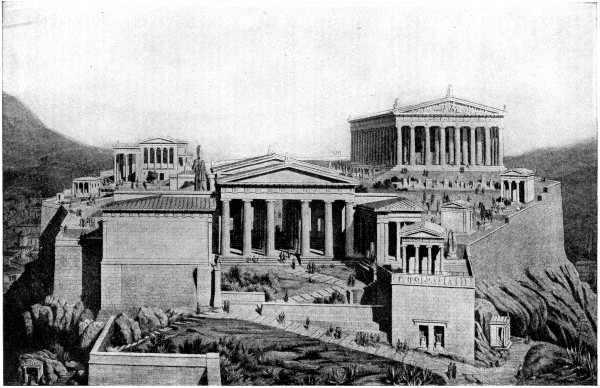
| |
Pinakotheka, or Museum of Pictures. |
|
Propylæa, or Porch. |
|
Nike Apteros. |
|
Parthenon, or Temple of Athena Parthenos. |
THE ACROPOLIS OF ATHENS AS IT APPEARED DURING THE AGE OF PERICLES
Pericles, with the sculptor Phidias, covered the Acropolis with a mass of beautiful buildings, making it the glory
of Athens, if not of the whole ancient world. No finer structure has
ever been known than the Parthenon. It is to be seen on the highest point of the Acropolis, on the right hand of the picture.
CHIEF LEADERS IN
THE WAR
The chief generals on the Athenian side were
Demosthenes (not the great orator of a later
time) and Nicias; the Spartan chief was the
famous Brasidas, who had much success against
the Athenian colonies on the coast of Thrace.
The brilliant Alcibiades began to display his
powers as a statesman at Athens. In 422 B. C.
a battle near Amphipolis, on the coast of Thrace,
ended in the defeat of the Athenians, and the
deaths of Cleon and of Brasidas, the latter an
irreparable loss to Sparta. In the place of
Cleon, the mild Nicias became one of the leading
statesmen at Athens, and his efforts resulted
in a truce between Athens and Sparta, in
421 B. C.
SECOND PERIOD
OF WAR
Questions as to keeping the truce, and the
mutual distrust and jealousy between these
states increased their antagonism. Athens,
now mistress of the sea, had the ambition,
under the incitement of the great Alcibiades, to
acquire complete sway in the Mediterranean.
Perhaps the most important and decisive
event of the war was an attack made (415 B. C.)
by Athens upon Syracuse in Sicily, when the
Spartans helped the Syracusans, and which
resulted in the total failure of the expedition
(413 B. C.), and great damage to the power of
Athens. The Athenians had sent a more powerful
armament against Sicily than had ever
before been turned out in the history of Greece.
The consequences of the defeat of this force
were felt all over Greece, the enemies of Athens
were stimulated to much greater activity, and
thought that the fate of that city was sealed.
THIRD AND LAST
PERIOD
Henceforward Athens could only fight for
her life as an independent state. In 412 B. C.
many of her subject states revolted, including
the wealthy Miletus, on the coast of Asia Minor,
and the islands of Chios and Rhodes. Sparta
formed an alliance with Persia, and used Eastern
gold to furnish ships and mercenaries against
Athens. Alcibiades, having quarreled with
the Spartans, rejoined his country, and conducted
her war, in some of its closing years,
with brilliant success. In 411 B. C. a revolution
took place in Athens which really swept
away the democratic constitution of Solon, and
substituted an oligarchical faction in power.
DOWNFALL OF
ATHENS
The war was chiefly carried on in Asia Minor,
where Alcibiades and others defeated the Spartans
and their allies by land and sea; but in
405 B. C. the tide of success for Athens turned
again, and the Athenian fleet was captured by
the Spartan admiral Lysander, at Ægospotami,
in the Hellespont, the Athenian galleys being
seized, by surprise, on the beach. In 404 B. C.
Athens, blockaded by the Spartans both by
land and sea, surrendered to Lysander after a
four months’ siege, and the war ended in the
downfall of Athens, and the formal abolition
of the great Athenian democracy.
RESULT OF PELOPONNESIAN
WAR
Henceforward Athens was a subordinate
power. Sparta was, for a time, supreme; a
Spartan garrison held the Acropolis; Alcibiades,
who might have restored Athens, was assassinated
in Persia through the influence of Lysander;
and though, after a brief period of rule by
the Thirty Tyrants, set up by Lysander, a
counter-revolution restored, in part, the constitution
of Solon, the political greatness of
Athens had departed.
Even the disastrous Peloponnesian War,
which lasted twenty-seven years, did not destroy
the impulse given to the Greek intellect during
the preceding age, and literature, oratory, and
philosophy flourished.
SOCRATES AND THE SHAME
OF ATHENS
Socrates, the great and good Athenian
philosopher, lived (469-399 B. C.) during a
period covering much of the age of Pericles, and
the whole time of the Peloponnesian war.
Though opposed to the oligarchical tyranny of
the Four Hundred and the Thirty, Socrates was
even more adverse to the unmixed democracy,
with its election by lot and its payment for
political services. Accordingly, on the triumph
of the demagogues, he was in 399 B. C. accused
of denying the gods and corrupting the young,
and being convicted by an overwhelming
majority of the jury, was sentenced to death.
He passed thirty days before execution in the
noble discourses on the immortality of the soul,
which are recorded in Plato’s Phædo, drank the
cup of hemlock, and died.
SUPREMACY OF SPARTA AND THEBES
Sparta was now at the head of Greece, and
for thirty-four years (405-371 B. C.) wielded
power over the Greek states. Her sway was
harsh and despotic.
RETREAT OF THE TEN
THOUSAND
After the Peloponnesian War, some of the
Greeks were hired by Cyrus, the Persian prince,
to help him in an attempt to wrest the Persian
throne from his brother Artaxerxes. The
attempt failed, and the memorable retreat
(400 B. C.) homeward of the Greeks is famous
as the “Retreat of the Ten Thousand.”
THE RISE OF MACEDONIA
Macedonia, north of Thessaly, was not considered
by the Hellenes as a part of Hellas, and
had no political importance till now. Yet the
peoples had elements in common, being Thracians
and Illyrians, with a large mixture of Dorian
settlers among them.
KING PHILIP OF
MACEDON
The line of Macedonian kings being of Hellenic
descent, Greek civilization had been cultivated
by some of them.
Philip of Macedon was a prince of great
ability, educated at Thebes during the Theban
[380]
supremacy, and trained in war by Epaminondas,
on whose tactics he founded his famous invention,
the “Macedonian phalanx.” His fame
has been overshadowed by that of his illustrious
son, but he made Macedonia the leading power
in Greece, and gave Alexander the basis for his
great achievements. He was a man of unscrupulous
character, determined will, prompt action,
and patient purpose; and when he became King
of Macedon, in 359 B. C., he designed making
his country supreme in the Hellenic world, as
Athens, Sparta and Thebes had successively
been.
THE FIRST SACRED
WAR
From 356 B. C. to 346 B. C. the Phocian or
First Sacred War was waged between the
Thebans and the Phocians, with allies on each
side, the origin of the war being a dispute about
a bit of ground devoted for religious reasons to
lying perpetually fallow. Philip of Macedon
was called in to settle matters, and thereby his
ambition secured a firm foothold in Greece. He
possessed himself by force of the Athenian cities
Amphipolis, Pydna, Potidæa, and Olynthus,
being vigorously opposed throughout by the
great Athenian orator and patriot Demosthenes,
who strove to rouse his countrymen against
Philip’s dangerous encroachments, in the famous
speeches known as the Olynthiac and Philippic
orations.
THE GREATEST PERIOD
OF GREEK ORATORY
This was the most brilliant time of Greek
oratory, which reached its perfection in the
contest between Æschines, who advocated the
cause of Macedonia, and Demosthenes, who
opposed the designs of Philip. It was also a
period of great mental activity in the region of
scientific inquiry and speculative thought.
Plato, whose birth fell in the preceding century,
founded the Academic school, which took its
name from the groves of Academus in the
vicinity of Athens, where the philosopher was
accustomed to lecture. Aristotle (called the
Stagyrite, from his birthplace, Stagyra, in
Macedonia) was the instructor of Alexander the
Great, and founded, at the Lyceum in Athens,
what is known as the Peripatetic school, from
his habit of walking about while conversing with
his disciples.
After the battle of Chæronea, Philip, having
made Greece subject to his power, planned to
unite all the forces of that country in an aggressive
war against the great power of Persia, but
was murdered in 336 B. C.
V. MACEDONIAN PERIOD AND EMPIRE OF ALEXANDER THE GREAT
V. MACEDONIAN PERIOD AND EMPIRE OF ALEXANDER THE GREAT.—This period
extends from the supremacy of Philip, gained by the battle of Chæronea, to the capture of Corinth,
146 B. C. By the disastrous defeat at Chæronea the genuine fire of the Grecian spirit was extinguished,
and the subsequent history exhibits little else than the steps by which the country was reduced to a dependent
province. Alexander, who succeeded his father Philip, as king of Macedon, and autocrat of Greece,
cast an imperishable glory on the first years of this period by his extensive conquests reaching from the
Hellespont to the Granicus, to Issus, to Tyre, to the Nile, to the desert of Libya, to the Euphrates, and
the Indus. For twenty years after Alexander’s death the vast empire he had formed was agitated by
the quarrels among his generals. By the battle of Ipsus in Phrygia, B. C. 301, these contests were terminated,
and the empire was then divided into practically four kingdoms. To the first of these the Grecian
states belonged. Patriotic individuals sought to arouse their countrymen to cast off the Macedonian
yoke; but jealousy between the states and the universal corruption of morals rendered their exertions
fruitless. All that is really memorable in the affairs of Greeks at this later time, is found in the history
of the Achæan league.
After the assassination of Philip, the task of
subjugating the Persian Empire was left for his
son Alexander, who subsequently proved himself
one of the greatest commanders of any age.
Alexander’s exploits were all performed in the
short rule of thirteen years (336-323 B. C.).
Coming to the throne of Macedon at the age
of twenty, he put down rebellion in his own
kingdom, marched into Greece and overawed
Thebes, which had been intriguing against him,
and in a congress of Greek states at Corinth he
was appointed to command the great expedition
against Persia.
THE DESTRUCTION OF
THEBES
In 335 B. C. he made a successful expedition
against the Thracians, Getæ, and Illyrians, and
on his return found Thebes in revolt. He took
Thebes by storm; the inhabitants were all slain
or sold as slaves; and all the buildings, except
the temples and the house which had been that
of Pindar the poet, were razed. This capital
had defied Alexander, and ceased to exist.
ALEXANDER’S INVASION
OF PERSIA
In 334 B. C. Alexander crossed the Hellespont
with an army of thirty thousand foot-soldiers
and five thousand cavalry, and first
met the foe at the river Granicus, in Mysia.
The result was a Persian defeat, which cleared
the way through Asia Minor, and brought the
Macedonians to the borders of Syria. The
second, a great battle (333 B. C.), was fought
at Issus, in the southeast of Cilicia. There
Alexander met the King of Persia himself,
Darius III., and gained a complete victory
over a vastly superior force. Darius fled, leaving
his wife and mother prisoners in the conqueror’s
hands, by whom they were treated with
the greatest courtesy and kindness.
SYRIAN AND EGYPTIAN
CAMPAIGNS
The Persian resistance thus disposed of for a
time, Alexander turned southward, left behind
him nothing unsubdued before his advance into
the interior of Asia, and made an easy conquest
of the cities of Phœnicia, except Tyre,
which resisted obstinately for seven months,
and was taken in the summer of 332 B. C.
After taking Gaza, Alexander marched into
Egypt, which received him gladly, from hatred
of her Persian rulers. Early in 331 B. C. the
Macedonian king handed down his name to
future ages by founding, at the mouth of the
western branch of the Nile, the city of Alexandria,
[381]
which was destined to become so famous
for commerce, wealth, literature, and learning.
ALEXANDER’S SECOND INVASION
OF PERSIA
In the spring of 331 B. C. Alexander set out
again for Persia, where Darius had been gathering
an immense force with which to make a
last struggle for the empire of the world. After
traversing Phœnicia and Northern Syria,
Alexander crossed the Euphrates and Tigris,
and came out on the plain near the little village
of Gaugamela, to the southeast of the ruins of
Nineveh. Then took place the great and
decisive battle of Arbela, with the Persians,
October, 331 B. C.
After receiving the surrender of the other
two capitals, Susa and Persepolis, Alexander
spent the year 330 B. C. in conquering the
northern provinces of the Persian Empire,
between the Caspian Sea and the Indus. In
329 B. C. he marched into Bactria, over the
mountains now called the Hindu Kush, caught
and slew the traitor Bessus, who murdered
Darius, and advanced even beyond the river
Jaxartes. In 328 he was engaged in the conquest
of Sogdiana, between the Oxus and
Jaxartes, the country of which the capital was
Maracanda, the modern Samarcand.
HIS INVASION OF
NORTHERN INDIA
In the spring of 327 B. C., Alexander marched
through what is now Afghanistan, crossed the
Indus, and defeated an Indian king, Porus, on
the banks of the Hydaspes (the Jhelum). On
his way to the Indus he stormed the capital of
an Indian tribe, now Mooltan, and was himself
severely wounded. In 326 he sailed in a fleet,
built on the spot, down the Indus, into the
ocean; despatched a part of the army on
board the ships, under his admiral Nearchus, by
sea coastwise into the Persian Gulf, and marched
himself with the rest through what is now
Beluchistan, reaching Susa early in 325 B. C.
ALEXANDER SETTLES IN
BABYLON
During the rest which the troops took here,
Alexander, many of his generals, and many
thousands of his soldiers, married Asiatic
women, and, with the same view of bringing
Europe and Asia into one form of civilization,
great numbers of Asiatics were enrolled in the
victorious army, and trained in the European
fashion. For the improvement of commerce,
the Tigris and Euphrates were cleared of
obstructions. From Susa, in the autumn of
325 B. C., Alexander visited Ecbatana (in Media)
and thence proceeded to Babylon, which he
entered again in the spring of 324 B. C.
It was the intention of Alexander to make
Babylon the capital of the empire, as the best
medium of communication between east and
west; and he is said to have meditated the
conquests of Arabia, Carthage, Italy, and of
Western Europe. For commercial and agricultural
purposes he intended to explore the
Caspian Sea, and to improve the irrigation of
the Babylonian plain. All his plans were made
vain by his sudden death by fever at Babylon,
in the summer of 323 B. C.
ESTABLISHMENT OF VARIOUS
GREEK KINGDOMS
Alexander the Great left no heir to his
immense empire. In Bactria (the modern
Bokhara), Asia Minor, Armenia, Syria, Babylonia,
and above all in Egypt, Greek kingdoms
were established as centers of science, art, and
learning, from which Greek light radiated into
the world around them. In Europe, besides
that of Macedon, a kingdom of Thrace, stretching
beyond the Danube, another in Illyria, and
another in Epirus, were under the rule of Greek
princes. To Alexander the world owed, among
other great cities built by him or his successors,
Alexandria in Egypt, and Antioch in Syria.
LASTING INFLUENCE OF GREEK
THOUGHT IN ASIA
The Greek language became the tongue of
all government and literature throughout many
countries where the people were not Greek by
birth. Throughout Asia Minor, Syria, and
Egypt the Hellenic character that was thus
imparted remained in full vigor down to the
time of the Mohammedan conquests; and
the early growth and progress of Christianity
were aided by that diffusion of the Greek
language and civilization.
Beyond the Euphrates, Grecian influences
largely modified Hindu science and philosophy
and the later Persian literature. The intellectual
influence of ancient Greece, poured on the
Eastern world by Alexander’s victories, was
brought back to bear on Mediæval Europe
through the Saracenic conquests. The learning
and science of the Arabians, communicated at
that epoch to the western parts of Europe, were
merely the reproduction, in an altered form, of
the Greek philosophy and the Greek learning
acquired by the Saracenic conquerors along with
the territory of the provinces which Alexander
had subjugated, nearly a thousand years before
the armed disciples of Mohammed began their
career in the East.
ALEXANDER’S SUCCESSORS
On the death of Alexander, in 323 B. C., a
struggle of more than twenty years’ duration
ensued among his principal generals and their
heirs—Perdiccas, Ptolemy, Antigonus, his son
Demetrius Poliorcetes, Cassander, Seleucus, and
others. At last, in 301 B. C., a decisive battle
was fought at Ipsus, in Phrygia, between
Antigonus (with his son Demetrius) and a confederacy
of his rivals. The result was to
distribute the provinces of Alexander’s empire
in the following way: To Lysimachus, nearly
the whole of Asia Minor; Cassander, Greece
and Macedon; Seleucus, Syria and the East;
Ptolemy had Egypt and Palestine. The two
most important kingdoms were that of the
Ptolemies in Egypt, and that of the Seleucids[4]
in the East. (See further under Comparative
Outlines, and Egypt.)
LATER HISTORY OF MACEDONIA
AND GREECE
The last period in the history of Greece
presents us with long wars among different
successors of Alexander for the sovereignty of
the Greek states, and factions and intrigue rife
in and between the different communities.
From time to time great and patriotic men
arise, making a struggle glorious but vain for
the restoration of political freedom and the
spirit of the olden time. We find “leagues” and
confederations formed in order to resist the
coming doom of political extinction.
THE FATAL LAMIAN
WAR
A great effort to free Greece from the Macedonian
supremacy was headed by Athens in
323 B. C. The renowned Athenian orators
Demosthenes and Hyperides were its political
heroes, opposed by Phocion, a man of pure
character, but who despaired of a successful
rising against Antipater, ruler of Macedonia
before and after Alexander the Great’s death.
Athens was joined by most of the states in
Central and Northern Greece; and the war
derives its name from Lamia in Thessaly,
where Antipater, after being defeated by the
confederates, was besieged for some months.
The war ended in 322 B. C., by Antipater’s
complete victory at the battle of Crannon in
Thessaly. Demosthenes ended his life by poison
in the same year; Hyperides was killed by
Antipater’s orders; Phocion died by the hemlock
at Athens, in 317 B. C., on a charge of
treason.
HEROIC EFFORTS OF
DEMETRIUS
The distinguished Demetrius Poliorcetes
(besieger of cities) was king of Macedonia from
294 to 287 B. C. His life was passed in fighting
with varied success and he was driven from
the throne at last by a combination of enemies,
including the famous Pyrrhus, king of Epirus.
Demetrius was a man of wonderful abilities and
resources, deriving his surname from the enormous
machines which he constructed for the
siege of Rhodes, one of his warlike enterprises.
He freed Athens for a time from Macedonian
domination before he became ruler of Macedon.
A famous personage was Pyrrhus, the warlike
king of Epirus, the territory in the northwest
of Greece, inhabited by descendants of
the old Pelasgians and Illyrians. The first king
of the whole country was Alexander, the brother
of Olympias, mother of Alexander the Great.
He ruled from 336 to 326 B. C.
THE WARRIOR PYRRHUS,
KING OF EPIRUS
Pyrrhus (295 to 272 B. C.) is renowned as
the greatest warrior of his age. He had been
driven by his subjects from Epirus, but, assisted
with a fleet and army by Ptolemy I. of Egypt,
returned thither and began his actual reign in
295 B. C. His first efforts were turned against
Macedonia; but, after much fighting, he lost
his hold there, in 286 B. C. It was in 280 B. C.
that he began his great enterprise by crossing
over into Italy, to aid the Tarentines against
the Romans. In his first campaign he defeated
the Romans in the battle of Heraclea in Lucania.
His skill was aided by a force of armored
elephants, and by the Macedonian formation of
the phalanx, both novelties to the Romans.
In the second campaign (279 B. C.) Pyrrhus
gained a second dearly bought victory over the
Romans at Asculum, in Apulia, yet with no
decisive result; in 278 B. C. he crossed into
Sicily, to help the Greeks there against the
Carthaginians.
REPULSES AND DEATH
OF PYRRHUS
At first he was very successful and defeated
the Carthaginians, taking the town of Eryx;
but he failed in other operations, and returned
to Italy in 276 B. C., again to assist the Tarentines
against the Romans. In 275 B. C. his
career in Italy was closed by a great defeat,
inflicted by the Romans at the battle of Beneventum,
and Pyrrhus returned to Epirus with
the remnant of his army. In 273 B. C. he
invaded Macedonia with such success as to
become king, and his restless spirit then drove
him to war in Peloponnesus. He was repulsed
in an attack on Sparta, and, after entering the
city of Argos to assist one of its factions, was
knocked from his horse by a heavy tile hurled
from a house-top by a woman’s hand, and
killed by the enemy’s soldiers. Thus died
Pyrrhus, in the forty-sixth year of his age, and
the twenty-third of his reign,—a man of the
highest military skill, capable of great enterprises,
but without the steady resolution and
the practical wisdom to bring them to a successful
issue.
GALLIC INVASION
OF GREECE
The Gauls invaded Greece in 280 B. C.
After penetrating through Macedonia and
Thessaly they were defeated under their leader
Brennus (namesake of the captor of Rome a
century earlier), near Delphi in Phocis. Some
of the Gauls in this irruption made their way
into Asia Minor, and ultimately gave their
name to the province Galatia, adopting the
Greek customs and religion, but keeping their
own language.
THE CELEBRATED ACHAEAN
LEAGUE
The Achæan League was founded, in its new
form, in 280 B. C., consisting of the towns in
[383]
Achæa, and afterwards including Sicyon, Corinth,
Athens, and many other Greek cities, so
that it became the chief political power in
Greece. In 245 B. C. Aratus (sometimes called
the “last of the Greeks”) became head of the
league, and much extended its influence by
skillful diplomacy. Philopœmen, another distinguished
man of this period, general of the
league in 208 B. C., and again in 201 and 192
B. C., was successful in battle against the Spartans
when they assailed the League, and in
188 B. C. took Sparta, leveled the fortifications,
and replaced the institutions of Lycurgus by
the Achæan laws.
Greece from this time forward was greatly
distracted; Greek power, Greek energy, Greek
genius, might now be found indeed anywhere
rather than in Greece. The Achæan League
from time to time made spasmodic efforts, but
Rome constantly interfered in Greek affairs.
Domestic faction helped Roman intrigues, and
the battle of Pydna (in Macedonia), gained by
the Romans in 168 B. C. over Perseus, the last
king of Macedon, formally ended the dominion
established by Phillip II., nearly two centuries
before. Macedonia was made a Roman province
in 147 B. C.
GREECE BECOMES A
ROMAN PROVINCE
The Achæan League had gradually languished
and in 150 B. C. war with Rome began, as a
last effort on behalf of Greece. It ended in the
defeat of the forces of the League by the Roman
general Mummius, and the capture of Corinth
(146 B. C.), which was plundered, and burned
to the ground; the Achæan League was formally
dissolved, and Greece was made into the
Roman province Achaia, in 146 B. C. The
city of Athens was allowed to retain a kind of
freedom, and became, along with Alexandria,
a university town of the civilized world, in
which students of art, philosophy and literature
found the best models, the best instruction, and
the highest inspirations.
THE GREEKS UNDER FOREIGN RULE
UNTIL 1832
Under the Romans Greece was at first treated
fairly well, and much of the old municipal life
was left. Hellenic culture fascinated the conquerors.
Greek teachers poured into Rome, and
Athens became the university for wealthy
Roman youths. Little by little, however, the
government became more oppressive. In the
Mithradatic War the Greeks rose in a revolt
which led to a devastating march of Sulla across
the country and to the storming of Athens and
the massacre of its inhabitants. Greece was
then exposed to the exactions of the Roman
officials on the one hand, and to the ravages of
pirates on the other. In 267 B. C. the Goths
swept across the land, destroyed many towns,
and captured Athens, from which they were
dislodged by the forces of the historian Dexippus.
In internal affairs the tendency during the
following centuries was to more and more centralize
rule on the part of the Romans. The
Emperor Hadrian attempted to improve the
condition of the Greeks by giving them rights
equal to those of Roman citizens, by reforming
the administration of justice, and by paying
attention to roads and buildings. Constantine,
the first Christian Emperor, took the important
step of changing the capital from Rome to
Byzantium, which he solemnly dedicated in
333 A. D. and called, after himself, Constantinople.
The Emperor, having been the political
head of the pagan religion, naturally assumed
the same direction of the Christian faith, and,
in the opposition of the orthodox Church to the
Arianism of the first Christian Emperors the
people found a vent for the national feeling
which chafed against the despotism of an alien
court. Theodosius the Great (378-395) first
established Christianity as the religion of the
state. His sons, Arcadius and Honorius divided
the Roman dominions between themselves, and
Constantinople became the capital only of the
Eastern Empire. At this time a great danger
threatened Greece from Alaric, king of the West
Goths, who invaded Greece in 396 and occupied
Athens. Though the city and country were
pillaged by the Goths, Alaric strictly protected
the honor of Greek women and religious edifices.
GREECE UNDER THE
BYZANTINE EMPIRE
On the division of the Roman Empire, Greece
fell of course to the eastern or Byzantine half.
In 1204 the Crusaders and Venetians captured
Constantinople, and divided the Empire—an
act which has been taken as the end of “the
Byzantine Empire.” Baldwin, Count of Flanders,
was elected Emperor of Roumania, and
reigned at Constantinople. Many new states
sprang out of the partition, and new empires
were founded at Nicæa, Trebizond, and Thessalonica.
The feudal system was established in
Greece. Athens became a fief of Roumania,
governed by dukes; a great part of the Peloponnesus
was kept first by Franks and then by
Neapolitans, as the Principality of Achæa. The
Venetians obtained possession of most of the
islands.
Of all the confused and crowded events of
these times probably the most important, was
the capture of Constantinople in 1261 by Michael
Palæologus, Emperor of Nicæa, but no attempt
to hold Greece could long endure in the face of
the Ottoman Turks who soon began to threaten
from the East. In 1453 the Sultan Mohammed
II. took Constantinople. The Venetians finally
surrendered all claim to most of their Greek
possessions by the Treaty of Passarowitz in 1718.
UNDER TURKISH RULE DOWN TO THE
WAR OF GREEK INDEPENDENCE
During the rule of the Turks the Greeks endured
many hardships, including a curious tribute
of children, who were educated by Mohammedans
and trained for service in the corps of
Janissaries. It was, however, to the interest of
the Sultans for the sake of their revenues to
encourage Greek commerce, and so there were
wealthy classes with culture enough to make a
fruitful soil for the teaching of the French
Revolution. The spirit thus implanted led to
the War of Greek Independence in 1821—memorable
for the generous sympathy of Byron,
for the long siege of Missolonghi, and for the
accident which led to the defeat of the Turkish
fleet at Navarino in 1827 by English, French,
and Russian vessels.
From this period down to the present the
history of Greece belongs to the modern kingdom.
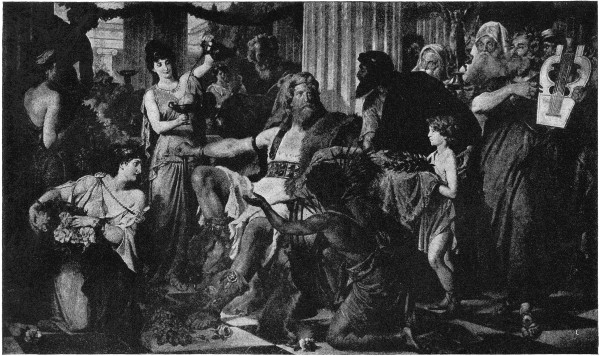
From the Painting by LUDWIG THIERSCH
ALARIC, KING OF THE WEST GOTHS, IN ATHENS
Though Alaric was a fierce warrior and ruthless in his attacks in both Greece and Rome, he held the women
and the religious temples of the places overrun with the strictest sanctity.
This was in strong contrast with the social and political corruption of the time in both Greece and Rome and did much justify this
powerful conqueror of a decadent state.
IMPORTANCE OF ROMAN HISTORY
The greatness of Roman history lies in the fact that it is, in a large sense, the history
of the world from the time of Rome’s supremacy. Out of the Roman Empire arose
the modern state system of Europe; and the Roman language, law and institutions are
still, in changed forms, alive and active in the modern world. The influence of Christianity,
and of Greek art and literature, have to a great extent been preserved and transmitted
to us through Rome. Rome brought all the civilized peoples of the West, including Western
Asia, under one dominion and one bondage; and the culture which was thus gathered up
into one vast reservoir was given off in streams that, in due season, fertilized the mental
soil of the rude and restless nations which succeeded the fallen empire.
GEOGRAPHICAL CENTER OF THE ROMAN EMPIRE
The study of Roman history
properly begins with the geography
of Italy, because it was in Italy that the
Roman people had their origin, and it
was here that they began their great
career. It was only when the Romans
had conquered and organized Italy that
they were able to conquer and govern
the world.
FAVORABLE SITUATION OF THE
ITALIAN PENINSULA
The position of the Italian peninsula
was favorable to the growth of the
Roman power. It was situated almost
in the center of the Mediterranean Sea,
on the shores of which had flourished the
great nations of antiquity—Egypt, Phœnicia,
Carthage and Greece. By conquering
Italy, Rome thus obtained a
commanding position among the nations
of the ancient world. As the peninsula
projects southward into the Mediterranean
it bends toward the east, so that
its southern coasts afforded an easy
access to the civilized peoples of Greece.
The eastern shores of the peninsula,
washed by the Adriatic Sea, with few
bays and harbors, were not favorable to
the early progress of the people; while
the western coasts, bordering upon the
Tyrrhenian Sea, with their numerous
indentations afforded greater opportunities
for commerce and a civilized life.
THE MOUNTAINS AND
RIVERS OF ITALY
There are two important mountain
chains which belong to Italy, the Alps
and the Apennines. The Alps form a
semicircular boundary on the north and
afford a formidable barrier against the
neighboring countries of Europe. Starting
from the sea at its western extremity,
this chain stretches toward the north
for about one hundred and fifty miles,
when it rises in the lofty peak of Mt.
Blanc, fifteen thousand feet in height;
and then continues its course in an
easterly direction for about three hundred
and thirty miles, approaching the head of
the Adriatic Sea, and disappearing along
its coast. It is crossed by several passes,
through which foreign peoples have sometimes
found their way into the peninsula.
The Apennines, beginning at the
western extremity of the Alps, extend
through the whole length of the peninsula,
forming the backbone of Italy.
IMPORTANT DIVISIONS OF
THE PENINSULA
Central Italy comprised the northern
part of the peninsula proper, that is, the
territory between the line just drawn
from the Macra to the Rubicon, and
another line drawn from the Silarus on
the west to the Frento on the east. This
territory contained six countries, namely,
three on the western coast,—Etruria,
Latium (la´shi-um), and Campania; and
three on the eastern coast and along the
Apennines,—Umbria, Picenum, and what
we call the Sabellian country, which
included many mountain tribes, chief
among which were the Sabines and the
Samnites.
Southern Italy comprised the rest of
the peninsula and contained four countries,
namely, two on the western coast,
Lucania and Brutium, extending into
the toe of Italy; and two on the eastern
coast, Apulia and Calabria (or Iapygia),
extending into the heel of Italy.
EARLY INHABITANTS
OF SICILY
Sicily was inhabited in the west by a
race of unknown origin called the
Sikanians: the Sikels, who gave their
name to the island, were closely connected
in race with the Latins. Sicily was
fought for by the Carthaginians, and,
Greek cities having been founded in
Sicily, in the end the island became
almost wholly Greek in speech and
usages.
THE GAULS OF
NORTHERN ITALY
If the Greeks in the extreme south
were the most civilized people of Italy,
the Gauls or Celts, in the extreme north,
were the most barbarous. Crossing the
Alps from western Europe, they had
pushed back the Etruscans and occupied
the plains of the Po; hence this region
received the name which it long held,
Cisalpine Gaul. From this land the
Gauls made frequent incursions toward
the south, and were for a long time a
terror to the other peoples of Italy.
HISTORY OF THE ROMANS
I. MYTHICAL PERIOD
I. MYTHICAL PERIOD.—The history of Rome extends through a space of more than
twelve
hundred years, which may be divided into six periods. The first period includes the time from the building
of the city, B. C. 752, to the expulsion of Tarquin, B. C. 509. It may be called the period of the kings,
or of Regal Power.
The Roman historians have left a particular
account of this period, beginning with the very
founders of the city, Romulus and Remus,
whose descent is traced from Æneas the hero of
Virgil. To review them briefly here will be all
that is necessary.
Æneas, fleeing from Troy after the fall of
that city, came, in the course of his wanderings
and after many adventures, to the shores of
Italy. Settling here, he married the daughter
of the king Latinus, and after a fierce war with
Turnus, his rival for the hand of Lavinia, he
established himself in Latium. The capital of
that country, Alba Longa, was founded by his
son, Ascanius, and for three centuries the
descendants of Æneas ruled the country.
In the eighth century B. C., Amulius usurped
the throne but failed to kill his grand-nephews
Romulus and Remus, who, by the fortuitous
aid of the gods, were rescued from death.
Growing to manhood, they destroyed the usurper
and restored their grandfather, Numitor.
Romulus then founded the city of Rome in
753 B. C., populated it by means of inviting all
the discontented to come unto him, and gave
them wives from the Sabine tribes, which incident
has passed into history as the Rape of the
Sabines. To this same incident in Roman
mythology belongs the legend connected with
the Tarpeian Rock. Romulus finally was taken
to the gods by his father, Mars, and is henceforward
worshiped by the Romans as the god
Quirinus.
THE GOOD KING
NUMA
The reign of the second king, Numa, is
remembered, on account of his influence on the
affairs of religion. He instituted many of the
religious ceremonies and several classes of
priests, and was regarded as the founder of the
religious institutions of Rome.
During the reign of the third king, Tullus
Hostilius, a war was carried on with Alba
Longa. The issue of this war was decided,
so the story goes, by a combat between the
three Horatii, champions of the Romans, and
the three Curiatii, champions of Alba—resulting
in the triumph of the Romans and the
submission of Alba to the Roman power.
The fourth king, Ancus Marcius, was a
Sabine, the grandson of Numa. He too was a
man of peace, but was drawn into a war with
several of the Latin cities. Having subdued
them, he transferred their inhabitants to the
Aventine hill.
LEGENDS OF THE
LATER KINGS
The three later kings of Rome are represented
as having been Etruscans. The first of these
was Tarquinius Priscus, who migrated to Rome
from the Etruscan city of Tarquinii. He
strengthened his position as king by adopting
the royal insignia of the Etruscans—a crown of
gold, a scepter, an ivory chair, a purple toga, etc.
He carried on war with the Latins and Sabines,
drained the city, laid out the forum, and dedicated
a temple to Jupiter on the Capitoline hill.
The next of the later kings was Servius
Tullius, the son of a slave woman of the king’s
household. He united Rome and the Latin
cities in a league; reorganized the government,
and erected a new wall inclosing the seven hills.
Tarquin the Proud, the last king, was engaged
in the siege of an enemy’s city only sixteen
miles from Rome, when his son committed
the outrage upon the person of Lucretia, which
led to the banishment of the family and the
overthrow of the regal government.
II. PERIOD OF THE REPUBLIC, 510-264 B. C.
II. PERIOD OF THE REPUBLIC, 510-264 B. C.—The second period extends from the
expulsion
of the kings to the beginning of the Punic wars. During this period the Plebeians were admitted to the
offices of state, about 300 B. C. At the beginning of this period the government was a thorough aristocracy,
but at the close of it has become a full democracy. It included about two hundred and fifty years, and
may be designated the period of the Plebeian and Patrician contests, and the conquest of Italy.
When, at the close of the sixth century (509
B. C.), Rome ceased to be under kingly rule, it
became a republic. Instead of a king, two
magistrates called Consuls were elected every
year. In other respects the constitution remained
as before. The first consuls were Brutus
and Collatinus.
As the city increased by immigration, and
the admission of allies or incorporation of subjects,
two principal classes of the citizens developed—the
[387]
Patricians and Plebeians. The Patricians
were probably those descended from the
original citizens of the united Latin, Sabine,
and Etruscan town, and the Plebeians the
descendants of those afterwards admitted.
The internal history of Rome for several
hundred years consists mainly of the account of
struggles between these two orders. The
Patricians alone were at first admissible to the
great governing body, the Senate, and they
kept in their hands all the high offices of state,
the higher degrees of the priesthood, and the
ownership of the public lands. The two orders
were not allowed to intermarry, and the Plebeians,
though they were free and personally independent
(excepting compulsory service in war)
had no political rights.
CAUSES OF STRUGGLES BETWEEN
PATRICIANS AND PLEBEIANS
The struggles between the Patricians and
Plebeians began about 500 B. C. The Plebeians
fought the battles of Rome, and, in doing so,
had to neglect the tillage of the soil by which
they lived. Hence came poverty, made worse
still by a severe law of debt, and by a high
rate of interest extorted by the Patricians, who
advanced money. The taxation of the state
was paid solely by the Plebeians, as the Patricians
had ceased to pay their rent to the treasury for
the public lands which they held. At the same
time, the Plebeians (which body included many
men of birth and wealth) were entirely excluded
from public offices. Such a state of things could
only end in an outbreak, which occurred in
493 B. C.
FIRST WITHDRAWAL OF PLEBEIANS
TO MONS SACER
The oppression of the debtors (who were
imprisoned and flogged on failure to pay) caused
a withdrawal of the Plebeians in a body to Mons
Sacer (Holy Hill), outside the Roman territory,
three miles from Rome. Their purpose was to
erect a new town, and dwell apart, with equal
rights. The Patricians, left helpless against
foreign enemies, as usual in such cases, made
concessions when forced to terms. It was agreed
that two officials should be appointed (to offset
the two consuls, who were Patrician magistrates)
for the defense of the commoners against the
cruel exercise of the law of debtor and creditor.
TRIBUNI
PLEBIS
These new magistrates were called Tribuni
Plebis (Tribunes of the Commons), and the
title became very famous. They acted as
champions of the subordinate class against all
oppression, and pleaded in the law-courts on
their behalf. The person of a Tribune was
sacred and inviolable, and, in the exercise of his
yearly office, he could forbid the execution of
the order of any official, or of any decree of the
senate; he could pardon offenses, and called to
account all enemies of the commons under his
charge.
FIRST OF THE AGRARIAN
LAWS
In 486 B. C. Spurius Cassius (afterward
tried for treason and put to death by the Patricians)
carried the first of the famous Agrarian
Laws, for limiting the amount of public land
held by the Patricians, compelling them to pay
tithe or rent for the land they held, and dividing
surplus lands among the Plebeians. The law
was not enforced, through the violence and
injustice of the Patricians. The Plebeians
exercised some check from time to time, by the
refusal to serve as soldiers.
THE FAMOUS PUBLILIAN
LAW
In 471 B. C. the Plebeians succeeded in carrying
the famous Publilian Law (proposed by the
tribune Publilius Volero), that the tribunes
should in future be chosen only at the (popular)
Comitia Tributa, instead of in the (patrician)
Comitia Centuriata. The Comitia Tributa also
received the right of deliberating and deciding
upon all matters that were open to discussion
and settlement in the Comitia Centuriata. The
struggle continued, and the commons found it a
great disadvantage that there was no written
law to control the chief Patrician magistrates
(the consuls) in their dealings with the Plebeians.
FIRST GREAT CODE OF
ROMAN LAW
After violent opposition, and the increase of
the number of tribunes to ten, the Plebeians carried
a law (about 452 B. C.) that ten commissioners
(Decemviri) should draw up a code to
bind all classes of Romans alike. The ultimate
result was the compilation (and engraving on
thick sheets of brass) of the first and only code
of law in the Roman republic—the Laws of the
Twelve Tables. These laws made the Comitia
Tributa into a really national legislature, embodying
Patricians and Plebeians alike. The
Plebeians, however, were still kept out of a share
in the lands which they conquered in war, and a
time of trouble came in the usurpation and
violence of the Decemviri.
SECOND WITHDRAWAL OF PLEBEIANS
TO MONS SACER
In 448 B. C. the Plebs, for the second time,
seceded to the Mons Sacer, and the Decemviri
were obliged to give way. Tribunes were
re-appointed, and the new consuls were Valerius
and Horatius. By them, in the Comitia Centuriata
the great Valerian and Horatian Laws
were passed, the first great charter of Roman
freedom, and the power of the Plebeians was
much increased. The Comitia Tributa was
now on a level with the Comitia Centuriata, so
that a Plebis-citum, or decree of the people’s
assembly, had henceforth the same force as one
passed by the Comitia Centuriata, and became
law for the whole nation. The struggle between
the two orders, Patricians and Plebeians,
continued. In 445 B. C. the Lex Canuleia,
proposed by the tribune Canuleius, was passed,
sanctioning intermarriage between Patricians
and Plebeians.
MILITARY TRIBUNES WITH
CONSULAR POWER
The Patricians, foreseeing that the time
would come when the Plebeians must be admitted
to the high offices of the state, divided the
powers of the consulship, and, in 444 B. C.,
caused the appointment of Military Tribunes
with consular power, officers who might be
elected from either order, as commanders of the
army, while the civil powers of the consuls were
[388]
kept by the Patricians in their own hands. In
443 B. C. the office of the Censors was established,
with the proviso that they should be
appointed only from the Patricians, and only
by their assembly, the Comitia Curiata. In this
the Patricians undoubtedly gained an accession
of power.
FURTHER STRUGGLES BETWEEN
PATRICIANS AND PLEBEIANS
The power of the Plebeians grew by degrees
through the exertion of the prerogatives of the
Tribunes, and about 400 B. C. the office of the
Military Tribunes became open to the Plebeians,
and four out of the six were chosen from that
order. After the capture of Rome by the Gauls
(390 B. C.), fresh troubles for the Plebeians arose.
Their lands near Rome had been laid waste,
cattle killed, and implements of agriculture
destroyed. Heavy taxes were imposed to
make up for the loss of public treasure carried
off by the Gauls, and soon the old trouble of
debt arose, and consequent oppression by the
Patrician creditors.
EQUALITY AND FREEDOM ACHIEVED UNDER
THE TRIBUNES LICINIUS AND SEXTIUS
The distress of the Commons increased until
a great remedy was found by two patriotic
tribunes of the Plebs, Caius Licinius Stolo and
Lucius Sextius, the authors of the great Roman
charter of equality and freedom. These able,
determined men, after a tremendous struggle,
fought with constitutional arms alone,—in
which the Romans showed that respect for law
and authority which, in their best days, so
honorably distinguished them,—carried their
point. The victory was won through the use of
the power of the tribunes to stop the whole machinery
of government. Year after year, for
ten successive years, Licinius and Sextius were
chosen tribunes, and, while the Patricians gained
over the eight other tribunes, and prevented
the popular bills being put to the vote in the
Comitia Tributa, the two tribunes prevented
the election of the Consular Tribunes (save in 371
B. C., for a war with the Latins), and other high
officials, and would have no troops levied at all.
TERMS OF THE
LICINIAN LAWS
At last, in 366 B. C., the famous Licinian
Laws were carried, to-wit: (1) That the interest
already paid by debtors should be deducted
from the capital of the debt, and the remainder
paid off in three equal annual instalments; (2)
That no one should hold above five hundred
jugera (about two hundred and eighty acres) of
the public land, the surplus to be divided among
the poorer Plebeians; (3) That the military
tribunate with consular power should be abolished,
and the consulship restored; but one
Consul, at least, henceforward, should be a
Plebeian. Sextius was himself elected, in 366
B. C., as the first Plebeian consul. All the other
offices, dictatorship, censorship, prætorship, etc.,
were soon thrown open to the Commons,—so
that at last, after the long struggle, perfect
political equality was established.
FINAL ESTABLISHMENT
OF DEMOCRACY
For a century and a half since the expulsion
of the kings, Rome had been a republic, but an
aristocratic republic; it was now truly a government
of the people. From this time begins the
golden age of Roman politics. Civil concord,
to which a temple was dedicated, brought with
it a period of civic virtue and heroic greatness.
THE CONQUEST OF ITALY
During this period, so harassed by internal
contests, Rome was also engaged in frequent
wars. These wars were with (1) their immediate
relatives the Latins; with (2) their more
distant relatives, the various other Italian
nationalities; with (3) the Greek settlements in
Southern Italy aided by Pyrrhus, king of
Epirus; with (4) the Gauls in Northern Italy.
MEANING OF THESE
WARS
These Roman wars meant a great deal to the
future of this remarkable nation. Before Rome
could play its grand part in the history of the
world’s civilization it was necessary, first of all,
that it should become a great Nation. A great
nation needs an extensive stage on which to
play its part. Now the wars by which the
Romans put down the various small and obstructive
nationalities of Italy were the clearing of
the stage, preliminary to the oncoming of that
imperial figure, the “Mistress of the World.”
WARS WITH THE SAMNITES
IN SOUTHERN ITALY
The series of wars against Etruscans, Latins,
Samnites, and Gauls, sometimes singly and
sometimes in combination, is usually known in
Roman history by the general designation of the
“Latin wars” and the “Samnite wars.” These
wars filled the greater part of the half-century
between 343 and 290 B. C.; and the Samnites
were the leaders in this onset of the nations on
Rome, the issue of which was to determine
whether Rome or Samnium should govern Italy.
The Romans were completely successful; and
extricating themselves by their valor from this
confused conflict of nations, the Romans found
themselves masters of Central Italy (290 B. C.),—Samnites,
Latins, etc., all their subjects.
WAR WITH THE GREEK
KING PYRRHUS
The “Samnite wars” were succeeded by a
short but brisk war, designated in Roman history
“the war with Pyrrhus and the Greeks in
Italy.” Pyrrhus was an able and enterprising
Greek prince whom the Greek towns of Southern
Italy—fearful of being overwhelmed by what
they called the “conquering barbarians of the
Tiber”—had invited over from his native
country to help them as champion of a Greek
city.
Pyrrhus came over with a force of twenty-five
thousand troops and twenty elephants. In
the first battle (Pandosia, 280 B. C.) the Romans
fought stoutly, until what they conceived to be
gigantic gray oxen (the elephants) came thundering
down upon them; so that the victory remained
with Pyrrhus. In the next contest also (Asculum,
279 B. C.) Pyrrhus was successful; but the
Romans made him pay so dearly for his triumph
that he is said to have exclaimed, “Another such
victory and I am undone!” Not having succeeded
in his main object, Pyrrhus quitted Italy
and went to Sicily; but soon after he returned,
renewed the contest with the Romans, and was
[389]
utterly overthrown at Beneventum, in 275 B.C.
The subjugation of Southern Italy—of all
that part called Great Greece—soon followed,
and at the close of the year B. C. 266 Rome
reigned supreme over the length and breadth of
the peninsula of Italy, from the southern
boundary of Cisalpine Gaul to the Sicilian
Straits, and from the Tyrrhenian, or Tuscan,
Sea to the Adriatic.
NATURE OF THE ROMAN STATE UNDER THE REPUBLIC.
The real governing power in Rome was the
Roman people,—populus Romanus,—that is to
say, the body of free inhabitants of the thirty-three
tribes or parishes north and south of the
Tiber, which constituted the Roman territory
proper, together with a considerable number of
persons in other parts of Italy who, either from
being colonists of Roman descent or from having
had Roman citizenship conferred on them, had
the privilege of going to Rome and voting at
the Comitia, or Assembly. The possessors of
the suffrage thus formed a comparatively small
body of men, such as might be assembled with
ease in any public square or park, and these by
their votes decided on the affairs of the commonwealth,
controlling thus the destinies of the
whole population of Italy, estimated at this
time at above five million.
In addition to the populus Romanus there were
two other classes,—the Italians and the Latins.
The Italians, or socii, were the inhabitants of
the allied and dependent Italian states that had
submitted to Rome. These communities were
almost all permitted to retain their own laws,
judges, municipal arrangements, etc.; but they
did not possess the Roman franchise, and hence
had no share in the political affairs of the republic.
The Latins were those who belonged to
cities having the “Latin franchise,” as it was
called, from its having first been given to the
cities of Latium when conquered. This did not
give full Roman citizenship, but made it easier
to obtain it.
SUMMARY OF ROMAN
GOVERNMENT
Rome wisely left self-government to all the
dependent and allied states, while she secured
her sovereignty by three rights which she
reserved to herself: (1) She alone made peace or
declared war; (2) She alone might receive
embassies; (3) She alone might coin money.
Altogether it was an admirable system, vastly
superior to the loosely related Grecian states.
It was a system that made possible for the
first time in the world’s history a great, as well
as a free, nation.
It is a striking fact that there was not yet
even a dawning Roman literature; in art, science,
philosophy, Rome had done—absolutely nothing.
But, in fact, it was in the art of governing mankind
that Roman genius was to appear; and it
was this that showed itself in these early years,—it
was their valor, their probity, their patriotism,
their political tact, and not speculation or
literary culture, that distinguished them.
CONSTRUCTION OF THE GREAT
ROMAN ROADS
The famous Roman roads are to be found not
only throughout Italy, where they were constructed
in various directions from the capital,
but in every land once conquered by Rome and
stamped by her, as she stamped all her conquests,
with ineffaceable marks of her possession
and her power. These great roads were first
made with the military purpose of providing a
way that should be solid at all seasons of the
year, for the march of legions and their heavy
baggage through districts subdued by Roman
arms. They were wonderful pieces of determined
practical engineering, and in order to
carry them straight to the points aimed at,
marshes and hollows were filled up, or spanned
with viaducts; mountains were tunneled, streams
were bridged; no labor, time, or money was
spared.
THE APPIAN WAY AND OTHER
FAMOUS ROADS
The first and greatest of the Italian roads
was the famous Appian Way (Via Appia, called
Regina Viarum, “Queen of Roads”), which was
begun by Appius Claudius, Censor in 312 B. C.
The struggle with the Samnites was at its
height when this great causeway, built with
large, square stones on a raised platform, was
made direct from the gates of Rome to Capua,
in Campania. The Via Appia was afterwards
extended, through Samnium and Apulia, to
Brundusium (on the lower Adriatic), the port of
embarkment for Greece. Parts of the original
stonework are existing at this day. Other great
roads of Italy were the Via Aurelia—the great
coast-road northward, by Genua (Genoa), into
Transalpine Gaul; the Via Flaminia, through
Umbria to Ariminum; and the Via Æmilia,
from Ariminum, through Cisalpine Gaul to
Placentia.
III. EPOCH OF THE PUNIC WARS, 264-146 B. C.
III. EPOCH OF THE PUNIC WARS, 264-146 B. C.—The
third period in Roman history extends
from the final triumph of the Plebeians to the capture of Carthage, B. C. 146. Rome had hitherto been
distracted with intestine feuds and dissensions, and had extended her dominion over but a small extent
of territory. The admission of Plebeians to all the high offices of trust and distinction promoted the
consolidation and strength of the republic, and the career of conquest was soon begun.
We now see Rome engage in the greatest
conflict of her history,—that with the powerful
maritime state, Carthage,—a struggle which,
when it was fully developed, became for Rome
a fight for national existence, in which her
enemy was at the height of her power and
resources, with Spain and Africa at her back,
and with the first general of the age to command
her armies.
RACES OPPOSED IN THE
PUNIC WARS
The interest of the Punic wars (as they are
called from the word Punicus, the Latin equivalent
of Phœnician, and, in a limited sense,
Carthaginian) is great and enduring. These
wars were fought out to determine which of
the two races, the Indo-Germanic, or Aryan, or
the Semitic, should have the dominion of the
[390]
world. On the one side—the Aryan—was the
genius for war, government, and legislation; on
the other—the Semitic—the spirit of industry,
navigation and commerce. The skill and valor,
the determination and resource, displayed on
both sides, have caused these wars of Rome and
Carthage to remain most vividly impressed
upon the memories of men.
CHARACTER OF THE CARTHAGINIAN
STATE AND PEOPLE
Carthage had become, by the political and
commercial energy of her citizens, the leading
Phœnician state, ruling over Utica, Hippo,
Leptis, and other cities of Phœnician origin in
northern Africa. The Carthaginians paid also
great attention to agriculture, and the whole of
their territory was cultivated like a garden,
supplying the population with abundance of
food. This fact, taken with the wealth derived
from her commerce, explains how it was that a
city with no large extent of territory was enabled
to hold out so long against the utmost efforts of
Rome, and at one period to bring her, as it
seemed, to the verge of ruin.
The political constitution of Carthage was
that of an oligarchical republic, and her aristocracy
is famed for the number of able men that
came from its ranks. On the other hand, she
was weakened by being dependent on mercenary
troops in her wars, subject to revolts at home
among the native populations whom she oppressed,
and hampered by the factious spirit
prevalent among her leading men.
She had a great commercial genius, but no
gift for assimilating conquered peoples, or for
establishing an empire on a solid and enduring
basis, and therefore, in the end, she succumbed
to Rome, whose aim it was to bring the nations
under one wide, enduring sway. The struggle
of Carthage against Rome became, in fact, the
contest of a man of the greatest abilities—Hannibal—against
a nation of the utmost
energy and determination, and the nation, in
the long run, won the day.
FIRST PUNIC WAR,
264-241 B. C.
The Carthaginians held Corsica, Sardinia,
and various colonies in Spain and possessions in
Sicily. It was in Sicily that the cause of quarrel
between Rome and Carthage was found, and
Rome picked the quarrel by interference in a
local matter at Messana. Hiero, king of Syracuse,
as we have seen, had come over to the
Romans, who, after defeating the Carthaginian
army and taking Agrigentum (262 B. C.),
determined to make themselves masters of
Sicily. For this a fleet was needed, and with
Roman energy they soon built one. Twice
their squadrons were destroyed, but in 260 B. C.
the consul Duilius gained a great naval victory
at Mylæ, on the northeast coast of Sicily, and,
from this time, Rome became more and more
nearly a match for Carthage on her element,
the sea. The Romans invaded Africa without
success (255 B. C.), but were generally victorious
in Sicily.
In 247 B. C. the great Hamilcar Barca (father
of Hannibal and Hasdrubal) was appointed to
the Carthaginian command in Sicily, and maintained
himself there with great patience and
skill against all the Roman efforts. But, in
241 B. C., the Roman commander Lutatius
Catulus utterly defeated the Carthaginian fleet
off the Ægates Islands, on the west coast of
Sicily, and the Carthaginians then gave in. All
Sicily, except the territory of Rome’s faithful
alley, Hiero of Syracuse, thus became (241 B. C.)
the first Roman province.
CONQUEST OF SARDINIA, CORSICA,
AND CISALPINE GAUL
The Romans, with gross ill-faith and injustice,
took advantage of a revolt against Carthage
by her mercenary troops to deprive her of
Sardinia and Corsica (238 B. C.), and Sardinia
was made into a province. Their next exploit
was the conquest of Cisalpine Gaul, which was
completed 222 B. C., and the Roman hold upon
the new territory was confirmed by the establishment
of military colonies at Placentia and
Cremona.
THE CARTHAGINIANS UNDER
HAMILCAR IN SPAIN
Carthage had resolved upon revenge for past
defeats and injuries from Rome, and intrusted
her cause to the great Hamilcar Barca. He
sought to create for his country a new empire
in Spain, which might be used as a base of
operations against the foe for whom he had a
deadly hate. From 237 to 229 B. C. (when he
fell in battle) he was engaged in reducing a
large part of Spain to submission.
In 221 B. C. his son, the illustrious Hannibal,
took the Spanish command, and he soon brought
on a new conflict with Rome by his capture of
her ally, the city of Saguntum, on the northeast
coast of Spain.
HANNIBAL AND THE SECOND PUNIC
WAR, 218-202 B. C.
The hero of the Second Punic War is Hannibal,
one of the purest and noblest characters in
history. In 218 B. C. the Carthaginian general
crossed the Alps, after a five months’ march
from Spain, and descended with a storm of war
upon the Romans. With a force of twenty
thousand foot and six thousand horse he encountered
the consular armies, and defeated
them at the rivers Ticinus and Trebia (218 B. C.),
in Cisalpine Gaul, the Trasimene Lake in Etruria
(217 B. C.), and most decisively, and with
immense slaughter, at Cannæ, in Apulia, in
216 B. C. For fifteen years (218 to 202 B. C.)
Hannibal maintained his ground in Italy,
defeating the Romans again and again, opposed
by the cautious Fabius Maximus and the daring
Marcellus (the conqueror of Syracuse), but
unable to capture Rome, or to subdue Roman
steadfastness and courage.
CAUSES OF HANNIBAL’S
DEFEAT
The chief causes of the ultimate failure of
Hannibal, besides the doggedness of Rome’s
resistance, were the faithfulness of many of
Rome’s allies, especially the Latins, in Italy,
the success of Roman armies, under Publius
Scipio, in Spain (temporarily subdued 205 B. C.),
and the want of due support by Carthage to her
great leader. The crisis came in 207 B. C., when
Hannibal’s brother, Hasdrubal, crossed the Alps
into Italy with a powerful army which, joined
with Hannibal’s in Southern Italy, would probably
have effected the conquest of Rome, now
[391]
almost exhausted. This was not to be. Hasdrubal
was defeated, and slain by the Romans
at the decisive battle of the Metaurus (a river
in Umbria), one of the great critical contests of
history. The junction of the forces thus prevented,
Rome was saved, and, in order to be
rid of Hannibal, the war was carried now into
the enemy’s country.
DEFEAT OF HANNIBAL BY SCIPIO
AFRICANUS AT ZAMA
Publius Scipio, so successful in Spain,
crossed from Sicily to Africa in 204 B. C., and
did so well for Rome that Hannibal was recalled.
The Second Punic War ended with the defeat
of Hannibal by Scipio at Zama (five days’
journey from Carthage), in 202 B. C. The
conqueror gained the surname of Africanus.
Hannibal lost his army, but not his fame.
Rome was certain now to rule the world. The
terms of peace with Carthage made her for the
time a mere dependency of Rome. All her
foreign possessions were given up; her fleet was
reduced to ten ships; she was to make no war
without Rome’s permission; and an enormous
war indemnity was exacted.
SUBJUGATION OF MACEDON
BY ROME
In 213 B. C. Rome attacked Philip V., king
of Macedon, because he had made a treaty with
Carthage, and, after making an alliance with
the Ætolians, the Romans gained some successes
over Philip in the First Macedonian
War, ending in 205. The Second Macedonian
War (200-197 B. C.) put an end to Macedon’s
supremacy in Greece, by the victory of the
ex-consul Flamininus at Cynoscephalæ, in
Thessaly, 197 B. C.
ROMAN ARMS ARE CARRIED
INTO ASIA
Antiochus the Great, of Syria, who had
irritated Rome by meddling in the affairs of
Greece, which he invaded in 192 B. C., was
beaten by the Roman armies in Greece and
Asia Minor, and in 188 B. C. made peace on
terms that left Roman influence supreme in
Asia Minor as far as Syria.
THE FINAL FATE OF
HANNIBAL
The great Carthaginian, even after Zama,
had not despaired of himself or of his country.
He set vigorously to work at internal reforms
in Carthage with a view to renewing the contest
with Rome; but, being thwarted by jealous
and unpatriotic rivals, who also intrigued for
his surrender to the Romans, he fled to the
court of Antiochus the Great, of Syria, in 194
B. C. In rejecting her greatest man, Carthage
had lost her last chance of regaining any real
power. Hannibal was driven from his shelter
with Antiochus by the Roman demand for his
surrender, and took refuge with Prusias, king of
Bithynia, for some years; but Roman dread of
his abilities pursued him, and hopeless of
escape, he poisoned himself about 183 B. C.,
leaving Rome free at last to pursue her victorious
career.
ROMAN CONQUEST OF THE
GREEK STATES
A Third Macedonian War, begun in 171 B. C.,
was waged by the Romans against King Perseus,
son of Philip V., and ended with a great Roman
victory at Pydna, in 168 B. C., and the extinction
of Macedon as a kingdom. After a revolt,
called the Fourth Macedonian War, and a war
against the forces of the Achæan League,
Corinth was taken by Mummius, and Macedonia
and Greece became Roman provinces (147 and
146 B. C.)
THIRD PUNIC WAR AND DESTRUCTION
OF CARTHAGE
There was a powerful party in Rome (headed
by the stern censor Porcius Cato) who relentlessly
insisted on the destruction of Carthage.
Her warlike neighbor, Masinissa, king of
Numidia, was encouraged by the Romans in
harassing attacks, and in 149 B. C. Rome
found a pretext for war. Her forces could not
be resisted, and Carthage offered a complete
submission, seeking the preservation of her
commerce and her capital by a surrender of
arms, war-ships, and her internal independence.
When Rome insisted on the destruction of
the city of Carthage itself, and the removal of
the inhabitants to inland abodes, the Carthaginians
took counsel of despair, and resolved to
stand a siege within their strong fortifications.
Scipio Africanus Minor conducted the three
years’ siege of the great commercial city and
her citadel, and Roman determination, as usual,
carried its point. After fearful house-to-house
fighting the remnant of seven hundred thousand
people surrendered; the place was set on fire,
and burned for seventeen days; the ruins were
leveled with the ground, and Carthage the
proud city, alike with Carthage the commercial
state, ceased to exist, in 146 B. C., the year of
the final conquest of Greece. Part of the
territory was given to Masinissa of Numidia,
Rome’s ally; part became the Roman province
of Africa.
GRANDEUR OF ROME AFTER HER FOREIGN CONQUESTS
At the beginning of the period of conquest
(266-133 B. C.), the Roman dominion was confined
to the peninsula of Italy; at its close it
extended over the whole of southern Europe
from the shores of the Atlantic to the straits of
Constantinople, over the chief Mediterranean
islands, and over a portion of North Africa,
while farther east, in Egypt, Asia Minor, and
Syria, its influence was paramount. At the
beginning Rome was merely one of the “Great
Powers” of the world as it then was,—that is,
she ranked with Carthage, Macedonia, and the
kingdom of the Seleucidæ; at its close she was
clearly the sole Great Power left.
THE ORIGIN OF PROVINCIAL
GOVERNMENT
The addition of the conquered countries
resulted in a new feature of Roman rule called
Provincial government. Retaining their native
habits, religion, laws, etc., the inhabitants of
every province were governed by a military
president, sent from Rome, with a staff of
officials. The provincials were required to pay
taxes in money and kind; and these taxes were
farmed out by the censors to Roman citizens,
who, under the name of Publicans, settled in the
various districts of the provinces. Thus, like a
network proceeding from a center, the political
system of the Romans pervaded the mass of
millions of human beings inhabiting the shores
of the Mediterranean; and a vast population of
various races and languages were all bound together
by the cohesive power of Roman rule.
SPLENDORS OF A FESTAL DAY IN ANCIENT ROME
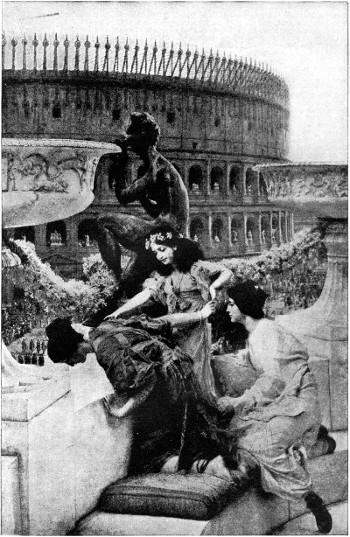
The Coliseum (kol-e-see´-um), in the background,
was dedicated by Titus, A. D. 80, in a grand festival of 100 days,
at which 5,000 beasts were slaughtered in the games. The successive tiers of seats, receding from the arena to the
summit, gave room for 90,000 spectators. Gladiatorial contests continued until abolished by Honorius,
A. D. 405.
ROME AT THE HEIGHT OF
ITS GRANDEUR
The luster of the Roman power and glory of
the Roman name were now at their height. The
eyes of all the world were now on Italy, the
young republic of the West. Into Rome all
talents, all riches, flowed. What a grand thing
in those days to be a Roman citizen; so that,
wherever one walked,—in Spain, in Africa, even
in once proud Athens, he was followed, feasted,
flattered! What a career was opened to those
who wished for wealth or aspired to fame! But
in the very sunburst of Rome’s glory, the germs
of decay were ripening.
On the Romans themselves the effect of their
foreign conquests were both good and bad; but
perhaps the evil outweighed the good.
ERA OF GREAT PUBLIC
WORKS
The wealth poured into Rome by the conquest
of Carthage, of Greece, and the East, and
the considerable revenue derived from the
permanent taxation of the provinces, enabled
the Romans to carry out a great system of
public works. Throughout Italy splendid military
roads which remain to this day were built,
the provinces were traversed by imperial highways,
and fine stone bridges were thrown across
the Tiber. In Rome splendid public buildings
were erected, the city was sewered, the streets
were paved (174 B. C.), two new aqueducts (the
Marcian, built in 144 B. C., at a cost of ten
million dollars) were constructed; and it may
be noted that the Consul P. Scipio Nasica, in
159 B. C., set up in Rome a public clepsydra, or
water clock, the citizens having for six centuries
gone on without any accurate means of
knowing the time by night as well as day.
INFLUENCE OF GREEK CULTURE
ON ROME
The effect on Rome of the conquest of Greece
and the Hellenized East was very marked.
Greek rhetoricians, scholars, tragedians, musicians
and philosophers in large numbers took
up their abode in Rome. The city swarmed
with Greek schoolmasters. Greek tutors and
philosophers, who, even if they were not slaves,
were as a rule accounted as servants, were now
permanent inmates in the palaces of Rome;
people speculated in them, and there is a statement
that the sum of two hundred thousand
sesterces (ten thousand dollars) was paid for a
Greek literary slave of the first class.
RISE OF NATIVE ROMAN
LITERATURE
The stimulus of Greek literary culture led
to native production, and in the second century,
B. C., we have the beginning of that Latin
literature which we still read. Though the
great period of Roman letters did not come
till a century after this time (age of Augustus),
yet there arose a number of writers of no ordinary
power. Among these should be mentioned
Ennius, the father of Roman poetry; Plautus,
his contemporary, a man of rich poetic genius;
the elder Cato, the first prose writer of note;
and Terence, the most famous of the comic
poets.
While the Romans were in some respects
benefited by contact with the superior though
decaying culture of Greece, they also learned a
great deal that was debasing. They became
effeminate, luxurious, and corrupt in morals;
marriage was not respected; the old Roman
faith waned, and it was said that two augurs
could not meet in the street without laughing
in each other’s face.
GROWTH OF POLITICAL AND
SOCIAL CORRUPTION
The political system of Rome now began to
lead to a dreadful state of public corruption.
The Roman government was devised for the
rule of a city: all power was in the hands of the
civic voters, and when there came to be great
prizes, in the way of great offices at home and
abroad, the voters began to find that their
votes were worth something, and unblushing
bribery and corruption became common.
The demands of the large planters and merchants
led to a great extension of the slave-trade.
All lands and all nations were laid under
contribution for slaves, but the places where
they were chiefly captured were Syria and the
interior of Asia Minor. It is probable that at
the period at which we have now arrived (middle
of the second century B. C.) there were twelve
million slaves against five million free inhabitants
in the Italian peninsula,—a most lamentable
state of things!
In addition to the slaves, Italy became filled
up with a motley parasitic population from
Asia and Africa and all the conquered lands,—and
the result of this intermixture soon appeared
in a marked degeneracy in the Roman race
itself.
THE NEW ROMAN CONTRASTED
WITH THE OLD
The decay of old Roman virtue became at
the same time apparent in the great increase of
luxury. This displayed itself in houses, villas,
pleasure gardens, fish ponds, dress, food and
drink. Extravagant prices—as much as one
hundred thousand sesterces (five thousand
dollars)—were paid for an exquisite cook.
Costly foreign delicacies and wines were affected,
and the Romans in their banquets vied with
one another in displaying their hosts of slaves
ministering to luxury, their bands of musicians,
their dancing girls, their purple hangings, their
carpets glittering with gold or pictorially embroidered,
and their rich silver plate.
In the midst of the system there were not
wanting some noble patterns of the old Roman
type, among whom should be named Cato, who
kept up a constant protest all his life against
the growing luxury of his countrymen, and died
declaring that they were a degenerate race.
Such men were, however, rare exceptions; and
we shall hereafter see that the evil system
already operative in the second century went
on increasing, till finally, a century afterwards,
it resulted in the total subversion of the republic.
The picture just given of the state of Roman
society in the last half of the second century B. C.
prepares us for the period of civil strife on which
we now enter.
IV. EPOCH OF THE CIVIL WARS, 146-31 B. C.
IV. EPOCH OF THE CIVIL WARS, 146-31 B. C.—The
fourth period extends from the capture of
Carthage and Corinth to the establishment of the Imperial Government by the battle of Actium, B. C. 31.
During this whole time the Roman history is a continued tale of domestic disturbances. From the fall of
Carthage to the battle of Actium, it presents but a melancholy picture, a blood-stained record of sedition,
conspiracy, and civil war.
A number of causes had resulted in the growth
of an aristocracy founded purely on wealth; the
old division of society into patricians and
plebeians had ceased, and there arose a still
worse division into classes,—the rich and the
poor.
THE GRACCHI ESPOUSE THE
CAUSE OF THE POOR
The cause of the poor against the rich was
taken up by a noble young tribune of the people
named Tiberius Gracchus. Tiberius and his
afterwards distinguished younger brother Caius
(the two being known in history as the Gracchi)
were sons of a noble Roman matron, Cornelia,
daughter of the great Scipio Africanus.
Tiberius Gracchus proposed a land-law
(agrarian law), which would limit the amount
of public land that could be held by any one
individual and provided for the distribution of
the rest in small homesteads. The aristocracy
immediately raised a storm, and induced another
tribune to veto the measure. Now, according
to the Roman code, no proposal could become
law unless all the tribunes were unanimous.
Gracchus then secured a popular vote expelling
his colleague from the tribuneship, and the
land-law was passed by the people, 133 B. C.
In the meantime, however, Gracchus’s year of
office expired, and he came up for re-election.
The nobles resolved to prevent this by violence.
MURDER OF THE TRIBUNE,
TIBERIUS GRACCHUS
Gracchus, learning this, bade his friends arm
themselves with staves; and when the people
began to inquire the cause of this, he put his
hand to his head, intimating that his life was
in danger. Some of his enemies ran to the
senate and reported that Tiberius openly
demanded a crown. A body of the aristocrats
with their clients and dependents then rushed
among the unarmed crowd, and murdered
Gracchus with three hundred of his adherents,—133
B. C.
Tiberius Gracchus was dead, but his work
remained; that is to say, the measure which he
had proposed was law, and the commissioners
intrusted with the task of allotting the lands
prosecuted their labors for two or three years.
The nobles, however, obstructed the work as
much as possible, so that between them and the
champions of the people there was a continuous
struggle.
THE STRUGGLES AND DEATH OF THE
YOUNGER GRACCHUS
This struggle became still more fierce when
Caius Gracchus, ten years after the death of his
brother, claimed and obtained the tribuneship,
and then took up that brother’s work. The
agitation for the agrarian law was renewed, an
enactment was made for a monthly distribution
of corn to the city poor, and various other
reforms were proposed by him. After holding
the tribuneship for two years, however, he lost
the office through the intrigues of his opponents.
The nobles were determined to crush Gracchus;
accordingly, at one of the public assemblies they
attacked the partisans of the popular leader,
and there ensued a bloody combat (121 B. C.)
in which three thousand of his adherents were
slain. Gracchus himself fled into a wood
across the Tiber; but, being pursued, he chose
to die by the hands of a faithful slave rather
than fall into the power of his enemies.
RISE OF MARIUS
AND SULLA
The ill-will between the nobles and the people
continued just as bitter after the death of
Gracchus; and matters finally shaped themselves
in such a way that the nobles, or senatorial
party, came to be represented by a leader named
Sulla, and the democracy, or Commons, by
another, called Marius. These men came to
prominence in the course of two or three wars
in which Rome was engaged for twenty-five or
thirty years after the time of which we have
been speaking; and finally they acquired such
power as to bring on a civil strife that deluged
Italy with blood.
The wars just referred to were: the Jugurthine
war (111-106 B. C.), the war against the
Cimbri (113-101 B. C.), and the Social war
(90-89 B. C.), with the details of which we need
not concern ourselves; but the fourth contest
was of more moment, and needs notice here.
This was the Mithridatic war.
BOLD DESIGN OF MITHRIDATES
AGAINST ROME
Mithridates, king of Pontus, a bold and able
soldier, formed the design of uniting the Asiatic
states and Greece in a vast confederacy against
the Roman dominion. He began by causing
about eighty thousand Romans who dwelt in the
cities of Asia Minor to be massacred in one day
(88 B. C.). He then invaded Greece.
The command in this important war was
eagerly sought by both Marius and Sulla.
Sulla prevailed; he was elected consul and put
in command. Marius, being chagrined at this,
succeeded in having the popular party set aside
Sulla. But the aristocratic general marched to
Rome and compelled Marius to flee into Africa.
Sulla then set out for Greece, all of which submitted
to him, the army of Mithridates being
defeated (86-84 B. C.)
HORRIBLE MASSACRES ATTEND THE STRUGGLE
BETWEEN MARIUS AND SULLA
During the absence of Sulla, Marius returned
to Italy. Entering Rome in 86 B. C., he filled
the entire city with slaughter, and in particular
he caused the murder of the leading senators
that had supported his rival. Marius then
caused himself to be proclaimed consul without
going through an election; but a fortnight later
he died.
Notwithstanding the death of Marius, the
Marian party still continued in power. Sulla,
hearing of their successes, hastily concluded a
peace with Mithridates, and hurried to Italy
(83 B. C.). After a severe struggle, Sulla
utterly overthrew the Marians. The blood of
[395]
massacre then flowed a second time,—in a yet
greater stream. Lists of proscribed persons,
embracing all who belonged to the people’s
party, were published every day, and the porch
of Sulla’s house was full of heads.
Having put down all his enemies, Sulla
caused himself to be proclaimed dictator for an
unlimited time (81 B. C.). He then proceeded
to re-organize the government wholly in the
interest of the aristocratic party; but to the
great surprise of every one he three years afterward
resigned his power and retired to private
life. Sulla died in 78 B. C.; he was honored
with a magnificent funeral, and a monument
with the following epitaph written by himself:
“I am Sulla the Fortunate, who in the
course of my life have surpassed both friends
and enemies; the former by the good, the latter
by the evil, I have done them.”
RISE OF POMPEY
THE GREAT
After the death of Sulla, the most prominent
figure among all the men of the aristocratic
party was Cneius Pompey, who had distinguished
himself as a lieutenant of Sulla, and afterwards
won renown by his management of several
important matters in which Rome was engaged—especially
in the suppression of a formidable
revolution in Spain under a very able leader
named Sertorius (77-72 B. C.), and in stamping
out a fire of revolt kindled by Spartacus, the
leader of a band of gladiators, who, joined by a
large force of discontented spirits, kept Italy in
alarm for two or three years (73-71 B. C.).
These exploits made Pompey a popular favorite,
and in the year 70 B. C. he was rewarded by
being made consul along with a rich senator
named Crassus.
HIS MILITARY EXPLOITS
IN THE EAST
At the expiration of his year of office he
retired to private life, but was soon called upon
to suppress a formidable combination of pirates
who infested the Mediterranean Sea and had
their headquarters in Cilicia (in Asia Minor).
This task he accomplished in three months.
These triumphs, aided by his political influence,
enabled Pompey to procure the command in the
war against Mithridates, who had renewed his
scheme of conquering the Eastern Roman
provinces. He was given powers such as never
had been delegated to any Roman general.
This war lasted for two years (66-64 B. C.), and
was marked by a series of brilliant triumphs for
Pompey. He utterly crushed Mithridates (who
died by self-administered poison), as well as his
son-in-law Tigranes, subdued Phœnicia, made
Syria a Roman province, and took Jerusalem.
Thus with the glory of having subjugated and
settled the East he returned to Rome (62 B. C.),
where a magnificent triumph awaited him.
FAMOUS STRUGGLES OF THE
FOUR FACTIONS
Meanwhile there seem to have grown up,
after the death of Sulla, four factions in Rome:
the “oligarchical faction,” consisting of the
small number of families the chiefs of which
directed the senate, and in fact governed the
republic; the “aristocratic faction,” comprising
the mass of the senators anxious to obtain the
power usurped by a few of their colleagues; the
“Marian party,” including all those whose
families had been prosecuted by Sulla, and
who now began to rally, and aspire to power;
the “military faction,” embracing a crowd of
old officers of Sulla, who, having squandered
the fortunes they had gained under him, were
eager for some revolution that might give them
the opportunity to improve their condition.
THE GREAT LEADERS OF THE FACTIONS—POMPEY,
CICERO, CRASSUS, CAESAR AND
CATILINE
At the head of the oligarchical faction was
Pompey; but during his absence in Asia its
representative was Marcus Tullius Cicero (born
106 B. C.), who had established his reputation
as the first orator in Rome. He had risen
through various offices to the prætorship, and
at the time Pompey left for the East aspired to
be consul. He did not himself belong to a
noble family, but still he made himself the
champion of the oligarchy. Though vain and
boastful, he was a virtuous and patriotic man.
The leader of the aristocratic faction was
Crassus, formerly the colleague of Pompey in
the consulship, now his personal rival. He was
a man of no great ability, but his position and
his immense wealth made him influential.
(After prodigious expenditures, he died worth
ten million dollars.)
The leader of the third, or Marian party,
was a man six years younger than Pompey or
Cicero, who, distinguished in youth for his
accomplishments and his extravagance, rose in
the year 65 B. C. to the office of edile. This
was Caius Julius Cæsar,—a man of pre-eminent
ability, one of the greatest that ever lived. He
was the nephew of Marius, and now stood
forward as the leader of the Marian party. He
was of an old patrician family, and took up the
cause of the people to serve his own ends.
CONSPIRACY OF
CATILINE
The leader of the military faction was
Catiline, who had been one of the ablest and
most ferocious of Sulla’s officers. He had a
large following of debauched young patricians
and ruined military men, who thought they
would better their fortunes by making Catiline
consul. Cicero was his rival, and, receiving the
support of the senators, was elected. Enraged
at his defeat, Catiline formed a conspiracy of
which the murder of Cicero and the burning of
Rome were parts. A woman betrayed the plot
to Cicero, who denounced Catiline with such
fiery eloquence that he had to flee from Rome.
With a band of confederates he attempted to
reach Gaul; but he was overtaken in Etruria
and slain, 62 B. C.
THE FIRST TRIUMVIRATE: CAESAR,
POMPEY AND CRASSUS
Cæsar and Pompey, now finding that they
agreed in many of their views, resolved to unite
their forces. To cement their union more
closely, Cæsar gave his only daughter, Julia,
in marriage to Pompey. For various reasons
it was found desirable to admit Crassus to their
political partnership, and thus was formed
(60 B. C.) that famous coalition known in
Roman history as the “First Triumvirate.”
[396]
The object of Cæsar and Pompey was to thwart
the senatorial party in every way, and wield
all the power themselves.
The formation of the triumvirate was followed
by the election of Cæsar to the consulship
(59 B. C.); and when his year of office expired
he obtained for himself the government of Gaul
for five years, and then for another five. This
was probably the great object of Cæsar’s desires.
No doubt he was already brooding over the
design of making himself master of Rome; and
for this purpose he would need an army.
During the years 58-50 B. C. Cæsar made
eight campaigns in Gaul, forming the remarkable
series of operations which he afterwards described
with such pointed style in his Commentaries.
The result of his eight years’ campaigning
was that, in the spring of 50 B. C., Cæsar was
able to take up his residence in Cisalpine Gaul,
leaving the three hundred tribes beyond the
Alps, which he had conquered by such bloody
means, not only pacified, but even attached to
himself personally. His army, which included
many Gauls and Germans, was so devoted to
him that it would have marched to the end of
the world in his service.
DOWNFALL OF CRASSUS AND RIVALRY
OF CAESAR AND POMPEY
During Cæsar’s campaigns in Gaul (where his
government was prolonged for a second five-year
term), Crassus disappeared from the
triumvirate. After holding the consulship with
Pompey, in 55 B. C., he went as proconsul to
the province of Syria, in 54 B. C. His greed of
wealth, and desire for the military fame which
he envied in Cæsar and Pompey, brought him
to ruin, by inducing him to attack the kingdom
of Parthia,[5] where he was soon afterward murdered.
So that the triumvirate became a
duumvirate, or league of two men,—Cæsar and
Pompey.
Now between these two men there had for
some time been a growing coldness. It was said
that Cæsar was a man who could brook no
equal, and Pompey a man who could suffer no
superior. A feeling of rivalry having once
arisen, naturally grew till Cæsar and Pompey
became the bitterest enemies. Pompey went
over to the aristocratic party to which he had
originally belonged, and having been made sole
consul for the year 52 B. C., he began to exert
his great influence against Cæsar. In this he
was supported by the nobles, who dreaded
Cæsar’s immense power.
FINAL STRUGGLE BETWEEN
CAESAR AND POMPEY
As the period of Cæsar’s command would
expire in the year 49 B. C., he had determined
to obtain the consulship for the year 48 B. C.,
since otherwise he would become a private
citizen. Accordingly he demanded, though
absent, to be permitted to put himself in the
lists for the consulate. But it was proposed,
through the influence of Pompey, that Cæsar
should lay down his command by the thirteenth
of November, 50 B. C. This was an unreasonable
demand; for his term of government over
Gaul had another year to run, and if he had gone
to Rome as a private citizen to sue for the
consulship, there can be no doubt that his life
would have been sacrificed. Cæsar, still anxious
to keep the peace, offered, at the beginning of
the year 49 B. C., to lay down his command if
Pompey would do the same; but this the senate
refused to accede to, and a motion was passed
that Cæsar should disband his army by a certain
day, and that if he did not do so, he should
be regarded as an enemy of the state.
THE CROSSING OF THE
RUBICON
Cæsar promptly took his resolve: he would
appeal to the arbitrament of arms. He had the
enthusiastic devotion of his soldiers, the great
mass of whom, being provincials or foreigners,
cared very little for the country whose name
they bore. Accordingly, in January, 49 B. C.,
he advanced from his headquarters at Ravenna
to the little stream, the Rubicon, which separated
his own province and command from Italy.
The crossing of this river was in reality a declaration
of war against the republic; and it is related
that, upon arriving at the Rubicon, Cæsar long
hesitated whether he should take this irrevocable
step. After pondering many hours he at
length exclaimed, “The die is cast!” and plunged
into the river.
Pompey concluded not to attempt to defend
Italy, but to retire upon the East, where he
would gather a great army and then return to
overwhelm the “usurper.” Accordingly he
retreated to Greece.
CAESAR MASTER OF ITALY AND
DICTATOR OF ROME
In sixty days Cæsar made himself master of
all Italy. Then marching to Rome he had
himself appointed dictator and consul for the
year 48 B. C. He showed masterly statesmanship,
and soon brought the general current of
opinion completely over to his side.
BATTLE OF PHARSALIA AND
DEATH OF POMPEY
Meantime, Pompey had gathered a powerful
army in Thessaly, and thither Cæsar with his
legions proceeded against him. The decisive
battle between the two mighty rivals was fought
at Pharsalia, in 48 B. C. It resulted in the
utter defeat of Pompey; and as it left Cæsar
the foremost man in the Roman world, it must
be regarded as one of the great decisive battles
of history.
Pompey, after his defeat, sought refuge in
Egypt; but he was assassinated by the orders
of Ptolemy, when seeking to land on the coast
of that country. Cæsar, who followed in pursuit,
did not hear of his death until his arrival
in Alexandria, where messengers from Ptolemy
brought him Pompey’s head. Cæsar, who was
both a generous man and a compassionate foe,
turned with horror from the spectacle, and with
tears in his eyes gave orders that the head
should be consumed with the costliest spices.
CAESAR, CLEOPATRA AND THE
CONQUEST OF THE EAST
At Alexandria Cæsar became enamored of
Cleopatra, the young, beautiful, and fascinating
queen of Egypt. He even mixed himself up
with a quarrel that was going on between her
and her younger brother Ptolemy, to whom,
according to the custom of the country, she was
married, and with whom she shared the throne.
This intermeddling led Cæsar, who had but a
small force with him, into conflict with the
troops of the king. A fierce battle was fought
in the city. Cæsar succeeded in firing the
Egyptian fleet; but unfortunately the flames
extended to the celebrated Library of the city
of Alexandria, and the greater part of the
magnificent collection of manuscripts was
burnt. Cæsar was finally successful: Ptolemy
was killed, and Cleopatra was made queen of
Egypt. From Alexandria Cæsar marched into
Pontus to attack Pharnaces, son of Mithridates,
whom he subdued so quickly that he described
the campaign in the most laconic dispatch ever
penned: Veni, vidi, vici,—“I came, I saw, I
conquered.”
CAESAR’S FINAL VICTORY AND
TRIUMPHANT RETURN TO ROME
Pompey’s forces that escaped from Pharsalia
had established themselves in the Roman
province of Africa. They were commanded by
Scipio and Cato. Cæsar having settled matters
in the East, now proceeded against this force,
which he utterly destroyed at Thapsus, early in
the year 46 B. C. Scipio and Cato killed themselves.
One more rally the Pompeians made
in Spain, but they were defeated by Cæsar in
the decisive battle of Munda (March, 45 B. C).
Cæsar returned to Rome after the battle of
Thapsus, the master of the Roman dominion.
The republic went out when Cato fell upon his
sword at Utica; the monarchy came in with the
triumphal entry of Cæsar into Rome in the
summer of 46 B. C. It is true Cæsar was not
king (rex) in name, but he was so in substance.
His position as chief of the state was this: he
was invested with the dictatorship for ten
years,—an arrangement changed soon afterwards
to perpetual dictator,—and was hailed
with the title of Imperator for life. The latter
title, Imperator (meaning commander), was one
which belonged under the republic to the victorious
general; but it was a temporary title,
always laid aside with the surrender of military
command. Cæsar was allowed to use it in a
special way and permanently, and in his case it
had much the meaning of the term Emperor,—a
word which is simply Imperator cut short.
FEELINGS OF THE ROMANS
TOWARD CAESAR
There can be no doubt that the Romans
were well satisfied to be under the rule of Cæsar.
The republic was a mere name, for liberty had
expired when the Gracchi were murdered, and
subsequent dissensions were merely contests
for power between different factions. Hence
the Roman people, weary of revolution, were
quite content to find peace under the just
though absolute rule of one master.
It is important to recognize this as the real
state of public feeling, because we shall now have
to see that Cæsar fell a victim to assassination,
and it might be thought that his overthrow was
the people’s revolt from monarchical rule. But
it was the act of a small knot of conspirators
who, with the cry of “Liberty and the Republic”
in their mouths, did away with the Imperator
to serve their own ends.
THE CONSPIRACY AGAINST CAESAR
AND HIS ASSASSINATION
The chiefs of the conspiracy were Caius
Cassius and Marcus Junius Brutus. Both had
received great favors from Cæsar; but they
thought they had not been honored enough,
and they were intensely jealous of the dictator’s
greatness. These were joined by other malcontents,
and the plotters swelled their ranks by
representing that Cæsar designed to assume the
diadem and the title of king; so that the conspiracy
finally included about sixty senators.
It is not certainly known whether or not
Cæsar thought of taking the name of king. It
is known, however, that the consul, Mark
Antony, entered in the public acts, “that by the
command of the people, he, as consul, had
offered the name of king to Cæsar, perpetual
dictator; and that Cæsar would not accept
of it.”
The plot ripened into a determination to
assassinate Cæsar, and the conspirators fixed
on the Ides (i. e. 15th) of March as the time of
putting the design into execution. Rumors of
the plot got abroad, and Cæsar was strongly
urged not to attend the senate. But he disregarded
the warnings which were given him.
As soon as Cæsar had taken his place, he was
surrounded by the senatorial conspirators, one
of whom, pretending to urge some request,
seized his toga with both hands and pulled it
violently over his arms. Then Casca, who was
behind, drew a weapon and grazed his shoulder
with an ill-directed stroke. Cæsar disengaged
one hand and snatched at the hilt, exclaiming,
“Cursed Casca, what means this?” “Help!”
cried Casca, and at the same moment the conspirators
aimed each his dagger at the victim.
Cæsar for an instant defended himself; but
when he perceived the steel flashing in the
hand of Brutus (Marcus Junius), he exclaimed
[398]
“What! thou too, Brutus!” (Et tu Brute!) and
drawing his robe over his face he made no
further resistance. The assassins stabbed him
through and through; and, pierced with twenty-three
wounds, Cæsar fell dead at the foot of
the statue of his great rival, Pompey.
Julius Cæsar was in his fifty-sixth year, when,
on the fifteenth of March, B. C. 44, he was
stricken down.
EFFECT OF CAESAR’S DEATH AND THE
ORATION OF ANTONY
It is said that “revolutions never go
backwards.” Brutus and his fellow-conspirators
struck down Cæsar in the name of liberty; but
the blow that leveled the master of Rome did
not bring back the republic,—it only insured
the appearance of new claimants for supreme
power, and consequently new civil wars.
On the occasion of Cæsar’s funeral the
consul, Mark Antony, delivered an oration over
the dictator’s body, and to such a height did the
feeling of the Romans against the plotters rise,
that Brutus and Cassius were obliged to escape
forthwith from the city to avoid destruction.
The condition of affairs left Mark Antony
in some respect the representative of Cæsarean
principles; but a more direct claimant to the
succession appeared in Cæsar’s great-nephew,
Caius Octavius, then a youth nineteen years
old. The dictator had adopted Octavius as his
son; so his name became Caius Julius Cæsar
Octavianus. Octavius had all the old soldiers
on his side, and raised the standard of Cæsar’s
vengeance.
TRIUMVIRATE OF ANTONY, OCTAVIUS
AND LEPIDUS
At first Antony and Octavius were at strife;
but finally they became reconciled, and associating
with them Lepidus, the “master of the
horse,” the three formed the Second Triumvirate
(43 B. C.), and concerted a plan to divide among
themselves the supreme authority. In order to
do this it was necessary utterly to crush both
their personal enemies and the forces of the
republic.
To accomplish the first object, they began a
system of proscription more ruthless and bloody
than that of Marius and Sulla. It is recorded
that three hundred senators, two thousand
knights, and many thousands of citizens were
sacrificed. The most illustrious of the victims
was the famous orator Cicero, whose severe
invectives against Antony had procured him
the relentless hatred of the triumvir. The
aged patriot, while escaping from Rome in a
litter, was assassinated.
BATTLE OF PHILIPPI AND DIVISION
OF THE ROMAN WORLD
The second object was the destruction of the
republican forces. Now Brutus and Cassius,
finding their position in Italy to be desperate,
had retired to the East, where in Thrace they
gathered an army of about one hundred thousand
men. Antony and Octavius pursued them with
a still larger force, and the two armies met at
Philippi. The republican army was totally
defeated (November, 42 B. C.); both Brutus
and Cassius killed themselves.
The victors now divided the Roman world
among themselves,—Antony taking the East,
Octavius the West, and Lepidus the province
of Africa. But the Roman world was scarcely
theirs before they began to quarrel over it. The
feeble Lepidus never possessed much influence,
and was soon robbed of his share. After this it
was quite certain that a contest between Antony
and Octavius could not long be delayed, and
each began to intrigue against the other.
ANTONY’S TRAGIC ASSOCIATION
WITH CLEOPATRA
Antony made the headquarters of his half
of the Roman dominion at Alexandria. Here
he came under the fascinations of Cleopatra,
and he lost all regard to his character or his
interests in her company. He even went so far
as to divorce his wife Octavia, the sister of
Octavius, and, having married the voluptuous
Egyptian queen, he bestowed Roman provinces
on her.
This conduct was treasonable, and furnished
Octavius with a decent pretext for declaring
war. The young Cæsar had been gaining great
popularity in Italy; he had consolidated his
power and had his legions in fine training. The
fleets and armies of the rivals assembled at the
opposite sides of the Gulf of Ambracia. After
considerable delay, Antony, instigated by Cleopatra,
who was present with her Egyptian
fleet, determined to decide the contest by a naval
battle. The contest took place off the promontory
of Actium (on the west coast of Greece),
while the hostile armies, drawn up on the shore,
were simple spectators. In the midst of the
conflict Cleopatra tacked about, and with the
Egyptian squadron of sixty sail drew out of the
fight. Antony, regardless of his honor, followed
after her, and the pair fled to Alexandria. Both
the fleet and the force of Antony surrendered
to Octavius, 31 B. C.
Some months afterwards Octavius advanced
to besiege Alexandria. Antony attempted to
defend it; but he was abandoned by his troops.
Cleopatra retired to a monument she had
erected, and caused a report to be spread of
her death. Upon this news Antony attempted
to commit suicide, and inflicted on himself a
mortal wound: hearing, however, in the midst
of his agonies, that Cleopatra still lived, he
caused himself to be carried to her monument,
and expired in her presence (30 B. C.).
DEATH OF CLEOPATRA BY SUICIDE
AND FALL OF EGYPT
The end of Cleopatra was even more tragic.
The Egyptian queen seems at first to have
thought that she would be able to bewitch the
young Cæsar; but having in vain essayed her
arts on the cold, calculating Octavius, she,
sooner than be led in chains to adorn the triumph
of the victor, and glut the eyes of the populace
of Rome with the sight of the daughter and last
of the Ptolemies, preceding the chariot of the
adopted son of him who had done homage to
her charms, gave herself voluntary death by
the bite of an asp, or the scratch of a poisoned
needle. Egypt now became a Roman province
in 30 B. C., and Rome’s dominion in the
Mediterranean basin became formally, as it had
long been virtually, complete.
The Roman Empire, replacing the Roman
Republic, founded by Julius Cæsar, after the
battle of Pharsalia, was consolidated by Octavianus
in the following year.
V. PERIOD OF THE ROMAN EMPIRE TO CONSTANTINE, 31 B.C.-306 A.D.
V. PERIOD OF THE ROMAN EMPIRE TO CONSTANTINE, 31
B.C.-306 A.D.—The fifth
period begins with the establishment of the Imperial Government under Augustus Cæsar to the reign
of Constantine, A.D. 306. As Christianity was introduced into the world in this period, and was opposed
until the end of it by the Roman government, it is often designated as the period of Pagan Emperors.
The reign of Augustus, the name taken by the first Emperor Octavius, has become proverbial for an
age flourishing in peace, literature, and the arts. It is distinguished, also, for the birth of Jesus Christ;
as the next reign, that of Tiberius, is, for his crucifixion and death.—The four reigns succeeding, viz.:
those of Tiberius, Caligula, Claudius, and Nero, are chiefly memorable for the tyranny of the Emperors,
and the profligacy of their families and favorites.
On the death of Nero, A.D. 69, follows a year of dissension and bloodshed, in which Galba, Otho, and
Vitellius successively gained the empire and lost their lives.—The Flavian family, Vespasian and his
two sons, Titus and Domitian, next in order receive the supreme power. Titus is celebrated as the final
conqueror of the Jews, whose obstinacy provoked him to destroy the city of Jerusalem. Domitian, the
last emperor of the family, provokes his own assassination, A.D. 96.
Passing the reigns of the feeble Nerva, the martial Trajan, and the peaceful Hadrian, we arrive at a
brilliant age in the imperial history, the age of Antonines, extending from A.D. 138 to 180, a space of
about forty years. Literature and the arts of peace revived under their benign influence.
After the death of Marcus Aurelius, A.D. 180, there follows a whole century of disorder, profligacy,
conspiracy and assassination. The army assumes the absolute disposal of the imperial crown, which is
even sold at public auction to the highest bidder. Within the last fifty years of the time, nearly fifty
emperors are successively proclaimed, and deposed or murdered.—In the year 284, Diocletian began to
reign, and attempted a new system of administration.
Ten special persecutions of Christians are recorded and described,
the first under Nero, A.D. 64, and
the last under Diocletian, commencing A.D. 303, and continuing ten years, unto A.D. 313. But, notwithstanding
these repeated efforts to hinder the progress of Christianity, it was spread during this period
throughout the whole Roman Empire.
ROME IN THE AUGUSTAN
PERIOD
When Augustus Cæsar at the age of thirty-six
became master of the Roman world, there was
no open establishment of a monarchical government.
On the contrary, most of the old republican
forms were kept up; but they were mere
forms. The Senate still sat, but it did little
more than vote what Augustus wished;
the people still met in their assemblies and
elected consuls and magistrates, but only such
persons were elected as had been proposed or
recommended by the Emperor. Augustus, however,
assumed nothing of the outward pomp of
a monarch: he was satisfied with the substance
of supreme rule.
THE THREE CIVILIZATIONS WITHIN
THE EMPIRE
Within the circuit of the Roman dominion
there were what we may call three civilizations:
the Latin, the Greek, and the Oriental. Latin
civilization took in the countries from the
Atlantic Ocean to the Adriatic; Greek civilization,
from the Adriatic to Mount Taurus;
Oriental civilization, the lands beyond to the
Euphrates.
The Latin.—The area of Latin civilization
embraced the peninsula of Italy (its native seat)
and all western Europe, where the Romans
appeared not only as a conquering but also as
a civilizing people. Thus in the three provinces
of Spain (Hispania), in the four provinces of
Transalpine Gaul (corresponding nearly with
the modern France), as well as in the North
African provinces, especially Carthage (which
was restored by Cæsar as a Roman colony), the
Latin language took firm root, and the manners
and customs, and indeed the whole civilization,
of those lands became Roman.
The Greek.—Greek civilization was spread
over Greece and all those parts of Europe and
Asia that had been Hellenized by Grecian
colonists or by the Macedonian conquerors. In
manners, customs, language, and culture these
lands remained Greek, while politically they
were Roman.
The Oriental.—Oriental civilization was
diffused over the Eastern provinces, especially
Egypt and Syria. These countries had, under
the rule of Alexander’s successors, become to
some degree Hellenized; but this influence was
on the whole superficial. The peoples of those
Oriental lands had never given up their own
languages or religious ideas or ways of thinking.
Now these peoples, it should be said, did not
become Latinized either,—they did not adopt
the language and civilization of Rome.
HOW ROME WAS GOVERNED
UNDER THE EMPIRE
Within the limits of the Roman Empire
under Augustus there may have been in all one
hundred millions of human beings. Not less
than one-half were in a condition of slavery; and
of the rest, only that small proportion who,
under the envied name of Roman citizen (civis
Romanus), inhabited Italy, enjoyed political
independence, or had the smallest share in the
government. The various lands and peoples
were under Roman legates (half of these
appointed by Augustus and the other half by the
Senate), who held supreme military command.
To the provinces were left, however, their
independent municipal constitutions and officers.
In Rome and Italy the public peace was preserved
by the pretorian cohorts,—bodies of
soldiers of tried valor, to whom Augustus gave
double pay. Throughout the provinces the
people were kept in check by the regular troops,—numbering
three hundred and fifty thousand
men.
THE CAPITAL CITY OF THE
ROMAN EMPIRE
Of this vast empire Rome was the metropolis,
now a city of innumerable streets and buildings,
and containing, it is calculated, a population of
about two millions and a half. It was in this
period that Rome became truly a splendid city.
Augustus was able to boast that “he found the
city brick and left it marble.”
Its Extent and Chief Buildings.—In the
days of its greatest prosperity the circumference
of Rome enclosed by walls was about twenty
miles; but there were also very extensive
suburbs. The walls were pierced by thirty
gates. The most remarkable objects were the
[400]
Coliseum, the Capitol with its temples, the
Senate-House, and the Forum.
The great circus, or Circus Maximus, a place
reserved for public games, races and shows, was
one of the most magnificent structures of Rome.
It was capable of containing two hundred
thousand spectators.
The Flavian Amphitheater, whose massive
ruins are known as the Coliseum, could seat
from eighty to one hundred thousand persons.
In the arena were exhibited the fights of gladiators,
in which the Romans took such savage
delight, together with races, combats of wild
beasts, etc. Theaters, public baths, etc., were
erected by the emperors, who seemed anxious to
compensate the people for their loss of liberty
by the magnificence of their public shows and
entertainments.
The Ancient Roman Forum.—In the valley
between the Palatine and Capitoline hills was
the Forum, or place of public assembly, and the
great market. It was surrounded with temples,
halls for the administration of justice (called
basilicæ), and public offices; it was also adorned
with statues erected in honor of eminent warriors
and statesmen, and with various trophies
from conquered nations.
Temple Of Janus.—In the Forum was the
celebrated Temple of Janus, built entirely of
bronze and dating back to the early kingly
period. From some early circumstance the
custom was established of closing the gates of
this temple during peace; but so incessant were
the wars of the Romans, that during eight
centuries the gates of the Temple of Janus were
closed only three times.
Campus Martius.—The elections of magistrates,
reviews of troops, and the census or
registration of citizens, were held in the Campus
Martius, which was also the favorite exercise-ground
of the young nobles. It was surrounded
by several splendid edifices; ornamental trees
and shrubs were planted in different parts, and
porticoes erected under which the citizens might
continue their exercise in rainy weather. Nearby
was the celebrated Pantheon, or Temple of
All the Gods (erected in the reign of Augustus),
the most perfect and splendid monument of
ancient Rome that has survived the ravages of
time.
The Roman Aqueducts.—The Aqueducts
were among the most remarkable Roman
structures. Pure streams were sought at a
great distance, and conveyed in these artificial
channels, supported by arches, many of which
were more than a hundred feet high. Under
the emperors, not fewer than twenty of these
stupendous and useful structures were raised;
and they brought such an abundant supply of
water to the metropolis, that rivers seemed to
flow through the streets and sewers.
Compared with Athens.—Rome was inferior
to Athens in architectural beauty, but it
far surpassed the Grecian city in works of public
utility. To enumerate all the notable edifices
would be impossible here; but the “Eternal City”
in the zenith of its glory contained four hundred
and twenty temples, five regular theaters, two
amphitheaters, and seven circuses of vast extent.
There were sixteen public baths, built of marble,
and furnished with every convenience that could
be desired. From the aqueducts a prodigious
number of fountains was supplied, many of
which were remarkable for their architectural
beauty. The palaces, public halls, columns,
porticoes, and obelisks were without number,
and to these must be added the triumphal
arches erected by the later emperors.
AS A CENTER OF
LITERATURE
As the peace of the Roman world was maintained
by the strong hand of power, it was at
this time that many of those arts that grow
best during seasons of national order and
prosperity made their greatest progress. Thus
many of the best-known Latin writers lived at
this time.
Augustus himself was a great patron of
literary men and artists, and so was his minister,
Caius Cilinius Mæcenas. They honored and
rewarded eminent writers; and though we must
not forget that many of the distinguished men
whose writings add luster to the “Augustan
Age” had grown up under the republic, still
Augustus deserves credit for fostering letters.
Nothing will make up for the loss of political
freedom; but it is something that in Rome,
when liberty was lost, literature at least flourished.
Among the distinguished writers of this age
or the times immediately preceding it are the
poets Virgil, Horace, Lucretina and Catullus;
and the historian, Sallust.
THE BIRTH OF CHRIST AND
THE CHRISTIAN ERA
Under the rule of Augustus the greatest
event of the world’s spiritual history occurred
in Bethlehem of Judæa—the birth of Jesus
Christ. This really took place in the year 4 B.C.,
but the erroneous calculation has, for the sake
of convenience, been allowed to stand, and the
chronology passes from B.C. to A.D., when
Augustus had held sway, according to the
wrong reckoning, for twenty-seven years.
GREAT IMPORTANCE OF THE ROMAN
DEFEAT BY THE GERMANS
The great secular fact of Rome’s history
under Augustus Cæsar was the destruction of
the Roman general Varus and his legions in
Germany by the celebrated Arminius,—the
great national hero Herman,—in whose honor a
colossal statue has been erected in the northwest
of Germany, near the scene of his patriotic
and momentous achievement. He was the chief
of the Cherusci, a powerful tribe dwelling on
both sides of the river Visurgis (Weser), and
closely akin to the Angles and Saxons who
conquered the island of Britain.
If Arminius had not done what he did against
Rome, Germany might have been thoroughly
subdued; the Latin language might have
extinguished the Teutonic; the Teutonic tribes
might have been overwhelmed; the Teutonic
influence over modern Europe, and as an element
of the English race, might never have been
exerted, and Europe and the world would have
had a widely different development from that
which they have actually undergone.
LEGIONS OF VARUS VANQUISHED BY
ARMINIUS
Arminius, as chief of the Cherusci, headed a
confederacy of German tribes to expel from
[401]
northern Germany the invaders and partial
conquerors of the fatherland. The Roman
governor, Quintilius Varus, and his officers and
troops, had provoked the German outbreak by
their licentious behavior, and the vengeance
wreaked on the offenders was complete in itself,
and effectual for the preservation of German
freedom.
The German hero, when his plans were
formed, tempted Varus and his three legions, by
a revolt of the tribes near the Weser and the
Ems, to march into the difficult country now
called the Teutoburger Wald, a woody and
hilly region near the sources of the Lippe and the
Ems. When the Roman force was thoroughly
entangled amidst the forests and hills, and had
been further imperiled by the rashness of the incompetent
tyrant Varus in the order of his march,
then Arminius and the Germans fell on the hated
foe; the Roman column was broken, and its cavalry
fled, but was pursued and utterly destroyed.
Varus slew himself in despair. His infantry
was overpowered and slain almost to the last
man. All the efforts of Rome thereafter never
secured her a permanent foothold on German
soil. This great deliverance of Germany, so
full of chagrin to Augustus and so momentous
in European history, occurred in A.D. 9.
Death of Augustus.—Augustus died in
14 A.D.; so that, counting from his formal
accession to title, 27 B.C., he ruled over the
Roman dominion for forty-one years.
The following table gives a list of the Roman
Emperors, with the dates of their reigns and
other facts. Many of them were quite insignificant
in personality and in their influence upon
history. The greater rulers call for more
extended notice in their proper historical place
in the Outline of Universal History, as well as
in the Dictionary of Biography.
THE EMPERORS OF ROME
| Name, Lineage or Basis of Accession and Cause of Death |
Period of Rule |
Birth |
Death |
| THE CÆSARS |
|
|
|
| Octavianus Cæsar, “Augustus” (majesty).—A title conferred by the Senate;
died August 19 |
B.C.27-A.D.14 |
B.C.63 |
|
A.D.19 |
|
| Tiberius (Claudius Nero).—Stepson of Augustus; murdered by a tribune |
A.D.14-37 |
42 |
|
37 |
|
| Caius Caligula.—Youngest son of Germanicus, nephew of Tiberius; poisoned by his wife,
Agrippina, to make way for |
37 |
- |
41 |
|
12 |
|
41 |
|
| Claudius I. (Tiberius Drusus).—Grandson of Tiberius |
41 |
- |
54 |
|
10 |
|
54 |
|
| Claudius Nero.—Son of Domitius Ahenobarbus; deposed; kills himself |
54 |
- |
68 |
|
A.D.37 |
|
68 |
|
| Servius Sulpicius Galba.—Proclaimed Emperor; slain by the prætorians |
68 |
- |
69 |
|
B.C. 3 |
|
69 |
|
| M. Salvius Otho.—Proclaimed Emperor; stabbed himself |
69 |
- |
|
A.D.32 |
|
69 |
|
| Aulus Vitellius.—Proclaimed Emperor; deposed by Vespasian, and put to death |
69 |
- |
69 |
|
15 |
|
69 |
|
| Titus Flavius Vespasian.—Proclaimed Emperor |
70 |
- |
79 |
|
9 |
|
79 |
|
| Titus (Vespasian).—Son of Vespasian |
79 |
- |
81 |
|
41 |
|
81 |
|
| Titus Flavius Domitian.—Brother of Titus, second son of Vespasian; last of the twelve
Cæsars |
81 |
- |
96 |
|
51 |
|
96 |
|
| THE FIVE GOOD EMPERORS |
|
|
|
| Cocceius Nerva.—Proclaimed Emperor |
96 |
- |
98 |
|
32 |
|
98 |
|
| Trajan (M. Ulpius Crinitus).—Adopted son of Nerva |
98 |
- |
117 |
|
53 |
|
117 |
|
| Hadrian (Publius Ælius).—Nephew of Trajan |
117 |
- |
138 |
|
76 |
|
138 |
|
| Antoninus Titus, surnamed Pius.—Adopted son of Hadrian |
138 |
- |
161 |
|
86 |
|
161 |
|
| Marcus Aurelius Antoninus.—Nephew of Antoninus Pius |
161 |
- |
180 |
|
121 |
|
180 |
|
| THE PERIOD OF MILITARY DESPOTISM |
|
|
|
| Commodus (L. Aurelius Antoninus).—Son of Marcus Aurelius; poisoned by his favorite mistress,
Martia, December 31 |
180 |
- |
193 |
|
161 |
|
192 |
|
| Publius Helvius Pertinax.—Proclaimed Emperor; killed by prætorian band |
193 |
- |
|
126 |
|
193 |
|
| Didius Julianus.—Proclaimed Emperor |
193 |
- |
|
|
... |
193 |
|
| Lucius Septimus Severus.—Proclaimed Emperor; died at York, in Britain |
193 |
- |
212 |
? |
146 |
|
211 |
|
| M. Aurelius Caracalla and Septimius Geta.—Son of Septimius Severus; Caracalla murders Geta,
212; is slain by his successors |
212 |
- |
217 |
|
188 |
|
217 |
|
| M. Opilius Macrinus, prefect of the guards; beheaded in a mutiny |
217 |
- |
218 |
|
164 |
|
218 |
|
| Heliogabalus (M. Aurelius Antoninus), a youth (Elagabalus).—First cousin of Caracalla; put to
death for enormities |
218 |
- |
222 |
|
205 |
? |
222 |
|
| Alexander Severus.—Cousin of Heliogabalus, by whom he was adopted; assassinated by soldiers
corrupted by Maximinus |
222 |
- |
235 |
|
205 |
|
235 |
|
| Caius Julius Verus Maximinus.—Elevated by soldiers; assassinated in his tent |
235 |
- |
238 |
|
173 |
|
238 |
|
| M. Antonius Gordianus and his son; the latter falling in battle with partisans of Maximinus, the
father strangled himself in despair, at Carthage, in his eightieth year.—Appointed by the Senate |
238 |
- |
238 |
|
|
... |
(238
(238 |
|
| Gordian II.—Grandson of Gordian I.; assassinated by guards, instigated by Philip the
Arabian |
238 |
- |
244 |
|
224 |
|
244 |
|
| Philip the Arabian.—Murdered Gordian and usurped the throne; assassinated by his soldiers |
244 |
- |
249 |
|
|
... |
249 |
|
| [402]Metius
Decius.—Proclaimed Emperor by the army; he perished in battle with Goths |
249 |
- |
251 |
|
|
... |
251 |
|
| Gallus Hostilius, and his son Volusianus.—Elected Emperor by Senate and soldiers; both slain
by soldiers |
251 |
- |
254 |
|
|
... |
254 |
|
| Æmilianus.—Elected Emperor by Senate and soldiers; put to death after reign of four
months |
254 |
- |
|
208 |
? |
254? |
|
| Valerian.—Elected Emperor by Senate and soldiers; taken prisoner by Sapor, king of Persia, and
flayed alive |
254 |
- |
260 |
|
|
... |
260 |
|
| Gallienus |
260 |
- |
268 |
|
|
... |
268 |
|
| Flavius Claudius |
268 |
- |
270 |
|
214 |
|
270 |
|
| Aurelian.—Designated by Claudius; assassinated by soldiers on march against Persia |
270 |
- |
275 |
|
212 |
|
275 |
|
| Tacitus.—Elected by Senate and soldiers; died at Tarsus, in Cilicia |
275 |
- |
276 |
|
200 |
|
276 |
|
| Florian.—Proclaimed Emperor; not recognized by Senate |
276 |
- |
276 |
|
|
... |
|
? |
|
| M. Aurelius Probus.—Choice of the army; assassinated by troops at Sirmium |
277 |
- |
282 |
|
|
... |
282 |
|
| M. Aurelius Carus.—Elevated to throne by soldiers; killed at Ctesiphon by lightning |
282 |
- |
283 |
|
222 |
|
283 |
|
| Carinus—Elder son of Carus |
|
- |
both assassinated |
284 |
- |
284 |
|
... |
285 |
|
| and |
| Numerian.—Son of Carus |
| Diocletian.—Proclaimed Emperor by the army |
|
- |
284 |
- |
305 |
|
- |
|
245 |
|
313 |
|
| and |
|
|
| Maximian.—Made Cæsar by Diocletian |
... |
310 |
|
| |
|
|
|
| Constantius |
|
- |
Created Cæsar |
305 |
- |
306 |
|
- |
|
250 |
|
306 |
|
| and |
|
| Galerius |
... |
311 |
| Constantine the Great.—Eldest son of Augustus Constantius Chlorus |
306 |
- |
336 |
|
272 |
|
337 |
|
| Constantius II.—Third son of Constantine the Great |
336 |
- |
361 |
|
317 |
|
361 |
|
| Julian the Apostate.—Son of Julius Constantius; mortally wounded in battle with Persians |
361 |
- |
363 |
|
331 |
|
363 |
|
| Jovian.—Elevated to the throne by the army |
363 |
- |
364 |
|
332 |
|
364 |
|
| ROMAN EMPERORS OF THE WEST |
|
|
|
| Tacitus.—Elected by Senate and soldiers; died at Tarsus, in Cilicia |
275 |
- |
276 |
|
200 |
|
276 |
|
| Valentinian I.—Proclaimed Emperor by the army |
364 |
- |
375 |
|
321 |
|
375 |
|
| Gratian.—Son of Valentinian I |
375 |
- |
383 |
|
359 |
|
383 |
|
| Maximus—Made Emperor by the legions in Britain |
383? |
|
|
? |
398 |
|
| Valentinian II.—Son of Valentinian I |
383? |
- |
388 |
|
371 |
|
392 |
|
| Eugenius.—Proclaimed Emperor |
388 |
- |
394 |
|
|
... |
|
... |
| Theodosius the Great.—Son of Theodosius, a Roman general |
394 |
- |
395 |
|
346 |
|
395 |
|
| Honorius.—Second son of Theodosius |
395 |
- |
423 |
|
384 |
|
423 |
|
| Valentinian III.—Son of Constantius |
423 |
- |
455 |
|
419 |
|
455 |
|
| Maximus Petronius.—Proclaimed Emperor |
455 |
- |
|
|
395 |
? |
455 |
|
| Avitus.—Assumed the purple |
455 |
- |
457 |
|
|
... |
457 |
|
| Majorian or Majorien.—Elected by Ricimer |
457 |
- |
461 |
|
|
... |
|
? |
| Severus.—Raised to imperial dignity by Ricimer |
461 |
- |
467 |
|
|
... |
|
465-7 |
? |
| Anthemius.—Son-in-law of Emperor Marcian |
467 |
- |
472 |
|
|
... |
|
? |
| Olybrius.—Made Emperor through influence of Ricimer |
472 |
- |
473 |
|
|
... |
|
? |
| Glycerus.—Proclaimed Emperor (or Genseric) |
473 |
- |
|
|
... |
|
? |
| Nepos.—Proclaimed Emperor by order of Leo X. |
473 |
- |
475 |
|
|
... |
480 |
|
| Romulus Augustulus.—Son of Orestes |
475 |
- |
476 |
|
|
... |
476 |
|
| Augustus is deposed and banished by Odoácer, who thus puts an
end to the Western Empire of Rome. |
|
|
|
(See Chronology of the more important events under Rome in Comparative
Outlines of Universal History.)
VI. FROM CONSTANTINE TO THE FALL OF ROME, 306-476 A.D.
VI. FROM CONSTANTINE TO THE FALL OF ROME, 306-476 A.D.—The sixth
period includes
the remainder of Roman history, extending from the reign of Constantine to the Fall of Rome, when
captured by the Heruli, A.D. 476. The reign of Constantine the Great imparts splendor to the commencement
of this period. He embraced the Christian faith himself, and patronized it in the Empire,
as did also most of his successors; on which account this may be called the period of the Christian Emperors.
One of the most important events of his reign, and one which had a great influence on the subsequent
affairs of Rome, was the removal of the Government to a new seat. He selected Byzantium for his capital,
and removed there with his court, giving it the name of Constantinople, which it still bears. He left his
empire to five princes, three sons and two nephews; the youngest son, Constantius, soon grasps the whole,
A.D. 360. By the death of Constantius, his cousin Julian received the purple, which he was already on
his march from Gaul to seize by force. The reign of Julian, styled the Apostate, is memorable for his
artful and persevering attempts to destroy the Christian religion, and his unsuccessful efforts to rebuild
the Temple of Jerusalem, with the express purpose of casting discredit on the predictions of the Bible.
From the death of Julian, A.D. 363, to the reign of Theodosius the Great, A.D. 379, the history presents
little that is important to be noticed, except the jealousies between the eastern and western portions of
the Empire, which grew out of the removal of the court to Constantinople. Theodosius was the last
emperor who ruled over both. In 395 he died, leaving to his sons Arcadius and Honorius separately the
[403]
east and west. From this time the Eastern portion remained distinct, and its history no longer belongs
to that of Rome.
The western portion languishes under ten successive emperors, who are scarcely able to defend themselves
against the repeated attacks of barbarian invaders. At length, under Augustulus, the eleventh
from Theodosius, Rome is taken by Odoácer, leader of the Heruli, and the history of ancient Rome is
terminated, A. D. 476.
The whole of the period from Constantine to Augustulus is marked by the continued inroads
of barbarous
hordes from the north and the east. But the greatest annoyance was suffered in the latter part
of the time, from three tribes, under three celebrated leaders; the Goths, under Alaric; the Vandals,
under Genseric; and the Huns, under Attila. The two former actually carried their victorious arms to
Rome itself (A.D. 410 and 455), and laid prostrate at their feet the haughty mistress of the world; and
the latter was persuaded to turn back his forces (A. D. 453) only by ignoble concessions and immense gifts.
By A.D. 300 great changes had passed over
the empire. Its population had become largely
barbarized; the armies contained great numbers
of Goths, Vandals, and Sarmathians (from
territory now the west and south of Russia).
Germans were spread through the empire more
than any other nationality. The former
distinction as to Roman citizenship having been
lost, the distinction between the “Roman
legions” and the “allies” was now effaced, and
the last visible record of Rome’s conquest was
obliterated.
PERIOD OF CONSTANTINE
THE GREAT
Diocletian’s resignation in A.D. 305 was followed
by a period of confusion and civil war,
which ended in the establishment of Constantine
as sole emperor in A.D. 323. He was son of one
of the co-emperors and the Empress Helena.
Constantine made an important change in the
government by separating the military power
from the civil authority. The influence of the
Legati (provincial viceroys) was thus reduced,
and the fact that the emperor alone held both
the civil and military power gave him a great
predominance.
CONSTANTINE MAKES BYZANTIUM
THE CAPITAL
In A.D. 324 Christianity was established by
Constantine as the religion of the State, and in
330 he made Byzantium the capital of the
empire. This city on the Thracian Bosporus,
founded by Greek colonists in 658 B.C., had
early become a great commercial center. After
being held successively by the Athenians,
Lacedæmonians, and Macedonians, it came into
Roman possession, and the new or reconstructed
city Byzantium was afterwards called Constantinópolis
(“City of Constantine”) and remained
the capital of the Eastern Empire of Rome till
A. D. 1453.
CONSTANTINE GIVES A NEW IMPETUS
TO CHRISTIANITY
In religion, Constantine showed marks of
his former Paganism even after his conversion
to Christianity. He was an able general and
statesman, whose real character has been
obscured by historical excesses, both of
panegyric and of detraction, and around whose
name, in connection with Christianity, interesting
and picturesque legends are associated,
like that of the apparition of the Cross and the
words (in Greek), “By this sign, conquer.”
He died in 337, leaving the empire to confusion
and civil war under his sons.
Apart from its effects upon the morals, the
new religion greatly and beneficially stirred the
mind of the age. Political speculation and discussion
were impossible under a despotism, and
active minds turned to theology, and soon
showed that the intellectual power of the time
was to be found within the ranks of Christianity.
Among these early writers and rules of the
church, known as the “Christian Fathers,” the
following are the chief, Tertullian, Ambrose,
Cyprian, Lactantius, Jerome, and Augustine
being Latin Fathers; Origen, Gregory, Basil,
Chrysostom, and Athanasius being Greek
Fathers.
THE IGNOBLE END OF THE
WESTERN EMPIRE
The last Roman Emperor of the West was a
child, called, as if in derision, Romulus
Augustulus, the one name being that of the city’s
mythical founder, the other (“Augustus the
little”) a parody of the style of him who organized
the empire. Augustulus became nominal ruler
in A.D. 475, and in 476 was overthrown by the
invasion of some German tribes, of which the
chief were the Heruli. Their leader, Odoácer,
took the title of “King of Italy,” and the
Western Empire came thus ignobly to an end.
CONTRIBUTIONS OF ROMAN SWAY
TO THE WORLD
The chief benefits derived by the world from
Rome’s imperial sway were the spread of the
Greek culture, the transmission of the greatest
productions of the Greek mind, and the clear
course made for the progress of Christianity.
Modern history, in a comprehensive
sense, begins with the downfall of the
Western Roman Empire; for with that
event the volume of ancient history was
closed: new actors then appeared on the
stage, and a new civilization arose.
The development of the German world begins,
kindled by foreign culture, religion, polity,
and legislation. These new elements were taken
up by the Teutonic tribes, and amalgamated
with their own national life.
In many respects this period seemed
a relapse into barbarism, and the interval
from the fifth to the eleventh century is
sometimes called specifically the Dark
Ages. But in a juster view it was the
germinating season: the seeds of modern
civilization, cast into the soil, were
quickening in new institutions and new
nations; so that when we see modern
society in the fifteenth and sixteenth
nations; so that when we see modern
society in the fifteenths and sixteenth
centuries assuming the fixed shape which
it still wears, we must remember that it
grew into that shape in the antecedent
thousand years.
The most important historic features
of the Middle Ages were certain peculiar
forms of society, rather than the development
of great nations. Indeed, the
modern nations as such were only in their
beginnings, and these characteristic social
peculiarities were common to all of them.
Thus, all the nations of Europe were
under that peculiar form of society called
feudalism; all bore certain relations to
the papal power; all participated in the
Crusades and in the spirit of Chivalry;
and all passed through the period named
the Dark Ages, and shared in the intellectual
revival which marked the latter
part of the Middle Ages.
THE EASTERN OR BYZANTINE EMPIRE.—This Empire, called also the Greek Empire, was
sustained under various fortunes, for a period of almost one thousand years after the overthrow of the
Western or Roman Empire. After the fall of Rome nearly sixty different emperors had occupied the
throne at Constantinople, when, A.D. 1202, that city was taken by the crusaders from France and Venice.
By this event the Greek emperors were forced to establish their court at Nicæa in Asia Minor. After
the lapse of sixty years, their former capital was recovered; and, subsequent to this, eight different emperors
held the scepter there, until the empire was gradually reduced in strength and extent, and it consisted of
but a little corner of Europe. Its existence was prolonged to A.D. 1453, when Constantinople fell into
the hands of the Turks, who have retained it to the present day.
While the new nationalities and the new
civilization of Western Europe were being
developed under the influence of German vigor,
the emperors at Constantinople, though they
ruled dominions where the language and civilization
were mainly Greek, still claimed to be
Roman emperors, and under their sway the
laws and official forms of imperial Rome were
maintained.
The Patriarch of Constantinople was the
head of the Christian Church in the East, as the
Bishop of Rome was in the West, while the
latter, as the successor of St. Peter, was the
head of the universal Church.
The Eastern Empire attained its acme in
the sixth century, during the reign of Justinian,
A.D. 527-565. It was he who built the great
Church of Saint Sophia at Constantinople, now
a Mohammedan mosque. His chief service to
mankind, however, was the codification of the
laws in the great system of Roman jurisprudence
called the Civil Law, forming the basis of the
law in European states at the present day.
In the East, the famous Belisarius, an Illyrian
of plebeian birth, fought for Justinian against
the Persian king Chosroes I. (or Nushirvan),
who reigned A.D. 531-579. Justinian purchased
peace by payment of tribute to this Oriental
despot, whose empire extended from the Red Sea
to the Indus.
In the West, Justinian’s arms had great
success. In 534 the Vandal kingdom in Africa
was brought to an end by the victories of
Belisarius. In 535 Belisarius conquered Sicily,
and from 535-540, and again from 541-544,
fought the Goths in Italy, until the jealousy of
his master recalled him.
His successor in command, Narses, completed
the overthrow of the Ostrogothic kingdom
in Italy by his campaigns in 552-553.
Under Justinian, the Visigoths were driven out
of the south of Spain, so that there was for a
time a revived Roman Empire of the West,
embracing nearly the whole of the Mediterranean
coasts. Justinian died in 565, and a speedy
change came in Italy.
The warlike Germans called Lombards had
settled in Pannonia (south of the present
Austrian Empire), by Justinian’s invitation,
about 540. They fought to extermination the
Gepidæ (Goths), and in 568 passed over the
Alps into the fertile plain of northern Italy.
Under their king Albion, the Lombards subdued
the north and much of the south of Italy
(the central part, including Rome and Ravenna,
on the Adriatic, with Sicily, Corsica, and Sardinia,
remaining still Roman), and the Lombard
kingdom of Italy thus formed continued for
two centuries, until conquered by Charlemagne.
The growth of Venice dates from this Lombard
conquest, when the victims took refuge in
the islands and lagoons at the head of the
Adriatic Sea, where a town had been founded by
fugitives from the Huns.
The flourishing period of the Eastern Empire
closes for a long time with Heraclius, who died
in A.D. 641. The Persians and the Turks
(Mongolians from Asia), with their kinsmen the
Avars attacked the empire with formidable
strength. Between 611 and 615 the Persians
overran Egypt, Syria and Asia Minor, remaining
encamped for ten years within sight of
Constantinople. Heraclius, between 620 and
628, recovered the Persian conquests.
For the next four hundred years the Empire
enjoyed a period of comparative prosperity,
marked by successful defense against Saracens
and Bulgarians. From 1204 to 1261 it fell
under the sway of the French and Venetians,
who jointly established the so-called Latin
dynasty. From this period on for almost a
hundred years its decline was steady, and, in
1453, the empire was brought to a close with
the capture of Constantinople by Mohammed II.
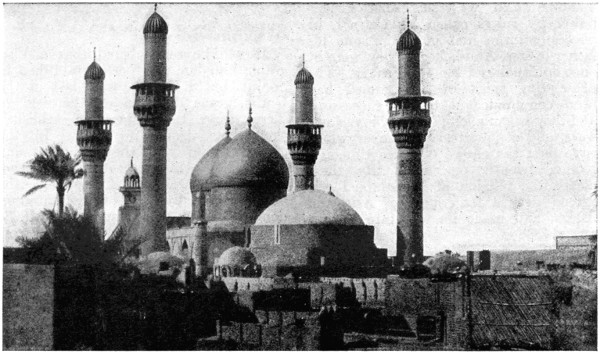
MOSQUE NEAR BAGDAD, THE EASTERN CAPITAL OF THE SARACEN EMPIRE
Saracen (Arab. Sharkiin, the eastern people, from Sharq, the East), is a term
applied to the first followers
of Mohammed or Mahomet who within forty years after his death, 632 A.D., had subdued a part of
Asia and Africa. The Saracens conquered Spain in 711 and following, but were defeated at Tours, France,
by Charles Martel in 732. Under Abd-el-rahman they established the caliphate of Cordova in 755, which
gave way to the Moors in 1237. The empire of the Saracens closed with the capture of Bagdad by the
Tartars, 1258.
We now come to a remarkable chapter
in European history,—the invasion of
Europe, the land of the Aryans, by a
Semitic race, the followers of the famous
Mohammed. Connected with this is the
rise of the new religion and of a vast
dominion that played a great part in the
history of the Middle Ages. The latter
only can be touched on here.
The doctrines of Mohammed, written
down from time to time, received the
name of the Koran,—that is, the “Reading”;
and the religion itself was called
Islam, or Mohammedanism—that is,
“Salvation.”
His wife and a few other immediate
relatives were the prophet’s first disciples,
and these did not increase very rapidly.
The people of Mecca denounced him as
a madman or an impostor, and in a little
time he was forced to flee from Mecca to
save his life. He betook himself, with his
disciples, to what is now Medina. The
date of this flight, or Hegira, as the Arabians
call it,—July 15, 622 A.D.,—has been
adopted ever since as the chronological
era in Mohammedan countries. At Medina
he was received with open arms,—his
doctrines having already made a
number of converts in that place; and
here he built his first mosque.
A complete change now came over
Mohammed,—the dreamer became a
red-handed soldier. “The sword,” cried
he, “is the key of heaven and hell,” and
by the sword Islam was to be forced upon
all men. Tribe after tribe was subdued;
and before the lapse of ten years the
whole Arabian peninsula acknowledged
the sovereignty of Mohammed, and could
boast of an unmixed population of Moslems,
or True Believers. The prophet
was preparing to carry the new religion
beyond the bounds of Arabia, when he
was cut off by a fever at Medina in
A.D. 632.
Mohammed was succeeded in his
power by rulers called his Caliphs, or
Successors, the first of whom was his
father-in-law, Abu-beker. They were at
once spiritual and temporal rulers. The
proselyting spirit of Mohammed had
been communicated to his successors,
and they began a long series of invasions,
wars, and conquests. They everywhere
gave men the choice of three things,—Koran,
tribute, or sword. By these
means the religion of Mohammed was
spread over a large part of Asia and
Africa, and made its way into Europe
also.
The first countries assailed were the
Oriental possessions of the Byzantine
Empire. In the reign of Abu-beker,
Syria and Mesopotamia were subdued
by Arabian armies. Under the next
caliph, Omar, Egypt was conquered and
Northern Africa overrun. The Arabs,
or Saracens, as they were also called,
met with comparatively little resistance
in the Oriental countries, the countries
beyond Mount Taurus; and this may
be accounted for by the fact that these
were the parts of the Roman Empire in
which both Roman law and Christianity
had taken least hold.
Thus the Eastern Empire was shorn
of all its Oriental possessions; and even
the farther East—Persia and the lands
beyond, to India—was added to the
Moslem dominion.
In the West, however, a stout resistance
was encountered. The Saracens
besieged Constantinople, against which
they carried on a siege of eight years
(A.D. 668-675); but every assault was
repelled by torrents of terrible Greek
fire. A second siege, forty years afterward,
met a like result. In North
Africa, too, they encountered long and
obstinate resistance; but finally the
whole northern coast—Cyrene, Tripoli,
Carthage—was subdued; and in A. D. 710
a host of turbaned Arabs, with unsheathed
scimitars, under Tarik-ben-Zaid,
crossed the narrow strait into Spain
and landed on the rock which commemorates
the name of their leader
(“Gibraltar,” i. e., Jebel Tarik, the
Mountain of Tarik).
It will be remembered that a Visigothic
kingdom had been established in
Spain; but Roderick, the “last of the
Goths,” was defeated on the field of
Xeres, and the Saracens established
themselves firmly in Spain. In the
course of a few years they had possession
of the whole peninsula, with the exception
of the mountainous districts in the
north, where the little Christian kingdom
of the Asturias maintained itself.
The ambition of the Saracens now
overleaped the Pyrenees. They obtained
a foothold in Southern Gaul; and after
a time an able Saracen commander, Abd-el-rahman,
led a powerful Mohammedan
army northward to subdue the land of
the Franks. As far as the Loire everything
fell before him, and it seemed that
all Europe would come under Moslem
sway.
It was in the hour of need that Charles
Martel appeared as a champion for
Christendom. Gathering a powerful
army, he met the Saracens between
Tours and Poitiers (pwät-yea´). A desperate
battle, which lasted for seven days,
ensued; but on the seventh day the
Saracens were defeated with great slaughter,
A.D. 732.
This victory arrested forever the progress
of the Mohammedan arms in Europe,
and procured for Charles the expressive
surname of “the Hammer” (Martel), by
which he is known in history.
While the Saracens were stopped from
pushing their conquests farther into
Europe, they firmly established themselves
in Spain, where they founded a
kingdom that lasted for seven hundred
years,—that is, till the very close of the
Middle Ages.
For a short time the vast dominion
which the Saracens had conquered held
together, and a single caliph was obeyed
in Spain and in India. But soon disputes
arose as to the right of succession
to the caliphate: wars and secessions
took place, and in A.D. 755 the Saracenic
[407]
empire was divided,—one caliph reigning
in Spain and another in Bagdad.
In the East, the most distinguished
of the Saracenic rulers was Haroun-al-Raschid
(Aaron the Just), who became
caliph in A.D. 786, and was a contemporary
of Charlemagne. In the Arabian
Nights we find a vivid picture of the city
he ruled and the life he led. After the
death of Haroun, the Eastern dominion
of the Saracens was rent by civil strife;
one province after another broke off from
the caliphate, till in the eleventh and
twelfth centuries it fell a prey to the Turks.
In Spain, on the division of the
Saracenic power, the rule was in the
hands of the Ommiyad line, and the
capital was at Cordova. From this city
the scepter of the Ommiyades ruled during
283 years (from A.D. 755-1038); but
in the eleventh century the supremacy
of the Saracens gave place to the Moorish
empire in Spain.
In the intellectual history of the
Middle Ages the Saracens played a
remarkable part. When Europe was
sunk in the grossest ignorance, this
clever people were actively engaged in
the cultivation of science, learning, and
the arts. The schools of Cordova vied
with those of Bagdad in the collection of
books and the encouragement of science,
and from them proceeded nearly all that
was original in the medicine, physics, and
metaphysics of Europe during the Middle
Ages.
Charlemagne may be regarded as the chief regenerator of Western Europe after the dissolution of the
Roman Empire. At the date of his coronation, 800 A.D., his empire was not inferior in extent to that
of the old Roman Empire. He was master of all Germany and Gaul, the greater part of Italy, and part
of Spain. Under him the Frankish dominion reached its highest point, and marks the formal termination
of an antiquated state of society. It was also the introduction to another totally different form itself
and from its predecessor. It was not barbarism, it was not feudalism; but it was the bridge which united
the two.
The most important chapter in the
history of the Middle Ages is that informing
us how the ruins of the dilapidated
Western Empire were for a time rebuilt
into an imposing structure by the genius
of a great man, the grandest figure of the
Middle Ages,—Charlemagne. The real
name of this great man was Karl, that is,
Charles. Though best known by his
French name of Charlemagne (Charles
the Great), we must remember that he
was not a Frenchman in our sense of the
term, but a thorough Teuton, or German,
in birth, instinct, speech, and residence.
The kingdom of the Franks, to which
Charlemagne fell heir on the death of his
father, formed an extensive dominion
comprising portions of the two countries
we now call France and Germany,—for
it must be remembered that the
specific countries, France and Germany,
did not yet exist at all.
At this time—the latter half of the
eighth century—Italy was divided between
the Lombards and the Eastern
emperors, England had come into existence,
but only as a number of feeble
and warring states, Spain was under the
rule of the Moslems. In the meantime
the land of the Franks was lifting itself
from out the surrounding barbarism of
the new races, and was the center of that
Germanic civilization which was struggling
into existence.
It is important to bear in mind the
actual condition of the European world
at the time Charlemagne came on the
stage, for it will help us to understand
the work he did, how far he succeeded
and how far he failed.
The ruling idea of Charlemagne was
the re-establishment of the Roman Empire,—the
building up on German soil
of that colossal power which had toppled
over because it rested on the too narrow
basis of Latin nationality. In executing
this design he aimed to use all the
elements of civilization that the times
presented, and especially these two great
elements,—the political ideas and instincts
of the Teutons, and the adhesive
power of the Christian Church. Hence
we find him, throughout his whole
career, carefully cherishing all those old
[408]
German institutions upon which the
mass of his people looked with deep
reverence, while at the same time we
behold him the protector of the Pope
and the loyal and ardent champion of
the Church.
It was in the effort to realize his grand
idea that Charlemagne undertook the
numerous wars and expeditions that
filled the forty-six years of his reign.
We shall not enter into the details of
these wars; but it is needful to understand
their object and their result.
The most important of Charlemagne’s
military enterprises were directed against
the fierce pagan nations of Germany and
the wild Scythians in the outlying lands
beyond. To appreciate the importance
of these we must try to realize that the
eastern frontier of the Frankish land,
that is, the eastern boundary of Charlemagne’s
kingdom, on the German side of
the Rhine, ran into and abutted on the
extensive stretch of country in Middle
Europe that was still in the hands of the
various uncivilized tribes. As long as
these peoples remained in their warlike,
savage, and pagan condition, they would
press heavily on the struggling civilization
of the Frankish kingdom, and would
endanger, if not utterly destroy, its progress.
Hence to subdue and especially
to Christianize these tribes—to extend
the domain of organized and law-governed
society into the desert waste of Teutonic
barbarism—was a main object with
Charlemagne.
With the Saxon confederation, formed
by various pagan tribes on the Weser
and the Elbe (the same tribes from
among which the Saxons and Angles, who
conquered Britain three centuries before
this, had gone forth), Charlemagne had
the greatest trouble. He repeatedly
marched into their country and subdued
them; but they constantly rose up
again, and it was only after some terrible
acts of vengeance,—for example, he one
day had forty-two hundred prisoners
hanged,—that they at length submitted
to be baptized and to become peaceable
subjects.
Soon after this the Bavarians attempted
to render themselves independent
of the Frankish power by the
assistance of the Avars, a Tartar race
living in what we now call Hungary
(then Pannonia). Charlemagne overpowered
the Bavarians, incorporating
Bavaria with his German territory; and
then revenged himself on the Avars by
conquering them, taking their treasures,
and annexing Hungary to his dominion.
The result of Charlemagne’s conquests
on the east side of the Rhine was
that Germany was for the first time all
united under one head, and on that side
the Frankish kingdom was extended to
the confluence of the Danube with the
Theiss and the Save.
Against the Saracens in Spain Charlemagne
made an important expedition.
The capture of Saragossa laid Aragon and
Navarre at his feet, and he united the
whole country as far as the Ebro to his
own kingdom as a Spanish province.
During his return the rear-guard under
Roland, suffered a defeat in the valley
of Roncesvalles, in which the bravest
champions of the Franks were destroyed.
This somewhat tarnished the laurels
Charlemagne had won in Spain, but did
not undo the substantial results of the
campaign.
We must now see what Charlemagne
did in Italy. At this period the Lombards
were very troublesome to the
Pope, and frequently assailed the Roman
territory. Accordingly, when Pope Adrian
I. called on Charlemagne for aid,
the Frankish monarch crossed the Alps,
defeated the Lombards, shut up their
king in a monastery, and himself assuming
the famous “iron crown” of Lombardy,
united the whole of Upper Italy
to the kingdom of the Franks (A.D. 773).
At the same time he confirmed the gifts
made by Pepin to the Pope.
The general result of all the wars and
conquests which we have described was
that by the year 800 Charlemagne, who
had inherited from Pepin a kingdom
scarcely equal to all Gaul, found himself
lord of a dominion as large as the ancient
Roman Empire of the West, and extending
from the Ebro (in Spain) on the west
to the Elbe in the northeast, the Theiss
(Hungary) in the southeast, and including
[409]
half of Italy, with Corsica, Sardinia,
and the Balearic Isles. He fell heir to a
kingdom; he was now master of an
empire.
The year A.D. 800 forms the climax
of Charlemagne’s reign. The sovereign
had gone in splendid state to visit Italy.
On Christmas day Charlemagne and his
court were attending divine service in
the church of St. Peter’s, at Rome.
Suddenly, while the monarch was kneeling
on the steps of the altar in prayer,
the Pope, Leo III., placed a crown upon
his head and solemnly saluted him as
“Emperor of the West,” with the title
of Charles I., Cæsar Augustus.
The latter years of Charlemagne’s life
were spent in labors for the consolidation
of his empire and the elevation of his
people. He was a great patron of learning
and learned men. He was himself
a good Latin scholar, and he knew something
of Greek. Wherever he was he
was usually surrounded by learned
churchmen, whom he drew to his court
from all quarters, and with whom he
delighted to hold conversations on literary
and other subjects. The emperor, his
family, and all attached to his household
formed what was called the “School of
the Palace.” Fond of literary pursuits,
Charlemagne studied grammar, rhetoric,
music, logic, astronomy, and natural
history under his learned friends; and
even after he was considerably advanced
in years he took the pains to acquire the
art of writing,—an accomplishment then
very unusual except among churchmen.
Nor was the emperor’s interest in
education confined to his own household.
Each of the numerous monasteries that
he endowed was bound to maintain a
school. He had copies of the writings
of the ancient Romans made and distributed
among the convents, he formed a
collection of old German heroic ballads,
and under his patronage church music
was greatly improved.
Charlemagne’s favorite place of residence
was at Aix-la-Chapelle (in German,
Aachen). He made this the northern
capital of his empire, as Rome was the
southern, and built a magnificent palace
there. When his power was confirmed
by his coronation as Emperor of the
West, all the world hastened to pay him
homage. The Saracen caliph, the famous
Haroun-al-Raschid, who ruled the Eastern
dominion of the Saracens, at Bagdad,
exchanged courtesies with his great
brother of the West, sending him,
among other presents, an ape, an elephant,
and a curious clock which struck
the hours.
Charlemagne died at the age of
seventy-two, at Aix-la-Chapelle, in A.D.
814. The year before, he had caused his
only living son, Louis, to assume the
imperial crown. But the vast structure
that Charlemagne had raised during his
lifetime tottered and fell almost immediately
after his death. Louis, known as
the Gentle (le Debonnaire), was better
fitted for the repose of a cloister than
for the government of a warlike kingdom.
His sons, among whom he divided the
empire, turned their arms first against
himself and then against one another.
Finally, in A.D. 843, a treaty was made
at Verdun, by which France, Germany
and Italy became separate and independent
states; so that, in less than
thirty years after the death of Charlemagne,
the history of the Franks came
to an end, and the history of France and
of Germany began.
Great Events of Period. 900-1000: Norse ravages and conquests continue;
also private wars. 1000-1100: Increasing and beneficent power of the church exerted in the direction of
order. Normans in Italy and Sicily. The Norman conquest of England; which as regards good government far surpasses all other countries.
Quarrels between popes and emperors
begin. 1100-1200: Quarrels between popes and emperors continue; zenith of papal power; Criticism revived. Private wars lessen; advance in
power of kings and of towns at expense
of the feudal baronage. The Crusades. 1200-1300: Rise of universities and of mendicant Friars. Quarrels between popes and emperors still
continue. Last Crusades. English liberties
recognized by the crown. Magna Charta.
| A. D. |
Spain |
Britain |
France |
Germany |
Italy |
Church |
Scandinavia and Slavs |
Eastern Empire |
Saracens |
China, Japan, India |
A. D. |
| 850 |
|
|
|
|
|
|
|
|
|
|
850 |
| 855. Kingdom divided. Louis II., Emperor, obtains Italy and Rhætia till 875. Charles, Provence,
till 863. |
860. Separation of the Greek and Latin
Churches. |
862. Russia: Rurik, first grand
prince. |
859. Japan: Powerful Seiwa family arises. |
| |
|
|
864-1131. Kingdom of Barcelona. |
866. Invasion of the Danes. |
|
|
|
867. Pope Hadrian II., Photius, Patriarch of
Constantinople, deposed. |
863-1030. Norway: Harold Harfargar to St. Olaf. |
867-1057. Eastern emperors of the
Macedonian line. |
870-892. Muattemed
re-establishes the capital at Bagdad. |
| 871-900. ALFRED THE GREAT. |
872. Pope John VIII. |
| 875 |
|
|
876. Kingdom divided: Charles the Fat obtains Suabia and Alsace till
887. |
Louis the Younger, Saxony and Thuringia till 882. |
Carloman, Bavaria, etc. till 879; becomes
King of Italy, 877. |
|
|
|
|
|
875 |
885-1512. Kingdom of Navarre. |
884. Charles the Fat reunites the monarchy of the Franks. |
895. Hungary: Magyars under Arpad
enter the Kingdom. |
886-911. Leo VI., the Philosopher. |
| |
|
| 900 |
|
901-924. Edward the Elder, the first prince who takes the
title of King of England. |
Rollo, the Dane, forces Charles to confer on him the province of Normandy and becomes: |
|
|
|
|
|
907-960. China: Period of five dynasties. |
900 |
912-961. Abderrahman III. The greatest Arab prince of
Spain; splendid edifices built; learning encouraged; commerce flourishes. |
912. Robert, Duke of Normandy; capital Rouen. |
919-1024. Kings and Emperors of
the Saxon house. |
911. The Northmen in France embrace Christianity. |
|
917. The Bulgarians besiege
Constantinople. |
| 919-936. Henry I., the Fowler, a great prince, consolidates the empire. |
|
| 925 |
|
France is now divided among the powerful barons, who exercise sovereign power in their respective
domains. |
936-973. OTHO the GREAT. |
|
927. Odo, abbot of Cluny, establishes celebrated code of
discipline. |
|
941. Russian expedition against
Constantinople, under Igor. |
|
|
925 |
| 950 |
|
955. Decisive victory over the Huns, which leads to the consolidation
of the margravate of Austria. |
950-961. Berenger II., submitted to Otto as his suzerain. |
|
|
956. Armenia and the provinces between the Black and the
Caspian Sea, recovered from the Saracens. |
|
|
950 |
| |
961-965. Otho’s second expedition into
Italy; he dethrones Berenger; is crowned king, and emperor. |
959. St. Dunstan becomes Archbishop of Canterbury and attempts to reform the church; enforcing clerical
celibacy. |
959-963. Romanus II. |
960. China: Tai Tsoo founder of later Sung dynasty. |
| 962. Makes Rome his capital. |
966. Poland receives Christianity under Miecislas. |
964-975. Cyprus, Cilicia and Antioch are captured by
Nicephorus; Syria is overrun, and, under Zimisces, the Greeks penetrate to the Tigris. |
| 967. Otho II. crowned emperor. |
|
969. The Fatimites become masters of
Egypt, with Cairo as the capital. |
| 975 |
|
978-1016. Ethelred the Unready.
New invasion of the Danes. |
|
|
|
|
|
976-1025. Basil II. |
980. Seljuk, a Turk officer of
the khan of Tartary, becomes a Mohammedan, and settles in Samarcand. |
|
975 |
| House of Capet |
| |
987-996. Hugh Capet.
France, for a long
period before and after the accession of the Capets, has no national history; the royal authority is now restricted to the city in which
the court resides. |
989. Byzantine Christianity propagated in Russia by Vladimir the
Great.
999. Pope Sylvester II. |
| 1000 |
1000-1035. Sancho III., the Great, King of Navarre and Castile. There existed henceforward three
Christian kingdoms in Spain: 1, Castile-Leon; 2, Navarre; 3, Aragon.
Golden age of Arabian literature in Spain. |
1016-1035. Canute the Great, King of Denmark. |
1002-1024. Henry, Duke of Bavaria, a just and pious king.
Continual wars with the Poles and Italy. |
Venice, Genoa, and Pisa rise in power, opulence and civilization. |
|
|
|
|
1000-1186. India: Supremacy of Ghazni. |
1000 |
| 1017-1041. Danish kings. |
House of Franconia |
1024-1039. Conrad II., the Salic. |
1019. Russia: Yaroslaff the Great. |
1018. Bulgaria again reduced to a Grecian province. |
| 1025 |
1026. Hixem III.
|
|
|
1029. Settlement of the Normans in South
Italy. |
|
|
1025-1028. Constantine IX.
Culmination point of Byzantine
greatness. Greeks greatest merchants and capitalists of the world during this century. |
|
Golden Age of Rajput civilization in India. |
1025 |
| 1030. With him ends the Califate of the West. |
1039-1056. HENRY III. He defeats the Bohemians and
Hungarians and makes both tributary. The imperial power at its highest point. |
1042. The Saxon line restored.
1042-1066. Edward the Confessor. French Normans become a new source of trouble. |
1041. They conquer Apulia from the Greeks; 1060, Calabria; 1060-1090, Sicily. |
1042. Turks invade and conquer Persia.
The kingdom of Ghizni declines after 1032, and is confined to India; falls 1183. |
| 1050 |
|
|
1056-1106. Henry IV. |
|
|
1057-1185. Eastern emperors of the houses of
the Ducas and the Comnenes. Southern Italy lost to the Normans. |
|
1050 |
| 1059. Quarrels between the Popes and German Emperors respecting investitures and nomination to the
Holy See. |
| 1060-1108. Philip I. |
|
1060. Robert Guiscard, first duke.
1060-1090. Sicily conquered
by Count Roger, brother of Robert.Robert invades the Greek Empire and gains the battle of Durazzo. |
|
1072. Alfonso VI. of Castile, enlarges his dominions by
conquests from the Mohammedans. |
1066. Harold elected king, but is defeated and slain in the battle of Hastings, which gives
England to William.
1066-1154. Norman Kings.
1066-1087.
WILLIAM THE CONQUEROR. |
1066. William, Duke of Normandy, invades England. |
1073. POPE GREGORY VII.
Papacy attains great power. |
| 1075 |
|
|
1077. Hungary: Ladislas I., the Saint. |
|
1076. Jerusalem captured by Turks. |
|
1075 |
1085. The Cid. Toledo is taken by Alfonso VI. after a three
years’ siege. |
1084. Bohemia erected into a kingdom by the Emperor Henry IV. |
1084. Seljuks in Asia Minor. |
| 1086. The battle of Zalaca. |
1087-1100. William II., Rufus. Revolt of the Norman
nobles. The feudal system established in England. |
1088. Pope Urban II. |
1092. The Seljuk Empire falls apart into a
number of smaller states. Iconium or Roum, Damascus, Aleppo, Kerman and Iran. |
1096. The First Crusade. Peter the Hermit and
Walter the Penniless. |
1095-1270. The First Crusade. |
| 1099. Pope Pascal II. |
1099. Foundation of the Kingdom of Jerusalem. Godfrey of Bouillon, elected king by the army. |
| 1100 |
|
1100-1135. Henry I., Beauclerc. |
|
|
|
1100-1523. Denmark: Introduction of Feudal system to Independence of Sweden.
1100-1468. Norway.
1100-1448. Sweden. |
|
|
1100 |
| 1101. Robert, Duke of Normandy, invades England. |
| 1103-1106. Henry invades and conquers Normandy. |
1106-1125. Henry V., Emperor of Germany and King of
Italy. |
1119. Pope Calixtus II. |
| 1125 |
1139. Kingdom of Portugal. |
Wars between the French and English, and rise of rivalry between these two nations, which lasts
for three centuries and a half. |
House of Hohenstaufen
1138-1152. Conrad I., elected emperor. |
1139. The two Sicilies erected into a kingdom
under Roger. |
|
|
|
|
1127. China: Kaou Tsung, Emperor. |
1125 |
| |
1147. The Second Crusade preached by St. Bernard
and joined by the Emperor Conrad and Louis VII. of France. |
Rise of the factions of Guelfs and Ghibelines. |
1146. The Second Crusade.
The power of the
crusaders declines. |
| 1150 |
|
1154-1399. Plantagenets.
1154-1189. Henry II., Plantagenet. |
1152-1190. Frederic I., Barbarossa, Emperor and King,
one of the most heroic figures of the Middle Age. |
|
1154. Pope Hadrian IV. |
|
|
|
1150 |
1159. War between France and
England. |
1158. Venice a great maritime power. |
1159. Pope Alexander III. |
1157. Denmark: Waldemar I., the Great. |
1156. Japan: War between the families of Gen and Hei. |
1171-1172. Conquest of Ireland. |
The French language cultivated. |
1166. Frederic in Italy. League of the Italian cities, 1167, to preserve their liberties. |
1170. The Waldenses. |
1171-1193. Saladin becomes Sultan of Egypt.
Extends his dominions in Egypt, conquers Syria, Assyria, Mesopotamia and Arabia. |
| 1175 |
|
1189-1199.
Richard I., the Lion-hearted. Dreadful massacre of the Jews at his coronation. |
1180-1223. Philip II., the greatest prince since
Charlemagne. |
1183. Peace of
Constance re-establishes the independence of the Italian Republics. |
|
1177. Poland: Casimir the Just. |
1185-1204. Dynasty of
Angelus. |
1186-1206.
India: The Afghans of Ghor rule. |
1175 |
| 1189. Third Crusade led by Philip Augustus, of France; Richard, of England; and Frederic
Barbarossa. |
1189. The Third Crusade. |
| |
|
1190-1198. Henry VI., Emperor and King of Italy and the Sicilies. |
1191. Pope Celestine III. |
1193. Saladin dies; his dominions
divided. |
| 1195. Battle of Alarcon in which the Christians are defeated. |
1199-1216. John usurps over Arthur, the son of his elder
brother, Geoffrey. |
1198. Philip of Suabia and Otho of Saxony, dispute the
crown; the former supported by the Ghibelines, the latter by the Guelfs. |
|
1198. Pope Innocent III. |
| 1200 |
|
1201-1206. War with France; Philip espouses the cause of
Prince Arthur. |
1204. Venice aggrandized by the conquest of
Constantinople. |
Papal power attains its climax. It is supreme over secular power. |
1202-1241. Denmark: Waldemar II., the Conqueror. |
1204. New revolution. The
Crusaders return, again take Constantinople.
1204-1261. Latin Empire. |
1202. The Fourth Crusade. |
1206.
Genghis Khan becomes emperor of the Mongols. |
1200 |
1212. Battle of Navas de Tolosa; a victory for the
Christians. |
|
1202. The Fourth Crusade under Boniface of Montferrat. |
1212-1250. Frederic II. becomes emperor
and king of the two Sicilies. |
1210-1212. First war of Venice and Genoa. |
ST. FRANCIS OF ASSISI (1182-1226) |
| 1213-1276. James I., the Conqueror in Aragon. |
1213-1215. War with France; the English lose Vermandois and Valois. |
| 1214-1217. Henry I., King in Castile. |
1215. Insurrection of the barons.
Magna Charta signed at Runnymede. |
|
1215. Fourth Lateran, and twelfth general council against the
Albigenses and all heretics. The doctrines of transubstantiation and auricular confession established. |
1217-1262. Norway: Haco IV. |
| A. D. |
Spain |
Britain |
France |
Germany |
Italy |
| 850 |
|
|
|
|
|
| |
|
|
855. Kingdom divided. Louis II., Emperor, obtains Italy and Rhætia till 875. Charles, Provence,
till 863. |
| |
864-1131. Kingdom of Barcelona. |
866. Invasion of the Danes. |
|
|
|
| |
|
871-900. ALFRED THE GREAT. |
|
|
|
| 875 |
|
|
876. Kingdom divided: Charles the Fat obtains Suabia and Alsace till
887. |
Louis the Younger, Saxony and Thuringia till 882. |
Carloman, Bavaria, etc. till 879; becomes
King of Italy, 877. |
| |
885-1512. Kingdom of Navarre. |
|
884. Charles the Fat reunites the monarchy of the Franks. |
|
| 900 |
|
901-924. Edward the Elder, the first prince who takes the
title of King of England. |
Rollo, the Dane, forces Charles to confer on him the province of Normandy and becomes: |
|
|
| |
912-961. Abderrahman III. The greatest Arab prince of
Spain; splendid edifices built; learning encouraged; commerce flourishes. |
|
912. Robert, Duke of Normandy; capital Rouen. |
919-1024. Kings and Emperors of
the Saxon house. |
| |
|
|
|
919-936. Henry I., the Fowler, a great prince, consolidates the empire. |
|
| 925 |
|
|
France is now divided among the powerful barons, who exercise sovereign power in their respective
domains. |
936-973. OTHO the GREAT. |
|
| 950 |
|
|
|
955. Decisive victory over the Huns, which leads to the consolidation
of the margravate of Austria. |
950-961. Berenger II., submitted to Otto as his suzerain. |
| |
|
|
|
961-965. Otho’s second expedition into
Italy; he dethrones Berenger; is crowned king, and emperor. |
| |
|
|
|
962. Makes Rome his capital. |
| |
|
|
|
967. Otho II. crowned emperor. |
| 975 |
|
978-1016. Ethelred the Unready.
New invasion of the Danes. |
|
|
|
| |
|
|
House of Capet |
|
|
| |
|
|
987-996. Hugh Capet.
France, for a long
period before and after the accession of the Capets, has no national history; the royal authority is now restricted to the city in which
the court resides. |
|
|
| 1000 |
1000-1035. Sancho III., the Great, King of Navarre and Castile. There existed henceforward three
Christian kingdoms in Spain: 1, Castile-Leon; 2, Navarre; 3, Aragon.
Golden age of Arabian literature in Spain. |
1016-1035. Canute the Great, King of Denmark. |
|
1002-1024. Henry, Duke of Bavaria, a just and pious king.
Continual wars with the Poles and Italy. |
Venice, Genoa, and Pisa rise in power, opulence and civilization. |
| |
|
1017-1041. Danish kings. |
|
House of Franconia |
|
| |
|
|
|
1024-1039. Conrad II., the Salic. |
|
| 1025 |
1026. Hixem III.
|
|
|
|
1029. Settlement of the Normans in South
Italy. |
| |
1030. With him ends the Califate of the West. |
|
|
1039-1056. HENRY III. He defeats the Bohemians and
Hungarians and makes both tributary. The imperial power at its highest point. |
|
| |
|
1042. The Saxon line restored.
1042-1066. Edward the Confessor. French Normans become a new source of trouble. |
|
|
1041. They conquer Apulia from the Greeks; 1060, Calabria; 1060-1090, Sicily. |
| 1050 |
|
|
|
1056-1106. Henry IV. |
|
| |
|
|
|
1059. Quarrels between the Popes and German Emperors respecting investitures and nomination to the
Holy See. |
| |
|
|
1060-1108. Philip I. |
|
1060. Robert Guiscard, first duke.
1060-1090. Sicily conquered
by Count Roger, brother of Robert.
Robert invades the Greek Empire and gains the battle of Durazzo. |
| |
1072. Alfonso VI. of Castile, enlarges his dominions by
conquests from the Mohammedans. |
1066. Harold elected king, but is defeated and slain in the battle of Hastings, which gives
England to William.
1066-1154. Norman Kings.
1066-1087.
WILLIAM THE CONQUEROR. |
1066. William, Duke of Normandy, invades England. |
|
|
| 1075 |
|
|
|
|
|
| |
1085. The Cid. Toledo is taken by Alfonso VI. after a three
years’ siege. |
|
|
|
|
| |
1086. The battle of Zalaca. |
1087-1100. William II., Rufus. Revolt of the Norman
nobles. The feudal system established in England. |
|
|
|
| |
|
|
1096. The First Crusade. Peter the Hermit and
Walter the Penniless. |
|
|
| 1100 |
|
1100-1135. Henry I., Beauclerc. |
|
|
|
| |
|
1101. Robert, Duke of Normandy, invades England. |
|
|
|
| |
|
1103-1106. Henry invades and conquers Normandy. |
|
1106-1125. Henry V., Emperor of Germany and King of
Italy. |
| 1125 |
1139. Kingdom of Portugal. |
Wars between the French and English, and rise of rivalry between these two nations, which lasts
for three centuries and a half. |
House of Hohenstaufen
1138-1152. Conrad I., elected emperor. |
1139. The two Sicilies erected into a kingdom
under Roger. |
| |
|
|
1147. The Second Crusade preached by St. Bernard
and joined by the Emperor Conrad and Louis VII. of France. |
Rise of the factions of Guelfs and Ghibelines. |
|
| 1150 |
|
1154-1399. Plantagenets.
1154-1189. Henry II., Plantagenet. |
|
1152-1190. Frederic I., Barbarossa, Emperor and King,
one of the most heroic figures of the Middle Age. |
|
| |
|
1159. War between France and
England. |
|
1158. Venice a great maritime power. |
| |
|
1171-1172. Conquest of Ireland. |
The French language cultivated. |
1166. Frederic in Italy. League of the Italian cities, 1167, to preserve their liberties. |
| 1175 |
|
1189-1199.
Richard I., the Lion-hearted. Dreadful massacre of the Jews at his coronation. |
1180-1223. Philip II., the greatest prince since
Charlemagne. |
1183. Peace of
Constance re-establishes the independence of the Italian Republics. |
| |
|
1189. Third Crusade led by Philip Augustus, of France; Richard, of England; and Frederic
Barbarossa. |
| |
|
|
|
1190-1198. Henry VI., Emperor and King of Italy and the Sicilies. |
| |
1195. Battle of Alarcon in which the Christians are defeated. |
1199-1216. John usurps over Arthur, the son of his elder
brother, Geoffrey. |
|
1198. Philip of Suabia and Otho of Saxony, dispute the
crown; the former supported by the Ghibelines, the latter by the Guelfs. |
|
| 1200 |
|
1201-1206. War with France; Philip espouses the cause of
Prince Arthur. |
|
1204. Venice aggrandized by the conquest of
Constantinople. |
| |
1212. Battle of Navas de Tolosa; a victory for the
Christians. |
|
1202. The Fourth Crusade under Boniface of Montferrat. |
1212-1250. Frederic II. becomes emperor
and king of the two Sicilies. |
1210-1212. First war of Venice and Genoa. |
| |
1213-1276. James I., the Conqueror in Aragon. |
1213-1215. War with France; the English lose Vermandois and Valois. |
|
|
| |
1214-1217. Henry I., King in Castile. |
1215. Insurrection of the barons.
Magna Charta signed at Runnymede. |
|
|
|
| A. D. |
Church |
Scandinavia and Slavs |
Eastern Empire |
Saracens |
China, Japan, India |
| 850 |
|
|
|
|
|
| |
860. Separation of the Greek and Latin
Churches. |
862. Russia: Rurik, first grand
prince. |
|
|
859. Japan: Powerful Seiwa family arises. |
| |
867. Pope Hadrian II., Photius, Patriarch of
Constantinople, deposed. |
863-1030. Norway: Harold Harfargar to St. Olaf. |
867-1057. Eastern emperors of the
Macedonian line. |
870-892. Muattemed
re-establishes the capital at Bagdad. |
|
| |
872. Pope John VIII. |
|
|
|
|
| 875 |
|
|
|
|
|
| |
|
895. Hungary: Magyars under Arpad
enter the Kingdom. |
886-911. Leo VI., the Philosopher. |
|
|
| 900 |
|
|
|
|
907-960. China: Period of five dynasties. |
| |
911. The Northmen in France embrace Christianity. |
|
917. The Bulgarians besiege
Constantinople. |
|
|
| 925 |
927. Odo, abbot of Cluny, establishes celebrated code of
discipline. |
|
941. Russian expedition against
Constantinople, under Igor. |
|
|
| 950 |
|
|
956. Armenia and the provinces between the Black and the
Caspian Sea, recovered from the Saracens. |
|
|
| |
959. St. Dunstan becomes Archbishop of Canterbury and attempts to reform the church; enforcing clerical
celibacy. |
|
959-963. Romanus II. |
|
960. China: Tai Tsoo founder of later Sung dynasty. |
| |
966. Poland receives Christianity under Miecislas. |
|
964-975. Cyprus, Cilicia and Antioch are captured by
Nicephorus; Syria is overrun, and, under Zimisces, the Greeks penetrate to the Tigris. |
|
|
| |
|
|
|
969. The Fatimites become masters of
Egypt, with Cairo as the capital. |
|
| 975 |
|
|
976-1025. Basil II. |
980. Seljuk, a Turk officer of
the khan of Tartary, becomes a Mohammedan, and settles in Samarcand. |
|
| |
989. Byzantine Christianity propagated in Russia by Vladimir the
Great.
999. Pope Sylvester II. |
|
|
|
|
| 1000 |
|
|
|
|
1000-1186. India: Supremacy of Ghazni. |
| |
|
1019. Russia: Yaroslaff the Great. |
1018. Bulgaria again reduced to a Grecian province. |
|
|
| 1025 |
|
|
1025-1028. Constantine IX.
Culmination point of Byzantine
greatness. Greeks greatest merchants and capitalists of the world during this century. |
|
Golden Age of Rajput civilization in India. |
| |
|
|
|
1042. Turks invade and conquer Persia.
The kingdom of Ghizni declines after 1032, and is confined to India; falls 1183. |
|
| 1050 |
|
|
1057-1185. Eastern emperors of the houses of
the Ducas and the Comnenes. Southern Italy lost to the Normans. |
|
|
| |
1059. Quarrels between the Popes and German Emperors respecting investitures and nomination to the
Holy See. |
|
|
|
|
| |
1073. POPE GREGORY VII.
Papacy attains great power. |
|
|
|
|
| 1075 |
|
1077. Hungary: Ladislas I., the Saint. |
|
1076. Jerusalem captured by Turks. |
|
| |
|
1084. Bohemia erected into a kingdom by the Emperor Henry IV. |
|
1084. Seljuks in Asia Minor. |
|
| |
1088. Pope Urban II. |
|
|
1092. The Seljuk Empire falls apart into a
number of smaller states. Iconium or Roum, Damascus, Aleppo, Kerman and Iran. |
|
| |
|
|
|
1095-1270. The First Crusade. |
|
| |
1099. Pope Pascal II. |
|
|
1099. Foundation of the Kingdom of Jerusalem. Godfrey of Bouillon, elected king by the army. |
|
| 1100 |
|
1100-1523. Denmark: Introduction of Feudal system to Independence of Sweden.
1100-1468. Norway.
1100-1448. Sweden. |
|
|
|
| |
1119. Pope Calixtus II. |
|
|
|
|
| 1125 |
|
|
|
|
1127. China: Kaou Tsung, Emperor. |
| |
|
|
|
1146. The Second Crusade.
The power of the
crusaders declines. |
|
| 1150 |
1154. Pope Hadrian IV. |
|
|
|
|
| |
1159. Pope Alexander III. |
1157. Denmark: Waldemar I., the Great. |
|
|
1156. Japan: War between the families of Gen and Hei. |
| |
1170. The Waldenses. |
|
|
1171-1193. Saladin becomes Sultan of Egypt.
Extends his dominions in Egypt, conquers Syria, Assyria, Mesopotamia and Arabia. |
|
| 1175 |
|
1177. Poland: Casimir the Just. |
1185-1204. Dynasty of
Angelus. |
|
1186-1206.
India: The Afghans of Ghor rule. |
| |
|
|
|
1189. The Third Crusade. |
|
| |
1191. Pope Celestine III. |
|
|
1193. Saladin dies; his dominions
divided. |
|
| |
1198. Pope Innocent III. |
|
|
|
|
| 1200 |
Papal power attains its climax. It is supreme over secular power. |
1202-1241. Denmark: Waldemar II., the Conqueror. |
1204. New revolution. The
Crusaders return, again take Constantinople.
1204-1261. Latin Empire. |
1202. The Fourth Crusade. |
1206.
Genghis Khan becomes emperor of the Mongols. |
| |
ST. FRANCIS OF ASSISI (1182-1226) |
|
|
|
| |
1215. Fourth Lateran, and twelfth general council against the
Albigenses and all heretics. The doctrines of transubstantiation and auricular confession established. |
1217-1262. Norway: Haco IV. |
|
|
|
Great Events of Period. 1200-1300: Hanse League established. Great
conquests Tartars in Asia; they overrun Russia and establish a dynasty at Moscow. 1300-1400: Growth
of cities and trade—especially in Italy, where also literature and art, inspired by Dante and Giotto, make progress. Popes at
Avignon. Era of Wyclif: his teaching spreads in Bohemia.
Invention of gunpowder. Mariner’s compass comes into use in the West. 1400-1500: Turks take Constantinople. Revival of learning
and advance of art in the West—especially in Italy.
Consolidation of France and Spain. End of Tartar rule in Russia. Invention of printing. Formation of modern “middle classes.”
Maritime discoveries: The cape route to India; the
“New World.” End of the Middle Ages.
| A. D. |
Spain, Portugal |
Britain |
France |
Holy Roman Empire |
Switzerland, Poland, Hungary, Bohemia |
Scandinavia and Russia |
Eastern Empire |
Saracens |
China, Japan, India |
A. D. |
| Italy and Church |
Germany |
| |
|
1214-1292. ROGER BACON. |
|
Struggle of the Guelfs and Ghibelines. The power of the Roman pontiffs is carried to the
highest pitch during this century. |
|
|
|
|
|
|
1217. Ferdinand, King of Castile. |
1216-1272. Henry III. |
1219. Japan: The shogunate seized by the Fujiwara. |
| |
|
1224-1240. Mongolian invasion of Russia. |
1221. Robert Guiscard, Emperor. |
1221. The Khorasmian Empire overthrown by Genghis Khan. |
| 1225 |
1230. Castile and
Leon united by Ferdinand III., who takes large territory from the Moors. |
1228. The Fifth Crusade.
Many English and French nobles join. |
1226-1270. LOUIS IX., Saint. Blanche of Castile, his mother,
regent. |
1227-1274. THOMAS AQUINAS. |
|
|
|
|
|
|
1225 |
1248. The king sets out on The Sixth
Crusade. |
1243. Struggle of Pope Innocent IV. with the Emperor Frederick. |
1243. The Hanseatic League. |
1242. Alexander Nevski, Prince of Novgorod. |
1244. The Khorasmians take Jerusalem. |
| 1250 |
1253. The Alhambra founded. |
|
|
|
1250. Conrad IV., Emperor. |
|
|
|
1250. Egypt: The Mamelukes rule; take Damascus and Aleppo. |
|
1250 |
1263-1265. CIVIL WAR. |
1262. Norway: Iceland subjected.
Greenland tributary to Norway. |
1261. Michael Palæologus recovers
Constantinople and overthrows the Latin Empire. |
1258. Hulaku Khan enters Persia, takes Bagdad, and an end to the caliphate. |
1259-1294. China: Kublai Khan, Emperor of all China, founder of the
Mongol dynasty. |
1265. Parliament of Simon of Montfort. Beginning of the House of
Commons. Defeat and death of Simon of Montfort at Evesham. |
1264. China: Kublai Khan builds Pekin, and makes it his capital. |
| 1270. The Seventh and Last Crusade. |
House of Hapsburg |
1274. Crown of Navarre passes to France. |
1272-1307. Edward I., Longshanks. |
1274. Fourteenth General Council at Lyons. |
1273. Rudolf, Emperor, founds House of Hapsburg. |
| 1275 |
|
1283. England and Wales united.
Robert Bruce and John Balliol contend for the crown of Scotland. |
1276. France at war with Castile. |
|
|
|
1279. Russia: Hanseatic settlement at
Novgorod. |
|
|
1281. Japan: Invasion of Mongol
Tatars. |
1275 |
| 1284. Annexation of Wales to England. |
1291. James II., King of Aragon. |
1297. War between England and
Scotland. |
1297. Invasion of Flanders. |
1293. Naval war between Genoa and Venice. |
1298. Adolphus,
Emperor, deposed and Albert I. enthroned. |
1295. Poland: Vladislav the Dwarf, founder of
Polish greatness. |
1291. Capture of Acre by the Mamelukes; end of the European states in
Asia Minor. |
1288. Othman begins to lay the foundations of the Turkish power in Asia Minor. |
| 1300 |
|
|
1302. First convocation of the states-general in France. |
1303. Papal power declines. |
|
|
|
|
|
|
1300 |
| 1304. War with Flanders. |
1304. Rise of the Swiss towns. |
| 1306. Robert Bruce proclaimed king of Scotland. |
1306. Rudolf of Austria, Emperor. |
1309. Seat of the popes transferred to Avignon. |
1308. Henry of Luxemburg, Emperor. General insurrection in Switzerland. |
1312. Alphonso XI., King of Castile and Leon. |
1311. General Council at Vienna. |
1314. Louis of Bavaria and Frederick of Austria contend
for the crown. |
1315-1388. AUSTRO-SWISS WAR. |
| 1265-1321. DANTE. |
1322. Frederick of Austria defeated. |
| 1325 |
|
|
|
|
|
|
|
|
1326. Death of Othman; Orkhan, son of Othman, makes Prusa his
capital. |
|
1325 |
| 1327. Arrival of 200,000 Moors to assist Granada. |
1327-1377. Edward III. |
1327. Nicomedia taken by Orkhan. |
| 1328-1400. CHAUCER. |
1328-1498. The House of Valois.
1328-1350. Philip VI. |
1328. Moscow under the Grand-duke Ivan Kalita becomes paramount in Russia. |
1329. Andronicus III. defeated by the Turks in the battle
of Pelekanon.
1330. Nicæa taken. |
| 1265-1337. GIOTTO. |
1333. Poland: Casimir the Great becomes King. |
|
|
1333. China: Shun-te last of the Mongol Emperors succeeds.
Japan: Fall of
the Hojo family. |
1340. Moors defeated at
Tarifa. |
1337. Edward lays claim to France which gives rise
to:
1337-1453. HUNDRED YEARS WAR. |
1339. Struggle in Rome between the Colonna and the
Ursini. |
House of Luxemburg |
1342.
Hungary: Louis the Great. |
1340. Denmark: Waldemar III. |
1341. John V.
(Paleologus), Emperor. |
1336-1392. Japan: Feudalism reached its height. |
| |
|
1347. Democracy in Rome under Rienzi, last of the Tribunes. |
1346-1378. Charles IV., King of Bohemia. |
| 1350 |
Heroic Age of Portugal. |
|
|
1354. Rienzi killed; papal dominion restored. |
1355-1356. Promulgation of the golden bull;
it fixes the prerogatives of the electoral college. Fundamental law of the empire. |
|
|
1354. Turks seize Gallipoli in Europe. |
|
1350 |
| |
1359. Murad I., conquered Adrianople. |
1364-1380. Charles V. the Wise. |
1365. Adrianople residence of sovereigns. |
1363. Timur, or Tamerlane, begins his career of conquest. |
| 1368-1398. China: Hung Woo establishes the native Ming dynasty. |
1370. Poland: Extinction of the royal race of Piasts with Casimir
III. |
1369. Timur becomes king of Transoxiana and makes Samarcand the capital of his new empire. |
| 1375 |
|
|
|
|
1378. Wenceslas, King of Bohemia, Emperor. |
|
1382. Russia: The Tartars sack Moscow. |
1381. The empire pays tribute to the
Turks. |
|
1375 |
1394-1460. Henry the Navigator, King
of Portugal. |
1387. Denmark and Norway: Margaret, the Semiramis of the North, becomes queen. |
1392. Timur subjugates Persia. |
1399-1461. House of
Lancaster.
1399. Henry IV., King of England. |
1397. Union of Calmar, forming Denmark, Sweden and Norway into a single monarchy. |
1398. Invasion of India by Timur; he takes Delhi. |
| 1400 |
|
|
|
1400. Robert, Count of Palatine, Emperor. |
|
|
1402. Bajazet defeated and made prisoner by Timur at the battle of
Angora. |
1400-1573. Japan: The Shoguns dominate for almost two centuries. |
1400 |
| |
|
1403. Empire of the Turks divided after death of Bajazet, among Solyman I., Musa and Mohammed I. |
1407. John II., King of Castile. |
1406. James I., King of Scotland. |
1410. Civil war between Orleans and
Burgundy. |
1411. Sigismund, King of Hungary,
Emperor. |
1416. Alphonso V., King of Aragon and
Sicily. |
1414. Henry V. claims the French crown. |
1414. Council of Constance. |
1419. Bohemia: HUSSITE WAR. |
1413. Mohammed I. sole ruler of the Turks. |
1422. Henry VI. proclaimed at Paris, King of
France. War with France. |
1420. Sigismund becomes king of Bohemia. |
| |
1424. Bohemia: Death of John Ziska, the Hussite leader. |
| 1425 |
1430. War between Castile and
Granada. |
|
1427-1429. Siege of Orleans. The English defeated by the
French under Joan of Arc. France saved from the fate of Ireland. Charles VII. crowned at Rheims. |
1429-1463. Cosmo de’ Medici in
Florence, great patron of the arts and sciences. |
|
|
|
|
1425 |
| 1431. Joan of Arc burned. |
|
| 1438. House of Austria. Albert II. (King of Bohemia and Hungary), Emperor. |
1438-1439. The emperor visits Italy to obtain help against the Turks. |
| 1444. Truce with France. Marriage of Henry to Margaret of Anjou. |
1446. War with Hungary. |
|
1448. Denmark: Christian I., of Oldenburg,
King. Sweden: Charles VIII. |
1448. Constantine XII., last of the Greek
emperors. |
| 1450 |
1450-1560. Period of great maritime power of the Portuguese. |
1450. Richard, Duke of York, claims the throne. |
|
1450-1466. House of Sforza in Milan. |
|
|
1451. Mohammed II., sultan of the Turks. |
|
1450 |
| 1452. Civil war in Navarre, in which Castile and Aragon join. |
1453. End of the French and English wars, without any
formal peace. |
1453. Austria made an hereditary duchy by Emperor
Frederick III. |
|
1453. Siege and capture of Constantinople by the Turks,
ending the Eastern Empire. |
| 1454. Henry IV. of Castile, King of Spain. |
1455-1485. WARS OF THE ROSES. |
|
1454. Struggle between Cosmo de’ Medici and the aristocracy. |
Ottoman Empire |
| |
1458. Hungary: Matthias Corvinus makes his country formidable to her neighbors. |
1458. Greece subjected to the Turks. |
1461-1485. House of York.
1461. Edward IV., King. House
of York. |
1461. Louis XI., King. |
1462. The emperor besieged in court at Vienna. |
1464. War with Hungary. |
| 1468. Uzun Hasan, master of all Persia. |
| 1469. Marriage of Ferdinand of Aragon with Isabella of Castile. |
1470. Henry VI. restored by Warwick. |
1469. Lorenzo de’ Medici at Florence. |
1469-1480. Invasion of the Turks. |
1470. Forms an alliance with the Venetians
and the Duke of Burgundy against the Turks; conquers Bagdad. |
1469. India: The Sikhs become powerful. |
| 1471. Return of Edward IV. Deaths of Warwick and Henry VI. |
1471. Increase of the power of the Medici. Rise of learning. Sixtus IV., Pope. |
1472. Russia: Ivan III. marries Sophia, niece of the
Greek Emperor. |
| 1475 |
|
1475. Edward IV. invades France. |
1477. Artois and Burgundy united to France. |
1477. Marriage of Maximilian and Maria of
Burgundy. |
1477. Hungary: War with Frederick III. |
|
|
1475 |
| 1479. Union of Castile and Aragon. |
1480. War between England and Scotland. |
|
|
1480. Otranto taken.
1481. Bajazet II., Sultan. |
| House of Tudor |
1483-1498. Charles VIII. |
| |
1485-1509. Henry VII. |
1485. Hungary: Matthias Corvinus takes Vienna. |
| 1492. Conquest of Granada and union of the kingdom with Castile. |
| 1492. America discovered by Columbus. |
| A. D. |
Spain, Portugal |
Britain |
France |
Holy Roman Empire |
| Italy and Church |
Germany |
| |
|
1214-1292. ROGER BACON. |
|
Struggle of the Guelfs and Ghibelines. The power of the Roman pontiffs is carried to the
highest pitch during this century. |
| |
1217. Ferdinand, King of Castile. |
1216-1272. Henry III. |
|
|
| 1225 |
1230. Castile and
Leon united by Ferdinand III., who takes large territory from the Moors. |
1228. The Fifth Crusade.
Many English and French nobles join. |
1226-1270. LOUIS IX., Saint. Blanche of Castile, his mother,
regent. |
1227-1274. THOMAS AQUINAS. |
|
| |
|
|
1248. The king sets out on The Sixth
Crusade. |
1243. Struggle of Pope Innocent IV. with the Emperor Frederick. |
1243. The Hanseatic League. |
| 1250 |
1253. The Alhambra founded. |
|
|
|
1250. Conrad IV., Emperor. |
| |
|
1263-1265. CIVIL WAR. |
|
|
|
| |
|
1265. Parliament of Simon of Montfort. Beginning of the House of
Commons. Defeat and death of Simon of Montfort at Evesham. |
|
|
|
| |
|
1270. The Seventh and Last Crusade. |
|
|
House of Hapsburg |
| |
1274. Crown of Navarre passes to France. |
1272-1307. Edward I., Longshanks. |
|
1274. Fourteenth General Council at Lyons. |
1273. Rudolf, Emperor, founds House of Hapsburg. |
| 1275 |
|
1283. England and Wales united.
Robert Bruce and John Balliol contend for the crown of Scotland. |
1276. France at war with Castile. |
|
|
| |
|
1284. Annexation of Wales to England. |
|
|
|
| |
1291. James II., King of Aragon. |
1297. War between England and
Scotland. |
1297. Invasion of Flanders. |
1293. Naval war between Genoa and Venice. |
1298. Adolphus,
Emperor, deposed and Albert I. enthroned. |
| 1300 |
|
|
1302. First convocation of the states-general in France. |
1303. Papal power declines. |
|
| |
|
|
1304. War with Flanders. |
|
1304. Rise of the Swiss towns. |
| |
|
1306. Robert Bruce proclaimed king of Scotland. |
|
|
1306. Rudolf of Austria, Emperor. |
| |
|
|
|
1309. Seat of the popes transferred to Avignon. |
1308. Henry of Luxemburg, Emperor. General insurrection in Switzerland. |
| |
1312. Alphonso XI., King of Castile and Leon. |
|
|
1311. General Council at Vienna. |
1314. Louis of Bavaria and Frederick of Austria contend
for the crown. |
| |
|
|
|
1265-1321. DANTE. |
1322. Frederick of Austria defeated. |
| 1325 |
|
|
|
|
|
| |
1327. Arrival of 200,000 Moors to assist Granada. |
1327-1377. Edward III. |
|
|
|
| |
|
1328-1400. CHAUCER. |
1328-1498. The House of Valois.
1328-1350. Philip VI. |
|
|
| |
|
|
|
1265-1337. GIOTTO. |
|
| |
1340. Moors defeated at
Tarifa. |
1337. Edward lays claim to France which gives rise
to:
1337-1453. HUNDRED YEARS WAR. |
1339. Struggle in Rome between the Colonna and the
Ursini. |
House of Luxemburg |
| |
|
|
|
1347. Democracy in Rome under Rienzi, last of the Tribunes. |
1346-1378. Charles IV., King of Bohemia. |
| 1350 |
Heroic Age of Portugal. |
|
|
1354. Rienzi killed; papal dominion restored. |
1355-1356. Promulgation of the golden bull;
it fixes the prerogatives of the electoral college. Fundamental law of the empire. |
| |
|
|
1364-1380. Charles V. the Wise. |
|
|
| 1375 |
|
|
|
|
1378. Wenceslas, King of Bohemia, Emperor. |
| |
1394-1460. Henry the Navigator, King
of Portugal. |
|
|
|
|
| |
|
1399-1461. House of
Lancaster.
1399. Henry IV., King of England. |
|
|
|
| 1400 |
|
|
|
|
1400. Robert, Count of Palatine, Emperor. |
| |
1407. John II., King of Castile. |
1406. James I., King of Scotland. |
1410. Civil war between Orleans and
Burgundy. |
|
1411. Sigismund, King of Hungary,
Emperor. |
| |
1416. Alphonso V., King of Aragon and
Sicily. |
1414. Henry V. claims the French crown. |
|
1414. Council of Constance. |
|
| |
|
1422. Henry VI. proclaimed at Paris, King of
France. War with France. |
|
1420. Sigismund becomes king of Bohemia. |
| 1425 |
1430. War between Castile and
Granada. |
|
1427-1429. Siege of Orleans. The English defeated by the
French under Joan of Arc. France saved from the fate of Ireland. Charles VII. crowned at Rheims. |
1429-1463. Cosmo de’ Medici in
Florence, great patron of the arts and sciences. |
|
| |
|
|
1431. Joan of Arc burned. |
|
|
| |
|
|
|
|
1438. House of Austria. Albert II. (King of Bohemia and Hungary), Emperor. |
| |
|
1444. Truce with France. Marriage of Henry to Margaret of Anjou. |
|
|
1446. War with Hungary. |
| 1450 |
1450-1560. Period of great maritime power of the Portuguese. |
1450. Richard, Duke of York, claims the throne. |
|
1450-1466. House of Sforza in Milan. |
|
| |
1452. Civil war in Navarre, in which Castile and Aragon join. |
1453. End of the French and English wars, without any
formal peace. |
|
1453. Austria made an hereditary duchy by Emperor
Frederick III. |
| |
1454. Henry IV. of Castile, King of Spain. |
1455-1485. WARS OF THE ROSES. |
|
1454. Struggle between Cosmo de’ Medici and the aristocracy. |
|
| |
|
1461-1485. House of York.
1461. Edward IV., King. House
of York. |
1461. Louis XI., King. |
|
1462. The emperor besieged in court at Vienna. |
| |
1469. Marriage of Ferdinand of Aragon with Isabella of Castile. |
1470. Henry VI. restored by Warwick. |
|
1469. Lorenzo de’ Medici at Florence. |
1469-1480. Invasion of the Turks. |
| |
|
1471. Return of Edward IV. Deaths of Warwick and Henry VI. |
|
1471. Increase of the power of the Medici. Rise of learning. Sixtus IV., Pope. |
|
| 1475 |
|
1475. Edward IV. invades France. |
1477. Artois and Burgundy united to France. |
|
1477. Marriage of Maximilian and Maria of
Burgundy. |
| |
1479. Union of Castile and Aragon. |
1480. War between England and Scotland. |
|
|
|
| |
|
House of Tudor |
1483-1498. Charles VIII. |
|
|
| |
|
1485-1509. Henry VII. |
|
|
|
| |
1492. Conquest of Granada and union of the kingdom with Castile. |
|
|
|
|
| |
1492. America discovered by Columbus. |
|
|
|
|
| A. D. |
Switzerland, Poland, Hungary, Bohemia |
Scandinavia and Russia |
Eastern Empire |
Saracens |
China, Japan, India |
| |
|
|
|
|
1219. Japan: The shogunate seized by the Fujiwara. |
| |
|
1224-1240. Mongolian invasion of Russia. |
1221. Robert Guiscard, Emperor. |
|
1221. The Khorasmian Empire overthrown by Genghis Khan. |
| 1225 |
|
|
|
|
|
| |
|
1242. Alexander Nevski, Prince of Novgorod. |
1244. The Khorasmians take Jerusalem. |
|
|
| 1250 |
|
|
|
1250. Egypt: The Mamelukes rule; take Damascus and Aleppo. |
|
| |
|
1262. Norway: Iceland subjected.
Greenland tributary to Norway. |
1261. Michael Palæologus recovers
Constantinople and overthrows the Latin Empire. |
1258. Hulaku Khan enters Persia, takes Bagdad, and an end to the caliphate. |
1259-1294. China: Kublai Khan, Emperor of all China, founder of the
Mongol dynasty. |
| |
|
|
|
|
1264. China: Kublai Khan builds Pekin, and makes it his capital. |
| 1275 |
|
1279. Russia: Hanseatic settlement at
Novgorod. |
|
|
1281. Japan: Invasion of Mongol
Tatars. |
| |
1295. Poland: Vladislav the Dwarf, founder of
Polish greatness. |
|
1291. Capture of Acre by the Mamelukes; end of the European states in
Asia Minor. |
1288. Othman begins to lay the foundations of the Turkish power in Asia Minor. |
|
| 1300 |
|
|
|
|
|
| |
1315-1388. AUSTRO-SWISS WAR. |
|
|
|
|
| 1325 |
|
|
|
1326. Death of Othman; Orkhan, son of Othman, makes Prusa his
capital. |
|
| |
|
|
|
1327. Nicomedia taken by Orkhan. |
|
| |
|
1328. Moscow under the Grand-duke Ivan Kalita becomes paramount in Russia. |
1329. Andronicus III. defeated by the Turks in the battle
of Pelekanon.
1330. Nicæa taken. |
|
| |
1333. Poland: Casimir the Great becomes King. |
|
|
|
1333. China: Shun-te last of the Mongol Emperors succeeds.
Japan: Fall of
the Hojo family. |
| |
1342.
Hungary: Louis the Great. |
1340. Denmark: Waldemar III. |
1341. John V.
(Paleologus), Emperor. |
|
1336-1392. Japan: Feudalism reached its height. |
| 1350 |
|
|
1354. Turks seize Gallipoli in Europe. |
|
| |
|
|
|
1359. Murad I., conquered Adrianople. |
|
| |
|
|
|
1365. Adrianople residence of sovereigns. |
1363. Timur, or Tamerlane, begins his career of conquest. |
| |
|
|
|
|
1368-1398. China: Hung Woo establishes the native Ming dynasty. |
| |
|
1370. Poland: Extinction of the royal race of Piasts with Casimir
III. |
|
|
1369. Timur becomes king of Transoxiana and makes Samarcand the capital of his new empire. |
| 1375 |
|
1382. Russia: The Tartars sack Moscow. |
1381. The empire pays tribute to the
Turks. |
|
|
| |
|
1387. Denmark and Norway: Margaret, the Semiramis of the North, becomes queen. |
|
|
1392. Timur subjugates Persia. |
| |
|
1397. Union of Calmar, forming Denmark, Sweden and Norway into a single monarchy. |
|
|
1398. Invasion of India by Timur; he takes Delhi. |
| 1400 |
|
|
|
1402. Bajazet defeated and made prisoner by Timur at the battle of
Angora. |
1400-1573. Japan: The Shoguns dominate for almost two centuries. |
| |
|
|
|
1403. Empire of the Turks divided after death of Bajazet, among Solyman I., Musa and Mohammed I. |
|
| |
1419. Bohemia: HUSSITE WAR. |
|
|
1413. Mohammed I. sole ruler of the Turks. |
|
| |
1420. Sigismund becomes king of Bohemia. |
|
|
|
|
| |
1424. Bohemia: Death of John Ziska, the Hussite leader. |
|
|
|
|
| 1425 |
1429-1463. Cosmo de’ Medici in
Florence, great patron of the arts and sciences. |
|
|
|
|
| |
|
|
1438-1439. The emperor visits Italy to obtain help against the Turks. |
|
|
| |
|
1448. Denmark: Christian I., of Oldenburg,
King. Sweden: Charles VIII. |
1448. Constantine XII., last of the Greek
emperors. |
|
|
| 1450 |
|
|
|
1451. Mohammed II., sultan of the Turks. |
|
| |
|
|
1453. Siege and capture of Constantinople by the Turks,
ending the Eastern Empire. |
|
| |
|
|
Ottoman Empire |
|
| |
1458. Hungary: Matthias Corvinus makes his country formidable to her neighbors. |
|
1458. Greece subjected to the Turks. |
|
| |
|
|
1464. War with Hungary. |
|
| |
|
|
1468. Uzun Hasan, master of all Persia. |
|
| |
|
|
1470. Forms an alliance with the Venetians
and the Duke of Burgundy against the Turks; conquers Bagdad. |
1469. India: The Sikhs become powerful. |
| |
|
1472. Russia: Ivan III. marries Sophia, niece of the
Greek Emperor. |
|
|
| 1475 |
1477. Hungary: War with Frederick III. |
|
|
|
| |
|
|
1480. Otranto taken.
1481. Bajazet II., Sultan. |
|
| |
|
1483-1498. Charles VIII. |
|
|
| |
1485. Hungary: Matthias Corvinus takes Vienna. |
|
|
|
Great Events of Period. 1500-1600: The Reformation: Immense development of
new life in Europe. Age of Charles V. Power of Spain, and her conquests in America. The monarchy
strong in England. 1600-1700: The Thirty Years’ War, at first a life struggle of Roman Catholics and Protestants, results in
downfall of Spain, and the ascendency of France, which
reached its zenith under Louis XIV.
| A. D. |
Britain |
Spain and Portugal |
Holland |
France |
Holy Roman Empire |
Poland, Prussia, Hungary, Bohemia |
Scandinavia and Russia |
Ottoman Empire and Persia |
China, Japan, India |
A. D. |
| Italy and Church |
Germany and Austria |
| |
|
The power of Spain grew rapidly. Greatest power in Europe during most of Sixteenth Century. |
|
1491. Bretagne united to the crown. |
|
|
|
|
|
|
|
| 1492. America discovered by COLUMBUS. |
1493-1519. Maximilian I. |
| 1494-1529. WARS WITH FRENCH for control of Italy. |
1494-1529. WARS FOR THE CONTROL OF ITALY between the French and Spanish. |
1494. Expedition of Charles VIII. into Italy.
1494-1559.
Sixty-five years of Italian Wars. |
1495. Diet at Worms. |
| 1497-1503. Voyages of Amerigo Vespucius. South American coast explored. |
COPERNICUS (1473-1543). |
| 1498. Vasco de Gama reaches India via Cape of Good Hope. |
| 1500 |
1502. Marriage of Henry’s eldest daughter,
Margaret, with James IV., King of Scotland. |
|
|
|
1500. Partition of Naples between France and Spain. |
|
|
1502. Destruction of the Golden Horde and end of Mongol
power in Russia. |
1502. Persia: Ismail Shah Sufi makes himself sole
sovereign of Persia. |
|
1500 |
1503. Naples annexed to the Spanish crown.
JULIUS II., pope. |
1509. Henry VIII., King. |
1506. Columbus dies at Valladolid. |
1506-1530. Margaret of Austria regent for her nephew
Charles. |
1506. Poland: Sigismund I., the Great. |
1505. War with Persia. |
1506. China: Portuguese, first Europeans in China. |
1512. War with France. Alliance with Spain and the Pope against
France. |
1510. Council of Tours. |
1512. Maximilian divides the empire into ten circles. |
1512. Selim I. dethrones and puts to death his father. |
| 1513. Battle of Flodden; James IV. killed. |
1513. Pope LEO X. patron of literature and the arts. |
LUTHER (1483-1546). |
1514. Persians defeated; Kurdistan added to the
empire. |
| 1515. Wolsey, chancellor and cardinal. |
1515. Francis I. invades Italy. |
| 1516-1556. CHARLES I. of Spain and V. of Germany. |
ARIOSTO (1474-1533). |
1517. Beginning of the Reformation. |
1516. Cairo taken. |
| 1519. Conquest of Mexico by Cortez. |
RAPHAEL (1483-1520). |
1519-1556. CHARLES V., King of Spain, Emperor. |
1520. Christian II. of Denmark invades Sweden and overthrows Sten
Sture. |
1520. Soliman the Magnificent, Sultan. |
| 1521. First war with Charles V. |
|
1521. Accession of Bohemia and Hungary to the House of Hapsburg. |
1523. Sweden: Revolt under Gustavus
Vasa. The Danes expelled. Union of Calmar dissolved. Denmark and Norway: Frederick I. |
1521. Belgrade taken. |
| 1525 |
|
|
|
1525. Francis defeated and taken prisoner at Pavia. |
1525. Spanish ascendency by the victory of Pavia.
MICHAELANGELO (1475-1564).
TITIAN (1477-1576). |
HOLBEIN (1498-1559). |
1525. Albert, Grand-master of Teutonic Order makes East Prussia a secular possession. |
1526. Invasion of Hungary. |
1526. India: Baber founds the Mogul dynasty at Delhi. |
1525 |
| 1527. Second war with Charles V. |
| 1529. Reformation begins in England. |
Rivalry of Spain and France begins. |
CALVIN (1509-1564). |
1530. Russia: Ivan IV., the Terrible. |
1529. Invasion of Austria. Siege of Vienna. |
1532. The king marries Anne Boleyn. |
1531-1532. Conquest of Peru by Pizarro. |
1532-1544. Struggle for possession of Italy. |
1533. Norway and Denmark: Christian III. |
| 1535. Henry excommunicated by the Pope. |
IGNATIUS LOYOLA (1491-1556). |
1535. Barbarossa seizes Tunis. |
| 1540. Lisbon the market of the world. |
1540. Order of Jesuits founded by LOYOLA. |
|
1543. Invasion of France. |
1541. De Soto discovers the Mississippi River. |
1543. Alliance with England against France. |
1547. Edward VI., King. Formal establishment of
Protestantism. |
1547. Henry II., King; Catherine
de’ Medici, Queen. |
1545. Council of Trent. |
1546-1547. Schmalkaldic War. |
1547. Turks invade Persia. |
| 1550 |
|
|
|
1552. Fifth war with Charles V. |
1550. Julius III., Pope. |
1551. Treaty of Passau secures religious liberty to the
Protestants. |
|
|
1551. Tripoli taken. |
|
1550 |
1553. Mary Tudor, Queen of England. |
1552. Invasion of Hungary. |
| 1554. Lady Jane Grey executed. |
PALISSY (1510-1589). |
| 1555. Persecution of the Protestants. |
1556. Philip II., King. |
1556. Charles V. abdicates. |
1556. India: AKBAR becomes Mogul emperor, a patron of
science and literature. Mogul Empire at its greatest splendor. |
| 1558. ELIZABETH, Queen. Rise of the Puritans. |
CAMOENS (1525-1579). |
RELIGIOUS WARS IN FRANCE 1562-1598. |
1559. Termination of French wars in Italy. |
1559. Denmark and Norway: Frederick II. |
1559. Military power of the Turks at its greatest height
under Soliman. |
1564. Acquisition of the Philippines. |
1562. Religious liberty granted to the Huguenots. |
Tintoretto (1512-1594). |
1564. Maximilian II.,
Emperor. |
Tycho Brahe (1546-1601). |
1568. Mary, Queen of Scots, takes refuge
in England. |
1567. Duke of Alva, Governor of the Netherlands. |
WAR OF LIBERATION. 1568-1648. Sanguinary tribunals. Egmont and Horn beheaded, 1568. |
MONTAIGNE (1533-1592). |
1569. Florence a grand duchy. |
1569. Poland and Lithuania united by the Diet
of Lublin. |
1570. War with Venice. |
SPENSER (1553-1599).
SIR WALTER RALEIGH (1552-1618). |
1571. Battle of Lepanto. |
Reign of Terror under Alva. |
1572. Massacre of St. Bartholomew. |
Torquato Tasso (1544-1595). |
1571. Russia devastated by the Tartars, and Moscow burned. |
1571. Battle of Lepanto. |
1573. Japan: Fall of the Ashikaga shoguns;
Nobunaga supreme. |
| 1575 |
|
|
|
1576. The Catholic league. |
|
1576. Rudolph II., (King of Bohemia and Hungary),
Emperor. |
1575. Poland: Stephen Bathori chosen king; he strengthens the Jesuits. |
1575 |
| 1577. Sixth religious war. |
1578. Alliance of Sweden and Poland against Russia. |
|
1580. Portugal passes under Spanish dominion. |
1579. Commencement of the Dutch Republic by the Union of Utrecht; William, Prince of
Orange, stadholder. |
|
|
| 1584. Raleigh’s colony in Virginia. |
1584. William of Orange assassinated. |
| 1585. War with Spain. |
1585. Pope Sixtus V. restores the Vatican library. |
1588. Spanish Armada destroyed. |
1588. Defeat of the Spanish Armada. England saved
from Spanish invasion. |
1588. Revolt of Paris. |
1587. Poland: Sigismund III., King. |
1588. Denmark: Christian IV. |
| Maritime supremacy of England begins. |
1589-1792. House of Bourbon.
1589-1610. HENRY IV. |
1589. Revolt of the Janisaries. |
| CERVANTES (1547-1616). |
1590. Siege of Paris raised by the Spaniards. |
1592. The Rialto and Piazza di San Marco built at Venice. |
1592. Sweden: Sigismund III., of Poland, succeeds to the
Swedish crown. |
1596-1597. Naval expeditions of Drake and Raleigh in
South America. Cadiz taken, and the Spanish fleet burned. |
1598-1621. Philip III. |
1598. Edict of Nantes
toleration granted to the Protestants. |
GALILEO (1564-1642). |
1594. Union of Protestants at Heilbronn. |
RUBENS (1577-1640). |
1595. Power in Hungary declines; revolt of Wallachia. |
| SHAKESPEARE (1564-1616). |
KEPLER (1571-1630). |
| 1600 |
1603. Union of England and Scotland. |
|
|
|
|
|
|
|
|
1603. Japan: Tokugawa Iyeyasu makes himself shogun: his
descendants retain power till 1868. |
1600 |
| BACON (1561-1626). |
1583-1645. GROTIUS. |
1607. English settlement at Jamestown. |
1609. Expulsion of the Moors. |
|
1610. Assassination of Henry
IV. |
1609. Leghorn becomes the
emporium of the Levant trade. |
1608. Protestant union under Frederick the
Elector. |
1611. Sweden:
GUSTAVUS ADOLPHUS, King. War with Denmark. Oxenstiern, Minister. |
1605. India: Jehangir, Mogul, Emperor. |
1614. Last assembly of the states-general. |
1613. Russia: Michael Romanoff, Czar, founder of the present ruling line. |
| 1616. Sweden dominates the North. |
| 1618-1648. |
THIRTY YEARS WAR—THIRTY YEARS WAR—THIRTY YEARS WAR—THIRTY YEARS
WAR. |
1618-1648. |
| 1620. Emigration of Pilgrims to New England and founding of Plymouth. |
1621. Dutch War. |
1621. Dutch West India Company incorporated. |
|
|
1620. Massacre of Prague. |
|
|
| HARVEY (1578-1657). |
1624. Ministry of Cardinal Richelieu. |
| 1625 |
1625. Charles I., King. |
1625. Naval war with England. |
1625. Breda taken by Spinola. |
DESCARTES (1596-1650). |
1626. St. Peter’s dedicated. |
1628. Victories of Wallenstein. |
|
|
|
|
1625 |
| 1629. Gustavus Adolphus lands in Germany. |
War with Austria 1682-1699. |
1632. Maryland settled by a colony sent out by Lord
Baltimore. |
1631. Influence of France increases. |
1632. Battle of Lutzen. |
1632. War with Russia. Poles advance to Moscow. |
1632. Sweden: Christina,
Queen; Oxenstiern, Regent. |
1634. Murad invades Persia. |
1639. Great naval victory by Van Tromp,
over the Spanish fleet in the Downs.
Vandyck (1599-1641). |
1638. Invasion of Spain. |
1637. Troubles on the Tartar frontier. Bagdad taken by the Turks. |
1642-1649. CIVIL WAR AND REVOLUTION. |
1640. Portugal regains independence.
VELASQUEZ
(1599-1660). |
1640. Turin taken by the French.
1643. LOUIS XIV., King. |
1646. Revolt of
Naples under Masaniello. |
1640. Frederick William of Prussia. |
1645. War with Venice. |
1644. China: Establishment of the Manchu
dynasty. |
| 1648. Cromwell routs the Scotch. The presbyterians expelled from parliament, which receives the name of
“the Rump.” |
1648. Wars of the Fronde. |
1648. Peace of Westphalia, the Basis of all Subsequent Treaties; Signed at
Munster.
At this time begins the policy of the “Balance of Power” in
Europe. |
| A. D. |
Britain |
Poland, Prussia, Hungary, Bohemia |
Scandinavia and Russia |
Ottoman Empire and Persia |
China, Japan, India |
| 1500 |
1502. Marriage of Henry’s eldest daughter,
Margaret, with James IV., King of Scotland. |
|
1502. Destruction of the Golden Horde and end of Mongol
power in Russia. |
1502. Persia: Ismail Shah Sufi makes himself sole
sovereign of Persia. |
|
| |
1509. Henry VIII., King. |
1506. Poland: Sigismund I., the Great. |
|
1505. War with Persia. |
1506. China: Portuguese, first Europeans in China. |
| |
1512. War with France. Alliance with Spain and the Pope against
France. |
|
|
1512. Selim I. dethrones and puts to death his father. |
|
| |
1513. Battle of Flodden; James IV. killed. |
|
|
1514. Persians defeated; Kurdistan added to the
empire. |
|
| |
1515. Wolsey, chancellor and cardinal. |
|
|
|
|
| |
|
|
|
1516. Cairo taken. |
|
| |
|
|
1520. Christian II. of Denmark invades Sweden and overthrows Sten
Sture. |
1520. Soliman the Magnificent, Sultan. |
|
| |
|
|
1523. Sweden: Revolt under Gustavus
Vasa. The Danes expelled. Union of Calmar dissolved. Denmark and Norway: Frederick I. |
1521. Belgrade taken. |
|
| 1525 |
|
1525. Albert, Grand-master of Teutonic Order makes East Prussia a secular possession. |
|
1526. Invasion of Hungary. |
1526. India: Baber founds the Mogul dynasty at Delhi. |
| |
1529. Reformation begins in England. |
|
1530. Russia: Ivan IV., the Terrible. |
1529. Invasion of Austria. Siege of Vienna. |
|
| |
1532. The king marries Anne Boleyn. |
|
1533. Norway and Denmark: Christian III. |
|
|
| |
1535. Henry excommunicated by the Pope. |
|
|
1535. Barbarossa seizes Tunis. |
|
| |
1543. Invasion of France. |
|
|
|
|
| |
1547. Edward VI., King. Formal establishment of
Protestantism. |
|
|
1547. Turks invade Persia. |
|
| 1550 |
|
|
|
1551. Tripoli taken. |
|
| |
1553. Mary Tudor, Queen of England. |
|
|
1552. Invasion of Hungary. |
|
| |
1554. Lady Jane Grey executed. |
|
|
|
|
| |
1555. Persecution of the Protestants. |
|
|
|
1556. India: AKBAR becomes Mogul emperor, a patron of
science and literature. Mogul Empire at its greatest splendor. |
| |
1558. ELIZABETH, Queen. Rise of the Puritans. |
|
1559. Denmark and Norway: Frederick II. |
1559. Military power of the Turks at its greatest height
under Soliman. |
|
| |
|
|
Tycho Brahe (1546-1601). |
|
|
| |
1568. Mary, Queen of Scots, takes refuge
in England. |
1569. Poland and Lithuania united by the Diet
of Lublin. |
|
1570. War with Venice. |
|
| |
SPENSER (1553-1599).
SIR WALTER RALEIGH (1552-1618). |
|
1571. Russia devastated by the Tartars, and Moscow burned. |
1571. Battle of Lepanto. |
1573. Japan: Fall of the Ashikaga shoguns;
Nobunaga supreme. |
| 1575 |
|
1575. Poland: Stephen Bathori chosen king; he strengthens the Jesuits. |
|
|
|
| |
|
1578. Alliance of Sweden and Poland against Russia. |
|
|
| |
1584. Raleigh’s colony in Virginia. |
|
|
|
|
| |
1585. War with Spain. |
|
|
|
|
| |
1588. Spanish Armada destroyed. |
1587. Poland: Sigismund III., King. |
1588. Denmark: Christian IV. |
|
|
| |
Maritime supremacy of England begins. |
|
|
1589. Revolt of the Janisaries. |
|
| |
|
|
1592. Sweden: Sigismund III., of Poland, succeeds to the
Swedish crown. |
|
|
| |
1596-1597. Naval expeditions of Drake and Raleigh in
South America. Cadiz taken, and the Spanish fleet burned. |
RUBENS (1577-1640). |
|
1595. Power in Hungary declines; revolt of Wallachia. |
|
| |
SHAKESPEARE (1564-1616). |
|
|
|
|
| 1600 |
1603. Union of England and Scotland. |
|
|
|
1603. Japan: Tokugawa Iyeyasu makes himself shogun: his
descendants retain power till 1868. |
| |
BACON (1561-1626). |
|
|
|
|
| |
1607. English settlement at Jamestown. |
|
1611. Sweden:
GUSTAVUS ADOLPHUS, King. War with Denmark. Oxenstiern, Minister. |
|
1605. India: Jehangir, Mogul, Emperor. |
| |
|
|
1613. Russia: Michael Romanoff, Czar, founder of the present ruling line. |
|
|
| |
|
|
1616. Sweden dominates the North. |
|
|
| |
1618-1648. THIRTY YEARS WAR. 1618-1648. |
|
|
| |
1620. Emigration of Pilgrims to New England and founding of Plymouth. |
|
|
|
|
| |
HARVEY (1578-1657). |
|
|
|
|
| 1625 |
1625. Charles I., King. |
|
|
|
|
| |
|
|
|
War with Austria 1682-1699. |
|
| |
1632. Maryland settled by a colony sent out by Lord
Baltimore. |
1632. War with Russia. Poles advance to Moscow. |
1632. Sweden: Christina,
Queen; Oxenstiern, Regent. |
1634. Murad invades Persia. |
|
| |
|
|
|
1637. Troubles on the Tartar frontier. Bagdad taken by the Turks. |
|
| |
1642-1649. CIVIL WAR AND REVOLUTION. |
1640. Frederick William of Prussia. |
|
1645. War with Venice. |
1644. China: Establishment of the Manchu
dynasty. |
| |
1648. Cromwell routs the Scotch. The presbyterians expelled from parliament, which receives the name of
“the Rump.” |
1648. Peace of Westphalia, the Basis of all Subsequent Treaties; Signed at
Munster.
At this time begins the policy of the “Balance of Power” in
Europe. |
|
|
| A. D. |
Spain and Portugal |
Holland |
France |
Holy Roman Empire |
| Italy and Church |
Germany and Austria |
| |
The power of Spain grew rapidly. Greatest power in Europe during most of Sixteenth Century. |
|
1491. Bretagne united to the crown. |
|
|
| |
1492. America discovered by COLUMBUS. |
|
|
|
1493-1519. Maximilian I. |
| |
1494-1529. WARS WITH FRENCH for control of Italy. |
|
1494-1529. WARS FOR THE CONTROL OF ITALY between the French and Spanish. |
1494. Expedition of Charles VIII. into Italy.
1494-1559.
Sixty-five years of Italian Wars. |
1495. Diet at Worms. |
| |
1497-1503. Voyages of Amerigo Vespucius. South American coast explored. |
|
|
|
COPERNICUS (1473-1543). |
| |
1498. Vasco de Gama reaches India via Cape of Good Hope. |
|
|
|
|
| 1500 |
|
|
|
1500. Partition of Naples between France and Spain. |
|
| |
|
|
|
1503. Naples annexed to the Spanish crown.
JULIUS II., pope. |
|
| |
1506. Columbus dies at Valladolid. |
1506-1530. Margaret of Austria regent for her nephew
Charles. |
|
|
|
| |
|
|
1510. Council of Tours. |
|
1512. Maximilian divides the empire into ten circles. |
| |
|
|
|
1513. Pope LEO X. patron of literature and the arts. |
LUTHER (1483-1546). |
| |
|
|
1515. Francis I. invades Italy. |
|
|
| |
1516-1556. CHARLES I. of Spain and V. of Germany. |
|
|
ARIOSTO (1474-1533). |
1517. Beginning of the Reformation. |
| |
1519. Conquest of Mexico by Cortez. |
|
|
RAPHAEL (1483-1520). |
1519-1556. CHARLES V., King of Spain, Emperor. |
| |
|
|
1521. First war with Charles V. |
|
1521. Accession of Bohemia and Hungary to the House of Hapsburg. |
| 1525 |
|
|
1525. Francis defeated and taken prisoner at Pavia. |
1525. Spanish ascendency by the victory of Pavia.
MICHAELANGELO (1475-1564).
TITIAN (1477-1576). |
HOLBEIN (1498-1559). |
| |
|
|
1527. Second war with Charles V. |
|
|
| |
Rivalry of Spain and France begins. |
|
CALVIN (1509-1564). |
|
|
| |
1531-1532. Conquest of Peru by Pizarro. |
|
|
1532-1544. Struggle for possession of Italy. |
|
| |
IGNATIUS LOYOLA (1491-1556). |
|
|
|
|
| |
1540. Lisbon the market of the world. |
|
1540. Order of Jesuits founded by LOYOLA. |
|
|
| |
1541. De Soto discovers the Mississippi River. |
|
|
|
1543. Alliance with England against France. |
| |
|
|
1547. Henry II., King; Catherine
de’ Medici, Queen. |
1545. Council of Trent. |
1546-1547. Schmalkaldic War. |
| 1550 |
|
|
1552. Fifth war with Charles V. |
1550. Julius III., Pope. |
1551. Treaty of Passau secures religious liberty to the
Protestants. |
| |
|
|
PALISSY (1510-1589). |
|
|
| |
1556. Philip II., King. |
|
|
|
1556. Charles V. abdicates. |
| |
CAMOENS (1525-1579). |
|
RELIGIOUS WARS IN FRANCE 1562-1598. |
1559. Termination of French wars in Italy. |
|
| |
1564. Acquisition of the Philippines. |
|
1562. Religious liberty granted to the Huguenots. |
Tintoretto (1512-1594). |
1564. Maximilian II.,
Emperor. |
| |
1567. Duke of Alva, Governor of the Netherlands. |
WAR OF LIBERATION. 1568-1648. Sanguinary tribunals. Egmont and Horn beheaded, 1568. |
MONTAIGNE (1533-1592). |
1569. Florence a grand duchy. |
|
| |
1571. Battle of Lepanto. |
Reign of Terror under Alva. |
1572. Massacre of St. Bartholomew. |
Torquato Tasso (1544-1595). |
|
| 1575 |
|
|
1576. The Catholic league. |
|
1576. Rudolph II., (King of Bohemia and Hungary),
Emperor. |
| |
|
|
1577. Sixth religious war. |
|
|
| |
1580. Portugal passes under Spanish dominion. |
1579. Commencement of the Dutch Republic by the Union of Utrecht; William, Prince of
Orange, stadholder. |
|
|
|
| |
|
1584. William of Orange assassinated. |
|
|
|
| |
|
|
|
1585. Pope Sixtus V. restores the Vatican library. |
|
| |
1588. Defeat of the Spanish Armada. England saved
from Spanish invasion. |
|
1588. Revolt of Paris. |
|
|
| |
|
|
1589-1792. House of Bourbon.
1589-1610. HENRY IV. |
|
|
| |
CERVANTES (1547-1616). |
|
1590. Siege of Paris raised by the Spaniards. |
1592. The Rialto and Piazza di San Marco built at Venice. |
|
| |
1598-1621. Philip III. |
|
1598. Edict of Nantes
toleration granted to the Protestants. |
GALILEO (1564-1642). |
1594. Union of Protestants at Heilbronn. |
| |
|
|
|
|
KEPLER (1571-1630). |
| 1600 |
|
|
|
|
|
| |
|
1583-1645. GROTIUS. |
|
|
|
| |
1609. Expulsion of the Moors. |
|
1610. Assassination of Henry
IV. |
1609. Leghorn becomes the
emporium of the Levant trade. |
1608. Protestant union under Frederick the
Elector. |
| |
|
|
1614. Last assembly of the states-general. |
|
|
| |
1618-1648. |
THIRTY YEARS WAR—THIRTY YEARS WAR. |
1618-1648. |
| |
1621. Dutch War. |
1621. Dutch West India Company incorporated. |
|
|
1620. Massacre of Prague. |
| |
|
|
1624. Ministry of Cardinal Richelieu. |
|
|
| 1625 |
1625. Naval war with England. |
1625. Breda taken by Spinola. |
DESCARTES (1596-1650). |
1626. St. Peter’s dedicated. |
1628. Victories of Wallenstein. |
| |
|
|
|
|
1629. Gustavus Adolphus lands in Germany. |
| |
|
|
|
1631. Influence of France increases. |
1632. Battle of Lutzen. |
| |
|
1639. Great naval victory by Van Tromp,
over the Spanish fleet in the Downs.
Vandyck (1599-1641). |
1638. Invasion of Spain. |
|
|
| |
1640. Portugal regains independence.
VELASQUEZ
(1599-1660). |
|
1640. Turin taken by the French.
1643. LOUIS XIV., King. |
1646. Revolt of
Naples under Masaniello. |
|
| |
|
|
1648. Wars of the Fronde. |
|
1648. Peace of Westphalia, the Basis of all Subsequent Treaties; Signed at
Munster.
At this time begins the policy of the “Balance of Power” in
Europe. |
Great Events of Period. 1600-1700: Civil and religious liberty fought out in
England under the Stuarts. Rise of modern science and philosophy. 1700-1800: Astounding growth
of the British Empire. Government in England now and henceforth carried on by a Cabinet Ministry. Development of manufactures in England.
Inventions and discoveries. Immense
advance in arts and sciences. INDEPENDENCE OF THE UNITED STATES. THE FRENCH REVOLUTION which powerfully influences social, political and
intellectual progress
for the next hundred years.
| A. D. |
United States |
Britain |
Spain and Portugal |
France |
Italy and Church |
Holland |
Scandinavia |
Germany |
Prussia and Poland |
Russia |
Ottomans, India, Japan, China |
A. D. |
| |
|
1649. Trial and execution of Charles I. The Commonwealth. |
|
1649. Siege of Paris. |
|
|
|
|
1648. Poland: The Cossacks revolt and defeat the Poles. John Casimir, King. |
|
|
|
| 1650 |
1652. War with Holland. |
1650 |
| 1653. CROMWELL, Lord Protector. |
1654. Brazil recovered from the Dutch. |
1653. Mazarin enters Paris in triumph. |
1653. John de Witt, Grand Pensionary of Holland. |
1653. Sweden: Christina resigns. Charles X. first of the House of Zweibrucken. |
1653. Poland: War with Russia. |
1654. Russian victories in Poland. |
| MILTON (1608-1674). |
1655. War with England. |
MOLIERE (1622-1673). |
REMBRANDT (1607-1669). |
1655. Charles X. of Sweden invades Poland. |
1656. The Elector of Brandenburg allies himself with Sweden against
Poland. |
| Stuarts restored. |
|
1659. Peace of the Pyrenees. |
|
1658. Denmark: War against the Swedes, who overrun Denmark, and
menace Copenhagen. |
1657. Leopold I., Emperor. |
1657. Poland cedes Prussia to the Elector. |
1657. Alliance with Sweden against Poland. |
| 1660. Charles II., King. |
1661. Invasion of Portugal. |
1660. Denmark: Peace of Copenhagen. Revolution in Denmark; absolute monarchy established. Prussia
acknowledged independent. |
1661. War with Austria. |
1663. Settlement of North Carolina under royal patent. |
1662. Invasion of Hungary. |
| 1664. New Amsterdam occupied by the English. |
1665-1700. Charles II. |
1665. Tyrol united to Austria. |
1664. India: Rise of the Mahratta power. Sivaji takes and sacks Surat. |
1668. Triple alliance of England, Sweden and Holland
against France. |
MURILLO (1618-1682). |
1667-1697. First three wars of Louis XIV.
1667. War with
Spain. |
1669. Candia taken from Venice. |
1667. Holland: Peace of Breda; loss of New Netherlands. |
| 1670. War between Genoa and Savoy. |
SPINOZA (1632-1677). |
1671. The Cossacks subjugated. |
| |
1672. War with Holland. |
1672. Sea fight between the Dutch fleet, under De Witt and De Ruyter, and the English and French
fleets; Dutch defeated.
Holland: William III., Stadtholder. |
1672. The Emperor and Elector of Brandenburg ally themselves with Holland against France. |
1672. Invasion of Poland. |
| 1673. War with France to protect Holland. |
1673. War of Austria and France. |
1674. Sobieski, King of Poland. |
| 1675 |
1675-1676. King Philip’s War in New England. Bacon’s Rebellion in Virginia. |
1676. Messina blockaded by the Dutch and Spanish
fleets. |
1675. The Swedes invade Brandenburg and are defeated at Fehrbellin. |
1676. General revolt of the Hungarians. |
1675 |
1679. Habeas Corpus Act
passed. |
1678. Peace with Holland and Spain restores tranquility to
Europe. |
|
1677. Battle of the Lund, between the Swedes and Danes; the latter defeated. |
LEIBNITZ (1646-1716). |
1678. First war with Russia. |
| NEWTON (1642-1727). |
1680. France the most formidable power in Europe. |
1680. Greater part of Alsace seized by France. |
1682. Ivan and Peter, Czars. |
1682. War with Austria. |
1685. James II., King. Rise of the Whigs and Tories. |
1685. Revocation of the edict of Nantes. |
1683. Siege of Vienna by the Turks. |
| JOHN LOCKE (1632-1704). |
1686. Buda taken after being held by the Turks one hundred and forty-five years. |
1686. Russia declares war.
1686. India: The Dekkan conquered by
Aurungzeb. |
1688. Revolution. |
1688. War of the allies against France. |
1687. Joseph I., King of Hungary. |
1688. Prussia: Frederick III. |
1687. Revolution in Constantinople. Solyman II., Sultan. |
| 1689-1697. War of William and Mary with the French. |
1689. Revolt in Catalonia in favor of France. |
|
1689. Alexander VIII., Pope. |
|
|
|
|
1689. Russia: PETER THE GREAT begins personal rule after overthrowing his sister Sophia and
repressing the Streltsi. |
1689. First trade with China.
India: Height of the Mogul power under
Aurungzeb.
China: Great influence of Jesuits. |
| |
1689. William III., King, and Mary II., Queen. War with
France. |
| 1690. Battle of the Boyne. James defeated, returns to France. |
1691. Incursion of the French into Aragon. |
1693. Battle of Marsaglia. |
1693. The King of Sweden declared
absolute. |
1690. Joseph I. elected King of the Romans. |
1692. First trade with China. |
| |
1695. Brussels bombarded by the French. |
1696. Poland: Death of Sobieski; succeeded by: |
| 1697. General peace. |
1697. General peace of Ryswick between France and the allies. |
1699. CHARLES XII. begins to reign. Denmark, Poland and Russia form
an alliance against Sweden. |
1697. Victories of Prince Eugene over the Sultan Mustapha at Zenta. |
1697. Frederick Augustus I. |
1699. Peace of Carlowitz. The Ottoman power broken. |
| 1700 |
|
1701-1714. |
WAR OF THE SPANISH SUCCESSION |
1701-1714. |
1700-1721. GREAT NORTHERN WARS. |
|
1700 |
1702-1713. Queen
Anne’s War with the French. |
1701. Philip V., King. |
1702. Invasion of Holland. Revolt of the
Huguenots. |
1702. French victory at Luzzara over the
Imperialists. |
|
1702-1706. Charles XII. sweeps Poland and
Russia. |
1701. Hague alliance. |
1701. Prussia is erected into a kingdom under Frederick
I. |
1700. Peter the Great wars with the Northern Powers. |
| |
1702. Queen Anne. War against France and Spain. |
1704. Gibraltar taken by English. |
1705. Barcelona taken by the Allies. |
1704. Defeat at Blenheim. |
1706. French driven from Italy by Prince
Eugene. |
1704. Battle of Blenheim. Bavarians and French
defeated by English and Allies. Germany delivered from Louis XIV. |
1704. Stanislaus I., King of Poland. |
1703. St. Petersburg founded. |
1703. Mustapha II. deposed by the Janizaries. |
| 1707. Unsuccessful expedition against Port Royal. |
1707. Act of union of England and Scotland. First united parliament of Great Britain meets. |
1707. All Spanish possessions in Italy abandoned. |
1707. Revolt of the Cossack Mazeppa.
1708. Charles XII. of Sweden invades
Russia. |
1711. Charles VI.,
Emperor. |
1712-1786. Frederick
II. |
1709. Is defeated at Pultowa by Peter the Great. Russia becomes a great power. |
| 1713. Treaty of Utrecht which gives Arcadia to the English. |
1713. Peace of Utrecht. England acquires large American possessions. |
1713. Peace of Utrecht; perpetual separation of the crown of France and Spain. |
1714. Finland conquered. |
| 1715. Death of Louis XIV.; Louis XV., King. |
1715. Siege of Corfu raised. |
1715. Treaty of Antwerp with Austria. |
1715. Charles returns to Sweden. Prussia and England join the alliance against him. |
| MONTESQUIEU (1689-1755). |
1717. Turks lose Belgrade. |
| 1718. New Orleans settled by the French. |
1718. War with Spain. Quadruple Alliance of the Emperor, France, England and
Holland, Against the designs of Spain. |
| |
|
VOLTAIRE (1694-1778). |
1719. Sicily invaded by the Spanish. |
|
1718. Charles XII. invades Norway and is killed at the siege of Frederickshall. |
BACH (1685-1754). |
1724. Spain: Philip V. abdicates
but resumes power after some months. |
1724-1725. Congress of Cambray to
consider claims of Spain and Austria. |
1720. Sweden: The queen abdicates in favor of her husband, Frederick I. |
HANDEL (1685-1759). |
1721. Peter assumes the title “Emperor of all the
Russias.” |
1723. Turks and Russians attempt to dismember Persia. |
| 1725 |
|
1727. George II., King of England. |
|
|
LINNAEUS (1707-1778). |
1725. Treaty of Vienna, alliance between Spain and Austria. |
|
1727. Treaty with China. |
|
1725 |
| 1729. The Carolinas separated. |
1733. The Polish succession involves France
in war. |
1730. Clement XII., Pope. |
1730. Denmark: Christian VI. |
1733. War of the Polish
succession. |
1733. Poland: Frederick Augustus II. The diet elects
Stanislaus, but is compelled by the Russian army to elect Frederick. |
1730. Peter II., last of the Romanoffs. |
| 1734. Beginning of the Great Awakening in New England. |
1734. Conquest of Sicily and Naples by Don Carlos. |
1734. Stanislaus besieged in Dantzic, escapes to Konigsberg. |
1734. Turks driven from Persia by Nâdir Shah. |
| 1739. War with Spain. |
1739. India: Invaded by Nâdir Shah who takes and plunders Delhi. |
| 1740-1748. WAR OF THE AUSTRIAN SUCCESSION—WAR OF THE AUSTRIAN
SUCCESSION 1740-1748. |
1740-1786. FREDERICK THE GREAT of Prussia. |
1740. Renewed invasion of Turkey. |
| |
|
|
|
|
1741. Sweden: War with Russia. Swedes driven out of Finland. |
1741. MARIA THERESA succeeds to the hereditary states. |
1745. Troubles in Scotland. |
1744. War with England and Austria.
D’Alembert (1717-1783). |
1744. Italy invaded by the French and Spaniards. |
1743. Peace of Abo with Sweden gives to Russia southern Finland. |
1745. Francis I., husband of Maria Theresa,
Emperor. |
| HUME (1711-1776). |
1746. Ferdinand VI., King. |
1747. War with Holland. |
1746. French and Spaniards driven from Lombardy. |
1747. Netherlands: William IV., Stadtholder. |
| 1750 |
|
|
|
|
|
1751. Netherlands: William V., Stadtholder. |
|
|
|
|
|
1750 |
| 1754-1763. OLD FRENCH AND INDIAN WAR OR SEVEN YEARS WAR: ENGLAND AND PRUSSIA VS. FRANCE,
AUSTRIA, RUSSIA, SPAIN AND SWEDEN. 1754-1763. |
| |
1756. Alliance with Prussia. |
|
|
|
|
|
|
|
|
1756. India: Calcutta taken by Surajah Dowlah of Bengal; the Black Hole. |
| 1759. Invasion of Canada; death of Wolfe. Quebec taken. |
1760-1820. George III. |
1760. Loss of all Canada. |
| 1762. War with Spain. |
1762. CATHERINE II. reigns. |
| FRANKLIN (1706-1790). |
1763. Peace of Paris. |
1763. Peace of Paris. |
1763. Prussia and Austria hold the balance of power on the Continent. |
1765. Stamp Act resisted in Massachusetts and
Virginia. |
GIBBON (1737-1794).
1765.
Establishment of a British Empire in India. |
1767. Jesuits expelled from
Spain. |
1766. Denmark: Christian VII. |
LESSING (1729-1781). |
1764. Poland: Stanislaus Poniatowski elected king. |
1768. War with the
Ottoman Empire. |
1768. War between Russia and the
Ottoman Empire. |
| JAMES WATT (1736-1819). |
1770. Marriage of the dauphin to Marie Antoinette. |
1773. Jesuits expelled from Rome. |
1772. Despotism re-established in Sweden by Gustavus
III. |
1772. Joseph II. takes part in the first
partition of Poland, the territory acquired being made into the Kingdom of Galicia. |
1772. First partition of Poland, among Russia, Prussia
and Austria. |
1773. Ottoman Empire: The Russians are repulsed at Varna
and Silistria. Abdul Hamid succeeds. |
| 1774. LOUIS XVI., King. |
IMMANUEL KANT (1724-1804). |
1774. Revolt of the Cossacks. Peace of Kutchuk-Kainarji between Russia and Turkey. |
1774. India: Warren Hastings, first British governor-general. |
| 1775 |
1775-1783. AMERICAN REVOLUTIONARY WAR. |
|
|
|
|
1775 |
1775. April 19, skirmish at Lexington.
June 17, battle of Bunker Hill. |
1775. Lord North’s “conciliatory measures” rejected by the colonies. |
|
| 1776. Declaration of Independence, July 4. British army takes possession of New York. Hessians hired for
service in America. |
ARKWRIGHT (1732-1792). |
1776. Franklin in Paris. |
| 1777. Battle of Saratoga and critical battle of the Revolution. |
1778. Siege and capture of Pondicherry, by the
English. |
1777. Portugal: Maria, Queen. |
1778. Alliance with America. |
1778. War of the Bavarian succession. Bavaria seized by Germany. |
1778. India: War between the English and the
Mahrattas. |
| 1779. Spain: Alliance with the American colonists. |
MOZART (1756-1791). |
1781. Surrender of Cornwallis at Yorktown. |
1783. Treaty of Versailles. Independence of
the United States acknowledged. |
1780. Rochambeau sent to aid the Americans. |
1780. Declaration of the Armed Neutrality for the protection of neutral flags
against the right of maritime search claimed by England—joined by Denmark and Sweden. Prussia and Austria, 1781. Portugal, 1782. |
| LAVOISIER (1743-1794). |
| 1783. Peace of Versailles between France, Spain, England and America. |
| A. D. |
United States |
Britain |
Spain and Portugal |
France |
Italy and Church |
| |
|
1649. Trial and execution of Charles I. The Commonwealth. |
|
1649. Siege of Paris. |
|
| 1650 |
|
1652. War with Holland. |
|
|
|
| |
|
1653. CROMWELL, Lord Protector. |
1654. Brazil recovered from the Dutch. |
1653. Mazarin enters Paris in triumph. |
|
| |
|
MILTON (1608-1674). |
1655. War with England. |
MOLIERE (1622-1673). |
|
| |
|
Stuarts restored. |
|
1659. Peace of the Pyrenees. |
|
| |
|
1660. Charles II., King. |
1661. Invasion of Portugal. |
|
|
| |
1663. Settlement of North Carolina under royal patent. |
|
|
|
|
| |
1664. New Amsterdam occupied by the English. |
|
1665-1700. Charles II. |
|
|
| |
|
1668. Triple alliance of England, Sweden and Holland
against France. |
MURILLO (1618-1682). |
1667-1697. First three wars of Louis XIV.
1667. War with
Spain. |
1669. Candia taken from Venice. |
| |
|
|
|
|
1670. War between Genoa and Savoy. |
| |
|
|
|
1672. War with Holland. |
|
| |
|
|
1673. War with France to protect Holland. |
|
|
| 1675 |
1675-1676. King Philip’s War in New England. Bacon’s Rebellion in Virginia. |
|
|
|
1676. Messina blockaded by the Dutch and Spanish
fleets. |
| |
|
1679. Habeas Corpus Act
passed. |
|
1678. Peace with Holland and Spain restores tranquility to
Europe. |
|
| |
|
NEWTON (1642-1727). |
|
1680. France the most formidable power in Europe. |
|
| |
|
1685. James II., King. Rise of the Whigs and Tories. |
|
1685. Revocation of the edict of Nantes. |
|
| |
|
JOHN LOCKE (1632-1704). |
|
|
|
| |
|
1688. Revolution. |
|
1688. War of the allies against France. |
|
| |
1689-1697. War of William and Mary with the French. |
1689. Revolt in Catalonia in favor of France. |
|
1689. Alexander VIII., Pope. |
| |
|
1689. William III., King, and Mary II., Queen. War with
France. |
|
|
|
| |
|
1690. Battle of the Boyne. James defeated, returns to France. |
1691. Incursion of the French into Aragon. |
|
1693. Battle of Marsaglia. |
| |
|
1697. General peace. |
|
1697. General peace of Ryswick between France and the allies. |
|
| 1700 |
|
1701-1714. WAR OF THE SPANISH SUCCESSION 1701-1714. |
| |
1702-1713. Queen
Anne’s War with the French. |
1701. Philip V., King. |
1702. Invasion of Holland. Revolt of the
Huguenots. |
1702. French victory at Luzzara over the
Imperialists. |
| |
|
1702. Queen Anne. War against France and Spain. |
|
|
|
| |
|
1704. Gibraltar taken by English. |
1705. Barcelona taken by the Allies. |
1704. Defeat at Blenheim. |
1706. French driven from Italy by Prince
Eugene. |
| |
1707. Unsuccessful expedition against Port Royal. |
1707. Act of union of England and Scotland. First united parliament of Great Britain meets. |
|
|
1707. All Spanish possessions in Italy abandoned. |
| |
1713. Treaty of Utrecht which gives Arcadia to the English. |
1713. Peace of Utrecht. England acquires large American possessions. |
|
1713. Peace of Utrecht; perpetual separation of the crown of France and Spain. |
|
| |
|
|
|
1715. Death of Louis XIV.; Louis XV., King. |
1715. Siege of Corfu raised. |
| |
|
|
|
MONTESQUIEU (1689-1755). |
|
| |
1718. New Orleans settled by the French. |
1718. War with Spain. Quadruple Alliance of the Emperor, France, England and
Holland, Against the designs of Spain. |
| |
|
|
|
VOLTAIRE (1694-1778). |
1719. Sicily invaded by the Spanish. |
| |
|
|
1724. Spain: Philip V. abdicates
but resumes power after some months. |
1724-1725. Congress of Cambray to
consider claims of Spain and Austria. |
|
| 1725 |
|
1727. George II., King of England. |
|
|
|
| |
1729. The Carolinas separated. |
|
|
1733. The Polish succession involves France
in war. |
1730. Clement XII., Pope. |
| |
1734. Beginning of the Great Awakening in New England. |
|
1734. Conquest of Sicily and Naples by Don Carlos. |
|
|
| |
|
1739. War with Spain. |
|
|
|
| |
|
1740-1748. WAR OF THE AUSTRIAN SUCCESSION—WAR OF THE AUSTRIAN
SUCCESSION 1740-1748. |
| |
|
1745. Troubles in Scotland. |
|
1744. War with England and Austria.
D’Alembert (1717-1783). |
1744. Italy invaded by the French and Spaniards. |
| |
|
HUME (1711-1776). |
1746. Ferdinand VI., King. |
1747. War with Holland. |
1746. French and Spaniards driven from Lombardy. |
| 1750 |
|
|
|
|
|
| |
1754-1763. OLD FRENCH AND INDIAN WAR OR SEVEN YEARS WAR: ENGLAND AND PRUSSIA VS. FRANCE,
AUSTRIA, RUSSIA, SPAIN AND SWEDEN. 1754-1763. |
| |
|
1756. Alliance with Prussia. |
|
|
|
| |
1759. Invasion of Canada; death of Wolfe. Quebec taken. |
1760-1820. George III. |
|
1760. Loss of all Canada. |
|
| |
|
1762. War with Spain. |
|
|
|
| |
FRANKLIN (1706-1790). |
1763. Peace of Paris. |
|
1763. Peace of Paris. |
|
| |
1765. Stamp Act resisted in Massachusetts and
Virginia. |
GIBBON (1737-1794).
1765.
Establishment of a British Empire in India. |
1767. Jesuits expelled from
Spain. |
|
|
| |
|
JAMES WATT (1736-1819). |
|
1770. Marriage of the dauphin to Marie Antoinette. |
1773. Jesuits expelled from Rome. |
| |
|
|
|
1774. LOUIS XVI., King. |
|
| 1775 |
1775-1783. AMERICAN REVOLUTIONARY WAR. |
|
|
| |
1775. April 19, skirmish at Lexington.
June 17, battle of Bunker Hill. |
1775. Lord North’s “conciliatory measures” rejected by the colonies. |
|
|
|
| |
1776. Declaration of Independence, July 4. British army takes possession of New York. Hessians hired for
service in America. |
ARKWRIGHT (1732-1792). |
|
1776. Franklin in Paris. |
|
| |
1777. Battle of Saratoga and critical battle of the Revolution. |
1778. Siege and capture of Pondicherry, by the
English. |
1777. Portugal: Maria, Queen. |
1778. Alliance with America. |
|
| |
|
|
1779. Spain: Alliance with the American colonists. |
|
|
| |
1781. Surrender of Cornwallis at Yorktown. |
1783. Treaty of Versailles. Independence of
the United States acknowledged. |
|
1780. Rochambeau sent to aid the Americans. |
|
| |
|
|
|
LAVOISIER (1743-1794). |
|
| |
1783. Peace of Versailles between France, Spain, England and America. |
|
| A. D. |
Holland |
Scandinavia |
Germany |
Prussia and Poland |
Russia |
Ottomans, India, Japan, China |
| |
|
|
|
1648. Poland: The Cossacks revolt and defeat the Poles. John Casimir, King. |
|
|
| 1650 |
|
|
|
|
|
|
| |
1653. John de Witt, Grand Pensionary of Holland. |
1653. Sweden: Christina resigns. Charles X. first of the House of Zweibrucken. |
|
1653. Poland: War with Russia. |
1654. Russian victories in Poland. |
|
| |
REMBRANDT (1607-1669). |
1655. Charles X. of Sweden invades Poland. |
|
1656. The Elector of Brandenburg allies himself with Sweden against
Poland. |
|
|
| |
|
1658. Denmark: War against the Swedes, who overrun Denmark, and
menace Copenhagen. |
1657. Leopold I., Emperor. |
1657. Poland cedes Prussia to the Elector. |
|
1657. Alliance with Sweden against Poland. |
| |
|
1660. Denmark: Peace of Copenhagen. Revolution in Denmark; absolute monarchy established. Prussia
acknowledged independent. |
|
|
|
1661. War with Austria. |
| |
|
|
|
|
|
1662. Invasion of Hungary. |
| |
|
|
1665. Tyrol united to Austria. |
|
|
1664. India: Rise of the Mahratta power. Sivaji takes and sacks Surat. |
| |
1667. Holland: Peace of Breda; loss of New Netherlands. |
|
|
|
|
|
| |
SPINOZA (1632-1677). |
|
|
|
1671. The Cossacks subjugated. |
|
| |
1672. Sea fight between the Dutch fleet, under De Witt and De Ruyter, and the English and French
fleets; Dutch defeated.
Holland: William III., Stadtholder. |
|
1672. The Emperor and Elector of Brandenburg ally themselves with Holland against France. |
|
|
1672. Invasion of Poland. |
| |
|
|
1673. War of Austria and France. |
1674. Sobieski, King of Poland. |
|
|
| 1675 |
|
1675. The Swedes invade Brandenburg and are defeated at Fehrbellin. |
1676. General revolt of the Hungarians. |
|
|
|
| |
|
1677. Battle of the Lund, between the Swedes and Danes; the latter defeated. |
LEIBNITZ (1646-1716). |
|
|
1678. First war with Russia. |
| |
|
|
1680. Greater part of Alsace seized by France. |
|
1682. Ivan and Peter, Czars. |
1682. War with Austria. |
| |
|
|
1683. Siege of Vienna by the Turks. |
|
|
|
| |
|
|
1686. Buda taken after being held by the Turks one hundred and forty-five years. |
|
|
1686. Russia declares war.
1686. India: The Dekkan conquered by
Aurungzeb. |
| |
|
|
1687. Joseph I., King of Hungary. |
1688. Prussia: Frederick III. |
|
1687. Revolution in Constantinople. Solyman II., Sultan. |
| |
|
|
|
|
1689. Russia: PETER THE GREAT begins personal rule after overthrowing his sister Sophia and
repressing the Streltsi. |
1689. First trade with China.
India: Height of the Mogul power under
Aurungzeb.
China: Great influence of Jesuits. |
| |
|
1693. The King of Sweden declared
absolute. |
1690. Joseph I. elected King of the Romans. |
|
1692. First trade with China. |
|
| |
1695. Brussels bombarded by the French. |
|
|
1696. Poland: Death of Sobieski; succeeded by: |
|
|
| |
|
1699. CHARLES XII. begins to reign. Denmark, Poland and Russia form
an alliance against Sweden. |
1697. Victories of Prince Eugene over the Sultan Mustapha at Zenta. |
1697. Frederick Augustus I. |
|
1699. Peace of Carlowitz. The Ottoman power broken. |
| 1700 |
1701-1714. WAR OF THE SPANISH SUCCESSION 1701-1714. |
1700-1721. GREAT NORTHERN WARS. |
|
| |
|
1702-1706. Charles XII. sweeps Poland and
Russia. |
1701. Hague alliance. |
1701. Prussia is erected into a kingdom under Frederick
I. |
1700. Peter the Great wars with the Northern Powers. |
|
| |
|
|
1704. Battle of Blenheim. Bavarians and French
defeated by English and Allies. Germany delivered from Louis XIV. |
1704. Stanislaus I., King of Poland. |
1703. St. Petersburg founded. |
1703. Mustapha II. deposed by the Janizaries. |
| |
|
|
|
|
1707. Revolt of the Cossack Mazeppa.
1708. Charles XII. of Sweden invades
Russia. |
|
| |
|
|
1711. Charles VI.,
Emperor. |
1712-1786. Frederick
II. |
1709. Is defeated at Pultowa by Peter the Great. Russia becomes a great power. |
|
| |
|
|
|
|
1714. Finland conquered. |
|
| |
1715. Treaty of Antwerp with Austria. |
1715. Charles returns to Sweden. Prussia and England join the alliance against him. |
|
|
|
|
| |
|
|
|
|
|
1717. Turks lose Belgrade. |
| |
1718. War with Spain. Quadruple Alliance of the Emperor, France, England and
Holland, Against the designs of Spain. |
|
|
|
|
| |
|
1718. Charles XII. invades Norway and is killed at the siege of Frederickshall. |
BACH (1685-1754). |
|
|
|
| |
|
1720. Sweden: The queen abdicates in favor of her husband, Frederick I. |
HANDEL (1685-1759). |
|
1721. Peter assumes the title “Emperor of all the
Russias.” |
1723. Turks and Russians attempt to dismember Persia. |
| 1725 |
|
LINNAEUS (1707-1778). |
1725. Treaty of Vienna, alliance between Spain and Austria. |
|
1727. Treaty with China. |
|
| |
|
1730. Denmark: Christian VI. |
1733. War of the Polish
succession. |
1733. Poland: Frederick Augustus II. The diet elects
Stanislaus, but is compelled by the Russian army to elect Frederick. |
1730. Peter II., last of the Romanoffs. |
|
| |
|
|
|
1734. Stanislaus besieged in Dantzic, escapes to Konigsberg. |
|
1734. Turks driven from Persia by Nâdir Shah. |
| |
|
|
|
|
|
1739. India: Invaded by Nâdir Shah who takes and plunders Delhi. |
| |
1740-1748. WAR OF THE AUSTRIAN SUCCESSION—WAR OF THE AUSTRIAN
SUCCESSION 1740-1748. |
1740-1786. FREDERICK THE GREAT of Prussia. |
1740. Renewed invasion of Turkey. |
|
| |
|
1741. Sweden: War with Russia. Swedes driven out of Finland. |
1741. MARIA THERESA succeeds to the hereditary states. |
|
|
|
| |
|
1743. Peace of Abo with Sweden gives to Russia southern Finland. |
|
|
|
1745. Francis I., husband of Maria Theresa,
Emperor. |
| |
|
|
1747. Netherlands: William IV., Stadtholder. |
|
|
|
| 1750 |
1751. Netherlands: William V., Stadtholder. |
|
|
|
|
|
| |
1754-1763. OLD FRENCH AND INDIAN WAR OR SEVEN YEARS WAR: ENGLAND AND PRUSSIA VS. FRANCE,
AUSTRIA, RUSSIA, SPAIN AND SWEDEN. 1754-1763. |
|
| |
|
|
|
|
|
1756. India: Calcutta taken by Surajah Dowlah of Bengal; the Black Hole. |
| |
|
|
|
|
1762. CATHERINE II. reigns. |
|
| |
|
|
1763. Prussia and Austria hold the balance of power on the Continent. |
|
|
| |
|
1766. Denmark: Christian VII. |
LESSING (1729-1781). |
1764. Poland: Stanislaus Poniatowski elected king. |
1768. War with the
Ottoman Empire. |
1768. War between Russia and the
Ottoman Empire. |
| |
|
1772. Despotism re-established in Sweden by Gustavus
III. |
1772. Joseph II. takes part in the first
partition of Poland, the territory acquired being made into the Kingdom of Galicia. |
1772. First partition of Poland, among Russia, Prussia
and Austria. |
|
1773. Ottoman Empire: The Russians are repulsed at Varna
and Silistria. Abdul Hamid succeeds. |
| |
|
|
IMMANUEL KANT (1724-1804). |
|
1774. Revolt of the Cossacks. Peace of Kutchuk-Kainarji between Russia and Turkey. |
1774. India: Warren Hastings, first British governor-general. |
| 1775 |
|
|
|
|
|
|
| |
|
|
1778. War of the Bavarian succession. Bavaria seized by Germany. |
|
|
1778. India: War between the English and the
Mahrattas. |
| |
|
|
MOZART (1756-1791). |
|
|
|
| |
|
1780. Declaration of the Armed Neutrality for the protection of neutral flags
against the right of maritime search claimed by England—joined by Denmark and Sweden. Prussia and Austria, 1781. Portugal, 1782. |
|
|
Great Events of Period. France chief power in Europe. Napoleon’s
colossal power and downfall. Fall of despotisms and rise of Republicanism; great political advance of European
people. Continued rapid advancement of science, inventions and discoveries. Increased philanthropic effort and intellectual
enlightenment.
| A. D. |
United States |
Great Britain |
Spain and Portugal |
France |
Italy and Church |
Scandinavia, Holland, Belgium, Switzerland |
Germany |
Prussia and Poland |
Russia |
Ottomans, China, India, Japan |
A. D. |
| |
|
1787. Warren Hastings impeached. |
1788. Charles IV., King. |
1787. First assembly of Notables. Lafayette commander of the national
guards. |
|
|
SCHILLER (1759-1805). |
1786. Prussia: Death of Frederick the Great. Frederick William II. |
1787. War with the Turks. |
1787. Disastrous war with Austria and Russia. |
|
| 1789. GEORGE WASHINGTON, President. |
1789-1799. FRENCH REVOLUTION. |
| 1792. War with Germany. France declared a republic. Battle of Valmy. |
1792. Sweden: Gustavus IV. |
1792. War with France. |
| 1793. Washington re-elected. Neutrality in regard to France. |
1793. First Coalition against France: Directed by England, which forms
alliances with Russia, Sardinia, Spain, Naples, Prussia, Austria, Portugal and Tuscany; all Europe except Sweden, Denmark and
Turkey. |
| |
|
1793. King and Queen beheaded. Reign of Terror. |
|
|
|
1793. Second partition of Poland by Russia and Prussia. |
|
| HAMILTON 1757-1804. |
GOETHE (1749-1832). |
1794. Polish revolt at Cracow. Revolt under Kosciuszko. |
1795. The Directorate.
1795. NAPOLEON BONAPARTE commands the
army. |
1795. Holland conquered and the Batavian Republic proclaimed. |
1795. Final partition of Poland; extinction of the kingdom. |
1797. John Adams, second president. |
1797. NELSON destroys French fleet near Alexandria. |
1796. Alliance with France; war against England. |
1796. War in Italy.
1797. Napoleon in Austria. |
1796-1797. Napoleon’s Italian campaign. |
1797. Napoleon’s Austrian campaign. Peace of Campo Formio in
which Austria cedes Belgium and Lombardy receiving Venetia. |
1796. Unsuccessful war with Persia. |
| 1798. Second Coalition against France: Alliances of England with
Russia, Naples, Sicily, Turkey and Austria—Prussia, Holland and Belgium, neutral. |
| |
|
1798. Expedition to Egypt. |
1798. Roman republic proclaimed by the French. |
1798. Swiss revolution. Helvetian Republic declared. |
|
1798. Prussia: Frederick William III. |
|
1798. War with the French in Egypt. |
| 1799. Swiss campaign. |
| 1800 |
|
1800. Union of England. |
|
1800. Battle of Marengo. |
|
|
|
1800 |
| 1801. THOMAS JEFFERSON, third president. |
SIR WALTER SCOTT (1771-1832). |
Madame de Staël (1766-1817).
1802-1815. NAPOLEONIC
WARS. |
1802. Napoleon, President of the Italian Republic. |
1801. Danish fleet at Copenhagen defeated by Nelson. |
1801. Alexander I. |
| 1803. Purchase of Louisiana. |
1803. Successful war in India. |
1803. Purchases neutrality with the French by a subsidiary treaty; declares war against England,
1804. |
1803. End of the Holy Roman Empire. Frances II. |
1803. Insurrection of Mamelukes at Cairo.
1803. India: Great
Mahratta War. |
| JOHN MARSHALL 1755-1835. |
1804-1814. First French Empire. Napoleon I., Emperor of the French.
BICHAT (1771-1802).
1804. Code Napoleon published. |
1804. The Emperor of Germany assumes the title of Emperor of Austria. |
1804. War with Persia. |
Confederation of the Rhine.
Prussia henceforth the center of the German federate
system. |
| HEGEL (1770-1831). |
| 1805. Third Coalition against France: formed by England; alliances with
Sweden, Russia and Austria—Prussia unfortunately neutral. |
| 1805. Napoleon defeated at Trafalgar. |
1805. Battle of Trafalgar. |
1805. May 26, Bonaparte crowned King of Italy, at Milan. Naval defeat at Trafalgar. Austrian
campaign; battle of Austerlitz. Peace of Presburg. |
1805. Napoleon crowned King of Italy. |
|
1805. Battle of Austerlitz. |
| WORDSWORTH (1770-1850). |
Napoleon Protector of the Confederation of the Rhine. |
| CUVIER (1769-1832). |
|
| 1806. Fourth Coalition against France: England, Russia,
Prussia, Saxony and Sweden. |
| 1806. British Orders in Council and Napoleon’s decrees seriously impair American commerce. |
1807. Bill for the abolition of the slave trade,
passed. |
1807. Invasion of Portugal. |
1806. Formation of the Confederation of the Rhine. Victories of Auerstädt and Jena over
the Prussians. Berlin decree against British commerce. |
|
1806. Louis Bonaparte, King of Holland. |
1807. Victories of Eylau and of Friedland are followed by the peace
of Tilsit in which Prussia loses her Polish territories. |
|
1807. Treaty of Tilsit. |
1807. War against Russia and England. |
| 1808. Madrid taken by the French. Joseph Bonaparte, King. |
1808. Rome annexed by Napoleon to the kingdom of Italy. |
1808. Denmark: Frederick VI. |
BEETHOVEN (1770-1827). |
| 1809. James Madison, fourth president. |
1809. Fifth Coalition against France: England, Austria, Spain and
Portugal. |
1809. Papal states annexed to France. |
1809. Sweden: Charles XIII.; Bernadotte becomes prince royal. |
1809. Battles of Eckmühl, Aspern and Wagram. Peace of Vienna. Austria cedes territory to Russia,
Bavaria and France. |
| |
|
1810. Continental peace except with Spain.
1810. Emperor marries Maria
Louisa of Austria. |
1810. Holland joined to France. |
| 1811. Napoleon II., King of Rome, born. |
A. VON HUMBOLDT (1769-1859). |
| 1812-1814. WAR OF 1812, between United States and Great Britain. |
1812. Battle of Salamanca. |
1812. Disastrous war against Russia. The Poles declared a nation by Napoleon. Diet of Warsaw. |
1812. The Poles declared a nation by Napoleon. Diet of Warsaw. |
1812. Russian campaign. Invasion of Napoleon. Moscow burned. |
| |
|
| |
1813. Sixth Great Coalition against France and General Insurrection of the
Nations of Europe Against French Dominion: England, Russia, Prussia, Sweden and Austria after the Congress of Prague, with
800,000 men; against France, Italy, the Confederation of the Rhine and Denmark, with about 400,000 men. |
| 1813. Perry’s victory on Lake Erie. |
|
|
|
|
|
1813. War of German independence. Battle of Leipsic. Bonaparte driven to the Rhine. |
|
|
1813. Servia invaded by Turkish army. |
| 1814. City of Washington burned by the British. |
1814. Ferdinand VII., restored. |
1814. Allies enter Paris. House of Bourbon. |
1814. Fall of Napoleon. Kingdom ceases. |
1814. Union of Holland and Belgium.
1814. Union of Sweden and Norway
as two kingdoms under one monarch. |
1814. Malta falls to England. |
| 1815. British defeated at New Orleans. |
1815. WELLINGTON victorious at Waterloo. The Allies enter Paris, and Napoleon is banished to St. Helena. |
1815. Union of Portugal and Brazil under John VI. |
1815. Napoleon returns from Elba. Hundred Days’ war. Abdication of Napoleon. |
1815. Kingdom of Two Sicilies restored. |
1815. William I., King of Netherlands. Battle of Waterloo and defeat of Napoleon. |
1815. Congress of Vienna effects the political reconstruction of Europe. Germanic
Confederation organized. |
1815. Joins the “Holy Alliance”: Russia, Prussia and Austria, later joined by France.
Poland united to Russia. |
| 1816. U. S. Bank incorporated. |
1816. Bombardment of Algiers. The Bey compelled to abolish slavery. |
Talleyrand (1754-1838). |
| 1817. James Monroe, President. |
1817. Slave trade abolished. |
1817. Population 28,000,000. |
| First passage of the Atlantic by steam effected by the Savannah, of New York, to Liverpool. |
1818. France joins in Holy Alliance. |
1818. Sweden: Charles XIV. (Bernadotte). |
1818. Napoleon’s son made Duke of Reichstadt. |
1818. The Zollverein formed. |
| 1819. Florida purchase. |
1820-1830. George IV. |
1819. Ferdinand of Spain sells Florida to the United States. |
Metternich (1773-1859). |
1819. Death of Marshal Blucher. |
1819. Establishment of military colonies. Liberty of the press in Poland nullified. |
| 1821-1829. |
War of Grecian Independence. Greeks, aided by England, Russia, and France vs.
Turks. |
1821-1829. |
| 1821. Monroe re-elected. Missouri Compromise bill passed. |
1823. The Canning
ministry. |
|
1821. Death of Napoleon at St. Helena. |
1821. Austrian invasion of Italy. |
|
|
1821. Congress of monarchs at Laybach. |
|
1822. Greek declaration of independence. Massacre of Scio
and capture of Acropolis of Athens by patriots. |
| 1824. Visit of Lafayette. |
1824. Charles X., King. |
| 1825 |
1825. Erie Canal opened. Protective tariff enacted. J. Q. Adams, President. |
GEORGE STEPHENSON (1781-1848). |
|
|
1825. Death of Ferdinand after reign of sixty-six years. |
|
|
|
|
1825 |
| DANIEL WEBSTER 1782-1852. |
1827. Treaty between Russia and Turkey respecting
Greece. |
1826. Nicholas I. crowned at Moscow. War against Persia. |
1826. Greece: Missolonghi and Athens (1827) taken by the Turks. |
| 1828. Wellington ministry. Irish disturbances. |
1828. Russia: War declared against Turkey. By the peace of Turkmantchai, Persian Armenia is
acquired. |
| 1829. Andrew Jackson, President. |
1830. William IV., King. Difficulties with China. |
1830. Salic law abolished. |
1830. Algiers taken by the French. Revolution and abdication of
Charles X. Louis Philippe, King. |
1830. Belgium revolts from Holland, and is declared independent by
the Great Powers. |
1829-1834. Prussia, Bavaria, and finally all Germany, save Austria, unite in a Zollverein or
Customs-Union, which gave great impetus to trade and helped towards national unity. |
|
|
| 1831. Northeastern boundary between the United States and British provinces established. |
1832. Reform Bill passed. |
|
1831. Abolition of hereditary peerage in France. |
1831-1833. Formation of Young Italy party by Mazzini. |
1831. Leopold I., King of the Belgians.
New constitution for Denmark, Sleswick and Holstein;
with representative local councils. |
1831. Austria interferes in Italian affairs. |
|
1832. Poland made part of Empire. |
1832. Kingdom of Greece founded. |
| 1833. President Jackson re-elected. Bank deposits removed from the U. S. Bank. |
1833. Isabella II., Queen of Spain. Portugal a constitutional monarchy. |
| 1836. Spain: The queen regent adopts the constitution of 1812. |
1836. Insurrection attempted by Louis Napoleon at Strasburg. |
1836. Visit of the Emperor of Russia. Ferdinand I., Emperor. |
| 1837. Independence of Texas acknowledged. Martin Van Buren, President. |
1837. VICTORIA, Queen. |
1837. The monasteries in Spain dissolved. |
H. DE BALZAC (1799-1850). |
1839. Christian VIII. succeeds. |
1838. Commercial treaty with England. |
1838. Smuggling carried on extensively. |
1839-1842. China: Opium War with Great
Britain. Hong Kong ceded to latter. |
| EMERSON 1803-1882. |
1840. War with China over the opium trade. War in Syria; Great Britain an ally of Austria and Turkey. |
1840. William I. abdicates as King of Holland. |
RICHARD WAGNER 1813-1883. |
1840. Frederick William, King. |
| 1841. W. H. Harrison, President. Death of Harrison and succession of John Tyler. |
1841. Chinese war ended. |
1842. Insurrection in Barcelona. |
Guizot (1832-1848). |
| MORSE 1791-1872. |
THOMAS CARLYLE 1795-1884. |
1843. King Otho of Greece compelled to accept a constitution. |
1843. Greece: King Otho compelled to accept constitution, Sept. 15. |
1845. Texas annexed to the U. S. Treaty with China. James K. Polk,
President. |
1844. Daniel O’Connell’s trial. Sentence reversed by the House of Lords. |
1844. War with Morocco. The Second Republic. |
1845. Emperor visits England. |
1844. China: Commercial treaty with United States. |
| 1846-1848. War with Mexico. The Oregon treaty with Great Britain settling
the northwestern boundary of the United States. |
1846. Repeal of the English corn-laws. |
1846. Civil war in Portugal. |
VICTOR HUGO 1802-1885. |
| 1847. Severe famine in Ireland. |
1847. Austria takes possession of Cracow. |
| 1848. Treaty of Guadalupe Hidalgo, ends Mexican War. Gold discovered in California. |
1848. Civil war in Ireland. Habeas Corpus Act suspended. |
1848. Abdication of Louis Philippe, and a republic proclaimed. Louis Napoleon, President. Bloody insurrection
in Paris. |
1848. Rising of the great Italian cities in revolution. Roman republic overthrown. |
1848. Holland receives a constitution.
Denmark: Frederick VII., King; revolt of Schleswig-Holstein. |
1848. Revolution in Hungary. Francis Joseph, Emperor. Kossuth withdraws his army
from Vienna. |
1848. Insurrection in Berlin. |
| A. D. |
United States |
Great Britain |
Spain and Portugal |
France |
Italy and Church |
| |
|
1787. Warren Hastings impeached. |
1788. Charles IV., King. |
1787. First assembly of Notables. Lafayette commander of the national
guards. |
|
| |
1789. GEORGE WASHINGTON, President. |
|
|
1789-1799. FRENCH REVOLUTION. |
|
| |
|
|
|
1792. War with Germany. France declared a republic. Battle of Valmy. |
|
| |
1793. Washington re-elected. Neutrality in regard to France. |
1793. First Coalition against France: Directed by England, which forms
alliances with Russia, Sardinia, Spain, Naples, Prussia, Austria, Portugal and Tuscany; all Europe except Sweden, Denmark and
Turkey. |
| |
|
|
|
1793. King and Queen beheaded. Reign of Terror. |
|
| |
HAMILTON 1757-1804. |
|
|
|
|
| |
|
|
|
1795. The Directorate.
1795. NAPOLEON BONAPARTE commands the
army. |
|
| |
1797. John Adams, second president. |
1797. NELSON destroys French fleet near Alexandria. |
1796. Alliance with France; war against England. |
1796. War in Italy.
1797. Napoleon in Austria. |
|
| |
|
1798. Second Coalition against France: Alliances of England with
Russia, Naples, Sicily, Turkey and Austria—Prussia, Holland and Belgium, neutral. |
| |
|
|
|
1798. Expedition to Egypt. |
1798. Roman republic proclaimed by the French. |
| |
|
|
|
1799. Swiss campaign. |
|
| 1800 |
|
1800. Union of England. |
|
1800. Battle of Marengo. |
|
| |
1801. THOMAS JEFFERSON, third president. |
SIR WALTER SCOTT (1771-1832). |
|
Madame de Staël (1766-1817).
1802-1815. NAPOLEONIC
WARS. |
1802. Napoleon, President of the Italian Republic. |
| |
1803. Purchase of Louisiana. |
1803. Successful war in India. |
1803. Purchases neutrality with the French by a subsidiary treaty; declares war against England,
1804. |
|
|
| |
JOHN MARSHALL 1755-1835. |
|
|
1804-1814. First French Empire. Napoleon I., Emperor of the French.
BICHAT (1771-1802).
1804. Code Napoleon published. |
|
| |
|
1805. Third Coalition against France: formed by England; alliances with
Sweden, Russia and Austria—Prussia unfortunately neutral. |
| |
|
1805. Napoleon defeated at Trafalgar. |
1805. Battle of Trafalgar. |
1805. May 26, Bonaparte crowned King of Italy, at Milan. Naval defeat at Trafalgar. Austrian
campaign; battle of Austerlitz. Peace of Presburg. |
1805. Napoleon crowned King of Italy. |
| |
|
WORDSWORTH (1770-1850). |
|
|
|
| |
|
|
|
CUVIER (1769-1832). |
|
| |
|
1806. Fourth Coalition against France: England, Russia,
Prussia, Saxony and Sweden. |
| |
1806. British Orders in Council and Napoleon’s decrees seriously impair American commerce. |
1807. Bill for the abolition of the slave trade,
passed. |
1807. Invasion of Portugal. |
1806. Formation of the Confederation of the Rhine. Victories of Auerstädt and Jena over
the Prussians. Berlin decree against British commerce. |
|
| |
|
|
1808. Madrid taken by the French. Joseph Bonaparte, King. |
|
1808. Rome annexed by Napoleon to the kingdom of Italy. |
| |
1809. James Madison, fourth president. |
1809. Fifth Coalition against France: England, Austria, Spain and
Portugal. |
1809. Papal states annexed to France. |
| |
|
|
|
1810. Continental peace except with Spain.
1810. Emperor marries Maria
Louisa of Austria. |
|
| |
|
|
|
1811. Napoleon II., King of Rome, born. |
|
| |
1812-1814. WAR OF 1812, between United States and Great Britain. |
1812. Battle of Salamanca. |
1812. Disastrous war against Russia. The Poles declared a nation by Napoleon. Diet of Warsaw. |
|
| |
|
|
|
|
|
| |
|
1813. Sixth Great Coalition against France and General Insurrection of the
Nations of Europe Against French Dominion: England, Russia, Prussia, Sweden and Austria after the Congress of Prague, with
800,000 men; against France, Italy, the Confederation of the Rhine and Denmark, with about 400,000 men. |
| |
1813. Perry’s victory on Lake Erie. |
|
|
|
|
| |
1814. City of Washington burned by the British. |
|
1814. Ferdinand VII., restored. |
1814. Allies enter Paris. House of Bourbon. |
1814. Fall of Napoleon. Kingdom ceases. |
| |
1815. British defeated at New Orleans. |
1815. WELLINGTON victorious at Waterloo. The Allies enter Paris, and Napoleon is banished to St. Helena. |
1815. Union of Portugal and Brazil under John VI. |
1815. Napoleon returns from Elba. Hundred Days’ war. Abdication of Napoleon. |
1815. Kingdom of Two Sicilies restored. |
| |
1816. U. S. Bank incorporated. |
1816. Bombardment of Algiers. The Bey compelled to abolish slavery. |
|
Talleyrand (1754-1838). |
|
| |
1817. James Monroe, President. |
|
1817. Slave trade abolished. |
|
|
| |
First passage of the Atlantic by steam effected by the Savannah, of New York, to Liverpool. |
|
1818. France joins in Holy Alliance. |
|
| |
1819. Florida purchase. |
1820-1830. George IV. |
1819. Ferdinand of Spain sells Florida to the United States. |
|
|
| |
|
1821-1829. |
War of Grecian Independence. Greeks, aided by England, Russia, and
France vs. Turks. |
1821-1829. |
| |
1821. Monroe re-elected. Missouri Compromise bill passed. |
1823. The Canning
ministry. |
|
1821. Death of Napoleon at St. Helena. |
1821. Austrian invasion of Italy. |
| |
1824. Visit of Lafayette. |
|
|
1824. Charles X., King. |
|
| 1825 |
1825. Erie Canal opened. Protective tariff enacted. J. Q. Adams, President. |
GEORGE STEPHENSON (1781-1848). |
|
|
1825. Death of Ferdinand after reign of sixty-six years. |
| |
DANIEL WEBSTER 1782-1852. |
|
|
|
1827. Treaty between Russia and Turkey respecting
Greece. |
| |
|
1828. Wellington ministry. Irish disturbances. |
|
|
|
| |
1829. Andrew Jackson, President. |
1830. William IV., King. Difficulties with China. |
1830. Salic law abolished. |
1830. Algiers taken by the French. Revolution and abdication of
Charles X. Louis Philippe, King. |
|
| |
1831. Northeastern boundary between the United States and British provinces established. |
1832. Reform Bill passed. |
|
1831. Abolition of hereditary peerage in France. |
1831-1833. Formation of Young Italy party by Mazzini. |
| |
1833. President Jackson re-elected. Bank deposits removed from the U. S. Bank. |
|
1833. Isabella II., Queen of Spain. Portugal a constitutional monarchy. |
|
|
| |
|
|
1836. Spain: The queen regent adopts the constitution of 1812. |
1836. Insurrection attempted by Louis Napoleon at Strasburg. |
|
| |
1837. Independence of Texas acknowledged. Martin Van Buren, President. |
1837. VICTORIA, Queen. |
1837. The monasteries in Spain dissolved. |
|
H. DE BALZAC (1799-1850). |
| |
EMERSON 1803-1882. |
1840. War with China over the opium trade. War in Syria; Great Britain an ally of Austria and Turkey. |
|
|
|
| |
1841. W. H. Harrison, President. Death of Harrison and succession of John Tyler. |
1841. Chinese war ended. |
1842. Insurrection in Barcelona. |
Guizot (1832-1848). |
|
| |
MORSE 1791-1872. |
THOMAS CARLYLE 1795-1884. |
|
|
1843. King Otho of Greece compelled to accept a constitution. |
| |
1845. Texas annexed to the U. S. Treaty with China. James K. Polk,
President. |
1844. Daniel O’Connell’s trial. Sentence reversed by the House of Lords. |
|
1844. War with Morocco. The Second Republic. |
|
| |
1846-1848. War with Mexico. The Oregon treaty with Great Britain settling
the northwestern boundary of the United States. |
1846. Repeal of the English corn-laws. |
1846. Civil war in Portugal. |
VICTOR HUGO 1802-1885. |
|
| |
|
1847. Severe famine in Ireland. |
|
|
|
| |
1848. Treaty of Guadalupe Hidalgo, ends Mexican War. Gold discovered in California. |
1848. Civil war in Ireland. Habeas Corpus Act suspended. |
|
1848. Abdication of Louis Philippe, and a republic proclaimed. Louis Napoleon, President. Bloody insurrection
in Paris. |
1848. Rising of the great Italian cities in revolution. Roman republic overthrown. |
| A. D. |
Scandinavia, Holland, Belgium, Switzerland |
Germany |
Prussia and Poland |
Russia |
Ottomans, China, India, Japan |
| |
|
SCHILLER (1759-1805). |
1786. Prussia: Death of Frederick the Great. Frederick William II. |
1787. War with the Turks. |
1787. Disastrous war with Austria and Russia. |
| |
1792. Sweden: Gustavus IV. |
1792. War with France. |
|
|
|
| |
1793. First Coalition against France: Directed by England, which forms
alliances with Russia, Sardinia, Spain, Naples, Prussia, Austria, Portugal and Tuscany; all Europe except Sweden, Denmark and
Turkey. |
|
| |
|
|
1793. Second partition of Poland by Russia and Prussia. |
|
|
| |
|
GOETHE (1749-1832). |
1794. Polish revolt at Cracow. Revolt under Kosciuszko. |
|
|
| |
1795. Holland conquered and the Batavian Republic proclaimed. |
|
1795. Final partition of Poland; extinction of the kingdom. |
|
|
| |
1796-1797. Napoleon’s Italian campaign. |
1797. Napoleon’s Austrian campaign. Peace of Campo Formio in
which Austria cedes Belgium and Lombardy receiving Venetia. |
|
1796. Unsuccessful war with Persia. |
|
| |
1798. Second Coalition against France: Alliances of England with
Russia, Naples, Sicily, Turkey and Austria—Prussia, Holland and Belgium, neutral. |
| |
1798. Swiss revolution. Helvetian Republic declared. |
|
1798. Prussia: Frederick William III. |
|
1798. War with the French in Egypt. |
| 1800 |
|
|
|
|
|
| |
1801. Danish fleet at Copenhagen defeated by Nelson. |
|
|
1801. Alexander I. |
|
| |
|
1803. End of the Holy Roman Empire. Frances II. |
|
|
1803. Insurrection of Mamelukes at Cairo.
1803. India: Great
Mahratta War. |
| |
|
1804. The Emperor of Germany assumes the title of Emperor of Austria. |
|
1804. War with Persia. |
|
| |
|
Confederation of the Rhine.
Prussia henceforth the center of the German federate
system. |
|
|
| |
|
HEGEL (1770-1831). |
|
|
| |
1805. Third Coalition against France: formed by England; alliances with
Sweden, Russia and Austria—Prussia unfortunately neutral. |
|
| |
|
1805. Battle of Austerlitz. |
|
| |
|
Napoleon Protector of the Confederation of the Rhine. |
|
| |
1806. Fourth Coalition against France: England, Russia,
Prussia, Saxony and Sweden. |
|
| |
1806. Louis Bonaparte, King of Holland. |
1807. Victories of Eylau and of Friedland are followed by the peace
of Tilsit in which Prussia loses her Polish territories. |
|
1807. Treaty of Tilsit. |
1807. War against Russia and England. |
| |
1808. Denmark: Frederick VI. |
BEETHOVEN (1770-1827). |
|
|
|
| |
1809. Sweden: Charles XIII.; Bernadotte becomes prince royal. |
1809. Battles of Eckmühl, Aspern and Wagram. Peace of Vienna. Austria cedes territory to Russia,
Bavaria and France. |
|
|
|
| |
1810. Holland joined to France. |
|
|
|
|
| |
|
A. VON HUMBOLDT (1769-1859). |
|
|
|
| |
|
|
1812. The Poles declared a nation by Napoleon. Diet of Warsaw. |
1812. Russian campaign. Invasion of Napoleon. Moscow burned. |
|
| |
|
|
|
|
|
| |
1813. Sixth Great Coalition against France and General Insurrection of the
Nations of Europe Against French Dominion: England, Russia, Prussia, Sweden and Austria after the Congress of Prague, with
800,000 men; against France, Italy, the Confederation of the Rhine and Denmark, with about 400,000 men. |
|
| |
|
1813. War of German independence. Battle of Leipsic. Bonaparte driven to the Rhine. |
|
|
1813. Servia invaded by Turkish army. |
| |
1814. Union of Holland and Belgium.
1814. Union of Sweden and Norway
as two kingdoms under one monarch. |
|
|
|
1814. Malta falls to England. |
| |
1815. William I., King of Netherlands. Battle of Waterloo and defeat of Napoleon. |
1815. Congress of Vienna effects the political reconstruction of Europe. Germanic
Confederation organized. |
|
1815. Joins the “Holy Alliance”: Russia, Prussia and Austria, later joined by France.
Poland united to Russia. |
|
| |
|
1817. Population 28,000,000. |
|
|
|
| |
1818. Sweden: Charles XIV. (Bernadotte). |
1818. Napoleon’s son made Duke of Reichstadt. |
1818. The Zollverein formed. |
|
|
| |
|
Metternich (1773-1859). |
1819. Death of Marshal Blucher. |
1819. Establishment of military colonies. Liberty of the press in Poland nullified. |
|
| |
1821-1829. |
War of Grecian Independence. Greeks, aided by England, Russia, and France
vs. Turks. |
1821-1829. |
| |
|
|
1821. Congress of monarchs at Laybach. |
|
1822. Greek declaration of independence. Massacre of Scio
and capture of Acropolis of Athens by patriots. |
| 1825 |
|
|
|
|
|
| |
|
|
|
1826. Nicholas I. crowned at Moscow. War against Persia. |
1826. Greece: Missolonghi and Athens (1827) taken by the Turks. |
| |
|
|
|
1828. Russia: War declared against Turkey. By the peace of Turkmantchai, Persian Armenia is
acquired. |
| |
1830. Belgium revolts from Holland, and is declared independent by
the Great Powers. |
1829-1834. Prussia, Bavaria, and finally all Germany, save Austria, unite in a Zollverein or
Customs-Union, which gave great impetus to trade and helped towards national unity. |
|
|
| |
1831. Leopold I., King of the Belgians.
New constitution for Denmark, Sleswick and Holstein;
with representative local councils. |
1831. Austria interferes in Italian affairs. |
|
1832. Poland made part of Empire. |
1832. Kingdom of Greece founded. |
| |
|
1836. Visit of the Emperor of Russia. Ferdinand I., Emperor. |
|
|
|
| |
1839. Christian VIII. succeeds. |
1838. Commercial treaty with England. |
|
1838. Smuggling carried on extensively. |
1839-1842. China: Opium War with Great
Britain. Hong Kong ceded to latter. |
| |
1840. William I. abdicates as King of Holland. |
RICHARD WAGNER 1813-1883. |
1840. Frederick William, King. |
|
|
| |
|
|
|
|
1843. Greece: King Otho compelled to accept constitution, Sept. 15. |
| |
|
|
|
1845. Emperor visits England. |
1844. China: Commercial treaty with United States. |
| |
|
1847. Austria takes possession of Cracow. |
|
|
|
| |
1848. Holland receives a constitution.
Denmark: Frederick VII., King; revolt of Schleswig-Holstein. |
1848. Revolution in Hungary. Francis Joseph, Emperor. Kossuth withdraws his army
from Vienna. |
1848. Insurrection in Berlin. |
|
|
Great Events of Period. Continued rapid advancement of science, inventions and
discoveries. Increased philanthropic effort and intellectual enlightenment. Unification of
Italy. Commercial treaties with China and Japan. American Civil War. Union of Austria and Hungary. Franco-Prussian War. Establishment of
the German Empire.
| A. D. |
United States |
Spain and Portugal |
Great Britain |
France |
Italy and Church |
Holland, Belgium, Switzerland, Scandinavia |
The German Confederation |
Russia |
Turkey, Greece, China, India, Japan |
A. D. |
| Prussia |
Austria |
| |
1849. Zachary Taylor, President. Railroad from Boston to New
York. |
|
1849. Mooltan in India taken. |
1848-1852. Second Republic. |
1849. Catania, Syracuse, and Palermo taken by assault.
Mazzini’s proclamation of provisional government. Victor Emanuel, King. Rome
surrenders to the French; Garibaldi leaves city. Bourbon rule begins. |
|
1849. The king declines the Imperial Crown. Armistice between Prussia
and Denmark. |
1849. New constitution promulgated. |
1849. Aids Austria in subduing Hungary. |
|
|
| 1850 |
1850. Attempted invasion of Cuba by filibusters. Death of President Taylor; Millard Fillmore, President. Texas
boundary settled. Fugitive Slave Law passed. |
1850. The war in Lahore ended. The Punjab annexed to the British Crown.
1850-1853. Kafir War in South Africa. |
1850. Jerome Bonaparte, Field-Marshal. |
1850. Denmark: Bloody battle of Idstedt, between the Danes and Schleswig-Holsteiners. |
1850. Treaty of peace with Denmark. New constitution for Prussia. |
1850. Harbor of Sebastopol completed. |
1850. Turkey: Insurrection in Bosnia.
1850-1864. China: Taiping
rebellion. |
1850 |
| 1851. Erie railway opened. Charleston Convention. Kossuth arrives in New York. |
1851. Death of Dodoy, “Prince of Peace.” |
1851. Continuance of the Kafir war. Kossuth visits England. |
1851. Louis Kossuth sentenced to death at Pesth. |
1852-1870. Second Empire.
1852. Napoleon III. declared Emperor. |
1852. CAVOUR becomes Prime Minister in Piedmont. |
1852. Emperor of Austria visits Emperor of Prussia. |
1852. Greece: Convention of London by England, France, Prussia, Bavaria and Greece in reference to
the affairs of Greece.
1852. Turkey: War between the Turks and Montenegrins. |
| 1853. Franklin Pierce, President. Gadsden Purchase. |
1853. Queen Victoria visits Ireland. Kafir war ended. |
1853. Denmark: Parliament prorogued and a “fundamental” law issued.
1853. Belgium: Marriage of the Duke of Brabant, heir-apparent of the throne, and the Archduchess
Maria.
Holland: The first chamber adopts the much-disputed law on religious liberty. |
1853. Plot to overthrow the government. |
1853. War declared against Turkey. |
| 1854. Treaty with Japan. Kansas-Nebraska Bill passed. Ostend Manifesto issued. |
1854. Military insurrection under O’Donnell. |
1854-1856. CRIMEAN WAR. Treaty of alliance with France. |
1854. War declared against Russia. |
1854. Treaty with Austria, offensive and defensive. |
1854. Alliance with England and France. |
1854-1856. CRIMEAN WAR. Russia vs. Turkey aided by Great Britain, France and Sardinia. |
| 1854. War with France and England. Siege of Sebastopol. Battle of Balak-lava. |
1854. Japan: Treaty with the United States. |
| 1855. Panama Railroad completed. Troubles in Kansas. |
1855. British fleet bombards and partially destroys Canton, China. |
1855. Important concordant between Italy and Austria. |
1855. Death of Nicholas I. Alexander II., Emperor. |
| ROBERT BROWNING (1812-1889). |
1856. Peace with Russia. |
1856. Hungarians granted amnesty. |
1856. Destruction of Sebastopol docks. Evacuation of Crimea. |
| 1857. Dred Scott decision. James Buchanan, President. Great financial panic. |
1857-1858. Sepoy Mutiny. Sepoys vs. English. |
1857-1858. Sepoy Mutiny.
1857-1860. China: Second war with Great
Britain. |
1859. John Brown captures Harpers Ferry. |
1859. War with Morocco. |
1858. Completion of the Atlantic telegraph cable. |
1859. THE WAR OF ITALIAN LIBERATION.
Sardinia-Piedmont and France vs. Austria. |
1859. Sweden: Oscar I., died July 8; succeeded by his
son Charles XV. |
1859. THE WAR OF ITALIAN LIBERATION. |
1858. Partial emancipation of the serfs. |
| |
Peace after battle of Solferino. |
| 1860. South Carolina passes ordinance of secession. |
1860. Defeat of the Moors. |
1860. Rebellion in India subdued. Neutrality proclaimed during the American Civil War. |
1860. Commercial treaty with England. |
1860. Garibaldi lands in Sicily, and assumes dictatorship. |
| 1861-1865. AMERICAN CIVIL WAR. Federal Government of United States vs. Southern Confederacy. ABRAHAM
LINCOLN, President. |
1861. Annexation of Santo Domingo. Intervention in Mexico. |
1861. Victor Emanuel II., King of Sardinia, first King of Italy. |
1861. William I., King. |
1861. New constitution for the Austrian monarchy. |
| TENNYSON (1809-1892). |
1862. Great distress caused by American Civil War. |
1862. Garibaldi establishes a provisional government. |
1862. BISMARCK, Premier. |
1862. Amnesty to political offenders in Hungary. |
1862. Nesselrode, Chancellor. |
1862. Bloody conflict between Servians and Turks in Belgrade. |
| 1863. Battle of Gettysburg. |
DARWIN 1809-1882. |
1863. The French occupy Mexico. |
1863. Denmark: Christian IX. succeeds Frederick VII. |
1863. King resolves to govern without parliament. Congress of German sovereigns at Frankfort. “One Federal
State” proposed. |
1863. Termination of serfdom. |
| 1864. Rupture with Peru. |
|
1864. Maximilian accepts Mexican crown. |
1864. Florence made capital of Italy. |
1864. Peace between Denmark and the allies, to whom Schleswig-Holstein and Lauenburg are surrendered. |
1864. DANISH WAR. Austria and Prussia vs. Denmark. |
1864. Emigration of Caucasian tribes into Turkey. |
1864. George of Denmark becomes King of Greece. |
| 1865. Assassination of President Lincoln; Andrew Johnson, President. |
1865. Dispute with Chile. |
1865. Fenian outbreaks in Ireland.
British and French governments rescind their recognition of
the Confederate States of America. |
1865. Ionian Isles made over to Greece. |
1865. Leopold II. succeeds his father, Leopold I. in Belgium. |
|
|
| 1866. Civil Rights Bill passed. Atlantic telegraph completed. |
1866. Military insurrection headed by General Prim. |
1866. Austrian War. Venetia proclaimed a part of Italy. |
1866-1871. North German Confederation.
1866.
AUSTRO-PRUSSIAN WAR. Prussia with smaller North German States and Italy vs. Austria, Hanover, Saxony and South German States. |
1866. Inauguration of trial by jury. War with Bokhara. |
| |
Austria-Hungary |
| 1867. General amnesty proclamation. Purchase of Alaska. |
1867. Death of Marshal O’Donnell. |
1867. Great exposition in Paris. |
1867. Garibaldi and the Papal States. |
1867. North German Constitution accepted. |
1867. Autonomy for Hungary announced. Emperor crowned King of Hungary. |
1867. Alaska sold to the United States. |
| 1868. Burlingame treaty with China. |
1868. Queen deposed. |
1868. Gladstone, Premier |
PASTEUR 1822-1895. |
HELMHOLTZ 1821-1894. |
1868. Japan: End of the Shogunate. Restoration of the Mikado. |
| 1869. U. S. Grant, President. Union Pacific railway opened for
traffic. |
1869. Vatican Council opened at Rome. |
| 1870. Isabella II. abdicates; Amadeus, King. |
1870. Irish Land Act passed. |
1870. Third Republic.
1870-1871. FRANCO-PRUSSIAN WAR. France vs.
Prussia supported by all German States including South. Battle of Sedan. Surrender of Metz. |
1870. Rome is annexed to Italy and declared the capital. |
HENRIK IBSEN 1828-1908. |
1870-1871. FRANCO-PRUSSIAN WAR. Battle of Sedan. |
1870. Concordat with Rome suspended. |
| 1871. Sagasta, Prime Minister. |
HERBERT SPENCER (1820-1903). |
1871. Capitulation of Paris. Peace ratified. |
1871- ——. House of Hohenzollern.
1871. King of
Prussia proclaimed Emperor of Germany. |
1871. New German Empire recognized. |
1871. Electric telegraph between Russia and Japan. |
1871. Japan: Feudalism abolished. |
| A. D. |
United States |
Spain and Portugal |
Great Britain |
France |
Italy and Church |
| |
1849. Zachary Taylor, President. Railroad from Boston to New
York. |
|
1849. Mooltan in India taken. |
1848-1852. Second Republic. |
1849. Catania, Syracuse, and Palermo taken by assault.
Mazzini’s proclamation of provisional government. Victor Emanuel, King. Rome
surrenders to the French; Garibaldi leaves city. Bourbon rule begins. |
| 1850 |
1850. Attempted invasion of Cuba by filibusters. Death of President Taylor; Millard Fillmore, President. Texas
boundary settled. Fugitive Slave Law passed. |
|
1850. The war in Lahore ended. The Punjab annexed to the British Crown.
1850-1853. Kafir War in South Africa. |
1850. Jerome Bonaparte, Field-Marshal. |
|
| |
1851. Erie railway opened. Charleston Convention. Kossuth arrives in New York. |
1851. Death of Dodoy, “Prince of Peace.” |
1851. Continuance of the Kafir war. Kossuth visits England. |
|
|
| |
|
|
|
1852-1870. Second Empire.
1852. Napoleon III. declared Emperor. |
1852. CAVOUR becomes Prime Minister in Piedmont. |
| |
1853. Franklin Pierce, President. Gadsden Purchase. |
|
1853. Queen Victoria visits Ireland. Kafir war ended. |
|
|
| |
1854. Treaty with Japan. Kansas-Nebraska Bill passed. Ostend Manifesto issued. |
1854. Military insurrection under O’Donnell. |
1854-1856. CRIMEAN WAR. Treaty of alliance with France. |
1854. War declared against Russia. |
|
| |
1855. Panama Railroad completed. Troubles in Kansas. |
|
1855. British fleet bombards and partially destroys Canton, China. |
|
1855. Important concordant between Italy and Austria. |
| |
|
|
ROBERT BROWNING (1812-1889). |
1856. Peace with Russia. |
|
| |
1857. Dred Scott decision. James Buchanan, President. Great financial panic. |
|
1857-1858. Sepoy Mutiny. Sepoys vs. English. |
|
|
| |
1859. John Brown captures Harpers Ferry. |
1859. War with Morocco. |
1858. Completion of the Atlantic telegraph cable. |
1859. THE WAR OF ITALIAN LIBERATION.
Sardinia-Piedmont and France vs. Austria. |
| |
1860. South Carolina passes ordinance of secession. |
1860. Defeat of the Moors. |
1860. Rebellion in India subdued. Neutrality proclaimed during the American Civil War. |
1860. Commercial treaty with England. |
1860. Garibaldi lands in Sicily, and assumes dictatorship. |
| |
1861-1865. AMERICAN CIVIL WAR. Federal Government of United States vs. Southern Confederacy. ABRAHAM
LINCOLN, President. |
1861. Annexation of Santo Domingo. Intervention in Mexico. |
|
|
1861. Victor Emanuel II., King of Sardinia, first King of Italy. |
| |
|
|
TENNYSON (1809-1892). |
1862. Great distress caused by American Civil War. |
1862. Garibaldi establishes a provisional government. |
| |
1863. Battle of Gettysburg. |
|
DARWIN 1809-1882. |
1863. The French occupy Mexico. |
|
| |
|
1864. Rupture with Peru. |
|
1864. Maximilian accepts Mexican crown. |
1864. Florence made capital of Italy. |
| |
1865. Assassination of President Lincoln; Andrew Johnson, President. |
1865. Dispute with Chile. |
1865. Fenian outbreaks in Ireland.
British and French governments rescind their recognition of
the Confederate States of America. |
|
1865. Ionian Isles made over to Greece. |
| |
1866. Civil Rights Bill passed. Atlantic telegraph completed. |
1866. Military insurrection headed by General Prim. |
|
1866. Austrian War. Venetia proclaimed a part of Italy. |
|
| |
1867. General amnesty proclamation. Purchase of Alaska. |
1867. Death of Marshal O’Donnell. |
|
1867. Great exposition in Paris. |
1867. Garibaldi and the Papal States. |
| |
1868. Burlingame treaty with China. |
1868. Queen deposed. |
1868. Gladstone, Premier |
PASTEUR 1822-1895. |
|
| |
1869. U. S. Grant, President. Union Pacific railway opened for
traffic. |
|
|
|
1869. Vatican Council opened at Rome. |
| |
|
1870. Isabella II. abdicates; Amadeus, King. |
1870. Irish Land Act passed. |
1870. Third Republic.
1870-1871. FRANCO-PRUSSIAN WAR. France vs.
Prussia supported by all German States including South. Battle of Sedan. Surrender of Metz. |
1870. Rome is annexed to Italy and declared the capital. |
| |
|
1871. Sagasta, Prime Minister. |
HERBERT SPENCER (1820-1903). |
1871. Capitulation of Paris. Peace ratified. |
|
| A. D. |
Holland, Belgium, Switzerland, Scandinavia |
The German Confederation |
Russia |
Turkey, Greece, China, India, Japan |
| Prussia |
Austria |
| |
|
1849. The king declines the Imperial Crown. Armistice between Prussia
and Denmark. |
1849. New constitution promulgated. |
1849. Aids Austria in subduing Hungary. |
|
| 1850 |
1850. Denmark: Bloody battle of Idstedt, between the Danes and Schleswig-Holsteiners. |
1850. Treaty of peace with Denmark. New constitution for Prussia. |
|
1850. Harbor of Sebastopol completed. |
1850. Turkey: Insurrection in Bosnia.
1850-1864. China: Taiping
rebellion. |
| |
|
|
1851. Louis Kossuth sentenced to death at Pesth. |
|
|
| |
|
|
1852. Emperor of Austria visits Emperor of Prussia. |
|
1852. Greece: Convention of London by England, France, Prussia, Bavaria and Greece in reference to
the affairs of Greece.
1852. Turkey: War between the Turks and Montenegrins. |
| |
1853. Denmark: Parliament prorogued and a “fundamental” law issued.
1853. Belgium: Marriage of the Duke of Brabant, heir-apparent of the throne, and the Archduchess
Maria.
Holland: The first chamber adopts the much-disputed law on religious liberty. |
1853. Plot to overthrow the government. |
|
1853. War declared against Turkey. |
|
| |
|
1854. Treaty with Austria, offensive and defensive. |
1854. Alliance with England and France. |
1854-1856. CRIMEAN WAR. Russia vs. Turkey aided by Great Britain, France and Sardinia. |
| |
|
|
|
1854. War with France and England. Siege of Sebastopol. Battle of Balak-lava. |
1854. Japan: Treaty with the United States. |
| |
|
|
|
1855. Death of Nicholas I. Alexander II., Emperor. |
|
| |
|
|
1856. Hungarians granted amnesty. |
1856. Destruction of Sebastopol docks. Evacuation of Crimea. |
|
| |
|
|
|
|
1857-1858. Sepoy Mutiny.
1857-1860. China: Second war with Great
Britain. |
| |
1859. Sweden: Oscar I., died July 8; succeeded by his
son Charles XV. |
1859. THE WAR OF ITALIAN LIBERATION. |
1858. Partial emancipation of the serfs. |
|
| |
|
|
Peace after battle of Solferino. |
|
|
| |
|
1861. William I., King. |
1861. New constitution for the Austrian monarchy. |
|
|
| |
|
1862. BISMARCK, Premier. |
1862. Amnesty to political offenders in Hungary. |
1862. Nesselrode, Chancellor. |
1862. Bloody conflict between Servians and Turks in Belgrade. |
| |
1863. Denmark: Christian IX. succeeds Frederick VII. |
1863. King resolves to govern without parliament. Congress of German sovereigns at Frankfort. “One Federal
State” proposed. |
|
1863. Termination of serfdom. |
|
| |
1864. Peace between Denmark and the allies, to whom Schleswig-Holstein and Lauenburg are surrendered. |
1864. DANISH WAR. Austria and Prussia vs. Denmark. |
1864. Emigration of Caucasian tribes into Turkey. |
1864. George of Denmark becomes King of Greece. |
| |
1865. Leopold II. succeeds his father, Leopold I. in Belgium. |
|
|
|
|
| |
|
1866-1871. North German Confederation.
1866.
AUSTRO-PRUSSIAN WAR. Prussia with smaller North German States and Italy vs. Austria, Hanover, Saxony and South German States. |
1866. Inauguration of trial by jury. War with Bokhara. |
|
| |
|
|
Austria-Hungary |
|
|
| |
|
1867. North German Constitution accepted. |
1867. Autonomy for Hungary announced. Emperor crowned King of Hungary. |
1867. Alaska sold to the United States. |
|
| |
|
HELMHOLTZ 1821-1894. |
|
|
1868. Japan: End of the Shogunate. Restoration of the Mikado. |
| |
HENRIK IBSEN 1828-1908. |
1870-1871. FRANCO-PRUSSIAN WAR. Battle of Sedan. |
1870. Concordat with Rome suspended. |
|
|
| |
|
1871- ——. House of Hohenzollern.
1871. King of Prussia
proclaimed Emperor of Germany. |
1871. New German Empire recognized. |
1871. Electric telegraph between Russia and Japan. |
1871. Japan: Feudalism abolished. |
| A. D. |
United States |
Spain and Portugal |
Great Britain |
Holland, Belgium, Switzerland, Scandinavia |
France |
Italy and Church |
Germany |
Austria-Hungary |
Russia |
Turkey and Balkans, China, India, Japan |
A. D. |
| |
|
|
|
1872. One thousandth anniversary of kingdom of Norway
celebrated. Death of Charles XV. of Sweden, succeeded by Oscar II. Coinage made uniform in Denmark, Sweden and Norway. |
|
|
1871. William I., emperor. |
|
|
|
|
| 1873. Payment of Alabama claims to the United States. |
1873. Marshal MacMahon, president. |
1873. Khiva captured. |
| 1874. Alfonso XII., king. |
1874. Death of Guizot. |
| 1875 |
1875. Civil war. |
1875. Insurrection against the Turks in Herzegovina.
Insurrection in Bosnia. |
1875 |
1877. R. B. Hayes, president. |
1876. Queen Victoria proclaimed Empress of India. |
1877. Attempted assassination of emperor. |
1877. War against Turkey. |
1876. Sultan Murad deposed; Abdul Hamid II. succeeds.
Six weeks’ armistice between Turkey
and Servia.
Constitution for Turkey announced. |
1879. Jules Grevy, president. |
1878. Death of Victor Emmanuel II. Humbert, king. Death of Pius IX. Leo XIII., pope. |
1878. Occupation of Bosnia. |
1878. Spread of Nihilism in the empire. |
| 1880 |
1880. Many Nihilists imprisoned and executed. |
1880 |
1881. James A. Garfield, president.
President Garfield assassinated, July 2d; Chester A. Arthur,
president. |
1883. Sagasta again minister. |
1882. Attempt on life of Queen Victoria. |
1882. Death of Garibaldi. |
1883. Italy joins the alliance between Germany and
Austria, thus forming the Triple Alliance. |
1882. Six hundredth anniversary of the House of
Hapsburg. |
1881. Alexander II. assassinated.
Alexander III., emperor. |
1881. Roumania declared a kingdom. |
1885. Grover Cleveland, president.
Apache Indian
War. |
1885. War with Abyssinia. |
1884. German annexations on African slave coast; December 19, in Pacific Ocean, beginnings of German colonial
policy. |
1885. Ship canal from St. Petersburg to Cronstadt
opened.
Trouble with the Afghans. |
1885. Outbreak of war between Servia and Bulgaria. |
1887. Queen’s Jubilee. |
1887. Sadi-Carnot, president. |
1887. Alliance of Italy with Austria-Hungary and Germany
signed. Crispi, prime minister. |
1888. Accession and death of Frederick III.
William II., emperor. |
1886. Army put on war footing of one million five hundred thousand men. |
1886. Russia interferes in Bulgaria.
1888. Central Asian railway
opened. |
1886. Servia, Bulgaria and Greece compelled by the powers to disarm.
Treaty of peace signed between Servia
and Bulgaria. |
1889. Benjamin Harrison, president.
Johnstown flood. |
1889. Trial by jury first put in force.
Accession of Carlos I. to Portuguese throne on death of his father,
Luis I. |
1889. Great labor strikes. |
1889. Japan’s Constitution proclaimed. |
| 1890 |
1890. McKinley tariff bill passed. |
1890. Castillo, premier. |
1890. Stanley returns from Africa. |
1890. Holland: William III. of the Netherlands dies, and is succeeded by his daughter, Wilhelmina, under the
regency of her mother. |
1890. War with Dahomey. |
1890. Resignation of Bismarck as chancellor. |
1890-1892. Famine through the empire. |
1890 |
| 1891. Switzerland: Celebration of the six hundredth anniversary of the foundation of the Swiss Confederacy. |
1892. Panama scandals. |
1891. Treaty of Italy with Great Britain relative to East Africa.
Triple Alliance renewed. |
1891. Triple Alliance renewed. |
1891. Renewal of Triple Alliance. |
1891. Imperial ukase orders expulsion of Jews from Moscow. |
1893. Grover Cleveland, president.
Chinese exclusion bill approved.
World’s Columbian
exposition at Chicago. |
1893. War with Morocco. |
1893. Behring Sea arbitration. |
1893. Belgium: Universal suffrage in combination with plural voting established. |
1893. Pope’s Jubilee at Rome. |
1893. Anti-Jesuit law repealed. |
| 1894. Manchester ship canal opened. |
1894. Denmark: Fall of the Estrup ministry, succeeded by a cabinet under Reeds-Thott. |
1894. President Carnot assassinated at Lyons. M. Casimir-Perier, president.
Captain Dreyfus tried and
imprisoned. |
1894. Commercial treaty with Russia. New parliament house opened. |
1894. Commercial treaty with Russia ratified. |
1894. Death of Alexander III.
Nicholas II., czar. |
1894. Turkey: British, French and Russian ambassadors present note to sultan demanding reforms in
Armenia.
1894-1895. Chinese-Japanese war. |
1895. President Casimir-Perier resigns. M. Felix Faure, president.
Death of PASTEUR. |
1895. North Sea and Baltic canal opened. Restrictions imposed on American insurance companies. |
1895. Anti-Semitic agitation. |
1895. Diplomatic relations with Abyssinia.
Persecution of the Jews. |
1897. William McKinley, president. |
1897. Assassination of Premier Canovas del Castillo.
Scheme of Cuban autonomy approved. |
1897. Blackwell tunnel opened. The Queen’s Diamond Jubilee
celebrated. |
1896. Belgium: International Bimetallic Congress assembles at Brussels. |
1897. Ten-hour law for railway employes passed. |
1896. Peace with Abyssinia.
Italy abandons claims to a protectorate over that country. |
1896. New civil code for the empire completed. |
1896. Archduke Karl Ludwig, heir to the throne, dies. Millennial exposition at Budapest. |
1896. First official census of the empire.
1897. Judicial reform in
Siberia. |
1897. Turko-Grecian war. China: Kiau-Chau, with
surrounding zone, leased to Germany for ninety-nine years. Port Arthur and Ta-lien-wan leased to Russia for twenty-five years. |
1898. Destruction of the “Maine” at Havana.
Spanish-American war between United States and
Spain. Treaty of Paris. |
1898. Death of Gladstone. Irish local government bill passed. Imperial penny postage goes into effect. |
1898. Review of Dreyfus case granted. |
1898. Pope offers to mediate in the Cuban question. |
1898. Death of Bismarck. Emperor visits Constantinople and Jerusalem. |
1898. Assassination of the empress by an anarchist at Geneva.
Ausgleich of 1867 renewed. |
1898. Port Arthur leased from China. |
| 1899. Cuba is relinquished by Spain. Philippines and Porto Rico acquired. |
1899. Death of Premier Canovas of Spain.
Spain sells the Caroline, Pelew and Ladrone islands to
Germany. |
1899. The Boer war in South Africa. |
1899. Czar proposes universal peace. The Finnish diet is deprived of the exclusive right of
legislation and a thorough policy of Russification begun. |
| 1900 |
1900. Civil government established in the Philippines.
Chinese troubles. |
1900. Field Marshal Roberts takes command in South Africa. |
1900. Assassination of King Humbert of Italy. Victor Emmanuel III., king. |
1900. Abolition of the Roman law throughout Germany. |
1900. Marriage of the heir apparent, Francis Ferdinand. |
1900. China: Boxer uprising. |
1900 |
| 1901. Assassination of President McKinley by the anarchist Czolgosz. Capture of Aguinaldo. Death of ex-President
Harrison. |
1901. Census of the Indian empire taken. Death of Queen Victoria and accession of Edward VII. |
1901. The Norwegian Parliament confers the franchise in municipal and communal elections on women
tax-payers.
Marriage of Queen Wilhelmina of the Netherlands to Duke Henry of Mecklenberg-Schwerin. |
1901. Diplomatic relations with Turkey suspended. |
1901. Bicentenary of the coronation of the first king of Prussia. |
1901. Count Tolstoi excommunicated. |
1901. Turkey pays to the United States the claims advanced in behalf of the missionaries in Asia Minor for losses
incurred during the Armenian disturbances of 1895-1896. |
| 1902. Cuban independence under Platt amendment. President Roosevelt recommends the purchase of the Panama Canal
company. |
1902. Alfonso XIII., king. |
1902. The British-Japanese alliance signed. Boer war ended. Marquis of Salisbury resigns as premier. |
1902. M. Combes forms a new French ministry. |
1902. Prince Henry of Prussia visits the United States.
England and Germany press their
Venezuelan claims. |
1902. Triple Alliance renewed. The language question between Germany and Czechs. |
1902. Treaty of alliance signed between Great Britain and Japan. |
| 1903. Panama Canal treaty signed with Colombia. Commercial treaty with China signed. Independence of Panama
recognized. |
1903. King Edward visits the king of Italy. Irish land bill passed the Houses of Parliament. |
1903. Dreyfus case reopened. President Loubet visits King Edward. |
1903. Death of Pope Leo XIII.
Pope Pius X. |
1903. New tariff bill. Visit of the czar of Russia. |
1903. Russo-Japanese crisis. |
1903. Servia: A band of conspirators invade the royal palace and slay King Alexander and Queen Draga.
The
national assembly chooses Peter Karageorgevitch king. |
| 1904. Great Baltimore fire. U. S. Senator Burton convicted of malfeasance in office. St. Louis exposition
opened. |
1904. Death of ex-Queen Isabella at Paris. |
1904. Col. Younghusband enters Tibet. |
1904. Arbitration treaties with Holland, Spain, Sweden, Norway and the United States. Bill for separation of
church and state introduced. |
1904. King and queen of Italy visit England. |
1904. German troops defeated in Africa. |
1904. Ultimatum to the Sultan issued. Great railway strike. |
1904. War with Japan over Manchuria begun. |
1904. Japanese war with Russia. |
| 1905. Protocol with Santo Domingo. |
1905. Attempted assassination of the king in Paris. |
1905. Resignation of Lord Curson as viceroy of India. |
1905. Norway: Haakon VII., king. |
1905. The Moroccan situation grows in complexity. |
1905. The railway bills passed in Italy. |
1905. Intervention of Germany in Moroccan affairs.
The new commercial treaties.
Marriage of the crown
prince. |
1905. Treaty with Germany ratified.
Universal suffrage on an educational basis advocated. |
1905. Fall of Port Arthur and end of war. Great railway strike at Petrograd, Warsaw and Moscow. Constitution
granted by czar and the Duma authorized. |
1905. The Russo-Japanese peace treaty ratified. |
| 1906. Riot at Brownsville, Texas. The president visited Panama. Great earthquake at San Francisco. |
1906. King Alfonso married to Princess Victoria of England. |
1906. King Edward visits Paris. |
1906. Death of King Christian of Denmark. Norway and Sweden independent kingdoms.
The crown prince of
Denmark is proclaimed King Frederick VIII.
The Belgian Chamber votes in favor of annexing the Congo Free State. |
1906. M. Fallières, president. The church controversy. The Pope’s encyclical. M. Sarcien,
premier. |
1906. Sonnino, premier.
International exhibition at Milan. |
1906. Propaganda against Socialism. |
1906. Prince Schillingfurst succeeds Baron Gautch. |
1906. The czar opened the first Russian Duma. |
| 1907. Philippine assembly opened. |
1907. King and queen visit England. |
1907. King Edward and Emperor Francis Joseph meet at Ischl. |
1907. Death of Oscar II. of Sweden. Gustav V., king. Norwegian Parliament votes to grant the suffrage
to about three hundred thousand women, based upon a property qualification. |
1907. Wine growers’ agitation. French occupation of Morocco. |
1907. Italy signs arbitration treaty with Argentina. |
1907. German emperor visited London. |
1907. Universal suffrage bill passed. |
1907. Third Russian Duma convened. Resignation of Count Witte as prime minister of Russia. |
1907. Abdication of Korean emperor. |
| 1908. Voyage of the Pacific fleet to Asiatic waters. |
1908. Asquith, premier. |
| 1909. Tariff revised. |
1909. Belgium: Albert I., king. |
1909. Bosnia and Herzegovina acquired. |
| 1910 |
1910. Elections result in great Democratic gains. |
1910. Spain recalled its envoy to the vatican.
Portugal becomes a republic. |
1910. Death of King Edward VII. Accession of George V. |
1910. Denmark: Christian X., king. |
1910. Briand cabinet resigned. |
1910. Decree issued by the king of Greece for a revision of the constitution. |
1910. Emperor William received ex-President Roosevelt. |
1910. Death of Count Tolstoi. |
1910. Japan annexed Korea.
Montenegro became a kingdom with Nicholas as king. |
1910 |
| 1911. Extra session of Congress called by President Taft. Canadian reciprocity bill passed. |
1911. Further creation of religious orders prohibited. |
1911. King George formally opens the British Parliament. |
1911. New ministry formed by premier. |
1911. Second Parliament assembles.
1911-1912. War with Turkey
over Tripoli. |
1911. The Emperor urged a policy of reclamation. |
1911. Austria strengthens her army and navy. |
1911. Russian army mobilized on Chinese frontier.
Premier Stolypin assassinated. |
| 1912. Tariff revision begun by Congress. |
1912. King George returns from Durbar, in India. Steamship “Titanic” sinks with appalling loss of
life. |
1912. Large Socialist gains in German Diet. |
1912. Death of Premier Aerenthal. |
1912. Greece joins Balkan Allies in war against Turkey.
Death of Mutsuhito; Yoshito becomes mikado of
Japan. |
| 1913. Democratic Party comes into power. Parcels Post System inaugurated. Woodrow Wilson inaugurated
president. |
1913. Continued Strife between Royalists and Republicans.
Attempted assassination of King Alfonso. |
1913. Colonies aid policy of Naval Expansion. |
1913. Raymond Poincaré inaugurated president. |
1913. Declares support of Triple Alliance. |
1913. Mobilize army on Servian frontier to conserve interests of Empire pending Balkan war.
Archduke and
Duchess of Austria assassinated in Bosnia. |
1913. Serfdom obliterated from entire empire. |
1913. Assassination of King George of Greece. Constantine, king. China a republic; Yuan, president. |
| Greatest European War in History begins with the British Empire, France, Russia, Belgium, Japan,
Servia, Italy, Portugal and Roumania on one side, and Germany, Austria-Hungary, Turkey and Bulgaria on the other. |
| 1914. Anti-trust legislation begun in Congress. Declares neutrality in the European war. New regional banking
system goes into operation. Panama Canal officially opened. |
1914. Portuguese cabinet resigns, Bernardino Machado, premier. Portugal supports the Triple Entente. |
1914. King George urges mutual concessions in Irish Home Rule controversy.
Wages war on the Teutonic
Alliance as a member of Triple Entente. |
|
1914. A new political party is formed to be known as the Briandist. Joins Great Britain and Russia in war upon
Teutonic Alliance. |
|
1914. Germany’s new fiscal policy lays a tax on royalty. Declares war on the Triple Entente. |
1914. Austria adopts a strong policy against Balkan expansion. Joins Germany in a declaration of war on the
Triple Entente. |
1914. Russian Premier Kokovtsov resigns.
As a member of the Triple Entente joins in war on the Teutonic
Alliance. |
1914. Greece retains the Aegean islands wrested from Turkey. |
| 1915. American protectorate established over Haiti. La Follette Seaman’s Act passed by Congress. Diplomatic
interchanges with Germany concerning rights of neutral ships. Carranza government in Mexico recognized by the United States. |
1915. The Spanish cabinet resigns. Spain maintains strict neutrality in European war. |
1915. War Council created to direct the policies of the Allies in the European war. Gigantic war loans strain
British finances. The British blockade of the Central Powers only partially successful. |
1915. Holland continues her policy of strict neutrality.
Belgium passes under the military rule of
Germany. |
1915. The Viviani coalition ministry resigned. Immense war loans successfully floated. |
1915. Italy joins the Triple Entente in the war. Declares war on Bulgaria. |
1915. Wages a ruthless submarine war on allied shipping and neutral vessels carrying contraband of war. Shows
astonishing efficiency in the conduct of the war against the Entente Allies. |
1915. At the suggestion of the United States, its Ambassador, Dr. Dumba, is recalled from Washington. |
1915. Russia declares war on Bulgaria. Loses Poland and its capital, Warsaw, to the Teutonic Allies. |
1915. King Constantine of Greece refuses to support Venizelos’ pro-allies policy. Latter resigns as
premier.
Turkey successfully repulsed the attempt of the Entente Allies to force the Dardanelles.
Bulgaria enters the war on
behalf of the Teutonic Allies.
Yoshohito crowned emperor of Japan. |
1916. Year of great industrial and commercial activity and high prices. Woodrow Wilson re-elected
President.
Woman suffrage a pronounced political power.
Santo Domingo passes under the military rule of the United States.
President sends a military force into Mexico. |
1916. Martial law is declared throughout Spain on account of the widespread railway strike. |
1916. British and French forces compelled to withdraw from operations against the Dardanelles with disastrous
losses. Rebellious uprising in Ireland suppressed by military force. Home Rule agitation continues. Asquith cabinet overthrown, and David
Lloyd George made premier with practically dictatorial powers. |
1916. Frequent Belgian protests against German military rule. Many Belgians deported to Germany
as a military measure. |
1916. Verdun is successfully defended against violent assaults of the Germanic forces. Gen. Joffre is succeeded
as commander-in-chief of the French army by General Petain.
A war council succeeds the general ministry. |
1916. Italian military movements ineffective on the Austrian frontier. A change of ministry forecasted. |
1916. German military operations and conquests stand out in marked contrast with those of the Entente Allies.
Belgium, Servia, Montenegro, Poland, Lithuania, Albania and Roumania are held under Teutonic rule. Poland is declared independent by
Germany and Austria. |
1916. Austria-Hungary proves a powerful aid to the Teutonic Allies in the Balkans. Emperor Francis Joseph dies
and is succeeded on the throne by Emperor Charles I. |
1916. Premier Sturmer resigns and is succeeded by M. Trepoff.
Russian and Roumanian armies are defeated and
driven back with frightful losses in the Balkans. |
1916. Roumania enters the war on side of the Entente, and is conquered by the Teutonic-Bulgar forces with the
loss of its capital, Bucharest.
President Yuan of China assassinated. Li Yuan-hung becomes president.
Premier Okuma of Japan
resigns, and is succeeded by Count Terauchi, an aggressive champion of both Japan and China. |
1917. Famous “Peace Note” issued to the nations of the world by President Wilson.
Rupture
with Germany, and diplomatic relations severed.
War declared by the United States on Germany, and war loan of seven billion dollars
passed by Congress. |
1917. Seventh attempt made upon the life of King Alfonso. |
1917. Great Britain rejects the peace overtures of the Central Powers.
Sends envoys, headed by ex-premier
Balfour, to United States for an Allied War Council. |
1917. France joins Great Britain in rejecting the Kaiser’s peace overtures.
Ex-premier Viviana and
General Joffre sent to United States as members of the Allied War Council. |
1917. Conference of Entente Allies held in Rome.
Much discontent in Italy over the war. |
1917. The German government sends peace overtures to belligerent and neutral nations.
Germany declares a
rigid blockade of the Entente Powers. |
1917. Austro-Bulgarian army makes a strong drive against Roumania, and Russia.
Emperor Charles crowned
King of Hungary. |
1917. The Russian government supports France and Great Britain in rejecting peace overtures of the Central
Powers.
Russian monarchy overthrown; Czar abdicates and a republic is established. |
1917. Great political unrest in India.
Turkey revokes all treaties limiting her absolute independence as
a nation. |
| A. D. |
United States |
Spain and Portugal |
Great Britain |
Holland, Belgium, Switzerland, Scandinavia |
France |
| |
|
|
|
1872. One thousandth anniversary of kingdom of Norway
celebrated. Death of Charles XV. of Sweden, succeeded by Oscar II. Coinage made uniform in Denmark, Sweden and Norway. |
|
| |
|
|
1873. Payment of Alabama claims to the United States. |
|
1873. Marshal MacMahon, president. |
| |
|
1874. Alfonso XII., king. |
|
|
1874. Death of Guizot. |
| 1875 |
|
1875. Civil war. |
|
|
|
| |
1877. R. B. Hayes, president. |
|
1876. Queen Victoria proclaimed Empress of India. |
|
|
| |
|
|
|
|
1879. Jules Grevy, president. |
| 1880 |
|
|
|
|
|
| |
1881. James A. Garfield, president.
President Garfield assassinated, July 2d; Chester A. Arthur,
president. |
1883. Sagasta again minister. |
1882. Attempt on life of Queen Victoria. |
|
|
| |
1885. Grover Cleveland, president.
Apache Indian
War. |
|
|
|
|
| |
|
|
1887. Queen’s Jubilee. |
|
1887. Sadi-Carnot, president. |
| |
1889. Benjamin Harrison, president.
Johnstown flood. |
1889. Trial by jury first put in force.
Accession of Carlos I. to Portuguese throne on death of his father,
Luis I. |
1889. Great labor strikes. |
|
|
| 1890 |
1890. McKinley tariff bill passed. |
1890. Castillo, premier. |
1890. Stanley returns from Africa. |
1890. Holland: William III. of the Netherlands dies, and is succeeded by his daughter, Wilhelmina, under the
regency of her mother. |
1890. War with Dahomey. |
| |
|
|
|
1891. Switzerland: Celebration of the six hundredth anniversary of the foundation of the Swiss Confederacy. |
1892. Panama scandals. |
| |
1893. Grover Cleveland, president.
Chinese exclusion bill approved.
World’s Columbian
exposition at Chicago. |
1893. War with Morocco. |
1893. Behring Sea arbitration. |
1893. Belgium: Universal suffrage in combination with plural voting established. |
|
| |
|
|
1894. Manchester ship canal opened. |
1894. Denmark: Fall of the Estrup ministry, succeeded by a cabinet under Reeds-Thott. |
1894. President Carnot assassinated at Lyons. M. Casimir-Perier, president.
Captain Dreyfus tried and
imprisoned. |
| |
|
|
|
|
1895. President Casimir-Perier resigns. M. Felix Faure, president.
Death of PASTEUR. |
| |
1897. William McKinley, president. |
1897. Assassination of Premier Canovas del Castillo.
Scheme of Cuban autonomy approved. |
1897. Blackwell tunnel opened. The Queen’s Diamond Jubilee
celebrated. |
1896. Belgium: International Bimetallic Congress assembles at Brussels. |
1897. Ten-hour law for railway employes passed. |
| |
1898. Destruction of the “Maine” at Havana.
Spanish-American war between United States and
Spain. Treaty of Paris. |
|
1898. Death of Gladstone. Irish local government bill passed. Imperial penny postage goes into effect. |
|
1898. Review of Dreyfus case granted. |
| |
1899. Cuba is relinquished by Spain. Philippines and Porto Rico acquired. |
1899. Death of Premier Canovas of Spain.
Spain sells the Caroline, Pelew and Ladrone islands to
Germany. |
1899. The Boer war in South Africa. |
|
|
| 1900 |
1900. Civil government established in the Philippines.
Chinese troubles. |
|
1900. Field Marshal Roberts takes command in South Africa. |
|
|
| |
1901. Assassination of President McKinley by the anarchist Czolgosz. Capture of Aguinaldo. Death of ex-President
Harrison. |
|
1901. Census of the Indian empire taken. Death of Queen Victoria and accession of Edward VII. |
1901. The Norwegian Parliament confers the franchise in municipal and communal elections on women
tax-payers.
Marriage of Queen Wilhelmina of the Netherlands to Duke Henry of Mecklenberg-Schwerin. |
1901. Diplomatic relations with Turkey suspended. |
| |
1902. Cuban independence under Platt amendment. President Roosevelt recommends the purchase of the Panama Canal
company. |
1902. Alfonso XIII., king. |
1902. The British-Japanese alliance signed. Boer war ended. Marquis of Salisbury resigns as premier. |
|
1902. M. Combes forms a new French ministry. |
| |
1903. Panama Canal treaty signed with Colombia. Commercial treaty with China signed. Independence of Panama
recognized. |
|
1903. King Edward visits the king of Italy. Irish land bill passed the Houses of Parliament. |
|
1903. Dreyfus case reopened. President Loubet visits King Edward. |
| |
1904. Great Baltimore fire. U. S. Senator Burton convicted of malfeasance in office. St. Louis exposition
opened. |
1904. Death of ex-Queen Isabella at Paris. |
1904. Col. Younghusband enters Tibet. |
|
1904. Arbitration treaties with Holland, Spain, Sweden, Norway and the United States. Bill for separation of
church and state introduced. |
| |
1905. Protocol with Santo Domingo. |
1905. Attempted assassination of the king in Paris. |
1905. Resignation of Lord Curson as viceroy of India. |
1905. Norway: Haakon VII., king. |
1905. The Moroccan situation grows in complexity. |
| |
1906. Riot at Brownsville, Texas. The president visited Panama. Great earthquake at San Francisco. |
1906. King Alfonso married to Princess Victoria of England. |
1906. King Edward visits Paris. |
1906. Death of King Christian of Denmark. Norway and Sweden independent kingdoms.
The crown prince of
Denmark is proclaimed King Frederick VIII.
The Belgian Chamber votes in favor of annexing the Congo Free State. |
1906. M. Fallières, president. The church controversy. The Pope’s encyclical. M. Sarcien,
premier. |
| |
1907. Philippine assembly opened. |
1907. King and queen visit England. |
1907. King Edward and Emperor Francis Joseph meet at Ischl. |
1907. Death of Oscar II. of Sweden. Gustav V., king. Norwegian Parliament votes to grant the suffrage
to about three hundred thousand women, based upon a property qualification. |
1907. Wine growers’ agitation. French occupation of Morocco. |
| |
1908. Voyage of the Pacific fleet to Asiatic waters. |
|
1908. Asquith, premier. |
|
|
| |
1909. Tariff revised. |
|
|
1909. Belgium: Albert I., king. |
|
| 1910 |
1910. Elections result in great Democratic gains. |
1910. Spain recalled its envoy to the vatican.
Portugal becomes a republic. |
1910. Death of King Edward VII. Accession of George V. |
1910. Denmark: Christian X., king. |
1910. Briand cabinet resigned. |
| |
1911. Extra session of Congress called by President Taft. Canadian reciprocity bill passed. |
1911. Further creation of religious orders prohibited. |
1911. King George formally opens the British Parliament. |
|
1911. New ministry formed by premier. |
| |
1912. Tariff revision begun by Congress. |
|
1912. King George returns from Durbar, in India. Steamship “Titanic” sinks with appalling loss of
life. |
|
|
| |
1913. Democratic Party comes into power. Parcels Post System inaugurated. Woodrow Wilson inaugurated
president. |
1913. Continued Strife between Royalists and Republicans.
Attempted assassination of King Alfonso. |
1913. Colonies aid policy of Naval Expansion. |
|
1913. Raymond Poincaré inaugurated president. |
| |
Greatest European War in History begins with the British Empire, France, Russia, Belgium, Japan,
Servia, Italy, Portugal and Roumania on one side, and Germany, Austria-Hungary, Turkey and Bulgaria on the other. |
| |
1914. Anti-trust legislation begun in Congress. Declares neutrality in the European war. New regional banking
system goes into operation. Panama Canal officially opened. |
1914. Portuguese cabinet resigns, Bernardino Machado, premier. Portugal supports the Triple Entente. |
1914. King George urges mutual concessions in Irish Home Rule controversy.
Wages war on the Teutonic
Alliance as a member of Triple Entente. |
|
1914. A new political party is formed to be known as the Briandist. Joins Great Britain and Russia in war upon
Teutonic Alliance. |
| |
1915. American protectorate established over Haiti. La Follette Seaman’s Act passed by Congress. Diplomatic
interchanges with Germany concerning rights of neutral ships. Carranza government in Mexico recognized by the United States. |
1915. The Spanish cabinet resigns. Spain maintains strict neutrality in European war. |
1915. War Council created to direct the policies of the Allies in the European war. Gigantic war loans strain
British finances. The British blockade of the Central Powers only partially successful. |
1915. Holland continues her policy of strict neutrality.
Belgium passes under the military rule of
Germany. |
1915. The Viviani coalition ministry resigned. Immense war loans successfully floated. |
| |
1916. Year of great industrial and commercial activity and high prices. Woodrow Wilson re-elected
President.
Woman suffrage a pronounced political power.
Santo Domingo passes under the military rule of the United States.
President sends a military force into Mexico. |
1916. Martial law is declared throughout Spain on account of the widespread railway strike. |
1916. British and French forces compelled to withdraw from operations against the Dardanelles with disastrous
losses. Rebellious uprising in Ireland suppressed by military force. Home Rule agitation continues. Asquith cabinet overthrown, and David
Lloyd George made premier with practically dictatorial powers. |
1916. Frequent Belgian protests against German military rule. Many Belgians deported to Germany
as a military measure. |
1916. Verdun is successfully defended against violent assaults of the Germanic forces. Gen. Joffre is succeeded
as commander-in-chief of the French army by General Petain.
A war council succeeds the general ministry. |
| |
1917. Famous “Peace Note” issued to the nations of the world by President Wilson.
Rupture
with Germany, and diplomatic relations severed.
War declared by the United States on Germany, and war loan of seven billion dollars
passed by Congress. |
1917. Seventh attempt made upon the life of King Alfonso. |
1917. Great Britain rejects the peace overtures of the Central Powers.
Sends envoys, headed by ex-premier
Balfour, to United States for an Allied War Council. |
|
1917. France joins Great Britain in rejecting the Kaiser’s peace overtures.
Ex-premier Viviana and
General Joffre sent to United States as members of the Allied War Council. |
| A. D. |
Italy and Church |
Germany |
Austria-Hungary |
Russia |
Turkey and Balkans, China, India, Japan |
| |
|
1871. William I., emperor. |
|
|
|
| |
|
|
|
1873. Khiva captured. |
|
| 1875 |
|
|
|
|
1875. Insurrection against the Turks in Herzegovina.
Insurrection in Bosnia. |
| |
|
1877. Attempted assassination of emperor. |
|
1877. War against Turkey. |
1876. Sultan Murad deposed; Abdul Hamid II. succeeds.
Six weeks’ armistice between Turkey
and Servia.
Constitution for Turkey announced. |
| |
1878. Death of Victor Emmanuel II. Humbert, king. Death of Pius IX. Leo XIII., pope. |
|
1878. Occupation of Bosnia. |
1878. Spread of Nihilism in the empire. |
|
| 1880 |
|
|
|
1880. Many Nihilists imprisoned and executed. |
|
| |
1882. Death of Garibaldi. |
1883. Italy joins the alliance between Germany and
Austria, thus forming the Triple Alliance. |
1882. Six hundredth anniversary of the House of
Hapsburg. |
1881. Alexander II. assassinated.
Alexander III., emperor. |
1881. Roumania declared a kingdom. |
| |
1885. War with Abyssinia. |
1884. German annexations on African slave coast; December 19, in Pacific Ocean, beginnings of German colonial
policy. |
|
1885. Ship canal from St. Petersburg to Cronstadt
opened.
Trouble with the Afghans. |
1885. Outbreak of war between Servia and Bulgaria. |
| |
1887. Alliance of Italy with Austria-Hungary and Germany
signed. Crispi, prime minister. |
1888. Accession and death of Frederick III.
William II., emperor. |
1886. Army put on war footing of one million five hundred thousand men. |
1886. Russia interferes in Bulgaria.
1888. Central Asian railway
opened. |
1886. Servia, Bulgaria and Greece compelled by the powers to disarm.
Treaty of peace signed between Servia
and Bulgaria. |
| |
|
|
|
|
1889. Japan’s Constitution proclaimed. |
| 1890 |
|
1890. Resignation of Bismarck as chancellor. |
|
1890-1892. Famine through the empire. |
|
| |
1891. Treaty of Italy with Great Britain relative to East Africa.
Triple Alliance renewed. |
1891. Triple Alliance renewed. |
1891. Renewal of Triple Alliance. |
1891. Imperial ukase orders expulsion of Jews from Moscow. |
|
| |
1893. Pope’s Jubilee at Rome. |
1893. Anti-Jesuit law repealed. |
|
|
|
| |
|
1894. Commercial treaty with Russia. New parliament house opened. |
1894. Commercial treaty with Russia ratified. |
1894. Death of Alexander III.
Nicholas II., czar. |
1894. Turkey: British, French and Russian ambassadors present note to sultan demanding reforms in
Armenia.
1894-1895. Chinese-Japanese war. |
| |
|
1895. North Sea and Baltic canal opened. Restrictions imposed on American insurance companies. |
1895. Anti-Semitic agitation. |
1895. Diplomatic relations with Abyssinia.
Persecution of the Jews. |
|
| |
1896. Peace with Abyssinia.
Italy abandons claims to a protectorate over that country. |
1896. New civil code for the empire completed. |
1896. Archduke Karl Ludwig, heir to the throne, dies. Millennial exposition at Budapest. |
1896. First official census of the empire.
1897. Judicial reform in
Siberia. |
1897. Turko-Grecian war. China: Kiau-Chau, with
surrounding zone, leased to Germany for ninety-nine years. Port Arthur and Ta-lien-wan leased to Russia for twenty-five years. |
| |
1898. Pope offers to mediate in the Cuban question. |
1898. Death of Bismarck. Emperor visits Constantinople and Jerusalem. |
1898. Assassination of the empress by an anarchist at Geneva.
Ausgleich of 1867 renewed. |
1898. Port Arthur leased from China. |
|
| |
|
|
|
1899. Czar proposes universal peace. The Finnish diet is deprived of the exclusive right of
legislation and a thorough policy of Russification begun. |
|
| 1900 |
1900. Assassination of King Humbert of Italy. Victor Emmanuel III., king. |
1900. Abolition of the Roman law throughout Germany. |
1900. Marriage of the heir apparent, Francis Ferdinand. |
1900. China: Boxer uprising. |
|
| |
|
1901. Bicentenary of the coronation of the first king of Prussia. |
|
1901. Count Tolstoi excommunicated. |
1901. Turkey pays to the United States the claims advanced in behalf of the missionaries in Asia Minor for losses
incurred during the Armenian disturbances of 1895-1896. |
| |
|
1902. Prince Henry of Prussia visits the United States.
England and Germany press their
Venezuelan claims. |
1902. Triple Alliance renewed. The language question between Germany and Czechs. |
|
1902. Treaty of alliance signed between Great Britain and Japan |
| |
1903. Death of Pope Leo XIII.
Pope Pius X. |
|
1903. New tariff bill. Visit of the czar of Russia. |
1903. Russo-Japanese crisis. |
1903. Servia: A band of conspirators invade the royal palace and slay King Alexander and Queen Draga.
The
national assembly chooses Peter Karageorgevitch king. |
| |
1904. King and queen of Italy visit England. |
1904. German troops defeated in Africa. |
1904. Ultimatum to the Sultan issued. Great railway strike. |
1904. War with Japan over Manchuria begun. |
1904. Japanese war with Russia. |
| |
1905. The railway bills passed in Italy. |
1905. Intervention of Germany in Moroccan affairs.
The new commercial treaties.
Marriage of the crown
prince. |
1905. Treaty with Germany ratified.
Universal suffrage on an educational basis advocated. |
1905. Fall of Port Arthur and end of war. Great railway strike at Petrograd, Warsaw and Moscow. Constitution
granted by czar and the Duma authorized. |
1905. The Russo-Japanese peace treaty ratified. |
| |
1906. Sonnino, premier.
International exhibition at Milan. |
1906. Propaganda against Socialism. |
1906. Prince Schillingfurst succeeds Baron Gautch. |
1906. The czar opened the first Russian Duma. |
|
| |
1907. Italy signs arbitration treaty with Argentina. |
1907. German emperor visited London. |
1907. Universal suffrage bill passed. |
1907. Third Russian Duma convened. Resignation of Count Witte as prime minister of Russia. |
1907. Abdication of Korean emperor. |
| |
|
|
1909. Bosnia and Herzegovina acquired. |
|
|
| 1910 |
1910. Decree issued by the king of Greece for a revision of the constitution. |
1910. Emperor William received ex-President Roosevelt. |
|
1910. Death of Count Tolstoi. |
1910. Japan annexed Korea.
Montenegro became a kingdom with Nicholas as king. |
| |
1911. Second Parliament assembles.
1911-1912. War with Turkey
over Tripoli. |
1911. The Emperor urged a policy of reclamation. |
1911. Austria strengthens her army and navy. |
1911. Russian army mobilized on Chinese frontier.
Premier Stolypin assassinated. |
|
| |
|
1912. Large Socialist gains in German Diet. |
1912. Death of Premier Aerenthal. |
|
1912. Greece joins Balkan Allies in war against Turkey.
Death of Mutsuhito; Yoshito becomes mikado of
Japan. |
| |
|
1913. Declares support of Triple Alliance. |
1913. Mobilize army on Servian frontier to conserve interests of Empire pending Balkan war.
Archduke and
Duchess of Austria assassinated in Bosnia. |
1913. Serfdom obliterated from entire empire. |
1913. Assassination of King George of Greece. Constantine, king. China a republic; Yuan, president. |
| |
Greatest European War in History begins with the British Empire, France, Russia, Belgium, Japan,
Servia, Italy, Portugal and Roumania on one side, and Germany, Austria-Hungary, Turkey and Bulgaria on the other. |
| |
|
1914. Germany’s new fiscal policy lays a tax on royalty. Declares war on the Triple Entente. |
1914. Austria adopts a strong policy against Balkan expansion. Joins Germany in a declaration of war on the
Triple Entente. |
1914. Russian Premier Kokovtsov resigns.
As a member of the Triple Entente joins in war on the Teutonic
Alliance. |
1914. Greece retains the Aegean islands wrested from Turkey. |
| |
1915. Italy joins the Triple Entente in the war. Declares war on Bulgaria. |
1915. Wages a ruthless submarine war on allied shipping and neutral vessels carrying contraband of war. Shows
astonishing efficiency in the conduct of the war against the Entente Allies. |
1915. At the suggestion of the United States, its Ambassador, Dr. Dumba, is recalled from Washington. |
1915. Russia declares war on Bulgaria. Loses Poland and its capital, Warsaw, to the Teutonic Allies. |
1915. King Constantine of Greece refuses to support Venizelos’ pro-allies policy. Latter resigns as
premier.
Turkey successfully repulsed the attempt of the Entente Allies to force the Dardanelles.
Bulgaria enters the war on
behalf of the Teutonic Allies.
Yoshohito crowned emperor of Japan. |
| |
1916. Italian military movements ineffective on the Austrian frontier. A change of ministry forecasted. |
1916. German military operations and conquests stand out in marked contrast with those of the Entente Allies.
Belgium, Servia, Montenegro, Poland, Lithuania, Albania and Roumania are held under Teutonic rule. Poland is declared independent by
Germany and Austria. |
1916. Austria-Hungary proves a powerful aid to the Teutonic Allies in the Balkans. Emperor Francis Joseph dies
and is succeeded on the throne by Emperor Charles I. |
1916. Premier Sturmer resigns and is succeeded by M. Trepoff.
Russian and Roumanian armies are defeated and
driven back with frightful losses in the Balkans. |
1916. Roumania enters the war on side of the Entente, and is conquered by the Teutonic-Bulgar forces with the
loss of its capital, Bucharest.
President Yuan of China assassinated. Li Yuan-hung becomes president.
Premier Okuma of Japan
resigns, and is succeeded by Count Terauchi, an aggressive champion of both Japan and China. |
| |
1917. Conference of Entente Allies held in Rome.
Much discontent in Italy over the war. |
1917. The German government sends peace overtures to belligerent and neutral nations.
Germany declares a
rigid blockade of the Entente Powers. |
1917. Austro-Bulgarian army makes a strong drive against Roumania, and Russia.
Emperor Charles crowned
King of Hungary. |
1917. The Russian government supports France and Great Britain in rejecting peace overtures of the Central
Powers.
Russian monarchy overthrown; Czar abdicates and a republic is established. |
1917. Great political unrest in India.
Turkey revokes all treaties limiting her absolute independence as
a nation. |
The world as it is known to-day
comprises six great divisions or
parts, namely, Europe, Asia, Africa,
North America, South America, and
Oceania or Australasia. The most dependable
statistics estimate their area
and population as follows:
AREA AND POPULATION OF THE EARTH
BY CONTINENTS
Continental
Divisions |
Area in
Square
Miles |
Inhabitants |
| Number |
Per
Square
Mile |
| Africa |
11,632,000 |
127,312,000 |
10 |
.9 |
| America, N. |
7,146,641 |
136,939,000 |
19 |
.1 |
| America, S. |
7,344,508 |
55,444,000 |
7 |
.55 |
| Asia |
17,470,282 |
842,100,000 |
48 |
.20 |
| Australasia |
3,456,290 |
8,000,000 |
2 |
.31 |
| Europe |
3,671,624 |
458,795,000 |
124 |
.9 |
| Polar Reg. |
6,970,000 |
300,000 |
|
.04 |
| Total |
57,691,345 |
1,628,890,000 |
28 |
.2 |
POPULATION OF THE EARTH ACCORDING
TO RACE
| Race |
Location |
Number |
| Indo-Germanic or Aryan (white) |
Europe |
775,000,000 |
| America |
| Persia |
| India |
| Australia |
| Mongolian or Turanian (yellow and brown) |
Asia |
600,000,000 |
| Semitic (white) |
Africa |
65,000,000 |
| Arabia, etc. |
| Negro and Bantu (black) |
Africa |
130,000,000 |
| Malay and Polynesian (brown) |
Australasia |
33,000,000 |
| American Indian, North and South (red and half breeds) |
|
25,000,000 |
| Total |
|
1,628,000,000 |
At the opening of the European war
in 1914 the human race was subject to
fifty-four independent and five quasi-independent
governments. The British
Empire and Russia are the largest two,
while Monaco with its eight square miles
and San Marino with its thirty-eight
square miles of territory are the smallest
two. The absolute monarchies are Abyssinia,
Afghanistan, Morocco, Siam, Oman,
and Monaco; the limited monarchies are
Albania, Austria-Hungary, Belgium, Bhutan,
British Empire, Bulgaria, Denmark,
German Empire, Greece, Italy, Japan,
Liechtenstein, Luxemburg, Montenegro,
Nepal, Netherlands, Norway, Persia,
Roumania, Russia, Servia, Spain, Sweden,
and Turkey; the republics are Andorra,
Argentina, Bolivia, Brazil, Chile, China,
Colombia, Costa Rica, Cuba, Ecuador,
Guatemala, Haiti, Honduras, Liberia,
Mexico, Nicaragua, Panama, Paraguay,
Peru, Portugal, Salvador, San Marino,
Santo Domingo, Switzerland, United
States, Uruguay, Venezuela.
PRINCIPAL LANGUAGES SPOKEN
There are said to be 3,424 spoken languages or
dialects in the world, distributed as follows:
America, 1,624; Asia, 937; Europe, 587; Africa, 276.
| Languages |
Number of Persons
Spoken by |
Proportion
of the
Whole |
| 1801 |
1916 |
1801 |
1916 |
| English |
20,520,000 |
160,000,000 |
12.7 |
27.3 |
| French |
20,520,000 |
160,000,000 |
12.7 |
27.3 |
| German |
30,320,000 |
130,000,000 |
18.7 |
22.2 |
| Italian |
15,070,000 |
50,000,000 |
9.3 |
8.6 |
| Spanish |
26,190,000 |
50,000,000 |
16.2 |
8.6 |
| Portuguese |
7,480,000 |
25,000,000 |
4.7 |
4.3 |
| Russian |
30,770,000 |
100,000,000 |
19.0 |
17.1 |
| Total |
161,800,000 |
585,000,000 |
100.0 |
100.0 |
RELIGIOUS POPULATION OF THE WORLD BY CONTINENTS
| Religion |
Europe |
Asia |
Africa |
North
America |
South
America |
Oceania |
Total
Followers |
| Catholic Churches: |
|
|
|
|
|
|
|
| Roman Catholic |
183,760,000 |
5,500,000 |
2,500,000 |
36,700,000 |
36,200,000 |
8,200,000 |
272,860,000 |
| Eastern Catholic |
98,000,000 |
17,200,000 |
3,800,000 |
1,000,000 |
... |
... |
120,000,000 |
| Protestant Churches |
93,000,000 |
6,000,000 |
2,750,000 |
65,000,000 |
400,000 |
4,500,000 |
171,650,000 |
| Total Christians |
374,760,000 |
28,700,000 |
9,050,000 |
102,700,000 |
36,600,000 |
12,700,000 |
564,510,000 |
| Confucianism and Taoism |
... |
300,000,000 |
30,000 |
100,000 |
... |
700,000 |
300,830,000 |
| Hinduism |
... |
210,000,000 |
300,000 |
100,000 |
110,000 |
30,000 |
210,540,000 |
| Mohammedanism |
3,800,000 |
142,000,000 |
51,000,000 |
15,000 |
10,000 |
25,000,000 |
221,825,000 |
| Buddhism |
... |
138,000,000 |
11,000 |
... |
... |
20,000 |
138,031,000 |
| Judaism |
9,950,175 |
484,359 |
404,836 |
2,144,061 |
50,000 |
19,415 |
13,052,846 |
| Animism |
... |
42,000,000 |
98,000,000 |
20,000 |
1,250,000 |
17,000,000 |
158,270,000 |
| Shintoism |
... |
25,000,000 |
... |
... |
... |
... |
25,000,000 |
| Unclassified |
1,000,000 |
6,000,000 |
130,000 |
8,000,000 |
... |
150,000 |
15,280,000 |
| Total Non-Christians |
14,750,175 |
863,484,359 |
149,875,836 |
10,379,061 |
1,420,000 |
42,919,415 |
1,082,828,846 |
Note.—The Coptic Church has 706,322 followers (Egyptian census 1907);
Nestorians 80,000; Jacobites 70,000.
The separate nationalities grouped under their respective hemispheres and continental divisions.
On account of the European war the boundaries and statistics of the nations engaged will,
doubtless, be subject to important changes within the next decade.
| COUNTRIES |
Population |
Square
Miles |
Capitals |
Present Official Head
and
Date of Birth |
Title and Date
of Accession |
Salary
or
Budget |
| EASTERN HEMISPHERE |
|
|
|
|
|
|
| |
(1) |
Europe |
|
|
|
|
|
|
| |
Albania |
825,000 |
11,000 |
Durazzo |
Essad Pasha (b. ...) |
President (1914) |
... |
| |
Andorra |
6,000 |
175 |
Andorra |
... |
Consul |
... |
| |
Austria-Hungary |
50,000,000 |
260,034 |
Vienna |
Charles (b.1887) |
Emperor (1917) |
$ 4,520,000 |
| |
Belgium |
7,571,387 |
11,373 |
Brussels |
Albert (b.1875) |
King (1909) |
623,600 |
| |
Bulgaria |
4,755,000 |
43,000 |
Sofia |
Ferdinand (b.1861) |
Czar (1887) |
250,000 |
| |
Denmark |
2,775,076 |
15,388 |
Copenhagen |
Christian X. (b.1870) |
King (1912) |
262,500 |
| |
France |
30,601,509 |
207,054 |
Paris |
Raymond Poincaré (b.1860) |
President (1913) |
140,000 |
| |
German Empire |
66,715,000 |
208,780 |
Berlin |
William II. (b.1859) |
Emperor (1888) |
3,700,000 |
| King (1888) |
| |
Great Britain |
See page 467 |
... |
... |
George V. (b.1865) |
King (1910) |
2,350,000 |
| |
Greece |
5,000,000 |
46,522 |
Athens |
Constantine (b.1868) |
King (1913) |
260,000 |
| |
Holland or Netherlands |
6,500,000 |
12,648 |
Amsterdam |
Wilhelmina (b.1880) |
Queen (1898) |
250,000 |
| |
Italy |
35,240,000 |
110,623 |
Rome |
Victor Emmanuel III. (b.1869) |
King (1900) |
2,650,000 |
| |
Luxemburg |
268,000 |
999 |
Luxemburg |
Marie (b.1894) |
Grand Duchess (1912) |
... |
| |
Monaco |
20,000 |
8 |
... |
Albert (b.1848) |
Prince (1889) |
... |
| |
Montenegro |
520,000 |
5,650 |
Cettinje |
Nicholas (b.1841) |
King (1910) |
24,000 |
| |
Norway |
2,459,000 |
124,129 |
Christiania |
Haakon VII. (b.1872) |
King (1905) |
185,000 |
| |
Poland |
... |
... |
... |
... |
... |
... |
| |
Portugal |
5,957,985 |
35,490 |
Lisbon |
Dr. Bernardino Machado (b.1850) |
President (1915) |
... |
| |
Roumania |
7,600,000 |
54,000 |
Bucharest |
Ferdinand (b.1865) |
King (1914) |
227,520 |
| |
Russian Empire |
171,000,000 |
8,647,657 |
Petrograd |
Nicholas II. (b.1868) |
Emperor (1894) |
12,000,000 |
| |
San Marino |
10,655 |
38 |
... |
... |
President (....) |
... |
| |
Servia |
4,600,000 |
34,000 |
... |
Peter (b.1844) |
King (1903) |
225,000 |
| |
Spain |
19,588,688 |
190,050 |
Madrid |
Alfonso XIII. (b.1886) |
King (1886) |
1,344,000 |
| |
Sweden |
5,476,441 |
172,876 |
Stockholm |
Gustaf V. (b.1858) |
King (1907) |
416,500 |
| |
Switzerland |
3,741,971 |
15,976 |
Berne |
Dr. Shulteis (b. ...) |
President (1917) |
3,000 |
| |
Turkey (Europe) |
1,892,000 |
11,000 |
Constantinople |
Mohammed V. (b.1884) |
Sultan (1909) |
7,500,000 |
| |
(2) |
Asia |
|
|
|
|
|
|
| |
Afghanistan |
6,000,000 |
250,000 |
Kabul |
Habibulla Khan (b.1872) |
Ameer (1901) |
... |
| |
Arabia |
3,500,000 |
1,000,000 |
... |
... |
... |
... |
| |
Bhutan |
250,000 |
20,000 |
Punakha |
... |
... |
... |
| |
China |
400,000,000 |
2,169,200 |
Pekin |
Li Yuan Hung (b. ...) |
President (1916) |
... |
| |
Japan |
52,985,423 |
147,655 |
Tokio |
Yoshihito (b.1879) |
Emperor (1912) |
2,250,000 |
| |
Nepal |
4,000,000 |
54,000 |
Khatmandu |
Dhiraja Tribhubana Sh’sher Jang (b.1906) |
Maharaja (1911) |
... |
| |
Oman |
750,000 |
82,000 |
Muscat |
Seyyid Taimur bin Turkee (b. ...) |
Sultan (1913) |
250,000 |
| |
Persia |
9,000,000 |
628,000 |
Teheran |
Ahmed Mirza (b.1897) |
Shah (1914) |
... |
| |
Siam |
6,000,000 |
220,000 |
Bangkok |
Vagiravudh (b.1880) |
King (1910) |
2,000,000 |
| |
Turkey (Asia) |
19,382,000 |
699,224 |
... |
... |
... |
... |
| |
(3) |
Africa |
|
|
|
|
|
|
| |
Abyssinia |
8,000,000 |
390,000 |
Adis Ababa |
Lij Ey-assu (b. ...) |
Emperor (1914) |
... |
| |
Liberia |
2,060,000 |
41,000 |
Monrovia |
D. E. Howard (b. ...) |
President (1912) |
... |
| |
Morocco |
6,500,000 |
200,000 |
Fez |
Muley Yusoef (b.1875) |
Sultan (1912) |
... |
| WESTERN HEMISPHERE |
|
|
|
|
|
|
| |
(1) |
North America |
|
|
|
|
|
|
| |
Costa Rica |
420,180 |
23,000 |
San Jose |
Alfredo Gonzalez (b. ...) |
President (1914) |
... |
| |
Cuba |
2,383,000 |
44,164 |
Havana |
Mario G. Menocal (b. ...) |
President (1913) |
25,000 |
| |
Dominican Republic |
700,000 |
19,325 |
San Domingo |
Ramon Baez (b. ...) |
President (1914) |
... |
| |
Guatemala |
2,119,165 |
48,290 |
Guatemala |
Manuel Estrada Cabrera (b.1856) |
President (1911) |
... |
| |
Haiti |
2,000,000 |
10,204 |
Port-au-Prince |
Gen. Dartiguenave (b. ...) |
President (1915) |
24,000 |
| |
Honduras |
600,000 |
46,250 |
Tegucigalpa |
Dr. Bertrand (b.1867) |
President (1913) |
... |
| |
Mexico |
15,063,207 |
765,535 |
City of Mexico |
Venustiano Carranza (b. ...) |
President (1915) |
50,000 |
| |
Nicaragua |
500,000 |
49,200 |
Managua |
Adolfo Diaz (b. ...) |
President (1911) |
... |
| |
Panama |
427,000 |
32,380 |
Panama |
Belisario Porras (b. ...) |
President (1912) |
24,000 |
| |
San Salvador |
700,000 |
7,325 |
San Salvador |
Carlos Melendez (b. ...) |
President (1913) |
... |
| |
United States |
112,445,000 |
3,743,312 |
Washington |
Woodrow Wilson (b.1856) |
President (1913) |
75,000 |
| |
(2) |
South America |
|
|
|
|
|
|
| |
Argentina |
8,000,000 |
1,153,418 |
Buenos Ayres |
Victorino de la Plaza (b. ...) |
President (1914) |
36,000 |
| |
Bolivia |
2,267,925 |
708,195 |
La Paz |
Ismael Montes (b. ...) |
President (1913) |
... |
| |
Brazil |
24,000,000 |
3,292,000 |
Rio de Janeiro |
W. B. Pereira Gomes (b. ...) |
President (1914) |
40,000 |
| |
Chile |
5,000,000 |
292,100 |
Santiago |
Juan Luis San Fuentes (b. ...) |
President (1915) |
7,000 |
| |
Columbia |
5,500,000 |
438,000 |
Bogata |
Jose Vicente Concha (b. ...) |
President (....) |
... |
| |
Ecuador |
1,500,000 |
116,000 |
Quito |
Leonidas Plaza (b. ...) |
President (....) |
12,000 |
| |
Paraguay |
800,000 |
196,000 |
Asuncion |
Eduardo Schaerer (b. ...) |
President (1912) |
9,500 |
| |
Peru |
4,000,000 |
680,000 |
Lima |
Jose Pardo (b. ...) |
President (1915) |
12,000 |
| |
Uruguay |
1,300,000 |
72,210 |
Montevideo |
Feliciano Viera (b. ...) |
President (1915) |
36,000 |
| |
Venezuela |
3,000,000 |
393,976 |
Caracas |
Juan Vincente Gomez (b. ...) |
President (1915) |
... |
These are the latest estimates: United States, $188,000,000,000; Great Britain and Ireland $85,000,000,000;
Canada, $7,000,000,000; India, $15,000,000,000; total British Empire (including possessions not here stated),
$130,000,000,000; Germany, $80,000,000,000; France, $50,000,000,000; Russia, $40,000,000,000; Austria-Hungary,
$25,000,000,000; Italy, $20,000,000,000; Belgium, $9,000,000,000; Spain, $5,400,000,000; Netherlands, $5,000,000,000;
Switzerland, $4,000,000,000; Portugal, $2,500,000,000.
From its political and historical importance
Europe has always been regarded
as one of the great divisions of
the earth’s surface though it is not a
separate and independent mass. It is,
rather, a great peninsula of what is
sometimes called Eurasia—i.e. the continent
of Europe and Asia combined—that
extends westward its many arms
between the Arctic Ocean on the north,
the Atlantic on the west, and the Mediterranean
Sea on the south.
Its name seems to have been derived
from the Semitic word ereb, meaning
“the land of the setting sun,” and came
into use among the Greeks and Latins
in very early times as Europa.
Outline and Extent. The most
striking feature of its outline is that of
its great irregularity, the deep inlets and
gulfs of the ocean which penetrate its
mass, and the peninsulas which run from it.
The greatest distance between its
extreme north and south points—the
North Cape of Norway and Cape Matapan
in Greece—is about twenty-four
hundred miles; and from east to west—from
Cape La Roca, or the “Rock of
Lisbon,” to Cape Apsheron, the eastern
extremity of the Caucasus range, on the
Caspian—about three thousand miles.
EUROPEAN GULFS
AND INLETS
On the north the White Sea, so called from
the ice and snow which bind it up for more than
half the year, reaches in from the Arctic Ocean.
From the Atlantic, the shallow North Sea, or
German Ocean, and the English Channel (called
La Manche, or “The Sleeve,” by the French)
break in to separate the British Isles from the
mainland; and from the former the Skager Rak,
“the crooked and boisterous strait,” leads
through the Kattegat, the “Cat’s Throat,” and
the “Belts” of the Danish islands, to the Baltic,
or the “East Sea” of the Germans, and its continuations,
the Gulfs of Bothnia, Finland, and
Riga.
Farther southward, the stormy Bay of Biscay,
named from the Basque province of Vizcaya,
sweeps in along the northern coast of Spain,
and beyond the Peninsula the narrow Strait of
Gibraltar leads into the great Mediterranean,
which stretches eastward for twenty-three hundred
miles.
THE MEDITERRANEAN AND
ITS ARMS
Among the many branches of this great basin
are the Gallic Sea, running north toward Gaul,
between Spain and the islands of Sardinia and
Corsica, forming the stormy Gulf of the Lion
and that of Genoa; the Tyrrhenian Sea, between
Sardinia and Italy; the Ionian Sea and the
Adriatic running north from it, between Italy
and the Balkan peninsula, towards the ancient
seaport of Adria, perhaps the oldest in Europe.
Beyond Greece, the island-studded Ægean
leads north to the narrow inlet of the Dardanelles,
opening into the little Sea of Marmora, named
from its marble-yielding islands, and from that
by the Bosporus or Oxford (the canal of Constantinople),
into the second great Mediterranean
basin, the Black Sea or Euxine, with its
offshoot the shallow Sea of Azof. The Caspian
Sea, forms part of the natural frontier between
Europe and Asia.
The indented seaboard of Europe measures
not less than sixty thousand miles.
PENINSULAS OF
EUROPE
Between each of these branches of the
sea there run out corresponding promontories
and peninsulas of the mainland. These are
most numerous on the south side, where we
find the Crimea, Turkey and Greece, Italy and
Spain, bordered by the islands of the Archipelago,
by Sicily, Sardinia and Corsica, and the
Baleares.
The western or Atlantic side presents the
greatest peninsula, that of Scandinavia, and
the most important island group, that of the
British Isles. The Danish peninsula is remarkable
as the only one in Europe, and indeed in
almost any part of the world, that points northward.
SURFACE
CHARACTERISTICS
The great lowland of Europe lies toward the
east, embracing the vast continental area of
Russia, and sending out arms westward round
the Gulf of Bothnia and the Swedish side of the
Baltic, and through North Germany and Denmark,
to form the lowlands of Holland and
Belgium and of Western France, along the
shores of the Bay of Biscay, as far as the rise
of the Pyrenees.
The vast central area of the Russian lowland
has almost everywhere the same character,
woods and marshes alternating with cultivated
land, affording a superfluity of grain, which is
sent down by the rivers to the seaports of the
Baltic and the Black Sea; but along its northern
border, next the icy Arctic Sea, lie the moss-covered
swamps called the Tundras, the soil of
which is never thawed for more than a yard’s
depth; all its southern margin toward the
Black Sea and the Caspian is a treeless steppe,
over which at some seasons the grasses shoot up
above a man’s height, concealing the pasturing
herds.
REMARKABLE SURFACE OF
FINLAND
Finland is one of the most remarkable regions
of the great European plain; its granite floor,
elevated above the sea-level probably in a
recent geological period, is worn into thousands
of angular lake-basins, which form a perfect
network over its surface; to the sailor on the
Baltic its margin presents a girdle of steep
cliffs guarded by a fringe of rocky islets or
skerries. The cliffy Aland Islands are detached
fragments of this remarkable formation.
LOWLANDS OF WESTERN
EUROPE
The eastern portions of the North German
plain, as far as the Oder, have the same character,
the same corn-yielding clay soil, as the
adjoining lowlands in Russia; but farther west,
round the capital city of Berlin, the plain becomes
less fertile, in some parts sandy and bare.
Beyond the Elbe, in Hanover, the Lüneburg
heath covers a large part of the plain; next it
lie the moors, marshes, and fens of Oldenburg
and the borders of Holland, where cattle and
horses are the wealth of the land; and beyond
these the highly cultivated lowlands on each
side of the Rhine delta, separated by the heaths
and moors of Brabant, which run out toward
the lower Scheldt like a dividing wedge between
Holland and Belgium.
Passing into France, and across the broad
river basins of its lowlands which open to the
English Channel and the Bay of Biscay, we
come upon the great wine-yielding lands, such
as Champagne and the vineyards of the Gironde,
with the corn country of Brie northeast of Paris,
and of Touraine, on the Loire between these;
and lastly, at the extremity of this branch of
the European plain, to the Landes along the
coast between the mouth of the Gironde and
the Pyrenees, composed of sandy heaths and
marshes.
ISOLATED LOWLANDS OF
EUROPE
Of these, two of large extent occur in the
basin of the river Danube, separated by the
gorge of the “Iron Gate,” formed where the
Balkan and Carpathian ranges approach most
closely. The upper plain, circled about on all
sides by mountains, is that of Hungary, over
which corn fields interchange with pastoral
steppes well stocked with horses and cattle,
sheep and swine, merging in some parts into
marsh lands or into dusty sand flats. Where
the plain begins to rise to the sunny hills, the
Hungarian grape ripens to yield its famous
wines. The lower plain of the Danube, which
might be called a branch of the vast Russian
lowland, is that of Roumania, with its far-stretching
treeless heaths and pasture lands
supporting great herds of cattle and horses,
passing into wide reed swamps which characterize
the delta of the Danube.
Corresponding to the Roumanian plain is
that of Lombardy, perhaps the most productive
region of Europe, in which the irrigated meadows
may be six times mowed in the year, and where
wheat, maize, and rice, and wine and dairy
produce, are yielded in vast quantity.
MOUNTAINS AND
HIGHLANDS
Europe presents two great mountain regions;
a southern, extending along the northern border
of the Mediterranean from Turkey to Spain, in
continuation of the chief line of the heights of
Asia; and a northern, appearing in Scandinavia
and Britain, separated from the former by the
western branch of the great lowland that we
have been noticing.
THE ALPINE
REGION
The Alps rise as the central mass of the southern
mountain region of Europe. The many
groups comprised in this series of heights which
curve round the plain of Lombardy arrange
themselves into three generally recognized
divisions:—The Western Alps, the groups lying
between the Gulf of Genoa and the Little St.
Bernard Pass; the Central Alps, extending from
the St. Bernard to the pass named the Stilfser
Joch; and the Eastern Alps beyond this. The
central mass is the highest, rising with majestic
forms from deep valleys up to sharp riven peaks,
high above the line of permanent snow; its wings
to east and west decrease in elevation towards
the Gallic Sea and the plain of the Danube on
either side. All the less jagged heights are
mantled in snows, from which glacier streams
descend. The largest of these ice streams are
the Aletsch glacier from the group of the Finsteraarhorn,
and those of the frequented valley
of Chamounix, descending from Mont Blanc,
the monarch of the Alps.
FAMOUS ALPINE
PASSES
The passes of the Alps have always had
importance as the gates of traffic from North
Italy to the rest of Europe; some of them, such
as the two St. Bernard Passes, are under the
protection of friendly monks; but railroads have
now been constructed to pass the great barrier
by the tunnels of Mont Cenis in the west, of
St. Gothard in the center, and the Simplon
farther east (opened 1906), by a line over the
Brenner Pass from Innsbruck to Bozen, and by
an eastern road over the Semmering from Vienna
to Graz.
Southward the Alps fall steeply to the low
plain of Lombardy, but a mass of lesser highlands
and plateaus extends northward from
them over central Europe to the border of the
plain of Northern Germany.
OUTLYING SPURS OF
THE ALPS
The first division is the long limestone range
of the Jura, with its magnificent pine forests.
Beyond, bordering the Rhine valley, rises the
Schwarzwald, or Black Forest, then the Odenwald
and the Rhön mountains, leading into the
Vogelsberg and Taunus, and to the outlying
Harz, the farthest north of the central European
heights. Turning eastward, we reach the
Thüringerwald, the Fichtel Gebirge, and the
metalliferous or Erz Gebirge; then across the
Elbe, in Saxon Switzerland, come the Riesen
Gebirge (the Giant Range), and the Sudetic
Mountains, extending to the Oder. Turning
south again towards the Alps, the Mährische
Höhen (the Mavorian heights) are reached, and
joining with these to close in the high valley of
the Upper Elbe, the high Böhmerwald, the forest
mountain of Bohemia. Almost all the area of
South Germany, including Würtemberg, Bavaria,
and Bohemia, enclosed by these heights, which
extend northward from the Alpine mass, is high
plateau land.
HIGHLANDS OF
FRANCE
Westward of these central European heights,
beyond the Rhone, rises the range of the Cevennes
in France, extending from near the Pyrenees
northward through the Forez and Côte d’Or to
the plateau of Langres, to the Vosges and Hardt,
[446]
the undulating plateau of Ardennes covered
with beech and oak wood, and the volcanic
group of the Eifel, skirting the Rhine valley.
More centrally in France, contrasting with the
adjoining long range of the Cevennes, the
volcanic cones and domes of Auvergne rise from
bare lava-covered plateaus.
PYRENEES AND SPANISH
PENINSULA
Shut off from the rest of Europe by the
Pyrenees whose high and close barrier admits
easy passage only round its flanks, is the Spanish
Peninsula, which, excepting in its river valleys,
and along some parts of the seaboard, is a continuous
highland. A number of mountain
ranges, supporting broad plateaus between,
traverse it from east to west. Along its northern
edge the Cantabrian mountains prolong the
high line of the Pyrenees; centrally rise the
Sierras of Guadarrama and Estrella; farther
south the Sierra Morena, and along the Mediterranean
border the Sierra Nevada of Granada.
Throughout the summer the table-lands of
Castile, bare and treeless, are burned up by the
hot sun, but through the chilly winter they are
swept by violent winds. The herdsman who
wears a broad-brimmed hat for protection against
the excessive heat during the day, a few hours
later puts on his thick warm cloak; in the same
way, after the almost rainless summer, follows
a cold winter with ice and snow.
MOUNTAINS OF ITALY AND
THE BALKANS
The Apennines prolong the Maritime Alps,
and run like a backbone through the peninsula
of Italy. Cleared of its natural wood, and
scorched by the southern sun, this range is
generally dreary and barren in aspect, like a
long wall, with few peaks or salient points to
recall the magnificent forms of the Alps. The
volcano of Vesuvius, the only active one in all
the continental part of Europe, rises over the
coast plain of Campania.
The lines of the eastern wing of the Alps are
prolonged north-eastward across the Danube by
the grand curve of the wooded Carpathians and
Transylvania Alps, circling round the plain of
Hungary. Southeastward they branch into
the many ranges which support between them
the confused mass of highlands of Bosnia,
Herzegovina, and Montenegro, of Servia and
Albania. Farther on these heights take more
definite shape in the range of the Balkan which
runs east to the Black Sea, in the mass of the
Rhodope mountains extending south-eastward
to the Ægean Sea, and in the Pindus range,
which gives shape to Greece, and runs out into
the Mediterranean in the peninsulas of the
Morea.
MASS OF THE
CAUCASUS
Distinct from all the rest of the southern
highlands of Europe stands the huge mass of
the Caucasus, the natural frontier of Europe on
the southeast, rising like a wall from the flat
isthmus between the Black Sea and the Caspian.
Its close parallel chains are united by high
plateaus cut into by deep narrow transverse
gorges of extreme depth. Though attaining far
greater heights than the Alps and reaching
several thousand feet above the limit of perennial
snows, the glaciers and snow-fields of the
Caucasus are small and insignificant in comparison
with those of the Alps. This is owing to
the dryness of the region in which they stand,
and the small snowfall over them.
SCANDINAVIAN MOUNTAIN
GROUPS
In the north European mountain region the
mass of heights which form the Scandinavian
peninsula are by far the most important. These
present no definite range, but are rather a
collection of broad plateaus topped with moor
or snow-field, cut into by long steep-walled
“fiords” on the Atlantic side, and resembling
the Alps in the pine woods of their slopes, in
their lakes and extensive glaciers, though they
are nowhere of very great altitude.
The main field, which is applied to most of
the Scandinavian mountain groups, suggests
their plateau form; the Hardanger Field, Ymes
Field, and Dovre Field, with the Jostedals Brae
(or ice-brae—glacier), are the most prominent
of the southern heights of Norway; in the
north the broken heights which run along the
Atlantic and Arctic borders of the peninsula
have the general name of the Kiölen. The
heather-covered hills of Scotland—the Grampians
and west coast mountains—as well as
those of Cumberland and Wales farther south
in Great Britain, belong to the same system as
that of the Scandinavian heights.
SURFACE OF EUROPEAN
ISLANDS
We have formerly noticed that almost all the
European islands are high. In the Mediterranean
we find the island of Crete reaching to
upwards of eight thousand feet in Mount Ida;
Sicily, with its volcano of Etna nine thousand
six hundred and fifty-two feet; Sardinia with
Mount Gennargentu (six thousand two hundred
and ninety feet); Corsica, with Monte Rotondo
(nine thousand and sixty-five feet); Iceland, on
the border of the Arctic seas, recalling Norway
in its grand fiords, rises high in its mass of
volcanic jökulls (Oræfa, six thousand four hundred
and eight feet; Hecla, five thousand one
hundred and ten feet), covered in between with
accumulated snows and glaciers; Spitzbergen’s
black peaks, which give its name, also rise high
from its white glacier fields.
CHAIN OF THE
URAL
Separate and distinct in character and direction
from the mountains of the rest of Europe,
is the long chain of the Ural, rich in gold, platinum,
iron, and copper. It takes its name probably
from the Tartar word meaning “belt,”
which well expresses the length and continuity
of this remarkable line of heights, stretching
along the eastern border of the great European
plain for more than twelve hundred miles. In
height, however, the Ural is insignificant.
Another separated height, that of the forest-covered
Valdai hills in Western Russia, would
scarcely be worthy of mention among the European
highlands if it did not form the water-parting
of the greatest of European rivers, the
Volga.
For the height of the chief mountain peaks
and ranges, consult the tables on page 74 and
following.
RIVERS OF EUROPE
European rivers flow in part to the
Atlantic and its Mediterranean branches,
partly to the Arctic Sea, and partly to
the Caspian, which last belongs to the
“continental” system of drainage, or the
area from which no rivers escape to the
open ocean.
The Volga, the largest European river,
is the principal feeder of the Caspian,
and the great highway of commerce of
Central and South Russia.
The Don, Dnieper, Dniester, and
Danube all flow into the Black Sea. The
last-named is the second of European
rivers, and forms, with its navigable
tributaries, the route for traffic between
Central Europe and the East.
The Po, the Rhone (the most rapid
European river, though of little value for
navigation), and the Ebro flow into the
Mediterranean.
The chief rivers (all of immense importance)
draining into the Atlantic, are:
the Tagus (with its port of Lisbon), the
Douro (Oporto), the Gironde (Bordeaux),
the Loire (Nantes), and the Mersey
(Liverpool); while of less importance are
the Guadalquivir, Guadiana, Tagus, and
Douro in Spain; the Garonne, Loire, and
Seine in France. Into the North Sea
flow the Thames (London), the Meuse
(Rotterdam), the Rhine and the Elbe,
giving uninterrupted water-way to Switzerland
and into the heart of Bohemia;
and into the Baltic, the rivers Oder,
Vistula, Niemen, and Dwina, more or less
important for purposes of transport.
On account of the great historic,
political and scenic importance that
attaches to the Rhine and the Danube,
in addition to the fact that their courses
are not confined strictly to any one
country, these rivers call for more
detailed descriptions. The other European
rivers of importance are described
in connection with the country to which
they either wholly or in great part belong.
THE RHINE
THE RHINE (Ger. Rhein), is probably the most
famous river in the world, and, except the
period between 1697 and 1871, always a purely
German possession. It is usually divided
into the upper, middle, and lower parts, the
first lying within and along part of the boundary
line of Switzerland, the second between
Basel and Cologne, and the third between
Cologne and the sea.
THE UPPER RHINE AND
ITS SOURCE
A large number of rivulets, issuing from
Swiss glaciers, unite to form the upper Rhine;
but two are recognized as the principal sources—the
Nearer and the Farther Rhine. The former
emerges on the northeast slope of the St.
Gotthard pass (seven thousand six hundred and
ninety feet above sea-level), the other side of
which is the cradle of the Rhone; the Farther
Rhine has its origin on the flank of the Rheinwaldhorn,
seven thousand two hundred and
seventy feet high, not far from the Pass of
Bernardino. The two mountain torrents meet
at Reichenau, six miles southwest of Coire
(Chur), in the Grisons canton, Switzerland, after
they have descended the Nearer Rhine five
thousand seven hundred and sixty-seven feet in
twenty-eight miles, the Farther Rhine five
thousand three hundred and forty-seven feet in
twenty-seven miles.
LAKE CONSTANCE AND THE
FALLS OF SCHAFFHAUSEN
After plowing its way north for forty-five miles
between Switzerland and Austrian Vorarlberg,
the river enters the Lake of Constance, soon
after leaving which, its water a deep transparent
green, it plunges down the falls of
Schaffhausen, nearly seventy feet, in three leaps,
and flows westward to Basel, separating Baden
from Switzerland. In this stretch the river
(four hundred and ninety feet wide), receives
from the left the waters of the Aar. At Basel
(seven hundred and forty-two feet), now two
hundred and twenty-five yards wide, it wheels
round to the north, and traversing an open
shallow valley that separates Alsace and the
Bavarian Palatinate from Baden, reaches Mainz,
split into many side arms and studded with
green islands. Navigation begins at Basel.
THE MIDDLE RHINE FROM BASEL
TO COLOGNE
Of the numerous affluents here the largest
are the navigable Neckar and the Main from
the right, and the navigable Ill from the left.
A little below Mainz, the Rhine (six hundred
and eighty-five yards wide) is turned west by
the Taunus range; but at Bingen it forces a
passage through, and pursues a northwesterly
direction across Rhenish Prussia, past Coblenz,
Bonn, Cologne, Düsseldorf, Ruhrort, and Wesel
as far as the Dutch frontier; here it is one
thousand and eighty-five yards wide and thirty-six
feet above sea-level.
THE FAMOUS STRETCH FROM
BINGEN TO BONN
The first half of this portion of the river from
Bingen to Bonn is the Rhine of song and legend,
the Rhine of romance, the Rhine of German
patriotism. Its banks are clothed with vineyards
that yield wine esteemed the world over;
the rugged and fantastic crags that hem in its
channel are crowned by ruined castles; the
treasure of the Nibelungs rests at the bottom
of the river (higher up, at Worms); the Bingerloch
and the Mouse Tower of Bishop Hatto, the
fortress of Ehrenbreitstein, the rock of the siren
Lorelei, the commanding statue of Germania
(the trophy of German victory in 1870), and
innumerable other features lend interest to this,
the middle course of “Father Rhine.” Between
Bingen and Bonn the steep rocky walls that
fence in the river approach so close that road
and railway have to find their way through
tunnels. The Nahe enters the Rhine at Bingen,
the Moselle at Coblenz; from the right side the
Lahn enters above Coblenz. Gigantic rafts are
floated down from the Black Forest to Dordrecht
in Holland. Below Bonn the Rhine is joined by
the Sieg, Wupper, Ruhr, and Lippe from the
right.
PANORAMIC VIEW OF THE RIVER RHINE, THE MOST HISTORIC RIVER IN THE WORLD
Starting from the important city of Cologne and ascending the river. These pages and those immediately
following give an almost photographic panorama of the entire Rhine valley as far as Mainz—the
course of the river, its confluents, bridges, cities, villages, castles, fortresses, historic ruins and museums, and the general
topography of the region through which river flows.
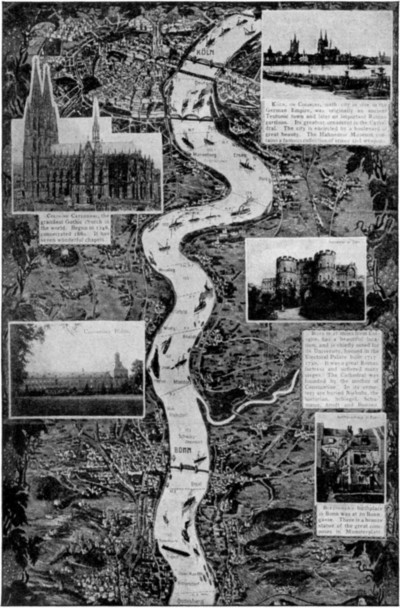
[Top left] Cologne Cathedral, the
grandest Gothic church in
the world. Begun in 1248,
consecrated 1880. It has
seven wonderful chapels.
[Bottom left] University Bldgs.
[Top right] Köln, or Cologne, sixth city in size in the
German Empire, was originally an ancient
Teutonic town and later an important Roman
garrison. Its greatest ornament is the Cathedral.
The city is encircled by a boulevard of
great beauty. The Hahnentor Museum contains
a famous collection of armor and weapon.
[Center right] Hahnentor in Cöln
[Center right] Bonn is 21 miles from Cologne,
has a beautiful location,
and is chiefly noted for
its University, housed in the
Electoral Palace built 1717-1730.
It was a great Roman
fortress and suffered many
sieges. The Cathedral was
founded by the mother of
Constantine. In its cemetery
are buried Niebuhr, the
historian, Schlegel, Schumann,
Arndt and Bunsen.
[Bottom right] Beethoven’s birthplace
in Bonn was at 20 Bonngasse.
There is a bronze
statue of the great composer
in Münsterplatz.
Large image (567 kB)
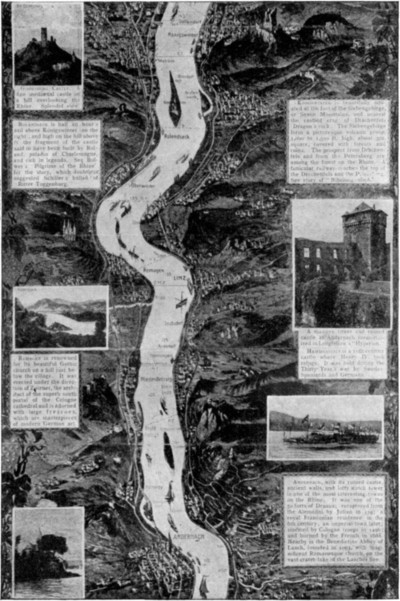
[Top left] Godesburg Castle. A
fine mediæval castle on
a hill overlooking the
Rhine. Splendid view.
[Top left] Rolandseck is half an hour’s
sail above Königswinter on the
right; and high on the hill above
is the fragment of the castle
said to have been built by Roland,
paladin of Charlemagne,
and rich in legends. See Bulwer’s
“Pilgrims of the Rhine”
for the story, which doubtless
suggested Schiller’s ballad of
“Ritter Toggenburg.”
[Center left] Rolandseck
[Center left] Remagen is renowned
for its beautiful Gothic
church on a hill just below
the village. It was
erected under the direction
of Zwirner, the architect
of the superb south
portal of the Cologne
cathedral and is adorned
with large frescoes,
which are masterpieces
of Modern German art.
[Top right] Königswinter is beautifully
situated at the foot of the Siebengebirge,
or Seven Mountains, and nearest
the castles crag of Drachenfels
(Dragon’s rock). The Siebengebirge
form a picturesque volcanic group,
1,000 to 1,500 ft. high, about 5m.
square, covered with forests and
ruins. The prospect from Drachenfels
and from the Petersberg are
among the finest on the Rhine. A
funicular railway reaches the top of
the Drachenfels and the Petersberg.
See story of “Nibelungenlied.”
[Center right] A massive tower and ruined
castle at Andernach memorialized
in Longfellow’s “Hyperion.”
Hammerstein is a 10th century
castle where Henry IV. took
refuge. It was held during the
Thirty Years’ war by Swedes,
Spaniards and Germans.
[Bottom right] Andernach, with its ruined castle,
ancient walls, and lofty watch tower
is one of the most interesting towns
on the Rhine. It was one of the
50 forts of Drusus; recaptured from
the Alemanni by Julian in 339; a
royal Franconian residence in the
6th century; an imperial town later;
stormed by Cologne troops in 1496;
and burned by the French in 1688.
Nearby is the Benedictine Abbey of
Laach, founded in 1093, with magnificent
Romanesque church, on the
vast crater-lake of the Laachser See.
Large image (549 kB)
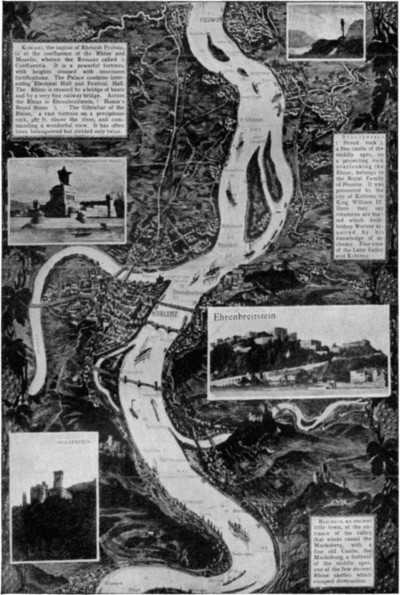
[Top left] Koblenz, the capital of Rhenish Prussia,
is at the confluence of the Rhine and
Moselle, whence the Romans called it
Confluentia. It is a powerful fortress,
with heights crossed with enormous
fortifications. The Palace contains interesting
Electoral Hall and Festival Hall.
The Rhine is crossed by a bridge of boats
and by a very fine railway bridge. Across
the Rhine is Ehrenbreitstein, (“Honor’s
Broad Stone”), “The Gibraltar of the
Rhine,” a vast fortress on a precipitous
rock, 387 ft. above the river, and commanding
a wonderful view. It has often
been beleaguered but yielded only twice.
[Bottom left] STOLZENFELS.
[Top right] Stolzenfels
(“Proud rock”),
a fine castle of the
middle ages, on
a projecting rock
overlooking the
Rhine, belongs to
the Royal Family
of Prussia. It was
presented by the
city of Koblenz to
King William IV.
Here they say
treasures are buried
which Archbishop
Werner acquired
by his
knowledge of alchemy.
Fine view
of the Lahn Valley and Koblenz.
[Center right] Ehrenbreitstein
[Bottom right] Braubach, an ancient
little town, at the entrance
of the valley
that winds round the
Marksberg, with a
fine old Castle, the
Marksburg, a fortress
of the middle ages,
one of the few ancient
Rhine castles which
escaped destruction.
Large image (524 kB)
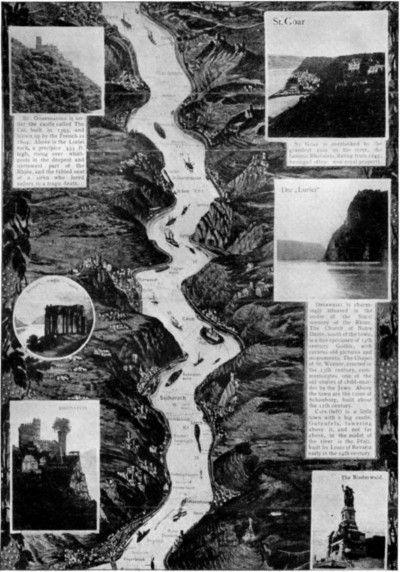
[Top left] St. Goarshausen is under
the castle called The
Cat, built in 1393, and
blown up by the French in
1804. Above is the Lurlei
rock, a precipice 433 ft.
high, rising over whirlpools
in the deepest and
narrowest part of the
Rhine, and the fabled seat
of a siren who lured
sailors to a tragic death.
[Bottom left] RHEINSTEIN
[Top right] St. Goar
St. Goaris overlooked by the
grandest ruin on the river, the
famous Rheinfels, dating from 1245;
besieged often; now royal property.
[Center right] Die „Lurlei“
Oberwesel is charmingly
situated in the
midst of the finest
scenery of the Rhine.
The Church of Notre
Dame, south of the town,
is a fine specimen of 14th
century Gothic, with
curious old pictures and
monuments. The Chapel
of St. Werner, erected in
the 13th century, commemorates
one of the
old stories of child-murder
by the Jews. Above
the town are the ruins of
Schönburg, built about
the 12th century.
Caub (left) is a little
town with a big castle,
Gutenfels, towering
above it, and not far
above, in the midst of
the river is the Pfalz,
built by Louis of Bavaria
early in the 14th century.
[Bottom right] The Niederwald.
Large image (533 kB)
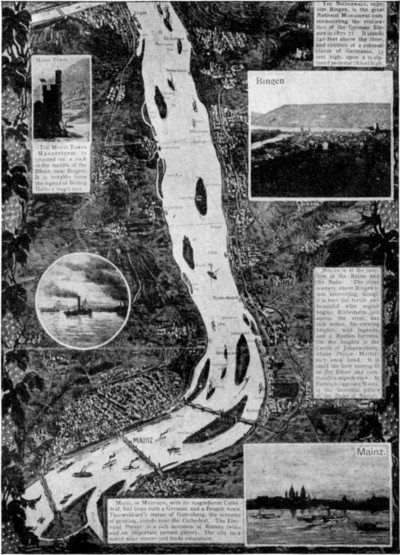
[Top left] Mouse Tower.
The Mouse Tower
(Mäuserturm) is
situated on a rock
in the middle of the
Rhine, near Bingen.
It is notable from
the legend of Bishop
Hatto’s tragic fate.
[Top right] The Niederwald, opposite
Bingen, is the great
National Monument commemorating
the restoration
of the German Empire
in 1870-71. It stands
740 feet above the river,
and consists of a colossal
statue of Germania, 33
feet high, upon a sculptured
pedestal 78 feet high.
[Center right] Bingen
[Center right] Bingen is at the junction
of the Rhine and
the Nahe. The river
scenery above Bingen is
less interesting, though
it is here the fertile and
beautiful wine region
begins. Rüdesheim, just
across the river, has
rich wines, far-viewing
heights, wild legends,
and a Roman fortress.
On the heights is the
Castle of Johannisberg,
where Prince Metternich
once lived. It is
amid the best vineyards
on the Rhine and commands
a superb view. At
Riebrich, opposite Mainz,
is the beautiful palace
of the Duke of Nassau.
[Bottom right] Mainz. Mainz, or Mayence, with its magnificent cathedral,
has been both a German and a French town.
Thorwaldsen’s statue of Gutenberg, the inventor
of printing, stands near the Cathedral. The Electoral
Palace is a rich museum of Roman relics
and an important picture gallery. The city is a
noted wine center and trade emporium.
Large image (592 kB)
THE LOWER RHINE FROM COLOGNE
TO THE SEA
At Bonn the river enters the plains, and
almost immediately after passing the Netherlands
frontier its delta begins. The principal
arm, carrying two-thirds of the volume, flows
under the name of the Waal, and later the Mermede,
to Dordrecht, picking up the Maas
(Meuse) from the left. At Dordrecht the river
again divides for a bit, one branch, the old
Maas, running out to sea; the other, the Noord,
forming a loop by way of Rotterdam. The
northern arm sends one branch, the Yssel, due
north to the Zuider Zee; the other branch is
the Lek, which runs into the Waal-Maas arm
above Rotterdam.
A thin stream, called the “Winding Rhine,”
leaves the Lek and splits at Utrecht into two
channels, of which the Old Rhine, a mere ditch,
manages with the help of a canal and locks to
struggle into the North Sea at Katwyk, northwest
of Leyden, while the Vecht flows due
north from Utrecht to the Zuider Zee near
Amsterdam. In the delta the streams have to
be bordered by dykes.
THE RHINE IN EARLY
EUROPEAN HISTORY
The Rhine was the Romans’ bulwark against
the Teutonic invaders and was long a boundary
between the province of Gaul and the German
tribes. Under Charlemagne the Rhine valley
became the focus of civilization. Except between
1697 and 1871 the Rhine was always a
purely German river; at the peace of Ryswick,
Alsace-Lorraine was appropriated by France,
and the Rhine became part of the dividing line
between France and Germany. In 1801 Napoleon
incorporated the whole of the left bank
with France; in 1815 the arrangement in force
before 1801 was restored; and after 1871 the
Rhine became once more wholly German. It
has often been crossed by armies; twice by
Julius Cæsar; again in the Thirty Years’ war,
and in the wars of Louis XIV., the Revolution,
and Napoleon. Its navigation was declared
free in 1868.
The Rhine is connected by canals with the
rivers Danube, Rhone and Marne. There is a
railway along both its banks, but a steamboat
is greatly preferable for viewing the incomparable
course between Cologne (Köln) and Mainz
(Fr., Mayence) as shown in panoramic form on
preceding page. Its beauties are better displayed,
also, at most points, in ascending the
river than in descending it.
THE DANUBE
THE DANUBE (Ger., Donau), one of the most
important rivers of Europe, and next to the
Volga the largest, originates in two small
streams rising in the Schwarzwald, or Black
Forest, in Baden, Germany, and uniting at
Donaueschingen, two thousand two hundred
and sixty-four feet above sea level. The
Germans occupy the entire upper basin, and
portions of the middle and lower; the Slavs
parts of both banks of the middle course; the
Magyars the central portion of the valley; and
the Roumanians the lower regions.
GENERAL COURSE OF THE
GERMAN DANUBE
The river flows first southeast and then
northeast to Ulm, one thousand, five hundred
and nineteen feet above sea level. At Regensburg
it reaches its most northerly point, and from
thence its course is generally southeast. Between
Regensburg and Vienna the banks of the
river are frequently remarkable for their romantic
beauty. At Tuttlingen it contracts and the
hills crowd close to the banks, while ruins of
castles crown almost every possible summit.
The scenery is wild and beautiful until the river
passes Sigmaringen.
THE AUSTRIAN DANUBE, FAMED
IN HISTORY AND SONG
From Passau the Danube flows through
Austria for a distance of two hundred and
thirty-three miles. Closed in by mountains it
flows past Linz in an unbroken stream; below,
it expands and divides into many arms until it
reaches the famous whirlpool near Grein, where its
waters unite and flow on in one channel for forty
miles through mountains and narrow passes.
Between Linz and Vienna it is renowned not
only for its picturesque beauty, but for the
numerous historic buildings and ruins which
crown its banks. The splendid Benedictine
monastery of Melk, the ruins of Durrenstein,
and the prison of Richard the Lion-hearted are
among the most interesting.
Vienna, to defend the city against risk of
inundation, the course of the Danube skirting
it was, in 1868-81, diverted into an artificial
channel. Similar works have been undertaken
near Budapesth, in Hungary.
FROM VIENNA TO
THE IRON GATE
After passing Vienna and Marchfeld, the
river cuts through a defile formed by the lower
spurs of the Alps and Carpathians and enters
Hungary at the ruined castle of Theben, a little
above Pressburg, the old Magyar capital. Here,
again, it gives off a number of branches, forming
a labyrinth of islands known as Schütten, but
on emerging it flows uninterruptedly southward
through wide plains interspersed with pools,
marshes, and sandy wastes. The principal
affluents here are the Save, the Drave, and the
Theiss.
Sixty miles before entering Roumania the
river passes through a succession of rapids or
cataracts which it has made in cutting a passage
for itself through the cross chain of hills which
connect the Carpathian Mountains with the
Alps. The last of these cataracts, at Old
Orsova, is called the Iron Gate. Between 1878
and 1898, the Hungarian government carried
through, at a cost of seven million five hundred
thousand dollars, extensive engineering works
at the gorges of the Iron Gates for deepening
the channel and cutting a canal.
ITS JOURNEY THROUGH THE BALKAN
COUNTRIES
The lower course of the Danube, in Roumania
and Bulgaria, is through a flat and marshy
tract, fertile but badly cultivated and thinly
peopled. It forms the northern boundary of
Bulgaria as far as Silistria; and from here it
turns northward, skirting the Dobruja, and
flows between marshy banks to Galatz, receiving
on the way the Jalomitza and the Sereth. From
[454]
Galatz it flows east, and, after being joined by
the Pruth from the north, it continues southeast
to the Black Sea.
The delta is a vast wilderness (one thousand
square miles) cut up by channels and lagoons;
the farthest mouths are sixty miles apart. Two-thirds
of the Danube’s volume passes through
the Kilia, which, like the southern or St. George
branch, forms a double channel near the outlet;
and so ships enter by the middle or Sulina
mouth, deepened to twenty feet and straightened
in 1858-1903. The steel cantilever bridge
across the river at Tchernavoda is one of the
great railway bridges of the world.
ITS CHIEF TOWNS AND COMMERCIAL
IMPORTANCE
The principal towns on the Danube are
Ratisbon, Vienna, Pressburg, Budapest, Belgrade,
and Galatz. The width of the river
varies considerably, and at some points the
opposite shore is hardly discernible. It is first
navigable at Ulm, and, thanks to various
improvements, is now navigable continuously
from that point to its mouth. Engineering
work to this end, undertaken at Vienna, Budapest,
and the Iron Gates has already been
referred to. The International Danube Navigation
Commission, appointed in 1856, controls
the lower portion of the river, and has done
much to improve navigation at the delta. Sea-going
vessels of six hundred tons can now go
nearly as far as the Iron Gates, while vessels of
twenty-five hundred tons can go above Galatz.
By means of canals the Danube is connected
with the Rhine and the Elbe.
ITS PART IN HISTORY AND
INTERNATIONAL POLITICS
This mighty river is exceedingly rich in historical
and political associations. For a long
period it formed the frontier of the Roman
Empire, and along its course are still found
many notable Roman remains. Traces of the
great wall erected by the Emperor Trajan are
to be seen on the south side of the Hungarian
Danube. At Turn Severin, east of the Carpathians,
a tower and several piers of Trajan’s
Roman bridge, a splendid piece of ancient
engineering, are still standing; while his more
marvelous road in the rocky Kazan defile is
marked by a Roman tablet still visible.
The struggles of races and peoples in the lands
bordering the Danube have been among the
fiercest and strongest in all history. Finns,
Kelts, Germans, Slavs, Greeks, Italians and
Turks have all vied with one another in the
race of conquest and possession; and even
today the Balkan countries are still in the
seething cauldron of new struggles for domination
or independence.
The Lake Region of Europe lies round
the Baltic. Ladoga, in Russia, is the
largest fresh-water lake in Europe, as
wide across as the English Channel, between
Portsmouth and Cherbourg. Onega,
and Peipus (Russia) are also of great
size, as well as the lakes of Finland and
Sweden, and some of those of the Alps.
Chief of these are Wetter and Mœlar in
Sweden; the myriad lakes of Finland;
the beautiful lakes of the folds of the
Alps, Geneva, Neuchatel, and Constance
on the north side; and Maggiore, Como,
and Garda in the Italian valleys. They
will be noticed further under the countries
to which they belong.
Of the nations of Europe it may be
said that in point of rank Great Britain,
Germany, France, Austria, and Russia
stand first as the “five great powers.”
These include within their limits more
than two-thirds of the entire population
of Europe, and have for a long time controlled
all continental questions. Second
come Italy, Spain, and Sweden; in third
rank are Turkey, Belgium, Holland,
Denmark, and Portugal.
Another grouping on the basis of race
stocks is frequently made beginning with
the highest in culture, the Germanic; passing
thence to the Romanic; concluding
with the Slavonic, and the lands under the
rule of the Turks, lowest in the scale,
which are most closely connected with
the Mongols of Asia. The Germanic, or
Teutonic nations, include Great Britain;
the German Empire; Austria-Hungary;
Scandinavia (Norway, Sweden, Denmark);
Holland, or the Netherlands;
Switzerland, and Belgium. The Romanic
nations include France; Italy; Spain;
Portugal; Greece, and Roumania. The
Slavonic nations, Russia in Europe; Servia,
and Montenegro. The Turkish or
Mongol nations, Turkey in Europe; Bulgaria.
For various reasons the first grouping
is adopted in the pages following.
GREAT BRITAIN
The British Empire, Great Britain and England
are often erroneously used in the popular
mind for one and the same nation. In strict
accuracy the British Empire consists of (1) The
United Kingdom of Great Britain and Ireland;
(2) India, and the British Colonies, Protectorates,
and Dependencies. Great Britain proper
includes only England, Scotland and Wales.
What is really meant is the geographical group
of the British Isles, including England, Scotland,
Wales, Ireland and the adjacent islands. For
here is the source of power and authority that
holds together and controls this greatest of
modern empires.
Geographical Features.—The British Isles
belong distinctly to the mainland of Europe.
If we imagine the sea level between England
and Holland to fall sixty feet—the height of
an ordinary house—the broad Dogger Bank,
midway between England and Denmark,
would begin to show its sands, and if a fall of
two hundred feet took place one might walk
dry shod across to the continent, to Belgium,
Holland, or Denmark. From its shallows and
banks, its stormy cross seas and frequent fogs,
the navigation of the North Sea is dangerous;
yet the traffic over it is enormous, for it is
surrounded by countries, the inhabitants of
which have been famous on the seas from the
earliest times.
The great highways of commerce from it are
Dover Strait, leading to the English Channel,
in the south, and the stormy Pentland Firth,
which separates Scotland from the Orkney
Islands, in the north. The English Channel,
though deeper than the North Sea, is also
shallow; the enclosed Irish Sea, between
England and Ireland, with St. George’s Channel
and the North Channel leading out from it to
the ocean, has been scoured deeper in its central
lines; but there is a width of about
fifty miles of shallow sea, or “soundings,” all
round the islands, in the west, where they face
the broad Atlantic.
Chief Islands and Divisions.—The main
island of Great Britain, roughly triangular in
shape, measures about six hundred miles in a
straight line from its southwest corner, where
the granite walls of Land’s End and the dark
serpentine cliffs of the Lizard run out into the
Atlantic, to the northern apex, the high red
sandstone rocks of Dunnet Head, or its companion
Duncansby Head, where John o’Groat’s
House stood, on the beach of the Pentland
Firth.
The base of the island, forming the north
coast of the English Channel, measures only
about half this distance, or three hundred and
twenty miles; and the eastern side, from the
chalk cliffs of the South Foreland, on the Strait
of Dover, to the Pentland Firth, is about five
hundred and forty miles long. No part of the
interior of Great Britain is more distant than
three or four days’ walk from the sea on one
side or other. In the narrower parts of the
north of Scotland, indeed, where the Moray
Firth runs into the land, it is an easy day’s
journey from the head of this inlet of the
North Sea to that of one or other of the
opposite sea lochs running in from the Atlantic.
The second island, Ireland, more rounded in
general outline, measures three hundred miles
from Malin Head, its northernmost point, to
Mizen Head, its most southerly extremity,
and two hundred miles from Carnsore Point,
its southeastern corner nearest England, to
Erris Head, its northwestern promontory on
the Atlantic.
Smaller Islands.—The most extensive of the
many island groups and islets are those which
lie off the broken west coast of Scotland, the
wild and rugged Outer and Inner Hebrides, of
which Lewis, separated by the channel called
the Minch, and Skye, Mull, Islay and Arran,
in the inner group, are the largest. The
Orkney group, separated from the north of
Scotland by the turbulent Pentland Firth,
consist of no fewer than fifty-nine rocky islets;
and the Shetlands, forty miles farther north,
comprise upwards of a hundred separate
points. The high Isle of Man, in the middle
of the Irish Sea; Anglesey, close to the Welsh
coast; and now united to it by the famous
railway tubes across the Menai Strait; and
the Isle of Wight, “the garden of England,”
in the English Channel, separated from the
mainland by the busy Solent, are the others
of importance. The Channel Islands, of which
Jersey and Guernsey are the largest, belong
politically to Britain, but are physically parts
of France.
Surface: Mountains and Lowlands.—In the
island of Great Britain the highest portions lie
generally to north and west, the lowlands to
south and east.
The heather-covered Highlands, which fill
the north of Scotland, are divided by the great
natural passage of Glen More, which runs in a
straight line across the island from northeast
to southwest into two chief groups, the
northern and central.
The northern group consists of irregularly-distributed
and often almost isolated masses,
separated, it may be, by deep sea-fiords, and
presenting every variety of contour, from that
of the round mass of Ben Wyvis to the steep,
wall-like sides of Suilvein or the sharp peak of
Ben Stack. The Central Highlands or the
Grampians, extending from the peninsula of
Cantyre northeastward to the precipitous
coast of Buchan on the North Sea, are far
more massive and continuous.
Ben Nevis, a huge round mass ascending
abruptly from the shores of Loch Eil at the
mouth of the Great Glen, is the highest mountain
of the British Isles.
The Southern Highlands of Scotland are
more broken, and separated by river valleys.
Mount Merrick, in the southwest, is their highest
point; the Lowther Hills form their central
group; the Pentlands, Moorfoot, and Lammermoor
hills their more detached portions, on the
northeast.
With the Cheviot Hills, the boundary range
between Scotland and England, begins the
long Pennine chain, which reaches due south
into the heart of England. Cheviot Hill, in
the north, Crossfell, and Whernside, and the
Peak of Derby, in the south, mark the summits
and direction of the chain. To the west of the
Pennine chain rises the compact circular knob
of slate mountains of Cumberland, of which
Scawfell is the summit of England proper.
And corresponding to this mass, near the
opposite coast, are the eastern moorlands and
wolds of Yorkshire.
Separated from the Pennine heights by the
plain of Cheshire (west of England) rise the
highlands of Wales, collectively called the
Cambrian Mountains.
Across the Bristol Channel we come to the
heights of the southwestern peninsula of England,
with its three groups of Exmoor, Dartmoor,
with its rugged granite tors, and the
Cornish Heights. These are the more important
mountain groups of Great Britain.
Over all the south and east of England the
elevations are comparatively insignificant;
broad, undulating, grassy uplands, called the
South Downs and the Chiltern Hills, rarely
attaining more than eight hundred feet of
elevation, follow the chalk formation across
Southern England as far as Beachy Head on
the Channel and the Foreland Cliffs on the
Strait of Dover. The limestone Cotswold Hills
between these and the Welsh Highlands rise
somewhat higher.
Almost all the lowlands of Great Britain lie
to the east and south. Here we find the plain
of the “New Forest” in Hampshire and the
treeless Salisbury Plain, the broad open Valley
of the Thames, the “Eastern Plain” of Essex,
Suffolk, and Norfolk, extending with rounded
shores towards the North Sea; the low “Fen
District” behind the shallow estuary of “The
Wash,” from which many tracts have been
reclaimed; the long “Plain of York” beyond;
the valleys of the Tees and Tweed, the latter
including the cultivated “Merse,” the march
or border land of Berwickshire; the Scottish
“Lowlands” between the Central and Southern
Highlands; the “Carse” or alluvial plain of
Gowrie, north of the Tay; “Strathmore,” the
broad valley which extends between the Grampians
and their southern outliers; the plain
of Cromarty and the level moors of eastern
Caithness farthest north of all. The only
extensive lowlands on the western side of the
island are the “Vale of Severn,” the “Plain of
Cheshire,” between the Pennine chain and the
Welsh Highlands, the lowlands round the
estuary of the Solway, those of Ayrshire, and
the Valley of the Clyde.
Crossing over to Ireland, though we find the
lines of elevation running generally in the
same direction as those of Great Britain, or
from northeast to southwest, as shown in the
peninsulas of the southwest coast, the mountains
appear rather in detached clusters than
in definite ranges, with shapes rather rounded
than abrupt, forming a fringe round the coasts.
The plateau of Antrim, which forms the precipice
of Fair Head, the nearest point to the
Scottish coast, contains the remarkable basaltic
scenery of the Giants’ Causeway.
Giants’ Causeway.—This extensive and extraordinary
assemblage of basaltic columns is in
the county of Antrim, between Bengore Head
and Port Rush. The name is sometimes given
to the whole range of basalt cliffs along the coast,
some of which reach the height of four or five
hundred feet; but it is more properly restricted
to a small portion of it where a platform of
closely-ranged basalt columns from fifteen to
thirty-six feet in height runs down into the
sea in three divisions, known as the Little, the
Middle, and the Grand Causeway. The last
is from twenty to thirty feet wide, and stretches
some nine hundred feet into the sea.
The Giants’ Causeway derives its name from
the legend that it was built by giants as a
road which was to stretch across the sea to
Scotland. There are similar formations on
the west coast of Scotland, on the island of
Staffa.
In the southwest are the Mountains of Kerry,
containing Cam Tual, the summit of all Ireland.
The only important groups that lie centrally
in the island are the mountains of western
Tipperary.
Within the circle of these heights, and
branching out between them at many points
to the sea-coast, lies the Great Plain of Ireland,
averaging perhaps two hundred feet in elevation
above the sea. The highest point between
Dublin and Galway, east to west across
its center, is only three hundred and twenty
feet above the sea-level. Many parts of it,
such as that which surrounds Lough Neagh in
the north, are scarcely fifty feet in elevation.
Rivers.—England and Ireland are very bountifully
watered; Scotland rather less so, as the
higher mountains of Great Britain rise in the
west of the island, so the water-parting line
following the greatest general height lies nearer
the west than the east. The longer and
gentler slope of the island is to the North Sea;
the shorter and steeper to the Atlantic side.
Hence most of the larger rivers belong to the
North Sea drainage.
The Thames (Temz), the most important river
of Great Britain, flows southeast by east across
the southern portion of the country. It rises in
the Cotswold Hills and follows a course of some
one hundred and ninety miles to Gravesend, the
head of the estuary, where it has a width of half
a mile, gradually increasing then to ten miles at
the Nore lightship about thirty miles farther.
By the addition of its tributaries the Colne, Leach,
and Churn, it becomes navigable for barge traffic
at Lechlade, where the canal to the Severn leaves.
Above Oxford the stream is frequently called the
Isis. At Oxford the navigability improves, and
river steamers ply between Oxford and points
below it as far as London. Until the Tower
Bridge, in London, was built, London Bridge was
the lowest in the course, and ocean-going vessels
still reach the latter.
Gravesend, twenty miles lower, grew up at the
spot where vessels waited the turn of the tide;
a little farther the Medway, by virtue of its
estuary the most important tributary, enters;
just inside this is Chatham, an important naval
depot. Opposite Gravesend and on the north
bank is Tilbury, the terminus of modern liners.
The waters from the Tilbury docks to the Nore
lightship are of great strategic importance, hence
there is here a station for destroyers, torpedo-boats,
and gun-boats. Sheerness and Shoreham
as land defenses add to this.
From London Bridge downward the Thames is
lined with docks and wharves, the former being
now under the Port of London authority. At
Woolwich, on the south bank, eight miles below
London Bridge, is the arsenal, and a little farther
up the river Greenwich Observatory.
Historically, the Thames is unsurpassed by any
river of the world. A slight rise surrounded by
marsh on the left bank formed the first point
suitable for bridging a strategic site for London,
the tide giving facilities to it as a port, while
yet placed well up the river for defensive purposes.
Still farther up, a dominating site in the
lower valley was found at Windsor for the
mediæval kings. In Anglo-Saxon times the
kingdoms were divided by the river, and the
break in the Chiltern Hills at Goring was a
check in the line of aggression.
Above London the scenery is rich and beautiful,
though not romantic, the numerous islands lending
a peculiar charm. The Thames is the best
beloved of English rivers for those who boat for
pleasure. During the summer the Thames is a
favorite holiday resort, house-boats being frequently
the temporary homes of pleasure-seekers;
[457]
and regattas are held at Henley, Kingston, and
other places. For boat-racing, it divides the
honors with the Tyne. The Thames watermen
are renowned in song and story. Since Spencer’s
days “the silver-streaming Thames” has been
sung by England’s poets; Herrick calls it “Silver-footed
Thamesis;” Denham’s apostrophe is
famous; and Pope has word-painted much of
the scenery of its banks.
Other British Rivers.—The next longest river
to northward is the Great Ouse, navigable from
the west for ninety miles to Bedford; then we
come to the group of rivers which water the long
plain of York, and unite in the estuary of the
Humber, including the Trent from the south,
navigable one hundred and five miles to Burton;
the Yorkshire Ouse, navigable forty-five miles to
the city of York, with its main tributary the
Derwent. Farther north are the Tees and Wear,
and the busy Tyne. Passing into Scotland, we
reach the Tweed, valuable for its fisheries, but
unnavigable; the Forth, winding in links through
the fertile lowland, navigable to Stirling; the
Tay, navigable to Perth; the rapid Dee and Spey
from the Grampians, and the Ness from the lakes
of Glenmore.
On the western or Atlantic side of Britain, the
largest river, the second in drainage area in the
island, is the Severn, drawing its upper tributaries
from the Welsh mountains, and its chief lower
affluent, the navigable Avon, from England,
curving round to the British Channel; it is navigable
to Welshpool, one hundred and twenty
miles from its mouth. The Mersey, though a
short river, forms one of the most important
estuaries of the island, the “Liverpool Channel.”
Scarcely less valuable in this respect is the lower
Clyde, the most important commercial river of
Scotland, navigable to Glasgow, and forming in
its upper valley the largest falls in the island.
Almost all the river estuaries of Britain are
great highways of commerce; the Solway Firth,
between England and Scotland on the west coast,
is the most important exception, its swift and
strong tides, rushing in over the sands so fast that
a galloping horseman can scarcely escape from
them, being exceedingly dangerous to shipping.
Besides these estuaries many natural harbors lie
round the coast. Such are the sheltered Solent
and Portsmouth harbor behind the Isle of Wight,
Plymouth Sound farther west, and Milford Haven
on the south coast of Wales, unsurpassed perhaps
in the world as a deep and spacious harbor
thoroughly sheltered from all winds.
British Lakes.—The lakes of South Britain are
comparatively few and small. Bala Lake, only
four miles long, is the largest in the Welsh
Highlands; in England the only considerable
group is that which clusters round the knot of
mountains in Cumberland, known through the
rare interest that has been added to this district
by the group of illustrious poets who
made it their home about the beginning of the
nineteenth century.
English Lake District.—Within this area are
grouped as many as sixteen lakes or meres, besides
innumerable mountain tarns and streams. The
district extends about thirty miles from north to
south by about twenty-five from east to west, and
contains within its compass the utmost variety
and wealth of natural scenery, soft and graceful
beauty ever alternating closely with grandeur and
sublimity.
Windermere, the largest of the lakes (ten and
one-half miles by one mile), lies in the southeast
corner of the district and is connected with Rydal
Water, Grasmere, Elther Water, and Esthwaite.
To the west rises the Scawfell range, terminating
in the Old Man of Coniston, which rises above
Coniston Water, and to the east of the Scawfell
range lies Wastwater (three miles long), the
deepest of all the lakes. In the northeast is
Ullswater, with the sequestered Hawes Water to
the southeast. To the west of Helvellyn is
Thirlmere, which is the reservoir for the water
supply of Manchester, dammed in 1890-1894.
The river Derwent, rising in the Scawfell range,
flows north through Borrowdale and forms
Bassenthwaite and Derwentwater, the most
beautiful of the lakes. Westward from Borrowdale
opens a valley in which lie Buttermere and
Crummock Water, and between these and the
Derwent valley is Ennerdale Water. There are
several waterfalls, the chief, perhaps, being
Lodore, near Derwentwater. Near Derwentwater
lies Keswick, the chief town of the district,
while Ambleside and Bowness (Windermere) and
Hawkshead (Esthwaite) are other places of
importance.
Of the lake school of poets, Wordsworth was
the acknowledged head and founder, and his
home for sixty years was in the Lake District.
Southey, Samuel Taylor Coleridge, and De
Quincey were the chief of the group, and Shelley,
Scott, Carlyle, Mrs. Hemans, Matthew Arnold,
Edward Fitzgerald, Tennyson, Gray, and Charles
Lamb, although not directly associated with the
school, were connected with the district.
Scotch Lakes.—Scotland abounds in lakes in all
three Highland districts, and their number increases
towards the north. Loch Lomond, twenty-four
miles long, in the largest in Britain, Loch
Awe, Loch Tay, Loch Rannoch, and Loch Ericht,
may be mentioned as the largest of those in the
Grampian valleys. Loch Ness, twenty-four miles
long and eight hundred feet deep, with Loch Oich
and Loch Lochy, fills the deep trench of the Great
Glen between the Grampians and the Northern
Highlands; Loch Shin, twenty miles long and
only one mile broad, and Loch Maree, are the
largest of the Northern Highland region. On
the western watershed of the Northern Highlands,
however, lakes are so thickly sown that hundreds
may be counted from a mountain top, and the
Outer Hebrides are covered with a perfect network
of them.
Irish Rivers and Lakes.—In Ireland, in contrast
to Britain, the watersheds are more evenly
divided toward all points of the compass; the
greatest drainage, however, is westward to the
Atlantic. On this side we find the largest river,
the Shannon, one hundred and sixty miles long,
draining an area second only to that of the Thames
in extent, and affording a navigable highway over
the central plain almost up to its source. The
Erne is another large river of the western drainage
of Ireland. Flowing northward we find the
Foyle, and the Bann passing through Lough
Neagh, and navigable for fifty-five miles. On the
eastern watershed the Liffey, from the Wicklow
Mountains, is the most important stream; the
Barrow, navigable to Athy, seventy miles from
its fine estuary of Waterford Harbor, receiving
near its mouth the almost equally important
Nore and Suir, is the chief river of the southern
drainage; the Blackwater, affording twenty-two
miles of navigation, and the Lee, flowing to Cork
(Queenstown) Harbor, are the other notable rivers
of this slope.
The lakes of Ireland, in contrast to those of
Britain, belong rather to the plain than to the
mountain regions. Lough Neagh, in the basin
of the Bann in the north, is the largest of all in
the British Islands, one hundred and fifty-four
square miles in area, twenty miles in length. The
lakes of the Erne, upper and lower, stand next in
size; Loughs Corrib and Mask in Connaught,
joined by a subterranean channel, are the largest
in the west. The Shannon has three large
expansions, Loughs Allen, Ree, and Derg. Most
famous for their scenery, however, are the much
smaller highland Lakes of Killarney, embosomed
[458]
in the southwestern mountains of Kerry, and
considered the finest in Great Britain.
Climate.—Their maritime situation has a
favorable effect on the climate of the British
Isles, making it milder and more equable than
that of continental countries in the same latitude.
Peoples of the British Isles.—During the four
centuries in which the Romans held the lowlands
of South Britain, many of the native
British tribes became Romanized, but the
Celtic peoples of the mountain regions of
Wales, the Scottish Highlands, and of the
west of Ireland, have retained their language
and more or less pure blood to the present day.
After the fall of the Roman power the invading
Anglo-Saxons and Jutes conquered the island,
and to their strong Germanic element followed
that of the brilliant Normans, or Northmen
who had settled in Normandy, and who had
there adopted the religion, language, and manners
of the French.
Thus the population of these islands is a
mixed Celtic, Germanic, and Romanic one, all
its elements being more thoroughly amalgamated
in the populous lowlands of Britain,
the Celtic remaining purer in the highland
regions, which are more difficult of access. In
Ireland the Teutonic element prevails along the
eastern margin; thence towards the western
mountains the transition is gradual to the
pure Celtic.
Religion.—In religion, rather more than half
the population of England claims membership
in the Church of England; the most prominent
other bodies being the Wesleyan Methodists,
the Independents, and Baptists. About a
twentieth part of the population is Roman
Catholic.
Cities.—The three largest cities in Wales are
Cardiff, Rhondda, and Merthyr Tydfil. The
capital of England and of the British Empire
is London. The cities next in size (in order of
population) are Liverpool, Manchester and
Salford, Birmingham, Leeds, Sheffield, Bristol,
Bradford, Nottingham, and Hull.
The capital of Scotland is Edinburgh.
Glasgow is the industrial metropolis, followed
by Dundee, and Aberdeen. After these come,
in order of population, Paisley, Leith, Greenock,
Coatbridge, Kilmarnock, Kirkcaldy,
Perth, Hamilton, Motherwell, and Falkirk.
The capital of Ireland is Dublin; the other
chief towns are Belfast, Cork, Limerick, and
Londonderry.
There are numerous other cities, towns,
villages and districts notable for industrial,
educational, historical, literary, or other
associations.
THE VICTORIA EMBANKMENT, LONDON, WITH THE THAMES IN THE FOREGROUND
LONDON, the capital of the British Empire and
the second largest city in the world, is situated
in the southeast of England on both sides of the
River Thames, which winds through it from west to
east. The river is crossed by numerous bridges
and is deep enough to allow large vessels to
come up to London Bridge, the lowest of these
(except the movable Tower Bridge), where it is
two hundred and sixty-six yards wide. London
may be said to stretch from east to west about
fourteen miles, from north to south about ten.
The area embraced by the Metropolitan and
City police districts, including all parishes within
fifteen miles of Charing Cross, is spoken of as
Greater London. The population of London
roughly equals that of Scotland, Holland, Portugal
or Sweden. Under the Act of 1899 London
includes the municipal boroughs of Battersea, Bermondsey,
Bethnal Green, Camberwell, Chelsea,
Deptford, Finsbury, Fulham, Greenwich, Hackney,
Hammersmith, Hampstead, Holborn, Islington,
Kensington, Lambeth, Lewisham, Paddington,
Poplar, St. Marylebone, St. Pancras, Shoreditch,
Stoke Newington, Wandsworth, Westminster
and Woolwich.
General Features.—The greater portion of
London lies on the north side of the Thames,
in the counties of Middlesex and Essex, mainly
the former, on a site gradually rising from the
river, and marked by several inequalities of no
great height, except in the northern suburbs,
where the elevation of four hundred and thirty feet
is reached; on the opposite bank, in the county
of Surrey and partly in Kent, the more densely
built parts cover an extensive and nearly uniform
flat, in some places below the level of the highest
tides, while the outskirts are mostly elevated.
The nucleus of London was formed by what is
still distinctively the City of London, situated in
the heart of the metropolis on the north bank of
the Thames. The City is a separate municipality,
having a civic corporation of its own, at its head
being the Lord-mayor of London. The City
occupies only six hundred and seventy-one acres,
and has a resident population of only twenty-seven
thousand.
Westminster, another portion of old London,
associated with the sovereigns, the parliaments,
and the supreme courts of justice of England for
over eight hundred years, borders with the City
on the west; while across the river from the
city lies the ancient quarter of Southwark, or
“The Borough.” Besides these, London consists
of a great number of well-defined quarters or
districts, as well as many minor districts, the
names of which are familiar to the outside world,
such as Whitechapel, Spitalfields, Pimlico, Bloomsbury,
Bermondsey, Belgravia, etc. Another loose
division of London is into the West End or
fashionable quarter, the residence of the wealthy,
and the East End, the great seat of trade and
manufactures.
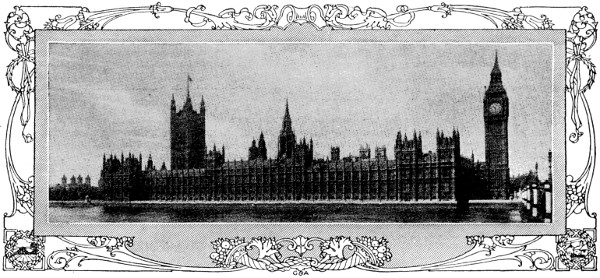
PARLIAMENT BUILDINGS, LONDON
The financial and business houses of the city
are principally located to the east of St. Paul’s;
the galleries, theaters, and places of amusement
between St. Paul’s and St. James’s Park; the
parks and residences of the nobility upon the
western margin of the city. The railway stations
are, with few exceptions, in the suburbs.
London, on the whole, may be called a well-built
city, brick being the material generally employed,
though many public and other edifices
are built of stone. In some streets the brick
fronts are made to imitate stone by being coated
with cement. The streets are generally well
kept and well paved and lighted, but, except in
some of the more recent quarters, the general
appearance of London is not attractive, much of
the effect of the fine buildings being lost by
overcrowding and the want of fitting sites.
What generally most strikes a stranger in
London is its immense size, which can only be
grasped by actually traveling about, or by
obtaining a view from some elevation, as Primrose
Hill in the northwest, or the dome of St. Paul’s
Cathedral near the center, the most conspicuous
building in the metropolis. Other striking and
also attractive features of London are the parks,
especially Hyde Park and Regent’s Park, so valuable
as breathing spaces; and the handsome and
massive stone embankments along the Thames,
forming wide roadways and promenades bordered
by trees for long distances.
As the capital of the British Empire, London is
from time to time the residence of the sovereign
and court. It contains the buildings for the
accommodation of parliament and all the great
government departments. It is the chief intellectual
center of Britain, and is equally great as
a center of commerce, banking and finance
generally.
Main Streets.—Although in the different
districts of London, with the exception of the parts
most recently built, there are numerous narrow
and crooked streets, yet the whole extent of the
metropolis is well united by trunk lines of streets
in the principal directions, which render it comparatively
easy for a stranger to find his way
from one district to another. Picadilly and Pall
Mall; the Strand and its continuation Fleet Street,
Oxford Street and its continuations, Holborn,
Holborn Viaduct, and Cheapside eastward, and
Bayswater Road, Notting Hill High Street, and
Holland Park Avenue westward, are among
noteworthy streets running east and west; while
of those running north and south, Regent Street,
perhaps the handsomest street in London, and
the location of fashionable shops, is the chief.
Edgware Road, with its continuations, is an important
thoroughfare running northwest. Kings-way
and Aldwych, connecting Holborn with the
Strand, were opened in 1905.
Many of the streets are closely associated with
special trades, industries, pursuits, etc. Thus
Bond Street is associated with jewelers, Oxford
Street and Regent Street with milliners, the
Burlington Arcade with fashionable haberdashers,
Fleet Street with newspapers, Northumberland
Avenue and the Strand with hotels, Long Acre
with carriage builders, Shaftesbury Avenue with
theaters, while Pall Mall is the especial center of
clubland. Booksellers’ Row and the Lowther
Arcade in the Strand, famous respectively for
second-hand book shops and for toy shops, have
both disappeared quite recently. The Thames
Embankment on the north or Middlesex side,
known as the Victoria Embankment, also forms a
magnificent thoroughfare, adorned by important
buildings, and at different points with ornamental
grounds and statues.
Bridges.—A number of magnificent bridges
cross the Thames. The lowest is the Tower
Bridge, a “bascule” bridge opening by machinery
so as to let ships pass through. The others most
remarkable in upward order (exclusive of railway
bridges) are London Bridge, nine hundred
feet long, and built of Aberdeen granite; Southwark
Bridge, and Blackfriars’ Bridge, all connecting
the city with Southwark; Waterloo
Bridge, one thousand three hundred and eighty
feet long, consisting of nine elliptical arches of
Aberdeen granite; Westminster Bridge, an elegant
structure of iron, one thousand two hundred
feet long, crossing the river from Westminster to
Lambeth; Vauxhall Bridge (rebuilding completed
in 1906), carrying an electric railway; Putney
Bridge, and Hammersmith Bridge. A great
traffic passes under the river in tunnels, some for
[460]
electric railways. The old Thames Tunnel, two
miles below London Bridge, now contains a railway.
The great Blackwall Tunnel, farther down,
is for general traffic.
Parks and Squares.—The chief parks are in
the western portion of the metropolis, the largest
being Hyde Park and Regent’s Park, which,
together with St. James’s Park and the Green
Parks, are royal parks. The most fashionable is
Hyde Park, containing about four hundred acres.
It is surrounded by a carriage-drive two and one-half
miles long, has some fine old trees, large
stretches of grass, and contains a handsome sheet
of water sadly misnamed the Serpentine River.
Kensington Gardens (three hundred and sixty
acres), with which Hyde Park communicates at
several points, are well wooded and finely laid
out. St. James’s Park, eighty-three acres, and
the Green Park, seventy-one acres in extent,
adjoin Hyde Park on the southeast. Regent’s
Park, in the northwest of London, north of Hyde
Park, containing the gardens of the Zoological
Society and those of the Royal Botanic Society,
covers an area of four hundred and seventy acres.
The Zoological Gardens contain the largest collection
of living animals of all kinds in the world.
Adjoining Regent’s Park to the north is Primrose
Hill. There are, besides, Victoria Park in the
northeast of London, Hampstead Heath in
the northwest, the happy hunting-ground of
the toilers of the city on “bank holidays.”
Battersea Park in the southwest, West
Ham Park in the extreme east, Greenwich
Park at Greenwich, etc.
Of the squares the most central and
noteworthy is Trafalgar Square, with Charing
Cross adjoining. Most of the squares
possess gardens, some public, such as
Leicester Square, others private, as
Grosvenor Square, Russell Square, Bedford
Square, Tavistock Square, etc.
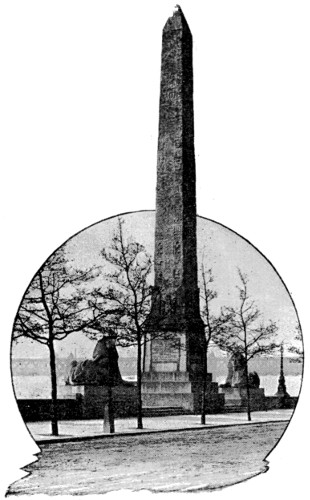
CLEOPATRA’S NEEDLE, LONDON
Monuments.—Among the public
monuments are “The Monument” on
Fish Street Hill, London Bridge, a
fluted Doric column two hundred and two feet
high, erected in 1677 in commemoration of the
great fire of London; the York Column, in
Waterloo Place, one hundred and twenty-four
feet high; the Guards’ Memorial (those who fell
in Crimea), same place; the Nelson Column, in
Trafalgar Square, one hundred and seventy-six
and one-half feet high, with four colossal lions by
Landseer at its base; the national memorial to
Prince Albert in Hyde Park, probably one of the
finest monuments in Europe, being a Gothic
structure one hundred and seventy-six feet high,
with a colossal statue of the prince seated under
a lofty canopy; Cleopatra’s Needle on the
Thames Embankment; a handsome modern
“cross” at Charing Cross; and numerous statues
of public men. The Queen Victoria Memorial at
Buckingham Palace, on a grand scale, was designed
by Sir Aston Webb, R.A.
Public Buildings.—Among the royal palaces
are St. James’s, a brick building erected by
Henry VIII.; Buckingham Palace, the King’s
London residence, built by George IV.; Marlborough
House, the residence of the Prince and
Princess of Wales; Kensington Palace, a plain
brick building, the birthplace of Queen Victoria.
These are all in the west of London.
Lambeth Palace, the residence of the Archbishop
of Canterbury, is situated on the Surrey
side of the river, while Fulham Palace, the residence
of the Bishop of London, is in Fulham,
near Putney Bridge.
On the north bank of the Thames stand the
Houses of Parliament, a magnificent structure
in the Tudor Gothic style, with two lofty towers.
The buildings cover about eight acres, and cost
fifteen million dollars. Westminster Hall, adjacent
to the Houses of Parliament, a noble old pile
built by William Rufus, was formerly the place
in which the Supreme Courts of Justice sat, but
is now merely a promenade for members of parliament.
In and near Whitehall in the same quarter are
the government offices, comprising the Foreign,
Home, Colonial, and India Offices, the new
War Office, Horse Guards and Admiralty.
Somerset House, which contains some of the
public offices, is in the Strand. The Postoffice
in the city occupies spacious and handsome
buildings. New Postoffice buildings are on the
former site of Christ’s Hospital, the king having
laid the foundation stone in 1905.
Adjoining the city on the east is the Tower,
the ancient citadel of London, which occupies an
area of twelve acres on the banks of the Thames.
The most ancient part is the White Tower, erected
about 1078 for William the Conqueror.
Other noteworthy buildings are the new Law
Courts, a Gothic building at the junction of the
Strand and Fleet Street; the Bank of England;
the Royal Exchange; the Mansion House, the
official residence of the lord-mayor; the Guildhall,
the seat of the municipal government of the
city; and the four Inns of Court; and Inner
and Middle Temple, Lincoln’s Inn; and Gray’s
Inn.
Churches.—Among the churches the chief is
St. Paul’s Cathedral, completed in 1710 by Sir
Christopher Wren. It is situated in the City,
occupies the summit of Ludgate Hill, and is a
classic building, five hundred and ten feet
in length, with a dome four hundred feet in
height.
Westminster Abbey, one of the finest specimens
of the pointed style in Great Britain, dates from
the reign of Henry III. and Edward I. It adjoins
the Houses of Parliament, is five hundred and
thirty-one feet long, including Henry VII.’s
chapel, and two hundred and three feet wide at
the transepts. Here the kings and queens of
England have been crowned, from Edward the
Confessor to George V. In the south transept
are the tombs and monuments of great poets
from Chaucer downward, whence it is called
“Poets’ Corner”; and in other parts are numerous
sculptured monuments to sovereigns, statesmen,
warriors, philosophers, divines, patriots, and
others, many of whom are interred within its
walls. Among many old churches are St. Bartholomew’s
in West Smithfield; the Chapel
Royal, Savoy; St. Andrew’s, Undershaft; St.
[461]
Giles, Cripplegate; St. Margaret’s,
Westminster; St. Stephen’s, Walbrook;
the Temple Church, Bow
Church, St. Bride’s in Fleet Street.
The Roman Catholic Cathedrals at
Westminster and in Southwark
should also be mentioned.
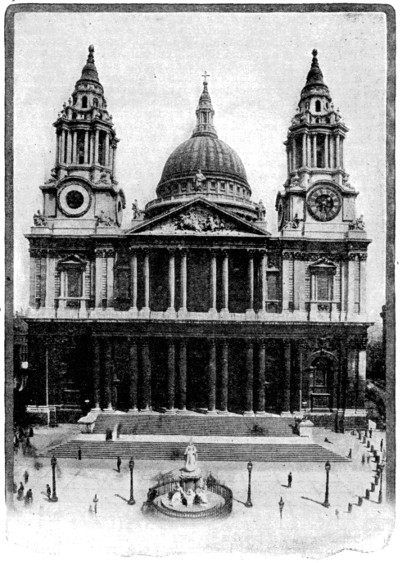
ST. PAUL’S CATHEDRAL, LONDON
Places of Amusement.—These
are naturally exceedingly numerous.
Among the theaters may be
mentioned: Covent Garden, the
home of opera; Drury Lane,
identified with melodrama and
pantomime; His Majesty’s, famous
for its efforts in the cause of the
higher drama; the Haymarket, St.
James’s, Criterion, Wyndham’s
New, Duke of York’s, Garrick,
Court, and others, for comedy; the
Gaiety, Daly’s, Lyric, Prince of
Wales’s, Savoy, and Vaudeville for
musical comedy and comic opera.
The “music-hall” is equally conspicuous
among London’s places of
amusement, variety entertainments
being given at the Alhambra,
Empire, Palace, Coliseum, Hippodrome,
Lyceum, and a host of
others. Among the more dignified
concert halls may be mentioned the
Royal Albert Hall (capable of holding
an audience of eight thousand
persons), Queen’s Hall, and Crystal
Palace.
Museums.—The British Museum,
the great national collection,
in a very central position, is the
principal one. It contains an immense
collection of books, manuscripts,
engravings, drawings, sculptures,
coins, etc.
The South Kensington Museum
is a capacious series of buildings
containing valuable collections in
science and the fine and decorative
arts, and there is a branch museum
from it in Bethnal Green, in the
East End. The very extensive
natural history department of the
British Museum occupies a fine Romanesque
building at South Kensington. The India and
the Patent Museums are also at South Kensington,
and here was built the Imperial Institute, partly
intended as a museum of home and colonial
products, but now also accommodating the
University of London.
The Soane Museum contains many valuable
objects of art. The chief picture-galleries are
the National Gallery, in Trafalgar Square, the
National Gallery of British Art (known as the
Tate Gallery), the collection in the Victoria and
Albert Museum, and the National Portrait
Gallery. Mention must also be made of the
Wallace Collection, at Hertford House, Manchester
Square, a magnificent collection of
pictures, sculpture and objects of art, bequeathed
to the nation by the widow of Sir Richard Wallace
in 1897.
The chief libraries are the British Museum,
Lambeth Palace library, the Guildhall library,
Sion College library, the London library, London
Institution library. Many free libraries have
recently been established.
Shipping.—The port of London has been for
many years the greatest in the world. The control
and management of the business of the port
was transferred in March, 1909, from the Thames
Conservancy to the Port of London Authority.
This new body controls the river from Teddington
to Warden Point, fifty-one miles east of London
Bridge. It also took over the India, Millwall,
and Surrey Commercial docks. The total cost of
the transfer was one hundred and twelve million
dollars.
Its Cosmopolitan Population.—There are in
London nearly 60,000 persons of Scottish birth
and over 60,000 of Irish birth. Of 150,000
foreigners, 40,000 are Russians (including Jews),
with 16,000 Russian Poles, 30,000 Germans, 12,000
French, 11,000 Italians, 6,000 Austrians, 6,000
Americans (U. S.), 4,500 Dutch, 45,000 Swiss,
2,500 Belgians, 1,800 Swedes, 1,000 Norwegians,
and 1,000 Danes.
COMMERCIAL AND INDUSTRIAL CENTERS
In England and Wales.—Hull, the Tyne Ports
(Newcastle, Gateshead, and Shields), and Sunderland,
with London, form the great outlets of
the east of England. Liverpool (with Birkenhead),
ranking with London in maritime importance,
and Bristol, are the great outlets and seats
of commerce in the west of England, as Southhampton
and Plymouth on the Channel are in
the south.
The most important of all the textile industries
of England is that of cotton, which has centered
itself in Manchester and in its satellite cities on
the coalfield of Lancashire and Cheshire (Preston,
Blackburn, Oldham, Wigan, Bury, Rochdale,
Bolton, Stockport, Macclesfield), drawing a
dense population round these centers, with their
thousands of factories, fed with raw material
from abroad, and relieved of their manufactured
products by Liverpool and the port of Manchester.
The woolen manufactories, next in importance,
are on the opposite side of the Pennine chain, in
the great towns of Leeds and Bradford, as well
as in Halifax, Huddersfield, Wakefield, and
Dewsbury, clustering round these. Linen manufactures
center at Barnsley, farther south, also
on this Yorkshire coalfield. Three outlying
woolen manufacturing centers may be noted;
these are Leicester, in a famous sheep-raising
district, and Kidderminster, noted for its carpets,
Stroud, Bradford, and other towns in the west
of England, noted for the quality of their cloth.
Newtown, in Montgomeryshire, is the center of
the Welsh flannel trade.
Hardwares have two great points of production—the
one round Sheffield, on the Yorkshire coal
and iron field, the other round Birmingham and
the towns on the South Stafford coal and iron
field (Wolverhampton, Wednesbury, Bilston,
Dudley, Walsall), called the “Black Country”
because large parts of it are so completely cut up
with collieries and ironworks that no cultivation
exists.
In North Staffordshire, between the iron and
the cotton manufacturing regions, lies the
“Potteries,” a district which by supplying coal is
able to maintain its staple industry. Stoke-upon-Trent
is the center of the cluster of Pottery towns
(Burslem, Longton, Hanley, Tunstall), all connected
by lines of busy hamlets. Worcester, on
the Severn, is also celebrated for its pottery.
English silk manufacturers give importance to
three separate districts, those round Congleton and
Macclesfield, in Cheshire; Derby; and Coventry,
in Warwickshire. Nottingham town combines
silk and cotton manufactures in hosiery and lace
work. Stafford town supplies boots and shoes
to all the manufacturing towns which lie round it.
The coal trade of North England centers in the
Tyne Ports and Sunderland, which are also famous
for their iron, ships and engines, and their chemical
works. The South Wales iron and coal field
has its heart in Merthyr Tydfil, one of the largest
towns of Wales; Cardiff, with fine docks and iron
shipbuilding yards, besides its large coal export
trade; Swansea is the headquarters of copper
and tin smelting, from ores brought thither from
the most distant parts of the world; Milford
Haven aspires to becoming the rival of Liverpool
in the trade with America.
Among the few large towns besides London
which lie outside the manufacturing and mining
region of England, may be noted Norwich, in
agricultural Norfolk, a seat of manufactures of
the most various kind, introduced by about four
thousand Flemings who fled thither in Queen
Elizabeth’s reign.
In Scotland.—On the Scottish coal and iron field,
Glasgow, favored by its position on the estuary of
the Clyde, has risen to be at once the great
commercial and manufacturing center of the
country, carrying on a large trade with all parts
of the world, in manufacturing cottons and
machinery, and in building ships. A number of
manufacturing towns (Paisley, noted for its
shawls; Greenock, for its sugar-refining; Dumbarton,
for its iron ships; Airdrie, in the midst
of the collieries and iron works) have risen round
Glasgow over the Scottish coalfield. Leith, the
port of Edinburgh, is mainly engaged in the
Baltic grain trade; Dundee, on the estuary of
the Tay, owes much of its prosperity to its jute
and hemp factories, and to its Greenland whaling
and sealing trade.
In Ireland.—Owing to its poverty in coal and
iron, the manufactures of Ireland have not
attained an extent at all comparable with those
of Britain. Its only extensive manufacturing
district is that which lies round Belfast, in the
northeast, where the flax, grown largely in the
north of the country, is made into linen. The
linen district extends to Armagh, on the west, and
Coleraine, in the north.
Dublin, the capital, is noted for its poplins,
stout, and whiskey; its quays afford excellent
accommodation for shipping, and it takes the
lead in the foreign trade of Ireland.
Cork, with its fine harbor the “Cove of Cork,”
or Queenstown, in the south; Limerick, on the
Shannon; Galway, the port of the west; Londonderry,
in the north, are the other important
centers of population in Ireland.
EDUCATIONAL, HISTORICAL AND LITERARY CENTERS
Edinburgh (ed-in-bo-ro; Edwin’s burgh), the
metropolis of Scotland, grew up originally beneath
the protecting walls of its castle, and is not
a manufacturing town, but derives its importance
mainly from the law courts, its university and
schools, and its printing and publishing trade.
It is situated upon two ridges of ground, divided
by a deep, narrow valley, formerly a morass, now
made into a public park, through which the railways
pass. To the north of this park is the
New Town, composed of modern and elegant
buildings—the principal street, Princes Street,
bordering upon and overlooking the park. The
principal hotels are on the opposite of Princes
Street. The railway stations are in the valley.
To the south lies the ridge of the Old Town,
terminating, to the west in a rocky bluff, upon
which stands the Castle in the heart of the city.
The Old Town is the historic part of the city,
the New being quite modern. The first Scottish
Parliament was convened here by Alex. II., 1215.
The principal places of interest are Edinburgh
Castle, Holyrood Abbey and Calton Hill. Among
the objects of less interest are the house of John
Knox, High Street; St. Giles Church; Allan
Ramsay’s Theater, the favorite resort of Burns;
the Black Turnpike, the prison of Queen Mary,
near the Iron Church; and the Heart of Midlothian,
the site of an old prison. Annie Laurie
was married in Iron Church two hundred and
fifty years ago. John Knox is buried in the
paved court between the Parliament House and
St. Giles; marked by the letters J. K. in the pavement.
The Castle, stands on a precipitous rock
about three hundred feet above the valley,
accessible only from the east side. It is an
extensive mass, of which the oldest portion—and
the oldest building in the city—is St. Margaret’s
Chapel, the private oratory of the Saxon
Princess Margaret, queen of Malcolm Canmore.
Another portion is a lofty range of old buildings,
in a small apartment of which Queen Mary gave
birth to James VI. in 1566; while in an adjoining
apartment are kept the ancient regalia of Scotland.
Here, also, is the old Parliament Hall,
restored in 1888-1889. The castle as a fortress
contains accommodation for two thousand soldiers,
and the armory space for thirty thousand
stand of arms. An old piece of ordnance built of
staves of malleable iron, cask fashion, and known
as Mons Meg, stands conspicuous in an open
area.
Holyrood Palace and Abbey was founded by
King David I., who is said to have been saved
from the horns of a stag, driven to bay near
this spot, by a luminous cross in the sky. In the
northwest angle of the building are the apartments
which were occupied by Mary, Queen of
Scots, nearly in the same state in which they were
left by that unfortunate princess.
Calton Hill (call-ton) is at the eastern end of
Princes Street and has an altitude of about
three hundred and fifty feet. Upon the hill,
adjacent to the stairs, is Dugald Stewart’s monument
at the left; to the north is the Old Observatory,
and the New Observatory with a small
dome. To the south is Nelson’s monument, one
[463]
hundred and two feet high, surmounted by a
time-ball. The unfinished colonnade is a part
of a structure in honor of Waterloo, intended to
be a copy of the Parthenon at Athens. The
foundation was laid 1822, but, proving too costly,
the project was abandoned.
The view from the summit of this hill is scarcely
to be surpassed. To the north is what may be
called New Edinburgh, extending toward Granton
and the port of Leith. Across the Forth, is
Fifeshire. Following down the Forth, is first,
the islands of Inch Keith, Portobello, Bass Rock,
and the Isle of May, farther at sea. Toward the
south and west the Burns monument; Holyrood
immediately below; Salisbury Craig and south,
Arthur’s Seat, eight hundred and twenty feet high;
thence to the north the Old Town, commanded
by the frowning Castle.
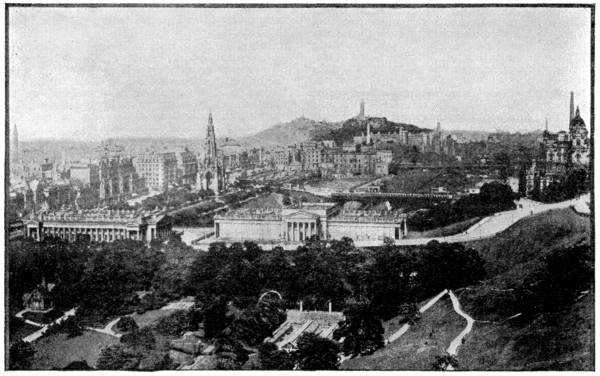
VIEW OF EDINBURGH FROM THE CASTLE
Oxford, capital of Oxford county, and seat of one
of the most celebrated universities in the world,
is situated about fifty miles northwest of London,
on a gentle acclivity between the Cherwell and
the Thames, here called the Isis. Oxford, as a
city of towers and spires, of fine collegiate buildings,
old and new, of gardens, groves, and avenues
of trees, is unique in England.
Of the university buildings the most remarkable
are Christ’s Church, the largest and grandest of
all the colleges, with a fine quadrangle and other
buildings, and a noble avenue of trees. It was
founded by Wolsey in 1525, and its magnificent
chapel is the cathedral church of the see of
Oxford. The hall is a noble room.
Merton College, founded about 1264, has a very
beautiful chapel of the fifteenth century, and the
library is the oldest in the kingdom.
New College, founded by William of Wykeham,
in 1386, is one of the wealthiest of the colleges,
and the chapel is very handsome.
The gardens of St. John’s College are much admired
and the grounds of Magdalen College (perhaps
the most beautiful college in Oxford) are no
less attractive. The latter include “Addison’s
Walk,” a shaded avenue that was his favorite resort
when a student here. The Bodleian Library
and Picture Gallery, the Theatre (built by Wren),
the Ashmolean Museum (also by Wren), the Radcliffe
Library and Observatory, the Divinity School
(in the hall of which Cranmer, Latimer, and Ridley
were tried in 1555), St. Mary’s Church, the Taylor
Institute, the University Galleries and Museum,
the Botanical Gardens, and the Martyr’s Memorial
are also among the noteworthy things in Oxford.
The High Street is the subject of one of Wordsworth’s
sonnets; and Hawthorne calls it “the
noblest old street in England.” Oxford depends
mostly on the university, and on its attractions
as a place of residence.
Stratford-on-Avon, Shakespeare’s birthplace, is a
pleasant town of Warwickshire, eight miles southwest
of Warwick, twenty-two miles southeast of
Birmingham, and one hundred and ten miles
northeast of London. It stands on the right
bank of the quiet Avon, which here is spanned
by the “great and sumptuous bridge” of fourteen
pointed arches, three hundred and seventy-six
yards long, that was built by the Lord Mayor of
London.
It is a quiet, old-fashioned place, with wide and
well-kept streets, and many handsome mansions.
The Town Hall was dedicated to the memory of
the poet. Here is a statue of Shakespeare, presented
by Garrick, on the pedestal of which are
the lines from Hamlet; “Take him for all in all,
we shall not look upon his like again.” Very
interesting is the Shakespeare Memorial Building
and Theater, in a charming situation by the
Avon, the outgrowth of the feeling that the poet
should have a suitable monument in his native
town.
Shakespeare’s House, in Henley Street, became
national property in 1847, and has been carefully
restored. The room in which the poet is said
to have been born seems to have undergone but
little change since that day. In another room
there is a small museum of Shakespearian curiosities.
Stratford Church, in which Shakespeare is
buried, is on the bank of the Avon. It is a large
and elegant structure, with a graceful stone spire
[464]
one hundred and sixty-three feet high, erected in
1764 to replace a wooden one that had been taken
down. The building has been judiciously
restored in recent years. There is an elegant
window illustrating Shakespeare’s “Seven Ages,”
the contribution of Americans.
The grave of Shakespeare is in the chancel,
covered by a plain flagstone, while above, on
the wall to the left, is the monumental bust
which is the most trustworthy representation of
the poet. His wife lies near him, with his favorite
daughter, “good Mistris Hall,” and Dr. John
Hall, her husband. In the chancel there is also
an elegant marble monument to John Combe, the
poet’s friend.
Shottery, where Anne Hathaway lived before
she became the wife of Shakespeare, is about a
mile from Stratford, and may be reached by a
footpath through the fields. The cottage that
was Anne’s home has a timber and plaster front,
and a thatched roof. The interior contains the
oaken seat on which Shakespeare and Anne were
wont to sit; many bits of venerable furniture;
and, upstairs, a vast bed, on which many a
Hathaway has drawn the last breath of life.
Stratford also possesses a memorial fountain,
presented by George W. Childs of Philadelphia,
and Harvard House, the birthplace of the mother
of John Harvard, founder of Harvard University.
It is still an important agricultural center; but
its chief prosperity depends on the thirty thousand
or so pilgrims who visit it yearly.
Ayr, forty miles from Glasgow, Scotland, by railway,
is noted especially as the birthplace of Burns,
the poet; as also the place where Wm. Wallace
was imprisoned. The town is divided by the
river Ayr, over which are the “twa brigs” of Burns.
The Burns Cottage, or birthplace, the scene of
his “Cotter’s Saturday Night,” is two miles
south of the town, and is now used as a public
memorial. It contains few articles associated
with Burns.
Alloway Kirk, mentioned in “Tam O’Shanter,”
or what remains of it, is one-half mile south
of the Cottage. Near the church are the Burns
monument, a circular shaft sixty feet in height,
erected 1820, and the Doon, immortalized in the
“Banks and Braes of Bonny Doon.”
Burns died at Dumfries, where he had lived
three years, and was buried in the churchyard
there. Nineteen years later, upon the completion
of the monument to his memory, his body
was exhumed and placed within the Mausoleum
at Dumfries.
Melrose, in the county of Roxburgh, thirty-one
miles southeast of Edinburgh, is celebrated for
the abbey founded by King David in 1136;
destroyed by Edward II. in 1322; rebuilt by
Bruce in 1326, and partly demolished by the
English in 1545. Sir Walter Scott has given it an
enduring description in his Lay of the Last
Minstrel.
The material of which it is built is a very hard
stone, and much of the carving is as perfect as
when fresh from the sculptor’s hand. Within its
walls are the graves of kings, and nobles and
priests of the olden time; among them Alexander
II. of Scotland, and more than one of the renowned
Earls of Douglas. Before the high altar
the heart of King Robert Bruce is said to have
been deposited. Sir David Brewster’s grave is in
the churchyard.
Dryburgh Abbey, four miles from Melrose,
was founded about the same time as Melrose,
and, like that, was destroyed in 1322 by Edward
II. Robert I. restored it, at least in part; but it
was again destroyed in 1544. St. Mary’s aisle,
the most beautiful part of the ruins, contains the
tomb of Scott, buried here September 26, 1832;
also the graves of his wife and his eldest son, and
of his son-in-law Lockhart.
ABBOTSFORD, HOME OF SIR WALTER SCOTT
Abbotsford, two miles from Melrose, was long
the home of the “Great Enchanter of the North.”
The author’s study is the most interesting room.
There the old writing-table, the plain leathern
armchair, the reference books, seem to indicate
that Sir Walter has but just left them. The
Library (twenty thousand volumes)
contains a bust of Scott,
by Chantrey, and many miniatures.
The roof is of carved
oak, designed from models
taken from Roslin Chapel.
The Drawing-room, where Sir
Walter died, and the little octagonal
dressing-room contain
many precious relics. The
Armory has a fine collection
of Scotch weapons.
Windsor, is in Berkshire, England,
on the Thames, twenty-one
and one-quarter miles from
London. It contains a town hall,
built by Sir Christopher Wren
in 1686, the church of St. John
the Baptist, with fine examples
of Grinling Gibbon’s wood-carving,
and a fine Jubilee
statue of Queen Victoria.
Windsor owes its chief importance
to its castle, which
stands east of the town on a
height overlooking the River
Thames, and is the principal
royal residence in the kingdom.
It was begun, or at
least enlarged, by Henry I.,
and has been altered and
added to by almost every
sovereign since. The castle
stands in the Home Park or
“Little Park,” which is four
miles in circumference, and
this again is connected with
the Great Park, which is
eighteen miles in circuit, and contains an avenue
of trees three miles in length.
STRATFORD-ON-AVON, IMMORTALIZED BY ITS ASSOCIATIONS WITH SHAKESPEARE
The chief features of interest in the castle are
the old state apartments; St. George’s Chapel,
where the Knights of the Garter are installed, and
the vaults of which contain the remains of Henry
VI., Edward IV., Henry VIII., Charles I., George
III., George IV., and William IV.; the Round
Tower or ancient keep; and the present state
apartments.
Eton College is one-half mile from Windsor
across the river. The stone chapel, one hundred
and seventy-five feet long, is very handsome.
There is also a bronze statue of Henry VI. The
college was founded in 1440.
Stoke Pogis, the scene of Gray’s Elegy, and the
burial-place of the poet, is near Windsor.
There is a fine monument to Gray in Stoke Park.
Cambridge, fifty-six miles from London, and on
the Cam, a narrow stream that rambles all over
the town. Tradition gives 630 as the date of the
foundation of the University; but the oldest
college, Peterhouse or St. Peter’s, can only be
referred to 1257. The public buildings are the
Shire Hall, Town Hall, University halls and
library, and Fitzwilliam Museum.
There are seventeen colleges, inferior in architectural
beauty to those of Oxford, though their
associations are quite as interesting.
Trinity, was founded by Henry VIII. in 1546,
and has three fine quadrangles; a splendid hall
in the Tudor style; gardens; and an important
library, with busts of Newton and Bacon, Thorwaldsen’s
statue of Byron, Newton’s telescope
and some of John Milton’s manuscripts.
Christ’s College, founded in 1442, was
Milton’s college. In the gardens is Milton’s
Mulberry-Tree. The quadrangle was rebuilt by
Inigo Jones.
Jesus College (1496) and Chapel are very
fine buildings, on the site of a Benedictine nunnery.
Caius (pronounced Kees) was founded in 1384,
and enlarged in 1557 by Dr. Caius, physician to
Queen Mary. Rebuilt lately, it is now one of
the best.
Corpus Christi (1351) contains curious portraits,
especially those of Sir Thomas More,
Wolsey, Erasmus, and Foxe, the author of the
Book of Martyrs.
Kings College (1441), founded by Henry VI.,
is the finest building in the University. The
chapel is the finest specimen of perpendicular
Gothic existing. The roof, unsupported by
pillars, contains twelve divisions of exquisite lace-work
tracery in stone. The twenty-four stained-glass
windows, each fifty feet high, are beautiful.
The Fitzwilliam Museum, and some of the
churches, especially the round chapel of St. Sepulchre,
are of considerable interest. All Saints contains
a monument, by Chantrey, to Henry Kirke
White. Girton College, for women, founded in
1869, is about two miles northwest of the town.
The walk along the Cam behind the colleges, with
the view of the “Backs” and bridges, is the pride
of Cambridge.
ENGLISH HISTORY
The island of Great Britain in the remotest
times bore the name of Albion. From a very
early period it was visited by Phœnicians,
Carthaginians, and Greeks, for the purpose of
obtaining tin.
Roman Period.—Cæsar’s two expeditions, 55
and 54 B. C., made it known to the Romans,
by whom it was generally called Britannia;
but it was not till the time of Claudius, nearly
a hundred years after, that the Romans made
a serious attempt to convert Britain into a
Roman province. Some forty years later,
under Agricola, the ablest of the Roman
generals in Britain, they had extended the
limits of the Provincia Romana as far as the
line of the Forth and the Clyde.
Here the Roman armies came into contact
with the Caledonians of the interior, described
by Tacitus as large-limbed, red-haired men.
After defeating the Caledonians, Agricola
marched victoriously northward as far as the
Moray Firth, establishing stations and camps,
remains of which are still to be seen. But the
Romans were unable to retain their conquests
in the northern part of the island, and were
finally forced to abandon their northern wall
and forts between the Clyde and the Forth
and retire behind their second wall, built in
120 A. D. by Hadrian, between the Solway
and the Tyne. Thus the southern part of the
island alone remained Roman, and became
specially known as Britannia, while the
northern portion was distinctly called Caledonia.
The capital of Roman Britain was York
(Eboracum). Under the rule of the Romans
many flourishing towns arose. Great roads
were made, traversing the whole country and
helping very much to develop its industries.
Christianity was also introduced, and took the
place of the Druidism of the native British.
Under the tuition of the Romans the useful
arts and even many of the refinements of life
found their way into the southern part of the
island.
Creation of England and Scotland.—From
the time of the Roman conquest, and still
more decidedly after the Saxon invasions in
the fifth century, the history of Britain branches
off into a history of the southern part of the
island, afterwards known as England, and a
history of the northern part of the island,
afterwards named Scotland. It was not till
the union of the crowns in 1603 that the
destinies of England and Scotland began again
to unite; and it was not till the final union of the
parliaments in 1707 that the histories of the
two countries may be said to merge into one.
The Anglo-Saxon Period.—In 411 Honorius
abandoned Britain, whose inhabitants, finding
it impossible to defend themselves against the
Picts, called to their aid the Saxons, who, in
449, assisted them so effectually that they
took possession of the country and founded
the four kingdoms of Essex, Wessex, Sussex,
and Kent. The Angles, who followed them,
established three other kingdoms, viz., East
Anglia, Deira, and Mercia, 540-584. All these
kingdoms ended by being reduced to one,
under Egbert, the Saxon king of Wessex, in
827.
After 835 the Danes ravaged England from
time to time, but in 871 Alfred the Great
forced them to desist, and from thence till
near the end of his reign in 900, the Danes
left the island in peace. Returning in 981, the
Danes succeeded, in 1013, in putting their
king, Sweyn, on the throne, which was not
recovered by the Saxon dynasty till 1041.
Norman Conquest.—When William of Normandy
landed in England to claim the crown
which Edward the Confessor had bequeathed
[467]
to him, he found that the people had raised
to the throne Harold, the son of a popular
nobleman. The resources of the Saxons, however,
had been wasted in domestic conflicts
before the attack of William; and the battle
of Hastings, in 1066 A. D., gave England with
comparative ease to the Normans. The next
twenty years saw the conquest completed, and
nearly all the large landed estates of the Saxons
pass, on every pretext except the true one,
into the hands of the Normans. In the course
of time the Normans were absorbed among the
Saxons, their very language disappearing,
though leaving many traces. From this
union arose the English people and the English
language as they now exist. The union
of the Normans with the Saxons was not fully
effected so long as the Normans retained their
foreign possessions. In King John’s reign the
whole of these were lost excepting Guienne and
Poitou.
In the reign of Stephen occurred the civil war
between the Empress Maud, daughter of
Henry I., and Stephen; she finally retired to
France, and concluded a peace with her
adversary. The great struggles of the successors
of William were with the ecclesiastics
and with the barons. Sometimes in these the
popular sympathies were with, and sometimes
against, the crown. The Conqueror himself
and his immediate successors had no difficulty
in maintaining the superiority of the courts of
justice over the ecclesiastics; but even a
sovereign so bold and skillful as Henry II.
was forced, after the outcry occasioned by the
murder of Thomas à Becket (1170 A. D.) to
yield the point. The right to nominate the
higher ecclesiastics was also secured by the
popes.
The Plantagenets.—Under the Plantagenets
an era of progress, generally, opened for England.
The reign of Henry II. gave to the
country the constitution of Clarendon; Ireland
was conquered, 1172; England was
divided into six circuits for the better administration
of justice, and a digest of the laws
was made by Glanville about 1181. Richard I.
did little for the internal good of the land, his
chief exploits occurring on the field of battle
in foreign lands.
Magna Charta.—Under John two important
events occurred: Magna Charta was obtained,
and the French possessions were nearly all
lost—both unmitigated blessings; but otherwise
John’s influence was cast against progress
and reform. The degradation of the English
monarchy was at its lowest when he consented
(1213 A. D.) to hold the crown as a gift from
Rome. From Henry II. something similar to
the Great Charter had already been gained;
but it was the Magna Charta of John which
firmly established two great English principles—that
no man should suffer arbitrary
imprisonment, and that no tax should be
imposed without the consent of the council of
the nation.
During the reign of Henry III., England
obtained her first regular parliament, and
gold money was first coined in 1257. Edward
I. was crowned 1272, and almost the first
event of his reign was the conquest of Wales;
Scotland also was subdued, but revolted again
in 1297.
The reign of Edward II. was disastrous to
himself and to England. The barons rose
against his favorites, and Edward was murdered
by the connivance of his wife. A new
and vigorous era began with the reign of
Edward III. The Scots were defeated at
Halidon Hill; important victories were
gained in France; the Order of the Garter
was instituted, and, most important of all,
law pleadings were ordered to be in English,
instead of in the Norman-French tongue
which had hitherto prevailed. Richard II.
was crowned in 1377, and with his death in 1385,
ended the line of the Plantagenets.
House of Lancaster.—Henry IV. was the first
sovereign under this ill-fated house. His
reign was disturbed by an insurrection of the
Welsh under the Percies, but was otherwise
peaceful. Henry V. invaded France and won
the famous battle of Agincourt, and gained the
French crown, 1420; but during the reign of
his successor, Henry VI., all the French possessions
were lost save Calais. He was deposed
by Warwick the kingmaker, and the
first representative of the House of York,
Edward IV., was placed on the throne. The
Wars of the Roses ensued, which continued
through the two succeeding reigns of Edward V.
and Richard III, ending with the death of
Richard on Bosworth field, the coronation of
Henry VII., 1485, and his marriage with
Elizabeth, daughter of Edward IV.
The Tudors.—The union of the houses of York
and Lancaster under Henry VII. begins a new
period in English history. Under him England
entered on her career of maritime discovery.
He died, 1599, and was succeeded by
his second son, Henry VIII. Henry VIII.
succeeded under the most favorable auspices.
He found the alliance of his now important
country courted by both of his contemporaries,
Francis I., of France, and Charles V.,
of Germany. But the interest of the foreign
complications of the reign merges in the
courts of England and of Rome. Henry was
frequently engaged in hostilities with foreign
countries, and the great victory of Flodden
was won by one of his generals over James IV.
of Scotland, husband of his sister Margaret.
He threw off his allegiance to the pope, and
became head of the church in England. He
was six times married, and two of his wives
were beheaded and two were repudiated. In
his reign the scaffold was occupied by victims
from every class of society. He died January
28, 1547, and was succeeded by his only son,
Edward VI., whose mother was Jane Seymour,
Henry’s third wife.
Edward was in his tenth year, and the
government was vested in a regency. In this
reign the church of England was established,
and the nation placed on the Protestant side
in the struggle then going on in Europe. When
Edward VI. died, July 6, 1553, Lady Jane
Grey, to whom Edward had bequeathed the
crown, was queen for ten days, when her party
was dispersed, and Mary, eldest daughter of
Henry VIII., ascended the throne.
The marriage of Mary with Philip II. of
Spain led to war between England and France,
[468]
and an English army joined the Spanish force
that invaded France. Mary was a devout
Catholic, and caused Cranmer, Latimer, Ridley,
and about three hundred other Protestants
to be burned. Her death, November 17,
1558, left the throne to Elizabeth, who sided
with the Protestants.
Elizabethan Period.—The reign of Elizabeth,
which lasted nearly forty-five years, is one of
the most brilliant in English history. She
triumphed over her enemies, and raised her
kingdom to the first place in Europe. She
ruled over Scotland in fact, and put the queen
of that country, the unfortunate Mary Queen
of Scots, to death, after having held her in
captivity nearly nineteen years. The Huguenots
of France and Henry IV. received aid
from her, and but for the assistance which she
gave the Dutch they would have sunk under
the power of Spain. She invited the Turks
to join her in attacking the pope and Phillip
II.; and over both those potentates she
achieved a great triumph in 1588, when the
Spanish armada was destroyed. The enterprise
of Englishmen led them to circumnavigate
the globe, to attempt colonization, to
extend commerce, and to inaugurate trade
relations with India. Elizabeth died March
24, 1603, and with her terminated the Tudor
dynasty, after an existence of nearly one hundred
and eighteen years.
House of Stuart.—Elizabeth was succeeded by
James VI. of Scotland, the son of her victim,
Mary Stuart, and first king of England of the
Stuart line, who inherited the English crown
in virtue of his descent from Margaret Tudor,
eldest daughter of Henry VII., who had
married his great-grandfather, James IV. The
new king, under the title James I., was hailed
with much satisfaction by the English; but he
was a pedant and a tyrant, and soon lost his
popularity. His first parliament, 1604, in
reply to his assertion that all their privileges
were derived from him, asserted all those principles
for which the English constitutionalists
contended as facts not to be questioned.
Then began that civil contest which lasted
down to 1689 in full force, and which was not
utterly at an end till 1746. The foreign policy
of James was as vicious as his home policy,
and England sank in the estimation of Europe.
He died in 1625, and was succeeded by his son
Charles I.
For eleven years (1629-1640) this ruler called
no parliament, and England was ruled as
despotically as France. His chief instruments
were Wentworth, afterward earl of Strafford,
and Laud, archbishop of Canterbury. Laud
sought to fasten the English church policy on
Scotland. War between the Scotch people
and the English government followed, and
Charles was compelled to call a parliament
April, 1640, which was dissolved in a few days,
and became known as the “short parliament.”
Six months later assembled the famous “long
parliament,” which proceeded to divest the
king of much of his power.
Period of the Commonwealth.—The contest
between the king and parliament under the
lead of Vane, Cromwell and others, led to the
great English Civil war, which began in the
latter part of 1642. Cromwell was everywhere
victorious in the field. The army became
the source of all power. The king
was tried, condemned and executed. Ireland
was conquered by Cromwell, who was almost
equally successful in Scotland. The battle of
Worcester, September 3, 1651, crushed the
royalists for nearly nine years. In 1653
Cromwell dissolved the parliament by force,
and was master of England for five years, as
Lord Protector. After his death, in 1658, the
military and civil republicans quarreled.
Restoration of the House of Stuart.—Richard,
the son and successor of the great Protector,
resigned, and the restoration of the Stuarts
was effected in the person of Charles II., 1660,
whose reign in law dates from the time of his
father’s execution, January 30, 1649. The
king’s popularity soon declined, mainly on account
of his foreign policy. An unnecessary
war with the Dutch produced much disgrace.
The triple alliance with Sweden and Holland
for a brief interval stayed the course of Louis
XIV., but the king’s forces assisted in the war
on Holland made by Louis, and afterward
assistance was sent to the Dutch.
The peace of 1678 was followed by the
excitement caused by the alleged popish plot.
Parliament after parliament was elected, met,
set itself in decided opposition to the government,
and was dissolved. The leading object
of the opposition was the exclusion of the
duke of York, Charles’ brother, from the line
of succession. Charles II. died in February,
1685, and his brother James II., an avowed
Roman Catholic, came to the throne.
James II. was bent on the establishment of
a despotism, by the destruction of the constitution
in church and state. He punished
Monmouth’s rebellion with excessive vindictiveness.
The king prorogued parliament in
November, 1685, and that body never met
again. For three years he governed despotically,
and a perpetual contest was waged between
him and his people.
In June, 1688, it was announced that the
king’s second wife had given birth to a prince,
who was afterwards known as the pretender.
It was generally believed that a supposititious
child had been placed in the position of heir
apparent.
In November, William, prince of Orange, who
was the king’s nephew and had married his
eldest daughter Mary, heir apparent to the
British crown, landed in England at the head
of an army. James fled, and William and
Mary were proclaimed sovereigns.
War was declared against France in 1689,
and was ended in 1697. Ireland was subdued.
Mary died in 1694, and left William III. sole
monarch till his death in March, 1702, when
the succession passed to Anne, second daughter
of James II.
In May war was declared against France,
and after splendid victories achieved by
Marlborough, it was ended by the treaty of
Utrecht in 1713. The union of England and
Scotland was effected in 1707. Anne died
August 1, 1714, and the crown passed to the
house of Hanover in the person of George I.
House of Hanover under the Four Georges.—The
rebellion of 1715 in behalf of the Stuarts
proved a failure. The bursting of the “South
sea bubble” in 1720 placed Robert Walpole
in control of the government, which he retained
under George II. (who ascended the throne in
1727) till 1742. His fall was occasioned by a
war with Spain, to which one with France was
soon added, growing out of the question of the
Austrian succession. In 1746 the contest between
the reigning dynasty and the remains of
the Stuart party was brought to an end at
Culloden where the duke of Cumberland defeated
Charles Edward. The treaty of Aix-la-Chapelle
in 1748 restored peace to Europe for a
few years.
The Whigs continued to rule, headed by
Henry Pelham, and after his death in 1754 by
his brother, the duke of Newcastle. The
renewal of the war with France in 1755 was
followed by the formation in 1757 of the
celebrated Pitt-Newcastle ministry, which carried
on the contest with great vigor; so that
when George II. died, October 25, 1760, his
fleets and armies were everywhere triumphant.
The foundation of the East Indian empire of
England was laid at Plassey June 23, 1757.
French America was conquered at Quebec,
September 13, 1759.
The new king, George III. (the first English-born
king of his house), grandson of George II.,
was by nature and education as despotic as
the worst of the Stuarts. The attempt to
tax the American colonies led to the American
revolution. The English in the last years of
the war had to fight the Americans, the
French, the Spaniards, and the Dutch. The
peace of 1783 left England in a low condition.
When France became convulsed by the
revolution, England engaged in the war
against her that soon followed, which lasted,
with two brief intervals, till 1815, ending in
the complete triumph of England and her
allies. The legislative union between Ireland
and Great Britain went into effect January
1, 1801. The exertions made by England,
beginning with the administration of Pitt, were
vast. Her fleets, chiefly under Nelson,
achieved splendid victories over the French
and Spaniards, and in the last years of the
war her armies were greatly distinguished
under the lead of Wellington, who, at Waterloo,
inflicted the final defeat on Napoleon in
1815.
In 1810 George III. lost his reason finally,
and his eldest son was prince regent till 1820
when he became king as George IV.
In 1812 England became involved in a war
with the United States, growing out of the
impressment and right of search questions.
The contest was virtually terminated by the
treaty of Ghent, December 24, 1814. In 1829
the Catholic emancipation act was passed,
under a ministry headed by Wellington and
Peel. George IV. died in 1830, and was
succeeded by his brother, the duke of Clarence,
as William IV.
In March, 1831, a bill for parliamentary
reform was introduced into the house of commons
by Lord John Russell, and after long
debates in parliament and intense excitement
in the country, caused by the opposition of
the house of lords, a bill making extensive
changes in the constitution of the house of
commons finally passed in June, 1832, under
the ministry of Earl Grey.
The first reformed parliament, which met
January 29, 1833, contained an overwhelming
majority of reformers. Lord Grey retired
from office in 1834, and was succeeded by
Lord Melbourne. Toward the close of the
same year the government was committed to
Sir Robert Peel, who formed a conservative
ministry. Peel continued in office until April
8, 1835, when he retired, having been repeatedly
beaten on Irish church questions. Lord
Melbourne returned to office, with many of
his old colleagues. The king died on June 20,
1837, and was succeeded by his niece Victoria,
the only child of Edward, duke of Kent,
fourth son of George III.
The Victorian Period.—The accession of
Victoria led to the separation of the crowns
of England and Hanover, which had been
worn by the same persons since 1714. In 1841
Melbourne resigned, and the conservatives
under Peel came into power. In 1846 the
Peel ministry brought forward an act to protect
life in Ireland, but it was defeated in the
commons on the same day that the Corn
Laws were repealed, and the ministry came to
an end, being succeeded by one at the head of
which was Lord John Russell. The Russell
ministry went out of office in 1852, and for
several months the tories, led by Lord Derby
and Mr. Disraeli, were at the head of affairs.
This ministry was followed by one composed
of the coalesced Whigs and Peelites, headed by
Lord Aberdeen.
Crimean War.—In 1853 the troubles on the
Turkish question began, and war was declared
against Russia by France and England in
March, 1854. Large fleets and armies were
sent to the East, and fleets to the Baltic.
The Crimea was invaded, the victory of the
Alma won by the allies, and Sebastopol partially
invested. On September 8 Sebastopol
was reduced, the French storming the
Malakhoff, and peace was restored by a congress
of the powers at Paris in March, 1856.
Indian Mutiny and Final Absorption of the
Indian Empire.—Early in 1857 a formidable
revolt broke out in England’s great Bengal
army of sepoys. Delhi fell into the hands of
the rebels, and the nominal Mogul emperor
found himself once more a sovereign in reality.
The mutiny spread rapidly, and in a short
time the whole Bengal army had become hostile
to the English. The military reputation of
England was greatly raised by the successes
of her armies in India, achieved under the lead
of Sir Henry Havelock, Sir Colin Campbell,
and others. In eight months after the breaking
out of the mutiny there were nearly seventy
thousand effective English troops there, and
new native corps had replaced the sepoys. By
the end of 1858 the revolt was totally suppressed.
The rebellion resulted in the transfer
of the immediate government of India
from the East India company to the crown,
the old directory sitting for the last time
September 1, 1858.
In February, 1858, the Palmerston ministry
was driven from office, and a new conservative
ministry was formed, with the earl of Derby
as premier, and Mr. Disraeli as Chancellor of
the Exchequer. This ministry soon resigned
and Lord Palmerston resumed office in June,
1859. On May 13, 1861, Great Britain
recognized the belligerency of the Confederacy
during the American Civil war and the blockade
of their ports, and proclaimed neutrality.
In 1868 Disraeli became Prime Minister in
succession to Lord Derby, but was defeated
in the general election of that year and
resigned before the end of the year.
Disraeli was succeeded by Gladstone, who,
during the five years of his ministry passed
more measures than almost any previous one.
Education became compulsory. Trade unions
were legalized, the Ballot Act was passed.
The Irish Church Act and a Land Act for
Ireland were passed, and the state of Ireland
at the time also necessitated Coercion Acts.
In 1874 Gladstone resigned, and the Conservatives
were returned to power, having for
the first time since 1841 a real majority in the
House of Commons. The ministry formed by
Disraeli was a brilliant one, and the Opposition
was for a time weakened by the withdrawal
into private life of Gladstone. The great
question of Home Rule was gradually forcing
itself to the front, and the Irish tactics in the
House became obstructive. It was at this
time that Disraeli put forward his imperial
policy, and the ministry is chiefly noticeable
for its attitude on foreign and imperial affairs.
From 1879 to the present time Irish agitation
has been for Great Britain a source of
serious disquiet. In 1882 Mr. Gladstone
adopted a policy of conciliation, but the
murder of Lord Frederick Cavendish and of
Mr. Burke caused its abandonment and the
immediate passing of a coercion law which
virtually placed Ireland under martial law.
In 1882 the Egyptian army, under the leadership
of Arabi Bey, having revolted from the
khedive’s authority, Great Britain sent a large
naval expedition to Egypt, bombarded Alexandria,
and defeated the rebellious forces.
Since that date the Egyptian government has
been under British suzerainty, and in 1896, a
British expedition was sent up the Nile with
the purpose of regaining the provinces of
Egypt held by the mahdist forces.
Within the past quarter of a century Great
Britain has largely extended its territory in
Africa, bringing great areas in the south and
east of the continent under its protection.
During the same interval several subjects of
dispute have arisen with the United States,
which have all been peacefully settled. An
imposing festival took place in London in
June, 1897, on the occasion of the sixtieth
anniversary of Queen Victoria’s accession, in
which all sections of the empire took part.
Boer War.—October 11, 1899, war was declared
by the Boers of the Transvaal and
Orange Free State, the aim being the destruction
of the British paramountcy in South
Africa. This led to the annexation of those
states by the British, after a fierce contest,
in 1900. In 1900, a new parliament was
elected, which again supported the Conservative
ministry, with a slightly increased
majority.
House of Saxe-Coburg.—Victoria died January
22, 1901, and was succeeded by her eldest
son, Edward VII., who proved himself to be
an active promoter of peaceful relations with
other countries.
The Boer war was concluded in the middle
of 1902 by the treaty of Vereeniging, and
almost immediately afterward Lord Salisbury
retired from office, being succeeded in
the premiership by his nephew, Mr. A. J.
Balfour. The education act of 1902 did away
with school boards where they existed, bringing
the voluntary and former board schools
alike under education committees in England
and Wales, and the same change was made
in London in 1903. The Irish land act of
1903 was a measure of the first importance, its
object, being to transfer practically all the
agricultural land of Ireland to farmers or
peasant proprietors. In the autumn of 1903
Mr. Chamberlain resigned office in order to be
free to advocate a change in the country’s
fiscal policy, intended to unite the colonies
more closely with the mother country—a
change which many have regarded as meaning
a return to protection.
In 1905 the Liberal party returned to power
under the leadership of Sir Henry Campbell
Bannerman, who was succeeded after his death
in 1908 by H. H. Asquith.
On May 5, 1910, the illness of King
Edward was announced, followed by that of
his death the next day. His son, George V.,
succeeded to the throne May 6, 1910.
A lengthy battle had begun to be waged
against the hereditary prerogatives of the
House of Lords, to which the death of the
king caused a temporary cessation, but, in
August, 1911, the Upper House was finally
shorn of its permanent veto. In September,
1910, the fisheries dispute with the United
States, which had remained unsettled for more
than a hundred years, was decided at the
Hague.
Early in 1913 the Irish home rule question
became the dominant issue and a bill favoring
it was passed by the House of Commons by a
large majority, only to be overwhelmingly
rejected in the House of Lords. In February,
1914, King George urged mutual concessions
in the controversy, and in the same year the
Home Rule bill became a law without the
approval of the Lords, but practically non-operative.
Today (1917) home rule for Ireland
is still the great unsolved problem of British
domestic policy.
The year 1914 also marked the entrance of
Great Britain into the great European war
that has since engulfed practically the whole
of Europe and one-third of the civilized world.
England’s history since has been almost wholly
bound up with the diplomatic, economic, and
military aspects of that titanic struggle, the
real facts of which it will require more than a
generation of dispassionate minds to verify,
sift and assess at their true values. An attempt
is made to give the leading features of this
war, and the parts played in it by the various
nations involved, under a separate heading.
IMPORTANT FACTS CONCERNING THE BRITISH EMPIRE
This title is usually given to the total territory governed or administered in the name of the
British government centralized in London. It includes the United Kingdom of Great Britain
and Ireland, the self-governing Dominions, Dependencies, Crown colonies and Protectorates whose
inhabitants look to the king as their ultimate head. Of the whole area of the lands of the globe,
the British Empire occupies nearly one-quarter, extending to every continent.
| THE UNITED KINGDOM |
| Countries |
Area in Square Miles |
Population, 1911 |
How and When Acquired by England |
Character of Government |
| EUROPE: |
|
|
|
|
| England |
50,839 |
34,043,076 |
... |
|
|
- |
Constitutional Monarchy.
Constitute the United Kingdom of Great Britain and Ireland. |
| Wales |
7,470 |
2,032,183 |
|
Conquest, 1282 |
| Scotland |
29,785 |
4,759,445 |
|
Union, 1603 |
| Ireland |
32,583 |
4,381,951 |
|
Conquest, 1172 |
| Islands |
302 |
148,934 |
... |
| DEPENDENCIES AND COLONIES |
| EUROPE: |
|
|
|
|
| Gibraltar |
2 |
23,553 |
|
Conquest, 1704 |
|
Military Governor. |
| Malta, etc. |
122 |
215,879 |
|
Treaty cession, 1814 |
|
Governor; Councils. |
| ASIA: |
|
|
|
|
| India (including Burma) |
1,800,258 |
314,955,000 |
- |
|
Conquest, begun 1757
Transfer from East India Co., 1858 |
|
|
- |
Viceroy; Council; Departments. Native rulers under Political Supervision. |
| |
|
|
|
|
| Ceylon |
25,365 |
4,038,456 |
|
Treaty cession, 1801 |
|
|
- |
Governor; Executive and Legislative Councils. |
| Cyprus |
3,584 |
261,587 |
|
Convention with Turkey, 1878 |
| Aden and Socotra |
3,070 |
53,222 |
|
(Aden) Conquest, 1839 |
| Straits Settlements |
1,500 |
620,127 |
|
Treaty cession, 1785-1824 |
| Hongkong |
30.5 |
428,888 |
|
Treaty cession, 1841 |
| Labuan |
31 |
8,411 |
|
Treaty cession, 1846 |
| |
|
|
|
|
| British North Borneo |
31,000 |
204,000 |
|
Cession to company, 1877 |
|
- |
|
Governor (British North Borneo Company). |
| AFRICA: |
|
|
|
|
| Union of South Africa (including Cape of Good Hope, Natal, The Transvaal, and Orange River Colony) |
|
|
- |
473,184 |
5,938,499 |
- |
|
Treaty, conquest, and cession, 1588-1900 |
|
- |
|
The Union of South Africa—Governor-General; Executive Council; Senate; House of Assembly. |
| |
|
|
|
|
| St. Helena |
47 |
3,553 |
|
Conquest, 1673 |
|
- |
|
Governor and Executive Council. |
| Ascension |
38 |
266 |
|
Annexation, 1815 |
|
Under the Admiralty. |
| Mauritius, etc. |
1,063 |
373,336 |
- |
|
Conquest and cession, 1810, 1814 |
|
- |
|
Governor; Executive and Legislative Councils. |
| |
|
|
|
|
| British East Africa (including the Protectorate of Nyasaland, East Africa, Uganda, Zanzibar and Somaliland) |
|
|
- |
420,466 |
8,728,276 |
- |
|
Conquest and cession, 1870-1890 |
|
- |
|
Governor, Executive and Legislative Councils. |
| |
|
|
|
|
| British West Africa (including Gambia, Gold Coast Colony, Northern Nigeria, Southern Nigeria, and
Sierra Leone) |
|
|
- |
495,490 |
17,442,772 |
- |
|
Conquest, annexation, cession, 1673-1872 |
|
- |
|
Governor; Executive and Legislative Councils. |
| AMERICA: |
|
|
|
|
| Dominion of Canada |
3,745,574 |
... |
- |
|
Conquest and settlement, 1670-1858 |
|
|
- |
Governor General; Parliament. |
| Ontario |
260,862 |
2,519,902 |
|
Conquest, 1759-1760 |
| Quebec |
347,350 |
2,000,697 |
|
Conquest, 1759-1760 |
| New Brunswick |
27,985 |
351,815 |
|
Treaty cession, 1763 |
| Nova Scotia |
21,428 |
461,847 |
|
Conquest, 1627 |
| Manitoba |
73,732 |
454,691 |
|
Settlement, 1813 |
| British Columbia |
312,363 |
362,768 |
|
Transfer to crown, 1858 |
| Alberta |
253,540 |
372,919 |
|
Settlement |
| Saskatchewan (including Mackenzie, Ungava, and Franklin) |
|
|
- |
250,650 |
453,508 |
|
Settlement |
| Northwest Territories |
1,418,000 |
19,330 |
|
Charter, 1670 |
| Yukon Territory |
196,976 |
7,000 |
|
Charter, 1670 |
| Prince Edward Island |
2,184 |
93,722 |
|
Conquest, 1745 |
| Newfoundland (and Labrador) |
|
- |
|
42,734 |
|
|
- |
230,000 |
|
Treaty cession, 1713 |
|
Governor; Parliament. |
| 120,000 |
| British Guiana |
104,000 |
305,090 |
- |
|
Conquest and cession, 1803-1814 |
|
|
- |
Governor; Executive and Legislative Councils. |
| British Honduras |
8,598 |
44,000 |
|
Conquest, 1798 |
| Jamaica |
4,207 |
831,123 |
|
Conquest, 1655 |
| Trinidad and Tobago |
1,868 |
358,641 |
... |
| Barbadoes |
166 |
196,287 |
|
Settlement, 1605 |
| Bahamas |
5,794 |
55,872 |
|
Settlement, 1629 |
| Bermuda |
19 |
19,289 |
|
Settlement, 1612 |
| Other Islands |
8,742 |
255,000 |
... |
| AUSTRALASIA: |
|
|
|
|
| Commonwealth of Australia (including Australia, Tasmania, and Papua) |
|
|
- |
3,091,496 |
5,140,393 |
|
Settlement |
|
- |
|
Separate State Legislatures and Governments (Governors); Federal Parliament and Government; Governor-General and
Executive Council. |
| |
|
|
|
|
| Dominion of New Zealand |
104,471 |
982,926 |
|
Purchase, 1845 |
|
- |
|
Governor and Houses of Parliament. |
| |
|
|
|
|
| Fiji |
7,435 |
128,404 |
|
Cession from the natives, 1874 |
|
- |
|
Governor and Legislative Council. |
| |
|
|
|
|
TABLE OF THE SOVEREIGNS OF ENGLAND
| Names and Lineage of Sovereigns |
Began to Reign |
Years of Age |
L’gth of Reign |
Death |
Character |
Principal Statesmen |
Chief Warriors |
Events of Reign |
| ANGLO-SAXON KINGS |
| EGBERT (775?-837)—Son of Alcmund, descended from Inigisil, brother to Ina, king of West Saxons. |
801 |
... |
37 |
Natural causes. |
Possessed all the qualities required in a warrior. |
... |
The king.—Ethelwolf.—Kenneth. |
The kingdoms of the Heptarchy united, and take the name of England. |
| ETHELWOLF (—— -358)—Son of Egbert. |
838 |
... |
20 |
Natural causes. |
Pious, wise, valiant and clement. A lover of peace, and zealous for religion. |
Athelstan. |
Wolfhere.—Ethelhelm.—Ceorle. |
Tithes instituted; London plundered by the Danes; England becomes tributary to the Holy See. |
| ETHELBALD—Son of Ethelwolf. |
858 |
... |
2 |
Natural causes. |
Neither pious nor valiant. |
Swithun, Bishop of Winchester. |
Osric. |
Scots defeated by the Britons. |
| ETHELBERT—Son of Ethelwolf. |
860 |
... |
6 |
Natural causes. |
Sweet-tempered, wise, pious and valiant. |
... |
The king. |
Winchester burnt by the Danes. |
| ETHELRED I. (871).—Brother to Ethelbert. |
866 |
... |
6 |
Killed in the battle of Wittingham. |
Pious, valiant, prudent, and just. |
... |
Young Alfred. |
Battles of Aston and Basing—York taken. |
| ALFRED The Great (849-901).—Brother to Ethelred, and son of Ethelwolf. |
872 |
22 |
28 |
By a contraction of the nerves. |
A great sovereign, warrior, legislator, politician and scholar. |
... |
The king.—Oddune, earl of Devonshire. |
University of Oxford founded. Juries instituted. England divided into shires, tithings and hundreds. |
| EDWARD the Elder (870?-924).—Second son of Alfred the Great. |
900 |
17 |
25 |
Natural causes. |
Equal to his father—his love for learning and lenity excepted. |
... |
The king. |
Northumberland and East Anglia united to the crown. University of Cambridge founded. Battles of Temsford and
Malden. |
| ATHELSTAN (895?-941).—Natural son of Edward the Elder. |
925 |
20 |
16 |
Natural causes. |
Possessed uncommon virtues; wise, valiant, and just. |
Turketul, Chancellor. |
Guy of Warwick. |
Constantine III. of Scotland and six Irish and Welsh kings killed at battle of Brunanburh. |
| EDMUND the Pious (923-946).—Eldest legitimate son of Edward the Elder. |
941 |
25 |
7 |
Assassinated by Leolf, while feasting at Puckle-kirk. |
Pious, valiant and just, and much respected by his people. |
... |
The king. |
Cumberland and Westmoreland given up to Malcolm, king of Scotland. |
| EDRED (—— -955?).—Second legitimate son of Edward the Elder. |
948 |
29 |
7 |
Natural causes. |
Pious and valiant, but too obsequious to his council. |
Aldheim, Archbishop of Canterbury. |
The king. |
Northumbrian Danes reduced. |
| EDWY (939?-959).—Eldest son of Edmund the Pious. |
955 |
17 |
4 |
Died of grief on brother being set up in his stead. |
Hated the monks, and persecuted them, which caused a rebellion. |
Odo, Archbishop of Canterbury. |
Prince Edgar. |
Rebellion of the Mercians. |
| EDGAR (943?-975).—Brother to Edwy. |
959 |
13 |
16 |
Natural causes. |
Pacific, active, wise, and industrious. |
Ethelwold. |
... |
King of Wales, Ireland and the Isle of Man, recognize Edgar for their sovereign. |
| EDWARD the Martyr (961?-978).—Eldest son of Edgar. |
975 |
15 |
3 |
Assassinated by order of his step-mother Elfrida. |
Amiable and sweet-tempered. |
Dustan. |
... |
... |
| ETHELRED II. (Sweyn) (—— -1016).—Brother to Edward the Martyr, and son of the
beautiful Elfrida. |
979 |
12 |
37 |
Natural causes. |
Cowardly, indolent, and avaricious. |
Siricius, Archbishop of Canterbury. |
Prince Edmund. Alfric. |
Arabic figures introduced. Sweyn, king of Denmark, conquers England. |
| EDMUND, Ironside (989-1017).—Eldest son of Ethelred II. |
1016 |
26 |
1 |
Assassinated by order of Edric. |
Valiant and prudent. |
Edric, Earl of Wilts. |
... |
Massacre of the Danes. England divided between Edward and Canute I. |
| DANISH KINGS |
| CANUTE I. (995-1035).—Son of Sweyn, King of Denmark. |
1017 |
... |
19 |
Natural causes. |
A great king; humble, just, and truly religious. |
Thurkell, Duke of East Anglia.—Urick, Duke of Northumberland. |
Godwin, Earl of Kent. |
Parents prohibited selling their children. End of the Danish war of two hundred years. |
| HAROLD I. (1040- ——)—Second son of Canute I., by Queen Alfwen. |
1036 |
30 |
3 |
Occasioned by intemperance. |
Impious, unjust, dissolute and mean. |
Earl Godwin. |
Godwin, Earl of Kent. |
Paper first used in England. |
| CANUTE II. (1019-1042).—Third son of Canute I., by Emma of Normandy. |
1039 |
29 |
2 |
By excessive eating. |
To the vices of Harold I., he added that of cruelty. |
Earl Godwin. |
Leofric, Duke of Mercia. |
... |
| SAXON KINGS |
| EDWARD the Confessor (1004-1066).—Son of Edmund Ironside. |
1041 |
40 |
24 |
Natural causes. |
Honored as a great saint; of a mild and peaceful temper; was charitable, but had no great genius. |
Robert, Archbishop of Canterbury—Harold. |
Siward, Duke of Northumberland. |
Common law of England established. Westminster Abbey founded. |
| HAROLD II. (1022-1066).—Son of Earl Godwin, by the eldest daughter of Canute I. |
1065 |
... |
1 |
Killed in the battle of Hastings. |
A valiant warrior. |
Morcar, Earl of Northumberland. |
Gurth and Leofwin, the king’s brothers. |
Battle of Hastings, Norman conquest. |
| NORMAN KINGS |
| WILLIAM the Conqueror (1027-1087).—Son of Robert, Duke of Normandy, by his
mistress Harlotte. |
1066 |
40 |
21 |
Death occasioned by heat at the burning of Mantes. |
Possessed great bodily strength, a great soul and an elevated mind, and a prodigious genius; and governed the
English with a heavy hand. |
Odo, Bishop of Bayeaux. Fitzosborne, Earl of Hereford. |
Malcolm, King of Scotland. |
Tower of London built. Doomsday book. Bishoprics created. |
| WILLIAM Rufus (1056-1100).—Second son of William the Conqueror. |
1087 |
31 |
13 |
Accidentally shot by Sir Walter Tyrrell, in New Forest. |
Courageous and vicious to a high degree. |
Herbert—Lozinga. |
Earl of Northumberland—Duke of Normandy. |
First Holy War. Westminster Hall built. Reduction of the Welsh. |
| HENRY I. (1068-1135).—Brother of William Rufus. |
1100 |
32 |
35 |
Death occasioned by eating too many lampreys. |
Handsome, brave, sober, cruel, avaricious, and unclean. |
Archbishop Anselm. Bishop of Salisbury. |
Earl of Flanders. |
Normandy conquered. First Parliament. |
| STEPHEN (1105-1154).—Son of Stephen, Earl of Blois, and Adela, daughter of William the Conqueror. |
1135 |
31 |
19 |
Natural causes. |
In person majestic; his air placid and insinuating. Possessed great courage, an elevated genius, and sound
judgment. |
William of Ypres. |
Earl of Gloucester. |
Canon law introduced. |
| PLANTAGENETS |
| HENRY II. (1133-1189).—Eldest son of Geoffrey, Earl of Anjou, and of the Empress Maud. Heir to
Henry I. |
1154 |
21 |
35 |
Natural, before the High Altar at Chinon. |
Brave, generous, magnificent, clement, just, prudent, ambitious, lustful, and violent in anger. |
Thomas à Becket, Lord Chancellor. |
Strongbow, Earl of Pembroke. |
King takes possession of Ireland. Judicial circuits established. |
| RICHARD I. (1157-1199).—Second son of Henry II. |
1189 |
33 |
10 |
Killed by a cross-bowman, at the siege of Chalus. |
Brave to a high degree; but possessed no other virtue. |
Bishop of Durham—Longchamp, Bishop of Ely. |
The king, surnamed Cœur de Lion. |
London divided into companies. King joins the Crusade. |
| King JOHN (1166-1216).—Brother to Richard I. |
1199 |
33 |
17 |
Died of grief for having lost his rich baggage. |
Witty, hot-headed and hasty. After his first transports, soft, indolent, fearful and wavering. |
Archbishop of Hubert, Chancellor. |
Prince Arthur. |
Phillip II. of France takes possession of Normandy. War with the barons. Magna Charta signed. |
| HENRY III. (1207-1272).—King John’s eldest son. |
1216 |
9 |
56 |
Natural causes. |
Inconstant, capricious and prodigal of his money; continent and averse to cruelty. |
William, Earl of Pembroke, Hugh de Burgh, Bishop of Winchester. |
Simon, Earl of Leicester. Prince Edward. |
Intestine wars. Westminster Abbey rebuilt. |
| EDWARD I. (1239-1307).—Eldest son of Henry III. |
1272 |
33 |
35 |
Natural causes. |
A good king and father, a formidable enemy, and a great captain; chaste, just, prudent and moderate. |
Giffard Archbishop of York. |
Llewellyn, Prince of Wales. |
Wales united to England. Mariner’s compass invented. |
| EDWARD II. (1284-1327).—Eldest son of Edward I. |
1307 |
23 |
20 |
Murdered by Gourney and Maltravers at Berkley Castle. |
Handsome shaped, but had neither the capacity of warrior, statesman, or man of genius. |
Pierce Gaveston—Hugh de Spencer. |
Guy, Earl of Warwick. |
King abdicates the throne. Courts of Nisi Prius established. |
| EDWARD III. (1312-1377).—Son of Edward II. |
1327 |
14 |
50 |
Died of the St. Anthony’s fire at Sheen. |
An excellent prince; gentle, beneficent, and valiant. |
Mortimer, Earl of March. |
Edward, the Black Prince—Sir Richard Knowles. |
Battles of Cressy and Poictiers. Order of the Garter instituted. |
| RICHARD II. (1366-1400).—Son of Edward the Black Prince, and grandson of Edward III. |
1377 |
11 |
22 |
Murdered by Exton, at Pontefract Castle, by order of Henry IV. |
Handsomest monarch in the world. Kind, magnificent, soft, timid, of little genius, and a slave to his
favorites. |
Richard de Vere, Duke of Ireland. A. Neville, Archbishop of York. |
H. Percy, surnamed Hotspur—John of Gaunt. |
Wat Tyler’s insurrection. King deposed. |
| HOUSE OF LANCASTER |
| HENRY IV. (1366?-1413).—Son of John of Gaunt, and grandson of Edward III. |
1399 |
32 |
14 |
Died of a dropsy. |
Courageous, prudent, vigilant, and extremely jealous of his throne, which he obtained by unwarrantable
means. |
R. Neville, Earl of Westmoreland. |
Sir John Oldcastle. |
Battle of Shrewsbury. |
| HENRY V. (1388-1422).—Eldest son of Henry IV. |
1413 |
24 |
9 |
Natural causes. |
A good soldier and politician; had an elevated genius; was extremely ambitious, and inclined to cruelty. |
Beaufort, Duke of Exeter. |
Duke of Gloucester, Wodehouse Gam. |
Battle of Agincourt. Siege of Rouen. |
| HENRY VI. (1421-1471).—Son of Henry V. |
1422 |
9 m. |
39 |
Dethroned. Afterwards killed, by order of Edward IV. |
Just, chaste, temperate, pious and patient; but had a weak mind. |
Humphrey, Duke of Gloucester, Duke of Suffolk, Duke of Somerset. |
Joan of Arc, Duke of Bedford, Lord Talbot, R. Neville, Earl of Warwick. |
Battles of Crevant, Verneuil, St. Albans, and Towton. Siege of Orleans. |
| HOUSE OF YORK |
| EDWARD IV. (1441-1483).—Son of Richard, Duke of York; descendant of Edward III. |
1461 |
19 |
22 |
Death occasioned by excessive eating. |
One of the handsomest men in England, but after crowned was a voluptuary. |
Earl Rivers. |
Admiral Coulon. |
Printing first in use. |
| EDWARD V. (1470-1483).—Eldest son of Edward IV. |
1483 |
12 |
2 m. |
Smothered by order of Richard, Duke of Gloucester. |
... |
Richard, Duke of Gloucester. |
Lord Hastings. |
Richard’s usurpation. |
| RICHARD III. (1452-1485).—Brother to Edward IV. |
1483 |
30 |
2 |
Killed in the battle of Bosworth Field. |
Small, ugly and crooked backed; dissembling and cruel, yet sagacious and brave. |
Lord Stanley. |
Henry, Earl of Richmond. Duke of Buckingham. |
Battle of Bosworth Field. |
| HOUSE OF TUDOR |
| HENRY VII. (1457-1509).—Son of Margaret, Countess of Richmond; descendant of John of Gaunt. |
1485 |
28 |
24 |
By consumption. |
A wise and able prince; pious, chaste, temperate and just; but insatiably covetous. |
Cardinal Morton, Sir Edward Poynings. |
Lord Lovell. |
Discovery of America. |
| HENRY VIII. (1491-1547).—Second son of Henry VII. |
1509 |
18 |
38 |
Natural causes. |
Comely, but very corpulent; brave, candid and liberal; versed in music, philosophy, and divinity; yet was
cruel and presumptuous. |
Cardinal Wolsey, Sir Thomas More, Fox, Cromwell. |
Duke of Norfolk—Earl of Surrey. Lord Maxwell. |
The Reformation. Monasteries dissolved. |
| EDWARD VI. (1537-1553).—Son of Henry VIII., by Jane Seymour. |
1547 |
9 |
6 |
Of a consumption. |
Sweet tempered, and had a great genius. |
Seymour, Duke of Somerset—Dudley, Earl of Warwick. |
Lord Russell. |
Religious insurrection. |
| Queen MARY (1516-1558).—Daughter of Henry VIII., by Catharine of
Aragon. |
1553 |
38 |
5 |
Of a dropsy. |
Small capacity, bigoted, revengeful and cruel. |
Gardiner, Chancellor. |
Duke of Savoy. |
Catholic religion restored. |
| Queen ELIZABETH (1533-1603).—Daughter of Henry VIII., by Anne Boleyn. |
1558 |
25 |
45 |
Natural causes. |
Tolerably handsome; had a noble air, and great affability; celebrated for her wit, judgment, economy, policy,
sincerity, justice, liberality, and magnificence. |
Robert Dudley, Sir Nicholas Bacon, Lord Burleigh. |
Admiral Howard—Sir Francis Drake. Sir F. Vere. Sir P. Sidney. |
Mary Queen of Scots executed. Spanish Armada destroyed. Protestant religion restored. |
| HOUSE OF STUART |
| JAMES I. (1566-1625).—Son of Mary, Queen of Scots, and Henry Stuart, Lord Darnley; and great-grandson
of Margaret, daughter of Henry VII. |
1603 |
37 |
22 |
Of an ague. |
Learned and pacific, but wavering and undetermined. |
Robert Car, Earl of Somerset. George Villiers, Duke of Buckingham. Earl of Salisbury. |
Sir Horace Vere. |
Union of the crowns of England and Scotland. Gunpowder plot. |
| CHARLES I. (1600-1649).—Third son of James I. |
1625 |
25 |
24 |
Beheaded near the windows of the banqueting house, Whitehall. |
Religious, sober, chaste, affable and courageous; had great penetration and judgment, but too fond of
prerogative. |
Earls of Portland and Strafford—Laud, Archbishop of Canterbury. |
Earl of Essex. Sir T. Fairfax, Earl of Manchester. |
Battles of Edge Hill, Tadcaster and Gisborough. |
| COMMONWEALTH declared May 19. |
1649 |
... |
11 |
... |
... |
Oliver Cromwell. |
Admiral Blake, General Monk. |
Charles I. beheaded. Royal power usurped. Battle of Dunbar. |
| HOUSE OF STUART |
| CHARLES II. (1630-1685).—Eldest son of Charles I. |
1660 |
29 |
25 |
Supposed to have been poisoned. |
Extremely liberal and affable; had a sprightly and witty genius, and a wonderful conception. |
Earl of Clarendon. |
Duke of York. Earl of Sandwich. |
Restoration of monarchy. Plague and fire in London. Royal Society founded. |
| JAMES II. (1633-1701).—Brother to Charles II. |
1685 |
52 |
3 |
Natural, having abdicated the throne. |
A kind father, husband and master; more pious than resolute, and too submissive to his ministers. |
Chancellor Jeffries. |
Duke of Monmouth. |
King abdicates the throne. Revolution. |
| WILLIAM (1650-1702) and MARY (1662-1694).—William, Prince of Orange, (Holland). Mary, eldest daughter
of James II., by Anne Hyde. |
1688 |
W. 37 M. 26 |
W. 14 M. 6 |
Mary died of the smallpox; William, by a fall from his horse. |
Mary, pious and amiable; had an air of grandeur, without pride or affectation. William, not comely in person,
had a great genius, was a good statesman and warrior. |
Earl of Sunderland. Earl of Tankerville. |
Russell, Shovel, Ginkle. |
Bank of England established. Siege of Namur. Battles of Boyne and La Hogue. Treaty of Ryswick. |
| Queen ANNE (1685-1714).—Second daughter of King James II., and consort of
George, Prince of Denmark. |
1702 |
37 |
12 |
Natural causes. |
In private life, virtuous, charitable and pious; as a sovereign, easy, kind and generous. |
Lords Godolphin and Cowper—Earl of Oxford. Harcourt. Bollingbroke. |
Duke of Marlboro’—Sir G. Rook, Ormund—Benbow. |
Battles of Blenheim and Ramilles. Scotch union. |
| HOUSE OF HANOVER |
| GEORGE I. (1660-1727).—Eldest son of Ernest Augustus, Duke of Brunswick, and Princess Sophia,
daughter of Frederick V., of Bohemia. |
1714 |
54 |
13 |
Died of a lethargic disorder, at Osnaburg. |
Unostentatious and familiar; a circumspect general; a wise and virtuous prince. |
Dukes of Newcastle and Devonshire. Lords Townsend and Carteret. |
Earl of Mar. Duke of Argyle. Lord Cobham. |
Insurrection in favor of the Pretender. Septennial parliament. |
| GEORGE II. (1683-1760).—Only son of George I., by Dorothy, daughter and heiress of the Duke of
Zell. |
1727 |
44 |
34 |
Died instantly, by a sudden rupture of the heart, while in good health. |
Well-shaped, fair complexion; hasty, of moderate abilities, humane, liberal, temperate, and a scientific
warrior. |
Sir R. Walpole. Mr. Sandys. Earl of Huntington. Duke of Bedford. |
Duke of Cumberland. Lord Anson. Earl of Stair. Gen. Wolfe. |
New style introduced. Battles of Dettingen, Culloden, and Minden. Peace of Aix La Chapelle. |
| GEORGE III. (1738-1820).—Eldest son of Frederick and Augusta, Prince and Princess of Wales, and
grandson of George II. |
1760 |
22 |
59 |
By the gradual exhaustion of nature, having been in state of continual mental derangement for nine years. |
His figure uniting strength and comeliness; his manners unassuming and liberal; hair light flaxen, eyes grey,
eyebrows white, of moderate genius, and very pious. |
Chatham. North, Pitt, Fox. |
Rodney, Howe, Abercrombie—Nelson, Wellington. |
French and American Revolutions. Union with Ireland. Battles of Leipsic and Waterloo. |
| GEORGE IV. (1762-1830).—Eldest son of George III., by his consort, Charlotte of Mecklenburg. |
1820 |
58 |
9 |
... |
... |
... |
... |
... |
| WILLIAM IV. (1765-1837).—Third son of George III. |
1830 |
65 |
7 |
Natural causes. |
A man of homely talents, immoral, tactless, but good hearted. |
Lord John Russell, Robert Peel, Lord Melbourne. |
... |
Reform Bill passed by Parliament. Municipal Corporations Act. Establishment of the University of London. |
| Queen VICTORIA (1819-1901).—Daughter of Edward, fourth son of George
III., and Victoria Maria Louisa, daughter of Francis, duke of Saxe-Coburg. |
1837 |
18 |
64 |
Natural causes. |
A sagacious ruler, jealous of her royal prerogative, persistent, self-devoted, but greatly beloved. |
Lord Palmerston, Lord Derby, Disraeli, Gladstone, Rosebury, Salisbury. |
Generals Gordon, Roberts, Kitchener. |
Crimean war, Indian Mutiny, Zulu war, Boer war, Home Rule agitation. Australian Commonwealth bill.
Imperialism strengthened. Marked literary achievements. |
| HOUSE OF SAXE-COBURG |
| EDWARD VII. (1841-1910).—Son of Victoria and Prince Albert of Saxe-Coburg and Gotha. |
1901 |
60 |
9 |
Natural causes. |
Lacked political training, but cultivated the arts of peace. Popular, but lacking in moral force. |
... |
Lord Roberts, General Kitchener. |
King Edward and his Ministers were influential in establishing the Triple Entente, including England, France
and Russia. |
| GEORGE V. (1865- ——).—Son of Edward VII. and Queen Alexandra, daughter of Christian IX.
of Denmark. |
1910 |
45 |
... |
... |
Without political training; like his father, his foreign policy almost wholly in the hands of a powerful
ministry. Personally a notable sportsman and popular. |
Asquith, Lloyd-George, Cecil. |
Kitchener, French, Haig. |
England the leading and directing power of the Entente in the Great European war against the Germanic
Allies. |
| Names and Lineage of Sovereigns |
Began to Reign |
Years of Age |
L’gth of Reign |
Death |
Character |
| ANGLO-SAXON KINGS |
| EGBERT (775?-837)—Son of Alcmund, descended from Inigisil, brother to Ina, king of West Saxons. |
801 |
... |
37 |
Natural causes. |
Possessed all the qualities required in a warrior. |
| ETHELWOLF (—— -358)—Son of Egbert. |
838 |
... |
20 |
Natural causes. |
Pious, wise, valiant and clement. A lover of peace, and zealous for religion. |
| ETHELBALD—Son of Ethelwolf. |
858 |
... |
2 |
Natural causes. |
Neither pious nor valiant. |
| ETHELBERT—Son of Ethelwolf. |
860 |
... |
6 |
Natural causes. |
Sweet-tempered, wise, pious and valiant. |
| ETHELRED I. (871).—Brother to Ethelbert. |
866 |
... |
6 |
Killed in the battle of Wittingham. |
Pious, valiant, prudent, and just. |
| ALFRED The Great (849-901).—Brother to Ethelred, and son of Ethelwolf. |
872 |
22 |
28 |
By a contraction of the nerves. |
A great sovereign, warrior, legislator, politician and scholar. |
| EDWARD the Elder (870?-924).—Second son of Alfred the Great. |
900 |
17 |
25 |
Natural causes. |
Equal to his father—his love for learning and lenity excepted. |
| ATHELSTAN (895?-941).—Natural son of Edward the Elder. |
925 |
20 |
16 |
Natural causes. |
Possessed uncommon virtues; wise, valiant, and just. |
| EDMUND the Pious (923-946).—Eldest legitimate son of Edward the Elder. |
941 |
25 |
7 |
Assassinated by Leolf, while feasting at Puckle-kirk. |
Pious, valiant and just, and much respected by his people. |
| EDRED (—— -955?).—Second legitimate son of Edward the Elder. |
948 |
29 |
7 |
Natural causes. |
Pious and valiant, but too obsequious to his council. |
| EDWY (939?-959).—Eldest son of Edmund the Pious. |
955 |
17 |
4 |
Died of grief on brother being set up in his stead. |
Hated the monks, and persecuted them, which caused a rebellion. |
| EDGAR (943?-975).—Brother to Edwy. |
959 |
13 |
16 |
Natural causes. |
Pacific, active, wise, and industrious. |
| EDWARD the Martyr (961?-978).—Eldest son of Edgar. |
975 |
15 |
3 |
Assassinated by order of his step-mother Elfrida. |
Amiable and sweet-tempered. |
| ETHELRED II. (Sweyn) (—— -1016).—Brother to Edward the Martyr, and son of the
beautiful Elfrida. |
979 |
12 |
37 |
Natural causes. |
Cowardly, indolent, and avaricious. |
| EDMUND, Ironside (989-1017).—Eldest son of Ethelred II. |
1016 |
26 |
1 |
Assassinated by order of Edric. |
Valiant and prudent. |
| DANISH KINGS |
| CANUTE I. (995-1035).—Son of Sweyn, King of Denmark. |
1017 |
... |
19 |
Natural causes. |
A great king; humble, just, and truly religious. |
| HAROLD I. (1040- ——)—Second son of Canute I., by Queen Alfwen. |
1036 |
30 |
3 |
Occasioned by intemperance. |
Impious, unjust, dissolute and mean. |
| CANUTE II. (1019-1042).—Third son of Canute I., by Emma of Normandy. |
1039 |
29 |
2 |
By excessive eating. |
To the vices of Harold I., he added that of cruelty. |
| SAXON KINGS |
| EDWARD the Confessor (1004-1066).—Son of Edmund Ironside. |
1041 |
40 |
24 |
Natural causes. |
Honored as a great saint; of a mild and peaceful temper; was charitable, but had no great genius. |
| HAROLD II. (1022-1066).—Son of Earl Godwin, by the eldest daughter of Canute I. |
1065 |
... |
1 |
Killed in the battle of Hastings. |
A valiant warrior. |
| NORMAN KINGS |
| WILLIAM the Conqueror (1027-1087).—Son of Robert, Duke of Normandy, by his
mistress Harlotte. |
1066 |
40 |
21 |
Death occasioned by heat at the burning of Mantes. |
Possessed great bodily strength, a great soul and an elevated mind, and a prodigious genius; and governed the
English with a heavy hand. |
| WILLIAM Rufus (1056-1100).—Second son of William the Conqueror. |
1087 |
31 |
13 |
Accidentally shot by Sir Walter Tyrrell, in New Forest. |
Courageous and vicious to a high degree. |
| HENRY I. (1068-1135).—Brother of William Rufus. |
1100 |
32 |
35 |
Death occasioned by eating too many lampreys. |
Handsome, brave, sober, cruel, avaricious, and unclean. |
| STEPHEN (1105-1154).—Son of Stephen, Earl of Blois, and Adela, daughter of William the Conqueror. |
1135 |
31 |
19 |
Natural causes. |
In person majestic; his air placid and insinuating. Possessed great courage, an elevated genius, and sound
judgment. |
| PLANTAGENETS |
| HENRY II. (1133-1189).—Eldest son of Geoffrey, Earl of Anjou, and of the Empress Maud. Heir to
Henry I. |
1154 |
21 |
35 |
Natural, before the High Altar at Chinon. |
Brave, generous, magnificent, clement, just, prudent, ambitious, lustful, and violent in anger. |
| RICHARD I. (1157-1199).—Second son of Henry II. |
1189 |
33 |
10 |
Killed by a cross-bowman, at the siege of Chalus. |
Brave to a high degree; but possessed no other virtue. |
| King JOHN (1166-1216).—Brother to Richard I. |
1199 |
33 |
17 |
Died of grief for having lost his rich baggage. |
Witty, hot-headed and hasty. After his first transports, soft, indolent, fearful and wavering. |
| HENRY III. (1207-1272).—King John’s eldest son. |
1216 |
9 |
56 |
Natural causes. |
Inconstant, capricious and prodigal of his money; continent and averse to cruelty. |
| EDWARD I. (1239-1307).—Eldest son of Henry III. |
1272 |
33 |
35 |
Natural causes. |
A good king and father, a formidable enemy, and a great captain; chaste, just, prudent and moderate. |
| EDWARD II. (1284-1327).—Eldest son of Edward I. |
1307 |
23 |
20 |
Murdered by Gourney and Maltravers at Berkley Castle. |
Handsome shaped, but had neither the capacity of warrior, statesman, or man of genius. |
| EDWARD III. (1312-1377).—Son of Edward II. |
1327 |
14 |
50 |
Died of the St. Anthony’s fire at Sheen. |
An excellent prince; gentle, beneficent, and valiant. |
| RICHARD II. (1366-1400).—Son of Edward the Black Prince, and grandson of Edward III. |
1377 |
11 |
22 |
Murdered by Exton, at Pontefract Castle, by order of Henry IV. |
Handsomest monarch in the world. Kind, magnificent, soft, timid, of little genius, and a slave to his
favorites. |
| HOUSE OF LANCASTER |
| HENRY IV. (1366?-1413).—Son of John of Gaunt, and grandson of Edward III. |
1399 |
32 |
14 |
Died of a dropsy. |
Courageous, prudent, vigilant, and extremely jealous of his throne, which he obtained by unwarrantable
means. |
| HENRY V. (1388-1422).—Eldest son of Henry IV. |
1413 |
24 |
9 |
Natural causes. |
A good soldier and politician; had an elevated genius; was extremely ambitious, and inclined to cruelty. |
| HENRY VI. (1421-1471).—Son of Henry V. |
1422 |
9 m |
39 |
Dethroned. Afterwards killed, by order of Edward IV. |
Just, chaste, temperate, pious and patient; but had a weak mind. |
| HOUSE OF YORK |
| EDWARD IV. (1441-1483).—Son of Richard, Duke of York; descendant of Edward III. |
1461 |
19 |
22 |
Death occasioned by excessive eating. |
One of the handsomest men in England, but after crowned was a voluptuary. |
| EDWARD V. (1470-1483).—Eldest son of Edward IV. |
1483 |
12 |
2 m. |
Smothered by order of Richard, Duke of Gloucester. |
... |
| RICHARD III. (1452-1485).—Brother to Edward IV. |
1483 |
30 |
2 |
Killed in the battle of Bosworth Field. |
Small, ugly and crooked backed; dissembling and cruel, yet sagacious and brave. |
| HOUSE OF TUDOR |
| HENRY VII. (1457-1509).—Son of Margaret, Countess of Richmond; descendant of John of Gaunt. |
1485 |
28 |
24 |
By consumption. |
A wise and able prince; pious, chaste, temperate and just; but insatiably covetous. |
| HENRY VIII. (1491-1547).—Second son of Henry VII. |
1509 |
18 |
38 |
Natural causes. |
Comely, but very corpulent; brave, candid and liberal; versed in music, philosophy, and divinity; yet was
cruel and presumptuous. |
| EDWARD VI. (1537-1553).—Son of Henry VIII., by Jane Seymour. |
1547 |
9 |
6 |
Of a consumption. |
Sweet tempered, and had a great genius. |
| Queen MARY (1516-1558).—Daughter of Henry VIII., by Catharine of
Aragon. |
1553 |
38 |
5 |
Of a dropsy. |
Small capacity, bigoted, revengeful and cruel. |
| Queen ELIZABETH (1533-1603).—Daughter of Henry VIII., by Anne Boleyn. |
1558 |
25 |
45 |
Natural causes. |
Tolerably handsome; had a noble air, and great affability; celebrated for her wit, judgment, economy, policy,
sincerity, justice, liberality, and magnificence. |
| HOUSE OF STUART |
| JAMES I. (1566-1625).—Son of Mary, Queen of Scots, and Henry Stuart, Lord Darnley; and great-grandson
of Margaret, daughter of Henry VII. |
1603 |
37 |
22 |
Of an ague. |
Learned and pacific, but wavering and undetermined. |
| CHARLES I. (1600-1649).—Third son of James I. |
1625 |
25 |
24 |
Beheaded near the windows of the banqueting house, Whitehall. |
Religious, sober, chaste, affable and courageous; had great penetration and judgment, but too fond of
prerogative. |
| COMMONWEALTH declared May 19. |
1649 |
... |
11 |
... |
... |
| HOUSE OF STUART |
| CHARLES II. (1630-1685).—Eldest son of Charles I. |
1660 |
29 |
25 |
Supposed to have been poisoned. |
Extremely liberal and affable; had a sprightly and witty genius, and a wonderful conception. |
| JAMES II. (1633-1701).—Brother to Charles II. |
1685 |
52 |
3 |
Natural, having abdicated the throne. |
A kind father, husband and master; more pious than resolute, and too submissive to his ministers. |
| WILLIAM (1650-1702) and MARY (1662-1694).—William, Prince of Orange, (Holland). Mary, eldest daughter
of James II., by Anne Hyde. |
1688 |
W. 37 M. 26 |
W. 14 M. 6 |
Mary died of the smallpox; William, by a fall from his horse. |
Mary, pious and amiable; had an air of grandeur, without pride or affectation. William, not comely in person,
had a great genius, was a good statesman and warrior. |
| Queen ANNE (1685-1714).—Second daughter of King James II., and consort of
George, Prince of Denmark. |
1702 |
37 |
12 |
Natural causes. |
In private life, virtuous, charitable and pious; as a sovereign, easy, kind and generous. |
| HOUSE OF HANOVER |
| GEORGE I. (1660-1727).—Eldest son of Ernest Augustus, Duke of Brunswick, and Princess Sophia,
daughter of Frederick V., of Bohemia. |
1714 |
54 |
13 |
Died of a lethargic disorder, at Osnaburg. |
Unostentatious and familiar; a circumspect general; a wise and virtuous prince. |
| GEORGE II. (1683-1760).—Only son of George I., by Dorothy, daughter and heiress of the Duke of
Zell. |
1727 |
44 |
34 |
Died instantly, by a sudden rupture of the heart, while in good health. |
Well-shaped, fair complexion; hasty, of moderate abilities, humane, liberal, temperate, and a scientific
warrior. |
| GEORGE III. (1738-1820).—Eldest son of Frederick and Augusta, Prince and Princess of Wales, and
grandson of George II. |
1760 |
22 |
59 |
By the gradual exhaustion of nature, having been in state of continual mental derangement for nine years. |
His figure uniting strength and comeliness; his manners unassuming and liberal; hair light flaxen, eyes grey,
eyebrows white, of moderate genius, and very pious. |
| GEORGE IV. (1762-1830).—Eldest son of George III., by his consort, Charlotte of Mecklenburg. |
1820 |
58 |
9 |
... |
... |
| WILLIAM IV. (1765-1837).—Third son of George III. |
1830 |
65 |
7 |
Natural causes. |
A man of homely talents, immoral, tactless, but good hearted. |
| Queen VICTORIA (1819-1901).—Daughter of Edward, fourth son of George
III., and Victoria Maria Louisa, daughter of Francis, duke of Saxe-Coburg. |
1837 |
18 |
64 |
Natural causes. |
A sagacious ruler, jealous of her royal prerogative, persistent, self-devoted, but greatly beloved. |
| HOUSE OF SAXE-COBURG |
| EDWARD VII. (1841-1910).—Son of Victoria and Prince Albert of Saxe-Coburg and Gotha. |
1901 |
60 |
9 |
Natural causes. |
Lacked political training, but cultivated the arts of peace. Popular, but lacking in moral force. |
| GEORGE V. (1865- ——).—Son of Edward VII. and Queen Alexandra, daughter of Christian IX.
of Denmark. |
1910 |
45 |
... |
... |
Without political training; like his father, his foreign policy almost wholly in the hands of a powerful
ministry. Personally a notable sportsman and popular. |
| Names and Lineage of Sovereigns |
Principal Statesmen |
Chief Warriors |
Events of Reign |
| ANGLO-SAXON KINGS |
| EGBERT (775?-837)—Son of Alcmund, descended from Inigisil, brother to Ina, king of West Saxons. |
... |
The king.—Ethelwolf.—Kenneth. |
The kingdoms of the Heptarchy united, and take the name of England. |
| ETHELWOLF (—— -358)—Son of Egbert. |
Athelstan. |
Wolfhere.—Ethelhelm.—Ceorle. |
Tithes instituted; London plundered by the Danes; England becomes tributary to the Holy See. |
| ETHELBALD—Son of Ethelwolf. |
Swithun, Bishop of Winchester. |
Osric. |
Scots defeated by the Britons. |
| ETHELBERT—Son of Ethelwolf. |
... |
The king. |
Winchester burnt by the Danes. |
| ETHELRED I. (871).—Brother to Ethelbert. |
... |
Young Alfred. |
Battles of Aston and Basing—York taken. |
| ALFRED The Great (849-901).—Brother to Ethelred, and son of Ethelwolf. |
... |
The king.—Oddune, earl of Devonshire. |
University of Oxford founded. Juries instituted. England divided into shires, tithings and hundreds. |
| EDWARD the Elder (870?-924).—Second son of Alfred the Great. |
... |
The king. |
Northumberland and East Anglia united to the crown. University of Cambridge founded. Battles of Temsford and
Malden. |
| ATHELSTAN (895?-941).—Natural son of Edward the Elder. |
Turketul, Chancellor. |
Guy of Warwick. |
Constantine III. of Scotland and six Irish and Welsh kings killed at battle of Brunanburh. |
| EDMUND the Pious (923-946).—Eldest legitimate son of Edward the Elder. |
... |
The king. |
Cumberland and Westmoreland given up to Malcolm, king of Scotland. |
| EDRED (—— -955?).—Second legitimate son of Edward the Elder. |
Aldheim, Archbishop of Canterbury. |
The king. |
Northumbrian Danes reduced. |
| EDWY (939?-959).—Eldest son of Edmund the Pious. |
Odo, Archbishop of Canterbury. |
Prince Edgar. |
Rebellion of the Mercians. |
| EDGAR (943?-975).—Brother to Edwy. |
Ethelwold. |
... |
King of Wales, Ireland and the Isle of Man, recognize Edgar for their sovereign. |
| EDWARD the Martyr (961?-978).—Eldest son of Edgar. |
Dustan. |
... |
... |
| ETHELRED II. (Sweyn) (—— -1016).—Brother to Edward the Martyr, and son of the
beautiful Elfrida. |
Siricius, Archbishop of Canterbury. |
Prince Edmund. Alfric. |
Arabic figures introduced. Sweyn, king of Denmark, conquers England. |
| EDMUND, Ironside (989-1017).—Eldest son of Ethelred II. |
Edric, Earl of Wilts. |
... |
Massacre of the Danes. England divided between Edward and Canute I. |
| DANISH KINGS |
| CANUTE I. (995-1035).—Son of Sweyn, King of Denmark. |
Thurkell, Duke of East Anglia.—Urick, Duke of Northumberland. |
Godwin, Earl of Kent. |
Parents prohibited selling their children. End of the Danish war of two hundred years. |
| HAROLD I. (1040- ——)—Second son of Canute I., by Queen Alfwen. |
Earl Godwin. |
Godwin, Earl of Kent. |
Paper first used in England. |
| CANUTE II. (1019-1042).—Third son of Canute I., by Emma of Normandy. |
Earl Godwin. |
Leofric, Duke of Mercia. |
... |
| SAXON KINGS |
| EDWARD the Confessor (1004-1066).—Son of Edmund Ironside. |
Robert, Archbishop of Canterbury—Harold. |
Siward, Duke of Northumberland. |
Common law of England established. Westminster Abbey founded. |
| HAROLD II. (1022-1066).—Son of Earl Godwin, by the eldest daughter of Canute I. |
Morcar, Earl of Northumberland. |
Gurth and Leofwin, the king’s brothers. |
Battle of Hastings, Norman conquest. |
| NORMAN KINGS |
| WILLIAM the Conqueror (1027-1087).—Son of Robert, Duke of Normandy, by his
mistress Harlotte. |
Odo, Bishop of Bayeaux. Fitzosborne, Earl of Hereford. |
Malcolm, King of Scotland. |
Tower of London built. Doomsday book. Bishoprics created. |
| WILLIAM Rufus (1056-1100).—Second son of William the Conqueror. |
Herbert—Lozinga. |
Earl of Northumberland—Duke of Normandy. |
First Holy War. Westminster Hall built. Reduction of the Welsh. |
| HENRY I. (1068-1135).—Brother of William Rufus. |
Archbishop Anselm. Bishop of Salisbury. |
Earl of Flanders. |
Normandy conquered. First Parliament. |
| STEPHEN (1105-1154).—Son of Stephen, Earl of Blois, and Adela, daughter of William the Conqueror. |
William of Ypres. |
Earl of Gloucester. |
Canon law introduced. |
| PLANTAGENETS |
| HENRY II. (1133-1189).—Eldest son of Geoffrey, Earl of Anjou, and of the Empress Maud. Heir to
Henry I. |
Thomas à Becket, Lord Chancellor. |
Strongbow, Earl of Pembroke. |
King takes possession of Ireland. Judicial circuits established. |
| RICHARD I. (1157-1199).—Second son of Henry II. |
Bishop of Durham—Longchamp, Bishop of Ely. |
The king, surnamed Cœur de Lion. |
London divided into companies. King joins the Crusade. |
| King JOHN (1166-1216).—Brother to Richard I. |
Archbishop of Hubert, Chancellor. |
Prince Arthur. |
Phillip II. of France takes possession of Normandy. War with the barons. Magna Charta signed. |
| HENRY III. (1207-1272).—King John’s eldest son. |
William, Earl of Pembroke, Hugh de Burgh, Bishop of Winchester. |
Simon, Earl of Leicester. Prince Edward. |
Intestine wars. Westminster Abbey rebuilt. |
| EDWARD I. (1239-1307).—Eldest son of Henry III. |
Giffard, Archbishop of York. |
Llewellyn, Prince of Wales. |
Wales united to England. Mariner’s compass invented. |
| EDWARD II. (1284-1327).—Eldest son of Edward I. |
Pierce Gaveston—Hugh de Spencer. |
Guy, Earl of Warwick. |
King abdicates the throne. Courts of Nisi Prius established. |
| EDWARD III. (1312-1377).—Son of Edward II. |
Mortimer, Earl of March. |
Edward, the Black Prince—Sir Richard Knowles. |
Battles of Cressy and Poictiers. Order of the Garter instituted. |
| RICHARD II. (1366-1400).—Son of Edward the Black Prince, and grandson of Edward III. |
Richard de Vere, Duke of Ireland. A. Neville, Archbishop of York. |
H. Percy, surnamed Hotspur—John of Gaunt. |
Wat Tyler’s insurrection. King deposed. |
| HOUSE OF LANCASTER |
| HENRY IV. (1366?-1413).—Son of John of Gaunt, and grandson of Edward III. |
R. Neville, Earl of Westmoreland. |
Sir John Oldcastle. |
Battle of Shrewsbury. |
| HENRY V. (1388-1422).—Eldest son of Henry IV. |
Beaufort, Duke of Exeter. |
Duke of Gloucester, Wodehouse Gam. |
Battle of Agincourt. Siege of Rouen. |
| HENRY VI. (1421-1471).—Son of Henry V. |
Humphrey, Duke of Gloucester, Duke of Suffolk, Duke of Somerset. |
Joan of Arc, Duke of Bedford, Lord Talbot, R. Neville, Earl of Warwick. |
Battles of Crevant, Verneuil, St. Albans, and Towton. Siege of Orleans. |
| HOUSE OF YORK |
| EDWARD IV. (1441-1483).—Son of Richard, Duke of York; descendant of Edward III. |
Earl Rivers. |
Admiral Coulon. |
Printing first in use. |
| EDWARD V. (1470-1483).—Eldest son of Edward IV. |
Richard, Duke of Gloucester. |
Lord Hastings. |
Richard’s usurpation. |
| RICHARD III. (1452-1485).—Brother to Edward IV. |
Lord Stanley. |
Henry, Earl of Richmond. Duke of Buckingham. |
Battle of Bosworth Field. |
| HOUSE OF TUDOR |
| HENRY VII. (1457-1509).—Son of Margaret, Countess of Richmond; descendant of John of Gaunt. |
Cardinal Morton, Sir Edward Poynings. |
Lord Lovell. |
Discovery of America. |
| HENRY VIII. (1491-1547).—Second son of Henry VII. |
Cardinal Wolsey, Sir Thomas More, Fox, Cromwell. |
Duke of Norfolk—Earl of Surrey. Lord Maxwell. |
The Reformation. Monasteries dissolved. |
| EDWARD VI. (1537-1553).—Son of Henry VIII., by Jane Seymour. |
Seymour, Duke of Somerset—Dudley, Earl of Warwick. |
Lord Russell. |
Religious insurrection. |
| Queen MARY (1516-1558).—Daughter of Henry VIII., by Catharine of
Aragon. |
Gardiner, Chancellor. |
Duke of Savoy. |
Catholic religion restored. |
| Queen ELIZABETH (1533-1603).—Daughter of Henry VIII., by Anne Boleyn. |
Robert Dudley, Sir Nicholas Bacon, Lord Burleigh. |
Admiral Howard—Sir Francis Drake. Sir F. Vere. Sir P. Sidney. |
Mary Queen of Scots executed. Spanish Armada destroyed. Protestant religion restored. |
| HOUSE OF STUART |
| JAMES I. (1566-1625).—Son of Mary, Queen of Scots, and Henry Stuart, Lord Darnley; and great-grandson
of Margaret, daughter of Henry VII. |
Robert Car, Earl of Somerset. George Villiers, Duke of Buckingham. Earl of Salisbury. |
Sir Horace Vere. |
Union of the crowns of England and Scotland. Gunpowder plot. |
| CHARLES I. (1600-1649).—Third son of James I. |
Earls of Portland and Strafford—Laud, Archbishop of Canterbury. |
Earl of Essex. Sir T. Fairfax, Earl of Manchester. |
Battles of Edge Hill, Tadcaster and Gisborough. |
| COMMONWEALTH declared May 19. |
Oliver Cromwell. |
Admiral Blake, General Monk. |
Charles I. beheaded. Royal power usurped. Battle of Dunbar. |
| HOUSE OF STUART |
| CHARLES II. (1630-1685).—Eldest son of Charles I. |
Earl of Clarendon. |
Duke of York. Earl of Sandwich. |
Restoration of monarchy. Plague and fire in London. Royal Society founded. |
| JAMES II. (1633-1701).—Brother to Charles II. |
Chancellor Jeffries. |
Duke of Monmouth. |
King abdicates the throne. Revolution. |
| WILLIAM (1650-1702) and MARY (1662-1694).—William, Prince of Orange, (Holland). Mary, eldest daughter
of James II., by Anne Hyde. |
Earl of Sunderland. Earl of Tankerville. |
Russell, Shovel, Ginkle. |
Bank of England established. Siege of Namur. Battles of Boyne and La Hogue. Treaty of Ryswick. |
| Queen ANNE (1685-1714).—Second daughter of King James II., and consort of
George, Prince of Denmark. |
Lords Godolphin and Cowper—Earl of Oxford. Harcourt. Bollingbroke. |
Duke of Marlboro’—Sir G. Rook, Ormund—Benbow. |
Battles of Blenheim and Ramilles. Scotch union. |
| HOUSE OF HANOVER |
| GEORGE I. (1660-1727).—Eldest son of Ernest Augustus, Duke of Brunswick, and Princess Sophia,
daughter of Frederick V., of Bohemia. |
Dukes of Newcastle and Devonshire. Lords Townsend and Carteret. |
Earl of Mar. Duke of Argyle. Lord Cobham. |
Insurrection in favor of the Pretender. Septennial parliament. |
| GEORGE II. (1683-1760).—Only son of George I., by Dorothy, daughter and heiress of the Duke of
Zell. |
Sir R. Walpole. Mr. Sandys. Earl of Huntington. Duke of Bedford. |
Duke of Cumberland. Lord Anson. Earl of Stair. Gen. Wolfe. |
New style introduced. Battles of Dettingen, Culloden, and Minden. Peace of Aix La Chapelle. |
| GEORGE III. (1738-1820).—Eldest son of Frederick and Augusta, Prince and Princess of Wales, and
grandson of George II. |
Chatham. North, Pitt, Fox. |
Rodney, Howe, Abercrombie—Nelson, Wellington. |
French and American Revolutions. Union with Ireland. Battles of Leipsic and Waterloo. |
| GEORGE IV. (1762-1830).—Eldest son of George III., by his consort, Charlotte of Mecklenburg. |
... |
... |
... |
| WILLIAM IV. (1765-1837).—Third son of George III. |
Lord John Russell, Robert Peel, Lord Melbourne. |
... |
Reform Bill passed by Parliament. Municipal Corporations Act. Establishment of the University of London. |
| Queen VICTORIA (1819-1901).—Daughter of Edward, fourth son of George
III., and Victoria Maria Louisa, daughter of Francis, duke of Saxe-Coburg. |
Lord Palmerston, Lord Derby, Disraeli, Gladstone, Rosebury, Salisbury. |
Generals Gordon, Roberts, Kitchener. |
Crimean war, Indian Mutiny, Zulu war, Boer war, Home Rule agitation. Australian Commonwealth bill.
Imperialism strengthened. Marked literary achievements. |
| HOUSE OF SAXE-COBURG |
| EDWARD VII. (1841-1910).—Son of Victoria and Prince Albert of Saxe-Coburg and Gotha. |
... |
Lord Roberts, General Kitchener. |
King Edward and his Ministers were influential in establishing the Triple Entente, including England, France
and Russia. |
| GEORGE V. (1865- ——).—Son of Edward VII. and Queen Alexandra, daughter of Christian IX.
of Denmark. |
Asquith, Lloyd-George, Cecil. |
Kitchener, French, Haig. |
England the leading and directing power of the Entente in the Great European war against the Germanic
Allies. |
FRANCE
Location and Extent.—France occupies the
narrowest part of the great western peninsula
of the European continent between the Mediterranean
on the one side, and the Bay of
Biscay and the English Channel on the other.
As both coasts have many harbors, the situation
between two seas is a very advantageous
one. In extent it is fully three and a half
times larger than England, measuring about
six hundred miles each way across it.
Most of its frontiers are natural. On the
south the high barrier of the Pyrenees rises
between it and Spain; on the east the Alps
and Jura separate it from Italy and Switzerland
and part of the Vosges mountains forms the
boundary towards Germany. On the northeast
alone the political limit towards Germany
and Belgium is artificially drawn, and has to be
guarded by a line of fortresses.
Since 1768, France had held the Mediterranean
island of Corsica, a rugged pyramid of
forest-covered mountains.
Divisions of the Country.—Previous to the
French Revolution, France was divided into
provinces, which bore the names of the separate
territories out of which the state had been
gradually built up. These are accordingly of
much greater historical interest than the
present division into eighty-seven departments,
which are almost universally named after the
river basins in which they lie. The provincial
names are also those which are still most in
use in ordinary life in France.
The following are the provinces, with the
dates of their incorporation as parts of France,
and the departments they include:
Ile de France, the original kernel of the state
round Paris (Departments—Seine, Seine et Oise,
Seine et Marne, Oise, Aisne).
Champagne (part of France since 1285) to the
east of the former (Ardennes, Marne, Haute-Marne,
Aube).
Lorraine (since 1766), east of Champagne
(Meuse, Meurthe et Moselle, Vosges, and
territory of Belfort).
Flanders (since 1677), on the border of Belgium
(Nord).
Artois (since 1640), on the Channel (Pas de
Calais).
Picardy (original), adjoining Ile de France on
N. (Somme).
Normandy (since 1203), along the Channel
(Seine-inferieure, Eure, Calvados, La Manche,
Orne).
Brittany (since 1532), the western peninsula
(Finistere, Morbihan, Cotes-du-Nord, Ille et
Vilaine, Loire-inferieure).
Poitou (since 1375), southeast of Brittany
(Vendee, Deux-Sevres, Vienne).
Anjou (since 1202) north of Poitou, across the
Loire (Maine et Loire).
Maine (since 1202), between Anjou and Normandy
(Mayenne, Sarthe).
Angoumois, Aunis and Saintonge (since 1242),
south of Poitou, along the Bay of Biscay
(Charente and Charente-inferieure).
Touraine (since 1256), across the Loire, east of
Anjou (Indre et Loire).
Orleans (original), south of Ile de France
(Loire et Cher, Eure et Loire, Loiret).
Nivernais (since 1707), southeast of Orleans
(Nievre).
Bourbonnais (since 1559), south of Nivernais
(Allier).
Marche (since 1531), southwest of Bourbonnais
(Creuse).
Berri (since 1100), between Marche and Orleans
(Cher, Indre).
Limousin (since 1369), southwest of Marche
(Haute-Vienne and Correze).
Auvergne (since 1531), west of Limousin (Cantal,
Puy-de-Dome).
Lyonnais (since 1307), northeast of Auvergne
(Loire, Rhone).
Burgundy (since 1476), south of Champagne
(Ain, Saone et Loire, Cote d’or, Yonne).
Franche Comte (since 1674), nearest Switzerland
(Haute-Saone, Jura, Doubs).
Dauphine (since 1349), between the Alps and
the Rhone Channel (Isere, Drome, Hautes,
Alpes).
Savoie (since 1860), south of Lake of Geneva
(Savoie, Haute-Savoie).
Languedoc (since 1271), along the Mediterranean,
west of the Rhone (Ardeche, Haute-Loire,
Lozere, Gard, Herault, Tarn, Haute-Garonne,
Aude).
Guyenne (since 1453), in the basin of the
Garonne, southwest (Aveyron, Lot, Dordogne,
Tarn et Garonne, Lot et Garonne, Gironde).
Gascogne (since 1453), in the southwest, old
Aquitaine (Landes, Gers, Hautes-Pyrenees).
Bearn and Navarre (since 1607) (Basses Pyrenees).
Foix (since 1607) next Spain, in the south
(Ariege).
Roussillon (since 1642), in the southeast (Pyrenees-Orientales).
Avignon, Vennaissin, and
Orange (since 1791),
near the Rhone delta (Vaucluse).
Provence, Roman Provincia (since 1245), in
the southeast along the Mediterranean (Bouches-Du-Rhone,
Basses-Alpes, Var, Alpes-Maritimes).
Corsica (since 1768), in the Mediterranean
(Corse).
Surface and Mountains.—Within France the
long curve of the Cevennes Mountains in the
southeast, prolonged northward by the Cote
d’or, the Plateau of Langres, and the Vosges,
determines the slope of the country. Between
them and the Alps lies the deep valley of the
Rhone, with a southward fall to the Mediterranean.
But these high lands, ramifying
outward with gentler descent to north and
west, give direction to the drainage of the
longer slope to the Atlantic coast, the Bay of
Biscay, the Channel, and the North Sea.
Mont Blanc, the highest point in Europe,
rises within France, near the point of union
of its boundary with that of Italy and Switzerland;
the Pic de Nethou, the highest point of
the Pyrenean barrier, stands just outside the
boundary on the Spanish side; centrally in the
country, the highest point is Mont Dore, in the
volcanic group of the mountains of Auvergne,
embraced by the curve of the Cevennes. The
lowlands of France are not level plains like
those of Belgium and Holland, but for the
most part undulating districts; they lie along
the Atlantic border (excepting where the
heights of Normandy and Brittany run out
into the ocean) and in the Mediterranean
valley of the Rhone.
Chief Rivers.—The main direction of the drainage
of France is from southeast to northwest
over the long slope of land. The Garonne,
receiving the numerous gaves, as the streams
from the Pyrenees are called, and its tributary
the Dordogne, from the mountains of Auvergne,
forming the estuary of the Gironde in the south;
the Loire, curving through the center of the
country from the Cevennes to the Atlantic,—the
longest river of France; the Seine, from
the Cote d’or, flowing northwest to the English
Channel; and the Meuse, from the Vosges,
passing out to join the Rhine in the Netherlands.
All are navigable, forming with their
tributaries the natural waterways of France,
which possesses a river navigation of about
five thousand five hundred miles. The great
southern river, the Rhone, from the mountains
of Switzerland, receiving its chief tributary,
the Saone, from the southern Vosges, is comparatively
valueless to navigation from the
rapidity of its current.
Climate and Soil.—Occupying a middle position
between northern and southern Europe,
France enjoys one of the finest climates of the
continent. Toward the northeast it becomes
more continental, toward the northwest more
maritime and like that of southern England;
in the warm south the hot winds from the
African deserts may occasionally be felt, and
in contrast to these, in the Rhone valley, the
chilly northeast wind known as the Mistral
at times descends from the Alpine Heights
with great violence; but the greater part of
the country is within the area of the westerly
winds.
Products of Soil.—Very few parts of the
country are unadapted for cultivation; only
some parts of the Pyrenees, the Landes, and
of the Vosges, can be thus characterized.
The destruction of natural timber in France
within the past two centuries has been enormous.
About a sixth part of the surface is
wooded, the most extensive remaining forests
being those of Orleans and Fontainebleau,
between the northern curve of the Loire and
Paris; of the hills of Var in the extreme
southeast; and of the Jura and the Vosges.
Much of the department of Vaucluse, in the
lower valley of the Rhone, is covered with
Truffle oaks, from about the roots of which
enormous quantities of this fungus are obtained.
The western promontory of Brittany is now
barest of all, but here, as in the mountains of
Auvergne, the Cevennes, the Pyrenees, and
the Alps, replanting has begun.
The vine is grown in all parts of France
excepting the northwestern departments; more
than one thousand four hundred varieties of
grapes are recognized; the finest growths
being those of Champagne and Burgundy in
the east, and of the basin of the Gironde
(Bordeaux) in the southwest. Wheat, flax and
beet-root for sugar, are the staple products of
the north; olives of the extreme southeast.
Apples and pears are widely grown in Normandy
for cider and perry; oranges, citrons,
and pomegranates come from the Mediterranean
departments.
In pastoral wealth, in cattle and sheep rearing,
France is far behind England and Germany
in proportion to its extent.
Industries and Trade.—Agricultural and pastoral
pursuits occupy the larger share of the
people of France. The trade of the Champagne
[478]
wine district centers at Reims and
Chalons-sur-Marne, east of Paris; that of the
Burgundy wines at Dijon, in the Saone valley,
on the east; that of the Gironde wines, or
claret, at Bordeaux, on the southwest. The
subsidiary products of vinegar and brandy
are made most largely, the one at Orleans, on
the Loire, the other at Cognac, a small town on
the Charente, north of Bordeaux.
The French People.—To the aboriginal Iberian
and Celtic peoples of France came the Romans
chiefly in the south and east; the descendants
of this intermixture being the small dark and
lively Frenchman of the south; in the north,
in some degree, the Germanic element became
interwoven; hence the Frenchman of the
northern parts of the land partakes more of
the character of his neighbors, is taller, blonde,
blue-eyed, and less volatile than the southerner.
Hence also the old division of the Romanized
French language into the Langue d’oc (or
Provençal) of the south; and the Langue
d’oil (or Roman Walloon) of the north, from
which the many dialects now spoken have
descended.
The Celtic element remains almost pure in
Brittany, and the Iberian in the Basques of
the western Pyrenees. Italians appear in the
southeast and in Corsica, Flemings on the
Belgian frontier, and Germans toward Lorraine
and Alsace, though, in this direction, the
boundary drawn long the Vosges and round
Lorraine since the war of 1871 follows as
nearly as possible the meeting points of the
German and French inhabitants of the northeast.
Religion and Education.—France is a Roman
Catholic country. Protestants form but a
small proportion, and the most numerous in
the southwest between the Loire and the
Pyrenees. Public education is entirely under
the supervision of the Government, and no
longer in the hands of the clergy. The percentage
of illiterates is least in the districts
which lie nearest to Germany, and greatest in
the Atlantic coast-lands of the west and
southwest.
There are state universities at Aix, Algiers,
Angers, Bordeaux, Caen, Clermont, Dijon,
Grenoble, Lille, Lyon, Marseilles, Montauban,
Montpelier, Nancy, Nantes, Paris, Poitiers,
Rennes, and Toulouse.
Cities and Towns.—More than 8,000,000 people
live in the seventy-one chief cities. Fifteen
cities have populations of more than 100,000:
| Paris |
2,888,110 |
| Marseilles |
550,619 |
| Lyon |
523,796 |
| Bordeaux |
261,678 |
| Lille |
217,807 |
| Nantes |
170,535 |
| Toulouse |
149,576 |
| St. Etienne |
148,656 |
| Nice |
142,940 |
| Le Havre |
136,159 |
| Rouen |
124,987 |
| Roubaix |
122,723 |
| Nancy |
119,949 |
| Rheims |
115,178 |
| Toulon |
104,582 |
There are besides twenty others of over
50,000 inhabitants.
PLACE DE LA CONCORDE, PARIS, UNDER GIANT SEARCHLIGHTS
Paris (Fr. pron. Par-ee´), capital of France, and
the largest city in Europe after London, is
situated on the river Seine, about one hundred
and ten miles from its mouth. It lies in the
midst of the fertile plain of the Île-de-France, at a
point to which converge the chief tributaries of
the river, the Yonne, the Marne, and the Oise;
and is the center of a great network of rivers,
canals, roads, and railways.
France has long been the most highly centralized
country in Europe, and Paris as its heart contains
a great population of government functionaries.
It is a metropolis of pleasure, and attracts the
wealthy from all parts of the world; hence it is a
city of capitalists and a great financial center.
The Seine and its Bridges.—The Seine
divides the city into two parts, and forms the
islands of La Cite and St. Louis, both covered
with buildings. This river is navigable by
small steamers. The quays or embankments,
which extend along its banks on both sides, are
built of solid masonry, protect the city from
inundation and form excellent promenades.
The Seine, within the city, is fully five hundred
[479]
and thirty feet in width, and is crossed by numerous
bridges, the more important being Pont
Neuf, Pont de la Concorde, Pont Alexandre III.,
Pont d’Iena, and the Pont de l’Alma.
THE MADELEINE, PARIS
This splendid edifice, begun in 1764, is modeled after the Parthenon at Athens. In 1806, Napoleon decreed
its completion for a Temple of Glory. Louis XVIII. proposed converting it into an expiatory chapel to Louis XVI.
and XVII. and Marie Antoinette. It was completed, 1842, at a cost of nearly $3,000,000.
Environs and Fortifications.—Paris is surrounded
by a line of fortifications twenty-five miles
long; outside of this is a chain of fortresses, while
beyond that again are the detached forts. These
form the two main lines of defense. The inner
line consists of sixteen forts, the outer line of
eighteen forts besides redoubts; the area thus inclosed
measuring four hundred and thirty square
miles, with an encircling line of seventy-seven
miles.
Montmartre, within the fortifications is four
hundred feet high; the city is encircled at a distance
of from two to five miles by an outer range
of heights, including Villejuif, Meudon, St. Cloud,
and Mont-Valerien (six hundred and fifty feet),
some of which are crowned by the detached forts
which now form the main defenses of the city.
At the fifty-six gates in the walls of Paris are paid
the octroi dues.
Streets and Boulevards.—The houses of
Paris are almost all built of white calcareous
stone, and their general height is from five to
six stories, arranged in separate tenements.
Many of the modern street buildings have mansard
roofs, and are highly enriched in the renaissance
manner. In the older parts of the city the
streets are narrow and irregular, but in the
newer districts the avenues are straight, wide,
and well-paved.
The central point of the city is Place Royal,
along which passes the great thoroughfare of the
city from southeast to northwest. Beginning at
the Place de la Nation, at the southeast margin
of the city, this grand avenue, from Place de la
Nation to Place de la Bastille, is called Rue du
Faubourg St. Antoine; from Place Bastille to near
Hotel de Ville it is called Rue St. Antoine; from
Hotel de Ville, past the Louvre, to Place de la
Concorde, Rue de Rivoli; from Place de la Concorde
to the Arc de Triomphe, Avenue des Champs
Elysees; and beyond the Arch, Ave. de la Grande
Armée.
The Center of Parisian Life.—That which is
specifically called The Boulevard extends in an
irregular arc on the north side of the Seine, from
the Place de la Bastille in the east to the Place
de la Madeleine in the west and it includes the
Boulevards du Temple, St. Martin, St. Denis,
des Italiens, Capuchins, and Madeleine, and its
length is nearly three miles. Here may be noted
also the triumphal arches of the Porte St. Denis
and the Porte St. Martin, the former of which
is seventy-two feet in height.
On the south side of the Seine the boulevards
are neither so numerous nor so extensive, the
best-known being the Boulevard St. Germain, which
extends from the Pont Sully to the Pont de la
Concorde.
After the boulevards among the best streets are
the great new streets formed in the time of
Napoleon III. are the Rue de Rivoli, two miles
in length, the Rue de la Paix, the Rue du Faubourg
St. Honore, the Rue Royale and twelve fine
avenues radiating from the Place de l’Etoile.
Squares and Parks.—The most notable public
squares or places are the Place de la Concorde,
one of the largest and most elegant squares in
Europe, adorned by an Egyptian obelisk, fountains,
and statues; Place de l’Etoile, in which is
situated the Arc de Triomphe, a splendid structure
one hundred and fifty-two feet in height;
the Place Vendôme with column to Napoleon I.;
Place des Victoires, with equestrian statue of
Louis XIV.; Place de la Bastille, with the Column
of July; Place de la République, with colossal
statue of the Republic.
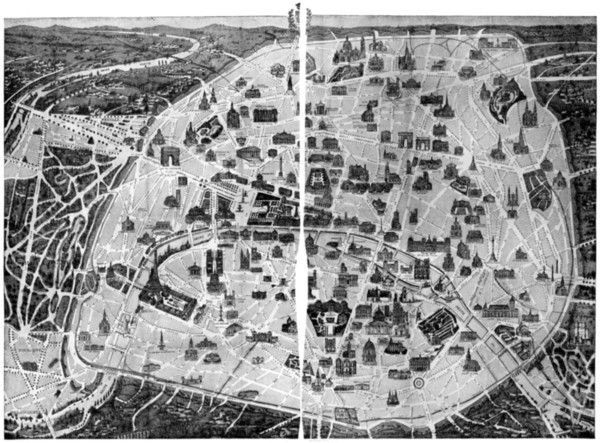
A REMARKABLY INFORMING PANORAMA OF PARIS AND IMMEDIATE SUBURBS, SHOWING THE PLAN OF THE CITY, THE COURSE OF THE
RIVER SEINE, CHIEF BOULEVARDS AND STREETS,
AS WELL AS THE LOCATION AND ARCHITECTURAL OUTLINES OF THE PRINCIPAL BUILDINGS AND MONUMENTS.
Large map:
Left-hand side (779 kB)
Right-hand side (775 kB)
ARC DE TRIOMPHE (ARCH OF TRIUMPH), PARIS
Within the city also are situated the gardens of
the Tuileries, which are adorned with numerous
statues and fountains; the gardens of the Luxembourg,
in which are fine conservatories of rare
plants; the Jardin des Plantes, in which are the
botanical and zoological gardens, hothouses and
museums, which have made this scientific institution
famous; the Buttes-Chaumont Gardens, in which
an extensive old quarry has been turned to good
account in enhancing the beauty of the situation;
the Parc Monceaux; and the Champs Elysees, the
latter being a favorite promenade of all classes.
TROCADERO PALACE, PARIS
Built for the Exhibition of 1878, the Trocadero contains a fine collection of architectural and monumental casts.
The building affords some of the finest views of Paris.
But the most extensive parks are outside the
city. Of these the Bois de Boulogne, on the west,
covers an area of two thousand one hundred and
fifty acres, gives an extensive view toward St.
Cloud and Mont Valérien, comprises the racecourses
of Longchamps and Auteuil, and in it
are lakes, cascades, ornamental cafes, and the
Jardin d’Acclimatation.
The Bois de Vincennes, on the east, even
larger, is similarly adorned with artificial lakes
and streams, and its high plateau offers a fine view
over the surrounding country.
The most celebrated and extensive cemetery in
Paris is Père la Chaise (one hundred and six and
one-half acres), finely situated and containing
the tombs of many celebrities. The Catacombs
are ancient quarries which extend under a portion
of the southern part of the city, and in
them are deposited the bones removed
from old cemeteries now built over.
Cathedrals and Churches.—Of
the churches of Paris the most
celebrated is the Cathedral of Notre
Dame, situated on one of the islands
of the Seine, called the Île de la
Cité. It is a vast cruciform structure,
with a lofty west front flanked
by two square towers, the walls
sustained by many flying-buttresses,
and the eastern end octagonal.
The church of La Madeleine, a
modern structure in the style of a
great Roman temple, with a peristyle
of lofty Corinthian columns,
stands on an elevated basement
fronting the north end of the Rue
Royale. It is considered by many
to be the most beautiful edifice in
Paris.
The Pantheon, or church of St.
Geneviève, patron saint of Paris
(1764) was begun as a church, but
converted by the Constituent
Assembly into a temple dedicated
to the great men of the nation.
Napoleon III. restored it to the
church and rededicated it to St.
Geneviève, but once more, on the
occasion of the funeral of Victor
Hugo (1885), it was reconverted
into a valhalla. There are the
tombs also of Voltaire, Rousseau, Marat and Victor
Hugo.
PALACE OF JUSTICE, PARIS
The Sainte Chapelle, in the south court of the Palais of Justice is the
most beautiful example of Gothic in Paris.
St. Eustache (1532-1637) is an interesting
example of French Renaissance architecture; and
others worthy of note are: St. Germain l’Auxerrois;
St. Gervais; St. Roch; St. Sulpice; Notre
Dame de Lorette; and St. Vincent de Paul. On
the very summit of Montmartre is the Church
of the Sacred Heart, a vast new structure in
the Byzantine style which cost over five
million dollars. The chief French Protestant
churches are the Oratoire and Rédemption.
There are several English,
Scotch, and American churches, a Russian
Greek church, and several synagogues.
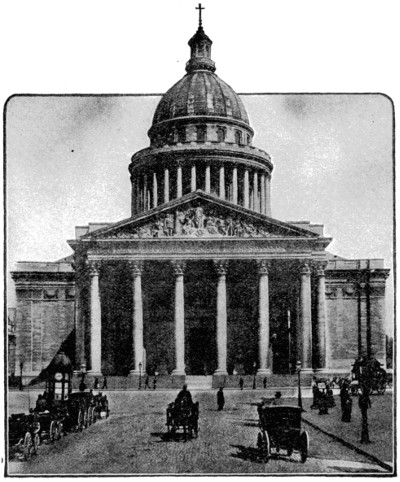
THE PANTHEON, PARIS
It occupies a most commanding position near the Luxembourg
Palace, and is one of the finest architectural structures of the city.
Palaces and Public Buildings.—Notable
among the public
buildings of Paris are its palaces.
The Louvre, a great series of
buildings within which are two
large courts, is now devoted to
a museum which comprises splendid
collections of sculpture, paintings,
engravings, bronzes, pottery,
Egyptian and Assyrian antiquities.
The Venus de Milo, the
Fettered Slaves of Michael Angelo,
the Mona Lisa of Leonardo da
Vinci, and a noble group of the
works of Raphael, Titian, and
Veronese are the chief treasures.
In one gallery there are twenty-one
large pictures by Rubens.
The Salon Carré contains the
most striking works of art.
The palace of the Tuileries was
set on fire in 1871 by the
Communists. The ruins have been
removed, but a few of the architectural
details have been preserved.
The Palace of the Luxembourg, south of the
Seine, since 1879 the meeting-place of the French
senate, was built by Marie de Médicis in the
Florentine style. Close to it a gallery has been
[484]
constructed for the reception of the works of
living artists acquired by the state.
The Palais de l’Élysée, situated in the Rue St.
Honoré, with a large garden, is now the residence
of the president of the republic. The
Chambre des Députés—known under
the Empire as the Palais du Corps Législatif—is
the building in which the deputies
meet.
The Hôtel de Ville, or municipal building,
is situated in the Place de l’Hôtel de
Ville, formerly Place de
Grève, on the right bank
of the river. It was destroyed
by the communists
in 1871, but has now
been re-erected on the
same site with even greater
magnificence. It is a very
rich example of Renaissance
architecture.
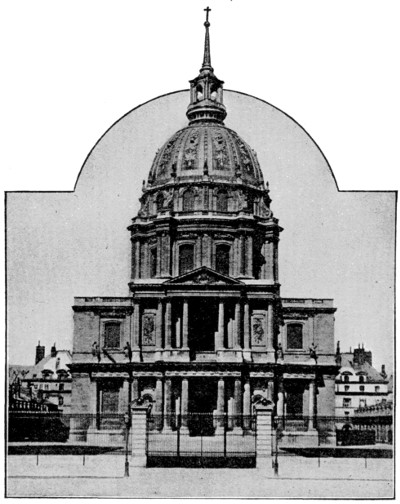
HOTEL DES INVALIDES, PARIS
Prepared as a tomb for Napoleon by Louis Philippe.
The Hôtel des Invalides,
built in 1670, is now used
as a retreat for disabled
soldiers, and is capable of
accommodating five thousand.
The church attached
has a lofty and finely-proportioned
dome. It
contains the burial-place
of the first Napoleon.
The Palais de Justice is
an irregular mass of buildings
occupying the greater
part of the western extremity
of the Île de la
Cité. Opposite the Palais
de Justice is the Tribunal
de Commerce, a quadrangular
building inclosing a
large court roofed with glass. The mint (Hôtel
des Monnaies) fronts the Quai Conti, on the south
side of the Seine, and contains an immense collection
of coins and medals.
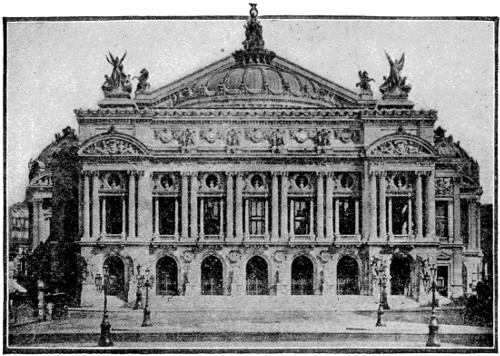
GRAND OPERA HOUSE, PARIS
This is the finest building of its class in the world.
Theaters and Places of Amusement.—Paris
has numerous theaters. The leading houses are
the Opéra, the Théâtre Français—chiefly devoted
to classical French drama—the Opéra Comique
and the Odéon, which receive a subvention from
government. The new opera house, completed in
1875, cost, exclusive of the site, five million, six
hundred thousand dollars.
Montmartre is the center of the bohemian life
of Paris, and contains many cafés and places of
amusement. It has upwards of forty theaters.
Latin Quarter and Its Institutions.—The
chief institutions connected with the University
of France, and with education generally, are still
situated in the Quatier Latin.
The Sorbonne, the seat of the Paris faculties
of letters, science, and Protestant theology, has
been rebuilt and increased in size. The
Sorbonne contains lecture-halls and
class-rooms, and an extensive library
open to the public. There gratuitous
lectures are given and degrees are
granted by the University of France.
Near the Sorbonne is the Collège de
France, where gratuitous lectures are
also delivered by eminent scholars
and men of letters, as well as a large
number of colleges and lycées, the
great public schools of France for
secondary instruction.
The Ecole Polytechnique, the School
of Medicine and the School of Law,
the Observatory, and the Jardin des
Plantes, with its great museums of
natural history, are situated in the
same quarter of Paris.
The principal public library is Bibliothèque
Nationale, which originated
in a small collection of the books
placed by Louis XI. in the Louvre.
Industries of Paris.—Paris cannot
be described as a manufacturing
town. Its chief and peculiar industries
produce articles which derive
their value not from the cost of the
material, but from the skill and taste
bestowed on them by individual
workmen. They include jewelry,
bronzes, artistic furniture, and decorative articles
known as articles de Paris. In consequence of
[485]
the intelligence and taste
required in their trades
the Paris workmen are in
many respects superior
to the machine hands of
manufacturing cities.
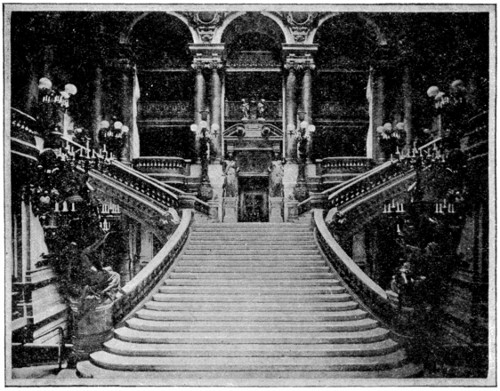
STAIRWAY OF HONOR, GRAND OPERA HOUSE
Versailles (vér-sālz´ Fr.
pron. ver-säy´), is situated
eleven miles west-southwest
of Paris. It contains
a famous royal palace, a
great part of which is now
occupied by the Museum
of French History, consisting
of paintings; but
some of the apartments
are still preserved with
the fittings of a royal
residence. The chapel is
well proportioned and
sumptuous. The great
gallery, called the Galerie
des Glaces, is one of the
finest rooms existing; it is
two hundred and forty by
thirty-five feet, and forty-two
feet high, adorned
with mirrors and gilding,
and with ceiling-paintings
by Lebrun representing
the triumphs of Louis
XIV.
Here King William of
Prussia was proclaimed German emperor in 1871.
The council-chamber, the bedroom of Louis XIV.,
the antechamber of the Mil de Boeuf, the Petits
Apartements of the queen, and the theater are all
historic and highly interesting.
The gardens are the finest of their kind. They
abound with monumental fountains profusely
adorned with groups of sculpture, and supplied
the model for those of half the palaces of Europe.
St. Denis (saṅ-dė-nē´), two and one-half
miles north of the fortifications
of Paris, is chiefly notable for its
abbey church, the historic burial-place
of the kings of France. Dagobert
built the church, which was the nucleus
of one begun by Pepin, finished
by Charlemagne in 775, and demolished
and a larger one built on its
ruins four hundred years later. During
the Revolution the church was pillaged.
It was restored by Viollet-le-Duc.
Here Charlemagne was anointed; the
Oriflamme was kept; Abélard dwelt;
Joan of Arc hung up her arms; Henri
IV. abjured Protestantism; and Napoleon
I. was married to Marie Louise.
The bones of the kings of France from
Dagobert (630) to Louis XV. (1774)
were buried here; and the mad
Revolutionists tore them from their tombs,
and buried them in a common ditch.
They are now in the crypt, and superb
royal monuments adorn the church,
whose interior is lighted by splendid
stained windows, and enriched with
mosaics and statuary.
Among the monuments of greatest
interest are those of Frédégonde,
Dagobert, Pepin, Charlemagne, Clovis
II., Charles Martel, Henry II., Catherine
de Médicis, Francis I., Louis
XVI., Marie Antoinette, Henry IV.,
Louis XII., and Louis XIV.
Of the 167 sepulchral monuments,
53 are new or were brought from
other churches. In 1817, Louis XVIII.
caused the remains of Louis XVI. to
be removed from the Madeline cemetery
to St. Denis.
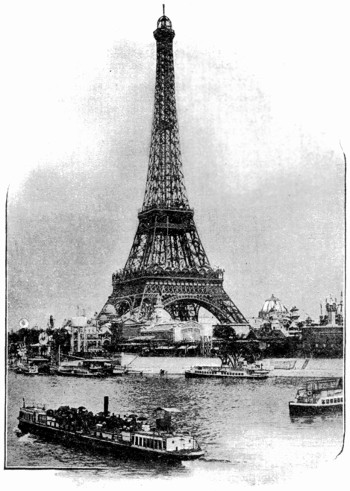
THE EIFFEL TOWER
Contains three stories, reached by a series of elevators. The platform
at the summit is nine hundred and eighty-five feet above the ground.
It cost about one million dollars.
Fontainebleau (Fong´tehn-blȯ´), near the Seine’s
left bank, thirty-seven miles southwest of Paris, is
chiefly famous for its royal château, and the
beautiful forest that surrounds it. The château,
said to have been founded by Robert the Good
toward the end of the tenth century, was rebuilt
in 1169 by Louis VII., and enlarged by Louis XI.
and his successors. After being allowed to fall
into decay, it was repaired and embellished by
Francis I., Henry IV., Napoleon I., and Louis-Philippe.
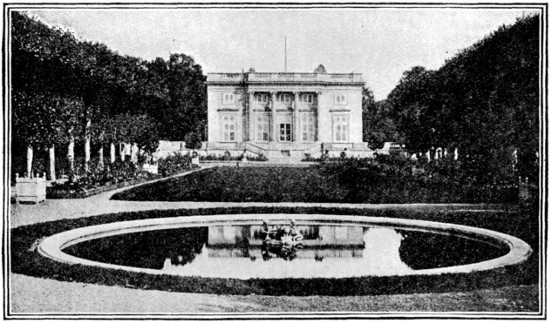
PETIT TRIANON, VERSAILLES
This beautiful little palace was the favorite residence of the unfortunate Marie Antoinette,
after Louis XVI. came to the throne of France. It is now a museum of the personal relics of
this beautiful and ill-fated Queen.
Barbizon (Bar-bee-song´), is close to the Forest of
Fontainebleau. It is a great artists’ resort, and
was the home and death-place of Millet. Corot,
Diaz, Daubigny, and Rousseau were other members
of the “Barbizon School” of painters.
Chief Industrial Centers.—Textile manufactures
are the most important of the mechanical
industries of France.
Lyons, the third city of France, at the junction
of the Saône with the Rhone, is the center of the
silk-growing region and the metropolis of the
silk manufactures, in which the country stands
unrivalled. St. Etienne (146,000), southwest of
Lyons, comes second to it in this manufacture,
after which come Nimes, near the delta of the
Rhone, Tours, on the Loire, and Paris. Inland
trade and manufactures in the south are most
active at ancient Toulouse, on the Garonne, and
at Montpellier, near the Rhone delta.
Woolen, linen, and cotton manufactures are almost
entirely confined to the northern region.
Foremost among these manufacturing towns of
the north stands Lille, with its neighbor towns
of Roubaix and Tourcoing, still nearer the Belgian
manufacturing region; and Cambrai, Douai,
Valenciennes, and St. Quentin, southeast of it.
Rouen, on the Seine in Normandy, and Amiens,
on the Sommer, between Rouen and Lille, Reims,
in the Champagne district, Sedan, on the Ardennes
and Nancy, in French Lorraine, still farther east,
are the other chief manufacturing towns of the
northern region.
At Sèvres, southwest of Paris, are the chief
porcelain factories, which give the models and
take the lead in this industry. Limoges is also a
noted center of porcelain manufacture.
Glass is very extensively made in the northern
departments. Paris itself excels in every kind
of luxurious and fanciful manufacture. Besançon,
the largest town near the frontier of Switzerland,
is a great depot for the produce of the French
half of that country, and manufactures watches
largely.
The mining industries of France are comparatively
limited. Coal is drawn chiefly from
the basin of Valenciennes, which continues the
Belgian coalfield on the north, from the basin of
the Loire and Rhone, and from that of Creuzot,
on the south of the heights of the Côte d’or.
Iron occurs in eleven districts and is of excellent
quality, but generally lies distant from the fuel
necessary to smelt it, so that this metal must also
be imported in large quantity. St. Etienne,
southwest of Lyons, is the most noted center of
the French hardware manufactures, especially
of guns and machinery; Le Creuzot, in the midst
of its coal basin, has also noted ironworks.
The trade of France is only inferior to that of
Britain, Germany, and the United States; the
position of the country, with coasts on three of
the most frequented seas, is exceedingly favorable
to its commerce. The great seats of maritime
traffic with all the world are Marseilles, on
the Mediterranean coast; Bordeaux and Nantes,
with St. Nazaire, on the coast of the Bay of
Biscay; Le Havre (at the mouth of the Seine),
Boulogne, Calais, and Dunkerque, on the English
Channel. All of these may in a sense be called
the harbors of the central point of the life of the
state, luxurious Paris.
Naval and Military Centers.—The naval arsenals
of France, dockyards, and stations of the
fleet, are at Cherbourg and Brest, on the northwest
coast; L’Orient and Rochefort (south of La
Rochelle) on the Bay of Biscay; and Toulon, on
the Mediterranean. Nice and Cannes, on the
Riviera, are favorite winter resorts.
France has more than one hundred fortified
places; indeed almost every town along the
northern and northeastern border is a fortress.
Briançon, the highest town in the country, in the
Alps, south of the pass of Mont Cenis into Italy,
is the chief arsenal and depot of this mountain
barrier, and is considered impregnable.
HISTORY
The name France first appears in history
about the ninth century. Prior to that time
the country which constitutes the greater part
of modern France was occupied successively by
Celts, Gauls and Franks.
Under the Romans.—When
first known this country was
called Gallia, and was the center
whence swarms of plunderers
poured over the mountains into
Italy; but the Phœnicians and
Greeks had a few trading cities
on the Mediterranean coast—especially
Marseilles—where in
the seaport towns traces of descent
from the Greeks are said
still to be found.
In 125 B. C. the Romans
formed in the east of the Rhone
a settlement ever since called
Provincia or “the Province,”
whose capital was Aquae Sextiae
(now Aix), and where corrupted
Latin has never ceased
to be the dialect, and their
power and influence gradually
spread. Between 58 and 51
B. C. Julius Caesar subdued
the whole of Gaul, except the
granite peninsula of the northwest.
Later, refugees from Britain
caused it to be called Brittany;
and there to the present
day the Celtic tongue has prevailed,
and the habits have
been peculiar. The Iberian or
Basque tribes of the Pyrenees
have likewise preserved their
entirely different tongue, which
is not even Aryan.
The Impress of Roman Rule.—Roman
habits, civilization and
speech were adopted all over the
country, and Christianity became
nearly universal. Many
cities were founded as centers
of government from the conquered
population, and most
of the great cities such as Arles
and Lyons and many others date
from this time. Nimes and
Vienne show splendid monuments
of Roman architecture.
The Romans also made magnificent
roads, and are said to have
introduced the olive and the vine, to both of
which the climate is eminently suitable.
Under Teutonic Invaders.—Continual warfare
on the open frontier soon began between
the Roman legions and the advancing Teutonic
nations, of whom the Belgians, a mixed race,
were the van. The city of Lutetia Parisiorum,
now known by its tribal name, Paris, was the
headquarters of Emperor Julian before his
accession in A.D. 361, while he was struggling
with these invaders. After his death, Gaul
became a prey to the Teutons. They did
not destroy the old population, but quartered
themselves as guests on the proprietors of
land; while the Roman cities kept up their
self-government, and paid ransoms to escape
pillage. Chief of these Teutonic tribes were
the Goths, Burgundians and Franks.
Merovingians.—The Franks, whose dominion
swallowed up those of both the foregoing
tribes, had been long settled in the north;
and Pharamond, their chief in 420, is considered
the founder of the French monarchy,
as he was of the first or Merovingian race of
Frankish kings. In 485 Clovis defeated
Syagrius, the Roman general, at Soissons, and
finally extinguished the Roman power in the
west, and in 507, by his victory over the
Visigoths, he rendered himself master of the
country between the Loire and Garonne, but
was checked at Arles by Theodoric, king of the
Ostrogoths. He then settled in Paris, where
he died. His chief aim was a united Frankish
kingdom.
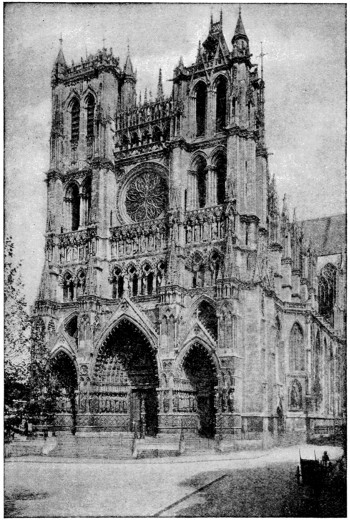
AMIENS CATHEDRAL
The most perfect specimen of Gothic architecture in France, dating
from the thirteenth century. This splendid structure is embellished
with a wealth of magnificent mediæval sculpture. Viollet-le-Duc happily
calls this cathedral “the Parthenon of Gothic architecture.”
Clovis in 493 married Clotilda, a Christian Burgundian
princess, and in 496 embraced her faith.
Though nominally Christians, the Franks
brought their old hereditary Teuton customs
of inheritance and chieftainship, which, as
they had last come from the banks of the
Yssel, were known as Salic laws—i.e. of the
Salian Franks. Their German dominions were
called Austreich (the eastern kingdom); their
Gaulish Neaustreich (not Eastern) or Neustria;
and both were Frankland. Their dynasty
soon exhausted itself, and latterly their kings
were called Fainéants or “Do-nothing” kings
while the mayors of the palace really governed.
Carlovingians.—One of the mayors, a Teuton
wholly in blood, Charles Martel, in 721 checked
the tide of Saracen invasion, and saved Gaul
by the great battle of Soissons. His son,
Pepin, in 753 was elected king, and thence
descended the line known as Carlovingians.
Under Pepin and Charles the Great, called by
the French “Charlemagne,” the country was
relatively peaceful and prosperous; but after
the latter’s death things returned to their
original state of confusion.
Charlemagne was one of the really great
monarchs of the world. His dominions
reached from the Ebro to the Channel, from
the Elbe, to the Atlantic, and included North
Italy, and in 800 he was crowned by the Pope
Emperor of the West. His power was too vast
for a single hand of less power, and fell to
pieces after his son’s death. The Western
Franks fell to Charles the Bald, and it was
then (about 870) that France became a recognized
term for the country between the
Channel and the Pyrenees.
The king had, however, very little power;
his lands were cut up into divisions under
dukes, marquises, and counts, who simply
paid him a nominal homage, and were bound
to follow him in war, but who ruled quite
independently. Moreover, the Northmen or
Normans were horribly ravaging the whole
country; Paris was fortified against them
under Robert the Strong, but, in 911, Charles
the Simple found himself obliged to make to
Rolla, the chief of the Northmen invaders, a
grant of the Neustrian lands, which took the
name of Normandy. The Carlovingians finally
were deposed in 987, and their last sovereign,
Louis V., retired to Lotharingia or Lorraine as
duke.
Capetians.—The grandson of Robert the
Strong, Hugh, became king. He was called
Capet, apparently from the hood which
marked him as guardian of the Abbey of St.
Denis; and the name is used for his dynasty,
which reigned for eight hundred years.
The German influences had passed away,
though the king and nobility were of Frankish
blood. The whole realm was parcelled
out into feudal holdings, the great chiefs of
which hardly owned the royal power, and the
only place where the king really ruled directly
was the county of Paris. There was much
confusion and private warfare, and after the
conquest of England in 1066, the Dukes of
Normandy overshadowed the French kings.
Louis IV. (“the Fat”), in 1108, was the first
king of any ability. He judicially overcame a
robber count, and in his time (though not on
any fixed principles) cities began to be allowed
to purchase their power of self-government,
such as the southern one had preserved from
Roman times. This was called the right of
commune. Except in these cities, the lot of
the people of Gallo-Roman blood was wretched.
They were called villeins, and, except that
they were attached to the soil, were almost
slaves, cruelly oppressed and downtrodden by
their irresponsible lords, mostly Franks, who
covered the land with fortified castles. There
was, however, much religious zeal, which found
its outlet in the Crusades, first proclaimed at
Clermont, in Auvergne, in 1095, and in the
religious orders, whose beautiful monasteries
and splendid cathedrals still exist.
France was at its weakest under Louis VII.,
when Henry II. of England, by inheritance
Duke of Normandy and Count of Anjou, had
married the heiress of the great Duchy of
Aquitaine, and obtained the heiress of Brittany
for his son. Philip II., called Augustus, spent
his life in undermining the power of the
English kings, and when King John murdered
his nephew Arthur of Brittany, Philip held a
court of justice, cited him thither, and, on his
non-appearance, adjudged him to have forfeited
Normandy and Anjou, which easily
were conquered, leaving only Aquitaine as the
possession of John’s mother, and these lands,
being held direct of the crown, much added to
the royal power.
Under Louis IX.—The king, Louis IX.,
was the best and most blameless of French
sovereigns. It was he who, in 1258, established
the Parliament of Paris. In every
Teuton nation the king was supposed to take
counsel and do justice among the other nobles
and freemen; but to attend courts of law in a
large territory was a great vexation to the
nobles, who would not come, and yet resented
decisions made in their absence. Louis arranged
that though every immediate vassal of
the crown had a right to sit in it, yet in its
working state it should only consist of men
trained in the law, with just nobles enough
to give authority. In this parliament the wills
and edicts of the king, and the taxes he
imposed, were registered. The provinces, likewise,
had parliaments to serve as courts of
law. Louis’s devotion led him to attempt two
unfortunate crusades, and he died in the
second, in 1270.
His grandson Philip IV. (“the Fair”), had a
desperate quarrel with the Papacy, and by
underhand means succeeded in forcing Pope
Clement V. to reside in his dominions. The
Popes fixed their residence at Avignon, in
Provence, a province belonging to the Empire,
and held at the time by Philip’s uncle, Charles,
Count of Anjou, but near enough for French
influence. Here the Papal court continued
for seventy years. Philip V. was a violent and
unscrupulous man, and the three sons who
reigned in succession after him had not his
force of character.
Philip was succeeded in turn by Louis X.,
Philip V., and Charles IV. The rivalry between
France and England, consequent upon
the accession of Duke William of Normandy
to the throne of the latter, came to a decisive
crisis during the first half of the fourteenth
century.
House of Valois and the “Hundred Years’
War.”—On the death of Charles IV. (1328)
Philip of Valois succeeded to the throne, beginning
the Valois dynasty; but Edward III.
of England, by virtue of hereditary right
derived from his mother’s side, claimed not
only such provinces as had been taken from
his ancestors, but the whole kingdom. In
this way began the protracted conflict which
French historians call the “hundred years’
war” (1337-1453), a period covering the reigns
of John II. (1350-1364), Charles V. (1364-1380),
Charles VI. (1380-1422), and the greater part
of the reign of Charles VII. (1422-1461). In
1340 an English fleet destroyed the naval
force of France at Sluis, on the coast of
Flanders; in 1346, at Crécy, the English
archers overcame the flower of French
chivalry; and at Poitiers (1356) the Black
Prince defeated King John and made him
prisoner.
The States-General were also the scene of a
deadly struggle between the regent and the
third estate, and the peasantry of several
districts broke out into a fearful insurrection,
which was named the Jacquerie, and marked
by all the horrors of a servile war. Charles V.,
with the help of his great constable, Du Guesclin,
regained in a few campaigns almost all the
English acquisitions in France. On his death,
in 1380, his son Charles VI., surnamed the
Well-Beloved, ascended the throne.
The reign of this sovereign was signally
unfortunate. He fell into a state of insanity,
which rendered him incapable of attending
to the administration of the government, and
in consequence regents were appointed, whose
misconduct threw the kingdom into a civil
war. During these calamities which afflicted
France, Henry V. of England invaded the
country, and gained the memorable battle of
Agincourt. The consequence of this victory,
and other advantages gained by Henry,
enabled him to conclude a treaty by which his
succession to the throne of France was acknowledged
on the death of Charles. Henry and
Charles both died shortly after this event,
A. D. 1422.
Charles VII. and Joan of Arc.—Charles VII.,
surnamed the Victorious, asserted his right to
the throne of his father, while at the same
time the infant Henry VI. of England was
proclaimed King of France under the regency
of his uncle, the Duke of Bedford. The
English laid siege to Orleans, a place of the
greatest importance, and so successful were
they in their operations against this and other
places that the affairs of France began to wear
a most gloomy aspect. The tide of misfortune,
however, was successfully turned by one of
the most extraordinary events recorded in
history.
When the hope of saving Orleans was almost
abandoned, a young girl named Joan of Arc,
about seventeen years of age, who had lived
an humble life in a village on the borders of
Lorraine, presented herself to the Governor of
Vaucouleur, and maintained with much earnestness
that she had been sent by Divine
commission to raise the siege of that city, and
procure the coronation of Charles in the city
of Rheims.
After undergoing a most rigid examination
before a committee of persons appointed for
that purpose, and also before the court and
the king himself, she was intrusted with the
liberation of Orleans. As she approached the
city her presence inspired the inhabitants
with confidence, while it spread dismay and
consternation among the English, who hastily
raised the siege and retired with precipitation,
but being pursued by the heroine at the head
of the French army, they were entirely defeated
at Patay, with a loss of nearly five thousand
men, while the French lost only one of their
number. From this event Joan was called
the Maid of Orleans.
The second part of her mission, which yet
remained to be accomplished, was equally
arduous and dangerous. The city of Rheims
and the intermediate country being in possession
of the English or their allies, presented
apparently insurmountable difficulties.
Charles, however, placing full confidence in
her guidance, commenced his march, and as he
advanced every obstacle disappeared; the
citizens of Rheims, having expelled the garrison,
received him with every demonstration of
joy. After the coronation was performed,
Joan threw herself at the feet of Charles,
declaring that her commission was accomplished,
and solicited leave to return to her
former humble station; but the king, unwilling
to part with her services so soon, requested
her to remain for some time with the army,
with which at length she complied. She
afterwards attempted to raise the siege of the
city of Campiegne; but her good fortune
seemed to have deserted her; she fell into the
hands of the English, who, to gratify their
revenge for the many losses they sustained
through her valour, condemned her, under a
charge of various pretended crimes, and caused
her to be burned in the public square at
Rouen.
By this cruel measure the English hoped to
check the success that had attended the
operations of Charles. In this they were
disappointed; such was the impulse which the
heroine had given to the affairs of France, that
the English in a few years were expelled from
all their possession in the country, with the
exception of Calais.
Charles passed the remainder of his reign in
improving the internal condition of his kingdom.
The close of his life was embittered by
the unnatural conduct of his son, who
attempted to poison his father. He died in
1464, a prince of acknowledged virtue, justice
and discretion.
Louis XI. (1461-1483), the son and successor
of Charles VII., annexed Burgundy and
Picardy, and acquired Anjou, Maine, Provence,
and the counties of Rousillon and Cerdagne;
and France thus became one of the great
powers on the Mediterranean. On the northwest,
by the marriage of Charles VIII. with
Anne of Brittany, she gained possession of
that large province. Charles VIII. invaded
Italy in 1494, and this was the first of a long
series of Italian wars in which France was
engaged for more than half a century. With
Charles VIII., who died in 1498, the direct
line of Valois ended, and Louis, duke of
[490]
Orleans, grandson to a brother of Charles VI.,
became king under the title of Louis XII.
He met at first with some success in Italy, but
was at last driven out.
Wars of Francis I. and Charles V. of Germany.—Francis
I. (1515-1547), his successor,
being opposed by the emperor Charles V., of
Germany, suffered a disastrous defeat at
Pavia in 1525, and was carried a prisoner to
Madrid, where in 1526 he agreed to a treaty
by which he forfeited Burgundy, and all claims
to Naples, Milan, Tournay, and Arras. No
sooner was he set at liberty than he secured
from the pope a release from his oaths, and
renewed the struggle, but again with unfavorable
results, and was compelled to make
another disastrous peace at Cambrai (1529).
The Reformation had now begun, and
Charles V. was obliged to turn his attention to
Germany. Francis encouraged the Protestant
princes in their opposition to the emperor, and
in 1536 the war again broke out. It was ended
in 1544 by the peace of Crespy, when the
emperor was threatening Paris.
Francis I. died in 1546, and was succeeded
by his son, Henry II., and the struggle soon
began again. Henry recovered Calais for
France. Under Francis II. (1559-1560) the
Roman Catholic House of Guise obtained
possession of the effective power in the state.
Their adversaries, the House of Bourbon,
headed the movement of the reformers. Under
the weak kings Charles IX. (1560-1574)
and Henry III. (1574-1589), who were under
the influence of their mother, Catherine de’
Medici, this division in the French nobility
resulted in the war of the League and wars of
religion. The massacre of the Protestants on
the night of St. Bartholomew (1572) raised
to such a pitch the pride of the House of
Guise that Henry III. fled to the camp of the
Bourbon leader, where he was murdered by a
fanatical monk. The name of Charles IX.
remains associated with the horrors of the
St. Bartholomew’s night, which witnesses the
striking of a blow at the very heart of the
nation.
The Bourbon Line.—The accession of the
Bourbon prince, Henry IV. of Navarre (1589-1610),
allayed the fury of religious wars, but
his recantation of Protestantism in favor of
Catholicism disappointed his own party, to
which, however, he granted the free exercise
of their religion by the edict of Nantes (1598).
Henry, however, meditated the humiliation
of the house of Austria, and was on the eve
of his departure for the army when he was
assassinated by Ravaillac, May 14, 1610.
Under the regency of his widow, Maria de’
Medici, mother of Louis XIII., the kingdom
was distracted by war between the queen
mother and the young king. Cardinal Richelieu,
who took the reins of government in 1624,
consolidated the power of the monarch at
home, and, while annihilating the power of the
French Protestants, energetically supported
the German Protestants against the house of
Austria.
His successor, Cardinal Mazarin, pursued the
same policy; and the treaty of Westphalia
(1648) asserted the triumph of religious and
political liberty in Germany, and the victory
of France, which added to her territory the
province of Alsace.
The troubles of the Fronde, a faint image of
the old civil wars, detracted nothing from the
influence gained abroad by the French government,
and Mazarin concluded with Spain, in
1659, the treaty of the Pyrenees, which secured
two other provinces to France—Artois and
Roussillon.
Age of Louis XIV.—Under the personal rule of
Louis XIV. France rose to the height of glory,
while he himself was placed above all control.
From the day of Mazarin’s death (1661) he
assumed the direction of public affairs. In the
first years of his administration the national
wealth, promoted by the admirable efforts of
Colbert, increased with unusual rapidity.
Intellectual progress kept pace with material,
and everything conspired to create a literary
period of great magnificence.
The king’s military successes, too, achieved
through Condé, Turenne, Luxembourg, and
others, were brilliant; and he added to his
kingdom Flanders, Franche-Comté, the imperial
city of Strasburg, and several other
important territories.
But the revocation of the edict of Nantes
in 1685 drove from the kingdom a large number
of its best citizens, and crippled many
branches of industry. The war of 1689-1697
against the league of Augsburg greatly exhausted
the country, and that of the Spanish
succession nearly reduced it to extremities;
but after a contest of twelve years Louis
succeeded, and by the treaties of Utrecht and
Rastadt (1713 and 1714) the house of Bourbon,
in the person of Louis’s grandson, Philip V.,
inherited the best part of the Castilian monarchy.
Louis XIV. died in 1715, after an unparalleled
reign of seventy-two years. The burden
which he had borne was far too heavy for his
weak successors; and toward the end of
Louis XV.’s reign France could scarcely be
ranked among the great European powers.
The four wars in which she then participated,
against Spain (1717-1719), during the regency
of Philip of Orleans, for the succession of
Poland (1733-1735), for the succession of
Austria (1740-1748), and finally the seven
years’ war (1756-1763), were productive only
of disgrace and disaster, including the loss of
Canada.
Prelude to the Revolution.—Louis XV. died
in 1774, and his grandson Louis XVI. ascended
the throne at a period which was perhaps the
most inglorious of French history. The kingdom
was on the verge of financial as well as
political ruin, and it seemed evident that a
disastrous crisis was approaching.
An attempt to conciliate the people was
made by the restoration of the parliament of
Paris; but instead of promoting reform, this
body proved a hindrance to it. Turgot and
Malesherbes, associated with Maurepas in
the ministry, acted with considerable efficiency
in the endeavor to improve the state of affairs,
but were deposed through the influence of the
court party. Necker, who became minister of
finance in 1777, at first seemed to improve
matters slightly; but the opposition of the
[491]
nobles and clergy to any scheme of general
taxation, with other causes, led to his deposition.
His successor, Calonne, recklessly plunged the
finances into a more hopeless condition than
ever, and in 1786 the king was induced to call
together the States-General, the really popular
assembly of representatives, which had not
met since 1614, and then in vain. Thenceforward
there was a succession of barriers
thrown down; madness set in upon the long-oppressed
people, who wreaked the vengeance
of a thousand years. Frightful mobs rose
upon all whom they connected with their past
misery. Nobles and clergy fell; the king
was dethroned, and in 1793 was executed. A
reign of terror set in, during which Robespierre
and other fanatics, who thought they
must destroy in order to build up, sent to the
beheading machine, the guillotine, thousands
of victims, and hoped to have swept away
even the Christian religion, together with all
the old abuses of power.
The Advent of Napoleon and the Directory.—When
they fell in 1794, less sanguinary
counsels prevailed, and, after sundry attempts
at forms of government, Napoleon Bonaparte,
of Corsican birth, climbed to supreme power.
His course had been through victories. Belgium
had been overrun, the Austrians forced
back across the Rhine, the allied armies of
England and Holland gradually pushed back,
and Prussia and Spain forced to conclude
peace. The new government began on October
28, the convention having been dissolved
on the 26th. England, Russia, and Austria,
in a new coalition, now began to carry on a
more vigorous warfare; but Carnot’s strategic
direction soon baffled it. Bonaparte was put
in command of the army which was not to
advance against the Austrians from Italy, and
in 1796 and 1797 completely changed the
condition of affairs. At the truce of Leoben
(April 18, 1797) France controlled all Italy;
Austria surrendered all rights in Belgium and
recognized those republics which France
established; and the history of France became
almost wholly identified for nearly eighteen
years with that of a single man, Napoleon
Bonaparte.
The Consulate.—Bonaparte was chosen first
consul for ten years, December 13, 1799;
consul for life, August 2, 1802; then hereditary
emperor, May 18, 1804. He reformed
and reorganized legislation at home by the
formation of the civil code, the organization
of public instruction, and the improvements
he introduced in all the branches of public
service; while he added to his military and
political glory by a new succession of triumphs,
resulting in the treaties of peace signed at
Presburg (1805), Tilsit (1807), and Vienna
(1809).
He had now reached the height of his glory;
he had placed his brothers on the thrones of
Holland, Westphalia, and Spain, and his
brother-in-law on that of Naples; but his
power was shaken by the resistance which he
met with in the Spanish peninsula (1808-1813);
and his prestige was ruined by his expedition
to Russia in 1812. The European nations
united against him, and inflicted upon him
at Leipsic, October 16-19, 1813, a blow from
which he never recovered.
The Restoration.—Napoleon was dethroned in
April, 1814, exiled to the island of Elba, and the
brother of Louis XVI. received from the conquerors
the sceptre of France, now restricted
to her old limits. The sudden return of
Napoleon from Elba, however, overthrew this
new power; and for one hundred days, from
March 20 to June 28, 1815, he was again the
sovereign of France; but the battle of Waterloo
(June 18, 1815) destroyed his power forever,
and the Bourbons once more ruled the kingdom.
Louis XVIII. granted a charter to his subjects,
and died in 1824 in undisturbed possession
of his throne. His brother and successor,
Charles X., sought popularity by supporting
the Greek insurrection against Turkey and
conquering Algiers; but having attempted to
suspend some of the most important guarantees
secured by the charter, a formidable insurrection
broke out, July 27, 1830, and he was obliged
to abdicate.
House of Orleans.—After a few days’ interval
the head of the younger branch of the house
of Bourbon, Louis Philippe, duke of Orleans,
was appointed “king of the French” (August
9) by the chamber of deputies. The choice,
being acceptable to the middle classes or
bourgeoisie, was maintained; and notwithstanding
some occasional outbursts of republicanism
among the people, the July monarchy,
as it was called, lasted for nearly eighteen
years.
Revolution of 1848.—A political manifestation
in favor of parliamentary reform brought on
another revolution, February 24, 1848, and
France became a republic, with a provisional
government in which Lamartine played the
most conspicuous part; but within a few
months the majority of the constituent assembly,
frightened by socialistic movements and a
terrible civil struggle in the capital (June 23-26),
became hostile to the new form of government.
On December 10, 1848, Louis Napoleon Bonaparte,
nephew of Napoleon I., was elected
president, for a term of four years. On
December 2, 1851, the president dissolved the
assembly, assumed dictatorial powers, and
appealed to the people to sanction his act by
their votes. He was reëlected president for a
term of ten years; a new constitution was promulgated;
and finally, on November 7, 1852,
the senate proposed the reëstablishment of the
empire.
Second Empire.—The empire was proclaimed,
December 2, 1852, and Louis Napoleon
ascended the throne with the title of Napoleon
III. The chief event of the early portion of
this reign was the Crimean war, which largely
increased the military prestige of the nation,
as well as the popularity and strength of
Napoleon’s rule. The war with Austria (1859)
left France in a position of even greater
authority than before in European politics.
In 1860 Savoy and Nice were ceded to France
by Italy. The emperor’s schemes for establishing
the Hapsburg prince Maximilian on
the throne of Mexico proved so ignominious a
[492]
failure as to do much toward undermining the
opinion of his power that had been held in
Europe.
The course which Napoleon pursued during
the Prusso-Austrian war in 1866 did not tend
to restore confidence in him. In 1867 he
aided in defending the power of the pope
against the Garibaldians. In 1868 the growth
of public opinion against the emperor was conspicuous;
in 1869 much excitement was caused
by the exposure of the confusion in financial
affairs; and in 1870 popular disturbances,
fomented by Rochefort, broke out on the
acquittal of Pierre Bonaparte for the shooting
of Victor Noir.
The demand for reforms was answered by a
new constitution, which was finally confirmed
by a plebiscite on May 8.
Franco-Prussian War.—In the spring of 1870
there were unmistakable manifestations of a
hostile spirit on the part of the government
against Prussia. The declaration of the candidature
of the Hohenzollern prince Leopold for
the throne of Spain furnished an immediate
cause of war. The voluntary withdrawal of
Prince Leopold followed the remonstrances of
France, but the latter demanded also of the
king of Prussia an explicit promise that no
prince of Hohenzollern should ever be a candidate
for the Spanish crown. This demand was
refused, and war was declared by France,
July 19.
On the 28th Napoleon went to Metz, where
he personally took command of his forces;
and on August 2 the king of Prussia, accompanied
by Bismarck and Moltke, joined his
army. On the latter day the French bombarded
and took Saarbruck. On August 4
the German advance, under the crown prince,
defeated the French at Weissenburg, and on
the 6th totally defeated MacMahon at Worth.
On the 11th the three German armies under
Steinmetz, Prince Frederick Charles, and the
crown prince effected a junction on French
territory, with headquarters at Saarbruck.
By the 14th Steinmetz had advanced to near
Metz, where the French army was concentrated
under Bazaine, and on the afternoon of the
same day won a victory at Courcelles; on the
16th Frederick Charles won a second battle at
Mars-la-Tour; and on the 18th the combined
forces under King William again defeated the
French at Gravelotte.
Bazaine now drew within the fortifications,
and the Germans, leaving a portion of their
forces to invest the city, marched against
MacMahon at Chalons. News reaching them
of the advance of MacMahon to relieve
Bazaine, they turned northward to intercept
him. On the 30th they surprised a corps of
General Failly near Beaumont, and fought a
battle which resulted in the retreat of the
French beyond the Meuse and their final
withdrawal to Sedan.
The battle of Sedan was begun by the
Germans September 1. After severe fighting
they drove the French from all sides to that
fortress, where, almost surrounded and without
provisions or defenses, they were compelled
to capitulate. The emperor surrendered to
King William in person, September 2, and was
carried a prisoner to Wilhelmshohe. In dead,
wounded, and prisoners, the French thus lost
in the last few days an army of nearly one
hundred and fifty thousand men.
The Third Republic.—The news of Sedan
created intense excitement at Paris, and the
popular indignation against Napoleon and his
party was without bounds. Gambetta proclaimed
the republic; and a provisional
government of national defense was at once
formed, with General Trochu for president
and Jules Favre for vice-president. The
empress took refuge in England.
The German army entered Rheims on the
5th, and on the 15th they had closely approached
Paris. A sortie by General Ducrot
on the 19th was repulsed, and a few days later
the actual investment of the city was begun.
The German headquarters were established
at Versailles. A portion of the French
government of national defense remained in
the capital; another portion, in order to be in
communication with the provinces, was
established at Tours. Toul surrendered on
the 23rd. Strasburg capitulated in the night
of September 27-28. Soissons and Schlettstadt
capitulated respectively on October 16
and 24, and on the 27th Metz also yielded,
Bazaine surrendering one hundred and seventy-three
thousand men.
In the meantime the situation of Paris had
become hopeless; and on January 28 arrangements
for its capitulation had been concluded
and provision made for a general armistice.
On February 17, 1871, Thiers was chosen chief
executive of the republic. On the 26th the
preliminary treaty of peace was signed at
Versailles, by which France ceded to Germany
the greater part of Alsace and Lorraine, and
agreed to pay as war indemnity five milliards
of francs. The definitive treaty with Germany
had been signed at Frankfort on the 10th of
May.
In 1873 the Thiers administration was overthrown
and replaced by one under Marshal
MacMahon. In 1875 a Parliamentary Republic
was established, and still remains under the
guarantees of the constitution. In 1877
MacMahon was succeeded by Grevy. By this
time the republic was fairly firmly established
and withstood many attacks. A policy of
colonial expansion was adopted, particularly
in Egypt, but in spite of the dual control
France and England established in 1879,
France, in 1882, refused to help England in
Egypt, and lost any control she had there.
The Triple Alliance of 1883 isolated France,
but in 1890 she confronted the Triple Alliance
with the Dual Alliance—between France and
Russia—and made great attempts to establish
colonial power.
The outstanding events of 1914, 1915 and
1916 were those connected with France’s
participation in the European war as the
leading military power of the Entente Allies.
(See further under Great Wars of History.)
Books of Reference.—The chief histories are those of
Henri Martin, Michelet, Dareste, Lavalee, Sismondi,
Kitchin Lavisse, and Durny. These works cover the
general history of France. See, in addition, Tocqueville’s
The Ancient Regime; Taine’s French Revolution;
Carlyle’s History of the French Revolution; Fyffe’s
History of Europe; Hazlitt’s Life of Napoleon Bonaparte.
COLONIES AND DEPENDENCIES
The colonies and dependencies of France
(including Algeria and Tunis) have an area
roughly estimated at about 4,000,000 square
miles with a population of about 41,600,000.
Algeria, however, is not regarded as a colony
but as a part of France, and Tunis is attached
to the Ministry of Foreign Affairs.
The area and population of the colonial
domain of France at the beginning of the
European war was as follows:
Colonies and
Year of Acquisition |
Area in
Sq. Mi. |
Population |
| In Asia: |
|
|
| India (1679) |
196 |
277,000 |
| Annam (1884) |
|
|
- |
309,980 |
16,317,000 |
| Cambodia (1862) |
| Cochin-China (1861) |
| Tonking (1884) |
| Laos (1892) |
| |
|
|
| Total Asia |
310,176 |
16,594,000 |
| In Africa: |
|
|
| Algeria (1830-1902) |
343,500 |
5,231,850 |
| Sahara (——) |
1,544,000 |
800,000 |
| Tunis (1881) |
45,779 |
1,500,000 |
| Senegal (1637-1880) |
|
|
- |
1,585,810 |
- |
|
915,000 |
| Upper Senegal & Niger (1893) |
4,415,000 |
| Guinea (1843) |
1,498,000 |
| Ivory Coast (1843) |
890,000 |
| Dahomey (1893) |
749,000 |
| Mauritania (1893) |
400,000 |
| Congo (1884) |
669,280 |
5,000,000 |
| Reunion (1649) |
970 |
201,000 |
| Madagascar (1643-1896) |
226,015 |
2,701,000 |
| Mayotte (1843) |
840 |
96,000 |
| Somali Coast (1864) |
5,790 |
180,000 |
| Total Africa |
4,421,934 |
24,576,850 |
| In America: |
|
|
| St. Pierre and Miquelon (1635) |
96 |
6,000 |
| Guadeloupe (1634) |
688 |
182,000 |
| Martinique (1635) |
378 |
182,000 |
| Guiana (1626) |
34,000 |
27,000 |
| Total America |
35,222 |
397,000 |
| In Oceania: |
|
|
| New Caledonia (1854-1887) |
7,200 |
55,800 |
| Tahiti, etc. (1841-1881) |
1,544 |
30,000 |
| Total Oceania |
8,744 |
85,000 |
| Grand Total |
4,776,126 |
41,653,650 |
SOVEREIGNS AND PRESIDENTS OF FRANCE
Giving, in order, the Royal Houses to which the French sovereigns belonged; Period of Rule
in Chronological order; names of kings, emperors, regents and presidents; dates of birth and death
of each; their genealogy or lineage; and other important personal facts.
THE MEROVINGIANS
420-428.—Pharamond (?-?); life obscure.
428-448.—Clodion (?-?); son of Pharamond; king
of the Salic Franks.
448-457.—Merovaeus (411?-457); founder of the
Merovingian Dynasty.
458-481.—Childeric (?-481); son of Merovaeus,
king of the Franks.
481-511.—Clovis I. (465-511); son of Childeric;
real founder of the Frankish monarchy. At his
death his four sons divided the empire.
Childebert; Paris.
Clodomir; Orleans.
Thierry; Metz; and
Clotaire; Soissons.
558-561.—Clotaire I.; sole ruler (497-561); fourth
son of Clovis. Upon his death the kingdom was
divided between four sons: viz.
Charibert, ruled at Paris.
Gontram, in Orleans and Burgundy.
Sigebert, at Metz and Chilperic, at Soissons; both assassinated by Fredegonde.
575-596.—Childebert II. (570-596); son of Sigebert
and Princess Brunehaut; ruled under the regency
of his mother; poisoned.
613-628.—Clotaire II. (584-628); son of Chilperic I.
628-638.—Dagobert I., the Great (602-638); son of
Clotaire II.; divided the kingdom between his
two sons:
Clovis II., Burgundy and Neustria.
Sigebert II., Austrasia.
670-673.—Childeric II. (649-673); son of Clovis II.;
assassinated, with his queen and his son Dagobert,
in the forest of Livri.
687-714.—Pepin II., of Heristal (?-714); ruled the
whole kingdom of the Franks during the reigns
of Dagobert II., Clovis III., Childebert III., and
Dagobert III.
715-720.—Chilperic II. (?-720); deposed by Charles
Martel, mayor of the palace in 717, restored in
720, but soon dies at Noyon.
720-737.—Thierry IV. (712-737); son of Dagobert
III.; reigned under the influence of Charles
Martel who took the title “duke of the Franks.”
737-741.—Interregnum, till death of Charles Martel,
741.
742-752.—Childeric III. (?-755); son of Childeric
II.; last of the Merovingians; made king by
Pepin, 742; deposed by him, 752.
THE CARLOVINGIANS
751-768.—Pepin the Little (714-768); son of
Charles Martel.
768-814.—Charlemagne, or Charles the Great (742-814);
son of Pepin the Short; Charles crowned
Emperor of the West, by Leo III., 800. Carloman
reigned with him three years.
814-840.—Louis I., le Debonnaire (778-840); son
of Charles the Great; emperor; dethroned, but
restored.
843-877.—Charles the Bald (823-877); younger
son of Louis le Debonnaire, king; emperor in 875;
poisoned by Zedechias, a Jewish physician.
877-879.—Louis II. (846-879); son of Charles the
Bald.
879-884.—Louis III. (863-882) and Carloman (?-?);
sons of Louis II.; the former died 882, and Carloman
reigned two years alone.
884-888.—Charles the Fat (839-888); son of Louis
the German; usurps right of Charles the Simple.
888-898.—Count Eudes (?-898); Eudes, or Hugh,
count of Paris.
898-922.—Charles the Simple (879-929); son of
Louis the Stammerer; Charles III. (or IV.) was
deposed, and died in prison in 929; he married
Edgiva, daughter of Edward the Elder, of England,
by whom he had a son, King Louis IV.
922-936.—Raoul (Rudolph of Burgundy) (?-?);
Rudolph, or Raoul, duke of Burgundy; elected
king, but never acknowledged by the southern
provinces.
936-954.—Louis IV. (921-954); son of Charles the
Simple; taken by his mother into England, died
by fall from his horse.
954-986.—Lothaire (941-986); son of Louis IV.;
ruled with his father from 952, succeeds him at
fifteen years of age, protected by Hugh the
Great; poisoned.
986-987.—Louis V. (966-987); son of Lothaire;
poisoned (supposed by his queen, Blanche); last
of race of Charlemagne.
HOUSE OF CAPET
987-996.—Hugh Capet, the Great (?-996); eldest
son of Hugh the Abbot; usurps the rights of
Charles of Lorraine, uncle of Louis IV. From
him this race of kings is called Capetians.
996-1031.—Robert II. (971-1031); son of Hugh
Capet; surnamed the Sage; died lamented.
1031-1060.—Henry I. (1011?-1060); son of Robert II.
1060-1108.—Philip I., the Fair (1052-1108); son
of Henry I.; succeeded at eight years of age;
ruled at fourteen.
1108-1137.—Louis VI. (le Gros) (1078-1137); son
of Philip I.
1137-1180.—Louis VII. (1120-1180); son of Louis
VI.; surnamed the Young; reigned with his
father for some years.
1180-1223.—Philip II., Augustus (1165-1223); son
of Louis VII.; succeeds at fifteen; crowned at
Rheims in his father’s lifetime.
1223-1226.—Louis VIII. (1187-1226); son of
Philip Augustus.
1226-1270.—Louis IX., or St. Louis (1215-1270);
son of Louis VIII.; succeeded at fifteen, under his
mother as guardian and regent; died in camp
before Tunis.
1270-1285.—Philip III., the Bold (1245-1285); son
of Louis IX.
1285-1314.—Philip IV., the Fair (1268-1314); son
of Philip III.; king in his seventeenth year.
1314-1316.—Louis X. (1239-1316); son of Philip
IV.; surnamed Hutin, an old word for headstrong,
or mutinous.
1316-1321.—Philip the Hardy (1294-1322) second
son of Philip IV.
1322-1328.—Charles IV., the Fair (1294-1328);
youngest son of Philip the Fair.
HOUSE OF VALOIS
1328-1350.—Philip VI., of Valois (1293-1350); son
of Charles of Valois.
1350-1364.—John II., the Good (1319-1364); son of
Philip VI.; died suddenly in the Savoy in London.
1364-1380.—Charles V., the Wise (1337-1380); son
of John II.
1380-1422.—Charles VI. (1368-1422); son of
Charles V.
1422-1461.—Charles the Victorious (1403-1461);
son of Charles VI.
1461-1483.—Louis XI. (1423-1483); son of Charles
VII.; able but cruel.
1483-1498.—Charles VIII. (1470-1498); son of
Louis XI.; the Father of his People; great-grandson
of Charles V.
1498-1515.—Louis XII. (1462-1515); a descendant
of the younger son of Charles V.
1515-1547.—Francis I. (1494-1547); son of Charles,
Count of Angoulême; called the Father of Letters;
great-great-grandson of Charles V.
1547-1559.—Henry II. (1519-1559); son of Francis
I.; died of accidental wound by comte de Montmorency
at the tournament for nuptials of his
sister with the duke of Savoy.
1559-1560.—Francis II. (1543-1560); eldest son of
Henry II.; married Mary Stuart, Queen of Scots.
1560-1574.—Charles IX. (1550-1574); second son
of Henry II.; Catherine de’ Medici, his mother,
regent.
1574-1589.—Henry III. (1551-1589); third son of
Henry II.; elected king of Poland; last of the
house of Valois; stabbed by Jacques Clement, a
Dominican friar.
HOUSE OF BOURBON
1589-1610.—Henry IV., the Great (1553-1610); son
of Antoine de Bourbon, King of Navarre; son-in-law
of Henry II.; assassinated by Francis
Ravaillac.
1610-1643.—Louis XIII., the Just (1601-1643); son
of Henry IV.
1643-1715.—Louis XIV., the Great (1638-1715);
son of Louis XIII. and Anne of Austria.
1715-1774.—Louis XV. (1710-1774); great-grandson
of Louis XIV.
1774-1793.—Louis XVI. (1754-1793); grandson of
Louis XV.; ascended the throne in his twentieth
year; married the archduchess Marie Antoinette,
of Austria, May, 1770; dethroned, July, 1789;
guillotined, January, 1793, and his queen, October
following.
.........—Louis XVII., son of Louis XVI., never
reigned; and died in prison, supposed by poison,
June, 1795, aged ten years two months.
THE FIRST REPUBLIC
1792-1795.—National convention; first sat September
21, 1792; it consisted of seven hundred
and fifty members.
1795-1799.—Directory nominated. November 1,
1795; the Directory (Lareveillère Lepaux,
Letourneur, Rewbell, Barras, and Carnot) nominated
November; abolished, and Bonaparte,
Ducos, and Siéyès appointed an executive commission,
November, 1799.
THE CONSULATE
1799-1804.—Napoleon Bonaparte (1769-1821);
Cambacérès (1753-1824); and Lebrun (1739-1824),
appointed consuls, December, 1799. Napoleon
appointed consul for ten years, May, 1802;
for life, August, 1802.
THE EMPIRE
(Established by the Senate, May 18, 1804.)
1804-1814.—Napoleon (Bonaparte) I. (1769-1821),
decreed Emperor, May 18, 1804. He renounced
the thrones of France and Italy, and accepted
the Isle of Elba for his retreat, April 5, 1814.
Again appeared in France, March 1, 1815. Was
defeated at Waterloo, June 18, 1815. Abdicated
in favor of his infant son, June 22, 1815. Banished
to St. Helena, where he died, May 5, 1821.
.........—Napoleon II. (1811-1832); never
reigned; he was Napoleon’s son by his second
wife, Maria Louisa of Austria, and later created
Duke of Reichstadt, and King of Rome.
RESTORATION OF THE BOURBONS
1814-1824.—Louis XVIII. (1755-1824); brother
of Louis XVI.; married Marie-Josephine-Louise
of Savoy; entered Paris, and took possession of
the throne, May, 1814; obliged to flee, March,
1815; returned July, same year; died without
issue.
1824-1830.—Charles X. (1757-1836); younger
brother of Louis XVIII.; married Marie-Thérèse
of Savoy; deposed July, 1830. He resided in
Great Britain till 1832, and died at Gratz, in
Hungary.
HOUSE OF ORLEANS
1830-1848.—Louis Philippe (1773-1850); son of
Louis-Philippe, duke of Orleans, called Egalité,
descended from Philippe, duke of Orleans, son of
Louis XIII.; married, 1809, Maria-Amelia,
daughter of Ferdinand I., king of the Two
Sicilies; raised to the throne as king of the French,
1830; abdicated, 1848; died in exile, in England.
THE SECOND REPUBLIC, 1848
February 22 to December 19, 1848.—The revolution
commenced in a popular insurrection at
Paris, February, 1848. The royal family escaped
by flight to England; a provisional government
was established, monarchy abolished, and France
declared a republic.
1848-1852.—Charles Louis Napoleon (1808-1873);
declared by the National Assembly President of
the Republic of France; and proclaimed next
day, December 20, 1848; elected for ten years,
December, 1851.
THE SECOND EMPIRE
1852-1870.—Napoleon III. (1808-1873); nephew
of Napoleon I.; formerly president of the French
Republic as Charles Louis Napoleon; elected
Emperor, November, 1852; proclaimed, December,
1852; surrendered himself a prisoner to the
King of Prussia at Sedan, September, 1870;
deposed at Paris, September 4; died at Chislehurst,
England, and buried there.
THE THIRD REPUBLIC
1870-1871.—Committee of Public Defense.
1871-1873.—I. Louis Adolphe Thiers (1797-1877);
appointed President of the French Republic by
the National Assembly, 1871; resigned, 1873.
1873-1879.—II. Marshal M. E. Patrice Maurice
MacMahon (1808-1893); elected president, 1873.
1879-1887.—III. François Paul Jules Grévy (1807-1891);
elected president, January, 1879; reelected,
1885; resigned, December, 1887.
1887-1894.—IV. Marie-François Sadi-Carnot (1837-1894);
elected president, December, 1887;
assassinated, June, 1894.
1895-1899.—V. Jean Pierre Paul Casimir-Perier
(1847-1907); elected president, June, 1894;
resigned, January, 1895.
1899-1906.—VI. François Felix Faure (1841-1899);
elected president, January, 1895; died, February,
1899.
1906-1913.—VII. Emile François Loubet (1838- ——);
elected president, February, 1899.
1913- ——.— VIII. Raymond Poincaré (1860- ——);
elected president, 1906.
GERMAN EMPIRE.
GERMANY (from Lat. Germania) is the English
name of the country which the natives
call Deutschland, and the French L’Allemagne;
while internationally it is known as the German
Empire (Das Deutsches Reich), especially since
1871.
The German Empire is composed of a
federation of twenty-five states, with one common
imperial province, the names of which,
with their areas and populations, are given on
a subsequent page. Heligoland was ceded by
Britain to Germany in 1890.
Divisions of the Empire.—The political divisions
or states of the German Empire, together
with their areas and population at the last
census, are given in the subjoined table:
| States |
Area in
Sq. Miles |
Population
at Last
Census |
| Kingdoms |
|
|
| |
1. |
Prussia |
134,616 |
40,163,333 |
| |
2. |
Bavaria |
29,292 |
6,876,497 |
| |
3. |
Saxony |
5,789 |
4,802,485 |
| |
4. |
Württemburg |
7,534 |
2,435,611 |
| Grand-Duchies |
|
|
| |
5. |
Baden |
5,823 |
2,141,832 |
| |
6. |
Hesse |
2,966 |
1,282,219 |
| |
7. |
Mecklenburg-Schwerin |
5,068 |
639,879 |
| |
8. |
Saxe-Weimar |
1,397 |
417,166 |
| |
9. |
Mecklenburg-Strelitz |
1,131 |
106,347 |
| |
10. |
Oldenburg |
2,482 |
482,430 |
| Duchies |
|
|
| |
11. |
Brunswick |
1,418 |
494,387 |
| |
12. |
Saxe-Meiningen |
953 |
278,792 |
| |
13. |
Saxe-Altenburg |
511 |
216,313 |
| |
14. |
Saxe-Coburg-Gotha |
764 |
257,208 |
| |
15. |
Anhalt |
888 |
331,047 |
| Principalities |
|
|
| |
16. |
Schwarzburg-Sondershausen |
333 |
89,984 |
| |
17. |
Schwarzburg-Rudolstadt |
363 |
100,712 |
| |
18. |
Waldeck-Pyrmont |
433 |
61,723 |
| |
19. |
Reuss, Junior Branch |
122 |
152,765 |
| |
20. |
Reuss, Elder Branch |
319 |
72,616 |
| |
21. |
Schaumburg-Lippe |
131 |
46,650 |
| |
22. |
Lippe-Detmold |
469 |
150,749 |
| Free-Towns |
|
|
| |
23. |
Lübeck |
115 |
116,533 |
| |
24. |
Bremen |
99 |
298,736 |
| |
25. |
Hamburg |
160 |
1,015,707 |
| Reichsland |
|
|
| |
26. |
Alsace-Lorraine |
5,604 |
1,871,702 |
| |
TOTAL |
208,780 |
64,903,423 |
Location and Extent.—This combination of
Germanic States extends now from the Alps
and the Bohemian mountains on the south to
the Baltic on the north; and from the borders
of France, Belgium, and Holland, on the west,
to those of Russia on the east; the greatest
distance across it from east to west and from
north to south being about five hundred miles.
The coast-line measures about nine hundred
and fifty miles. The most remarkable features
of the coast are the expansions of the river
mouths in the Baltic; the lagoons called the
Kurische Haff, Frische Haff, and Stettiner
Haff; the estuaries of the Elbe and Weser;
and the rounded inlets of Jade Bay and the
Ems mouth, on the North Sea.
The mountains on the south and the sea on
the north give natural frontiers for the most
part, but west and east artificial boundaries
are marked out, which correspond only in a
few parts with the ethnographic limits of
Germanic and Romanic peoples on the one
side, and Germanic and Slavonic on the other.
Surface Characteristics.—The surface of the
empire falls naturally into three divisions: the
lowlands in the north, the table-land of the
south, and the basin of the Middle Rhine.
The Lowlands are part of the Great European
plain, and are largely occupied with
sandy tracts, with here and there deposits of
peat. They are well watered, and in certain
districts fertile, while the monotony of their
level is broken by two lines of hills whose
heights vary from five hundred to eight hundred
feet, and which may be said to extend
roughly from the Mecklenberg to the Vistula,
and from the moors of Lüneburg in Hanover
to Silesia.
Table-lands.—In the southern plateau of
Bavaria, the Fichtelgebirge is clearly the pivot
round which the other mountain systems
revolve. Thus, to its northwest there rises the
Thuringian Forest and the Harz Mountains,
and to the northeast the Erzgebirge, the
Riesengebirge, and the Sudetic Mountains.
Southwest radiate the Franconian and Swabian
Juras and the Schwarzwald or Black
Forest heights. Westward stretch the Taunus
Mountains, while beyond these, and divided
only by the Rhine, are the ridges of the Vosges.
In the extreme southeast of Bavaria the Tyrolese
or Noric Alps follow the northern bank of
the Inn, and from this range rises the Zugspitze
(nine thousand seven hundred feet), which is
the highest summit in the whole empire. Between
Basle and Mannheim, the Middle Rhine
is splendidly sheltered by the Vosges and the
Black Forest, which guard its course to left
and right. (See further under the Rhine.)
Rivers.—By far the greater part of the country
is drained northwards to the Baltic and the
North Sea by its navigable highways, the
Vistula, Oder, Elbe, Weser, and Rhine. The
southeastern corner alone belongs to the upper
basin of the Danube, flowing towards the
Black Sea. (See Danube.)
The Vistula and the Oder are Baltic waterways,
but more important from a commercial
point of view are the Elbe, with its chief
[496]
affluents the Mulde, Havel, and the Saale, and
the great Rhine, which both empty into the
North Sea, along with the smaller Ems and
the Weser, which latter is the only purely
German stream. This fact is worth noticing,
as the sources of the Oder, Elbe, and Vistula
must be traced in Austria, and sections only
of the Rhine and Danube traverse the empire.
Climate.—Broadly speaking, the general contours
are not favorable to climate; for the
level exposed flats, north and east offer no
resistance to the passage in winter of the dry,
piercing winds from Siberia and the Arctic,
while to the south and west the mountainous
tracts form effectual barriers against the moist
Anti-trades. Extremes of temperature increase
eastward in proportion to the distance
from the Atlantic. In the warmer latitudes
of the south, the elevations counteract the
natural tendency to grow hotter, so that
Ratisbon has the same temperature as Hamburg.
In the Upper Harz the rainfall reaches
sixty-six inches, but the mean annual precipitation
is only about twenty inches. On the
whole the climate may briefly be described as
continental. It should be noted that the
general slope of the country is from the southeast
to northwest, that is, away from the sun,
and also that the Rhine valley is so delightfully
sheltered that it reaps the full benefit of its
warm latitude, and thus enjoys excellent
weather conditions.
Internal Communications.—The commercial
prosperity of the empire may in some measure
be traced to the excellence of the railways, the
majority of which are managed by the state.
Berlin is splendidly provided with communications
by rail, and it may with truth be said
that it is within twenty-four hours’ reach of
almost every point in the empire. Further,
the trunk systems have many of them an
international importance; for the great
Oriental express from Paris to Constantinople
traverses the line from Strassburg to Vienna
through Munich, while Paris is linked with the
remote Siberia by means of the lines from
Cologne to Berlin and from Berlin to Warsaw.
Berlin is also directly connected with Breslau,
Hamburg, Danzig, and Königsberg. From
Frankfort-on-Main, which is the trading center
between north and south Germany, lines
radiate to Cologne, Ostend, Antwerp, Flushing,
Rotterdam, and Berlin northward, and in a
southerly direction to Strassburg, Basle,
Munich, and Vienna, while east and west it is
joined up with Dresden, Breslau and Metz.
Domestic commerce has been further facilitated
by an elaborate network of canals. By
far the most important of these is the Kaiser-Wilhelm
Canal (sixty-one miles long), which
unites the North Sea and the Baltic. The
Dortmund-Ems (one hundred and fifty miles
long) and the Elbe-Trave (forty-three miles
long) have only recently been completed.
Since the building of the Rhine and Rhone
canal through Mulhaüsen, it has been possible
for a barge to pass from Rotterdam to Marseilles
without unloading.
The union of the Danube and Rhine is
effected by the Ludwigs canal, and that of the
Seine and Rhine by the Rhine and Marne
Canal. A number of canals, including the
Teltow (opened in 1906), serve to connect the
Spree, and therefore Berlin, with the Oder
and the Elbe, the Oder and Vistula being
joined by what is known as the Bromberger
Canal.
Productions and Industries.—Following this
distribution of climate, the forests which still
cover a great part of Germany, and form a
feature of its landscapes, are chiefly of the
hardier pines in the north and east, and of
deciduous trees in the south and west. About
sixty-one per cent of the surface of the empire
is suitable for cultivation, the forests occupy
twenty-five per cent, and the uncultivable
moors and mountain tracts only eight per cent.
Agriculture.—There are sixty-five million
acres of cultivated soil, and over twenty-one
million acres of grass and pasture lands. Rye
and oats are the chief grains, the former
flourishing in the north despite the drawbacks
of poor climate and soil. Almost as much land
is devoted to potatoes as to rye; for the sandy
plains of western Prussia and Pomerania seem
to suit this crop equally well. Flax, hemp,
and the beet—the last for the sugar industry—are
grown in Saxony and in the Baltic provinces,
especially in Hanover. The vine covers the
dry, sunny slopes of the Vosges, and is also
extensively grown along the Rhine. The rich
alluvial soils of the sheltered valleys in the
southwest are also favorable to the production
of tobacco and hops, which are accordingly
cultivated with success in Baden, Hesse, and
Bavaria.
Minerals.—Germany is rich in minerals,
especially in coal and iron. The great industrial
activity of the country very largely
depends on the fact that these two minerals
are found together, and moreover in proximity
to navigable water-courses. In the Rhine
basin the coal beds follow the courses of the
Ruhr, Saar, and Ill, and excellent iron ore is
found in both the Ruhr and Saar coal fields.
Coal is also found in Silesia, while the Saxon
mines in the Elbe basin yield chiefly the lignite
variety.
Almost one half of the zinc produced in the
world is mined in Germany, the chief centers
being at Aachen (Aix-la-Chapelle), in Rhenish
Prussia, and Königshütte, on the Oder coal
fields, while nearly half the silver of Europe is
produced from the silver, lead, and copper ores
found in the Harz Mountains, Silesia, and the
mines of Freiberg (Saxony). Most of the
German copper comes from the Harz and
Erzgebirge Mountains. Large quantities of
rock and potassium salts are produced in
Hanover, Saxony, Thuringia, and Anhalt.
The mineral springs of Baden-Baden, Wiesbaden,
Ems, etc., are world famous.
Manufactures.—The industrial development
of the empire proceeded at an almost
unprecedented rate throughout the last century.
The following catalogue will give some
idea of the local distribution of the various
industries: Iron goods and machinery are
manufactured in Prussia, Saxony, Alsace-Lorraine,
and Bavaria; steel goods in Rhenish
Prussia. Woolens and worsteds are produced
in Saxony and the Rhine province; cotton
[497]
goods in Prussia, Saxony, Baden, Bavaria and
Alsace-Lorraine; silk at Elberfeld (Rhenish
Prussia) and in Baden; and linen goods in
Westphalia, Silesia, and Saxony. The Rhine
and Moselle districts are important centers for
light wines; Bavaria is famous for its toys,
like Nuremberg for its watches and pencils,
and Meissen, Dresden, and Berlin, etc., for
their porcelain. Finally there are manufactories
up and down the country of chemicals,
beer, sugar, tobacco, leather (in Hesse-Darmstadt),
and paper.
People and Language.—The German-speaking
inhabitants of the empire are about ninety-three
per cent of the total population; but a
considerable proportion of these are not of the
Germanic stock. Among the peoples retaining
their own language (about four and one-fourth
millions) are Poles (exclusively in eastern and
northeastern Prussia), Wends (in Silesia,
Brandenburg, and Saxony), Czechs (in Silesia),
Lithuanians (in eastern Prussia), Danes (in
Sleswick), French (in Rhenish Prussia, Alsace
and Lorraine) and Walloons (about Aix-la-Chapelle
in Rhenish Prussia). The Germans
are divided into High and Low Germans; the
language of the former is the cultivated language
of all the German states; that of the
latter, known as Platt-Deutsch, is spoken in
the north and northwest. (See further, Teutonic
peoples, in Book of Races.)
Education and General Culture.—Germany
stands conspicuously foremost in the field of
state education, and so far is without rival
for the admirable systemization and for the
variety and thoroughness of the technical
trainings provided. It is established by law
that every child from the age of six to fourteen
must attend one of the elementary schools
(“Volkschulen”), or some other recognized
scholastic institution.
There are also a number of fully-equipped
Technical High Schools, with the power of
granting degrees, and some one thousand four
hundred secondary schools (gymnasia, realschulen,
oberrealschulen, etc.); numerous
special schools of technology, agriculture,
forestry, mining, commerce, military science,
etc. There are twenty-one universities in the
empire: at Königsberg, Berlin, Breslau,
Greifswald (in Pomerania, southeast of Stralsund),
Kiel, Halle, Göttingen, Münster, Bonn,
Marburg, Rostock, Giessen, Jena, Leipzig,
Heidelberg, Freiburg, Strassburg, Tübingen,
Munich, Erlangen, and Würzburg. All of
these have the four faculties of theology, law,
medicine, and philosophy, and many are some
of the oldest foundations of their kind in
Europe.
Outside the country the best known are
probably Berlin, Munich, Leipzig, and Bonn,
which also have the largest numbers of undergraduates,
and Göttingen, Strassburg, Heidelberg,
and Jena. Four teach theology according
to the Roman Catholic doctrine, while in
four others the theological faculty is open to
both Protestants and Roman Catholics; the
remaining universities are Protestant.
Culture is further stimulated in the large
towns by public libraries, learned societies,
museums, art galleries, and observatories,
whilst musical knowledge and appreciation
diffuses itself from the highly-reputed conservatories
at Leipzig, Dresden, Munich,
Frankfort, and Berlin.
Religion.—The Constitution provides for entire
liberty of conscience and for complete
social equality among all religious confessions.
The relation between Church and State varies
in different parts of the empire. The Jesuit
order is interdicted in all parts of Germany,
and all convents and religious orders have
been suppressed.
Protestantism predominates in the north
and middle, and Roman Catholicism in the
southeast and west, although very few states
exhibit exclusively either form of faith. The
Protestants belong chiefly either to the
Lutheran confession, which prevails in Saxony,
Thuringia, Hanover, and Bavaria east of the
Rhine, or to the Reformed or Calvinistic
Church, which prevails in Hesse, Anhalt, and
the Palatinate. A union between these two
churches has taken place in Prussia. There
are five Roman Catholic archbishoprics and
fourteen Roman Catholic suffragan bishoprics
and six bishoprics immediately subject to
Rome.
Defense.—Military service in Germany is compulsory
and universal, with the usual exemptions.
Army.—By the regulations in force, every
German who is capable of bearing arms must
be in the standing army for seven years (generally
his twentieth to his twenty-seventh year).
Two years must be spent in active service and
the remainder in the army of reserve. He then
spends five years in the first class of the Landwehr,
after which he belongs to the second class
till his thirty-ninth year. Besides this, every
German, from seventeen to twenty-one and
from thirty-nine to forty-five is a member of the
Landsturm, a force only to be called out in
the last necessity. Those who pass certain
examinations require to serve only one year
with the colors, and are known as “volunteers.”
The wide stretches of unprotected borderlands
have obliged the Germans to consider
very carefully the question of frontier defenses.
Thus the empire is at present divided into ten
“fortress districts,” in which the following are
the chief fortified cities: Danzig, Königsberg
Posen, Neisse, Spandau, Magdeburg, Küstrin,
Mainz, Ulm, Metz, Cologne, Koblenz, Kiel,
and Strassburg.
Navy.—Rapid progress has been made in
recent years in the formation of a German navy.
Prussia took the initiative in gathering together
a fleet, but by 1851 it had grown only to fifty-one
vessels, thirty-six of which were small
gunboats. However, an advance was made
in 1867, when every vessel in the navy flew
the national colors (black, white, and red), and
during the last twenty-five years the measure
of progress has been phenomenal. (See further,
Armies and Navies of the World.)
Kiel is the chief naval station on the Baltic,
and Wilhelmshaven on the North Sea, these
two bases being connected by the Kaiser
Wilhelm Canal across the Schleswig-Holstein
peninsula. Other naval establishments are
Danzig, Cuxhaven, and Sonderburg.
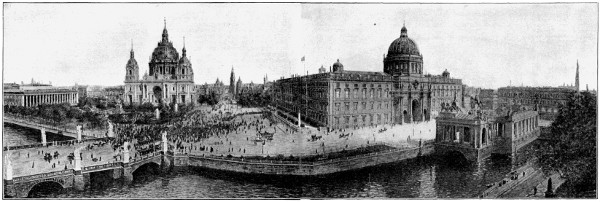
Museum of
Fine Arts |
Cathedral |
Royal Palace |
National
Monument |
PANORAMIC VIEW OF THE HEART OF BERLIN, SHOWING THE MUSEUM OF ART, LUSTGARTEN, NEW CATHEDRAL, ROYAL PALACE, AND
NATIONAL MONUMENT.
Large left-hand side of panorama (85 kB)
Large right-hand side of panorama (82 kB)
Chief Cities.—German cities and towns are
officially distinguished as large cities (with
one hundred thousand inhabitants and upwards);
medium cities (twenty thousand to
one hundred thousand inhabitants); small
cities (five thousand to twenty thousand
inhabitants); and country towns (two thousand
to five thousand inhabitants). According
to the latest census, the population of cities
over fifty thousand was as follows:
| Cities |
State |
Latest
Population |
| Berlin |
Prussia |
2,070,695 |
| Hamburg |
Hamburg |
932,166 |
| Munich |
Bavaria |
595,053 |
| Leipzig |
Saxony |
587,635 |
| Dresden |
Saxony, K. |
546,882 |
| Cologne |
Prussia |
516,167 |
| Breslau |
Prussia |
511,891 |
| Frankfort-on-Main |
Prussia |
414,598 |
| Dusseldorf |
Prussia |
357,702 |
| Nürnberg |
Bavaria |
332,651 |
| Charlottenburg |
Prussia |
305,181 |
| Hanover |
Prussia |
302,384 |
| Essen |
Prussia |
294,629 |
| Chemnitz |
Saxony, K. |
287,340 |
| Stuttgart |
Württemberg |
285,589 |
| Magdeburg |
Prussia |
279,685 |
| Bremen |
Bremen |
246,827 |
| Königsberg |
Prussia |
245,853 |
| Rixdorf |
Prussia |
237,378 |
| Stettin |
Prussia |
236,145 |
| Duisburg |
Prussia |
229,478 |
| Dortmund |
Prussia |
214,333 |
| Kiel |
Prussia |
211,044 |
| Mannheim |
Baden |
193,379 |
| Halle-on-Saale |
Prussia |
180,551 |
| Strassburg |
Alsace-Lorraine |
178,913 |
| Schoeneberg |
Prussia |
172,902 |
| Altona |
Prussia |
172,533 |
| Danzig |
Prussia |
170,347 |
| Elberfeld |
Prussia |
170,118 |
| Gelsenkirchen |
Prussia |
169,530 |
| Barmen |
Prussia |
169,201 |
| Posen |
Prussia |
156,696 |
| Aachen |
Prussia |
156,044 |
| Cassel |
Prussia |
153,078 |
| Brunswick |
Brunswick |
143,534 |
| Bochum |
Prussia |
136,916 |
| Karlsruhe |
Baden |
134,161 |
| Crefeld |
Saxony, K. |
129,412 |
| Plauen |
Prussia |
121,104 |
| Mülheim-on-Ruhr |
Prussia |
112,602 |
| Erfurt |
Prussia |
111,461 |
| Mainz |
Hesse |
110,634 |
| Wiesbaden |
Prussia |
109,033 |
| Augsburg |
Bavaria |
102,293 |
| Lübeck |
Lübeck |
98,620 |
| Mülhausen |
Alsace-Lorraine |
95,041 |
| Münster |
Prussia |
90,283 |
| Oberhausen |
Prussia |
89,897 |
| Hagen |
Prussia |
88,625 |
| Bonn |
Prussia |
87,967 |
| Darmstadt |
Hesse |
87,085 |
| Görlitz |
Prussia |
85,790 |
| Spandau |
Prussia |
84,919 |
| Würzburg |
Bavaria |
84,387 |
| Freiburg |
Baden |
83,328 |
| Ludwigshafen-on-Rhine |
Bavaria |
83,297 |
| Bielefeld |
Prussia |
78,334 |
| Offenbach |
Hesse |
75,593 |
| Linden |
Prussia |
73,352 |
| Zwickau |
Saxony, K. |
73,538 |
| Königshütte |
Prussia |
72,642 |
| Remscheid |
Prussia |
72,176 |
| Pforzheim |
Baden |
69,084 |
| Metz |
Alsace-Lorraine |
68,445 |
| Frankfort on O. |
Prussia |
68,230 |
| Beuthen |
Prussia |
67,718 |
| Harburg |
Prussia |
67,024 |
| Gleiwitz |
Prussia |
66,983 |
| Liegnitz |
Prussia |
66,620 |
| Fürth |
Bavaria |
66,535 |
| München Gladbach |
Prussia |
66,410 |
| Osnabrück |
Prussia |
65,956 |
| Rostock |
Meckl.-Sch. |
65,377 |
| Potsdam |
Prussia |
62,224 |
| Flensburg |
Prussia |
60,931 |
| Elbing |
Prussia |
58,631 |
| Bromberg |
Prussia |
57,585 |
| Dessau |
Anhalt |
56,606 |
| Koblenz |
Prussia |
56,478 |
| Ulm |
Württemberg |
55,817 |
| Kaiserslautern |
Bavaria |
53,803 |
| Brandenburg-on-Havel |
Prussia |
53,595 |
| Mülheim-on-Rhein |
Prussia |
53,428 |
CITIES OF PRUSSIA
Berlin, capital both of the Empire and of the
Kingdom of Prussia, is by far the most important
center of population in Germany. It lies on
both sides of the Spree, and by the Spandau
and Tetlow canals to the Havel it is linked with
the systems of the Oder and the Elbe. It is
eighty-four miles from Stettin and one hundred
and eighty miles from Hamburg, and is the center
of the great Prussian state railway system.
(See Internal Communications.)
The city itself is served by an Outer Circle
(Ringbahn) and by the Stadtbahn, running east
and west through the city. There are electric
surface lines, an overhead, or elevated, electric
railway, and a shallow underground railway.
On an island in the center of the city stands
the Royal Palace, a foursquare pile built at
different times between 1451 and the present day.
It stands in the Schloss-platz, and is one of the
few old buildings in Berlin, dating from the
sixteenth century. It contains over six hundred
rooms, including the great White Salon, and halls
of the Black and Red Eagle orders.
Unter den Linden.—From this island stretches
westward the noblest street in Berlin, Unter den
Linden (“under the lime trees”). The triumphal
arch at the west end of the street, the Brandenburg
Gate (a copy, made in 1789-93, of the
Propylæa at Athens), forms the entrance to the
large park (six hundred and thirty acres) of the
Thiergarten. In the east is the magnificent
avenue of the Siegesallee or Avenue of Victory,
adorned with thirty-two marble groups of the
rulers of Prussia and Brandenburg. In the Unter
den Linden are many splendid public edifices,
among which are the Armory, the Opera House,
the Royal Library, the new Town Hall, the
University, the palaces of William I. and of
Frederick III., and the monument to Frederick
the Great by Rauch.
In the northeast of the Thiergarten stands the
most imposing building of the city, the Imperial
Diet or Parliament, erected from designs by
Wallot, in 1884-94, at a cost of over five million
dollars.
Business Quarter.—The Friedrichs-Stadt is
the business center of Berlin, and the streets in
this section are interesting. The banking street,
Behrenstrasse, and the Wilhelmstrasse, the official
quarter, where is the imperial chancellor’s palace,
lie to the south. Fine shops and restaurants line
the Friedrichstrasse, while Viktoriastrasse is one
of the many thoroughfares of the fashionable
district, southwest. Königstrasse and Kaiser Wilhelmstrasse
[500]
are the business streets of the city
proper.
The Tempelhofn Feld, also to the south, is the
parade and review ground of the Berlin garrison.
The most striking bridge is the Schloss-brücke,
or Palace bridge,
by F. Schinkel, with
colossal marble figures.
It leads from Unter den Linden, to the
Lustgarten, a park in which stands an equestrian
statue of Frederick William III.
DRAMATIC THEATER, GENSDARMEN MARKT
The Opera Platz contains statues of five
generals, by Rauch, and is bounded by the
Palace, University, Opera House, and St. Hedwig’s
Church, an imitation of the Roman Pantheon.
The Schauspielhaus, the leading dramatic
theater, is in Gensdarmen Markt. The
Schauspielhaus, with the church on each side,
is considered one of the
finest architectural groups
in Berlin.
Statues and Art Museums,
etc.—No city has
so many statues and monuments
to the national
heroes, kingly or military,
or to those famed in literature,
science and art.
GERMAN CATHEDRAL, GENSDARMEN MARKT
The Royal Library, once in the palace, is now
in the new building, built in 1909 on Unter den
Linden; it contains nearly five million printed
books. The University Library is housed in
the same building. There is a large public
library and twenty-eight
municipal
libraries.
The Royal Museum, in the Lustgarten, north
of the Schlossplatz, is divided into the Old and
the New Museums, containing the treasures of
classical and mediæval sculpture, the Egyptian
collection, etc. The Old Museum is the finest
building in the city, with a grand Ionic portico,
adorned with colossal bronze groups, and richly
frescoed halls. It has vast collections of antiquities;
the halls of Greek, Roman, mediæval,
and modern sculptures; and the Hall of the
Heroes.
The New Museum is entered from the
Old, and contains Kaulbach’s famous
mural paintings, the Egyptian museum,
an immense collection of casts, twelve
cabinets of Northern antiquities four
rooms of objects of art, and five hundred
thousand engravings. It has a renaissance
façade to the east. Opposite is
the new Corinthian temple of the National
[501]
Gallery, which contains a magnificent and world-renowned
collection of ancient and modern
paintings.
Berlin Suburbs.—In recent years there has
been a remarkable expansion of the suburban
districts of Berlin, residential sites have sprung up
in the pine woods and by the lakes of the Havel to
the northwest, and Spandau, Charlottenburg,
and Potsdam may almost be regarded as suburbs.
THE BOURSE, OR EXCHANGE, BERLIN
Potsdam, “the Versailles of Prussia,” with its
palaces and parks, is sixteen miles from Berlin,
among wooded hills and the lakelike expanses
of the Havel. Here is the Sans Souci
Palace, built by Frederick the Great,
and full of reminiscences of him. Near
by are the Picture-Gallery, the Orangery
(adorned with fine statuary), and the
Sicilian Garden. The New Palace has
two hundred richly adorned rooms,
with fine paintings, and a noteworthy
Marble Saloon.
The Marble Palace is north of Potsdam,
and has many paintings. Babelsberg
is a new Gothic palace, with rich
art-treasures. The Royal Palace (1660)
is full of relics of the Great Frederick.
The Garrison Church contains his tomb
and military trophies. The Church of
Peace is a noble Ionic basilica, with
masterpieces of sculpture. The famous
Sans Souci fountains play on summer
Sunday afternoons.
Industries of Berlin.—In its industries
Berlin is almost as varied as London,
but machinery, especially locomotive
and electrical, woolens, dyeing,
furniture and metal work are the chief.
It is beginning to rival Leipzig in book
production, and its breweries are large.
Besides being the center of the great
trade in corn and other cereals of
Eastern Europe, its great banks exercise
increasing international influence.
A Center of Education and Culture.—The
famous Freidrich Wilhelm
University, founded in 1810, now the
largest in numbers in Germany, the
splendid technical institution at
Charlottenburg, and its numerous schools of
all ranks, make Berlin one of the greatest
intellectual and educational centers of
the world. As the seat of the Imperial
Court, and of the Imperial Parliament
and administration, it is also the social center of the
empire, and its modern wealth and luxury have
made it a growing rival to Paris as a city of pleasure.
Since 1878 the city has been practically
rebuilt; the sudden growth of
population has resulted in much
overcrowding and crushingly high
rentals. Once deplorable, the sanitation, water
supply, and public hygiene are now of the highest
standard, and German scientific thoroughness
has made it the most highly organized and best
administered city in the world.
ST. HEDWIG’S CHURCH, BERLIN
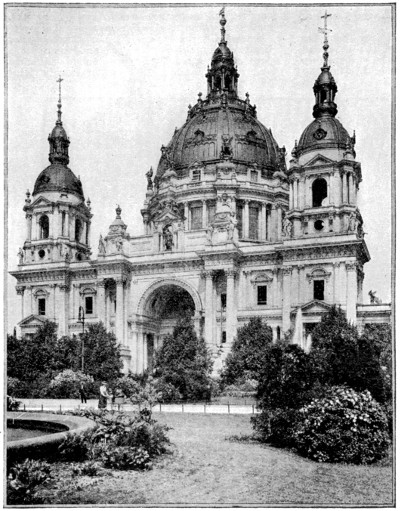
THE NEW HOHENZOLLERN CATHEDRAL, BERLIN
Other Prussian Cities.—Breslau on the Oder,
the capital of the mining districts of Silesia, has
grown to be the second town of the kingdom,
carrying on very extensive manufactures
and a great trade by
river and railway. It is also
the emporium of the flax-growing
district of Silesia. About
the Rhenish coal fields, which
yield half the supply of the
kingdom, stand the manufacturing
and trading towns of
Cologne, Aachen or Aix, Barmen,
Düsseldorf, Elberfeld, Crefeld
and Dortmund, spinning
cotton, wool, linen, and silk; and
the famous iron and steel works
of Solingen and Essen, where
Krupp’s steel guns are made.
Magdeburg, on the Elbe, and
Cassel, on the Fulda, are the
great manufacturing and trading
towns of central Prussia.
Much of the internal trade of
Germany is still carried on at
great annual fairs, and in this
respect the two Frankforts (on
the Main to the west, and on
the Oder to the east) hold the
most important place. Hanover,
on the Leine, is the point
of exchange of the mineral
products of the Harz for the
goods which come in by Bremen
on the Weser, and has important
manufactures of its own.
The chief ports belonging
to Prussia are the Baltic ones—Königsberg,
Danzig, Stettin,
Stralsund, Memel, Rostock,
Wismar, and Kiel, on the
Baltic; Altona, on the Elbe,
next Hamburg. Posen, on the
Warthe, was the ancient capital
of Poland, and is the most
important fortress towards the
Russian frontier. Wiesbaden is
the most important and the
oldest of the watering-places
which have grown up round
the mineral springs of Nassau.
Eisleben, where Luther was
born, and Erfurt, where he resided, both in Prussian
Saxony, are notable points in connection
with the history of the Reformation in Germany.
THE NEW PALACE AT POTSDAM
Erected by Frederick the Great, at a cost of $2,250,000. The principal rooms are the Shell Saloon, the rooms of
Frederick the Great, the Marble (concert) room, and ball room.
Dresden and Other Cities of Saxony.—Dresden,
its capital, finely placed on both banks of the
Elbe, famous for its art treasures, has also many
varied manufactures. Its architecture and its
art collections have given it the name of “the
German Florence.”
The old bridge, Augustusbrücke (Augustus
Bridge), may be taken as the center of the most
interesting part of Dresden. Immediately to the
east of the Augustusbrücke, on the Alstadt side,
stretches the beautiful Brühl Terrasse, whence are
fine views over the river. There are high-class
concerts in the Belvedere on the Brühl Terrace.
Near the flight of steps to the terrace, facing the
Royal Palace and Catholic Church, is the Rathaus
(Town Hall) with an equestrian statue of King
Albert in front.
THE ZWINGER, DRESDEN, CONTAINING THE WORLD-RENOWNED GALLERY OF PAINTINGS
The Royal Palace, just south of the Augustusbrücke,
will be discovered by its lofty tower,
three hundred and thirty-one feet high.
The Zwinger, to the west of the Schloss, is a
range of buildings of seven pavilions, with the
Museum at one corner. In the Museum are the
picture gallery, with collections of engravings
and drawings, and mineralogical collections, with
scientific instruments.
The Picture Gallery is of world renown, containing
more than two thousand four hundred
paintings, mostly by Italian and Flemish masters.
The gem of the collection is Raphael’s
“Sistine Madonna;” other masterpieces being
Titian’s “Tribute Money,” and Correggio’s
“Magdalene” and “La Notte.”
The Green Vault in the Royal Palace contains
an unrivaled collection of precious stones, articles
wrought in gold, silver, and ivory, etc. The
new Hoftheater is one of the finest theaters in
Europe. Of the churches the most noted are the
Frauenkirche, with its lofty dome (three hundred
and ten feet high).
The so-called “Dresden china” is made for the
most part at Meissen, fifteen miles from Dresden.
Leipzig is not only the seat of a famous university
and the great book market of Germany, but has
one of the largest annual fairs in the world, to
which merchants come from all parts of the
earth, even from America and China.
Chemnitz and Zwickau, beside the Saxon coal
field, are the great woolen and machine-manufacturing
towns of the kingdom. Freiberg is
famed for its school of mines.
Cities of Bavaria.—Munich (München), the
capital, stands in the midst of a bare elevated
plain on the left bank of the Isar, one thousand
seven hundred feet above sea-level, but has risen
to importance as the central point of the great
grain-growing plateau of southern Bavaria. It
is the great corn depot of the country, and the
place of manufacture of its favorite beer. In
recent times it has become celebrated as a seat
of the fine arts and for its splendid buildings.
Ancient Nürnburg, with its double line of walls,
where watches, first called Nürnberg eggs, were
invented, is the great seat of industry and commerce
in the north of Bavaria, exporting toys
which go to all parts of the world. It stands on
the Ludwigs Canal, the most important one in
the kingdom, uniting the navigable tributaries
of the Rhine and Danube.
Augsburg, on the Lech, northwest of Munich,
where the Protestants presented the Confession
of Faith to Charles V., is a chief center of Bavarian
trade and exchange. Würzburg, on the Main, is
the old capital of Franconia, the district which
was peopled by colonies of Franks in the sixth
century.
Speyer or Spire and the fortress of Landau are
also important places in the palatinate.
Cities of Württemberg.—Stuttgart, where Hegel
was born, and where Schiller spent his youth,
is the capital, and stands next to Leipzig and
Berlin in the printing arts and book trade. The
fortress of Ulm, on the Danube, where it leaves
Württemberg, has a large transit trade. Heilbronn
[504]
is another important trading place. Tübingen
is the university town.
THE PINAKOTHEK, MUNICH, FAMOUS GERMAN MUSEUM OF FINE ARTS
The little territory belonging to the house of
Hohenzollern, which runs into Württemberg on
the south, fell by inheritance to the king of
Prussia in 1849.
Cities of Baden, and Elsass-Lothringen (Alsace-Lorraine).—Carlsruhe,
the capital, and Mannheim,
at the confluence of the Neckar and Rhine,
are its largest towns. Heidelberg (north) and
Freiburg (south) are the seats of universities.
Baden-Baden in the center, the famous watering-place,
gives its name to the Duchy.
The fortress of Strassburg, on the Rhine, in
central Elsass, anciently a free imperial city of
Germany, is the chief place in the Reichsland and
its university town, noted also for its manufacture
of leather-work and of beer. The cotton, wool
and silk factories and machine works of the
province center at Mülhausen in southern Elsass.
The fortresses of Metz and Diedenhofen or
Thionville, memorable in the war of 1871, are
the chief places in Lothringen.
Cities of the Smaller States.—Hamburg, Bremen
and Lübeck, the remaining free Hanse[6] towns,
are republics, each governed by a senate and
house of burgesses. Each of them has a small
territory besides that occupied by the city.
They are the great gates of the external commerce
of Germany, and from this have also
become important centers for the preparation of
foreign products, and of the necessaries of trading
(tobacco, sugar-refining, cotton-spinning,
shipbuilding). Besides the traffic brought to
Hamburg and Bremen by their rivers, all the
railways of the northwest converge toward them.
German Colonies.—At the commencement
of the war these had a total area of 1,134,239
square miles, with a population of about
14,890,000, of whom 24,170 (including garrison
and police) were whites. Of these whites
about 18,500 were settled Germans.
The following is a list of the principal colonies
and regions under the protection or influence
of Germany, with approximate estimates of
area and population:
Colonies
and
Dependencies |
Date
of
Acquisition |
Method of
Government |
Estimated
Area
Sq. Miles |
Estimated
Population |
| In Africa |
|
|
|
|
| Togoland |
1884 |
|
Imperial Governor |
|
33,700 |
|
1,000,000 |
| Kamerun |
1884 |
Imperial Governor |
191,130 |
3,000,000 |
| German South West Africa |
1884-1890 |
Imperial Governor |
322,450 |
120,000 |
| German East Africa |
1885-1890 |
Imperial Governor |
384,180 |
10,000,000 |
| Total African Possessions |
1884-1890 |
|
931,460 |
|
14,120,000 |
| In Asia |
|
|
|
|
| Kiauchau Bay |
1897 |
|
Imperial Governor |
|
200 |
|
33,000 |
| In the Pacific |
|
|
|
|
| German New Guinea |
|
|
|
|
| Kaiser Wilhelm’s Land |
1885-1886 |
|
|
- |
Imperial Governor |
- |
|
|
70,000 |
|
- |
300,000 |
| Bismarck Archipelago |
1885 |
20,000 |
| Caroline Islands |
1899 |
... |
|
| Palau or Pelew Islands |
1899 |
560 |
|
- |
56,000 |
| Marianne Islands |
1899 |
250 |
| Solomon Islands |
1886 |
4,200 |
| Marshall Islands, etc. |
1886 |
150 |
| Samoan Islands |
|
|
|
|
| Savii |
1899 |
|
|
- |
Imperial Governor |
- |
|
|
660 |
|
- |
37,000 |
| Upolu |
1899 |
340 |
| |
|
|
|
|
| Total Pacific Possessions |
1884-1899 |
|
96,160 |
|
393,000 |
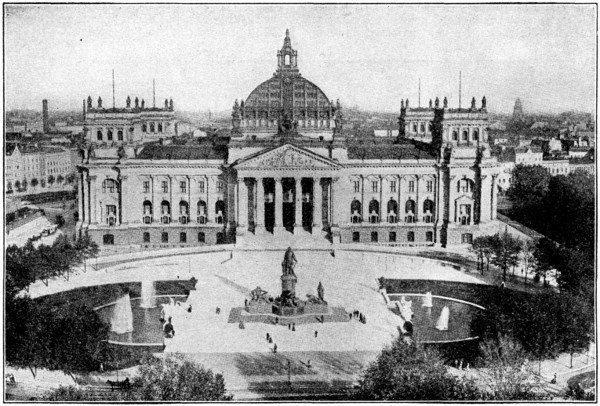
PARLIAMENT BUILDINGS, BERLIN
HISTORY OF GERMANY
The earliest information we have of the
Germans, the peoples and the tribes who dwelt
among the dense forests that stretched from the
Rhine to the Vistula and from the Danube to
the Baltic Sea, comes to us from the Romans.
First Contact with Romans.—The first
tribes of Germanic race to come into collision
with the arms of Rome were the Cimbri and
Teutones, who in 113 B. C. had invaded
Styria, and there met with defeat from the
troops of the consul Papirius. When in 58
B. C. Cæsar began his campaigns in Gaul, he
found several hordes of Germans, mostly
Marcomanni and Suevi, settled between the
Rhine and the Vosges, and even on the western
side of these hills.
Appealed to by the Gauls of those regions
to free them from their German oppressors,
Cæsar inflicted a crushing defeat upon their
ambitious chieftain, Ariovistus, and chased
him and his followers across the Rhine. In
the period 166-74 Aurelius was engaged in
beating back a formidable incursion of the
Marcomanni and Quadi into Roman territory.
From the third century we no longer read of
single tribes, but of great confederations of
tribes, as the Goths, Alemanni, Franks,
Frisians, Saxons, Thuringians, and others.
Of the history of Germany itself we learn little
more that is authentic until we come down
to the times of the Franks, by whom the
kingdoms of France and Germany were subsequently
formed.
Henceforward, till the time of Charlemagne,
Germany was occupied by a number of chieftains,
who were perpetually at war with one
another, except when invasions from without
forced them into transitory alliance.
Charlemagne, or Charles the Great, the
Frankish king, was crowned emperor of Rome
by the pope in 800, and after his death his
empire was partitioned among his four sons,
and the result of the family struggles which
followed was the separation of Germany from
Gaul and of both from Burgundy and Italy by
the Treaty of Verdun in 843. (See history of
France; also Empire of Charlemagne.)
A separate kingdom of Germany was then
formed under Lewis the German. A temporary
reunion of the dominions of Charlemagne—with
the exception of Burgundy—was
effected under Charles the Fat in 884, but
he was deposed in 887 and the final separation
into the East and West Frankish kingdoms
was accomplished.
The inroads of the Norsemen were checked
in 891 by Arnulf, but they were followed by
the savage attacks of the Hungarians during
the reign of Louis the Child, with whom
ended the race of Charlemagne in 911.
Under Feudal System.—The royal power had
now almost vanished, and the system of granting
fiefs had resulted in the formation of a
class of powerful local rulers—the dukes of
the great groups or confederations of tribes.
The maintenance of central authority at all
was probably due only to external danger
from Slavs, Norsemen, and Magyars, and even
this could not prevent constant warfare between
the great feudal lords. Conrad of
Franconia, elected by the leading nobles, was
unable to enforce his authority, and was, at
his own suggestion, succeeded by his great
enemy, Henry, Duke of Saxony.
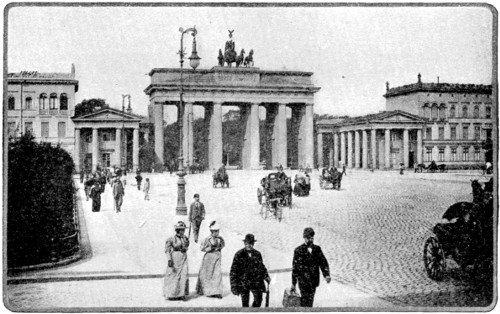
THE BRANDENBURG GATE
at the western terminus of the Unter den Linden, was erected 1789, at a cost of three
hundred and seventy thousand dollars, after the Propylæa of Athens, and is regarded
as the finest archway in Europe next to the Arc de Triomphe at Paris. The Quadriga
or four-horse car of Victory, by Schadow, was taken to Paris by the French in 1806,
and returned 1814.
Henry I. Establishes Order.—A born leader
of men, statesman and general, Henry I.
(919-936) introduced a new civil and military
organization. He created the burgher class
by the foundation of towns, compelling every
tenth freeman to labor on buildings, and these
towns he made the centers for judicial administration,
ceremonies and festivals, markets, and
trade. He broke the power of the Magyars,
subdued Danes and Slavs, and before his death
private war had ceased.
Otto the Great Revives the Holy Roman
Empire.—His son, Otto the Great (936-973),
consolidated the royal power, and reduced the
great Duchies to submission, keeping them in
his own hands or in those of members of his
family. In 951 he entered Italy to settle the
affairs of the Lombard kingdom, but returned
to cope with a revolt terminated only by the
vital danger of an invasion by the Magyars,
whose power was finally crushed in 955.
Crowned Emperor by the Pope in 962, he set
an example to subsequent German kings, who
claimed the Imperial and Lombard crowns as
of right; but the precedent led also to the
continued absences of the German rulers in
Italy and the severance of their interests from
those of their own proper dominions. The
sense of German nationality grew in his reign,
yet this was accompanied by a weakening of
central authority and the development of the
power of the great vassals, dukes, and princes,
ecclesiastical and secular.
Under the House of Franconia.—After his
death constant civil war increased their power
until their growing independence was checked
by Conrad II. (1024-1039), the first of the
Franconian Emperors, who rendered the
mediate nobles, vassals of the great lords, less
dependent on their feudal superiors, and formed
a close alliance with the towns. His son,
Henry III. (1039-1056), further strengthened
the royal power, put down private war, and in
1043 proclaimed a general peace.
Struggle with the Papacy.—His attempted
reformation of the Papacy and appointment
of four German popes in succession commenced
the long and fierce struggle between the
Emperors and the Popes. During the minority
of his son, Henry IV., the great nobles recovered
much of their power. His opposition
to the famous decree of Pope Gregory VII. in
1075 against the marriage of the clergy and
their investiture by laymen was followed by
his summons to Rome, his deposition of the
Pope through a synod of German bishops, his
excommunication and complete humiliation at
Canossa in 1077. The dispute was only settled
under his son, Henry V., by a compromise,
the “Concordat of Worms,” in 1122, but the
power of the Papacy had been enormously
strengthened. It had attempted to dispose
of the Imperial Crown, and Innocent II. even
claimed to have granted it to Lothar of
Saxony (1125-1137) in 1133 as to a vassal.
Famous Hohenstaufen Line.—With Conrad
III. of Franconia (1137-1152) commences the
line of the famous Hohenstaufen Emperors.
The two great parties supporting the Pope
and the Emperor now first became known as
Guelfs and Ghibelines (Welfs and Waiblings).
His successor, the great Frederick Barbarossa
(1152-1190), was occupied in Italy during long
years with the now permanent struggle against
the Popes and the Italian cities supporting
them. In Germany Teutonic power was
extended over the Slavonic countries along the
Baltic by Henry the Lion of Saxony and Albert
the Bear, to whom was granted the Mark of
Brandenburg. Under Frederick II. (1212-1250)
the struggle with the Papacy was continued.
Sentence of excommunication was
[507]
launched against him, and a rival king was
elected, and his continued absence in Italy led
to the utmost anarchy in Germany. Meanwhile
the conquest of the Slavonic lands now
forming a great part of Prussia progressed
steadily under the Knights of the Teutonic
Order and of the Order of the Sword.
The period of the Hohenstaufens was one of
great brilliancy. Chivalry was promoted in
the Crusades, literature was in full bloom in
the works of the Minnesänger, Gothic architecture
received its finest developments, the
towns increased in prosperity, many serfs were
freed, and codes of local customs and usages
were compiled, such as the Sachsenspiegel and
the Schwabenspiegel. On the other hand, the
greater vassals became practically independent,
and the principle of inheritance was applied to
their lands and offices. The privileges usurped
by the ecclesiastical and secular princes were
confirmed by Frederick II. in the “Pragmatic
Sanctions” of 1220 and 1232, and the right of
electing the Emperor was confined to the
Seven Electors.
The Interregnum.—The period of anarchy
culminating in the “Great Interregnum” (1250-1273)
is marked by the formation of the
Rhenish Confederation of some seventy leading
cities for mutual defense, and of the
powerful Hanseatic League.
Beginning of the Hapsburg Line.—Rudolf
of Hapsburg, elected in 1273, revived the
royal authority and strictly enforced justice,
but his rule was unfavorable to the growing
privileges of the towns. In this respect his
policy was reversed by his successor, Adolf of
Nassau (1291-1298), and by his son, Albert I.
(1298-1308), who even befriended the serfs and
the Jews. The long struggle between the
Empire and the Papacy practically ended
under Louis IV. (1314-1347), by the formal
declaration of the Electors in 1338 that the
Papal sanction was not needed to the election
of the emperor. Public peace was encouraged
under Louis IV., and his friendship to the
towns was constant. Industry and trade
flourished more and more in the cities, and
their government was now becoming more
democratic through the victory of the craft-guilds
over the old patrician families.
House of Luxemburg.—Charles IV. (1347-1378),
the first emperor who retained his
hereditary lands on election, by the “Golden
Bull” in 1356 regulated the method of election
and confirmed the complete sovereignty of the
Electors in their own territories. In 1396 the
foundations of Swiss independence were laid
in the victory of the “Eidgenossen” over Duke
Leopold of Austria at Sempach.
Reformation Foreshadowed.—In the reign of
Sigismund (1410-1437), who united the dignities
of King of Hungary, King of Bohemia,
and Margrave of Brandenburg, and who was
the last Emperor crowned at Rome, the
Hussite war, consequent on the burning of
John Huss by the Council of Constance in
1415, foreshadowed the Reformation. The
Mark of Brandenburg now passed to the
Hohenzollerns, under whom it was to grow
into the kingdom of Prussia.
The reigns of Frederick IV. (1440-1493), and
Maximilian I. (1493-1519), the husband of
Mary, the heiress of Charles the Bold, last
Duke of Burgundy, bring the Middle Ages to
a close. The age of chivalry was ended by
the invention of gunpowder and the use of
mercenary troops; the realities of feudalism
had passed away, the Imperial authority had
dwindled to nominal control, and princes and
cities had attained independence. But the
Imperial dignity was now permanently connected
with the House of Hapsburg and combined
with great territorial possessions. The
semblance and, to some extent, the reality of
unity were established by the growing use of
Roman law, by the constitution in 1495 of an
Imperial Tribunal or Court of Appeal (the
“Aulic Council”), and by the division of Germany
in 1501 and 1512 into “Circles,” each
with its own “States” charged to carry out
the decisions of the Imperial Chamber.
Period of Charles V.—Luther’s denunciation
of indulgences was made in 1517, but the full
storm of the Reformation burst after the
accession of Charles V. (1519-1555), who united
to the Empire the entire possessions of the
kingdom of Spain. At the Diet of Worms in
1521 he took up the defense of the Church,
and condemned Luther as a heretic. At the
same Diet an Imperial Administrative Council
was established, and a “Matricula” drawn up,
settling the contingents of troops to be raised
by the States, both of which existed until the
fall of the Empire. The Reformation now
made irresistible progress; a common name,
“Protestants,” was acquired by the Reformers
at the Diet of Speyer in 1529, and in common
statement of doctrines, the “Augsburg Confession,”
was drawn up in 1530.
Thirty Years’ War.—The new and the old
religions were put upon an equality by the
Religious Peace of Augsburg in 1555, in which,
however, the Calvinistic or Reformed Faith
was not included. In the fearful struggle
which followed the Reformation the Imperial
authority was completely ruined. The reaction
against the new doctrines, due mainly to
the zeal of the Jesuits, gave fresh strength to
the Catholic party, the Reformation was
stamped out in Bohemia, and complete
toleration was not acquired by Protestants
(including both Lutherans and Calvinists)
until the Peace of Westphalia in 1648.
This was at the close of the disastrous and
merciless struggle known as the Thirty Years’
war. The result of the confused period commencing
with the abdication of Charles V. in
1555 must be briefly summed up. The Empire
in Germany was practically ended and was
now attached to the hereditary dominions of
the house of Hapsburg in Austria. The population
of Germany was reduced by more than
one-half; industry and trade had almost
ceased to exist; enormous territorial losses
had been suffered, and France and Sweden
had made great acquisitions. Switzerland and
the United Provinces were severed from the
Empire, and had acquired complete independence.
Germany emerged from the war a
mere lax confederation of states, whose rulers—a
race of absolute and, in most cases, coarse
and selfish despots—were recognized by the
Peace of Westphalia as independent. Even in
the cities government had passed into the
[508]
hands of local oligarchies. The only bond of
union was the nominal authority remaining
to the emperor, and now transferred to the
Diet, of passing laws, concluding treaties, and
making war and peace. One completely good
result of the war was that amid the prevailing
anarchy were laid, by Grotius, the foundations
of a system of International Law.
Rise of Prussia to Power.—The Thirty Years’
war was followed by the rise of Prussia.
Brandenburg had in 1611 become united to
the Duchy of Prussia, part of the possessions
of the Teutonic Order, which was in 1657
declared independent of Poland, of which it
had been a fief, and received further accessions
under the Great Elector, Frederick William.
It grew steadily in power during the long
struggle against the unscrupulous aggressions
of Louis XIV., and in 1701 the son of the
Great Elector, Frederick I., obtained from the
Emperor the recognition of the Prussian Duchy
as a kingdom. In 1713 a “Pragmatic Sanction”
was drawn up by the Emperor Charles
VI. (1711-1740), providing for the inheritance
of the Austrian dominions by his daughter,
Maria Theresa, and this was ultimately
guaranteed by the leading powers.
Frederick the Great and the Seven Years’
War.—But his death in 1740 was the opportunity
of Prussia, where Frederick II., better
known as Frederick the Great, had just
ascended the throne. He immediately occupied
Silesia. Maria Theresa met with enthusiastic
support in Hungary, and in 1745
her husband was elected emperor as Francis I.
(1745-1765). An interval of peace was followed
by the Seven Years’ war, at the conclusion of
which, in 1763, Prussia was confirmed in the
possession of Silesia, took rank as a great
Power, and became definitely the rival of
Austria in German politics.
In 1765 Joseph II. succeeded to the imperial
crown, becoming at the same time co-regent
with his mother of the Austrian hereditary
dominions. He joined with Russia and
Prussia in the first partition of Poland (1772).
He was succeeded by his brother Leopold,
who, having died in 1792, was succeeded by
his son, Francis II., who joined in 1793 in the
second partition of Poland. He took the
command of his army against the French in
1794, concluded the peace of Campo Formio
with Bonaparte (1797); joined the second
coalition against France in 1799, and concluded
the treaty of Lunéville (1801).
In 1804 Francis took the title of hereditary
emperor of Austria, renouncing two years
later that of head of the German Empire,
which, indeed, had ceased to exist, owing to
the conquests of Napoleon. The latter’s
secularization of the ecclesiastical states, overthrow
of Austria at Austerlitz (1805) and of
Prussia at Jena and Auerstädt (1806), and
formation of the Confederation of the Rhine,
completed the extinction of the Holy Roman
Empire.
The German Confederation.—The states of
Germany were again united by the treaty of
Vienna (1815), in a confederation called the
German Confederation (der Deutsche Bund).
In 1818 a general commercial league, called the
Zollverein was projected by Prussia, and was
gradually joined by most of the German
states, exclusive of Austria. Revolutionary
outbreaks caused great disturbances in various
German states in 1830 and 1848, particularly
the latter. The German Diet was restored in
1851 by the efforts of Prussia and Austria, who
were latterly rivals for the supremacy in the
confederation.
Beginning of Bismarck’s Power.—In 1861
William I. succeeded to the throne of Prussia,
and the conflicts between the liberals and his
ultra-reactionary government led in 1863 to
the entrance into the ministry of Otto von
Bismarck, who soon after became its president
and the minister of foreign affairs. On the
death of Frederick VII. of Denmark, Prussia
and Austria disputed the claims of Christian
IX., his successor, to the duchies of Schleswig
and Holstein, and the war which followed
(1864) resulted in the cession of
Schleswig-Holstein, and Lauenburg to those powers
jointly.
By the treaty of Gastein, Austria and Prussia
agreed to a joint occupation of the Elbe
duchies; but to prevent collision it was judged
prudent that Austria should occupy Holstein,
and Prussia Sleswick.
Contest Between Prussia and Austria.—Already
a difference of policy had begun to
show itself. Prussia was believed to have the
intention of annexing the duchies; while
Austria began to favor the claims of Prince
Frederick of Augustemburg. In the meantime,
both nations were making ready for the
struggle; and Italy, looking upon the quarrel
as a precious opportunity to strike a blow for
the liberation of Venetia, had secretly entered
into an alliance with Prussia.
On July 3, 1866, was fought the decisive
battle of Sadowa, in which the Austrians were
routed. Not till the victorious Prussians had
pushed forward towards Vienna was a truce
obtained through the agency of the Emperor
of the French, the Peace of Prague (August 20).
Italy, though more than half-inclined to stand
out for the cession by Austria of the Trentino,
as well as Venetia, reluctantly agreed to the
armistice (August 12).
A brief campaign sufficed for the defeat of
the minor states of Germany that had joined
Austria, viz.: Bavaria, Württemberg, Baden
and Hesse-Darmstadt; and, after peace had
at last been arranged, some of them were
forced to submit to a certain loss of territory.
Independence of Austria and Union of
Germany.—The war completed the dissolution
of the Confederation, and secured the
reconstruction of Germany on an entirely new basis.
Austria was excluded from Germany, and a
new confederation, the North German, was
formed of the states north of the Main, under
the headship of the king of Prussia. Schleswig-Holstein,
Hanover, Hesse-Cassel, Nassau, and
Frankfort were incorporated with that kingdom.
Efforts to secure a further consolidation
were opposed by the South German states, but
the final solution of the question was at length
brought about by France, whose demands
resulted in the War of 1870. (See under
France.)
In this war Germany acquired Alsace and a
part of Lorraine, and south Germany now
[509]
waived any further opposition to a consolidation
of all the German states under the leadership
of Prussia.
Restoration of the German Empire.—On
December 3 the king of Bavaria invited the
king of Prussia to restore the dignity of German
emperor. Most of the other states gave
their assent and the North German Reichstag
on December 10 adopted a motion for the
establishment of the German empire under
the king of Prussia. On January 18, 1871,
the restoration of the imperial dignity was
solemnly proclaimed by William I. at Versailles.
Subsequently the empire was largely organized
under the vigorous administration of
Prince Bismarck. The parliament of the new
empire soon met at Berlin, and adopted the
new constitution. The main result of his
foreign policy was a cordial alliance with
Austro-Hungary; an alliance, in 1872, between
the emperors of Germany, Austria and Russia,
in which, subsequently, Italy took the place of
Russia, forming what is known in European
politics as the Triple Alliance.
In domestic affairs many difficulties were
encountered. With the birth of the
new Empire commenced the long
struggle of Prince Bismarck with the
Papacy. The Jesuits were expelled
in 1872, and in 1873 the famous
“Falk Laws” imposed secular restrictions
on all ecclesiastical appointments.
The strict enforcement
of these laws led to intense discontent
and ill-feeling among Catholics. The
contest ended with the grant of many
concessions and the confession by
Prince Bismarck in 1887 that his
policy was practically changed. The
democratic movement known as Socialism,
aiming at the regulation and
organization by the State of labor
and production, grew rapidly in
strength and importance, and inaugurated
an era of “labor policy” by
legislation compelling employers to
institute a system of insurance in
favor of their work-people, since followed
by the adoption of an important
state-aided scheme of insurance
against death and old age.
In 1888 Emperor William I. died,
and the premature death, after a
reign of three months, of the beloved
Crown Prince, who succeeded him as
Frederick III., disappointed the hopes of those
who had anticipated a Liberal policy on the
part of the Crown.
Accession of William II.—His son and successor,
William II., took a strong view of his
functions as emperor and king. His reign was
immediately characterized by the further
development of the labor policy inaugurated
by Prince Bismarck. The emperor was not,
however, generally in accord with the views
of the great Chancellor, whose resignation
was accepted in 1891.
Caprivi now became chancellor, and managed
to negotiate a series of commercial
treaties, in 1892-1894, with the countries of
Central Europe (Austria, Belgium, Switzerland,
Italy), and later with Servia and Roumania,
the purpose of which was to lower the import-duty
on corn on condition that the foreign
states favored German manufactures. These
treaties at once induced the peasants to combine
and in 1893 a great agricultural union
was formed, called the Bund der Landwirte,
with which an older association, the
Deutsche Bauernbund, almost immediately
coalesced.
Commercial and Colonial Expansion.—But
the great features of recent
German history have been
the growth of German trade and
commerce, the great colonial expansion
in Africa and Polynesia, and
the rapid increase of her navy.
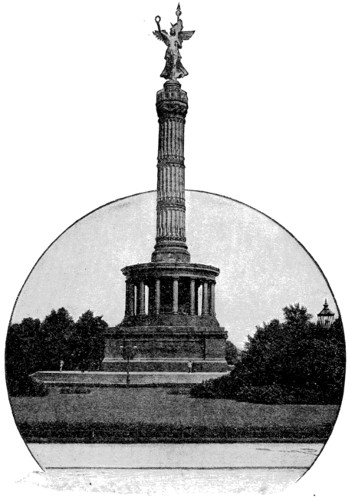
MONUMENT OF VICTORY, BERLIN
Erected in the Königs Platz at the conclusion of the Franco-Prussian
war of 1871. It consists of a circular temple surrounded
with a colonnade of sixteen pillars, standing upon a square base or
pedestal, and surmounted by a cylindrical shaft bearing a colossal
gilt bronze Victory, winged and holding a wreath. The total
height is one hundred and ninety-four feet. It may be ascended
by an interior staircase. Upon the base are elaborate reliefs of the
various campaigns commemorated.
In 1905 Germany intervened to
disturb the French policy in Morocco,
resulting in a conference of the powers
interested at Algeciras. In 1911
Germany again intervened by sending a
warship to Agadir for the protection of
German property and German subjects. The
action occasioned a complication of the
European situation, and all but resulted in
war. Germany’s claim for territorial compensation
was not entertained by France, and
Great Britain, as ally of France, claimed the
right to be consulted if territory were to be
conceded. The net result, after months of
diplomatic intercommunication, was a readjustment
of frontiers. (See German Colonial
Possessions.)
The history of the German Empire since
1914 is chiefly that of the leading Teutonic
power in the great European war of 1914-1917.
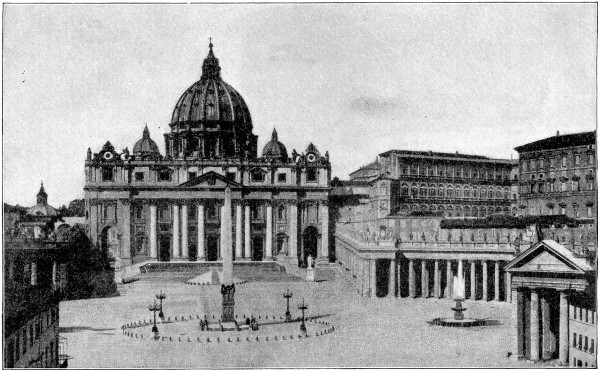
ST. PETER’S, ROME
St. Peter’s is the largest church in the world, covering two hundred and forty thousand square feet. It cost
over sixty million dollars, took one hundred and seventy-six years
to build; contains many vast and beautiful chapels, tombs of the popes, many paintings by great masters, and sculptures by Bernini,
Michaelangelo, Canova and Thorwaldsen.
KINGDOM OF ITALY
Modern Italy occupies the central of the
three great peninsulas of southern Europe,
together with Sicily, Sardinia, and some smaller
islands. The peninsula, which at the Strait
of Otranto approaches within less than fifty
miles of Albania, is bounded west and south by
that portion of the Mediterranean known as the
Tyrrhenian Sea, east by the Adriatic, and
north by the Alps, separating it from France,
Switzerland and Austro-Hungary. The frontier
with France is estimated at three hundred
and seven miles; with Switzerland at four
hundred and seven miles; and with Austria at
four hundred and sixty-six miles. Its greatest
length is seven hundred and ten miles; the
breadth ranges from three hundred and fifty-one
miles in the north to about twenty between the
Gulfs of St. Eufemia and Squillace, but in most
places is about ninety or one hundred miles.
The seaboard of the peninsula extends to two
thousand two hundred and seventy-two miles.
Mountains and General Configuration.—On
the northern frontier the Alps sweep round
in a mighty arc from Nice to Trieste, running
out in places into Piedmont, Lombardy, and
Venice. For the most part they rise steep and
abrupt, except where their wall is pierced by
long, deep valleys; and some of the loftiest
peaks in the system, including Mont Blanc
and Monte Rosa, belong to this mountain-girdle.
The highest mountain entirely within the
kingdom is Gran Paradiso, the culminating
point of the Graian Alps, in Piedmont. Between
the Alps and the Apennines spreads the
broad fertile Lombardo-Venetian plain, a
nearly level country, which differs altogether
in character from the peninsula to the south,
and for a long period was politically distinct
from it. Most of this great alluvial tract,
which fills nearly the whole of northern Italy,
belongs to the basin of the Po; it is irrigated
by numerous streams and canals, and is one
of the most fruitful and flourishing districts of
Italy.
This great northern plain—generally but a
few feet above sea-level—round which the
Alps rise like a wall, is believed to have been
at one period an extension of the Adriatic
Gulf, which has been gradually filled up with
rich alluvial soil worn down from the steep
sides of the mountains by the snow-fed
torrents.
The Apennines.—The form of all the more
strictly peninsular part of Italy is given by
the central range of the Apennines, which
extends continuously through its length from
the maritime Alps of France, round the head
of the Gulf of Genoa, down to Cape Spartivento
in the extreme south. The Apennines have
their highest part, called the Gran Sasso
d’Italia, “the great rock of Italy,” near the
center of the long range. The slopes of these
heights to the sea, northeast and southwest,
are so short as to allow of only small rivers.
Nearly parallel with the southern part of the
Apennine range, and westward of it, there
appears a more recent chain of isolated volcanic
heights. Chief of these, on the peninsula,
is the cone of Vesuvius, which rises abruptly
from the Campagna of Naples, above the old
cities of Herculaneum and Pompeii, buried by
its lava streams and ashes. North of Rome,
in this volcanic region, the round lakes of
Bolsena and Bracciano occupy the craters of
old volcanoes. Carrying the line southward,
across the Tyrrhenian Sea, we come to the
volcanic group of the Lipari Islands, with the
ever-active volcano of Stromboli; and farther
on to Mount Etna, in Sicily, the highest of
European volcanoes. Almost all the rest of
Sicily, not volcanic, is covered with mountains
of moderate elevation, the main line of which
extends along the northern side of the island
from east to west as if in continuation of the
course of the Apennines across the narrow
Straight of Messina.
Islands and their Surface.—The island of
Sardinia, separated from Corsica by the Strait
of Bonifacio, one hundred and fifty miles long
from north to south, is for the most part
mountainous, especially along the eastern side,
in the middle of which rises the granitic Mount
Gennargentu.
The island of Elba, famous as the place of
Napoleon’s exile, between Corsica and the
peninsula, eighteen miles long, is high, its
western part being formed by Mount Capanne,
which rises to three thousand three hundred
and twenty-three feet. Capri, south of the
Bay of Naples, where the Emperor Tiberius
passed the last ten years of his life, and
Caprera, Garibaldi’s home, on the north
coast of Sardinia, are other noteworthy islands.
Rivers and Coast Waters.—The principal
rivers are fed from the Alpine lakes. The Po,
which descends from Monte Viso, on the
western frontier, and, as it sweeps across the
plain, receives the contributions of numerous
important streams, ranks for its volume of
water among the notable rivers of Europe.
It is navigable for three hundred and twenty
out of its four hundred and twenty miles,
and several of its tributaries are also navigable.
Many of the Po’s tributaries spread out
at the foot of the Alps.
The province of Venice, to the north and
east of the Po, is traversed by the Adige,
Brenta, Piave and Tagliamento.
Along the coast of the Adriatic, north and
south of the Po delta, there exist large tracts
of salt water, known as lagoons, in a flat and
marshy district. They are separated from
the sea by narrow banks of sand in which are
inlets, so that the lagoons serve as harbors.
The chief of these is that in which Venice is
situated. It extends over nearly forty miles
from Torcello in the north to Chioggia and
Brondolo in the south. The other coast-line
of northern Italy is formed by a narrow strip
of land, closed in by the steep, abrupt rocks of
the Apennines, and known as the Italian
Riviera.
The Arno, next to the Tiber the most considerable
river of central Italy, rises on Mount
Falterona, an offset of the Apennines, at four
thousand four hundred and forty-four feet
above sea-level, and twenty-five miles north
of Arezzo. It flows one hundred and forty
miles westward to the sea, eleven miles below
[512]
Pisa. At Florence it is four hundred feet wide,
but is fordable in summer.
The Tiber, the chief river of central Italy,
and the most famous in the peninsula, rises in
a dell of the Tuscan Apennines, eleven miles
north of the village of Santo Stefano, whence
it winds two hundred and sixty miles, and
enters the Mediterranean by two branches,
which enclose the Isola Sacra. Towns on or
near its banks are Perugia, Orvieto, Rome and
Ostia. It is navigable for boats of fifty tons
to the confluence of the Nera, one hundred
miles from its mouth. The Tiber is supplied
mainly by turbid mountain-torrents, whence
its liability to sudden overflowings. Its
waters, too, are still discolored with yellow
mud, as when the poet Horace described it.
Lakes.—To the south of the Alps, in the north
of Lombardy and Venice, lie the beautiful
Italian lakes, Lago di Garda, Maggiore, Como,
Lugano, and Orto.
Lake of Como, the Lacus Larius of the Romans,
is generally considered the most beautiful of the
group. It is about thirty-six miles long, and its
greatest width is three miles. Its shores are
studded with picturesque villages and charming
villas, with a background of forest and mountains,
some of which are seven thousand feet high.
The loveliest point is Bellagio, where the lake
divides into two arms. Cadenabbia, on the
western shore opposite Bellagio, is also a pleasant
place.
Como, at the other extremity, is a thriving
town of twenty-five thousand inhabitants, the
birthplace of Pliny the Younger and of Volta.
The cathedral is one of the best in Northern
Italy.
Lake of Lugano, between Como and Maggiore,
though much smaller than either, is scarcely
their inferior in the loveliness of its scenery. It
lies at the southern foot of the Alps, eight hundred
and eighty-nine feet above sea-level. Its length
is fourteen and one-half miles; average breadth
one and one-quarter miles; area nineteen and
one-half square miles; maximum depth nine
hundred and fifteen feet, and average depth
two hundred and forty-six feet.
Lake Maggiore (Madjō´ray), the
largest of the
Italian lakes, is about forty-five miles in length,
averages three miles in breadth, lies six hundred
and forty-six feet above sea-level, and has a
maximum depth of one thousand two hundred
and fifty feet. The river Ticino flows through
it. In a southwestern expansion of the lake are
the Borromean Isles. On the Isola Bella is the
large palace built by Count Vitaleo Borromeo
about a century ago, with terraced gardens,
fountains, grottoes, etc., all very elaborate and
artificial.
Lake Garda, a beautiful, clear lake, lies between
Lombardy and Venetia, its northern end extending
into the Austrian Tyrol. Situated two
hundred and twenty-six feet above sea-level, it
has an area of one hundred and fifteen square
miles, a greatest length of thirty-five miles, a
breadth of two to eleven miles, and a maximum
depth of nine hundred and sixty-seven feet. The
surface is studded with many islands. It is
drained by the Mincio, a tributary of the Po.
The mild climate and the beauty of the vicinity
have caused its shores to be lined with villas.
Climatic and Landscape Features.—The
north of Italy has the excessive climate of the
temperate region of continental Europe; in
the central parts of the peninsula the climate
becomes more genial and sunny, and to the
south almost tropical. The plain of Lombardy,
with an average temperature of fifty-five
degrees Fahrenheit, has winters which are
as cold as those of the Scottish lowlands, and
the lagoons of Venice have been frozen over;
but its summers are as hot as those of Rome
or Nice. The changes are few; rain lasts for
weeks together in autumn, but in summer the
blue sky is never clouded except when a violent
thunder and hailstorm occurs.
About Florence the winters are much milder,
with the same summer heat, and this difference
between the seasons decreases still more to
southward.
The summer of the Campagna of Rome,
when a heat mist rises over the plain, is almost
unbearable; in January the sky is blue, the
mornings may be frosty, and fresh spring air
blows over the land; in March the trees are
already leafy, and in June the harvest begins;
in July everything withers under the excessive
heat, till the autumn rains revive the land.
In Naples and South Italy the sky is cloudless
for months together, and the air is so pure
that distant plains appear to be close at hand.
The chief faults of the Italian climate are
the cold mountain winds called the Tramontana,
like the mistral of south France, and the
Bora of the north Adriatic, and, in contrast,
the hot Sirocco, which occasionally blows from
the African deserts, besides the malaria of the
western coast marshes and of the Venetian
lagoons.
Round the lakes at the base of the steep
southern slope of the Alps, Mediterranean
forms of vegetation appear; the chestnut
reaches up to two thousand five hundred feet;
above that comes the belt of beeches and oaks,
still higher the pine woods, then the pretty
alpine plants and high pastures. Scarcely
any part of the world is so covered with irrigating
canals as the highly cultivated plain of
Lombardy, so that the whole of it appears
like a great garden. At the northern base of
the Apennines the Mediterranean flora of
laurels and myrtles, cork oak and cypress,
covers the first slopes; above that groups of
oaks appear, then beech woods and the extensive
summer pastures which reach all over the
Apennine range. The Apennines have no permanent
snows, but their highest summits are
frequently snow-clad between October and
May, and send down cold breezes into the
warm valleys.
In Sicily the vegetation takes an African
character, and many tropical forms flourish;
it is not a well-wooded island, but forests
occur here and there.
Riviera (Ree-vee-ay´ra “seashore”), is a term
applied to the narrow strip of coast-land bordering
the Gulf of Genoa, strictly from Nice
to Spezzia, but generally understood to include
the whole coast of the Alps Maritimes, and
the Italian coast as far as Leghorn.
West of Genoa, and extending into France,
it is called the Riviera di Ponente, or western
coast, and beyond Genoa the Riviera di
Levante, or eastern coast. From Hyères to
Genoa is two hundred and three miles; from
Genoa to Leghorn one hundred and twelve
miles. Sheltered on the north by mountains,
the district enjoys an exceptionally favored
[513]
climate, no other region north of Palermo and
Valencia being so mild in winter.
The western section is the mildest and most
frequented. It abounds in the most striking
and beautiful scenery, and is planted with
numerous health and fashion resorts—Nice,
Monaco, Mentone, Ventimiglia, San Remo,
Bordighera, etc.; and west of Nice are Hyères,
Fréjus, Cannes, Gresse, Antibes.
The famous Corniche (Ital. Cornice) road,
widened by Napoleon I., leads along the
Mediterranean coast from Nice to Genoa, and
commands magnificent views.
Products and Industries.—Of the whole
surface of Italy it is estimated that eighty-three
per cent is suitable for cultivation. The
greatest proportion of agricultural land, however,
lies in the great plain of Lombardy and
the Campagna Felice of Naples. Notwithstanding
this, the supply of corn grown in
Italy is not sufficient for its wants, and more
is imported from Russia, Egypt and North
America. Maize and wheat afford the staple
food of the lower classes, as polenta and
macaroni.
Agriculture and Stock-Raising.—A sixth of
the area of the kingdom is covered with wood
or bush, the island of Sardinia having the
largest forests of all the kingdom—the districts
of Lake Como, of southern Tuscany, and
Genoa, being the best wooded parts of the
mainland. The olive grows all over peninsular
Italy, and enormous quantities of oil are
produced, much being exported.
All parts of the country are suited to vine-growing.
Most wine, however, is made in
south Italy and Sicily. Most horses are bred
in Lombardy, where cattle are also numerous
on the dairy farms, which supply enormous
quantities of cheese. Tuscany has most
sheep; Sicily the finest mules and asses;
Umbria the greatest number of swine. Coral
fishers go out from Naples, Leghorn (Livorno),
and Genoa to the coasts of the Balearic Isles
and of Algeria and Tunis in large numbers.
Minerals.—The most important mineral
product of Italy is the sulphur of Sicily; iron
is widely distributed, but is obtained in most
considerable quantity in Lombardy and
Liguria; lead is an important product of
Tuscany; sea salt of the vicinity of Cagliari,
the chief town of the island of Sardinia.
Famous pure white marble is quarried at
Carrara and Massa, on the northwest coast-land
of Tuscany.
Manufactures.—The zenith period of
Italian manufactures, when Milan was famous
for its wool-workers, Venice for its dyes,
Florence for its cloth, has long since passed
away, and in this respect Italy now occupies
a low position.
Silk-growing, spinning, and weaving it, is now
the most important branch, and in this the
towns of Lombardy—Bergamo, Como, Milan,
Turin—take the lead, followed by those in
the plain round Naples, and by Catania and
Palermo in Sicily. Glass-making has also
fallen from its old position; the works at
Intra, on Lake Maggiore, and the manufacture
of beads and mosaics at Venice, are, however,
still very important. Porcelain is made
chiefly at Milan and Florence; straw hats at
Vicenza, in Venetia, and in Tuscany, whence
they come to us as Leghorn hats, from the
port at which they are shipped.
People and Language.—The present Italian
people have arisen from a perfect chaos of
races. The ancient Ligurians of Iberian race
and the Umbrians of the north were joined,
from an unknown quarter, by the strange
people called Etruscans or Tuscans by the
Romans, who exercised such an immense
influence on European civilization. The
Greeks peopled the south, and held Sicily
along with the Phœnicians; the Romans
spread out from the center of the peninsula
to extend their conquests far beyond its limits;
then the Goths and Franks poured in from the
north, and after them the Longobards, who
gave their name to Lombardy. The Savoyards
and Waldenses of the valleys of Piedmont
along the French border appear to be of Gallic
descent. Insular Sardinia was free from the
irruptions of the northern people, but came
under the influence of the Greeks, the Arabs,
and then of the Spaniards.
Here, as in France and Spain, the Roman
language endured and prevailed over all
others, and now the people of Italy have one
language and literature, the Italian, descended
from the Latin. Its dialects show traces of
the mixture of nationalities, but the Tuscan
has now become classic, for the great writers,
like Dante and Boccassio were Tuscans.
Religion.—The Roman Catholic Church is reorganized
as the state church, but toleration
is granted to all creeds. Over ninety-seven
per cent of the population is Roman Catholic.
By the Act of 1871 the rank of the Pope as a
sovereign prince is recognized, the Vatican and
Lateran palaces and the papal villa at Castel
Gandolfo having the privilege of exterritoriality.
Protestants number about sixty-six
thousand, which include some twenty-two
thousand Waldensians; and there are about
thirty-eight thousand Jews, and about two
thousand five hundred members of the Greek
Orthodox Church.
Education is controlled by the state under a
minister of public instruction, assisted by a
council. Primary education is free and compulsory,
and the state also maintains, partly
or wholly, secondary, technical schools, and
the universities. There are thirteen universities.
Private schools may not be opened
without state authorization.
Cities.—The largest city is Naples. Rome is
the capital. Milan, Turin, Palermo, Genoa,
Florence, rank next. There are four others
with about one hundred and fifty thousand,
and twenty-three towns over fifty thousand.
ROME, the “city of the seven hills,” contains
more objects of interest than any other city in
the world. It is situated mainly on the left or
east bank of the Tiber, about fifteen miles from
its mouth. The river, which has here an average
breadth of two hundred feet, is spanned by eleven
bridges in its course from north to south through
the city.
The Seven Hills.—On the left bank rise the
famous seven hills of ancient Rome, which, from
north to south, are the Aventine, Cœlian, Palatine,
Capitoline, Esquiline, Viminal, and Quirinal.
These hills rise from eighty to one hundred and
twenty feet above the river and the intervening
valleys.
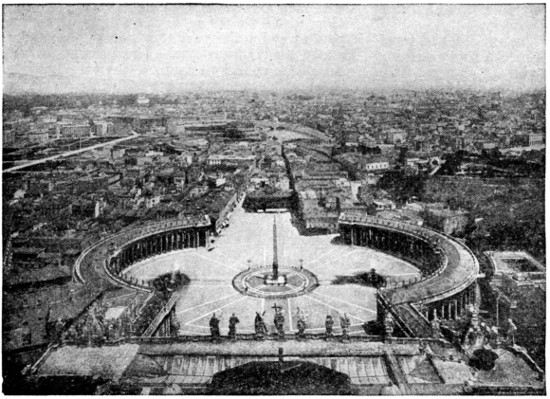
VIEW OF ROME FROM ST. PETER’S
The Royal Palace and chief public offices are
upon, or adjoin, the Quirinal Hill. The Aventine
and the Cœlian are, in large part, not built upon.
The Esquiline and Viminal are modern industrial
quarters. The Palatine, with the Forum below
it on the east, are covered with important ancient
ruins. The Capitoline, crowned by the Capitol,
the most imposing of the hills, the center of
ancient life and worships, has, apart from the
new monument of Victor Emmanuel, suffered
little change since the sixteenth century.
Mediæval and Rome occupies chiefly the
plain, known as the Campus Martius of ancient
times, nearer the river, and on the slopes of the
Pincian Hill, to the north, extending thence eastward
to the Quirinal and Viminal. The smaller
part of Rome, on the right or
west bank, comprises the Borgo,
or district, containing St.
Peter’s, the Vatican, the Castle
of St. Angelo, and the Janiculum
Hill, to the north, with
the Trastevere quarter, to the
south.
The entire city is surrounded
by a wall fourteen miles in
circuit, with thirteen gates, the
wall on the left bank being
substantially identical with
Aurelian’s Wall, built in the
third century; while the Leonine
Wall round the Borgo was
extended in the early sixteenth
century.
Modern Features and Districts.—The
business part of
the city occupies the plain on
the bank between the hills and
river, traversed by the Via del
Corso, the principal thoroughfare
in Rome, about a mile in
length, leading from the Porto
del Popolo to the foot of the
Capitoline Hill, where is situated
the great National
Monument to Victor Emmanuel.
From the Piazza del
Popolo two great streets diverge
on either side of the
Corso, the Via di Ripetta to the
right, skirting the Tiber,
and to the left the Via del
Babuino, leading to the
Piazza di Spagna,
whence the Scala di
Spagna, the resort of
artists’ models, ascends
to the Pincian Gardens,
on the site of the gardens
of Lucullus, which
command a splendid
view of the city, and
form the fashionable
drive and promenade.
Of the new streets
the most important are
the Via Venti Settembre,
the Via Cavour,
and the Via Nazionale.
The older foreign quarter
lay at the foot of
the Pincian, around the
Piazza di Spagna, but
the healthier sites on
the slopes and summits
of the Quirinal and
Esquiline are now more
frequented.
Rome abounds in
open Squares (Piazzas)
adorned with fountains,
obelisks, or statues.
Eleven Egyptian obelisks still ornament the
gardens and piazzas of Rome, brought by
Augustus and others. That in the Piazza of St.
John Lateran, one hundred and four feet in
height, is the largest in existence. It was erected
at Thebes by Thothmes III., and removed by
Constantine to the Circus Maximus. The triumphal
arches of Septimius Severus, of Titus,
and of Constantine are still conspicuous. Of the
bridges over the Tiber, three are ancient.
The antiquities are legion, some of the most interesting
are clustered within the area from
the Colosseum to the crest of the Capitoline
Hill.
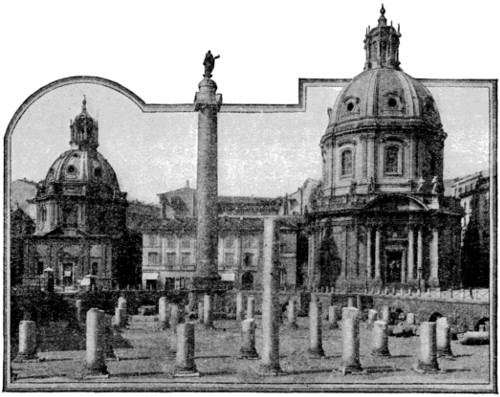
SITE OF THE FORUM OF TRAJAN
The Forum consisted of three parts: the forum proper, the huge Basilica
Ulpie, and the temple of Trajan, with it colonnaded inclosure. It was once
the grandest building in Rome. Trajan’s Column, still standing, is a Roman
Doric column of marble, on a square basement, the total height, exclusive of
the present statue of St. Peter, being one hundred and twenty-seven and one-half
feet. The entire shaft is occupied by vigorous and lifelike reliefs ascending
in a spiral, representing Trajan’s campaigns. The reliefs contain about two
thousand five hundred human figures, besides those of animals and inanimate
objects.
Famous Architectural
Edifices, Ancient and
Modern.—The remains of
ancient Rome have suffered
severely from the
vandalism and the neglect
of past centuries, but they
are now carefully preserved.
The Forum, in some
places nearly forty feet
below the present street
level, has been in great part
excavated, and near it are
many vestiges of by-gone
Roman splendor, including
columns, arches and ruins
of temples.
Roman Forum.—In remote
times, the marshy
ground which later became
the site of this famous
Forum served as neutral
territory whereon both the
Romans (who occupied
the Palatine Hill), and the
Sabines (who occupied the
Capitoline Hill) could
meet. Gradually it became
a market-place and
an exchange, till, at length,
all the important business
of Rome and of the Empire
came to be concentrated in
and about the Forum.
A portico was built
around the Forum, the first story being devoted
to shops and the second to offices for the collection
of taxes. After some centuries, these were
destroyed by fire, when various basilicas and
temples were erected in their places. The Forum
existed as such till the eleventh century, A. D.,
when it was totally destroyed by Robert Guiscard.
Becoming then a waste, the rubbish of
the city was thrown there until the entire space
was filled to the depth of twenty-four feet and
the location and names of the ancient buildings
lost. In the revival of learning, in the sixteenth
century, interest began to be awakened in the ruins
of ancient Rome, and, in 1547, excavations of the
Forum were commenced, under Paul III., which,
with much irregularity have continued to the
present day.
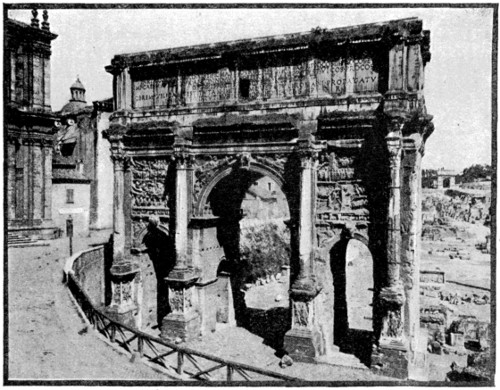
ARCH OF SEPTIMIUS SEVERUS
An arch in the Roman Forum, dedicated 203 A. D., in commemoration of
victories over the Parthians. It is of Pentelic marble, with a central arch and two
side arches, flanked by four Corinthian columns on each face. There are panels
over the side arches and a frieze above all with reliefs of Roman triumphs.
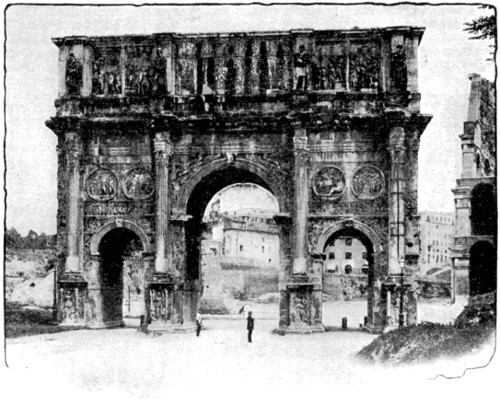
ARCH OF CONSTANTINE
Built in 312 A. D. in honor of Constantine’s triumph over Maxentius.
Much of its abundant sculpture was taken from the destroyed church of Trajan.
The most conspicuous remains of the Forum
are the columns of the Temple of Saturn, the
temples of Castor and Pollux and of Vesta, and
on its northern side the arch of Septimius Severus,
the Curia, the Basilica Æmilia, and the temples
of Antoninus and Faustina
and of Romulus. In
the middle of the eastern
part rose the temple and
forum of Julius Cæsar.
The more ancient and
famous forum from which
Cicero spoke was at the
western end.
The latest excavations
in the Roman Forum, including
the stele and black
stone of Romulus, the
Basilica Æmilia, the
Chapel of Santa Maria
Antiqua, and the House
of the Vestal Virgins, are
of extraordinary interest.
It was traversed by the
Via Sacra, a winding road
which led from the southern
gate of Rome to the
Capitol, and was the route
by which triumphal processions
passed to the
Temple of Jupiter. The
Arch of Titus was at its
summit. The great blocks
of lava with which this
road was paved still, for
the most part, remain.
Beyond it stands the
great Column of Trajan,
one hundred and twenty-four
feet in height, with
spiral bas-reliefs representing
[516]
scenes from Trajan’s campaigns against
the Dacians, forming the most instructive historical
monument in Rome.
Palaces and Art Collections.—The Vatican
Palace, the residence of the pope, adjoining St.
Peter’s, enjoys along with the Lateran the privilege
of “exterritoriality.” The massive building, said
to include eleven thousand apartments, contains
the finest extant collection of ancient sculpture,
with many celebrated statues, a rich gallery of
paintings, a famous library, and other collections,
besides the Sistine Chapel, adorned with frescoes
by Michaelangelo and other masters, and the
Stanze and Loggie, with paintings by Raphael
and his contemporaries.
VATICAN PALACE AND GARDENS
THRONE ROOM OF THE POPE, VATICAN PALACE
The Quirinal Palace, another huge pile on
the hill of that name, is occupied by the king.
In the Piazza del Quirinale are two famous
marble groups of Horse-Tamers.
The Villa Umberto Primo, formerly Borghese,
outside the Porta del Popolo, is noted for its
beautiful grounds, which are a favorite promenade
connecting with that on the Pincian Hill by an
embankment and bridge opened in 1908. The
Casino contains the picture-gallery formerly in
the Palazzo Borghese. It is now an important
National Museum, and is arranged according to
schools. Among the masterpieces are Titian’s
Sacred and Profane Love, Raphael’s Entombment,
Correggio’s Danaë, etc.
The Palazzo Barberini,
built by Urban VIII., is a large
and magnificent structure, but
chiefly notable for a small picture-gallery,
the gems of which
are Raphael’s Fornarina, and
Guido’s Beatrice Cenci. The
library contains seven thousand
manuscripts, many of
which are rare.
Villa Medici (ma´de-che),
was built in 1540, south of
the Pincio, for Cardinal Ricci.
About 1600 it came into the
possession of the Medici family,
and afterward into that of the
grand dukes of Tuscany. Galileo
was confined there 1630-1633.
The French Academy
of Art, founded by Louis XIV.,
was transferred to it in 1801,
and it has a fine collection of
casts.
Palaces of the Emperors.—On
the western side of the Forum Romanum
rises the Palatine Hill, its summit covered with
the substructures of the Palaces of the Emperors,
the Houses of Augustus, of Tiberius, of
Livia, of Caligula, of Domitian, and of Hadrian.
Most magnificent of all is the Palace of Septimius
Severus, rising in seven stages of massive
masonry, which form a southern extension of the
Palatine Hill.
Besides these imperial palaces, the Palatine
included a magnificent Stadium, the most perfect
in existence, imperial reception
halls, several temples,
with gardens, baths,
barracks for soldiers, and
a basilica or hall of justice,
in which St. Paul must
have pleaded before the
emperor.
The Golden House of
Nero, built on the opposite
side of the Forum,
and occupying the greater
portion of the Oppian
Hill, was demolished to
make room for the Colosseum
and the Baths of
Titus.
The Coliseum (or Colosseum),
originally called
the Flavian Amphitheatre,
was begun by Vespasian
in A. D. 72, and
dedicated by Titus eight
years later. It was built
for gladiatorial exhibitions
and for the combats
of wild beasts. It is the
largest structure of the
kind ever built, being
capable of seating from
forty to fifty thousand
spectators. Though
scarcely a third of the
[517]
original edifice remains, it is by far the most
imposing monument of antiquity that the
Imperial City has to show.
The Pantheon is the most perfect of the
ancient buildings in Rome. It was built B. C.
27 by M. Agrippa, and restored
by Septimius Severus
and Caracalla about A. D.
202, and has suffered much
since. The vast round walls
of brick, twenty feet thick,
were once covered with marble.
The portico (now below,
but once above, the square)
has sixteen huge monolithic
columns of Oriental granite,
thirty-nine feet high, with
Corinthian capitals of famed
beauty. Statues of Augustus
and Agrippa once stood here.
The circular interior is very
impressive, and is lighted
from a place twenty-eight
feet across in the center of
the dome, open to the sky.
This unrivalled dome is one
hundred and forty feet high
and one hundred and forty
feet across. The gilded
bronze roof-tiles were carried
to Constantinople in 655;
and all the other bronzes
were used in making cannon
for the citadel and the
canopy in St. Peter’s. The
seven niches in which statues
of the gods stood are now
occupied by altars. Raphael is buried here, near
his betrothed, Cardinal Bibiena’s niece; and here
is the tomb of King Victor Emmanuel of Italy.
The Capitol, which is one hundred and sixty
feet above the sea level and is best approached
by the grand staircase known as La Cordonnata.
At its foot are two lions of Egyptian porphyry;
at its head the ancient colossal statues of Castor
and Pollux. Beyond these on either side are the
sculptures misnamed “the Trophies of Marius”
and the statues of Constantine and his son from
the Baths of Constantine on the Quirinal. The
open space here is the Piazza del Campidoglio,
the ancient Intermontium, where Brutus harangued
the people after the murder of Cæsar. In
the center is the celebrated
statue of Marcus Aurelius,
“the only perfect ancient
equestrian statue in existence.”
It owes its preservation
to the fact that it was
long supposed to be a statue
of Constantine. On the right
is the Palace of the Conservatori,
on the left the
Museum of the Capitol, both
designed by Michaelangelo;
between the two, occupying
the third side of the square,
is the Palace of the Senator,
on the site of the ancient
Tabularium. The fountain at
the foot of the stairs is
adorned with statues of river-gods,
the Tiber and the Nile.
The tower contains the great
bell which is rung only to
announce the opening of the
carnival or the death of a
pope.
The Capitoline Museum
contains some of the most
famous sculptures extant, as
the Dying Gladiator, the
Venus of the Capitol, the Faun
of Praxiteles, the Antinous, etc. There is also the
rich collection of busts and statues of Roman
emperors and empresses, statesmen, philosophers,
etc., “perhaps the most interesting portrait
gallery in the world.”
VILLA UMBERTO PRIMO (FORMERLY VILLA BORGHESE), ROME
Has art collections considered only second in importance to that of the
Vatican, and, despite the removal of many works, the number of really great
paintings retains for the collection its old pre-eminence.
THE MAGNIFICENT VILLA MEDICI, ROME
Famous Churches.—Ancient Rome contained
about three hundred temples, and modern Rome
has about as many churches, eighty of which are
dedicated to the Virgin. St. Peter’s, St. John
Lateran, S. Maria Maggiore on the top of the
Esquiline, S. Paolo fuori le Mura (“outside the
walls”), perhaps the most gorgeously decorated
church in Rome, and S. Lorenzo fuori le Mura
are the five Patriarchal churches, to one or other
of which all believers throughout the world are
supposed to belong. With Santa Croce in Gerusalemme
and S. Sebastiano, they make up the
famous “Seven Churches of Rome” frequented
by pilgrims. They are also unsurpassed in their
rich architectural and art interests.
St. Peter’s, adjoining the Vatican, perhaps the
most famous and certainly the largest church
in the world, has an area nearly twice that of
St. Paul’s in London, while its dome rises to the
height of four hundred and three feet.
Many architects were concerned in the building
of the Cathedral of St. Peter, but the principal
credit is assigned to Bramante, the creator of the
design, and to Michaelangelo, whose chief work
is the dome. To the spectator, approaching
from the Piazza di San Pietro, the majesty of the
dome is lost behind the façade, erected at the
instance of Pope Paul V. at the end of the nave
lengthened by him in order to work out the idea
of a Latin cross; the design of Bramante was a
Greek cross.
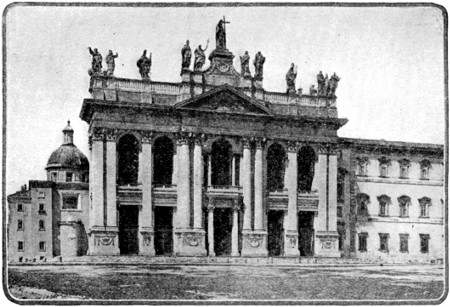
CHURCH OF ST. JOHN LATERAN, ROME, THE MOTHER CHURCH
OF CHRISTENDOM
The building was commenced in 1506, but was
not completed until 1626; the total cost of
erection was about fifty million dollars, and its
maintenance absorbs annually about forty thousand
dollars.
It covers about eighteen thousand square yards;
the length is two hundred and thirty-two yards,
of the transept one hundred and fifty yards;
height of the nave one hundred and fifty-one feet;
height of the dome from the pavement to the
summit of the lantern four hundred and four feet;
to the summit of the cross four hundred and thirty-four
feet.
Besides the high altar there are twenty-nine
other altars; the high altar
being immediately over the
Tomb of St. Peter. Round
the Confessio are ninety-five
lamps, always lighted. The
bronze statue of St. Peter, on
white marble, under a canopy,
is by a pillar; the right foot
of which is worn smooth by
the kisses of worshipers.
St. John Lateran. (It. San
Giovanni in Laterano), adjoining
the papal palace of the
Lateran, claims to be the
mother-church of all Christendom.
It was originally named
from the Roman family
Lateranus. Beside it are its
ancient Baptistery and a
building enclosing the Scala
Santa, brought from Pilate’s
palace in Jerusalem in 326.
Many other of the Roman
churches contain treasures of
art or are interesting for their
structure or history. S. Maria
Sopra Minerva is the only
ancient Gothic church in the
city. S. Pietro in Vincoli contains
Michaelangelo’s famous
statue of Moses; and S. Maria delle Pace Raphael’s
beautiful frescoes of the Sibyls. The Gesù is the
chief church of the Jesuits. San Carlo al Corso
is the fashionable church.
Roads.—The roads leading out of Rome beyond
the Servian Walls were bordered by tombs, many
of which, on the erection of the Aurelian Wall,
were included within the city. The most famous
of these celebrated roads was the:
Appian Way (called Regina Viarum) was begun
B. C. 312 by Appius Claudius, and ran to
Capua, and afterwards to Brindisi, forming main
route to southern Italy, Greece and Egypt. There
are beautiful views all along, of Campagna,
aqueducts, and Alban Mountains.
APPIAN WAY
A famous Roman military road, the skill with which it is taken through difficult
country, over hills, ravines, and marshes, is remarkable. Horace, in his first satire,
describes a journey along it, and St. Paul came this way into Rome (Acts xxviii. 15).
On Via Appia are Catacombs
of S. Calixtus,
with tombs of St. Cecilia
and many second and
third century popes and
martyrs, and seventh-century
Byzantine paintings.
A quarter of a mile
beyond is very ancient S.
Sebastiano Church under
which are extensive catacombs.
On a hill still
beyond stands the famous
Tomb of Cæcilia Metella,
round, sixty-five feet in
diameter, and in thirteenth
century a tower of
now vanished castle of the
Gaetani. Beyond, the
Way is bordered by ancient
tombs on either side,
and the old Latin pavement
is the road-bed.
At Trivoli is Hadrian’s
Villa (Villa Adriana) an
extensive ruin, with the
gardens covering about
170 acres.
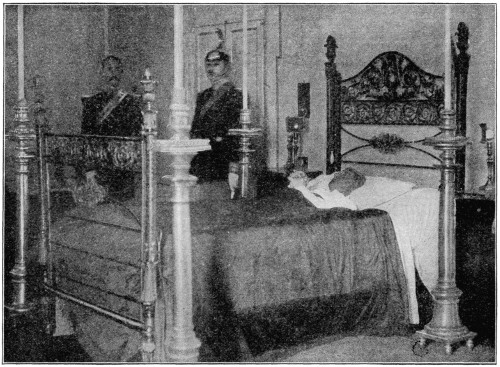
POPE PIUS X. IN THE BED IN WHICH HE DIED
(Picture by Cav. G. Felici)
PROCLAMATION OF POPE BENEDICT XV. (Cardinal della Chiesa) IN FRONT OF ST. PETER’S, ROME
(From a Painting)
Florence (Lat. Florentia Ital. Firenze), one of
the most famous of Italian cities, is situated
fifty miles from the sea, in the valley of the Arno,
and is built on both sides of the river, but chiefly
on the north. The outlying suburbs are singularly
beautiful, and are surrounded by finely
wooded hills, bright with gay villas and charming
gardens. The old city itself is characterized by
a somber grandness, and is full of fine buildings
of historic and artistic interest.
The chief building in the city is the Duomo, or
Cathedral, the foundations of which were laid
with great solemnity in 1298; but not until 1887
was the completed façade uncovered. The church
[520]
contains sculptures by Ghiberti, Luca della
Robbia, Michælangelo, Sansovino, Bandinelli,
and other famous artists.
At the side of the cathedral springs up the light
and elegant Campanile, detached, according to
the custom of the times. In front is the Baptistery
in the form of an octagon, supporting a
cupola and lantern. Three bronze gates in basso
rilievo are a great additional adornment of the
Baptistery; the two by Ghiberti have been
immortalized by Michælangelo, with the name
of Gates of Paradise.
The church of the Santa Croce, the Pantheon
of Florence (built in 1294), contains monuments
to Galileo, Dante, Macchiavelli, Michælangelo,
Alfieri and others.
Among the numerous palaces Il Bargello, long
a prison, but now restored and opened as a
national museum, is one of the most ancient.
The Palazzo Vecchio, the seat of the republican
government from its establishment till its abolition
in 1530, is an imposing mass of building.
Adjoining the palace is the Piazza della Signoria,
a square containing a fine collection of statues,
and a noble arcade, the Loggia dei Lanzi.
The Uffizi Palace is a handsome building
adjoining the Palazzo Vecchio, founded by Cosmo
I. On the second floor is contained the famous
Florentine gallery of art. A splendid apartment,
known as the Tribuna, contains the rarest treasures
of the collection.
The Pitti Palace, formerly the grand-ducal
residence, boasts of a superb gallery of paintings.
Behind it are the beautiful Boboli Gardens royal.
The Strozzi Palace is a fine type of Tuscan
architecture.
Florence is the city of Dante, Petrarch, Michaelangelo,
Leonardo da Vinci, Boccaccio, Machiavelli,
Galileo and many more of Italy’s great men,
and has a history of exceptional interest. It is
an educational center, and carries on a trade in
straw-plaiting and silk, sculptures, jewelry, and
exquisite mosaics in rare stones.
Genoa (Ital. Genova), is situated on the Mediterranean
gulf of the same name, at the foot of the
Apennines, and is an important seaport. By rail
it is eight hundred and one miles southeast of
Paris, one hundred and seventy-one miles northeast
of Marseilles, and ninety-three miles southwest
of Milan. The slopes of the hills behind
the city down to the shore are covered with
buildings, terraced gardens, and orange and pomegranate
groves; while the bleak summits of the
loftier ranges, rising still farther back, are capped
with strong forts, batteries, and outworks.
While strikingly grand as viewed from the sea,
and so far worthy of being entitled “Genoa the
Superb,” is in reality built awkwardly on
irregular rising ground, and consists of a labyrinth
of narrow and intricate lanes. Of the
palaces the most famous are the former palace
of the doges, now the meeting-place of the senate;
and the Doria, presented in 1529 to the great
Genoese citizen Andrea Doria. Foremost among
the churches stands the Cathedral, a grand
twelfth-century pile in the Italian Gothic style.
The marble Municipal Palace and the palace of
the Dogana must also be mentioned.
To Columbus and Mazzini, Genoa’s most
famous sons, there are fine monuments.
It is the commercial outlet for a wide extent of
country, of which the chief exports are rice, wine,
olive-oil, silk goods, coral, paper, macaroni and
marble. The principal industrial establishments
of the city embrace ironworks, cotton and cloth
mills, macaroni-works, tanneries, sugar-refineries,
and vesta-match, filigree, and paper factories.
Genoa benefited greatly by the opening of the
St. Gothard Railway.
Milan (me-lan´, mil´an.
Ital. Milano, mee-lah´no),
the capital of Lombardy, is one of the largest and
wealthiest cities of Italy. It was an important
town under the Romans, was sacked by Attila in
452, totally destroyed by Frederic Barbarossa in
1162, and has figured prominently in more recent
history.
The city, nearly circular in shape, is surrounded
on three sides by walls, has a circuit of nearly
eight miles, and is entered by fourteen gates.
Of the numerous churches the magnificent
Gothic Cathedral is the most famous. It is
second only to St. Peter’s and Seville Cathedrals
in size and was built principally during the
period 1386-1500. After many delays and
interruptions, work was resumed under Napoleon
I. in 1805, but is not yet fully completed. The
façade has recently been restored. It is cruciform,
with double aisles and transept-aisles,
separated by fifty-two pillars, each twelve feet in
diameter, with niches crowded with statues.
Interior four hundred and seventy-seven feet
long, one hundred and eighty-three feet wide and
one hundred and fifty-five feet high. It contains
six thousand statues, a pavement of marble
mosaic, vast granite monoliths, superb stained
windows, many tombs of magnates, St. Carlo
Borromeo’s wooden crucifix and gorgeous tomb,
and life-size silver statues of saints. The wonderful
marble roof is studded with ninety-eight
Gothic turrets, hundreds of pinnacles, and over
two thousand life-size marble statues.
Of the other churches S. Maria delle Grazie
(fifteenth century), partly the work of Bremante,
was originally an abbey church, and the refectory
in the rear contains Leonardo da Vinci’s celebrated
fresco of the Last Supper, which, in 1909, was
successfully restored.
The Brera Palace (twelfth century), formerly a
Jesuit college, has now a great gallery of paintings
by Raphael, Da Vinci, Luini, Mantegna, the
Bellinis, Titian, Vandyck, and others, an academy
of art, a collection of casts, the magnificent
monument of Gaston de Foix, the National
Library, an archaeological museum, and an
observatory.
The colonnade of Victor Emmanuel Gallery
is the finest arcade in the world, and was built
in 1865-1867 at a cost of one million six hundred
thousand dollars. It is nine hundred and sixty
feet long, forty-eight feet wide, ninety-four feet
high, surrounded by handsome shops, richly
frescoed, and adorned with statues of Raphael,
Galileo, Dante, Cavour, and twenty other famous
Italians. The octagon under the dome (one
hundred and eighty feet high) is brilliantly
lighted at night, when it forms a favorite promenade.
On the adjacent Piazza della Scala is Leonardo
da Vinci’s monument, and the massive Municipal
Palace. The Arch of Peace, built of white
marble, commemorates the exploits of Napoleon.
The Della Scala Opera House is the second in size
(after San Carlo at Naples) in Italy; and the
Milan conservatoire is the most famous school
of music in Europe.
Beccaria, Manzoni, the popes Pius IV. and
Gregory XIV. were natives of Milan. The city
now carries on a vast trade, much increased since
the opening of the Gothard railroad, in raw silk,
cotton, grain, rice, and cheese, and manufactures
silks, velvets, gold, silver, and iron wares, railroad
carriages, tobacco, porcelain, electrical apparatus,
and is an active center of the printing trade.
Naples (Ital. Napoli nä´pō-lē´).—The capital of
the province of Naples has a lovely situation
within the bend of Naples Bay, spreading from
the foreshore back upon wooded hills and rising
terraces, behind which lie the snow-clad Apennines.
To the east lies the old town with its
historic Via di Roma and narrow crowded
thoroughfares; the newer portion to the west is
more spaciously laid out, and much has been
done in recent years over the whole city to
improve the sanitation and water supply. The
[521]
National Museum, rich
in Pompeii relics, the
University, the National
Library, the
Cathedral and the four
mediæval gateways are
the chief architectural
features.
Large quantities of
wine, olive-oil, chemicals,
perfumery, etc.,
are exported, while
woolen, silk, linen, glove
and other factories carry
on a good home trade.
Naples became incorporated
in the kingdom
of Italy in 1861 after
the Bourbon dynasty
had been swept away
by Garibaldi.
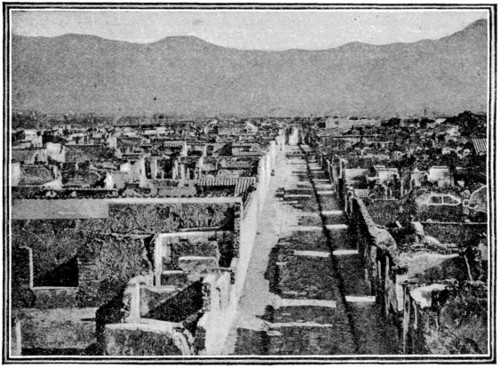
RUINS OF POMPEII, ITALY
Pompeii (pron. Pom-pay’yee),
once a Greek
seaport at the mouth
of the Sarnus, is fifteen
miles south of Naples;
it fell into the possession
of Rome about 80 B. C.,
and was converted into
a watering-place, “the
pleasure haunt of paganism.”
The Romans erected many handsome
public buildings, and their villas and theaters and
baths were models of classic architecture and the
scenes of unbounded luxury. The streets were
narrow, provided with sidewalks, the walls often
decorated with paintings, and the number of shops
witnesses to the fashion and gaiety of the town. A
terrible earthquake ruined it and drove out the
inhabitants in A. D. 63; they returned and
rebuilt it, however, in a tawdry and decadent
style, and luxury and pleasure reigned as before
till in A. D. 79 an eruption of Vesuvius buried
everything in lava and ashes. The ruins were
forgotten till accidentally discovered in 1748;
since 1860 the city has been disinterred under the
auspices of the Italian Government, and is now
a favorite resort of tourists and archæologists.
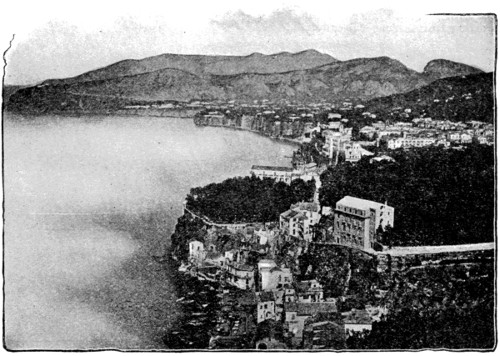
BEAUTIFUL SORRENTO, ITALY
Herculaneum, so called from the local worship
of Hercules, was situated at the northwestern
base of Mount Vesuvius, five miles east of Naples.
In 63 A. D. it was seriously injured by a violent
earthquake, and, in 79 A. D., buried, along with
Pompeii and Stabiæ, by the memorable eruption of
Vesuvius. In 1738 systematic excavations were
commenced, the chief building explored being the
theater, which has eighteen rows of stone seats,
and could accommodate eight thousand persons;
part of the Forum with a colonnade, two small
temples, and a villa have also been discovered,
and from these buildings many beautiful statues
and remarkable paintings have been obtained.
In 1880 ruins of extensive baths were brought
to light. Among the art-relics of Herculaneum,
which far exceed in value and interest those
found at Pompeii, are the statues of Eschines,
Agrippina, the Sleeping Faun, the Six Actresses,
[522]
Mercury, the group of the Satyr and the Goat,
the busts of Plato, Scipio Africanus, Augustus,
Seneca and Demosthenes—mostly now in the
National Museum at Naples.
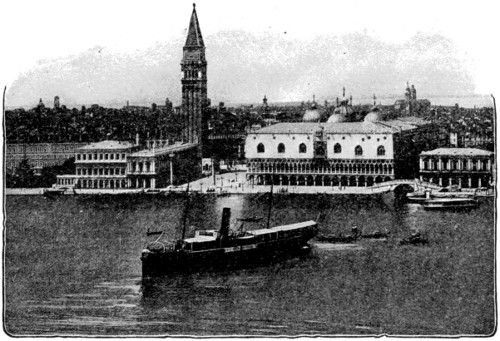
VIEW OF THE CAMPANILE AND PALACE, VENICE, FROM THE GRAND CANAL
Palermo (pä-ler’mō), capital of the province of
Palermo, Sicily, a seaport on the Bay of Palermo,
at the foot of Monte Pellegrino, is picturesquely
situated in the midst of a beautiful and fertile
valley called the Golden Shell. It is a handsome
town, with many public buildings and nearly
three hundred churches in Moorish and Byzantine
architecture, a university, art school, museum,
and libraries.
The industries are unimportant, but a busy
trade is done with Britain, France and the United
States, exporting fruits, wine, sulphur, etc., and
importing textiles, coal, machinery and grain.
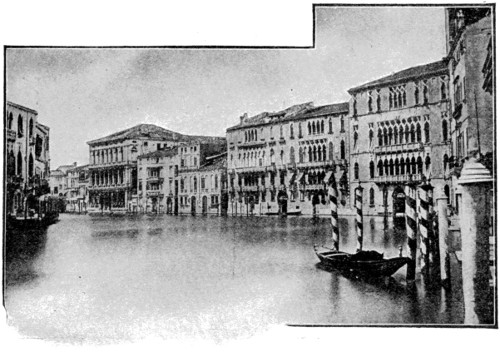
VISTA ON THE GRAND CANAL, VENICE
Sorrento (sōr-ren’tō), a town in the province of
Naples, beautifully situated on the Bay of
Naples, sixteen miles south-southeast of Naples,
is a favorite watering-place; was noted in
antiquity for its wines; and was the birthplace
of Tasso.
Turin (Ital. Torino tō-re’nō).—Capital of the
province of Turin, Italy, is situated on the Po,
near its junction with the Dora Riparia. It is
regularly built, with many squares and broad
streets; is the seat of important trade for northern
Italy; has varied manufactures; and is rapidly
growing. It contains a university, cathedral,
castle (Palazzo Madama), royal palace (with the
royal armory and library), Palazzo Carignano
(former seat of Parliament, now containing
collections in natural history), palace of the
Academy of Sciences (with a museum of antiquities
and picture-gallery), monument of Cavour,
etc. Victor Emmanuel and Cavour were born there.
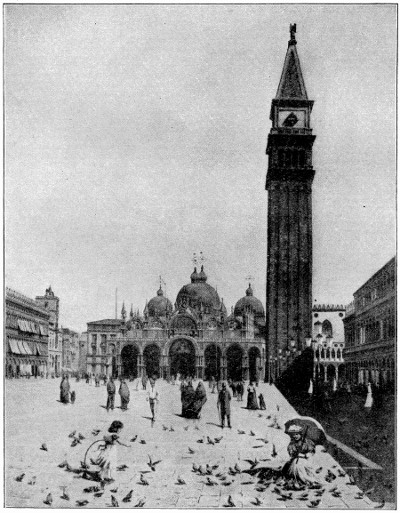
ST. MARK’S CATHEDRAL AND CAMPANILE FROM THE PLAZA
Turin was the ancient capital of the Taurini
(whence the name); was captured by Hannibal
in 218 B. C.; and has played an important part
in the history of Europe. It figured prominently
in the national movements of the nineteenth
century, and was the capital of the kingdom of
Italy 1859-1865.
Venice (ven’is Ital. Venezia), capital of the
province of Venice, is situated in the Laguns
(lagoons) in a bay of the Adriatic. Now Venice
covers more than seventy-two islets, or rather
mud-banks, its foundations being piles (“time-petrified”)
and stone. Through its two unequal
portions winds for over two miles the Grand
Canal, spanned by the Rialto Bridge (of stone)
and two others (of iron), and into it flow one
hundred and forty-six lesser canals, all bridged
at frequent intervals. This vast network of
waterway is patrolled by countless gondolas,
while the pedestrian has his choice of innumerable
lanes (calli). A railway viaduct, two and one-eighth
miles long, connects Venice with the mainland.
The Piazza di San Marco, a square five hundred
and seventy-six feet long and one hundred and
eighty-five to two hundred and seventy feet wide,
[524]
paved with gray trachyte and white Istrian marble,
surrounded by time-stained marble palaces
and St. Mark’s Church is the picturesque center
of Venetian life, especially at evening, when the
bands play, and the cafés are crowded by thousands.
Flocks of fat pigeons have been fed here
by the city daily for seven hundred years.
Palaces enclose three sides and the palace
arcades are occupied by cafés and bric-à-brac
shops.
Of its public buildings the following are the
principal: the Ducal Palace, standing on the site
of a former official residence of the Doges, which
was burned in 976. Besides its painted ceilings
and walls there are many pictures by the Italian
masters; the Academy of Fine Arts whose
twenty rooms are filled with some of the finest
works of the Old Masters. Its principal churches
are St. Marco, St. Giorgio Maggiore, and Sta.
Maria della Salute, are all most highly decorated
with frescoes, mosaics, and carvings, besides
containing many world-famed pictures. The Campanile
of St. Marco has been rebuilt since its fall,
on July 14, 1902, after standing a thousand
years. The palaces of the nobility on the Grand
Canal and other canals contain priceless
collections of pictures. The Arsenal contains many
models of the old Venetian ships, armor,
collections of weapons, and spoils of war.
Venice was noted for its textile manufactures
as early as the fifteenth century; the principal
manufactures at the present time are tapestry,
brocades, Venetian laces, wood carving, artistic
wrought-iron work, jewelry, bronzes, machinery,
and clocks, and at Murano glass and glass beads.
Italian Seaports.—The chief seaports of Italy
after Genoa, “the Superb,” which is the busiest
of all, are in order round the coast—Livorno, or
Leghorn, the port of Tuscany and Florence;
Civita Vecchia, the port of Latium; Naples, with
Castellamare on the south side of its bay; Messina,
on the Sicilian side of the Strait named after
it, with one of the finest harbors in Europe, beside
the eddy which was feared as the whirlpool
of Charybdis in ancient times; Palermo, “la
Felice,” in the vale of the Golden Shell, on the
north coast of Sicily; Catania, on the east
coast of the island. Coming round to the Adriatic
coasts we reach the port of Brindisi, a notable
point in the most direct route from western
Europe to Egypt and the East. The most
important line of railway in Italy, that leads
from the plain of Lombardy all down the east
side of the peninsula, has the port of Brindisi as
its objective point. Farther north in the middle
of this coast is Ancona, the port of the Marches.
Lastly we come to Chioggia and Venice, the city
of canals and bridges, described above.
HISTORY OF ITALY
The ancient history of Italy will be found
under Rome. The modern history begins with
476 A. D., when Odoacer, chief of the Herulians,
a German tribe who had invaded the country,
was proclaimed king of Italy. After a reign of
twelve years he and his followers were overpowered
by the Ostrogoths under Theodoric the
Great. The Ostrogoths were in turn subdued
by Byzantine troops, and Italy came under the
dominion of the Eastern emperors, who ruled
through an exarch residing at Ravenna.
The Lombards.—In 568 the Lombards (Langobardi),
a German people originally from the
Elbe, led by their king, Alboin, conquered the
Po basin, and founded a kingdom which had
its capital at Pavia. The kingdom of the
Lombards included Upper Italy, Tuscany and
Umbria, with some outlying districts. But
on the northeast coast, the inhabitants of the
lagoons still retained their independence, and
in 697 elected their first doge, and founded the
republic of Venice.
Ravenna, the seat of the exarch, with
Romagna, Rimini, Ancona, and other maritime
cities on the Adriatic, and almost all the
coasts of Lower Italy, remained unconquered,
together with Sicily and Rome. The slight
dependence of this part of Italy on the court
of Byzantium disappeared almost entirely in
the beginning of the eighth century.
Rise of Papal Power.—The power of the
pope, though at first recognized only as a kind
of paternal authority of the bishop, grew
steadily in these troubled times, especially in
the struggle against the Lombard kings. In
consideration of the aid expected against King
Astolphus, Pope Stephen III. (754) not only
anointed the king of the Franks, Pepin, but
appointed him patrician or governor of Rome.
In return Pepin presented the exarchate of
Ravenna, with the five maritime cities, to the
pope, thus laying the foundation of the
temporal power of the Holy See. At the
invitation of Pope Hadrian I. Charlemagne
made war upon Desiderius, the king of the
Lombards, took him prisoner in his capital,
Pavia (774), and united his empire with the
Frankish monarchy. Italy, with the exception
of the duchy of Benevento and the
republics of Lower Italy, thus became a
constituent part of the Frankish monarchy, and
the imperial crown of the West was bestowed
on Charlemagne (800).
Port of the Holy Roman Empire.—On the
breaking up of the Carlovingian empire, Italy
became a separate kingdom, and the scene of
strife between Teutonic invaders. At length
Otto the Great was crowned emperor at Rome
(961), and the year after became emperor of
what was henceforth known as the Holy Roman
Empire.
During the following centuries the towns and
districts of North and Middle Italy gradually
made themselves independent of the empire,
and either formed themselves into separate
republics or fell under the power of princes
bearing various titles. A large part of Middle
Italy at the same time was under the dominion
of the popes, including the territory granted
by Pepin, which was afterwards enlarged on
several occasions.
Vicissitudes of Southern Italy.—In
southern Italy there were in the time of Charlemagne
several independent states. In the ninth
century this part of the peninsula, as well as
Sicily, was overrun by Saracens, and in the
eleventh century by Normans, who ultimately
founded a kingdom which embraced both
Lower Italy and Sicily, and which though it
more than once changed masters, continued to
exist as an undivided kingdom till 1282. In
that year Sicily freed herself from the oppression
of the then rulers, the French, by the aid
of Pedro of Aragon, and remained separate till
1435. It was again separate from 1458 to
1504, when both divisions were united with
the crown of Spain. With Spain the kingdom
remained till 1713, when Naples and Sicily
were divided by the Treaty of Utrecht, the
former being given to Austria, the latter to the
Duke of Savoy. In 1720 they were again
[525]
united under Austria, but in 1734 were conquered
from Austria and passed under the
dominion of a separate dynasty belonging to
the Spanish house of Bourbon.
Mediæval Italy.—The history of mediæval
Italy is much taken up with the party quarrels
of the Guelfs and Ghibellines, and the quarrels
and rivalries of the free republics of Middle
and Upper Italy. In Tuscany the party of
the Guelfs formed themselves into a league for
the maintenance of the national freedom under
the leadership of Florence; only Pisa and
Arezzo remained attached to the Ghibelline
cause. In Lombardy it was different, Milan,
Novara, Lodi, Vercelli, Asti, and Cremona
formed a Guelf confederacy, while the Ghibelline
league comprised Verona, Mantua, Treviso,
Parma, Piacenza, Reggio, Modena, and
Brescia. Commercial rivalry impelled the
maritime republics to mutual wars. At
Meloria the Genoese annihilated (1284) the
navy of the Pisans, and completed their
dominion of the sea by a victory over the
Venetians at Curzola (1298.)
Influences of Napoleon.—Up till the time
of the Napoleonic wars Italy remained subject
to foreign domination, or split up into separate
republics and principalities. The different
states were bandied to and fro by the changes
and intrigues of war and diplomacy between
Austria, Spain and the House of Savoy.
During the career of Napoleon numerous
changes took place in the map of Italy, and
according to an act of the Congress of Vienna
in 1815 the country was parcelled out among
the following states:—(1) The Kingdom of
Sardinia, consisting of the island of Sardinia,
Savoy, and Piedmont, to which the Genoese
territory was now added. (2) Austria, which
received the provinces of Lombardy and
Venetia, these having already been acquired
by her either before or during the time of
Napoleon. (3) The Duchy of Modena. (4)
The Duchy of Parma. (5) The Grandduchy
of Tuscany. (6) The Duchy of Lucca. (7)
The States of the Church. (8) The Kingdom
of the Two Sicilies. (9) The Republic of San
Marino. (10) The Principality of Monaco.
Struggle for Independent Nationality.—The
desire for union and independence had long
existed in the hearts of the Italian people, and
the governments at Naples, Rome, Lombardy,
and other centers of tyranny were in continual
conflict with secret political societies. The
leading spirit in these agitations in the second
quarter was Giuseppe Mazzini.
The year of revolutions, 1848, opened with a
street massacre by the Austrians in Milan, on
January 2. In February, 1849, the French
Republic was declared, and then in Italy the
party of Mazzini was for a moment supreme,
when Charles Albert abdicated in favor of his
son Victor Emmanuel. Meanwhile the pope
had been driven from Rome, and a Roman
republic had been established under Mazzini
and Garibaldi, the leader of the volunteer
bands of Italian patriots. Rome was, however,
captured by the French, who came to
the aid of the pope (July, 1849), who resumed
his power in April, 1850, under the protection
of the French, and the old absolutism was
restored. Similar attempts at revolution in
Sicily and Naples were also crushed, but the
secret societies of the patriots continued their
operations.
Establishment of the Present Kingdom.—In
1859, after the war of the French and Sardinians
against Austria, the latter power was
compelled to cede Lombardy to Sardinia, and
in the same year Romagna, Modena, Parma,
and Piacenza were annexed to that kingdom,
which was, however, obliged to cede the
provinces of Savoy and Nice to France. In
the south the Sicilians revolted, and supported
by a thousand volunteers, with whom Garibaldi
sailed from Genoa to their aid, overthrew
the Bourbon government in Sicily. Garibaldi
was proclaimed dictator in the name of Victor
Emmanuel. In August Garibaldi crossed to
Naples, defeated the royal army there, drove
Francis II. to Gaeta, and entered the capital
on the 7th September. Sardinia intervened
and completed the revolution, when Garibaldi,
handing over his conquests to the royal troops,
retired to Caprera. A plebiscite confirmed the
union with Piedmont, and Victor Emmanuel
was proclaimed king of Italy, thus suddenly
united almost in Mazzini’s phrase, “from the
Alps to the sea.”
Only Venice and the Papal State now remained
to be joined to the new kingdom. To
obtain Venice, Italy joined Prussia in her
war against Austria in 1866; and though the
Italians were beaten on land at Custozza and
on sea at Lissa, the triumph of Prussia was so
complete that, by the peace of Prague, Venice
was surrendered to Italy.
Conquest of the Papal States.—Rome was
less easy to secure, because of the opposition
of Roman Catholic opinion throughout Europe.
French soldiers had protected the pope ever
since 1849. In 1862 Garibaldi prepared to
make a dash on the Papal States, but the
government felt obliged to stop him. He
was surrounded on Mount Aspromonte and
taken prisoner. The withdrawal of the French
troops from Rome (1864) was only procured
by a promise to respect the Papal States, and
by the transference of the capital from Turin
to Florence.
In spite of the prohibition of the government,
Garibaldi made another attempt on Rome in
1867; but Napoleon sent more French troops,
and Garibaldi was defeated at Mentana, and
had to withdraw. It was not till the fall of
the French Empire in 1871 that the Italian
government could act freely. As Pius IX.
refused to give up the temporal power, the
Italian government took the capital by force,
and Pius withdrew to the Vatican, where he
remained in voluntary confinement, a course
followed by his successor, Leo XIII. (1878-1903),
and by the present Pope, Pius X.
Difficulties of Consolidation.—The consolidation
of Italy, since the formation of the
kingdom, has been slow and difficult owing
to the great social differences between northern
and southern Italy. The nation, too, has been
ambitious to be recognized as one of the great
powers of Europe, which involves a vast outlay
in expenditure.
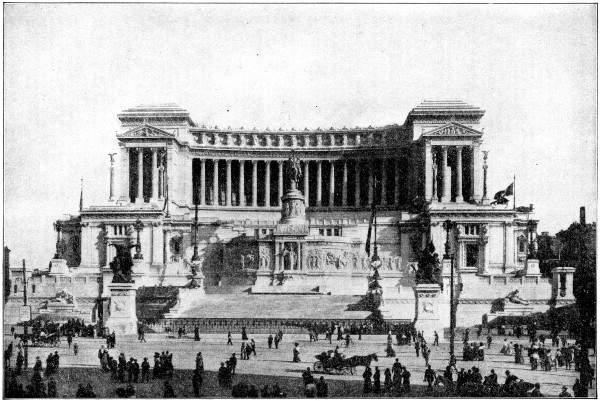
MONUMENT TO VICTOR EMMANUEL II., AT ROME. THIS MEMORIAL IS EMBLEMATIC OF ITALIAN UNITY AND WAS
ERECTED AT AN EXPENDITURE
OF $10,000,000.—THE COSTLIEST MEMORIAL IN THE WORLD, AND POSSIBLY THE MOST MAGNIFICENT
In 1878 Victor Emmanuel died, and was
succeeded by Humbert I.; Pius IX. being succeeded
by Leo XIII. in the same year. Humbert’s
reign was marked by electoral reform
and foreign colonization. Somaliland, along
the northeast coast of Africa, was acquired
between 1880 and 1890, and the dependency
of Eritrea was founded in 1882. Italy’s claims
to a protectorate over Abyssinia led to war,
which ended in an Italian defeat at Adowa,
1896, and the restoration of all land to Abyssinia
by the treaty of Adis Abeba.
In 1883 Italy entered the Triple Alliance with
Germany and Austria, largely owing to her
distrust of France. In 1900 King Humbert
was assassinated by an anarchist, and was
succeeded by his only son, Victor Emmanuel
III. At the beginning of the new century
more friendly relations were secured with France,
the Triple Alliance being still maintained.
In the recent dissensions in Morocco (1906-1911)
the government gave its support to
France against Germany, while France acquiesced
in Italian ambitions in Tripoli.
In September, 1911, war broke out between
Italy and Turkey in connection with the rights
and privileges of Italian subjects in Tripoli.
In November of the same year the Italian
government formally proclaimed the annexation
of Tripoli and Cyrenaica, which was
ratified by Turkey in the treaty of Ouchy in
October, 1912. In the Balkan war (1912-1913)
Italy’s sympathies were naturally with
the allies against her recent enemies; the royal
family, moreover, is connected with that of
Montenegro, Queen Elena of Italy being the
daughter of King Nicholas of Montenegro.
In May, 1915, Italy renounced the Triple
Alliance and entered the European war on
the side of Great Britain and France. War was
declared upon Austria-Hungary, and Italian
forces dispatched to the Trentino. No formal
declaration of war was made against Germany
until Aug. 27, 1916, subsequently, Italy
requisitioned the German steamers interned in
Italian ports.
Early in 1917, an important war conference
was held in Rome by representatives of the
Entente allies.
Books of Reference.—Gregorovius’s History of the
City of Rome in the Middle Ages; Sismondi’s History of
the Italian Republics; Symonds’ Age of the Despots;
Burckhardt’s Civilization of the Renaissance in Italy;
Creighton’s History of the Papacy During the Reformation;
Ranke’s History of the Popes and his Latin and Teutonic
Nations; King’s A History of Italian Unity; Stillman’s
The Union of Italy; Orsi’s Modern Italy.
AUSTRIA-HUNGARY
Austria-Hungary belongs to the Germanic
group of European states, because the dominant
race is German. The Germans, however, do
not form so much as a third of its varied population.
The usual name given to this great empire
is Austria, a Latinized form of the German
Oesterreich, meaning “Eastern Kingdom.”
Since 1867 the empire is composed of a union
of two states under one emperor, but administratively
distinct. The one is Austria, or
Cisleithania (“on this side the Leitha,” a tributary
of the Danube); the other, Hungary and
the lands of the Hungarian crown, or Transleithania.
The present article deals with the
empire as a whole.
Location and Extent.—The Austrian dominions
form geographically a compact territory
with a circumference of about five thousand
three hundred and fifty miles. The total area
is greater than that of any other European
state save Russia, and is nearly twice the area
of Great Britain. The body of the empire
lies in the interior of Europe, though it has
about one thousand miles of sea-coast on the
Adriatic. Austria borders on Italy, Switzerland,
Bavaria, Saxony, Prussia, Russia, Roumania,
Servia and Montenegro. With the
sanction of the Berlin Congress of 1878, the
small territory of Spizza, on the Montenegrin
frontier and formerly Turkish, was incorporated
with Dalmatia. The Turkish provinces
of Bosnia and Herzegovina, thenceforward
occupied and administered by Austria,
were annexed by proclamation in 1908, and
are now a part of the Austro-Hungarian monarchy.
Surface Features.—Austria-Hungary has been
termed the “Empire of the Danube,” since it
lies for the most part within the basin of that
river, and embraces the whole of its upper
plain, which lies at an elevation of about
three hundred feet above the sea. But it is
also, next to Switzerland, by far the most
mountainous land in Europe, no less than
four-fifths of its area being more than six
thousand feet above the sea-level.
On the west, Austria embraces nearly half
of the great mass of the Alps between the
plateau of Bavaria and the plain of Lombardy,
the mountain and valley scenery of Tyrol and
Salzburg resembling that of Switzerland on a
lesser scale. The highest point of all here is
the Ortler Spitze. An eastern spur of these
heights, the Bakony Wäld, runs into Hungary,
compelling the Danube to form a sharp east-to-south
bend or knee in its course. In the
northwest the Bohmer Wäld, the Erz, and
Riesen Gebirge, the Sudetic Mountains, and
the Moravian heights, enclose the high basin
of the Upper Elbe in Bohemia. Farther east
the wooded Carpathians, with the high outlying
granite mass of the Tatra rise round the
north of the Hungarian plain. These are
continued by the Transylvanian Alps, which
form the southeastern frontier, next Roumania,
and which, with their northern branch, the
Biharia Mountains, enclose the highland of
Transylvania or Siebenbürgen on the east of
the Hungarian plain.
Rivers and Lakes.—The Danube, entering
Austria from Bavaria as a considerable river,
and flowing southeastward over the plain of
Hungary, grows to more than half a mile in
width before it leaves the Hungarian border
to descend by the gorge of the Iron Gates
into its lower plains. It is the great highway
of the kingdom, and the great outlet to the
Black Sea on the east. (See further under
Danube.)
The Save, the southern boundary river of
Hungary, and the Drave join the Danube in
the south from the Eastern Alps, up to the
base of which both are navigable.
The Theiss, winding south through the plain
of Hungary from its source in the Carpathians,
is its great northern tributary, also navigable,
and so full of fish as to be popularly described
as “two-thirds water and one-third fish.”
The March, from the Sudetic Mountains,
corresponds to the Leitha from the south,
forming part of the boundary between Austria
and Hungary. The high basin of Bohemia,
as before said, forms the upper basin of the
Elbe, which escapes thence into Saxony.
The head stream of the Oder passes through
Austrian Silesia; and the Vistula, draining
like these to the Baltic, has its head streams in
the northern slopes of the Carpathians in
Galicia, the eastern portion of which province,
however, drains to the Black Sea by the
Dniester.
Lakes.—The two large lake basins of the
country, which seem to be remnants of much
more extensive inland waters, lie in Hungary
between the Danube and the Drave. The
larger, the Platten See or Balaton Lake, fifty
miles long, shallow and stagnant, overflows
into the surrounding marshes only in spring.
The Lake of Constance, on the northern margin
of the Alps, and Lake Garda, on the southern,
touch upon Austrian territory.
Climate and Landscape.—Though from the
variations of elevation the climates of
different parts of Austria-Hungary are very
diverse, three broad divisions may be recognized—(1)
the climate of the countries
which lie north of the Carpathian heights,
in which the winters are long and cold,
and in which the vine does not flourish; (2)
that of the central plains and slopes of
Hungary, favorable to wheat and vines; and
(3) the Mediterranean climate of the Adriatic
shores, which yield oil and silk.
Generally speaking, all the mountainous
borders of Austria-Hungary are forest-covered,
the woods occupying a third of the whole surface
of those regions; the great plain of Hungary,
on the other hand, is an open, treeless
steppe.
Peoples and Races.—Austria-Hungary extends
over the area in which many different races of
Europe meet and interlace. Its population
includes Germanic, Slavonic, Magyar, and
Romanic elements, with their various tongues
and dialects. The Germanic prevails in the
Alpine regions and in the valley of the Danube
in the west, and is widely mingled with the
Slavonic and Magyar in the northern and
central parts of the country.
The Slavs, the most numerous branch, forming
about forty-five per cent of the whole
population, appear in two divisions, a northern
and southern; to the northern Slavs belong
the Czechs of Bohemia, the Moravians and
Slovaks, Poles and Ruthenians, or Russniaks
of Galicia and Bukowina; to the southern
Slavs belong the Slovenes, Croats and Servians,
who occupy the southern border lands of
Hungary, between the Drave and Save, westward
to the peninsula of Istria and the Dalmatian
coasts of the Adriatic. The Romanic
element appears in the southeast on the
Danube frontier, in southern Transylvania and
eastern Bukowina (Wallachians), and in the
southwest, where the Italians prevail in
numbers on the borders of Venetia. The
Magyars occupy the central plains of Hungary.
The Szeklers of eastern Transylvania are a
branch of the same family, by some believed
to be the descendants of the once formidable
Huns. Among minor elements of population,
Jews are numerous in the northern provinces,
Gypsies in Hungary, and Armenians in Transylvania
and Galicia.
Religion and Education.—The state religion
is the Roman Catholic, and this is professed by
two-thirds of the population; a large proportion
on the eastern borders next to Russia
adhere to the Greek Church; Protestants are
most numerous in Hungary and Transylvania,
but form only a tenth part. General education,
excepting in German Austria, where the
compulsory system is enforced, is in a very
backward state. There are, however, eleven
universities in Austria-Hungary: Vienna,
Prague (two), Budapest, Graz, Innsbruck,
Cracow, Lemberg, Czernowitz, Klausenburg,
and Agram.
Industries and National Resources.—The
occupations of the country naturally divide
themselves between the mining and pastoral
industries of the mountains, and the agricultural
and pastoral of the plains.
Agriculture employs by far the largest
share of the population; and the lower lands
of Austria-Hungary are among the most fertile
portions of Europe. Oats, rye, barley, wheat,
and maize, are the commonest grains; flax and
hemp are widely grown; wines and tobacco
chiefly in Hungary; hops in Bohemia.
Horticulture is carried to great perfection;
and the orchards of Bohemia, Austria proper,
Tyrol, and many parts of Hungary produce
a profusion of fruit. Great quantities of
cider are made in Upper Austria and Carinthia,
and of plum-brandy in Slavonia. In Dalmatia,
oranges, lemons and a few olives are produced.
In the production of wine, Austria is second
only to France. With the exception of
Galicia, Silesia, and Upper Austria, the vine
is cultivated in all the provinces; but Hungary
stands first, yielding not only the finest
quality of wine, but four-fifths the total
amount produced in the empire.
Animal Products.—The central Hungarian
steppes are full of cattle, and those of the
Alpine regions are an exceedingly fine breed.
Merino sheep are carefully reared, especially
in Moravia, Bohemia and Hungary. The
river fisheries are important all over the land.
The coast fisheries are of the utmost importance
in rocky Dalmatia, where there is little cultivable
land.
Minerals.—Its mineral wealth is not surpassed
in any European country; it is only
lately that Russia has exceeded it in the production
of gold and silver. Mining has been
an important pursuit in Austria for centuries,
and has been encouraged and promoted by the
government. Gold is found chiefly in Hungary
and Transylvania, and in smaller quantity
in Salzburg and Tyrol. The same countries,
along with Bohemia, yield silver. Quicksilver
is found in Hungary, Transylvania,
Styria, and Carinthia. Copper is found in
many districts, tin in Bohemia alone. Zinc
[529]
is mined chiefly in Cracow and Carinthia.
The most productive lead mines are in Carinthia.
Iron is found in almost every province
of the monarchy, though Styria, Carinthia,
and Carniola are chief seats. Antimony is
confined to Hungary; arsenic, cobalt, sulphur,
and graphite are produced in various parts of
the empire.
The useful earths and building-stones are to
be had in great profusion; likewise marble,
gypsum, chalk, etc. Rock-salt exists in
immense beds on both sides of the Carpathians,
chiefly at Wieliczka and Bochnia in Galicia,
and in the county of Marmaros in Hungary,
and in Transylvania. Salt is also made at
state salt-works by evaporating the water of
salt-springs. There are inexhaustible deposits
of coal. Austria has abundance of valuable
mineral springs; about sixteen hundred are
enumerated, some of them of European reputation,
as the sulphur baths of Baden in Lower
Austria, the saline waters of Carlsbad, Marienbad,
Franzensbad, Teplitz, etc., all in Bohemia.
Manufactures are most developed in the
German portion of Bohemia, in the districts
round Vienna, in Moravia and Austrian
Silesia, and in Styria. The Magyar countries
are far behind in this respect and Dalmatia
and Bukowina have scarcely any manufactures
at all. Weaving employs the largest number
of hands; next in number come the metal,
stone, glass and wood workers, then the
workers in leather. Iron and steel goods are
made in the Alps of Styria. Bohemia has a
world-wide reputation for the manufacture of
various kinds of glass, and the Tyrol has long
been noted for the production of carved woodwork.
Paper is made chiefly in Bohemia and
in or near Vienna.
Cities and Towns.—The most important cities
are the capital, Vienna, and eight other towns
above one hundred thousand (Budapest,
Trieste, Prague, Lemberg, Gratz, Cracow,
Brün, Szegedin), and twenty-two others above
fifty thousand.
Vienna (Ger. Wien, pron. Veen), the capital of
the Austrian Empire, and (jointly with Budapest)
of the dual monarchy, is situated in Lower
Austria, on the Danube Canal, a south branch
of the Danube, here joined by the small river
Wien.
Chief Divisions.—Vienna proper consists of
the Inner City and ten suburban districts surrounding
it, formerly encircled by fortifications
known as the Lines, which in 1892 were replaced
by a boulevard, known as the Ringstrasse. The
central point of the city is the Graben, a short
street in the center of the inner city, a pleasant,
well-built avenue, of greater width than usual
for streets within the Ring. The Stadt is the
fashionable quarter, where are the imperial
palace, the residences of many of the nobility,
the leading churches, museums, galleries, etc.,
and the most elegant shops.
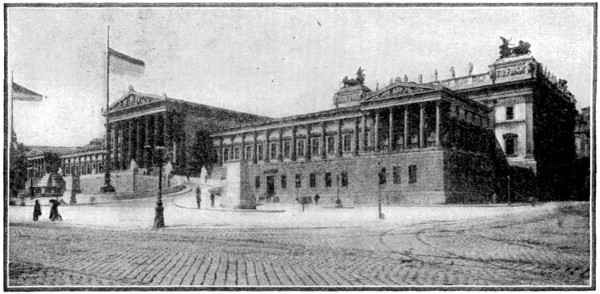
PARLIAMENT BUILDINGS, VIENNA
The Ringstrasse is perhaps not surpassed in
its architectural magnificence by any other
street in Europe. Among the most conspicuous
of the public buildings upon it are the Bourse;
the University, founded in 1365 and renowned
throughout the world as a medical school, has a
teaching staff of five hundred and some ten
thousand students; the new Rathhaus in the
Gothic style, with a tower three hundred and
twenty-eight feet high; the new Court Theater,
the extensive and splendid Houses of Parliament;
the Palace of Justice; the twin Imperial Museums
of natural history and of art; the Imperial Opera
House, sumptuous without and within; the
Commercial Academy; the Palace of Archduke
William; the Austrian Museum of Art and
Industry, and the School for Art Industry.
Other institutions and buildings of interest are
the Polytechnic Institute (with a Technological
Museum); the Deaf and Dumb Asylum, founded
by Maria Theresa; the splendid Public Hospital,
the largest in Europe, and the Josephinum, a
medical college founded in 1784, containing a
large collection of anatomical models, etc.
Monuments and Parks.—Of the public monuments
the most noteworthy are the equestrian
statues of Joseph II., in the Josephsplatz, those
of Archduke Charles and Prince Eugene, and
that of Francis I. in the Hofgarten; the monument
of Francis II., in the inner court of the
Hofburg; the grand Maria Theresa monument;
the Beethoven and the Schiller monuments; the
Grill-parzer monument, etc. Of the many
beautiful fountains the finest is that by Schwanthaler
representing Austria, with the four rivers,
Danube, Elbe, Vistula, and Po.
In the Volksgarten (bordering on the Ringstrasse)
is the Temple of Theseus, modeled after
that at Athens, and formerly containing Canova’s
marble Theseus and the Minotaur, which is now
in the Imperial Museum of Art.
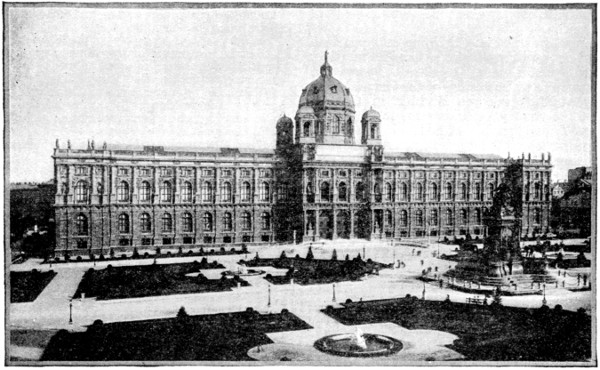
IMPERIAL ART MUSEUM, VIENNA
The great park of Vienna is the Prater (four
thousand two hundred and seventy acres), extending
for nearly four miles between the Donau
Canal (a narrow arm of the Danube) and the
main stream of the river. It was the site of the
Great Exhibition of 1873, some of the buildings
of which are now used for exhibitions, concerts, etc.
GRAND OPERA HOUSE, VIENNA
Churches and Museums.—The ecclesiastical
center and the historic church of the city, is St.
Stephen’s Cathedral, adjacent to the Graben.
St. Stephen’s is one of the noblest Gothic
edifices in Europe. It was founded in 1147, but
was burned in 1258. The present edifice was
begun soon after, but the tower was not finished
until 1433. It has recently undergone extensive
restorations, both without and within. The
tower is four hundred and forty-nine feet high.
The interior is rich in sculpture and in monuments;
and the carved stalls in the choir and the
stone pulpit are specially to be noted.
The Capuchin Church contains the burial-vault
of the imperial family. The Duke of Reichstadt,
son of Napoleon I., lies here among his maternal
ancestors.
In the Minorite Church there is a fine mosaic
[531]
copy of Leonardo da Vinci’s Last Supper; also
the monument of the poet Metastasio.
THE IMPERIAL UNIVERSITY, VIENNA
The Augustine Church contains Canova’s
monument of the Archduchess Maria Christina,
one of his noblest works; and in the Loretto
Chapel are the silver urns that hold the hearts
of many members of the imperial family.
The Church of Maria-Stiegen is a Gothic
structure of the fourteenth century restored in
1820, and second in beauty only to St. Stephen’s.
The elegant Karlskirche, or Church of St.
Charles Borromeo, was erected in 1737 in fulfilment
of a vow of Charles VI., when the plague
raged in Vienna; it is in Italian style, with two
slender spires, one hundred and forty-five feet
high, near the porch.
The Imperial Museums now contain the Picture
Gallery, arranged in schools. It is second only
to the Dresden collection, is specially famous for
its unrivaled examples of the Venetian school,
Rubens, and Dürer, the Antiquities, comprising
statuary, mosaics, inscriptions, etc., mostly
Austrian; and the Ambras Collection, remarkable
for its ancient armor, ivories and other carvings, etc.
Industries.—Vienna
is the chief industrial
city in the empire.
Machinery, scientific
and musical instruments,
artistic goods in
bronze, leather, terracotta,
porcelain, furniture,
meerschaum
pipes, etc., are among
the noted manufactures.
As a center of
trade and finance
Vienna is no less important.
Schönbrunn, two
miles from Vienna, is
the seat of the magnificent
Summer Palace
of the Emperor, with
extensive gardens and
pleasure-grounds. From
the marble colonnade
of the Gloriette there
is a fine view of the city and its suburbs. In the
churchyard is Canova’s monument of Baroness
Pillersdorf.
Prague (Ger. Prag; Czech Praha), the capital of
Bohemia, is situated at the base and on the slope
of the hills which skirt both sides of the isleted
Moldau, two hundred and seventeen miles from
Vienna and one hundred and eighteen miles from
Dresden. It offers a highly picturesque appearance
from the beauty of its site, and the numerous
lofty towers (more than seventy in number) which
rise above the palaces, public buildings, and
bridges of the city.
STATUE OF THE POET GRILLPARZER IN VIENNA
The royal Burg, on the Hradschin (two hundred
and forty feet), the ancient residence of the Dukes
of Bohemia, dates mainly now from the sixteenth
and seventeenth centuries, and has four hundred
and forty rooms. The neighboring Cathedral
of St. Vitus is still unfinished, though building
was resumed in 1867. Here are the splendid
royal mausoleum and the shrine of St. John of
Nepomuk, containing one and one-half tons of
silver. Of forty-seven other Catholic Churches
the chief are the domed Jesuit Church of St.
[532]
Nicolas, and the Teyn Church (1407; the old
Hussite Church), with Tycho Brahé’s grave, and
its marble statue of the Slavonic martyrs,
Cyril and Methodius.
ROYAL PALACE, SCHÖNBRUNN, NEAR VIENNA
Of five bridges and two railway viaducts
the most striking is the Karlsbrücke, five
hundred and forty-three yards long, with gate-towers
at either end, and statues of John of
Nepomuk and other saints. Other noteworthy
objects are the town hall, the Pulverturm, the new
Czech Theatre, the old Jewish graveyard, the vast
Czerni Palace and the Picture Gallery.
Prague has numerous public gardens and walks,
with several noble parks close by. The manufactures
include machinery, chemicals, leather,
cotton, linen, gloves, beer and spirits.
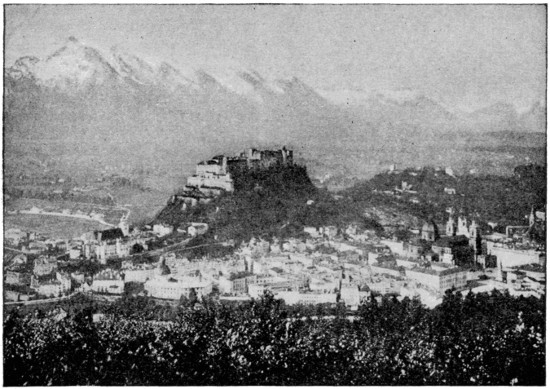
SALZBURG, AUSTRIA, ONE OF THE MOST CHARMING TOWNS IN EUROPE, AND
BIRTHPLACE OF MOZART AND HAYDN
Salzburg (sälts’börg), is in Upper Austria, twenty-eight
miles from Linz, near the Bavarian frontier,
one thousand three hundred and fifty feet above
sea, under some fine hills on the Salzach. It is
considered one of the most beautifully
situated towns of Europe. At this point
the river passes between two extensive
but isolated masses of rock, one of which, the
Mönchsberg (Monk’s Hill), is crowned by the old
citadel, dating originally from Roman times, but
frequently rebuilt. This portion of the city contains
the fine cathedral, with a white marble
façade, and built in imitation of St. Peter’s at Rome.
Its industries are confined chiefly to the manufacture
of musical instruments, marble ornaments.
Budapest (boo´da-pest; Hung. pron. boo´do-pesht´)
is the capital of Hungary, and the second
city of the Austrian Empire, consisting of Buda
on the west bank of the Danube, and Pest on the
opposite bank.
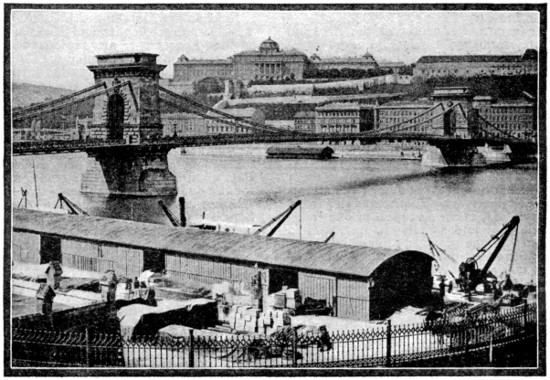
ROYAL PALACE AND SUSPENSION BRIDGE, BUDAPEST
These twin cities are joined by five bridges: a
chain bridge between the two commercial quarters;
the Queen Elizabeth Bridge; the Franz
Josef Bridge; the Margaret Bridge; and a railway
bridge.
Buda, the older and formerly the more important
of the two parts, stands on and around
two hills. On one stands the royal castle, erected
by Maria Theresa, and a fortress, rebuilt after
being destroyed by the Hungarians in 1849.
The palace chapel of St. Sigismund contains the
Hungarian regalia and the hand of St. Stephen.
On the Blocksberg, to the south of this hill,
stands the old citadel, while on a lower mound
to the north is the Turkish mosque, built over
the tomb of the saint Sheik Gül-Babas.
Other prominent buildings are the palace of
Archduke Joseph, the residence of the Premier,
and of the Minister of National Defense, all
standing in the Georgsplatz, where is also a
monument to General Hentzi, and the
thirteenth-century parish church of St. John.
Pest, the more modern city, stands upon a
sandy plain with fine quays along the Danube.
The main streets radiate from the Belvaros,
which is enclosed by boulevards replacing the
old city walls.
The most notable buildings are the Houses of
Parliament and Palaces of Justice, the Academy
of Sciences, containing valuable art collections,
and a fine library, the Bourse, and the Redoute
buildings, all on the Franz Josef Quay; the
National Museum Theatre and University on
Museum Street; the Industrial Art Museum, on
Ulloi Street; the Royal Military Academy, in
the Orczy Gardens; and the Leopold Basilica
on Andrassy Street, one of the most handsome
thoroughfares in Europe. There are a parish
Church, a Greek Church, and a Jewish synagogue,
and numerous parks, including one on
Margaret Island in the Danube.
Both towns have valuable baths and sulphur
springs, and the united cities form a large
manufacturing center for machinery, spirits, and tobacco,
cutlery and metal-work, glass, etc. The most
important industry is milling, the trade in grain
and flour being enormous, and there is considerable
commerce in cattle and swine, honey, wax,
bacon and hides, timber, and coal.
Salzkammergut (Sahltzkammergoot´), called the
Austrian Switzerland, one of the most picturesque
regions of Europe, lies in a district famous
for its salt mines and brine springs, and hence
known as the Salzkammergut (“Estate of the
Salt Office”). The scenery combines in rare
beauty the features of valley, mountain and lake.
The highest peak is the Dachstein (nine thousand
eight hundred and thirty feet);
of its lakes the most famous
are Hallstatt, Traun or
Gmünden, Atter, St.
Wolfgang, Aber,
Mond, and Zell. The
chief seats of the
salt-works are
Ischl, Hallstatt,
and Ebensee.
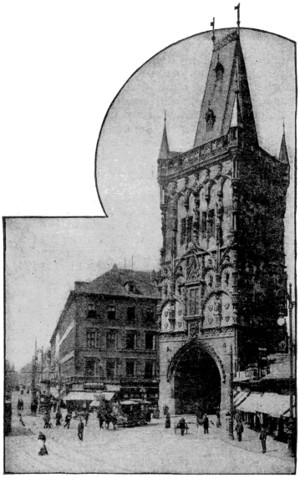
THE GOTHIC POWDER TOWER, PRAGUE
Other Important Places.—Trieste,
the
only great seaport of the
Empire, is at
[534]
the head of its gulf, on the North Adriatic. Pola,
near the southern extremity of the peninsula of
Istria, is the chief naval station of Austria.
Linz, on the Danube, is the seat of a considerable
trade. Steyr, on the river Enns, is noted for its
steel and iron industry.
Northern Styria is the center of the Austrian
steel and iron industry, carried on more especially
around Leoben. The capital, Graz, is a
staple place for the manufacture of machinery,
and one of the most agreeable of Austrian capitals,
and a favorite place of residence.
Semmering, an Austrian Alpine pass (three
thousand two hundred and nineteen feet) connecting
Vienna with Graz, though the lowest of the
Alpine passes, is traversed by the first railway
(1854) to be carried across the Alps. The viaducts
of the Semmering railway, some of them
with several tiers of arches, are among the grandest
works of engineering. The Semmering road
begins at Gloggnitz, at an elevation of one thousand
four hundred and twenty-six feet, and is
carried along the face of abrupt precipices over
bridges and through tunnels, affording views of
the grandest and wildest scenery en route. This
part of the road is twenty-five miles long, and
cost more than seven millions of dollars.
Innsbruck, on the Inn, is the capital of the
Tyrol, the most alpine part of the monarchy. Its
principal rivers are the Inn, in the north, and the
Etsch or Adige, in the south, the mountain range
separating them being crossed by the Pass of the
Brenner (five thousand eight hundred and sixty
feet). On the Adige are Botzen, Trent, and
Roveredo, the two last inhabited by Italians.
Reichenberg, in the north, is the center of the
textile trades; Teplitz and Karlsbad, at the foot
of the Erzgebirge, are famous watering-places;
Pilsen, in the west, is noted for its beer. Königgrätz
and Sadowa, where the battle was fought
which decided the Seven Weeks’ war in 1866, are
in the east.
Brünn is the great center of the Austrian
woolen trade; near it is the old state prison,
Spielberg. Olmütz is a strong fortress on the
March.
Lemberg and Cracow (the ancient capital of
Poland) are the centers of trade, and the marts
for the agricultural produce.
Bukowina is a small duchy at the head of the
Sereth and other rivers falling into the Black
Sea, with Czernowitz for its capital. About
forty per cent of the inhabitants are Roumanians.
Pressburg, near the eastern frontier, is the old
coronation city; Komorn, lower down on the
Danube, is famous as a fortress; Szegedin, the
chief town on the Theiss, was almost wholly
destroyed by floods in the year 1878.
Fiume, at the head of the Quarnero Gulf, is the
chief seaport of Hungary.
HISTORY OF AUSTRIA-HUNGARY
The empire of Austria arose from the smallest
beginnings at the end of the eighth century.
In 796 a Margraviate, called the Eastern Mark
(i. e. “March” or frontier-land), was founded as
an outpost of the empire of Charlemagne, in
the country between the Enns and the Raab.
The name Oesterreich appears first in 996.
Rise Under the Hapsburgs.—In 1156 the
mark was raised to a duchy; and after coming
into the possession of the House of Hapsburg
in 1282, it began its period of growth toward a
powerful state. The princes of that house
extended their dominion by marriage, by
purchase, and otherwise, over a number of
other states, including the crowns of Bohemia
and Hungary; and from 1438 down to the
nineteenth century they held almost without
interruption the throne of the German empire
(nominally “the Holy Roman Empire”)—the
emperor being the most conspicuous, if not
always the most powerful personage among
the crowned heads of Europe.
Hapsburg Power Through Marriage.—The
most pronounced rise of Austria and of the
House of Hapsburg to historical eminence
may be said to date from the reign of
Maximilian I. (1493-1519). By marrying Mary,
daughter of Charles the Bold (1477), he
acquired possession of the Netherlands.
Through the marriage of their son Philip with
Joanna of Spain, the Houses of Austria and
Spain were united.
Passes to Charles V. of Germany.—As Philip
died in 1506, his elder son, the celebrated
Charles V., became heir to the united monarchies,
and was elected emperor of Germany
in 1519. Thus, by a succession of fortunate
marriages, the House of Hapsburg became
the most powerful dynasty in the world.
Charles V., however, resigned all his German
territories to his younger brother, Ferdinand
I., who was thus the continuation of the
Austrian branch of the line. Under Ferdinand
the power of Austria greatly increased.
Division of the Empire.—In the partition of
the inheritance that took place among Ferdinand’s
three sons, the eldest, Maximilian II.,
received the imperial crown along with Austria,
Hungary and Bohemia; the second, Ferdinand,
Tyrol and Upper Austria; the third, Charles,
got Styria, Carinthia, etc. Maximilian II.
was fond of peace, tolerant in religion, and a
just ruler. He died in 1576; and of his five
sons, the eldest, Rudolf II., became emperor.
Rudolf II. was negligent, leaving everything
to his ministers and the Jesuits. His war
with the Porte and Transylvania brought him
little credit; and the Protestants of Bohemia,
oppressed by the Jesuits, extorted from him a
charter of religious liberty. In 1608 he was
obliged to cede Hungary, and in 1611 Bohemia
and Austria, to his brother Matthias.
Matthias, who became emperor in 1612,
ceded Bohemia and Hungary to his cousin
Ferdinand, son of the Archduke Charles of
Styria, third son of Maximilian II. Matthias
lived to see the outbreak of the Thirty Years’
war, and died in 1619.
Ferdinand II. and the Thirty Years’ War.—Bohemia
refused to acknowledge his successor,
Ferdinand II., to whom all the Austrian possessions
had again reverted, and chose the
Elector Palatine, Frederick V., the head of
the Protestant Union, as king. This election
gave the signal for the Thirty Years’ war, in
which the House of Austria took the lead,
both as the champion of Catholicism, and the
head of a power which aimed at universal
domination in Germany and in the Christian
world. The battle of Prague (1620) subjected
Bohemia to Ferdinand, who formally set
about rooting out Protestantism in that
country and in Moravia. The emperor also
succeeded in extorting acknowledgment of his
sovereignty from the states of Austria; and
here, too, Protestantism, which had made
great progress since the time of Luther, was
mercilessly suppressed.
Under Ferdinand’s successor, the Emperor
Ferdinand III. (1637-1657), Austria continued
to be a theater of war; and at the peace of
Westphalia (1648) had to cede Alsace to
France.
Leopold I. and the War of the Spanish
Succession.—Ferdinand III.’s son and successor,
Leopold I., provoked the Hungarians
to rebellion by his severity. The struggle between
Leopold and Louis XIV. of France for
the heirship to the king of Spain led to the
War of the Spanish Succession, during which
Leopold died, in 1705.
His eldest son and successor, the enlightened
Joseph I., continued the war. He died childless
in 1711, and was succeeded by his brother,
Charles VI.
Hapsburg-Lorraine Line of Rulers.—With
the death of Charles VI., in 1740, the male
line of the Hapsburgs became extinct, and his
daughter, Maria Theresa, who was married to
the duke of Lorraine, assumed the government.
For many years it had been the aim of Charles
to secure the adhesion of the European powers
to the Pragmatic Sanction, by which the
possessions of the Austrian crown should pass
to Maria Theresa. Those powers during his
lifetime had promised to second his wishes,
but he was no sooner in his grave than nearly
all of them sought to profit by the accession
of a female sovereign.
War of the Austrian Succession.—A great
war arose, in which England alone sided with
Maria. Frederick II. of Prussia conquered
Silesia. The Elector of Bavaria was crowned
king of Bohemia, and elected emperor as
Charles VII. in 1742. The Hungarians,
however, stood by their heroic queen, who
was soon able to wage a fairly successful war
against her numerous foes. At the death of
the empress in 1780, the monarchy had an
extent of two hundred and thirty-four thousand
square miles, with a population of twenty-four
millions. The administration of Maria Theresa
was distinguished by unwonted unity and
vigor, both in home and foreign affairs.
Her successor, Joseph II., was an active
reformer in the spirit of the enlightened
despotism of the times, though often rash
and violent in his mode of proceeding. He
was succeeded in the government by his
brother, the grandduke of Tuscany—as German
emperor, Leopold II.—who succeeded in
pacifying the Netherlands and Hungary.
Austria and the French Revolution.—At the
outbreak of the revolution in France the fate
of Leopold’s sister, Marie Antoinette, and her
husband, Louis XVI. of France, led him to
an alliance with Prussia against France; but
he died in 1792 before the war broke out.
War was declared by France on his son,
Francis II., the same year, and by the treaty
of Campo Formio, 1797, Austria lost Lombardy
and the Netherlands, receiving in lieu
the Venetian territory.
In 1795, at the second partition of Poland, it
had been augmented by western Galicia.
Francis, in alliance with Russia, renewed the
war with France in 1799, which was ended by
the peace of Lunéville. It is needless to
follow all the alterations of boundary that the
Austrian dominions underwent during these
wars. The most serious was at the peace of
Vienna (1809), which cost Austria forty-two
thousand square miles of territory. It was in
1804, when Napoleon had been proclaimed
emperor of France, that Francis declared
himself hereditary emperor of Austria as
Francis I. On the establishment of the Confederation
of the Rhine, he laid down the
dignity of German emperor, which his family
had held for nearly four hundred years.
The humiliating peace of Vienna was followed
(1809) by the marriage of Napoleon with the
Archduchess Maria Louisa, and in 1812 Austria
figured as the ally of Napoleon in his great
campaign against Russia, but she did not give
much active assistance. In August of the
following year Austria joined the grand
alliance against France and the Austrian
general, Schwarzenberg, was entrusted with
the chief command of the allied forces, which
at the battle of Leipzig and in the campaign
of 1814 broke the power of Napoleon.
Congress of Vienna and Subsequent Period
of Metternich.—The sacrifices and great
services rendered by Austria in the gigantic
struggle received full consideration at the
treaty of Vienna (1815). As recompense for
the loss of the Netherlands she received Venice
and Dalmatia, which afforded an outlet for
her foreign trade.
After that time Austria, under the diplomatic
guidance of Prince Metternich, exerted a
powerful influence in European politics generally,
and more especially in the German Confederation,
of which her emperor was president.
The death of Francis I. in 1835 made little
alteration in the policy of Austria; Ferdinand
I. trod in his father’s footsteps. The political
alliance with Russia and Prussia was drawn
closer by a personal conference of the emperor
with Nicholas I. and Frederick-William III.
at Teplitz in 1835.
Revolution of 1848.—In Austria, after the
fall of Metternich from power, the revolutionary
period of 1848-1849 was one of exceptional
severity, the movement for constitutional
freedom being complicated by the
revival of the national spirit in Hungary,
Italy and Bohemia. The time was everywhere
ripe for revolt, when the fall of Louis-Philippe
of France (February 24, 1848), gave
the signal for the outbreak of the revolutionary
elements all over Europe. Nowhere was the
spirit of change stronger than in Vienna, which
for many months became a scene of confusion.
The leaders of the popular movement in
Vienna were in sympathy with Hungary, and
when the imperial troops were ordered to
suppress the national rising there, the citizens
again rose in insurrection. In the meantime
the military forces had withdrawn from the
capital in order to prevent the Hungarians
coming to the aid of the Viennese. Vienna
was now besieged, and surrendered at the
end of October, after a resistance of eight days.
Francis Joseph Emperor.—The reaction was
triumphant, and the leaders of revolt severely
punished; but as Ferdinand had not shown
sufficient vigor in the great crisis, he was persuaded
to abdicate, and Francis Joseph was
declared emperor at the age of eighteen. Thus
restored, the central authority had now to
[536]
assert itself in Hungary and to complete the
reconquest of northern Italy. With the
surrender of Venice, which took place in
August, the subjugation of Italy was complete.
Conquest of Hungary.—In Hungary, the
Magyars, though the Germans and Slavs
within the country itself were hostile to them,
began the campaign of 1849 with decided
success. But the government had already
solicited the aid of Russia, whose armies,
entering Transylvania and Hungary, added to
the imperial cause the irresistible weight of
numbers. Surrounded on every side by
superior forces, the Hungarians were completely
beaten. It was in vain that Kossuth
transferred the dictatorship to General Görgei.
Görgei, whether from treachery, as the other
Magyar leaders maintained, or from necessity,
as he himself averred, laid down his arms to
the Russians at Vilagos (August 13). The
surrender of Komorn, in September, completed
the subjugation of Hungary, which was treated
as a conquered country.
The ten years which followed on the revolutionary
troubles of 1848 were a period of
reaction and of absolutism. A constitution
which had been granted in 1849 was soon
annulled. The policy pursued was one of strong
centralization under a bureaucratic government,
by which the claims of nationality and of
freedom were alike disregarded. Liberty of
the press and trial by jury were set aside. A
rigorous system of police was maintained.
The aim was to Germanize the whole empire
and to crush the aspirations of both Slavs and
Hungarians. The Church pronounced against
national freedom, and supported the central
authority and received great privileges by the
Concordat of 1855. The result of all these
proceedings was only to irritate the national
feeling in Hungary, Italy and Bohemia.
Struggle Between Austria and Prussia.—On
the confused arena of German politics, the
struggle for ascendancy was kept up between
Austria and Prussia. In 1850 the two powers
were armed and ready to come to blows with
reference to the affairs of Hesse-Cassel; but
the bold and determined policy of Schwarzenberg
prevailed, and by the humiliating arrangement
of Olmütz, Prussia gave way. For a few
years longer the preponderance of Austria in
the German Confederation was secured.
The rule of Austria in Italy had always been
unsatisfactory. From her own provinces in
Venice and Lombardy she controlled the
policy of the courts of central and southern
Italy, and her influence tended invariably
towards the suppression of national feeling
and popular liberty.
Loss of Italian Possessions.—Sardinia was
the only state that worthily represented the
spirit of the Italian people. In the spring of
1859 it began to arm against Austrian supremacy.
Austria demanded immediate disarmament,
on pain of war; but Sardinia refused.
Austria accordingly commenced hostilities by
crossing the Ticino at the end of April, 1859.
Sardinia having secured the aid of France, the
Austrians were defeated at Magenta, Solferino
and elsewhere, and their emperor was fain to
seek an armistice from Napoleon. On July 11
the two potentates met at Villafranca, and
concluded a peace, ceding Lombardy to
Sardinia. Venice was all that still remained
of the Italian possessions of Austria.
Austro-Prussian War.—The rivalry of Prussia
and Austria for influence in the Germanic body
of states dated from the rise of Prussia to be a
leading power. The arrangement of Olmütz
in 1850 had left a painful feeling of humiliation
in the minds of the Prussian statesmen. The
long rivalry was now to be brought to a
decisive issue. In 1864 the combined Prussian
and Austrian forces drove the Danes out of
Sleswick-Holstein, but the two victors quarreled
about the subsequent arrangements.
War was declared, and in 1866 the Austrian
armies in Bohemia were completely beaten by
the Prussians, in a campaign of seven days,
which closed with the great defeat of Königgrätz
or Sadowa.
Period of Reforms.—After the great war of
1866 the history of Austria has been concerned
chiefly with two important interests. In the
first place, the government had to attempt an
arrangement of the conflicting claims and
rights of the peoples constituting the empire;
in the second place, it has had to establish
working relations with the great neighboring
powers, Germany and Russia, and especially
with the latter, on the Eastern Question.
Union of Austria and Hungary.—Hungary’s
claims to be recognized as a separate and
distinct country were now, with great advantage,
pressed forward. In 1867 its political
rights were successful in being regarded as
justified. This agreement was the famous
Ausgleich, which has since been in force, and
which has to a sufficient degree justified its
adoption.
At the end of 1867 the first parliamentary
ministry was formed. The Concordat was
set aside. Education was freed from the
control of the Church. Marriage was placed
under the jurisdiction of the civil power. The
press laws were relaxed. Finally, the Prussian
system of military organization was introduced.
In the foreign affairs of Austria the chief aim
was to arrive at a satisfactory understanding
with Germany and Russia. After 1871 Bismarck
arranged as between Germany, Austria
and Russia a “Three Emperors’ Alliance,”
which after the Russo-Turkish war of 1877-1878
was superseded by an alliance between
Germany and Austria. This, by the inclusion
of Italy, in 1882, became the Triple Alliance,
which remained in full force down to the great
European war of 1914.
During the Turkish revolution of 1908
Austria-Hungary annexed the Turkish provinces
of Bosnia and Herzegovina, which the
Treaty of Berlin had placed under Austro-Hungarian
administration and military occupation
in 1878.
Racial Difficulties Bearing Upon the European
War, 1914-1917.—The multiplicity of
races and their mutual jealousies rendered the
task of the central government in Austria-Hungary
both delicate and difficult. (See
Peoples and Races.) Russia, as a Slav nation
and a great power, had long exercised a
predominant influence in the Balkans. Acting
under this influence, Servia secretly fostered
aspirations in the direction of a Pan-Slavic
[537]
propaganda with the apparent object of not
only lessening Austrian influence in the Balkans
but of breaking up, through internal defections,
the Austrian Empire; from the accomplishment
of this Servia hoped to profit.
The Slavs are closely allied with Russia.
The spread of Pan-Slavism constituted a
menace to the very existence of the Dual
Monarchy. The growth of German and
Russian aspirations directed at expansion
through the Balkan States had, therefore, a
direct connection with the racial element of
which Pan-Slavism was but one manifestation.
As an evidence of the spread of the doctrine of
“Pan-Slavic Unity” and of the bitterness of
the racial antipathy which it engendered, the
Austrian Archduke Francis Ferdinand and his
wife, the Duchess of Hohenberg, were assassinated
on June 28, 1914, at Sarajevo, the
capital of the Austrian province of Bosnia.
This act led directly to a declaration of war
against Servia on July 28th, followed by an
Austrian invasion on July 30th. (Further
causes and details of the war will be found
under the European War.)
SOVEREIGNS OF AUSTRIA-HUNGARY.
The following is a list of the Hapsburg rulers
of Austria (Dukes and, from 1453, Archdukes of
Austria, from 1526, also Kings of Hungary and
Bohemia, from 1804 Emperors of Austria).
| HOUSE OF HAPSBURG |
| |
Albert I. |
1282 |
| * |
Rudolf II. |
1282 |
| * |
Rudolf III. |
1293 |
| |
Frederick (III. as rival Imperial claimant) |
1307 |
| * |
Leopold I. |
1314 |
| * |
Albert II. |
1314 |
| * |
Rudolf IV. |
1358 |
| * |
Albert III. |
1365 |
| * |
Albert IV. |
1395 |
| |
Albert V. (II. as Emperor, King of Hungary and Bohemia) |
1404 |
| * |
Ladislaus (King of Hungary and Bohemia) |
1439 |
| |
Fredrick V. (III. as Emperor) |
1457 |
| |
Maximilian I. |
1493 |
| |
Charles I. (V. as Emperor) |
1519 |
| |
Ferdinand I. |
1520 |
| |
Maximilian II. |
1564 |
| |
Rudolf V. (II. as Emperor) |
1576 |
| |
Matthias |
1611 |
| |
Ferdinand II. |
1619 |
| |
Ferdinand III. |
1637 |
| |
Leopold I. |
1658 |
| |
Joseph I. |
1705 |
| |
Charles II. (VI. as Emperor, III. of Hungary) |
1711 |
| * |
Maria Theresa. |
1740 |
| HOUSE OF HAPSBURG-LORRAINE |
| |
Joseph II. |
1780 |
| |
Leopold II. |
1790 |
| |
Francis I. (II. as Emperor) |
1792 |
| * |
Ferdinand I. (V. of Hungary) |
1835 |
| * |
Francis Joseph I. |
1848 |
| |
Charles Francis Joseph |
1916 |
* All except those marked with an asterisk likewise
filled the throne of the Holy Roman Empire. |
THE RUSSIAN EMPIRE
Russia extends over eastern Europe, the
whole of northern Asia, and a part of central
Asia. This area, which is more than twice as
large as Europe, and embraces one-sixth of the
land-surface of the globe, has a population
estimated at near one hundred and seventy-four
millions. The Russian Empire consists of two
well-defined parts: European Russia less than
one-fourth of the whole but including nearly
three-fourths of its population; and Asiatic
Russia. The inhabitants of European Russia
mostly belong to the Slavic branch of the human
race.
The subdivisions are indicated in the following
table:
Governments
and
Provinces |
Area
English
Square
Miles |
Population
Jan. 1912 |
| European Russia: |
|
|
| Russia proper (50 Provs.) |
1,862,524 |
122,550,700 |
| Poland (10 Provs.) |
49,018 |
12,776,100 |
| Finland (Grand Duchy) |
144,178 |
3,140,100 |
| Asiatic Russia: |
|
|
| Caucasia (11 Provs.) |
180,703 |
12,288,100 |
| Central Asia (10 Provs. and Regions) |
1,325,530 |
10,727,000 |
| Siberia (8 Provs. and Regions) |
4,786,730 |
9,577,900 |
| Dependencies: |
|
|
| Khiva |
26,028 |
800,000 |
| Bokhara |
78,524 |
1,500,000 |
| Inland Lakes |
317,468 |
... |
| |
8,770,703 |
173,359,900 |
The various sections of European Russia
differ greatly from one another, and have thereby
given rise to certain popular divisions that are
even better known generally than the strictly
governmental provinces. These, with their
distinguishing features, may be indicated as
follows:
Great Russia (Muscovy).—All the central and
northern regions to the Arctic shores. Chief
towns: Moscow, Tula.
Except on its outskirts, this region presents
everywhere the same aspects, wide, undulating
plains covered with cornfields and dotted with
small deciduous forests. The soil is of very
moderate fertility in the north, but very fertile in
the black earth belt of the south.
The Great Russians, numbering about fifty-five
millions, are a vigorous and manly stock, usually
rather light-haired, with blue or brown eyes,
well-formed hands and feet, and a serious, kindly, but
somewhat crafty, temperament, an inborn disposition
for a wandering life, a very small regard to the
value of time, and (especially in the peasantry) an
extreme carelessness and slovenliness in all details
of daily life.
Little Russia, or the Ukraine.—In the southwest.
Chief town: Kieff.
The little Russians, over twenty-two millions in
all, are settled in the Ukraine, which contains
also in the borderlands some twelve per cent of
Jews and six per cent of Poles. Their religion, like
their love for music and poetry and their passion
for country life, they share with their relations on
the north and northeast, but in their developments
of folklore and popular song, and in the more
feminine character both of their physique and
their intellect, they offer marked peculiarities. The
Little Russians of the Dnieper basin are closely
allied to the Ruthenians of Austria-Hungary.
The Ukraine comprises the governments of
Tchernigoff, Kieff, Poltava, and part of Kharkoff,
as well as Volhynia and Podolia on the spurs of the
Carpathians, the richest and most populous parts
of Russia. The soil is mostly a rich black earth,
and assumes farther south the aspect of fine
grassy steppes, or prairies, yielding rich crops of
wheat.
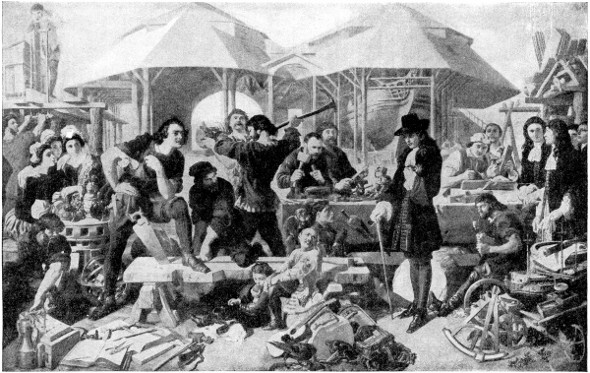
PETER THE GREAT IN HOLLAND
The practical ambition of Peter the Great has probably never been surpassed by any sovereign in history. He began
empire building with his travels in 1697. It was an
unparalleled step for a young sovereign of twenty-five to take: to withdraw from his kingdom and journey abroad in order to learn the
art of government. He was deeply interested
in all branches of engineering, especially ship-building, which he first studied in Holland, working as an ordinary laborer in a dockyard.
In 1698 Peter went to England to pursue
his studies in the theory and practice of ship construction, which he did by visiting the dockyards of Woolwich, Chatham, and Deptford.
Eastern Russia.—Chief towns: Astrakhan,
Kazan, Samara, Saratoff.
This part of the country is more elevated, but
less effectively drained; and vast forests stretch
from the upper Volga to the Urals.
The peoples are of Turkish origin and include
the Tartars of Kazan; the Nogai Tartars of the
Crimea in the south, and the Kirgiz on the Caspian.
The Bashkirs, Chuvash, and others, in the Ural
and Volga, are Tartarized Finns. The Kalmucks
may be taken as the purest type of the Mongols;
they are short, swarthy, broad-shouldered horsemen,
black-haired and black-eyed, the eyes slanting
down toward the flat nose.
South Russia.—Along the Black Sea. Chief
towns: Odessa, Nikolayeff, Kisheneff.
This is chiefly the steppe-region, a belt more
than two hundred miles wide along the littoral of
the Black Sea and the Sea of Azov, and extends
east through the region of the lower Volga and
Ural till it meets the steppes of central Asia.
Here are gently undulating plains, clothed with
rich grass and coated with a thick layer of fertile
black earth.
In order to people Bessarabia after its conquest
in the eighteenth century without depriving
the Russian landowners of their serfs, several races
of foreigners, as Moldavians, Wallachians (Vlachs),
Servians, Greeks, Germans, and even Scotch, were
freely invited to settle there. The population of
the steppe-region exceeds thirteen millions.
Western Russia.—Including the Lithuanian
provinces of Kovno, Vilna, and part of Grodno
and Vitebsk, drained by the Niemen and the
upper Dwina, and other portions of the former
kingdom of Poland. Chief town: Vilna.
Here dwell the White Russians, who number
about six millions, but they are more mixed with
Poles, Jews and Little Russians. In all essentials
they are merely “poor relations” of the Great
Russian family, living, on the whole, in a more
degraded and undeveloped state than any other
Russians.
The Baltic Provinces.—The coast-lands of the
Gulfs of Finland and Riga. Chief towns: Petrograd
(St. Petersburg), Revel, Riga.
These are four Russian governments bordering
on the Baltic—viz., Courland, Livonia, Esthonia,
and Petrograd; or in a restricted sense, often the
first three. The Baltic provinces once belonged to
Sweden, except Courland, which was a dependency
of Poland. They came into the possession of
Russia partly in the beginning of the eighteenth
century through the conquests of Peter the Great,
partly under Alexander in 1809.
They occupy an undulating plain three hundred
to eight hundred feet above the sea. Owing to the
influence of the sea, this region enjoys a milder
climate than the rest of Russia, and has maintained
its excellent forests, chiefly of oak. The soil is of
moderate fertility.
The more important non-Slavic peoples of this
region are the Lithuanians (one million two hundred
and fifty thousand) and Letts (one million five hundred
thousand), chiefly in Kovno, Vilna, Grodno,
Vitebsk, Courland, and S. Livonia. The Germans
(one million five hundred thousand) are mainly
descendants of the mediæval conquerors of the
east Baltic coasts (Teutonic Knights, Knights of
the Sword, and their followers) and of the agricultural
colonists brought by Catherine II.
The Grand-Duchy of Finland.—In the northwest,
next Scandinavia. Chief towns: Viborg, Helsingfors,
Abo.
Finland was ceded by the Swedes in 1809, but
still retains an independent administration. The
interior, chiefly elevated plateau, consists largely
of forest land, and is well supplied with lakes,
many of which are united by canals. (See also
under Europe.)
Education is highly advanced; Swedish and
Finnish are the two languages of the country,
Russian being practically unknown. There is an
excellent Saga literature, and the beginnings of a
modern literature. The Finns came under the
dominion of the Swedes in the twelfth and thirteenth
centuries, and were by them Christianized.
The Finnish race includes the Finns and the
Karelians (two million four hundred thousand in
Finland and three hundred and fifty thousand in
European Russia); the Esthonians, the people of
Livonia, and other Western Finns in the Baltic
Provinces (about one million); the Lapps and the
Samoyedes in the far north; and the Volga Finns
and the Ugrians (one million seven hundred and
fifty thousand in European Russia and fifty thousand
in Siberia). The Eastern Finns are being
rapidly absorbed by the Russians; but the Western
Finns warmly cherish their nationality.
[7]Poland.—In the west, next Germany.
Chief
town: Warsaw.
Surface Features.—In general these embody
the plains of European Russia and the lowlands
and plains that extend to the north of the
two great plateaus of Asia—the high plateau
of East Asia and the western plateau of Persia
and Armenia.
In European Russia, apart from the Caucasus,
the Urals, and the Crimea, the only districts
rising above one thousand feet are the Valdai
hills at head of the Volga, the Timan range (over
three thousand feet) in the Pechora basin, several
heights in Russian Lapland (over one thousand
five hundred), and some in Ukraine (over one
thousand). The main divisions of its landscape
are the treeless northern tundras, frozen in winter,
grassy in summer; the rock and lake plateau of
Finland; the immense central forest region, the
cultivated parts of which supply Europe with
grain; and the treeless steppes, which lie across
the south of the plain from the saline borders of
the northern Caspian toward Roumania on the
west.
In Western Asia, the Caucasus is a single chain,
so narrow that the same summits may be seen
from the steppes which reach out from its northern
base, and from the deep valleys which separate
it from the heights of Armenia on the south. It
has thus no great valleys in the direction of its
length. The spurs descending from the main
chain have deep gorges or troughs between. The
culminating points are the Elbruz peak and Koshtan
Tau, towards the western end of the chain;
and Mount Kazbek, near the middle of it—all
rising grandly from deep valleys.
The two most important passes over it were
called in ancient times the Caucasian and Albanian
gates. The former, now called the Dariel
Pass, lies close to the eastern base of the Kazbek,
and is a narrow cleft eight thousand two hundred
and fifteen feet above the sea, available for
carriages in the summer. The latter skirts the
eastern termination of the range on the shores of
the Caspian.
Over the whole chain vegetation is vigorous,
but more luxuriant on the warmer southern
slopes. The valleys opening in that direction are
highly fertile, producing rice and cotton and silk,
indigo, tobacco, and vines, and luxuriant woods.
The northern slopes, exposed to the keen winds
of the steppes, are characterized by bare pasture-lands
and scattered firwoods.
All Western Siberia, nearest the Ural belt and
European Russia, is a vast plain rising almost
imperceptibly from the shores of the Arctic
Ocean to the Kirghiz steppes and the base of the
Altai mountains, which spring up from it like a
[540]
wall, forming the northern buttress of the great
tableland of Central Asia. The northern border
of this plain is occupied by the marshy frozen
tundras; the broad central belt is covered with
forest, in the cleared spaces of which the soil is
fertile and well suited to agriculture; all the
southern portion of it is occupied by treeless
steppes which reach away south towards the
Caspian and Aral Seas.
The chief elevation in eastern Siberia is a chain
of volcanic mountains running down the center
of the peninsula of Kamchatka, some of whose
peaks reach an elevation of seventeen thousand
feet.
Rivers.—The chief rivers of Russia are the
Niemen, the Dwina, the Lovat (continued by
the Volkhov and the Neva), the Onega, the
Dnieper, the Don and the Volga. By means
of three lines of canals and canalized rivers,
which connect the upper tributaries of the
Volga with the streams that flow into Lakes
Onega and Ladoga, the real mouth of the Volga
has been transferred from the Caspian to the
Gulf of Finland—Petrograd being the chief
port of the Volga basin. The upper Volga and
the upper Kama are also connected by canals
with the North Dwina, and the Dnieper with
the Düna, the Niemen, and the Vistula.
The rainfall of Russia is small, and as part
of it falls in the shape of snow, the rivers are
flooded in spring and in early summer. During
the winter navigation of course ceases.
The Lake District.—This region lies in the
north, and includes the governments of Petrograd,
Novgorod, and Finland. The lakes in
the district are well-nigh innumerable, the
government of Novgorod alone containing
more than three thousand lakes. The chief
lakes of Finland are the Enare and Saima.
Lake Ladoga is the largest lake in Russian
Europe. For a third of the year its surface
is frozen. The lake abounds with fish, and
has a peculiar species of seal. The Neva flows
from the lake into the Gulf of Finland.
Lake Onega is joined up to the White Sea
by means of a series of lakes and streams.
Lake Ilmen is formed by the meeting of a
number of rivers in a shallow depression; the
average depth does not exceed thirty feet.
Lake Peipus, a part of which is called the
Lake of Pskov, connects with the Gulf of
Riga and with the Gulf of Finland. This lake
also is very shallow and does not in any part
exceed a depth of ninety feet.
Seaboard and Islands.—The ports on the
Arctic coast are of little importance, since for
nearly three-quarters of the year the outlets
are frozen.
The White Sea with its port, Archangel,
had lost much of the importance which it
formerly possessed until brought into use
during the European war in 1916-1917.
The Bering Sea and the coasts which border
on the Sea of Japan lose much of their value
because they are bleak and inhospitable. The
great gulf which has the town of Vladivostok
at its head is separated by miles of waste land
from the interior, and the value of one of the
most magnificent harbors in the world suffers
much from this fact.
The sea which is of most importance to
Russia is the Baltic, with its gulfs of Bothnia,
Riga, and Finland. The chief Russian ports
are to be found situated on its banks, and
yet it can in no respect be regarded as a purely
Russian sea.
The chief islands of the Baltic are: the Aland
Archipelago, Dago, Oesel, Mohn, Hochland,
and Kotlin, which contains the fortress of
Cronstadt.
The Black Sea is becoming of more and
more importance every year. The coast lands
are being developed, and as the produce of
the interior becomes greater so the importance
of the Black Sea increases.
The Sea of Azov is the greatest inlet of this
sea, but on the whole the importance of the
Black Sea is lessened by the fact that it has
so few good ports. The best are those of the
peninsula of the Crimea, but these are too
remote to be of any great importance.
Odessa is the second port of Russia and the
greatest port of the Black Sea. Sebastopol is
the great naval station, and Batum owes its
importance to the fact that it is the port of
the oil fields of the Caucasus.
The great inland sea of Russia, the Caspian,
lacks importance chiefly because of the fact
that it is an inland sea. It forms a good
means of communication from the Transcaucasian
provinces to Central Asia, and also
between Central Asia and Persia; but although
attempts have been made to unite it with the
Black Sea, the fact that it lies seventy feet
below sea-level prevents any real good from
being done. It is, however, of vast importance
as a fishing center, and supplies almost
the whole of Russia with fish.
Climate.—In European Russia, except in the
Baltic provinces, the south of the Crimea, and
a narrow strip of land on the Black Sea, the
climate is continental. A very cold winter,
followed by a spring which sets in rapidly; a
hot summer; an autumn cooler than spring;
early frosts; and a small rainfall, chiefly during
the summer and autumn, are the main features.
The winter is cold everywhere. All the rivers
are frozen over early in December, and they
remain under ice for from one hundred days in
the south to one hundred and sixty days in
the north.
Products and Industries.—Excepting along
the tundra belt on the Arctic coasts, in Finland,
and in the saline steppes of the southeast,
the cultivation of grain extends all over
the great Russian plains.
Agriculture and Forests.—Rye and barley,
oats and flax, are the chief crops in the
north; wheat and vines, hemp and tobacco,
the products of the center and the south. The
south central governments, extending from the
Upper Oka to the Ukraine on the Dnieper,
may be regarded as the granary of Russia, for
they produce a third of all its corn supply.
Russia is thus most important of all as a
grain-producing country.
Its forests extend over about forty per cent
of the surface—pine and fir and birch in the
north; oak and elm and lime in the center and
south. The timber is sent down the Niemen
and Vistula to the Baltic, and to Archangel
in the White Sea, in enormous quantities for
the supply of western Europe. In Russia
itself the larger portion of the houses are
built of wood.
Live Stock and Fisheries.—The steppes of
the south are the great pastoral lands of
Russia, which possess more than forty-five
millions of sheep, about twenty-five per cent
yielding fine wool; twenty-five millions of
cattle; and twenty millions of horses. Russian
leather is famous. Swine are also kept in
very large numbers all over the land; the
export of bristles and brushes from Russia is
very large. Reindeer form the wealth of the
Lapps and Samoyeds in the north; camels of
the Tartars in the southeastern steppes.
Hunting the bear, wolf, fox, and deer, and
trapping the sable in the forests for their
skins, give employment to many. The Caspian,
as well as the Sea of Azof, the Black Sea,
and the great rivers, are rich in fish—tunny,
sturgeon, salmon, anchovy. Most caviare is
made at Astrakhan on the Caspian.
Minerals.—The Obdorsk and Ural Mountains
contain very great mineral riches, and,
with the Altai range, are the principal seat of
mining and metallic industry, producing gold,
platinum, copper, iron of very superior quality,
rock-salt, marble, and kaolin, or china-clay.
Silver, gold, and lead are also obtained in
large quantities from the mines in the Altai
Mountains. Russia is now the largest producer
of petroleum in the world. Great supplies
of petroleum and naptha are found in the
Baku, Kerch, and Taman. An immense bed
of coal, both steam and anthracite, and
apparently inexhaustible, has been discovered
in the basin of the Donetz (between the rivers
Donetz and Dnieper). Other mineral products
are: gold, platinum, pig iron, steel
and rails, copper, quicksilver, salt and lead.
Education.—From
the close of the sixteenth
century onward
till 1861, the
greater portion of
the inhabitants of
Russia were serfs,
belonging either to
the crown or to
private individuals.
Under these
circumstances it is
not surprising that
the masses of the
people in Russia
are without education.
Finland is in
advance of all other
parts of the empire
in respect of education;
it possesses
a separate system.
Probably not more
than ten per cent
of the population
have received instruction
of any
kind. The control
and maintenance
of primary schools
is divided between
the Ministry of
Public Instruction
and the Holy Synod. Conditions are, however,
improving. Secondary institutions comprise
gymnasia and good schools, but numbers
and attendances are small. Special schools
are increasing in number, especially in the
European cities. There are universities at
Kazan, Kieff, Kharkoff, Moscow, Odessa,
Petrograd, Saratoff, Tomsk, Yurieff and Warsaw.
Religion.—The great bulk of the Russians—excepting
a few White Russians professing the
Union—belong to the Greek-Russian Church,
or to one of its numberless sects of dissenters.
The Poles and most of the Lithuanians are
Roman Catholics; while the Finns, the
Esthonians, and other Western Finns, the
Swedes, and the Germans, are Protestant
(about four millions).
Cities and Towns.—The largest towns in
European Russia are Petrograd (2,018,596),
Moscow (1,173,427), Warsaw (756,426), Riga
(500,000), Odessa (449,673), Lodz (351,570),
Kieff (329,000), Kharkoff (197,405), Vilna
(162,633), Saratoff (143,431), Kazan (143,707),
Ekaterinoslav (135,552), Rostoff (119,889),
Astrakhan (121,580), Tula (109,279), and
Kishineff (125,787); while Nijni Novgorod,
Nikolaieff, Samara, and Minsk have populations
between 90,000 and 95,000. In Asiatic
Russia the Caucasus contains two towns
with over 100,000 inhabitants: Baku (179,133),
and Tiflis (160,645); Turkestan contains five
large towns, Tashkend (156,000), Namangan,
Samarkand, and Andijan; in Siberia Vladivostok
has 90,000 (one-third Chinese), Tomsk,
Irkutsk, and Ekaterinburg have each about
50,000 inhabitants. Nijni Novgorod, though
small, is a station on the Trans-Siberian Railway,
and has annually the largest fair in the
world.
PALACE OF PETER THE GREAT, FOUNDER OF PETROGRAD
Petrograd, the splendid looking metropolis of
the Russian Empire, is situated on the River
[542]
Neva, near its entrance into the Gulf of Finland.
The flat and low marshy ground upon which the
city is built only recently emerged from the sea.
The mighty Neva, which flows thirty-six miles
from Lake Ladoga, subdivides into many branches,
thus forming some one hundred islands.
VIEW OF PETROGRAD, RUSSIA, FROM THE ISLAND
Peter the Great began to build, in 1703, a small
hut for himself, and some wooden hovels near
the old fort. Now the quays form noble uninterrupted
walks for several miles on each side of
the broad, deep, rapid, and clear river. The
climate is cold, damp, and changeable with a
mean summer temperature of sixty-four degrees,
mean winter temperature of fifteen degrees.
THE IMPERIAL WINTER PALACE, PETROGRAD
General Aspect and Divisions.—The
main body of the city stands on the mainland,
on the left bank of the Neva; and a
beautiful granite quay, with a long series
of palaces and mansions, stretches for two
and one-half miles. Only three permanent
bridges cross the Neva; a bridge of boats is
constructed each spring and removed each autumn.
The island Vasilievsky, between the Great and
Little Nevas, contains the Stock Exchange, the
Academy of Sciences, the University, the Philological
Institute, the Academy of Arts, and various
schools and colleges.
On the Petrogradsky Island, between the Little
Neva and the Great Neva, stands the old fortress
and prison of St. Peter and St. Paul, facing the
Winter Palace, and containing the mint and the
cathedral wherein the members of the imperial
family are buried, also the arsenal.
The Chief Center.—The main part of Petrograd
has for its center the Old Admiralty. Its
lofty gilded spire and the gilded dome of St.
Isaac’s Cathedral are among the first sights
caught on approaching Petrograd by sea.
Three streets radiate from it, the first of them,
the famous Nevsky Prospect. The street architecture,
with its huge brick houses covered with
stucco and mostly painted gray, is rigid and
military in aspect.
A spacious square, planted with trees, encloses
the Old Admiralty on
three sides. To the
east of it rise the
magnificent mass of
the Winter Palace,
the Hermitage Gallery
of Art, and the
semicircular buildings
of the general
staff.
In the Petrogradsky
Square is the
well-known statue of
Peter I. on an immense
block of Finland
granite. The
richly decorated
cathedral of St. Isaac
of Dalmatia, erected
by Nicholas I., is an
almost cubic building
(three hundred and
thirty feet long, two
hundred and ninety feet broad, and three
hundred and ten feet high), surmounted by one
[543]
large and lofty and four small gilded domes.
In Nevsky Prospect are the Kazan Cathedral,
the Public Library, the square of Catherine II.,
and the Anitchkoff Palace.
The aristocratic quarter lies between the line of
the Nevsky Prospect and the River Neva.
The principal places of interest are: the Imperial
or Winter Palace, the Hermitage, St. Isaac’s
Cathedral, the Kazan Cathedral, the Cathedral
of Saints Peter and Paul, the Smolnoi Church,
the Academy of Science, the House of Peter the
Great; and, in the environs,
Tsarskoe Selo, and Peterhof.
For most travelers the greatest
attraction in Petrograd is:
The Hermitage.—It is connected
with the Winter Palace,
and was originally built by the
Empress Catherine II. as a
retreat. The present building,
erected 1840-1852, by
Klenze, is in the Greek style;
it is a parallelogram, five hundred
and twelve feet by three
hundred and seventy-five
feet, and for elegance of form
as well as for beauty and costliness
of materials employed
has scarcely a rival in Europe.
Baedeker says: “The gallery
of the Hermitage unquestionably
stands among the first in
Europe, not on account of its
numbers (it boasts over one
thousand nine hundred pictures)
or on account of its
completeness—the art of the
fourteenth and fifteenth centuries
and the entire German
school is lacking—but because
it possesses such a number
of masterpieces from the
best periods of the various
schools, that for the Spanish
masters it ranks next to the
Prado and the Louvre, in
French masters it is surpassed
only by the Louvre, in Flemish
artists it stands on a level with the principal
galleries, and it is the premier collection of the
Dutch school, especially Rembrandt.”
Cathedral of St. Peter and St. Paul is in
the fortress. It was erected 1714-1733, and was
several times damaged by lightning. It has a
beautiful spire, three hundred and two feet, the
loftiest in Russia, except that at Reval. All
sovereigns of Russia, including and since Peter
the Great, except Peter II., who was interred at
Moscow, lie buried here. The
tomb of Peter the Great is near
the south door. On the walls
are many military trophies,
keys of fortresses, flags,
weapons, shields, etc.
Nearby the Cathedral, in
a brick building, is the
boat of Peter the Great,
preserved exactly as when
it engaged the curious
attention of Peter and so
led to the creation of
the Russian navy, of
which it is facetiously
called the “Grandfather.”
THE CATHEDRAL OF ST. ISAAC
The largest in Petrograd, was begun a century ago by Catherine II.;
but was rebuilt in 1819-1858, by Montferrand, in the shape of a Greek cross.
It is a simple but massive pile, with one hundred and twelve pillars in the
four fronts. Those at the chief entrance are sixty feet high, and seven feet
diameter—all round and highly polished granite monoliths from Finland.
The dome, two hundred and ninety-six feet high, is surmounted by a golden
cross and covered with copper, overlaid with gold. The Altar screen is of
immense value and the entire edifice cost about fifty million dollars.
The Kazan Cathedral
is situated upon the
Nevsky Prospect, and is
approached by a circular
colonnade, in imitation
of St. Peter’s at Rome.
In front are fine statues
of Smolenskoi and de
Tolly. The interior corresponds in its magnificence
and display to St. Isaac’s. The special
object of interest is the image of “Our Lady of
Kazan,” which is covered with gems, the diamonds
of the
crown being of
exceeding value.
Around the cathedral
are banners
of important
victories won by
Russian arms and valor.
STATUE OF PETER THE GREAT, PETROGRAD
A very striking equestrian statue, erected by Catherine II. in 1782. It
is of colossal size, by Falconet, and stands on a huge pedestal of granite, between
St. Isaac’s Church and the River Neva.
The Smolnoi Church,
at the eastern extremity
of the city, is peculiarly
rich in its effects, the
entire structure and all
its decorations being of
[544]
the purest white. In connection with this church
is a celebrated seminary for young ladies of
noble birth.
Cathedral and Monastery of St. Alexander
Nevsky is at the extreme east end of the Nevsky
Prospect. The buildings cover much ground,
and include twelve churches, the monastery, and
gardens. The Cathedral, which is that of the
Metropolitan, dating from 1790, is enriched with
marble and agate and paintings—the altarpiece,
the Annunciation, is by Raphael Mengs. On
pillars opposite the altar are large portraits of
Peter the Great and Catherine II. The shrine
of St. Alexander Nevsky is of silver, about two
thousand pounds of the metal being used in the
whole; near the tomb are suspended the keys of
Adrianople. The Monastery
has a rich collection
of jeweled mitres,
gold brocaded vestments,
and a mass of
valuables, also many
objects of interest,
including the crown of
St. Alexander and the
bed on which Peter the
Great died.
Tsarskoe Selo
(tsär’kō-ye sā´lō), about
fifteen miles south of
St. Petersburg, contains
a famous imperial palace,
a favorite summer
residence of the court.
The Old Palace, begun
in 1744, is richly decorated,
the walls of one
room are incrusted with
amber, those of another
with lapis lazuli. The
magnificent marble gallery,
two hundred and seventy feet long, connects
the palace with a detached building. The park is
full of caprices, such as a Chinese tower and
village, an Egyptian pyramid, a Turkish kiosk, and
the so-called doll-houses of the royal princesses.
MONUMENT TO NICHOLAS I., PETROGRAD
Peterhof (pā´ter-hōf), near
Oranienbaum, was
begun in 1720, and built by Leblond for Peter
the Great. A marine palace, with a long front,
made to retain its original appearance, even its
ancient yellow color has
been continually renewed.
It contains porcelain,
malachite, tapestry,
paintings of victories
in the reign
of Catherine II.,
and a collection of
three hundred and
sixty-eight portraits of women, painted by
Count Rosali for the empress during a journey.
All are in the national costume. The
gardens are full of Neptunes and Tritons and
good fountains. The well-wooded park has many
curiosities:—Marli, a favorite resort of Peter
the Great; the cottage of the Empress Catherine,
brilliant with gold and mirrors; the Palais de
Paille; the English Garden, with a ball-room.
THE HERMITAGE OR MUSEUM OF ART,
connected with the Winter Palace, is one of most famous in Europe and contains one
thousand seven hundred paintings of all schools, among them being some by Murillo,
Velasquez, Rubens, Van Dyke, Rembrandt, and Ruysdael.
Moscow (mŏs’kō), the ancient
capital of the Russian
Empire, is one
of the most magnificent
and interesting
cities of the world.
The city is gathered
in a semi-circle
around the citadel,
or Kremlin, which
stands immediately
upon the river bank.
The streets are
exceedingly irregular,
though generally
presenting the appearance
of broad, well-paved
avenues of a
modern European
city. The innumerable
white, semi-oriental
structures
which greet the vision
from every commanding
point, with
their unnumbered
domes, spires, belfries,
towers, and
minarets, give to the
city a magnificence
of beauty scarcely to
[545]
be found elsewhere in the great cities of Europe.
The Kremlin.—The historic, as well as the
most interesting part of the city, is within the
walls of the Kremlin. It is associated with much
that is held in deepest reverence by Russians—here
the imperial power receives religious consecration,
and the great bell of Ivan Veliky proclaims
the new monarch. The Kremlin is an
assemblage of many buildings, covering quite a
section of the city—churches, palaces, arsenals,
barracks, monuments—enclosed within a brick
wall about a mile and a half in circuit. Upon the
wall, which is sixty feet high, are twenty-one
towers. The principal gate, the Gate of the
Saviour, is on the east side. Over the passage
of the gate is the venerated “Saviour” brought
from Smolensk in 1685, and it is the custom for
the passer-by to uncover his head.
The Tower of Ivan Veliky, or John the Great,
built in 1600, and three hundred and twenty feet
high, contains thirty-four bells, the largest of
which weighs sixty-four tons. When all these
bells are rung together at Easter the effect is
wonderful. At the foot of this tower is the vast
Tsar Kolokol, or Monarch of Bells. It once
hung in a tower (burned in 1737), weighs four
hundred and forty-four thousand pounds, and is
twenty feet high and sixty feet round. The value
of the metal in the bell is nearly two million
dollars.
Outside the Kremlin is the Chinese town, so-called,
founded by Helena. Here are the Romanoff
Palace, the Iberian Gate and Chapel, the
University, the great Riding School, the Theaters,
and the largest Bazaar in Russia, except that of
Nijni-Novgorod.
The Church of the Saviour, is conspicuous
near the river, a quarter mile southwest of the
Kremlin. This beautiful church, by the architect
Thon, was erected 1837-1883, at a cost of more
than eight million dollars. It has five cupolas,
the principal being about one hundred feet in
diameter; many figures in relief of patriarchs and
saints upon the facade. The interior is elaborately
decorated with marble and gilding; upon the
walls are tablets relating to military events,
admirable paintings and sculpture.
The Cathedral of St. Basil, erected 1554-1557,
is a remarkable edifice, consisting of eleven
chapels with as many cupolas, all different, but
wonderfully proportioned.
Vladivostok (vlä-dē-vōs-tok´), capital (since 1903)
of the vice-royalty of Eastern Asia, Siberia, is
situated on the east shore of Amur Gulf. It has
one of the finest harbors in the world, is a naval
station, has an arsenal, and is a terminus of the
Siberian railroad. It escaped attack during the
Russo-Japanese war, but suffered from naval
mutiny and unrest in the Russian disturbances
of 1905-1906. Its climate is severe—the average
annual temperature being only forty degrees
Fahrenheit.
HISTORY OF RUSSIA
The races who peopled Russia were vaguely
known to the ancients as Scythians, and their
country as Sarmatia. It received its name from
the Ruotsi or Russ, a tribe of Norse “rovers” or
freebooters, who entered the country from the
west about the eighth century. The name was
later applied to the realm of Moscow, and
modified to Russia.
Early Traditions.—Three brothers, Rurik,
Sineus, and Truvor, Scandinavians, were
invited, according to tradition, to come and
protect territory in northwest Russia against
the Finns and the Lithuanians. They and
their successors built new forts, and took part
in wars. The times of the “Sunny Vladimir”
(980-1015) are the “heroic” epoch of early
Russian history, and the feats and feasts of
Vladimir and his “war companions” have been
handed down through ages in legend and song;
while his conversion to Christianity made
him the hero of the annals written by monks.
Kieff the First Historic Center.—The first
half of the eleventh century, during which
Yaroslaff the Wise was grand prince at Kieff,
was the most brilliant time for Kieff, then the
“mother of the Russian towns.” The great
cathedral of St. Sophia was built at that time;
schools were opened, and the first written
Russian law was compiled. At his death
(1054) Yaroslaff was ruling over most of the
Russian towns.
The next two centuries of Russian history
correspond to the feudal period of Western
Europe. The Russians at that time were
steadily extending their territory toward the
east; they colonized the Oka, the Don, and
the Finnish territories in the northeast.
Settlements in and about Moscow.—Owing
to the gradual colonization of the basin of the
Oka and the upper Volga, a new Russian
territory had grown in importance in the
meantime. Suzdal and Rostoff were its
chief centers. It differed from southwest
Russia in many respects. Its inhabitants
were Great Russians—a hard-working race,
less poetical and less gifted, but more active
than their southern brethren. Besides, a good
many of its inhabitants were peasants, settled
on the lands of the boyars, and the cities
themselves, being of recent creation—like Vladimir
and, later on, Moscow—had not those traditions
of independence which characterized
Kieff or Novgorod. It was therefore easier
for the authority of the prince to develop in
the northeast, under the guidance of the
church and the boyars.
The first Suzdal prince, Andrei Bogolubsky
(1157-1174), was the first representative of
that policy. He invited many Kieff boyars
to settle in the land of Suzdal, and finally he
took and burnt Kieff (1169).
The supremacy of Kieff was thus destroyed,
and the land of Suzdal became the Ile-de-France
of Russia—the nucleus of the future
Russian state. The Suzdal land continued to
grow and to enjoy prosperity during the next
fifty years; economical, educational and literary
progress were marked, and the Russian
territory extended farther eastward.
Tartar Invasion.—But in the thirteenth century
a great calamity visited Russia: a Mongol
invasion suddenly put a stop to the development
of the country and threw it into a totally
new direction.
The Tartars first appeared in 1224, but their
real conquest, under Batu Khan, was made in
1238 and the years immediately following.
They subdued all the little Slav states except
the republic of Novgorod. Latterly the rulers
or princes of Moscow gained an ascendency
over the other states, and formed the nucleus
of a central sovereignty.
Ivan III. Expels the Tartars.—The Tartar
supremacy lasted till about 1480, when Ivan
III. (1462-1505) succeeded in throwing off
their yoke. He did much to consolidate and
extend his kingdom, and conquered Novgorod
in 1478. The reign of Ivan IV. “The Terrible”
(1533-1584) is of great importance. In 1547
he assumed the title of Czar or Tsar, a variant
of Cæsar. He conquered Kazan and Astrakhan,
and the conquest of Siberia was begun in
his reign. The epithet “terrible” has reference
to his cruel persecution of the boyars, a kind
of powerful baronial class.
House of Romanoff Established.—The accession
of the still-reigning Romanoff house took
place in 1613 when the States-General elected
Michael Romanoff as ruler. Under Alexei
(1645-1676), son of Michael, territory was won
from Poland, the Cossacks of the Ukraine had
to submit, and the power of Russia greatly
increased. The reign of Alexei’s son, Feodor
III. (1676-1682), witnessed a war with Turkey,
but was signalized by many important reforms.
His imbecile brother Ivan was heir apparent,
but Feodor willed the throne to his half-brother
Peter, known in history as the Great; but
Peter only obtained sole power in 1689 after
overthrowing Sophia, Ivan’s sister.
Under Peter the Great.—Peter the Great
opened what may be called the European
period of Russian history. (See Peter the
Great.) He made his country a European
state. He gave it a standing army, a navy
on the Baltic, the embryo of a modern administration,
a diplomatic service, and a financial
organization. He made canals, encouraged
industry, literature and art. The heart of
Russia might remain at Moscow, but henceforth
it was to have also a head that looked
out westward from the Neva.
On the other hand, Peter increased taxation;
his cruelty was oriental, and serfdom under
him became more and more extensive.
He completed the conquest of Siberia,
waged successful war with Charles XII. of
Sweden, and by the treaty of Nystad in 1721
obtained Esthonia, Livonia, Ingermannland,
and part of Finland, thus gaining a large
maritime territory on the Baltic Sea. He
founded Petrograd in 1703, and made it
the capital in place of Moscow.
The Eighteenth Century in Russian history
is a century of empresses. Peter the Great
was succeeded by his wife, Catherine I. (1725-1727).
A grandson of Peter the Great, Peter
II., followed Catherine, reigning from 1727 to
1730. The next sovereign was Anna (1730-1740),
whose reign was a period of German
influence. Ivan VI. (1740-1741) was soon
displaced by the anti-German party, and
Elizabeth (1741-1762), daughter of Peter the
Great, ascended the throne. A part of Finland
was obtained by the treaty of Abo, and
Russia took part against Prussia in the Seven
Years’ war. The first Russian university,
that of Moscow, was founded in 1755.
The death of Elizabeth and the accession of
Peter III., in 1762, greatly relieved the
hard-pressed Frederick the Great, because Peter at
once reversed the Russian policy.
Catherine II.—In July, 1762, he was deposed
by his wife, Catherine II. (1762-1796), whose
reign is of great importance in the progress of
Russian power.
Under Catherine II. successful wars were
carried on against Turkey, Persia, Sweden and
Poland, which largely extended the limits of
the empire. The acquisition of the Crimea,
which gave Russia a firm footing on the Black
Sea, and the first partition of Poland, were
two most important steps toward the consolidation
of the empire.
Napoleonic Period.—Catherine’s son and
successor, Paul I. (1796-1801), at first, through
apprehension of the revolution in France,
joined the Austrians and British against
France, but soon after capriciously withdrew,
and was about to commence war with Great
Britain when his assassination took place.
A palace conspiracy put an end to his reign
and life.
His eldest son, Alexander I. (1801-1825),
was at the outset desirous of peace, but was
soon drawn into the vortex of the great struggle
with France, in which he played a prominent
part. (See Alexander I. and Napoleon.)
The Holy Alliance and the example of conservative
policy set by Austria exercised a
pernicious influence on the later part of his
reign; and the higher classes, who had looked
for the introduction of at least a portion of the
liberal institutions they had seen and admired
in Western Europe, became so dissatisfied that,
when his youngest brother, Nicholas I. (1825-1855),
from whom they had nothing to hope,
succeeded, they broke out into open rebellion,
which was speedily crushed.
The Turkish Wars.—A full stop was now put
to the intellectual development of Russia.
Wars were declared with Persia and Turkey;
and a long and deadly struggle commenced
with the Caucasian mountaineers. The cession
of Erivan and Nahitchevan by Persia, of the
plain of the Kubañ, of the protectorate of the
Danubian principalities, and of the free right
of navigation of the Black Sea, the Dardanelles,
and the Danube by Turkey only induced him
to further prosecute his aim of conquering
for Russia a free issue from the Black Sea
in the Dardanelles.
In 1830 he converted Poland into a Russian
province; in 1849 he aided Austria in quelling
the insurrection of the Magyars; and in 1853
he began a war with Turkey which became the
Crimean war, and in which, though the allies,
Great Britain, France and Sardinia, did not
obtain any decided success, Russia suffered
immense loss.
Alexander II.—The accession of Nicholas’ son
Alexander II. (1855-1881)—one of whose first
acts was the conclusion of the peace of Paris
(1856), by which Russia lost the right of
navigation on the Danube, a strip of territory
to the north of that river, and the right of
keeping a navy in the Black Sea—was the
signal for a general revival of intellectual life
in Russia. Obligatory military service for all
Russians was introduced in 1874.
The insurrection in Poland was suppressed
with extreme severity, and in 1868 the last
relics of Polish independence disappeared in
the thorough incorporation of the kingdom
with the Russian Empire. The subjugation
of the Caucasus was completed in 1859.
[547]
Russian supremacy was established over all
the states of Turkestan. In 1876 the administration
of the Baltic provinces was merged
in that of the central government; but the
autonomy of Finland was respected and even
extended.
Russo-Turkish War of 1877-1878.—In 1877
the Russo-Turkish war broke out. At first
the Russian progress was rapid; but the energy
displayed by the Turks during the summer,
and the resolute defense of Plevna by Osman
Pasha from July till December, checked the
progress of the Russian army. During the
winter, however, she crossed the Balkans, and
her vanguard, reaching the Sea of Marmora,
stood in view of Constantinople. The armistice
signed in January, 1878, was followed in
March by the treaty of San Stefano; and after
diplomatic difficulties that seemed for a time
not unlikely to issue in war between Russia
and Great Britain, a Congress of the Great
Powers met at Berlin in June, 1878, and sanctioned
the cession to Russia of the part of
Bessarabia given to Moldavia in 1856, as also
of the port of Batoum, of Kars, and of Ardahan.
Rise of Nihilism.—The growth of revolutionary
discontent, leading to severe repressive
measures, was marked by several murders of
high officials, and on March 13, 1881, Alexander
II. was killed by the revolutionists.
Reactionary Reign of Alexander III.—The
reign of Alexander III. (1881-1894) was in the
main characterized, in contrast to the liberal
reforms of the last reign, by reactionary steps.
Press freedom disappeared completely, and the
universities were again suppressed. The Dumas,
or representative assemblies, were deprived
of all real independence in 1892.
Alexander II.’s judicial reforms were partly
undone, and the village communities, known
as mirs, were brought under the more direct
control of the land-owners. Russification was
vigorously pursued in Poland and the Baltic
provinces, and in 1890 the first steps toward
the Russification of Finland were taken.
Alexander III. was not friendly to Germany,
but avoided hostilities more serious than those
of a tariff war, although the Bulgarian crisis
of 1885 subjected their relations to a severe
strain. Russia and France now began to draw
close together, but a Franco-Russian alliance
was not officially admitted till 1896-1897, and
its terms were secret. Merv was annexed in
1884, and the occupation of Penjdeh in 1885
nearly led to war with Great Britain. Alexander
III. escaped several attempts at assassination,
and died of disease in November, 1894.
Russia in the Far East.—After the reign of
Alexander III. comes the fateful reign of his
son, Nicholas II. In 1896 China granted
permission to carry the Siberian railway (begun
in 1889) through Manchuria to the far eastern
Russian seaport of Vladivostok. In December,
1897, in consequence of the Germans having
acquired Kiauchau from China, Russia occupied
Port Arthur, and in the following year
obtained from China a lease of it and some
neighboring territory, although in 1895 she
had taken the chief part in preventing Japan
from taking it as a prize of victory. She
shared in the international expedition to China
in 1900, and herself suppressed risings in Manchuria
with the utmost cruelty. Professing
to be ready, and even anxious to evacuate Manchuria
as soon as possible, she was preparing
for virtual annexation; but her aggressive
action in Korea aroused Japanese opposition,
and led to the war of 1904-1905.
By treaty of Portsmouth (1905), which
ended this war, Russia lost—for the time
being at least—all influence in Manchuria,
Korea, and China, and had to cede to Japan
Port Arthur and its territory, and also southern
Sakhalien.
The Imperial Duma.—In August, 1905, the
czar issued a manifesto ordering the election
of an Imperial Duma or Parliament. Count
Witte was made president of a reorganized
Council of Ministers, with instructions to form
a reform cabinet. The general strike in
Finland compelled the czar to restore Finland’s
constitution and liberties previously
taken away in 1903. The bureaucrats attempted
to discredit the reform movement by
instigating attacks on Jews, and other outrages,
especially in Odessa, where the authorities
permitted appalling atrocities.
The Imperial Duma, promised in 1905, was
duly elected early in 1906, and held its first
meeting on May 10 at Petrograd. It was dissolved
later in the year because too liberal,
and a second one, elected in 1907, met the
same fate. By various devices the government
managed to get a less advanced Duma
elected late in 1907, which did some useful
work in 1908. An important Anglo-Russian
convention was signed in 1907, the signatories
agreeing to respect the territorial integrity of
Thibet and the suzerainty of China. Other
conventions were signed (1910) between Russia
and Japan respecting the status of Manchuria,
and between Russia and Germany in 1911.
After declaration of war by Austria against
Servia in 1914, Russia announced that her
support would be given to Servia. Consequently
Russia joined France and Great
Britain in the conflict that followed. (See
further under European war.)
Books of Reference.—Wallace’s Russia; Leroy-Beaulieu’s
The Empire of the Tsars; Norman’s All the
Russians; Drage’s Russian Affairs; Suvorin’s All
Russia—a Directory of Industries, etc.; Stepniak’s
King Log and King Stork; Krapotkin’s Memoirs of a
Revolutionist; Morfill’s Russia; Villari’s Russia under
the Great Shadow; Wellesley’s With the Russians in
Peace and War; Ganz’s The Downfall of Russia;
Milyoukov’s Russia and Its Crisis; Meakin’s Russia,
Travels and Studies.
SOVEREIGNS OF RUSSIA
A long list of dukes and grand dukes preceded
the actual foundation of the Russian monarchy
under the rule of a czar.
HOUSE OF RURIK
This royal house includes the descendants of Rurik,
Grand Prince of Novgorod, the reputed founder of the
Russian royalty. It became extinct in the person of
Feodor in 1598.
1462-1505.—Ivan (Basilovitz), or John III., took
the title of czar, 1482; Grand Duke of Moscow.
1505-1533.—Vasali IV., or Basil V., obtained the
title of Emperor from Maximilian I.; son of Ivan
the Great.
1533-1584.—Ivan IV. the Terrible; a tyrant; son
of Vasily IV.
1584-1598.—Feodor, or Theodor, I.; and his son
Demetrius, murdered by his successor; son of
Ivan the Terrible: was elected to the throne.
1598-1604.—Boris-Godonof, who usurped the
throne.
1605.—Feodor II., murdered.
1606.—Vasali-Chouiski, or Zouinski.
1606-1610.—Demetrius the Impostor, a young
Polish monk; pretended to be the murdered
prince Demetrius; put to death.
1610-1613.—Ladislaus of Poland; retired 1613.
HOUSE OF ROMANOFF—MALE LINE
1613-1645.—Michael-Feodorovitz, of the house of
Romanoff, descended from the czar Ivan Basilovitz;
unanimously elected czar.
1645-1676.—Alexis, styled the father of his
country; son of Michael Feodorovitch.
1676-1682.—Feodor, or Theodor, II.; eldest son of
Emperor Alexis.
1682-1689.—Ivan V.; Peter I., Ivan was the half-brother
of Peter the Great, in whose favor he
resigned.
1689-1725.—Peter I., the Great, alone; took the
title of emperor October, 1721; founded St.
Petersburg; son of Alexis.
1725-1727.—Catherine I., his widow, at first the
wife of a Swedish dragoon, said to have been
killed on the day of marriage; was married to
Peter the Great in 1707.
1727-1730.—Peter II., son of Alexis Petrovitz, and
grandson of Peter the Great; deposed.
HOUSE OF ROMANOFF—FEMALE LINE
The reign of the next three sovereigns of Russia,
Anne, Ivan VI., and Elizabeth, of the female line of
Romanoff, formed a transition period, which came to an
end with the accession of Peter III., of the house of
Holstein-Gottorp.
1730-1740.—Anne, duchess of Courland, daughter
of the czar Ivan.
1740-1741.—Ivan VI., an infant, grand-nephew to
Peter the Great; immured in a dungeon for
eighteen years; murdered in 1764.
1741-1762.—Elizabeth, daughter of Peter the Great
reigned during Ivan’s captivity.
HOUSE OF ROMANOFF-HOLSTEIN
All the subsequent emperors, without exception,
connected themselves by marriage with German families.
The wife and successor of Peter III., Catherine II.,
daughter of the Prince of Anhalt Zerbst, general in the
Prussian army, left the crown to her only son Paul,
who became the father of two emperors, Alexander I.
and Nicholas, and the grandfather of a third, Alexander
II. All these sovereigns married German princesses,
creating intimate family alliances, among others, with
the reigning houses of Württemberg, Baden, and Prussia.
1762.—Peter III., son of Anne and of Charles
Frederick, duke of Holstein-Gottorp; deposed,
and died soon after; supposed to have been
murdered. Son of Charles Frederick, Duke of
Holstein.
1762-1796.—Catherine II.; a great sovereign; extended
the Russian territories on all sides; died
1796; wife of Peter III.
1796-1801.—Paul, her son; murdered, 1801; son
of Peter III.
1801-1825.—Alexander I., died 1825; son of Paul.
1825-1855.—Nicholas I.; died 1855; third son of
Paul.
1855-1881.—Alexander II., assassinated at St.
Petersburg, March, 1881; son of Nicholas I.
1881-1894.—Alexander III.; died 1894; married
Mary (formerly Dagmar), princess of Denmark;
son of Alexander II.
1894.—Nicholas II., married princess Alix of
Hesse-Darmstadt; son of Alexander III.
BELGIUM
BELGIUM (Fr. Belgique), one of the smaller
European states, consists of the southern portion
of the former kingdom of the Netherlands
(as created by the Congress of Vienna), lying
between France and Holland, the North Sea
and Rhenish Prussia. Its greatest length
from northwest to southeast is one hundred
and seventy-three miles; and its greatest
breadth from north to south one hundred and
five miles.
Surface.—Belgium is, on the whole, a level, and
even low lying, country; diversified, however,
by hilly districts. The north and west of the
country is low and level plain, like Holland,
but the undulating forest plateaus of the
Ardennes cover all the south and east, rising
near the frontier in that direction to a height
of two thousand feet above the sea. The
Campine, composed of marshes, coal-bearing
heaths, and irrigated lands, extends along the
Dutch frontier. In Flanders dykes have been
raised to check the encroachments of the sea.
Rivers.—The land slopes generally northward,
and this is the direction of the numerous rivers
and streams which water it. The great river
of the country is the Meuse, which enters
from France and passes out into Holland,
being navigable all through Belgium. Its
tributary, the Sambre, from France, which
joins it on the left near the center of the
country, is also a navigable stream; and the
Ourthe, from the frontier of Luxemburg,
which joins it lower down on the right, is
navigable for half its course. The Escaut or
Scheldt is the main river of the lowland in the
west, and with its chief tributaries, the Lys
on the left and the Rupel on the right, forms
the waterway of the plain. These rivers and
important tributaries, with canals make up
one thousand four hundred miles of waterways.
Climate and Landscape.—Belgium has a
climate which resembles that of England,
opposite to it in the same latitude, but which
is more excessive. The lowland of the north
is foggy and damp, like Holland; the higher
country south and east has clearer skies.
People.—Belgium is one of the most densely
peopled countries of the world, only equaled
in this respect by some parts of the plain of
China, or of the valley of the Ganges in India,
a result which is no doubt due to the combination
of natural facilities for agriculture, manufactures,
and trade, within its limits. The
Flemings (of Teutonic stock) and Walloons
(Celtic in origin) speak each their own dialects
of Dutch and French; there are also numbers
of Germans, Dutch, and French. East and
West Flanders, Antwerp, and Limburg are
almost wholly Flemish, and Brabant mainly
so. The line between the Flemish and
Walloon districts is sharply defined, the Flemish
part being the richest and most cultivated.
The French language has gained the ascendancy
in educated society and in the offices of
government, but the Flemish dialect prevails
numerically in the proportion of nine to eight.
PALACE OF JUSTICE, OR PARLIAMENT BUILDINGS, AT BRUSSELS
Religion and Education.—Almost all the
inhabitants of Belgium are Roman Catholics,
though complete liberty and social equality is
allowed to all religious confessions. Education
is not yet generally diffused through the
population, and was, until recently, almost
entirely in the hands of the Roman Catholic
clergy. There are state universities at Ghent
and Liège, an independent liberal university
at Brussels, and a Catholic university at
Louvain.
Products and Industries.—About a fourth of
all the inhabitants of Belgium are occupied in
agriculture. Besides wheat, rye, and oats,
hops are cultivated on a large scale, for export
chiefly to France and England. Beetroot for
the sugar factories, of which there are over a
hundred in the country, is also a large crop,
and flax is largely grown in the Flemish
lowlands.
Two great coalfields extend across the
central part of the country from west to east,
along the valleys of the Meuse, but Belgium
is essentially a manufacturing country, and it
is largely dependent upon foreign supplies for
its food. The mineral kingdom yields, beside
coal, iron, zinc, lead and copper. The leading
industries are collieries, quarries, and metal,
glass, textiles, lace, flour and starch mills,
sugar, distilleries, breweries, etc.
Government.—On the re-arrangement of European
affairs, after the fall of Napoleon, Holland
and Belgium were formed into the ill-assorted
kingdom of the Netherlands under the family
of Orange. The differences between the
northern and southern divisions in race and
language, in history, religion, and customs,
proved too great.
In 1830 Belgium separated from Holland,
and her neutrality was guaranteed by a conference
of the European Powers, and by a
further treaty, in 1839, signed by Austria,
France, Great Britain, Prussia, the Netherlands,
and Russia.
The Belgium constitution of 1831 jointly
vests the legislative power in the king, the
Senate, and the Chamber of Representatives.
The one hundred and ten senators (with the
exception of twenty-seven elected by the
provincial councils) and one hundred and
sixty-six representatives are elected by the
people, the former for eight, the latter for four
years. Universal male suffrage, with plural
voting up to three votes by property and
educational qualifications, was introduced by
the electoral law of 1894, proportional representation
being secured by an act of 1900.
There are in addition representative Provincial
and Communal Councils.
Cities.—Brussels, population, 1910, with suburbs,
720,347 inhabitants, is the capital. Other
towns with over 100,000 inhabitants are Antwerp,
the chief port (320,650 exclusive of suburbs);
Ghent (165,149), the center of the iron
industry, which has also large cotton and flax
spinning mills, and is the second port of importance
after Antwerp, while its flower shows
are famous; and Liège (174,768).
Its great harbor and commercial city is
Antwerp, a strongly fortified city on the
Scheldt. The other harbors are Ghent, Bruges,
Ostend, Nieuport, Blankenberg, and Zeebrugge.
Antwerp, the principal fortress, and Liège
and Namur, also fortified, were designed to
afford military protection on the line of the
Meuse against a violation of neutrality by
either France or Germany.
Brussels (Fr. Bruxelles), the capital of Belgium, is
situated in a fertile plain on the ditch-like Senne,
twenty-seven miles south of Antwerp, and one
hundred and ninety-three miles northeast of
Paris. It has a circumference of about five
miles, and is built partly
on the side of a hill.
Though some of the
streets are so steep that
they can be ascended
only by means of stairs,
Brussels may on the
whole be pronounced one
of the finest cities in
Europe.
The fashionable Upper
Town, in which are the
royal palace, public offices,
and chief hotels,
is much more healthy than the older Lower Town,
which is greatly subject to fogs, owing to its
intersection by canals and the Senne, although
the stream now passes under an arched covering,
which supports a boulevard. But the closely
built old streets, with their numerous handsome
buildings, formerly belonging to the Brabant
nobility, and now occupied by successful merchants
and traders, have a fine picturesque
appearance, while some of the public edifices are
unrivaled as specimens of Gothic architecture.
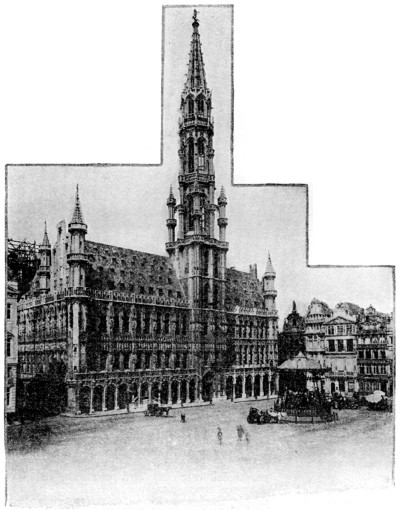
THE TOWN HALL, OR
Hôtel de Ville, in Grande Place, near the center of the city, 1402, is
regarded as architecturally one of the finest structures in Europe. Its tower
rises to the height of three hundred and seventy feet, and is placed somewhat
to one side of the center of the building.
French is spoken in the upper division; but in
the lower Flemish is the current language prevalent,
and by many the Walloon dialect is spoken.
The walls which formerly surrounded Brussels
have been removed, and their place is now
occupied by pleasant boulevards extending all
around the old town, and shaded by alleys of
limes. The Allée Verte—a double avenue along
the Scheldt Canal—forms a splendid promenade,
and leads toward the country palace of Laeken,
three miles north of the city.
Besides the fine park of thirty-two acres, in the
Upper Town, ornamented with fountains and
statues, and surrounded by the palace and other
state buildings, Brussels has several other squares
or places, among which are: the Place Royale,
with its colossal monument of Godfrey of Bouillon;
the Grande Place, in which is the hôtel-de-ville, a
splendid Gothic structure of the fifteenth century,
with a spire of open stonework three hundred and
sixty-four feet high; and the Place des Martyrs,
where a memorial has been erected to those who
fell here in the revolution of 1830. The statue
group of the Counts Egmont and Horn is notable.
The cathedral of St. Gudule, dating from the
thirteenth century, has many richly painted
windows, and a pulpit considered to be the
masterpiece of Verbruggen. The Palais des
Beaux Arts contains the finest specimens of the
Flemish school of painting and a sculpture
gallery. The Royal Library adjoining has half
a million volumes.
The Palais de Justice, built in 1866-1883
at a cost of more than ten million dollars,
is one of the most magnificent buildings in
Europe, dominating the lower town from the
terraced slope of the upper town. The Royal
Palace and the National Palace (for the
chambers) are important buildings. Besides
the University, there are schools of painting
and sculpture, and a conservatory
of music.
Brussels lace is particularly
famous. Of the so-called
Brussels carpets only
a few are manufactured
here, most of those of Belgian
make being produced
at Tournai. There are also
manufactures of damask,
linen, ribbons, embroidery,
paper, jewelry, hats, soap,
porcelain, carriages, etc.
History.—The history of
Belgium as a kingdom
can be said to date only
from the time of the Congress
of Vienna, in 1830,
but its history as part of
the Netherlands goes
back to the time of the
Romans.
The province of Belgica
under the Romans passed
under the sway of the
Franks, and fell later to
the Burgundian princes.
On the death of Charles
the Bold in 1477 it passed
by marriage to the House of Hapsburg. The
Spanish Netherlands remained (unlike the
northern provinces which rebelled against
Spain and became a Protestant republic) under
the Spanish branch of the Hapsburgs, till in
1713 they were transferred to Austria. From
1794 Belgium was under French sway, but on
the fall of Napoleon was united with the kingdom
of the Netherlands. It rebelled in 1830,
and since then, as above stated, has had a
separate career as a limited constitutional
monarchy. Again, in 1838, Holland and
Belgium seemed on the brink of war, the cause
being that Belgium had treated Lembourg and
Luxembourg, which by the convention had
been given to Holland, as if they were in
reality a part of its territory. The crisis was
terminated by the action of the Great Powers,
who reduced Belgium’s share of the national
[551]
debt of the Netherlands, and partitioned the
territories again in dispute. The tranquillity
of the country was again disturbed by the
revolutionary spirit of 1848, but after 1850
the constitutional party began that series of
reforms which gained for Belgium the position
of one of the freest countries in Europe.
The question of Luxembourg threatened in
1861 the peace of Europe, and Belgium took
part in the congress which prevented war
breaking out. In 1870, on the outbreak of
hostilities between France and Germany,
Belgium, fearing invasion, mobilized her troops,
but her neutrality was recognized and left
inviolate by both parties. In 1885 the Congo
Free State was acknowledged to be under the
presidency of the king of Belgium, Leopold II.,
who had succeeded his father in 1865. The
management of the colony gave cause for
much bitterness, and led to a number of
scandals. Leopold II. died in 1910, and was
succeeded by his nephew, King Albert.
On August 2, 1914, the neutrality of Belgium
was violated by the invasion of the German
army at Visé, on the ground of military
necessity. The German forces met with the
most stubborn resistance from the valiant
though numerically inferior Belgians at
Liège and Namur. The country was
subsequently completely overrun by German
armies and subjected to military control.
The Germans are at present
(1917) in occupation of practically
the whole country, where they are
exercising civil government. The
Belgian government has withdrawn
temporarily to Havre, in
France.
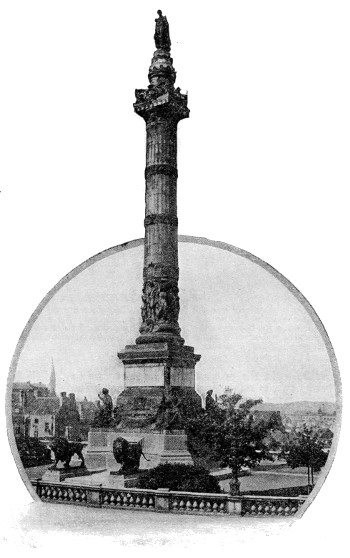
COLUMN OF THE CONGRESS, BRUSSELS
It is in Place du Congrès, two squares north from the Cathedral,
was erected, 1850, in honor of the adoption, in 1831, of the present
Constitution of Belgium. This is surmounted by a statue of the king.
At the corners are allegorical figures of Liberty.
BULGARIA
BULGARIA, a monarchy in the
northeast part of the Balkan
Peninsula between the Danube
and the Balkans, was created a
principality by the treaty of Berlin
in 1878, greatly extended by the
incorporation of East Rumelia in
1885, and declared an independent
kingdom in 1908.
The net result of the wars of
1912-1913 was the increase of
Bulgarian territory from 33,600
square miles to about 45,000. The
population increased by about
500,000, was in 1910 4,337,513—over
three-fourths Bulgarians,
465,000 Turks, 121,000 Gypsies,
80,000 Roumanians, 43,000 Greeks,
and 40,000 Jews. The Bulgarians
now extend into Macedonia, Bessarabia, etc.,
their total number being about 8,000,000.
Surface.—The north of Bulgaria is fertile plain
and hilly country; the south is wooded and
mountainous. The country has a fine waterway
on the northern boundary, a Black Sea
and Ægean seaboard, a mild climate, an agricultural
country capable of much, an abundance
of iron and some coal, free institutions,
a peasantry possessing the solid qualities and
persevering industry of northern races, and an
assured economic development.
Productions.—The chief occupation of the
people is agriculture, which engages about
seventy per cent of the population. Cereals
(wheat, maize, rye, barley, oats) are the
principal crops, and rank first among the
exports. Wine is produced everywhere, especially
near the Black Sea. Roses are cultivated
to a large extent, especially round
Kazanlik and Karlavo and on the north
side of the Rhodope Mountains for attar
of roses, which is largely exported.
Silkworms are bred in Philippopolis and
Haskaro. Tobacco is carefully cultivated.
There is little industry apart from
domestic branches such as native
cloth, carpets, trimmings and ribbons;
but there is some brewing and
distilling, leather work at Sumen,
copper work, and pottery-making.
The chief exports are grain, live stock,
butter, eggs, hides, and attar of roses,
sent chiefly to Turkey, France, Great
Britain, and Austria-Hungary.
People.—Education has been very
zealously and steadily promoted.
Elementary education is compulsory.
There are few technical schools. Sofia
has a university.
The old Bulgarian Slavonic tongue is closely
allied to the great Russian, but some Servian,
Greek, Romanic, Albanian, and Turkish
elements have found their way into the
language.
The Orthodox Greek Church counts seventy-seven
per cent as its adherents, Islam twenty-one
and one-half per cent, and the others are
Jews.
Government.—Bulgaria possesses one of the
freest and most democratic constitutions in
Europe, largely modeled on the lines of the
Belgian constitution, except that there is no
second chamber; and election of the Sobranje
or National Assembly is by universal manhood
[552]
suffrage, in the proportion of one member to
every twenty thousand of the population. The
executive power is vested in eight ministers
nominated by the king. The monarchy,
independent since 1908, is hereditary.
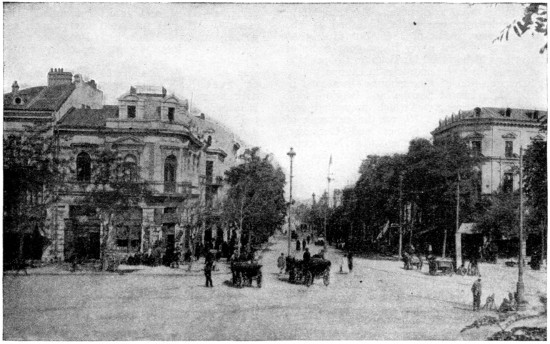
STREET SCENE IN SOFIA CAPITAL OF BULGARIA
This modern city is quite American in its appearance. It typifies to Bulgarians the progress of their nation,
and is substantial and practical rather than pleasing. The streets are broad, straight, electrically lighted, and well
paved, while the houses in the newer sections are modern structures of dignified architecture. While Sofia may not
impress the visitor with its beauty, it does impress him with the fact that there is a good deal of common sense and
business efficiency in this part of the Balkans.
Cities.—The chief towns of Bulgaria are Sofia,
Philippopolis, Rustchuk and Varna. Varna
and Burgas are ports on the Black Sea,
Dedeagatch on the Ægean.
Sofia (sofee´a), the capital since 1878 of Bulgaria,
stands in a broad valley of the Balkans, on the
railway from Constantinople to Belgrade and
Vienna. It lies two hundred and six miles northwest
of Belgrade, while Constantinople lies three
hundred miles southeast. The valley at Sofia is
an upland plateau, seventeen hundred feet above
sea level, and near the heart of the peninsula,
between the Vitosha Mountains and the main
Balkan chain. At the end of almost every vista
in the city are the distant hill masses, and fringing
mountains.
The city early became important as a trade
center, and probably would have developed into
one of the great cities of Europe had not periodical
destruction, almost continual dangers of war,
and centuries of misrule held it back.
The rebuilding of Sofia began around 1880.
It now has many creditable public buildings,
electric lighting, an electric street railway and
good sewerage and water systems.
It possesses the largest theater in southeastern
Europe. The Bulgarian National Theater, with
a competent corps of actors and singers, and
offering the best in opera and drama, is a revelation
of the strides that have been made in the
Balkans since the Turks were driven back a
brief generation ago. The theater is a handsome
modern structure, planned with greater
luxury of detail than most buildings in Sofia, and
it cost four hundred thousand dollars.
Sofia has a public bathhouse which is one of
the finest buildings of its kind in the world. It
was built over a hot mineral spring, famed since
the days of the Romans. This building, in Byzantine
style, including in its interior appointments
all of the most modern luxuries, cost the
Bulgarians six hundred thousand dollars.
Their capital city is one of the peculiar prides
of the hard-working, long-enduring, persistent
Bulgarians. It typifies to them the promise of
a great Bulgarian future, and they also look
upon it as an earnest of their right to a respected
place among the civilized nations of the West.
History.—The country now known as Bulgaria
was originally inhabited by Thracians, and
under the Romans formed the province of
Mœsia. The Bulgars originally came from
the banks of the Volga and crossed the Danube
in the sixth century, and occupied the East.
They overcame the Slavs, adopted their language
and customs, and thus became a great
Slav power; but by 1186 they had split up
into three principalities, and from 1393 fell
under the domination of the Turks. For close
upon five hundred years the Bulgars were subject
to the rule of the Ottoman Empire.
The first national awakening dates from the
year 1762, when the monk Paysios, then at
Mt. Athos, wrote the national chronicles, and
revived memories of ancient glory. A new
national literature began; the first Bulgarian
school was opened in 1835, and was followed
by others. A newspaper appeared in 1844.
The Crimean war stirred up Slavonic sympathies
which Russia sedulously and naturally
cherished. In 1872 the Bulgarian Church and
archbishop became again independent of the
supremacy of the Greek patriarch.
In 1877 Russia, as guardian of the Slav races
of Turkey, declared war. As a result of the
war, Bulgaria was created by the treaty of
Berlin. July 13, 1878, and in 1885 Eastern
Rumelia was added to the newly created
principality. In 1908 the country was declared
to be an independent kingdom. In
1912-1913 a successful war of the Balkan
League against Turkey increased the size of
the kingdom, but in August, 1913, a short
campaign against the remaining members of
the League reduced the acquired area, and led
to the surrender of about two thousand square
miles to Roumania. In October, 1915, Bulgaria
decided to participate in the European conflict,
and sided with Germany, Austria-Hungary,
and Turkey, and attacked Servia.
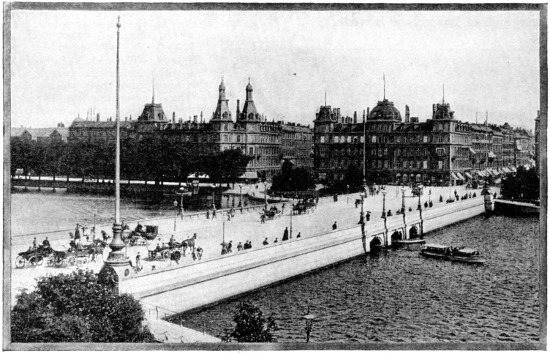
NEW QUARTERS OF COPENHAGEN, CAPITAL OF DENMARK
DENMARK
DENMARK, the smallest of the three Scandinavian
kingdoms, consists of the peninsula
of Jutland and a group of islands in the Baltic,
and is bounded by the Skager-Rak, the Cattegat,
the Sound, the Baltic, the Little Belt,
Sleswick, and the North Sea.
Surface.—Except in Bornholm, the surface of
Denmark is very similar in every part of the
kingdom, and is uniformly low, its highest
point (in southeast Jutland) being only five
hundred and sixty-four feet above sea-level.
The coast is generally flat, skirted by sand-dunes
and shallow lagoons, especially along
the west side. Both the continental portion
and the islands are penetrated deeply; by
numerous fiords, the largest being Limfiord,
which intersects Jutland, and has isolated
the northern extremity of the peninsula since
1825, when it broke through the narrow
isthmus which had separated it from the
North Sea.
Rivers.—Denmark has numerous streams but
no large rivers; the principal is the Guden,
which flows northeast through Jutland into
the Cattegat. It is navigable for part of its
course. Less important streams are the Holm,
the Lonborg, and the Stor Aa. All the others
are insignificant brooks and streamlets.
The lakes are very numerous but not large,
none exceeding five and one-half miles in length
by about one and one-half miles broad. There
are numerous winding inlets of the sea that
penetrate far into the land. The largest of
these, the Limfiord in Jutland, entering from
the Cattegat by a narrow channel, winds its
way through to the North Sea, thus making
northern Jutland really an island. In this
fiord, which widens out greatly in the interior
and gives off various minor fiords, there are
one large and various small islands.
Climate.—The climate is milder, and the air
more humid than in the more southern but
continental Germany; it is not unhealthy,
except in the low lying islands, such as Laaland,
where the short and sudden heat of the
summer occasions fevers.
Production and Industry.—The common
products are wheat, rye, oats, barley, potatoes,
cattle, horses, pigs, sheep, and butter. Its
manufactures are, for the most part, for home
consumption. Its chief exports are agricultural
produce, including wheat and barley,
bacon, hams, flour, butter, eggs, hides, skins,
corn meal and oil cake, horses and cattle.
People.—The population of Denmark is composed
almost exclusively of Danes, with a
few thousand Jews and others. The Danes
have regular features, fair or brownish hair,
and blue eyes. They still maintain their
[554]
reputation for seafaring skill and hospitable
customs. They belong to the Scandinavian
branch of the Teutonic peoples, and speak the
Danish form of the old Norse, which was fixed
in writing about the time of the Reformation.
Since the Reformation the Danes have been
adherents of the Lutheran Church. Education
is well advanced, and there are very few
people in the country who can neither read
nor write.
Government.—The present constitution of
Denmark dates from 1866. The executive
power is vested in the king and his ministers,
the legislative in the Rigsdag or Diet,
comprising the Landsthing or Upper House, and
the Folkething or House of Commons, partly
nominated by the Crown, partly elected,
indirectly, by the people.
Cities.—Copenhagen is the capital, population,
560,000; other chief towns are Odense, Aarhuus,
Aalborg, Randers and Horsens.
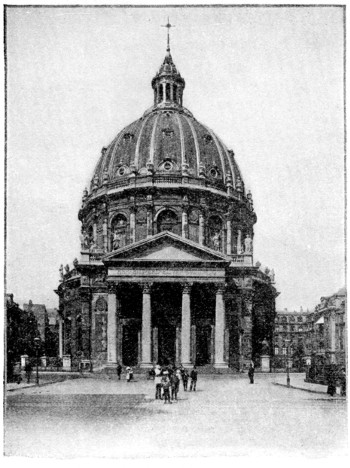
FREDERICK’S CHURCH, COPENHAGEN
Copenhagen (kō-pen-hāgen; Dan. Kjöbenhavn,
“Merchants Haven”), the capital of Denmark,
is situated on the low-lying eastern shore of the
island of Zealand, in the Sound, which is here
about twelve miles broad. The channel forms a
fine and capacious harbor, which is bridged over
so as to connect the isolated suburb of Christianshavn
and the main part of the city at two points.
Copenhagen is still defended by the old citadel
of Frederikshavn and by forts on the seaward
side.
Among its buildings of historical interest or
intrinsic beauty, the Cathedral, rebuilt after the
bombardment of 1807, possesses statues of Christ
and the Apostles, and a baptismal font, designed
and in part executed by Thorwaldsen. Frederick’s
Church, or Trinitatiskirke, is remarkable for
its round tower, which is ascended by a spiral
incline instead of steps.
The Royal Palace, called Christiansborg, was
rebuilt between 1794 and 1828, but suffered
greatly from fire in 1884. In the castle of Rosenborg
are kept the regalia; the palace of Charlottenborg,
is now used as an Academy of Arts.
The University, founded by Christian I. in 1479,
has a library of three hundred and fifty thousand
volumes; the royal library contains six hundred
thousand volumes.
Copenhagen is the center, not only of Danish,
but of northern literature and art, and is the
seat of the unrivaled Museum of Northern
Antiquities, and the Thorwaldsen Museum.
The exports include grain, rape-seed, butter,
cheese, beef, cattle, wool, etc.; and porcelain,
pianos, clocks, watches, mathematical instruments,
chemicals, sugar, beer, and
tobacco are manufactured.
History.—The early history of Denmark
is lost in the twilight of the
Vikings and their valiant deeds.
The Danes coming from the islands
occupied the lands deserted by the
Jutes and Angles who had in the
fifth century migrated to England.
The Danish monarchy was founded
in 936 by Gorm the Old, whose
son became a Christian. Waldemar
I. (1157-1182) ruled Norway also,
and conquered Mecklenburg and
Pomerania; under his son Waldemar
II. further conquests were made
in German and Wendish lands, so
that the Baltic became a Danish
sea.
By the treaty of Calmar in 1397,
Norway, Sweden and Denmark,
already under one monarch, Margaret,
were formally united into one
state. In 1448 the Danes elected
as king Christian of Oldenburg, a
descendant of their royal family,
who was also Duke of Sleswick
and Holstein; and his line continued
on the throne till 1863.
Sweden became independent in
1523. Lutheranism was introduced
into Denmark in 1527. In 1815
Denmark had to cede Norway to
Sweden; and in 1848 the Germanic
peoples of the duchies Sleswick and
Holstein rebelled against Denmark.
For the time the Danes succeeded
in retaining the duchies, but the
controversy, renewed in 1863, led
to the defeat of the Danes by
Austria and Prussia (1864), followed
by the incorporation of the duchies in the
Germanic Confederation, and, after the Austro-Prussian
war of 1866, in Prussia.
Denmark although reduced to the narrow
limits of the islands and Jutland, has greatly
prospered, in spite of the spread of socialistic
opinions, and political dissensions. Christian
IX. died January 29, 1906, and was succeeded
by his son, Frederick VIII.
GREECE
GREECE is a maritime kingdom in the southeast
of Europe. The country is composed of
a continental portion, almost separated into
two parts by the gulfs of Patras and Lepanto
on the west, and the gulf of Ægina on the east,
the archipelago of the Ægean Sea and the
Ionian Islands, and is divided into twenty-six
provinces, called nomarchies.
Surface.—The mountain range which cuts off
the peninsula from the continent of Europe is
an extension of the Balkans. From it run
chains from north-northwest to south-southeast,
which form the skeleton of Greece. The
western boundary of Thessaly is formed by
Pindus, the main offshoot of the Balkans.
The eastern boundary is also marked not only
by the sea but by important mountains derived
from the Balkan system. These are
Olympus, Ossa, Mavrovuni, and Pelion.
Othrys, a branch of Pindus, forms the south
boundary of Thessaly. This branch is continued
in the celebrated mountains Parnassus
and Helicon, forms the land of Attica, and
reappears as the islands of Ceos, Cythnos,
Seriphos, and Siphnos. The Peloponnese,
“the island of Pelops,” or by its modern name
the Morea, is connected with northern Greece
merely by the narrow isthmus of Corinth, now
pierced by a canal; its highest point is Taygetus.
Rivers.—The rivers of Greece are unimportant.
The chief in the Peloponnesus are the Eurotas
(Basilipotamo), the Alpheus (Ruphia), draining
Arcadia and Elis; and the Peneus draining
Elis.
Climate.—The climate is generally mild, in the
parts exposed to the sea equable and genial,
but in the mountainous regions of the interior
sometimes very cold. None of the mountains
attain the limit of perpetual snow; but several
retain it far into the summer. During summer
rain scarcely ever falls, and the channels
of the minor streams become dry. Toward
the end of harvest rain becomes frequent and
copious, and fevers become common.
Production and Industry.—The most important
of the fruit trees are the olive, the vine,
orange, lemon, fig, almond, citron, pomegranate,
and currant grape. Its exports consist of
currants, figs, olive oil, wine, cognac, tobacco,
hides, lead, iron ore, magnesium, emery, marble,
and sponges.
People.—The Greeks called themselves Hellenes,
and the inhabitants of Italy called them
Graeci. The modern Greeks are by no means
pure-bred descendants of the ancient Greeks.
Indeed, it has been maintained that from
the seventh century A. D. there have been no
pure Greeks in the country, but only Slavs.
It is, however, pretty certain that the two and
one-quarter million of modern inhabitants are
descendants of the three races that occupied
the soil at the time of the Roman conquest.
They speak the modern Greek tongue, which
is a greatly modified form of the old.
Education is free and compulsory, maintained
by local taxation supplemented by State grants.
Secondary education is somewhat backward,
particularly in the country districts. There
is a university of some repute at Athens,
which is largely attended by Turks.
Government.—According to the constitution,
which was framed by an assembly in 1864, the
executive power is vested in the king and his
responsible ministry; the legislature is a single
chamber of deputies called the Boulé, elected
by the people, and meets at Athens.
Cities.—Athens is the capital, population
167,500; the towns next in size are Patras,
Piræus, and Trikhala, all above 20,000; and
there are eight others between 20,000 and
10,000.
Athens, in the southeast of Attica, occupies an
extensive area round the site and remains of the
classical city, four and one-half miles from its
harbor of Piræus, on the Gulf of Ægina. The
city, which takes its name from Athena, “goddess
of science, arts, and arms,” and its own patron
divinity, was originally built on the Acropolis, a
conspicuous limestone rock rising three hundred
and twenty feet above the Attic plain, and afterwards
spread out on the plain below. The
Acropolis became the citadel and subsequently
the site of a group of beautiful temples of the
time of Pericles (fifth century, B. C.).
The ruins of the Parthenon, the Erechtheum,
the temple of Nike Apteros (“Wingless Victory”),
and the Propylæa, still remain to testify to the
former glory of the Acropolis. Of the other
ancient buildings the most notable are the Theseum
(also of the Periclean period, and still
almost perfect), and the fragments of the vast
temple of Zeus (begun in 530 B. C. and finished
by the Roman Emperor Hadrian), with the
theater of Dionysus and other structures.
Not far from the Acropolis rose the hill Lycabettus
(nine hundred and eleven feet), and the
hillocks or ridges of the Pnyx and the Areopagus
or Mars Hill. At a greater distance the plain is
bounded by Hymettus (three thousand three
hundred and sixty-eight feet), Pentelicus (three
thousand six hundred and forty-one feet), and
other ranges.
Athens was fabled to have been founded by the
hero Cecrops. The most brilliant period of its
history was when, after the Persian wars
(fifth century, B. C.), Athens took the lead
among the Greek states, became powerful by
land and sea, was adorned by Pericles with most
glorious buildings, and brought Greek literature
and Greek philosophy to their highest development.
Its decline dates from the disastrous conclusion
of the Peloponnesian war (403 B. C.).
It was plundered and ruined by Sulla in 87 B. C.;
and neither under Byzantine nor Turkish rule
ever attained any prosperity. In the days of its
glory Athens had some one hundred thousand
free inhabitants and twice as many slaves; when
after the liberation of Greece Athens was made
the capital of the new kingdom (1834), it was a
wretched village of a few hundred houses. Since
then it has had a prosperous growth, looks like a
well built German town, with a fine royal palace,
a marble stadium (restored), a university with
over one hundred and fifty professors and lecturers
and two thousand five hundred students,
and a good deal of miscellaneous trade by the
way of the Piræus. It is connected by rail also
with Corinth, and the Athens-Larissa line brings
Greece into railway communication with the rest
of Europe. (See also under ancient Greece.)
History.—Modern Greece threw off the Turkish
yoke in 1830 and was declared an independent
kingdom and the boundaries were
defined. The liberated state was at first
governed by a national assembly, but the president,
Count Capo D’Istrias, assumed autocratic
powers, and sedition culminated in his
assassination. Subsequently the Powers offered
the throne to Prince Leopold (afterwards
[556]
king of Belgium), but the offer was refused.
The crown was then given to Otho, son of
Louis I. of Bavaria. Throughout his reign
discontent was rife, and an insurrection in 1862
resulted in the deposal of the king. George,
second son of the king of Denmark, was then
chosen king, and the Ionian Islands, at that
time under British protection, were ceded
unconditionally to the kingdom.
By the Berlin Congress of 1878, Greece was
promised a modification of her frontier, and in
1881 a readjustment was accepted. The
adjustment proved distasteful to the Hellenes,
who demanded Crete, and hostilities commenced
with Turkey in 1897. The war was
short-lived, and was disastrous to the Greeks,
and on the intervention of the Powers an
armistice was concluded. By the Treaty of
Constantinople Greece was compelled to pay
an indemnity to submit to the readjustment
of her frontier, and to accept the control of
the Powers in financial affairs.
In October, 1912, war broke out in the
Balkan states, known as the Balkan war.
The permanent effects on the Greek frontier,
owing to the Hellenic participation in the
victory over the Turks, are not yet determinable,
but all deeply affect Greek interests,
and depend on the decision of the Great
Powers. George, King of the Hellenes, was
assassinated in Salonica by a maniac named
Schinas in March, 1913. The perpetrator of
the crime subsequently committed suicide.
The present ruler is the late king’s eldest son,
who was proclaimed King Constantine XII.
HOLLAND
HOLLAND, the popular name of a country
officially described as “Netherland,” or “The
Netherlands,” is bounded by the North Sea,
Prussia, and Belgium. Its greatest length,
north to south, is one hundred and ninety-five
miles, and its greatest breadth one hundred
and ten miles. Luxemburg was, till 1890,
connected with Holland.
Surface.—Almost the whole country is flat and
low; the parts of it nearest the coasts are even
below the sea level, the waters being kept out
by dykes, which are maintained at a great
annual cost. One stretch of fifty miles of the
coast is guarded by a triple wall of piles driven
into the soil, filled up between, and buttressed
by huge granite blocks brought from Norway.
If it were not for these dykes controlling the
rivers and keeping out the sea, nearly half
the country would be under water.
All the southern part of Holland belongs to
the alluvial delta lands formed at the mouths
of the Rhine (the chief branch of which is
named the Waal), the Meuse or Maas, and
Scheldt. Opening out into broad, shallow
estuaries these river mouths form a number
of islands, of which Walcheren and Beveland,
Schouwen and Tholen, Over Flakkee, Voorne
and Beyerland, are the largest.
Toward the north appears the great shallow
gulf called the Zuider Zee (or South Sea, in
distinction from the North Sea outside),
which was formed in the thirteenth century
by the bursting of the sea into a former
inland lake called “Flevo” by the Roman geographers.
Outside of it a chain of islands marks
the line of the former coast of the mainland.
Rivers and Canals.—Besides the natural
channels formed by the estuaries of the Scheldt,
the Maas, and the delta branches of the
Rhine (the Waal, Lek, Old Rhine, Vecht,
Amstel, and Yssel) the country is intersected
in all directions by Grachts or larger canals,
lined with rows of trees, joining river to river.
No country in the world has such a network
of waterways; ships’ masts, and windmills
with large sails, pumping the water from the
smaller drainage canals, are seen everywhere.
Climate.—The general climate of Holland
resembles that of England, opposite to it, in
its rapid variations; but it is more humid.
Dense sea fogs from the North Sea drive over
it. In most winters the rivers and canals are
frozen over for two or three months, when
even women skate to market; in summer the
thermometer rises to eighty or ninety degrees
in the shade.
Production and Industry.—Cattle rearing,
butter and cheese making, are the most
general industries of the country, for the
grazing meadows are far more extensive than
the corn lands. In the latter, rye, barley,
wheat, and potatoes, are the chief crops.
Flax, and beet-root for sugar, chicory, and
tobacco, are grown also to a considerable
extent.
The principal manufactures are shipping,
bricks, margarine, cocoa, chocolate, linen, rich
damasks, cottons, woolens, cigars and other
manufactured tobacco, candles, confectionery,
earthenware and pottery, glass bottles and
ware, chemical and pharmaceutical products,
matches, perfumery, sugar, bicycles and automobiles,
boots and shoes, starch, potato flour,
engines, metal substances, works of art in
gold and silver, incandescent lamps, machinery,
motors, paper, printing, oils, beer, “geneva”
and other liqueurs. Diamond cutting employs
numerous hands in Amsterdam.
People.—Of the population, the greater part
(seventy per cent) is formed by the Dutch or
Batavians, the descendants of the Germanic
tribe of the Batavi who occupied the delta of
the Rhine in the time of the Roman conquest
of the land. Frieslanders (fourteen per cent),
descendants of the ancient Frisii, occupy the
northern borders of the country, where the
peasantry still speak a language closely allied
to Anglo-Saxon; the Flemings (thirteen per
cent) occupy the southeastern borders of the
country. Their language differs little from
the Dutch; but the dialects throughout the
country are very numerous.
The majority, about three-fifths, belong to
the several Reformed Churches; and the
remainder are Roman Catholics, with about
one hundred and seven thousand Jews.
Private state-aided primary instruction is
encouraged rather than public, though the
latter is provided, if required, by local taxation.
Secondary schools for working classes are
numerous, well equipped and attended. The
principal universities are at Amsterdam,
Groningen, Leiden, Utrecht.
Government.—The government of Holland is
a limited constitutional monarchy. The crown
is the executive power; legislation is vested in
the States-general of two chambers, called the
[557]
First Chamber and the
Second Chamber. A State
Council of fourteen members
appointed by the Sovereign
is consulted on all
legislative and on most
executive matters.
There is no state religion,
but the state gives financial
support to the different
churches.
Cities.—The capital is The
Hague with a population
of 300,000; other cities exceeding
50,000 in 1913
were as follows: Amsterdam,
591,053; Rotterdam,
454,135; Utrecht, 123,457;
Groningen, 78,670; Haarlem,
70,907; Arnhem,
64,760; Leiden, 59,297;
Nymegen, 58,679; Tilburg,
54,216.
The Hague (Dutch Gravenhagen,
“the count’s hedge”),
the capital of the Netherlands
is two miles from the
North Sea and fifteen miles northwest of Rotterdam.
It is intersected by canals and shady
avenues of lime-trees, and has many fine public
buildings and private houses.
In the center of it is the Vijver, or Fish-pond,
to the south of which stands the old castle of the
Counts of Holland, where the Dutch parliament
sits. In its gatetower the brothers De Witt were
confined till dragged thence and torn to pieces
by the populace (1672). The picture-gallery
has a splendid collection of works by native
painters (Paul Potter’s “Bull” and Rembrandt’s
“Lesson in Anatomy”); and
there are the royal library with five hundred
thousand volumes; the municipal and
other museums; the Town-House, and
the royal palaces.
Among the numerous statues are those
of William I. (two in number), William
II., Spinoza, Bernhard of Saxe-Weimar,
and the monument which
commemorates the deliverance
from the French. Close to the
town is the beautiful pleasure-park called “The
Wood” (Bosch), in which stands a royal residence
with the magnificent so-called “Orange Hall.”
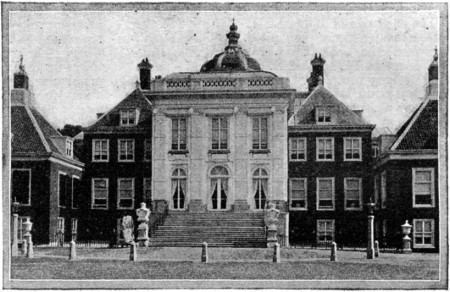
PALACE IN THE WOOD,
or Dutch “White House,” is situated in a fine old plantation of beeches and oaks,
round ornamental lakes and islands, is a plain building with a grand interior;
and has Jordaen’s masterpiece, the Apotheosis of Prince Fred. Henry.
The great Peace Conference was held here in
1899; The Hague is the seat of the resulting
arbitration courts, for which Mr. Carnegie provided
permanent buildings of great architectural
beauty. Industries are iron-founding, copper
and lead smelting, cannon-founding, printing,
furniture and carriage making, and the manufacture
of gold and silver lace.
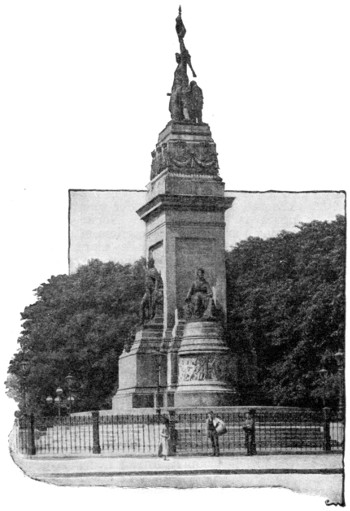
NATIONAL MONUMENT
IN THE WILLEMS-PARK, THE HAGUE
History.—The ancient inhabitants of the
country, the Batavians and the Frisians,
became subjects or allies of the Romans in the
first century A. D., and so remained till in the
fourth century their territories were overrun
by the Saxons and Salian Franks.
At the end of the eighth century the Low
Countries submitted to Charlemagne, and
various feudal dukedoms, counties, and lordships
were gradually established (the countship
of Holland in the eleventh century). In
1384 the earldom of Flanders passed to
the Dukes of Burgundy, and Philip the
Good (c. 1450) made the Low Countries
as prosperous as any part of his Burgundian
state.
The Emperor Charles V. inherited the
Burgundian dominions; and under his son,
Philip II. of Spain, broke out the bitter
quarrel between Holland and Spain, between
Dutch Protestantism and persistence
and Spanish tyranny and persecution,
which ended in 1581 in the establishment
of the Dutch Republic as an
independent state under William the
Silent (of Orange), though the war continued
with intervals till 1648, and the
Belgian provinces abode by their allegiance
to the kings of Spain.
In the seventeenth century Dutch commerce,
especially at sea, Dutch science,
Dutch classical scholarship, Dutch literature
and Dutch art attained an eminence
hardly afterwards equalled. The rivalry
of Holland and England at sea led to the
[558]
unfortunate wars of 1652-1654 and 1664-1667.
The accession of William III. of Orange to the
Stadtholdership of the United Provinces (1672)
proved the salvation of the republic from
France; in 1678 Louis XIV. signed the peace
of Nymegen.
Ten years later William was hailed as the
savior of English liberties, and became king
of Great Britain and Ireland. On William’s
death, the United Provinces became a pure
republic once more, the stadtholdership was
re-established in 1747 but it made no difference
in the downward course.
The National Convention of France having
declared war against Great Britain and the
stadtholder of Holland in 1793, French armies
overran Belgium (1794); they were welcomed
by the so-called patriots of the United Provinces
and William V. and his family (January
1795) were obliged to escape from Scheveningen
to England in a fishing-smack and the French
rule began. After several changes Louis Bonaparte,
June 5, 1806, was appointed king of
Holland, but, four years later, was obliged to
resign because he refused to be a mere tool in
the hands of the French emperor. Holland
was then added to the empire.
The fall of Napoleon I. and the dismemberment
of the French empire led to the recall
of the Orange family and the formation
of the southern and northern provinces
into the ill-managed kingdom of the Netherlands,
which in 1830 was broken up by the
secession of Belgium. In 1839 peace was
finally concluded with Belgium; but almost
immediately after national discontent with the
government showed itself, and William I. in
1840 abdicated in favor of his son.
Holland, being moved by the revolutionary
fever of 1848, King William II. granted a new
constitution, according to which new chambers
were chosen, but they had scarcely met when
he died, March, 1849, and William III. (born
1817) ascended the throne.
William III. having no living male issue, the
succession to the crown was vested in the
princess of Orange, Wilhelmina, the only
child of the king’s second marriage, born in
1880. For many years the great question of
internal politics was the new constitution,
which, promulgated November 30, 1887,
increased the electorate of Holland by no less
than two hundred thousand voters. On the
death of the king (November 23, 1890), when
Luxemburg ceased to be connected with the
crown of Holland, the Princess Wilhelmina
became queen.
Queen Wilhelmina married Prince Henry of
Mecklenburg-Schwerin, in 1901, and in 1909 a
daughter (the Princess Juliana) was born to
them.
NORWAY
NORWAY (Norweg. Norge), the western division
of the Scandinavian peninsula, is one
thousand one hundred and sixty miles in
length (coast-line three thousand miles) and
varies in width from twenty to one hundred
miles north of 63° N. lat.; below that line it
swells out to two hundred and sixty miles.
The coast-line is extensive, deeply indented
with numerous fiords, and fringed with an
immense number of rocky islands. The surface
is mountainous, consisting of elevated and
barren tablelands, separated by deep and
narrow valleys. The finest of the valleys
stretching inland from the fiords is Romsdal,
where the rounded pure gneiss mountains
tower up to six thousand feet with almost perpendicular
walls. The cultivated area is
about one-thirtieth part of the country;
forests cover nearly one-fourth; the rest consists
of highland pastures or mountains.
Norway is separated from Sweden by the
Kjolen Mountains (three thousand to six
thousand feet), the backbone of the peninsula,
which divide south of 63°; the western branch
widens out into a broad plateau, undulating
between two thousand and four thousand feet
and embossed with mountain-knots—Dovre,
Jotun, Lang, Fille, Hardanger Fjelde (fells)—the
separate peaks of which shoot up to six
thousand feet and higher.
Rivers.—The few important rivers that Norway
can claim as exclusively her own have a
southerly direction, and discharge themselves
into the Skager-Rack; of these the chief are
the Glommen (four hundred miles), and its
affluent, the Lougen. The most important
river in the north is the Tana, which forms
part of the boundary between Russia and
Norway, and falls into the Arctic Ocean.
Lofty waterfalls are numerous. Lakes are
extremely numerous but generally small.
The principal is the Miösen Vand. The
streams are turned to account in floating down
the valuable timber of the forests, and their
rapids give abundant mill power.
Production and Industry.—Agriculture,
though pursued with some vigor of late, is
unable to furnish sufficient products for home
consumption; hence it has been necessary to
import considerable quantities of corn, meat,
and pork. The fisheries give employment to
a large part of the population throughout the
year. The most important are cod and
herring. The mineral products are of late
increasing.
The purely industrial establishments are
grouped mainly around Christiania, and
include textile factories, machine shops,
chemical works, flour mills, breweries, etc.
The use of water power for electrical enterprises
is growing. The Norwegians rank
among the busiest sea carriers of the world,
the Norwegian mercantile marine ranking
third among maritime nations, or first in proportion
to population.
The chief exports consist of timber, matches,
fish, oil, and other products of the fisheries,
pulp, paper, skins and furs, nails, minerals,
stone, ice, calcium carbide, condensed milk,
butter, margarine, tinned goods, etc.
People.—The people of the peninsula are of
Germanic race, with the exception of the small
number of Finns and the Lapps in the north.
The Norsemen of Norway, of middle stature,
strong, generally blonde haired and blue eyed,
seamen by choice, have adopted the Danish as
the language of the towns and of literature,
the modernized Old Norse being banished to
the outlying country districts and unfrequented
fiords.
Education is compulsory and free between
the ages of seven and fourteen, schools being
maintained by local taxation with state grants
[559]
in aid. The attendance is high. Secondary
schools are provided by the state, by local
authorities, and privately. There are a number
of special schools and industrial and technical
institutes. The University of Christiania
is an important institution for higher education.
Except 52,700 persons (including Methodists,
Baptists, Roman Catholics, Jews, Mormons),
the entire population belong to the Lutheran
Church.
Government.—After the crisis of European
affairs brought about by Napoleon’s wars,
Denmark lost her hold over Norway, which
had been united to it for more than four
centuries, and that country was united to
Sweden in exchange for Finland, which then
passed under Russian sway. Norway, however,
was again separated from Sweden as an
independent kingdom under King Haakon
VII. in 1905.
The Storthing or Parliament consists of one
hundred and twenty-three members, women
being eligible and electors (since 1907); and
divides for legislative purposes into two chambers
called “Odelsting” and “Lagting.”
The Norwegians share with the Swiss the
distinction of being the most democratic people
in Europe; all titles of nobility were
abolished in 1821. In 1912 practically all
offices except in the cabinet, diplomatic service,
army, navy, and church, were thrown open to
women.
Cities.—The chief cities are the capital, Christiania,
and Bergen. Other important towns
are Trondhjem, Stavanger, and Drammen.
Christiania, the modern capital and chief commercial
town of Norway (the ancient capital
is Trondhjem, “home of the throne,” where the
kings are still crowned), is built on the northern
end of the Christiania Fiord. Population, in
1910, 241,834. It is named after Christian IV.,
who commenced building it in 1624 after the
destruction of the ancient city of Oslo by fire.
It is the seat of Parliament, of the High Court of
Judicature, and of the National University.
Connected with this are the students’ garden, a
library of four hundred and fifty thousand
volumes, a botanical garden, zoological and other
museums, laboratories, and observatory. The
Meteorological Institute was established in 1866.
There are two national and historical palaces
here, one in the city quite near the university,
and one, Oscarshall, beautifully situated two
miles from the city on an eminence overlooking
the fiord. There is a national picture-gallery,
and a very interesting museum of northern
antiquities. The Dom or Cathedral and Trinity
Church are the principal ecclesiastical buildings.
The old fortress Akershus Faestning still remains,
but has little military value.
The staple industry of Christiania is its shipping
trade; its chief export is timber. A considerable
industry is the brewing of Christiania öl, a sort
of lager beer, with resinous flavor, largely consumed
throughout Norway, and exported. The
minor manufactures are cotton, canvas, engine-works,
nailworks, paper-mills, and cariole-making.
The harbor is closed by ice for three or four
months most winters.
History.—It is not until the ninth century
that the story of Norway begins to emerge
from the obscurities of myth and legend. At
first it was occupied by Lapps and by several
Gothic tribes, then became an independent
kingdom, founded in 872, and was united to
Denmark in 1380.
The Napoleonic crisis in Europe may be said
to have severed the union, which had existed
for more than four hundred years between
Norway and Denmark. The latter country
after having given unequivocal proofs of adhesion
to the cause of Bonaparte, was compelled,
after the war of 1813, to sign the treaty of
Kiel in 1814, in which it was stipulated by the
allied powers that she should resign Norway
to Sweden. Charles XIII. was declared joint
king of Sweden and Norway in 1818. From
that time down to 1905 Norway remained in
union with Sweden. In June of that year
Norway declared the union dissolved, and the
repeal of the union was signed in October of
the same year. The throne was offered to
and declined by a prince of the reigning house
of Sweden, but was afterwards accepted by
Prince Carl of Sweden, who was thereupon
elected as King Haakon VII. In 1908 a
treaty was signed by Great Britain, Germany,
France, Russia, and Norway guaranteeing the
integrity of the Norwegian kingdom.
Poland
Poland (called by the natives Polska, a word of
the same root as Pole, “a plain”), a kingdom of
Europe, proclaimed, in 1916, by the governments
of Austria-Hungary and the German
Empire as the result of conquests by the
Central Powers, comprises substantially what
is geographically known as Russian Poland
(the kingdom of Poland formed in 1815) and
Austrian Poland (or the Austrian province of
Galicia). The former has an area of about
49,000 square miles, with a population of
more than 12,000,000; the latter, an area of
30,300 square miles, and a population of
8,000,000.
Surface.—This extensive tract forms part of
the great European central plain, and is
crossed by only one range of hills, which run
northeast from the Carpathians, forming the
watershed between the Baltic and Black Seas.
Its principal streams are the Vistula, the
Niemen, and the Dwina, all belonging to the
basin of the Baltic; and the Dniester, South
Bug, and Dnieper, with its tributary, Pripet,
belonging to the basin of the Black Sea.
The physical configuration of the country
makes it admirably adapted for agriculture.
Next to grain and cattle its most important
product is timber.
The soil is mostly a light fertile loam, though
there are large barren tracts of sand, heath,
and swamp, especially in the east. Much of
the fertile soil is rich pasture land, and much
is occupied with forests of pine, birch, oak, etc.
Rye, wheat, barley, and other cereals, hemp,
timber, honey, and wax, cattle, sheep, and
horses, vast mines of salt and coal, some silver,
iron, copper, and lead constitute the natural
riches of the country.
People.—The present population of the provinces,
included in the Poland of former days,
consists chiefly of Poles, Lithuanians, Germans,
Jews, Malo-Russians, Roumanians and Gypsies.
The Poles, who number 10,000,000, form
the bulk of the population; the Lithuanians,
2,100,000 in number, inhabit the northeast of
the country; the Germans, of whom there are
2,000,000, live mostly in the towns; the Jews
are very numerous being estimated, at 2,200,000.
Roman Catholics preponderate; then come
in order the Greek Church, Protestants, Jews,
and Armenians.
Cities.—The following are the populations of
the chief cities: Capital, Warsaw, 800,000;
Lodz, 400,000; Lemberg, 225,000; Cracow,
160,000; Przemysl, 60,000.
Warsaw (Polish Warszawa), the capital of Poland,
stands on the Vistula’s left bank, three hundred
and thirty miles east of Berlin by rail and seven
hundred miles southwest of Petrograd. Two
iron bridges lead to the suburb of Prague, on the
opposite bank. Standing on a navigable river,
with great railway lines to Moscow, Petrograd,
Vienna, Danzig, and Berlin, Warsaw is one of
the most important cities of eastern Europe,
being smaller only than Petrograd and Moscow.
Corn and flax are largely exported, and coal and
manufactured goods imported. Warsaw itself
manufactures electroplate, machinery, boots,
woolens, pianos, carriages, tobacco, sugar, chemicals,
beer, and spirits.
Of over one hundred Catholic churches the
cathedral of St. John is the most notable; there
are also several Greek churches, two Lutheran
ones, and many synagogues. The castle is an
imposing building, and there are many fine
private palaces. The university, suppressed at
various times, was reopened in 1915, and has
seventy-five professors who now teach in Polish.
History.—The early history of Poland is legendary
and obscure. The Poles, like the Russians,
are a Slavonic race, and are first spoken
of as the Polani, a tribe or people between
the Vistula and Oder. The country was
divided into small communities until the reign
of Mieczyslaw I. (962-992) of the Piast dynasty,
who renounced paganism in favor of Christianity,
and was a vassal of the German
emperor.
He was succeeded by Boleslaw the Great
(992-1025), who raised Poland into an independent
kingdom and increased its territories.
In succeeding reigns the country was involved
in war with Germany, the Prussians, the
Teutonic knights, and with Russia. The last
of the Piast dynasty was Casimir the Great
(1364-1370), during whose reign the material
prosperity of Poland greatly increased. He
was succeeded by his nephew, Louis of Anjou,
king of Hungary, whose daughter, Hedwig,
was recognized as “king” in 1384, and having
married Jagello, prince of Lithuania, thus
established the dynasty of the Jagellons, which
lasted from 1386 to 1572.
During this period Poland attained its most
powerful and flourishing condition. In 1572
the Jagellon dynasty became extinct in the
male line, and the monarchy, hitherto elective
in theory, now became so in fact. The more
important of the elective kings were Sigismund
III. (1587-1637), Wladislaw or Ladislaus IV.
(1632-1648), John Casimir, (1648-1669), and the
Polish general Sobieski, who became king
under the title of John III. (1674-1696). He
was succeeded by Augustus II., Elector of
Saxony, who got entangled in the war of
Russia with Charles XII., and had as a rival
in the kingdom Stanislaus Lesczynski. Augustus
III. (1733-1763) followed, and by the end
of his reign internal dissensions and other
causes had brought the country into a state
of helplessness.
In 1772 under the last feeble king Stanislaus
Augustus (1764-1795), the first actual partition
of Poland took place, when about a third of
her territories were seized by Prussia, Austria,
and Russia, the respective shares of the spoil
being Prussia 13,415 square miles, Austria
27,000 square miles, Russia 42,000 square miles.
A second division between Russia and
Prussia took place in 1793. Prussia received
nearly all the present province of Posen, and
the western part of what is now Russian
Poland; Russia received all the territory east
of about long. 44°. A third division between
Russia, Prussia, and Austria occurred in 1795.
Prussia took a large part of the present
Russian Poland, including Warsaw; Austria
received part of the present Russian Poland
between the Bug, Vistula, and Pilica; and
Russia received all the remainder, situated
east of the Niemen and Bug.
An insurrection under Koszciusko had taken
place in 1794, but he was defeated at the
battle of Maciejowice and taken prisoner.
Suvorov (Suwarrow), the Russian general,
took Warsaw, and the Polish monarchy was
at an end. King Stanislaus resigned his crown,
and died at Petrograd in 1798.
Part of Poland was formed by Napoleon into
the duchy of Warsaw. The Congress of
Vienna in 1815 made a resettlement of the
territory, creating a kingdom of Poland, under
Russian rule, with a constitution. An insurrection
which began in November, 1830, was
suppressed in September, 1831; the constitution
was abolished in 1832. From this time
the independence of Poland was suppressed,
and in 1832 it was declared an integral part of
the Russian empire, with a separate administration,
headed by a viceroy chosen by the
Czar. On November 6, 1848, the republic of
Cracow became Austrian; and the subsequent
rebellion against Russian rule in 1863 only
brought further humiliation on Polish hopes
and aspirations.
During the European war Poland, in 1914,
first suffered invasion and devastation by the
Russian armies, and during the two following
years was completely overrun by the Austro-German
armies, and placed under the military
rule of the latter. The proclamation of Poland
as a new independent kingdom took effect in
1916.
PORTUGAL
PORTUGAL (named from Portus Cale, the
Roman name of Oporto), a republic of Europe,
lying between Spain and the Atlantic, on the
west side of the Iberian Peninsula, is three
hundred and fifty miles in length and varies
in width from seventy to one hundred and forty
miles. The area is 36,038 square miles—a
little larger than Ireland.
Surface and Climate.—The coast is mostly
low and flat, except immediately north and
south of the mouth of the Tagus, and at Cape
St. Vincent. The north of Portugal is diversified
by spurs (five thousand feet) of the mountains
of Spanish Galicia. The Sierra da
Estrella (six thousand five hundred and forty
feet) is a westward continuation of the Spanish
Sierra Guadarrama system. The Sierra Morena
is continued westwards in southern Portugal.
The principal rivers of the country—the
Guadiana in the south, the Tagus in the
center, and the Douro and Minho in the north—are
[561]
simply the lower courses of Spanish
rivers; but the Mondego has its sources in the
country.
The vicinity to the ocean tempers the climate
and exempts it from the dry heat of Spain.
The inequalities of the surface produce, however,
diversities of climate; for, while snow
falls abundantly on the mountains in the
northern provinces, it is never seen in the
southern lowlands. Rain falls abundantly
throughout the year.
Production and Industry.—The chief products
are wheat, barley, oats, maize, flax,
hemp, and the vine in elevated tracts; in the
lowlands, rice, olives, oranges, lemons, citrons,
figs, and almonds. There are extensive forests
of oak, chestnut, sea pine, and cork, the
cultivation of the vine and the olive being
among the chief branches of industry; the
rich red wine known to us as “port” is shipped
from Oporto. Its mineral products are important—copper,
lead, tin, antimony, coal,
manganese, iron, slate, and bay salt, which
last, from its hardness and purity, is in demand.
Its manufactures consist of gloves,
silk, woolens, linen, and cotton fabrics, metal
and earthenware goods, tobacco, cigars, etc.
The exports consist to the extent of fifty per
cent of wine, which is the chief industrial
product of the country; others are cork,
cattle, copper ore, fruits, oil, sardines, and salt.
People.—The Portuguese are a mixed race—original
Iberian or Basque, with later Celtic
admixture. Galician blood (derived from
the ancient Gallaici, presumably Gallic invaders)
predominates in the north; Jewish
and Arabic blood are strongly present in the
center, and African in the south.
The Portuguese differ widely from their
Spanish brethren, whom they regard with
inveterate hatred and jealousy, mainly on
account of their attempts to subvert the
independence of Portugal.
Education is free and nominally compulsory
between the ages of seven and fifteen, but is
not strictly enforced, and over seventy-five
per cent of the population above seven years
old are illiterate. Secondary education is conducted
in state lyceums. There are also
military, naval and other special schools. The
University of Coimbra is the chief higher
institution.
Government.—Portugal was a constitutional
monarchy till 1910, when a republic was
established. The constitution of 1911 provides
a Senate, elected by municipal councils,
and a National Council, by direct suffrage.
The two chambers united constitute the Congress
of the republic. The president of the
republic is elected by both chambers for a
period of four years. He cannot be re-elected.
Cities.—Capital, Lisbon, on the Tagus, population,
435,359. Oporto had a population
(1911) of 194,664. There are no other large
towns, but Braga, Loulé, Setubal, and Funchal
(Madeira) had populations exceeding
20,000 in 1911.
Lisbon (Port. Lisboa), capital of Portugal, stands
on the northern shore of a bottle-shaped expansion
of the Tagus, nine miles from its mouth;
it is four hundred and twelve miles by rail west
by southwest of Madrid. The city extends for
four or five miles along the shore, and climbs
up the slopes of a low range of hills, occupying a
site of imposing beauty.
The oldest part of Lisbon is that which escaped
the earthquake of 1755; it lies on the east, round
the citadel, and consists of narrow, intricate
streets, not over clean. It is still known by its
Moorish name of Alfama. The western portions
were built after the earthquake, with wide and
regular streets, fine squares, and good houses.
The summits are mostly crowned with what were
formerly large monasteries.
The gloomy cathedral of the “patriarch,” built
in 1147, restored after 1755, has a Gothic facade
and choir. The large church of St. Vincent
contains the tombs of the former royal (Braganza)
family. The church of Estrella is a reduced
copy of St. Peter’s at Rome. In San Roque is a
chapel thickly encrusted with mosaics and costly
marbles. But the finest structure in the city is
the Gothic monastery and church of Belem, a
monument to the great seamen of Portugal; it
was begun in 1500 on the spot from which Vasco
da Gama embarked (1497) on his momentous
voyage. Inside the church are tombs to Camoens
and Vasco da Gama, and the grave of Catharine,
wife of Charles II. of England.
A fine square facing the bay is surrounded with
government offices, the handsome custom-house,
and the marine arsenal. There are an academy
of sciences, with a library of one hundred and
twenty thousand volumes, a polytechnic school,
a medical school, a conservatory of music, a
public library of four hundred thousand volumes
and two observatories.
A magnificent aqueduct brings water to the
city from springs nine miles to the northwest.
A series of forts protect the seaward approaches.
The harbor is one of the finest in the world, well
sheltered, deep close to the quays, and capacious
enough to hold all the navies of Europe at once.
History.—Like the rest of Iberia, Portugal (the
southern part of which was known to the
Romans as Lusitania, often taken as a poetical
name for the whole country) was thoroughly
Romanized after the conquest of the
Carthaginians by the Romans in 138 B. C.
Then the peninsula was overrun by the Visigoths,
and next by the Saracens. Northern
Portugal fell under the influence of Castile;
but under Alfonso I. (1143) Portugal became
an independent kingdom, though the Saracens
were not conquered in the south till 1250.
Wars with Castile were frequent.
Under John (1385-1433) began a close
alliance between Portugal and England, and
the Portuguese king John married John of
Gaunt’s daughter. With their son, Prince
Henry the Navigator, began the most brilliant
era of discovery and conquest, including the
acquisition of Madeira, the Azores, and the
doubling of the Cape of Good Hope (1486), the
reaching of India by sea and settlements there
(1497), and the discovery and occupation of
Brazil (1500).
In the sixteenth century Portugal was one
of the most powerful monarchies of Europe,
and most prosperous of commercial peoples;
but its decline was swift, and Philip II.
annexed Portugal to Spain for sixty years.
English assistance secured the independence
of the kingdom in 1640; but the glory had
departed. Portugal shared in the troubles of
the French occupation and the Peninsular
war; after Napoleon’s defeat, the old family,
which had taken refuge in Brazil, was restored,
but the country was rent by intrigue, dissension,
and civil war.
The rush of the European powers to occupy
central and southern Africa stirred Portugal
to cling tenaciously to her once great colonial
empire in Africa; but the march of events has
given to Britain, Germany, France, and Belgium
much that Portugal once claimed as hers.
Popular discontent culminated in the assassination
of King Carlos and his eldest son in the
streets of Lisbon in February, 1908. His
second son, Manoel, succeeded. In 1910 the
murder of Dr. Bombarda, a republican, hastened
on a revolution already arranged for.
The army and navy assisted in deposing
Manoel and setting up a provisional government,
with Theophile Braga as provisional
president. He retired in 1911, and in August
of that year Dr. Manoel Arriaga was elected
as the first president of the republic.
The republic was formally recognized by the
United States upon the meeting of the Portuguese
chambers in June, 1911, and by the
other powers on the formation of the cabinet
in September, 1911. In 1915 Portugal joined
the Entente Allies in the European war.
ROUMANIA
ROUMANIA, a kingdom in southeast Europe,
lies mainly between the Carpathians, the
Purth, and the Danube (the Dobruja being
south of the Danube). It includes the strip
added from Bulgaria as “compensation” for
changes consequent on the Balkan war of
1912-1913, from a point on the Danube above
Silistria to Cape Sabla on the Black Sea.
Bordering on Hungary, Russia, Bulgaria, and
Servia, its area is 52,000 square miles, and
population 7,500,000.
Surface.—Roumania consists for the most part
of a great treeless steppe-like plain, occupying
nearly the whole of the northern watershed of
the Lower Danube; behind this plain rise the
wooded Transylvania Alps. Between the
northern bend of the river to its marshy delta
and the Black Sea there rises the bare plateau
called the Dobruja, partly grass-covered,
partly swampy, without tree or bush. This
famous old battle-ground is crossed by Trajan’s
double wall or rampart, built to keep the
northern barbarians out of the Roman provinces.
Rivers.—All the rivers are tributaries of the
Danube, and flow from the Carpathians and
the Transylvanian Alps across the level steppe
to join its left bank. The chief are the Pruth,
which now forms the boundary towards
Russia, the Sereth, and the Oltu (Aluta).
People.—Most of the Roumanians are supposed
to be descendants of the race formed by the
alliance of the Roman colonists with the
original inhabitants of Dacia. The Roumanian
language is derived mainly from Latin, with
Slavonic, Hungarian, and other elements.
They are strong, well-knit men, with black
hair, lively, but not very active. The mass
of the people live in great poverty; a few
thousand Boyars, nobles or landed proprietors,
really form the nation. Large numbers
of Jews and Gypsies live among the Roumanians.
Almost the entire population belongs
to the Greek Church, but religious
equality prevails.
Government.—The constitution, voted by a
popular assembly in 1866, vests the executive
authority in the reigning king and his council
of ministers; the legislative body consists of a
Senate and a Chamber of Deputies.
Production and Industry.—The agricultural
products consist of wheat, maize, millet, barley,
rye, beans, and peas. Vines and fruits
are abundant. The forests are of great extent
and importance, but the riches of the country
consist mainly in its cattle and sheep. Minerals
and precious metals are said to be abundant,
but only salt and petroleum are obtained.
Education is free and nominally compulsory,
but owing to inadequate provision over sixty
per cent of those above seven years of age are
illiterate. Secondary education is relatively
better, and the schools are well attended.
There are also special schools and universities
at Bucharest and Jassy. A government high
school of commerce was opened in 1913.
Cities.—Capital, Bucharest, has a population
(1912) of about 500,000. Other towns are:
Jassy, 80,000; Galatz, 66,000; Braīla, 60,000;
Ploesci, 50,000; Craiova, 46,000.
Bucharest (Bucuresci), the “Paris of the East,”
stands two hundred and sixty-five feet above sea-level,
in the fertile but treeless plain of the small,
sluggish Dambovitza. By rail it is seven hundred
and sixteen miles southeast of Vienna, forty
miles north of Giurgevo on the Danube, and one
hundred and seventy-nine miles northwest of
Varna on the Black Sea. Viewed from the hills
which lie to the west and southwest, Bucharest
presents a most striking appearance. It is
sprawled out on both banks of the river, occupying
more than twenty square miles of territory in
the slight depression through which the stream
makes its way.
Most of its houses are low, not more than two
stories, with flat roofs that shimmer in the sun.
High above them rise almost innumerable towers,
cupolas and minarets of churches, in which the
city abounds. The Catholic Cathedral is a fine
edifice, built 1875-1884.
Great spots and stretches of greenery mark the
spacious parks and gardens and the great boulevards,
some of which extend along the river bank,
others out to the distant sections of the city.
Three of these thoroughfares skirt the river on
the left, where the greater part of the city lies.
They are the Plevna, Lipscani and Vacaresci, in
order. From the Lipscani extend the Elizabeth
Boulevard and Calea Victorie, the avenue of
Victory, which connect with another broad highway
extending nearly around the city on its outskirts.
Parks and drives are frequent. Then there are
the botanical and zoological gardens, and a racecourse,
where meets are held at least twice a year.
In these streets the East meets the West.
Women gowned in the latest Paris creations and
men in perfect European dress are in contrast
with the wandering bands of gypsies, the brilliant-clad
Roumanian country folk come in to market,
the fez-topped Turk, and the distinctly dressed
Russian cabmen.
Besides the parkways and busy thoroughfares
there are many beautiful buildings—the National
Bank, the Athenaeum, with its collection of rare
antiques dating back to the days of the Roman
conquest; the National Library and Theater; the
University of Bucharest, founded in 1864; the
many other schools and academies; the great
home for the blind established by the late Queen
Elizabeth, better known by her pen name “Carmen
Sylvia”; a hundred-and-one other places that
go to make the city notable as a center of learning,
culture and modern progress.
Nearly all of these institutions have homes that
are masterpieces of architecture. The Treasury
[563]
Building and the Postoffice are notable examples.
It is said that the Roumanian government has
the finest home for its foreign ministry of any
country in Europe.
Bucharest is the center for trade between
Austria and the Balkan Peninsula, the chief
articles of commerce being textile fabrics, grain,
hides, metal, coal, timber, and cattle. It has
been several times besieged; and between 1793
and 1812 suffered twice from earthquakes, twice
from inundations, once from fire, and twice from
pestilence.
History.—The Roumanians are descended from
the ancient inhabitants—probably Thracians
or Dacians—of the country, modified by elements
derived from the Roman, Gothic, Bulgarian,
and Slavonic invaders. Dacia was a
Roman colony from 101 A.D. till 274, when
it became the prey of successive swarms of
wandering tribes.
Out of numerous small states, two, Wallachia
and Moldavia, had become dominant, when
they had to bow to the Turkish yoke, and
became tributary to the Porte. They were
governed by rulers nominated by the Porte,
who were generally extortionate Greeks of
Constantinople. Russian intervention during
the eighteenth century somewhat improved
the condition of the downtrodden principalities,
which at times were wholly under Russian
influence. In 1859 they elected the same
prince, Couza. He ruled till he was deposed
for misgovernment in 1866, and was succeeded
by Prince Charles of Hohenzollern.
The Roumanians fought bravely on the
Russian side in the Turkish war of 1877-1878,
and at the end obtained complete independence,
though they had to give Russia part of Bessarabia
for the Dobruja. In 1881 the prince
was recognized as a king.
Roumania is not a Balkan state, and took
no part in the operations of the Balkan League
(Bulgaria, Servia, Montenegro, and Greece)
against the Ottoman Empire in 1912-1913; but
during the second war (1913), when Bulgaria
was in opposition to the remaining members of
the League, Roumania was able to exact terms
from Bulgaria at the Treaty of Bucharest, by
which Bulgarian territory amounting to 7,609
square miles, with a population of 285,000,
was surrendered to Roumania.
SERVIA
SERVIA (ser´vi-ä), a kingdom in the Balkan
peninsula, southeastern Europe, is bounded
by Austria-Hungary (separated by the Save
and Danube) on the north, Roumania (separated
by the Danube) and Bulgaria on the
east, Turkey and Bosnia on the south, and
Bosnia (mainly separated by the Drina) on the
west.
Surface.—The greater part of the country is
mountainous and wooded; it is full of forests
and hills, hedged fields, and fresh meadows,
forming pretty but never very grand landscapes.
The principal river (besides the
frontier rivers) is the Morava.
Production and Industry.—Nearly nine-tenths
of the land is left under its primitive
woods and pastures. The principal crops are
maize for home consumption, and wheat for
export; flax, hemp, and tobacco are also
grown, and silk-culture is carried on to a
limited extent. The exports consist of dried
prunes, pigs, and wool, besides wheat, wine,
hides, cattle, and horses. The bulk of the
trade is with Austria. The mineral treasures
of Servia are considerable; gold, copper, and
zinc occur in the hills which reach towards
the “Iron Gates” of the Danube, and coal
beds extend along the river.
Fruit trees exist in very great abundance,
especially plums, from which the brandy of
the Servians (slovovitza) is extensively made.
People.—The Servians are a well-built, stalwart
Slavonic (or perhaps in part Slavonized
Albanian) race, proud and martial by temperament;
the most striking feature of their
social life is the family community or Zadruga.
Their literature is rich in poetry, especially
lyrics. The population, about 3,000,000 at
the outbreak of the war of 1912-1913, was
raised by conquests to about 5,000,000. Besides
these the Montenegrins (450,000) are
almost all pure Servians by race, as are also
the Bosnians and Herzegovinians (2,000,000),
not to speak of over 3,700,000 Servians in
other parts of Austria-Hungary.
The people of Servia belong to the Greek
Catholic Church. Education does not reach
a very high standard, although a school exists
in every commune. There is a university at
Belgrade.
Government.—Servia is a constitutional and
hereditary monarchy. The legislative power
is vested in the king and the National Assembly.
This last, called the Skupshtina, consists
of one hundred and sixty deputies. Besides
this body there is a senate of sixteen members,
eight chosen by the king and eight by the
National Assembly; this body acts as a permanent
state council.
Cities.—Capital, Belgrade (Biograd, “White
Fortress”) at the confluence of the Save and
Danube, is now a modern city, with electric
railways and light, and wide streets, containing
the university, national museum and
library, and the old Turkish citadel. Population
(1910) 91,000. It lies opposite Semlin,
at the confluence of the Save and Danube,
two hundred and fifteen miles southeast of
Budapesth. The walls disappeared in 1862;
the last and finest of the five gates was demolished
in 1868. Year by year the town is
losing its old Turkish aspect, becoming more
modern, more European. The royal palace,
the residence of the metropolitan, the national
theater (1871), and the public offices are the
principal buildings. Opposite the theater is a
bronze monument to the murdered Prince
Michael III.
Belgrade has but trifling manufactures of
arms, cutlery, saddlery, silk goods, carpets,
etc. It is, however, an entrepôt of trade
between Turkey and Austria.
Other towns are Nish, 25,000; Kragojevatz,
19,000; Leskovatz, 15,000; Podjeravatz,
14,000; Shabatz, 12,000; Vranya, 11,500;
Pirot, 11,000; and Krutchevatz, 10,000.
The principal towns in the territories acquired
in 1913 are Monastir, 60,000; Prisrend, 42,000;
Uskub, 32,000; Prilip, 24,000; Istip, or Shtip,
21,000; Kalkandelen, or Tetovo, 20,000;
Koprili, or Veles, 20,000; Dibra, 16,000;
Pristina, 16,000; Kumanovo, 15,000; Ochrida,
15,000; and Novi Bazar, 13,000.
History.—The Servians came from the Carpathians
in the seventh century, and founded a
great state, which, about 1350, embraced
Albania and much of Bulgaria and Macedonia;
but at Kossovo in 1389 the Turks crushed the
Servian power and made Servia first tributary
and then a province of the Ottoman empire.
A national rising had some success under
Kara George in 1807-1810 and through Russian
influence it was arranged that Servia
should have some measure of internal autonomy.
Still more successful was a rising in
1815 under Obrenovich. Under his successors
there was considerable progress; and after the
Russo-Turkish war of 1877-1878 Servia obtained
complete independence and became a
kingdom. King Milan abdicated in 1889.
In 1903 a party of officers, representing a
wide conspiracy, assassinated King Alexander
and Queen Draga, and Peter Karageorgevitch
was proclaimed king. In 1913 Servia, as a
member of the Balkan League (Bulgaria,
Greece, Servia, and Montenegro), waged a
successful war against Turkey. In August,
1913, Servia and Greece were attacked by
Bulgaria, their former ally, owing to disputes
concerning the division of the spoils. The
second war collapsed in a few weeks through
the threatened intervention of Roumania, and
ended in the Treaty of Bucharest. Servia
also became involved with the Austro-Hungarian
monarchy on a question of the Albanian
frontier, where desultory fighting had taken
place for some months, but eventually the
smaller power withdrew from the disputed
area. The outcome of the military operations
was the inclusion of the whole of “Old Servia”
(the greater part of Macedonia) within the
Servian boundaries, which thus embrace an
area (1914) of close on thirty-four thousand
square miles, with a population estimated at
five million.
The assassination of the Austrian heir presumptive,
in June, 1914, brought about an
invasion of Servia by the forces of Austria-Hungary,
and started the Pan-European war
that is still in progress.
SPAIN
SPAIN (Span. España), occupying the larger
part of the southwestern peninsula of Europe,
is bounded on the south and east by the
Mediterranean, on the west by the Atlantic
and Portugal, and on the north by the Bay of
Biscay and France, from which it is separated
by the Pyrenees. Its coast line extends 1,317
miles—712 formed by the Mediterranean and
605 by the Atlantic—and it comprises a total
area of 196,700 English square miles, and a
population (1910) of 19,588,688.
Surface.—The interior of the peninsula consists
of an elevated tableland, surrounded and
traversed by mountain ranges. The uniform
coast line and the great elevation of its central
plateau give Spain a more continental character
in its extreme range of temperature than
any of the other peninsulas of Europe.
Outside the plateau lie the highest summits
in the country, the Pic de Néthou, in the
Pyrenees, Mulhacen and Veleta in the Sierra
Nevada, while the Picos de Europa in the
Cantabrian Range attain over eight thousand
feet. The plateau itself is traversed by four
mountain ranges which separate the valley
of the Ebro from that of the Douro; and the
whole of it has a general slight inclination
from east or northeast to southwest. Hence
all the considerable rivers except the Ebro
flow westward to the Atlantic.
These include the Guadalaviar, Júcar, and
Segura, important rivers of the eastern watershed.
The Minho, Douro, Tagus, Guadiana,
and Guadalquivir drain the western valleys,
which are formed between the mountain ranges
of the Peninsula. The Tagus is the largest river
of the Peninsula, the estuary of which forms a
magnificent harbor. The Guadalquivir, though
the shortest of the larger streams, is the most
important on account of its fullness and its
course through the most extensive lowland of
the Peninsula. The effect of the tide in it is
felt for several leagues above Seville, to which
city it is navigable, eighty miles from the sea.
The configuration of the country renders the
climate very varied. In parts of the northwest
the rainfall is among the heaviest in
Europe. In the east and southeast occasionally
no rain falls in the whole year. The
rainfall in the western Pyrenees is very great,
yet on the northern slope of the valley of the
Ebro there are districts almost rainless. The
western side of the great plateau, speaking
generally, is more humid and much colder
than the eastern, where irrigation is necessary
for successful cultivation.
Production and Industry.—Galicia is almost
a cattle country; Estremadura possesses vast
flocks of sheep and herds of swine. The
country is generally fertile, and well adapted
to agriculture and the cultivation of heat-loving
fruits—as olives, oranges, lemons,
almonds, pomegranates, and dates. The agricultural
products comprise wheat, barley,
maize, oats, rice, with hemp and flax of the
best quality. The vine is cultivated in every
province; in the southwest, Jerez, the well-known
sherry and tent wines are made; in the
southeast, the Malaga and Alicante.
Spain is rich in iron, copper and lead, but
the mines have been only partially developed.
The seat of the manufacturing industries is
chiefly Catalonia. Cotton and woolen manufactures
engage many hands, and there are
also considerable silk, paper, and cork industries.
The principal exports are wine, copper and
copper ores, lead, iron ores, olive oil, raisins,
oranges, cork, esparto grass, wool, salt, quicksilver,
grapes, etc.
People.—The basis of the population of the
whole Peninsula is that of the old Iberians,
modified by the admixture of Celtic, Phœnician,
Roman, Germanic, and Moorish (Arab) invaders
who from time to time gained ascendency
in the land and became intermixed with
the ancient inhabitants.
Until lately the only religion tolerated was
that of the state, the Roman Catholic; now a
certain toleration is allowed to other denominations.
Education varies greatly among different
classes and in different provinces. In the
large towns and in some of the provinces a
great effort is made to keep the higher and the
technical schools on a level with the best in
other European countries. In other parts the
[565]
neglect is very great. There are ten universities:
Madrid, Barcelona, Granada, Oviedo,
Salamanca, Seville, Santiago, Valencia, Valladolid,
and Saragossa. Primary education is
by law compulsory, but the law is not strictly
enforced, which accounts for the large percentage
of illiterates.
Government.—The government of Spain is an
hereditary monarchy founded on the constitution
of 1876. The Cortes consists of
two bodies—the Senate, of about three hundred
and sixty members (one-half elected),
and a Congress of Deputies, elected at the
rate of one member to every fifty thousand
inhabitants.
Cities.—The principal cities are Madrid, population
597,573; Barcelona, 587,219; Valencia,
233,348; Seville, 155,366; Malaga, 136,192;
Murcia, 125,380; Saragossa, 111,701; Carthagena,
96,983; Bilbao, 93,536; and San Sebastian,
92,514; and there are also twelve towns
with over 50,000 inhabitants.
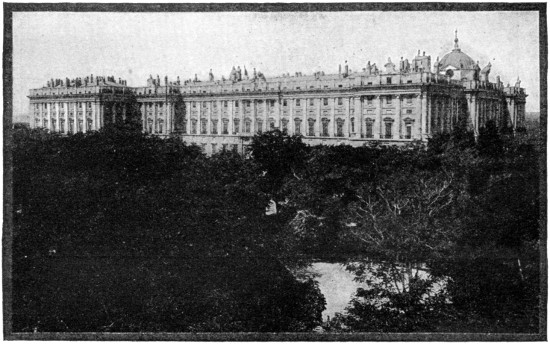
THE ROYAL PALACE, MADRID,
one of the finest in Europe, has a frontage of four hundred and seventy feet, is one hundred feet high, and built of
white stone. Among the thirty rooms on the first floor, the largest and finest is the Hall of the Ambassadors. The
vault was painted by Tiepolo, and represents the exaltation of the Spanish monarchs. The walls are draped with
velvet embroidered with gold, and twelve immense mirrors also decorate it. On the right of the throne, which is
guarded by four gilded bronze lions, is a statue of Prudence, and on the left that of Justice. The chapel is extremely
rich, but not very handsome. There is also a library, a theatre, and the magnificent collection of Flemish tapestries.
Madrid (Span. pron. Madh-reedh´), the capital of
Spain, is situated in the department of Madrid
(part of the ancient province of New Castile),
eight hundred and eighty miles by rail from
Paris. It is built on a treeless, ill-watered plateau,
on the left bank of the Manzanares, two thousand
and sixty feet above the sea-level.
The Manzanares is merely a mountain-torrent
falling into the Jarama, a tributary of the Tagus;
water is brought from the Guadarrama Mountains
by an aqueduct forty-two miles in length.
The general aspect of the city is clean and gay,
while the older parts are picturesque; no trace
now remains of the mediæval city. The new
streets are generally fine, broad, and planted
with trees; the houses well built, lofty, and
inhabited by several families living in flats. A
great feature is the magnificent open spaces, chief
of which is the Prado, running north and south
through the eastern part of the city, and, with
its continuations, three miles long. It contains
four handsome fountains with groups of statuary,
a fine obelisk to commemorate the gallant struggle
with the French (May 2, 1808), monuments to
Columbus, Isabel the Catholic, etc.
The picture-gallery here, founded by Charles
III., is one of the finest in Europe, and contains
many of the masterpieces of Velasquez, Murillo,
Raphael, Tintoretto, Rubens, Teniers, and Van
Dyck. Two other parks are the Buen Retiro, the
fashionable promenade on the east of the city,
and the Casa de Campo on the west. Midway
between its extremities the Prado is crossed at
right angles by the Calle de Alcala, the finest street
in the city, about a mile in length, and leading
from outside the fine triumphal arch rebuilt by
Charles III. to the Puerta del Sol, the square
which is the heart of Madrid; here converge the
principal electric lines, and in it and the streets
branching off from it are situated the principal
shops and places of business.
The finest square is the Plaza Mayor, formerly
the scene of bull-fights; it contains a gigantic
equestrian statue of Philip III., its founder. On
the west of the city are the new cathedral and
the royal palace; the latter, commenced in 1738
to replace the ancient Alcazar, which had been
burned down, was finished in 1764 at a cost of
fifteen million dollars. Other fine buildings are
the palace of justice, formerly a convent; the
houses of parliament; Buena Vista Palace, now
the ministry of war, and the new national bank.
Besides a flourishing university, founded by
Cardinal Ximenes, and two high schools, Madrid
contains numerous municipal schools. Madrid
[566]
is well provided with newspapers and public
libraries, the chief being the National Library,
with more than half a million volumes, and the
library of the university.
The opera house is one of the finest in the
world; all the theaters must by law be lighted
by electricity. The bull ring, situated outside
the gates on the east, is a solid structure seating
fourteen thousand.
Iron founding and the manufacture of furniture,
carriages, and fancy articles are carried on on a
small scale. The manufacture of tobacco employs
many persons, chiefly women. The publishing
trade is important, and books are well
printed and cheap. The old tapestry factory
still turns out beautiful work, as do the potteries
at Moncloa.
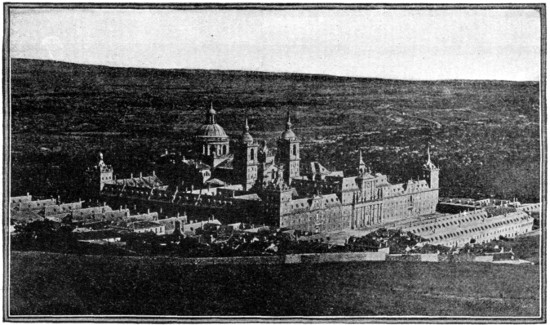
THE ESCURIAL
is thirty-two miles from Madrid. It is called by the Spaniards the eighth wonder of the world. Philip II. built
it in 1685 to commemorate the taking of St. Quentin, and to accomplish a vow which he made to St. Lawrence. This
vast building has fifteen principal entrances, and more than one thousand one hundred windows. It is entirely
built of granite, and its appearance is monotonous and cold. It contains a church, the Capilla Mayor, filled with
royal monuments, the sacristy, a vast vaulted hall with a marble altar ornamented with bronze, the choir, and the
pantheon or vault, where the kings of Spain are buried. The pantheon is reached by a magnificent staircase of colored
marbles. The urn containing the remains of Charles V. was opened in 1870, and the body was even then in perfect
preservation. The library of books and the manuscript library attracts the attention of scholars. The main
entrance to the palace is in the middle of the north façade. The Hall of Battles, is covered with frescos representing
Spanish conquests; and the apartments in which Philip II. lived and died. The Pavilion of Charles IV., called
the Casa del Principe, is a charming little museum of paintings, sculptures, and mosaics. The King’s Seat, where
Philip II. came to sit when presiding over the work of the palace, is also to be seen.
History.—Spain was originally occupied by
Iberian tribes (akin to the present Basque
inhabitants of the north), who were partially
overlaid by invading Celts. The Carthaginians
established themselves in the south of
Spain in the third century B. C. The Romans
appeared in force in the next century, but it
was not till after a fierce and prolonged resistance
from Iberians and Celtiberians that,
under Augustus, the Roman conquest was
complete. Soon Spain, thoroughly Romanized,
was contributing largely to Latin literature and
Roman culture.
The Germanic invaders from the north,
Suevi, Vandals, and Visigoths, crushed the
Roman power in the fifth century A. D., and
Spain became a province of the Visigothic
kingdom (573 A. D.). Then followed the
Moorish conquest, which was very rapid (714-732)
and complete, except in the north and
northwest. The several Christian kingdoms
of Spain: Castile, Leon, Navarre, Aragon, etc.,
as well as Portugal—were formed by the
gradual depression of the Moors; but Moorish
Granada was not conquered till 1492, and
Spain was not united under one rule till 1512.
Spain became a European state with the
union of Ferdinand of Aragon and Isabella of
Castile in 1469, and the New World was
discovered for them. Under the Emperor
Charles V., in the sixteenth century, Spain was
the most important country in Europe; but
the population was unequal to the drain upon
it caused by constant warfare, emigration, and
adverse economical and industrial conditions.
With Philip II., Charles’s son, the decline of
Spain set in, though now for sixty years Portugal
was under the Spanish crown. The Bourbon
dynasty brought complication in the wars
of Louis XIV., and little advantage from the
recovery of Naples and Sicily. The nadir of
Spanish history is in the time of Napoleon,
when Spain, in spite of some national efforts,
was nominally a kingdom, but really a mere
province of the French empire.
In spite of the valiant patriotism shown in
resisting the French, and the ultimate recovery
of national independence through the overthrow
of Napoleon, the history of Spain in
the nineteenth century was in the main
inglorious. In Cuba there had been trouble
since 1895, the final outcome of which was the
disastrous Spanish-American war, leading to
the loss of the greater colonies. The twentieth
century has seen gradual recovery, growing
[567]
toleration, a breach with the Vatican,
revolutionary and repressive movements, and
ambitions in northwest Africa.
In June, 1911, the situation in Morocco led
to the dispatch of a Spanish force to Alcazar.
But the indignation aroused in France at this
action was quite overshadowed by the sensation
caused when it became known that Germany
had sent a warship to Agadir. Labor
troubles in Spain broke out in September, 1911.
Martial law was proclaimed throughout the
country, and a royal decree suspended the
constitutional guarantees, which were not
re-established until October 22. In March,
1912, the ministry was reconstituted, but, in
1916, during the European war, again gave
way over grave questions over neutrality and
internal conditions.
SWEDEN
SWEDEN (Swedish Sverige), a kingdom of
northern Europe, occupies the eastern side of
the Scandinavian peninsula. From 1814 till
the amicable but definitive separation in 1905,
it was associated with Norway under one
crown. Its greatest length, north to south, is
close to 1000 miles, its greatest breadth 300;
its area 170,970 square miles; and its coast
line 1550 miles. Besides many skerry islands,
Sweden owns Gothland and Œland.
Surface.—The country may be generally
described as a broad plain sloping southeastward
from the Kjölen Mountains to the
Baltic. The only mountainous districts adjoin
Norway; the peaks sink in altitude from
seven thousand feet in the north to three
thousand eight hundred feet at the southern
end of the chain. Immediately south of this
point a subsidiary chain strikes off to the
southeast, and, threading the lake region of
central Sweden, swells out beyond into a tableland
with a mean elevation of eight hundred
and fifty feet and maximum of twelve hundred
and forty feet. Fully two-thirds of the entire
surface lies lower than eight hundred feet, and
one-third lower than three hundred feet, above
sea level.
Sweden is separated popularly and geographically
into three great divisions—Norrland,
Svealand, and Gothland. Norrland, in the
north, is a region of vast and lonely forests
and rapid mountain streams, often forming
fine cascades and ribbon-like lakes before they
reach the Gulf of Bothnia.
The central division of Svealand, or Sweden
proper, is a region of big lakes, and contains
most of the mines. Lakes occupy nearly
fourteen thousand square miles, or eight and
two-tenths per cent of the total area; several
of the largest, as Vener, Vetter, Hjelmar,
Mälar, are connected with one another and
the sea by rivers and canals. Lake Mälar
contains some thirteen hundred islands, many
beautifully wooded, with royal palaces or noblemen’s
castles; and its shores are studded with
prosperous towns, castles, palaces, and factories.
Gothland, the southern division, contains a
much higher proportion of cultivated land, and
its wide plains are all under agriculture.
Climate.—The climate of Sweden is continental
in the north, along the Norwegian frontier,
and on the southern plateau. The lakes in
the colder districts of the north are ice bound
for some two hundred and twenty days in the
year; in the south only for about ninety days.
The rainfall is greatest on the coast of the
Cattegat.
Production and Industry.—The principal
articles of cultivation are the various cereals—oats,
rye, barley, wheat—and potatoes. The
forests are very extensive, covering one-half
of the surface of the country, and consisting
of pine, birch, fir; these are of great importance,
supplying timber, pitch, and tar, and
also the chief fuel.
The mineral products are extremely rich:
iron of excellent quality, that known as the
Dannemora iron, being converted into the
finest steel; gold and silver in small proportions;
copper, lead, nickel, zinc, cobalt, alum,
sulphur, porphyry, and marble. There is a
railroad opening up the rich iron ore districts
of Lapland, and mineral trains run from
Gellivare and Kiruna to Lulea on the Gulf of
Bothnia and to Narvik on the Atlantic. Considerable
mines of coal are worked in Scania.
The chief articles of export are timber,
butter, iron, steel, wood pulp, paper, matches,
stone, iron and zinc ores, etc.
People.—The Swedes are a Germanic people,
tall and strong, but with more variety of
characteristics than the Norwegians. The
Swedish language, allied closely to Norse
and Danish, appears in very many dialects.
It has had, especially since the sixteenth century,
an extensive literature.
Almost the whole population is Protestant,
adhering to the Lutheran Church, members of
which alone are permitted to hold public
offices. Education is well advanced in both
countries, public instruction being gratuitous
and compulsory. Sweden has the Universities
of Upsala, which dates from 1477, and of
Lund, founded in 1668, besides the many
scientific and educational institutions of
Stockholm.
Government.—The constitution of Sweden
dates from 1809, but in 1866, when the
separate meetings of the four estates—nobles,
clergy, burghers, and peasants—were done
away, the legislative system was much modified.
The executive power is vested in the king,
acting under the advice of a Council of State;
the legislative in the two Chambers of the
Diet, both of which are elected by the people—the
first for nine years from proprietors, the
second for three years from a lower class. The
administration of justice is entirely independent
of the government.
Cities.—The capital, Stockholm, has a population
(1913) of 382,085. In addition to the
capital, there are fourteen towns with above
20,000 population, viz.: Göteborg, 178,030;
Malmö, 95,821; Norrköping, 46,180; Gefle,
35,736; Helsingborg, 37,385; Örebro, 33,182.
Malmö, on the sound opposite Copenhagen,
is the outlet of the corn granary of the southern
plain; Norrköping, on an inlet of the Baltic,
after Stockholm, is the busiest manufacturing
town of Sweden, its mills being driven by the
rapids of the Motala; Gefle lies north of Stockholm,
and is second only to it as a seaport on
the Baltic side of the country; and Karlskrona,
on the south coast, is the naval arsenal
and headquarters of the fleet of Sweden.
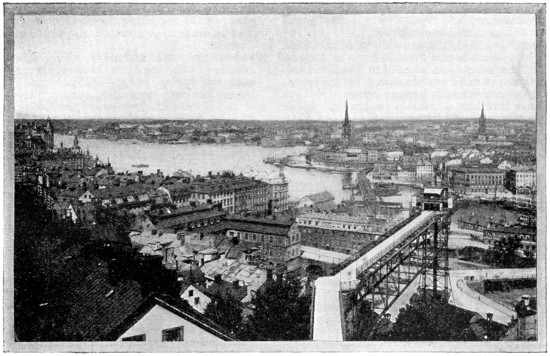
PANORAMA OF STOCKHOLM, CAPITAL OF SWEDEN
Within recent years a network of railways
has been formed over southern Sweden and
Norway, connecting the capital towns with
the ports of Göteborg, Malmö, and many
other points.
Stockholm (l pronounced), stands on several
islands and the adjacent mainland, between a
bay of the Baltic and Lake Mälar, in a situation
that is accounted one of the most picturesque in
Europe.
Its nucleus is an island in mid-channel called
“the Town”; on it stand the imposing royal
palace; the chief church (St. Nicholas), in which
the kings are crowned; the House of the Nobles;
the town house; the ministries of the kingdom;
and the principal wharf, a magnificent granite
quay, fronting east.
Immediately west of the central island lies the
Knights’ Island (Riddarholm); it is almost
entirely occupied with public buildings as the old
Houses of Parliament; the old Franciscan church,
in which all the later sovereigns of Sweden have
been buried; the royal archives, and the chief
law-courts.
North of these two islands lie the handsomely
built districts of Norrmalm, separated from
them by a narrow channel, in which is an islet
with the new Houses of Parliament. In Norrmalm
are the National Museum with valuable
prehistoric collections, coins, paintings, sculptures;
the principal theaters; the Academy of Fine
Arts; the barracks; the Hop Garden, with the
Royal Library, two hundred and fifty thousand
volumes and eight thousand manuscripts, and
with the statue of Linnæus; the Academy of
Sciences; the Museum of Northern Antiquities;
the Observatory, etc.
Ship Island (Skeppsholm), immediately east of
“the Town” island, is the headquarters of the
Swedish navy, and is connected with a smaller
island on the southeast, that is crowned with a
citadel. Beyond these again, and farther to the
east, lies the beautiful island of the Zoological
Gardens. Immediately south of “the Town”
island is the extensive district of Södermalm, the
houses of which climb up the steep slopes that
rise from the water’s edge. Handsome bridges
connect the central islands with the northern
and southern districts; quick little steamboats
go to the beautiful islands in Lake Mälar on the
west, and eastward toward the Baltic Sea, forty
miles distant.
Sugar, tobacco, silks and ribbons, candles,
linen, cotton, and leather are produced, and there
are large iron foundries and machine shops.
Though the water approaches are frozen up
during winter, Stockholm exports iron and steel,
oats and tar.
Stockholm was founded by Birger Jarl in 1255,
and grew to be the capital only in modern times.
History.—Sweden was originally occupied by
Lapps and Finns, but probably (1500 B. C.)
Teutonic tribes drove them into the forests of
the north, and at the dawn of history we find
Svealand occupied by Swedes (Svea) and
Gothland by the Goths.
Gothland was christianized and also conquered
by the Danes in the ninth century,
while Svealand remained fanatically heathen
till the time of St. Eric (twelfth century),
who conquered Finland, henceforth a Swedish
possession. For a century Goths and Swedes
had different kings, but gradually melted into
one people toward the end of the thirteenth
century.
Now arose bitter feuds between king, nobility,
peasants, and universal turbulence prevailed;
agriculture, industry, literature and culture
progressed not at all or hardly existed. Even
after the union of Sweden, Norway, and Denmark
under one monarch (1397), Sweden was
torn by conflicts which lasted down to the
expulsion of Danish oppressors, and the
restoration of Swedish autonomy by the
national rising under Gustavus Vasa (1524),
the ablest prince who had yet ruled the Swedes.
Under him the reformation was heartily
[569]
accepted. Gustavus Adolphus and the Swedes
were its bulwark, not merely at home but in
Germany in the Thirty Years’ war; and by
the acquirement of Bremen, Verden, and
Pomerania, Sweden became (1648) a member
of the empire.
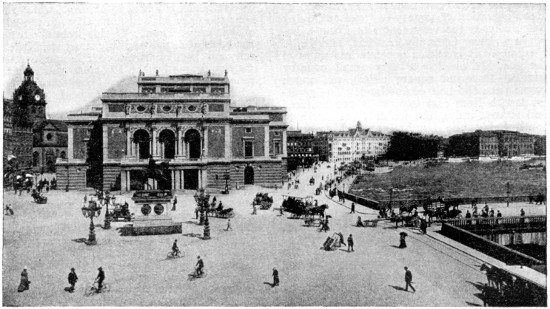
GUSTAVUS ADOLPHUS PLACE AND THE ROYAL THEATER, STOCKHOLM
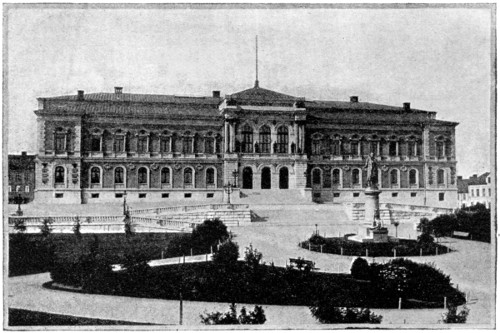
NEW UNIVERSITY, UPSALA, SWEDEN
Upsala is best reached by boat from Stockholm. Here the celebrated university, founded 1477, by Jacob
Ulfson, now magnificently housed, stands in the Drottninggatan. Library, the largest in Sweden, with three hundred
thousand volumes, including the Codex Argenteus, or Gothic Gospel of Bishop Ulphilas (318-388), written in silver
letters on purple vellum, also the Atlantica of Rudbeck, and the sacred book of the Druses, with the Edda Manuscript.
An Observatory is attached to the University. The Botanical Garden has many rare plants and a bust of Linnæus
(Linné), who was professor and physician here, living at Hammarby.
Under Charles XII. and his successor, the
enmity of Denmark, Poland, and Russia
wrested her new conquests from Sweden, and
gave Livonia, Esthonia, Ingermanland, and
Karelia (which had long been Swedish) to
Russia; thus reducing Sweden from the rank
of a first-rate European power. After a
bloody struggle Sweden had to cede Finland
(1809) to Russia. Norway was united by a
personal union (i. e., by the monarch) with
Sweden in 1810; and in 1818 the French
general Bernadotte was elected king (as
Charles XIV.).
Norway’s demand for a larger measure of
home rule led in 1905 to a complete separation.
SWITZERLAND
SWITZERLAND (Ger. Schweiz; Fr. Suisse), is
a confederation of twenty-two cantons, lying
practically in the very center of Europe, between
France, Germany, Austria, and Italy.
No part of it is within one hundred miles of
the sea. It is also a very small country
(sixteen thousand square miles), not much
larger than the half of Scotland. The greatest
length from east to west is two hundred
and sixteen miles, the width from north to
south being one hundred and thirty-seven
miles. The population in 1910 was 3,741,971.
Surface.—The southern boundary lies for the
most part along the highest crests of the Alps,
which descend by the Italian valleys to the
plain of Lombardy; the summits of the
Matterhorn and Monte Rosa rise on the
boundary line, which is crossed by the Great
St. Bernard, Simplon, and Splügen passes.
North of this mass of heights the deep valleys
of the Upper Rhone flowing west to the Lake
of Geneva, and of the Upper Rhine flowing
northeast to that of Constance, mark a deep
trench all across the country. In the heart
of the country rises the mass of the Bernese
Alps or Oberland, the Alps of Uri and Glarus,
with the summits of the Finsteraarhorn and
Jungfrau. Still farther north the country
descends gradually by less elevated mountains
and hills to the undulating lowland of Switzerland
(still one thousand five hundred feet
above the sea), which extends in a curve from
the Lake of Constance on the northeast along
the Valley of the Aar, by the Lakes of Biel
(Bienne) and Neuchâtel to that of Geneva.
Beyond this the long parallel ranges of the
Jura close in the country on the northwestern
frontier.
More than half of the whole country is
covered by rocks, glaciers, forest, and mountain
pasture, and cannot be permanently
inhabited.
Rivers and Lakes.—All the northern part of
the country belongs to the basin of the Rhine
flowing to the North Sea. That river, having
purified its waters in its passage through the
Boden-See or Lake of Constance (partly in
Switzerland), is joined by the Aar, which rises
near the Grimsel, and flows through the lakes
of Brienz and Thun. To this basin also belong
the lakes of Zürich and Zug, Luzerne, Neuchâtel,
and Biel or Bienne. The southwestern
district drains by the Rhône to the Mediterranean,
through the Lake of Geneva or Leman,
which is partly in Switzerland, partly in
France.
The smaller part of the southern boundary
that laps over the Italian valleys of the Alps
includes the head of Lake Maggiore, in Switzerland,
and the upper Ticino, which flows through
it to the plain of Lombardy and the Adriatic.
In the east the boundary embraces only one
valley, which drains to the Danube, the
Engadine, through which the Upper Inn flows
northeastward.
From the elevation at which they rise, and
their rapids, the rivers of Switzerland are of
no value in navigation. The Rhine only
begins to be freely navigable at Basel, where
it leaves the country. The larger lakes, however,
have little steamers plying from shore
to shore; that of Geneva, forty-seven miles
long, has a considerable traffic.
Climate and Scenery.—The climate naturally
varies with the elevation above the sea level,
from that of the perennial snows at an elevation
of about nine thousand feet, downward
through the pastoral alpine region and the
tall pine forests, to the lower lands in which
the chestnut flourishes, and where orchard
fruits, the vine, mulberry, and wheat can be
grown. There is a variation of about thirty-four
and one-half degrees in the mean temperature—between
fifty-four and one-half
degrees Fahrenheit at Bellinzona, and twenty
degrees on the Theodule Pass.
Switzerland has been called the playground
of Europe, and is visited by large numbers of
tourists from all parts of the world, attracted
by its magnificent mountain and lake scenery.
The amount of money
brought annually by
tourists is estimated at
twenty million dollars.
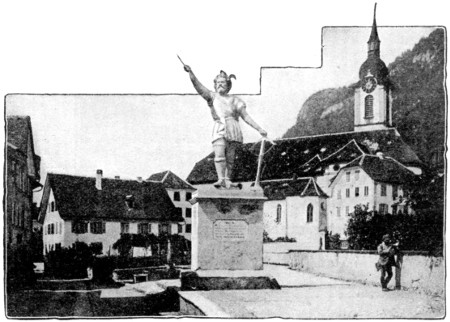
STATUE OF TELL, ALTDORF, SWITZERLAND
Altdorf, near the southern end of Lake Luzerne, and capital of the canton of of Uri, is in
the mountain-walled valley, and is the reputed scene of Tell’s shooting the
apple. The side is marked by a fountain. The colossal statue of Tell is
near by. His birthplace, near Bürglen, is occupied by a frescoed chapel.
Geneva and Lausanne,
on the beautiful lake of
Geneva, Interlaken (between
the lakes of Thun
and Brienz), Luzerne
and the Rigi, Schaffhausen
at the Rhine
fall, Zermatt beneath
Monte Rosa, Lugano in
the heart of the Italian
lake district, are notable
tourist stations; St.
Moritz in the Engadine,
and Leuk (Louèche) in
the Rhone Valley, Pfäffers
in that of the Upper
Rhine, are famous for
their baths. Switzerland
as a whole—with its
mountains, lakes, glaciers,
waterfalls, valleys
and cities—has been
described by an American
poet as a “cluster of
delights and grandeurs.”
Production and Industry.—The forests, which
cover about a sixth of the surface, are of
immense value to the country, where most
of the houses are built of wood. The mountain
pastures give the characteristic employments
of the people of the Alps and Jura, as
herdsmen and shepherds, tending their cattle
and making cheese in the mountain châlets
during summer.
Agriculture is followed chiefly in the valleys,
where wheat, oats, maize, barley, flax, hemp,
and tobacco are produced.
The textile industries are the most important,
the chief centers being Zürich, Basel, Glarus,
and St. Gall. The chief are silk, cotton, and
linen fabrics, besides raw silk. Next comes
the clock and watchmaking industry, established
at Geneva in 1587, which spread to the
cantons of Neuchâtel, Berne and Vaud.
Wood carving was introduced in the Oberland
about 1820. Other manufactures are chemicals,
chocolate, and condensed milk.
Salt, obtained on the banks of the
Rhine, is the only valuable mineral of
the country.
People.—Three-fourths of the population
of Switzerland, occupying all
the center and north of the country, are
Germanic; the remaining fourth belongs
to three branches of the Romanic
family—the French in the west, the
Italian in the south, and the
Rhæto-Romanic in the southeast. A little
more than half of the population is
Protestant, the remainder, chiefly in
the mountain region, Roman Catholic.
Education is widely diffused, especially
in the Protestant districts of the
northeast, where the law of compulsory
education is rigidly enforced. There
are universities at Basel, Berne, Zurich,
Geneva, and Lausanne.
Government.—At the close of the
political storms which raged in Europe
from 1789 till 1815, the affairs of
Switzerland were re-arranged by the
Congress of Vienna, which provided for
the perpetual neutrality and independence
of Switzerland in its twenty-two
cantons. Since 1848 the independent
states or cantons of Switzerland have become
a united confederacy (Bundes Staat), the supreme
legislative and executive authority of
which is vested in a parliament of two chambers,
sitting at Berne—the Stände Rath or
States Council, and the National Rath, the
first composed of two members for each canton,
the second of representatives of the people
according to numbers. The cantons are still,
however, in a great measure, independent
democracies, each making its own laws and
managing its local affairs.
Referendum and Initiative.—These are two
political institutions peculiar to Switzerland,
the furthest developments of democracy yet
attained.
The referendum, which has now spread
throughout the whole Confederation, and by
means of which all legislative acts passed in
the Federal or Cantonal Assemblies may be
referred to the people en masse, was fully
developed in 1874, and it has been put in
operation on an average once a year. The
decisions have generally shown a conservative
rather than a radical tendency on the part
of the people.
Initiative is the exercise of the right granted
to voters to initiate proposals for the
enactment of new laws or for the alteration
or abolition of the old ones.
Cities.—The capital of the Swiss
Confederation is Berne, population (1910)
85,650. In 1910 there were twelve communes
with populations exceeding
20,000: Zürich, 190,733; Bâle, 132,280;
Geneva, 123,160; Berne, 85,650;
Lausanne, 63,296; St. Gall, 37,657;
Chaux-de-Fonds, 37,626; and
Luzerne, 39,152.
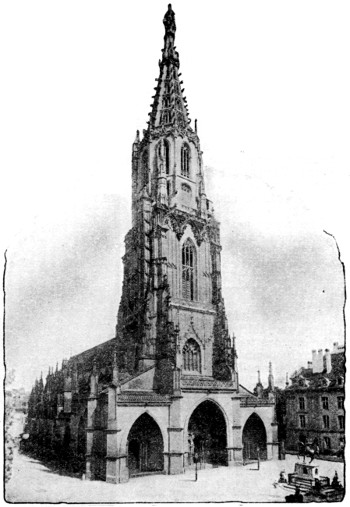
THE BERNE CATHEDRAL
was built in 1421-1573, and restored in 1850, with a richly sculptured
portal, some good stained glass of the fifteenth century, and
a famous organ. From the Terrace in the rear of the Cathedral,
the snowy peaks of the Bernese Alps are seen in a glorious panorama.
Berne, since 1849 the capital of Switzerland,
sixty-eight miles by rail southwest of Basel, is situated
on a lofty sandstone promontory formed by the
winding Aar, which surrounds it on three sides. It
is one of the best and most regularly built towns
in Europe, as it is the finest in Switzerland. The
houses are massive structures of freestone, resting
upon shop-lined arcades. Rills of water flow
through the streets. The view of the Alpine
peaks from the city is magnificent.
The principal public buildings are a Gothic
cathedral, the magnificent Federal Council Hall,
the mint, the hospital, and the university. Berne
has an interesting museum, and a valuable public
library of fifty thousand volumes.
It was founded in 1191, was made a free imperial
city in 1218, under Frederick II.; and between
1288 and 1339 successfully resisted the attacks of
Rudolf of Hapsburg, Albert, his son, and Louis of
Bavaria. The “Disputation of Berne” between
Catholics and Reformers in 1528 prepared the
way for the acceptance of the reformed doctrine.
On account of the traditionary derivation of its
name (Swabian bern, “a bear”), bears are
maintained in a public bear-pit.
History.—The original inhabitants of Switzerland
were the Celtic Helvetii, and the Rhætii
of doubtful affinity. Both were conquered by
Julius Cæsar and the generals of Augustus,
and Romanized. Overrun by the Burgundians
in the west, and their Germanic kinsmen the
Alemannians in the east, Helvetia became subject
to the Frankish kings and were christianized
in the seventh century.
Most of the country was subsequently part
of the Holy Roman Empire; and in 1273 a
Swiss noble, Rudolf of Hapsburg in Aargau,
became German emperor. Soon after his
death (in 1291) the inhabitants of Uri, Schwyz,
and Unterwalden formed a league to defend
their common interests, and in 1315 crushed
an Austrian army at Morgarten. In 1332
Luzerne joined the alliance, and in 1353,
Berne, Zürich, Glarus, and Zug. The Austrians
were again routed in Sempach
in 1386, and in 1388 at
Näfels.
The Swiss next had a fierce
but triumphant struggle with
Charles the Bold of Burgundy,
whom they routed at Grandson
and Morat in 1476, and finally
at Nancy (where Charles was
slain) in 1477.
When the Reformation began
there were thirteen cantons, and
the cantons took opposite sides
from the beginning, not without
serious turmoil and bloodshed.
The treaty of Westphalia in 1648
recognized Switzerland as an independent
state. Some of the
cantons were strictly aristocratic
and some highly democratic, and
there was much discontent long
before the French Revolution,
when, in 1798, between civil
strife and French armies, the
old republic (or rather alliance)
came to an end.
The Helvetic Republic of nineteen
cantons, under French auspices,
endured till 1805; then
a new republican constitution
was adopted, the Federal Pact
of twenty-two cantons. On Napoleon’s downfall,
Valais, Neuchâtel, and Geneva, which
had been incorporated with France, were
restored, and Swiss neutrality and inviolability
were recognized by the treaty of Vienna in
1815. Religious troubles led to a Catholic
league in 1844, which was suppressed by the
Federal forces in 1847. The present constitution
was adopted in 1848, but revised in 1874.
In 1891 a demand for popular initiative for
measures was carried. In 1908 Switzerland
entered into an international convention for
compulsory arbitration at the court of the
Hague.
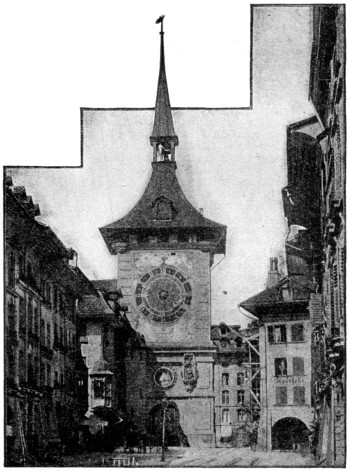
BERNE CLOCK TOWER,
famous for its Bear Chimes—figures which perform every time the
clock strikes.
TURKEY, or Ottoman Empire
TURKEY, or Ottoman Empire, comprises
the wide but heterogeneous territories really
or nominally subject to the Osmânlî Sultan, in
Europe, Asia, and Africa. These territories,
which once extended from the Danube to the
cataracts of the Nile, and from the Euphrates
to the borders of Morocco, have been greatly reduced
in the nineteenth and twentieth centuries.
Asiatic Turkey is now the true center of
gravity of the empire; it includes Anatolia
(the great plateau of Asia Minor), the lowlands
of Mesopotamia, the highlands of Kurdistan
and Armenia, and the island of Samos.
The total area of the empire has been estimated
as follows:
| Area in Square Miles |
| Turkey in Europe |
12,000 |
| Turkey in Asia: |
| Anatolia |
193,800 |
| Armenia and Kurdistan |
72,600 |
| Mesopotamia and Syria |
244,460 |
| Turkish Arabia |
172,000 |
| Total |
694,860 |
| Estimated Population |
| Turkey in Europe |
2,755,000 |
| Turkey in Asia: |
| Anatolia |
9,175,000 |
| Armenia and Kurdistan |
2,500,000 |
| Mesopotamia and Syria |
4,650,000 |
| Turkish Arabia |
1,100,000 |
| Total |
20,150,000 |
Of the above totals only 700,000 square
miles (with a population of 21,000,000) are
directly under Turkish government.
European Turkey consists of the provinces
of Adrianople, Constantinople and Chatalja,
and is separated from Asia by the Bosphorus
at Constantinople and by the Dardanelles
(Hellespont), the only political neighbor being
Bulgaria, on the northwest.
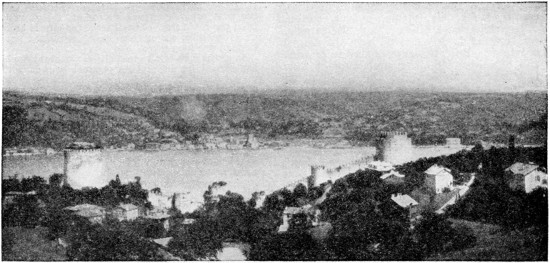
PANORAMA OF THE BOSPHORUS AT THE NARROWEST PART
The Bosphorus, the straight connecting the Sea of Azov with the Black Sea, is so-called after Io, who swam
over it in the shape of a heifer. On the western shore is the city of Constantinople. The Bosphorus at this point
is about five hundred and fifty yards wide.
Physical Features.—Turkey in Europe is a
mountainous country and the chief physical
features as it is now limited is the strait of Bosphorus
and the Dardanelles. The Bosphorus,
which guards the approach to the Black Sea
from the Sea of Marmora, is at the same time
the focus of all maritime trade between the
Mediterranean and Russia, etc., as well as of
the overland routes from Europe into Asia
Minor. It has fitly been likened to a tortuous
river valley over whose wooded banks are
scattered forts and towers, cities and villages,
castles and parks. The southern gate of the
Sea of Marmora is the Dardanelles, which gives
an opening into the Ægean.
Turkey in Asia is still more mountainous.
The two almost parallel ranges, Taurus and
Anti-Taurus, which are the basis of its mountain
system, cover almost the whole of the
peninsula of Asia Minor or Anatolia with
their ramifications and offshoots, forming the
surface into elevated plateaus, deep valleys,
and enclosed plains. From the Taurus chain
the Lebanon range proceeds southwards
parallel to the coast of Syria, and, diminishing
in elevation in Palestine, terminates on the
Red Sea coast at Sinai.
The Euphrates, Tigris, Orontes, and Kizil-Ermak
are the chief rivers. (See Asia
Minor.)
Climate.—The climate of Turkey in Asia is as
varied as the physical features. The great
plateau on the north has a distinctly continental
climate, rigorous severe winters with
intense scorching heat in summer; in the
eastern part of the plateau region the mountains
are covered with snow for two-thirds of
the year, and some of the principal ranges are
capped with perpetual snow; here the peasants
build their dwellings underground to escape
the severity of the seasons. Towards the west
the winters are not quite so severe, but the
variations of temperature are excessive.
Products and Industry.—The soil of European
Turkey is for the most part very fertile, and
the cultivated products include most of those
usual in central and southern Europe—maize,
rice, rye, barley, millet, besides tobacco
madder, and cotton. The mineral products are
iron in abundance, argentiferous lead ore, copper,
sulphur, salt, alum, and a little gold; some
deposits of coal have been found, but none are
worked. Sheep-breeding is largely carried on.
In Asiatic Turkey the mineral wealth is
great; coal and iron are found together in
considerable quantities; rich mines of copper
exist in the mountains on the south of the
Black Sea, and in the Taurus near Diarbekir
lead and silver are found at intervals along a
line connecting Angora, Sivas, and Trebizond
in the north, and the eastern Taurus in the
south; green, black, and white marble, and
the finest quality of granite, are to be had in
many parts of the mountain section.
With a fertile arable soil and a suitable
climate, nearly every agricultural product
flourishes. Oats, barley, and wheat are
produced in great abundance. Almost all
kinds of garden produce and orchard fruits
abound, grapes and oranges are to be had all
round the Mediterranean coast, as well as the
choicest tobacco, opium, valonia and madder.
The mulberry is everywhere cultivated for
feeding the silkworms, and cotton is grown in
most of the western valleys. Vast groves of
boxwood and other valuable trees clothe the
seaward slopes of the hills. Dates are produced
for export in the Babylonian plain,
where wheat is indigenous. Petroleum and bitumen
springs are found in the Euphrates valley.
Angora is famous for its flocks of goats,
which produce the mohair of commerce, and
enormous quantities of wool come from the
countless flocks of sheep tended by the wandering
Bedouin and Kurd shepherds.
There are at present no manufactures worth
mention. The sponge fisheries of the Mediterranean
are a source of great wealth.
Commerce.—The exports include tobacco,
cereals, fruits, silk, opium, mohair, cotton,
coffee, skins, wool, oil-seeds, valonia, carpets,
etc., and are largely derived from the Asiatic
provinces. Recently large quantities of wine
and of raisins for the manufacture of wine
have been exported. Since the establishment
of the Anatolian railway by German enterprise
the export of cereals, chiefly malting
barley, has largely increased.
People.—The population consists of a singular
mixture of races. Turks, Greeks, Slavs, and
Albanians are largely represented, besides
Armenians, Kurds, Arabs, Tartars, Jews,
Circassians, and Frank residents. (See Book
of Races.)
The established religion is Islam or Mohammedanism,
but most other creeds are recognized
and tolerated. The Protestant religion
was for the first time officially recognized in
1845.
Education in all departments has of late
been notably improved and has largely contributed
to the complete overthrow of the antiquated
and despotic system of government.
Government.—Until 1908 the government of
Turkey was a pure despotism. An amazing
change was swiftly and peacefully carried
through in the autumn of that year. In connection
with the troubles in Macedonia between
Christians and Moslems, Greeks and
Bulgarians, a Turkish military revolt took
place, which, under the guidance of the
“Young-Turkish” party (mostly educated
abroad), became a great national movement.
The sultan, overawed, had to acquiesce;
parliamentary government was planned and
carried out; equality before the law proclaimed
to all races and religions of the empire; and a
large measure of local self-government promised
not merely to Turks but to Greeks,
Bulgarians, Albanians, Armenians, Syrians,
Kurds and Arabs.
The enormous difficulties of the crisis were
complicated by Bulgaria proclaiming its independence,
and Austria-Hungary annexing the
provinces of Bosnia and Herzegovina. But
government by a national assembly has taken
root in Turkey.
The term “Sublime Porte,” sometimes given
to the Turkish government, is derived from
the name of the chief gate of Constantinople.
Cities.—Of the towns by far the most populous
is the capital, Constantinople (1,200,000),
while after it come Adrianople (83,000), which
by reason of its central position in the Maritza
valley, commands an extensive inland commerce,
Midia, and Gallipoli, the chief port on
the Dardanelles.
The principal towns of Asiatic Turkey are
Smyrna, 260,000; Bagdad, 150,000; Damascus,
150,000; Aleppo, 125,000; Beyrout,
120,000; Scutari in Anatolia, 80,000, and
Broussa, 80,000.
Constantinople was founded in 330 A. D. by
Constantine the Great, from whom it derives its
name, on a site partly occupied by the ancient
Greek colony of Byzantium. The Turks call it
Istambol or Stambol.
The city stands on a hilly promontory of triangular
shape, having the Sea of Marmora and the
Bosphorus on the south and east, and on the
north the Golden Horn, an arm of the Bosphorus.
It is thus surrounded by water on all sides but
the west, where a strong wall shuts the city off,
from the mainland. Like Rome, the city is built
on seven hills, six of them being separated portions
of one long ridge.
As in the case of all great cities, Constantinople
has spread far beyond its original bounds, and
may be said to include towns originally quite
separate from itself.
Constantinople is excellently situated, more
advantageously, perhaps, than any European
city but Naples.
From the outside its appearance is most picturesque
and imposing. At the taking of the
city in the fifteenth century most of the churches
were destroyed, and mosques were erected in the
most prominent situations. Cupolas and minarets,
with graceful curves and soaring spires, combine
with lofty cypresses to give the city an air
of unique grace, and to invest it with the mysterious
glamour of the oriental world.
Within, however, the appearance is not so
pleasing. The streets form a labyrinth of dirty,
crooked, and ill-paved alleys, while most of the
houses are low and are built of wood or rough
stone. During the last half century the aspect
of things has become much more European. The
streets, under western influence, have been
widened and improved, lighting at night is common,
and a European style of building has been
introduced, even for the sultan’s palace. Cabs
and electric cars are to be seen in most parts,
while the old camel service has entirely disappeared.
The dress of the people has changed in
the same direction. The streets are generally
dull in appearance, almost all animation being
concentrated in the bazaars.
Constantinople consists of two distinct parts,
besides more distant suburbs—Constantinople
proper or Stambol, and what may be termed
Christian Constantinople because it is there that
the Christian colonies chiefly congregate. The
two are separated by the Golden Horn, a safe
harbor, capable of accommodating twelve hundred
vessels, and so deep that the largest ironclads of
the Turkish navy find enough water for their
draught quite close to the shore.
Stambol or Turkish Constantinople lies on the
south side of the Golden Horn, and Christian
Constantinople lies on the north side; the two
are connected by bridges. Stambol is on the
site of Byzantium, and the old walls run a circuit
of fourteen miles from the grim but now ruined
and disused castle of the Seven Towers—where
many sultans met their deaths at the hands of
their mutinous soldiery, and where foreign ambassadors
were imprisoned upon declaration of
war—to the Golden Horn, then along its south
shore to Seraglio Point, and so back to the Seven
Towers, close along the margin of the Propontis.
Here are nearly all the monuments and antiquities
worth seeing in Constantinople.
First, next the Seraglio, stands Agia Sophia,
Saint Sophia, the church dedicated by Constantine
to “Eternal Wisdom,” and rebuilt with added
splendor by Theodosius and by Justinian, and
now converted into a cathedral mosque. Outside
it is not worth a second glance, but within,
the airy grace of its stupendous dome, and the
beauty of its marbles and mosaics fascinate and
amaze the vision.
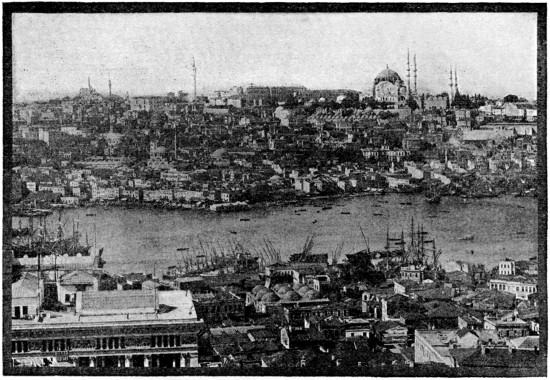
PANORAMA OF CONSTANTINOPLE
As the steamer runs up the Bosphorus, the white buildings and glittering minarets of Constantinople come into
view; with the mosque of Santa Sophia, Galata Tower and Pera, the Sultan’s Palaces at Beshiktash, with Scutari
Suburb on the right, and then, rounding Seraglio Point, it glides at half speed into the Golden Horn, or harbor of
Constantinople. At this moment, if the weather be fine and clear, a striking panorama opens to the eye of the voyager.
The Golden Horn divides the city into two sections; Stamboul to the left, and Galata and Pera to the right. It is a
bay, or amphitheater, surrounded by hills which are covered with buildings, domes, minarets, and palaces, embosomed
by cypress groves, with hundreds of vessels and caiques skimming in all directions.
Next, but not less beautiful, is the Suleymaniya,
the mosque which the Great Suleyman and his
architect Sinan erected on the model of St. Sophia,
but with Saracenic ornament and a loftier though
not quite so expansive dome. Some of the monolithic
columns are remarkable for their size and
beauty, and the general effect is even more imposing
than that of St. Sophia.
Scarcely less stately is the Mosque of Sultan
Ahmed I. in the Hippodrome; distinguished without
by its six minarets (instead of the usual four),
and within by the four gigantic columns which
support the dome. Here the official celebrations and
formal processions take place at the great festivals.
The mosque of the conqueror, Mohammed II.,
is also notable, though it has been greatly altered
in restoration.
There are altogether some eight hundred mosques
in Constantinople, and numerous chapels;
but very few of them present features of special
interest, except sometimes in the beauty of their
wall tiles, of the Rhodian style, for the manufacture
of which the suburb of Eyyûb was famous.
The remains of the Greek churches are more
interesting, and the Fanar, or Greek quarter of
Stambol, recall the memories of many distinguished
Fanariote statesmen; but among the
relics of ancient Constantinople none is more
striking than the Hippodrome or “Horse Manège”,
originally a circus surrounded by marble
seats, long since removed, but still showing remains
of antiquity, such as the famous column
of the Three Serpents which once stood at the
Temple of Delphi, and supported a gold tripod
made out of the spoils taken by the Greeks at the
battle of Platæa, but was removed to his new
capital by Constantine.
Christian Constantinople, on the north side of
the Golden Horn, comprises Galata, Pera, and
Tophâna. Galata is pre-eminently the merchant
quarter, founded by a colony of Genoese merchants
in 1216. The Tower of Galata, a Genoese
erection, serves the same purpose as the Seraskier’s
Tower on the opposite side in giving alarms
of fires. A tunnelled railway drags passengers
up the steep ascent to Pera.
Pera is the aristocratic quarter; here are all the
embassies and consulates. The steep and badly
paved Grande Rue is lined with fair if expensive
shops, and has an opera house, many cafés and
restaurants, besides most of the principal hotels.
Turks preponderate at Tophâna, which is so
named from its cannon foundry.
The magnificent palace of Dolmabagché is on
the brink of the Bosphorus. Other suburbs are
Kâsim Pasha, on the Golden Horn, the seat of
the admiralty; Hasköi, and the picturesque
village of Eyyûb.
Along the European shore of the Bosphorus are
the summer resorts of Therapia and Biyukderé.
The Asiatic shore is also lined with settlements
from Scutari to Candili. The new palace of
Yildiz Köshki stands at the top of the hill of
Beshiktâsh, beyond Pera.
The commerce of Constantinople is increasing
rapidly, though most of it is in the hands of
foreigners, especially of Greek and Armenian
merchants. Exports are chiefly cereals, carpets,
silk, wool, hides, and all kinds of refuse and
waste materials such as horns, hoofs, skins, bones,
old iron, etc. Several hundreds of tons of the
sweetmeat known as “Turkish delight” are also
sent yearly to countries of Europe and America.
The manufactures have all taken their rise
during the last twenty years or so, and even now
only that of cloth making has made much headway.
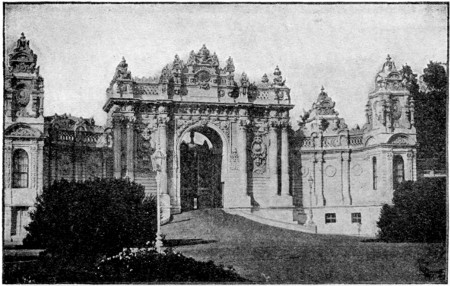
ENTRANCE TO DOLMA-BAGTCHE PALACE
This palace, on the shore of the Bosphorus, was built and inhabited by Abdul-Medjid
(1839-1861), is beautifully decorated in the interior and has a splendid throne room.
History.—The Osmanlis or Ottoman Turks
sprang from a small clan of the Oghuz, who
assisted the Seljûk sultan of Iconium, early in
the thirteenth century, to resist the Mongol
avalanche.
In the fourteenth century, the Turks under
Osmân or Othmân conquered the Seljûk kingdom,
and became known as Osmânlis or Ottomans.
By 1336 they pushed their way to the
Hellespont; under Murâd I. (Amurath) they
occupied Adrianople and Philippopolis, received
homage from the kings of Servia and Bulgaria,
and practically held all the Balkan peninsula
except Constantinople, which, after much
fighting, fell before Mohammed II. in 1453.
In the same century they conquered Albania,
Greece, and the Crimea; and in the sixteenth
century Syria, Egypt, Tunis, Hungary, and
South Russia, and had wars with the Russians,
Persians, and Venetians.
Their star began to decline in the seventeenth
century; in 1682 they were driven back
from Vienna, and lost Hungary, Transylvania,
and Podolia. In the eighteenth century the
Russians were their most successful enemies,
wresting from them the territories from the
Dniester to the Caspian. Greece attained
independence in 1828, though Egypt failed to
throw off its allegiance. The Crimean war
(1854-1857) was fought in aid of the
Turks against the Russians.
The next great crisis was the Russian
war of 1877-1878. The worst
Armenian massacres were in 1895-1896.
Turkey held her own against
Greece in 1897.
Abdul Hamid was deposed and
constitutional government nominally
established in 1908. But unrest and
intrigue still prevent settled conditions.
Until the disastrous war of 1912-1913
with the States of the Balkan
League (Bulgaria, Greece, Servia,
and Montenegro) the European
dominions of Turkey
extended westwards
to the Adriatic
and northwards
to Bosnia-Herzegovina
(Austria).
Under the Treaty
of London in 1913
the northwest portion
of Turkey was
a line drawn from
Enos, in the Ægean,
to Midia, in the
Black Sea, thus excluding
Adrianople,
which had capitulated
to the Bulgarians
after a prolonged
siege.
During the second
Balkan war
(Bulgaria against
the other members
of the Balkan States)
Turkey took advantage
of the military
difficulties of Bulgaria
and reoccupied Adrianople, thus
recovering a considerable portion of
the province of that name. In 1911-1912
Turkey lost the remaining portion
of her African possessions
through the occupation by Italy of
Tripoli and Cyrenaica, which were
ceded under the Treaty of Ouchy(1912).
Turkey joined forces with the
Austro-Germans in November, 1914,
and attacked Russia and invaded
Egyptian territory. Far more important
than any of the Turkish operations,
however, was the attempt
of England and France, in 1915,
to force the passage of the Dardanelles,
so as to take much needed supplies
of arms and ammunition to
Russia and in turn enable her to
export the enormous stocks of
wheat which had piled up at her Black
Sea ports.
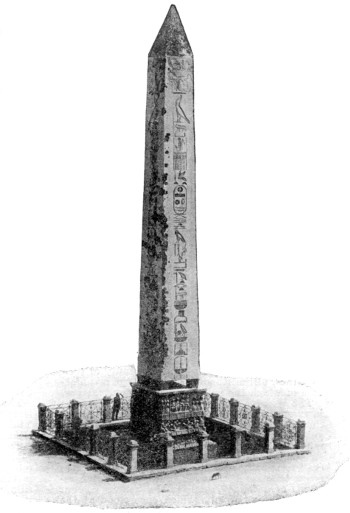
EGYPTIAN OBELISK, CONSTANTINOPLE
This Obelisk from Thebes, of rose colored granite, sixty feet
high, was transported hither by Theodosius the Great, A. D. 390-395,
and shows traces of bas-reliefs of that date, and Egyptian
hieroglyphs thirty centuries old.
A combined English and French
fleet, therefore, attempted to force
the passage of the Dardanelles,
battering at the Turkish forts from
February 21 to March 18, when they
attempted to force the Narrows,
[577]
but were repulsed, with the loss of the British
battleships Irresistible and Ocean, and the
French battleships Bouvet and Gaulois, in
addition to serious injury to a number of other
warships engaged.
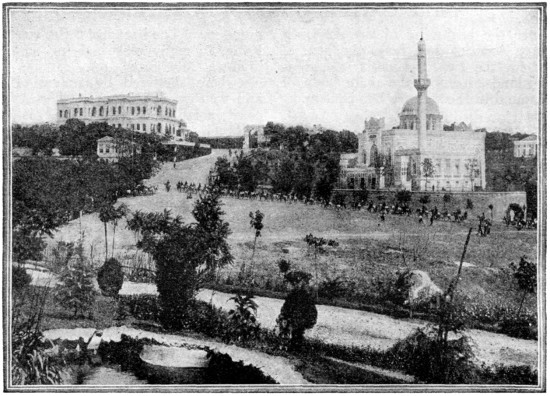
YILDIZ PALACE AND THE BEAUTIFUL HAMIDIEH MOSQUE,
in the Beshiktash suburb, some distance north of Galata. The present Sultan resides in the Palace of Yildiz.
A joint land and sea expedition was subsequently
sent to accomplish what the fleets
had failed to achieve.
The most desperate fighting continued there
from the beginning of May. The allies employed
British and French regulars—the
famous Foreign Legion of France, British
colonials from Australia and New Zealand, and
troops from Egypt, the Soudan and North
Africa—but they failed to capture the summits
of the hills that command the Narrows and the
great Turkish forts.
The land forces had the constant support of
British and French fleets, which engaged the
defenses at close range.
On May 11 the British battleship Goliath was
sunk, and two weeks later a German submarine
made its way through the straits of
Gibraltar, succeeded in torpedoing the British
battleship Triumph and the Majestic and
Agamemnon.
On January 9, 1916, the British and French
forces entirely withdrew from the Gallipoli
Peninsula, and the attempt to force the
Dardanelles was abandoned.
Internal Communications.—The railways
of Turkey have made great strides in recent
years. Constantinople is now in direct communication
with Salonica and Monastir by
means of a coastal line, and with Sophia,
Nisch, and Belgrade, by means of a line passing
up the Maritza Valley, through Adrianople
and Philipopolis, and thence over a pass between
the Balkans and Rhodope Mountains.
Salonica is further united with Uskub and
Mitrevitza.
The postal and telegraphic services are a
long way behind those of other European
countries, and foreign nations still find it
necessary to maintain their own post-offices in
the large towns and ports.
Bagdad Railroad.—The most important
step in the industrial progress of Turkey in
modern times is the concession for the construction
of the Bagdad Railroad, which, when
completed, will connect the Mediterranean
with the Persian Gulf.
By a provisional convention, preference was
given to a German company in 1903. England
had a particular interest in the proposed
scheme, as the line suggested would provide a
short route to India; accordingly, in 1903, the
British government objected to the railway
being placed under German control, and discussion
followed with a view to putting the
line under international control. By the
agreement of 1903 it was decided the German
group should control forty per cent of the
capital, the French, through the Imperial
Ottoman Bank, thirty per cent, the Austrian,
Italian, Swiss, and Turkish twenty per cent,
and the Anatolian Railway ten per cent. In
1904, one hundred and twenty-four miles of
the line were completed, from Konieh, through
Eregli, to Bugurlu. In 1908 sanction was given
to extend the line eastwards from Bugurlu
across the Taurus to Adana.
The total length of the line will be one thousand
five hundred and fifty miles and will run
through Aintab and Berejik to Mosul, thence
along the right bank of the Tigris to Bagdad.
Since the beginning of the sixteenth
century America has been the general
name for the two continents and adjacent
islands, forming the main body of
land found in the western hemisphere.
Position and Extent.—North America
forms the northern section of the “New
World” discovered by Columbus. It is
separated from Europe by a sea nine
hundred and thirty miles broad, from
Asia by Bering Strait sixty miles across,
and extends from the Arctic Ocean nearly
to the equator.
The main mass is triangular in shape,
and its outline varied by large peninsulas,
broad gulfs and numerous inlets. Development
of coast-line, twenty-eight
thousand one hundred and thirty miles.
Length, four thousand five hundred
miles; breadth, three thousand one
hundred miles. The area of the continental
mainland is estimated at seven
million one hundred and forty-six thousand
six hundred and forty-one square
miles; the entire area, including Greenland,
the Arctic Archipelago, the West
Indies, Newfoundland, and other islands,
at over nine million square miles.
Islands.—It is customary to regard
Greenland as a part of America, while
the adjacent island of Iceland, though
partially in the western hemisphere, is
usually associated with Europe. The
other principal American islands in the
Atlantic are Newfoundland, Cape Breton,
Anticosti, Prince Edward Island,
Long Island, the Bermudas, the Antilles
or West Indies, Joannes, Staten Island
and South Georgia.
In the Pacific are the Aleutian Islands,
Kadiak, the Alexander and Queen Charlotte
groups, Vancouver and other British-Columbian
Islands, the Santa Barbara
group, Bevilla-Gigedo, the Pearl
Islands, and others in the Gulf of
Panama, the Galápagos, Juan Fernandez
and the associated islets, Chiloe and the
Chonos Archipelago. In the Arctic Ocean
there are many large but unimportant
islands. (See Map of Comparative Size
of Islands and Table of Areas.)
Coast-line.—The coast-line of North
America on the west is almost everywhere
high and rocky. To the south of Puget
Sound good harbors are rare, but
British Columbia and Alaska have great
numbers of good seaports, the coast-line
being, in many places, deeply cut with
high-walled fjords, or “canals,” and
elsewhere sheltered by ranges of high
and well-wooded islands. The Atlantic
coast, north of New York Bay, is generally
rocky and well sheltered with islands,
and has abundance of good natural harbors;
but south of the parallel of New
York the coast of the mainland is almost
everywhere low and sandy. Many of
the best ports are formed by river-mouths,
and have sandbars across their
entrances. Nowhere else in the world is
there any such extent of low and sandy
coast as on the Atlantic and Gulf seaboards
of the United States.
Surface.—The western mountain-system
of North America comprises a very
great number of minor ranges, mostly
having a north and south direction. The
main chain (Sierra Madre) cannot be
said to preserve an unmistakable identity
throughout. The Coast Range, the Sierra
Nevada, and the Cascade Mountains are
the most noted of the western parallel
ranges; they all lie on the Pacific slope,
and contain some of the highest of North
American peaks. The elevated plateau
called the Great Basin (chiefly in Utah
and Nevada), contains the Great Salt
Lake and several smaller bodies of
strongly saline water, evidently the
remains of a much larger lake which once
sent its waters to the sea. The eastern
or great Appalachian mountain-system
has a general direction nearly parallel
with the Atlantic coast-line.
North of the St. Lawrence River is
seen the vast and complicated Laurentian
mountain-system, which extends
from the Atlantic westward to near Lake
Superior.
The highest summits are Mt. McKinley,
in the north; Mt. Harvard, in the
Rocky mountains; Mt. Whitney, in the
Sierra Nevadas; and Mt. Popocatepetl
or Peak of Orizaba, in Mexico. (See
Tables of Mountain Peaks.)
Rivers and Lakes.—In the Rocky
Mountain region of Canada, the great
rivers, Yukon, Fraser, Columbia, Saskatchewan,
and Mackenzie, take their rise.
Between these mountains and Hudson
Bay, a girdle of vast lakes, or inland seas
(Great Bear, Great Slave, Athabasca,
Deer Lake, Winnipeg, and others), form
a regular succession running from the
Arctic Circle to Lake Superior, the first
of a wonderful chain of great sea-like
expansions of the Upper St. Lawrence
(the others being Michigan, Huron, Erie
and Ontario). North of the St. Lawrence
system almost the whole country is
thickly studded with lakes, which, with
their connecting streams, form a network
of important waterways traversable by
canoes and boats.
The Atlantic slope of the United States
is well supplied with water, and many of
its streams afford extensive navigation.
The Hudson is noted for its fine scenery;
the Potomac is one of the noblest of
American rivers; and important streams
flowing to the Atlantic are the St. John,
the Penobscot, the Kennebec, the Merrimac,
the Connecticut, the Delaware, the
Susquehanna, the James, and the St.
John’s, nearly all navigable in their lower
courses.
The chief rivers flowing to the Gulf of
Mexico are the Appalachicola, the Mobile,
the Pearl, the great Mississippi, the
Sabine, the Trinity, the Brazos, the
Colorado of Texas and the Rio Grande.
Of the many large Alaskan rivers the
principal are the Yukon and the Kuskoquim.
The Fraser is a swift and strong
river; the great river Columbia is noted
alike for its navigation, its salmon
fisheries, and its enormous cataracts.
The Rio Colorado, whose waters flow to
the Gulf of California, traverses a desert
plateau. Here nearly every watercourse
runs in a deep-walled cañon, a narrow
valley with precipitous sides, often of
prodigious height.
In the plateau of Central America
the largest lake is that of Nicaragua,
nearly equal to Ontario in extent, and
only one hundred and thirty-one feet
above the level of the sea. (See further
under the respective countries of North
America.)
Climate.—Largely determined by the
direction of the mountain ranges. Five
climatic regions, viz., an arctic region,
whose mean temperature is less than
thirty-two degrees Fahrenheit; an Atlantic
temperate region, extending as far as
the Mississippi, with abundant rains and
dense woods; an inland temperate region,
dry, with steppes or prairies; a Pacific
coast region, and a tropical region.
Political Divisions.—The political
divisions of North America are:
(1) Danish America,[8] which includes
Greenland and three small islands of the
Virgin group in the West Indies.
(2) British North America, in which
division we may place the Dominion of
Canada, Newfoundland, Labrador, the
Bermudas, the numerous British West
Indian islands, and British Honduras.
(3) The United States, including the
detached territory of Alaska.
(4) Mexico.
(5) The Central American republics
of Honduras, Guatemala, Salvador,
Nicaragua, and Costa Rica, together with
Panama—unless its southern part be
regarded as belonging to the South
American continent.
(6) The West Indian republics of
Hayti and San Domingo.
(7) The Dutch West Indies.
(See the articles on the separate states
and colonies.)
THE UNITED STATES
The republic of the United States is by far
the most populous, wealthy, and progressive
country of all the New World.
Location and Extent.—It occupies the most
valuable portion of the North American continent,
the whole of it (with the exception of
the territory of Alaska) lying within the
temperate zone, between Canada on the north
and Mexico on the south, and reaching across
from the Atlantic to the Pacific Ocean.
Its boundary toward the Canadian Dominion
passes through the Haro, or northern channel
of the Strait of San Juan de Fuca, south of
Vancouver Island, and thence along the forty-ninth
parallel of latitude to Lake Superior;
then midway through the center of the Great
Lakes to the St. Lawrence, and down that
river to the forty-fifth parallel, and an irregular
boundary which separates New Brunswick
from the States of New York and Maine,
terminating at Passamaquoddy Bay.
In the south, the Mexican frontier runs from
the Pacific coast, northward of the peninsula
of California, to the Rio Grande del Norte,
which it follows to the Gulf of Mexico.
From Atlantic to Pacific, the breadth of the
United States is not less than twenty-five
hundred miles; and from north to south the
country extends nearly seventeen hundred
miles.
Surface.—The surface of the United States
from east to west may be divided as follows:
(1) The Atlantic Plain, which extends from
the coast to the Allegheny Mountains. (2)
[580]
The Mississippi Valley and Great Central
Plain, which extends from the Allegheny
Mountains west to the Rocky Mountains.
(3) The Western Highlands. (4) The Pacific
slope, which extends from the Rocky Mountains
to the Pacific Ocean.
Mountains and Plains.—The chief mountain
systems are the Appalachian region in the
east and the Rocky Mountains in the west.
The Appalachian System begins in the
northern part of New England (in Maine
without the appearance of regular ranges) and
New York, and extends southwestward to
Alabama and Georgia, being divided by the
Hudson River valley and Lake Champlain,
and that of the Mohawk River into three
distinct sections.
A coast-plain extends from its eastern base
to the Atlantic. It is narrow in Maine, where
it terminates in a bold rocky coast indented
by bays, and broken into projecting promontories
and islands. South of Massachusetts
the coast becomes lower and more sandy, and
the plain grows gradually wider, with the
exception of a narrow belt at New York, until
in North Carolina it attains a width of two
hundred miles.
In the southern part of New England it is
characterized by hills, and below New York
by a distinct coast region and a more elevated
slope. This higher region, which is in Virginia
and thence southward, is marked by a somewhat
abrupt terrace, varies in altitude from a
few hundred to more than a thousand feet,
and is known as the Piedmont plateau. The
lower coast region is seldom more than one
hundred feet above the sea. It has a sandy
soil, and in many places there are large swamps
near the coast. Much of this swampy country
is uninhabitable, but when reclaimed, as it
has been in many parts of North and South
Carolina, it makes valuable rice-land. Many
acres of fertile agricultural land have also
been secured in Florida by draining its swamps.
The middle elevated region is diversified by
hills and valleys, and has a productive soil.
The dividing line between it and the low
coast-plain marks the head of navigation of
most of the streams, and also determines the
sites of many important towns.
The surface of this region today is a series
of parallel ranges divided by fertile valleys.
The various ridges are named as follows: The
Blue Ridge, which lies nearest the Atlantic;
the Kittatinny Chain; the Allegheny Mountains,
which lie in the western part of Virginia
and the central part of Pennsylvania; the
Cumberland Mountains, on the eastern boundary
of Tennessee and Kentucky; the Catskill
Mountains, in the State of New York, which
are continued in the Sacondago Chain; the
Green Mountains, in the State of Vermont;
the Hudson River Highlands, and the hills of
New Hampshire. There is no peak of marked
elevation in the Appalachian region, the
highest point being Mt. Washington, in New
Hampshire, which reaches a height of nearly
seven thousand feet.
Great Central Plain.—West of the
Appalachian system and lying between it and
the western highland is a great central valley,
forming part of the continental depression
which extends from the Arctic Ocean to the
Gulf of Mexico. It is almost an absolute
plain, rising gradually from the Gulf toward
the chain of Great Lakes in the north, and
toward the mountains on the east and west.
The only important departure from its uniform
level character is an elevation of from five
hundred to two thousand feet, running from
southern Missouri through northwestern Arkansas
into eastern Oklahoma, and known as
the Ozark Mountains.
This great valley occupies about one-half
the entire area of the United States, and the
fertile prairies and bottom-lands of the eastern
and central portions make it the most important
agricultural basin of the globe. From
an irregular line west of the Mississippi River
the land rises in an almost imperceptible slope
till it reaches the base of the western plateau.
The Rocky Mountain System extends a
distance of about two thousand miles. The
system is continued in Canada. The Rocky
Mountains are not a single range, but are
double and sometimes threefold. These ranges
are the edge of a region of plateaus and hills
which extends to the coastal mountains. The
chief mountain ranges belonging to the
United States Rockies are the Bitter Root
Mountains, the Blue Mountains, and the
Big Horn Mountains in the north; the Wahsatch
Mountains, the Wind River Mountains,
and the White Mountains in the center; and
the Sierra Madre and the Sangra de Cristo
Range in the south. In the western part of
the southern Rockies lies the Great Basin of
Colorado, with the Wahsatch Mountains on
the east and the Sierra Nevada on the west.
This basin is extremely arid, has suffered much
volcanic action.
The Western or Pacific System forms a
part of the vast elevation which extends
from the northern to the southern extremity
of the western continent. In the United
States it is a great plateau of four thousand to
ten thousand feet surmounted by a complex
system of ranges, in its widest part more than
one thousand miles broad. Of this Cordilleran
region the Rocky Mountains form the eastern
and the Sierra Nevada and Cascade Mountains
and the Coast Ranges the western border.
In the ranges of central Colorado alone
nearly forty of the summits have an altitude
of more than fourteen thousand feet. In the
Wind River Mountains, in Wyoming, are the
head-waters of the Colorado, the Columbia,
and the Mississippi, the three great river-systems
of the United States; and in the
northwestern corner of the same state is
situated the National Park, famous for its hot
springs and geysers as well as for its magnificent
scenery (see Yellowstone).
Between the Wahsatch Range and the lofty
masses of mountains in Colorado is a region
of peculiar interest, consisting of level plateaus
in which the changes of elevation from one
plain to another are marked by abrupt descents
and steep cliffs. It is furrowed by cañons
or gorges, whose sides are nearly vertical; and
the bed of the Colorado is in some places more
than a mile and a quarter below the surface
of the plateau. (See Grand Cañon under
Colorado River.)
Between the Wahsatch Range and the Sierra
Nevada lies the Great Basin, an immense
tract having at best but little rainfall, except
upon the summits of the ranges by which it is
traversed, and none of whose waters are
drained to either ocean. The saline swamps,
salt lakes, and sinks of Nevada indicate the
former location of one of these lakes; Great
Salt Lake is all that now remains of the other.
The Sierra Nevada and the Cascade Range
are topographically continuous, and constitute
a great mountain-wall, which so far as the
height of the peaks and the grandeur of the
scenery are concerned, is one of the most
striking portions of the Cordilleran system.
Most of the peaks of the Sierras are, however,
of granite and metamorphic rock, while those
of the Cascade Range are volcanic. The
greatest altitude is attained with Mt. Whitney
as the culminating point. The lofty character
of the range is maintained throughout the
greater part of California, and the sublimity
of the scenery is justly celebrated. (See
Yosemite Valley.)
From this point there extends northward
one of the most remarkable groups of extinct
or faintly active volcanoes to be found anywhere
in the world: the lava overflows in this
region cover an area of above two hundred
thousand square miles. The most prominent
peaks are Mt. Shasta, in California, and Mt.
Rainier, in Washington. In three separate
places rivers have cut a passage through the
volcanic portion of the range. The most
notable is the passage of the Columbia River
in a grand cañon more than three thousand
feet in depth.
The Coast Ranges of Washington, Oregon,
and northern California consist of numerous
and approximately parallel chains, which as a
rule pitch off abruptly toward the sea, leaving
no coast-plain. Between the Coast Ranges
and the Sierra Nevada and Cascade Range is a
series of broad valleys, occupied mainly in
Oregon by the Willamette River, and in
California by the Sacramento and San Joaquin.
In southern California the mountains of the
Coast Ranges diminish in height, but throughout
their whole extent they are interspersed
with picturesque and fertile valleys.
Coast.—The Atlantic coast has a length of
about twelve thousand three hundred and
sixty miles; the Gulf Coast of five thousand
seven hundred and fifty miles, and the Pacific
Coast of three thousand two hundred and fifty
miles.
On the coast of the New England states there
are many indentations which, though small,
furnish commodious harbors. Long Island
Sound adds greatly to the commercial importance
of New York harbor, and farther south
are Delaware and Chesapeake Bays; Albemarle
and Pamlico sounds, and several small indentations,
such as those which form the harbors
of Charleston and Savannah. The Chesapeake
Bay is the largest indentation of the Atlantic
Coast and runs inland in a northward direction
for more than one hundred and eighty miles,
with an average breadth of about fifteen miles.
From Cape Hatteras to Cape Sable, however,
the coast is swampy, and, especially in Florida,
fringed with lagoons. The harbors of this
part of the coast are not good naturally. The
coast of the Gulf of Mexico is low and very
swampy, but is of special climatic and commercial
importance.
The Pacific Coast of the United States has a
very narrow Continental Shelf, and few bays
or capes. With the exception of Puget Sound,
the Bay of San Francisco, and the harbor of
San Diego, there is scarcely a noticeable break
in the continuity of the coast line.
Islands.—There are many small rocky islands
along the coast of Maine, and on the southern
New England Coast is a group to which belongs
Long Island, the largest of the islands
of the United States. Farther south, off the
Atlantic Coast, and also in portions of the Gulf
of Mexico, are many low sand-spits lying
parallel to the coast and having behind them
shallow channels, lagoons and swamps. On
the Pacific Coast there are no islands of importance
except the Santa Barbara group off the
southern coast of California.
Rivers.—The rivers of the Atlantic Plain rise in
the Appalachian system, and are comparatively
short. In many cases they are too
rapid to be of much value for navigation, but
are valuable for supplying water power. These
rivers almost without exception have good
harbors at their mouths. The chief are: the
Hudson, the Delaware, the Susquehanna, the
Potomac, the James, and the Savannah.
The Great Central Plain is drained by
the Mississippi-Missouri river system, the
basin of which covers half the area of the
United States, and is equal in area to about
one-third the area of Europe.
The Mississippi rises in Lake Itasca, in
Minnesota, at about fifteen hundred feet above
sea-level. After flowing for about one hundred
miles in an easterly direction it turns south,
and is joined by numerous tributaries. The
chief are: St. Peter’s River, which joins the
main stream nine miles above St. Anthony’s
Falls; the Missouri, which enters the Mississippi
just above St. Louis; the Ohio, which
joins the main river at Cairo; the Arkansas,
the Wisconsin, the Illinois, and the Red River.
The Mississippi-Missouri has made a broad
flood plain, varying in width from thirty to
sixty miles. This plain is subject to severe
inundations, for it slopes very gently away
from the river bed, which is in many parts
of the river above the level of the surrounding
plain. The river carries a vast amount of
silt, which it deposits at its mouth, thus forming
a delta which stretches a series of long,
narrow, tentacle-like arms seaward.
Other rivers falling into the Gulf of Mexico
are the Mobile and the Rio Grande. The
Mobile, which enters the gulf at the town of
Mobile, is the union of the Alabama and the
Tombigbee. The Rio Grande forms the
boundary between Texas and Mexico.
The rivers flowing into the Pacific are comparatively
short, owing to the nearness of the
coast ranges to the sea. The Colorado River
flows into the Gulf of California, after crossing
an arid plateau. (See description below.)
The San Joaquin and the Sacramento rivers
unite and flow into the harbor of San Francisco;
these and the Columbia are the only important
rivers entering the Pacific.
The Great Basin of California is largely an
area of inland drainage. The rivers flow into
lakes with no outlets to the sea.
Colorado River (Spanish for “red” or “reddish”),
is a remarkable river formed by the union of the
Grand and Green Rivers, and flowing through the
great plateau region. Below the junction of the
Green and Grand, the main affluent in Utah is
the San Juan, which drains an interesting region
in the southwest of Colorado and the northwest
of New Mexico. In Arizona the main affluents
are the Colorado Chiquito or Flax River, the Bill
Williams, and the Rio Gila, all from the left. The
only important affluent the Colorado receives
from the right is the Rio Virgen. From the
junction of the Grand and Green the general
course of the stream is to the southwest through
the southern part of Utah and northwestern
Arizona; and it afterwards separates Arizona
from Nevada and California. The lower part of
its course is in Mexican territory, where it flows
into the northern extremity of the Gulf of California.
The most striking features of the Colorado
basin are its dryness, and the deeply channeled
surface of the greater part of the country. Almost
every stream and watercourse, and most
of all the Colorado itself, has cut its way through
stratum after stratum of rock, until now it flows
in a great part of its course, at the bottom of a
deep trench or cañon.
The Grand Cañon.—The main stream, for
nearly four hundred miles below the mouth of
the Colorado Chiquito, thus makes its way
through a great plateau, forming what is called
the Grand Cañon of the Colorado, the most
extensive and marvelous example of the kind
anywhere known.
Throughout the upper part of the great cañon
the walls are from four thousand to seven thousand
feet in height, and are often nearly perpendicular.
Frequently they are terraced and
carved into a myriad of pinnacles and towers,
tinted with various brilliant colors. At some
points the walls on either side rise sheer from
the water; at others there is a talus of fallen
rock, or occasionally a strip of fertile soil, on one
or both banks. There are two main trails by
which the bottom of the cañon may be reached.
The Bright Angel Trail is seven miles down from
the rim to the river and requires three hours for
the descent. The Grand View Trail is somewhat
longer and more difficult.
This over-drained river basin has an area of
two hundred and twenty-five thousand square
miles. The whole course of the river below the
junction is about nine hundred miles; to its
remotest sources it is over two thousand miles.
Navigation is possible for light-draft steamers for
over six hundred miles. The river is subject to
vast and frequent changes of volume, and except
where confined by cañon-walls, the river channel
shifts to and fro in a very remarkable degree.
Hudson River, one of the most beautiful and
important in America, rises in the Adirondack
Mountains, four thousand three hundred and
twenty-six feet above the level of the sea, where
its head-streams are the outlets of many mountain-lakes.
At Glens Falls it has a fall of fifty
feet, and soon after, taking a southerly course,
runs nearly in a straight line to its mouth, at
New York City. It is tidal up to Troy, one
hundred and fifty-one miles from its mouth, and
magnificent steamboats ply daily between New
York and Albany.
Below Newburg, sixty miles from New York,
the river enters the highlands, which rise abruptly
from the water to the height of sixteen hundred
feet. Here historical associations add to the
interest of varied scenery of singular beauty and
grandeur: here was the scene of Arnold’s treason
and of André’s fate; and at West Point, the seat
of the United States military academy, eight
miles below Newburg, are the ruins of Fort
Putnam, built during the War of Independence.
Emerging from the highlands the river widens
into a broad expanse called Tappan Bay, which
is four and one-half miles wide and thirteen miles
long. Below, on the right bank, a steep wall of
trap rock, called the Palisades, rises from the
river’s brink to a height of three hundred to five
hundred and ten feet, and extends for nearly
twenty miles to the upper portion of the city of
New York.
The river from here is known as the North
River, and is from one to two miles wide; and
after passing between New York and Hoboken
and Jersey City, it falls into New York Bay. Its
whole length is about three hundred and fifty
miles, and its principal tributaries are the Sacondaga,
Mohawk, and Walkill.
The Hudson has valuable shad and sturgeon
fisheries, and has large commercial value. It is
connected by the Erie Canal with Buffalo and
the Great Lakes, while the Richelieu Canal connects
it with Montreal. The Hudson River
Railroad, connecting New York with Albany,
runs along the east bank.
The river is named for the English navigator
who explored it in 1609. Robert Fulton’s first
successful experiment in steamboat navigation
was made on this river in 1807.
The St. Lawrence, issuing from Lake Ontario,
flows northeast for some seven hundred and fifty
miles—part of the way forming the boundary
between Canada and the United States—and falls
into the Gulf of St. Lawrence by a broad estuary.
But in its widest acceptation the name includes
the whole system of the Great Lakes and their
connecting streams, with a total length from
source to mouth of two thousand miles, and a
drainage basin of five hundred and sixty-five
thousand two hundred square miles. It pours
more fresh water into the ocean than any other
river except the Amazon.
This mighty artery rises, under the name of the
St. Louis, on the spacious plateau which sends
forth also the Mississippi toward the Gulf of
Mexico, and the Red River of the North toward
Hudson Bay. Lake Superior (six hundred and
two feet above sea-level), the next link in the
chain, finds its way to Lake Huron through
St. Mary’s River, whose rapids have a fall of
twenty and one-half feet. Below Lake Huron,
which receives Lake Michigan from the south,
St. Clair River, Lake St. Clair, Detroit River,
and Lake Erie, maintain pretty nearly the same
level (there is a fall of some eight feet, however,
in Detroit River) till the river Niagara descends
three hundred and twenty-six feet to Lake Ontario,
which is itself still two hundred and forty-seven
feet above the sea-level.
The St. Lawrence proper, with a number of
lakelike expansions (such as the Lake of the
Thousand Isles, of St. Francis, St. Peter, etc.),
presents the character first of a river, and then
of an estuary, down to the gulf. What is known
as the Lake of the Thousand Islands contains
about seventeen hundred islands, big and little,
many of them extremely picturesque. This is a
famous tourist region, with numerous hotels and
other resorts as well as many fine private estates.
Prior to 1858 only vessels drawing not more
than eleven feet of water could pass up the river
above Quebec, but since then a channel has been
made in the shallow parts of the river, three
hundred feet wide and twenty-seven and one-quarter
deep, which permits the passage up to
Montreal of large vessels.
Between Lake Ontario and Montreal there are
several rapids, which, however, may be all avoided
by means of canals that have been constructed at
a very great expense. Immediately above the
[583]
island of Montreal, the St. Lawrence is joined by
its principal auxiliary, the Ottawa, from the
northwest; and a little more than half-way between
this confluence and Three Rivers, the highest
point of tidal influence, the Richelieu from the
south brings in the tribute of Lake Champlain.
Other principal tributaries are the St. Maurice,
the Saguenay, and the Batiscan. The width of
the St. Lawrence varies from less than one to
four miles; the estuary at its mouth is above
one hundred miles across. During winter the
river is frozen over and navigation closed.
Lakes.—Of the Great Lakes of North America,
Lake Michigan lies within the United States,
and the southern shores of Lake Ontario,
Lake Erie, Lake Huron, and Lake Superior are
United States territory. These lakes were
formed by the action of the glacier which once
covered the continent as far south as the forty-second
parallel, roughly speaking. They are
remainders of much larger lakes and are of the
utmost importance as waterways.
New England has very many smaller lakes,
which are also the result of glacial action.
The largest lake of the United States apart
from the Great Lakes is the Great Salt Lake
of Utah. The extremely low rainfall of this
region and the intense evaporation consequent
upon the high temperature are responsible for
the salinity of the waters of the lake.
The Great Lakes.—The five Great Lakes cover a
total area of over ninety thousand square miles,
forming the largest collective mass of fresh water
in the world.
Lake Superior.—The northern shores of
Superior are mostly precipitous cliffs ranging
from three hundred to one thousand feet in
height. On the southeast sandy coasts prevail.
The coast on the south and southwest is composed
largely of sandstone cliffs, rich in iron and other
metal deposits. The bed of Superior is supposed
to be an ancient volcanic crater. Its depth of
one thousand and eight feet represents a depression
extending four hundred feet below sea-level.
Superior is, therefore, distinct in origin from the
other lakes of the group, whose beds represent
ancient river systems and date from the glacial
period. The basin of the lake, closely circumscribed
by the Mississippi and Hudson Bay
watersheds, receives many streams, but all of
them short.
Lake Huron, the second of the Great Lakes,
is bounded north, east and south by the Province
of Ontario, and south and west by the State of
Michigan, including Georgian Bay (five thousand
six hundred and twenty-six square miles), and
North Passage, one thousand five hundred and
fifty-six square miles. It is connected with Lake
Michigan by the Straits of Mackinac, three and
one-half miles broad and one hundred and thirty-five
feet deep.
The discharge of Lake Huron is about two
hundred and seventeen thousand cubic feet per
second. By reason of evaporation and rainfall,
the level of the lake varies annually between four
and five feet, but much greater local variation is
caused by the strong winds. The densely wooded
northeast is broken by many low islands of
limestone and glacial débris. Elsewhere the
shores are almost unbroken and low, except when
cliffs of one hundred or one hundred and fifty
feet high rise from the northeast border and afford
good sites for the many Canadian towns and
villages. Nearly all the harbors on this coast
are protected by breakwaters.
Lake Michigan.—The area of Lake Michigan
includes Green Bay on the northwestern shore,
and Grand Travers Bay directly on the eastern
shore. Many islands lie in the lake between
these two breaks in the shore, which elsewhere is
low and unbroken.
About the southern and eastern borders are
immense heaps of sand which have been piled
up by waves and currents, and drift inland by
the winds, sometimes, as at Sleeping Bear bluffs,
completely burying the heavy forests.
The level of Michigan varies, but not as greatly
as does that of Huron, according to the direction
and force of the winds, the changes in rainfall,
evaporation, atmospheric pressure, etc. Except
when caused by protracted gales blowing steadily
in one direction, this variation rarely exceeds
one and three-tenths feet. The lake has a lunar
tide with accompanying variation of from one
and one-half inches neap to about three inches
spring tide, and the water is warmer than the
air in winter and cooler in summer, and visibly
ameliorates the climate of the shores, as may be
shown in the quantity and rich quality of the
Michigan fruits. Like all the Great Lakes, Michigan
abounds in fish, such as whitefish and trout.
Lake Erie has a northeast and southwest
direction, bounded on the entire upper shore by
the Province of Ontario, and on the southern
and eastern shores by Ohio, Pennsylvania and
New York. At its southwestern end it is connected
with Lake St. Clair by the Detroit River.
At its northwestern end it discharges into Lake
Ontario through the Niagara River. It is connected
by the Welland Canal with Lake Ontario
and by other canals with the Hudson and Ohio
Rivers, making it thus a link in the waterway
from east to west.
Besides the drainage from the Lake Superior
system, Lake Erie receives the Grand River,
the Maumee from the west, and the Sandusky
and Cuyahoga from the south. The west coast
is broken by the islands of Put-in-Bay.
Lake Ontario is the most eastern, with a
northeast and southwest direction, like Lake
Erie. It is the lowest of the Great Lakes, and
has naturally the largest discharge, three hundred
thousand cubic feet per second. The shores are
flat, except in the Bay of Quinte, which extends
on the northeast fifty miles inland. There are
many harbors and flourishing ports. The waters
have a surface current, due to the fact that the
larger axis of the lake coincides with the direction
of the prevailing westerly winds. This, added
to frequent violent storms, keeps the lake from
freezing, except a few miles in width along the
shores.
Lake Ontario is connected with the Erie Canal
and Hudson River by the Oswego Canal and
with the Ottawa River by the Rideau Canal.
Great Salt Lake, in Utah, stretches along the
western base of the Wahsatch Mountains, about
four thousand two hundred feet above the sea,
forming a principal drainage center of the Great
Basin. Well-marked shore-lines on the mountains
around, reaching one thousand feet higher
than the present level, show that the lake had
formerly a vastly greater extent; this prehistoric
sea has been named Lake Bonneville. Great
Salt Lake is over eighty miles long and from
twenty to thirty-two broad, but for the most part
exceedingly shallow. It contains several islands,
the largest Antelope I., about eighteen miles
long. Its tributaries are the Bear, Ogden, Jordan
and Weber, the Jordan bringing the fresh waters
of Lake Utah; but Great Salt Lake has no outlet
save evaporation, and its clear water consequently
holds at all times a considerable quantity of saline
matter in solution. Several species of insects
and a brine-shrimp have been found in its waters,
but no fishes; large flocks of water-fowls frequent
the shores.
The first mention of Great Salt Lake was by
the Franciscan friar Escalante in 1776, but it
was first explored and described in 1843 by
Fremont.
Champlain is a beautiful lake separating the states
of New York and Vermont, and penetrating, at
its north end, about six miles into the Dominion
of Canada. Lying ninety-one feet above sea-level,
it is one hundred and ten miles long, by
from one to fifteen broad, empties itself into the
St. Lawrence by the Richelieu River, and has
communication by canal with the Hudson. The
lake, now an important trade channel, was the
scene of several incidents of the French and
Indian revolutionary wars; and here a British
flotilla was defeated by the Americans September
11, 1814. It was discovered by Champlain in
1609, and in 1909 tercentenary celebrations of its
discovery were held along its shores.
Natural Wonders.—Of the great natural wonders
the chief are the Niagara Falls, the Grand
Cañon of Colorado, and Yellowstone Park.
The Sequoia, General Grant and Calaveras
Parks—all reservations of the famous big trees,
many thousands of years old, have also great
scenic interest. Mt. Ranier Park, in Washington,
encloses the noblest and most interesting
mountain of our Pacific Coast. The chief feature
of Crater Lake Park, in southern Oregon,
is a lake two thousand feet deep, occupying the
crater of an extinct volcano on the summit of
the Cascade Range, with walls one thousand
to two thousand feet high. The latest addition
is Glacier Park, in northwestern Montana.
It is named from its glaciers, of which there
are over sixty within an area of five square
miles, and contains numerous snow-capped
peaks seven thousand to twelve thousand feet
high. It also contains Lake McDonald, one
of the most beautiful alpine lakes. Among
the national monuments are the petrified
forests in Arizona.
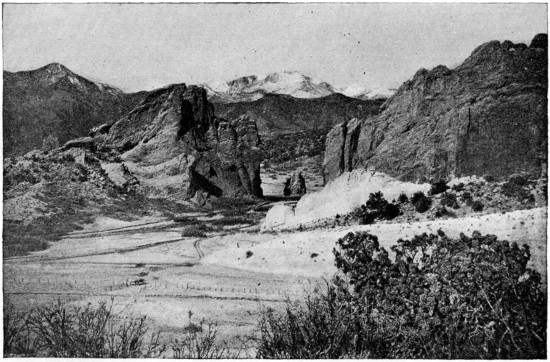
GARDEN OF THE GODS, COLORADO,
is a tract of land about five hundred acres in extent, thickly strewn with grotesque rocks and cliffs of red and
white
sandstone. Among the chief features are the Cathedral Spires, the Balanced Rock, etc. The Gateway of the Garden
of the Gods consists of two enormous masses of bright red rock, three hundred and thirty feet high and separated
just enough for the roadway to pass between.
Garden of the Gods, a region in Colorado, is noted
for its view of Pike’s Peak, and its weird and
grotesque rock pinnacles, needles, etc., some of
which receive descriptive names such as Cathedral
Spires. The region is about five hundred
acres in extent, and in 1908 was presented to
Colorado Springs city.
Grand Canyon.—See under Colorado River.
Mammoth Cave, in Kentucky, is eighty-five
miles by railroad southwest of Louisville. The
cave is about ten miles long; but it is said to
require upwards of one hundred and fifty miles
of traveling to explore its multitudinous avenues,
chambers, grottoes, rivers and cataracts. It is
the largest cavern in the world. The main cave
is only four miles long, but it is from forty to
three hundred feet wide, and rises in height to
one hundred and twenty-five feet. Lucy’s Dome
is three hundred feet high, the loftiest of the
many vertical shafts that pierce through all the
levels.
It is estimated that there are more than four
thousand sink-holes and five hundred open
caverns. Some avenues are covered with a continuous
incrustation of the most beautiful
crystals; stalactites and stalagmites abound.
There are several lakes or rivers connected with
Green River outside the cave, rising with the
river, but subsiding more slowly, so that they are
generally impassible for more than six months
in the year. The largest is Echo River, three-fourths
of a mile long, and in some places two
hundred feet wide. The air of the cave is pure;
the temperature keeps at about fifty-four degrees.
Among the most striking facts which exploration
has revealed are the following: there is a pit,
named the Bottomless Pit, one hundred and five
feet deep, besides Scylla, one hundred and thirty-five
feet deep. Crevice Pit, with Klett’s Dome,
which forms a part of it, is one hundred and fifty
feet in total vertical measurement. Cleveland
Avenue is two miles long, Silliman’s one and one-half
miles and in places two hundred feet in width.
Large stretches of water have been christened
Dead Sea, Lake Lethe; also there are the Styx,
and Roaring and Echo rivers. In the outer
galleries of the cave millions of bats are congregated.
There are also blind fish, crayfish,
crickets, and other abnormal insect inhabitants
of the cave.
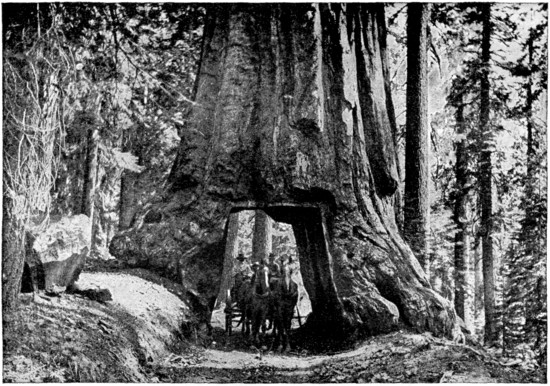
BIG TREE, CALIFORNIA
The Mariposa Grove of Big Trees (six thousand five hundred feet), so-called from its situation in Mariposa
(“butterfly”) County, occupies a tract of land four square miles in area, reserved as a State Park, and consists of
two distinct groves, one-half mile apart. The Lower Grove contains about two hundred and forty fine specimens
of the Sequoia Gigantea, including the “Grizzly Giant,” the largest of all, with a circumference of ninety-four feet
and a diameter of thirty-one feet. Its main limb, two hundred feet from the ground, is six and one-half feet in diameter.
In ascending to the Upper Grove, which contains three hundred and sixty big trees, the road goes through a tunnel,
ten feet high and nine and one-half feet wide (at the bottom), cut directly through the heart of a living Sequoia,
twenty-seven feet in diameter. (See illustration.) About ten of the trees exceed two hundred and fifty feet in height
and about twenty trees have a circumference of over sixty feet, three of these being over ninety feet. The Calaveras
Grove has taller trees than any in the Mariposa Grove, but the latter has those of greatest circumference. At Santa
Cruz there is a grove which contains about a score of the genuine Redwood with a diameter of ten feet and upwards.
The largest is twenty-three feet across; one of the finest, named the Giant, has a circumference of seventy feet. Here
is a large hollow tree in which General Fremont camped for several days in 1847. Another stump is covered with
a platform, which holds twelve to fourteen people.
Niagara Falls.—See under Famous Waterfalls.
Yosemite Valley is the name of a cleft in the
west slope of the Sierra Nevada, about the
center of California, and one hundred and forty
miles east of San Francisco. The name Yosemite
is an Indian word which signifies “large grizzly
bear.” This celebrated valley, noted for the
sublimity and beauty of its scenery, is about six
miles long and from one-half to nearly two miles
in breadth, and is traversed by the Merced River.
The beholder is awed and impressed by the
massiveness of its mountain elevations, the
nearly perpendicular granite walls, from three
thousand to six thousand feet high, by which
it is shut in throughout its entire length, and the
grandeur of its waterfalls, which are in some
respects the most remarkable in the world.
At the lower end of the valley stands the striking
cliff known as El Capitan, three thousand three
hundred feet high, while from near its lower
corner the Virgin’s Tears Fall descends one
thousand feet. But the eye turns from it to the
remarkable fall opposite, happily named the
Bridal Veil, which leaps from the brow of a cliff
nine hundred feet high, and descends in a broad
sheet of spray and finally mist, swaying in the
wind and constantly changing its form of fleecy
beauty. Farther up the valley are Cathedral
Rock (two thousand six hundred and sixty feet),
the Three Brothers (three thousand eight hundred
and thirty feet), Sentinel Rock (three thousand
and forty-three feet), and directly opposite it the
grand Yosemite Falls. (See Famous Waterfalls.)
Above the falls are the North Dome (three thousand
five hundred and sixty-eight feet) and the vast
Half Dome, nearly one mile (four thousand seven
hundred and thirty-seven feet) high, whose
summit can now be reached by a long climb.
Two miles above the great falls the stream enters
the main valley in two arms, coming out of two
canyons. In that of the south fork is the Illilouet
Fall, some six hundred feet high; in the
main canyon are Vernal Fall and Nevada Fall,
the latter one of the finest in the world.
(See Famous Waterfalls.)
The country surrounding the valley and constituting
the National Park is a rolling and hilly
region varying from eight thousand to ten thousand
feet above sea-level. There is little soil or
vegetation except a scattered forest growth.
Small glaciers still remain near the summits of
some of the adjacent mountains. Bare granite
peaks rise still higher from this surface.
Yellowstone National Park comprises a tract
of land originally comprising three thousand five
hundred and seventy-five square miles in northwestern
Wyoming, set apart by act of Congress in
1872 as a national park to preserve from destructive
molestation the most wonderful group of natural
features and phenomena known within the
boundaries of the United States. It is readily
reached over the Northern Pacific Railroad,
which has a branch from Livingston to Gardiner,
just outside the north park boundary, thirty-six
hours’ ride from St. Paul; or it may be reached
from the Oregon Short Line R. R. from the west
side by a more difficult stage connection.
The whole park plateau lies between six thousand
and eight thousand feet above sea-level.
The mountains rise in great grandeur upon this
plateau, giving evidence of their volcanic origin,
though now extinct, by their form, and their rock
structure, and the many evidences of pent-up
heat that one sees in the hot springs and geysers
for which the locality is justly famous. Twenty-four
peaks rise over ten thousand feet, several
over eleven thousand. Electric Peak on the
border is eleven thousand one hundred and fifty-five
feet. Many have been glaciated. Just outside
the Teton Range peaks rise to nearly fourteen
thousand feet. It is a part of the continental
divide and from Two-ocean Pond the waters
may flow into either the Atlantic or the Pacific.
The Yellowstone, Snake and Madison rivers are
fed by the waters from this area.
The surface of the park is dotted with lakes,
the largest being Yellowstone Lake, standing
seven thousand seven hundred and forty-one feet
above sea-level, ten by twenty miles in average
dimensions, the largest body at so great elevation
in the United States.
The streams contain numerous falls and rapids,
twenty-five of special interest, some as picturesque
as the Falls of the Yellowstone, though not on such
a grand scale, and some far removed from the
usual routes of travel. The falls and canyons of
the Yellowstone are considered among the most
wonderful in the world. The canyon is cut more
than two thousand feet deep into the lavas and
sediments, exhibiting the most fantastic carvings
of erosion, modified by an exquisite blending of
colors. Into it plunges the river by two great
leaps, the Upper and the Lower Falls, one hundred
and twelve and three hundred and ten feet
high respectively, and then flows on as a narrow
ribbon scarcely more than one hundred and sixty
to two hundred feet wide for twelve miles of this
wonderfully beautiful chasm.
Yellowstone Park includes within its borders
the largest geysers in the world. There are about
seventy in all, included in six groups or geyser
basins. Norris, Upper, Middle and Lower basins,
ten to fifteen miles apart, are on the headwaters
of the Madison, here called Five Hole River. The
Upper is most active and is called the Great
Geyser Basin. A group is also found at Shoshone
Lake, at the head of Snake River, and another
group at Heart Lake. Fifty geysers spout water
and steam from thirty to two hundred and fifty
feet into the air. Some spout from open bowl-shaped
basins, and others have built cones or tubes
by their deposits. Extinct geysers are marked by
the remains of these cones, among which is
Liberty Cap. Excelsior geyser is the largest of
all. It has a bowl-shaped opening two hundred
by three hundred feet, flows four thousand
gallons of boiling hot water per minute, and throws
a fifty-foot column of water and steam seventy-five
feet to two hundred and fifty feet high.
Giant throws a five-foot column over two hundred
feet high for an hour. Old Faithful, so
named because of its exceptional regularity,
every sixty-four to sixty-five minutes without a
failure within the memory of the oldest observers,
discharges a column one hundred and fifty feet
high amounting to one and a half million gallons
of water at each eruption. There is every
gradation in size and violence and periodicity.
In the Mammoth Hot Springs area, near the
northern boundary, where there are fifty active
springs within an area of one hundred and seventy
acres, there is a travertine accumulation of one
thousand feet. Others deposit silica in similar
manner, both types aided much by algous plant
growth in the mineralized warm waters. In some
places sulphur has been deposited.
Nine-tenths of the whole area is forest. The
tree limit varies from nine thousand four hundred
to nine thousand seven hundred feet. Few of the
plateau localities are bare. Pine, poplar, balsam,
cedar and spruce grow abundantly and many to
large size. In the spring and geyser localities the
trees are often covered by deposits and buried.
Whole forests have been thus entombed. Petrified
trees are common. Wild animals are wholly
unmolested. Deer, elk, buffalo and bear may
be seen and approached near enough to photograph.
Trout abound in the waters throughout.
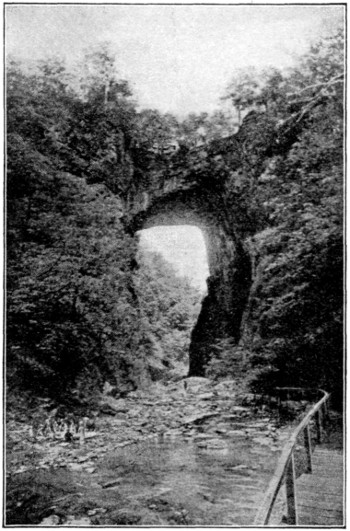
NATURAL BRIDGE OF VIRGINIA
The Natural Bridge of Virginia (one thousand five
hundred feet above the sea) is a huge monolithic limestone
arch, two hundred and fifteen feet high, one hundred
feet wide, and ninety feet in span, crossing the
ravine of the Cedar Creek. It seems to be a remnant
of a great horizontal bed of limestone rock that entirely
covered the gorge of the brook, which originally flowed
through a subterranean tunnel. The rest of this roof
has fallen in and been gradually washed or worn away.
The bridge is finely situated in a beautiful amphitheater,
surrounded by mountains, on land originally granted by
George III. to Thomas Jefferson, who built a cabin here
for the use of visitors. Among the names upon the
smooth side of the archway is that of George Washington
(west side, about twenty-five feet up), which was the
highest of all until a student named Piper actually
climbed from the bottom to the top of the arch in 1818.
The first white man to attempt an exploration
[587]
of the region was a trapper named Coulter, who
in 1805 traversed a part of this district. His
tales were disbelieved, but were confirmed thirty
years later by the discoveries of Bridger. In
1870 the first official survey was made, and in
1871 Hayden’s famous expedition revealed the
glories of the Yellowstone district.
Climate and Irrigation.—The United States,
stretching over such a vast area and having
such great tracts of mountain and plain, must
necessarily present a great variety of climate.
The mean annual temperature ranges from
under forty degrees to seventy-five degrees.
The isotherm of fifty-five degrees mean annual
temperature crosses the center of the country
from east to west, passing through St. Louis.
The mean annual rainfall for the whole country
is about thirty inches, but there is a great
difference in this respect between different
parts. The rainfall is most abundant on the
northwest Pacific Coast, on the Gulf Coast,
and on the higher mountain ranges. On the
great plains it is only ten to twenty inches,
and there are large desert stretches in the
Rocky Mountain region with a rainfall of less
than ten inches.
Irrigation.—As far as lack of rainfall is concerned
in the so-called rainless regions of the United
States, this has been notably offset by great works
of irrigation that have been steadily going forward.
Agriculture, horticulture and vitaculture
are, therefore, no longer dependent on chance
but science, as the National Irrigation Congress
expresses it.
Modern irrigation in the United States began
in 1750 with the watering of the gardens in the
hills and deserts of the coast of California by the
adventurous missionaries from Mexico. Irrigation
by English-speaking people had its origin in
Utah one hundred years later. There the Mormons,
separated by one thousand miles of untrodden
desert from all cultivated land, found in irrigation
their only means of escape from starvation.
In 1870 there were twenty thousand acres under
irrigation, followed by a rapid development of
small ditches, until in 1880 there were one million
acres irrigated. Today (1917) upward of fifty
million acres are included in reclamation projects,
and it is estimated that there are upward of
four hundred and fifty million acres still awaiting
the scientific use of water.
The diversity of methods used in irrigation in
the United States is remarkable. Practically
every system to be found in the world can be
seen in some part of the arid west. This is due
to the fact that many of the irrigators have come
from distant parts of the world and each seeks to
introduce on his farm customs and practices of
his old environments. This is particularly
noticeable in California, where the Chinese irrigate
their truck gardens in Chinese fashion, and
Italians, Spaniards and Mexicans imitate for a
time at least the practices of their forefathers.
Upward of one hundred and fifty thousand
miles of irrigation canals, with reservoirs and
supplementary works, have been built at a cost
of more than six hundred million dollars. These
projects are distributed through the States of
Arizona, California, Colorado, Idaho, Kansas,
Montana, Nebraska, Nevada, New Mexico,
North Dakota, Oklahoma, Oregon, South Dakota,
Texas, Utah, Washington and Wyoming. The
most notable among them are: the Truckee-Carson
Canal and Reservoir, in Nevada; the
Minidoka project, in southern Idaho; that of
the Uncompahgre Valley, in Colorado; the
Roosevelt Dam, in the Salt River Valley, Arizona;
the Klamath Reservoir, on the Oregon-California
boundary; the Boisé project, Idaho; that
of Yuma, on the Arizona-California boundary;
North Platte, on the Nebraska-Wyoming boundary;
and the gigantic Elephant Butte Reservoir,
in New Mexico—the second largest in the world.
Political Divisions.—Under its present organization
the United States comprises fifty-one
political divisions. Of these forty-eight are
states enjoying the full privileges afforded by
the federal constitution. The three territories—Alaska,
Hawaii and Porto Rico—all are
organized but not yet admitted to statehood.
The Philippines have a modified territorial
government.
(See Tables appended.)
It is worthy of remark that the center of
population advanced westward during the
ten decades since 1790 in a nearly uniform
line along the thirty-ninth parallel of latitude.
THE CENTER OF POPULATION
Census
Year |
Approximate Location by Important Towns |
From Point
to Point
in Direct
Line[9] |
| 1790 |
Twenty-three miles east of Baltimore, Md. |
... |
| 1800 |
Eighteen miles west of Baltimore, Md. |
40.6 |
| 1810 |
Forty miles northwest by west of Washington, D. C. |
36.9 |
| 1820 |
Sixteen miles north of Woodstock, Va. |
50.5 |
| 1830 |
Nineteen miles west by southwest of Moorefield, W. Va.[10] |
40.4 |
| 1840 |
Sixteen miles south of Clarksburg, W. Va.[10] |
55.0 |
| 1850 |
Twenty-three miles southeast of Parkersburg, W. Va.[10] |
54.8 |
| 1860 |
Twenty miles south of Chillicothe, Ohio |
80.6 |
| 1870 |
Forty-eight miles east by north of Cincinnati, Ohio |
44.1 |
| 1880 |
Eight miles west by south of Cincinnati, Ohio |
58.1 |
| 1890 |
Twenty miles east of Columbus, Ind. |
48.6 |
| 1900 |
Six miles southeast of Columbus, Ind. |
14.6 |
| 1910 |
In the city of Bloomington, Ind. |
39.0 |
Public Lands.—The United States originally
owned nearly all the area of the states, with
the exception of the original thirteen. Homesteads
have been given, or sold at a nominal
price, to all bona fide settlers. Vast areas
have been given to railroad companies and in
aid of education. The country’s Indian wards
have been provided with ample reservations.
The government has established great national
parks, and it has reserved more than seventy-two
thousand square miles of forest land.
The following tabulations give numerous
important facts concerning the states and
territories:
TABLE OF STATES AND TERRITORIES OF THE UNITED STATES
| Date of Admission Into Union |
State or Territory
Origin and Meaning of Name
Area and
Population
Motto and Meaning |
Settlement Where, When, By Whom
Original Territory from Which
Derived |
Capitals and Populations
Chief Productions of State |
| |
1819 |
Alabama (Indian—Here we rest).
51,998 sq. miles. Pop.
2,138,093.
Motto: Here we rest. |
Mobile Bay, 1702, by the French.
From Louisiana, Georgia, Mississippi and
Alabama territories. |
Montgomery: Pop. 38,136.
Corn, oats, wheat, rice, cotton, sugar, iron, lumber,
manufactures, potatoes. |
| |
1867 |
‡Alaska (Al-ay-eska, meaning “the great country”).
590,884 sq. miles. No motto. |
Three Saints, 1784, by the Russians.
Purchased from Russia in 1867
for $7,200,000. |
Juneau: Pop. 1,864.
Seals, salmon, gold, copper, silver, lumber, tin, lead,
coal. |
| |
1911 |
Arizona (Indian—Sand Hills).
113,956 sq. miles. Pop.
204,354.
Motto: Ditat deus (Founded by God). |
Tucson, 1580, by the Spanish.
From New Mexico territory. |
Phoenix: Pop. 11,134.
Copper, gold, silver, alfalfa, fruits, live stock, wheat,
barley. |
| |
1836 |
Arkansas (From a tribe of Indians).
53,335 sq. miles. Pop.
1,574,449.
Motto: Regnat populi (The people rule). |
Arkansas Post, 1685, by the French.
From Louisiana, Missouri and Arkansas
territories. |
Little Rock: Pop. 45,941.
Cotton, lumber, corn, oats, wheat, fruits, wool,
coal, tobacco. |
| |
1850 |
California (From an old Spanish romance).
158,297 sq. miles. Pop.
2,377,549.
Motto: Eureka (I have found it). |
San Diego, 1768, by the Spanish.
From New Albion, Upper California. |
Sacramento: Pop. 44,696.
Gold, silver, copper, lead, petroleum, borax, lumber,
fruits, wine, olives, beet sugar. |
| |
1876 |
Colorado (Spanish—Red, or Ruddy). 103,948 sq. miles. Pop. 799,024.
Motto: Nil sine numine (Nothing without providence). |
Auroria, 1859, by the Americans.
From Louisiana and Mexican cession.
Colorado territory. |
Denver: Pop. 213,381.
Gold, silver, coal, copper, vegetables, fruits, live
stock, wheat, beet sugar, oats, corn. |
| * |
1788 |
Connecticut (Indian—Long River).
4,965 sq. miles. Pop.
1,114,756.
Motto: Qui transtulit sustinet (He who transplanted still sustains). |
Windsor, 1636, by the English.
From North Virginia, New England. |
Hartford: Pop. 98,915.
Manufactures, woolen, cotton, notions; tobacco, iron,
granite, cereals. |
| * |
1787 |
Delaware (In honor of Lord De La Warr).
2,370 sq. miles. Pop.
202,322.
Motto: Liberty and independence. |
Wilmington, 1637, by the Swedes.
From New Sweden, New Netherlands, three
lower counties on the Delaware. |
Dover: Pop. 3,720.
Corn, wheat, tomatoes, fruits, manufactures, leather, iron,
steel, machinery. |
| |
1791 |
District of Columbia (In honor of Columbus).
70 sq. miles. Pop.
331,069.
Motto: Justitia omnibus (Justice to all). |
Rome, 1663, by the English.
Ceded to government by Maryland and
Virginia. |
Washington: Pop. 331,069.
Flour mills, manufactures. |
| |
1845 |
Florida (Spanish—Blooming).
58,666 sq. miles. Pop.
752,619.
Motto: In God is our trust. |
St. Augustine, 1565, by the Spanish.
From Florida territory. |
Tallahassee: Pop. 5,018.
Fruits, vegetables, tobacco, rice, cotton, lumber,
turpentine, resin, fish, phosphate. |
| * |
1788 |
Georgia (In honor of George II.).
59,265 sq. miles. Pop.
2,609,121.
Motto: Obverse: Wisdom, justice, moderation. Reverse: Agriculture and
commerce. |
Savannah, 1733, by the English.
One of the original thirteen states. |
Atlanta: Pop. 154,839.
Cotton, corn, rice, oats, tobacco, oysters, peaches,
melons, marble, clay; cotton goods, lumber, fertilizers, tar. |
| |
... |
‡Hawaii (From the native Owhyhee).
6,449 sq. miles. No
motto. |
Honolulu, 1820, by the Americans.
From Sandwich Islands. |
Honolulu: Pop. 52,183.
Sugar, fruits, rice, coffee, hides, wool, honey,
sisal. |
| |
1890 |
Idaho (Indian—Gem of the Mountains).
84,313 sq. miles. Pop.
325,594.
Motto: Salve (Hail). |
Coeur d’Alene, 1842, by the Americans.
From Oregon, Washington and
Idaho territories. |
Boise City: Pop. 17,358.
Gold, silver, copper, lead, lumber, flour, wheat,
oats, barley, live stock. |
| |
1818 |
Illinois (Indian—The Men).
56,665 sq. miles. Pop.
5,638,591.
Motto: National union, state sovereignty. |
Kaskaskia, 1682, by the French.
From Northwest, Indian and Illinois
territories. |
Springfield: Pop. 51,678.
Corn, wheat, oats, potatoes, hay, live stock, wool,
meat, manufactures. |
| |
1816 |
Indiana (Indian’s Ground).
36,354 sq. miles. Pop.
2,700,876.
No motto. |
Vincennes, 1702, by the French.
From Northwest and Indiana territories. |
Indianapolis: Pop. 233,650.
Corn, wheat, tobacco, vegetables, fruits, wool,
coal, clay, flour, machinery. |
| |
1846 |
Iowa (Indian—Drowsy Ones).
56,147 sq. miles. Pop.
2,224,771.
Motto: Our liberties we prize and our rights we will maintain. |
Dubuque, 1833, by the Americans.
From Louisiana, Missouri, Michigan,
Wisconsin and Iowa territories. |
Des Moines: Pop. 86,368.
Corn, wheat, oats, potatoes, hay, live stock, butter,
coal, lumber, poultry. |
| |
1861 |
Kansas (Indian—Smoky Water).
82,158 sq. miles. Pop.
1,690,949.
Motto: Ad astra per aspera (To the stars through difficulties). |
Leavenworth, 1854, by the Americans.
From Louisiana, Kansas territory. |
Topeka: Pop. 43,684.
Corn, wheat, hay, live stock, fruits, coal, petroleum,
salt, meats, Kaffir corn. |
| |
1792 |
Kentucky (Indian—Dark and Bloody Ground).
40,598 sq. miles.
Pop. 2,289,905.
Motto: United we stand, divided we fall. |
Boonesboro, 1769, by the English.
From Virginia. |
Frankfort: Pop. 10,465.
Tobacco, hemp, wheat, cotton, live stock, lumber, coal,
sorghum, flour. |
| |
1812 |
Louisiana (In honor of Louis XIV.).
48,506 sq. miles. Pop.
1,656,388.
Motto: Union, justice, and confidence. |
New Orleans, 1718, by the French.
From Louisiana, Territory of Orleans. |
Baton Rouge: Pop. 14,897.
Cotton, corn, rice, sugar, lumber, oysters, salt,
sulphur. |
| |
1820 |
Maine (The Main Land).
33,040 sq. miles. Pop. 742,371.
Motto: Dirigo (I direct). |
Saco, 1623, by the English.
From New England, Laconia and Massachusetts. |
Augusta: Pop. 13,211.
Hay, grains, dairying, potatoes, wool, granite, ice,
lumber, apples, paper. |
| * |
1788 |
Maryland (In honor of Queen Henriette Maria).
12,327 sq. miles. Pop.
1,295,346.
Motto: Fatti maschii, parole femine (Manly deeds, womanly words). |
St. Mary’s, 1632, by the English.
From one of the original states. |
Annapolis: Pop. 8,609.
Wheat, hay, corn, vegetables, fruits, oysters, coal,
wool, canned fruits, vegetables. |
| * |
1788 |
Massachusetts (The Place of Great Hills).
8,266 sq. miles. Pop.
3,366,416.
Motto: Ense petit placidam sub liberate quietem (With the sword she seeks calm
peace under liberty). |
Plymouth, 1620, by the English.
From North Virginia, New England,
Massachusetts Bay. |
Boston: Pop. 670,585.
Manufactures (woolen, cotton), boots, shoes, fish,
tobacco, granite, marble. |
| |
1837 |
Michigan (Indian—Great Lake).
57,980 sq. miles. Pop.
2,810,173.
Motto: Si quaeris peninsulam amoenam, circumspice (If you seek a beautiful
peninsula, behold it here). |
Sault Ste. Marie, 1668, by the French.
From Northwest, Indiana and Michigan
territories. |
Lansing: Pop. 31,229.
Corn, wheat, oats, hay, fruits, vegetables, iron, copper,
clay, lumber, manufactures. |
| |
1858 |
Minnesota (Indian—Cloudy Water).
84,682 sq. miles. Pop.
2,075,708.
Motto: L’étoile du nord (The star of the north). |
St. Paul, 1838, by the Americans.
From Louisiana and Northwest and Minnesota
territories. |
St. Paul: Pop. 214,744.
Corn, wheat, oats, barley, flaxseed, wool, live stock,
flour, iron, lumber, dairying. |
| |
1817 |
Mississippi (Indian—Great River, or Father of Waters).
46,865
sq. miles. Pop. 1,797,114.
No motto. |
Biloxi, 1699, by the French.
From Louisiana and Georgia, Mississippi
territory. |
Jackson: Pop. 21,262.
Cotton, corn, wheat, oats, potatoes, rice, tobacco,
oysters, shrimps. |
| |
1821 |
Missouri (Indian—Great Muddy).
69,420 sq. miles. Pop.
3,293,335.
Motto: Salus populi suprema lex esto (The welfare of the people is the supreme
law). |
St. Genevieve, 1755, by the French.
From Louisiana and Louisiana and
Missouri territories. |
Jefferson City: Pop. 11,850.
Corn, wheat, oats, rye, cotton, swine, honey,
zinc, lead, tobacco, meats. |
| |
1889 |
Montana (Spanish—A Mountain).
146,572 sq. miles. Pop.
375,053.
Motto: Oro y plata (Gold and silver). |
Yellowstone River, 1809, by the Americans.
From Louisiana and Nebraska,
Idaho, Dakota and Montana territories. |
Helena: Pop. 39,165.
Wheat, wool, live stock, fruit, oats, barley, lumber,
copper, lead, silver, coal. |
| |
1867 |
Nebraska (Indian—Shallow Water).
77,520 sq. miles. Pop.
1,192,214.
Motto: Equality before the law. |
Bellevue, 1847, by the Americans.
From Louisiana, Nebraska territory. |
Lincoln: Pop. 43,973.
Corn, wheat, oats, live stock, hay, chicory, sugar beets,
fruits, potatoes. |
| |
1864 |
Nevada (Spanish—Snow-covered).
110,690 sq. miles. Pop.
81,875.
Motto: All for our country. |
Genoa, 1850, by the Americans.
From Upper California and Utah and Nevada
territories. |
Carson City: Pop. 2,466.
Gold, silver, copper, zinc, wool, live stock, lumber,
borax. |
| * |
1788 |
New Hampshire (Hampshire, England).
9,341 sq. miles. Pop.
430,572.
No motto. |
Portsmouth, 1623, by the English.
From North Virginia, New England,
Laconia. |
Concord: Pop. 21,497.
Hay, corn, potatoes, oats, apples, granite, mica,
manufactures. |
| * |
1787 |
New Jersey (In honor of governor of Jersey Island).
8,224 sq. miles.
Pop. 2,537,167.
No motto. |
Elizabethtown, 1617, by the Dutch.
From New Netherland. |
Trenton: Pop. 96,815.
Market garden crops, cereals, fruits, fisheries,
manufactures, textiles, machinery. |
| |
1911 |
New Mexico (From Old Mexico).
122,634 sq. miles. Pop.
327,301.
Motto: Crescit eundo (It increases by going). |
... |
Santa Fe: Pop. 5,072.
Gold, silver, fruits, vegetables, live stock, wool,
lumber, copper, coal, turquoise. |
| * |
1788 |
New York (In honor of Duke of York).
49,204 sq. miles. Pop.
9,113,614.
Motto: Excelsior (Higher). |
New York, 1614, by the Dutch.
From New Netherland. |
Albany: Pop. 100,253.
Market garden crops, fruits, corn, wheat, dairying,
manufactures, clothing, textiles, books, magazines, papers. |
| * |
1789 |
North Carolina (In honor of Charles II.).
52,426 sq. miles. Pop.
2,206,287.
Motto: Esse quam videri (To be, rather than to seem). |
Albemarle Sound, 1653, by the English.
From Albemarle colony. |
Raleigh: Pop. 19,218.
Cotton, corn, tobacco, wheat, shad, oysters, lumber,
mining. |
| |
1889 |
North Dakota (Indian—Allied).
70,837 sq. miles. Pop.
577,056.
Motto: Liberty and union, now and forever, one and inseparable. |
Pembino, 1859, by the Americans.
From Louisiana, Minnesota and Nebraska and
Dakota territories. |
Bismarck: Pop. 5,443.
Wheat, oats, barley, flaxseed, live stock, wool,
minerals. |
| |
1803 |
Ohio (Indian—Beautiful River).
41,040 sq. miles. Pop.
4,767,121.
No motto. |
Marietta, 1788, by the Americans.
From Northwest territory. |
Columbus: Pop. 181,548.
Corn, wheat, oats, hay, potatoes, fruits, tobacco, live
stock, wool, dairying, coal, petroleum, salt, iron, steel, machinery, flour. |
| |
1907 |
Oklahoma (Indian—Beautiful Land).
70,057 sq. miles. Pop.
1,657,155.
Motto: Labor omnia vincit (Labor conquers everything). |
Guthrie, 1890, by the Americans.
From Indian and Oklahoma territories. |
Oklahoma City: Pop. 64,205.
Corn, wheat, oats, cotton, flax, live stock,
petroleum, minerals. |
| |
1859 |
Oregon (Spanish—Wild Marjoram).
96,699 sq. miles. Pop.
672,765.
Motto: The union. |
Astoria, 1811, by the Americans.
From Oregon territory. |
Salem: Pop. 14,094.
Lumber, live stock, wheat, hay, fruits, hops, wool, salmon,
gold, silver, paper making. |
| * |
1787 |
Pennsylvania (Latin—Penn’s Woods).
45,126 sq. miles. Pop.
7,665,111.
Motto: Virtue, liberty and independence. |
Chester, 1638, by the Swedes.
From original state. |
Harrisburg: Pop. 64,186.
Manufactures, steel, machinery, textiles, coal, coke,
petroleum, natural gas, iron, grains, wool, leather. |
| |
... |
‡Philippines (In honor of Philip II.).
115,026 sq. miles. |
Cebu, 1565, by the Spanish.
From Archipelago de San Lazaro. |
Manila: Pop. 250,000.
Cocoa, coffee, tobacco, cotton, hemp, cocoanuts, corn,
sugar, rice, timber, dyewoods. |
| |
... |
Porto Rico (Spanish—Rich Port).
3,435 sq. miles. |
San Juan, 1510, by the Spanish.
Ceded by Spain. |
San Juan: Pop. 50,000.
Coffee, sugar, tobacco, cotton, citrus fruits, bananas,
pineapples, salt. |
| * |
1790 |
Rhode Island (Rhodes, an island in the Ægean Sea).
1,248 sq.
miles. Pop. 542,610.
Motto: Hope. |
Providence, 1636, by the English.
From Providence and Rhode Island
plantations. |
Providence: Pop. 224,326.
Manufactures, worsted, cotton, jewelry, machinery,
rubber, minerals. |
| * |
1788 |
South Carolina (In honor of Charles II.).
30,989 sq. miles. Pop.
1,515,400.
Motto: Dum spiro, spero. Spes (While I breathe, I hope. Hope). |
Ashley River, 1670, by the English.
From Carteret colony. |
Columbia: Pop. 26,319.
Cotton, wheat, corn, oats, tobacco, rice, oysters,
turpentine, lumber, phosphates. |
| |
1889 |
South Dakota (Indian—Allied).
77,615 sq. miles. Pop.
583,888.
Motto: Under God the people rule. |
Southeast part, 1859, by the Americans.
From Louisiana, Minnesota and
Nebraska and Dakota territories. |
Pierre: Pop. 3,656.
Corn, wheat, oats, flax, potatoes, live stock, wool, gold,
silver, tin, dairying. |
| |
1796 |
Tennessee (Indian—River with the Great Bend).
42,022 sq. miles.
Pop. 2,184,789.
Motto: Agriculture, commerce. |
Fort Loudon, 1757, by the English.
From North Carolina, territory south of
the Ohio River. |
Nashville: Pop. 110,364.
Corn, wheat, cotton, potatoes, tobacco, live stock,
coal, iron, marble, lumber. |
| |
1845 |
Texas (From tribe of Indians).
265,896 sq. miles. Pop.
3,896,542.
No motto. |
San Antonio, 1692, by the Spanish.
From Mexican cession. |
Austin: Pop. 29,860.
Cotton, corn, oats, wheat, rice, sugar, live stock, wool,
fruits, lumber, petroleum, coal. |
| |
1896 |
Utah (Indian—Mountain Dwellers).
84,990 sq. miles. Pop.
373,351.
Motto: Industry. |
Salt Lake City, 1847, by the Americans.
From Mexican cession, Utah
territory. |
Salt Lake City: Pop. 92,777.
Gold, silver, copper, lead, coal, vegetables,
fruits, sugar, wheat, oats, live stock, wool. |
| |
1791 |
Vermont (French—Green Mountain).
9,564 sq. miles. Pop.
355,956.
Motto: Freedom and unity. |
Fort Dummer, 1724, by the English.
From New Netherland, New Hampshire
grants. |
Montpelier: Pop. 7,856.
Hay, cereals, potatoes, lumber, marble, dairying, maple
sugar, manufactures, wood pulp. |
| * |
1788 |
Virginia (In honor of Elizabeth, the virgin queen).
42,627 sq. miles.
Pop. 2,061,212.
Motto: Obverse; Sic semper tyrannis (Ever so to tyrants). Reverse:
Perseverando (By perseverance). |
Jamestown, 1607, by the English.
From South Virginia. |
Richmond: Pop. 127,628.
Corn, wheat, oats, tobacco, potatoes, cotton, oysters,
coal, iron, cotton, manufactures. |
| |
1889 |
Washington (After George Washington, first president).
69,127 sq.
miles. Pop. 1,141,990.
Motto: Al-Ki (Bye-bye). |
Columbia River, 1811, by the English.
From Oregon and Washington
territories. |
Olympia: Pop. 6,996.
Lumber, coal, wheat, barley, oats, fruits, salmon, live
stock, minerals. |
| |
1863 |
West Virginia (From Virginia).
24,170 sq. miles. Pop.
1,221,119.
Motto: Obverse: Montani semper liberi (Mountaineers are always free men).
Reverse: Libertas et fidelitas (Liberty and fidelity). |
Berkeley County, 1726, by the Americans.
From Virginia. |
Charleston: Pop. 22,996.
Corn, oats, hay, wheat, fruits, cattle, sheep, lumber,
coal, petroleum, natural gas, mining. |
| |
1848 |
Wisconsin (Indian—Wild Rushing Channel).
56,066 sq. miles. Pop.
2,333,860.
Motto: Forward. |
Green Bay, 1745, by the French.
From Northwest, Illinois, Michigan and
Wisconsin territories. |
Madison: Pop. 25,531.
Corn, oats, barley, wheat, hay, potatoes, fruits, beet
sugar, dairying, iron, lumber. |
| |
1890 |
Wyoming (Indian—Extensive Plain).
97,914 sq. miles. Pop.
145,965.
Motto: Equal rights. |
Cheyenne, 1867, by the Americans.
From Louisiana (chiefly), Nebraska,
Dakota, Idaho, and Wyoming territories. |
Cheyenne: Pop. 11,320.
Wool, lumber, coal, copper, petroleum, minerals. |
| |
* Original Thirteen States. ‡ Organized Territories. |
Cities.—In January, 1917, three cities of the
United States, New York, Chicago and Philadelphia,
had a population of over one million.
St. Louis, Boston, Cleveland, Baltimore, Pittsburgh
and Detroit had each over 500,000.
Buffalo, San Francisco, Los Angeles, Milwaukee,
Cincinnati, Newark, New Orleans, Washington,
Minneapolis and Seattle had over
300,000. Forty-seven others had populations
ranging from 100,000 to 300,000; while altogether
there were one hundred and ninety-eight
above 30,000.
The following table gives the approximate
population of all cities in excess of 100,000.
POPULATION OF CITIES HAVING OVER 100,000 IN 1917
| Cities |
Est. Pop.
Jan. 1,
1917 |
| Akron, Ohio |
106,000 |
| Albany, N.Y. |
110,000 |
| Atlanta, Ga. |
191,000 |
| Baltimore, Md. |
590,000 |
| Birmingham, Ala. |
182,000 |
| Boston, Mass. |
757,000 |
| Bridgeport, Ct. |
150,000 |
| Buffalo, N.Y. |
469,000 |
| Cambridge, Mass. |
112,000 |
| Camden, N.J. |
105,000 |
| Chicago, Ill. |
2,498,000 |
| Cincinnati, Ohio |
411,000 |
| Cleveland, Ohio |
674,000 |
| Columbus, Ohio |
215,000 |
| Dallas, Tex. |
135,000 |
| Dayton, Ohio. |
130,000 |
| Denver, Col. |
261,000 |
| Des Moines, Iowa |
106,000 |
| Detroit, Mich. |
572,000 |
| Fall River, Mass. |
130,000 |
| Fort Worth, Tex. |
100,000 |
| Grand Rapids, Mich. |
141,856 |
| Hartford, Ct. |
145,000 |
| Houston, Tex. |
148,000 |
| Indianapolis, Ind. |
272,000 |
| Jersey, City, N.J. |
306,000 |
| Kansas City, Mo. |
298,000 |
| Los Angeles, Cal. |
504,000 |
| Louisville, Ky. |
239,000 |
| Lowell, Mass. |
111,000 |
| Memphis, Tenn. |
160,000 |
| Milwaukee, Wis. |
437,000 |
| Minneapolis, Minn. |
364,000 |
| Nashville, Tenn. |
135,000 |
| Newark, N.J. |
408,000 |
| New Bedford, Mass. |
113,000 |
| New Haven, Ct. |
150,000 |
| New Orleans, La. |
372,000 |
| New York City |
5,603,000 |
| Oakland, Cal. |
192,000 |
| Omaha, Neb. |
166,000 |
| Paterson, N.J. |
126,000 |
| Philadelphia, Pa. |
1,710,000 |
| Pittsburgh, Pa. |
580,000 |
| Portland, Ore. |
296,000 |
| Providence, R.I. |
255,000 |
| Reading, Pa. |
107,000 |
| Richmond, Va. |
157,000 |
| Rochester, N.Y. |
257,000 |
| Salt Lake City, Utah |
125,000 |
| San Antonio, Tex. |
125,000 |
| San Diego, Cal. |
100,000 |
| San Francisco, Cal. |
464,000 |
| Scranton, Pa. |
150,000 |
| Seattle, Wash. |
349,000 |
| Spokane, Wash. |
125,000 |
| Springfield, Mass. |
102,103 |
| St. Joseph, Mo. |
101,800 |
| St. Louis, Mo. |
758,000 |
| St. Paul, Minn. |
247,000 |
| Syracuse, N.Y. |
155,000 |
| Tacoma, Wash. |
108,094 |
| Toledo, Ohio |
192,000 |
| Trenton, N.J. |
110,000 |
| Washington, D.C. |
364,000 |
| Worcester, Mass. |
164,000 |
| Youngstown, Ohio |
118,000 |
Atlanta (ăt-lăn´tȧ), Ga. [The “Gate
City”; the
name Atlanta was suggested by its geographical
position, immediately on the dividing ridge,
separating the Gulf and Atlantic waters.]
It is situated at the base of the Blue Ridge, near
the Chattahoochee River; has an elevation of
over one thousand feet, and a remarkably healthful
climate.
Atlanta is laid out in the form of a circle, with
the Union Depot as its center. A little to the
south of the old Union Station is the State Capitol,
which contains a library of about sixty thousand
volumes and an interesting geological collection.
A little to the northwest is the New Court House;
and farther to the north, beyond the railway, are
the Custom House and the L. & N. Freight House,
an enormous concrete structure. The City Hall,
the Chamber of Commerce, the Opera House, the
Carnegie Library (of white marble), the Century
Building, the Empire Building, the Equitable
Building, the Jewish Temple, and the First
Methodist Church are notable edifices. Among
the chief educational establishments are the
Georgia School of Technology, the Atlanta
University (for colored students), the Agnes
Scott Institute, and the Clark University (colored
students). The finest private houses are in
Peachtree Street.
Several railroads, converging at Atlanta and
leading to other important Southern cities,
greatly facilitate the city’s extensive and rapidly
increasing trade. It has a large export trade in
tobacco, cotton, horses, and mules, its mule
market being one of the most important in the
United States. Its manufactures include implements,
fertilizers, cotton goods, other foundry and
machine products.
Atlanta was first settled in 1830. In 1843 it
was incorporated as a town, and called Marthasville.
In 1845 changed its name to Atlanta, and
two years later secured a city charter. It was an
important city in the Confederacy and the objective
point of General Sherman’s campaign. The
battle of Atlanta (July 22, 1864) was fought
southeast of the city. In September the city was
made a military camp by Sherman, and in November
he left the city in flames, and started on his
“march to the sea.” The city was almost entirely
destroyed, but recovered rapidly after
the war, and in 1878 became the capital of
Georgia.
Baltimore (bôl´tĭ-mōr), Md. [The “Monumental
City”; named for the proprietor of a
large tract of land in Maryland, Cecil Calvert,
Lord Baltimore, who settled the province in
1635.]
It is situated on an estuary of the Patapsco
River, at the head of navigation, about fourteen
miles from Chesapeake Bay, and is on the Baltimore
and Ohio, the Philadelphia, Baltimore and
Washington, and other railroads. A good harbor
and fine geographical situation give Baltimore
unusual trade advantages, and it has become one
of the great export centers of the United States.
The city is roughly divided into two nearly
equal parts by a small stream, Jones Falls, which
flows entirely through the city. The portion of
the city northeast of the stream is called “Old
Town.” Baltimore Street is the chief longitudinal
thoroughfare.
The natural center for the visitor is Mt. Vernon
Place, a small square, prettily laid out and suggesting
Paris in its tasteful monuments and surrounding
buildings. In the middle rises the Washington
Monument, a column one hundred and thirty
feet high, surmounted by a colossal statue of
George Washington.
At the northeast corner of the square is the
handsome Mt. Vernon Methodist Episcopal
Church; at the southeast corner, Peabody
Institute, for the encouragement of science, art,
and general knowledge.
On the south side of the square is the house of
Henry Walters, connected by an overhead bridge
with a new picture-gallery containing the celebrated
Walters Collection, one of the finest private
collections of art in America.
Charles Street, one of the chief thoroughfares
of the city, leads to the north from the Washington
Monument past the Union Station, near which,
at the north end of the B. & O. tunnel, is the
Mt. Royal Station. Following Charles Street
to the south we pass (right) the First Unitarian
Church and the back of the Roman Catholic
Cathedral, which faces Cathedral Street. The
latter is surmounted by a dome one hundred and
twenty-five feet high, and contains some interesting
paintings. Adjacent is the residence of the
Cardinal.
Farther on Charles Street passes the Masonic
Temple, intersects Baltimore Street, the chief
business street of the city, and is continued to
South Baltimore. In East Fayette Street, to the
left, is the Court House, a handsome white marble
building, and the Post Office, in front of which
rises the Battle Monument, erected in 1815 in
memory of the struggles of the war of 1812-1814.
The interior of the Court House is adorned with
admirable mural paintings. To the east of the
Post Office is the City Hall, a large and handsome
building, with a dome two hundred and sixty feet
high.
To the south of the City Hall, in Gay Street,
between Water and Lombard Streets, is the
imposing new Custom House, which was damaged
by the fire of 1904, but has since been repaired
and completed.
A little to the west of Mt. Vernon Place, between
Howard St. and Eutaw St., are the unpretentious
buildings formerly occupied by Johns Hopkins
University, one of the foremost institutions of
learning in the country. It was endowed with
over three million five hundred thousand dollars by
Johns Hopkins, a Quaker. In 1902 a suburban site
about two miles north of the Washington Monument
was secured for this famous university, and
the first of a fine group of buildings was occupied
by it in 1914.
The Johns Hopkins Hospital, opened in 1889,
is also due to the liberality of Mr. Hopkins, who
bequeathed over three million dollars for its
foundation.
Both as a scientific and charitable institution,
this hospital is an important adjunct to the
University; and in the completeness of its equipment
and excellence of its system, it ranks with
the foremost hospitals in the world. The buildings
of the Medical School of Johns Hopkins
University adjoin the hospital.
Druid Hill Park, a pleasure-ground of about
seven hundred acres, owes its beauty in great
part to the fact that is has been preserved as a
private park for one hundred years before passing
into the hands of the city. Its hills afford
beautiful views. Druid Lake, one-half mile long,
is one of the reservoirs of the city waterworks.
Baltimore is an important center of the traffic
in breadstuffs, and is also the seat of extensive
and varied industries—cotton and woolen goods,
flour, tobacco and cigars, beer, glassware, boots
and shoes, iron and steel (including machinery,
car-wheels, iron bridges, stoves, furnaces, etc.),
clothing, pianos, organs, and the canning of
oysters. Shipbuilding has become an important
development, and Sparrows Point, with its
immense Bessemer steel plant, is a place of great
industrial activity.
The construction of the first important line of
railway in the United States was begun at Baltimore
in 1828 and carried on by private enterprise,
and the first telegraph line was constructed to,
and the first message received in, Baltimore. In
1904 Baltimore was visited by a fire which consumed
fifty million dollars’ worth of property.
SOME VIEWS IN BOSTON, MASSACHUSETTS: RIVER FRONT, PARKS AND NOTABLE BUILDINGS
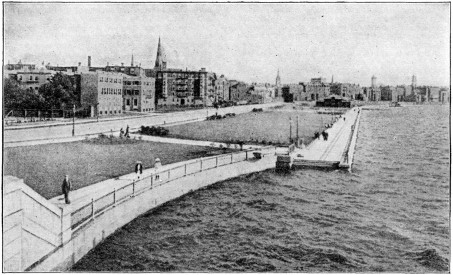
THE CHARLES RIVER EMBANKMENT
STATE HOUSE BOSTON COMMON TREMONT STREET
Boston (bôs´ton), Mass. [Called the
“Hub” and
“Athens of America”; name is derived from
Boston, a seaport in England, originally called
Botalf, or Botolph’s town.]
The capital of Massachusetts, the chief town of
New England, Boston is one of the oldest and
most interesting cities of the United States.
Whether considered from the point of view of its
educational and charitable institutions, its trade,
manufactures and public buildings, its influence
upon the intellectual life and literary culture of
the nation, or its historic part as an inspirational
center of political liberty and social reform, its
record and position command attention.
In no other American city are the civic and
other public buildings more closely associated
with events of national
importance.
CUSTOM HOUSE
TRINITY CHURCH COPLEY-PLAZA HOTEL
PIERCE BUILDING PUBLIC LIBRARY
BUNKER HILL MONUMENT
CUSTOM HOUSE
TRINITY CHURCH COPLEY-PLAZA HOTEL
PIERCE BUILDING PUBLIC LIBRARY
BUNKER HILL MONUMENT
Boston is situated at
the head of Massachusetts
Bay, about two
hundred miles northeast
of New York, and
occupies a peninsula between
the Charles River
and the arm of the bay known as Boston Harbor.
Originally the town was founded on three hills,
Beacon, Copp’s and Fort, which, however, have
been materially cut down. The metropolitan area
now includes also East Boston, on Noddle’s or
Maverick Island, on the other side of the harbor;
South Boston, separated from the old city by an
arm of the harbor; Charlestown, on the other side
of the river; and the suburban districts of Brighton,
Roxbury (or Boston Highlands), West Roxbury
(including Jamaica Plain), and Dorchester.
Boston is connected with the city of Cambridge
by several bridges across the Charles. The old
town is cramped and irregular, and its streets are
narrow and crooked; but the new parts, especially
the so-called Back Bay, formed by filling in the
tide-water flats on the Charles, are laid out on a
very spacious scale.
The chief retail business streets of Boston are
Washington Street and Tremont Street. Among
the finest residence streets are Commonwealth
Avenue, Beacon Street, Marlborough Street, Mt.
Vernon Street, and Bay State Road.
Boston Common, a park of forty-eight acres in
the heart of the city, shaded by fine elms and
other trees and crossed by many pleasant walks,
has been reserved for public use since 1634 and is
carefully guarded for this purpose in the charter
of 1822. Just across Charles from the Common
is the fine Public Garden, reclaimed from what
was low-lying waste land.
That part of the Common adjoining Tremont
Street and known as the Tremont Street Mall is
now occupied by eight small buildings, covering
the entrances to the stations of the Boston Subway,
a wonderful piece of engineering that facilitates
traffic by an underground system of electric
cars. The subway was, in part, constructed in
1895-1898, at a cost of about four million one
hundred and sixty-five thousand dollars, and
since greatly extended by the expenditure of
many millions more.
Near the northeast angle of the Common, on
Beacon Hill, stands the State House, an imposing
building surmounted by a huge gilded dome, and
preceded by a Corinthian portico and a flight of
steps. On the terrace in front are statues of
Daniel Webster and Horace Mann. The dome
is illuminated at night.
In Beacon Street, opposite the State House, is the
beautiful Shaw Monument, by Saint-Gaudens,
erected in honor of Colonel Shaw and his regiment,
the first colored regiment raised during the Civil
war.
In Pemberton Square is the new County Court
House, a massive granite building in the German
Renaissance style, with an imposing central hall
adorned with emblematic figures. In School
Street, to the left, is the City Hall, behind which
is the Old Court House. In front of the City
Hall are statues of Franklin and Josiah Quincy.
School Street ends at the large Old South Building
in Washington Street, the most crowded
thoroughfare in Boston, with many of the best
shops. Following Washington Street (“Newspaper
Row”) to the left,
we soon reach, at the
corner of State Street,
the Old State House,
dating from 1748 and
restored as far as possible
to its original appearance,
even to the
figures of the British lion
and unicorn on the roof.
State Street, the center of financial life, leads to
the east, past the Exchange Building (with the
Stock Exchange) and other large office buildings,
to the Custom House, a massive granite building
in the shape of a Greek cross, with lofty tower.
Change Alley (now inappropriately styled
“Avenue”), diverging to the left from State Street
leads to Faneuil Hall, the “cradle of American
liberty,” originally presented to the city in 1742,
by Peter Faneuil, a Huguenot merchant, but
rebuilt after a fire in 1761 and reconstructed on
the original plan in 1898.
Devonshire Street leads to the right from State
Street to the Government Building, a huge
edifice occupying the entire block between Milk
Street, Devonshire Street, Water Street and
Post Office Square. The Post Office occupies the
ground floor, the basement, and part of the first
floor, while the rest of the building is devoted to
the United States Sub-Treasury and the United
States Courts.
At the corner of Washington Street stands the
Old South Meeting House, built in 1729 on the
site of an earlier church of wood, which lay near
Governor Winthrop’s house.
Boylston Street, another important thoroughfare,
diverging from Washington Street to the
right, skirts the Common and Public Garden and
leads to the Back Bay. At the corner of Berkeley
Street (right) stands the Museum of Natural
History, with a library of thirty thousand volumes
and good zoological, ornithological, entomological
and mineralogical collections. Opposite is the
Berkeley Building, a structure of a fine commercial
type. Adjacent are old buildings of the
Massachusetts Institute of Technology, one of
the leading institutions of the kind in the world.
It now occupies a magnificent group of buildings
on the Cambridge side of the Charles River,
erected at a cost of ten million dollars.
Boylston Street now reaches Copley Square,
which offers perhaps the finest architectural group
in Boston, including Trinity Church, the Copley-Plaza
Hotel, the Public Library, the New Old
South Church, and a number of imposing business
structures. (See illustrations.)
Trinity Church, on the east side of the square,
the masterpiece of H. H. Richardson and a typical
example of “Richardsonian” architecture, is
deservedly regarded as one of the finest buildings
in America. Its style may be described as a free
treatment of the Romanesque of Central France.
The Public Library, on the west side of the
square, designed by McKim, Mead & White, and
erected in 1888-1895, is a dignified, simple and
scholarly edifice which forms a worthy mate to
the Trinity Church. Its style is that of the
Roman Renaissance.
The New Old South Church, so called as the
successor of the Old South Church, is a fine building
in the Italian Gothic style, with a tower two
hundred and forty-eight feet in height. The
marbles and ornamental stone work are very fine.
Huntington Avenue, which diverges to the left
from Boylston Street at Copley Square, contains
many important buildings. This thoroughfare,
and the district known as the Back Bay Fens, is
celebrated for its cultural institutions. Among
them are Mechanics Hall, Horticultural Hall,
the imposing Symphony Hall, the New England
Conservatory of Music, and the new Opera House—all
in Huntington Avenue. Just beyond this is
the New Museum of Fine Arts, a large granite
edifice by Guy Lowell, admirably adapted for its
ends. Farther out, at the corner of Longwood
Avenue, are the extensive new buildings of the
Harvard Medical School, erected at a cost of
five million dollars, and equipped in the most
complete and up-to-date manner.
Commonwealth Avenue, which runs parallel
with Boylston Street, is one of the finest residence
streets in America, with rows of trees and handsome
houses. It is two hundred and forty feet
wide and adorned with statues.
Beacon Street, beginning on Beacon Hill, skirting
the north side of the Common, and then running
parallel with Commonwealth Avenue is the aristocratic
street of Boston. Its back-windows command
a fine view of the Charles River.
The Back Bay, the fashionable west end district
traversed by the above-named streets, was at the
beginning of the nineteenth century occupied by
dreary mud-flats, salt-marshes and water.
The Back Bay Fens have been skillfully laid
out on the site of unsightly swamps and form the
first link in the splendid chain of parks and boulevards,
of which Franklin Park is the chief ornament.
The chief entrances to the Fens are
marked by a gateway and a fountain; and at
the end of Boylston Street is a fine memorial of
John Boyle O’Reilly, by D. C. French.
Fenway Court, the residence of Mrs. John L.
Gardner, a building in a Venetian style, enclosing
a courtyard and incorporating many original
balconies, windows, and other details brought
from Italy, contains a choice collection of art,
which is open to the public from time to time.
Franklin Park is five hundred and twenty acres
in extent and lies in West Roxbury (reached by
electric car). It abounds in natural beauty and
many of its drives and walks are very attractive.
The Public Park System of Boston, as a whole,
is almost unique. The City Park System, with
a total area of twenty-four hundred acres, forms
an almost unbroken line of parks and parkways
from the Public Garden to City Point, in Boston
Harbor. The Metropolitan System, forming an
outer line of parks, has an area of eleven thousand
acres, including two large wooded reservations
(Blue Hills, and Middlesex Fells), three beaches
(Revere Beach, Nantasket Beach, and Lynn
Beach), and the boating section of the Charles
River. When completed this system will afford
fifty miles of drives.
The North End of Boston, embracing the site of
Copp’s Hill, now one of the poorer districts and
occupied mainly by foreigners, contains some
points of considerable historical interest. The
Copp’s Hill Burial Ground, dating from 1660,
contains the graves of Increase, Cotton and
Samuel Mather. Adjacent, in Salem Street, is
Christ Church, the oldest church now standing in
the city (1723), on the steeple of which the signal-lanterns
of Paul Revere are said to have been
displayed on April 18th, 1775, to warn the
country of the march of the British troops to
Lexington and Concord. North Square is the
center of what is known as “Little Italy.” The
House of Paul Revere has recently been restored
and contains some relics.
Within metropolitan Boston are many famous
institutions of learning. At the head of these
stand Harvard University, Massachusetts Institute
of Technology, and Radcliffe College, the
greater part of whose schools are in the adjoining
city of Cambridge and the remaining in Boston.
Among the institutions of higher education are
Boston University, with its affiliated colleges, its
schools of law, medicine, and theology, and its
post-graduate department in philosophy, science,
and language; the medical, dental, and agricultural
schools of Harvard University; Boston
College; the medical and dental schools of Tufts
College; Simmons College for Women; the New
England Conservatory of Music; the Massachusetts
Normal Art School; the Lowell Institute;
and the Massachusetts College of Pharmacy.
Wellesley College is situated in the beautiful
village of Wellesley, about fifteen miles from
Boston, on Lake Waban.
Besides Trinity Church, already referred to,
there are upward of three hundred other edifices.
Chief of these are the Cathedral of the Holy
[595]
Cross, on the corner of Washington and Malden
Streets, the largest and most noteworthy Catholic
church in New England; Arlington Street
Church, corner of Arlington and Boylston Streets;
First Church of Christ, Scientist, on Falmouth
Street, corner of Norway; and Fremont Temple,
a Free Baptist Church.
The beauty of the parks, squares, and of many
public buildings is enhanced by monuments and
statues, of which the following are the chief:
Bunker Hill Monument in Charlestown, two
hundred and twenty feet high, built of granite
and commemorative of the resistance and heroism
of American patriots at the Battle of Bunker Hill;
the equestrian statue of Washington in the Public
Garden; the monument to Colonel Shaw; the
Soldiers’ Monument in the Common; the Crispus
Attucks monument, a memorial of the Boston
Massacre of 1770; statues to General Joseph
Warren, Edward Everett, Charles Sumner,
Alexander Hamilton, Governor Winthrop, William
Lloyd Garrison, Benjamin Franklin, Josiah
Quincy, Beethoven, Daniel Webster, Horace
Mann, Phillips Brooks and many other notable
men.
The principal industries of Boston are the
manufacture of food preparations, clothing,
building, printing, publishing, and book-binding,
distilled liquors, machinery, metals and metallic
goods, and furniture. Other important manufactures
include musical instruments, woolen
goods, boots and shoes, rubber goods, tobacco,
and drugs and medicines. As a commercial port,
Boston ranks next to New York, the value of
foreign trade amounting to two hundred million
dollars annually. After London, the city is the
leading wool market of the world.
Boston was settled in 1630 by a party of Puritans
from Salem. A memorable massacre occurred
here in 1770, and in 1773 several cargoes of English
tea were thrown overboard in the harbor by
citizens. The battle of Bunker Hill was fought
on Breed’s Hill, within the present city limits,
June 17, 1775. The city charter was granted in
1822.
Cambridge (kām´brĭj), Mass. [So named for the
English university town of that name. The
English name is supposed to mean “the bridge
over the river Cam,” the real name of which is
the Granta.]
It is virtually a suburb of Boston, from which
it is separated by the Charles River, and with
which it is connected by several bridges. The
city comprises Old Cambridge, the seat of Harvard
University, North Cambridge, East Cambridge,
Cambridgeport, and Mount Auburn.
The streets are broad and shaded with elms,
and there are many places of historical and
literary interest, among these the Craigie House
and “Elmwood,” the homes of Longfellow and
Lowell, respectively; and Mount Auburn Cemetery,
containing the graves of Longfellow, Lowell,
Prescott, Motley, Agassiz, Holmes, and other
noted men.
The chief interest of Cambridge, however, lies
in its educational institutions, which include
Harvard University, Radcliffe College (for women),
Massachusetts Institute of Technology, Episcopal
Theological School, and Andover Theological Seminary.
All these institutions are now in close
working alliance with Harvard University.
Harvard University, founded in 1636, is not
only the oldest but the richest of American
universities, and the roster of graduates contains
more than twenty thousand names. Massachusetts
Hall is the oldest of the present buildings,
being built in 1720. The most notable buildings
architecturally (besides the fine Medical School
group in Boston) are: Austin Hall and Longdell
Hall, devoted to the Law School; Widener
Memorial Library, a splendid new building
dominating the college yard; Busch Hall, devoted
to the art collections of the Germanic Museum;
Memorial Hall, containing Sanders Theater; and
Sever Hall, containing class-rooms.
The activities of the university require upward
of sixty other buildings, including laboratories,
lecture halls, museums, residence halls, and a
number of fine structures devoted to the social,
religious, athletic and art life of the student body.
The Massachusetts Institute of Technology,
founded in 1861, is located on the Charles River
Parkway, and occupies a newly acquired area of
about seventy acres. Here has been erected a
magnificent group of buildings, unrivaled, perhaps,
in design, adaptation for their respective
uses, and general equipment. This institution is
devoted to the teaching of science as applied to
the various engineering professions—civil, mechanical,
mining, electrical, chemical, and sanitary
engineering—as well as to architecture, chemistry,
metallurgy, physics, and geology.
Among the industrial establishments are
foundries, machine shops, and extensive manufactories.
The Riverside, Athenæum, and University
Presses are well-known printing establishments,
and the “Bay Psalm Book,” the first book
printed in America, was published in Cambridge
in 1640.
Cambridge was settled in 1630 by Governor
Winthrop under the name of Newtowne. In 1636
Harvard College was founded at Newtowne, and
in 1638 Newtowne became Cambridge. The
Washington elm, under which Washington received
command of the American troops, is still
standing.
Under this ancient elm near the Cambridge Common,
Washington assumed command of the American Continental
army July 3, 1775, by order of the Continental
Congress. It is therefore one of the landmarks of the
greatest historic interest to every liberty-loving American—man,
woman, or child.
MICHIGAN BOULEVARD AND GRANT PARK, CHICAGO, VIEWED FROM THE WEST SHORE OF LAKE MICHIGAN
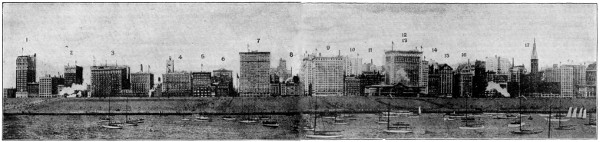
1. Blackstone
Hotel
2. Harvester
Building
3. Congress
Hotel
4. Auditorium
Hotel
5. Fine Arts
Building
6. Chicago
Club
7. McCormick
Building
8. Stratford
Hotel
9. Railway
Exchange
10. Orchestra
Hall
11. Pullman
Building
12. Gas
Building
13. Lake View
Building
14. Illinois
Athletic Club
15. Monroe
Building
16. University
Club
17. Ward
Building
Left-hand side enlarged (160 kB)
Right-hand side enlarged (153 kB)
Chicago (shĭ-kä´gō), Ill. [The
“Windy City”], probably
received its name from the Indian Checagua,
meaning “wild onion” and “pole-cat.”
It is the second city and largest railway center
of the United States, and is situated on the southwest
shore of Lake Michigan, at the mouths of
the rivers Chicago and Calumet, five hundred
and ninety feet above sea level and fifteen to
seventy-five feet above the lake. It is eight
hundred and fifty miles from Baltimore, the
nearest Atlantic port, and two thousand four
hundred and fifteen miles from San Francisco.
Chicago is noted for the magnitude of its commercial
enterprises; for the greatness of its
financial institutions; for the excellence of its
parks and public playgrounds—particularly in
the number, equipment, and splendid use of its
small parks in congested localities; for its universities,
its efficient public-school system, and
for other educational, artistic, and morally uplifting
institutions that give to it an enlightened, a
cultured, and a progressive citizenship.
It is estimated that not more than 350,000 of
the inhabitants are of native American parentage;
about 550,000 are Germans, 250,000 are Irish,
225,000 Scandinavians, 160,000 Poles, 110,000
Bohemians, 40,000 Italians, 60,000 Canadians,
and 100,000 English and Scottish. There are
some fourteen languages, besides English, each
of which is spoken by ten thousand or more
persons.
The city has a water-front on the lake of
twenty-six miles and is divided by the Chicago
River and its branches into three portions, known
as the North, South, and West Sides, to which
must be added the “Loop,” or business part of
the city. The site of the city is remarkably
level, rising very slightly from the lake; and its
streets are usually wide and straight. Among the
chief business-thoroughfares are State, Clark,
Madison, Randolph, Dearborn, and La Salle
Streets, and Wabash Avenue. Perhaps the finest
residence streets are Prairie and Michigan Avenues
and Drexel and Grand Boulevards, on the South
Side, and Lake Shore Drive, on the North Side.
A splendid bird’s-eye view of Chicago is obtained
by ascending to the top of the tower of the
Auditorium on Congress Street and Michigan
Boulevard. This huge building, erected in
1887-1889 at a cost of three million five hundred
thousand dollars, includes a large hotel and a
handsome theater. The Fine Arts or Studebaker
Building, adjoining the Auditorium, on Michigan
Boulevard, is one of the show buildings of Chicago,
and has deservedly been described as the focus
of the artistic and intellectual life of Chicago,
containing as it does a theater, concert, assembly,
and lecture rooms, studios of leading artists, and
the meeting-places of several clubs. The beautiful
Romanesque building to the north of the
Fine Arts Building is the Chicago Club. A little
farther to the north, at the corner of Jackson
Boulevard, is the tall Railway Exchange Building,
erected in 1903-1904, and cased in tiles. Next
to this on the north is the new building of the
Chicago Orchestra Association, on the roof of
which is the house of the “Cliff Dwellers,” a
literary and artistic club. A little to the south
of the Auditorium, at the corner of Harrison
Street, is the Harvester Building, erected in 1907,
beyond which is the palatial Blackstone Hotel.
A little farther to the south is the Illinois Central
Station.
Following Michigan Avenue toward the north
from the Auditorium, we reach the Art Institute
of Chicago, an imposing building in a semi-classical
style, containing a valuable collection
of paintings, sculptures, and other objects of art.
Opposite is the magnificent People’s Gas Building,
erected at a cost of eight million dollars.
Farther to the north, on the opposite side of
Michigan Avenue, are the buildings of the Illinois
Athletic Club, the University Club, and the
Chicago Athletic Club. At the corner of Madison
Street is the Montgomery Ward Building, with
its tower, and a little farther up, at the corner of
Washington Street, is the Chicago Public Library,
an imposing building in a classical style, erected
in 1893-1897, at a cost of two million dollars.
This fine edifice is worthy to rank with the
Library of Congress and the Boston Public
Library. The main entrances are to the north
and south, in Randolph Street and Washington
Street. The interior is sumptuously adorned with
marble, mosaics, frescoes and mottoes. It contains
three hundred and fifty thousand volumes.
On the first floor is a large Memorial Hall, used
by the Grand Army of the Republic and covered
by a dome; it contains an interesting collection
of Civil War and other historical relics.
On the north, Michigan Avenue ends at the
Chicago River. Fort Dearborn stood to the left,
on the river, at the end of the avenue.
The business quarters of Chicago occupy
chiefly the great central district called the “Loop,”
which is bounded by the lines of the Elevated
Railway. We may follow Randolph Street to the
west to the City Hall and County Building, two
large adjoining buildings, in a modern classical
style with huge Corinthian columns, built at a
cost of five million dollars.
La Salle Street, leading to the south from the
County Building, contains some of the finest
office buildings in the city. Among these are the
Chamber of Commerce at the corner of Washington
Street; the Tacoma Building at the corner
of Madison Street; the Y. M. C. A. Building, a
little farther to the south; the New York Life
Insurance Building; the low but impressive
Northern Trust Co. Building, and the oddly
shaped Women’s Temperance Temple, all three
at the corners of Monroe Street; the new granite
building of the Corn Exchange National Bank,
the Home Insurance Co. Building, and the
Rookery, with a very attractive interior lined with
white marble. Farther on in La Salle Street, at
the corner of Jackson Boulevard, is the Illinois
Trust & Savings Bank, a massive two-storied
edifice, with a fine central court. At the end of
La Salle Street stands the granite building of the
Board of Trade.
Jackson Boulevard leads hence to the east to
the Federal Building, containing the Post Office
and Custom House and occupying an entire city
square. It is in the Corinthian style, with a large
central dome two hundred feet in height.
Other notable buildings within the “Loop”
district include: the Continental and Commercial
Bank, Hotel La Salle, First National Bank,
and the great department store, office, newspaper,
and hotel buildings.
The park system of Chicago is without a
parallel in America; it embraces Lincoln Park,
on the lake shore to the north, and six others,
and is divided into three sections, all connected
or nearly so by magnificent boulevards, which,
with the park drives, measure over sixty miles.
In all, Chicago has ninety-three parks, covering
more than four thousand four hundred acres. A
characteristic feature of the system is the large
number of small “People’s Parks” scattered
through the poorer districts and provided with
baths, gymnasiums and playgrounds. On the
north side is Lincoln Park, reached via Lake
Shore Drive, one of the finest residence streets in
Chicago, containing some very handsome houses.
This passes near the Water Works, at the foot
of Chicago Avenue, and ends on the north at
Lincoln Park, which is at present three hundred
acres in area, but is being extended by filling in
the adjacent shallows of Lake Michigan.
Among the attractions of this park are the
conservatories, palm-house, lily-ponds, and flower-beds;
a small zoological collection; a fountain
illuminated at night by electric light; the statues
of Lincoln (by Saint-Gaudens), Grant (by
Rebisso), Beethoven, Schiller, La Salle, a Mounted
Indian, and Linnaeus; and the boating lake.
Near the main entrance is the Academy of
Sciences, containing admirably arranged and
classified collections illustrating the various
natural sciences.
Grant Park, consisting of a public pleasure
ground of two hundred and ten acres, lies
between Michigan Boulevard and Lake Michigan.
This park has been improved of late by
the depression of the tracks of the Illinois
Central Railway and by the construction of
massive stone viaducts connecting the park
proper with the lake shore. The adjoining part
of the lake, between the shore and the breakwater,
has been filled in and added to the park. In
Grant Park, to the south of the Auditorium and
opposite Eldredge Place, is an equestrian statute
of General John A. Logan, in bronze, by Saint-Gaudens.
The South Side parks are also fine. They are
best reached by Michigan Avenue and Drexel
Boulevards, two fine residence streets with
tasteful houses and ornamental gardens. Michigan
Avenue also contains several churches, the
Calumet Club, numerous large hotels and apartment
houses, and the First Regiment Armory.
In Drexel Boulevard is the handsome Drexel
Memorial Fountain.
Washington Park (three hundred and seventy-one
acres) and Jackson Park (five hundred and
twenty-three acres) are connected by a wide
boulevard known as the Midway Plaisance, on
which is located the University of Chicago.
The West Side parks, Douglas Park, Garfield
Park, and Humboldt Park are little inferior to
those of the North and South Sides.
The University of Chicago, between Fifty-sixth
and Fifty-ninth Streets, occupies probably the
finest group of buildings, architecturally, devoted
to higher education in the United States. The
total value of buildings and equipment is more
[598]
than thirty million dollars, one-fourth of which
was contributed by citizens of Chicago and the
balance by John D. Rockefeller. The ground
has an area of sixty-six acres, and the university
includes faculties of Arts, Literature, Science,
Commerce and Administration, Education, Medicine,
Law, and Divinity.
Above thirty different buildings have already
been erected, mainly of limestone and in a
Gothic style, from the designs of H. I. Cobb
and Mr. Coolidge. Perhaps the most successful
group is that at the corner of Fifty-seventh Street
and Lexington Avenue, including an Assembly
Hall, a Students’ Club House, the University
Tower, and the University Commons. Other
important buildings are the Cobb Lecture Hall,
the Kent Chemical Laboratory, the Ryerson
Physical Laboratory, the Law School, the
Anatomy, Physiology, Zoology, and Botany
Buildings, the Walker Museum, the Haskell
Oriental Museum, the handsome Bartlett Gymnasium,
dormitories for women and dormitories
for men. On the south edge of the campus
stands the main structure of the Harper Memorial
Library, an enormous Gothic building by Shepley,
Rutan & Coolidge, erected in memory of President
Wm. R. Harper. The Yerkes Observatory, at
Williams Bay on Lake Geneva, containing one
of the largest refracting telescopes in the world,
belongs to the University of Chicago. Connected
with the University is the large School of Education,
facing the Midway Plaisance, between
Monroe and Kimbark Avenues.
Other notable educational institutions include
the Lewis Institute, founded and endowed by
the late Mr. A. A. Lewis and opened in 1896,
comprising a School of Arts and a School of Engineering,
tuition in which is furnished at a nominal
cost; and the Armour Institute, a well equipped
institution for higher technical education, endowed
by its founder with three million dollars.
Hull House, at the southwest corner of Polk
and South Halsted Streets, is a social settlement
of men and women, furnishing a social,
intellectual, and charitable center for the surrounding
district. It includes a free kindergarten,
a coffee-house, a residential boys’ club, a
theater, a labor-museum, and a free gymnasium,
while classes, lectures, and concerts of various
kinds are held.
The famous Union Stockyards (“Packingtown”)
are in South Halsted Street, five and one-half
miles to the southwest of the City Hall, and
may be reached by the South Halsted Street or
Racine Avenue trolley-lines, both running directly
to the main entrance at Forty-first Street. The
yards proper cover an area of about five hundred
acres, have twenty-five miles of feeding-troughs,
and twenty miles of water-troughs, and can
accommodate seventy-five thousand cattle, three
hundred thousand hogs, fifty thousand sheep,
and five thousand horses. From two-thirds to
three-fourths of the cattle and hogs are killed
in the yards, and sent out in the form of meat.
About thirty thousand workers are employed by
the packing-houses. Chicago is the greatest live
stock and grain market in the world.
Among the more important general manufactures
of the city may be mentioned those of railway
cars, locomotives, agricultural implements,
mining appliances, clothing, electrical apparatus,
lumber products, furniture, pianos, organs, leather,
cigars, chemicals, beer, spirits, and flour. The
steel and iron industry is conducted on a large
scale, and the city has some large rolling mills.
Chicago is also one of the leading publishing
centers of the United States, and is an active
jobbing center for the book trade.
As a center of railroad industry Chicago takes
precedence over all cities of the world. Twenty-six
of the principal trunk-line railroads of the
United States run trains into Chicago terminals,
and in addition to these there are numerous belt
transfer, terminal and industrial lines which have
either a part or all of their trackage in the city.
Within the corporate limits of the city are eight
hundred miles of main line railway and one thousand
four hundred miles of auxiliary track. The total
mileage of the twenty-six roads entering Chicago
approximates ninety-seven thousand miles, or
about forty-two per cent of the total mileage of
the United States. The land occupied by main
line property within Chicago represents nine
thousand six hundred acres, or eight per cent of
the entire area of the city.
There are six principal passenger terminals in
Chicago, located as follows:
Baltimore & Ohio Terminal (Grand Central
Station), at Fifth Avenue and Harrison Street.
Central Station, at Michigan Avenue and Twelfth
Street. Chicago & North Western Passenger
Terminal, at North Clinton, West Madison, and
North Canal Streets. La Salle Street Station,
with entrance on Van Buren Street. Dearborn
Station, at Dearborn and Polk Streets. Union
Passenger Station, at Adams and Canal Streets.
Present plans are under way, however, to concentrate
all roads entering Chicago in three
great union stations—the North Western Station
(already built, at a cost of $25,000,000), the Illinois
Central Station, and the Pennsylvania Station,
the two latter involving an expenditure of
one hundred and fifty million dollars.
The water carrying trade of Chicago is comparable
to that of New York and Boston, and
exceeds that of Philadelphia, New Orleans, Baltimore,
and San Francisco.
The Chicago Tunnel System involves a labyrinth
of small tunnels or subways, six by seven
and one-half feet in size, and sixty-two miles
long, forty feet under the principal business
streets within the Loop district. These tunnels
connect with all railway freight depots, passenger
stations and, through their sub-basements, with a
number of the larger mercantile concerns. They
also extend beyond the Loop—north, south, and
west—a distance of about two miles. They are
not designed for passenger traffic, but are used
by cars laden with all sorts of merchandise, coal,
ashes, etc.
There are three underground power stations,
four universal freight and transfer stations (one
of them occupying five floors below the ground),
eighty-five ordinary stations, and twelve tunnels,
extending sixty feet under the Chicago River or
its branches. So far, between thirty million and
forty million dollars have been expended on
construction and equipment. The bores also
contain the cables of the automatic telephone
company.
The site of Chicago was first visited by Joliet
and Marquette in 1673. The United States
Government established there the frontier post of
Fort Dearborn in 1804. On October 8 and 9,
1871, occurred the memorable fire which reduced
the greater part of the city to ashes. In 1886
occurred the Haymarket riot, in 1893 the World’s
Columbian Exposition was held in Chicago, and
in 1894 the Pullman strike, the greatest in history,
centered in Chicago.
Cincinnati (sin-si-nä´ti), Ohio. [The “Queen
City,” named in honor of Cincinnatus, the
Roman patriot.]
It is the second city of Ohio, on the north bank
of the river Ohio, two hundred and seventy
miles southeast of Chicago by rail, opposite the
cities of Covington and Newport, in Kentucky.
Steam ferries and six lofty bridges connect the
city with the Kentucky shore; the suspension
bridge by Roebling is two thousand two hundred
and fifty feet long, and cost one million eight
hundred thousand dollars.
Cincinnati occupies an exceedingly broken and
irregular site, the more densely built parts being
[599]
enclosed between the Ohio River and steep hills.
The river front is upwards of fourteen miles in
length. A second terrace is fifty or sixty feet
higher, and a district between the hills and the
Miami Canal, known as “over the Rhine,” is
occupied by the large German colony.
The main portion of the city is regularly laid
out and its streets are well paved. The chief
shopping district is bounded by Fourth, Main,
Seventh, and Elm Streets. The best residential
quarters are on the surrounding highlands, built
on a succession of irregular hills, by whose steepness
they are broken into a series of some five and
twenty villages, interspersed with parks.
Fountain Square, an expansion of Fifth Street,
may, perhaps, be called the business center of the
city and from it start most of the street railway
lines. In the middle of the square stands the
Tyler Davidson Fountain, cast at the Royal
Bronze Foundry at Munich. To the north, at
the corner of Fifth Street and Walnut Street,
is the United States Government Building containing
the Post Office, Custom House, and
United States Law Courts, erected at a cost of
five million dollars. It is of sawed freestone in
the Corinthian style.
By following Fifth Street to the west and turning
to the left down Vine Street, we pass the
entrance to the Emery Arcade and reach, at the
corner of the busy Fourth Street, the Chamber
of Commerce. Opposite, at the northeast corner
of Fourth and Vine Streets, stands the Ingalls
Building. On the north side of Fourth Street,
between Vine and Race Streets, is the fine Third
National Bank.
Following Fourth Street towards the west, we
soon reach Plum Street, which we may follow to
the right to St. Paul’s Protestant Cathedral, at
the corner of Seventh Street; the Roman Catholic
Cathedral of St. Peter, at the corner of Eighth
Street, and the Synagogue, opposite the last. In
the block bounded by Central Avenue and Eighth,
Ninth and Plum Streets is the City Hall, a large
red building in a Romanesque style, with a lofty
tower, constructed of brown granite and red
sandstone at a cost of one million six hundred
thousand dollars. A little to the east, in Vine
Street, between Sixth and Seventh Streets, is the
Public Library. To the north of this point, “over
the Rhine,” is Washington Park, with the Springer
Music Hall and the Exposition Building.
Among other buildings may be mentioned the
County Court House, St. Xavier’s College, the
Oddfellows’ Temple and the Cincinnati Hospital.
Recent buildings of the modern type include the
Traction Building, the Mercantile Library, the
Union Trust Building, and the First National
Bank.
The chief park of Cincinnati is Eden Park,
which lies on the hills to the east and affords fine
views of the city and river. It contains the Art
Museum, a storage reservoir of the City Water
Works, and the Water Tower. The top of the
last affords the best view of the city and its
environs, the river, and the Kentucky Highlands.
The Art Museum is a handsome group of buildings
on a hill-top, some in a Romanesque, others
in a Grecian style. Adjacent is the Art Academy.
Both are maintained by a private corporation.
There are more than two hundred and fifty
churches, including a Roman Catholic cathedral;
besides many handsome theaters, hotels, and
public halls, hospitals and asylums, and schools.
The educational institutions are of the highest
order. They include the University of Cincinnati,
which has associated with it the Cincinnati
Hospital and the Cincinnati Observatory, the
Ohio and Miami Medical Colleges, St. Joseph’s
and St. Xavier’s Jesuit Colleges, the Law Theological
Seminary, Cincinnati Conservatory of
Music and the Ohio Mechanics’ Institute.
Cincinnati is a center of musical and art culture,
and its decorative pottery and wood-carving have
a national reputation. It has a large river and
canal traffic, and many railways converge here.
Among the factories are clothing factories,
foundries, machine shops, coach-works, works for
the manufacture of furniture, tobacco, shoes,
leather, etc. There is some boat-building and
printing; and the slaughter-houses, stockyards,
and grain elevators are very extensive.
Cincinnati was settled by white men in 1780,
was incorporated as a city in 1819, and early
attained the name of “the Queen City of the
West;” as also that of “Porkopolis,” from its
great trade in pork. Great riots occurred in
1884, and were with difficulty suppressed by the
military.
Cleveland, Ohio. [The “Forest City;” named in
honor of General Moses Cleveland of Connecticut,
who had charge of the surveying of this region,
acting as general agent for the Connecticut Land
Company.]
It is the largest city of Ohio, and is situated
on the south shore of Lake Erie, three hundred
and fifty miles by rail east of Chicago. The city
is built mainly upon a plain from sixty to one
hundred and fifty feet above the lake, and five
hundred and eighty feet above sea-level. It is
divided into the East and West Sides by the
tortuous valley of the Cuyahoga River, which is
crossed by two high-level bridges—one mainly of
stone, and one of iron, three thousand nine hundred
and thirty-one feet long. The former, one
thousand and seventy feet long, was completed in
1878 at a cost of two million two hundred thousand
dollars. There are three other similar viaducts
in different parts of the city.
The chief business street is Superior Avenue, a
really fine and wide thoroughfare, the west end
of which is lined with substantial business blocks,
such as the Perry-Payne Building. A little
farther on the street expands into Monumental
Park or the Public Square, containing a Soldiers’
Monument and a statue of General Moses
Cleveland. The new Federal Building, at the
northeast corner of the square, contains the
Post Office, the Custom House, and the Court
House.
This building is the first of several public
buildings comprised in the so-called “Group
Plan,” the others being the City Hall, County
Building, Public Library, and Union Station.
A broad mall connects all these buildings.
At the northwest corner is the Old Court
House, adjoined by the American Trust Building.
On the north side of the square, at the corner of
Ontario Street, is the handsome building of the
Society for Savings, established in 1849, and now
having deposits of upwards of fifty million dollars.
Adjacent is the Chamber of Commerce, containing
a handsome auditorium, with a library and
reading room. In Superior Avenue, beyond the
Federal Building, is the massive City Hall, which
is adjoined by the temporary building of the
Public Library. A little to the north of this
point is the huge Central Armory.
Euclid Avenue, which begins at the southeast
angle of the Public Square, is, at its east end,
also an important artery of business, and farther
out becomes one of the most beautiful residence
streets in America, with each of its handsome
houses surrounded by pleasant grounds and
shady trees. At the northeast corner of the
Square and Euclid Avenue is the Williamson
Building; a little farther on, also on the north
side of the Avenue, is the handsome First National
Bank; on the right is the tall, narrow building
of the Guardian Savings & Trust Co. To the left
is the Arcade, four hundred feet long, one hundred
and eighty feet wide, and one hundred and forty-four
feet high, with a fine five-balconied interior,
running through to Superior Avenue; and to the
right is the Colonial Arcade, running through to
[600]
Prospect Avenue. At the corner of East Sixth
Street are the tall Garfield and New England Buildings.
Nearly opposite the New England Building
is the new Taylor Arcade, just east of which is the
Hippodrome Building. Farther on, near east
Ninth Street, is the Citizens Building, with the
offices of the Citizens Savings & Trust Co., and
at the corner is the Schofield Building. Directly
opposite the latter, at the southeast corner of
East Ninth Street and Euclid Avenue, is the
Cleveland Trust Co. At the corner of East
Twelfth Street is the handsome Union Club.
Farther on are several fine churches. About
four and one-half miles from the Public Square
Euclid Avenue reaches University Circle, with a
statue of Senator M. A. Hanna by Saint-Gaudens,
and one of Kossuth, erected by the
Hungarians of Cleveland. To the right is the
building of the Western Reserve Historical
Society, to the left is the Elysium, an artificial
ice skating rink. Just beyond the Circle is the
entrance to Wade Park, which contains statues
of Commodore Perry, and a Goethe-Schiller
Monument. Opposite the Park are the buildings
of the Western Reserve University (including
Adelbert College, Woman’s College, Law, Medical,
and Dental Schools, and a Library School,
in addition to the graduate department) and the
Case School of Applied Science. About one mile
farther on the avenue passes Lake View Cemetery,
containing the Garfield Memorial, the
Rockefeller Monolith, the graves of Senator
Hanna and John Hay, and the Wade Memorial
Chapel.
Prospect Avenue, which runs parallel to Euclid
Avenue on the south, is little inferior to it in
beauty.
Cleveland’s rapid growth is due mainly to the
fact that nowhere else can the rich iron ores of
Lake Superior, the coal of Northern Ohio, and
the limestone of the Lake Erie islands, be brought
together so cheaply; its position at the north
terminus of the Ohio Canal being very advantageous,
and seven railways terminate here.
The chief industries of the city are the various
manufactures of iron, including steel rails, forgings,
wire, bridges, steel and iron ships, engines,
boilers, nails, screws, sewing machines, agricultural
implements and machinery of all kinds,
the refining of petroleum, wood-work, and other
manufactures of endless variety. Cleveland is
the greatest iron ore receiving point in America,
one of the largest lumber markets and extensively
engaged in the automobile industry.
Cleveland was founded in 1796 by General
Moses Cleveland, under the direction of the
Connecticut Land Company. In 1814 Cleveland
was incorporated as a village with less than one
hundred inhabitants. The opening of the Ohio
land served as an impetus to growth, and in 1836
Cleveland was incorporated as a city. Its great
prosperity dates from its connection by rail with
the cities of the East and the manufacturing
establishments set up during the Civil War.
Des Moines (dē-moin´), Iowa. [This name was
applied by the Indians to a place in the form of
Moingona, which the French shortened into
Moin, calling the river “rivière des Moins.”
Finally, the name became associated with the
Trappist monks, and the river by a spurious
etymology was called “la rivière des moines,”
“the river of the monks.”]
The capital and largest city of Iowa, it is an
important manufacturing and commercial city,
and noted especially for its extensive insurance
interests and exceptional railroad facilities. It
has many important buildings, among them the
Capitol, built at a cost of three million dollars,
the United States Government Building, the
State Arsenal, a State Historical Building, completed
in 1908 at a cost of five hundred thousand
dollars, Drake University, Highland Park College,
Des Moines College, and a state library. A new
city hall at a cost of four hundred thousand
dollars, and a great coliseum to seat ten thousand
are recent additions.
The city has nearly one hundred churches of
all denominations. Half a dozen bridges over
the two rivers connect the different parts of the
town, and there is a public park, with fine groves
of forest trees.
Vast bituminous coal fields have contributed
to the growth of the manufacturing industries.
These include typewriters, wagons, sleighs,
cotton and woolen goods, pottery, furniture, and
electrical appliances. The city was one of the
first to adopt the electric car system.
Des Moines was settled in 1846, incorporated
as the town of Fort Des Moines, 1851, chartered
as a city and became the capital of the State in
1857. In 1907 Des Moines adopted the commission
form of government and attained wide
celebrity as a leader in progressive municipal
government.
Denver, Colo. [The “Queen City of the Plains”;
named after James W. Denver, ex-Governor of
Kansas, upon the consolidation in 1860 of the
towns of St. Charles and Aurora.]
The capital of Colorado, it is situated on the
South Platte River, nine hundred and twenty-two
miles west of St. Louis. It lies on a level plain,
five thousand one hundred and ninety-six feet
above the sea, beyond which rise the snow-capped
peaks and deep blue shoulders of the
Rocky Mountains.
The Union Depot lies at the foot of Seventeenth
Street, one of the chief business thoroughfares,
and electric cars start from here for all parts of
the city. Near the station is a large bronze
Arch, bearing the work “Welcome.” The route
up Seventeenth Street and Seventeenth Avenue
by electric car to the City Park and then across
to Colfax (or Fifteenth) Avenue and return
traverses the chief features of the city. On the
way out is passed the Equitable Building, the
roof of which affords a superb view.
The Rocky Mountains are seen to the west in
an unbroken line of about one hundred and
seventy miles, extending from beyond Long’s
Peak on the north to Pike’s Peak on the south.
Among the loftiest of the intervening summits
are Grey’s Peak, Torrey’s Peak, and Mount
Evans. The bird’s-eye view of the city in the
immediate foreground includes the State Capitol
and the fine residences of Capitol Hill on the
east.
At the corner of Seventeenth and Glenarm
Streets is the Denver Club, and at the corner of
Sherman Avenue are the University Club and
the Central Presbyterian Church. In returning
through Colfax (or Fifteenth) Avenue the following
buildings may be observed: the State Capitol,
an imposing structure erected at a cost of two
million five hundred thousand dollars; the new
Public Library, between Acoma and Bannock
Streets; the United States Mint, at the corner
of Cherokee street, and the West Side Court
House. The County Court House occupies the
block bounded by Court Place and Fifteenth,
Sixteenth and Tremont Streets. The Custom
House and Post Office, on Sixteenth Street, is
another imposing building. In Fourteenth Street
is a handsome Auditorium used by the Democratic
Convention in 1908.
The other important buildings of the city
include the Denver High School, Stout Street,
between Nineteenth and Twentieth Streets; the
City Hall, corner Fourteenth and Larimer Streets;
the Mining Exchange; the Chamber of Commerce;
Baptist College (Montclair); the Tabor Opera
House Block; the Broadway Theater; the Denver
Athletic Club; Trinity Church, Broadway and
Eighteenth Street; the Church of Christ, Scientist,
Fourteenth and Logan Avenues; the Y. M. C. A.,
[601]
Lincoln and Sixteenth Avenues; Mystic Shrine
Temple, Sherman and Eighteenth Avenues; the
Westminster University of Colorado, and the
Jesuit College of the Sacred Heart (College
Avenue, corner of Homer Avenue). On Capitol
Hill are the new buildings of St. Mary’s Cathedral
(Roman Catholic) and St. John’s Cathedral
(Episcopalian). The Art Museum, in Montclair,
contains a collection of paintings and other
objects of art. The Museum in the City Park
includes an interesting collection of Colorado
animals. In University Park, eight miles to the
southeast of the Union Depot, is the University
of Denver.
The city is the center of a great agricultural
and mining district, and has a large trade in
cattle, hides, wool, and tallow. It is chiefly,
however, to its position as the center of a great
mining region that Denver owes its marvelous
progress; the discovery, in 1878, of the fabulous
wealth of the Leadville Hills attracted capital
and emigration from all parts of the continent.
It has a United States assaying mint, is an
important ore market, and is noted for its smelting
and refining works, foundry and machine
shops.
Denver has an abundant water supply, and the
clear invigorating air and dry climate of Denver
are famous. It was founded on a barren waste,
dry and treeless, in 1858, and the following year
incorporated as a city by the Provisional Legislature.
Detroit (dē-troit´), Mich. [The “City of the
Straits”; named from the river or strait on
which the city is built. Derived from two
French words, detroit, “the narrows.”]
It is situated on the Detroit River, eighteen
miles from Lake Erie, at an altitude of six hundred
feet. The river, sometimes called the
“Dardanelles of the New World,” is here the
boundary between the United States and Canada.
It affords a splendid harbor, with a water-front
of about nine miles. Ferries connect with the
Canadian side. Many beautiful islands, with
those of Lake St. Clair, are popular as places of
summer residence and resort.
One of these, Belle Isle, is about seven hundred
acres in extent and forms a beautiful public park,
with fine trees, and still retaining many of its
natural features unimpaired. It contains a
statute of Schiller, a small zoological collection,
a large aquarium and horticultural building, and
a casino.
Woodward Avenue, the principal thoroughfare,
divides the city into two very nearly equal parts.
It is also the main business street, and at its
northern end has many of the city’s most prominent
buildings. Its expansion, about half a
mile from the river, is known as the Campus
Martius, adorned with a handsome fountain,
from which Michigan and Gratiot Avenues
diverge to the left and right. To the left stands
the City Hall, the tower of which contains a
clock with a dial eight and one-half feet in
diameter. In front of the City Hall is the
Soldiers’ Monument.
In Gratiot Avenue, near the Campus Martius,
is the Public Library, containing two hundred and
twenty thousand volumes and some historical relics.
The Chamber of Commerce, at the corner of
Griswold and State Streets, is thirteen stories
high. The Post Office, in Fort Street, adjoining
the site of the old Fort Lernoult, is a handsome
building. In the same street, at the southeast
corner of Shelby Street, is the State Savings
Bank, and adjoining it on the east is the tall
Penobscot Building.
Just to the east of the Campus Martius, in
Cadillac Square, stands the County Building.
It is in a plain renaissance style with a Corinthian
portico over the main entrance, sculptures
in the pediment, and a tower surmounted by a
gilded dome. In front of it is the Cadillac Chair,
erected in 1901 to commemorate the two hundredth
anniversary of the city’s foundation.
A little farther on Woodward Avenue reaches
Grand Circus Park, a square with trees, fountains,
and a statue of ex-Governor Pingree. To the
north, at the corner of Adams Street, is the Central
Methodist Church, with a richly decorated
interior. One block to the east, between Adams
and Elizabeth Streets, is the new building of the
Y. M. C. A. At the corner of Edmund Place,
one-half mile farther on, are the First Unitarian
and First Presbyterian churches, two fine
Romanesque buildings of red stone. Between
Erskine and Eliot Streets, to the right, is the
Temple Bethel, an effective Jewish synagogue.
Also to the right, at the head of Martin Place, is
the handsome Harper Hospital; and Grace
Hospital is also seen to the right (corner of Willis
Avenue and John R. Street) a little farther on.
To the left, a little higher up, is the Detroit
Athletic Club. The north end of Woodward
Avenue and the adjoining streets form the
principal residence quarter.
Jefferson Avenue, which runs at right angles to
Woodward Avenue, crossing it one-fifth mile
from the river, contains many of the chief wholesale
houses, and toward its northeast end has
also many pleasant residences. The site of Fort
Pontchartrain was at the corner of Jefferson
Avenue and Griswold Street, two squares to the
west of Woodward Avenue. To the east, on the
left side of the street, are the Roman Catholic
Cathedral of Saints Peter and Paul and the
Jesuit College, and on the right side the Academy
of the Sacred Heart. On the same side, at the
corner of Jefferson Avenue and Hastings Street,
about one-half mile to the east of Woodward
Avenue, stands the Museum of Art, containing
paintings, sculptures and oriental curiosities.
The commerce of Detroit is enormous, a number
of conditions favoring it as a commercial and
industrial center. Its geographical position
brings it into relation with an immense lake
traffic and with the Canadian trade. About
three-fourths of the total trade is with Canada.
The principal exports are grain, wool, pork, lard,
hides, and copper. It has important lumbering
interests and large tanneries.
The manufactures include stoves, freight cars,
drugs, varnish, paint, furniture, carriages, cigars,
and matches. Other industries are those of iron
and steel, foundry and machine shop products,
and the manufacture of malt liquors.
The site of Detroit was visited by a party of
Frenchmen as early as 1610, and again by La Salle
in 1670, but no permanent settlement was made
until 1701, when Sieur de la Mothe Cadillac, the
first Governor of the French territory in this
vicinity, built Fort Pontchartrain and established
a small trading village. In 1815 Detroit was
incorporated as a village, and in 1824 was chartered
as a city by the Legislature of Michigan
Territory. It was the capital of the Territory
from 1805 to 1837, and of the State from 1837
to 1847.
Hartford, Conn. [Named from Hertford, England.]
It is the capital of Connecticut, on the right
bank of the Connecticut River, fifty miles from
its mouth, and one hundred and twelve by rail
northeast of New York. It is a handsome city,
finely situated on the navigable Connecticut
River, at its confluence with the Park River. The
Union Depot is near the center of the town. To
the southwest of it, beyond the Park River, lies
Bushnell Park, containing the handsome white
marble Capitol, a conspicuous object in most
views of the town.
The fine sculptural embellishment of the north
facade of the Capitol was done under the supervision
of Paul W. Bartlett and partly by his own
hand. The Senate Chamber contains a good
[602]
portrait of Washington, by Stuart, and an
elaborately carved chair, made from the wood
of the “Charter Oak.” In the Library are the
Charter of Connecticut and portraits of Connecticut
governors. In the east wing of the ground
floor is a statue of Nathan Hale, and in the west
wing are the tombstone of General Putnam and a
statue of Governor Buckingham.
The gateway to the park was erected as a
Soldiers’ Memorial.
Following Capitol Avenue to the east and then
turning to the left, along Main Street, is the
Wadsworth Athenæum, containing a gallery and
libraries with one hundred and fifty thousand
volumes, and the collections of the Historical
Society. Adjacent are the buildings of the Ætna
Life Insurance, the Ætna Fire Insurance, and the
Travelers Insurance Co. A little farther on is
the Post Office, adjoined by the interesting Old
State House, erected by Chas. Bulfinch. Opposite
is the Connecticut Mutual Life Insurance Co.
The State Arsenal is also on Main Street farther
along.
Near the State House are the High School, the
Hartford Orphan Asylum, and the Hartford
Theological Institute. About a mile to the south
is Trinity College, with fine buildings and equally
fine location. The Colt Firearms factory is in
the southeast part of the city, and near it is the
handsome Church of the Good Shepherd, erected
in memory of Colonel Colt, inventor of the
revolver, by his wife.
A tablet at the corner of Charter Oak Place
marks the site of the “Charter Oak,” where, in
1687, the charter of Connecticut was concealed
to save it from Sir Edmund Andros, a tyrannical
British governor. Charter Oak Park is famous for
its trotting races. Elizabeth Park has a fine
show of flowers.
Among other large buildings are the Retreat
for the Insane, the Deaf and Dumb Asylum, the
Old Folks Home, the City Hospital, and St.
Joseph’s Roman Catholic Cathedral. The last is
in Farmington Avenue, which, with its continuation,
Asylum Street, contains many fine private
residences.
Hartford is a prominent commercial and manufacturing
city, and is particularly noted for the importance
of its insurance companies, rating third in
this regard among the cities of the United States.
It is the farthest point, at present, to which large
steamers can ascend the Connecticut River.
Among the manufactures are firearms—the celebrated
Colt manufactory is here—typewriters,
rubber goods, especially tires, electrical supplies,
automobiles, bicycles, sewing-machines, hardware,
tools, carriages, silver plate, woven wire mattresses,
book binding machinery, cash registers,
knit goods, etc.
The site of a Dutch fort in 1633, and of a colony
of Massachusetts settlers as early as 1635-1636,
Hartford was incorporated as a city in 1784.
Here (January 14, 1639) was adopted the first
constitution in writing ever proclaimed by a
people organizing a government, therefore Hartford
is called the birthplace of American democracy.
In 1687 occurred the famous attempt of
Governor Andros to seize the charter of Connecticut.
Hartford was the capital of Connecticut
until 1701, thenceforth until 1873 it divided the
responsibility with New Haven. Since 1875 it
has been sole capital. Here in 1814 took place
the famous meeting of New England delegates
known as the Hartford Convention.
About 1780 the “Hartford wits,” of whom
Joel Barlow was one, made the city a literary
center. Since that time it has been the residence
of a large number of literary men and women;
among them Harriet Beecher Stowe, Whittier,
Trumbull, Charles Dudley Warner, and Samuel
L. Clemens. Noah Webster, Henry Barnard, Frederick
Law Olmsted, and John Fiske were born here.
Indianapolis (in-di-a-nap´o-lis), Ind. [Literally,
the City of Indiana, from Indiana and polis, city.]
It is the capital of Indiana, on the west fork
of White River, in a level plain one hundred and
ninety-five miles southeast of Chicago by rail.
It is a regularly built and beautiful city.
The focus of the city is the circular Monument
Place, from which four wide avenues run diagonally
to the four corners of the city. The other
streets, many of them one hundred feet wide, are
laid out at right angles to each other. In the
center of this place rises the Soldiers and Sailors’
Monument, two hundred and eighty-five feet
high, by Bruno Schmitz of Berlin. Round the
monument are statues of General G. R. Clark,
Governor Whitcomb, President W. H. Harrison,
and Governor Morton. A little to the west is
the State Capitol, a large building with a central
tower and dome, erected at a cost of two million
dollars. At the east entrance to the Capitol is a
statue of Governor Morton and near by is that of
Governor Hendricks. The Marion County Court
House, also an imposing edifice, lies to the east of
Monument Place, while to the north of it is the
United States Court House and Post Office,
erected in 1902-1904. To the southwest of the
former is a statue of General H. W. Lawton, by
A. O’Connor. In University Park is a statue of
Benjamin Harrison, erected in 1908.
The John Herron Art Institute, at the corner of
Pennsylvania Avenue and Sixteenth Street, contains
a School of Art and a collection of modern
paintings. Other large and important buildings
are the Blind Asylum; the Propylæum, owned
and controlled by a stock company of women for
literary purposes; the Deaf and Dumb Asylum;
the Union Railway Station; the City Hall; the
Public Library; the Masonic Temple; the Oddfellows
Building; the Deutsche Haus, a German
club-house; the Mænnerchor Building, and
several churches. The Winona Technical Institute
is installed in buildings erected for the United
States Arsenal. The Central Hospital for the
Insane lies one and one-half miles to the west of
the city, beyond the White River. The Riverside,
Broad Ripple, Brookside, Fairview, and Garfield
Parks deserve mention.
Indianapolis is one of the chief railroad centers
of the United States, fifteen main lines converging
here. It is also a great center of electric railways,
which radiate hence in all directions, two hundred
and fifty cars leaving the terminal station daily.
The trade in agricultural produce is very considerable.
Pork-packing is the leading industry,
but there are also large flour and cotton and
woolen mills, numerous foundries, and manufactories
of furniture, carriages, tiles, etc.
Indianapolis was first settled in 1819, the city
founded in 1821, became the seat of the state
government in 1825, was incorporated as a town
in 1836, and received its city charter in 1847. In
the same year the first railroad in the state was
opened.
Los Angeles (los an´je-les, Sp. pron. lōs äng´he-lās),
Cal. [Named by the Spaniards Pueblo de la Reina
de los Angeles, “The Town of the Queen of the
Angels,” hence Los Angeles, “the angels.”]
It is the metropolis of southern California, lies
on the Los Angeles River, twenty miles above its
mouth and fifteen miles in a direct line from the
Pacific Ocean, and four hundred and eighty-three
miles southeast of San Francisco by the Southern
Pacific Railroad.
It is a splendid city of wide streets and spacious
sidewalks, with an extensive residential quarter,
one hundred and thirty churches, over sixty public
schools, and about one thousand seven hundred
manufactories. It publishes newspapers in seven
languages.
The city, especially the residential quarters, is
embowered in plants, among the characteristic
[603]
features of which are the swift-growing eucalyptus,
the graceful pepper-tree, many palms, Norfolk
Island pines, live-oaks, india-rubber trees,
orange trees, roses, geraniums, yuccas, century
plants, bananas, calla lilies, and pomegranates.
A distinguished French traveler pronounces Los
Angeles one of the few really beautiful cities in
the United States.
Broadway, running parallel to Main Street, is
the dividing line for east and west, as First Street
is for north and south. Among the many substantial
buildings in Main Street are the City
Hall, between Second and Third Streets, and the
new Chamber of Commerce. The latter contains
an interesting collection of California
products, the Palmer collection of Indian antiquities,
and the Coronel collection, illustrating
the Spanish period. Here is also the first cannon
brought to California by Padre Junipero Serra in
1769. In Temple Street, near Broadway, stands
the County Court House. The Public Library
is at the southeast corner of Broadway and Third
Street.
Other edifices worthy of mention are the
Women’s Club, in the Mission-Renaissance style
(940 South Figueroa Street), the State Normal
School (corner Grand Avenue and Fifth Street),
the Security Savings Bank (corner Spring and
Fifth Streets), the Union Trust and Hellman
Buildings (opposite corners of Spring and Fourth
Streets), the Auditorium (corner Fifth and Olive
Streets), the Y. M. C. A. (Hope Street, between
Seventh and Eighth Streets), the Y. W. C. A.
(corner Hill and Third Streets), the Farmers and
Merchants National Bank (corner Fourth and
Main Streets), the Grant Building (corner Broadway
and Fourth Street), Hamburger’s (corner
Broadway and Eighth Street), Merchants Trust
(207 Broadway), and the International Bank
(corner Temple, Spring and Main Streets). The
viaduct of the Electric Railway, in San Fernando
Street, spanning the railway tracks on the east
side of the city, is an interesting piece of engineering.
Los Angeles also contains many parks, including
the Griffith Park of three thousand acres, and
the Eastlake Park and Westlake Park, each with
a small lake. The University of Southern
California is situated at Wesley Avenue and
Thirty-fifth Street.
The small plaza, with the Old Mission Church,
at the north end of the business-town, is interesting
as a survival of the ancient settlement.
Just beyond is a genuine Chinatown, keeping
many of the original adobe structures. An
excellent view of the city can be obtained from
the tower at “Angel’s Flight,” corner Hill and
Third Streets. Opposite Eastlake Park is an
Ostrich Farm, with some two hundred adult birds.
Los Angeles is the center of the orange-growing
industry. The residents are principally occupied
in the cultivation and export of oranges, grapes,
and other fruits, as well as the manufacture of
wine. There are rich oil-wells in and near the
city and this district now forms part of one of
the richest petroleum fields in the world. Many
invalids resort to Los Angeles in the winter
because of its mild and equable climate. The
city has a harbor on the coast, eighteen miles off.
It is one of the oldest towns in the Western
states, and was already a thriving place when
the Franciscan fathers established a mission there
in 1781. Under Mexican rule Los Angeles alternated
with Monterey as the capital of California.
From 1835 to 1847 it was the capital of the
State of California. In 1846 it was occupied by
the United States forces. For the first century
of its history Los Angeles was only a small pueblo
constructed mainly of adobe in the Mexican style,
but the advent of the railroad brought a sudden
impetus. It was the first city in the United
States to be lighted with electricity.
Louisville (lōō´ĭ-vĭl, or
lōō´ĭs-vĭl), Ky. [The “Falls
City”; named by act of the Virginian Legislature
in 1780, in honor of Louis XVI. of France, then
assisting the American colonies in their revolutionary
struggle.]
It is the largest city of Kentucky, and is situated
on the Ohio River, one hundred and thirty miles
by water southwest of Cincinnati. The river is
here crossed by two railroad bridges, and forms
a series of rapids—the “Falls of Ohio”—descending
twenty-six feet in two miles.
Louisville covers about forty square miles of a
plain, and is nearly enclosed by hills. It is handsomely
built and extends for nearly eight miles
along the river. Its well-shaded streets are from
sixty to one hundred and twenty feet wide, and
slope up from the river.
Perhaps the most prominent building in Louisville
is the Custom House, in Chestnut Street
between Third and Fourth Streets. The Court
House is in Jefferson Street between Fifth and
Sixth Streets, and is adjoined by the City Hall,
with its square clock-tower.
The Louisville Public Library, at the corner of
Fourth and York Streets, contains also an art
gallery and a small museum, including the
Troost Collection of Minerals.
The Farmers’ Tobacco Warehouse, in Main
Street, is the center of the tobacco trade and has
a large storage capacity. The University of
Louisville, at corner of Eighth and Chestnut
Streets, is housed in a handsome building. The
Lincoln Bank, corner of Fourth and Market
Streets, is fifteen stories high, with a splendid
view from upper windows and roof.
Fourth Avenue, with many pleasant residences,
leads south, passing the pretty little Central Park,
to the Racecourse. Louisville possesses three
fine parks: Iroquois Park, Cherokee Park, and
Shawnee Park, to the south, east and west of the
city. The First Regiment Armory has an enormous
drill-hall and can seat fifteen thousand
persons.
The Louisville Bridge, one mile long, crossing
to the west end of Jeffersonville, was built in
1868-1872 and has twenty-seven iron spans supported
by limestone piers. The Kentucky and
Indiana Bridge, leading to New Albany, is one-half
mile long. A third bridge, also leading to
Jeffersonville, was constructed in 1892.
President Zachary Taylor (1784-1850) is buried
near his old home, five miles to the east of Louisville.
Louisville is the greatest market for tobacco
in the world, and has large pork-packing establishments,
distilleries, and tanneries, with manufactories
of plows, furniture, castings, gas and
water pipes, machinery, flour, cement, cotton seed
oil and cake, steam railroad cars, and carriages
and wagons.
It was founded in 1778 and in 1780 named in
honor of Louis XVI. of France, whose troops
were then assisting the Americans. A great part
of the town, including the tobacco-market and
the city hall, was destroyed by a cyclone in
March, 1890. Since the Civil War, Louisville
has rapidly grown in importance as one of the
chief gateways to the southwest.
Milwaukee (mĭl-wau´kē), Wis. [Named from the
river, called by the Algonquins Minnwaukee, or
Me-ne-wau-kee, “good earth, good country, rich
or beautiful country.”]
It is the largest city in Wisconsin, and is situated
on the west shore of Lake Michigan at the common
mouth of three improved and navigable
rivers, which, with a canal, supply twenty-four
miles of dockage. An excellent harbor has been
formed by the erection of huge breakwaters, and
the river admits the largest lake-vessels to the
doors of the warehouses.
The city is well built, largely of a light-colored
[604]
brick, and many of its streets are lined with
beautiful shade trees, recalling some of the older
eastern cities. Among the finest residence streets
are Grand Avenue, Prospect Avenue, Waverly
Place, Juneau Avenue, Marshall Street and Astor
Street. About two-thirds of the inhabitants are
Germans, which may account for its successful
cultivation of music and art. There are no
fewer than seventy-five musical societies in the city.
Grand Avenue, which runs east and west, contains
many of the chief buildings and best shops,
while Wisconsin Street and East Water Street
are also busy thoroughfares. Among the most
prominent buildings is the Federal Building, a
handsome structure of granite in a turreted
baronial style, occupying the block bounded by
Jefferson, Jackson, Michigan and Wisconsin
Streets, and containing the Post Office, Custom
House and United States Court House. The
interior is finely finished in marbles, mosaics,
mahogany, and oak. The County Court House, a
brown sandstone edifice, is in the square bounded
by Jefferson, Jackson, Oneida, and Biddle Streets.
The tall Wells Building, at the corner of Milwaukee
and Wisconsin Streets; the Chamber of
Commerce, Michigan Street; Plymouth Church,
a massive building at the corner of Van Buren
and Oneida Streets, and St. Paul’s Church,
Marshall Street, are other important structures.
The Auditorium, in Cedar Street, can accommodate
ten thousand people.
The Layton Art Gallery, a well-lighted structure
at the corner of Jefferson and Mason Streets, has
some interesting pictures and statues. The
paintings include examples of Rosa Bonheur,
Constable, Corot, Millet, Achenbach, Alma-Tadema,
Clays, Inness, Kensett, Mauve, Holmberg,
Pradilla, Mesdag, Munkácsy, Van Marcke,
and other modern masters. In the Sculpture
Hall are works by Hiram Powers and Romanelli.
The magnificent Public Library in Grand Avenue,
between Eighth and Ninth Streets, contains two
hundred thousand volumes and a free museum of
natural history, palæontology, etc.
The curiously thin looking City Hall, with one
of the largest bells in the world and an illuminated
clock-dial, visible for two miles at night, occupies
a triangular site bounded by East Water, Market
and Biddle Streets.
Other notable structures in the business district
are the Germania Building, the Evening Wisconsin
Building, the Sentinel, the New Insurance
Building, the Mitchell Building and the Pabst
Building.
Among the public monuments are statues of
Washington, near Ninth Street, and the Soldiers’
Monument.
Juneau Park, laid out on a bluff overlooking
Lake Michigan, contains statues of Solomon
Juneau, the earliest white settler, and Leif
Ericson; it commands fine views. Lake Park,
farther to the north, also overlooks the lake.
Near it is the North Point Pumping Station, with
a tall and graceful water tower. The Forest Home
Cemetery, at the southwest corner of the city,
deserves notice. The attractions of Washington
Park, on the west limits of the city, include a
large herd of deer.
The great breweries, such as Pabst’s, which
covers thirty-four acres, or Schlitz’s, are wonderfully
interesting plants, while the grain elevators,
the flour mills, the coal docks, the International
Harvester Co., and the workshops of the C. M.
St. P. Railway are also great concerns. To the
south are the rolling mills of the Illinois Steel Co.,
covering one hundred and fifty-four acres of
ground. To the southwest, chiefly in the valley
of the Menomonee, are the large brick yards
that produce the light colored bricks which give
Milwaukee the name of “Cream City.” To the
north, along the Milwaukee River, are extensive
cement works.
Sheridan Drive, skirting the lake to the south
for two miles, is intended to be prolonged so as
ultimately to meet the boulevard of that name
running from Chicago to Fort Sheridan.
The other industries include manufactories of
leather, machinery, iron and steel goods, tobacco,
clothing, stoves, tinware, brick, furnaces, cars,
steel and malleable iron. Pork packing is also
carried on extensively.
Milwaukee became a village in 1835 and received
a city charter in 1846. Its growth has been
rapid, particularly in the last twenty-five years.
Minneapolis (min-e-ap´ō-lis), Minn. [The “Flour
City”; named from Dakota Indian words,
Minni, “water,” ha, “curling,” and the Greek
word polis, “a city,” namely “city of the curling
water,” alluding to the Falls of St. Anthony.]
It is the largest city of Minnesota, adjoins the
capital, St. Paul, and is situated on both sides of
the Mississippi, which is here crossed by numerous
bridges. The Falls of St. Anthony, with a
perpendicular descent of sixteen feet, afford a
water power which has been a chief source of the
city’s prosperity.
At the corner of Second Avenue South and
Third Street stands the Metropolitan Life Building,
erected at a cost of one million six hundred
thousand dollars. Adjacent is the Post Office, in
a Romanesque style.
On Hennepin Avenue, at the corner of North
Fifth Street, is the imposing Lumber Exchange.
To the right are the West Hotel and the Masonic
Temple. At the corner of Eighth Street is the
private art gallery of Mr. T. B. Walker, containing
good specimens of British portrait painters
and of the Barbison school and also works by or
ascribed to Raphael, Michael Angelo, Rubens,
Rembrandt, Van Dyck, Holbein, and Murillo.
Farther on, at the corner of Tenth Street, is the
Public Library and Art Gallery, an ornate
Romanesque structure.
At the corner of Sixteenth Street is the new
Roman Catholic Cathedral.
Other prominent churches are the First Unitarian
Church, at the corner of Mary’s Place and
Eighth Street; the Westminster Presbyterian
Church, Nicollet Avenue; the Church of the
Redeemer; the Fowler Methodist Episcopal
Church, on Lowry Hill; the Second Church of
Christ, Scientist; Plymouth Church, and St.
Mark’s Cathedral.
At the other end of Hennepin Avenue is the
Union Depot. Among other prominent buildings
in the business quarter are the Court House and
City Hall, a handsome building in Fourth Street,
completed at a cost of three million dollars, with
a tower three hundred and forty-five feet high;
the New York Life Insurance Building, Fifth
Street and Second Avenue, with an elaborate
interior; the Northwestern National Bank; the
First National Bank; the Andrus Building;
Donaldson’s Glass Block Store; the Security
Bank Building, and the Chamber of Commerce,
Fourth Street South and Fourth Avenue.
The University of Minnesota lies on the left
bank of the river, between Washington and
University Avenues, and occupies various well-equipped
buildings.
Other notable institutions are the Augsburg
Theological School, Minneapolis Normal School,
and a Conservatory of Music.
Within the urban limits of Minneapolis are
fourteen wooded lakes, while the gorges of the
Mississippi and the Minnehaha Creek are very
picturesque. These natural features have been
made the basis of a fine system of boulevards.
From the southeast side of Lake Harriet the road
runs to the east along the Minnehaha Creek,
passing Lake Amelia, to Minnehaha Park, containing
the graceful Falls of the Minnehaha, fifty
feet high and immortalized by Longfellow.
The most delightful resort near Minneapolis or
St. Paul is Lake Minnetonka (eight hundred and
twenty feet above the sea), which lies fifteen
miles to the west. The lake is singularly irregular
in outline, and with a total length of twelve
to fifteen miles has a shore line of perhaps one
hundred and fifty miles.
Minneapolis is the foremost city in the world
in flour and lumber products. The flour mills,
perhaps its most characteristic sight, are congregated
on the banks of the Mississippi, near
St. Anthony’s Falls. Other important industries
are the manufacture of agricultural implements
and machinery, bread and baking products, cars
and general shop construction, food preparations,
foundry products, furniture, fur goods, dressed
fur, malt liquors, patent medicines, and printing
and publishing.
The Falls of St. Anthony were named in 1680
by Father Hennepin. In 1819 Fort Snelling was
built by the United States government. Though
a large mill was built as early as 1822, it was not
till 1850 that a permanent settlement was made.
In 1856 Minneapolis was incorporated as a town
on the west bank of the river, and in 1867 it was
incorporated as a city. St. Anthony on the east
bank was annexed in 1872.
Nashville, Tenn. [The “Rock City”; first
named as a settlement, Nashborough, in honor
of Francis Nash of North Carolina, a brigadier-general
in the Continental Army. In June, 1784,
changed to Nashville.]
It is the capital of Tennessee, on the navigable
Cumberland River, two hundred miles above the
Ohio, and one hundred and eighty-five miles by
railroad southwest of Louisville. The city, which
is one of the principal railroad centers in the
Southern states, is built mainly on the left bank
of the river, which is crossed by a suspension
bridge and a railroad drawbridge to the suburb
of Edgefield. Nashville is a handsome, well-built
town, and it is, perhaps, the most important
educational center in the South.
The most prominent building in the city is the
State Capitol, conspicuously situated on a hill.
In its grounds are a bronze equestrian statue of
Andrew Jackson, and the tomb of President Polk,
whose home stood at the corner of Vine and
Union Streets. Among the other chief buildings
are the Court House, the Custom House, the
Parthenon, used for exhibitions of art, Greek plays
by students, etc., the Vendome and Bijou Theaters,
the Carnegie Library, the Board of Trade, the
First National Bank, and the Stahlman Building.
At the head of the educational institutions
stands Vanderbilt University, endowed by
Cornelius Vanderbilt with one million dollars.
In the campus is a colossal statue of the founder,
by Moretti. Other well-known institutions are
the Peabody Teachers’ College, Boscobel College,
Belmont College, the Saint Cecilia Academy,
Radnor College, Buford College and Ward’s
Seminary.
There are also several large colleges for colored
students.
Among the places of interest near Nashville are
the Hermitage, the home of General Andrew
Jackson, eleven miles to the east.
Nashville occupies a foremost place among the
manufacturing centers of the country. It is the
fifth boot and shoe market in the United States,
the largest candy and cracker manufacturing city
in the South, and does an enormous wholesale
dry goods, grocery, and drug business. It carries
on an extensive trade in cotton and tobacco;
while its manufactures, which are rapidly extending,
include cotton, flour, oil, paper, furniture,
timber, leather, iron, and spirits. The iron interests
of the South are largely controlled here.
Nashville was settled in 1780, received its
charter in 1806, and in 1843 was made the
permanent capital.
New Haven, Conn. [The “City of Elms”; named
by the original settlers the “new haven.” The
original Indian name was Quinnippac. The
present name substituted “by the court” September
5, 1640.]
It is the chief city and seaport of Connecticut,
at the head of New Haven Bay, is situated four
miles from Long Island Sound, seventy-three
miles by railroad northeast of New York and
thirty-five miles southwest of Hartford.
The city is situated on a level plain, with a
background of hills. Its broad streets are shaded
with elms, and the public squares, parks, and
gardens, with its handsome public and private
edifices, make it one of the most beautiful of
American cities.
From the large Union Station, which adjoins
the harbor, Meadow Street leads north to the
Public Green, on which are the City Hall, three
churches, the Second National Bank, and the
Free Public Library, United States Court House
and Post Office. At the southeast corner of the
Green is the Bennett Fountain, designed by
John F. Weir after the monument of Lysicrates
at Athens.
In College Street are most of the substantial
buildings of Yale University, which, besides the
Academic Department, has schools of Science,
Theology, Medicine, Law, Forestry, Music, and
Fine Arts, and also a Graduate School.
From the Public Green the university “campus”
or quadrangle is entered by an imposing tower-gateway
known as Phelps Hall. Among the
buildings in the campus are the Art School, containing
a good collection of Italian, American,
and other paintings and sculptures; Connecticut
Hall, the oldest Yale building (1750); Osborn
Hall; Battell Chapel; Vanderbilt Hall; Alumni
Hall; Dwight Hall, and the College Library.
At the corner of Elm and High Streets is the
Peabody Museum of Natural History, in which
the mineralogical collections are especially fine.
Other important buildings of the university
are the buildings of the Sheffield Scientific School,
the Schools of Law, Medicine, and Divinity, the
Chemical and Physical Laboratories, Memorial
and other large halls.
Hillhouse Avenue is especially noted for its
trees, and Chapel Street, the principal promenade,
for the gardens surrounding many of the residences.
The parks have an aggregate area of one
thousand two hundred acres. Besides the
Green are the parks at East Rock (three hundred
and sixty feet high) and West Rock (four hundred
feet high), two masses of trap rock near the
city which afford fine views. East Rock is surmounted
by a soldiers’ monument. West Rock is
famous for a cave in which the regicides Goffe
and Whalley were for a time concealed. Savin
Rock, Morris Cove, and Momaugin are shore
resorts accessible from the city by electric car
lines.
The railway lines from New Haven to New
York City are the only ones of consequence that
have been completely electrified.
New Haven is an important industrial city and
has considerable commerce. The harbor has a
jetty and a breakwater surmounted by a lighthouse,
and the port has a large coasting trade.
But it is of more consequence as a manufacturing
town, employing many thousands of workers
producing hardware, wire, locks, clocks, cutlery,
firearms, corsets, india-rubber goods, carriages,
furniture, paper, matches, musical instruments,
etc.
New Haven was settled in 1638 by a company
chiefly from London. In 1639 a government was
established under a written constitution, and
Theophilus Eaton, the pastor of the colony, was
chosen and continued in the governorship until
[606]
1658. Church membership was a qualification for
suffrage and eligibility to office. The New Haven
colony was founded in 1643 by the union of
Milford, Guilford and Stamford with New Haven.
In the same year it became a member of the confederacy
of the United Colonies of New England.
The charter of Charles II. for Connecticut (1662)
included the New Haven colony, but the latter,
supported by Massachusetts and Plymouth,
stubbornly opposed absorption and was only
forced to accede in 1664. Yale College, founded
in Saybrook, was removed to New Haven in
1717. The town was captured by the British
under Tryon and Garth, July 5, 1779. It was
incorporated as a city in 1784. Joint capital
with Hartford from 1701; the government was
removed from New Haven altogether in 1873.
New Orleans (nū ôr’lē-ănz), La. [The “Crescent
City”; its name is a translation of the French
name Nouvelle Orleans, given by them in honor
of the Duc d’Orleans, then Regent of France.]
It is the chief city of Louisiana, a great port and
mart, and is situated on both sides of the Mississippi
River—the greater portion on the east
bank—one hundred and seven miles from its
mouth, and one thousand one hundred and
ninety miles southwest of New York. The
Mississippi makes two bends here, whence the
city was called “The Crescent City,” but it is
now shaped like the letter S. The river is from
six hundred to one thousand yards wide, and
sixty to two hundred and forty feet deep. The
bar at its mouth was removed in 1874-1879 by
the Eads jetties in South Pass, and vessels of
thirty feet now easily reach New Orleans.
A great part of the city is below the level of
the river during the high flood tides, which last
for a few days each year, and is protected by a
levee or embankment, fifteen feet wide and fourteen
feet high. The city is laid out with considerable
regularity, and many of the chief streets
are wide and shaded with trees. The most important
business thoroughfare is Canal Street, which
runs at right angles to the river and divides the
French Quarter, or “Vieux Carré” on the northeast,
from the New City, or American Quarter,
on the southwest. The finest residences are in
St. Charles Avenue, and in Esplanada Avenue,
where the wealthy Creoles have their homes.
Of the total population about one-quarter are
negroes, while the remaining three-fourths include
large proportions of French, German, Irish,
Italian and Spanish blood.
While it possesses few imposing buildings, New
Orleans is a picturesque city. There are several
parks, little improved, but with handsome monuments
or statues of Jackson, Lee, Franklin, and
others. The custom house of granite cost four
million five hundred thousand dollars, and is the
largest and most imposing building in the city.
It is a large granite building in Canal Street,
near the river, and contains a large Marble Hall.
Just below the Custom House, Canal Street
ends at the Levee, which extends along the
west bank of the Mississippi for about six miles
and presents a very animated and interesting
scene. At the left is Jackson Square, the old
Place d’Armes, which retains its ancient iron
railing, and contains a statue of General Andrew
Jackson, by Mills. It is adjoined by the Cathedral
of St. Louis, a good specimen of the Spanish-Creole
style, built in 1792-1794, on the site of the first
church in Louisiana, but altered in 1850. It contains
some paintings and interesting tombs.
The buildings to the right and left are Court
Houses, that to the south having been built for
the Cabildo, or City Council of the Spanish
régime. In it and in front of it were held the
ceremonies attending the cession of Louisiana by
the French Government to the United States in
1803.
In Orleans Street, near the east end of the
Cathedral, is a Convent of Colored Nuns, which
contains what was formerly the famous Quadroon
Ballroom, mentioned by Cable, the scene of many
celebrated festivities.
On the Levee, just beyond Jackson Square, is
the French Market, which often reveals a scene
of the greatest picturesqueness and animation.
A little farther on, at the foot of Esplanade Avenue,
is the United States Branch Mint, a large building
in the Ionic style. In Royal Street, four blocks
from Canal Street, is the new Court House, a
handsome structure of white marble and terra
cotta.
In the fine French Quarter the chief promenades
are Esplanade Avenue, Rampart Street and
Bourbon, Toulouse, Conti and Royal Streets.
At the corner of Chartres and Hospital Streets is
the Archbishop’s Residence, in the unchanged
Ursuline Convent, built in 1730.
Following St. Charles Avenue from Canal
Street to the south, is the St. Charles Hotel and
the Orpheum and, just beyond, Lafayette Square,
around which are grouped the City Hall, the new
Post Office, St. Patrick’s Church, the First
Presbyterian Church, and the Odd Fellows’ Hall.
In the square are a statue of Franklin, by Hiram
Powers, a monument to John McDonough, and
a statue of Henry Clay. Farther on is Lee
Circle, with a monument to General Robert E.
Lee. At the corner of Camp Street and Howard
Avenue, adjoining Lee Circle, stands the Howard
Library, the last work of H. H. Richardson, who
was a native of Louisiana. Adjacent are Memorial
Hall, a museum of Confederate relics, and the
new building of the Public Library. To the
southwest, in Carondelet Street, is the Jewish
Temple Sinai. The monument to Margaret
Haughery, the “Orphans’ Friend,” is said to
have been the first statue of a woman erected in
the United States.
Tulane Avenue, named in honor of the chief
benefactor of Tulane University, and its continuation
Common Street, contain the Law Department
of Tulane University, the House of Detention,
the Jesuit Church of the Immaculate Conception
in a singular Moorish style, the Parish Prison
and Criminal Courts, the Hôtel Dieu, and the
large Charity Hospital, originally established in
1784. The large Cotton Exchange is at the
corner of Carondelet and Gravier Streets; the
Produce Exchange is in Magazine Street, and
the Sugar Exchange is at the foot of Bienville
Street. The United States Marine Hospital lies
near the river.
St. Charles Avenue, extending in a crescent
from Lee Circle past Audubon Park to the river,
is lined with oaks and magnolias and contains
many old and admirable private residences.
Among its public buildings are Christ Church,
the New Orleans University, the Academy of the
Sacred Heart, the Jewish Orphan Home, and the
Harmony Club. At the point where the avenue
crosses Audubon Park are the newer buildings of
the Tulane University, an important and well-equipped
institution. A department of Tulane
University is the H. Sophie Newcomb Memorial
College for Women, founded in 1886. A legacy
of John McDonough has built and equipped
thirty handsome school houses in different parts
of the city.
The City Park, on the Metairie Ridge, is one
hundred and fifty acres in extent. The Audubon
Park, in which the Great Exhibition of 1884-1885
was held, and which now holds the “Sugar
Experimental Station” of the State of Louisiana,
is a long segment extending back from the river,
being the ground in which the sugar cane was
first grown in this state. Both parks contain
fine live-oaks.
New Orleans is the largest cotton market in the
world except Liverpool, handling annually two
[607]
million bales. The manufacturing products
include machinery, cotton goods, boots and shoes,
and amount in a year to sixty million dollars.
As the outlet of the Mississippi Valley it commands
a large export trade.
The site of New Orleans was first visited in
1699 by Bienville, who in 1718 laid the foundations
of the city, and in 1726 made it the capital.
In 1763 it was ceded to Spain by France, with the
rest of Louisiana; but when in 1765 the Spanish
governor attempted to take possession, he was
driven out, and the people established a government
of their own till 1769, when the Spaniards
occupied it. It was ceded to France in 1802, and
transferred to the United States a few days later.
Incorporated as a city in 1804, it was divided in
1836-1852 into three separate municipalities, in
consequence of the jealousies between the Creoles
and the Americans. Other outstanding events
have been the defeat of the British by Andrew
Jackson in 1815; the capture in 1862 by the
Federal fleet; serious political troubles with
fighting in 1874 and 1877; and the lynching in
1891 of eleven Italian maffiosi. In 1880 the
capital of Louisiana was removed from New
Orleans to Baton Rouge.
Newport, R. I. [The “City of Mansions”; named
in honor of the English admiral Christopher
Newport (under James I.).]
It was, until 1900, one of the capitals of Rhode
Island, and lies on the west shore of the island,
in Narragansett Bay, five miles from the ocean,
and sixty-nine miles by railroad southwest of
Boston. It has a deep and excellent harbor,
defended by Fort Adams.
The town is noted for fine scenery, and is one
of the most fashionable watering-places in
America, containing some of the finest mansions
in the United States. Bathing facilities are
unrivaled, and there are many fashionable
promenades.
The chief attractions are Touro Park, and the
Old Mill, Cliff Walk, Bailey’s Beach, and the
Ocean Drive.
The central point of Old Newport is Washington
Square, or the Parade, within a few minutes’ walk
of the railway station and steamboat wharf.
Here are the State House, with portrait of Washington,
by Stuart; the old City Hall (new one in
Broadway, corner of Bull Street); a statue of
Commodore O. H. Perry, the hero of Lake Erie;
the Perry Mansion, and the Roman Catholic
Church, with an Ionic portico.
Following Touro Street, to the southeast, is the
Synagogue built in 1762 and the oldest in the
United States; the Newport Historical Society;
and, a little beyond, the picturesque Hebrew
Cemetery. Touro Street ends here and Bellevue
Avenue, the fashionable promenade, begins,
running to the south.
The fine Fern-leaf Beech is at the corner of
Bellevue Avenue and Redwood Street. Nearly
opposite this is Touro Park, containing the
Round Tower or Old Stone Mill, the origin of
which is still somewhat of a mystery. Some
authorities believe that it was built by Governor
Arnold in the seventeenth century as a wind-mill,
while others regard it as very possibly the central
part of a church built by the Norsemen in the
eleventh century. Longfellow mentions it in
his Skeleton in Armor. The park also contains
statues of M. C. Perry and W. E. Channing; and
opposite its south side stands the Channing
Memorial Church.
A few hundred paces farther on, Bath Road
leads to the left from Bellevue Avenue to the
First Beach.
Bellevue Avenue soon passes the Casino, a long,
low, many-gabled building, containing a club, a
theater, etc. The Lawn Tennis Championship of
America is decided in the courts attached to the
Casino. Farther on, the avenue passes between
a series of magnificent villas, and then turns
sharply to the right and ends at Bailey’s Beach.
First or Easton’s Beach, a strip of smooth hard
sand, three-fourths mile long, affords some of the
best and safest surf-bathing on the Atlantic coast.
From the east end of the beach a road leads round
Easton’s Point to Purgatory, a curious fissure in
the conglomerate rocks, one hundred and fifty
feet long, seven to fourteen feet wide, and fifty
feet deep.
At the west end of Easton’s Beach begins the
famous Cliff Walk, which runs along the winding
brow of the cliffs for about three miles, with the
ocean on one side and the smooth lawns of handsome
homes on the other. Here are summer
residences, owned by the wealthiest society people
of Boston, New York, and other cities.
Across the hill is Bailey’s Beach, a small bay
with a long row of bathing-houses, which has
become the fashionable bathing-resort of the
Newport cottagers.
From Bailey’s Beach begins the beautiful
Ocean or Ten Mile Drive, which skirts the coast
of the peninsula to the south of the town for
about ten miles, commanding magnificent views.
The locality of Newport has many natural
curiosities, including the Hanging Rocks, Spouting
Cave, and the Glen, or “Purgatory,” already
referred to. Newport is the seat of the United
States Naval War College, United States Training
Station, Torpedo Station, Naval Hospital, Newport
Hospital, and Hazard Memorial School.
The manufactures are flour, cotton goods,
copper, brass, oil, etc.
Newport was settled in 1638 by eighteen
adherents of Roger Williams, and was an important
commercial town prior to the Revolutionary
war, which effected its ruin and transferred its
trade to New York. During the war it was
occupied for three years by the British, and for
a while by the French under Rochambeau. It
was the birthplace of Commodore Perry and
William Ellery Channing, and for a while the
place of residence of Bishop Berkeley, the English
philosopher.
New York City, N. Y. [The “Empire City”; also
“Gotham”; named from the State which was
named in honor of James, Duke of York, afterwards
James II.]
It is the largest and most important city on
the American continent, the second wealthiest on
the globe, and, next to London, the most populous
in the world. Situated on New York Bay at the
confluence of the Hudson and East Rivers, about
twelve miles from the Atlantic Ocean, it consists
of the boroughs of Manhattan, The Bronx,
Brooklyn, Queens, and Richmond, which have
a joint area of three hundred and twenty-six
square miles. Its extreme length, north and
south, is thirty-five miles, its extreme width nineteen
miles.
Manhattan, or New York proper, consists
mainly of Manhattan Island, a long and narrow
tongue of land bounded by the Hudson or North
River on the west and the East River (part of
Long Island Sound) on the east and separated
from the mainland on the north and northeast by
the narrow Harlem River and Spuyten Duyvil
Creek; but also includes several small islands in
New York Bay and the East River.
Manhattan Island is thirteen and one-half
miles long, with an average breadth of one
and three-fifths miles, and with the exception of
a small, wild, and rocky portion, which is utilized
for ornamental purposes, the entire island is laid
out in avenues and streets. It includes several
greens and parks, and its area has been considerably
extended by filling in on the two river-sides.
The strikingly beautiful landlocked harbor of
New York includes the lower bay, the upper bay,
the East River, and the North, or Hudson River.
Ocean steamships enter it from the sea by Sandy
[608]
Hook through the Narrows, and coasting ships
from the north through Long Island Sound. The
North River averages a mile wide; the East River
is not so wide, but both are deep enough for the
largest ships, and furnish many miles of wharfage.
The Harlem River, at the north end of Manhattan
Island, connects the two great rivers.
The bar at Sandy Hook, eighteen miles south
of the city, which divides the Atlantic Ocean
from the outer or lower bay, is crossed by two
ship-channels, from twenty-one to thirty-two feet
deep at ebb-tide. The lower bay covers eighty-eight
square miles. The Narrows, through
which all large ships pass on their way to the
inner harbor, is a strait between Long Island and
Staten Island, about a mile in width, and like
other approaches is defended by forts. New
York’s harbor or inner bay covers about fourteen
square miles; it is one of the amplest, safest, and
most picturesque on the globe, open all the year
round.
Liberty Island, for a long time known as
Bedloe’s Island, is situated in the harbor, about
one and three-fourths miles from the lower end
of the city. In 1886 the famous Bartholdi statue
was erected on this spot, and occupies its central
surface. It is a colossal bronze female figure
one hundred and fifty-one feet in height, on a
pedestal one hundred and fifty-five feet high, and
holding aloft a torch which is lit by electricity
at night.
Immense bridges span the East River and Harlem
River, and there are some thirty steam-ferries.
The New York and Brooklyn Suspension Bridge,
opened in 1883, which cost twenty million dollars,
was soon found inadequate for the enormous
traffic, and a second bridge from Canal Street to
Brooklyn was opened in 1909.
The Williamsburg Suspension Bridge, between
Manhattan and Williamsburg, was opened in
1903. It cost twelve million dollars.
The Queensboro Bridge, of cantilever type,
between Long Island and Fifty-ninth Street, was
opened in 1909. Its cost was twenty million
dollars.
In 1909 another bridge from Manhattan to
Brooklyn, built at a cost of twenty-six million
dollars, was completed.
The Harlem River is crossed by several bridges,
of which the Washington is noteworthy as being
one of the finest in America.
Hell Gate Arch Bridge spans the East River
at Hell Gate, between Ward’s Island and Astoria,
Long Island. It was designed and built by
Gustav Lindenthal for the New York Connecting
Railroad to connect the Pennsylvania and New
York, New Haven systems, at a cost, including
approaches, of twenty-five million dollars. It is
the longest arch in the world. The span is one
thousand and sixteen feet ten inches between
tower faces. The upper chord of the arch is
three hundred feet above mean high water at
the center and one hundred and eighty feet at
the ends of the span; the lower chord is two
hundred and sixty feet above mean high water
at the center and forty feet at the ends; the
roadway is one hundred and forty feet above
mean high water.
Old New York is laid out very irregularly.
Here the money interests and wholesale traffic
are centered; Wall, New, and Broad Streets being
the great centers of banking and speculative
enterprises.
The newer part of the city, from Fourteenth
Street to the end of the island, northward, is
divided into twelve great avenues and several
smaller ones, from seventy-five to one hundred
and fifty feet in width, running north and south.
These are crossed at right angles by streets, mostly
sixty feet in width, running from river to river.
Fifth Avenue, the great modern central thoroughfare,
divides the city into eastside and westside.
Here or hereabout are the largest banks,
churches, museums, libraries, shops, palaces,
and tenements in America.
Fifth Avenue below Fifty-ninth Street is now
largely occupied by store and office buildings
where once were palatial private houses; and
between Madison Square and Fifty-ninth Street
contains many hotels and clubs, and the New
York Public Library.
The original great thoroughfare, Broadway,
runs a northwesterly course through the regular
cross street arrangement, making some slight
deflections, quite through the middle of the
island.
For a distance of two and one-half miles from
Fifty-ninth to One Hundred and Tenth Street,
Central Park divides the city into two parts.
Other parks are Van Cortlandt, one thousand
and sixty-nine acres; Pelham Bay, one thousand
seven hundred acres; and Bronx Park, six hundred
and sixty-one and sixty-one hundredths acres,
containing the Botanical and Zoological Gardens.
Prospect Park, Brooklyn, contains five hundred
and sixteen and one-quarter acres. A recreation
course, skirting the Harlem River, and reserved
for fast driving, is the “Speedway,” and extending
along the Hudson for three miles is Riverside
Drive, with its striking views of the Palisades.
On an abrupt elevation is Morningside Park, on
which are located the new buildings of Columbia
University, St. Luke’s Hospital, and the Cathedral
of St. John the Divine. Beyond Morningside
Park is a rocky ridge known as Washington
Heights.
The most thickly settled part of Brooklyn
borough is in the north, and the business portion
is that part fronting on East River and the upper
harbor. The southern part is largely marshland.
At the southwestern extremity of Long Island,
in this borough, stretches a sandbar known as
Coney Island, on which are the widely-known
popular summer resorts. Queensboro has several
large population centers, among them Long
Island City and Flushing. Richmond borough
(Staten Island) contains numerous villages.
Communication throughout the city is afforded
by an extensive system of electric surface,
electric elevated roads, the great subway railroad
system, and by ferries plying between the
boroughs.
The subway has, for part of its course, four
tracks, two of which are for express trains. It
begins at the City Hall and traverses the whole
length of Manhattan Island. The first length
of eight miles to Washington Heights was opened
in 1904. The following year the line was extended
to the Battery, and also under the Harlem River
into Bronx. In 1908 a further extension was
opened between the Battery and Brooklyn by
way of a tunnel. In 1909, a double-tube tunnel,
the McAdoo, connected the city at Sixth Avenue
and Twenty-third Street with Hoboken, N. J.
In 1910 several tunnels under the Hudson and
East Rivers were opened. Other great works of
development are almost constantly in progress
to deal with the traffic requirements, including
further subways, a number of river tunnels, and
additional railroad terminals. A recent gigantic
railway enterprise is the construction of the
Pennsylvania tunnel under the Hudson River.
Some of the larger features of New York call
for more detailed notice.
The architecture of New York exhibits great
contrasts, including styles as diverse as the
quaint old Dutch houses, and skyscrapers of
twenty-five and thirty stories.
At the extreme south end of the island is the
Custom House, a large quadrangular granite
building, in the French Renaissance style, which
occupies the site of Fort Amsterdam. The
facade toward Bowling Green is adorned with
colossal groups of Europe, Asia, Africa, and
[609]
America, and with twelve heroic figures representing
the great sea-powers.
In Whitehall Street, opposite the Custom
House, is the Produce Exchange, a huge brick
and terra cotta structure in the Italian Renaissance
style, containing numerous offices and a
large hall. The tower, two hundred and twenty-five
feet high, commands a fine view of the city
and harbor.
Broadway begins at the Bowling Green, extending
hence all the way to Yonkers, a distance of
nineteen miles. Up to Thirty-third Street,
Broadway is the scene of a most busy and varied
traffic, which reaches its culminating point in the
lower part of the street during business-hours.
This part of the street is almost entirely occupied
by wholesale houses, insurance offices, banks, and
the like; but farther up are numerous fine shops.
Broadway is no longer the broadest street in
New York, but it is still the most important.
The number of immensely tall office buildings
with which it is now lined give it a curiously
canyon-like appearance.
No. 1 Broadway, to the left, is the Washington
Building, which is adjoined by the Bowling
Green Building (sixteen stories), designed by
English architects. Other conspicuous business
buildings in the lower part of Broadway are the
large Welles and Standard Oil Co. Buildings,
Nos. 18, 26, the 42 Broadway Building, twenty
stories, and Aldrich Court, on the site of the
first habitation of white men on Manhattan
Island. At Nos. 64-68 is the Manhattan Life
Insurance Co., the tower of which is three hundred
and sixty feet high. To the left, at the corner
of Rector Street, is the imposing Empire Building,
twenty stories, the hall of which forms a busy
thoroughfare between Broadway and the Rector
Street “L” station.
FAR-FAMED BROADWAY AT NIGHT
Wall Street diverging from Broadway to the right,
at this point, is the great financial street of New
York, the financial barometer of the country. On
this street stands the United States Sub-Treasury,
a marble structure with a Doric portico, occupying
the site of the old Federal Hall, in which the
first United States Congress assembled, and
Washington was inaugurated as President; the
Drexel Building, a white marble structure in
the Renaissance style, occupied by J. Pierpont
[610]
Morgan & Co.; the National City Bank, largest
in the country, occupying the old Custom House.
Trinity Church, on the west side of Broadway,
is a handsome Gothic edifice of brown stone, with
a spire two hundred and eighty-five feet high.
The present building dates from 1839-1846, but
occupies the site of a church of 1696. The
church owns property to the value of at least
twenty million dollars used in the support of
several subsidiary churches and numerous
charities.
Just above Trinity Church are the enormous
Trinity and United States Realty buildings, two
dignified structures, the former with an admirable
facade in a modified Gothic style, and nearly
opposite are the Union Trust Co. and the twenty-three
story building of the American Surety Co.,
the latter containing the United States Weather
Bureau (“Old Probabilities”). On the same
side, between Pine Street and Cedar Street, is
the office of the Equitable Life Insurance Co.
The block to the left, between Liberty Street
and Cortland Street, is occupied by the buildings
of the Singer Manufacturing Co., the City
Realty Co., and the City Investing Co. The
tower of the Singer Building, with its forty-one
stories, rises to a height of six hundred and twelve
feet. Between Broadway and Park Row is the
Post Office, a large Renaissance building.
City Hall, containing the headquarters of the
Mayor of Greater New York and other municipal
authorities, is a well-proportioned building of
marble in the Italian style, with a central portico,
two projecting wings, and a cupola clock
tower.
To the north of the City Hall is the Court
House, a large building of white marble, with its
principal entrance, garnished with lofty Corinthian
columns, facing Chambers Street. The
interior, which contains the State Courts and
several municipal offices, is well fitted up. This
building, one of the “Tweed ring” structures, is
said to have cost twelve million dollars. Opposite
the Court House, in Chambers Street, are various
City Offices. These include the new Register
Office or Hall of Records, a handsome building in
the French Renaissance style, erected at a cost
of six million dollars and faced with granite.
The facade is adorned with sculptures, and the
interior is also elaborately decorated. To the
southwest of the City Hall, facing Broadway, is
a statue of Nathan Hale.
Park Row, bounding the southeast side of the
City Hall Park, contains the offices of many of
the principal New York newspapers, the
Pulitzer Building, with the World office, Tribune
Building, New York Press, and Park Row Building
with its lofty towers. Opposite the newspaper
offices, in Printing House Square, is a
bronze statue of Benjamin Franklin, and in front
of the Tribune Building is a seated bronze figure
of its famous founder, Horace Greeley.
Beyond Astor Place, Broadway passes the
large building occupied by John Wanamaker, but
originally erected for A. T. Stewart & Co. With
its new annexes, it is heralded as the largest
department store in the world.
Broadway now inclines to the left. At the
bend rises Grace Church, which, with the adjoining
rectory, chantry, and church-house, forms
one of the most attractive ecclesiastical groups in
New York. The church is of white limestone
and has a lofty marble spire. The interior is
well-proportioned, and all the windows contain
stained glass.
At Fourteenth Street Broadway reaches Union
Square, which is beautified with pleasure grounds,
statues, and an ornamental fountain. At the
corner of East Sixteenth Street is the massive
office building of the Bank of Metropolis. Near
the southeast corner is a good equestrian statue
of Washington, in the center of the south side
is a bronze statue of Lafayette, in the southwest
corner is a statue of Abraham Lincoln, and on
the west side is the James Fountain.
Broadway, between Union Square and Madison
Square, is one of the chief shopping-resorts of
New York, containing many fine stores for the
sale of furniture, dry goods, etc. At Twenty-third
Street it intersects Fifth Avenue and at the
point of intersection stands the daring Fuller
Building, generally known as the “Flat-iron
Building” on account of its strange triangular
shape. It is two hundred and ninety feet high,
has twenty stories, and cost four million dollars.
Broadway now skirts the west side of Madison
Square, a prettily laid out public garden, containing
a bronze statue of Admiral Farragut, an
obelisk to the memory of General Worth, a
statue of Roscoe Conkling, a statue of President
Arthur, and a statue of William H. Seward.
The statue of Farragut is among the finest in
New York, and the imaginative treatment of the
pedestal is very beautiful. On the west side of
the square is the new Fifth Avenue Building.
On the east side is the new Appellate Court
House, a handsome building, perhaps somewhat
overloaded with ornamentation.
On the east side of the square, between Twenty-third
and Twenty-fourth Streets, is the enormous
building of the Metropolitan Life Insurance Co.,
the tower of which has fifty stories and reaches a
height of six hundred and ninety-three feet.
Two elevators run to a height of five hundred and
forty-four feet. Adjacent is the Madison Square
Presbyterian Church, with its massive dome.
At the southeast corner of Twenty-sixth Street
stands the Manhattan Club, and at the northeast
corner is the huge Madison Square Garden, with
its Moorish tower capped by a fine statue of
Diana.
The Herald Office, a Venetian palace, stands
at Broadway and Thirty-fifth Street, in Herald
Square.
West of Herald Square, at Seventh Avenue and
Thirty-third Street, is the magnificent station of
the Pennsylvania Railroad Company, covering
an area four hundred and fifty by one thousand
eight hundred feet, the largest structure of the
kind in the world, connected by tunnels under
the Hudson River with New Jersey, and under
the East River with Long Island. The tracks
are forty feet below the level of the city streets.
The Metropolitan Opera House, opened in 1883
and rebuilt ten years later, after a fire, stands
between Thirty-ninth and Fortieth Streets.
At Forty-second Street and Broadway is the
Times Building, an ornamental structure sixteen
stories high, upon a triangle of ground.
To the east of Madison Avenue is the Grand
Central Station, the terminus of the New York
Central, the New York, New Haven and Hartford,
and the Harlem Railways. Opposite the
station is the Belmont Hotel, twenty-two stories
high.
The corner at Broadway and Forty-second
Street is the recent heart of the theatrical and
hotel district, for clustered there are a dozen
hotels, the immense Astor and Knickerbocker
among them, and there are twenty theaters within
half a mile, six of them almost side by side on
Forty-second Street.
Beyond Times Square, Broadway is rather
uninteresting, but there are some lofty specimens
of apartment houses or French flats farther up.
From Forty-fifth Street on, Broadway is largely
occupied by automobile stores and garages. At
the corner of Fifty-sixth Street is the new Broadway
Tabernacle and at Fifty-ninth Street
Broadway reaches the southwest corner of Central
Park and intersects Eighth Avenue.
At the intersection, the so-called Circle, stands
the Columbus Monument by Gaetano Russo,
[611]
erected in 1892, and consisting of a tall shaft
surmounted by a marble statue, in all seventy-seven
feet high. Beyond Seventy-eighth Street,
Broadway, now a wide street with rows of trees,
is usually known as the Boulevard. From One
Hundred and Eighth Street to One Hundred and
Sixty-second Street it coincides with Eleventh
Avenue, at One Hundred and Sixteenth Street it
passes Columbia University, and from One
Hundred and Sixty-second Street it, as Kingsbridge
Road, runs on to Yonkers.
Fifth Avenue, the chief street in New York
from the standpoint of wealth and fashion, begins
at Washington Square to the north of West
Fourth Street and a little to the west of Broadway,
and runs north to the Harlem River, a distance
of six miles. Below Forty-seventh Street the
Avenue has now been largely invaded by shops,
tall office buildings, and hotels. The avenue has
been kept sacred from the marring touch of the
street railway or the elevated railroad, and is
traversed by a line of motor omnibuses. The
avenue is wide and well-paved, and many of the
buildings are of brown sandstone. On a fine
afternoon Fifth Avenue is alive with carriages
and horsemen on their way to and from Central
Park and it is, perhaps, seen at its best on a fine
Sunday.
At Twenty-third Street the Avenue intersects
Broadway and skirts Madison Square. To the
right is the Flat-iron Building. At Twenty-sixth
Street is the Café Martin.
The whole block between Thirty-third and
Thirty-fourth Streets, to the left, is occupied by
the Waldorf-Astoria Hotel, a huge double building
of red brick and sandstone in a German Renaissance
style. The restaurants and other large
halls in the interior are freely adorned with mural
paintings by American artists.
The Union League Club, the chief Republican
club of New York, is a handsome and substantial
building at the corner of Thirty-ninth Street.
Between Fortieth Street and Forty-second
Street, to the left, on the site of the old reservoir
of the Croton Aqueduct, stands the New York
Public Library, a very dignified and imposing
structure of white marble, built at a cost of
ten million dollars.
A little to the east of this point, in Forty-second
Street, is the Grand Central Station
already referred to. At the southeast corner of
Forty-second Street rises the tasteful Columbia
Bank. The Temple Emanu-El, or chief synagogue
of New York, at the corner of Forty-third
Street, is a fine specimen of Moorish architecture
with a richly decorated interior.
At the northeast corner of Forty-fourth Street
is Delmonico’s Restaurant, a substantial building
with elaborate ornamentation; and at the southwest
corner is Sherry’s, a rival establishment,
equally patronized by the fashionable world.
The Collegiate Church of St. Nicholas (Dutch
Reformed), at the corner of Forty-eighth Street,
is one of the handsomest and most elaborately
adorned ecclesiastical edifices in the city. It is
in decorated Gothic style and has a spire two
hundred and seventy feet high. Just below
Fiftieth Street, on the right, is the Democratic
Club, the stronghold of Tammany and popularly
known as “Tamany Hall” or the “Wigwam.”
Between Fiftieth and Fifty-first Streets, to the
right, stands St. Patrick’s Cathedral, an extensive
building of white marble in the decorated Gothic
style, and the most important ecclesiastical
edifice in the United States. It is four hundred
feet long, one hundred and twenty-five feet wide
and one hundred and twelve feet high, and the
two beautiful spires are three hundred and thirty-two
feet high. The building, which was designed
by James Renwick, was erected in 1850-1879,
at a cost of three million five hundred thousand
dollars.
Adjoining the cathedral, to the right, is the
handsome Union Club, and at the corner of
Fifty-fourth Street is the University Club,
adorned with carvings of the seals of eighteen
American colleges. The library contains admirable
mural paintings, adapted from Pinturicchio’s
work in the Borgia apartments of the Vatican.
At the corner of Fifty-fifth Street are the St.
Regis Hotel and the Gotham Hotel. The Fifth
Avenue Presbyterian Church has one of the
loftiest spires in the city.
Between Fifty-ninth and One Hundred and
Tenth Streets Fifth Avenue skirts the east side
of Central Park, having buildings on one side
only. Among these, many of which are very
handsome, is the Metropolitan Club.
At Fifty-ninth Street, where Fifth Avenue
reaches Central Park, are three huge hotels: the
New Plaza, the Savoy, and the Netherland. In
the middle of the Plaza rises a bronze-gilt equestrian
statue of General Sherman, of fine artistic
merit.
Mt. Sinai Hospital is between One Hundredth
and One Hundred and First Streets.
In Central Park, close to Fifth Avenue at
Eighty-second Street, is the Metropolitan Museum
of Art.
At One Hundred and Twentieth Street Fifth
Avenue reaches Mount Morris Square, the mound
in the center of which commands good views.
Beyond Mt. Morris Square the Avenue is lined
with handsome villas, some of them surrounded
by gardens. It ends in a district of tenements
and small shops at the Harlem River.
New York has many public parks, the finest of
which is the Central Park. The district in which
it is located was once a wilderness of rocks and
swamps. Plans by Frederick Law Olmsted and
Calvert Vaux were so admirably carried out as
to make the Central Park in ten years one of the
most beautiful pleasure-grounds in the world.
Of its eight hundred and forty acres, four
hundred are wooded. There are nine miles of
drives, with thirty miles of paths, several lakes
used for boats in summer and for skating in
winter, immense lawns for baseball, tennis, etc.,
a zoological garden, and conservatories.
The chief promenade is the Mall, near the
Fifth Avenue entrance, which is lined with fine
elms and contains several statues and groups of
sculpture, including Shakespeare, Scott, Burns,
Halleck, Columbus, and the Indian Hunter.
From the Terrace, at the north end of the Mall,
flights of steps descend to the Bethesda Fountain
and to the Lake, used for boating in summer and
skating in winter. The most extensive view in
the park is afforded by the Belvedere, which
occupies the highest point of the Ramble, to the
north of the Lake.
The North Park, beyond the Croton Reservoir,
has fewer artificial features than the South Park,
but its natural beauties are greater, and the
Harlem Mere, of twelve acres, is very picturesque.
Near the southeast corner of the park (nearest
entrance in Sixty-fourth Street) are the Old
State Arsenal and a small Zoological Garden.
On the west side of the park is the American
Museum of Natural History, and on the east
side is the Metropolitan Museum of Art. To the
west of the latter museum rises Cleopatra’s
Needle, an Egyptian obelisk from Alexandria,
presented by Khedive Ismail Pasha to the City
of New York in 1877. The obelisk is of red
syenite, is sixty-nine feet high and weighs two
hundred tons. Among the other monuments in
the park are statues of Webster, Bolivar, Hamilton
and Morse, allegorical figures of Commerce and
the Pilgrim, and several busts and animal groups.
Just outside the park, beside the Sixth Avenue
entrance, is a statue of Thorwaldsen.
In Manhattan Square, on the west side of
Central Park, between Seventy-seventh and
[612]
Eighty-first Streets, stands the American Museum
of Natural History, which contains collections of
natural history, paleontology and ethnology.
CENTRAL PARK TERRACE, NEW YORK
The Metropolitan Museum contains paintings,
statuary, ivories, tapestries, porcelains, Greek,
Roman, and Egyptian antiquities. Beginning
with one structure erected by the city at a cost of
five hundred thousand dollars in 1880, it now comprises
a series of buildings which cost several
million dollars. The collections of paintings,
sculpture, antiquities, porcelains, jades, armor, etc.,
are valued at ten million dollars, most of which
has been contributed by art lovers of the city.
In 1903 the institution received a bequest of
six million dollars from the well-known locomotive
builder John T. Rogers, which has enabled
it to compete with other great museums.
At the corner of Morningside Avenue and One
Hundred and Twelfth Street is the new Episcopal
Cathedral of St. John the Divine, designed by
Heins and La Farge, the corner-stone of which
was laid in 1892, but the building of which has
not progressed very far. The Crypt, including
the curious Tiffany Chapel of mosaic glass, and
the Belmont or St. Saviour’s Chapel are the only
portions completed. To the north of this, in
the block bounded by Morningside Avenue,
Tenth Avenue, One Hundred and Thirteenth
Street, and One Hundred and Fourteenth Street,
is the large building of St. Luke’s Hospital, constructed
of white marble and white pressed brick,
with a tower and clock over the main entrance.
To the northwest of this point, on a magnificent
site extending from One Hundred and Fourteenth
Street to One Hundred and Twenty-first Street,
one hundred and ten to one hundred and fifty feet
above the Hudson River, are the new buildings of
Columbia University, the oldest, largest, and
most important educational institution in New
York. The finest building in the center of the
group is the Low Memorial Library, built at a
cost of one million dollars.
On a commanding site bounded by One Hundred
and Thirty-eighth Street, Amsterdam
Avenue, One Hundred and Fortieth Street, and
St. Nicholas Terrace, are the imposing new buildings
of the College of the City of New York,
erected in 1903-1908 by Mr. George B. Post, in
the low-arch Gothic style, at a cost of nearly five
million dollars, and notable for their uniformity
of design and symmetry of grouping.
Among other educational institutions are the
Normal College, at Sixty-ninth Street and Park
Avenue; the College of Physicians and Surgeons;
the New York University; Cooper Union, in
which nearly all the courses are free; St. John’s
(Fordham), Manhattan, and St. Francis Xavier,
Roman Catholic colleges; the National Academy
of Design; Society of American Artists; the Art
Students’ League; Chase Art School; New York
Institute of Music, and various theological
schools.
Riverside Drive or Park, skirting the hills fronting
on the Hudson from Seventy-second Street
to One Hundred and Twenty-seventh Street,
affords beautiful views of the river and is one of
the most striking roads of which any city can
boast. It has become, perhaps, the most attractive
residential quarter of New York, though a
great architectural opportunity has been lost in
the buildings that border it, these consisting
largely of apartment hotels, remarkable mainly
for their size.
Near the north end of the drive, on Claremont
Heights (West One Hundred and Twenty-second
Street), is the Tomb of General Ulysses S. Grant,
a huge and solid mausoleum of white granite,
erected in 1891-1897 at a cost of six hundred
thousand dollars, from a design by J. H. Duncan.
The monument consists of a lower story in the
Doric style, ninety feet square, surmounted by a
cupola borne by Ionic columns. The total height
is one hundred and fifty feet.
John Verrazani, a Florentine navigator, was
the first European who entered New York Bay
(1525). In 1614 the Dutch built a fort on Manhattan
Island, and in 1623 a permanent settlement
was made, named Nieuw Amsterdam. In
1674 Manhattan Island came into the possession
of Great Britain. At the Revolution the population
was less than that of Philadelphia or Boston.
It was evacuated by the forces of Great Britain
in 1783, and from 1785 to 1789 was the seat of
government of the United States. The opening
of the Erie Canal in 1825 gave a vast impetus
to New York City’s growth. The city by 1874
[613]
had extended beyond the Harlem River and a
part of Westchester County was incorporated
in it. In 1896 a law was passed consolidating
with New York City, Brooklyn (Kings
County), Long Island City, Staten Island,
Westchester, Flushing, Newtown, Jamaica,
and parts of Eastchester, Pelham, and
Hempstead. By the charter adopted in 1897
this territory was divided into the boroughs
of Manhattan, Brooklyn, Bronx, Richmond,
and Queens. A new charter was secured
in 1907 under which the mayor presides
over the entire city, with absolute power
of appointment and removal of the heads
of all city departments. In 1911 a new
charter was drawn up which evoked considerable
opposition, as it seemed to place still
greater powers in the hands of the mayor.
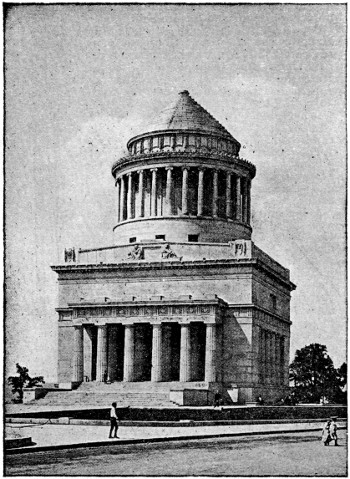
GRANT’S TOMB, RIVERSIDE DRIVE, NEW YORK
Philadelphia (fĭl-ȧ-del´fĭ-ȧ), Pa. [The
“Quaker City”; named from two Greek
words meaning “loved or friendly,” and
“brother,” applied as “brotherly love.” The
Indian name of the locality was Coaquannok,
“grove of tall pine trees.”]
The chief city of Pennsylvania and the
third city in population and importance of
the United States, it is situated on the
Delaware River, about one hundred miles
by ship-channel (via Delaware Bay) from
the Atlantic Ocean, ninety miles by railroad
southwest of New York City, and one hundred
and thirty-six miles northeast of
Washington.
The city occupies mainly a broad plain
between the Delaware and the Schuylkill
Rivers. It is twenty-two miles long from
north to south and five to ten miles wide,
covering one hundred and thirty square
miles, and is laid out with chessboard regularity.
The characteristic Philadelphia house
is a two-storied or three-storied structure
of red pressed brick, with white marble steps.
The two rivers give it about thirty miles of
water-front for docks and wharfage, and it is
the headquarters of two of the greatest
American railways—the Pennsylvania and
the Reading.
The great wholesale business thoroughfare is
Market Street, running east and west between
the two rivers, while Chestnut Street, parallel
with it on the south, contains the finest shops,
many of the newspaper offices, etc. Broad Street
is the chief street running north and south.
Among the most fashionable residence quarters
are Rittenhouse Square and the west parts of
Walnut, Locust, Spruce, and Pine Streets.
Eighth Street is the great district for shops and
amusements.
The City Hall (or Public Buildings) is in the
center of the city at the intersection of Broad and
Market Streets. The structure is the largest
exclusively municipal building in the world. It
is built of white marble upon a granite base, in
French Renaissance style, and covers an area
of four hundred and eighty-six by four hundred
and seventy feet. The height of the tower and
dome is five hundred and thirty-seven feet four
and one-half inches; or five hundred and seventy-three
feet four and one-half inches with the
colossal figure of Penn (thirty-six feet), to surmount
the whole. The entire cost, when completely
furnished for occupancy, was estimated at
twenty-five million dollars.
The broad pavement round the City Hall is
adorned with statues of General Reynolds,
General McClellan, Stephen Girard, John C.
Bullitt, President McKinley, and Joseph Leidy,
the naturalist, and with the “Pilgrim” by Saint-Gaudens.
On the west side of City Hall Square, opposite
the City Hall, is the enormous Broad Street
Station of the Pennsylvania Railroad. The
waiting-room contains a large allegorical relief,
while one wall is covered with a mammoth
railway map of the United States. On the north
side of the square, at the corner of Broad Street
and Filbert Street, is the Masonic Temple, a
huge granite structure with a tower two hundred
and fifty feet high and an elaborately carved
Norman porch.
On the east side of the square, occupying the
block bounded by the square, Market Street,
Thirteenth Street, and Chestnut Street, is
Wanamaker’s Store, one of the largest in the
United States. On the south side of the square
is the Betz Building, with heads of the Presidents
of the United States in the bronze cornice above
the third-story windows.
Chestnut Street is the chief street of Philadelphia,
containing many of the handsomest and
most interesting buildings. To the left, at the
corner of Broad Street and adjoining the Betz
Building, is the Franklin National Bank, while
to the right rises the fine office of the Real Estate
Trust Co. At the corner of Twelfth Street is the
tall Commonwealth Trust Building, and at the
corner of Tenth Street, on the same side, is the
New York Mutual Life Insurance Co.
Between Tenth and Ninth Streets, to the left,
are the Mortgage Trust Co., the Penn Mutual
Life Building, with an elaborate facade, and the
office of the Philadelphia Record. At the corner
of Ninth Street, extending on the north to
Market Street, is the Post Office, a large granite
building in the Renaissance style, erected at a
cost of five million dollars. It also contains the
United States Courts and the offices of various
Federal officials. In front of the Post Office is a
colossal seated figure of Benjamin Franklin. Between
Eighth and Seventh Streets is the ornamented
[614]
front of the Union Trust Co. This
neighborhood contains several newspaper offices.
At the corner of Sixth Street, on the Public
Ledger Building, is another statue of Franklin.
In Seventh Street, a little to the north of Chestnut
Street, is the Franklin Institute with a
library, museum and lecture-hall.
Between Fifth and Sixth Streets is Independence
Hall, or the old State House, a modest brick
edifice (1732-1735), which is in some respects the
most interesting building in the United States.
Here the Continental Congress met during the
American Revolution (1775-1781), and here, on
July 4th, 1776, the Declaration of Independence
was adopted. In 1897-1898 the whole building
was restored as far as possible to its original
condition.
The Custom House, with a Doric portico, was
originally erected in 1819-1824 for the United
States Bank. It is copied from the Parthenon,
and considered one of the best examples of Doric
architecture in the world.
A lane diverging to the right between Fourth
and Third Streets, opposite the Fidelity Trust
Co., leads to Carpenters’ Hall, where the First
Colonial Congress assembled in 1774. It contains
the chairs used at the Congress, various
historical relics, and the inscription: “Within
these walls Henry, Hancock, and Adams inspired
the delegates of the colonies with nerve and
sinew for the toils of war.” Chestnut Street ends
at the Delaware River.
Walnut Street runs parallel to Chestnut Street,
one block to the south. In this street, at the
intersection of Dock Street and Third Street, is
the Stock Exchange, formerly the Merchants
Exchange, with a semi-circular portico facing the
river. Near it, in Third Street, is the Girard
Bank, built for the first United States Bank and
long owned by Stephen Girard. At Fourth Street
is the building of the Manhattan Insurance Co.
Walnut Street now crosses Broad Street, to the
west of which it consists mainly of private residences.
Between Eighteenth and Nineteenth
Streets we pass Rittenhouse Square, a fashionable
residence quarter.
At the corner of Broad and Chestnut Streets
are the white marble building of the Girard
Trust Co., with a rotunda, and the tall Land
Title Building.
North Broad Street, beginning on the north
side of the City Hall Square, a handsome street
one hundred and thirteen feet wide, contains in
its upper portion many of the finest private
residences in Philadelphia. To the right, at the
corner of Filbert Street, is the Masonic Temple,
which is adjoined by the Arch Street Methodist
Episcopal Church. On the opposite side of the
street are the tall buildings of the United Gas
Improvement Co. and the Fidelity Mutual Life
Association. To the right is the Odd Fellows’
Temple.
To the left, at the corner of Cherry Street, is
the Pennsylvania Academy of the Fine Arts, a
building in the Venetian style of architecture.
The Academy was founded in 1805. Besides its
collections it supports an important art-school, the
lecture hall of which is adorned with effective
decorations by the pupils. Its collections include
five hundred paintings, numerous sculptures,
several hundred casts, and fifty thousand engravings.
The early American school is especially
well represented.
On the west side of Broad Street, between Race
and Vine Streets, are the Hahnemann College and
Hospital, one of the chief homœopathic institutions
of the kind. To the right, at the corner of
Spring Garden Street, is the Spring Garden
Institute for instruction in drawing, painting, and
the mechanic arts. Opposite are the Baldwin
Locomotive Works, a highly interesting industrial
establishment.
A little farther on is the Boys’ Central High
School, an unusually large and handsome structure,
and the Synagogue Rodef Shalom, in a
Moorish style.
Farther up Broad Street are numerous handsome
private houses, churches, and other edifices.
At the northwest corner of Broad Street and
Girard Avenue is the handsome Widener Mansion,
presented to the city and used as a branch of the
Free Library. Beyond Master Street, to the
left, is the elaborate home of the Mercantile
Club. Beyond this Broad Street runs out to
Germantown, six miles from the City Hall.
Girard Avenue runs west from North Broad
Street to Girard College, one of the richest and
most notable philanthropic institutions in the
United States. It was founded by Stephen
Girard, a native of France, for the education of
male orphans. The original bequest of over
five million dollars has increased to about thirty-five
million dollars.
The main building is a dignified marble structure
in the Corinthian style, resembling the
Madeleine at Paris. In the vestibule are a
statute of Stephen Girard, and his sarcophagus.
A room on the ground floor contains several
relics of him.
Market Street is the chief wholesale business
thoroughfare of the city. A little to the east of
City Hall Square it passes the Philadelphia &
Reading Railway Station, a tall Renaissance
building with a train shed little smaller than
that of the Pennsylvania Railroad. The department
store of Gimbel Brothers, on the south side
of the street, between Eighth and Ninth Streets,
is one of the largest in the world. The Penn
National Bank, at the corner of South Seventh
Street, occupies the site of the house in which
Jefferson wrote the Declaration of Independence.
South Broad Street leads to the south from
City Hall Square. Its intersection with Chestnut
Street, just to the south of the City Hall, is
environed with tall office buildings. To the right
is the annex of the Land Title Building, extending
to Sansom Street. Opposite, adjoining the
Real Estate Trust Co., is the North American
Building, named after the newspaper which
occupies it. Below is the Union League Club,
the chief Republican club of Pennsylvania. On
the same side is the large Bellevue-Stratford Hotel,
the leading hotel of Philadelphia, and one of the
great hostelries of the country. Farther on, to
the right, is the Art Club, in the Renaissance
style, in which exhibitions of paintings, concerts,
and public lectures are held. At Locust Street,
to the right, is the Academy of Music, while to
the left is the Pennsylvania School of Industrial
Art, incorporated in 1876, with a special view to
the development of the art industries of Pennsylvania.
A characteristic feature is the department
of weaving and textile design. The Industrial
Museum Hall is connected with this excellent
institution.
Below Pine Street, Broad Street contains few
important buildings. Of special note, however,
is the Ridgway Library, which stands to the left,
between Christian and Carpenter Streets, nearly
one mile from the City Hall. This handsome
building was erected with a legacy of one million
five hundred thousand dollars left by Dr. Rush in
1869, as a branch of the Philadelphia Library.
Adjoining the main hall is the tomb of the
founder.
Broad Street ends, four miles from the City
Hall, at League Island Park, three hundred acres
in extent. League Island itself, in the Delaware,
contains a United States Navy Yard.
West Philadelphia, the extension of the city
beyond the Schuylkill, contains many of the chief
residence streets and several public buildings and
charitable institutions.
The University of Pennsylvania, founded in
1740, and removed to West Philadelphia in 1872,
occupies a group of more than thirty buildings
scattered over an area of sixty acres bounded by
Woodland and Cleveland Avenues and Pine and
Thirty-second Streets.
The College, the Medical School, Dental School,
and Law School, are all provided with spacious
and well-equipped buildings. Houston Hall, behind
College Hall, is the social center of the
University student life. The Wistar Institute of
Anatomy and Biology is recognized as the headquarters
of anatomical research in the United
States and contains the first museum of human
anatomy founded in America. The Morgan
Laboratory of Physics, the Harrison Laboratory
of Chemistry, the Gymnasium, and the Dormitories
are all notable structures. Franklin Field,
adjoining Thirty-third Street, is the athletic
ground of the University and contains a large
stadium.
The Museum of Science and Art occupies a
tasteful building in South Street, owing part of
its inspiration to the Certosa at Pavia, and is
divided into five sections. Its value is largely
due to the fact that many of its contents were
found by expeditions organized by the University
itself.
A little to the northeast, at the corner of
Chestnut Street and Thirty-second Street, is the
Drexel Institute, founded by A. J. Drexel, and
opened in 1892. The total cost of buildings and
equipment was four million five hundred thousand
dollars.
Fairmount Park, the chief park of Philadelphia,
is one of the largest in the world, and covers an
area of three thousand three hundred and forty
acres. The park proper extends along both banks
of the Schuylkill for about four miles, and the
narrow strip along the Wissahickon, six miles,
and one of the noted drives of the world, is also
included in the park limits. The principal entrances
are at the end of Green Street, which is
connected with the City Hall by the wide Park
Boulevard, and at Girard Avenue.
In this park, in 1876 was held the Centennial
Exhibition; and in its environs are the Zoological
Garden, the Fairmount Waterworks, which supply
to the city one hundred million gallons of water
daily, the beautiful Horticultural Hall and
Memorial Hall, built as part of the Centennial
Exhibition of 1876 at a cost of one million five
hundred thousand dollars, and now containing a
permanent collection of art and industry known
as Pennsylvania Museum of Industrial Art.
At Sackamaxon, in Beach Street, is the small
Penn Treaty Park, supposed to occupy the spot
where Penn made his treaty with the Indians in
1682, under an elm that has long since vanished,
a treaty, in the words of Voltaire, “never sworn
to and never broken.”
In its manufacturing products Philadelphia
ranks next to New York. There are upward of
twenty thousand manufacturing establishments,
the combined output of which amounts to more
than eight hundred million dollars. The chief
products are locomotives, sugar and molasses,
men’s clothing, foundry and machine-shop products,
carpets and rugs, hosiery and knit goods,
woolen and cotton goods, malt liquors, morocco,
chemicals, packed meat, refined petroleum and
silk, and silk goods. The great Cramp ship-building
yards are on the Delaware River. The
Baldwin Locomotive Works are the largest in
the world.
Philadelphia was founded by William Penn in
1682, the year after was made the capital of
Pennsylvania, and soon became a place of importance.
It was the central point in the War of
Independence, where the first Continental Congress
met, September 4, 1774, and where the
Declaration of Independence was adopted in
1776. At Philadelphia, also, the Federal Union
was signed, in 1778; and here, too, the Constitution
of the United States was framed, in 1787.
An interest of another kind attaches to the fact
that the Protestant Episcopal Church of North
America was organized here in 1786. From 1790
to 1800 Philadelphia was the Federal Capital;
and the first mint was established here in 1792.
Later events have been the holding of the Centennial
Exhibition, in 1876, and the commemoration
of Penn’s landing in 1882.
Pittsburgh, Pa. [The “Smoky City,” “Iron City”;
named in 1758, when the French had been driven
out by Washington; Fort Pitt, after William Pitt,
Earl of Chatham, the name Pittsburgh being
adopted in 1769.]
It is the second city of Pennsylvania and one of
the chief industrial centers of the United States,
and occupies the tongue of land between the
Monongahela and the Allegheny, which here unite
to form the Ohio, and also a strip of land on the
south side of the Monongahela. The sister city,
Allegheny, situated on the north bank of the
Allegheny and extending down to the Ohio, was
incorporated with Pittsburgh in 1907 and is now
known as the North Side. The rivers are crossed
by numerous bridges.
Smithfield Street, diverging from Liberty Avenue,
not far from the Union Station, leads to the
river Monongahela, on the other side of which,
from Washington Heights, may be obtained a
fine view of the city. On Liberty Avenue, to the
right, is the City Hall a fine structure of white
sandstone. A little farther on, to the left, is the
Post Office. At the bridge are the Monongahela
Hotel and the Baltimore & Ohio Station.
Crossing the Smithfield Street Bridge, Mt.
Washington (three hundred and seventy feet)
may be ascended by one of the three inclined
railways on this side. These interesting, but at
first somewhat startling, pieces of apparatus are
worked by cables and transport horses and
carriages as well as persons.
The finest building in Pittsburgh is the Allegheny
County Court House, in Grant Street, a
splendid example of H. H. Richardson’s treatment
of Romanesque, erected in 1888 at a cost of
two million five hundred thousand dollars. The
massive Prison is connected with the Court
House by a finely handled stone bridge. The
main tower is three hundred and twenty feet high.
The government building cost one million five
hundred thousand dollars.
Other buildings of importance are the Frick
Building, a granite office structure of twenty
stories at the corner of Fifth Avenue and Grant
Street; the Carnegie Building and the Farmers’
Bank Building (these two also in Fifth Avenue);
the Union National Bank Building and the
Commonwealth Trust Co. Building, in Fourth
Avenue; the First Presbyterian Church, in Sixth
Avenue; the Fulton Building, and the Bessemer
Building (the last two at the corner of Sixth Street
and Duquesne Way).
More to the east are the Academy of Our Lady
of Mercy and the new Calvary Episcopal Church
(at the corner of Shady Avenue and Walnut
Street), a beautiful example of thirteenth century
Gothic. The Roman Catholic Cathedral of St.
Paul stands in Fifth Avenue, at the corner of
Craig Street.
To the east of the city lies Schenley Park, containing
the fine Phipps Conservatory and the
Hall of Botany. Near the Forbes Street entrance
to the Park is the great central building of the
Carnegie Library of Pittsburgh, in which are
housed not only the main collection of the library,
but also two of the three departments of the
Carnegie Institute. The structure, originally
built in the Italian Renaissance style at a cost
of eight hundred thousand dollars, was remodeled
[616]
and enlarged in 1904-1907 at an additional cost
of five million dollars. The city is also the seat
of Pittsburgh University, Holy Ghost College, and
Penn’s College for Women. The great iron and
steel works have made the prosperity and reputation
of Pittsburgh. Among these are the
Edgar Thomson Steel Works, the Homestead
Steel Works, the Duquesne Steel Works, the
American Bridge Co., the Jones & Laughlin
Works, the Oliver Iron & Steel Co., the Crescent
Steel Works, and the Pressed Steel Car Co.
Its manufactures include everything, indeed,
which can be made of iron, from a fifty-eight-ton
gun to nails and tacks; steel in its various applications;
electrical machinery and appliances; all
descriptions of glass and glassware; silver and
nickel-plated ware; Japan and Britannia ware;
pressed tin, brass, copper, bronzes; Portland
cement, earthenware, crucibles, fire-pots, bricks;
furniture, wagons and carriages; brushes, bellows,
mechanical supplies of all kinds; natural-gas
fittings, and tools for oil and gas wells. Pittsburgh
has, also, the largest manufactory of cork,
and the largest pickling and preserving establishment
in the world.
In 1754 a few English traders built a stockade
here, but were driven away by the French. The
latter replaced the stockade by a fort, which, in
honor of the Governor of Canada, they called
Duquesne. In 1758 it was taken by the English,
who next year commenced a large and strong
fortification, which, in honor of the elder Pitt,
then Prime Minister, they called Fort Pitt. The
settlement became a borough in 1804, and in 1816
was incorporated as the city of Pittsburgh. In
1872 the limits of the city were extended across
the Monongahela, and by 1906 it extended over
twenty-eight square miles. In 1907 Allegheny
City (in spite of the opposition of a large majority
of its inhabitants) was annexed; the Supreme
Court of the United States declared the act valid,
and thus Allegheny became the North Side of the
present Pittsburgh.
Richmond, Va. [Named from Richmond-on-the-Thames,
a suburb of London; the name suggested
owing to analogy in situation.]
It is the capital of Virginia, on the left bank
of the James River, at the head of tide water,
one hundred and fifty miles from its mouth, and
one hundred and sixteen miles by rail south of
Washington. It is a port of entry, and vessels
drawing sixteen feet of water can come up to the
lower end of the city, where there are large docks.
Richmond is picturesquely situated on a group
of hills, and fine water power is afforded by the
James River, which descends one hundred and
sixteen feet in nine miles.
Near the center of the city, on Shockoe Hill, is
Capitol Square, a tree-shaded area of twelve acres.
The Capitol, or State House, partly designed
after the Maison Carrée at Nîmes, France,
occupies the highest point of the square and
dates from 1785. The wings were added in
1906.
In the Central Hall, surmounted by a dome,
are Houdon’s statue of Washington (which
Washington himself is said to have seen in its
present position) and a bust of Lafayette by the
same artist. The Senate Chamber, to the right,
was used as the Confederate House of Representatives
during the Civil War. The House of
Delegates, to the left, contains portraits of
Chatham and Jefferson, and was the scene of
Aaron Burr’s trial for high treason in 1807, and
of the State Secession Convention in 1861.
Capitol Square also contains a fine equestrian
statue of Washington, with figures of Patrick
Henry, George Mason, Thomas Jefferson, Thomas
Nelson, Andrew Lewis, and Chief Justice Marshall
round the pedestal; a statue of Stonewall Jackson;
a statue of Hunter Holmes McGuire, the
most noted surgeon of the South; and a statue
of Henry Clay. At the northeast corner of the
square stands the Governor’s Mansion.
On the north side, in Broad Street, is the City
Hall, a handsome Gothic structure with a clock-tower.
To the east of the Capitol is the State
Library. In Twelfth Street, at the corner of
Clay Street, a little to the north of Capitol
Square, is the Jefferson Davis Mansion, or “White
House of the Confederacy,” occupied by Mr.
Davis as President of the Southern Confederacy.
It is now fitted up as a Museum of Confederate
Relics.
St. John’s Church, erected in 1740, but since
much enlarged, is at the corner of Broad and
Twenty-fourth Streets. The Virginia Convention
was held in this church in 1775, and it was
here that Patrick Henry made his famous “give
me liberty or give me death” speech.
On Monument Avenue (a prolongation of
Franklin Street) is the equestrian statue of
General Lee. Adjacent is an equestrian statue
of General J. E. B. Stuart, and a half mile farther
on, at the west end of the avenue, is the Jefferson
Davis Monument, consisting of a semi-circular
colonnade with a pillar supporting an allegorical
female figure and inscribed “Deo Vindice,” with
a heroic statue of the ex-president in front. A
little to the east of the Lee Statue is Richmond
College, a leading educational institution of
Virginia.
Among other points of interest in Richmond are
the Westmoreland Club, at the corner of Grace
and Sixth Streets; the Commonwealth Club, at
the corner of Franklin and Madison Streets; the
Virginia Club, 2311 East Grace Street; Chief
Justice Marshall’s House; the Tobacco Exchange,
Shockoe Slip; the University College of Medicine;
the Medical College of Virginia; the National
Cemetery, two miles to the northeast of the city;
the Sheltering Arms Hospital, and Idlewood Park,
a favorite summer-resort, close to the city on the
west.
Hollywood Cemetery is the most interesting of
the cemeteries. Near the west gate of the
cemetery is the Confederate Monument, a rude
pyramid of stone ninety feet high, erected as a
memorial to the sixteen thousand Confederate
soldiers buried here. On President’s Hill, in the
southwest corner of the cemetery, overlooking
the river, are the graves of Monroe and Tyler,
two of the seven presidents born in Virginia.
John Randolph, Jefferson Davis, General Pickett,
General J. E. B. Stuart and Commodore Maury
are also buried here. Patrick Henry is buried in
St. John’s Churchyard.
During the last three years of the Civil War
(1862-1865) battles raged all round Richmond,
and remains of the fortified lines constructed to
protect the city are visible in various parts of the
environs.
The leading industry is the manufacture of
tobacco. Other important products are lumber
and planing-mill supplies, foundry and machine-shop
products (including locomotives), fancy
and paper boxes, packing boxes, saddlery and
harness, carriages and wagons, confectionery,
flavoring extracts, patent medicines and compounds,
etc. There are also large railroad repair
shops, establishments for grinding and roasting
coffee, etc. Richmond was formerly noted as a
center of the flour-milling industry.
Richmond was settled in 1733 and incorporated
in 1742. Captain John Smith’s settlement of
“None Such” in 1609 and Fort Charles, erected
in 1645, were both near the site of the present city.
In 1779 it became the capital of the state. During
the American Revolution the place was taken
by a British force under Benedict Arnold, January
5, 1781, and the warehouses and public buildings
were burned. The following year the city was
chartered. Richmond, as the capital of the
Confederacy, was the main objective of Federal
[617]
operations during the Civil War. It was evacuated
April 2, 1865. The warehouses and a considerable
part of the business section of the city
were burned by the Confederates.
Salt Lake City, Utah. [The “City of the Saints;”
named for the famous lake of that state.]
It is the chief town and ecclesiastical capital
of the State of Utah, and is situated on the river
Jordan, eleven miles from Great Salt Lake. It
is built at the base of the Wasatch Mountains,
four thousand three hundred and thirty-four feet
above sea-level. The valley is world-famed for
its beauty, resources, climate, and health-giving
properties. By rail it is thirty-six miles south of
Ogden, on the Union Pacific Railroad; eight hundred
and thirty-three miles from San Francisco,
and one thousand and thirty-one miles from
Omaha.
The city is regularly laid out and the streets
are wide and shaded with trees. Each house in
the residence quarters stands in its own garden.
Temple Block, “the sacred square of the
Mormons,” covering ten acres, is the center of
the city. Here are the Great Temple, and the
Tabernacle, the latter one hundred and fifty by
two hundred and fifty feet, with a self-supporting
roof shaped like a tortoise shell, supported by
forty-four sandstone pillars, and having a seating
capacity of eight thousand, accommodations for
twelve thousand, and one of the finest pipe organs
in America.
A little to the east of the Tabernacle is the
Temple, a large and handsome building of granite,
erected at a cost of over four million dollars. At
each end are three pointed towers, the loftiest of
which, in the center of the east or principal facade,
is two hundred and ten feet high and is surmounted
by a colossal gilded figure (twelve and
one-half feet high) of the Angel Moroni, by C. E.
Dallin. The interior is elaborately fitted up and
artistically adorned.
The Assembly Hall, to the south of the Tabernacle,
is a granite building with accommodation
for three thousand people, intended for divine
service.
At the corner of North Temple and Main
Streets stands the Latter-Day Saints University.
At the southeast corner of Temple Square is the
Pioneer Monument, surmounted by a copper
statue of Brigham Young, which was unveiled
in 1897.
On South Temple Street towards the east is
the Deseret News Block, a large brown-stone
building where the oldest newspaper to the west
of the Missouri is published. To the left are the
Tithing Office and Tithing Storehouse where the
Mormons pay their tithes in kind. A little farther
on, also to the left, are the Lion House, one of the
residences of Brigham Young; the office of the
president of the Mormon Church; and the
Beehive House, another of Brigham Young’s
houses. On the opposite side of the street are
the huge shoe-factory and warehouse of Zion’s
Coöperative Mercantile Institution; the office of
the Juvenile Instructor; the office of the Historian
of the Mormon Church; and the Gardo House,
or Amelia Palace, opposite the Beehive House.
A little farther to the northeast, through the
Eagle Gate, is Brigham Young’s grave, surrounded
by an ornamental iron railing.
The imposing City and County Building is in
Washington Square, and the Federal Building is
in Main Street, between Third and Fourth South
Streets. A new Capitol is in contemplation in
Capitol grounds, near Prospect Hill. Among the
educational establishments are the Utah State
University, to the east of the city, near Fort
Douglas, and the High School, in Union Square.
The Roman Catholic Cathedral and several other
religious edifices also are represented, including
Presbyterian, Congregationalist, and Methodist
churches. St. Mark’s Cathedral is a handsome
building. Other noteworthy edifices are those of
the museum, the Mining Institute, St. Mary’s
Hospital, the University of Utah, and the theaters
and opera house.
The city is more important as a trading center
than for manufactures. The leading industries
are beet-sugar refining, smelting, salt making,
and the manufacture of boots and shoes, glass,
woolens, paper, cutlery, pottery, etc. A large
business is done in bullion and mining stocks.
The city has a large jobbing trade, being the
distributing center for an immense mining agricultural
and stock raising region in Utah, West
Wyoming, South Idaho, and East Nevada.
Salt Lake City was founded in 1847 by Brigham
Young and incorporated in 1851. Until 1870 it
was almost wholly a Mormon city.
San Antonio (săn ăn-to´nĭ-ō),
Texas. [Named for
the Roman Catholic mission, San Antonio de
Valero, otherwise the Alamo.]
After Dallas it is the largest city in the state,
and is located on the San Antonio River, two
hundred and ten miles by railroad west of Houston,
one hundred and eighty-eight miles west of
Galveston, on both banks of the San Antonio
Creek, at the mouth of San Pedro River. Built
on a level plateau, with an elevation of six hundred
and sixty feet above the sea, it includes the
old Mexican town of San Fernando, west of San
Pedro Creek, inhabited chiefly by Americans and
largely rebuilt since 1860. The San Antonio
River winds for thirteen miles through the city,
and San Pedro Creek for ten miles. These are
spanned by numerous little bridges. It is one
of the most interesting in the United States.
The first object of interest in San Antonio is
the Church of the Mission del Alamo, situated
in the Alamo Plaza, in the quarter to the east of
the San Antonio River. The church, which
seems to have derived its name from being built
in a grove of alamo or cottonwood trees, is a low
and strong structure of adobe, with very thick
walls. It was built in 1744, but has lost many
of its original features. It is now preserved as
a national monument for its historical interests.
At the north end of the Alamo Plaza, in Houston
Street, is the handsome Federal Building. On
the west side of the plaza is the building containing
the San Antonio Club and the Grand Opera
House.
Houston Street towards the west crosses the
San Antonio and reaches Soledad Street, which
leads to the left to the Main Plaza (Plaza de Las
Yslas), pleasantly laid out with gardens. On its
south side rises the imposing Court House and
on its west side stands the Cathedral of San
Fernando, dating in its present form mainly from
1868 to 1873, but incorporating parts of the
earlier building, where Santa Ana had his headquarters
in 1836. To the west of the Cathedral
is the Military Plaza (Plaza de Armas), with the
City Hall.
The Military Post (Fort Sam Houston), on
Government Hill, one mile to the north of the
city, costing over two million dollars, is one of
the largest in the United States and deserves a
visit. The tower (eighty-eight feet high), in the
center of the quadrangle, commands a splendid
view of the city and its environs.
The old Spanish Missions near the city most
often visited are the First and Second Missions,
but, the Third and Fourth Missions have much
interest also.
The Mission of the Conception, or First Mission,
lies about two and a quarter miles to the south
of the city (reached via Garden Street), dates
from 1731 to 1752, and is well preserved. The
church has two towers and a central dome. The
Mission San Jose de Aguayo, or Second Mission,
four miles to the south of the city, dates from
1720 to 1731 and is the most beautiful of all.
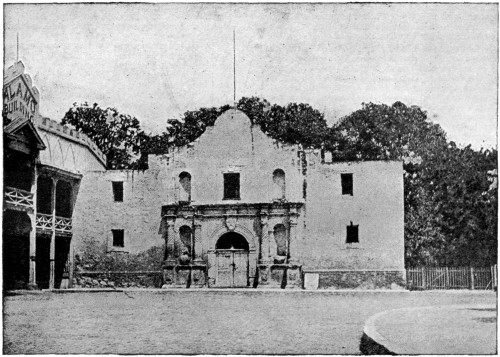
OLD SPANISH CHURCH OF THE ALAMO, SAN ANTONIO, TEXAS
During the war of Texan independence, the Alamo, then converted into a fort, was the scene of an extraordinary
conflict, the fort being held by Colonel David Crockett and Colonel James Bowie. Though almost continually
assailed from February 23 to March 6, 1836, it only yielded when the defenders were all slain but five; these were
captured by the Mexicans and cruelly slain. “Remember the Alamo,” thereafter became a war cry, and the place
itself has been called the “Thermopylæ of America.”
Among the educational institutions are St.
Louis College (Roman Catholic), St. Mary’s
Hall, St. Mary’s College, Wolfe Memorial School,
and the Ursuline Convent and School.
San Antonio is the natural trading center for an
immense area, its jobbing houses have an extensive
trade in Mexico as well as in Texas. The
industrial establishments are machine shops,
foundries, breweries, flour mills, binderies, cotton
presses, ice plants, tanneries, marble works,
cement works, and manufactories of brooms,
carriages and wagons, candy, soda and mineral
waters, mattresses, bricks and tiles. It is a
leading cattle, horse, and mule market, ships
large quantities of cotton, wool, and hides; and
is the financial center of the largest stock raising
interests of the Southwest. The surrounding district,
irrigated by water, obtained from deep
artesian wells, is extensively engaged in truck
farming for Northern markets.
Although the Spaniards built a fort at San
Antonio in 1689, its real settlement began in 1714.
In 1718 the Franciscan mission of San Antonio
de Valero was founded, and, about 1722, on
another site was built the Alamo, the “cradle of
Texans’ liberty,” in which in 1836 a garrison of
about one hundred and eighty men, among them
Davy Crockett and James Bowie, for eleven days
resisted General Santa Ana’s Mexican army,
numbering thousands of men. Eight battles for
independence were fought in or near San Antonio
between 1776 and 1836, successively under
Spanish, French, Mexican, and Texan flags. It
received a city charter in 1873.
San Francisco, Cal. [The “City of the Golden
Gate”; said by some to have been named for the
old Spanish mission of San Francisco de Assisi,
by others to have been named for the founder of
the order to which Father Junipero, the discoverer
of the bay, belonged.]
It is grandly situated at the north end of a
peninsula thirty miles long, separating the
Pacific Ocean from San Francisco Bay, two thousand
four hundred and thirty-four miles west of
St. Louis, and three thousand four hundred and
fifty-two miles from New York. The city lies
mainly on the shore of the bay and on the steep
hills rising from it, but is gradually extending
across the peninsula (here six miles wide) to the
ocean. On the north it is bounded by the famous
Golden Gate, the narrow entrance (one mile
across and about five miles long) to San Francisco
Bay. The commercial part of the town is fairly
level and lies along the bay. The chief business
thoroughfare is Market Street, three and one-half
miles long, with which the streets from the
north and west hills intersect. This feature gives
the city a striking skyline.
San Francisco Bay, a noble sheet of water, gives
San Francisco one of the finest harbors in the
world and affords numerous charming excursions.
It gives the city much of its commercial importance,
also, and extends from Fort Point past the
city in a southerly direction for about fifty miles,
varying in width from six to twelve miles. Northward
this bay connects by a strait with San
Pablo Bay, ten miles in length, having at its
northerly end Mare Island and the United States
Navy Yard.
Across the bay are Oakland, Alameda, and
Berkeley.
In 1906 a large part of the city was destroyed
by earthquake and fire, the estimated loss reaching
over three hundred million dollars. The business
district has since been largely rebuilt, and
many costly buildings of marble, granite, and
terra cotta, and iron and steel-framed “skyscrapers”
have been constructed. Before the
earthquake of 1906 the most conspicuous public
buildings were the City Hall, erected at a cost of
six million dollars, and which occupied twenty-five
years in building; the Post Office, completed
at a total cost of five million dollars; the Hall of
Justice, the Custom House, a Mint and a Sub-treasury;
the building of the Society of California
Pioneers, and stock and merchants’ exchanges;
and the Ferry Building containing a display of the
mineral resources of California.
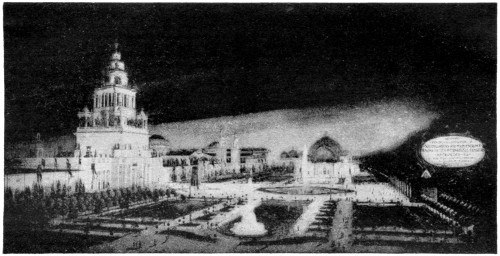
NIGHT VIEW, SHOWING ILLUMINATION OF SOUTH GARDENS AND MAIN ENTRANCE, PANAMA-PACIFIC
INTERNATIONAL EXPOSITION, SAN FRANCISCO, 1915
The Panama-Pacific International Exposition at San Francisco was open from February 20 to December 4, 1915.
The total attendance was 18,871,957. The last day made the record, 458,558 persons having passed through the
turnstiles. The Fine Arts Palace remained open until May 1, 1916.
Market Street, the chief business thoroughfare,
extends to the southwest from the Union Ferry
Depot, a handsome structure, with a tower two
hundred and fifty feet high, to a point near the
twin Mission Peaks, a distance of about three
and one-half miles.
Following Market Street towards the southwest,
at the intersection with Battery Street is the
Labor Monument, a vigorous bronze group
dedicated to the memory of Peter Donahue of
the Union Iron Works. At the southwest corner
of Market and Montgomery Streets stands the
Palace Hotel, opposite which is the Union Trust
Building, the first of the buildings whose steel
and concrete frame withstood the fire. Close
by, at the corner of Montgomery and Post Streets,
are the Crocker Building, another survivor, and
the new stone structure of the First National Bank.
At the corners of Kearney and Third Streets
rise the Chronicle Building and the tall Spreckels
or Call Building, the top of either of which affords
a good bird’s-eye view of the city.
Market Street, towards the southwest from the
Chronicle Building, contains many large office
buildings, including the tall Humboldt Savings
Building. At the corner of Fourth Street is the
Pacific Building, a huge structure of re-enforced
concrete, with a facade of green and brown tiles.
In the same block is the Emporium, which has
been rehabilitated since the disaster of 1906. On
the right, at the corner of Powell Street, is the
large Flood Building, another survivor of the fire.
It is chiefly occupied by railway offices.
Powell Street leads to Union Square, with the
St. Francis Hotel and a Naval Monument commemorating
the exploits of the United States
fleet in the Philippines during the war with
Spain (1898).
At the junction of Market Street with Mason
Street is a monument commemorating the
admission of California to the Union (1850).
To the left, at the corner of Seventh Street, we
catch a glimpse of the long frontage of the Post
Office with its fine granite carvings. Just beyond
this corner, in a small triangular park, is the
large Californian Monument, presented to the
city by James Lick. The stately monument
erected in honor of the achievements of the navy
in the Spanish-American war remains uninjured.
The district containing the United States
Appraisers Stores and the large new Custom
House was spared by the great fire.
The United States Branch Mint, in Fifth Street,
at the corner of Mission Street, contains interesting
machinery and a collection of coins and relics.
The effect of the fire may be clearly seen on the
granite at the north end of the building.
Montgomery Street and the southern part of
Sansome Street, form the center of the banking
district. On the former is the Union Trust
Building, and a series of large office buildings, of
which the most important are the Mills Building,
corner of Montgomery and Bush Streets; the
Merchants Exchange, California Street, near
Montgomery Street; Kohl Building, corner
Montgomery and California Streets; Italian-American
Bank, a one-story building with Doric
columns, corner Montgomery and Sacramento
Streets; and the Bank of Italy, corner Montgomery
and Clay Streets. At the northeast corner
of Sansome and California Streets rises the
tall Alaska Commercial Building, with the handsome
Bank of California opposite.
Nob Hill was the name given about 1870 to that
section of California Street, between Powell Street
and Leavenworth Street, containing many of the
largest private residences in San Francisco.
Most of these were of wood, and no expense was
spared to make them luxurious dwellings, but
with unfortunate architectural results. Few relics
of these are now extant. The hill is crowned by
the huge Fairmont Hotel, opposite which is the
Hopkins Institute of Art.
The present fashionable residential quarter is on
[620]
Pacific Heights, including the western parts of
Jackson Street, Washington Street, Pacific Avenue,
and Central Avenue.
The educational institutions of San Francisco,
include the Academy of Sciences, endowed by
James Lick; the Hopkins Art Academy, situated
on Nob Hill; Memorial Museum, in Golden Gate
Park; Mechanics’ Institute, which contains
property valued at two million dollars, and a
library of seventy thousand volumes. Other
fine libraries are the Sutro library of two hundred
thousand volumes, the public library of one hundred
thousand volumes, while the California Historical
Society, San Francisco Medical Society, the
San Francisco Law Library; the French and Mercantile
libraries all have collections of more than
thirty thousand volumes. The California School
of Mechanical Arts, Cooper Medical College,
Cogswell Polytechnic School, College of Notre
Dame, Sacred Heart Academy, Irving Institute,
the medical and law faculties of the University
of California, are also located here.
The city was always conspicuous for its fine
churches. The most prominent of these were
the Roman Catholic Cathedral, the Jesuit Church
of St. Ignatius, and the Mission Dolores, a survival
of Spanish occupation.
The largest of the city parks is Golden Gate
Park, covering more than one thousand acres
and redeemed from a waste of sand-dunes, now
one of the most beautiful in the country. It
extends from Stanryan Street to the Pacific Ocean,
a distance of three miles. Its fine trees and
shrubbery, semi-tropical plants and flowers, artificial
lakes and Japanese tea gardens combine to
make it a veritable wonderland. Through the
park a broad, smooth, and well-kept speedway
runs out to the ocean beach, and the famous old
Cliff House, the Sutro Heights, on the hills of
the west or ocean side, from which is a magnificent
view of the Seal Rocks and Pacific Ocean.
To the north of the park, beyond the intervening
Richmond district, lies the Presidio, the
United States military reservation. Here are
the harbor fortifications with their big and powerful
rapid fire machine guns, the officers’ quarters
with picturesque gardens and hedgerows, and the
hospital and barracks for the soldiers, while
down at the water’s edge is old Fort Mason, a
circular brick structure now used as a storehouse.
The population is very heterogeneous, every
European nationality being represented here, to
say nothing of the Mexicans, Chinese, Japanese,
Negroes (relatively few), Filipinos, Hawaiians, and
other non-European races.
The Chinese Quarter, rebuilt since the fire, is
still one of the most interesting and characteristic
features of San Francisco. It lies, roughly defined,
between Stockton, Sacramento, Kearney,
and Pacific Streets, and now consists mainly of
large modern store buildings in a modified
Oriental style, and of tall tenements, swarming
with Chinese occupants. Chinatown contains
about ten thousand inhabitants.
To the north of Chinatown, spreading about
the base of Telegraph Hill, is the so-named Latin
Quarter, peopled by Italians, Greeks and Mexicans.
Their houses, shops, and restaurants are most
characteristic. The Japanese Quarter is bounded
by Van Ness, Fillmore, Geary, and Pine Streets.
In the pretty park that separates busy Kearney
Street from Chinatown, the beautiful golden
galleon monument to Robert Louis Stevenson
still stands.
San Francisco as the western terminus of the great
continental railroads and of many short lines,
has important steamship communication with
the ports of the world. The bay is accessible
to the largest vessels. It is one of the most
important grain ports in the United States; and
gold and silver, wine, fruit, and wool are exported.
There are large sugar refineries, foundries, shipyards,
cordage works, wood factories, woolen
mills, and many others.
A Spanish post and mission station were
established on the site of San Francisco in 1776.
The mission was secularized in 1834, and a town
was laid out in 1835. A United States man-of-war
took possession of it in 1846, and it became
an important place in 1849 on account of
the discovery of gold (1848). It was devastated
by fires, 1849-1851. In 1850 it was incorporated
as a city. The original name of the place was
Yerba Buena (Spanish, “good herb”). It was
changed to San Francisco in 1847. In 1869 railway
connection was established with the eastern
United States. In 1877 Denis Kearney began a
violent agitation against the competition of
Chinese labor. This was known as the “sand
lots” movement, from the name of the place
where the meetings were held. On April 18,
1906, the city was visited with a severe shock of
earthquake, and the resultant fires destroyed
much of the business section and one-third of the
residence portion of the city.
Berkeley, across the Bay from San Francisco,
is the seat of the Colleges of Letters and Science
of the University of California. The University,
founded in 1868, has played a very important
part in the educational development of California
and of the Pacific Slope. Its other departments
are at San Francisco and the Lick Observatory,
with the great telescope, is at Mt. Hamilton.
A number of the buildings at Berkeley are
handsome, and the picturesque grounds, two
hundred and fifty acres in extent, command a
splendid view of the Golden Gate and San
Francisco. The very interesting open-air Greek
Theater, built in 1903 on the general type of the
theater at Epidaurus, accommodates twelve
thousand spectators and is used for university
meetings, commencement exercises, and concerts.
The museums, the library, and the laboratories
are admirably adapted to their uses.
At Palo Alto, thirty-four miles south of San
Francisco, one mile from the station is the Leland
Stanford, Jr. University, founded by Mr. and
Mrs. Leland Stanford in memory of their only
son and endowed by them with upwards of
thirty million dollars. The buildings were
mainly designed by H. H. Richardson, who took
the motif of their architecture from the cloisters
of the San Antonio Mission. The material is
buff, rough-faced sandstone, surmounted by red-tiled
roofs, producing brilliant effects of color in
conjunction with the live oak, white oak, and
eucalyptus trees outside, and tropical plants in
the quadrangle, and the blue sky overhead. In
the earthquake of 1906 the buildings suffered
severely, the damage done being estimated at
nearly two million dollars. Much, however, has
been restored or rebuilt. The buildings include
a low quadrangle, enclosing a court five hundred
and eighty-six feet long and two hundred and
forty-six feet wide, with a beautiful colonnade
on the inner side; an outer, two-storied quadrangle,
with cloisters on the outside; a Chapel;
various dormitories; an Art Museum; a mechanical
department; and a village of professors’ houses.
Seattle (sē-ăt´t´l),
Wash. [Named for the chief of
the Duwamish tribe of Indians, See-aa-thl.]
It is finely situated on Elliot Bay, an arm of
Puget Sound, one thousand eight hundred and
twenty-eight miles from St. Paul. It occupies a
series of terraces rising from the shore of the
Sound, with steep hills rising from the water, the
heights commanding superb views of the snow-crowned
Olympic Mountains and the Cascades,
including Mounts Rainier and Baker.
The residence streets run up the slope of a hill,
with the business portion built on the level
ground at the foot, stretching along the excellent
harbor, with its many wharves.
Among the finest edifices are the Roman
[621]
Catholic Cathedral, the Union or King Street
Passenger Station, with Carnegie Library, the
American Bank, and the Alaska, Lowman, White,
Central, and Empire Buildings.
Its notable buildings include, also, the County
Court House, County Almshouse, Opera House,
High School, and Hospital. The city is beautified
with monuments and statues, unique among
which is the Totem Pole, in Pioneer Square, near
the Union Station, which was brought from
Alaska and is one of the best examples of its
kind. There is a good statue of Wm. H. Seward, by
Richard Brooks, and in the campus of the University
of Washington is a colossal statue of
Washington, by Lorado Taft.
The University has grounds three hundred and
fifty-five acres in extent, and furnished the site for
the Alaska-Yukon-Pacific Exposition of 1909.
Other leading educational institutions are
Seattle Seminary (Methodist), Seattle Female
College, College of the Immaculate Conception and
Academy of the Holy Name (both Roman Catholic).
There are several fine parks connected, together
with the lakes, by a system of boulevards. Fort
Lawton, a military post, is within the city limits.
The harbor, which is in Lake Washington and
is four miles long and two miles wide, admits the
largest vessels at all times. As the terminal of
two transcontinental railroads and as an oceanic
seaport, Seattle has extraordinary commercial
advantages. It has direct steamship lines to
Japan, China, the Philippines, and to Honolulu,
and is also connected with European and South
American ports. It is the chief outfitting port
for the Yukon and Alaskan gold fields, and the
chief trading center for the numerous ports on
the extensive coast-line of Puget Sound. It has
abundant electric power generated by falls in the
rivers of the Cascades at a very low cost. Snoqualnite
Falls, nineteen miles distant, are one
hundred and twenty-six feet higher than Niagara,
and supply an immense power.
Seattle largely owes its phenomenal growth to
the lumber trade. The manufactures include
beside, flour, iron and steel products, boots and
shoes, beer, etc. Other industries are bridge-works,
shipyards, meat-packing, and fish-canning.
The city has also smelting and refining works,
and a United States assay office. The chief exports
are lumber, coal, meats, fruits, wheat, and
hops.
Seattle was first settled in 1852. The place
was laid out in 1853 and was incorporated in
1865 as a town and in 1880 as a city. In 1889
it was almost wiped out by fire, but one business
building escaping destruction. From June 1 to
November 30, 1909, the Alaska-Yukon-Pacific
Exposition was held here, the average daily
attendance being twenty-eight thousand. In the
spring of 1910 a Municipal Plans Commission of
twenty-one members was created by an amendment
to the city charter of Seattle, and in 1911
their report was issued containing sketches and
plans illustrating their proposals for the beautification
and future growth of the city.
St. Louis (sānt lōō´ĭs or
lōō´ĭ), Mo. [Named in
honor of Louis XV. of France; the name originally
applied to a depot established at this point
February 15, 1764, by Pierre Láclede Liguest.]
It is the principal city of Missouri, and is
located on the west bank of the Mississippi River,
twenty-one miles south of the mouth of the Missouri
River, and by rail one thousand one hundred and
eight miles southwest of New York, two thousand
four hundred and thirty-four miles east of San
Francisco, and six hundred and ninety-six miles
north of New Orleans. It has a frontage of
nearly twenty miles on the river and rises from it
in three terraces, the third of which is about two
hundred feet above the river level.
The city is regularly laid out, on the Philadelphia
plan, Market Street running east and west,
being the dividing line between north and south.
The streets running north and south are numbered,
though many of them are also known by names.
Broadway or Fifth Street is the chief shopping
thoroughfare, while other important business
streets are Fourth Street, Olive Street, Washington
Avenue, Third Street, and First Street (or
Main) and Second Streets. The city is also
divided into a north and south section by the
valley of Mill Creek (now filled in), which is
spanned by seven bridges. The city has recently
extended greatly to the west, and commerce is
steadily encroaching on the residential quarters.
The Court House, in Broadway, between Market
and Chestnut Streets, is a substantial building
in the form of a Greek Cross. It is surmounted
by a dome, one hundred and seventy-five feet
high, the gallery of which commands an excellent
view of the city and river. A little to the east,
in Third Street, corner of Chestnut Street, is the
Merchants’ Exchange, the main hall of which,
with a painted ceiling, is two hundred and twenty
feet long. The grand ball of the Veiled Prophet
is held here. The Cotton Exchange is at the
corner of Main and Walnut Streets.
By following Market Street to the west from
the Court House, the square, named Washington
Park, is reached, and also the City Hall. A little
to the south, in the square enclosed by Clark
Avenue and Spruce, Eleventh and Twelfth
Streets, are the so-called Four Courts, built on
the model of the Louvre, in Paris, with a large
semi-circular jail at the back. A little to the
north of the City Hall runs the busy Olive Street,
which toward Broadway, passes the Post Office
on the left. Among the numerous substantial
business buildings in this part of Olive Street are
the Star, Century, Frisco, Chemical, Missouri
Trust, Commercial, Laclede, Commonwealth
Trust, National Bank of Commerce, and Third
National Bank, a large and very fine structure.
In Broadway, at the corner of Locust Street, is
the Mercantile Library, which contains one
hundred and fifty thousand volumes, statues by
Harriet Hosmer, and others.
Other important buildings in this business
section of the city are the Security Building (at
the southwest corner of Fourth and Locust
Streets); the Mercantile Trust Co., at the northeast
corner of Eighth and Locust Streets (with
vaults closed by a circular steel door of marvelous
mechanism weighing four and one-half tons); the
St. Louis Union Trust Co., at the northwest corner
of Fourth and Locust Streets; the Mercantile
Club, southeast corner of Seventh and Locust
Streets; the Public Library, Locust Street, corner
of Ninth Street; the Lincoln Trust and Wainwright
Buildings, corner of Seventh and Chestnut
Streets; and the Missouri Pacific Building,
northwest corner of Market and Seventh Streets.
On the block between Thirteenth, Fourteenth,
Olive and St. Charles Streets is the new Carnegie
Central Library, erected at a cost of one million
dollars.
At the corner of Locust and Nineteenth Streets
is the handsome School of Fine Arts, which is
connected with Washington University.
The Episcopal Cathedral, the Roman Catholic
Cathedral, old and new, and many of the new
Protestant churches in the West End are architecturally
striking.
The parks of St. Louis are among the most
notable in the United States, and their area (two
thousand three hundred acres) is exceeded by
those of Philadelphia alone. The finest are
Forest Park (one thousand three hundred and
seventy acres); Tower Grove Park (two hundred
and sixty-six acres); Carondelet Park, O’Fallon
Park, and the Missouri Botanical Garden, which
is one of the foremost in North America.
To the west of Forest Park is the new home of
Washington University, forming one of the most
[622]
successful and appropriate groups of collegiate
buildings in the New World. They were designed
by Messrs. Cope & Stewardson in a Tudor-Gothic
style and enclose several quadrangles. The
material is red Missouri granite. Among the
buildings already completed are University Hall,
the Chemical and Physical Laboratories, the
Architectural and Engineering Buildings, the
Chapel (resembling King’s College Chapel at
Cambridge, England), the library (with a fine
reading room), various dormitories, and the
gymnasium. The university grounds are one
hundred and ten acres in extent.
The other institutions of higher education are
St. Louis University, the College of the Christian
Brothers, Maria Consilia Convent, training
school for nurses, several medical colleges, dental
college, the theological seminaries, manual training
school, the State School for the Blind, and the
St. Louis Day School for Deaf Mutes.
In Forest Park, not far from the University, is
the handsome Museum of Fine Arts, originally
erected as the Fine Arts Building of the Louisiana
Purchase Exposition. In front of the entrance
is a colossal equestrian bronze statue of St. Louis.
The great St. Louis or Eads Bridge, across the
Mississippi, is deservedly one of the monuments
of the city. It was designed by Capt. James B.
Eads and was constructed in 1869-1874 at a cost
of ten million dollars. It consists of three steel
spans (center five hundred and twenty feet,
others five hundred and two feet each) resting on
massive limestone piers. The total length is
two thousand and seventy yards. The bridge is
built in two stories, the lower for the railway, the
upper for the roadway and foot passengers.
Trains enter the lower track by a tunnel, one
thousand six hundred and thirty yards long,
beginning near the corner of Twelfth and Cerre
Streets. The highest part of the arches is fifty-five
feet above the water.
The Merchants’ Bridge, three miles farther up
the river, is a steel truss bridge, and was built in
1889-1890, at a cost of three million dollars. It
is used by railways only. It has three spans,
each five hundred feet long and seventy feet high.
St. Louis ranks fourth among the manufacturing
cities of the United States. It is the largest
tobacco manufacturing city in the world, and
also has a large production of malt liquors, flour,
boots and shoes, hardware, stoves, railways and
electric cars, woodenware, brick, biscuit, crackers,
etc. The city is also the largest mule mart in
the world, and noted as a drug market.
Founded from New Orleans in 1764, by Pierre
Làclede-Liguest and Auguste Chouteau, St. Louis
remained a fur-trading post until the Louisiana
Purchase of 1803. Its first era of marked development
began with the arrival of the first steamboat,
1817. Steam navigation of its river connection
made it the most important point in the settlement
of the trans-Mississippi West. It had
repeatedly doubled its population before the first
period of German immigration, following the
German revolution of 1848. In 1875 St. Louis
was separated from the County of St. Louis and
given an independent government of its own.
In 1896 the city was swept by a destructive
tornado. In 1903 an exposition was held in St.
Louis to celebrate the Louisiana Purchase.
Its population of American birth heavily predominates,
but its German population is large
and every element of European population is
represented, with a recent increase from Southern
Europe and Russia in excess of all other elements.
St. Paul, Minn. [Named from the Chapel of St.
Paul, a log chapel erected here by Roman Catholics.
Indian name, imnijaska, “white rock,” a
reference to the sandstone bluff on which the
city stands.]
It is the capital of Minnesota, and located on
both banks of the Mississippi River, immediately
below Minneapolis, the suburbs of the “Twin
Cities” being contiguous.
It has a picturesque site at an elevation of
six hundred and seventy to eight hundred and
eighty feet above sea level on a series of terraces,
the highest of which is two hundred and sixty-six
feet above the river. The two divisions of the
city are connected by three municipal bridges.
In addition to these there are a number of railway
bridges and scores of smaller bridges over
ravines, valleys, railway crossings, etc. The
municipal limits include the suburbs of Merriam,
St. Anthony, Union, Groveland, Macalester, and
Desnoyer Parks, Arlington Hills, and others.
Of the three plateaus, the first contains the
railway yards, Union Station, wholesale houses
and factories. Above the flats are the business
section and part of the residential district; still
higher are the bluffs, the most fashionable
residential quarter, with extensive views of the
river and the lower terraces.
The business part of the town is well built and
regularly laid out, and the suburban quarters contain
many fine streets and handsome residences.
The new State Capitol, erected in 1898-1906,
at a cost of four million five hundred thousand
dollars, is a large and handsome edifice of granite
and Georgia marble, with an unusually successful
central dome.
The most impressive parts of the interior are
the central rotunda, the two great staircases, the
Supreme Court, and the Senate Chamber. The
dominant note in the color scheme is furnished
by Minnesota yellow limestone. The mural
paintings are by La Farge, Simmons, Blashfield,
Garnsey, Kenyon Cox, and H. O. Walker. In
the Governor’s reception room are paintings by
F. P. Millet, Howard Pyle, Douglas Volk, and
others. The State Law Library and that of the State
Historical Society are both housed in the Capitol.
Four blocks to the south of the Old Capitol are
the Custom House and the City Hall, the latter
a handsome building erected at a cost of one
million dollars. Among other important buildings
in the business quarter are the Public Library;
the Auditorium, a hall for meetings and theatrical
performances; the new Y. M. C. A. Building;
the New York Life Insurance Building, corner
Sixth and Minnesota Streets; the Roman Catholic
Cathedral of St. Paul, Sixth Street, corner of St.
Peter Street; the High School, corner Tenth and
Minnesota Streets; the Globe Building, Fourth
Street, corner Cedar Street; the Germania Life
Insurance Office; the former Bank of Minnesota,
now used for various offices; the Manhattan
Building, corner of Fifth and Robert Streets; the
Gilfillan Building; the Endicott Arcade; the
Central Presbyterian Church; the Bethel Hotel,
resembling the Mills House of New York; the
Minnesota Club House; the People’s Church; the
Field, Mahler & Co. Building, Fourth Street; and
the Great Northern and the Northern Pacific
Railway Offices.
The finest residence street is Summit Avenue.
It begins at Wabasha Street and runs from
Summit Park along a high ridge. The most
prominent dwelling is the large brown stone
mansion of the late James J. Hill, containing a
good collection of paintings by Corot, Delacroix,
Courbet, Troyon, Decamps, etc.
A Roman Catholic Cathedral is being erected at
Summit Park; and to the west of the town, near
the west end of Summit Avenue, by the river, is
the extensive Roman Catholic Seminary of St.
Thomas Aquinas. On the bluff above, at the
end of Grand Avenue (parallel to Summit Avenue)
are the various buildings of the Hill Seminary.
It is also the seat of Hamline University
(Methodist Episcopal), Concordia College (Lutheran),
Macalester College (Presbyterian), several
medical colleges, a State Reform School, and an
Academy of Natural Sciences.
St. Paul has a park system of remarkable
beauty. Como and Phalen Parks have picturesque
lakes, and Indian Mound Park is said to have
views unsurpassed anywhere else on the Mississippi
River. Harriet Island, in the river opposite
the business district, is provided with public
baths. There are twenty-two miles of park and
boulevard driveways, not including the River
Boulevard. The total park area is one thousand
two hundred and four acres. Fort Snelling,
attractively located at the mouth of the Minnesota
River, occupies a large tract adjacent to the city
on the southwest.
The manufactures of St. Paul include machinery,
farming implements, furniture, carriages, boots
and shoes, and malt liquors. Here also are
located the extensive meat packing plants of
Swift & Co., and quarries of fine limestone. It
is the center of the wholesale grocery and dry-goods
business in Minnesota. It is also an
important printing and publishing center, and
has large car shops, lumber and planing mills, and
breweries.
In 1841 Father Galtier, a French Canadian,
induced the settlers, chiefly French Catholic
hunters and traders in furs and whiskey, to build
a log church which was dedicated to St. Paul.
In 1849 the town became the capital of the newly
organized territory of Minnesota, and was incorporated.
It received its city charter in 1854.
WASHINGTON, AMERICA’S CITY BEAUTIFUL
Washington, D. C. [The “City of Magnificent
Distances,” from its being laid out on a large and
regular scale; originally named Georgetown, but
when selected in 1790 as the Federal Capital was
re-named Washington in honor of the first
President of the United States.]
The City of Washington, the Capital of the
United States, lies on the left bank of the Potomac
River, in the District of Columbia, one hundred
and fifty-six miles from Chesapeake Bay, one
hundred and eighty-five miles from the Atlantic
Ocean, two hundred and twenty-six miles southwest
of New York, one hundred and thirty-six
miles of Philadelphia, and forty miles of Baltimore.
The city lies on a plain with slight elevations
and surrounded by hills, and is generally accepted
as the most beautiful in the United States, being
finely laid out, with wide asphalted streets, opening
up vistas of handsome public buildings,
monuments, or leafy squares, with the Capitol
and the Washington Monument dominating the
entire view.
The original plan of Washington City was made
by L’Enfant, a French engineer, who had adopted
America as his residence. Based largely upon
the topography of Versailles, its characteristic
features are the crossing of the rectangular
streets by frequent broad transverse avenues,
one hundred and twenty to one hundred and sixty
feet wide, lined with trees and named for various
States of the Union. The streets running north
and south are numbered, those running east and
west are named by the letters of the alphabet.
The circles formed by the intersection of the
streets and avenues are one of the most charming
features of the city.
Pennsylvania Avenue, between the Capitol and
the White House (a distance of one and one-third
miles), is the chief thoroughfare, and other
important business streets are Seventh Street,
Fourteenth Street, Ninth Street, and F Street.
Among the finest residence streets are New
Hampshire Avenue, Massachusetts Avenue, Vermont
Avenue, Connecticut Avenue, and Sixteenth
Street.
The new Union Railway Station, completed in
1908 at a cost of fifteen million dollars, including
grounds and tunnels, is undoubtedly one of the
most successful buildings in the country. It is
situated at the junction of Massachusetts and
Delaware Avenues, about one-third of a mile,
and in full view of the Capitol. In front is a large
plaza, embellished with shrubbery, fountains,
and the finely sculptured Columbus monument.
The Capitol, splendidly situated on a hill ninety
feet above the level of the Potomac, dominates
the entire city with its soaring dome and ranks
among the most beautiful buildings in the world.
It stands in a park of about fifty acres, is seven
hundred and fifty-one feet in length and one
hundred and twenty-one to three hundred and
twenty-four feet wide, and consists of a main edifice
of sandstone, painted white, and of two wings of
white marble. The building covers an area of three
and one-half acres.
The cornerstone was laid by Washington in
1793. The main building, with its original low-crowned
dome, was completed in 1827; the wings
and the new iron dome were added in 1851-1865.
The general style is classic, with Corinthian
details. The principal facade looks towards the
east, as the city was expected to spread in that
direction, and the Capitol thus turns its back
upon the main part of the city and on the other
government buildings.
A fine marble terrace, eight hundred and
eighty-four feet long, approached by two broad
flights of steps, has been constructed on the
west side of the Capitol and adds great dignity
to this view of the building. The dome, which
is two hundred and sixty-eight and one-half feet
high, is surmounted by a figure of Liberty,
nineteen and one-half feet high. The total cost
of the building has been sixteen million dollars.
The front or east facade is preceded by three
porticos, the main entrance being in the center.
To the right of the central portico is the Settlement
of America, a marble group by Greenough;
to the left is the Discovery of America, a figure
of Columbus by Persico. In the pediment above
the portico is a relief of the Genius of America,
by Persico; and in the pediment above the north
portico is a group representing the Civilization
of the United States, by Crawford.
The inauguration of the Presidents of the
United States takes place on the broad steps in
front of the main doorway.
In the interior beside the rotunda with its
historical paintings, are the Senate Chamber in
the north wing; the House of Representatives in the
south wing, the Supreme Court in the central
building, and the old Hall of Representatives, now
used for historical statues.
To the north and south of the Capitol and connected
with it by subways are the Senate and
House of Representatives office buildings, two
white marble edifices in a classic style, containing
offices for senators and representatives.
To the southeast of the Capitol stands the
Library of Congress, an enormous structure in
the Italian renaissance style, four hundred and
seventy feet long and three hundred and forty
feet wide, erected in 1888-1897, at a cost of
six million one hundred and eighty thousand
dollars. It is in the form of a quadrangle,
enclosing four courts and a central rotunda surmounted
by a flat gilded dome and lantern. The
main entrance, on the west side, is preceded by a
broad flight of steps and a granite terrace, against
the retaining wall of which is an effective fountain.
The interior of the Congressional Library is
sumptuously adorned with paintings, sculptures,
colored marbles, and gilding. To the right and
left are massive marble staircases, richly adorned
with sculptures and with bronze figures as lamp-bearers.
The ceiling of the hall, seventy-two
feet above the marble flooring, is resplendent in
blue, green, and yellow.
The reading room rotunda is perhaps the
finest and most thoroughly satisfactory part of
the whole building. The chamber, which is
one hundred feet in diameter and one hundred
and twenty-five feet in height, accommodates
about three hundred readers, is richly adorned
[624]
with dark marble from Tennessee, red marble
from Numidia, and yellow marble from Siena.
The eight massive piers are surmounted by
symbolical female figures.
At the foot of the flights of steps descending
from the terrace on the west side of the Capitol
is an heroic statue of Chief Justice Marshall, by
Story. The broad walk to the north leads to the
Naval or Peace Monument, by Simmons. The
walk to the south leads to the statue of President
Garfield, by J. Q. A. Ward.
Diagonally to the southwest and northwest
extend two grand avenues as far as eye can see—Maryland
Avenue to the left leading down to the
Potomac and carrying the line of the Pennsylvania
Railroad to the river, where it crosses over the
Long Bridge into Virginia; and Pennsylvania
Avenue to the right stretching to the distant
colonnade of the Treasury Building and the tree
covered park south of the Executive Mansion.
Between these diverging avenues and extending
to the Potomac, more than a mile away, is the
Mall, a broad inclosure of lawns and gardens.
Upon it in the foreground is the government
Botanical Garden, and behind this the spacious
grounds surrounding the Smithsonian Institution;
and the National Museum; while beyond,
near the river bank, rises the tall, white shaft
of the Washington Monument with its pointed
apex; on either side spreads out the city, the
houses bordering the foliage lined streets and
having at frequent intervals the tall spires of
churches and the massive marble, granite, and
brick edifices that are used for government
buildings.
The Smithsonian Institution is a red stone
building in the late Norman style, erected in
1847-1856 at a cost of four hundred and fifty
thousand dollars. The loftiest of the nine towers
is one hundred and forty-five feet high. In
front of it is a statue of Prof. Joseph Henry, the
first secretary of the Institution, by Story.
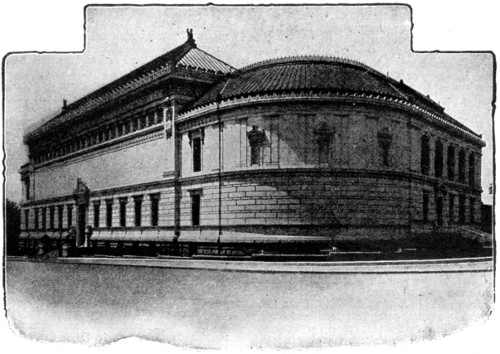
CORCORAN ART GALLERY, WASHINGTON
New buildings for the National Museum, on
the Mall between Ninth and Twelfth Streets, and
the new one million five hundred thousand dollar
marble building of the Department of Agriculture,
west of the Smithsonian grounds, are notable.
The former, originally established to exhibit the
rich contributions given to the government by
various countries from the Centennial at
Philadelphia in 1876, has become a most extensive
and instructive collection of antiquities,
ethnology, geology, and natural history generally;
and there are many museums, libraries and art
galleries.
The Bureau of Engraving and Printing, where
the paper money, bonds and stamps of the United
States are printed, is at the corner of B Street and
the Mall, southwest.
The national monument to Washington,
popularly known as the “Washington Monument,”
is a towering obelisk of white marble, on
the bank of the Potomac, erected at a cost of
one million two hundred and thirty thousand
dollars. It has a total height of five hundred and
fifty-five feet, an area at the foundation of
sixteen thousand feet, and a weight of thirty-six
thousand nine hundred and twelve gross tons.
The apex has an aluminum point, and there is
an elevator and an iron stairway of nine hundred
steps in the interior of the shaft.
From the Washington Monument the Treasury
Department at Pennsylvania Avenue and Fifteenth
Street comes into full view. It is an immense
edifice, five hundred and ten feet long and
two hundred and eighty feet wide, with an Ionic
colonnade on the east front and porticos on the
other three sides. The materials are freestone
and granite, and it cost seven million dollars to
erect the edifice. Among the chief objects of
interest are the United States Cash Room, in the
north corridor; the Redemption Division, in the
basement; the Silver Vaults, containing bullion
and coin to the value of hundreds of millions of
dollars; and the Secret Service Division, with its
collection of forged money and portraits of forgers.
On the south, opposite the Treasury, is the fine
equestrian monument of General Sherman, by
Rohl-Smith, erected in 1903. The pedestal is
embellished with bronze reliefs, medallions, and
figures of Indian women, and at the corners are
four sentinels.
Following Pennsylvania Avenue towards the
west, Lafayette Square, is approached. Here are
bronze statues of General Andrew Jackson, by
Clark Mills; the Rochambeau Monument, by F.
[625]
Hamar; and the Lafayette Monument, by Falguiére
and Mercié. On the east side of the square is the
Belasco Theater, occupying the site of the house
in which an attempt was made to assassinate
Secretary Seward in 1865.
Opposite Lafayette Square is the entrance to
the White House or Executive Mansion of the
President of the United States. The White
House is a two-story stone building, painted
white, one hundred and seventy feet long and
eighty-six feet deep, with an Ionic portico. It
was first built in 1792, occupied by President
Adams in 1800, burned by the British in 1814,
and rebuilt in 1818. In 1902-1903 the whole
building was admirably restored, within and
without. The esplanade or terrace on the west
side connects the house with the new Executive
Offices and Cabinet Room. The large East
Room (eighty by forty by twenty-two feet) is open
to the public from ten to two. The Reception
Rooms, which contain portraits of Presidents and
valuable gifts, and the handsome Dining Room
are shown by special order only. The rest of the
house is private. The grounds surrounding the
house are seventy-five acres in extent.
To the west of the White House is
the huge building of the State, War,
and Navy Departments, enclosing two
courts and measuring five hundred
and sixty-seven feet in length by three
hundred and forty-two feet in breadth.
It is a granite building, in Renaissance
style, the largest public edifice in Washington,
covering four and one-half acres, has five
hundred and sixty-six rooms, and cost eleven million
dollars. The north and west wings are
occupied by the War Department. The Navy
Department is in the eastern part of the building.
The Department of State occupies the southern
part of the building. Among the finest rooms
are the Diplomatic Reception Rooms, containing
portraits of the Secretaries of State from 1789 to the
present day, and the Library, with Jefferson’s
original draft of the Declaration of Independence
and other relics.
In Seventeenth Street, to the southwest of the
State Building, between New York Avenue and
E Street, is the Corcoran Gallery of Art, built and
endowed by the late W. W. Corcoran. The
present building, erected in 1894-1897, is a handsome
white marble structure in a Neo-Grecian
style, by Ernest Flagg. The semicircular hall at
the north end is used for occasional exhibitions,
while the rest of this part of the building is
occupied by a School of Art. The steps to the
main entrance are flanked by colossal bronze
lions, modeled after those by Canova at the
tomb of Pope Clement XIII. The Gallery contains
more than two hundred paintings, the finest
collection of Barye bronzes, Power’s Greek Slave,
and Vela’s Dying Napoleon in marble.
Also in Seventeenth Street, south of the Corcoran
Gallery, are the new Continental Hall,
built by the Daughters of the American Revolution,
and the new building of the International
Bureau of the American Republics, erected at a
cost of one million dollars by Andrew Carnegie.
The Interior Department occupies an entire
square in the heart of the city, and is constructed
of white marble in pure Doric, costing three
million dollars. The General Land Office opposite
is a Corinthian marble edifice.
In Judiciary Square on the north side stands the
Pension Office, an enormous structure of brick,
four hundred feet long and two hundred feet wide.
It is surrounded by a terra cotta frieze illustrating
military and naval operations. The interior, with
its mammoth columns (seventy-five feet high),
can accommodate about twenty thousand people
at an inauguration ball, or other occasions.
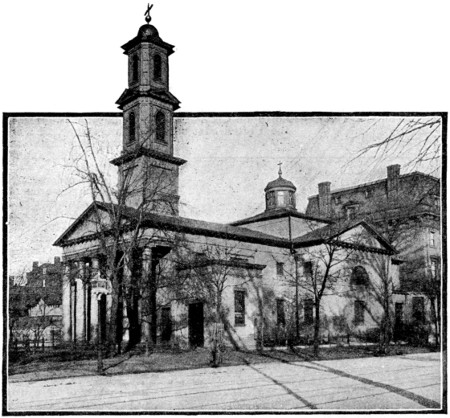
ST. JOHN’S CHURCH, WASHINGTON
Nearby, in B Street, is the large Census Bureau,
in which a large staff is constantly at work. The
enumerating machines are especially interesting.
To the northeast of this point, at the corner of
North Capitol and H
Streets, is the Government
Printing Office, a twelve-story
building erected at
a cost of two million dollars.
Ford Theater, in which
President Lincoln was
assassinated by Booth on
April 14, 1865, is in Tenth
Street. A house opposite
bears a tablet stating that
Lincoln died there, and
contains a collection of
Lincoln relics.
On the south side of
Pennsylvania Avenue, between
Eleventh and
Twelfth Streets, is the Post
Office Department, with a
tower three hundred feet
high. At the corner of
Pennsylvania Avenue and
Fourteenth Streets is the
new District or Municipal
Building, a fine marble
structure completed in
1908, and occupied by the
District Commissioners
and other officials of the
local government.
At the intersection of
Massachusetts Avenue and New York Avenue
is Mt. Vernon Square, containing the Public
Library, a white marble building, presented by
Mr. Andrew Carnegie.
Beyond the Capitol to the southeast are the
Washington Barracks, at the junction of the
Potomac and its Eastern Branch, an artillery
post, and the War College, a fine brick building,
erected 1903-1908. In front of the latter is a statue
of Frederick the Great by T. Uphues, presented to
the United States by Emperor William II.
About one mile to the northeast, on the Anacostia
River, is the Washington Navy Yard, with
a museum, an important gun foundry, and manufactories
of naval stores.
There are more than two hundred and fifty
churches in Washington, of which the more
important are St. John’s (the “President’s
[626]
Church”), and St. Thomas’ Episcopal; the New
York Avenue, and Church of the Covenant,
Presbyterian; the Metropolitan and Foundry,
Methodist; St. Matthew’s and St. Aloysius’,
Roman Catholic; Calvary, Baptist; Garfield
Memorial, Christian; and Mount St. Sepulchre,
with its reproduction of the sacred places of the
Holy Land.
The National Soldiers’ Home, two miles above
the city, founded in 1851, has six hundred acres
of park and forest, which serve as a public driving
park and rural resort. To the north lies the
National Military Cemetery, with the graves of
General Logan, General Kearney, and seven
thousand soldiers. On the west this is adjoined
by Rock Creek Cemetery, containing Saint-Gauden’s
beautiful monument to Mrs. Henry
Adams. To the east of the Soldiers’ Home Park
is the important Catholic University of America,
around which has grown up a somewhat remarkable
group of ecclesiastical establishments, including
a Franciscan Convent, houses of the Dominicans,
Paulists and Marists, and Trinity College
for young women. The university has a number
of fine stone buildings of striking architectural
effect. The other colleges of note are: George
Washington University, with academic, scientific,
graduate, medical, and technological departments,
and a famous law school; Georgetown University,
a Jesuit institution with academic and
professional schools; American University, for
graduate instruction only; and the National Deaf-Mute
College, founded in 1864, a government
institution for the education of deaf and dumb
pupils from the army, the navy, and the District
of Columbia. Its fine stone buildings lie
just north of the city.
Among the more important private buildings
may be mentioned those of the Washington Post
and Evening Star, and the Munsey buildings, all
on Pennsylvania Avenue; the Riggs National
Bank, American Security and Trust Company,
Washington Loan and Trust, Union Trust and
Storage Company, and the National Metropolitan
Bank. The larger office buildings are the
Bond, the Colorado, the Ouray, the Southern,
and Woodward buildings. The Masonic Temple,
the Scottish Rite Temple, and the Y. M. C. A.
buildings, are important structures.
More and more Washington is becoming the
home of a class of wealthy Americans, many of
whom have erected beautiful residences, and
among those of conspicuous architectural value
are the Leiter, Townsend, Walsh, McLean,
Belmont, Hale, Anderson, Boardman, Patterson,
Thomas Nelson Page, Wayne McVeagh, Henderson,
and Gale houses. Of similar interest are the
embassy buildings of the British, Chinese,
French, Russian, and other nations. The
Metropolitan, the Cosmos, the Army and Navy,
University, National Press, and the Washington
(for women) are the principal clubs, and have
homes of their own.
An elaborate park system is in course of
development, which will ultimately surround
the city with parks and connecting boulevards.
The principal park is Rock Creek Park, to the
north of the city, containing two thousand acres
extending along both sides of Rock Creek. Its
natural beauties are very great. On Mt. St.
Alban, near Woodley, to the northwest of Georgetown,
is the Peace Cross, a large Celtic cross
erected at the close of the war with Spain (1898)
on the grounds of the new Episcopal Cathedral,
of which the cornerstone was laid in 1907. It
affords a fine view of Washington. On the
Chevy Chase Road, to the northwest of the
Zoölogical Park, are the National Bureau of
Standards and the Geophysical Laboratory of
the Carnegie Institution, the administration
building of which latter is in Sixteenth Street.
South of Rock Creek Park, on Rock Creek,
lies the National Zoölogical Park of one hundred
and seventy acres, reached from Washington in
a half hour.
On a commanding site overlooking Rock Creek,
north of Georgetown, in handsome grounds, is
the United States Naval Observatory, of white
marble, with its twenty-six-inch
equatorial
telescope.
Scattered throughout
the city are numerous
squares, circles,
and small parks,
nearly all of which
contain statues.
Of bronze statues
erected in honor of
famous men, Washington
has an abundance—mainly
to military
characters.
Equestrian statues of
Washington, Jackson,
Greene, Scott,
Thomas, and McPherson
are erected,
besides full-length
statues of Lafayette,
Luther, Franklin,
Chief Justice Marshall,
Lincoln, Garfield,
Professor
Henry Farragut,
General Rawlins, and
Admiral Dupont.
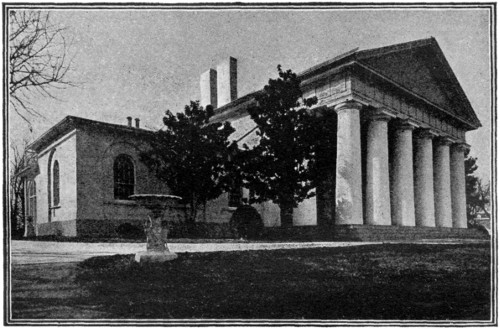
ARLINGTON HOUSE, HOME OF GENERAL ROBERT E. LEE
At Arlington, across
the river from Washington,
on commanding heights, is the National
Cemetery containing the graves of about sixteen
thousand soldiers. Arlington House, in the middle
of the grounds, two hundred feet above the river,
was once the residence of George Washington Parke
Custis (step-grandson of Washington) and afterwards
of General Robert Lee, who married Miss
Custis. Near the house are the graves of General
Sheridan, Admiral Porter, General Lawton,
General Wheeler, and other distinguished officers.
To the south is a tomb containing the remains
of two thousand one hundred and eleven unknown
soldiers. The sailors destroyed by the blowing
up of the “Maine” in 1898 and other victims
[627]
of the war with Spain are buried in the southern
part of the cemetery.
The cornerstone of a splendid military memorial
or Hall of Fame was laid here in 1916, to be
erected in classic style, of marble, and to cost
several millions of dollars.
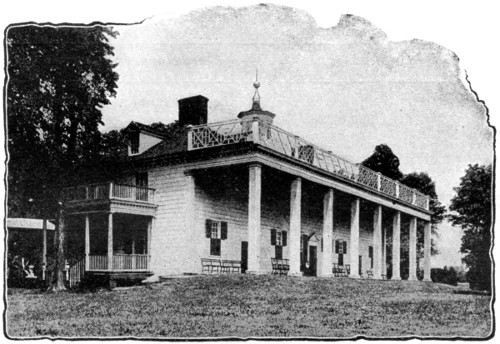
MOUNT VERNON
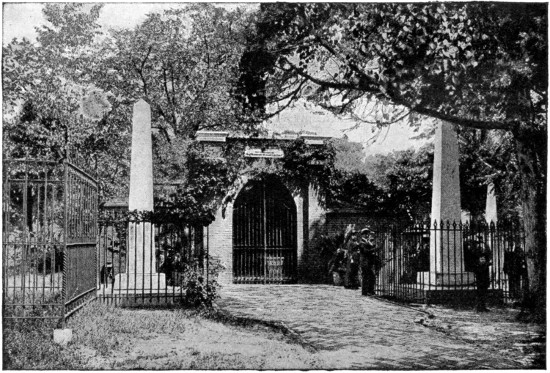
WASHINGTON’S TOMB, MT. VERNON
Mount Vernon, Washington’s home and
burial place, is in Fairfax County, Va., about
fifteen miles below the city. It is in full view,
standing among the trees on the top of a
bluff rising about two hundred feet above the
river. As the steamboat approaches, its bell is
tolled, this being the universal custom on nearing
or passing Washington’s tomb. The estate was
originally a domain of about eight thousand acres,
and Augustine Washington, dying in 1743, bequeathed
it to Lawrence Washington, who, having
served in the Spanish wars under Admiral
Vernon, named it Mount Vernon in his
honor. General Washington,
in 1752, inherited Mount
Vernon from Lawrence.
After his death the estate
passed to his nephew,
Bushrod Washington,
subsequently descending
to other
members of the
family.
Congress repeatedly
endeavored to have
Washington’s remains
removed to the
crypt under the rotunda
of the Capitol,
originally constructed
for their reception,
but the family always
refused, knowing it
was his desire to rest
at Mount Vernon.
In 1856 the mansion
and surrounding
property were saved
from the auctioneer’s
hammer, and secured
as a national possession
by the Ladies’
Mount Vernon Association, assisted principally
by Edward Everett, at a cost of two hundred
thousand dollars.
Washington, originally called Federal City, was
named after Washington in 1791, and became the
capital in 1800. In 1814 the Capitol, White
House, and other public buildings, were burned
by the British.
LEADING EVENTS IN THE COLONIAL HISTORY OF THE UNITED STATES IN THE FORM OF PARALLEL OUTLINES
I. PERIOD OF AUTHENTIC DISCOVERY AND EXPLORATION, FROM 1492 TO 1607
Preceding this Period there are some legendary accounts of discoveries by Norsemen,
Irish missionaries and even Asiatics. Little importance attaches to any except those of the Norse discoverers,
chief of which was Lief Ericsson and his brother Thorwald who came upon the mainland of North America about 1000 to 1004. The discoveries
of Columbus and Vasco da Gama opened
a new era, during which the Spaniards explored and settled the West Indies, Mexico, and the southern part of the present United States;
while the English and French explored, claimed, and made
unsuccessful attempts at settlement in the North.
| Dates |
Spanish Explorers and Rulers |
Portuguese Explorers and Rulers |
English Explorers and Rulers |
European Events |
Dates |
| |
Ferdinand and Isabella, 1474-1516. |
Emanuel I., the Great, 1469-1521. |
Henry VII., 1485-1509 |
|
|
| 1492 |
1492. CHRISTOPHER COLUMBUS, an Italian, supported by Ferdinand and Isabella, set sail from Palos,
Spain (August 3), and discovered America (October 12), landing at one of the Bahamas, which he named San Salvador. During the following
three months he visited the islands of Cuba and Hayti. |
|
|
1492. End of the Moorish dominion in Spain. Death of Lorenzo de Medici, the “Magnificent” at
Florence. |
1492 |
| |
1494. Beginning of a series of Italian wars, lasting till 1539. |
| 1497. JOHN CABOT, an Italian in the service of Henry VII. of England discovered the coast of NORTH AMERICA,
probably at Labrador. He was accompanied by his son, Sebastian. |
| 1498. Columbus made a THIRD voyage, discovering the island of Trinidad and the
mainland of South America, near the mouth of the Orinoco River. |
1498. Sebastian Cabot, on a SECOND voyage, probably explored the Atlantic
coast from Labrador to Carolina. These voyages were not followed by any attempt at colonization. |
| 1499-1507. Amerigo Vespucci wrote a letter to a friend claiming to have discovered a part of the South American
coast in 1499, and an account of this voyage was published. The new continent, therefore, was named after him by the German geographer
Waldseemüller, who had read the account. |
1499. Vasco Da Gama doubled the Cape of Good Hope and reached India. Another route to
India was thus revealed. |
1499. The Swiss gain their independence from the Emperor Maximilian. |
| 1500 |
|
1500. Cortereal, a Portuguese, explored the coast from Labrador to Nova Scotia. |
|
|
1500 |
| 1502. Columbus made a FOURTH voyage. He explored the coast of Central America and
Panama, returned to Spain discouraged and died four years later in the belief that he had discovered India by sailing west. |
1502. Outbreak of war between France and Spain in Italy. |
| 1510 |
|
|
Henry VIII., 1509-1547. |
|
1510 |
1512. Ponce De Leon, seeking a legendary
fountain of youth, discovered Florida, so named because he landed on Easter Sunday, the Spanish “Feast of
Flowers.” |
1511. Pope Julius II. forms the Holy League against France and Spain. |
1513. Balboa crossed the Isthmus of Panama and discovered the Pacific, which he took possession of, with its coast and islands, for Spain.
Charles I. of Spain and Charles V. of Germany, Emperor. 1516-1556. |
French Explorers and Rulers |
1513. James IV. of Scotland invades England, and is killed at battle of Flodden Field. |
| Francis I., 1515-1547. |
| 1515. Wolsey appointed Chancellor by Henry VIII. of England. |
| 1519-1521. Cortez conquered Mexico for Spain. This conquest led to the establishment
of Spain’s Empire in the new world. The mines brought great wealth to Spain and formed thebasis of Spanish prosperity in the
following years. |
1519. The German Empire, Spain, Netherlands, Two Sicilies and the Spanish Indies united under Charles V. |
| 1520 |
1520. Magellan, a Portuguese in Spain’s service, discovered the strait named
after him. He reached and named the Pacific Ocean. |
|
|
1520 |
| 1521. Magellan discovered the Philippine Islands. His followers, after his
death, continued westward and completed the first circumnavigation of the globe in 1522. |
1524. Verrazano, sailing in
the service of France, traced the American coast northward from Cape Fear, and discovered New York harbor. |
1521. Beginning of the wars between Charles V. of Germany and Francis I. of France. |
| 1527. Captain John Rut explores the coast of North America. |
1527. Expulsion of the Medici from Florence. |
| 1530 |
1539. Coronado and a force of Spaniards
marched northward from Mexico to Colorado and Kansas and discovered the Grand Canon of the Colorado
River.
De Soto, at the same time, led an army of about a thousand into
northwest Florida. He reached the Mississippi in 1541. |
1535. Cartier, in search of a northwest passage, ascended the St.
Lawrence to Lachine Rapids and Mont Réal (Montreal). |
|
1535. Henry VIII. of England assumes the title of supreme head of the
Church in England. |
1530 |
| 1540 |
1541. Roberval and Cartier made an unsuccessful attempt to establish
a French colony on the St. Lawrence. |
|
1543. England enters into an alliance with Charles V.
against France. |
1540 |
| 1550 |
Philip II., 1556-1598. |
|
Elizabeth 1558-1603. |
|
1550 |
| 1560 |
Charles IX., 1560-1574. |
|
1560 |
| 1562. Jean Ribault establishes a Huguenot settlement at Port Royal. |
1562. Beginning of the Huguenot wars. |
| 1565. The Spaniards, under MENENDEZ, founded ST. AUGUSTINE, Florida. |
1565. The Huguenot settlement destroyed by Menendez. |
| 1570 |
|
|
|
|
1570 |
| 1576-1578. Frobisher, in the interest of England, made three attempts to find a
northwest passage to Asia. |
| 1578. Drake explored the Pacific coast as far north as the state of Washington. He had
previously doubled Cape Horn. He claimed the land for England. |
| 1580 |
1582. Spanish monks planted missions in New
Mexico and Arizona. |
|
|
1581. Declaration of independence by the Dutch. |
1580 |
| 1583. Humphrey Gilbert landed at St. John’s, Newfoundland, and took possession
of the country for England. |
Queen Elizabeth was financially interested in many of the expeditions which
followed, and she knighted most of the men who commanded expeditions. |
| 1584. Sir Walter Raleigh sent out an expedition under Captain Arthur Barlow. The
expedition landed at Pamlico Sound and the region was named Virginia in honor of Elizabeth. |
| Henry IV., 1589-1610. |
1587. Raleigh despatched another expedition, consisting of two ships with one hundred and fifty men
and women, to Roanoke Island. John White was the Governor. Virginia Dare, the first white child born in America, was born here. |
1587. Execution of Mary, Queen of Scots.
1588. Battle of the Spanish
Armada. |
| 1590 |
1598. A Spanish settlement was planted by Oñate near Santa Fe, New Mexico. |
1595. France declares war against Spain. |
1590 |
| 1600 |
|
1602. Gosnold, an English merchant, made a
settlement at Buzzard’s Bay, R. I.
James I., 1603-1625. |
|
1600 |
| 1603. Champlain entered the St. Lawrence. The French occupation of
Canada began with Champlain. His maps, reports, and settlements stimulated French enterprise. |
1603. Martin Pring enters the present harbor of Plymouth. |
1604. Charles IX. ascends throne of Sweden. |
| 1605. Champlain founded Port Royal (Annapolis, N. S.), and sailed in an exploring
expedition as far south as Cape Cod. |
1606. In England there was organized the Virginia Company for the purpose of establishing trading colonies in America. |
| Dates |
Spanish Explorers and Rulers |
Portuguese Explorers and Rulers |
English Explorers and Rulers |
European Events |
| |
Ferdinand and Isabella, 1474-1516. |
Emanuel I., the Great, 1469-1521. |
Henry VII., 1485-1509 |
|
| 1492 |
1492. CHRISTOPHER COLUMBUS, an Italian, supported by Ferdinand and Isabella, set sail from Palos,
Spain (August 3), and discovered America (October 12), landing at one of the Bahamas, which he named San Salvador. During the following
three months he visited the islands of Cuba and Hayti. |
|
|
1492. End of the Moorish dominion in Spain. Death of Lorenzo de Medici, the “Magnificent” at
Florence. |
| |
|
|
|
1494. Beginning of a series of Italian wars, lasting till 1539. |
| |
|
|
1497. JOHN CABOT, an Italian in the service of Henry VII. of England discovered the coast of NORTH AMERICA,
probably at Labrador. He was accompanied by his son, Sebastian. |
|
| |
1498. Columbus made a THIRD voyage, discovering the island of Trinidad and the
mainland of South America, near the mouth of the Orinoco River. |
|
1498. Sebastian Cabot, on a SECOND voyage, probably explored the Atlantic
coast from Labrador to Carolina. These voyages were not followed by any attempt at colonization. |
|
| |
1499-1507. Amerigo Vespucci wrote a letter to a friend claiming to have discovered a part of the South American
coast in 1499, and an account of this voyage was published. The new continent, therefore, was named after him by the German geographer
Waldseemüller, who had read the account. |
1499. Vasco Da Gama doubled the Cape of Good Hope and reached India. Another route to
India was thus revealed. |
|
1499. The Swiss gain their independence from the Emperor Maximilian. |
| 1500 |
|
1500. Cortereal, a Portuguese, explored the coast from Labrador to Nova Scotia. |
|
|
| |
1502. Columbus made a FOURTH voyage. He explored the coast of Central America and
Panama, returned to Spain discouraged and died four years later in the belief that he had discovered India by sailing west. |
|
|
1502. Outbreak of war between France and Spain in Italy. |
| 1510 |
|
|
|
|
| |
1512. Ponce De Leon, seeking a legendary
fountain of youth, discovered Florida, so named because he landed on Easter Sunday, the Spanish “Feast of
Flowers.” |
|
|
1511. Pope Julius II. forms the Holy League against France and Spain. |
| |
1513. Balboa crossed the Isthmus of Panama and discovered the Pacific, which he took possession of, with its coast and islands, for Spain.
Charles I. of Spain and Charles V. of Germany, Emperor. 1516-1556. |
French Explorers and Rulers |
|
1513. James IV. of Scotland invades England, and is killed at battle of Flodden Field. |
| |
|
Francis I., 1515-1547. |
|
|
| |
|
|
|
1515. Wolsey appointed Chancellor by Henry VIII. of England. |
| |
1519-1521. Cortez conquered Mexico for Spain. This conquest led to the establishment
of Spain’s Empire in the new world. The mines brought great wealth to Spain and formed thebasis of Spanish prosperity in the
following years. |
|
|
1519. The German Empire, Spain, Netherlands, Two Sicilies and the Spanish Indies united under Charles V. |
| 1520 |
1520. Magellan, a Portuguese in Spain’s service, discovered the strait named
after him. He reached and named the Pacific Ocean. |
|
|
|
| |
1521. Magellan discovered the Philippine Islands. His followers, after his
death, continued westward and completed the first circumnavigation of the globe in 1522. |
1524. Verrazano, sailing in
the service of France, traced the American coast northward from Cape Fear, and discovered New York harbor. |
Henry VIII., 1509-1547. |
1521. Beginning of the wars between Charles V. of Germany and Francis I. of France. |
| |
|
|
1527. Captain John Rut explores the coast of North America. |
1527. Expulsion of the Medici from Florence. |
| 1530 |
1539. Coronado and a force of Spaniards
marched northward from Mexico to Colorado and Kansas and discovered the Grand Canon of the Colorado
River.
De Soto, at the same time, led an army of about a thousand into
northwest Florida. He reached the Mississippi in 1541. |
1535. Cartier, in search of a northwest passage, ascended the St.
Lawrence to Lachine Rapids and Mont Réal (Montreal). |
|
1535. Henry VIII. of England assumes the title of supreme head of the
Church in England. |
| 1540 |
1541. Roberval and Cartier made an unsuccessful attempt to establish
a French colony on the St. Lawrence. |
|
|
1543. England enters into an alliance with Charles V.
against France. |
| 1550 |
Philip II., 1556-1598. |
|
Elizabeth 1558-1603. |
|
| 1560 |
|
Charles IX., 1560-1574. |
|
|
| |
|
1562. Jean Ribault establishes a Huguenot settlement at Port Royal. |
|
1562. Beginning of the Huguenot wars. |
| |
1565. The Spaniards, under MENENDEZ, founded ST. AUGUSTINE, Florida. |
1565. The Huguenot settlement destroyed by Menendez. |
|
|
| 1570 |
|
|
|
|
| |
|
|
1576-1578. Frobisher, in the interest of England, made three attempts to find a
northwest passage to Asia. |
|
| |
|
|
1578. Drake explored the Pacific coast as far north as the state of Washington. He had
previously doubled Cape Horn. He claimed the land for England. |
|
| 1580 |
1582. Spanish monks planted missions in New
Mexico and Arizona. |
|
|
1581. Declaration of independence by the Dutch. |
| |
|
|
1583. Humphrey Gilbert landed at St. John’s, Newfoundland, and took possession
of the country for England. |
Queen Elizabeth was financially interested in many of the expeditions which
followed, and she knighted most of the men who commanded expeditions. |
| |
|
|
1584. Sir Walter Raleigh sent out an expedition under Captain Arthur Barlow. The
expedition landed at Pamlico Sound and the region was named Virginia in honor of Elizabeth. |
|
| |
|
Henry IV., 1589-1610. |
1587. Raleigh despatched another expedition, consisting of two ships with one hundred and fifty men
and women, to Roanoke Island. John White was the Governor. Virginia Dare, the first white child born in America, was born here. |
1587. Execution of Mary, Queen of Scots.
1588. Battle of the Spanish
Armada. |
| 1590 |
1598. A Spanish settlement was planted by Oñate near Santa Fe, New Mexico. |
|
|
1595. France declares war against Spain. |
| 1600 |
|
|
1602. Gosnold, an English merchant, made a
settlement at Buzzard’s Bay, R. I.
James I., 1603-1625. |
|
| |
|
1603. Champlain entered the St. Lawrence. The French occupation of
Canada began with Champlain. His maps, reports, and settlements stimulated French enterprise. |
1603. Martin Pring enters the present harbor of Plymouth. |
1604. Charles IX. ascends throne of Sweden. |
| |
|
1605. Champlain founded Port Royal (Annapolis, N. S.), and sailed in an exploring
expedition as far south as Cape Cod. |
|
1606. In England there was organized the Virginia Company for the purpose of establishing trading colonies in America. |
II. THE COLONIAL PERIOD OF UNITED STATES HISTORY, INCLUDING ITS SETTLEMENT (1607 TO
1689); AND ITS CONSOLIDATION (1689 TO 1763)
The real history of the United States begins with this period. Within it the
original Thirteen Colonies were established; New England and Virginia grew in influence and population; the Indian
power in the East was subdued; the Colonies increased in strength and self-reliance, and the struggle between England and France for
control of the New World was settled in favor of the English.
| THE SOUTHERN COLONIES |
NEW ENGLAND COLONIES |
THE MIDDLE COLONIES |
Progress and Population |
English Rulers and Events |
| Virginia |
Massachusetts |
New York |
|
|
| |
|
|
|
1603-1625. James I.
1603. Union of England and
Scotland. |
| 1607. The London Company made THE FIRST PERMANENT ENGLISH SETTLEMENT IN AMERICA, AT
JAMESTOWN, VIRGINIA (May 13). Jamestown was named after the English King, James I. |
1607. The Plymouth Company established a colony on the Kennebec River, in Maine under Sir
Ferdinando Gorges. The colony failed. |
1609. Henry Hudson, employed
by the Dutch East India Company, sailed up the Hudson River searching for a passage to the Indies. |
| 1614. The Dutch established trading stations on Manhattan Island and at
Fort Orange (Albany) on the Hudson. They called their possessions New Netherland. |
1616. Tobacco first cultivated by the English in
Virginia. |
1619. Virginia settlers establish the FIRST REPRESENTATIVE ASSEMBLY IN AMERICA, called
The House of Burgesses.
The FIRST SLAVES were sold in Virginia. |
1620. The Pilgrim Fathers landed at Cape Cod November 11,
and formed the FIRST SETTLEMENT IN NEW ENGLAND AT PLYMOUTH (December 22), under the FIRST REPUBLICAN FORM OF GOVERNMENT IN AMERICA. |
|
| 1622. An Indian attack was made on Jamestown. |
|
New Hampshire |
|
New Jersey |
1624. Virginia was made into a royal
colony. |
|
1623. First settlement on Piscataqua River, by John Mason. |
1623. The Dutch founded a settlement on Manhattan Island which they called NEW AMSTERDAM (later
New York City). |
1623. Ft. Nassau (now Gloucester, N. J.) established by the Dutch. |
1625-1649. Charles I. |
| |
1626. Peter Minuit, director-general of New Netherland, purchased Manhattan Island
from the Indians for $24. |
Delaware |
|
1628. The permanent settlement of Massachusetts Bay
Colony began by the settlement of Salem under John Endicott. |
1627. Swaanendael (now Lewis, Del.) founded. |
1627. War with France, over the Huguenots. |
| |
Maryland |
1629-1640. The “Great Migration” of Puritans to Massachusetts. |
|
1629. Establishment of the patroon system to encourage settlement in New
Netherland. |
|
|
|
|
| |
| |
|
1630. BOSTON WAS FOUNDED by the English Puritans. The first general court in New
England met there October 19. |
Connecticut |
|
|
|
|
|
| 1632. Lord Baltimore obtained a charter to Maryland. |
1633. Settled at Windsor by Pilgrims.
1633-1636. Colonization of Connecticut River valley. |
| |
1634. First permanent settlement made at St. Mary’s by Calvert. |
|
Rhode Island |
|
|
|
|
|
|
| |
| |
|
1636. Roger Williams settles at Providence. |
1637. Pequot Indian War. |
|
1636. Wealthy colonists from Holland settle at Ft. Orange. |
|
|
1636. First college in America founded by Massachusetts. Two years later it is named Harvard in honor of John Harvard. |
|
| |
|
|
1638. Ann Hutchinson settled in Rhode Island. |
|
|
1638. A Swedish settlement was made near Wilmington, on the Delaware. |
|
|
| 1639. Newport founded. |
1639. First press in America set up at Cambridge. Stephen Daye was the printer, and the first
American Book was The Bay Psalm Book. |
| |
|
|
|
|
1640. Provisional government established at Dover. |
|
|
1640. English settlements begun on Salem Creek. |
1640. Whole number of emigrants to New England previous to this time about 21,200. |
1640. Meeting of the Long Parliament. |
1642-1652. William Berkeley governor
of Virginia, which became a refuge for Cavaliers from England. |
1641. Massachusetts Bay Colony adopted laws known as the Body of Liberties. |
1642. Civil war begins. |
| 1643. THE FIRST INTER-COLONIAL UNION IN New England. It was formed for protection. |
| 1645. Maryland Catholics and Virginia Puritans engaged in rebellion. |
|
|
|
|
1647-1664. Peter Stuyvesant governor of New
Netherland. |
|
|
1645. Massachusetts established free schools supported by the State. |
|
| 1649. The Maryland Assembly passed a TOLERATION Act. |
|
|
|
|
|
|
|
|
1649. Execution of Charles I.
1649-1660. The Commonwealth under
Cromwell. |
| 1652. Puritan Commissioners with an army compelled Virginia to accept the rule of the Puritan
Commonwealth. |
Carolinas |
|
|
|
|
|
|
|
|
| 1653. Settlement of Albemarle, North Carolina, by Virginia
pioneers. |
| |
1658. Massachusetts made it a capital
offense for Quakers to return to the colony after expulsion. |
|
|
|
1657. Proclamation issued against the Quakers. |
1655. The Swedish settlements on the Delaware conquered by the Dutch. |
|
|
|
1660. The restoration of Charles II. in England brought about the return of Berkeley in
Virginia.
The restoration was welcomed by the Cavaliers of Virginia, but the Massachusetts Puritans
delayed a year before proclaiming Charles king. A second influx of Puritan immigrants followed the
restoration. |
1663. Carolina granted to a company of
proprietors. |
1661. Charles Calvert appointed governor. |
1663. Charter granted to Rhode
Island. |
1662. Charter granted to Connecticut. |
|
|
|
1661. Eliot’s “Indian Testament” printed at
Cambridge. |
1660. Restoration of the Stuarts.
1660-1685. Charles II. |
1669. John Locke drafts a constitution for
Carolina. |
|
|
|
|
|
|
1664. Delaware passes under English rule. |
1664. New Jersey granted to Berkeley and Carteret. |
1664. Eliot’s “Indian Bible” printed at Cambridge. |
1668. Triple alliance of England, Sweden and Holland
against France. |
| 1670. Charleston, S. C., settled and territory divided into North and
South Carolina. |
|
|
|
|
|
1670. Staten Island purchased from the Indians. |
| |
1675. KING PHILIP’S WAR broke out in New England. |
| |
|
|
|
|
Pennsylvania |
| 1676. BACON’S REBELLION broke out in Virginia. |
|
1677. Maine became part of Massachusetts by
purchase. |
|
|
|
|
|
|
|
1676. Population of New England estimated at 60,000. |
|
| |
1680. New Hampshire declared a royal province. |
1681. Grant of Pennsylvania to William Penn. |
1680. John Buckner brings a printing press to Virginia and prints the session laws. |
| |
|
|
1684. Massachusetts becomes a royal colony. |
|
|
1683. First Assembly in New York under English rule. |
1682. Philadelphia laid out by Penn, and Quaker emigration encouraged.
Penn’s treaty with the Indians. |
1682. Delaware becomes part of Pennsylvania. |
|
1685-1689. James II. |
| 1686-1689. Andros governor of all New England by royal appointment. |
1689-1690. Leisler’s rebellion in New York. |
1689. First American newspaper published in
Boston; suppressed by Massachusetts government. |
1688-1689. The “Glorious
Revolution.”
1689-1702. William III. and Mary. |
| 1689-1697. KING WILLIAM’S WAR. The FIRST INTER-COLONIAL WAR. This
marked the beginning of a contest which continued with little intermission until the downfall of French power in America. |
| |
|
|
1691-1693. Salem witchcraft. |
|
|
|
|
|
|
|
1692. The College of William and Mary was
established in Virginia. |
|
| 1700. Population of colonies about 260,000. |
| 1701. Penn granted a Charter of Privileges to Pennsylvania which remained in force
until 1776. |
1701. Yale College was established in Connecticut. |
1701. War of the Spanish succession. |
| 1702-1714. QUEEN ANNE’S WAR. The SECOND INTER-COLONIAL WAR began
between France and England. This war was confined mainly to the east; the French attacking New England, and the New Englanders
retaliating. |
| |
|
|
1702. Joseph Dudley appointed governor. |
|
|
|
|
|
1703. Delaware is made a separate colony. |
1702. New Jersey becomes a royal province under the governor of New York. |
1704. Appearance of “The Boston News Letter,”
the first newspaper in America. |
1702-1714. Queen Anne.
1702. Queen Anne war against France and
Spain. |
| 1710. First post office in America at New York. |
1714-1727. George II. |
1719. First Spinning-wheel and cultivation of potatoes
introduced by the settlers of Londonderry, N. H. |
1718. War with Spain. |
1721-1729. The Carolinas are royal colonies. |
1720. Tea begins to be used in New England. |
1728. Boundary established between Virginia and North
Carolina. |
1729. North and South Carolina permanently divided
into two provinces. |
1729. Baltimore founded. |
|
|
1728-1731. Final boundaries established with New York and Rhode
Island. |
|
|
|
|
|
1729. “Pennsylvania Gazette” started by
Franklin. |
1727-1760. George II. |
| |
Georgia |
|
|
|
|
|
|
|
|
|
|
|
| |
1733. Last of the thirteen original colonies settled by Oglethorpe at Savannah. |
|
|
1734. Assembly meets for first time at Greenwich. |
|
|
1735. Zenger’s trial and acquittal
in New York, establishes freedom of the press. |
1733. Treaty with the “Six Nations.” |
1733. Delaware boundaries defined after twenty years’ litigation. |
|
1736. Appearance of “The Virginia
Gazette,” first newspaper in the South. |
|
1740. Boundaries of New Hampshire
determined. |
1738. Separate charter granted to New Jersey. |
1740. University of Pennsylvania founded. |
1739. War with Spain. |
1742. Spaniards attacked Georgia; defeated by Oglethorpe. |
1742. Peter Faneuil builds “Faneuil Hall.” |
1743. Sir George Clinton, governor. |
1741. Moravians first settle in United States at Bethlehem. |
| 1744-1748. KING GEORGE’S WAR. The THIRD INTER-COLONIAL WAR broke
out between England and France. Louisburg was restored to France, much to the dissatisfaction of the New England colonists. |
| |
|
1744. Treaty with the “Six Nations.” |
|
|
1745. One thousand men sent against Louisburg. |
1744. George Whitefield preaches in New Hampshire. |
|
1746. Thomas and Richard Penn sole
proprietors of Pennsylvania. |
|
|
1746. New Jersey College, afterwards Princeton. |
1744. War between England, France and Austria. |
| 1749. First English ship reaches Georgia. |
1749. Famous Indian treaty renewed at Falmouth. |
1750. Trenton public library founded. |
1749. White population of the colonies 1,046,000. |
1753. GEORGE WASHINGTON was sent by Governor Dinwiddie to
order the French out of the Ohio valley. |
1753. The Potomac River explored to its source. |
1754. Providence library chartered. |
1754. Convention at Albany to consider a colonial
confederacy. |
1752. English Bible first printed in America.
Franklin experiments in
electricity. |
| 1754-1763. THE FRENCH AND INDIAN WAR. The FOURTH and LAST INTER-COLONIAL WAR broke out between the French and English, which was ended by THE TREATY OF PARIS in
1763. |
1754. King’s College (now Columbia), New York City, founded. |
1756-1763. Seven Years’ war. |
| |
|
|
|
|
|
|
|
|
|
|
| THE SOUTHERN COLONIES |
| Virginia |
| 1607. The London Company made THE FIRST PERMANENT ENGLISH SETTLEMENT IN AMERICA, AT
JAMESTOWN, VIRGINIA (May 13). Jamestown was named after the English King, James I. |
1619. Virginia settlers establish the FIRST REPRESENTATIVE ASSEMBLY IN AMERICA, called
The House of Burgesses.
The FIRST SLAVES were sold in Virginia. |
| 1622. An Indian attack was made on Jamestown. |
| 1624. Virginia was made into a royal
colony. |
| |
Maryland |
| |
1632. Lord Baltimore obtained a charter to Maryland. |
| |
1634. First permanent settlement made at St. Mary’s by Calvert. |
| 1642-1652. William Berkeley governor
of Virginia, which became a refuge for Cavaliers from England. |
|
| |
1645. Maryland Catholics and Virginia Puritans engaged in rebellion. |
| |
1649. The Maryland Assembly passed a TOLERATION Act. |
| 1652. Puritan Commissioners with an army compelled Virginia to accept the rule of the Puritan
Commonwealth. |
Carolinas |
|
| |
1653. Settlement of Albemarle, North Carolina, by Virginia
pioneers. |
|
1660. The restoration of Charles II. in England brought about the return of Berkeley in
Virginia.
The restoration was welcomed by the Cavaliers of Virginia, but the Massachusetts Puritans
delayed a year before proclaiming Charles king. A second influx of Puritan immigrants followed the
restoration. |
1663. Carolina granted to a company of
proprietors. |
1661. Charles Calvert appointed governor. |
| |
1669. John Locke drafts a constitution for
Carolina. |
|
| |
1670. Charleston, S. C., settled and territory divided into North and
South Carolina. |
|
| 1676. BACON’S REBELLION broke out in Virginia. |
|
|
| 1689-1697. KING WILLIAM’S WAR. The FIRST INTER-COLONIAL WAR. This
marked the beginning of a contest which continued with little intermission until the downfall of French power in America. |
| 1702-1714. QUEEN ANNE’S WAR. The SECOND INTER-COLONIAL WAR began
between France and England. This war was confined mainly to the east; the French attacking New England, and the New Englanders
retaliating. |
| |
1721-1729. The Carolinas are royal colonies. |
|
| 1728. Boundary established between Virginia and North
Carolina. |
1729. North and South Carolina permanently divided
into two provinces. |
1729. Baltimore founded. |
| |
Georgia |
|
| |
1733. Last of the thirteen original colonies settled by Oglethorpe at Savannah. |
|
| |
1742. Spaniards attacked Georgia; defeated by Oglethorpe. |
|
| 1744-1748. KING GEORGE’S WAR. The THIRD INTER-COLONIAL WAR broke
out between England and France. Louisburg was restored to France, much to the dissatisfaction of the New England colonists. |
| |
|
1744. Treaty with the “Six Nations.” |
| |
1749. First English ship reaches Georgia. |
|
| 1753. GEORGE WASHINGTON was sent by Governor Dinwiddie to
order the French out of the Ohio valley. |
|
1753. The Potomac River explored to its source. |
| 1754-1763. THE FRENCH AND INDIAN WAR. The FOURTH and LAST INTER-COLONIAL WAR broke out between the French and English, which was ended by THE TREATY OF PARIS in
1763. |
| NEW ENGLAND COLONIES |
| Massachusetts |
| 1607. The Plymouth Company established a colony on the Kennebec River, in Maine under Sir
Ferdinando Gorges. The colony failed. |
| 1620. The Pilgrim Fathers landed at Cape Cod November 11,
and formed the FIRST SETTLEMENT IN NEW ENGLAND AT PLYMOUTH (December 22), under the FIRST REPUBLICAN FORM OF GOVERNMENT IN AMERICA. |
| |
New Hampshire |
| |
1623. First settlement on Piscataqua River, by John Mason. |
| 1628. The permanent settlement of Massachusetts Bay
Colony began by the settlement of Salem under John Endicott. |
|
| 1629-1640. The “Great Migration” of Puritans to Massachusetts. |
|
| 1630. BOSTON WAS FOUNDED by the English Puritans. The first general court in New
England met there October 19. |
Connecticut |
|
| |
1633. Settled at Windsor by Pilgrims.
1633-1636. Colonization of Connecticut River valley. |
|
| |
Rhode Island |
|
|
| |
1636. Roger Williams settles at Providence. |
1637. Pequot Indian War. |
|
| |
1638. Ann Hutchinson settled in Rhode Island. |
|
|
| |
1639. Newport founded. |
|
|
| |
|
|
1640. Provisional government established at Dover. |
| 1641. Massachusetts Bay Colony adopted laws known as the Body of Liberties. |
|
|
|
| 1643. THE FIRST INTER-COLONIAL UNION IN New England. It was formed for protection |
| 1658. Massachusetts made it a capital
offense for Quakers to return to the colony after expulsion. |
|
|
|
| |
1663. Charter granted to Rhode
Island. |
1662. Charter granted to Connecticut. |
|
| 1675. KING PHILIP’S WAR broke out in New England. |
| 1677. Maine became part of Massachusetts by
purchase. |
|
|
|
| |
|
|
1680. New Hampshire declared a royal province. |
| 1684. Massachusetts becomes a royal colony. |
|
|
|
| 1686-1689. Andros governor of all New England by royal appointment. |
|
|
|
| 1689-1697. KING WILLIAM’S WAR. The FIRST INTER-COLONIAL WAR. This
marked the beginning of a contest which continued with little intermission until the downfall of French power in America. |
| 1691-1693. Salem witchcraft. |
|
|
|
| 1702-1714. QUEEN ANNE’S WAR. The SECOND INTER-COLONIAL WAR began
between France and England. This war was confined mainly to the east; the French attacking New England, and the New Englanders
retaliating. |
| 1702. Joseph Dudley appointed governor. |
|
|
|
| |
|
1728-1731. Final boundaries established with New York and Rhode
Island. |
|
| |
1734. Assembly meets for first time at Greenwich. |
|
|
| |
|
|
1740. Boundaries of New Hampshire
determined. |
| 1742. Peter Faneuil builds “Faneuil Hall.” |
|
|
|
| 1744-1748. KING GEORGE’S WAR. The THIRD INTER-COLONIAL WAR broke
out between England and France. Louisburg was restored to France, much to the dissatisfaction of the New England colonists. |
| |
|
1745. One thousand men sent against Louisburg. |
1744. George Whitefield preaches in New Hampshire. |
| 1749. Famous Indian treaty renewed at Falmouth. |
|
|
|
| |
1754. Providence library chartered. |
|
|
| 1754-1763. THE FRENCH AND INDIAN WAR. The FOURTH and LAST INTER-COLONIAL WAR broke out between the French and English, which was ended by THE TREATY OF PARIS in
1763. |
| THE MIDDLE COLONIES |
Progress and Population |
English Rulers and Events |
| New York |
|
|
| |
|
1603-1625. James I.
1603. Union of England and
Scotland. |
| 1609. Henry Hudson, employed
by the Dutch East India Company, sailed up the Hudson River searching for a passage to the Indies. |
|
|
| 1614. The Dutch established trading stations on Manhattan Island and at
Fort Orange (Albany) on the Hudson. They called their possessions New Netherland. |
1616. Tobacco first cultivated by the English in
Virginia. |
|
| |
New Jersey |
|
|
| 1623. The Dutch founded a settlement on Manhattan Island which they called NEW AMSTERDAM (later
New York City). |
1623. Ft. Nassau (now Gloucester, N. J.) established by the Dutch. |
|
1625-1649. Charles I. |
| 1626. Peter Minuit, director-general of New Netherland, purchased Manhattan Island
from the Indians for $24. |
Delaware |
|
|
|
| |
1627. Swaanendael (now Lewis, Del.) founded. |
|
|
1627. War with France, over the Huguenots. |
| 1629. Establishment of the patroon system to encourage settlement in New
Netherland. |
|
|
|
|
| 1636. Wealthy colonists from Holland settle at Ft. Orange. |
|
|
1636. First college in America founded by Massachusetts. Two years later it is named Harvard in honor of John Harvard. |
|
| |
1638. A Swedish settlement was made near Wilmington, on the Delaware. |
|
|
|
| |
|
|
1639. First press in America set up at Cambridge. Stephen Daye was the printer, and the first
American Book was The Bay Psalm Book. |
|
| |
|
1640. English settlements begun on Salem Creek. |
1640. Whole number of emigrants to New England previous to this time about 21,200. |
1640. Meeting of the Long Parliament. |
| |
|
|
|
1642. Civil war begins. |
1647-1664. Peter Stuyvesant governor of New
Netherland. |
|
|
1645. Massachusetts established free schools supported by the State. |
|
| |
|
|
|
1649. Execution of Charles I.
1649-1660. The Commonwealth under
Cromwell. |
1657. Proclamation issued against the Quakers. |
1655. The Swedish settlements on the Delaware conquered by the Dutch. |
|
|
|
| |
|
|
1661. Eliot’s “Indian Testament” printed at
Cambridge. |
1660. Restoration of the Stuarts.
1660-1685. Charles II. |
| |
1664. Delaware passes under English rule. |
1664. New Jersey granted to Berkeley and Carteret. |
1664. Eliot’s “Indian Bible” printed at Cambridge. |
1668. Triple alliance of England, Sweden and Holland
against France. |
| 1670. Staten Island purchased from the Indians. |
|
|
|
|
| |
Pennsylvania |
|
|
|
|
| |
|
|
|
1676. Population of New England estimated at 60,000. |
|
| |
1681. Grant of Pennsylvania to William Penn. |
|
|
1680. John Buckner brings a printing press to Virginia and prints the session laws. |
|
1683. First Assembly in New York under English rule. |
1682. Philadelphia laid out by Penn, and Quaker emigration encouraged.
Penn’s treaty with the Indians. |
1682. Delaware becomes part of Pennsylvania. |
|
|
1685-1689. James II. |
1689-1690. Leisler’s rebellion in New York. |
|
|
|
1689. First American newspaper published in
Boston; suppressed by Massachusetts government. |
1688-1689. The “Glorious
Revolution.”
1689-1702. William III. and Mary. |
| 1689-1697. KING WILLIAM’S WAR. The FIRST INTER-COLONIAL WAR. This
marked the beginning of a contest which continued with little intermission until the downfall of French power in America. |
|
|
| |
|
|
|
1692. The College of William and Mary was
established in Virginia. |
|
| |
|
|
|
1700. Population of colonies about 260,000. |
|
| |
1701. Penn granted a Charter of Privileges to Pennsylvania which remained in force
until 1776. |
|
|
1701. Yale College was established in Connecticut. |
1701. War of the Spanish succession. |
| 1702-1714. QUEEN ANNE’S WAR. The SECOND INTER-COLONIAL WAR began
between France and England. This war was confined mainly to the east; the French attacking New England, and the New Englanders
retaliating. |
|
|
| |
|
1703. Delaware is made a separate colony. |
1702. New Jersey becomes a royal province under the governor of New York. |
1704. Appearance of “The Boston News Letter,”
the first newspaper in America. |
1702-1714. Queen Anne.
1702. Queen Anne war against France and
Spain. |
| |
|
|
|
1710. First post office in America at New York. |
1714-1727. George II. |
| |
|
|
|
1719. First Spinning-wheel and cultivation of potatoes
introduced by the settlers of Londonderry, N. H. |
1718. War with Spain. |
| |
|
|
|
1720. Tea begins to be used in New England. |
|
| |
|
|
|
1729. “Pennsylvania Gazette” started by
Franklin. |
1727-1760. George II. |
1735. Zenger’s trial and acquittal
in New York, establishes freedom of the press. |
1733. Treaty with the “Six Nations.” |
1733. Delaware boundaries defined after twenty years’ litigation. |
|
1736. Appearance of “The Virginia
Gazette,” first newspaper in the South. |
|
| |
|
|
1738. Separate charter granted to New Jersey. |
1740. University of Pennsylvania founded. |
1739. War with Spain. |
1743. Sir George Clinton, governor. |
|
|
|
1741. Moravians first settle in United States at Bethlehem. |
|
| 1744-1748. KING GEORGE’S WAR. The THIRD INTER-COLONIAL WAR broke
out between England and France. Louisburg was restored to France, much to the dissatisfaction of the New England colonists. |
|
|
| |
1746. Thomas and Richard Penn sole
proprietors of Pennsylvania. |
|
|
1746. New Jersey College, afterwards Princeton. |
1744. War between England, France and Austria. |
| |
|
|
1750. Trenton public library founded. |
1749. White population of the colonies 1,046,000. |
|
1754. Convention at Albany to consider a colonial
confederacy. |
|
|
|
1752. English Bible first printed in America.
Franklin experiments in
electricity. |
|
| 1754-1763. THE FRENCH AND INDIAN WAR. The FOURTH and LAST INTER-COLONIAL WAR broke out between the French and English, which was ended by THE TREATY OF PARIS in
1763. |
1754. King’s College (now Columbia), New York City, founded. |
1756-1763. Seven Years’ war. |
HISTORY OF THE UNITED STATES
When first visited by Europeans, the country
now comprised within the United States was
exclusively inhabited by the race commonly
called American Indians.
Period of Discovery.—According to the Scandinavian
sagas, Leif, a Norwegian, sailed about
1001 from Iceland for Greenland, but was
driven southward by storms till he reached a
country called Vinland, which is supposed to
have been Rhode Island or some other part of
the coast of New England.
It is possible that some vague rumors of the
Norse journeys had come to Christopher Columbus
when he set out on Friday, August 3, 1492,
to discover the western route to India. He
sighted one of the Bahama Islands on October
12, and landed the following day. After cruising
about for some time, he returned to Spain.
He made in all four voyages to the New World
for treasure-getting and discovery. His discoveries,
it should be remembered, did not
extend to the territory now occupied by the
United States, but were confined to certain of
the West India Islands, and parts of Central,
and possibly, South America. (See further,
under Outlines of American History.)
Among the earliest of his followers was
Amerigo Vespucci, who in 1497-1498 explored
the coasts of the Gulf of Mexico, and who has
given his name to the whole continent.
In 1497, about five years after the discovery
of America by Columbus, John Cabot sailed
westward from Bristol, England, and on June
24 discovered land (Labrador), along which he
coasted to the southwest nearly one thousand
miles. In 1498 his son, Sebastian Cabot, sailed
from the same port in search of a northwest
passage to China, but finding the ice impenetrable,
he turned to the south and coasted as
far as Chesapeake Bay.
In 1513 the Spaniard Ponce de Leon discovered
Florida. In 1539 took place the
expedition of the Spaniard De Soto, who in
the course of two years penetrated overland
from Tampa Bay on the west coast of Florida
to a point two hundred miles beyond the
Mississippi.
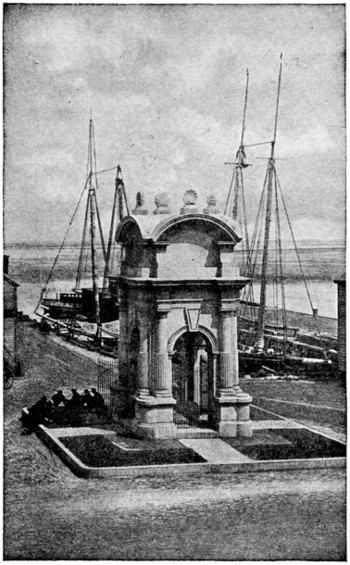
FOREFATHERS’ ROCK, PLYMOUTH, MASS.
Plymouth is of abiding interest as the landing
place of the Pilgrim Fathers (December 21st, 1620)
and the site of the first settlement in New England.
Pilgrim Hall contains numerous interesting relics
of the Pilgrims, paintings of their embarkation and
landing, old portraits, etc. North Street leads to
the so-called Plymouth Rock, a granite boulder enclosed
by a railing and covered with a canopy. This, however,
is only a fragment (broken off in 1774) of the
flat rock where the Pilgrims landed, which lies nearer
the sea and is now covered by a wharf. Cole’s Hill,
opposite the rock, was the burial-place of the early
settlers (1620-1621). Leyden Street was the site of
the first house. From the Town Square a path ascends
to the right to the ancient Burial Hill, with the graves
of many of the early settlers, including Governor Bradford.
A fortified church was erected here in 1622.
To the south is Watson’s Hill, where the Pilgrims made
a treaty with Massasoit in 1621. The National Monument
to the Pilgrims, consisting of a granite pedestal
forty-five feet high, surmounted by a figure of Faith,
thirty-six feet high, and surrounded by seated figures
twenty feet high, representing Law, Morality, Freedom
and Education is about one-fourth mile from the railway
station, on Allerton Street. The three hundredth
anniversary of the landing of the Pilgrims will be elaborately
celebrated here in 1920.
Period of Settlement.—In 1565 the Spaniards
founded St. Augustine, the first permanent
settlement in the United States. In 1585 an
expedition sent by Sir Walter Raleigh made a
settlement on Roanoke Island, N. C., which
failed. In 1607 the English founded Jamestown
on James River, Virginia, their first permanent
settlement.[11] The master spirit of this
enterprise was Captain John Smith. Plymouth,
Mass., was founded in 1620 by the
“Pilgrim Fathers,” a body of Puritans led by
John Carver and others, who sailed from England
in the Mayflower. Salem was settled by
John Endicott in 1628. In 1630 John Winthrop
settled Boston. In 1692 Plymouth
colony was united to Massachusetts. Portsmouth
and Dover, in New Hampshire, were
settled in 1623. The first permanent English
settlements in Maine were made about the
same time. These settlements ultimately fell
under the jurisdiction of Massachusetts. Connecticut
was colonized in 1635-1636 by emigrants
from Massachusetts, who settled at
Hartford, Windsor, and Wethersfield. Rhode
Island was first settled at Providence in 1636
by Roger Williams. In 1623 permanent
settlements were made by the Dutch at Fort
[635]
Orange (now Albany) and at New Amsterdam
on the present site of New York. The Swedes
settled on the Delaware in 1638, and were
expelled in 1655 by the Dutch army. The
English seized New Amsterdam in 1664, and
with it the whole of New Netherland, which
they named New York from the Duke of York,
to whom it had been granted by Charles II.
New Jersey at this time acquired its distinctive
name. In 1681 the territory west of the Delaware
was granted to William Penn, who colonized
it chiefly with Friends or Quakers, and
founded Philadelphia in 1682. Maryland was
settled in 1634 by Roman Catholics sent out
by Lord Baltimore. The first permanent
settlement in North Carolina appears to have
been made about 1663, on Albemarle Sound,
by emigrants from Virginia. The first permanent
settlement in South Carolina was made
in 1670 by colonists from England on the
Ashley River, near the site of Charleston, which
began to be settled about the same time.
Georgia was settled by General James Oglethorpe,
who in 1733 founded Savannah.
How Europe First Divided the American
Colonies.—It will thus be seen that what is
now the territory of the United States has
been derived from six European nations.
Resting on the discovery by Columbus and
the bulls of the popes, Spain claimed the
whole continent, but has been in actual possession
only of the Gulf coast from Florida to
Texas, and of the interior from the Mississippi
to the Pacific. The Swedes once had settlements
on the Delaware. The Dutch, following
up the voyage of Hudson to the river bearing
his name, claimed and held the country from
the Delaware to the Connecticut. The French
discovered the St. Lawrence and explored and
held military possession of the valleys of the
Mississippi and Ohio and the Great Lakes.
The English, by virtue of the voyages of the
Cabots, claimed the Atlantic coast, and there
founded the colonies which grew into the
thirteen United States.
In the course of the struggle, sometimes
peaceful, often bloody, by which the rule of
these nations has been thrown off, the Dutch
conquered the Swedes; the English conquered
the Dutch and the French; the United States
expelled the English, and in time, by purchase
or conquest, drove out the Spaniards and the
Mexicans.
Struggle of England and France for America.—The
first serious struggle for possession
occurred in the middle of the eighteenth century,
when the English, moving westward,
met the French moving eastward at the
source of the river Ohio. In that struggle,
which has come down to us as the “French
and Indian war,” France was worsted, and,
retiring from this continent, divided her
possessions between England and Spain. To
England she gave Canada and the islands and
shores of the Gulf of St. Lawrence, and, entering
what is now the United States, drew a line
down the middle of the Mississippi River, and
gave all to the east of that line (save the island
on which is the city of New Orleans) to Great
Britain, and all to the west of it to Spain;
Spain at the same time gave Florida to England
as the price of Cuba.
Oppression of the Colonies under British
Rule.—Having thus come into possession of
all the country to the east of the Great River,
King George determined to send out an army
of ten thousand men to defend the colonies,
and have the latter bear a part of the expense.
This part he attempted to collect by duties
on goods imported, and by a Stamp Tax (1765)
on legal documents and printed matter. No
tax for revenue had before been laid on
America by act of Parliament. The colonists,
therefore, resisted this first attempt, and raising
the cry, “No taxation without representation,”
they forced Parliament to repeal the
Stamp Tax in 1766. The right to tax was at
the same time distinctly asserted, and in 1767
was again used, and duties laid on paints, oils,
lead, glass, and tea. Once more the colonists
resisted, and, by refusing to import any goods,
wares, or merchandise of English make, so distressed
the manufacturers of England that
Parliament repealed every tax save that on
tea. All the tea needed in America was now
smuggled in from Holland. The East India
Company, deprived of the American market,
became embarrassed, and, calling on Parliament
for aid, was suffered to export tea, a
privilege never before enjoyed.
Selecting commissioners in Boston, New
York, Philadelphia, and Charleston, cargoes
of tea were duly consigned to them by the
East India Company; but the people agreed
not to buy any of this tea or allow it to be
sold. At Boston men disguised as Indians
boarded the tea ships, overcame the guards,
and destroyed the tea by throwing the boxes
into the harbor. This has gone down in history
as the “Boston Tea Party.”
The Continental Congress and the Revolution.—As
a punishment for this, Parliament
shut the port of Boston and deprived the
people of Massachusetts of many functions
of local government. The Assembly of
Massachusetts thereupon called for a General
Congress to meet at Philadelphia on September
5, 1774. The colonies gladly responded and
this congress, having issued a Declaration of
Rights and Addresses to the king, to Parliament,
and to the people of England, adjourned
to await the result.
The day for the reassembling of Congress
was May 10, 1775; but, before that day
came, the attempt of General Gage to seize
military stores brought on a fight at Lexington,
April 19, 1775. The fight at Lexington was
followed by the siege of the British in Boston,
by the formation of the “Continental Army,”
by the appointment of George Washington to
command it, by the battle of Bunker Hill,
June 17, 1775, and by an expedition against
Quebec, which came to naught, on the last
day of the year.
General William Howe meantime had succeeded
Gage in command of the British at
Boston, and, finding himself hard pressed by
Washington, evacuated the city and sailed for
Halifax. Believing New York was to be
attacked, Washington now hurried to Long
Island, where, August 27, 1776, Howe defeated
him, took possession of New York, and drove
him first up the Hudson and then southward
across New Jersey.
American Independence Declared.—Congress,
which, July 4, 1776, at Philadelphia, had
declared the colonies to be free and independent
states, now fled from that city to Baltimore.
But Washington, turning in his retreat,
surprised and captured the British outpost at
Trenton. Cornwallis instantly hurried toward
that town, but Washington, passing around the
British rear, attacked and captured at Princeton,
January 3, 1777, a detachment on its
march to Trenton, and then went into winter
quarters at Morristown.
With the return of spring Howe, finding that
he could not reach Philadelphia by land without
passing in front of the Continental army
stretched out on a strongly intrenched line
across New Jersey, went by sea. Washington
met him at Chadd’s Ford on the Brandywine,
was defeated, and on September 25, 1777,
Howe entered Philadelphia. In the attempt
to dislodge him Washington fought and lost
the battle of Germantown, October 4, 1777;
the loss of Philadelphia was more than made
good by the capture of Burgoyne and his army
at Saratoga, October 17, 1777, while on his
way from Canada to New York City.
The fruits of this victory were the recognition
of the independence of the United States
by France, the treaty of alliance with France,
February 8, 1778, and the evacuation of Philadelphia
by General Clinton, who had succeeded
Howe. Washington, who had spent the winter
at Valley Forge, instantly followed, and overtaking
Clinton at Monmouth fought and won
the battle at that place, June 29, 1778. Clinton
escaped to New York, and Washington,
drawing his army in a circle about the city
from Morristown on the south to West Point
on the north, awaited further movements.
PRINCIPAL CAMPAIGNS AND BATTLES OF THE AMERICAN REVOLUTION
The leading battles are indicated in bold-face; successful commanders in italics
Names, Dates and Places
of Campaigns and Battles |
Commanders |
Engaged |
| American |
British |
Amer. |
British |
1775-1776
Campaign in New England |
|
|
|
|
| Lexington, Concord (April 19, 1775) |
Barret and Butterick |
Smith and Lord Percy |
... |
1,700 |
| Ticonderoga (May 10, 1775) |
Ethan Allen and Eaton |
Delaplace |
83 |
48 |
| Bunker Hill (June 17, 1775) |
Warren, Prescott and Putnam |
Howe and Pigot |
3,000 |
4,500 |
| Quebec (December 6-31, 1775) |
Schuyler, Montgomery and Arnold |
M’Lean and Carleton |
900 |
1,200 |
| Norfolk, Va. (Dec. 9, 1775) |
Woodford |
Lord Dunsmore |
... |
... |
| Boston (March 17, 1776) |
The British evacuate the city and harbor. |
... |
... |
| Charleston (Ft. Moultrie) (June 28, 1776) |
Moultrie, Lee and Armstrong |
Clinton |
400 |
4,000 |
1776-1778
Campaign in Middle States |
|
|
|
|
| Brooklyn, L. I. (Aug. 26, 1776) |
Green and Sullivan |
Howe, Clinton, and Cornwallis |
10,000 |
20,000 |
| Harlem Plains, N. Y. (Sept. 16, 1776) |
Washington |
... |
... |
... |
| White Plains, N. Y. (Oct. 28, 1776) |
Washington |
Howe |
1,600 |
2,000 |
| Fort Washington, N. Y. (Nov. 16, 1776) |
Magaw |
Howe |
3,000 |
5,000 |
| Trenton, N. J. (Dec. 26, 1776) |
Washington |
Lord Cornwallis and Rahl |
2,400 |
1,000 |
| Princeton, N. J. (Jan. 3, 1777) |
Washington |
Mawhood |
3,000 |
1,800 |
| Bennington, Vt. (Aug. 15, 16, 1777) |
Stark and Warner |
Baum and Beyman |
... |
1,200 |
| Brandywine, Pa. (Sept. 11, 1777) |
Washington |
Howe |
11,000 |
18,000 |
| Bemis Heights, N. Y. (Sept. 19, 1777) |
Gates |
Burgoyne |
2,500 |
3,000 |
| Germantown, Pa. (Oct. 4, 1777) |
Washington |
Howe |
11,000 |
15,000 |
| Stillwater (Saratoga) (Oct. 7, 1777) |
Gates |
Burgoyne |
8,000 |
6,000 |
| Monmouth, N. J. (June 28, 1778) |
Washington |
Sir Henry Clinton |
12,000 |
11,000 |
1778-1781
Campaign in the South |
|
|
|
|
| Savannah, Ga. (Dec. 29, 1778) |
Robert Howe |
Campbell |
900 |
2,000 |
| Brier Creek, Ga. (Mar. 3, 1779) |
Ashe |
Prevost |
1,200 |
1,800 |
| Stony Point, N. Y. (July 16, 1779) |
Wayne |
Clinton |
1,200 |
600 |
| Chemung, N. Y. (Aug. 29, 1779) |
Sullivan |
Brant |
4,000 |
1,500 |
| Savannah, Ga. (Oct. 9, 1779) |
Lincoln |
Prevost |
4,500 |
2,900 |
| Charleston, S. C. (May 12, 1780) |
Lincoln |
Clinton |
3,700 |
9,000 |
| Camden, S. C. (Sanders Creek) (Aug. 15, 1780) |
Gates |
Cornwallis |
3,000 |
2,200 |
| King’s Mountain, S. C. (Oct. 7, 1780) |
Campbell |
Ferguson |
900 |
1,100 |
| Cowpens, S. C. (Jan. 17, 1781) |
Morgan |
Cornwallis and Tarleton |
900 |
1,100 |
| Guilford C. H., N. C. (Mar. 15, 1781) |
Greene |
Cornwallis |
4,400 |
2,400 |
| Hobkirk’s Hill, S. C. (April 25, 1781) |
Greene |
Rawdon |
1,200 |
900 |
| New London, Conn., Fort Griswold (Sept. 6, 1781) |
Ledyard |
Benedict Arnold and Eyre |
150 |
800 |
| Eutaw Springs, S. C. (Sept. 8, 1781) |
Greene |
Lord Rawdon |
2,000 |
2,800 |
| Yorktown, Va. (Oct. 17-19, 1781) |
Washington |
Cornwallis |
16,000 |
7,500 |
Treason of Arnold and Execution of André.—Turning
towards the Southern states, the
British commander now dispatched an expedition
which took Savannah and overran the
State of Georgia. The year which followed
(1779) is memorable for the capture of Stony
Point by Anthony Wayne; for the treason of
Benedict Arnold; for the execution of Major
John André; for the capture of the “Serapis”
by Paul Jones after one of the most desperate
naval battles on record, and by the failure
of an attempt by the Americans to retake
Savannah. In 1780 Clinton led an expedition
from New York to Charleston, took the city,
swept over South Carolina, and, leaving Cornwallis
in command, hurried back to New
York. Gates, who now attempted to dislodge
the British, was beaten. Greene now
succeeded Gates, and Morgan, the commander
of his light troops, won the battle of the Cowpens,
January 17, 1781. This victory brought
up Cornwallis, who chased Greene across the
State of North Carolina to Guilford Court
House, where Greene was beaten and Cornwallis
forced to retreat to Wilmington. Moving
southward, Greene was again beaten in
two pitched battles, but forced the British to
withdraw within their lines at Charleston and
Savannah.
Cornwallis meantime moved from Wilmington
into Virginia and took possession of Yorktown.
And now Washington, who had long
been watching New York, again took the
offensive, hurried across New Jersey and
Pennsylvania, and, while a French fleet closed
the Chesapeake Bay, he besieged Cornwallis
by land, till, October 19, 1781, the British
general surrendered. This practically ended
the war.
The treaty of peace, at Paris, in 1783,
actually ended it, secured the independence of
the United States, and fixed her boundaries,
roughly speaking, as the Atlantic Ocean on
the east, the Mississippi on the west, New
Brunswick, the St. Lawrence, and the Great
Lakes on the north, and the parallel of thirty-one
degrees on the south.
Articles of Confederation and their Weakness.—While
the war was still raging Congress
had framed an instrument of government,
which the states ratified and put in force on
March 1, 1781. This instrument of government
which bound the thirteen states in perpetual
union was known as the Articles of
Confederation, and established a government
as bad as any yet devised by man. There was
no executive, no judiciary, and only the
semblance of a legislature. The Congress consisted
of not more than seven nor less than
two delegates from each state; sat in secret
session; was presided over by a president
elected from its own members; and could not
pass any law unless the delegates of nine
states assented. It could wage war, make
treaties, and borrow money; but it could not
lay a tax of any kind whatsoever; nor regulate
commerce between the states, or with foreign
powers; and was dependent entirely on the
liberality of the states for revenues. This
defect proved fatal. Inability to regulate
foreign commerce by duties stripped the country
of its specie. Lack of specie forced the
states to issue paper money. Paper money
was followed by tender acts and force acts,
and in some places by a violent stoppage of
justice to the debtor class. A commercial and
financial crisis followed and the people of the
states, reduced to desperation, gladly acceded
to a call for a national trade convention, which
met in Philadelphia in May, 1787. The
instructions of the delegates bade them suggest
amendments to the Articles of Confederation.
But the convention, considering the
Articles too bad to be mended, framed the
Constitution, which the people, acting through
conventions in the various states, ratified
during 1787 and 1788.
Adoption of the Constitution and Organization
of Parties.—On March 4, 1789, the
Constitution became the supreme law of the
land. In the first Congress no trace of party
lines is visible. But the work of establishing
government had not gone far when differences
of opinion sprang up; when the cry of partial
legislation was raised, and the people all over
the country began to divide into two great
parties—those who favored and those who
opposed a liberal construction of the language
of the Constitution and the establishment of
a strong national government.
The friends of national government took the
name of Federalists, and under the lead of
Alexander Hamilton, who as Secretary of the
Treasury marked out the financial policy of
the administration, they funded the foreign
and domestic debt occasioned by the war for independence,
assumed the debts incurred by the
states in that struggle, set up a national bank
with branches, and laid a tax on distilled liquors.
Each one of these acts was met with violent
opposition, as designed to benefit a class, as
unconstitutional, and as highly detrimental to
the interests of the South. Against the
Federalists were now brought charges of a leaning
towards monarchy and aristocracy. Great
Britain, it was said, has a funded debt, a bank,
and an excise. These things are, therefore,
monarchial institutions. But the Federalists
have introduced them into the United States.
The Federalists, therefore, are aristocrats,
monarchists, and monopolists.
Of all who believed these charges, none believed
them more sincerely than Thomas
Jefferson, Secretary of State. Seeing in these
acts a wide departure from the true principles
of democracy, he set himself to work to organize
a party of opposition, and was soon
looked up to as the recognized leader of the
Federal Republicans.
Hardly had the two parties thus been called
into existence by difference of opinion on
questions of home affairs, when they were
parted yet more widely, and the dispute between
them intensely embittered by questions
of foreign affairs.
Effect of the French and English Affairs
Upon the New Nation.—In 1793 the French
Republic declared war against England, and
sent a minister to the United States. As the
[638]
United States was bound to France by the
treaty of alliance and by a treaty of amity
and commerce, and was not bound to Great
Britain by any commercial treaty whatever,
it seemed not unlikely that she would be
dragged unwillingly into the war. But Washington,
with the advice of his secretaries, proclaimed
neutrality, and from that time every
Republican was the firm friend of France and
every Federalist the ally of England. Then
began a seven years’ struggle for neutrality.
France threw open her colonial ports to neutral
commerce; Great Britain asserting the “Rule
of the War of 1756,” a rule prescribing that no
neutral should have in time of war a trade it
did not have in peace, declared this trade was
contraband, and seized the ships of the United
States engaged in it. The Republicans denounced
neutrality and attempted to force a
war. The Federalists in alarm dispatched
John Jay, the Chief Justice, to London, with
offers of a commercial treaty. England
responded and on February 29, 1796, the first
treaty of amity and commerce between her
and the United States became law. At this
France took offense, rejected the new minister
(C. C. Pinckney) from the United States, and
drove him from her soil, suspended the treaties,
insulted a special commission (sent out in the
interest of peace), with demands for bribes
and tribute, and almost brought on war.
Never since the days of Bunker Hill had the
country been so stirred as this act of the French
Directory stirred it in the summer of 1798.
Then was written our national song, “Hail
Columbia.” Then was established the department
of the navy. Then, under the cry,
“Millions for defense; not a cent for tribute,”
went forth that gallant little fleet which humbled
the tri-color in the West Indies and
brought France to her senses.
Causes and Events of the War of 1812.—With
the elevation of Napoleon to the First
Consulship came peace in 1800. In that same
year the Federalists fell from power, never to
return. Once in power, the Republicans began
to carry out the principles they had so long
preached. They reduced the national debt;
they repealed the internal taxes. They sold
the navy; boldly assaulted the Supreme
Court; and in 1811, when the charter of the
National Bank expired, refused to renew it.
Their doctrine of strict construction, however,
was ruined, when, in 1803, they bought the
Province of Louisiana from France and added
to the public domain that splendid region
which lies between the Mississippi and the
Rocky Mountains.
At that moment it seemed as if the people
were about to enter on a career of unwonted
prosperity. But Napoleon suddenly made
war on England, and by 1806 the United
States was involved in a desperate struggle of
nine years, both with France and England, for
commercial independence. Great Britain
searched our ships, impressed our sailors, violated
the neutrality of our ports, and by the
decisions of her admiralty courts and by orders
in council sought to ruin our neutral commerce
with Europe, unless carried on through her
ports and under her license. Napoleon
attacked us with his decrees of Berlin and
Milan, and sought to ruin our neutral commerce
with England. The United States
retaliated by means of the embargo and non-intercourse,
and, in 1812, declared war.
CAMPAIGNS AND BATTLES OF THE WAR OF 1812-1815
Principal Land Battles
1812.—August 16, the surrender of Detroit by
Hull to Brock.
October 13, defeat of Van Rensselaer by Brock
at Queenstown.
1813.—January 18-22, the Americans were defeated
at Frenchtown by General Proctor, whose Indians
massacred the wounded Americans.
April 27, York (Toronto) was captured by the
Americans under General Pike.
October 5, General Harrison forced General
Proctor to retreat into Canada, and October 5 at
the battle of the Thames routed the British and
their Indian allies. Tecumseh was killed, the
territory lost by Hull regained, and Upper Canada
was retained to the end of the war.
November 11, the Americans moved on Montreal,
but were defeated at Chryslers Field, and
retreated.
1814.—July 25, Winfield Scott again invaded
Canada and gained victories at Chippewa (July 5)
and at Lundy’s Lane.
August 24, capture of Washington and burning
of the Capitol, the White House, and other
buildings.
1815.—January 8, a large body of English veterans
were landed in Louisiana, and attacked New
Orleans; in this battle, which took place before
the news of the treaty of peace reached the combatants,
Jackson won a decisive victory.
Principal Naval Battles
1812.—August 19, the Constitution destroys the
British Guerriere, in the Gulf of St. Lawrence.
October 18, the American Wasp captures the
Frolic.
October 25, Captain Decatur in the United
States took the Macedonian.
December 29, the Constitution captures the Java.
1813.—February 24, the American Hornet captures
the Peacock.
June 1, the Chesapeake is captured by the
British Shannon.
September 10, Commodore Perry with a fleet of
nine vessels destroys the British squadron of six
vessels on Lake Erie.
1814.—September 3, naval attack on Fort McHenry
by the British fails.
September 11, Captain Macdonough, on Lake
Champlain, completely defeated a British fleet
stronger than his own; this checked a serious
invasion of the enemy.
Treaty and Results of the War
December 24, 1814, a treaty of peace was
made at Ghent, the end of the Napoleonic wars
having removed the cause for England’s offensive
policy at sea.
The provisions included:
(1) A return of captured territory.
(2) Nothing was said about impressment.
(3) No compensation was secured by the
Americans for ships captured previous to 1812.
The results of the war were:
(1) An increase of debt.
(2) An outburst of national patriotism.
(3) The removal of America from participation
in European politics.
(4) The development of manufacturing.
(5) The establishment of the protective tariff
policy.
With the Cessation of Hostilities Another
Epoch in Our History Begins.—From the
day when Washington proclaimed neutrality in
1793, to the day when the people celebrated,
with bonfires and with fireworks, and with
public dinners, the return of peace, in 1815,
the political and industrial history of the
United States is deeply affected by the political
history of Europe. It was questions of foreign
policy, not of domestic policy, that divided
the two parties, that took up the time of
Congress, that raised up and pulled down
politicians. But after 1815 foreign affairs
sank into insignificance, and for the next thirty
years the history of the United States is the
history of political and economic development
of the country to the east of the Mississippi
River.
Fall of the Federalists, or Pro-British Party.—The
opposition which the Federalists made
to the war completed their ruin. In 1816 for
the last time they put forward a presidential
candidate, carried three states out of nineteen,
and expired in the effort. During the eight
years of Monroe’s administration (1817-1825)
but one great and harmonious party ruled the
political destinies of the country. This
remarkable period has come down to us in
history as the “era of good feelings.” It was
indeed such an era, and so good were the
feelings that in 1820 when Monroe was re-elected
no competitor was named to run
against him. Every state, every electoral vote
save one was his. Even that one was his. But
the elector who controlled it threw it away on
John Quincy Adams lest Monroe should have
the unanimous vote of the presidential electors,
an honor which has been bestowed on no man
save Washington.
Rise of the Protective Tariff Policy.—In the
midst of this harmony, however, events were
fast ripening for a great schism. Under the
protection offered by the commercial restrictions
which began with the embargo and
ended with the peace, manufactures had
sprung up and flourished. If they were to
continue to flourish they must continue to be
protected, and the question of free trade and
protection rose for the first time into really
national importance.
The rush of population into the West led to
the admission of Indiana (1816), Mississippi
(1817), Illinois (1818), Alabama (1819), and
Missouri (1820) into the Union, and brought
up for serious discussion the uses to be made
of public lands lying within them.
The steamboat, which had been adopted far
and wide, had produced a demand for some
improved means of communication by land to
join the greater water highways of the country
and opened the era of internal improvements.
The application of Missouri for admission
into the Union brought up the question of the
admission of slavery to the west of the Mississippi.
A series of decisions of the Supreme
Court, setting aside acts of the state legislatures,
gave new prominence to the question of
state rights.
A Decade of Great Political Contests.—The
Missouri question was settled by the
famous Compromise of 1820 (the first great
political compromise), which drew the line
thirty-six degrees thirty minutes from the
Mississippi to the hundredth meridian, and
pledged all to the north of it, save Missouri,
to freedom. But the others were not to be
settled by compromise, and in the campaign of
1824 the once harmonious Republican party
was rent in pieces. Each of the four quarters
of the Republic put a candidate in the
field and “the scrub-race for the presidency”
began.
The new manufacturing interests of the
East put forward John Quincy Adams. The
West, demanding internal improvements at
public expense, had for its candidate Henry
Clay. William H. Crawford of Georgia
(nominated by a caucus of Congressmen)
represented the old Republican party of the
South. Andrew Jackson of Tennessee stood
for the new Democracy, for the people, with
all their hatred of monopolies and class control,
their prejudices, their half formed notions,
their violent outbursts of feeling.
Behind none of them was there an organized
party. But taking the name of “Adams
men” and “Clay men,” “Crawford men” and
“Jackson men,” the friends of each entered
the campaign and lost it. No candidate secured
a majority of the electoral college, and
the House of Representatives chose John
Quincy Adams.
The Triumph of Democracy and Industrial
Expansion.—Under the administration of
Adams (1825-1829) the men who wished for
protection and the men who wished for internal
improvements at government expense
united, took the name first of National Republicans,
and then of Whigs, and, led on by
Henry Clay and Daniel Webster, carried
through the high protection tariffs of 1828 and
1832. The friends of Jackson and Crawford
took the name of Democrats, won the election
of 1829, and during twelve years governed the
country.
In the course of these years the population
of the United States rose to seventeen million,
and the number of states to twenty-six. Steam
navigation began on the ocean; two thousand
miles of railroad were built in the land; new
inventions came into use; and the social and
industrial life of the people was completely
revolutionized. The national debt was paid;
a surplus accumulated in the Treasury; the
sale of public lands rose from three million
dollars in 1831 to twenty-five million dollars in
1836; and the rage for internal improvements
burned more fiercely than ever. A great
financial panic spread over the country; the
charter of the National Bank expired, a hundred
“wild-cat banks” sprang up to take its
place, and the question of the abolition of
slavery became troublesome.
Early Troubles in Our System of Public
Finance.—On the great questions which grew
out of this condition of affairs the position of
the two parties was well defined. The Democrats
demanded a strict construction of the
Constitution; no internal improvements at
public expense; a surrender of the public lands
to the state in which they lay; no tariff for
protection; no National Bank; no agitation
of the question of the abolition of slavery;
the establishment of subtreasuries for the safe
[640]
keeping of the public funds, and the distribution
of the surplus revenue. The Whigs
demanded a recharter of the National Bank;
a tariff for protection; the expenditure of the
surplus on internal improvements; the distribution
of the money derived from the sale
of public lands; a limitation of the veto power
of the President; and no removals from office
for political reasons.
The Democrats, true to their principles, and
having the power, carried them out. They
destroyed the Bank; they defeated bill after
bill for the construction of roads and canals;
they distributed thirty-eight million dollars of
the surplus revenue among the states, and by
the cartage of immense sums of money from
the East to the far distant West, hastened that
inevitable financial crisis known as the “panic
of 1837.”
Andrew Jackson had just been succeeded in
the presidency by Martin Van Buren (1837-1841)
and on him the storm burst in all its
fury. But he stood it bravely, held to a strict
construction of the Constitution, insisted that
the panic would right itself without interference
by the Government, and stoutly
refused to meddle. Since the refusal of Congress
to recharter the Bank of the United
States, whose charter expired in 1836, the
revenue of the Government had been deposited
in certain “pet banks” designated by the
Secretary of the Treasury. Every one of
them failed in the panic of 1837. Van Buren
therefore recommended “the divorce of Bank
and State,” and after a struggle of three years
his friends carried the “subtreasury” scheme
in 1840. This law cast off all connection
between the state banks and the Government,
put the collectors of the revenue under heavy
bonds to keep the money safely till called for
by the Secretary of the Treasury, and limited
payments to or by the United States to specie.
National Conventions and Rise of Slavery
Issue.—The year 1840 was presidential year,
and is memorable for the introduction of new
political methods; for the rise of a new and
vigorous party; and for the appearance of a
new political issue. The new machinery consisted
in the permanent introduction of the
national convention for the nomination of a
president, now used by the Democrats for the
second time, and by the Whigs for the first;
in the promulgation of a party platform by the
convention, now used by the Democrats for
the first time; and in the use of mass meetings,
processions, songs, and all the paraphernalia
of a modern campaign by the Whigs.
The new party was the Liberty Party, and
the new issue the “absolute and unqualified
divorce of the general Government from
slavery, and the restoration of equality of
rights among men.” The principles of that
party were: slavery is against natural right, is
strictly local, is a state institution, and derives
no support from the authority of Congress,
which has no power to set up or continue
slavery anywhere; every treaty, every act,
establishing, favoring, or continuing slavery in
the District of Columbia, in the territories, on
the high seas, is, therefore, unconstitutional.
The Short-lived Era of the Whigs.—The
candidate of this party was James Gillespie
Birney. The Democrats nominated Martin
Van Buren. The Whigs put forward William
Henry Harrison and elected him. Harrison
died one month after his inauguration, and
John Tyler, the Vice-President and a Democrat
of the Calhoun wing, became President.
The Whig policy as sketched by Clay was
the repeal of the Subtreasury Act; the charter
of a National Bank; tariff for protection; and
the distribution of the sales of public lands.
To the repeal of the Subtreasury Act Tyler
gladly assented. To the establishment of a
bank even when called “Fiscal Corporation,”
he would not assent, and, having twice vetoed
such bills, was read out of the party by a
formal manifesto issued by Whig congressmen.
It mattered little, however, for the question
of the hour was not the bank, nor the tariff,
nor the distribution of the sales of lands, but
the annexation of the republic Texas. Joined
to the demand for the reoccupation of Oregon,
it became the chief plank in the Democratic
platform of 1844. The Whig platform said
not a word on the subject, and the Liberty
Party, turning with loathing from the cowardice
of Clay, voted again for Birney, gave the
State of New York to the Democrats, and
with it the presidency.
The Annexation of Texas, and Wilmot
Proviso.—Accepting the result of the election
as “instruction from the people,” Congress
passed the needed act and Tyler in the last
hours of his administration declared Texas
annexed.
The boundary of the new state was ill-defined.
Texas claimed to the Rio Grande.
Mexico would probably have acknowledged
the Nueces River. The United States attempted
to enforce the claim of Texas, sent
troops to the Rio Grande, and so brought on
the Mexican war.
At the close of the Mexican war the boundary
of the United States was carried south
from forty-two degrees to the Gila River, and
what is now California, Nevada, Arizona,
New Mexico, Utah, and more than half of
Wyoming and Colorado were added to the
public domain. While the war was still raging,
Polk, who had succeeded Tyler, asked for two
million dollars to aid him in negotiating peace.
Well knowing that the money was to be used
to buy land from Mexico, David Wilmot
moved in the House of Representatives that
from all territory bought with the money
slavery should be excluded. This was the
famous Wilmot proviso. It failed of adoption
and the territory was acquired in 1848, with
its character as to slavery or freedom wholly
undetermined.
The Preliminary Struggle over the Slave
Problem.—And now the old parties began to
break up. Democrats who believed in the
Wilmot proviso, and Whigs who detested the
annexation of Texas, the war with Mexico,
and the extension of slavery went over in a
body to the Liberty Party, formed with it
the Freesoil Party, nominated Martin Van
Buren, and gave him three hundred thousand
votes. In their platform they declared that
Congress had no more power to make a slave
than to make a king; that they accepted the
issue thrust on them by the South; that to
the demand for more slave states and more
slave territories they answered, no more slave
states, no more slave territories; and that on
their banner was inscribed “Free Soil, Free
Speech, Free Labor, and Free Men.” As the
defection of Whigs to the Liberty Party in
1844 gave New York state to the Democrats
and elected Polk, so the defection of Democrats
to the Free Soilers in 1848 gave New York
to the Whigs and elected Taylor. As Harrison,
the first Whig president, died one month
after taking office, so Taylor, the second Whig
president, died suddenly when a little over one
year in office, just as the great Whig compromise
of 1850 was closing. The imperative
need of civil government in the new territory,
the discovery of gold in California, the rush of
men from all parts of the earth to the Pacific
Coast forced Congress to establish organized
territories. The question was: shall they be
opened or closed to slavery? But, as the soil
had been free when acquired from Mexico, the
question really was: shall the United States
establish slavery?
THE MEXICAN WAR, 1846-1848
Causes of the War
(1) Long-standing irritation over claims of
American citizens upon Mexico, which the latter
refused to pay.
(2) The annexation by the United States of
Texas, which Mexico claimed as still a part of her
territory.
(3) Disputes as to whether the Rio Grande or
Nueces River was the boundary of Texas.
Results of the War
The Treaty of Guadalupe Hidalgo, in 1848,
closed the war. Its chief provisions were:
(1) The Rio Grande was made the boundary
between Texas and Mexico.
(2) California and New Mexico were ceded to
the United States.
(3) The United States paid Mexico $15,000,000,
and assumed $3,500,000 due American citizens.
The slavery question was intensified in American
politics.
PRINCIPAL BATTLES
NOTE: The Americans were victorious in every conflict.
| Place of Battle |
Dates |
Commanders |
Engaged |
| American |
Mexican |
American |
Mexican |
| Bracite |
Dec. |
25, |
1846 |
Doniphan |
Ponce de Leon |
500 |
1,200 |
| Buena Vista |
Feb. |
23, |
1847 |
Taylor |
Santa Anna |
4,700 |
17,000 |
| Cerro Gordo |
April |
18, |
1847 |
Scott |
Santa Anna |
8,500 |
12,000 |
| Chapultepec |
Sept. |
13, |
1847 |
Scott |
Santa Anna |
7,200 |
25,000 |
| Contreras |
Aug. |
20, |
1847 |
Scott |
Valencia |
4,000 |
7,000 |
| Churubusco |
Aug. |
20, |
1847 |
Scott |
Santa Anna |
8,000 |
25,000 |
| Huamantla |
Oct. |
9, |
1847 |
Lane |
Santa Anna |
500 |
1,000 |
| Mexico |
Sept. |
14, |
1847 |
Scott |
Santa Anna |
6,000 |
... |
| Molino del Rey |
Sept. |
8, |
1847 |
Worth |
Alverez |
3,500 |
14,000 |
| Monterey |
Sept. |
24, |
1846 |
Taylor |
Ampudia |
6,600 |
10,000 |
| Palo Alto |
May |
8, |
1846 |
Taylor |
Arista |
2,300 |
6,000 |
| Resaca de la Palma |
May |
9, |
1846 |
Taylor |
Arista |
2,000 |
5,000 |
| Sacramento |
Feb. |
28, |
1847 |
Doniphan |
Trias |
900 |
4,000 |
| Vera Cruz |
Mar. |
27, |
1847 |
Scott |
Landero |
12,000 |
6,000 |
The only naval engagements of importance during the war with Mexico
were the bombardment
of
Vera Cruz, by Commodore Conner, which lasted four days, and the bombardment of Monterey,
Commodore
Sloat, both cities being forced to surrender. |
The Democrats, holding that slaves were
property, claimed the right to take them into
any territory, and asserting the principle of
“squatter sovereignty,” claimed the right of
the people living in any territory to settle for
themselves whether it should be slave or free.
The Free Soilers demanded that the soil having
been free when a part of Mexico, should be
free as a part of the United States. Between
these two Clay now stepped in to act as pacificator.
Taking up the grievances of each side,
he framed and carried through the measure
known as the Compromise of 1850, the third
great political compromise in our history.
The fruit of this was the admission of California
as a free state; the passage of a more
stringent law for the recovery of fugitive
slaves; the abolition of the slave trade in the
District of Columbia; and the organization
of Utah and New Mexico on the basis of
“squatter sovereignty.”
This done, senators and representatives of
all parties joined in a manifesto declaring that
the issues resting on slavery were dead issues,
and that they would neither vote for, nor
work for any man who thought otherwise.
But thousands did think otherwise. The
action of Clay pleased none. Anti-slavery
men deserted him in the North; pro-slavery
men deserted him in the South; and in 1852
the Whig party carried but four states out of
thirty-one and perished. Even its two great
leaders, Clay and Webster, were, by that time,
in their graves.
Excited by such success, the Democrats, led
on by Stephen A. Douglas, now broke through
the compromise of 1820 and in 1854 applied
“squatter sovereignty” to the organization of
the territories of Kansas and Nebraska.
Against this violation state legislatures, the
people, the pulpit, and the press protested
vigorously, for every acre of Kansas and
Nebraska lay to the north of 36° 30′ and was
solemnly pledged to freedom. But the Democratic
leaders would not listen and drove from
their ranks another detachment of voters. The
effect was soon manifest. The little parties
began to unite and when, in 1856, the time
came to elect another president, the Republican
Party of to-day was fully organized and
ready. Once more and for the last time for
twenty-eight years the Democrats won.
Buchanan’s Administration the Prelude to
the Civil War.—The administration of James
Buchanan (1857-1861) marks an epoch. The
question before the country was that of the
extension of slavery into the new territories.
Hardly had he been inaugurated when the
Supreme Court handed down a decision on the
case of Dred Scott, which denied the right of
Congress to legislate on slavery, set aside the
compromises of 1820 and 1850 as unconstitutional,
and opened all the territories to slavery.
Rise of the Republican Party and Election
of Lincoln.—From that moment the Whig
and Democratic parties began to break up
rapidly till, when 1860 came, four parties and
four presidential candidates were in the field.
The Democratic party, having finally split at
the national convention for nominating a
president and vice-president, the southern
wing put forward Breckenridge and Lane and
demanded that Congress should protect slavery
in the territories. The northern wing nominated
Stephen A. Douglas and declared for
squatter sovereignty and the compromise of
1850. A third party, taking the name of
“Constitutional Union,” declared for the Constitution
and the Union at any price and no
agitation of slavery, nominated Bell and
Everett, and drew the support of the old
Whigs of the Clay and Webster school. The
Republicans, declaring that Congress should
prohibit slavery in the territories, nominated
Abraham Lincoln and Hannibal Hamlin and
won the election.
Secession, and the Formation of the Confederacy.—The
State of South Carolina
immediately seceded and before the end of
February, 1861, was followed by Georgia,
Florida, Alabama, Mississippi, Louisiana, and
Texas. Taking the name of the Confederate
States of America, they formed first a temporary
and then a permanent government,
elected Jefferson Davis president, raised an
army, and besieged Fort Sumter in Charleston
Harbor. The attempt to relieve the fort
brought on the bombardment and surrender
(April 19, 1861). The Confederate States
were now joined by Virginia, North Carolina,
Arkansas, and Tennessee. Richmond was
made the capital, and the Civil war opened.
Civil War between the Union and the
Confederacy.—The line of separation between
the states then became the Potomac River,
the Ohio River, and a line across southern
Missouri and Indian Territory to New Mexico.
Along this line the troops of the Union were
drawn up in many places under many
commanders. Yet there were in the main
but three great armies. That of the East or
Potomac under General McClellan, that of
the Center or the Ohio under General Buell,
that of the West or Missouri under General
Halleck. In command of all as Lieutenant-General
was Winfield Scott. Confronting
them were the troops of the Confederacy,
drawn up in three corresponding armies: that
of North Virginia under Johnston and Lee,
that of the Cumberland under Albert Sidney
Johnston, and that of the trans-Mississippi
under McCulloch and Price.
Yielding to the demand of the North for the
capture of Richmond before the Confederate
Congress could meet there (July 20, 1861),
McDowell went forth with thirty-eight thousand
three-months volunteers to the ever
memorable field of Bull Run.
The Union Successes in the Southwest.—But
the serious campaigning did not begin
until January, 1862. Then the whole line
west of the Alleghanies (made up of the
armies of Ohio and Missouri), turning on
Pittsburgh as a center, swept southward, captured
Forts Henry and Donelson, defeated the
Confederates at Shiloh, captured Corinth, took
Island Number 10, and drove them from Fort
Pillow. Meantime Farragut entered the Mississippi
from the Gulf, passed Forts Jackson
and St. Philip, captured New Orleans, and
sent Commodore Davis up the river to take
Memphis. Memphis fell June 6, 1862, and,
save for Vicksburg, the Mississippi was open
for navigation. When the year closed the
Confederates had been driven to the east into
the mountains of Tennessee, where, December
31, 1862 to January 2, 1863, was fought the
desperate and bloody battle of Murfreesboro.
The Union troops won, and the Confederate
army fell back to Chattanooga.
The Peninsular Campaign Favors Confederate
Arms.—With the Army of the
Potomac meantime all had gone ill. The
affair at Bull Run in July, 1861, had been
followed by the transfer of the army to McClellan.
But McClellan wasted time, wore
out the patience of the North, and forced
Lincoln to issue General Order Number One
for the forward movement of all armies on
February 22, 1862. Obedient to this McClellan
began his Peninsular Campaign against
Richmond, was out-generaled by Lee, and in
the second battle of Bull Run suffered so
crushing a defeat that Lee ventured to cross
the Potomac and enter Maryland, and encountered
McClellan, on the field of Antietam.
In that battle Lee was beaten and fled across
the Potomac. But McClellan failed to follow
up the victory and was removed, the command
of the Army of the Potomac passing to Burnside.
Burnside led it across the Potomac and
the Rappahannock and on December 13, 1862,
lost the battle of Fredericksburg. For this
he was replaced by Hooker, who, May 1-4, 1863,
fought and lost the battle of Chancellorsville.
The Turning Point of the War.—Lee now
again took the offensive, crossed the Potomac,
entered Pennsylvania, and at Gettysburg met
the Army of the Potomac under Meade. On
that field was fought the decisive battle of the
war. Then (July 1-4, 1863) the backbone of
the Confederacy was broken, and the two
armies returned to their old positions in Virginia.
While Meade was beating Lee at Gettysburg,
Grant captured Vicksburg, July 1-3, 1863.
For this he was sent to command the army of
Rosecrans, then besieged by Bragg at Chattanooga.
Again success attended him, and in
November he stormed Lookout Mountain,
defeated Bragg in the famous “Battle above
the Clouds,” and drove him in disorder
through the mountains. For these signal
victories he was raised to the rank of Lieutenant
General in 1864, and placed in command of the
armies of the United States.
That year is memorable for the great march
[643]
of Sherman to the east from Chattanooga to
the sea, for the victories of Sheridan in the
valley of the Shenandoah, for the Wilderness
Campaign of Grant, the shutting up of Lee in
Richmond, and by the re-election of Lincoln.
His competitor was General McClellan, whom
the northern Democrats put forward on the
platform that the war was a failure, and that
peace should be made with the South. In the
spring of 1865 came the retreat of Lee from
Richmond, and, on April 9, his surrender at
Appomattox Court House.
THE AMERICAN CIVIL WAR, 1861-1865
| Causes of the War |
Influencing Events |
Results of the War |
| Real, but remote: |
The invention of the cotton gin, 1793. |
|
(1) The doctrine of popular
sovereignty. Different
con-
structions
of the Constitution. |
Fugitive slave laws, 1793 and 1850. |
The Union was preserved. |
| Protective tariff laws. |
| Missouri compromise, 1820. |
Slavery was abolished. |
| Nullification act in South Carolina, 1832. |
(2) Slavery. Different systems
of labor in the North and
the
South. |
Annexation of Texas, 1845. |
Secession as a working
program was shown to be
impracticable. |
| Omnibus bill, 1850. |
| Kansas-Nebraska bill, 1854 |
| Dred Scott decision, 1857. |
(3) Lack of intercourse between
the North and the South. |
Personal liberty bills, 1857. |
The war cost the lives of
nearly one million able-
bodied
men. |
| John Brown raid, 1859. |
| Anti-slavery papers, books, and speeches. |
| (4) The increase of territory. |
New England Anti-Slavery Society was
organized, 1832. |
The national debt was in-
creased to $2,750,000,000. |
| Anti-slavery parties: |
| Immediate: |
Liberty party, 1840-1848. |
An incalculable amount of
property was destroyed. |
| The secession of the states. |
Free-Soil party, 1848-1856. |
| Republican party, 1854. |
CAMPAIGNS AND BATTLES
Naval engagements are printed in italics;
names of victorious commanders in bold-face type.
LAND AND SEA ENGAGEMENTS
| Name, Location and Date of Battle |
Commanders |
Casualties |
| Union |
Confederate |
| Killed |
Wounded |
Killed |
Wounded |
| 1861 |
|
|
|
|
|
| |
Bombardment of Fort Sumter (April 13-14) |
Gen. Beauregard vs. Maj. Anderson. |
No casualties on either side |
| |
Bull Run, Virginia (July 21) |
Gen. Beauregard and Gen. Johnston vs. Gen. McDowell. |
481 |
1,011 |
362 |
1,390 |
| |
Wilson Creek, Missouri (August 10) |
Gen. Price vs. Gen. Lyon. |
223 |
721 |
331 |
764 |
| 1862 |
|
|
|
|
|
| |
Pea Ridge, Arkansas (March 6-8) |
Gen. Curtis and Gen. Franz Sigel vs. Gen. Van Dorn. |
203 |
972 |
1,040 |
3,638 |
| |
Monitor and Merrimac, Hampton Roads, Virginia (March 9) |
Lt. J. L. Worden vs. Capt. Franklin Buchanan. |
0 |
1 |
0 |
2 |
| |
Fort Donelson, Tennessee (February 15) |
Gen. Grant vs. Gen. Floyd, Gen. Pillow and Gen. Buckner. |
560 |
746 |
466 |
1,534 |
| |
Shiloh, or Pittsburg Landing, Tennessee (April 6-7) |
Gen. Grant vs. Gen. Johnston and Gen. Beauregard. |
1,735 |
7,882 |
1,128 |
8,012 |
| |
Drury’s Bluff, Virginia (May 15) |
Gen. Beauregard vs. Gen. Butler. |
422 |
2,380 |
514 |
1,086 |
| |
Seven Pines, or Fair Oaks, Virginia (May 31) |
Gen. Johnston vs. Gen. McClellan. |
891 |
3,627 |
1,987 |
2,233 |
| |
Gaines Mill, Virginia (June 27) |
Gen. A. Elzey vs. Gen. F. J. Porter. |
3,000 |
4,500 |
2,000 |
4,000 |
| |
Malvern Hill, Virginia (July 1) |
Gen. McClellan vs. Gen. Lee. |
2,860 |
3,500 |
3,023 |
4,077 |
| |
Cedar Mountain, Virginia (August 8-9) |
Gen. Jackson vs. Gen. Banks. |
450 |
660 |
223 |
1,060 |
| |
Bull Run No. 2, or Manassas, Virginia (August 29-30) |
Gen. Lee and Gen. Jackson vs. Gen. Pope. |
798 |
4,023 |
1,090 |
6,154 |
| |
Antietam, Maryland (September 16-17) |
Gen. McClellan vs. Gen. Lee. |
2,010 |
9,416 |
1,842 |
9,399 |
| |
Corinth, Mississippi (October 3-4) |
Gen. Rosecrans vs. Gen. Van Dorn. |
315 |
1,812 |
1,423 |
5,692 |
| |
Perrysville, Kentucky (October 8) |
Gen. Buell vs. Gen. Bragg. |
916 |
2,943 |
980 |
1,520 |
| |
Fredericksburg, Virginia (December 11-13) |
Gen. Lee vs. Gen. A. E. Burnside. |
1,152 |
9,101 |
505 |
4,061 |
| |
Murfreesboro, or Stone River, Tennessee (December 30, 1862, to January 2, 1863) |
Gen. Rosecrans vs. Gen. Bragg |
1,533 |
7,245 |
1,384 |
6,892 |
| 1863[644] |
|
|
|
|
|
| |
Chancellorsville, Virginia (April 30 to May 4) |
Gen. Lee and Gen. Jackson vs. Gen. Hooker. |
1,512 |
9,518 |
1,718 |
10,563 |
| |
Vicksburg, Mississippi (May 19-25) |
Gen. Pemberton vs. Gen. Grant. |
1,848 |
2,378 |
1,420 |
2,151 |
| |
Gettysburg, Pennsylvania (July 1-3) |
Gen. George G. Meade vs. Gen. Lee. |
2,834 |
13,709 |
4,000 |
14,000 |
| |
Chickamauga, Georgia (September 18-20) |
Gen. Bragg vs. Gen. Rosecrans. |
1,644 |
9,262 |
6,000 |
10,000 |
| |
Chattanooga, including Orchard Knob, Lookout Mountain and Missionary Ridge, Tennessee (November
23-25) |
Gen. Grant, Gen. Sherman and Gen. Hooker vs. Gen. Bragg. |
757 |
4,529 |
850 |
2,150 |
| 1864 |
|
|
|
|
|
| |
Wilderness, Virginia (May 5-7) |
Gen. Grant vs. Gen. Lee. |
2,309 |
12,188 |
1,956 |
10,444 |
| |
Spottsylvania, Virginia (May 8-11) |
Gen. Grant vs. Gen. Lee. |
3,288 |
19,278 |
3,342 |
20,187 |
| |
Spottsylvania, Virginia (May 18) |
Gen. Grant vs. Gen. Lee. |
2,031 |
7,956 |
1,752 |
7,248 |
| |
Bermuda Hundreds, Virginia (May 26-30) |
Gen. Butler, vs. Gen. D. H. Hill. |
201 |
998 |
864 |
2,136 |
| |
Cold Harbor, Virginia (June 2-3) |
Gen. Lee vs. Gen. Grant. |
1,905 |
10,570 |
364 |
1,336 |
| |
Petersburg, Virginia (June 15-19) |
Gen. Lee vs. Gen. Smith, Gen. Hancock and Gen. Burnside. |
1,298 |
7,474 |
984 |
6,721 |
| |
Petersburg, Virginia (June 20-30) |
Gen. Grant vs. Gen. Lee. |
112 |
506 |
801 |
1,417 |
| |
Peach Tree Creek, Georgia (July 20) |
Gen. Thomas vs. Gen. Hood. |
301 |
1,411 |
880 |
3,916 |
| |
Atlanta, Georgia, Hood’s First Sortie (July 22) |
Gen. Logan vs. Gen. Hood. |
499 |
2,142 |
1,162 |
7,337 |
| |
Petersburg, Virginia (from July 1, exclusive of losses at the Crater and Deep Bottom) (July 31) |
Gen. Grant vs. Gen. Lee. |
419 |
2,076 |
799 |
4,023 |
| |
Petersburg, Virginia (August 1-31) |
Gen. Grant vs. Gen. Lee. |
87 |
484 |
101 |
605 |
| |
Opequan, Virginia (September 19) |
Gen. Sheridan vs. Gen. Early. |
653 |
3,719 |
1,632 |
3,868 |
| |
Cedar Creek, Virginia (October 19) |
Gen. Sheridan vs. Gen. Early. |
588 |
3,516 |
961 |
3,239 |
| |
Fair Oaks, Virginia (October 27-28) |
Gen. McClellan vs. Gen. Johnston. |
120 |
783 |
150 |
301 |
| |
Petersburg, Virginia (Sept. 1 to Oct. 30) |
Gen. Grant vs. Gen. Lee. |
170 |
822 |
240 |
761 |
| |
Franklin, Tennessee (November 30) |
Gen. Hood vs. Gen. Schofield. |
189 |
1,033 |
1,141 |
5,113 |
| |
Nashville, Tennessee (December 15-16) |
Gen. Thomas vs. Gen. Hood. |
399 |
1,741 |
584 |
3,021 |
| 1865 |
|
|
|
|
|
| |
Petersburg, Virginia (April 2) |
Gen. Grant vs. Gen. Lee. |
298 |
2,565 |
341 |
3,092 |
| |
Appomattox, Virginia (April 9) |
Gen. Grant vs. Gen. Lee. |
203 |
297 |
189 |
386 |
Lincoln Assassinated, and Beginning of
Reconstruction.—On April 14, 1865, Lincoln
was assassinated and Andrew Johnson became
president. With the succession of Johnson the
era of reconstruction, political and social,
begins. The outcome of political reconstruction
was the thirteenth, fourteenth, and fifteenth
amendments to the Constitution of the
United States, the impeachment of Andrew
Johnson, and a long list of acts to protect and
assist the freedmen of the South. The outcome
of social reconstruction was the rise of
the Ku Klux Klan, the passage and use of the
Force Act, and the dreadful condition of affairs
which ruined the South for a decade.
In the North the effect of such measures was
to split the Republican party and put seven
presidential candidates in the field in 1872.
One represented the Temperance party;
another the Labor party, denouncing Chinese
labor and the non-taxation of Government
land; a third was the Liberal Republican,
demanding union, amnesty, and civil rights,
accusing Grant of packing the Supreme Court
in the interests of corporations, and calling
for a repeal of the Ku Klux laws. The Liberal
[645]
Republicans having chosen Horace Greeley as
their candidate, the Democrats accepted and
indorsed him. But he pleased neither party,
and the discontented Liberals and the discontented
Democrats each chose a candidate of
their own. The Republicans nominated Grant
and elected him.
Election of Hayes Decided by an Electoral
Commission.—His second term (1873-1877)
was the nadir of our politics, both state and
national, and ended with the disputed election
and the rise of the Independent or “Greenback
party,” demanding the repeal of the act for
the resumption of specie payments and the
issue of the United States “greenback” notes,
convertible into bonds, as the currency of the
country. Double returns and doubtful returns
from the Southern states put the votes of
thirteen electors in dispute. As the House
was Democratic and the Senate Republican, the
joint rule under which the electoral votes had
been counted since 1865 could not be adopted.
A compromise was necessary, and on January
29, 1877, the Electoral Commission of five
Senators, five Representatives, and five judges
of the Supreme Court was created to decide
on the doubtful returns. Of the fifteen, eight
were Republicans and seven Democrats, and
by a strict party vote the thirteen electoral
votes were given to the Republicans and
Rutherford B. Hayes declared elected.
Resumption of Specie Payments by the
Government.—The memorable events of his
term (1877-1881) were the resumption of
specie payments on January 1, 1879; the
passage of the Bland Silver Bill, restoring the
silver dollar to the list of coins, making it
legal tender, and providing for the coinage of
not less than two million nor more than four
million each month; and the rapid growth of
the National or Greenback Labor party.
Hayes was followed in 1881 by James A.
Garfield, whose contest with the Senators from
New York over the distribution of patronage
led to his assassination by the hand of a
crazy applicant for office. Chester A. Arthur
then became President, was followed in 1885
by Grover Cleveland, who was succeeded in
1889 by Benjamin Harrison, who was in turn
succeeded in 1893 by Grover Cleveland.
The presidential campaign of 1896 was one
of the most exciting and important that
has ever taken place. It was a contest
respecting principles, and party platforms
never received more attention. The amount
of financial and political literature distributed
and read was enormous, and political speeches,
almost without number, were delivered. The
cooperation of very many gold standard
Democrats greatly increased the Republican
strength and McKinley and Hobart were
elected by a large majority of the electoral
votes and by a plurality of over six hundred
thousand of the popular vote.
McKinley and the Spanish-American War.—The
administration of President McKinley
was notable in many respects, and marked a
new era in the foreign policy of the United
States. Chief of the events was the Spanish-American
war, which was precipitated in 1898,
largely through the cruel treatment of the
Cuban people by the mother country, Spain.
Public opinion in the United States had been
much divided in regard to the Cuban difficulties,
but the division was in no sense sectional
and a majority believed that war was not only
justifiable but inevitable.
On February 15, 1898, the United States
battleship Maine was destroyed in Havana
harbor, and many believed this to have been
the work of the Spaniards. Thereupon a congress
was held, and a resolution passed demanding
the withdrawal of Spain from Cuba. But
before the message could be delivered, the
American minister in Madrid received his
passports and the Spanish government declared
war. On April 22, Rear-Admiral
Sampson began the blockade of Havana and
the northern coast of Cuba with his North
Atlantic squadron.
Meanwhile Dewey, who had been stationed
at Hong-Kong with the American squadron,
was ordered to begin operations, and sailed to
Manila Bay in the Philippines. He entered
Manila Bay early Sunday morning, May 1, 1898.
The Spanish fleet lying in the harbor was protected
by the guns of the batteries at Cavité,
a few miles from Manila.
The Spaniards knew that he had left Hong-Kong,
but he came sooner than he was expected
and caught them unawares. He had planned
to do this so that he might choose his own time
for attack. As soon as he reached Manila Bay
he opened upon the Spanish fleet a terrible
fire of shot and shell. His fire was answered
vigorously from the war vessels and the shore
batteries, but the guns of the enemy were not
well aimed and their shot did little damage.
After a sharp fight of about two hours Dewey
withdrew his fleet, in order, it is said, to give
his men time for breakfast, but more likely to
see how his ammunition was holding out.
After three hours he returned to the attack.
By this time most of the Spanish vessels were
in flames. An hour later the Spanish batteries
“were silenced and the ships sunk or burned
and deserted.” In the conflict the Spaniards
lost every vessel and hundreds of men were
killed, wounded, and missing. No American
was killed and but seven wounded; while no
American vessel was seriously damaged.
The battle of Manila is one of the great naval
actions of history; never before had so much
been won with so little loss of life and ships.
Congress made Dewey a Rear Admiral, gave
him a vote of thanks, and voted him a sword.
Soon after the war he was made Admiral, the
highest rank in the navy.
About the same time the Spanish Admiral,
Cervera, had left the Cape Verde Islands en
route for Santiago, where he arrived on May
19. Strict watch was kept by Sampson to
prevent the escape of the enemy, and the
Merrimac was sunk at night to block the
Spanish squadron in the harbor, but the ship
drifted too far to prevent Cervera’s exit. This
difficult feat was intrusted to Ensign Richmond
P. Hobson and six men. They performed
their dangerous task, notwithstanding a severe
fire from the Spanish land batteries. They
were captured, but Admiral Cervera was so
moved by their bravery that he sent word to
the Americans that they were safe and would
be well treated.
SUMMARY OF SPANISH-AMERICAN WAR, 1898
Causes
Underlying:
Sympathy for the oppressed Cubans. The “reconcentrados,”
people driven into the towns by
Weyler, died by thousands, and Americans who
aided them are arrested and their property destroyed.
The proximity of Cuba and its geographical
position make its situation of great importance to
the United States.
Destruction of American property.
Publication of a letter of the Spanish Minister,
in which he speaks slightingly of President McKinley.
Immediate:
The blowing up of the battleship Maine.
Treaty and Results
The Treaty of Paris, December 10, 1898, stipulated
as follows:
Spain gives up title to Cuba.
Spain cedes Porto Rico, Guam and the Philippines
to the United States.
The United States gives Spain $20,000,000.
The direct cost of the war to the United States
is about $130,000,000.
Soldiers killed, 430. A large number die of
disease.
The United States becomes the guardian of Cuba.
An increase in our navy and standing army.
The war in the Philippines.
The question of territorial expansion in our
politics.
LAND AND SEA ENGAGEMENTS
| Name, Location and Date of Battle |
Commanders |
Casualties |
| United States |
Spanish |
| Killed |
Wounded |
Killed |
Wounded |
| THE ARMY |
|
|
|
|
|
| |
Guantanamo (June 11-20, 1898) |
... |
6 |
16 |
... |
... |
| |
Bombardment of Santiago (June 22, 1898) |
... |
... |
... |
... |
... |
| |
Las Guasimas, Cuba (June 24, 1898) |
Gen. Wheeler vs. Gen. Linares. |
16 |
50 |
28 |
124 |
| |
El Caney, Cuba (July 1, 1898) |
Gen. Lawton and Gen. Chaffee vs. Gen. Vara de Rey. |
88 |
356 |
120 |
400 |
| |
San Juan, Cuba (July 1-3, 1898) |
... |
151 |
1,007 |
204 |
1,340 |
| |
Santiago, Cuba (July 10-12, 1898) |
Gen. Shafter. |
2 |
13 |
... |
... |
| |
Santiago Campaign (June 21 to July 17, 1898) |
Gen. Shafter vs. Gen. Toral. |
260 |
1,341 |
... |
... |
| |
Porto Rico Campaign (July 25-28, 1898) |
Gen. Miles. |
3 |
40 |
... |
... |
| |
The Reduction of Manila (August 13, 1898) |
Gen. Merritt. |
17 |
106 |
... |
... |
| THE NAVY |
|
|
|
|
|
| |
Manila Bay, Philippine Islands (May 1, 1898). |
American Commander: Geo. Dewey.
Spanish Commander:
Admiral Montijo. |
American Casualties:
Seven men slightly
injured.
No damage to ships.
Spanish Casualties:
All ships destroyed.
450 men killed and wounded. |
| |
American Vessels: |
| |
Olympia, Baltimore, Raleigh, Boston, Concord,
Petrel. |
| |
Spanish Vessels: |
| |
Reina Cristina, Castella, Don Antonio de Ulloa, Isla de
Luzon, Isla de Cuba, General Lezo, Marquis de Duero, Cano Velasco, Isla de Mindanao,
Sandoval, José Garcia, Leyte and torpedo boat Barcelona. |
| |
Bombardment of Cienfuegos, Cuba (May 11, 1898). |
By torpedo boat Winslow. |
1 |
11 |
... |
... |
| |
Bombardment of San Juan (May 12, 1898) |
Admiral Sampson. |
1 |
7 |
... |
... |
| |
Before Santiago (July 3, 1898) |
American Commander: Winfield Schley.
Spanish
Commander: Admiral Cervera. |
American Casualties:
One man killed.
Brooklyn struck thirteen times, Texas once, but neither badly damaged.
Spanish:
All
ships destroyed, more than 600 men killed and wounded, and rest surrendered. |
| American Vessels: |
| Brooklyn, Texas, Oregon, Iowa, Gloucester. |
| Spanish Vessels: |
| Almirante, Oquendo, Christobal Colon, Vizcaya,
Infanta Maria Teresa, and torpedo boats Pluton and Furor. |
| The total number of vessels captured from Spain during the war of 1898 was 58. |
On June 21, Major-General Shafter arrived
off Santiago and successfully landed his troops
at Baiquiri, and three days later the Spaniards
were driven back from Sevilla. General
Shafter then began his attack on Santiago,
whither the Spaniards had retreated. Operations
began on July 1. The severest fighting
took place at San Juan Hill and El Caney, a
garrisoned post, where a body of five hundred
Spaniards offered a desperate resistance for
some hours. By sundown the hills on which
the enemy were posted, including San Juan,
were occupied by the Americans. The attacking
force consisted of regular infantry and dismounted
cavalry, with an irregular corps of
mounted men known as the Rough Riders.
The latter, under the command of Colonels
Leonard Wood and Roosevelt, took a prominent
part in the fight. On July 4 the city was
summoned to surrender, but without success.
In the meanwhile Admiral Cervera’s squadron
had been ordered to sea by the Madrid government.
He accordingly left Santiago harbor
the same day at nine a. m. with the object of
[647]
effecting its escape by keeping close to the
western shore. The American fleet, temporarily
under Schley’s command, at once
engaged the Spaniards, and by two o’clock
succeeded in burning, beaching, or capturing
all the enemy’s vessels. After this Santiago
surrendered, July 17, and Spain sued for peace.
It was arranged that Spain should evacuate
Cuba, should cede Porto Rico to the United
States, as well as her islands in the Antilles,
and one of the Ladrones, and should leave the
United States in the possession of Manila. In
1899 a treaty was signed, and Spain evacuated
Cuba, the Philippines, and other islands for an
indemnity of twenty million dollars.
Insurrection in the Philippine Islands.—A
day or two after the final vote on the treaty a
body of Philippines under Amilio Aguinaldo,
a native of great ability, attacked the American
defenses at Manila. The next day the Americans
returned the attack, and for nearly a year
there was a resistance to the American rule on
the part of the tribes which Aguinaldo represented.
These tribes belonged to the Tagals,
a Malay race. They are in a minority as
regards the whole population, but are among
the most intelligent. By the close of the year
1899 the organized resistance on the part of
the Tagals appeared to be nearly ended, and
the army of Aguinaldo reduced to marauders
and bandits, and the insurrection against the
authority and sovereignty of the United States
was ended in July, 1902, after the capture
and surrender of the insurgent leader.
Assassination of McKinley and Succession
of Roosevelt.—Shortly after his re-election to
a second term, on September 6, 1901, the
country was shocked by the assassination of
President McKinley by an anarchist named
Czolgosz. This was the third time in the
history of the country that the chief executive
was stricken down by the hand of an assassin.
The Vice-President, Theodore Roosevelt, then
succeeded to the presidency and continued, in
all essential details, the policy of his lamented
predecessor.
Under President Roosevelt, a champion of
administrative reform and the regulation of
commercial trusts, the status of Cuba was
settled; progress was made in the Philippines;
the navy was very greatly strengthened; the
Isthmian Canal question was solved in favor
of the Panama route, and the Republic of
Panama recognized; and the President reasserted
with emphasis the Monroe Doctrine as
the key to foreign policy. The Alaska boundary
was fixed by a mixed commission. The
United States took part with the European
powers in armed intervention at Peking in
1899; and an arbitration treaty with Great
Britain and other countries was arranged for.
In a second term (1905-1909) President
Roosevelt maintained his popularity by the
same policy. In 1906 an insurrection broke
out in Cuba, and in October American troops
again took possession of the island. When
confidence had been restored the United States
authorities withdrew.
President Taft and the Rise of the Progressives.—In
1908 the Republican, Taft, defeated
Bryan, the Democratic candidate. Mr. Roosevelt
had refused to be a candidate again and
was instrumental in securing Mr. Taft’s
nomination. President Taft was elected on a
Rooseveltian programme of anti-trust legislation
and promises of a reduced tariff. In 1910-1911
attempts were made at a Reciprocity of
Duties Treaty with Canada, so as to establish
freer trade between the two countries. The
Canadian general election of 1911 gave an
emphatic negative to the proposal.
During the latter part of 1912 a renewed
insurrection in Mexico brought about strained
diplomatic relations with that country.
In Ohio, Minnesota, and Indiana, however,
Democratic governors were elected, and these
results pointed to a political reaction in the
West, largely owing to supposed inequities in
the tariff and to the dominance of trusts.
In 1910 an “insurgent” or progressive section,
to which Mr. Roosevelt adhered, formed
itself within the Republican party; and the
state elections in November resulted in a
Democratic triumph without a parallel since
that of the year 1890.
Democrats Restored to Power under Leadership
of Woodrow Wilson.—In 1913 Woodrow
Wilson swept the country on a Democratic
programme, having a clear majority over the
two Republican ex-presidents (Roosevelt and
Taft) opposed to him. His election was
fought chiefly on the tariff question, his main
argument being that some industries were
receiving unfair protection at the expense of
others.
Shortly after the inauguration of President
Wilson (May 31, 1913), the Seventeenth
Amendment to the Constitution of the United
States, providing for the direct election of
Senators by the people of the states, instead
of by their respective legislatures, became
effective. On October 3, of the same year,
the Underwood Tariff Act became a law.
Following this, on December 23, the Currency
and Banking Bill, providing regional reserve
banks throughout the country, was signed.
In 1914 the continued insurrectionary conditions
in Mexico led to the seizure of the custom
house at Vera Cruz by a United States fleet,
resulting in an American loss of eighteen
marines killed and seventy wounded. Subsequently
diplomatic representatives of the
republics of Argentina, Brazil, and Chile
(popularly known as the “A B C powers”)
offered their services as mediators, were
accepted by the United States and the troops
withdrawn. The temporary lull, however,
thus brought about was soon succeeded by a
series of struggles between the provisional
Mexican government and the insurrectionists,
led by Francisco Villa, which have ever since
continued with little abatement. In 1916 the
border raids of the Mexican bandits resulted
in so many outrages upon American lives and
property that the President was compelled to
order United States troops to the Rio Grande
for the protection of our citizens, and finally
a detachment under General Pershing was sent
into Mexican territory.
The important La Follette Seaman’s bill, to
promote the welfare of American seamen and
provide for their safety at sea, was approved
[648]
March 4, 1915; and, in the same year (February
20), the Panama-Pacific Exposition was
opened at San Francisco. On November 12,
the United States assumed a protectorate of
the Republic of Hayti.
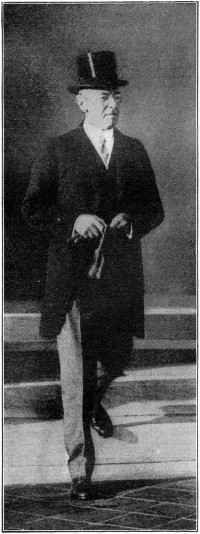
PRESIDENT WILSON LEAVING THE
EXECUTIVE OFFICES
During 1916 the Republic of Santo Domingo
likewise passed under an American protectorate
and the Rural Credits Bill became a law,
whereby a system of Farm Loan Banks was
created.
From the very beginning of the European
war the administration of President Wilson
was brought face to face with numerous intricate
and several critical diplomatic situations
growing out of that titanic conflict. The
relationship of the United States, as a neutral
nation, to the belligerent countries engaged in
this war gave rise to more difficult and significant
issues than any other president was
compelled to meet since the time of Lincoln,
if indeed, it has not been unprecedented in our
entire history.
President Wilson Re-elected and His Policies
Approved.—At the national election, in
November, 1916, President Wilson was re-elected
over his opponent, Charles E. Hughes.
Following his re-election (December, 1916) the
President proffered the services of this government
to the belligerent powers of Europe in
an effort to re-establish peace between these
great contending coalitions. In spite of
foreign complications, the year 1916 closed a
period of unparalleled industrial and commercial
prosperity for the United States, and
more than ever confirmed its position as a
great world power, with an immense field of
new possibilities and corresponding duties.
On January 2, 1917, Congress re-assembled
and began the consideration of important
questions of national defense, railroads, and
foreign policy growing out of the European
war. In February, diplomatic relations were
severed by the United States with Germany,
and was succeeded in March by a declaration
of armed neutrality on the part of our government.
Meanwhile great activity characterized all
departments of the national government along
lines of military preparedness, supported by
unprecedented appropriations by Congress.
The supreme national industrial event of the
Wilson administration, however, was the opening
of the Panama Canal for navigation on
August 14, 1914, and its use since that time as
an instrumentality of world traffic.
Panama Canal.—This gigantic engineering project
was designated by Count de Lesseps, of France, in
1879, and actual work began by the French Panama
Canal Company, in 1881. Negotiations extending
from 1901 to 1904 resulted in the taking over of the holdings
of the French company by the United States, and
work was started by United States government engineers
in May of the latter year. Since that time the project
has been steadily carried forward to completion.
The Canal is about fifty miles in length from deep
water in the Caribbean Sea to deep water in the
Pacific Ocean. The channel ranges in width from
three hundred to one thousand feet. The average
bottom width of the channel in this project is six
hundred and forty-nine feet, and the minimum width
is three hundred feet. The Canal has a minimum
depth of forty-one feet. The time required for the
passage of a ship of medium size through the entire
length of the Canal is estimated at from nine and one-half
to ten hours, and for larger vessels from ten and
one-half to eleven hours.
The actual construction cost at present estimated for
completing the Canal is $325,201,000, which includes
$20,053,000 for sanitation and $7,382,000 for civil
administration. These figures do not include the
$50,000,000 paid to the New French Canal Company
and to the Republic of Panama for property and
franchises. Hence it is estimated that the total construction
cost of the Canal to the United States will
approximate $375,000,000.
CONTOUR MAP OF THE PANAMA CANAL AND CONNECTIONS
This map shows the general direction of the canal to be north and south; how it is brought into
direct communication with the ports of the United States; and how it facilitates shipping to all parts
of the world.
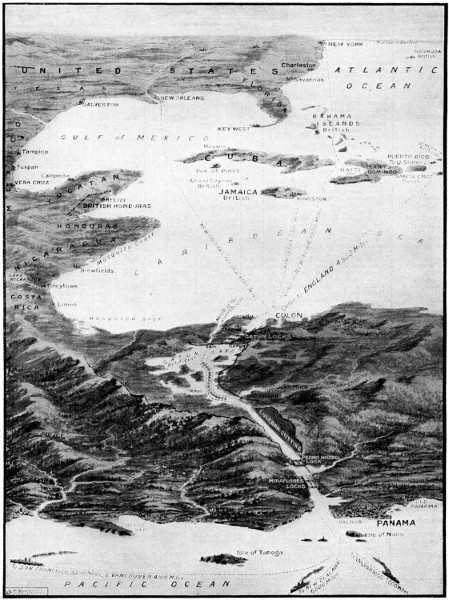
Large map (535 kB)
TABLE OF STATE AND TERRITORIAL GOVERNMENT
In all the States except Arizona, California, Colorado, Idaho, Kansas, Montana, Nevada, Oregon, Utah,
Washington and
Wyoming and the Territory of Alaska, the right to vote at general elections is restricted to males of twenty-one years of age and
upward. Women in Illinois, Iowa and Michigan have a restricted vote and in several States may vote at school elections.
| States and Popular Name |
Requirements as to Citizenship
Persons Excluded from Suffrage (in italic) |
Previous Residence Required |
Governors |
Legislatures |
Members’ Terms |
Elec-
toral Vote, 1916 |
| In State |
In Co. |
In Town |
In Pre-
cinct |
Salaries |
Length Term Years |
Ann. or Bien. |
Limit of Session |
Salaries of Members |
Sena-
tors |
Repre-
senta-
tives |
Alabama
“Lizard” |
Citizen of United States or alien who has declared intention.
Convicted
of treason or other felonies, idiots, vagrants, insane. |
2 years |
1 year |
3 mos. |
3 mos. |
$ 7,500 |
4 |
Quad. |
50 days |
$4.00 per diem |
4 |
4 |
12 |
| Alaska |
Citizen of the United States, male or female.
Aliens and Indians. |
1 year |
... |
30 days |
30 days |
7,000 |
4 |
Bien. |
60 days |
$15.00 per diem |
4 |
2 |
0 |
| Arizona |
Citizen of the United States, male or female.
Idiot, insane,
felon* (b). |
1 year |
30 days |
30 days |
30 days |
4,000 |
2 |
Bien. |
60 days |
$7.00 per diem |
2 |
2 |
3 |
Arkansas
“Bear” |
Citizen of the United States or alien who has declared intention.
Idiots,
insane, convicted of felony, failure to pay poll tax. |
1 year |
6 mos. |
30 days |
30 days |
5,000 |
2 |
Bien. |
60 days |
$6.00 per diem |
4 |
2 |
9 |
California
“Golden” |
Citizen, male or female, by nativity, naturalization 90 days prior to election (d).
Idiots, insane, embezzlers of public moneys, convicted of infamous crime.* |
1 year |
90 days |
... |
30 days |
10,000 |
4 |
Bien. |
None |
$1,000 term |
4 |
2 |
13 |
Colorado
“Centennial” |
Citizen, native or naturalized, male or female.
Felons, insane. |
1 year |
90 days |
30 days |
10 days |
5,000 |
2 |
Bien. |
90 days |
$1,000 term |
4 |
2 |
6 |
Connecticut
“Nutmeg” |
Citizen of the United States.
Convicted of heinous crime. |
1 year |
... |
6 mos. |
... |
5,000 |
2 |
Bien. |
None |
$300 term |
2 |
2 |
7 |
Delaware
“Diamond” |
Citizen of the United States.
Insane, paupers, felons.* |
1 year |
3 mos. |
... |
30 days |
4,000 |
4 |
Bien. |
60 days |
$5.00 per diem |
4 |
2 |
3 |
| Dist. of Col. |
See foot note on following page. |
... |
... |
... |
... |
... |
... |
... |
... |
... |
... |
... |
0 |
Florida
“Flower” |
Citizen of the United States.
Idiots, duelists, felons. |
1 year |
6 mos. |
6 mos. |
6 mos. |
6,000 |
4 |
Bien. |
60 days |
$6.00 per diem |
4 |
2 |
6 |
Georgia
“Cracker” |
Citizen of the United States.
Felons, idiots and insane. |
6 mos. |
6 mos. |
... |
... |
5,000 |
2 |
Ann. |
50 days |
$4.00 per diem |
2 |
2 |
14 |
| Hawaii |
Citizen of the United States.
Idiots, insane, felons (j). |
1 year |
... |
... |
3 mos. |
7,000 |
4 |
Bien. |
60 days |
$600 session |
4 |
2 |
0 |
| Idaho |
Citizen of the United States, male or female.
Idiots, insane, felons,
bigamists. |
6 mos. |
30 days |
... |
... |
5,000 |
2 |
Bien. |
60 days |
$5.00 per diem |
2 |
2 |
4 |
Illinois
“Prairie” |
Citizen of the United States (e).
Convicted of crime. |
1 year |
90 days |
30 days |
30 days |
12,000 |
4 |
Bien. |
None |
$3,500 annum |
4 |
2 |
29 |
Indiana
“Hoosier” |
Citizen of the United States or alien who has declared intention (g).
Convicted of infamous crime. (b) |
6 mos. |
... |
60 days |
30 days |
8,000 |
4 |
Bien. |
61 days |
$6.00 per diem |
4 |
2 |
15 |
Iowa
“Hawkeye” |
Citizen of the United States (k).
Idiots, insane, felons. |
6 mos. |
60 days |
10 days |
10 days |
5,000 |
2 |
Bien. |
None |
$1,000 session |
4 |
2 |
13 |
Kansas
“Sunflower” |
Citizen of the United States, male or female, or alien who has declared intention.
Convicted of treason or felony, insane. |
6 mos. |
30 days |
30 days |
10 days |
5,000 |
2 |
Bien. |
50 days |
$3.00 per diem |
4 |
2 |
10 |
Kentucky
“Blue Grass” |
Citizen of United States (a).
Felons, idiots and insane. |
1 year |
6 mos. |
... |
60 days |
6,500 |
4 |
Bien. |
60 days |
$10.00 per diem |
4 |
2 |
13 |
Louisiana
“Creole” |
Citizen of United States (c).
Idiots, insane, felons.* |
2 years |
1 year |
... |
6 mos. |
5,000 |
4 |
Bien. |
60 days |
$5.00 per diem |
4 |
4 |
10 |
Maine
“Pine Tree” |
Citizen of the United States.
Paupers, insane, Indians.*‡ |
3 mos. |
3 mos. |
3 mos. |
3 mos. |
3,000 |
2 |
Bien. |
None |
$300 annum |
2 |
2 |
6 |
Maryland
“Old Line” |
Citizen of the United States.
Felons, lunatics, bribers. |
1 year |
6 mos. |
6 mos. |
1 day |
4,500 |
4 |
Bien. |
90 days |
$5.00 per diem |
4 |
2 |
8 |
Massachusetts
“Bay” |
Citizen (a).
Paupers.* |
1 year |
6 mos. |
6 mos. |
6 mos. |
10,000 |
1 |
Ann. |
None |
$1,000 annum |
1 |
1 |
18 |
Michigan
“Wolverine” |
Citizen of the United States or alien who declared intention two years and six months prior to November 8,
1894 (c).
Indians with tribal relations. |
6 mos. |
20 days |
20 days |
20 days |
5,000 |
2 |
Bien. |
None |
$800 annum |
2 |
2 |
15 |
Minnesota
“North Star” |
Citizen of United States (a).
Felons, insane,
Indians.‡ |
6 mos. |
30 days |
30 days |
30 days |
7,000 |
2 |
Bien. |
90 days |
$1,000 session |
4 |
2 |
12 |
Mississippi
“Bayou” |
Citizen of the United States.
Insane, idiots, Indians not taxed, felons,
bigamists.* |
2 years |
1 year |
1 year |
1 year |
5,000 |
4 |
Bien. |
None |
$500 session |
4 |
4 |
10 |
| Missouri |
Citizen of the United States or alien who has declared intention.
Felons(b). |
1 year |
60 days |
60 days |
... |
5,000 |
4 |
Bien. |
70 days |
$5.00 per diem |
4 |
2 |
18 |
Montana
“Mountain” |
Citizen of the United States, male or female.
Felons, idiots,
insane‡ (b). |
1 year |
30 days |
... |
... |
5,000 |
4 |
Bien. |
60 days |
$10.00 per diem |
4 |
2 |
4 |
| Nebraska |
Citizen of the United States or alien who has declared intention (a).
Felons, insane. |
6 mos. |
40 days |
10 days |
10 days |
2,500 |
2 |
Bien. |
60 days |
$10.00 session |
2 |
2 |
8 |
Nevada
“Silver” |
Citizen of the United States, male or female.
Idiots, insane,
felons. |
6 mos. |
30 days |
30 days |
30 days |
7,000 |
4 |
Bien. |
60 days |
$600 term |
2-4 |
2 |
3 |
New Hampshire
“Granite” |
Citizen of United States (a).
Paupers, insane, idiots,
felons. |
6 mos. |
6 mos. |
6 mos. |
6 mos. |
3,000 |
2 |
Bien. |
None |
$200 term |
2 |
2 |
4 |
New Jersey
“Jersey Blue” |
Citizen of the United States.
Idiots, paupers, insane,
felons (b). |
1 year |
5 mos. |
... |
... |
10,000 |
3 |
Ann. |
None |
$500 annum |
3 |
1 |
14 |
| New Mexico |
Citizen of United States (a).
Idiots, insane,
felons.† |
1 year |
90 days |
... |
30 days |
5,000 |
5 |
Bien. |
60 days |
$5.00 per diem |
4 |
2 |
3 |
New York
“Empire” |
Citizen who shall have been a citizen for ninety days prior to election. |
1 year |
4 mos. |
30 days |
30 days |
10,000 |
2 |
Ann. |
None |
$1,500 annum |
2 |
1 |
45 |
North Carolina
“Old North” |
Citizen of the United States.
Idiots, lunatics, felons. |
2 years |
6 mos. |
4 mos. |
4 mos. |
5,000 |
4 |
Bien. |
60 days |
$4.00 per diem |
2 |
2 |
12 |
North Dakota
“Sioux” |
Citizen of United States (a).
Felons, insane, tribal
Indians. |
1 year |
6 mos. |
90 days |
90 days |
5,000 |
2 |
Bien. |
60 days |
$5.00 per diem |
4 |
2 |
5 |
Ohio
“Buckeye” |
Citizen of United States (a).
Idiots, insane, and felons
(b). |
1 year |
30 days |
20 days |
20 days |
10,000 |
2 |
Bien. |
None |
$1,000 annum |
2 |
2 |
24 |
| Oklahoma |
Citizen of United States (a).
Felons, idiots,
insane*‡ |
1 year |
6 mos. |
... |
30 days |
4,500 |
4 |
Bien. |
60 days |
$6.00 per diem |
4 |
2 |
10 |
Oregon
“Sunset” |
Citizen of the United States, male or female, or alien who declared intention more than one year prior to
election.
Idiots, insane, convicted of felony, U. S. soldiers and sailors. |
6 mos. |
30 days |
... |
30 days |
5,000 |
4 |
Bien. |
40 days |
$3.00 per diem |
4 |
2 |
5 |
Pennsylvania
“Keystone” |
Citizen of the United States at least one month.
Felons,
non-taxpayers. |
1 year |
... |
... |
2 mos. |
10,000 |
4 |
Bien. |
None |
$1,500 session |
2 |
2 |
38 |
| Porto Rico |
Citizen of United States (f).
Felons, insane (b). |
1 year |
... |
1 year |
... |
8,000 |
4 |
Ann. |
60 days |
$5.00 per diem |
4 |
2 |
0 |
Rhode Island
“Little Rhody” |
Citizen of the United States.
Paupers, lunatics, felons. |
2 years |
... |
6 mos. |
... |
3,000 |
2 |
Ann. |
60 days |
$5.00 per diem |
2 |
2 |
5 |
South Carolina
“Palmetto” |
Citizen of United States (h).
Felons, insane, paupers. |
2 years |
1 year |
4 mos. |
4 mos. |
3,000 |
2 |
Ann. |
40 days |
$200 term |
4 |
2 |
9 |
South Dakota
“Coyote” |
Citizen of the United States or alien who has declared intention.
Insane,
felons, U. S. soldiers, seamen and marines. |
6 mos. |
30 days |
10 days |
10 days |
3,000 |
2 |
Bien. |
60 days |
$5.00 per diem |
2 |
2 |
5 |
Tennessee
“Volunteer” |
Citizen of the United States.
Felons, failure to pay poll tax. |
1 year |
6 mos. |
... |
... |
4,000 |
2 |
Bien. |
75 days |
$4.00 per diem |
2 |
2 |
12 |
Texas
“Lone Star” |
Citizen of the United States or alien who has declared intention.
Idiots,
lunatics, felons, U. S. soldiers, marines and seamen. |
1 year |
6 mos. |
6 mos. |
... |
4,000 |
2 |
Bien. |
90 days |
$5.00 per diem |
4 |
2 |
20 |
| Utah |
Citizen of the United States, male or female.
Idiots, insane, felons
(b). |
1 year |
4 mos. |
... |
60 days |
6,000 |
4 |
Bien. |
60 days |
$4.00 per diem |
4 |
2 |
4 |
Vermont
“Green Mountain” |
Citizen of the United States.
Those lacking approbation of local board of
civil authority. |
1 year |
3 mos. |
3 mos. |
3 mos. |
2,500 |
2 |
Bien. |
None |
$4.00 per diem |
2 |
2 |
4 |
Virginia
“Old Dominion” |
Citizen of the United States.
Idiots, lunatics, paupers (b)
(i). |
2 years |
1 year |
1 year |
30 days |
5,000 |
4 |
Bien. |
60 days |
$500 session |
4 |
2 |
12 |
Washington
“Evergreen” |
Citizen of the United States, male or female.
Idiots, lunatics,
felons.‡ |
1 year |
90 days |
30 days |
30 days |
6,000 |
4 |
Bien. |
60 days |
$5.00 per diem |
4 |
2 |
7 |
West Virginia
“Panhandle” |
Citizen of the United States.
Idiots, lunatics, felons. |
1 year |
60 days |
60 days |
... |
5,000 |
4 |
Bien. |
45 days |
$4.00 per diem |
4 |
2 |
8 |
Wisconsin
“Badger” |
Citizen of United States (a).
Insane, felons, tribal
Indians. |
1 year |
... |
10 days |
10 days |
5,000 |
2 |
Bien. |
None |
$500 annum |
4 |
2 |
13 |
| Wyoming |
Citizen of the United States, male or female.
Idiots, insane, felons,
unable to read State Constitution. |
1 year |
60 days |
10 days |
10 days |
4,000 |
4 |
Bien. |
40 days |
$8.00 per diem |
4 |
2 |
3 |
| States and Popular Name |
Requirements as to Citizenship
Persons Excluded from Suffrage (in italic) |
Previous Residence Required |
| In State |
In Co. |
In Town |
In Precinct |
Alabama
“Lizard” |
Citizen of United States or alien who has declared intention.
Convicted
of treason or other felonies, idiots, vagrants, insane. |
2 years |
1 year |
3 mos. |
3 mos. |
| Alaska |
Citizen of the United States, male or female.
Aliens and Indians. |
1 year |
... |
30 days |
30 days |
| Arizona |
Citizen of the United States, male or female.
Idiot, insane,
felon* (b). |
1 year |
30 days |
30 days |
30 days |
Arkansas
“Bear” |
Citizen of the United States or alien who has declared intention.
Idiots,
insane, convicted of felony, failure to pay poll tax. |
1 year |
6 mos. |
30 days |
30 days |
California
“Golden” |
Citizen, male or female, by nativity, naturalization 90 days prior to election (d).
Idiots, insane, embezzlers of public moneys, convicted of infamous crime.* |
1 year |
90 days |
... |
30 days |
Colorado
“Centennial” |
Citizen, native or naturalized, male or female.
Felons, insane. |
1 year |
90 days |
30 days |
10 days |
Connecticut
“Nutmeg” |
Citizen of the United States.
Convicted of heinous crime. |
1 year |
... |
6 mos. |
... |
Delaware
“Diamond” |
Citizen of the United States.
Insane, paupers, felons.* |
1 year |
3 mos. |
... |
30 days |
| Dist. of Col. |
See foot note on following page. |
... |
... |
... |
... |
Florida
“Flower” |
Citizen of the United States.
Idiots, duelists, felons. |
1 year |
6 mos. |
6 mos. |
6 mos. |
Georgia
“Cracker” |
Citizen of the United States.
Felons, idiots and insane. |
6 mos. |
6 mos. |
... |
... |
| Hawaii |
Citizen of the United States.
Idiots, insane, felons (j). |
1 year |
... |
... |
3 mos. |
| Idaho |
Citizen of the United States, male or female.
Idiots, insane, felons,
bigamists. |
6 mos. |
30 days |
... |
... |
Illinois
“Prairie” |
Citizen of the United States (e).
Convicted of crime. |
1 year |
90 days |
30 days |
30 days |
Indiana
“Hoosier” |
Citizen of the United States or alien who has declared intention (g).
Convicted of infamous crime. (b) |
6 mos. |
... |
60 days |
30 days |
Iowa
“Hawkeye” |
Citizen of the United States (k).
Idiots, insane, felons. |
6 mos. |
60 days |
10 days |
10 days |
Kansas
“Sunflower” |
Citizen of the United States, male or female, or alien who has declared intention.
Convicted of treason or felony, insane. |
6 mos. |
30 days |
30 days |
10 days |
Kentucky
“Blue Grass” |
Citizen of United States (a).
Felons, idiots and insane. |
1 year |
6 mos. |
... |
60 days |
Louisiana
“Creole” |
Citizen of United States (c).
Idiots, insane, felons.* |
2 years |
1 year |
... |
6 mos. |
Maine
“Pine Tree” |
Citizen of the United States.
Paupers, insane, Indians.*‡ |
3 mos. |
3 mos. |
3 mos. |
3 mos. |
Maryland
“Old Line” |
Citizen of the United States.
Felons, lunatics, bribers. |
1 year |
6 mos. |
6 mos. |
1 day |
Massachusetts
“Bay” |
Citizen (a).
Paupers.* |
1 year |
6 mos. |
6 mos. |
6 mos. |
Michigan
“Wolverine” |
Citizen of the United States or alien who declared intention two years and six months prior to November 8,
1894 (c).
Indians with tribal relations. |
6 mos. |
20 days |
20 days |
20 days |
Minnesota
“North Star” |
Citizen of United States (a).
Felons, insane,
Indians.‡ |
6 mos. |
30 days |
30 days |
30 days |
Mississippi
“Bayou” |
Citizen of the United States.
Insane, idiots, Indians not taxed, felons,
bigamists.* |
2 years |
1 year |
1 year |
1 year |
| Missouri |
Citizen of the United States or alien who has declared intention.
Felons(b). |
1 year |
60 days |
60 days |
... |
Montana
“Mountain” |
Citizen of the United States, male or female.
Felons, idiots,
insane.‡ (b). |
1 year |
30 days |
... |
... |
| Nebraska |
Citizen of the United States or alien who has declared intention (a).
Felons, insane. |
6 mos. |
40 days |
10 days |
10 days |
Nevada
“Silver” |
Citizen of the United States, male or female.
Idiots, insane,
felons. |
6 mos. |
30 days |
30 days |
30 days |
New Hampshire
“Granite” |
Citizen of United States (a).
Paupers, insane, idiots,
felons. |
6 mos. |
6 mos. |
6 mos. |
6 mos. |
New Jersey
“Jersey Blue” |
Citizen of the United States.
Idiots, paupers, insane,
felons (b). |
1 year |
5 mos. |
... |
... |
| New Mexico |
Citizen of United States (a).
Idiots, insane,
felons.† |
1 year |
90 days |
... |
30 days |
New York
“Empire” |
Citizen who shall have been a citizen for ninety days prior to election. |
1 year |
4 mos. |
30 days |
30 days |
North Carolina
“Old North” |
Citizen of the United States.
Idiots, lunatics, felons. |
2 years |
6 mos. |
4 mos. |
4 mos. |
North Dakota
“Sioux” |
Citizen of United States (a).
Felons, insane, tribal
Indians. |
1 year |
6 mos. |
90 days |
90 days |
Ohio
“Buckeye” |
Citizen of United States (a).
Idiots, insane, and felons
(b). |
1 year |
30 days |
20 days |
20 days |
| Oklahoma |
Citizen of United States (a).
Felons, idiots,
insane*‡ |
1 year |
6 mos. |
... |
30 days |
Oregon
“Sunset” |
Citizen of the United States, male or female, or alien who declared intention more than one year prior to
election.
Idiots, insane, convicted of felony, U. S. soldiers and sailors. |
6 mos. |
30 days |
... |
30 days |
Pennsylvania
“Keystone” |
Citizen of the United States at least one month.
Felons,
non-taxpayers. |
1 year |
... |
... |
2 mos. |
| Porto Rico |
Citizen of United States (f).
Felons, insane (b). |
1 year |
... |
1 year |
... |
Rhode Island
“Little Rhody” |
Citizen of the United States.
Paupers, lunatics, felons. |
2 years |
... |
6 mos. |
... |
South Carolina
“Palmetto” |
Citizen of United States (h).
Felons, insane, paupers. |
2 years |
1 year |
4 mos. |
4 mos. |
South Dakota
“Coyote” |
Citizen of the United States or alien who has declared intention.
Insane,
felons, U. S. soldiers, seamen and marines. |
6 mos. |
30 days |
10 days |
10 days |
Tennessee
“Volunteer” |
Citizen of the United States.
Felons, failure to pay poll tax. |
1 year |
6 mos. |
... |
... |
Texas
“Lone Star” |
Citizen of the United States or alien who has declared intention.
Idiots,
lunatics, felons, U. S. soldiers, marines and seamen. |
1 year |
6 mos. |
6 mos. |
... |
| Utah |
Citizen of the United States, male or female.
Idiots, insane, felons
(b). |
1 year |
4 mos. |
... |
60 days |
Vermont
“Green Mountain” |
Citizen of the United States.
Those lacking approbation of local board of
civil authority. |
1 year |
3 mos. |
3 mos. |
3 mos. |
Virginia
“Old Dominion” |
Citizen of the United States.
Idiots, lunatics, paupers (b)
(i). |
2 years |
1 year |
1 year |
30 days |
Washington
“Evergreen” |
Citizen of the United States, male or female.
Idiots, lunatics,
felons.‡ |
1 year |
90 days |
30 days |
30 days |
West Virginia
“Panhandle” |
Citizen of the United States.
Idiots, lunatics, felons. |
1 year |
60 days |
60 days |
... |
Wisconsin
“Badger” |
Citizen of United States (a).
Insane, felons, tribal
Indians. |
1 year |
... |
10 days |
10 days |
| Wyoming |
Citizen of the United States, male or female.
Idiots, insane, felons,
unable to read State Constitution. |
1 year |
60 days |
10 days |
10 days |
| States and Popular Name |
Governors |
Legislatures |
Members’ Terms |
Elec-
toral Vote, 1916 |
| Salaries |
Length Term Years |
Ann. or Bien. |
Limit of Session |
Salaries of Members |
Senators |
Repre-
sentatives |
Alabama
“Lizard” |
$ 7,500 |
4 |
Quad. |
50 days |
$4.00 per diem |
4 |
4 |
12 |
| Alaska |
7,000 |
4 |
Bien. |
60 days |
$15.00 per diem |
4 |
2 |
0 |
| Arizona |
4,000 |
2 |
Bien. |
60 days |
$7.00 per diem |
2 |
2 |
3 |
Arkansas
“Bear” |
5,000 |
2 |
Bien. |
60 days |
$6.00 per diem |
4 |
2 |
9 |
California
“Golden” |
10,000 |
4 |
Bien. |
None |
$1,000 term |
4 |
2 |
13 |
Colorado
“Centennial” |
5,000 |
2 |
Bien. |
90 days |
$1,000 term |
4 |
2 |
6 |
Connecticut
“Nutmeg” |
5,000 |
2 |
Bien. |
None |
$300 term |
2 |
2 |
7 |
Delaware
“Diamond” |
4,000 |
4 |
Bien. |
60 days |
$5.00 per diem |
4 |
2 |
3 |
| Dist. of Col. |
... |
... |
... |
... |
... |
... |
... |
0 |
Florida
“Flower” |
6,000 |
4 |
Bien. |
60 days |
$6.00 per diem |
4 |
2 |
6 |
Georgia
“Cracker” |
5,000 |
2 |
Ann. |
50 days |
$4.00 per diem |
2 |
2 |
14 |
| Hawaii |
7,000 |
4 |
Bien. |
60 days |
$600 session |
4 |
2 |
0 |
| Idaho |
5,000 |
2 |
Bien. |
60 days |
$5.00 per diem |
2 |
2 |
4 |
Illinois
“Prairie” |
12,000 |
4 |
Bien. |
None |
$3,500 annum |
4 |
2 |
29 |
Indiana
“Hoosier” |
8,000 |
4 |
Bien. |
61 days |
$6.00 per diem |
4 |
2 |
15 |
Iowa
“Hawkeye” |
5,000 |
2 |
Bien. |
None |
$1,000 session |
4 |
2 |
13 |
Kansas
“Sunflower” |
5,000 |
2 |
Bien. |
50 days |
$3.00 per diem |
4 |
2 |
10 |
Kentucky
“Blue Grass” |
6,500 |
4 |
Bien. |
60 days |
$10.00 per diem |
4 |
2 |
13 |
Louisiana
“Creole” |
5,000 |
4 |
Bien. |
60 days |
$5.00 per diem |
4 |
4 |
10 |
Maine
“Pine Tree” |
3,000 |
2 |
Bien. |
None |
$300 annum |
2 |
2 |
6 |
Maryland
“Old Line” |
4,500 |
4 |
Bien. |
90 days |
$5.00 per diem |
4 |
2 |
8 |
Massachusetts
“Bay” |
10,000 |
1 |
Ann. |
None |
$1,000 annum |
1 |
1 |
18 |
Michigan
“Wolverine” |
5,000 |
2 |
Bien. |
None |
$800 annum |
2 |
2 |
15 |
Minnesota
“North Star” |
7,000 |
2 |
Bien. |
90 days |
$1,000 session |
4 |
2 |
12 |
Mississippi
“Bayou” |
5,000 |
4 |
Bien. |
None |
$500 session |
4 |
4 |
10 |
| Missouri |
5,000 |
4 |
Bien. |
70 days |
$5.00 per diem |
4 |
2 |
18 |
Montana
“Mountain” |
5,000 |
4 |
Bien. |
60 days |
$10.00 per diem |
4 |
2 |
4 |
| Nebraska |
2,500 |
2 |
Bien. |
60 days |
$10.00 session |
2 |
2 |
8 |
Nevada
“Silver” |
7,000 |
4 |
Bien. |
60 days |
$600 term |
2-4 |
2 |
3 |
New Hampshire
“Granite” |
3,000 |
2 |
Bien. |
None |
$200 term |
2 |
2 |
4 |
New Jersey
“Jersey Blue” |
10,000 |
3 |
Ann. |
None |
$500 annum |
3 |
1 |
14 |
| New Mexico |
5,000 |
5 |
Bien. |
60 days |
$5.00 per diem |
4 |
2 |
3 |
New York
“Empire” |
10,000 |
2 |
Ann. |
None |
$1,500 annum |
2 |
1 |
45 |
North Carolina
“Old North” |
5,000 |
4 |
Bien. |
60 days |
$4.00 per diem |
2 |
2 |
12 |
North Dakota
“Sioux” |
5,000 |
2 |
Bien. |
60 days |
$5.00 per diem |
4 |
2 |
5 |
Ohio
“Buckeye” |
10,000 |
2 |
Bien. |
None |
$1,000 annum |
2 |
2 |
24 |
| Oklahoma |
4,500 |
4 |
Bien. |
60 days |
$6.00 per diem |
4 |
2 |
10 |
Oregon
“Sunset” |
5,000 |
4 |
Bien. |
40 days |
$3.00 per diem |
4 |
2 |
5 |
Pennsylvania
“Keystone” |
10,000 |
4 |
Bien. |
None |
$1,500 session |
2 |
2 |
38 |
| Porto Rico |
8,000 |
4 |
Ann. |
60 days |
$5.00 per diem |
4 |
2 |
0 |
Rhode Island
“Little Rhody” |
3,000 |
2 |
Ann. |
60 days |
$5.00 per diem |
2 |
2 |
5 |
South Carolina
“Palmetto” |
3,000 |
2 |
Ann. |
40 days |
$200 term |
4 |
2 |
9 |
South Dakota
“Coyote” |
3,000 |
2 |
Bien. |
60 days |
$5.00 per diem |
2 |
2 |
5 |
Tennessee
“Volunteer” |
4,000 |
2 |
Bien. |
75 days |
$4.00 per diem |
2 |
2 |
12 |
Texas
“Lone Star” |
4,000 |
2 |
Bien. |
90 days |
$5.00 per diem |
4 |
2 |
20 |
| Utah |
6,000 |
4 |
Bien. |
60 days |
$4.00 per diem |
4 |
2 |
4 |
Vermont
“Green Mountain” |
2,500 |
2 |
Bien. |
None |
$4.00 per diem |
2 |
2 |
4 |
Virginia
“Old Dominion” |
5,000 |
4 |
Bien. |
60 days |
$500 session |
4 |
2 |
12 |
Washington
“Evergreen” |
6,000 |
4 |
Bien. |
60 days |
$5.00 per diem |
4 |
2 |
7 |
West Virginia
“Panhandle” |
5,000 |
4 |
Bien. |
45 days |
$4.00 per diem |
4 |
2 |
8 |
Wisconsin
“Badger” |
5,000 |
2 |
Bien. |
None |
$500 annum |
4 |
2 |
13 |
| Wyoming |
4,000 |
4 |
Bien. |
40 days |
$8.00 per diem |
4 |
2 |
3 |
Note.—Residents of the District of Columbia never had the right to vote therein for national
officers, or on other
matters of national concern after the territory embraced in it was ceded to the United States and became the seat
of the general Government.
* Or persons unable to read and write in English. † Or citizens of
Mexico who desire to become citizens of Arizona under treaties of 1848
and 1854. ‡ Indians who have not severed tribal relations. (a): Women
can vote in school elections. (b): Also soldiers, sailors and marines in
United States service. (c): Women taxpayers can vote on tax
propositions. (d): Or by Queretaro treaty. (e): Women can vote in all
elections except those pertaining to Constitutional officers or
Constitutional propositions. (f): Males born in Porto Rico who formally
renounced allegiance to a foreign power. (g): One year’s residence in
the United States prior to election is required. (h): Who has paid six
months before election all taxes then due, and can read and write any
section of the State Constitution, or can show that he owns and has paid
all taxes due the previous year on property in the State assessed at
$300 or more. (i): Failure to pay poll tax. (j): Or those unable to
speak, read and write the English or Hawaiian language. (k): Women can
vote in school and city elections. (l): Offenders against elective
franchise rights, guilty of bribery, betting on elections, and persons
convicted of a felony and not restored to citizenship by the Executive.
Convicts in House of Refuge or Reformatory not disqualified. (m): All of
the States and Territories pay mileage also, except New Jersey, but free
transportation is accorded in New Jersey by all railroads to members by
law.
GOVERNMENTS OF THE UNITED STATES, BRITISH EMPIRE, GERMANY, AND FRANCE ARRANGED IN PARALLEL
COLUMNS
| UNITED STATES |
BRITISH EMPIRE |
GERMANY |
FRANCE |
| Form of Government: Republic. The general plan of the government of the United States is determined by the
Constitution. The central government is limited to the exercise of the powers specifically enumerated in the Constitution, or implied
therein, while the remaining governmental powers, not denied to the states by the Constitution, are reserved to the states. The general
government is in three fairly well defined parts, the legislative, executive, and judicial. |
Form of Government.—Monarchy in form, but republic in practice. The monarchy is constitutional and
limited.
The British Empire consists of the United Kingdom of Great Britain and Ireland, the Empire of
India, and the British Dominions beyond the Seas, including the self-governing Dominions, and the Crown Colonies, Protectorates, and other
Dependencies, the whole forming one Empire. |
Form of Government.—The Empire, according to the Constitution of April 16, 1871, is a Confederate
League, bearing the name German Empire, under the hereditary presidentship of the King of Prussia, who holds the title of German Emperor,
and whose eldest son is styled His Imperial and Royal Highness. |
Form of Government.—France, since the overthrow of Napoleon III., in 1870, has been a republic
governed by a President and two Chambers under the Constitution. |
I. Constitution.—The present Constitution was adopted September 17, 1787.
Ratification of the Constitution.—The Constitution was ratified by the thirteen original States in the
following order:
Delaware, Dec. 7, 1787, unanimously.
Pennsylvania, Dec.
12, 1787, vote 46 to 23.
New Jersey, Dec. 18, 1787, unanimously.
Georgia,
Jan 2, 1788, unanimously.
Connecticut, Jan 9, 1788, vote 128 to 40.
Massachusetts, Feb. 6, 1788, vote 187 to 168.
Maryland, April 28, 1788, vote 63 to
12.
South Carolina, May 23, 1788, vote 149 to 73.
New Hampshire, June 21,
1788, vote 57 to 46.
Virginia, June 25, 1788, vote 89 to 79.
New York,
July 26, 1788, vote 30 to 28.
North Carolina, Nov. 21, 1789, vote 193 to 75.
Rhode Island, May 29, 1790, vote 34 to 32. |
I. Constitution.—The British Constitution is mainly unwritten and customary, but its
development is marked by certain outstanding and fundamental laws, of which the principal are: Magna Charta, 1215; the Habeas Corpus Act,
1679; the Act of Settlement, 1701; the Act of Union with Scotland, 1707; the Act of Union with Ireland, 1800; and the Parliament Act,
1911. The first secured annual parliaments and the equal administration of justice; the second established the liberty of the person; the
third provided for the Protestant succession to the throne; the fourth and fifth created the United Kingdom; and the last enabled the
Commons to pass certain Acts without the adherence of the other Chamber. |
I. Constitution.
Adoption.—Present Constitution adopted April
16, 1871. The Constitution of the German Empire is substantially that of the North German Confederation, which came into force in 1867,
and which was adopted by the Empire in 1871, after the southern states of Germany had combined with the northern. |
I. Constitution.
Adoption.—Present Constitution adopted February
25, 1875. It has undergone but slight modifications. The present French Constitution remains a mixture of monarchical and republican
institutions, and it has fully maintained its strong and old-established centralization. The Constitution of 1875 is based on universal
suffrage. It was revised in 1875, 1884, 1885 and 1889. |
| Amendments.—Congress may, by two-thirds vote of both Houses, propose
amendments to the Constitution, or upon application of the Legislatures of two-thirds of the several States, shall call a convention for
proposing amendments, which, in either case, must be ratified by the Legislatures of three-fourths of the several States, or by
conventions in three-fourths thereof. |
Amendments.—Amendments to the Constitution can be proposed by either of the
legislative bodies, are passed by ordinary legislative process, requiring for their passage a majority simply of the votes of the
Reichstag, but they fail if fourteen votes are cast against them in the Bundesrath. |
Amendments.—Whenever the two Houses agree that revision is necessary, and
also agree upon particular points that should be revised, the National Assembly, composed of the Senate and the Chamber of Deputies,
sitting as one body, convenes at Versailles, and acts upon the amendments proposed, the vote of an absolute majority being decisive. The
National Assembly also elects the President of the republic. |
II. The President.
How Elected.—The several steps in the
election of the President are:
State Electors are chosen at a General Election held on the Tuesday
following the first Monday of November of every fourth year; the number of Electors of each State being equal to the number of
Senators and Representatives to which the State is entitled in Congress.
The Electors meet in their
respective States on the second Monday in January following their election, and vote by ballot for President and Vice-President;
and at the same time make certificates of their vote and transmit the same to the President of the Senate.
The Senate and House of Representatives meet together on the second Wednesday of February next ensuing, and
count the votes of the State Electors, when, if there is an election, the President of the Senate declares who is elected President and
Vice-President.
In case there is no choice by the State Electors, the President is elected by the House of
Representatives from the three candidates who received the most electoral votes for President; in which election the vote is taken by
States, each State having but one vote, and a majority of all the States being necessary to a choice.
Term of Office.—Four years.
Eligibility.—A natural born
citizen; resident of the United States fourteen years; minimum age thirty-five years. |
II. The Sovereign.
How Designated.—The King’s legal title
rests upon the Act of Settlement, in 1701, under William III., by which the succession to the Crown of Great Britain and Ireland was
settled on the Princess Sophia of Hanover and the “heirs of her body, being Protestants.” The throne is hereditary in the
English house of Saxe-Coburg-Gotha with mixed succession, the sons of the Sovereign and their descendants having precedence of daughters,
but daughters and their descendants preference over lateral lines. The Sovereign is designated King (or Queen) of Great Britain and
Ireland, and Emperor (or Empress) of India.
Term of Office.—Holds office for life, by
hereditary title, and cannot be removed. |
II. Chief magistrate, styled the Deutscher Kaiser.
How
Designated.—The election of Wilhelm I., King of Prussia, as German Emperor (1871) was by vote of the Reichstag of the North
German Confederation, on the initiative of all the reigning Princes of Germany. The Imperial dignity is hereditary in the House of
Hohenzollern, and follows the law of primogeniture in the male line. He must be occupant of the throne of Prussia under the provisions of
Prussian law.
Term of Office.—Holds office for life,and cannot be removed. |
II. Chief Magistrate, or President of the Republic.
Term of
Office.—Elected for seven years by the National Assembly, and is re-eligible.
The National
Assembly meets for the purposes of this election, as for the revision of the Constitution, at Versailles. The revision of the Constitution
and the election of President are its only functions.
Qualifications.—Must be a citizen, not
a member of any family which has occupied the throne of France. |
| Salary.—Fixed by law at $75,000 per year. |
Salary or Civil List.—The Civil List Act, 1910, gave the King $2,350,000. Provision for other members
of the Royal Family, $730,000. The Prince of Wales, as the income of the Duchy of Cornwall, $435,000. The King in addition to his Civil
List receives the revenues of the Duchy of Lancaster amounting to $320,000. |
Salary or Income.—Royal Civil List of Emperor, $3,700,000. |
Salary.—$140,000.
Responsibilities.—May be impeached by
the Chamber of Deputies, and tried by the Senate, in case of high treason. |
Powers and Duties of the President.—Commander-in-Chief of the Army and Navy. Communicates with
Congress by message. Approves or disapproves Acts of Congress. Makes treaties with advice and consent of the Senate. Appoints Public
Officers with the advice and consent of the Senate. Commissions Public Officers of the United States. Grants reprieves and pardons for
offenses against the United States.
The Vice-President.—Elected by State Electors the same as
the President; or by the Senate, in case there is no choice by the State Electors. Term of office same as for the President. Eligibility
same as required of the President. Salary fixed by law at twelve thousand dollars per year.
The
Presidential Succession.—In case of the removal, death, resignation, or inability of the President, the Vice-President takes the
President’s place.
In case of the removal, death, resignation, or inability of both President and
Vice-President the heads of the Executive Departments succeed to the Presidency in the order in which the Executive Departments are named
below; but such officer must be constitutionally eligible to the Presidency, must have been appointed to the cabinet by the advice and
with the consent of the Senate, and be not under impeachment. The Secretary of Agriculture and the Secretary of Commerce and Labor are
ineligible to the presidency by reason of the fact that these two cabinet offices were created subsequent to the passage of the act of the
forty-ninth Congress in which provision was made for the presidential succession. |
Powers and Duties.—Has command of army and navy.
Parliament cannot be
assembled, prorogued, or dissolved except by the express command of the Sovereign.
At the commencement of
a new Parliament must deliver, either in person or by a commission authorized for that purpose, a speech declaring the cause of the
summons.
Bills passed by Parliament must receive the assent of the Sovereign in order to become
law.
Has legally a veto power; but, because the influence of the Executive over legislation has passed
into the hands of the Ministers, the veto of the Crown has been disused since 1707.
Has power to appoint
all officers in the army and navy, judges, ambassadors, colonial governors, bishops and archbishops of the Established Church, and grants
all degrees of nobility.
May make treaties of any kind.
May grant pardon
to any particular offender.
The Privy Council.—The King in Council is the supreme executive
authority in the realm. The Privy Council meets as a whole at the beginning of a new reign and on other occasions of state and ceremony,
possesses certain administrative powers, and is the Supreme Court of the Empire. Its personnel includes the royal princes and the
archbishops, Members of the Cabinet and of the royal household, the Speaker of the House of Commons, the ambassadors, the principal
colonial governors, colonial statesmen, certain judges, and members of both political parties who have never been in office.
The important functions of the Council are the bringing into operation by means of orders in council of the
provisions of many statutes which Parliament leaves to the executive to enforce, temporarily or permanently, at such time or times as it
may deem necessary and desirable. These orders have all the force and validity of law. |
Powers and Duties.—Commander-in-Chief of the imperial army.
Summons,
opens, adjourns, and closes the two Houses. He may dissolve the Reichstag upon advice of the Bundesrath.
All measures passed by the Bundesrath are presented to the Reichstag in the name of the Emperor.
Bills passed by the two Houses must be promulgated by the Emperor.
In cases where he
regards them as involving a change in the Constitution, he need not promulgate them if fourteen votes have been cast against them in the
Bundesrath.
All official acts of the Emperor require the counter-signature of the Chancellor.
Appoints and may, at his pleasure, remove the Imperial Chancellor. Appoints and may, with the counter-signature of
the Chancellor, remove all minor officers in the imperial service.
May declare war if defensive, and make
treaties and peace; but for declaring offensive war the consent of the Bundesrath must be obtained.
Has
power to grant pardons. |
Powers and Duties.—Has command of the army and navy.
May convene the
Chambers on extraordinary occasions.
May adjourn the Chambers at any time for a period not exceeding one
month. Can close a regular session of the Chambers at his discretion after it has continued five months; an extra session when he pleases.
Can with the consent of the Senate dissolve the Chamber of Deputies even before the expiration of five months. This puts an end to the
session of the Senate also, but not to its life. The President must order a new election in case of dissolution.
At the commencement of a new session of the Chambers the President of the republic sends a message, which is read by
one of the Ministers.
Bills passed by the Chambers must be signed by the President, and countersigned by
one of his Ministers.
Has no veto power, but is authorized to demand a reconsideration of any measure by
the Chambers.
Has power to appoint and remove all officers of the public service, subject to the
counter-signature of the Minister whose department is affected in each case.
May make treaties of peace,
alliance and commerce, but cannot declare war without the advice of the Chambers.
Has power to grant
pardons.
Succession.—In case of his death, resignation, or removal, the Council of Ministers
act until the National Assembly can meet and elect a new President. |
| The Executive Departments |
The Executive Departments |
The Executive Departments |
The Executive Departments |
| Acts of Congress become laws:— When signed (approved) by the President; or, by his failure to make
objection in writing (veto) within ten days after any act is submitted to him, unless Congress by adjournment within that time prevents
its return; but Congress has power to pass a law over the President’s veto by a vote of two-thirds of each House. |
|
|
|
| The Cabinet |
The Ministry |
Imperial Chancellor.—He has no counterpart in any other constitutional government. He is
the Emperor’s responsible proxy, controlling the politics of the Empire.
Appointment and Tenure
of Office.—Appointed by the Emperor. Must be one of Prussia’s seventeen representatives in the Bundesrath. His term is
dependent upon the pleasure of the Emperor.
Responsibility.—Does not consist in a liability
to be forced to resign, but consists simply in amenability to the laws.
Powers and
Duties.—Must give an account of the administration to the Reichstag, and submits the annual budget. He is the center and source
of all the administrative departments, dominating the entire imperial service. He superintends the administration of the laws of the
Empire by the States. As chairman of the Bundesrath he is simply a Prussian representing the King of Prussia, as the Emperor has no place
in the Bundesrath.
The army and navy, however, are not directly controlled by him, but by the General
Field-Marshal.
The following are the imperial authorities or Secretaries of State; they do not form a
Ministry or Cabinet, but act independently of each other, under the general supervision of the Chancellor:
Chancellor of the Empire.
Secretary for Foreign Affairs.
Imperial Home Office and Representative of the Chancellor.
Imperial
Admiralty.
Imperial Secretary of Justice.
Imperial
Treasury.
Imperial Post-Office.
Secretary for the
Colonies.
And, in addition, the following presidents of imperial bureaus:
Railways.
Imperial Exchequer.
Imperial
Bank.
Imperial Debt Commission.
Administration of Imperial
Railways.
Imperial Court Martial.
Acting under the direction of
the Chancellor of the Empire, the Bundesrath represents also a supreme administrative and consultative board, and as such has twelve
standing committees—namely, for army and fortifications; for naval matters; tariff, excise and taxes; trade and commerce; railways,
posts and telegraphs; civil and criminal law; financial accounts; foreign affairs; for Alsace-Lorraine; for the Constitution; for the
standing orders; and for railway tariffs. |
Powers and Duties.—As a Cabinet, the Ministers represent the administration in the
Chambers; as a Council, they exercise a general oversight of the administration of the laws, with a view of giving unity of direction to
the affairs of the State. The President may be present at all Council meetings.
Cabinet and Council of
Ministers.—Both the Cabinet and the Council consist of the same persons. The Cabinet is a political body; the Council, an
administrative body.
Appointment.—Chosen by the President, generally from among the members
of the Chambers.
Members of the Cabinet.—Membership may vary somewhat:
Premier and Foreign Minister.
Ministers of State.
Minister of Justice and Vice-President of the Council.
Minister of
War.
Minister of Marine.
Minister of the
Interior.
Minister of Finance.
Minister of
Agriculture.
Minister of Public Works.
Minister of
Commerce.
Minister of Colonies.
Minister of Instruction and
Minister of Inventions affecting National Defense.
Council of State.—Gives advice on all
projects of law which the Chambers or the Government wish to submit to it, and on administrative regulations and by-laws. Its decision is
final in all disputes arising in matters of administration.
Is presided over by the Minister of Justice,
and is composed of Councillors, Masters of Requests, and Auditors, all appointed by the President of the republic.
Relations to the Chambers.—Are the leaders of the Chambers.
Whether members
of the Chambers or not, they have as Ministers the right to attend all sessions of the Chambers and take a specially privileged part in
the debate. |
Composed of the heads of the executive departments.
Appointed by the
President with the advice and consent of the Senate.
Salary.—Secretary of State, $12,000; all
other cabinet members, twelve thousand dollars annually. |
The Cabinet, or Inner Council, under the presidency of the Prime Minister, consists of Ministers, drawn from
the ranks of the party in power and appointed by the Sovereign on the advice of the Prime Minister. |
| Heads of Departments |
| Members (As reconstituted in June, 1915) and their salaries. |
| Prime Minister and First Lord of the Treasury |
$25,000 |
| Lord High Chancellor (and $20,000 as speaker of the House of Lords) |
50,000 |
| Minister without Portfolio |
unpaid |
| Lord President of the Council |
10,000 |
| Lord Privy Seal |
unpaid |
| First Lord of the Admiralty |
22,500 |
| Secretaries of State: |
| Home Affairs |
25,000 |
| Foreign Affairs |
25,000 |
| Colonies |
25,000 |
| War |
25,000 |
| India |
25,000 |
| Chancellor of the Exchequer |
25,000 |
| Minister of Munitions |
25,000 |
| Secretary for Scotland |
10,000 |
| Chief Secretary to the Lord Lieutenant of Ireland |
21,125 |
| Presidents of Committees of the Council: |
| Board of Trade |
25,000 |
| Local Government Board |
25,000 |
| Board of Education |
10,000 |
| First Commissioner of Works |
10,000 |
| Attorney-General |
35,000 |
| Board of Agriculture |
10,000 |
|
Department of State.—Has charge of foreign affairs.
Treasury Department.—Has charge of fiscal affairs.
Department of
War.—Has charge of the Army and military affairs.
Department of Justice.—Has charge
of the legal affairs of the Government.
Post-office Department.—Has charge of postal
affairs.
Navy Department.—Has charge of the Navy and naval affairs.
Department of the Interior.—Has charge of domestic affairs, including public lands, pensions, patents,
Bureau of Education, etc.
Department of Agriculture.—Has charge of agricultural affairs,
including Weather Bureau, etc.
Department of Commerce and Labor.—Has charge of domestic and
foreign affairs, relating to commerce, transportation, Department of Labor, etc. |
| Relations to Parliament.—The Chief of the Cabinet and of the Ministry is
called the Prime Minister or Premier. He is the leader of the House of Parliament of which he is a member. He dispenses the greater
portion of the patronage of the Crown. Other members of the Cabinet are the leaders of Parliament, shaping and directing the business of
the Houses. |
| Tenure of Office.—Dependent upon the will or favor of the President. |
Tenure of Office.—Dependent upon the favor of the House of Commons; for if not sustained, they must
all resign. When a Ministry resigns it is the function of the sovereign to call upon some statesman to form another administration. There
is no restriction upon the Royal choice, but the statesman usually selected is the leader of the opposing party in one of the two
Houses. |
Tenure of Office.—Dependent upon the favor of the Chambers; for, if not sustained, they
must all resign. |
| Powers and Duties.—As stated above, but under the direction of the President. |
Powers and Duties.—All real authority is with the Cabinet. The executive government is nominally in
the Crown, but practically in the Cabinet. The Ministers are at the heads of the administrative departments. The Sovereign does not sit
with the Cabinet.
Other Ministers.—The Ministry includes a number of minor posts whose
occupants have no seat in the Cabinet. |
III. Congress.—Consisting of both the Senate and the House of
Representatives as co-ordinate bodies.
Duration.—The term of each Congress is for two years,
commencing March 4th of the odd years.
Regular Sessions.—Annual, beginning the first Monday
in December.
Special Sessions.—At the call of the President.
Membership.—Each House is the judge of the elections and qualifications of its own members.
Congress has General Powers of Legislation.—To provide for the raising and disbursement of revenue. To
borrow money; to coin money and to regulate its value; and to fix the standard of weights and measures. To regulate foreign and interstate
commerce. To declare war, and to maintain an army and navy. To establish post-offices and post roads. To enact patent and copyright laws.
To enact uniform naturalization and bankruptcy laws. To provide for the punishment of crimes against the United States. To establish
courts inferior to the Supreme Court. To provide for organizing and calling out the militia. To admit new States into the Union. To
provide for the governments of the Territories. To exercise exclusive jurisdiction over the District of Columbia, public lands, public
buildings, forts, and navy yards. To enact all laws necessary and proper for carrying into execution all the powers vested by the
Constitution in the government of the United States. |
III. Parliament.—Parliament consists of two Houses, the House of Lords
and the House of Commons. The Sovereign alone has the power of summoning or proroguing or dissolving Parliament, and gives the Royal
Assent to measures which have passed both Houses. Unless it be dissolved by the Crown, Parliament exists five years from the date on which
it was first to meet. The demise of the Crown does not dissolve Parliament, but, on the contrary, renders an immediate assembling of the
two Houses necessary; and if there be no Parliament in existence, the old Parliament must reassemble, and may sit again for six months, if
it be not within that time dissolved by the new Sovereign.
All British dominions are subject (except as
regards taxation) to the legislation of the British Parliament; but no Act of Parliament affects a colony unless that colony is specially
mentioned. If the legislature of a colony enacts a law which is repugnant to an imperial law affecting the colony, it is to the extent to
which it is repugnant absolutely void. |
III. The Government.
The legislative
functions of the Empire are vested jointly in the Bundesrath or Federal Council which represents the several states, and by the Reichstag
or Diet of the Realm, which represents the German nation. The Emperor has no veto on laws passed by these bodies. All laws for the Empire
must receive the votes of an absolute majority.
The consent of the Federal Council and Reichstag is
necessary in regard to certain specified treaties. The Emperor has the right to summon, open, adjourn, and close the Reichstag. The
Federal Council and Reichstag must be summoned to meet every year; the Reichstag cannot be summoned without the adherence of the Federal
Council. |
III. The Chambers.—Consist of the Senate and House of Deputies. |
| THE SENATE.—Composed of two Senators from each State (ninety-six in
1917), chosen by popular vote for six years, one-third retiring every two years. |
THE HOUSE OF LORDS.—The House at present consists of three Princes of
the Blood, two Archbishops, twenty-one Dukes, twenty-six Marquesses, one hundred and twenty-one Earls, forty-six Viscounts, twenty-four
Bishops, three hundred and fifty-six Barons, sixteen Scottish Representative Peers elected for each Parliament, and twenty-seven Irish
Representative Peers elected for life. The members hold their seats by virtue of hereditary title; by creation of the Sovereign; by virtue
of office (English bishops); by election for life (Irish peers); by election for duration of Parliament (Scottish peers). |
BUNDESRATH, or Federal Council, is composed of sixty-one votes representing
the individual states. They are appointed by the governments (i. e. the Executives) of the States for each session.
The apportionments of representation in the Bundesrath among the States of the Empire is as follows: Prussia
seventeen votes, Bavaria six, Saxony and Würtemberg four each, Baden, Hesse and Alsace-Lorraine each three, Mecklenburg-Schwerin and
Brunswick each two, the other States (seventeen) one apiece. |
THE SENATE is composed of three hundred members chosen by the Departments
and Colonies for nine years, one-third of the members retiring every three years.
Until 1884 the Senate
contained seventy-five life members, the life list having been originally made up by election by the National Assembly of 1875, and
vacancies being filled by the Senate itself. In 1884 this arrangement was abolished, and since that year vacancies in the life roll have
been filled by ordinary nine-year Senators. |
| Qualifications.—Must be at least thirty years of age, must have been a citizen of the United States
for nine years, and must be an inhabitant of the State which he represents. |
Qualifications.—Must be at least twenty-one years of age. |
|
Qualifications.—Must be a Frenchman, and at least forty years of age. |
| Remuneration.—Members receive seven thousand five hundred dollars, with mileage. |
Remuneration.—Receive no pay. |
Remuneration.—Receive no pay. |
Remuneration.—15,000 francs ($3,000). |
Organization.—The Vice-President of the United States is the President of the Senate. Is elected by
the Electoral College. Votes only in case of a tie.
Quorum.—A majority of members. |
Organization—Quorum.—Three, including the Lord Chancellor; thirty for final vote on a
bill. The Lord Chancellor, who is a member of the Cabinet, presides. He is appointed by mere delivery of the Great Seal to him by the
Sovereign and is principal legal adviser of the Crown. His patronage is very extensive. He nominates the puisne judges and county court
judges; the holder of the office may not be a Roman Catholic. |
Organization—Quorum.—The Imperial Chancellor or his substitute (at regular meeting). The
Imperial Chancellor presides. Votes with the other Prussian representatives, whose votes must be undivided; and, in case of a tie,
Prussia’s vote decides. |
Organization—Quorum.—A majority of members. Elects its own President and
Vice-Presidents. |
| Committees.—Members are divided into standing committees, chosen by the Senate itself, which act in
the preliminary examination, and shaping of measures to be voted on. |
Committees.—Special committees are appointed to make investigations, and report on matters which could
not be undertaken by the whole House. |
Committees.—There are three standing committees and eight commissions, two of which are appointed by
the Emperor, five wholly by the Bundesrath, and one in part by the Bundesrath, being made up principally of members
ex-officio.
Each commission consists of representatives of at least five States of the Empire. |
Committees.—Each month the members are divided by lots into “Bureaux.” These select all
the special committees to which bills are referred, except when the House chooses itself to elect a committee. |
| Powers and Duties.—In concurrence with the House of Representatives, it makes the laws. It also has
power to confirm or reject all appointments to office by the President of the United States, and all treaties. The members constitute a
high court for the trial of impeachments. Elects Vice-President of the United States if regular election fails. |
Powers and Duties.—In concurrence with the House of Commons, makes the laws, having a revising power
over all bills proposed by the House of Commons, except those relating to public revenue and expenditure, which it must pass or reject
without amendment.
It is the highest appellate court of the United Kingdom. It may in certain cases try
members of its own body; it tries any person who may be impeached by the House of Commons, and it also decides claims to the peerage. |
Powers and Duties.—May originate bills to be sent to the Reichstag. Its consent is indispensable to
the validity of all legislation. Members may speak on the floor of the Reichstag. Acting under the direction of the Imperial Chancellor,
it is the supreme administrative board. It is in some cases the highest court of the Empire. Is the court of appeal between two or more
States of the Empire. |
Powers and Duties.—In concurrence with the Chamber of Deputies, makes the laws, and has in law-making
the same prerogatives as the Chamber, except that bills relating to revenue originate with the Chamber. It is a court of justice for
trying the President of the republic and the Ministers. It may originate, and, in concurrence with the Senate, pass resolutions and bills;
but bills relating to finance must be originated by the Chamber of Deputies. Has power to bring accusations against the President of the
republic and the Ministers. |
| HOUSE OF REPRESENTATIVES.—Composed (in 1917) of four hundred and thirty-five members elected every
second year for two years by the people of the States in the proportion of one Representative for every 211,877 inhabitants. Each State,
however, is entitled to at least one member, whatever its population. |
HOUSE OF COMMONS.—This body consists of six hundred and seventy elected members representing county,
borough, and university constituencies. Roughly speaking, about one-sixth of the population are electors. |
REICHSTAG, or Imperial Diet, is composed (in 1917) of three hundred and ninety-seven members, and elected
for five years by universal suffrage. |
THE CHAMBER OF DEPUTIES is composed (in 1917) of five hundred and eighty-four Deputies, distributed among
the Departments and certain colonies in the proportion of one Deputy to seventy thousand inhabitants. The Deputies are chosen for a term
of four years by universal suffrage, the Arrondissements serving as electoral districts. |
| Qualifications.—Must be at least twenty-five years of age, must have been seven years a citizen of the
United States, and must be an inhabitant of the State from which he is chosen. |
Qualifications.—Must be at least twenty-one years of age. Clergymen are disqualified from sitting as
members, also English and Scottish peers, government contractors, and sheriffs and returning officers for the localities for which they
act. |
Qualifications.—Must be at least twenty-five years of age, and have lived at least one year in one of
the German States. |
Qualifications.—Must be a citizen of France, and at least twenty-five years of age. |
| Organization—Quorum.—A majority of members. Elects its own presiding officer, who is
called the Speaker, salary twelve thousand dollars per year. |
Organization—Quorum.—Forty members, including the Speaker. Elects its own presiding
officer, who is called the Speaker, who has a residence in the Palace of Westminster, and receives a salary of $25,000 per annum. |
Organization—Quorum.—A majority of members. Elects its own presiding officer, who is
called the President. |
Organization—Quorum.—A majority of members. Chooses its own President, Vice-President and
other officers. |
| Remuneration.—Members receive seven thousand five hundred dollars and mileage. |
Remuneration.—$2,000 per year (since 1911). |
Remuneration.—3,000 marks ($750) per session, with deduction of twenty marks ($5.00) for each
day’s absence; they have free passes over German railways during session. |
Remuneration.—15,000 francs ($3,000). |
| Powers of the House of Representatives.—Elects its Speaker (presiding officer) and its other officers.
Elects President of the United States if the regular election fails. Prosecutes impeachments before the Senate. Originates all bills for
raising revenue. |
Powers and Duties.—May originate and, in concurrence with the House of Lords, pass resolutions and
bills; but bills relating to the imposition of taxes and the granting of supplies for the service of the State must be originated in the
House of Commons. |
Powers and Duties.—Has power to originate and, with the advice and consent of the Bundesrath, to enact
the laws. It also exerts a controlling influence through its power to give or withhold its sanction to certain ordinances to whose
validity the Constitution makes its concurrence necessary, through its right to inquire into the conduct of affairs; and in many other
ways not susceptible of enumeration. |
Powers and Duties.—May originate, and, in concurrence with the Senate, pass resolutions and bills; but
bills relating to finance must be originated by the Chamber of Deputies. Has power to bring accusations against the President of the
republic and Ministers. |
| Committees.—Almost all the acts of the House are under the control of Standing Committees, appointed
by the Speaker. |
Committees.—The business of the House is almost entirely under the direction of the Ministry; however,
commissions and select committees are from time to time appointed to make investigations and report on matters which could not be
undertaken by the House. |
Committees.—There are no standing committees, but select committees are occasionally appointed by
election from the seven “Sections” into which the members are divided by lot for committee work. |
Committees.—Each month the members are divided by lot into eleven “Bureaux,” which select
all the special committees to which bills are referred, except when the Chamber chooses to appoint a committee directly. |
| IV. The Judicial Department. |
IV. Judicial Departments, or Courts of Law. |
IV. Judicial Department. |
IV. Judicial Department. |
| Judges of the United States Courts |
Privy Council.—The Judicial Committee of the Privy Council (which hears appeals from
Colonial and Indian Courts, and also from Ecclesiastical Courts) consists of the Lord Chancellor, Lord President, ex-Lords President, the
Lords of Appeal in Ordinary, and such other members of the Privy Council as shall from time to time hold or have held “high judicial
office.” No dissenting judgments are allowed, but the Judicial Committee can grant special leave to appeal.
The English courts of law having jurisdiction in actions between parties are: |
The laws of the Empire take precedence of the Federated States within the scope of the Constitution of
the Empire; they are compulsory on all Governments of the Empire.
A uniform system of law courts exists
throughout the Empire, though, with the exception of the Reichsgericht, all courts are directly subject to the Government of the special
State in which they exercise jurisdiction, and not to the Imperial Government. The appointment of the judges is also a State and not an
Imperial function. The Empire enjoys uniform codes of commercial and criminal law. |
The judicial system is under direct control of the government. All Judges are nominated by the
President of the republic. They can be removed only by a decision of the Court of Cassation constituted as the Conseil
Supérieur of the magistracy. |
Appointed by the President with the advice and consent of the
Senate.
Tenure of Office.—During life or good behavior; but may retire on full salary after
reaching the age of seventy years, and after ten years’ service on the bench. |
| The Supreme Court of the United States |
House of Lords |
Imperial Supreme Court. |
The Court of Cassation. |
Members.—A Chief Justice and Eight Associate Justices.
Salaries.—Chief Justice, fifteen thousand dollars; Associate Justices, each fourteen thousand five hundred
dollars.
Terms of Court.—One each year, beginning on the second Monday in
October.
Original Jurisdiction.—In all cases affecting Ambassadors, Ministers, and Consuls.
In all cases in which a State is a party.
Appellate Jurisdiction.—In cases of law and equity
where the Inferior Courts have original jurisdiction, with such exceptions and regulations as Congress has made.
The Chief Justice.—Presides over the Senate when it sits as a Court of Impeachment for the trial of the
President. |
Lord High Chancellor and such peers of Parliament as are holding or have held high judicial office. This is
the ultimate Court of Appeal from all the courts in the United Kingdom. |
Reichsgericht (Imperial Supreme Court), to which there is a right of appeal from all inferior courts, sits
at Leipzig, and consists of one hundred judges, appointed by the Kaiser on the recommendation of the Bundesrath. |
The Court of Cassation, which sits at Paris, is the highest court for all criminal cases tried by jury,
so
far as regards matters of law.
Courts of Appeal.—The highest courts are the twenty-six
Courts
of Appeal, composed each of one president and a variable number of members, for all criminal cases which have been tried without a
jury. |
| Inferior Courts |
There are two Courts of Appeal below these divisions:
Lords of
Appeal in Ordinary.— Consisting of six Justices.
Court of Appeal.—Ex-Officio
Judges, the Lord High Chancellor, the Lord Chief Justice of England, the Master of the Rolls, and the President of the Probate, Divorce
and Admiralty Division.
The High Court comprises the King’s Bench, Chancery, and Probate,
Divorce and Admiralty Divisions.
High Court of Justice, Chancery Division.—(Administration of
trusts, company cases, mortgages, patents, etc.). Consists of the Lord High Chancellor and six other Justices.
High Court of Justice, King’s Bench Division.—(Contracts, torts, bankruptcy, etc.). Consists of the
Lord Chief Justice of England and fifteen other Justices.
High Court of Justice, Probate, Divorce and
Admiralty Division.—(Wills, matrimonial cases, and maritime cases). Consists of two Justices.
Court of Criminal Appeal.—All the Judges of King’s Bench Division.
Court of Arches.—An ecclesiastical court unites the powers of the jus canonicum with new powers
conceded by the Church Discipline Act, 1841, and the similar statute of 1874, exercising authority in both provinces. The Judicial
Committee of Privy Council is the Court of Final Appeal in ecclesiastical causes.
Bankruptcy
Court.—Consisting of one Justice. |
The Oberlandesgerichte (Supreme Court), which are the first courts of the second instance, have
original jurisdiction in serious offenses, and are presided over by seven judges.
The Landgericht
(County Courts) have a fairly extensive jurisdiction in civil and criminal cases and in divorce proceedings. There are five judges in the
criminal chamber of a Landgericht, four votes being required to make a conviction valid. Three judges from such a court preside at
intervals over jury courts (Schwurgerichte), and juries do not, therefore, form a permanent part of the system.
Not the least important work of the Landgerichte is to revise the decisions of the Amtsgerichte, which are the lowest
courts of the first instance, being controlled by single judges, who are competent to hear only petty civil and criminal
cases.
The Amtsgerichte (Police or District Courts) are the lowest courts, each with a single judge
competent to try petty civil and criminal cases, divorce cases, etc. |
Court of Assizes.—In all cases of a délit or a crime the preliminary inquiry
is made in secrecy by an examining magistrate (juge d’instruction), who may either dismiss the case or send it for trial
before a court where a public prosecutor (procureur) endeavors to prove the charge. The Court of Assizes is assisted by twelve jurors, who
decide by simple majority on the fact with respect to offenses amounting to crimes.
Justices of the
Peace (juges de paix) are the courts of lowest jurisdiction in France. They try small civil cases and act also as judges of
Police Courts, where all petty offenses (contraventions) are disposed of. The Correctional Courts pronounce upon all graver offenses
(délits), including cases involving imprisonment up to five years. They have no jury, and consist of three judges belonging
to the civil tribunals of first instance.
For commercial cases there are, in two hundred and twenty-six
towns, Tribunals of Commerce and Councils of Experts (prud’hommes). In the towns are police courts. |
Jurisdiction.—In cases between citizens of different States. In cases in which the United States is a
party. In cases of admiralty and maritime jurisdiction. In trials for crimes against the United States; but the trial of crimes must be by
jury, and must be held in the State where the crime was committed.
Appeals to the Supreme Court may
be had in all cases of law and equity, with such exceptions and regulations as Congress has made. |
| Kinds of Inferior Courts |
United States Circuit Courts of Appeals.—Organized in 1891 to relieve the
United States Supreme Court in Appellate Cases. Number: One in each Judicial Circuit. Members: Three judges selected from the District
Courts.
Number.—One in each Judicial Circuit.
Members.—Three judges selected from the District Courts.
United States
Circuit Courts.—
Number of Circuits.—Nine.
Number of Judges.—Each Circuit has two, three, or four Circuit Judges, and a Justice of the Supreme Court
is assigned to each Circuit. The District Judge also may sit in a Circuit Court.
Salary of Circuit
Judges.—Fixed by law at seven thousand dollars per year.
United States District
Courts.—
Number of Districts.—One or more in each State. At present there are
seventy-three
Judicial Districts.
Salary of District Judge.—Fixed by law at seven thousand dollars per
year.
United States Court of Claims.—
Jurisdiction.—Claims against the United States, including all claims which may be referred to it by
Congress.
Members.—One Chief Justice and four Associate Justices.
Salaries.—Chief Justice, six thousand five hundred dollars; Associate Justices, each six thousand
dollars.
In addition to the above named courts, Congress has established courts of local jurisdiction in
the District of Columbia and in the Territories. |
| UNITED STATES |
| Form of Government: Republic. The general plan of the government of the United States is determined by the
Constitution. The central government is limited to the exercise of the powers specifically enumerated in the Constitution, or implied
therein, while the remaining governmental powers, not denied to the states by the Constitution, are reserved to the states. The general
government is in three fairly well defined parts, the legislative, executive, and judicial. |
I. Constitution.—The present Constitution was adopted September 17, 1787.
Ratification of the Constitution.—The Constitution was ratified by the thirteen original States in the
following order:
Delaware, Dec. 7, 1787, unanimously.
Pennsylvania, Dec.
12, 1787, vote 46 to 23.
New Jersey, Dec. 18, 1787, unanimously.
Georgia,
Jan 2, 1788, unanimously.
Connecticut, Jan 9, 1788, vote 128 to 40.
Massachusetts, Feb. 6, 1788, vote 187 to 168.
Maryland, April 28, 1788, vote 63 to
12.
South Carolina, May 23, 1788, vote 149 to 73.
New Hampshire, June 21,
1788, vote 57 to 46.
Virginia, June 25, 1788, vote 89 to 79.
New York,
July 26, 1788, vote 30 to 28.
North Carolina, Nov. 21, 1789, vote 193 to 75.
Rhode Island, May 29, 1790, vote 34 to 32. |
| Amendments.—Congress may, by two-thirds vote of both Houses, propose
amendments to the Constitution, or upon application of the Legislatures of two-thirds of the several States, shall call a convention for
proposing amendments, which, in either case, must be ratified by the Legislatures of three-fourths of the several States, or by
conventions in three-fourths thereof. |
II. The President.
How Elected.—The several steps in the
election of the President are:
State Electors are chosen at a General Election held on the Tuesday
following the first Monday of November of every fourth year; the number of Electors of each State being equal to the number of
Senators and Representatives to which the State is entitled in Congress.
The Electors meet in their
respective States on the second Monday in January following their election, and vote by ballot for President and Vice-President;
and at the same time make certificates of their vote and transmit the same to the President of the Senate.
The Senate and House of Representatives meet together on the second Wednesday of February next ensuing, and
count the votes of the State Electors, when, if there is an election, the President of the Senate declares who is elected President and
Vice-President.
In case there is no choice by the State Electors, the President is elected by the House of
Representatives from the three candidates who received the most electoral votes for President; in which election the vote is taken by
States, each State having but one vote, and a majority of all the States being necessary to a choice.
Term of Office.—Four years.
Eligibility.—A natural born
citizen; resident of the United States fourteen years; minimum age thirty-five years. |
| Salary.—Fixed by law at $75,000 per year. |
Powers and Duties of the President.—Commander-in-Chief of the Army and Navy. Communicates with
Congress by message. Approves or disapproves Acts of Congress. Makes treaties with advice and consent of the Senate. Appoints Public
Officers with the advice and consent of the Senate. Commissions Public Officers of the United States. Grants reprieves and pardons for
offenses against the United States.
The Vice-President.—Elected by State Electors the same as
the President; or by the Senate, in case there is no choice by the State Electors. Term of office same as for the President. Eligibility
same as required of the President. Salary fixed by law at twelve thousand dollars per year.
The
Presidential Succession.—In case of the removal, death, resignation, or inability of the President, the Vice-President takes the
President’s place.
In case of the removal, death, resignation, or inability of both President and
Vice-President the heads of the Executive Departments succeed to the Presidency in the order in which the Executive Departments are named
below; but such officer must be constitutionally eligible to the Presidency, must have been appointed to the cabinet by the advice and
with the consent of the Senate, and be not under impeachment. The Secretary of Agriculture and the Secretary of Commerce and Labor are
ineligible to the presidency by reason of the fact that these two cabinet offices were created subsequent to the passage of the act of the
forty-ninth Congress in which provision was made for the presidential succession. |
| The Executive Departments |
| Acts of Congress become laws:— When signed (approved) by the President; or, by his failure to make
objection in writing (veto) within ten days after any act is submitted to him, unless Congress by adjournment within that time prevents
its return; but Congress has power to pass a law over the President’s veto by a vote of two-thirds of each House. |
| The Cabinet |
Composed of the heads of the executive departments.
Appointed by the
President with the advice and consent of the Senate.
Salary.—Secretary of State, $12,000; all
other cabinet members, twelve thousand dollars annually. |
| Heads of Departments |
Department of State.—Has charge of foreign affairs.
Treasury Department.—Has charge of fiscal affairs.
Department of
War.—Has charge of the Army and military affairs.
Department of Justice.—Has charge
of the legal affairs of the Government.
Post-office Department.—Has charge of postal
affairs.
Navy Department.—Has charge of the Navy and naval affairs.
Department of the Interior.—Has charge of domestic affairs, including public lands, pensions, patents,
Bureau of Education, etc.
Department of Agriculture.—Has charge of agricultural affairs,
including Weather Bureau, etc.
Department of Commerce and Labor.—Has charge of domestic and
foreign affairs, relating to commerce, transportation, Department of Labor, etc. |
| Relations to Parliament.—The Chief of the Cabinet and of the Ministry is
called the Prime Minister or Premier. He is the leader of the House of Parliament of which he is a member. He dispenses the greater
portion of the patronage of the Crown. Other members of the Cabinet are the leaders of Parliament, shaping and directing the business of
the Houses. |
| Tenure of Office.—Dependent upon the will or favor of the President. |
| Powers and Duties.—As stated above, but under the direction of the President. |
III. Congress.—Consisting of both the Senate and the House of
Representatives as co-ordinate bodies.
Duration.—The term of each Congress is for two years,
commencing March 4th of the odd years.
Regular Sessions.—Annual, beginning the first Monday
in December.
Special Sessions.—At the call of the President.
Membership.—Each House is the judge of the elections and qualifications of its own members.
Congress has General Powers of Legislation.—To provide for the raising and disbursement of revenue. To
borrow money; to coin money and to regulate its value; and to fix the standard of weights and measures. To regulate foreign and interstate
commerce. To declare war, and to maintain an army and navy. To establish post-offices and post roads. To enact patent and copyright laws.
To enact uniform naturalization and bankruptcy laws. To provide for the punishment of crimes against the United States. To establish
courts inferior to the Supreme Court. To provide for organizing and calling out the militia. To admit new States into the Union. To
provide for the governments of the Territories. To exercise exclusive jurisdiction over the District of Columbia, public lands, public
buildings, forts, and navy yards. To enact all laws necessary and proper for carrying into execution all the powers vested by the
Constitution in the government of the United States. |
| THE SENATE.—Composed of two Senators from each State (ninety-six in
1917), chosen by popular vote for six years, one-third retiring every two years. |
| Qualifications.—Must be at least thirty years of age, must have been a citizen of the United States
for nine years, and must be an inhabitant of the State which he represents. |
| Remuneration.—Members receive seven thousand five hundred dollars, with mileage. |
Organization.—The Vice-President of the United States is the President of the Senate. Is elected by
the Electoral College. Votes only in case of a tie.
Quorum.—A majority of members. |
| Committees.—Members are divided into standing committees, chosen by the Senate itself, which act in
the preliminary examination, and shaping of measures to be voted on. |
| Powers and Duties.—In concurrence with the House of Representatives, it makes the laws. It also has
power to confirm or reject all appointments to office by the President of the United States, and all treaties. The members constitute a
high court for the trial of impeachments. Elects Vice-President of the United States if regular election fails. |
| HOUSE OF REPRESENTATIVES.—Composed (in 1917) of four hundred and thirty-five members elected every
second year for two years by the people of the States in the proportion of one Representative for every 211,877 inhabitants. Each State,
however, is entitled to at least one member, whatever its population. |
| Qualifications.—Must be at least twenty-five years of age, must have been seven years a citizen of the
United States, and must be an inhabitant of the State from which he is chosen. |
| Organization—Quorum.—A majority of members. Elects its own presiding officer, who is
called the Speaker, salary twelve thousand dollars per year. |
| Remuneration.—Members receive seven thousand five hundred dollars and mileage. |
| Powers of the House of Representatives.—Elects its Speaker (presiding officer) and its other officers.
Elects President of the United States if the regular election fails. Prosecutes impeachments before the Senate. Originates all bills for
raising revenue. |
| Committees.—Almost all the acts of the House are under the control of Standing Committees, appointed
by the Speaker. |
| IV. The Judicial Department. |
| Judges of the United States Courts |
Appointed by the President with the advice and consent of the
Senate.
Tenure of Office.—During life or good behavior; but may retire on full salary after
reaching the age of seventy years, and after ten years’ service on the bench. |
| The Supreme Court of the United States |
Members.—A Chief Justice and Eight Associate Justices.
Salaries.—Chief Justice, fifteen thousand dollars; Associate Justices, each fourteen thousand five hundred
dollars.
Terms of Court.—One each year, beginning on the second Monday in
October.
Original Jurisdiction.—In all cases affecting Ambassadors, Ministers, and Consuls.
In all cases in which a State is a party.
Appellate Jurisdiction.—In cases of law and equity
where the Inferior Courts have original jurisdiction, with such exceptions and regulations as Congress has made.
The Chief Justice.—Presides over the Senate when it sits as a Court of Impeachment for the trial of the
President. |
| Inferior Courts |
Jurisdiction.—In cases between citizens of different States. In cases in which the United States is a
party. In cases of admiralty and maritime jurisdiction. In trials for crimes against the United States; but the trial of crimes must be by
jury, and must be held in the State where the crime was committed.
Appeals to the Supreme Court may
be had in all cases of law and equity, with such exceptions and regulations as Congress has made. |
| Kinds of Inferior Courts |
United States Circuit Courts of Appeals.—Organized in 1891 to relieve the
United States Supreme Court in Appellate Cases. Number: One in each Judicial Circuit. Members: Three judges selected from the District
Courts.
Number.—One in each Judicial Circuit.
Members.—Three judges selected from the District Courts.
United States
Circuit Courts.—
Number of Circuits.—Nine.
Number of Judges.—Each Circuit has two, three, or four Circuit Judges, and a Justice of the Supreme Court
is assigned to each Circuit. The District Judge also may sit in a Circuit Court.
Salary of Circuit
Judges.—Fixed by law at seven thousand dollars per year.
United States District
Courts.—
Number of Districts.—One or more in each State. At present there are
seventy-three
Judicial Districts.
Salary of District Judge.—Fixed by law at seven thousand dollars per
year.
United States Court of Claims.—
Jurisdiction.—Claims against the United States, including all claims which may be referred to it by
Congress.
Members.—One Chief Justice and four Associate Justices.
Salaries.—Chief Justice, six thousand five hundred dollars; Associate Justices, each six thousand
dollars.
In addition to the above named courts, Congress has established courts of local jurisdiction in
the District of Columbia and in the Territories. |
| BRITISH EMPIRE |
Form of Government.—Monarchy in form, but republic in practice. The monarchy is constitutional and
limited.
The British Empire consists of the United Kingdom of Great Britain and Ireland, the Empire of
India, and the British Dominions beyond the Seas, including the self-governing Dominions, and the Crown Colonies, Protectorates, and other
Dependencies, the whole forming one Empire. |
| I. Constitution.—The British Constitution is mainly unwritten and customary, but its
development is marked by certain outstanding and fundamental laws, of which the principal are: Magna Charta, 1215; the Habeas Corpus Act,
1679; the Act of Settlement, 1701; the Act of Union with Scotland, 1707; the Act of Union with Ireland, 1800; and the Parliament Act,
1911. The first secured annual parliaments and the equal administration of justice; the second established the liberty of the person;the
third provided for the Protestant succession to the throne; the fourth and fifth created the United Kingdom; and the last enabled the
Commons to pass certain Acts without the adherence of the other Chamber. |
| Amendments.—Amendments to the Constitution can be proposed by either of the
legislative bodies, are passed by ordinary legislative process, requiring for their passage a majority simply of the votes of the
Reichstag, but they fail if fourteen votes are cast against them in the Bundesrath. |
II. The Sovereign.
How Designated.—The King’s legal title
rests upon the Act of Settlement, in 1701, under William III., by which the succession to the Crown of Great Britain and Ireland was
settled on the Princess Sophia of Hanover and the “heirs of her body, being Protestants.” The throne is hereditary in the
English house of Saxe-Coburg-Gotha with mixed succession, the sons of the Sovereign and their descendants having precedence of daughters,
but daughters and their descendants preference over lateral lines. The Sovereign is designated King (or Queen) of Great Britain and
Ireland, and Emperor (or Empress) of India.
Term of Office.—Holds office for life, by
hereditary title, and cannot be removed. |
| Salary or Civil List.—The Civil List Act, 1910, gave the King $2,350,000. Provision for other members
of the Royal Family, $730,000. The Prince of Wales, as the income of the Duchy of Cornwall, $435,000. The King in addition to his Civil
List receives the revenues of the Duchy of Lancaster amounting to $320,000. |
Powers and Duties.—Has command of army and navy.
Parliament cannot be
assembled, prorogued, or dissolved except by the express command of the Sovereign.
At the commencement of
a new Parliament must deliver, either in person or by a commission authorized for that purpose, a speech declaring the cause of the
summons.
Bills passed by Parliament must receive the assent of the Sovereign in order to become
law.
Has legally a veto power; but, because the influence of the Executive over legislation has passed
into the hands of the Ministers, the veto of the Crown has been disused since 1707.
Has power to appoint
all officers in the army and navy, judges, ambassadors, colonial governors, bishops and archbishops of the Established Church, and grants
all degrees of nobility.
May make treaties of any kind.
May grant pardon
to any particular offender.
The Privy Council.—The King in Council is the supreme executive
authority in the realm. The Privy Council meets as a whole at the beginning of a new reign and on other occasions of state and ceremony,
possesses certain administrative powers, and is the Supreme Court of the Empire. Its personnel includes the royal princes and the
archbishops, Members of the Cabinet and of the royal household, the Speaker of the House of Commons, the ambassadors, the principal
colonial governors, colonial statesmen, certain judges, and members of both political parties who have never been in office.
The important functions of the Council are the bringing into operation by means of orders in council of the
provisions of many statutes which Parliament leaves to the executive to enforce, temporarily or permanently, at such time or times as it
may deem necessary and desirable. These orders have all the force and validity of law. |
| The Executive Departments |
| The Ministry |
| The Cabinet, or Inner Council, under the presidency of the Prime Minister, consists of Ministers, drawn from
the ranks of the party in power and appointed by the Sovereign on the advice of the Prime Minister. |
| Members (As reconstituted in June, 1915) and their salaries. |
| Prime Minister and First Lord of the Treasury |
$25,000 |
| Lord High Chancellor (and $20,000 as speaker of the House of Lords) |
50,000 |
| Minister without Portfolio |
unpaid |
| Lord President of the Council |
$10,000 |
| Lord Privy Seal |
unpaid |
| First Lord of the Admiralty |
22,500 |
| Secretaries of State: |
| Home Affairs |
25,000 |
| Foreign Affairs |
25,000 |
| Colonies |
25,000 |
| War |
25,000 |
| India |
25,000 |
| Chancellor of the Exchequer |
25,000 |
| Minister of Munitions |
25,000 |
| Secretary for Scotland |
10,000 |
| Chief Secretary to the Lord Lieutenant of Ireland |
21,125 |
| Presidents of Committees of the Council: |
| Board of Trade |
25,000 |
| Local Government Board |
25,000 |
| Board of Education |
10,000 |
| First Commissioner of Works |
10,000 |
| Attorney-General |
35,000 |
| Board of Agriculture |
10,000 |
|
| Relations to Parliament.—The Chief of the Cabinet and of the Ministry is
called the Prime Minister or Premier. He is the leader of the House of Parliament of which he is a member. He dispenses the greater
portion of the patronage of the Crown. Other members of the Cabinet are the leaders of Parliament, shaping and directing the business of
the Houses. |
| Tenure of Office.—Dependent upon the favor of the House of Commons; for if not sustained, they must
all resign. When a Ministry resigns it is the function of the sovereign to call upon some statesman to form another administration. There
is no restriction upon the Royal choice, but the statesman usually selected is the leader of the opposing party in one of the two
Houses. |
Powers and Duties.—All real authority is with the Cabinet. The executive government is nominally in
the Crown, but practically in the Cabinet. The Ministers are at the heads of the administrative departments. The Sovereign does not sit
with the Cabinet.
Other Ministers.—The Ministry includes a number of minor posts whose
occupants have no seat in the Cabinet. |
III. Parliament.—Parliament consists of two Houses, the House of Lords
and the House of Commons. The Sovereign alone has the power of summoning or proroguing or dissolving Parliament, and gives the Royal
Assent to measures which have passed both Houses. Unless it be dissolved by the Crown, Parliament exists five years from the date on which
it was first to meet. The demise of the Crown does not dissolve Parliament, but, on the contrary, renders an immediate assembling of the
two Houses necessary; and if there be no Parliament in existence, the old Parliament must reassemble, and may sit again for six months, if
it be not within that time dissolved by the new Sovereign.
All British dominions are subject (except as
regards taxation) to the legislation of the British Parliament; but no Act of Parliament affects a colony unless that colony is specially
mentioned. If the legislature of a colony enacts a law which is repugnant to an imperial law affecting the colony, it is to the extent to
which it is repugnant absolutely void. |
| THE HOUSE OF LORDS.—The House at present consists of three Princes of
the Blood, two Archbishops, twenty-one Dukes, twenty-six Marquesses, one hundred and twenty-one Earls, forty-six Viscounts, twenty-four
Bishops, three hundred and fifty-six Barons, sixteen Scottish Representative Peers elected for each Parliament, and twenty-seven Irish
Representative Peers elected for life. The members hold their seats by virtue of hereditary title; by creation of the Sovereign; by virtue
of office (English bishops); by election for life (Irish peers); by election for duration of Parliament (Scottish peers). |
| Qualifications.—Must be at least twenty-one years of age. |
| Remuneration.—Receive no pay. |
| Committees.—Special committees are appointed to make investigations, and report on matters which could
not be undertaken by the whole House. |
Powers and Duties.—In concurrence with the House of Commons, makes the laws, having a revising power
over all bills proposed by the House of Commons, except those relating to public revenue and expenditure, which it must pass or reject
without amendment.
It is the highest appellate court of the United Kingdom. It may in certain cases try
members of its own body; it tries any person who may be impeached by the House of Commons, and it also decides claims to the peerage. |
| HOUSE OF COMMONS.—This body consists of six hundred and seventy elected members representing county,
borough, and university constituencies. Roughly speaking, about one-sixth of the population are electors. |
| Qualifications.—Must be at least twenty-one years of age. Clergymen are disqualified from sitting as
members, also English and Scottish peers, government contractors, and sheriffs and returning officers for the localities for which they
act. |
| Organization—Quorum.—Forty members, including the Speaker. Elects its own presiding
officer, who is called the Speaker, who has a residence in the Palace of Westminster, and receives a salary of $25,000 per annum. |
| Remuneration.—$2,000 per year (since 1911). |
| Powers and Duties.—May originate and, in concurrence with the House of Lords, pass resolutions and
bills; but bills relating to the imposition of taxes and the granting of supplies for the service of the State must be originated in the
House of Commons. |
| Committees.—The business of the House is almost entirely under the direction of the Ministry; however,
commissions and select committees are from time to time appointed to make investigations and report on matters which could not be
undertaken by the House. |
| IV. Judicial Departments, or Courts of Law. |
Privy Council.—The Judicial Committee of the Privy Council (which hears appeals from
Colonial and Indian Courts, and also from Ecclesiastical Courts) consists of the Lord Chancellor, Lord President, ex-Lords President, the
Lords of Appeal in Ordinary, and such other members of the Privy Council as shall from time to time hold or have held “high judicial
office.” No dissenting judgments are allowed, but the Judicial Committee can grant special leave to appeal.
The English courts of law having jurisdiction in actions between parties are: |
| House of Lords |
| Lord High Chancellor and such peers of Parliament as are holding or have held high judicial office. This is
the ultimate Court of Appeal from all the courts in the United Kingdom. |
There are two Courts of Appeal below these divisions:
Lords of
Appeal in Ordinary.— Consisting of six Justices.
Court of Appeal.—Ex-Officio
Judges, the Lord High Chancellor, the Lord Chief Justice of England, the Master of the Rolls, and the President of the Probate, Divorce
and Admiralty Division.
The High Court comprises the King’s Bench, Chancery, and Probate,
Divorce and Admiralty Divisions.
High Court of Justice, Chancery Division.—(Administration of
trusts, company cases, mortgages, patents, etc.). Consists of the Lord High Chancellor and six other Justices.
High Court of Justice, King’s Bench Division.—(Contracts, torts, bankruptcy, etc.). Consists of the
Lord Chief Justice of England and fifteen other Justices.
High Court of Justice, Probate, Divorce and
Admiralty Division.—(Wills, matrimonial cases, and maritime cases). Consists of two Justices.
Court of Criminal Appeal.—All the Judges of King’s Bench Division.
Court of Arches.—An ecclesiastical court unites the powers of the jus canonicum with new powers
conceded by the Church Discipline Act, 1841, and the similar statute of 1874, exercising authority in both provinces. The Judicial
Committee of Privy Council is the Court of Final Appeal in ecclesiastical causes.
Bankruptcy
Court.—Consisting of one Justice. |
| GERMANY |
| Form of Government.—The Empire, according to the Constitution of April 16, 1871, is a Confederate
League, bearing the name German Empire, under the hereditary presidentship of the King of Prussia, who holds the title of German Emperor,
and whose eldest son is styled His Imperial and Royal Highness. |
I. Constitution.
Adoption.—Present Constitution adopted April
16, 1871. The Constitution of the German Empire is substantially that of the North German Confederation, which came into force in 1867,
and which was adopted by the Empire in 1871, after the southern states of Germany had combined with the northern. |
| Amendments.—Amendments to the Constitution can be proposed by either of the
legislative bodies, are passed by ordinary legislative process, requiring for their passage a majority simply of the votes of the
Reichstag, but they fail if fourteen votes are cast against them in the Bundesrath. |
II. Chief magistrate, styled the Deutscher Kaiser.
How
Designated.—The election of Wilhelm I., King of Prussia, as German Emperor (1871) was by vote of the Reichstag of the North
German Confederation, on the initiative of all the reigning Princes of Germany. The Imperial dignity is hereditary in the House of
Hohenzollern, and follows the law of primogeniture in the male line. He must be occupant of the throne of Prussia under the provisions of
Prussian law.
Term of Office.—Holds office for life,and cannot be removed. |
| Salary or Income.—Royal Civil List of Emperor, $3,700,000. |
Powers and Duties.—Commander-in-Chief of the imperial army.
Summons,
opens, adjourns, and closes the two Houses. He may dissolve the Reichstag upon advice of the Bundesrath.
All measures passed by the Bundesrath are presented to the Reichstag in the name of the Emperor.
Bills passed by the two Houses must be promulgated by the Emperor.
In cases where he
regards them as involving a change in the Constitution, he need not promulgate them if fourteen votes have been cast against them in the
Bundesrath.
All official acts of the Emperor require the counter-signature of the Chancellor.
Appoints and may, at his pleasure, remove the Imperial Chancellor. Appoints and may, with the counter-signature of
the Chancellor, remove all minor officers in the imperial service.
May declare war if defensive, and make
treaties and peace; but for declaring offensive war the consent of the Bundesrath must be obtained.
Has
power to grant pardons. |
| The Executive Departments |
Imperial Chancellor.—He has no counterpart in any other constitutional government. He is
the Emperor’s responsible proxy, controlling the politics of the Empire.
Appointment and Tenure
of Office.—Appointed by the Emperor. Must be one of Prussia’s seventeen representatives in the Bundesrath. His term is
dependent upon the pleasure of the Emperor.
Responsibility.—Does not consist in a liability
to be forced to resign, but consists simply in amenability to the laws.
Powers and
Duties.—Must give an account of the administration to the Reichstag, and submits the annual budget. He is the center and source
of all the administrative departments, dominating the entire imperial service. He superintends the administration of the laws of the
Empire by the States. As chairman of the Bundesrath he is simply a Prussian representing the King of Prussia, as the Emperor has no place
in the Bundesrath.
The army and navy, however, are not directly controlled by him, but by the General
Field-Marshal.
The following are the imperial authorities or Secretaries of State; they do not form a
Ministry or Cabinet, but act independently of each other, under the general supervision of the Chancellor:
Chancellor of the Empire.
Secretary for Foreign Affairs.
Imperial Home Office and Representative of the Chancellor.
Imperial
Admiralty.
Imperial Secretary of Justice.
Imperial
Treasury.
Imperial Post-Office.
Secretary for the
Colonies.
And, in addition, the following presidents of imperial bureaus:
Railways.
Imperial Exchequer.
Imperial
Bank.
Imperial Debt Commission.
Administration of Imperial
Railways.
Imperial Court Martial.
Acting under the direction of
the Chancellor of the Empire, the Bundesrath represents also a supreme administrative and consultative board, and as such has twelve
standing committees—namely, for army and fortifications; for naval matters; tariff, excise and taxes; trade and commerce; railways,
posts and telegraphs; civil and criminal law; financial accounts; foreign affairs; for Alsace-Lorraine; for the Constitution; for the
standing orders; and for railway tariffs. |
III. The Government.
The legislative
functions of the Empire are vested jointly in the Bundesrath or Federal Council which represents the several states, and by the Reichstag
or Diet of the Realm, which represents the German nation. The Emperor has no veto on laws passed by these bodies. All laws for the Empire
must receive the votes of an absolute majority.
The consent of the Federal Council and Reichstag is
necessary in regard to certain specified treaties. The Emperor has the right to summon, open, adjourn, and close the Reichstag. The
Federal Council and Reichstag must be summoned to meet every year; the Reichstag cannot be summoned without the adherence of the Federal
Council. |
BUNDESRATH, or Federal Council, is composed of sixty-one votes representing
the individual states. They are appointed by the governments (i. e. the Executives) of the States for each session.
The apportionments of representation in the Bundesrath among the States of the Empire is as follows: Prussia
seventeen votes, Bavaria six, Saxony and Würtemberg four each, Baden, Hesse and Alsace-Lorraine each three, Mecklenburg-Schwerin and
Brunswick each two, the other States (seventeen) one apiece. |
| Remuneration.—Receive no pay. |
| Organization—Quorum.—The Imperial Chancellor or his substitute (at regular meeting). The
Imperial Chancellor presides. Votes with the other Prussian representatives, whose votes must be undivided; and, in case of a tie,
Prussia’s vote decides. |
Committees.—There are three standing committees and eight commissions, two of which are appointed by
the Emperor, five wholly by the Bundesrath, and one in part by the Bundesrath, being made up principally of members
ex-officio.
Each commission consists of representatives of at least five States of the Empire. |
| Powers and Duties.—May originate bills to be sent to the Reichstag. Its consent is indispensable to
the validity of all legislation. Members may speak on the floor of the Reichstag. Acting under the direction of the Imperial Chancellor,
it is the supreme administrative board. It is in some cases the highest court of the Empire. Is the court of appeal between two or more
States of the Empire. |
| REICHSTAG, or Imperial Diet, is composed (in 1917) of three hundred and ninety-seven members, and elected
for five years by universal suffrage. |
| Qualifications.—Must be at least twenty-five years of age, and have lived at least one year in one of
the German States. |
| Organization—Quorum.—A majority of members. Elects its own presiding officer, who is
called the President. |
| Remuneration.—3,000 marks ($750) per session, with deduction of twenty marks ($5.00) for each
day’s absence; they have free passes over German railways during session. |
| Powers and Duties.—Has power to originate and, with the advice and consent of the Bundesrath, to enact
the laws. It also exerts a controlling influence through its power to give or withhold its sanction to certain ordinances to whose
validity the Constitution makes its concurrence necessary, through its right to inquire into the conduct of affairs; and in many other
ways not susceptible of enumeration. |
| Committees.—There are no standing committees, but select committees are occasionally appointed by
election from the seven “Sections” into which the members are divided by lot for committee work. |
| IV. Judicial Department. |
The laws of the Empire take precedence of the Federated States within the scope of the Constitution of
the Empire; they are compulsory on all Governments of the Empire.
A uniform system of law courts exists
throughout the Empire, though, with the exception of the Reichsgericht, all courts are directly subject to the Government of the special
State in which they exercise jurisdiction, and not to the Imperial Government. The appointment of the judges is also a State and not an
Imperial function. The Empire enjoys uniform codes of commercial and criminal law. |
| Imperial Supreme Court. |
| Reichsgericht (Imperial Supreme Court), to which there is a right of appeal from all inferior courts, sits
at Leipzig, and consists of one hundred judges, appointed by the Kaiser on the recommendation of the Bundesrath. |
The Oberlandesgerichte (Supreme Court), which are the first courts of the second instance, have
original jurisdiction in serious offenses, and are presided over by seven judges.
The Landgerichte
(County Courts) have a fairly extensive jurisdiction in civil and criminal cases and in divorce proceedings. There are five judges in the
criminal chamber of a Landgericht, four votes being required to make a conviction valid. Three judges from such a court preside at
intervals over jury courts (Schwurgerichte), and juries do not, therefore, form a permanent part of the system.
Not the least important work of the Landgerichte is to revise the decisions of the Amtsgerichte, which are the lowest
courts of the first instance, being controlled by single judges, who are competent to hear only petty civil and criminal
cases.
The Amtsgerichte (Police or District Courts) are the lowest courts, each with a single judge
competent to try petty civil and criminal cases, divorce cases, etc. |
| FRANCE |
| Form of Government.—France, since the overthrow of Napoleon III., in 1870, has been a republic
governed by a President and two Chambers under the Constitution. |
I. Constitution.
Adoption.—Present Constitution adopted February
25, 1875. It has undergone but slight modifications. The present French Constitution remains a mixture of monarchical and republican
institutions, and it has fully maintained its strong and old-established centralization. The Constitution of 1875 is based on universal
suffrage. It was revised in 1875, 1884, 1885 and 1889. |
| Amendments.—Whenever the two Houses agree that revision is necessary, and
also agree upon particular points that should be revised, the National Assembly, composed of the Senate and the Chamber of Deputies,
sitting as one body, convenes at Versailles, and acts upon the amendments proposed, the vote of an absolute majority being decisive. The
National Assembly also elects the President of the republic. |
II. Chief Magistrate, or President of the Republic.
Term of
Office.—Elected for seven years by the National Assembly, and is re-eligible.
The National
Assembly meets for the purposes of this election, as for the revision of the Constitution, at Versailles. The revision of the Constitution
and the election of President are its only functions.
Qualifications.—Must be a citizen, not
a member of any family which has occupied the throne of France. |
Salary.—$140,000.
Responsibilities.—May be impeached by
the Chamber of Deputies, and tried by the Senate, in case of high treason. |
Powers and Duties.—Has command of the army and navy.
May convene the
Chambers on extraordinary occasions.
May adjourn the Chambers at any time for a period not exceeding one
month. Can close a regular session of the Chambers at his discretion after it has continued five months; an extra session when he pleases.
Can with the consent of the Senate dissolve the Chamber of Deputies even before the expiration of five months. This puts an end to the
session of the Senate also, but not to its life. The President must order a new election in case of dissolution.
At the commencement of a new session of the Chambers the President of the republic sends a message, which is read by
one of the Ministers.
Bills passed by the Chambers must be signed by the President, and countersigned by
one of his Ministers.
Has no veto power, but is authorized to demand a reconsideration of any measure by
the Chambers.
Has power to appoint and remove all officers of the public service, subject to the
counter-signature of the Minister whose department is affected in each case.
May make treaties of peace,
alliance and commerce, but cannot declare war without the advice of the Chambers.
Has power to grant
pardons.
Succession.—In case of his death, resignation, or removal, the Council of Ministers
act until the National Assembly can meet and elect a new President. |
| The Executive Departments |
Powers and Duties.—As a Cabinet, the Ministers represent the administration in the
Chambers; as a Council, they exercise a general oversight of the administration of the laws, with a view of giving unity of direction to
the affairs of the State. The President may be present at all Council meetings.
Cabinet and Council of
Ministers.—Both the Cabinet and the Council consist of the same persons. The Cabinet is a political body; the Council, an
administrative body.
Appointment.—Chosen by the President, generally from among the members
of the Chambers.
Members of the Cabinet.—Membership may vary somewhat:
Premier and Foreign Minister.
Ministers of State.
Minister of Justice and Vice-President of the Council.
Minister of
War.
Minister of Marine.
Minister of the
Interior.
Minister of Finance.
Minister of
Agriculture.
Minister of Public Works.
Minister of
Commerce.
Minister of Colonies.
Minister of Instruction and
Minister of Inventions affecting National Defense.
Council of State.—Gives advice on all
projects of law which the Chambers or the Government wish to submit to it, and on administrative regulations and by-laws. Its decision is
final in all disputes arising in matters of administration.
Is presided over by the Minister of Justice,
and is composed of Councillors, Masters of Requests, and Auditors, all appointed by the President of the republic.
Relations to the Chambers.—Are the leaders of the Chambers.
Whether members
of the Chambers or not, they have as Ministers the right to attend all sessions of the Chambers and take a specially privileged part in
the debate. |
| Tenure of Office.—Dependent upon the favor of the Chambers; for, if not sustained, they
must all resign. |
| III. The Chambers.—Consist of the Senate and House of Deputies. |
THE SENATE is composed of three hundred members chosen by the Departments
and Colonies for nine years, one-third of the members retiring every three years.
Until 1884 the Senate
contained seventy-five life members, the life list having been originally made up by election by the National Assembly of 1875, and
vacancies being filled by the Senate itself. In 1884 this arrangement was abolished, and since that year vacancies in the life roll have
been filled by ordinary nine-year Senators. |
| Qualifications.—Must be a Frenchman, and at least forty years of age. |
| Remuneration.—15,000 francs ($3,000). |
| Organization—Quorum.—A majority of members. Elects its own President and
Vice-Presidents. |
| Committees.—Each month the members are divided by lots into “Bureaux.” These select all
the special committees to which bills are referred, except when the House chooses itself to elect a committee. |
| Powers and Duties.—In concurrence with the Chamber of Deputies, makes the laws, and has in law-making
the same prerogatives as the Chamber, except that bills relating to revenue originate with the Chamber. It is a court of justice for
trying the President of the republic and the Ministers. It may originate, and, in concurrence with the Senate, pass resolutions and bills;
but bills relating to finance must be originated by the Chamber of Deputies. Has power to bring accusations against the President of the
republic and the Ministers. |
| THE CHAMBER OF DEPUTIES is composed (in 1917) of five hundred and eighty-four Deputies, distributed among
the Departments and certain colonies in the proportion of one Deputy to seventy thousand inhabitants. The Deputies are chosen for a term
of four years by universal suffrage, the Arrondissements serving as electoral districts. |
| Qualifications.—Must be a citizen of France, and at least twenty-five years of age. |
| Organization—Quorum.—A majority of members. Chooses its own President, Vice-President and
other officers. |
| Remuneration.—15,000 francs ($3,000). |
| Powers and Duties.—May originate, and, in concurrence with the Senate, pass resolutions and bills; but
bills relating to finance must be originated by the Chamber of Deputies. Has power to bring accusations against the President of the
republic and Ministers. |
| Committees.—Each month the members are divided by lot into eleven “Bureaux,” which select
all the special committees to which bills are referred, except when the Chamber chooses to appoint a committee directly. |
| IV. Judicial Department. |
| The judicial system is under direct control of the government. All Judges are nominated by the
President of the republic. They can be removed only by a decision of the Court of Cassation constituted as the Conseil
Supérieur of the magistracy. |
| The Court of Cassation. |
The Court of Cassation, which sits at Paris, is the highest court for all criminal cases tried by jury,
so
far as regards matters of law.
Courts of Appeal.—The highest courts are the twenty-six
Courts
of Appeal, composed each of one president and a variable number of members, for all criminal cases which have been tried without a
jury. |
Court of Assizes.—In all cases of a délit or a crime the preliminary inquiry
is made in secrecy by an examining magistrate (juge d’instruction), who may either dismiss the case or send it for trial
before a court where a public prosecutor (procureur) endeavors to prove the charge. The Court of Assizes is assisted by twelve jurors, who
decide by simple majority on the fact with respect to offenses amounting to crimes.
Justices of the
Peace (juges de paix) are the courts of lowest jurisdiction in France. They try small civil cases and act also as judges of
Police Courts, where all petty offenses (contraventions) are disposed of. The Correctional Courts pronounce upon all graver offenses
(délits), including cases involving imprisonment up to five years. They have no jury, and consist of three judges belonging
to the civil tribunals of first instance.
For commercial cases there are, in two hundred and twenty-six
towns, Tribunals of Commerce and Councils of Experts (prud’hommes). In the towns are police courts. |
IMPORTANT BIOGRAPHICAL FACTS RELATING TO THE PRESIDENTS OF THE UNITED STATES
| TABLE I. BIRTH AND PARENTAGE |
TABLE II. EDUCATION, PROFESSION, RELIGION AND POLITICS |
| NAMES OF PRESIDENTS |
BORN |
PARENTS |
Paternal Ancestry |
Father’s Business |
Educational Advantages |
Early Vocation |
Profession |
Religious Connection |
Politics |
| Date |
Birthplace |
Father |
Mother |
| 1. |
George Washington |
Fri., |
Feb. |
22, |
1732 |
Bridges Creek, near Fredericksburg, Va. |
Augustine |
Mary Ball |
English |
Planter |
Common School |
Surveyor |
Planter |
Episcopalian |
Federalist |
| 2. |
John Adams |
Wed., |
Oct. |
30, |
1735 |
Quincy, Mass. |
John |
Susanna Boylston |
English |
Farmer |
Harvard College, 1755 |
Teacher |
Lawyer |
Unitarian |
Federalist |
| 3. |
Thomas Jefferson |
Tues., |
April |
13, |
1743 |
Shadwell, Va. |
Peter |
Jane Randolph |
Welsh |
Planter |
College of William and Mary, 1762 |
Lawyer |
Lawyer |
Liberal |
Republican[12] |
| 4. |
James Madison |
Fri., |
Mar. |
16, |
1751 |
Port Conway, Va. |
James |
Nellie Conway |
English |
Planter |
Princeton College, 1771 |
Lawyer |
Lawyer |
Episcopalian |
Republican |
| 5. |
James Monroe |
Fri., |
April |
28, |
1758 |
Westmoreland Co., Va. |
Spence |
Eliza Jones |
Scotch |
Planter |
Entered College, William and Mary |
Lawyer |
Politician |
Episcopalian |
Republican |
| 6. |
John Quincy Adams |
Sat., |
July |
11, |
1767 |
Quincy, Mass. |
John |
Abigail Smith |
English |
Lawyer |
Harvard College, 1787 |
Lawyer |
Lawyer |
Unitarian |
Republican |
| 7. |
Andrew Jackson |
Sun., |
Mar. |
15, |
1767 |
Union County, N. C. |
Andrew |
Elizabeth Hutchinson |
Scotch-Irish |
Farmer |
Self Taught |
Lawyer |
Lawyer |
Presbyterian |
Democrat |
| 8. |
Martin Van Buren |
Thurs., |
Dec. |
5, |
1782 |
Kinderhook, N. Y. |
Abraham |
Maria Hoes |
Dutch |
Farmer |
Academy |
Lawyer |
Lawyer |
Reformed Dutch |
Democrat |
| 9. |
William Henry Harrison |
Tues., |
Feb. |
9, |
1773 |
Berkeley, Va. |
Benjamin |
Elizabeth Bassett |
English |
Statesman |
Entered Hampden-Sidney College |
Medicine |
Army |
Episcopalian |
Whig |
| 10. |
John Tyler |
Mon., |
Mar. |
29, |
1790 |
Charles City Co., Va. |
John |
Mary Armistead |
English |
Jurist |
College, William and Mary, 1806 |
Lawyer |
Lawyer |
Episcopalian |
Democrat |
| 11. |
James Knox Polk |
Mon., |
Nov. |
2, |
1795 |
Mecklenburg Co., N. C. |
Samuel |
Jane Knox |
... |
Farmer |
University of North Carolina |
Lawyer |
Lawyer |
Presbyterian |
Democrat |
| 12. |
Zachary Taylor |
Tues., |
Nov. |
24, |
1784 |
Orange Co., Va. |
Richard |
Sarah Strother |
Scotch-Irish |
... |
Common School |
Soldier |
Army |
Episcopalian |
Whig |
| 13. |
Millard Fillmore |
Tues., |
Jan. |
7, |
1800 |
Summerhill, N. Y. |
Nathaniel |
Phebe Millard |
English |
Farmer |
Public School |
Tailor |
Lawyer |
Unitarian |
Whig |
| 14. |
Franklin Pierce |
Fri., |
Nov. |
23, |
1804 |
Hillsborough, N. H. |
Benjamin |
Anna Kendrick |
English |
Farmer |
Bowdoin College, 1824 |
Lawyer |
Lawyer |
Episcopalian |
Democrat |
| 15. |
James Buchanan |
Sat., |
April |
23, |
1791 |
Cove Gap, Pa. |
James |
Elizabeth Speer |
Scotch-Irish |
Merchant |
Dickinson College, 1809 |
Lawyer |
Lawyer |
Presbyterian |
Democrat |
| 16. |
Abraham Lincoln |
Sun., |
Feb. |
12, |
1809 |
Nolin Creek, Ky. |
Thomas |
Nancy Hanks |
English |
Farmer |
Self Taught |
Farmer |
Lawyer |
Liberal |
Republican |
| 17. |
Andrew Johnson |
Thurs., |
Dec. |
29, |
1808 |
Raleigh, N. C. |
Jacob |
Mary McDonough |
English |
Sexton |
Self Taught |
Tailor |
Politician |
Liberal |
Republican |
| 18. |
Ulysses Simpson Grant |
Sat., |
April |
27, |
1822 |
Point Pleasant, Ohio |
Jesse Root |
Harriet Simpson |
Scotch |
Farmer |
West Point Military Academy, 1843 |
Tanner |
Army |
Methodist |
Republican |
| 19. |
Rutherford Birchard Hayes |
Fri., |
Oct. |
4, |
1822 |
Delaware, Ohio |
Rutherford |
Sophia Birchard |
Scotch |
Merchant |
Kenyon College, Ohio, 1842 |
Lawyer |
Lawyer |
Methodist |
Republican |
| 20. |
James Abram Garfield |
Sat., |
Nov. |
19, |
1831 |
Orange Township, Ohio |
Abram |
Eliza Ballou |
English |
Farmer |
Williams College, 1856 |
Teacher |
Lawyer |
Disciples |
Republican |
| 21. |
Chester Alan Arthur |
Tues., |
Oct. |
5, |
1830 |
Fairfield, Vt. |
William |
Malvina Stone |
Scotch-Irish |
Clergyman |
Union College, 1848 |
Teacher |
Lawyer |
Episcopalian |
Republican |
| 22. |
Grover Cleveland |
Sat., |
Mar. |
18, |
1837 |
Caldwell, N. J. |
Richard Falley |
Anne Neale |
English |
Clergyman |
Common School |
Teacher |
Lawyer |
Presbyterian |
Democrat |
| 23. |
Benjamin Harrison |
Tues., |
Aug. |
20, |
1833 |
North Bend, Ohio |
John Scott |
Elizabeth Findlay Irwin |
English |
Farmer |
Miami University, Ohio, 1851 |
Lawyer |
Lawyer |
Presbyterian |
Republican |
| 24. |
Grover Cleveland |
Sat., |
Mar. |
18, |
1837 |
Caldwell, N. J. |
Richard Falley |
Anne Neale |
English |
Clergyman |
Common School |
Teacher |
Lawyer |
Presbyterian |
Democrat |
| 25. |
William McKinley |
Sun., |
Jan. |
29, |
1843 |
Niles, Ohio |
William |
Nancy C. Allison |
Scotch-Irish |
Iron Mnfr. |
Entered Allegheny College |
Lawyer |
Lawyer |
Methodist |
Republican |
| 26. |
Theodore Roosevelt |
Wed., |
Oct. |
27, |
1858 |
28 East 20th St., New York City |
Theodore |
Martha Bullock |
Dutch |
Merchant |
Harvard, 1880 |
Publicist |
Publicist |
Reformed Dutch |
Republican |
| 27. |
William Howard Taft |
Tues., |
Sept. |
15, |
1857 |
Cincinnati, Ohio |
Alphonso |
Louise M. Torrey |
English |
Lawyer |
Yale, 1878 |
Lawyer |
Lawyer |
Unitarian |
Republican |
| 28. |
Woodrow Wilson |
Sun., |
Dec. |
28, |
1856 |
Staunton, Va. |
Jos. Ruggles |
Jessie Woodrow |
Scotch-Irish |
Clergyman |
Princeton, 1879 |
Lawyer |
Educator |
Presbyterian |
Democrat |
| TABLE I. BIRTH AND PARENTAGE |
| NAMES OF PRESIDENTS |
BORN |
PARENTS |
Paternal Ancestry |
Father’s Business |
| Date |
Birthplace |
Father |
Mother |
| 1. |
George Washington |
Fri., |
Feb. |
22, |
1732 |
Bridges Creek, near Fredericksburg, Va. |
Augustine |
Mary Ball |
English |
Planter |
| 2. |
John Adams |
Wed., |
Oct. |
30, |
1735 |
Quincy, Mass. |
John |
Susanna Boylston |
English |
Farmer |
| 3. |
Thomas Jefferson |
Tues., |
April |
13, |
1743 |
Shadwell, Va. |
Peter |
Jane Randolph |
Welsh |
Planter |
| 4. |
James Madison |
Fri., |
Mar. |
16, |
1751 |
Port Conway, Va. |
James |
Nellie Conway |
English |
Planter |
| 5. |
James Monroe |
Fri., |
April |
28, |
1758 |
Westmoreland Co., Va. |
Spence |
Eliza Jones |
Scotch |
Planter |
| 6. |
John Quincy Adams |
Sat., |
July |
11, |
1767 |
Quincy, Mass. |
John |
Abigail Smith |
English |
Lawyer |
| 7. |
Andrew Jackson |
Sun., |
Mar. |
15, |
1767 |
Union County, N. C. |
Andrew |
Elizabeth Hutchinson |
Scotch-Irish |
Farmer |
| 8. |
Martin Van Buren |
Thurs., |
Dec. |
5, |
1782 |
Kinderhook, N. Y. |
Abraham |
Maria Hoes |
Dutch |
Farmer |
| 9. |
William Henry Harrison |
Tues., |
Feb. |
9, |
1773 |
Berkeley, Va. |
Benjamin |
Elizabeth Bassett |
English |
Statesman |
| 10. |
John Tyler |
Mon., |
Mar. |
29, |
1790 |
Charles City Co., Va. |
John |
Mary Armistead |
English |
Jurist |
| 11. |
James Knox Polk |
Mon., |
Nov. |
2, |
1795 |
Mecklenburg Co., N. C. |
Samuel |
Jane Knox |
... |
Farmer |
| 12. |
Zachary Taylor |
Tues., |
Nov. |
24, |
1784 |
Orange Co., Va. |
Richard |
Sarah Strother |
Scotch-Irish |
... |
| 13. |
Millard Fillmore |
Tues., |
Jan. |
7, |
1800 |
Summerhill, N. Y. |
Nathaniel |
Phebe Millard |
English |
Farmer |
| 14. |
Franklin Pierce |
Fri., |
Nov. |
23, |
1804 |
Hillsborough, N. H. |
Benjamin |
Anna Kendrick |
English |
Farmer |
| 15. |
James Buchanan |
Sat., |
April |
23, |
1791 |
Cove Gap, Pa. |
James |
Elizabeth Speer |
Scotch-Irish |
Merchant |
| 16. |
Abraham Lincoln |
Sun., |
Feb. |
12, |
1809 |
Nolin Creek, Ky. |
Thomas |
Nancy Hanks |
English |
Farmer |
| 17. |
Andrew Johnson |
Thurs., |
Dec. |
29, |
1808 |
Raleigh, N. C. |
Jacob |
Mary McDonough |
English |
Sexton |
| 18. |
Ulysses Simpson Grant |
Sat., |
April |
27, |
1822 |
Point Pleasant, Ohio |
Jesse Root |
Harriet Simpson |
Scotch |
Farmer |
| 19. |
Rutherford Birchard Hayes |
Fri., |
Oct. |
4, |
1822 |
Delaware, Ohio |
Rutherford |
Sophia Birchard |
Scotch |
Merchant |
| 20. |
James Abram Garfield |
Sat., |
Nov. |
19, |
1831 |
Orange Township, Ohio |
Abram |
Eliza Ballou |
English |
Farmer |
| 21. |
Chester Alan Arthur |
Tues., |
Oct. |
5, |
1830 |
Fairfield, Vt. |
William |
Malvina Stone |
Scotch-Irish |
Clergyman |
| 22. |
Grover Cleveland |
Sat., |
Mar. |
18, |
1837 |
Caldwell, N. J. |
Richard Falley |
Anne Neale |
English |
Clergyman |
| 23. |
Benjamin Harrison |
Tues., |
Aug. |
20, |
1833 |
North Bend, Ohio |
John Scott |
Elizabeth Findlay Irwin |
English |
Farmer |
| 24. |
Grover Cleveland |
Sat., |
Mar. |
18, |
1837 |
Caldwell, N. J. |
Richard Falley |
Anne Neale |
English |
Clergyman |
| 25. |
William McKinley |
Sun., |
Jan. |
29, |
1843 |
Niles, Ohio |
William |
Nancy C. Allison |
Scotch-Irish |
Iron Mnfr. |
| 26. |
Theodore Roosevelt |
Wed., |
Oct. |
27, |
1858 |
28 East 20th St., New York City |
Theodore |
Martha Bullock |
Dutch |
Merchant |
| 27. |
William Howard Taft |
Tues., |
Sept. |
15, |
1857 |
Cincinnati, Ohio |
Alphonso |
Louise M. Torrey |
English |
Lawyer |
| 28. |
Woodrow Wilson |
Sun., |
Dec. |
28, |
1856 |
Staunton, Va. |
Jos. Ruggles |
Jessie Woodrow |
Scotch-Irish |
Clergyman |
| TABLE II. EDUCATION, PROFESSION, RELIGION AND POLITICS |
| NAMES OF PRESIDENTS |
Educational Advantages |
Early Vocation |
Profession |
Religious Connection |
Politics |
| 1. |
George Washington |
Common School |
Surveyor |
Planter |
Episcopalian |
Federalist |
| 2. |
John Adams |
Harvard College, 1755 |
Teacher |
Lawyer |
Unitarian |
Federalist |
| 3. |
Thomas Jefferson |
College of William and Mary, 1762 |
Lawyer |
Lawyer |
Liberal |
Republican[12] |
| 4. |
James Madison |
Princeton College, 1771 |
Lawyer |
Lawyer |
Episcopalian |
Republican |
| 5. |
James Monroe |
Entered College, William and Mary |
Lawyer |
Politician |
Episcopalian |
Republican |
| 6. |
John Quincy Adams |
Harvard College, 1787 |
Lawyer |
Lawyer |
Unitarian |
Republican |
| 7. |
Andrew Jackson |
Self Taught |
Lawyer |
Lawyer |
Presbyterian |
Democrat |
| 8. |
Martin Van Buren |
Academy |
Lawyer |
Lawyer |
Reformed Dutch |
Democrat |
| 9. |
William Henry Harrison |
Entered Hampden-Sidney College |
Medicine |
Army |
Episcopalian |
Whig |
| 10. |
John Tyler |
College, William and Mary, 1806 |
Lawyer |
Lawyer |
Episcopalian |
Democrat |
| 11. |
James Knox Polk |
University of North Carolina |
Lawyer |
Lawyer |
Presbyterian |
Democrat |
| 12. |
Zachary Taylor |
Common School |
Soldier |
Army |
Episcopalian |
Whig |
| 13. |
Millard Fillmore |
Public School |
Tailor |
Lawyer |
Unitarian |
Whig |
| 14. |
Franklin Pierce |
Bowdoin College, 1824 |
Lawyer |
Lawyer |
Episcopalian |
Democrat |
| 15. |
James Buchanan |
Dickinson College, 1809 |
Lawyer |
Lawyer |
Presbyterian |
Democrat |
| 16. |
Abraham Lincoln |
Self Taught |
Farmer |
Lawyer |
Liberal |
Republican |
| 17. |
Andrew Johnson |
Self Taught |
Tailor |
Politician |
Liberal |
Republican |
| 18. |
Ulysses Simpson Grant |
West Point Military Academy, 1843 |
Tanner |
Army |
Methodist |
Republican |
| 19. |
Rutherford Birchard Hayes |
Kenyon College, Ohio, 1842 |
Lawyer |
Lawyer |
Methodist |
Republican |
| 20. |
James Abram Garfield |
Williams College, 1856 |
Teacher |
Lawyer |
Disciples |
Republican |
| 21. |
Chester Alan Arthur |
Union College, 1848 |
Teacher |
Lawyer |
Episcopalian |
Republican |
| 22. |
Grover Cleveland |
Common School |
Teacher |
Lawyer |
Presbyterian |
Democrat |
| 23. |
Benjamin Harrison |
Miami University, Ohio, 1851 |
Lawyer |
Lawyer |
Presbyterian |
Republican |
| 24. |
Grover Cleveland |
Common School |
Teacher |
Lawyer |
Presbyterian |
Democrat |
| 25. |
William McKinley |
Entered Allegheny College |
Lawyer |
Lawyer |
Methodist |
Republican |
| 26. |
Theodore Roosevelt |
Harvard, 1880 |
Publicist |
Publicist |
Reformed Dutch |
Republican |
| 27. |
William Howard Taft |
Yale, 1878 |
Lawyer |
Lawyer |
Unitarian |
Republican |
| 28. |
Woodrow Wilson |
Princeton, 1879 |
Lawyer |
Educator |
Presbyterian |
Democrat |
| TABLE III. MARRIAGE, CHILDREN AND ELECTION TO THE PRESIDENCY |
TABLE IV. TERM OF OFFICE, DEATH AND PLACE OF BURIAL |
| Terms |
Name |
Married |
Wife’s Name |
Children |
Elected Presi-
dent |
Residence When Elected |
Age When Inaugu-
rated |
Term of Office |
Died |
Cause of Death |
Age at Death |
Place of Death |
Place of Burial |
| Boys |
Girls |
| 1-2 |
Washington |
1759 |
Martha (Dandridge) Custis (1732-1802), widow with two children |
0 |
0 |
|
1789 |
Mt. Vernon, Va. |
57 |
April |
30, |
1789 |
- |
Mar. |
4, |
1797 |
1799 |
Pneumonia |
67 |
Mt. Vernon, Va. |
Mt. Vernon, Va. |
| 3 |
Adams |
1764 |
Abigail Smith (1744-1818) |
3 |
2 |
|
1796 |
Quincy, Mass. |
62 |
Mar. |
4, |
1797 |
- |
Mar. |
4, |
1801 |
1826 |
Natural decline |
90 |
Quincy, Mass. |
Unitarian ch., Quincy, Mass. |
| 4-5 |
Jefferson |
1772 |
Martha (Wayles) Skelton (1748-1782), widow of Bathurst Skelton |
0 |
6 |
|
1800 |
Monticello, Va. |
58 |
Mar. |
4, |
1801 |
- |
Mar. |
4, |
1809 |
1826 |
Chronic diarrhœa |
83 |
Monticello, Va. |
Monticello, Albemarle Co., Va. |
| 6-7 |
Madison |
1794 |
Dolly (Payne) Todd (1772-1849), widow |
0 |
0 |
|
1808 |
Montpelier, Va. |
58 |
Mar. |
4, |
1809 |
- |
Mar. |
4, |
1817 |
1836 |
Natural decline |
85 |
Montpelier, Va. |
Montpelier, Hanover Co., Va. |
| 8-9 |
Monroe |
1786 |
Elisa Kortwright (1768-1830) |
0 |
2 |
|
1816 |
Oakhill, Va. |
59 |
Mar. |
4, |
1817 |
- |
Mar. |
4, |
1825 |
1831 |
Natural decline |
73 |
New York City |
Hollywood, Richmond, Va. |
| 10 |
Adams, J.Q. |
1797 |
Louisa Catherine Johnson (1775-1852) |
3 |
1 |
|
1824 |
Quincy, Mass. |
58 |
Mar. |
4, |
1825 |
- |
Mar. |
4, |
1829 |
1848 |
Paralysis |
80 |
Washington, D. C. |
Unitarian, Quincy, Mass. |
| 11-12 |
Jackson |
1791 |
Rachel (Donelson) Robards (1767-1828), divorced wife of Captain Robards |
3 |
0 |
|
1828 |
Hermitage, Tenn. |
62 |
Mar. |
4, |
1829 |
- |
Mar. |
4, |
1837 |
1845 |
Consumption |
78 |
Hermitage, near Nashville, Tenn. |
Hermitage, near Nashville, Tenn. |
| 13 |
Van Buren |
1807 |
Hannah Hoes (1783-1819) |
4 |
0 |
|
1836 |
Kinderhook, N. Y. |
55 |
Mar. |
4, |
1837 |
- |
Mar. |
4, |
1841 |
1862 |
Asthma |
79 |
Kinderhook, N. Y. |
Kinderhook, N. Y. |
| 14 |
Harrison |
1795 |
Anna Symmes (1775-1864) |
6 |
4 |
|
1840 |
North Bend, Ohio |
68 |
Mar. |
4, |
1841 |
- |
April |
4, |
1841 |
1841 |
Pleurisy fever |
68 |
White House, Washington, D. C. |
North Bend, Ohio |
| 14 |
Tyler |
1813 |
(1) To Letitia Christian (1790-1842) |
3 |
4 |
|
- |
... |
Williamsburg, Va. |
51 |
April |
6, |
1841 |
- |
Mar. |
4, |
1845 |
1862 |
Bilious attacks with bronchitis |
71 |
Ballard House, Richmond, Va. |
Hollywood, Richmond, Va. |
| 1844 |
(2) To Julia Gardiner (1820-1889) |
4 |
2 |
| 15 |
Polk |
1824 |
Sarah Childress (1803-1891) |
0 |
0 |
|
1844 |
Nashville, Tenn. |
50 |
Mar. |
4, |
1845 |
- |
Mar. |
4, |
1849 |
... |
Chronic diarrhœa |
53 |
Nashville, Tenn. |
Nashville, Tenn. |
| 16 |
Taylor |
1810 |
Margaret Smith (1788-1852) |
1 |
3 |
|
1848 |
Baton Rouge, La. |
65 |
Mar. |
4, |
1849 |
- |
July |
10, |
1850 |
1850 |
Cholera morbus and typhoid fever |
65 |
White House, Washington, D. C. |
Springfield, Ky. |
|
Fillmore |
1826 |
(1) Abigail Powers (1798-1853) |
1 |
1 |
|
- |
... |
Buffalo, N. Y. |
50 |
July |
10, |
1850 |
- |
Mar. |
4, |
1853 |
1874 |
Paralysis |
74 |
Buffalo, N. Y. |
Forest Lawn, Buffalo, N. Y. |
| 1858 |
(2) Caroline (Carmichael) McIntosh (1813-1881), a widow |
0 |
0 |
| 17 |
Pierce |
1834 |
Jane Means Appleton (1806-1863) |
3 |
0 |
|
1852 |
Concord, N. H. |
49 |
Mar. |
4, |
1853 |
- |
Mar. |
4, |
1857 |
1869 |
Dropsy and inflammation of stomach |
64 |
Concord, N. H. |
Concord, N. H. |
| 18 |
Buchanan |
... |
Unmarried |
... |
... |
|
1856 |
Wheatland, Pa. |
66 |
Mar. |
4, |
1857 |
- |
Mar. |
4, |
1861 |
1868 |
Rheumatic gout |
77 |
Lancaster, Pa. |
Woodward Hill, Lancaster, Pa. |
| 19-20 |
Lincoln |
1842 |
Mary Todd (1818-1882) |
4 |
0 |
|
1860 |
Springfield, Ill. |
52 |
Mar. |
4, |
1861 |
- |
April |
15, |
1865 |
1865 |
Assassinated by Booth |
56 |
Washington, D. C. |
Oak Ridge, Springfield, Ill. |
| 20 |
Johnson |
1827 |
Eliza McCardle (1810-1876) |
3 |
2 |
|
... |
Greeneville, Tenn. |
57 |
April |
15, |
1865 |
- |
Mar. |
4, |
1869 |
1875 |
Paralysis |
66 |
Greeneville, Tenn. |
Greeneville, Tenn. |
| 21-22 |
Grant |
1848 |
Julia Dent (1826-1902) |
3 |
1 |
|
1868 |
Washington, D. C. |
47 |
Mar. |
4, |
1869 |
- |
Mar. |
4, |
1877 |
1885 |
Cancer of the tongue |
63 |
Mt. McGregor, N. Y. |
Riverside, New York City |
| 23 |
Hayes |
1852 |
Lucy Ware Webb (1831-1889) |
7 |
1 |
|
1876 |
Fremont, Ohio |
54 |
Mar. |
4, |
1877 |
- |
Mar. |
4, |
1881 |
1893 |
Neuralgia of heart |
70 |
Fremont, Ohio |
Fremont, Ohio |
| 24 |
Garfield |
1858 |
Lucretia Rudolph (1832- ——) |
4 |
1 |
|
1880 |
Mentor, Ohio |
49 |
Mar. |
4, |
1881 |
- |
Sept. |
19, |
1881 |
1881 |
Assassinated by Guiteau |
49 |
Elberon, Long Branch, N. J. |
Lake View Cemetery, Cleveland, Ohio |
| 24 |
Arthur |
1859 |
Ellen Lewis Herndon (1837-1880) |
1 |
1 |
|
... |
New York City |
51 |
Sept. |
20, |
1881 |
- |
Mar. |
4, |
1885 |
1886 |
Bright’s disease |
56 |
New York, N. Y. |
Rural Cemetery, Albany, N. Y. |
| 25 |
Cleveland |
1886 |
Frances Folsom (1864- ——) |
2 |
3 |
|
1884 |
Buffalo, N. Y. |
48 |
Mar. |
4, |
1885 |
- |
Mar. |
4, |
1889 |
... |
... |
... |
... |
... |
| 26 |
Harrison |
1853 |
(1) Caroline Scott (1832-1892) |
1 |
1 |
|
- |
1888 |
Indianapolis, Ind. |
55 |
Mar. |
4, |
1889 |
- |
Mar. |
4, |
1893 |
1901 |
Pneumonia |
67 |
Indianapolis, Ind. |
Crown Hill Cemetery, Indianapolis, Ind. |
| 1896 |
(2) Mary Scott (Lord) Dimmick (1858- ——) |
0 |
1 |
| 27 |
Cleveland |
... |
Frances Folsom (1864- ——) |
... |
... |
|
1892 |
Buffalo, N. Y. |
56 |
Mar. |
4, |
1893 |
- |
Mar. |
4, |
1897 |
1908 |
Heart failure |
71 |
Princeton, N. J. |
Princeton, N. J. |
| 28-29 |
McKinley |
1871 |
Ida Saxton (1844-1907) |
0 |
2 |
|
1896 |
Canton, Ohio |
54 |
Mar. |
4, |
1897 |
- |
Sept. |
14, |
1901 |
1901 |
Assassinated by Czolgosz |
58 |
Buffalo, N. Y. |
Cemetery, Canton, Ohio |
| 29-30 |
Roosevelt |
1883 |
(1) Alice Lee (1861-1884) |
0 |
1 |
|
- |
1904 |
Oyster Bay, N. Y. |
43 |
Sept. |
14, |
1901 |
- |
Mar. |
4, |
1909 |
... |
... |
... |
... |
... |
| 1886 |
(2) Edith Kermit Carow (1861- ——) |
4 |
1 |
| 31 |
Taft |
1886 |
Helen Herron (1861- ——) |
2 |
1 |
|
1908 |
Cincinnati, Ohio |
51 |
Mar. |
4, |
1909 |
- |
Mar. |
4, |
1913 |
... |
... |
... |
... |
... |
| 32 |
Wilson |
1885 |
(1) Helen Louise Axsen (1860-1914) |
0 |
3 |
|
1912 |
Princeton, N. J. |
56 |
Mar. |
4, |
1913 |
- |
... |
... |
... |
... |
... |
... |
| 1915 |
(2) Edith Bolling Galt (1872- ——) |
... |
... |
|
| TABLE III. MARRIAGE, CHILDREN AND ELECTION TO THE PRESIDENCY |
| Terms |
Name |
Married |
Wife’s Name |
Children |
Elected Presi-
dent |
Residence When Elected |
Age When Inaugu-
rated |
| Boys |
Girls |
| 1-2 |
Washington |
1759 |
Martha (Dandridge) Custis (1732-1802), widow with two children |
0 |
0 |
|
1789 |
Mt. Vernon, Va. |
57 |
| 3 |
Adams |
1764 |
Abigail Smith (1744-1818) |
3 |
2 |
|
1796 |
Quincy, Mass. |
62 |
| 4-5 |
Jefferson |
1772 |
Martha (Wayles) Skelton (1748-1782), widow of Bathurst Skelton |
0 |
6 |
|
1800 |
Monticello, Va. |
58 |
| 6-7 |
Madison |
1794 |
Dolly (Payne) Todd (1772-1849), widow |
0 |
0 |
|
1808 |
Montpelier, Va. |
58 |
| 8-9 |
Monroe |
1786 |
Elisa Kortwright (1768-1830) |
0 |
2 |
|
1816 |
Oakhill, Va. |
59 |
| 10 |
Adams, J.Q. |
1797 |
Louisa Catherine Johnson (1775-1852) |
3 |
1 |
|
1824 |
Quincy, Mass. |
58 |
| 11-12 |
Jackson |
1791 |
Rachel (Donelson) Robards (1767-1828), divorced wife of Captain Robards |
3 |
0 |
|
1828 |
Hermitage, Tenn. |
62 |
| 13 |
Van Buren |
1807 |
Hannah Hoes (1783-1819) |
4 |
0 |
|
1836 |
Kinderhook, N. Y. |
55 |
| 14 |
Harrison |
1795 |
Anna Symmes (1775-1864) |
6 |
4 |
|
1840 |
North Bend, Ohio |
68 |
| 14 |
Tyler |
1813 |
(1) To Letitia Christian (1790-1842) |
3 |
4 |
|
- |
... |
Williamsburg, Va. |
51 |
| 1844 |
(2) To Julia Gardiner (1820-1889) |
4 |
2 |
| 15 |
Polk |
1824 |
Sarah Childress (1803-1891) |
0 |
0 |
|
1844 |
Nashville, Tenn. |
50 |
| 16 |
Taylor |
1810 |
Margaret Smith (1788-1852) |
1 |
3 |
|
1848 |
Baton Rouge, La. |
65 |
|
Fillmore |
1826 |
(1) Abigail Powers (1798-1853) |
1 |
1 |
|
- |
... |
Buffalo, N. Y. |
50 |
| 1858 |
(2) Caroline (Carmichael) McIntosh (1813-1881), a widow |
0 |
0 |
| 17 |
Pierce |
1834 |
Jane Means Appleton (1806-1863) |
3 |
0 |
|
1852 |
Concord, N. H. |
49 |
| 18 |
Buchanan |
... |
Unmarried |
... |
... |
|
1856 |
Wheatland, Pa. |
66 |
| 19-20 |
Lincoln |
1842 |
Mary Todd (1818-1882) |
4 |
0 |
|
1860 |
Springfield, Ill. |
52 |
| 20 |
Johnson |
1827 |
Eliza McCardle (1810-1876) |
3 |
2 |
|
... |
Greeneville, Tenn. |
57 |
| 21-22 |
Grant |
1848 |
Julia Dent (1826-1902) |
3 |
1 |
|
1868 |
Washington, D. C. |
47 |
| 23 |
Hayes |
1852 |
Lucy Ware Webb (1831-1889) |
7 |
1 |
|
1876 |
Fremont, Ohio |
54 |
| 24 |
Garfield |
1858 |
Lucretia Rudolph (1832- ——) |
4 |
1 |
|
1880 |
Mentor, Ohio |
49 |
| 24 |
Arthur |
1859 |
Ellen Lewis Herndon (1837-1880) |
1 |
1 |
|
... |
New York City |
51 |
| 25 |
Cleveland |
1886 |
Frances Folsom (1864- ——) |
2 |
3 |
|
1884 |
Buffalo, N. Y. |
48 |
| 26 |
Harrison |
1853 |
(1) Caroline Scott (1832-1892) |
1 |
1 |
|
- |
1888 |
Indianapolis, Ind. |
55 |
| 1896 |
(2) Mary Scott (Lord) Dimmick (1858- ——) |
0 |
1 |
| 27 |
Cleveland |
... |
Frances Folsom (1864- ——) |
... |
... |
|
1892 |
Buffalo, N. Y. |
56 |
| 28-29 |
McKinley |
1871 |
Ida Saxton (1844-1907) |
0 |
2 |
|
1896 |
Canton, Ohio |
54 |
| 29-30 |
Roosevelt |
1883 |
(1) Alice Lee (1861-1884) |
0 |
1 |
|
- |
1904 |
Oyster Bay, N. Y. |
43 |
| 1886 |
(2) Edith Kermit Carow (1861- ——) |
4 |
1 |
| 31 |
Taft |
1886 |
Helen Herron (1861- ——) |
2 |
1 |
|
1908 |
Cincinnati, Ohio |
51 |
| 32 |
Wilson |
1885 |
(1) Helen Louise Axsen (1860-1914) |
0 |
3 |
|
1912 |
Princeton, N. J. |
56 |
| 1915 |
(2) Edith Bolling Galt (1872- ——) |
... |
... |
|
| TABLE IV. TERM OF OFFICE, DEATH AND PLACE OF BURIAL |
| Terms |
Name |
Term of Office |
Died |
Cause of Death |
Age at Death |
Place of Death |
Place of Burial |
| 1-2 |
Washington |
April |
30, |
1789 |
- |
Mar. |
4, |
1797 |
1799 |
Pneumonia |
67 |
Mt. Vernon, Va. |
Mt. Vernon, Va. |
| 3 |
Adams |
Mar. |
4, |
1797 |
- |
Mar. |
4, |
1801 |
1826 |
Natural decline |
90 |
Quincy, Mass. |
Unitarian ch., Quincy, Mass. |
| 4-5 |
Jefferson |
Mar. |
4, |
1801 |
- |
Mar. |
4, |
1809 |
1826 |
Chronic diarrhœa |
83 |
Monticello, Va. |
Monticello, Albemarle Co., Va. |
| 6-7 |
Madison |
Mar. |
4, |
1809 |
- |
Mar. |
4, |
1817 |
1836 |
Natural decline |
85 |
Montpelier, Va. |
Montpelier, Hanover Co., Va. |
| 8-9 |
Monroe |
Mar. |
4, |
1817 |
- |
Mar. |
4, |
1825 |
1831 |
Natural decline |
73 |
New York City |
Hollywood, Richmond, Va. |
| 10 |
Adams, J.Q. |
Mar. |
4, |
1825 |
- |
Mar. |
4, |
1829 |
1848 |
Paralysis |
80 |
Washington, D. C. |
Unitarian, Quincy, Mass. |
| 11-12 |
Jackson |
Mar. |
4, |
1829 |
- |
Mar. |
4, |
1837 |
1845 |
Consumption |
78 |
Hermitage, near Nashville, Tenn. |
Hermitage, near Nashville, Tenn. |
| 13 |
Van Buren |
Mar. |
4, |
1837 |
- |
Mar. |
4, |
1841 |
1862 |
Asthma |
79 |
Kinderhook, N. Y. |
Kinderhook, N. Y. |
| 14 |
Harrison |
Mar. |
4, |
1841 |
- |
April |
4, |
1841 |
1841 |
Pleurisy fever |
68 |
White House, Washington, D. C. |
North Bend, Ohio |
| 14 |
Tyler |
April |
6, |
1841 |
- |
Mar. |
4, |
1845 |
1862 |
Bilious attacks with bronchitis |
71 |
Ballard House, Richmond, Va. |
Hollywood, Richmond, Va. |
| 15 |
Polk |
Mar. |
4, |
1845 |
- |
Mar. |
4, |
1849 |
... |
Chronic diarrhœa |
53 |
Nashville, Tenn. |
Nashville, Tenn. |
| 16 |
Taylor |
Mar. |
4, |
1849 |
- |
July |
10, |
1850 |
1850 |
Cholera morbus and typhoid fever |
65 |
White House, Washington, D. C. |
Springfield, Ky. |
|
Fillmore |
July |
10, |
1850 |
- |
Mar. |
4, |
1853 |
1874 |
Paralysis |
74 |
Buffalo, N. Y. |
Forest Lawn, Buffalo, N. Y. |
| 17 |
Pierce |
Mar. |
4, |
1853 |
- |
Mar. |
4, |
1857 |
1869 |
Dropsy and inflammation of stomach |
64 |
Concord, N. H. |
Concord, N. H. |
| 18 |
Buchanan |
Mar. |
4, |
1857 |
- |
Mar. |
4, |
1861 |
1868 |
Rheumatic gout |
77 |
Lancaster, Pa. |
Woodward Hill, Lancaster, Pa. |
| 19-20 |
Lincoln |
Mar. |
4, |
1861 |
- |
April |
15, |
1865 |
1865 |
Assassinated by Booth |
56 |
Washington, D. C. |
Oak Ridge, Springfield, Ill. |
| 20 |
Johnson |
April |
15, |
1865 |
- |
Mar. |
4, |
1869 |
1875 |
Paralysis |
66 |
Greeneville, Tenn. |
Greeneville, Tenn. |
| 21-22 |
Grant |
Mar. |
4, |
1869 |
- |
Mar. |
4, |
1877 |
1885 |
Cancer of the tongue |
63 |
Mt. McGregor, N. Y. |
Riverside, New York City |
| 23 |
Hayes |
Mar. |
4, |
1877 |
- |
Mar. |
4, |
1881 |
1893 |
Neuralgia of heart |
70 |
Fremont, Ohio |
Fremont, Ohio |
| 24 |
Garfield |
Mar. |
4, |
1881 |
- |
Sept. |
19, |
1881 |
1881 |
Assassinated by Guiteau |
49 |
Elberon, Long Branch, N. J. |
Lake View Cemetery, Cleveland, Ohio |
| 24 |
Arthur |
Sept. |
20, |
1881 |
- |
Mar. |
4, |
1885 |
1886 |
Bright’s disease |
56 |
New York, N. Y. |
Rural Cemetery, Albany, N. Y. |
| 25 |
Cleveland |
Mar. |
4, |
1885 |
- |
Mar. |
4, |
1889 |
... |
... |
... |
... |
... |
| 26 |
Harrison |
Mar. |
4, |
1889 |
- |
Mar. |
4, |
1893 |
1901 |
Pneumonia |
67 |
Indianapolis, Ind. |
Crown Hill Cemetery, Indianapolis, Ind. |
| 27 |
Cleveland |
Mar. |
4, |
1893 |
- |
Mar. |
4, |
1897 |
1908 |
Heart failure |
71 |
Princeton, N. J. |
Princeton, N. J. |
| 28-29 |
McKinley |
Mar. |
4, |
1897 |
- |
Sept. |
14, |
1901 |
1901 |
Assassinated by Czolgosz |
58 |
Buffalo, N. Y. |
Cemetery, Canton, Ohio |
| 29-30 |
Roosevelt |
Sept. |
14, |
1901 |
- |
Mar. |
4, |
1909 |
... |
... |
... |
... |
... |
| 31 |
Taft |
Mar. |
4, |
1909 |
- |
Mar. |
4, |
1913 |
... |
... |
... |
... |
... |
| 32 |
Wilson |
Mar. |
4, |
1913 |
- |
... |
... |
... |
... |
... |
... |
| TABLE V. LATER CAREER, WRITINGS AND SOBRIQUETS |
| Name |
Career After Leaving the Presidency |
Writings of the Presidents |
Presidential Sobriquets |
| Washington |
Agricultural pursuits; appointed commander-in-chief (1798) because of threatened war with France. |
Maxims; Transcripts of Revolutionary Correspondence. |
“Father of his Country;” “American Fabius.” |
| Adams |
Member of the Massachusetts Constitutional Convention of 1820. |
Essay on Canon and Feudal Laws; Defense of the American Constitution. |
“Colossus of Independence;” “Son of Liberty.” |
| Jefferson |
Retired to his plantation at Monticello, Va.; devoted much time to the University of Virginia. |
A Summary View of the Rights of America; The Declaration of Independence; Act for Freedom of
Religion. |
“Sage of Monticello,” “Long Tom.” |
| Madison |
Retired to Montpelier, Va.; contributed large service to University of Virginia; served in the Virginia
Constitutional Convention, 1829. |
Reports of Debates During the Congress, of the Confederation and Federal Congress; Essays. |
“Father of the Constitution.” |
| Monroe |
Retired to private life in Virginia; served as a member of the Virginia Constitutional Convention in 1830. |
A View of the Conduct of the Executive; The People; The Sovereign. |
“Last Cocked Hat.” |
| Adams, J.Q. |
Was returned to Washington as a member of the House of Representatives; served from 1830 to his death. |
Poems of Religion and Society; Lectures on Rhetoric and Oratory; Criticisms of Paine’s
“Rights of Man;” Defense of Washington’s Policy of Neutrality |
“Old Man Eloquent.” |
| Jackson |
Retired to the “Hermitage,” near Nashville, Tenn.; always took a deep interest in public affairs. |
... |
“Old Hickory;” “Cæsar of the White House.” |
| Van Buren |
Was renominated in 1840, 1844, and 1848 for the presidency. |
Inquiry Into the Origin and Causes of Political Parties in the United States. |
“Little Magician;” “Wizard of Kinderhook.” |
| Harrison |
Died in office. |
A Discourse on the Aborigines of the Valley of the Ohio. |
“Tippecanoe.” |
| Tyler |
Retired to his estate in Virginia; presided at the peace convention held in Washington in 1861. |
... |
“Young Hickory.” |
| Polk |
Died in office. |
... |
Also “Young Hickory.” |
| Taylor |
... |
... |
“Rough and Ready;” “Old Buena Vista.” |
| Fillmore |
Was candidate for president in 1852 and in 1856; spent his remaining years at Buffalo, N. Y. |
... |
“The American Louis Philippe.” |
| Pierce |
Traveled in Europe; retired to Concord, N. H. |
... |
“Purse.” |
| Buchanan |
Retired to Lancaster, Pa.; devoted himself to writing defense of his administration. |
Résumé of My Administration. |
“Old Public Functionary;” “Bachelor President.” |
| Lincoln |
Died in office. |
Orations. |
“Honest Old Abe;” “Rail-splitter;” “Great Emancipator.” |
| Johnson |
Retired to home in Greeneville, Tenn.; chosen United States Senator in 1875. |
Speeches. |
“Sir Veto.” |
| Grant |
Made tour of the world and retired to private life in New York. |
Shiloh; Vicksburg; Chattanooga; The Wilderness; The Personal Memoirs of U. S.
Grant. |
“Unconditional Surrender;” “Old Three Stars.” |
| Hayes |
Was president of the Board of Freedmen, and president of the National Prison association. |
... |
“President de Facto.” |
| Garfield |
Died in office. |
Discovery and Ownership of the Northwestern Territory; Garfield’s Words. |
“The Martyr President;” “The Dark Horse.” |
| Arthur |
Died the year following his retirement. |
... |
“Our Chet;” “America’s First Gentleman.” |
| Cleveland |
Retired to New York to practice law; at the end of second term retired to Princeton, N. J. |
Writings and Speeches. |
“Man of Destiny;” “The Claimant.” |
| Harrison |
Professor of International law at Leland Stanford University, California; afterward practiced law. |
Speeches; This Country of Ours; Views of an Ex-President. |
“Son of His Grandfather;” “Hoosier President.” |
| McKinley |
Died in office. |
Speeches. |
“Prosperity’s Advance Agent;” “Bonaparte of Politics.” |
| Roosevelt |
In March, 1909, headed a scientific expedition to Africa, organized in the interest of the Smithsonian
Institution; resumed literary work and politics. |
The Naval War of 1812; Essays on Practical Politics; The Winning of the West; Hero Tales
From American History; American Ideals; Life of Oliver Cromwell; African Game Trails. |
“Teddy;” “The Rough Rider;” “T. R.;” “Our Strenuous President.” |
| Taft |
Kent Professor of Law at Yale University. |
... |
“The Globe Trotter;” “The Judicial President.” |
| Wilson |
... |
Congressional Government; The State; An Old Master, and Other Political Essays; Mere
Literature and Other Essays; George Washington; A History of the American People. |
“The Scholar in Politics.” |
CANADA
CANADA.—What is known as the Dominion of
Canada is a confederation of the colonies of
British North America, constituted in 1867 by
the British North America Act of that year.
Upper and Lower Canada, Nova Scotia, and
New Brunswick were the first to unite under
the provisions of that statute, and the Dominion
of Canada now includes the whole of the
British North American possessions excepting
Newfoundland.
Canada is nearly as large as the whole of
Europe, and about 750,000 square miles larger
than the United States without Alaska. The
census figures for 1911 were:
| |
Area
sq. mi. |
Popu-
lation |
| Prince Edward Island |
2,184 |
93,728 |
| Nova Scotia |
21,428 |
492,338 |
| New Brunswick |
27,985 |
351,889 |
| Quebec |
351,873 |
2,002,712 |
| Ontario |
260,862 |
2,523,274 |
| Manitoba |
73,732 |
455,614 |
| British Columbia |
355,855 |
392,480 |
| Alberta |
255,285 |
374,663 |
| Saskatchewan |
251,700 |
492,432 |
| Yukon (Territory) |
207,076 |
8,512 |
| Northwest Territories |
1,921,685 |
17,196 |
| Total |
3,729,665 |
7,204,838 |
In 1912 parts of the Northwest Territories
were transferred to Manitoba, Ontario, and
Quebec.
Newfoundland.—The island of Newfoundland,
on the northeast side of the Gulf of St.
Lawrence, has a total area of 42,750 square
miles, with a population (1911) of 238,670.
Attached to the government of the island is a
coastal strip of the Labrador peninsula 120,000
square miles (population 3,949).
Physical Features.—Both the Atlantic and
Pacific shores abound in deep indentations
forming magnificent harbors and sheltered
bays. On the Atlantic the principal bay is
the Bay of Fundy, remarkable for its high
and rushing tide, the water rising from twelve
to seventy feet. There is also the Hudson
Bay, connected with the Atlantic by Hudson
Straits, really an inland sea with an area of
three hundred and fifty thousand square miles,
and the Gulf of St. Lawrence, eighty thousand
square miles in extent.
The most striking physical features of
Canada are the Rocky Mountains, the Laurentian
Range, and the chain of immense fresh
water lakes forming part of the boundary with
the United States.
The Laurentian Range extends along the
north side of the St. Lawrence, the Ottawa
River, and then stretches away to Lake
Superior and the north, the length of the
range being about three thousand five hundred
miles. It forms the watershed between Hudson
Bay and the St. Lawrence, and varies in
height from one to three thousand feet.
The eastern portions of Canada are generally
well timbered, and the same is true of British
Columbia, and the region north of the Saskatchewan.
Westward of the Red River, between
the forty-ninth and fifty-fifth parallels, there is
an immense fertile plain, suitable for general
agriculture and grazing, extending nearly to
the Rocky Mountains.
This range consists of triple chains with
valleys between; the most easterly has the
greatest elevation near the fifty-second parallel,
the highest peaks being Mounts Brown,
Murchison, Hooker, Columbia, Forbes, Bryce,
Alberta, and Freshfield. The average height
of the chain is from seven thousand to eight
thousand feet. In the north, adjoining
Alaska, is Mt. Logan, and, on the dividing
line, St. Elias. (See Mountains of the World
for elevations.)
Lakes and Rivers.—Canada is well watered,
the country presenting a network of lakes and
rivers. The system of the St. Lawrence alone,
with the great lakes Superior, Huron, Michigan,
Erie, and Ontario (between the last are the
celebrated falls of Niagara), drains an area in
Canada of three hundred and thirty thousand
square miles. (See North America and
United States.)
Other important lakes are Winnipeg, Winnipegosis,
Manitoba, Lake of the Woods, Great
Slave, Great Bear, and Athabasca.
Next to the St. Lawrence the chief rivers
are the Saskatchewan and the Winnipeg,
flowing into Lake Winnipeg, and the Nelson,
flowing from it into Hudson Bay; the Assiniboine
and the Red River, which join their
waters to flow into Lake Winnipeg; the
Albany and the Churchill, emptying into
Hudson Bay; the Athabasca and the Peace
Rivers, flowing into Lake Athabasca, and
the Slave River, from it into Great Slave Lake;
the Mackenzie, fed from both the Great Slave
and the Great Bear lakes, and emptying into
the Arctic Ocean; the Fraser and Thompson,
in British Columbia, emptying into the Pacific;
and in the eastern provinces, the Ottawa,
chief tributary of the St. Lawrence, itself fed
by the Gatineau and Matawan; the Saguenay,
emptying Lake St. John into the St. Lawrence;
and the St. John, which flows into the Bay of
Fundy, in New Brunswick, which it partly
separates from the State of Maine.
The principal islands of the Dominion are:
on the east, Cape Breton, Prince Edward
and Magdalen Islands, and Anticosti, in the
Gulf of St. Lawrence; and on the west coast,
Vancouver Island and Queen Charlotte Island.
Lying along the north in the great Arctic
Archipelago are immense islands, all of which,
excepting Greenland, belong to Canada.
Climate.—The cold winter and the heat in
summer are frequently extreme, but the climate
is a healthy one. The winter may be said to
continue from the middle of November to the
end of March, or about four and a half months.
British Columbia probably possesses the finest
climate in North America.
In some inland parts of Canada the maximum
temperature may be from ninety to ninety-six
degrees, and the minimum from twenty to
twenty-six degrees below zero. But although
there are these extremes, the air is always dry,
bracing, and exhilarating.
Products and Industries.—The chief industries
of Canada are those of agriculture, stock-raising,
dairy-farming, “lumbering” or timber
trade and forestry, shipbuilding, fisheries, and
mining. An extensive trade is maintained
with the United States and England, the
exports being timber, fish, and furs, with
[667]
dairy produce and live stock; wheat and wheat
flour, barley, and other agricultural products,
cod and other fish, coal, and minerals.
The minerals are chiefly coal, silver, nickel,
gold, copper, iron, asbestos, lead, salt, mineral
oils and gypsum. Gold is or has been worked
in Nova Scotia, Quebec, and Ontario, and
largely in Yukon (Klondike) and British
Columbia, where there are yet immense fields
to open up. Silver mines are worked in Ontario;
those at Cobalt (producing also cobalt,
nickel and arsenic) have been the richest yet
discovered in Canada. Iron ore is found all
over the Dominion. Copper has been mined
to a considerable extent both in Quebec and
Ontario, and the deposits of the ore are of
great extent. There are very large coal
deposits in Nova Scotia. The coast of British
Columbia is rich in coal of a good quality.
Coal is known to exist over a vast region,
stretching from one hundred and fifty to two
hundred miles east of the Rocky Mountains,
and north from the frontier for about one
thousand miles.
The forest products of Canada constitute
one of her most important sources of wealth.
They find their way to all parts of the world—to
the United States, to the United Kingdom,
and to the Australian commonwealth.
Great progress has recently been made in
the development of manufactures. The
“national policy” comprises a high protective
system, but since 1901 gives a preference to
Britain.
Quebec has tanning industries and manufactures
boot and shoes, the manufactures of
woolen and cotton goods are increasing, and
there are sugar refineries in Halifax and Montreal.
Such wooden articles as doors, window
sashes, etc., are manufactured in large numbers.
People.—The province of Ontario is thickly
settled on the south, along the river and the
lake shores, by a population which is mainly
of British descent, with a considerable infusion
of Germans. The province of Quebec is
peopled in great part by descendants of the
original French settlers; they are called
habitans; many of them speak an archaic
French dialect and keep up peculiar manners
and customs, and they are Roman Catholic
in religion.
The principal nationalities represented are
English, Irish, Scotch, French, German and
Indian, though there are also some few Dutch,
Russian, Chinese, Welsh, Italians, Jews,
half-breeds, etc.
Though English is the general language of
Canada, the French language is by statute an
official language in the Dominion parliament
and in Quebec, but not now in any other
province. Members of the Quebec and Manitoba
parliaments may also address the House
in either English or French.
Religion and Education.—There is no
state religion in Canada, and absolute toleration
is there an accomplished fact. Roman
Catholics, Methodists, Presbyterians, the
Church of England, Baptists, Lutherans, and
Congregationalists are all represented.
Canada has long been in the enjoyment of
free education, and the control of the system
is in the hands of the provinces, except where
the Act of Confederation secures the permanence
of the denominational schools which
existed at the time of confederation. Teachers
are trained at provincial normal schools.
In Ontario and Quebec there are separate
schools for Protestants and Roman Catholics.
The principal universities of Canada with
the dates of their foundation are as follows:
PRINCIPAL UNIVERSITIES AND COLLEGES OF CANADA
| Organized |
Colleges |
Location |
Control |
President or Chairman
of Faculty |
In-
struc-
tors |
Stu-
dents |
Volumes
in
Library |
| 1881 |
Alma College |
St. Thomas, Ont. |
Methodist |
Robt. I. Warner, D.D. |
21 |
200 |
2,500 |
| 1838 |
Arcadia University |
Wolfville, N.S. |
Baptist |
Geo. Barton Cutten, D.D. |
24 |
250 |
2,500 |
| 1818 |
Dalhousie |
Halifax, N.S. |
Non-Sect. |
A. Stanley MacKenzie, B.A. |
86 |
417 |
28,000 |
| 1894 |
Havergal Ladies’ College |
Toronto, Ont. |
... |
N. W. Hoyles, Kc. |
65 |
350 |
1,000 |
| 1789 |
Kings University |
Windsor, Ont. |
Prot.Epis. |
Rev. T.W. Powell. D.D. |
13 |
91 |
... |
| 1844 |
Knox Theo. College |
Toronto, Ont. |
Presbyt’n. |
Rev. Alfred Gandier, D.D. |
9 |
140 |
22,000 |
| 1907 |
Macdonald College |
A. de Bellevue, Q. |
Non-Sect. |
F.C. Harrison, D.Sc. |
50 |
407 |
9,000 |
| 1906 |
McGill Univ. Col. |
Vancouver, B.C. |
Non-Sect. |
Geo. E. Robinson (Act.) |
24 |
340 |
1,600 |
| 1821 |
McGill University |
Montreal, Can. |
Indepen. |
Wm. Peterson, M.A. |
280 |
2,104 |
140,000 |
| 1887 |
McMaster University |
Toronto, Ont. |
Baptist |
A.L. McCrimman, M.A. |
30 |
300 |
20,000 |
| 1873 |
Montreal Diocesan Theo. |
Montreal, Can. |
Prot.Epis. |
E.I. Rexford, M.A. |
5 |
30 |
7,000 |
| 1863 |
Mt. Allison University |
Sackville, N.B. |
Methodist |
Byron C. Borden, D.D. |
21 |
250 |
12,000 |
| 1874 |
Ontario Ladies’ College |
Whitby, Ont. |
Methodist |
Rev. J.J. Hare, M.A. |
22 |
185 |
7,000 |
| 1867 |
Presbyterian College |
Montreal, Can. |
Presbyt’n. |
John Scringer, D.D. |
21 |
80 |
20,000 |
| 1855 |
Provincial Nor. College |
Truro, N.S. |
State |
David Soloam, LL.D. |
20 |
425 |
4,000 |
| 1847 |
Queen’s University |
Kingston, Ont. |
Non-Sect. |
Very Rev. D.M. Gordon |
125 |
1,610 |
67,000 |
| 1888 |
Ridley College |
St. Cath’n’s. Ont. |
Anglican |
Rev. J.O. Miller, M.A. |
15 |
160 |
2,500 |
| 1899 |
St. Andrew’s College |
Toronto, Ont. |
... |
Rev. D.B. Macdonald, M.A. |
18 |
250 |
... |
| 1851 |
Trinity College |
Toronto, Ont. |
Prot.Epis. |
Rev. T.C.S. Macklem |
24 |
180 |
15,000 |
| 1845 |
Univ. of Bishop’s Col. |
Lennoxville, Que. |
Prot.Epis. |
Rev. R.A. Parrock |
9 |
60 |
11,500 |
| 1912 |
Univ. of Calgary |
Calgary, Alb. |
Non-Sect. |
F.H. Dougall (Act.) |
11 |
268 |
... |
| 1852 |
Universite Laval U. |
Quebec |
Non-Sect. |
Mgr. Amedee Gosselin, M.A. |
70 |
474 |
100,000 |
| 1877 |
Univ. of Manitoba |
Winnipeg, Man. |
State |
James A. MacLean, Ph.D. |
43 |
881 |
12,790 |
| 1800 |
Univ. of New Brunswick |
Fredericton, N.B. |
State |
Cecil C. Jones (Chan.) |
18 |
165 |
10,000 |
| 1907 |
Univ. of Saskatchewan |
Saskatoon, Sask. |
State |
Walter C. Murray, M.A. |
41 |
381 |
... |
| 1855 |
U. of St. Fran. Xav. Col. |
Antigonish, N.S. |
Catholic |
H.P. MacPherson, D.D. |
19 |
225 |
22,000 |
| 1841 |
Victoria Col. and Univ. |
Toronto, Ont. |
Methodist |
Rev. R.P. Bowles, M.A. |
28 |
610 |
25,080 |
| 1873 |
Wesleyan Theo. Col. |
Montreal, Can. |
Methodist |
Rev. J. Smyth, B.A. |
4 |
100 |
5,000 |
| 1877 |
Wycliffe College |
Toronto, Ont. |
Prot.Epis. |
Thos. R. O’Meara, LL.D. |
8 |
118 |
... |
Government.—Canada is a self-governing
dominion created by an Act of the British
Parliament in March, 1867, known as the
British North America Act. The Act provides
that the Constitution of the Dominion
shall be similar in principal to that of the
United Kingdom; that the executive authority
shall be vested in the Sovereign of Great
Britain and Ireland, and carried on in his
name by a Governor-General and Privy
Council; and that the legislative power shall
be exercised by a Parliament of two Houses,
called the “Senate” and the “House of Commons.”
Therefore, the executive government of
Canada is vested in the king, who is represented
by a Governor-General appointed by
him for a term of five years. The emoluments
of the Governor-General are, however,
paid out of Canadian revenues.
The Governor-General has a right, which is,
of course, very seldom exercised, to disallow or
reserve bills for imperial consent. The Constitution
of Canada cannot be altered save by
the Imperial Parliament, but to all intents and
purposes Canada has complete autonomy.
The Legislature.—The legislative power is a
Parliament, consisting of an Upper House, styled
the Senate, and a House of Commons.
The Senate consists at present of eighty-seven
members, distributed between the various provinces
thus: twenty-four for Ontario, twenty-four
for Quebec, ten for Nova Scotia, ten for New
Brunswick, four for Prince Edward Island, three
for British Columbia, four for Manitoba, four for
Alberta, and four for Saskatchewan. The members
of the Senate are appointed for life by the
Crown on the nomination of the Ministry for the
time being; each nominee must be thirty years
old, a resident in the province for which he is
appointed, a natural born or naturalized subject
of the king, and the owner of property amounting
to four thousand dollars.
The House of Commons is chosen every five
years at longest, and consists of two hundred and
thirty-one members, elected as follows: eighty-two
being elected for Ontario, sixty-five for Quebec,
sixteen for Nova Scotia, eleven for New
Brunswick, fifteen for Manitoba, eleven for
British Columbia, three for Prince Edward
Island, twelve for Alberta, fifteen for Saskatchewan,
and one for Yukon. The House of Commons
is also composed of natural born or naturalized
subjects of the king; no property qualification
is necessary, and its members are elected
upon a very wide suffrage. The members of the
House themselves elect their Speaker, and twenty,
including the Speaker, form a quorum.
Each province has also a separate Legislature
and administration, with a Lieutenant-Governor,
appointed by the Governor-General, at the head
of the Executive.
The Judicature.—Justice is administered, as in
England, by judges, police magistrates, and
justices of the peace, of whom the first named
are appointed by the Governor-General, for life,
from among the foremost men at the Bar in the
several provinces. The highest court is the
Supreme Court of Canada, composed of a Chief
Justice and five associate judges, and holding
three sessions in the year at Ottawa. The only
other Dominion Court, viz., the Exchequer Court
of Canada, is presided over by a separate judge,
and its sittings may be held anywhere in Canada.
The Provincial Courts include the Court of
Chancery, Court of King’s Bench, Court of
Error and Appeal, Superior Courts, County
Courts, General Sessions, and Division Courts.
The duties of coroners are generally analogous to
those in force in England, as are also methods of
civil and criminal procedure, while trial by jury
prevails.
Cities.—The capital and seat of government of
the Canadian Dominion is at Ottawa, population,
1911, 87,062.
Montreal, however, is the largest city of
Canada, 470,480. It has extensive trade and
manufactures, and from it the magnificent
Victoria tubular bridge carries the Grand
Trunk Railway of Canada across the St.
Lawrence, which is here two miles wide.
Quebec, 79,910, the capital of the lower
province, is the great shipping place for the
Lower St. Lawrence, and is a picturesque old
town, with walls and fortifications. Near it
are the memorable Plains of Abraham.
Toronto, 376,538, on the northwest shore of
Lake Ontario, is the local capital of the
western provinces and the educational center
of the Dominion, possessing a university and
numerous schools.
Other cities include: Winnipeg, Man.,
136,035; Vancouver, B. C, 100,401; Hamilton,
Ont., 81,969; Quebec, Que., 78,910;
Halifax, N. S., 46,619; London, Ont., 46,300.
Ottawa is situated upon the south bank of the
Ottawa River, one hundred and twenty miles
from its junction with the St. Lawrence at Montreal.
The river here forms the splendid Chaudière
Falls (two hundred yards wide and forty
feet high), above which a suspension bridge spans
the river, and which supply the motive-power for
the numerous lumber mills, flour mills and
factories.
East of the city the River Rideau forms a
second fall. The Rideau Canal passes through
the center of the city, and connects with the
Rideau Lakes, and so with the great lakes beyond.
Opposite the city, to the northeast, the
Gatineau River joins the Ottawa.
It is a city of stately public buildings, of turfed
drives and wooded pleasure grounds, and there is
a constant round of social and official events connected
with the meetings of Parliament and
other public functions. The Grand Trunk system
has added to the attractions of the city by
building the Chateau Laurier, which enjoys a
continent-wide reputation as being in the first
rank of famous hotels.
The parliamentary buildings, constructed in the
Italian Gothic style after 1860, are on a bluff
on the river bank. They include the handsome
library building and the Victoria Tower (one
hundred and eighty feet). Adjoining buildings
on Parliament Hill are devoted to departments
of the Dominion government. The residence of
the Governor-General—an old fashioned building,
called Rideau Hall—is about a mile from the
city. The post-office, city hall, banks and
telegraph offices are handsomely built of stone.
Ottawa is the place of residence of the bishop
of Ontario (Church of England), and of the
Roman Catholic bishop of Ottawa, who has a
cathedral here. There are a normal school and
a collegiate institute, a very large college conducted
by the Oblate Fathers, a ladies’ college,
a musical academy, an art school, a well-equipped
geological museum, and the parliamentary library,
with three hundred thousand volumes.
The industries of Ottawa are mostly connected
with lumber. In the winter thousands of men
are engaged in cutting timber and drawing it to
the streams, and in the spring the freshets carry
the rafts down to the mills. Flour, iron wares,
bricks, leather, and matches are also manufactured.
The city was begun in the last years of the
eighteenth century by a settler named Wright,
of Boston, Massachusetts, who built a residence
near the Chaudière, and called the village which
he founded Hull. The construction of the
Rideau Canal stimulated the settlement, which
was called Bytown. In 1854 its name was
changed to Ottawa, and the town was created a
city. In 1858 Ottawa was chosen as the administrative
capital of Canada. The first parliament
met here in 1865.
History.—In 1534 Jacques Cartier landed on
the Gaspé coast of Quebec, of which he took
possession in the name of Francis I., king of
France. Little was done by way of settlement
till 1608, when Champlain founded
Quebec. From this time till 1763 Canada,
from Acadia (Nova Scotia) to Lake Superior
and down the Mississippi to the Gulf of
Mexico, was held to be French territory.
The struggle between Great Britain and
France for supremacy was long and bitter,
but ended in 1763 with the treaty of Paris,
by which all the French dominions in Canada
were ceded to Britain, save the small islands
of St. Pierre and Miquelon, retained by
France as fishing stations. Hudson Bay territory,
Nova Scotia, and Newfoundland had
passed to England by the treaty of Utrecht
in 1713.
Through the American War of Independence,
what is now Minnesota, Wisconsin, Michigan,
Ohio, Indiana, and Illinois was lost in 1783
to the United States, no longer British colonies.
Quebec was in 1791 divided into Lower and
Upper Canada. A rebellion took place in
1837-1838, and the provinces were reunited
in 1840. Prince Edward Island and New
Brunswick were separated from Nova Scotia
in 1770 and 1784. British Columbia was
made a crown colony in 1858, and Vancouver
Island joined to it in 1866. The confederation
of all the British North American provinces—except
Newfoundland—took place in 1867-1871,
and the prosperity of the Dominion was
only temporarily disturbed by the Red River
rebellion of 1869.
The fishery rights have repeatedly been a
source of controversy between Canada and
Great Britain on the one hand and the United
States on the other, and the dispute about
sealing in Behring Sea and off the Alaskan
coasts was only settled by arbitration in 1893.
The Alaska boundary dispute was settled in
1903.
A proposed reciprocity agreement with the
United States in the year 1911 saw the decisive
defeat at the polls of the Laurier policy
and the Liberal party. In October Robert
L. Borden took over the reins of government,
as Premier, and Earl Grey was succeeded as
Governor-General by the Duke of Connaught.
In 1916 the Duke of Devonshire succeeded as
Governor-General.
The great European war of 1914 and
following brought Canada to the vigorous
support of Great Britain and the Entente
Allies, and has done much toward the political,
military and economic solidarity of the
Dominion.
MEXICO
MEXICO (or Méjico; Span. pron.
Meh´hē-co,
from a native word), a federal republic of
North America, embraces twenty-seven states,
a federal district, and four territories. It
extends between the United States and Guatemala,
with an extreme length of nearly two
thousand miles; its breadth varies between
one thousand and (in the Isthmus of Tehuantepec)
one hundred and thirty miles. It has
a coast-line of almost six thousand miles, but
with scarcely a safe harbor beyond the noble
haven of Acapulco. On the Atlantic side,
with its sand banks and lagoons, there are
only open roadsteads, or river-mouths generally
closed to ocean vessels by bars and
shallows; harbor works, however, have been
constructed at Vera Cruz and Tampico.
From the southeast and northwest extremities
of the republic there extend the peninsulas
of Yucatan and Lower California, enclosing
the Gulfs of Campeche and California,
respectively. In area (751,300 square miles)
Mexico almost equals Great Britain and Ireland,
France, Germany and Austria-Hungary
together.
Surface.—For the most part Mexico consists
of an immense tableland, which commences
in the United States, and rises to over eight
thousand one hundred feet at Marquez,
seventy-six miles north by west of Mexico
City; at El Paso, on the northern frontier, the
elevation is only three thousand seven hundred
and seventeen feet. The most important
mountain range is the Sierra Madre (over
ten thousand feet, and extending from Tehuantepec
into the United States); parallel with
this run the Sierras of the east coast and of
Lower California.
The surface of the country is also much
broken up by short cross-ridges and detached
peaks. There are numerous volcanoes, but
only a few of them are more or less active.
The more prominent are Orizaba (Citlaltepetl,
“star mountain”), Popocatepetl (“smoking
mountain”); Ixtaccihuatl (“white woman”);
Nevada de Toluca, and Malinche.
On the Atlantic side the plateau descends
abruptly to the narrow strip (about sixty
miles) of gently sloping coast land; toward
the Pacific, where the coast lands vary in
width from forty to seventy miles, the descent
is more gradual.
Rivers and Lakes.—From their rapid fall the
rivers of such a mountainous region could
never be of value for transport or communication.
The Rio Grande del Norte, the boundary
river, is only navigable for sixty miles up
from the Gulf of Mexico, and the largest
interior river—the Rio Grande de Santiago,
flowing west to the Pacific—is barred across
by many waterfalls, though its upper course
expands to form Lake Chapála, the largest
sheet of water in Mexico, fully fifty miles in
length.
Climate and Landscape.—Though Mexico
lies just on the border of the torrid zone, the
climate is governed to a far greater extent
by elevation than by position in latitude, and
distinct climates are recognized at different
stages just as in the plateau of Abyssinia.
The low coast land and the maritime region
below an elevation of two thousand feet, called
the Tierra Caliente, presents all the characteristics
of tropical lands.
Above an elevation of two thousand feet,
and up the slopes of the mountains to a
height of about five thousand feet, a climate
is found in which the landscape takes the
aspect of that of the temperate zone.
This stage is known as the Tierra Templada.
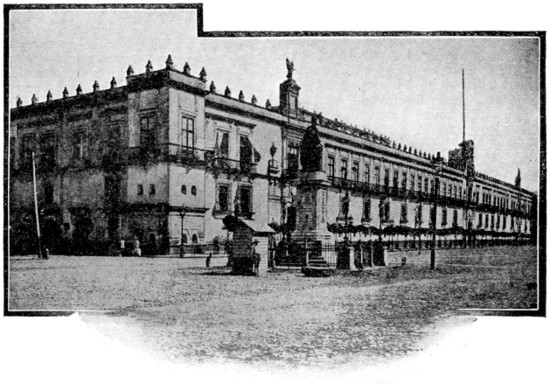
NATIONAL PALACE, CITY OF MEXICO
Still higher, above five thousand feet, a cool
region is reached, which is known as the
Tierra Fria. This includes the summit of the
tableland and the pine covered slopes of the
mountains up to the height at which some of
the peaks are capped with perennial snows.
Much of this high tableland is valuable only
for pasture; towards the north and northeast,
where the plateau is wider, the landscape
becomes bare and dry, and salt lakes like
those of the plateau region of the western
United States appear. Deeply cut “cañons”
or “barrancas,” gorges with steep walls furrowed
out by the mountain torrents, are
characteristic of the plateau.
Production and Industry.—The vegetation
of Mexico has the same wide range as the
climate. In the lowlands dye woods and
valuable timbers abound in the virgin forests,
as well as medicinal plants, india rubber,
palms, etc.; and oranges and bananas, many
varieties of cactus, agave, sisal, olives, sugar,
coffee, cocoa, rice, indigo, cotton and tobacco,
besides the omnipresent maize, all thrive. The
vine flourishes in some districts, especially near
El Paso, Durango, and Parras, in Coahuila,
where a good wine is made; and mulberry
plants have been imported from Europe to
develop the silk industry. In Lower California
a good deal of archil is collected, and
chicle gum is extracted and prepared in the
forests along the coast.
Agriculture in Mexico is steadily developing.
Silver mining has been an important industry
ever since the conquest. Gold is also produced.
Copper is largely mined in some
sections, being found in a pure state in Chiapas
and Guanajuato, and elsewhere associated
with gold. Other important minerals are
iron, including enormous masses of meteoric
iron ore, and the mountain a mile from Durango,
the Cerro de Mercado, a solid mass of
magnetic iron ore; lead, found associated with
silver; and sulpher, zinc, quicksilver, platinum,
cinnabar, asphalt and petroleum, besides salt,
marble, alabaster, gypsum, and rock salt in
great quantities. There are also said to be
large deposits of coal, some of excellent
quality.
Mexico is the original home of the “cattle
range” business, and there vast herds of horses,
cattle, and sheep form the principal wealth of
the people.
Woolen and cotton spinning and weaving,
and other branches of industry are encouraged
by high protective duties.
People.—The population of Mexico consists
mainly of the indigenous Indian race, and of
the dominant Spaniards or their descendants.
Spaniards born in Europe are now very few
in number, but the government of the country
is in the hands of the “Creoles,” or people of
Spanish descent born in Mexico. They number
about twenty per cent, mixed Hispano-Americans,
or mestizos, forty-three per cent,
and full blood Indians thirty-five per cent of
the whole population. The mestizos are the
farmers and rancheros, the muleteers and
servants. Whites and mestizos speak Spanish.
The Roman Catholic is the religion of the
country, but all beliefs are tolerated, and
education, now free and compulsory, is making
steady progress.
Government.—The Mexican constitution is
closely modeled upon that of the United
States. The president, who is assisted by
secretaries of state, is elected for four years,
and can be re-elected for a second term. The
[671]
legislative power is vested in a Congress, consisting
of a Senate of fifty-six members, and a
Chamber of Deputies of two hundred and
thirty-three members. The judicial system
occupies the same position as that of the
United States; and the several states have
elective governors and legislatures.
Owing to revolutionary conditions the civil
government was practically suspended in September,
1914. (See under History of
Mexico.)
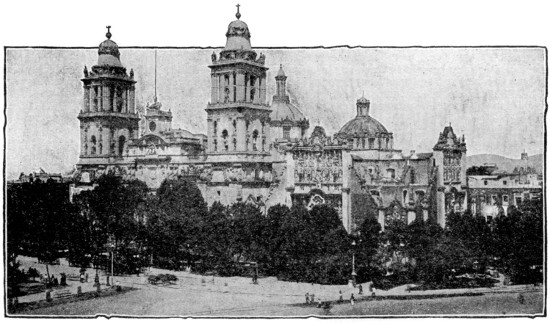
THE CATHEDRAL, CITY OF MEXICO
Cities.—The principal cities are Mexico City,
the capital, population 470,000. Puébla, east
of the capital, among the mountains, is the
second town and the most industrious place
in Mexico. Guadalajara, northwest, is also a
city of magnificent palaces and churches.
Vera Cruz, founded by Cortez, is the only
port on the Atlantic. On the Pacific side the
chief seaports are Mazatlan and Acapulco,
with a fine harbor. Other important towns
are Oaxaca, Puebla, and Durango.
The railway system joins that of the United
States at El Paso on the Rio Grande.
Mexico City is situated seven thousand four hundred
and ten feet above the sea at the lowest
level of the great basin (fourteen hundred square
miles) of the Anahuac plateau.
All the main streets converge on the Plaza
Mayor, where the site of the old teocalli is
occupied by the no less famous Cathedral. The
walls of this imposing building, forming a cross
four hundred and twenty-six by two hundred and
three feet, alone cost nearly two million dollars,
and the interior with its twenty chapels and
elaborate ornamentation, much more. Built into
the foot of one of the two open towers (two
hundred and eighteen feet) is the famous “Aztec”
(Toltec) calendar stone.
Facing the cathedral is the Municipal Palace,
and on the sides of the plaza are the National
Palace (the old vice-regal residence), the national
Monte de Piedad, the postoffice, and the national
museum.
Other noteworthy buildings are the national
picture gallery and library (two hundred and
fifty thousand volumes), the national observatory,
the school of mines, the mint, the Iturbide hotel,
and the former palace of the Inquisition, now a
medical college; and, mostly in secularized
ecclesiastical edifices, there are also schools of
law and engineering, a conservatory of music,
and an academy of fine arts.
Among the monuments of the city are the noble
Columbus monument, the statue of Cuauhtemotzin,
the last of the Aztec emperors, and that
of the engineer Martinez.
The principal streets are broad, clean, and
well paved and lighted, with houses of stone
gaily painted in bright colors. In addition to
the alameda, with its stately beaches, Mexico is
remarkable for the extent and beauty of its
paseos, or raised paved roads, planted with
double rows of trees, which diverge far into the
country from every quarter; and there are still
on Lakes Chalco and Xochimilco, where a line
of steamers runs, a few of the floating gardens for
which the ancient city was so celebrated.
Attempts had long been made to drain the
valley of Mexico. The federal government
finally undertook the work, and operations
begun in 1890 were completed in 1898 at a cost
of about sixteen million dollars. Extensive drainage
and sanitation works have since been carried
out at a cost of five million seven hundred and
fourteen thousand nine hundred and eighty-two
dollars.
In 1905 a sumptuous legislative palace, a
national Pantheon for the ashes of the great men
of Mexico, and a monument to perpetuate the
heroes of the independence were under construction,
at a cost of thirty million dollars.
The trade of Mexico is chiefly a transit trade,
but it has now extensive cotton and linen factories,
paper mills, tobacco and cigars, gold and
silver work, pottery, silverware, cork, bricks, and
soap—many of them due to foreign enterprise.
History of Mexico.—The history of ancient
Mexico exhibits two distinct and widely
differing periods—that of the Toltecs and
that of the Aztecs. Both were Nahua nations,
speaking a language which survives in Mexico
to this day.
The eighth century is the traditional date
when the Toltecs are related to have come
from the north, from some undefined locality,
bringing to Anahuac, or Mexico, its oldest and
its highest native civilization, about 1325. A
[672]
hundred years later, under the reign of Montezuma
II., they had attained a suzerainty over
all the tribes from the Atlantic to the Pacific.
On the coming of the Spaniards under
Cortez in 1519, Aztec rule was finally overthrown,
chiefly by means of the assistance the
Spaniards received from those peoples whom
the Aztecs had held in cruel bondage.
In 1540 Mexico was united with other
American territories—at one time all the
country from Panama to Vancouver’s Island—under
the name of New Spain, and governed
by viceroys (fifty-seven in all) appointed by
the mother country, Spain. For nearly three
centuries it may be said to have lain in sullen
submission beneath its cruel conqueror’s heel,
till in 1810 the discontent, which had been gaining
ground against the vice-regal power during
the war of Spain with Napoleon, broke into
open rebellion under the leadership of a country
priest named Hidalgo.
In 1822 General Iturbide had himself proclaimed
emperor; but the guerilla leader
Guerrero, his former ally, and General Santa
Anna raised the republican standard, and in
1823 he was banished to Italy with a pension.
Returning the following year he was taken
and shot, and the federal republic of Mexico
was finally established.
For more than half a century after this (till
1876) the history of Mexico is a record of
chronic disorder and civil war. In 1836 Texas
secured its independence, for which it had
struggled for several years, and which Mexico
was compelled to recognize in 1845. In that
year Texas was incorporated with the United
States, and after the Mexican war of 1848
Mexico ceded half a million square miles to
the United States.
The Emperor Napoleon III. declared war
against the president, Juarez, in 1862; the
Austrian Emperor of Mexico, Maximilian,
imposed by the French, was executed in 1867,
and the republic re-established. Diaz was
re-elected president for the eighth time in 1910,
but, being too autocratic, had to resign under
pressure of revolution in 1911. In the ensuing
welter of revolts and conspiracies President
Madero was set aside and killed, and the
United States applied pressure to eliminate
President Huerta. From this time on the
relations of the United States with Mexico
became more strained. During 1915-1916,
following repeated attacks made by bands of
Mexican bandits upon American border towns
and assaults by Mexicans upon Americans and
other foreigners in Mexico, the relations between
the two countries approached a crisis.
Early in 1916 nineteen men, nearly all of them
Americans, were taken from a train near
Chihuahua and killed by a band of bandits.
Conditions became still more tense when, on
March 9, several hundred bandits led by Villa
raided and burned the town of Columbus,
N. M., killing nine American civilians and
eight United States soldiers. On March 10
President Wilson ordered five thousand United
States troops into Mexico to catch Villa, and
two days later the first troops crossed the
border. On March 16 the first clash occurred
between Villa outposts and the American
expeditionary force. On June 18 the war
department ordered all the state militia
mobilized, and within the next two weeks
fifty thousand of the state soldiers had been
rushed to the border.
President Wilson later in the year named an
American commission at the suggestion of
General Carranza, which, jointly with a
Mexican commission, began its sessions at
New London, Conn. The sessions continued
until November 24, when a protocol was signed
providing for the withdrawal of the United
States troops from Mexico in forty days, conditioned
upon the Carranza Government
showing within that time that it could protect
the border and prevent raids by bandits upon
American territory.
Two days before the signing of this protocol
Villa, at the head of a strong force, attacked
Chihuahua City, and after a battle lasting
several days captured the city.
Carranza forces regained control of Chihuahua
City December 3, and Villa’s forces fled
to the mountains west of the city, where they
were later reported to be gathering new recruits
in preparation for more extensive operations.
The year 1917 was ushered in with the
struggle between the Carranza and Villa
factions still in progress.
ARGENTINA, or ARGENTINE REPUBLIC
ARGENTINA, or ARGENTINE REPUBLIC,
takes its name from the river La Plata (“River
of Silver”). After Brazil, it is the largest state
of South America. Its territory reaches from
the Pilcomayo River, on the borders of Bolivia,
southward for two thousand four hundred
miles to Staten Island, off the southeastern
extremity of Tierra del Fuego; and from the
slope of the Andes on the west to the Uruguay
River and the Atlantic in the east.
Physical Features.—Excepting on the northwest,
where the spurs of the Andes reach down
into the state, the surface of Argentina presents
vast monotonous and level plains, broken
only by the detached ridges of Córdova and
San Luis, in the western interior. In the
north the portion of the region called the
Gran Chaco, within the frontier, is partly
forest covered, but all the central and southern
region presents only vast treeless plains or
“pampas,” covered at most seasons with coarse
grass, which is green in the winter months,
but which dries up in summer so as to give
an aspect of aridity to the plains. Some portions
of the interior, called “Salinas,” are
barren and white throughout the year.
Rivers.—The great watercourse of the country
is the Paraná, formed by the union of the
Upper Paraná and Paraguay rivers near the
northeastern corner of the state. This is a
noble river, in all parts of its course through
Argentine territory scarcely ever less than a
mile in width, and in some places spreading
out in lateral channels, or “riachos,” to a
breadth of ten miles.
The Pilcomayo, which forms part of the
northern boundary, has now been explored
throughout its length, and is navigable at
high water; the Vermejo, the next river southward,
has of late years become a regularly
navigated highway from the Paraguay up to
the northeastern provinces; the Salado,
farther south, flowing directly to the Paraná,
is also an important river; but the remaining
streams which tend eastward to the Paraná
have not strength of water sufficient to resist
evaporation in crossing the dry plains, and
terminate for the most part in marshes and
salt lakes.
Climate.—The climate in the extreme north is
very hot, for it lies north of the tropic of
Capricorn. The more remote southern territories
have an extremely disagreeable climate,
but are not really so cold as might be expected
from their relatively high latitude. But the
country in general enjoys an equable, temperate,
and healthful climate. Stormy southwest
winds, called “pamperos,” sweep over
the plains at times, and raise great clouds of
dust, which fly across the plains.
Production and Industry.—The principal
productions are wheat, maize, oats, linseed,
sugar, wool, hides, cattle, sheep, and horses.
The great wealth of the state, however, lies
in its countless herds of cattle and horses and
flocks of sheep, which are pastured on the
“pampas,” and which multiply there very
rapidly. The rearing and tending of these
herds is the great and characteristic industry
of the country; these also yield enormous
quantities of hides, horns, and salted beef.
The northwestern provinces of the Argentine
Republic, crossed by the lower ramifications
of the Andes, are rich in metals, including
gold, silver, nickel, copper, tin, lead, and iron,
as well as in several kinds of marble, jasper,
and precious stones. On the Rio Vermejo
petroleum wells have recently been discovered.
The export of frozen beef and mutton is an
important industry. The exports are made
up entirely of pastoral and agricultural
products, with the exception of quebracho,
copper, manganese, and wolfram.
People.—The people of the country are mostly
Spanish in their language and descent, although
there are many Italians, French, Americans,
Swiss, and Germans. The Gauchos, or herdsmen
of the plains, are a hardy and spirited,
but ignorant race, often of partial Indian
descent. Some of the Indians of the remote
districts have become skilled in the rearing
of flocks and herds.
The religion is Roman Catholic. The government
is closely modeled upon that of the
United States.
Education.—Primary education is secular,
free and nominally compulsory from the ages
of six to fourteen. Schools are maintained
by provincial taxation, and controlled by
provincial boards (except in the capital, where
there is a National Council), with grants from
the Federal Government. Secondary education
is controlled by the Federal Government
in lyceums and normal schools. There are
also Special Government Schools—one naval,
one military, one mining, and one agriculture.
There are National Universities at Cordoba
and Buenos Aires, and Provincial Universities
at La Plata, Santa Fé, and Paraná.
Government.—The Constitution vests the
executive power in the hands of a President,
who is also Commander-in-chief of the troops,
elected by representatives of the provinces for
six years, not being immediately re-eligible;
and the legislative authority in that of a
Senate of thirty members, two chosen by the
capital and two by the legislature of each
province, and a House of Deputies of one
hundred and twenty members elected for four
years by the people, one-third of the Senate
retiring every three years, and one-half of the
House retiring every two years.
The Judicial system consists, like that of
the United States, of a Federal Supreme Court
and Courts of Appeal, with Provincial Courts in
each state for non-national or single state cases.
Cities.—The chief seaport is Buenos Aires, the
capital and largest city, with a population of
1,315,000 in 1911. La Plata lies twenty-five
miles to the southeast of the Federal
capital, and, although founded in only 1882,
already numbers 80,000 inhabitants. A canal
joins it to the vast docks of Ensenada.
Córdova (53,000), nearly in the center of the
state, is the seat of the chief observatory of
the Republic.
Rosario (135,000), on the right bank of the
Paraná, more than two hundred miles up from
the La Plata inlet, is a substantially built town,
and a great outlet of the animal produce of
the interior plains.
Tucuman (55,000) and Salta in the northwestern
mountain region, and Mendoza
(32,000) at the eastern base of the Andes,
where they are crossed to enter Chile, with
Corrientes (18,000) on the Paraná, are other
important places.
Buenos Aires (bwā´nōs ī´rez; Sp. pron. bwā´nōs
ī´res; Eng. pron. usually Bonos Ai´rez) stands on
the right bank of the Plata, which here, at a distance
of one hundred and fifty miles from the
open sea, is twenty-eight miles across.
The city is partitioned into blocks of about
one hundred and fifty yards square. The streets
are regularly laid out at right angles to each other
and well lighted. Many are planted with trees,
and there are numerous open squares and several
fine parks, the most famous being Palermo Park
(eight hundred and forty acres). The main
buildings are the Roman Catholic Cathedral, the
chapel of Santa Felicitas, the Casa Rosada, or
Government House, the university, the Opera
House, and various government and municipal
buildings. Much of the town has lately been
rebuilt on European lines. It is the terminus of
six railway lines, and has excellent street car,
cable, and telephone services. There are manufactories
of furniture, machinery, carriages,
leather, hats, textiles, boots, tobacco, liquors, etc.,
and the trade is very large.
An elaborate system of harbor works was carried
out between the years 1887 and 1895 at a
cost of twenty million dollars; it includes an
advanced river wall, a north and south basin,
and a series of four docks, which connects two
channels of the Rio de La Plata, and so brings
large vessels up to the wharfs. About half of the
inhabitants are of European birth or descent.
Among the Europeans the vast majority are
Italian; the rest are principally Spanish, French
and British. Newspapers are published in
French, English, Italian, and German, as well
as in Spanish.
History.—The river La Plata was visited by
the Spaniards in 1516, and the country was
[674]
colonized in 1535, when Buenos Aires was
founded. For many years the country was
regarded as a part of Peru. The progress of
the colony was not more hindered by the
bloody wars which prevailed with the natives
for a hundred years than by unwise legislation
at Madrid.
In 1776 Buenos Aires became the capital of
a new viceroyalty. In 1806 that capital was
occupied by a British force under General
Beresford, but the town was soon besieged
and compelled to surrender. In 1808 the
British forces under Whitlock assaulted the
town, but after very severe loss were themselves
compelled to capitulate.
In 1810 the colonists founded a local provisional
government. A sanguinary war for
independence followed, which did not cease
till 1824. Spain acknowledged the independence
of the country in 1842. The first half-century
of Argentine autonomy was much
disturbed by revolutions.
The Brazilian-Argentine war against Paraguay
(1865-1870) was interrupted and followed
by renewed revolts at home. For a time the
great material progress of the country was
accompanied by an equally remarkable movement
in favor of stability of government and
the repression of factions. But once more
dissensions and an insurrection in Buenos Aires
led to civil war (1890), which again was
followed by a disastrous financial panic (1891);
and political and commercial crises, with riots
and risings in various parts of the country,
continued to succeed one another and to
prevent progress. In May, 1910, the Argentine
celebrated its centenary of independence.
BRAZIL
BRAZIL (brä-zil´; Portuguese
pron. brä-zēl´), a
republic of South America, of which it covers
nearly half, is little less in area than the whole
of Europe, its area being 3,300,000 square
miles, including the Acrá territory bought from
Bolivia in 1902. It has a length of 2,660
miles, and a breadth of 2,705 miles between
extreme points. It borders on every state
in South America except Chile. The name
was given by early explorers from thinking
that the red dyewood (brazil-wood) found
here was identical with the East Indian dyewood
known to them as Brasil.
Surface.—This vast territory presents two contrasted
regions. First, the wide, low lying,
and humid forest plain of the Amazon River
in the north; second, the uplands in the
south, which are traversed by radiating hills
and mountain ridges, and which present wide
grass plains between woods and bush-covered
country.
The northern coast is bordered by low, alluvial
bottom lands and sandy plains, full of
lakes, and in places very sterile; while the
southern angle of the country is rolling campo
land, bordered by a low sandy coast. Above
its eastern angle a large area of coastlands
and neighboring plateau is subject to periodical
devastating drought.
The highest mountain ranges of Brazil rise
in the center of the southeastern uplands,
where the Montes Pyrenéos rise to nine thousand
five hundred feet, but the coast range,
or Serra do Mar, to the south of the beautiful
Gulf of Rio de Janeiro, hardly yield to these,
for within it the Itatiaiossu is scarcely six
hundred feet lower, while the Organ Mountains,
at the back of Rio, have summits which
reach up to seven thousand five hundred feet.
Rivers.—Brazil possesses three great river-systems—the
Amazon, La Plata, and San Francisco.
The Amazon and its tributaries drain fully
a half of the country. To the east of the
Madeira these tributaries are tableland rivers,
broken by rapids and freely navigable for
comparatively short distances. West of the
Madeira they are lowland rivers, sluggish,
bordered by extensive flood plains, and afford
free navigation for long distances. The La
Plata system drains nearly one-fifth of the
country through its three branches—the Paraguay,
Paraná, and Uruguay.
The first of these is a lowland river, freely
navigable for a long distance, while the other
two are tableland rivers, full of obstructions,
and without free outlets for their upper level
navigation.
The San Francisco is a tableland river, flowing
northeast between the Goyaz and maritime
mountains, and then, breaking through the
latter, southeast to the Atlantic. It is not
freely navigable because of the Paulo Affonso
Falls. The other coast rivers are generally
short.
Climate.—Brazil lies almost wholly within the
tropics, and is still in great part unexplored
and unsettled. The climate of Brazil varies
greatly—the lowlands of the Amazon and a
great part of the coast being hot, humid, and
unhealthy, while the tablelands and some districts
of the coast swept by the trade winds
are temperate and healthy.
Production and Industry.—The minerals
are very considerable and valuable, comprising
gold, silver, iron, diamonds, topazes, and other
precious stones. Its forests are immense,
abounding in the greatest variety of useful
and beautiful woods adapted for dyeing, cabinet
work, or ship-building; among these are
mahogany, logwood, rosewood, brazil-wood, etc.
Its agricultural produce is abundant; maize,
beans, cassava root, and nuts are very generally
cultivated; also, in some parts, wheat
and other European cereals.
Cattle raising is an important industry, the
number being computed at eighteen million.
Cotton is being largely cultivated for export,
and is being used for home manufactures.
Sugar cane is grown in large and increasing
quantities in the northern provinces, Pernambuco
being the center of the sugar-producing
zone.
India rubber comes from the more northern
provinces, especially the valley of the Amazon,
and is shipped from Pará and Manáos; and
coffee, though also grown in the north, comes
chiefly from Rio de Janeiro, Minas, São Paulo,
and Esperito Santo. Tobacco and cocoa are
grown largely, especially in Bahia. The
exports consist solely of the raw produce of
the soil.
People.—The inhabitants of Brazil, as of other
parts of South America, present three great
elements—that of the aboriginal Indians, that
of the European conquerors and colonists and
their descendants, and that of the Africans
introduced as slaves. The most important
section of the Brazilians are the descendants
of the Portuguese settlers. There are, however,
several flourishing German and Italian
colonies in the southern states.
The number of pure white people is very
small in proportion to those who have some
mixture of Indian or African blood, and the
Brazilians themselves have developed into a
number of more or less distinct physical types
in the widely separated provinces of the
republic. Formerly about one-half of the
entire population of Brazil was formed of
negro slaves.
The Roman Catholic is the established
religion, and is supported by the state; but all
other sects are tolerated. There are, however,
very few Brazilians who are not Roman
Catholics.
Education is still in a very backward condition.
The language is Portuguese, with
dialectal varieties.
Government.—According to the new Constitution
of 1890, the empire was abolished and
the Brazilian nation is constituted a Federal
Republic under the title of the United States
of Brazil, each of the twenty provinces forming
a separate state with local self-government.
At the head of the federation is a president
with executive authority, elected by the people
for six years. The National Congress with
legislative functions comprises a Senate and
Chamber of Deputies, the senators being chosen
three for each state, for nine years, the deputies
for three years in the proportion of one to
every seventy thousand of the population.
The franchise extends to all citizens not under
twenty-one years of age.
Cities.—The capital city is Rio de Janeiro, the
second largest in South America. Next in
importance is the city and seaport of Bahia
(230,000), finely placed on an inlet of the
Atlantic, the oldest city of Brazil. Pernambuco,
also called Recife from a reef of rock
which forms the natural breakwater of its
harbor, is the fourth in population, being now
surpassed by São Paulo, which ranks next to
the capital (332,000). Maranhão, on an
island of the north coast; Pará, in the Tocantins
estuary; Rio Grande, and Santos are the
other notable places along the Atlantic. In
the interior the principal towns are Ouro Preto,
in the gold mining region, and Diamantina, the
center of the diamond fields. Cuyabá, in the
interior, is important as being at the head of
the regular navigation into Brazil by way of
the Paraná and Paraguay rivers.
Rio de Janeiro (Ree´o deh Zha-nay´e-ro) stands on
the west side of one of the most magnificent
natural harbors in the world. An inlet of the
Atlantic, the bay of Rio de Janeiro runs fifteen
miles northwards, varying in width from two
miles to seven; it is girdled on all sides by picturesque
mountains (one thousand five hundred
to three thousand feet), covered with tropical
vegetation. The entrance, less than a mile wide,
passes between two bold headlands, one of them
called the Sugar-loaf (one thousand two hundred
and seventy feet).
The city and its suburbs stretch nearly ten
miles along the shore. About three miles southwest
of the city stands the precipitous cone of
Corcovado (two thousand three hundred and
thirty-six feet), with a cog-railway up to the top.
Public institutions are the vast hospital of La
Misericordia; the national library with three
hundred thousand volumes; the national museum;
the large lunatic asylum; the botanical gardens,
with a celebrated avenue of palms; the observatory;
the Geographical and Historical institute;
the former royal palace at Sāo Christovão, the
arsenal, the naval dockyards, the academy of
fine arts, a cadet-school, a school of medicine,
a conservatory of music, a polytechnic school, etc.
A good water supply, chiefly by an aqueduct
twelve miles long, and a new system of sewage
draining, much improved the city health; but
surrounding hills shut out the breezes, and the
heat grows intense in summer.
The population includes many foreigners:
Portuguese, British, French, and Germans.
Rio de Janeiro is also the commercial capital,
sending out one-sixth of the total exports of
Brazil, and bringing in forty-five per cent of the
imports. The chief export is coffee.
The whole sea frontage of the city is lined with
quays, and has been improved by extensive new
harbor works, embracing a dock of seventy-five
acres, a breakwater three thousand two hundred
yards long, an elevated railway, hydraulic cranes,
warehouses, etc.
The city possesses cotton, jute, and silk mills,
tobacco and hat factories, machine shops and
tanneries.
History of Brazil.—As early as 1480, expeditions
sailed from Europe in search of the
island of Brasil, rumored to exist in the
western seas. Brazil was discovered on
January 26, 1500, by Vincent Yañez Pinzon,
who landed at Cape St. Augustine, near
Pernambuco, and then followed the coast
north to the Orinoco. In the same year a
Portuguese expedition to the East Indies,
under Pedro Alvarez Cabral, discovered the
Brazilian coast near Porto Seguro on April 25
(April 22, Cazal). Cabral took formal possession,
and named his new discovery “Terra
de Vera Cruz.” Two Portuguese expeditions
were sent out in 1501 and 1503, the first
exploring the coast, and the second planting a
colony and bringing back a rich cargo of
brazil-wood, which gave a name to Portugal’s
new possession.
In 1530 the Portuguese government resolved
upon the definite settlement of Brazil. Many
of the earliest colonies failed through lack of
means, and from inability to hold their ground
against the natives. In 1567 a Huguenot
colony, established on the bay of Rio de
Janeiro twelve years before, was overthrown
by the Portuguese, who then founded the
present capital of Brazil.
The discovery of gold in Minas Geraes in
1693, and of diamonds in 1729, gave a new
impetus to the growth of the country, one
result of which was the removal of the colonial
capital from Bahia to Rio de Janeiro. The
cultivation of cotton, tobacco, and sugar cane
had already attained great prominence and
prosperity.
In 1808 the royal family of Portugal was
expelled by the French and took refuge in
Brazil, and the very first act of Dom João VI.
was to open Brazilian ports to foreign commerce.
He then removed various restrictions on
domestic industries, founded a printing office
and library, created new courts, and opened
various schools and public institutions. All
these acts greatly stimulated the growth of
the country.
In 1821 he returned to Portugal, leaving his
eldest son in Brazil as prince regent. Personal
ambition, and the advice of men opposed
to government from Lisbon, led the young
prince to declare for Brazilian independence,
September 7, 1822. He was proclaimed and
crowned emperor as Dom Pedro I. before the
end of the year, the small Portuguese force in
the country being quickly and easily expelled.
The constitution was ratified and sworn to
early in 1825, and some amendments were
added in 1835.
The new empire, however, did not start
smoothly, nor was the reign of Dom Pedro I.
a fortunate one. Vexed with the opposition
encountered, he in 1831 voluntarily abdicated
in favor of his eldest son, and withdrew to
Portugal. During the next nine years Brazil
was governed by regencies, but in 1840 a
popular agitation led to the declaration of the
young prince’s majority, at fifteen years of age,
and to his coronation the following year as
Dom Pedro II. The reign was one of almost
unbroken peace, interrupted by two wars—one
with Buenos Aires in 1852, and the other
with Paraguay in 1865-1870.
At the revolution of November, 1889, the
empire became a republic, and Dom Pedro
and his family were exiled. Under the new
and enlightened constitution and a succession
of patriotic presidents, Brazil has enjoyed a
season of peace and prosperity such as it has
not experienced since its colonial times. In
1904 the third Pan-American congress was
held in Brazil, and did much to bind closer
the bonds existing between her and the other
American republics.
CHILE
CHILE (Tchee´lee; Span. Chile, pron.
Tchee´lay),
is one of the republics of South America, on
the west coast, and borders on Peru, Bolivia,
and Argentina. It reaches from the southern
boundary of the coast line of Peru to the
southern extremity of Tierra del Fuego,
through a distance of about two thousand
eight hundred miles, rising inland to the
summits of the Andes, which here form a
single chain at a distance of about one hundred
miles from the ocean. The Strait of Magellan
is by treaty considered neutral as between
Chile and Argentina. Its breadth varies
from forty to two hundred miles.
Physical Features.—The range of the Andes,
visible from the sea all along the coast of
Chile, towers up in a series of volcanic cones
and snowclad peaks; the loftiest summit,
that of Aconcagua, being probably the highest
point of all the South American continent.
Numbers of streams descend from the range,
and have furrowed deep valleys across the
width of the country. The most considerable
of these are the Maypú near the center of
Chile, and the Maule and Biobio in the south,
both of which are to some extent navigable.
In the south are also many deep lakes.
Mineral waters, chiefly saline and sulphureous,
are abundant. The most important islands
are those constituting the southern province
of Chiloé; Juan Fernandez also belongs to Chile.
Climate.—This long strip of maritime country
presents remarkable gradations of climate
from north to south. Nearest the Peruvian
frontier the coast-land of Tacna, Tarapacá
and Atacama is a hot, rainless, sandy desert
without sign of vegetation. Southward is
found a temperate climate which enjoys a
moderate rainfall. This central belt is the
most valuable and the most productive agricultural
region of Chile. Farther south the
westerly winds blow toward the mountains
from over the wide Pacific and bring with
them such quantities of moisture that the
rainfall is excessive; here, in southern Chile,
in consequence of the abundant moisture, the
mountain slopes are densely covered with
evergreen forest.
Production and Industry.—Agriculture and
mining are the principal occupations. Wheat,
maize, barley, oats, beans, peas, lentils, wines,
tobacco, flax, hemp, Chile pepper, and potatoes
are grown extensively; the vine and all fruit
trees flourish. The live stock includes cattle,
sheep, horses, goats, and pigs. The mineral
wealth is considerable, the country being
extremely rich in copper ore, and some rich
gold mines have been discovered. The rainless
north yields more especially nitrate of
soda, iodine, borate of soda, gold and silver, a
large number of mines yielding both being in
actual work in Tarapacá, Guanaco, and Cachinal
in Atacama, and Caracoles in Antofagasta;
the center, copper and silver; and the south,
iron and coal. The nitrate exports are extremely
valuable. There are smelting works
for copper and silver, tanneries, corn and saw
mills, starch, soap, biscuit, rope, cloth, cheese,
furniture, candle, and paper factories, breweries
and distilleries; and the domestic industry
furnishes cloth, embroideries, baskets, and
pottery. The many ports favor commerce,
and six lines of steamers connect the country
with Panama and the Magellan Strait. The
staple articles of export are nitrate of soda,
iodine, copper bars and ores, silver ores, corn,
flour, hides, and guano.
People.—The inhabitants of northern and central
Chile are, for the most part, descendants
of the intermixed Spaniards and native
Indians. In the upper classes the race has
been kept more purely Spanish than in any
other South American country.
Chile is a Roman Catholic country, but other
religions are tolerated. Education receives
much attention. There is a first class university
at Santiago, and a lyceum in every provincial
capital. The language spoken in
Chile is Spanish, but with many local words
of Indian origin.
Government.—Under the constitution voted
in 1833, Chile is governed by a president who
is elected for five years by delegates nominated
by ballot, who is not re-eligible. A Senate
and Chamber of Deputies form the legislature.
The Senate, of thirty-two members, is elected
by the provinces for six years; the Chamber,
of ninety-four members, by the departments
for three years, by electors over twenty-one,
and able to read and write.
Cities.—Santiago, the capital, has 350,000
inhabitants; Valparaiso, 180,000; Concepcion,
Iquique, Talca, Chillan, Antofagasta, over
30,000.
Santiago (San-tee-âh´go) stands near the western
base of the Andes, one thousand seven hundred
feet above sea-level, and one hundred and fifteen
[677]
miles by rail east by southeast of Valparaiso.
The snow-capped mountains seem to enclose it on
the north and east; while in the east of the city
rises the picturesque park, Cerro de Santa Lucia
(eight hundred feet above the plain), dotted with
grottoes, statues, kiosks, restaurants, an historical
museum, and an observatory. The small but
turbulent stream, the Mapocho, is crossed by
five bridges.
The city is regularly laid out, lighted with gas
and electric light, and has electric railways in all
directions. Most of the houses are of one story
only, owing to the earthquakes (the most serious
occurred in 1575, 1647, 1730, 1822, 1835, 1906).
On the great Plaza Independencia are the
government palaces, the Grand English Hotel,
the cathedral, and the archbishop’s palace. On
the site of the Jesuit church, burned down in
1863, a monument was erected in memory of the
two thousand worshipers who perished in the fire.
Santiago boasts a noble Alameda, or boulevard,
adorned with four rows of poplars and statues.
Facing it are the University and the National
Institute. The city has also a military school,
schools of arts and agriculture, a conservatory, a
national library with one hundred and two
thousand volumes; botanical and zoological gardens,
etc.
The manufactures include cloth, ship’s biscuits,
beer, brandy, etc., and it has also an ice factory,
a fruit-conserving establishment, and copper-smelting
works.
Santiago was founded by Pedro de Valdivia in
1541.
History of Chile.—The name Chile is supposed
to be derived from an ancient Peruvian word
signifying “snow.” The first European to
land in Chile was the Portuguese discoverer
Magellan, after his famous voyage through
the strait which now bears his name. He
landed at Chiloé in 1520.
After the conquest of Peru by Pizarro, an
expedition was made to Chile from that country
overland under the leadership of Diego de
Almagro in 1535. This expedition penetrated
as far as the Rio Clano, but returned unsuccessful.
Another was sent under command of
Pedro Valdivia in 1540, which succeeded in
annexing the territory as far as the River
Maipu. Santiago, the capital, was founded
by Valdivia in 1542. During the colonial
period the governors of Chile were appointed
by the viceroys of Peru.
In 1810 a revolt against the Spanish power
broke out, in which Don Bernardo O’Higgins,
son of one of the last viceroys of Peru, but a
native of Chile, played a conspicuous part, and
finally became the first dictator of the new
republic. The first constitutional president
was General Blanco Encalada. The government
was unsettled until 1847. A revolution
broke out in 1851, but since then there has
been no serious attempt to overturn the
government by force of arms.
In 1864 Chile gave Peru very valuable support
in her war with Spain. Valparaiso was
bombarded by the Spaniards in 1866. In
1879 Chile declared war against Bolivia, and
immediately thereafter against Peru, with
which Bolivia was allied. For a time the
Peruvian fleet kept the Chileans in check,
but in August, 1879, the Peruvian ironclad
Huascar was captured by the Chilean men-of-war
Cochrane and Blanco Encalada, both
armor plated. After this event the success of
the Chileans was uninterrupted—Peruvian
towns were bombarded, warships captured,
and Lima taken by storm June 21, 1881. The
Chileans occupied Lima and Callao until 1883,
when a treaty of peace was signed.
President Balmaceda’s unconstitutional government
led to civil war in 1891, when the
congressionalists were victorious. The decisive
battle was fought near Valparaiso on August
28, and Balmaceda committed suicide.
In September, 1910, the centennial celebration
of the first declaration of independence
from the Spanish crown took place, many
foreign governments sending special delegations.
CHINA
CHINA, or more accurately the Chinese
Republic, is an extensive dominion of Eastern
Asia of which China proper constitutes the
principal portion. For centuries this dominion
has been known as the Chinese Empire, and
it is still frequently referred to as such, although
the form of government is now republican.
China includes a number of dependencies
or subject territories, viz.: Manchuria,
Mongolia, Tibet, East Turkestan, and the
small territories between Mongolia and Tibet.
By its natives China is never so called, but
usually by the Chinese words for “The Middle
State,” or “The Republic of the Middle
Flower.” The name China (Chi-na, land of
Chin) comes to us from India through Buddhism.
Various old names are Serica and
Cathay, and in the Bible “Land of Sinim.”
China and its dependent territories have an
area of 4,300,000 square miles. The population
of the whole is variously estimated at
from 300,000,000 to 440,000,000. The great
bulk of this falls to the provinces of China
proper: the population of all the dependencies
(Manchuria, Tibet, Mongolia, East Turkestan),
making but some 16,000,000 or 25,000,000 of
the total.
Surface.—Occupying all the central and eastern
portion of the continent of Asia, the limits
are for the most part very distinctly marked
out by great natural features. The boundary
with Russian Siberia on the north runs along
the Amur River and the crests of the Sayan
and Altai Mountains; towards western Turkestan
the alpine heights of the Thian Shan and
the Pamir form the limit; the snow clad
Himalaya range separates China from the hot
plains of India in the south, and the mountains
of Yunnan continue the natural frontier eastward
again to the coasts of the Pacific.
Within these wide exterior limits China
includes a number of regions, some of which
are strongly contrasted with one another in
their natural features and in the character of
their population. Along the eastern or maritime
border, where the rivers flowing down
from the mountain region of the interior have
spread out in wide alluvial plains next the
sea, lie China proper and Manchuria, filled
with a teeming population of busy agriculturists
and townsfolk. Within, on the high
plateau of Central Asia, the region of bare
steppes and deserts, and the mountain skirts
round it, are the countries of Mongolia, Eastern
[678]
Turkestan, and Tibet, thinly peopled for the
most part by nomadic pastoral tribes.
China Proper may be described as sloping
from the mountainous regions of Tibet and
Nepal toward the shores of the Pacific on the
east and south. The most extensive mountain
range in it is the Nan Ling or Southern
Range, a far extending spur of the Himalayas.
Commencing in Yunnan, it bounds Kwangsi,
Kwangtung, and Fukien, on the north, and,
passing through Chekiang, enters the sea at
Ningpo.
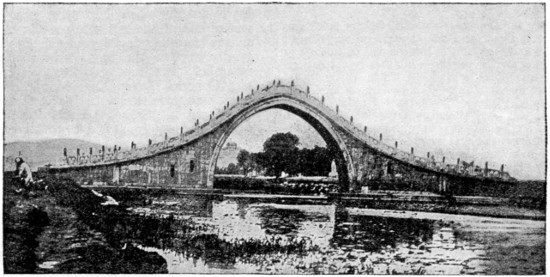
HUNCHBACK BRIDGE, NEAR PEKING, CHINA
North of this long range, and west of the
one hundred and thirteenth meridian, on to
the borders of Tibet, the country is mountainous,
while to the east and from the great
wall on the north to the Po-yang Lake in the
south, there is the Great Plain, comprising the
greater part of the provinces of Chihli, Shantung,
Honan, Anhui, and Kiangsu. The
Great Plain extends on both sides of the lower
Hoang-ho, between the great cities of Peking
and Nanking, over an area more than three
times as extensive as England. Sedulously
irrigated or drained, and cultivated in every
corner, this great plain supports the densest
agricultural population in the world.
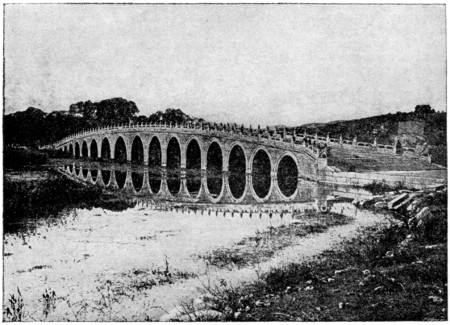
BRIDGE AT YUEN-MING-YUEN, CHINA
In the provinces west from Chihli—Shansi,
Shensi and Kansu—the soil is formed of what
are called the loess beds, which are extremely
fertile, the fields composed of it hardly requiring
any other manure than a sprinkling of its
own fresh loam. The
husbandman in this
way obtains an assured
harvest two and even
three times a year.
This fertility, provided
there be a sufficient
rainfall, seems inexhaustible.
Seas, Rivers and Canals.—The
semi-mediterranean
seas and
gulfs of the Pacific
along the coasts of
China are distinguished
by separate names. In
the north, between the
Korean peninsula and
the mainland of China,
is the Hoang Hai or
Yellow Sea, three hundred
miles wide, named
from the lemon color of
its waters, filled with
the alluvium brought
down to it by the
Hoang-ho, and so shallow
that its muddy bed
is frequently furrowed
by passing vessels. Within or northward lie the
Bay of Korea and the Gulfs of Pechihli and Liaotung,
the two last separated almost entirely from
the outer China Sea by the projecting promontories
of Shantung and Liaotung. South of
the Yellow Sea, between the mainland and
southern Japan, with the chain of the Luchu
Islands and Formosa, extends the wider Tunghai
[679]
or Eastern Sea; and from this the Fukien
Channel, between Formosa and the coast of
China, one hundred miles wide, leads into the
great mediterranean called the Nanhai or
South Sea of China, which is almost completely
shut in by Borneo and the Philippine
Islands. The coasts of the Yellow Sea bordering
on the great plain are low and flat;
southward thence to the Island of Hainan
the shores of China rise steep, and are dotted
round with rocky islets.
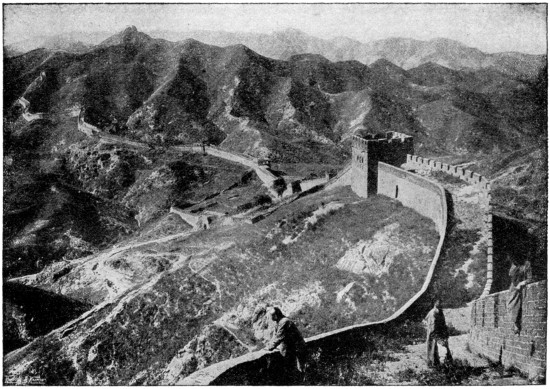
GREAT CHINESE WALL,
erected to protect the ancient empire from the inroads of nomadic Tartars about 214 B.C. The main substance
of the wall is earth or rubbish, retained on each side by a strong casing of stone and brick, and terraced by a platform
of square tiles. The thickness of the wall at the base is often as much as twenty-five feet. (See full description
below.)
The rivers of China—called for the most
part ho in the north, and chiang (kiang) in the
south, are one of its most distinguishing
features.
Two of them stand out conspicuous among
the great rivers of the world: the Ho, Hoang-ho,
or Yellow River, and the Chiang, or Yang-tze-kiang.
They rise not far from each
other among the mountains of Tibet. The
Ho pursues a tortuous course seaward through
North China; the Chiang or Yang-tze
through Central China. The terrible calamities
caused by the inundations of the Hoang-ho
have procured for it the name of “China’s
Sorrow.” The Ho is not much under the
Chiang in length—somewhat over three
thousand miles.
Besides these may be noted the Pei-ho, which
gathers the waters of the northern portion of
the great plain, and forms a highway of communication
between the capital city of Peking
and the port of Tien-tsin, thirty-five miles
above its mouth; the Min, the river of the
province of Fukien, by which the Bohea teas
are brought down to the port of Fu-chou; and
the Si-kiang, the largest river of southern
China, one of the delta branches of which
forms the Chu-kiang, or river of the great
port of Canton.
The three largest lakes of China lie immediately
south of the course of the Yang-tze.
The Tung-ting-hu, seventy miles long, and the
Poyang-hu, nearly as large, are expansions of
the mouths of the chief southern tributaries
of the Yang-tze in Central China; the third,
the Tai-hu, lies south of the estuary.
Canals.—Greatest of all the public works
in China is the Grand Canal, which traverses
the great plain for a distance of seven hundred
miles, passing from Tientsin, on the Pei-ho,
in the north, across the course of the Hoang-ho
to the lower course of the Yang-tze, connecting
a system of water communications which
extends from the capital to the chief parts of
the empire. It is but the greatest sample of
the system of canals, great and small, which
form a network over all parts of the lowlands
of China. Steam communication, however,
all along the eastern seaboard from Canton
to Tientsin has now very much superseded its
use.
The glory of making this canal is due to
Kublai, the first sovereign of the Yüan dynasty.
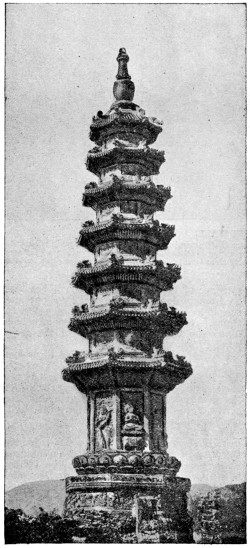
PAGODA, NEAR PEKING, CHINA
The Pagoda, or “idol temple,” in China, usually
distinguishes the Buddhist from the Confucian temple.
It is a tapering tower, always with an odd number of
stories. First-class pagodas have seven, nine, or thirteen
stories, minor ones have three or five. The most
famous was the Porcelain Tower of Nanking, erected in
the beginning of the fifteenth century; only nine of the
proposed thirteen stories, cased in white porcelain, were
completed, and the height never exceeded about two
hundred and sixty feet. It was destroyed by the
Taipings in 1856.
After the Grand Canal, as a gigantic achievement,
comes the Great Wall, on the north side
next Mongolia. Not so useful as the canal,
and having failed to answer the purpose for
[680]
which it was intended—to be a defense against
the incursions of the northern tribes, there it
still stands, the most remarkable artificial
bulwark in the world.
It was in 214 B. C. that Shih Hwang Ti
determined to erect a grand barrier all along
the north of his vast empire. The wall commences
at the Shanhai Pass and extends westward
continuously almost into the heart of
the continent for a distance of one thousand
five hundred miles, over mountain and valley,
and across rivers and ravines. It is a rampart of
earth, ten to thirty feet high, broad enough at
the top to admit of several horsemen passing
abreast, and was formerly cased on the sides
and top with bricks and stones, and was
flanked by numerous projections or towers,
gates being left at intervals for the passage
of travelers and the collection of customs.
Now it has fallen in many places, and its gates
are negligently guarded, and northward of
Peking the growing Chinese population has
spread and settled the country to a considerable
distance beyond its barrier.
Climate.—The climatic conditions naturally
vary considerably over so large a stretch of
country. In the lofty Tibetan plateau and
the less elevated plains of Mongolia, the
climate is exceedingly dry, and is marked by
great extremes of hot and cold. The basins
of the two great rivers, being nearer the
Pacific, are moister and more equable. In this
part of China proper the dry season lasts from
November to February, the remaining months,
particularly May, being extremely wet. The
rainfall is of a copious tropical nature.
Generally speaking, China is a cold country
in comparison with other regions in the same
latitude. From July to September, however,
the weather is intensely hot, and the heat
is accompanied by typhoons, which are much
dreaded for their violent and devastating
effects.
Production and Industry.—Agricultural pursuits
occupy the majority of the people, the
chief products being tea, silk, indigo, cotton,
cereals, rice, and sugar. Agriculture is held
in higher estimation here than in any other
land in the world. The land is freehold, and
is held by families in small holdings.
There is much coal in all the provinces, and
iron ore is also plentiful in Shansi. Copper
ore is plentiful in Yunnan. Southern Yunnan
also furnishes a variety of precious stones—rubies,
amethysts, sapphires, topazes, opals,
besides malachite, and the steatite or soapstone,
in which the Chinese carve figures of
all sorts.
The much prized Yu, or jade, brought formerly
from Turkestan, comes now from the
Hoang-ho valley; lapis lazuli (for the preparation
of ultramarine) is found in the mountains
of Che-kiang, in the east coast region. Large
beds of porcelain clay occur in this province
also, and in its neighboring one of Kiang-si.
About one-fourth of the world’s supply of
new silk comes from China. Cotton and
wool mills, flour and rice mills are important
industries.
Before European manufactures had reached
their higher development, fine “Nankeen”
calico was largely imported from China to
Europe. “China ware,” or porcelain, was
first made by the Chinese, and so ignorant
were the early Portuguese traders of its value,
that they called it “porcellana,” believing it
perhaps to be made of shells; the secret of its
manufacture was not discovered till the beginning
of the eighteenth century. In the
province of Kiang-si, not far from Yao-chou,
there are porcelain factories which were
founded by an emperor in 1004 A. D.
The Chinese also excel in carpentry; paper
[681]
making from the bamboo was invented among
them as early as the second century B. C.
They are highly skilled in the use of metals;
bronze vases exist which date from 1760 B. C.,
and the great bells on the towers of Peking,
cast during the Ming dynasty, are still perfect;
the sonorous gong metal alloy is as yet a
Chinese secret; in their delicate embroideries,
carvings in ivory, engravings on wood and
stone, lacquered wares, and rich silks and
satins, they show astonishing handicraft.
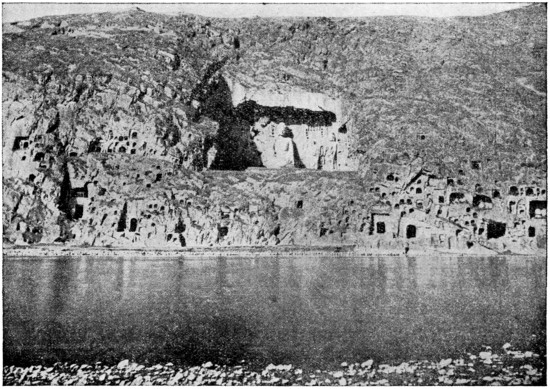
VIEW OF THE ROCK-HEWN TEMPLES AT LUNG-MEN
Here, as early as the seventh century, Chinese artists sculptured religious figures in the recesses of precipitous
cliffs—similar to those of Upper Egypt—and turned them into hundreds of quarried temples. The huge Buddha and
attendant figures in the central recess can be clearly seen. Many smaller figures and decorations in other recesses
can also be discerned.
People, Religion and Education.—The Chinese,
as we have seen in the Book of Races,
belong to the Mongolian race. They are stout
and muscular as compared with other eastern
peoples, temperate, industrious, cheerful, and
easily contented; but they are addicted to
gambling.
The dress of the poor is very much alike in
both sexes; and though it is regulated for all
classes by sumptuary laws, it is varied among
the wealthy by the richness of the materials
and the various ornamentation.
The three chief religions of China are Confucianism,
Tâoism, and Buddhism. It is
difficult to estimate the comparative number
of their adherents. To claim a majority for
those of any one of them is very absurd. As
a matter of fact, Confucianism represents the
intelligence and morality of China; Tâoism
its superstitions; and Buddhism is ritualism
and idolatry, while yet it acknowledges no God.
Besides these three national systems, Mohammedanism
has numerous adherents in the
northern and western provinces.
There are temples of Confucius in every
great town, and twice a year, in spring and
autumn, sacrifices of animals, fruit, and wine
are offered in honor of the sage.
The majority of the Tâoists, or followers of
Laotse, imitate the Buddhists in their monastic
life, and many of them live as hermits in the
mountain caves of the upper Yang-tze, or in
the most romantic spots of the mountains of
China.
The Grand Lama of Tibet is the pope of
the Buddhist Church, but the priests in China
have no political power, and are viewed with
contempt by the literary and governing classes.
In Peking, however, several large monasteries
of Tibetan and Mongolian Buddhists are
supported at the expense of the government.
The native Roman Catholics of China are
said to number more than a million, but
Protestants are very few.
In 1906, after the Russo-Japanese war, a new
system of compulsory primary education was
established. The curriculum is largely based
upon the Japanese. Modern sciences, history,
geography, and foreign languages are taught.
Special schools have been established (technical,
agricultural, normal, language, etc.).
Thousands of temples have been converted to
educational purposes. Old style examination
[682]
halls have been pulled down, and colleges
built on the sites. The educational facilities
are, however, very inadequate. Girls’ schools,
formerly non-existent, are still very few in
number. The only government medical school
is an army one, but the government has
recognized the Union Medical College, opened
in Peking by the Protestant missions there.
Many Chinese students have proceeded to
Japan, America, and Europe to study there.
The government is using the money returned
by the American government from the Boxer
indemnity to send students to America.
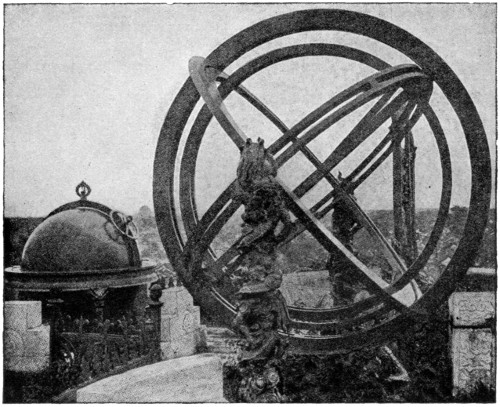
ROYAL OBSERVATORY, PEKING, CHINA
The Chinese were among the very earliest observers of the heavens, though the Hindus, Chinese, Chaldeans, and
Egyptians each claim the honor of having been the first students of astronomy. The Chinese have astronomical
annals claiming to go back two thousand eight hundred and fifty-seven years B. C. These record little but the appearance
of comets and solar eclipses. Professional astronomers were compelled to predict every eclipse under pain of
death. The popular idea was that an eclipse was a monster having evil designs on the sun, and it was customary
to make a great noise, by shouting, etc., in order to frighten it away. At an early period the Chinese appear to have
been acquainted with the luni-solar Metonic cycle of nineteen years, and they had also divided the year into three
hundred and sixty-five and one-fourth days. To the burning of all scientific books by one of their princes (Tsin-Chi-Hong-Ti),
221 B. C., the Chinese attribute the loss of many theories and methods previously in use.
There is a university in Peking and a number
of colleges under foreign management. In
1911 there were five hundred and forty-five
foreigners employed in educational work.
Government.—Until February 12, 1912, China
was a monarchy, in practice almost absolute.
Since that day it has been a republic under a
president who holds office for a term of five
years. Many changes were made at the time
of the revolution. A cabinet was substituted
for the old grand council, grand secretariat,
and government council; the cabinet being
composed of a prime minister, two associate
ministers, the various ministers of state, and
the heads of various boards. A privy council
was also formed. Administration is carried
on by the following ministries: (1) Of Foreign
Affairs; (2) Interior; (3) Finance; (4) Education;
(5) War; (6) Marine; (7) Justice;
(8) Agriculture, Works, and Commerce; (9)
Posts and Communications; (10) Colonies.
There are also a large number of minor boards
and offices, divided into twenty-two provinces
for local administration.
Cities.—There were in 1910 about twenty-three
towns with populations exceeding 50,000, but
all figures are based upon estimates.
| Peking |
1,000,000 |
| Canton |
1,250,000 |
| Hankow |
900,000 |
| Tientsin |
850,000 |
| Shanghai |
700,000 |
| Fuchow |
650,000 |
| Chungking |
600,000 |
| Suchow |
500,000 |
| Ningpo |
450,000 |
| Hangchow |
400,000 |
| Nanking |
300,000 |
| Changsha |
250,000 |
| Chinkiang |
200,000 |
| Antung |
150,000 |
| Wuhu |
130,000 |
| Amoy |
120,000 |
| Wenchow |
100,000 |
| Swatow |
90,000 |
| Chefoo |
90,000 |
| Shasi |
85,000 |
| Ichang |
70,000 |
| Kongmun |
60,000 |
| Wuchow |
60,000 |
| Niuchwang |
50,000 |
Peking, or Pei-Ching (“Northern Capital”) is situated
in a sandy plain, and is surrounded by walls
with sixteen gates, each surmounted by towers
one hundred feet high; and it consists, in fact,
of two cities—the inner and the outer—known
also as the Manchu or Tartar and the Chinese, the
northern and the southern.
The walls of the Manchu city average fifty feet
in height, and are fully sixty feet wide at the
[683]
bottom; those of the Chinese city (rectangular
in plan) are thirty feet high and twenty-five feet
wide. The circuit of the two cities measures
twenty-one miles, including an area of nearly
twenty-six square miles.
The Manchu or Inner City is divided into
three portions; and at the heart of it are two
enclosures, into the innermost of which entrance
is forbidden to all except such as have official
claims to admission. It is called the “Purple
Forbidden City,” is very nearly two and one-quarter
miles in circuit, and in it are the palaces
of the former emperors and other members of the
imperial family.
The T’âi Ho, or “Hall of Grand Harmony,” is
built of marble on a terrace twenty feet high,
and rising itself an additional one hundred and
ten feet; its principal apartment is two hundred
feet long and ninety feet wide. Surrounding the
Forbidden City is the “August City,” about six
miles in circuit, and encompassed by a wall
twenty feet high. In the western part of the
“August City” is the “Western Park” with a
large artificial lake, a summer-house, gardens, the
copper statue of Buddha (sixty feet high), and the
temple of “Great Happiness.”
In the General City are the principal offices of
the government, the observatory, the Provincial
Hall for literary examinations, the Colonial
Office, and the “National Academy.” In the
northeastern corner is the Russian mission, and
west from it the “Palace of Everlasting Harmony,”
a grand monastery for over a thousand
Mongol and Tibetan monks. A little farther
west stands, amidst cypresses, the temple of
Confucius. To the “Temple of Emperors and
Kings,” near the south wall, the emperors went
to worship the spirits of nearly two hundred
predecessors. The great Tutelary Temple of the
capital is grimy, and full of fortune-tellers. All
the foreign legations and Christian missions are
within the Inner City. The new Roman Catholic
Cathedral is conspicuous.
The Chinese or Outer City is very sparsely
populated; much of the ground is under cultivation
or wooded.
The “Altar to Heaven,” with its adjunct, the
“Altar of Prayer for Grain,” and the “Altar of
Agriculture,” are both near the southern wall.
The “Altar to Heaven” stands on a splendid
triple circular terrace of white marble, richly
carved, in a grove of fine trees. The “Altar of
Prayer for Grain,” was burned down in 1889.
The principal streets of the Chinese City are
more than one hundred feet wide, but the side
streets are mere lanes. The streets are seldom
paved and are deep either in mud or in dust. In the
smaller streets the houses are miserable shanties;
in the main streets both private houses and
shops are one-story brick edifices, the shops gay
with paint and gilding.
There are three Catholic cemeteries (Portuguese,
French, and native) and a Russian one;
and there are mission buildings, Russian and
others, and hospitals.
History.—Chinese historical documents begin
with the reigns of Yâo and Shun. In 403 B. C.
we find only seven great states, all sooner or
later claiming to be “the kingdom,” and contending
for the supremacy, till Ts’in (Ch’in)
put down all the others, and in 221 B. C. its
king assumed the title of Hwang Tî, or emperor.
From that year dates the imperial
form of the Chinese government, which thus
existed for more than two thousand one
hundred years.
The changes of dynasty were many, two or
more sometimes ruling together, each having
but a nominal supremacy over the whole
nation. The greater dynasties have been
those of Han (206 B. C.-220 A. D.), T’ang
(618-906), Sung (960-1279), Yüan (the Mongol,
1280-1367), the Ming (1368-1643), and the
Ch’ing (Manchû-Tartar, from the Manchû conquest
of China in 1643 to the 1912 revolution).
It was not till after the Cape of Good Hope
had been doubled, and the passage to India
discovered by Vasco da Gama in 1497, that
intercourse between any of the European
nations and China was possible by sea. It was
in 1516 that the Portuguese first made their
appearance at Canton; and they were followed
at intervals of time by the Spaniards, the
Dutch, and the English in 1635. The Chinese
received none of them cordially; and Chinese
dislike of them was increased by their mutual
jealousies and collisions with one another. In
the meantime trade gradually increased, and
there grew up the importation of opium from
India. From the measures of the Chinese to
prevent the import of opium came the first
English war with China in 1840; the result of
which was the opening of Canton, Amoy,
Fûchâu, Ningpo, and Shanghâi to commerce,
and the cession of Hongkong to Great Britain.
A second war, in 1857, France being allied with
Great Britain, ended in the opening of five
more treaty ports. A third war (1860) and
the march on Peking did even more to open
China to the world.
After a war in 1884-1885 France secured permanent
control of Tongking and Annam.
In 1894 Japan, reviving old claims on Korea,
drove the Chinese out of Korea, and after
victories on land and at sea, captured Port
Arthur and Wei-hai-wei. By the treaty of
1894 Japan secured as indemnity Formosa
and the Liao-tung peninsula; but the protests
of Russia, Germany, and France made Japan
resign Liao-tung. Russia obtained a lease of
Port Arthur and Talienwan, with railway and
other privileges in Manchuria; Germany obtained
Kiao-chau and concessions in Shantung;
and Great Britain, as an offset, obtained
a lease of Wei-hai-wei and sought to secure
trading freedom in the Yang-tze-kiang valley.
Russia’s refusal to evacuate Manchuria and
her movements in Korea led to war with
Japan in 1903, the defeat of the Russian
armies in Manchuria, the destruction of the
Russian fleet, and the fall of Port Arthur (1905),
China being nominally neutral. By the peace
(1905) Japan secured dominance in Korea, the
Russian leases in Liao-tung, and great influence
in southern Manchuria and on China generally.
A series of far-reaching reforms, promoted
by a nationalist reform party in 1898, were
summarily cancelled by the dowager empress,
who assumed supreme authority. The reactionary
and anti-foreign “Boxer” association
(“The Fist of Righteous Harmony”), encouraged
by the court, made extermination of
foreigners its war cry in that year, and besieged
the legislations in Peking. After a two
months’ siege by an army of Japanese, Russians,
British, Americans, French, and Germans
this condition was relieved. The constitutional
movement began in 1911, followed by a revolution.
The leader of the revolt at Han-kau was
the able general, Li Yuan-hung, but the inspirer
of the revolution was Dr. Sun Yat-sen, at that
moment in America.
On October 13 the rebels proclaimed a republic
in the province of Hu-peh, with Li Yuan-hung
as president, and notified the foreign
consuls that the property and persons of
foreigners would be respected.
On February 12, 1912, the throne issued
three edicts, in which it announced its will to
abide by the decision of the National Convention
and accept the republic, entrusting Yuan
with the task of bringing about the new constitution
in conjunction with the Nan-king
government, and, after exhorting all to
peacefully accept the new order, announced
the abdication of the dynasty.
A constitution of seventy clauses was promulgated;
the emperor was to retain his title
and receive a pension, and be accorded the
civility due to a foreign sovereign. On February
27 the Nan-king Assembly endorsed this
decision by electing Yuan president, and he
was formally installed on March 10.
Yuan’s administration was hampered by the
movements in Mongolia and Tibet towards
autonomy, movements countenanced by Russia
and Great Britain respectively. Difficulties
were also put in the way of China by
the European powers in the matter of a development
loan, but President Yuan, supported
by Dr. Sun Yat-sen, seems to have laid
securely the foundations of the largest republic
the world has yet seen.
President Yuan Shi-ki was assassinated in
1916, and succeeded by Li Yuan-hung.
INDIA
INDIA, the Indian Empire of the British
crown, is an extensive region of southern Asia,
and next after China the most populous area
in the world. It occupies the central peninsula
of southern Asia, and has a length of
some nineteen hundred miles, a breadth of
sixteen hundred, and an area, inclusive of
Burma, of 1,766,650 square miles. The
natural boundaries of this vast region are, on
the north, the range of the Himalaya Mountains,
which separates it from Tartary, China,
and Tibet; on the west, the mountainous
frontiers of Afghanistan and, farther south, of
Persia; on the southwest and south the
Arabian Sea and the Indian Ocean; on the
east the hill ranges which border upon Burma
and the Bay of Bengal.
Surface.—The region presents a diversified
surface and scenery. It has indeed been
called “an epitome of the whole earth,” consisting
as it does of mountains far above the
level of perpetual snow, broad and fertile
plains bathed in intense sunshine, arid wastes,
and impenetrable forests.
The most prominent feature in the relief of
India is the great range of snowy peaks named
the Himalaya, or “abode of snow,” which
rises on the edge of the Tibetan plateau,
above the northern plains, stretching out in a
continuous chain for nearly eighteen hundred
miles. The mean height of this portion of the
borders of the Tibetan plateau, defined very
clearly by the channels of the Indus and the
Bramaputra, is estimated at thirteen thousand
feet; the mean breadth of its base is
about one hundred and fifty miles. Its summits
rise to twenty-nine thousand feet, and
most of the difficult passes ascending from
the valleys and gorges of the Indian side are
not lower than about sixteen thousand feet.
Southward from the bases of the Himalaya
and the Sulaiman mountains the great plain
of northern India spreads out, reaching across
the whole breadth of Hindustan from the
Arabian Sea to the Gulf of Bengal.
Southward of the great plain the land begins
to rise again. The first elevations reached in
this direction are those of the long range of the
Aravali hills, which extend for four hundred
miles from northeast to southwest, marking
the edge of the western section of the great
plain. It is bold and precipitous on that side
which falls toward the Indian desert, but less
so on the southeast; its average height is
about three thousand feet, Mount Abu, being
the highest point.
Behind the Aravali hills lie the plateaus of
Malwa and Bundelkhand, extending over the
country generally termed central India;
These are fertile tablelands of uneven surface
elevated from one thousand five hundred to
two thousand feet above the sea level, and
traversed by a number of minor hill ridges.
The greater part of south India is occupied
by the wide tableland of the Deccan. The
name ghat was originally applied by the natives
to the passes in the outer slopes of the ranges
which run parallel with the two coasts of the
southern portion of the great promontory of
India enclosing the Deccan, and which had to
be ascended to reach the high interior country
from the coast; but this name Ghat has been
transferred to these ranges or outer edges of
the tableland themselves.
The western Ghats, about eight hundred
miles in length, clothed with magnificent teak
forests, form by far the boldest and most
continuous escarpment of the Deccan plateau,
ascending abruptly from a low base, generally
at a distance of about thirty miles from the sea.
The eastern Ghats differ from the western
in being much lower, in rising at a much
greater distance from the coast of the Bay of
Bengal, and with a gentle slope, giving access
by wide openings to the interior. Their
average height is about fifteen hundred feet,
the highest point, near Madras, only about
three thousand feet above the sea. The
Deccan plateau between these supporting
buttresses has thus a gradual eastward slope,
and is characterized by undulating treeless
plains, ridges and isolated flat-topped hills
capped with basalt. Large portions of it are
also covered with jungle, often overgrowing
the ruins of former towns and temples, but
there is no extent of forest.
Between the eastern Ghats and the sea lies the
extensive maritime plain generally named the
Karnatic, reaching back from the Coromandel
coast for about fifty miles. The soil of this
plain proves abundantly fertile when it is
watered, but there are few streams, and a
supply of water for irrigation has to be stored
in reservoirs.
Rivers.—The river system of India consists of
three great rivers: the Indus, the Ganges, the
Bramaputra.
The Indus rises on the northern slopes of the
Himalayas, sweeps round and enters at the
western extremity of the range, and waters
the Punjab.
The Ganges is formed by the amalgamation
of the streams which drain the southernmost
slopes of the Himalayas.
The Bramaputra rises also within easy distance
of the Indus in the northern slopes of
the Himalayas, flows east for some considerable
distance, and then enters India at the
extreme eastern point of the Himalayas. It
is therefore to be noticed that the river system,
of such vast importance to the people of India,
is the drainage of both the northern and the
southern slopes of the Himalayas.
The Ganges is the sacred river of the Hindus,
rises in a snow-field of the southern face of the
Himalayas at an elevation of nearly fourteen
thousand feet above the sea, rushing down as
a torrent to the highest accessible point on its
banks (ten thousand three hundred feet),
where the temple of Gangotri is built. To the
Hindu a bath or a drink of the sacred water at
this point has wonderful atoning virtues, and
those who cannot themselves make the pilgrimage
hither are supplied with flasks of the
holy element bottled by the priests of Gangotri.
At Allahabad the Jumna, which has followed
a parallel course from the mountains, adds its
strength; thence, by Benares and Patna, it
passes eastward to weave its many mouths
with those of the Bramaputra, and to wage
a battle twice daily with the inflowing tide
among the malarious islands of the Sundarbans.
One of the westerly delta branches, the
Hugli, on which Calcutta stands, is the most
frequented highway to the sea.
Climate.—The whole country has three well-marked
seasons—the cool, the hot, and the
rainy. The cool months are November,
December, January, and a part of February;
the dry hot weather precedes, and the moist
hot weather follows the periodical rains. The
rainy season falls in the middle of summer and
is called monsoon. It is the occasional failure
of the monsoons that causes the periodical
famines to which the country is liable.
The central tableland is cool, comparatively,
but the alternations of heat and cold differ
greatly elsewhere.
In the northwest there is burning heat with hot
winds in summer, and frost at night in winter.
In the south the heat is more tempered, but
the winter is cool only, and not cold.
The fall of rain varies greatly in different
parts of the country. In the northeastern and
other outlying parts it exceeds seventy-five
inches. In the Deccan, in the upper basins of
the Ganges and the Indus, it is thirty, and in
the lower regions of the Indus less than fifteen
inches. The remainder of India is placed
between the extremes represented by these
damp and dry belts.
Production and Industry.—The large majority
of the population of India are engaged in
agricultural pursuits, nearly 200,000,000 being
either engaged in tilling the soil or dependent
upon those so engaged. Great irrigation
works have been carried out, the area irrigated
being 42,486,724 acres.
The principal crops cultivated are rice, wheat,
millet, pulse, and other food grains, oil-seeds,
tea, cotton, sugar-cane, tobacco, and indigo.
Tea is grown largely under European supervision
in the Eastern Himalayas, and already
surpasses the China teas. Coffee is grown in
the south, but with checkered success. Among
the dyes, indigo and lac (red) are noteworthy.
The indigenous flowers are not rich, the
water lilies being the best; the flowering
shrubs are very fine.
Of trees in the plains near the coasts the
palm order with its several varieties strikes the
observer. Inland the mango fruit-tree and the
orange, the umbrageous banyan, the sacred
peepul, and the bamboo are features in the
landscape. In the hills the teak and other
useful timber trees are obtained. In the
Himalayas are the cedar, the pine, the fir,
the juniper.
The cultivation of opium is a government
monopoly and heavy duties are levied on the
exports of opium, a duty being also paid to
the Indian treasury.
Almost all the metals and minerals are represented
in India, but of the useful metals,
excepting iron, the quantity is not known to
be large. Coal exists in many parts, especially
in the northeast—at Bardwan, near Calcutta,
and in Assam. Gold is found in Mysore, and
in the sands of many streams; copper near
Delhi and elsewhere; salt is obtained in large
quantity from the mines in the northwest of
the Punjab, and by evaporation from the
coast lagoons all round India, and from salt
lakes in Rajputana. Most of the precious
gems, including diamonds, rubies, sapphires,
and emeralds, are found, some abundantly,
some rarely, though the supply of the once
famous diamonds of Golconda seems to have
ceased.
Metal and textile workers, glass and pottery
workers, with their dependants, number close
on twenty millions, and there are large numbers
employed in service.
The textile manufactures of India were
famous in long past centuries throughout the
civilized world; such were the gold brocades
of Delhi, brought thence to imperial Rome,
the muslins of Dacca, made for the Mongol
court, and the pattern colored cloths of
Calicut (calico), the shawls of Kashmir, and
the silks and carpets of Multan. All these
home-made fabrics, however, have declined
before the products of the great factories.
Peoples.—The broad division of the peoples of
India includes a northern group of Aryan
nations, occupying the great plains and the
northern seaboard on each side, and the non-Aryan
inhabitants of the Deccan plateau in
southern India. This division also corresponds
to that of the languages of India, separating
those related to the Sanscrit, the language of
the Aryan conquerors of the north, from the
Dravidian and Kolarian of the south. (See
Book of Races.)
Languages.—Though nearly a hundred and
fifty languages, derived from nearly twenty
linguistic families, are spoken in India, three
of those families—the Aryo-Indian, the Dravidian,
and the Tibeto-Burman—represent
the speech of ninety-seven per cent of the
inhabitants.
Hindustani, a dialect of Hindi, has become
the literary language of Hindustan, and is
the lingua franca of India. English is understood
by many.
Religions.—The chief religions are Hinduism
(218,000,000 in 1911), Mohammedans (66,000,000),
Buddhists (11,000,000), Animists (10,000,000),
and Christians (4,000,000).
Government.—India is a dependency of Great
Britain, consisting partly of territory under
the direct administration of British officials,
and partly of native states, all subordinate, in
varying degrees of relationship, to British
authority.
The nine great provinces are Madras, Bombay,
Bengal, the United Provinces of Agra
and Oudh, the Punjab, Burma, Eastern
Bengal and Assam, the Central Provinces, and
the Northwestern Frontier Province.
In accordance with the Royal Titles Act of
1876 the King of Great Britain and Ireland
assumes the additional title of Emperor of
India. The Parliament of the United Kingdom
is supreme over India; but all the
statutes relating to India are in the nature of
either constitutional enactments or financial
provisions.
In India the supreme authority, both executive
and legislative, is vested in the governor-general
in council. The governor-general, or
viceroy, who generally holds office for five
years, receives a salary of eighty-five thousand
dollars a year, and has power to overrule his
council in cases of emergency. The council is
composed of six ordinary members, all appointed,
like the governor-general himself, by
the crown for a period of five years. Since
1909 one of the members has been a native of
India.
The work of the council is distributed
among the departments of finance, commerce,
home and foreign affairs, revenue
and agriculture, army, legislation, education,
and public works. The foreign department
is under the special care of the viceroy.
The seat of the supreme government of
India is Delhi, with an annual migration to
the hill-station of Simla for the hot season.
Cities.—The capital, Delhi, has a population
(1911) of 391,828. The other chief cities are:
Calcutta (1,216,514), Bombay (972,930), Madras
(517,335), Hyberabad (499,840), Rangoon
(293,316), Lucknow (260,621), Lahore (228,318),
Ahmedabad (215,448), Benares (204,222).
In addition there are twenty cities with populations
exceeding 100,000.
Delhi (Del´lee), since 1912 the capital of the Indian
Empire is located on the right bank of the Jumna,
nine hundred and fifty-four miles northwest of
Calcutta. It was the capital of the Afghan or
Pathan, and afterwards of the Mogul, empire.
It is the terminus of the East Indian and Rajputana
railways, the former crossing the Jumna by
a fine iron bridge.
Delhi is walled on three sides, has ten gates, and
stands on high ground, the famous palace of
Shah Jehan, now the fort, looking out over the
river and a wide stretch of wooded and cultivated
country. To the north, about a mile distant,
rises the historic “ridge,” crowned with memorials
of the Indian mutiny, and commanding a fine
view of the city, the domes and minarets of
which overtop the encircling groves.
The palace buildings comprise the cathedral-like
entrance hall, the audience hall, and several lesser
pavilions, covering in all an area of one thousand
six hundred feet by three thousand two hundred
feet, exclusive of gateways. The beautiful inlaid
work and carving of these buildings are the
admiration of the world, and is worthy of its
famous inscription: “If there is a heaven on
earth, it is this—it is this!”
In the heart of the city stands the Jama Masjid
(“great mosque”), one of the largest and finest
structures of the kind in India, which also owes
its origin to Shah Jehan. Among the notable
monuments in the neighborhood are the imperial
tombs, including that of Hamayun, second of the
Mogul dynasty; the old Kala Masjid, or black
mosque; and the thirteenth century Kutab
Minar, ten miles to the south, which is two hundred
and thirty-eight feet high, and tapers gracefully
from a diameter of forty-seven feet at the
base to nine feet at the summit.
Modern Delhi is noted for its broad main
streets, the chief being the Chandni Chauk, or
Silver Street, with its high clock tower, and the
institute and museum.
Delhi has a large trade in wheat and other
produce, and its bazaars are noted for gold and
silver work, precious stones, shawls, and costly
fabrics.
Simla, since 1864 the summer headquarters of the
British government in India, stands on the
slopes (seven thousand feet) of the Himalayas,
in a beautiful situation, one hundred and seventy
miles north of Delhi. Its first house was built in
1819, and it was first visited officially by the
Indian government in 1827. There are two
vice-regal residences, handsome government buildings,
and a fine town hall. Population sixteen thousand
in winter, and considerably more in summer.
Calcutta, on the left bank of the Hughly, the
largest and westernmost branch of the Ganges
delta, is about eighty miles from the sea. The
government buildings, Bishop’s College (now an
engineering school), High Court, town hall, bank,
museum, university, St. Paul’s cathedral, and
many other English buildings have earned for it
the name “City of Palaces.” The native quarters,
though improved, are still squalid, the houses of
mud or bamboo. An esplanade, numerous
quays, an excellent water-supply, gas, and tramway
services, add to the amenities. There are
extensive dockyards, warehouses, ironworks,
timber yards, and jute mills. Extensive railway
and steamboat communications make it the chief
emporium of commerce in Asia.
Bombay stands on an island, connected with the
coast by a causeway, and has a magnificent harbor
and noble docks. It is rapidly surpassing
Calcutta in trade, and is one of the greatest of
seaports; its position promises to make it the
most important commercial center in the East,
as it already is in the cotton trade of the world.
It swarms with people of every clime, and its
merchandise is mainly in the hands of the Parsees,
the descendants of the ancient fire worshippers.
It is the most English town in India. It came to
England from Portugal as dowry with Catherine
of Braganza, wife of Charles II., who leased it to
the East India Company for fifty dollars a year.
Its prosperity began when the Civil war in the
United States afforded it an opening for its cotton.
Benares, the most sacred city of the Hindus, and
an important town in the Northwest Provinces,
is on the Ganges, four hundred and twenty miles
by rail northwest of Calcutta. It presents the
amazing array of one thousand seven hundred
temples and mosques with towers and domes and
minarets innumerable. The bank of the river is
laid with continuous flights of steps whence the
pilgrims bathe; but the city itself is narrow,
crooked, crowded, and dirty. Many thousands
of pilgrims visit it annually. It is a seat of
Hindu learning; there is also a government
college. The river is spanned here by a magnificent
railway bridge. There is a large trade in
country produce, English goods, jewelry, and
gems; while its brass work “Benares ware,” is
famous.
Agra, a city in the United Provinces of Agra and
Oudh, is on the Jumna, one hundred and thirty-nine
miles southeast of Delhi by rail, and eight
hundred and forty-one miles northwest of Calcutta.
The ancient walls embrace an area of
eleven square miles, of which about one-half is
now occupied. The houses are mostly built of
red sandstone, and, on the whole, Agra is the
handsomest city in upper India.
Some of the public buildings, monuments of the
house of Timur, are on a scale of striking magnificence.
Among these are the fortress built by
Akbar, within the walls of which are the palace
and audience hall of Shah Jehan, the Moti
Masjid or Pearl Mosque, and the Jama Masjid
or Great Mosque.
Still more celebrated is the white marble Taj
Mahal, situated without the city, about a mile
to the east of the fort. This extraordinary and
beautiful mausoleum was built by the Emperor
Shah Jehan for himself and his favorite wife, who
died in 1629, and is remarkable alike for the
complexity and grace of the general design, and
the elaborate perfection of the workmanship. In
the center, on a raised platform, is the mausoleum,
surmounted by a beautiful dome, with smaller
domes at each corner, and four graceful minarets
(one hundred and thirty-three feet high). Of British
edifices the principal are the Government House,
the Government College, three missionary colleges,
the English church, and the barracks.
The climate, during the hot and rainy seasons
(April to September), is very trying; but the
average health of the city is equal to that of any
other station in the United Provinces.
The principal articles of trade are cotton,
tobacco, salt, grain, and sugar. There are manufactories
of shoes, pipe stems, and gold lace, and
of inlaid mosaic work, for which Agra is famous.
History.—It is impossible to speak positively
as to the aboriginal prehistoric populations of
India; probably the most primitive peoples
now left—the Dravidian hill-tribes—represent
waves of invasion from the north. The history
of civilization in India may, however, be
traced from the invasion—probably one thousand
years or more B. C.—of the Aryan race
from central Asia, a race of the Indo-Germanic
type in physique and speech. Their language
was Sanskrit, their religion and civilization
that of the Vedas, or ancient Hindu scriptures.
Out of the union of the Aryans with the
earlier inhabitants the modern races of India
have sprung. Buddhism arose in India with
the teaching of Budda about 500 B. C, and
for a while superseded the Vedic faith, corrupted
as it had been by the degraded aboriginal
superstitions; and India was substantially
Buddhist till the revival of Hinduism, in
its modern or Brahmanic form (more idolatrous
and superstitious than the ancient faith), in the
sixth century A. D.
In 1001 A. D. came the first wave of Mohammedanism,
and soon all India fell under
Mohammedan domination, though the bulk
of the people clung to the Hindu religion.
By the beginning of the eighteenth century a
new Hindu power, that of the Mahrattas,
arose, and seriously weakened the Moslem
emperor, the Grand Mogul. The Dutch,
Portuguese, and French, as well as the British,
established themselves in the empire; in the
eighteenth century the French more than
rivaled the British in power. But the power
of the British East India Company, originally
traders, became dominant after the battle of
Plassey in 1757.
Gradually English power as represented by
the company, its diplomatists, and its soldiers,
extended over a great part of India, and the
governors—Clive, Warren Hastings, Wellesley,
Amherst, Bentinck, Dalhousie, Canning—consolidated
what was really the empire of Great
Britain in the East. Then in 1857 came the
great mutiny, stamped out in blood, and the
government was assumed by the British crown
in 1858. British rule in India has been steadily
consolidated, but no great annexation has
since taken place, except that of Upper
Burma in 1886.
After the mutiny, India settled down to a
period of peace, broken only by the constant
suspicion of Russian intrigue in Afghanistan.
This led in 1878 to the second Afghan war.
The Amir was deposed, and his successor
promised to receive a British resident, who
was in a short time murdered, as was also his
escort. This resulted in the famous march of
General Roberts from Kabul to Kandahar,
and eventually an Amir who was favorable to
the British was set up. This Amir reigned
until 1901, and his successor remained friendly
to the British.
Finally, in 1907, a convention between
Russia and Britain was signed, and later an
agreement as to the line of delimitation of
their respective spheres of influence in Persia
was arrived at in 1912. Quetta and the
southeastern districts of Afghanistan were
annexed after the second Afghan war, and the
purchase of the Suez Canal was of great use
in the defense of India. British supremacy
over the Afghan tribes was also recognized.
After his coronation in 1911, George V. of
Great Britain visited India and held a Coronation
Durbar at the beginning of 1912 in India
itself, this being the first visit of an English
raj to the Indian empire, and the capital of
India was officially proclaimed as Delhi.
JAPAN
JAPAN, an island empire off the east coast of
Asia, separated from Siberia by the Sea of
Japan. The name Japan is a corruption of
Zipangu, itself a corruption of the Chinese
pronunciation of the native name Nihon or
Nippon (“Land of the Rising Sun”).
Japan comprises four large islands, Honshu
(the Japanese mainland), Shikoku, Kiushu, and
Yezo or Hakkaido; the Luchu Islands, Formosa,
divided from China by the Formosa
Channel; and Korea (annexed in 1910 and
renamed Chosen). A small group of islands,
Bonia, six hundred miles southeast of Tokio,
also belongs to Japan.
The Kwantung province, including Port
Arthur and Darien, was leased to Japan by
Russia (with the consent of China) in 1905,
while the southern portion of Sakhalin (ceded
to Russia in 1875) became once more Japanese.
The empire includes also nearly four thousand
small islands.
The islands comprising the Japanese Empire
have been likened to the British Isles in their
position relative to the Continent, the Sea of
Japan and the Strait of Korea resembling the
North Sea and Strait of Dover. In their
general extent of surface the comparison also
holds good. The three contiguous islands of
Japan proper are, however, considerably larger
than Great Britain, while the northern possession
[688]
of Yezo is three thousand square miles
larger than Ireland.
The empire with its dependencies comprises
an area of 235,886 square miles, with a population
of 67,142,798.
Surface Characteristics.—The islands are
eminently volcanic, and eighteen of the summits
are still active; the chief of these, Fuji-san,
or Fuji-yama, the loftiest and most
sacred mountain of Japan, about sixty miles
from Tokio, has been dormant since 1707.
Japan is also liable to frequent, and occasionally
disastrous, earthquakes.
The country is very mountainous, and not
more than one-sixth of its area is available
for cultivation. The numerous ranges extend
in directions parallel to the length of the group,
giving varied and picturesque landscapes of
hill and valley. Their irregular coast-line is
indented with splendid natural harbors, such
as the Bay of Yedo on the southeast coast;
the beautiful “inland sea” of Japan, with its
intricate channel between hundreds of islets,
separates the island of Shikoku from the larger
one of Hondo, and the enclosed Suwonada
and Bugo Channel, divide the southwestern
island of Kiushu from both of these.
Lakes and Rivers.—From the mountainous
character of the long narrow islands the rivers
are generally impetuous, and of small economic
importance, except for irrigation. Among
the most important may be noted the Yodo-gawa,
which flows from the fiddle-shaped Lake
Biwa, the largest fresh water expanse in Japan,
thirty-five miles long, to the “inland sea;” the
broad and rapid Ten-riu-gawa, or “River of the
Heavenly Dragon,” which flows south from the
central mountains of Nippon; and the Tone-gawa,
which enters the Pacific, but sends a
branch to the Bay of Yedo, which is crossed
within the capital by the Nippon Bassi, or
bridge of Japan, from which, as a starting
point, all distances throughout the kingdom
are measured.
Climate.—The islands of Japan have a climate
that may be compared with that of South
Britain. The extremes, however, are greater,
summer being hotter, and winter colder, than
in England, increasing to almost Siberian
rigor in the north. June, July, and August
form the Satkasi, or rainiest period; the
autumn succeeding is the pleasantest and
most genial season of the year. Hurricanes,
storms, and fogs, are frequent in the seas
round Japan, where warm and cold ocean
currents also bring about great differences of
sea temperature.
Products and Industries.—The islands have
a very beautiful flora, including many ornamental
plants. The great feature of the vegetation
is the intermixture of tropical growths,
such as the bamboo, palms, tree-ferns, and
bananas, with those of temperate regions, the
pine, oak, beech, chestnut and maple. Characteristic
are the paper mulberry, the vegetable-wax
tree, the camphor and lacquer trees. The
cultivated crops are rice, maize, wheat, barley,
tobacco, tea, and cotton.
Japan is also very rich in minerals. Gold,
silver, and copper are especially abundant in
the north, and coal and iron beds seem to
extend throughout the group. Petroleum is
also being produced in large quantities, especially
in the Province of Echigo.
People.—With the exception of the wilds of
Yezo, peopled by eighteen thousand Ainos, the
Japanese islands are inhabited by a single
race speaking various dialects of the same
tongue. Probably the Japanese are the issue
of the intermarriage of victorious Tartar
settlers, who entered Japan from the Korean
peninsula, with Malays in the south and Ainos
in the main island. See Book of Races.
There are two prevailing religions in Japan—Shintoism,
the indigenous faith; and Buddhism,
introduced from China in 552 and still
the dominant religion among the people.
Francis Xavier introduced Christianity in
1549, and the Roman Catholic Church and the
Greek Church both carry on a flourishing work
in Japan. Of the Protestant missions there
are also many actively at work.
In education, as well as in matters of religion,
enormous changes and advances have
been made in recent years. Education
is in the lower grades free and compulsory.
Secondary schools are state aided, and prepare
for a three years’ course at the universities,
which is largely devoted to the study of European
languages. There are high schools for
girls, and the technical and special schools
are well attended. There are three State
Universities, at Tokio, Kyoto, and Tohoku.
Production and Industry.—Agriculture is the
chief occupation of the Japanese, and they
are excellent and careful farmers. In the
mechanical arts also they excel; especially in
the use of metals, in the manufacture of porcelain
and glass lacquered wares, and silk fabrics.
The chief manufactures are silk and cotton,
cotton yarn, matches, paper, glass, lacquer
ware, porcelain, and bronze, and ship building
is an important industry in the yards.
The chief exports are silk, cotton, yarns, rice,
tea, fish, copper, matches, coal, camphor,
straw plaits, porcelain, earthenware, lacquer-ware,
and marine products.
The commercial development of Japan has
of late been marvelous. There were five
thousand nine hundred and eighty-five miles
of railroad open in 1914, in addition to eight
hundred and thirty-six miles open in Korea,
while the South Manchurian Railway (China)
is under Japanese control.
Government and Administration.—The government
is an hereditary monarchy, the succession
being now exclusively in the male line.
The Cabinet consists of ten Ministers of State,
presided over by a Minister President.
The Upper House, or House of Peers, consists
of about three hundred and thirty members—male
members of the royal house, life
peers, peers elected either for life or for seven
years, and other persons nominated by the
emperor. The lower house, or House of
Representatives, has three hundred and sixty-nine
members, who serve for four years,
elected by citizens paying taxes of not less
than ten yen (five dollars) per annum. The
first general election took place in 1890.
Penal and civil codes have been drafted on
a European basis, and with a commercial code
were published in 1890, and came into force in
1893.
Cities.—The capital of the Japanese Empire,
Tôkiô, formerly called Yedo, is the residence
of the emperor; population, 2,186,079.
Other cities are: Osaka, 1,226,590; Kiôto, the
ancient capital, 442,462; Nagoya, 378,231;
Kōbe, 378,197; Yokohama, 394,303; Hiroshima,
142,763; Nagasaki, 176,480; Kanazawa,
110,994; Kure, 100,679. The chief ports are
Yokohama, Kōbe, Osaka, Nagasaki, and
Hakodate.
Tokio, or Tokei (“Eastern Capital”), is the chief
city of the Japanese Empire. Until 1868, when
the emperor removed his court thither from
Kyōtō, it was known as Yedo (“Estuary Gate”).
Its position at the mouth of the rivers which
drain the largest plain of Japan, fits it to be a
national center. The lower portion of the city,
which is flat and intersected by canals, stretches
between the two parks of Ueno (north) and
Shiba (south), famous for their shrines. Midway
rises the castle or palace, a fine structure in
Japanese style, furnished in European manner,
and lighted with electricity, within a double ring
of high walls and broad moats. In spring-time
the city is gay with plum and cherry blossoms.
The immense enclosures, formerly inhabited by
the nobles and their retainers, are gradually disappearing,
and handsome modern buildings in
brick for the use of the various government departments
are taking their place. Of the fifteen
city divisions the northern, Hongo and Kanda,
are mostly educational, and contain the buildings
of the Imperial University, Law School and other
institutions. The student population is astonishingly
large. The seaward districts of Nihonbashi,
Kyobashi, and Asakusa are industrial and
commercial, while the government offices are
located in Kojimachi ku.
Yokohama is the port of entry (seventeen
miles off), and a great harbor scheme to cost
twenty million dollars was planned in 1911-1912.
The city is subject to disastrous fires; that of
April, 1892, burned four thousand houses in one
morning. Tokio has three railway termini and
a system of electric railways. Almost every
phase of modern civilization is to be found within
its vast area.
History.—Before 500 A. D. Japanese history is
mere legend. Buddhism was introduced from
Korea in 552; and in the next century Chinese
civilization strongly influenced Japan. About
the end of the twelfth century, the weakness
of the emperor led the military head (Shogun)
to assume a large share of the supreme power,
and he handed it on to his descendants. Hence
the statement often made that Japan had a
Mikado or spiritual emperor who reigned but
did not govern, and a “Tycoon” (Shogun) who
did govern though he paid homage to the
nominal sovereign. The military caste was
now dominant until the reign of Iyeyasu
(c. 1600), whose descendants reigned till 1868.
Total exclusion of foreigners was the rule till
1543, when the Portuguese effected a settlement;
but in 1624 all foreigners were expelled
and Christianity interdicted. The policy of
isolation was rigidly pursued from 1638 till
1853, when Commodore Perry of the United
States Navy steamed into a Japanese harbor,
and effected a treaty with the Shogun. Soon
sixteen other nations followed the American
example, and free ports were opened to foreign
commerce.
In 1867-1868 a sharp civil war broke the
feudal power of the daimios or territorial magnates,
suppressed the Shogunate, and unified
the authority under the Mikado. In a very
few years Japanese students took a place of
their own in western science; and how thoroughly
the Japanese had laid to heart what
they had learned abroad in the military and
naval arts was partially revealed by the swift
and complete success of the war with China
about Korea in 1894, and more impressively
by their amazing triumph over the great
military empire of Russia, in 1904-1905, whom
they defeated in a succession of bloody battles,
took Port Arthur, and utterly destroyed the
Russian fleet. By the peace that followed the
Russians not only evacuated southern Manchuria,
but recognized Japan’s preponderance
in Korea, and gave up to Japan the “leases”
of Port Arthur and the Liao-tung peninsula
Russia had wrested from China.
A conspiracy against the life of the emperor
was discovered in September, 1910. The same
year saw the passing of a bill enabling foreigners
to own land in Japan proper, under certain
restrictions. But the principal event of 1910
in Japanese history was the formal annexation
of Korea, the treaty with the emperor of Korea
being promulgated on August 29. According
to the new commercial treaty with the United
States, ratified by the Senate on February 24,
1911, the clause in the old treaty was omitted,
wherein each side reserved the right of regulating
immigration from one country to the
other. In 1910 and 1911 important agreements
were also made with Russia with
special reference to Manchuria.
Japan entered the European war on August
23, 1914, on the side of the Entente Allies, and
immediately began the blockade and siege of
the German colony at Kiao-Chow on the
Shantung promontory of China. In November,
1915, the present emperor, Yoshihito, was
crowned.
The following tables show how the colonies of the world have been divided among
the various nations:
| COLONIES IN AFRICA |
| Colony |
Governing Country
and
Form of Government |
Area
Sq. M. |
Population |
| Algeria |
French Colony |
184,474 |
4,739,300 |
| Algerian Sahara |
French Possession |
123,500 |
50,000 |
| Angola |
Portuguese Possession |
484,800 |
4,119,000 |
| Ascension |
British Crown Colony |
35 |
430 |
| Azores and Madeira Islands |
Portuguese Province |
1,510 |
407,002 |
| Basutoland |
British Crown Colony |
10,293 |
264,100 |
| Bechuanaland |
British Protectorate |
286,200 |
100,500 |
| British East Africa |
British Protectorate |
1,000,000 |
2,500,000 |
| British Central Africa |
British Protectorate |
42,217 |
900,615 |
| British South Africa (Rhodesia) |
British Protectorate |
425,728 |
1,075,000 |
| Canary Islands |
Spanish Province |
2,808 |
334,521 |
| Cape Colony |
British Protectorate |
276,775 |
2,433,000 |
| Cape Verde Islands |
Portuguese Province |
1,480 |
147,424 |
| Ceuta |
Spanish Province |
13 |
5,090 |
| Comoro Islands |
French Protectorate |
620 |
47,000 |
| Congo Inland Straits |
Belgian Protectorate |
900,000 |
30,000,000 |
| Dahomey |
French Possession |
60,000 |
1,000,000 |
| Egypt |
Turkish Tributary |
400,000 |
9,734,405 |
| Eritrea, etc. |
Italian Possession |
42,000 |
329,516 |
| Fernando Po, etc. |
Spanish Possession |
850 |
23,709 |
| French Congo |
French Possession |
1,160,000 |
10,000,000 |
| Gambia |
British Crown Colony |
69 |
13,500 |
| German East Africa |
German Protectorate |
384,180 |
8,000,000 |
| German Southwest Africa |
German Protectorate |
322,450 |
200,000 |
| Gold Coast |
British Crown Colony |
40,000 |
1,500,000 |
| Guinea, French |
French Possession |
95,000 |
2,200,000 |
| Guinea, Portuguese |
Portuguese Possession |
4,440 |
820,000 |
| Ivory Coast |
French Possession |
116,000 |
2,000,000 |
| Kamerun |
German Protectorate |
191,130 |
3,500,000 |
| Lagos |
British Crown Colony |
3,460 |
85,600 |
| Madagascar |
French Possession |
227,950 |
2,505,240 |
| Mauritius, etc. |
British Crown Colony |
729 |
378,040 |
| Mayotte |
French Possession |
140 |
11,640 |
| Military Ter’s |
French Possession |
700,000 |
4,000,000 |
| Portuguese East Africa |
Portuguese Possession |
301,000 |
3,120,000 |
| Natal and Zululand |
British Institutions |
34,019 |
902,365 |
| Nigeria |
British Protectorate |
400,000 |
25,000,000 |
| Nossi-Be |
French Possession |
130 |
9,500 |
| Orange River |
British Possession |
48,330 |
207,500 |
| Princes and St. Thomas Islands |
Portuguese Possession |
360 |
42,103 |
| Reunion |
French Possession |
966 |
173,200 |
| Rio de Oro and Adrar |
Spanish Possession |
243,000 |
100,000 |
| Sahara |
French Possession |
1,544,000 |
2,550,000 |
| St. Helena |
British Crown Colony |
47 |
3,342 |
| St. Marie |
French Possession |
64 |
7,670 |
| Senegal |
French Possession |
80,000 |
1,800,000 |
| Seychelles |
British Crown Colony |
148 |
19,343 |
| Sierra Leone |
British Crown Colony |
4,000 |
77,000 |
| Somali Coast, British |
British Protectorate |
75,000 |
... |
| Somali Coast, French |
French Possession |
45,000 |
200,000 |
| Somali Coast, Italian |
Italian Possession |
100,000 |
400,000 |
| Togoland |
German Protectorate |
33,700 |
900,000 |
| Transvaal Colony |
British Possession |
119,140 |
1,094,100 |
| Tripoli |
Turkish Tributary |
398,000 |
800,000 |
| Tristanda Cuhna |
British Crown Colony |
45 |
100 |
| Tunis |
French Protectorate |
51,000 |
1,900,000 |
| Uganda |
British Protectorate |
140,000 |
3,000,000 |
| Zanzibar and Pemba |
British Protectorate |
1,020 |
200,000 |
| COLONIES IN ASIA |
| Colony |
Governing Country
and
Form of Government |
Area
Sq. M. |
Population |
| Aden and Perim |
British Crown Colony |
80 |
41,222 |
| Anam |
French Protectorate |
52,100 |
6,124,000 |
| Bahrein Islands |
British Protectorate |
273 |
68,000 |
| Baluchistan |
British Protectorate |
130,000 |
500,000 |
| Bokhara |
Russian Dependency |
92,000 |
1,250,000 |
| Cambodia |
French Protectorate |
37,400 |
1,500,000 |
| Ceylon |
British Institutions |
25,365 |
3,578,333 |
| Cochin China |
French Possession |
22,000 |
2,968,600 |
| Cypress |
British Administration |
3,584 |
227,900 |
| East Turkestan |
Chinese Dependency |
550,340 |
1,200,000 |
| Formosa |
Japanese Dependency |
13,455 |
2,745,000 |
| Goa |
Portuguese Possession |
1,390 |
494,836 |
| Hong Kong |
British Crown Colony |
407 |
386,159 |
| India, British |
British Crown Colony |
1,087,404 |
231,898,807 |
| India, French |
French Possession |
196 |
273,000 |
| India, Portuguese |
Portuguese Possession |
1,558 |
572,290 |
| Jungaria |
Chinese Dependency |
147,950 |
600,000 |
| Kiauchau Bay |
Japanese Possession |
200 |
60,000 |
| Khiva |
Russian Possession |
22,320 |
800,000 |
| Kwang Tung |
Russian Possession |
... |
... |
| Macao |
Portuguese Possession |
4 |
78,627 |
| Malay Federated States |
British Protectorate |
27,500 |
512,342 |
| Manchuria |
Chinese Dependency |
363,610 |
8,500,000 |
| Mongolia |
Chinese Dependency |
1,367,600 |
2,580,000 |
| Pescadores Islands |
Japanese Dependency |
85 |
52,400 |
| Samos |
Turkish Tributary |
180 |
54,830 |
| Sikkim |
British Protectorate |
2,818 |
30,458 |
| Straits Settlements |
British Crown Colony |
1,472 |
572,249 |
| Tibet |
Chinese Dependency |
463,200 |
6,430,000 |
| Tonquin and Laos |
French Possession |
144,400 |
7,641,900 |
| COLONIES IN EUROPE |
| Colony |
Governing Country
and
Form of Government |
Area
Sq. M. |
Population |
| Bosnia and Herzegovina |
Austro-Hungarian Protectorate |
23,262 |
1,568,092 |
| Crete |
Turkish Suzerainty |
3,326 |
303,543 |
| Faroe Islands |
Danish Colony |
512 |
15,230 |
| Gibraltar |
British Crown Colony |
2 |
27,460 |
| Iceland |
Danish Province |
39,756 |
78,470 |
| Malta and Gozo |
British Institutions |
117 |
188,141 |
| COLONIES IN NORTH AMERICA |
| Colony |
Governing Country
and
Form of Government |
Area
Sq. M. |
Population |
| Alaska |
United States Territory |
599,446 |
63,592 |
| Bahamas |
British Institutions |
4,470 |
54,358 |
| Barbadoes |
British Institutions |
166 |
195,600 |
| Bermudas |
British Institutions |
20 |
17,535 |
| Canada |
British Dependency |
3,048,710 |
5,371,315 |
| Curacao, etc. |
Dutch Possession |
403 |
52,301 |
| Danish West Indies |
United States Possession |
138 |
32,786 |
| Greenland |
Danish Possession |
46,740 |
10,516 |
| Guadeloupe, etc. |
French Possession |
688 |
182,110 |
| Honduras, British |
British Crown Colony |
7,560 |
37,650 |
| Leeward Islands |
British Institutions |
700 |
127,440 |
| Jamaica and Turks Islands |
British Crown Colony |
4,370 |
771,900 |
| Martinique |
French Possession |
380 |
203,780 |
| Newfoundland and Labrador |
British Dependency |
162,200 |
217,100 |
| Porto Rico |
United States Possession |
3,606 |
953,243 |
| St. Pierre and Miquelon |
French Possession |
92 |
6,250 |
| Trinidad and Tobago |
British Crown Colony |
1,868 |
279,700 |
| Windward Islands |
British Institutions |
500 |
162,800 |
| COLONIES IN SOUTH AMERICA |
| Colony |
Governing Country
and
Form of Government |
Area
Sq. M. |
Population |
| Falkland Islands |
British Crown Colony |
7,500 |
2,076 |
| Guiana, British |
British Institutions |
104,000 |
294,000 |
| Guiana, French |
French Colony |
30,500 |
32,910 |
| Guiana, Dutch |
Dutch Possession |
46,060 |
68,968 |
| COLONIES IN OCEANIA |
| Colony |
Governing Country
and
Form of Government |
Area
Sq. M. |
Population |
| Bismarck Archipelago |
German Possession |
20,000 |
188,000 |
| Borneo, British N. |
British Protectorate |
31,106 |
175,000 |
| Borneo, Dutch |
Dutch Possession |
212,737 |
1,180,578 |
| Caroline Islands and Palaos |
German Possession |
810 |
42,000 |
| Celebes Islands |
Dutch Possession |
71,470 |
1,197,860 |
| Fiji and Rotumah Islands |
British Crown Colony |
7,740 |
120,950 |
| Guam |
United States Possession |
150 |
9,000 |
| Hawaii |
United States Territory |
6,449 |
154,000 |
| Java and Madura |
Dutch Possession |
50,554 |
28,745,698 |
| Kaiser Wilhelm Land |
German Protectorate |
70,000 |
110,000 |
| Marianne Islands |
German Possession |
250 |
2,000 |
| Marquesas Islands |
French Possession |
480 |
4,280 |
| Marshall Islands |
German Possession |
150 |
13,000 |
| New Caledonia |
French Possession |
7,650 |
51,415 |
| New Guinea, British |
British Crown Colony |
90,540 |
350,000 |
| New South Wales |
British Dependency |
310,370 |
1,397,700 |
| New Guinea, Dutch |
Dutch Possession |
195,653 |
599,208 |
| New Zealand |
British Dependency |
104,470 |
787,660 |
| Philippine Islands |
United States Possession |
119,542 |
8,000,000 |
| Queensland |
British Dependency |
668,500 |
510,520 |
| Samoan Islands (Savaii and Upolu |
German Possession |
1,000 |
29,100 |
| Samoan Islands (Tutuila and Manua |
United States Possession |
79 |
5,800 |
| Society Islands, etc. |
French Possession |
1,520 |
29,000 |
| Solomon Islands |
German Possession |
4,200 |
45,000 |
| South Australia |
British Dependency |
903,700 |
364,800 |
| Sumatra |
Dutch Possession |
161,612 |
3,209,067 |
| Tasmania |
British Dependency |
26,215 |
174,230 |
| Timor, Dutch |
Dutch Possession |
44,374 |
978,267 |
| Timor, Portuguese |
Portuguese Possession |
7,458 |
300,000 |
| Victoria |
British Dependency |
87,890 |
1,208,710 |
| West Australia |
British Dependency |
975,920 |
194,800 |
Note.—Practically all the German colonial possessions throughout the
world are at this date (1917) in military possession of the Entente Allies, and
will be so held pending the terms of the final treaty of peace at the close of
the present European war.
In the various wars the victorious contestants are indicated in bold face type, as are also
the victorious
leaders and the battles won by them. The figures prefixed show with which of the warring parties the
leaders are identified, and who were the victors in the battles named. Naval battles are shown in italics.
Consult the Table of Foreign Battles for details concerning the more important military actions.
TROJAN WAR (Partly mythical).—1193-1184 B. C.
(1) Greeks vs. (2) Trojans.
Cause: Greeks avenge the abduction of Helen of
Troy by Paris.
Leaders: (1) Agamemnon, Achilles, Ulysses; (2)
Hector.
Chief Action: (1) Siege of Troy.
Results: Capture and destruction of Troy, or
Ilium.
FIRST MESSENIAN WAR.—743-724 B. C.
(1) Spartans vs. (2) Messenians.
Cause: Spartans covet Messenian land.
Leader: (2) Aristodemus.
Chief Action: (1) Siege of Mount Ithome.
Results: Messenians become tributary of Sparta
and their land is, in part, confiscated.
SECOND MESSENIAN WAR.—645-628 B. C.
(1) Spartans vs. (2) Messenians.
Cause: Spartan oppression causes Messenian revolt.
Leaders: (1) Tyrtaeus (poet); (2) Aristomenes.
Chief Action: (1) Eira.
Results: Greater part of Messenians flee to Sicily.
Those remaining become helots (Spartan serfs).
FIRST SACRED WAR.—600-590 B. C.
(1) Amphictyonic League vs. (2) Crisæans.
Cause: People of the city of Crisa (port of Delphi)
oppress pilgrims to the oracle.
Leader: (1) Cleisthenes of Sicyon.
Chief Action: (1) Siege of Crisa.
Results: For the first time Greek cities join in an
effective league. Crisa destroyed.
PERSIAN WARS.—500-479 B. C.
(1) Persians vs. (2) Greeks.
Cause: Aid given by Athens and Eretria to revolting
Ionic Greek cities, leading to burning of Sardis,
497 B. C.
a. First Persian Expedition—493 B. C.
Leader: (1) Mardonius.
Chief Action: (1) Three hundred ships lost by
storm off Mt. Athos.
Results: Partial success against Macedonians and
Thracians. Continued plans of Darius for subjugating
Greece.
b. Second Persian Expedition—490 B. C.
Leaders: Datis, (1) Artaphernes; (2) Miltiades.
Chief Actions: (1) Naxos, Eretria; (2) Marathon
(490 B. C.)
Results: The Athenians are victorious and the
Persians retreat to Asia Minor.
c. Third Persian Expedition—481-480 B. C.
Xerxes desires to avenge his father’s defeat.
Leaders: (1) Xerxes; (2) Leonidas, Eurybiades,
Themistocles.
Chief Actions: (1) Thermopylæ, Salamis, Artemisium,
Athens burned.
Results: Xerxes retreats to Persia after his defeat
at Salamis.
d. Fourth Persian Expedition—479 B. C.
War continued by troops which Xerxes left behind.
Leaders: (1) Mardonius; (2) Pausanias, Aristides.
Chief Actions: (1) Athens laid waste; (2) Platæa,
Mycale.
Results: All Persian invasions and attempts to
subjugate Greece cease.
THIRD MESSENIAN WAR.—464-456 B. C.
(1) Helots of Messenian descent vs. (2) Spartans.
Cause: Confusion following earthquake gives Helots
courage to revolt.
Chief Action: (2) Mt. Ithome besieged. Sparta
sent home her Athenian allies.
Results: Messenians capitulate and are allowed to
leave the Peloponnesus never to return. Athens
retaliates by settling them at Naupactus.
PELOPONNESIAN WAR.—431-404 B. C.
(1) Sparta and Allies vs. (2) Athens and Allies.
a. First Period—431-421 B. C.
Cause: Envy of Sparta and her allies at Athens’
growing power and influence. Discontent among some
of the Athenian subject states.
Leaders: (1) Archidamus, Agis, Brasidas; (2)
Demosthenes, Cleon, Nicias.
Chief Actions: (1) Invasion of Attica, Plague in
Attica, Siege of Platæa, Delium, Amphipolis. (2)
Mitylene, Sphacteria.
Results: By the peace of Nicias (421 B. C.) both
sides are to restore conquests and prisoners but terms
are imperfectly carried out.
b. Second Period or Decelean War—413-404 B. C.
Cause: Sparta takes advantage of Athens’ weakness,
resulting from the failure of the expedition to
Syracuse, to renew the war.
Leaders: Alcibiades serves Athens, Sparta and
Athens in turn. (1) Lysander; (2) Conon.
Chief Actions: (1) Decelea occupied. Attica ravaged.
Many subject states of Athens revolt. Notium,
Ægospotami, Surrender of Athens; (2) Abydos,
Cyzicus, Arginusæ.
Results: The Spartans tear down the walls of
Piræus and Athens. Athens loses her foreign possessions
and fleet but becomes an independent ally of
Sparta. Sparta is now supreme in Greece.
GAULS’ INVASION OF ITALY.—390 B. C.
(1) Gauls vs. (2) Romans.
Cause: Roman people refuse to surrender Roman
ambassadors who had aided the Etruscans against the
Gauls.
Leaders: (2) M. Manlius, Capitolinus, Camillus.
Chief Actions: (1) Battle of the Allia. Sack of Rome.
Results: Gauls retire on payment of ransom. The
overthrow of Rome had no permanent effect on her
fortunes.
SECOND SACRED WAR.—c. 355-346 B. C.
(1) Phocians vs. (2) Amphictyons.
Cause: Phocians seize and plunder Delphi because
of fine imposed by Amphictyonic Council.
Leaders: (1) Onomarchus; (2) Philip of Macedon.
Results: Thebans and Thessalians invite aid of
Philip against Phocians and he takes their place in the
Amphictyonic Council.
THIRD SACRED WAR.—339-338 B. C.
(1) Macedonians vs. (2) Athenians, Thebans.
Cause: Amphictyons call in Philip to punish
Amphissa, whereupon he seizes Elatea, thereby
threatening Athens. Athenians aroused by Demosthenes.
Leaders: (1) Philip of Macedon.
Chief Actions: Chæronea.
Results: Philip gains leadership of Greece. Henceforth
Greece is under the control of Macedonia.
SAMNITE WARS.—343-290 B. C.
(1) Romans vs. (2) Samnites.
a. First Samnite War—343-341 B. C.
Cause: A duel between two rival races for supremacy
in Italy. Campanians implore aid of Romans
against Samnites who are laying waste their territories
in revenge for aid given the Sidicini of Teanum.
Leaders: (1) Marcus Valerius Corvus, P. Decius
Mus.
Results: Capua is retained by the Romans and
Teanum surrendered to Samnites.
b. Second or Great Samnite War—326-304 B. C.
Cause: The occupation of Palaeopolis by the Samnites.
In 311 B. C. the Etruscan cities joined in the
war against Rome.
Leaders: (1) Papirius Cursor; (2) Fabius Rullianus
Gavius Pontius.
Chief Actions: (1) Fregellæ, Sutrium, Lake
Vadimonis, Bovianum; (2) Caudine Forks.
Results: Samnites sue for peace. They resign all
their conquests but retain their independence within
their native mountains.
c. Third Samnite War—298-290 B. C.
Cause: While Romans are engaged with the Gauls
the Samnites enter Lucania and refuse to withdraw.
Leaders: (1) Q. Fabius Rullianus, P. Decius Mus
(son); (2) Gellius Egnatius, Gavius Pontius.
Chief Action: (1) Sentinum.
Result: Samnites defeated but not crushed.
WARS OF ALEXANDER THE GREAT IN ASIA—334-328
B. C.
(1) Greeks vs. (2) Persians, Egyptians, Bactrians,
Indians (Hindus).
Cause: A war of conquest, a scientific expedition
and a journey of discovery.
Leaders: (1) Alexander the Great, Nearchus; (2)
Darius III., Memnon.
Chief Actions: (1) Granicus, Issus, Siege of Tyre,
Arbela.
Results: Alexander conquers Asia from the Mediterranean
Sea to the Indus River and from the Arabian
Sea to the Jaxartes River and begins the Hellenizing
of the East. Founds Alexandria in Egypt. The
empire breaks up after Alexander’s death 323 B. C.
ROMAN WAR WITH TARENTUM AND EPIRUS.—282-272
B. C.
(1) Romans vs. (2) Tarentum and King Pyrrhus.
Cause: The people of Tarentum capture Roman
ships and insult Roman embassy. They call in King
Pyrrhus of Epirus.
Leaders: (1) Manius Curius; (2) Pyrrhus.
Chief Actions: (1) Beneventum, Tarentum; (2)
Heraclea, Asculum.
Results: Pyrrhus returns to Epirus and his allies
one by one submit to Rome, which is left supreme
from Straits of Messina to the River Arno and the
headland of Ancona.
FIRST PUNIC WAR.—264-241 B. C.
(1) Romans vs. (2) Carthaginians.
Causes: A struggle for supremacy in Sicily. Pretext,
Campanian mercenaries, having seized Messina,
appeal to Rome for aid.
Leaders: (1) C. Duilius, M. Atilius Regulus, P.
Claudius Pulcher, C. Lutatius Catulus; (2) Hamilcar
Barca, Himilco, Hanno.
Chief Actions: (1) Agrigentum, Mylæ, Ecnomus,
Panormus, Ægadian Islands; (2) Siege of Lilybæum,
Drepana.
Results: Carthaginians surrender Sicily and pay a
war indemnity. Carthage retains the Western
Mediterranean and Rome is launched on her career
of conquest.
SECOND PUNIC WAR.—218-201 B. C.
(1) Romans vs. (2) Carthaginians.
Causes: A duel to the death between East and
West. Pretext, Hannibal’s attacks on Saguntum in
Spain.
Leaders: (1) Q. Fabius Maximus, Publius Scipio,
P. Cornelius Scipio Africanus; (2) Hannibal, Hasdrubal.
Chief Actions: (1) Syracuse, Capua, Metaurus,
Zama; (2) Ticinus, Trebia, Trasimene, Cannæ.
Results: Hannibal succumbs as a result of the
loyalty of Italy. Carthage forced to give up Spain,
to pay an annual tribute, to surrender her fleet, and to
agree not to go to war without the permission of Rome.
FOUR MACEDONIAN WARS.—214-146 B. C.
(1) Romans vs. (2) Greeks.
Cause: Alliance of Philip, King of Macedon with
Carthage.
Leaders: (1) T. Quinctius Flaminius, L. Aemilius
Paulus; (2) Philip of Macedon, Perseus.
Chief Actions: (1) Cynoscephalæ, Pydna.
Result: Macedonia becomes a Roman province.
THIRD PUNIC WAR—149-146 B. C.
(1) Romans vs. (2) Carthaginians.
Cause: War of Carthage with Massinissa gives
Rome the pretext for completing the destruction of
Carthage.
Leaders: (1) Scipio, Æmilianus, Africanus.
Chief Actions: (1) Siege of Carthage.
Result: Carthage destroyed. Most of her territory
becomes a Roman province of Africa.
JUGURTHINE WAR.—111-105 B. C.
(1) Romans vs. (2) Jugurtha of Numidia.
Cause: Jugurtha, disregarding intervention of
Rome, captures Citra and massacres male population.
Leaders: (1) C. Marius; (2) Jugurtha.
Chief Actions: (1) Muthul, Citra.
Results: Numidia divided. The war reveals the
corruption and incapacity of the Senatorial government
of Rome.
MARSIAN OR SOCIAL WAR.—90-88 B. C.
(1) Romans vs. (2) Italian Allies.
Cause: Italian socii (allies) are denied the right of
Roman citizenship.
Leader: (1) C. Marius, Sulla.
Chief Action: (1) Asculum.
Result: Italians form a Federal republic, Italia,
with capital at Corfinium. Roman citizenship granted
to all Italian residents.
FIRST ROMAN CIVIL WAR—88-82 B. C.
(1) Optimates vs. (2) Democrats.
Cause: Reform measures of Sulpicius are carried by
means of violence. Command of army of Asia is
transferred from Sulla to Marius.
Leaders: (1) Sulla, Pompey; (2) Marius, Cinna,
Sertorius, Carbo.
Chief Actions: Sacriportis, Colline, Gate, Sulla’s
proscriptions; (2) Marius’s Reign of Terror.
Result: Sulla is appointed dictator.
THREE MITHRIDATIC WARS—88-63 B. C.
(1) Romans vs. (2) Pontines and Armenians.
Causes: Ambition of Mithridates VI. and Roman
interference.
Leaders: (1) Sulla, Lucullus, Pompey; (2) Mithridates
(Pontus), Tigranus (Armenia).
Chief Actions: (1) Chæronea, Orchomenus,
Cabira, Tigranocerta; (2) Massacre of Italians in Asia.
Results: Reorganization of the East; Pontus, Syria
and Cilicia become Roman provinces.
GLADIATORIAL AND THIRD SERVILE WAR.—73-71
B. C.
(1) Romans vs. Revolted Gladiators and Slaves.
Cause: Uprising of a band of gladiators, escaped
from Capua and joined by many slaves of southern
Italy.
Leaders: (1) Crassus, Pompey; (2) Spartacus.
Chief Actions: (1) Silarus; (2) Mt. Vesuvius.
Results: Revolt put down with cruelty, six thousand
crucified.
GALLIC WAR—58-51 B. C.
(1) Romans vs. (2) Tribes of Gaul.
Cause: Desire to extend the Roman empire.
Leaders: (1) Julius Cæsar; (2) Vercingetorix,
Ariovistus.
Chief Action: (1) Siege of Alesia.
Results: Conquest and organization of Gaul by
Cæsar. Gauls Romanized; boundaries of the old
world enlarged (Cæsar’s expedition to Britain 55-54
B. C.); means acquired for changing Rome into a
monarchy.
SECOND ROMAN CIVIL WAR.—49-31 B. C.
First period, 49-45 B. C.
(1) Followers of Cæsar (democrats) vs. (2) Followers
of Pompey (republican aristocrats).
Cause: Struggle for mastery between Cæsar, conqueror
of Gaul, and Pompey, conqueror of the East.
Leaders: (1) Cæsar; (2) Pompey and his sons.
Chief Actions: (1) “Crossing the Rubicon,” Pharsalus,
Thapsus, Munda.
Result: Cæsar is appointed dictator for life. He
is the founder of the new monarchy at Rome.
Second period—43-42 B. C.
(1) Friends of Cæsar (Second Triumvirate) vs. (2)
Cæsar’s Assassins.
Cause: Assassination of Cæsar, 44 B. C.
Leaders: (1) Antony, Octavius, Lepidus; (2)
Brutus, Cassius, Sextus Pompey.
Chief Actions: (1) New proscription (Murder of
Cicero), Philippi.
Result: Brutus and Cassius, defeated, commit
suicide.
Third period—31-30 B. C.
(1) Octavius vs. (2) Antony.
Cause: A continued struggle for supreme power.
Leaders: (1) Octavius; (2) Antony, Cleopatra.
Chief Actions: (1) Actium.
Results: Triumph of Octavius, grand nephew of
Julius Cæsar. End of the republic and beginning of
the empire.
JEWISH WAR—A. D. 66-70.
(1) Romans vs. (2) Jews.
Cause: Revolt of the Jews against Rome.
Leader: (1) Titus, son of Emperor Vespasian.
Chief Action: (1) Siege of Jerusalem.
Result: Destruction of Jerusalem and the temple.
DACIAN WARS.—86-90, 101-102, 105-107.
(1) Romans vs. (2) Dacians.
Cause: Rome desires to extend her conquests.
Leaders: (1) Domitian, Trajan; (2) Decebalus.
Results: Dacia is made a Roman province. Roman
conquest and empire reaches its highest point.
CIVIL WARS OF THE ROMAN EMPIRE.—193-284.
Causes: Contests for the throne among rival generals
(barrack emperors).
Result: Reorganization of empire by Diocletian
(284-305).
WARS OF CONSTANTINE THE GREAT FOR THE
EMPIRE.—310-323.
(1) Constantine vs. (2) Others, Augusti.
Causes: Confusion following abdication of Diocletian.
Leaders: (1) Constantine; (2) Maxentius, Maximinus,
Licinius.
Chief Action: (1) Turin.
Results: Constantine becomes sole ruler of Roman
empire. He redistricts the empire, moves the capital
to Constantinople and recognizes Christianity.
INVASION OF ROMAN EMPIRE BY NORTHERN
BARBARIANS—375-493.
(1) Romans vs. (2) Teutons and (Huns), Teutonic
Tribes; Visigoths, Vandals, Suevi, Franks, Burgundians,
Ostrogoths, Alemanni, Jutes, Saxons, Angles,
Lombards.
Causes: The Huns (Mongolians) press upon the
Teutons, who are forced to seek new lands within the
boundaries of the Roman empire.
Leaders: (1) Valens, Stilicho Ætius, Leo (bishop
of Rome); (2) Alaric; Walja (Visigoth); Genseric
(Vandal); Hengist and Horsa (Saxons); Attila (Hun);
Theodoric the Great (Ostrogoth).
Chief Actions: (1) Battle near Chalons (451);
(2) Adrianople, Sack of Rome.
Results: Visigothic kingdom of Tolosa (Toulouse)
(415-507). Vandals settle in Africa (429-534). Carthage
(439).
Burgundians occupy Rhone Valley (443).
Angles, Saxons and Jutes invade England (449),
Huns and Ostrogoths ravage Gaul.
Huns destroy Aquileia and Venice founded (452).
Vandals plunder Rome (455).
Odoacer gains ascendency in Rome. The fall of the
Roman empire (476).
Ostrogothic kingdom in Italy (493-555).
Overthrow of the Roman empire in the West, though
it continued in the East until 1453. This blending of
Roman and Teutonic elements under the influence of
the Christian religion and what remained of classic
civilization formed the civilization of the middle ages.
WARS OF JUSTINIAN—533-534.
(1) Eastern Empire vs. (2) Vandals in Africa and (3)
Ostrogoths in Italy—535-555.
Cause: Desire to restore West to Eastern empire.
Leaders: (1) Belisarius, Narses; (3) Vitiges Totila.
Chief Action: (1) Battle of Taginae (552).
Results: Destruction of Vandal power in Africa
and of the Ostrogothic kingdom in Italy. Exarchate
established at Ravenna.
WARS OF THE FRANKS—486-814.
(1) Franks vs. (2) Neighboring Peoples.
Causes: Desire to extend the limits of Frankish
territory and to ward off attacks from without.
Leaders: (1) Clovis (486-511), Charles Martel
(814-741), Pepin the Short (751-768), Charlemagne
(768-814).
Chief Actions: (1) Soissons (486), Clovis conquers
Alemanni and becomes a Catholic Christian
(496), Battle of Tours (732), Conquest of Burgundy
(534), Charlemagne conquers Lombards (774-776),
Saxons (772-804), Bavarians (788), Avars (791),
Northern Spain (778).
Results: Franks become leading power in the
West and revive the Western Empire. (Christmas
day, 800).
HEPTARCHIC WARS IN ENGLAND—588-828.
Causes: Struggle for supremacy among the seven
Teutonic kingdoms.
Leaders: Ethelbert (Kent), Edwin (Northumbria),
Offa (Mercia), Egbert (Wessex).
Chief Events: The supremacy was successively
held by kings of Kent, Northumbria, Mercia, and
Wessex, Maserfield (642), Ellandun (825).
Result: All England at last united under Egbert,
king of Wessex (802-837).
SARACEN OR MOHAMMEDAN WARS—632-1492.
Cause: Saracens are ambitious to found a world
wide Mohammedan empire.
Leaders: (1) Omar, Amru, Hassan, Mousa, Tarik,
Abderrahman, Mohammed II., Abdallah; (2) Yezdegerd
(Persia), Leo the Isaurian, Charles Martel,
Constantine, Palæologus, Ferdinand of Aragon.
Chief Actions: (1) Yarmouk (Syria), Damascus
Jerusalem Cadesia (Persia), Alexandria, Carthage (697),
Xeres (Spain), Granada, Toledo; (2) Constantinople
(716), Tours, Jerusalem, Las Navas de Tolosa (1212).
(1) Constantinople (1453).
(2) Granada (1492).
Results: The Saracens attempted to conquer and
convert Europe at three different times between 710
and 1492. Their power began to wane from the
latter date.
NORTHMEN INVASIONS—Ninth and Tenth Centuries.
(1) Northmen vs. (2) People of Western and Southern
Europe.
Causes: Opportunity for plunder and conquest and
later the driving out of adventurous spirits by the
organization of settled kingdoms in the north.
Leaders: (1) Hastings, Rolf, Sweyn, Canute; (2)
Alfred (England), Odo (France).
Chief Events: In England—Treaty of Wedmore,
Massacre of Danes (1002).
In France: Siege of Paris. Grant of Normandy to
Rolf (977).
Results: The Northmen are the last swarm of
Teutonic conquerors. They readily assimilate civilization
and infuse new energy into western Europe.
NORMAN CONQUEST—1066.
(1) Normans vs. (2) English.
Cause: William, duke of Normandy wishes to
increase his territory and his power.
Leaders: (1) William the Conqueror; (2) Harold,
king of England.
Chief Action: (1) Hastings.
Results: The king received added power and a
modified feudalism introduced into England. Southern
Italy and Sicily were also conquered by bands of
Normans in the eleventh century and the kingdom of
Naples founded.
CRUSADES—1096-1270.
(1) European Christians vs. (2) Turks and Moslems.
First Crusade—1096-1099.
Causes: The appeal of the eastern emperor for aid,
the desire to recover the Holy Sepulcher from the
infidels, the love of adventure, and hope of gain.
Leaders: (1) Peter the Hermit, Godfrey of Bouillon,
Bohemond of Tarentum, Robert of Normandy.
Chief Actions: (1) Nicæa, Antioch, Jerusalem.
Results: Jerusalem is subdued and a transient
kingdom is founded at Jerusalem.
Second Crusade—1147-1149.
Cause: The conquest of Edessa by the Moslems
threatens Jerusalem. Preaching of Saint Bernard.
Leaders: (1) Conrad III. of Germany, Louis VII. of
France.
Chief Action: Unsuccessful attack on Damascus.
Results: Armies almost annihilated by hunger,
disease and the enemy.
Third Crusade—1189-1192.
Cause: Capture of Jerusalem by Saladin.
Leaders: Richard I. of England, Philip Augustus of
France, Frederick Barbarossa of Germany; (2) Saladin.
Chief Actions: (1) Acre.
Results: The Latin Christians secure by treaty the
privilege of visiting the tomb of Christ for three years
without molestation.
Fourth Crusade—1201-1204.
(1) Crusaders vs. (2) Eastern Empire.
Causes: Appeals of Innocent III. Through influence
of the Venetians the Crusaders turn aside to
attack Constantinople.
Leaders: (1) Dandolo, Doge of Venice, Baldwin of
Flanders.
Chief Action: (1) Sack of Constantinople.
Results: Division of eastern empire. The Venetians
get the monopoly of trade and most of the islands
and coast lands of the Ægean and Ionian seas. The
remainder is erected into a feudal state, the Latin empire.
Children’s Crusade (legendary)—1212.
Causes: Ignorant enthusiasm aroused by visions
and miraculous tales.
Leader: A shepherd lad, Stephen of Vendome.
Chief Events: Thousands of children, women and
peasants march from France and Germany to the
Mediterranean.
Results: Only a small number return home; the
others perish on the way or are sold into slavery by
French merchants.
Fifth Crusade—1228-1229.
Cause: Vow of Frederick II. of Germany. He goes
under pope’s excommunication.
Leader: (1) Frederick II.
Results: Frederick, by treaty with the sultan,
secures a truce for ten years and the restoration of
Bethlehem, Nazareth and Jerusalem to the Christians;
Jerusalem is finally lost in 1244.
Sixth Crusade—1248-1254.
Cause: Louis IX. of France starts on a crusade via
Egypt.
Leaders: (1) Louis IX., later St. Louis.
Chief Actions: (1) Damietta; (2) Expedition to
Cairo.
Result: Louis is captured in battle and released
on payment of heavy ransom and evacuation of
Damietta.
Last, Seventh Crusade—1270-1291.
Causes: Louis IX. goes against Mohammedans of
Tunis, Prince Edward of England to Syria.
Leader: (1) Louis IX., Prince Edward.
Chief Events: Death of Louis by the plague; (2)
Acre, last Christian stronghold in Syria, falls (1291).
Results: The results of the crusades were development
of commerce, introduction of new customs,
products and manufactures, increase in freedom of
lower classes, especially townsmen, and the power of
the crown.
WAR OF THE EMPIRE—1158-1183.
(1) Empire vs. (2) Italian Communes.
Cause: Frederick Barbarossa’s attempt to restore
imperial rights over the cities of northern Italy.
Leaders: (1) Frederick I. Barbarossa; (2) Pope
Alexander III.
Chief Actions: (1) Milan (1162); (2) Legnano
(1176).
Results: By treaty of Constance (1183) the cities
of Lombardy are recognized as practically self-governing
republics, the barest overlordship remaining to the
emperor.
WARS OF THE BARONS IN ENGLAND—1215-1265.
(1) Barons vs. (2) Kings John and Henry III.
Causes: Misgovernment of John and Henry III.
Leaders: (1) Stephen Langton, Simon de Montfort;
(2) King John, Prince Edward, later Edward I.
Chief Events: (1) Signing of Magna Charta, Lewes,
Simon de Montfort’s Parliament; (2) Evesham.
Results: The beginning of constitutional monarchy—henceforth
the king is below the law, not above it.
HUNDRED YEARS’ WAR—1337-1453.
(1) English vs. (2) French.
Causes: The conflict of interests of the French
and English kings in Guienne, Flanders and Scotland.
Edward III. advances claim by descent to the throne
of France.
Leaders: (1) Edward III., Edward the Black Prince,
Prince Henry V., Duke of Bedford; (2) Du Guesclin,
Charles V., Joan of Arc.
Chief Actions: (1) Crécy, Calais, Poitiers, Peace
of Bretigny, Agincourt, Treaty of Troyes; (2) Orleans
(1429), Castillon (1453).
Results: England loses all her land in France
except Calais. During the earlier stage of this war
about one-third of the population of western Europe
perished from the Black Death.
AUSTRO-SWISS WAR—1315-1388.
(1) House of Hapsburg vs. (2) Swiss Confederation.
Causes: Hapsburgs assert feudal rights over the
peasants of the Swiss cantons.
Leaders: (1) Leopold III. of Austria; (2) Arnold
von Winkelried.
Chief Actions: (2) Morgarten, Sempach, Näfels.
Result: Independence of Swiss secured.
HUSSITE WAR—1419-1436.
(1) Bohemian Followers of John Huss vs. (2) Catholic
Europe.
Causes: Execution of John Huss, the Bohemian
religious reformer, by the council of Constance.
Leaders: (1) Ziska, Procopius the Great; (2)
Emperor Sigismund, Cardinal Cesarini, Frederick of
Brandenburg.
Chief Events: Revolt of Prague. Four crusades
repulsed.
Results: After the overthrow of the radical Hussites
(Taborites) by the conservative Hussites (Calixtines)
in the battle of Lipan a Catholic reaction set in
which culminated in 1462 with the revocation of the
compacts made by the Council of Basel with the
Hussites.
WARS OF THE ROSES—1455-1485.
(1) Yorkists (White Rose); vs (2) Lancastrians (Red
Rose).
Causes: Misgovernment under Henry VI. encourages
Richard, duke of York, representing the second
line of descent from Edward III., to claim the throne
against Henry VII. (third line).
Leaders: (1) Richard, duke of York, Edward IV.,
Richard III.; (2) Duke of Somerset, Queen Margaret,
Earl of Warwick (“King-maker”), first a Yorkish and
then a Lancastrian, Henry VII.
Chief Actions: (1) St. Albans, Northampton,
Mortimer’s Cross, Towton, Barnet, Tewkesbury; (2)
Wakefield, Bosworth Field.
Results: Henry Tudor (Lancastrian in the female
line) secures throne as Henry VII. By his marriage
with Elizabeth of York he unites the warring factions
and establishes an almost despotic rule in England.
WARS FOR CONTROL OF ITALY—1494-1529.
(1) French vs. (2) Spanish.
Causes: Conflicting claims to the throne of Naples
and to the duchy of Milan.
Leaders: (1) Charles VIII., Louis XII., Bayard,
Francis I.; (2) Ferdinand of Aragon, Charles V., duke
of Bourbon, Fürstenburg.
Chief Actions: Invasion of Italy by Charles VIII.
(1494), League Cambray (1508), Holy League (1511).
(1) Marignano; (2) Pavia.
Results: All the leading powers of western Europe
were drawn into this struggle. By the peace of
Cambraes (1529), France renounced her claims to
Italy. One effect of these wars was to tie the hands
of Charles V. so as to prevent his putting down
Lutheranism in Germany.
SCHMALKALDIC WAR—1546-1547.
(1) Charles V. (2) League of Schmalkalden.
Causes: Charles V. attempts to crush Protestantism
in Germany.
Leaders: (1) Emperor Charles V., Duke Maurice
of Saxony; (2) John Frederic, Elector of Saxony,
Philip, Landgrave of Hesse.
Chief Action: (1) Mühlberg.
Results: Protestantism temporarily crushed. Its
recovery in 1552 was followed by the religious peace of
Augsburg 1555.
RELIGIOUS WARS IN FRANCE—1562-1598.
(1) Catholics vs. (2) Huguenots (Protestants).
Cause: Massacre of Huguenots at Vassy is a signal
for uprising.
Leaders: (1) Duke of Guise, Henry III.; (2)
Catherine de Medici, Conde, Coligny, Henry of
Navarre (Henry IV.)
Chief Events: (1) Massacre of St. Bartholomew
(1572); (2) Siege of Paris, Ivry (1590), Henry of
Navarre becomes a Catholic (1593). Riots of Image
Breakers. Council of Blood.
Results: By the edict of Nantes (1598) the Huguenots
are given equal political rights with Catholics,
limited freedom of worship, the possession of La
Rochelle and other strong places as cities of refuge.
WAR OF LIBERATION IN THE NETHERLANDS—1568-1648.
(1) Spain vs. (2) Revolted provinces in the Netherlands.
Causes: Political and religious tyranny of Spain.
Duke of Alva enforces the Inquisition.
Leaders: (1) Duke of Alva, Alexander of Parma;
(2) William of Orange, Jan van Oldenbarneveldt,
Maurice of Nassau.
Chief Actions: (1) Mechlin, Haarlem; (2) Brill,
Siege of Leyden, “Spanish Fury” at Antwerp, Pacification
of Ghent (1576), Union of Utrecht (1579),
Declaration of Independence (1581).
Results: By the Peace of Westphalia (1648) the
independence of the seven northern provinces, the
United Netherlands, is recognized. The ten southern
provinces continue under Spanish rule until 1713.
THIRTY YEARS’ WAR—1618-1648.
(1) German Protestants and their Allies, England,
Holland, Sweden and France vs. (2) Imperial German
Catholics and their Allies, Spain, Italy.
Causes: Disputes over interpretation of peace of
Augsburg (religious and political disputes leading to
the revolt of Bohemia). The war passes through four
phases: (1) Bohemian-Palatinate, (2) Danish, (3)
Swedish, (4) Swedish-French.
Leaders: (1) Frederick, Elector Palatine, Mansfield,
Gustavus Adolphus (Sweden), Turenne and Conde
(France); (2) Emperor Ferdinand II., Maximilian of
Bavaria, Tilly, Wallenstein.
Chief Actions: (1) Stralsund, Edict of Restitution,
Breitenfeld, Lützen; (2) White Hill, Magdeburg,
Nōrdlingen.
Results: This war is closed by the peace of Westphalia.
Alsace thereby goes to France, Switzerland is
separated from the empire and the Palatinate is divided.
The secularized lands of northern Germany are secured
to Protestantism, while leaving to Catholicism Austria,
Bohemia and Bavaria. Germany is left desolate.
CIVIL WAR IN ENGLAND—1642-1649.
(1) Royalists (Cavaliers) vs. (2) Parliamentarians
(Roundheads) allied with Scots (to 1647).
Causes: Charles I. attempts to force a personal
government on England. His disputes with Parliament
covered (1) taxation, (2) privileges of Parliament,
(3) religion, (4) control of the militia.
Leaders: (1) Charles I., Prince Rupert, Montrose;
(2) Cromwell, Essex, Fairfax, Leslie.
Chief Actions: (2) Marston Moor, Naseby, Preston.
Results: The second civil war (1648) determines
the army leaders to bring Charles I. to trial and
execution (1649). A Commonwealth was then established
without King or House of Lords but with
Oliver Cromwell as Protector (1653 to 1659). The
son of Charles I. restored in 1660 as Charles II.
FIRST THREE WARS OF LOUIS XIV.—1667-1697.
(1) France vs. a. Spanish Netherlands; b. Dutch
republic; c. Grand Alliance (German States, England,
Holland).
Causes: Louis XIV.’s passion for fame and desire
to increase French territory in Europe.
Leaders: (1) Turenne, Conde, Luxembourg; (2)
William III., De Ruyter.
Chief Actions: (1) Ravaging of Palatinate, Steenkirke,
Neerwinden; (2) Sasbach, La Hogue, Namur.
Result: Extension of boundaries of France to the
northeast.
SPANISH SUCCESSION (in America), QUEEN
ANNE’S WAR—1701-1714.
(1) France, Spain and Bavaria vs. (2) Austria, England,
Holland, Portugal, Savoy.
Causes: Acceptance by Louis XIV. of the bequest
of the Spanish dominion to his grandson, Philip of
Anjou, in violation of the partition treaty to which
he had consented.
Leaders: (1) Vendome Villars, Leopold of Dessau;
(2) Duke of Marlborough, Eugene of Savoy, Heinsius.
Chief Actions: (2) Gibraltar, Blenheim, Ramillies,
Turin, Oudenarde, Malplaquet.
Results: By the peace of Utrecht in 1713 and that
of Rastadt in 1714 Spain and the Indies go to Philip
of Anjou; Naples, Milan, Sardinia and former Spanish
Netherlands to the Austrians. England receives
Newfoundland, Acadia and Hudson Bay Territory
from France and Gibraltar from Spain.
NORTHERN WAR—1700-1721.
(1) Sweden vs. (2) Russia, Poland, Denmark, Saxony.
Causes: Peter the Great joins Poland, Denmark
and Saxony for the purpose of despoiling Sweden, the
first power of the north, of her Baltic ports.
Leaders: (1) Charles XII.; (2) Peter the Great
(Russia), Augustus II. of Saxony.
Chief Actions: (1) Invasion of Denmark, Narva,
Invasion of Saxony; (2) Pultava.
Results: By the peace of Nystadt (1721) Sweden
cedes large territories to Russia. Russia takes the
place of Sweden as the foremost power of the north.
WAR OF THE AUSTRIAN SUCCESSION—1740-1748.
(1) Austria, supported by Hungary, Bohemia, England,
Holland and Saxony vs. (2) Prussia, France,
Spain, Bavaria.
Causes: When Maria Theresa succeeded her father,
Charles IV. of Austria, Frederick the Great of Prussia
seized Silesia. This precipitated a struggle for Austrian
territories. At the death of Charles VI. of
Austria the right of Maria Theresa to the throne is
contested chiefly by Frederick the Great of Prussia,
who seizes Silesia.
Leaders: (1) Maria Theresa, George II. of England,
Charles of Lorraine; (2) Frederick the Great of
Prussia, Emperor Charles VII., Schwerin.
Chief Actions: (1) Dettingen; (2) Mollwitz,
Chotusitz, Prague, Fontenoy, Hohenfriedburg, Soor.
Results: By the treaty of Aix-la-Chapelle Silesia
is secured to Prussia, which state now becomes a great
European power. This war is one phase of the long
rivalry between France and Great Britain for sea power
and dominion in America and India.
SEVEN YEARS’ WAR, OR THIRD SILESIAN WAR;
In America: FRENCH AND INDIAN WAR—1756-1763.
(1) England, Prussia vs. (2) France, Austria, Russia
and Spain, Sweden.
Causes: Maria Theresa wishes to regain Silesia.
Hostilities between French and English in America
and India. George II.’s concern for his ancestral
territory of Hanover.
Leaders: (1) Frederick the Great, Duke of Cumberland,
Wolfe (America), Robert Clive (India); (2) Daun
(Austria), Charles of Lorraine, Montcalm (America).
Chief Actions: (1) Dresden, Rossbach, Leuthen,
Zorndorf, Minden; (2) Kolin, Hohkirchen, Kunersdorf.
In America: (1) Louisburg, Fort Duquesne, Quebec.
In India: (1) Plassey, Wandewash.
Results: The peace of Paris (1763) gives England
Canada, the supremacy in India and certain islands,
especially in the West Indies. Prussia retains Silesia.
This war really founded the British empire which is
based on sea power and colonial dominion.
WARS OF THE FRENCH REVOLUTION—1792-1802.
(1) Revolutionary France vs. (2) Coalitions of England,
Austria, Prussia, Holland and Spain. The
Empire, Russia.
a. First Coalition—1792-1797.
Causes: Intrigues of emigrés; horror of Europe at
the execution of the king; French offer of aid to
revolutionists in other countries.
Leaders: (1) Dumouriez, Kellermann, Jourdan,
Hoche, Pichegru, Napoleon Bonaparte, Moreau; (2)
Duke of Brunswick, Coburg, Charles of Austria.
Chief Actions: (1) Valmy, Occupation of Nice and
Savoy, Jemmapes, Execution of king (1793), Annexation
of Belgium, Fleurus, Lodi, Siege of Mantua; (2)
Mainz, Neerwinden, Kaiserslautern, Wurzburg.
Results: By peace of Campo Formio (1797) the
French frontier is advanced to the Rhine, Venice is
given to Austria and the Cisalpine and Ligurian
republics founded in Italy under French control.
b. Bonaparte’s Egyptian Expedition—1798-1799.
Causes: Bonaparte aims to prepare the way to
attack Great Britain’s power in India and dreams of
rivaling early conquerors of the east.
Leaders: (1) Napoleon Bonaparte; (2) Nelson
(England).
Chief Actions: (1) Battle of the Pyramids; (2)
Battle of the Nile at Aboukir, Acre.
Results: Nelson’s victory removes a serious
menace to British power in India, cuts off the French
in Egypt and deprives France of communication with
its best troops and ablest general.
c. Second Coalition—1799-1802.
Causes: The mistakes of the government of the
Directory and the prestige of Nelson’s victory enable
Great Britain to form the Second Coalition.
Leaders: (1) Napoleon, Joubert, Moreau; (2)
Suvaroff, Melas, Archduke John.
Chief Actions: (1) Marengo, Hohenlinden;
Napoleon’s passage of the Alps (Great St. Bernard);
(2) Novi.
Results: The Peace of Presburg ends the contest
between France and Austria. Much harsher terms
are imposed on Austria. Peace of Luneville with
Austria (1801); Peace of Amiens with England (1802);
Surrender of England’s conquests except Trinidad and
Ceylon; Malta to be restored to Knights of Malta.
NAPOLEONIC WARS—1802-1815.
(1) France under Napoleon vs. (2) European Powers
led by England.
a. Third Coalition—1805.
Causes: Neither England nor France regarded the
peace of Amiens as more than a truce. Among the
many causes of friction leading to renewal of war,
chief place was given to England’s refusal to restore
Malta.
Leaders: (1) Napoleon; (2) Nelson, Mack, Alexander
I. (Russia), Kutusoff.
Chief Actions: (1) Ulm, Austerlitz; (2) Trafalgar.
Results: As a result of his brilliant successes,
Napoleon, in 1802 becomes consul for life and in 1804
took the title emperor of the French. Confirmation
of treaty of Campo Formio, with the recognition of
Batavian, Helvetian, Cisalpine and Ligurian republics.
b. (Fourth) War with Prussia and Russia—1806-1807.
Chief Actions: (1) Double battle of Jena and
Auerstädt, Berlin decree, Eylau (indecisive), Friedland.
Results: By the treaties of Tilsit (1807) Russia
recognizes Napoleon’s relatives as kings of Naples,
Holland and Westphalia and consents to the creation
of the Confederation of the Rhine and the grand
duchy of Warsaw under Napoleon’s control. Alexander
and Napoleon combine to dominate Europe.
Prussia cedes territories containing half her population.
c. Peninsular War—1808-1814.
Causes: Rebellion of Spain against Joseph Bonaparte,
whom Napoleon had placed on the throne.
Leaders: (1) Soult, Massena; (2) Duke of Wellington.
Chief Actions: (1) Corunna; (2) Talavera, Lines
of Torres Vedras, Albuera, Salamanca, Vittoria,
Toulouse.
Results: French expelled from the peninsula.
d. Fifth War with Austria—1809.
Leaders: (1) Napoleon; (2) Archduke Charles.
Chief Actions: (1) Aspern,, Wagram.
Results: Austria cedes thirty-two thousand square
miles of territory, containing three and one-half million
inhabitants.
e. Invasion of Russia—1812.
Cause: Alexander’s refusal to enforce Napoleon’s
continental system, and other causes of dispute.
Leaders: (1) Napoleon, Marshal Ney; (2) Kutusoff,
Barclay de Tolly.
Chief Actions: (1) Smolensk, Borodino. Burning
of Moscow, Retreat from Moscow, Passage of the
Beresina.
Result: Less than twenty thousand of the half
million men in Napoleon’s army recrossed the Russian
frontier.
f. War of Liberation—1813-1814.
Causes: The disastrous Russian campaign, together
with the steady progress of the British in the peninsular
war encouraged the oppressed states of Germany
to rise against Napoleon’s tyranny, Prussia taking
the lead.
Leaders: (1) Napoleon,, Ney, Macdonald; (2)
Frederick, William III., Francis I., Alexander I.,
Schwarzenberg, Blücher, Bernadotte.
Chief Actions: (1) Lützen, Bautzen, Dresden;
(2) Dennewitz, Leipzig, (Battle of the Nations).
Allies enter Paris.
Results: Driven from Russia in 1812, from Germany
in 1813, Napoleon in 1814 was forced to surrender
France itself. By the treaty of Fontainebleau he was
given the Island of Elba and an annual revenue of
two million francs.
g. Waterloo Campaign—1815.
Causes: Quarrels among the allies and dissatisfaction
of French with Louis XVIII. tempt Napoleon to
return from Elba.
Leaders: (1) Napoleon, Ney; (2) Wellington,
Blücher.
Chief Actions: Napoleon lands at Cannes (March
1); enters Paris March 20.
(1) Ligny; (2) Quatre Bras, Waterloo (June 18).
Results: Waterloo marks the final downfall of
Napoleon. He is transported to the island of St.
Helena, where he died in 1821. In the Congress of
Vienna the allies reconstructed Europe, restoring in
general the legitimate rulers and erecting barriers
against democratic movements and liberal ideas.
WAR OF GRECIAN INDEPENDENCE—1821-1829.
(1) Greeks, aided by England, Russia and France vs.
(2) Turks.
Causes: Revived feeling of Greek nationality,
stimulated by a widespread secret society working
for a restoration of a Greek empire at Constantinople.
Leaders: (1) Ypsilanti, Diebitsch (Russia), Codrington
(England), Byron (England); (2) Ibrahim, Pasha.
Chief Actions: Massacre of Greeks at Chios.
(1) Navarino, Adrianople; (2) Missolonghi.
Results: The treaty of Adrianople, 1829, compelled
Turkey to acknowledge the independence of Greece,
which chose as king the Bavarian prince Otto I.
CRIMEAN WAR—1854-1856.
(1) Russia vs. (2) Turkey aided by Great Britain,
France and Sardinia.
Causes: The question of the political status and
future of the lands of the Turkish empire. Immediate
cause, the claim of Russia to a protectorate over all
Greek Christians living under the sultan’s rule.
Leaders: (1) Mentchikoff, Gortchakoff; (2) Canrobert,
Pelissier (France), Raglan, Simpson (England).
Chief Actions: (1) Balaclava; (2) Alma, Siege of
Sebastopol, Inkermann.
Results: In the peace of Paris (1856) Russia’s claim
to a protectorate is disallowed, the Danube is opened
to navigation and the Black Sea is closed to war
vessels of all powers.
SEPOY MUTINY—1857-1858.
(1) Sepoys vs. (2) English.
Causes: Uneasiness created by the rapid progress
of British ways and rule causes a revolt of native
Sepoy troops of India. Immediate cause the rumor
that cartridges furnished troops were greased with a
mixture of hog and beef fat—the one animal an
object of loathing to Mohammedans, the other of
religious worship to the Hindu.
Leaders: (1) Nana Sahib; (2) Nicholson, Havelock,
Campbell.
Chief Actions: Mutiny of Sepoys at Meerut.
(1) Massacre at Cawnpore; (2) Delhi, Relief of
Lucknow.
Results: Following the suppression of the mutiny
the charter of the East India company is revoked and
India passes directly under the crown, a secretary of
state for India being added to the British ministry.
WAR OF ITALIAN LIBERATION—1859.
(1) Sardinia-Piedmont and France vs. (2) Austria.
Causes: Since 1848 Sardinia-Piedmont had been
the center of the movement for Italian unity. Following
promises of aid from Napoleon III. Cavour traps
Austria into declaring war over the question of disarmament.
Leaders: (1) Victor Emmanuel, Napoleon III.,
Garibaldi; (2) Francis Joseph II., Gyulay.
Chief Actions: (1) Montebello, Magenta, Solferino.
Peace signed at Zurich, November 10, 1859.
Results: By this war Victor Emmanuel gained
Lombardy. In 1860 Tuscany, Parma, Modena and the
papal legations were added. In 1861 he gained Sicily
and Naples, together with the title King of Italy.
Venetia followed as a result of alliance with Prussia
in 1866 and the addition of Rome in 1871 completed
the unification of Italy.
DANISH WAR—1864.
(1) Austria and Prussia vs. (2) Denmark.
Causes: Incorporation of the duchy of Schleswig
with Denmark in violation of treaty of 1852.
Leaders: (1) Gablenz (Austria), Prince Frederick,
Charles (Prussia); (2) Dermeza, Gerlach.
Chief Actions: (1) Invasion of Jutland, Storming
of Düppel.
Results: Denmark gives up Schleswig-Holstein,
which is jointly administered by Austria and Prussia.
AUSTRO-PRUSSIAN WAR—1866.
(1) Prussia with smaller North German States and
Italy vs. (2) Austria, Hanover, Saxony, and South
German States.
Causes: Friction over Schleswig-Holstein enables
Bismarck to force Austria into a war for supremacy in
Germany.
Leaders: (1) William I., Prince Frederick, Charles,
Moltke, Victor Emmanuel; (2) Benedek, Archduke
Albert, Gablenz, Prince Charles of Bavaria.
Chief Actions: In Bohemia: (1) Soor, Koniggrätz
or Sadowa; (2) Trautenau. In the West: (1)
Aschaffenburg; (2) Langensala. In Italy: (2)
Custozza, Lissa.
Results: Closed with the peace of Prague, August
23, 1866, which authorized the re-establishment of the
federated German states, excluding Austria; Austria
ceded Venetia to Italy, and her rights in Schleswig-Holstein
to Prussia. Hanover, Hesse, Nassau are also
annexed to Prussia.
FRANCO-PRUSSIAN WAR—1870-1871.
(1) France vs. (2) Prussia supported by all German
States.
Causes: Jealousy of France at Prussian gains and
friction over Hohenzollern candidacy for the throne
of Spain. Bismarck’s falsification of the “Ems
dispatch” tricked France into a declaration of war.
Leaders: Napoleon III., MacMahon, Bazaine; (2)
William I., Moltke, Prince Frederick Charles, Crown
Prince Frederic William.
Chief Actions: (1) Saarbrucken; (2) Weissenberg,
Wörth, Vionville, Gravelotte, Sedan, Capitulation of
Metz, Orleans, Capitulation of Paris.
Results: Closed in 1871 with the treaty of Versailles
with the following results: (1) The French military
power was destroyed; (2) the western frontier of
Germany was rendered secure; (3) The German
empire was established; (4) Germany acquired Alsace
and Lorraine. In France Napoleon III. is deposed
and the Third Republic established, 1870.
RUSSO-TURKISH WAR—1877-1878.
(1) Russia vs. (2) Turkey.
Causes: Turkish misgovernment and revolts in her
Christian subject provinces, which were barbarously
put down (“Bulgarian atrocities”) arouse all Europe
but Russia alone declares war.
Leaders: (1) Grand Duke Nicholas, Gurka, Grand
Duke Michael, Alexander II.; (2) Suleiman Pasha,
Osman Pasha, Mukhitar Pasha.
Chief Actions: (1) Passages of the Danube at
Shitova, Shipka Pass, Plevna, Storm of Kars.
Results: By the peace of San Stefano as revised
in the congress of the powers at Berlin, Montenegro,
Servia and Roumania become independent; Bulgaria
remains tributary but receives a Christian prince;
Russia obtains large indemnity and part of Armenia
and also Bessarabia.
CHINESE-JAPANESE WAR—1894-1895.
(1) Japan vs. (2) China.
Causes: Rival claims to suzerainty over Korea.
Leaders: (1) Ito, Yamagata, Oyama, Nogi; (2)
Tso, Yeh, Wei.
Chief Actions: Yalu River, Port Arthur, Wei-hai-wei,
Niuchwang.
Results: Treaty of Shimonoseki, signed April 17,
1895, removed Korea from Chinese influence; ceded
Formosa and the Pescadores to Japan, and awarded
to the latter an indemnity of $180,000,000.
SOUTH AFRICAN OR BOER WAR—1899-1902.
(1) Great Britain vs. (2) Transvaal, Orange Free
State.
Causes: Resistance by the Boers to the British
form of government in the Transvaal.
Leaders: (1) Sir George White Buller, Methuen,
Roberts, Kitchener, French; (2) Cronje, Botha, De
Wet, Delarey.
Chief Actions: (1) Siege of Ladysmith, Paardeberg;
(2) Colenso, Spion Kop, Vaal Krantz, Magersfontein.
Result: Boers surrendered May 31, 1902; are
granted the right of self-government under British
sovereignty, and united with other self-governing
British colonies in South Africa, in 1910, to form the
Union of South Africa.
RUSSO-JAPANESE WAR—1904-1905.
(1) Japan vs. (2) Russia.
Causes: Russian encroachments in Manchuria, and
their fortification of Port Arthur.
Leaders: (1) Togo, Kuroki, Oku, Nodzu, Oyama,
Nogi; (2) Kuropatkin, Alexieff, Makaroff, Stoessel,
Stakelberg, Linievitch.
Chief Actions: (1) Port Arthur and Chemulpo,
Vladivostok, Yalu River, Dalny, Siege of Port Arthur,
Mukden, Sea of Japan.
Results: Closed September 5, 1905, by treaty of
Portsmouth by which Korea passes under control of
Japan, China regains Manchuria, and Japan is granted
important railroad rights.
BALKAN WAR—1912-1913.
(1) Montenegro, Bulgaria, Servia and Greece vs.
(2) Turkey.
Causes: Discontent with Turkish rule in Macedonia.
Leaders: (1) Savoff, Dimitrieff, Putnik, Constantine;
(2) Nazim Pasha, Mukhtar Pasha, Abdullah Pasha.
Chief Actions: (1) Kirk Kilisseh, Lule Burgas,
Monastir.
Results: Turkey appealed to the powers, November
3, 1912, for intervention, and an armistice was signed
December 3, 1912, ending one of the shortest and
most sanguinary wars in history. The treaty of peace
was signed May 30, 1913.
(2) Servia, Greece, Roumania, Turkey vs. Bulgaria.
Causes: Disputes over the division of Macedonia.
Chief Actions: Mainly astounding atrocities and the
re-occupation of Adrianople by Turkey.
Results: Reorganization of the Balkan states.
Albania was made independent under an international
commission of control; Crete was ceded to Greece;
Macedonia was divided among Greece, Servia, and
Bulgaria; and Roumania gained a strip from the
northwest of Bulgaria. On September 17, 1913, an agreement
between Bulgaria and Turkey provided that the
latter retain Adrianople, Kirk Kilisseh, and Dimotika.
September 28 the treaty between Bulgaria and Turkey
was signed at Constantinople.
EUROPEAN WAR—1914-1917.
(1) Entente Allies (Great Britain, France, Russia,
Italy, Belgium, Servia, Montenegro, Roumania, Portugal,
Japan) vs. (2) Teutonic Allies (Germany, Austro-Hungary,
Turkey, Bulgaria).
Causes: (1) The immediate occasion of this great
conflict was the murder of the Crown Prince and
Crown Princess of the Austro-Hungarian empire, on
June 28, 1914, at Sarajevo, Bosnia, through the
alleged instigation of a Servian revolutionary society,
called the Narodna Odbrana, which had for its purpose
the disrupting of the Austro-Hungarian empire,
particularly those parts inhabited largely by Servians
and other Slavic races, followed by a demand on the
part of the Austro-Hungarian government that Servia
suppress the criminal organization and permit the
former to co-operate in the inquiry as to the accomplices
on Servian territory in the murders of the Prince
and Princess. This demand was refused by Servia,
which immediately received the support of Russia,
France and Great Britain, while Austria-Hungary
received the support of Germany, and, later, of
Turkey.
(2) The underlying causes were the following:
(a) The policy of Russia (popularly known as Pan-Slavism),
an age-long political creed of Russian ambition,
to dominate the Balkan countries and extend her
dominions to the Bosphorus, the Ægean and the
Adriatic.
(b) The ambition of France to regain Alsace-Lorraine,
lost to her by the Franco-Prussian war.
(c) The determination of Great Britain to check the
growth of Germany, politically, industrially, and
especially commercially.
(3) More remote causes, and more specious ones, are
alleged to be:
(a) The European political doctrine of the “Balance
of Power,” which was the outgrowth of the Napoleonic
wars, and received its first stamp of approval at the
Congress of Vienna in 1815, which settled the important
boundaries of the map of Europe for more than
half a century afterward. Subsequently, the “great
powers” of Europe assumed the point of view that any
acquisition of power, territory or population by any
one of them entitled all the others to compensation;
so that the relative strength and importance might
not be disturbed. This rule has been applied to every
important war since Napoleon’s time, and any threatened
disturbance of this “balance” has always had
in it the germ of a general conflict. Hence arose the
historic “alliances,” known as the Triple Alliance, on
the one hand, and the Triple Entente, comprising
France, Russia and Great Britain, on the other.
(b) Militarism, so-called, with its attendant jealousies
and obstacles to social and economic reforms, and which
might be said to be the direct fruits of the “balance of
power” doctrine, as is also the doctrine of the “guaranteed
neutrality” of certain small countries of Europe,
which astute European diplomacy created for the
purpose of “buffer” states.
Military Leaders: (1) Kitchener, French, Haig,
Joffre, Grand Duke Nicholas, Kouropatkin, Brusiloff,
Admirals Fisher and Jellicoe; (2) Emperor William,
Hindenburg, Mackensen, Kluck, Falkenhayn, Archduke
Frederick, Hoetzendorf, Crown Prince Frederick
William, Admiral Tirpitz, Crown Prince Rupprecht,
Enver Pasha.
Chief Theaters of Action: (1) Belgium; (2)
Northern France; (3) Poland; (4) Dardanelles; (5)
Servia and Balkans; (6) Roumania; (7) Austro-Italian
Front; (8) Lithuania; (9) North Sea and
Inlets; (10) Mediterranean; (11) German Colonial
Possessions throughout the world.
Results: Except for the loss of Germany’s Colonial
Possessions, the results of the war to date (1917)
largely preponderate in favor of the Teutonic Allies—the
land campaigns being almost overwhelmingly in
their favor. (See further Great Battles of the World.)
Chronology of Great Events:
1914
June 28.—Assassination of Archduke Ferdinand and
the Duchess of Hohenberg at Sarajevo, Bosnia, by
Servian student.
July 28.—Austria declares war on Servia, and hostilities
commence, after Germany and Austria refuse
England’s invitation to a conference.
August 1.—Germany formally declares war on
Russia, and troops are ordered mobilized.
France mobilizes.
August 3.—Germany declares war on France. German
troops enter Belgium.
August 4.—War declared by England on Germany.
August 6.—Austria declares war against Russia.
August 9.—Servia declares war on Germany.
August 11.—Montenegro declares war on Germany.
August 12.—France declares war on Austria-Hungary.
August 12.—England declares war on Austria.
August 23.—Japan in state of war with Germany.
August 25.—Austria declares war on Japan.
August 29.—Austria declares war on Belgium.
August 30.—Paris prepares for a siege.
September 5.—England, France and Russia agree
not to treat for peace separately.
October 30.—Russia declares state of war exists with
Turkey.
November 5.—Great Britain officially announces
state of war with Turkey.
Servia severs diplomatic relations with Turkey.
1915
February 17.—Germans begin submarine campaign
by sinking British collier without warning.
February 24.—Britain closes Irish and North channels
to all navigation.
March 1.—Great Britain declares virtual blockade
of German coast.
March 15.—British council order prohibits all traffic
to and from Germany.
May 23.—Italy declares war on Austria-Hungary.
October 14.—Bulgaria declares war on Servia.
1916
August 27.—Italy declares war on Germany.
Roumania entered the war on the side of the allies.
October 11.—Upon demand of Great Britain and
France the entire Greek fleet and sea-coast forts were
turned over to the allies or dismantled.
December 7.—David Lloyd George accepted British
post of Prime Minister and First Lord of the Treasury.
December 8.—Roumanian army trapped in Prahova
Valley, surrendered to General von Mackensen’s
forces.
December 12.—Chancellor von Bethmann-Hollweg
announced to the Reichstag that Germany and her
allies proposed to enter forthwith into peace negotiations.
1917
February.—The chief occurrences in the opening
months of this year were the blockade declared by
Germany against the Entente Allies, and the announcement
of unrestricted submarine warfare upon neutral
shipping to the nations composing that alliance. This
course was justified by the German government as a
retaliation against the starvation blockade instituted
by Great Britain and her allies.
This table includes those battles of decisive or far-reaching importance upon the destinies of the contestants.
The dates are according to the Old Style, or Julian, calendar down to 1582; after that date,
according to the New Style, or Gregorian, calendar. The victors in the various battles are printed in
bold-face type. Details of minor American battles will be found in connection with the Outline Tables
of American History. †Naval battles. *Indecisive results.
| Name of Battle; Approximate Location; Date |
Contesting Nations or Parties |
Results and Marked Features of the Contest |
| |
Abensberg (ä´bens-berg), Bavaria, April 20, 1809 |
|
French and Bavarians vs. Austrians |
About 90,000 engaged on each side. |
| |
Aboukir (ä-bōō-kêr´), Battle of the
Nile, Egypt, August 1, 1798 |
|
English vs. French |
Nelson cut off Napoleon’s return to Europe. |
| |
Aboukir, Egypt, July 25, 1799 |
|
French vs. Turks |
Two-thirds of Turkish troops killed. |
| † |
Abydos (ȧ-bī´dos), Hellespont, B. C. 411 |
|
Athenians vs. Peloponnesians |
... |
| |
Acragas (ak´ra-gas), Siege of, Sicily, B. C. 406 |
|
Carthaginians vs. Greeks |
The citizens evacuated the fortress. |
| |
Acre (ä´ker or ā´ker), Siege of, Syria, 1189-1191 |
|
Christians vs. Saracens |
Richard the Lion Hearted won renown by this siege. |
| |
Acre, Siege of, Syria, March 17, 1799 |
|
Turks vs. French |
... |
| † |
Actium (ak´shi-um), Greece, September 2, B. C. 31 |
|
Augustus vs. Antony |
At the critical moment Antony and Cleopatra sail away. |
| |
Adowa (ä´dō-wä), Northeast Africa, March 1,
1896 |
|
Ethiopians vs. Italians |
Italians routed with enormous loss. |
| |
Adrianople (ad-ri-an-ō´pl), Thrace, July 3, 323 |
|
Constantine vs. Licinius |
Constantine gained empire. |
| |
Adrianople, Thrace, 378 |
|
Visigoths vs. Romans |
Emperor Valens defeated and slain. |
| |
Adwalton (ad´wal-ton) Moor, England, January 30, 1643 |
|
Royalists vs. Parliamentarians |
... |
| |
Ægadian Islands (ē-gā´di-an), Sicily, B. C.
241 |
|
Romans vs. Carthaginians |
This victory put an end to the first Punic war. |
| † |
Ægospotami (ē-gos-pot´a-mī), Thrace, B. C.
405 |
|
Spartans vs. Athenians |
Virtually ended Peloponnesian war. |
| |
Aghrim (ô´grim), Ireland, July 12, 1691 |
|
William III. vs. James II. |
Irish savagely slaughtered. |
| |
Agincourt (ȧ-zhan-kōōr); E. (aj´in-kört), France, October 25, 1415 |
|
English vs. French |
Great victory for Henry V. |
| |
Agnadello (ä-nyä-del´lō), Italy, May 14, 1509 |
|
French vs. Venetians |
One of the most disastrous battles in the history of Venice. |
| |
Agrigentum (ag-ri-jen´tum), Siege of, Sicily, B. C.
262 |
|
Romans vs. Carthaginians |
... |
| |
Alamo (ä´lȧ-mō), Storming of the, Texas,
U. S., February 22, 1836 |
|
Mexicans vs. Texans |
Survivors put to the sword. |
| |
Albuera (äl-bwā´rā), Spain, May 16, 1811 |
|
British vs. French |
Heavy losses on both sides. |
| |
Aleppo (ä-lep´ō), Syria, 638 |
|
Moslems vs. Syrians |
Last serious resistance in Syria to the invading Moslems. |
| |
Alexandria (ä-leks-än´dri-ä), Siege of,
Egypt, 638 |
|
Moslems vs. Egyptians |
Left Moslems masters of Egypt. |
| |
Alexandria, Bombardment of, Egypt, July 11-12, 1882 |
|
English vs. Arabi Pasha |
Forts totally destroyed. English occupy Egypt. |
| |
Algiers (al-jērz´), Bombardment of, Algeria, 1816 |
|
English and Dutch vs. Dey of Algeria |
Dey agreed to total abolition of Christian slavery in his dominion. |
| |
Allia (al´i-ä), Italy, B. C. 390 |
|
Brennus and his Gauls vs. Romans |
Rome left defenseless. |
| |
Alma (äl´ma), Crimea, September 20, 1854 |
|
English and French vs. Russians |
British carried heights at the point of the bayonet. |
| |
Almansa (äl-män´sä), Spain, April 25, 1707 |
|
French vs. British and Portuguese |
Spain lost to the allies. |
| |
Amphipolis (am-fip´ō-lis), Siege of, Thrace, B. C.
422 |
|
Spartans vs. Athenians |
Both Brasidas and Cleon fell. |
| |
Anaquito (ä-nä-kē´tō), Peru, 1546 |
|
Pizarro vs. Viceroy Menez |
Government of Peru fell into Pizzaro’s hands. |
| |
Angora (an-gō´rȧ), Asia Minor, 1402 |
|
Tartars vs. Turks |
Tamerlane said to have had eight hundred thousand men. |
| |
Antietam (an-tē´tam), Maryland, U. S., September 17,
1862 |
* |
Confederates vs. U. S. |
Heavy losses on both sides. Lee’s army greatly outnumbered. |
| |
Antioch, Siege of, Syria, 1097-1098 |
|
Crusaders vs. Saracens |
Defenders massacred. |
| |
Antwerp (ant´wirp), Belgium, 1576 |
|
Spaniards vs. Walloons |
Massacre of inhabitants known as the “Spanish Fury.” |
| |
Appomattox (ap-pō-mat´oks), Virginia, U. S., April 9,
1865 |
|
U. S. vs. Confederates |
Marked the close of the American Civil war, and surrender of General Lee. |
| |
Aquae Sextiae (ā´kwe seks´ti-ē) Gaul, B. C. 102 |
|
Romans vs. Teutons |
Caius Marius annihilates the barbarian army. |
| |
Arbela (är-bē´lä), Persia, B. C. 331 |
|
Macedonians vs. Persians |
This victory made Alexander master of Asia. |
| |
Arcola (är´kō-lā), Italy, November 15-17, 1796 |
|
French under Napoleon vs. Austrians |
Napoleon prevented the junction of two Austrian armies. |
| |
Arcot (är-kot´), Siege of, India, August 31- November
15, 1751 |
|
English and Sepoys vs. French |
Robert Clive held out ten weeks against a far superior force before being relieved. |
| † |
Arginusae (är-ji-nū´sē), Asia Minor, B. C. 406 |
|
Athenians vs. Peloponnesians |
Command of the sea temporarily restored to Athens. |
| † |
Armada (är-mä´dä), The Invincible, English
Channel, July, 1588 |
|
English vs. Spanish |
Beginning of English sea-power. |
| |
Arsuf (ar-suf), Syria, September 7, 1191 |
|
English Crusaders vs. Saracens |
Great victory of Richard the Lion Hearted over Saladin. |
| † |
Artemisium (ār-te-mish´um), Eubœa, B. C. 480 |
* |
Persians vs. Greeks |
Fought at the same time as the battle of Thermopylæ. |
| |
Ascalon[701] (as´ka-lon), Syria, 1099 |
|
Crusaders vs. Saracens |
Moslem resistance to Christians ended for a time. |
| |
Asculum (as´ku-lum), Italy, B. C. 279 |
|
Pyrrhus vs. Romans |
Pyrrhus, though victorious, suffered great loss. |
| |
Aspern (äs´pern), Austria, May 21-22, 1809 |
* |
Austrians vs. French |
Napoleon retired. Each side lost about 20,000 men. |
| |
Assaye (ä-sī´), India, September 23, 1803 |
|
English vs. East Indians |
Sir Arthur Wellesley (later duke of Wellington) defeated forces almost ten times as numerous. |
| |
Austerlitz (ous´ter-lits), Austria, December 2, 1805 |
|
French vs. Russians, Austrians |
The Battle of the Three Emperors: Napoleon, Alexander I., Francis I. |
| † |
Azores (ȧ-zōrz´), Atlantic Ocean, 1591 |
|
Spanish vs. English |
Gallant fight made by Sir Richard Grenville in the Revenge. |
| |
Balaclava (bäl-ä-klä´vä), Crimea, October
25, 1854 |
|
Russians vs. English |
“Charge of the Light Brigade” celebrated by Tennyson. |
| |
Bannockburn (ban´ok-burn), Scotland, June 24, 1314 |
|
Scots vs. English |
Bruce drives back English invaders with great slaughter. |
| |
Barnet (bär´net), England, April 4, 1471 |
|
Yorkists vs. Lancastrians |
Earl of Warwick (“Kingmaker”) slain. |
| |
Bautzen (bout´sen), Germany, May 20-21, 1813 |
|
French vs. Prussians, Russians |
The allies lost 15,000 killed and wounded. |
| † |
Beachy Head, England, June 30, 1690 |
|
French vs. English, Dutch |
The French had been sent to create a diversion in favor of James II. in Ireland. |
| |
Belgrade (bel-grād´), Siege of, Servia, April,
1456 |
|
Hungarians vs. Turks |
John Hunyady’s last exploit. |
| |
Beneventum (ben-e-ven´tum), Italy, B. C. 275 |
|
Romans vs. Pyrrhus |
Pyrrhus’ last serious attack against the Romans. |
| |
Beresina (ber-yā´zē-nä), Crossing of the,
Russia, November 28, 1812 |
|
Russians vs. French |
A most terrible disaster on the retreat from Moscow. |
| |
Bergen-op-Zoom (berch´en-op-zōm´), Siege of, Netherlands, 1747 |
|
French vs. English, Dutch |
French lost heavily in this siege. |
| |
Bibracte (bi-brak´tē), Gaul, B. C. 58 |
|
Romans vs. Helvetians |
A defeat would have meant destruction to Cæsar. |
| |
Blenheim (blen´im), Bavaria, August 13, 1704 |
|
British and Imperialists vs. French and Bavarians |
Brilliant victory of Marlborough and Prince Eugene. |
| |
Borodino (bor-o-dyē-nô´) commonly Anglicized,
(bor-ō-dē´nō) |
* |
French vs. Russians |
One of the most bloody battles on record. |
| |
Bosworth Field, England, August, 1485 |
|
Lancastrians vs. Yorkists |
Richard III. slain; Henry Tudor becomes Henry VII. of England. |
| |
Bouvines (bö-vēn´) Flanders, 1214 |
|
French vs. Flemish, English and Germans |
Secures the position of Philip Augustus on the throne of France. |
| |
Bovianum (bö-vi-ä´num), Siege of, Italy, B. C.
305 |
|
Romans vs. Samnites |
End of second Samnite war. |
| |
Boyne (boin) river, Ireland, July 1, 1690 |
|
William III. vs. James II. |
Irish under James II. totally defeated. |
| |
Breitenfeld (brīt´en-felt), Germany, September 7, 1631 |
|
Swedes and Saxons vs. Imperialists |
Brilliant victory of Gustavus Adolphus over Tilly. |
| |
Breitenfeld, Germany, 1642 |
|
Swedes vs. Imperialists |
Victory of Tortenson over Piccolomini. |
| |
Brill, Seizure of, Holland, 1572 |
|
Netherlanders vs. Spanish |
The first success of the Netherlanders. |
| |
Buena Vista (bwā´nä vēs´tä), Mexico, February 22-23, 1847 |
|
Americans vs. Mexicans |
General Zachary Taylor victorious over much larger force. |
| |
Bull Run, Virginia, U. S. A., July 21, 1861 |
|
Confederates vs. Federals |
The first important battle of the Civil war. |
| |
Bunker’s Hill, Massachusetts, U. S. A., June 17, 1775 |
|
British vs. Americans |
Though dislodged from their position, the Americans won a practical victory. |
| |
Byzantium (bi-zan´shi-um), Siege of, Thrace, 323 |
|
Constantine vs. Licinius |
Byzantium refounded as Constantinople, the capital of the empire. |
| † |
Cadiz (kā´diz, Sp. kä´dēth), Spain, 1587 |
|
English vs. Spanish |
Here Drake “singed the King of Spain’s beard.” |
| |
Calais (Fr. kȧ-lä´), Siege of, France,
1346-1347 |
|
English vs. French |
Calais remained in English possession until 1558. |
| † |
Camperdown (kam-per-doun´), Holland, October 11, 1797 |
|
British vs. Dutch |
The Dutch fleet, allied with France, was practically destroyed. |
| |
Cannæ (kan´ē), Italy, B. C. 216 |
|
Carthaginians vs. Romans |
Hannibal inflicts one of the most disastrous defeats the Romans ever suffered. |
| † |
Cape St. Vincent, Portugal, February 14, 1797 |
|
British vs. Spanish |
Spanish fleet, allied with France, beaten by Admiral Jervis. |
| |
Capua (kap´ū-a; It. kä´pŏŏ-ä), Siege of, Italy, B. C. 211 |
|
Romans vs. Capuans and Carthaginians |
Hannibal was unable to break through Roman lines and relieve the city. |
| |
Carrhæ (kar´ē), Mesopotamia, B. C. 53 |
|
Parthians vs. Romans |
Crassus, one of the triumvirs, defeated and shortly after slain. |
| |
Carthage (kär´thij), Siege of, North Africa, B. C.
146 |
|
Romans vs. Carthaginians |
Carthage razed to the ground. |
| |
Castillon (käs-te-yôn´), France, July 17, 1453 |
|
French vs. English |
This victory ended the Hundred Years’ war. |
| † |
Catana (kä-tän´ä), Sicily, B. C. 387 |
|
Carthaginians vs. Syracusans |
Syracusans utterly routed. Carthaginians besieged Syracuse. |
| |
Caudine (kâ´din) Forks, Italy, B. C. 321 |
|
Samnites vs. Romans |
The whole Roman army was “sent under the yoke.” |
| |
Cawnpore (kân´pōr), India, December 6, 1857 |
|
British vs. Mutineers |
Sir Colin Campbell routs mutineers. |
| |
Chæronea (ker-ō-nēȧ), Greece, B. C. 338 |
|
Macedonians vs. Athenians and Thebans |
Philip of Macedon wins hegemony of Greece. |
| |
Chalons (shä-lôn´), France, 451 |
|
Romans and Visigoths vs. Huns |
Attila retreated and western Europe was saved from the Huns. |
| |
Chattanooga (chat-ȧ-nōō´gȧ) Tennessee,
U. S. A., November 24-27, 1863 |
|
Federals vs. Confederates |
The “Battle above the Clouds” fought on Lookout Mountain. |
| |
Chickamauga[702]
(chik-ȧ-mô´-gȧ), Tennessee, U. S. A., Sept. 19-20, 1863 |
|
Confederates vs. Federals |
Federal losses 16,000; Confederate about 12,000. |
| |
Chioggia (kyod´jā), Blockade of, Venetia, January to
June, 1380 |
|
Venetians vs. Genoese |
Loss of this city broke the power of the Genoese republic for many years. |
| |
Chotusitz (chō´tö-zits) (Caslau), Bohemia, May
17, 1742 |
|
Prussians vs. Austrians |
This victory led Austria to sign the peace of Breslau, June 11, 1742. |
| |
Clusium (klōō´shi-um), Italy, B. C. 225 |
|
Gauls vs. Romans |
Romans said to have lost 25,000. |
| † |
Cnidus (nī´dus), Asia Minor, B. C. 394 |
|
Athenians and Persians vs. Spartans |
Sparta lost her recently gained maritime ascendency. |
| |
Colenso (kō-len´sō), South Africa, December 15,
1899 |
|
Boers vs. British |
First action in Buller’s campaign for the relief of Ladysmith. |
| |
Colline (kol´in) Gate, Rome, B. C. 82 |
|
Optimates vs. Democrates and Samnites |
Sulla’s victory ended the Roman civil war. |
| † |
Constantinople (kon-stan-ti-nō´pl), Siege of,
Thrace, 1204 |
|
Crusaders and Venetians vs. Greek Empire |
Baldwin of Flanders becomes Latin emperor of the East. |
| |
Constantinople, Siege of, Thrace, April 26-May 29, 1453 |
|
Turks vs. Greeks |
Final overthrow of Greek Empire. |
| |
Copenhagen (kō-pen-hā´gen), Bombardment of,
Denmark, 1807 |
|
British vs. Danish |
England forces surrender of Danish fleet to save it from Napoleon. |
| |
Coronea (kor-ŏ-nē´ȧ), Greece, B. C. 394 |
|
Sparta vs. Thebes, Corinth, Argos and Athens |
Agesilaus, Spartan king, compelled to evacuate Bœotia. |
| |
Corunna (kō-run´ȧ), Spain, January 16, 1809 |
|
British vs. French |
Sir John Moore killed. French kept at bay while British embarked. |
| |
Courtral (kŏŏ-trā´), Flanders, July 11, 1302 |
|
Flemish vs. French |
“Battle of the Spurs.” Great carnage among French knighthood. |
| |
Crécy (krā´sē), France, August 26, 1346 |
|
English vs. French |
Victory due to English archers. |
| |
Crimisus (kri-mī´sus), the river, Sicily, B. C.
340 |
|
Sicilians vs. Carthaginians |
Secured Greek towns of Sicily peace for many years. |
| |
Culloden (ku-lō´den or -lod´en), Scotland, April 16, 1746 |
|
British vs. Scots under Young Pretender |
Last attempt of the Stuarts to recover British throne. |
| |
Cunaxa (kū-nak´sȧ), Babylonia, B. C. 401 |
|
Cyrus and the “Ten Thousand” vs. Persians |
Cyrus was slain and the Greeks made the “Anabasis” to the sea. |
| |
Custozza (kös-tōd´zā), Italy, June 24, 1866 |
|
Austrians vs. Italians |
Though defeated, the Italians gained Venetia through Prussia. |
| |
Cynoscephalae (sī-nō-sef´ȧ-lē or
sin-ō), Greece, B. C. 197 |
|
Romans vs. Macedonians |
Philip V. forced to abandon the hegemony of Greece. |
| † |
Cyzicus (siz´i-kus), Propontis, B. C. 410 |
|
Athenians vs. Peloponnesians |
Alcibiades surprised and practically annihilated the Peloponnesian fleet. |
| |
Dardanelles (där-dȧ-nelz´) Campaign, Turkey,
March 18, 1915, to January 9, 1916 |
|
Turks vs. British and French |
British and French withdrew after a loss of 115,000, killed, wounded or prisoners. |
| |
Delhi (del´i), Siege of, India, June 8 to September 20,
1857 |
|
British vs. Mutineers |
Delhi was the real center of the Indian mutiny. |
| |
Delium (dē´li-um), Greece, B. C. 424 |
|
Bœotians vs. Athenians |
Decisive and disastrous defeat for Athenians. |
| |
Dennewitz (den´ne-vits), Germany, September 6, 1813 |
|
Russians, Prussians, Austrians and Swedes, Allies, vs. French |
Victory of Bernadotte (afterward Charles XIV. of Sweden) over Ney. |
| |
Deorham (de-or´häm), England, 577 |
|
West Saxons vs. Welsh |
Wessex extended to Bristol channel, severing Welsh into two parts. |
| |
Dessau (des´ou), Germany, 1626 |
|
Imperialists vs. Protestants |
Wallenstein totally routed Mansfeld. |
| |
Dettingen (det´ing-en), Germany, June 27, 1743 |
|
British vs. French |
Last battle in which a British sovereign engaged in person. |
| |
Douro (dō´rŏŏ, Span. dwā´rō), the river, Portugal, May 12, 1809 |
|
British vs. French |
French driven out of Oporto. |
| † |
Downs, The, North Sea, June 11-14, 1666 |
* |
Dutch vs. English |
English fleet took shelter in the Thames; Dutch too crippled to pursue. |
| † |
Drepana (drep´a-nä), Sicily, B. C. 249 |
|
Carthaginians vs. Romans |
This and other defeats led Romans to abandon the sea temporarily. |
| |
Dresden (drez´den; Ger. drās´den), Germany, August 26, 27, 1813 |
|
French vs. Russians, Prussians, and Austrians |
Napoleon’s last great victory on German soil. |
| |
Drogheda (drô´he-dȧ or drô´e-dȧ), Storm of, Ireland, Sept. 12, 1649 |
|
British and Parliamentarians vs. Royalists |
Cromwell put the garrison to the sword. |
| |
Dunbar (dun-bär´), Scotland, Sept. 3, 1650 |
|
Parliamentarians vs. Scottish Royalists |
Cromwell’s victory followed by the surrender of Edinburgh and Glasgow. |
| |
Ebersberg (ā´bers-berg), Storm of, Bavaria, May 3,
1809 |
|
French vs. Austrians |
A horrible combat in which thousands were burned in the ruined village. |
| † |
Ecnomus (ek´no-mus), Sicily, B. C. 256 |
|
Romans vs. Carthaginians |
Romans laid waste Carthaginian territory in Africa. |
| |
Edgehill, England, October 23, 1642 |
* |
Royalists vs. Parliamentarians |
The first battle of the Civil war. Royalists march on London. |
| |
El Caney (el kä-nā´), Cuba, July 1, 1898 |
|
Americans vs. Spaniards |
The chief battle of the war in Cuba. |
| |
Ellandun (el´lan-dön), England, 825 |
|
West Saxons vs. Mercians |
The West Saxon Egbert becomes overlord of all the English. |
| |
Evesham (ēvz´ham), England, August 4, 1265 |
|
Prince Edward vs. Simon Montfort |
This defeat ended the war. Simon de Montfort fell. |
| |
Eylau (ī´lau), Prussia, February 8, 1807 |
* |
Russians and Prussians vs. French |
The bloodiest and most desperate battle of a century. |
| |
Falkirk (fôl´kerk; Scot., fô´kerk), Scotland, July 22, 1298 |
|
English vs. Scotch |
Edward I. utterly routed Wallace. |
| |
Fehrbellin (fār-bel-lēn´), Brandenburg, June 18,
1675 |
|
Brandenburgers vs. Swedes |
The first great victory of Brandenburg, Prussia. |
| |
Flodden (flod´n), England, September 9, 1513 |
|
English vs. Scots |
The Scottish king perished, with the bravest of his nobility. |
| |
Fontanet (fôn-tän-ā´), France, June 20, 841 |
|
Louis and Charles vs. Lothaire (Grandsons of Charlemagne) |
Followed by the famous Partition of Verdun (843). |
| |
Fontenoy[703] (fôn-t´-nwä´), Belgium, May 11, 1745 |
|
French vs. British, Dutch and Austrians |
Last great victory of France under the Old Regime. |
| |
Fornovo (for-no´vō), Italy, July 6, 1495 |
|
French vs. Italians |
Charles VIII. enabled to continue his retreat following his conquest of Naples. |
| |
Friedland (frēt´länt or frēd´länt), Prussia, June 14, 1807 |
|
French vs. Russians |
This defeat induced the Czar to conclude the peace of Tilsit. |
| |
Gettysburg (get´iz-bûrg), Pennsylvania, U. S. A., July
1-3, 1863 |
|
Federals vs. Confederates |
One of the bloodiest battles of the war, forcing Lee from northern soil. |
| |
Gibraltar (ji-brâl´tär), Siege of, Spain,
1779-1782 |
|
British vs. French and Spanish |
The last formidable attack upon Gibraltar (British since 1704). |
| |
Granada (grä-nä´dä; Sp. grä-nä´thä), Capitulation of, Spain, January 2, 1492 |
|
Spaniards vs. Moors |
Completes the overthrow of the Moorish power in Spain. |
| |
Granicus (grä-nī´kus) River, Asia Minor, B. C.
334 |
|
Alexander the Great vs. Persians and Greek Mercenaries |
Destroyed the only army opposed to Alexander in Asia Minor. |
| |
Granson (gran-sôn´) Switzerland, March 2, 1476 |
|
Swiss vs. Burgundians |
First of the three great victories of the Swiss over Charles the Bold. |
| |
Gravelotte (gräv-lot´), Lorraine, August 18, 1870 |
|
Prussians vs. French |
The first great victory of the Prussians in the war. |
| |
Guinegate (gēn-gȧt´), France, August 16, 1513 |
|
English and Imperialists vs. French |
Called the “Battle of the Spurs” from the French haste in flight. |
| |
Haarlem (här´lem), Siege of, Holland, Dec. 9-July
14, 1572-1573 |
|
Spaniards vs. Dutch |
30,000 Spaniards against 4,000 Dutch; 2,000 Dutch massacred. |
| |
Halidon (hal´i-dn), Hill, England, July 19, 1333 |
|
Edward III. of England vs. Scots |
Won by combination of archers and dismounted men-at-arms. |
| † |
Hampton (hämp´tn) Roads, Virginia, U. S. A., March
8, 1862 |
|
Monitor (Federal) vs. Merrimac (Confederate) |
After this wooden ships give way to ironclads in naval warfare. |
| |
Hastenbeck, Germany, July 26, 1757 |
|
French vs. Hanoverians |
Followed by the convention of Closter-Zeven, which George II. repudiated. |
| |
Hastings (hās´tingz), England, October 14, 1066 |
|
Normans vs. English |
Harold fell; William the Conqueror became king of England. |
| |
Heraclea (her-ȧ-klē´ȧ or -klī´ȧ), Italy, B. C. 280 |
|
King Pyrrhus vs. Romans |
“One more such victory and I shall be ruined.”—Pyrrhus. |
| |
Hexham (hek´sam), England, May 15, 1464 |
|
Yorkists vs. Lancastrians |
The Lancastrian cause was completely crushed by this defeat. |
| |
Himera (him´er-ȧ), Sicily, B. C. 480 |
|
Syracuse and Agrigentum vs. Carthaginians |
Hamilcar slain. Carthaginians purchased peace for 2,000 talents. |
| |
Himera, Siege of, Sicily, B. C. 409 |
|
Carthaginians vs. Sicilian Greeks |
Town sacked and prisoners sacrificed to the shade of Hamilcar. |
| |
Höchst (hûkst), Germany, June 20, 1622 |
|
Imperialists vs. Palatinate troops |
Practically ends the Bohemian-Palatinate phase of the Thirty Years’ war. |
| |
Hohenfriedburg (hō´ēn-frēd´-berg), Germany, June, 1745 |
|
Prussians vs. Austrians and Saxons |
One of Frederick the Great’s victories; due partly to Austrian overconfidence. |
| |
Hohenlinden (hō-en-lin´den), Bavaria, December 3, 1800 |
|
French vs. Austrians |
The crowning event of the winter campaign; won by Moreau. |
| |
Hohkirchen (hō´kirch-en), Germany, October 14, 1758 |
|
Austrians vs. Prussians |
Frederick the Great, though surprised by a night attack, made good his retreat. |
| |
Homildon (hom´l-dn), Hill, England, September 14, 1402 |
|
English vs. Scots |
Another great victory due to the prowess of the English longbowmen. |
| |
Hydaspes (hī-das´pēz) River, India, B. C.
326 |
|
Greeks vs. Asiatics |
The last important battle in the eastward advance of Alexander the Great. |
| |
Inkermann (ing-ker-män´), Crimea, November 5, 1854 |
|
British and French vs. Russians |
A series of hand-to-hand combats fought in a dense fog. |
| |
Inverlochy (in-ver-lock´i), Scotland, February 2, 1645 |
|
Royalist Highlanders vs. Campbells and Lowland Covenanters |
Power of the Campbells in the Highlands broken for many years. |
| |
Ipsus (ip´sus), Asia Minor, B. C. 301 |
|
Seleucus vs. Antigonus |
Chief battle between Alexander’s generals over the partition of his empire. |
| |
Issus (is´us), Asia Minor, B. C. 333 |
|
Macedonians vs. Asiatics |
Alexander’s brilliant victory over an immense horde of Persians. |
| |
Ivry (ēv-rē´), France, March 14, 1590 |
|
Huguenots vs. Catholics |
Henry IV. gained a complete victory and invested Paris, his capital. |
| |
Jarnac (zhär-nak´), France, March 13, 1569 |
|
Catholics vs. Huguenots |
Prince de Condé slain. |
| |
Jemmapes (zhe-mäp´), Belgium, November 6, 1792 |
|
French vs. Austrians |
Followed by annexation of the Austrian Netherlands to France. |
| |
Jena (yā´nä), Germany, October 14, 1806 |
|
French vs. Prussians |
Napoleon advanced thence to Berlin and issued the decree for a continental blockade. |
| |
Jerusalem (jē-rōō´sȧ-lem) Siege of,
Syria, 70 |
|
Jews vs. Romans |
Titus destroyed the city and massacred or sold into slavery its inhabitants. |
| |
Jerusalem, Storm of, Syria, July 15, 1099 |
|
Crusaders vs. Moslems |
A terrible massacre; feudal kingdom established under Godfrey of Bouillon. |
| † |
Jutland, Baltic Sea, May 31, 1916 |
|
Germans vs. British |
British admitted the loss of six large cruisers and destroyers, the Germans a battleship, a cruiser, four light
cruisers and five destroyers. The loss of life totaled 9,500 and the battle ended with the withdrawal of the German fleet. |
| |
Kappel (käp´pel), Switzerland, October 11, 1531 |
|
Swiss Catholic Cantons vs. Zurichers |
Zwingli, the Swiss Protestant reformer, fell in this battle. |
| |
Kars (kärs), Storm of, Armenia, November 17-18, 1877 |
|
Russians vs. Turks |
Russian success caused angry negotiations between England and Russia. |
| |
Katzbach (käts´baK), Germany,
August 26, 1813 |
|
Prussians vs. French |
A decisive victory of Blücher over one of Napoleon’s marshals. |
| |
Khartoum (kär-töm´), Siege of, Soudan, March
12-January 26, 1884-1885 |
|
Mahdi vs. Gordon |
“Chinese” Gordon killed; the Soudan evacuated by the Anglo-Egyptian government. |
| |
Killiecrankie[704]
(kil-i-krang´ki), Scotland, July 17, 1689 |
|
Highland Jacobites vs. Royalists |
The Jacobite victory was nullified by the fall of their leader, Dundee. |
| |
Kimberley (kim´ber-li), Siege of, South Africa, October
15, 1899 to February 15, 1900 |
|
British vs. Boers |
The brilliant defense of Kimberley was a notable feature of the war. |
| |
Kin-chau (kin-chow´), Manchuria, May 26, 1904 |
|
Japanese vs. Russians |
General Oku opened the way for the land investment of Port Arthur. |
| |
Koniggrätz (kû´nich-gräts´), (or Sadowa), Germany, July 3, 1866 |
|
Prussians vs. Austrians |
This victory gave the supremacy in Germany to Prussia, unity to North Germany. |
| |
Kolin (kō-lēn´), Bohemia, June 18, 1757 |
|
Austrians vs. Prussians |
Following this defeat, Frederick the Great evacuated Bohemia. |
| |
Kossova (kos´ō-vō), Servia, June 15, 1389 |
|
Turks vs. Christian Slavs |
A battle famed in the history, legend and literature of Servia. |
| |
Kossova, Servia, October 17-19, 1448 |
|
Turks vs. Christians |
The hero, John Hunyady, overcome at the cost of 40,000 Turkish lives. |
| |
Kotzim (cho-tem´), Russia, November 11, 1673 |
|
Poles vs. Turks |
John Sobieski, by sheer personal ascendency, stems tide of Turkish advance. |
| |
Kulm (kōōlm), Germany, August 29-30, 1813 |
|
Austrians, Russians and Prussians vs. Napoleon |
7,000 French capitulate; “The Caudine Forks of modern war.” Conduces to the defeat at Leipzig. |
| |
Kunersdorf (kōō´ners-dorf), Germany, August 12,
1759 |
|
Austrians and Russians vs. Prussians |
Inactivity of the allies saved Frederick the Great from annihilation. |
| † |
Lade (lā´dē), Asia Minor, B. C. 494 |
|
Persians vs. Ionian Greeks |
This defeat put an end to the Ionian revolt. |
| |
Ladysmith (lā´di-smith), Siege of, South Africa,
November 2, 1899 to February, 1900 |
|
British vs. Boers |
Like the siege of Kimberley, a notable incident of the war. |
| † |
La Hogue (lä hōg), Northwestern France, May 10-20, 1692 |
|
English and Dutch vs. French |
Overthrew the hopes of James II. of recovering his throne. |
| † |
Lake Erie, Lake Erie, September 10, 1813 |
|
Americans vs. British |
“We have met the enemy and they are ours.”—Perry. |
| † |
La Rochelle (lä rō-shel´), France, June 22-23, 1372 |
|
French and Spaniards vs. English |
Control of the sea passes for a time to the side of the French. |
| |
La Rochelle, Siege of, France, November 1, 1627 to October 28, 1628 |
|
Richelieu vs. Huguenots and English |
Huguenots no longer an armed political party but a tolerated sect. |
| |
Lechfeld (lech´feld), Germany, August 10, 955 |
|
Otto I. vs. Hungarians |
A crushing defeat inflicted on the waning power of the Hungarians. |
| |
Lech (lech), the river, Germany, April 15, 1632 |
|
Gustavus Adolphus vs. German Catholic League |
Tilly mortally wounded. |
| |
Legnano (len-yä´nō), Italy, May 29, 1176 |
|
Lombard League vs. Frederick Barbarossa |
In the peace of Constance (1183), Frederick renounced all regal privileges over the cities. |
| |
Leipzig (līp´sik), Saxony, September 17, 1631 |
|
Swedes and Saxons vs. Catholic Imperialists |
Brilliant victory of Gustavus Adolphus saves Protestant cause. |
| |
Leipzig, Saxony, October 16, 18-19, 1813 |
|
Allies vs. Napoleon |
This disaster lost Germany to Napoleon. |
| |
Le Mans (le mon´), France, January 6-12, 1871 |
|
Prussians vs. French |
French army almost annihilated. |
| † |
Lepanto (le-pan´tō), Gulf of Corinth, October 7, 1751 |
|
Don John of Austria vs. Turks |
One of the most splendid naval victories ever achieved. |
| |
Leuctura (lūk´tra), Greece, B. C. 371 |
|
Thebans vs. Spartans |
Epaminondas’ overthrow of Sparta gives Thebes the hegemony in Greece. |
| |
Leuthen (loi´ten), Germany, December 5, 1757 |
|
Prussians vs. Austrians |
This battle “would alone make Frederick immortal and rank him among the greatest
generals.”—Napoleon. |
| |
Lewes (lū´is), England, May 14, 1264 |
|
Simon de Montfort vs. Henry III. and Prince Edward |
Simon de Montfort’s victory followed by Parliament, the first to which borough representatives were called
(1265). |
| |
Leyden (lī´den), Siege of, Holland, May 26 to
October 3, 1574 |
|
Dutch vs. Spaniards |
Prince of Orange cut the dikes to bring the fleet to the relief of the city. |
| |
Liegnitz (lēch´nits), Germany, August 15, 1760 |
|
Prussians vs. Austrians |
Frederick prevented the union of the Austrians and Russians. |
| |
Ligny (lēn-yē´), Belgium, June 16, 1815 |
|
Napoleon vs. Blücher |
Napoleon’s last victory; Blücher joined Wellington at Waterloo on the 18th. |
| |
Lille (lēl), Siege of, France, August 12 to October 22, 1708 |
|
Imperialists vs. French |
France now lay open to the advance of the allies. |
| |
Lilybæum (lil-i-bē´um), Siege of, Sicily,
B. C. 250-241 |
|
Carthaginian vs. Romans |
One of the most protracted sieges in history, surrendered only with Sicily at close of war. |
| |
Linkoping (lēn´chû-ping), Sweden, September 25,
1598 |
|
Swedes vs. Poles under King Sigismund |
Led to perpetual hostility between Sweden and Poland in seventeenth century. |
| † |
Lissa (lis´a), Adriatic, July 20, 1866 |
|
Austrians vs. Italians |
The only battle between ironclads fought in European waters. |
| |
Lobositz (lō´bō-zits), Bohemia, October 1, 1756 |
* |
Prussians vs. Austrians |
18,000 Saxons besieged at Pirna were now forced into the Prussian army. |
| |
Lodi (lō´dē), Bridge of, Italy, May 10, 1796 |
|
Napoleon Bonaparte vs. Austrians |
This success gave the whole of Lombardy to the French. |
| |
Loigny-Poupry (lwän-ye´ poo-pree´), France, December 2, 1870 |
|
Prussians vs. French |
Prevented the French from relieving Orleans. |
| |
Louisburg (lö´ē-berg), Siege of, Canada, June
8 to July 27, 1758 |
|
British vs. French |
Destruction of one of the strongest fortresses in North America. |
| |
Lucknow (luk´nou), Siege of, India, March 19, 1857 to
July 1, 1858 |
|
British vs. Sepoy mutineers |
The turning of the tide; next year the mutiny was totally quelled. |
| |
Lutter (löt´ter), Germany, August 26, 1626 |
|
Catholics and Imperialists vs. Danes and Protestant Germans |
Christian of Denmark, severely defeated, retires into Holstein and Mecklenburg. |
| |
Lützen (lüt´sen), Saxony, November 16, 1632 |
|
Swedes and Protestant Germans vs. Catholics and Imperialists |
Gustavus Adolphus slain in winning his third great victory. |
| |
Lützen,[705] Saxony, May 2,
1813 |
|
Napoleon vs. Allies |
The first battle in the great German War of Liberation. |
| |
Luzzara (löt-sä´rä), Italy, August 15, 1702 |
* |
French vs. Imperialists |
Followed by French ascendency in Italy until 1706. |
| |
Macalo (mäk-ä´lo), Italy, October 11, 1427 |
|
Venice vs. Milan |
Carmagnola gained a brilliant victory over the famous condottieri, Sforza, Piccinino and Malatesta. |
| |
Madras (mä-dras´), Siege of, India, Dec. 12, 1758 to
Feb. 16, 1759 |
|
English vs. French |
Failure to take Madras was a great blow to French power in India. |
| |
Maestricht (mäs´tricht), Siege of, Belgium, March 12
to June 29, 1579 |
|
Spaniards vs. Netherlanders |
Inhabitants and garrison massacred. |
| |
Mafeking (maf´e-king), Siege of, South Africa, Oct., 1899
to May 17, 1900 |
|
British vs. Boers |
Baden Powell’s resistance aroused world-wide enthusiasm. |
| |
Magdeburg (mäg´de-bŏŏrch), Storm of,
Germany, May 20, 1631 |
|
Catholics and Imperialists vs. inhabitants |
The sack of Magdeburg is one of the darkest spots on the pages of history. |
| |
Magenta (mä-jen´tä), Italy, June 4, 1859 |
|
French and Piedmontese vs. Austrians |
Napoleon III. and Victor Emmanuel entered Milan. |
| |
Magnesia (mag-nē´shȧ), Asia Minor, B. C. 190 |
|
Romans vs. Antiochus the Great |
The kingdom of the Seleucidæ dismembered. |
| |
Malaga (mä´lä-gä), Spain, May 8 to August 18,
1487 |
|
Spaniards vs. Moors |
The inhabitants were sold into slavery. |
| † |
Malaga, Spain, August 24, 1704 |
* |
English and Dutch vs. French |
French fleet prevented from uniting with Spanish which was besieging Gibraltar. |
| |
Malakoff (mä-lä´kof), Storm of, Crimea,
September 8, 1855 |
|
French vs. Russians |
Loss of this and other earthworks led that night to the evacuation of Sebastopol. |
| |
Malo-Jaroslavitz (mä´lō yä-rō-slä´vets), Russia, October 24, 1812 |
* |
Russians vs. French |
Napoleon was obliged to abandon southerly line of retreat from Moscow. |
| |
Malplaquet (mȧl-plȧ-kā´), France, September 11,
1709 |
|
British and Imperialists vs. French |
Bloodiest battle of this war; “carnage, not a battle.” |
| † |
Manila (mȧ-nil´ȧ) Bay, Philippines, May 1,
1898 |
|
Americans vs. Spaniards |
Admiral Dewey totally destroyed the Spanish fleet. |
| |
Mansurah (män-sōō´rä), Egypt, April 8,
1250 |
* |
French Crusaders vs. Saracens |
The last of the great pitched battles of the crusaders. Shortly after Louis IX. was captured and ruinously
ransomed. |
| |
Mantineia (man-ti-nē´ȧ), Greece, B. C. 418 |
|
Spartans vs. Athenians and Argives |
The Spartans regained their supremacy in Peloponnesus. |
| |
Mantineia, Greece, B. C. 362 |
|
Thebans vs. Spartans |
The death of Epaminondas in this battle ends Theban supremacy. |
| |
Mantua (man´tū-ȧ), Siege of, Italy, June, 1796,
to February 2, 1797 |
|
French vs. Austrians |
The close of Napoleon’s marvelous first Italian campaign. |
| |
Marathon (mär´ȧ-thon), Greece, B. C. 490 |
|
Athenians and Plataeans vs. Persians |
Miltiades’ victory causes Persians to abandon their first expedition against Greece. |
| |
Mardia (mär´di-ä), Thrace, 315 |
|
Licinius vs. Constantine the Great |
Licinius lost all his European territory except Thrace. |
| |
Marengo (mä-reng´gō), Italy, June 14, 1800 |
|
French vs. Austrians |
Won for Napoleon largely by General Desaix. |
| |
Marignano (ma-rēn-yä´nō), Italy, September 13,
14, 1515 |
|
French vs. Swiss |
Francis I. reconquered Milan by this brilliant victory. |
| |
Marne (märn), a river in France, September 5-7, 1914 |
|
Allies vs. Germans |
Germans forced to retreat and capture of Paris averted. |
| |
Marsaglia (mär-säl´yä), Italy, October 4, 1693 |
|
French vs. Duke of Savoy |
French infantry with bayonets charged the cavalry, a new maneuver. |
| |
Marston Moor, England, July 2, 1644 |
|
Parliamentarians vs. Royalists |
This victory, due to Cromwell’s Ironsides, gave the north to parliament. |
| |
Maserfield (mä´ser-feld), England, 642 |
|
Mercians vs. Northumbrians |
Mercia becomes a competitor with Northumbria for English hegemony. |
| |
Maxen (mäks´en), Germany, November 20, 1759 |
|
Austrians vs. Prussians |
The capitulation of Finck with 12,000 Prussian soldiers disastrous to Frederick. |
| |
Maypu (mä´pö), Chili, April 5, 1818 |
|
Chilians vs. Spaniards |
Established the independence of Chili. |
| |
Medellin (mā-tnel-yēn´), Spain, March 28, 1809 |
|
French vs. Spaniards |
Spaniards mercilessly sabered in the pursuit, losing 18,000. |
| |
Megalopolis (meg-ȧ-lop´ō-lis), Greece, B. C. 331 |
|
Macedonians vs. Spartans |
Antipater, in absence of Alexander, puts down revolted Spartans in a bloody battle. |
| |
Mentana (men-tä´nä), Italy, November 3, 1867 |
|
Garibaldians vs. French and Papal troops |
Garibaldians routed after defeating papal forces. |
| † |
Messina (mes-sē´nä), Sicily, September 28, 1282 |
|
Sicilians and Aragonese vs. French |
Charles of Anjou evacuated Sicily, which his descendants never recovered. |
| |
Metaurus (mā-tau´rus), Italy, B. C. 207 |
|
Romans vs. Carthaginians |
Italy saved by preventing the junction of Hasdrubal with Hannibal. |
| |
Metz (mets), Siege of, Lorraine, August 19 to October 27, 1870 |
|
Prussians vs. French |
The release of the besieging army for service elsewhere was fatal to the French cause. |
| |
Milazzo (mē-lät´sō), Sicily, July 20, 1860 |
|
Garibaldians vs. Neapolitans |
This completes the expulsion of the Neapolitans from Sicily. |
| |
Minden (min´den), Prussia, August 1, 1759 |
|
English, Hessians and Hanoverians vs. French |
The French were decisively beaten and driven from Hesse. |
| |
Miraflores (mē-rä-flō´res), Argentina, January 13
and 15, 1883 |
|
Chilians vs. Peruvians |
Practically ended the war of the Pacific (1879-1884) between Chili, and Bolivia and Peru. |
| |
Missolonghi (mis-ō-long´gē), Siege of, Greece,
April 27, 1825 to April 22-23, 1826 |
|
Turks vs. Greeks |
Greek heroism excited sympathy throughout Europe. (Byron died here, 1824.) |
| |
Mitylene (mit-i-lē´nē), Siege of, Lesbos, B. C.
428-427 |
|
Athenians vs. Revolted inhabitants |
Prisoners killed, walls pulled down, fleet forfeited, annual tribute imposed. |
| |
Modder[706] (mod´er) River, South Africa, November 28, 1899 |
|
British vs. Boers |
Lord Methuen drives Cronje from his intrenchments after a fierce fight. |
| |
Mohacs (mō´häch), Hungary, August 29, 1526 |
|
Turks vs. Hungarians |
“Never was a single battle so disastrous to a people.” |
| |
Mollwitz (mōl´vitz), Germany, April 10, 1741 |
|
Prussians vs. Austrians |
Frederick’s victory forces Europe to recognize in Prussia a new power. |
| |
Montaperti (mon-tä-per´tē), Italy, September 4,
1260 |
|
Florentine Ghibellines, Siennese vs. Guelphs of Florence |
Secured the triumph of the Ghibellines over all Tuscany. |
| |
Monterey (mon-te-rā´), Mexico, September 21-23, 1846 |
|
Americans vs. Mexicans |
Followed by the occupation of the whole of northern Mexico. |
| |
Montreal (mont-ri-ôl´), Canada, September 8, 1760 |
|
British vs. French |
Completes the British conquest of Canada from France. |
| |
Mook (mōk), Holland, April 14, 1574 |
|
Spaniards vs. Dutch |
The battle terminated in a horrible butchery of the patriot army. |
| |
Morgarten (mōr´gār-ten), Switzerland, November 15,
1315 |
|
Swiss vs. Austrians |
The first battle fought for Swiss independence. |
| |
Mortimer’s (môr´ti-mer) Cross, England,
February 2, 1461 |
|
Yorkists vs. Lancastrians |
The Yorkist prince advanced to London and was proclaimed king as Edward IV. |
| |
Mukden (mŏŏk-den´), Manchuria, February 24 to March
10, 1905 |
|
Japanese vs. Russians |
Release of Japanese from before Port Arthur enables Oyama to crush Kuropatkin. |
| |
Mühlberg (mül´berg), Saxony, April 24, 1547 |
|
Charles V. and Prince Maurice vs. Saxony and Hesse |
Maurice in 1552 retrieves his treason to Protestantism by driving Charles V. from Germany. |
| |
Muhldorf (mül´dorf), Bavaria, September 28, 1322 |
|
Louis of Bavaria vs. Frederick of Austria |
The disputed imperial election, over which this battle was fought, began a new struggle between empire and
papacy. |
| |
Munda (mun´dä), Spain, B. C. 45 |
|
Julius Cæsar vs. Pompeians |
Cæsar’s last battle; it put an end to armed resistance. |
| |
Muret (mü-rā´), France, September 12, 1213 |
|
Crusaders vs. Albigenses and Aragonese |
Practically ends the Albigensian crusade; Toulousean territories pass ultimately to the French crown. |
| |
Mycale (mik´ȧ-lē), Asia Minor, B. C. 479 |
|
Greeks vs. Persians |
This battle and that of Platæa end the Persian wars against Greece. |
| † |
Mylæ (mī´lē), Sicily, B. C. 260 |
|
Romans vs. Carthaginians |
First naval victory of Romans; due to boarding bridges. |
| |
Näfels (nā´fels), Switzerland, April 9, 1388 |
|
Swiss vs. Austrians |
Hapsburgs renounced all feudal claims over the Swiss cantons (1389). |
| |
Nancy (nän-sē´), Lorraine, January 5, 1477 |
|
Swiss vs. Charles the Bold |
Charles was slain, leaving his motley territories a prey to neighboring princes. |
| |
Narva (när´vä), Russia, November 30, 1700 |
|
Swedes vs. Russians |
Charles XII. won a brilliant victory over the much larger army of Peter the Great. |
| |
Naseby (näz´bi), England, June 14, 1645 |
|
Parliamentarians vs. Royalists |
Complete defeat of Charles I., followed by the general ruin of his cause. |
| † |
Naupactus (nô-pak´tus), Gulf of Corinth, B. C. 429 |
|
Athenians vs. Peloponnesians |
Victory wrested from defeat by the genius of Phormio, the Athenian commander. |
| † |
Navarino (nā-vā-rē´nō), Greece, October
20, 1827 |
|
English, French and Russians vs. Turks |
Destruction of Turkish naval power; Ibrahim retreats from Morea. |
| |
Navas de Tolosa (nā´väs dā-tō-lō´sä), Spain, July 16, 1212 |
|
Spaniards vs. Moors |
Secured forever the preponderance of Christianity in Spain. |
| |
Neerwinden (nār´vin-den), Belgium, July 24, 1693 |
|
French vs. English |
The French won a brilliant but barren victory over William III. |
| |
Neville’s (nev´ilz) Cross, England, October 17,
1346 |
|
English vs. Scots |
Scots crushed at home, while Edward III. was winning Crécy. |
| |
New Orleans (ôr´li-anz), Louisiana, U. S. A., January 8,
1815 |
|
Americans vs. British |
Owing to slowness of communication, Jackson fought this battle after peace had been made. |
| |
Nicæa (nī-sē´ȧ), Siege of, Asia
Minor, 1097 |
|
Crusaders vs. Turks |
First conquest of crusaders in the East. |
| |
Nicopolis (ni-kop´ō-lis), Asia Minor, B. C. 66 |
|
Pompey vs. Mithradates |
Mithridates’ last fight against the legions of Rome. |
| |
Nördlingen (nerd´ling-en), Bavaria, September 6, 1634 |
|
Catholics and Imperialists vs. Swedes and German Protestants |
One of the most bloody and decisive battles of the war; followed by the peace of Prague. |
| |
Northampton (nôrth-amp´tn), England, July 10, 1460 |
|
Yorkists vs. Lancastrians |
Capture of Henry VI.; flight of Queen Margaret and her son to Scotland. |
| |
Numantia (nū-man´shi-ȧ), Siege of, Spain,
B. C. 142-133 |
|
Romans vs. Celtiberian tribes |
City razed by Scipio Æmilianus and its inhabitants sold as slaves. |
| |
Obligado (ōb-lē-gä´thō), Bombardment
of, Argentina, Nov. 28, 1845 |
|
British and French vs. Argentines |
Over the opening the waters of the Parana to the shipping of all nations. |
| |
Olmutz (ol´müts), Siege of, Moravia, May 27 to July
1, 1758 |
|
Austrians vs. Prussians |
General Daun forced Frederick the Great to raise the siege and retire. |
| |
Orleans (or-lā-än´); Eng. (ôr´li-anz), Siege of, France, October 13, 1428, to May 8, 1429 |
|
French vs. English |
Joan of Arc saves France by driving back English and crowns Charles VII. at Rheims. |
| |
Ostend (ost-end´), Siege of, Belgium, July, 1601 to
September, 1604 |
|
Spaniards vs. Dutch garrison and inhabitants |
Scarcely a house in the town left standing; Spaniards lost 70,000. |
| |
Ostrolenka (os-tro-leng´kä), Poland, May 26, 1831 |
|
Russians vs. Poles |
Poland becomes a province of the Russian Empire (1832). |
| |
Otterburn (ot´er-bûrn), England, August 10, 1388 |
|
Scots vs. English |
The ballad of Chevy Chase deals with this battle. |
| |
Otumba (ō-töm´bä), Mexico, July 8, 1520 |
|
Cortez vs. Aztecs |
Two hundred Spanish horsemen rout an immense army and make good their retreat. |
| |
Oudenarde (ou-de-när´de), Belgium, July 11, 1708 |
|
English and Imperialists vs. French |
One of the great victories of Marlborough and Prince Eugene over Louis XIV. |
| |
Palmyra (pal-mī´rȧ), Siege of, Syria,
272-273 |
|
Roman vs. Queen Zenobia |
Palmyra destroyed and Zenobia taken captive to Rome. |
| |
Palo Alto[707] (pä´lō-äl´tō), Mexico, May 8, 1846 |
|
Americans vs. Mexicans |
Mexicans completely routed at small cost to the victors. |
| |
Panormus (pa-nôr´mus), Sicily, B. C. 251 |
|
Romans vs. Carthaginians |
Brilliant victory restored confidence to Romans; demonstrated value of elephants in warfare. |
| |
Paris (par´is), Siege of, France, Sept. 19, 1870 to
Jan. 28, 1871 |
|
Prussians vs. French |
City reduced to desperate conditions through bombardment, famine and disease. |
| |
Pavia (pä-vē´ä), Italy, 1525 |
|
Emperor Charles V. vs. Francis I. of France |
The capture of Francis was followed by the peace of Madrid, which, however, was soon repudiated. |
| |
Pharsalus (fär-sā´lus), Greece, B. C. 48 |
|
Cæsar vs. Pompey |
The West and the new monarchy completely triumphed over the East and the old republic. |
| |
Philippi (fi-lip´ī), Thrace, B. C. 42 |
|
Antony and Octavius vs. Brutus and Cassius |
Cassius and Brutus committed suicide following their defeat. |
| |
Pinkie (ping´ki), Scotland, September 10, 1547 |
|
English vs. Scots |
Scots thrown into the arms of France and the little queen, Mary, married to the dauphin. |
| |
Plassey (pläs´ē), India, June 23, 1757 |
|
English vs. Bengalese |
Established English control in Bengal and ultimately in all India. |
| |
Platæa (pla-tē´ȧ), Greece, B. C. 479 |
|
Greeks vs. Persians |
Won by the discipline and prowess of the Spartan hoplites. |
| |
Plevna (plev´nä), Siege of, Bulgaria, July 16 to
December 10, 1877 |
|
Russians vs. Turks |
Brilliant defense by Osman Pasha, who surrendered only after four desperate battles. |
| |
Poitiers (pwȧ-tyā´), France, September 19, 1356 |
|
English vs. French |
Brilliant victory by the Black Prince over five times his numbers. |
| |
Pollentia (po-len´shi-ä), Italy, April 6, 402 |
|
Romans vs. Visigoths |
Alaric, attacked by Stilicho on Easter Sunday, was driven out of Italy. |
| |
Pondicherry (pon-di-sher´i), Siege of, India, Aug., 1760
to Jan., 18, 1761 |
|
English vs. French |
Destroyed French power in India. |
| |
Port Arthur, Siege of, Manchuria, Feb. 8, 1904 to Jan. 1, 1905 |
|
Japanese vs. Russians |
Port Arthur, the Sea of Japan and Mukden were turning points in the war. |
| † |
Portland, English Channel, February 18-20, 1653 |
|
English vs. Dutch |
This battle completely restored to England the lordship of the seas. |
| |
Potidæa (pot-i-dē´ȧ), Siege of, Thrace,
B. C. 432, September 430 |
|
Athenians vs. Potidæans and Corinthians |
Inhabitants and foreign soldiers were allowed to leave the city, which Athens then colonized. |
| |
Prague (prāg), (White Hill), Bohemia, November 8, 1620 |
|
Catholic League vs. Frederick V. and Bohemian rebels |
Frederick proved but a “Winter King” of Bohemia. |
| |
Preston (pres´tun), England, August 17-19, 1648 |
|
Cromwellians vs. Scottish Royalists |
This second civil war determined the army to put Charles I. to death. |
| |
Pultava (pōl´tä-vä), Russia, July 8, 1709 |
|
Russians vs. Swedes |
Russia takes the place of Sweden as the leading power of the North. |
| |
Pydna (pid´nä), Macedonia, B. C. 168 |
|
Romans vs. Macedonians |
Brilliant triumphs of Paulus Æmilius over the phalanxes of King Perseus. |
| |
Pyramids, Egypt, July 21, 1798 |
|
French vs. Mamelukes |
The crowning victory of Napoleon in Egypt. |
| |
Pyrenees (pir´a-nēz), Battles of, Spain, July 25 to
August 1, 1813 |
|
British and Spaniards vs. French |
Followed by the fall of San Sebastian and Pampeluna, and expulsion of French from Spain. |
| |
Quatre Bras (kātr-brä´), Belgium, June 16, 1815 |
|
British and Allies vs. French |
The allied success here was rendered fruitless by the Prussian reverse at Ligny. |
| |
Quebec (kwē-bek´; locally often ki-bek´), Siege of, Canada, June to September 18, 1759 |
|
British vs. French |
Wolfe was slain and Montcalm mortally wounded in the battle of the Plains of Abraham (September 13). |
| † |
Quiberon (kē-brôn), Bay, France, November 20, 1759 |
|
British vs. French |
Hawke, with a loss of forty men, captured, burned, or drove on shore most of the French vessels. |
| |
Ramillies (rȧ-mē-yē´), Belgium, May 23, 1706 |
|
English and Allies vs. French |
Followed by French evacuation of the chief towns of the Netherlands. |
| |
Rhe (rā), Siege of, France, July 20 to November 8, 1627 |
|
French vs. English |
An attempt of Buckingham to prevent the reduction of the Huguenot stronghold of La Rochelle. |
| |
Rhodes (rōdz), or Rhodos (rō´dos),
Siege of, Mediterranean, July 28-December 26, 1522 |
|
Turks vs. Knights of Rhodes |
Following the loss of Rhodes the Knights (Hospitallers) retired to Malta. |
| |
Rieti (ri-ā´tē), Italy, March 7, 1821 |
|
Austrians vs. Neopolitan rebels |
The defeat of General Pepe enabled Austria to restore the absolute monarchy. |
| |
Rivoli (rē´vō-lē), Italy, January 14-15, 1797 |
|
French vs. Austrians |
Napoleon’s victory, followed by surrender of Mantua, completed the conquest of Lombardy. |
| |
Rocrol (rō-krwä´), France, May 19, 1643 |
|
French vs. Spaniards |
This victory, won by Condé, made France the first military power of Europe. |
| |
Rome, Sack of, Italy, B. C. 390 |
|
Gauls |
Following the battle of the Allia, the Gauls plundered and destroyed city. |
| |
Rome, Sieges of, Italy, 408, 409, 410 |
|
Visigoths vs. Romans |
Following the third siege, Alaric sacked city. |
| |
Rome, Sack of, Italy, 455 |
|
Vandals |
For fourteen days Genseric’s Vandals plundered Rome. |
| |
Rome, Storm of, Italy, May 6, 1527 |
|
Mutinous Army of Charles V. vs. Papal troops |
Marks the end of the artistic, pleasure-loving Rome of the Renaissance. |
| |
Rome, Siege of, Italy, June 4 to July 3, 1849 |
|
French and Papalists vs. Roman Republicans |
The republic, founded by Mazzini, overthrown and Pope Pius IX. restored. |
| |
Roncesvalles (rōn-thes-väl´yes), Spain, 778 |
|
Basques vs. Franks |
Death of Charlemagne’s paladin, Roland (Chanson de Roland). |
| |
Roosebek[708] (rös´bek), Flanders, November 27, 1382 |
|
French vs. Flemings |
A great triumph for the nobles against the cities. |
| |
Rossbach (ros´bak), Saxony, November 5, 1757 |
|
Prussians vs. French and Austrians |
Makes Frederick the Great a national hero of Germany. |
| |
Rouen (rŏŏ-än´), Siege of, France, June,
1418 to Jan, 1419 |
|
English vs. French |
Because of its desperate resistance, Henry V. granted the city honorable capitulation. |
| |
Sacriportis (sak-ri-pōr´tus), Italy, B. C. 82 |
|
Optimates vs. Democrates |
Followed by Sulla’s reign of terror. |
| |
Saguntum (sa-gun´tum), Siege of, Spain, B. C. 219 |
|
Carthaginians vs. Inhabitants |
Capture of this city by Hannibal the chief cause of the second Punic war. |
| |
St. Albans (sānt ôl´banz), England, May 22, 1455 |
|
Yorkists vs. Lancastrians |
The first battle of the wars of the Roses; Yorkists defeated here in a second battle (1460). |
| |
Salamanca (sal-ȧ-mang´kȧ), Spain, July 22, 1812 |
|
British vs. French |
This rout of the French lost them all southern Spain. |
| † |
Salamis (sal´ȧ-mis), Greece, September 20, B. C. 480 |
|
Greeks vs. Persians |
Themistocles’ great victory followed by Xerxes’ withdrawal to Asia. |
| |
San Jacinto (san jȧ-sin´tō), Texas, U. S. A., April 2,
1836 |
|
Texan Rebels vs. Mexicans |
Santa Anna captured by General Houston. |
| † |
Santiago (sän-tē-ä´gō), Cuba, July 3,
1898 |
|
Americans vs. Spaniards |
Fleet of Admiral Cervera totally destroyed. |
| |
Saragossa (sä-rä-gos´ȧ), Siege of, Spain,
Dec., 1808 to Feb. 21, 1809 |
|
British vs. French |
An important success which broke the spell of French invincibility. |
| |
Saratoga (sar-a-tō´gä), New York, U. S. A., October 7,
1777 |
|
Americans vs. British |
Followed (October 17) by the surrender of Burgoyne, which was the turning point of the war. |
| † |
Sea of Japan, Sea of Japan, May 27-29, 1905 |
|
Japanese vs. Russians |
Russia’s naval power destroyed. |
| |
Sebastopol (se-bȧs´tō-pōl), Siege of,
Crimea, September 26, 1854, 59 September 9, 1855 |
|
French, British and Sardinians vs. Russians |
Brought to a close the active operations of Crimean war. |
| |
Sedan (sē-dan´), France, September 1, 1870 |
|
Prussians vs. French |
Followed by the surrender of Napoleon III. with an army of 84,000 men. |
| |
Shipka (ship´kȧ), Pass, Bulgaria, August 20-23,
1877 |
|
Russians vs. Turks |
Russians hold this strategic position against blindfold violence of the Turks. |
| |
Sempach (zem´päK), Switzerland,
July 9, 1386 |
|
Swiss vs. Austrians |
Celebrated for the heroic devotion of Arnold von Winkelried. |
| |
Sentinum (sen-tī´num), Italy, B. C. 295 |
|
Romans vs. Samnites and Gauls |
Failure of the coalition to crush Rome from the north. |
| |
Seringapatam (ser-ing´ga-pa-tam´), Siege of, India, April 24, to May 4, 1799 |
|
British vs. Tippoo Sahib |
With Bonaparte’s failure in Egypt, this battle foils French designs on India. |
| |
Shiloh (shī´lō), Tennessee, U. S. A., April 6 and 7,
1862 |
|
Federals vs. Confederates |
Defeated in the first day’s fighting, Grant turned the tables the next day. |
| |
Shrewsbury (shrŏŏz´ber-i), England, July 21, 1403 |
|
Henry IV. vs. Percies |
Hotspur defeated and slain. |
| |
Silistria (si-lis´tri-ȧ), Siege of, Bulgaria, March
28 to June 22, 1854 |
|
Turks vs. Russians |
A brilliant defense conducted by the Turks under three English officers. |
| † |
Sinope (si-nō´pē), Black Sea, November 30, 1853 |
|
Russians vs. Turks |
Turkish fleet destroyed and crews massacred. |
| |
Slivnitza (slēv-nēt´sä), Bulgaria, November 17,
18, 19, 1885 |
|
Bulgarians vs. Servians |
The decisive action in the Servo-Bulgarian war. |
| † |
Sluys (slois), Flanders, June 22, 1340 |
|
English vs. French |
Gave English control of the sea for thirty years, enabling them to land troops in France at will. |
| |
Smolensk (smol-yensk´), Russia, August 17-18, 1812 |
|
French vs. Russians |
First stand of the retreating Russians before Napoleon’s advance on Moscow. |
| |
Soissons (swä-sôn´), France, 486 |
|
Franks vs. Romans under Syagrius |
The first military exploit of Clovis. |
| |
Solferino (sōl-fā-rē´nō), Italy, June 24,
1859 |
|
French and Piedmontese vs. Austrians |
The horrors of this battle and Prussia’s threatening attitude caused Napoleon III. to make peace. |
| |
Somme (som), a river in northern France, July 1 to Sept. 15, 1916 |
* |
Germans vs. Allies |
During this period the Germans were enduring terrific attacks from the Allies, but lost little ground. |
| † |
Southwold (south´wōld) Bay, North Sea, May 28,
1672 |
|
English and French vs. Dutch |
A victory gained by the duke of York over De Ruyter’s superior numbers. |
| |
Sphacteria (sfak-tē´ri-ä), Greece, B. C. 425 |
|
Athenians vs. Spartans |
To the amazement of the Greek world, 292 Spartan hoplites surrendered. |
| |
Spicheren (spich´er-en), Palatinate, August 6, 1870 |
|
Prussians vs. French |
Reveals great superiority of Prussians from the outset of the war. |
| |
Stamford (stam´ferd) Bridge, England, September 25,
1066 |
|
English vs. Danes |
This diversion of Harold to the North left William to land in England undisturbed. |
| |
Standard, Battle of the (or Northallerton), England, August 22, 1138 |
|
English vs. Scots |
For 200 years saved Yorkshire from Scottish invasion. |
| |
Steenkerke (stān´kerk´e),
Netherlands, July 24, 1692 |
|
French vs. English and Allies |
Five English regiments utterly cut to pieces. |
| |
Sterling, Scotland, 1297 |
|
Scots vs. English |
Before the end of the year all Scotland threw off the English yoke. |
| |
Stralsund (shträl´zŏŏnt), Siege of,
Germany, March, August 3, 1628 |
|
Protestant Inhabitants vs. Catholic Imperialists |
Wallenstein fails to secure this important Baltic port. |
| |
Syracuse (sir´a-kūs), Siege of, Sicily, B. C.
415-413 |
|
Syracusans and Spartans vs. Athenians |
The weakening of Athenian resources in this siege was the final cause of their failure in the Peloponnesian war. |
| |
Syracuse, Siege of,[709] Sicily,
B. C. 387 |
|
Greeks vs. Carthaginians |
The Syracusan tyrant, Dionysius, connives at the escape of the Carthaginian Himilco. |
| |
Syracuse, Siege of, Sicily, B. C. 214-212 |
|
Romans vs. Carthaginians and Syracusans |
Syracuse captured and plundered by the Romans. |
| |
Talavera (tä-lä-vā´rä), Spain, July 28,
1809 |
|
British and Spaniards vs. French |
After this first great pitched battle in the Peninsular campaign Wellesley became commander-in-chief of all the
English troops. |
| |
Tanagra (tan´ȧ-grȧ), Greece, B. C. 457 |
|
Spartans and Bœotians vs. Athenians |
The Spartans failing to follow up their victory, Athens conquered Bœotia the following year. |
| |
Tarentum (tȧ-ren´tum), Siege of, Italy, B. C.
274-272 |
|
Romans vs. Tarentines and Epirots |
Tarentum, deprived of her army, her ships and her walls, retained the right of local self-government. |
| |
Tauss (tous), Bohemia, August 14, 1431 |
|
Bohemian Hussites vs. Catholic Imperialists |
At Procop’s approach the Imperialists fled in confusion; this was the last effort to crush the Hussites by
force of arms. |
| |
Telamon (tel´ȧ-mon), Italy, B. C. 225 |
|
Romans vs. Gauls |
The annihilation of the Gallic army was followed by the Roman invasion and conquest of Cisalpine Gaul. |
| |
Tel-el-Kebir (tel´el-kā-bēr´), Egypt, September 13, 1882 |
|
British vs. Egyptian Rebels |
Arabi Pasha’s army completely broken up; the British entered Cairo the next day. |
| |
Temesvar (tem´esh-vär), Hungary, August 9, 1849 |
|
Austrians vs. Hungarians |
The last stand made by the Hungarians in the war; their army was totally routed and dispersed. |
| |
Testry (tes-trē´), France, 687 |
|
Austrasians vs. Neustrians |
Pippin of Heristal, mayor of the palace, unites the Frankish territories under one rule. |
| |
Tewkesbury (tūks´ber-i), England, May 4, 1471 |
|
Yorkists vs. Lancastrians |
Ends armed opposition to Edward IV.; Margaret of Anjou was captured and her son slain. |
| † |
Texel (tek´sel), North Sea, June 2, 3, 1653 |
|
British vs. Dutch |
The command of the sea fell into the hands of the English fleet. |
| |
Thapsus (thap´sus), North Africa, February 6, B. C. 46 |
|
Cæsar vs. Followers of Pompey |
The battle of Thapsus was the death-knell of the Pompeian cause. |
| |
Thermopylæ (ther-mop´i-lē), Greece, B. C. 480 |
|
Persians vs. Spartans and Thespians |
Leonidas, with 300 Spartans and 700 Thespians, defended the pass to the last man against overwhelming forces. |
| |
Tiberias (tī-bē´ri-ȧs), Palestine, 1187 |
|
Saracens vs. Crusaders |
Followed by the conquest of Jerusalem by Saladin, which led to the third crusade. |
| |
Ticinus (ti-sī´nus), Italy, B. C. 218 |
|
Carthaginians vs. Romans |
Hannibal’s success brought in numerous adhesions from Gallic tribes; followed by the battle on the Trebia. |
| |
Ticonderoga (tī-kon-de-rō´gȧ), New York,
U. S. A., July 8, 1758 |
|
French vs. British and Americans |
British and Americans displayed in vain prodigies of valor in the rush on Montcalm’s almost impregnable
position. |
| |
Tigranocerta (tig-rā-no-cer´tä), Armenia, October 6,
B. C. 69 |
|
Romans vs. Armenians |
Lucullus cut to pieces the huge army of Tigranes and secured immense booty. |
| |
Tinchebrai (tansh-brā), France, 1106 |
|
English vs. Normans |
Henry I. defeated and captured his brother Robert and annexed Normandy to the crown of England. |
| |
Tolbiac (tol-bī´ak), Germany, 496 |
|
Franks vs. Alemanni |
Clovis wins lands of the Alemanni; he and his followers become Roman Christians in fulfillment of a vow taken on the
battlefield. |
| |
Torgau (tôr´gou), Saxony, November 3, 1760 |
|
Prussians vs. Austrians |
The last pitched battle of the Seven Years’ war, in which the Austrians are said to have lost 20,000 men. |
| |
Torres Vedras (tor´resh vā´dräsh), Lines of, Portugal, October 12, 1810 to March 5, 1811 |
|
British and Portuguese vs. French |
Wellington’s defense permanently arrested Napoleon’s march of conquest and was thus the turning point of
the Peninsular campaign. |
| |
Toulon (tŏŏ-lôn´), Siege of, France, Sept.
18 to Dec. 17, 1793 |
|
French vs. Garrison of British, Spaniards, Italians and French Royalists |
This siege is memorable as the first important appearance of Napoleon, who commanded the artillery. |
| |
Tours (tör), France, 732 |
|
Franks vs. Saracens |
Here Charles Martel saved western Christendom from the Moslem invader. |
| |
Towton (tou´ton), England, March 28 and 29, 1461 |
|
Yorkists vs. Lancastrians |
This battle, the most obstinate and bloody of the war, secured Edward IV. in his possession of the crown. |
| † |
Trafalgar (traf-al-gär), Spain, October 21, 1805 |
|
British vs. French |
Nelson’s last and greatest victory destroyed all possibility of Napoleon’s invading England. |
| |
Trebia (trē´bi-ä), Italy, December, B. C. 218 |
|
Carthaginians vs. Romans |
By this splendid victory Hannibal justified his march into Italy; the way into Etruria was now open to him. |
| |
Tunis (tū´nis), Siege of, North Africa, 1270 |
|
Moslems vs. French Crusaders |
This crusade, in which Louis IX. lost his life, was the last. |
| |
Turin (tū´rin), Italy, September 7, 1706 |
|
Prince Eugene vs. French |
The French were permanently excluded from Italy. |
| |
Tyre (tīr), Siege of, Phœnicia, January to August, B. C. 332 |
|
Macedonians vs. Tyrians |
The greatest of Alexander’s triumphs; Alexandria in Egypt takes the place of Tyre as a commercial
metropolis. |
| † |
Ushant (ush´ant), North Atlantic, June 1, 1794 |
|
British vs. French |
A brilliant victory won by Lord Howe. |
| |
Valmy[710] (vȧl-mē´), France, September 2, 1792 |
|
French vs. Prussians |
Goethe said that from Valmy dates a new era. It showed that revolutionary France would and could resist Europe. |
| |
Varna (vär´nä), Bulgaria, November 10, 1444 |
|
Turks vs. Hungarians |
King Ladislas lost his life and his army was scattered to the winds. |
| |
Vercellae (ver-sel´ē), Italy, July 30, B. C. 101 |
|
Romans vs. Cimbri |
Marius and Catulus utterly destroyed the vast barbarian horde which had been threatening Italy with invasion. |
| |
Verdun (ver-dun´), Siege of, France, from February, 1916,
on |
* |
Germans vs. French |
The powerful attacks of the Germans for almost a year against the fortress of Verdun were without success. |
| |
Vicksburg, Siege of, Mississippi, U. S. A., May 19 to July 4, 1863 |
|
Federals vs. Confederates |
Grant’s success at Vicksburg, together with the battle of Gettysburg, were the turning points of the war. |
| |
Vienna (vē-en´ȧ), Siege of, Austria, July 14 to
September 12, 1683 |
|
Austrians vs. Turks |
The besieged were reduced to the last extremity when Sobieski intervened and put the invading Turks to flight. |
| † |
Vigo (vē´gō) Bay, Spain, October 12, 1702 |
|
English and Dutch vs. French and Spaniards |
The destruction of the Spanish galleons and the protecting French fleet gave a blow to the finances and prestige of
the two crowns. |
| |
Vimiero (vē-mā´rō), Spain, August 21, 1813 |
|
British vs. French |
Wellesley inflicted a signal defeat on the French, but his senior officer made no use of the victory. |
| |
Vittoria (vē-tō´rē-ä), Spain, June 21,
1813 |
|
British vs. French |
This, the crowning victory of Wellington’s peninsular campaign, won Spain from Napoleon. |
| |
Wagram (vā´gräm), Austria, July 6, 1809 |
|
French vs. Austrians |
One of the most terrible and least decisive battles of all time. |
| |
Wakefield, England, December 30, 1460 |
|
Lancastrians vs. Yorkists |
Queen Margaret’s army completely defeated that of the duke of York, who was slain on the battlefield. |
| |
Wandewash (wän-de-wäsh´), India, January 22, 1760 |
|
British vs. French |
Coote’s victory was the death-blow to French power in India. |
| |
Warsaw (wôr´sô), Siege of, Poland, August 19
to September 7, 1831 |
|
Russians vs. Poles |
The fall of Warsaw ends the Polish insurrection and Poland becomes a province of the Russian empire. |
| |
Waterloo (wô-ter-lŏŏ´), Belgium, June 18,
1815 |
|
British and Prussians vs. French |
The final overthrow of Napoleon by Wellington and Blücher. Napoleon was transported to St. Helena, where he
died in 1821. |
| |
Wavre (vä´vr), Belgium, June 18, 1815 |
|
French vs. Prussians |
Grouchy’s victory was useless, while he might have saved the day for Napoleon had he arrived at Waterloo when
expected. |
| |
Wei-hai-wei (wā´hī´wā), China, January 30 to February 12, 1894 |
|
Japanese vs. Chinese |
The Chinese admiral gave up the remnant of his fleet and killed himself; followed by negotiations for peace. |
| |
Worcester (wŏŏs´ter), England, September 3, 1651 |
|
Cromwellians vs. Scottish Royalists |
Followed by the submission of Scotland and Charles II.’s adventurous escape to France. |
| |
Wörth (virt), Bavaria, August 6, 1870 |
|
Prussians vs. French |
A bloody contest and a decisive victory, followed by the retreat of the French. |
| |
Xeres (hā-rās´), Spain, July 19, 711 |
|
Moors vs. Visigoths |
Without having to fight any second battle, the Moors under Tarik mastered Spain. |
| |
Yalu (yā´lōō) River, Manchuria, September
17, 1894 |
|
Japanese vs. Chinese |
This action conferred upon the Japanese the full command of the sea and greatly aided the land power. |
| |
Yorktown, Siege of, Virginia, U. S. A., Sept. 30 to Oct. 19, 1781 |
|
Americans vs. British |
The surrender of Cornwallis at Yorktown practically brought to an end the war of the American Revolution. |
| |
Ypres (ē´pr), Belgium, October 21-31, 1914 and November
10-12, 1914 |
|
Allies vs. Germans |
A series of the most desperate struggles of the war. The German attempt to break through to Calais, France,
failed. |
| |
Zama (zä´mä), North Africa, B. C. 202 |
|
Romans vs. Carthaginians |
Scipio defeated Hannibal and annihilated his army, thus ending the second Punic war. |
| |
Zorndorf (tsôrn´dorf), Prussia, Aug. 25, 1758 |
|
Prussians vs. Russians |
A desperate and bloody struggle, after which the Russians retired into Poland. |
| |
Zurawno (tsu-raw´no), Siege of, Austria, 1676 |
|
Poles vs. Turks |
John Sobieski made an heroic defense against numbers and won an honorable peace. |
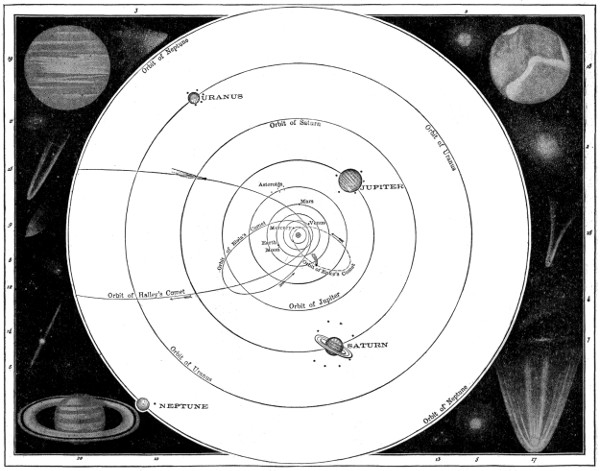
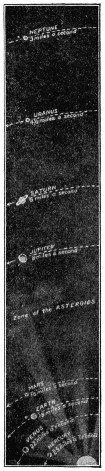
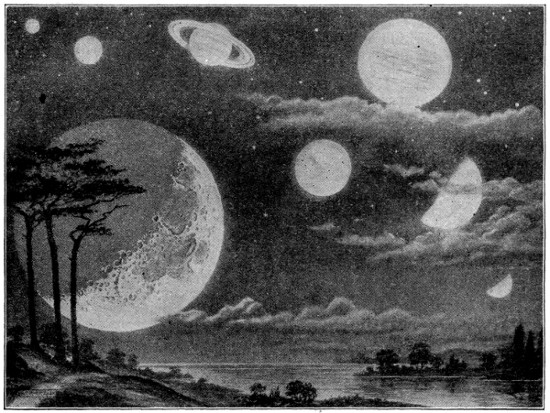
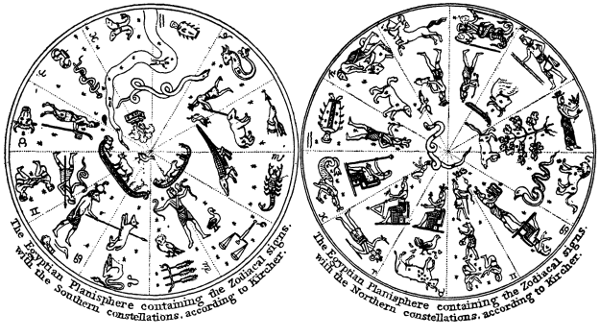
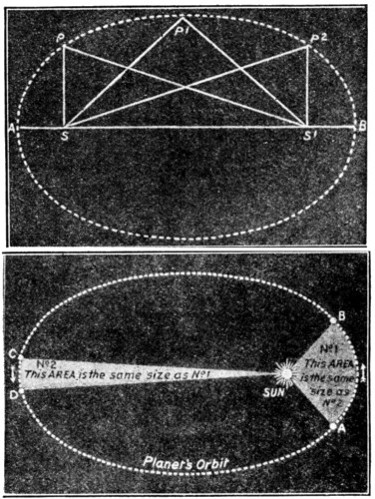
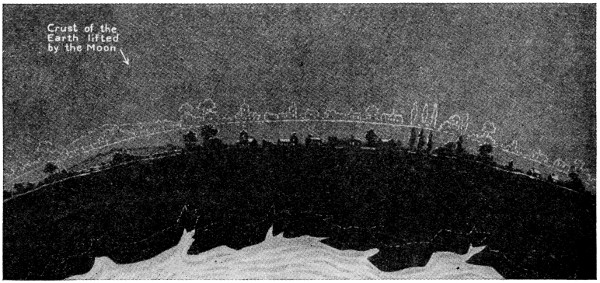
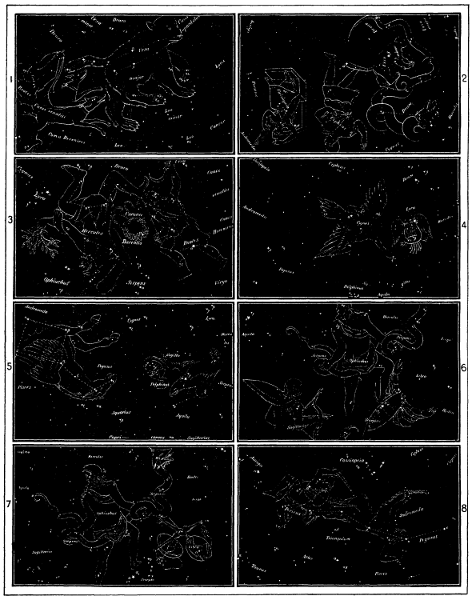
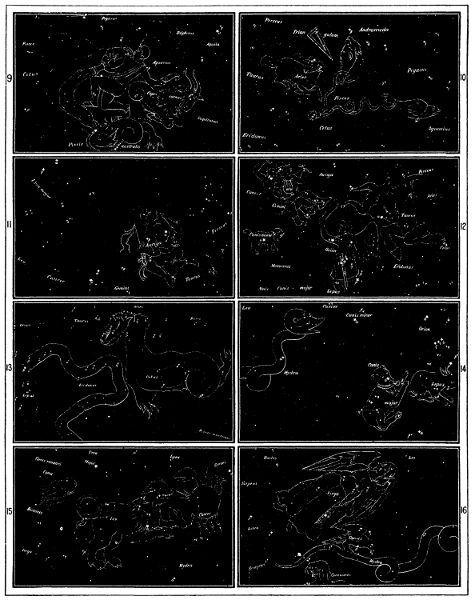
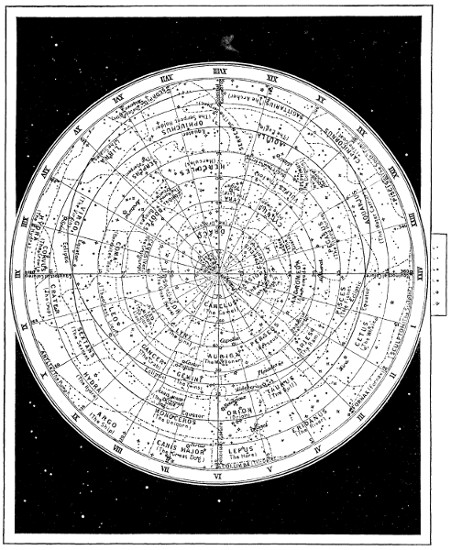
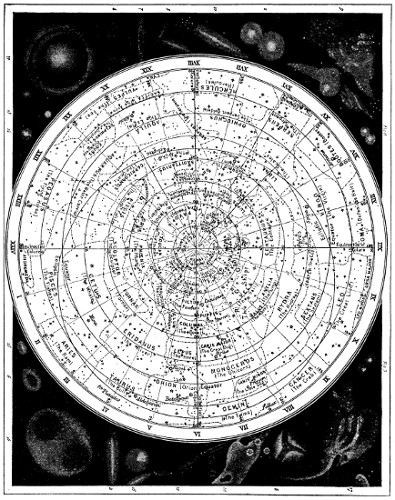
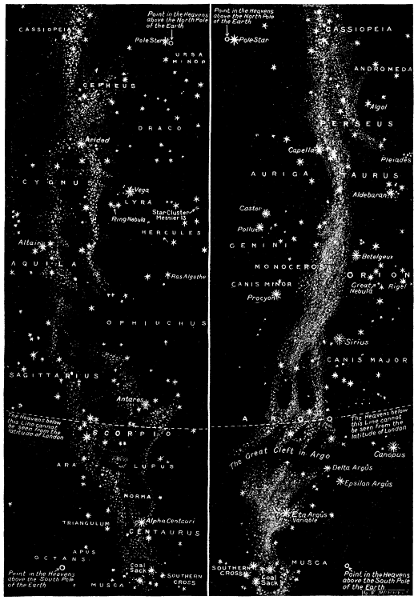
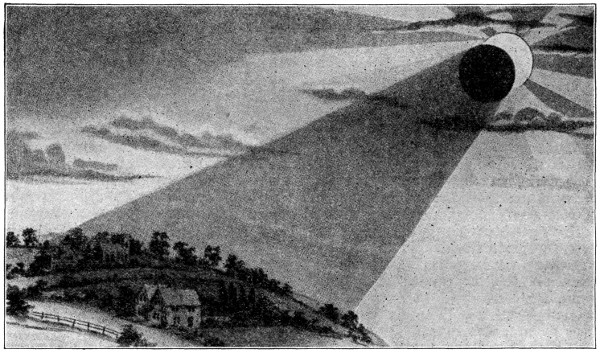
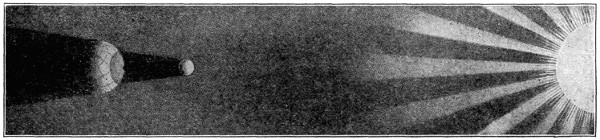
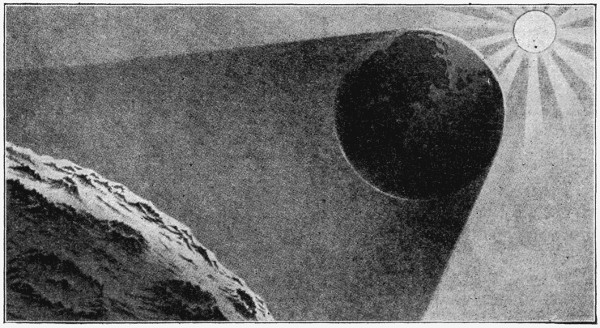
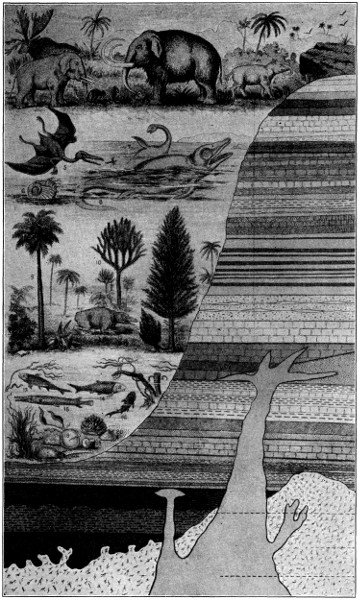
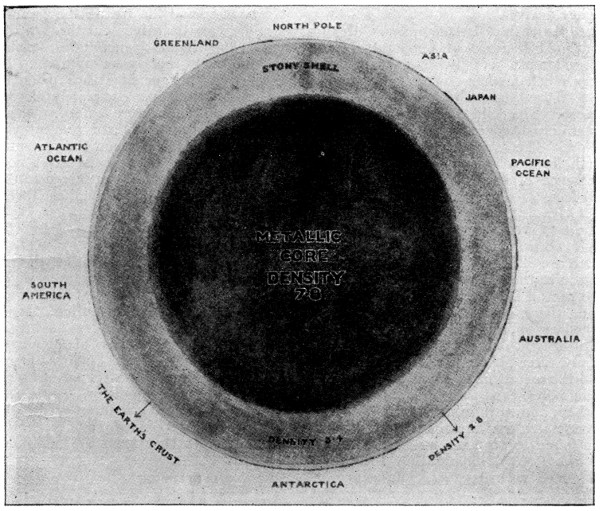
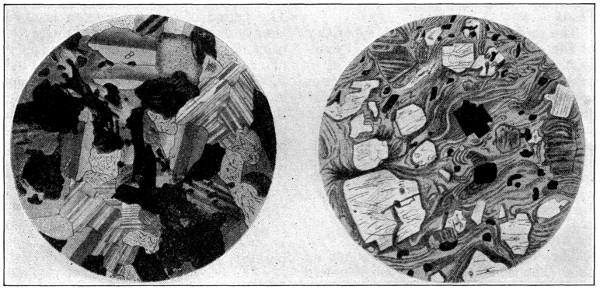
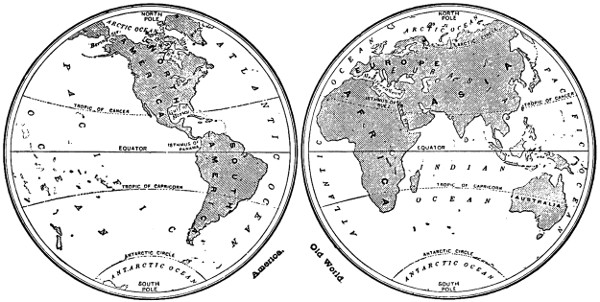
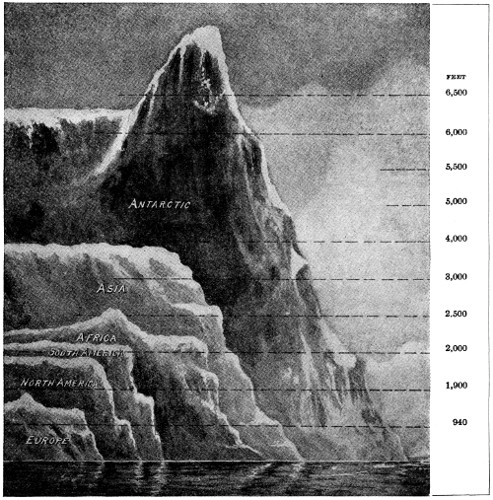
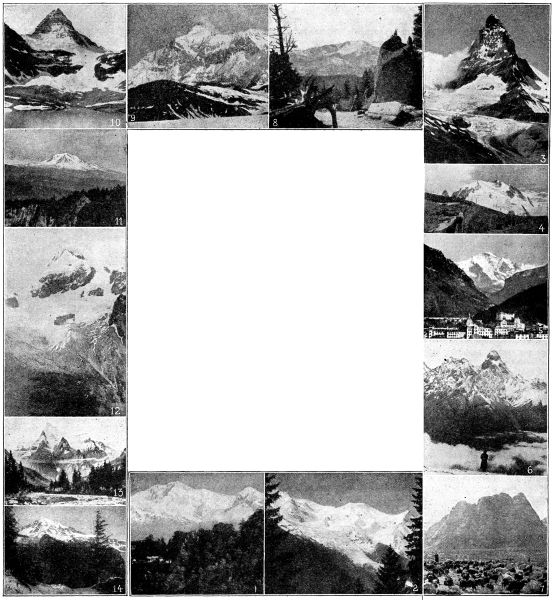
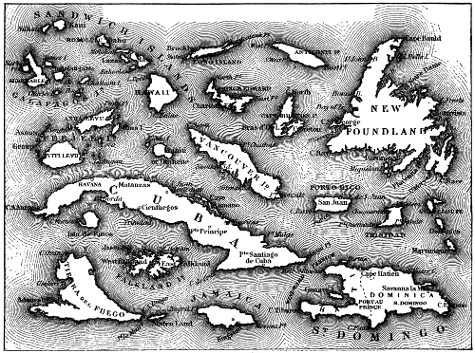
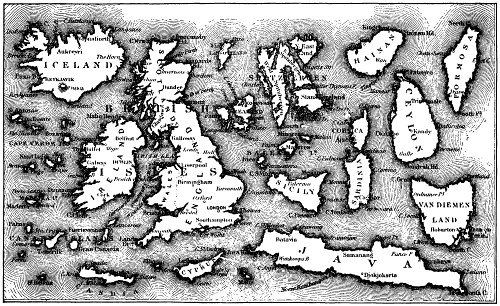
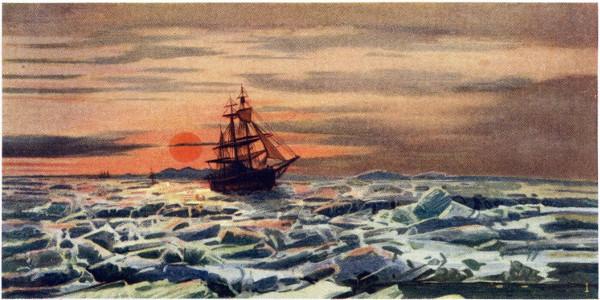
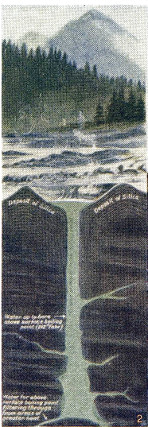
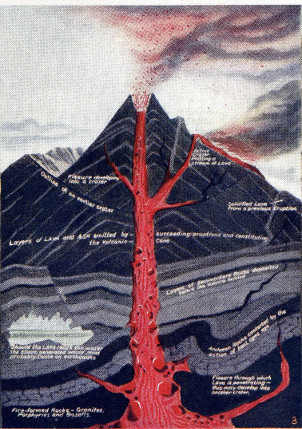
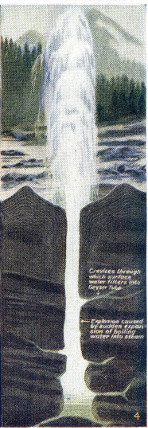
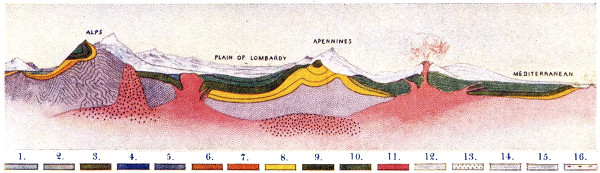
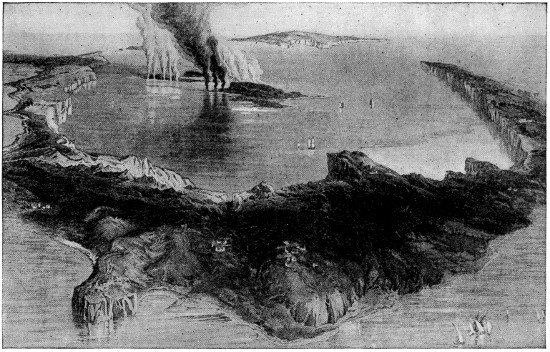
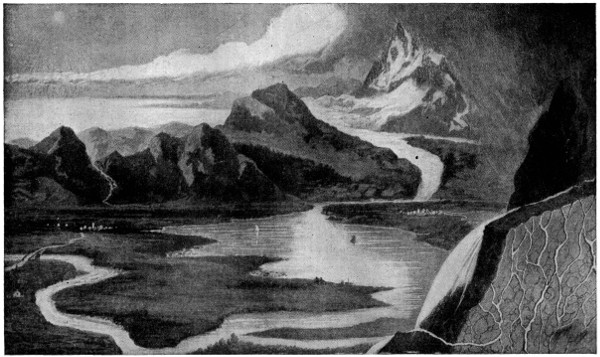
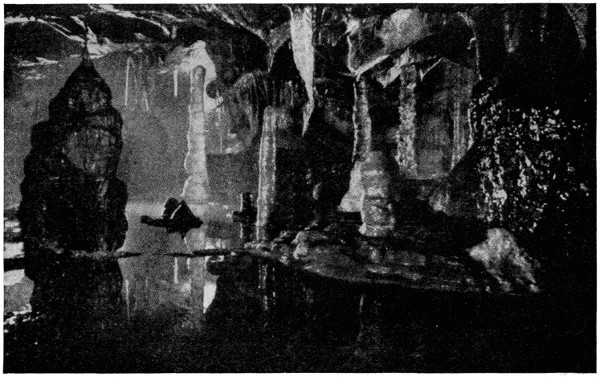
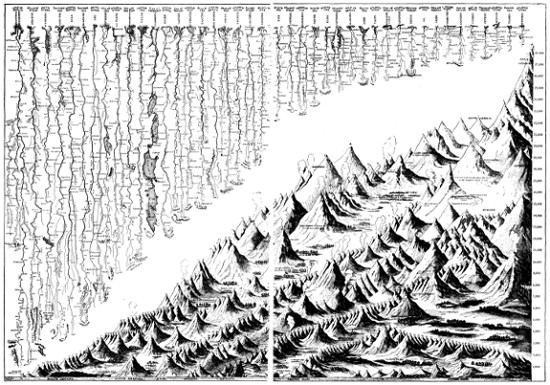
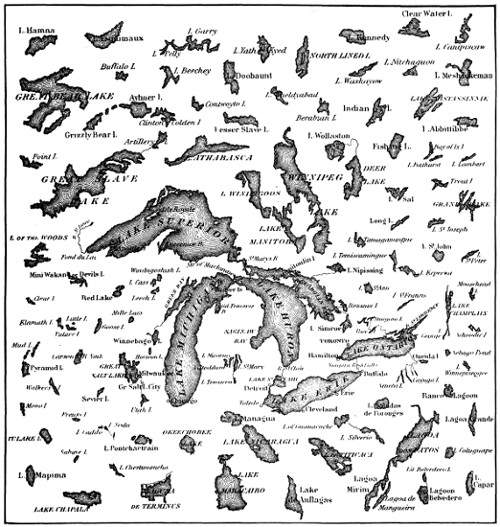
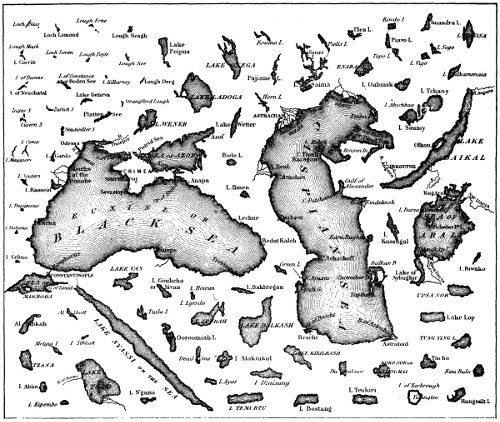

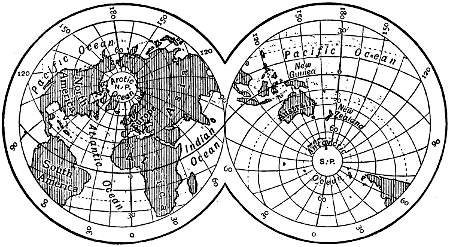
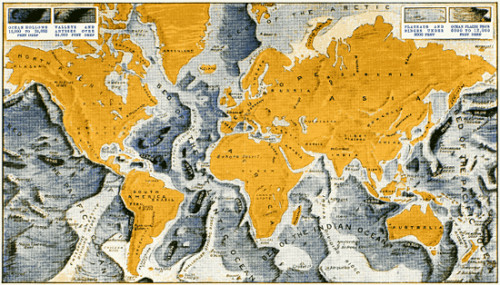

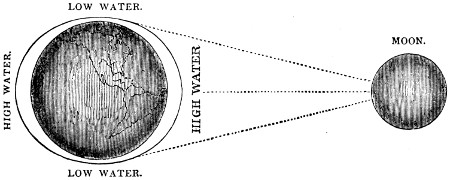
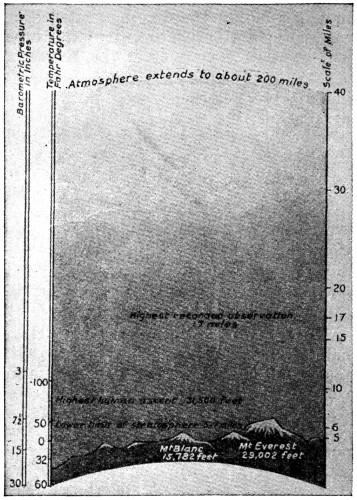
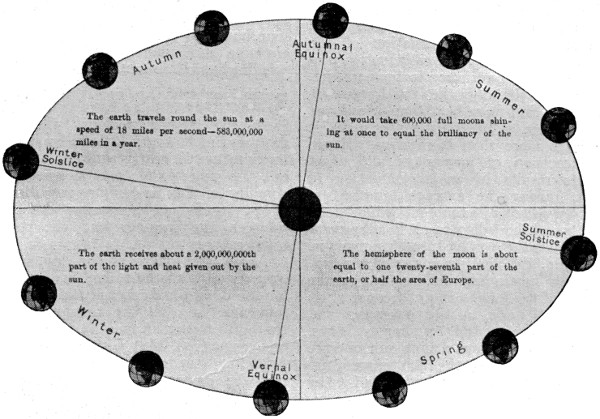
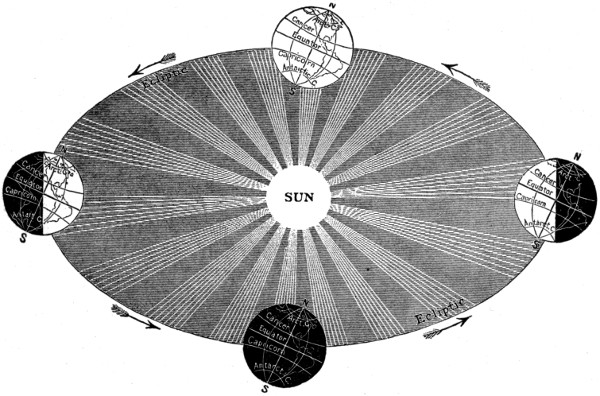
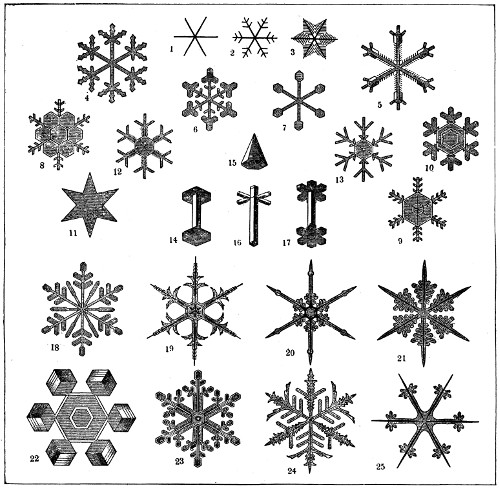
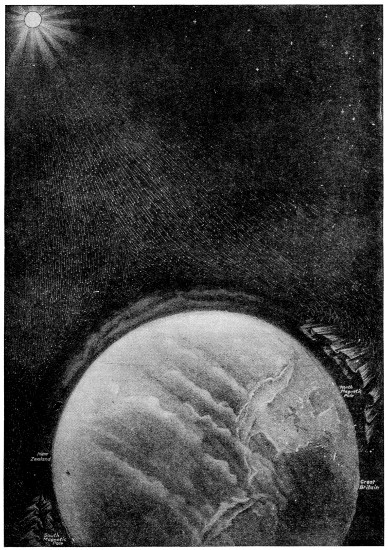
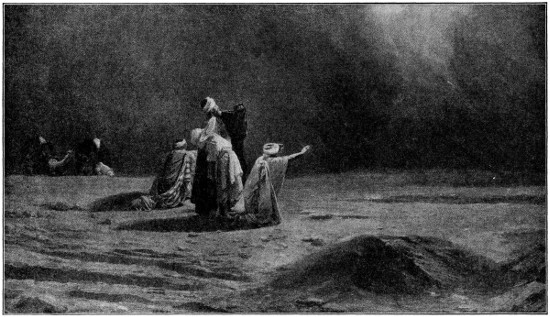
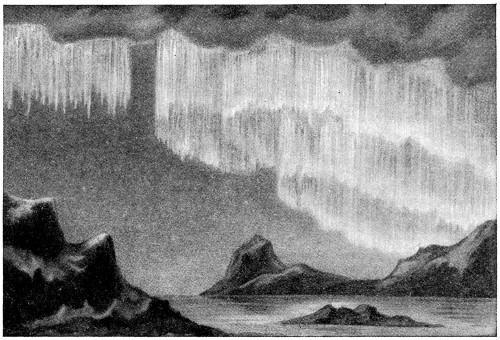
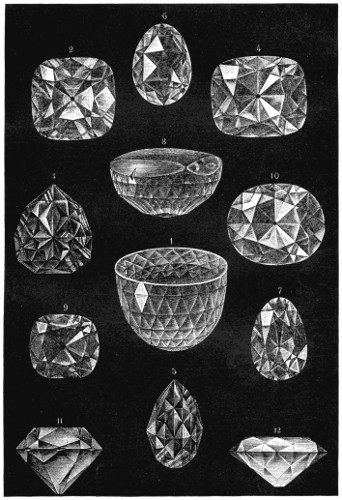
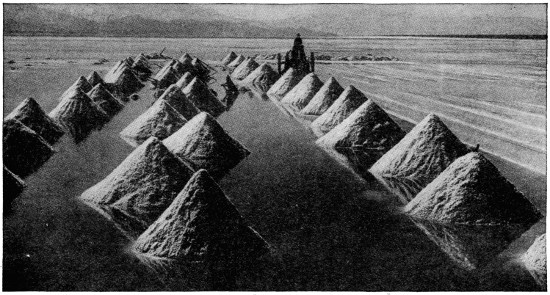
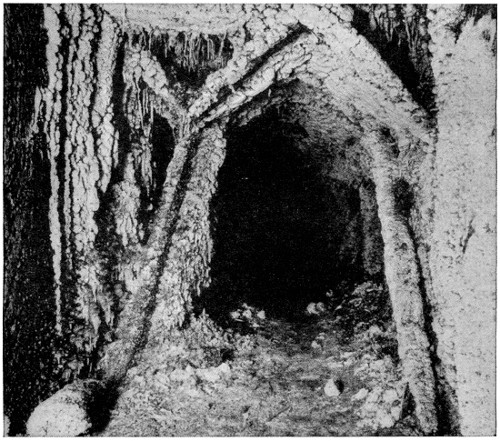
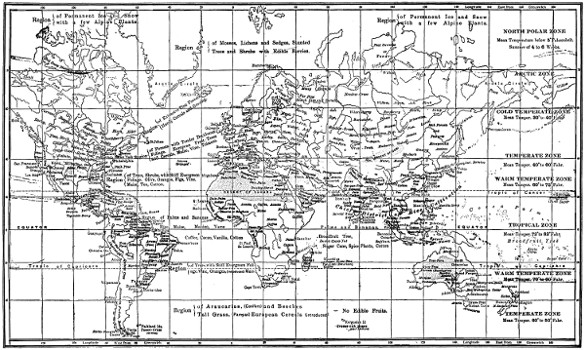
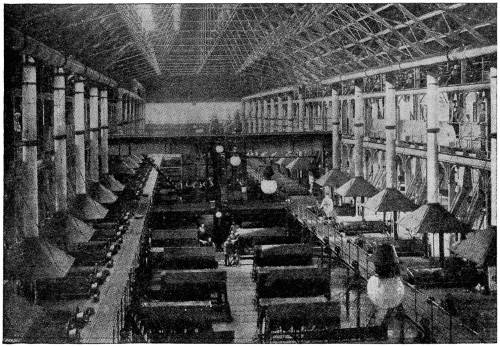
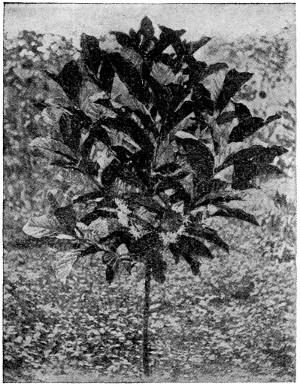
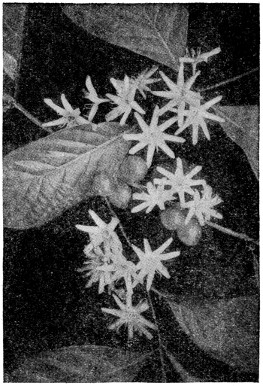
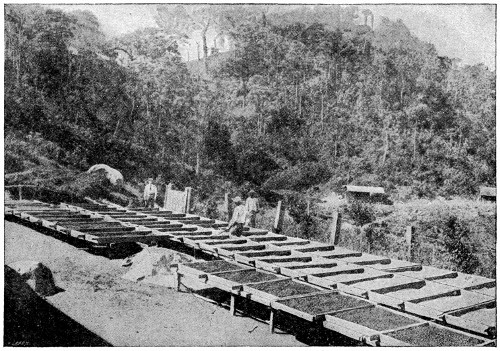
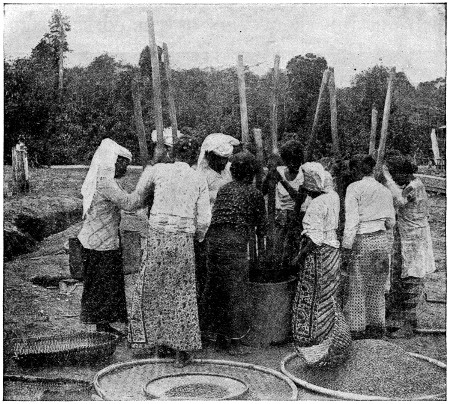
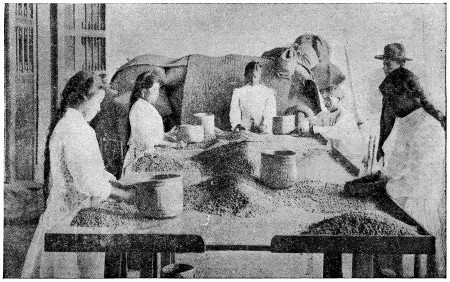
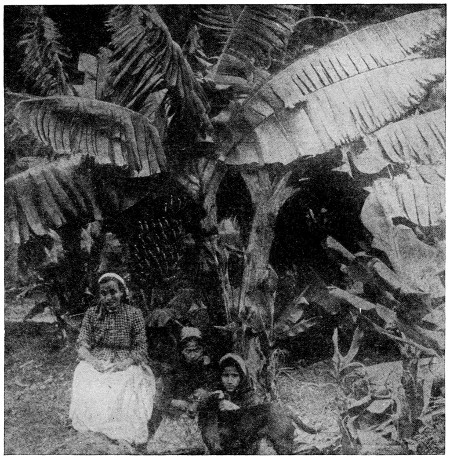
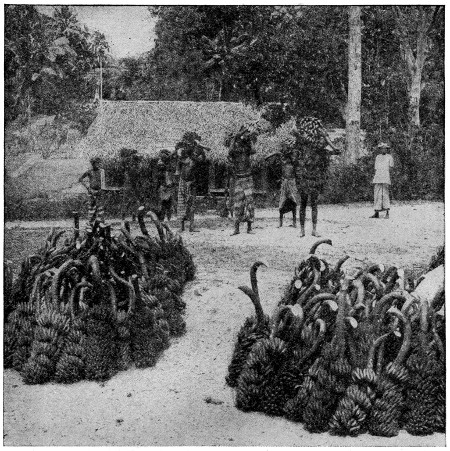
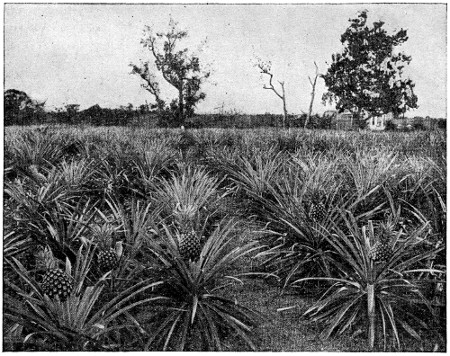
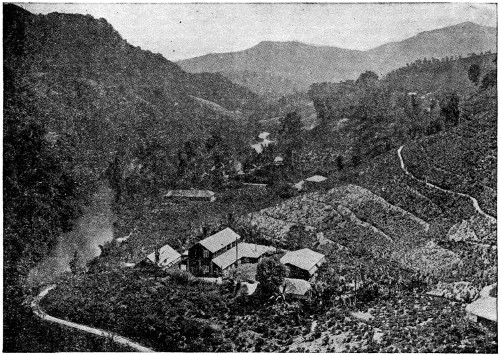
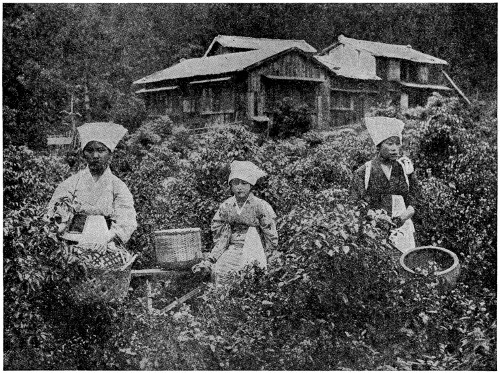
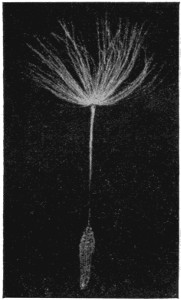
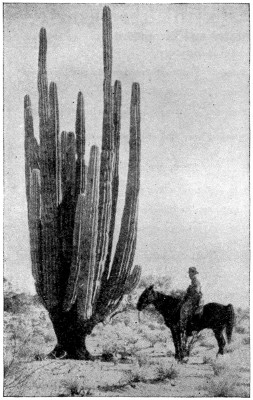
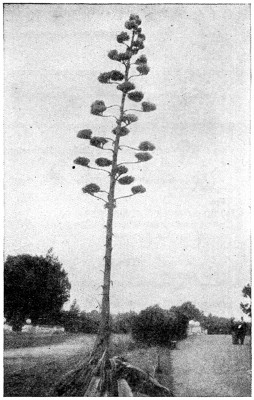
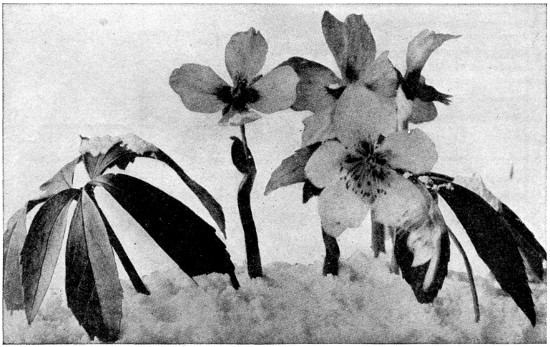
 ; napiform,
  ;
fusiform,
;
fusiform,  .
. necklace-like. Fasciculated,
 tufted, thick and fleshy. Tubercular,
 having small tubers. Fibrous,
 threadlike.
 n,
Node, part to which the leaf is fastened.
n,
Node, part to which the leaf is fastened. prostrate and
rooting from the under surface (Partridge-berry).
prostrate and
rooting from the under surface (Partridge-berry). prostrate,
except at the extremity (Poor
Man’s Weather-glass).
prostrate,
except at the extremity (Poor
Man’s Weather-glass). ascending obliquely.
 climbing with
tendrils or rootlets (Grape,
English Ivy).
climbing with
tendrils or rootlets (Grape,
English Ivy). twining
(Morning-glory).
twining
(Morning-glory). declined or
bent downwards (Blackberry).
declined or
bent downwards (Blackberry). loosely-spreading
(Red Currant).
loosely-spreading
(Red Currant). a branch of subterranean
origin that finally rises out of the ground. The
Raspberry multiplies in this way.
a branch of subterranean
origin that finally rises out of the ground. The
Raspberry multiplies in this way. a short,
prostrate-rooting branch with a tuft
of leaves at the end (Houseleek).
a short,
prostrate-rooting branch with a tuft
of leaves at the end (Houseleek). a long,
prostrate-rooting branch with tuft
of leaves (Strawberry).
a long,
prostrate-rooting branch with tuft
of leaves (Strawberry). a branch that
curves downward and takes
root. The Currant multiplies in this way.
a branch that
curves downward and takes
root. The Currant multiplies in this way. a thread-like
coiling branch used for climbing.
a thread-like
coiling branch used for climbing. a hard,
sharp-pointed branch.
a hard,
sharp-pointed branch. a perennial, horizontal
stem, partially or wholly subterranean (Calamus).
a perennial, horizontal
stem, partially or wholly subterranean (Calamus). an enlarged stem
with eyes (White-potato).
an enlarged stem
with eyes (White-potato). a bud,
usually subterranean with fleshy scales
(Onion, Lily).
a bud,
usually subterranean with fleshy scales
(Onion, Lily). a solid bulb
(Indian Turnip).
a solid bulb
(Indian Turnip). b, Blade, the expanded portion.
 having but one blade.
 without petiole.
 with petiole.
 with stipules.
 with tendril.
 having more than one blade.
 with leaflets arranged along a common
petiole.
with leaflets arranged along a common
petiole. with
even number of leaflets.
with
even number of leaflets. having an
odd leaflet.
having an
odd leaflet. divided
but once.
divided
but once. divided twice.
 leaflets
diverging from one point.
leaflets
diverging from one point. divided
but once.
divided
but once. divided twice.
 divided
three times.
divided
three times. ,
,  strong veins branching from near
the base of midrib.
strong veins branching from near
the base of midrib. small veins.
 with simple veins running
parallel from base to apex.
with simple veins running
parallel from base to apex. with lateral
veins branching at regular intervals
from midrib.
with lateral
veins branching at regular intervals
from midrib. with strong
veins branching from apex of
petiole.
with strong
veins branching from apex of
petiole. with veins
and veinlets that unite and
separate in the form of network.
with veins
and veinlets that unite and
separate in the form of network. ; orbicular,
  ; oval,
  ; elliptical,
  ; oblong,
 ; linear,
  , acerōse,
  (Pine).
 ; ovate
  ;
lanceolate,
;
lanceolate,  ; subulate,
  ; cordate,
  ; reniform,
 ; hastate,
  ; sagittate,
  .
. ; oblanceolate,
 ; spatulate
  ; cuneate
  ; obcordate,
  ;
lyrate,
;
lyrate,  ; runcinate,
  .
. ;
oblique,
;
oblique,  ; tapering,
  ;
abrupt,
;
abrupt,  ; clasping,
 ; perfoliate,
  ; connate,
 ; decurrent,
  .
. ; emarginate,
  ; retuse,
 ; truncate,
  ; obtuse,
  ; acute
  ; acuminate,
 ; mucronate,
  ; cuspidate,
  ; aristate,
 .
. ;
repand,
;
repand,  ; sinuate,
 ;
crenate,
;
crenate,  ; dentate,
  ; serrate,
  ; incised,
 ; laciniate,
  ; palmately-lobed,
  ; palmately-cleft,
 ; palmately-parted,
  ; palmately-divided,
 ; pinnately-lobed,
  ; pinnately-cleft,
 ; pinnately-parted,
  ; pinnately-divided,
 .
. ;
opposite,
;
opposite,  ; whorled (verticillate);
radical,
; whorled (verticillate);
radical,  near
the ground; cauline, on the stem; rosulate,
near
the ground; cauline, on the stem; rosulate,  clustered;
fascículate,
clustered;
fascículate,  in bundles.
 folded
crosswise (Tulip-tree).
folded
crosswise (Tulip-tree). folded along
midrib (Oak).
folded along
midrib (Oak). folded like a fan
(Red-currant).
folded like a fan
(Red-currant). rolled
lengthwise (Fern).
rolled
lengthwise (Fern). rolled
edgewise (Cherry).
rolled
edgewise (Cherry). both edges
rolled inward (Apple).
both edges
rolled inward (Apple). both edges
rolled outward (Willow).
both edges
rolled outward (Willow). astraddle
(Iris).
astraddle
(Iris). half
equitant (Jerusalem Sage).
half
equitant (Jerusalem Sage). triangular
equitant (Sedges).
triangular
equitant (Sedges). the blossom.
 the stem of a
solitary flower or the main
stem of a flower-cluster.
the stem of a
solitary flower or the main
stem of a flower-cluster. a peduncle that
grows from the ground.
a peduncle that
grows from the ground. , p, the stem of
each flower of a flower-cluster.
, p, the stem of
each flower of a flower-cluster. a cluster of
bracts.
a cluster of
bracts. in the axils
of the leaves.
in the axils
of the leaves. flowers arranged
along the axis; pedicels about equal in length (Currant).
flowers arranged
along the axis; pedicels about equal in length (Currant). same as raceme,
except that the lower pedicels are elongated, making the top flat (Hawthorn).
same as raceme,
except that the lower pedicels are elongated, making the top flat (Hawthorn). same as corymb, except
that the pedicels branch from about the same point (Milkweed).
same as corymb, except
that the pedicels branch from about the same point (Milkweed). compound raceme
(Blue-grass).
compound raceme
(Blue-grass). same as raceme with
flowers sessile (Mullein).
same as raceme with
flowers sessile (Mullein). a fleshy spike,
generally enveloped by a large bract called a Spāthe,
a fleshy spike,
generally enveloped by a large bract called a Spāthe,  (Calla Lily).
 a
slender pendent spike, with scaly bracts (Birch).
a
slender pendent spike, with scaly bracts (Birch). a
shortened spike, reduced to a globular form (Clover).
a
shortened spike, reduced to a globular form (Clover). flat-topped or
rounded inflorescence (Elder).
flat-topped or
rounded inflorescence (Elder). two opposite
glomerules joined
(Motherwort).
two opposite
glomerules joined
(Motherwort). a one-sided
and coiled cyme (Forget-me-not).
a one-sided
and coiled cyme (Forget-me-not). the exterior floral
envelope.
the exterior floral
envelope. the interior
floral envelope. The calyx and
corolla constitute the protecting organs, sometimes called
perianth.
the interior
floral envelope. The calyx and
corolla constitute the protecting organs, sometimes called
perianth. the fertilizing
organs.
the fertilizing
organs. the seed-bearing
organs. The stamens and pistils
constitute the essential organs.
the seed-bearing
organs. The stamens and pistils
constitute the essential organs. same number in each set of
organs; unsymmetrical, different number.
same number in each set of
organs; unsymmetrical, different number. all the sets
present; incomplete, some sets
wanting.
all the sets
present; incomplete, some sets
wanting. sepals and petals
uniform; irregular,
sepals and petals
uniform; irregular,  sepals or petals unlike.
 trí,
tetrá, pentá-merous,
trí,
tetrá, pentá-merous,  two,
three, four,
or five parts in each set.
two,
three, four,
or five parts in each set. with peduncle.
 shows the transverse chorisis of corolla.
 union of parts
of the same set (corolla of
Morning-glory).
union of parts
of the same set (corolla of
Morning-glory). the
divisions of the calyx.
the
divisions of the calyx. in Compositæ,
the calyx border consisting of
scales, teeth, bristles, or slender hairs.
in Compositæ,
the calyx border consisting of
scales, teeth, bristles, or slender hairs. sepals
partially or wholly grown together.
sepals
partially or wholly grown together. without lobes.
 lobes small.
 parted about one
fourth.
parted about one
fourth. parted about one
half.
parted about one
half. separated nearly
to the base.
separated nearly
to the base. separated
to the base.
separated
to the base. calyx free from ovary.
 calyx
adherent to the ovary half-way.
calyx
adherent to the ovary half-way. calyx adherent
to the ovary.
calyx adherent
to the ovary. the
divisions of the Corolla.
the
divisions of the Corolla. , the stem portion of
the petal.
, the stem portion of
the petal. ; s, the hollow
portion of certain corollas.
; s, the hollow
portion of certain corollas. , a small projection
from certain petals
(Catchfly).
, a small projection
from certain petals
(Catchfly). petals
partially or wholly grown together.
petals
partially or wholly grown together. toothed,
lobed,
toothed,
lobed,  cleft, parted.
 petals
separate.
petals
separate. corolla attached under
the pistil (gynia, pistil).
corolla attached under
the pistil (gynia, pistil). corolla attached to the calyx. It is thus
around the pistil.
corolla attached to the calyx. It is thus
around the pistil. corolla
attached to the ovary. It is thus
upon the ovary which is a part of the pistil.
corolla
attached to the ovary. It is thus
upon the ovary which is a part of the pistil. urn-shaped
(Whortleberry).
urn-shaped
(Whortleberry). cylindrical
(Trumpet Honeysuckle)
cylindrical
(Trumpet Honeysuckle) bell-shaped (Harebell).
 funnel-shaped (Morning-glory).
 salver-shaped (Phlox).
 wheel-shaped
(Potato).
wheel-shaped
(Potato). strap-shaped (Dandelion).
 upper lip
arched (Catmint).
upper lip
arched (Catmint). both lips
arched (Dead-nettle).
both lips
arched (Dead-nettle). throat
closed (Toad-flax).
throat
closed (Toad-flax). petals without claws (Rose).
 petals
with claws gradually spreading (Lily).
petals
with claws gradually spreading (Lily). four
clawed petals in the form of a cross (Mustard).
four
clawed petals in the form of a cross (Mustard). butterfly-shaped (Bean).
 pieces met by
their margins (Lilac).
pieces met by
their margins (Lilac). margins turned
inward (sepals of
Clematis).
margins turned
inward (sepals of
Clematis). margins
turned outward (sepals of
Hollyhock).
margins
turned outward (sepals of
Hollyhock). each piece overlaps its
neighbor in one direction (Geranium).
each piece overlaps its
neighbor in one direction (Geranium). one or more
petals wholly outside.
one or more
petals wholly outside. five
petals, two without and two
within and the remaining one with one edge outside
and the other inside.
five
petals, two without and two
within and the remaining one with one edge outside
and the other inside. three petals, one without and one
within, and the remaining one with one edge outside
and the other inside.
three petals, one without and one
within, and the remaining one with one edge outside
and the other inside. having
one large petal enclosing the
others (Pea).
having
one large petal enclosing the
others (Pea). the folding of
gamopétalous flowers.
the folding of
gamopétalous flowers. with folds
turned obliquely in the
same direction (Morning-glory).
with folds
turned obliquely in the
same direction (Morning-glory). Anther, the
enlarged and essential portion.
Anther, the
enlarged and essential portion. anther without filament.
 converging.
 protruding out of
corolla.
protruding out of
corolla. four in
number, two long and two short.
four in
number, two long and two short. six in number, four long and two
short.
six in number, four long and two
short. united by their anthers.
 borne on the receptacle.
 borne on the calyx.
 with the lobes.
 anther firm on summit of filament.
 anther
attached by its whole length to filament.
anther
attached by its whole length to filament. attached near
the middle.
attached near
the middle. opening lengthwise.
 opening
crosswise.
opening
crosswise. opening by terminal
holes.
opening by terminal
holes. opening by valves
or doors.
opening by valves
or doors. Stigma,
the rough end to which the pollen
adheres.
Stigma,
the rough end to which the pollen
adheres. having but one cell, placenta
style and stigma.
having but one cell, placenta
style and stigma. a collection
of simple pistils (Blackberry).
a collection
of simple pistils (Blackberry). simple
pistils grown together, each called a
carpel.
simple
pistils grown together, each called a
carpel. broad and flat.
 attached to top
of ovary.
attached to top
of ovary. partitions.
 calyx adherent to ovary,
same as superior calyx.
calyx adherent to ovary,
same as superior calyx. calyx
free from ovary, same as inferior calyx.
calyx
free from ovary, same as inferior calyx. ovules attached to a
central column in a one-celled ovary (Pink).
ovules attached to a
central column in a one-celled ovary (Pink). ovules attached
to a central column in a
compound ovary.
ovules attached
to a central column in a
compound ovary. ovules
attached to the outer walls of the
ovary.
ovules
attached to the outer walls of the
ovary. straight; no change in direction
of parts (Buckwheat).
straight; no change in direction
of parts (Buckwheat). curved; the micropyle brought
near the chalaza (Bean).
curved; the micropyle brought
near the chalaza (Bean). inverted; the micropyle brought near the
hilum, pointing to the placentæ. Rhaphe the whole length
of the ovule (Magnolia).
inverted; the micropyle brought near the
hilum, pointing to the placentæ. Rhaphe the whole length
of the ovule (Magnolia). half inverted; short rhaphe (Mallow).
 ; ascending,
  ; horizontal,
 ; pendulous,
  ; suspended,
  .
. opening of the partitions.
 opening
at the dorsal suture.
opening
at the dorsal suture. valves falling away from partitions.
 opening
by a circular horizontal line.
opening
by a circular horizontal line. coat
separable from seed (Dandelion).
coat
separable from seed (Dandelion). (Acorn).
 having winged
appendages (Maple).
having winged
appendages (Maple). opening by a ventral
suture (Columbine).
opening by a ventral
suture (Columbine). opening by both
sutures (Bean).
opening by both
sutures (Bean). jointed legume
(Desmodium).
jointed legume
(Desmodium). a two-valved
capsule (Mustard).
a two-valved
capsule (Mustard). a short
silique (Shepherd’s Purse).
a short
silique (Shepherd’s Purse). circumscissile
dehiscence (Purslane).
circumscissile
dehiscence (Purslane). . A cluster of carpels on
one receptacle taken as a whole (Raspberry).
. A cluster of carpels on
one receptacle taken as a whole (Raspberry). a tuft of hairs on certain
seeds (Silkweed).
a tuft of hairs on certain
seeds (Silkweed).
 the
rudimentary stem or first internode.
the
rudimentary stem or first internode. the
food for the plantlet’s first
growth, stored outside the embryo.
the
food for the plantlet’s first
growth, stored outside the embryo. ; campylótropous,
 ; anátropous,
  ; amphítropous,
 same as in ovule.
 having expanded
appendages (Catalpa).
having expanded
appendages (Catalpa). with coma at the
end (Willow Herb).
with coma at the
end (Willow Herb). (Corn).
 (Bean).
 (Pine).
 embryo on one side
of albumen (Indian
Corn).
embryo on one side
of albumen (Indian
Corn). curved
around albumen (Four-o’clock).
curved
around albumen (Four-o’clock). applied to the
cotyledons when the radicle
is bent and lies along their edge (Water-cress).
applied to the
cotyledons when the radicle
is bent and lies along their edge (Water-cress). applied to the
cotyledons when the radicle
rests against the back of one of them (Shepherd’s
Purse).
applied to the
cotyledons when the radicle
rests against the back of one of them (Shepherd’s
Purse). applied to
cotyledons that are incumbent
and so folded as to embrace the radicle (Mustard).
applied to
cotyledons that are incumbent
and so folded as to embrace the radicle (Mustard).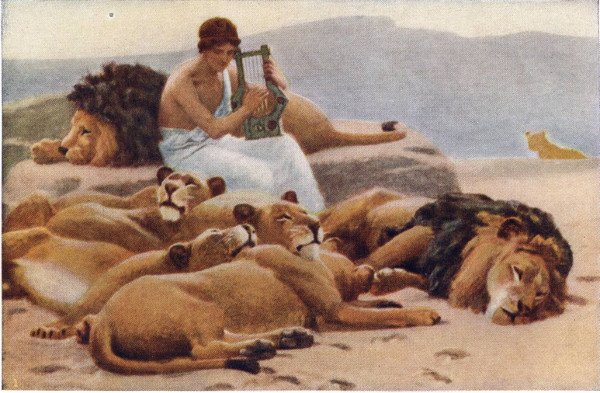
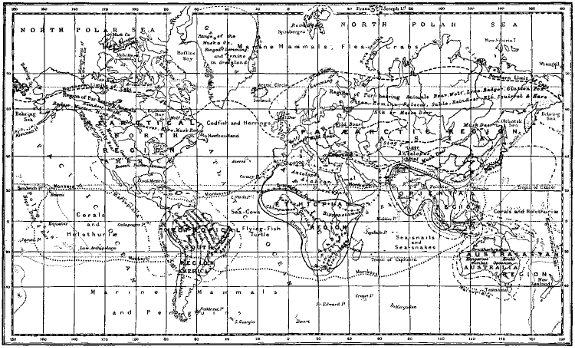
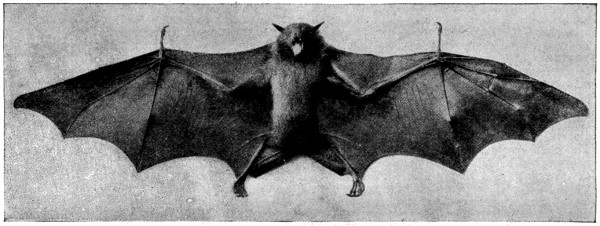
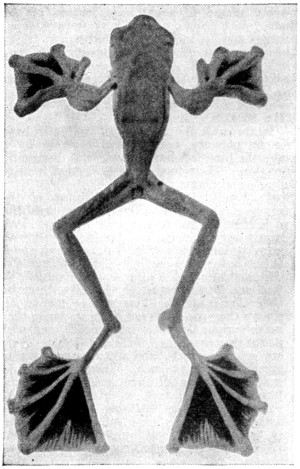
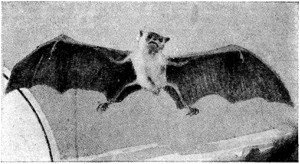
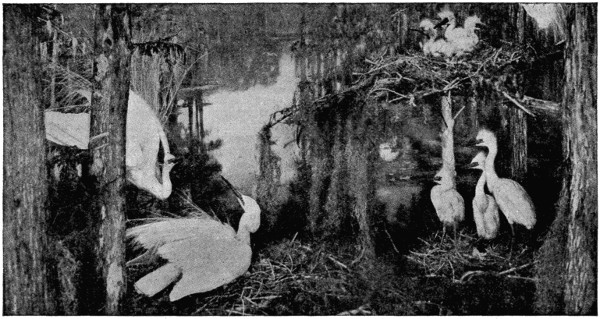
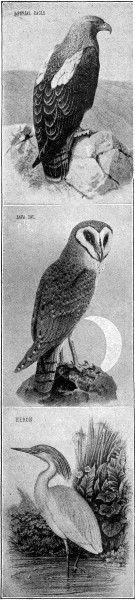
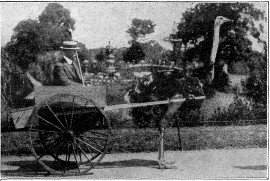
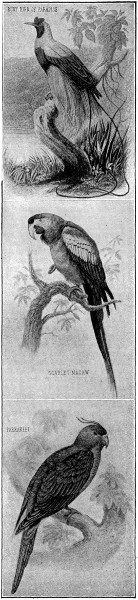
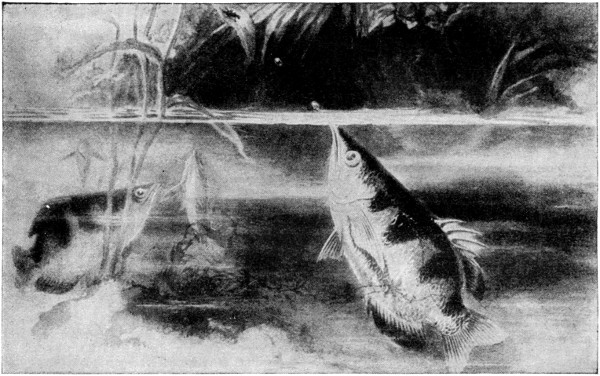
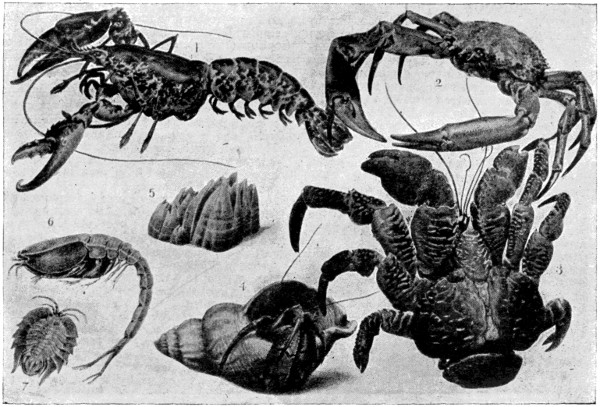
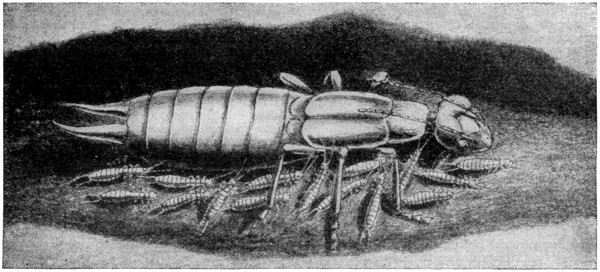
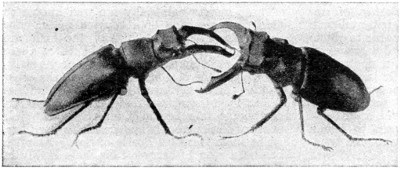
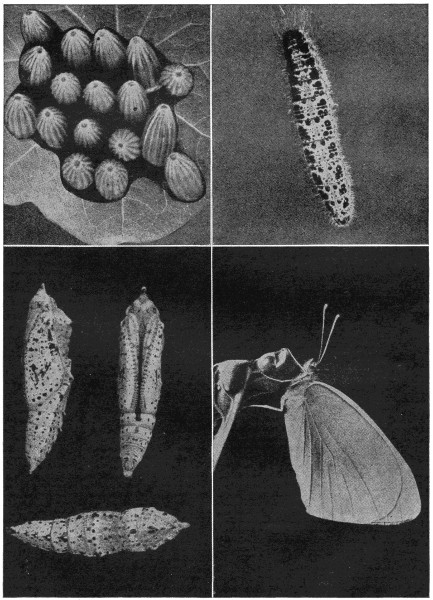
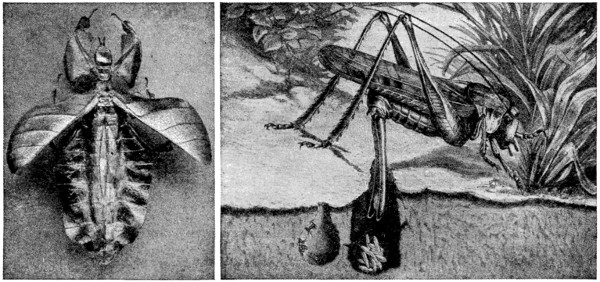
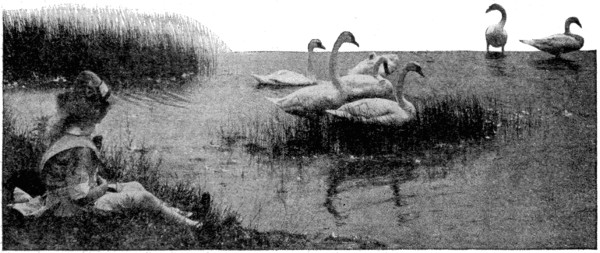
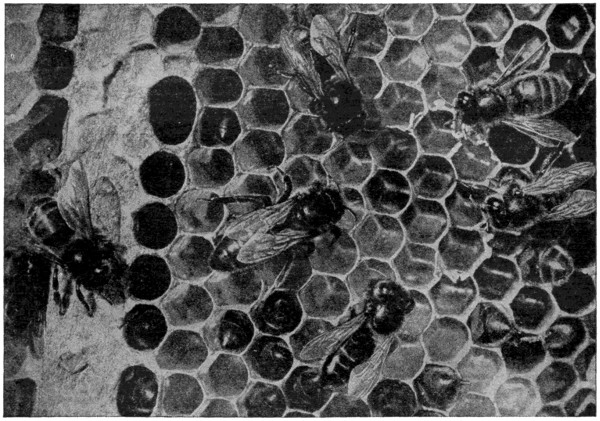
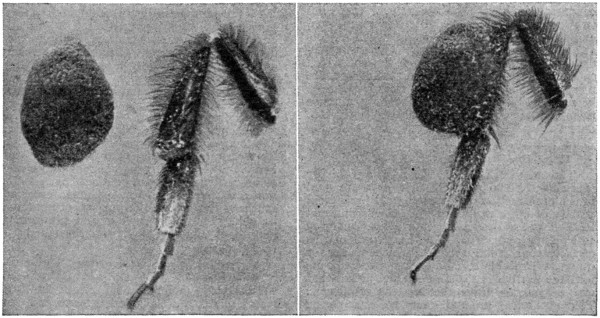
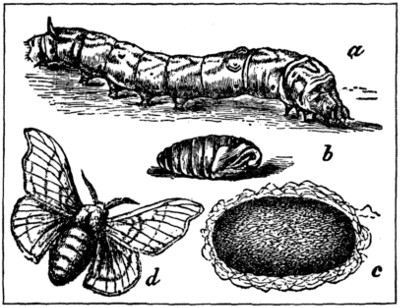
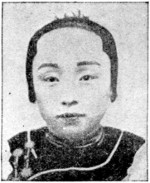
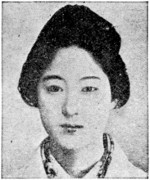
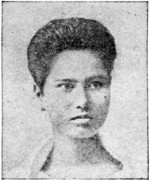
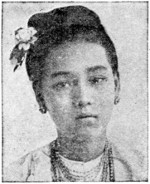
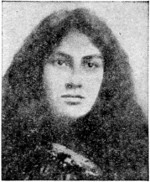
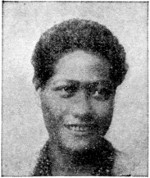
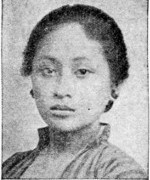
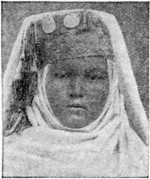
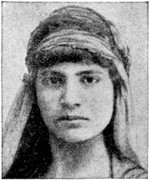
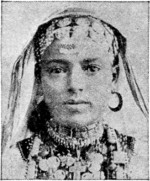
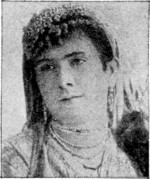
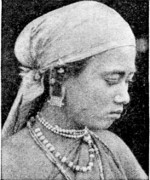
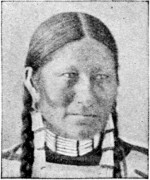
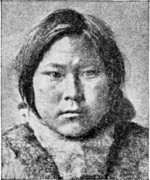
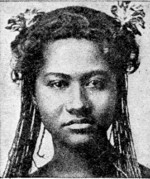
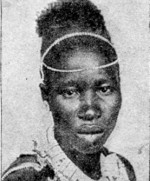
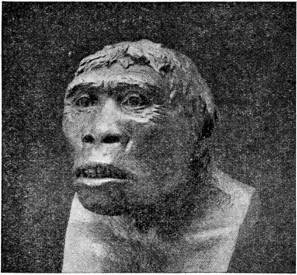
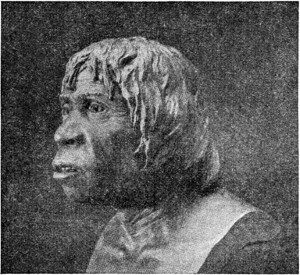
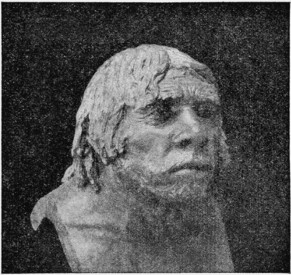
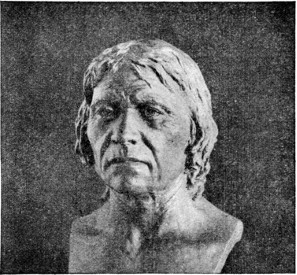
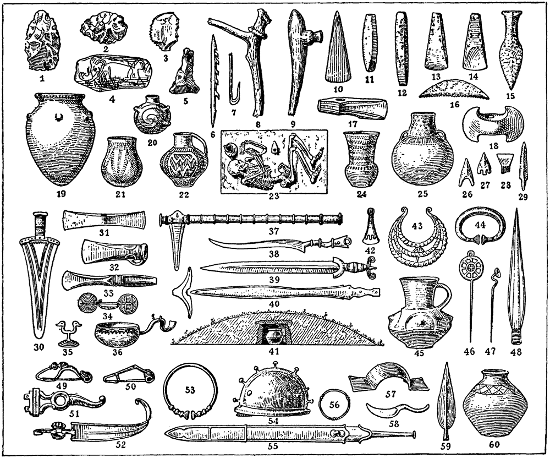
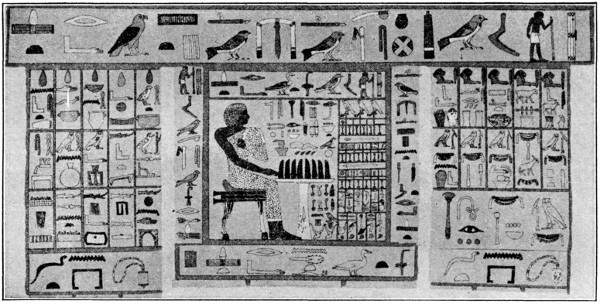
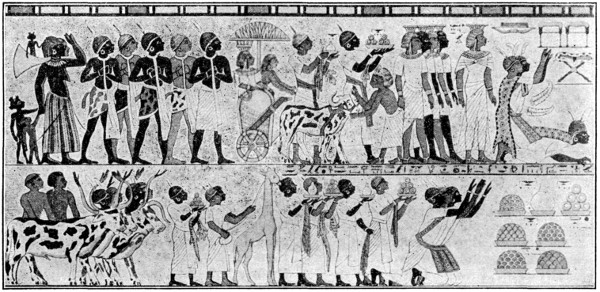
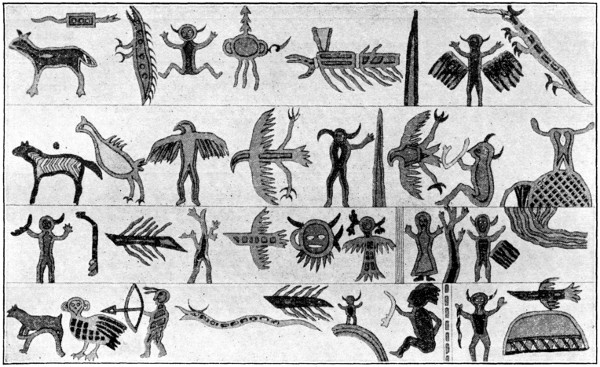
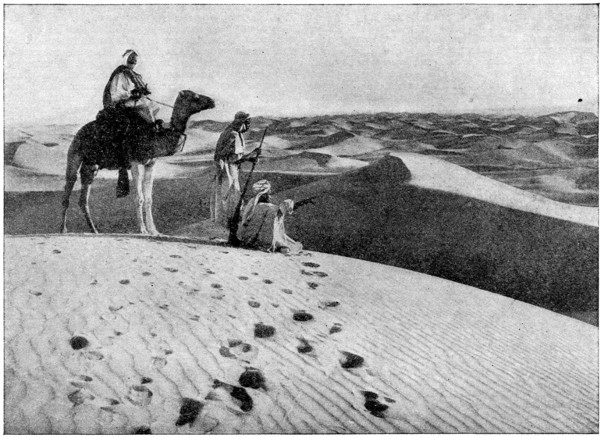
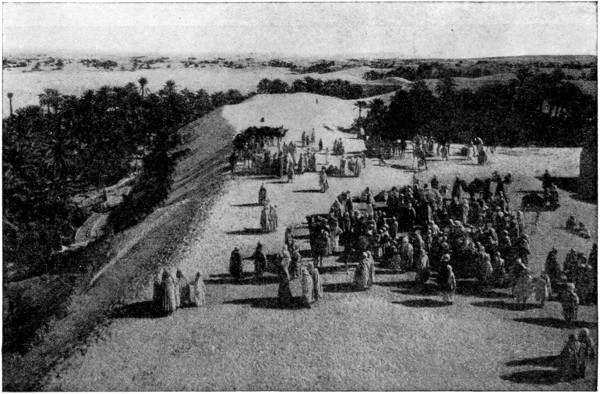
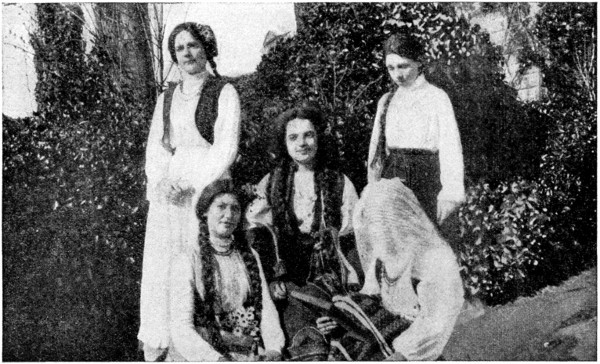
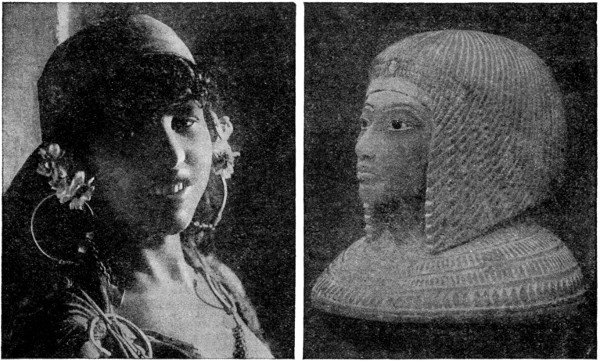
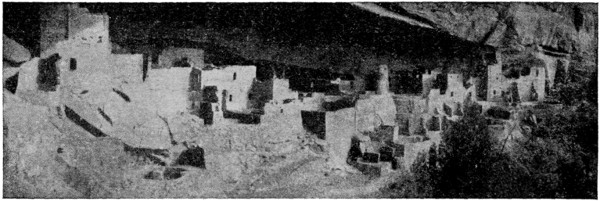
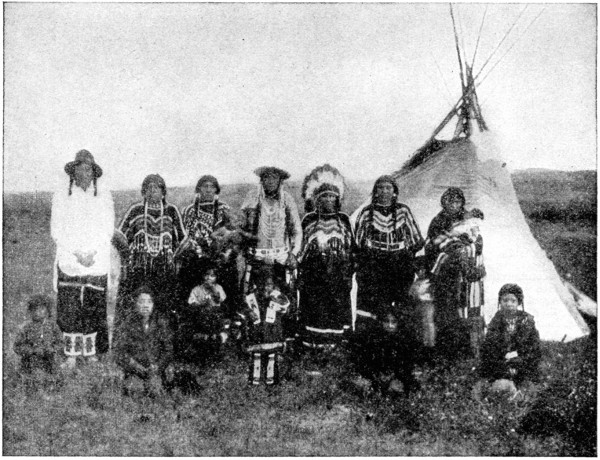
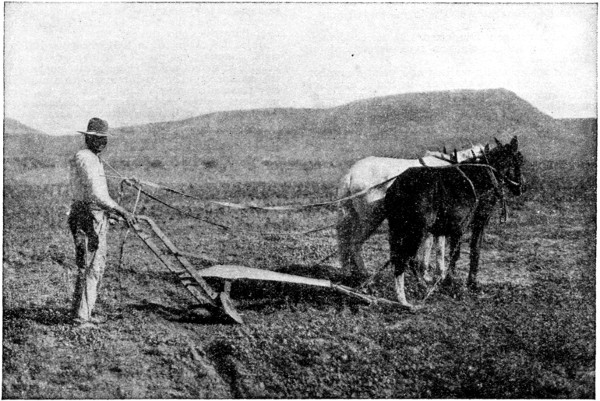
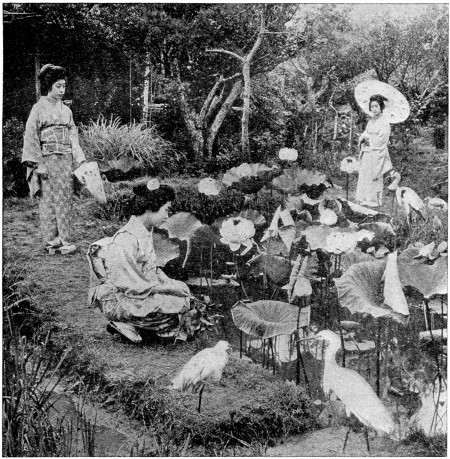
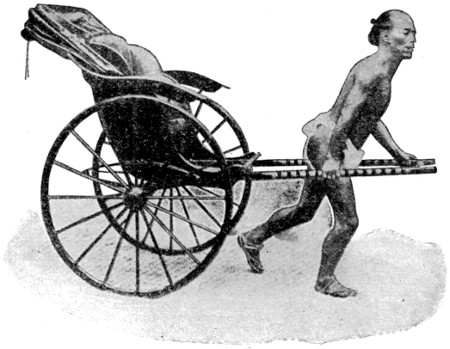
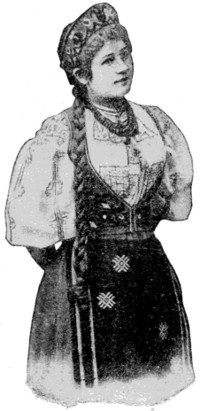
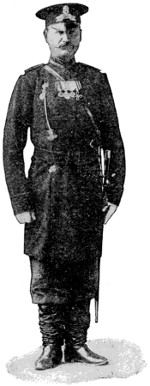
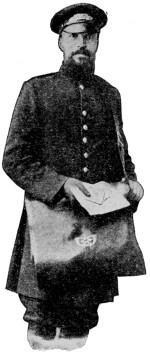
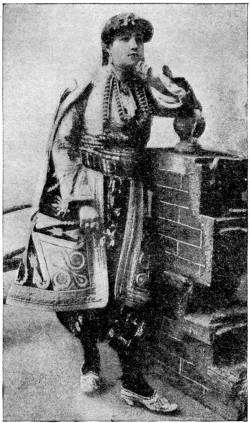
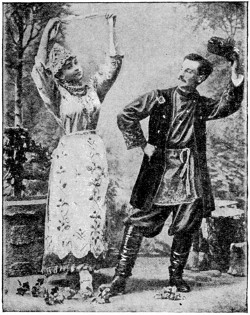
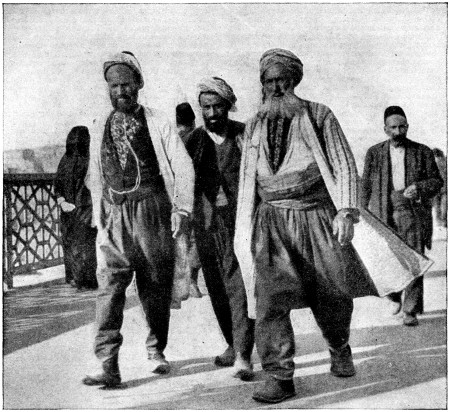
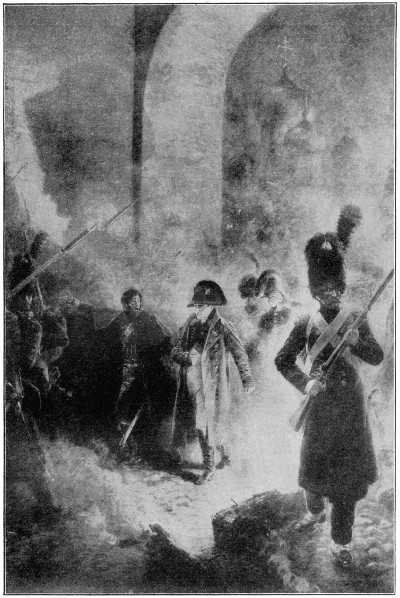
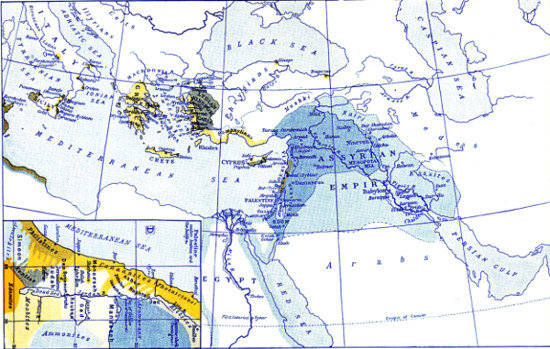
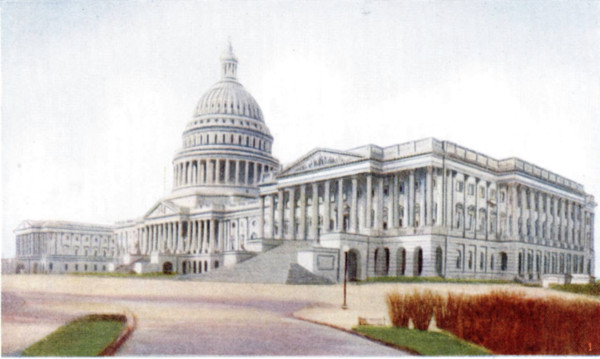

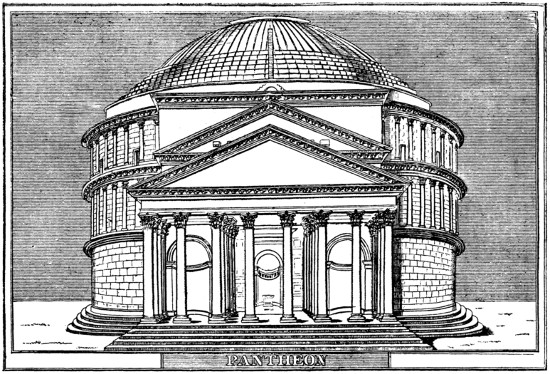
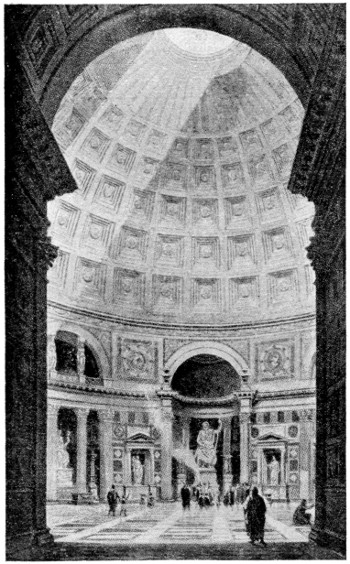
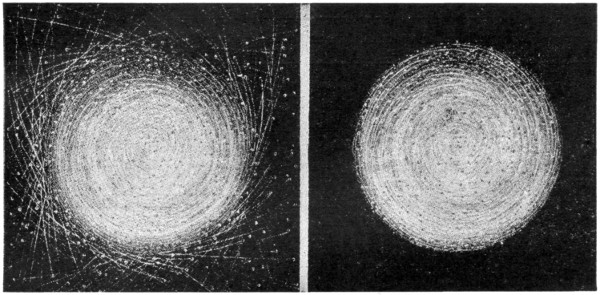
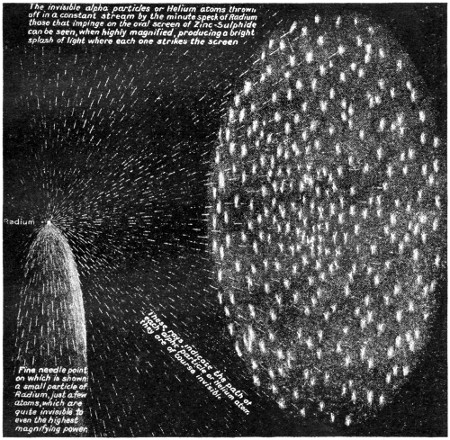
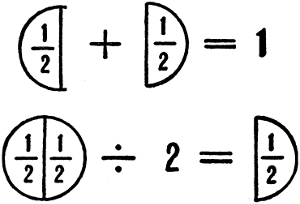
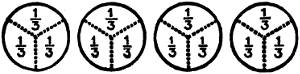


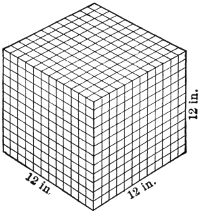
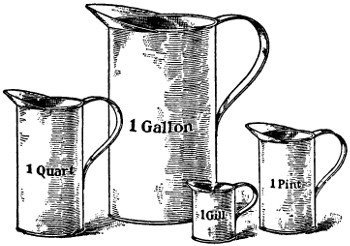
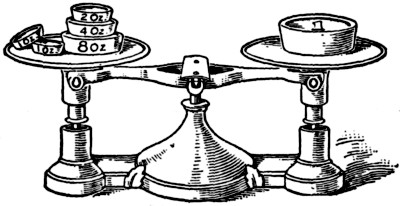
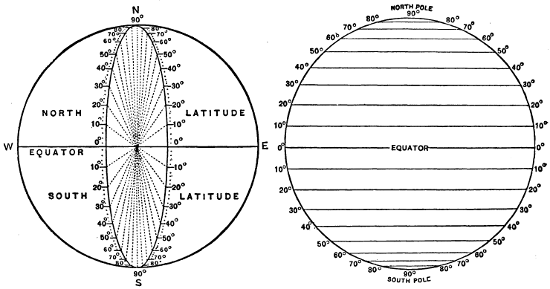
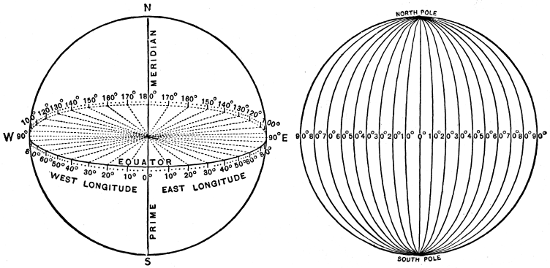
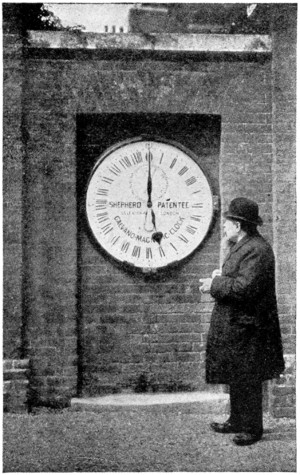
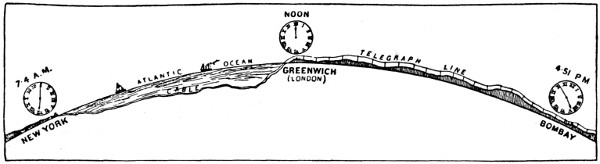
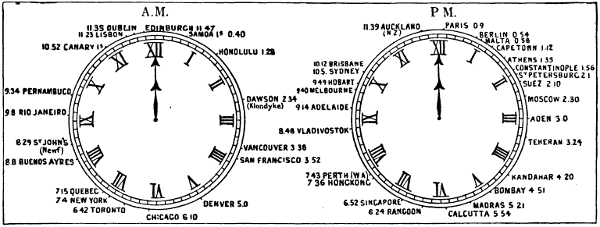
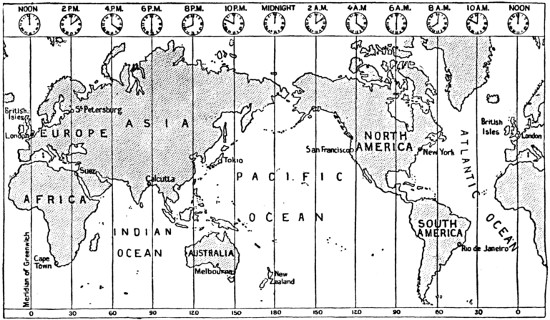
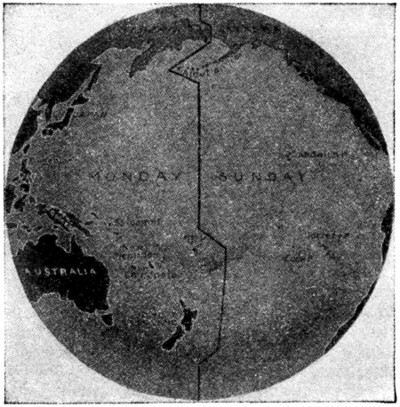
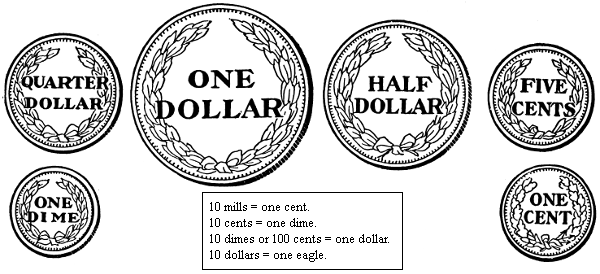
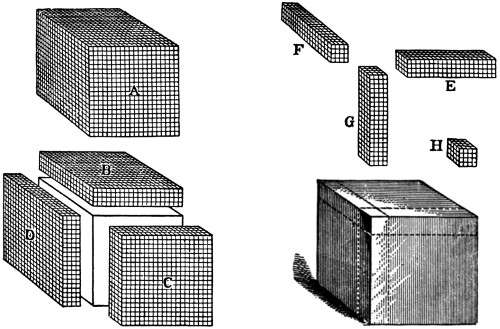
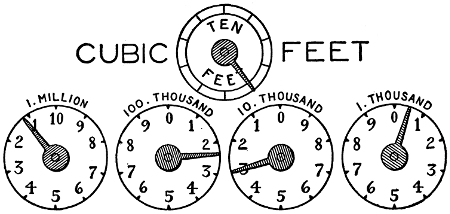
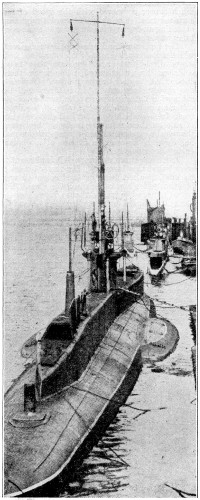
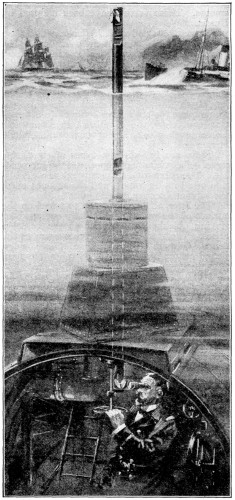
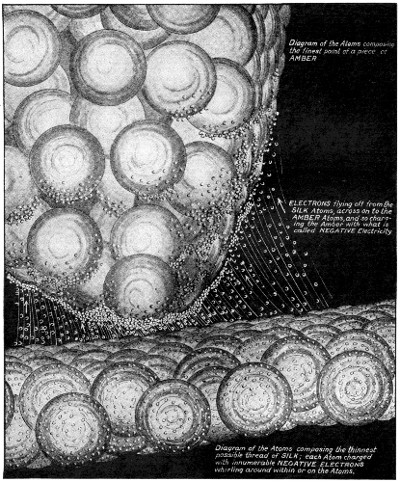
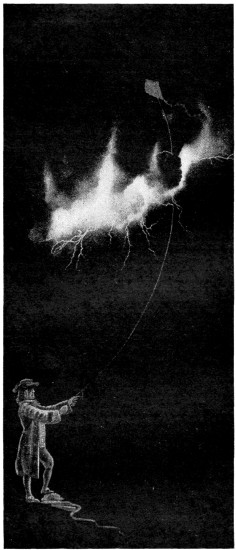
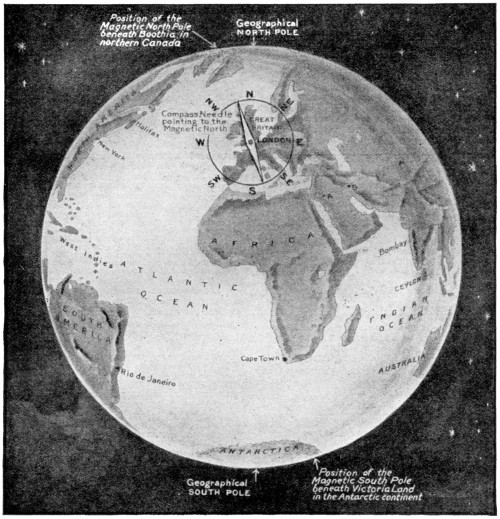
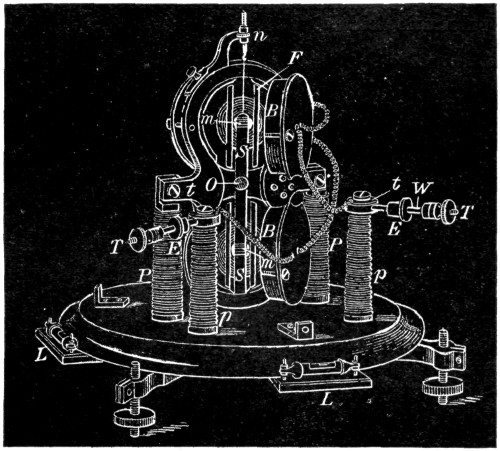
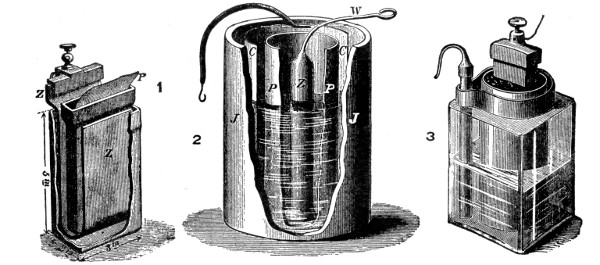
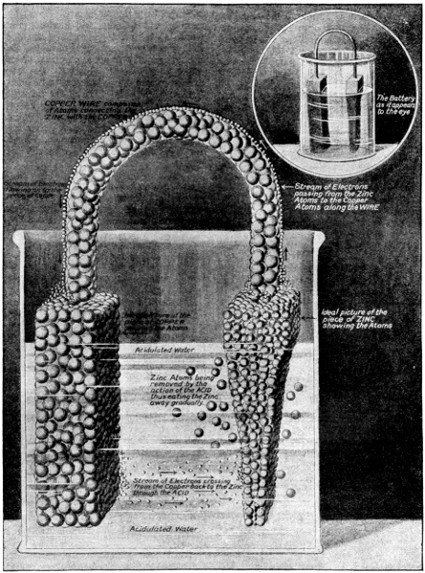
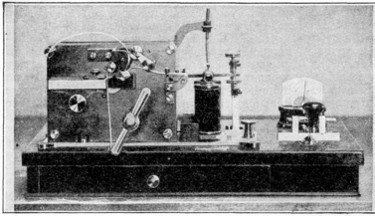
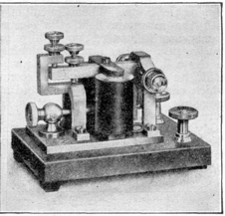
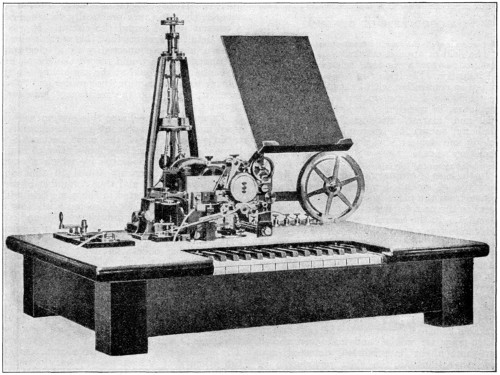
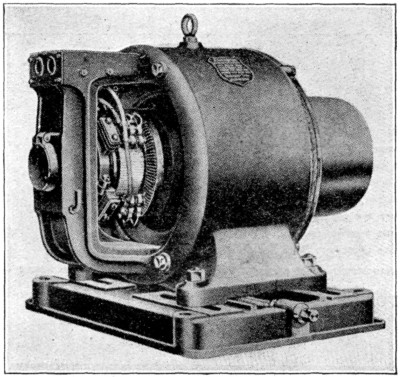
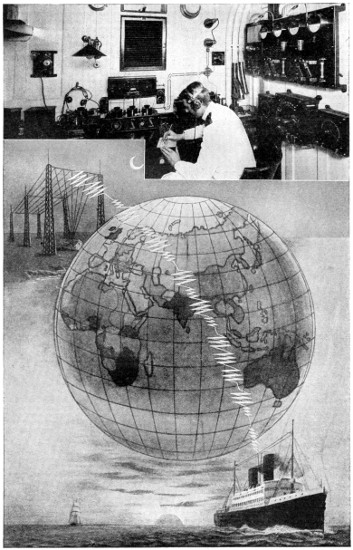
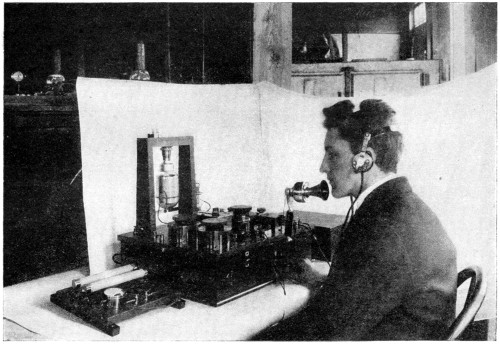
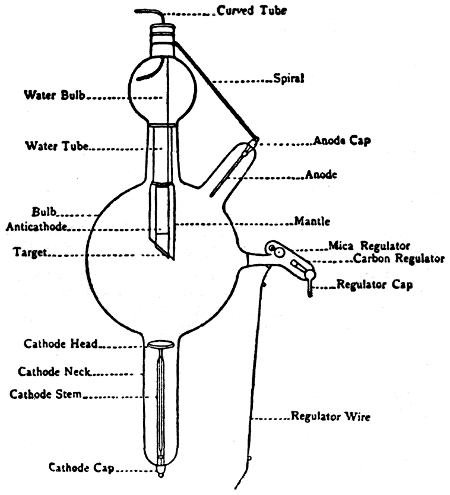
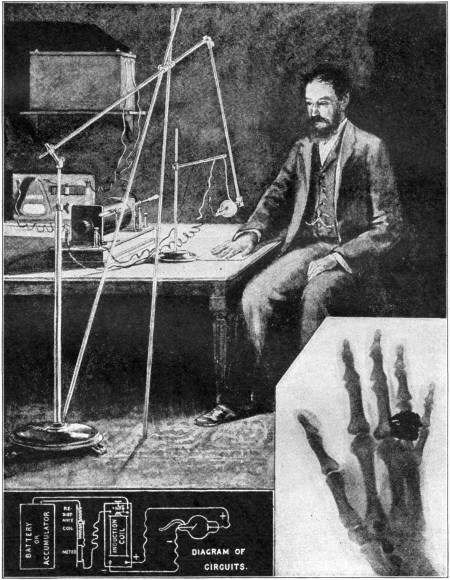
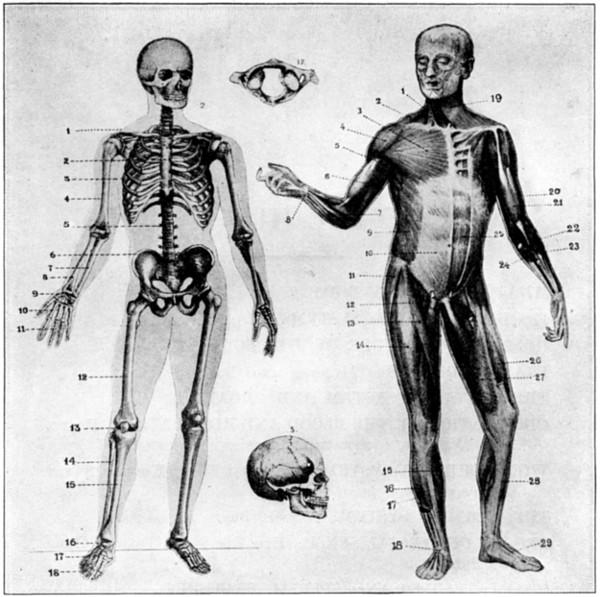
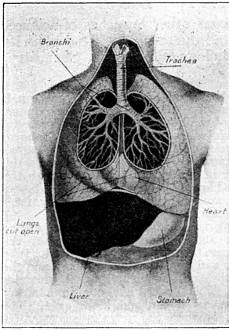
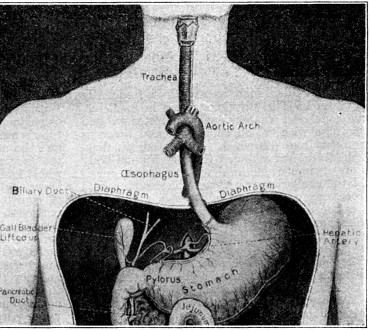
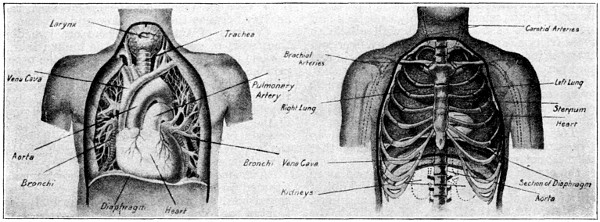
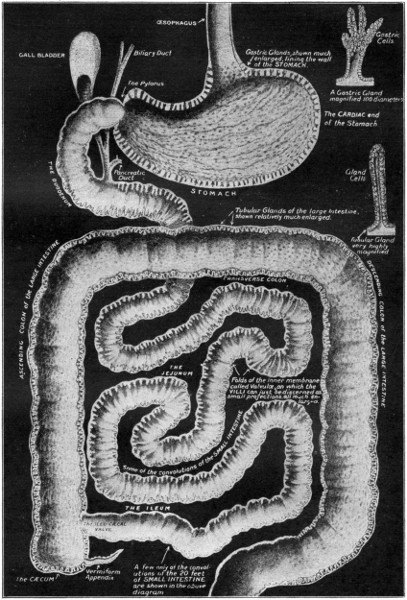
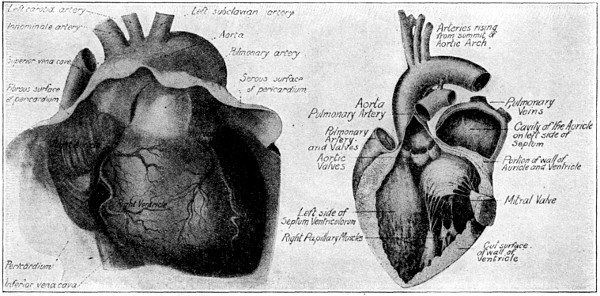
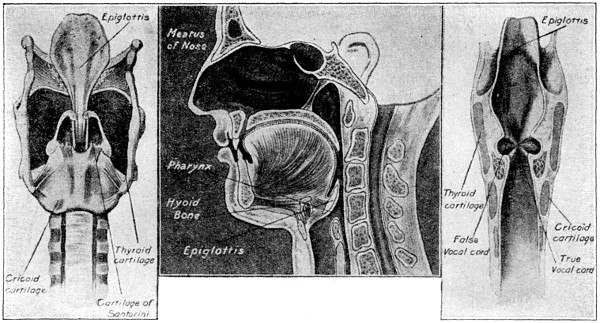
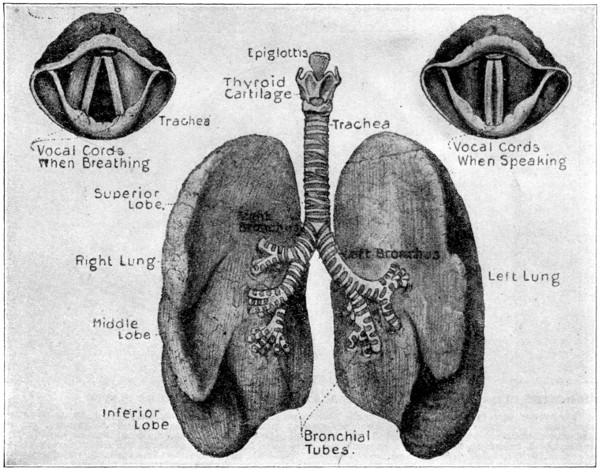
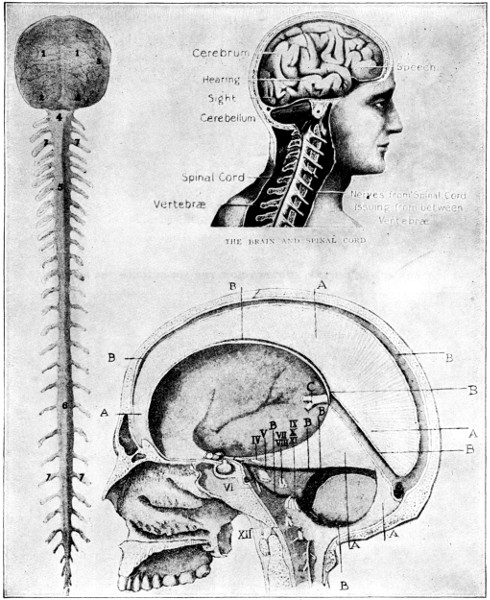
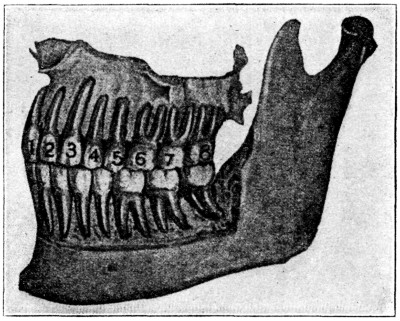
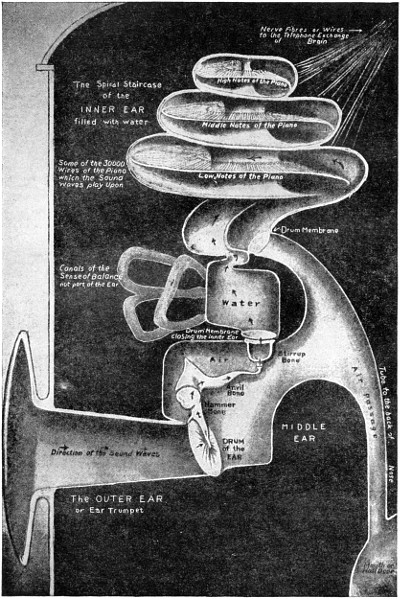
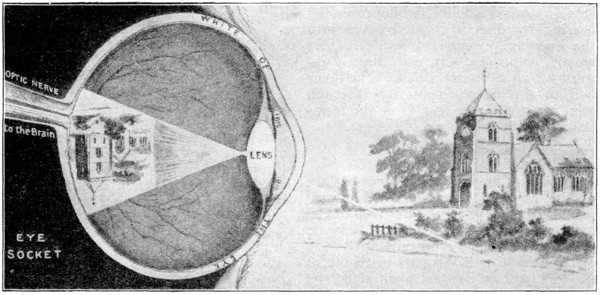
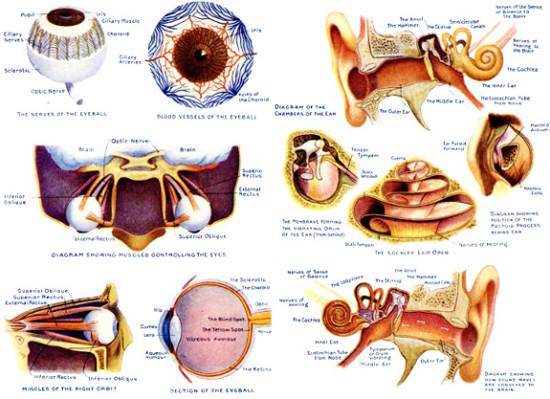
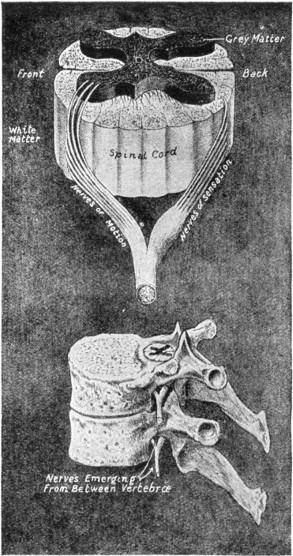
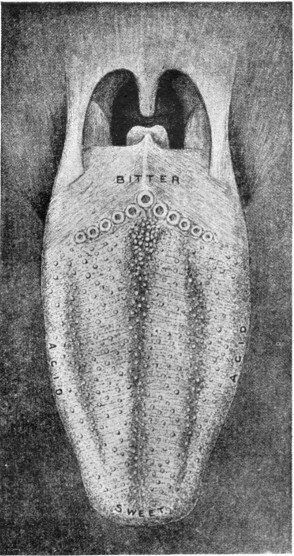
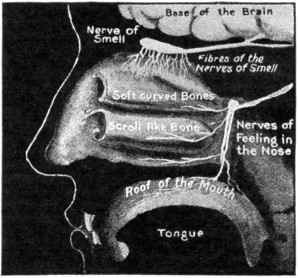
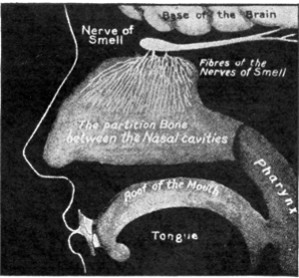
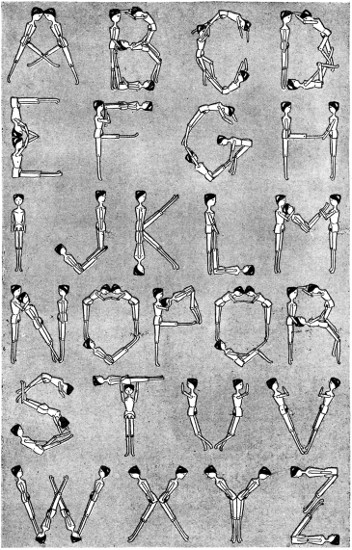



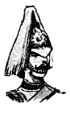
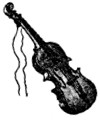
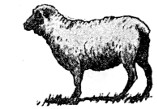
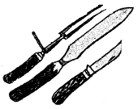
 THE CHILDREN OF THE
ANIMALS
THE CHILDREN OF THE
ANIMALS 
 was spinning her
  .
Backwards and forwards she went,
making hundreds of little threads
at once, twisting them into white
ropes, arranging them with her feet
and the little hooks on her jaws, and
gluing them together where they
crossed.
.
Backwards and forwards she went,
making hundreds of little threads
at once, twisting them into white
ropes, arranging them with her feet
and the little hooks on her jaws, and
gluing them together where they
crossed. stood on a
 and watched.
 about.”
 !”
!” ,
don’t they? and they don’t have wings.
And the hen’s
,
don’t they? and they don’t have wings.
And the hen’s  hatch into little
baby
hatch into little
baby  , and they do have wings,
like the hen. I saw them this morning
running after her, with all their wings
stretched out. I suppose they are not
old enough to fly yet. When my
babies can fly, I shall go back to the
flower garden.”
, and they do have wings,
like the hen. I saw them this morning
running after her, with all their wings
stretched out. I suppose they are not
old enough to fly yet. When my
babies can fly, I shall go back to the
flower garden.” !”
!” in the
woods.
in the
woods. running about in
the
running about in
the  .
. on the ground,
and hid behind a
on the ground,
and hid behind a  . Soon the
 in the porch. She put some
 and ran
off as fast as she could.
and ran
off as fast as she could. were born in a
 The
The  , did not like her
 .
. , and
stay away awhile from Tom and Harry.
, and
stay away awhile from Tom and Harry. upstairs,
where the soiled clothes were kept,
Nancy and Dick were found. Dick was
snugly wrapped in the clothes, and
purred contentedly. Mamma Nancy lay
beside him. She had taken her favorite
upstairs,
where the soiled clothes were kept,
Nancy and Dick were found. Dick was
snugly wrapped in the clothes, and
purred contentedly. Mamma Nancy lay
beside him. She had taken her favorite
 lived up in the sky.
 , and their
mother was the
, and their
mother was the  .
. . They liked to help brighten the
sky and so make the
. They liked to help brighten the
sky and so make the  brighter.
 on
on
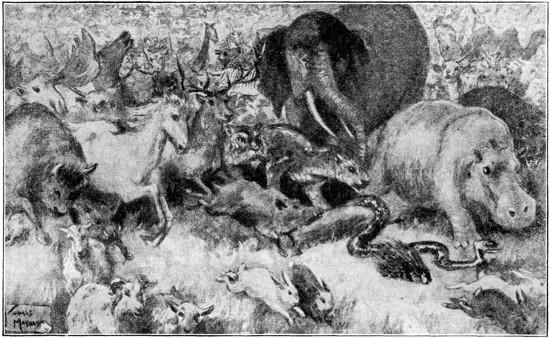
 or
or
 or
or
 etc. The child
should always be able to describe what
it has done: thus, the first child would
say—four shells and one shell are five; the
second, three shells and two shells are five,
and so on.
etc. The child
should always be able to describe what
it has done: thus, the first child would
say—four shells and one shell are five; the
second, three shells and two shells are five,
and so on. “I will show you a figure
that means those four balls,
“I will show you a figure
that means those four balls,  .
. and this be copied
on the paper at some distance from the
other. Then another is made and copied,
and so on until the child sees on his paper
all the combinations of numbers that go
to make six. He should be able to read
them all out, and because a child remembers
what he has done himself, it will be
found that numbers taught in this way
are seldom forgotten.
and this be copied
on the paper at some distance from the
other. Then another is made and copied,
and so on until the child sees on his paper
all the combinations of numbers that go
to make six. He should be able to read
them all out, and because a child remembers
what he has done himself, it will be
found that numbers taught in this way
are seldom forgotten. +
+
 and use these signs in the analysis of
other numbers.
and use these signs in the analysis of
other numbers.