POULTRY AND GAME.
Capon.—Capon is the best of all poultry, having
been specially treated and fattened for the table. They
can be distinguished in the market by the head, tail and
wing feathers being left intact. They are always high
in price and considered great luxuries. They are cooked
the same as chicken. If to be stuffed, choose a delicate
dressing like oysters or chestnuts. Cut the neck off short
and remove the oil bag from the root of the tail. Singe
carefully, pluck out every lingering pin feather, wash
quickly with a rough, clean cloth and warm—not hot—water;
dash cold water over it, let drain, then wipe carefully
with a soft, damp cloth inside and out. Salt lightly
inside and dust with pepper, stuff with whatever dressing
you elect to have, truss, fasten thin slices of bacon or
salt pork over the breast and thighs, grease the entire
body liberally with soft butter or vegetable oils, put into
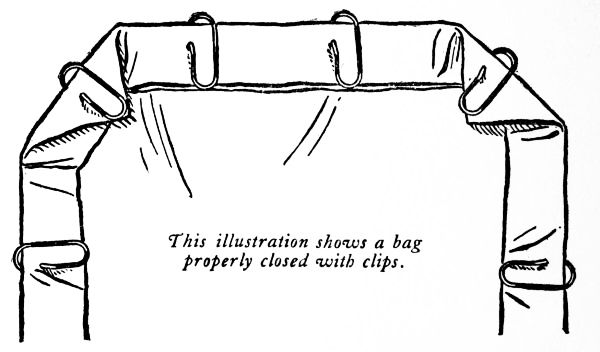
a loose fitting well-greased bag, breast down, seal, lay
on a trivet, set on broiler in hot oven, let cook till bag
corners turn very brown, then slack heat one-half, or
even a little more if the heat is fierce, and cook from an
hour and a half to an hour and three-quarters. The
capon should be a golden brown all over, except on the
back where it touches the bag and underneath the bacon
slices. But it will be as well done everywhere as in the
brown part. Cook the liver, gizzard and neck in a small
separate bag, wrapping each in a slice of bacon and seasoning
them with salt and pepper. Add a very little
water, seal and put on to cook less than an hour before
dinner time. The slow heat will make them very tender.
Cooked with capon, they would be overdone. Serve
with sweet potatoes Southern style, or baked apples
slightly sweetened.
Chicken with Parsnips.—Wash, parboil and scrape
a quart of tender parsnips. Split a Spring chicken down
the back and lay in a buttered bag, skin side up. Arrange
the sliced parsnips around the chicken, sprinkle
with salt and pepper, dot with bits of butter until a half
cup has been used, and top with two or three thin
slices of fat, salt pork. Put a half cup hot water in
the bag and bake to a delicate brown. Put the chicken
on a hot platter and arrange the parsnips around it.
Make a cream gravy from the drippings in the bag
and serve with mashed potatoes, currant jelly and beet
greens.
Chicken à la Baltimore.—Take two small Spring
chickens, prepare as for broiling, but cut into joints.
Wipe dry, season well with salt and pepper, dip into
beaten egg, then cover well with bread crumbs. Place
in a well-buttered bag, pour a little melted butter or oil
over them and bake in the oven twenty or twenty-five
minutes. Serve with cream sauce and garnish with thin,
crisped slices of bacon and tiny corn oysters.
Chicken Croquettes.—This may be made from left-over
cooked chicken or from canned chicken. For a
dozen croquettes allow one cupful of solid meat chopped
fine, a cupful of cream sauce, made by cooking together
four tablespoonfuls of butter and two of flour, then stirring
in a scant cupful of hot milk and cooking until
smooth and thick. Combine chicken and sauce, season
with half a teaspoonful each plain and celery salt, a
teaspoonful of onion juice, a little lemon juice and
chopped parsley. Mix thoroughly, then set the mixture
away to cool. When cool and stiff roll in finely powdered
bread crumbs so that every bit of the chicken is
covered and shape into cones, cutlets or cylinders. Have
ready a beaten egg to which a scant tablespoonful of
milk has been added, dip the croquettes in this, drain
well, roll in crumbs again, and again set aside to cool
and stiffen. When ready to cook, slip in well-buttered
bag and bake in a hot oven twenty minutes.
Paper Bagged Chicken.—Split the chicken down
the middle of the back, spread flat, and put a skewer in
each side to prevent it from curling. Beat up a very
fresh egg, with a pinch of salt, black pepper to taste,
an ounce of melted butter, a teaspoonful of Worcestershire
sauce or something similar and a teaspoonful of
made mustard. Mix well. With a brush glaze the
chicken with the mixture. Place in a greased bag with
bread crumbs around and over it. Be careful that the
skewers do not tear the bag. Seal up tight and cook
from thirty-five to forty minutes in a very hot oven.
Chicken Pie.—Disjoint two chickens and cook until
tender in just enough water to cover. Remove all the
thick skin and the largest bones. Line a baking dish
with good paste, pack the chicken in layers and dust
each with salt, pepper and flour. Pour in enough of the
chicken liquor to come nearly to the top; lay on a tablespoon
of butter and cover with a crust after cutting out
a piece as large as the top of a small cup. Moisten the
edges and press together, then ornament the top with
leaves cut from the trimmings of paste. Bag and bake
in a quick oven.
Paste for Chicken Pie.—Sift five level teaspoons of
baking powder and one level teaspoon of salt with four
cups of flour and rub in one cup of butter until like
coarse meal. Mix with nearly two cups of milk or
enough to make a dough that can be rolled out. This
makes a more hygienic crust than where no baking
powder is used.
Chicken Rissoles.—Chop fine two cupfuls chicken
and dressing or any scraps left. Add two spoonfuls
mashed potato, the beaten yolk of one egg, salt and
pepper to season. Roll in balls, dip in beaten egg yolk,
then in fine bread crumbs and place in paper bag. Bake
twenty minutes.
Roast Chicken.—Cover the breast of the fowl or
chicken with butter, drippings, or any refined vegetable
oil or tie a piece of fat bacon over it. Place in a bag
and set on broiler in a hot oven. Allow twenty-five
minutes for a small Spring chicken, thirty-five minutes
for a large fowl, forty-five to fifty minutes (according
to size) for stuffed poultry in a moderate oven.
Saute of Chicken With Mushrooms.—Cut a young,
tender chicken into joints, trim off all projecting bones,
season with salt and pepper—not too highly—and brush
over with melted butter. Put into a well-buttered wooden
cook dish, with eight or twelve small mushrooms, cut in
slices. Add a pinch of herbs, a very small onion, and a
half gill of good white stock. Seal bag tight, give ten
minutes in a very hot oven, then thirty in moderate heat.
Take up on a hot dish and keep hot, while you make the
gravy. Take for the gravy the hot liquor from the bag,
put it in a bowl with the yolk of an egg beaten up in
half a gill of cream. Stir hard over hot water, but do
not let boil. When thoroughly blended, pour over the
chicken, garnish with chopped parsley, a few mushroom
heads and half moons of crisp puff paste. Serve
as hot as possible.
Smothered Chicken.—Have a good sized broiler
cut into joints, taking care not to leave sharp bones projecting.
Salt and pepper them lightly, dredge with
flour and lay in a well-greased bag upon thin slices of
bacon. Cover the chicken with more bacon slices, taking
care to keep the chicken spread rather flat. Add
a tablespoonful of water or a couple of peeled and
sliced tomatoes. Shreds of green pepper add somewhat
of flavor to the tomatoes. Seal in a bag and cook
for forty minutes, slacking the heat almost half after the
first five minutes. Serve on a hot dish with gravy from
the bag.
Ducks With Banana Dressing.—Wash with cold
salt water inside and out, drain, wipe dry and season
lightly with salt and pepper. Make a dressing of toasted
bread crumbs mixed with an equal quantity of banana.
Cut in small pieces, well seasoned with chopped
celery, salt and pepper. Stuff, truss, grease all over
and tie slices of bacon over the breast. Put in a well-greased
bag, add the juice of a lemon, and a wine glass
of sherry. Seal and put in a very hot oven. At the
end of fifteen minutes reduce heat one-half and cook for
fifty minutes longer.
Canvas Backs.—Draw the ducks as soon as they are
received, pluck, singe and wipe them with a damp cloth,
but under no conditions wash them. When ready to
cook, truss, dust lightly with pepper, and salt and
spread them thickly with butter or vegetable oil. A very
slight dusting of flour should be given when they are
put into the oven. After eighteen minutes of intense
heat they are ready to serve, accompanied by toasted
hominy and black currant jelly.
Chicken, Italian Style.—Chop fine one onion, one
small carrot, a stick of celery and a sprig of parsley.
Place in the bottom of one of the wooden cookery dishes
and season with salt, pepper and two tablespoonfuls of
olive oil. Lay a good sized broiling chicken cut into
joints on top of the vegetables, and around the chicken
a half dozen dried mushrooms that have been soaked
for fifteen minutes in cold water. Put in paper bag,
seal and bake forty-five minutes. Remove chicken to
hot platter, add a little tomato sauce to the vegetables
and stock remaining in the dish, pour over the chicken
and serve.
Roast Wild Duck.—If these come from salt marshes,
and have therefore a fishy taste, pick, dress, scald a
moment in boiling salt water, then put in very cold
water for half an hour. Drain, wipe dry and having
cut a lemon in half rub all over inside and out with the
juice and pulp. Then grease the outside of the duck
with vegetable oil or butter, salt very lightly and put
in greased bag. Seal and roast in a moderate oven for
an hour. Serve with paper bag baked potatoes, tart
jelly and pickles.
Roast Wild Duck No. 2.—Clean and singe your
duck; have a dish with boiling water enough to cover
same, in which you put a tablespoonful of salt and a
little carrot; parboil for only five minutes; then take
out and dry. Have apples peeled and cut in quarters;
stuff the duck with them. Slice bacon and wrap about
four slices around it, tied with a string, lay in a buttered
bag with a teacupful of water and a little salt and pepper
and roast in a very hot oven for an hour. Make a
gravy from the drippings in bag thickened slightly and
seasoned with lemon juice, a little curry powder and
any good sauce.
Roast Wild Duck, Ohio Style.—Dress the duck as
usual, then stuff with one quart of sauer kraut mixed
with one sweet apple sliced and a few mixed spices to
season. Place two stalks of celery in one of the wooden
cookery dishes, lay the duck on top, place in bag. Seal
and bake in a moderate oven for an hour and a half.
Frogs' Legs.—Scald the legs in boiling hot water
for a minute or two, drain and wipe them dry, sprinkle
with salt and pepper, dip in beaten egg, roll in cracker
crumbs and put in a well-greased bag. The use of a
wood cookery dish is recommended. Bake fifteen minutes
in a hot oven. Serve hot with points of toast and
slices of lemon placed around the platter.
Paper Bag Roast Goose.—For roasting, a goose
should preferably be scarcely passed the gosling period,
not more than a year old at the most. Its wings should
be supple and tender at the pinions, its breast bone soft
and pliable. Its feet smooth and yellow, and its fat
white and soft. Before drawing, singe the bird, then give
it a thorough bath with soapsuds and a soft scrubbing
brush. The skin is so oily that cold water would make
no impression, and the skin is bound to be full of dust.
When purification is complete, rinse thoroughly in clear
cold water, then dry and draw. Wash the inside
quickly with clear water to which a little baking soda
has been added, then rinse and wipe. The Germans are
partial to a stuffing made of equal parts of bread crumbs,
chopped apples, seeded raisins and boiled onions well
seasoned with salt, pepper and butter. Americans as a
rule give the preference to a potato stuffing made of
mashed potato highly seasoned with onion, salt, pepper
and a little butter and sage. The yolks of two eggs allowed
to each pint of potato makes the dressing richer.
Before trussing the goose, remove all the extra fat.
This should be saved and tried out later for that sovereign
remedy for croup,—"goose grease." It is of no
value, however, in cooking and if left in the bird, gives a
coarse, rank flavor. Season the goose on the inside with
salt and pepper, then stuff and truss it into shape like
a turkey. Rub over lightly with vegetable oil or butter,
or cover the breast with several thin slices of fat salt
pork. This keeps the skin moist. Put into a well-greased
bag of goodly proportions, or better still, two
bags, add a tablespoonful of cold water, seal and set in
a very hot oven for fifteen minutes. Then reduce the
heat about half and cook until done, allowing twenty-two
minutes to the pound. Serve with apples baked in a
bag, mashed turnips or squash and hot corn bread that
can also be cooked in a bag.
Sage and Potato Stuffing.—Should you give the
preference to the old-fashioned potato-and-sage stuffing,
such as your grandmother used to make, fashion it in
this way: peel and boil for half an hour a half dozen
good-sized potatoes. Mash well and season with one
tablespoonful salt, and a teaspoonful pepper, two tablespoonfuls
of white onions minced fine, and cooked in a
tablespoonful of butter and a teaspoonful of sage. Mix
lightly and stuff.
Bag Roasted Young Guinea Fowl.—It is but a few
years ago comparatively that the excellence of the
guinea fowl for the table was duly recognized. Most
people were afraid to try them. Now the guinea is not
only being served in all the best restaurants, but in many
private homes as well. While the young guineas make
the choicest eating, the old birds are not to be despised.
In stuffing the guinea any approved turkey stuffing may
be used, the accompaniments being as with turkey, giblet
gravy and cranberry sauce. In roasting a very little
water goes into the bag, instead thin pieces of fat, salt
pork are skewered across the breast and around the drum
sticks.
Bag Broiled Young Guinea Hen.—For bag broiling,
split down the back and flatten. Brush over with
vegetable oil or melted butter, put in buttered bag and
bake in gas oven or hot coal oven. Lay on a hot platter,
season with salt and pepper, spread with a rounding
tablespoonful butter stirred with a tablespoonful finely
minced parsley, garnish with watercress and little
moulds or spoonfuls of cranberry jelly and serve.
Quail.—As for cooking quail there is no better way
than to roast them plain, with plenty of red pepper and
a little salt. For those who prefer, an excellent way is
to serve them with bacon, which supplies the fat which
all game birds lack.
Take a half dozen quail, wipe with a damp cloth,
split them and break the leg bones. Mix together a teaspoonful
of pure olive or cotton seed oil, a dash of cayenne
and a tiny bit of salt. Brush the birds with this mixture
and put in well-greased bag, seal, put in oven and
roast fifteen minutes. Arrange six slices of delicately
browned toast on a hot platter, place the birds on the
slices and baste with a mixture of good butter, minced
parsley and the juice of a half dozen lemons. Garnish
with slices of crisped bacon and watercress.
Quail No. 2.—Place four quail in a wooden dish with
a link of sausage between the birds and a strip of bacon
laid on each. Put in bag, seal, and bake twenty-five
minutes.
Stuffed Quail.—Put into each bird a half prune or
fat raisin, with a bit of butter and a few well seasoned
bread crumbs. Wrap each bird in a slice of bacon,
fastening with string or tooth picks and put in well-buttered
bag. Seal and place on broiler and bake about
twenty-five minutes, reducing the heat during the last
half of the time.
Rabbit Cookery.—In selecting a rabbit the principal
thing is to find out the age and also how long hung. A
rabbit should be ripe but not gamy. Unless in cold
storage, they should not be kept for more than two or
three days. The age of a rabbit may be determined by
testing the paw. If there is a little nut there and the
paw may be broken readily between the thumb and
finger the rabbit is young. If the nut has disappeared
and the paw resists pressure, the rabbit is too venerable
for anything but a stew. In dressing a rabbit there is a
little secret that enables the cook to dispose of the
gamy odor that so many object to. If the thin, muscular
membrane that extends from the flank over the intestines
is carefully removed before cooking, the strong
flavor will go with it, leaving the flesh delightfully
sweet. The gall bladder in the liver must also be removed
with extreme care, so as not to break it.
Barbecued Rabbit.—Open plump young rabbits all
the way down the under side, wash and clean thoroughly.
Lay out flat in a pan of salt and water for an hour, with
a weighted plate or saucer on top to hold under the
water. Wipe dry and gash across the backbone in eight
or ten places and having brushed it over with olive oil
or melted butter, bag and bake in a hot oven forty-five
minutes.
Lay on a hot dish, season with salt, pepper and plenty
of melted butter, then set in the oven for the butter to
soak in. Heat in a small cup two tablespoonfuls vinegar
with one of made mustard and brush over the rabbit
while boiling hot. Garnish with parsley and watercress
and serve alone or with a currant jelly sauce.
Roast Rabbit.—Stuff, truss, dredge with flour and
rub all over with vegetable oil, soft butter or good drippings.
Season lightly with salt and paprika or black
pepper, place in wood cookery dish in well-greased bag,
seal and place in hot oven. Allow fifty minutes, reducing
the heat at the end of the first twenty minutes.
Roast Rabbit No. 2.—For an older rabbit, put into
a stew kettle whole without dividing the pieces from the
body. Pour in one quart of water, add a little pinch of
soda when it starts to boil, and stew gently until tender.
When tender take from the broth. Meantime mix together
three large cupfuls dried bread crumbs, butter
the size of a walnut and salt, pepper and sage to taste.
Pour enough of the broth over this to mix rather soft.
Stuff the rabbit, spread with butter, sprinkle with salt
and pepper, lay in a buttered bag and bake to a rich
brown in a moderate oven. It will not take more than a
few moments. Make a good brown gravy, adding onion
browned in butter if desired. A little onion may also be
added to the dressing, according to preference.
Stewed Rabbit.—Cut in eight pieces, salt and pepper
and put in buttered wooden dish, set in a buttered
bag with a finely chopped onion, a bunch of
sweet herbs, a quarter cupful stock or hot water
and a tablespoonful of flour stirred smooth with
a little cold water, then blended with the hot. Seal the
bag and bake forty-five minutes in a hot oven.
Reed Birds.—Most of the reed birds obtained in our
markets are in reality nothing but sparrows, and those
undrawn. If fed on grain, as they are in Chicago, they
are really very nice. To bake, wrap each one in a thin
slice of bacon or salt pork, put in buttered bag, seal
and cook in a quick oven. Still more delectable are they
cooked en surprise. For a half dozen covers, prepare
the same number of birds, six large oval potatoes, six
oysters, and some thin slices of bacon. Prepare the
birds as for roasting, and tuck into each little interior an
oyster, seasoned with salt and pepper. Then wrap each
bird in a slice of bacon. Now, having the potatoes well
scrubbed, cut off one end, and using a vegetable scoop,
cut out a hollow in each large enough to hold a bird.
Insert the bird, replace the end of the potato, cut off, tie
in place, put in buttered bag and bake in a moderate
oven. Serve as soon as done, removing the string. The
flavor of the bird, oysters and potato makes a delicious
combination that cannot be surpassed. Serve simply
with butter, or if preferred, a mushroom or oyster sauce.
Squab.—In cleaning a squab, take care not to break
the little sack that holds the entrails. Split the birds
down the back, rub with salt, pepper and butter or oil.
Sprinkle with cracker dust and put into well-buttered
bag. Bake fifteen minutes and serve on slices of crisp,
hot, buttered toast with or without a thin, crispy slice
of bacon. Garnish with cress or parsley.
Barbecued Squirrel, (Southern Style.)—Get two
fat squirrels, skin and draw. Cut the thin skin on each
side of the stomach close to the ribs, then wipe with
damp cloth. Sprinkle with black pepper but use no salt.
Put a layer of fat bacon in a wooden dish, set in a well-greased
bag and lay the squirrels on this bed. Cover
with more thin slices of bacon pour in the bag a half
cupful good broth, seal, and bake an hour in a moderate
oven. Serve with grape jelly or spiced grapes.
Turkey à la Bonham.—Pick out a young hen turkey,
plump and delicate with small bones. Carefully remove
all pin feathers and complete the drawing which
may have been imperfectly done by the butcher. Cut off
the neck close to the body which will make the turkey
fit in the bag better, and make a proper appearance
when placed on the table. Wash thoroughly inside and
out and wipe dry. For the stuffing make two kinds—one
for the body and one for the breast. It is a good plan
to make these different so as to suit all tastes. For the
body, make a chestnut stuffing. Boil and peel one quart
of large chestnuts and mash with a fork. Season with
pepper, salt and a little butter. For the breast, take a
pint of bread crumbs free from crusts. Fry a half onion
cut fine in a very little butter or vegetable oil until tender
but not brown. Season nicely with chopped parsley
and thyme, not too much. Salt and pepper and moisten
with one beaten egg. Fill the breast and sew body and
breast neatly, pulling the skin of the breast over the
stuffing, and fastening in place with the wings which
should be turned back to hold the skin in place. Rub
the outside of the bird with flour mixed with salt and
pepper, cover the breast with slices of fat salt pork tied
on. Now slip breast down into a thoroughly greased bag
or preferably two bags, one outside the other,
the outside one also well-greased. Lay some
of the fat from the turkey or a few strips of bacon
over the bag, and put on the grate, seam up. Slip under
the grid on the bottom of the oven a dripping pan half
full of water to keep the bird moist, and prevent any fat
leaking through in case the bag should burst. Be careful
not to let the bag touch the side of the oven. Light
both burners of the gas stove for five minutes to get the
oven hot for the start. Turn out one and roast about an
hour and three-quarters for a twelve pound bird. Lift
out carefully, sliding the pancake turner under it to get
it out easily and put it on hot platter.
For the gravy, clean the giblets thoroughly and put to
cook with the neck in water to cover well. Add one
onion cut up and cook until tender. Chop fine and
thicken slightly with browned flour or caramel which is
simply sugar browned in a pan with a little boiling
water.
Venison.—For roasting, the saddle is best. As the
meat is naturally dry, it must be well larded with strips
of firm fat pork. Sprinkle with salt and pepper and rub
over with pork drippings. Put in large well-greased
bag, add two glasses of port or claret, seal and bake in
moderate oven. For a roast of three pounds, allow an
hour and ten minutes. For an eight pound roast, two
hours and a half. Serve very hot with red or black currant
jelly.
Venison Steak.—Prepare in the regular way, place
in wooden cookery dish and season with salt and pepper.
Put in bag. Seal and cook an hour and twenty minutes.
The wooden dishes add to the flavor of all game.