Injurious micro-organisms in foods are, fortunately for
the consumers, usually killed by cooking. Vast numbers
are, as far as we know, of no harm whatever. Alarming
reports of the large numbers of bacteria which are contained
in this or that food are generally as irrelevant as they are
incorrect. Bacteria, as we have seen, are ubiquitous. In
food we have abundance of the chief thing necessary to
their life and multiplication—favourable nutriment. Hence
we should expect to find in uncooked or stale food an ample
supply of saprophytic bacteria. There was much wholesome
truth in the assertions made some two years ago by the late
Professor Kanthack, to the effect that good food as well as
bad frequently contained large numbers of bacteria, and
often of the same species. It is well that we should become
familiarised with this idea, for its accuracy cannot be
doubted, and its usefulness at the present time may not
be without its beneficial effect.
Nevertheless, it is well we should know the bacterial flora
of good and bad foods for at least two reasons. First, there
is no doubt whatever that a considerable number of cases of
poisoning can be traced every year to food containing harmful
bacteria or their products. To several of the more
notorious cases we shall have occasion to refer in passing.
Secondly, we may approach the study of the bacteriology
of foods with some hope that therein light will be found
upon some important habits and effects of microbes. There
can be little doubt that food-bacteria afford an example of
association and antagonism of organisms to which reference
has already been made. Any information that can be
gleaned to illumine these abstruse questions would be very
welcome at the present time. But there is a still further,
and possibly an equally important, point to bear in mind,
namely, the economic value of microbes in food. In a short
account like the present it will be impossible to enter into
hypotheses of pathology, but we shall at least be able to
consider some of these interesting experiments which have
been conducted in the sphere of beneficial bacteria.
The injurious effects of organisms contained in foods has
been elucidated by the excellent work of the late Dr. Ballard.
From the careful study of a number of epidemics due
to food poisoning, this patient observer was able, without
the aid of modern bacteriology, to arrive at a simple principle
which must not be forgotten. Food poisoning is due
either to bacteria themselves or to their products, which are
contained in the substance of the food. In cases of the first
kind, bacteria gaining entrance to the human alimentary
canal, set up their specific changes and produce their toxins,
and by so doing in course of time bring about a diseased
condition, with its consequent symptoms. On the other
hand, if the products, sometimes called ptomaines, are ingested
as such, the symptoms set up by their action in the
body tissues appear earlier. From these facts Dr. Ballard
deduced the simple principle that if there is no incubation
period or, at all events, a comparatively short space of time
between eating the poisoned food and the advent of disease,
the agents of the disease are products of bacteria. If, on the
other hand, there is an incubation period, the agents are
probably bacteria.
It is necessary to mention two other facts. Dr. Cautley53
has recently been engaged in isolating from poisoned foods
the different species of bacteria present. It would appear
that these are limited, as a rule, to two or three kinds. As
regards disease, the organisms of suppuration are the most
common. Liquefying or fermentative bacteria are frequently
present, the Proteus family being well represented.
In addition there are, according to circumstances, a number
of common saprophytes. Now, as we have pointed out,
these organisms may act injuriously by some kind of cooperation,
or they may by themselves be harmless, and
pathological conditions be due to the occasional introduction
of pathogenic species.
The other fact, requiring recognition from anyone who
proposes to study the bacteriology of foods, is that a certain
appreciable amount of the responsibility for food poisoning
rests with the tissues of the individual ingesting the food.
There is ample evidence in support of the fact that not all
the persons partaking of infected food suffer equally, and
occasionally some escape altogether. We know little or
nothing of the causes of such modification in the effect
produced. It may be due to other organisms, or chemical
substances already in the alimentary canal of the individual,
or it may be due to some insusceptibility or resistance of
the tissues. Be that as it may, it is a matter which must
not be neglected in estimating the effects of food contaminated
with bacteria or their products.
Milk. There are few liquids in general use which contain
such enormous numbers of germs as milk. To begin with,
milk is in every physical way admirably adapted to be a
favourable medium for bacteria. It is constituted of all the
chief elements of the food upon which bacteria live. It is
frequently at a temperature favourable to their growth. It
is par excellence an absorptive fluid. A dish of ordinary
water and a dish of newly drawn milk laid side by side, and
under similar conditions of temperature, will rapidly demonstrate
the difference in degree of absorptivity between the
two fluids. Yet, whilst this general fact is true, we must
emphasise at the outset the possibility and practicability of
securing absolutely pure sterile milk. Recently some milking
was carried out under strict antiseptic precautions, with
the above sterile result. The udder was thoroughly cleansed,
the hands of the milker washed with corrosive sublimate and
then pure water, the vessels which were to receive the milk
had been carefully sterilised, and the whole process was
carried out in strict cleanliness. The result was that the
sample of milk remained sweet and good and contained no
germs. It should be stated that the first flow of milk, washing
out the milk-ducts of the udder, was rejected. This
fact of the sterility of cleanly drawn milk is not a new one,
and has been established by many bacteriologists. Milk,
then, is normally a sterile secretion. How does it gain its
enormously rich flora of bacteria?
Sources of Pollution of Milk. These are various, and depend
upon many minor circumstances and conditions. For
all practical purposes there are three chief opportunities between
the cow and the consumer when milk may become
contaminated with bacteria:
1. At the time of milking.
2. During transit to the town, or dairy, or consumer.
3. After its arrival.
Pollution at the Time of Milking arises from the animal,
the milker, or unclean methods of milking. It is now well
known that in tuberculosis of the cow affecting the udder
the milk itself shows the presence of the bacillus of tubercle.
In a precisely similar manner all bacterial diseases of the
cow which affect the milk-secreting apparatus must inevitably
add their quota of bacteria to the milk. To this matter
we shall have occasion to refer again. There is a further
contamination from the animal when it is kept unclean, for
it happens that the unclean coat of a cow will more materially
influence the number of micro-organisms in the milk
than the popularly supposed fermenting food which the
animal may eat. It is from this external source rather than
from the diet that organisms occur in the milk. The hairy
coat offers many facilities for harbouring dust and dirt. The
mud and filth of every kind that may be habitually seen on
the hinder quarters of cattle all contribute largely to polluted
milk. Nor is this surprising. Such filth at or near
the temperature of the blood is an almost perfect environment
for many of the putrefactive bacteria.
The milker is also a source of risk. His hands, as well as
the clothes he is wearing, can and do readily convey both
innocent and pathogenic germs to the milk. Clothed in
dust-laden garments, and frequently characterised by dirty
hands, the milker may easily act as an excellent purveyor
of germs. Not a few cases are also on record where it appears
that milkers have conveyed germs of disease from
some case of infectious disease, such as scarlet fever, in
their homes. But under the more efficient registration of
such disease which has recently characterised many dairy
companies, the danger of infection from this source has been
reduced to a minimum. The habit of moistening the hands
with a few drops of milk previous to milking is one to be
strongly deprecated.
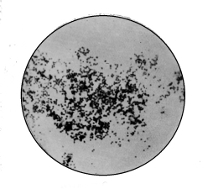
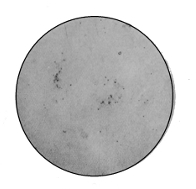
Professor Russell recounts a simple experiment which
clearly demonstrates these simple but effective sources of
pollution:
"A cow that had been pastured in a meadow was taken for
the experiment, and the milking done out of doors, to eliminate
as much as possible the influence of germs in the barn air.
Without any special precaution being taken the cow was partially
milked, and during the operation a covered glass dish, containing
a thin layer of sterile gelatine, was exposed for sixty seconds
underneath the belly of the cow in close proximity to the milk-pail.
The udder, flank, and legs of the cow were then thoroughly
cleaned with water, and all of the precautions referred to
before were carried out, and the milking then resumed. A
second plate was then exposed in the same place for an equal
length of time, a control also being exposed at the same time at
a distance of ten feet from the animal and six feet from the
ground to ascertain the germ contents of the surrounding air.
From this experiment the following instructive data were gathered.
Where the animal was milked without any special precautions
being taken there were 3250 bacterial germs per minute
deposited on an area equal to the exposed top of a ten-inch milk-pail.
Where the cow received the precautionary treatment as
suggested above, there were only 115 germs per minute deposited
on the same area. In the plate that was exposed to the surrounding
air at some distance from the cow there were 65 bacteria.
This indicates that a large number of organisms from the dry
coat of the animal can be kept out of milk if such simple precautions
as these are carried out."54
The influence of the barn air, and the cleanliness or otherwise
of the barn, is obviously great in this matter. As we
have seen, moist surfaces retain any bacteria lodged upon
them; but in a dry barn, where molecular disturbance is the
rule rather than the exception, it is not surprising that the
air is heavily laden with microbic life. Here again many
improvements have been made by sanitary cleanliness in
various well-known dairies. Still there is much more to be
done in this direction to ensure that the drawn milk is not
polluted by a microbe-impregnated atmosphere.
The risks in transit differ according to many circumstances.
Probably the commonest source of contamination is in the
use of unclean utensils and milk-cans. Any unnecessary
delay in transit affords increased opportunity for multiplication;
particularly is this the case in the summer months,
for at such times all the conditions are favourable to an
enormous increase of any extraneous germs which may have
gained admittance at the time of milking. Thus we have
(1) the milk itself affording an excellent medium and supplying
ideal pabulum for bacteria, (2) a more or less lengthened
railway journey or period of transit giving ample time for
multiplication, (3) the favourable temperature of summer
heat. We shall refer again to the rate of multiplication of
germs in milk.
Lastly, many are the advantages given to bacteria when
milk has reached its commercial destination. In milk-shops
and in the home there are not a few risks to be added on to
the already imposing category. Water is occasionally, if
not frequently, added to milk to increase its volume. Such
water of itself will make its own contribution to the flora of
the milk, unless indeed, which is unlikely, the water has
been recently and thoroughly boiled before addition to
the milk. Again, it is impossible to suppose that in
small homes—perhaps of only one room—where the milk
stands for several hours, pollution is avoidable. From a
hundred different sources such milk runs the risk of being
polluted.
Before proceeding, a word must be said respecting the
first milk which flows from the udder in the process of milking,
and which is known as the fore-milk. This portion of
the milk is always rich in bacterial life on account of the
fact that it has remained in the milk-ducts since the last
milking. However thorough the manipulation, there will
always be a residue remaining in the ducts, which will, and
does, afford a suitable nidus and incubator for organisms.
The latter obtain their entrance through the imperfectly
closed teat of the udder, and pass readily into the milk-duct,
sometimes even reaching the udder itself and setting up
inflammation (mastitis). Professor Russell states that he
has found 2800 germs in the fore-milk in a sample of which
the average was only 330 per cc. Schultz found 83,000
micro-organisms per cc. in the fore-milk, and only 9000 in
the mid-milk. As a matter of fact, most of this large number
belong to the lactic-acid fermentation group, and the
fore-milk rarely contains more than two or three species, and
still more rarely any disease-producing bacteria. Still, they
occur in such enormous numbers that their addition to the
ordinary milk very materially alters its quality. Bolley and
Hall, of North Dakota, report sixteen species of bacteria in
the fore-milk, twelve of which produced an acid reaction.
Dr. Veranus Moore, of the United States Department of
Agriculture,55 concludes from a large mass of data that
freshly drawn fore-milk contains a variable but generally
enormous number of bacteria, but only several species, the
last milk containing, as compared with the fore-milk, very
few micro-organisms. The bacteria which become localised
in the milk-ducts, and which are necessarily carried into the
milk, are for the greater part rapidly acid-producing organisms,
i. e., they ferment milk-sugar, forming acids. They
do not produce gas. Still their presence renders it necessary
to "pasteurise" as soon as possible. Dr. Moore holds
that much of the intestinal trouble occurring in infants fed
with ordinarily "pasteurised" milk arises from acids produced
by these bacteria between the drawing of the milk
and the pasteurisation.
The Number of Bacteria in Milk. From all that has been
said respecting the sources of pollution and the favourable
nidus which milk affords for bacteria, it is not surprising
that a very large number of germs are almost always present
in milk. The quantitative estimation of milk appears more
alarming than the qualitative. It is true some diseases are
conveyed by bacteria in milk, but on the whole most of the
species are non-pathogenic. Nor need the numbers, though
serious, too greatly alarm us, for, as we shall see at a later
stage, disease is a complicated condition, and due to other
agencies and conditions than merely the bacteria, which may
be the vera causa. In addition to the fact that the high
numbers have but a limited significance, we must also remember
that there is no uniformity whatever in these numbers.
The conditions which chiefly control them are (1)
temperature, (2) time.
The Influence of Temperature. We have already noticed,
when considering the general conditions affecting bacteria,
how potent an agent in their growth is the surrounding
temperature. Generally speaking, temperature at or about
blood-heat favours bacterial growth. Freudenreich has
drawn up the following table which graphically sets forth
the effect of temperature upon bacteria in milk:
| |
3 hours. |
6 hours. |
9 hours. |
24 hours. |
| 59° F. |
1 + |
2.5 |
5 |
163 |
| 77° F. |
2 |
18.5 |
107 |
62,100 |
| 95° F. |
4 |
1,290 |
3,800 |
5,370 |
This instructive table claims some observations. It will
be noticed that at 59° F. there is very little multiplication.
That may be accepted as a rule. At 77° F. the multiplication,
though not particularly rapid at the outset, results
finally, at the end of the twenty-four hours, in the maximum
quantity. These were probably common species of
saprophytic bacteria, which increase readily at a comparatively
low temperature. During the subsequent hours, after
the twenty-four, we should expect a decline rather than an
increase in 62,000, owing to the keen competition consequent
upon the limitation of the pabulum. From a consideration
of these figures we conclude that a warm temperature, somewhat
below blood-heat, is most favourable to multiplication
of bacteria in milk; that the common saprophytic organisms
multiply the most rapidly; that, in the course of time,
competition kills off a large number.
Let us take another example, from Professor Conn:
| | 77° F. | 95° F. |
| 2 |
hours |
after |
milking |
(liquefied the
plate of gelatine) |
1,275,000 |
| 7 |
" |
" |
" |
14,620,000 |
45,900,000 |
| 9 |
" |
" |
" |
36,550,000 |
57,800,000 |
| 24 |
" |
" |
" |
13,702,000,000 |
13,812,500,000 |
| |
[Bacteria per cub. inch.] |
These almost incredibly large figures illustrate much the
same points, particularly the rapid multiplication at blood-heat,
and the later rise at 77° C.
The Influence of Time is not less marked than that of
temperature, as the following table will show:
| Milk drawn at 59° C. |
= |
153,000 |
m.o. | per | cub. | in. |
| After |
1 |
hour |
= |
616,000 |
" | " | " | " |
| " |
2 |
hours |
= |
539,000 |
" | " | " | " |
| " |
4 |
" |
= |
680,000 |
" | " | " | " |
| " |
7 |
" |
= |
1,020,000 |
" | " | " | " |
| " |
9 |
" |
= |
2,040,000 |
" | " | " | " |
| " |
24 |
" |
= |
85,000,000 |
" | " | " | " |
| (Conn.) |
Freudenreich gives another example, as follows:
| Milk drawn at 15.5° C. |
= |
27,000 |
m.o. |
per |
cc. |
| After |
4 |
hours |
= |
34,000 |
" |
" |
" |
| " |
9 |
" |
= |
100,000 |
" |
" |
" |
| " |
24 |
" |
= |
4,000,000 |
" |
" |
" |
Concerning these figures little comment is necessary.
But here again, we may remember that this rapid multiplication
continues only up to a certain point, after which
competition brings about a marked reduction.
The effect of temperature and time has been illustrated
by Dr. Buchanan Young's recent researches, laid before the
Royal Society of Edinburgh. He estimated that in the
Edinburgh milk supply three hours after milking there
were 24,000 micro-organisms per cc. in winter; 44,000 in
spring; 173,000 in late summer and autumn. Again, he
found that five hours after milking there were 41,000 micro-organisms
per cc. in country milk, and more than 350,000
micro-organisms per cc. in town milk. Many London milks
would exceed 500,000 per cc.56
There is no standard or uniformity in the numerical estimation
of bacteria in milk. A host of observers have recorded
widely varying returns due to the widely varying
circumstances under which the milk has been collected,
removed, stored, and examined. Nor is it possible to establish
any standard which may be accepted as a normal
or healthy number of bacteria, as is done in water examination.
Bitter has suggested 50,000 micro-organisms per cc.
as a maximum limit for milk intended for human consumption.
But owing to differences of nomenclature and classification,
in addition to differences in mode of examination at present
existing in various countries, it is impossible to state even
approximately how many bacteria and how many species of
bacteria have been isolated from milk. Until some common
international standard is established mathematical
computations are practically worthless. They are needlessly
alarming and sensational. And it should be remembered
that great reliance cannot be placed upon these numerical
estimations. They vary from day to day, and even hour to
hour. Furthermore, vast numbers of bacteria are economic
in the best sense of the term, and the bacteria of milk are
chiefly those of a fermentative kind, and not disease-producers.
Kinds of Bacteria in Milk. It is clear from the foregoing
that the only valuable estimation of bacteria in milk is a
qualitative one. The kinds commonly found may be classified
thus:
1. Non-pathogenic; fermenting and various unclassified
micro-organisms.
2. Pathogenic; tuberculosis, typhoid, cholera, scarlet
fever, diphtheria, and suppurative diseases have all been
spread by the agency of milk.
1. The Fermentation Bacteria
At the most we can make a merely provisional classification
of these processes. Many of them are intimately related.
Of others, again, our knowledge is at present very
limited. It may be advisable, before proceeding, to consider
shortly what are the constituents of milk upon which
living ferments of various kinds exert their action. A
tabulation of the chief constituents would be as follows:
Ordinary
fresh milk =
100 per cent. |
 |
(1) Water |
87.5 |
per | cent. |
| (2) Milk-sugar |
4.9 |
" | " |
| (3) Fat |
3.6 |
" | " |
| (4) Proteids (casein, etc.) |
3.3 |
" | " |
| (5) Mineral matter |
0.7 |
" | " |
| |
——
100.0 |
| |
Another mode of expressing average milk constitution
would be thus:
| Fat | 4.1 | per | cent. |
| Solids not fat | 8.8 | " | " |
| | —— | | |
| | 12.9 | " | " |
It is probably too obvious to need remark that milks vary
in standard, but the above figures may be taken as authentic
averages.
Milk-sugar, or Lactose (C12H24O12). This is an important
and constant constituent of milk. It forms the chief
substance in solution in whey or serum. Milk-sugar approximates
to dextrose in its action on polarised light. By
boiling with sulphuric acid it is converted into dextrose and
galactose.
Fat occurs in milk as suspended globules, and by churning
may be made into butter.
The Proteids include casein, albumen, lactoprotein, and a
small quantity of globulin. These are the nitrogenous
bodies.
Mineral Matter. The ash of milk, obtained by careful
ignition of the solids, contains calcium, magnesium, potassium,
sodium, phosphoric acid, sulphuric acid, chlorine, and
iron, phosphoric acid and lime being present in the largest
amounts.
(1) Lactic Acid Fermentation. If milk is left undisturbed,
it is well known that eventually it becomes sour. The casein
is coagulated, and falls to the bottom of the vessel; the
whey or serum rises to the top. In fact, a coagulation
analogous to the clotting of blood has taken place. In
addition to this, the whole has acquired an acid taste. Now,
this double change is not due to any one of the constituents
we have named above. It is, in short, a fermentation set
up by a living ferment introduced from without. The constituent
most affected by the ferment is the milk-sugar,
which is broken down into lactic acid, carbonic acid gas,
and other products.
For many years it has been known that sour milk contained
bacteria. Pasteur first described the Bacillus acidi
lactici, which Lister isolated and obtained in pure culture.
Hueppe contributed still further to what was known of this
bacillus, and pointed out that there were a large number of
varieties, rather than one species, to be included under the
term B. acidi lactici. We have already seen that these
bacilli do not as a rule liquefy gelatine, form spores, are
non-motile, and are easily killed by heat.
When a certain quantity of lactic acid has been formed
the fermentation ceases. It will recommence if the liquid
be neutralised with carbonate of lime, or pepsine added.
Since Pasteur's discovery of a causal bacillus for this fermentation,
other investigators have added a number of bacteria
to the lactic acid family. Some of these in pure culture
have been used in dairy industry to add to the butter a pure
sour taste, a more or less aromatic odour, and a higher
degree of preservation.
(2) Butyric Acid Fermentation. This form of fermentation
is also one which we have previously considered.
Both in lactic and butyric fermentation we must recognise
that in the decomposition of milk-sugar there are almost
always a number of minor products occurring. Some of the
chief of these are gases. Hydrogen, carbonic acid, nitrogen,
and methane occur, and cause a characteristic effect which
is frequently deleterious to the flavour of the milk and its
products. Most of the gas-producing ferments are members
of the lactic acid group, and are sometimes classified in a
group by themselves. In cheese-making the gases create
the pin-holes and air-spaces occasionally seen.
(3) Curdling Fermentations without Acid Production. Of
these there are several, caused by different bacteria. What
happens is that the milk coagulates, as we have described,
but no acid is produced, the whey being sweet to the taste
rather than otherwise. Digestion of casein may or may not
take place.
We must now mention several fermentations about which
little is known. They are designated by terms denoting
the outward condition of the milk, without giving any information
respecting the real physiological alteration which
has occurred.
(4) Bitter Fermentation. Some bitter conditions of milk
are due to irregularity of diet in the cow. Similar changes
occur in conjunction with some of the acid fermentations.
Weigmann and Conn have, however, shown that there is a
specific bitterness in milk due to bacteria which appear to
produce no other change. Hueppe suggests that it may
be due in part to a proteid decomposition resulting in bitter
peptones. There seems to be some evidence for supposing
that the bitter bacteria produce very resistant spores, which
enable them to withstand treatment under which the lactic
acid succumbs.
(5) Slimy Fermentation. This graphic but inelegant word
is used to denote an increased viscosity in milk, and its
tendency when being poured to become ropy and fall in
strings. Such a condition deprives the milk of its use in the
making of certain cheeses, whilst in other cases it favours
the process. In Holland, for example, in the manufacture
of Edam cheese, this "slimy" fermentation is desired.
Tættemœlk, a popular beverage in Norway, is made from
milk that has been infected with the leaves of the common
butter wort, Pinguicula vulgaris, from which Weigmann
separated a bacillus possessing the power of setting up slimy
fermentation. There are, perhaps, as many as a dozen
species of bacteria which have in a greater or less degree the
power of setting up this kind of fermentation. In 1882
Schmidt isolated the Micrococcus viscosus, which occurs in
chains and rosaries, affecting the milk-sugar. It grows at
blood-heat, and is not easily destroyed by cold. Its effect
on various sugars is the same. The M. Freudenreichii, the
specific micro-organism of "ropiness" in milk, is a large,
non-motile, liquefying coccus, which can produce its result
in milk within five hours. On account of its resistance to
drying, it is difficult to eradicate when once it makes its
appearance in a dairy. The organism used in making Edam
cheese is the Streptococcus Hollandicus, and in hot milk it
can produce ropiness in one day. A number of bacilli have
been detected by several observers and classified as slime
fermentation bacteria. The Bacillus lactis pituitosi, a
slightly curved, non-liquefying rod, which is said to produce
a characteristic odour, in addition to causing ropiness, brings
about some acidity. B. lactis viscosus is slow in starting its
fermentation, but maintains its action for as long as a
month. Many of the above organisms, with others, produce
"slimy" fermentation in alcoholic beverages as well
as in milk.
(6) Soapy Milk. This is still another form of fermentation,
the etiology of which has been elucidated by Weigmann.
The Bacillus saponacei imparts to milk a peculiar
soapy flavour. It was detected in the straw of the bedding
and hay of the fodder, and from such sources may infect
the milk. There is little or no coagulation.
(7) Chromogenic Changes. We have already remarked
that colour is the natural and apparently only product of
many of the innocent bacteria. They put out their strength,
so to speak, in the production of bright colours. The chief
colours produced by germs in milk are as follows:
Red Milk. Bacillus prodigiosus, in the presence of oxygen,
causes a redness, particularly on the surface of milk.
It was the work of this bacillus that caused "the bleeding
host," which was one of the superstitions of the Middle
Ages. B. lactis erythrogenes produces a red colour only in
the dark, and in milk that is not strongly acid in reaction.
When grown in the light this organism produces a yellow
colour. There is a red sarcina (Sarcina rosea) which also
has the faculty of producing red pigment. One of the
yeasts is another example.
It must not be forgotten that redness in milk may actually
be due to the presence of blood from the udder of the cow.
In such a case the blood and milk will be inextricably mixed
together, and not in patches or a pellicle.
Blue Milk is due to the growth of Bacillus cyanogenus.
This is an actively motile rod, the presence of which does
not materially affect the milk, but causes the milk products
to be of poor quality.
Yellow Milk. Bacillus synxanthus is held responsible for
curdling the milk, and then at a later stage, in redissolving
the curd, produces a yellow pigment.
Violet and Green Pigments in milk are also the work of
various bacteria.
2. Various Unclassified Bacteria
In milk this is a comparatively small group, for it happens
that those bacteria in milk which cannot be classified as
fermentative or pathogenic are few. The almost ubiquitous
Bacillus coli communis occurs here as elsewhere, and might
be grouped with the gaseous fermentative organisms on account
of its extraordinary power of producing gas and breaking
up the medium (whether agar or cheese) in which it is
growing. What its exact rôle is in milk it would be difficult
to say. It may act, as it frequently does elsewhere, by
association in various fermentations. Some authorities hold
that its presence in excessive numbers may cause epidemic
diarrhœa in infants.
Several years ago a commission was appointed by the
British Medical Journal to inquire into the quality of the
milk sold in some of the poorer districts of London. Every
sample was found to contain Bacillus coli, and it was declared
that this particular microbe constituted 90 per cent.
of all the organisms found in the milk.57 We record this
statement, but accept it with some misgiving. The diagnosis
of B. coli four or five years ago was not such a strict
matter as to-day. Still, undoubtedly, this particular organism
is not uncommonly found in milk, and its source
is unclean dairying. In the same investigation Proteus
vulgaris, B. fluorescens, and many liquefying bacteria were
frequently found. Their presence in milk means contamination
with putrefying matter, surface water, or a foul
atmosphere.
A number of water bacteria find their way into milk in
the practice of adulteration, and foul byres afford ample
opportunity for aërial pollution.
Another unclassified group occasionally present in milk is
represented by moulds, particularly Oidium lactis, the mould
which causes a white fur, possessing a sour odour. It is
allied to the Mycoderma albicans (O. albicans), which also
occurs in milk, and causes the whitish-grey patches on the
mucous membrane of the mouths of infants (thrush). These
and many more are occasionally present in milk.
3. The Disease-Producing Power of Milk
The general use of milk as an article of diet, especially by
the younger and least resistant portion of mankind, very
much increases the importance of the question as to how
far it acts as a vehicle of disease. Recently considerable
attention has been drawn to the matter, though it is now a
number of years since milk was proved to be a channel for
the conveyance of infectious diseases. During the last
twenty years particular and conclusive evidence has been
deduced to show that milch cows may themselves afford a
large measure of infection. The recent extensive work in
tuberculosis by the Royal Commission has done much to
obtain new light on the conveyance of that disease by milk
and meat. The enormous strides in the knowledge of
diphtheria and other germ diseases have also placed us in
a better position respecting their conveyance by milk.
Generally speaking, for reasons already given, milk affords
an ideal medium for bacteria, and its adaptibility therefore
for conveying disease is undoubted. We may now suitably
turn to speak shortly of the outstanding facts of the chief
diseases carried by milk.
Tuberculosis. It is well known that this disease is not a
rare one amongst cattle. The problem of infective milk is,
however, simplified at the outset by recognising the now
well-established fact that the milk of tuberculous cows is
only certainly able to produce tuberculosis in the consumers
when the tuberculous disease affects the udder. This is not
necessarily a condition of advanced tuberculosis. The udder
may become affected at a comparatively early stage. But
to make the milk infective the udder must be tubercular,
and milk from such an udder possesses a most extraordinary
degree of virulence. When the udder itself is thus the seat
of disease, not only the derived milk, but the skimmed
milk, butter-milk, and even butter, all contain tuberculous
material actively injurious if consumed. Furthermore,
tubercular disease of the udder spreads in extent and degree
with extreme rapidity. From these facts it will be obvious
that it is of first-rate importance to be able to diagnose udder
disease. This is not always possible in the early stage. The
signs upon which most reliance may be placed are the enlargement
of the lymph-glands lying above the posterior
region of the udder; the serous, yellowish milk which later
on discharges small coagula; the partial or total lack of
milk from one quarter of the udder (following upon excessive
secretion); the hard, diffuse nodular swelling and induration
of a part or the whole wall of the udder; and the
detection in the milk of tubercle bacilli. The whole organ
may increase in weight as well as size, and on post-mortem
examination show an increase of connective tissue, a number
of large nodules of tubercle, and a scattering of small
granular bodies, known as "miliary" tubercles. Tuberculin
may be used as an additional test. The udder is affected
in about two per cent. of tuberculous cows.
There are a variety of causes in addition to the vera causa,
the presence of the bacillus of tubercle, which make the disease
common amongst cattle. Constitution, temperament,
age, work, food, and prolonged lactation are the individual
features which act as predisposing conditions; they may act
by favouring the propagation of the bacillus or by weakening
the resistance of the tissues. To this category must
further be added conditions of environment. Bad stabling,
dark, ill-ventilated stalls, high temperature, prolonged and
close contact with other cows, all tend in the same direction.
Though there can be no doubt as to the virulence of tuberculous
milk, it may be remembered with satisfaction that
only about two per cent. of tuberculous cows have unmistakably
tubercular milk. Even of this tubercular milk,
unless it is very rich in bacilli and is ingested in large quantities,
the risks are practically small or even absent. Practically
the danger from drinking raw milk exists only for
persons who use it as their sole or principal food, that is to
say, young children and certain invalids. With adults in
normal health the danger is greatly minimised, as the healthy
digestive tract is relatively insusceptible. Moreover, dairy
milk is almost invariably mixed milk; that is to say, if
there is a tubercular cow in a herd yielding tubercle bacilli
in her milk, the addition of the milk of the rest of the herd
so effectually dilutes the whole as to render it almost
innocuous.
But if for practical purposes we look upon all milk derived
from tubercular udders as highly infective, we may adopt a
comparatively simple and efficient remedy. To avoid all
danger it is sufficient to bring the milk to a boil for a few
minutes before it is consumed; in fact, the temperature of
85° C. (160° F.) prolonged for five minutes kills all bacilli.
The common idea that boiled milk is indigestible, and
that the boiling causes it to lose much of its nutritive value,
is largely groundless.
Milk may become tubercular through the carelessness or
dirty habits of the milker. Such a common practice as
moistening the hands with saliva previously to milking may,
in cases of tubercular milkers, effectually contaminate the
milk. Again, it may become polluted by dried tubercular
excreta getting into it. Such conveyances must be of rare
occurrence, yet their possibility should not be forgotten.
An infant suckled by a tuberculous mother would run
similarly serious risks of becoming infected with the disease.
In Liverpool, Dr. E. W. Hope, the Medical Officer of
Health, has organised an admirable system of examination
by skilled bacteriologists to find to what degree the Liverpool
milk supply is contaminated with tubercle. The final
result of this pioneer work, which ought really to be undertaken
by every great corporation responsible to the citizens
for a pure water and pure milk supply, is to the effect that
in Liverpool 5.2 per cent. of the samples of milk taken
from the city shippons contains tubercle bacilli. As regards
the milk sent in from the country, the return is that 13.4
per cent. is contaminated with the bacillus of tubercle.
| Town Shippons. |
Country Shippons. |
Total. |
Total.
228 |
Infected.
12 |
Per cent.
5.2 |
Total.
67 |
Infected.
9 |
Per cent.
13.4 |
295 |
Such results are very significant, and indicate the importance
of all large corporations obtaining the service of systematic
and periodic bacteriological examination of the milk
supply. Nor are the results surprising, for when we remember
the habits of the tubercle bacillus we cannot conceive
a more favourable nurture ground than the typical byre.
"Nothing worse than the insanitary conditions of the life
of the average dairy cow," says Sir George Brown, late of
the Board of Agriculture, "can be imagined." It will be
obvious that the above facts make it incumbent upon responsible
authorities to see that not a stone is left unturned
to enforce cleanliness in all dairy work, isolation of diseased
cows, and strict treatment of all infected milk.
Typhoid Fever. Jaccoud in France and Hart in England
have shown that enteric fever (typhoid) is not infrequently
spread by milk. An epidemic affecting 386 persons in
Stamford, Conn., U.S.A., was traced to milk, 97 per cent.
of the cases coming from one single milk supply. Dr.
McNail recently recorded an outbreak of twenty-two cases
of enteric, due to a polluted milk supply.
Within the last twelve months much attention has been
drawn to a milk source of typhoid infection by the epidemic
of typhoid at Bristol. Dr. D. S. Davies has pointed out
that a brook received the sewage of thirty-seven houses, the
overflow of a cesspool serving twenty-two more, the washings
from fields over which the drainage of several others
was distributed, and the direct sewage from at least one
other, and then flowed directly through a certain farm. The
water of this stream supplied the farm pump, and the water
itself, it is scarcely necessary to add, was highly charged
with putrescent organic matter and micro-organisms. This
water was used for washing the milk-cans from this particular
farm, otherwise the dairy arrangements were efficient.
Part of the milk was distributed to fifty-seven houses in
Clifton; in forty-one of them cases of typhoid occurred.
Another part of the milk was sold over the counter; twenty
households so obtaining it were attacked with typhoid fever,
and a number of further infections and complications arose.
This evidence would appear to support the fact that milk
may act in the same way, though not in such a high degree,
as water in the conveyance of typhoid fever.
It may be pointed out that specific typhoid is not a disease
of animals; consequently no danger need be apprehended
from milk if it is properly cared for after it comes
from the cow. Typhoid milk is almost invariably due to
the addition of typhoid-infected water, either by way of
adulteration or in the process of washing out the milk-cans.
Cases have, however, been recorded in which there has been
direct transmission to the milk from a person convalescing
from the disease, and also indirect transmission by a milker
serving also in the capacity of nurse to a patient in his own
family.
Though the typhoid bacillus appears not to have the
power of multiplying in milk, it has the faculty of existing
and thriving in milk, even when it has curdled or soured,
for a considerable time, and may thus infect milk products
like butter and cheese. But infection by milk products may
be eliminated as of too rare occurrence to deserve attention.
The bacillus does not coagulate the milk like its ally the
Bacillus coli communis, which is a much more frequent and
less injurious inhabitant of milk.
Cholera. The cholera bacillus, as we have already pointed
out, is unable to live in an acid medium. Hence its life in
milk is a limited one, and generally depends on some alkaline
change in the milk. Heim found that cholera bacilli
would live in raw milk from one to four days, depending upon
the temperature. D. D. Cunningham, from the results of a
large number of investigations in India, concludes that the
rapidly developing acid fermentations normally or usually
setting in, connected with the rapid multiplication of other
common bacteria and moulds, tend to arrest the multiplication
of cholera bacilli, and eventually to destroy their vitality.
Boiling milk appears, on the contrary, to increase the
suitability of milk as a nidus for cholera bacilli, partly by its
germicidal effect upon the acid-producing microbes, and
partly because it removes from the milk the enormous numbers
of common bacteria, which in raw milk cause such
keen competition that the cholera bacillus finds existence
impossible.
Professor W. J. Simpson, lately the Medical Officer of
Health for Calcutta, has placed on record an interesting
series of cholera cases on board the Ardenclutha, in the port
of Calcutta, which arose from drinking milk which had been
polluted with one quarter of its volume of cholera-infected
water. This water came from a tank into which some
cholera dejecta had passed. Of the ten men who drank the
milk four died, five were severely ill, and one, who drank but
very little of the milk, was only slightly ill. There was no
illness whatever amongst those who did not drink the milk.
Diphtheria. Recent observations on the infectivity of
diphtheria in milk by Schottelius have established the fact
that milk is a good medium for the bacillus of diphtheria,
but that it rarely acts as a vehicle for transmitting the disease.
Klein has emphasised the possibility of this means
of infection. In the first place, it is obvious that the milk
may become infected from a human source—from pollution
with diphtheritic discharges or dried "fomites." Secondly,
from a variety of different quarters evidence has been forthcoming
to throw some suspicion upon the cow itself as the
agent. Klein states that "a new eruptive disease on the
teats and udder of the cow," consisting of papules, vesicles,
and induration, may be set up by the subcutaneous inoculation
of a pure culture of the Bacillus diphtheriæ. In these
eruptions a bacillus similar to the B. diphtheriæ was demonstrated.
On a priori grounds this evidence substantiates a
belief that diphtheria, in some form or other, may be a disease
of cows. Other observers have not been able to confirm
these observations, and the whole matter of cow diphtheria
must remain for the present sub judice.
As long ago as 1879 W. H. Power traced an epidemic of
diphtheria in North London to the milk supply. In 1887
the same authority studied another outbreak, and other
observers have produced further evidence in favour of the
conveyance of this disease by milk. Air infection of milk
by the Bacillus diphtheriæ probably occurs only very rarely,
on account of the fact that the organism is readily killed by
desiccation, and yet such is necessary before it can be airborne.
The most frequent mode of infection of milk with
this disease is from the throats, hands, bodies, or clothing
of dairy workers suffering from a mild or acute form of the
disease.
The specific and proved cases in which milk has acted as
the vehicle of diphtheria are, it is true, comparatively few.
Yet, nevertheless, the possibility of milk infection in this
disease is not one which we can afford to neglect.
Scarlet Fever. Here again the evidence is not complete,
chiefly owing to the fact that no specific organism of scarlet
fever has yet been discovered. Many cases have, however,
illustrated the undeniable conveyance of the disease by
milk. Even before 1881 a number of milk epidemics of
scarlet fever had been traced out. In 1882 these were
further added to by Mr. W. H. Power's report concerning
a series of cases in Central London. That report was remarkable
for the introduction of a new feature, viz., the
evidence produced in favour of the infection of milk from
some disease of the cow. The Medical Department of the
Local Government Board from that time took up a position
of suspended judgment concerning the belief hitherto
credited that milk could only be infected by human scarlet
fever. In 1886 there was a remarkable epidemic in Marylebone,
and the theory was suggested by Dr. Klein and
Mr. Power that the cow from which the milk was derived
suffered from scarlet fever.
Into the extensive controversy which raged round "the
Hendon disease," as it was called, affecting the cows supplying
the Marylebone milk, we cannot here enter. It will be
sufficient to say that a long discussion took place as to
whether or not this Hendon disease was or was not scarlet
fever. The difficulty of course largely arose from the fact
before mentioned that we do not at present know the specific
micro-organism of scarlet fever. The Agricultural Department
supported the view of Professor Crookshank that the
cow disease at Hendon was cowpox, and Professor Axe
further pointed out that there was evidence of the Hendon
milk having been contaminated with human scarlet fever.
Whichever conclusion was adopted, all were agreed upon
one point, viz., that the disease had been conveyed from
Hendon to persons in Marylebone by means of the milk.
Mr. Ernest Hart in 1897 published a very large number
of records of scarlatinal milk infection from all parts of the
country, and though the cause of the disease is obscure,
there is now no doubt that it may be and is conveyed by
means of milk.
Other Diseases Conveyed by Milk. In addition to the
above, there are other diseases spread by means of polluted
milk. From time to time exceptional cases have occurred
in which a disease like anthrax has been spread by this
means. But it is not to such rare cases that we refer.
There are two very common diseases in which milk has been
proved to play a not inconsiderable part, viz., thrush and
diarrhœa.
The mould which gives rise to the curd-like patches in
the throats of children, and which is known as Oidium
albicans, frequently occurs in milk. Soft white specks are
seen on the tongue and mucous membrane of the cheeks
and lips, looking not unlike particles of milk curd. If a
scraping be placed upon a glass slide with a drop of glycerine
and examined by means of the microscope, the spores and
mycelial threads of this mould will be seen. The spores are
oval, and possess a definite capsule. The threads are
branched and jointed at somewhat long intervals. Milk
affords an excellent medium for the growth of this parasite.
Thus undoubtedly we must hold milk partly responsible for
spreading this complaint. Penicillium, Aspergillus, and
Mucor are also frequent moulds in milk.
Professor MacFadyen58 has given a full account of the
ways in which milk becomes pathogenic, and his views have
received further support from Professor Sheridan Delépine,
who has examined more than one hundred samples of milk
from Liverpool and Manchester. The result of this investigation
has been that milk must be held to be one of the
most potent causes of the summer diarrhœa of children.
Indeed, a bacillus has been isolated identical with one which
was apparently the cause of this complaint, which carries off
such a large number of infants every summer. It resembles
closely the Bacillus coli communis, which is an almost constant
inhabitant of the alimentary canal, and is held by
many bacteriologists to play, especially in conjunction with
yeasts and other saprophytic organisms, an active rôle in the
intestine of man.
In a recent official report59 Dr. Hope, of Liverpool, states
that "the method of feeding plays a most important
part in the causation of diarrhœa; when artificial feeding
becomes necessary, the most scrupulous attention should be
paid to feeding-bottles." Careless feeding, in conjunction
with a warm, dry summer, invariably results in a high death-rate
from this cause. These two causes interact upon each
other. A warm temperature is a favourable temperature for
the growth of the poisonous micro-organism; a dry season
affords ample opportunity for its conveyance through the
air. Unclean feeding-bottles are obviously an admirable
nidus for these injurious bacteria, for in such a resting-place
the three main conditions necessary for bacterial life are well
fulfilled, viz., heat, moisture, and pabulum. The heat is
supplied by the warm temperature, the moisture and food
by the dregs of milk left in the bottle; and the dry air
assists in transit.
Before passing on to other matters, reference must be
made to poisonous products other than bacteria which
occur in milk and set up ill-health. Vaughan, of Michigan,
pointed out at the London Congress of Hygiene in 1891
that he had separated a poisonous alkaloid, which he called
tyrotoxicon. This, as its name denotes, was a toxic or
poisonous substance, probably produced by some form of
microbe. It may be taken as a type of the organic chemical
substances frequently occurring in milk.
From the somewhat extensive category of diseases which
may be milk-borne, it will be suitable now to speak of some
of the means at our disposal for obtaining and preserving
good, pure milk.
We considered at the commencement of this chapter the
most frequent channels of contamination. If these be
avoided or prevented, and if the milk be derived from cows
in good health and well kept, the risk of infection is reduced
to a minimum. But we have seen that much, if not
most, of the pollution of milk arises after the milking process
and during transit and storage preparatory to use.
Bacteria are so ubiquitous that to prevent the entrance of
any at all is almost beyond hope. Can anything be done to
prevent their multiplication or to kill them in the milk?
Fortunately the answer is in the affirmative.
There are two means at hand to secure these results.
First, we may add to the milk various chemical or physical
preservatives. Borax or boric acid, formaldehyde, salicylic
acid, and other chemical bodies are used for this purpose.
The commonest of these is that named first. The Food
and Drugs Act (Section VI., 1875) permits the addition of
an ingredient not injurious to health if the same is required
for protection or preparation of the article in question. It
is, however, a difficult matter to determine what amount of
boric acid is injurious to health, for this differs widely in
different persons. It has been laid down by one authority
that even so small an amount as one-tenth per cent. might
have inconvenient results, owing to its cumulative effect.
Formaldehyde is without doubt an excellent antiseptic, and
the more its efficacy becomes known so much the more
probably will it be used. The salicylates, which are mild
antiseptics, have long been used as preservatives. These
substances, then, can be added to milk in quantities not
recognisable to the taste (salicylic acid about .75 grain, and
boracic acid .4 grain, to the litre of milk). They will materially
increase the time that milk will remain sweet, they
will prevent a number of micro-organisms living in the milk,
and will inhibit multiplication of others.60 Secondly, it is
possible very perceptibly to remove the infectivity of milk
by filtration and temperature variations.
Filtration has been practised for some time by the Copenhagen
Dairy Company and by Bolle, of Berlin. The filters
used consist of large cylindrical vessels divided by horizontal
perforated diaphragms into five superposed compartments,
of which the middle three are filled with fine sand of three
sizes. At the bottom is the coarsest sand, and at the top
the finest. The milk enters the lowest compartment by a
pipe under gravitation pressure, and is forced upwards, and
finally is run off into an iced cooler, and from that into
the distribution cans. By this means the number of bacteria
is reduced to one-third. The difficulty of drying and
sterilising enough sand to admit a large turnover of milk is
a serious one. This, in conjunction with the belief that
filtration removes some of the essential nutritive elements
of milk, has caused the process to be but little adopted.
Dr. Seibert states that if milk be filtered through half an
inch of compressed absorbent cotton, seven-eighths of the
contained bacteria will be removed, and a second filtration
will further reduce the number to one-twentieth. One
quart of milk may thus be filtered in fifteen minutes.
The common methods now in vogue for the protection of
milk are based upon germicidal temperatures. Low temperatures,
it is true, do not easily destroy life, but they have a
most beneficial effect upon the keeping quality of milk. At
the outset of the process of cooling, strong currents of air are
started in the milk-can, which act mechanically as deodorisers.
But if the temperature be lowered sufficiently, the
contained bacteria become inactive and torpid, and eventually
are unable to multiply or produce their characteristic
fermentations. At about 50° F. (10° C.) the activity ceases,
and at temperatures of 45° F. (7° C.) and 39° F. (4° C.)
organisms are deprived of their injurious powers. If it happens
that the milk is to be conveyed long distances, then
even a lower temperature is desirable. The most important
point with regard to the cooling of milk is that it should
take place quickly. Various kinds of apparatus are effective
in accomplishing this. Perhaps those best known are Lawrence's
cooler and Pfeiffer's cooler, the advantage of the
latter being that during the process the milk is not exposed
to the air. It must not be forgotten that cooling processes
are not sterilising processes. They do not necessarily kill
bacteria; they only inhibit activity, and under favourable
circumstances the torpid bacteria may again acquire their
injurious faculties. Hence during the cooling of milk
greater care must be taken to prevent aërial contamination
than is necessary during the process of sterilising milk. No
cooling whatever should be attempted in the stable; but,
on the other hand, there should be no delay. Climate
makes little or no difference to the practical desirability of
cooling milk, yet it is obvious that less cooling will be required
in the cold season.
We now come to the protective processes known as sterilisation
and pasteurisation. As we have already seen, sterilisation
indicates a complete and final destruction of bacteria
and their spores. As applied to methods of preserving milk,
sterilisation means the use of heat at, or above, boiling-point,
or boiling under pressure. This may be applied in
one application of one to two hours at 250° F., or it may
be applied at stated intervals at a lower temperature. The
milk is sterilised—that is to say, contains no living germs—is
altered in chemical composition, and is also boiled or
"cooked," and hence possesses a flavour which to many
people is unpalatable.
Now, such a radical alteration is not necessary in order to
secure non-infectious milk. The bacteria causing the diseases
conveyable by milk succumb at much lower temperatures
than the boiling-point. Advantage is taken of this
in the process known as "pasteurisation." By this method
the milk is heated to 167–185° F. (75–85° C.). Such a
temperature kills harmful microbes, because 75° C. is decidedly
above their average thermal death-point, and yet
the physical changes in the milk are practically nil, because
85° C. does not relatively approach the boiling-point.
There is no fixed standard for pasteurisation, except that
it must be above the thermal death-point of pathogenic
bacteria, and yet below the boiling-point. As a matter of
fact, 158° F. (70° C.) will kill all souring bacteria as well as
disease-producing organisms found in milk. If the milk is
kept at that temperature for ten or fifteen minutes, we say
it has been "pasteurised." If it has been boiled, with or
without pressure, for half an hour, we say it has been
"sterilised." The only practical difference in the result is
that sterilised milks have a better keeping quality than
pasteurised, for the simple reason that in the latter some
living germs have been unaffected.
Sterilisation may of course be carried out in a variety of
modifications of the two chief ways above named. When
the process is to be completed in one event an autoclave is
used, in order to obtain increased pressure and a higher
temperature. Milk so treated is physically changed in
greater degree than in the slower process. The slow or
intermittent method is, of course, based on Tyndall's discovery
that actively growing bacteria are more easily killed
than their spores. The first sterilisation kills the bacteria,
but leaves their spores. By the time of the second application
the spores have developed into bacteria, which in
turn are killed before they can sporulate.
The methods of pasteurisation are continually being
modified and improved, especially in Germany and America.
Most of the variations in apparatus may be classed under
two headings. There are, first, those in which a sheet of
milk is allowed to flow over a surface heated by steam or
hot water. This may be a flat, corrugated surface or a
revolving cylinder. The milk is then passed into coolers.
Secondly, milk is pasteurised by being placed in reservoirs
surrounded by an external shell containing hot water or
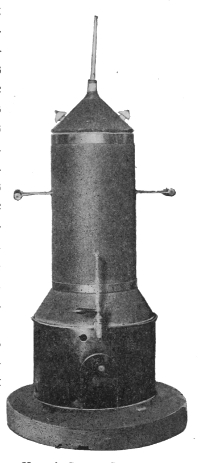
steam. Dr. A. L. Russell61 has described one apparatus
consisting of a pasteuriser, a water-cooler, and an ice-cooler.
The pasteuriser is heated by hot water in the outside casement.
To equalise rapidly the temperature of the water
and milk a series of agitators must be used. These are
suspended on movable rods, and hang vertically in the milk
and water chambers. By this ingenious arrangement the
heat is diffused rapidly throughout the whole mass, and as
the temperature of the milk reaches the proper point the
steam is shut off, and the heat of the whole body of water
and milk will remain constant for the proper length of time.
The somewhat difficult problem of drawing off the pasteurised
milk from the vat without reinfecting it by contact with
the air is solved by placing a valve inside the chamber, and
by means of a pipe leading the pasteurised milk directly and
rapidly into the coolers. These are of two kinds, which may
be used separately or conjointly. In one set of cylinders
there is cold circulating water, in the other finely crushed ice.
Domestic pasteurisation can be accomplished readily by
heating the milk in vessels in a water-bath raised to the
required temperature for half an hour.
Without entering into a long discussion upon the various
methods adopted, we may summarise some of the chief
essential conditions. It need scarcely be said that the
operation must be efficiently conducted, and in such a way
as to maintain absolute control over the time and temperature.
The apparatus should be simple enough to be easily
cleansed, sterilised, and economical in use. Arrangements
must always be made to protect the milk from reinfection
during and after the process. The entire preparation of the
milk for market may be summed up in four items:
1. Pasteurisation in heat reservoir.
2. Rapid cooling in water-or ice-coolers.
3. All cans, pails, bottles, and other utensils to be thoroughly
sterilised in steam.
4. The prepared milk must be placed in sterilised bottles and
sealed up.
The quality of the milk to be pasteurised is an important
point. All milks are not equally suited for this purpose,
and those containing a large quantity of contamination,
especially of spores, are distinctly unsuitable. Such milks,
to be purified, must be sterilised. Dr. Russell has laid
down a standard test for the degree of contamination which
may be corrected by pasteurisation by estimating the degree
of acidity, a low acidity (e. g., 0.2 per cent.) usually indicating
a smaller number of spore-bearing germs than that
which contains a high percentage of acid.
Lastly, while the heating process is of course the essential
feature of efficient pasteurisation, it must not be forgotten
that rapid and thorough cooling is almost equally important.
As we have seen, pasteurisation differs from complete
sterilisation in that it leaves behind a certain number of
microbes or their spores. Cooling inhibits the germination
and growth of this organismal residue. If after the heating
process the milk is cooled and kept in a refrigerator, it will
probably keep sweet from three to six days, and may do so
for three weeks.
Before leaving this subject we may glance for a moment
at the bacterial results of pasteurisation and sterilisation.
The chief two of these are the enhanced keeping quality
and the removal of disease-producing germs. The former
is due in part to the latter, and also to the removal of the
lactic acid and other fermentative bacteria. As a general
rule these bacteria do not produce spores, and hence they
are easily annihilated by pasteurisation. True, a number
of indifferent bacteria are untouched, and also some of the
peptonising species. The cooling itself contributes to the
increased keeping power of the milk, especially in transit to
the consumer.
Pasteurised milks have the following three economical and
commercial advantages over sterilised milks, namely, they
are more digestible, the flavour is not altered, and the fat
and lact-albumen are unchanged. Professor Hunter Stewart,
of Edinburgh, about two years ago, compiled from a
number of experiments the following instructive and comprehensive
table (page 212).
It will be admitted that this table exhibits much in favour
of pasteurisation; yet the crucial test must ever be the effect
upon pathogenic bacteria. Flügge has conducted a series
of experiments upon the destruction of bacteria in milk, and
he states that a temperature of 158° F. (70° C.) maintained
for thirty minutes will kill the specific organisms of tubercle,
diphtheria, typhoid, and cholera. MacFadyen and Hewlett
have demonstrated,62 by sudden alternate heating and cooling,
that 70° C. maintained for half a minute is generally
sufficient to kill suppurative organisms and such virulent
types of pathogenic bacteria as Bacillus diphtheriæ, B.
typhosus, and B. tuberculosis.
No. of
Experiments. |
Average No. of Microbes spe cc. in Milk before Treatment. |
Temperature
and
Duration of Pasteurisation in Minutes. |
No. of Microbes per cc. in Pasteurised Milk after 24 Hours. |
Soluble Albumen in Fresh Milk, per cent. |
Soluble Albumen in Pasteurised Milk, per cent. |
Taste of Pasteurised Milk |
| 5 |
136,262 |
10' 60° C. |
1722 average |
0.423 |
0.418 |
Unaffected |
| 4 |
53,656 |
30' 60° C. |
1 sterile
3 averaged 955 |
0.435 |
0.427 |
" |
| 12 |
78,562 |
10' 65° C. |
6 sterile
3 averaged 686 |
0.395 |
0.362 |
Not appreciably affected |
| 12 |
132,833 |
30' 65° C. |
9 sterile
3 averaged 233 |
0.395 |
0.362 |
" |
| 13 |
49,867 |
10' 70° C. |
sterile |
0.422 |
0.269 |
Slightly boiled |
| 9 |
38,320 |
30' 70° C. |
" |
0.421 |
0.253 |
" |
| 2 |
77,062 |
10' 75° C. |
" |
0.380 |
0.070 |
Boiled |
| 3 |
48,250 |
30' 75° C. |
" |
0.380 |
0.050 |
" |
| 1 |
1,107,000 |
10' 80° C. |
" |
0.375 |
0.000 |
" |
| 1 |
1,107,000 |
30' 80° C. |
" |
0.375 |
0.000 |
" |
Respecting the numerical diminution of microbes brought
about by pasteurisation and sterilisation, respectively, we
may take the following two sets of experiments. Dr. N.
L. Russell63 tabulates the immediate results of pasteurisation
as follows:
| Unpasteurised. |
Pasteurised. |
| |
Minimum. |
Maximum. |
Average. |
Minimum. |
Maximum. |
Average. |
| Full cream milk. |
25,300 |
18,827,000 |
3,674,000 |
0 |
37,500 |
6,140 |
| Cream, 25%. |
425,000 |
32,800,000 |
8,700,000 |
0 |
57,000 |
24,250 |
As regards the later effect of the process, he states that in
fifteen samples of pasteurised milk examined from November
to December nine of them revealed no organisms, or so
few that they might almost be regarded as sterile; in those
samples examined after January the lowest number was 100
germs per cc., while the average was nearly 5,000. With
the pasteurised cream a similar condition was to be observed.
Dr. Hewlett64 defines pasteurisation briefly as heating the
milk to 68° C. for twenty or thirty minutes, and this treatment
he quotes as destroying 99.75 per cent. of the total
number of organisms. Bitter's table of results at 158° F.
bears out the same:
| |
Before Pasteurisation.
No. of Bacteria in 10 Drops. |
After Pasteurisation.
No. of Bacteria in 10 Drops. |
| 1. |
102,600 | 2—3 |
| 2. | 251,600 | 30—40 |
| 3. | 25,000 | 3—5 |
| 4. | 37,500 | 2—5 |
| 5. | 94,000 | 2 |
Cream is generally richer in bacteria than milk. Set cream
contains more bacteria than separated cream, but germs are
abundant in both. Yet whilst it is true that cream contains
a large number of bacteria, it must be pointed out that the
butter fat in cream is a less suitable food for organisms than
is the case with milk. Hence the fermentative changes set
up in cream are of less degree than in milk, particularly so
if separated from the milk. Butter-milk and whey vary
much in their bacterial content. Butter necessarily follows
the standard of the cream. But as the butter fat is not
well adapted for bacterial food, the number of bacteria in
butter is usually less than in cream.65 Moreover, they are
soon reduced both in quality and quantity. Butter examined
after it is several months old is often found to be
almost free from germs; yet in the intervening period a
variety of conditions are set up directly or indirectly through
bacterial action.
Rancid butter is partly due to organisms. Putrid butter
is caused, according to Jensen, by various putrefactive bacteria,
one form of which is named Bacillus fœtidus lactis.
This organism is killed at a comparatively low temperature,
and is therefore completely removed by pasteurisation.
Ill-flavoured butter may be due to germs or an unsuitable
diet of the cow and a retention of the bad quality of the
resulting milk. Lardy and oily butters have been investigated
by Storch and Jensen and traced to bacteria. Lastly,
bitter butter occasionally occurs, and is due to fermentative
changes in the milk. Butter may also contain pathogenic
bacteria, like tubercle. The B. coli can live for one month
in butter.
Cheese suffers from very much the same kind of "diseases"
as butter, except that chromogenic conditions occur
more frequently. The latter are, under certain circumstances,
more the result of chemical than bacterial action.
Most of the troubles in cheese originate in the milk.
Method of Examination of Butter. Several grams of the
butter should be placed in a large test-tube, which is then
two-thirds filled with sterilised water and placed in a water-bath
at about 45° C. until the butter is completely melted.
A small quantity may then be added to gelatine or agar and
plated out on Petri dishes or in flat-bottomed flasks in the
usual way. After which the tube may be well shaken and
returned to the bath inverted. In the space of twenty or
thirty minutes the butter has separated from the water with
which it has been emulsified. It is then placed in the cold
to set. The water may be now either centrifugalised or
placed in sedimentation flasks, and the deposit examined
for bacteria.
The Uses of Bacteria in Dairy Produce. In considering the
relation of bacteria to milk we found that many of the
species present were injurious rather than otherwise, and
when we come to consider bacteria in dairy products, like
butter and cheese, we find that the dairyman possesses in
them very powerful allies. Within recent years almost a
new industry has arisen owing to the scientific application
of bacteriology to dairy work.
As a preliminary to butter-making the general custom in
most countries is to subject the cream to a process of
"ripening." As we have seen, cream in ordinary dairies
and creameries invariably contains some bacteria, a large
number of which are in no sense injurious. Indeed, it is to
these bacteria that the ripening and flavouring processes
are due. They are perfectly consistent with the production
of the best quality of butter. The aroma of butter, as we
know, controls in a large measure its price in the market.
This aroma is due to the decomposing effect upon the constituents
of the butter of the bacteria contained in the
cream. In the months of May and June the variety and
number of these types of bacteria are decidedly greater than
in the winter months, and this explains in part the better
quality of the butter at these seasons. As a result of these
ripening bacteria the milk becomes changed and soured, and
slightly curdled. Thus it is rendered more fit for butter-making,
and acquires its pleasant taste and aroma. It is
then churned, after which bacterial action is reduced to a
minimum or is absent altogether. Sweet-cream butter lacks
the flavour of ripened or sour-cream butter. The process is
really a fermentation, the ripening bacteria acting on each
and all of the constituents of the milk, resulting in the
production of various bye-products. This fermentation is a
decomposition, and just as we found when discussing fermentation,
so here also the action is beneficial only if it is
stopped at the right moment. If, for example, instead of
being stopped on the second day, it is allowed to continue
for a week, the cream will degenerate and become offensive,
and the pleasant ripening aroma will be changed to the
contrary.
Bacteriologists have demonstrated that butters possessing
different flavours have been ripened by different species of
bacteria. Occasionally one comes across a dairy which
seems to be impregnated with bacteria that improve cream
and flavour well. In other cases the contrary happens, and
a dairy becomes impregnated with a species having deleterious
effects upon its butter. This species may arise from
unclean utensils and dairying, from disease of the cow, or
from a change in the cow's diet. Thus it comes about that
the butter-maker is not always able to depend upon good
ripening for his cream. At other times he gets ripening to
occur, but the flavour is an evil one, and the results correspond.
It may be bitter or tainted, and just as certainly as
these flavours develop in the cream, so is it certain that the
butter will suffer. Fortunately the bacterial content of the
cream is generally either favourable or indifferent in its
action. Thus it comes about that the custom is to allow
the cream simply to ripen, so to speak, of its own accord, in
a vat exposed to the influence of any bacteria which may
happen to be around. This generally proves satisfactory,
but it has the great disadvantage of being indefinite and uncertain.
Occasionally it turns out wholly unsatisfactory,
and results in financial loss.
There are various means at our command for improving
the ripening process. Perfect cleanliness in the entire
manipulation necessary in milking and dairying, combined
with freedom from disease in the milch cows, will carry us a
long way on the road towards a good cream-ripening. Recently,
however, a new method has been introduced, largely
through the work and influence of Professor Storch in Denmark,
which is based upon our new knowledge respecting
bacterial action in cream-ripening. We refer to the artificial
processes of ripening set up by the addition of pure cultures
of favourable germs.66 If a culture of organisms possessing
the faculty of producing in cream a good flavour be added
to the sweet cream, it is clear that advantage will accrue.
This simple plan of starting any special or desired flavour
by introducing the specific micro-organism of that flavour
may be adopted in two or three different ways. If cream
be inoculated with a large, pure culture of some particular
kind of bacteria, this species will frequently grow so well
and so rapidly that it will check the growth of the other
bacteria which were present in the cream at the commencement
and before the starter was added. That is, perhaps,
the simplest method of adding an artificial culture.
But secondly, it will be apparent to those who have followed
us thus far, that if the cream is previously pasteurised at 70°
C. these competing bacteria will have been mostly or entirely
destroyed, and the pure culture, or starter, will have the
field to itself. There is a third modification, which is sometimes
termed ripening by natural starters. A natural
starter is a certain small quantity of cream taken from a
favourable ripening—from a clean dairy or a good herd—and
placed aside to sour for two days until it is heavily impregnated
with the specific organism which was present in
the whole favourable stock of which the natural starter is
but a part. It is then added to the new cream the favourable
ripening of which is desired. Of the species which
produce good flavours in butter the majority are found to
be members of the acid-producing class; but probably the
flavour is not dependent upon the acid. Moreover, the
aroma of good ripening is also probably independent of
the acid production.
Of all the methods of ripening—natural ripening, the
addition of natural starters, the addition of pure cultures
with or without pasteurisation—there can be no doubt that
pure culture after pasteurisation is the most accurate and
dependable. The use of natural starters is a method in
the right direction; yet it is, after all, a mixed culture,
and therefore not uniform in action. In order to obtain
the best results with the addition of pure cultures, Professor
Russell has made the following recommendations:
1. The dry powder of the pure culture must be added to
a small amount of milk that has been first pasteurised, in
order to develop an active growth from the dried material.
2. The cream to be ripened must first be pasteurised, in
order to destroy the developing organisms already in it, and
thus be prepared for the addition of the pure culture.
3. The addition of the developing starter to the pasteurised
cream and the holding of the cream at such a
temperature as will readily induce the best development of
flavour.
4. The propagation of the starter from day to day. A
fresh lot of pasteurised milk should be inoculated daily
with some of the pure culture of the previous day, not the
ripening cream containing the culture. In this way the
purity of the starter is maintained for a considerable length
of time. Those starters are best which grow rapidly at a
comparatively low temperature (60–75° F.), which produce
a good flavour, and which increase the keeping qualities of
the butter. Now, whilst it is true that the practice of using
pure cultures in this way is becoming more general, very
few species have been isolated which fulfil all the desirable
qualities above mentioned. In America starters are preferred
which yield a "high" flavour, whereas in Danish
butter a mild aroma is commoner. In England as yet
very little has been done, and that on an experimental scale
rather than a commercial one.67 In 1891 it appears that only
4 per cent. of the butter exhibited at the Danish butter
exhibitions was made from pasteurised cream plus a culture
starter; but in 1895, 86 per cent. of the butter was so made.
Moreover, such butter obtained the prizes awarded for first-class
butter with preferable flavour. Different cultures will,
of course, yield different flavoured butter. If we desire, say,
a Danish butter, then some species like "Hansen's Danish
Starter" would be added; if we desire an American butter,
we should use a species like that known as "Conn's Bacillus,
No. 41." But whilst these are two common types,
they are not the only suitable and effective starters. On
certain farms in England there are equally good cultures,
which, placed under favourable temperatures in new cream,
would immediately commence active ripening.
Professor H. W. Conn, who, with Professor Russell, has
done so much in America for the advancement of dairy
bacteriology, reports68 a year's experience with the bacillus
to which reference has been made, and which is termed No.
41. It was originally obtained from a specimen of milk
from Uruguay, South America, which was exhibited at the
World's Fair in Chicago, and proved the most successful
flavouring and ripening agent among a number of cultures
that were tried. The conclusions arrived at after a considerable
period of testing and experimentation appear to be
on the whole satisfactory. A frequent method of testing
has been to divide a certain quantity of cream into two
parts, one part inoculated with the culture and the other
part left uninoculated. Both have then been ripened under
similar conditions, and churned in the same way; the differences
have then been noted. It is interesting to know that,
as a result of the year's experience, creameries have been
able to command a price varying from half a cent to two
cents a pound more for the "culture" butters than for the
uninoculated butters. The method advised in using this
pure culture is to pasteurise (by heating at 155° F.) six
quarts of cream, and after cooling to dissolve in this cream
the pellet containing bacillus No. 41. The cream is then
set in a warm place (70° F.), and the bacillus is allowed to
grow for two days, and is then inoculated into twenty-five
gallons of ordinary cream. This is allowed to ripen as
usual, and is then used as an infecting culture, or "starter,"
in the large cream vats in the proportion of one gallon of
infecting culture to twenty-five gallons of cream, and the
whole is ripened at a temperature of about 68° F. for one
day. The cream ripened by this organism needs to be
churned at a little lower temperature (say 52°-54° F.) but to
be ripened at a little higher temperature than ordinary cream
to produce the best results. Cream ripened with No. 41
has its keeping power much increased, and the body or
grain of the butter is not affected. More than two hundred
creameries in America used this culture during 1895, and
Professor Conn reports that this has proved that its use for
the production of flavour in butter is feasible in ordinary
creameries and in the hands of ordinary butter-makers provided
they will use proper methods and proper discretion.
Bacteria in Cheese-making. The cases where it has been
possible to trace bacterial disease to the consumption of
butter and cheese have been rare. Notwithstanding this
fact, it must not be supposed that therefore cheese contains
few or no bacteria. On the contrary, for the making of
cheese bacteria are not only favourable, but actually essential,
for in its manufacture the casein of the milk has to be
separated from the other products by the use of rennet, and
is then collected in large masses and pressed, forming the
fresh cheese. In the course of time this undergoes ripening,
which develops the peculiar flavours characteristic of cheese,
and upon which its whole value depends.
We have said that the casein is separated by the addition
of rennet, which has the power of coagulating the casein.
But this precipitation may also be accomplished by allowing
acid to develop in the milk until the casein is precipitated,
as in some sour-milk or cottage cheeses. The former
method is of course the usual one in practice. It has been
suggested that the bacteria contained in the rennet exert a
considerable influence on the cheese, but this, although
rennet contains bacteria, is hardly established. It is not
here, however, that bacteria really play their rôle. After
this physical separation, when the cheese is pressed and set
aside, is the period for the commencement of the ripening
process.
That bacteria perform the major part of this ripening process,
and are essential to it, is proved by the fact that when
they are either removed or opposed the curing changes immediately
cease. If the milk be first sterilised, or if antiseptics,
like thymol, be added, the results are negative. It
is not yet known whether this peptonising process is due to
the influence of a single organism or not. The probability,
however, is that it is to be ascribed to the action of that
group of bacteria known as the lactic-acid organisms. Nor
is it yet known whether the peptonisation of the casein and
the production of the flavour are the results of one or more
species. Freudenreich believes them to be due to two
different forms.
However that may be, we meet with at least four common
groups of bacteria more or less constantly present in
cheese-ripening, either in the early or late stages. First,
there are the lactic-acid bacteria, by far the largest group,
and the one common feature of which is the production by
fermentation of lactic acid; secondly, there are the casein-digesting
bacteria, present in relatively small numbers;
thirdly, the gas-producing bacteria, which give to cheese its
honeycombed appearance; lastly, an indifferent or miscellaneous
group of extraneous bacteria, which were in the milk
at the outset of cheese-making, or are intruders from the
air or rennet. All these four groups may bring about a
variety of changes, beneficial and otherwise, in the cheese-making.
In order that the relation of bacteria to cheese may be
more fully understood, we may draw attention to some experiments
conducted by Professor H. L. Russell as to the
numbers of bacteria present during different stages of the
ripening, excluding those already referred to as present in
the rennet. It appears that there is always at first a marked
increase in the number of micro-organisms, which is soon
followed by a more gradual decline. While the casein-digesting
and gas-producing classes suffer a general and
more or less rapid decline, the lactic-acid bacteria develop
to an enormous extent, from which fact it would appear
that cheese offers ideal conditions for the development of
the latter. In some most interesting records Professor Russell
has divided the ripening process into three divisions:
1. Period of Initial Bacterial Decline in Cheese. Where the
green cheeses were examined immediately after removing
from the press, it was usually found that a diminution in
numbers of bacteria had taken place. This period of decline
lasts but a short time, not beyond the second day.
Lower temperature and expulsion of the whey would account
for this general decline in all species of bacteria.
2. Period of Bacterial Increase. Soon after the cheese is removed
from the press a most noteworthy change takes place
in green cheese. A very rapid increase of bacteria occurs,
confined almost exclusively to the lactic-acid group. This
commences in green cheese about the eighth day, and continues
more or less for twenty days. In Cheddar cheese it
commences about the fifth day, reaches its maximum about
the twentieth day, declines rapidly to the thirtieth day, and
gradually for a hundred following days. During the first
forty days of this period the casein-digesting and gas-producing
organisms are present, and at first increasing, but
relatively to only a very slight degree. With this rapid
increase in organisms the curd begins to lose its elastic
texture, and before the maximum number of bacteria is
reached the curing is far advanced. Freudenreich has
shown that acid inhibits the growth of the casein-digesting
microbes and vice versâ.
3. Period of Final Bacterial Decline. The cause of this
decline can only be conjectured, but it is highly probable
that it is due to a general principle to which reference has
frequently been made, viz., that after a certain time the
further growth of any species of bacteria is prevented by its
own products. We may observe that the gas-producing
bacteria in Cheddar cheese last much longer than the peptonising
organisms, for they are still present up to eighty
days. Professor Russell aptly compares the bacterial vegetation
of cheese with its analogue in a freshly seeded field.
"At first multitudes of weeds appear with the grass. These
are the casein-digesting organisms, while the grass is comparable
to the more native lactic-acid flora. In course of
time, however, grass, which is the natural covering of soil,
'drives out' the weeds, and in cheese a similar condition
occurs." In milk the lactic-acid bacteria and peptonising
organisms grow together; in ripening cheese the former
eliminate the latter.
We have seen that the conclusion generally held respecting
these lactic-acid bacteria is that they are the main agents
in curing the cheese. Upon this basis a system of pure
starters has been adopted, the characteristics of which
must be as follows: (a) The organism shall be a pure lactic-acid-producing
germ, incapable of producing gaseous products;
(b) it should be free from any undesirable aroma; (c)
it should be especially adapted for vigorous development
in milk. The starter may be propagated in pasteurised
or sterilised milk from a pure culture from the laboratory.
The advantages accruing from the uses of this lactic-acid
culture, as compared with cheese made without a culture,
are that with sweet milk it saves time in the process of
manufacture; that with tainted milk, in which acid develops
imperfectly, it is an aid to the development of a proper
amount of acid for a typical Cheddar cheese; and that the
flavour and quality of such cheese is preferable to cheese
which has not been thus produced. Professor Russell is of
opinion that the lactic-acid organisms are to be credited
with greater ripening powers than the casein-digesting
organisms, but it must not be forgotten that these two great
families of bacteria are still more or less on trial, and it is
not yet possible finally to dispose of either of them. Mr.
F. J. Lloyd holds that though "the greater the number of
lactic-acid bacilli in the milk the greater the chance of a
good curd," still "this organism alone will not produce that
nutty flavour which is so sought after as being the essential
characteristic of an excellent Cheddar cheese."69
There are several difficulties to be encountered by dairymen
starting a ripening by the addition of a pure culture.
To begin with, there is the initial difficulty of not being able
to pasteurise milk intended for cheese, as rennet will not
coagulate pasteurised milk (Lloyd). Hence it is impossible
to avoid some contamination of the milk previous to the
addition of the culture. The continual uncontaminated
supply of pure culture is by no means an easy matter. The
maintenance of a low temperature to prevent the rapid multiplication
of extraneous bacteria will, in some localities, be
a serious difficulty. These difficulties have, however, not
proved insurmountable, and by various workers in various
localities and countries culture-ripening is being carried on.
Abnormal Ripening. Unfortunately, from one cause or
another, faulty fermentations and changes are not infrequently
set up. Many of these may be prevented, being
due to lack of cleanliness in the process or in the milking;
others are due to the gas-producing bacteria being present
in abnormally large numbers. When this occurs we obtain
what is known as "gassy" cheese, on account of its substance
being split up by innumerable cavities and holes containing
carbonic acid gas, or sometimes ammonia or free
nitrogen. Some twenty-five species of micro-organisms
have been shown by Adamety to cause this abnormal swelling.
In severe cases of this gaseous fermentation the product
is rendered worthless, and even when less marked the
flavour and value are much impaired. Winter cheese
contains more of this species of bacteria than summer.
Acid and salt are both used to inhibit the action of these
gas-producing bacteria and yeasts, and with excellent results.
We may remark that the character of the gas holes in
cheese is not of import in the differentiation of species. If
a few gas bacteria are present, the holes will be large and
less frequent; if many, the holes will be small, but numerous.
(Swiss cheese having this characteristic is known as
Nissler cheese.)
Many of these gas germs belong to the lactic-acid group,
and are susceptible to heat. A temperature of 140° F.
maintained for fifteen minutes is fatal to most of them,
largely because they do not form spores. The sources of
the extensive list of bacteria found in cheese are of course
varied, more varied indeed than is the case with milk. For
there are, in addition to the organisms contained in the milk
brought to the cheese factory, the following prolific sources,
viz., the vats and additional apparatus; the rennet (which
itself contains a great number); the water that is used in
the manufacture.
In addition to the abnormalities due to gas, there are also
other faulty types. The following chromogenic conditions
occur: red cheese, due to a micrococcus; blue cheese, produced,
according to Vries, by a bacillus; and black cheese,
caused by a copious growth of low fungi. Bitter cheese is
the result of the Micrococcus casei amari of Freudenreich, a
closely allied form of Conn's micrococcus of bitter milk.
Sometimes cheese undergoes a putrefactive decomposition,
and becomes more or less putrid. These latter conditions,
like the gassy cheeses, are due to the intrusion of bacteria
from without, or from udder disease of the cow. Healthy
cows, clean milking, and the introduction of pure cultures
are the methods to be adopted for avoiding "diseases" of
cheese and obtaining a well-flavoured article which will
keep.
Finally, we may quote five conclusions from the prolonged
researches of Mr. Lloyd70 which cannot but prove helpful to
the Cheddar cheese industry in England:
1. To make Cheddar cheese of excellent quality, the
Bacillus acidi lactici alone is necessary; other germs will
tend to make the work more rather than less difficult.
Hence scrupulous cleanliness should be a primary consideration
of the cheese-maker.
2. No matter what system of manufacture be adopted, two
things are necessary. One is that the whey be separated
from the curd, so that when the curd is ground it shall contain
not less than 40 per cent. of water, and not more than
43 per cent.; the other point is that the whey left in the
curd shall contain, developed in it before the curd is put in
the press, at least 1 per cent. of lactic acid if the cheese is
required for sale within four months, and not less than 8
per cent. of lactic acid if the cheese is to be kept ripening for
a longer period.
3. The quality of the cheeses will vary with the quality
of the milk from which they have been made, and proportionately
to the amount of fat present in that milk.
4. "Spongy curd" is produced by at least five organisms,
and one of these is responsible for a disagreeable taint found
in curd. They occur in water. Hence the desirability of
securing clean water for all manipulative purposes, and also
for the drinking purposes of the milch cow.
5. The fact that certain bacteria are found in certain
localities and dairies is due more to local conditions than to
climatic causes.
It is needless to remark that these conclusions once more
emphasise the fact that strict and continual cleanliness is the
one desideratum for bacteriologically good dairying. That
being secured in the cow at the milking, in the transit, and
at the dairy, it is a comparatively simple step, by means of
pasteurisation and the use of good pure cultures of flavouring
bacteria, to the successful application of bacteriology to
dairy produce.
Methods of Examination of Milk:
1. Preparation of Microscopic Slides. This course might
at once occur to the mind as the first to adopt in searching
for bacteria in milk. Devices have accordingly been proposed
for saponification previous to staining. Some recommend
the addition of a few drops of a solution of sodium
carbonate; others use methylene blue and chloroform.
But, whatever plan of staining is adopted, this method of
examination in its simplest form is in no degree a criterion
of the bacterial content of a large quantity of milk.
Hence it has come to be recognised that one of two
manipulations must precede such microscopic examination.
These simple processes are known by the terms of sedimentation
and centrifugalisation. Sedimentation means merely
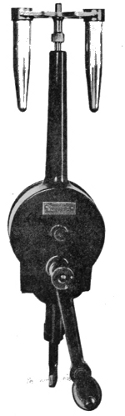 A Centrifuge
Used in the Examination
of Milk
placing the milk in conical glasses in a cool
place for twenty-four hours. The introduction
of improved forms of the centrifuge
has brought the second method of
securing a sediment into preference. Five
cubic centimetres of the milk are introduced
into the graduated bottle, which is
then placed in the centrifuge, and whirled
for one or two minutes. Thus a deposit
of particulate matter is ensured. Cover-glass
specimens of the sediment or deposit
are then prepared and stained in the ordinary
way.
In testing for tubercle something more
is generally necessary. To the 50 cc. of
the milk set aside for sedimentation 10 cc.
of liquefied, colourless carbolic acid are
added. The mixture is shaken and poured
into the conical glass. After standing for
twenty-four hours a little of the sediment
is taken by means of a pipette and examined
by ordinary methods, though after
"fixing" the films with heat they are
some times passed through equal parts of
alcohol and ether. The stain is of course
that usually adopted in tubercle, namely, the Ziehl-Neelsen.
Scheurlen suggested a method for demonstrating the tubercle
bacillus in milk by steeping the cover glasses first in
alcohol and then ether, after which they were stained with
Ziehl-Neelsen.
2. Plate Culture. The milk is to be diluted a thousand or
more times with sterile water, and ordinary plate cultures
made in Petri dishes or flat-bottomed conical flasks. The
colonies should be counted as late as possible; but even
then the isolation of pathogenic germs is uncertain. As
regards further procedure, the ordinary methods of sub-culturing
adopted in water examination must be strictly
followed, and the special tests for Bacillus typhosus and B.
coli applied. As we have already seen, the quantitative
estimation of organisms in milk is not of the same value as
in water.
3. Inoculation. To test the capacity of the milk for causing
disease, before or after centrifugalisation, preferably the
latter, a certain quantity of the sediment may be inoculated
into guinea-pigs. In suspected tubercle 2 cc. may be taken;
in diphtheria a little less will suffice. The inoculation
should be either intraperitoneal or subcutaneous. Many
authorities hold that this test is the only safe one to protect
the public from milk containing germs of disease.
Shell-fish have recently claimed the attention of bacteriologists,
owing to the outbreak of typhoid and other epidemics
apparently traceable to oysters.
It is four or five years since Professor Conn startled the
medical world by tracing an epidemic of typhoid fever to
the consumption of some uncooked oysters.71 Almost at the
same time Sir William Broadbent published in the British
Medical Journal a series of cases occurring in his practice
which illustrated the same channel of infection. Since then
a number of similar items of evidence to the same effect
have cropped up. Hence there is little wonder that a number
of investigators concentrated their attention upon this
matter. Professors Herdman and Boyce, of Liverpool, Dr.
Cartwright Wood, Dr. Klein, and Dr. Timbrell Bulstrode
are some of the chief contributors to the elucidation of this
problem.
The mode of infection of oysters by pathogenic bacteria
is briefly as follows: The sewage of certain coast towns is
passed untreated out to sea. At or near the outfall, oyster-beds
are laid down for the purpose of fattening oysters.
Thus they become contaminated with saprophytic and pathogenic
germs contained in the sewage. It will be at once
apparent that several preliminary questions require attention
before any deductions can be drawn as to whether or not
oysters convey virulent disease to consumers. To the solution
of these Dr. Cartwright Wood was one of the first to
address himself.
The precise conditions which render one locality more
favourable than another in respect to oyster culture are not
fully known. But it has been observed that they do not
flourish in water containing less than three per cent. of salt.
Hence they are absent from the Baltic Sea, which, owing to
the fresh water flowing into it in rivers, contains a smaller
percentage of salt than three. Oysters appear in addition,
to favour a locality where they find their chosen food of
small animalculæ and particles of organic matter. Such a
favourable locality is the mouth of a river, where tides and
currents also assist in bringing food to the oyster. Unfortunately,
however, in a crowded country like England such
localities round her coasts are frequently contaminated by
sewage from outfalls. Thus the oysters and the sewage
come into intimate relation with each other.
Professor Giaxa carried out some experiments in 1889 at
Naples which appeared to show that the bacilli of cholera
and typhoid rapidly disappeared in ordinary sea-water.
Other observers at about the same time, notably Foster and
Freitag, arrived at an opposite conclusion. In 1894 Professor
Percy Frankland, in a report to the Royal Society, declared
"that common salt, whilst enormously stimulating
the multiplication of many forms of water bacteria, exerts a
directly and highly prejudicial effect on the typhoid bacilli,
causing their rapid disappearance from the water, whether
water bacteria are present or not." It was at this time,
when the matter was admittedly in an unsatisfactory stage,
that Dr. Cartwright Wood made his experiments.72 We
have not space here to enter into this work. But his conclusions
seem to have been amply established, and were to
the effect that typhoid and cholera bacilli could, as a matter
of fact, exist over very lengthened periods in ordinary sea-water.
The next step was to demonstrate the length of
time the bacilli of cholera remained alive in the pallial cavity
and body of the oyster. Dr. Wood found they did so for
eighteen days after infection, though in greatly diminished
numbers. This diminution was due to one or all of three
reasons: (a) the effect of the sea-water already referred to as
finally prejudicial to bacilli of typhoid; (b) the vital action
of the body-cells of the oyster; (c) the washing away of
bacilli by the water circulating through the pallial cavity.
It will have been noticed that up to the present we have
learned that typhoid bacilli can and do live in sea-water,
and also inside oysters up to eighteen days, but in ever-diminishing
quantities. The question now arises: What is
the influence of the oyster upon the contained bacilli?
Under certain conditions of temperature organisms may
multiply with great rapidity inside the shell of the oyster.
Yet, on the other hand, the amœboid cells of the oyster,
the acid secretion of its digestive glands, or the water circulating
through its pallial cavity, may act inimically on the
germs. Proof can be produced in favour of the third and
last-named mode by which an oyster can cleanse itself of
germs. So far, then, we have met with no facts which
make it impossible for oysters to contain for a lengthened
period the specific bacteria of disease. Let us now turn to
their opportunity for acquiring such disease germs. It is
afforded them during the process of what is termed "fattening."
By this process the body of the oyster acquires a
plumpness and weight which enhances its commercial value.
This desired condition is obtained by growing the oyster in
"brackish" water, for thus it becomes filled out and mechanically
distended with water. But if this water contains
germs of disease, what better opportunity could such germs
have for multiplication than within the body-cavity of an
oyster? "The contamination of sea-water, therefore, in
the neighbourhood of oyster-beds may undoubtedly lead to
the molluscs becoming infected with pathogenic organisms"
(Wood). Yet we have seen that, apart altogether from the
individual susceptibilities or otherwise of the consumer, there
are in the series of events necessary to infection many occasions
when circumstances would practically free the oysters
from infection.
The sources of pollution of oysters are not the fattening
beds alone. The native beds also may afford opportunity
for contamination. Thirdly, in packing and transit, and
fourthly, in storage in shops and warehouses, there is frequently
abundant facility for putrefactive bacteria to gain
entrance to the shells of oysters.
Dr. Klein's researches73 into this question have been
wholly confirmatory of the facts elicited by Dr. Cartwright
Wood. Despite the tendency of the bacilli of cholera and
typhoid to die out quickly in crude sewage, the sewage is
sufficiently altered or diluted at the outfall for these organisms
to exist there in a virulent state. We may give Dr.
Klein's conclusions:
1. That the cholera and typhoid bacilli are difficult of
demonstration in sewage known to have received them.
2. Both organisms may persist in sea-water tanks for two
or three weeks, the typhoid bacillus retaining its characteristics
unimpaired, the cholera bacillus tending to lose them.
3. Oysters from sources free of sewage contained no
bacteria of sewage.
4. Oysters from sources exposed to risk of sewage contamination
did contain colon bacilli and other sewage
bacteria.
5. In one case Eberth's typhoid bacillus was found in the
mingled body and liquor of the oyster.
Nor do typhoid bacilli lose activity or virulence by passing
through an oyster.
These researches once and for all established the fact that
oysters ordinarily grown on oyster-beds contaminated with
bacteria may, and do on occasion, contain the virulent
specific bacillus of typhoid, which can live both in sea-water
and within the shell of the oyster. This being so, it will
probably appear to the reader that the risk of infection of
typhoid by oysters is very serious indeed. Yet in actual
practice many conditions have to be fulfilled. For, in addition
to the fact that the oysters must be consumed, as
is usual, uncooked, the following conditions must also be
present.
(a) Each infective oyster must contain infected sewage,
which presupposes that typhoid excreta from patients suffering
from the disease have passed into that particular sewage
untreated and not disinfected.
(b) The infective oyster must be fed upon infected sewage,
and still contain the virus in its substance.
(c) It has to be eaten by a susceptible person.
(d) There must have been no period of natural cleansing
after "fattening."
Even to this formidable list of conditions we must add the
further remark that, owing to the vitality of the body-cells
of the oyster, or to the lessened vitality of the bacilli of
cholera and typhoid, it is generally the case that the tendency
of these organisms is rather to decrease and die out
than live and multiply.
We shall probably maintain a satisfactory balance of truth
if we place alongside these facts the summary of the Local
Government Board Report.
"There can be no doubt," wrote Sir Richard Thorne, "that
oysters which have been brought into sustained relation with the
typhoid bacillus are liable to exhibit that microbe within the shell
contents and to retain it for a while under circumstances not only
permitting its rapid multiplication when transferred again to appropriate
media, but conserving at the same time its ability to
manifest its hurtful properties."
From what has been said the preventive treatment is
obvious. All oyster-layings and shell-fish beds round the
coast should be superintended and inspected by the sanitary
authority of the Government. The importation of foreign
oysters, grown on uncontrolled beds, should, if possible, be
restricted or supervised. Further, as a protective measure of
the first importance, oysters should be cleansed, after fattening
on a contaminated bed, by being deposited for several
weeks at some point along the coast which is washed by
pure sea-water. Retention in dirty water-tanks, in uncleanly
shops and warehouses, is also to be greatly deprecated.
In order to examine oysters bacteriologically, it is necessary
to pay particular attention to the water in the pallial
cavity, the contents of the alimentary canal, and the washings
of the shell itself. Ordinary media may be used for
obtaining a growth of the contained organisms.
Other shell-fish than oysters do, from time to time, cause
epidemics or individual cases of gastro-intestinal irritation,
and probably contain various germs. These they acquire in
all probability from their food, which by their own choice
is frequently of a doubtful character.
Meat. Parasites are occasionally found in meat, but
bacteria are comparatively rare. Not that they do not
occur in the bodies of animals used for human consumption,
for in the glands, mesenteries, and other organs they are
common. But in those portions of the carcass which are
used by man, namely the muscles, bacteria are rare. The
reasons alleged for this are the acid reaction (sarcolactic
acid) and the more or less constant movement during life.
A bacterial disease which, perhaps more than any other,
might be expected to be conveyed by meat is tubercle. Yet
the recent Royal Commission on Tuberculosis has again
emphasised the absence of bacilli in the meat substance:
"In tissues which go to form the butcher's joint, the material
of tubercle is not often found even where the organs (lungs, liver,
spleen, membranes, etc.) exhibit very advanced or generalised
tuberculosis; indeed, in muscle and muscle juice it is very seldom
that tubercle bacilli are to be met with; perhaps they are somewhat
more often to be discovered in bone, or in some small
lymphatic gland embedded in intermuscular fat."74
The only way in which such meat substance becomes infected
with tubercle appears to be through carelessness in
the butcher, who perchance smears the meat substance with
a knife that has been used in cutting the organs, and so has
become contaminated with infected material. Very instructive
also are the results at which Dr. Sims Woodhead arrived
in compiling evidence for the same Commission on the effect
of cooking upon tuberculous meat:
"Ordinary cooking, such as boiling and more especially roasting,
though quite sufficient to sterilise the surface, and even the
substance for a short distance from the surface of a joint, cannot
be relied upon to sterilise tubercular material included in the
centre of rolls of meat, especially when these are more than three
pounds or four pounds weight. The least reliable method of
cooking for this purpose is roasting before a fire; next comes
roasting in an oven, and then boiling."75
From this statement it will be understood that rolled meat
may be a source of infection to a greater degree than the
ordinary joint.
Notwithstanding this negative evidence, more than twenty
species of bacteria have been isolated from canned meats
and hams, and a considerable number of poisoning cases
have occurred from meat contaminated with bacteria or their
products. The general symptoms of such meat poisoning
are vomiting, diarrhœa, fever, and more or less prostration.
Ballard and Klein isolated a specific microbe from samples
of bacon which appear to have caused an epidemic of infectious
pneumonia at Middlesborough. In 1880 occurred
the well-known "Welbeck disease" epidemic. A public
luncheon was followed by severe and even fatal illness.
Seventy-two persons were affected, and four died. A specific
bacillus was isolated by Klein. In 1881 much the
same thing happened at Nottingham, in which fifteen persons
were attacked, and one died. The same bacillus was
isolated from the pernicious pork. Again in 1889 an outbreak
of diarrhœa at Carlisle was traced to bacterially diseased
pork. But taking these and similar cases at their
worst, there can be no doubt that under no circumstances is
meat as infective as milk.
Ice-cream. In 1894 Dr. Klein had occasion to bacteriologically
examine ice-creams sold in the streets of London.
In all six samples were analysed, and in each sample the
conclusions resulting were of a nature sufficiently serious to
support the view that the bacterial flora was not inferior to
ordinary sewage. The water in which the ice-cream glasses
were washed was also examined, and found to contain large
numbers of bacteria.
Since that date many investigations have been made into
ice-creams. It appears that they are often made under extremely
foul circumstances, and with anything but sterilised
appliances. Little wonder, then, that the numbers of bacteria
present run into millions. In nearly all recorded cases
the quality of the germs as well as the quantity has been of
a nature to cause some concern. Bacillus coli communis,
which, though not now considered absolutely indicative of
alimentary pollution, is looked upon as a highly unsatisfactory
inhabitant of water, has been found in considerable
abundance. The Proteus family, which also possesses a
putrefactive function, is common in ice-creams. The common
water bacteria are nearly always present.
Bacillus typhosus itself, it is said, has been isolated from
some ice-cream which was held responsible for an outbreak
of enteric fever. The material had become infected during
process of manufacture in the house of a person suffering
from unnotified typhoid fever.
Now, whilst reports of the above nature appear very
alarming, the fact is that hundreds of weakly children devour
ice-cream with apparent impunity, and when evil follows
it is not infrequently due to other than bacterial
conditions. The cold mass itself may inhibit the resistance
of the gastric tissues. Tyrotoxicon, the alkaloid separated
from cheese and cream by Vaughan, may be responsible for
some alimentary irritation. On the whole, the practical
effect upon the community is not in proportion to the
bacterial content of the ice-cream. Yet, nevertheless, we
ought to be much more watchful than in the past to preserve
ice-cream from pollution with harmful bacteria.
The two chief constituents which contribute their quota
of germ life to ice-cream are ice and cream. In addition,
the uncleanly methods of manufacture render the material
likely to contain the six or seven millions of micro-organisms
per cc. which have been on several occasions estimated.
To cleanly methods of dairying we have already fully referred;
to the bacterial content of milk and cream we have
also paid some attention; but we have not had an opportunity
of saying anything of germs in ice.
Ice contains bacteria in varying quantities from 20 per cc.
to 10,000 or more. Nor is variation in number affected
alone by the condition of the water, for samples collected
from one and the same place differ widely. The quality
follows in large measure the standard of the water.
Water bacteria, Bacillus coli, putrefactive bacteria, and
even pathogenic have been found in ice. Many of the
latter can live without much difficulty and are most numerous
in ice containing air-bubbles.
Dr. Prudden, of New York, performed a series of experiments
in 1887 to show the relative behaviour of bacteria in
ice. Taking half a dozen species, he inoculated sterilised
water and reduced it to a very low temperature for a hundred
and three days, with the following results:—Bacillus
prodigiosus diminished from 6,300 per cc. to 3,000 within the
first four days, to 22 in thirty-seven days, and vanished
altogether in fifty-one days; a liquefying water bacillus,
numbering 800,000 per cc. at the commencement, had disappeared
in four days; Staphylococcus pyogenes aureus and
B. fluorescens showed large numbers present at the end of
sixty-six and seventy-seven days respectively; B. typhosus,
which was present 1,000,000 per cc. after eleven days, fell
to 72,000 after 77 days, and 7,000 at the end of 103 days.
Anthrax bacilli are susceptible to freezing, but their spores
are practically unaffected (Frankland).
From these facts it will be seen that bacteria live, but do
not multiply, in ice.
In making a bacterial investigation into the flora of ice-cream,
it is necessary to remember that considerable dilution
with sterilised water is required. The usual methods of
examining water and milk are adopted.
Bread forms an excellent medium for moulds, but unless
specially exposed the bacteria in it are few. Waldo and
Walsh have, however, demonstrated that baking does not
sterilise the interior of bread. These observers cultivated
numerous bacteria from the centre of newly baked London
loaves.76 The writer has recently made a series of examinations
of the air of several underground bakehouses in Central
London; but, though the air was highly impregnated
with flour-dust, few bacteria were present.
Other foods and beverages may be, and are, from time to
time contaminated in some small degree with bacteria or
their spores. Such contaminations are generally due to
uncleanly manufacture or unprotected storage. The principles
of examination or of the prevention of pollution are
similar to those already described.