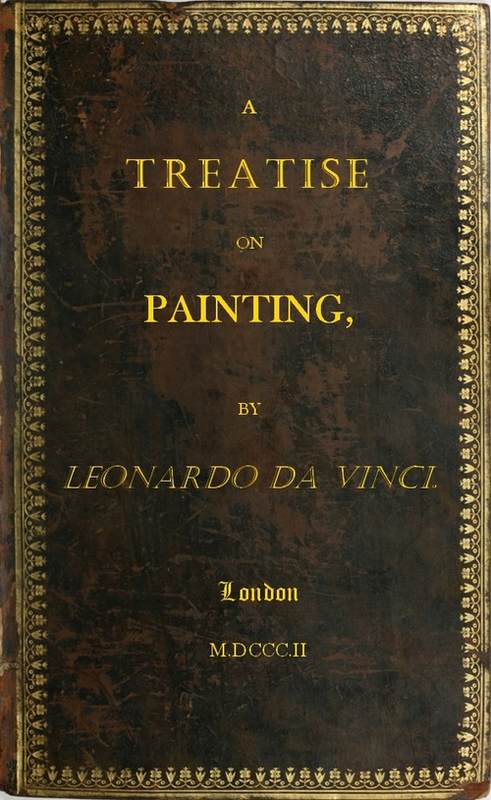
A Treatise on Painting
by da Vinci Leonardo
★★★★★No ratings yet
Language: English
Sign in to rate this book.
Sign in to shelve this book.
About this eBook
- Author
- Leonardo, da Vinci, 1452-1519
- Credits
- Produced by Greg Bergquist, Reiner Ruf, and the Online Distributed Proofreading Team at www.pgdp.net (This file was produced from images generously made available by The Internet Archive/American Libraries.)
- Language
- English
- LoC Class
- ND: Fine Arts: Painting
- Subject
- Drawing -- Technique -- Early works to 1800
- Category
- Text
- eBook-No.
- 46915
- Project Gutenberg
- https://www.gutenberg.org/ebooks/46915
- Release Date
- September 20, 2014
- Copyright
- Public domain in the USA.
Contents
- 1.A TREATISE ON PAINTING,
- 2.TABLE OF CHAPTERS.
- 3.PREFACE TO THE PRESENT TRANSLATION.
- 4.THE LIFE OF LEONARDO DA VINCI .
- 5.CATALOGUE OF THE WORKS OF LEONARDO DA VINCI .
- 6.A TREATISE, &c.
- 7.DRAWING.
- 8.PROPORTION. — Chap. I. — What the young Student in Painting ought in the first Place to learn. — Chap. II. — Rule for a young Student in Painting. — Chap. III. — How to discover a young Man’s Disposition for Painting. — Chap. IV. — Of Painting, and its Divisions. — Chap. V. — Division of the Figure. — Chap. VI. — Proportion of Members. — Chap. VII. — Of Dimensions in general. — Chap. VIII. — Motion, Changes, and Proportion of Members. — Chap. IX. — The Difference of Proportion between Children and grown Men. — Chap. X. — The Alterations in the Proportion of the human Body from Infancy to full Age. — Chap. XI. — Of the Proportion of Members. — Chap. XII. — That every Part be proportioned to its Whole. — Chap. XIII. — Of the Proportion of the Members. — Chap. XIV. — The Danger of forming an erroneous Judgment in regard to the Proportion and Beauty of the Parts. — Chap. XV. — Another Precept. — Chap. XVI. — The Manner of drawing from Relievos, and rendering Paper fit for it. — Chap. XVII. — Of drawing from Casts or Nature. — Chap. XVIII. — To draw Figures from Nature. — Chap. XIX. — Of drawing from Nature. — Chap. XX. — Of drawing Academy Figures. — Chap. XXI. — Of studying in the Dark, on first waking in the Morning, and before going to sleep. — Chap. XXII. — Observations on drawing Portraits. — Chap. XXIII. — The Method of retaining in the Memory the Likeness of a Man, so as to draw his Profile, after having seen him only once. — Chap. XXIV. — How to remember the Form of a Face. — Chap. XXV. — That a Painter should take Pleasure in the Opinion of every body. — ANATOMY. — Chap. XXVI. — What is principally to be observed in Figures. — Chap. XXVII. — Mode of Studying. — Chap. XXVIII. — Of being universal. — Chap. XXIX. — A Precept for the Painter. — Chap. XXX. — Of the Measures of the human Body, and the bending of Members. — Chap. XXXI. — Of the small Bones in several Joints of the human Body. — Chap. XXXII. — Memorandum to be observed by the Painter. — Chap. XXXIII. — The Shoulders. — Chap. XXXIV. — The Difference of Joints between Children and grown Men. — Chap. XXXV. — Of the Joints of the Fingers. — Chap. XXXVI. — Of the Joint of the Wrist. — Chap. XXXVII. — Of the Joint of the Foot. — Chap. XXXVIII. — Of the Knee. — Chap. XXXIX. — Of the Joints. — Chap. XL. — Of the Naked. — Chap. XLI. — Of the Thickness of the Muscles. — Chap. XLII. — Fat Subjects have small Muscles. — Chap. XLIII. — Which of the Muscles disappear in the different Motions of the Body. — Chap. XLIV. — Of the Muscles. — Chap. XLV. — Of the Muscles. — Chap. XLVI. — The Extension and Contraction of the Muscles. — Chap. XLVII. — Of the Muscle between the Chest and the lower Belly. — Chap. XLVIII. — Of a Man’s complex Strength, but first of the Arm. — Chap. XLIX. — In which of the two Actions, Pulling or Pushing, a Man has the greatest Power , Plate II. — Chap. L. — Of the bending of Members, and of the Flesh round the bending Joint. — Chap. LI. — Of the naked Body. — Chap. LII. — Of a Ligament without Muscles. — Chap. LIII. — Of Creases. — Chap. LIV. — How near behind the Back one Arm can be brought to the other , Plate III. and IV. — Chap. LV. — Of the Muscles. — Chap. LVI. — Of the Muscles. — Chap. LVII. — Of the Bending of the Body. — Chap. LVIII. — The same Subject. — Chap. LIX. — The Necessity of anatomical Knowledge. — MOTION AND EQUIPOISE OF FIGURES. — Chap. LX. — Of the Equipoise of a Figure standing still. — Chap. LXI. — Motion produced by the Loss of Equilibrium. — Chap. LXII. — Of the Equipoise of Bodies , Plate V. — Chap. LXIII. — Of Positions. — Chap. LXIV. — Of balancing the Weight round the Centre of Gravity in Bodies. — Chap. LXV. — Of Figures that have to lift up, or carry any Weight. — Chap. LXVI. — The Equilibrium of a Man standing upon his Feet , Plate VI. — Chap. LXVII. — Of Walking , Plate VII. — Chap. LXVIII. — Of the Centre of Gravity in Men and Animals. — Chap. LXIX. — Of the corresponding Thickness of Parts on each Side of the Body. — Chap. LXX. — Of the Motions of Animals. — Chap. LXXI. — Of Quadrupeds and their Motions. — Chap. LXXII. — Of the Quickness or Slowness of Motion. — Chap. LXXIII. — Of the Motion of Animals. — Chap. LXXIV. — Of a Figure moving against the Wind , Plate VIII. — Chap. LXXV. — Of the Balance of a Figure resting upon its Feet. — Chap. LXXVI. — A Precept. — Chap. LXXVII. — Of a Man standing, but resting more upon one Foot than the other. — Chap. LXXVIII. — Of the Balance of Figures , Plate IX. — Chap. LXXIX. — In what Manner extending one Arm alters the Balance. — Chap. LXXX. — Of a Man bearing a Weight on his Shoulders , Plate X. — Chap. LXXXI. — Of Equilibrium. — Chap. LXXXII. — Of Motion. — Chap. LXXXIII. — The Level of the Shoulders. — Chap. LXXXIV. — Objection to the above answered , Plate XI. and XII. — Chap. LXXXV. — Of the Position of Figures , Plate XIII. — Chap. LXXXVI. — Of the Joints. — Chap. LXXXVII. — Of the Shoulders. — Chap. LXXXVIII. — Of the Motions of a Man. — Chap. LXXXIX. — Of the Disposition of Members preparing to act with great Force , Plate XIV. — Chap. XC. — Of throwing any Thing with Violence , Plate XV. — Chap. XCI. — On the Motion of driving any Thing into or drawing it out of the Ground. — Chap. XCII. — Of forcible Motions , Plate XVI. — Chap. XCIII. — The Action of Jumping. — Chap. XCIV. — Of the three Motions in jumping upwards. — Chap. XCV. — Of the easy Motions of Members. — Chap. XCVI. — The greatest Twist which a Man can make, in turning to look at himself behind. Plate XVII. — Chap. XCVII. — Of turning the Leg without the Thigh. — Chap. XCVIII. — Postures of Figures. — Chap. XCIX. — Of the Gracefulness of the Members. — Chap. C. — That it is impossible for any Memory to retain the Aspects and Changes of the Members. — Chap. CI. — The Motions of Figures. — Chap. CII. — Of common Motions. — Chap. CIII. — Of simple Motions. — Chap. CIV. — Complex Motion. — Chap. CV. — Motions appropriated to the Subject. — Chap. CVI. — Appropriate Motions. — Chap. CVII. — Of the Postures of Women and young People. — Chap. CVIII. — Of the Postures of Children. — Chap. CIX. — Of the Motion of the Members. — Chap. CX. — Of mental Motions. — Chap. CXI. — Effect of the Mind upon the Motions of the Body, occasioned by some outward Object. — LINEAR PERSPECTIVE. — Chap. CXII. — Of those who apply themselves to the Practice, without having learnt the Theory of the Art. — Chap. CXIII. — Precepts in Painting. — Chap. CXIV. — Of the Boundaries of Objects called Outlines or Contours. — Chap. CXV. — Of linear Perspective. — Chap. CXVI. — What Parts of Objects disappear first by Distance. — Chap. CXVII. — Of remote Objects. — Chap. CXVIII. — Of the Point of Sight. — Chap. CXIX. — A Picture is to be viewed from one Point only. — Chap. CXX. — Of the Dimensions of the first Figure in an historical Painting. — Chap. CXXI. — Of Objects that are lost to the Sight in Proportion to their Distance. — Chap. CXXII. — Errors not so easily seen in small Objects as in large ones. — Chap. CXXIII. — Historical Subjects one above another on the same Wall to be avoided. — Chap. CXXIV. — Why Objects in Painting can never detach, as natural Objects do. — Chap. CXXV. — How to give the proper Dimension to Objects in Painting. — Chap. CXXVI. — How to draw accurately any particular Spot. — Chap. CXXVII. — Disproportion to be avoided, even in the accessory Parts.
- 9.INVENTION, or COMPOSITION. — Chap. CXXVIII. — Precept for avoiding a bad Choice in the Style or Proportion of Figures. — Chap. CXXIX. — Variety in Figures. — Chap. CXXX. — How a Painter ought to proceed in his Studies. — Chap. CXXXI. — Of sketching Histories and Figures. — Chap. CXXXII. — How to study Composition. — Chap. CXXXIII. — Of the Attitudes of Men. — Chap. CXXXIV. — Variety of Positions. — Chap. CXXXV. — Of Studies from Nature for History. — Chap. CXXXVI. — Of the Variety of Figures in History Painting. — Chap. CXXXVII. — Of Variety in History. — Chap. CXXXVIII. — Of the Age of Figures. — Chap. CXXXIX. — Of Variety of Faces. — Chap. CXL. — A Fault in Painters. — Chap. CXLI. — How you may learn to compose Groups for History Painting. — Chap. CXLII. — How to study the Motions of the human Body. — Chap. CXLIII. — Of Dresses, and of Draperies and Folds. — Chap. CXLIV. — Of the Nature of Folds in Draperies. — Chap. CXLV. — How the Folds of Draperies ought to be represented , Plate XVIII. — Chap. CXLVI. — How the Folds in Draperies ought to be made. — Chap. CXLVII. — Fore-shortening of Folds , Plate XIX. — Chap. CXLVIII. — Of Folds. — Chap. CXLIX. — Of Decorum. — Chap. CL. — The Character of Figures in Composition. — Chap. CLI. — The Motion of the Muscles, when the Figures are in natural Positions. — Chap. CLII. — A Precept in Painting. — Chap. CLIII. — Of the Motion of Man , Plates XX. and XXI. — Chap. CLIV. — Of Attitudes, and the Motions of the Members. — Chap. CLV. — Of a single Figure separate from an historical Group. — Chap. CLVI. — On the Attitudes of the human Figure. — Chap. CLVII. — How to represent a Storm. — Chap. CLVIII. — How to compose a Battle. — Chap. CLIX. — The Representation of an Orator and his Audience. — Chap. CLX. — Of demonstrative Gestures. — Chap. CLXI. — Of the Attitudes of the By-standers at some remarkable Event. — Chap. CLXII. — How to represent Night. — Chap. CLXIII. — The Method of awakening the Mind to a Variety of Inventions. — Chap. CLXIV. — Of Composition in History. — EXPRESSION and CHARACTER. — Chap. CLXV. — Of expressive Motions. — Chap. CLXVI. — How to paint Children. — Chap. CLXVII. — How to represent old Men. — Chap. CLXVIII. — How to paint old Women. — Chap. CLXIX. — How to paint Women. — Chap. CLXX. — Of the Variety of Faces. — Chap.CLXXI. — The Parts of the Face, and their Motions. — Chap. CLXXII. — Laughing and Weeping. — Chap. CLXXIII. — Of Anger. — Chap. CLXXIV. — Despair.
- 10.LIGHT and SHADOW. — Chap. CLXXV. — The Course of Study to be pursued. — Chap. CLXXVI. — Which of the two is the most useful Knowledge, the Outlines of Figures, or that of Light and Shadow. — Chap. CLXXVII. — Which is the most important, the Shadows or Outlines in Painting. — Chap. CLXXVIII. — What is a Painter’s first Aim, and Object. — Chap. CLXXIX. — The Difference of Superficies, in regard to Painting. — Chap. CLXXX. — How a Painter may become universal. — Chap. CLXXXI. — Accuracy ought to be learnt before Dispatch in the Execution. — Chap. CLXXXII. — How the Painter is to place himself in regard to the Light, and his Model. — Chap. CLXXXIII. — Of the best Light. — Chap. CLXXXIV. — Of Drawing by Candle-light. — Chap. CLXXXV. — Of those Painters who draw at Home from one Light, and afterwards adapt their Studies to another Situation in the Country, and a different Light. — Chap. CLXXXVI. — How high the Light should be in drawing from Nature. — Chap. CLXXXVII. — What Light the Painter must make use of to give most Relief to his Figures. — Chap. CLXXXVIII. — Advice to Painters. — Chap. CLXXXIX. — Of Shadows. — Chap. CXC. — Of the Kind of Light proper for drawing from Relievos, or from Nature. — Chap. CXCI. — Whether the Light should be admitted in Front or sideways; and which is most pleasing and graceful. — Chap. CXCII. — Of the Difference of Lights according to the Situation. — Chap. CXCIII. — How to distribute the Light on Figures. — Chap. CXCIV. — Of the Beauty of Faces. — Chap. CXCV. — How, in drawing a Face, to give it Grace, by the Management of Light and Shade. — Chap. CXCVI. — How to give Grace and Relief to Faces. — Chap. CXCVII. — Of the Termination of Bodies upon each other. — Chap. CXCVIII. — Of the Back-grounds of painted Objects. — Chap. CXCIX. — How to detach and bring forward Figures out of their Back-ground. — Chap. CC. — Of proper Back-grounds. — Chap. CCI. — Of the general Light diffused over Figures. — Chap. CCII. — Of those Parts in Shadows which appear the darkest at a Distance. — Chap. CCIII. — Of the Eye viewing the Folds of Draperies surrounding a Figure. — Chap. CCIV. — Of the Relief of Figures remote from the Eye. — Chap. CCV. — Of Outlines of Objects on the Side towards the Light. — Chap. CCVI. — How to make Objects detach from their Ground, that is to say, from the Surface on which they are painted. — CONTRASTE AND EFFECT. — Chap. CCVII. — A Precept. — Chap. CCVIII. — Of the Interposition of transparent Bodies between the Eye and the Object. — Chap. CCIX. — Of proper Back-grounds for Figures. — Chap. CCX. — Of Back-grounds. — REFLEXES. — Chap. CCXI. — Of Objects placed on a light Ground, and why such a Practice is useful in Painting. — Chap. CCXII. — Of the different Effects of White, according to the Difference of Back-grounds. — Chap. CCXIII. — Of Reverberation. — Chap. CCXIV. — Where there cannot be any Reverberation of Light. — Chap. CCXV. — In what Part the Reflexes have more or less Brightness. — Chap. CCXVI. — Of the reflected Lights which surround the Shadows. — Chap. CCXVII. — Where Reflexes are to be most apparent. — Chap. CCXVIII. — What Part of a Reflex is to be the lightest. — Chap. CCXIX. — Of the Termination of Reflexes on their Grounds. — Chap. CCXX. — Of double and treble Reflexions of Light. — Chap. CCXXI. — Reflexes in the Water, and particularly those of the Air.
- 11.COLOURS and COLOURING. — COLOURS. — Chap. CCXXII. — What Surface is best calculated to receive most Colours. — Chap. CCXXIII. — What Surface will shew most perfectly its true Colour. — Chap. CCXXIV. — On what Surfaces the true Colour is least apparent. — Chap. CCXXV. — What Surfaces shew most of their true and genuine Colour. — Chap. CCXXVI. — Of the Mixture of Colours. — Chap. CCXXVII. — Of the Colours produced by the Mixture of other Colours, called secondary Colours. — Chap. CCXXVIII. — Of Verdegris. — Chap. CCXXIX. — How to increase the Beauty of Verdegris. — Chap. CCXXX. — How to paint a Picture that will last almost for ever. — Chap. CCXXXI. — The Mode of painting on Canvass, or Linen Cloth [54] . — Chap. CCXXXII. — Of lively and beautiful Colours. — Chap. CCXXXIII. — Of transparent Colours. — Chap. CCXXXIV. — In what Part a Colour will appear in its greatest Beauty. — Chap. CCXXXV. — How any Colour without Gloss, is more beautiful in the Lights than in the Shades. — Chap. CCXXXVI. — Of the Appearance of Colours. — Chap. CCXXXVII. — What Part of a Colour is to be the most beautiful. — Chap. CCXXXVIII. — That the Beauty of a Colour is to be found in the Lights. — Chap. CCXXXIX. — Of Colours. — Chap. CCXL. — No Object appears in its true Colour, unless the Light which strikes upon it be of the same Colour. — Chap. CCXLI. — Of the Colour of Shadows. — Chap. CCXLII. — Of Colours. — Chap. CCXLIII. — Whether it be possible for all Colours to appear alike by means of the same Shadow. — Chap. CCXLIV. — Why White is not reckoned among the Colours. — Chap. CCXLV. — Of Colours. — Chap. CCXLVI. — Of the Colouring of remote Objects. — Chap. CCXLVII. — The Surface of all opake Bodies participates of the Colour of the surrounding Objects. — Chap. CCXLVIII. — General Remarks on Colours. — COLOURS IN REGARD TO LIGHT AND SHADOW. — Chap. CCXLIX. — Of the Light proper for painting Flesh Colour from Nature. — Chap. CCL. — Of the Painter’s Window. — Chap. CCLI. — The Shadows of Colours. — Chap. CCLII. — Of the Shadows of White. — Chap. CCLIII. — Which of the Colours will produce the darkest Shade. — Chap. CCLIV. — How to manage, when a White terminates upon another White. — Chap. CCLV. — On the Back-grounds of Figures. — Chap. CCLVI. — The Mode of composing History. — Chap. CCLVII. — Remarks concerning Lights and Shadows. — Chap. CCLVIII. — Why the Shadows of Bodies upon a white Wall are blueish towards Evening. — Chap. CCLIX. — Of the Colour of Faces. — Chap. CCLX. — A Precept relating to Painting. — Chap. CCLXI. — Of Colours in Shadow. — Chap. CCLXII. — Of the Choice of Lights. — COLOURS IN REGARD TO BACK-GROUNDS. — Chap. CCLXIII. — Of avoiding hard Outlines. — Chap. CCLXIV. — Of Outlines. — Chap. CCLXV. — Of Back-grounds. — Chap. CCLXVI. — How to detach Figures from the Ground. — Chap. CCLXVII. — Of Uniformity and Variety of Colours upon plain Surfaces. — Chap. CCLXVIII. — Of Back-grounds suitable both to Shadows and Lights. — Chap. CCLXIX. — The apparent Variation of Colours, occasioned by the Contraste of the Ground upon which they are placed. — CONTRASTE, HARMONY, AND REFLEXES, IN REGARD TO COLOURS. — Chap. CCLXX. — Gradation in Painting. — Chap. CCLXXI. — How to assort Colours in such a Manner as that they may add Beauty to each other. — Chap. CCLXXII. — Of detaching the Figures. — Chap. CCLXXIII. — Of the Colour of Reflexes. — Chap. CCLXXIV. — What Body will be the most strongly tinged with the Colour of any other Object. — Chap. CCLXXV. — Of Reflexes. — Chap. CCLXXVI. — Of the Surface of all shadowed Bodies. — Chap. CCLXXVII. — That no reflected Colour is simple, but is mixed with the Nature of the other Colours. — Chap. CCLXXVIII. — Of the Colour of Lights and Reflexes. — Chap. CCLXXIX. — Why reflected Colours seldom partake of the Colour of the Body where they meet. — Chap. CCLXXX. — The Reflexes of Flesh Colours. — Chap. CCLXXXI. — Of the Nature of Comparison. — Chap. CCLXXXII. — Where the Reflexes are seen. — PERSPECTIVE OF COLOURS. — Chap. CCLXXXIII. — A Precept of Perspective in regard to Painting. — Chap. CCLXXXIV. — Of the Perspective of Colours. — Chap. CCLXXXV. — The Cause of the Diminution of Colours. — Chap. CCLXXXVI. — Of the Diminution of Colours and Objects. — Chap. CCLXXXVII. — Of the Variety observable in Colours, according to their Distance, or Proximity. — Chap. CCLXXXVIII. — At what Distance Colours are entirely lost. — Chap. CCLXXXIX. — Of the Change observable in the same Colour, according to its Distance from the Eye. — Chap. CCXC. — Of the blueish Appearance of remote Objects in a Landscape. — Chap. CCXCI. — Of the Qualities in the Surface which first lose themselves by Distance. — Chap. CCXCII. — From what Cause the Azure of the Air proceeds. — Chap. CCXCIII. — Of the Perspective of Colours. — Chap. CCXCIV. — Of the Perspective of Colours in dark Places. — Chap. CCXCV. — Of the Perspective of Colours. — Chap. CCXCVI. — Of Colours. — Chap. CCXCVII. — How it happens that Colours do not change, though placed in different Qualities of Air. — Chap. CCXCVIII. — Why Colours experience no apparent Change, though placed in different Qualities of Air. — Chap. CCXCIX. — Contrary Opinions in regard to Objects seen afar off. — Chap. CCC. — Of the Colour of Objects remote from the Eye. — Chap. CCCI. — Of the Colour of Mountains. — Chap. CCCII. — Why the Colour and Shape of Objects are lost in some Situations apparently dark, though not so in Reality. — Chap. CCCIII. — Various Precepts in Painting. — AERIAL PERSPECTIVE. — Chap. CCCIV. — Aerial Perspective. — Chap. CCCV. — The Parts of the Smallest Objects will first disappear in Painting. — Chap. CCCVI. — Small Figures ought not to be too much finished. — Chap. CCCVII. — Why the Air is to appear whiter as it approaches nearer to the Earth. — Chap. CCCVIII. — How to paint the distant Part of a Landscape. — Chap. CCCIX. — Of precise and confused Objects. — Chap. CCCX. — Of distant Objects. — Chap. CCCXI. — Of Buildings seen in a thick Air. — Chap. CCCXII. — Of Towns and other Objects seen through a thick Air. — Chap. CCCXIII. — Of the inferior Extremities of distant Objects. — Chap. CCCXIV. — Which Parts of Objects disappear first by being removed farther from the Eye, and which preserve their Appearance. — Chap. CCCXV. — Why Objects are less distinguished in proportion as they are farther removed from the Eye. — Chap. CCCXVI. — Why Faces appear dark at a Distance. — Chap. CCCXVII. — Of Towns and other Buildings seen through a Fog in the Morning or Evening. — Chap. CCCXVIII. — Of the Height of Buildings seen in a Fog. — Chap. CCCXIX. — Why Objects which are high, appear darker at a Distance than those which are low, though the Fog be uniform, and of equal Thickness. — Chap. CCCXX. — Of Objects seen in a Fog. — Chap. CCCXXI. — Of those Objects which the Eyes perceive through a Mist or thick Air. — Chap. CCCXXII. — Miscellaneous Observations.
- 12.MISCELLANEOUS OBSERVATIONS. — LANDSCAPE. — Chap. CCCXXIII. — Of Objects seen at a Distance. — Chap. CCCXXIV. — Of a Town seen through a thick Air. — Chap. CCCXXV. — How to draw a Landscape. — Chap. CCCXXVI. — Of the Green of the Country. — Chap. CCCXXVII. — What Greens will appear most of a blueish Cast. — Chap. CCCXXVIII. — The Colour of the Sea from different Aspects. — Chap. CCCXXIX. — Why the same Prospect appears larger at some Times than at others. — Chap. CCCXXX. — Of Smoke. — Chap. CCCXXXI. — In what Part Smoke is lightest. — Chap. CCCXXXII. — Of the Sun-beams passing through the Openings of Clouds. — Chap. CCCXXXIII. — Of the Beginning of Rain. — Chap. CCCXXXIV. — The Seasons are to be observed. — Chap. CCCXXXV. — The Difference of Climates to be observed. — Chap. CCCXXXVI. — Of Dust. — Chap. CCCXXXVII. — How to represent the Wind. — Chap. CCCXXXVIII. — Of a Wilderness. — Chap. CCCXXXIX. — Of the Horizon seen in the Water. — Chap. CCCXL. — Of the Shadow of Bridges on the Surface of the Water. — Chap. CCCXLI. — How a Painter ought to put in Practice the Perspective of Colours. — Chap. CCCXLII. — Various Precepts in Painting. — Chap. CCCXLIII. — The Brilliancy of a Landscape. — MISCELLANEOUS OBSERVATIONS. — Chap. CCCXLIV. — Why a painted Object does not appear so far distant as a real one, though they be conveyed to the Eye by equal Angles. — Chap. CCCXLV. — How to draw a Figure standing upon its Feet, to appear forty Braccia [92] high, in a Space of twenty Braccia, with proportionate Members. — Chap. CCCXLVI. — How to draw a Figure twenty-four Braccia high, upon a Wall twelve Braccia high. Plate XXII. — Chap. CCCXLVII. — Why, on measuring a Face, and then painting it of the same Size, it will appear larger than the natural one. — Chap. CCCXLVIII. — Why the most perfect Imitation of Nature will not appear to have the same Relief as Nature itself. — Chap. CCCXLIX. — Universality of Painting; a Precept. — Chap. CCCL. — In what Manner the Mirror is the true Master of Painters. — Chap. CCCLI. — Which Painting is to be esteemed the best. — Chap. CCCLII. — Of the Judgment to be made of a Painter’s Work. — Chap. CCCLIII. — How to make an imaginary Animal appear natural. — Chap. CCCLIV. — Painters are not to imitate one another. — Chap. CCCLV. — How to judge of one’s own Work. — Chap. CCCLVI. — Of correcting Errors which you discover. — Chap. CCCLVII. — The best Place for looking at a Picture. — Chap. CCCLVIII. — Of Judgment. — Chap. CCCLIX. — Of Employment anxiously wished for by Painters. — Chap. CCCLX. — Advice to Painters. — Chap. CCCLXI. — Of Statuary. — Chap. CCCLXII. — On the Measurement and Division of Statues into Parts. — Chap. CCCLXIII. — A Precept for the Painter. — Chap. CCCLXIV. — On the Judgment of Painters. — Chap. CCCLXV. — That a Man ought not to trust to himself, but ought to consult Nature.
Community reviews
Sign in to write a review.
No reviews yet.