The text of this e-book has been preserved in its original
form apart from correction of several typographic errors (listed at the end). Inconsistent
spelling, punctuation and chapter numbering (mixed Arabic/Roman
numerals) remain as in the original. Some illustrations have been
moved nearer to the relevant text. A black dotted underline indicates
a hyperlink to a page or illustration (hyperlinks are also highlighted
when the mouse pointer hovers over them). Page
numbers are shown in the right margin.
BY
WM. H. FITZGERALD, M. D.
AND
EDWIN F. BOWERS, M. D.
Author of “Side Stepping Ill Health”
“Alcohol—Its Influence on Mind and Body,” etc.
Thousands of lives are lost annually
from diseases which could have been
prevented. Hundreds of thousands,
because of some preventable ailment, which
partially or totally incapacitates them, are today
living only a small part of their lives. Millions
of dollars yearly are squandered on medicines,
doctors and undertakers—much of which might
have been saved by a right knowledge of the laws
of health and hygiene.
Even among the comfortably situated, or even
well-to-do, robust, vigorous health is the rarest
of possessions. The most rugged-looking, on
being closely and sympathetically catechised, will
admit to a “touch of rheumatism”; a chronic
stomach, liver, or kidney trouble; nervousness,
headaches, neuralgia, constipation, or something
that tends to prevent his attaining completest
physical power and mental efficiency. And the
weaker sex more than justify their descriptive
adjective. For 80% of those not directly under
a physician’s care, or taking some medicine or
form of treatment for something, should be.
Conditions are improving, however. There
is a dawn of hope for humanity. For good
health is being made a fetish. It is becoming a
gospel—a gospel preached in schools, newspapers,
magazines, churches and theatres. Accurate
knowledge concerning sanitation, sexology,
food, clothing, exercise, sleeping, resting,
and all hygienic measures, is becoming more and
more widely disseminated.
Humanity is awakening to the fact that sickness,
in a large percentage of cases, is an error—of
body and mind. Ignorance of the injurious
effects of wrong foods, drinks, habits and
methods is gradually being overcome.
Foremost among those engaged in educating
the public away from paths of ignorance, and
the disastrous consequences of this ignorance, is
the medical fraternity. The noblest and most
self-sacrificing profession on earth is the one
most industriously engaged in sawing the branch
between itself and the tree of Financial Gain.
The doctor is the philanthropist most impressively
employed in killing the geese that lay his
golden eggs with one hand, while he cuts his
pocket-book’s jugular vein with the other.
For he catches and segregates—constructing
prisons for them, if necessary—all cases,—or
even suspected cases—of contagious disease,—disease
which, if permitted to spread broadcast,
would net him a horde of ducats.
He sees to it that no infectious disorders are
imported into the country—the spreading of
which would give him much practice. He traces
every typhoid case to its ultimate dirty barn, or
infected water supply, and counts that day well
spent whose low declining sun has seen him
stamp out a possible typhoid epidemic at its
source.
He vaccinates all—willing and unwilling—lest
he be kept horribly busy attending a huge
army of small-pox patients.
He instructs gluttons, and others, as to the
grave dangers of overeating, or of eating the
right food at the wrong time.
He teaches mothers to sterilize their babies’
bottles, and thereby keep the bugs of war at bay.
He thunders against exposure, against spitting
in or on public places; he has Health Ordinances
passed, covering every conceivable method
whereby disease might develop.
Untiringly and without intermission—except
during a few of the worst blizzards—he
inculcates the doctrines of flies, in their relation
to fingers and filth, and hurls Phillipics against
mosquitoes, ticks, and the insect world generally—not
forgetting bed-bugs, lice, and other
disease-breeding vermin.
He extols the benefits of bathing, the rich rewards
of fresh air, exercise, and the relief of
constipation.
In fact, he takes pride in doing all that within
him lies, in order to teach the world to do without
him.
Thanks to doctors, we are learning about
plumbing and posture, mastication and measles,
outdoors, deep breathing, poisons and poise. We
are finding out what bad teeth do to good health,
how to work, play and sleep so as to get the
greatest physical good from each.
We are warned against overweight, alcohol,
common colds and tobacco, and the evil possibilities
in marrying one’s cousin—or some one
else’s cousin who has, or has had, syphilis, feeble-mindedness,
a drunken ancestry, epilepsy, or
some tendency to “hark back” and “revert to
type”—as did Mendel’s beans, or the black
Andalusian pullets.
The subject of life and health conservation is
“in the air.” Only recently a president of the
American Medical Association made this theme
the subject of his inaugural address. Hardly a
medical journal but has one or more articles devoted
to it in each issue. We are being specifically
instructed in how to avoid disease.
Now, however, we are to learn how, in many
instances, diseases, many of them most grave and
life-shortening, may be cured. This, by measures
which conflict with no other form of treatment,
and so simple as almost to appear ridiculous.
For Dr. William H. FitzGerald, the discoverer
of zone therapy, is to tell us how he
instructs his patients, under his guidance and
direction, to cure themselves.
Dr. FitzGerald’s position is one that commands
respect. He is a graduate of the University of
Vermont, and spent two and a half years in the
Boston City Hospital. He served two years in
the Central London Nose and Throat Hospital.
For a like period he was in Vienna, where he
was assistant to Professor Politzer and Professor
Otto Chiari, who are known wherever medical
text-books are read.
For several years Dr. FitzGerald has been the
senior nose and throat surgeon of St. Francis
Hospital in Hartford, and is an active member
of most of the American medical societies.
I have known Dr. FitzGerald for many years.
He is able and honest, a skillful and competent
surgeon, and a student. No matter how foolish,
how ridiculous his methods may seem, they are
most decidedly not the vaporings of a dreamer
or a charlatan. They are the calmly digested
findings of a trained scientific mind.
And so Dr. FitzGerald is to give us specific
details of one of the most wonderful and perplexing
things connected with the art of medicine.
This, because a physician’s premise is to teach—as
well as heal. Because publicity concerning
the prevention and cure of disease is a duty he
owes mankind: not as an altruist, but as a human
being.
Edwin F. Bowers, M. D.
Sept. 1, 1916.
PUBLISHERS’ NOTE.
The chapters comprising this book were
first published as special articles in the
“Associated Sunday Magazines”, and
“Every Week”. Accompanying the introductory
article was this comment by Mr. Bruce Barton,
the able and critical editor of these Magazines.
It explains itself:
“For almost a year Dr. Bowers has been
urging me to publish this article on Dr. FitzGerald’s
remarkable system of healing, known as
zone therapy. Frankly, I could not believe what
was claimed for zone therapy, nor did I think
that we could get magazine readers to believe it.
Finally, a few months ago, I went to Hartford
unannounced, and spent a day in Dr. FitzGerald’s
offices. I saw patients who had been
cured of goiter; I saw throat and ear troubles
immediately relieved by zone therapy; I saw a
nasal operation performed without any anesthetic
whatever; and—in a dentist’s office—teeth extracted
without any anesthetic except the analgesic
influence of zone therapy. Afterward I
wrote to about fifty practising physicians in
various parts of the country who have heard of
zone therapy and are using it for the relief of
all kinds of cases, even to allay the pains of
childbirth. Their letters are on file in my office.
This first article will be followed by a number
of others in which Dr. Bowers will explain the
application of zone therapy to the various common
ailments. I anticipate criticism regarding
these articles from two sources: first, from a
small percentage of physicians; second, from
people who will attempt to use zone therapy without
success. We have considered this criticism
in advance, and are prepared to disregard it. If
the articles serve to reduce the sufferings of
people in dentists’ chairs even ten per cent., if
they will help in even the slightest way to relieve
the common pains of every-day life, they will be
amply justified.
We do not know the full explanation of zone
therapy; but we do know that a great many
people have been helped by it, and that nobody
can possibly be harmed.”
The Editor.
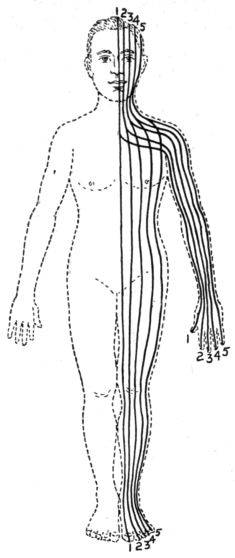
Diagram of Anterior Zones on one side of the body.
Both right and left sides of the body are the same.
Each numbered line represents the center of its respective zone
on the anterior part of the body.
The tongue, hard and soft palate, posterior wall of the nasopharynx
and oropharynx, and the generative organs are in ten
zones, five on each side of the median line.
The middle ear is in Zone 4.
The eustachian tube and middle ear combined are in Zones 3
and 4.
The upper surface of the tongue is in the anterior zones.
The teeth are in the respective zones as indicated by passing a
line antero-posteriorly thru the respective zones.
The viscera are in the zones as represented by a line passed
antero-posteriorly thru the respective zones.
Fig. 1.
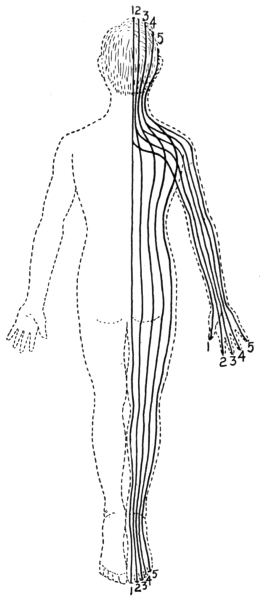
Diagram of Posterior Zones on one side of the body.
Both right and left sides of the body are the same.
Each numbered line represents the center of its respective
zone on the posterior part of the body.
The under surface of the tongue is in the posterior zone.
Fig. 2.—Posterior view, illustrating individual zones. It will be observed
that what is commonly called the back of the hand is really the
front of that member, whereas the palm of the hand corresponds to the
sole of the foot.
CHAPTER I. RELIEVING PAIN BY PRESSURE.
No illustrator would ever think of drawing
a picture of a boy with a green-apple
colic, unless he represented that
boy with both hands clasped fervently over the
seat of war. Nor would he picture a pain anywhere
else, without showing the attempts made
to relieve this pain. For no one would believe
his illustrations, if he omitted these details.
Now, while we know the fact of pain relief,
through laying on of the hands, or by kindred
measures, we know only a part of its reason
for operation. There are several of these.
They are, first, the soothing influence of animal
magnetism, experienced when we tenderly, if not
lovingly, rub the bump, accumulated in the dark
of the moon, by collision with a tall brunette
side-board, or a door carelessly left ajar. It
does soothe. This we know.
Next, the manipulation of the hand over the
injured place tends to prevent a condition of
venous stasis—a state in which the injured surface
veins dam back the flow of blood, and produce
that lurid discoloration known euphoneously
as “black and blue.”
Also, pressure applied over the seat of injury
produces what Dr. George W. Crile, of Cleveland,
calls “blocked shock,” or “nerve block,”
which means that by pressing on the nerves running
from the injured part to the brain area we
inhibit or prevent the transmission to the brain
the knowledge of injury. In other words, the
hurt place can’t tell the central telegraph station
anything about the accident, because the wires
are down.
Dr. Crile, and surgeons generally, now utilize
this knowledge to prevent shock during operations,
by injecting cocain, or some anesthetic
solution around the course of the nerve trunk
leading from the place to be operated upon to
the brain.
But there is yet another reason, which we
have found out only yesterday. And this is zone
analgesia. Pressure over any bony eminence injured,
or pressure applied upon the zones corresponding
to the location of the injury, will tend
to relieve pain.
And not only will it relieve pain, but if the
pressure is strong enough and long enough it
will frequently produce an analgesia, or insensibility
to pain, or even a condition of anesthesia—in
which minor surgical operations may be
successfully done.
This, of course, is not an infallible or invariable
result. Specialists in zone therapy have
found pressure effective in obliterating sensation
in about 65% of cases; while it will deaden pain,
or make it more bearable, in about 80%.
In the hands of many who have tried these
methods the percentage often is much lower—because
they haven’t learned how to apply it.
For if the operator doesn’t “hit” the proper areas
or focal points he misses them completely—and
also misses results.
In attempting the relief of pain by “working”
from the fingers it should also be emphasized
that it makes a difference, too, whether the upper
and lower or the side surfaces of the joint are
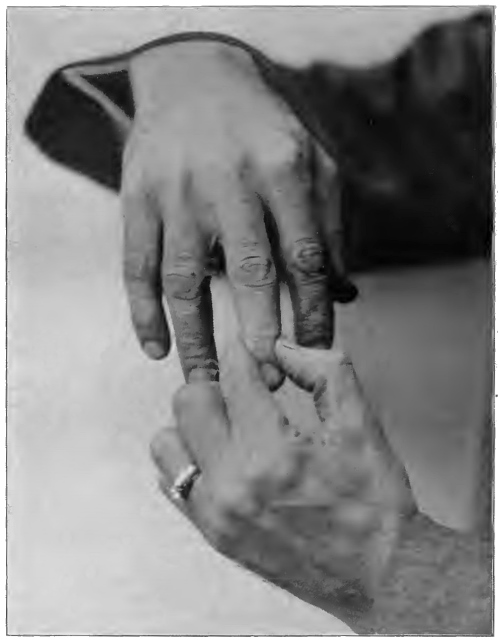
pressed. A physician experimenting with the
method was ready to condemn it because he was
unable to relieve a patient who complained of
rheumatic pains which centered on the outer side
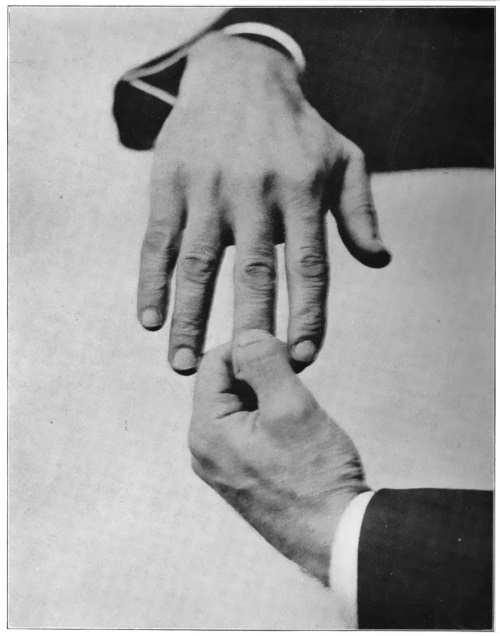
of the ankle-bone. The doctor grasped the second
joint of the patient’s right little finger and
pressed firmly for a minute on the top and bottom
of the joint. (See Fig. 3.) The pain persisted,
and the doctor jeered at the method.
Fig. 3.—Illustrating method of applying anterior and posterior pressure
to the finger joint.
A disciple of zone therapy smiled, and suggested
that while the doctor had the right finger,
he had the right finger in the wrong grip. The
doctor was advised to press the sides of the
finger (See Fig. 4), instead of the top and bottom.
This was done, and the pain disappeared
in two minutes.
Fig. 4. Illustrating method of applying lateral pressure to the finger
joint.
This pressure therapy has an advantage over
any other method of pain relief, inasmuch as it
has been proved that, in contradistinction to
opiates, when zone pressure relieves pain it likewise
tends to remove the cause of the pain, no
matter where this cause originates. And this
in conditions where seemingly one would not
expect to secure any therapeutic, or curative,
results.
For instance, I recall a case of breast tumor,
with two fairly good-sized nodes, as large as
horse chestnuts. This lady had made arrangements
to be operated upon by a prominent surgeon
in Hartford, but had postponed her operation
a few weeks on account of the holidays.
Meantime she had been instructed to make
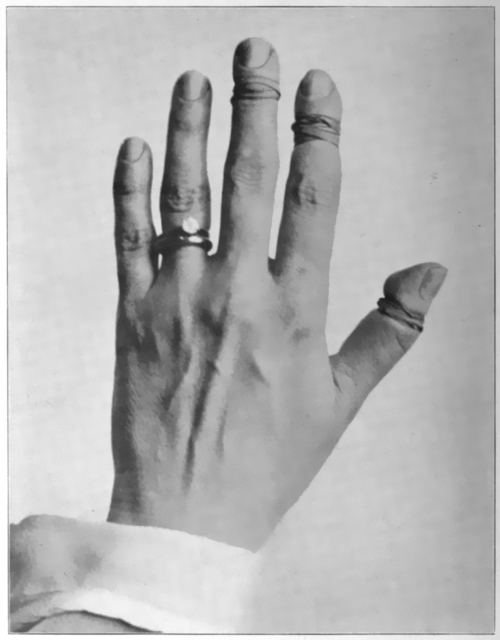
pressures with a tongue depressor and with
elastic bands (See Figures 17 and 5), for the
relief of the breast pain—which relief, by the
way, was quite complete. After a few weeks,
this lady returned to her surgeon for further examination
and to complete arrangements for
operation. Upon examining, however, the surgeon
found the growth so reduced in size that
he expressed himself as unwilling to operate, as
he saw no necessity for operating. The tumor
has since completely disappeared—under these
tongue pressure treatments. This patient, and
the name of the surgeon who saw her “before
and after,” are at the disposal of any physician
who may regard this plain unvarnished tale as
an old wives’ chronicle.
A small uterine fibroid made a similar happy
exit, as a result of pressures made on the floor
of the mouth, directly under the center of the
tongue. This patient next made a regular practice
of squeezing the joints of her thumb, first
and second finger, whenever she had nothing else
important to do. And the result infinitely more
than justified the means.
Lymphatic enlargements, as painful glands in
the neck, arm-pits, or groin, yield even more
rapidly to this zone pressure than do tumors.
And while no claims are made to the effect that
cancer can be cured by zone therapy, yet there
are many cases in which pain has been completely
relieved, and the patients freed from the
further necessity of resorting to opiates. And
in a few cases the growths have also entirely
disappeared.
Fig 5.—Showing method of “rubber-banding” the fingers for trouble
in the first, second and third zones.
The growth of interest in this work is most
encouraging. Dr. FitzGerald and other physicians
using zone therapy in their practice, have
had scores of letters from patients they have
never even seen, but who have written, expressing
their appreciation for the relief secured
through instructions from some of their patients,
or through following out some suggestion from
my articles in the magazines.
I have reason to believe that there are now
upwards of two hundred physicians, osteopaths
and dentists, using these methods every day,
with complete satisfaction to themselves and to
their patients.
And the number of laymen, and especially lay-women,
who are preaching the doctrine in their
own households, and among their circle of
friends, must be legion. The adoption of the
method is attended with absolutely no danger or
disagreeable results, and may be the means of
lengthening short lives and making good health
catching. I, for one, hope that the numbers of
those who may be inclined to learn and practice
these methods upon themselves and upon the
members of their families may ever increase and
multiply. For this is a big idea, and a helpful
one. Therefore, the more who make it their
own the better for the human race. We shall
now let Dr. FitzGerald continue the argument.
CHAPTER II. THAT ACHING HEAD.
The next time you have a headache, instead
of attempting to paralyze the
nerves of sensation with an opiate, or a
coal tar “pain-deadener,” push the headache out
through the top of the head. It’s surprisingly
easy.
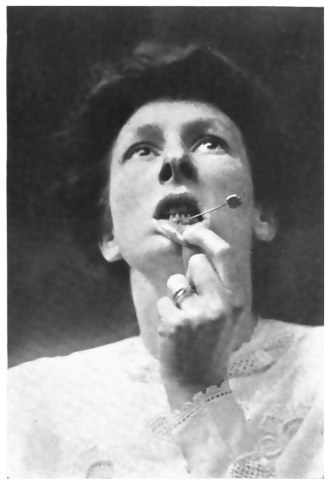
Fig. 6.—Palate-pressor Electrode may be used with or without
electricity.
It merely requires that you press your thumb—or,
better still, some smooth, broad metal surface
(See Fig. 6), as the end of a knife-handle—firmly
against the roof of the mouth, as nearly
as possible under the battleground—and hold it
there for from three to five minutes—by the
watch. It may be necessary, if the ache is extensive,
to shift the position of the thumb or
metal “applicator” so as to “cover” completely
the area that aches.
Headaches and neuralgias, of purely nervous
origin, not due to poison from toxic absorption
from the bowels, or to constipation, or alcoholism,
tumors, eye-strain, or some specific organic
cause, usually subside under this pressure within
a few minutes.
’Tis as easy as lying. Many patients cure
their own or their friend’s and relative’s headaches
or neuralgic attacks in this manner. In
their own headaches they use their right or left
thumb—depending upon whether they are right
or left-handed. In treating others, they use the
first and second fingers, pressing firmly under
the seat of pain.
Their “points of attack” may extend from the
roots of the front teeth—for a frontal headache—to
the junction of the hard and soft
palate—for a pain in the back of the head. Or
from the roots of the right upper molars to those
of the upper left molars, if the pain be in the
region of the temples or the side of the head.
Only temporary results should be expected—or
even complete failure—if the pain is due to
costiveness, eye-strain, or some persistent organic
condition—although even here the severity of
the attack can usually be modified.
In those headaches excited by dental operations
relief can almost invariably be secured.
Dr. Thomas J. Ryan of New York, and others
familiar with zone therapy (the science of relieving
pain and curing disease by pressures in
the various “zones” affected by pain or disease),
almost uniformly cure headaches or neuralgias
in their patients in this manner. In medical
practice the results are even more miraculous.
One of the worst cases yet treated by zone
therapy was that of a lady who had suffered
from persistent headache for more than three
years. She had been to all the most prominent
nerve specialists in the East, and had also consulted
several European experts. Her heart was
in a very dangerous condition, owing to the
amount of antipyrin and other headache powders
she had taken.
Her pain was located most generally in the
forehead, and during the height of the attacks
extended up as far as the top of the head.
It was not relieved by sleep—indeed, it was
worse, if anything, after such poor and inadequate
sleep as she was able to get. This fact
eliminated eye-strain as a cause, for eye-strain
headaches are almost invariably better after a
night’s rest.
Every organ in the body had received a most
thorough overhauling, and still those headaches
held the fort. So the diagnoses settled down
into “pain habit.”
Christian Science, magnetic healing, faith
cure, and most of the modern medical fads had
all been tried, without success. She was on the
verge of suicidal melancholia.
The afternoon I first saw her she was almost
in hysteria—her pain was so acute. For when
telephoning for her appointment she had been
told not to take any opiates—as they might
“mask the symptoms,” and confuse the diagnosis.
Without stopping to question her, I washed
my hands in an antiseptic solution, placed the tips
of the first and second fingers of my right hand
close against the roots of her incisor, or front
teeth, held her head rigidly with the left hand,
and pressed firmly for two minutes. I then
moved my finger tips an inch further back on
the hard palate, and repeated the pressure for
another two minutes.
Releasing her, I stepped back, much as an
artist might, in viewing a piece of work that
pleases him. That I was justified in so doing
was proved by the fact that, for the first time in
three years, except when under the complete influence
of an opiate, this lady was absolutely
free from pain.
I instructed her husband, who accompanied
her, just where to make the proper pressures
when the pain returned, and within a week had a
report from him that there were now no further
attacks of the neuralgic headaches. This relief
has persisted for more than a year.
Headaches frequently respond to pressures
exerted over the joints on the thumb or fingers,
or sometimes it may be necessary to “attack” it
from the inside of the nose, or from some other
point of vantage in the zone affected.
As an illustration of how pain can be squeezed
out of the head through the fingers, a typical
case, reported by Dr. George Starr White, of
Los Angeles, California, may be helpful.
A lady suffered from a very severe headache
on the top of her head, which had persisted for
more than three weeks. She had consulted several
doctors, who had given her “coal tars,”
opiates, and hypodermics, but the relief was only
temporary.
Dr. White told her nothing of what was contemplated,
but took hold of her hands, and began
firmly pressing on the first, second and third
fingers—the pain being diffused over the
frontal regions—at the same time engaging her
in conversation concerning her condition.
After about three minutes he asked her if she
would locate with her hand just where the pain
was. She hesitated, looked up, and said, “Do
you use mental therapy?” Then, after blinking
perplexedly for half a minute, she added: “For
the first time in three weeks, except when I’ve
been under the influence of narcotics, the pain is
entirely gone.”
Dr. White told her to have someone repeat
these finger pressures, at the same time emphasizing
that if she failed to get relief from this
method to come back. He has not seen her since.
But the same condition in the same patient
may not be cleared up from the same point every
time. For instance, if the pain is in the second
zone of the forehead, at one time we may stop
it by “attacking” the forefinger. The next time,
however, pressure upon that finger might not
have the slightest effect, and we would have to
go to the tongue or the roof of the mouth to get
results. Another time we might be successful
only from the nose—or by pressing the teeth of
an aluminum comb on the skull, above or below
the seat of pain—and so on.
Now, physicians have for many years, been
consistently teaching our patients and the public
how not to get sick. Why not carry this teaching
to its only logical conclusion, and teach them
how, by perfectly safe and harmless means, they
may, if sick, cure themselves of their minor ailments?
It would add marvelously to the sum total of
health, happiness, and economic efficiency if all
headaches, for instance, which could be cured by
zone therapy were cured and kept cured—by
spreading the knowledge of how to keep them
cured.
We feel certain also that the medical profession,
as soon as it is generally informed concerning
zone therapy, will eagerly welcome the
opportunity to promulgate the advantages of a
safe and harmless method of relieving headache
and pain. And also of doing away with the
necessity for longer resorting to dangerous
antipyrin or phenacetin tablets and powders.
This is a crusade worthy of their highest altruism
and noblest self-sacrifice.
CHAPTER III. CURING GOITRE WITH A PROBE.
One of the most obstinate disorders that
afflict humanity—and one which seems
to be rapidly on the increase—is goitre.
Goitre is a general condition, in which the thyroid
gland becomes progressively enlarged, producing
an unsightly swelling low down on the
front of the neck.
Associated with this swelling—whether as a
cause or as an effect no one knows for a certainty—is
a distressing state of nervousness,
apprehension, and general discomfort.
Frequently the case becomes “exophthalmic” in
type, running a pulse of 150 or more to the minute,
and later developing irregularities in the
heart’s action. In this form there is also a
marked protrusion of the eye-balls, from pressure
behind the globes of the eye, due to
disturbances in the local circulation.
Many causes have been assigned for goitre,
but no one knows for certain which is the correct
one. Because of its prevalence in Switzerland
and in other mountainous regions, where
the inhabitants are obliged to depend upon water
which was originally snow for their drinking
supply, it was thought that the condition arose
as a result of the lack of lime and other mineral
salts ordinarily found in water which had been
more intimately in contact with the earth. Yet
the feeding of these mineral salts to those afflicted
with goitre made no appreciable difference
in the condition of these patients.
Other observers have ascribed goitre to the
influence of the nervous tension, under which we
live in this era of break-your-neck-to-get-there-and-do-it.
Others locate the seat of this disease
in the brain itself, in the blood vessels, and in the
blood; others, who favor the so-called “mechanical
theory,” ascribe the symptoms to compression
by an enlarged thyroid gland of the nerves
and vessels in the neck, although they neglect to
tell us how the gland became enlarged, in the
first place.
Many authorities claim that the trouble originates
most frequently as a result of eye strain.
They insist that the visual centres, using as they
do, one-third of all the brain energy, are overworked,
in our intensive modern life, and react
upon the body to produce the toxins of fatigue.
The thyroid body, one of whose functions it is to
secrete a product which tends to neutralize these
toxins, works overtime on the job, and not knowing
when to quit, keeps right on working—with
the result that the system is overcharged with
thyroid extract. This thyroidism, as it is called,
ultimately produces the goitrous symptoms.
Other clinicians contend that the disease is of
microbic origin—which is quite unlikely—because
when the glands have been brought to the
autopsy table and the pathological laboratory,
microbes have not been found in quantity sufficient
to cause these grave symptoms.
But what interests and discourages those afflicted
most is that if the cause is known, the
successful treatment is even more unknown.
Medical men have treated these conditions on
the general supposition that there was either too
much or not enough thyroid extract secreted and
discharged into the circulation by the thyroid
gland.
So they gave thyroid tablets, made from the
dried and pulverized glands of sheep. If these
diminished the intensity of the symptoms, the
doctors knew that the gland was deficient in its
functioning powers, and that furnishing an additional
supply from the glands of our woolly
brothers would tend to restore the thyroid deficiency
in us.
If, on the other hand, thyroid medication aggravated
the condition, the physicians figured
that the patient already had more thyroid substance
than he knew what to do with. Hence
they administered iodine in some of its combinations—generally
as iodide of potash—in order
to bring about a more active condition of the
glandular system, and assist in the elimination
of this extra thyroid secretion.
If the gland still grew, and the symptoms became
worse, there remained the alternative of
ligating or “tying off” the lobes, in order to
diminish the secreting power of the organ. Or,
more radical, yet hardly more generally effective,
an operation was made—extirpating (cutting
out) a considerable portion of the body of the
thyroid.
This, as may be imagined, is a very serious
operation, and fraught with considerable danger.
Not so much from the operation itself, as from
the consequences of the operation upon the psychological
and mental condition of the patient.
Not infrequently the entire nature and disposition
of an individual may be changed by the
apparently simple procedure of removing a few
cubic inches, or less, of tissue.
So, on the whole, goitre has been a bugbear—most
unsatisfactory from every angle. Yet,
with the proper application of the principles of
zone therapy, goitre—including the most advanced
forms of exophthalmic—is one of the
many conditions we are most certain of curing.
Almost from the first treatment, the feeling of
suffocation, the distressing nervous symptoms
and the pulse rate are favorably influenced. In
from two to eight months the “pop eye” and the
swollen gland are progressively reduced to normal.
Up to this writing, I have had more than
thirty cases, every one of which, with two exceptions,
have been cured and discharged, or are
well on the way towards a cure. The tape measure
shows that in some of these patients the
swelling decreased three inches in as many
weeks. One very responsive case was reduced
from 14 1/2 to 13 inches in less than three days’
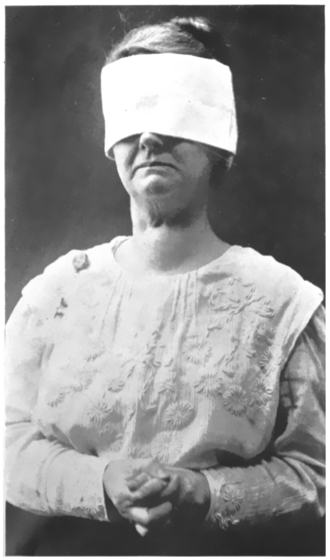
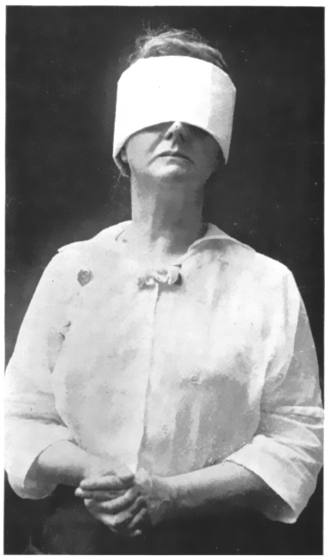
treatment. The photographs accompanying this
chapter speak for themselves. (See Figures 7
and 8.) There is no possibility of doubting the
actual accomplishments of this method in the
face of these visual demonstrations. And, as
with all matters detailed in these pages, the
original patients and data may be seen by any
medical man who is fairly interested.
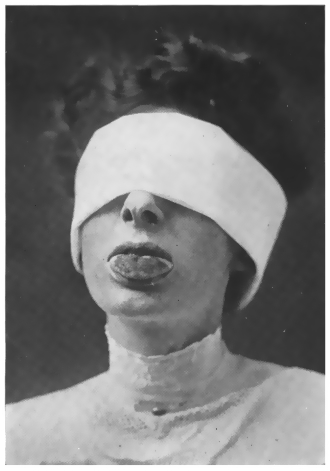
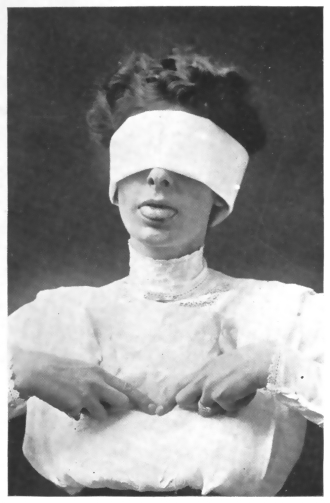
Fig. 7.
Fig. 8.
Figs. 7 and 8.—Photographs of patient from New Hampshire, who consulted me April 1st, 1914, with well-marked
bilateral goiter of two years’ standing. Patient had had constant pressure and frequently pain over
sternum for three months, but responded quickly to distal pressures, and was agreeably surprised to learn that
the pain and discomfort would disappear for hours after pressure as depicted in illustration. Twice daily the
patient exerted pressure on the posterior wall of the epipharynx via the nostrils with a cotton-wound applicator
moistened with spirits of camphor—for its antiseptic effect merely.
Patient returned to New Hampshire the first of May, after one month treatment, or fifteen visits, considerably
benefited. The growth had entirely disappeared by the middle of June. The last photograph was
taken in Hartford, July 1st. Pressure through the thumbs and index and middle fingers of both hands,
(inasmuch as only three zones on a side were involved), and pressure on the posterior walls of the epipharynx
with metal applicator alternately, which she continued at home, was the only treatment she received.
The explanation for the non-relief of the two
cases which did not improve under treatment is
simple—and very conclusive to those familiar
with the method and its workings. One of these
two non-benefited cases refused to carry out her
“home treatment”. The other was a patient suffering
from an uterine tumor. This produced a
pathological condition in the goitre zone. Hence
the goitre would not yield until all other conditions
influencing this zone were removed. I sent
this lady to a gynecologist and it is quite certain
that, after this tumor is removed, she will, under
appropriate treatment, entirely recover from her
goitre.
Dr. Reid Kellogg and Dr. Thomas Mournighan
of Providence, R. I., Dr. George Starr
White of Los Angeles, Dr. Plank of Kansas
City, and a number of other medical men, have
reported that they have the same uniformly
favorable results in treating goitre that we have
here.
Dr. Kellogg has had a dozen cases, all of
which have been, or are being, cured. It is interesting
to note that one of his cases, also, a
lady suffering from a slight erosion of the neck
of the womb, made no progress until this condition
was cleared up by proper local treatment.
Dr. Mournighan has also reported on fifteen
cases—eight of which were of the exophthalmic
variety—all improving or discharged as recovered.
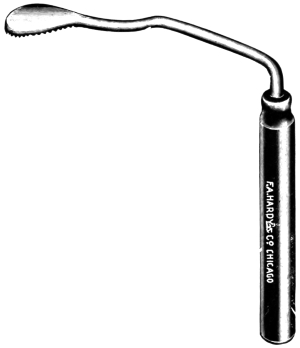
In treating goitre by zone therapy a thin probe,
(See Fig. 9), the point of which is wrapped in
cotton dipped in a little alcohol, spirits of camphor
or camphor water (these seem to increase
the “impulse”) is passed through the nostrils to
the posterior or back wall of the pharynx. Pressure
is made in various spots “low down” on this
wall (a little practice will soon determine almost
the exact “spot” to probe), until a definite sensation
is felt in the region of the goitre. Sometimes
this is “metallic”. Or it may be a sensation
of cold, or tickling, or like an electric current,
or else a mild pain.
Fig. 9.—Special type of nasal probe used for attacking the posterior
wall of the nasopharynx.
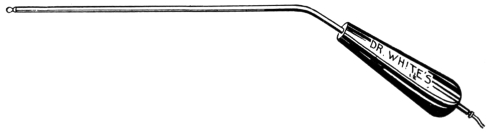
Fig. 10.—Dr. White’s Uni-Polar Post-Nasal Electrode for Zone
Therapy. May be used with or without electricity.
This pressure is held for several minutes—repeated
three or four times daily. It can be
done just as well by the patient himself, if he
has the courage to hurt himself a trifle. In addition
to the treatment on the pharyngeal wall,
pressures may be made upon the joints of the
thumb, first and second fingers, as shown in
Figures 3 and 4. Or, if the goitre is a very
broad one, and extends over into the fourth zone,
the ring finger must also be employed. A moderately
tight rubber band, worn upon these fingers
for ten or fifteen minutes, (see Fig. 5),
three or four times daily, will also help. Rubber
bands may also be worn with benefit upon the
toes governing the zones involved. But the
treatment must be persistent. It must be the intent
to keep the goitre zone “quieted,” never allowing
it, except during sleep, to come completely
out of the influence of the pressure. And even
during sleep in aggravated cases, moderate pressure
should be continued.
I would especially emphasize the importance
of seeing that the teeth are put in a perfect condition
before attempting the cure of any case of
goitre. For there is no doubt that the evil influence
of bad teeth is not, by any means, confined
to the throat and tonsils, as many observers contend.
Indeed, I do not recall having ever seen a
goitre case in which there was not something
wrong with the teeth. I therefore make a
routine practice of sending all goitre patients
to their dentists for a thorough overhauling of
their teeth when commencing treatment.
Also, it may be interesting here to note that if
the theory of eye strain causation of goitre is
true—and it seems quite likely that, in many
cases, it may be—pressure therapy may logically
be looked for to give satisfactory results.
For the effects of eye strain can undoubtedly be
relieved by pressure exerted on the first and second
fingers, as we shall show in the next chapter.
So one of the most puzzling and unsatisfactory
conditions with which physicians have had
to deal can now be said to be almost invariably
curable. And the only instruments we need to
operate these grave conditions are a straight steel
probe, a few rubber bands, and the patient’s fingers.
CHAPTER IV. FINGER SQUEEZING FOR EYE TROUBLES.
If your eyes pain, close them lightly—or
leave them open, if you prefer—and
squeeze tightly the knuckles of the first (or
index) fingers of both hands. Occasionally, if
the eyes are set far apart and extend over into
the third zone, the second (or middle) finger
must be included in this digital embrace. But as
a general rule pressure on the upper and lower
surfaces, as well as on the sides of the first and
second fingers will, within five minutes, relieve
the pain of eye strain. Understand, I say “relieve”,
not “cure”. For if the eye strain is the
result of a too constant attendance at “movie”
shows, and due to the fact that the little eye
muscles are expanding and contracting hundreds
of times a minute in an attempt to “focus” upon
the flickering screen, the only cure for this strain
is to “cut out” these entertainments, or else patronize
a movie house where the flicker has been
“cut out.” Of course, if the eye strain is the
result of imbalance of the muscles of the eye it
will be necessary to properly adjust this faulty
focus by reinforcing the lens of the eye with a
supplementary one made of glass.
But for temporary relief firm pressure over
the joints of the first and second fingers, continued
for several minutes, will usually give
results.
Eye strain and muscle tire are largely under
the control of the nervous system. If the nerves
are fatigued, the muscles function imperfectly.
If the muscles are wearied the nerves sympathize,
and make the fact known by raising a
wail of distress.
And so it follows that a skeptic is legitimately
entitled to say “Yes, you zone therapists cure
eye strain by squeezing fingers or toes, but as
the condition is primarily a nervous one, you
really cure it by suggestion.”
This, notwithstanding the fact that frequently
the patient has no idea as to what is being attempted,
and doesn’t, until his pain is relieved,
know why any one should want to squeeze his
fingers.
Also, I would urgently recommend any believer
in the “suggestion” or “mental” response
of eye pains to omit pressures over the first and
second fingers to try and help this condition by
squeezing the thumb and little finger, and see
what they accomplish.
However, accepting the extreme position of
some of our friends, and admitting that all eye
strain is imagination—or an error of the mind—I
would ask them to consider the pert, prominent,
and resolutely determined stye—which is
certainly not imaginary, nor merely suggested.
Also inflammatory conditions of the conjunctiva—the
membrane of the eye and lids—and that
irritating and extremely annoying affliction
known as granulated lids.
It might be considered a crucial test of imagination
to dissipate and clear up these conditions,
yet zone therapy does just this. For sties
and such eye conditions as conjunctivitis and
granulated lids are completely relieved by pressure
exerted upon the joints of the first and
second finger of the hand corresponding to the
eye involved. In sties the relief is frequently
complete in one or two treatments. In other inflammatory
conditions of the mucous membranes
of the eye it may be necessary to give
treatments three times a week for several weeks.
Also, a bandage fastened around the index
fingers, and soaked with camphor water, frequently
relieves itching and congestion of the
eyes.
Favorable results are almost routine in these
troubles, and usually without employing any
other measures. For facilitating treatment,
however—unless the results of the exclusive use
of zone therapy are desired for experimental
reasons,—it might be well to use hot boric acid
compresses, or other indicated measures, in addition
to the pressures.
To go still farther I might state a fact that
every doctor will immediately admit. And this
is, that inflammation of the optic nerve—optic
neuritis—is most decidedly not imaginary, nor
is it, so far as I know, cured by telling the patient
that there is nothing the matter with him. As a
usual thing, whether treated or not, one afflicted
with optic neuritis goes on to complete blindness.
Yet we have cured optic neuritis by making
pressures over the first and second fingers, and
over the inferior dental nerve—where it enters
the lower jaw bone.
One patient I have in mind, who had been
treated without benefit by several competent
medical men, using conventional and accepted
methods, received no other form of treatment—no
local applications, no antiseptics. Yet relief
followed almost immediately after the pressures
were made. The woman was treated twice the
first day. That night she slept without taking
an opiate—something she had not done before in
several weeks.
A complete cure of her condition was brought
about within a week, and now, after the expiration
of six months, there has been no return of
her symptoms.
For the benefit of physician readers I should
like to add that in treating eye strain, conjunctivitis,
sties, granulated lids, and eye conditions
generally, pressures made with a blunt probe,
(see E Fig. 11) on the muco-cutaneous margins
(where the skin joins the mucous membrane in
the nostrils) affects the second division of the
ophthalmic nerve, and assists materially in bringing
about a favorable influence in eye troubles.
I would also emphasize the importance of seeing
that the condition of the eye teeth was perfect,
as frequently some chronic inflammatory
eye trouble may be caused by an infection from
the roots of the canine teeth.
In order permanently to cure anything its
cause must be removed. And it stands to reason
that if a patient persists in poisoning himself
with coffee, tobacco, or alcohol; or suffers from
an impoverished condition of the blood, or from
a brain tumor, lead poisoning, or an injury, or
has some constitutional or organic disease or
some spinal lesion, which is the basis for his eye
trouble, permanent relief will not follow unless
these causes are removed or corrected.
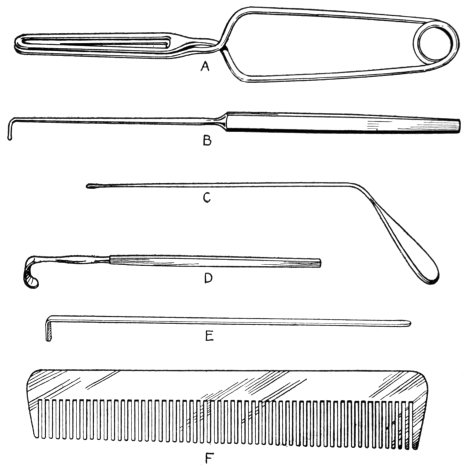
Non-Electrical Applicators Useful in Zone Therapy
A is an ordinary surgical clamp which can be used for clamping
the tongue.
B is an ordinary eye-muscle retractor. This can be used for
intermittently retracting the posterior pillars of the fauces.
C is a special type of nasal probe used for attacking the posterior
wall of the nasopharynx.
D is a regular palpebral retractor which can be used for intermittently
retracting the soft palate, especially in the region of the
fossa of Rosenmüller.
E is a regular flat applicator bent up at one end. This is useful
about the throat and fauces. It can be used as a pressure applicator
for the posterior wall of the oropharynx.
F is an ordinary aluminum comb used for attacking the fingers
or toes either at the tips or about the joints.
Fig. 11.
But if he has a condition due to an excess of
nerve or muscle tension, or if he has trouble produced
by faulty circulation from any cause,
squeezing his fingers will come nearer to curing
him—and more expeditiously and satisfactorily—than
any other treatment. If you don’t believe
it, try it. It costs nothing but a few minutes’
intelligent effort.
CHAPTER V. MAKING THE DEAF HEAR.
Too much knowledge is a dangerous
thing. For it keeps one thus afflicted
from acquiring more.
Of course it seems outlandish and quite beyond
the pale of reason, to ask a man who can
minutely describe the semi-circular canals of the
ear, or bound the internal labyrinth on the north,
south, east and west, to believe that by pressing
with a blunt probe behind the wisdom tooth, or
at the angle of the jaw on the upper surface, the
hearing of the adjacent ear can be materially
benefited. Or that a similar result would follow
squeezing upon the joints of the ring finger, or
the toe corresponding to the ring finger. And
this, after every other scientifically accredited
method, administered by the world’s greatest
specialists, had failed. Yet such is the fact.
For it is the experience of physicians, familiar
with the practice and principles of zone therapy,
that nine out of ten cases of otosclerosis (thickening
or chronic congestion of the membranes
of the ear) can be improved from 25% to 90%.
And, that ringing in the ears and “ear noises,”
or catarrhal deafness, can be relieved in an even
larger number of cases. If there is any hearing
left at all, these methods are almost certain to
improve it.
General practitioners, osteopaths and dentists,
who do not know so much about the geography
of the ear as does the ear specialist, have no
hesitation in “trying out” these methods, frequently
with astonishing results.
One dentist of my acquaintance, whose knowledge
of the ear is merely academic, has cured or
materially improved the hearing of more than
twenty of his patients. This he did by instructing
them to tuck a “wad” of absorbent lint, or a
handkerchief, in the space between the last tooth
and the angle of the jaw, and “bite down hard”
upon this substance for several minutes, repeating
this procedure two or three times daily.
Some medical men cause these patients to
“work” on the ring finger on the side involved,
and do almost as well.
It may better serve our purposes, by way of
illustration, were I to cite a few specific cases,
and detail their exact manner of treatment. It
may then be easier to put the teaching into practical
application, following exactly the treatment
as outlined.
A lady, the wife of an ear specialist, was recently
brought to me for deafness. The doctor,
having tried unsuccessfully every accredited
method, was constrained to “see what zone
therapy would do.”
For thirty years this patient had heard nothing
with the right ear, and very little with the left.
I stimulated, with a stiff, curved cotton-tipped
probe (instrument shown in Fig. 6 may be used),
the area lying between the last tooth and the
angle of the jaw—carefully “covering” all the
gum surfaces—sides as well as biting surfaces.
In addition, I hooked an instrument behind the
soft palate (see D, Fig. 11), and “stretched” it
gently forward. This, I have found, powerfully
stimulates the circulation of the “ear zones,” and
is most helpful—particularly in catarrhal deafness.
After two treatments this patient could
hear a small tuning fork one-half inch away
from the right ear, and one inch from the left.
After a few more treatments, her hearing so
wonderfully improved that she could hear a
whisper with the right ear. This after being
“stone deaf” in that ear for thirty years, and
after having visited “all the noted aurists in this
country and abroad.”
A young soprano, member of a leading Hartford
church choir, suffered a progressive loss in
hearing, which finally became so pronounced as
to make it almost impossible for her to “sing on
the pitch,” or harmonize with either the organ
or the other quartette members.
She received treatment similar to that employed
on the aurist’s wife, supplementing the
same by “home treatment.” This consisted in
“tucking” a wad of surgeon’s gauze (it has since
been discovered that a solid rubber eraser gives
even better results) in the space back of the
wisdom tooth, and having her bite forcibly upon
it, repeating the procedure several times daily—especially
immediately before singing or rehearsing.
In a few weeks this girl had completely
recovered her hearing, and was able to
accept an engagement with a traveling concert
company, a position very much more remunerative
than the church position she resigned.
I have had to date possibly fifty cases of deafness
of one kind or another, almost all of which
have been materially helped.
One patient, a minister afflicted with otosclerosis
(this supposed thickening of the membranes
of the inner ear) for twenty-five years,
could barely hear loud talking.
After working for five minutes upon the
joints of the third (ring) finger, and to a lesser
degree, upon its two neighbors, it was found that
the reverend gentleman could hear a whisper
twenty feet away.
As proof of this it was whispered to him “Will
you kindly close the window above your head?”
He rose immediately from his chair, and
“obliged.”
A New York physician had a relative who had
been unsuccessfully treated for deafness in one
ear (the right) for the past sixteen years, by the
most famous aurists in New York, London,
Paris, Berlin, Dresden, Vienna, and other centers
of medical learning. X-Ray treatment had
at one time made this case at least twenty-five
per cent worse. With the left ear this patient
could hear a loud voice “close up.”
Dr. Reid Kellogg volunteered to “show the
Doctor something,” using this case for demonstration
purposes.
The Doctor, like Barkis, being willin’, our
friend took his trusty aluminum comb from his
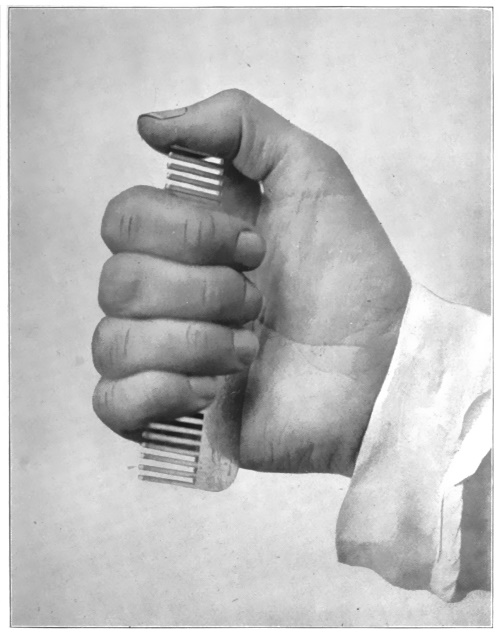
pocket and exerted pressure for five minutes
with the teeth of the comb on the finger tips of
the patient’s left hand, (see Fig. 12). He then
used a tongue depressor on the hard palate, and
on the floor of the mouth, for six or seven
minutes more, and then on the tongue for an
additional five.
The Doctor then stood ten feet away from his
relative and talked to him in an ordinary tone of
voice. The patient distinctly heard, with the
left ear, every word spoken.
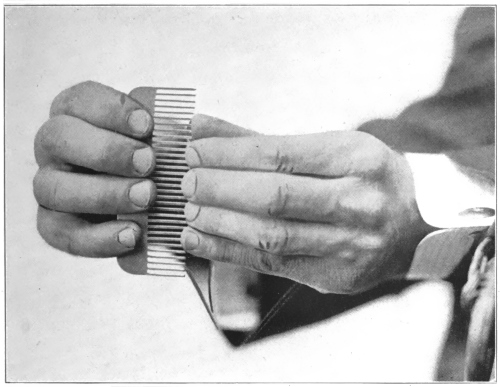
Fig. 12.—This illustrates one method of treating the bones and deep
seated conditions generally. Pressure on the tips of the fingers influences
both anterior and posterior aspects of second, third, fourth and fifth zones.
Our pupil then started to work on the other
hand. The patient insisted that this was merely
a waste of time, as the “biggest” ear specialists
in Europe had failed upon this. However, the
attempt was made, and within ten minutes the
patient heard a clock a foot away, a watch held
three inches distant from his ear, and he further
was able to repeat words spoken loudly two feet
away. During the experiments with his right
ear, the left was tightly plugged with cotton,
still further wedged in the canal by the physician’s
finger. So this was a rather conclusive
test.
A lady, aged forty-nine, deaf since she was
six years old, came to the office of a specialist
who had studied zone therapy. When the physician
applied a comb to one hand, she put the
other to one side of her lips—the side the doctor
was on—and whispered to her friend “Crank.”
Twenty minutes later, being then able to hear
ordinary conversation, she whispered again.
This time she said “Wizard.” A few days later
she asked a friend riding with her in a street
car if the bell always rang when the conductor
pulled the strap. She was hearing it for the first
time in her life.
One lady came to this doctor with her husband.
They were both deaf. But the baby in
her arms was not deaf—and most decidedly was
not dumb either. In less than a fortnight’s treatment
both parents could hear the baby cry every
night, which was a great satisfaction to them—in
one way. But they don’t know yet whether
to laugh or cry about it.
Dr. Thomas Mournighan has given me the
details of two remarkable cases, one a veteran
of sixty-eight, who, since the Civil War, has
been deaf from gun concussion. This man had
never heard through the telephone, the perfection
and general use of which dates since the war.
After making pressure with a probe (applicator
shown in Fig. 6 may be used) on the gum
margins near the angle of the jaw this gentleman
was able to hear through a ’phone—the first
time he had ever experienced this pleasure. That
it was a pleasure was evidenced by the fact that
the old soldier danced around the office in a perfect
transport of glee.
The Doctor’s own father, whose condition was
similar to that of the other patient, also developed
a very material increase in his ability to
hear.
It is but fair to say, however, that the patient’s
“home treatments” must be persistent in order to
maintain this improvement. If these treatments
are discontinued for any appreciable length of
time the condition seems to relapse. We are not
yet prepared to say why this should be so.
I would emphasize also that, in ear trouble, the
condition of wisdom teeth be carefully looked
after. For, I am convinced, many cases of loss
of hearing, or middle ear trouble, have their
origin in some pathological condition of these
teeth.
It may be of interest here to note also that one
of the most effective ear-ache cures we possess
is a spring clothespin fastened for five minutes
or thereabouts on the tip of the ring finger. (See
Fig. 13.) Any manipulation over this zone is
effective, but hollowed-out spring clothespins and
rubber bands have been particularly so.
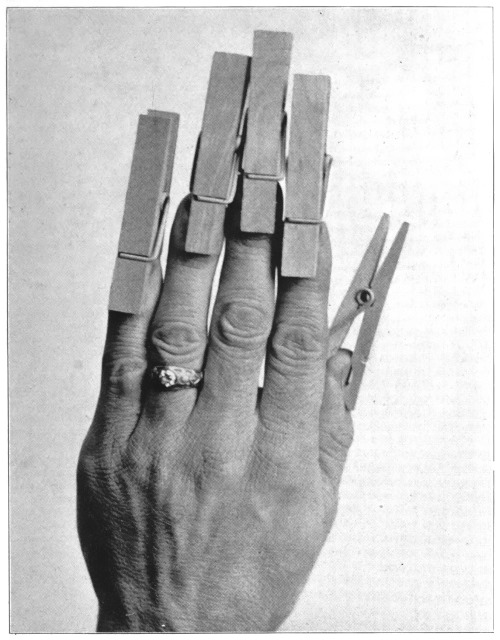
Fig. 13.—Showing method of applying hollowed out spring
clothespins for the relief of pain and to desensitize the teeth for dental operations.
To illustrate: During a recent medical convention
in the West one of the physicians attending
complained of a severe ear-ache. A
physician present, well versed in zone therapy,
requested permission to examine the ear-ache
doctor’s fingers, alleging that by pressing intermittently
on the finger nails, he could estimate
the degree of blood pressure, and perhaps suggest
a course of treatment which might permanently
cure the ear trouble—if not caused by an
abscess.
The doctor extended the hand on the side of
the afflicted ear.
The zone therapy man squeezed the tip of the
fourth finger, raised the finger nail, and let it
settle back a dozen or more times, “to see how the
circulation reacted,” as he said. After three or
four minutes he said “By the way, Doctor, which
ear did you say is giving you the trouble?”
The Doctor looked up in blank amazement, felt
his ears, shook his head, and said, “You don’t
mean to say that that darned foolishness cured
my ear-ache, do you?”
It does seem silly, and yet it “works.” And
anything that works is beneficent and helpful,
and deserves encouragement. For deafness and
ear troubles are common, and seem to be becoming
more so.
CHAPTER 6. PAINLESS CHILDBIRTH.
Any method, no matter how improbable-seeming
it may be, calculated to render
labor or operations upon women less of
an ordeal, is worthy of consideration by physicians,
midwives, and the laity. Therefore there
may be something well worth “trying out” in the
“pressure” method of inducing relief from pain.
A number of physicians have reported results
that, if confirmed by further experiences, warrant
us in believing that zone pressure promises
to be a boon to womankind.
To those who have had experience with pressure
analgesia in dentistry, and in the relief of
rheumatism, lumbago, neuralgia, and other painful
affections, mitigating—or even entirely relieving—the
pains of childbirth seem quite within
the bounds of possibility. In any event, it will
not be difficult to put it to a broad conclusive test.
And it is absolutely harmless, there is no danger
to mother or child in its employment, and no indication
that it might be responsible for a “blue
baby.” For in almost every case in which it has
been tried, labor has been accelerated six hours
or more—instead of retarded.
Fig. 14.—This shows method of treating lumbago and pains in the
back of the body, affecting all the zones.
The methods are so simple that they can be
utilized by any one—even by women who may,
in their hour of labor, chance to be remote from
medical attention. Two combs (broad aluminum
combs about four inches in length have been
found to be the best) to clench the fingers and
thumbs over (see Fig. 14), and some sharp or
edged surface to press the soles of the feet
against (see Fig. 15), are all the instruments
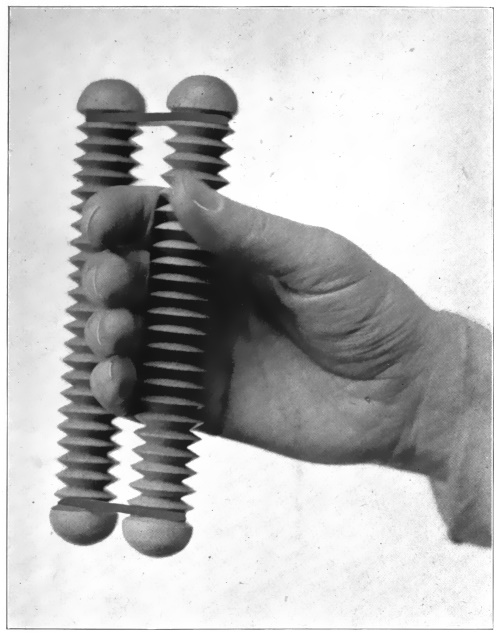
that are required, altho a clamp has now been
devised (see Fig. 16) which can be fastened on
the hands to include both surfaces and all zones.
It is applied when contractions begin, and is kept
in position intermittently until delivery is completed.
Rubber bands, bound around the great
and “index” toes, also afford a gratifying help.
To relieve the after-pains and facilitate the
expulsion of the afterbirth, it has been found that
“stimulating” strokes, with the teeth of the
aluminum comb, or the “bristles” of a wire hair
brush, are most effective. It may require that
these strokes be given from ten minutes to one-half
hour. But they assist wonderfully in contracting
the uterus.
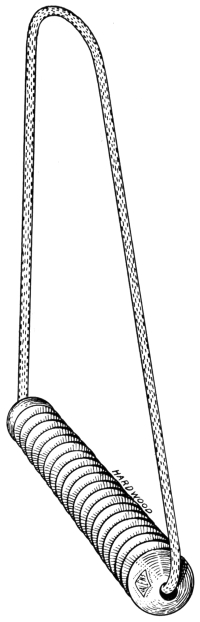
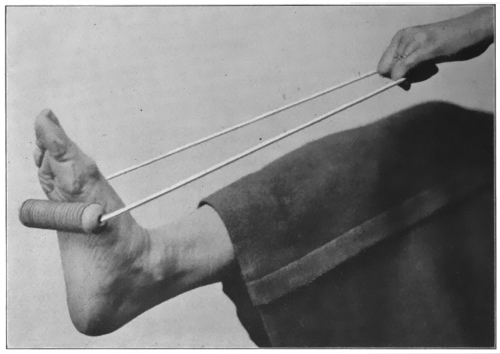
Valens Disc Zone-Analgesic with Rope Attachment
An extension rope can be used on these applicators and
attached to the foot of the bed so a patient, during confinement, can
grasp one applicator in each hand and make traction.
This device can also be used in Zone Therapy for Sciatica by
having the patient place the foot over the wooden discs and “hang on to
the rope” with the hand.
Fig. 15.
Fig. 16.—This is the hand clamp used with such extraordinary success
in relieving the pains of childbirth.
Dr. R. T. H. Nesbitt, of Waukegan, Ill., is
one of a number of physicians who have had
practical experience with pressure analgesia in
childbirth. He sends this very interesting report:
“During the past week I have been attending
the lectures of Dr. George Starr White. In this
most interesting and helpful series, Dr. White
explained and exemplified biodynamic diagnosis
by means of the magnetic meridian (a remarkable
discovery of Dr. White, which enables one
to diagnose diseases otherwise undiagnosible.
This by means of changes in the “tension” of
organs—which occurs when a properly grounded
patient is turned from North or South to East
or West). Dr. White also demonstrated zone
therapy. He asked if any of the doctors present
expected a confinement case soon. If so, he
wished to give them some suggestions in zone
anesthesia in connection with delivery.
“As I was expecting a ‘call’ every hour I told
Dr. White, and he gave me some special points
concerning this work. Last night I was called
to attend what I expected would be my last case
in confinement, as I have been doing this work
so many years that I intended to retire. From
my last night’s experience I feel as if I should
like to start the practice of medicine all over
again.
“The woman I delivered was a primipara
(one who had never had a child before, and who
therefore, because of the rigidity of the bones
and tissues, has a more difficult labor), small in
stature.
“When severe contractions began, and the
mother was beginning to be very nervous and
complained of pain, at which time I generally
administer chloroform, I began pressing on the
soles of the feet with the edge of a big file, as I
could find nothing else. I pressed on the top of
the foot with the thumbs of both hands at the
metatarsal-phalangeal joint, (where the toes
join the foot). I exerted this pressure over each
foot for about three minutes at a time. The
mother told me that the pressure on the feet
gave her no pain whatsoever.
“As she did not have any uterine pain, I was
afraid there was no advancement. To my great
surprise, when I examined her about ten or
fifteen minutes later, I found the head within
two inches of the outlet. I then waited about
fifteen minutes, and on examination found the
head at the vulva. I then pressed again for
about one or two minutes on each foot, the edge
of the file being on the sole of the foot, and my
thumbs over the tarsal-metatarsal joints as before.
In this way I exerted pressure on the sole
of the foot with the file, and pressure on the
dorsum of the foot with my thumbs, doing each
foot separately. The last pressure lasted about
one and a half minutes to each foot. Within
five or ten minutes the head was appearing, and
I held it back to preserve the perineum (the
tissue joining the vagina and the rectum). It
made steady progress, the head and shoulders
coming out in a normal manner. Within three
minutes the child—which “weighed in” at 9 1/2
pounds—was born, crying lustily. The mother
told me she did not experience any pain whatever,
and could not believe the child was born.
She laughed and said, ‘This is not so bad.’
“Another point that is very remarkable is that
after the child was born, the woman did not experience
the fatigue that is generally felt, and
the child was more active than usual. I account
for this on the principle that pain inhibits (prevents)
progress of the birth, and tires the child.
But as the pain was inhibited, the progress was
more steady, and thus fatigue to both mother
and child was avoided.”
A Massachusetts doctor supplements this case
with several others—equally ridiculous or revolutionary—depending
upon our viewpoint. To insure
brevity and accuracy I quote the Doctor’s
own words.
“Case 1. Multipara (a woman who has had
previous confinements)—mother of four. Shortest
previous labor eight hours. Had had a
laceration of cervix (neck of the womb) with
her first child. Also one forceps delivery.
“When labor commenced she was given two
aluminum combs to hold (as shown in Fig. 14),
and instructed to make strong pressure upon
them, with a view of inhibiting pains, particularly
in the first, second and third zones. These
combs were four inches in length and slightly
roughened on the ends, so that the lateral (or
side) surfaces of the thumbs could more effectively
be stimulated.
“Was called at four a.m., arrived at 5:05, and
the babe had just been born. The patient reported
that she had been in bed for only 15
minutes. There had been only one severe pain.
This was when the head delivered.
“There was no exhaustion following, as with
her previous labors, and she said laughingly, ‘I
believe I’ll be able to get up this afternoon.
Doctor.’
“The afterbirth delivery seemed to be stimulated,
and the pains controlled by stroking the
backs of the hands with the teeth of the combs.
She became relaxed and drowsy from this
stroking, and finally fell asleep and slept almost
through the night—perfectly free from pain.
“Case 2. Primipara, thirty-seven years old.
This woman had a badly retroflexed uterus (a
womb which is tilted back), which seemed to retard
the advancement of labor, for she required
five hours for delivery.
“She also used the comb pressures, and, in addition,
was provided with a rough-edged shallow
box, upon which she pressed firmly with the
soles of her feet.
“Four hours after delivery she had sharp
afterbirth pains, which were controlled by the
stroking method before described. This seemed
to give complete and satisfactory relaxation.
“There were three other cases, all of which
responded equally well to treatment by zone
analgesia.
“It should be added that, while the pain was
inhibited, there seemed to be no diminution in
the strength of the uterine contractions.”
Dr. Thomas Mournighan, of Providence, R.
I., has been, for more than two years, one of the
staunchest advocates of my methods. He has
had phenomenally successful experiences in
goiter, deafness, female irregularities, and in the
relief of pain and cure of conditions in the general
practice of medicine.
Dr. Mournighan has also had almost uniformly
successful results with zone analgesia in
childbirth. I quote from a few of his cases.
“Case 1. Primipara, nineteen years of age.
Suffered from furious attacks of vomiting at the
beginning of her pregnancy. Her family physician
wanted to abort her, fearing for her life,
unless the attacks were checked.
“She finally came under my care. I instructed
her to bite her tongue as hard as she could,
about one-third the distance from the tip—thus,
as you see, ‘attacking’ the entire zone connection.
This procedure controlled the vomiting almost
immediately, and instead of becoming accustomed
to it, thereby losing its beneficial effect,
she became, if anything, even more susceptible
to its influence.
“When she came to term I placed a rough-edged
box in the bed, for her to press the soles
of her feet on. I also provided her with a sheet,
tied to the bed post, which she gripped and pulled
upon during pains. This, I feel certain, helps
pain relief by zone analgesia—as well as by
assisting in the mechanics of labor. She made
traction upon the sheets and pressed her feet on
the box as the condition seemed to require, and,
as she expressed it, ‘got great comfort from it.’
“When the second stage of labor came on—that
stage where I generally resort to chloroform—I
made strong pressure over the feet, sinking
my thumbs well in over the articulation of the
toe and foot joint. She was delivered in less
than five hours. The afterbirth came away without
the slightest pain. I was peculiarly struck
by the almost complete absence of labor exhaustion.”
“Case 2. Mother aged forty, ninth child. She
had had ‘the devil’s own time’ with the last three
or four, the attendant having been compelled to
use forceps in these births. With her last child
she had had a bad laceration of the cervix,
which, however, had been skillfully repaired.
“I gave her two aluminum combs, the edges
of which I had nicked with a file, so as to
roughen them for the thumb to press over.
There being no box handy I covered a coal
shovel with a towel, and, when the pains became
severe, let her press the soles of her feet
against the sharp edge of this.
“Within 3 hours she was delivered—without
forceps this time—of a 10 1/2 pound boy—as clean
a delivery as I ever saw.
“I know it seems crazy, but any method that
will, practically without pain, stimulate women
who were formerly in labor for from twelve to
fifteen hours to complete delivery—in many instances
within three hours—is a good method.
I shall continue its use, no matter how foolish
it may appear.”
Another physician, who has had a large and
successful experience with zone therapy, writes:
“In obstetrics I have almost completely discarded
chloroform at the close of the second
stage, where I used to almost always use it. In
the first stage, zone therapy relieves the nagging
pains without retarding, but rather promoting
dilatation. In the second stage delivery is
hastened. Women seem so quiet and easy one
would think ‘there was nothing doing,’ until on
examination, you are surprised to see what has
been accomplished. For this work I use a serrated
strip of aluminum 1/16 in. thick, imbedded
in a piece of wood of convenient size, or else I
use a seven inch aluminum comb, pressing the
teeth against the inner part of the sole of the
foot, or near the ball, alternating from one foot
to the other. When I have an assistant both
feet are manipulated at a time, and that aids
very materially. I exert as much pressure as
the patient can bear without pain. When I have
an assistant well trained I am going to try zone
therapy for instrumental delivery.”
In connection with the subject of confinement
and operations upon women this report from
Dr. G. Murray Edwards, of Denver, Colorado,
is of peculiar interest:
“Mrs. McK., age 35; pregnant four and a
half months; multipara. Placenta praevia (a
grave condition, in which the afterbirth precedes
the child in delivery), aborted Dec. 5, 1915, curettement
(scraping out of the uterus), Dec. 7,
1915. Temperature 99, pulse 80. This case occurring
during Dr. White’s lecture course in
Denver, when Dr. Fitzgerald’s pressure method
of analgesia was being discussed, I decided to
try it out for the first time on this patient. She
being a very nervous woman, I felt a little reluctant
in the experiment. I did not tell her,
however, I was going to use a new method, but
quietly placed three elastics, an eighth of an
inch wide, on each foot, one around the large
toe at the first joint, and one around the others
similarly in pairs.
“After fifteen minutes, preparing my instruments
in the meantime, I told her we were ready,
and while we did not intend to use chloroform,
instructed her carefully to tell me immediately
if she felt any pain whatsoever. The curettement
was conducted in every detail as though she
were under general anesthesia, and as I questioned
her frequently as to pain, she always came
back with a smile and a negative reply.
“We removed fully a teacupful of placental
tissue in about ten minutes, while the patient
passed the time joking, and when finished assured
me she felt much better than when we
started, as she was nervous looking forward to
the anesthetic. This I consider a typical case,
and have no misgivings as to its working generally.”
In similar strain scores of letters tell of the
successes attending the employment of this
method in labor, and in operations upon women.
Now, I do not contend that a few score, or a
few hundred swallows make a summer, but their
presence undoubtedly indicates that summer
may be well on the way.
All this may sound foolish in the extreme.
Yet there are many other things equally foolish
in the practice of medicine. And if zone
analgesia will do what we claim for it, it may
well be taken gently by the hand, lifted out of
the foolish class, and placed among the ultra-sensible
procedures—where, by right, it belongs.
CHAPTER 7. ZONE THERAPY FOR WOMEN.
In the eternal fitness of things there would
be something radically wrong if zone
therapy did not offer some especial and
particular help to women. It is a satisfaction to
state that the eternal fitness of things is right,
as usual. For zone therapy is as unique in this
connection as in most of its other applications.
Many of the things it does are positively
startling. And yet they become commonplace,
after one has been in the work for a time. One
of the most striking cases that has yet come to
my attention came in the form of a letter of
thanks from a mother of a young girl. I never
saw either. The mother, however, wrote me
that her daughter, who had not menstruated in
ten months, was, some time ago, instructed by
a patient of mine to take the broad handle of a
tablespoon and make strong pressure upon the
tongue (a tongue depressor shown in Fig. 17
would be more appropriate), as far back as she
could stand it without gagging.
She did so, and within five minutes was menstruating
profusely, yet without the slightest
pain or discomfort. In the several months
which had since intervened, she “came around”
regularly every twenty-eight days. The mother
who feared that her daughter was going into a
decline, could not refrain from writing me a
most heartfull letter of appreciation for what my
patient, through my instruction, had been able to
do for her daughter. I call this good preventive
medicine.
Fig. 17. Tongue-pressor Electrode. May be used with or without
electricity.
Painful menstruation (dysmenorrhoea), also
yields like magic to the potent pressure of a
probe applied to the posterior (back) wall of the
pharynx. But the tongue pressures are, in the
majority of cases, quite as effective. For pain
in the back or thighs, preceding or during menstruation,
pressure with the tip of the index
finger on the posterior wall of the pharynx on
the median line and to the right and left of same,
will almost uniformly give relief.
A broad, rough-surfaced tongue depressor
(see Fig. 17) is best for the purpose. But if this
is not available, the handle of a large spoon or
the handle of a tooth brush may be used.
This should be applied to the tongue three-quarters
of the way back and on the median line.
The patient’s head should be held rigid, and the
lower jaw supported, to the end that stronger
pressure can be made. It is well to have the
physician or some male member of the family
officiate in this, as the patient may not be inclined
to use the requisite amount of force.
The pressure should be held firmly for two
minutes. Then it should be relaxed and the point
of focus changed slightly. Or the instrument
may be turned or rotated from side to side, at
one minute intervals.
Many patients who are obliged to go to bed
for two or three days each month, after a course
of this treatment, are completely relieved of all
distress. Indeed, some of these hardly knew
they were “coming sick.”
It might be added that pressure exerted on the
thumb, first and second fingers of both hands
helps materially in this work. And one of the
most comforting factors in the practice is that
patients are usually quite as well the next morning
as they are even directly after the most successful
treatment.
Occasionally the use of the metal comb on the
back of the hand, “combing” thoroly the region
of the thumb, first and second fingers as far as
to the wrists—has given best results. But the
tongue pressures are most uniformly successful.
While I have seldom heard of a miscarriage
being induced by these pressures, yet I believe a
note of warning should be sounded, cautioning
against the use of the tongue pressures, particularly
during the early months of pregnancy.
For it is quite conceivable that abortion might
follow drastic tongue treatment. It would be
far better during these months to depend upon
the finger pressures or the comb for treatment of
these zones.
Also, if there is a too-profuse and too-frequent
menstruation, severe tongue pressures should be
avoided. In these conditions gentle stroking on
the backs of the hands with a wire hair brush
or the teeth of the metal comb has given best
results. And this same procedure may be confidently
resorted to to prevent threatened abortion.
While not confined to women, yet women are
by far more generally afflicted with constipation
and hemorrhoids than are men. Their sedentary
habits, tight lacing, and repugnance to water
drinking make them peculiarly susceptible to the
costive habit—which in turn, through engorgement
of the hemorrhoidal veins, causes piles.
I mention these subjects here because the treatment
for constipation and hemorrhoids is identical
with that given for painful or suppressed
menstruation.
The results in constipation are, in some instances,
absolutely astonishing. I know of one
woman, constipated for fifteen years, who never
knew what it meant to have a natural movement
of the bowels. She grasped the chair seat with
the tips of her fingers and thumbs, putting all
her strength into this grip—so as partly to
desensitize the pain of tongue pressure, and
thereby be able to stand a more drastic treatment.
Then the tongue was firmly pressed for nine
minutes in the manner before described.
Her bowels moved within fifteen minutes
afterwards, and for a year or longer she has
never had to take another cathartic. Another
case was cleared up two years ago, and has had
no return of the former trouble.
These, however, are the extraordinary and exceptional
cases. For routine treatment it may be
well to use the pressures for a considerable
period of time, so that their stimulating effect
may tend to create a “habit” in the peristaltic
muscles of the bowel. For the cure cannot be
considered complete until this “habit” is firmly
established.
The pain, bleeding and swelling of piles is also
helped by these same procedures.
The point to be most emphatically dwelt upon
in connection with the treatment of these conditions
is that “absent treatment,” or lick-and-a-promise
namby-pambyism, isn’t of any avail.
The pressures must be made by some one who
has more sympathy with the patient’s ultimate
good than he has for her present temporary discomfort,
and who will administer a good honest
treatment—preferably while the patient does all
she can—by tightly clasping the hands on the interlocked
fingers, or by grasping the chair or a
table with the finger tips—to reduce the sensitivity
of the zones operated upon.
If zone therapy is used in this manner, the results
will amaze and delight. For no method yet
evolved for the treatment of these disorders even
remotely approximates zone therapy in point of
efficacy.
CHAPTER 8. RELAXING NERVOUS TENSION.
Perhaps you may not do it. You have
such splendid control over yourself. But
you know many people who, when angry,
or when suffering great physical pain, sink their
teeth into their lip. Sometimes they bite hard
enough to start the blood. Others clinch their
teeth and hands, and double their toes up in their
shoes. Why do you suppose they do this? They
do these, and many other natural and apparently
inevitable things, because they are instinctive and
scientific, and because Nature knows her business.
We have done and shall continue to do
them involuntarily and automatically, because
they relieve pain and nerve tension, because they
produce a form of analgesia, or pain-deadening,
similar to that which follows the injection of
water or some anesthetic solution into a sensory
nerve. If you stop and think for a moment many
examples of this inhibition—as it is called—will
recur.
One of the most interesting, from our standpoint,
was that of a young school teacher, subject
to cataleptic fits, who, when she felt one of
her fits coming on, stepped on her right toes with
all the weight she could throw on the left foot, at
the same time grasping the right wrist firmly.
Often those near—if notified in time—would produce
the pressures for her. In this way the young
woman managed to break up or prevent all except
severe and sudden attacks.
It was subsequently found that this patient had
a chronic irritation in the right ovary, and also a
strained condition of the muscles of accommodation
in the right eye. When these conditions
were cleared up by proper remedial measures
and correction, the cataleptic attacks ceased.
The fact of relief having followed in many instances
her “inhibiting” the right-sided zones indicated
the possible source of trouble. And by
painstakingly examining the organs in these
zones the cause of her condition was located and
finally overcome.
So, as a means of diagnosis zone therapy has
an immense value. Its curative effects, however,
are most valuable and significant. Many of the
gravest nerve conditions—conditions which
failed to respond to the most skilled medical treatment
obtainable anywhere—have been completely
and permanently cured by the application of the
proper pressures—properly made.
I recall a very grave case of neurosis—a
writer’s cramp—accompanying a neurasthenic
condition. This lady—unusually alert and intelligent—was
a physical and nervous wreck. Sleepless,
harassed by “nerves” in their most aggravated
form, she was unable to hold a pen, or to
write more than a few minutes at a time, until,
on account of the pain and twitching of the arm,
wrist, and fingers, she was forced to desist. She
could no more have picked up and threaded a
needle—let alone have sewed with it—than she
could have operated an aeroplane. She was also
nearly deaf from a middle ear trouble.
Several months’ treatment, using the aluminum
comb across the front and back of the hands and
on the finger tips, and daily employment of the
tongue depressor for four or five minutes,
brought about a complete change in the patient’s
condition.
It relaxed the terrible nervous tension—which
was particularly marked along the course of the
spine—enabling her to sleep at night, and awake
thoroly rested and refreshed in the morning. The
writer’s cramp was also completely cleared up. A
number of other conditions were also corrected,
and the hearing was improved quite 50%.
This lady has since resumed her occupation as
a private secretary—a position she was forced by
ill health to relinquish more than two years ago—and
now writes for hours at a stretch, without
any return of the cramp in the hand and arm.
And, most convincing of all, she can now not
only pick up, thread, and hold a needle—something
she had not been able to do for years—but
she can sew steadily for two or three hours,
and feel no disagreeable effects from this feminine
debauch.
A peculiarly satisfactory characteristic in all
these cases is that the improvement is even more
apparent the “morning after” than it is immediately
after the treatment.
Another case of neuritis in the arm and
shoulder (brachial neuritis) for more than six
years had been unable to raise his arm higher
than the shoulder. For the two months previous
to treatment he had been obliged to carry it in a
sling. The slightest movement of the arm brought
about a paroxysm of agonizing pain.
A number of hollowed-out spring clothespins
were clamped on the fingers of the affected arm
(see Fig. 13), and left there for twelve minutes.
At the expiration of this time the clamps were
removed.
The patient gingerly took his arm from its support,
and after a minute or two spent in experimenting
with it, moved it freely up behind his
head and swung it behind his back in a sweeping
motion.
It was subsequently found that this man also
had an osteopathic lesion, which was reduced by
Dr. Reid Kellogg, and after a few weeks’ “home
treatment”—consisting of five minute applications
of moderately tight rubber bands around
the ends of the fingers—he reported himself as
well—and has remained so for more than ten
months.
For sciatic neuritis it is found that deep pressures
with the teeth of an aluminum or steel comb
made upon the toes are much more effective than
when made upon the fingers. When pain is most
severe on the back of the leg pressures should be
made upon the ball (sole) of the foot. (See Fig. 18.)
When the front of the leg pains also, the
top of the foot should also be pressed.
While we are on the subject of sciatica, I might
emphasize the importance of a careful examination
of the condition of the wisdom teeth. For
very frequently we have found this to be the
origin of the sciatic nerve trouble.
Another interesting case, successfully treated
with clothespins, was that of a young man suffering
from hand tremors, insomnia, and nervous
exhaustion.
He had his finger tips clamped daily for a
week. Then three times more, at intervals of
three days. After the eighth treatment he had
no further trouble with tremor, slept like a baby,
and was apparently relieved of all nervous
symptoms.
Fig. 18.—Showing a method of treating rheumatism or sciatica by
treating all five zones on the back of the leg and body.
We have found it helpful, if the patient has
a good set of teeth, to have him clinch the teeth,
and also the hands, for several minutes at a time,
three or four times daily. This produces an
exaggerated degree of relaxation, which is most
helpful in overcoming nervous conditions.
Most of our patients are also instructed to
“yawn prodigiously,” and stretch. This stimulates
a healthy action of the sympathetic nerves
in all the zones, and cannot fail but be most
beneficial. Sometimes the insomnia of neurasthenia
may be effectively overcome by tightly
clasping the hands—interlocking the fingers as
shown in Fig. 19, or pressing the finger tips
firmly together, and holding this position for ten
or fifteen minutes—unless sleep should come
before this and relax the clasp.
Also, the clinching or wriggling of the toes is
of benefit to a neurasthenic. In fact, I am convinced
that the method of relieving fatigue in
marching troops, discovered by Drs. DeFleury
and Jacques—of the French army, is largely
an application of the principles of zone therapy.
The French surgeon’s idea is temporarily to
expel the blood from the legs by raising them.
The soldiers remove their shoes and lie prone on
the ground, close to a tree or wall, with heads
slightly elevated. They then raise their legs
against the wall, stretching upwards as far as
limb limitations permit.
Fig. 19.—Patient seventy-two years of age with carcinoma of left
side of tongue, jaw, and pharynx. Two days before this picture was
taken the patient was unable to open his mouth. The folded hands and
open mouth indicate not only relaxation of the jaws, but the method in
which it was brought about. Dr. J. W. Hogan painlessly extracted eighteen
teeth for this patient under pressure anesthesia.
Fig. 20.—Patient with right hand in this picture is indicating with
index and middle finger the location of his pain, and how he is overcoming
it thru pressure on the arm of the chair with the tips of the
thumb and fingers of the left hand. We seldom are obliged to resort to
drugs for pain, even in malignancy.
In this attitude the toes and ankles are worked
or “wriggled” briskly. Then the knees are
flexed and extended a half dozen times or more.
A body of men, apparently in the last stages of
exhaustion, recuperate their energies with from
five to fifteen minutes’ exercise of this kind.
It can readily be seen how, by these exercises,
all the zones in the body would be stimulated to
a normal condition. And the fact that the exercises
practiced are successful on a wholesale
scale proves the principle sound.
One of the most important things Americans
have to learn is how to relax. Anything that
will teach them to do this should prove a boon.
Therefore I feel certain that, before many
years, the principles and practices of zone
therapy will be as familiar and universally applied
as are now the principles of domestic
hygiene or the practice of sterilizing baby
bottles. And then zone therapy will add to the
depth and breadth, as well as to the length of
human life.
CHAPTER IX. CURING LUMBAGO WITH A COMB.
There is a solid and substantial satisfaction
in having lumbago. For we
know, without being told, that we have
it, and we don’t have to work our imagination
overtime providing it with symptoms.
Also, lumbago offers less encouragement to
mental or psychological healing than most anything
ordinary we could gather up—except a
broken leg, a crop of boils, or an abscessed tooth.
And the same thing applies to its sisters-in-laws,
rheumatism and sciatica.
Therefore, anything that cures lumbago,
rheumatism, sciatica, or similar afflictions, must
be able to “deliver the goods.”
On this basis zone therapy must be considered
one of our most valuable methods for treating
these obstinate conditions. Naturally it is not
always successful. Neither are the salicylates,
hot mud baths, porous plasters, nor having teeth
pulled. And this is no more an apology for
zone therapy than it is for medicine.
Lumbago, as a rule, responds very quickly and
kindly to zone therapy. Cases which come to
the office “all doubled up” are straightened out—frequently
in one treatment—and wend
their homeward way rejoicing.
The weapon which has given us best results
in attacking lumbago and kindred affections is a
common, dull-pointed aluminum comb, such as
may be procured in most bird stores for dog-combing
purposes. The teeth of this are pressed
firmly on the palms of the hands and on the
palmar surface of the thumb, first, second and
third fingers. In order to get the best results
the pressures should be continued for from ten
to twenty minutes. Occasionally it may be
necessary to work also on the “web” between the
thumb and first finger, and also between the first
and second finger.
Some zone therapy enthusiasts prefer to begin
operations on the tips of the thumb, first, second
and third fingers—gradually working up the
palms of the hands and spending five minutes—for
good measure—on the wrists.
Remember always that the palmar surfaces
of the hands and fingers are to be attacked for
pains anywhere on the back, and the top or
(back) surfaces of the hands and fingers for
any trouble on the front of the body, arms or
legs. This may seem rather confusing at first,
but a little thought will make clear why, what
are commonly known as the back of the hands
are really the front or top, and correspond with
the front or top of the feet. The palms of the
hands correspond with the soles of the feet.
It is also interesting to note that frequently
there are found areas which are extra sensitive
to the pressures of the comb.
These areas correspond to the most painful
zones in other sections of the body. For instance,
if firm pressure on palmar surfaces of
right hand elicits more pain through the third
zone in the hand, if the patient has already complained
of pain in his back, such pain will usually
be found in the third zone, and this holds good
where pain is concerned throughout the body.
If these sensitive areas are found, by commencing
gently and gradually increasing the
force of the pressure, toleration can be established.
In developing this toleration, the lumbago
is usually relieved.
Some perfectly amazing results have been reported
from the comb method of treatment, particularly
in lumbago. One case, a minister who,
for weeks, had been unable even to turn in bed
without assistance, was, after a twenty-minute
treatment, able to arise and walk unaided. He
was entirely relieved of pain and discomfort
within a few hours, and the next day was “up
and around.” Relief almost always follows the
first treatment, apparently irrespective as to the
cause of the lumbago. I recall a recent case
which had persisted for more than three months.
This gentleman had taken practically every form
of treatment that could be recommended by the
most able specialists, had even been to Hot
Springs, without any except transient benefit.
He was bent almost double, and for many weeks
had not been able to stand erect. This patient
was given two aluminum combs and told to
squeeze them for ten or fifteen minutes, while
waiting in the ante-room. After being brought
into the office, his hands were thoroly “combed”
by pressure, from finger tip to wrist.
He straightened out completely after this first
treatment, and expressed himself as entirely
relieved from pain. He received a similar treatment
the following day—after which he went
his way rejoicing.
These results are practically uniform. I
know of many scores of patients thus cured with
a comb.
Sometimes equally good results follow from
fastening hollowed-out spring clothespins on the
tips of the fingers (Fig. 13), corresponding to
the zones in which the lumbago holds forth. Or
even from binding heavy bands around these
fingers (Fig. 5)—leaving these in position five
or ten minutes at a time—unless the finger becomes
badly discolored sooner, in which case the
pressure must be temporarily removed.
One zone therapy enthusiast, who claims that
“Treat It By Zone Therapy” should be hung in
every doctor’s office, while on a pilgrimage to a
Shriners’ Convention, noticed that the conductor
of the train walked “all doubled up” and seemed
to be suffering great pain. It developed that
the railroad man had a “misery in his back,” had
given up work, and had been in a sanitarium for
three weeks—without obtaining much relief—and
also that for the three days prior to his resuming
work, he had not been able to “straighten
up,” nor make any sudden move, without suffering
excruciatingly.
He was invited to come into the smoking compartment
for a few minutes, where the doctor
put rubber bands on the thumb and forefinger of
each of the trainman’s hands, and at the same
time made firm pressure with his thumb-nails on
these ligatured fingers.
The conductor was not informed of the purpose
of this procedure, so his imagination had
nothing to work on.
After holding his fingers in this manner for
about ten minutes the whistle blew, and the conductor
had suddenly to leave his chair. He
straightened up and went out “on the run.”
When he came back he laughed and said:
“This is the first time in six weeks I’ve gotten up
or moved without pain. What in thunder have
those little rubber bands to do with lumbago,
anyway?”
The doctor saw this man before leaving the
train two hours afterwards, and the trainman
volunteered the information that “so far as the
lumbago is concerned I have no more feeling
than a fish.” And these results can be duplicated
by any one who will study the zone charts
(Figures 1 and 2), and apply the simple technic
outlined.
Naturally, in sciatica, and in articular or joint
rheumatism, the results have not been so uniformly
favorable. For sciatica may be due to
hip joint dislocation. Indeed, one of our most
famous bone surgeons claims that all cases of
sciatica result from a twist, or subluxation of
the hip joint which certainly is not true of those
cases cured with a comb, or by electricity, or by
some medical measure.
In treating sciatica particular attention must
be given the “hip area” of the hand on the same
side as the sciatica. This means that the palmar
surface of the ring and little finger and the palm
of the hand on that side, as well as the “edge”
of the palm, running up over the top of the hand
must be thoroughly “combed.”
But the best and most rapid relief for sciatica
is usually secured by “attacking” the soles of the
feet—using the comb in the same manner and
for the same areas as described for the hands.
In other words, by manipulating the zones in the
feet corresponding to the zones in the hands.
Dr. George Starr White, of Los Angeles, California,
has invented a mechanical device for this
purpose, consisting of a piece of hard wood
about five inches in length, cut with deep screw-like
threads (see Figures 16 and 18). A heavy,
smooth rope is attached to each end of this implement
of battle, and the patient uses it with a
long, strong pull for five or ten minutes at a
time—repeating the maneuver several times
daily. Possibly any rough-surfaced, home-made
device might give equally good results.
In acute articular rheumatism, where there
are no gross pathological changes or stiffening
in the joints, splendid results have followed the
use of combs. It should be remembered that the
hip area corresponds with the shoulder on the
same side, the knee with the elbow, and the ankle
with the wrist, etc., and pain is often overcome
more quickly by attacking corresponding parts
with pressure or stimulation.
One old lady who suffered terribly in the joints
of both hands, and who had not been able to sleep
for weeks without an opiate, experienced complete
relief after a half dozen treatments with
the comb over the tips of her fingers and thumb
(Fig. 12). And she was able to sleep soundly
thereafter without the use of her usual hypnotic.
A very interesting case of gonorrheal arthritis
was reported recently. This man’s right knee
joint was so painful that he could not bear to
have it touched. To bend the right leg at the
knee was out of the question.
Two minutes’ pressure on the top and bottom,
as well as on the tip of the big toe, completely relieved
the pain, and upon testing the joint the
soreness seemed to have vanished. The doctor
then began carefully bending the knee, and to his
surprise, and to the amazement of the patient—who
hadn’t the slightest idea what was being attempted—the
knee could be flexed (bent) perfectly,
without any pain whatever.
As this doctor makes a specialty of treating
painful joints by means of heat, light, mud baths,
and electricity, and has had a great deal of experience
in this work, we were much gratified to
hear him say that of all the cases he had ever
treated he never had anything seem so miraculous
as this. He further stated that he had
tried all his methods of treatment to alleviate
this man’s pain and to be able to flex the knee,
but without avail; yet zone therapy, applied at
the proper zone, brought about almost immediate
results.
As demonstrating a peculiar phase of zone
therapy, and showing how great aches from
little corns may grow, here is a very interesting
and instructive case. A patient, suffering from
rheumatism in the left shoulder and arm, had,
for more than three weeks, been unable to sleep
on account of the pain. He had a small callous
growth on the tip of his left thumb, corresponding
to the zone in which the pain was located.
This was removed, and pressures were made
with a comb on the place where the finger corn
had formerly held forth. Within four days he
was completely cured.
And this reminds me that a corn doctor is a
valuable aid in pressure therapy work. For
time and again I have seen pains as far away as
a headache relieved by clearing up the zone occupied
and irritated by a large pugnacious corn,
which was the actual cause of the headache—foolish-sounding
as it may seem.
A little boy with an aggravated case of “wry
neck” had, for months, slept upon sand bags to
give him neck support. I cauterized the necks
of his teeth (always look to the condition of the
teeth in wry neck) with a fine platinum point
cautery (which is merely a direct way of stimulating
all the zones), and in a few days this
youngster was up and running around as well as
ever.
Other cases of wry neck have been quite as
readily cleared up by combing the appropriate
fingers on the palm of the hand of the side involved
or by pressing with a cotton-tipped probe
on the proper zones on the posterior wall of the
throat, or on the under surface of the tongue and
on the floor of the mouth under the tongue.
Most medical men, without stopping longer
than two seconds to think about it, will affirm
that all these things are ridiculous and absurd.
This, you remember, was what contemporary
scientists told Galen and Harvey, and also what
the astronomers told Galileo.
We spoke in a similar strain of radio activity,
the fourth dimension, wireless telegraphy, and
aerial navigation.
Many erudite members of the medical profession
claim that zone therapy and zone analgesia
might be interesting if found in Gulliver’s
Travels or Munchausen’s Romances, but that
emphatically they have no place in medical literature.
For every one knows that an egg cannot
be made to stand on end.
Yet we are standing this medical egg on end
every day.
And there is no reason in the world why any
intelligent man or woman, let alone any intelligent
doctor, cannot do likewise, and put these
simple and helpful methods into practical application.
For it doesn’t even require faith.
CHAPTER X. SCRATCHING THE HAND FOR SICK STOMACH.
Many of us know that if we are threatened
with sneezing and we press the
upper lip tightly against the teeth with
the fingers, that we can usually stop the sneeze.
Also, that if we drop a cold piece of metal down
the back, or press a piece of ice against the back
of the neck, it will frequently check nosebleed.
But not many of us know that the reason these
things are thus is because, by these actions, we
are stimulating normal function in the first zone.
Were we to press our cheek over the wisdom
tooth—which is in the fourth zone—or, rub the
ice on our third zone ear, the sneeze and the nose
bleed would pursue uninterruptedly the even
tenor of their ways.
If you never had heard of these things, you
would probably say “pish,” and look around with
some trepidation for your informant’s keeper.
Yet, in all earnestness and sincerity, I would, if
you are one of those whose stomach is easily
upset, urge that the next time you board a train
or boat you arm yourself with a wire hair brush
and a metal comb.
When the first faint qualms, premonitory of
an eruption or some other seismic disturbance in
your interior are felt, get busy with the comb
and brush—not on your head—but on your
hands.
For sickness of the stomach is quite generally
relieved by steady pressure made over the first
and second zone on the backs of the hands with
the teeth of a metal comb. The comb should be
pressed firmly over the areas running from the
thumb and first finger of both hands, including
the web between the thumb and first finger—which
seems to have a very intimate connection
with the stomach. If there is no comb handy,
the finger nails will do good substitute work, but
the metal is best, as it seems to stimulate an
electrical contact that helps the “impulse.”
This procedure is to be used only where the
stomach is irritated and threatens convulsive
contractures, or where there is pain, or distention
from gas. Relief of these conditions may generally
be expected in from five to ten minutes.
Fig. 21.—When I first saw this patient (January 9, 1913), the enlargement
in the neck, pronounced cancer, and inoperable, by some of
our best men in New England, was stony hard and exceedingly painful
to the touch. She had not been able to lie down for nine months, and
had not taken any solid food for three months; could open the mouth
only slightly, and with great difficulty. We induced speedy relaxation of
the neck (it was absolutely relaxed in four treatments) through pressure
with a dry cotton-wound applicator and also with a pencil moistened with
trichloracetic acid in varied strengths from twenty-five per cent to a saturated
solution, throughout the appropriate zones in the mouth, nose and
epipharynx. This patient responds quickly to pressure, and accurately
traces sensations of glow or numbness from the mouth to the extremities
and vice versa. These sensations are almost immediately followed by
lines of anesthesia. Note the neck of this patient (see Fig. 22) fourteen
months later. Patient through pressure on fingers of zones involved keeps
side of neck constantly anesthetized, and therefore free from irritation,
with constant absorption of growth.
If, however, the stomach is “dead”—the doctors
call it “atonic”—when it lies inert and unambitious
after a heavy meal—or even a small
meal that is heavy for that stomach at that particular
time—the best results are found in
gentle stroking or scratching with a wire107
hair brush, or with the teeth of the comb. If these
are not available scratch with the finger nails,
but, as with the pressures, the most favorable
results follow the use of metal.
Fig. 22.—Photograph of patient in Fig. 21 seventeen months after
her first treatment. After three years improvement still continues.
Remember that scratching stimulates, while
deep pressure with the teeth of the comb, finger
nails or wires of the hair brush relaxes.
Also the next time the baby is restless and inclined
to double up and yell murder, instead of
doing a slippered constitutional up and down the
room with him, scratch the backs of his hands.
If he’s had too much to eat this may quiet him.
If, however, his little “tummy” is “working,”
try some pressures on his hands or feet, and see
how soon the “tummy” will knock off work.
And, for the same sufficient reasons, try the
same thing on yourself and the family, instead
of “banging” the stomach over the head with a
dose of dope.
The morning sickness of pregnancy yields
quite uniformly to deep pressures on the backs
of the hands, and it is much safer to try and
control this nausea from the hands than it would
be to resort to the severe pressures on the
tongue. For these latter, if too drastic, might
produce a miscarriage.
Also, while it isn’t exactly zone therapy, it
might be interesting here to note that eating
salted popcorn has a tendency to help correct the
nausea of pregnancy, car sickness, and indigestion.
Many patients of mine keep a bowl of it
on a chair right alongside their beds, and commence
to eat it so soon as they awake in the
morning. A handful of popcorn, thoroughly
chewed, seems to help pacify the otherwise rebellious
stomach.
Zone therapy pressures are valuable not only
in nausea and vomiting, but also in indigestion,
gastric catarrh and all forms of stomach disorders.
It has even been successfully employed
in gastric ulcer, with dangerous hemorrhages
and the other distressing symptoms of this painful
malady. Dr. Reid Kellogg has cured three
of these cases, one in ten treatments, the others
in two or three months. Two of these patients
had had an acute condition for two months—no
food whatsoever passing through the pylorus
(the exit of the stomach). They had been, of
course, fed by the rectum.
Dr. Kellogg used the probe (Fig. 9), low down
on the posterior (back) wall of the pharynx, and
used pressures over the thumb, first and second
fingers of both hands with the aluminum comb.
In less than a dozen treatments these patients
were able to retain food taken into the stomach,
and practically conduct the entire subsequent
course of their own cure.
To disabuse the minds of any who may evolve
the idea that zone therapy is of value only in conditions
that “don’t matter anyhow,” I want to
emphasize that these cases were most grave, and
that they had received skilled medical attention
for many weeks—without apparent benefit.
It has been current knowledge—even before
those halcyon days when the banqueter retired to
have his throat tickled by a dutiful slave—that
by touching definite areas in the throat and at
the base of the tongue—vomiting could be induced.
And now we have discovered how to put the
reverse English on the tickle, and keep it down
when it wants to come up. Which discovery
should also help increase the sum total of the
world’s health and happiness.
CHAPTER XI. HAY FEVER, ASTHMA AND TONSILITIS.
If the United States Hay Fever Association,
and all individuals who suffer from hay
fever, will read carefully, and then apply
this chapter—as directed—the ravages of these
catarrhal cataclysms, I feel sure, will be beautifully
lessened.
For zone therapy has an especial and peculiar
message for hay-feverites. It has mitigated, if
not entirely relieved, the red-eyed misery of hundreds
of them. And none—except those who
have been victims—can know what a real relief
this is.
Nobody knows for certain what causes hay-fever,
and, judging from the textbooks, they
know even less regarding any definite method of
relieving it.
It is possible that repeated “colds”—generally
from dust infection—result in a chronic irritation
of the mucous membrane, followed by a
thickening (or hypertrophy) of the tissues.
This thickened tissue dams the circulation of
blood in the membranes, and presses upon the
delicate nerves of the nose, thereby irritating
them, which irritation proves to be the last straw.
So the nerves of the nose throw up both hands
with a despairing moan.
An acute inflammatory irritation is established,
setting up a vicious circle. For the pressure
causes nerve irritation, and the nerves retaliate
by still further disturbing the circulation,
thereby causing more pressure.
Then, if really it is pollen that causes the
physiological conflagration we call hay fever, the
mucous membrane is so susceptible that it will
readily respond to the action of the pollen.
Which is probably also true of those cases that
develop similar conditions from the odor of roses,
horses or cats.
It is significant, however, that of all the hundreds
of hay-fever patients that have ever come
under my care not one had an absolutely normal
nose. Invariably there were bony spurs, protruding
turbinate bones, cartilages twisted out
of proper alignment, an inflamed and thickened
mucous membrane lining, or some other pathological
condition, one usually requiring surgical
interference.
So if you have, or expect to have, hay fever
or any other abnormal condition of the nasal
mucous membranes, see a specialist and have
your nose placed in as near a perfect condition
as surgical skill and your physical shortcomings
will permit, not forgetting also a thorough
stretching of the soft palate. This the surgeon
will accomplish by means of a finger inserted in
the throat and a hooked instrument in the passage
back of the nose. By enlarging the contracted
parts of this passage normal drainage
and circulation in these tissues is established.
The best results are obtained by operating
during the height of an attack. If sometimes
even a needle be thrust through the congested
mucous membrane, so that the blood flows freely,
the attack can be broken up, and the condition
frequently eradicated for that season.
Then use any combination of the following
procedures, which experience may prove helpful,
remembering that here no fixed rule can be laid
down, and that what “works” magically in one
case might have but little effect in another.
First, make steady firm pressures on various
points in the roof of the mouth with the thumb.
Be careful to “cover” the region directly on a
line with the nose. These pressures should be
maintained for from four to eight minutes at a
time, and repeated a half dozen or more times
daily. Those experienced in zone therapy claim
that the pressures have an immediate and powerful
effect upon abnormal conditions in this zone.
At the same time the upper lip should be firmly
forced against the teeth with the first finger.
This usually has a most discouraging effect upon
sneezing.
Pressures with a cotton-tipped probe on the
back wall of the pharynx (the inside junction of
the nose and mouth), as well as upon the mucous
membranes of the nose, give, in the hands of
physicians, the quickest results. The cotton-tipped
probe may be dipped in trichloracetic acid,
or some pungent agent, which will lend “punch”
to the contact impulse.
A curious feature in connection with this probe
therapy is that if the patient, by coughing, resents
the presence of the instruments, the effect
seems to be dissipated. In other words, the
transmission of the nerve impulse is partly inhibited.
It is fair to say, however, that patients
become rapidly accustomed to what at first frequently
caused irritation.
The use of a tongue depressor, covering the
center of the tongue fairly well “forward,” has
also been found most helpful, if pressed down
and held firmly several times a day for three
minutes or more at a time. In fact, it is expedient
to use the tongue depressor in almost all
nose, throat and stomach troubles—or, in fact,
any condition occurring in the “front” of the
body.
The wearing of moderately tight rubber bands
upon the thumb, first and second fingers for ten
or fifteen minutes (or less, if the finger tips become
purple) repeated several times daily, seems
also to help materially. Indeed, some physicians
report that they get their very best results by
having their patients wear the bands as continuously
as possible, removing them only as
required to prevent blood stasis, and then replacing
them again.
Pressures exerted with the finger and thumb
over the joints of the thumb, first and second
fingers or toes have given excellent results.
Three or four-minute pressures with an aluminum
comb on all surfaces of the thumb and first
finger—repeated several times daily—have
also given satisfactory relief in hay fever.
Always the breath should be taken through the
nostrils. If the mouth persists in opening at
night, strap it shut with isinglass plaster cut in
thin strips.
The treatment of asthma and other affections
of the respiratory passages is very similar to
that of hay fever, excepting that, instead of
pressing the tongue, more generally the floor of
the mouth is manipulated for this purpose—as
the impulse is thus more “direct.”
Some of the results in asthma have been little
short of miraculous. One patient suffering with
bronchial asthma had been unable to lie down
for three years, what little sleep she secured being
taken propped in a chair. Her sole relief
consisted in the hypodermic injection of fifteen
drops of adrenalin solution, practically every
morning and night.
I made pressure on the pharyngeal wall, at a
point “low down,” where the “metallic sensation”
was reflected into the bronchial region. Also I
used the probe on the floor of the mouth, directly
beneath the root of the tongue.
Within five minutes this lady—for the first
time in three years—was relieved of all pain,
tightness, hoarseness, and shortness of breath.
In two months of this treatment she gained
fifteen pounds, and now sleeps through the night.
Also, she has been enabled completely to discontinue
her use of adrenalin.
Another bronchial asthmatic suffered so
severely that he had made all arrangements, even
to packing his trunks, to retire from business and
seek health on the Riviera or in Egypt. His
“wheezing” was so pronounced that he could be
heard clear across a twenty-foot room. This
gentleman was advised by Dr. D. F. Sullivan,
senior surgeon of St. Francis Hospital, to see
me before leaving the country.
I pressed on the floor of the patient’s mouth,
under the root of the tongue, with a cotton-tipped
probe, and made strong pressure on the first and
third zones of his tongue with a tongue depressor.
In three or four treatments this man was entirely
well, and informed us that he had indefinitely
postponed his trip abroad, and “was going back
to work again.”
Zone therapists have found in throat and
chest cases that painting the tongue with iodine
on the upper and lower surfaces for about one-third
way back is most helpful.
But one of the best of all methods by which
the patient may help himself consists in biting
the tongue as hard as comfortably can be borne,
holding that member between the teeth for several
minutes at a time, three or four times daily.
Also, it is well carefully to examine the condition
of the teeth, throat and pharynx in asthmatic
cases, as frequently the asthma does not
clear up until some defect in these organs is
remedied.
A twelve-year-old girl of my acquaintance, a
physician’s daughter, has developed considerable
technic in zone therapy. Only recently she relieved
the pain of a bad case of mumps by fastening
spring clothespins to the first, second and
third fingers of both her hands, leaving them on
until the finger tips became quite purple.
The little lady proudly demonstrated her control
over the condition by taking a mouthful of
vinegar as a gargle. This, as every doctor
knows, is quite a crucial test.
In tonsilitis good results almost invariably follow
pressure over the inferior dental nerve, at a
point where it enters the jaw bone. It requires
considerable skill to find this foramen (as it is
called), so this advice is really for doctors only.
Pressure may also be made with the finger on a
probe back of the anterior pillars (membranes
situated in front of the tonsil).
Yet much may be accomplished merely by
squeezing the joints of the second, third and
fourth fingers, and using a tongue depressor on
the extreme sides of the tongue.
And this reminds me that a certain minister of
my acquaintance has been teaching his Boy
Scouts zone therapy methods, with especial reference
to curing themselves of coughs and other
common ailments. The boys also find it valuable
in their “First Aid to the Injured” work. I can
readily understand that the analgesic effects of
zone pressure should be effective in the camp, as
well as in the home, or in the dead-of-night
emergency.
Zone therapy opens up a tremendous field. So
the more experimenters we have the sooner
every one will know just how tremendous and
useful and marvelous it is.
CHAPTER XII. CURING A SICK VOICE.
We all remember the gentleman in one
of Moliere’s plays who was astounded
to learn that he had been
talking prose all his life. This verdant reminiscence
has an almost universal application.
For instance, Umberto Sorrentino, the gifted
Italian tenor, has, for a number of years, relieved
the “tight,” inflexible throat, which is
the bane of vocalists and speakers, by grasping
his tongue firmly in a handkerchief, pulling it as
hard as could be comfortably borne, and wriggling
it slowly from side to side. This, he says,
eases up throat tension, and frees the voice. It
also has a tendency to abort a beginning cold.
He was led to adopt this practice from observing
the beneficial effects of massage of the
throat in stimulating and otherwise improving
the circulation and releasing the muscles from
the bound condition, which invariably (in his
case) foreruns a cold. He reasoned that if external
massage was beneficial, internal massage
should be even more so; hence, the “wriggle.”
Also, Miss Mabel Garrison, one of the new
lyric sopranos of the Metropolitan Opera House,
has won the appreciation and gratitude of various
members of the company, by curing stiff, inelastic
sore throats through pressures made upon
the vocalists’ tongues.
There is a hint in these significant facts that
no singer, lawyer, actor, clergyman, mother of
a family, or business man can afford to ignore.
For almost everyone suffers occasionally from
defects somewhere in the delicate mechanism
that shapes air currents into beautiful sounds,
and molds breath into speech.
Although they probably are not aware of this,
both Signor Sorrentino and Miss Garrison are
employing zone therapy in relieving these vocal
ills. For they are exerting pressures on the
first and second zones, the region which governs
the function of the vocal chords, the pharynx,
larynx, and the respiratory passages.
And while their results have been very remarkable,
and eminently satisfactory to themselves
and their fellow artists, they would be
even more striking were the pressures made
more “direct.”
SIGNOR UMBERTO SORRENTINO,
the noted tenor, who relieves “tight” throat by making strong traction
on the tongue. By pressure on the anterior third of the tongue, and
by stimulating the outside lateral aspects of the fore fingers (which distinctly
govern the vocal cords) Sorrentino has relieved himself and many
of his friends of what promised to be serious throat conditions.
In other words, if, instead of squeezing and
making strong traction on the tongue, or of
using a depressor on this member, they were to
do these things and, in addition, apply firm pressure
on the floor of the mouth, beneath the
tongue, with a cotton-tipped metal probe (see
Fig. 6), dipped in spirits of camphor or alcohol
(to increase the “impulse”), their results would
be far more certain and satisfactory.
In all cases of hoarseness, huskiness, or in loss
of voice due to irritation or strain—as in
clergyman’s sore throat—these practices almost
invariably give relief. I remember a case of a
soprano whose upper register was completely
lost through long-continued strain. The floor
of her mouth—directly under the tongue, and
up to the roots of the lower incisor teeth, was
“prodded” intermittently for a period of fifteen
minutes, with the metal probe. The cotton on
the tip of the probe was dipped in some pungent
agent, for the purpose, as before stated, of increasing
the nerve “response.”
Marked improvement followed the first treatment.
She was, however, cautioned not to attempt
to use the voice, except for a moment or
two after treatments—to observe the effect.
The singer also carried out “home treatments,”
consisting in five-minute firm applications
of a tongue depressor (see Fig. 17) on the
center of the tongue. This was done every four
hours. In addition, she squeezed the sides of
her thumbs. This action, especially if accompanied
by digging the finger nails into the inner
side of the thumb—which area is distinctly in
the vocal chord zone—has a specific effect upon
the vocal chords. Within three days this lady
had completely recovered, and was able to return
to her company.
Zone therapy has, in innumerable instances,
restored speaking voices that were as lost as the
Lost Hope. Indeed, it is of common occurrence
to have a clergyman, a lawyer, or a business
man who has become aphonic (voiceless) from
long dictation, or some other vocal strain, come
to the specialist in zone therapy, unable to speak
above a whisper, and within a half hour go his
way rejoicing—practically as “good as new”.
This, by application of the probe on the floor
of the mouth, pressures on the tongue, and sometimes
pressures on the thumb and fingers, any
and all of which procedures can be successfully
used by any intelligent man or woman in the relief
of their own troubles, or in curing these
troubles in their family.
Respecting the finger pressures, it must be
borne in mind that it is necessary to work on
the particular zone involved. For instance, it
would be useless to make pressures over the
thumb joints if the cause of the throat trouble
should happen to be a congested tonsil. The
third, fourth and fifth fingers would have to be
invoked for relief in this zone.
It is, however, perfectly remarkable what
these finger pressures alone will accomplish.
One of the earlier experimental cases was a
patient who had been speaking on and off all
day at a Sunday School Convention held in a
grove. This grove must have been an ideal spot
for a nice open air meeting. But the leafy
bowers, the sylvan glades, and the bossy dells
were not built for acoustic purposes.
The consequence was that, when the shades
of night were falling fast our hero was “all in”.
He couldn’t speak above a whisper. He had
such contraction of the muscles that he couldn’t
even open his jaws—let alone communicate intelligent
information through them.
This was his condition when he presented
himself the following noon petitioning relief.
He had had nothing to eat since late lunch the
day before, although, whether he knew it or not,
he had had enough then to last him a week.
Of course, as he could not open his mouth
it was not possible to treat him by pressures on
the floor of the mouth, and on the tongue. So
he was provided with an aluminum comb, and
shown how to make pressures on the back of his
hand, extending up from the thumb to the
wrist, and over to the fourth finger, and left to
his own devices for twenty-five minutes.
At the expiration of this time he had relaxed
the tension of his jaw muscles and relieved the
irritation in his throat to such an extent that he
went out and had a comfortable lunch. Returning
to the specialist’s office, pressures were made
with a padded probe (see Fig. 9) on the wall
of the pharynx—the probe being introduced
through the nostril.
Also, he was given instrumentation on the
floor of the mouth, underneath the tongue, and
a conscientious treatment with a tongue depressor.
This weapon he took home and used,
carrying out also the combing of the back of
the hands. Three days afterwards he sang in
the choir as well as ever.
Deep massage with the fingers on the muscles
of the throat, and a “plucking” of the voice box
are also helpful procedures. Where the irritation
or the inflammation is not extensive it
might be well to include them as routine measures
in most throat troubles. Where there is
active congestion they are, of course, not only
useless, but actually harmful.
A very frequent cause of vocal ills, and a
condition most generally associated with a congested
throat, is a “stuffy” nose. Also, it is
quite impossible to get a perfect vocal resonance
if the membranes of the nose are swollen and
congested with “cold” or catarrh.
The tongue and finger pressures do much to
relieve these conditions, but perhaps the surest
and quickest method of curing them is to
“pencil” the nose with a probe, using the uncovered
steel for this purpose. And, I may here
remark, that the patient’s own saliva is one of
the best and least irritating lubricants for this
probe work in the nose.
The steel should be left in each nostril several
minutes, and gently moved back and forth from
time to time, for the tonic “penciling” or “ironing”
effect. The curative influence of this on
chronic nasal catarrh or other pathological conditions
of the nose is sometimes quite remarkable.
Also, it might be well here to add that
atomizers are useless, except temporarily—as
after exposure to a horde of sneezers or coughers.
In this event, an alkaline antiseptic may be
of value.
But the constant washing away of the natural
secretion of the mucous membrane, or the perpetual
coating over of the air passages with a
film of oil—which prevents the natural secretion
from being natural—is distinctly injurious.
For it tends to provoke, perpetrate and perpetuate
all forms of catarrh, and none should
use them—except under physician’s instruction—and
then for a short time only. Stimulate
normal function with a probe or sound, used
at night before retiring, and in the morning on
arising, and cure the condition instead of making
it chronic.
It wouldn’t be difficult to get affirmative evidence
to the fact that a sick voice is one of the
sickest and most disheartening things that can
befall one who must depend upon it for a living.
But, with a little patience, and an intelligent application
of the principles of zone therapy, it is
a “cinch”.
CHAPTER XIII. A SPECIFIC FOR WHOOPING AND OTHER COUGHS.
For years eminent scientists have been
spending much valuable time and money
in seeking a cure for whooping cough.
Still the whoop persists. The distress, the after
effects on the bronchial tubes, and the weakening
influence—frequently leading to the later
development of tuberculosis—remains uninfluenced.
The disease runs its course, irrespective
of any or all treatments.
Yet whooping cough is one of the simplest
and most easily-cured diseases with which zone
therapy has to contend. An ordinary case of
whooping cough, which has persisted for weeks,
can sometimes be cured in from three to five
minutes. Rarely are more than four or five
treatments necessary. Case after case is recalled
in which, after the application of a cotton-tipped
probe—held down firmly on the back of
the throat (the post-pharyngeal wall), little
patients who had whooped themselves into a state
of nervous and physical exhaustion, never had
another paroxysm of coughing.
If the savants of the various research institutions
throughout the country are really sincere
in attempting to discover a cure for whooping
cough, asthma, goitre, and a score of other conditions—conditions
successfully treated by zone
therapy—it will be easy to put this method to
the test.
If they do not themselves care to make the
experiment, I will come to New York and demonstrate
the method on one or one hundred cases,
and show that, in from one to a half dozen treatments
with a steel probe, whooping cough can
be effectively and permanently overcome. This
may or may not be worth the attention of these
gentlemen. I can do no more than make the
offer, which, I emphasize, is made in perfect
good faith and in the interest of humanity and
science.
The most remarkable feature of a brand-new
discovery is very frequently its hoary-headedness.
For this reason, when we come to think
about this matter of the mechanical relief of
cough, we are struck with its antiquity. From
time antedating the memory of man, humanity
has pressed its second finger in its pharynx
(that space which spreads out from the back
part of the mouth and throat up into the nose)
or the larynx (a continuation of the pharynx),
for the purpose of loosening a dry cough or to
facilitate expectoration.
All grandmothers, ever since there were
grandmothers, have put their fingers in babies’
throats to give them relief in croup. Some of
the wisest of these grandmothers used to press
the handle of a spoon on the back part of the
tongue, in order to abort a beginning cold, or
cause a profuse secretion of mucus in conditions
associated with a dry, metallic cough.
Our old-time cure for hiccoughs has the same
reason for its existence. For, when we grasp
the tongue of a hiccougher, and with a long pull,
a strong pull, and a pull all together, haul the
offending member to tongue’s length—and hold
it there—we cure the spasmodic contraction of
the diaphragm (the cause of hiccough) by influencing
the zone in which the trouble originates.
This is the principle by which we cure
whooping cough, or indeed any cough that originates
in any portion of the respiratory tube.
But, we have found in these cases that spots in
the vault or wall of the pharnyx, if pressed
firmly with a cotton-wrapped probe, as large as
can be comfortably passed through the nostrils,
gives the quickest and most definite results.
For the “reflex”—the sensation of pain,
tingling, or cold, which is transmitted along the133
nerve zones by this contact,—can be definitely
traced by the patient to the exact spot where the
irritation seems to originate.
By slightly raising the handle of the probe,
and thereby altering its point of contact on the
business end, this influence can be directed with
almost mathematical precision to the area we
desire to influence.
When the exact “spot” is pressed—and a little
practice will soon make the finding of this almost
automatic—the pressure should be firmly held
for several minutes. The throat may feel slightly
“lame” afterwards—but this soon passes off.
If it does not, pressure brought to bear upon the
appropriate thumb or finger will relieve the
“lameness.”
In an experience with several hundred cases
of whooping cough we have not yet seen a
failure from the proper application of zone
therapy. This, I believe, is more than can be
truly said of any other form of treatment.
A very few treatments only are necessary to
relieve even the most aggravated case of whooping
cough—or any cough which originates in
the respiratory passage in that zone.
In other words, a tubercular cough, which has
its cause in a lesion on the extreme right or left
of the lung would not respond to pressures in
the middle zones. Likewise a cough which was
reflected from a congested liver, or from some
other organ not in the first and second zones,
would fail to respond to pressures made as here
described. Any intelligent man or woman can
apply these pressures—and with almost the
same success as would attend the effort of the
most famous specialist.
It sometimes assists very materially if the
tongue, for about a third way back, is thoroly
painted above and below with tincture of iodin.
The mild irritation from the iodin tends to
stimulate the normal function of all those zones
interested in keeping up the cough.
Fig. 23—Anterior quarter of tongue coated with tincture of iodin—both
surfaces.
Fig. 24—Four minutes after complete absorption of the iodin (see
Fig. 23) has taken place. The patient is indicating the sensation of heat
or reaction over several zones in the chest where it is most pronounced.
Few patients experience these sensations, but all patients experience the
benefit. This reaction does, as a matter of fact, extend over the entire
body. It is easily demonstrated that the tongue, when firmly compressed
by the teeth, will often produce relaxation of the entire body, for the
mouth is also divided into ten zones. These illustrations indicate the possibility
of the speedy absorption of toxins from inner surfaces of neglected
teeth and gums.
If the use of the probe through the nostrils
seems too much like a surgical operation, very
good—though not so rapid and effective results—will
follow the application of firm pressures
on the front part of the tongue, and on the floor
of the mouth directly under the tongue.
Also moderately tight rubber bands should be
worn on the thumbs and first fingers of both
hands for five or ten minute intervals, several
times a day. This might be supplemented also
with strong pressure with the finger and thumb
over the bridge of the cougher’s nose.
If there should be a frontal headache associated
with the cough—a very frequent symptom
if the cough has persisted for any length of
time—the finger and thumb should be moved up
to the very root of the nose. This shall be
pinched gently for several minutes, right at the
place where the nose ends and the eyes begin.
One of the most remarkable things zone
therapy has yet done (although I am not surprised
at anything it may do) was to cure a
forty-year-old cough, originating in a tracheal
(or wind pipe) irritation. The patient received
one treatment with a probe (Fig. 9) on the back
wall of the pharynx.
She experienced relief after the second treatment,
and continued to improve until, at the expiration
of three weeks, she was discharged as
cured. Now, after 15 months, there has been
no return of the cough.
Another patient with bronchial cough associated
with lagrippe, under my instruction, relieved
herself by pressures made with the finger
and thumb over the bridge of the nose, and by
the wearing of rubber bands around the thumbs
and first fingers of both hands.
This lady reported the following morning that
she had enjoyed the first night’s sleep she had
had in more than five nights, and that a persistent
and most annoying headache had also
cleared up.
These results are quite uniform, and can be
duplicated by any one who will try patiently and
painstakingly to duplicate them.
Indeed, so simple is the procedure that I have
repeatedly seen bronchial and other coughs, resulting
from irritation or congestion at some
point in the air passages, completely cured,
merely by pressure on the tongue with the handle
of a tablespoon or a toothbrush. And many of
these had persisted for a long time.
I believe the time is not far distant when every
one will be his own cough doctor; when mothers,
instead of doping their children with dangerous
opiates or stomach-destroying nostrums will,
with a tongue depressor, or a probe, do successfully
in a few hours what now (to perpetrate an
Irish bull) is done inadequately or not at all in
many days.
Here is the knowledge. There are no patents
or restrictions upon it. Every one is free to use
it to the fullest and most helpful possible extent.
CHAPTER 14. HOW A PHANTOM TUMOR WAS DISSIPATED.
Last June the New Hampshire Dental
Society held a convention at Weirs, on
Lake Winnepesaukee. One of the residents
of the summer colony was brought before
the convention on the evening of June 23d. Her
serious condition baffled the local physicians. It
was hoped that among the two hundred scientific
men, gathered there from all parts of the East,
some might be found who could help her.
She was a woman about thirty-five years old,
well nourished and apparently healthy, apart
from a large swelling in the front of the neck.
Manifestly the thyroid and other glands had become
enlarged through some unknown inflammatory
cause. She was suffering great pain.
The slightest touch caused agony. Swallowing
was impossible. Not even a drop of water had
passed down her throat since the preceding Friday
night. This was Wednesday night.
A healthy human being can exist from seven
to ten days without water. This woman had
been without water for five days, suffering
mental and physical torture. Her physician insisted,
as the only means of saving her life, that
an operation be performed at once. The half
dozen or more physicians who had been called in
consultation concurred in this. There was
nothing left but to perform an intubation—the
insertion of a tube in the gullet, through which
water and food might be passed, pending some
possible measure of relief.
The heart was racing along at one hundred
and fifty beats a minute, and there were all the
peculiar symptoms usually associated with
thyroid disturbances. Inasmuch as the whole
trouble had developed in a week, it was most
unlikely that the condition was goitrous.
As it was probable that the trouble was associated
with the thyroid, a physician present decided
to try zone therapy, because it could be
applied instantly, and promised immediate results
if successful.
Calling one of the dentists to make strong
pressure over the first joint of one thumb, the
doctor grasped the other thumb. This simple,
apparently foolish, treatment was maintained
for three minutes. The patient began to show
signs of relief. The drawn lines on her face
softened. She could bear without shrinking the
touch on her neck.
The doctor sent for a glass of water, and held
it to the patient’s lips. She took a sip of water,
which she swallowed with much difficulty and
pain—the first drop in five days.
“It is the most delicious thing I ever tasted,”
she whispered.
She was able to swallow about a third of a
glass upon her first attempt. The pressures were
continued intermittently for about an hour, and
within that time she was able to drink four
glasses of water and a glass of malted milk. A
light rubber band was placed over her thumb
joints, as shown in Fig. 5, and she enjoyed her
first night’s sleep since the inflammation had
developed.
The next morning she reported that she was
almost entirely relieved. The swelling was
hardly perceptible, and she could bear reasonable
pressure over the glands without discomfort.
She had no difficulty in swallowing. In a few
days she was fully recovered, and has had no
return of the trouble.
With the relief of nerve tension—consciously
or unconsciously exerted—there necessarily follows
a relief in either the constricted or the congested
condition of the lymphatic glands or ducts,
the thyroid and other ductless glands, and also
of the vasomotor nerves, which control the flow
of blood through the blood vessels.
This action, no doubt, accounts for the marvelous
results which zone therapy has produced
in the treatment of glandular and circulatory diseases—whether
due to nervous, or physical
causes.
In the famous “globus hystericus”—that big
lump comes up in the throat of an hysteric—there
is no speedier or more effective treatment
than zone therapy. Merely take the hands of
the hysterical individual, squeeze them as hard
as she can bear the pressure, and maintain this
pressure for several minutes. Almost immediate
relaxation of all the zones will follow, and
with this relaxation a disappearance of the great
lump in the throat.
The combs or the wire hair brush may be used,
if preferred. Or, if none of these are available,
merely scratch the back of the hands with the
finger nails. It will help materially, of course,
if suggestion be employed, using the voice in a
soothing manner.
But the results are quite as effective—although
not as rapid—if the patient has no idea
concerning what is being attempted.
CHAPTER 15. DR. WHITE’S EXPERIENCE.
One of the most thoro and able diagnosticians
in America, if not in the world,
is George Starr White, M. D., of Los
Angeles, Cal., discoverer of the bio-dynamic
method of diagnosis. I reproduce a small portion
of his experiences in zone therapy and zone
anesthesia—as detailed in his Lecture Course.
“A few years ago, while experimenting on the
anesthetic effect of the Tesla current, I observed
that by giving a current that produced a severe
shock to the fingers, I was able to pierce them
with needles and not feel pain. I did not realize
why these results were obtained. But experiments
on animals gave me a hint. For one of
my horses backed into a window, and got a large
piece of glass into the sacral region (near the
tail). We tried, without success, to put her into
a narrow stall and tie her legs so we could
operate, as a large incision had to be made to
extract the foreign body. Finally one of our
men suggested that we tie a slipper-noose, which
he called a ‘twitch’, around the horse’s nose. He
made this ‘twitch’ out of a piece of thin rope, put
it on the horse’s nose, and we started to operate.
The result was a collision between the horse’s
hind legs and my abdomen. I told the man to
put the ‘twitch’ on again, tie it tightly, and hold
it for two or three minutes. Then, altho I made
a deep incision to take out the glass, the horse
did not flinch.
“I realize now that we used zone anesthesia,
as the sacral region and the nose are in the same
zone. At other times we have had occasion to
do minor operations on cows and pigs on my experiment
farm, and have noticed that, by putting
a ‘twitch’ on the nose, the animals did not seem
to experience any pain.
“Also, before anesthesia was so well known, I
remember seeing surgeons do minor operations
on individuals who would take no chloroform.
Almost always the patients closed their teeth, or
clinched their hands on some rough substance.
Then ‘they could stand anything.’
“Later I heard Dr. William H. Fitzgerald explain
zone therapy. Then I realized that we have
always used zone therapy, although we did not
know it.
“After spending a few days with Dr. Fitzgerald,
I met at a dinner party, a lady who had
a severe frontal headache. Obtaining her permission
to try a new ‘cure’, I exerted pressure
upon the thumb, first and second fingers, and
within five minutes the headache had disappeared.
I had similar success in treating a
toothache.
“I shortly afterwards called on a New York
physician who had previously been one of my
pupils, and asked him if he knew anything about
zone therapy. He said he did not, but had read
about it in some of the journals, and thought
‘it must be all imagination.’ I then held his
fingers, pretending I was trying to see how much
resistance there was in his muscles. Within three
minutes I laid a button hook on his eyeball without
his flinching. I took a stickpin from his
cravat, and pushed it into his cheek, and put
several pins into his face, without his feeling
them. He could not bear the touch of a pin in
any other zone. He called his wife, and she was
horrified when she saw him so ‘stuck up.’ I withdrew
the pins and sterilized his face. He is now
a staunch believer in zone anesthesia.
“At several of our lecture courses in Chicago
and elsewhere, I had an opportunity to show
these methods, and made some very interesting
observations. We found that light would not
contract the pupil of the eye that had been attacked
through the finger zones to the same degree
as the pupil of the eye that had not been
so attacked.
“One of the doctors in a Chicago class, on
hearing of zone anesthesia, told me that about
two years previous he was suffering from inguinal
hernia (rupture) and a radical operation
was advised. He went to the hospital, and the
anesthetist began to prepare him for the anesthesia.
He told them that he wanted no anesthesia,
as he was going to have the operation
done without taking anything. The surgeon was
loath to operate without some kind of general
or local anesthetic, but he told him he wanted
nothing, as he thought he could control himself.
The surgeon consented, but had ready chloroform
and a hypodermic with cocaine. The Doctor
clinched his teeth and hands with all his
might, and put himself into as powerful a tension
as possible for about three minutes before lying
on the table. He then laid down, relaxed, and
said ‘go ahead.’ From the beginning to the end
of the operation all he noticed, he said, was that
there was something going on, but he felt absolutely
no pain. I looked at his teeth, and saw
that the occluding (biting) surfaces were very
good indeed, which accounts in a great measure
for the efficacy of the zone anesthesia.
“Dr. Fitzgerald has treated many cases of
cancer and tumor, and has had some extraordinary
successes with some of them. He carefully
avoids any reference to the value of zone therapy
in these conditions, but, to my mind, the results
achieved warrant mention. I saw two most interesting
cases in his practice. One, a lady,
about 55 years of age, had a growth on the side
of her neck, diagnosed as cancer. By the bio-dynamic
method, I confirmed this diagnosis.
This growth was as large as an ordinary sized
orange, and very hard and unyielding. The lady
told us that, until she began being treated by
means of zone therapy and zone analgesia, she
had not slept for months without some opiate.
For more than two years now she said she had
taken no opiates, and had rested without any
pain when zone pressure anesthesia was used.
“When I saw this lady the size of the growth
had diminished from this treatment, until it
would not be recognized except by palpation
(feeling with the fingers). I also saw her photograph,
taken before she began treatment, and the
improvement was certainly remarkable. I do
not know whether zone therapy will ever cure
this case, but we do know that it is making life
endurable to the unfortunate victim.
“Several of my pupils have used the Fitzgerald
method for operation on turbinate and
other nasal obstructions, as well as upon obstetric
(childbirth) cases, with most gratifying results
in all of them.
“Two or three cases out of ten will not, it
seems, respond to zone therapy. But the majority
will. There is no doubt a good reason for
the failures, such as blocking of the ‘zone paths’
in some manner—as by a tumor, growth, pus
condition, or obstruction. Or again, failure may
be due to faulty technic. Better results will no
doubt come with more experience. It only requires
that the method be tried out on a huge
scale, and by a large number of competent observers.
Then the collated results will furnish
us a basis for accurate application of these most
wonderful and helpful principles.”
CHAPTER 16. ZONE THERAPY—MAINLY FOR DENTISTS.
There are four reasons why zone
analgesia—as we call the pain-relieving
properties of zone therapy—are not
more generally used by dentists. One is that the
dentist doesn’t wish to put himself in the embarrassing
position of suggesting such a foolish-seeming
thing to his pain-racked patient. Another
is that the patient herself thinks she’s conferring
a favor upon the dentist by permitting
him to spend five or ten minutes’ valuable time
in attempting to alleviate her sufferings, and
make the ordeal of cavity preparation or scaling
comparatively painless.
Also, to press over the roots of a tooth for
three, four, or more minutes—exerting, after
toleration is established, all the force of which the
operator is capable—is hard work. It’s much
quicker and easier, and less likely to numb the
dentist’s thumb and finger, to “slap” a gas cone
over the patient’s nose, or inject cocaine around
the gums—which, to my mind, hurts almost as
badly as having the tooth extracted.
There is yet another reason, however, which
partially justifies the previous three. The analgesic
results of zone pressure are not sufficiently
uniform to “bank” on. In other words, a dentist,
led by previous successes, might be tempted confidently
to assure a patient of the painlessness,
under zone analgesia, of a certain operation.
But when he commenced to work he might almost
lift the top of his victim’s head off. To
obviate this do not limit the pressure to three
minutes only, and do not attempt to operate or
extract until a puncturing test with a sharp instrument
shall prove the part to be desensitized.
Also, I would here emphasize that there is no
use in attempting, with zone analgesia, to relieve
pain if it is desired to remove a nerve. We do
not pretend to explain why it is possible, for instance,
to work thirty-five minutes, (as demonstrated
before the Mass. Dental Society by Dr.
B. A. Sears, of Hartford) and cut the jaw bone
all to pieces in order to remove an impacted
wisdom tooth, while we are unable to thrust a
nerve broach into a root canal. But the fact
remains, and some time, when pathologists and
other experts have studied these problems, we
may know why. But for the present, we must be
content to be guided by dearly-bought experiences.
There is no known way of telling in advance,
just what degree of analgesia success is assured.
Dr. M. W. Maloney, of Providence, R. I., and
Dr. Wm. J. Hogan, of Hartford, Conn., claim
successful results with about 80% of their cases.
Dr. Everett M. Cook, of Toledo, Ohio, writes
that he is easily successful in 75% of his cases.
Dr. Thomas J. Ryan, of New York, is quite uniformly
successful in desensitizing the gums for
pyorrhoea treatment. While other dentists
range on down to as low as 50% of successes, or
even to zero.
There are probably very definite reasons for
this, although it may be difficult to convince the
average dentist that such exist. First, it requires
a fine technic to find the various dental nerves,
and, by commencing gently, and gradually increasing
pressures, to anesthetize them without
hurting the patient more than the operation
might have hurt him. In which case he has the
pain of the operation plus the pain of attempting
to analgesize his unresponsive nerve points.
Next, when pressures are made over the
fingers, especially where no clamps or rubber
bands are used, there is a tendency to skimp on
the time devoted to the finger squeezing. The
dentist or his assistant will give the job a “lick
and a promise”—and let it go at that. They
don’t use sufficient time or sufficient force really
to accomplish anything.
And third, they won’t take the time properly
to learn the zones and the teeth relations, and
apply in a serious way the knowledge so acquired.
However, for the benefit of those dentists
who may be interested in learning how to desensitize
cavities in sensitive teeth, or do some
of the necessarily painful scaling of tartar and
other deposits in pyorrhea, and for the particular
benefit of several million of their patients
throughout the country, I would say that pressure
by an assistant exerted over the joints of
the thumb (the assistant would do better completely
to “cover” the joint, using thumbs and
fingers of both hands for this purpose), will
mitigate or quite control the pain in the incisor
and occasionally the cuspid teeth of the side corresponding
to the finger being squeezed.
Never let the patient do this for himself, unless
you provide him with clamps or wide rubber
bands for the purpose, as he cannot be trusted
to make the pressures long enough or strong
enough to accomplish satisfactory results.
Pressure exerted over the first or second
joint of the first finger will control pain in the
cuspid and bicuspid teeth. The second finger
is related to the two molars, but sometimes the
third (or ring) finger must also be employed
for this region.
In other words, pressure upon the thumb,
fore-finger, middle, and ring fingers of either
hand will control correspondingly pain in the
incisors, cuspids and bicuspids and the two
molars on either side of the median line, providing
that there is no great inflammation or no
abscess in the vicinity of the corresponding
teeth.
Occasionally the “control” over-laps, in which
case it is necessary to use also the finger next
to the zone finger, and in the case of wisdom
teeth, to get the best results it is sometimes advisable
to use both the third and the little finger—as
the fourth and fifth zones merge in the
head.
A very successful method practiced by some
experts—particularly where extraction must be
done—is to grasp the offending tooth as near
the apex of the root as is practicable, and with
the thumb and finger make firm pressure for
three, four, or more minutes—by the watch.
This usually produces a degree of anaesthesia
lasting about one half hour, although pressure
can, if necessary, be reapplied at any time.
Other dentists and oral surgeons get excellent
results by pressing on the “heel of the jaw”—the
point directly back of the wisdom tooth,
ponderously known as “the tuberosity of the
superior maxillary.” This produces a very complete
and lasting anaesthesia of the entire jaw
of the side affected, and permits of the painless
extraction of teeth living in the immediate
neighborhood.
Fig. 25—Pressure at I, Fig. 4, with thumb and finger will anesthetize
both thumb zones, inasmuch as the pressure is brought directly on the
median line and to the right and left of it.
Pressure at II (pressure on inferior dental and lingual nerves) will
anesthetize not only entire jaw on side compressed, but to a greater or
less extent the entire half of the body.
Pressure at a with thumb and finger will often anesthetize that zone
sufficiently for painless extraction. Any tooth may be prepared similarly.
Pressure at b with thumb and finger anesthetizes bicuspids and occasionally
molars.
Pressure at III will aid materially in anesthetization.
With the lower front teeth, it has been found
that to press or hold the inferior (or lower)
dental nerve, where it enters the ramus (or
groove) of the lower jaw, gives good anaesthesia.
Also pressure with the finger on the
inferior dental nerve, where it exits from below
the bicuspid tooth (called by doctors the
mental foramen) will usually anesthetize that
half of the jaw.
Many operators, the better to “focus”, prefer
to use the blunt end of an instrument (the
handle of an excavator is excellent) upon this
inferior dental nerve.
The proper application of these principles cannot
fail to be of immense value to the dentist
and oral surgeon in their daily practice. In relieving
toothache and neuralgia, in removing deposits,
in extracting teeth, and in fact in most
painful operations which dentists are called
upon to perform, this pressure technique should
prove invaluable, as many dentists are learning
every day.
And further, the application of these principles
will inevitably encourage public interest
in dentistry, and will materially diminish the
sum total of pain and suffering that humanity
is called upon to endure. Indeed, it is common—and
highly gratifying—among many dentists
now using zone analgesia—to have sensitive
patients—those upon whom, because of past exhausting
and nerve-racking experiences, they
have always dreaded working—say “Well, Doctor,
if you never hurt me any more than you
did today I shall never again fear to come to
you.”
Fig. 26—Pressure at IV will not only anesthetize the third and fourth
zones, but frequently also that half of the upper jaw.
Pressure at V with finger covering the median line and counter pressure
with the thumb on the outside of the jaw, or even on the lip directly
opposite the finger, will usually anesthetize the incisors sufficiently for
painless extraction.
Mothers will find this method a safe and certain
means of relieving themselves and their
children of an immense amount of pain and discomfort.
For, while they cannot, of course,
hope to possess the technical knowledge enabling
them to find and exert pressure upon the nerves
themselves, it is a comparatively simple matter
for them to rigidly grasp the roots of an aching
tooth between their thumb and finger, and temporarily
relieve pain—at least until they can
take little Alfred or Alice to the dentist.
If this may not seem feasible, they can, by
remembering the fingers that correspond with
the particular zone it is desired to influence, do
much to relieve distressing conditions in that
zone until such time as the doctor or dentist can
be visited, by squeezing, or by applying rubber
bands around the proper fingers.
For example: At a dinner party the other
night one of the guests complained of severe
pain in the right upper first molar. I told her
to squeeze firmly the joint of her second or
middle finger, which advice she considered a
very ill-timed and pointless joke. Insisting that
I was serious and helpfully disposed, she obeyed
instructions, and in a very few minutes beamed
complete relief from her dental anguish.
Another instance in which toothache was relieved
in what might be called an outré manner
was reported by Dr. J. F. Roemer of Waukegan,
Ill., who operated with a pair of rubber bands
upon the aching teeth of a young traveling man.
Dr. Roemer writes that this man came to the
office with an extremely painful and sensitive
condition, chiefly affecting the incisor teeth. As
the knight of the leather bag explained it his
teeth were so “sore” that he could not eat any
solid food whatever, and he didn’t much relish
the food he drank. It was impossible for him
to close his teeth together without causing great
distress. A dentist who had examined the salesman
could find nothing wrong with the teeth,
from the dental standpoint.
Dr. Roemer, however, examined him in a
characteristic zone therapy way. He searched
the patient’s fingers with a metal comb to find
out what was the matter with his teeth. This
search disclosed the presence of “spots” on the
insides of the thumb and first finger which were
acutely sensitive to pressures from the teeth of
the comb.
The diagnosis established, the treatment was
simplicity itself. Commencing with light pressures
upon these sensitive areas the doctor gradually
increased the force applied to the comb,
at the same time engaging the owner of the
thumb and teeth in conversation relative to his
business, and to the political situation—this latter
a perennial source of interest-absorbing conversation
in the West.
After about ten minutes of this operation the
doctor looked up and asked his victim 159“how the
teeth were getting along.” After cautiously
testing their sensitiveness by means of various
biting pressures, the patient responded that
“while they were still a little ‘sore’ the pain had
entirely left.”
The doctor then issued instructions as to how
to apply rubber bands in order to make the
proper pressure, which is to use one-fourth inch
bands about two inches in length, bind them
around the first joint—counting from the tip—of
the thumb and first finger, leave them on until
bluish discoloration appeared, then remove, and
re-apply after a few hours.
The traveling-man reported the following day
that he had enjoyed a good night’s sleep—the
first for many nights—and after forty-eight
hours of this treatment he telephoned that all
pain and sensitiveness had completely disappeared.
In neuralgia and other painful conditions of
long standing, where there are no decayed teeth—or
other dental causes for the pain—many
permanent cures have been effected by pressure
treatment. Almost it would seem that whatever
tends to reduce the pain would also help remedy
its cause, no matter how remote.
As illustrating, in detail, the successful “home
treatment” of neuralgia, another case of Dr.
Roemer’s is most interesting. The Doctor says
“I saw recently a patient with tri-facial neuralgia
of two years’ standing. Nothing had relieved
permanently. The attack which brought him to
me was of four or five days’ duration. During
this time he had been unable to eat. Even the
attempt to speak would bring on an acute
paroxysm of pain of a sharp piercing nature,
which radiated over the entire left side of the
face, extending from the lower and the upper
jaw, and up into the left eye. These paroxysms
left him as ‘limp as a rag.’
“He had been advised to have the nerve cut,
as offering the only relief for his trouble.
“I applied rubber bands on the joints nearest
the tip of the thumb and forefinger of the left
hand. In less than ten minutes my patient was
talking and laughing, and we had quite a visit.
“I told him nothing about what was being attempted
with the bands, so he wasn’t ‘hypnotized.’
After we saw results, however, I instructed
him to apply the bands every half hour
if the pain continued, and as it decreased to
lengthen the interval of the applications.
“When next I saw him, several days after, he
laughingly said, ‘Oh, I apply the rubbers once a
day now, as I don’t want that pain to come back.’
He is now enjoying life better than he has for
years, thanks to ‘those fool rubber bands,’ as
his daughter called them.”
Many dentists secure a very satisfactory degree
of analgesia—sufficient for excavating or
treatments—by compressing firmly the lip or
cheek immediately over the tooth that is to be
worked upon. (See Fig. 27.) But as a rule,
for extraction purposes, they prefer pressure
over the roots, or directly upon the various
branches of the dental nerves. (See Figs. 25
and 26.)
Fig. 27—Patient anesthetizing the left jaws in the first zone, by firmly
pressing the lip directly opposite, between the thumb and index finger of
left hand, indicating the area with the right index finger.
Fig. 28—Stickpin firmly imbedded in a section of the anesthetized area
shown in Fig. 27.
One of the most significant facts in connection
with zone therapy is the intimate relation
between morbid dental conditions and pain or
even pathological changes in practically every
section of the body. It has been demonstrated
beyond a shadow of doubt, that points—or foci—of
infection within the mouth, or in the teeth,
frequently manifest disturbances most remote
from their point of origin.
This is one reason why many physicians and
surgeons, using the method, make a routine
practice of sending every patient, in whom dental
disease is even suspected, for a thorough overhauling
by a competent dentist.
Another reason for striving to keep all our
original teeth in their places is that nature intended
to preserve the continuity—if it may be
so termed—of our various nerve zones. Sound,
healthy teeth and roots in their normal occlusion,
seem to assist in the normal functioning of the
entire zone chain of which they are important
links.
Asthma, congestions, headaches, neuralgia,
conditions affecting the nerves of the head or
the ears, or even partial deafness, have been materially
improved, and many times completely
cured, by the application of a galvanic cautery
around the necks of the teeth, by pressure on
the teeth themselves in the zone affected, or even
by having the patient “grind” the particular
teeth related to those areas which it is attempted
favorably to influence.
In several instances, chronic frontal headaches
in children have been cured by correcting
faulty occlusion of the front teeth by that branch
of dentistry known as “Orthodontia.” When
after several months’ treatment, the teeth were
restored to their normal alignment, and continuity
of the nerve zone was re-established, the
headaches cleared up, and there has been no return
of them.
Fig. 29—A prominent Connecticut dentist anesthetizes the entire left
half of his body through pressure on left inferior dental nerve. See following
cut.
Fig. 30—We might have covered the left side of the body with stick-pins
without his knowledge, as far as pain was concerned, during the
period of fifteen minutes of anesthesia which followed his pressure of one
minute with the finger on the left inferior dental nerve. Note the stick-pins
in ear, finger and leg.
Occasionally it happens that a patient will go
to a physician who uses zone analgesia to be prepared
for the services of a dentist who doesn’t.
Only recently a man suffering from indigestion[Pg 165]
and rheumatoid arthritis (rheumatism of the
joints with progressive stiffening) was advised
by his physician to have his teeth removed, the
doctor insisting that because four wisdom teeth
were the only teeth he had that were not decayed
and completely broken down, nothing else would
cure his indigestion and rheumatism.
His heart action was such that it would have
been dangerous to administer cocaine—much
less a general anesthetic.
Therefore, for the removal of his 27 teeth and
stumps, the pressure method was decided upon.
His physician accompanied him to the dentist,
and doctor and dentist, for the next twenty
minutes made the proper pressures on the fingers
and on the inferior dental nerves.
All the lower teeth were then removed—without
a particle of pain. Pressures were then repeated
on the fingers and the palatine nerves,
and the teeth in the upper jaw were likewise removed.
Of the entire 27, only two gave much pain on
extraction, and these were most strongly attached
to the bony processes (the sockets and
attachments by which teeth are held in place).
Bleeding following this wholesale extraction
was very slight.
It may be interesting to know that after the
gums had healed and the patient had worn
artificial teeth for a few months, his appetite
and digestion improved, he began to gain in
weight, and there was an almost complete relief
from the rheumatic symptoms and the joint
stiffening.
In some instances physicians have applied the
pressures in their own offices, and have then
sent the patients—with rubber bands bound
tightly around their finger joints in order to
maintain the analgesic influence—to the dentist,
where their extraction or cavity preparation has
been painlessly done.
And occasionally great pleasure and satisfaction
is afforded both patient and doctor when
some sufferer calls up on the ’phone at two or
three in the morning and inquires what finger
to press to relieve the pain of a certain tooth,
especially when the advice given has been followed
by relief.
Fig. 31—Hand and arm, left eyelid and chin, decorated with stickpins
after the patient has anesthetized the left side of the body by pressure on
the left inferior dental nerve.
Fig. 32—A lighted match is held beneath patient’s right great toe,
anesthetized through pressure on the inner surface of the jaw in the first
zone.
It has been for many years a quite general
piece of knowledge among dentists that the application
of menthol to the mucous membrane of
the nose, on the same side as an aching tooth,
would very frequently stop the toothache. If
dentists will now apply a slight elaboration of
this bit of zone analgesia technic they may pos169sibly
save themselves many gray hairs. What
their patients will save in agony, apprehension,
and the drain on their vitality cannot be even
estimated.
CHAPTER 17. ZONE THERAPY—FOR DOCTORS ONLY.
We grind and grit our teeth during
paroxysms of pain. When we bump
our shins against a rocking-chair
that has taken point of vantage directly in our
path, immediately we clasp the offended shin.
In the days before the blessed era of nitrous-oxide
and local anesthetics, when the muscular
dentist leaned toward the door with our pet tooth
in the firm embrace of shiny forceps, we helped
him to the utmost by gripping the arms of the
chair with vise-like clutch. This maneuver seemingly
had no more connection with tooth extraction
than have the effulgent rays of the moon
upon the pumpkin crop. But we felt our duty,
and we did it.
When fury and anger sweep us in their red
flame, and gentle, familiar aspects of nature take
on the hue of blood, we clench our fists until
the nails are driven deep into the flesh. In the
first shock of the agony of bereavement, or during
those cruel dragging hours when we are adjusting
ourselves to living with our hearts torn
asunder, we clasp our hands in frenzy.
For ages we have been doing these things because
they are natural and apparently inevitable.
We did them automatically, without knowing
why. But now we know we do them because
they are instructive and scientific. We do these
things involuntarily and automatically because
they relieve pain or nerve tension—because they
produce a form of analgesia, or pain-deadening,
similar to that which follows the injection of
water or some anesthetic solution into a sensory
nerve.
Six years ago I accidentally discovered that
pressure with a cotton-tipped probe on the mucocutaneous
margin (where the skin joins the mucous
membrane) of the nose gave an anesthetic result
as though a cocaine solution had been applied.
I further found that there were many spots
in the nose, mouth, throat, and on both surfaces
of the tongue which, when pressed firmly,
deadened definite areas to sensation. Also, that
pressures exerted over any bony eminence, on
the hands, feet, or over the joints, produced the
same characteristic results in pain relief. I
found also that when pain was relieved, the condition
that produced the pain was most generally
relieved. This led to my “mapping out” these
various areas and their associated connections,
and also to noting the conditions influenced
through them. This science I have named zone
therapy. It is somewhat complicated in many
of its aspects, but I shall try and make it as
clear as may be. I would emphasize, however,
that to master it requires long study and patient
application.
In zone therapy we divide the body longitudinally
into ten zones, five on each side of a
median or central line. (See Figs. 1 and 2.)
The first, second, third, fourth and fifth zones
begin in the toes and end in the thumbs and
fingers, or begin in the thumbs and fingers and
end in the toes, if you prefer it this way. For
instance, the first zone extends from the great
toe up the entire height of the body, including
the chest and the back, and down the arm into
the thumb. The other digits are related to their
particular zones, in like manner.
The tongue is divided into ten zones. Pressure
on the dorsal (top) surface of the individual
zones on the tongue affect the corresponding
anterior (or front) sections of zones
everywhere throughout the body. But firm pressures
on the tongue, continued for several minutes,
affect both back and front zones. The
hard and soft palate (forming the roof of the
mouth) and the posterior walls of the pharynx
(the back of the throat) and epipharynx (where
the back of the nose and throat join) are divided
in the same way, and posterior pressure or contact
affects posterior sections of zones; while anterior
pressure or contact affects anterior sections
of zones. Traction (or pulling with a
hooked probe—see B, Fig. 11) on the soft
palate in the epipharynx affects the anterior
zones, and traction on the anterior pillars of the
fauces, (pillars in front of the tonsils) affects
zones one, two, three, four and five, especially in
arms and shoulders in the posterior sections of
zones. Pressure on the anterior surface of the
lips and the anterior surface of the anterior
pillars of the fauces affects the anterior surface
of all zones. Pressure on the posterior surface
of the lower lips affects the posterior sections of
all zones.
Pain in any part of the first zone may be
treated and overcome, temporarily at least, and
often permanently, by pressure on all surfaces
of the first joint of the great toe, or on the corresponding
joint of the thumb. Should the pressure
be limited to the upper surface of the great
toe, the anesthetic or analgesic effects will extend
up the front of the body to the fronto-parietal
suture—where the bones join on top of
the skull. They will also extend across the chest
and down the anterior surface of the first zone
of the arm and thumb, and often to the thumb
side of the index finger. Should pressure be
made on the under surface of the great toe, the
effects will extend along the first zone in the
sole of the foot and up the back of the leg, thigh,
body and head in that zone to the above-named
suture; also across the back and down the posterior
surface of the first zone of the arm and
thumb, and frequently the thumb side of the
index finger.
Firm pressure on the end of the great toe or
tip of thumb will control the entire first zone.
Firm pressure on the tips of the fingers or toes
control individual zones. Lateral or side pressure
on thumbs and fingers or toes will affect
lateral or side boundaries of the zones pressed,
and also transverse extensions to nostrils, lips
and ears.
A limited amount of anesthesia may often be
established by pressure over any resistant bony
surface, in any zone compressed, and often the
mere momentary contact with the galvanic
cautery, or pressure with a sharp-pointed applicator,
or with the thumb or finger-nail, will
produce the same result. Contacts, especially
with aluminum combs or pointed instruments,
may be momentary, if frequently repeated, but
protracted contacts are often necessary.
Prolonged pressure with an aluminum hair
comb is fast becoming a popular method, but
similar pressures with the nails of the thumbs
and fingers are likely the method Nature intended.
Pressure with bands of elastic, metal,
cloth, or leather on the fingers, toes, wrists and
ankles, as well as on the knees and elbows, are
often useful in overcoming pain in an individual
zone or group of zones. If these pressures are
resisted by pathological processes elsewhere in
the zone or zones, pain is sometimes excited. In
other words, if there is an abscess or some
active inflammatory condition present,—as in
middle-ear trouble, pressure often aggravates or
stimulates the pain to renewed endeavors. It
usually however, overcomes the pain momentarily.
Zone pressure has, for this reason, become
a diagnostic factor of great value in
disclosing hidden pus conditions or inflammatory
processes—particularly in the roots of teeth, the
ears, appendix, ovaries, or in other organs.
Pain anywhere in any zone may be overcome
more quickly by pressure with an applicator, or
with cautery contact at certain points throughout
the corresponding zone or zones in the
mouth, pharynx, epipharynx and nose; but the
finger and toe pressures may be relied upon very
often. What applies to one zone applies to all.
Pressures average from one-half minute to
four minutes or longer, depending upon the susceptibility
of the patient.
Heat or cold waves in varying degrees, depending
upon the solution or instruments used,
may often be dispatched to the extremities from
the mouth, nose, etc., and similar waves of heat
or cold will manifest themselves in the mouth,
nose and pharynx of susceptible individuals from
pressure or contact on the extremities. The most
susceptible patients will describe them accurately.
For instance, if a cotton tipped probe be dipped
in camphor solution, or alcohol, the patient will
describe the sensation reflected along the particular
zone pressed as “cold.” If in nitrate of
silver, or trichloracetic acid, he says it is “hot.”
The majority of patients say that, while they
are unable to detect these sensations—only extra-susceptible
individuals have this faculty,—their
pain is disappearing, or has already disappeared.
Patients who are most susceptible to pressure or
contact will trace heat or cold from an individual
hair of the head, or an eyelash, to the margin of
the finger-nail or toe-nail, and if a hair or eyelash
be quickly pulled out, the sensation of numbness
is often quickly registered beneath the
finger-nail or toe-nail of the invaded zone. But
to give these delicate results the subjects must be
very responsive.
Pressure or contact upon the occlusal, or
biting, edges of the teeth affect the innermost
parts of practically every bone in the body. We
believe that the teeth, being the most accessible,
are the natural guardians of the bones throughout
the body. The heat waves from the application
of a fine point cautery contact on the biting
edges of the teeth, are dispatched through the
centers of all bones, and their therapeutic, or
curative effect is disseminated through the bones
and tissue in the zones treated. Naturally, the
therapeutic effect is less marked as the surface
of the body is approached.
Pressure or contact on the anterior surface of
the teeth affects the anterior surface of the bones
in the anterior sections of bones, and to a greater
or less extent the tissues of the same zones in the
corresponding sections. Pressure or contact on
the posterior surface of the teeth affect the posterior
surface of the bones in the posterior sections
of zones treated, and to a greater or less
extent the tissues of the same zones in the corresponding
sections.
An asset not generally recognized in normal
occlusion of a natural set of teeth is the ability
of the patient to relax practically every part of
the body through firm, biting pressure for two
or three minutes on all surfaces of the upper and
lower teeth. In this manner pain may frequently
be relieved in any section of a zone, or group of
zones, throughout the body, and occasionally
even anesthesia may be induced through firm
occlusion of the teeth for two or three minutes
in these zones. This is at least one reason why
all the teeth should be preserved, if at all possible,
and why normal occlusion should be brought
about if it does not already exist. If one be deprived
of the third molar teeth, for instance, his
ability to prevent, relieve or overcome pathological
conditions in the fourth and fifth zones
is restricted; and this naturally applies to the
various individual zones or group of zones where
teeth have been extracted.
You would hardly believe that offending corns
or warts or bitten finger-nails, where inflammatory
processes have been excited, may be responsible
for rheumatism or neuritis, but we are daily
proving such to be the case.
Toe-nails and finger-nails must be respected
and as well taken care of, for health’s sake, as
any other section of the individual zones. There
is not a section of a finger-nail or toe-nail that
may not affect (under stimulation or pressure)
the most distant parts of the body.
Also, it might be of interest here to note that
while enough pressure is good, too much is mild
murder. This can be testified to by all who, by
means of new shoes, foolishly apply constricting
pressures to their toes. There ensues, after the
lapse of an appreciable length of time, a condition
made up of equal parts of bodily weakness
and nervous irritability—an actual physical and
spiritual fatigue—relieved only by removing the
pressure—in other words, by relieving zone pressure
inhibition.
Tight belts, corsets, or collars will develop
similar, or even worse, effects, inasmuch as their
influence embraces not only the undue irritation
of the nerve zones, but also the constricting influences
upon glands, blood vessels and internal
organs.
All zones must be free from irritation and
obstructions to get the best results. For instance,
if there be pain in the head, chest, abdomen, or
extremities in one or more zones, it may be relieved
or quite overcome by pressure on resistant
surfaces anywhere in the zones affected. If the
pain be relieved for a few moments only, and
repeated pressures do not overcome it, it is safe
to assume that the pain is due to some abnormal
pressure or irritation, as gas, pus, impactions,
necrosis, etc., somewhere in a zone or group of
zones, which demands medical or surgical interference.
We are repeatedly called upon for the theory
of zone therapy. Many theories are interesting
but not conclusive, and rather than be obliged
to retract theories, we are not going to advance
them, except very superficially, at the expense of
clinical facts. It is certain that control-centers
in the medulla are stimulated, as has been suggested,
but I believe that it is shock more often
than stimulation. Some theorists have pointed
out, perhaps rightly, that “these functions may
be carried out by the pituitary body (a ductless
gland at the base of the brain) through the
multiple nerve paths from it.”
We know that we induce a state of inhibition—a
state which prevents the transmission of the
nerve impulse from the brain—throughout the
zone where pressure is brought to bear. We
know that when this inhibition of irritation is
continuous, many pathological processes disappear.
We are certain that lymphatic relaxation
follows pressure, and the lymph stimulated to
flow normally in its channels.
The theory advanced by Dr. Bowers: “that
inasmuch as there are ultra-microscopic bacteria—bacteria
not seen through even the highest-powered
lenses,—it is more than likely that in
the light of this work there are ultra-microscopic
connections analogous to those we call
nerves,” may contain some elements of plausibility.
Let the physician or the dentist, who ascribes
these phenomena to suggestion, attempt to relieve
an aching, left incisor, for instance, by
pressing the little finger of the right hand of his
patient, or exercise his persuasive powers on a
throbbing molar by pressing the thumb of either
hand. He will find himself up against a stone
wall, so far as results are concerned, for only by
exerting proper pressure, on the proper zone or
zones, for an adequate length of time, will the
pain disappear. Anticipating such contentions,
and to avoid the merest hint at suggestion, we
have purposely refrained from giving many
patients any idea that we were even contemplating
the relief of pain, and the first and only
suggestions have been from the patient. He
will tell that he experienced pain in his jaw, eye,
small of back, knee, foot, or shoulder before pressure
was made on his fingers, teeth, or elsewhere,
and will ask, “where has the pain gone?
Have you done anything to relieve it?”
Pathological conditions from irritation in the
nose, epipharynx, pharynx, mouth, vagina, rectum,
etc., may be responsible not only for annoying
local manifestations, but for obscure
pathological changes in the most remote sections
of the body; and their course can usually be
traced through an individual zone or group of
zones. There is not an existing pathological
condition that cannot at least be relieved, and a
large proportion can be cured by zone therapy.
This shows how necessary it is that the physician
and surgeon should be capable of diagnosing
and treating disease in all parts of the body,
especially if his practice be limited to the country,
where he may be unable to consult with
specialists. If the pathological condition he has
treated does not “clear up,” the case should be
referred to the specialist or dentists, for, to
secure results, all parts of the zones or group of
zones must be free from obstruction and irritation.
Zone therapy demonstrates the co-relation of
all parts of the body, also the manner in which
pressure or contact upon certain zones is effective
in the relief of pain or disease.
Diagnosis of the cause of pain may be worked
out quite perfectly over or through any zone or
part of zone. If a patient complains of pain,
and indicates that the right eye is involved, and
you overcome the pain by pressure on the front
of the right index finger, it is absolutely certain
that his disturbance is excited by congestion or
irritation in the anterior section of the zone; but
if it be necessary to look to the palmar surface
of the index finger for relief the cause is certain
to exist in the posterior section of the zone or
zones.
We have never suggested this work as a
panacea, but finding it helpful in the treatment
of human ills, we consider it an asset to our
knowledge of medicine and surgery, and have
been glad to offer it gratuitously to physicians,
surgeons, and dentists, and to all who can make
use of it in the relief of afflicted humanity.
When “Professor” Robert Fitzsimmons
delivered the famous punch in the
solar plexus that laid the mighty
James Corbett upon whatever it is they cover a
boxing ring with, he demonstrated to everybody’s
satisfaction—except perhaps Mr. Corbett’s—that
there is a group of nerves in the “pit of the
stomach” which has an intimate and most distressful
connection with the brain. And now
every doctor knows the functions and connections
of the pneumogastric nerve.
Gunmen, pugilists, and “bouncers” also know
that if the temple, or the angle of the jaw, be
even lightly “tapped,” the tappee is usually
placed hors de combat for an appreciable period
of time. General knowledge of this weighty
academic subject is comparatively recent—as
time is reckoned.
And the Japs, in their uncanny knowledge of
nerve anatomy, exemplified in their proficiency
in jui jitsu, have shown that, by pressure upon
certain nerve terminals, or upon plexuses of
nerve groups they are able to do almost everything
except murder a victim. Perhaps they
could do this, also, if they were sufficiently industrious
and persevering.
Indeed, for many years they have been aware
that there are certain nerve centers in the neck
and under the angle of the jaw, pressure upon
which will temporarily suspend consciousness.
In fact, their methods were tried by surgeons,
prior to the discovery of anesthesia; but were
discarded, owing to the fact that no one could
guarantee that the patients would wake again
after the operation.
Also, as showing how great oaks from little
acorns grow, and how mickle and mickle makes
muckle. Professor William Halstead, more than
a dozen years ago, was operating upon a man
with a rupture—under cocaine anesthesia, as he
thought. It was found, however, after the operation
had been painlessly completed, that the
moon-stricken assistant, had forgotten to put the
cocaine tablet in the syringe.
So that all the anesthetic the patient got was
sterile water. However, this was enough, for
the pressure of the water injection into the parts,
had blocked the nerve tract, and inhibited the
transmission of the message of pain.
This experience may or may not have given
Dr. Crile the clue to his interesting and vastly
important discovery of “nerve block,” but, in any
event, we learned something new about the
human body. But—and this is the point I wish
to emphasize—we are not through learning
about it yet.
So, if some time a doctor tells you that a
woman of sixty-nine, suffering for years from
one-sided paralysis, made pressures twice daily
with an aluminum comb on the top (or front)
of the hand, favoring the thumb side—and in
two weeks noticed a decided improvement, and
after five months can now lift her foot free from
the floor and walk without a cane, don’t sneer.
If another tells you that a case of infantile
paralysis, of five years’ standing—after several
months’ treatment with a probe on the back wall
of the pharynx, can now kick as high as his
shoulder with either foot, don’t scoff. For that
doctor has photos of the boy, showing him in the
act of doing just this identical thing.
It may also be that catarrhal appendicitis is
helped. For in unorthodox ways three cases of
catarrhal appendicitis were apparently cured by
pressures exerted with a comb over the first,
second and third finger, and carried up as far as
the wrist. These cases were diagnosed as
catarrhal appendicitis by several competent
medical men. They showed all the classical
symptoms, including pain on pressure over McBurney’s
point, vomiting, and digestive disturbances.
They were treated three times daily
for several days, and in the interim, treated
themselves at home along the same lines. In ten
days to two weeks, there was an apparent cure
of all three cases. And now, after six months,
there has been no return of the condition.
And, speaking of appendicitis, it is interesting
to note that if pain is relieved by zone pressure,
and returns after a short time, we can be morally
certain that there is pus present, and that the
case demands immediate operation. This same
thing, as we before observed, applies to abscesses
in the ear, teeth, tonsil, or anywhere else.
The injunction to “prove all things and hold
fast to that which is true,” is as applicable and
pertinent today as it was when first dropped
from the lips of the old sage. So, if some time
your progressive doctor should tell you to rub
your finger nails together, and scratch the front
of your hands and arms, and thereby cure falling
hair, don’t laugh—because he may be repeating
to you only what numbers of his patients
have told him they did—and stopped their hair
from leaving its moorings.
Also, if he tells you to use a wire brush on the
front and back of the hand, and also press with
the aluminum comb on the palms of the hand, to
cure cold feet, he may not be nearly as crazy as
he sounds. He may be merely a little ahead of
your time, as were Harvey, Semmelweis, Horace
Wells, Lister, and hundreds of others, who have
suffered the slings and arrows of ridicule.
And so, we who believe in zone therapy now
understand why we grind our teeth. It is because
the action relieves nerve tension, and
diminishes the pain in all the zones of the body
connected by those invisible and as yet undiscovered
nervous wires strung through the telegraph
poles of the teeth.
When we grab our bruised shins we check the
transmission of pain in the irritated nerve trunk
lines of that zone. When we grasp the arm of
the dental chair, and hang on like grim death,
we are unconsciously going through motions
that, if continued long enough, would have made
our trial comparatively painless. The only fault
in our preparation for the ordeal was that we
should have started our pressure grip three or
four minutes earlier. But our intentions were
good.
When automatically we clench our fists in
furious anger, we are relieving our terrific
nervous excitation, and thereby perhaps preventing
the bursting of a blood vessel. When
we clasp the hands of one sorely stricken and in
the throes of despair, we are, in addition to
supplying him with comforting magnetism and
physical solace, producing a distinctly analgesic
and quieting effect upon his entire nervous
system.
And when we clasp our hands or press the
fingers tightly together in supplication, we are
ministering to over-wrought nerves, and thereby
perhaps bringing ourselves into closer harmony
with the great Cosmic Force that envelopes
us all in a mantle of kindness and love.