Series of powerful attacks with limited objectives. From June to October,
the stages of the offensive were punctuated by breathing spaces, during which
the conquered ground was consolidated, in view of counter-attacks, and the
artillery brought up, to prepare the following attack.
(June 7, 1917.)
From July, 1916, to May, 1917, the Ypres sector remained comparatively
quiet. There were few attacks on either side, but the guns thundered day
and night. It may be said that the British were "trying their hand."
In June, 1917, certain at last of their strength, they made their first big
effort, and step by step, in accordance with a carefully worked-out plan,
they completely liberated Ypres by a series of offensives lasting four months,
and broke the iron circle which, for two years, had been strangling the
town.
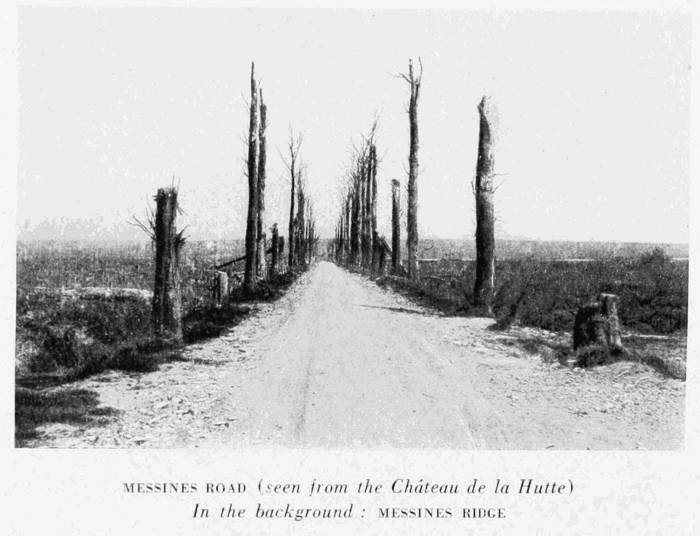
For several months before the battle, the attack on Messines Ridge had
been carefully planned by means of a model in relief, situated in the open
air and covering an area about equal to that of a tennis court. Here were
reproduced in relief all the contours and peculiarities of the ground. Everything,
down to an isolated tree trunk, was reproduced.
British effort took definite shape for the first time on June 7. The attack,
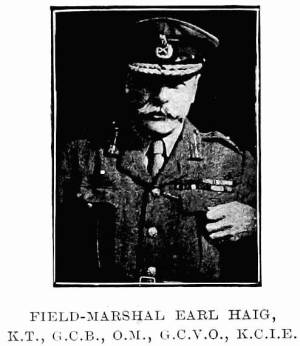
planned by Sir Douglas Haig, had for its objective the capture of the crests
between Wytschaete and Messines, which the Germans had seized on
November 1, 1914.
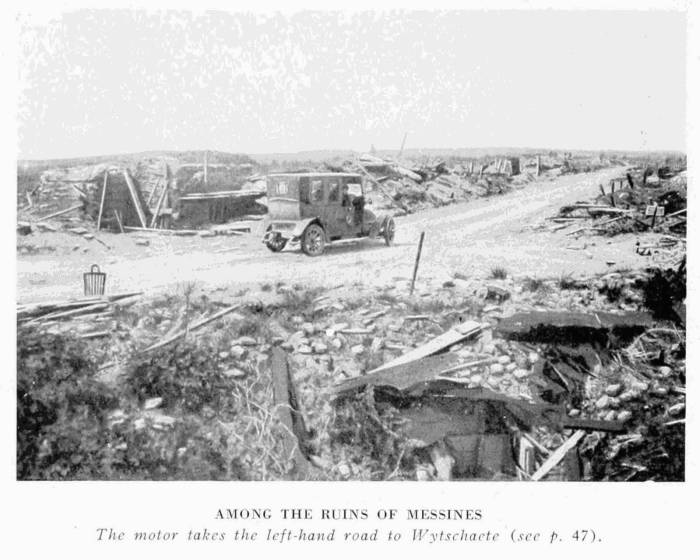
For seven days an artillery preparation of incredible intensity hammered
the villages of Messines and Wytschaete, until they had completely disappeared.
On June 7, about an hour before dawn, at 3.10 a.m., the sky was lit up
by an intense light, while a series of terrific explosions were heard; nineteen
mines, some of whose galleries had taken more than a year to bore, exploded
along the enemy positions.
The Germans were taken completely by surprise, and gave way before the
impetuous onrush. In a few minutes their first line was carried along the
whole of the attacked front. Then, almost without a pause, the British troops
attacked the western slopes of the Messines-Wytschaete Ridge, and by about
6.30 a.m. held the crests along the whole line.
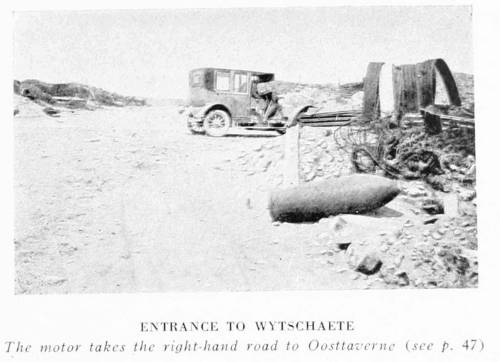
The village of Messines offered resistance, but was captured by the New
Zealanders in a vigorous attack, as was also the village of Wytschaete. By
noon the second stage of the offensive was about to begin.
Descending the eastern slopes of the ridge the British carried a second
strong position, then attacked a fresh line—chiefly in Rayon Wood—in
which were large shelters of reinforced concrete, each capable of holding a
company. At about 4 p.m. Oosttaverne Village, lying west of the centre
of the position, fell. At sun-down the day's objectives had been completely
attained, and the advance at certain points exceeded two miles in
depth.
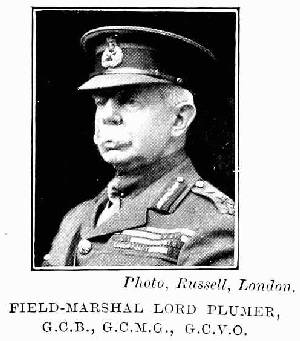
This fine success was due to the carefully detailed preparation carried
out under the orders of General Herbert Plumer, to the destructive effect of
the mines, to the violence and precision of the bombardment, to the excellent
co-operation of the Air Forces, and to the harmonious working together of
all arms. The tanks rendered excellent service.
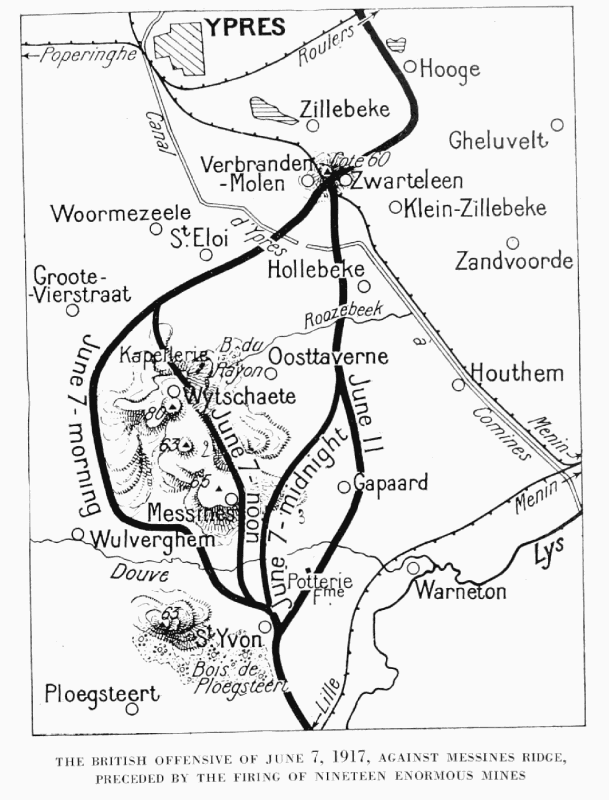 THE BRITISH OFFENSIVE OF JUNE 7, 1917, AGAINST MESSINES RIDGE,
PRECEDED BY THE FIRING OF NINETEEN ENORMOUS MINES
THE BRITISH OFFENSIVE OF JUNE 7, 1917, AGAINST MESSINES RIDGE,
PRECEDED BY THE FIRING OF NINETEEN ENORMOUS MINES
The Germans made an effort to rally, but their first counter-attacks, near
Oosttaverne and to the east of Messines, failed.
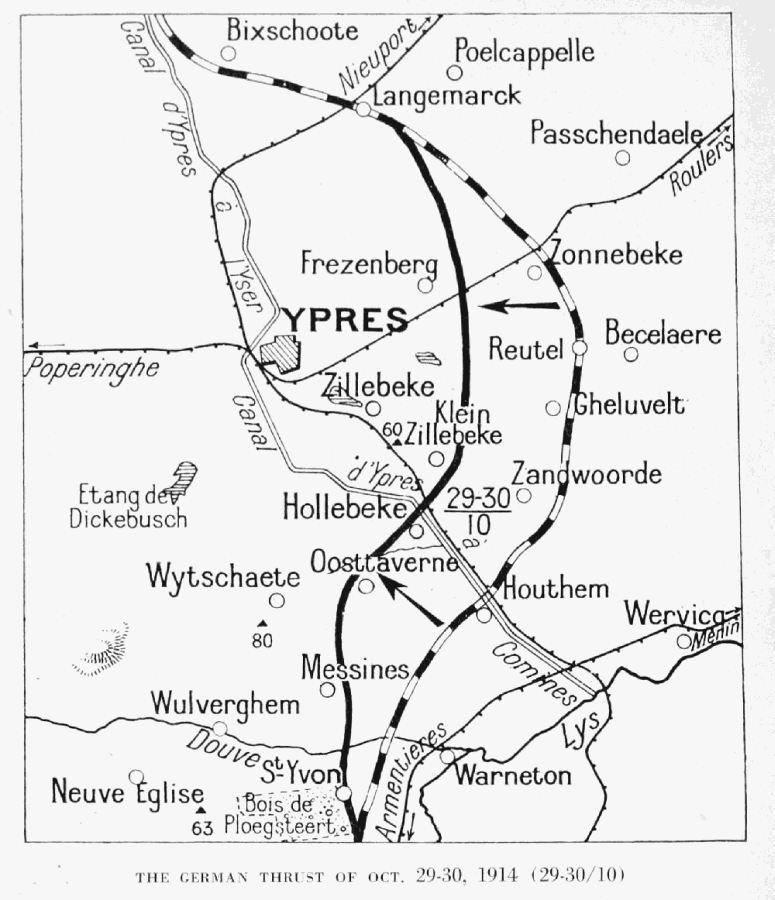
At about 7 p.m., on June 8, a fresh German counter-attack was launched
along the whole of the new front between St. Yvon and the Ypres-Comines
Canal. Other engagements were fought to the east of Messines and near
Klein Zillebeke. Although reinforced by fresh divisions, the German attack
was broken by midnight.
Resuming their offensive, the British, on the morning of June 11, captured
the whole system of German trenches, nearly a mile in length, situated near
Poterie Farm, to the south-east of Messines. The next day fresh progress
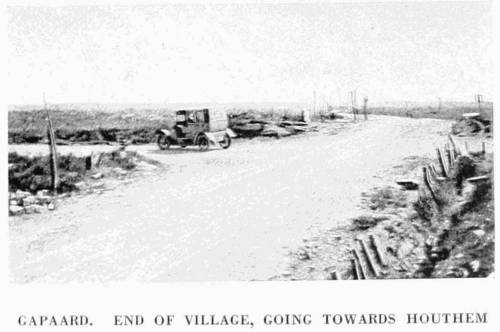
was made along nearly two miles of the front to the north-east of Messines,
and the hamlet of Gapaard occupied.
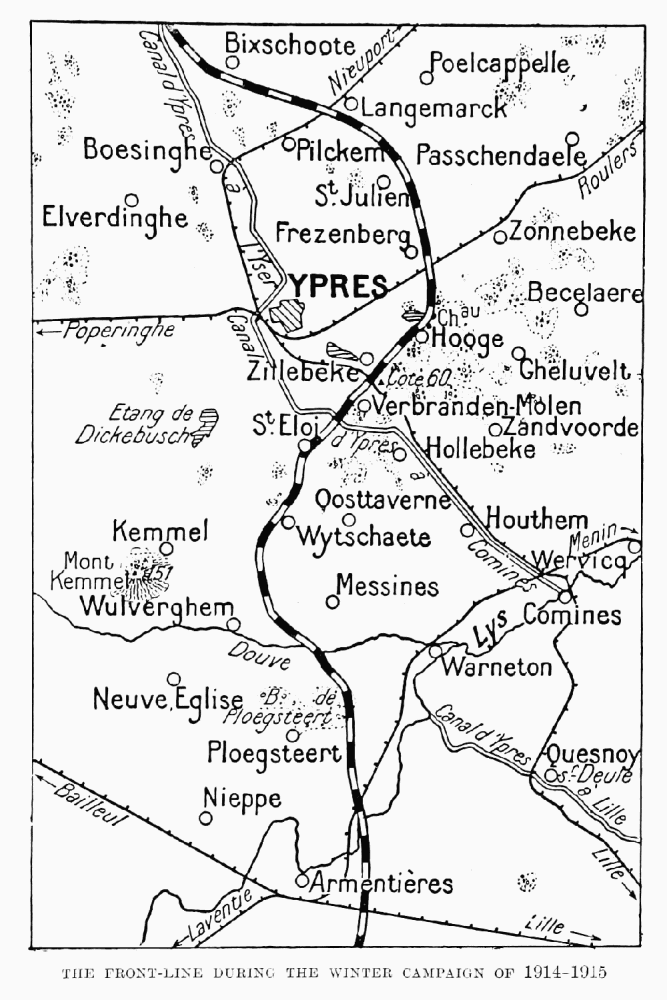
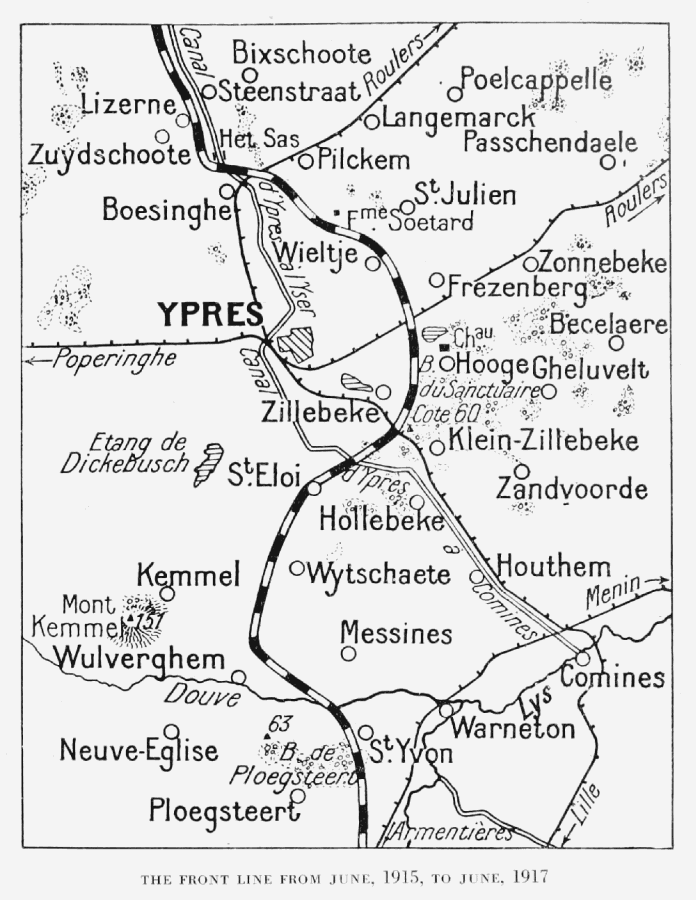
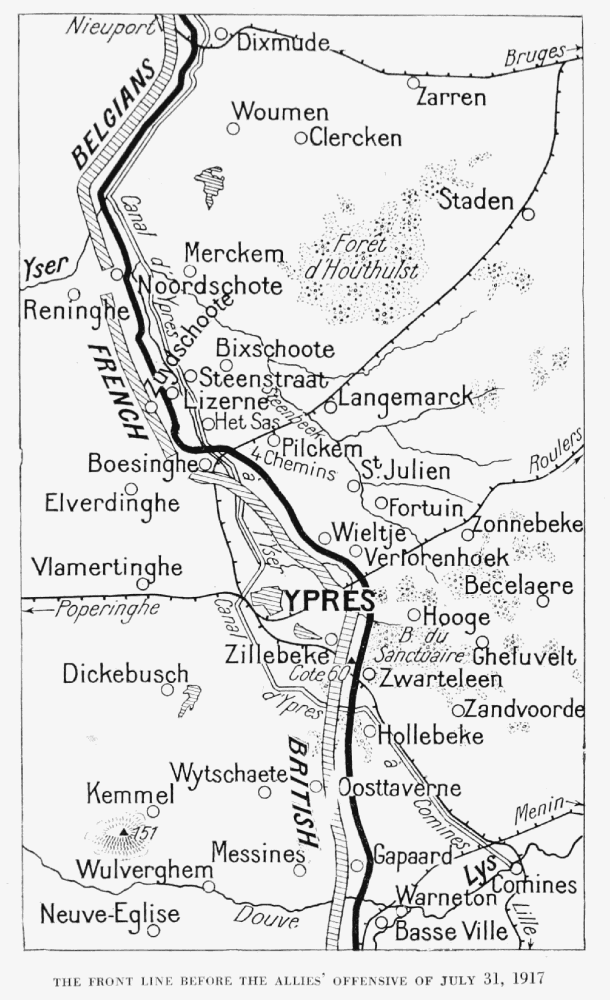 THE FRONT LINE BEFORE THE ALLIES' OFFENSIVE OF JULY 31, 1917
After the offensive—limited in scope—of June 7, which reduced the salient,
south of Ypres, the British continued to press the enemy. Frequent raids
kept the Germans on the alert and secured important points d'appui.
On June 14, the Germans were forced to abandon an important part
of their first-line trenches between the Lys and St. Yvon. On the same day
a considerable advance was made east of Ploegsteert Wood, and in the
immediate neighbourhood of Gapaard Village.
During the night of the 14th a double attack was made: one to the east
of Messines; the other along both banks of the Ypres-Comines Canal, to
the north-west of Hollebeke. These attacks gave the British a large number
of trenches, which they held in spite of fierce counter-attacks.
To sum up, during the latter half of June an advance of 500 to 1,000 yards
in depth was made along the whole front line between Klein Zillebeke and the
Lys.
The month of July passed in raids, patrols, and reconnoitring, preparatory
to the new offensive of July 31.
This far-reaching offensive, which lasted from July 31 to the end of October,
may be divided into six successive phases, and ended with the liberation of
Ypres.
(July 31—August 15.)
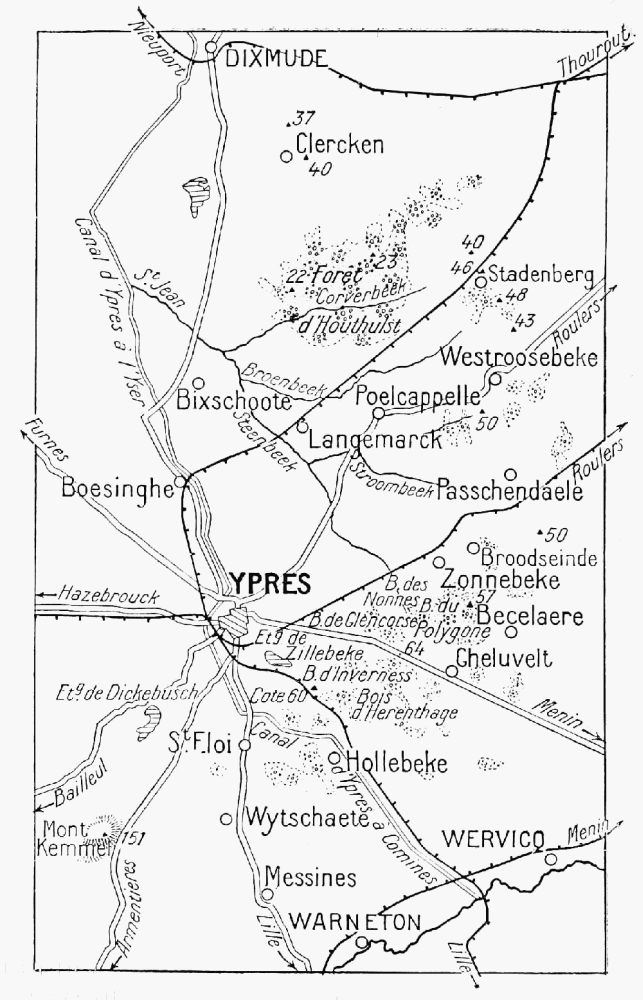
When the battle began, the firing line extended from Dixmude, along the
Yser Canal, then followed the Yperlée River, on the left bank of the Yser
Canal. It next passed through Lizerne to Het Sas, whence it followed the
canal to Boesinghe. Opposite this village the line crossed the canal and the
Ypres-Bruges railway, then passed the Quatre-Chemins cross-roads, descending
thence to Essenfarm and Kruppfarm, which lie on either side of the
Pilkem Road. Continuing west of Wieltje Village, it passed south of Verlorenhoek
Château, skirted Verlorenhoek Village, and descended west of Hooge,
after crossing the Ypres-Roulers railway. It next skirted the northern part
of Sanctuaire Wood, then entered the latter, coming out to the south of
Zwateleen. From there, the line extended southwards, passing west of
Hollebeke, east of Gapaard, and skirting the eastern fringe of Ploegsteert
Wood.
During the fortnight preceding the offensive, changes were made in the
order of the forces holding the line.
British troops relieved the Belgians and French who had been operating
near the coast, in the direction of Lombaertzyde. Moreover, the French
forces, placed at the disposal of General Anthoine, had taken up positions
between the Belgians and the British from Reninghe to Elverdinghe.
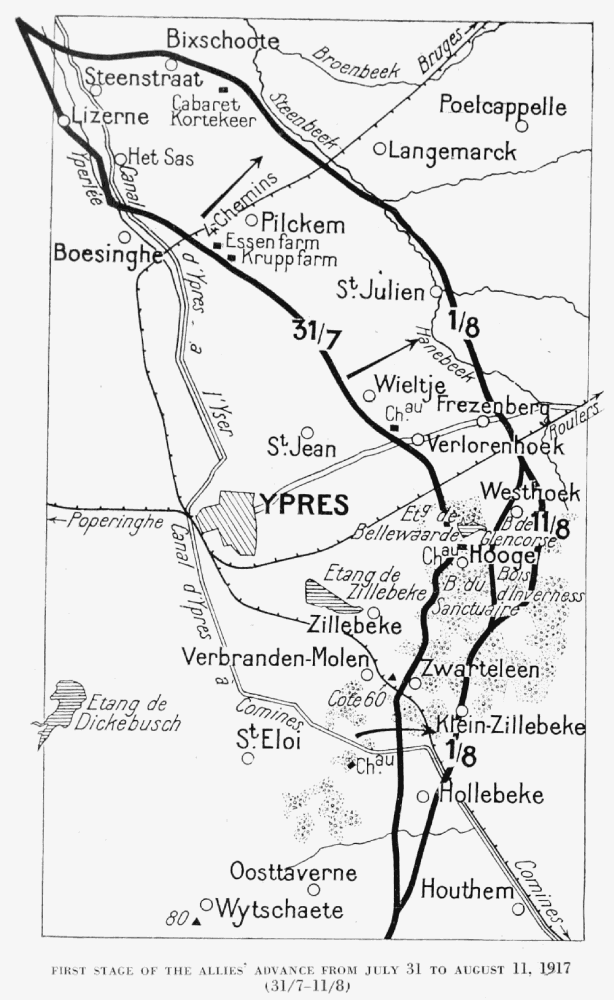 FIRST STAGE OF THE ALLIES' ADVANCE FROM JULY 31 TO AUGUST 11, 1917
(31/7—11/8)
At 4 a.m. on July 31, in spite of unfavourable weather, the British troops,
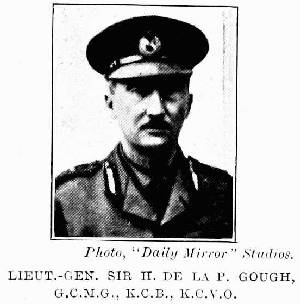
under the command of Generals Plumer and Gough, co-operating with the
Franco-Belgian troops led by General Anthoine, attacked in force along a
front of fourteen miles from Dixmude to the Lys.
In the French sector, the greater part of the troops had crossed the Yser
during the night. The artillery then pounded the first and second German
lines, and as soon as the range had been lengthened, the infantry dashed
forward. At the scheduled hour the first and second enemy lines from Dixmude
to Bixschoote, to a depth in places of almost two miles, were occupied, while
Bixschoote, Steenstraat, and Kortekeer Inn fell.
The British were on the right of the French. The Ypres-Roulers Road
formed the axis on which their attack turned. On the left of this road
they pierced the German lines to a depth of nearly two miles, and occupied
the bridges over the Steenbeek Canal. Several villages were captured:
Verlorenhoek, Frezenberg, St. Julien, Pilkem, in addition to a large number
of fortified farms and woods.
On the right of the Ypres-Roulers Road, the British encountered a very
strong resistance. The ground, more broken than that on the other part
of the battle-front, and also intersected with woods, enabled the Germans to
keep several points d'appui. Despite the fiercest fighting, it was impossible
to drive them out of part of the second position on the right wing. Nevertheless,
an advance of about a mile in depth was made in this sector, and the
village of Hooge and Sanctuary Wood were captured.
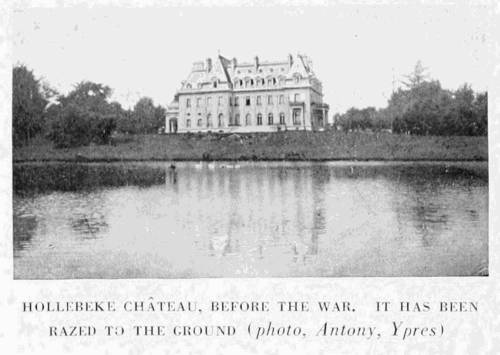
On their extreme right the British had captured Hollebeke Village early
that morning.
The next day (August 1), the Germans replied but feebly in the French
sector, while in the British sector, in spite of the rain, they counter-attacked
with the greatest fury.
Near St. Julien the line fell back slightly, but along the rest of the front
the positions were fully maintained.
The first phase in the liberation of Ypres was over.
In forty-eight hours, the offensive, methodically prepared and carried out,
had attained the objectives, given the Allies more than 6,000 prisoners and
an immense quantity of stores.
During the following days, in spite of torrential rain, the Germans
attempted unsuccessfully to retake the lost ground, some of the attacks
being particularly fierce.
In the sector held by the French troops there was little more than a
heavy bombardment on either side. French raids on fortified farms held by
the Germans resulted in slight progress being made to the north of Bixschoote
and Kortekeer Inn.
The British, on the other hand, had to face strong counter-attacks.
On August 1, the Germans succeeded in regaining a footing in their old
advanced positions along the Ypres-Roulers Road. On the 2nd, the British
lines between St. Julien and the Ypres-Bruges railway were attacked in
force. The village of St. Julien was lost, but was finally retaken on the 3rd.
On the 4th, the British line was advanced beyond St. Julien.
On August 5, during a fresh attack on both banks of the Ypres-Comines
Canal, the Germans retook Hollebeke, but were driven out almost immediately.
On the night of the 5th they again attacked Hollebeke, but without
success.
On the 10th, an interesting operation was carried out by the British. The
front attacked was shorter than in the offensive of July 31, and extended
about a mile and a half to the south of the Ypres-Roulers Road.
Early in the morning the British were in complete possession of Westhoek
Village, after which a violent struggle took place for the high ground round
the village. By evening all the objectives had been attained, including the
capture of Westhoek Crest and Glencorse Wood.
August 12 was marked by six enemy counter-attacks, which caused a
slight withdrawal of the line to the south of Glencorse Wood. Everywhere
else the Allies' positions were fully maintained.
(August 15—September 19, 1917.)
The Allies resumed their offensive on August 15 along a front of some nine
miles, from the Yser Canal to the Ypres-Menin Road.
The attack began at 4.45 a.m. The French attacked on both sides of
the Steenstraat-Dixmude Road, crossing the Steenbeek stream in the
morning. Driegrachten Bridgehead was taken after hand-to-hand fighting,
while in the evening the whole of the strip of ground between the Yser and
the Martjet-Vaart Canal was in the hands of the French.
The British operating on the right of the French rapidly attained their
first objectives, then vigorously following up this first success, they took by
assault the village of Langemarck and its strong defences, advanced 800 yards
beyond the village and captured the whole system of trenches.
To the south, along the Ypres-Menin Road, the struggle was more stubborn,
the Germans resisting desperately. A series of furious counter-attacks
enabled them finally to preserve their line practically intact in this district.
The day's captures included more than 2,000 prisoners, of whom thirty
were officers, and twenty-four guns, including several of large calibre.
Desperate fighting continued until September 19 without, however,
altering the positions established on August 15.
On August 19, the British, by small local attacks, advanced about 500
yards on the Ypres-Poelcappelle Road and captured several fortified farms.
The Germans made desperate efforts to hold the high wooded ground
comprising Polygone and Inverness Woods, near the Ypres-Roulers Road.
On the 22nd the fighting increased in fierceness. The British advanced
only with great difficulty, and the eastern edges of Inverness Wood were
hotly contested.
In these combats, from which neither side gained any decisive advantage,
the Germans made use for the first time of liquid fire, thanks to which
innovation they succeeded temporarily in retaking the north-western corner
of Inverness Wood, but were soon driven out.
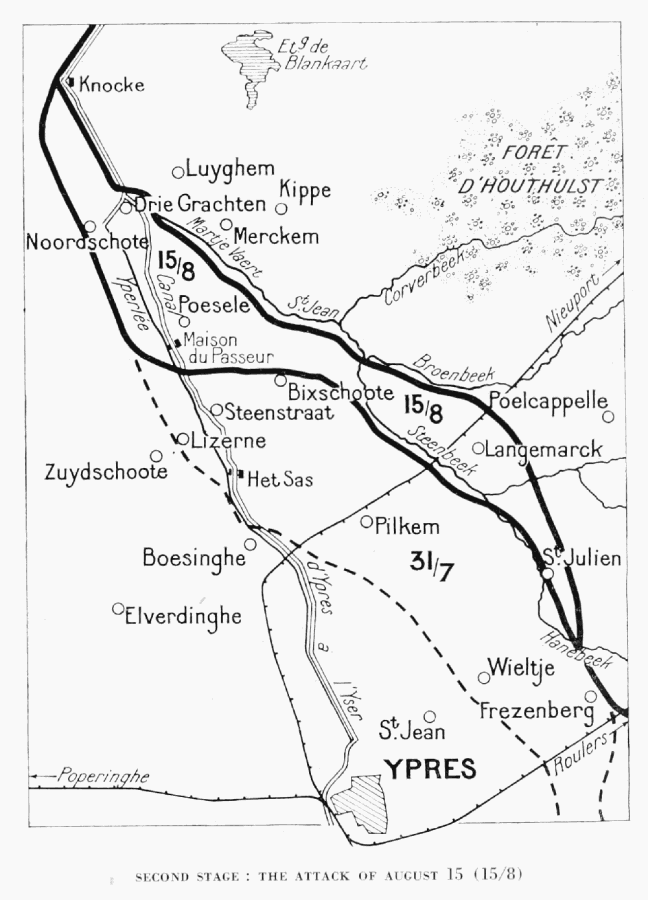 SECOND STAGE: THE ATTACK OF AUGUST 15 (15/8)
Further north, the British, on August 24 and 25, advanced their lines to
the north of St. Julien and Langemarck.
During the following days, persistent rains prevented any further operations.
Infantry actions were now succeeded by continuous bombardments
on both sides, and by isolated raids.
(September 20—October 3, 1917.)
On September 20 a fresh offensive was begun along the whole front from
Langemarck to the Ypres-Menin Road, a distance of eight miles.
The part assigned for the French troops under General Anthoine was
merely to protect the left wing of the British Army which, pivoting on
Hollebeke, was to wheel and advance its marching wing in a direction at
right-angles to the Zonnebeke-Gheluvelt line.
All the objectives were attained at an early hour.
Inverness Wood, which had been hotly disputed for the six previous weeks,
was taken by the London troops.
The Australians retook by assault Glencorse Wood—lost a few days
before—and Nonnes Wood. The Scottish and South African Brigades
captured the fortified farms of Vampire and Borry, and the Potsdam and
Anzac Redoubts. Lancashire Territorials carried Iberian Farm and next
day (the 21st) Gallipoli Farm.
The British then attacked the second German lines. On the right the
Territorials[1] fought violent engagements to the north of the bend in the Ypres-Comines
Canal, near Klein Zillebeke, and in the vicinity of the position known
as Tower Hamlet.
In the centre, progress was more important. The ground hereabouts
rises in a small plateau about 220 feet in height, which dominates the whole
battlefield and extends in two long spurs: one running north-east towards
Zonnebeke, the other southwards towards Menin. The Germans had
fortified these positions very strongly and withdrawn their main line of
defence to the eastern edge of the plateau, i.e. opposite the side by which
the enemy must attack. This line protected the village of Zevenkote and
the western edge of Polygone Wood, leaving in front the woods of Nonnes,
Glencorse and Inverness, and Herenthage Park, the eastern edge of which
latter it followed. The woods were strongly fortified, and the British had
twice previously (July 31 and August 16) vainly endeavoured to capture
them.
It was the Northern troops and the Australians who carried these positions,
advancing to a depth of 1,700 yards and taking Veldhoek and the western
part of Polygone Wood—the principal centre of the German resistance.
Further north, Zevenkote was captured and the London Territorials, supported
by the Highlanders, seized a second line of farms.
In the evening of September 20, the front ran approximately as follows:
from Rose Farm (700 yards west of Poelcappelle) to Fokker Farm (on the
eastern edges of Zevenkote); across the western part of Polygone Wood—including
Veldhoek—then to the east of Herenthage Château, and ending
at Hollebeke.
The Germans, in their costly and unsuccessful efforts to retake the lost
positions, suffered exceedingly heavy losses, without gaining any advantage.
On the morning of the 26th the British continued their attack along a
five-mile front, from the east of St. Julien to Tower Hamlet near the Ypres-Menin
Road.
The rest of Tower Hamlet Spur was captured, in addition to the whole of
Polygone Wood.
Further north, a fresh advance of 1,700 yards was made, and the strongly
fortified village of Zonnebeke remained in the hands of the British.
Besides the gain in ground, more than 4,000 prisoners were taken.
The Germans, by a series of powerful counter-attacks, sought to win back
the lost positions. On the evening of the 26th, four attacks were made in
the neighbourhood of Tower Hamlet.
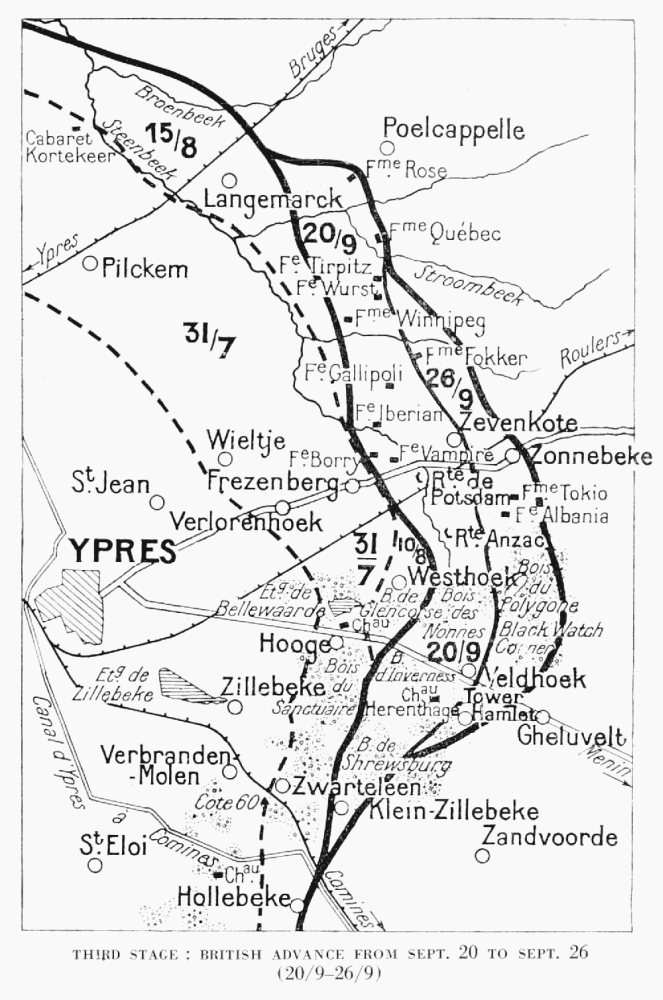 THIRD STAGE: BRITISH ADVANCE FROM SEPT. 20 TO SEPT. 26
(20/9—26/9)
On the 27th they attacked the village of Zonnebeke, while on the morning
of the 30th three attacks were made, without result, on both sides of the
Ypres-Menin Road.
On October 1 the Germans attacked three times on a front of 1,700 yards
to the south of the Ypres-Menin Road, while the same night two fresh
assaults gave no appreciable result.
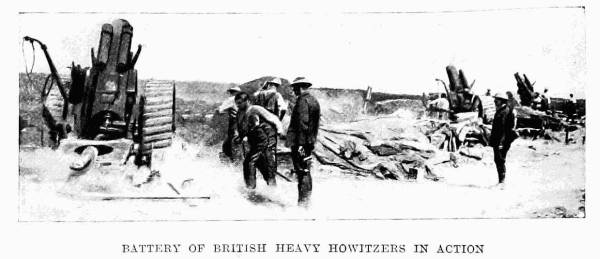 BATTERY OF BRITISH HEAVY HOWITZERS IN ACTION
(October 4—8, 1917.)
The increasing activity of the Germans did not in any way prevent the
British from preparing a fresh offensive. On the morning of October 4,
English divisions, supported by Welsh, Scottish and Irish battalions, attacked
along a front of ten miles, between Tower Hamlet and the north of Langemarck.
The Germans, disconcerted and surprised by this unexpected attack—they
were themselves preparing to attack with five divisions—fell back from the
beginning of the action.
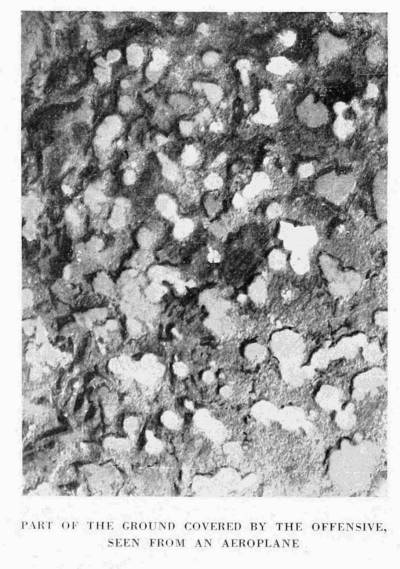 PART OF THE GROUND COVERED BY THE OFFENSIVE,
SEEN FROM AN AEROPLANE
PART OF THE GROUND COVERED BY THE OFFENSIVE,
SEEN FROM AN AEROPLANE
A rapid advance of
one-half to nearly two
miles was made.
South of the Menin
Road the objectives were
attained almost at the
outset.
To the north of the
same road the enemy resistance
was more stubborn.
Nevertheless, the
villages of Reutel and
Polderhoek, together with
the château of that name,
were captured, freeing at
the same time the top of
the crest, whose eastern
slopes run down to the
village of Bacelaere.
Further north, the
Australians captured
Noordhemhoek and Molenaarelsthoek,
reached
Broodseinde Crest, and
thus advanced beyond
the Bacelaere-Broodseinde
Road.
On the other side of
the Ypres-Roulers railway,
the British drew
appreciably nearer Passchendaele,
captured
Gravenstafel and a certain number of fortified farms, and approached the
western outskirts of Poelcappelle.
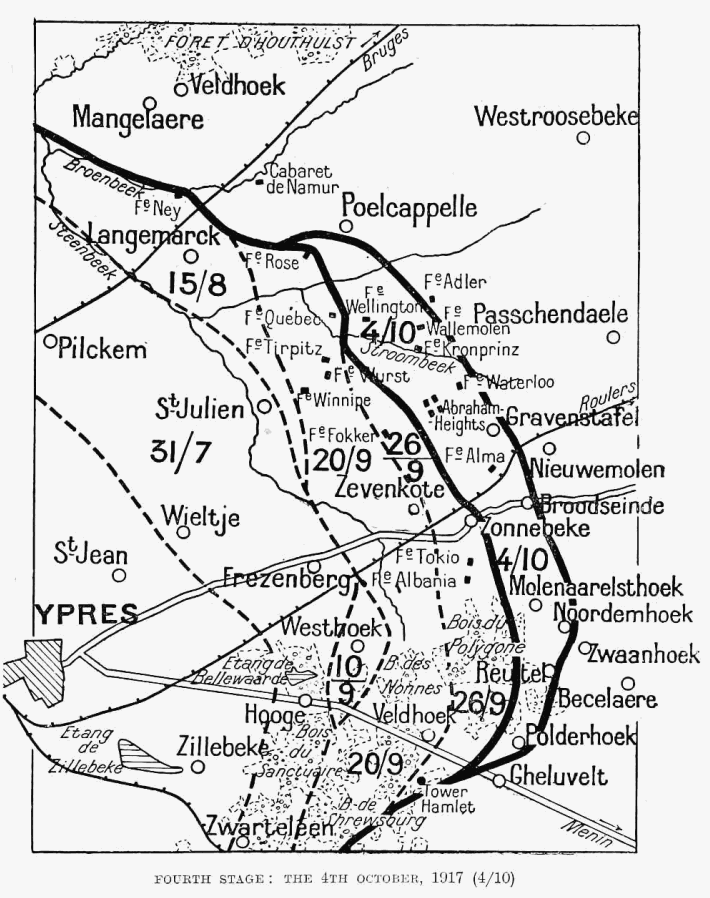 FOURTH STAGE: THE 4TH OCTOBER, 1917 (4/10)
In spite of the violent storm which was then raging, all the objectives
were attained and the line of crests conquered.
Owing to the very large numbers of troops massed on the front at the time
of the attack, the German losses, which included 4,500 prisoners, were
particularly heavy.
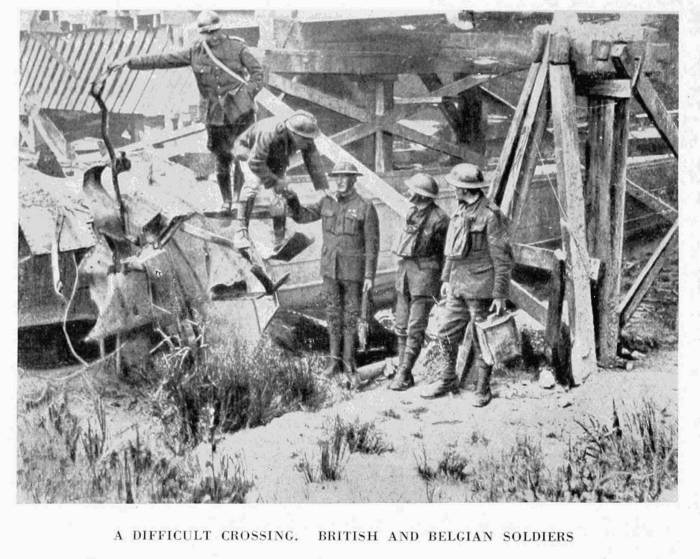 A DIFFICULT CROSSING. BRITISH AND BELGIAN SOLDIERS
(October 9—12, 1917.)
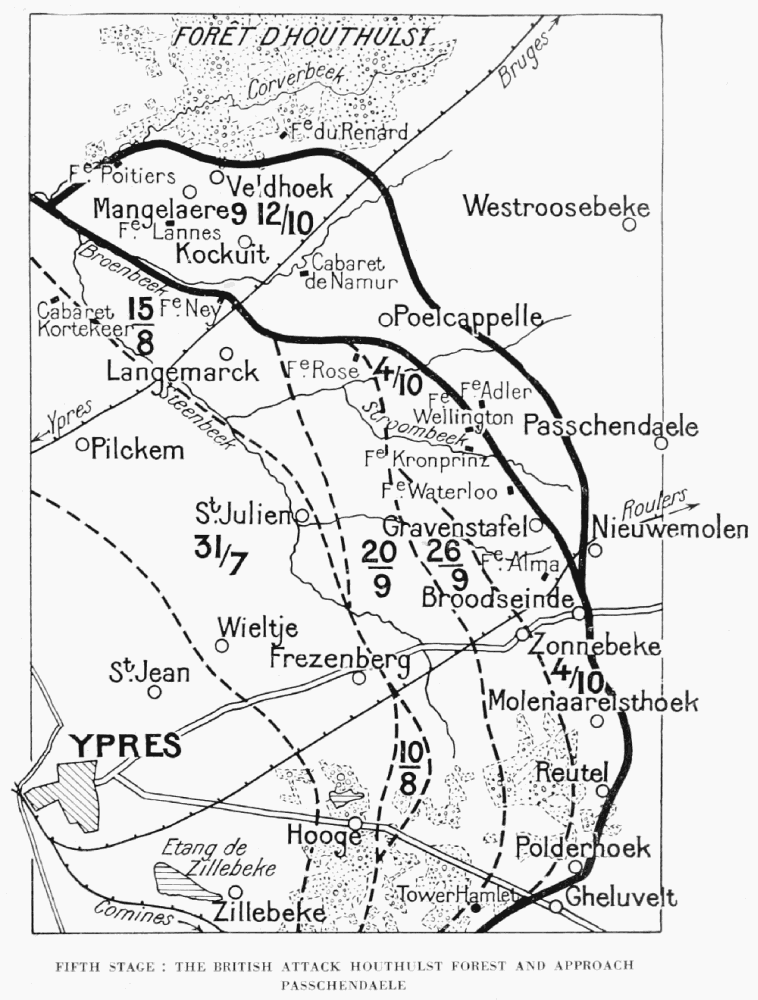
To completely clear Ypres, a few strongly fortified villages beyond the
line of crests captured on October 4 had still to be taken. These formed
the objective of the attacks of October 9 and 12.
On October 9, in spite of the appalling weather, the British attacked again
on a front stretching from St. Janshoek (a mile north of Bixschoote) to the
south-east of Broodseinde. The French were holding a front rather less than
two miles in length to the north of Bixschoote, and had for objective the
southern edge of Houthulst Forest.
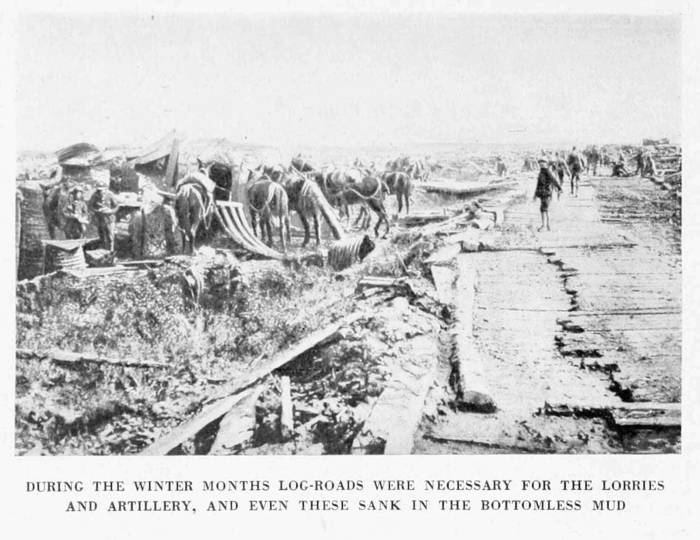
The signal to attack was given at 5.30 a.m. Despite the rain, which had
been falling incessantly for several days, the infantry crossed first the canal
in flood, then a veritable sea of mud, and captured Mangelaere and Veldhoek.
They advanced rather more than a mile and reached the south-western edge
of Houthulst Forest, after having captured numerous strongly fortified farms
and blockhouses.
The British sector extended from the north-west of Poelcappelle to Broodseinde,
and formed a front of some seven miles.
On the right, the Manchester Regiment and the Lancashire Fusiliers
advanced from 1,600 to 2,000 yards in the direction of Passchendaele, and
carried the line beyond the crests occupied on October 4.
In the centre, many farms, redoubts and blockhouses were captured.
 FIFTH STAGE: THE BRITISH ATTACK HOUTHULST FOREST AND APPROACH
PASSCHENDAELE
FIFTH STAGE: THE BRITISH ATTACK HOUTHULST FOREST AND APPROACH
PASSCHENDAELE
To the north, the capture of Poelcappelle was completed, the British
joining hands with the French on the outskirts of Houthulst Forest.
More than 2,000 prisoners were taken.
 SIXTH STAGE: BY NOV. 6, YPRES WAS COMPLETELY CLEARED
(October 22—November 6, 1917.)
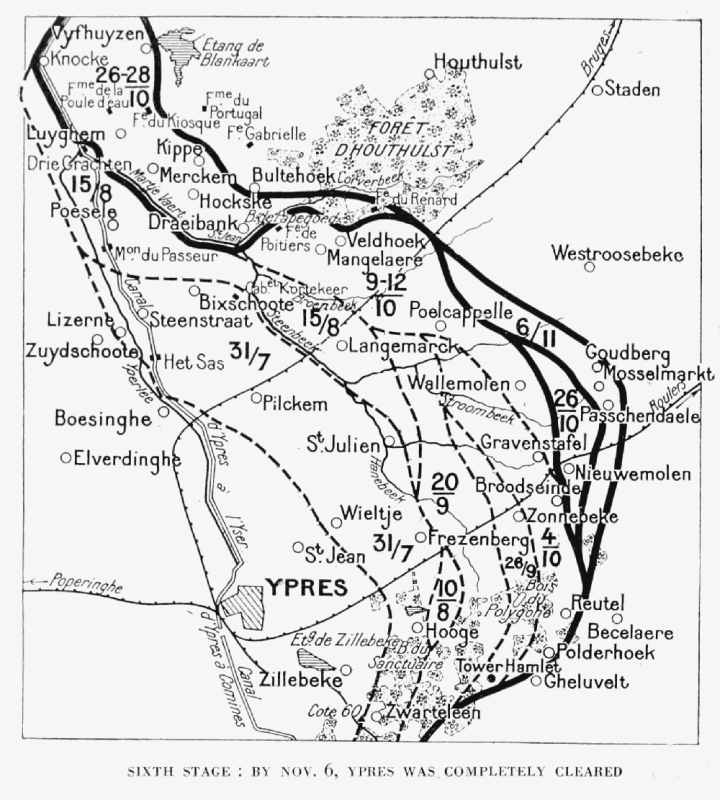
After a short rest, during which the new positions were consolidated—in
view of enemy counter-attacks—the battle broke out afresh on October 22.
The attack of the 22nd was, in reality, only of secondary importance, but
thanks to the progress made, it was possible to carry out the operations of
the 26th on a larger scale than originally intended.
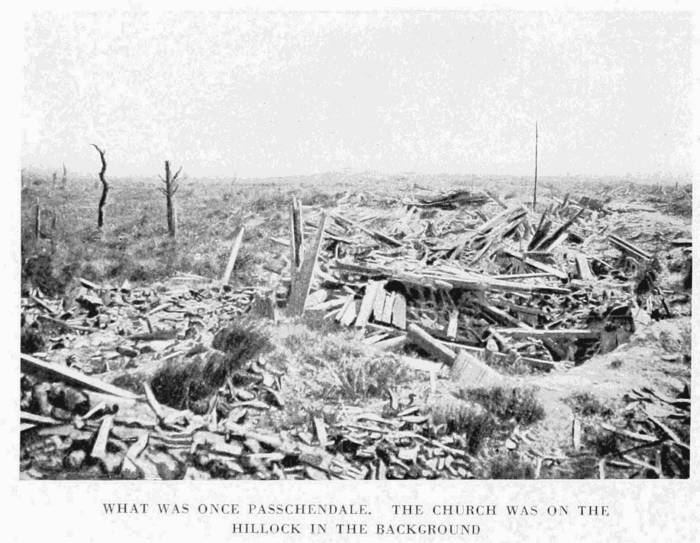
In order definitely to consolidate the captured positions, it was still
necessary to take the village of Passchendaele, which stands on the high
ground dominating the plain of Flanders to the east of Ypres and from which
Roulers is visible.
A fresh offensive was accordingly begun at dawn on October 26.
In the French sector, the troops, after wading through the St. Janshoek
and the Corverbeek streams with the water up to their shoulders, stormed the
village of Draeibank, Papegoed Wood, and many fortified farms.
The next day fresh progress, to a depth of more than a mile, was made on
both sides of the Ypres-Dixmude Road, along a front of two and a half
miles. The villages of Hoekske, Aschhoop, Merckem, and Kippe were
captured, and the western edges of Houthulst Forest reached.
On the 28th, the advance continued on the left, in co-operation with the
Belgians. The French took the village of Luyghem, and the Belgians
Vyfhuyzen.
The British, on their part, advanced in the direction of Passchendaele, as
far as the southern slopes of the village, capturing a whole series of positions
east of Poelcappelle.
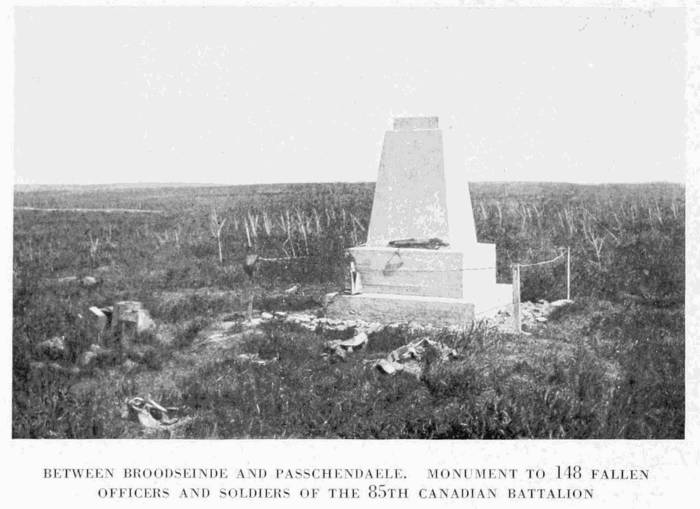
On October 30, British and Canadians continued their attacks, and in
spite of the enemy's desperate resistance, reached the first houses of
Passchendaele.
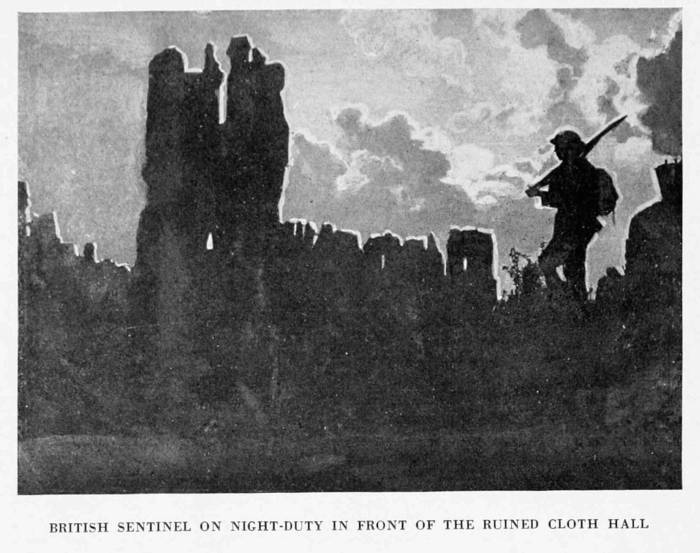
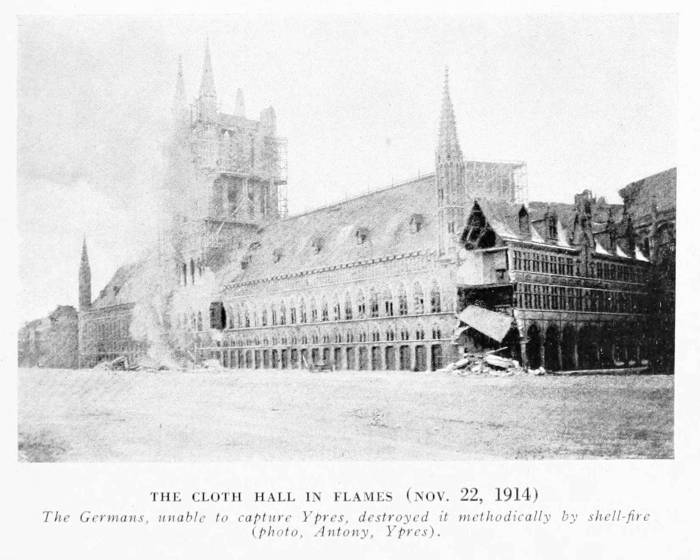
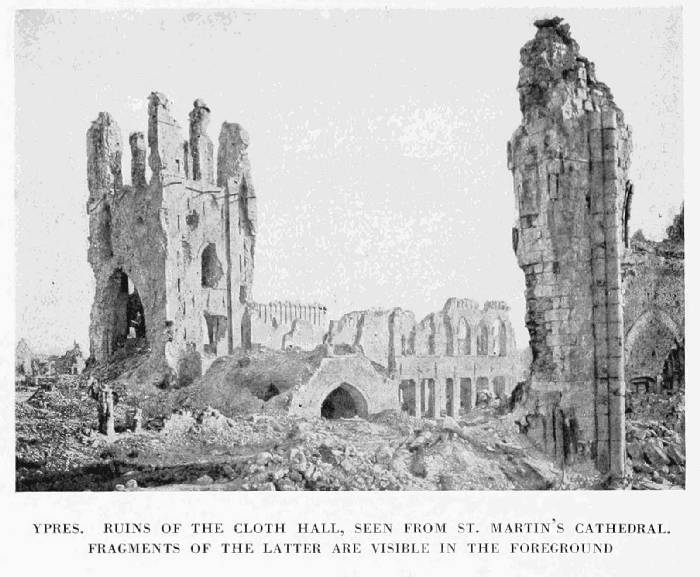
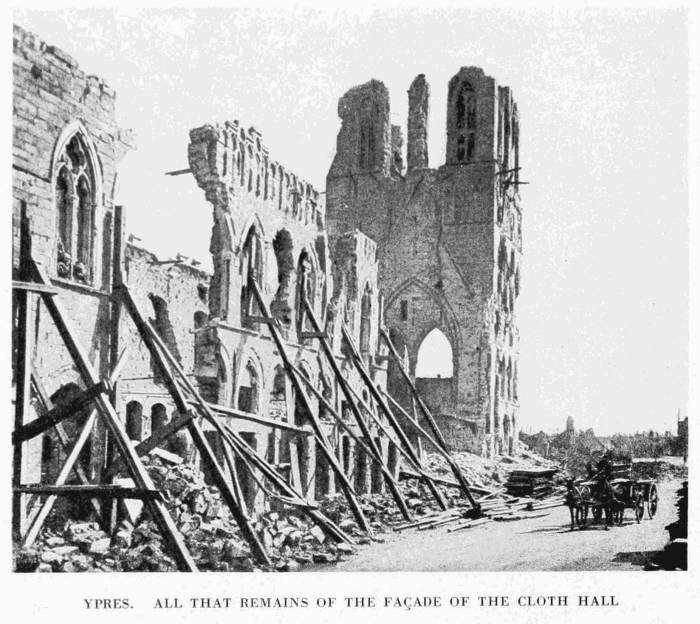
 FRENCH TROOPS PASSING IN FRONT OF THE RUINS OF YPRES CLOTH HALL
On the following days they improved their positions. The struggle at
this juncture was very bitter, Hindenburg having shortly before issued an
order stating: "Passchendaele must be held at all costs, and retaken if lost."
On the morning of November 6, the British resumed the offensive. The
Canadians, after bloody engagements to the north and north-west of Passchendaele,
captured the hamlets of Mosselmarkt and Goudberg, and finally carried
Passchendaele.
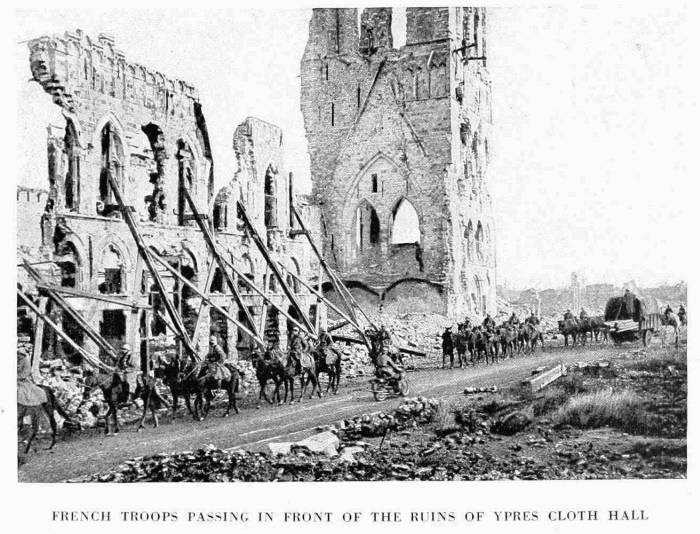
On the evening of November 6, Ypres was completely cleared; and from
the top of the Passchendaele Hills the valiant British troops could see, stretching
away to the horizon, the Plain of Flanders, which had been hidden from
the Allies since October, 1914.
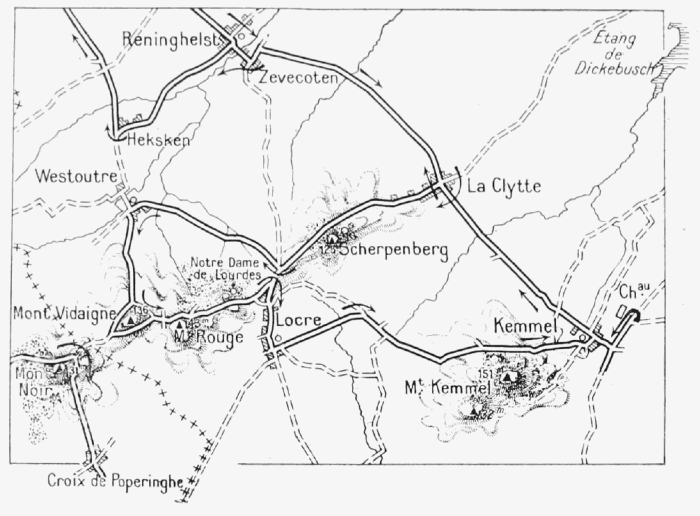
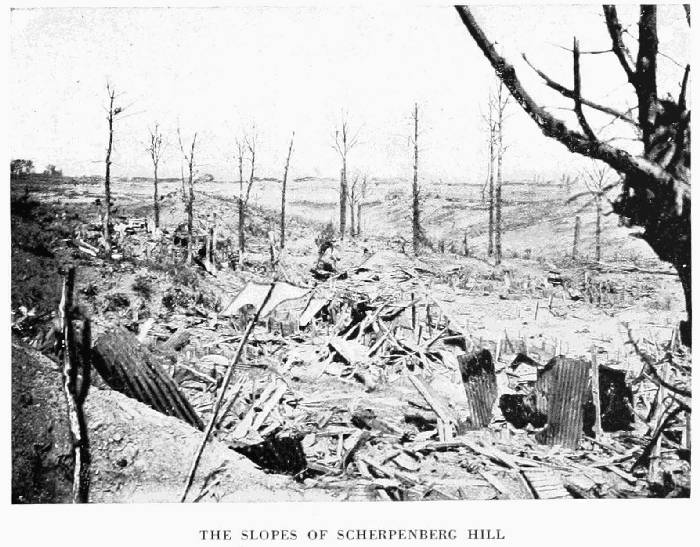
 PREPARATION OF THE GERMAN OFFENSIVE OF APRIL 9, 1918. THE OBJECTIVE
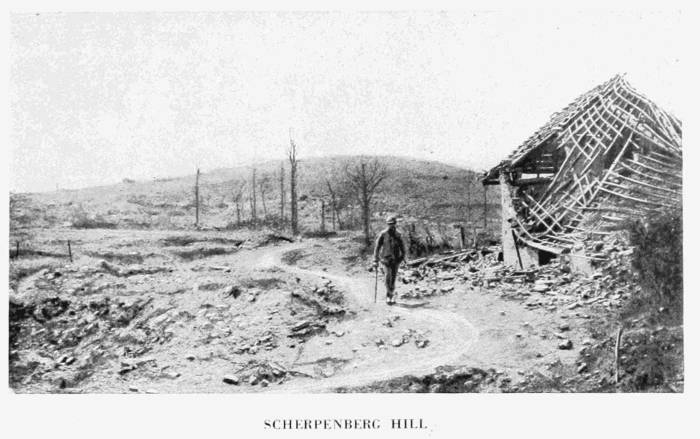 SCHERPENBERG HILL
The front was quiet during the winter of 1917—1918, but 1918 opened
darkly for the Allies.
The Treaty of Brest-Litowsk had sealed the defection of Russia, while
Roumania, reduced to her own resources, was forced to sign the Treaty of
Bukarest. Lastly, invaded Italy was only just recovering from the disaster
at Caporetto. Already, in spite of the terms of the Brest-Litowsk Treaty,
huge masses of troops, guns and stores were being despatched to the Western
Front. The blow fell on March 21, 1918.
The objectives, three in number, were the smashing of the British right
wing at its junction with the French; the separation of the two Allied army
groups; the driving back to the Channel coast of the two British armies,
after they had been surrounded on the south. The long-coveted road "Nach
Paris" would then at last be open.
But in spite of their colossal efforts the Germans were held.
By March 31, the German Imperial forces were exhausted, and General
Foch was able to say: "The wave has spent itself on the beach." The peril
seemed to be averted.
But the respite was only a short one. The German attack before Amiens
was scarcely stayed (April 6) when the battle suddenly broke out again.
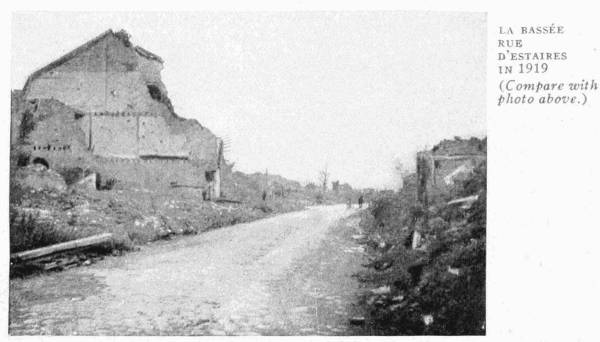
From the Arras sector to La Bassée the whole line was ablaze as far as the
Lys. While, in the first German offensive the British right had suffered
severely, it was against the left wing of the same army that the new blow
was struck.
The new offensive, although quickly prepared, was even more violent
than the first.
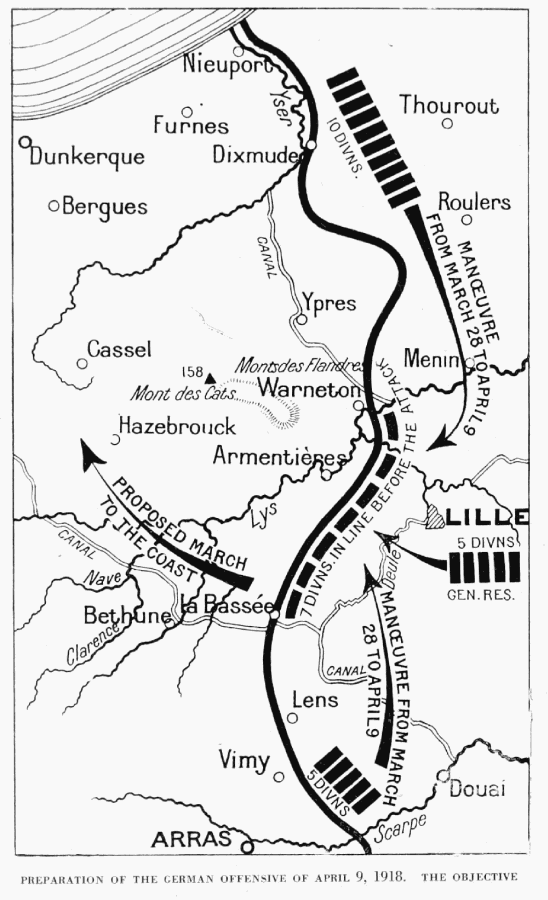
On April 9, when the attack began, the German battle-front between the
Lys and La Bassée was held by twenty-one divisions in line and six in reserve,
under the command of Von Quast (VIth Army).
Of these twenty-seven divisions only seven were in line on March 28.
Ten divisions were hurriedly brought up from the Belgian front
(IVth Army—Von Arnim), which was holding the sector from the Lys to the
Channel. Five others were despatched from the Artois front, and, lastly,
five divisions were taken from General Ludendorff's general reserve.
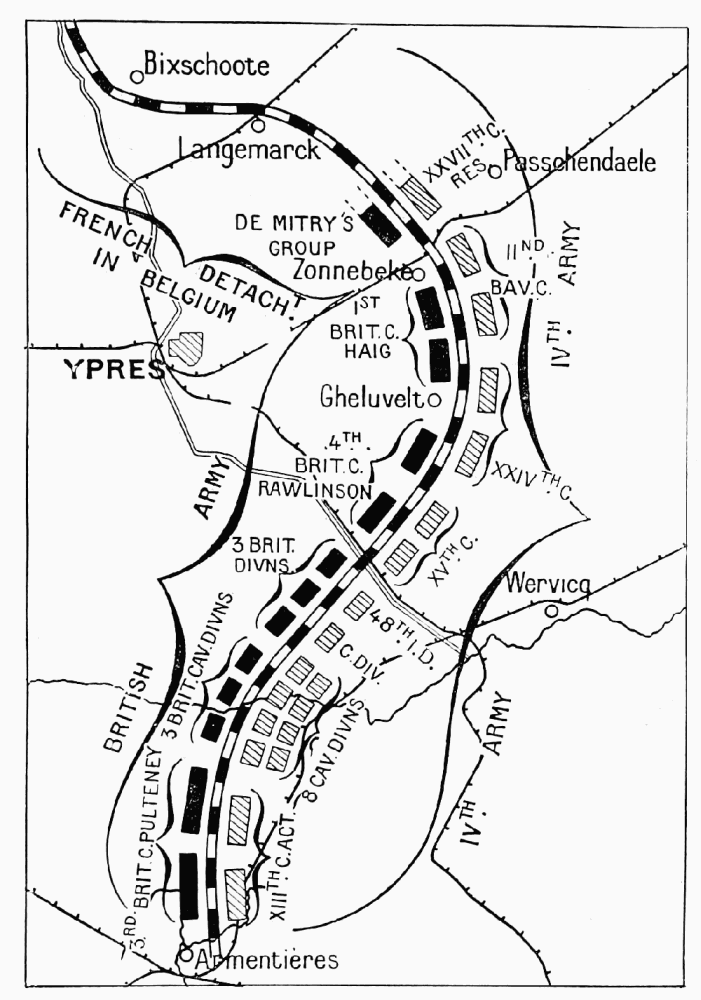
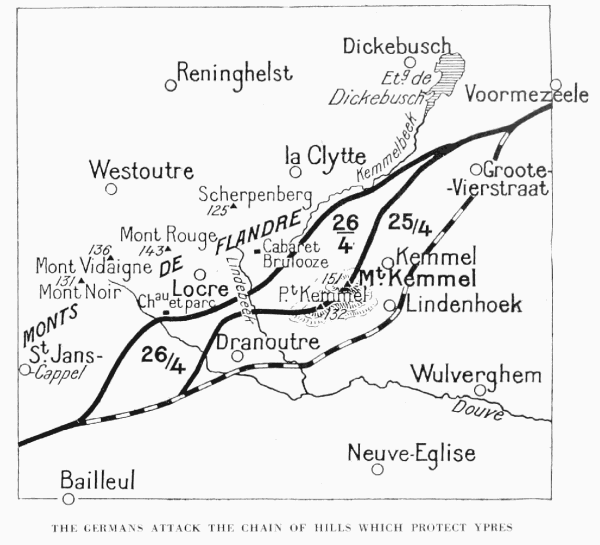
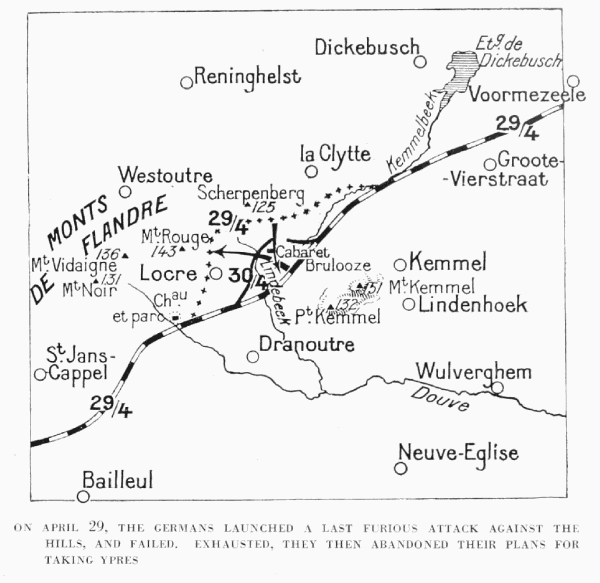
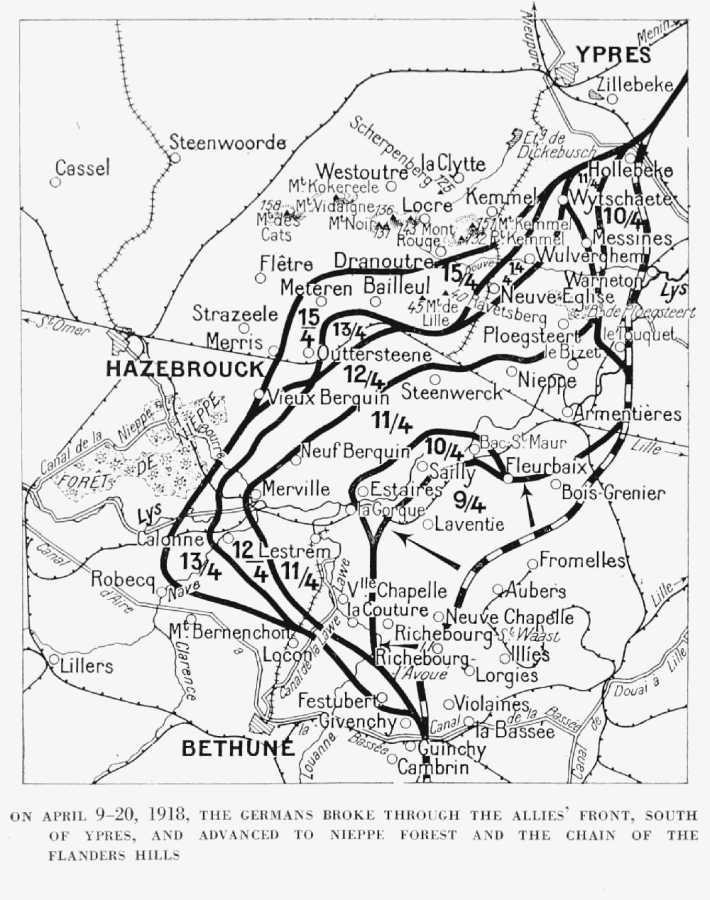 ON APRIL 9—20, 1918, THE GERMANS BROKE THROUGH THE ALLIES' FRONT, SOUTH
OF YPRES, AND ADVANCED TO NIEPPE FOREST AND THE CHAIN OF THE
FLANDERS HILLS
ON APRIL 9—20, 1918, THE GERMANS BROKE THROUGH THE ALLIES' FRONT, SOUTH
OF YPRES, AND ADVANCED TO NIEPPE FOREST AND THE CHAIN OF THE
FLANDERS HILLS
 The Ideal of the Tourist