White Pine, Weymouth Pine.
Named for Lord Weymouth, who cultivated it in England.
Pinus strobus Linnaeus.
Pinus, the classical Latin name; strobus refers to the cone, or strobile,
from a Greek word, strobus, meaning twist.
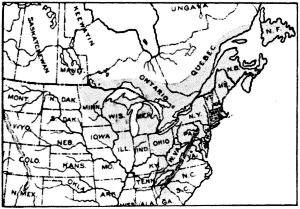
Habitat. Habitat: (See map);
now best in Michigan,
Wisconsin and Minnesota.
Characteristics of the
Tree: Height, 100'-120',
even 200'; diameter, 2'-4';
branches in whorls, cleans
poorly; bark, dark gray,
divided by deep longitudinal
fissures into broad
ridges; leaves in clusters
of 5, 3"-5" long; cone
drooping, 4"-10" long.
Appearance of Wood:
Color, heart-wood, very
light brown, almost cream
color, sap-wood, nearly
white; non-porous; rings,
fine but distinct; grain,
straight; pith rays, very
faint; resin ducts, small,
inconspicuous.
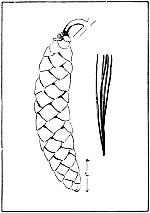
Leaf. Physical Qualities:
Weight, very light (59th
in this list); 27 lbs. per
cu. ft.; sp. gr. 0.3854;
strength, medium (55th in
this list); elasticity, medium
(47th in this list);
soft (57th in this list);
shrinkage 3 per cent.; warps very little;
durability, moderate; works easily in
every way; splits easily but nails well.
Common Uses: Doors, window sashes
and other carpentry, pattern-making,
cabinet-work, matches.
Remarks: This best of American
woods is now rapidly becoming scarce and
higher in price. Its uses are due to its
uniform grain, on account of which it
is easily worked and stands well. Known
in the English market as yellow pine.
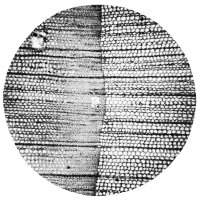
Cross-section, magnified 37½ diameters. 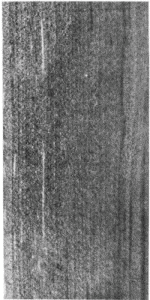
Radial Section, life size. 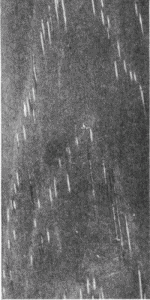
Tangential Section, life size.
Western White Pine.
Pinus monticola Douglas.
Pinus, the classical Latin name; monticola means mountain-dweller.
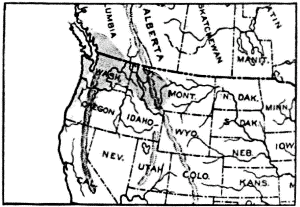
Habitat. Habitat: (See map);
grows at great elevations,
7,000'-10,000'. Best in
northern Idaho.
Characteristics of the
Tree: Height, 100'-160';
diameter, 4' to even 8';
branches, slender, spreading;
bark, gray and
brown, divided into squarish
plates by deep longitudinal
and cross fissures;
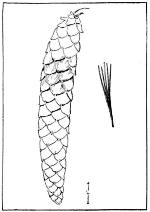
leaves, 5 in sheath; cones,
12"×18" long.
Appearance of Wood:
Color, light brown or red,
sap-wood nearly white;
non-porous; rings, summer
wood, thin and not
conspicuous; grain,
straight; rays, numerous,
obscure; resin ducts, numerous
and conspicuous
tho not large.
Leaf. Physical Qualities:
Weight, very light (58th
in this list); 24 lbs. per cu. ft.; sp. gr.
0.3908; strength, medium (56th in this
list); elastic (35th in this list); soft
(63d in this list); shrinkage, 3 per cent.;
warps little; moderately durable; easy
to work; splits readily but nails well.
Common Uses: Lumber for construction
and interior finish.
Remarks: Closely resembles Pinus
Strobus in appearance and quality of
wood.
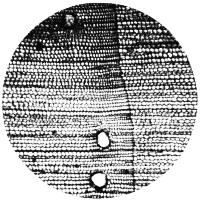
Cross-section, magnified 37½ diameters. 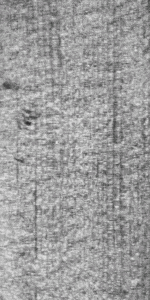
Radial Section, life size. 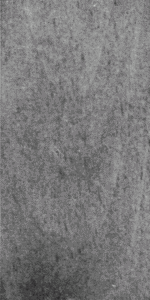
Tangential Section, life size.
Sugar Pine.
Sugar refers to sweetish exudation.
Pinus lambertiana Douglas.
Pinus, the classical Latin name; lambertiana, from the botanist, A. B.
Lambert, whose chief work was on Pines.
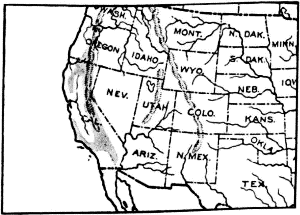
Habitat. Habitat: (See map);
grows on high elevations
(5,000'), best in northern
California.
Characteristics of the
Tree: Height, 100'-300';
diameter, 15"-20";
branches, in remote regular
whorls; bark, rich
purple or brown, thick,
deep irregular fissures
making long, flaky ridges;
leaves, stout, rigid, in
bundles of five; cones,
10"-18" long.
Appearance of Wood:
Color, pinkish brown, sap-wood,
cream white; non-porous;
rings, distinct;
grain, straight; rays, numerous,
obscure; resin
ducts, numerous, large
and conspicuous.
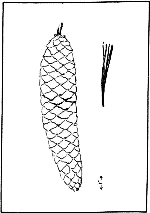
Leaf. Physical Qualities:
Weight, very light (61st
in this list); 22 lbs. per cu. ft.; sp. gr.
0.3684; strength, weak (59th in this
list); elasticity, medium (56th in this
list); soft (53d in this list); shrinkage,
3 per cent.; warps little; durable;
easily worked; splits little, nails well.
Common Uses: Carpentry, interior
finish, doors, blinds, shingles, barrels,
etc.
Remarks: Exudes a sweet substance
from heart-wood. A magnificent and
important lumber tree on Pacific coast.
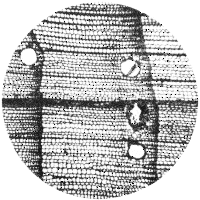
Cross-section, magnified 37½ diameters. 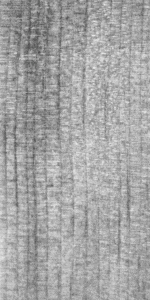
Radial Section, life size. 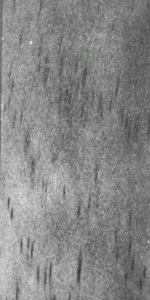
Tangential Section, life size.
Norway Pine. Red Pine.
Red refers to color of bark.
Pinus resinosa Solander.
Pinus, the classical Latin name; resinosa refers to very resinous wood.
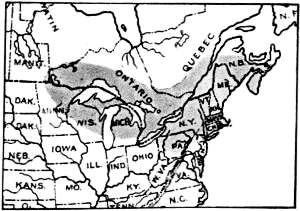
Habitat. Habitat: (See map);
grows best in northern
Michigan, Wisconsin, and
Minnesota.
Characteristics of the
Tree: Height, 70'-90';
diameter, 2'-3'; tall,
straight; branches in
whorls, low; bark, thin,
scaly, purplish and reddish-brown;
longitudinal
furrows, broad flat ridges;
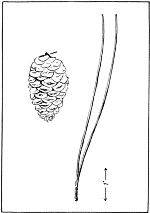
leaves, in twos in long
sheaths; cones, 2".
Appearance of Wood:
Color of wood, pale red,
sap-wood, wide, whitish;
non-porous; rings summer
wood broad, dark;
grain, straight; rays, numerous,
pronounced, thin;
very resinous, but ducts
small and few.
Leaf. Physical Qualities:
Weight, light, (43d in this
list); 31 lbs. per cu. ft.; sp. gr. 0.4854;
strong (39th in this list); elastic (16th
in this list); soft (48th in this list);
shrinkage, 3 per cent.; warps moderately;
not durable; easy to work; splits
readily, nails well.
Common Uses: Piles, electric wire
poles, masts, flooring.
Remarks: Often sold with and as
white pine. Resembles Scotch pine
(Pinus sylvestris). Bark used to some
extent for tanning. Grows in open
groves.
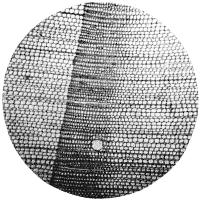
Cross-section, magnified 37½ diameters. 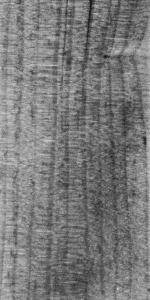
Radial Section, life size. 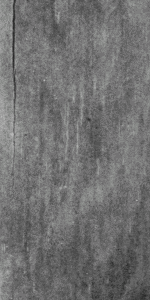
Tangential Section, life size.
Western Yellow Pine. Bull Pine.
Bull refers to great size of trunk.
Pinus ponderosa Lawson.
Pinus, the classical Latin name; ponderosa refers to great size of trunk.
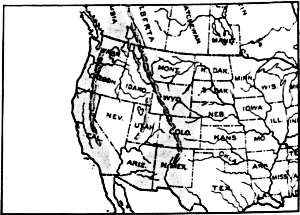
Habitat. Habitat: (See map);
best in Rocky Mountains.
Characteristics of the
Tree: Height, 100' to
300'; diameter, 6' to even
12'; branches, low, short
trunk; bark, thick, dark
brown, deep, meandering
furrows, large, irregular
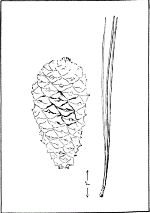
plates, scaly; leaves, in
twos or threes, 5" to 11"
long; cones 3" to 6" long.
Appearance of Wood:
Color, light red, sap-wood,
thick, nearly white, and
very distinct; non-porous;
rings, conspicuous; grain,
straight; rays, numerous,
obscure; very resinous but
ducts small.
Leaf. Physical Qualities:
Weight, light (44th in
this list); 25-30 lbs. per
cu. ft.; sp. gr. 0.4715;
strength, medium (45th
in this list); elasticity, medium (41st in
this list); hardness, medium (42nd in
this list); shrinkage, 4 per cent.; warps
...........; not durable; hard to work,
brittle; splits easily in nailing.
Common Uses: Lumber, railway ties,
mine timbers.
Remarks: Forms extensive open forests.
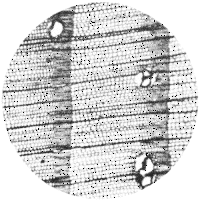
Cross-section, magnified 37½ diameters. 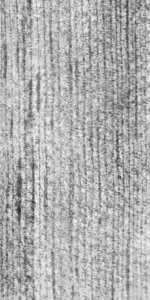
Radial Section, life size. 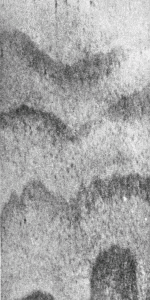
Tangential Section, life size.
Long-Leaf Pine. Georgia Pine.
Pinus palustris Miller.
Pinus, the classical Latin name; palustris means swampy, inappropriate
here.
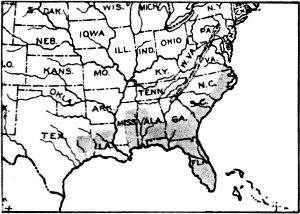
Habitat. Habitat: (See map);
best in Louisiana and East
Texas.
Characteristics of the
Tree: Height, 80'-100';
diameter, 2'-3'; trunk,
straight, clean, branches
high; bark, light brown,
large, thin, irregular papery
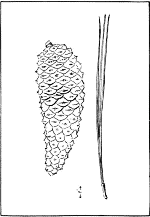
scales; leaves 8"-12"
long, 3 in a sheath; cones
6"-10" long.
Appearance of Wood:
Heart-wood, spring wood
light yellow, summer
wood, red brown; sap
wood, lighter; non-porous;
rings, very plain and
strongly marked; grain,
straight; rays, numerous,
conspicuous; very resinous,
but resin ducts few
and not large.
Leaf. Physical Qualities:
Heavy (18th in this list);
38 lbs. per cu. ft.; sp. gr.
0.6999; very strong (7th in this list);
very elastic (4th in this list); hardness,
medium (33d in this list); shrinkage,
4 per cent.; warps very little; quite
durable; works hard, tough; splits
badly in nailing.
Common Uses: Joists, beams, bridge
and building trusses, interior finish, ship
building, and general construction work.
Remarks: Almost exclusively the
source of turpentine, tar, pitch and resin
in the United States. Known in the
English market as pitch pine.
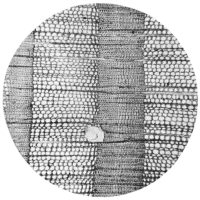
Cross-section, magnified 37½ diameters. 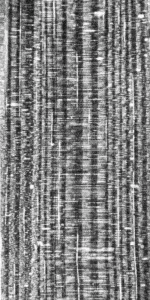
Radial Section, life size. 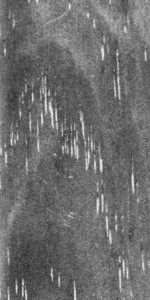
Tangential Section, life size.
Short-Leaf Pine. Yellow Pine.
Pinus echinata Miller.
Pinus, the classical Latin name; echinata refers to spiny cones.
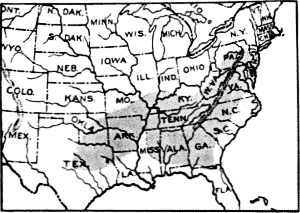
Habitat. Habitat: (See map);
best in lower Mississippi
basin.
Characteristics of the
Tree: Straight, tall trunk,
sometimes 100' high;
branches high; diameter
2'-4'; bark, pale grayish
red-brown, fissures, running
helter-skelter, making
large irregular plates,
covered with small scales;
leaves in twos, 3" long;
cones small.
Appearance of Wood:
Color, heartwood, summer
wood, red, spring-wood,
yellow; sap-wood,
lighter; non-porous; annual
rings very plain,
sharp contrast between
spring and summer wood;
grain, straight, coarse;
rays, numerous, conspicuous;
very resinous, ducts
large and many.
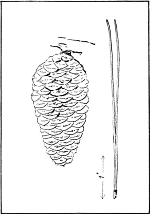
Leaf. Physical Qualities: Weight, medium
(32nd in this list); 32 lbs. per cu. ft.;
sp. gr., 0.6104; very strong (18th in
this list); very elastic (8th in this list);
soft (38th in this list); shrinkage, 4
per cent.; warps little; durable; troublesome
to work; likely to split along annual
rings in nailing.
Common Uses: Heavy construction,
railroad ties, house trim, ship building,
cars, docks, bridges.
Remarks: Wood hardly distinguishable
from long-leaf pine. Often forms
pure forests. The most desirable yellow
pine, much less resinous and more easily
worked than others.
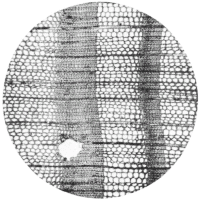
Cross-section, magnified 37½ diameters. 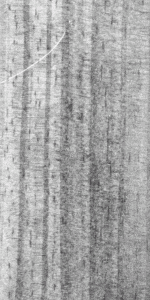
Radial Section, life size. 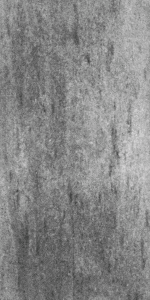
Tangential Section, life size.
Loblolly Pine. Old Field Pine.
Loblolly may refer to the inferiority of the wood; old field refers to
habit of spontaneous growth on old fields.
Pinus taeda Linnaeus.
Pinus, the classical Latin name; taeda, the classical Latin name for
pitch-pine, which was used for torches.
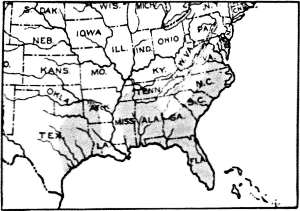
Habitat. Habitat: (See map);
grows best in eastern Virginia,
and eastern North
Carolina.
Characteristics of the
Tree: Height, 100'-150';
diameter, often 4'-5';
branches high; bark,
purplish brown, shallow,
meandering fissures, broad,
flat, scaly ridges; leaves,
3 in sheath, 4"-7" long;
cones 3"-5" long.
Appearance of Wood:
Color, heart-wood orange,
sap-wood lighter; non-porous;
rings very plain,
sharp contrast between
spring wood and summer
wood; grain, straight,
coarse; rays conspicuous;
very resinous, but ducts
few and small.
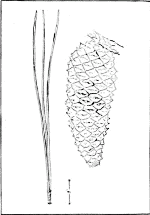
Leaf. Physical Qualities:
Weight, medium (39th in
this list); 33 lbs. per cu. ft.; sp. gr.
0.5441; strong (26th in this list); elastic
(17th in this list); medium hard
(43d in this list); shrinkage, 4 per
cent.; warps little; not durable; difficult
to work, brittle; splits along rings
in nailing.
Common Uses: Heavy construction,
beams, ship building, docks, bridges,
flooring, house trim.
Remarks: Resembles Long-leaf Pine,
and often sold as such. Rarely makes
pure forests.
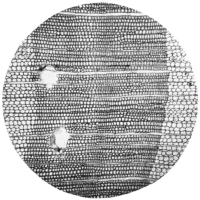
Cross-section, magnified 37½ diameters. 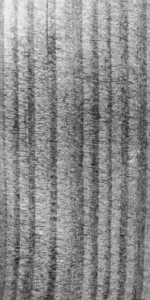
Radial Section, life size. 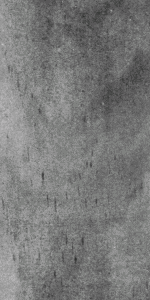
Tangential Section, life size.
Slash Pine. Cuban Pine.
Pinus caribaea Morelet. Pinus heterophylla (Ell.) Sudworth.
Pinus, the classical Latin name; caribaea refers to the Caribbean Islands;
heterophylla refers to two kinds of leaves.
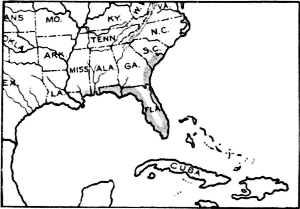
Habitat. Habitat: (See map);
grows best in Alabama,
Mississippi, and Louisiana.
Characteristics of the
Tree: Height, sometimes
110', straight, tall, branching
high; diameter 1'-3';
bark, dark red and brown,
shallow irregular fissures;
leaves, 2 or 3 in a sheath,
8"-12" long; cones, 4"-5"
long.
Appearance of Wood:
Color, dark orange, sapwood
lighter; non-porous;
annual rings, plain,
sharp contrast between
spring wood and summer
wood; grain, straight;
rays numerous, rather
prominent; very resinous,
but ducts few.
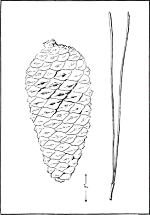
Leaf. Physical Qualities:
Heavy (7th in this list);
39 lbs. per cu. ft.; sp. gr. 0.7504; very
strong (6th in this list); very elastic
(3d in this list); hard (24th in this
list); shrinkage, 4 per cent.; warps little;
quite durable; troublesome to work;
splits along annual rings in nailing.
Common Uses: Heavy construction,
ship building, railroad ties, docks,
bridges, house trim.
Remarks: Similar to and often sold
as Long-leaf Pine.
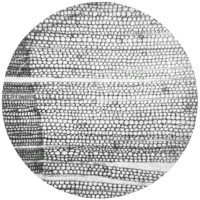
Cross-section, magnified 37½ diameters. 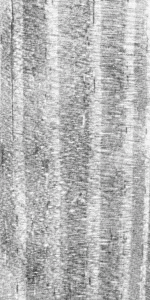
Radial Section, life size. 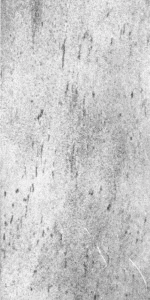
Tangential Section, life size.
Tamarack. Larch. Hackmatack.
Larix laricina (Du Roi) Koch. Larix americana Michaux.
Larix, the classical Latin name.
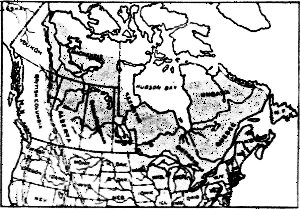
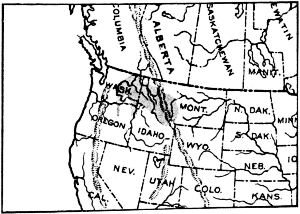
Habitat. Habitat: (See map);
prefers swamps, "Tamarack
swamps."
Characteristics of the
Tree: Height, 50'-60'
and even 90', diameter 1'-3';
intolerant; tall, slender
trunk; bark, cinnamon
brown, no ridges,
breaking into flakes;
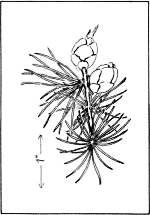
leaves, deciduous, pea-green,
in tufts; cone, ½"-¾",
bright brown.
Appearance of Wood:
Color, light brown, sapwood
hardly distinguishable;
non-porous; rings,
summer wood, thin but
distinct, dark colored;
grain, straight, coarse;
rays, numerous, hardly
distinguishable; very resinous,
but ducts few and
small.
Leaf. Physical Qualities:
Weight, medium (29th in
this list); 39 lbs. per cu. ft.; sp. gr.
0.6236; strong (24th in this list); elastic
(11th in this list); medium hard
(40th in this list); shrinkage, 3 per
cent.; warps ........; very durable;
easy to work; splits easily.
Common Uses: Ship building, electric
wire poles, and railroad ties; used
for boat ribs because of its naturally
crooked knees; slenderness prevents common
use as lumber.
Remarks: Tree desolate looking in
winter.
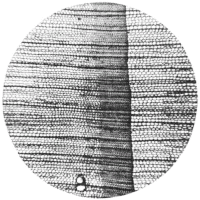
Cross-section, magnified 37½ diameters. 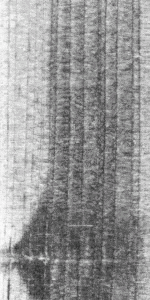
Radial Section, life size. 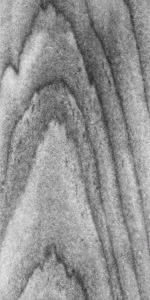
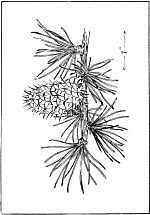
Tangential Section, life size.
Western Larch. Tamarack.
Larix occidentalis Nuttall.
Larix, the classical Latin name; occidentalis means western.
Habitat. Habitat: (See map);
best in northern Montana
and Idaho, on high elevations.
Characteristics of the
Tree: Height, 90'-130',
even 250'; diameter 6'-8';
tall, slender, naked trunk,
with branches high; bark,
cinnamon red or purplish,
often 12" thick, breaking
into irregular plates, often
2' long; leaves, in tufts;
deciduous; cones small.
Appearance of Wood:
Color, light red, thin,
whitish, sap-wood; non-porous;
grain, straight,
fine; rays numerous, thin;
very resinous, but ducts
small and obscure.
Leaf. Physical Qualities:
Weight, heavy (11th in
this list); 46 lbs. per cu.
ft.; sp. gr. 0.7407; very
strong (3d in this list); very elastic
(1st in this list); medium hard (35th
in this list); shrinkage, 4 per cent.;
warps .........; very durable; rather
hard to work, takes fine polish; splits
with difficulty.
Common Uses: Posts, railroad ties,
fencing, cabinet material and fuel.
Remarks: A valuable tree in the
Northwest.
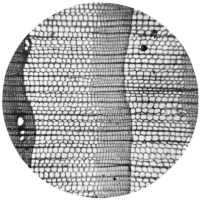
Cross-section, magnified 37½ diameters. 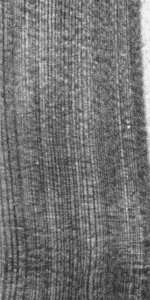
Radial Section, life size. 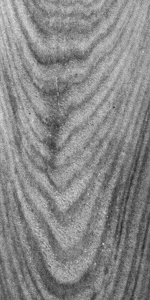
Tangential Section, life size.
White Spruce.
Picea canadensis (Miller) B. S. P. Picea alba Link.
Picea, the classical Latin name; white and alba refers to the pale color
of the leaves, especially when young, and to the whitish bark.
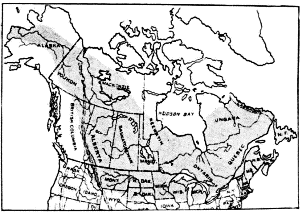
Habitat. Habitat: (See map).
Characteristics of the
Tree: Height, 60'-100'
and even 150'; diameter,
1'-2' and even 4'; long,
thick branches; bark,
light grayish brown, separating
into thin plate-like
scales, rather smooth appearance,
resin from cuts
forms white gum; leaves,
set thickly on all sides of
branch, finer than red
spruce, odor disagreeable;
cones, 2" long, cylindrical,
slender, fall during second
summer.
Appearance of Wood:
Color, light yellow, sap-wood,
hardly distinguishable;
non-porous; rings,
wide, summer wood thin,
not conspicuous; grain,
straight; rays, numerous,
prominent; resin ducts,
few and minute.
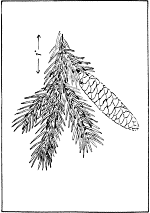
Leaf. Physical Qualities: Weight, light
(51st in this list); 25 lbs. per cu. ft.; sp.
gr., 0.4051; medium strong (42d in this
list); elastic (29th in this list); soft
(58th in this list); shrinks 3 per cent.;
warps ........; fairly durable; easy to
work, satiny surface; splits readily.
Common Uses: Lumber and paper
pulp; (not distinguished from Red and
Black Spruce in market).
Remarks: Wood very resonant, hence
used for sounding boards. The most important
lumber tree of the sub-arctic
forest of British Columbia.
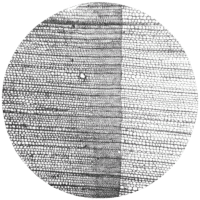
Cross-section, magnified 37½ diameters. 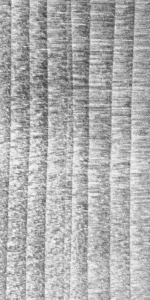
Radial Section, life size. 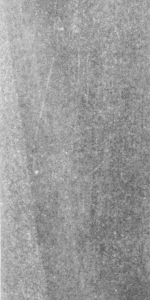
Tangential Section, life size.
Red Spruce.*
Picea rubens Sargent.
Picea, the classical Latin name for the pitch pine; rubens refers to reddish
bark, and perhaps to the reddish streaks in the wood.
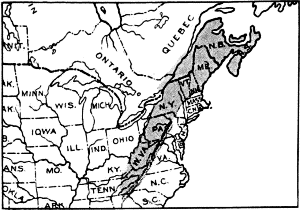
Habitat. Habitat: (See map);
stunted in north.
Characteristics of the
Tree: Height, 70'-80',
even 100'; diameter, 2'-3',
grows slowly; trunk,
straight, columnar,
branches in whorls, cleans
well in forest; bark, reddish
brown with thin irregular
scales; leaves,
needle-shaped, four-sided,
pointing everywhere;
cones, 1¼"-2" long, pendent,
fall during the first
winter.
Appearance of Wood:
Color, dull white with occasional
reddish streaks;
sap-wood not distinct;
non-porous; rings, summer
rings thin, but clearly
defined; grain, straight;
rays, faintly discernible;
resin ducts, few and small.
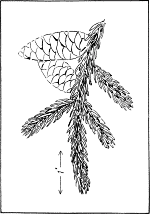
Leaf. Physical Qualities: Weight, light
(47th in this list); 28 lbs. per cu. ft.;
sp. gr., 0.4584; medium strong (41st in
this list); elastic (21st in this list);
soft (54th in this list); shrinkage, 3
per cent.; warps little; not durable; easy
to plane, tolerably easy to saw, hard to
chisel neatly; splits easily in nailing.
Common Uses: Sounding boards,
construction, paper pulp, ladders.
Remarks: The exudations from this
species are used as chewing gum. Bark
of twigs is used in the domestic manufacture
of beer. The use of the wood for
sounding boards is due to its resonance,
and for ladders to its strength and
lightness.
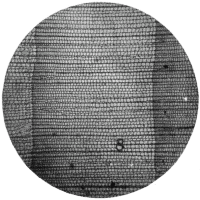
Cross-section, magnified 37½ diameters. 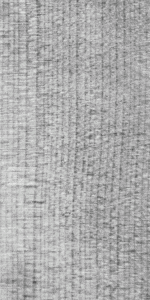
Radial Section, life size. 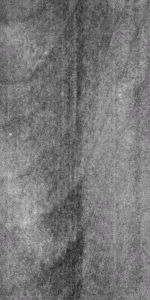
Tangential Section, life size.
* Not distinguished in the Jesup collection from Picea nigra.
Black Spruce.*
Picea mariana (Miller) B. S. P. Picea nigra Link.
Picea, the classical Latin name for the pitch pine; mariana named for
Queen Mary; black and nigra refer to dark foliage.
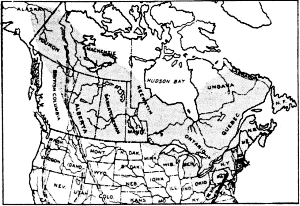
Habitat. Habitat: (See map);
best in Canada.
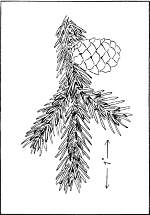
Characteristics of the
Tree: Height, 50'-80'
and even 100'; diameter,
6"-1' even 2'; branches,
whorled, pendulous with
upward curve; bark,
gray, loosely attached
flakes; leaves, pale blue-green,
spirally set, pointing
in all directions;
cones, small, ovate-oblong,
persistent for many
years.
Appearance of Wood:
Color, pale, reddish, sap-wood,
thin, white, not
very distinct; non-porous;
rings, summer wood,
small thin cells; grain,
straight; rays, few, conspicuous;
resin ducts, few
and minute.
Leaf. Physical Qualities:
Weight, light (47th in
this list); 33 lbs. per cu. ft.; sp. gr.,
0.4584; medium strong (41st in this
list); elastic (21st in this list); soft
(54th in this list); shrinkage, 3 per
cent.; warps little; not durable; easy
to work; splits easily in nailing.
Common Uses: Sounding boards,
lumber in Manitoba.
Remarks: Not distinguished from
Red Spruce commercially.
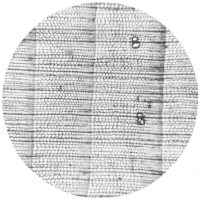
Cross-section, magnified 37½ diameters. 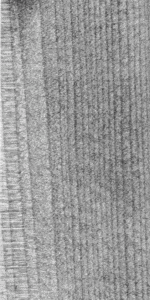
Radial Section, life size. 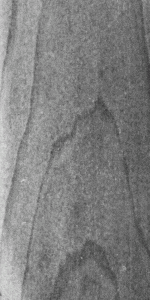
Tangential Section, life size.
* Not distinguished in Jesup Collection from Picea rubens.
White Spruce. Engelmann's Spruce.
Picea engelmanni (Parry) Engelmann.
Named for George Engelmann, an American botanist.
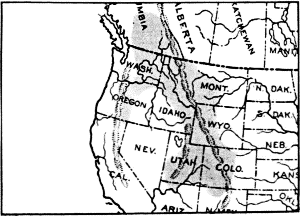
Habitat. Habitat: (See map);
grows at very high elevations,
forming forest at
8,000'-10,000'; best in
British Columbia.
Characteristics of the
Tree: Height, 75'-100',
even 150'; diameter, 2'-3',
even 5'; branches whorled,
spreading; bark, deeply
furrowed, red-brown to
purplish brown, thin,
large, loose scales; leaves,
blue-green, point in all
directions; cones, 2"
long, oblong, cylindrical.
Appearance of Wood:
Color, pale yellow or reddish,
sap-wood hardly distinguishable;
non-porous;
rings, very fine, summer
wood, narrow, not conspicuous;
grain, straight,
close; rays, numerous,
conspicuous; resin ducts,
small and few.
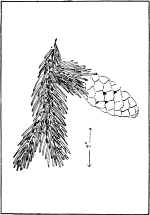
Leaf. Physical Qualities: Weight, very
light (57th in this list); 22 lbs. per
cu. ft.; sp. gr. 0.3449; weak (61st in
this list); elasticity medium (55th in
this list); soft (56th in this list);
shrinkage, 3 per cent.; warps .........;
durable; easy to work; splits easily.
Common Uses: Lumber.
Remarks: A valuable lumber tree
in the Rocky Mountains and the Cascades.
Bark used for tanning.
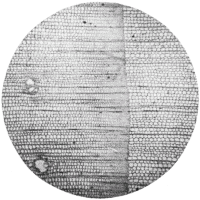
Cross-section, magnified 37½ diameters. 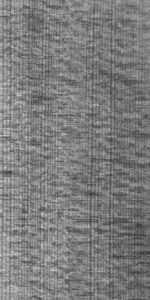
Radial Section, life size. 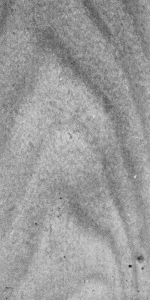
Tangential Section, life size.
Tideland Spruce. Sitka Spruce.
Picea sitchensis (Bongard) Carrière.
Picea, the classical Latin name for the pitch pine. Tideland refers to
its habit of growth along the sea coast; sitchensis, named for Sitka.
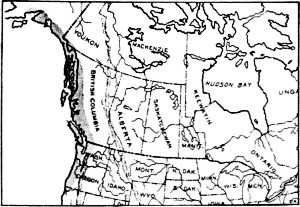
Habitat. Habitat: (See map);
best on Pacific slope of
British Columbia and
northwestern United
States.
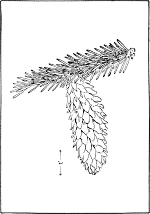
Characteristics of the
Tree: Height, 100'-150'
and even 200' high; diameter
3'-4' and even 15';
trunk base enlarged; bark,
thick, red-brown, scaly;
leaves, standing out in
all directions; cones,
2½"-4" long, pendent,
cylindrical, oval.
Appearance of Wood:
Color, light brown, sap-wood
whitish; non-porous;
rings, wide, summer
wood, thin but very
distinct, spring wood, not
plain; grain, straight,
coarse; rays, numerous,
rather prominent; resin
ducts, few and small.
Leaf. Physical Qualities: Weight, light
(52d in this list); 27 lbs. per cu. ft.;
sp. gr. 0.4287; medium strong (53d in
this list); elastic (31st in this list);
soft (59th in this list); shrinkage, 3
per cent.; warps ...........; durable;
easy to work; splits easily.
Common Uses: Interior finish, boat
building and cooperage.
Remarks: Largest of the spruces.
Common in the coast belt forest.
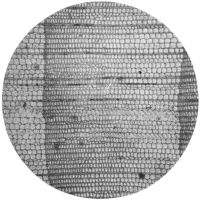
Cross-section, magnified 37½ diameters. 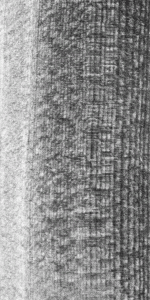
Radial Section, life size. 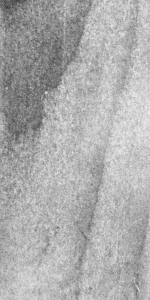
Tangential Section, life size.
Hemlock.
Tsuga canadensis (Linnaeus) Carrière.
Tsuga, the Japanese name latinized; canadensis named for Canada.
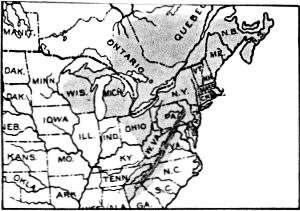
Habitat. Habitat: (See map);
best in North Carolina
and Tennessee.
Characteristics of the
Tree: Height, 60'-70',
sometimes 100'; diameter,
2'-3'; branches, persistent,
making trunk not
very clean; bark, red-gray,
narrow, rounded ridges,
deeply and irregularly
fissured; leaves, spirally
arranged, but appear two-ranked;
cones, ¾" long,
graceful.
Appearance of Wood:
Color, reddish brown, sap-wood
just distinguishable;
non-porous; rings, rather
broad, conspicuous; grain,
crooked; rays, numerous,
thin; non-resinous.
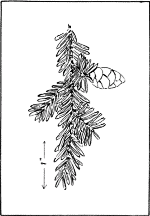
Leaf. Physical Qualities:
Weight, light (53d in
this list); 26 lbs. per cu.
ft.; sp. gr. 0.4239; medium strong (44th
in this list); elasticity, medium (40th
in this list); soft (51st in this list);
shrinkage, 3 per cent.; warps and checks
badly; not durable; difficult to work,
splintery, brittle; splits easily, holds
nails well.
Common Uses: Coarse, cheap lumber,
as joists, rafters, plank walks and
laths.
Remarks: The poorest lumber. Bark
chief source of tanning material.
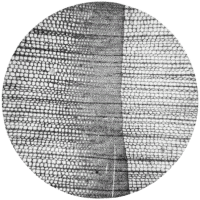
Cross-section, magnified 37½ diameters. 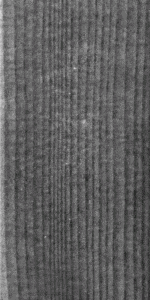
Radial Section, life size. 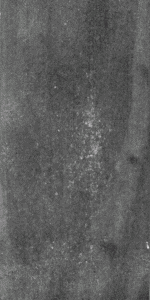
Tangential Section, life size.
Western Hemlock. Black Hemlock.
Tsuga heterophylla (Rafinesque) Sargent.
Tsuga, the Japanese name latinized; heterophylla refers to two kinds
of leaves.
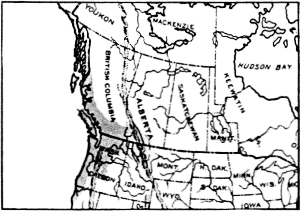
Habitat. Habitat: (See map);
best on coast of Washington
and Oregon.
Characteristics of the
Tree: Height, 150'-200';
diameter, 6'-10'; branches,
pendent, slender; bark,
reddish gray, deep, longitudinal
fissures between,
broad, oblique, flat ridges;
leaves, dark green, two-ranked;
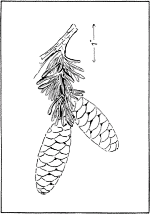
cones, small, like
Eastern Hemlock.
Appearance of Wood:
Color, pale brown, sap-wood
thin, whitish; non-porous;
rings, narrow,
summer wood thin but
distinct; grain, straight,
close; rays, numerous,
prominent; non-resinous.
Leaf. Physical Qualities:
Light in weight, strong,
elastic, hard;* shrinkage,
3 per cent.; warps ..........; durable,
more so than other American hemlocks;
easier to work than eastern variety;
splits badly.
Common Uses: Lumber for construction.
Remarks: Coming to be recognized
as a valuable lumber tree.
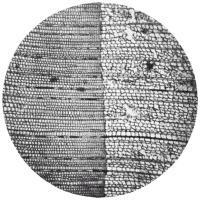
Cross-section, magnified 37½ diameters. 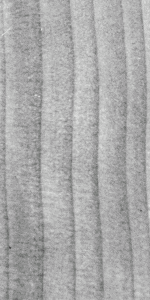
Radial Section, life size. 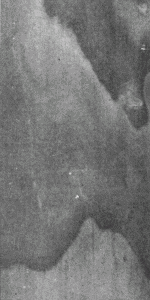
Tangential Section, life size.
* Not in Jesup Collection.
Douglas Spruce. Oregon Pine. Red Fir. Douglas Fir.
Pseudotsuga mucronata (Rafinesque) Sudworth.
Pseudotsuga taxifolia (Lambert) Britton.
Pseudotsuga means false hemlock; mucronata refers to abrupt short
point of leaf; taxifolia means yew leaf.
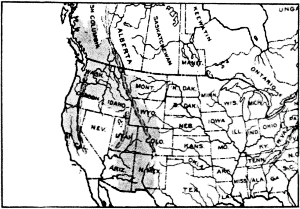
Habitat. Habitat: (See map);
best in Puget Sound region.
Characteristics of the
Tree: Height, 175'-300';
diameter, 3'-5', sometimes
10'; branches high, leaving
clean trunk; bark,
rough, gray, great broad-rounded
ridges, often appears
braided; leaves, radiating
from stem; cones,
2"-4" long.
Appearance of Wood: Color, light red to yellow,
sap-wood white; non-porous;
rings, dark colored,
conspicuous, very pronounced
summer wood;
grain, straight, coarse;
rays, numerous, obscure;
resinous.
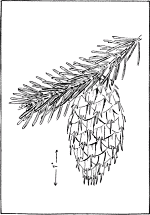
Leaf. Physical Qualities:
Weight, medium (41st in
this list); 32 lbs. per cu.
ft, sp. gr. 0.5157; strong (21st in this
list); very elastic (10th in this list);
medium hard (45th in this list); shrinkage,
3 per cent. or 4 per cent.;, warps
...............; durable; difficult to work,
flinty, splits readily.
Common Uses: Heavy construction,
masts, flag poles, piles, railway ties.
Remarks: One of the greatest and
the most valuable of the western timber
trees. Forms extensive forests.
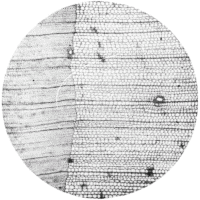
Cross-section, magnified 37½ diameters. 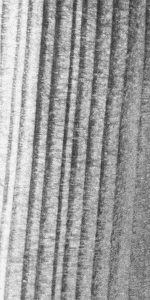
Radial Section, life size. 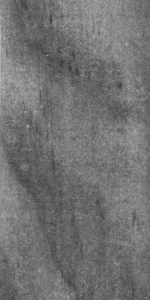
Tangential Section, life size.
Grand Fir. White Fir. Lowland Fir. Silver Fir.
Abies grandis Lindley.
Abies, the classical Latin name.
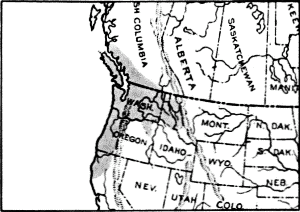
Habitat. Habitat: (See map);
best in Puget Sound region.
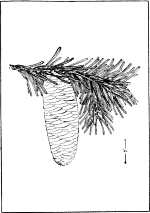
Characteristics of the
Tree: Height, in interior
100'; diameter, 2'; on
coast, 250'-300' high; diameter,
2'-5'; long pendulous
branches; bark,
quite gray or gray brown,
shallow fissures, flat
ridges; leaves, shiny
green above, silvery below,
1½"-2" long, roughly
two-ranked; cones, cylindrical,
2"-4" long.
Appearance of Wood:
Color, light brown, sap-wood
lighter; non-porous;
rings, summer cells
broader than in other
American species, dark
colored, conspicuous; grain
straight, coarse; rays, numerous,
obscure; resinous.
Leaf. Physical Qualities: Very light (62d
in this list); 22 lbs. per cu. ft.; sp. gr.,
0.3545; weak (62d in this list); elastic
(34th in this list); soft (65th in
this list); shrinkage, 3 per cent.; warps
little; not durable; works easily; splits
readily.
Common Uses: Lumber and packing
cases.
Remarks: No resin ducts. Not a
very valuable wood.
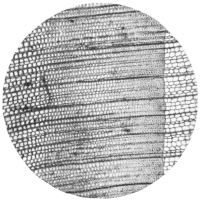
Cross-section, magnified 37½ diameters. 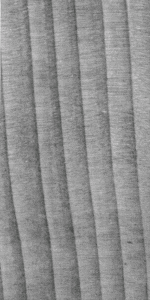
Radial Section, life size. 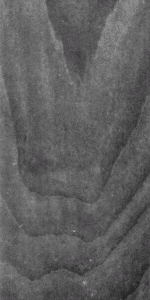
Tangential Section, life size.
Big Tree. Sequoia. Giant Sequoia.
Sequoia washingtoniana (Winslow) Sudworth. Sequoia gigantea,
Decaisne.
Sequoia latinized from Sequoiah, a Cherokee Indian; washingtoniana, in
honor of George Washington.
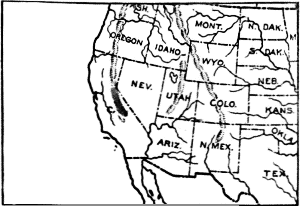
Habitat. Habitat: (See map);
in ten groves in southern
California, at high elevation.
Characteristics of the
Tree: Height, 275',
sometimes 320'; diameter,
20', sometimes 35';
trunk, swollen and often
buttressed at base, ridged,
often clear for 150'; thick
horizontal branches; bark,
1'-2' thick, in great ridges,
separates into loose,
fibrous, cinnamon red
scales, almost non-combustible;
leaves, very
small, growing close to
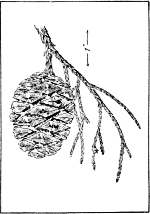
stem; cones, 2"-3" long.
Appearance of Wood:
Color, red, turning dark
on exposure, sap-wood
thin, whitish; non-porous;
rings, very plain;
grain straight, coarse;
rays, numerous, thin;
non-resinous.
Leaf. Physical Qualities: Light (65th in
this list); 18 lbs. per cu. ft.; sp. gr.,
0.2882; weak (63d in this list); brittle
(62d in this list); very soft (61st
in this list); shrinks little; warps little;
remarkably durable; easy to work,
splits readily, takes nails well.
Common Uses: Construction, lumber,
coffins, shingles.
Remarks: Dimensions and age are
unequalled; Big Tree and Redwood
survivors of a prehistoric genus, once
widely distributed. Some specimens
3600 years old.
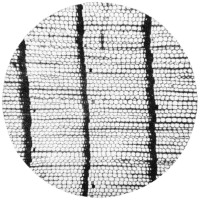
Cross-section, magnified 37½ diameters. 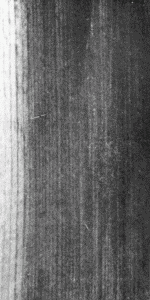
Radial Section, life size. 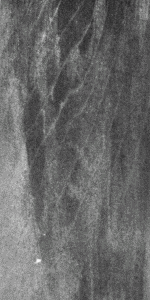
Tangential Section, life size.
Redwood. Coast Redwood. Sequoia.
Sequoia sempervirens (Lambert) Endlicher.
Sequoia, latinized from Sequoiah, a Cherokee Indian; sempervirens
means ever living.
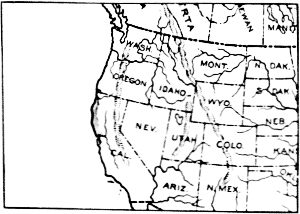
Habitat. Habitat: (See map);
best in southern Oregon
and northern California,
near coast.
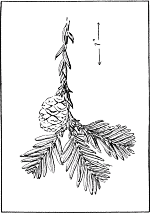
Characteristics of the
Tree: Height, 200'-340';
diameter, 10'-15', rarely
25'; clean trunk, much
buttressed and swollen at
base, somewhat fluted,
branches very high; bark,
very thick, 6"-12", rounded
ridges, dark scales
falling reveal inner red
bark; leaves, small, two-ranked;
cones, small, 1"
long.
Appearance of Wood:
Color, red, turning to
brown on seasoning, sap-wood
whitish; non-porous;
rings, distinct;
grain, straight; rays, numerous,
very obscure; non-resinous.
Leaf. Physical Qualities: Light in weight
(55th in this list); 26 lbs. per cu. ft.;
sp. gr. 0.4208; weak (58th in this list);
brittle (60th in this list); soft (55th
in this list); shrinks little; warps little;
very durable; easily worked; splits
readily; takes nails well.
Common Uses: Shingles, construction,
timber, fence posts, coffins, railway
ties, water pipes, curly specimens
used in cabinet work.
Remarks: Low branches rare. Burns
with difficulty. Chief construction wood
of Pacific Coast. Use determined
largely by durability.
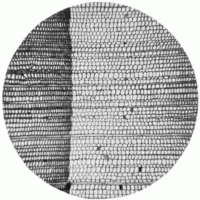
Cross-section, magnified 37½ diameters. 
Radial Section, life size. 
Tangential Section, life size.
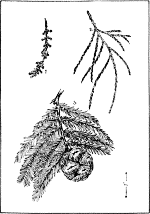
Bald Cypress.
Bald refers to leaflessness of tree in winter.
Taxodium distichum (Linnaeus) L. C. Richard.
Taxodium means yew-like; distichum refers to the two-ranked leaves.
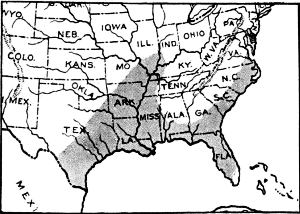
Habitat. Habitat: (See map);
best in South Atlantic
and Gulf States.
Characteristics of the
Tree: Height, 75', occasionally
150'; diameter,
4'-5'; roots project
upward into peculiar
knees; trunk strongly
buttressed at base,
straight, majestic and
tapering; bark, light red,
shallow fissures, flat
plates, peeling into
fibrous strips; leaves,
long, thin, two-ranked,
deciduous; cones, nearly
globular, 1" in diameter.
Appearance of Wood:
Color, heart-wood, reddish
brown, sap-wood,
nearly white; non-porous;
rings, fine and well
marked; grain, nearly
straight, burl is beautifully
figured; rays, very
obscure; non-resinous.
Leaf. Physical Qualities: Light in weight
(48th in this list); 29 lbs. per cu. ft.;
sp. gr. 0.4543; medium strong (48th in
this list); elastic (28th in this list);
soft (52d in this list); shrinkage, 3
per cent.; warps but little, likely to
check; very durable; easy to work, in
splitting, crumbles or breaks; nails well.
Common Uses: Shingles, posts, interior
finish, cooperage, railroad ties,
boats, and various construction work,
especially conservatories.
Remarks: Forms forests in swamps;
subject to a fungous disease, making
wood "peggy" or "pecky"; use largely
determined by its durability. In New
Orleans 90,000 fresh water cisterns are
said to be made of it.
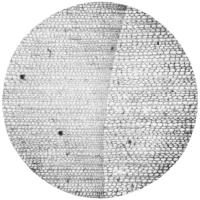
Cross-section, magnified 37½ diameters. 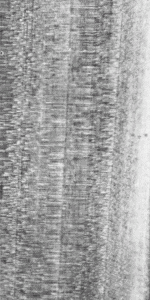
Radial Section, life size. 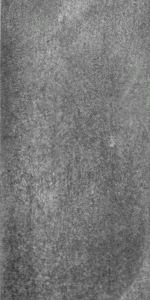
Tangential Section, life size.
Western Red Cedar. Canoe Cedar. Giant Arborvitae.
Thuja plicata D. Don. Thuya gigantea Nuttall.
Thuya or Thuja, the classical Greek name; plicata refers to the folded
leaves; gigantea refers to the gigantic size of the tree.
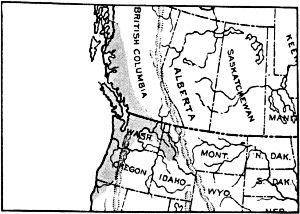
Habitat. Habitat: (See map);
best in Puget Sound region.
Characteristics of the
Tree: Height, 100'-200';
diameter, 2'-10', even 15';
trunk has immense buttresses,
often 16' in diameter,
then tapers;
branches, horizontal,
short, making a dense
conical tree; bark, bright
cinnamon red, shallow
fissures, broad ridges,
peeling into long, narrow,
stringy scales;
leaves, very small, overlapping
in 4 ranks, on
older twigs, sharper and
more remote; cones, ½"
long, small, erect.
Appearance of Wood:
Color, dull brown or red,
thin sap-wood nearly
white; non-porous; rings,
summer bands thin, dark colored, distinct;
grain, straight, rather coarse;
rays, numerous, obscure; non-resinous.
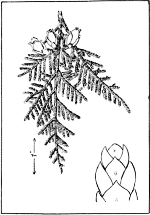
Leaf. Physical Qualities: Very light in
weight (60th in this list); medium
strong (40th in this list); elastic (26th
in this list); soft (60th in this list);
shrinkage, 3 per cent.; warps and checks
little; very durable; easy to work; splits
easily.
Common Uses: Interior finish, cabinet
making, cooperage, shingles, electric
wire poles.
Remarks: Wood used by Indians
for war canoes, totems and planks for
lodges; inner bark used for ropes and
textiles.
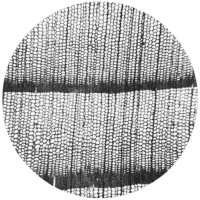
Cross-section, magnified 37½ diameters. 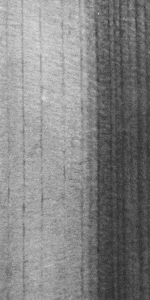
Radial Section, life size. 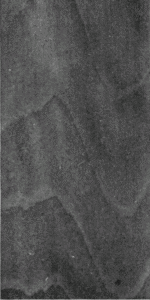
Tangential Section, life size.
White Cedar.
Chamaecyparis thyoides (Linnaeus) B. S. P.
Chamaecyparis means low cypress; thyoides means like thuya (Aborvitae).
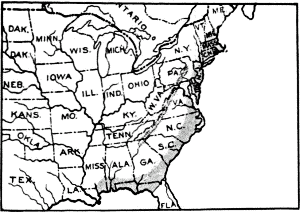
Habitat. Habitat: (See map);
best in Virginia and
North Carolina.
Characteristics of the
Tree: Height, 60'-80';
diameter, 2'-4'; branches,
low, often forming impenetrable
thickets; bark,
light reddish brown,
many fine longitudinal
fissures, often spirally
twisted around stem;
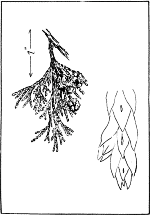
leaves, scale-like, four-ranked;
cones, globular,
¼" diameter.
Appearance of Wood:
Color, pink to brown,
sap-wood lighter; non-porous;
rings, sharp and
distinct; grain, straight;
rays, numerous, obscure;
non-resinous.
Leaf. Physical Qualities:
Very light in weight
(64th in this list); 23
lbs. per cu. ft.; sp. gr. 0.3322); weak
(64th in this list); brittle (63d in this
list; soft (62d in this list); shrinkage
3 per cent.; warps little; extremely durable;
easily worked; splits easily; nails
well.
Common Uses: Boats, shingles, posts,
railway ties, cooperage.
Remarks: Grows chiefly in swamps,
often in dense pure forests. Uses determined
largely by its durability.
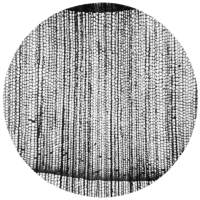
Cross-section, magnified 37½ diameters. 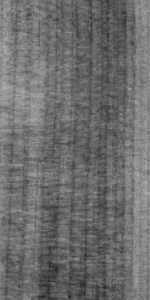
Radial Section, life size. 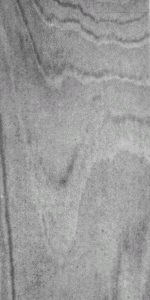
Tangential Section, life size.
Lawson Cypress. Port Orford Cedar. Oregon Cedar.
White Cedar.
Chamaecyparis lawsoniana (A. Murray) Parlatore.
Chamaecyparis means low cypress.
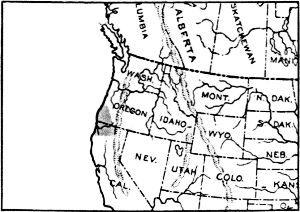
Habitat. Habitat: (See map);
best on coast of Oregon.
Characteristics of the
Tree: Height, 100'-200';
diameter, 4'-8', even 12';
base of trunk abruptly
enlarged; bark, very
thick, even 10" at base
of trunk, inner and outer
layers distinct, very deep
fissures, rounded ridges;
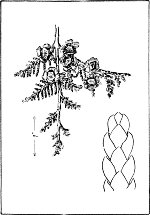
leaves, very small, 1/16"
long, four-ranked, overlapped,
flat sprays; cones,
small, ¼", globular.
Appearance of Wood:
Color, pinkish brown,
sap-wood hardly distinguishable;
non-porous;
rings, summer wood thin,
not conspicuous; grain,
straight, close; rays, numerous,
very obscure;
non-resinous.
Leaf. Physical Qualities:
Light in weight (46th in
this list); 28 lbs. per cu. ft.; sp. gr.
0.4621; strong (25th in this list); elastic
(12th in this list); soft (50th in
this list); shrinkage 3 or 4 per cent.;
warps little; durable; easily worked;
splits easily.
Common Uses: Matches (almost exclusively
on the Pacific Coast), interior
finish, ship and boat building.
Remarks: Resin, a powerful diuretic
and insecticide.
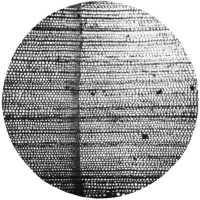
Cross-section, magnified 37½ diameters. 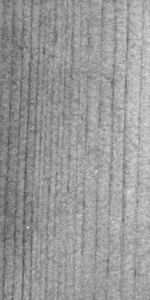
Radial Section, life size. 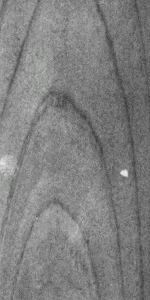
Tangential Section, life size.
Red Cedar.
Juniperus virginiana Linnaeus.
Juniperus, the classical Latin name; virginiana, in honor of the State
of Virginia.
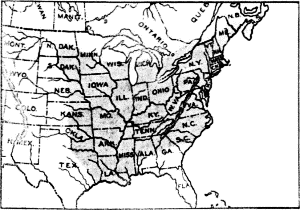
Habitat. Habitat: (See map);
best in Gulf States in
swamps, especially on the
west coast of Florida.
Characteristics of the
Tree: Height, 40'-50',
even 80'; diameter, 1'-2';
trunk, ridged, sometimes
expanded; branches, low;
bark, light brown, loose,
ragged, separating into
long, narrow, persistent,
stringy scales; leaves, opposite,
of two kinds, awl-shaped,
and scale-shaped;
fruit, dark blue berry.
Appearance of Wood:
Color, dull red, sap-wood
white; non-porous; rings,
easily distinguished;
grain, straight; rays, numerous,
very obscure;
non-resinous.
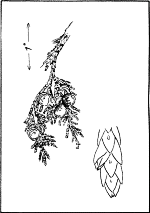
Leaf. Physical Qualities:
Very light in weight
(42d in this list); 30 lbs. per cu. ft.;
sp. gr. 0.4826; medium strong (43d in
this list); brittle (61st in this list);
medium hard (34th in this list); shrinkage,
3 per cent.; warps little; very durable;
easy to work; splits readily, takes
nails well.
Common Uses: Pencils, chests, cigar
boxes, pails, interior finish.
Remarks: Fragrant. Pencils are
made almost exclusively of this wood,
because it is light, strong, stiff, straight
and fine-grained and easily whittled;
supply being rapidly depleted.
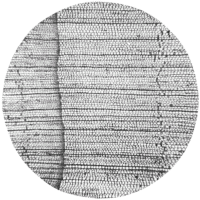
Cross-section, magnified 37½ diameters. 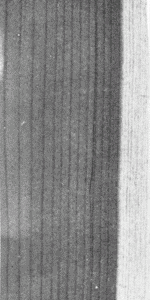
Radial Section, life size. 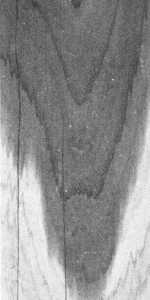
Tangential Section, life size.
Black Willow.
Salix nigra Marshall.
Salix, from two Celtic words meaning near-water; nigra refers to the
dark bark.
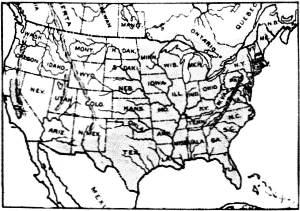
Habitat. Habitat: (See map);
grows largest in southern
Illinois, Indiana and
Texas, on moist banks.
Characteristics of the
Tree: Height, 30'-40',
sometimes 120'; diameter,
1'-2', rarely 3'-4';
stout, upright, spreading
branches, from common
base; bark, rough and
dark brown or black, often
tinged with yellow or
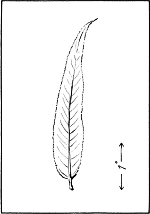
brown; leaves, lanceolate,
often scythe-shaped,
serrate edges; fruit, a
capsule containing small,
hairy seeds.
Appearance of Wood:
Color, light reddish
brown, sap-wood, thin,
whitish; diffuse-porous;
rings, obscure; grain,
close and weak; rays,
obscure.
Leaf. Physical Qualities: Light in weight
(51st in this list); 27.77 lbs. per cu. ft.;
sp. gr. 0.4456; weak (65th in this list);
very brittle (64th in this list); soft
(46th in this list); shrinks considerably;
warps and checks badly; soft, weak,
indents without breaking; splits easily.
Common Uses: Lap-boards, baskets,
water wheels, fuel and charcoal for gunpowder.
Remarks: Its characteristic of indenting
without breaking has given it
use as lining for carts and as cricket
bats. Of the many willows, the most
tree like in proportion in eastern North
America. Bark contains salycylic acid.
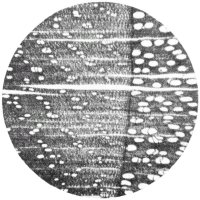
Cross-section, magnified 37½ diameters. 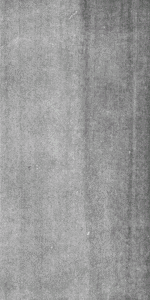
Radial Section, life size. 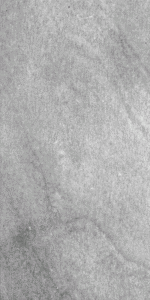
Tangential Section, life size.
Butternut. White Walnut.
Butternut, because the nuts are rich in oil.
Juglans cinerea Linnaeus.
Juglans means Jove's nut; cinerea refers to ash-colored bark.
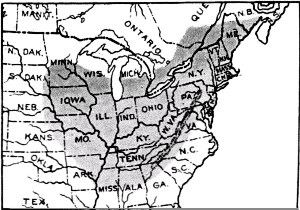
Habitat. Habitat:: (See map);
best in Ohio basin.
Characteristics of the
Tree: Height, 75'-100';
diameter, 2'-4'; branches
low, broad spreading
deep roots; bark, grayish
brown, deep fissures
broad ridges; leaves
15"-30" long, compound
11 to 17 leaflets, hairy
and rough; fruit, oblong,
pointed, edible, oily
nut.
Appearance of Wood:
Color, light brown, darkening
with exposure, sap-wood
whitish; diffuse,
porous; rings, not prominent;
grain, fairly
straight, coarse, takes
high polish; rays, distinct,
thin, obscure.
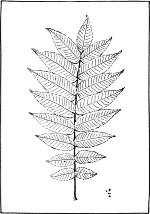
Leaf. Physical Qualities:
Light in weight (56th in
this list); 25 lbs. per cu. ft.; sp. gr.
0.4086; weak (57th in this list); elasticity,
medium (52d in this list); soft
(47th in this list); shrinkage .......
per cent.; warps little; durable; easy
to work; splits easily.
Common Uses: Cabinet work, inside
trim.
Remarks: Green husks of fruit give
yellow dye. Sugar made from sap.
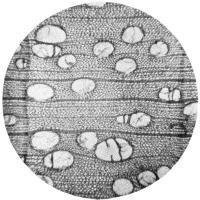
Cross-section, magnified 37½ diameters. 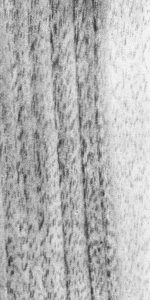
Radial Section, life size. 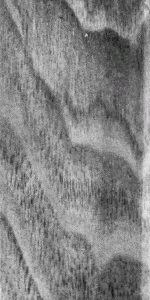
Tangential Section, life size.
Black Walnut.
Juglans nigra Linnaeus.
Juglans means Jove's nut; nigra refers to the dark wood.
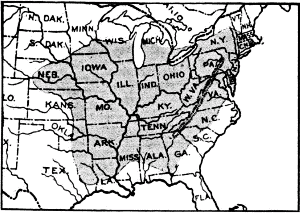
Habitat. Habitat: (See map);
best in western North
Carolina and Tennessee.
Characteristics of the
Tree: Height, 90'-120',
even 150'; diameter, 3'
to even 8'; clean of
branches for 50' to 60';
bark, brownish, almost
black, deep fissures, and
broad, rounded ridges;
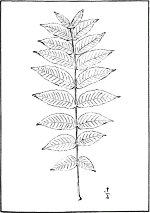
leaves, 1'-2' long, compound
pinnate, 15 to 23
leaflets, fall early; fruit,
nut, with adherent husk,
and edible kernel.
Appearance of Wood:
Color, chocolate brown,
sap-wood much lighter;
diffuse-porous; rings,
marked by slightly larger
pores; grain, straight;
rays, numerous, thin, not
conspicuous.
Leaf. Physical Qualities:
Weight, medium (31st
in this list); 38 lbs. per cu. ft.; sp. gr.
0.6115; strong (32d in this list); elastic
(23d in this list); hard (21st in
this list); shrinkage, 5 per cent.; warps
little; very durable; easy to work; splits
with some difficulty, takes and holds nails
well.
Common Uses: Gun stocks (since
17th century), veneers, cabinet making.
Remarks: Formerly much used for
furniture, now scarce. Plentiful in California.
Most valuable wood of North
American forests. Wood superior to
European variety.
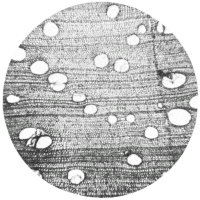
Cross-section, magnified 37½ diameters. 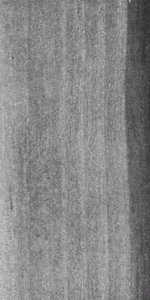
Radial Section, life size. 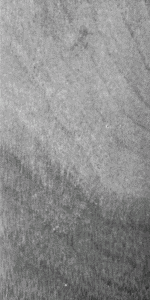
Tangential Section, life size.
Mockernut. Black Hickory. Bull-nut. Big-bud Hickory.
White-heart Hickory. King Nut.
Mockernut refers to disappointing character of nuts.
Hicoria alba (Linnaeus) Britton. Carya tomentosa Nuttall.
Hicoria, shortened and latinized from Pawcohicora, the Indian name
for the liquor obtained from the kernels; alba refers to the white wood,
carya, the Greek name for walnut; tomentosa refers to hairy under surface
of leaf.
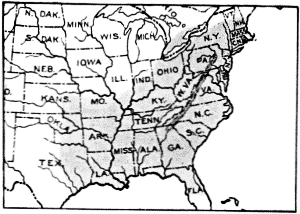
Habitat. Habitat: (See map);
best in lower Ohio valley,
Missouri and Arkansas.
Characteristics of the
Tree: Height, 75',
rarely 100'; diameter,
2'-3'; rises high in forest;
bark, dark gray,
shallow, irregular interrupted
fissures, rough
but not shaggy in old
trees; leaves, 8"-12" long,
compound, 7-9 leaflets,
fragrant when crushed;
fruit, spherical nut, thick
shell, edible kernel.
Appearance of Wood:
Color, dark brown, sap-wood
nearly white; ring-porous;
rings, marked by
few large regularly distributed
open ducts;
grain, usually straight,
close; rays, numerous,
thin, obscure.
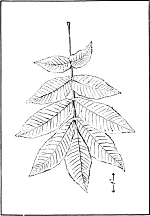
Leaf. Physical Qualities: Very heavy (3d
in this list); 53 lbs. per cu. ft.; sp. gr.,
0.8218; very strong (11th in this list);
very elastic (14th in this list); very
hard (3d in this list); shrinkage, 10
per cent.; warps ..........; not durable;
very hard to work; splits with
great difficulty, almost impossible to
nail.
Common Uses: Wheels, runners, tool
and axe handles, agricultural implements.
Remarks: Confounded commercially
with shellbark hickory.
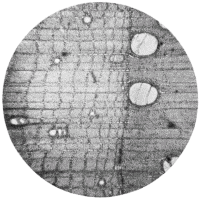
Cross-section, magnified 37½ diameters. 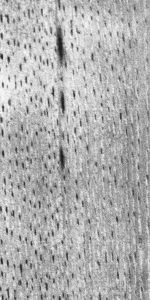
Radial Section, life size. 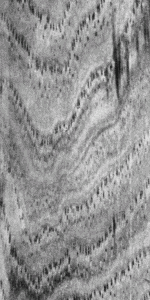
Tangential Section, life size.
Shellbark Hickory. Shagbark Hickory.
Hicoria ovata (Millar) Britton. Carya alba Nuttall.
Hickory is shortened and latinized from Pawcohicora, the Indian name
for the liquor obtained from the kernels; ovata refers to oval nut; carya,
the Greek name for walnut.
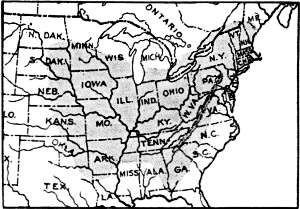
Habitat. Habitat: (See map);
best in lower Ohio valley.
Characteristics of the
Tree: Height, 70'-90'
and even 120'; diameter,
2'-3', even 4'; straight,
columnar trunk; bark,
dark gray, separates into
long, hard, plate-like
strips, which cling to
tree by middle, on young
trees very smooth and
close; leaves, 8"-20"
long, compound 5 or
(7) leaflets; nuts, globular,
husk, four-valved,
split easily, thin-shelled,
edible.
Appearance of Wood:
Color, reddish brown,
sap-wood whitish; ring-porous;
rings, clearly
marked; grain, straight;
rays, numerous, thin.
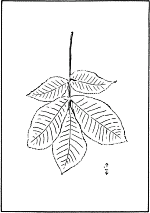
Leaf. Physical Qualities: Very heavy (1st
in this list); 51 lbs. per cu. ft.; sp. gr.,
0.8372; very strong (5th in this list);
very elastic (7th in this list); very hard
(5th in this list); shrinkage, 10 per
cent.; warps badly; not very durable
under exposure; hard to work, very
tough; hard to split, very difficult to
nail.
Common Uses: Agricultural implements,
handles, wheel spokes.
Remarks: American hickory is famous
both for buggies and ax handles,
because it is flexible and very tough in
resistance to blows.
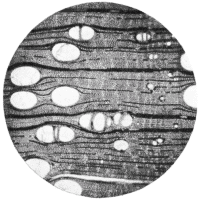
Cross-section, magnified 37½ diameters. 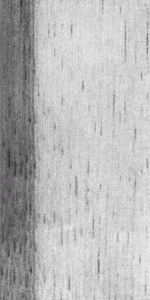
Radial Section, life size. 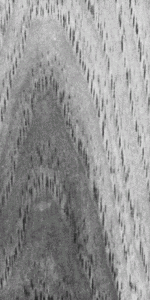
Tangential Section, life size.
Pignut.
Nuts eaten by swine.
Hicoria glabra (Miller) Britton. Carya porcina.
Hicoria is shortened and latinized from Pawcohicora, the Indian name
for the liquor obtained from the kernel; glabra refers to smooth bark;
Carya the Greek name for walnut; porcina means pertaining to hogs.
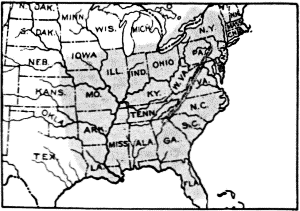
Habitat. Habitat: (See map);
best in lower Ohio valley.
Characteristics of the
Tree: Height, 80'-100';
diameter 2'-4'; trunk often
forked; bark, light
gray, shallow fissures,
rather smooth, rarely exfoliates;
leaves, 8"-12"
long, compound 7 leaflets,
sharply serrate; fruit, a
thick-shelled nut, bitter
kernel.
Appearance of Wood:
Color, light or dark brown,
the thick sap-wood
lighter, often nearly
white; ring-porous; rings
marked by many large
open ducts; grain,
straight; rays, small and
insignificant.
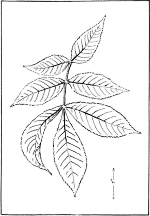
Leaf. Physical Qualities:
Very heavy (4th in this
list); 56 lbs. per cu. ft.; sp. gr., 0.8217;
very strong (15th in this list); elastic
(27th in this list); very hard (2d in
this list); shrinkage, 10 per cent.;
warps ..........; hard to work; splits
with difficulty, hard to drive nails into.
Common Uses: Agricultural implements,
wheels, runners, tool handles.
Remarks: Wood not distinguished
from shellbark hickory in commerce.
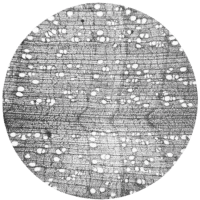
Cross-section, magnified 37½ diameters. 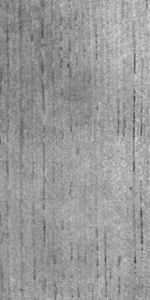
Radial Section, life size. 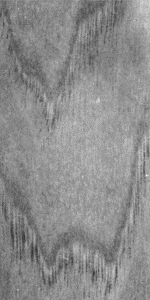
Tangential Section, life size.
Blue Beech. Hornbeam. Water Beech. Iron-wood.
Blue refers to color of bark; the trunk resembles beech; horn refers to
horny texture of wood.
Carpinus caroliniana Walter.
Carpinus, classical Latin name; caroliniana, named from the state.
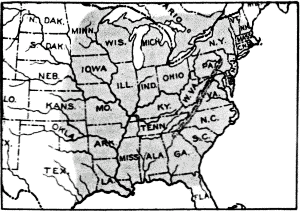
Habitat. Habitat: (See map);
best on western slopes
of Southern Allegheny
Mountains and in southern
Arkansas and Texas.
Characteristics of the
Tree: Height, a small
tree, 30'-50' high; diameter,
6"-2'; short, fluted,
sinewy trunk; bark,
smooth, bluish gray;
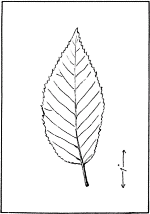
leaves, falcate, doubly
serrate; fruit, small oval
nut, enclosed in leaf-like
bract.
Appearance of Wood:
Color, light brown, sap-wood
thick, whitish; diffuse-porous;
rings, obscure;
grain, close; rays,
numerous, broad.
Leaf. Physical Qualities:
Heavy (13th in this
list); 45 lbs. per cu. ft.;
sp. gr. 0.7286; very
strong (9th in this list); very stiff (15th
in this list); hard (14th in this list);
shrinkage, 6 per cent.; warps and checks
badly; not durable; hard to work; splits
with great difficulty.
Common Uses: Levers, tool handles.
Remarks: No other wood so good
for levers, because of stiffness.
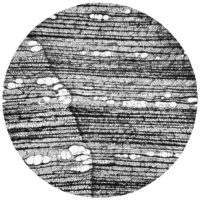
Cross-section, magnified 37½ diameters. 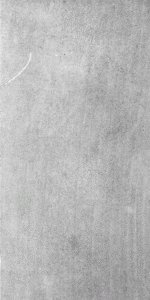
Radial Section, life size. 
Tangential Section, life size.
Canoe Birch. White Birch. Paper Birch.
All names refer to bark.
Betula papyrifera Marshall.
Betula, the classical Latin name; papyrifera refers to paper bearing bark.
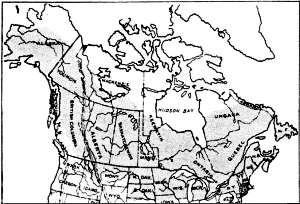
Habitat. Habitat: (See map);
best west of Rocky Mountains.
Characteristics of the
Tree: Height, 60'-80';
diameter, 2'-3'; stem
rarely quite straight;
bark, smooth, white, exterior
marked with lenticels,
peeling freely
horizontally into thin
papery layers, showing
brown or orange beneath,
contains oil which
burns hotly, formerly
used by Indians for canoes,
very remarkable
(see Keeler, page 304);
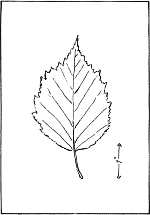
leaves, heart-shaped, irregularly
serrate; fruit,
pendulous strobiles.
Appearance of Wood:
Color, brown or reddish,
sap-wood white; diffuse-porous;
rings, obscure;
grain, fairly straight;
rays, numerous, obscure.
Leaf. Physical Qualities: Weight, medium
(33d in this list); 37 lbs. per cu. ft.;
sp. gr. 0.5955; very strong (14th in this
list); very elastic (2d in this list); medium
hard (39th in this list); shrinkage,
6 per cent.; warps, .........; not
durable, except bark; easy to work; splits
with difficulty, nails well, tough.
Common Uses: Spools, shoe lasts and
pegs, turnery, bark for canoes.
Remarks: Forms forests. Sap yields
syrup. Bark yields starch. Valuable to
woodsmen in many ways.
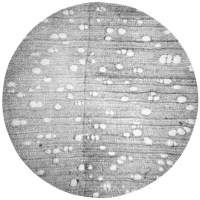
Cross-section, magnified 37½ diameters. 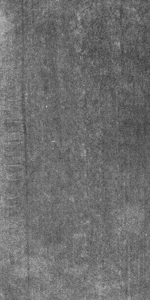
Radial Section, life size. 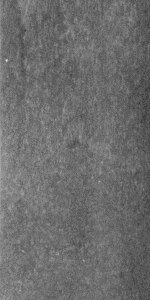
Tangential Section, life size.
Red Birch. River Birch.
Red refers to color of bark; river, prefers river bottoms.
Betula nigra Linnaeus.
Betula, the classical Latin name.
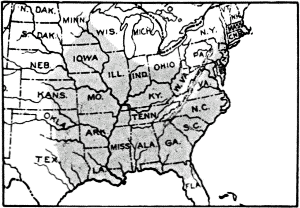
Habitat. Habitat: (See map);
best in Florida, Louisiana
and Texas.
Characteristics of the
Tree: Height, 30'-80',
and even higher; diameter,
1', even 5'; trunk,
often divided low; bark,
dark brown, marked by
horizontal lenticels, peels
into paper plates, curling
back; leaves, doubly
serrate, often almost
lobed; fruit, pubescent,
erect, strobiles.
Appearance of Wood:
Color, light brown, thick
sap-wood, whitish; diffuse-porous;
rings, not
plain; grain, close, rather
crooked; rays, numerous,
obscure.
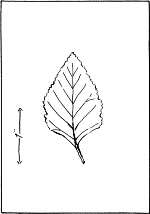
Leaf. Physical Qualities:
Weight, medium (36th
in this list); 35 lbs. per
cu. ft.; sp. gr. 0.5762; strong (22d in
this list); very elastic (19th in this
list); medium hard (37th in this list);
shrinkage, 6 per cent.; warps, .......;
not durable when exposed; hard to
work, tough; splits with difficulty, nails
well.
Common Uses: Shoe lasts, yokes,
furniture.
Remarks: Prefers moist land.
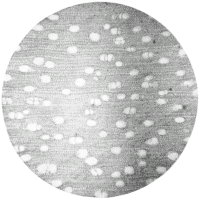
Cross-section, magnified 37½ diameters. 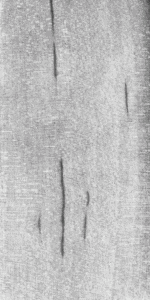
Radial Section, life size. 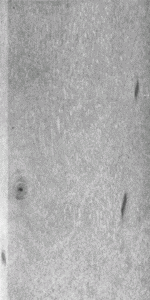
Tangential Section, life size.
Cherry Birch. Sweet Birch. Black Birch. Mahogany
Birch.
Cherry, because bark resembles that of cherry tree; sweet, refers to the
taste of the spicy bark.
Betula lenta Linnaeus.
Betula, the classical Latin name; lenta, meaning tenacious, sticky, may
refer to the gum which exudes from the trunk.
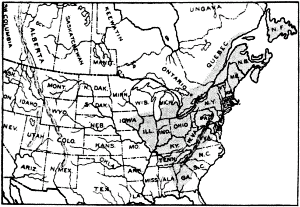
Habitat. Habitat: (See map);
best in Tennessee Mountains.
Characteristics of the
Tree: Height, 50'-80';
diameter, 2'-5'; trunk,
rarely straight; bark,
dark reddish brown, on
old trunks deeply furrowed
and broken into
thick, irregular plates,
marked with horizontal
lenticels; resembles
cherry; spicy, aromatic;
leaves, ovate, oblong, 2"-6"
long, irregularly serrate;
fruit, erect strobiles.
Appearance of Wood:
Color, dark, reddish
brown; diffuse-porous;
rings, obscure; grain,
close, satiny, polishes
well, often stained to
imitate mahogany; rays,
numerous, obscure.
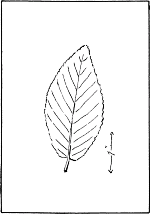
Leaf. Physical Qualities: Heavy (6th in
this list); 47 lbs. per cu. ft.; sp. gr.,
0.7617; very strong (4th in this list);
very elastic (6th in this list); hard
(11th in this list); shrinkage, 6 per cent.;
warps, little; not durable if exposed;
rather hard to work; splits hard, tough.
Common Uses: Dowel pins, wooden
ware, boats and ships.
Remarks: The birches are not usually
distinguished from one another in
the market.
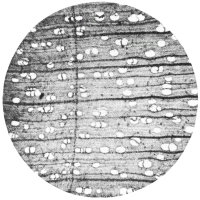
Cross-section, magnified 37½ diameters. 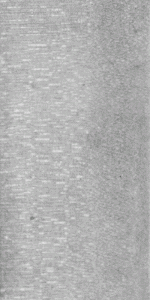
Radial Section, life size. 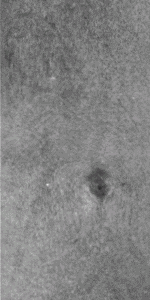
Tangential Section, life size.
Yellow Birch. Gray Birch.
Yellow and gray, both refer to the color of the bark.
Betula lutea F. A. Michaux.
Betula, the classical Latin name; lutea refers to the yellow color of the
bark.
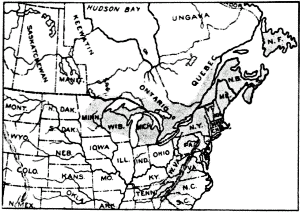
Habitat. Habitat: (See map);
best in northern New
York and New England.
Characteristics of the
Tree: Height, 60'-100'; diameter,
3'-4'; branches,
low; bark, silvery, yellow,
gray, peeling horizontally
into thin, papery, persistent
layers, but on very old
trunks, there are rough,
irregular, plate-like scales;
leaves, ovate, sharply,
doubly serrate; fruit,
erect, 1" strobiles.
Appearance of Wood:
Color, light reddish brown,
sap-wood white; diffuse-porous;
rings, obscure;
grain, close, fairly
straight; rays, numerous,
obscure.
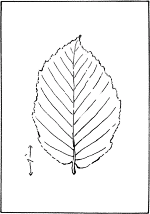
Leaf. Physical Qualities:
Heavy (21st in this list);
40 lbs. per cu. ft.; sp. gr.,
0.6553; very strong (2nd in this list);
very elastic (2d in this list); medium
hard (22d in this list); shrinkage, 6
per cent.; warps .........; not durable;
rather hard to work, polishes well; splits
with difficulty, holds nails well.
Common Uses: Furniture, spools,
button molds, shoe lasts, shoe pegs, pill
boxes, yokes.
Remarks: The birches are not usually
distinguished from one another in
the market.
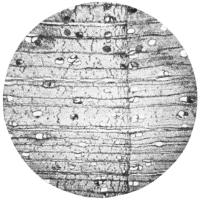
Cross-section, magnified 37½ diameters. 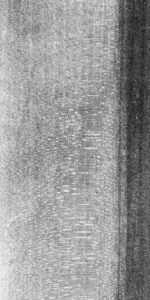
Radial Section, life size. 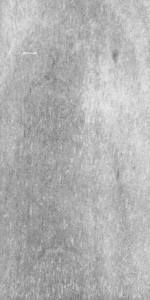
Tangential Section, life size.
Beech.
Fagus grandifolia Ehrhart. Fagus americana Sweet. Fagus
ferruginea
Aiton. Fagus atropunicea (Marshall) Sudworth.
Fagus (Greek phago means to eat), refers to edible nut; ferruginea,
refers to the iron rust color of the leaves in the fall; atropunicea, meaning
dark red or purple, may refer to the color of the leaves of the copper
beech.
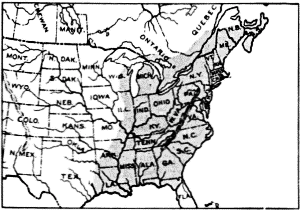
Habitat. Habitat: (See map);
best in southern Alleghany
Mountains and lower Ohio
valley.
Characteristics of the
Tree: Height, 70'-80' and
even 120'; diameter, 3'-4';
in forest, trunk tall, slender,
sinewy; bark, smooth,
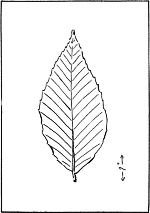
ashy gray; leaves, feather-veined,
wedge-shaped, serrate;
leaf buds, long,
pointed; fruit, 2 small
triangular nuts, enclosed
in burr, seeds about once
in 3 years.
Appearance of Wood:
Color, reddish, variable,
sap-wood white; diffuse-porous;
rings, obscure;
grain, straight; rays,
broad, very conspicuous.
Leaf. Physical Qualities:
Heavy (20th in this list);
42 lbs. per cu. ft.; sp. gr.,
0.6883; very strong (10th in this list);
elastic (13th in this list); hard (22d in
this list); shrinkage, 5 per cent.; warps
and checks during seasoning; not durable;
hard to work, takes fine polish;
splits with difficulty, hard to nail.
Common Uses: Plane stocks, shoe
lasts, tool handles, chairs.
Remarks: Often forms pure forests.
Uses due to its hardness.
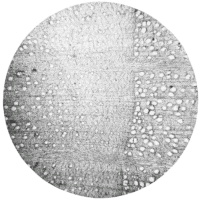
Cross-section, magnified 37½ diameters. 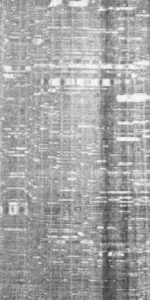
Radial Section, life size. 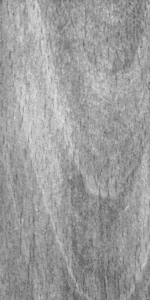
Tangential Section, life size.
Chestnut.
Castanea dentata (Marshall) Borkhausen.
Castanea, the classical Greek and Latin name; dentata, refers to toothed leaf.
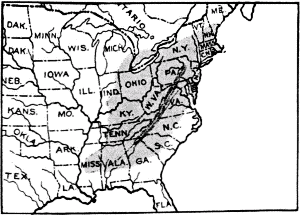
Habitat. Habitat: (See map);
best in western North Carolina,
and eastern Tennessee.
Characteristics of the
Tree: Height, 75'-100';
diameter, 3'-4', and even
12'; branches, low; bark,
thick, shallow, irregular,
fissures, broad, grayish
brown ridges; leaves,
lanceolate, coarsely serrate,
midribs and veins
prominent; fruit, nuts,
thin-shelled, sweet, enclosed
in prickly burrs.
Appearance of Wood:
Color, reddish brown, sap-wood
lighter; ring-porous;
rings, plain, pores large;
grain, straight; rays, numerous,
obscure.
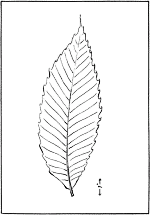
Leaf. Physical Qualities:
Weight, light (50th in
this list); 28 lbs. per cu.
ft.; sp. gr., 0.4504; medium
strong (46th in this
list); elasticity, medium (46th in this
list); medium hard (44th in this list);
shrinkage, 6 per cent.; warps badly;
very durable, especially in contact with
soil, fairly easy to plane, chisel and
saw; splits easily.
Common Uses: Railway ties, fence
posts, interior finish.
Remarks: Grows rapidly, and lives
to great age. Wood contains much tannic
acid. Uses depend largely upon its
durability. Lately whole regions depleted
by fungous pest.
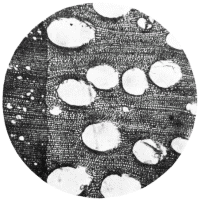
Cross-section, magnified 37½ diameters. 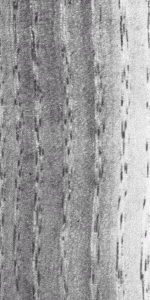
Radial Section, life size. 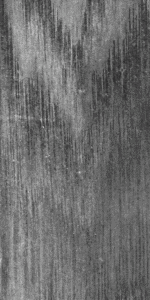
Tangential Section, life size.
Red Oak.
Quercus rubra Linnaeus.
Quercus, the classical Latin name; rubra, refers to red color of wood.
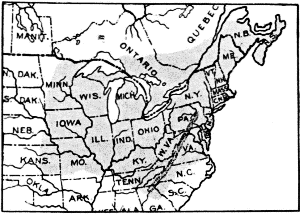
Habitat. Habitat: (See map);
best in Massachusetts and
north of the Ohio river.
Characteristics of the
Tree: Height, 70'-100',
even 150'; diameter, 3'-6';
a tall, handsome tree,
branches rather low; bark,
brownish gray, broad, thin,
rounded ridges, rather
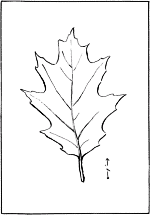
smooth; leaves, 7 to 9 triangular
pointed lobes,
with rounded sinuses;
acorns, characteristically
large, in flat shallow cups.
Appearance of Wood:
Color, reddish brown, sap-wood
darker; ring-porous;
rings, marked by several
rows of very large
open ducts; grain, crooked,
coarse; rays, few, but
broad, conspicuous.
Leaf. Physical Qualities:
Heavy (23d in this list);
45 lbs. per cu. ft.; sp. gr., 0.6540; strong
(21st in this list); elastic (18th in this
list); hard (26th in this list); shrinkage
6 to 10 per cent.; warps and checks
badly; moderately durable; easier to
work than white oak; splits readily,
nails badly.
Common Uses: Cooperage, interior
finish, furniture.
Remarks: Grows rapidly. An inferior
substitute for white oak. Bark used
in tanning.
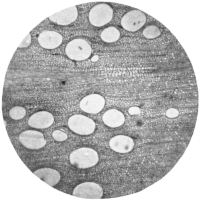
Cross-section, magnified 37½ diameters. 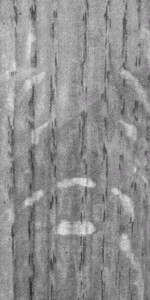
Radial Section, life size. 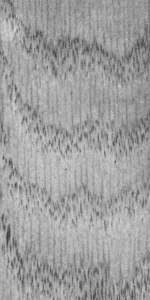
Tangential Section, life size.
Black Oak. Yellow Bark Oak.
Black refers to color of outer bark; yellow bark, refers to the inner
bark, which is orange yellow.
Quercus velutina Lamarck. Quercus tinctoria Michaux.
Quercus, the classical Latin name; velutina, refers to the velvety surface
of the young leaf; tinctoria, refers to dye obtained from inner bark.
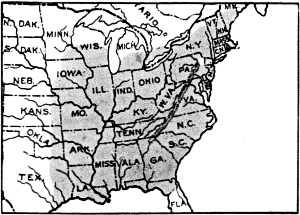
Habitat. Habitat: (See map);
best in lower Ohio valley.
Characteristics of the
Tree: Height, 70'-80',
even 150'; diameter 3'-4';
branches, low; bark, dark
gray to black, deep fissures,
broad, rounded,
firm ridges, inner bark,
yellow, yielding dye;
leaves, large, lustrous,
leathery, of varied forms;
acorns, small; kernel, yellow,
bitter.
Appearance of Wood:
Color, reddish brown, sap-wood
lighter; ring-porous;
rings, marked by
several rows of very large
open ducts; grain,
crooked; rays, thin.
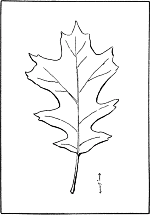
Leaf. Physical Qualities:
Heavy (17th in this list);
45 lbs. per cu. ft.; sp. gr.,
0.7045; very strong (17th in this list);
elastic (25th in this list); hard (18th
in this list); shrinkage, 4 per cent. or
more; warps and checks in drying; durable;
rather hard to work; splits readily,
nails badly.
Common Uses: Furniture, interior
trim, cooperage, construction.
Remarks: Foliage handsome in fall;
persists thru winter.
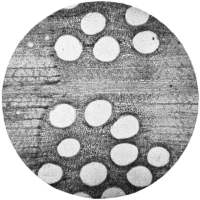
Cross-section, magnified 37½ diameters. 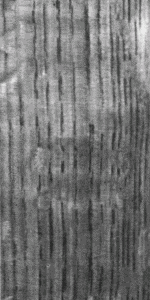
Radial Section, life size. 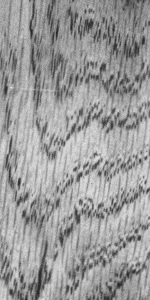
Tangential Section, life size.
Basket Oak. Cow Oak.
Cow refers to the fact that its acorns are eaten by cattle.
Quercus michauxii Nuttall.
Quercus, the classical Latin name; michauxii, named for the botanist
Michaux.
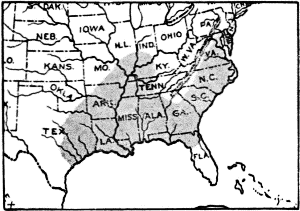
Habitat. Habitat: (See map);
best in Arkansas and
Louisiana, especially in
river bottoms.
Characteristics of the
Tree: Height, 80'-100';
diameter 3', even 7';
trunk, often clean and
straight for 40' or 50';
bark, conspicuous, light
gray, rough with loose
ashy gray, scaly ridges;
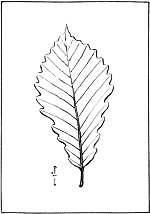
leaves, obovate, regularly
scalloped; acorns, edible
for cattle.
Appearance of Wood:
Color, light brown, sap-wood
light buff; ring-porous;
rings, marked by
few rather large, open
ducts; grain, likely to be
crooked; rays, broad, conspicuous.
Leaf. Physical Qualities:
Very heavy (5th in this
list); 46 lbs. per cu. ft.; sp. gr., 0.8039;
very strong (12th in this list); elastic
(33d in this list); hard (10th in this
list); shrinkage, 4 per cent. or more;
warps unless carefully seasoned; durable;
hard and tough to work; splits
easily, bad to nail.
Common Uses: Construction, agricultural
implements, wheel stock, baskets.
Remarks: The best white oak of the
south. Not distinguished from white
oak in the market.
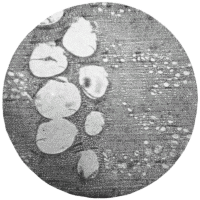
Cross-section, magnified 37½ diameters. 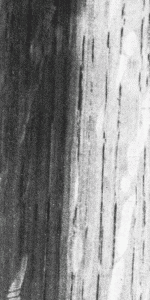
Radial Section, life size. 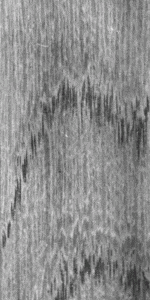
Tangential Section, life size.
Bur Oak. Mossy-Cup Oak. Over-Cup Oak.
Quercus macrocarpa Michaux.
Quercus, the classical Latin name; macrocarpa, refers to the large acorn.
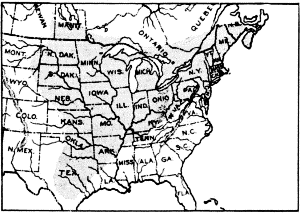
Habitat. Habitat: (See map);
best in southern Indiana,
Illinois and Kansas.
Characteristics of the
Tree: Height, 70'-130',
even 170'; diameter, 5'-7';
branches, high; corky
wings on young branches;
bark, gray brown, deeply
furrowed; deep opposite
sinuses on large leaves;
acorns, half enclosed in
mossy-fringed cup.
Appearance of Wood:
Color, rich brown, sap-wood,
thin, lighter; ring-porous;
rings, marked by
1 to 3 rows of small open
ducts; grain, crooked;
rays, broad, and conspicuous.
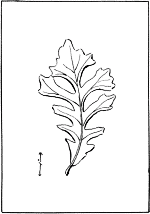
Leaf. Physical Qualities:
Heavy (9th in this list);
46 lbs. per cu. ft.; sp. gr.,
0.7453; very strong (16th
in this list); elastic (37th in this list);
hard (9th in this list); shrinkage, 4 per
cent. or more; warps,..........; hard,
and tough to work; splits easily, resists
nailing.
Common Uses: Ship building, cabinet
work, railway ties, cooperage.
Remarks: Good for prairie planting.
One of the most valuable woods of
North America. Not distinguished from
White Oak in commerce.
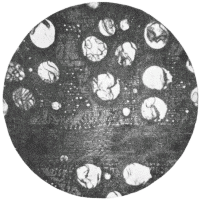
Cross-section, magnified 37½ diameters. 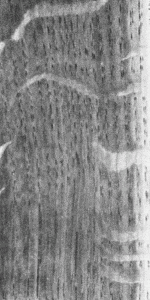
Radial Section, life size. 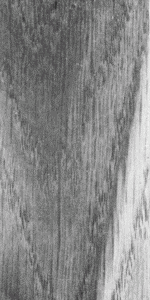
Tangential Section, life size.
White Oak (Western).
Quercus garryana Douglas.
Quercus, the classical Latin name; garryana, named for Garry.
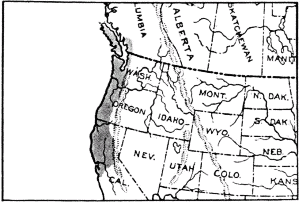
Habitat. Habitat: (See map);
best in western Washington
and Oregon.
Characteristics of the
Tree: Height, 60'-70',
even 100'; diameter, 2'-3';
branches, spreading;
bark, light brown, shallow
fissures, broad ridges;
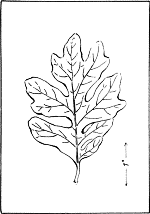
leaves, coarsely pinnatified,
lobed; fruit, large
acorns.
Appearance of Wood:
Color, light brown, sap-wood
whitish; ring-porous;
rings, marked by 1
to 3 rows of open ducts;
grain, close, crooked;
rays, varying greatly in
width, often conspicuous.
Leaf. Physical Qualities:
Heavy (10th in this list);
46 lbs. per cu. ft.; sp. gr.,
0.7449; strong (28th in
this list); elasticity medium
(54th in this list); hard (8th in
this list); shrinkage, 5 or 6 per cent.;
warps, unless carefully seasoned; durable;
hard to work, very tough; splits
badly in nailing.
Common Uses: Ship building, vehicles,
furniture, interior finish.
Remarks: Best of Pacific oaks.
Shrubby at high elevations.
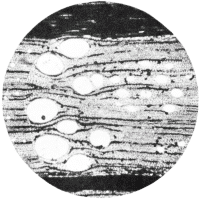
Cross-section, magnified 37½ diameters. 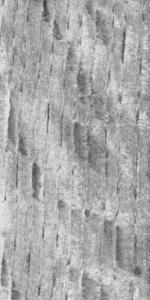
Radial Section, life size. 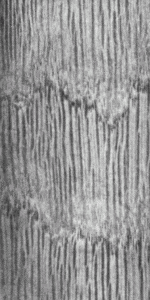
Tangential Section, life size.
Post Oak.
Quercus stellata Wangenheim. Quercus minor (Marsh) Sargent.
Quercus obtusiloba Michaux.
Quercus, the classical Latin name; stellata, refers to the stellate hairs
on upper side of leaf; minor, refers to size of tree, which is often shrubby;
obtusiloba, refers to the blunt lobes of leaves.
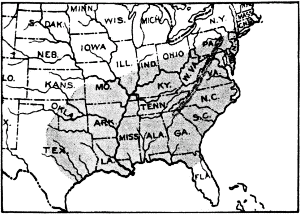
Habitat. Habitat: (See map);
best in Mississippi basin.
Characteristics of the
Tree: Height, 50'-75',
even 100'; but often a
shrub; diameter, 2'-3';
branches, spreading into
dense round-topped head;
bark, red or brown, deep,
vertical, almost continuous,
fissures and broad
ridges, looks corrugated;
leaves, in large tufts at
ends of branchlets; acorns,
small, sessile.
Appearance of Wood:
Color, brown, thick, sap-wood,
lighter; ring-porous;
rings, 1 to 3 rows of
not large open ducts;
grain, crooked; rays, numerous,
conspicuous.
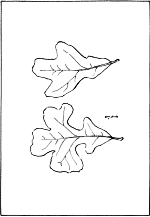
Leaf. Physical Qualities:
Very heavy (2d in this
list); 50 lbs. per cu. ft.;
sp. gr., 0.8367; strong (29th in this
list); medium elastic (50th in this list);
very hard (4th in this list); shrinkage,
4 per cent. or more; warps and checks
badly in seasoning; durable; hard to
work; splits readily, bad to nail.
Common Uses: Cooperage, railway
ties, fencing, construction.
Remarks: Wood often undistinguished
from white oak.
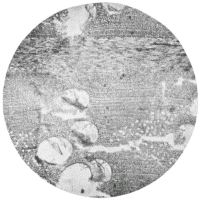
Cross-section, magnified 37½ diameters. 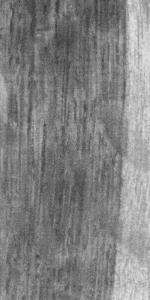
Radial Section, life size. 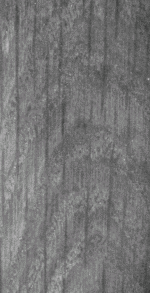
Tangential Section, life size.
White Oak. Stave Oak.
Quercus alba Linnaeus.
Quercus, the classical Latin name; white and alba, refer to white bark.
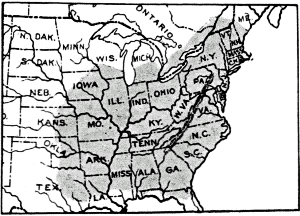
Habitat. Habitat: (See map);
best on western slopes
of Southern Alleghany
Mountains, and in lower
Ohio river valley.
Characteristics of the
Tree: Height, 80'-100';
diameter, 3'-5'; trunk, in
forest, tall, in open, short;
bark, easily distinguished,
light gray with shallow
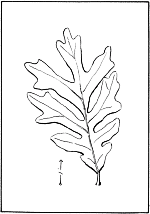
fissures, scaly; leaves,
rounded lobes, and sinuses;
acorns, ¾" to 1"
long, ripen first year.
Appearance of Wood:
Color, light brown, sap-wood
paler; ring-porous;
rings, plainly defined by
pores; grain crooked;
rays, broad, very conspicuous
and irregular.
Leaf. Physical Qualities:
Heavy (8th in this list);
50 lbs. per cu. ft.; sp.
gr., 0.7470; strong (23d in this list);
elastic (32d in this list); hard (13th
in this list); shrinkage, from 4 to 10
per cent.; warps and checks considerably,
unless carefully seasoned; very durable,
hard to work; splits somewhat
hard, very difficult to nail.
Common Uses: Interior finish, furniture,
construction, ship building, farm
implements, cabinet making.
Remarks: The most important of
American oaks.
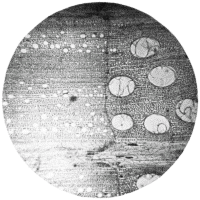
Cross-section, magnified 37½ diameters. 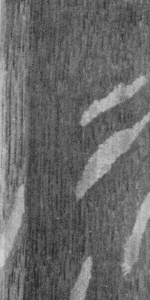
Radial Section, life size. 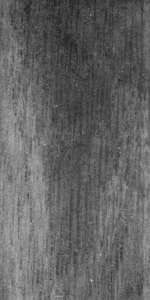
Tangential Section, life size.
Cork Elm. Rock Elm. Hickory Elm. White Elm.
Cliff Elm.
Cork refers to corky ridges on branches.
Ulmus thomasi Sargent. Ulmus racemosa Thomas.
Ulmus, the classical Latin name; racemosa, refers to racemes of flowers.
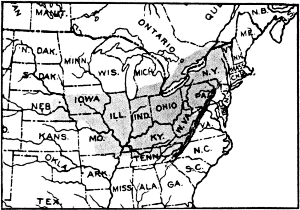
Habitat. Habitat: (See map);
best in Ontario and southern
Michigan.
Characteristics of the
Tree: Height, 80'-100';
diameter, 2'-3', trunk often
clear for 60'; bark,
gray tinged with red,
corky, irregular projections,
give shaggy appearance;
leaves, obovate,
doubly serrate, 3"-4" long;
fruit, pubescent, samaras.
Appearance of Wood:
Color, light brown or red;
sap-wood yellowish; ring-porous;
rings, marked
with one or two rows of
small open ducts; grain,
interlaced; rays, numerous,
obscure.
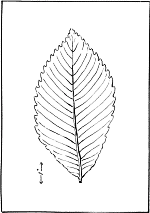
Leaf. Physical Qualities:
Heavy (15th in this list);
45 lbs. per cu. ft.; sp. gr.,
0.7263; very strong (13th
in this list); elastic (22d in this list);
hard (15th in this list); shrinkage, 5
per cent.; warps, ........; very durable;
hard to work; splits and nails
with difficulty.
Common Uses: Hubs, agricultural
implements, sills, bridge timbers.
Remarks: The best of the elm
woods.
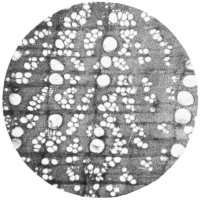
Cross-section, magnified 37½ diameters. 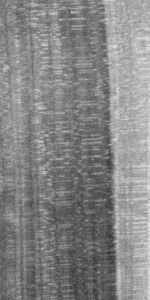
Radial Section, life size. 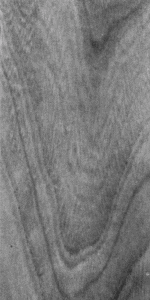
Tangential Section, life size.
White Elm. American Elm. Water Elm.
Water, because it flourishes on river banks.
Ulmus americana Linnaeus.
Ulmus, the classical Latin name.
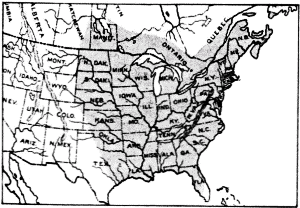
Habitat. Habitat: (See map);
best northward on river
bottoms.
Characteristics of the
Tree: Height, 90', even
120'; diameter, 3'-8';
trunk, usually divides at
30'-40' from ground into
upright branches, making
triangular outline; bark,
ashy gray, deep longitudinal
fissures, broad
ridges; leaves, 4"-6"
long, oblique obovate,
doubly serrate, smooth
one way; fruit, small,
roundish, flat, smooth, samaras.
Appearance of Wood:
Color, light brown, sap-wood
yellowish; ring-porous;
rings, marked by
several rows of large open
ducts; grain, interlaced;
rays, numerous, thin.
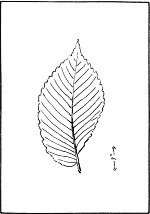
Leaf. Physical Qualities: Heavy (24th in
this list); 34 lbs. per cu. ft.; sp.
gr., 0.6506; strong (33d in this list);
elasticity, medium (59th in this list);
medium hard (28th in this list); shrinkage,
5 per cent.; warps .........; not
durable; hard to work, tough, will not
polish; splits with difficulty.
Common Uses: Cooperage, wheel
stock, flooring.
Remarks: Favorite ornamental tree,
but shade light, and leaves fall early.
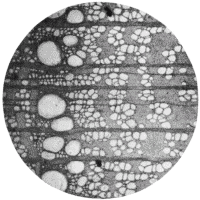
Cross-section, magnified 37½ diameters. 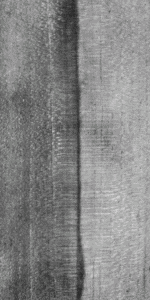
Radial Section, life size. 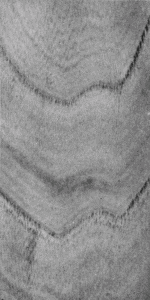
Tangential Section, life size.
Cucumber Tree. Mountain Magnolia.
Cucumber, refers to the shape of the fruit.
Magnolia acuminata Linnaeus.
Magnolia, named for Pierre Magnol, a French botanist; acuminata, refers
to pointed fruit.
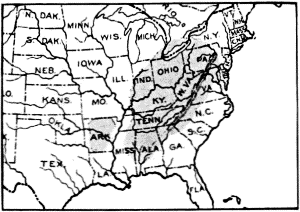
Habitat. Habitat: (See map);
best at the base of mountains
in North Carolina
and South Carolina and
Tennessee.
Characteristics of the
Tree: Height, 60'-90';
diameter, 3'-4'; in forest,
clear trunk for ⅔ of
height (40' or 50'); bark,
dark brown, thick, furrowed;
leaves, large,
smooth; flowers, large
greenish yellow; fruit,
dark red "cones" formed
of two seeded follicles.
Appearance of Wood:
Color, yellow brown, thick
sapwood, lighter; diffuse-porous;
rings, obscure;
grain, very straight, close,
satiny; rays, numerous
thin.
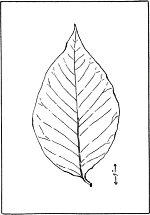
Leaf. Physical Qualities:
Light (45th in this list);
.... lbs. per cu. ft.; sp. gr., 0.4690;
medium strong (49th in this list); elastic
(38th in this list); medium
hard (41st in this list); shrinkage, 5
per cent.; warps .........; very durable;
easy to work; splits easily, takes
nails well.
Common Uses: Pump logs, cheap
furniture, shelving.
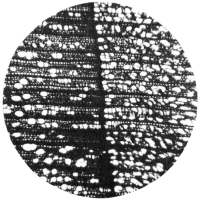
Cross-section, magnified 37½ diameters. 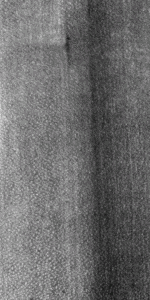
Radial Section, life size. 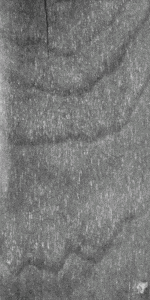
Tangential Section, life size.
Yellow Poplar. Whitewood. Tulip Tree.
Poplar, inappropriate, inasmuch as the tree does not belong to poplar
family. White, refers inappropriately to the color of the wood, which is
greenish yellow.
Liriodendron tulipifera Linnaeus.
Liriodendron, means lily-tree; tulipifera means tulip-bearing.
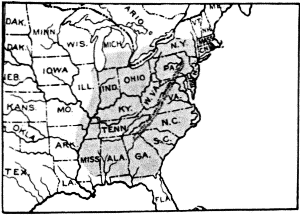
Habitat. Habitat: (See map);
best in lower Ohio valley
and southern Appalachian
mountains.
Characteristics of the
Tree: Height, 70'-90';
even 200'; diameter, 6'-8',
even 12'; tall, magnificent
trunk, unsurpassed
in grandeur by any eastern
American tree; bark,
brown, aromatic, evenly
furrowed so as to make
clean, neat-looking trunk;
leaves, 4 lobed, apex, peculiarly
truncated, clean
cut; flowers, tulip-like;
fruit, cone, consisting of
many scales.
Appearance of Wood:
Color, light greenish or
yellow brown, sap-wood,
creamy white; diffuse-porous;
rings, close but
distinct; grain, straight;
rays, numerous and plain.
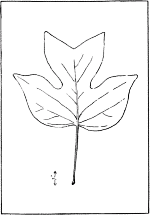
Leaf. Physical Qualities: Light (54th in
this list); 26 lbs. per cu. ft.; sp. gr.,
0.4230; medium strong (51st in this
list); elastic (39th in this list); soft
(49th in this list); shrinkage, 5 per
cent.; warps little; durable; easy to
work; brittle and does not split readily,
nails very well.
Common Uses: Construction work,
furniture, interiors, boats, carriage bodies,
wooden pumps.
Remarks: Being substituted largely
for white pine.
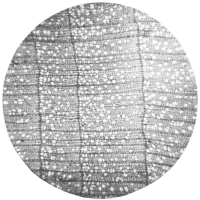
Cross-section, magnified 37½ diameters. 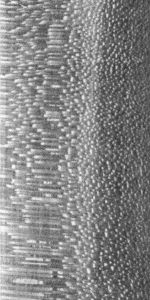
Radial Section, life size. 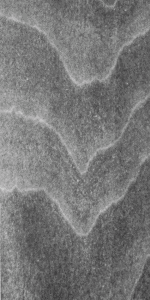
Tangential Section, life size.
Sweet Gum.
Gum, refers to exudations.
Liquidambar styraciflua Linnaeus.
Liquidambar, means liquid gum; styraciflua, means fluid resin (storax).
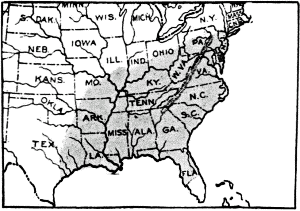
Habitat. Habitat: (See map);
best in the lower Mississippi
valley.
Characteristics of the
Tree: Height, 80'-140';
diameter, 3'-5'; trunk,
tall, straight; bark, light
brown tinged with red,
deeply fissured; branchlets
often having corky
wings; leaves, star-shaped,
five pointed; conspicuously
purple and crimson
in autumn; fruit, multi-capsular,
spherical, persistent
heads.
Appearance of Wood:
Color, light red brown,
sap-wood almost white;
diffuse-porous; rings, fine
and difficult to distinguish;
grain, straight,
close, polishes well; rays,
numerous, very obscure.
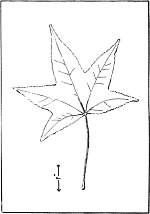
Leaf. Physical Qualities:
Weight, medium (34th in
this list); 37 lbs. per cu. ft.; sp. gr.,
0.5909; medium strong (52d in this
list); elasticity medium (44th in this
list); medium hard (36th in this list);
shrinkage, 6 per cent.; warps and
twists badly in seasoning; not durable
when exposed; easy to work; crumbles
in splitting; nails badly.
Common Uses: Building construction,
cabinet-work, veneering, street
pavement, barrel staves and heads.
Remarks: Largely used in veneers,
because when solid it warps and twists
badly. Exudations used in medicine to
some extent.
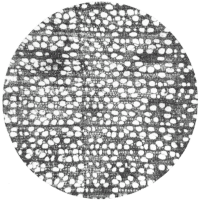
Cross-section, magnified 37½ diameters. 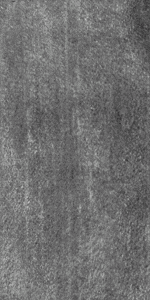
Radial Section, life size. 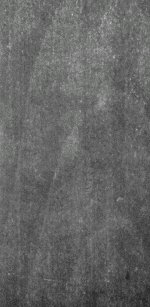
Tangential Section, life size.
Sycamore. Buttonwood. Button Ball. Water Beech.
Sycamore, from two Greek words meaning fig and mulberry; buttonwood
and button-ball, refer to fruit balls.
Platanus occidentalis Linnaeus.
Platanus, refers to the broad leaves; occidentalis, western, to distinguish
it from European species.
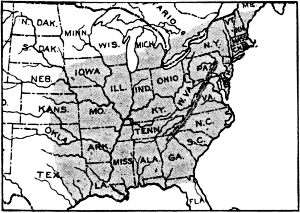
Habitat. Habitat: (See map);
best in valley of lower
Ohio and Mississippi.
Characteristics of the
Tree: Height, 70'-100',
and even 170'; diameter,
6'-12'; trunk, commonly
divides into 2 or 3 large
branches, limbs spreading,
often dividing angularly;
bark, flakes off in great
irregular masses, leaving
mottled surface, greenish
gray and brown, this peculiarity
due to its rigid
texture; leaves, palmately
3 to 5 lobed, 4"-9" long,
petiole enlarged, enclosing
buds; fruit, large rough
balls, persistent through
winter.
Appearance of Wood:
Color, reddish brown, sap-wood
lighter; diffuse-porous;
rings, marked by
broad bands of small ducts; grain, cross,
close; rays, numerous, large, conspicuous.
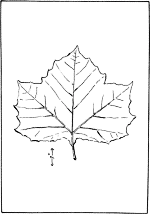
Leaf. Physical Qualities: Weight, medium
(38th in this list); 35 lbs. per cu. ft.;
sp. gr., 0.5678; medium strong (54th
in this list); elasticity, medium (43d
in this list); medium hard (30th
in this list); shrinkage, 5 per cent.;
warps little; very durable, once used
for mummy coffins; hard to work; splits
very hard.
Common Uses: Tobacco boxes, yokes,
furniture, butcher blocks.
Remarks: Trunks often very large
and hollow.
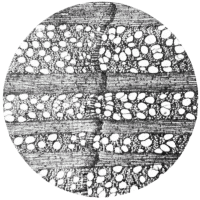
Cross-section, magnified 37½ diameters. 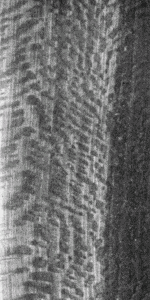
Radial Section, life size. 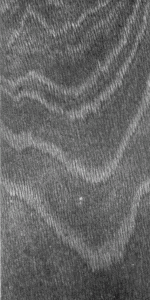
Tangential Section, life size.
Wild Black Cherry.
Padus serotina (Ehrhart) Agardh. Prunus serotina Ehrhart.
Padus, the old Greek name; prunus, the classical Latin name; serotina,
because it blossoms late (June).
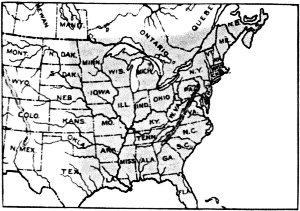
Habitat. Habitat: (See map);
best on southern Allegheny
mountains.
Characteristics of the
Tree: Height, 40'-50',
even 100'; diameter, 2'-4';
straight, columnar trunk,
often free from branches
for 70'; bark, blackish
and rough, fissured in all
directions, broken into
small, irregular, scaly
plates, with raised edges;
leaves, oblong to lanceolate,
deep, shiny green;
fruit, black drupe, ½".
Appearance of Wood:
Color, light brown or red,
sap-wood yellow; diffuse-porous;
rings, obscure;
grain, straight, close, fine,
takes fine polish; rays,
numerous.
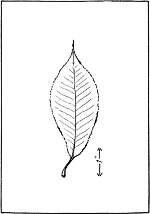
Leaf. Physical Qualities:
Weight, medium (35th in
this list); 36 lbs. per cu. ft.; sp. gr.,
0.5822; strong (35th in this list); elasticity
medium (45th in this list);
hard (16th in this list); shrinkage, 5
per cent.; warps, little; durability..........;
easily worked; splits easily,
must be nailed with care.
Common Uses: Cabinet-work, costly
interior trim.
Remarks: Grows rapidly.
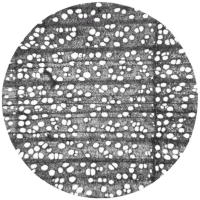
Cross-section, magnified 37½ diameters. 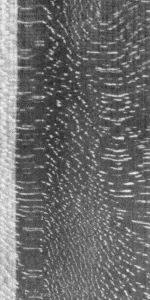
Radial Section, life size. 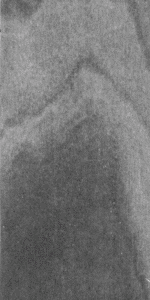
Tangential Section, life size.
Black Locust. Locust. Yellow Locust.
Yellow, from color of sap-wood.
Robinia pseudacacia Linnaeus.
Robinia, in honor of Jean Robin, of France; pseudacacia, means false acacia.
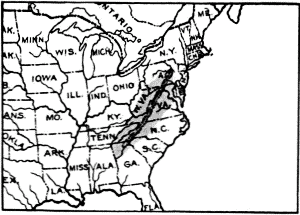
Habitat. Habitat: (See map);
best on western Allegheny
mountains in West Virginia.
Characteristics of the
Tree: Height, 50'-80';
diameter, 3'-4'; bark,
strikingly deeply furrowed,
dark brown;
prickles on small branches,
grows fast, forms thickets,
on account of underground
shoots; leaves,
8"-14" long, pinnately
compound; 7 to 9 leaflets,
close at night and in
rainy weather; fruit, pod
3"-4" long.
Appearance of Wood:
Color, brown, sap-wood
thin, yellowish; ring-porous;
rings, clearly marked
by 2 or 3 rows of large
open ducts; grain,
crooked, compact.
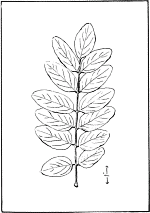
Leaf. Physical Qualities: Heavy (12th in
this list); 45 lbs. per cu. ft.; sp. gr.,
0.7333; very strong (1st in this list);
elastic (9th in this list); very hard
(6th in this list); shrinkage, 5 per
cent.; warps badly, very durable; hard
to work, tough; splits in nailing.
Common Uses: Shipbuilding, construction,
"tree-nails" or pins, wagon
hubs.
Remarks: Widely planted and cultivated
east and west. Likely to be infested
with borers.
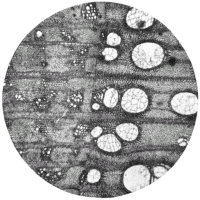
Cross-section, magnified 37½ diameters. 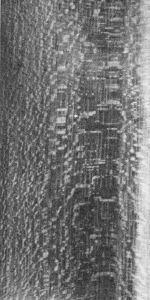
Radial Section, life size. 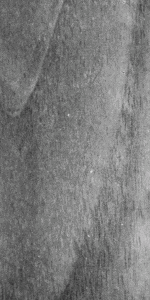
Tangential Section, life size.
Mahogany.
Swietenia mahagoni Jacquin.
Swietenia, in honor of Dr. Gerard Van Swieten of Austria; mahagoni, a
South American word.
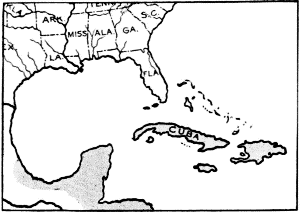
Habitat. Habitat: (See map);
only on Florida Keys in
the United States.
Characteristics of the
Tree: Height, 40'-50';
diameter, 2' or more, foreign
trees larger; immense
buttresses at base of trunk;
bark, thick, dark red-brown,
having surface of
broad, thick scales; leaves,
4"-6" long, compound, 4
pairs of leaflets; fruit,
4"-5" long, containing
seeds.
Appearance of Wood:
Color, red-brown, sap-wood,
thin, yellow; diffuse-porous;
rings, inconspicuous;
grain, crooked;
rays, fine and scattered,
but plain.
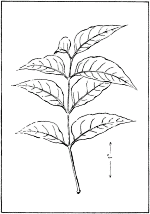
Leaf. Physical Qualities:
Heavy (14th in this list);
45 lbs. per cu. ft.; sp. gr.,
0.7282; very strong (20th
in this list); elastic (24th
in this list); very hard
(1st in this list); shrinkage,
5 per cent.; warps very little; very
durable; genuine mahogany, hard to
work; especially if grain is cross; somewhat
brittle, and comparatively easy to
split, nails with difficulty; polishes and
takes glue well.
Common Uses: Chiefly for cabinet-making,
furniture, interior finishes and
veneers.
Remarks: Mahogany, now in great
demand in the American market for fine
furniture and interior trim comes from
the West Indies, Central America and
West Africa. The so-called Spanish
mahogany, the most highly prized variety,
came originally from the south of
Hayti. The Honduras Mahogany was
often called baywood. Botanically the
varieties are not carefully distinguished;
in the lumber yard the lumber is known
by its sources. The Cuba wood can be
partly distinguished by the white chalk-like
specks in the pores and is cold to
the touch, while the Honduras wood can
be recognized by the black specks or lines
in the grain. Both the Honduras and
West India woods have a softer feel
than the African wood, when rubbed
with the thumb. The Cuba and St. Domingo
wood are preferred to the Honduras,
and still more to the African, but
even experts have difficulty in distinguishing
the varieties.
Spanish cedar, or furniture cedar
(Cedrela odorata) belongs to the same
family as mahogany and is often sold
for it. It is softer, lighter, and easier
to work.
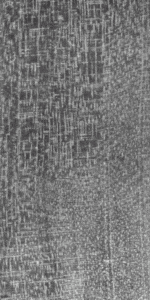
Radial Section, life size. 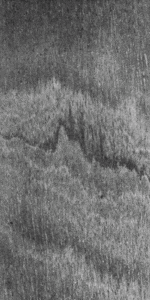
Tangential Section, life size.
Oregon Maple. White Maple. Large Leaved Maple.
Acer macrophyllum Pursh.
Acer, the classical Latin name; macrophyllum, refers to the large leaves.
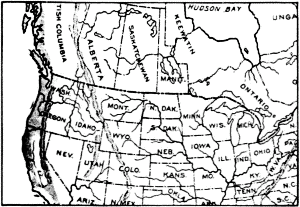
Habitat. Habitat: (See map);
best in southern Oregon.
Characteristics of the
Tree: Height, 70'-100';
diameter, 3'-5'; stout, often
pendulous branches,
making a handsome tree;
bark, reddish brown,
deeply furrowed, square
scales; leaves, very large,
8"-12" and long petioles,
deep, narrow sinuses;
fruit, hairy samaras.
Appearance of Wood:
Color, rich brown and red,
sap-wood thick, nearly
white; diffuse-porous;
rings, obscure; grain,
close, fibres interlaced,
sometimes figured, polishes
well; rays, numerous
and thin.
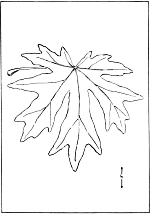
Leaf. Physical Qualities:
Light in weight (26th in
this list); 30 lbs. per cu.
ft.; sp. gr. 0.4909; medium strong (47th
in this list); elasticity medium (57th
in this list); medium hard (31st in this
list); shrinkage, 4 per cent.; warps
..........; not durable; rather hard
to work; splits with difficulty.
Common Uses: Tool and ax handles,
furniture, interior finish.
Remarks: A valuable wood on the
Pacific coast.
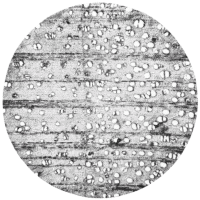
Cross-section, magnified 37½ diameters. 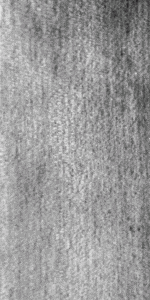
Radial Section, life size. 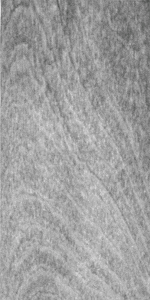
Tangential Section, life size.
Soft Maple. White Maple. Silver Maple.
Silver, refers to white color of underside of leaf.
Acer saccharinum Linnaeus. Acer dasycarpum Ehrhart.
Acer, the classical Latin name; saccharinum, refers to sweetish juice;
dasycarpum, refers to the wooliness of the fruit when young.
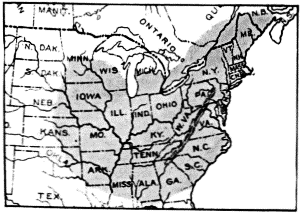
Habitat. Habitat: (See map);
best in lower Ohio valley.
Characteristics of the
Tree: Height, 50'-90',
even 120'; diameter, 3'-5';
form suggests elm; bark,
reddish brown, furrowed,
surface separating into
large, loose scales; leaves,
palmately 5 lobed, with
narrow, acute sinuses, silvery
white beneath, turn
only yellow in autumn;
fruit, divergent, winged
samaras.
Appearance of Wood:
Color, brown and reddish,
sap-wood, cream; diffuse-porous;
rings, obscure;
grain, twisted, wavy, fine,
polishes well; rays, thin,
numerous.
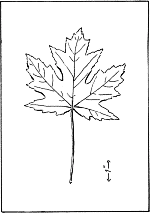
Leaf. Physical Qualities:
Weight, medium (40th in
this list); 32 lbs. per cu.
ft.; sp. gr., 0.5269; very strong (19th
in this list); very elastic (20th in this
list); hard (25th in this list); shrinkage,
5 per cent.; warps, ............;
not durable under exposure; easily
worked; splits in nailing.
Common Uses: Flooring, furniture,
turnery, wooden ware.
Remarks: Grows rapidly. Curly
varieties found. Sap produces some
sugar.
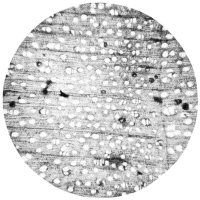
Cross-section, magnified 37½ diameters. 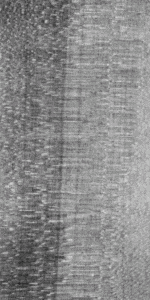
Radial Section, life size. 
Tangential Section, life size.
Red Maple.
Acer rubrum Linnaeus.
Acer, the classical Latin name; rubrum, refers to red flowers and
autumn leaves.
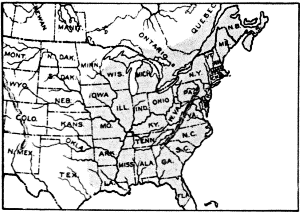
Habitat. Habitat: (See map);
best in lower Ohio valley.
Characteristics of the
Tree: Height, 80'-120';
diameter, 2'-4'; branches,
low; bark, dark gray,
shaggy, divided by long
ridges; leaves, palmately
5 lobed, acute sinuses;
fruit, double samaras,
forming characteristic maple
key.
Appearance of Wood:
Color, light reddish brown,
sap-wood, lighter; diffuse-porous;
rings, obscure;
grain, crooked; rays, numerous,
obscure.
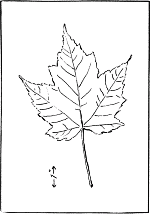
Leaf. Physical Qualities:
Weight, medium (30th in
this list); 38 lbs. per cu.
ft.; sp. gr., 0.6178; strong
(36th in this list); elastic
(36th in this list);
hard (27th in this list);
shrinkage, 5 per cent.; warps .......;
not durable; fairly hard to work; splits
with difficulty, splits badly in nailing.
Common Uses: Flooring, turning,
wooden ware.
Remarks: Grows rapidly. Has red
flowers, red keys, red leaf stems, and
leaves scarlet or crimson in autumn.
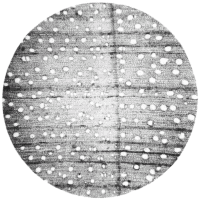
Cross-section, magnified 37½ diameters. 
Radial Section, life size. 
Tangential Section, life size.
Hard Maple. Sugar Maple. Rock Maple.
Acer saccharum Marshall.
Acer, the classical Latin name; saccharum, refers to sweet sap.
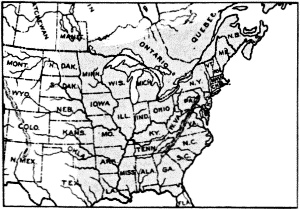
Habitat. Habitat: (See map);
best in regions of Great
Lakes.
Characteristics of the
Tree: Height, 100'-120';
diameter, 1½'-3', even 4';
often trees in forest are
without branches for 60'-70'
from ground, in the
open, large impressive
tree; bark, gray brown,
thick, deep, longitudinal
fissures, hard and rough;
leaves, opposite, 3 to 5
lobed, scarlet and yellow
in autumn; fruit, double,
slightly divergent samaras.
Appearance of Wood:
Color, light brown tinged
with red; diffuse-porous
rings, close but distinct;
grain, crooked, fine, close,
polishes well; rays, fine
but conspicuous.
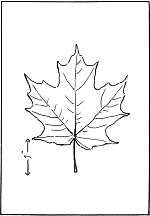
Leaf. Physical Qualities:
Heavy (19th in this list);
43 lbs. per cu. ft.; sp. gr., 0.6912; very
strong (8th in this list); very elastic
(5th in this list); very hard (7th in
this list); shrinkage, 5 per cent.; warps
badly; not durable when exposed; hard
to work; splits badly in nailing.
Common Uses: School and other furniture,
car construction, carving, wooden
type, tool handles, shoe lasts, piano actions,
ships' keels.
Remarks: Tree very tolerant. The
uses of this wood are chiefly due to its
hardness. Bird's-Eye Maple and Curly
Maple are accidental varieties. Pure
maple sugar is made chiefly from this
species. Its ashes yield large quantities
of potash.
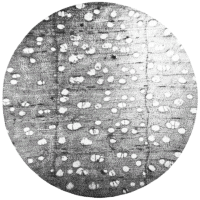
Cross-section, magnified 37½ diameters. 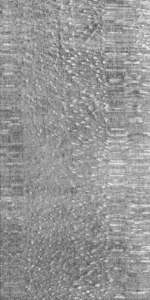
Radial Section, life size. 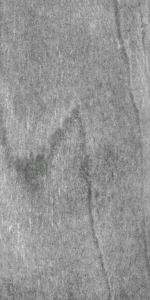
Tangential Section, life size.
Basswood. Linden.
Bass, refers to bast or inner bark.
Tilia americana Linnaeus.
Tilia, the classical Latin name.
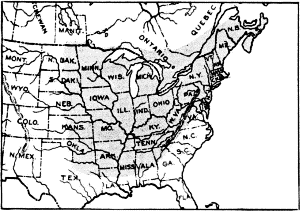
Habitat. Habitat: (See map);
best in bottom lands of
lower Ohio River.
Characteristics of the
Tree: Height, 60'-70',
even 130'; diameter, 2'-4';
trunk, erect, pillar-like,
branches spreading, making
round heads; bark,
light brown, furrowed,
scaly surface, inner bark
fibrous and tough, used
for matting; leaves,
oblique, heart-shaped, side
nearest branch larger;
fruit clustered on long
pendulous stem, attached
to vein of narrow bract.
Appearance of Wood:
Color, very light brown,
approaching cream color,
sap-wood, hardly distinguishable;
diffuse-porous;
rings, fine and close but
clear; grain, straight;
rays, numerous, obscure.
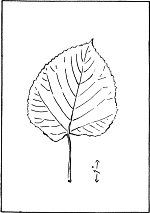
Leaf. Physical Qualities: Light in weight
(49th in this list); 28 lbs. per cu. ft.;
sp. gr., 0.4525; weak (60th in this list);
elasticity, medium (49th in this list);
soft (64th in this list); shrinkage, 6
per cent.; warps comparatively little;
quite durable; very easily worked; somewhat
tough to split, nails well.
Common Uses: Woodenware, carriage
bodies, etc., picture molding, paper pulp,
etc.
Remarks: May be propagated by
grafting as well as by seed. Is subject
to attack by many insects. Wood used
for carriage bodies because flexible and
easily nailed.
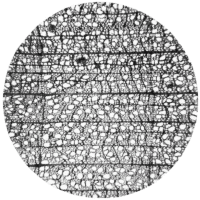
Cross-section, magnified 37½ diameters. 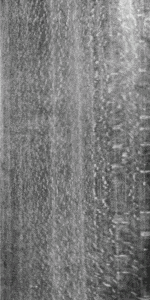
Radial Section, life size. 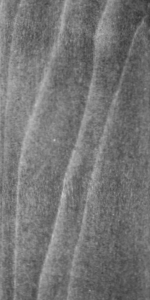
Tangential Section, life size.
Sour Gum. Tupelo. Pepperidge. Black Gum.
Tupelo, the Indian name.
Nyssa sylvatica Marshal.
Nyssa, from Nysa, the realm of moist vegetation and the home of
Dio-nysus (Bacchus) (the tree grows in low wet lands); sylvatica, refers
to its habit of forest growth.
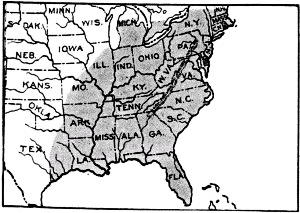
Habitat. Habitat: (See map);
best in Southern Appalachian
mountains.
Characteristics of the
Tree: Height, 40'-50',
even 100'; diameter, 1'6"-3'6",
even 5'; variable in
form; bark, brown, deeply
fissured and scaly; leaves,
in sprays, short, petioled,
brilliant scarlet in autumn;
fruit, bluish black,
sour, fleshy drupe.
Appearance of Wood:
Color, pale yellow, sap-wood,
white, hardly distinguishable;
diffuse-porous;
rings, not plain;
grain fine, twisted and interwoven;
rays, numerous,
thin.
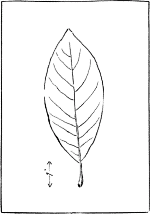
Leaf. Physical Qualities:
Medium heavy (25th in
this list); 39 lbs. per cu.
ft.; sp. gr., 0.6356;
strong (34th in this list); elasticity,
medium (51st in this list); hard (20th
in this list); shrinkage, 5 or 6 per
cent.; warps and checks badly; not
durable if exposed; hard to work; splits
hard, tough.
Common Uses: Wagon hubs, handles,
yokes, wooden shoe soles, docks and
wharves, rollers in glass factories.
Remarks: The best grades closely resemble
yellow poplar.
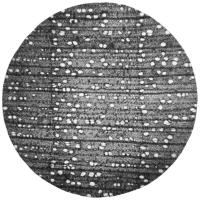
Cross-section, magnified 37½ diameters. 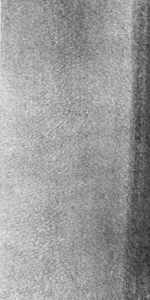
Radial Section, life size. 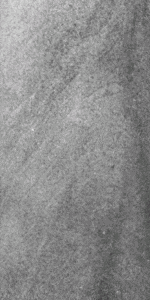
Tangential Section, life size.
Black Ash. Hoop Ash.
Hoop, refers to its use for barrel hoops.
Fraxinus nigra Marshall. Fraxinus sambucifolia.
Fraxinus, from a Greek word (phraxis) meaning split, refers to the
cleavability of the wood; sambucifolia, refers to the fact that the leaves are
in odor like those of Elder (Sambucus).
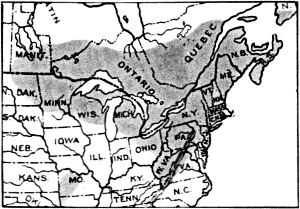
Habitat. Habitat: (See map);
best in moist places.
Characteristics of the
Tree: Height, 80'-90'; diameter,
1'-1½'; slenderest
of the forest trees, upright
branches; bark, gray
tinged with red, irregular
plates, with thin scales;
leaves, 10"-16" long, compound,
7 to 11 leaflets, in
autumn rusty brown;
fruit, single samaras in
panicles.
Appearance of Wood:
Color, dark brown, sap-wood
light; ring-porous;
rings, well defined; grain,
straight, burls often form
highly prized veneers;
rays, numerous and thin.
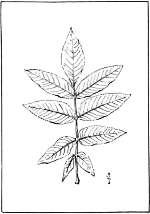
Leaf. Physical Qualities:
Medium heavy (27th in
this list); 39 lbs. per cu.
ft.; sp. gr., 0.6318; strong
(38th in this list); elasticity, medium
(12th in this list); hard (23d in this
list); shrinkage, 5 per cent.; warps,
but not very much; not durable when
exposed; hard to work; separates easily
in layers, hence used for splints.
Common Uses: Interior finish, cabinet
work, fencing, barrel hoops.
Remarks: The flexibility of the
wood largely determines its uses.
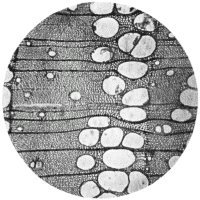
Cross-section, magnified 37½ diameters. 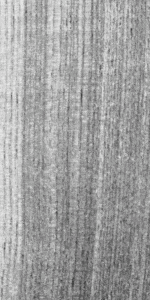
Radial Section, life size. 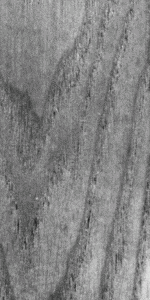
Tangential Section, life size.
Oregon Ash.
Fraxinus oregona Nuttall.
Fraxinus, from a Greek word (phraxis) meaning split, refers to the
cleavability of the wood; oregona, named for the State of Oregon.
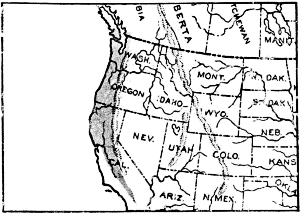
Habitat. Habitat: (See map);
best in southern Oregon.
Characteristics of the
Tree: Height, 50'-80'; diameter,
1'-1½', even 4';
branches, stout, erect;
bark, grayish brown, deep
interrupted fissures, broad,
flat ridges, exfoliates;
leaves, 5"-14" long; pinnately
compound, 5 to 7
leaflets; fruit, single samaras
in clusters.
Appearance of Wood:
Color, brown, sap-wood
thick, lighter; ring-porous;
rings, plainly marked
by large, open, scattered
pores; grain, coarse,
straight; rays, numerous,
thin.
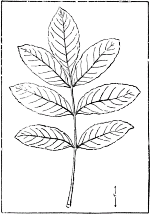
Leaf. Physical Qualities:
Weight, medium (37th in
this list); 35 lbs. per cu.
ft.; sp. gr., 0.5731; medium
strong (50th in this list); elasticity,
medium (48th in this list); medium
hard (29th in this list); shrinkage,
5 per cent.; warps,............;
not durable; hard to work, tough; splits
with difficulty.
Common Uses: Furniture, vehicles,
cooperage.
Remarks: A valuable timber tree of
the Pacific coast.
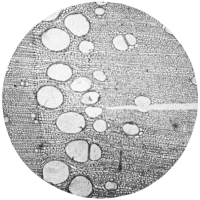
Cross-section, magnified 37½ diameters. 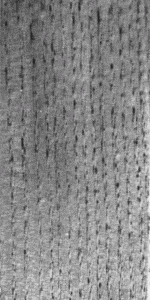
Radial Section, life size. 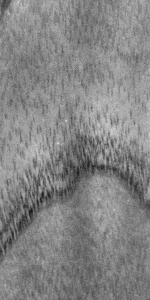
Tangential Section, life size.
Blue Ash.
Blue, refers to blue dye obtained from inner bark.
Fraxinus quadrangulata Michaux.
Fraxinus, from a Greek word (phraxis) meaning split, refers to the
cleavability of the wood; quadrangulata, refers to four-angled branchlets.
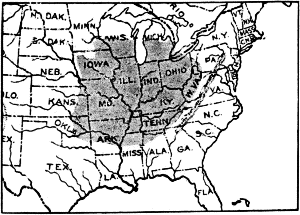
Habitat. Habitat: (See map);
best in lower Wabash valley.
Characteristics of the
Tree: Height, 60'-70',
even 120'; diameter, 1'-2';
tall, slender, four-angled,
branchlets; bark, light
gray, irregularly divided
into large plate-like scales,
inside bark, bluish, yielding
dye; leaves, 8"-12"
long, compound pinnate,
5 to 9 leaflets; fruit,
winged samaras in panicles.
Appearance of Wood:
Color, light yellow,
streaked with brown, sap-wood
lighter; ring-porous;
rings, clearly marked
by 1 to 3 rows of large,
open ducts; grain,
straight; rays, numerous,
obscure.
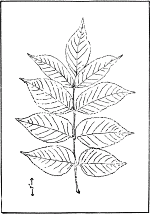
Leaf. Physical Qualities: Heavy (16th in
this list); 44 lbs. per cu. ft.; sp. gr.,
0.7184; strong (37th in this list); elasticity,
medium (58th in this list); hard
(12th in this list); shrinkage, 5 per
cent.; warps, ............; most durable
of the ashes; hard to work; splits
readily, bad for nailing.
Common Uses: Carriage building,
tool handles.
Remarks: Blue ash pitchfork handles
are famous.
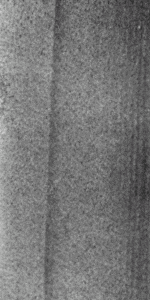
Radial Section, life size. 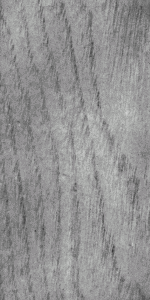
Tangential Section, life size.
Red Ash.
Red, from color of inner bark.
Fraxinus pennsylvanica Marshall. Fraxinus pubescens Lambert.
Fraxinus, from a Greek word (phraxis) meaning split, refers to the
cleavability of the wood; pennsylvanica, in honor of the State of Pennsylvania;
pubescens, refers to down on new leaves and twigs.
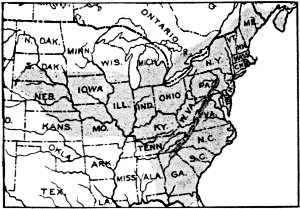
Habitat. Habitat: (See map);
best east of Alleghany
mountains.
Characteristics of the
Tree: Height, 40'-60'; diameter,
12"-18"; small,
slim, upright branches;
bark, brown or ashy, great,
shallow, longitudinal furrows;
leaves, 10"-12"
long, pinnately compound,
7 to 9 leaflets, covered
with down; fruit, single
samara.
Appearance of Wood:
Color, light brown, sap-wood
lighter and yellowish;
ring porous; rings,
marked by pores; grain,
straight, coarse; rays,
numerous, thin.
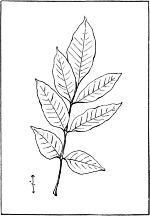
Leaf. Physical Qualities:
Weight, medium (28th in
this list); 39 lbs. per cu.
ft.; sp. gr., 0.6251; strong
(30th in this list); elasticity, medium
(53d in this list); hard (17th in this
list); shrinkage, 5 per cent.; warps little;
not durable; hard to work; splits
in nailing.
Common Uses: Agricultural implements,
oars, handles, boats.
Remarks: Often sold with and as
the superior white ash.
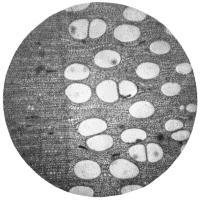
Cross-section, magnified 37½ diameters. 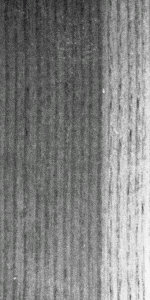
Radial Section, life size. 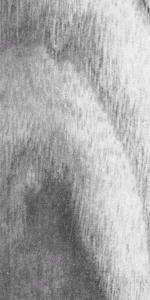
Tangential Section, life size.
White Ash.
White, refers to whitish color of wood.
Fraxinus americana Linnaeus.
Fraxinus, from a Greek word (phraxis) meaning split, refers to the
cleavability of the wood.
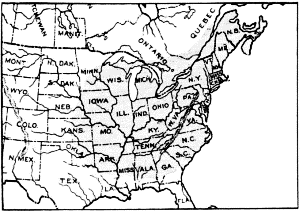
Habitat. Habitat: (See map);
best in the bottom lands
of lower Ohio valley.
Characteristics of the
Tree: Height, 70'-80',
even 120'; diameter, 3'-6';
branches rather high, tree
singularly graceful; bark,
gray, narrow furrows,
clean, neat trunk; leaves,
8"-15" long, compound,
tufted, smooth, turns in
autumn to beautiful purples,
browns and yellows;
fruit, panicles of samaras,
persistent till midwinter.
Appearance of Wood:
Color, light reddish brown,
sap-wood whitish; ring-porous,
rings clearly
marked by pores; straight-grained;
pith rays obscure.
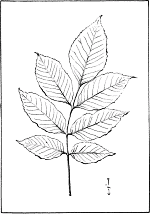
Leaf. Physical Qualities:
Heavy (22d in this list);
39 lbs. per cu. ft.; sp. gr.,
0.6543; strong (31st in this list); elastic
(30th in this list); hard (17th in
this list); shrinkage, 5 per cent.; warps
little; not durable in contact with soil;
hard and tough; splits readily, nails
badly.
Common Uses: Inside finish, farm
implements, barrels, baskets, oars, carriages.
Remarks: Forms no forests, occurs
scattered. Its uses for handles and oars
determined by combination of strength,
lightness and elasticity.
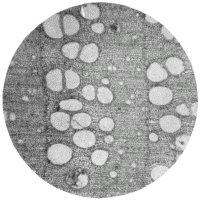
Cross-section, magnified 37½ diameters. 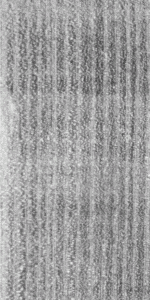
Radial Section, life size. 
Tangential Section, life size.
|