I t has been remarked by Montalembert that almost all
the great leading men in history have been intimately
associated with superior women. If we look on Moses
in a merely human light, and judge him by what he
accomplished, as we do other historic characters, he is in certain
respects the greatest man of antiquity. The works of the legislators,
kings, and conquerors of ancient history were perishable.
Their cities have crumbled, their governments and commonwealths
have dissolved as waves of the sea. Moses alone
founded a nation that still lives with an imperishable vitality,—a
people whose religious literature still expresses the highest
aspirations of the most cultivated nations of the earth.
His advent, therefore, forms an era in the history of humanity,
and the very opening of his career presents us with pictures
of imposing and venerable female characters. The mother of
Moses is mentioned, in the epistle to the Hebrews, as one of
those worthies of ancient time, who triumphed over things seen
by the power of a sublime faith in the invisible God and his
promises. The very name of the mother (Exodus vi. 20), Jochebed,—"the
glory of Jehovah,"—shows that a deep spirit of
religious enthusiasm and trust was the prevailing impulse in the
family. She was of that moral organization whence, through
the laws of descent, might spring the prophet and prophetess.
By faith she refused to obey the cruel order of the king, and
for three months hid the beautiful child.
And here comes in the image of the first, and one of the most
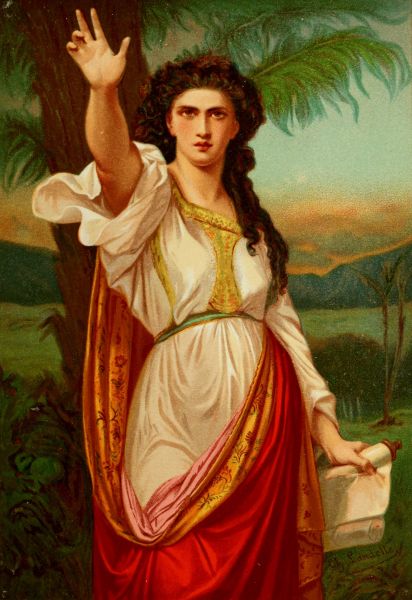
revered, of the race of Hebrew prophetesses, Miriam, the elder
sister of Moses. According to the Rabbinic tradition, the gift
of prophecy descended upon her even in childhood. The story
is that Miriam's mother, Jochebed, was one of the midwives to
whom Pharaoh gave the command to destroy the children, and
that when the child Miriam heard it, being then only five years
old, her face flushed scarlet, and she said in anger: "Woe to this
man! God will punish him for his evil deeds." After this the
tradition says that when the decree went forth for the destruction
of every male child, Amram separated himself from his wife
Jochebed, lest he should bring on her the anguish of fruitless
motherhood. After three years, the spirit of prophecy came on
Miriam as she sat in the house, and she cried out suddenly:
"My parents shall have another son, who shall deliver Israel out
of the hands of the Egyptians." The angel Gabriel guided Amram
back to find his wife, whom he found blooming in all the
beauty of youth, though more than a hundred years old. When
she found herself with child, she feared that it might prove a
boy, to be cruelly slain. Then the Eternal One spake in a
dream to the father, bidding him be of good cheer, for he would
protect the child, and all nations should hold him in honor.
The tradition goes on to say that the boy was born without
pain, and that when he was born the whole house was filled with
a light as of bright sunshine. The mother's anxiety was increased
when she saw the beauty of the child, who was lovely
as an angel of God. The parents called him Tobias, "God is
good," to express their thankfulness, and Amram kissed Miriam
on the brow and said: "Now know I that thy prophecy is come
true."
In contrast to this ornate narrative is the grave and chaste simplicity
of the Scripture story. It is all comprised in two or three
verses of the second chapter of Exodus. "And there went a man
of the house of Levi, and took to wife a daughter of Levi. And
the woman conceived, and bare a son: and when she saw him
that he was a goodly child she hid him three months. And when
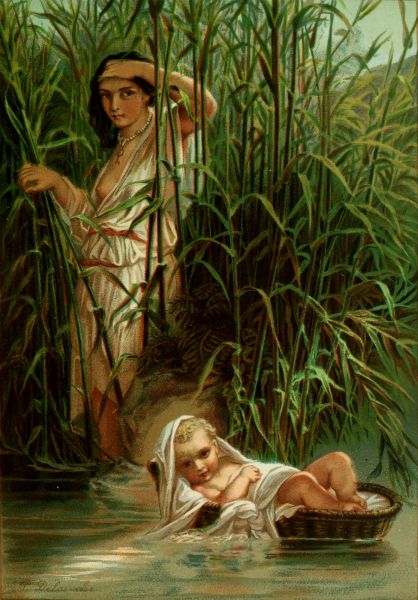
she could no longer hide him, she took for him an ark of bulrushes,
and daubed it with slime and with pitch, and put the
child therein and laid it in the flags by the river's brink. And
his sister stood afar off to see what would be done to him. And
the daughter of Pharaoh came down to wash herself at the river;
and her maidens walked along the river's side: and when she
saw the ark among the flags, she sent her maid to fetch it. And
when she had opened it, she saw the child: and behold, the babe
wept. And she had compassion on him and said: This is one of
the Hebrew children. Then said his sister to Pharaoh's daughter,
Shall I go and call to thee a nurse of the Hebrew women, that
she may nurse the child for thee? And Pharaoh's daughter said
unto her, Go. And the maid went and called the child's mother.
And Pharaoh's daughter said, Take this child away, and nurse it
for me, and I will give thee thy wages; and the woman took the
child and nursed it. And the child grew, and she brought him
unto Pharaoh's daughter, and she called his name Moses: and
she said, Because I drew him out of the water."
To this, we may add the account which St. Stephen gives when
standing before the Jewish council. "In which time Moses was
born, who was exceeding fair,[2] and nourished up in his father's
house three months. And when he was cast out, Pharaoh's
daughter took him up and nourished him for her own son. And
Moses was learned in all the wisdom of the Egyptians, and was
mighty in words and deeds."
Such are the extremely brief notices of a great event and of a
group of characters whose influence on mankind every one of us
feels to-day. For, the Jewish nation, in being chosen of God to
be a sacerdotal race, was to pass through a history which should
embody struggles, oppressions, agonies, victories, and deliverances,
such as should represent to all time the sorrows and joys,
the trials and hopes, of humanity. To this day, the events of
Jewish history so well express universal experiences, that its literature
in all languages, and under all difference of climate and
custom, has an imperishable hold on the human heart. It has
been well said that nations struggling for liberty against powerful
oppressors flee as instinctively to the Old Testament as they
do to mountain ranges. The American slave universally called
his bondage Egypt, and read the history of the ten plagues
and the crossing of the Red Sea as parts of his own experience.
In the dark days of slavery, the history of Moses was sung at
night, and by stealth, on plantations, with solemn rhythmic movements,
reminding one of old Egyptian times. It was the Marseillaise
of a rude people, forbidden by the master, and all the
dearer to the slave.
We must take the full force of the anguish, the ignominy,
the oppression of slavery acting on noble and sensitive natures,
elevated by faith in a high national destiny, and looking with
earnestness and prayer for its evolution, in order to get a full
idea of the character of Miriam. Such periods produce children
with that highly exalted organization which is predisposed to receive
the prophetic impulse. The Rabbinic traditions with regard
to Miriam, which we have added, are detailed at length by Josephus
in his history, and show how strong is the impression which
the personality of this woman made on those of her time, in connection
with the life of their great lawgiver.
The Bible account of the birth and preservation of Moses has
the usual quality of Scripture narratives; it is very brief and
very stimulating to the imagination. Who of us has not seen
in childhood the old Nile with its reeds and rushes, its background
of temples and pyramids? We have shared the tremors
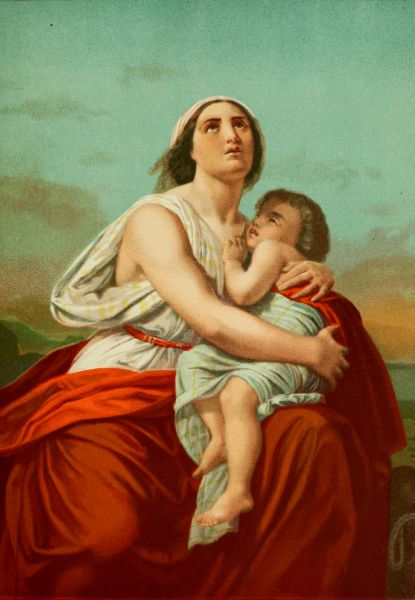
of the mother and sister while the little one was launched in the
frail ark. Probably some report of the kindness of the Princess
had inspired a trembling hope. The mother dares not stay to
guard her treasure, lest she draw cruel eyes upon it; but the little
Miriam, as a child playing among the tall reeds, can remain on
the watch without attracting attention. In the scene where the
helpless stranger is discovered by the Princess, we have, in the
movements of the sister, all the characteristics, in miniature, of
the future leader of Israel. Prompt, fearless, with an instantaneous
instinct as to the right thing to be done at the critical
moment, we can see the little Hebrew maid press forward amid
the throng surrounding the alarmed and crying child. The
tradition is that an Egyptian woman, at the command of the
Princess, tried to quiet him at her breast, and that the young
prophet indignantly rejected the attempt,—a statement which
we who know babies, whether prophetic or otherwise, may deem
highly probable. Then spoke up the little Miriam: "Shall I go
and call thee a nurse of the Hebrew women, that she may nurse
the child for thee?" This was a bold proposal, but it succeeded.
Perhaps the small speaker had some of the wonderful beauty of
her infant brother to set off her words: at all events, the Princess
seems at once to have trusted her with the commission. We may
readily believe the little feet had not far to go. The child comes
back to his mother's bosom as a royal ward.
We see here in the child Miriam great self-poise and self-confidence.
She is not afraid of royalty, and, though of an enslaved
and despised race, is ready to make suggestions to a queen.
These are the traits of a natural leader, and we shall see them
reappearing later in the history of Miriam. It was customary
among the Oriental races to prolong the period of nursing two
or three years, and Moses was thus in the care of his mother
and elder sister for a long time.
Josephus gives the tradition current among the Jews, that the
child was a wonderfully attractive one,—so beautiful, that every
one who beheld him turned to look at him. The mother and
sister looked upon him as the visible pledge of God's mercy to
their suffering people, as well as the visible answer to prayer.
The God of Abraham, and Isaac, and Jacob, in whose hand are
all hearts, had made a refuge for the young Deliverer in the
very family of the destroying tyrant!
The intercourse thus established between the court of Pharaoh
and these two women must have materially advanced their position.
We see in the Princess indications of a gracious and affable
nature, and in Miriam a quick readiness to turn every favorable
indication to good account. It is, therefore, quite probable that
Miriam may have shared the liberal patronage of the Princess.
Evidently she continued to influence the mind of her brother
after he had gone into the family of Pharaoh, since we see her
publicly associated with him at the great period of the national
deliverance.
In the history of Moses, and in his laws and institutes, we see
a peculiar and almost feminine tenderness and consideration for
whatever is helpless and defenceless. Perhaps the history of his
own life,—the story of the forlorn helplessness of his own cradle,
and the anguish of his mother and sister,—operating on a large
and generous nature, produced this result. For example, among
the laws of the great lawgiver, we find one which forbids the
caging of a free bird (Deut. xxii. 6, 7); thus it was allowed to
take the young who might easily be reconciled to captivity, but
forbidden to take those accustomed to freedom. Whoever has
seen the miserable struggles of a free bird brought suddenly
into captivity, can appreciate the compassionateness of the man
who made such a law for a great people. In the same spirit
another law forbids the muzzling of the ox when he treads the
grain, and commands every man to stop and help an overburdened
ass that falls beneath his load; and it particularly adds,
that the ass of an enemy shall be helped, no matter how great
the unwillingness.
In fact, the strongest impulse in the character of Moses appears
to have been that of protective justice, with regard to every helpless
and down-trodden class. The laws of Moses, if carefully
examined, are a phenomenon,—an exception to the laws of either
ancient or modern nations in the care they exercised over women,
widows, orphans, paupers, foreigners, servants, and dumb animals.
Of all the so-called Christian nations there is none but could advantageously
take a lesson in legislation from them. There is a
plaintive, pathetic tone of compassion in their very language, which
seems to have been learned only of superhuman tenderness. Not
the gentlest words of Jesus are more compassionate in their spirit
than many of these laws of Moses. Some of them sound more like
the pleadings of a mother than the voice of legal statutes. For
example: "If thou lend money to any that is poor by thee, thou
shalt not lay upon him usury. If thou at all take thy neighbor's
garment to pledge, thou shalt deliver it unto him by that the sun
goeth down, for that is his covering, it is his raiment for his
skin; wherein shall he sleep? and it shall come to pass that
when he crieth unto me I will hear, for I am gracious." "Thou
shalt not oppress a hired servant that is poor and needy, whether
he be of thine own brethren or of strangers that are within thy
gates. At his day shalt thou give him his wages, neither shall
the sun go down upon it, for he is poor and setteth his heart upon
it, lest he cry unto the Lord against thee." "Thou shalt not pervert
the judgment of the stranger nor of the fatherless, nor take
the widow's raiment as pledge; thou shalt remember that thou
wast a bondman in Egypt, and the Lord thy God redeemed thee,
therefore I command thee to do this thing." "When thou cuttest
down thy harvest and hast forgot a sheaf in the field, thou shalt
not go again to fetch it, it shall be for the stranger, the fatherless,
and the widow. When thou beatest thine olive-tree, thou shalt
not go over it again; when thou gatherest the grapes of thy vineyard,
thou shalt not glean it afterward, it shall be for the stranger,
the fatherless, and the widow."
In all this, we see how deep was the impression made on the
mind of Moses by the enslaved and helpless condition of his people.
He had felt for the struggles of the enslaved, and it made
him tender to the wild bird of the desert beating against its cage,
to the overloaded ass fainting under his burden, to the hungry ox
toiling to procure food which he was restricted from enjoying.
Of the period including the time that Moses left his mother and
sister to dwell in the palace of the Pharaohs, and receive the education
of an Egyptian prince, we have no record in the sacred
narrative, except the declaration of Stephen in the book of Acts,
that he was learned in all the wisdom of the Egyptians, and
mighty in word and deed.
In Smith's Dictionary of the Bible there is a brief résumé of what
is said by ancient authors of this period of his life. According to
Strabo, he was educated at Heliopolis, and grew up there as a
priest, under his Egyptian name of Osariph. According to Philo,
he was taught the whole range of Greek, Chaldee, and Assyrian
literature. From the Egyptians, especially, he learned mathematics,
to train his mind for the unprejudiced reception of truth.
He invented boats, engines for building, instruments of war and
of hydraulics, and also understood hieroglyphics and mensuration
of land. He taught Orpheus, and is thence called by the Greeks
Musæus, and by the Egyptians Hermes. According to Josephus,
he was sent as general of the Egyptian army on an expedition
against Ethiopia. He got rid of the serpents, in the countries
through which he was to march, by turning basketfuls of ibises
upon them. Tharbis, the daughter of the King of Ethiopia, fell
in love with him, and induced her father to surrender to him;
and he returned in triumph with her to Egypt as his wife, and
founded the city of Hermopolis to celebrate his victory. We see
here, that if Moses remained true to the teachings of his mother
and sister, and the simple faith of Israel, it was not for want of
the broadest culture the world afforded. Egypt was the cradle
of arts and letters, and the learned men of Greece traveled there
to study the mysteries which were concealed under her hieroglyphics.
Moses was a priest of Egypt in virtue of being a
prince of a royal house. According to the Egyptian tradition,
although a priest of Heliopolis, he always performed his devotions
outside the walls of the city, in the open air, turned towards
the sunrising. According to the language of St. Paul, "he endured
as seeing Him that is invisible."
In Wilkinson's "Egypt," we have some interesting suggestions
as to the life and training of the Egyptian priest, which
go far to show what manner of education must have been given
to Moses. The utmost purity of person was enjoined. Daily
and nightly bathing of the whole person, a dress of pure linen,
great exactness as to food, with strict dietetic regulations, were
also a part of the training. The Egyptians were the fountains
of physiological and medical knowledge to the nations of antiquity,
and undoubtedly these studies were a part of the "wisdom"
of the priests. Moses must also have passed through the lesser
and the greater initiation into the mysteries of Egypt; in which
were taught the unity of God, the immortality of the soul, and
the retributions of a future life. Thus he had an opportunity of
comparing that portion of the Divine teaching and traditions which
had descended through Egypt, with the pure stream which had
flowed down through the patriarchal families.
It thus appears that the Divine Being, in choosing the teacher
and lawgiver to form his chosen nation, did not disdain the
existing wisdom of the world up to that time. Moses had before
him the results of all the world's experience in thought and
culture. Egypt was the best there was to know, and he knew
Egypt thoroughly. While, however, he often took suggestions
from the ritual and philosophy of the Egyptians, the general
bent of his institutes in reference to them was jealous and antagonistic.
At the end of such a training and such varied experience,—as
priest, as general, as conqueror,—Moses returns to Egypt
and meets again his sister, in whose heart the prophetic fire is
still burning; and the sight of the oppression and misery of
his people leads him to seek to interpose for their deliverance.
The first act is the simple, unadvised movement of indignation
at injustice; he sees a Hebrew slave writhing under the lash
of an Egyptian; he kills the tyrant and delivers the slave.
He next tries to rouse a national spirit of union among his
people, and separates two who are fighting, with the words,
"Ye are brethren, and should not contend." St. Stephen further
interprets the heart of Moses at this crisis: "For he supposed
that his brethren would have understood how that God
by his hand would deliver them: but they understood not. But
he that did his neighbor wrong thrust him away, saying, Who
made thee a ruler and a judge over us? Wilt thou kill me as
thou didst the Egyptian yesterday?" (Acts vii. 25, 27, 28.)
According to Josephus, there were at this time envious and
jealous plots hatching against Moses in the court of Pharaoh,
and his life was threatened.
He fled to the land of Midian, where, with characteristic
chivalry, his first act was to interfere for the protection of
some women who were prevented by the brutality of the
shepherd herdsmen from watering their flocks.
Still we see in him the protector of the weak and defenseless.
In this case his interference procures for him the gratitude of the
priest of the shepherd tribe, and the exiled Egyptian prince becomes
a shepherd in the wilderness of Midian. He marries and
settles down, apparently content with the life of a simple herdsman.
This seems to have been one of those refluent tides to
which natures of great sensibility are liable, after a short experience
of the realities of life. At once ardent and tender,
Moses had been ready to cast in his fortunes with his oppressed
and suffering people; but he found them unwilling to listen to
him, and unworthy of freedom. His heart sinks,—the grandeur
of courts, military renown, the wisdom of Egypt, are all less in
his eyes than even the reproach of a good cause; but he feels
himself powerless and alone, rejected by the very people whom
he came to serve. Like the Greater Prophet of whom he was
the type, "He came unto his own, and his own received him
not."
In sinking of heart and despair, the solitude of the wilderness,
its loneliness and stern simplicity, are a refuge and rest
to him. In the great calm of nature he draws near to Him
who is invisible. What is most peculiar in the character of
Moses, with all his advantages of beauty, rank, station, education,
and military success, is a singular absence of self-esteem and
self-reliance. When the God of his fathers appears in flaming
fire and commissions him to go and lead forth his oppressed
people, Moses shrinks from the position, and prays that it may
be given to another. He is not eloquent; he says, he is of stammering
speech and a slow tongue, and he prays the Lord to
choose another. How often it happens that the work of the
world is thus put upon men who shrink from it,—not from
indolence, but from an exalted ideality, a high conception of
the work to be done! Moses was dumb and stammering with
low-minded, vulgar-natured men, as men who live high up in
the radiant air of the nobler feelings often are. How bring his
great thoughts and purer feelings down to their conceptions?
He must have a spokesman, and evidently regards his brother
Aaron as better fitted to take the lead than himself.
Aaron seems to be a specimen of that class of men—facile,
sympathetic, easily moved, and with a ready gift of words—whom
greater natures often admire for a facility and fluency
which their very greatness denies to them. And yet it is this
Aaron who, when Moses had been more than a month absent on
the mount, was carried away by the demand of the people to
make them a visible god; and who, if his brother had not cast
himself down in agony of intercession, would have been swept
away by the Divine anger.
In the great scene of the national deliverance, after the passage
of the Red Sea, behold Moses and Miriam once more reunited in
a grand act of national triumph! A solemn procession goes forth
on the shores of the sea, and Moses leads the psalm of thanksgiving.
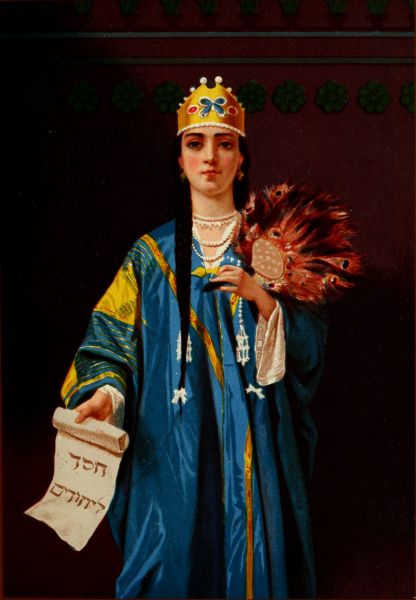
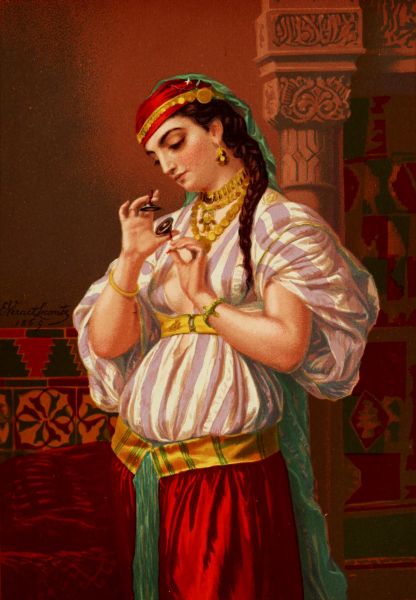
"And Miriam the prophetess, the sister of Aaron, took a
timbrel in her hand; and all the women went out after her with
timbrels and with dances. And Miriam answered them, saying,
Sing ye to the Lord, for he hath triumphed gloriously; the horse
and his rider hath he thrown into the sea." The solemn union of
man and woman in this great public act of worship and thanksgiving,
which inaugurated a free nation, is indicative of the
equality given to women by the Divine Being in all that pertains
to the spiritual and immortal. "On your sons and your
daughters," says the prophet Joel, "I will pour out of my spirit,
and they shall prophesy"; and the same passage is quoted by
St. Peter as expressive of the genius of the opening Christian
dispensation. Thus we find at the opening of the Mosaic, as
well as the Christian dispensation, this announcement of the
equality of the sexes in their spiritual nature.
Many circumstances make it probable that as Moses and
Miriam unitedly led the devotions of the people on this most
solemn of national festivals, so they continued to be united in
administrative station during that important period when the
national code of laws and religious ritual were being crystallized
and consolidated. We infer from a passage in the prophet
Micah,[3] that it was not in mere brotherly fondness that Moses
would have consulted this sister, who had been to him as a
mother, but that she was understood to be one of the divinely
appointed leaders of the people, and that he was thus justified
in leaning upon her for counsel.
Moses was distinguished above all men we read of in history
by a singular absence of egoism. He was like a mother
in the midst of the great people whose sins, infirmities, and sorrows
he bore upon his heart with scarcely a consciousness of
self. He had no personal interests. He was a man so lowly
and gentle of demeanor that all his associates felt free to advise
him. Thus his father-in-law, Jethro, visiting him in the
wilderness, expresses himself with perfect freedom in regard to
the excessive toil he is undergoing in the care of the people,
and suggests the appointment of elders who should share the
work of management. The eighteenth chapter of Exodus is a
beautiful picture of the character and demeanor of Moses towards
his father-in-law, and of his meek readiness to take
advice. It appears that in all the long, laborious journey
through the wilderness, Moses felt the burden and the responsibility
altogether more than the honor, and there is a despairing
freedom in the complaints he sometimes pours out to his
God. Thus in one of the periods of national discontent, when
the people were all "weeping and murmuring every man in
his tent door," Moses says, "Wherefore hast thou afflicted thy
servant? and why have I not found favor in thine eyes, that
thou layest the burden of all this people upon me? Have I
conceived all this people,—have I begotten them, that thou
shouldst say, Carry them in thy bosom as a nursing father
beareth the sucking child, unto the land which thou swarest
unto their fathers? I am not able to bear all this people alone,
because it is too heavy for me. And if thou deal thus with
me, kill me, I pray thee, out of hand, if I have found favor in
thy sight; and let me not see my wretchedness." The answer
to this prayer is the appointment of seventy elders, under the
care of God, to be sharers in the responsibilities of Moses.
This division of responsibility seems to have relieved Moses,
and he had not a thought of divided honor, though it at once
occurred to others with regard to him. When the gift of
prophecy descended upon some of these seventy elders, it
seems to have been imagined by some that this honor would
take from the dignity of Moses; and we are told (Num. xi.
28, 29), "Joshua, the son of Nun, the servant of Moses, one
of his young men, answered and said, My lord Moses, forbid
them. And Moses said unto him, Enviest thou for my sake?
Would God that all the Lord's people were prophets!" If now
we consider this singular meekness and unselfishness of Moses,
we may easily see how it might be a temptation to an ambitious,
self-asserting spirit to cross beyond the proper limit of
advice and counsel into that of tyrannical dictation.
We have seen, in the few scenes where Miriam has appeared,
that she had a peculiar, prompt self-assertion and ready positiveness
which made leadership a necessity and a pleasure to
her. She was a woman to court rather than shrink from responsibility,
and to feel to the full all the personal dignity
and glory which her rank and position gave her; and, accordingly,
the sacred narrative, which conceals no fault, informs us
how gradually these unwatched traits grew up into the very
worst form of selfish ambition. After all the trials and sorrows
of Moses, all the cabals and murmurings that wearied his
soul and made him feel that life was a burden to him, we
come at last to the severest trial of his life, when the sister
and brother on whom he had leaned joined against him. The
whole incident, recorded in Numbers xii., is most painful and
most singular. "And Miriam and Aaron spake against Moses
on account of an Ethiopian woman whom he had married."
This is after the visit of his Midianite father-in-law, Jethro,
who brought back to Moses his wife and two sons, from whom
he had been long separated. It is supposed by some that this
"woman of Cush" is the person referred to. If Moses had to
this time been without a wife, he had been entirely devoted
to his sister. Now another female influence comes in,—the
wife of Moses may have felt disposed to assert her position
among the women of Israel, and thus a broil may have arisen.
One can easily imagine subjects of contention, and great vivacity
of dissent, and the authority of Moses would naturally
be referred to as the supreme one.
Miriam and Aaron join together to repudiate that authority,
and set themselves up as equals. "And they said, Hath the
Lord indeed spoken only by Moses? Hath he not spoken also
by us? And the Lord heard it. And the Lord spake suddenly
to Moses and Aaron and Miriam, Come out ye three
unto the tabernacle of the congregation. And they three came
out. And the Lord came down in the pillar of cloud, and stood
in the door of the tabernacle, and called forth Moses and Aaron
and Miriam, and he said: Hear now my words. If there be a
prophet among you, I the Lord will make myself known unto
him in a vision, and will speak unto him in a dream. My servant
Moses is not so, who is faithful in all my house. With
him I will speak mouth to mouth, even apparently, and not in
dark speeches, and the similitude of the Lord shall he behold.
Wherefore, then, were ye not afraid to speak against my servant
Moses? And the anger of the Lord was kindled, and the Lord
departed from them, and the cloud departed from the tabernacle;
and behold Miriam became leprous, white as snow; and Aaron
looked upon Miriam, and behold she was leprous. And Aaron
said to Moses, Alas, my lord, lay not this sin upon us, wherein we
have done foolishly and wherein we have sinned. Let her not
be as one dead, of whom the flesh is half consumed when he
cometh out of his mother's womb. And Moses cried unto the
Lord, saying, Heal her now, O Lord, I beseech thee." The answer
given to Moses draws a strong simile from the customs of
those desert tribes where the father holds almost the sacred place
of a god in the family. If her own father had expressed towards
her the utmost extreme of mingled indignation and loathing at her
conduct, would she not be ashamed for a while! And the command
is given that she be shut out from the camp for seven days.
It is evidence of the high position held by this woman, that
the whole camp of Israel waited during those seven days, while
she was suffering under this terrible rebuke. The severity of
the rebuke and punishment which fell upon Miriam seems at
first sight excessive. But we shall notice, in the whole line of
the traditions with respect to the prophetic office, the most complete
unselfishness is absolutely required. To use the prophetic
gift in any manner for personal ambition or aggrandizement, was
sacrilege. The prophet must be totally, absolutely without self.
His divine gifts must never be used for any personal and individual
purpose, even for the relief of utmost want. Thus the
great prophets, Elijah and Elisha, gifted with miraculous power,
wandered hungry in the desert, and waited to be fed by God.
Thus Jesus, the Head of all the Prophets, when after wandering
forty days he was an hungered, refused the suggestion to feed
himself by his own miraculous power, and also the suggestion to
glorify himself by a public display of that power.
Miriam, as we have seen, had naturally a great many of those
personal traits which easily degenerate into selfish ambition.
She was self-confident, energetic, and self-asserting by nature,
and she had been associating with a brother whose peculiar unselfishness
and disposition to prefer others in honor before himself
had given full scope to her love of dictation. Undoubtedly,
in most things her influence and her advice had been good,
and there had been, in her leadership among the women of
Israel, much that was valuable and admirable. But one of the
most fearful possibilities in our human experience is the silent
manner in which the divine essence exhales from our virtues
and they become first faults and afterward sins. Sacred enthusiasms,
solemn and awful trusts for noble purposes, may, before we
know it, degenerate into mere sordid implements of personal
ambition. In the solemn drama that has been represented in
Scripture, the punishment that falls on the prophetess symbolizes
this corruption. God departs from the selfish and self-seeking
soul, and, with God, all spiritual life. The living, life-giving,
inspired prophetess becomes a corrupt and corrupting
leper. Such was the awful lesson spoken in this symbol of leprosy;
and, while the gifted leader of Israel waited without the
camp, the nation pondered it in silence.
One cannot but wonder at the apparent disproportion of the
punishment upon Aaron. Yet, by careful observation, we shall
find it to be a general fact in the Divine dealings, that the sins of
weakness are less severely visited than the sins of strength.
Aaron's was evidently one of those weak and yielding natures
that are taken possession of by stronger ones, as absolutely as a
child is by a grown man. His was one of those sympathetic
organizations which cannot resist the force of stronger wills.
All his sins are the sins of this kind of temperament. To suffer
bitterly, and to repent deeply, is also essential to this nature;
and in the punishment which fell on the sister who had tempted
him, Aaron was more punished than in anything that could
have befallen himself. There is utter anguish and misery in the
cry which he utters when he sees his sister thus stricken.
There seems to have been a deep purpose in thus appointing
to the priestly office a man peculiarly liable to the sins and
errors of an excess of sympathy. The apostle says, that the
proper idea of a priest was one "who could have compassion on
the ignorant, and on them that are out of the way, for that he
also is compassed with infirmity." Among men such humility is
only acquired by bitter failures. At the same time a nature so
soft and yielding could not be smitten like a stronger one without
being utterly destroyed. Aaron appears to have been so
really crushed and humbled by the blow which struck his sister
that he suffered all of which he was capable. The whole office
of the priest was one of confession and humiliation. In every
symbol and every ceremony he expressed a sense of utmost unworthiness
and need of a great expiation. It seems, therefore, in
sympathy with the great and merciful design of such an office,
that for its first incumbent should be chosen a man representing
the infirmity rather than the strength of humanity. Our own
experience in human nature is, that those who err from too sympathetic
an organization, and a weak facility in receiving impressions
from others, may yet have great hold on the affections of
men, and be the most merciful counsellors of the sinful and
tempted.
The great Leader of Israel, who proclaimed his name through
Moses as forgiving iniquity, transgression, and sin, evidently fully
forgave and restored both Miriam and Aaron, since he remained
in the priestly office, and she is subsequently mentioned in
Holy Writ as an ordained prophetess.
After this scene in the desert we lose sight of Miriam entirely,
and are only reminded of her in one significant passage, where it
is said to Israel, "Remember what the Lord thy God did to
Miriam by the way, after ye were come forth from Egypt"
(Deut. xxiv. 9). Her death is recorded, Numbers xx. 1.
Josephus gives an account of her funeral obsequies, which were
celebrated in the most solemn manner for thirty days; the
same honor was shown to a woman endowed with the prophetic
commission that was given to her brothers; and not only
so, but, as late as the time of St. Jerome, the tomb of Miriam
was shown as an object of veneration.
One thing in respect to the sacred and prophetic women of
the Jewish race is peculiar. They were uniformly, so far
as appears, married women and mothers of families, and not
like the vestal virgins of antiquity, set apart from the usual
family duties of women. Josephus mentions familiarly the
husband of Miriam as being Hur, the well-known companion
and assistant of Moses on a certain public occasion. He also
refers to Bezaleel, one of the architects who assisted in the erection
of the tabernacle, as her grandson. We shall find, by
subsequent examination of the lives of prophetic women who
were called to be leaders in Israel, that they came from the
bosom of the family, and were literally, as well as metaphorically,
mothers in Israel. In the same year that Miriam died,
Aaron, her brother, was also laid to rest, and, of the three, Moses
remained alone.
It is remarkable that while Jewish tradition regarded Miriam
with such veneration, while we see her spoken of in Holy Writ as
a divinely appointed leader, yet there are none of her writings
transmitted to us, as in the case of other and less revered prophetesses.
The record of her fault and its punishment is given
with the frankness with which the Bible narrates the failings
of the very best; and, after that, nothing further is said. But
it is evident that that one fault neither shook her brother's love
nor the regard of the nation for her. Josephus expressly mentions
that the solemn funeral honors which were shown her,
and which held the nation as mourners for thirty days, were
ordered and conducted by Moses, who thus expressed his love
and veneration for the sister who watched his infancy and
shared his labors. The national reverence for Miriam is shown
in the Rabbinic tradition, that, on account of her courage and
devotion in saving her brother's life at the Nile, a spring of
living water, of which the people drank, always followed her
footsteps through her wanderings in the wilderness. On her
death the spring became dry. No more touching proof of a
nation's affectionate memory can be given than a legend like
this. Is it not in a measure true of every noble, motherly
woman?
Yet, like many of her sex who have watched the cradle of
great men, and been their guardians in infancy and their confidential
counsellors in maturity, Miriam is known by Moses more
than by herself.
As sunshine reappears in the forms of the plants and flowers
it has stimulated into existence, so much of the power of noble
women appears, not in themselves, but in the men who are
gradually molded and modified by them. It was a worthy
mission of a prophetess to form a lawgiver. We cannot but
feel that from the motherly heart of this sister, associated with
him in the prophetic office, Moses must have gained much of
that peculiar knowledge of the needs and wants and feelings of
women which in so many instances shaped his administration.
The law which protected the children of an unbeloved wife
from a husband's partiality, the law which secured so much
delicacy and consideration to a captive woman, the law which
secured the marriage-rights of the purchased slave and forbade
making merchandise of her, the law which gave to the newly
married wife the whole of the first year of her husband's time
and attention, are specimens of what we mean when we say that
the influence of a noble-hearted woman passed into the laws of
Moses. No man could be more chivalric or more ready to protect,
but it required a woman's heart to show where protection
was most needed, and we see in all these minute guardings of
family life why the Divine Being speaks of a woman as being
divinely associated with the great lawgiver: "I sent before you
Moses and Aaron and Miriam."
Thus a noble womanly influence passed through Moses into
permanent institutions. The nation identified her with the MAN
who was their glory, and Miriam became immortal in Moses.