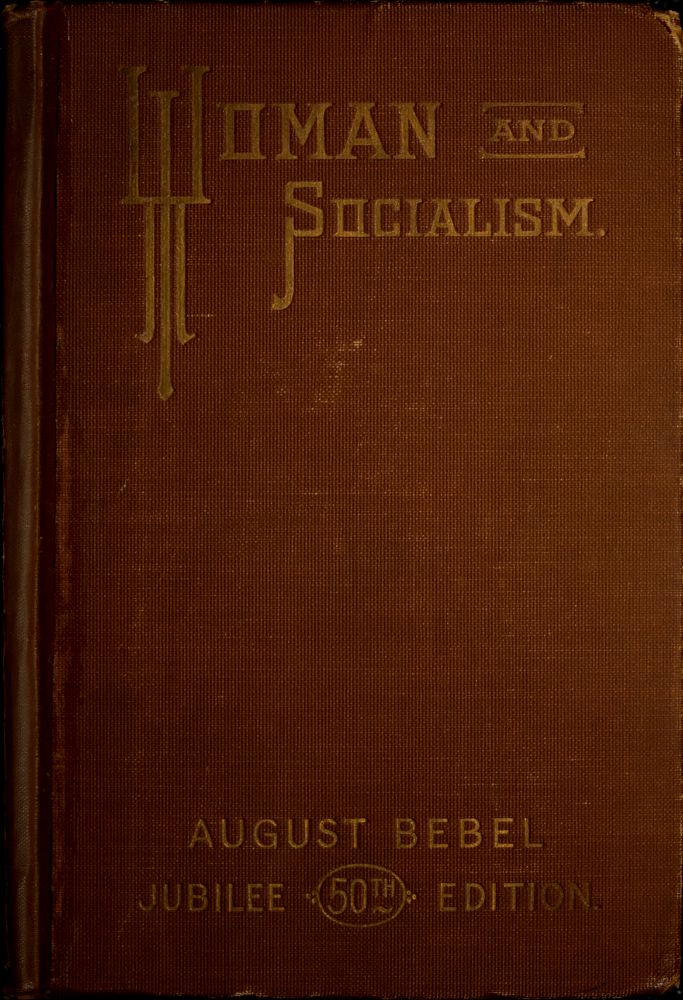
Woman and Socialism
by August Bebel
★★★★★No ratings yet
Language: English
Sign in to rate this book.
Sign in to shelve this book.
About this eBook
- Author
- Bebel, August, 1840-1913
- Credits
- Produced by Marie Bartolo, Fritz Ohrenschall, and the Online Distributed Proofreading Team at www.pgdp.net (This file was produced from images generously made available by The Internet Archive/American Libraries.)
- Language
- English
- LoC Class
- HX: Social sciences: Socialism, Communism, Anarchism
- Subject
- Women and socialism
- Category
- Text
- eBook-No.
- 47244
- Project Gutenberg
- https://www.gutenberg.org/ebooks/47244
- Release Date
- October 30, 2014
- Copyright
- Public domain in the USA.
Contents
- 1.WOMAN AND SOCIALISM
- 2.CONTENTS
- 3.Introduction. — Woman in the Past. — CHAPTER I. The Position of Woman in Primeval Society. — 1.—Chief Epochs of Primeval History. — 2.—Family Forms. — 3.—The Matriarchate. — CHAPTER II. Conflict between Matriarchate and Patriarchate. — 1.—Rise of the Patriarchate. — 2.—Traces of the Matriarchate in Greek Myths and Dramas. — 3.—Legitimate Wives and Courtesans in Athens. — 4.—Remnants of the Matriarchate in the Customs of Various Nations. — 5.—Rise of the State.—Dissolution of the Gens in Rome.
- 4.CHAPTER III. Christianity. — CHAPTER IV. Woman in the Mediaeval Age. — 1.—The Position of Women among the Germans. — 2.—Feudalism and the Right of the First Night. — 3.—The Rise of Cities.—Monastic Affairs.—Prostitution. — 4.—Knighthood and the Veneration of Women. — CHAPTER V. The Reformation. — 1.—Luther. — 2.—Results of the Reformation.—The Thirty Years’ War. — CHAPTER VI. The Eighteenth Century. — 1.—Court Life in Germany. — 2.—Commercialism and the New Marriage Laws. — 3.—The French Revolution and the Rise of Industry. — Woman at the Present Day. — CHAPTER VII. Woman as a Sex Being. — 1.—The Sexual Impulse. — 2.—Celibacy and the Frequency of Suicide. — CHAPTER VIII. Modern Marriage. — 1.—Marriage as a Profession. — 2.—Decline of the Birthrate. — 3.—Mercenary Marriage and the Matrimonial Market. — CHAPTER IX. Disruption of the Family. — 1.—Increase of Divorce. — 2.—Bourgeois and Proletarian Marriage. — CHAPTER X. Marriage as a Means of Support. — 1.—Decline of the Marriage Rate. — 2.—Infanticide and Abortion. — 3.—Education for Marriage. — 4.—The Misery of Present Day Marriages. — CHAPTER XI. The Chances of Matrimony. — 1.—The Numerical Proportion of the Sexes. — 2.—Obstacles to Marriage.—The Excess of Women. — CHAPTER XII. Prostitution a Necessary Social Institution of Bourgeois Society. — 1.—Prostitution and Society. — 2.—Prostitution and the State. — 3.—The White Slave Trade. — 4.—The Increase of Prostitution.—Illegitimate Motherhood. — 5.—Crimes Against Morality and Sexual Diseases. — CHAPTER XIII. Woman in Industry. — 1.—Development and Extension of Female Labor. — 2.—Factory Work of Married Women.—Sweatshop Labor and Dangerous Occupations. — CHAPTER XIV. The Struggle of Women for Education. — 1.—The Revolution in Domestic Life. — 2.—The Intellectual Abilities of Women. — 3.—Differences in Physical and Mental Qualities of Man and Woman. — 4.—Darwinism and the Condition of Society. — 5.—Woman and the Learned Professions. — CHAPTER XV. The Legal Status of Women. — 1.—The Struggle for Equality Before the Law. — 2.—The Struggle for Political Equality. — The State and Society. — CHAPTER XVI. The Class-State and the Modern Proletariat. — 1.—Our Public Life. — 2.—Aggravation of Social Extremes. — CHAPTER XVII. The Process of Concentration in Capitalistic Industry. — 1.—The Displacement of Agriculture by Industry. — 2.—Increasing Pauperization.—Preponderance of Large Industrial Establishments. — 3.—Concentration of Wealth. — CHAPTER XVIII. Crisis and Competition. — 1.—Causes and Effects of the Crises. — 2.—Intermediate Trade and the Increased Cost of Living. — CHAPTER XIX. The Revolution in Agriculture. — 1.—Transatlantic Competition and Desertion of the Country. — 2.—Peasants and Great Landowners. — 3.—The Contrast Between City and Country. — The Socialization of Society. — CHAPTER XX. The Social Revolution. — 1.—The Transformation of Society. — 2.—Expropriation of the Expropriators. — CHAPTER XXI. Fundamental Laws of Socialistic Society. — 1.—Duty to Work of All Able-bodied Persons. — 2.—Harmony of Interests. — 3.—Organization of Labor. — 4.—The Growth of the Productivity of Labor. — 5.—Removal of the Contrast between Mental and Manual Work. — 6.—Increase of Consumption. — 7.—Equal Duty to Work for All. — 8.—Abolition of Trade.—Transformation of Traffic. — CHAPTER XXII. Socialism and Agriculture. — 1.—Abolition of the Private Ownership of Land. — 2.—The Amelioration of Land. — 3.—Changed Methods of Farming. — 4.—Agriculture on a Large and Small Scale.—Electric Appliances. — 5.—Vine-Culture of the Future. — 6.—Measures to Prevent Exhaustion of the Soil. — 7.—Removal of the Contrast between City and Country.
- 5.CHAPTER XXIII. Abolition of the State.
- 6.CHAPTER XXIV. The Future of Religion.
- 7.CHAPTER XXV. The Socialist System of Education.
- 8.CHAPTER XXVI. Literature and Art in Socialistic Society. — CHAPTER XXVII. Free Development of Individuality. — 1.—Freedom from Care. — 2.—Changes in the Methods of Nutrition. — 3.—The Communistic Kitchen. — 4.—Transformation of Domestic Life.
- 9.CHAPTER XXVIII. Woman in the Future.
- 10.CHAPTER XXIX. Internationality. — CHAPTER XXX. The Question of Population and Socialism. — 1.—Fear of Over-Population. — 2.—Production of Over-Population. — 3.—Poverty and Fecundity. — 4.—Lack of Human Beings and Abundance of Food. — 5.—Social Conditions and Reproductive Ability.
- 11.Conclusion.
Community reviews
Sign in to write a review.
No reviews yet.