VISITING AT GRANDMOTHER’S
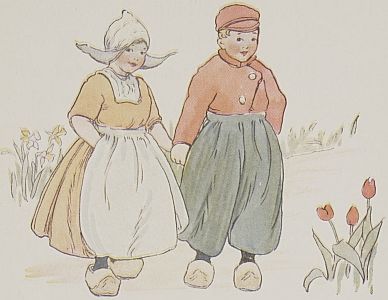
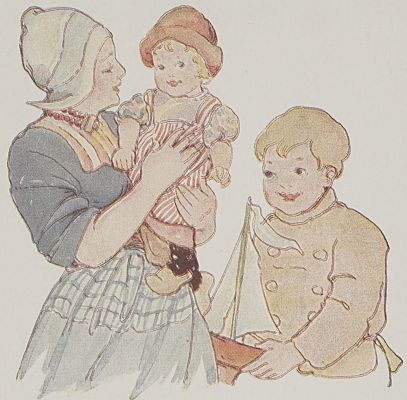
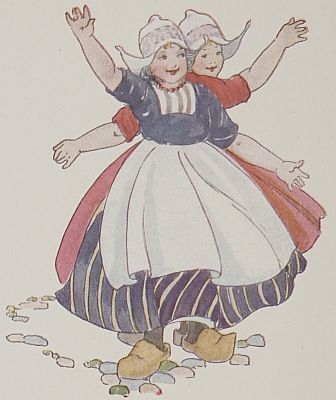
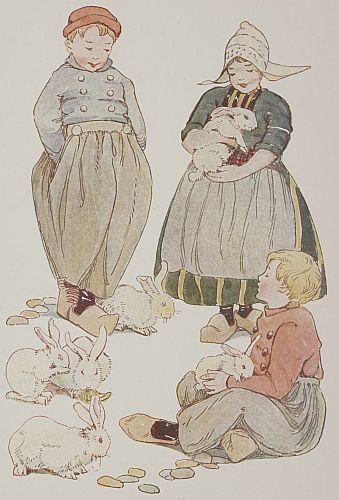
Grandmother asked Jan and Katrina
to come and visit her one day. She
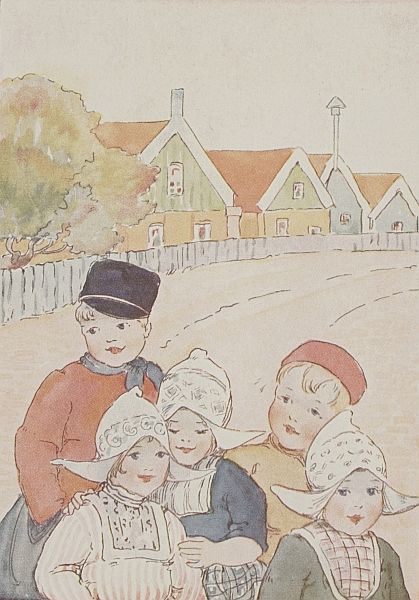
told them to bring their friends, Hilda,
Kassie, Karl, and Bram with them.
Hilda, Kassie, Karl, and Bram were
all glad to go. So they dressed in
their best.
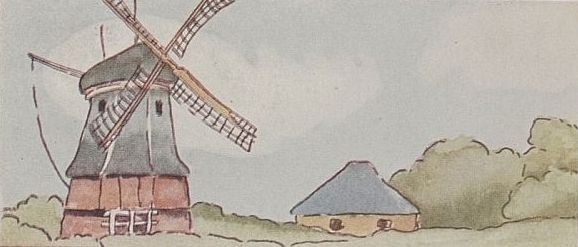
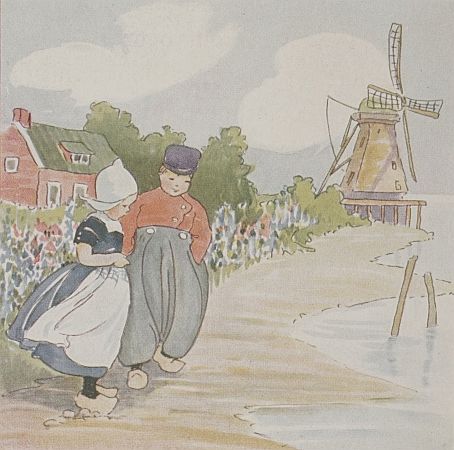
“We will meet by the windmill,”
they said, “and we will go along the
dike to grandmother’s house.” So they
met at the windmill, and away they
went all together.
Grandmother was looking for them.
She took them into the house. She
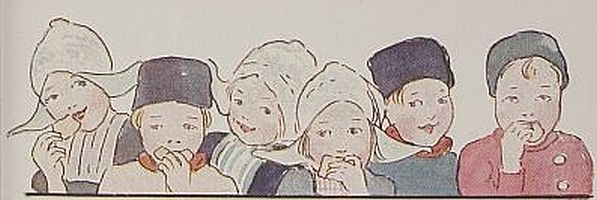
gave them each a bowl of curds and
whey and some nice, fresh honey cakes.
“Oh, how good this is!” cried Kassie.
“Yes, yes, Grandmother, no one can
make curds and whey like yours,” said
Jan.
“Or honey cakes either,” said Karl.
When the children went home, grandmother
gave each one of them a honey
cake cut like a heart. She gave each
one a pretty shell.
The children said, “We have had
such a good time, grandmother.”
And grandmother said, “I have had
a good time, too, children. You must
come to see me again soon.”
THE BARGE
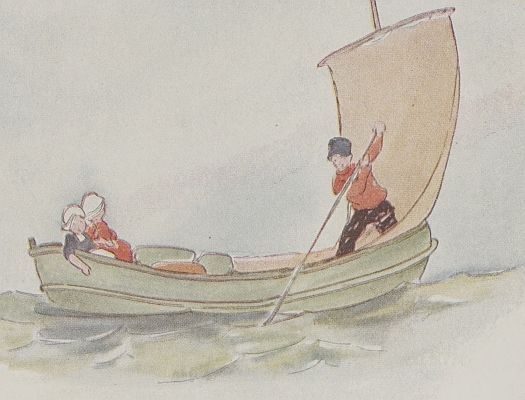
Bram’s father has a barge. Do you
know what a barge is?
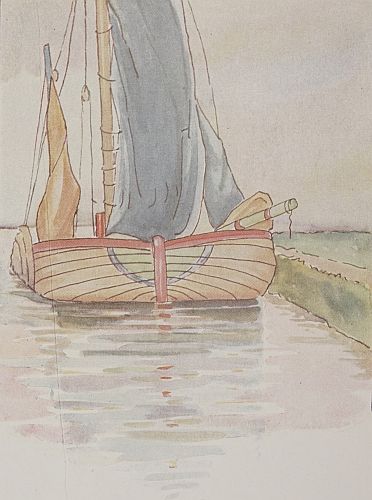
It is a big flat boat. The barge of
Bram’s father is red and yellow.
It has big blue sails. It looks very
pretty as it sails down the canals.
Bram’s father often takes him out in
the barge.
Sometimes Bram asks Jan and
Katrina, Hilda, Kassie, and Karl to go
with him.
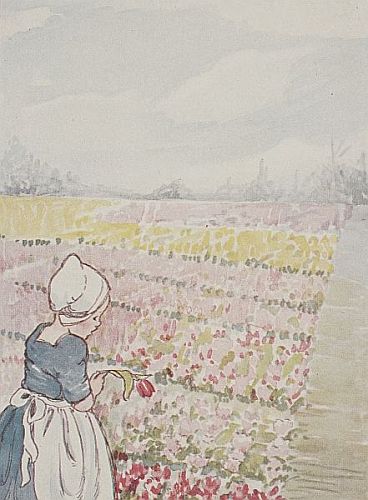
When the flowers of the tulips and
hyacinths have faded, the Dutch people
dig up the bulbs from which grow the
stems of the plants.
The Dutch people are very proud
of their fine tulips.
They pack the bulbs carefully.
They sell them and
make a great deal of money.
Bram’s father sails his barge
on the canals to the tulip fields.
Then Bram and Jan and Katrina
and Kassie and Hilda
and Karl help dig up the tulip
bulbs. They put them in boxes
on the barge.
They work busily all the long
day.
“I wonder who will plant
these bulbs?” asked Bram.
“Perhaps some boy in America,”
answered Karl; “every year we send
thousands of bulbs to America. The
Americans love our Dutch tulips.”
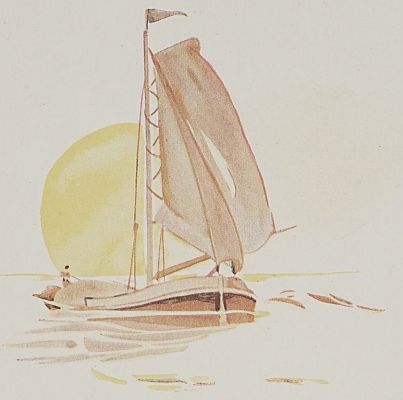
When the sun is setting, they sail
back in the big barge. Past the green
meadows they sail, past the yellow
and blue farmhouses with red tiled roofs.
They glide slowly along. The big
barge makes pretty ripples in the smooth
water.
They see the black and white cows
waiting to be milked. They hear the
cowbells tinkle. They see the Dutch
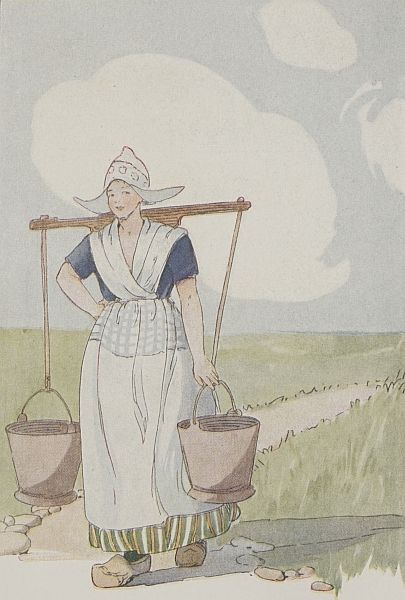
boys and girls carrying water in big
pails.
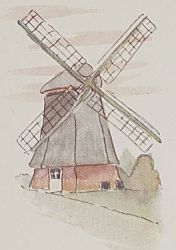
They sail past the big, brown windmill.
They see its arms go slowly
round. It makes pretty shadows on
the water in the canal.
They see the willow trees bending
down to look in the water. And they
hear the little birds singing their goodnight
songs.
The sun sinks down, down. The sky
is all red and yellow and orange. The
purple shadows begin to fall. Night is
coming—and here they are at home
again!
RIKKA’S WONDER-BALL
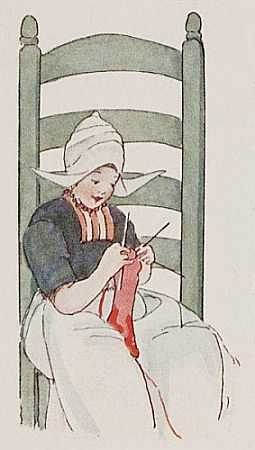
Rikka did not want to learn to knit.
She said it was too hard. She said she
would rather play on the beach.
Her mother said to her, “Rikka, if
you will learn to knit, I will give you a
‘Wonder-Ball.’”
“A ‘Wonder-Ball!’ What is that,
mother?” asked Rikka.
“It is a ball of yarn,” said her mother.
“There are little presents or surprise
gifts wound up in the ball. As you
knit the yarn from the ball, the gifts
fall out.”
“Oh, I should like a Wonder-Ball,
Mother,” cried Rikka. “I will learn to
knit and I will knit fast so that I can
knit my presents from the ball.”
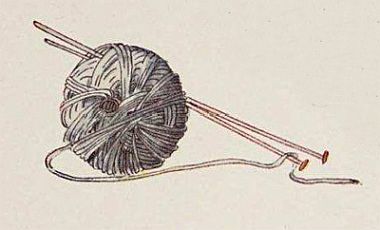
Rikka’s mother made her a “Wonder-Ball.”
It was a very big, blue ball.
She gave Rikka some
shining needles and
taught her how
to knit.
Rikka
tried and
tried, and at last she learned to knit.
It was very hard at first, but she did
not give up.
The first gift she knit from her ball
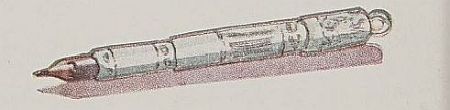
was a little silver pencil. She was
much pleased with it.
She knit hard
every day.
It seemed a long time before she
came to the next gift.
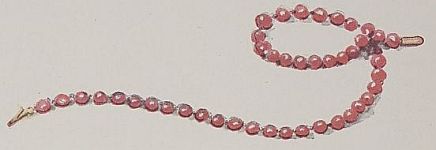
Then a pretty chain of red beads came
out of the “Wonder-Ball.”
She knit and knit away. The gifts
she knit from the “Wonder-Ball” were
many.
She sang a little song as she worked.
She called it her “Knitting Song.”
Click, clack, click, clack,
On go the needles, forward and back,
Careful never a stitch to drop,
Busily knit with never a stop.
Forward and back, forward and back,
Bright little needles, click, click, clack.
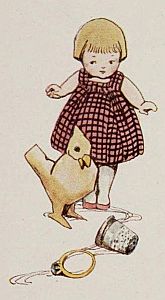
Among her gifts was a little gold ring
with a blue stone in it. She had also
a wooden bird, a tiny
doll, and a thimble.
She called her thimble
her “finger-hat.”
Rikka was very
happy. She thanked
her good mother many
times for the lovely,
big “Wonder-Ball.”
Rikka soon learned to
knit very well. She liked
to knit even when she had no “Wonder-Ball.”
She knit a scarf for her father.
She knit a jacket for her doll. “It is
such fun to make things,” said busy
little Rikka.
THE STORY IN JAN’S BOOK — THE STORY
Do you remember the book that
Jan’s mother gave him for his birthday?
Jan has read the book now. He will
tell you the story of little Peter. He
likes it the best of all the stories in his
book.
Peter was a little Dutch boy. He
lived in Holland. He lived by the big
dike. The dike was very big and very
strong. It kept the sea from the land
of Holland.
Peter knew how men watched the
dikes. He knew that they had to do
it, for if a leak came in the dike, the
water would rush in.
The dike would break and the water
would cover the land.
One day Peter’s mother said to Peter,
“Peter, I wish you would take your
father’s dinner to him. He is working
far, far down on the shore. You may
run along on the dike if you wish.”
So Peter started out with his basket.
He went along the dike. He had gone
quite far, and was tired, so he sat
down to rest.
As he sat there, he heard a trickling
sound. “That sounds like water trickling
in a hole,” said Peter to himself.
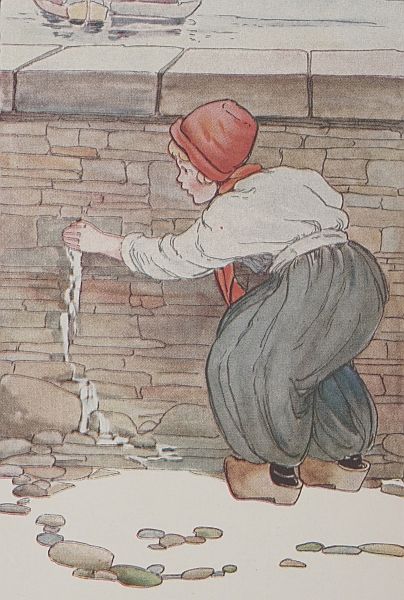
He looked around. At last he found
a little hole in the dike. The water
was trickling in.
It was only a tiny stream.
“O, what shall I do?” said Peter.
He ran to see if there was any one
coming. But he could see no one. So
he ran back to the hole in the dike
and put his little hand over the hole.
His hand stopped the water from coming
in.
Poor Peter called and called, but no
one heard. He became very stiff and
lame, but he did not take his hand
from the hole in the dike.
At last the sun went down, and it
began to grow dark. Peter’s father
and mother came to look for him. They
found him cold and frightened with his
little hand over the leak in the dike.
Men came with their tools and
mended the dike.
“Brave, brave Peter,” they said.
“You have saved your country from a
great flood.”
All the people thought Peter was
very brave indeed. They came to see
him and brought him gifts. Even the
king thanked Peter and sent him a bag
of gold.
“I think Peter was very brave and
very unselfish,” said Jan. “He did
not think of himself, though he was
cold and stiff and frightened. He
thought of all the people who would
lose their homes and lives, and so,
though he was only a little boy, he
was brave and strong enough to save
his country from the sea.”
A SLEIGH RIDE ON THE CANAL
One cold afternoon in winter, Jan’s
mother said, “You may hitch Rink to
the big sled, Jan, and you and Katrina
may ride away down the canal to
grandmother’s house. Grandmother
knows you are coming.”
“You are to stay all night. Father and
I are going to the festival in the city.”
“Oh, good, good!” cried Jan, and
he ran out to tell Katrina.
Katrina was very happy, for she liked
nothing better than to go to grandmother’s
house.
She clapped her hands. “I will get
ready at once,” she cried. “What a
good time we will have with grandmother!”
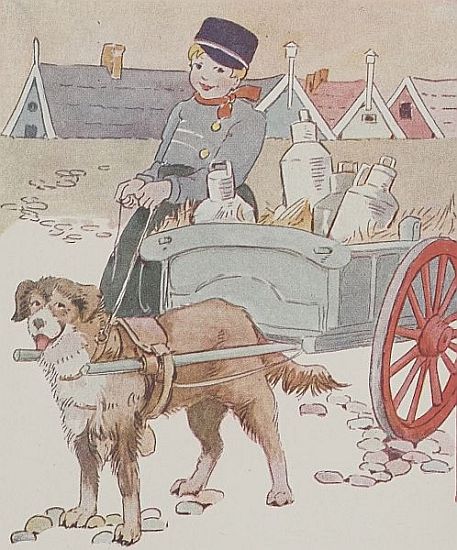
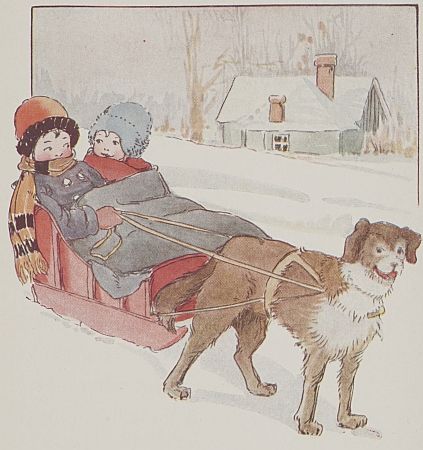
Jan hitched Rink to the big red
sled. Rink seemed to know he was
going to grandmother’s, for he barked
and wagged his tail for joy.
Then Jan and Katrina got ready for
their long ride on the canal. Jan put
on three coats and a warm muffler.
He wore two caps on his head. Katrina
put on two coats and a shawl,
and wore two hoods.
Their mother tucked them up warmly
on the big sled. She gave them a basket
full of goodies to take to grandmother.
She stood in the door of their little blue
house and waved her hand. “Good-by,
my little ones, good-by,” she called,
“grandmother will be watching for
you.”
With a bound, Rink was off, and
away they went over the smooth ice
on the canal. They went by the brown
windmill. They saw Hilda, Karl, and
Kassie playing in the snow. Hilda,
Karl, and Kassie shouted at them and
waved their hands. Jan and Katrina
waved back to their friends, and Rink
ran on and on.
GRANDMOTHER’S STORY
It was night. Jan and Katrina and
grandmother had had their supper.
Katrina had helped grandmother wash
the dishes. It was not time for bed.
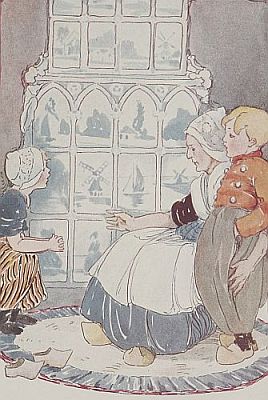
“Let us sit down before the fire,
Grandmother,” said Jan, “and you can
tell us a story.”
“O yes, please, Grandmother,” cried
little Katrina, and she ran to get grandmother’s
big armchair with the red
cushions.
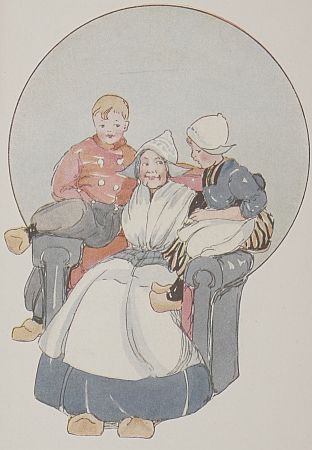
Grandmother smiled and sat down in
the chair. It had big, wide arms. Jan
sat on one arm of the chair and Katrina
sat on the other.
“What shall I tell you about?”
asked grandmother.
“Tell us about St. Nicholas,” said
Jan. “You know, Grandmother, it is
nearly time for him to come.”
“Why, so it is,” said grandmother.
Then she began:
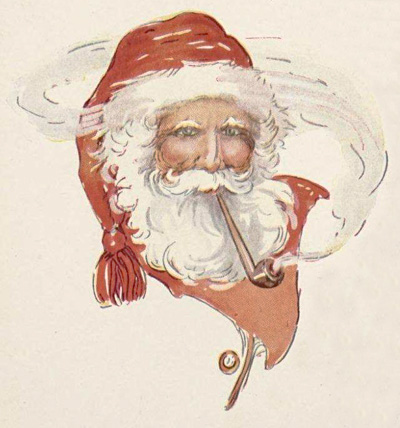
“Far, far away from here, in the forest
of Christmas trees, lives an old man.
He has white
hair, a long
white
beard
and the
brightest
eyes
you ever saw.
He wears a
beautiful red
suit, and it is
trimmed with the whitest of fur. The
name of this good old man is St.
Nicholas. All the year long, in his
forest of Christmas trees, St. Nicholas is
busy making toys and sweetmeats for
the good little boys and girls.”
“What toys does he make, Grandmother?”
asked Katrina.
“O, little wooden dogs and horses
and birds and pigs and chickens and
dolls and doll-houses,” answered grandmother.
Then she went on with her story.
“St. Nicholas has a beautiful big white
horse.
“At Christmas time he takes the white
horse from its stall. ‘Come, my horse,’
says St. Nicholas. ‘It is Christmas
time once again, and you must take me
all over the land to visit the little Dutch
boys and girls.’ Then St. Nicholas
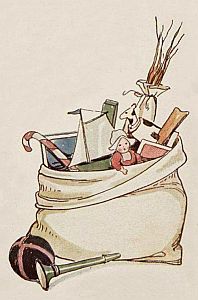
calls his black servant. He lets him
ride on a black horse and gives him
two bags to carry. One bag
is full of toys and goodies for
the good children, and in the
other bag is a switch with
which to beat the bad
children. All
through the
night St. Nicholas
rides on
his white horse.”
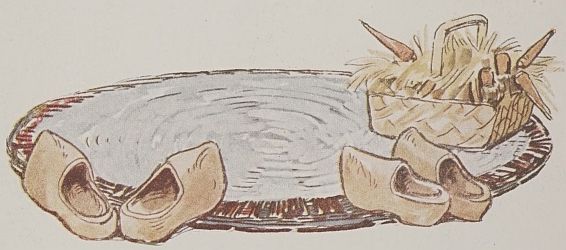
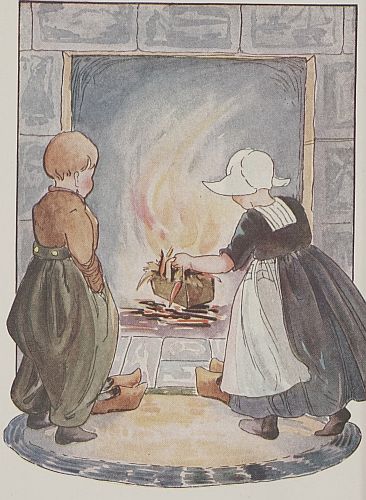
“The little
Dutch children
put their
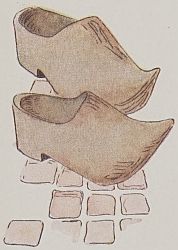
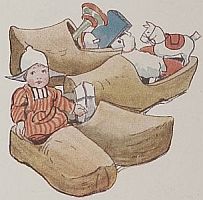
wooden shoes down by the fireplace.
Near by, they put a basket of hay and
carrots for the white horse of St.
Nicholas.
“In the morning, when the good
children get up, the hay and the carrots
are gone, and the wooden shoes are full
of toys and goodies.”
“What a nice story,” says Katrina.