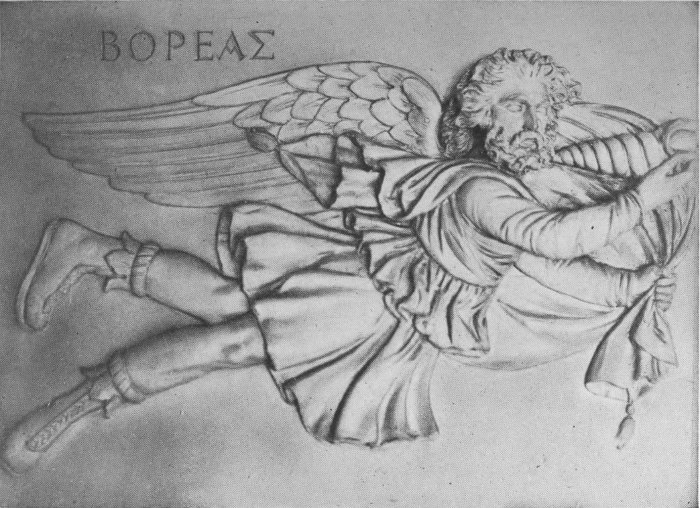
Boreas, the north wind, is perhaps the most important of all winds. At
Athens this a cold, boisterous wind from the mountains of Thrace. The
noise of the gusts is so loud that the Greek sculptor symbolized the
tumult by placing a conch shell in the mouth of Boreas. His modern
namesake, the Bora of the Adriatic, is the same noisy, blustering, cold
wind-rush from the north.
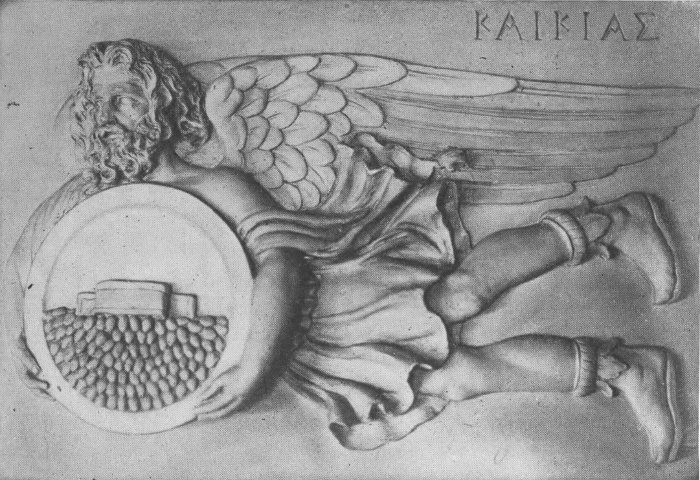
The northeast wind Kaikias is a trifle more pleasant looking than
Boreas, but still not much to brag about. Master of the squall and
thunderstorm, he carries in his shield an ample supply of hailstones,
ready to spill them on defenseless humanity. He might well serve as the
patron saint of air raiders dropping their bombs on helpless humans below.
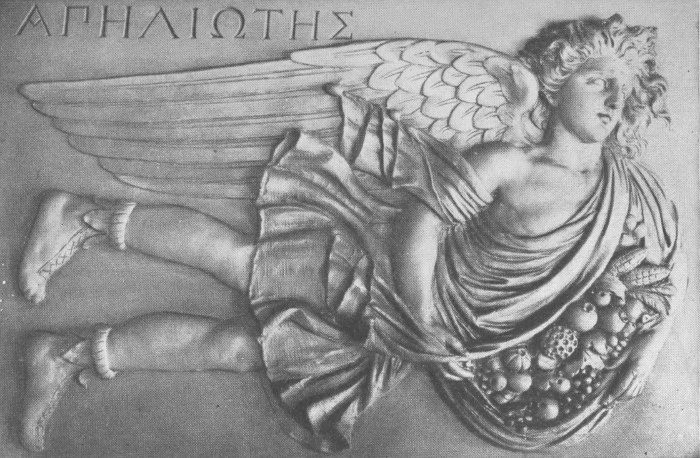
Apheliotes, the east wind, is a graceful youth, with arms full of
flowers, fruit and wheat. Naturally this was a favorite wind, blowing in
from the sea, with frequent light showers. Some of us who dwell on the
Atlantic Coast, in more northern latitudes than Athens, do not always
regard with favor the east wind, associating it with chilly, damp and
sombre weather. Yet it is the harbinger of good—tempering the cold of
winter and the heat of summer. It is an angel of mercy in mid-summer
when the temperature is above the nineties and there is no air stirring.
Then it is, that we all welcome the refreshing wind from the sea.
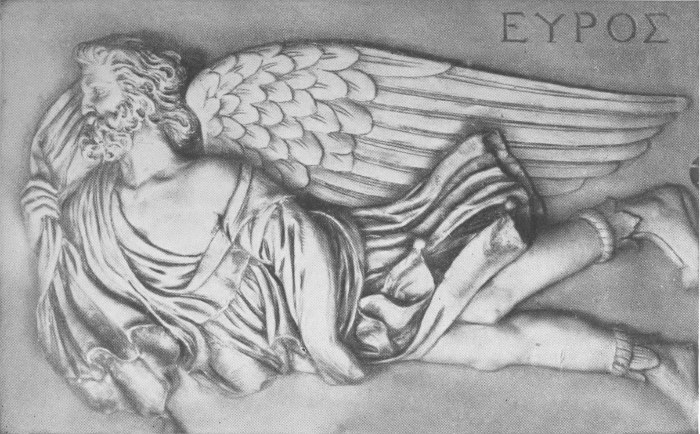
Euros, the southeast wind, and neighbor to Apheliotes, is a cross old
fellow, intent on the business of cloud making. He alone of all the
winds carries nothing in his hands. In the New Testament he becomes
Euroclydon, wind of the waves. He is no friend of the sailor; and the
seasick traveler prays to be rid of his company.
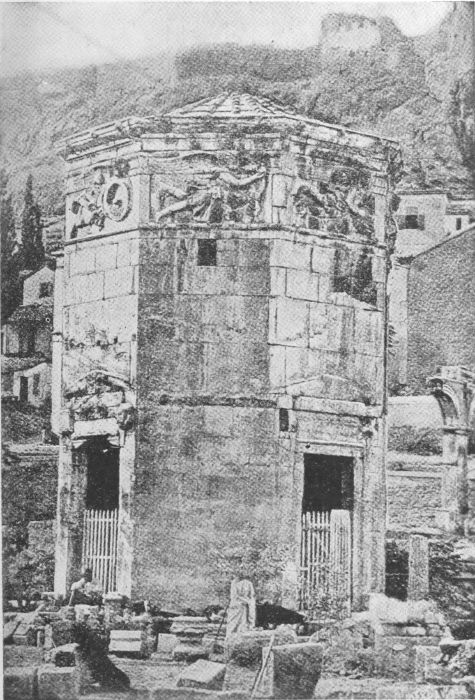
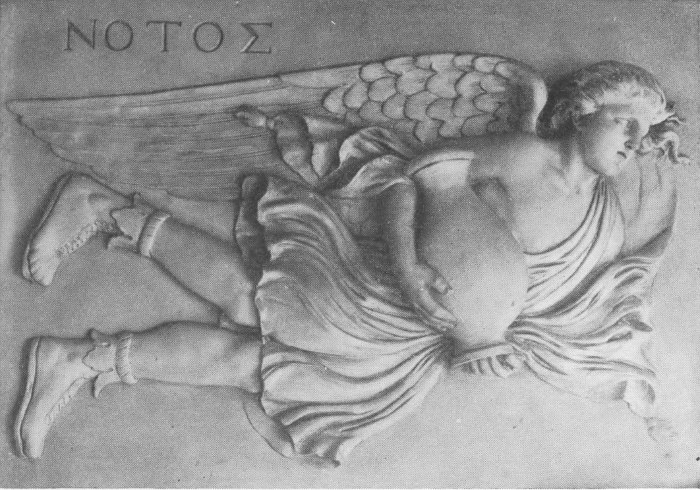
The figure on the south face of the tower, Notos, is the master of the
warm rain. He carries with him a water jar which has just been emptied.
Compare his light flowing robes and half-clad neck and arms with the
close fitting jacket of old Boreas. At his shrine, hydraulic engineers
well might worship.
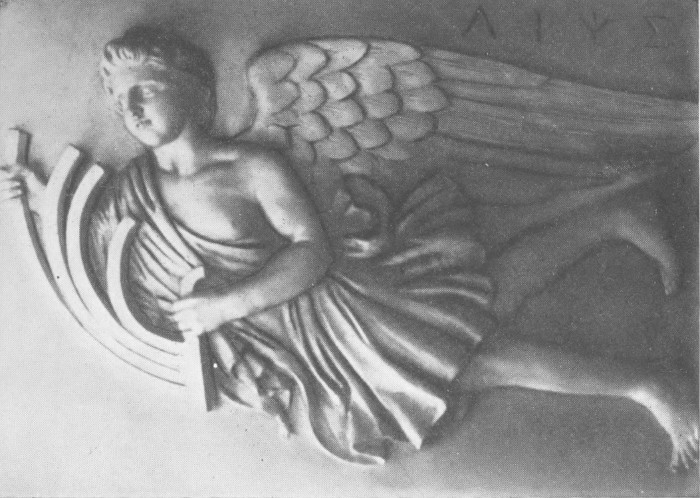
Next, the Mariner's wind, Lips, the southwest favoring breeze bringing
the ships speedily into harbor; yes, into that Piraeus, famed in classic
history. Incidentally it is the southwest wind which differentiates the
climate of Great Britain from that of Labrador. This wind makes
Northwest Europe habitable; while on the other side of the Atlantic, in
similar latitudes, but under the influence of prevailing northwest
winds, we find Labrador—a section certainly misnamed, for it is not the
abode of farmers, as the name implies—but barren and bleak. What a
difference it would make thruout this region if the Gulf Stream
continued north, close to the shore, and the prevailing winds were from
the east. Our North Atlantic Coast would then be the land of zephyrs,
using the word in the sense of pleasant, gentle winds.
Fig. 2. Boreas—The North Wind
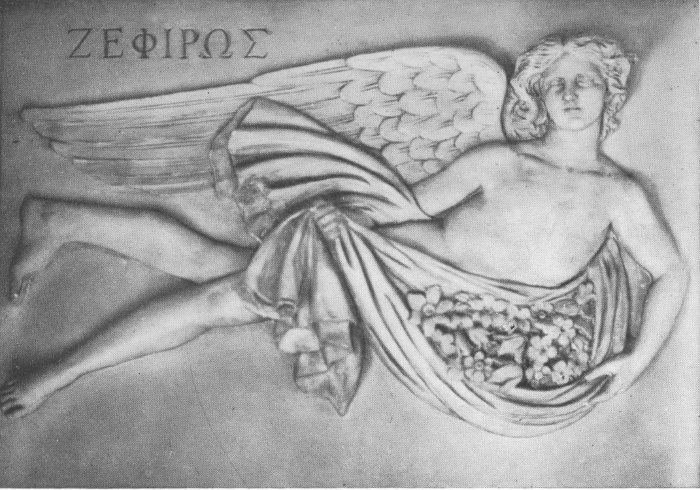
Zephyros, the west wind, is represented as a graceful youth, scantily
clad, with his arms filled with flowers. In Greece this wind traversed
the Ionian Sea and the Gulf of Corinth before reaching Athens. It is
quite unlike our west wind which blows across a continent, and is
continuously robbed of its water vapor on the long passage. The Ionian
wind is pleasantly moist and refreshing.
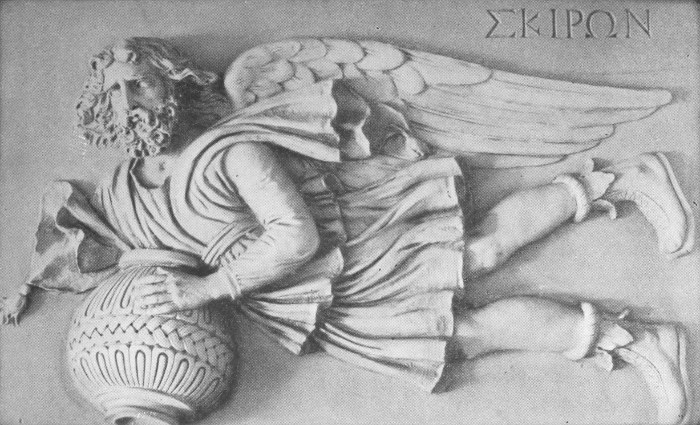
Last of all, but by no means least important, is Skiron, lord of gusty
northwest gales. Freezing in winter, parching in summer, he carries with
him a brazen fire basket and spills a generous stream of hot air on all
below. His husky Highness might not inappropriately adorn legislative
halls and editorial sanctums. He would displace the blindfolded lady
holding scales very much out of balance. Think of the deep significance
of his presence.
In our country the northwest is of all winds, except the west, most
persistent. For 1600 hours in a year, this wind is with us. Joining
forces with the west wind, these directions prevail one third of the
time. These northwest-west winds also have the greatest speed and
gustiness. The climate of the United States is essentially determined by
the prevalence of the north, northwest and west winds.