The thoughts with which Penn's mind was occupied during the years of
hiding appear in his book, "Some Fruits of Solitude." Robert Louis
Stevenson found a copy of it in a book-shop in San Francisco, and
carried it in his pocket many days, reading it in street-cars and
ferry-boats. He found it, he says, "in all places a peaceful and sweet
companion;" and he adds, "there is not a man living, no, nor recently
dead, that could put, with so lovely a spirit, so much honest, kind
wisdom into words."
"The author blesseth God for his retirement," so the book begins, "and
kisses the gentle hand which led him into it; for though it should prove
barren to the world, it can never do so to him. He has now had some time
he can call his own; a property he was never so much master of before;
in which he has taken a view of himself and the world, and observed
wherein he hath hit and missed the mark. And he verily thinks, were he
to live his life over again, he could not only, with God's grace, serve
him, but his neighbor and himself, better than he hath done, and have
seven years of his life to spare."
Government and Religion have the longest chapters in this volume of
reflections, as being the matters in which William was most interested.
"Happy that king," he says, "who is great by justice, and that people
who are free by obedience." "Where example keeps pace with authority,
power hardly fails to be obeyed, and magistrates to be honoured." "Let
the people think they govern, and they will be governed." "Religion is
the fear of God, and its demonstration good works; and faith is the root
of both." "To be like Christ, then, is to be a Christian." "Some folk
think they may scold, rail, hate, rob, and kill too: so it be but for
God's sake. But nothing in us, unlike him, can please him." So the book
goes, page after page, always serious and sensible, full of simplicity
and kindliness, cheerful and brotherly and unfailingly religious. It is
the work of one who is trying his best to live for his brethren and in
Christ's spirit.
Another significant writing of this period is Penn's "Plan for the Peace
of Europe." The calamities of the war then in progress on the Continent
gave him arguments enough for the desirableness of peace. The means of
peace is justice, and the means of justice is government. It is plain to
all that a state wherein any private citizen might avenge himself upon
his neighbor would be a place of confusion and distress. "For this cause
they have sessions, terms, assizes, and parliaments, to overrule men's
passions and resentments, that they may not be judges in their own
cause, nor punishers of their own wrongs." Penn proposes that the same
relation between peace and justice which is enforced between citizen and
citizen be also enforced between nation and nation. "Now," he says, "if
the sovereign princes of Europe ... for love of peace and order [would]
agree to meet by their stated deputies in a general Diet, Estates or
Parliament and there establish rules of justice for sovereign princes to
observe one to another; and thus to meet yearly, or once in two or three
years at the farthest, or as they shall see cause, and to be stiled, The
Sovereign or Imperial Diet, Parliament or State of Europe: before which
Sovereign Assembly should be brought all differences depending between
one sovereign and another that cannot be made up by private embassies
before the sessions begin; and that if any of the sovereignties that
constitute these imperial states shall refuse to submit their claim or
pretensions to them, or to abide and perform the judgment thereof and
seek their remedy by arms, or delay their compliance beyond the time
prefixt in their resolutions, all the other sovereignties, united as one
strength, shall compel the submission and performance of the sentence,
with damages to the suffering party, and charges to the sovereignties
that obliged their submission; ... peace would be procured and
continued in Europe." The principle of international arbitration, the
Conference at the Hague, and all like meetings which shall be held
hereafter, are thus foreshadowed.
These two productions of Penn's season of retirement—the "Fruits of
Solitude," and the "Plan for the Peace of Europe"—illustrate again the
two qualities which make him singularly eminent among the founders of
commonwealths. He was at once a philosopher and a statesman; he was
interested alike in religion and in politics. There have been many
politicians to whom religion has been of no concern. There have been
many religious persons in high positions who have been so shut in by
church walls that they have been incapable of a wider outlook; they have
accordingly been narrow, prejudiced, and often unpractical people; they
have been blind to the elemental social fact of difference; they have
hated the thought of toleration. Penn was almost alone among the good
men of our era of colonization in being at the same time a man of the
world and a man of the other world.
Penn came out of his exile in 1693 burdened with misfortune. He had been
deprived of his government; he was sadly in debt; he had lost many of
his friends. His colonists in Pennsylvania declined to lend him money.
His brethren in England drew up a confession of wrong-doing for him to
sign: "If in any things during those late revolutions I have concerned
myself either by words or writings, in love, pity or good will to any in
distress [meaning the king] further than consisted with Truth's honor or
the Church's peace, I am sorry for it." But he would not sign. To these
troubles was added a greater grief in the death of his wife. "An
excellent wife and mother," he said of her, "an entire and constant
friend, of a more than common capacity, and greater modesty and
humility; yet most equal and undaunted in danger." A brave soul, no
doubt, as befitted her parentage, and of a devout and consecrated
spirit.
But William was ever of a serene and cheerful disposition. Neither loss,
nor disappointment, nor bereavement could shut out the sun. His
religious faith strengthened him. "We must needs disorder ourselves," he
had written in his "Fruits of Solitude," "if we only look at our losses.
But if we consider how little we deserve what is left, our passions will
cool, and our murmurs will turn into thankfulness." "Though our
Saviour's passion is over, his compassion is not. That never fails his
humble, sincere disciples; in him they find more than all that they lose
in the world."
During the six years which followed, this strong confidence was
justified. He regained his government and his good name. He also married
a second wife, Hannah Callowhill, a strong, sensible, and estimable
Quaker lady of some means, living in Bristol.
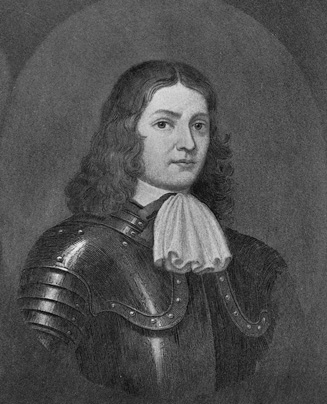
The only satisfactory information as to the personal appearance of Penn
in mature life is that which is given by Sylvanus Bevan. Bevan was a
Quaker apothecary in London, who had a remarkable gift for carving
portraits in ivory. After Penn's death, he made such a portrait of him
from memory. The men who had known William liked it greatly. Lord
Cobham, to whom Bevan sent it, said, "It is William Penn himself." It
represents him in a curled wig, with full cheeks and a double chin—a
pleasant, masterful, and serious person. Clarkson says that in his
attire he was "very neat, though plain." Penn advised his children to
choose clothes "neither unshapely nor fantastical;" and he illustrated
to King James the difference between the Roman Catholic and the Quaker
religions by the difference between his hat and the king's. "The only
difference," he said, "lies in the ornaments that have been added to
thine." His dress was probably that which was common to gentlemen in his
day, but without extremes of color or adornment. For some time after
becoming a Quaker he wore his sword, having consulted Fox, who said, "I
advise thee to wear it as long as thou canst." Presently Fox, seeing him
without it, said, "William, where is thy sword?" To which Penn replied,
"I have taken thy advice: I wore it as long as I could."
The sober cheerfulness of Penn's attire comported well with his
conversation. It is true that Bishop Burnet, who did not like him, says
that "he had a tedious, luscious way of talking, not apt to overcome a
man's reason, though it might tire his patience." But Dean Swift enjoyed
him, and testified that "he talked very agreeably and with great
spirit." The Friends of Reading Meeting even noted that he was
"facetious in conversation," and there is a tradition of a venerable
Friend who spoke of him "as having naturally an excess of levity of
spirit for a grave minister." A handsome, graceful, and even a merry
gentleman it was who married Hannah Callowhill.
For a time he devoted himself again to the work of the ministry. He went
about, as in former days, preaching, sometimes in the market-hall,
sometimes in the fields. Once, in Ireland, the bishop sent an officer to
disperse the meeting, complaining that Penn had left him "nobody to
preach to but the mayor, church-wardens, a few of the constables, and
the bare walls."
His heart, however, was in his province. The affairs of Pennsylvania
had been going badly. There had been a hot contention between the
council and the assembly, and another between the province and the
territory. The officials, too, whom Penn had appointed, had quarreled
among themselves. William complained that they were excessively
"governmentish;" meaning that they liked authority and that they took
details very seriously. The situation, however, was inevitably
difficult. In his relation to the king, the governor was a feudal
sovereign; in his relation to the people he was, by Penn's arrangement,
the executive of a democracy. Penn himself reconciled the two positions
by his own tact and unselfishness, as well as by a certain masterfulness
to which those about him instinctively and willingly yielded. He proved
the motto of his book-plate, Dum Clavum Teneam; all went well while he
with his own hands held the helm. But his deputies were not so
competent. The colony fell into two parties, the proprietary and the
popular, representing these two ideas. Then the governor whom the king
had appointed during Penn's retirement was a soldier, and his
un-Quakerlike notions as to the right conduct of a colony brought a new
element of confusion into affairs which were already sufficiently
confounded.
At last, in 1699, it became possible for the founder to make another
visit to his province. He brought his family with him, evidently
intending to stay. Philadelphia was now a city of some seven hundred
houses, and had nearly seven thousand inhabitants. The people were at
that moment in deep depression, having just been visited with a plague
of yellow fever. The pestilence, however, had abated, and Penn was
received with sober rejoicings. He took up his residence in the
"slate-roof house," a modest mansion which stood on the corner of Second
Street and Norris Alley; it was pulled down in 1867.
Now began a season of good government. The business of piracy had for
some time been merrily carried on by various enterprising persons, some
of whom lived very respectably in Philadelphia. William put a stop to
it. The importing of slaves from Africa was at that time considered by
most persons to be a good thing both for the planters and for the
slaves. Already, however, at the Pennsylvania yearly meeting of Friends
in 1688, some who came from Kriesheim, in Germany, had protested against
it,
"Who first of all their testimonial gave
Against the oppressor, for the outcast slave."
And, in consequence, though slaves were still imported, they were
humanely treated. Penn interested himself in the improvement of their
condition. He was also concerned in the progress of the prison reforms
which he had proposed in the original establishment of the colony. He
employed a watchman to cry the news, the weather, and the time of day in
the Philadelphia streets. Regarding the Constitution, about which there
had been so much contention, he addressed the council and the assembly
in terms of characteristic friendliness. "Friends," he said, "if in the
Constitution by charter there be anything that jars, alter it. If you
want a law for this or that, prepare it." He advised them, however, not
to trifle with government, and wished there were no need to have any
government at all. In general, he said, the fewer laws, the better. The
result was a new Constitution. It provided that the council should be
appointed by the governor, and that the assembly should have the right
to originate laws. It was more simple and workable than the previous
legislation, and lasted until the Revolution.
Meanwhile, Penn was journeying about the country in his old way,
preaching. At Merion, a small boy of the family where he was
entertained, being much impressed with the great man's looks and speech,
peeped through the latchet-hole of his chamber door, and both saw and
heard him at his prayers. Near Haverford, a small girl, walking along
the country road, was overtaken by the governor, who took her up behind
him on his horse, and so carried her on her way, her bare feet dangling
by the horse's side.
Clarkson, the chief of the biographers of Penn, who collected these and
other incidents, gives us a glimpse of him as he appeared at this time
at Quaker meetings. "He was of such humility that he used generally to
sit at the lowest end of the space allotted to ministers, always taking
care to place above himself poor ministers, and those who appeared to
him to be peculiarly gifted." He liked to encourage young men to speak.
When he himself spoke, it was in the simplest words, easy to be
understood, and with many homely illustrations. At the same time, on
state occasions, as the proprietor of Pennsylvania and representative of
the sovereign, he used some ceremony, marching through the Philadelphia
streets to the opening of the assembly with a mace-bearer before him,
and having an officer standing at his gate on audience days, with a long
staff tipped with silver. Acquainted with affairs, and with a knowledge
of the relations between government and human nature drawn from a wide
experience, he knew the distinction, at which some of his Quaker
brethren stumbled, between personal humility and the proper dignity of
official station.
In the intervals left him by the demands of church and state, he busied
himself with the improvement of his place at Pennsbury. Here he had a
considerable house in the midst of pleasant gardens. He took great
pleasure in personal superintendence of the grounds and buildings,
planting vines and cutting vistas through the trees. "The country is to
be preferred," he wrote in "Fruits of Solitude." "The country is both
the philosopher's garden and library, in which he reads and contemplates
the power, wisdom, and goodness of God." "The knowledge and improvement
of it," he declared, is "man's oldest business and trade, and the best
he can be of."
Within were silver plate and satin curtains, and embroidered chairs and
couches. The proprietor's bed was covered with a "quilt of white Holland
quilted in green silk by Letitia," his daughter. "Send up," he writes to
James Logan, at Philadelphia, "our great stewpan and cover, and little
soup dish, and two or three pounds of coffee if sold in town, and three
pounds of wicks ready for candles." Mrs. Penn asks Logan to provide
"candlesticks, and great candles, some green ones, and pewter and
earthen basins, mops, salts, looking-glass, a piece of dried beef, and a
firkin or two of good butter."
Penn rode a large white horse, and had a coach, with a black man to
drive it, and a "rattling leathern conveniency," probably smaller, and a
sedan chair for Mrs. Penn. In the river lay the barge, of which William
was so fond that he wrote from England to charge that it be carefully
looked after. Somebody expressed surprise one day when Penn went out in
it against wind and tide. "I have been sailing all my life against wind
and tide," he said.
Much of the work of the estate was done by slaves. The fact troubled the
proprietor's conscience. He laid it upon his own soul, as he did upon
the souls of his brethren in the colony, "to be very careful in
discharging a good conscience towards them in all respects, but more
especially for the good of their souls, that they might, as frequent as
may be, come to meeting on first-days." A special meeting was appointed
for slaves once a month, and their masters were expected to come with
them. Finally, Penn liberated all his slaves. In his will of 1701, "I
give," he says, "to my blacks their freedom, as is under my hand
already, and to old Sam 100 acres, to be his children's after he and his
wife are dead, forever."
The Pennsbury house had a great hall in the midst, where the governor in
an oak armchair received his neighbors, the Indians. Here they came, in
paint and feathers,—"Connoondaghtoh, king of the Susquehannah Indians;
Wopaththa, king of the Shawanese; Weewinjough, chief of the Ganawese;
and Ahookassong, brother of the emperor of the five nations;" and many
other humbler braves. John Richardson, a Yorkshire Quaker, visited Penn
at Pennsbury and saw them. William gave them match-coats, he says, and
"some other things," including a reasonable supply of rum, which the
chiefs dispensed to the warriors severally in small portions: "So they
came quietly, and in a solid manner, and took their draws." He did not
smoke, a fact which the Indians must have noted as a curious
eccentricity. Then they made a small fire out of doors, and the men sat
about it in a ring, singing "a very melodious hymn," beating the ground
between the verses with short sticks, and, after a circling dance,
departed. Penn got on most happily with the Indians. The peaceful
Quakers went about unarmed and were never in danger. The only disorderly
folk thereabout were white men.
In the midst of these rural joys, news came that a movement was on foot
to put an end to proprietary governments, thereby bringing all colonies
under the immediate control of the crown. Penn felt that it was
necessary for him to return to England to block this inconvenient
legislation. On the 28th of October, he assembled the citizens of
Philadelphia, and presented them with a charter for their city. In the
Friends' meeting, he said that he "looked over all infirmities and
outwards, and had an eye to the regions of the spirit, wherein was our
sweetest tie." Then, says Norris, "in true love he took his leave of
us." Thus, after two years wherein peace and quietness prevailed over
all misunderstanding and opposition, he set sail in 1701, and never saw
Pennsylvania again.
His house at Pennsbury fell into ruins,—due in large part to the
leakage of a leaden reservoir on the roof,—and was taken down before
the Revolution. The furniture was gradually dispersed. For some years it
was "deemed a kind of pious stealth," among those who were most loyal to
the proprietor, to carry away something out of the house when they
chanced to visit its empty halls. One gentleman rejoiced in the
possession of the mantelpiece; another had a pair of Penn's plush
breeches.
William Penn's four years of actual residence gave him all the
satisfaction which he ever got from his colonial possessions. All else
was worry, labor, and expense. The province was a sore financial burden.
As proprietor he was charged with the payment, in large part, of the
expenses of government. The returns from rents and sales were slow and
uncertain. The taxes on imports and exports, to which he had a charter
right, he had generously declined. When he asked the assembly, in
remembrance of that liberality, to send him money in his financial
straits, they were not minded to respond. Penn belonged to that high
fraternity of noble souls who do not know how to make bargains. His
impulses were generous to a fault, and he had an invincible confidence
that his neighbors would deal with him in the same spirit. The
consequence was that year by year the expenses grew, and there was but a
slender income. "O Pennsylvania," he cries, "what hast thou cost me?
Above thirty thousand pounds more than I ever got by it; two hazardous
and most fatiguing voyages, my straits and slavery here, and my child's
soul, almost."
The last allusion is to Guli's son, William, whose dissipation Penn
always attributed to a lack of fatherly care during his first visit to
the province. Penn finally sent the boy to Pennsbury, hoping that the
quiet, the absence of temptation, and the wholesome joys of a country
life, might amend him. But William went from bad to worse, was arrested
in Philadelphia in a tavern brawl, was formally excommunicated by the
Quakers, and came home to England to give his father further pain.
To the financial burdens of the province were added the difficulties of
government. Penn succeeded very well in keeping his colony,—he defended
his boundaries against Lord Baltimore, and he defeated those who would
have taken away his rule and given it to the king; but the governing of
the colony across three thousand miles of sea was another matter. The
moment he withdrew the restraining influence of his personal presence,
all manner of contentions came into the light of day.
The question of the prudence of bearing arms was vigorously debated.
James Logan, secretary of the province, and Penn's ablest counselor,
urged the need of military defenses. Conservative Friends opposed it.
Churchmen had been settling in the province. One of William's oldest
friends, George Keith, who had accompanied him on his religious mission
to Holland, had gone into the Episcopal ministry. Logan says, in a
letter to Penn, that "not suffering them to be superior" was accounted
by the churchmen as the equivalent of persecution.
Colonel Quarry, a judge of the admiralty, appointed by the British
government to enforce the navigation laws in the colony, was responsible
to the Board of Trade in London, and independent of the governor and of
the assembly. He exercised his office of critic and censor to the
annoyance of Penn.
To these various sources of trouble was added an unending strife between
the governor's deputy and the people. Penn's habit of looking always on
the best side made him a bad judge of men, and the deputies whom he sent
were few of them competent; some were not even respectable. Penn, with
his characteristic invincible blindness, took their part.
Finally, the disputations, protests, and complaints, with direct attacks
upon Penn's interests, and even upon his character, got to such a pass
that he addressed a letter of expostulation to the people. "When it
pleased God to open a way for me to settle that colony," he wrote, "I
had reason to expect a solid comfort from the services done to many
hundreds of people.... But, alas! as to my part, instead of reaping the
like advantages, some of the greatest of my troubles have sprung from
thence. The many combats I have engaged in, the great pains and
incredible expense for your welfare and ease, to the decay of my former
estate ... with the undeserved opposition I have met with from thence,
sink into me with sorrow, that, if not supported by a superior hand,
might have overwhelmed me long ago. And I cannot but think it hard
measure, that, while it has proved a land of freedom and flourishing, it
should become to me, by whose means it was principally made a country,
the cause of grief, trouble, and poverty."
So heavy was the financial burden, and so vexatious and disheartening
the bickering and ingratitude, that Penn thought seriously of selling
his governorship; and it was in the market for several years awaiting a
purchaser. Indeed, in 1712, he had so far perfected a bargain to
transfer his proprietary rights to the crown for £12,000, that nothing
remained to be done save the affixing of his signature. Before his name
was signed, he fell suddenly ill, and the transaction went no farther.
In the midst of these many troubles, in themselves serious enough, there
came another. Penn's business manager for his estates in England and
Ireland was Philip Ford. For a long time, Ford's payments had been less
and less; Penn was continually complaining that he got so little from
his property. Still, Ford's accounts went without examination, and some
of his financial reports were not so much as opened. William had his
customary confidence in his agent's honesty. At last, when things got so
bad that something had to be done, it appeared by Ford's books that,
instead of Ford's being in debt to Penn, Penn was in debt to him for
more than ten thousand pounds. This was the result of long, ingenious,
and unmolested bookkeeping. And Penn had made himself liable by his
careless silence. Then Ford died, and his widow and children claimed
everything which stood in Penn's name. Penn, it appeared, had borrowed
money of Ford, and had given him a mortgage on his Pennsylvania estates
as security. When the loan was paid, the mortgage had not been returned.
Not only did Mrs. Ford retain it, but she sued Penn for three thousand
pounds rent, which was due, she said, from the property of which William
was once owner, but which he now held as tenant of the Fords. So far was
this iniquitous business pursued, that Penn was arrested as he was at a
religious meeting in Gracechurch Street, and was imprisoned for debt in
the Fleet, or its precincts.
This was the turn in the tide. Everybody disapproved of treatment so
unjust and extortionate. William's friends raised money, and made a
compromise with the Fords, and got him free. In Pennsylvania, too, the
contentions were quieted by a good governor. And as the wars came to an
end, trade so increased that the province presently yielded a
substantial income.
Penn retired to Ruscombe, in Berkshire, in the pleasant country. Here he
had his family about him. He was now a grandfather, his son William
having a son and a daughter. "So that now we are major, minor, and
minimus. I bless the Lord mine are pretty well,—Johnny lively; Tommy a
lovely, large child; and my grandson, Springett, a mere Saracen; his
sister, a beauty." Of his second marriage there were six children, four
of whom—John, Thomas, Margaret, and Richard—became proprietors of
Pennsylvania. Thomas had two sons, John and Granville; Richard had two,
John and Richard. When the proprietary government ended, in 1776, it was
in the hands of the heirs of William Penn.
In 1711, Penn wrote a preface to John Banks's Journal, dictating it, as
his custom was, walking to and fro with his cane in his hand, thumping
the floor to mark the emphasis. "Now reader," he concludes, "before I
take leave of thee, let me advise thee to hold thy religion in the
spirit, whether thou prayest, praisest or ministerest to others, ...
which, that all God's people may do, is, and hath long been the earnest
desire and fervent supplication of theirs and thy faithful friend in the
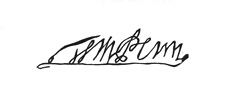
Lord Jesus Christ, W. Penn." This is the last word of his writing which
remains.
The next year he had a paralytic stroke, and another, and another. This
impaired his memory and his mind. Thus he continued for six years, as
happily as was possible under the circumstances. He went often to
meeting, where he frequently spoke, briefly, but with "sound and savory
expressions." He walked about his gardens, saw his friends, and
delighted in the company of his wife and children. Each year left him
weaker than the year before; but his days were filled with serenity. He
was surrounded with all the comforts which a generous income, an
affectionate family, the respect of his neighbors, and the approval of
God, could give him.
"He that lives to live forever," he had written in his "Fruits of
Solitude," "never fears dying. Nor can the means be terrible to him,
that heartily believes the end. For though death be a dark passage, it
leads to immortality; and that is recompense enough for suffering of
it.... And this is the comfort of the good, that the grave cannot hold
them, and that they live as soon as they die."
Into the fullness of this life he entered on the 30th of July, 1718,
being seventy-four years old.
The chief authorities for facts concerning William Penn are—
- The Select Works of William Penn (London, 1726; 3d edition,
1782; 5 vols). Whereof, The Trial of William Penn and William Mead
(vol i.), Travels in Holland and Germany (vol. iii.), and A General
Description of Pennsylvania (vol. iv.) contain autobiographical
matter. Some Fruits of Solitude and Penn's Advice to his Children
(vol. v.) are similarly valuable.
- The Life of Penn prefixed to his Works, by Joseph Besse, a
Quaker contemporary (1726).
- Memoirs of the Private and Public Life of William Penn, by
Thomas Clarkson (London, 1813).
- The Pennsylvania Historical Society Memoirs (vols. i., ii.,
iii.). Also the Correspondence between William Penn and James
Logan, edited for this Society, by Edward Armstrong.
- The Penns and the Penningtons, by Maria Webb (London, 1867),
containing family letters.
- Recent biographies of Penn: by William Hepworth Dixon (1851), by
Samuel M. Janney (1852), by John Stoughton (1882), by Sydney George
Fisher (1900).
The Riverside Press
Electrotyped and printed by H. O. Houghton & Co.
Cambridge, Mass., U. S. A.
The following changes have been made to the text:
Page 23: "seventeeenth" changed to
"seventeenth".
Page 42: "Quaker brethen" changed to "Quaker
brethren".
Page 49: "died when he" changed to "died when
she".
Page 57: "serious inprisonment" changed to "serious
imprisonment".
Page 62: "body prevented" changed to "body prevented
it".