INTRODUCTORY
5
About the life and services of William Jennings
Bryan will be centered the labors of those who, in
future time, shall contribute to the pages of history
the story of American states-craft and political tendencies
of the dying days of the nineteenth century
and the opening decade of the twentieth. The historian
who has to do with Bryan and his times will
deal not only with one of the most momentous and important
periods of American history, but with one
of the most remarkable and interesting characters
whose name adorns its pages.
It is not generally while the battle of ideas and
ideals is on, it is but rarely during the developing
period of great political and social movements, that
their relative and ultimate importance may be
judged; and it is as seldom, during the lifetime of a
public man, whose name is identified and whose services
are associated with the great issues which constitute
the line of demarcation in the field of political
thought, that his true character, his strength, and
his weaknesses, may be appreciated or understood.
In the study of man and of history a proper sense
of perspective is as all-essential as in the limner’s
art. The warrior who, with heart aflame, strives on
a great battlefield, can know but little of the terrible
grandeur of the whole, and still less of the import of
6the movements of battalions, regiments, and corps.
It remains for him who, from an eminence of distance
or of time, surveys impartially the entire field, to
comprehend its sublimities and horrors, and to appreciate
the full significance of its waging and its outcome.
And even so, of necessity, it is most difficult
for us who live in the American republic, at this
century’s sunset, to be able or even willing rightly to
appreciate the full import of movements in the advancement
or retarding of which each bears howsoever
humble a part. Too frequently in politics, as in
battle, men do fiercely strive with blinded eyes and
deafened ears, and they sometimes wildly strike at
him who is their friend.
And yet there are many things in the life of a
public man which his neighbors and associates can
not fail of knowing, and which, when interpreted,
permit his contemporaries to estimate the quality of
his character, even though they may not know the
full value of his public services. In every man, of
whatever station, there are elements and traits which
prominently stand forth. These, with such things
as he has done and the words which he has spoken,
constitute the material from which we may form our
concepts of his worth.
In William Jennings Bryan are certain traits so
prominent and unmistakable that he who runs may
read. They have been well revealed, in few words,
by Judge Edgar Howard, of Papillion, Neb. In a
speech delivered before the Jacksonian Club of
Omaha, on July 15, 1900, Judge Howard said:
7“Reverently I say it, that while I do not worship
the man, I do worship those traits in him that, as I
read the book, stand unparalleled in politics. There
is not a man of you here or anywhere to be found who
has the nerve to speak a profane or vulgar word in
the presence of our candidate for President. Nor
does a man dare suggest a move on the political
chess-board that honor will not approve. He brightens
and betters all those who come in contact with
him, no matter who they be. Then why should we
not go before the world and preach this man—the
personification of purity, clean in all things—as well
as his principles?”
In this little volume it will be attempted to tell
briefly the story of this American’s life and the movements
with which he has been associated. The tale
must be hurriedly moulded into form, and we fear its
rough lines and its crudities will be all too apparent.
And yet, withal, it will be the result of sincere endeavor
to aid his fellow-citizens to know William
Jennings Bryan even as he is. It is, we believe, a
laudable design, however poorly executed. For here,
on the farther side of the brown and swift Missouri,
there dwells a man of virile and rugged qualities,
typically American and truly Western, the story of
whose life is a wondrous inspiration to every citizen
of the Republic and a monument to the uplifting force
of right living and high ideals. For it tells that even
in the politics of to-day, honeycombed with cant,
hypocrisy, and insincerity, absolute honesty of motive
and candor of statement is still no bar to the
8truest leadership and the highest advancement. It
tells further of the marvelous opportunities of
humble American citizenship, demonstrating once
more, as in Abraham Lincoln’s time, that to the man
of conscience, brains, and courage, the highest walks
of life are open; to which neither poverty nor obscurity
is a bar. And finally it tells of the great potential
power of the idea, unaided and even bitterly opposed,
when forcefully and sincerely stated, to win its way
to the hearts of humankind.
And so it is that to such as will honestly study
William Jennings Bryan’s career, and learn the
lesson that it teaches, must come hope and inspiration
and promise of the dawn. For whether he ever hold
high political office or not; whether or not, in the
crucible of time, his political faith prove true or
prove fallacious; his life still teaches that courage
and plain honesty may win for a public man such
following and support, such exalted place in the
hearts of his countrymen, as has never yet rewarded
the tricks and wiles of even the most brilliant of
opportunists.
EARLY LIFE
9
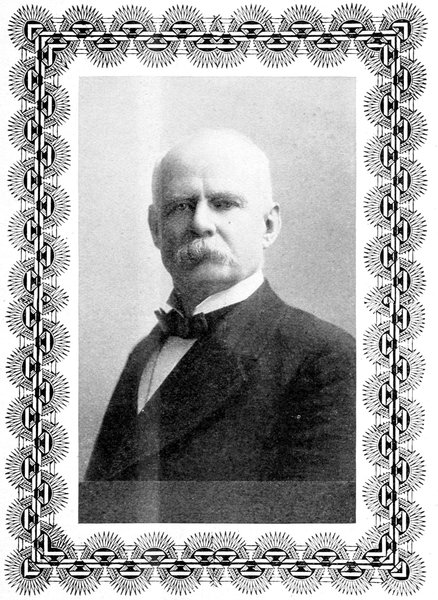
William Bryan, the great-grandfather of the presidential
nominee, the first of the Bryans known to the
present generation, lived in Culpepper county, Va.
In his family there were three children. One of these,
John Bryan, was the grandfather of William
Jennings Bryan. In 1807 John married Nancy
Lillard. To this couple ten children were born. One
of these was Silas L. Bryan, the father of William
Jennings Bryan.
He was born in Sperryville, Culpepper county, Va.,
in 1822. In 1834 he came west, working his way
through the public schools, finally entering McKendree
College, at Lebanon, Ill., and graduating with
honors in 1849. After graduating, he studied law,
was admitted to the bar, and began his practice in
Salem, Marion county, Ill. In 1852 he was married to
Mariah Elizabeth Jennings. In 1860, he was elected
to the circuit bench, where he served twelve years. In
1872 he was nominated for Congress on the Democratic
ticket, receiving the endorsement of the Greenback
party. He died March 30, 1880, and was buried
in the cemetery of his much beloved town, Salem.
The union of Silas Bryan and Mariah Jennings
was blessed on March 19, 1860, by the birth of
William Jennings Bryan, twice the Democratic
nominee for President of the United States.
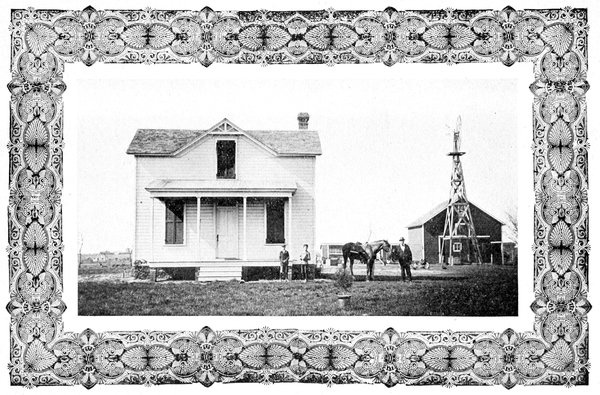
10When William Jennings Bryan was six years old,
his parents moved to their farm in the vicinity of
Salem. Until he was ten years of age his parents
taught him at home, hoping thus to mould his young
mind to better advantage. At ten years of age
William entered the public schools of Salem. There
he attended until he was fifteen, when he entered
Whipple Academy, Jacksonville, Ill., in the fall of
1875. Two years later he entered Illinois College,
and with this step a new life began.
His parents wished him to take a classical course
with its Latin, Greek, mathematics, and geometry.
This he did. He was, too, an earnest student of political
economy. During his first year at the Academy,
he delivered Patrick Henry’s masterpiece, and
was ranked well down toward the “foot.” Again in
the second year, nothing daunted by his failure to
be at the “head,” he selected “The Palmetto and the
Pine” as his subject. This time he was third, with
a large number following. Later in his second year
he delivered “Bernado del Carpio” and gained second
prize. In his sophomore and junior years, his essays
upon “Labor” and “Individual Powers” were each
awarded first prize. The winning of the junior prize
entitled him to represent Illinois College in the intercollegiate
oratorical contest, which was held at Galesburg,
Ill., in the fall of 1880. His oration was upon
“Justice,” which received the second prize of fifty
dollars. At the time of graduation, he was elected
class orator, and delivered the valedictory.
It was here, in his junior year that he first met his
11wife, Miss Mary Baird, of Perry, Ill., and she, speaking
of her first impression, says, “I saw him first in
the parlors of the young ladies’ school which I attended
in Jacksonville. He entered the room with
several other students, was taller than the rest, and
attracted my attention at once. His face was pale
and thin; a pair of keen, dark eyes looked out from
beneath heavy eyebrows; his nose was prominent—too
large to look well, I thought; a broad, thin-lipped
mouth and a square chin completed the contour of his
face. I noted particularly his hair and smile. The
former, black in color, fine in quality, and parted
distressingly straight. In later years his smile has
been the subject of considerable comment. Upon one
occasion a heartless observer was heard to remark,
‘That man can whisper in his own ear,’ but this was
cruel exaggeration.”
The graduating exercises of Illinois College were
in June, 1881. The valedictory is given below, not
because it possesses great merit, but in order to show
his style and the turn of his mind at the time.
“Beloved instructors, it is character not less than
intellect that you have striven to develop. As we
stand at the end of our college course, and turn our
eyes toward the scenes forever past, as our memories
linger on the words of wisdom which have fallen from
your lips, we are more and more deeply impressed
with the true conception of duty which you have ever
shown. You have sought not to trim the lamp of
genius until the light of morality is paled by its
dazzling brilliance, but to encourage and strengthen
12both. These days are over. No longer shall we
listen to your warning voices, no more meet you in
these familiar classrooms, yet on our hearts ‘deeply
has sunk the lesson’ you have given, and it shall not
soon depart.
“We thank you for your kind and watchful care,
and shall ever cherish your teachings with that devotion
which sincere gratitude inspires.
“It is fitting that we express to you also, honored
trustees, our gratitude for the privileges which you
have permitted us to enjoy.
“The name of the institution whose interest you
guard will ever be dear to us as the schoolroom, to
whose influence we shall trace whatever success coming
years may bring.
“Dear classmates, my lips refuse to bid you a last
good-bye; we have so long been joined together in a
community of aims and interests; so often met and
mingled our thoughts in confidential friendship; so
often planned and worked together, that it seems like
rending asunder the very tissues of a heart to separate
us now.
“But this long and happy association is at an end,
and now as we go forth in sorrow, as each one must,
to begin alone the work which lies before us, let us
encourage each other with strengthening words.
“Success is brought by continued labor and continued
watchfulness. We must struggle on, not for
one moment hesitate, nor take one backward step; for
in the language of the poet:
13‘The gates of hell are open night and day,
Smooth the descent and easy is the way;
But to return and view the cheerful skies,
In this, the past and mighty labor lies.’
We launch our vessels upon the uncertain sea of life
alone, yet not alone, for around us are friends who
anxiously and prayerfully watch our course. They
will rejoice if we arrive safely at our respective
havens, or weep with bitter tears if, one by one, our
weather-beaten barks are lost forever in the surges
of the deep.
“We have esteemed each other, loved each other,
and now must with each other part. God grant that
we may all so live as to meet in the better world,
where parting is unknown.
“Halls of learning, fond Alma Mater, farewell.
We turn to take our ‘last, long, lingering look’ at the
receding walls. We leave thee now to be ushered
out into the varied duties of an active life.
“However high our names may be inscribed upon
the gilded scroll of fame, to thee we all the honor give,
to thee all the praises bring. And when, in after
years, we’re wearied by the bustle of the busy world,
our hearts will often long to turn and seek repose
beneath thy sheltering shade.”
In September, 1881, William Jennings Bryan entered
the Union College of Law at Chicago. Out of
school hours his time was spent in the office of ex-Senator
Lyman Trumbull, who had been a great
friend of young Bryan’s father. His vacation and
summer months were spent on the farm, and it was
14these years of rugged, outdoor life which gave to his
manhood that vigor, stability, and splendid physique
so helpful to him in his life as a student and in his
work since he has left college.
Mr. Bryan stood well in the law school, taking an
especial interest in constitutional law. He was also
connected with the debating society of the college
and took an active part in its meetings.
At the age of twenty-three Mr. Bryan finished a
collegiate course and started in life for himself, leaving
the farm, robust and ambitious, to grow in the
knowledge of his profession. His parents were devout
Christians and members of the Baptist Church.
So Mr. Bryan was early taught those principles of
right and wrong, justice, equality, and the advantages
of a pure life. His father’s example convinced
him that the old saying that “no honest man can become
a lawyer” was a myth and a mistake. And on
July 4, 1883, William Jennings Bryan began the
practice of his profession in Jacksonville, Ill.
Stocked with a liberal education, a conscience void
of offense, a character unsullied, and an ambition to
know the law, and to apply this knowledge for the
benefit of the people, he began at the very bottom of
the ladder. The drudgery and disappointments, the
hardships and jokes common to a beginner without
means and alone, in competition with men of gray
hairs and wisdom that come from years of toil and
practice, was the portion of Mr. Bryan. But he was
a courageous man; Napoleon-like he knew no such
word as fail, and with that force and enthusiasm so
15characteristic of the man, he labored on, believing
that each disappointment contained its lesson, and
that every hardship endured had its counterpart in
a triumph. His early practice was not unlike that of
other beginners, taking such cases as usually come to
the young lawyer.
At the close of the first year, and during the fall
of 1884, his income was such that he could support a
wife; a modest home was planned and built, and in
October, 1884, he was married. During the next
three years he lived comfortably, though economically,
and laid by a small amount. Politics lost none
of its charms, and each campaign found Mr. Bryan
speaking, usually in his own county.
Three years after graduation he attended the commencement
at Illinois College, delivered the Master’s
oration, and received the degree, his subject being
“American Citizenship.” From that time until he
entered Congress in 1891, his only support for himself
and his wife was from his profession. Mr. Bryan
continued in a growing practice of law in Jacksonville
until October, 1887. In July of that year, while
on a western trip, he passed through Lincoln, Neb.,
to visit friends, and in two days was so impressed
with the city and its possibilities that he disposed of
his business in Jacksonville, and located in Lincoln.
Political ambitions did not enter into this change,
as the city, county, and state were strongly Republican.
Mr. Bryan began his lot as a lawyer in Lincoln
by forming a partnership, the style of the firm being
“Talbot & Bryan.” He at once applied himself vigorously
16to the details of the practice in his new field,
and was soon recognized as a lawyer of unusual
strength.
In the few years of practice at the bar of Lincoln
before he was elected to Congress, Mr. Bryan became
somewhat celebrated as the champion of the anti-sugar-bounty
doctrine, and as the pleader for equal
rights, under the law, for all classes of men. In the
spring of 1896, the city proposed to issue $500,000 of
its refunding bonds in gold. A number of citizens
believing such a contract unjust to the tax-payers,
consulted Mr. Bryan and secured his services in their
behalf. Without compensation, he at once devoted
his energies to restrain the city of Lincoln from issuing
and selling such bonds. A temporary restraining
order was issued by the court, and after a vigorous
contest an injunction against the city, preventing
such contract, was granted. In these cases was shown
Mr. Bryan’s genuine interest in public matters, and in
the general welfare of the people. Aside from many
of these cases involving public interest, his work as a
lawyer was the usual practice of the profession.
Mr. Bryan is a man of great physical endurance.
As a lawyer as well as a legislator, he is a man of
great deliberation. Before acting, he believes in being
fully advised as to the subject upon which he is to
act. He was never known to champion a cause, accept
a case, or make a statement to a jury or elsewhere
that did not present the honest conviction of his mind,
always having a sincere belief in the correctness of
17the position assumed. In explaining a proposition of
law, he seeks the reason for the law, which he is always
able to present with peculiar clearness.
In his method of argument he is never emotional,
but makes strong applications of law and fact by the
statement of his case and proof, without any effort at
embellishment or oratory. His ability to crowd a
great deal in a few words and sentences is very
marked. The weakness of his opponents he easily detects,
and readily points out the fallacy. Mr. Bryan
is an ardent believer in the American jury system.
When in Congress, he introduced a bill providing that
a verdict agreed to by three-fourths of the members
of a jury should be a verdict of the jury in civil cases,
and he made an argument before the Congressional
Judiciary Committee in its support.
“Mr. Bryan did not distinguish himself as a
lawyer.” Those who thus complain should consider
that he entered the practice at the age of twenty-three,
and left it at thirty, and in that period began twice,
and twice became more than self-supporting. He has
not had the time and opportunity in which to establish
the reputation at the bar which gives to many
American jurists the illustrious positions which they
occupy. However, at the time of his election to Congress,
his practice was in a thriving condition and
fully equal to that of any man of his age in the city.
Whatever may be said of Mr. Bryan by friend or
foe, it must be conceded that his convictions control
his actions on all questions, either as a lawyer or as
18a public man, and when employed in a case involving
great interests, he would, without question, acquit
himself with that distinction which has characterized
him as a leader in public affairs.
IN CONGRESS
19
Mr. Bryan’s first political speech of importance
was made at Seward in the spring of 1888. At that
time Lincoln was known to be as strong as the rock of
Gibraltar in the Republican faith. On this occasion
of his first public appearance as a political orator in
Nebraska, he drew men to him by the power of the
orator, and held them there in subsequent years by
the virtue of the man. His extraordinary popularity
with the masses of his followers was universally acknowledged.
After his first few speeches, it did not
take long for his reputation to spread over the state,
and when he was elected as a delegate from Lancaster
county to the Democratic State convention in 1888
he was in great demand. The sources of this popularity,
though less clear, were of profound significance,
being only in part personal. In fact, it seemed to be
this man’s fortune to embody a fresh democratic impulse,
which in time would make him the leader of a
new democratic movement.
The reports as to Mr. Bryan’s first speech in the
convention, say in part: “Mr. Bryan, of Lancaster
county, was then called. He came forward and delivered
a spirited address, in the course of which he
said that if the platform laid down by the President
in his message upon the tariff question were carried
out and vigorously fought upon in the state, it would,
20in the course of a short time, give Nebraska to the
Democracy. He thought if the Democrats went out
to the farmers and people who lived in Nebraska and
showed them the iniquity of the tariff system, they
would rally round the cause which their noble leader,
Grover Cleveland, had championed.” This short, but
pointed speech created the greatest amount of enthusiasm,
and the young orator impressed his personality
upon the public mind of his adopted state.
In the fall of 1888, Mr. Bryan made a canvass of
the First Congressional District, in behalf of Hon. J.
Sterling Morton, and also visited some thirty counties
throughout the state. Mr. Morton was defeated by
three thousand four hundred, the district being normally
Republican.
When the campaign of 1890 opened, a few Democrats
who came to appreciate Mr. Bryan’s real ability
believed that with him as the nominee the Republicans
could be defeated. So when the Democratic convention
met at Lincoln, July 31, 1890, Mr. Bryan was
selected without opposition, and at once began a vigorous
campaign. He began a thorough canvass, speaking
about eighty times, and visiting every city and
village in the district. At the close of the last debate,
he presented to Mr. Connell (his opponent) a copy of
Gray’s Elegy, with the following remarks: “Mr. Connell:
We now bring to a close the series of debates
which was arranged by our committees. I am glad we
have been able to conduct these discussions in a courteous
and friendly manner. If I have in any way
offended you in word or deed, I offer apology and
21regret; and as freely forgive. I desire to present to
you, in remembrance of these pleasant meetings, this
little volume, because it contains ‘Gray’s Elegy,’ in
perusing which I trust you will find as much pleasure
and profit as I have found. It is one of the most
beautiful and touching tributes to human life that
literature contains. Grand in its sentiments and
sublime in its simplicity, we may both find in it a
solace in victory or defeat. If success crowns your
efforts in this campaign, and it should be your lot
‘The applause of listening senates to command’
and I am left
‘A youth to fortune and to fame unknown,’
forget not us who in the common walks of life perform
our part, but in the hour of your triumph recall
the verse:
‘Let not ambition mock their useful toil,
Their homely joys and destiny obscure;
Nor grandeur hear, with a disdainful smile,
The short and simple annals of the poor.’
“If on the other hand, by the verdict of my countrymen,
I should be made your successor, let it not be
said of you
‘And melancholy marked him for her own’,
but find sweet consolation in the thought:
‘Full many a gem of purest ray serene,
The dark unfathomed caves of ocean bear;
Full many a flower is born to blush unseen,
And waste its sweetness on the desert air.’
“But when the palm of victory is given to you or to
me, let us remember those of whom the poet says:
22‘Far from the madding crowd’s ignoble strife
Their sober wishes never learned to stray,
Along the cool, sequestered vale of life.
They kept the noiseless tenor of their way.’
“These are the ones most likely to be forgotten by
the Government. When the poor and weak cry out
for relief, they too often hear no answer but ‘the
echo of their cry,’ while the rich, the strong, the
powerful are given an attentive ear. For this reason
is class legislation dangerous and deadly; it takes
from those least able to lose, and gives to those who
are least in need. The safety of our farmers and our
laborers is not in special legislation, but in equal and
just laws that bear alike on every man. The great
masses of our people are interested, not in getting
their hands into other people’s pockets, but in keeping
the hands of other people out of their pockets. Let
me, in parting, express the hope that you and I may
be instrumental in bringing our Government back to
better laws which will give equal treatment without
regard to creed or condition. I bid you a friendly
farewell.”
Mr. Bryan closed his campaign at the city of Lincoln,
and was elected by a plurality of six thousand
seven hundred in the same district which two years
before had defeated Mr. Morton by a plurality of
three thousand four hundred. He was elected in one
of the fairest and most brilliant campaigns ever
fought; and became one of the most prominent members
of the lower House from the West.
The explanation of Mr. Bryan’s popularity must be
23sought in a cause which lies deeper than a political
issue.
When he entered Congress he gave his support
in caucus to Mr. Springer, for Speaker of the House,
in whose district he had lived when at Jacksonville.
In the House, he voted for Mr. Crisp, the
caucus nominee. Mr. Springer was made chairman
of the Committee on Ways and Means, and although
it was unprecedented to give to a first term member a
position on the all-important Ways and Means Committee,
Speaker Crisp conferred that unprecedented
honor upon Bryan of Nebraska. One of the first bills
introduced by Mr. Bryan was that providing for the
election of senators by the people, at the option of
each state.
In supporting this bill Mr. Bryan said: “Mr.
Speaker—I desire to call the attention of the House
to what I consider a very important question involved
in this joint resolution. I shall not consume time in
discussing the general principle of electing senators
by the people. If the people of a state have enough
intelligence to choose their representatives in the
state legislature, their executive officers, judges, and
their officials in all the departments of the state and
country, they have enough intelligence to choose the
men who shall represent them in the United States
Senate.
“And now, sirs, if we want to secure the election of
senators by the people, we must submit a proposition
free from the Republican idea of Federal interference,
and free from the Democratic idea of non-interference.
24We may just as well cease the attempt to secure this
reform if we are going to tie it to Federal election
laws. I appeal to members of both sides of the House,
members who in their hearts desire this reform, members
who in their own judgment believe that the time
has come to give the people a chance to vote for the
senators, Democrats, Republicans, and Populists
alike, to join in a proposition which will eliminate the
political question and leave us simply the question of
election by the people or not.”
The bill attracted much attention through the
country, although it failed of final passage.
On March 16, 1892, Mr. Bryan made his great tariff
speech in the House, which is considered in another
chapter of this work. In the spring of 1892, the silver
sentiment began to show itself among the leaders of
the Nebraska Democracy. The state convention to
elect delegates to the National Democratic convention
was called for April 15, 1892, and found Mr. Bryan
back in Lincoln, by the consent of the House, making
a determined effort for the adoption of a plank favoring
the free coinage of silver. The fight was a hard
and bitter one. In supporting this part of the platform
Mr. Bryan said in part:
“Gentlemen—I do not believe it is noble to dodge
any issue. If, as has been indicated, this may have
an effect on my campaign, then no bridegroom went
with gladder heart to greet his bride that I shall welcome
defeat. Vote this down if you will, but do not
dodge it; for that is not democratic.” The convention
went wild in a body, a vote was called, which brought
25defeat to the Bryan silver plank. By this act Mr.
Bryan incurred the hatred of the Cleveland administration.
Upon the return of Mr. Bryan to Nebraska at the
close of the 52d Congress, a series of debates had been
arranged with the Republican party nominee, Allen
W. Field, then judge of the district court. This was
even a more bitter contest than the first. Mr. McKinley,
Mr. Foraker, and others were called to Nebraska
to aid the Republican cause. They made desperate
efforts to “down” Bryan, but in spite of all he was
reelected by a majority of one hundred fifty-two.
As a congressman William Jennings Bryan was a
success. From the moment he entered Congress, he
was a leader. To those who knew him intimately, it
was no surprise that during the first term he sprang
suddenly into prominence. His speech on the tariff
question stamped him not only as an orator, but a
man who had made a deep political study of economic
questions.
It was not until his second term that he really
focussed public attention upon himself. When Congress
was convened in extraordinary session, he went
to Washington prepared to resist the repeal of the
purchasing clause of the Sherman act. He knew the
feeling of his constituents, and being thoroughly
familiar with every phase of the question, he entered
upon the fight like a gladiator. His conspicuous
record as an orator in the previous session was sufficient
to get him a place in the great debate, and, when
the opportunity came, Bryan was prepared for it.
26For several days it was known that he was to speak,
and the galleries of the House were crowded at each
session. Finally he was recognized by the Speaker,
and he began the most effective speech that had been
heard in Congress in years. Everybody was quiet and
listened. The oldest member could not remember
when a man had received such marked attention and
such spontaneous applause as Bryan got that day.
As he stood there, the picture of health, a physical
giant, his voice falling in easy cadence, he impressed
upon his hearers the thought that he meant every word
he was saying. He had every one in his grasp. As
he continued, the audience became worked up to a
high pitch, and when he concluded with a magnificent
peroration, quiet reigned for a moment, then suddenly
every one joined in tumultuous applause. Bryan had
finished; he had made a speech that for thought, logic,
and sentiment, to say nothing of its matchless delivery,
had few equals in the records of Congress. For
two hours and fifty minutes the young Nebraska
orator held the close attention of a full house and
crowded galleries. Instead of members leaving the
hall as usual, they crowded in, and every man was in
his seat. This speech made him famous. Occasionally
a single standard man would interrupt, but none did
it without subsequent regret. He knew his case too
well.
From that day to this, Bryan has been in the public
eye everywhere. Many who heard his tariff speech
predicted that it was a flash light, and would soon
grow dim, and its author be forgotten; but after he
27made his silver speech those who thought his first an
accident were compelled to admit that he possessed
all the qualifications of a statesman and that he was
bound to be a leader in his party.
Besides his silver and tariff speeches, Mr. Bryan
spoke briefly upon several other questions, namely, in
favor of foreclosure of Government liens on all
Pacific railways, and in favor of the anti-option bill.
He favored the application of the principle of arbitration
as far as Federal authority extends. On January
30, 1894, Mr. Bryan, in a speech in favor of the income
tax, brilliantly and successfully replied to the speech
of Bourke Cockran delivered in opposition to that
measure.
His record in Congress did not consist entirely of
speech-making. He was a tireless worker for his constituents,
and he secured more pensions for old
soldiers living in his district than all the Republican
congressmen who had preceded him. He personally
attended to the wants of every constituent, and no
man ever wrote a letter asking his assistance that he
did not at once enlist Bryan’s active support. He was
vigilant and watchful, and never missed an opportunity
to do a favor.
He was exceedingly active in Congress, dodging
nothing, and often speaking on the current questions.
Yet nothing that he did or said in Congress comes
back to plague him. It was then thought, and it has
since been hoped, that in the fulness of his record
something would come back to trip him. But what
he said then only makes him stronger now.
28It may not be amiss at this point to quote from Mrs.
Bryan, who said: “Quoting from a eulogy which Mr.
Bryan delivered upon a colleague in the 53d Congress,
this extract will serve a double purpose, in that it
gives his views upon immortality, and, at the same
time, presents a passage which I think may, without
impropriety, be called a finished bit of English. Mr.
Bryan said ‘I shall not believe that even now his light
is extinguished. If the Father deigns to touch with
divine power the cold and pulseless heart of the buried
acorn, and make it burst forth from its buried walls,
will He leave neglected in the earth, the soul of man,
who was made in the image of his Creator? If he
stoops to give to the rosebush, whose withered
blossoms float upon the breeze, the sweet assurance
of another springtime, will he withhold the words of
hope from the sons of man when the frosts of winter
come? If matter, mute and inanimate, though
changed by the forces of Nature into a multitude of
forms, can never die, will the imperial spirit of man
suffer annihilation after it has paid a brief visit, like
a royal guest, to this tenement of clay? Rather let
us believe that He, who, in His apparent prodigality,
makes the blade of grass or the evening’s sighing
zephyr, but makes them to carry out His eternal plan,
has given immortality to the mortal, and gathered to
Himself the generous spirit of our friend. Instead of
mourning, let us look up and address him in the
words of the poet:
29“’The day has come, not gone;
The sun has risen, not set;
Thy life is now beyond
The reach of death or change,
Not ended—but begun
O, noble soul! O, gentle heart! Hail, and farewell.’”
Mr. Bryan was singularly free from egotism, affectation,
or envy of the fame of others. That he was
brilliant goes without saying, but his brilliancy was
as natural and easy as to be like Shakespeare’s description
of mercy:
“The quality of mercy is not strained,
It dropped as the gentle rain from heaven
Upon the places beneath. It is twice blessed;
It blesses him that gives and him that takes.”
THE TARIFF
30
For twenty years prior to 1896 the chief tangible
point of difference between the Democratic and Republican
parties was the tariff question. It was, in
truth, a question on which the two great parties had
always differed since the days when they were known
as Federalists and Anti-Federalists.
The Democratic party, in true accord with the principles
of Thomas Jefferson, has always held that government
to be best which interferes least with the
liberty of the individual. The purpose of government,
it has held, is to protect man in his personal rights
against the unjust encroachments of his neighbors.
But, according to the Democratic idea, government
should not interfere to arbitrarily promote the interests
of any class of its citizens at the expense of any
other class. All should be left, protected against
illegal encroachment, but otherwise unmolested, to
work out their own salvation. In other words, Democracy
believes that government to be best which
governs least.
The Republican theory, on the other hand, has inclined
toward the exactly opposite point of view; that
that government is best which governs most. It has
acted consistently on the principle that it is not only
permissible but advisable for government to be made
an instrument for advancing the pecuniary or business
31interests of such of its citizens as seem most deserving
or are most fortunate in winning its ear. It
was this radical difference between the two parties,
involving, as it did, a basic and fundamental principle,
that lay at the root of the controversy regarding
tariff duties.
The Democratic party, adhering to the strict letter
of the Constitution, held that the tariff should be
levied for one simple purpose, and that the purpose
contemplated by the Constitution—to raise revenue.
With this end in view, the party contended, tariff
duties should be levied mostly on such articles as are
not produced in this country, and, in order to equalize
the burden of taxation, be imposed rather on luxuries
than the strict necessities of life.
The Republican party took a more radical position.
It advocated the levying of tariff duties, not primarily
for the purpose of raising revenue,—that was
made a secondary consideration,—but to protect
from foreign competition the manufacturing and industrial
enterprises of the United States. Then, it
argued, these establishments, protected by the fostering
arm of government, would grow great and strong,
furnishing at once employment for labor at high
wages, and a “home market” for the products of the
American farm and mine.
Controverting this alluring argument, the Democratic
party held that government had no right to
compel citizens of one class or section to contribute
involuntarily to the support of citizens of some other
class or section of the country. The only manner in
32which a protective tariff could protect, it pointed out,
was by enabling the home manufacturer to charge a
higher price because of the duty on foreign goods.
This added price, it showed, must be paid into the
pocket of the American manufacturer by the American
consumer. Moreover, it declared, the farmer
could only share the burden without receiving any of
the benefits of a high protective tariff, the price of his
products being fixed in the world’s markets at Liverpool
and London. And the same thing, it held, was
true of the laboring man, as the rate of his remuneration
was fixed mainly by “the iron law of wages.”
When Mr. Bryan was elected to Congress for his
first term this question of tariff was the all-absorbing
one before the people. The Republican party, in the
zenith of its power, had enacted the McKinley tariff
law, the embodiment of its views on this question,
levying tariff duties so high as almost to exclude
foreign competition. It was in this law, undoubtedly,
that most of the great trusts and monopolies since
formed read their birthright.
Mr. Bryan, naturally, as a Democrat and a firm
believer in the principles of government laid down
by Thomas Jefferson, was vigorously opposed to the
theory of a high protective tariff. The Congress in
which he served his first term was Democratic, the
result of the enactment of the trust-breeding McKinley
tariff law. The Ways and Means Committee,
of which Mr. Springer of Illinois was chairman, decided
that relief might best be effected by the introduction
33of a series of bills, transferring certain
commodities to the free list.
It was in support of one of these—a bill placing
wool on the free list and reducing the duties on woolen
goods—that Mr. Bryan delivered his maiden speech in
the House. This was on Wednesday, March 16, 1892.
Like Byron, he awoke the next morning and found
himself famous. The speech had attracted the admiring
attention of the whole country. The young orator’s
logic, acute reasoning, powers of broad generalization,
and apt and homely illustration, not less than
his genuine eloquence, incisive wit, and brilliant repartee,
had, in one speech, won him a place at the
head of the list of American parliamentary orators.
In his speech Mr. Bryan thus effectually punctured
with his ridicule the Republican argument generally
advanced that a high tariff makes low prices:
“Now, there are two arguments which I have never
heard advanced in favor of protection; but they are
the best arguments. They admit a fact and justify it,
and I think that is the best way to argue, if you have a
fact to meet. Why not say to the farmer, ‘Yes, of
course you lose; but does not the Bible say, “It is more
blessed to give than to receive”—[laughter]—and if
you suffer some inconvenience, just look back over
your life and you will find that your happiest moments
were enjoyed when you were giving something to
somebody, and the most unpleasant moments were
when you were receiving.’ These manufacturers are
self-sacrificing. They are willing to take the lesser
part, and the more unpleasant business of receiving,
34and leave to you the greater joy of giving. [Loud
laughter and applause on the Democratic side.]
“Why do they not take the other theory, which is
borne out by history—that all nations which have
grown strong, powerful, and influential, just as individuals,
have done it through hardship, toil, and
sacrifice, and that after they have become wealthy
they have been enervated, they have gone to decay
through the enjoyment of luxury, and that the great
advantage of the protective system is that it goes
around among the people and gathers up their surplus
earnings so that they will not be enervated or weakened,
so that no legacy of evil will be left to their children.
Their surplus earnings are collected up, and the
great mass of our people are left strong, robust, and
hearty. These earnings are garnered and put into the
hands of just as few people as possible, so that the injury
will be limited in extent. [Great laughter and applause
on the Democratic side.] And they say, ‘Yes,
of course, of course; it makes dudes of our sons, and it
does, perhaps, compel us to buy foreign titles for our
daughters [laughter], but of course if the great body
of the people are benefited, as good, patriotic citizens
we ought not to refuse to bear the burden.’
[Laughter.]
“Why do they not do that? They simply come to
you and tell you that they want a high tariff to make
low prices, so that the manufacturer will be able to
pay large wages to his employees. [Laughter.] And
then, they want a high tariff on agricultural products
so that they will have to buy what they buy at the
35highest possible price. They tell you that a tariff
on wool is for the benefit of the farmer, and goes into
his pocket, but that the tariff on manufactured
products goes into the farmer’s pocket, too, ‘and
really hurts us, but we will stand it if we must.’ They
are much like a certain maiden lady of uncertain age,
who said, ‘This being the third time that my beau has
called, he might make some affectionate demonstration’;
and, summing up all her courage, she added,
‘I have made up my mind that if he does I will bear it
with fortitude.’” [Great laughter and applause.]
He thus pleaded for the protection of the greatest
of “home industries,”—the home-building of the common
people:
“I desire to say, Mr. Chairman, that this Republican
party, which is responsible for the present system,
has stolen from the vocabulary one of its dearest
words and debased its use. Its orators have prated
about home industries while they have neglected the
most important of home industries—the home of the
citizen. The Democratic party, so far from being
hostile to the home industries, is the only champion,
unless our friends here, the Independents, will join
with us, of the real home industry of this country.
“When some young man selects a young woman who
is willing to trust her future to his strong right arm,
and they start to build a little home, that home which
is the unit of society and upon which our Government
and our prosperity must rest—when they start to
build this little home, and the man who sells the lumber
reaches out his hand to collect a tariff upon that;
36the man who sells paints and oils wants a tariff upon
them; the man who furnishes the carpets, tablecloths,
knives, forks, dishes, furniture, spoons, everything
that enters into the construction and operation of
that home—when all these hands, I say, are stretched
out from every direction to lay their blighting weight
upon that cottage, and the Democratic party says,
‘Hands off, and let that home industry live,’ it is protecting
the grandest home industry that this or any
other nation ever had. [Loud applause on the Democratic
side.]
“And I am willing that you, our friends on the other
side, shall have what consolation you may gain from
the protection of those ‘home industries’ which have
crowned with palatial residences the hills of New
England, if you will simply give us the credit of being
the champions of the homes of this land. [Applause
on the Democratic side.] It would seem that
if any appeal could find a listening ear in this legislative
hall it ought to be the appeal that comes up from
those co-tenants of earth’s only paradise; but your
party has neglected them; more, it has spurned and
spit upon them. When they asked for bread you gave
them a stone, and when they asked for a fish you gave
them a serpent. You have laid upon them burdens
grievous to be borne. You have filled their days with
toil and their nights with anxious care, and when they
cried aloud for relief you were deaf to their
entreaties.”
The conclusion of Mr. Bryan’s speech is here reproduced.
It is of greater length than would ordinarily
37justify its incorporation in a volume of this
size, but the objection is outweighed by the fact, that,
in most beautiful English, it outlines the idea of government
which has since been the beacon light that
has guided Mr. Bryan’s career:
“We can not afford to destroy the peasantry of this
country. We can not afford to degrade the common
people of this land, for they are the people who in time
of prosperity and peace produce the wealth of the
country, and they are also the people who in time of
war bare their breasts to a hostile fire in defense of
the flag. Go to Arlington or to any of the national
cemeteries, see there the plain white monuments
which mark the place ‘where rest the ashes of the nation’s
countless dead,’ those of whom the poet has so
beautifully written:
‘On Fame’s eternal camping ground
Their silent tents are spread.’
Who were they? Were they the beneficiaries of
special legislation? Were they the people who are
ever clamoring for privileges? No, my friends; those
who come here and obtain from Government its aid
and help find in time of war too great a chance to
increase their wealth to give much attention to military
duties. A nation’s extremity is their opportunity.
They are the ones who make contracts, carefully
drawn, providing for the payment of their
money in coin, while the government goes out, if necessary,
and drafts the people and makes them lay
down upon the altar of their country all they have.
No; the people who fight the battles are largely the
38poor, the common people of the country; those who
have little to save but their honor, and little to lose
but their lives. These are the ones, and I say to you,
sir, that the country can not afford to lose them. I
quote the language of Pericles in his great funeral
oration. He says:
‘It was for such a country, then, that these men,
nobly resolving not to have it taken from them, fell
fighting; and every one of their survivors may well be
willing to suffer in its behalf.’
That, Mr. Chairman, is a noble sentiment and points
the direction to the true policy for a free people. It
must be by beneficent laws; it must be by a just government
which a free people can love and upon which
they can rely that the nation is to be preserved. We
can not put our safety in a great navy; we can not put
our safety in expensive fortifications along a seacoast
thousands of miles in extent, nor can we put our
safety in a great standing army that would absorb in
idleness the toil of the men it protects. A free government
must find its safety in happy and contented citizens,
who, protected in their rights and free from
unnecessary burdens, will be willing to die that the
blessings which they enjoy may be transmitted to
their posterity.
“Thomas Jefferson, that greatest of statesmen and
most successful of politicians, tersely expressed the
true purpose of government when he said:
“’With all these blessings, what more is necessary
to make us a happy and prosperous people? Still one
thing more, fellow citizens: a wise and frugal government,
39which shall restrain men from injuring one another;
shall leave them otherwise free to regulate their
own pursuits of industry and improvement, and shall
not take from the mouth of labor the bread it has
earned. This is the sum of good government, and this
is necessary to close the circle of our felicities.’
“That is the inspiration of the Democratic party;
that is its aim and object. If it comes, Mr. Chairman,
into power in all of the departments of this government
it will not destroy industry; it will not injure
labor; but it will save to the men who produce the
wealth of the country a larger portion of that wealth.
It will bring prosperity and joy and happiness, not to
a few, but to every one without regard to station or
condition. The day will come, Mr. Chairman—the
day will come when those who annually gather about
this Congress seeking to use the taxing power for
private purposes will find their occupation gone, and
the members of Congress will meet here to pass laws
for the benefit of all the people. That day will come,
and in that day, to use the language of another, ‘Democracy
will be king! Long live the king!’” [Prolonged
applause on the Democratic side.]
THE RISE OF THE SILVER ISSUE
40
In every national campaign since the time silver
was demonetized in 1873 the demand for bimetallism
has been a platform plank always of one and frequently
of both of the two great political parties. The
first unequivocal renunciation of the policy and theory
of bimetallism on the part of any important national
convention occurred in June, 1900, at Philadelphia.
In 1896 the Republican party, in its platform adopted
at St. Louis, pledged itself to the promotion of bimetallism
by international agreement. The Democratic
party, both in 1896 and 1900, expressed its conviction
that bimetallism could be secured by the independent
action of the United States, and to that end demanded
“the free and unlimited coinage of both gold and
silver, at the present legal ratio of 16 to 1, without
waiting for the aid or consent of any other nation.”
Previous to 1896 each of the great political parties
made quadrennial expressions of faith in the bimetallic
theory, frequently demanded its enactment into
law, and generally condemned the opposing party for
“hostility to silver.” And yet, despite the universal
belief in bimetallism on the part of the American
people; despite the general demands for bimetallism
made by both political parties; despite the many and
eloquent speeches for bimetallism delivered in Congress
and out of it by party leaders of all complexions,
41the hope of its becoming an actuality seemed to wither
and wane in inverse ratio to the fervency of the expressions
of friendship on the part of the politicians.
Sometimes those who were most vehement in their
demands were most instrumental in the passage of
that series of legislative enactments that inevitably
broadened and deepened the gulf between gold and
silver.
In explanation of this phenomenon it may be said
that of all the functions of government none is more
important than the power to regulate the quality and
quantity of its circulating medium; none more
freighted either with prosperity or disaster to its
people; and none more liable to make demagogues
of statesmen and knaves and hypocrites of those in
authority.
The first overt act in the fight against bimetallism,
which theretofore had been insidious, was the demand
of the Cleveland administration and the powers
that were behind it for the repeal of the purchasing
clause of the Sherman Act. The clause which was
aimed at provided for the purchase by the government
of bar silver sufficient for the annual coinage of $54,000,000.
With its repeal would disappear from the
Federal statute books the last vestige of authority for
the coinage of silver money other than subsidiary
coins.
In the fight against the administration over this
measure Mr. Bryan took a leading part. He was one
of the public men whose professions and practices in
the matter of financial legislation were not at variance.
42In his first campaign for Congress, in 1890, he
had inserted in his platform this plank, written by
himself:
“We demand the free coinage of silver on equal
terms with gold and denounce the efforts of the Republican
party to serve the interest of Wall Street as
against the rights of the people.”
In 1891 he had secured the adoption of a free silver
plank in the Nebraska Democratic platform. In 1892
he made a hard fight for a similar plank in the state
platform, but lost by a very close vote. On the day
before the national convention which nominated Mr.
Cleveland for president, Mr. Bryan was renominated
for Congress on a platform in which free coinage was
made the paramount issue, and throughout the campaign
he devoted to it the major portion of his time.
In this way, from free choice and impelling conviction,
Mr. Bryan had committed himself to the doctrine of
bimetallism and had declared his plan for putting it
into practice.
Mr. Bryan made his first speech in Congress against
unconstitutional repeal on February 9, 1893. In it he
said:
“I call attention to the fact that there is not in this
bill a single line or sentence which is not opposed to
the whole history of the Democratic party. We have
opposed the principle of the national bank on all
occasions, and yet you give them by this bill an increased
currency of $15,000,000. You have pledged
the party to reduce the taxation upon the people, and
yet, before you attempt to lighten this burden, you
43take off one-half million of dollars annually from the
national banks of the country; and even after declaring
in your national platform that the Sherman act
was a ‘cowardly makeshift’ you attempt to take away
the ‘makeshift’ before you give us the real thing for
which the makeshift was substituted.... Mr.
Speaker, consider the effect of this bill. It means that
by suspending the purchase of silver we will throw
fifty-four million ounces on the market annually and
reduce the price of silver bullion. It means that we
will widen the difference between the coinage and
bullion value of silver and raise a greater obstacle in
the way of bimetallism. It means to increase by
billions of dollars the debts of our people. It means a
reduction in the price of our wheat and our cotton.
You have garbled the platform of the Democratic
party. You have taken up one clause of it, and refused
to give us a fulfilment of the other and more
important clause, which demands that gold and silver
shall be coined on equal terms without charge for
mintage.
“Mr. Speaker, this can not be done. A man who
murders another shortens by a few brief years the
life of a human being; but he who votes to increase
the burden of debts upon the people of the United
States assumes a graver responsibility. If we who
represent them consent to rob our people, the cotton-growers
of the South and the wheat-growers of the
West, we will be criminals whose guilt can not be
measured by words, for we will bring distress and
disaster to our people.”
44In thus boldly and positively aligning himself
against the policy of the dominant wing of his own
party, which would soon be backed by the incoming
Cleveland administration, Mr. Bryan acted with his
characteristic devotion to principle. He could not
help seeing that all the odds were apparently against
that faction of his party with which he threw in his
fortunes. Mr. Cleveland and most of the old, honored,
and powerful leaders of democracy, it was
known, would join in the fight against silver. They
would have the powerful aid of the great Republican
leaders and be backed by the almost united influence
of the hundreds of daily newspapers in all the large
cities. Wealth, influence, experience, and so-called
“respectability” were all to be the property of the
Cleveland wing. Many trusted leaders of the old-time
fight for silver succumbed to the temptation and identified
themselves with the dominant faction. Not so
Mr. Bryan. On the failure of the bill to pass he returned
home and devoted all his time to a thorough
study of finance and of money, making the most careful
and complete preparation for the fight which he
saw impending.
The great struggle, which Mr. Bryan has termed
“the most important economic discussion which ever
took place in our Congress” was precipitated by President
Cleveland when he called Congress to meet in
special session on August 7, 1893. Mr. Wilson, of
West Virginia, Chairman of the Ways and Means
Committee, introduced in the House the administration
measure for the unconditional repeal of the purchasing
clause of the Sherman Act.
45The debate that ensued was one of the most brilliantly
and ably conducted in the annals of Congress.
On August 16, near the close of the debate, Mr. Bryan
delivered an extended argument against the bill. His
speech in point of profound reasoning and moving
oratory stands prominent in the list of congressional
deliverances. It concluded with the following magnificent
appeal:
“To-day the Democratic party stands between two
great forces, each inviting its support. On the one
side stand the corporate interests of the nation, its
moneyed institutions, its aggregations of wealth and
capital, imperious, arrogant, compassionless. They
demand special legislation, favors, privileges, and
immunities. They can subscribe magnificently to
campaign funds; they can strike down opposition
with their all-pervading influence, and, to those who
fawn and flatter, bring ease and plenty. They demand
that the Democratic party shall become their
agent to execute their merciless decrees.
“On the other side stands that unnumbered throng
which gave a name to the Democratic party, and for
which it has assumed to speak. Work-worn and dust-begrimed
they make their sad appeal. They hear of
average wealth increased on every side and feel the
inequality of its distribution. They see an overproduction
of everything desired because of an underproduction
of the ability to buy. They can not pay for
loyalty except with their suffrages, and can only
46punish betrayal with their condemnation. Although
the ones who most deserve the fostering care of Government,
their cries for help too often beat in vain
against the outer wall, while others less deserving find
ready access to legislative halls.
“This army, vast and daily growing, begs the party
to be its champion in the present conflict. It can not
press its claims mid sounds of revelry. Its phalanxes
do not form in grand parade, nor has it gaudy banners
floating on the breeze. Its battle hymn is ‘Home,
Sweet Home,’ its war cry ‘equality before the law.’
To the Democratic party, standing between these two
irreconcilable forces, uncertain to which side to turn,
and conscious that upon its choice its fate depends,
come the words of Israel’s second law-giver: ‘Choose
you this day whom ye will serve.’ What will the answer
be? Let me invoke the memory of him whose
dust made sacred the soil of Monticello when he
joined
‘The dead but sceptered sovereigns who still rule
Our spirits from their urns.’
“He was called a demagogue and his followers a
mob, but the immortal Jefferson dared to follow the
best promptings of his heart. He placed man above
matter, humanity above property, and, spurning the
bribes of wealth and power, pleaded the cause of the
common people. It was this devotion to their interests
which made his party invincible while he lived,
and will make his name revered while history endures.
“And what message comes to us from the Hermitage?
When a crisis like the present arose and the
47national bank of the day sought to control the politics
of the nation, God raised up an Andrew Jackson,
who had the courage to grapple with that great enemy,
and by overthrowing it he made himself the idol of
the people and reinstated the Democratic party in
public confidence. What will the decision be to-day?
“The Democratic party has won the greatest success
in its history. Standing upon this victory-crowned
summit, will it turn its face to the rising or the setting
sun? Will it choose blessings or cursings—life or
death—Which? Which?”
The bill passed the House by a considerable majority
and went to the Senate. In two months it came
back with Senate amendments. So earnest and determined
was Mr. Bryan in his opposition to the measure
that he resorted to dilatory tactics, employing every
legitimate parliamentary weapon to obstruct its progress.
When finally even the enemies of the bill would
no longer assist him in the fight for delay, Mr. Bryan
determined to abandon the fight in Congress to carry
it before the Democracy of the nation. In concluding
his last speech on the bill he said:
“You may think that you have buried the cause of
bimetallism; you may congratulate yourselves that
you have laid the free coinage of silver away in a
sepulchre, newly made since the election, and before
the door rolled the veto stone. But, sirs, if our cause
is just, as I believe it is, your labor has been in vain:
no tomb was ever made so strong that it could imprison
a righteous cause. Silver will lay aside its
48grave clothes and its shroud. It will yet rise and in
its rising and its reign will bless mankind.”
Though defeated in the first great contest, the silver
advocates were far from dismayed. They began at
once a systematic fight to wrest from the administration
the control of the party organization. The
factional fight within the ranks of Democracy gave
early promise of becoming exceedingly bitter. The
feeling was accentuated from the start by the personal
efforts of President Cleveland in behalf of the repeal
bill. In the Senate the silver men had what was considered
a safe majority, and it was to overcome this
and secure the passage of the bill that the President
had directed his energies. His great weapon was Federal
patronage, and he used it as a club. Never before
in the history of popular government in the United
States had the executive so boldly and so openly exerted
the tremendous influence of his position in an
attempt to force a coordinate branch of government
into unwilling compliance with his wishes. Mr. Cleveland’s
interference, which finally accomplished its
purpose, was angrily resented by the Silver Democrats,
and the lines between administration and
anti-administration were early closely drawn.
Mr. Bryan, while the repeal bill was still under discussion
in the Senate, attended the Nebraska State
Democratic convention as a delegate, on October 4,
1893. In the convention the administration wing of
the party was regnant, imperious, and arrogant. A
platform endorsing the President and his fight against
silver was adopted by a large majority. Bryan was
49even denied a place on the resolutions committee, although
endorsed therefor by his Congressional district,
which almost alone had sent silver delegates.
His course in Congress was repudiated and himself
personally received with but scant courtesy or consideration
on the part of the great majority of the delegates.
When the gold men, flushed with victory,
were about to complete their conquest, the discredited
young Congressman sprang to the platform to address
the convention. His whole person was quivering with
emotion, and as he spoke he strode up and down the
platform with a mien of unconcealed anger and defiance.
Never was he more truly the orator, and never
was tame beast so abject and so pitiful under the
scourge of the master as was that convention, mute
and defenseless, under his scathing excoriation. The
following extract will give an idea of the substance of
the speech, though the flashing eyes of the orator, the
tense and quivering frame, the voice now ringing with
defiance, now trembling with emotion,—these may
never be described.
“Mr. Chairman and Gentlemen of the Convention—We
are confronted to-day by as important a
question as ever came before the Democracy of the
state of Nebraska. It is not a personal question. It is
a question that rises above individuals. So far as I am
personally concerned it matters nothing whether you
vote this amendment up or down; it matters nothing
to me whether you pass resolutions censuring my
course or endorsing it. If I am wrong in the position
I have taken on this great financial question, I shall
50fall though you heap your praises upon me; if I am
right, and in my heart, so help me God, I believe I
am, I shall triumph yet, although you condemn me in
your convention a hundred times. Gentlemen, you are
playing in the basement of politics; there is a higher
plane. You think you can pass resolutions censuring
a man, and that you can humiliate him. I want to
tell you that I still ‘more true joy in exile feel’ than
those delegates who are afraid to vote their own sentiments
or represent the wishes of the people, lest they
may not get Federal office. Gentlemen, I know not
what others may do, but duty to country is above duty
to party, and if you represent your constituents in
what you have done and will do—for I do not entertain
the fond hope that you who have voted as you
have to-day will change upon this vote—if you as
delegates properly represent the sentiment of the
Democratic party which sent you here; if the resolutions
which have been proposed and which you will
adopt express the sentiments of the party in this
state; if the party declares in favor of a gold standard,
as you will if you pass this resolution; if you declare
in favor of the impoverishment of the people of Nebraska;
if you intend to make more galling than the
slavery of the blacks the slavery of the debtors of this
country; if the Democratic party, after you go home,
endorses your action and makes your position its permanent
policy, I promise you that I will go out and
serve my country and my God under some other name,
even if I must go alone.”
51But Mr. Bryan was not destined to be driven from
the Democratic party. He returned to Washington
to persistently fight the financial policy of the administration
until the Fifty-third Congress had adjourned.
The withdrawal of the greenbacks, the
granting of additional privileges to national banks,
the Rothschild-Morgan gold-bond contract—these he
opposed with the full measure of his mental and physical
powers. In the meantime the Silver Democrats
began the work of organization and propaganda in
every state in the Union. In 1894 Bryan triumphed
over his enemies in Nebraska in a convention whose
platform declared, “We favor the immediate restoration
of the free and unlimited coinage of gold and
silver at the present ratio of 16 to 1, without waiting
for the aid or consent of any other nation on earth.”
The Gold Democrats bolted the platform and the
ticket. And until the last delegate was elected to the
National convention which was to meet at Chicago
in July, 1896, the Silver Democrats continued everywhere
their efforts. They fought boldly and outspokenly
against the administration they had helped
to elect, and which was nominally Democratic. The
result of their fight was the instruction of almost two-thirds
of the delegates for an unambiguous free silver
plank, with a certainty that the Gold Democrats,
headed by President Cleveland, Secretary of the
Treasury Carlisle, and hundreds of the leaders of the
party, would bolt the action of the convention.
Thus torn and rent by dissentions, with little hope
52or prospect for success, the Democracy faced that remarkable
convention which was to repudiate the administration
itself had placed in power.
THE PRESIDENTIAL CANDIDATE (1896)
53
In the fall of 1896, within the period of one hundred
days, William J. Bryan traveled eighteen thousand
miles. He delivered over six hundred speeches
to crowds aggregating five millions of people. Reduced
to figures more readily comprehended, he
averaged each day one hundred and eighty miles of
railroad travel, interrupted by the stops necessary
for the delivery of six speeches to crowds of over
eight thousand each and fifty thousand in all. This
was his personal service in the “first battle” for the
restoration of bimetallism, acting as the standard
bearer of three political parties.
The great presidential campaign of 1896 was in
many respects the most remarkable in the history of
the United States. It turned upon an issue which
was felt to be of transcending importance, and which
aroused the elemental passions of the people in a
manner probably never before witnessed in this
country save in time of war. It was an issue forced
by the voters themselves despite the unceasing efforts
of the leading politicians of both great parties to keep
it in the background. Beneath its shadow old party
war cries died into silence; old party differences were
forgotten; old party lines were obliterated. As it
existed in the hearts of men the issue had no name.
54Bimetallism was discussed; monometallism was discussed;
these were the themes of public speakers,
editors, and street corner gatherings when recourse
was had to facts and argument. But when one partisan
called his friend the enemy an “Anarchist!” and
when the latter retorted with the cry of “Plutocrat,”
then there spoke in epithets the feelings which were
stirring the American people, and which made the
campaign significant. For the terms indicated that
for the first time in the Republic founded on the doctrine
of equality, Lazarus at Dives’ gate had raised the
cry of injustice, whereat the rich man trembled.
The Republican National convention met at St.
Louis on June 16. William McKinley, of Ohio, was
nominated for President and Garret A. Hobart, of
New Jersey, for Vice-President. A platform was
adopted declaring for the maintenance of “the existing
gold standard” until bimetallism could be secured
by international agreement, which the party was
pledged to promote. The doctrine of a high protective
tariff was strongly insisted on.
Against the financial plank of the platform there
was waged a bitter, if hopeless, fight by the silver men
of the West, under the honored leadership of United
States Senator Henry M. Teller, of Colorado. On the
adoption of the platform Senators Teller, Dubois, of
Idaho, Pettigrew, of South Dakota, Cannon, of Utah,
and Mantle, of Montana, with three congressmen and
fifteen other delegates, walked out of the convention.
They issued an address to the people declaring monetary
reform to be imperative, that the deadly curse of
55falling prices might be averted. The dominant figure
of this convention was Marcus A. Hanna, of Ohio, a
millionaire coal and shipping magnate with large industrial
and commercial interests in various sections
of the country. In taking charge of the campaign that
resulted in McKinley’s nomination he introduced his
business methods into politics. He had conducted the
canvass throughout along commercial lines. “He has
been as smooth as olive oil and as stiff as Plymouth
Rock,” said the New York Sun, since recognized as
President McKinley’s personal organ. “He is a manager
of men, a manipulator of events, such as you
more frequently encounter in the back offices of the
headquarters of financial and commercial centers
than at district primaries or in the lobbies of convention
halls. There is no color or pretense of statesmanship
in his efforts; he seems utterly indifferent to
political principles, and color-blind to policies, except
as they figure as counters in his game. He can be extremely
plausible and innocently deferential in his
intercourse with others, or can flame out on proper
occasion in an outburst of well-studied indignation.
He is by turns a bluffer, a compromiser, a conciliator,
and an immovable tyrant. Such men do not enter and
revolutionize national politics for nothing. Now,
what is Mark Hanna after?”
The question was soon answered. Mark Hanna became
chairman of the National Republican committee,
United States senator from Ohio, and the most powerful,
if not the all-powerful, influence behind the
McKinley administration. His rapid rise to commanding
56position and the unyielding manner in which
he has utilized his power have furnished much argument
to such as are inclined to be pessimistic regarding
the enduring qualities of republics.
Early in July the Democratic National convention
assembled in Chicago. Mr. Bryan, who had attended
the St. Louis convention as editor-in-chief of the
Omaha World-Herald, was here present as a delegate-at-large
from Nebraska. Since the expiration of his
second congressional term he had been active and unwearying
in the fight to capture the convention for
free silver. As editor of the World-Herald he had
contributed numerous utterances that were widely
quoted by the silver press, and much of his time had
been devoted to delivering speeches and lectures in the
interests of bimetallism in almost every section of the
country. He came to Chicago fresh from a Fourth
of July debate at the Crete, Neb., Chautauqua,
with Hon. John P. Irish, of California, Cleveland’s
collector of the port at San Francisco. Except a few
intimate friends in Nebraska, who knew Bryan’s
capacities and ambitions, no man dreamed of the
possibility of his nomination for the presidency.
There were available, tried, and time-honored silver
leaders, men who had been fighting the white metal’s
battles for a score of years, notable among whom were
Richard P. Bland, of Missouri, and Henry M. Teller,
of Colorado. One of these, it was generally believed,
would be chosen to lead the forlorn hopes of a regenerated
but disrupted democracy.
Mr. Bryan’s nomination was the spontaneous
57tribute of the convention to those qualities that since
have made him not famous only, but well-beloved.
These qualities are honesty, courage, frankness, and
sincerity. They had veritable life in every line and
paragraph of his great speech defending the free silver
plank of the platform, delivered in reply to the crafty-wise
David B. Hill, of New York. Hill, skilled and
experienced practical politician, had pleaded with the
convention that it pay the usual tribute at the shrine
of Janus. He had begged that the ignus fatuus “international
bimetallism” be used to lure the friends
of silver into voting the Democratic ticket. Nurtured
and trained in the same school of politics as William
McKinley,—the school whose graduates had for many
years dominated all party conventions,—Hill started
back in affright from the prospect of going before the
people on a platform that was straightforward and
unequivocal, with its various planks capable of but
one construction.
Mr. Bryan’s speech was as bold and ringing as the
platform which he spoke to defend, with its plank,
written by himself, and twice utilized in Nebraska,
demanding “the free and unlimited coinage of both
gold and silver at the present legal ratio of 16 to 1,
without waiting for the aid or consent of any other
nation.”
The letter and spirit of that plank were such as
the great majority of the convention were thoroughly
in sympathy with. The result of the great silver
propaganda of the two years preceding had been to
send to the convention honest and sincere men with
58profound convictions and the courage to express
them. To do this, they knew, would be revolutionary,
even as had been the platforms on which the Pathfinder,
Fremont, and the Liberator, Lincoln, ran.
But the spirit of revolution from cant and equivoque
was rife in that convention. Of that spirit William
Jennings Bryan was the prophet. In a speech that
thrilled into men’s minds and hearts his defiance and
contempt of the opportunists’ policy, his own fearless
confidence in the all-conquering power of truth, he
stirred into an unrestrained tempest the long pent
emotions of the delegates. When he had finished not
only was the adoption of the platform by a vote of
two to one assured, but the convention had found its
leader whom it would commission to go forth to
preach the old, old gospel of democracy, rescued from
its years of sleep. The nature of Mr. Bryan’s speech
may be gained from these brief extracts:
“When you (turning to the gold delegates) come
before us and tell us we are about to disturb your
business interests, we reply that you have disturbed
our business interests by your course. We say to you
that you have made the definition of a business man
too limited in its application. The man who is employed
for wages is as much a business man as his
employer; the attorney in a country town is as much
a business man as the corporation counsel in a great
metropolis; the merchant at a cross-roads store is as
much a business man as the merchant of New York;
the farmer who goes forth in the morning and toils
all day, who begins in the spring and toils all summer,
59and who, by the application of brain and muscle to
the natural resources of the country, creates wealth, is
as much a business man as the man who goes upon
the board of trade and bets upon the price of grain:
the miners who go down a thousand feet into the
earth, or climb two thousand feet upon the cliffs, and
bring forth from their hiding places the precious
metals to be poured into the channels of trade are as
much business men as the few financial magnates who,
in a back room, corner the money of the world. We
come to speak for this broader class of business men.
“Ah, my friends, we say not one word against those
who live upon the Atlantic Coast, but the hardy
pioneers who have braved all the dangers of the
wilderness, who have made the desert to blossom as
the rose,—the pioneers away out there (pointing to
the west), who rear their children near to Nature’s
heart, where they can mingle their voices with the
voices of the birds, out there where they have erected
schoolhouses for the education of their young,
churches where they praise their Creator, and cemeteries
where rest the ashes of their dead—these people,
we say, are as deserving of the consideration of
our party as any people in this country. It is for
these that we speak. We do not come as aggressors.
Our war is not a war of conquest; we are fighting in
defense of our homes, our families, and posterity.
We have petitioned, and our petitions have been
scorned; we have entreated, and our entreaties have
been disregarded; we have begged, and they have
mocked when our calamity came. We beg no longer;
60we entreat no more; we petition no more. We defy
them....
“You come and tell us that the great cities are in
favor of the gold standard; we reply that the great
cities rest upon our broad and fertile prairies. Burn
down your cities and leave our farms, and your cities
will spring up again as if by magic; but destroy our
farms and the grass will grow in the streets of every
city in the country....
“My friends, we declare that this nation is able to
legislate for its own people on every question, without
waiting for the aid or consent of any other nation on
earth.... It is the issue of 1776 over again.
Our ancestors, when but three millions in number,
had the courage to declare their political independence
of every other nation. Shall we, their descendants,
when we have grown to seventy millions, declare
that we are less independent than our forefathers?
No, my friends, that will never be the verdict of our
people. Therefore, we care not upon what lines the
battle is fought. If they say bimetallism is good, but
that we can not have it until other nations help us,
we reply that, instead of having a gold standard because
England has, we will restore bimetallism, and
then let England have bimetallism because the United
States has it. If they dare come out in the open field
and defend the gold standard as a good thing, we will
fight them to the uttermost. Having behind us the
producing masses of this nation and the world, supported
by the commercial interests, the laboring interest,
and the toilers everywhere, we will answer
their demand for a gold standard by saying to them:
You shall not press down upon the brow of labor this
crown of thorns; you shall not crucify mankind upon
a cross of gold.”
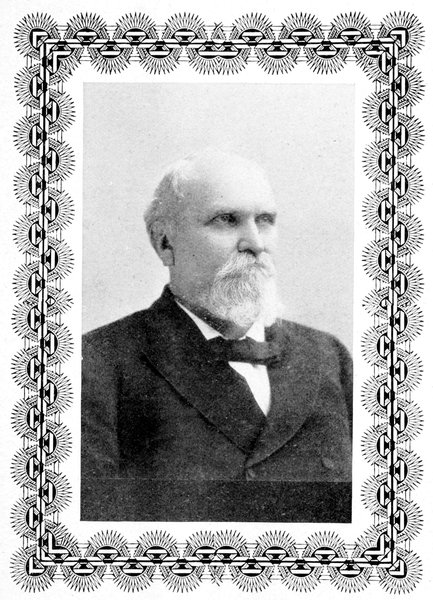
61Mr. Bryan was nominated for President on the fifth
ballot by a well-nigh unanimous vote, save for the 162
eastern delegates who, while holding their seats,
sullenly refused to take any part in the proceedings.
The demonstration following the nomination was even
wilder and more prolonged than the memorable scene
that marked the conclusion of his speech.
For Vice-President Arthur Sewall, of Maine, was
nominated. With this ticket, on a platform declaring
for free silver, opposing the issue of bonds and national
bank currency, denouncing “government by injunction,”
declaring for a low tariff, the Monroe
doctrine, an income tax, and election of senators by
a direct vote of the people, the democracy went before
the country with a confidence and exuberance little
anticipated before the convention met, and scarcely
justified, as later proven, by the outcome.
The Populist and Silver Republican conventions
met in St. Louis late in July. The latter endorsed the
nominees of the Chicago platform and made them
their own. The populists, however, while nominating
Mr. Bryan, refused to nominate Mr. Sewall, naming
for vice-president Thomas E. Watson, of Georgia.
The gold democrats met at Indianapolis on September
2, and nominated John M. Palmer, of Illinois, and
Simon Buckner, of Kentucky, adopting the first gold
standard platform ever presented to the people of the
62United States for endorsement. They called themselves
“National Democrats,” but in the outcome
carried but one voting precinct in the nation, and that
in Kansas. Four votes were cast in the precinct, two
for Palmer, and one each for Bryan and McKinley.
In the precinct in Illinois where Mr. Palmer himself,
with his son and coachman, voted, not a single ballot
was cast for the nominee of the “National Democracy.”
The fact was that a new party alignment was
the inevitable result of the Chicago convention, the reorganized
democracy gaining largely beyond the Missouri,
but losing heavily east of the Mississippi and
north of the Ohio. Hundreds of thousands of gold
Democrats in the populous states, under the leadership
of Grover Cleveland and John G. Carlisle, while
pretending to support Palmer and Buckner, voted
secretly for McKinley, whose platform was a virtual
endorsement of the Cleveland administration, as
Bryan’s platform repudiated and condemned it.
The campaign was remarkable not only for Bryan’s
wonderful campaigning, but for the bitter feeling that
pervaded both organizations. The Republicans particularly
excelled in vituperative abuse. They began
the use of billingsgate immediately after the Chicago
convention had adjourned, applying to it such terms
as “rabble,” “wild Jacobins,” “anarchists” and “repudiators,”
while Bryan was characterized as a “boy
orator” “a demagogue” and “an ass.” The Cleveland
Leader said:
“Bryan, with all his ignorance, his cheap demagogy,
his intolerable gabble, his utter lack of common sense,
63and his general incapacity in every direction, is a
typical Democrat of the new school. His weapon is
wind. His stock in trade is his mouth. Mr. McKinley’s
election—and we apologize to Mr. McKinley for
printing his name in the same column with that of
Bryan—is no longer in any doubt whatever. We
salute the next President. As for Bryan, he is a candidate
for the political ash-heap.”
For efficient campaigning the two party organizations
were most unevenly matched. The Republican
National committee, under the directing genius of
Mark Hanna, assisted liberally by the thoroughly
affrighted financial and corporation magnates of the
East, had at its disposal millions of dollars with which
to organize, pay for speakers and literature, reward
the efforts of newspapers and party workers, and debauch
the electorate in states thought to be doubtful.
It had the assistance of almost the entire metropolitan
press—with the notable exception of the New York
Journal—and the nearly united influence of the large
employers of labor. And even further, it had the
pulpit and the religious press. As the ministers of
Christ’s gospel, in 1856, denounced and vilified Garrison
and Phillips, so in 1896 they hurled anathema
maranatha at Bryan and Altgeld. Grave and reverend
preachers of national fame fulminated from their
pulpits against “the accursed and treasonable aims”
of Bryan and his supporters, and denounced them
as “enemies of mankind.” Bishop John P. Newman,
of the Methodist Episcopal Church, denounced Bryan
as an “anarchist,” and in the church conferences over
64which he presided urged the clergy to use their influence
to defeat the Democratic nominees. The Rev.
Cortland Myers, in the Baptist Temple at Brooklyn,
said that “the Chicago platform was made in hell.”
Rev. Thomas Dixon, Jr., at the Academy of Music,
New York, called Bryan “a mouthing, slobbering
demagogue, whose patriotism is all in his jaw bone.”
Such were the cultured and scholarly contributions
made by the noblest of professions to the discussion
of an academic question of finance in the year of our
Lord 1896.
The Democratic committee had little money. It
had the support of but few large newspapers. It was
fighting the battles of a party that had been disrupted
and rent in twain at the Chicago convention. In
every state and almost every county of the Union the
old local and national leaders of the party had deserted,
and the faithful but disorganized followers of
Bryan had to be moulded anew into the likeness of
an army.
The one inspiration of the party was in its leader.
The embodiment of faith, hope, and courage, tireless,
indomitable, undismayed by the fearful odds against
him, with the zeal of a crusader he undertook his
mission of spreading the message of democracy
through the length and breadth of the land. For
three months, accompanied most of the time by Mrs.
Bryan, he sped to and fro across the American continent,
an army of newspaper correspondents in his
train, resting little and sleeping less, preaching the
Chicago platform. His earnestness, his candor, his
65boldness, the simplicity of his style, the homeliness of
his illustrations, the convincing power of his argument,
the eloquence of his flights of oratory, and,
above all, the pure and lovable character of the man
as it impressed itself on those who met with him—these
were the sparks that fired the hearts of men and
left in his wake conviction fanned into enthusiasm all
aflame.
Yet, with all his efforts, despite a record of personal
campaigning such as never before was seen in the
recorded history of man, Mr. Bryan was defeated.
The tremendous influence wielded by the great corporate
interests, both by persuasion and by coercion,
were such as no man and no idea could overcome.
The popular vote stood 7,107,822 for McKinley and
6,511,073 for Bryan. Of the electoral votes McKinley
received 271 and Bryan 176, the solid South and almost
solid West going Democratic, while every state
north of the Ohio and east of the Mississippi went
Republican.
Immediately after the result was assured Mr.
Bryan telegraphed Mr. McKinley as follows: “Hon.
Wm. McKinley, Canton, Ohio—Senator Jones has
just informed me that the returns indicate your election,
and I hasten to extend my congratulations. We
have submitted the issue to the American people and
their will is law.—W. J. Bryan.”
Mr. McKinley responded: “Hon. W. J. Bryan, Lincoln,
Neb.—I acknowledge the receipt of your courteous
message of congratulation with thanks, and beg
66you will receive my best wishes for your health and
happiness.—William McKinley.”
While Mr. Bryan and his party accepted defeat
thus gracefully, victory seemed to have redoubled the
venom of the opposition. This post-election utterance
of the New York Tribune, founded by Horace Greeley,
and then and now edited by ex-Vice-President Whitelaw
Reid, will serve to close this chapter in the same
gentle spirit which marked the close of that memorable
campaign:
“There are some movements so base, some causes
so depraved, that neither victory can justify them nor
defeat entitle them to commiseration. Such a cause
was that which was vanquished yesterday, by the
favor of God and the ballots of the American people.
While it was active and menacing, it was unsparingly
denounced and revealed as what it was, in all its
hideous deformity. Now that it is crushed out of the
very semblance of being, there is no reason why such
judgment of it should be revised. The thing was conceived
in iniquity and was brought forth in sin. It
had its origin in a malicious conspiracy against the
honor and integrity of the nation. It gained such
monstrous growth as it enjoyed from an assiduous
culture of the basest passions of the least worthy
members of the community. It has been defeated and
destroyed, because right is right and God is God. Its
nominal head was worthy of the cause. Nominal, because
the wretched, rattle-pated boy, posing in vapid
vanity and mouthing resounding rottenness, was not
67the real leader of that league of hell. He was only a
puppet in the blood-imbued hands of Altgeld, the anarchist,
and Debs, the revolutionist, and other desperados
of that stripe. But he was a willing puppet,
Bryan was, willing and eager. Not one of his masters
was more apt at lies and forgeries and blasphemies
and all the nameless iniquities of that campaign
against the Ten Commandments. He goes down with
the cause, and must abide with it in the history of
infamy. He had less provocation than Benedict
Arnold, less intellectual force than Aaron Burr, less
manliness and courage than Jefferson Davis. He was
the rival of them all in deliberate wickedness and
treason to the Republic. His name belongs with
theirs, neither the most brilliant nor the least hateful
in the list.
“Good riddance to it all, to conspiracy and conspirators,
and to the foul menace of repudiation and
anarchy against the honor and life of the Republic.
The people have dismissed it with no uncertain tones.
Hereafter let there be whatever controversies men
may please about the tariff, about the currency, about
the Monroe doctrine, and all the rest. But let there
never again be a proposition to repeal the moral law,
to garble the Constitution, and to replace the Stars
and Stripes with the red rag of anarchy. On those
other topics honest men may honestly differ, in full
loyalty to the Republic. On these latter there is no
room for two opinions, save in the minds of traitors,
knaves, and fools.”
NEW ISSUES
68
The half decade between 1895 and 1900 may justly
be considered one of the most important in American
history. It witnessed the fiercest battle between political
parties ever fought over the question of finance,—a
contest exceeding in bitterness and the general
participation of the people of the United States
therein even the great struggle in which Andrew Jackson
and Nicholas Biddle were the opposing leaders.
And, further, as the outcome of the war with Spain,
it saw the birth and growth of an issue theretofore
alien to American soil and portentous for its ultimate
influence over the form and structure of our government.
It was at once recognized as an issue overshadowing
in its importance, and in the face of the
greater danger the mutual fears of the friends of gold
and the friends of silver were laid away in one common
sepulchre.
On the part of the Democratic party the wraith of
imperialism hovering over the Republic was recognized
as the hideous and supreme exhalation from the
poison swamp of plutocracy from which high tariff,
trusts, and a gold standard had already sprung.
Through all these policies, asserted the Democracy,
through its recognized leader, Mr. Bryan, ran the
common purpose of exalting the dollar and debasing
the man. The Republican party hesitated long to
69recognize and admit the new issue, and when it finally
took up the gage of battle it was on the declaration
that a colonial policy, with alien and subject races
under its dominion, had become the “manifest destiny”
of the United States.
The cruelties and severities of General Weyler, the
commander of the Spanish forces in Cuba, toward the
insurrectionists who were in arms against Spain’s authority,
early in Mr. McKinley’s administration
aroused the indignation of the American people. The
fact that the Cubans were bravely fighting for liberty,
that their rebellion was against the exactions of an
old world monarchy, even as ours had been, won them
an instinctive sympathy that grew stronger each day
and that finally swept like a tidal wave into the
cabinet meetings at Washington, bearing the demands
of the people of the United States for the intervention
of our government in Cuba’s behalf.
On December 6, 1897, in his message to Congress,
the President discussed the Cuban question at some
length, arguing against any interference by the
United States, on the ground that “a hopeful change
has supervened in the policy of Spain toward Cuba.”
Speaking of the possible future relations between
this country and Cuba, the President used the words
since so widely quoted against his subsequent policy
in the Philippines: “I speak not of forcible annexation,
for that is not to be thought of. That, by our
code of morality, would be criminal aggression.”
The evident reluctance of the administration to
recognize Cuban independence was shortly after
70forced to give way to the compelling power of public
opinion. On February 15, 1898, by the explosion of a
submarine mine, the Maine, a first-class United States
battleship, was destroyed in Havana harbor, with a
loss of 248 officers and men. A fierce hatred for Spain
was thereby added to the sympathy for Cuba, and
war, or the abandonment of Cuba by Spain, became
inevitable. A month after the destruction of the
Maine Congress voted the President $50,000,000 to be
used in the National defense. On April 11, President
McKinley, in a message to Congress exhaustively
reviewed the Cuban complications, disclaiming a
policy of annexation and arguing for neutral intervention
to enforce peace and secure for the Cubans
a stable government. On the 20th, Congress declared
Cuba to be free and independent, demanded that
Spain relinquish her claim of authority, and authorized
the President to use the land and naval forces of
the United States to enforce the demand.
Congress expressly declared: “The United States
hereby disclaims any disposition or intention to exercise
sovereignty, jurisdiction, or control over said
island, except for the pacification thereof, and asserts
its determination, when that is accomplished, to leave
the government and control of the island to its people.”
From such a lofty plane the United States entered
into that brief but glorious combat with Spain that
has rightly been called “the war for humanity.” On
April 23, the President called for 125,000 volunteers.
One of the first who offered the President his services
in the war for “Cuba libre” was William J. Bryan.
71Long before, Mr. Bryan had declared for intervention,
saying, “Humanity demands that we shall act. Cuba
lies within sight of our shores and the sufferings of
her people can not be ignored unless we, as a nation,
have become so engrossed in money-making as to be
indifferent to distress.” Mr. Bryan’s proffer was
ignored by the President. He was later commissioned
by Governor Holcomb, of Nebraska, to raise the Third
Nebraska regiment of volunteers. This he did, becoming
the colonel of the regiment. General Victor
Vifquain, of Lincoln, a gallant and distinguished
veteran of the Civil war was made lieutenant-colonel.
In the meantime Admiral George Dewey commanding
the United States Asiatic fleet, had set forth from
Hong Kong, engaged the Spanish fleet in Manila bay
on May 1, and completely demolished it. Manila was
the capital of the entire Philippine archipelago, with
its eight to ten million inhabitants, then nominally
under Spanish sovereignty. The Filipinos themselves,
of whom Admiral Dewey said, “these people are far
superior in their intelligence and more capable of
self-government than the natives of Cuba,” were already
in successful revolt against Spain, battling
bravely for their independence. Under the leadership
of General Aguinaldo, and at the invitation of Dewey
and the representatives of the United States state
department, the insurgents cooperated as allies with
the American forces from the time of Dewey’s victory
until the surrender of Manila. They were furnished
arms and ammunition by Dewey, and were led to believe
that their own independence would be assured
72on the expulsion of Spain from the archipelago.
During this time they established a successful and
orderly civil government throughout the greater part
of the islands. But at home the United States government
was already beginning to indicate its intention
not to grant to the Filipinos, at the conclusion of the
war, the same liberty and self-government as had been
promised the Cubans. Rather, it was becoming evident
it was the purpose of Mr. McKinley and his
advisers to hold the islands as tributary territory,
subject to United States’ jurisdiction, while, at the
same time, the inhabitants should be denied the “inalienable
rights” proclaimed by the Declaration of
Independence and guaranteed by our Constitution.
The American people were at a loss what to make
of the situation. Their eyes dazzled by the glories of
war and conquest, their cupidity appealed to by the
vaunted richness of the “new possessions,” there still
was latent in their hearts the love for liberty as “the
heritage of all men in all lands everywhere,” and an
unspoken fear of incorporating the government of
alien and subject races as an integral portion of the
scheme of American democracy.
Such was the situation when, at Omaha, Neb.,
on June 14, 1898, Colonel W. J. Bryan, shortly before
the muster-in of his regiment into the service of the
government, sounded the first note of warning against
the insidious dangers of imperialism; the first ringing
appeal to the Republic to remain true to its principles,
its traditions, and its high ideals. In taking his stand
on this great question Mr. Bryan acted with the boldness
73that has ever characterized him when matters of
principle were at stake. He spoke against the earnest
advice of numerous political friends, who warned
him he was taking the unpopular side, and that his
mistake would cost him his political life. Mr. Bryan,
because he believed the policy of the administration to
be radically wrong, paid no heed to all the well-meant
protestations, but earnestly warned the people against
the abandonment of the doctrines of the fathers of the
Republic. These were his words:
“History will vindicate the position taken by the
United States in the war with Spain. In saying this
I assume that the principles which were invoked in
the inauguration of the war will be observed in its
prosecution and conclusion. If a war undertaken
for the sake of humanity degenerates into a war of
conquest we shall find it difficult to meet the charge of
having added hypocrisy to greed. Is our national
character so weak that we can not withstand the temptation
to appropriate the first piece of land that comes
within our reach?
“To inflict upon the enemy all possible harm is
legitimate warfare, but shall we contemplate a
scheme for the colonization of the Orient merely because
our fleet won a remarkable victory in the harbor
at Manila?
“Our guns destroyed a Spanish fleet, but can they
destroy that self-evident truth that governments derive
their just powers—not from force—but from the
consent of the governed?
“Shall we abandon a just resistance to European
74encroachment upon the western hemisphere, in order
to mingle in the controversies of Europe and Asia?
“Nebraska, standing midway between the oceans,
will contribute her full share toward the protection of
our sea coast; her sons will support the flag at home
and abroad, wherever the honor and the interests of
the nation may require. Nebraska will hold up the
hands of the government while the battle rages, and
when the war clouds roll away her voice will be heard
pleading for the maintenance of those ideas which inspired
the founders of our government and gave the
nation its proud eminence among the nations of the
earth.
“If others turn to thoughts of aggrandizement, and
yield allegiance to those who clothe land covetousness
in the attractive garb of ‘national destiny,’ the people
of Nebraska will, if I mistake not their sentiments,
plant themselves upon the disclaimer entered by Congress,
and expect that good faith shall characterize
the making of peace as it did the beginning of war.
“Goldsmith calls upon statesmen:
‘To judge how wide the limits stand
Betwixt a splendid and a happy land.’
If some dream of the splendors of a heterogeneous empire
encircling the globe, we shall be content to aid in
bringing enduring happiness to a homogeneous people,
consecrated to the purpose of maintaining ‘a government
of the people, by the people, and for the
people.’”
Shortly after this speech Colonel Bryan left Nebraska
with his regiment to go into camp at Tampa,
75Florida, awaiting orders to Cuba or Porto Rico. Like
most of the other regiments called out by President
McKinley, Colonel Bryan’s was not destined ever to
come in sight of a battlefield. The amazing fact is
that while the enormous number of 274,717 soldiers
were mustered into service, only 54,000 ever left
American soil up to the time the protocol was signed,
August 12, 1898. The 220,000 were left through the
sweltering summer months in unsanitary camps to
broil under a southern sun. From May 1 to September
30, but 280 American soldiers were killed in
battle, while 2,565 died in fever-stricken camps
pitched in malarial swamps. The entire nation was
aroused to the highest pitch of indignation, and the
press, without regard to party, joined in denouncing
the careless, cruel, and incompetent treatment of the
volunteer soldier.
The New York Herald voiced the general feeling
when it said: “’Infamous’ is the only word to describe
the treatment that has been inflicted upon our patriotic
soldiers, and under which, despite the indignant
outbursts of a horror-stricken people, thousands
of them are still suffering to-day.” The Herald
further declared the soldiers to be “the victims of
job-and-rob politicians and contractors, and of
criminally incompetent and heartlessly indifferent
officials.”
For almost six months Colonel Bryan remained
with his regiment in camp. The quarters, the sanitative
conditions, and the general arrangements of the
“Third Nebraska” were the pride of the army. Colonel
76Bryan was at once “guide, counselor, and friend” to
his men, winning the almost idolatrous love of each
and all of them. He gave lavishly of his meager
funds to secure the comfort of the sick and maintain
the health of the strong. His days and nights were
devoted to the service of the regiment, and more than
one poor boy, dying of fever far from the wind-swept
Nebraska prairies, passed away holding his Colonel’s
hand and breathing into his Colonel’s ear the last
faltering message of farewell to loved ones at home.
CHAS. POYNTER SENATOR ALLEN ADLAI STEVENSON MRS. POYNTER MISS POYNTER C. A. TOWNE
LEWIS G. STEVENSON WEBSTER DAVIS MRS. W. C. POYNTER W. J. BRYAN GOV. POYNTER
AT THE GOVERNOR’S MANSION, LINCOLN
77In joining the volunteer army, as when he delivered
the first anti-imperialist speech, Colonel Bryan had
acted against the advice of many of his closest personal
and political friends. Despite his decisive defeat
for the presidency in 1896, he had not only maintained
but even strengthened his position as the
recognized leader of the Democratic party and its
allies. Undaunted by the result of the campaign,
he had almost immediately resumed the fight for
bimetallism. He had published a book reviewing the
contest under the suggestive and defiant title “The
First Battle.” He had taken to the lecture platform
and to the political hustings, vigorously, hopefully,
and earnestly propagating the principles of democracy,
unwavering, unwearying, and undisturbed by
the general depression of his followers and as general
exultation of his opponents. He was the incarnation
of the spirit of conservative reform, and all
parties had come to regard him as the prophet and
supreme leader of the new movement back to Jeffersonian
principles. His friends feared to have him
accept a commission, not only on the ground that his
doing so might later compel his silence at a time
when his voice ought to be heard, but more largely
because they dreaded the possibility of having his
motive impugned. It was evident to them, as to
Colonel Bryan himself, that by taking up the role of
colonel of a volunteer regiment, he had much to risk
and lose, and little, if anything, to gain. But the
Democratic leader was not to be dissuaded. Content
in his own knowledge that his motive was worthy and
patriotic, he assumed and bore unostentatiously and
yet with dignity the office of military leader of 1,300
of his Nebraska friends and neighbors. He remained
faithfully with his regiment, living the slow and
tedious life of the camp, until the treaty of peace was
signed with Spain in December, 1898. That treaty
provided not only for the cession of Porto Rico to the
United States and Spanish relinquishment of all
claim to sovereignty over Cuba, but further for the
turning over of the Philippine Islands to the United
States on the payment of $20,000,000. This last concession
was wrung from Spain by the insistent and
uncompromising demand of the American Peace Commissioners,
under instructions from the state department
at Washington.
Shortly after the treaty was signed, President McKinley
blasted the fond hopes for independence that
had been planted in the Filipinos’ breasts by issuing
this proclamation:
“With the signature of the treaty of peace between
the United States and Spain by their respective plenipotentiaries
78at Paris on the tenth instant, and as the
result of the victories of American arms, the future
control, disposition, and government of the Philippine
Islands are ceded to the United States. In fulfilment
of the rights of sovereignty thus acquired, and
the responsible obligations of government thus assumed,
the actual occupation and administration of
the entire group of the Philippine Islands become
immediately necessary, and the military government
heretofore maintained by the United States in the
city, harbor, and bay of Manila is to be extended with
all possible dispatch to the whole of the ceded
territory.”
Prior to this time, and later, the President explained
his position on the Philippine question, and
we quote from him at some length.
At Chicago, in October, 1898, he said: “My countrymen,
the currents of destiny flow through the hearts
of the people. Who will check them? Who will divert
them? Who will stop them? And the movements
of men, planned and designed by the Master
of men, will never be interrupted by the American
people.”
At the Atlanta (Ga.) Peace Jubilee in December
of the same year, he said: “That [the American] flag
has been planted in two hemispheres, and there it
remains, the symbol of liberty and law, of peace and
progress. Who will withhold it from the people over
whom it floats its protecting folds? Who will haul it
down?”
At Savannah, a day or two later he said: “If, following
79the clear precepts of duty, territory falls to
us, and the welfare of an alien people requires our
guidance and protection, who will shrink from the
responsibility, grave though it may be? Can we leave
these people who, by the fortunes of war and our own
acts, are helpless and without government, to chaos
and anarchy after we have destroyed the only government
that they had?”
At the Home Market Club, in Boston, on February
16, 1899, he explained himself more fully, saying:
“Our concern was not for territory or trade or empire,
but for the people whose interests and destiny, without
our willing it, had been put in our hands. It was
with this feeling that from the first day to the last
not one word or line went from the Executive in
Washington to our military and naval commanders
at Manila or to our Peace Commissioners at Paris that
did not put as the sole purpose to be kept in mind,
first, after the success of our arms and the maintenance
of our own honor, the welfare and happiness
and the rights of the inhabitants of the Philippine
Islands. Did we need their consent to perform a
great act for humanity? If we can benefit these remote
peoples, who will object? If, in the years of the
future, they are established in government under law
and liberty, who will regret our perils and sacrifices?
Who will not rejoice in our heroism and humanity?”
One more quotation. At Minneapolis, October 12,
1899, President McKinley delivered himself of this utterance:
“That Congress will provide for them [the
Filipinos] a government which will bring them blessings,
80which will promote their material interests, as
well as advance their people in the paths of civilization
and intelligence, I confidently believe.”
With such phrase-making as this, concealing in sonorous
periods the most un-American of sentiments,
Colonel Bryan’s utterance, delivered immediately
after he had resigned his commission, stands out in
bold and pleasing relief: “I may be in error, but in
my judgment our nation is in greater danger just now
than Cuba. Our people defended Cuba against foreign
arms; now they must defend themselves and their
country against a foreign idea—the colonial idea of
European nations. Heretofore greed has perverted
the government and used its instrumentalities for private
gains, but now the very foundation principles of
our government are assaulted. Our nation must give
up any intention of entering upon a colonial policy,
such as is now pursued by European countries, or it
must abandon the doctrine that governments derive
their just powers from the consent of the governed.
To borrow a Bible quotation ‘A house divided
against itself can not stand.’ Paraphrasing Lincoln’s
declaration, I may add that this nation can not endure
half republic and half colony, half free and half
vassal. Our form of government, our traditions, our
present interests, and our future welfare, all forbid
our entering upon a career of conquest....
“Some think the fight should be made against ratification
of the treaty, but I would prefer another plan.
If the treaty is rejected, negotiations must be renewed,
and instead of settling the question according
81to our ideas we must settle it by diplomacy, with the
possibility of international complications. It will be
easier, I think, to end the war at once by ratifying
the treaty and then deal with the subject in our own
way. The issue can be presented directly by a resolution
of Congress declaring the policy of the nation
upon this subject. The President in his message says
that our only purpose in taking possession of Cuba
is to establish a stable government and then turn that
government over to the people of Cuba. Congress
could reaffirm this purpose in regard to Cuba, and
assert the same purpose in regard to the Philippines
and Porto Rico. Such a resolution would make a
clear-cut issue between the doctrine of self-government
and the doctrine of imperialism. We should reserve
a harbor and coaling station in Porto Rico and
the Philippines in return for services rendered, and I
think we would be justified in asking the same concession
from Cuba.
“In the case of Porto Rico, where the people have as
yet expressed no desire for independent government,
we might with propriety declare our willingness to
annex the island, if the citizens desire annexation,
but the Philippines are too far away and their people
too different from ours to be annexed to the United
States, even if they desired it.”
In making this statement, and in his subsequent
active support of the treaty, Mr. Bryan’s course was
again opposed to the wishes and advice of many of
his close political friends. In fact, before Mr. Bryan
took his firm stand probably the majority of Democratic
82leaders in and out of Congress were opposed
to the ratification of the treaty because of its Philippine
clause. But Mr. Bryan, while as strongly opposed
to this clause as anyone, was anxious to see the
war finally ended. He knew that for the Senate to reject
the treaty would prolong the war perhaps a year
or more, and, further, that it might lead to endless
and unpleasant complications. Once the war was
ended, he held, the American people themselves could
dispose of the Philippine question.
Largely owing to the aid extended the administration
by Mr. Bryan, the treaty was ratified by the
Senate. Those senators who were opposed to the imperial
policy of President McKinley supported the
“Bacon resolution” as a declaration of this nation’s
purpose toward the Philippines and Filipinos. This
resolution declared:
“The United States hereby disclaim any disposition
or intention to exercise permanent sovereignty, jurisdiction,
or control over said islands, and assert their
determination, when a stable and independent government
shall have been erected therein, entitled in the
judgment of the government of the United States to
recognition as such, to transfer to said government,
upon terms which shall be reasonable and just, all
rights secured under the cession by Spain, and to
thereupon leave the government and control of the
islands to their people.”
The Democratic policy, as outlined by Mr. Bryan,
was the support of the treaty and of the foregoing
resolution. The treaty was ratified, but the resolution,
83though supported by practically the solid Democratic,
Populist, and Silver Republican strength in
the Senate, and by a number of Republican senators
who were opposed to the imperial policy, was defeated
by the deciding vote of Vice-President Hobart. Had
the resolution been adopted, and the Philippines been
given the same promise of independence and self-government
as had already been given Cuba, it is believed
that the long, bloody, and costly war in the Philippine
Islands might have been averted, and the abandoned
old-world heresy of the right of one man to rule another
without that other’s consent would not now
have regained a footing on the soil of the great
American Republic.
In the meantime the President’s proclamation of
December 21, 1898, to the Filipinos, asserting the
sovereignty of the United States over them and theirs
had provoked a veritable hurricane of indignation
among that people.
The characteristic that distinguishes the Filipinos
from all other Asiatic races is their fierce, inherent
love for liberty. For three hundred years they had
been intermittently battling with the Spaniard to
regain what they had lost, and the palm of victory
was within their eager reach on the day that Dewey’s
guns first thundered across Manila bay. Knowing as
they did that the United States had gone to war to
secure liberty for the Cubans, why should they doubt
the securing of their own liberty as well?
The President’s proclamation came like a thunder
clap. General Otis, who was commander-in-chief of
84the American forces in the Philippines, reported its
effect as follows:
“Aguinaldo met the proclamation by a counter one
in which he indignantly protested against the claim of
sovereignty by the United States in the islands, which
really had been conquered from the Spaniards
through the blood and treasure of his countrymen, and
abused me for my assumption of the title of military
governor. Even the women of Cavite province, in a
document numerously signed by them, gave me to understand
that after all the men are killed off they are
prepared to shed their patriotic blood for the liberty
and independence of their country.”
The revulsion was complete. Before the proclamation
was issued, it is true, there had been growing
among the Filipinos a feeling of distrust of the Americans,
and of doubt whether, after all, they were to be
conceded their independence. For, at the surrender
of Manila, although its capture had been impossible
without the aid of the insurgents, they were studiously
excluded from any share of the honor, and thus
given the first intimation of the final treachery of the
administration. Later the Filipinos were refused a
hearing at Washington, and again before the Peace
Commission which was to dispose of them like
chattels.
Actual hostilities broke out February 4, 1899, and
are thus referred to by President McKinley in his
message to Congress December 4, 1899: “The aggression
of the Filipinos continually increased, until
finally, just before the time set by the Senate of the
85United States for a vote upon the treaty, an attack,
evidently prepared in advance, was made all along
the American lines, which resulted in a terribly destructive
and sanguinary repulse of the insurgents.”
The report of General Otis, reads as follows (page
96): “The battle of Manila commenced at half past
eight o’clock, on the evening of February 4 (1899),
and continued until five o’clock the next evening. The
engagement was strictly defensive on the part of the
insurgents, and one of vigorous attack by our forces.”
Senator Hoar, of Massachusetts, in a letter to the
Springfield (Mass.) Republican, January 11, 1900,
is responsible for this statement regarding the first
battle: “The outbreak of hostilities was not their
fault, but ours. We fired upon them first. The fire
was returned from their lines. Thereupon it was returned
again from us, and several Filipinos were
killed. As soon as Aguinaldo heard of it he sent a
message to General Otis saying that the firing was
without his knowledge and against his will; that he
deplored it, and that he desired hostilities to cease,
and would withdraw his troops to any distance General
Otis should desire. To which the American general
replied that, as the firing had begun, it must
go on.”
Thus began the War in the Philippine Islands. It
has cost thousands of lives and millions of treasure.
It has burned the homes and uprooted the fields of a
frugal, intelligent, and industrious people in whose
minds and hearts have been seared the ringing words
of Patrick Henry: “Give me liberty or give me death!”
86It has not brought to the United States either riches
or glory, but, on the contrary, lost to us much in
taxes on our people, more in the death of our youth,
and most of all in the sullying of the noble and lofty
ideals which animated the Fathers of the Republic
and made their lives sublime. An American soldier
writing to the Minneapolis Times, in describing a
captured city, thus simply sets forth the enormity of
our national offense:
“Every inhabitant had left Norzagaray, and no
article of value remained behind. The place had
probably been the home of fifteen hundred or two
thousand people, and was pleasantly situated on a
clear mountain stream in which a bath was most refreshing.
It was not a city of apparent wealth, but in
many houses were found evidences of education. In a
building which probably had been used as a schoolhouse
were found a number of books, and a variety of
exercises written by childish hands. Pinned to a
crucifix was a paper upon which was written the following
in Spanish: ‘American soldiers—How can you
hope mercy from Him when you are slaughtering a
people fighting for their liberty, and driving us from
the homes which are justly ours?’ On a table was a
large globe which did not give Minneapolis, but had
San Pablo (St. Paul) as the capital of Minnesota.
On a rude blackboard were a number of sentences,
which indicated that the teacher had recently been
giving lessons in the history of the American
revolution.”
The demoralizing effect of this war against liberty
87on the American conscience became early apparent.
If it were permissible to make war on the Filipinos
because they would not yield to our government, it
was no far cry to withhold from the Porto Ricans the
protecting aegis of the Constitution, to levy a discriminating
tariff against them, and to tax them without
their consent. And it of course became impossible
for the United States to express sympathy for the
Boers in their war against British aggression, or even
to maintain neutrality between the two. As a consequence
horses, mules, arms, and ammunition were
permitted to be freely shipped from our ports for the
use of British soldiers, while British ships were permitted
to intercept and capture American ships laden
with American breadstuffs, when consigned to the
Boers. In fact, an “Anglo-Saxon alliance” was more
than hinted at by John Hay, then United States Ambassador
to Great Britain, and later Secretary of
State, when he said at London, on April 20, 1898,
speaking of England and the United States:
“The good understanding between us is based on
something deeper than mere expediency. All who
think can not but see that there is a sanction like that
of religion which binds us in partnership in the serious
work of the world. We are bound by ties we did not
forge, and that we can not break. We are joint ministers
in the sacred work of freedom and progress,
charged with duties we can not evade by the imposition
of irresistible hands.”
To this sentiment Joseph Chamberlain, the British
88Secretary of the Colonies, replied in kind on May 13,
at Birmingham, saying:
“I would go so far as to say that, terrible as war
may be, even war itself would be cheaply purchased
if, in a great and noble cause, the Stars and Stripes
and the Union Jack should wave together over an
Anglo-Saxon alliance. At the present time these two
great nations understand each other better than they
ever have done, since, over a century ago, they were
separated by the blunder of a British government.”
So we come to the close of the recital of the most
salient events which gave rise to the greatest issue
save that of independence, and later, of slavery, with
which the American people have ever stood face to
face.
Contemporaneous with the growth of the question
of imperialism, and allied to it, another great issue
arose,—the problem of the trusts.
A “trust” may be defined as an industrial combination
of such huge proportions as to enable it not only
arbitrarily to fix the price of the finished product in
which it deals, through the stifling of competition,
but frequently to determine alone the price of the
raw material it uses and to fix the rate of wages of
those whom it employs. Of these great and dangerous
combinations there were formed, during the years
1897 to 1900, a number exceeding all those already in
existence. That this was permitted to be done with
the Sherman anti-trust law on the Federal statute
books has puzzled many. Its explanation may be
found in the following candid admission made by Dr.
Albert Shaw in the Review of Reviews for February,
1897:
89“The great sound-money campaign of 1896 was carried
on by money contributed by corporations—money
voted by the directors out of the funds held by them
in trust for the stockholders. Nobody, probably,
would even care to deny that this is literally the
truth.”
When the “great sound money campaign” was concluded,
it was but fair, of course, that those who had
given so lavishly should be allowed to replenish their
depleted coffers. And so neither anti-trust laws, supreme
court decisions, nor the cry of protest rising
from the people was allowed to stand in the way of
those generous corporations to whom President McKinley
owed so much.
In the last six months of 1898 the movement toward
centralization that meant monopoly was most alarmingly
pronounced. During this time there were filed
articles of incorporation by more than one hundred
companies of abnormal capitalization. The most important
trusts were:
|
CAPITAL |
| Gas trusts |
$ 432,771,000 |
| Steel and iron |
347,650,000 |
| Coal combines |
161,000,000 |
| Oil trusts |
153,000,000 |
| Flour trust |
150,000,000 |
| Electrical combinations |
139,327,000 |
| Sugar |
115,000,000 |
| Cigarettes and tobacco |
108,500,000 |
| Alcoholic |
67,300,000 |
| Telephone |
56,700,000 |
| Miscellaneous |
1,349,250,000 |
| |
——————— |
| |
$2,717,768,000 |
90Among those classed as “miscellaneous” were trusts
in leather, starch, lumber, rubber, dressed beef, lead,
knit goods, window glass, crockery, furniture, crackers,
sheet copper, paper, acids and chemicals, wall
paper, typewriters, axes, bolts and nuts, salt, saws,
rope, twine, thread, stock yards, matches, refrigerators,
potteries, marbles, packing and provisions.
After the formation of each trust the first step was
almost invariably to limit production by shutting
down a portion of the mills controlled by the combination,
thus reducing the number of wage earners.
And almost as invariably the next step was to increase
prices. By thus reducing expenses and increasing
receipts the result was, though much of the trust property
had been put in at an enormously inflated valuation,
the watered stock yet earned exceedingly large
dividends. The evil was not only that these unnatural
dividends were earned at the expense of the laborer
and the consumer, but that concentration of profits
was leading to congestion of capital in certain sections
of the country at the expense of other sections.
The great friend and helper of the trust-promoter
was, of course, the high protective tariff. Without
the tariff, to shut out competition from abroad, it
would be impossible for the domestic concerns to form
a close corporation and arbitrarily to fix prices. But
Congress, instead of attempting to remedy the evil by
lowering the tariff, deliberately raised it, being particularly
careful to see that the percentage on trust-controlled
goods was made sufficiently high to render
foreign competition impossible. This led the Philadelphia
Ledger, a Republican newspaper, to remark:
91“If Congress had any genuine regard for the interests
of the people, or if it were sincere of purpose respecting
their common welfare, or in regard to the
proper protection of labor, it would promptly transfer
to the free list every product controlled by a conscienceless
and predatory trust which reduces production,
cuts off working people from work and wages,
and increases prices to the tens of millions of consumers.”
The correctness of this view was testified
to, before the United States Industrial Commission,
in June, 1899, by no less a personage than Henry O.
Havemeyer, president of the sugar trust, who said:
“The existing [tariff] bill and the preceding one
have been the occasion of the formation of all the
large trusts with very few exceptions, inasmuch as
they provide for an inordinate protection to all the
interests of the country—sugar refining excepted. All
this agitation against trusts is against merely the
business machinery employed to take from the public
what the government in its tariff laws says it is
proper and suitable they should have. It is the government,
through its tariff laws, which plunders the
people, and the trusts, etc., are merely the machinery
for doing it.”
The showing regarding trusts made in the “Commercial
Year Book” for 1899 was startling. Its
salient features may be thus tabulated:
|
1899 |
1898 |
| Number of trusts |
353 |
200 |
| Stock |
$5,118,494,181 |
$3,283,521,452 |
| Bonded debt |
714,388,661 |
378,720,091 |
| Stock and bonds |
5,832,882,842 |
3,662,241,543 |
92This shows an increase for the year of 76 per cent.
in the number of institutions and of 60 per cent. in
stock and bonded debt. But it shows more than this.
According to the census of 1890 the entire capital employed
in manufacturing and mechanical industries
was $6,525,000,000. A comparison of this figure with
the stock and bonds of trusts for 1899 shows that the
capitalization of these gigantic combines was equal to
90 per cent. of the entire manufacturing investments
of 1890.
It was such significant figures as these that woke
the country to a realization of the imminence and
great importance of the trust problem. It was felt
that the most stupendous industrial revolution in the
history of the world was on, because it was realized
how closely our industrial system had approached to
complete absorption under monopolistic control. Industry
at large was becoming organized into a system
of feudalized corporations. Each was stifling competition,
discouraging enterprise, and padlocking the
gates of opportunity. Together they were in absolute
mastery of the industrial field.
The menacing danger of the situation was early
realized, and the “anti-trust” movement progressed
side by side with the opposition to imperialism. The
fight was to be one of individualism against a gigantic
and arrogant plutocracy, the forces of individualism
contending for the doctrines of liberty and equal opportunity
as against the reactionary tendencies of
which trusts and imperialism were the supremest
manifestations. In this Titanic struggle it was but
fitting that the Jeffersonian hosts should be marshaled
under the leadership of the brave, aggressive,
eloquent, and inspired evangel of the doctrines of
the Fathers—William J. Bryan.
RENOMINATION
94
When the result of the great presidential contest of
1896 was made known, Mr. Bryan’s political enemies,
both in and out of the Democratic party, loudly proclaimed
that “Bryanism”—or “Bryanarchy,” as a
green-eyed relict of Mr. Cleveland’s second cabinet
terms it—was dead and buried. Some said it was
“too dead to bury.” And Bryan himself, they gleefully
asserted, had died with the death of ideas to
which he was wedded. Doubtless many of them believed
this. The fierce and determined onslaught of
the silver men in that memorable campaign had so
wrought upon the fears of the class of Americans of
whom Marcus A. Hanna and Pierpont Morgan are
representative, that, in their nervous hysteria after
their narrow escape, they were in a frame of mind
where but little evidence was required to induce great
faith. And, moreover, the decisive defeat which
Bryan had suffered, considered in its probable effect
on his disorganized following, was such as naturally
gave birth to the hope that to the outstretched palms
of the repudiated and disowned leaders of the party,
such as Mr. Cleveland, might soon be restored in contrition
the insignia of power and authority.
But even those who most sincerely believed and
uproariously heralded the death of Bryanism and of
Bryan continued their flagellations of both as earnestly
95as of yore. To them the good old Latin rule
“De mortuis nihil nisi bonum” was obsolete and cobwebby.
And so, for almost three years succeeding Mr. McKinley’s
election, the funeral notices of Democracy’s
leader were daily published and his requiems daily
sung. But, through all this time, the faith of the
allied forces of reform that their leader was still of
the living abode with them, and, firm in the belief,
they were neither faltered nor dismayed, and never a
man broke ranks.
And it was not long before faith that was of the
spirit gave way to that certainty which comes of
knowledge that is of the brain and senses. The first
evidence was the remarkable sale and popularity of
“The First Battle.” Another was the increasing demand
for Mr. Bryan’s services as lecturer and public
speaker, and the rapturous enthusiasm with which he
was received, excelling, if possible that which greeted
the Presidential candidate. Then, when he fearlessly
took a stand against imperialism, which seemed to be
sweeping the country like a great forest fire, and at
once, in response to his appeal, the great Democratic
party lined up against that policy, it became clearly
evident that the powers of the great popular leader
had not waned; neither had his influence over the
minds and hearts of the people been lost. Finally,
just as he was the first great public man of the United
States to raise his voice in protest against the abandonment
of the Republic, so he was the first to propose
a definite and coherent remedy for the overshadowing
96evil of the trusts. This again demonstrated his natural
fitness for leadership. Mr. Bryan first outlined
his views at the Anti-Trust Conference held in Chicago
in 1899. Because of its importance, as well as
because it was the first tangible remedy proposed, it
is here reproduced:
“I believe we ought to have remedies in both state
and nation, and that they should be concurrent remedies.
In the first place, every state has, or should
have, the right to create any private corporation,
which, in the judgment of the people of the state, is
conducive to the welfare of the people of that state.
I believe we can safely entrust to the people of
a state the settlement of a question which concerns
them. If they create a corporation, and it becomes
destructive of their best interests, they can destroy
that corporation, and we can safely trust them both
to create and annihilate, if conditions make annihilation
necessary. In the second place, the state has, or
should have, the right to prohibit any foreign corporation
from doing business in the state, and it has, or
should have, the right to impose such restrictions and
limitations as the people of the state may think necessary
upon foreign corporations doing business in the
state. In other words, the people of the state not only
should have a right to create the corporations they
want, but they should be permitted to protect themselves
against any outside corporation.
“But I do not think this is sufficient. I believe, in
addition to a state remedy, there must be a Federal
remedy, and I believe Congress has, or should have,
97the power to place restrictions and limitations, even
to the point of prohibition, upon any corporation organized
in any state that wants to do business outside
of the state. I say that Congress has, or should have,
power to place upon the corporation such limitations
and restrictions, even to the point of prohibition, as
may to Congress seem necessary for the protection of
the public.
“Now, I believe that these concurrent remedies will
prove effective. To repeat, the people of every state
shall first decide whether they want to create a corporation.
They shall also decide whether they want any
outside corporation to do business in the state; and,
if so, upon what conditions; and then Congress shall
exercise the right to place upon every corporation
doing business outside of the state in which it is organized
such limitations and restrictions as may be
necessary for the protection of the public.”
The legislation to be enacted by Congress Mr.
Bryan roughly outlined as follows:
“Suppose that Congress should say that whenever
a corporation wants to do business outside of the
state, it must apply to and receive from some body,
created by Congress for the purpose, a license to do
business. Suppose the law should provide three conditions
upon which the license could be issued:
“1. That the evidence should show that there was
no water in the stock.
“2. That the evidence should show that the corporation
has not attempted in the past and is not now
98attempting, to monopolize any branch of industry or
any article of merchandise; and
“3. Providing for that publicity which everybody
has spoken of and about which everybody agrees.”
This plan of Mr. Bryan’s for the suppression of
monopolistic trusts is given here, not especially because
of the intrinsic merit it may possess, but as illustrating
one of the important phases of his character.
When the tariff question was under discussion, Mr.
Bryan was an outspoken advocate of a tariff for revenue
only. When the silver question arose Mr. Bryan
wrote and stood squarely upon the first platform that
declared for the “free and unlimited coinage of both
gold and silver at the present legal ratio of 16 to 1,
without waiting for the aid or consent of any other
nation on earth.” When the dark cloud of imperialism
rose on the horizon his was the first voice to
point out the danger, and he took an unequivocal position
in favor of granting independence to the Filipinos.
And now, at the Trust Conference, while
many joined with him in denunciation of the evil, he
alone proposed and ably defended a definite and explicit
remedy. So it has been with every other question
with which Mr. Bryan has had to deal, in his
career as a public man; he has never failed to state his
exact position and to take the American people fully
and freely into his confidence. And his frankness and
honesty have been appreciated. Of the thousand
delegates chosen during the first six months of the
year 1900 to attend the great Democratic National
99convention at Kansas City, those from every state but
two were instructed for Bryan for President. When
it is remembered that this was done in spite of the
earnest desire of a number of well-known Democrats
who wished it otherwise, but absolutely dared not
make a fight, the full significance of this great popular
tribute to the defeated candidate of four years before
may be understood. It was this unanimity as regarded
the candidate, together with the unanimity regarding
the issue, the feeling of enthusiasm aroused by the
one, and of patriotic fervor excited by the other, that
made the Kansas City convention one destined to be
memorable in American history. And while the name
on the lips of every Democrat was the same name as
was pronounced at Chicago four years before, the
issue which aroused them by the compelling force of
events was entirely different. Then the question was:
What kind of money shall this nation have, and who
shall issue it and control its volume? Now the question
was: What form of government shall this nation
have; shall it remain a Republic, as contemplated by
the fathers,—the world’s beacon light of liberty,—or
shall it turn its face to the past, extinguish its light,
and on the dark sea of empire, littered with the flotsam
and jetsam of nations that once were great and
free, set forth toward the orient? The issue was
worthy of the man, and the man, with a reunited and
virile Democracy behind him, was prepared to meet it.
No man who was so fortunate as to be present at
the Kansas City convention can live long enough
to forget it. It was epoch-marking not only for its
100outward appearance, but for its inward significance.
To the onlooker, stirred by its emotional enthusiasm,
by the wildness and frenzy of its patriotic manifestations,
these were its memorable and significant features.
But to him who looked beneath the surface,
who knew and saw the strange combat being waged
between one man and many hundreds of men,—a
combat one of the strangest in nature and most remarkable
in its outcome ever waged in a parliamentary
body,—it was this that held him entranced to
the end, and sent him home marveling at that one
man’s strength and greatness. It came about in this
wise: Of the hundreds of thousands of Gold Democrats
who left the Democratic party in 1896 because
of the silver question, ninety per cent. or more were
anxious to come back and aid in Mr. Bryan’s nomination
and election, now that they believed they saw
the Republic itself in danger at the hand of President
McKinley and his advisers. They saw, as did the Silver
Democrats, as did Mr. Bryan himself, that imperialism
was to be the dominating, all-important
issue of the campaign. In the shadow of the great
danger of the conversion of the Republic into an empire
they were willing to subordinate all minor differences
and join to defeat the President they had themselves
helped to elect four years before. It is true that
to these men “free silver” was still a bugaboo. At the
same time they were convinced that, because of the
complexion of the Senate, with its heavy Republican
majority, even should Mr. Bryan and a Democratic
House of Representatives be elected on a free silver
101platform, it would be impossible for them, in four
years, to enact any legislation along that line. But
nevertheless, after the manner of many a returning
prodigal, they demanded a concession. It was a very
modest and moderate concession they wanted. They
asked the party only to reaffirm instead of reiterating
the free silver plank of the Chicago platform.
It can hardly be denied that to reaffirm is, in effect,
to reiterate. The difference is only in seeming,—and,
possibly, that it gives opportunity for “interpretation”
and “construction.” At all events, the Gold
Democrats had early gone to work to secure this concession.
They had been successful in enlisting in their
behalf scores and hundreds of sincere friends of bimetallism
in the Democratic party. And when the
delegates were gathered at Kansas City it became
evident that a large majority of them were favorable
to the policy of a general reaffirmation of the Chicago
platform without a specific repetition of the demand
for free silver at the ratio of sixteen to one. Not only
were the most of the delegates inclined to this course,
but it was advocated, before the convention met, by a
large majority of the influential party leaders. It
was, on the part of the leaders, as of most of the delegates,
a sincere and honest advocacy, by men whose
fealty to the doctrine of bimetallism was undoubted.
It was their intent, not to abandon the demand for
free silver,—far from it,—for the platform would reaffirm
the demand made in 1896,—but to subordinate
it in such a way as would do least damage in the fight
for the preservation of the Republic. Such was their
honest position.
102But here the trouble arose. The Gold Democrats,
by their very insistence, had made “free silver” the
only issue, so far as the convention was concerned.
There was no difference among Democrats as to any
other plank of the platform. This very fact, and the
fact that in every newspaper in the country the one
question of discussion and of speculation concerning
the convention was whether it would “reaffirm”
or “reiterate” had brought the old issue so prominently
to the fore-ground that not to reiterate would
mean practically to abandon the position, while under
fire. Had the issue never been raised, had the fight
thereon never been precipitated, it is conceivable, even
probable, that there had come from no source any
objection to the policy of reaffirming the Chicago platform
so far as the old issues were concerned, and making
specific declarations on the new ones. But the
issue had been raised, and the objection came,—came
from William J. Bryan, at his home in Lincoln.
On July 1, R. L. Metcalfe, a delegate at large from
Nebraska, after a long consultation with Mr. Bryan
gave out an authorized interview in which he declared
that there must be a specific declaration on the money
question. This was taken as a statement of Mr.
Bryan’s position, and David B. Hill, the leader of the
Gold Democrats, at once hastened from Kansas City
to Lincoln on a futile mission. He wished to induce
Mr. Bryan to recede from his position. It became at
once evident that there was to be a contest over the
money plank of the platform.
On July 3, the day before the convention met, A. S.
103Tibbets of Lincoln, another delegate-at-large from
Nebraska, threw this bomb-shell: “Bryan will not
run on any platform which does not contain a specific
declaration in favor of free coinage at the ratio of
sixteen to one. If this convention does not put that
declaration in the platform it will have to nominate
another candidate for president.”
This authorized statement was a bugle call to Democrats,
reminding them that parties are founded on the
bed-rock of principle, and that platforms are made
unequivocally to express convictions. Many of the
leaders of the party, assembled at Kansas City, took
their stand by Bryan’s side, and the fight for sturdy,
honest, and manly candor waged fiercely to the end.
Ex-Governor Hill, who had returned from Lincoln,
alone among the leaders who had fought for a specific
silver plank, boldly and openly continued his fight.
He is a hard and stubborn fighter, and he centered his
efforts on the organization of the committee on resolutions.
He sent for heads of delegations known to be
favorable to his plan, and urged upon them the necessity
of selecting “careful, conservative, long-headed
men,” as members of that important committee. He
argued vehemently for the necessity of such action as
would “reorganize the party” and make victory assured.
“Good God, gentlemen,” the famous New
Yorker exclaimed to one delegation with which he was
closeted, “we must not lose this election. It means
fifty years of republican rule. And if we are wise,”
he said, wagging his head solemnly, “we will not lose
it. The people want to be with us. Shall we be so
104generous”—with an oratorical flourish and Frenchified
shrug of his expressive shoulders—“as to refuse
to allow them to fight our battles?”
Here a Kansan spoke up. “I am not a delegate,
senator,” he said, “but I want a conservative platform.
If we don’t get it I’ll go home and quit, and
I’ve voted the Democratic ticket for fifty years.”
“Wait, wait, my friend,” came the quick response;
“don’t, don’t, I pray you, say that. Whether the platform
pleases us or not, we must fight, fight to win,
fight to the death.” The eyes of the shrewd and wily
politician flashed. In quick, nervous staccato he continued:
“Mark my words, mark my words. If McKinley
and a Republican Congress are elected inside the
year a force bill will be fastened upon us. Why?
Kentucky; that will be the excuse. And the next
move—do you know what it will be? On the pretext
that the negro vote is not cast nor counted, the representation
of the southern states in Congress will be
reduced. Their vote in the electoral college will be
diminished, and they’ll have the Democratic party by
the throat, bound hand and foot. We must not permit
it. We must not.”
The second day before the convention met, the
writer of this chapter, in a dispatch to the Omaha
World-Herald, said:
“There are many Democrats in Kansas City to-night
who profess to deplore what they term William
J. Bryan’s lack of skill as a “practical politician,”
who murmur their complaints that the leader of their
party does not understand the gentle art of constructing
105a platform that will “catch ‘em acomin’ and catch
‘em a gwine,” who complain that Mr. Bryan does not
understand that the end and aim of a political party
is to get into power—to hold offices and control the
patronage of the administration. These men, crafty,
cunning diplomats, though not always successful
withal, are, it may frankly be admitted, grieved and
disappointed at Mr. Bryan’s insistence that the Democratic
platform should clearly and explicitly set
forth the conviction and the purpose of Democracy’s
heart and brain.
“But in all Kansas City, among all the sweltering
and noisy crowds that throng the lobbies and march
up and down the streets, there can not be found a
single man—Democrat, Populist, or Republican—but
will confess his admiration of Mr. Bryan’s honesty
and courage.
“To the leaders and manipulators of parties, to the
men taught and accustomed to play to the pit, Mr.
Bryan is a source of ever-increasing wonder and surprise.
It is hard for the politician to understand the
statesman.
“It it not to be doubted that Mr. Bryan’s wishes
are to prevail in the great convention of American
patriotism which is to convene to-morrow on the anniversary
of the Republic’s birth, to proclaim anew the
unchanged and never-changing truths to perpetuate
which the blood of heroes and of martyrs was shed on
a hundred battlefields.
“The platform will be an honest platform, it will
be an easily understood platform, it will conceal nothing,
106and it will evade nothing. It will there declare,
in explicit terms, for independent bimetallism by this
country alone, at the present legal ratio of sixteen to
one. This prediction may be safely hazarded.
“All day long the leaven has been working, all day
long the gospel of candor and righteousness has been
preached, and to-night there is not a delegate but
knows that Mr. Bryan demands that the Democratic
party deal in unequivocal good faith with the people
of this country.”
In truth the bold and manly position taken by Mr.
Bryan had won him the admiration and respect of
the whole country. It demonstrated anew those noble
qualities which he possesses in such an unusual degree.
The strength of his position was well outlined
in an interview given to the New York Herald by Mr.
Metcalfe, who led the fight for a specific declaration.
Mr. Metcalfe said:
“When the American people know Mr. Bryan
better, they will learn that he is not a politician in the
popular acceptation of that term, but that he is honestly
devoted to his views of fundamental principles,
and that, while not an obstinate man, on this question
of principle he is as firm as a rock. Men who know
him best know him to be a man of iron. He stands
to-day determined that the platform on which he is to
be a candidate shall contain a plank explicitly pledging
independent bimetallism at the ratio of sixteen to
one. Those men of the East who do not know the man,
and who may be inclined to regard his position on
this question as an obstinate one, should know that
107the same firmness of purpose, the same indifference
to appeal even by men known to be friendly to him
that characterizes his adherence to the principle in
which some of the men of the East believe him to be
wrong, will sustain him in the White House on the
many great questions on which they believe him to
be right.
“The situation is an unusual one as political situations
have gone in this country, but the man who is to
be the nominee of this convention is an exceptional
man. As the prospective nominee of this convention
he will not surrender his convictions. As the nominee
of the Democratic party in the coming campaign he
will not be a dodger. In the White House he will not
be a wabbler. When he shall be elected, men who may
be saddened by the thought that they have a President
who believes in bimetallism at the ratio of sixteen to
one may find consolation in the demonstration of the
fact that they also have an American president who
adheres to the policies and traditions of a republic
in preference to the habits of an empire; who draws
his inspiration from the great mass of the people,
rather than from a coterie of trust agents; whose purpose
it is to discharge his duties so that the result
shall be the greatest good to the greatest number,
rather than to surrender to a handful of men the
privilege of administering the government to the end
that the many shall bear all the burdens and the few
shall enjoy all the benefits.”
The fight in the resolutions committee was a hard
and long one. So closely was the committee divided
108that it was evident that neither side had more than
two or three majority. It seemed almost inevitable
that a minority and majority report, differing only
as to the wording in which the party’s allegiance to
silver should be expressed, would go before the convention.
And in this event hard feeling would in all
probability be engendered, harsh words be spoken,
and factionalism and disunion might result. In this
crisis, one of the members of the resolutions committee
was seized with an inspiration. In a half hour the
whole difficulty was solved. The committee unanimously
agreed to a specific demand for free silver
coupled with the declaration that imperialism was
the paramount issue of the campaign.
On July 5 the platform was read and adopted by
the convention, and Bryan nominated for president
of the United States.
Again the writer incorporates a portion of a dispatch
sent by him to the World-Herald descriptive of
this memorable session of the convention:
“Never in the history of popular government has
there been held a national convention of a great political
party that can be likened to that which at Kansas
City to-day promulgated its declaration of
principles and nominated its candidate for the chief
magistracy of the great commonwealth of sovereign
American states.
109“To-day’s session witnessed scenes of turbulent enthusiasm,
of intense patriotic ardor such as have never
before been witnessed and such as promise a victory
at once glorious and complete for William J. Bryan
at the polls next November. It has been a day
marked by loftiest patriotism and noblest purposes,
a day that for centuries to come will stand clear and
distinct as marking an epoch in the cause of human
liberty.
“To-day was fired the first gun of that great war
which is to be waged during the next four months for
the preservation of the Republic and the perpetuation
of American institutions. And to-day, on a Democratic
platform, addressing a Democratic convention,
Webster Davis, Republican orator, statesman, and
publicist, denounced in words of burning eloquence
Republican abandonment of republican principles,
and pledged his loyal and unswerving support to
William J. Bryan. And on that same platform David
B. Hill, Gold Democrat, stood before wildly cheering
thousands, and announced a reunited Democracy.
“’Save the Republic,’ is to be the battle cry, the
Declaration of Independence the party creed, ‘The
Battle Hymn of the Republic’ the battle hymn, and
the American flag the party emblem. And the leader,
honest, unswerving, and undaunted, is to be the same
gallant chieftain who breathed anew the breath of life
into Democracy four years ago and marched it to
glorious battle. Such, while the fire of patriotism
burned fiercely in its heart, was the unanimous decision
reached to-day by the Democratic National
convention.
“As has been daily predicted in these dispatches,
the Democratic party took no backward step on the
question of finance.
110“There is no attempt at quibbling, at subterfuge, or
equivocation. Honesty and candor of the highest
order live in this plank of the platform as they have
their being in every other plank. There is not a line,
a word, or a syllable capable of more than the one
meaning; there are no omissions, no half statements,
no dodgings of any question. The platform is in every
sense worthy of the man—candid, bold, honest, and
sincere even as he is candid, bold, honest, and sincere.
Most wondrously were the schemes and machinations
of the enemies of the Democratic party confounded.
For on the single question on which the delegates were
divided, as to whether there should be a specific demand
for the free coinage of silver at the ratio of sixteen
to one by this nation alone, the committee on
resolutions brought in a unanimous report and the
demand was boldly and specifically made. And the
platform in which that demand was incorporated was
adopted by the convention, not only with absolute
unanimity, but amid the wildest, the most general,
and most prolonged enthusiasm.
“In this unanimity spoke the love of every delegate
for the Republic. It came because of a realizing sense
that popular government and free institutions are in
danger. And with that danger threatening, not a man
in the convention but felt that all other differences
must be buried while the party that founded and
builded the Republic rallies to guard the sacred edifice
from the vandal hands that are outstretched for its
destruction. And thus it was that the great Democratic
party reunited, north, south, east, and west
111clasping hands, love of country in every man’s heart
and ‘save the Republic’ on each man’s lip, gave its
platform and its candidate to the country.”
So Mr. Bryan won his greatest fight. It was a
fight not only for principle and honesty, but for absolute
candor and sincerity in dealing with any question
before the American people. And, having won
it, he was again the candidate for President of three
political parties. For at Kansas City, at a convention
held at the same time as the Democratic, the Silver
Republican party, under the leadership of that pure
and disinterested patriot, Charles A. Towne, had made
Bryan and Stevenson, the Democratic nominees, its
own nominees. And the Peoples’ party, at Sioux
Falls, South Dakota, early in May had, in a spirit of
noble self-sacrifice, gone outside its own party in its
search for candidates, naming Mr. Bryan for President
and Mr. Towne for Vice-President. Mr. Towne,
believing that by so doing he could better further Mr.
Bryan’s election, later withdrew from the ticket.
The Republican party met at Philadelphia in June,
and renominated President McKinley, choosing as its
Vice-Presidential candidate Governor Theodore
Roosevelt of New York. The platform declared for
the permanent retention of the Philippine Islands as
property of the United States.
President McKinley, in his speech of acceptance,
thus outlined his Philippine policy:
“There must be no scuttle policy. We will fulfil
in the Philippines the obligations imposed by the triumph
of our arms, by the treaty of peace, and by international
112law, by the nation’s sense of honor, and, more
than all, by the rights, interests, and conditions of
the Filipinos themselves.... The Philippines
are ours, and American authority must be supreme
throughout the archipelago.”
Those who find this declaration vague and unsatisfactory
may well turn to Mr. Bryan’s great speech of
acceptance delivered at Indianapolis on August 8, in
which he makes this distinct pledge:
“If elected, I shall convene Congress in extraordinary
session as soon as I am inaugurated and recommend
an immediate declaration of the nation’s purpose,
first, to establish a stable form of government in
the Philippine Islands, just as we are now establishing
a stable form of government in Cuba; second, to give
independence to the Filipinos, just as we have promised
to give independence to the Cubans; third, to
protect the Filipinos from outside interference while
they work out their destiny, just as we have protected
the republics of Central and South America and are,
by the Monroe Doctrine, pledged to protect Cuba. A
European protectorate often results in the exploitation
of the ward by the guardian. An American protectorate
gives to the nation protected the advantage
of our strength without making it the victim of our
greed. For three-quarters of a century the Monroe
Doctrine has been a shield to neighboring republics,
and yet it has imposed no pecuniary burden upon us.”
So is the issue drawn in the important campaign
in which, for a second time, William J. Bryan and
William McKinley are the opposing candidates for
113the highest elective office in the world. For weal or
for woe, who can doubt that the outcome will be of
serious and far-reaching import to the people of the
United States and to their children and children’s
children who shall live after them?
THE INDIANAPOLIS SPEECH
114
Mr. Bryan was notified of his second nomination
for the Presidency by the Democratic party at Indianapolis,
Ind., on August 8, 1900. The ceremonies took
place in the presence of an immense multitude of
people, the number being conservatively estimated at
fifty thousand, among whom were included many of
the most distinguished members of the party. In
formally accepting the nomination Mr. Bryan delivered
a speech which will not only rank as incomparably
the best of his numerous public utterances,
but which is destined to immortality in the brief list
of the world’s great orations.
For purity and simplicity of style, and beauty and
strength of structure, as well as for its masterful logic
and sublimity of sentiment, this speech has never
been excelled. While it has not the stately sweep of
Demosthenes’ Philippics, the incisiveness of Cicero’s
invectives, or the grandeur of Burke’s sonorous
periods, in its every sentence lives such honesty, sincerity,
ardent patriotism, and lofty purpose that it
thrills the hearts and stirs the consciences of men as
no other speech, save only Abraham Lincoln’s Gettysburg
Address, has ever done before.
This speech, not only because of its wondrous effect
on the American people and its direct bearing on the
great issue with which Mr. Bryan’s life has become
115wedded, but as much because of the glowing light it
sheds upon the character of the man, his ideals, and
his motives, is here reproduced in full:
Mr. Chairman and Members of the Notification
Committee—I shall, at an early day, and in a more
formal manner accept the nomination which you
tender, and I shall at that time discuss the various
questions covered by the Democratic platform. It
may not be out of place, however, to submit a few
observations at this time upon the general character
of the contest before us and upon the question which
is declared to be of paramount importance in this
campaign.
When I say that the contest of 1900 is a contest between
democracy on the one hand and plutocracy on
the other, I do not mean to say that all our opponents
have deliberately chosen to give to organized wealth
a predominating influence in the affairs of the government,
but I do assert that, on the important issues
of the day, the Republican party is dominated by
those influences which constantly tend to substitute
the worship of mammon for the protection of the
rights of man.
In 1859 Lincoln said that the Republican party believed
in the man and the dollar, but that in case of
conflict it believed in the man before the dollar. This
is the proper relation which should exist between the
two. Man, the handiwork of God, comes first; money,
the handiwork of man, is of inferior importance. Man
is the master, money the servant, but upon all important
116questions to-day Republican legislation tends
to make money the master and man the servant.
The maxim of Jefferson, “Equal rights to all and
special privileges to none,” and the doctrine of Lincoln
that this should be a government “of the people,
by the people, and for the people,” are being disregarded
and the instrumentalities of government are
being used to advance the interests of those who are
in a position to secure favors from the government.
The Democratic party is not making war upon the
honest acquisition of wealth; it has no desire to discourage
industry, economy, and thrift. On the contrary,
it gives to every citizen the greatest possible
stimulus to honest toil when it promises him protection
in the enjoyment of the proceeds of his labor.
Property rights are most secure when human rights
are most respected. Democracy strives for a civilization
in which every member of society will share according
to his merits.
No one has a right to expect from society more than
a fair compensation for the service which he renders
to society. If he secures more it is at the expense of
someone else. It is no injustice to him to prevent
his doing injustice to another. To him who would,
either through class legislation or in the absence of
necessary legislation, trespass upon the rights of another
the Democratic party says, “Thou shalt not.”
Against us are arrayed a comparatively small but
politically and financially powerful number who
really profit by Republican policies; but with them
are associated a large number who, because of their
117attachment to their party name, are giving their support
to doctrines antagonistic to the former teachings
of their own party. Republicans who used to advocate
bimetallism now try to convince themselves that
the gold standard is good; Republicans who were
formerly attached to the greenback are now seeking
an excuse for giving national banks control of the
nation’s paper money; Republicans who used to boast
that the Republican party was paying off the national
debt are now looking for reasons to support a perpetual
and increasing debt; Republicans who formerly
abhorred a trust now beguile themselves with the delusion
that there are good trusts and bad trusts, while,
in their minds, the line between the two is becoming
more and more obscure; Republicans who, in times
past, congratulated the country upon the small expense
of our standing army are now making light of
the objections which are urged against a large increase
in the permanent military establishment; Republicans
who gloried in our independence when the
nation was less powerful now look with favor upon a
foreign alliance; Republicans who three years ago
condemned “forcible annexation” as immoral and even
criminal are now sure that it is both immoral and
criminal to oppose forcible annexation. That partisanship
has already blinded many to present dangers
is certain; how large a portion of the Republican
party can be drawn over to the new policies remains
to be seen.
For a time Republican leaders were inclined to
deny to opponents the right to criticise the Philippine
118policy of the administration, but upon investigation
they found that both Lincoln and Clay asserted and
exercised the right to criticise a president during the
progress of the Mexican war.
Instead of meeting the issue boldly and submitting
a clear and positive plan for dealing with the Philippine
question, the Republican convention adopted a
platform, the larger part of which was devoted to
boasting and self-congratulation.
In attempting to press economic questions upon the
country to the exclusion of those which involve the
very structure of our government, the Republican
leaders give new evidence of their abandonment of the
earlier ideals of the party and of their complete subserviency
to pecuniary considerations.
But they shall not be permitted to evade the stupendous
and far-reaching issue which they have deliberately
brought into the arena of politics. When
the president, supported by a practically unanimous
vote of the House and Senate, entered upon a war with
Spain for the purpose of aiding the struggling patriots
of Cuba, the country, without regard to party, applauded.
Although the Democrats recognized that
the administration would necessarily gain a political
advantage from the conduct of a war which in the
very nature of the case must soon end in a complete
victory, they vied with the Republicans in the support
which they gave to the President. When the
war was over and the Republican leaders began to
suggest the propriety of a colonial policy, opposition
at once manifested itself. When the President finally
119laid before the Senate a treaty which recognized the
independence of Cuba, but provided for the cession of
the Philippine islands to the United States, the menace
of imperialism became so apparent that many preferred
to reject the treaty and risk the ills that might
follow rather than take the chance of correcting the
errors of the treaty by the independent action of this
country.
I was among the number of those who believed it
better to ratify the treaty and end the war, release the
volunteers, remove the excuse for war expenditures,
and then give to the Filipinos the independence which
might be forced from Spain by a new treaty.
In view of the criticism which my action aroused in
some quarters, I take this occasion to restate the
reasons given at that time. I thought it safer to trust
the American people to give independence to the
Filipinos than to trust the accomplishment of that
purpose to diplomacy with an unfriendly nation. Lincoln
embodied an argument in the question when he
asked, “Can aliens make treaties easier than friends
can make laws?” I believe that we are now in a better
position to wage a successful contest against imperialism
than we would have been had the treaty been rejected.
With the treaty ratified, a clean-cut issue is
presented between a government by consent and a
government by force, and imperialists must bear the
responsibility for all that happens until the question
is settled. If the treaty had been rejected, the opponents
of imperialism would have been held responsible
for any international complications which might have
120arisen before the ratification of another treaty. But,
whatever differences of opinion may have existed as to
the best method of opposing a colonial policy, there
never was any difference as to the importance of the
course to be pursued.
The title of Spain being extinguished, we were at
liberty to deal with the Filipinos according to American
principles. The Bacon resolution, introduced a
month before hostilities broke out at Manila, promised
independence to the Filipinos on the same terms
that it was promised to the Cubans. I supported this
resolution and believe that its adoption prior to the
breaking out of hostilities would have prevented
bloodshed, and that its adoption at any subsequent
time would have ended hostilities.
If the treaty had been rejected considerable time
would have necessarily elapsed before a new treaty
could have been agreed upon and ratified, and during
that time the question would have been agitating the
public mind. If the Bacon resolution had been
adopted by the Senate and carried out by the President,
either at the time of the ratification of the treaty
or at any time afterwards, it would have taken the
question of imperialism out of politics and left the
American people free to deal with their domestic
problems. But the resolution was defeated by the
vote of the Republican Vice-President, and from that
time to this a Republican Congress has refused to take
any action whatever in the matter.
When hostilities broke out at Manila Republican
speakers and Republican editors at once sought to
121lay the blame upon those who had delayed the ratification
of the treaty, and, during the progress of the
war, the same Republicans have accused the opponents
of imperialism of giving encouragement to the
Filipinos. This is a cowardly evasion of
responsibility.
If it is right for the United States to hold the Philippine
islands permanently and imitate European empires
in the government of colonies, the Republican
party ought to state its position and defend it, but it
must expect the subject races to protest against such
a policy and to resist to the extent of their ability.
The Filipinos do not need any encouragement from
Americans now living. Our whole history has been
an encouragement, not only to the Filipinos, but to all
who are denied a voice in their own government. If
the Republicans are prepared to censure all who have
used language calculated to make the Filipinos hate
foreign domination let them condemn the speech of
Patrick Henry. When he uttered that passionate
appeal, “Give me liberty or give me death,” he expressed
a sentiment which still echoes in the hearts
of men. Let them censure Jefferson; of all the statesmen
of history none have used words so offensive to
those who would hold their fellows in political bondage.
Let them censure Washington, who declared
that the colonists must choose between liberty and
slavery. Or, if the statute of limitations has run
against the sins of Henry and Jefferson and Washington,
let them censure Lincoln, whose Gettysburg
speech will be quoted in defense of popular government
122when the present advocates of force and conquest
are forgotten.
Some one has said that a truth once spoken can
never be recalled. It goes on and on, and no one can
set a limit to its ever-widening influence. But if it
were possible to obliterate every word written or
spoken in defense of the principles set forth in the
Declaration of Independence, a war of conquest would
still leave its legacy of perpetual hatred, for it was
God Himself who placed in every human heart the
love of liberty. He never made a race of people so
low in the scale of civilization or intelligence that it
would welcome a foreign master.
Those who would have this nation enter upon a
career of empire must consider not only the effect of
imperialism on the Filipinos, but they must also calculate
its effects upon our own nation. We can not
repudiate the principle of self-government in the
Philippines without weakening that principle here.
Lincoln said that the safety of this nation was not
in its fleets, its armies, its forts, but in the spirit which
prizes liberty as the heritage of all men, in all lands,
everywhere, and he warned his countrymen that they
could not destroy this spirit without planting the
seeds of despotism at their own doors.
Even now we are beginning to see the paralyzing
influence of imperialism. Heretofore, this nation has
been prompt to express its sympathy with those who
were fighting for civil liberty. While our sphere of
activity has been limited to the western hemisphere,
our sympathies have not been bounded by the seas.
123We have felt it due to ourselves and to the world, as
well as to those who were struggling for the right to
govern themselves, to proclaim the interest which our
people have, from the date of their own independence,
felt in every contest between human rights and arbitrary
power. Three-quarters of a century ago, when
our nation was small, the struggles of Greece aroused
our people, and Webster and Clay gave eloquent expression
to the universal desire for Grecian independence.
In 1896, all parties manifested a lively interest
in the success of the Cubans, but now when a war is
in progress in South Africa, which must result in the
extension of the monarchial idea, or in the triumph of
a republic, the advocates of imperialism in this
country dare not say a word in behalf of the Boers.
Sympathy for the Boers does not arise from any
unfriendliness towards England; the American people
are not unfriendly toward the people of any nation.
This sympathy is due to the fact that, as stated in our
platform, we believe in the principles of self-government,
and reject, as did our forefathers, the claims of
monarchy. If this nation surrenders its belief in the
universal application of the principles set forth in the
Declaration of Independence, it will lose the prestige
and influence which it has enjoyed among the nations
as an exponent of popular government.
Our opponents, conscious of the weakness of their
cause, seek to confuse imperialism with expansion,
and have even dared to claim Jefferson as a supporter
of their policy. Jefferson spoke so freely and used
language with such precision that no one can be ignorant
124of his views. On one occasion he declared:
“If there be one principle more deeply rooted than
any other in the mind of every American, it is that we
should have nothing to do with conquest.” And again
he said: “Conquest is not in our principles; it is
inconsistent with our government.”
The forcible annexation of territory to be governed
by arbitrary power differs as much from the acquisition
of territory to be built up into states as a monarchy
differs from a democracy. The Democratic
party does not oppose expansion, when expansion enlarges
the area of the Republic and incorporates land
which can be settled by American citizens, or adds to
our population people who are willing to become citizens
and are capable of discharging their duties as
such. The acquisition of the Louisiana territory,
Florida, Texas, and other tracts which have been secured
from time to time enlarged the Republic, and
the Constitution followed the flag into the new territory.
It is now proposed to seize upon distant territory,
already more densely populated than our own
country, and to force upon the people a government
for which there is no warrant in our Constitution or
our laws. Even the argument that this earth belongs
to those who desire to cultivate it and who have the
physical power to acquire it can not be invoked to
justify the appropriation of the Philippine islands by
the United States. If the islands were uninhabited
American citizens would not be willing to go there
and till the soil. The white race will not live so near
the equator. Other nations have tried to colonize in
125the same latitude. The Netherlands have controlled
Java for 300 years, and yet to-day there are less than
60,000 people of European birth scattered among the
25,000,000 natives. After a century and a half of
English domination in India, less than one-twentieth
of one per cent of the people of India are of English
birth, and it requires an army of 70,000 British
soldiers to take care of the tax collectors. Spain had
asserted title to the Philippine islands for three centuries
and yet, when our fleet entered Manila bay,
there were less than 10,000 Spaniards residing in the
Philippines.
A colonial policy means that we shall send to the
Philippine islands a few traders, a few taskmasters,
and a few office holders, and an army large enough
to support the authority of a small fraction of the
people while they rule the natives.
If we have an imperial policy we must have a great
standing army as its natural and necessary complement.
The spirit which will justify the forcible annexation
of the Philippine islands will justify the
seizure of other islands and the domination of other
people, and with wars of conquest we can expect a
certain, if not rapid, growth of our military establishment.
That a large permanent increase in our
regular army is intended by Republican leaders is not
a matter of conjecture, but a matter of fact. In his
message of December 5, 1898, the President asked for
authority to increase the standing army to 100,000.
In 1896 the army contained about 25,000. Within two
years the President asked for four times that many,
126and a Republican House of Representatives complied
with the request after the Spanish treaty had been
signed, and when no country was at war with the
United States. If such an army is demanded when
an imperial policy is contemplated, but not openly
avowed, what may be expected if the people encourage
the Republican party by endorsing its policy at the
polls? A large standing army is not only a pecuniary
burden to the people and, if accompanied by compulsory
service, a constant source of irritation, but it is
ever a menace to a Republican form of government.
The army is the personification of force, and militarism
will inevitably change the ideals of the people
and turn the thoughts of our young men from the arts
of peace to the science of war. The government which
relies for its defense upon its citizens is more likely
to be just than one which has at call a large body of
professional soldiers. A small standing army and a
well equipped and well disciplined state militia are
sufficient at ordinary times, and in an emergency the
nation should, in the future as in the past, place its
dependence upon the volunteers who come from all
occupations at their country’s call and return to productive
labor when their services are no longer required—men
who fight when the country needs fighters
and work when the country needs workers.
The Republican platform assumes that the Philippine
islands will be retained under American sovereignty,
and we have a right to demand of the Republican
leaders a discussion of the future status of the
Filipino. Is he to be a citizen or a subject? Are we
127to bring into the body politic eight or ten million
Asiatics, so different from us in race and history that
amalgamation is impossible? Are they to share with
us in making the laws and shaping the destiny of this
nation? No Republican of prominence has been bold
enough to advocate such a proposition. The McEnery
resolution, adopted by the Senate immediately after
the ratification of the treaty, expressly negatives this
idea. The Democratic platform describes the situation
when it says that the Filipinos can not be citizens
without endangering our civilization. Who will dispute
it? And what is the alternative? If the Filipino
is not to be a citizen, shall we make him a subject?
On that question the Democratic platform speaks with
equal emphasis. It declares that the Filipino can not
be a subject without endangering our form of government.
A republic can have no subjects. A subject is
possible only in a government resting upon force; he is
unknown in a government deriving its just powers
from the consent of the governed.
The Republican platform says that “the largest
measure of self-government consistent with their welfare
and our duties shall be secured to them [the
Filipinos] by law.” This is a strange doctrine for a
government which owes its very existence to the men
who offered their lives as a protest against government
without consent and taxation without representation.
In what respect does the position of the
Republican party differ from the position taken by the
English government in 1776? Did not the English
government promise a good government to the colonists?
128What king ever promised a bad government to
his people? Did not the English government promise
that the colonists should have the largest measure
of self-government consistent with their welfare and
English duties? Did not the Spanish government
promise to give to the Cubans the largest measure of
self-government consistent with their welfare and
Spanish duties? The whole difference between a monarchy
and a republic may be summed up in one sentence.
In a monarchy, the king gives to the people
what he believes to be a good government; in a republic
the people secure for themselves what they
believe to be a good government. The Republican
party has accepted the European idea and planted
itself upon the ground taken by George III., and by
every ruler who distrusts the capacity of the people
for self-government or denies them a voice in their
own affairs.
The Republican platform promises that some measure
of self-government is to be given the Filipinos by
law; but even this pledge is not fulfilled. Nearly sixteen
months elapsed after the ratification of the treaty
before the adjournment of Congress last June, and yet
no law was passed dealing with the Philippine situation.
The will of the President has been the only law
in the Philippine Islands wherever the American
authority extends. Why does the Republican party
hesitate to legislate upon the Philippine question?
Because a law would disclose the radical departure
from history and precedent contemplated by those
who control the Republican party. The storm of protest
129which greeted the Porto Rican bill was an indication
of what may be expected when the American
people are brought face to face with legislation upon
this subject. If the Porto Ricans, who welcomed annexation,
are to be denied the guarantees of our Constitution,
what is to be the lot of the Filipinos, who
resisted our authority? If secret influences could
compel a disregard of our plain duty toward friendly
people, living near our shores, what treatment will
those same influences provide for unfriendly people
7,000 miles away? If, in this country where the
people have the right to vote, Republican leaders
dare not take the side of the people against the
great monopolies which have grown up within the
last few years, how can they be trusted to protect the
Filipinos from the corporations which are waiting
to exploit the islands?
Is the sunlight of full citizenship to be enjoyed by
the people of the United States, and the twilight of
semi-citizenship endured by the people of Porto Rico,
while the thick darkness of perpetual vassalage covers
the Philippines? The Porto Rico tariff law asserts
the doctrine that the operation of the Constitution is
confined to the forty-five states. The Democratic
party disputes this doctrine and denounces it as repugnant
to both the letter and spirit of our organic
law. There is no place in our system of government
for the deposit of arbitrary and irresponsible power.
That the leaders of a great party should claim for any
president or congress the right to treat millions of
people as mere “possessions” and deal with them unrestrained
130by the Constitution or the bill of rights
shows how far we have already departed from the ancient
land marks, and indicates what may be expected
if this nation deliberately enters upon a career of empire.
The territorial form of government is temporary
and preparatory, and the chief security a citizen
of a territory has is found in the fact that he enjoys
the same constitutional guarantees and is subject to
the same general laws as the citizen of a state. Take
away this security and his rights will be violated and
his interests sacrificed at the demand of those who
have political influence. This is the evil of the colonial
system, no matter by what nation it is applied.
What is our title to the Philippine Islands? Do
we hold them by treaty or by conquest? Did we buy
them or did we take them? Did we purchase the people?
If not, how did we secure title to them? Were
they thrown in with the land? Will the Republicans
say that inanimate earth has value, but that when
that earth is molded by the Divine hand and stamped
with the likeness of the Creator it becomes a fixture
and passes with the soil? If governments derive their
just powers from the consent of the governed, it is
impossible to secure title to people, either by force or
by purchase. We could extinguish Spain’s title by
treaty, but if we hold title we must hold it by some
method consistent with our ideas of government.
When we made allies of the Filipinos and armed them
to fight against Spain, we disputed Spain’s title. If
we buy Spain’s title we are not innocent purchasers.
But even if we had not disputed Spain’s title, she
131could transfer no greater title than she had, and her
title was based on force alone. We can not defend
such a title, but as Spain gave us a quit-claim deed,
we can honorably turn the property over to the party
in possession. Whether any American official gave to
the Filipinos formal assurance of independence is not
material. There can be no doubt that we accepted
and utilized the services of the Filipinos, and that
when we did so we had full knowledge that they were
fighting for their own independence, and I submit
that history furnishes no example of turpitude baser
than ours if we now substitute our yoke for the Spanish
yoke.
Let us consider briefly the reasons which have been
given in support of an imperialistic policy. Some say
that it is our duty to hold the Philippine Islands. But
duty is not an argument; it is a conclusion. To ascertain
what our duty is in any emergency, we must apply
well settled and generally accepted principles. It
is our duty to avoid stealing, no matter whether the
thing to be stolen is of great or little value. It is our
duty to avoid killing a human being, no matter where
the human being lives or to what race or class he belongs.
Everyone recognizes the obligation imposed
upon individuals to observe both the human and
moral law, but as some deny the application of those
laws to nations, it may not be out of place to quote
the opinions of others.
Jefferson, than whom there is no higher political
authority, said:
132“I know of but one code of morality for men, whether
acting singly or collectively.”
Franklin, whose learning, wisdom, and virtue are a
part of the priceless legacy bequeathed to us from the
Revolutionary days, expressed the same idea in even
stronger language when he said:
“Justice is as strictly due between neighbor nations
as between neighbor citizens. A highwayman is as
much a robber when he plunders in a gang as when
single; and the nation that makes an unjust war is
only a great gang.”
Men may dare to do in crowds what they would not
dare to do as individuals, but the moral character of
an act is not determined by the number of those who
join it. Force can defend a right, but force has never
yet created a right. If it were true, as declared in the
resolutions of intervention, that the Cubans “are and
of right ought to be free and independent” (language
taken from the Declaration of Independence), it is
equally true that the Filipinos “are and of right
ought to be free and independent.” The right of the
Cubans to freedom was not based upon their proximity
to the United States, nor upon the language which
they spoke, nor yet upon the race or races to which
they belonged. Congress by a practically unanimous
vote declared that the principles enunciated at Philadelphia
in 1776 were still alive and applicable to the
Cubans. Who will draw a line between the natural
rights of the Cuban and the Filipino? Who will say
that the former has a right to liberty and the latter
has no rights which we are bound to respect? And,
133if the Filipinos “are and of right ought to be free and
independent,” what right have we to force our government
upon them without their consent? Before our
duty can be ascertained, their rights must be determined,
and when their rights are once determined, it
is as much our duty to respect those rights as it was
the duty of Spain to respect the rights of the people of
Cuba or the duty of England to respect the rights of
the American colonists. Rights never conflict; duties
never clash. Can it be our duty to usurp political
rights which belong to others? Can it be our duty to
kill those who, following the example of our forefathers,
love liberty well enough to fight for it?
Some poet has described the terror which overcame
a soldier who in the midst of battle discovered that he
had slain his brother. It is written “All ye are brethren.”
Let us hope for the coming of the day when
human life—which when once destroyed can not be
restored—will be so sacred that it will never be taken
except when necessary to punish a crime already committed,
or to prevent a crime about to be committed!
If it is said that we have assumed before the world
obligations which make it necessary for us to permanently
maintain a government in the Philippine Islands,
I reply, first, that the highest obligation of this
nation is to be true to itself. No obligation to any
particular nation, or to all the nations combined,
can require the abandonment of our theory of government
and the substitution of doctrines against
which our whole national life has been a protest. And,
second, that our obligation to the Filipinos, who inhabit
134the islands, is greater than any obligation which
we can owe to foreigners who have a temporary residence
in the Philippines or desire to trade there.
It is argued by some that the Filipinos are incapable
of self-government and that, therefore, we owe
it to the world to take control of them. Admiral
Dewey, in an official report to the navy department,
declared the Filipinos more capable of self-government
than the Cubans and said that he based his
opinion upon a knowledge of both races. But I will
not rest the case upon the relative advancement of
the Filipinos. Henry Clay, in defending the right of
the people of South America to self-government, said:
“It is the doctrine of thrones that man is too ignorant
to govern himself. Their partisans assert his incapacity
in reference to all nations; if they can not
command universal assent to the proposition, it is
then demanded to particular nations; and our pride
and our presumption too often make converts of us.
I contend that it is to arraign the disposition of Providence
Himself to suppose that He has created beings
incapable of governing themselves, and to be
trampled on by kings. Self-government is the natural
government of man.”
Clay was right. There are degrees of proficiency
in the art of self-government, but it is a reflection upon
the Creator to say that He denied to any people
the capacity for self-government. Once admit that
some people are capable of self-government and that
others are not and that the capable people have a
right to seize upon and govern the incapable, and you
135make force—brute force—the only foundation of government
and invite the reign of a despot. I am not
willing to believe that an all-wise and an all-loving
God created the Filipinos and then left them thousands
of years helpless until the islands attracted
the attention of European nations.
Republicans ask, “Shall we haul down the flag that
floats over our dead in the Philippines?” The same
question might have been asked when the American
flag floated over Chapultepec and waved over the dead
who fell there; but the tourist who visits the City of
Mexico finds there a national cemetery owned by the
United States and cared for by an American citizen.
Our flag still floats over our dead, but when the treaty
with Mexico was signed, American authority withdrew
to the Rio Grande, and I venture the opinion
that during the last fifty years the people of Mexico
have made more progress under the stimulus of independence
and self-government than they would have
made under a carpet bag government held in place by
bayonets. The United States and Mexico, friendly
republics, are each stronger and happier than they
would have been had the former been cursed and the
latter crushed by an imperialistic policy, disguised as
“benevolent assimilation.”
“Can we not govern colonies?” we are asked. The
question is not what we can do, but what we ought to
do. This nation can do whatever it desires to do, but
it must accept responsibility for what it does. If the
Constitution stands in the way, the people can amend
the Constitution. I repeat, the nation can do whatever
136it desires to do, but it can not avoid the natural
and legitimate results of its own conduct. The young
man upon reaching his majority can do what he
pleases. He can disregard the teachings of his parents;
he can trample upon all that he has been taught
to consider sacred; he can disobey the laws of the
state, the laws of society, and the laws of God. He
can stamp failure upon his life and make his very existence
a curse to his fellow men, and he can bring
his father and mother in sorrow to the grave; but he
can not annul the sentence, “The wages of sin is
death.” And so with the nation. It is of age, and it
can do what it pleases; it can spurn the traditions of
the past; it can repudiate the principles upon which
the nation rests; it can employ force instead of
reason; it can substitute might for right; it can conquer
weaker people; it can exploit their lands, appropriate
their property, and kill their people; but it can
not repeal the moral law or escape the punishment
decreed for the violation of human rights.
“Would we tread in the paths of tyranny,
Nor reckon the tyrant’s cost?
Who taketh another’s liberty
His freedom is also lost.
Would we win as the strong have ever won,
Make ready to pay the debt,
For the God who reigned over Babylon
Is the God who is reigning yet.”
Some argue that American rule in the Philippine
Islands will result in the better education of the Filipinos.
Be not deceived. If we expect to maintain
137a colonial policy, we shall not find it to our advantage
to educate the people. The educated Filipinos
are now in revolt against us, and the most ignorant
ones have made the least resistance to our domination.
If we are to govern them without their consent
and give them no voice in determining the taxes which
they must pay, we dare not educate them, lest they
learn to read the Declaration of Independence and
the Constitution of the United States and mock us for
our inconsistency.
The principal arguments, however, advanced by
those who enter upon a defense of imperialism, are:
First—That we must improve the present opportunity
to become a world power and enter into international
politics.
Second—That our commercial interests in the Philippine
Islands and in the orient make it necessary for
us to hold the islands permanently.
Third—That the spread of the Christian religion
will be facilitated by a colonial policy.
Fourth—That there is no honorable retreat from
the position which the nation has taken.
The first argument is addressed to the nation’s
pride and the second to the nation’s pocket-book. The
third is intended for the church member and the
fourth for the partisan.
It is a sufficient answer to the first argument to say
that for more than a century this nation has been a
world power. For ten decades it has been the most
potent influence in the world. Not only has it been a
world power, but it has done more to affect the politics
138of the human race than all the other nations of
the world combined. Because our Declaration of Independence
was promulgated, others have been promulgated.
Because the patriots of 1776 fought for
liberty, others have fought for it; because our constitution
was adopted, other constitutions have been
adopted. The growth of the principle of self government,
planted on American soil, has been the overshadowing
political fact of the nineteenth century. It
has made this nation conspicuous among the nations
and given it a place in history such as no other nation
has ever enjoyed. Nothing has been able to check the
onward march of this idea. I am not willing that this
nation shall cast aside the omnipotent weapon of
truth to seize again the weapons of physical warfare.
I would not exchange the glory of this republic for the
glory of all the empires that have risen and fallen
since time began.
The permanent chairman of the last Republican
National convention presented the pecuniary argument
in all its baldness, when he said:
“We make no hypocritical pretense of being interested
in the Philippines solely on account of others.
While we regard the welfare of those people as a
sacred trust, we regard the welfare of the American
people first. We see our duty to ourselves as well as
to others. We believe in trade expansion. By every
legitimate means within the province of government
and constitution, we mean to stimulate the expansion
of our trade and open new markets.”
This is the commercial argument. It is based upon
139the theory that war can be rightly waged for pecuniary
advantage, and that it is profitable to purchase
trade by force and violence. Franklin denied both of
these propositions. When Lord Howe asserted that
the acts of parliament, which brought on the Revolution,
were necessary to prevent American trade from
passing into foreign channels, Franklin replied:
“To me it seems that neither the obtaining nor retaining
of any trade, how valuable soever, is an object
for which men may justly spill each other’s blood;
that the true and sure means of extending and securing
commerce are the goodness and cheapness of commodities,
and that the profits of no trade can ever be
equal to the expense of compelling it and holding it
by fleets and armies. I consider this war against us,
therefore, as both unjust and unwise.”
I place the philosophy of Franklin against the sordid
doctrine of those who would put a price upon the
head of an American soldier and justify a war of conquest
upon the ground that it will pay. The Democratic
party is in favor of the expansion of trade. It
would extend our trade by every legitimate and peaceful
means; but it is not willing to make merchandise
of human blood.
But a war of conquest is as unwise as it is unrighteous.
A harbor and coaling station in the Philippines
would answer every trade and military necessity, and
such a concession could have been secured at any time
without difficulty.
It is not necessary to own people in order to trade
with them. We carry on trade to-day with every part
140of the world, and our commerce has expanded more
rapidly than the commerce of any European empire.
We do not own Japan or China, but we trade with
their people. We have not absorbed the republics of
Central and South America, but we trade with them.
It has not been necessary to have any political connection
with Canada or the nations of Europe, in order
to trade with them. Trade can not be permanently
profitable unless it is voluntary. When trade is
secured by force, the cost of securing it and retaining
it must be taken out of the profits, and the profits are
never large enough to cover the expense. Such a system
would never be defended but for the fact that the
expense is borne by all the people, while the profits are
enjoyed by a few.
Imperialism would be profitable to the army contractors;
it would be profitable to the ship owners,
who would carry live soldiers to the Philippines and
bring dead soldiers back; it-would be profitable to
those who would seize upon the franchises, and it
would be profitable to the officials whose salaries
would be fixed here and paid over there; but to the farmer,
to the laboring man, and to the vast majority of
those engaged in other occupations, it would bring
expenditure without return and risk without reward.
Farmers and laboring men have, as a rule, small
incomes, and, under systems which place the tax upon
consumption, pay more than their fair share of the
expenses of government. Thus the very people who
receive least benefit from imperialism will be injured
most by the military burdens which accompany it.
141In addition to the evils which he and the farmer
share in common, the laboring man will be the first
to suffer if oriental subjects seek work in the United
States; the first to suffer if American capital leaves
our shores to employ oriental labor in the Philippines
to supply the trade of China and Japan; the first to
suffer from the violence which the military spirit
arouses, and the first to suffer when the methods of
imperialism are applied to our own government.
It is not strange, therefore, that the labor organizations
have been quick to note the approach of these
dangers and prompt to protest against both militarism
and imperialism.
The pecuniary argument, though more effective
with certain classes, is not likely to be used so often
or presented with so much emphasis as the religious
argument. If what has been termed the “gun-powder
gospel” were urged against the Filipinos only, it
would be a sufficient answer to say that a majority of
the Filipinos are now members of one branch of the
Christian church; but the principle involved is one of
much wider application and challenges serious consideration.
The religious argument varies in positiveness from
a passive belief that Providence delivered the Filipinos
into our hands for their good and our glory, to
the exultation of the minister who said that we ought
to “thrash the natives (Filipinos) until they understand
who we are,” and that “every bullet sent, every
cannon shot, and every flag waved means righteousness.”
142We can not approve of this doctrine in one place unless
we are willing to apply it everywhere. If there is
poison in the blood of the hand it will ultimately
reach the heart. It is equally true that forcible Christianity,
if planted under the American flag in the faraway
orient, will sooner or later be transplanted upon
American soil. If true Christianity consists in carrying
out in our daily lives the teachings of Christ, who
will say that we are commanded to civilize with dynamite
and proselyte with the sword? He who would
declare the divine will must prove his authority either
by Holy Writ or by evidence of a special dispensation.
Imperialism finds no warrant in the Bible. The command
“go ye into all the world and preach the gospel
to every creature” has no gatling gun attachment.
When Jesus visited a village of Samaria and the people
refused to receive Him, some of the disciples suggested
that fire should be called down from Heaven
to avenge the insult, but the Master rebuked them
and said: “Ye know not what manner of spirit ye are
of; for the Son of Man is not come to destroy men’s
lives, but to save them.” Suppose He had said: “We
will thrash them until they understand who we are,”
how different would have been the history of Christianity!
Compare, if you will, the swaggering, bullying,
brutal doctrine of imperialism with the golden
rule and the commandment “Thou shalt love thy
neighbor as thyself.”
Love, not force, was the weapon of the Nazarene;
sacrifice for others, not the exploitation of them, was
His method of reaching the human heart. A missionary
143recently told me that the stars and stripes once
saved his life because his assailant recognized our
flag as a flag that had no blood upon it. Let it be
known that our missionaries are seeking souls instead
of sovereignty; let it be known that instead of being
the advance guard of conquering armies, they are
going forth to help and to uplift, having their loins
girt about with truth and their feet shod with the preparation
of the gospel of peace, wearing the breastplate
of righteousness and carrying the sword of the
spirit; let it be known that they are citizens of a nation
which respects the rights of the citizens of other
nations as carefully as it protects the rights of its own
citizens, and the welcome given to our missionaries
will be more cordial than the welcome extended to
the missionaries of any other nation.
The argument made, by some, that it was unfortunate
for the nation that it had anything to do with
the Philippine islands, but that the naval victory at
Manila made the permanent acquisition of those islands
necessary is also unsound. We won a naval victory
at Santiago, but that did not compel us to hold
Cuba. The shedding of American blood in the Philippine
Islands does not make it imperative that we
should retain possession forever; American blood was
shed at San Juan hill and El Caney, and yet the President
has promised the Cubans independence. The
fact that the American flag floats over Manila does
not compel us to exercise perpetual sovereignty over
the islands; the American flag waves over Havana
to-day, but the President has promised to haul it
144down when the flag of the Cuban republic is ready to
rise in its place. Better a thousand times that our
flag in the orient give way to a flag representing the
idea of self government than that the flag of this republic
should become the flag of an empire.
There is an easy, honest, honorable solution of the
Philippine question. It is set forth in the Democratic
platform and it is submitted with confidence to the
American people. This plan I unreservedly endorse.
If elected, I will convene Congress in extraordinary
session as soon as inaugurated and recommend an immediate
declaration of the nation’s purpose, first, to
establish a stable form of government in the Philippine
Islands, just as we are now establishing a stable
form of government in Cuba; second, to give independence
to the Filipinos just as we have promised to give
independence to the Cubans; third, to protect the
Filipinos from outside interference while they work
out their destiny, just as we have protected the republics
of Central and South America and are, by the
Monroe Doctrine, pledged to protect Cuba. A European
protectorate often results in the plundering of
the ward by the guardian. An American protectorate
gives to the nation protected the advantage of our
strength, without making it the victim of our greed.
For three-quarters of a century the Monroe Doctrine
has been a shield to neighboring republics, and yet it
has imposed no pecuniary burden upon us. After
the Filipinos had aided us in the war against Spain,
we could not honorably turn them over to their former
masters; we could not leave them to be the victims of
145the ambitions designs of European nations, and since
we do not desire to make them a part of us or to hold
them as subjects, we propose the only alternative,
namely, to give them independence and guard them
against molestation from without.
When our opponents are unable to defend their position
by argument they fall back upon the assertion
that it is destiny, and insist that we must submit to it,
no matter how much it violates moral precepts and
our principles of government. This is a complacent
philosophy. It obliterates the distinction between
right and wrong and makes individuals and nations
the helpless victims of circumstance.
Destiny is the subterfuge of the invertebrate, who,
lacking the courage to oppose error, seeks some plausible
excuse for supporting it. Washington said that
the destiny of the Republican form of government
was deeply, if not finally, staked on the experiment
entrusted to the American people. How different
Washington’s definition of destiny from the Republican
definition! The Republicans say that this nation
is in the hands of destiny; Washington believed that
not only the destiny of our own nation but the destiny
of the Republican form of government throughout the
world was entrusted to American hands. Immeasurable
responsibility! The destiny of this Republic is
in the hands of its own people, and upon the success
of the experiment here rests the hope of humanity.
No exterior force can disturb this Republic, and no
foreign influence should be permitted to change its
course. What the future has in store for this nation
146no one has authority to declare, but each individual
has his own idea of the nation’s mission, and he owes
it to his country as well as to himself to contribute
as best he may to the fulfilment of that mission.
Mr. Chairman, and Gentlemen of the Committee: I
can never fully discharge the debt of gratitude which
I owe to my countrymen for the honors which they
have so generously bestowed upon me; but, sirs,
whether it be my lot to occupy the high office for
which the convention has named me, or to spend the
remainder of my days in private life, it shall be my
constant ambition and my controlling purpose to aid
in realizing the high ideals of those whose wisdom and
courage and sacrifices brought this Republic into
existence.
I can conceive of a national destiny surpassing the
glories of the present and the past—a destiny which
meets the responsibilities of to-day and measures up
to the possibilities of the future. Behold a republic,
resting securely upon the foundation stones quarried
by Revolutionary patriots from the mountain of
eternal truth—a republic applying in practice and
proclaiming to the world the self-evident proposition,
that all men are created equal; that they are endowed
with inalienable rights; that governments are instituted
among men to secure these rights; and that governments
derive their just powers from the consent
of the governed. Behold a republic in which civil and
religious liberty stimulate all to earnest endeavor, and
in which the law restrains every hand uplifted for a
neighbor’s injury—a republic in which every citizen
147is a sovereign but in which no one cares to wear a
crown. Behold a republic standing erect while empires
all around are bowed beneath the weight of their
own armaments—a republic whose flag is loved while
other flags are only feared. Behold a republic increasing
in population, in wealth, in strength and in
influence, solving the problems of civilization and
hastening the coming of an universal brotherhood—a
republic which shakes thrones and dissolves aristocracies
by its silent example and gives light and inspiration
to those who sit in darkness. Behold a
republic gradually but surely becoming the supreme
moral factor in the world’s progress and the accepted
arbiter of the world’s disputes—a republic whose
history, like the path of the just, “is as the shining
light that shineth more and more unto the perfect
day.”
BRYAN: THE MAN
148
The firm hold which Mr. Bryan has over the confidence,
esteem, and love of his followers was strikingly
proven in the dark days that followed November,
1896. It is certain that no other public man of his
time could have been the candidate of the Democratic
party on the Chicago platform, suffered that severe
reversal, and yet retained, undisputed and undisturbed,
the acknowledged leadership of the party.
Whoso learns why it was that Mr. Bryan stood
stronger in defeat then he was before has found the
key to the man’s greatness. Certainly it was not that
he was a great and eloquent orator. For the orator,
while always assured a hearing and a place under the
lime-light, is still far from the actual leadership of his
party. It was not because of the views which he entertained
on public questions, for they were those of
scores of other well known and able men. It was not
because of his honesty and sincerity alone, any more
than of his undoubted courage or his clean and upright
personality and blameless home life. These,
while all real qualifications, were not essentials.
Each and all of them were marked characteristics of
other notable public men, although it is doubtful if
any possessed them all alike in the same degree as
Bryan. But there were other and rarer qualities, the
most important, his cheerful and contagious optimism
149and his intensity of character, which spoke in his
every act and utterance. His optimism is an unwavering
faith in the ways and ends of the Creator; a firm
and abiding belief that “He doeth all things well.”
The verse from Ella Wheeler Wilcox with which Mr.
Bryan closes his “First Battle” well illustrates this
phase of his character:
“Let those who have failed take courage;
Tho’ the enemy seems to have won,
Tho’ his ranks are strong, if he be in the wrong
The battle is not yet done;
For sure as the morning follows
The darkest hour of the night,
No question is ever settled
Until it is settled right.”
It is this inspiring belief, planted on a foundation
so deep and so secure that no storm can shake it, that
leaves Mr. Bryan as hopeful, confident, and serene in
the darkest hour of defeat as his opponent can possibly
be with the paeans of victory ringing in his ears.
It is a rare trait, this superb optimism. It wins, instinctively,
the hearts and affections of men, only to
inspire them to heroic effort under the most adverse
surroundings. But its strongest feature is its effect
on the possessor. For when that discouragement
which comes from failure, and the inertia which discouragement
brings in its train, is eliminated from
a strong man’s composition he becomes a god, with
the power and greatness of the immortals. The scope
of his vision is broadened, his mental horizon enlarges,
fear and weakness are banished from his heart, and
150his might becomes irresistible as he battles for the
right as he sees the right. So Mr. Bryan’s optimism
has made him a strong, self-poised, cheerful, happy
man, whose confidence and good spirits are contagious
and whose following increases as his reverses
multiply.
His second marked characteristic, his intensity,
is one even rarer than the first. The extent to which
it is his it is most difficult to make clear. It may, perhaps,
be best done by illustration drawn from the
writer’s personal experience.
One Saturday, toward the end of the 1899 campaign,
Mr. Bryan was speeding across southern Nebraska
from east to west on a special train. Every half or
quarter hour stops were made at stations along the
route, and Mr. Bryan would hastily emerge from his
car, make his way, generally unassisted, to a nearby
platform, and speak for from ten minutes to an hour
to the crowds assembled to hear him. It was most
fatiguing work and done by a thoroughly worn-out
man. For Mr. Bryan had for two weeks been constantly
traveling by train and carriage, speaking from
two to a dozen times daily, eating at irregular intervals,
and sleeping not more than four or five hours
out of each twenty-four. As a natural result his face
was drawn and haggard, his muscles frequently
twitching, and under his eyes were great black hollows.
Yet at every stopping point, when he rose to
face his fellow Nebraskans, the worn look would give
way, the deep-set eyes would lighten with the fires of
a holy zeal, and, in a voice that rang out clear and
151strong and passionate he pleaded for the preservation
of the Republic and its ideals, inviolate and intact.
The train was running on schedule time, of
course, and at each stopping point it was necessary
for the engineer to toot his whistle and ring his bell,
not once, but continuously, in order to tear Mr. Bryan
away from his audience when the alloted time had
expired. Then the indefatigable campaigner, shaking
scores of outstretched hands as he ran, would
hasten to his car, and the train would speed along
to the next stopping place. Mr. Bryan would no
sooner enter his car than he dropped his head on a
pillow and slept until a tap on the shoulder awoke
him, and he rushed out to make another speech, generally
differing in form from any made that day or
any previous day, though the substance of all was, of
course, largely the same. Once, as the train was
screaming along between stations Mr. Bryan called
the writer to his state-room, where he lay at rest. He
raised his head from the pillow as I entered, and
started to speak. What words of suggestion or advice
were on his tongue I shall never know, for, in the
middle of his first sentence the tired head fell back,
the lustrous eyes were closed, and his heavy breathing
alone told that life remained in the man’s worn and
exhausted frame as he lay there fast asleep.
Late in the afternoon of that same day Mr. Bryan’s
dinner was brought him on the train, and he ate—as
he slept—between stations. His traveling companions,
it may be observed, had eaten hearty meals at a
town long passed, dining in leisure while Mr. Bryan,
152standing with bared head on a wind-swept platform,
with a scorching sun beating down upon him, addressed
five thousand or more wildly cheering people.
As he sat in his little compartment, hastily munching
his food, there were with him Mr. Joseph A. Altsheler,
of the New York World, and the writer, representing
the Omaha World-Herald. One of us chanced to mention
some interruption made at the last meeting,
where a shrewd Republican partisan had raised a
point which Mr. Bryan’s ready repartee had quickly,
if not efficiently, disposed of. As soon as the matter
was mentioned Mr. Bryan turned from the tray on
which were his fried chicken, cold slaw, and coffee.
And there, his eyes glowing like lakes of molten metal,
his expressive features all in play, in the voice of one
who addressed a multitude, he took up that Republican’s
sophism and analyzed it for the benefit of us
twain. Such was the concentrated and awful intensity
of the man that it thrilled me to the core, and,
under that burning gaze and vibrant, moving voice,
in such an unusual entourage, I trembled with an
emotion I could not name.
It was near midnight of that day when the train
reached Benkelman, in far western Nebraska, where
the last speech was to be delivered. The warm day
had been succeeded by a night that was almost bitter
cold, and, as we alighted from the train, tired, sleepy,
and hungry, the cold, fierce wind from the mountains
swooped down on us, and pierced us through and
through. At that late hour, and in that semi-arid,
scantily populated country, there were patiently waiting,
153wrapped in their great coats, nearly fifteen hundred
people, most of whom had driven from twenty
to one hundred miles “to hear Bryan speak.”
In the course of that day Mr. Bryan had already
spoken sixteen times. To do this he had risen before
five o’clock in the morning and had traveled over two
hundred miles. At Benkelman, it was agreed, he
should speak not longer than fifteen minutes, and go
to bed.
The speaker’s stand was at the principal street intersection
of the village. It was gaily decorated with
flags and bunting, and lighted by flaring gas jets. The
piercing mountain wind swooped down on it like a
wolf on the fold. Up on this eminence the worn and
wearied campaigner, half dead from want of sleep and
his constant exertions, was hurried. Shrill volleys
of cheers and yells rose to the heavens. There was
a moment’s silence. Then, on the cold air, there fell
the deep, melodious, serene voice of the orator, in
words of earnest protest and warning, in a magnificent
plea for the Republic. For ten or twelve minutes
we, who were his traveling companions, remained;
and though our eyes were heavy and our senses dulled,
though we shivered from the cold even as we trembled
with exhaustion, the splendid enthusiasm of that
hardy little band of frontiersmen warmed our hearts,
and we cheered with them. But, in a few minutes,
tired nature called loud to us, and we plodded to the
hotel, a block and a half away. We sat for a half hour
about the blazing fire, absorbing the grateful warmth.
Through the closed doors and windows there came to
154us, ever and anon, the rich and powerful voice of the
orator down the street, punctuated by the wild yells
of applause that came from the delighted men of the
sand-hills. Again we retreated,—this time to our
bed chambers. My teeth chattered like castanets as
I disrobed. And now I could plainly hear the orator’s
voice,—sometimes his very words,—words that
thrilled and pulsated with the life of an animate
thing. I pulled the blankets and comforters close
about me, and fell into the sleep of utter exhaustion.
The next morning we learned that, for just one hour
and three quarters Mr. Bryan had stood in that bitter,
piercing wind, under the inscrutable stars of midnight
on the prairie, and preached the gospel of democracy.
Do you gather, now, what I mean in saying that Mr.
Bryan’s intensity is something most difficult to describe?
It is something that knows not fear, nor hunger,
nor exhaustion; that keeps him moving on,—ever
and steadily on toward the goal, unswerved and
unhindered by those hardships, trials, and obstacles
that check the course of other men, or cause them to
turn into broader and easier paths.
It is this intensity of character and purpose that
makes heroes and martyrs. It also makes fanatics.
But Mr. Bryan is no fanatic; his stubborn determination
and unyielding purpose is tempered with mental
equipoise, good judgment, and common sense.
The first impression one receives of Bryan as a man,
and the last one to fade, is that of his reckless sincerity.
Right or wrong, he is honest; he is of such a
nature that he can not be otherwise; and all things for
155good or evil, for success or defeat, must subordinate
themselves to his personal conception of duty. He
possesses all those qualities common to all great men,
and some that but very few great men can claim. He
has few friends among the rich men of the nation, and
is a stranger to fashionable “society;” but he is loved
and trusted by the millions who follow him with a
devotion such as no other American has won. At his
home or abroad, among his children or with his neighbors,
or on his well-kept farm, may be found a kindly,
upright, debt-paying, unassuming citizen, full of a
gentle rollicking humor, a man without an impure
thought or act, a profoundly religious Presbyterian,
a man who does not smoke, yet who does not hesitate,
on occasion, to offer cigars to his friends; who will
sit hour after hour in tobacco-laden air, sharing in the
conversation of those whose mouths are chimneys for
the time. He never drinks wine or liquor, yet he never
flaunted a phylactery, or called names when the clink
of glasses was heard. In all things a temperate and
abstemious man, yet, such is his toleration that there
is nothing oppressive about his being better than most
of us.
In personal appearance as well as mental gifts, Mr.
Bryan is highly favored. Before uttering a word, his
magnetic influence wins for him the favor of his audience.
Simple is his delivery and bearing. “As he
stands before his listeners,” said Mr. R. L. Metcalfe,
in a book published four years ago: “he presents a bold
and striking picture; intelligence is stamped on every
feature; he commences in the soft, pleasant tone,
156instantly riveting your attention upon him. Your
eyes are fastened upon the orator. As he moves, you
in spirit move with him; as he advances to his climax
his audience advances with him. In perfect harmony
orator and audience travel over the path of thought,
until the climax is reached, and then, as the last tone
of the deep, rich, melodious voice of the orator is
uttered with a dramatic force, there breaks forth the
full, earnest applause that marks the approval of
those who listen. The hand of the orator is raised;
instantly perfect silence follows. The sweet tones of
the marvelous voice are again heard within the enclosure,
no matter how vast.
“There is much in Mr. Bryan’s oratory that recalls
to us many of our noted speakers of long ago. Search
his speeches through, whether in Congress, before the
convention, or on the stump, and you will find them
absolutely free from personalities. No audience ever
sat within the sound of his voice and caught a word
that would appeal to the lower passions of anger, hate,
or revenge. He is always the master of himself.”
The directness, simplicity, and purity of Mr. Bryan’s
style as an orator and the loftiness and beauty
of his sentiment are well shown in the appended excerpt
from one of his Congressional speeches on
“Money,” in which occurs his famous apostrophe to
Thomas Jefferson:
“There are wrongs to be righted; there are evils to
be eradicated; there is injustice to be removed; there
is good to be secured for those who toil and wait. In
this fight for equal laws we can not fail, for right is
157mighty and will in time triumph over all obstacles.
Even if our eyes do not behold success, we know that
our labor is not in vain, and we can lay down our
weapons, happy in the promise given by Bryant to
the soldier:
‘Yea, though thou lie upon the dust,
When they who help thee flee in fear
Die full of hope and manly trust
Like those who fall in battle here.
Another hand by sword shall yield;
Another hand the standard wave;
Till from the trumpet’s mouth is pealed
The blast of triumph o’er the grave.’
“Let us, then, with the courage of Andrew Jackson,
apply to present conditions the principles taught
by Thomas Jefferson—Thomas Jefferson, the greatest
constructive statesman whom the world has ever
known; the greatest warrior who ever battled for human
liberty. He quarried from the mountain of eternal
truth the four pillars upon whose strength all
popular government must rest. In the Declaration
of American Independence, he proclaimed the principles
with which there is, without which there can not
be, ‘a government of the people, by the people, and for
the people.’ When he declared that ‘all men are created
equal; that they are endowed by their creator
with certain inalienable rights; that among these are
life, liberty, and the pursuit of happiness; that to
secure these rights governments are instituted among
men, deriving their just powers from the consent of
the governed,’ he declared all that lies between the
alpha and omega of the Democracy.
158“Alexander ‘wept for other worlds to conquer,’
after he had carried his victorious banner throughout
the then known world. Napoleon ‘rearranged the
map of Europe with his sword’ amid the lamentations
of those by whose blood he was exalted; but when
these and other military heroes are forgotten and
their achievements disappear in the cycle’s sweep of
years, children will still lisp the name of Jefferson,
and freedom will ascribe due praise to him who filled
the kneeling subject’s heart with hope and bade him
stand erect—a sovereign among his peers.”
In all of his rapid utterances and unpremeditated
sentences one would fail to detect the slightest lapse
from good English; not only good, but admirable.
His talk is not that of a pedant,—far from it; but he
does speak like a cultivated, well-read man; like a
polished man of letters, but not so polished as to leave
nothing but the gloss apparent. You may search
his numerous speeches, lectures, and addresses without
finding the slightest “lapsus linguae,” and all
without sterility or banality. In his speeches he
shows a very remarkable versatility. “He will talk
along in a colloquial manner,” says Mr. Metcalfe,
“making you laugh or stirring your heartstrings
with his pathos as he wills, and suddenly he will
throw forth his periods in language that makes
one involuntarily suspect of plagiarism from Milton
or the prophets. Simplest words are chosen, and
they are formed in short, pithy sentences. No word
is used solely for its sound; the mere jingle of words
has no place in the mental workshop of our orator.
159To him words are the servants of thought, and take
their real beauty from the thought that blazes through
them. His style is as pure and captivating as that of
Irving or Addison, and not dissimilar to either. But
style with him, as with those two great masters, is
valued not for itself, but because it conveys in the
most pleasing manner the thoughts which he would
have others know.
“Mr. Bryan is not averse to the employment of the
thoughts of others wherever they add force and attractiveness
to the argument in hand. Accordingly, we
find his speeches interspersed with quotations from
some of the best writers in both prose and poetry, but
in each instance the quotation has a natural fitness
for the place in which it is found. There are some
productions which pass for oratory that are mere
mechanisms—the offspring of minds cold and plodding
without a ray of genius to illumine their path.
The work of genius springs spontaneously from the
depths of the heart ruled by purity.”
In the preparation of his deliverances Mr. Bryan
reads widely and extensively, exhausting all the available
sources of information. By carefully and
thoroughly acquainting himself with every possible
phase of his subject, by viewing it in all lights, he
prepares himself not only to prove the correctness of
his own position, but to meet every objection that may
be offered against him.
In the diction of his speech the most acceptable
language is chosen, and so clear and simple do the
most profound thoughts appear when they come
160fresh-coined from his brain, that men have no difficulty
in comprehending them in all their force.
But it takes more than good English to make a great
public man, though good language is one of the most
essential features of the part. An instance that is
told will illustrate one of his other qualifications. On
his arrival in a large city in the East, he had been
taken for a drive, and a number of people were waiting
for him when he alighted on his return. All the
American people seem to consider it a duty to shake
hands with a public man, and these were there for
that purpose. Among them was a faded woman, apparently
having worked out her hopes and ambitions;
while her face showed refinement and intellectuality,
her hands were gnarled by years of labor. As
the candidate stepped from the gay carriage, he was
at once encircled by a throng of local dignitaries,
who successfully monopolized his attention, to the
hopeless exclusion of the woman, who was thoughtlessly
jostled aside.
Mr. Bryan, glancing quickly about, saw her turning
away, her disappointment shown in her worn
face, and, maneuvering about, he delicately managed
to bring himself in front of her, and, as he saw her face
light with pleasure, he extended his hands and murmured
a few words of pleasant meaning to her and
passed on.
It is extremely doubtful if, among the public men of
all time, there has lived one more abounding in a
superb vitality, or possessing so magnificent a physique
as Mr. Bryan. In his case, as in that of most
161men of profound mentality, the powerful mind is
found with powerful muscles and a strong constitution
to back it in its contests. His massively moulded
frame, capable of enduring the severest hardships and
nerve-racking strains, is the result of a clean, strong
ancestry and pure and temperate living in the life-giving
atmosphere of the great West.
Altogether Mr. Bryan is a good specimen of an
American. He is, for example, neat in his dress, but
his apparel is the least obtrusive part of him. He is
frank, companionable, courteous without subserviency,
aggressive without boorish insistence, well
poised, witty and yet cleanly minded, learned without
conceit. And he loves his family above all else on
earth. At one place a hasty departure from a hotel
had to be made to catch a train, and one of the party
took Mr. Bryan’s coat by mistake. The discovery was
made as soon as the garment was put on, and to ascertain
to whom it belonged the wearer put his hands in
the pocket to see if any article might be found that
would serve for identification. There were only two
things found, and those were photographs of Mr.
Bryan’s family. He had evidently put them where he
could find them most readily.
One can not help but remember the marvelous campaign
Bryan made four years ago. A terrible campaign
for mind and body; no one who traveled with
him will ever forget it. As for Bryan himself—though,
needless to say, he worked harder, thought
more, and shouldered an infinitely heavier responsibility
than all the newspaper reporters who kept
162constantly in his wake—he was least fatigued of all.
Hoarse and husky he certainly did become toward the
end—speaking from the rear end of a train to open
air crowds of thousands, a dozen times a day, and at
the top of his voice. But Bryan, upon a physique of
the most vigorous and massive kind, inspired by a
stupendous vitality, which should keep him in good
condition for sixty years to come, had superimposed
a brain of the healthiest, keenest, and most capable
sort. In addition he had a colossal firmness, and an
unmitigable will; he had thorough belief in the goodness
of his cause, and in himself as its champion; and
finally he understood the people, loved them, was in
touch with them, and won their confidence to an extent
and to a degree of enthusiasm that can not be
paralleled in modern times. Had some of the qualities
above named been less in him, or more, he might
have been a broader statesman; but he would not have
been so mighty and formidable a leader of men.
Other men are admired or feared, or can spend
money, or swing a machine; but Bryan is personally
trusted as no other man is, and as he deserves to be.
“Bryan is a man standing plumb on his own feet,
other candidates have been propped on their feet by
other persons. Which will last the longer? No man
can count on the ultimate triumph of his cause, or
even know how strong or how weak it is, unless he
comes out flat-footed and tells the people exactly what
it contemplates and requires. He must show the
seamy side as well as the smooth one; else, when the
seamy side shows itself (as it is certain to do) the
163people will leap to the conclusion that the fabric is
seamy on both sides, and the reaction will sweep it out
of existence. McKinley, in laboring to make the
people believe that his policy is all sweetness, honor,
and virtue, is preventing himself from discovering
how abhorrent it really is to the desires and wishes of
the people.”
Bryan’s method is just the opposite of President
McKinley’s. The only criticism to be passed on him is
that he is too uncompromisingly outspoken and sincere.
He says things that make his own party friends
and managers shudder. He never strives for popularity
except in so far as it may be consistent with truth
and right. He does not want to please any one who
can not be pleased with facts and realities. Bryan,
in short, from the standpoint of mere policy, always
puts his ugly foot forward, always turns his seamy
side, always says “If you don’t have me this way, I
am not to be had at all.”
HOME LIFE
164
A very wholesome theory that a man’s home is his
castle and that the sanctuary of private life is one
that must be respected has no application in America
to a public man. The fact that few public men
quarrel with the general idea upon this subject proves
that it has its basis in sound judgment and honest
desire for greater intimacy rather than in impertinent
curiosity.
In the case of Mr. Bryan he has never quarreled
with this widely held theory. For ten years he has
been in the glare of publicity. From the night, a
decade ago, when he discomfited the champion of
Republican politics in the opening debate of his first
congressional campaign, a light has been constantly
turned upon him and from him to his home life. That
he has come out from under this strong scrutiny a
more commanding figure, viewed either from the
standpoint of the wise statesman or the typical head
of an American family, is a statement that will meet
with no attempt at refutation.
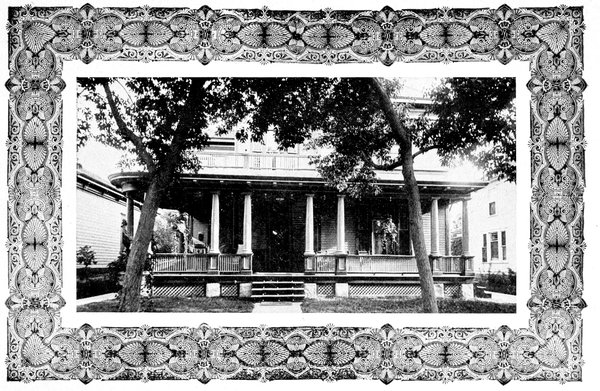
165On the first day of October next Mr. Bryan will
have been married sixteen years. The ceremony was
the culmination of a courtship extending over a
period of four years, a wooing that had its inspiration
in the atmosphere of school life, and which was continued
during the years when he was a diligent student
of the law and a struggling young attorney with
the unblighted courage and the indomitable energy
that have come to be such marked characteristics of
the man. They first met at a reception given in the
parlors of the Presbyterian Academy at Jacksonville,
Ill., to the young men of Illinois College. Mrs. Bryan,
then Mary Baird, was a student at the Academy, and
Mr. Bryan was in attendance at the College. There
was little of romance attached to either their meeting
or their courtship. Both were young, he twenty, she
nineteen. Some sentimentalist has told that she was
first attracted to him by hearing him recite some
school book classics. The fact is that some friend
pointed her out to Mr. Bryan as a girl he “ought to
meet.” And mutual friends introduced them.
Miss Baird was born at Perry, Ill., on the seventeenth
day of June, 1861. Her father was a merchant,
one of a firm that conducted a general store in that
town. His employment gave Mr. Baird, naturally
a studious man, much leisure, and this he improved by
reading. His daughter inherited his taste for literature
and it has abided with her. The invalidism of her
mother prevented her from finishing the course she
had begun at Monticello Seminary, at Godfrey, Ill.,
but later she was able to attend the academy at Jacksonville,
from which she graduated with first honors
of her class.
The young couple began their married life in a little
home of their own in Jacksonville. With the prudent
care that has always distinguished both of them, they
postponed their happiness until he had secured a practice
166sufficient to support them and until they were
able to have a roof-tree of their own. Three years
after their marriage Mr. Bryan came west on a business
trip for a client. At Lincoln he met an old
friend and classmate, A. R. Talbot. Talbot had made
an excellent beginning in the West, and he suggested
to Bryan that he locate at Lincoln and join his law
firm. Mr. Bryan said little at the time. A few
months after his return, however, he wrote to Mr.
Talbot and asked him if he was in earnest in making
the proposition. Mr. Talbot replied that he was, and
outlined the prospects in the West, then the center of
a vast speculation in lands and town lots. Mr. Bryan
had been enchanted with the city of Lincoln when he
first saw it, and he had simply waited until he could
talk it over with his wife.
In this sentiment lies the keynote of the perfect
sympathy that has been so marked a characteristic of
their wedded life. Mr. Bryan came first, his wife and
his young daughter remaining in Jacksonville until he
had become settled. They then joined him. They
immediately began the erection of a modest home in
Lincoln, buying a building lot on D street, and upon
it erected the home he now occupies, at No. 1625. The
money was furnished by Mr. Baird, but has long since
been paid. Three children have been born to them,
Ruth, now nearly fifteen, William, aged eleven, and
Grace, aged nine. The first named is now a registered
student at the seminary at Godfrey, where the mother
first began her college career.
Even the most casual visitor to the Bryan residence
167is impressed with the distinctive home atmosphere
of the place. Mrs. Bryan, as its presiding
genius, has stamped upon it the impress of her individuality,
no less marked in that sphere than her
husband’s in his. The house itself is little more than
a cottage, although it boasts of a second story and a
cupola. Outwardly its lines are a little more impressive
than when it was first built. This can be
traced to the addition within the past year of a many-columned
porch, stretching across its entire front
and bending in a graceful curve to a point midway of
the rear. With its paneled roof and the electric
lights, its cosy corners and inviting arm chairs, it is
an enticing retreat, and here the Bryan family spend
most of their waking hours in the summer months.
There is no ostentation displayed in the furnishings
of the Bryan residence. The parlor is the parlor of
the well-to-do middle class. The sitting room is
simply furnished, but home-like and inviting. The
library is the workshop and no unnecessary tools are
lying about. On the walls hang large portraits of
Washington, Jefferson, Jackson, and Lincoln, and
steel engravings of Benton, Webster, and Calhoun.
They are inexpensive pictures, but typical of the ideals
of the occupants of the room. Another picture shows
Henry Clay, addressing his colleagues in the United
States Senate. The artist’s perspective was sadly at
fault, but it was not the art, but the subject, that
attracted Mr. Bryan. The library is an extensive one,
but unique in its character. Fiction and the classics
find very little room. In their places are histories,
168orations, works on political economy, lives and
speeches of famous men, who have helped build the
nation of the past, dissertations and addresses upon
the hundred and one questions that have vexed and
still perplex the modern school of statesmanship.
Upon few of these has any dust accumulated, and
upon all of them are the unmistakable signs of frequent
usage.
The characteristic that strikes the visitor most is
the bon homme, the camaraderie, of the household. A
wholesome sympathy seems to be the bond that unites
all members. Neither the father nor the mother is a
strict disciplinarian. They do not believe in tyrannizing
over their children. They believe in encouraging
their respective bents, and in guiding them in
the right channels, rather than in forcing in the ways
hallowed by tradition. Mrs. Bryan is essentially a
home body; her husband and children are her chiefest,
but not her only cares. She is a mentor to them all.
Miss Ruth is much like her father in temperament.
She is quick and impulsive, warm-hearted and generous.
Her popularity among her girl friends is attested
by the number that throng her lawn every
evening. William is a sturdy youth in build, and,
boy-like, more self assertive than his sisters. As his
father is a typical American man, so is the youth a
typical American boy, fun-loving and possessed of a
harmless mischievousness that often disturbs the
young girls who are his older sister’s confidantes.
Grace, the youngest, is delicate in health, and her
father’s favorite. It is to him she goes with her
169childish troubles, sure of the sympathy that never
fails her.
Mr. Bryan takes great pride in his household, and
he bends every energy to the end that the bonds of
mutual confidence and love, the elements so essential
in a perfect home, may be strengthened and cemented.
Every hour that he can give to them he gladly spares.
For four years he has had no other office, no other
working place, than in this home. After the campaign
of 1896 he gave up, to all intents and purposes,
his down town office, and has spent his time at home.
His office is now in his library, an inviting room opening
off the parlor on one side, and the sitting room
on the other. His work is performed on a big flat-topped
desk that occupies a goodly share of the floor
space. Here he is surrounded by book-cases and
statuettes, by curious mementoes, ink stands, canes,
a hundred and one articles that admirers in all sections
and climes of the country have sent him. Most
of these have been gathered together in a glass-covered
compartment that separates the two big book-cases.
Mr. Bryan finds that his best work is done with his
wife as his counselor and guide. She has a place on
one side of the big desk, he on the other. She is no
less indefatigable as a worker than he. She finds time
between her consultations with him, when an important
work is on hand, to care for her household,
and to direct the work of the one domestic employed.
Mrs. Bryan’s thorough understanding and appreciation
of every detail of his labors make her companionship
170and aid almost indispensable. Together they
have gone over the details of his campaigns in the
past years, and with him she still plans for the future.
What he writes, she either passes upon or assists in
its production. Her self-poise, marred by no self-consciousness,
but marked by a quiet dignity, is one of
her remarkable possessions. Perhaps the best delineation
of the characteristics of this woman, remarkable
in many ways, is furnished by the eminent
novelist, Julian Hawthorne, who spent some time at
the Bryan home during the past summer. Of her he
said, “Mrs. Bryan is as unusual a woman as her husband
is a man, but she is so unobtrusive that few
people have much idea of her true character. I had
the opportunity to learn something of her during the
campaign of ‘96, and I well recollect her admirable
bearing at the great meeting in Madison Square
Garden, when she was recognized and greeted on entering
her box by more than ten thousand people. It
was a tremendous ordeal for a woman to undergo.
But she sustained herself with steadiness and self-possession,
remarkable in any woman, but more than
remarkable in her, who had always lived in quiet
domestic ways, occupied with her husband, her
children, and her household duties. She is a woman
of great courage and unshakable faith, of exceptional
intellect, also, nourished with adequate education.
She possesses the coolness of judgment which must
often have served him well in times of doubt. She is
not led away by imagination or hope, but sees things
as they are, and resolutely faces facts. Should the decrees
171of Providence see fit to place her in a position of
the first lady of the land, I should have no fear that
she would discharge her duties irreproachably. A
true American woman, she is such as you may always
be glad to match against the great dames of the old
world. The dominant expression of her face is penetration,
combined with a gentle composure. But there
is the sparkle of demure humor in her eyes, and she
can use speech as the most delicate of rapiers when
she chooses. It is easy to know her as an acquaintance,
but I surmise that no one really knows her except
her husband, and probably she will be able
continually to discover new resources and depths even
to him. She is a good woman, with strong religious
convictions, and she regards Bryan’s political aspirations
from that point of view. If it is the will of
God that he shall reach the highest place among his
countrymen she will accept the mission with good
will and confidence. But should he be defeated she
will welcome the life of obscurity with unshaken
equanimity, believing that the councils of the Almighty
are unsearchable, but faithful. If she be destined
to higher things, the example to the nation,
irrespective of party, of such a wife and such a mother
as she is, can not but be beneficial. If not, ‘Those also
serve who only stand and wait.’”
Sociability is one of the graces that attach to her
naturally. The number of visitors to her husband is
so large and his amiability so great, that if Mrs.
Bryan did not maintain a watchfulness over them
they would consume all of his hours. This guardianship
172of his time has imbued her with a little more
sternness than is her nature, but at the same time has
endowed her with shrewdness of discernment that
enables her to gauge every one’s errand with astonishing
accuracy. The true democracy of the man is
shown in his earnest desire that even the lowest of his
callers shall be received with the same consideration
bestowed upon the great ones, and no visitor ever
leaves the Bryan home, even though he may not have
gained his wish, without the consciousness of the
gentle courtesy and a full-souled welcome.
But Mrs. Bryan is in no sense a society woman.
She is of a turn of mind too serious and too well
poised to enable her to find enjoyment in the frivolities
and vanities that go to make up so much of the
life of the society woman. She likes to meet with her
friends and talk with them, and she misses no opportunity
to indulge in this pleasure. Club and church
work take up much of her leisure. She has been
active for years in the work of the Nebraska state
federation of women’s clubs. She can write, and frequently
does, for newspapers and periodicals. She
can also speak and speak well, but this she does rarely.
Her range of information is as varied as that of her
husband, and she knows the ins and outs of politics
as well as she does the theories of good government,
and the vagaries of the different schools of political
economy. For years Mrs. Bryan’s father has resided
with them. Now he is sightless and infirm, but his
hours are cheered and his burden lightened by the
loving care of his daughter.
173The passing years have dealt very gently with Mrs.
Bryan. She is above the average in height, but her
figure is matronly. Her face is pale, but there is no
pallor, the graceful curves of youth have softened in
outline, but in manner she has gained the dignity that
does not hint of reserve. Mrs. Bryan is always well
dressed, the unobtrusiveness and appropriateness of
her garments marking the taste of the wearer. Her
gowns are usually of one color, relieved here and there
by the bright tints women love.
“Mrs. Bryan’s whole life has been one of study,”
says Miss Wright, of Lincoln, a friend of the family.
“Long before she could read she knew the names of all
the bugs her little hoe turned up in the garden. In
her early life the doctor said she must be kept out of
doors. Luckily she did not like indoor life. All day
long she tagged her father, and they played together
in the garden. By the time she was old enough for
books she was kin to everything they told about. She
idealized the earth and its generating and regenerating
character. From a weak child she has grown to
be a strong woman with rare power of endurance and
concentration. She and her father would sit on the
porch at night and study the skies, and the Greek and
Norse stories of the stars were repeated until she had
committed all of them to memory. He told her how
far away they were and what a speck the world would
look if it could be seen from Venus. The idea of the
immensity of the Universe and the relation of the
world to the solar system seldom enters the mind of a
child, but with Mary Baird, it was the most interesting
174story that could be told. Early star-gazing and
her father’s influence trained her to think of things
abstractly, nakedly, and without the impediments of
custom and fashion. During her first days in school,
her text-books were distasteful, as they were new,
but she studied them nevertheless, and soon was at
the head of her class. This habit of study has clung
to her ever since.”
Social dissipation is unknown in the Bryan household.
Since Miss Ruth has grown to the dignity of
young womanhood, and has gathered about her a bevy
of young friends, an added gaiety has been given. She
has had her little parties, but her parents receive
rarely, and then but informally. The Bryans have
several carriages and horses, and in these they find
their chief amusement. Once in a while Mr. and Mrs.
Bryan are seen at the theatres, but only at the best
plays. Mr. Bryan has grown much stouter in late
years, and has taken to frequent horseback rides as
both an exercise and a pleasure. His favorite animal
is a Kentucky bred saddle horse. It was presented
him by ex-Governor W. J. Stone, of Missouri, and in
compliment to its donor, Mr. Bryan has named it
“Governor.”
The figure of W. J. Bryan on horseback is a familiar
one in the city of Lincoln, a city where horseback
riding has never been in vogue. Governor is a coal-black,
high-spirited animal, and prances and
pirouettes with nervousness at every halt. Mr. Bryan’s
favorite ride is to his farm, four miles east of the
city. Here, on a thirty-acre tract, he has for several
175years been making experiments in farming, or rather
in endeavoring to discover whether he has forgotten
the lessons instilled into his mind by his agricultural
experiences in youth. Mr. Bryan insists that he is
not a farmer, but an agriculturalist, and defines the
difference tersely in this wise: “You see, a farmer
is a man who makes his money in the country, and
spends it in the town. The agriculturalist makes his
money in town and spends it in the country.”
Mr. Bryan has no intention of taking up the life
of a farmer. Ten years ago, in the boom days of
Lincoln, he purchased a five-acre tract close to the
suburb of Normal. He had driven out east of the
city one day, and at the top of a hill stopped to rest
his horse. As he sat in his carriage the splendid
panorama of field and house and tree unrolled before
him. He was enchanted. Then and there he resolved
to build a permanent home upon that spot some day.
The original five acres cost him a good round sum,
but his later purchases, made now and then, have been
at greatly reduced figures. The buildings upon the
farm are largely temporary in character. The house
is a small one of five rooms, and shelters the man who
does the real work on the place. Mr. Bryan has found
much pleasure and recreation during the summer at
the farm. During the planting season and in the
weeks that followed, he made a visit daily and spent
several hours “puttering” about, directing things here
and bearing a hand there himself, at the harder tasks.
In the rural atmosphere, away from the conventions
of the city, he threw aside every care and every
176burden. His ordinary clothing was cast aside for the
habiliments that distinguish the farmer at work. Mr.
Bryan confesses to a weakness for high-top boots, in
which his trouser ends can be hidden,—and then to
work.
The one singular thing about everything that this
man does is that he is at all times able to preserve
his dignity. There is nothing selfconscious about
that dignity. In the West, that sort is dangerous to
attempt. Simplicity is the dominant note in his character,
his manners, his talk, his walk. His amiability
is inexhaustible, his patience unending. If a delegation
of Democrats passing through Lincoln do not
have time to go out and see Mr. Bryan, Mr. Bryan
finds time to ride down to the depot and see them.
He has, since his nomination, made several speeches
from horseback, to boisterous but zealous delegations,
and always with the old charm and effect.
As to his patience, no better witnesses to its enduring
qualities need be asked than the newspaper correspondents
who form a corps of watchful guardians
upon his footsteps. Many are the questions, some of
them impertinent, that are asked him, and during a
campaign, the presence of the press representatives,
unobtrusive as they are, really destroys whatever
privacy remained to him. And yet through it all, his
courtesy is ever gentle, his good nature unfailing, his
temper always under such control as to seem to be an
absent quantity in his make-up.
Lincoln, the city of his residence, has always been
dominated by the Republican party, and so great has
177been the preponderance of that political organization
that Mr. Bryan has never been able to carry it in any
of his campaigns. Mr. Bryan came to Lincoln a
young man, and entered into a very brisk competition
with a number of other young lawyers, most of them
Republicans. None of these have risen above the
political level of county leaders, nor have they found
fame or other reward at the bar. The rapid flight of
Mr. Bryan and his pre-eminence has engendered in
their breasts a bitterness of partisanship, accentuated
and multiplied by their personal jealousies, that has
found its vent in mean and malicious assaults upon
his political integrity and attempted belittlings of his
abilities. This influence has in the past over-ridden a
local pride that would have justified an endorsement
at least of his Presidential candidacy, and added
flame to the fires of partisanship that particularly
distinguishes the city. These two facts form the solution
to a mystery that has seemingly vexed a great
many good people in America, who do not understand
the local conditions. Mr. Bryan seems, too, to have
pitched his tent in the most rabidly Republican section
of the city, as evidenced by the elaborate display
of McKinley pictures in the front windows of the
houses of his neighbors, who are as lacking in good
taste as in civic pride.
None of these elaborate attempts at incivility have
ever ruffled his temper, nor have they caused him to
retaliate with the weapons he so well knows how to
use. The fact is, he has many warm friends among
the Republicans of the city. His old law partner has
178long been a Republican leader, and is now president
of the State Senate. This year he has espoused Mr.
Bryan’s cause.
It has been said that the home of Mr. and Mrs.
Bryan is a typical one. It is more than a type; it is
an ideal. The simplicity of the life his family leads,
the wholesomeness of the atmosphere, the absence of
affectation, the presence of a democracy that includes
courtesy, gentleness, amiability, and cordiality invariably
impresses one. The home life of a man is the
mirror of his character; and in its limpid depths one
sees the secret springs of thought and reads the heart
aright. That that of Mr. Bryan reflects with truthful
fidelity is a fact within the knowledge of all who
know the man and revere the woman. The words he
himself used in describing the beautiful home life of a
friend who had been called across the river apply with
equal fitness to his own:
“He found his inspiration at his fireside, and approached
his ideal of the domestic life. He and his
faithful wife, who was both his help-mate and companion,
inhabited as tenants in common that sacred
spot called home, and needed no court to define their
relative rights and duties. The invisible walls which
shut in that home and shut out all else had their foundation
upon the earth and their battlements in the
skies. No force could break them down, no poisoned
arrows could cross their top, and at the gates thereof
love and confidence stood ever upon guard.”