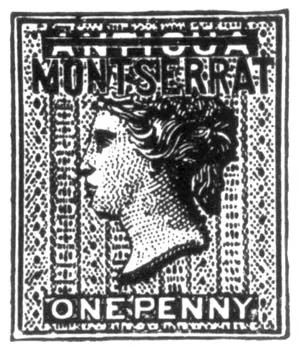
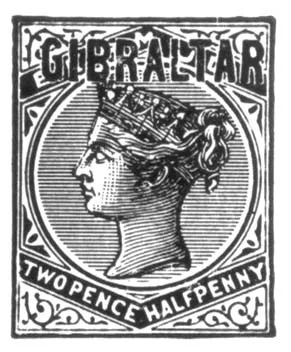
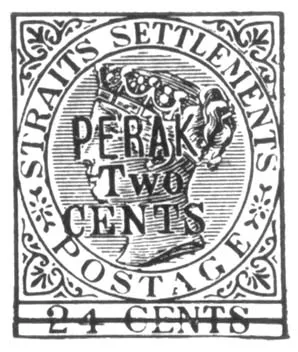
By way of preface, I wish to say, that I have
prepared this paper with the hope of interesting
those who are not stamp collectors
and my endeavor will be to indicate some
of the interesting and instructive things
that may be learned by those who follow this
fascinating pursuit. Much that I have to say
will be ancient history to philatelists, but I
trust they will remember that this is not especially
intended for them and pardon any dryness in it, in
view of its intent.
Stamp collecting, as pursued to-day, has become
something more than an amusement for children.
It affords instruction and mental relaxation to those
who are older and more serious.
On the title page of every stamp album and catalogue
should be inscribed the old latin motto: "Te
doces
" thou teachest, for it is certainly an instructor
and affords much intellectual entertainment.
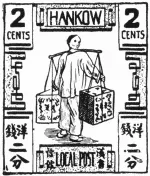
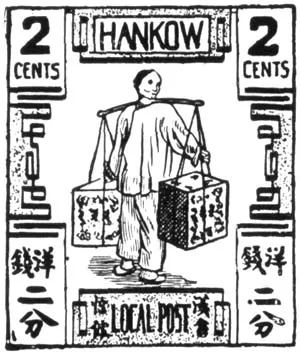
In connection with this motto we have a little
philatelic joke from the orient.
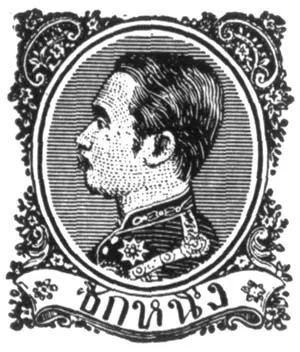
In one of the Chinese treaty
ports a stamp has been issued
which bears the motto. We find
them on the tea chests, written
in excellent Chinese, and, even
if we do not read the language,
we cannot doubt that they refer to the tea doses
which the chests contain.
By some, philately has been called a science.
Perhaps it hardly merits so exalted a title but it
opens for us a wide field for research, in which we
may find many curious, interesting and instructive
things. It trains our powers of observation, enlarges
our perceptions, broadens our views, and
adds to our knowledge of history, art, languages,
geography, botany, mythology and many kindred
branches of learning.
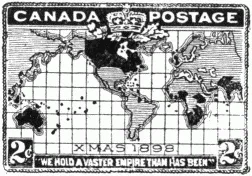
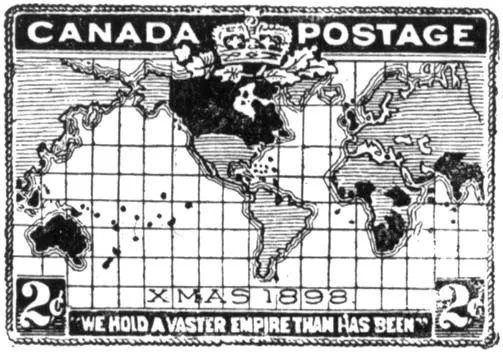
Philately embraces the whole earth and likewise
the whole earth is sometimes embraced within the
limits of a postage stamp. As an example of this,
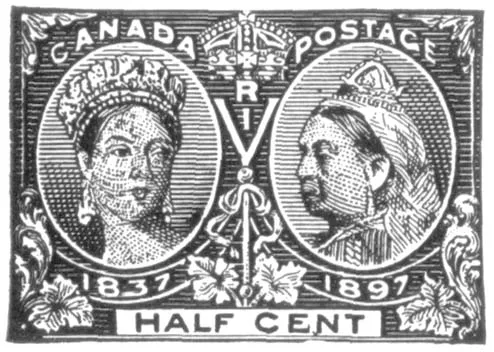
witness the recent effort of our Canadian cousins in
celebration of the achievement
of the long-desired
ocean penny postage, at
present an inter-colonial
rate of the British Empire,
but some day to be an international rate. The
motto is a trifle bombastic and suggests the Teutonic
superlative; "So bigger as never vas," and
the "Xmas 1898" reads like the advertisement of a
department store: "Gents pants for Xmas gifts."
But we must admit that the stamp is a pretty conceit,
in spite of these defects and of the ambition
of the artist, which has spread the "thin red line"
over territory that has not otherwise been acquired.
In addition to the things to be learned from the
pictorial part of stamps, there are other things
which attract the attention of the thoughtful and
bring with them knowledge that is both interesting
and valuable. The mechanical part of stamp
making may be studied with much profit and entertainment.
Considered in all its aspects, philately
is even more instructive than matrimony. You
will remember the elder Weller's views on the latter
subject: "Ven you're a married man, Samivel, you'll
understand a good many things as you don't under
stand
now; but vether its worth while going through
so much to learn so little, as the charity boy said
ven he got to the end of the alphabet, is a matter
o' taste. I rather think it isn't." This reproach
cannot be applied to philately. It teaches even
the unwilling and careless. In the effort to fill the
spaces in their albums they must learn what varieties
they are lacking and in what these differ from
other and similar varieties. Thus some knowledge
must be gained, even if unsought. To the studious
and the careful, in this as in other things in life, the
greatest benefits naturally accrue.
In my remarks this evening I shall endeavor to
touch upon a few subjects which are quite certain
to attract the attention of any one who takes up
stamp collecting with any degree of earnestness and
thoroughness. That these subjects open up other
fields for interesting and profitable study will be
readily apparent.
Let us take a postage stamp and consider it.
Aside from the name of the country whence it
emanates and the expression of value, what do we
find in it to study? First the design, next the means
by which the design was prepared and placed upon
the paper, thirdly the paper upon which the stamp is
printed, and lastly the finishing touches of gum,
perforation, etc.
In the early days of stamps most countries made
their own and they were, in some degree, an indication
of the artistic progress, or want of it, in a
country. But we have changed all that and to-day
all effort seems to be directed toward producing
artistic and attractive stamps. Sometimes this
is due to national pride and occasionally it is intended
to draw attention to the resources and
natural wonders of a country.
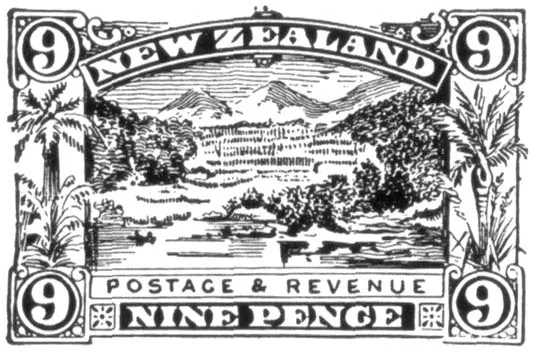
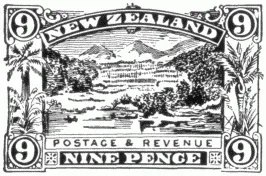
As an example of the
latter, here are the marvelous
pink terraces of New
Zealand, which were, unfortunately,
destroyed by volcanic disturbances a
few years ago. But too often, we fear, these picture
stamps are produced merely with a view to
their ready salability to collectors. More frequently
than not, these brilliant
labels are the product of a
distant country and are no
longer indicative of the
artistic status of the country
by which they are
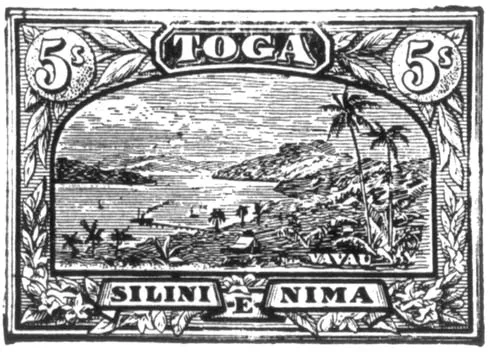
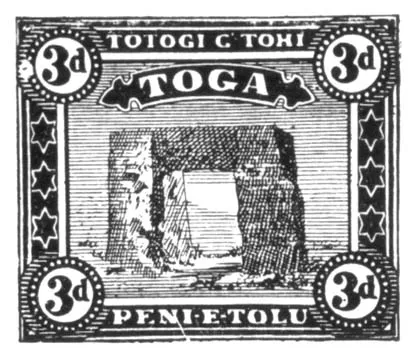
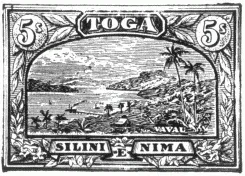
issued. For example, a late issue from the Tonga
islands but made in London. Indeed, the wilds of
Africa, the distant islands of the Pacific and the
tumultuous republics of Central America far outshine
the cultured countries of the old world in
their postal stationery. The designs of stamps
may suggest many things: the power of nations, the
march of history, the glory of victory, the advance
of civilization, art, industry, natural resources,
scenic grandure, the dead and storied past, the
living breathing present.
The majority of stamps bear a portrait, usually
that of a sovereign. The stamps of our own country
present a portrait gallery of our great and heroic
dead, for by law the faces of the living may not appear
on our stamps or money. This is the reverse
of the rule in monarchical countries, where the portrait
of the reigning sovereign usually adorns the
postal issues. The likeness most frequently seen
on postage stamps is that of her most gracious
Majesty the Queen of England. For more than
half a century her portrait has adorned the numerous
stamps of Great Britain and the British Colonies,
beginning in 1840 with a beautiful portrait—painted
by an American, we may be proud to say—
the
portrait of the girl queen, wearing her coronation
crown, and continuing, until to-day she wears
a widow's veil beneath the crown of the Empress of
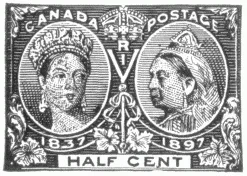
India. In the issue by
which Canada commemorated
the sixtieth year of Her
Majesty's reign the two portraits
are happily combined.
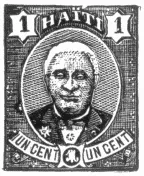
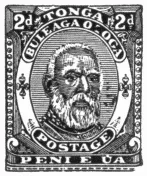
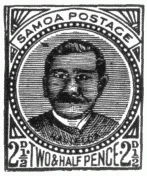
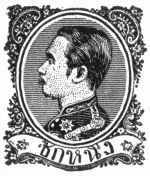
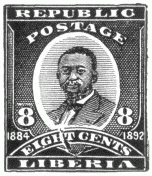
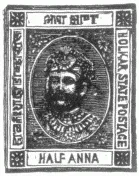
Following the lead of Europe and America, other
countries have placed the portraits of their rulers
on their stamps and from this custom we may gain
some slight information on the subject of ethnography.
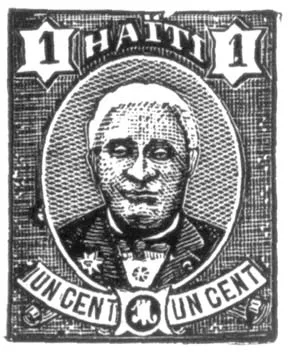
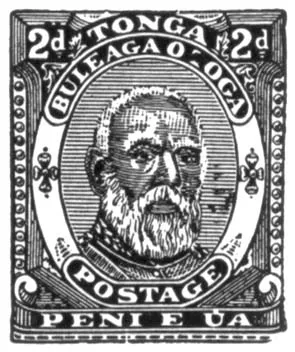
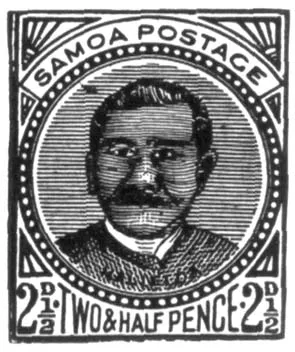
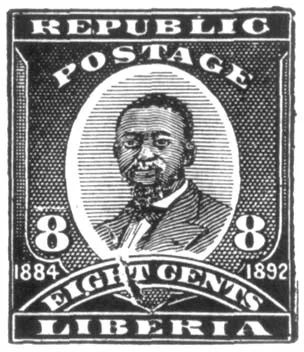
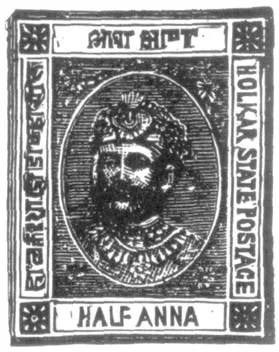
Hayti, Tonga, Samoa, Siam, Liberia,
Holkar, etc., have shown us types
of other races than the Caucassian.
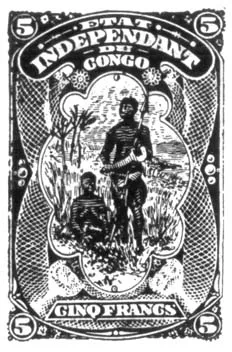
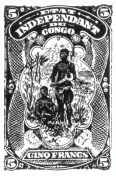
One of the stamps of Congo is
adorned by a couple of natives in
local full dress which appears to be
much on the order of that of the
lady in the ballad who wore a
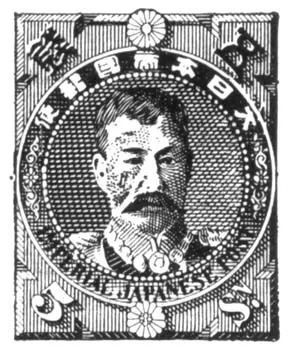
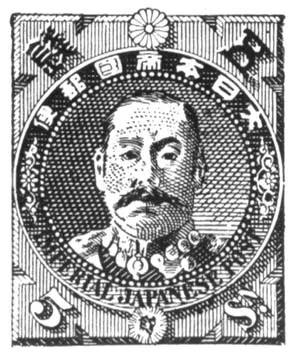
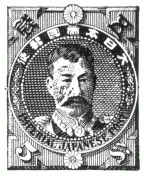
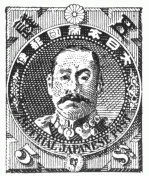
wreath and a smile. Japan has
placed on her stamps the portraits
of two heroes of her late war with
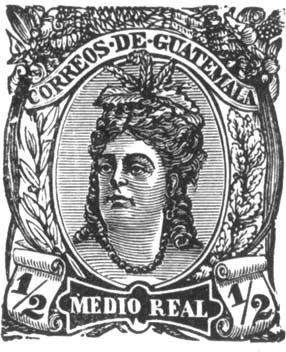
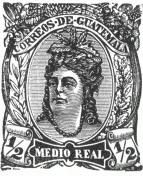
China. Guatemala has the head of
an Indian woman. The stamps of
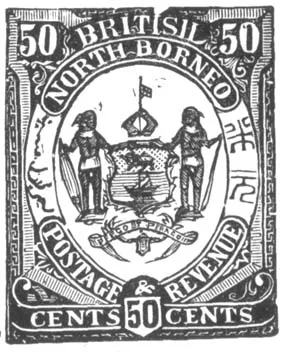
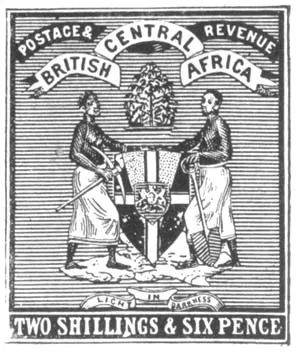
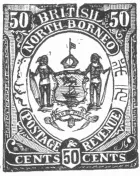
British North Borneo have the arms
of the company with two stalwart
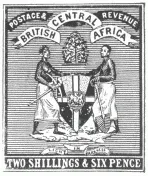
natives as supporters and a similar
device is used by the British Central
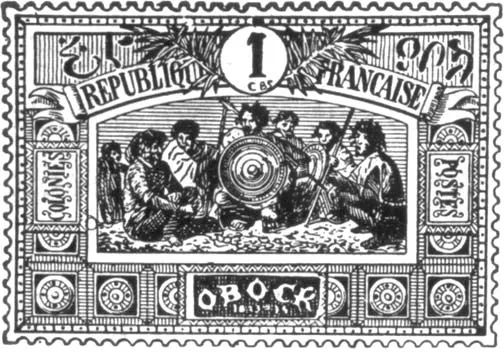
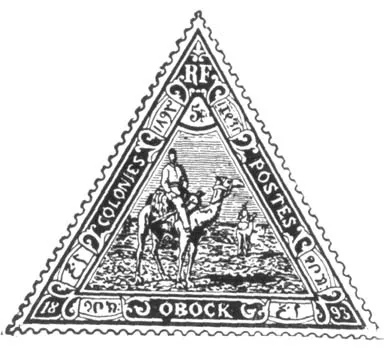
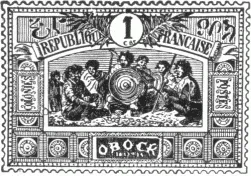
Africa Co. The stamps of Obock
show a group of natives. The
picture is entitled "the
missionary at dinner with
the native chiefs." For
further particulars of
the missionary enquire
within.
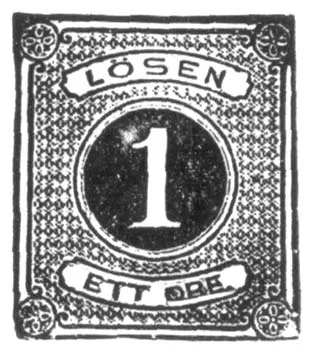
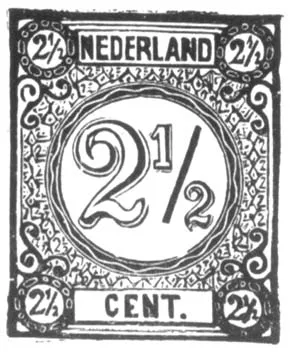
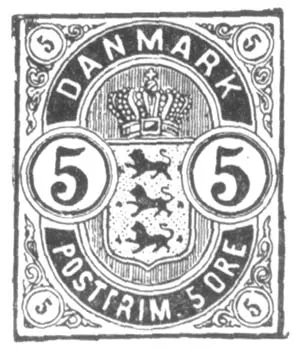
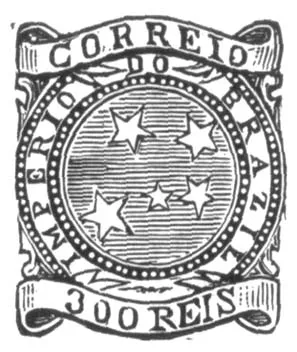
Another large group of stamps have numerals of
value as their distinguishing feature. As examples
of this we find, the early issues
of Brazil and
Hawaii, many stamps of Sweden,
Netherlands, Denmark, etc., as well
as the postage due stamps of many
countries, including our own.
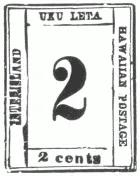
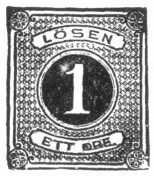
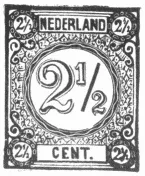
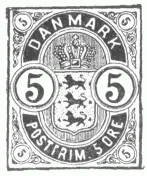
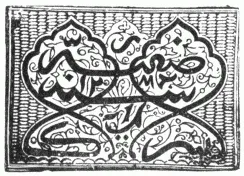
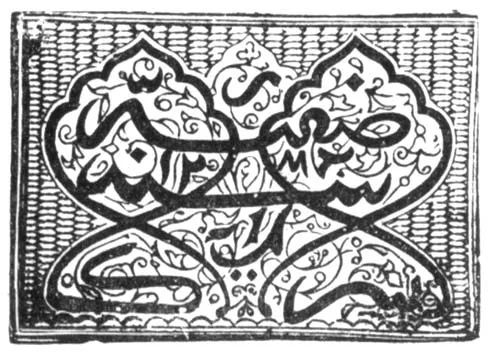
In other countries only inscriptions
are used. This is especially the case
with the Native States of India, in
some of which as
many as four
languages are
said to be em
ployed
on one stamp. These are interesting for
their crude and curious designs but are not popular
with collectors, probably because of our inability
to read them.
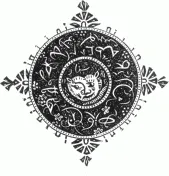
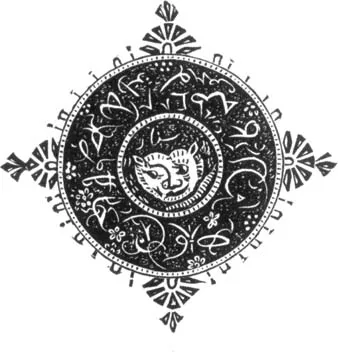
Afghanistan has varied the idea by placing
on her stamps a tiger's head surrounded
by a broad circle of inscriptions.
Owing to the
short comings of native
art the tiger is
more often droll than ferocious.
The method of cancellation used
in that country is crude but effective.
It consists in cutting or tearing a piece out of the
stamp. Needless to say, it is not popular with
stamp collectors.
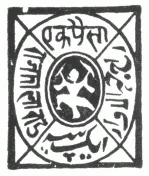
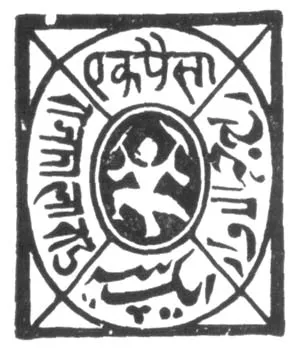
Jhalawar, one of the Native States of India, has
also varied the monotony of inscriptions
by the addition of a sort of
jumping-jack figure. By some writers
this is claimed to be a dancing dervish
and by others a Nautch girl.
As pictured on the stamp the figure does not present
the sensuous outlines which have always been
attributed to those delectable damsels. Bossakie
wicz,
in his Manuel du Collectionneur de Timbres
Poste says: "A dancing nymph, belonging to the
secondary order of Hindu divinities and known as
an apsara." Here is a problem which the next
convert to philately may undertake to solve. You
see there are still worlds to conquer, in spite of all
the inky battles that have been waged by philatelic
writers.
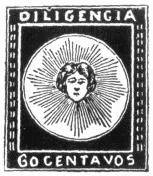
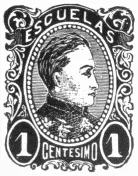
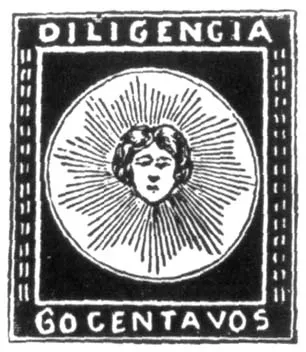
The first stamps of Uruguay bear
the inscription "diligencia" (stagecoach),
thus plainly indicating the
method then employed for transporting
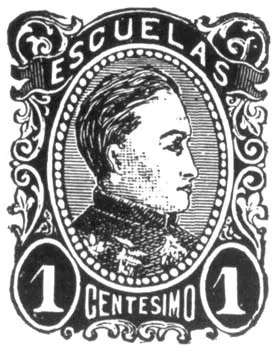
the mails. On some of the
Venzuelan stamps is the word
"escuelas" (schools), a portion
of the revenue from this source
being devoted to the maintenance
of the state schools.
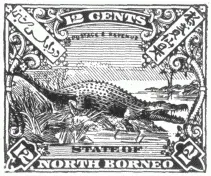
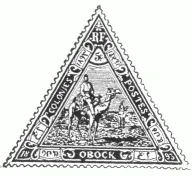
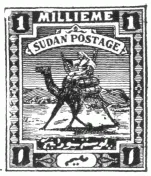
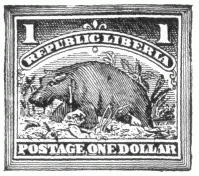
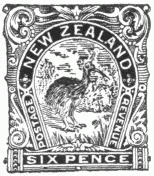
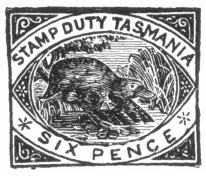
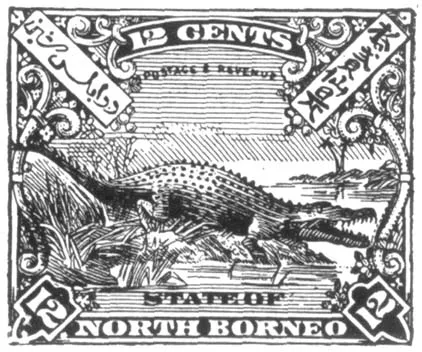
The animal world has been
thoroughly exploited by designers
of stamps and many
curious products have they
shown us. This creature with
the fine open countenance
hails from North Borneo but
it is said that similar creatures have been seen by
earnest philatelists after an evening of study in the
billiard room of the Collectors Club, followed by a
light supper of broiled lobster and welsh rarebit.
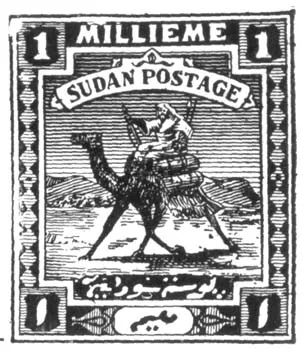
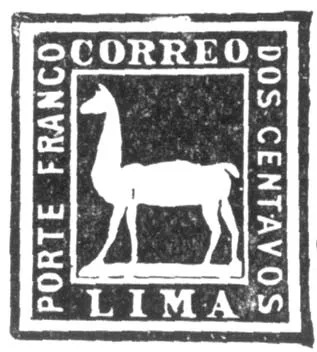
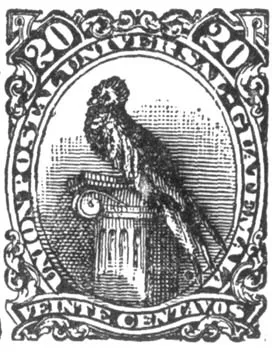
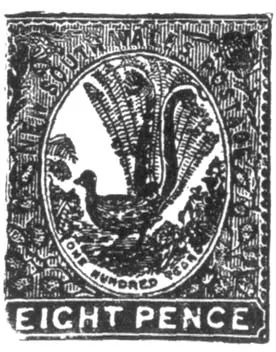
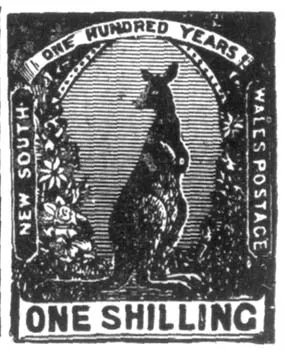
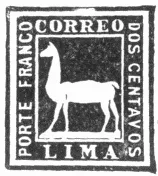
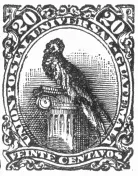
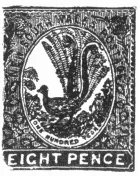
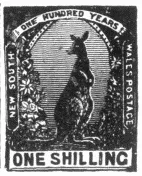
Very familiar to collectors are the camel of Obock
and the
Soudan,
the
Llama
of Peru,
the sacred
quetzal
of Guatemala—the transmigrated form of the
god-king of the Aztecs—the lyrebird
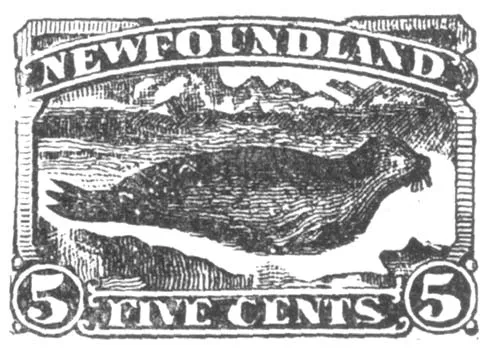
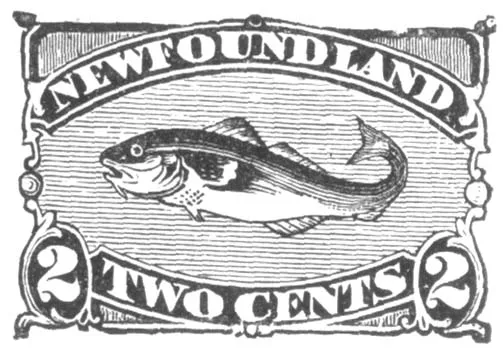
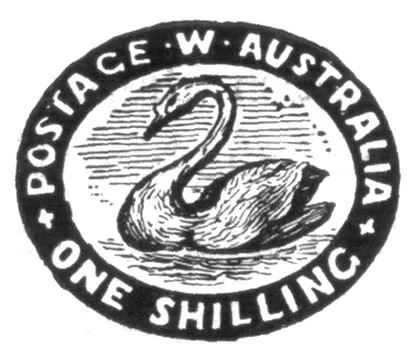
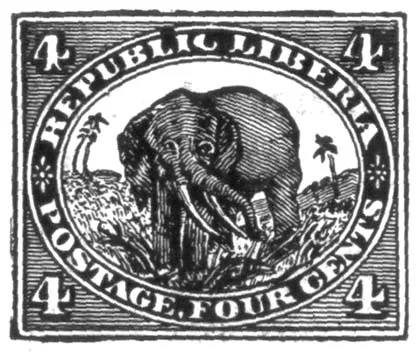
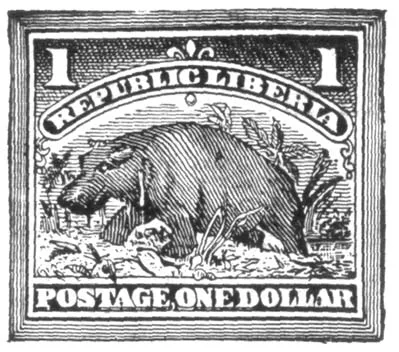
and Kangaroo of New South Wales. New
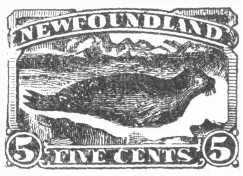
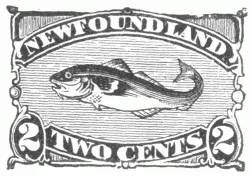
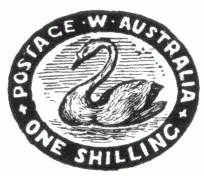
Foundland has pictured the seal and cod fish,
Western
Australia
the black
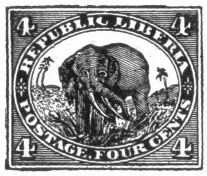
swan, Li
beria
the elephant
and rhinocerous,
and
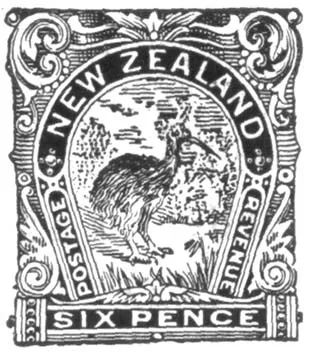
New Zealand
the curious bird
called the apterix,
which is
wingless and
clothed in hair
instead of
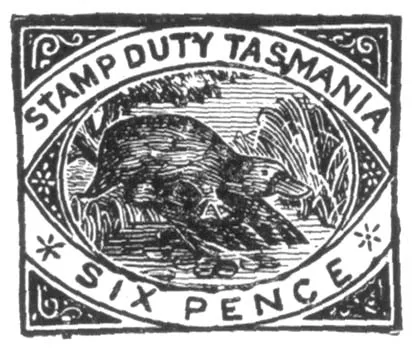
feathers. Tasmania shows us her
animal freak, the platypus paradoxus,
the beast with a bill, first
cousin to our tailors and butchers,
all of whom are beasts with
bills. Our own country has
added to the philatelic "zoo"
by placing a herd of cattle
on one of the Trans-Mississippi
issue. That it is a
pretty picture cannot be denied
but the connection between cows and postage
stamps is not obvious.
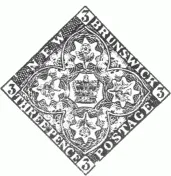
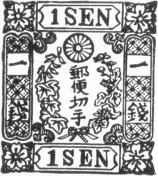
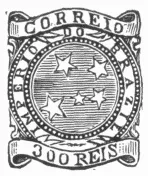
New Foundland, Nova Scotia and New Brunswick
have adorned their stamps with the heraldic
rose, thistle and shamrock of the British Empire.
Japan, ever artistic and ever a lover of the beautiful,
has placed on her
stamps the chrysanthemum,
both as a flower
and in its conventionalized
form as the crest
of the Imperial family. And Nepal has the lotus,
sacred to Buddha. Brazil has shown us the brilliant
constellation of the Southern Cross which
sparkles in the tropic sky.
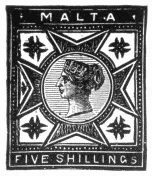
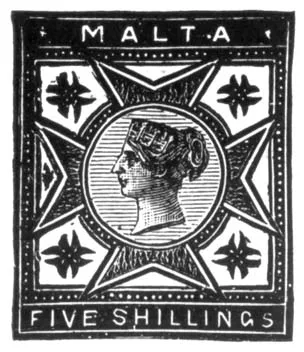
Many nations have used their coats of arms as
appropriate decorations for their postal issues. On
the five shilling stamps of Malta
we find the Maltese cross, emblem
of the Knights of St. John
and reminiscent of the crusades.
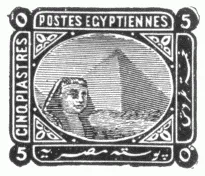
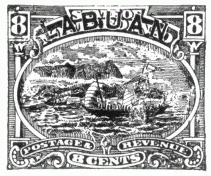
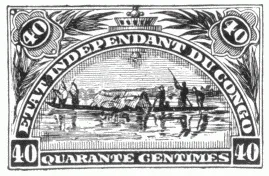
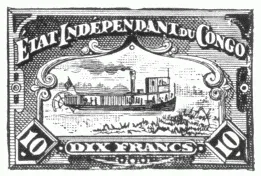
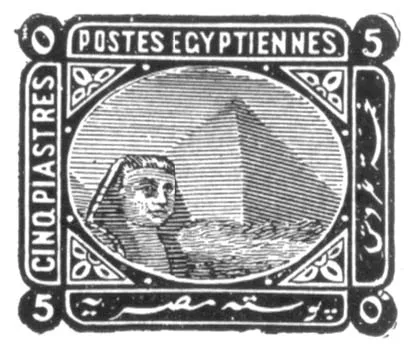
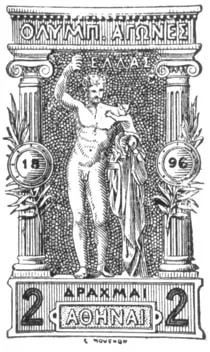
Egypt has
her sphynx and
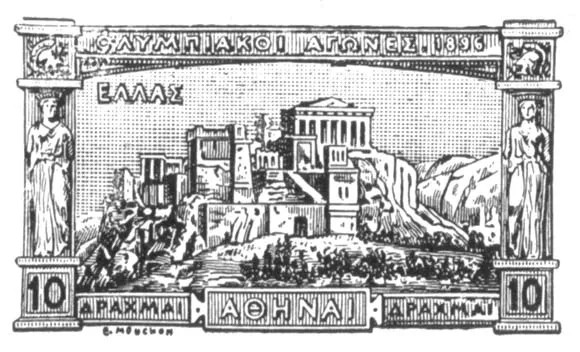
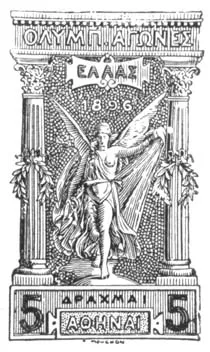
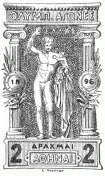
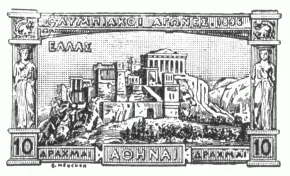
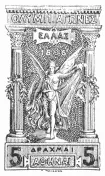
pyramids; Greece an artistic series
of pictures of her famous statues
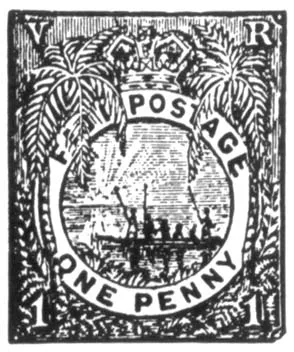
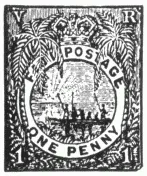
and ruins. Fiji shows a pirogue,
the native canoe, rudely shaped from a tree trunk
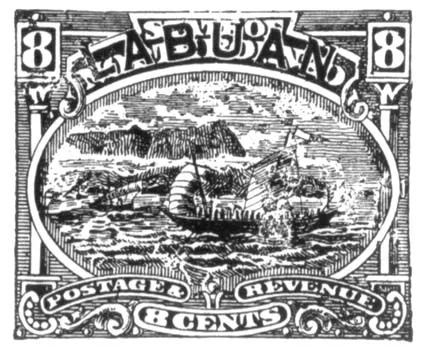
and hollowed out by fire. Labuan has a piratical
looking native dhow. The stamps
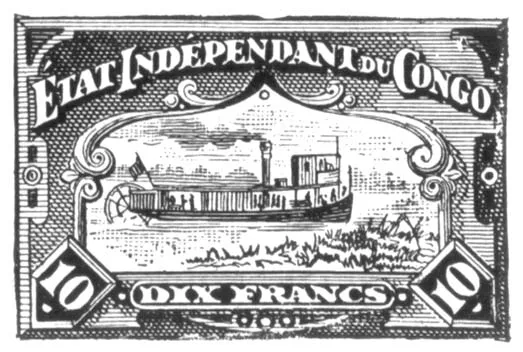
of Rhodesia and the Congo Free
State depict the advance of civilization on the dark
continent. History is sumptuously illustrated in
the series of stamps issued by
our Government to commemorate
the 400th anniversary
of the discovery of the new
world by Columbus and to
celebrate the settlement and
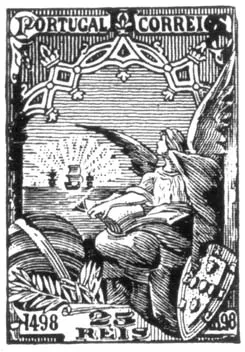
growth of the great west. Portugal also has cele
brated,
in an elaborate issue of stamps, the voyage
of Vasco da Gama to India.
Other countries have been quite
too ready to do likewise until
we have feared we were in
danger of being drowned in the
flood of commemorative and
celebration stamps, many of
which we felt were designed to replenish an
empty treasury rather than to honor the glorious
deeds of the past.
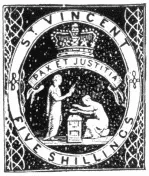
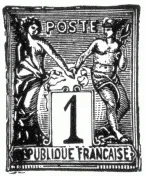
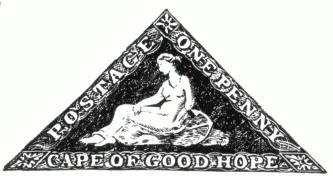
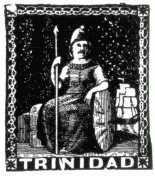
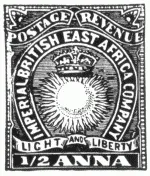
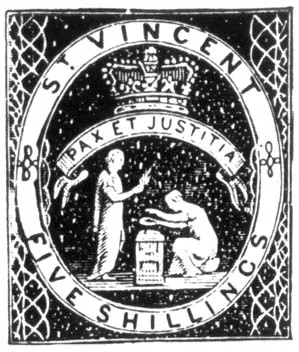
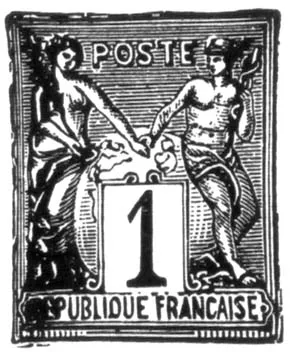
Quite a number of stamps have allegorical designs.
One of the most beautiful
examples comes from St. Vincent.
Familiar figures to philatelists are
those of Peace and Commerce on
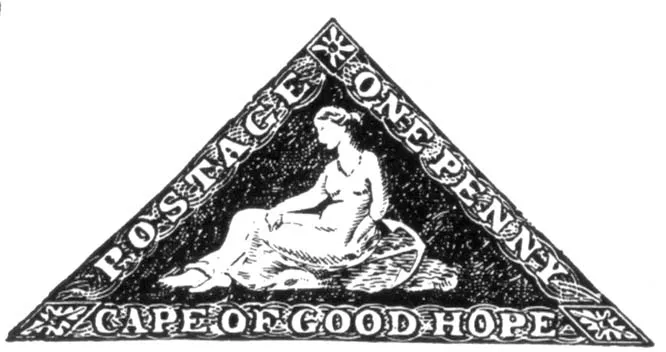
the stamps of France, Hope with her
anchor on the issues of the Cape of Good Hope and
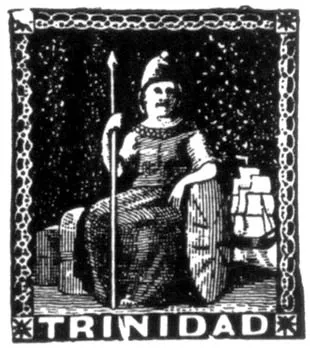
Britannia on several of the British Colonies. The
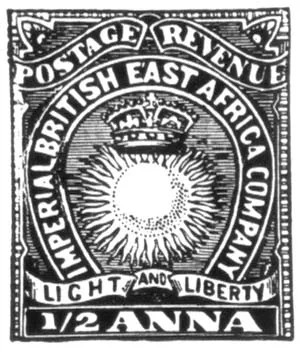
stamps of British East Africa bear a flaming sun
and the legend "light and liberty," typical of the light
of civilization and progress now
dawning upon that part of the
world. And on one of the late issues
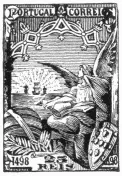
of Portugal is a beautiful allegory
of the muse of history
watching Da Gama's voyage to the
East.
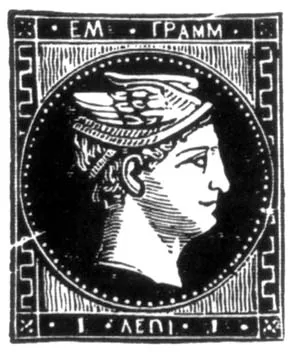
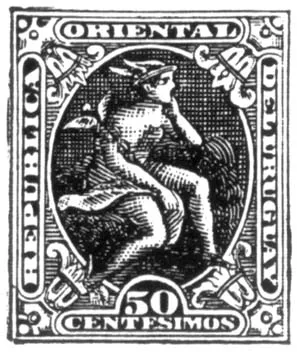
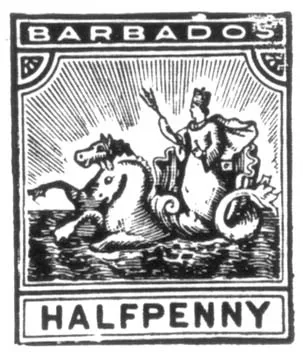
From allegory to mythology is but
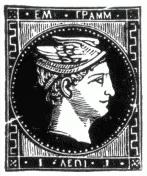
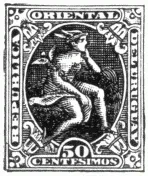
a step. Greece has long displayed
on her stamps the winged head of
Mercury and Uruguay has given us
a dainty picture of the messenger of
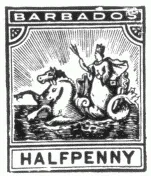
the gods. The late issues of Barbados
have a picture of Amphitrite, the
spouse of Neptune, in her chariot
drawn by sea-horses. The handsome
stamps of the United States,
intended for the payment of postage
on newspapers and periodicals
bear the pictures of nine of the
goddesses of Grecian mythology.
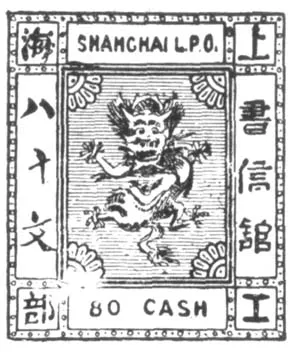
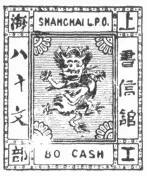
The stamps of China, Shanghai and
Japan introduce subjects from oriental
myths. This is not a pussy cat in a fit or trying
to dance a pas seul on the end of
its tail. It is one of the most venerated
of the Chinese dragons. One
of its provinces is to guard the
sacred crystal of life. It has a
human head, the wings of a bird,
the claws of a tiger and the tail of a serpent.
One of the stock arguments advanced in favor of
philately, by those who think it needs other excuse
than the entertainment it affords, is that it teaches
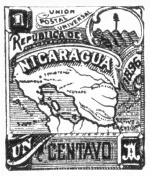
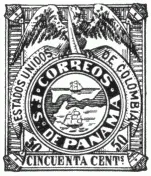
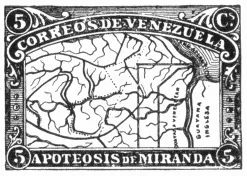
geography. This is undoubtedly true, and, as if
in support of the argument, several countries have
given us what might be called map stamps. Of
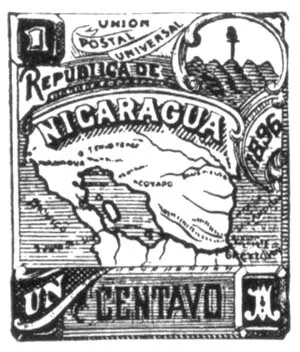
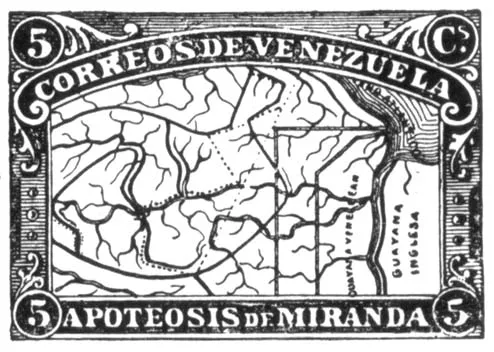
late years, it has become customary
for countries to exploit
their attractions by issues
of "picture" stamps, many of
which show views of local
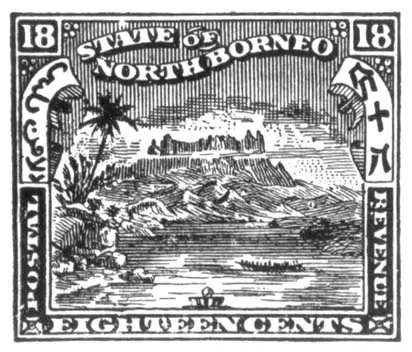
scenery. One of the first in this line came from
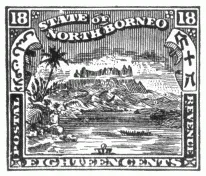
North Borneo, showing a view of Mt. Kimbal, a
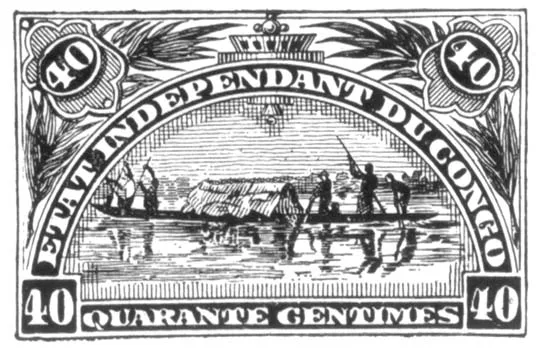
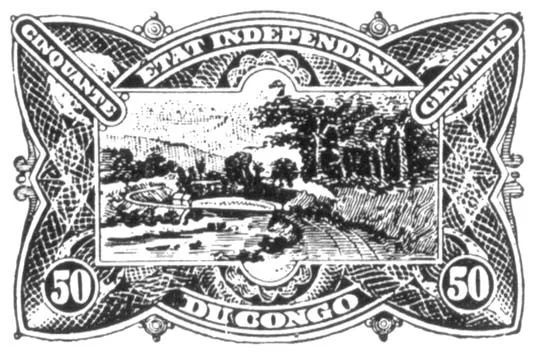
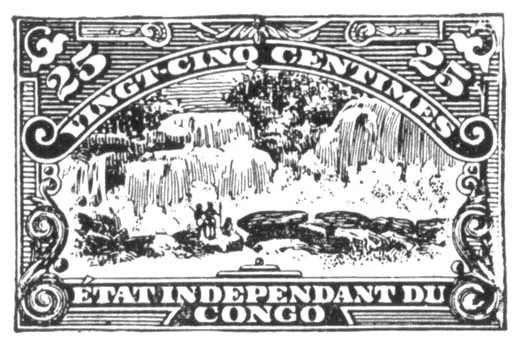
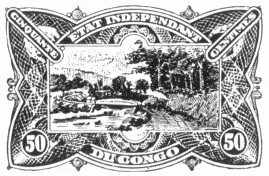
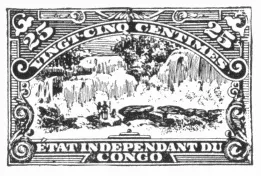
celebrated volcano of the island. Congo has given
us two pictures which are microscopic gems of art.
The first is a view of the railroad crossing the
Mopoxo river and the second the Falls of Inkissi.
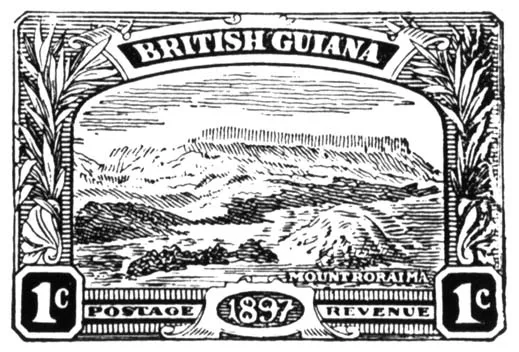
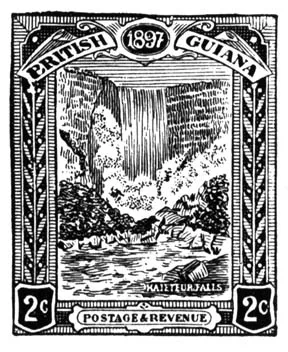
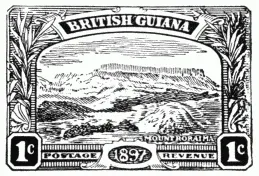
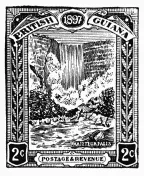
British Guiana has recently
shown us two of her natural
wonders, Mount Roraima, a great
table-topped mountain, and the
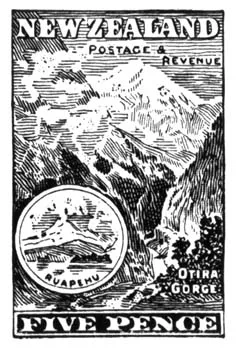
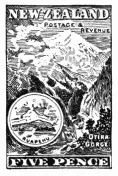
Kaiteur Falls. New Zealand has
an extensive series of views, one of
the most striking of which is Mount
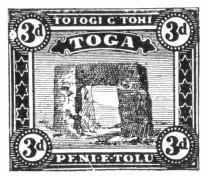
Cook. Among the latest of these
attractive issues is one from Tonga,
which includes a picture of a
wonderful work of the pre-historic
inhabitants of those islands,
a tri-lithon, believed to
have been erected as a burial
place and monument of a chieftain.
In its arrangement and massive simplicity it
is suggestive of the Druidic ruins of other lands.
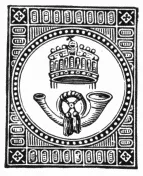
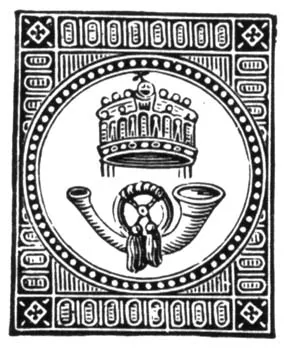
Crowns and post-horns figure on many stamps
and both are significant of the authority and purpose
of these seemingly trifling bits of paper. An
interesting combination of these two
emblems is found on one of the
newspaper stamps of Hungary. In
this case the crown is not merely a
creation of the artist's fancy but
the historic crown of Saint Stephen, the "iron
crown of Hungary," so called because it has within
its rim an iron band said to be made from one of
the nails of the cross.
In all these subjects of thought I have mentioned
only a few examples under each head. The number
might be multiplied many times, did I not fear
to weary you.
But, turning from the purely pictorial side, let us
consider the material side of stamps and the various
methods employed in producing them. The design
having been selected, it becomes necessary to reproduce
it in some form suitable for making stamps
in large quantities. In a general way we may
divide stamp printing into two classes: printing
from metal plates and printing from stone, or lithography.
The first class contains two grand sub-divisions.
In the first of these sub-divisions the
lines to be reproduced are sunken below the surface
of the plate. This is known as taille douce or
line engraving. It is also called copper plate and
steel engraving. The copper plates for our visiting
cards are familiar examples of this style of
work and our national paper currency presents very
beautiful and elaborate results of the process.
The second sub-division is known as typography
or surface printing. As its name indicates, the
lines to be reproduced are at the surface of the
plate, the other parts being cut away. A newspaper
is an example of typographical printing, the
term being applied to designs made up from type,
as well as to specially prepared plates.
I need not suggest to you how wide a field for
thought and exploration this subject of engraving
opens to us, leading as it does directly into the
world of books, pictures and art. But at present
we must confine ourselves to the subject as applied
to postage stamps, save for a brief consideration of
its origin and history.
The art of engraving owes its origin to the Florentine
goldsmiths of the fifteenth century. They
were accustomed to ornament their work with incised
lines which were filled with black enamel.
A design thus filled with enamel was called a
niello, a derivative of the word nigellum (the most
black). The brass and nickel signs with black letters,
which we find at the doors of business houses,
are modern forms of nielli. While making a niello,
the artist naturally wished to see how the work was
progressing and if any alterations were required.
It was not desirable to put the enamel in the design
because it was difficult to remove. To avoid
this an impression of the work was taken in clay,
from which a sulphur cast was made. The lines of
the cast were filled with lamp black. Thus a copy
of the work was obtained which reproduced its
coloring and showed the condition of the engraving.
A more simple process was discovered later.
This consisted in filling the lines of the engraving
with a thick ink and pressing a sheet of damp paper
against them. Sufficient pressure was used to
force the paper into the lines and take up the ink
on its surface. This was the beginning of line engraving
and plate printing. The process was at
first employed for the preservation and duplicating
of designs for goldsmith's engraving and afterwards
for the sake of the work itself. It was not until
the next century that the process assumed a leading
place in the world of art. If it were not going
too far away from our subject we might study the
early engravers and their work with much profit
and entertainment. But it is our purpose to consider
the subject only so far as it applies to postage
stamps.
Until the early part of the present century copper
was practically the only metal used for engraving.
Only a limited number of impressions can be taken
from a copper plate because it wears rapidly, and
it is not suited to such work as the production of
postage stamps. About 1830 the way was found
to make steel of sufficient softness and fineness of
grain to be available for engraving. To-day annealed
steel is almost exclusively used for this purpose.
Annealed steel is steel which has been soft
ened
without being decarbonized. The surface is
carefully ground and polished to a mirror-like
brightness. Any work which is to be reproduced
many times, such as postage stamps and parts of
bank-notes, is made on small pies of steel called dies.
If the design to be used is in the shape of a drawing
or engraving, a sheet of gelatin may be laid
over it and the outlines traced with a sharp-pointed
instrument. More often a photograph is taken on
a ferrotype plate and the outlines scratched into
the plate. These outlines are filled with vermilion.
A piece of paper is then laid on the plate and the two
passed through a hand-press. This is called "pulling"
an impression. While the ink of the impression
is still moist it is sprinkled with powdered vermilion
to strengthen the lines. The block of steel is then
covered with an etching ground (a composition of
asphaltum, wax, resin and ether) and the impression
is transferred to this. The outlines are cut
through the etching ground and bitten into the
steel with acid. The coating is then removed from
the block and the artist proceeds with the engraving.
The mechanical details and various methods
of engraving are highly interesting but time will
not permit their discussion.
An engraver is seldom expert in more than one
style of work. Each makes a specialty of some
branch, portraiture, lettering, scroll-work, etc. For
this reason several engravers are usually employed
on each die for a postage stamp. And in this inability
of one individual to do all styles of work
equally well lies one of the great securities against
counterfeiting.
In the course of making a die, proofs are usually
taken and these are much prized by collectors.
The die being finished, it is placed in a bath
of cyanide of potassium and heated until the vessel
containing it is red hot. This process occupies
from fifteen minutes to half an hour for dies but
may take as much as an hour for a large plate.
The die is then transferred to a bath of oil, to cool
and temper it. By this process it is thoroughly
hardened.
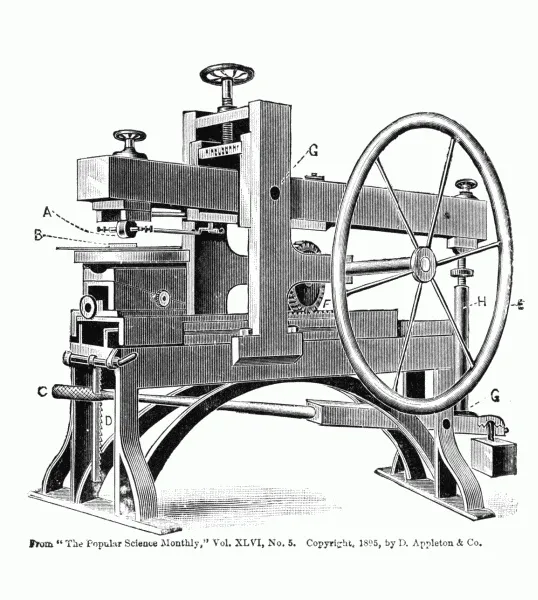
From "The Popular Science Monthly," Vol. XLVI, No. 5.
Copyright, 1895, by D. Appleton & Co.
In the case of postage stamps, where it is desired
to exactly duplicate the design many times on a
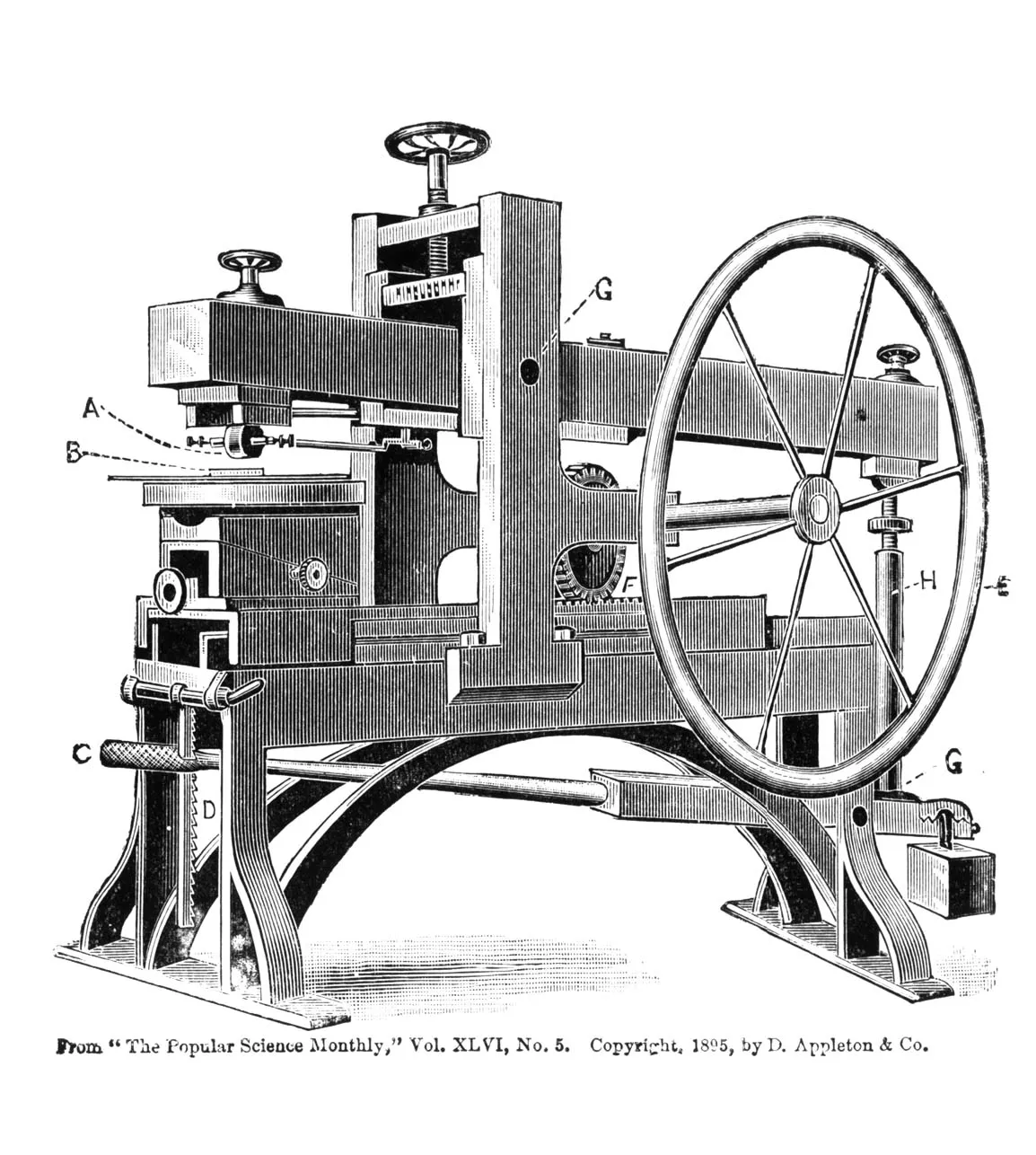
plate, recourse is had to transfer rolls. A transfer
roll is a piece of soft steel, in shape a cross section
of a cylinder. The edge is sufficiently wide to receive
an impression from the die. We show you
here a picture of a transfer press. From each side
of the roll projects a small pin or trunion. These
pins form an axle for the roll and by them it is held
in the carrier of the press. A is the roll in the
carrier. The die is placed on the table or bed
B. The roll is held against the die with a pressure
of many tons, obtained by compound leverage.
By means of the wheel, E, and the connecting
pinion and rack, the bed, carrying with it the
die, is moved back and forth under the roll. This
is called "rocking" and by it the soft steel of the
roll is forced into the die and a reverse impression
of the design is obtained. The roll is then hardened
and, by a reversal of the process, impressions
from it are transferred to the steel plate from which
the stamps are to be printed. The plate is, of
course, soft at first and is hardened after the required
number of designs have been transferred to
it. This process is so perfect that the most delicate
lines of the die are repeated with absolute fidelity
on the plate. When many plates of a stamp are
likely to be needed, it is customary, in order to
avoid risk of wear or damage to the original die,
to make duplicate dies, called transfer dies, and
from them the necessary rolls to make the plates.
The plates are made with great care. They are
touched up by hand and subjected to close scrutiny
and the work is often gone over a number of times
before the result is pronounced satisfactory. Incidentally
any guide lines and marks used by the
transferrer are removed by burnishing. In the
older issues of United States stamps, such lines and
dots are frequently found on the stamps but the
later issues are very free from them.
Plates that have become worn are "re-entered,"
that is to say, the transfer roll is applied to the
plate in the original position and the lines thus
sharpened and deepened. If, by any mistake in
making or re-entering a plate, the roll is incorrectly
placed and then changed to the correct spot, a
double impression of some of the stronger lines
will result. This is called a "double transfer" and
sometimes, though wrongly, a "shifted die." These
double transfers are quite common in the United
States stamps made before 1861 but are scarce in
the late issues, either because the work is now
more carefully done or because any mistakes have
been corrected. Such a correction is effected by
turning the plate on its face on a hard substance,
hammering on the back until the surface is driven
up smooth and then entering the design anew.
A number of very delicate machines are used as
aids to the engraver, though much more for bank-notes
and large pieces of work than for postage
stamps. These are called ruling machines, medallion
rulers, cycloidal and geometric lathes. Ruling
machines are used to make the backgrounds of portraits,
the shadings of letters and similar work.
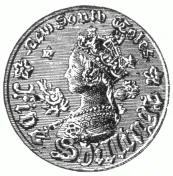
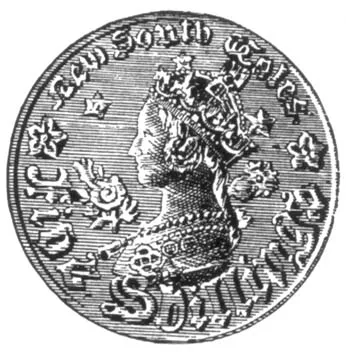
Here is a very pretty example of
ruling, in the so-called "coin"
stamp of New South Wales.
These machines rule either straight
or curved lines. They can be adjusted
to rule several thousand lines to an inch, but
that is only done for microscopical work, not for
engraving. The general principle of a medallion
ruling machine is a rod, fixed on a pivot, at one
end of which is a pin which is drawn across a medallion,
while at the other end a graving point traces
a corresponding line on the steel. The large stamps
issued in the United States in 1865, for the payment
of postage on newspapers and periodicals, are
examples of this work.
Cycloidal ruling in its simplest form resembles a
series of loops. It is produced by a fixed point
which is held against a plate while the latter is
moved in a circle and, at the same time, forward.
By altering the size of the circle and the speed
of the forward movement a great variety of results
are obtained. By cutting one series of loops
over another, lace-like effects are produced. The
process is still further varied by the use of eccentrics.
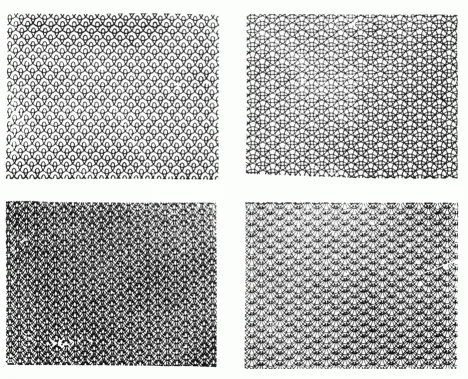
The geometric lathe is a most delicate and complicated
machine. By means of elaborate attachments
very involved and eccentric motions are given
to the plate under the graving point and extremely
complicated and beautiful designs are produced. I
think we are all familiar with these from the examples
on our national currency. Geometric lathework
was used on a number of the United States
stamps of the issue of 1861 and also on the $5,000
revenue stamp. The work of this machine is regarded
as a great safeguard against counterfeiting.
The most skillful engraver would have difficulty in
imitating the simplest designs produced by it. The
machines are too expensive to be obtained by anyone
but a government or a great banknote company
and there are very few men who thoroughly understand
operating them. A turn of a screw or a variation
of a single cog will change the result entirely.
Finally the work of the lathe is often reversed, so
that the line which is cut by the graver and should
print in color prints white, and vice versa. It
would not be possible to imitate this by hand engraving.
Printing from line-engraved plates is largely done
by hand presses. The ink used is very thick.
When black it is made of finely pulverized carbon,
mixed with oil. Colored inks are composed of zinc
white and dry colors, ground in oil. The colors
are animal, vegetable or mineral. The latter cause
the plates to wear out rapidly. Green is an especi
ally
destructive color. In recent years aniline
colors have been largely employed. They afford
an elaborate range of shades and color combinations
which are most puzzling to describe. Soluble
inks are much used by the leading English firm
of stamp printers. They are very sensitive to water
and are regarded as one of the best preventatives
of the cleaning of used stamps. Beautiful results
are obtained by printing stamps in two colors.
Of course, this necessitates the use of two plates
for each design. This also gives rise to some interesting
varieties, caused by one part of the design
being printed upside down. Such oddities are
scarce and are highly valued by philatelists.
When a plate is to be printed from, it is first
warmed, then the ink is applied and rubbed into
the lines with a pad. The surface of the plate is
wiped off with a cloth, then with the hand and
lastly, polished with whiting. A sheet of dampened
paper is next laid on the plate and the whole is
passed under the roller of a press, which forces the
paper into the lines of the plate, where it takes up
the ink. When the plate is deeply engraved the ink
seems to stand up from the surface of the paper
in ridges and some times we find correspond
ing
depressions on the backs of the stamps. The
sheets are then dried, gummed and dried again.
They are now so much curled and wrinkled that
they are placed between sheets of bristol board
and subjected to hydraulic pressure of several
hundred tons which effectively straightens them out.
The second process of printing from metallic
plates is called typography. The plates for this
process are the exact reverse of those engraved in
taille douce. Instead of the design being cut into
the plate, it is on the surface and everything else is
cut away. Hence, the term "surface printing."
This form of engraving is also called épargné engraving,
because the parts of the plate which bear
the design are épargné (preserved.)
The dies for typographical plates are cut in wood
or steel, usually the former. They are reproduced
by two methods, stereotyping and electrotyping.
In the former process casts of the die are taken
in papier maché or plaster of Paris. From these
casts other casts are taken in type-metal. A
sufficient number of these casts are clamped
together or fastened to a backing of wood and
thus form a plate. This process is not much
used for stamps. It may interest you to know that
most of our large newspapers employ this process.
The type-set forms are, of course, flat. From them
papier maché impressions are taken and bent into a
curve, so that the casts made from them will fit the
cylinders of the printing presses.
In electrotyping, an impression is taken from the
die in wax or gutta percha. The surface of this
impression is coated with powdered plumbago. It
is placed in a solution of sulphate of copper and,
by the action of a galvanic battery, a thin shell of
copper is deposited on it. This shell is backed
with type-metal and is then ready for use. A number
of these elecrotypes may be fastened together
and electrotyped in one piece.
There is also a photographic process for making
typographical dies. This is said to be used in making
the stamps of France and her colonies.
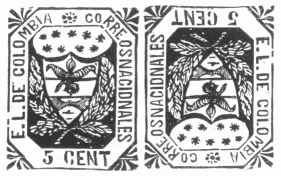
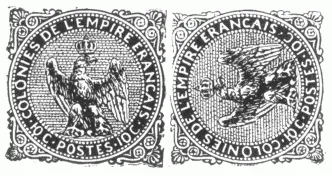
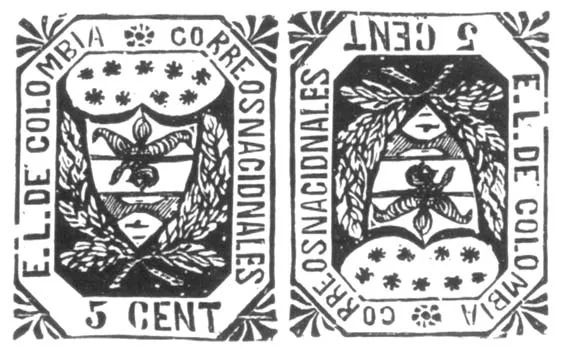
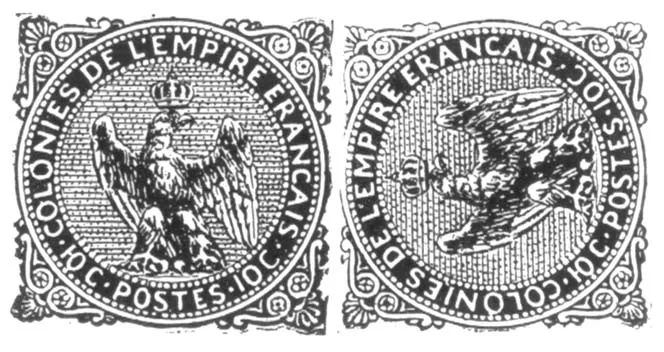
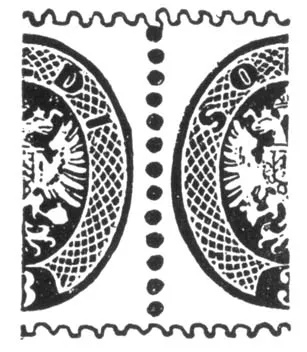
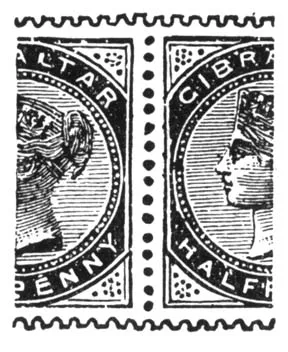
Stereotypes or electrotypes of single stamps are
called clichés. In making up a plate it sometimes
happens that a cliché is placed upside down. The
result, after printing, is a stamp in that position.
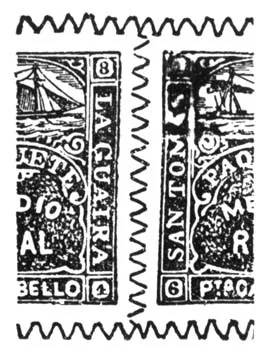
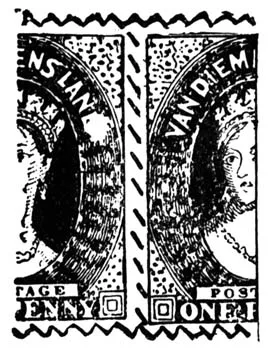
This is called a tête bêche. We illustrate here such a
stamp and another which is semi tête bêche, i.e., turned
half around instead of being entirely inverted.
Like all oddities these are prized by stamp collectors.
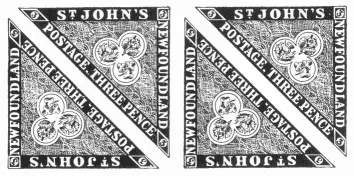
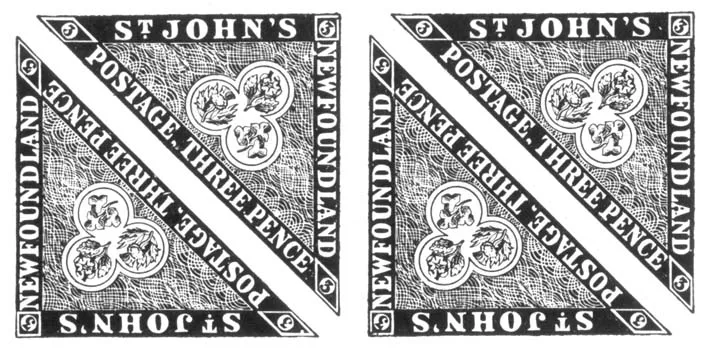
The triangular stamps of the Cape of Good Hope
and New Foundland are so arranged in the plate
that half of them are tête bêche to the other half.
The same is true of the stamps of Grenada of the
issue of 1883.
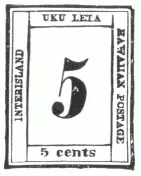
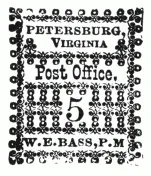

Another form of typography is found in stamps
which are composed of printer's type and ornaments.
These are usually called "type-set", to distinguish
them from stamps produced by the normal process
of typography. Stamps made in this manner are
often of a high degree of rarity, having been produced
in remote parts of the world, where facilities
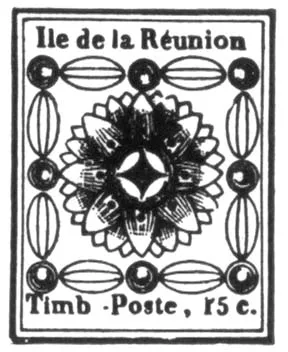
were limited and the use of stamps restricted. To
this class belong the stamps of the first issues of
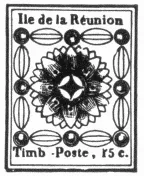
British Guiana, Hawaii and Reunion, which rank
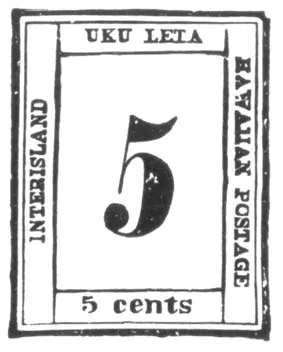
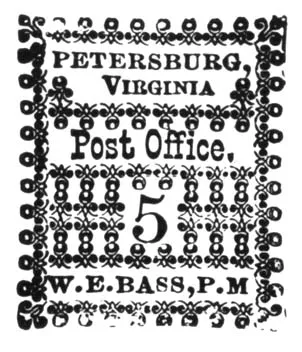
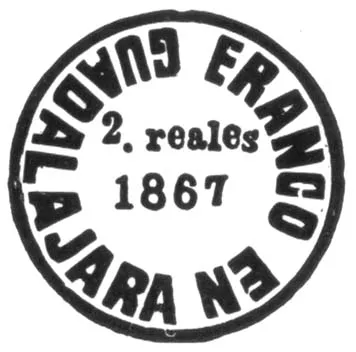
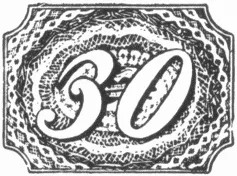
among the greatest philatelic rarities. We show
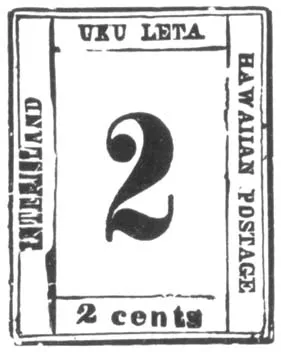
you here a number of type-set stamps. The first
was used in the Hawaiian Islands, in payment of
postage on letters between the different islands.
There are a number of plates of these stamps, of
different values, and each containing ten varieties.
The second stamp was issued by the postmaster of
Petersburg, Va., in the early days of the war of the
rebellion and before the postal service of the Confederate
government was in working order. The
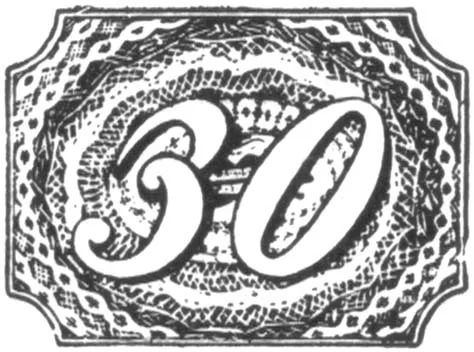
third was used in the city of Guadalajara,
Mexico, in 1869, during the war between France
and that country. It was made from the cancellation
stamp in use in the post office, the usual date
being replaced by the value. The stamps were
struck by hand on sheets of paper which had been
previously ruled into squares with a lead pencil.
The fourth stamp is one of the Reunion stamps
previously mentioned. There were eight stamps in
the setting, four having a central device like the
stamp shown, and the other four being of a different
design.
It is interesting to remark that most of these
type-set stamps show an evidence of their provisional
nature and the stress under which they were
made, in the paper on which they were printed. It
was usually writing paper, such as would be found at
a stationers at that period. Some of the rare type-set
stamps of British Guiana were printed on the
paper used for lining sugar barrels.
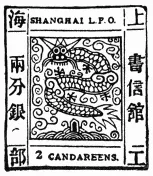
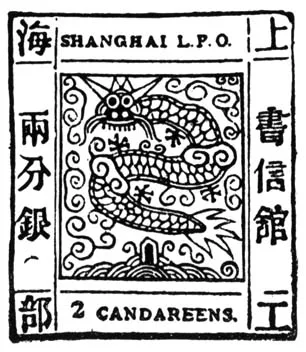
The stamps of the first issue
of Shanghai supply an unique
variety in typographed stamps.
In these stamps the central design
is cut upon a block of
ivory and the surroundings are set up from printer's
type and rules. The stamps were printed one at a
time upon a hand press. The value, in both English
and Chinese, was changed as required, and it
is recorded that on occasions the different values
were produced literally "while you wait." Under
such circumstances it is not surprising to learn that
minor varieties are very numerous.
In printing from typographical plates the ink is
applied to the surface by means of a roller. Impressions
from these plates, before they have been
pressed, show the design forced into the paper, instead
of raised above it, as in taille douce printing.
There is often a noticeable difference in the impressions
made from the same plate by different
workmen, owing to the varying degree of skill and
care employed. We frequently find in stamp catalogues
such terms as "London print" contrasted
with "local print." These terms indicate a fine
impression and an inferior one.
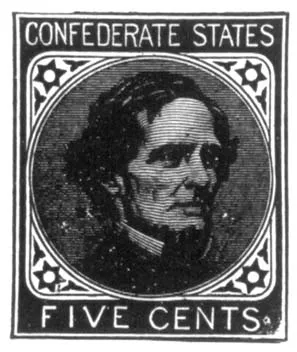
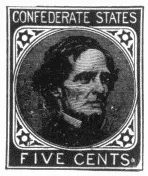
We find a good example in two five
cent stamps of the Confederate
States. They are both from the
same plate but the first was printed
in London by the skilled workmen of Messrs. De La
Rue & Co., and the last was locally made with poor
facilities.
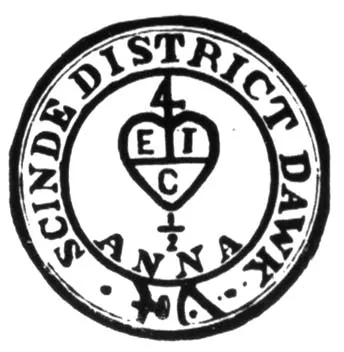
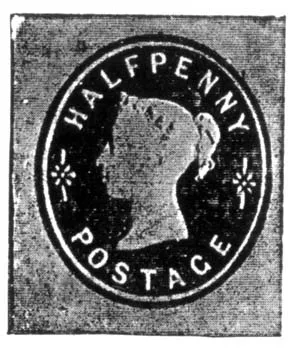
Embossing is a variety of printing connected
with both line engraving and typography. Embossing
dies are produced by sinking lines in the plate
but, as a rule, they are intended for such productions
as stamped envelopes and the sunken portions
are a series of hollows rather than sharply cut lines.
An envelope, viewed from the reverse, will give an
excellent idea of the appearance of such a die. In
printing from these dies very heavy pressure is
used and the paper usually is backed by a piece of
leather or something of similar nature. In its
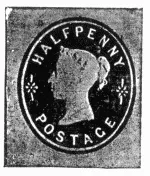
simplest form embossing is a stamping in relief without
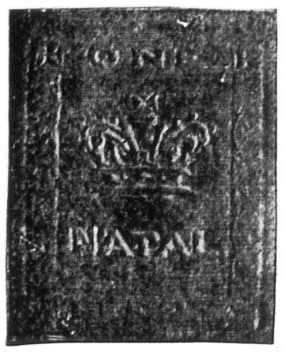
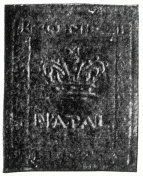
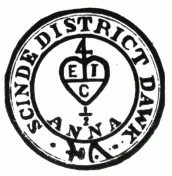
color. The stamp of Natal shown here was
produced in this manner. The
stamps of Scinde, issued in 1850,
were embossed and for the red
one large wafers, at that date
in common use for sealing letters,
were used. The brittle nature of
this material is probably responsible
for the scarcity of this stamp, especially
of copies in fine condition.
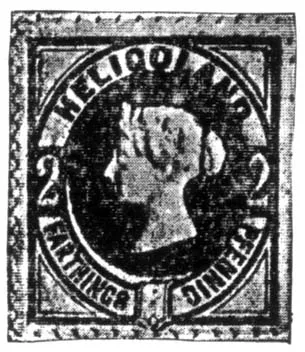
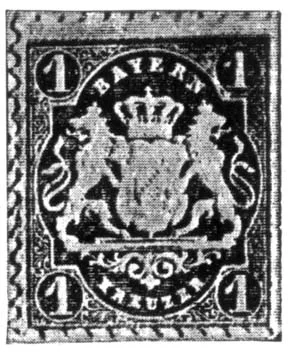
Embossing is usually combined
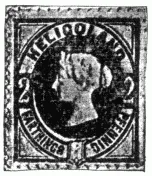
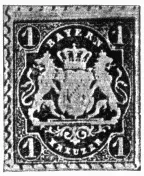
with typography. The surface of the die being
inked, that part of the design is printed in color at
the same time that the rest is embossed. These
three stamps show this class of
work, one being an envelope
stamp with the head deeply embossed.
The Heligoland stamp
like all the stamps of that island
is in the local colors, red, white
and green, of which
the inhabitants are
so proud. In the
case of the Heligoland
and Bavaria
stamps the entire
sheets are embossed at one time and not each
stamp singly, as is usual.
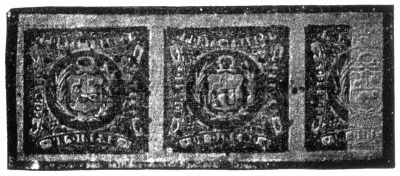
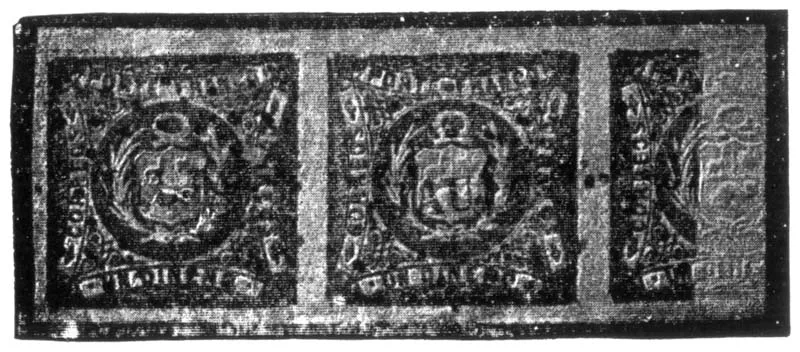
Some curious varieties of this sort of printing are
found among the early issues of Peru. The ma
chine
in use there printed the stamps one at a time
on long strips of paper. When the end of a strip
was reached another was attached to it with gum,
in order that the process might be continuous. It
frequently happened that an impression was printed
upon or partly upon the overlapping ends of the
strips. In the course of time these ends became
separated and thus we find stamps embossed partly
with and partly without color and occasionally entirely
without it. Philatelists call these varieties
semi-albinos and albinos. The latter term is also
applied to envelope stamps which have been embossed
without the die being inked.
Lithography, while a simpler and less expensive
mode of making stamps than those previously described,
is not often employed for the purpose. The
work is inferior in quality and too easily counterfeited
to commend itself. In lithography the lines
of the design are neither sunken nor, to any appreciable
extent, raised above the surface. The
design is practically a drawing, in a certain greasy
ink, upon stone of a particular quality. When
several colors are used, as in chromo-lithography, a
separate stone is prepared for each. The design
is sometimes drawn directly on the stone and at
others transferred to it. For stamps a die is made
in wood, metal or stone. Impressions from this
are made in transfer ink (a very "fat" ink, made
of soap, resin, tallow, etc.) upon transfer paper.
These impressions are placed, face downward,
on the stone and the paper is moistened. On being
passed through a press the ink adheres to the stone
and the paper is easily removed. A wet sponge is
passed over the stone, the water adhering to the
exposed surface but not to the greasy ink. While
it is moist a roller, covered with transfer ink, is
rolled over the designs to which it adheres. The
wetting and rolling are alternated until the designs
have sufficient body. Lastly, a very weak solution
of nitric acid, gum arabic and water is passed over
the stone. This is at once washed off. It bites the
stone to a very trifling extent and serves to clean
the surface and add sharpness to the design.
Impressions taken from a lithographic stone are
perfectly flat and smooth, the surface of the paper
being neither raised nor depressed.
They have usually a slightly greasy
feel.
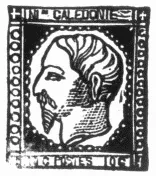
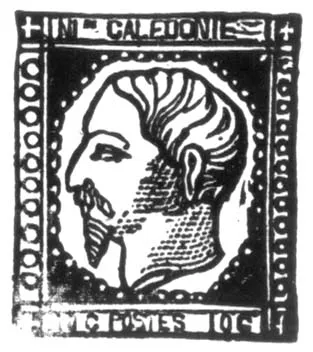
An interesting specimen of lithography
is supplied by the first issue of
New Caledonia. The design (fifty stamps in five
rows of ten) was drawn upon the stone by a sergeant
of Marines, named Triquéra. It is said the
work was done with a pointed nail. As might be
expected, it was very crude.
Another interesting stamp was issued in the
island of Trinidad in 1855. In this case, the stone,
after the designs had been placed upon it, was very
deeply bitten with acid, so that it might properly
be called etched and the impressions from it be
said to be typographed from stone. This stone was
used in 1855, 1858 and 1860. Owing to its friable
nature and want of care the stone deteriorated, so
that the last impressions from it are little better
than blurs.
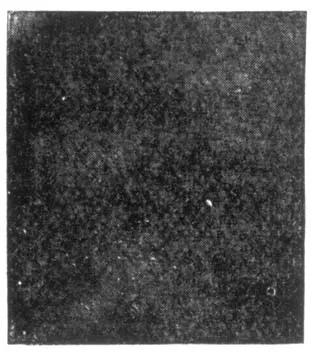
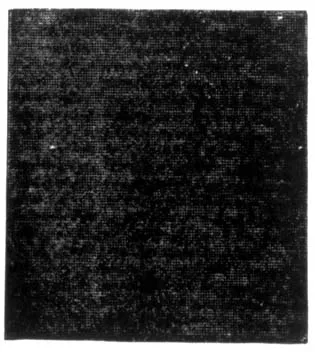
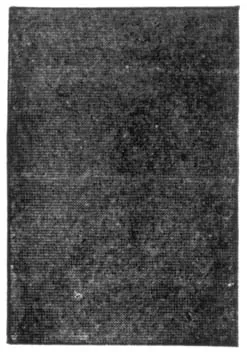
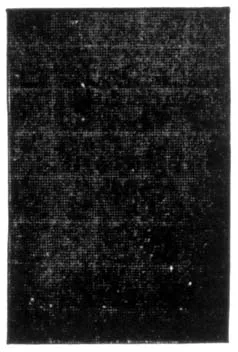
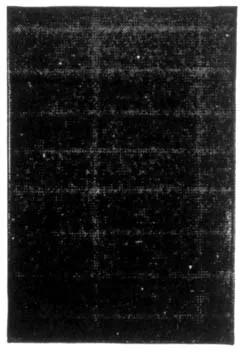
Having considered the design and the methods
of preparing plates and printing stamps the next
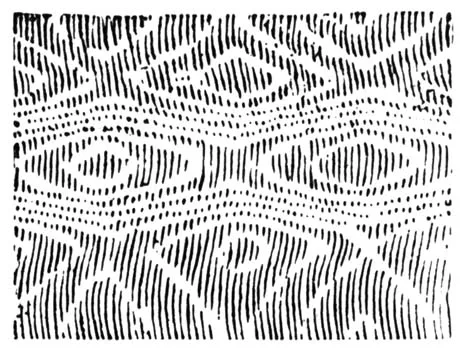
thing to attract our attention is the paper. We
here show you some photographs of paper. These
were not taken by reflected light
but by transmitting light through
the paper, so that we have the
fibre and structure of it.
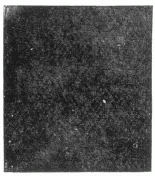
The two varieties of paper
most used for stamps are termed
wove and laid. Wove paper has an even texture
suggestive of cloth. Like cloth it may show no
grain when held to the light or it may have the
appearance of interwoven threads. The paper
ordinarily used for books and newspapers is wove.
There is a very thin, tough wove paper, much like
that familiarly known as "onion-skin," which is
called pelure by philatelists. On a few occasions
a wove paper, which is nearly as thick as card
board, has been used for stamps.
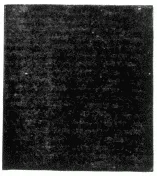
Laid paper shows alternate light and dark lines,
parallel and close together. These
lines are called vergures. There
are usually other lines, an inch
or more apart, crossing the vergures
at right angles.
Ribbed paper has much the
appearance of a fine closely laid paper. It is, however,
a wove paper with a corrugated surface. In
oriental countries, especially Japan, a peculiar,
tough, cottony paper is produced. It is sometimes
wove and sometimes laid, usually thin and hard to
tear. I believe this is made from rice straw.
Paper which has thin lines about the distance
apart of the ruled lines in writing paper is called
batonné, from the French baton, a
stick or rule. If the paper between
the batons is wove, it is called wove
batonné. If the space is filled with
fine laid lines, it is called laid batonné.
Quadrillé paper has laid lines
which form small
squares. When these
lines form rectangles,
it is called oblong quadrillé.
Some of the stamps
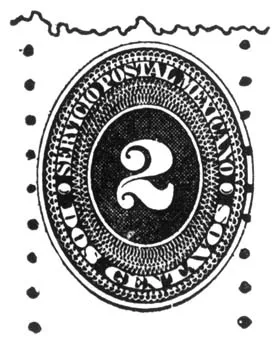
of Mexico were printed on paper ruled with blue
lines. This was merely ordinary foolscap paper.
Many of the early stamps of Russia were on a
paper having the surface coated with a soluble
enamel. This not only gave a very fine impression
but, on an attempt to clean a cancelled stamp,
the enamel would wash off, carrying the design
with it.
Two stamps of Prussia, issued in 1866, are usually
said to be on gold-beater's skin. But they are
really on a very thin tough paper which has been
treated with shellac, parrafine, or something which
makes it transparent, and afterwards coated with a
gelatine preparation. On this the design was printed
reversed, i.e. only to be seen correctly when
viewed through the paper. The stamps were gummed
on the printed side. When they were affixed
to an envelope any attempt to soak them off resulted
in the paper coming away while the design
adhered to the envelope, like a decalcomanie. Essays
of this nature were made in a number of countries,
including our own, but Prussia was the only
one to make and use the stamps.
There are several varieties of paper which have
threads of silk or other fibre. The first of these
is known as Dickinson paper, from the name of its
inventor. It has one or two threads of silk incorporated
in the paper in the course of manufacture.
For stamped envelopes two threads were
generally used. They were placed about half an
inch apart and the envelope was usually so printed
that the threads would cross the stamp. For adhesive
stamps only one thread was used. Great
Britain and several of the German States made
extensive use of this paper. It has never been successfully
counterfeited. The best imitation was
made by gumming together two thin pieces of paper
with a silk thread between them but the fraud was
not difficult to detect.
Some of the United States revenue stamps were
printed on a paper which had a few bits of silk
fibre scattered through it. The paper called granite
or silurian has a quantity of colored threads mixed
with the pulp. In Switzerland blue and red
threads were used, giving the paper a slightly
grayish tone. In Servia only red threads were
used but in sufficient quantity to make the paper
appear a faint rose color.
Manila is a coarse buff paper made from manila
fibre. It is generally used for newspaper wrappers.
It will scarcely be necessary to say that paper is
found in a great variety of colors and that such
colored paper has frequently been used for stamps.
We cannot consider paper without treating of
watermarks, since they are made in the process of
paper making and constitute an important feature
of stamp paper. Watermarks are designs impressed
in the paper pulp. The paper is slightly thinner
in the lines of these designs and appears lighter
when held to the light. Of course you are all
familiar with this appearance from having noticed
the watermarks in note paper. On rare occasions
the watermark is a thickening of the paper instead
of a thinning. In such a case the watermark appears
more opaque than the paper. Watermarks
in paper used for stamps are, of course, intended
as a security against counterfeiting.
There are a great variety of watermarks; words,
letters, figures, heraldic devices, etc., etc. Sometimes
the design covers the whole sheet and at
other times several stamps, but usually there is a
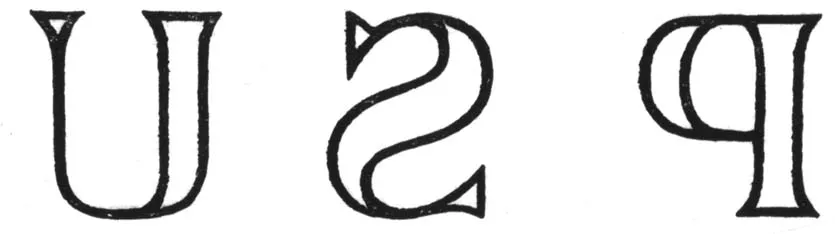
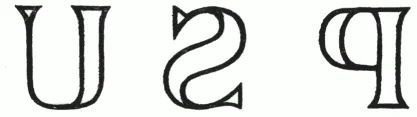
separate watermark for each stamp. The current
stamps of the United States are watermarked with
the letters "U. S. P. S.", United States Postal
Service. This is so set up that the letters read in
sequence from any point and in any direction. At
one time several of the British colonies in Australia
employed paper watermarked with a figure or word
of the value of the stamp intended to be printed on
it. It can readily be understood that these would
sometimes get mixed and result in more of those
oddities in which philatelists delight.
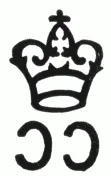
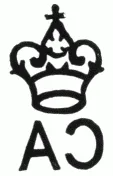
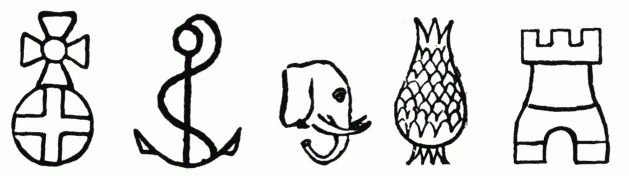
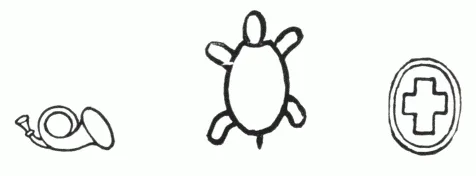
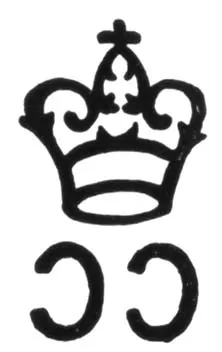
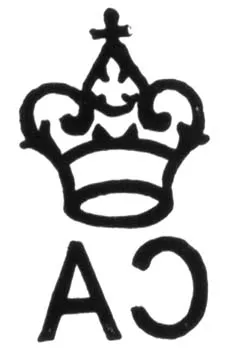
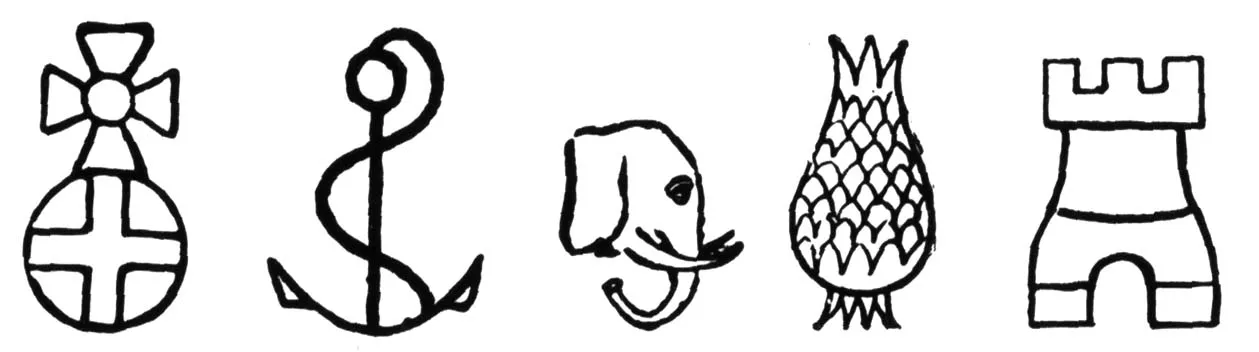
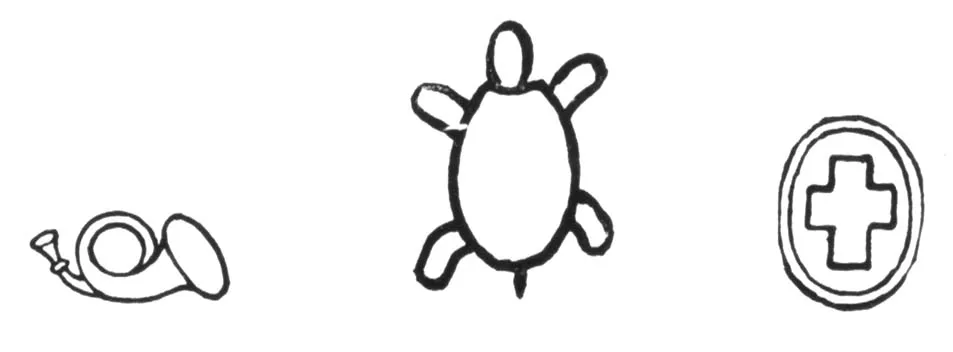
Here are some well-known watermarks.
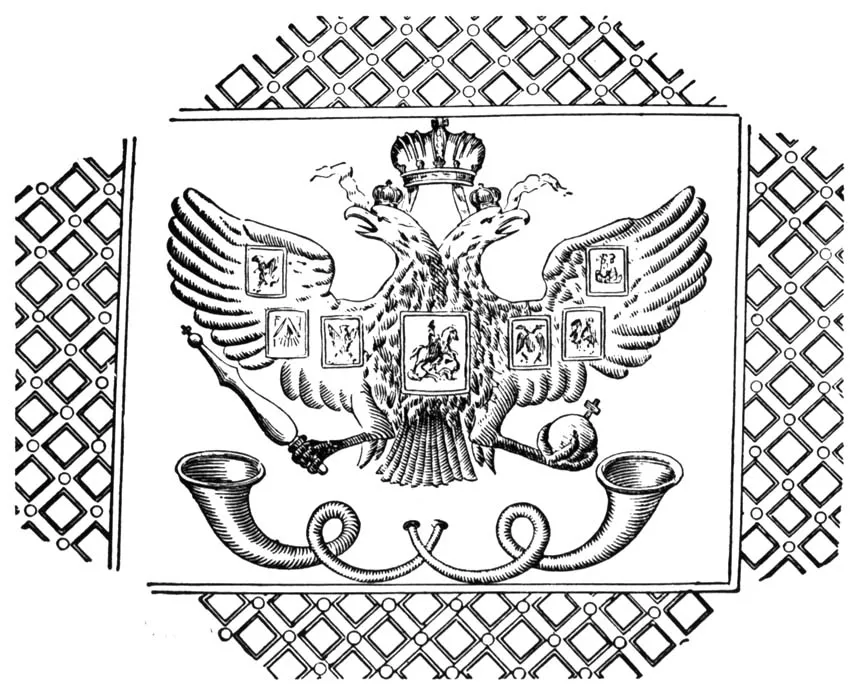
The letters CC under the Crown stand
for "Crown Colonies." This was extensively
used on stamps of the British Colonies.
It has been replaced by a similar
design, lettered CA, "Crown Agents for
the Colonies," which is still in use. A
great variety of crowns have been used,
as also of stars. The cross and orb are
found on stamps of Great Britain. The anchor
belongs to the Cape of Good Hope, the elephant to
India, the pine-apple to Jamaica, the castle to Spain
(where else would we have castles if not in Spain?)
the post horn to Denmark, the turtle to Tonga.
The Geneva cross belongs to Switzerland but is
not really a watermark, as it is impressed in the
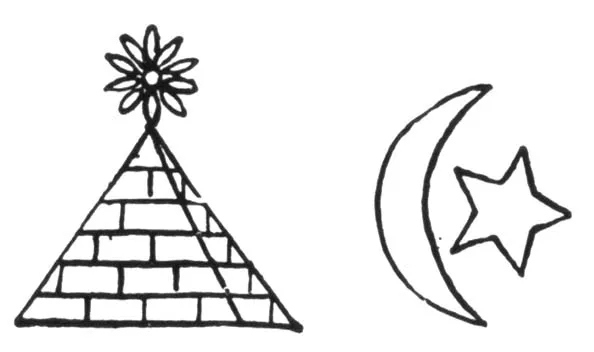
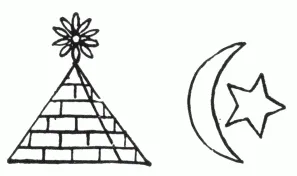
paper after the stamps are printed. The pyramid
and sun and the star and
crescent both belong to
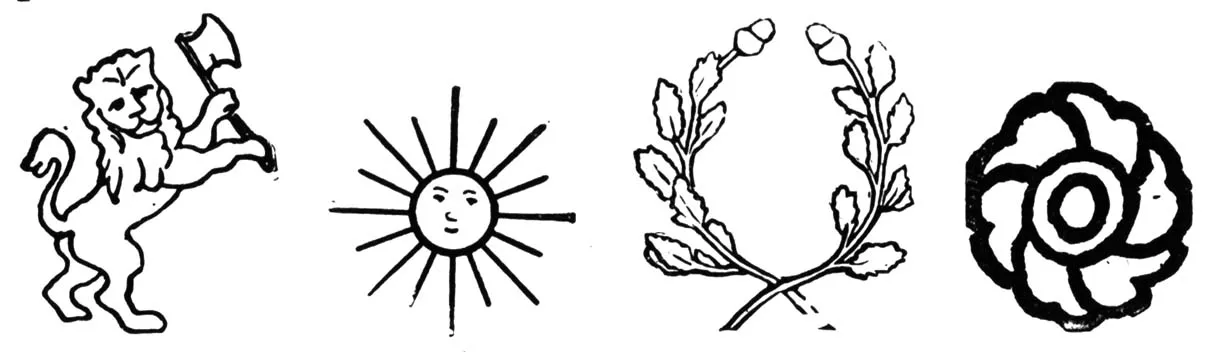
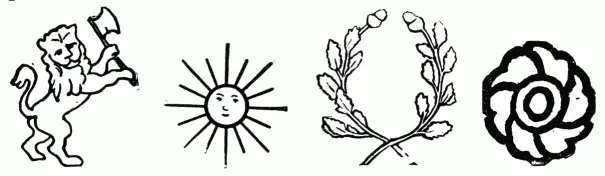
Egypt. The lion comes
from Norway, the sun
from the Argentine Republic,
the wreath of oak leaves from Hanover, the
lotus flower from Siam.
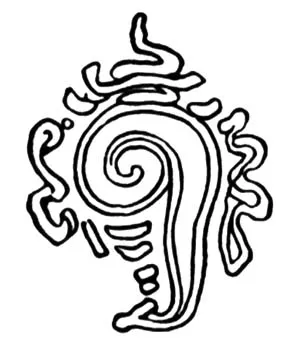
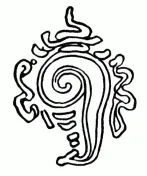
Here is one from Travancore, it represents
a shell sacred to the god Vishnu.
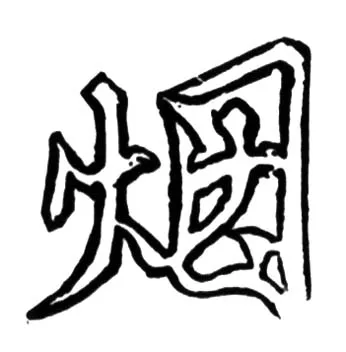
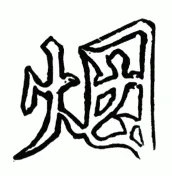
On the stamps of Shanghai we find
these Chinese characters. They read
Kung Pu, literally labor board, otherwise
Municipal Council, by whose authority
the stamps were issued.
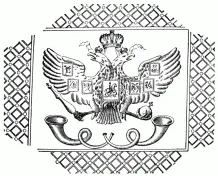
The watermarks on the preceding
page are from envelopes of the United States and
Russia. Of course there are many more watermarks
than those we show. On many sheets there are
watermarked borders with the name of the country,
the word "postage," or other inscriptions.
There is much that is interesting in paper mak
ing.
The best paper is made from linen rags but
many other substances are used, cotton rags, esparto
grass, straw, etc. Very common paper, such
as that used for the daily newspapers, is made from
wood pulp. Paper is made in two ways, by hand
and by machinery.
Hand made paper is made by means of a mould
and a deckle. A mould is a piece of fine wire
gauze, tightly stretched on a wooden frame. If the
paper is to be laid, coarser lines are woven in the
gauze. If it is to be watermarked, the designs,
made of wire bent in the desired shape or of
bits of metal, are fastened to the surface. A
deckle is a narrow wooden frame which fits on and
around the sides of the mould. The deckle is
movable, in order that it may be used with more
than one mould. The mould is dipped in paper
pulp and a quantity taken upon it. It is then
shaken, to make the pulp cover the whole surface
evenly and rid it of water. The edges of the resulting
sheet are, naturally, rough and irregular
and are called deckle edges.
To make the paper pulp the rags are first boiled
with soda and lime, to rid them of dirt and
grease. They are then macerated in a vat, through
which fresh water continually flows. When thoroughly
ground the pulp is treated with a bleaching
fluid which removes all color. It is then pressed
and is ready for use. When about to be used the
pulp is mixed with water and color is added if desired.
When the paper is to be made by machinery
the pulp is allowed to flow slowly from the vat
upon a wide, endless band, usually made of fine
wire gauze but occasionally of canvas or other form
of cloth. This band is stretched upon rollers
and travels slowly forward while, at the same time,
it is shaken from side to side to distribute the pulp.
Two narrow bands of India rubber are stretched
lengthwise of the gauze band and resting upon it.
They serve to confine the pulp and regulate the
width of the paper. These bands are also called
deckles and produce the same edge as the frame
used in making hand-made paper.
As the pulp moves along with the gauze band it
passes under a roller called the "dandy roll." The
covering of this roll determines the character of the
paper. When the paper is to be wove, it is covered
with wire gauze. If it is to be watermarked the
designs are attached to the surface of the roll and
duly pressed into the paper. To make laid paper
the surface of the roll is covered with longitudinal
wires, with spaces the width of a wire between
them. Rings of wire pass around the roll at regular
intervals and hold the longitudinal wires in
place. For batonné paper, there are thick longitudinal
wires at intervals and between them either
smaller wires or gauze, as the paper is to be laid
batonné or wove batonné. After passing the dandy
roll the paper goes over a number of rollers covered
with felt and cylinders heated by steam, until it is
dry. It is then sized, dried again, pressed between
heavy rollers, to give it a surface, and the edges
trimmed by revolving cutters. It is then wound
up in a roll or cut into sheets, as may be required.
Having duly considered the design, printing and
paper of stamps, the next thing to attract our attention
is the gum. Most gums are prepared from
potato starch, dextrin or gum arabic. Gelatin is
sometimes added to supply body and glycerine to
give smoothness. Gum varies much in thickness
and color. The first three cent stamp of the Danish
West Indies furnishes an instance of this. The
stamps were sent from Denmark without gum, as is
frequently done with stamps for tropical countries.
When they reached the islands the stamps were
given to two druggists to be gummed. One used
gum of good quality and, light color, while the
other used poor material and of so dark color as to
stain the paper and even darken the ink of the
stamps. In Hanover rose-colored gum was used
for a number of issues. Some of the earliest local
prints of the South African Republic were made
upon paper sent out ready gummed from Germany.
The paper was much wrinkled by the gum and the
effect may be seen in the wavy and broken lines of
the ink.
The stamps of the first issue of Reunion were sold
ungummed and were affixed to letters in any way
that pleased the writers. Some were fastened by
wafers and some even were pinned on.
Formerly, sheets of stamps to be gummed were
fastened in a frame and the gum applied by hand
with a large brush. They were then sent to
the drying room and hung up to dry. Now the
process is entirely mechanical. The sheets are fed
into a machine in which they first pass under a
gummed roller. Then they are carried on an endless
chain through a long box filled with steam
pipes and emerge at the further end dry and ready
to be pressed and perforated.
The subject of perforations is also worthy of
some brief attention. The first stamps were imperforate,
necessitating the use of scissors or other
instrument in separating them. This was a manifest
inconvenience. In 1847, Henry Archer, an
Irishman, began experimenting with machines for
perforating stamps. After a number of attempts
he succeeded in making a machine which was accepted
by the English government and for which,
in 1852, he was allowed a compensation of £4,000.
James M. Napier greatly improved on this machine
and adapted it for steam power.
The general principle of all perforating machines
is a series of hollow needles, which remove rows of
small disks of the paper from between the stamps,
and thus fit them to be readily torn apart. For
convenience of reference and description philatelists
have adopted, as a standard of measurement,
the space of two centimetres. The gauge of a
perforation is determined by the number of holes
in this distance. Scales have been prepared for
measuring perforations but it would be superfluous
to attempt to describe them here. One of the largest
perforations that has been used for stamps has
seven holes in two centimetres. This was used on
the stamps of France by Susse Freres, a firm of
stationers. It was done for the convenience of
themselves and their customers. Some of the
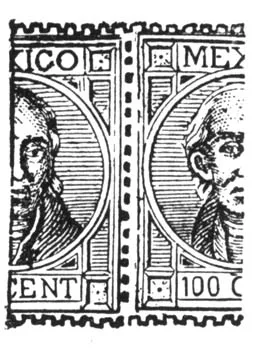
stamps of Mexico have a still larger perforation
gauging 5-1/2. The finest gauge is about 19. This
is an unofficial perforation and was applied to some
of the early stamps of Tasmania.
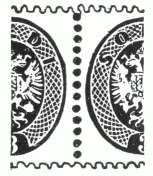
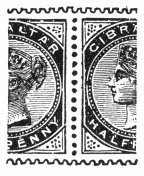
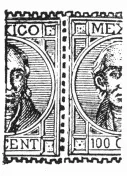
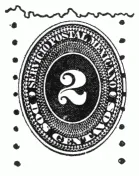
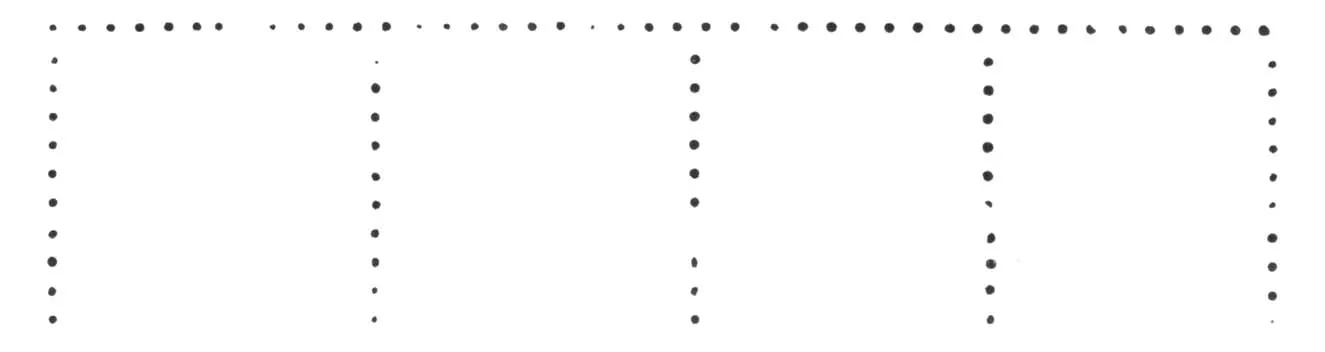
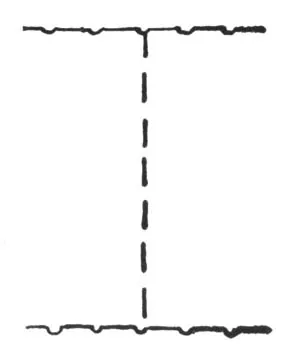
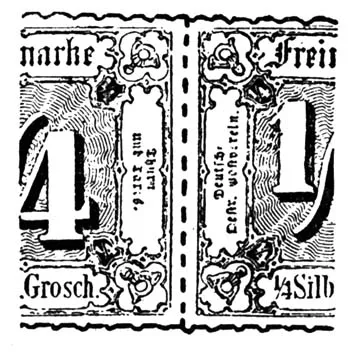
We show you here a variety of perforations. The
first two are ordinary perforations of different
gauges, 9-1/2 and 14. The third shows a perforation
in square holes instead of round. The next is an
example of pin perforation, the
holes being far apart and small.
Two sides of the stamp show the
holes before the stamps have
been torn apart and a third side
shows the ragged effect produced
by separating them. Another
form of pin perforation is made
by needles which are not hollow and merely prick
holes in the paper without removing any of it. This
sort of perforation has sometimes been made by
a sewing machine with an unthreaded needle.
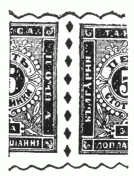
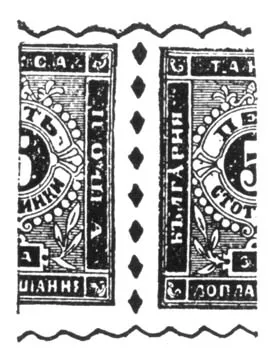
The last form of perforation shown is called
lozenge. In this the machine removes
small diamond shaped
pieces from the paper. The effect
before the separation is shown between
the pair of stamps, while the
outer edges show the appearance of
single copies.
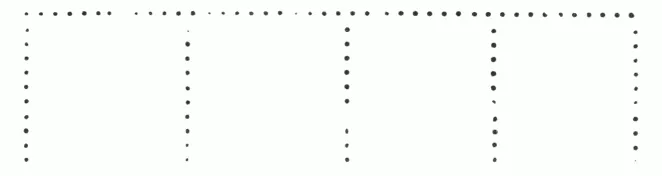
A variety of machines are used in perforating
stamps. One perforates only a single row of holes
at a time. This is known as the guillotine machine
because its action suggests that unpleasant instrument.
Another machine is called the comb machine
because the needles are arranged to perforate across
the top of a row of stamps and at the same time between
the stamps of that row. This arrangement
somewhat resembles a comb. It will be seen that
the first application perforates the stamps of one
row on three sides. The application of the machine
to the next row below completes the fourth side.
In the best perforating machines the needles are
arranged in circles around a spindle. The sheets
pass under this roller and are perforated in one
direction. A similar machine makes the perforations
in the other direction.
There is another form of separation called rouletting,
from the French "roulette", a little wheel, its
simplest form being produced by a small wheel with
an edge of sharp points. By this process a series
of small cuts is made between the stamps but none
of the paper is removed.
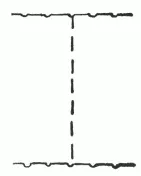
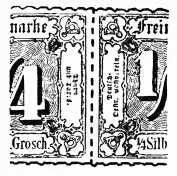
In these two illustrations
are shown
roulettes of large
and small gauge.
The same result
is also obtained
by setting printers rules which have a notched
edge between the clichés which compose the plate.
These rules are set a trifle higher than the clichés
so that, when the sheet of paper is pressed
against the plate in printing, the points of the rules
are forced through it. These points receive ink
the same as other parts of the surface of the plate
and the effect thus produced is called rouletting in
colored lines.
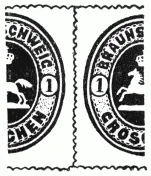
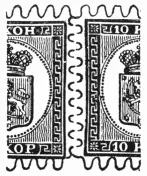
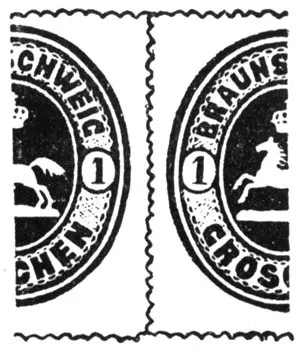
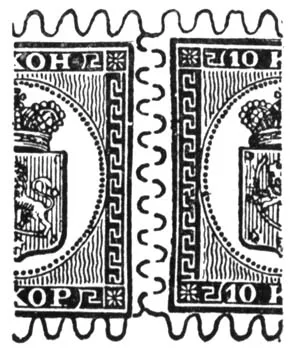
There are a number of systems which produce the
effect of rouletting in a variety of fancy forms.
One is called percé en arc. This produces a series
of arches on one stamp and a series of scallops on
the adjacent one. Here is an example of this
rouletting, in a small gauge. A similar form is
called serpentine perforation. It is here shown.
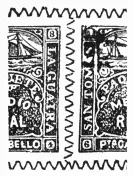
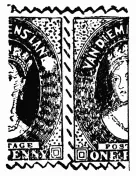
Still another form leaves the
edges of the stamps in sharp
points. This is called percé en
scie or saw-tooth perforation.
When this perforation is very
fine it is called serrate. There is
still another form of rouletting,
which we also show you. It is called rouletting in
oblique parallel cuts and consists
of a row of short cuts placed obliquely
and parallel to each other.
Stamps thus rouletted have a very
ragged edge when torn apart.
This roulette was only used in
Tasmania and was a private production.
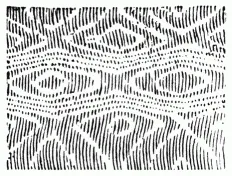
One of the nightmares of every government is the
fear that its securities will be counterfeited or tampered
with. I have several times mentioned precautions
against such abuses in the shape of fine engraving,
watermarks, enameled paper, sensitive
inks, etc. There are numerous other devices which
have been used with the same end in view. The
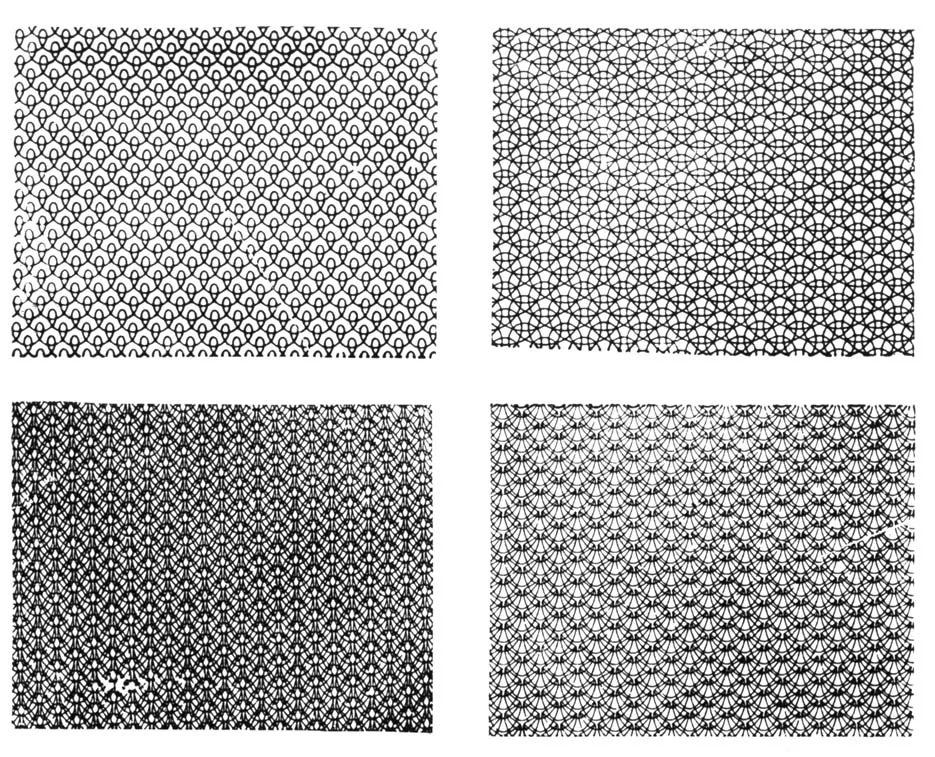
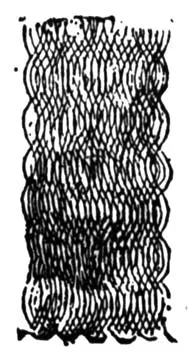
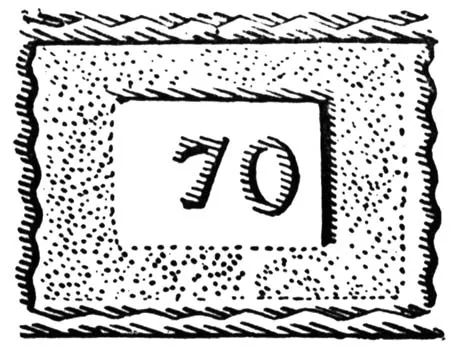
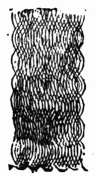
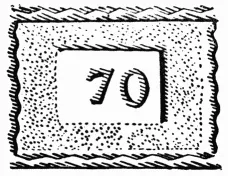
patterns here shown were printed on the backs of
the stamps in blue ink. The first is a band of
interlaced lines, called a burelage. The second is
a sort of control number. The number differs for
each stamp on the sheet. The third resembles the
lines in watered silk and is called moirée. It covers
the entire back of the sheet. Sometimes the stamps
are covered with a network which only becomes
visible on the application of certain chemicals. In
this country the experiment has been tried of breaking
the fibre of the paper by pressing into the
stamps a group of tiny pyramids, called a grill.
The idea was that the cancelling ink would penetrate
the broken paper and could not be removed.
We cannot finish our study of the material side
of stamps without reference to another feature, i.e.,
surcharges. Correctly speaking, a surcharge is an
added charge, but in philately the term is applied
to a variety of overprints, the majority of which
indicate a reduction rather than an increase in
value. Years ago the word surcharge usually suggested
a makeshift, something of a temporary
nature prepared to meet an emergency and, therefore,
interesting and likely to become valuable.
But our little weaknesses are now well understood
by those who are exploiting the commercial side of
postage stamps and we have reason to fear that
many recent surcharges were made for revenue
only and not from any real necessity. The majority
of surcharges are made to supply a value which has
been temporarily exhausted. For example, many
of the British Colonies obtained their supplies of
stamps in London. It may happen that an order
is not placed early enough or there is delay in filling
it and delivering the stamps. Owing to this,
the values most in use may be exhausted. Under
such circumstances, it is customary to provide a
temporary supply by printing the needed value on
some other stamp, usually one of higher value. To
use a lower value would tempt the counterfeiting of
the surcharge, for the profit to be made through
the increased value.
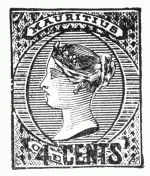
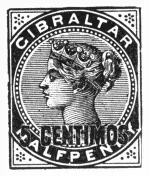
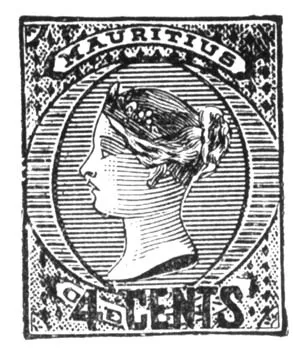
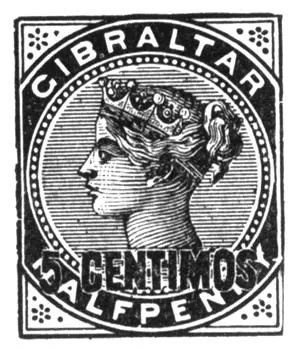
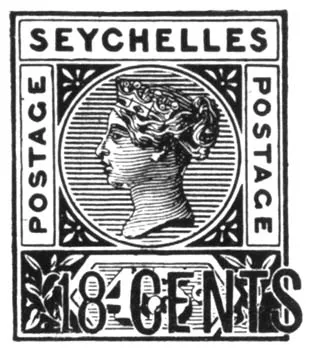
There are, however, a variety of other surcharges,
a few of which may interest you. The first two
stamps indicate a change in the form of the currency
of the country, from pence to cents in Mauritius
and from the English half penny to its Spanish
equivalent in Gibraltar. The Seychelles stamp
was prepared to meet a change in the rate for letters
to countries in the International Postal Union.
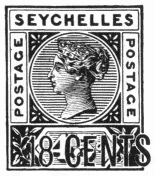
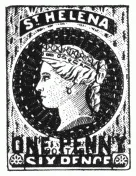
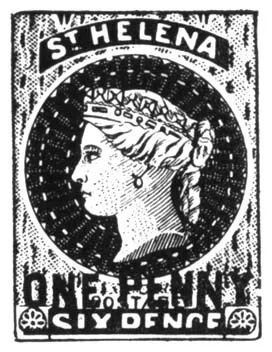
The first stamp
made in St. Helena
was a six pence. For
a long time no other
value was engraved
but the six pence
stamps were printed in a variety of colors and surcharged
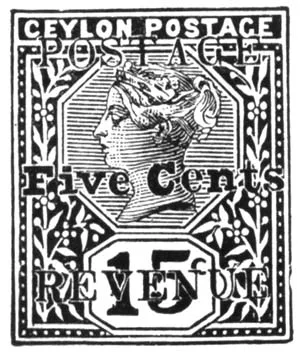
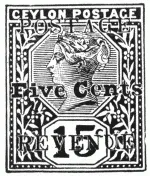
with the desired values. The Ceylon
stamp has been made available for
revenue purposes, as well as postal.
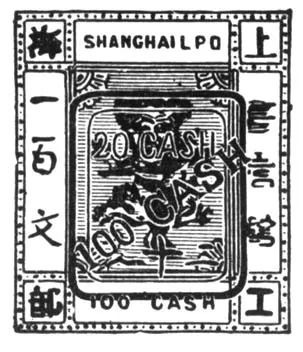
The last stamp shown is from
Shanghai. Its original value was
100 cash. This was overprinted
"20 cash" and the equivalent
Chinese characters in a double-lined
frame, and again surcharged
"100 cash."
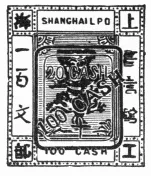
There is an interesting bit of history
connected with these surcharges.
The supply of 20 cash stamps was exhausted and
the postmaster surcharged that value on eight
hundred of the 100 cash stamps. A tourist, learning
this and knowing that the regular 20 cash
stamps were expected to arrive at any moment,
bought the entire lot. But the expected stamps
failed to arrive and the postmaster made a second
lot of surcharges but on the 80 cash this time.
When the tourist learned this he wished to return
the stamps he had bought. The postmaster refused
to take them back but, pressure being brought
through the Municipal Council, finally consented.
In the mean time the 20 cash stamps had arrived
and, not needing provisionals of that value, he restored
them to their original value by the second
surcharge, "100 cash."
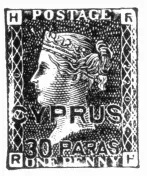
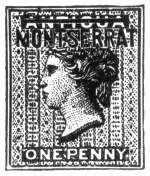
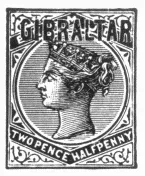
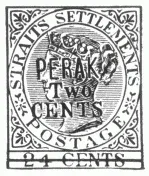
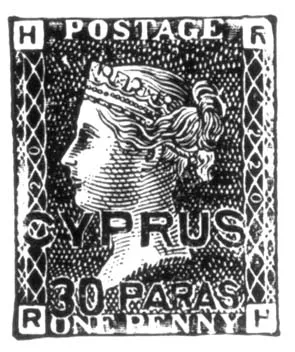
This group illustrates stamps of one country or
state surcharged for use in another. For a long
time Cyprus was supplied by overprinting the stamps
of Great Britain. In like manner Montserrat was
surcharged on Antigua stamps, Gibraltar on Bermuda
and Perak on the Straits Settlements. In
the case of Gibraltar some of the stamps were printed
in other colors than were used in Bermuda.
The colony of Eritrea has always been supplied by
overprinting the Italian stamps.
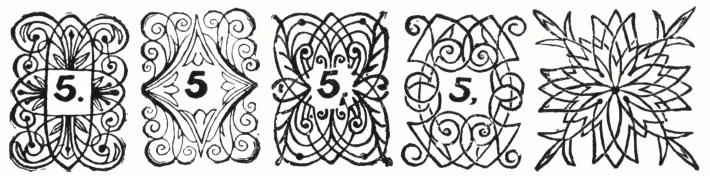
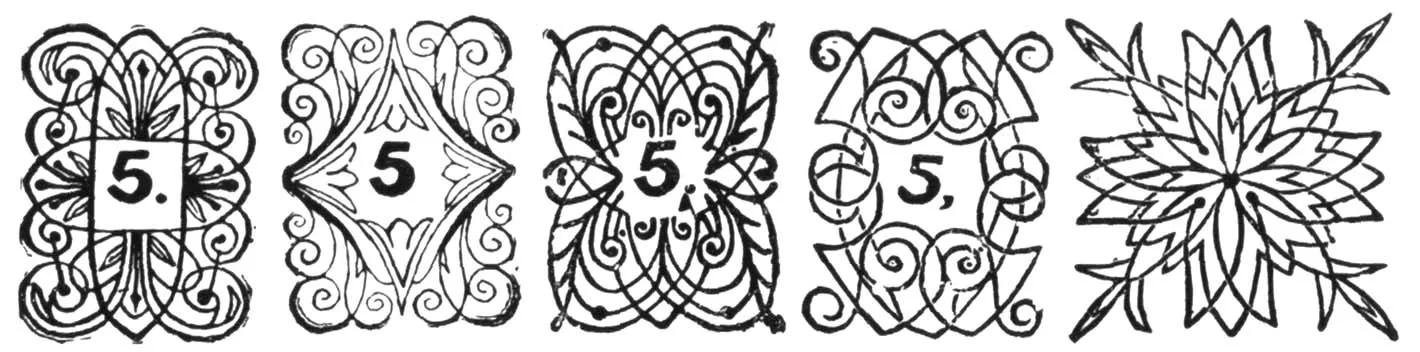
In 1883 a large quantity of stamps were stolen
in Cuba and to prevent their being used the remaining
stock were overprinted with the devices
shown here. These were the clichés used to print
the control numbers on the tickets of the Havana
lottery.
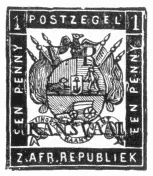
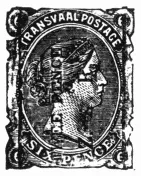
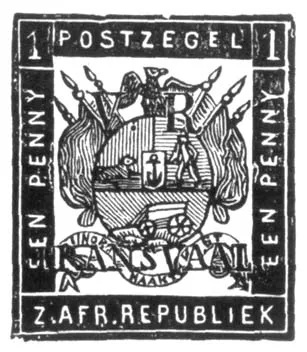
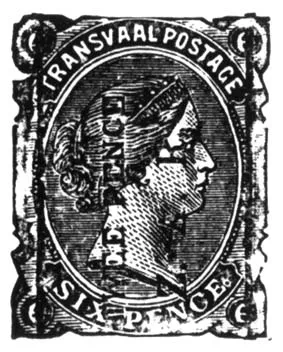
Sometimes surcharges are the outcome of historic
events or are at least suggestive of such. The first
stamp in this group is one of the crude products of
the South African Republic, which was surcharged
during the British occupation of the country. The
second is a stamp issued during the same occupation
and surcharged after the Boers again came
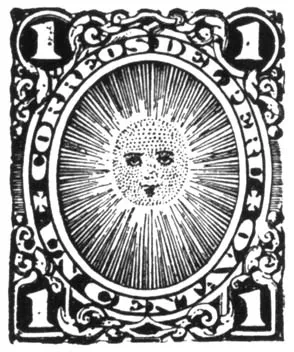
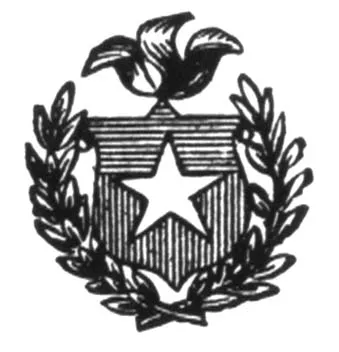
into power. The Chilian coat of arms on the
stamps of Peru tells its own story
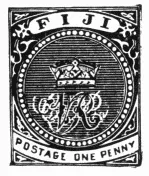
of war and invasion. Lastly we
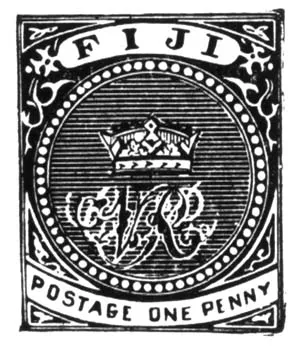
have a stamp of Fiji
on which the initials "C.R.",
Cakambau Rex, are
overprinted with the "V.R."
of the Queen of England.
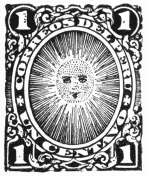
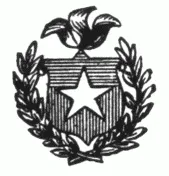
During the Carlist insurrection in
Spain, the stamps of France, surcharged
with a fleur de lys surrounded
by a five-rayed star, were used
by Don Carlos to frank his correspondence across
the frontier into France. These stamps were in
use for only a brief period, pending the preparation
and issue of the Carlist stamps.
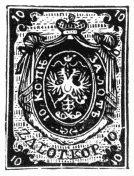
It may be remarked that there are
many suggestions of history in stamps
that are not surcharged. The succession
of portraits and other devices in
the issues of a country is often elo
quent
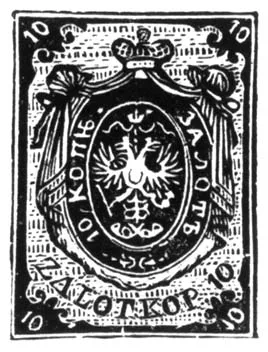
of the march of great events, and there is
a touch of pathos in Poland's solitary stamp.
Finally, I wish to call your attention to a few
stamps which tell most interesting stones, and
which have a touch of mysticism and symbolism,
which is not of to-day.
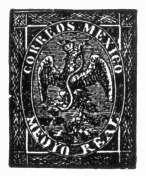
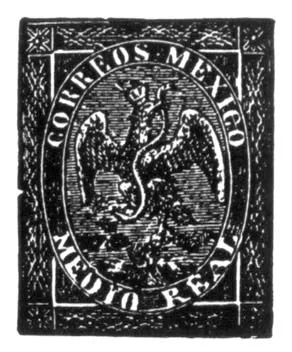
The coat of arms of Mexico has
its origin in the distant past. General
Lew Wallace says in his historical
romance the Fair God:
"The site of the city of Tenochtitlan
was chosen by the gods. In the
south-western border of Lake Tezcuco, one morning
in 1300, a wandering tribe of Aztecs saw an
eagle perched, with outspread wings, upon a cactus,
and holding a serpent in its talons. At a word
from their priests, they took possession of the
marsh and there stayed their migration and founded
the city; such is the tradition. As men love to
trace their descent back to some stoned greatness,
nations delight to associate the gods with their
origin."
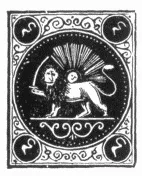
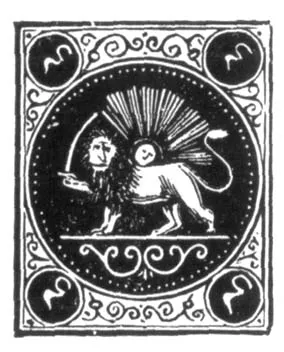
Many stamps of Persia bear the lion and the sun,
the arms of the country and the insignia of its
highest order of nobility. It is the lion of Iran, hold
ing
in its paw the sceptre of the
Khorassan while behind it shines
the sun of Darius. There is a legend
concerning the latter symbol to the
effect that Darius, hunting in the
desert, threw his spear at a lion and missed. The
beast crouched to spring, when the sun, shining on
a talisman on Darius' breast, so overpowered it that
it came fawning to his feet and followed him back
to the city. And for this reason the sun became
part of the arms of the kingdom. But I think we
may look further than this and find in it a relic of
the ancient fire worship and of oriental pretentions
to power over heaven and earth.
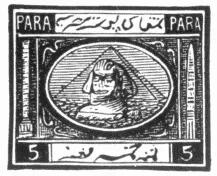
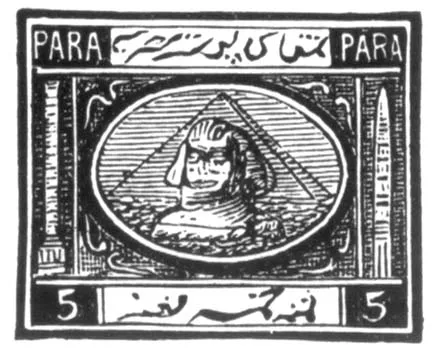
How much of Egypt's myths
and splendors are here depicted;
the temple column called Pompey's
pillar, the obelisk of Luxor, the
mighty pyramids, last of all the
sphynx, that fabled creature with the face of a
woman, the body of a tigress and the heart of both.
In fancy we can see her, crouched on a rock beside
the great highway to Thebes, propounding her fatal
riddle to the bewildered passers by, till Oedipus
shall come.
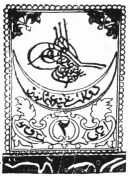
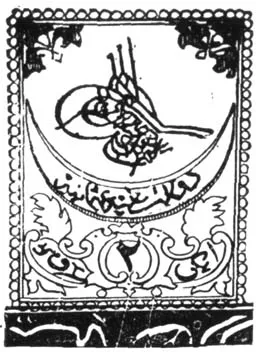
On the stamps and coins of Turkey
we miss the portrait of the
reigning sovereign, which we find
on such issues of most monarchies.
This is due to a law of Mohammed,
which forbids the reproduction of
the human figure. On the stamps
we find the crescent, said to have been the emblem
of the Byzantine empire and adopted by the Turks
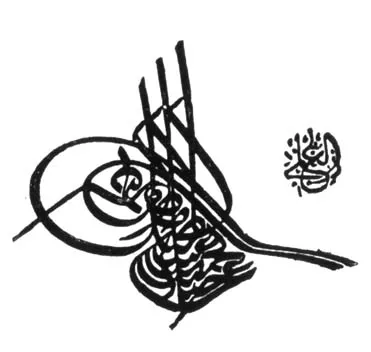
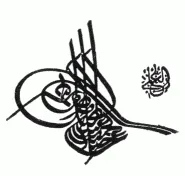
after the fall of Constantinople. We also find an
elaborate device called the Toughra or signature of
the Sultan. It owes its origin to the Sultan Murad
I, a liberal sovereign and founder of many schools
and institutions of learning but unable to write his
own name. He signed imperial decrees by dipping
his fingers in ink and placing them on the documents
with three fingers close together and the little finger
and thumb extended. In course of time this was
adopted and, so to speak, consecrated as the signature
of the Sultan. It was also elaborated and
arranged to form a written phrase, while preserving,
in a general way, its original form. The toughra
contains certain characters which are permanent
and minor ones which change. The latter are the
names of the sovereign and his father. Thus the
toughra which we illustrate
reads: "His Majesty Abdul
Hamid, son of Mejid,
may he be always victorious."
The small inscription
at the side reads "el
ghazi," the victorious, one
of the titles of the Sultan. The toughra is often
referred to as the hand. In an article published in
1867 I find the following on this subject:
"The hand has to Mussulmen three mystic significations;
it denotes providence; it is the expression
of law; and thirdly, of power; it restores the
courage of the faithful and strikes terror to the
hearts of their enemies.
"As an emblem of law, the Mussulman thus explains
the meaning of the hand. It has five fingers,
each, with the exception of the thumb, having
three joints, all the fingers are subordinate to the
unity of the hand, their common foundation. The
five fundamental precepts of the law are: 1st—Belief
in God and his prophet. 2nd—Prayer. 3rd—Giving
alms. 4th—Fasting during the sacred
months and at the appointed times. 5th—Visiting
the temples of Mecca and Medina. Each of these
precepts admits of three divisions, except the first,
symbolized by the thumb, which has only two,
heart and work. These dogmas and their modifications
have for their source the central doctrine
of the unity of God; and all the creed of Mohametanism
is contained in the hand,—the five fingers
and their forty joints.
"The hand placed above the gates of the Alhambra,
upon the Sultan's seal, and upon the stamps,
symbolises the spiritual and temporal power which
protects the good and the faithful and punishes
their adversaries."
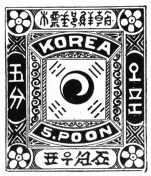
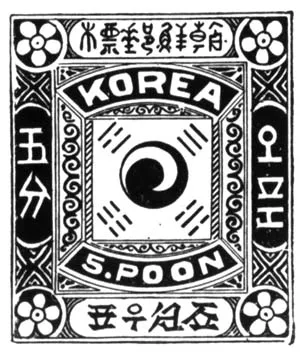
This stamp is from Corea, the
Land of the Morning Calm. In
the corners are the plum blossom,
the royal flower of the present
dynasty which has existed over
500 years. In the four corners of
the central square are letters taken from the original
alphabet of all languages and representing the
four spirits that stand at the four corners of the
earth and support it on their shoulders. The central
device is an ancient Chinese symbol which represents
the dual principle in nature, the male and
the female, the beginning and the end, the union of
all opposite forces, of which the highest product is
man. This symbol pervades all oriental art and
thought. Those of you who have seen Vedder's
illustrations of the Rubaiyat of Omar Khayyam will
remember the ever recurring swirl which "represents
the gradual concentration of the elements
that combine to form life; the sudden pause through
the reverse of the movement that marks the instant
of life, and then the gradual, ever-widening dispersion
again of these elements into space." The
swirl is only another form of the Chinese symbol.
A postage stamp is a tiny thing but it holds in its
pictured space thoughts that embrace the beginning
and the end of things, life, death and—we know
not what.