Transcriber’s Note: Stories that were originally split over pages,
with adverts and/or other stories in between, have been recombined.
FREE FINGER PRINT
OUTFIT
To those who enroll right now I will give this complete Finger Print
Outfit absolutely free. It is a regular expert’s working outfit—the
same kind that I use myself—the same kind that you will use when you are
ready to accept a position as a Finger Print Expert. This offer is for a
limited time only, so you must hurry if you want to take advantage of it.
Send in the coupon today for full information.
BE A FINGER PRINT EXPERT
Learn at Home—30 Minutes a Day
Only thirty minutes a day for a short time. That is all that is
necessary. I am a Finger Print Expert and I know just what is required. I
give you just the kind of training that prepares you to be a Finger Print
Expert—that assures you of a position just as soon as you have finished
my course. The Finger Print Expert is always in demand. You need not give
up your present occupation while studying this fascinating Profession.
Get into this big paying profession right now.
More Men Needed Right Now
The professional Finger Print Expert is always in demand. I
have so many positions waiting to be filled right now that I am
guaranteeing to place every man as soon as he finishes my course
and I am backing up this remarkable offer with a $1000 bank
guarantee deposited with the Phillips State Bank of Chicago.
Let me make you a Finger Print Expert and start you in a big
paying position.
Send Coupon Today
The big opportunity you have been waiting for is here. Remember
you have a position waiting for you as soon as you have
finished this course. Also to every student that I accept now I
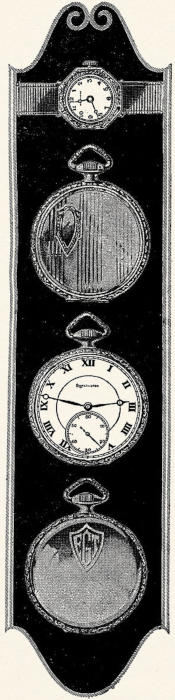
will give absolutely free a complete Finger Print Outfit as illustrated
above.
Besides, a valuable course for Secret Service Intelligence is also
given free to all my students. This information itself is worth
many times the cost of the complete course. Send coupon today
and learn all about it.
U. S. School of Finger Prints
7003 No. Clark St. Room 13-95 Chicago, Ill.
I Guarantee You a
Position
as soon as you have finished this course. Write today for
full information.
U. S. School of Finger Prints, Room 13-95
7003 No. Clark St., Chicago, Ill.
Without any obligations whatsoever please send me full information
about your “Guaranteed Position Offer—Free Finger Print
Outfit.” Also tell me how I can become a Finger Print Expert.
Name
Age
Address
City
State
THE UNIQUE MAGAZINE
EDWIN BAIRD, Editor
Published monthly by THE RURAL PUBLISHING CORPORATION, 325 N. Capitol Ave., Indianapolis, Ind. Application
made for entry as second-class matter at the postoffice at Indianapolis, Indiana. Single copies, 25 cents. Subscription, $3.00
a year in the United States; $3.50 in Canada. The publishers are not responsible for manuscripts lost in transit. Address all
manuscripts and other editorial matters to WEIRD TALES, 854 N. Clark St., Chicago, Ill. The contents of this magazine
are fully protected by copyright and publishers are cautioned against using the same, either wholly or in part.
Copyright, 1923, by The Rural Publishing Corporation.
VOLUME 1 25 Cents NUMBER 3
Nineteen Thrilling Short Stories Two Complete Novelettes Two Two-Part Stories Interesting, Odd and Weird Happenings
For advertising space in this magazine apply to Young & Ward, 168 N. Michigan Blvd., Chicago, Ill.
FREE
$80 Drafting Course
There is such an urgent demand for practical, trained
Draftsman that I am making this special offer in order to enable deserving,
ambitious and bright men to get into this line of work. I will teach you
to become a Draftsman and Designer, until you are drawing a salary up
to $250.00 a month. You need not pay me for my personal instruction
or for the complete set of instruments.
To every person of 16 years or older sending a sketch I am going to mail free and
prepaid the Draftsman’s Ivorine Pocket Rule shown here. This will come entirely
with my compliments. With it I will send a 6 × 9 book on “Successful Draftsmanship”.
If you are interested in becoming a draftsman, if you think you have or may attain
drafting ability, sit down and copy this drawing, mailing it to me today, writing
your name, and your address and your age plainly on the sheet of paper containing
the drawing. There are no conditions requiring you to buy anything.
You are under no obligations in sending in your sketch. What I want to know
is how much you are interested in drawing and your sketch will tell me that.
Positions Paying Up to
$250 and $300 per Month
I am Chief Draftsman of the Engineers’ Equipment Co.
and I know that there are thousands of ambitious men
who would like to better themselves, make more money
and secure faster advancement. Positions paying up to
$250 and $300 per month, which ought to be filled by
skilled draftsmen, are vacant. I want to find the men
who with practical training and personal assistance will
be qualified to fill these positions. No man can hope to
share in the great coming prosperity in manufacturing
and building unless he is properly trained and is able
to do first class practical work.
I know that this is the time to get ready. That is why I
am making the above offer. I can now take and train a
limited number of students personally and I will give
to those students a guarantee to give them by mail
practical drawing room training until they are placed
in a permanent position with a salary up to $250 and
$300 per month. You should act promptly on this offer
because it is my belief that even though you start now
the great boom will be well on by the time you are
ready to accept a position as a skilled draftsman. So
write to me at once. Enclose sketch or not, as you
choose, but find out about the opportunities ahead of
you. Let me send you the book “Successful Draftsmanship”
telling how you may take advantage of these
opportunities by learning drafting at home.
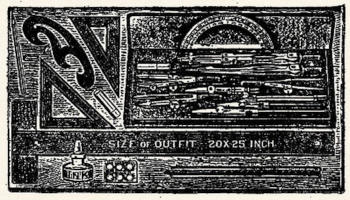
FREE this $25 Draftsman’s
Working Outfit
These are regular working instruments—the kind I use
myself. I give them free to you if you enroll at once.
Don’t delay. Send for full information today.
Mail Your
Drawing at Once—and Get Ivorine
Pocket Rule AbsolutelyFree!
Ambitious men interested in drafting hurry! Don’t
wait! This is your opportunity to get into this great
profession. Accept the offer which I am making now.
Send in your sketch or request for free book and free
Ivorine Pocket Rule.
Chief Draftsman, Engineers’ Equipment Co.,
1951 Lawrence Av.
Div. 13-95 Chicago
The Cleanest, Yet Most Outspoken,
Book Published
There is not a man or woman
married or unmarried, who does
not need to know every word contained
in “Sex Conduct in Marriage.”
The very numerous tragedies
which occur every day, show
the necessity for plain-spokenness
and honest discussion of the most
vital part of married life.
It is impossible to conceive of the
value of the book; it must undoubtedly
be read to be appreciated,
and it is obviously impossible to
give here a complete summary of
its contents. The knowledge is not
obtainable elsewhere; there is a
conspiracy of silence on the essential
matters concerning sex conduct,
and the object of the author
has been to break the barriers of
convention in this respect, recognizing
as he does that no marriage
can be a truly happy one unless
both partners are free to express
the deepest feelings they have for
each other without degrading themselves
or bringing into the world
undesired children.
The author is an idealist who
recognizes the sacredness of the sex
function and the right of children
to be loved and desired before they
are born. Very, very few of us can
say truly that we were the outcome
of the conscious desire of our parents
to beget us. They, however,
were not to blame because they had
not the knowledge which would
have enabled them to control conception.
Let us, then, see that our own
marriage conduct brings us happiness
and enjoyment in itself and for
our children.
A Book for Idealists by an Idealist
The greatest necessity to insure happiness
in the married condition is to know
its obligations and privileges, and to have
a sound understanding of sex conduct.
This great book gives this information and
is absolutely reliable throughout.
Dr. P. L. Clark, B. S., M. D., writing of
this book says: “As regards sound principles
and frank discussion I know no better
book on this subject than Bernard Bernard’s
‘Sex Conduct in Marriage.’ I strongly
advise all members of the Health School in
need of reliable information to read this
book.”
“I feel grateful but cheated,” writes one
man. “Grateful for the new understanding
and joy in living that has come to us,
cheated that we have lived five years without
it.”
SEX CONDUCT IN MARRIAGE
By BERNARD BERNARD
Editor-in-Chief of “Health and Life”
Answers simply and directly, those intimate questions which Mr. Bernard has been called upon to answer innumerable times
before, both personally and by correspondence. It is a simple, straightforward explanation, unclouded by ancient fetish or superstition.
A few of the many headings are:—
When the Sex Function Should Be Used.
Sex Tragedies in Childhood.
The Consummation of Marriage.
The Art of a Beautiful Conception.
Sex Communion.
The Scientific Control of Conception.
Sex Fear Destroyed.
The Frequency of the Sex Act.
The Initiation to Matrimony.
Anatomy and Physiology of the Sex Organs.
The Spontaneous Expression of Love.
Why Women Have Been Subjected.
Men Who Marry in Ignorance.
Hereditary Passion.
Marriage a Joy to the End.
Send your check or money order today for only $1.75 and this remarkable
book will be sent postpaid immediately in a plain wrapper.
Health and Life Publications
Room 46-333 South Dearborn Street
CHICAGO
HEALTH AND LIFE PUBLICATIONS
Room 46-333 S. Dearborn St.,
Chicago, Illinois.
Please send me, in plain wrapper, postpaid, your book. “Sex
Conduct in Marriage.” Enclosed $1.75.
Name
Address
City
State
The Unique Magazine
WEIRD TALES
Edited by Edwin Baird
VOLUME ONE NUMBER THREE
25c a Copy
MAY, 1923
Subscription
$3.00 A YEAR $3.50 IN CANADA
The Moon Terror — CHAPTER I. THE DRUMS OF DOOM. — CHAPTER II. THE DICTATOR OF DESTINY. — CHAPTER III. THE SORCERERS OF CHINA — CHAPTER IV. DR. GRESHAM TAKES COMMAND — CHAPTER V. BEGINNING A STRANGE VOYAGE — CHAPTER VI. THE COASTS OF MYSTERY — CHAPTER VII. THE MOON GOD’S TEMPLE — CHAPTER VIII. THE JAWS OF DEATH
The Astounding Events in This Remarkable Novel
Leave the Reader Breathless with Amazement
By A. G. BIRCH
The first warning of the
stupendous cataclysm that befell
the earth in the third decade of
the twentieth century was recorded simultaneously
in several parts of America
during a night in early June. But,
so little was its awful significance
suspected at the time, it passed almost
without comment.
I am certain that I entertained no forebodings;
neither did the man who was
destined to play the leading role in the
mighty drama that followed—Dr. Ferdinand
Gresham, the eminent American
astronomer. For we were on a hunting
and fishing trip in Labrador at the time,
and were not even aware of the strange
occurrence.
Anyway, the nature of this first
herald of disaster was not such as to
cause alarm.
At 12 minutes past 3 o’clock a. m.,
when there began a lull in the night’s
aerial telegraph business, several of the
larger wireless stations of the Western
hemisphere simultaneously began picking
up strange signals out of the ether.
They were faint and ghostly, as if coming
from a vast distance—equally far removed
from New York and San Francisco,
Juneau and Panama.
Exactly two minutes apart the calls
were repeated, with clock-like regularity.
But the code used—if it were a code—was
undecipherable.
Until near dawn the signals continued—indistinct,
unintelligible, insistent.
Every station capable of transmitting
messages over such great distances emphatically
denied sending them. And
no amateur apparatus was powerful
enough to be the cause. As far as anyone
could learn, the signals originated
nowhere upon the earth. It was as if
some phantom were whispering through
the ether in the language of another
planet.
Two nights later the calls were heard
again, starting at almost the same instant
when they had been distinguished
on the first occasion. But this time
they were precisely three minutes apart.
And without the variation of a second
they continued for more than an hour.
The next night they reappeared. And
the next and the next. Now they began
earlier than before—in fact, no one
knew when they had started, for they
were sounding when the night’s business
died down sufficiently for them to be
heard. But each night, it was noticed,
the interval between the signals was exactly
one minute longer than the night
before.
Occasionally the weird whispers
ceased for a night or two, but always
they resumed with the same insistence,
although with a newly-timed interval.
This continued until early in July,
when the pause between the calls had attained
more than thirty minutes’ duration.
Then the length of the lulls began to
decrease erratically. One night the mysterious
summons would be heard every
nineteen and a quarter minutes; the
next night, every ten and a half minutes;
at other times, twelve and three-quarters
minutes, or fourteen and a fifth,
or fifteen and a third.
Still the signals could not be deciphered,
and their message—if they contained
one—remained a mystery.
Newspapers and scientific journals at
last began to speculate upon the matter,
advancing all manner of theories to account
for the disturbances.
The only one of these conjectures attracting
widespread attention, however,
was that presented by Professor Howard
Whiteman, the famous director of the
United States naval observatory at
Washington, D. C.
Professor Whiteman voiced the opinion
that the planet Mars was trying to
establish communication with the earth—the
mysterious calls being wireless signals
sent across space by the inhabitants
of our neighboring world.
Our globe, moving through space
much faster than Mars, and in a smaller
orbit, overtakes its neighboring planet
once in a little over two years. For
some months Mars had been approaching
the earth. At the beginning of June
it had been approximately 40,000,000
miles away, and at that time, Professor
Whiteman pointed out, the strange wireless
calls had commenced. As the two
worlds drew closer together the signals
increased slightly in power.
The scientist urged that while Mars
remained close to us the government
should appropriate funds to enlarge one
of the principal wireless stations in an
effort to answer the overtures of our
neighbors in space.
But when, after two more days, the
ethereal signals ceased abruptly and
week passed without their recurrence,
Professor Whiteman’s theory began to
be derided, and the whole thing was dismissed
as some temporary phenomenon
of the atmosphere.
It was something of a shock, therefore,
when, on the eighth night after the
cessation of the disturbances, the calls
were suddenly resumed—much louder
than before, as if the power creating
their electrical impulses had been increased.
Now wireless stations all over
the world plainly heard the staccato,
mystifying challenge coming out of the
ether.
This time, too, the interval between
the signals was of a new length—eleven
minutes and six seconds.
The next day the matter took on still
further importance.
Scientists all along the Pacific Coast
of the United States reported that in the
night their seismographs had recorded a
series of light earthquakes; and it was
noted that these tremors had occurred
precisely eleven minutes and six seconds
apart—simultaneously with the sounding
of the mysterious wireless calls!
After that the aerial signals did not
stop during any part of the twenty-four
hours. And the earth shocks continued,
gradually increasing in severity. They
kept perfect time with the signals
through the ether—a shock for every
whisper, a rest for every pause. In the
course of a couple of weeks the quakes
attained such force that in many places
they could be distinctly felt by anyone
standing still upon solid ground.
Science now became fully aware of the
existence of some new and sinister—or
at least unfathomed—force in the world,
and began to give the matter profound
study.
However, both Dr. Ferdinand Gresham
and myself remained in complete
ignorance of these events; for, as I have
said, we were in the interior of Labrador.
We both possessed a keen love of
the wilderness, where, in vigorous sports,
we renewed our energy for the work to
be done in the cities—the doctor’s as
director of the great astronomical observatory
at the National University;
mine in the prosaic channels of business.
To the public, which knew him only
through his books and lectures, Dr.
Gresham perhaps appeared the last person
in the world anyone would seek for
a companion: a man silent, preoccupied,
austere, unsociable. But underneath
this aloofness and taciturnity was a
character of rare strength, good nature
and loveableness. And, once beyond the
barriers of civilization, his austerity
vanished, and he became a prince of
good fellows, actually reveling in hardships
and danger.
The complete change in him on such
occasions brought to mind a strange
phase of his life about which not even I,
his most intimate associate, knew anything—a
period in which he had undertaken
a mysterious pilgrimage alone into
the dark interior of China.
I only knew that fifteen years before
he had gone in quest of certain amazing
astronomical discoveries rumored to
have been made by Buddhist savants
dwelling in monasteries far back in the
Himalayas or the Tian-Shan, or some of
those inaccessible mountain fastnesses of
Central Asia. After more than four
years he had dragged back, ill and suffering,
bearing hideous disfigurations
upon his body, the look in his eyes of a
man who had seen hell, and maintaining
inviolate silence regarding his experiences.
On regaining his health after the
Chinese adventure, he had immersed
himself in silence and work, and year by
year since then I had seen him steadily
rise in prominence in his profession. Indeed,
his name had come to stand for
vastly more in the scientific world than
merely the advancement of astronomical
knowledge. He was a deep student
along many lines of scientific endeavor—electricity,
chemistry, mathematics,
physics, geology, even biology. To the
development of wireless telegraphy and
the wireless transmission of electrical
energy he had devoted particular effort.
The doctor and I had left New York
a few days before the wireless disturbances
began. Returning by a small private
vessel, which was not equipped with
wireless, we continued in ignorance of
the world’s danger.
It was during our homeward sea voyage
that the earthquakes began to grow
serious. Many buildings were damaged.
In the western portions of the United
States and Canada a number of persons
were killed by the collapse of houses.
Gradually the affected area expanded.
New York and Nagasaki, Buenos Aires
and Berlin, Vienna and Valparaiso began
to take their places on the casualty
list. Even modern skyscrapers suffered
broken windows and falling plaster;
sometimes they shook so violently that
their occupants fled to the streets in a
panic. Water and gas mains began to
break.
Before long, in New York, one of the
railroad tunnels under the Hudson River
cracked and flooded, causing no loss of
life, but spreading such alarm that all
the tubes under and out of Manhattan
were abandoned. This brought about a
fearful congestion of traffic in the metropolis.
Finally, toward the beginning of August,
the earthquakes became so serious
that the newspapers were filled every
day with accounts of the loss of scores—sometimes
hundreds—of lives all over
the world.
Then came a happening fraught with
a monstrous new terror, which was revealed
to the public one morning just
as day dawned in New York.
During the preceding night, a great
Atlantic liner, steaming westward approximately
along the fiftieth parallel
of latitude, had run aground about 700
miles east of Cape Race, Newfoundland—at
a point where all nautical charts
showed the ocean to be nearly two miles
deep!
Within an hour there had come reports
of a similar nature from other
ships two or three hundred miles distant
from the first one. There was no
telling how vast in extent might be the
upheaved portion of the sea bottom.
Hardly had the wireless stations finished
taking these startling stories from
midocean before there began to arrive
equally strange reports from other quarters
of the globe.
Someone discovered that the sea level
had risen almost six feet at New York.
The Sahara Desert had sunk to an unknown
depth, and the sea was rushing
in, ripping vast channels through the
heart of Morocco, Tripoli and Egypt,
obliterating cities and completely
changing the whole face of the earth.
Within a few hours the high water in
New York harbor receded about a foot.
Mount Chimborazo, the majestic peak of
more than 20,000 feet altitude in the
Ecuadorean Andes, began to fall down
and spread out over the surrounding
country. Then the mountains bordering
the Panama Canal started to collapse for
many miles, completely blocking that famous
waterway.
In Europe the Danube River ceased
to flow in its accustomed direction and
began, near its junction with the Save,
to pour its waters back past Budapest
and Vienna, turning the plains of western
Austria into a series of spreading
lakes.
The world awoke that summer morning
to face a more desperate situation
than ever had confronted mankind during
all the centuries of recorded history.
And still no plausible explanation of
the trouble—except the Martian theory
of Professor Howard Whiteman—was
forthcoming.
Men were dazed, astounded. A feeling
of dread and terror began to settle
upon the public.
At this juncture, realizing the need
of some sort of action, the President of
the United States urged all the other
civilized nations to send representatives
to an international scientific congress in
Washington, which should endeavor to
determine the origin of the terrestrial
disturbances and, if possible, suggest relief.
As speedily as airplanes could bring
them, an imposing assemblage of the
world’s leading scientists gathered in
Washington.
Because of his international reputation
and the fact that the congress held
its sessions at the United States naval
observatory of which he was chief,
Professor Whiteman was chosen president
of the body.
For a week the scientists debated—while
the world waited in intense and
growing anxiety. But the learned men
accomplished nothing. They could not
even agree. The battle seemed one of
man against nature, and man was helpless.
In a gloomy state of mind they began
to consider adjournment. At 10 o’clock
on the night of the nineteenth of August
the question of terminating the sessions
was scheduled for a final vote.
That night, as the hands of the clock
on the wall above the presiding officer’s
head drew near the fateful hour, the tension
throughout the assemblage became
intensely dramatic. Everyone present
knew in his heart that further deliberation
was useless, but the fate of the human
race seemed to hang upon their decision.
Even after the sound of the clock’s
striking had died out upon the stillness
of the room, Professor Whiteman remained
seated; he seemed haggard and
downcast. At last, however, he drew
himself up and opened his lips to speak.
At that moment a secretary tiptoed
swiftly in and whispered briefly to the
presiding officer. Professor Whiteman
gave a start and answered something
that sent the secretary hurrying out.
Betraying strange emotion, the scientist
now addressed the assemblage. His
words came haltingly, as if he feared
they would be greeted with ridicule.
“Gentlemen,” he said, “a strange
thing has happened. A few minutes
ago—the wireless signals that have always
accompanied the earthquakes
ceased abruptly. In their place came—a
mysterious summons out of the ether—whence
no one knows—demanding a
conversation with the presiding officer
of this body. The sender of the message
declares his communication has to
do with the problem we have been trying
to solve. Of course—this is probably
some hoax—but our operator is greatly
excited over the circumstances surrounding
the call, and urges that we come to
the wireless room at once!”
With one accord, everyone rose and
moved forward.
Leading the way to another part of
the observatory grounds, Professor
Whiteman ushered the company into the
operating room of the wireless plant—one
of the most powerful in the world.
A little knot of observatory officials
already was clustered about the operator,
their manner denoting that something
unusual had been going on.
At a word from Professor Whiteman,
the operator threw over his rheostat and
the hum of the rotary spark filled the
room. Then his fingers played on the
key while he sent out a few signals.
“I’m letting them—him—know
you’re ready, sir,” the operator explained
to the astronomer, in a tone filled
with awe.
A few moments slipped by. Everyone
waited breathlessly, all eyes glued
upon the apparatus, as if to read the
momentous message that was expected
to come from—no one knew where.
Suddenly there was an involuntary
movement of the muscles of the operator’s
face, as if he were straining to hear
something very faint and far away;
then he began writing slowly upon a pad
that lay on his desk. At his elbow the
scientists unceremoniously crowded each
other in their eagerness to read:
“To the Presiding Officer of the
International Scientific Congress,
Washington,” he wrote. “I am
the dictator of human destiny.
Through control of the earth’s internal
forces I am master of every
existing thing. I can blot out all
life—destroy the globe itself. It is
my intention to abolish all present
governments and make myself emperor
of the earth. As proof of my
power to do this, I”—there was a
pause of several seconds, which
seemed like hours in the awful
stillness—“I shall, at midnight tomorrow,
Thursday (Washington
time), cause the earthquakes to
cease until further notice.
“KWO.”
By the next morning the entire civilized
world knew of the strange
and threatening communication from
the self-styled “dictator of human destiny.”
The members of the scientific congress
had sought to keep the matter secret,
but all the larger wireless stations
of North America had picked up the
message, and thence it found its way
into the newspapers.
Ordinarily, such a communication
would have attracted nothing more than
laughter, as a harmless prank; but the
increasing menace of the earthquakes
had wrought a state of nervous tension
that was ready to clothe the whole affair
with sinister significance.
It was an alarmed and hysterical public
that gathered in the streets of all the
great cities soon after daylight. One
question was on every tongue:
Who was this mysterious “KWO,”
and was his message actually a momentous
declaration to the human race, or
merely a hoax perpetrated by some person
with an overly vivid imagination?
Even the signature to the communication
was such as to arouse curiosity. Was
it a name? Or a combination of initials?
Or a title, like “Rex,” signifying king?
Or a nom de plume? Or the name of a
place?
No one could say.
Anyone capable of discovering the
secrets of the earth’s internal forces,
and harnessing those forces for his own
ends, unquestionably was the most wonderful
scientist the world had ever seen;
but, though every important nation of
the globe was represented at the scientific
congress in Washington, not one of
those representatives had ever heard of
successful experiments along this line,
or knew any prominent scientist named
KWO, or one possessing initials that
would make up that word. The name
sounded Oriental, but certainly no country
of the Orient had produced a scientist
of sufficient genius to accomplish
this miracle.
It was a problem concerning which
the best-informed persons knew no more
than the most untutored child, but one
which was of paramount importance to
the group of savants assembled in Washington.
Until more light could be shed
on this subject they were powerless to
form any conclusions. Accordingly, their
first effort was to get into further communication
with their unknown correspondent.
All through the night the operator at
the naval observatory’s wireless plant in
Washington sat at his key, calling over
and over again the three letters that
constituted mankind’s only knowledge
of its adversary:
“KWO—KWO—KWO!”
But there was no answer. Absolute
silence enveloped the menacing power.
“KWO” had spoken. He would not
speak again. And after twelve hours
even the most persistent members of the
scientific body—who had remained constantly
in the wireless room throughout
the night—reluctantly desisted from
further attempts at communication.
Even this failure found its way into
the newspapers and helped to divide
public opinion. Many persons and influential
papers insisted that “KWO’S”
threat was nothing more than a hoax.
Others, however, were inclined to accept
the message as the serious declaration
of a human being with practically
supernatural powers. In advancing this
opinion they were supported by the undeniable
fact that from the time the
mysterious “KWO” began his efforts to
communicate with the head of the scientific
congress, until his message had
been completed, the strange wireless signals
accompanying the earth tremors
had ceased entirely—a thing that had not
happened before. When he was through
speaking, the signals had resumed their
clocklike recurrence. It was as if some
power had deliberately cleared the ether
for the transmission of this proclamation
to mankind.
A feeling of dread—of monstrous uncertainty—hung
over everyone and increased
as the day wore on. Ordinary
affairs were neglected, while the crowds
in public places steadily increased.
By nightfall of Thursday even the
loudest scoffers at the genuineness of
the “dictator’s” threat began to display
symptoms of the general uneasiness.
Would the earthquakes begin to subside
at midnight?
Upon the answer to this question hung
the fate of the world.
It was an exceedingly hot night in
most parts of the United States. Scarcely
anywhere was a breath of air stirring;
the whole country was blanketed
by a suffocating wave of humidity. Low
clouds that presaged rain—but never
brought it—added to the general feeling
of apprehension. It was as if all nature
had conspired to furnish a dramatic
setting for the events about to be enacted.
As midnight drew near the excitement
became intense. In Europe, as well as
in America, vast throngs filled the
streets in front of the newspaper offices,
watching the bulletin boards. The
Consolidated News Syndicate had arranged
special radio service from various
scientific institutions—notably the
Washington naval observatory, where
savants were watching the delicate instruments
for recording earth shocks—and
any variation or subsidence in the
tremors would be flashed to newspapers
everywhere.
When the hands of the clocks reached
a point equivalent to two minutes of
midnight, Washington time, a vast hush
fell upon the assembled thousands. The
very atmosphere became aquiver with
suspense.
But if the scene in the streets was
exciting, that within the instrument
room of the United States naval observatory,
where the members of the international
scientific congress waited was
dramatic beyond description.
About the room sat the scientists and
a couple of representatives from the
Consolidated News. Professor Whiteman
himself was stationed at the seismographs,
while at his elbow sat Professor
James Frisby, in direct telephone
communication with the wireless operator
in another part of the grounds.
The light was shaded and dim. The
heat was stifling. Not a word was spoken.
Scarcely a muscle moved. All were
painfully alert.
Every eleven minutes and six seconds
the building was shaken by a subterranean
shock. The windows rattled. The
floor creaked. Even the chairs seemed
to lift and heave. It had been that way
for weeks. But would this night see the
end?
With maddening slowness, the hands
of the big clock on the wall—its face
illuminated by a tiny electric lamp—drew
toward the hour of twelve.
Suddenly there came one of the earthquakes,
that, while no different from its
predecessors, heightened the tension like
the crack of a whip.
All eyes flew to the timepiece. It
registered thirty-four seconds past 11:49
o’clock.
Therefore, the next tremor would
occur at precisely forty seconds after
midnight.
If the unknown “KWO” were an
actual being, and kept his word—at that
time the shocks would begin to subside!
The suspense became terrible. The
faces of the scientists were drawn and
pale. Beads of perspiration stood out
on every brow. The minutes passed.
The electric correcting-device on the
clock gave a sharp click, denoting midnight.
Forty seconds more! The suffocating
atmosphere seemed almost to
turn cold under the pressure of anxiety.
Then, almost before anyone could
realize it, the earthquake had come and
gone! And not one particle of diminution
in its violence had been felt!
A sigh of relief involuntarily passed
around the room. Few moved or spoke,
but there was a lessening of the strain on
many faces. It was too soon yet, of
course, to be sure, but—in most hearts
there began to dawn a faint ray of hope
that, after all, this “dictator of human
destiny” might be a myth.
But suddenly Professor Frisby raised
his hand to command quiet, and bent
more intently over his telephone.
A short silence followed. Then he
turned to the gentlemen and announced
in a voice that seemed curiously dry:
“The operator reports that no wireless
signal accompanied this last earthquake.”
Again the nerve tension in the assembly
leaped like an electric spark.
Several more minutes passed in silence.
Then came another quake.
Had there been a decrease in its
force? Opinion was divided.
All eyes sped to Professor Whiteman,
but he remained absorbed at his seismographs.
In this silence and keen suspense
eleven minutes and six seconds again
dragged by. Another earthquake came
and went. Once more Professor Frisby
announced that there had been no wireless
signal attending the tremor. The
savants began to settle themselves for
a further wait, when—
Professor Whiteman left his instrument
and came slowly forward. In the
dim light his face looked lined and gray.
Before the rows of seats he stopped and
faltered a moment. Then he said:
“Gentlemen, the earthquakes are beginning
to subside!”
For a moment the scientists sat as if
stunned. Everyone was too appalled to
speak or move. Then the tension was
broken by the rush of the Consolidated
News men from the room to get their
momentous tidings out to the world.
After that the ground shocks died out
with increasing rapidity. In an hour
they had ceased entirely, and the tortured
planet once more was still.
But the tumult among the people had
only started!
With a sudden shock the globe’s inhabitants
realized that they were in the
grip of an unknown being endowed with
supernatural power. Whether he were
man or demi-god, sane or mad, well disposed
or malignant—no one could guess.
Where was his dwelling place, whence
the source of his power, what would be
the first manifestation of his authority,
or how far would he seek to enforce his
control? Only time could answer.
As this situation dawned upon men,
their fears burst all bounds. Frantic
excitement took possession of the
throngs.
Only at the naval observatory in
Washington was there calmness and
restraint. The gathering of scientists
spent the night in earnest deliberation
of the course to be followed.
Finally it was decided that nothing
should be done for the present; they
would merely await events. When it had
suited the mysterious “KWO” to announce
himself to the world he had done
so. Thereafter, communication with him
had been impossible. Doubtless when
he was ready to speak again he would
break his silence—not before. It was
reasonable to suppose that, now he had
proved his power, he would not be long
in stating his wishes or commands.
Events soon showed this surmise was
correct.
Promptly at noon the next day—there
having in the meantime been no recurrence
of the earthquakes or electrical disturbances
of the ether—the wireless at
the naval observatory again received
the mysterious call for the presiding
officer of the scientific congress.
Professor Whiteman had remained at
the observatory, in anticipation of such
a summons, and soon he, with other leading
members of the scientific assembly,
was at the side of the operator in the
wireless room.
Almost immediately after the call:
“KWO—KWO—KWO!”
went forth into the ether, there came
a response and the operator started
writing:
“To the Presiding officer of the
International Scientific Congress:
“Communicate this to the various
governments of the earth:
“As a preliminary to the establishment
of my sole rule throughout
the world, the following demands
must be complied with:
“First: All standing armies shall
be disbanded, and every implement
of warfare, of whatsoever nature,
destroyed.
“Second: All war vessels shall
be assembled—those of the Atlantic
fleets midway between New York
and Gibraltar, those of the Pacific
fleets midway between San Francisco
and Honolulu—and sunk.
“Third: One-half of all the
monetary gold supply of the world
shall be collected and turned over to
my agents at places to be announced
later.
“Fourth: At noon on the third
day after the foregoing demands
have been complied with, all the existing
governments shall resign and
surrender their powers to my
agents, who will be on hand to receive
them.
“In my next communication I will
fix the date for the fulfillment of
these demands.
“The alternative is the destruction
of the globe.
“KWO.”
It was on the evening of this eventful
day that Dr. Gresham and I returned
from Labrador. A little after 10
o’clock we landed in New York and, taking
a taxicab at the pier, started for our
bachelor quarters in apartments near
each other west of Central Park.
As we reached the center of town we
were amazed at the excited crowds that
filled the streets and at the prodigious
din raised by newsboys selling extras.
We stopped the car and bought papers.
Huge black headings told the story at
a glance. Also, at the bottom of the
first page, we found a brief chronological
summary of all that had happened, from
the very beginning of the mysterious
wireless signals three months before. We
scanned it eagerly.
When I finished the newspaper article
I turned to my companion—and was
struck with horror at the change in his
appearance!
He was crumpled down upon the seat
of the taxi, and his face had taken on a
ghastly hue. At first I though he had
suffered a stroke. Only his eyes held a
sign of life, and they seemed fixed on
something far away—something too terrifying
to be a part of the world around
us.
Seizing him by the shoulders, I tried
to arouse him, exclaiming:
“For heaven’s sake! What is the
matter?”
My words had no effect, so I shook him
roughly.
Then he slowly began to come to his
senses. His lips moved, without any
sound passing them. But presently he
found voice to murmur, as if talking in
his sleep:
“It has come! The Seuen-H’sin—the
terrible Seuen-H’sin!”
An instant later, with a great effort,
he drew himself together and spoke
sharply to the chauffeur:
“Quick! Never mind those addresses
we gave you! Rush us to the Grand
Central Station! Hurry!”
As the car suddenly swerved into a
side street, I turned to the doctor.
“What’s the matter? Where are you
going?” I asked.
“To Washington!” he snapped, in reply
to my second question. “As fast
as we can get there!”
“In connection with this earthquake
terror?” I inquired.
“Yes!” he told me; “for—”
There was a pause, and then he
finished in a strange, awed voice:
“What the world has seen of this
devil ‘KWO’ is only the faintest prelude
to what may come—events so terrible, so
utterly opposed to all human experience,
that they would stagger the imagination!
This is the beginning of the dissolution
of our planet!”
“Doubtless you never heard of
the Seuen-H’sin.”
The speaker was Dr. Ferdinand
Gresham, and these were the first words
he had uttered since we entered our
private compartment on the midnight express
for Washington, an hour before.
I lowered my cigar expectantly.
“No,” I said; “never until you spoke
the name in a momentary fit of illness
this evening.”
The doctor gave me a swift, searching
glance, as if questioning what I might
have learned. Presently he went to the
door and looked out into the passage,
apparently assuring himself no one was
within hearing; then, locking the portal,
he returned to his seat and said:
“So you never heard of the Seuen-H’sin—‘The
Sect of the Two Moons’?
Then I will tell you: the Seuen-H’sin are
the sorcerers of China, and the most
murderously diabolical breed of human
beings on this earth! They are the
makers of these earthquakes that are
aimed to wreck our world!”
The astronomer’s declaration so dumfounded
me that I could only stare at
him, wondering if he were serious.
“The Seuen-H’sin are sorcerers,” he
repeated presently, “whose devilish
power is shaking our planet to the core.
And I say to you solemnly that this
‘KWO’—who is Kwo-Sung-tao, high
priest of the Seuen-H’sin—is a thousand
times more dangerous than all the
conquerors in history! Already he has
absolute control of a hundred millions of
people—mind and body, body and soul!—holding
them enthralled by black arts
so terrible that the civilized mind cannot
conceive of them!”
Dr. Gresham leaned forward, his eyes
shining brightly, his voice betraying deep
emotion.
“Have you any idea,” he demanded,
“what goes on in the farthermost interior
of China? Has any American or
European?
“We read of a republic superseding
her ancient monarchy, and we meet her
students who are sent here to our schools.
We hear of the expansion of our commerce
along the jagged edges of that
great Unknown, and we learn of Chinese
railroad projects fostered by our financiers.
But no human being in the
outside world could possibly conceive
what takes place in that gigantic shadow
land—vague and vast as the midnight
heavens—a continent unknown, impenetrable!
“Shut away in that remote interior—in
a valley so little heard of that it is
almost mythical—beyond trackless
deserts and the loftiest mountains on the
globe—this terrible sect of sorcerers has
been growing in power for thousands of
years, storing up secret energy that some
day should inundate the world with
horrors such as never have been known!
“And yet you never heard of the
Seuen-H’sin! No; nor has any other
Caucasian, except, perhaps, a chance missionary
or two.
“But I tell you I have seen them!”
Dr. Gresham was becoming strangely
excited, and his voice rose almost shrilly
above the roar of the train.
“I have seen them,” he went on. “I
have crossed the Mountains of Fear,
whose summits tower as high as from the
earth to the moon, and I have watched
the stars dance at night upon their glaciers.
I have starved upon the dead plains
of Dzun-Sz’chuen, and I have swum the
River of Death. I have slept in the
Caves of Nganhwiu, where the hot winds
never cease and the dead light their
campfires on their journey to Nirvana.
And I have seen, too”—there was a
strange, entranced look on his face as he
spoke—“I have seen the Shadow of God
on Tseih Hwan and K’eech-ch’a-gan!
But in the end I have dwelt in Wu-yang!
“Wu-yang,” he continued, after a
brief pause, “is the center of the Seuen-H’sin—a
wondrous dream city beside a
lake whose waters are as opalescent as
the sky at dawn; where the gardens are
sweet-scented with a million blooms, and
the air is filed with bird songs and the
music of golden bells.
“But forgive me,” sighed the doctor,
rousing himself from his ecstatic train
of thought; “I speak in the allegories of
another land!”
We were silent for a time, until finally
I suggested:
“And the Seuen-H’sin—The Sect of
the Two Moons?”
“Ah, yes,” responded Dr. Gresham:
“In Wu-yang the Beautiful I dwelt
among them. For three years that city
was my home. I labored in its workshops,
studied in its schools, and—yes; I
will admit it—I took part in those hellish
ceremonies in the Temple of the Moon
God—to save myself from death by
fiendish torture. And, as my reward, I
watched those devils at their miraculous
business—the making of another moon!”
We smoked a moment in silence. Then:
“Surely,” I objected, “you do not
believe in miracles!”
“Miracles? Yes,” he affirmed seriously—“miracles
of science. For the sorcerers
of China are scientists—the greatest
that this world has yet produced!
Talk to me of modern progress—our arts
and sciences, our discoveries and inventions.
Bah! They are child’s play—clap-trap!—beside
the accomplishments
of this race of Chinese devils! We
Americans boast of our Thomas Edison.
Why, the Seuen-H’sin have a thousand
Edisons!
“Think of it—thousands of years before
Copernicus discovered that the
earth revolves around the sun, Chinese
astronomers understood the nature of
our solar system and accurately computed
the movements of the stars. The
use of the magnetic compass was ancient
even in those days. A thousand years
before Columbus was born their navigators
visited the western coast of North
America and maintained colonies for a
time. In the year 2657 B. C. savants of
the Seuen-H’sin completed engineering
projects on the Yellow River that never
have been surpassed. And forty centuries
before Christ the physicians of
China practiced inoculation against
smallpox and wrote erudite books on human
anatomy.
“Scientists? Why, man alive, the
Seuen-H’sin are the greatest scientists
that ever lived! But they haven’t the
machinery or the materials or the factories
that have made the Western nations
great. There they are—shut up in
their hidden valley, with no commercial
incentives, no contact with the world,
no desire but to study and experiment.
“Their scientific development through
centuries beyond number has had only
one object, which was the basis of their
fanatical religion—the discovery of a
means to split this earth and project an
offshoot into space to form a second
moon. And if our train stopped this
minute you probably could feel them
somewhere beneath you—hammering—hammering—hammering
away at the
world with their terrible and mysterious
power, which even now it may be too
late to stop!”
The astronomer rose and paced the
length of the compartment, apparently
so deep in thought that I was loath to
disturb him. But finally I asked:
“Why do these sorcerers desire a second
moon?”
Dr. Gresham resumed his seat and,
lighting a fresh cigar, began:
“Numerous legends that are almost as
old as the human race represent that the
earth once had two moons. And not a
few modern astronomers have held the
same theory. Mars has two satellites,
Uranus four, Jupiter five and Saturn
ten. The supposition of these scientists
is that the second satellite of the earth
was shattered, and that its fragments
are the meteors which occasionally encounter
our world in their flight.
“Now, in the far, far distant past, before
the days of Huang-ti and Yu—even
before the time of the great semi-mythical kings,
Yao and Shun—there
ruled in China an emperor of peculiar
fame—Ssu-chuan, the Universal.
“Ssu-chuan was a man of weak character
and mediocre talents, but his reign
was the greatest in all Chinese history,
due to the intelligence and energy of his
empress, Chwang-Keang.
“In those days, the legends tell us,
the world possessed two moons.
“At the height of his prosperity Ssu-chuan
fell in love with a very beautiful
girl, called Mei-hsi, who became his mistress.
“The Empress Chwang-Keang was as
plain as Mei-hsi was beautiful, and in
time the mistress prevailed upon her
lord to plot his wife’s murder, so that
Mei-hsi might be queen. Chwang-Keang
was stabbed to death one evening in her
garden.
“With her death begins the history of
Seuen-H’sin.
“Simultaneous with the murder of the
empress, one of the moons vanished from
the sky. The Chinese legends say the
spirit of the great ruler took refuge
upon the satellite, which fled with her
from sight of the earth. Modern astronomers
say the satellite probably was shattered
by an internal explosion.
“Now that the firm hand of Chwang-Keang
was lifted from affairs of state,
everything went wrong in China—until
the country reverted virtually to savagery.
“At last Ssu-chuan aroused himself
from his pleasures sufficiently to take
alarm. He consulted his priests and
seers, who assured him that heaven was
angry because of the murder of Chwang-Keang.
Never again, they said, would
China know happiness or prosperity until
the vanished moon returned, bringing
the spirit of the dead empress to watch
over the affairs of her beloved land.
Upon her return, however, the glory of
China would rise again, and the Son of
Heaven would rule the world.
“Upon receiving these tidings, the
legends relate, Ssu-chuan was consumed
with pious zeal.
“Upon a lofty mountain behind the
city he built the most magnificent temple
in the world, and installed there a special
priesthood to beseech heaven to restore
the second moon. This priesthood
was named the Seuen-H’sin, or Sect of
the Two Moons. The worship of the
Moon God was declared the state religion.
“Gradually the belief that the Seuen-H’sin
was to restore the second moon—and
that, when this happened, the Celestial
Kingdom again would enjoy universal
rule—became the fanatical faith
of a fourth of China.
“But finally, in a fit of remorse, Ssu-chuan
burnt himself alive in his palace.
“The empire of Ssu-chuan dissolved,
but the Seuen-H’sin grew greater. Its
high priest attained the most terrible
and far-reaching power in China. But
in the second century B. C., Shi-Hwang-ti,
the great military emperor, made war
upon the sorcerers and drove them across
the Kuen-lun mountains. Still they retained
great wealth and power; and in
Wu-yang they made a city that is the
dream spot of the world, equipped with
splendid colleges for the study of
astronomy and the sciences and magic.
“As astronomical knowledge increased
among the Seuen-H’sin, they came to believe
that the moon once was a part of
the earth, having been blown out of the
hollow now filled by the Pacific Ocean.
In this theory certain eminent American
and French astronomers lately have concurred.
“The Chinese sorcerers conceived the
idea that by scientific means the earth
again could be rent asunder, and its offshoot
projected into space to form a
second moon. Henceforth, all their labors
were directed toward finding that
means. And the lust for world domination
became the religion of their race.
“When I dwelt among them they
seemed to be drawing near their goal—and
now they probably have reached it!
“But if we may judge from these demands
of Kwo-Sung-tao, their plans for
world conquest have taken a new and
simpler turn: by threatening to use their
mysterious force to dismember the globe
they hope to subjugate mankind just as
effectively as they expected to do by
creating a second moon and fulfilling
their prophecy. Why wreck the earth,
if they can conquer it by threats?
“If they are able to enforce their demands
it will not be long before civilization
is face-to-face with those powers
of evil that grind a quarter of China’s
millions beneath their ghastly rule—a
rule of fanaticism and terror that would
stun the world!”
Dr. Gresham paused and peered out
the window. There was an unearthly
look on his face when he again turned
toward me.
“I have seen,” he said, “those hideous
powers of the Seuen-H’sin—things
of horror such as the Western mind cannot
conceive! When the beating of my
heart shall cease forever, when my body
has been buried in the grave, and when
the Seuen-H’sin’s torture scars”—he
tore open his shirt and revealed frightful
cicatrices upon his chest—“have
vanished in the final dissolution, then,
even then, I shall not forget those devils
out of hell in Wu-yang, and I shall feel
their power clutching at my soul!”
It was shortly before dawn when we
alighted from the train in Washington.
Newsboys were calling extras:
“Terrible disaster! Nine thousand
lives lost in Mississippi River!”
Purchasing copies of the papers, Dr.
Gresham called a taxicab and directed
the chauffeur to take us as rapidly as
possible to the United States Naval Observatory
in Georgetown. We read the
news as we rode along.
The great railroad bridge across the
Mississippi River at St. Louis had collapsed,
plunging three trains into the
stream and drowning virtually all the
passengers; and a few minutes later the
Mississippi had ceased to flow past the
city, pouring into a huge gap that suddenly
had opened in the earth at a point
about twenty-five miles northwest of the
town.
Nearly everyone in St. Louis who
could get an automobile had started for
the point where the Mississippi was tumbling
into the earth, and before long a
vast crowd had assembled along the edges
of the steaming chasm, watching the
phenomenon.
Suddenly there had come a heavy
shock underground and the crack had
heaved nearly shut, sending a vast geyser,
the full width of the stream, spouting
a couple of thousand feet aloft. A
few moments later this huge column of
water had thundered back upon the river
banks where the spectators were gathered,
stunning and engulfing thousands.
At the same time the gash had opened
again and into it the torrent had swept
the helpless multitude. Then it had
closed once more and remained so, and
the river had resumed its flow.
It was estimated that more than 9,000
persons had perished.
“Kwo-Sung-tao has stopped his earthquakes,”
remarked Dr. Gresham, when
he had finished scanning the newspaper
reports, “but irreparable damage has
been done. Enough water doubtless has
found its way into the heated interior of
the globe to form a steam pressure that
will play havoc.”
Soon we drew up at the white-domed
observatory crowning the wooded hill
beyond Wisconsin Avenue. It was our
good fortune to find Professor Howard
Whiteman and several prominent members
of the international scientific congress
still there.
After a brief conversation with these
gentlemen—to whom he was well known
by reputation—Dr. Gresham drew Professor
Whiteman and two of his chief
assistants aside and began questioning
them about the disturbances. He gave
not the slightest hint of his knowledge
of the Seuen-H’sin.
The doctor was particularly interested
in every detail regarding the course
taken by the quakes—whether or not all
of them had come from the same direction,
what that direction was, and how
far away the point of origin seemed to
be.
Professor Whiteman said the seismographs
indicated the tremors all had
come from one direction—a point somewhere
to the northwest—and had
traveled in a general southeasterly
course. It was his opinion that the seat
of the disturbances was about 3,000
miles distant—certainly not more than
4,000 miles.
This appeared greatly to surprise my
companion and to upset whatever theories
he might have in mind. Finally he
asked to see all the data on the tremors,
especially the actual seismograph records.
At once we were taken to the
building where these records were kept.
For more than an hour Dr. Gresham
intently studied the charts and calculations,
making new computations of his
own and referring to numerous maps.
But the longer he worked, the more puzzled
he became.
Suddenly he looked up with an exclamation,
and after seemingly weighing
some new idea, he turned to me and
said:
“Arthur, I need your help. Go to one
of the newspaper offices and look through
the files of old copies for an account of
the capture of the Pacific Steamship
Nippon by Chinese pirates. Try to find
out what cargo the vessel carried. If
the newspaper accounts do not give this,
then try at the State Department. But
hurry!”
We had kept our taxicab waiting, so
I was soon speeding toward one of the
newspaper offices on Pennsylvania Avenue.
As I rode along I brought to mind
the strange and terrible story of the
great Pacific liner.
The Nippon was the newest and largest
of the fleet of huge ships in service
between San Francisco and the Orient.
Fifteen months previous, while running
from Nagasaki to Shanghai, across the
entrance to the Yellow Sea, she had encountered
a typhoon of such violence
that one of her propeller shafts was
damaged, and after the storm abated
she was obliged to stop at sea for repairs.
It was an intensely dark, quiet night.
About midnight the officer of the watch
suddenly heard from the deck amidship
a wild, long-drawn yell. Then all became
quiet again. As he started to descend
from the bridge he heard bare
feet pattering along the deck below. And
then more cries arose forward—the most
awful sounds. Rushing to his cabin, he
seized a revolver and returned to the
deck.
Surging over the rail at a dozen points
were savage, half-naked yellow forms,
gripping long, curved knives—the
dreaded but almost-extinct Chinese
pirates of the Yellow Sea. The fiends
swiftly attacked a number of passengers
who had been promenading about, murdering
them in cold blood.
Meanwhile, other pirates were rushing
to all parts of the ship.
As soon as he recovered from his first
horrified shock, the officer leaped toward
a group of the Chinamen and emptied
his revolver into them. But the pirates
far outnumbered the cartridges in his
weapon, and when his last bullet had
been fired several of the yellow devils
darted at him with gleaming knives.
Whereupon the officer turned and fled
to the wireless operator’s room nearby.
He got inside and fastened the heavy
door just a second ahead of his pursuers.
While the Chinamen were battering
at the portal, he had the operator
send out wireless calls for help, telling
what was occurring on board.
Several ships and land stations picked
up the strange story as far as I have
related it, at which point the message
ceased abruptly.
From that instant the Nippon vanished
as completely as if she never had
existed. Not one word ever again was
heard of the vessel or of a single soul on
board.
It required only a few minutes’ search
through the newspaper files to find the
information I sought, and soon I was
back at the observatory.
Dr. Gresham greeted me eagerly.
“The Steamship Nippon,” I reported,
“carried a cargo of American shoes,
plows and lumber.”
My friend’s face fell with keen disappointment.
“What else?” he inquired. “Weren’t
there other things?”
“Lots of odds and ends,” I replied—“pianos,
automobiles, sewing machines,
machinery—”
“Machinery?” the doctor shot out
quickly. “What kind of machinery?”
I drew from my pocket the penciled
notes I had made at the newspaper office
and glanced over the items.
“Some electrical equipment,” I answered.
“Dynamos, turbines, switchboards,
copper cable—all such things—for
a hydro-electric plant near Hong-kong.”
“Ah!” exclaimed the doctor in elation.
“I was sure of it! We may be getting
at the mystery at last!”
Seizing the memoranda, he ran his
eyes hurriedly down the list of items.
Profound confidence marked his bearing
when he turned to Professor Whiteman
a moment later and said:
“I must obtain an immediate audience
with the President of the United States.
You know him personally. Can you arrange
it?”
Professor Whiteman could not conceal
his surprise.
“Concerning these earthquakes?” he
inquired.
“Yes!” my friend assured him.
The astronomer looked at his colleague
keenly.
“I will see what I can do,” he said.
And he went off to a telephone.
In five minutes he was back.
“The President and his cabinet meet
at 9 o’clock,” announced the director.
“You will be received at that hour.”
Dr. Gresham looked at his watch. It
was 8:30.
“If you will be so kind,” said Dr.
Gresham, “I would like to have you go
with us to the President—and Sir William
Belford, Monsieur Linne and the
Duke de Rizzio as well, if they are still
here. What we have to discuss is of
the utmost importance to their governments,
as well as to ours.”
Professor Whiteman signified his own
willingness to go, and went to hunt the
other gentlemen.
This trio my friend had named comprised
undoubtedly the leading minds of
the international scientific congress. Sir
William Belford was the great English
physicist, head of the British delegation
to the congress. Monsieur Camille Linne
was the leader of the French group of
scientists, a distinguished electrical expert.
And the Duke de Rizzio was the
famous Italian inventor and wireless
telegraph authority, who headed the
representatives from Rome.
The director soon returned with the
three visitors, and we all hastened to
the White House. Promptly at 9 o’clock
we were ushered into the room where
the nation’s chief executive and his cabinet—all
grim and careworn from a night
of sleepless anxiety—were in session.
As briefly as possible, Dr. Gresham
told the story of the Seuen-H’sin.
“It is their purpose,” he concluded,
“to crack open the earth’s crust by
these repeated shocks, so the water from
the oceans will pour into the globe’s interior.
There, coming into contact with
incandescent matter, steam will be generated
until there is an explosion that
will split the planet in two.”
It is hardly to the discredit of the
President and his advisers that they
could not at once accept so fantastic a
tale.
“How can these Chinamen produce an
artificial quaking of the earth?” asked
the President.
“That,” replied the astronomer
frankly, “I am not prepared to answer
yet—although I have a strong suspicion
of the method employed.”
For the greater part of an hour the
gentlemen questioned the astronomer.
They did not express doubt of his veracity
in his account of the Seuen-H’sin, but
merely questioned his judgment in attributing
to that sect the terrible power to
control the internal forces of the earth.
“You are asking us,” objected the
Secretary of State, “virtually to return
to the Dark Ages and believe in magicians
and sorcerers and supernatural
events!”
“Not at all!” returned the astronomer.
“I am asking you to deal with
modern facts—to grapple with scientific
ideas that are so far ahead of our times
the world is not prepared to accept
them!”
“Then you believe that an unheard-of
group of Chinamen, hiding in some
remote corner of the globe, has developed
a higher form of science than
the brightest minds of all the civilized
nations?” remarked the Attorney General.
“Events of the last few weeks seem
to have demonstrated that,” replied Dr.
Gresham.
“But,” protested the President, “if
these Mongolians aim at splitting the
globe to project a new moon into the
sky, why should they be satisfied with
an entirely different object—the acquisition
of temporal power?”
“Because,” the scientist informed
him, “the acquisition of temporal power
is their ultimate goal. Their only object
in creating a second moon is to fulfill
the prophecy that they should rule
the earth again when two moons hung
in the sky. If they can grasp universal
rule without splitting the globe—merely
by threatening to do so—they are
very much the gainers.”
The Secretary of the Navy next voiced
a doubt.
“But it is evident,” he remarked,
“that if Kwo-Sung-tao makes the
heavens fall, they will fall on his own
head also!”
“Quite true,” admitted the astronomer.
“Then,” persisted the Secretary, “is
it likely that human beings would plot
the destruction of the earth when they
knew it would involve them, too, in the
ruin?”
“You forget,” returned the doctor,
“that we are dealing with a band of
religious fanatics—undoubtedly the
most irrational zealots that ever lived!
“Besides,” he added, “the Seuen-H’sin,
in spite of its threats, does not
expect to destroy the world completely.
It contemplates no more than the blowing
of a fragment off into space.”
“What, then, shall be done?” inquired
the President.
“Place at my disposal one of the fastest
destroyers of the Pacific fleet—equipped
with certain scientific apparatus
I shall devise—and let me deal with
the Seuen-H’sin in my own way,” announced
the astronomer.
The gathering at once voiced vigorous
objection.
“What you propose might mean war
with China!” exclaimed the President.
“Not at all,” was the answer. “It is
possible not a single shot will be fired.
And, in any event, we will not go anywhere
near China.”
The consternation of the officials increased.
“We shall not go near China,” Dr.
Gresham explained, “because I am
certain the leaders of the Seuen-H’sin
are no longer there. At this very hour,
I am convinced, Kwo-Sung-tao and his
devilish band are very much nearer to
us than you dream!”
The gathering broke into excited discussion.
“After all,” remarked Sir William
Belford, “suppose this expedition should
plunge us into hostilities. Unless something
is done quickly, we are likely to
meet a fate far worse than war!”
“I am willing to do anything necessary
to remove this menace from the
world—if the menace actually exists,”
the President stated. “But I am unable
to convince myself that these wireless
messages threatening mankind are
not merely the emanations of a crank,
who is taking advantage of conditions
over which he has no control.”
“But I maintain,” argued Sir William,
“that the sender of these messages
has fully demonstrated his control over
our planet. He prophesied a definite
performance, and that prophecy was fulfilled
to the letter. We cannot attribute
its fulfillment to natural causes, nor to
any human agency other than his. I say
it is time we recognized his power, and
dealt with him as best we may.”
Several others now began to incline to
this view.
Whereupon the Attorney General
joined in the discussion with considerable
warmth.
“I must protest,” he interposed,
“against what seems to me an extraordinary
credulity upon the part of
many of you gentlemen. I view this affair
as a rational human being. Some
natural phenomenon occurred to disturb
the solidity of the earth’s crust.
That disturbance has ceased. Some joker
or lunatic was lucky enough to strike it
right with his prediction of this cessation—nothing
more. The disturbance
may never reappear. Or it may resume
at any moment and end in a calamity.
No one can foretell. But when you ask
me to believe that these earthquakes
were due to some human agency—that
a mysterious bugaboo was responsible
for them—I tell you no!”
Monsieur Linne had risen and was
walking nervously up and down the
room. Presently he turned to the Attorney
General and remarked:
“That is merely your opinion, sir. It
is not proof. Why may these earthquakes
not be due to some human
agency? Have we not begun to solve
all the mysteries of nature? A few
years ago it was inconceivable that electricity
could ever be used for power,
heat and light. May not many of the
inconceivable things of today be the
commonplace realities of tomorrow? We
have earthquakes. Is it beyond imagination
that the forces which produce them
can be controlled?”
“Still,” returned the Attorney General
vigorously, “my answer is that we
have no adequate reason for attributing
either the appearance or the cessation of
these earthquakes to any human power!
And I am unalterably opposed to making
the government of the United States
ridiculous by fitting out a naval expedition
to combat a phantom adversary.”
Dr. Gresham now had risen and was
standing behind his chair, his face
flushed and his eyes shining. At this
point he broke sharply into the discussion,
the cold, cutting force of his words
leaving no doubt of his decision.
“Gentlemen,” he said, “I did not
come here to argue; I came to help! As
surely as I am standing here, our world
is upon the brink of dissolution! And
I alone may be able to save it! But, if
I am to do so, you must agree absolutely
to the course of action I propose!”
He glanced at his watch. It was 10
o’clock.
“At noon,” he announced, in tones of
finality, “I shall return for my answer!”
And he turned and started for the
door.
In the tenseness of those last few
moments, almost no one had been conscious
of the soft buzzing of the President’s
telephone signal, or of the fact
that the executive had removed the receiver
and was listening into the instrument.
Now, as Dr. Gresham reached the
door, the President lifted a hand in a
commanding gesture and cried:
“Wait!”
The astronomer turned back into the
room.
For a minute, perhaps, the President
listened at the telephone; and as he did
so the expression of his face underwent
a grave change. Then, telling the person
at the other end of the wire to wait,
he addressed the gathering:
“The naval observatory at Georgetown
is on the ’phone. There has just
been another communication from
‘KWO.’ It says—”
The executive again spoke into the
telephone: “Read the message once
more, please!”
After a few seconds, speaking slowly,
he repeated:
“‘To the President Officer of the
International Scientific Congress:
“‘I hereby set the hour of noon, on
the twenty-fifth day of the next
month, September, as the time when
I shall require compliance with the
first three demands of my last communication.
The fulfillment of the
fourth demand—the resignation of
all the existing governments—therefore,
will take place on the twenty-eighth
day of September.
“‘In order to facilitate the execution
of my plans, I shall require an
answer by midnight next Saturday,
one week from today, from the governments
of the world as to whether
they will comply with my terms of
surrender. In the absence of a favorable
reply by that time, I shall
terminate, absolutely and forever,
all negotiations with the human
race, and shall cause the earthquakes
to resume and continue with
increasing violence until the earth
is shattered.
“‘KWO.’”
When the President finished reading
and hung up the telephone, a deathlike
silence fell upon the gathering. Dr.
Gresham, standing by the door, made no
further movement to depart.
The President glanced at the faces
about him, as if seeking some solution of
the problem. But no aid was forthcoming
from that source.
Suddenly the silence was broken by a
chair being pushed back from the table,
and Sir William Belford rose to speak.
“Gentlemen,” he said, “this is no time
for hesitation. If the United States does
not immediately grant Dr. Gresham’s request
for a naval expedition against the
Seuen-H’sin, Great Britain will do so!”
At once Monsieur Linne spoke up:
“And that is the attitude of France!”
The Duke de Rizzio nodded, as if in
acquiescence.
Without further hesitation, the President
announced his decision.
“I will take the responsibility for acting
first and explaining to Congress
afterward,” he said. And, turning to
the Secretary of the Navy, he added:
“Please see that Dr. Gresham gets
whatever ships, men, money and supplies
he needs—without delay!”
Immediately after obtaining the
President’s permission to combat the
Seuen-H’sin, Dr. Ferdinand Gresham
went into conference with the Secretary
of the Navy and his aides. Soon telegraphic
orders flew thick and fast from
Washington, and before nightfall two
high naval officers left the capital for
San Francisco personally to expedite arrangements
for the expedition.
Meanwhile, the doctor hurried me back
to New York with instructions to visit
the electrical concern that had manufactured
the dynamos and other equipment
that had been aboard the Steamship
Nippon, and obtain all the information
possible about this machinery. This
I did without difficulty.
The government arranged with a
big electrical machinery firm to place
a section of its plant at Dr. Gresham’s
disposal, and as soon as the astronomer
returned to New York he plunged into
feverish activity at this shop, personally
superintending the construction of his
paraphernalia.
As fast as this apparatus was completed
it was rushed off by airplane to
the Mare Island Navy Yard at San
Francisco.
It had already been settled that I was
to accompany the doctor on his expedition,
so my friend availed himself of my
services for many tasks. Some of these
struck me as most odd.
I had to purchase a large quantity of
fine silks of brilliant hues, mostly orange,
blue and violet; also a supply of grease
paints and other materials for theatrical
make-up. These articles were sent to
Mare Island with the scientific equipment.
Day by day, the week which “KWO”
had granted the world to announce its
surrender slipped by. During this period
the utmost secrecy was maintained regarding
the projected naval expedition.
The public knew nothing of the strange
story of the sorcerers of China. Anxiety
was universal and acute.
Many persons favored surrender to
the would-be “emperor of the earth,”
arguing that any person who proposed to
abolish war, possessed a greatness of
spirit far beyond any known statesman;
they were willing to entrust the future
of the world to such a dictator. Others
contended that the demand for destruction
of all implements of war was merely
a precautionary measure against resistance
to tyranny.
Dr. Gresham urged to the authorities
at Washington that in dealing with so
unscrupulous and inhuman a foe as the
sorcerers, equally unscrupulous methods
were justified. He proposed that the
nations inform “KWO” they would surrender,
which would ward off the immediate
resumption of the earthquakes and
give the naval expedition time to accomplish
its work.
But the governments could not agree
upon any course of action; and in this
state of indecision the last day of grace
drew toward its close.
As midnight approached, vast crowds
assembled about the newspaper offices,
eager to learn what was going to happen.
At last the fateful hour came—and
passed in silence. The world had failed
to concede its surrender.
Five minutes more slipped into
eternity.
Then there was a sudden stir as
bulletins appeared. Their message was
brief. At three minutes past 12 o’clock
the wireless at the United States Naval
Observatory had received this communication:
“To All Mankind:
“I have given the world an opportunity
to continue in peace and
prosperity. My offer has been rejected.
The responsibility is upon
your own heads. This is my final
message to the human race.
“KWO.”
Within an hour the earthquakes resumed.
And they were repeated, as before,
exactly eleven minutes and six
seconds apart.
With their reappearance vanished the
last vestige of doubt that the terrestrial
disturbances were due to human agency—to
a being powerful enough to do what
he chose with the planet.
By the end of three days it was noticed
that the shocks were increasing
in violence much swifter than previously,
as if the earth’s crust had been so
weakened that it could no longer resist
the hammering.
At this juncture Dr. Gresham announced
that he was ready to leave for
the Pacific Coast. The government had
one of its giant mail planes waiting at
an aviation field on Long Island, and
in its comfortable enclosed interior we
were whisked across the continent.
In less than two days we alighted at
the Mare Island Navy Yard, where the
Albatross, the destroyer that was to
serve for our expedition, lay at our disposal.
The Albatross was the newest, largest
and fastest destroyer of the Pacific
fleet—an oil-burning craft carrying a
crew of 117 men.
Most of the boxes and crates of material
that we had sent from New York
being already on deck, the astronomer
immediately went to work with a corps
of the navy’s electricians to assemble
his apparatus.
I was sent off to find six men tailors,
all familiar with the making of theatrical
costumes, who were willing to undertake
a mysterious and dangerous sea
voyage; also two actors skilled in
make-up.
All during this time the earthquakes
never varied from their interval of
eleven minutes and six seconds, and
the seriousness of affairs throughout
the world continued to grow. In Europe
and America deep fissures, sometimes
hundreds of miles long, now appeared
in the ground. Gradually it became apparent
that these cracks in the earth’s
crust were confined within a definite
area, which roughly formed a circle
touching the Mississippi River on the
west and Serbia on the east.
Then, on the morning after our arrival
in San Francisco, half a dozen
noted scientists—none of whom, however,
belonged to the little group that
had been taken into Dr. Gresham’s confidence
regarding the Seuen-H’sin—issued
a warning to the public.
They prophesied that the world soon
would be rent by an explosion, and
that the portion within the circular
area already outlined would be blown
away into space or would be pulverized.
Nearly one-fifth of the entire surface
of the earth was included in this
doomed circle, embracing the most civilized
countries of the globe—the eastern
half of the United States and
Canada; all of the British Isles, France,
Spain, Italy, Portugal, Switzerland,
Belgium, Holland and Denmark; and
most of Germany, Austria-Hungary and
Brazil. Here, too, were located the
world’s greatest cities—New York,
London, Paris, Berlin, Vienna, Rome,
Chicago, Boston, Washington and
Philadelphia.
The scientists urged the people of
the eastern United States and Canada
to flee immediately beyond the Rocky
Mountains, while the inhabitants of
western Europe were advised to take
refuge east of the Carpathians.
The first result of this warning was
simply to daze the public. But in a
few hours the true character of the predicted
happenings dawned upon people
in full force. Then terror—blind,
sickening, unreasoning terror—seized
the masses, and there began the most
gigantic and terrible exodus in the history
of the earth—a migration that in
a few hours developed into a mad race
of half the planet’s inhabitants across
thousands of miles.
Transportation systems were seized
by the frenzied throngs and rendered
useless in the jam. People started
frantically in airplanes, automobiles,
horsedrawn vehicles—even on foot. All
restraints of law and order vanished
in the hideous struggle of “every man
for himself.”
At last, toward midnight of this day,
Dr. Gresham finished his work. Together
we made a final tour of inspection
through the ship—which gave me
my first opportunity to see most of the
scientific paraphernalia the doctor had
constructed.
Electrical equipment was scattered
everywhere—several big generators, a
whole battery of huge induction coils,
submarine telephones, switchboards
with strange clocklike devices mounted
upon them, and reels of heavy copper
wire.
One thing that particularly attracted
my attention was an instrument at the
very bottom of the ship’s hold. It
looked like the seismographs used on
land for recording earthquakes. I observed,
too, that the wireless telegraph
equipment of the destroyer had been
much enlarged, giving it an exceedingly
wide radius.
The crated parts of two hydroplanes
lay on deck, besides half a dozen light,
portable mountain mortars, with a
quantity of high-explosive ammunition.
At the finish of our inspection, the
doctor sought Commander Mitchell, the
vessel’s chief officer, and announced:
“You may start at once—on the
course I have outlined.”
A few minutes later we were silently
speeding toward the Golden Gate.
Dr. Gresham and myself then went
to bed.
When we awoke the next morning we
were out of sight of land and were
steaming at full speed north in the Pacific
Ocean.
Hour after hour the destroyer kept
up her furious pace almost due
north in the Pacific. We never came
in sight of land, and it was impossible
for me to guess whence we were bound.
Throughout the first day Dr. Gresham
remained in his stateroom—silent,
troubled, buried in a mass of arithmetical
calculations.
In another part of the ship the six
tailors I had brought on board labored
diligently upon a number of Chinese
costumes, the designs for which the doctor
had sketched for them.
And on deck a detail of men was
busy unpacking and assembling one of
the two hydroplanes.
By the middle of the second day Dr.
Gresham laid aside his calculations and
began to display the keenest interest
in the details of the voyage. About
midnight he had the ship stopped, although
neither land nor any other craft
was in sight; whereupon he went to the
hold and studied the hydro-seismographs.
To my surprise I saw that,
although we were adrift upon the restless
ocean, the instrument was recording
tremors similar to earthquakes on
land. These occurred precisely eleven
minutes and six seconds apart.
Seeing my astonishment, the doctor
explained:
“It is possible to record earth shocks
even at sea. The ocean bed imparts
the jar to the water, through which
the tremor continues like the wave
caused by throwing a stone into a
pond.”
But the thing which seemed to interest
my friend most was that these
shocks now appeared to be originating
at some point to the northeast of us,
instead of to the northwest, as we had
noted them in Washington.
Soon he ordered the vessel started
again, this time on a northeasterly
course, and the next morning we were
close to land.
Dr. Gresham, who at last had begun
to throw off his taciturn mood, told me
this was the coast of the almost unsettled
province of Cassiar, in British
Columbia. Later, as we began to pass
behind some rugged islands, he said we
were entering Fitz Hugh Sound, a part
of the “inland passage” to Alaska. We
were now approximately 300 miles
northwest of the city of Vancouver.
“Somewhere, not far to the north of
here,” added the doctor, “is ‘The
Country of the Great Han,’ where
Chinese navigators, directed by Huei-Sen,
a Buddhist priest, landed and
founded colonies in the year 499 A. D.
You will find it all recorded in ‘The
Book of Changes,’ which was written
in the reign of Tai-ming, in the dynasty
of Yung: how, between the years
499 and 556, Chinese adventurers made
many trips across the Pacific to these
colonies, bringing to the wild inhabitants
the laws of Buddha, his sacred
books and images; building stone temples;
and causing at last the rudeness
of the natives’ customs to disappear.”
With this my friend left me, upon
some summons from the ship’s commander,
and I could learn no more.
The region into which we were now
penetrating was one of the wildest and
loneliest on the North American continent.
The whole coastline was fringed
by a chain of islands—the tops of a
submerged mountain range. Between
these islands and the continent extended
a maze of deep, narrow channels,
some of which connected in a continuous
inland waterway. The mainland
was a wilderness of lofty peaks, penetrated
at intervals by tortuous fiords,
which, according to the charts, sometimes
extended erratically inland for
a hundred miles or more. Back from
the coast a few miles, we could see the
elevated gorges of the main range
filled with glaciers, and occasionally
one of these gigantic rivers of ice
pushed out to the Sound, where its
face broke away in an endless flotilla
of icebergs.
The only dwellers in this region were
the few inhabitants of the tiny Indian
fishing villages, scattered many miles
apart; and even of these we saw not a
sign throughout the day.
Toward nightfall the doctor had the
Albatross drop anchor in a quiet lagoon,
and the hydroplane that had been
assembled on deck was lowered to the
water.
It now lacked two nights of the period
of full moon, and the nearly round
satellite hung well overhead as darkness
fell, furnishing, in that clear atmosphere,
a beautiful illumination in which
every detail of the surrounding mountains
stood forth.
As soon as the last trace of daylight
had vanished, Dr. Gresham, equipped
with a pair of powerful binoculars, appeared
on deck, accompanied by an
aviator. He said nothing about where
he was going; and, knowing his moods
so intimately, I realized it was useless
to seek information until he volunteered
it. But he handed me a large
sealed envelope, remarking:
“I am going for a trip that may take
all night. In case I should not return
by sun-up you will know something has
happened to me, and you are to open
this envelope and have Commander
Mitchell act upon the instructions it
contains.”
With this, he gave me a firm hand-clasp
that plainly was meant for a possible
farewell, and followed the aviator
into the plane. In a few moments they
were off, their new type of noiseless
motor making scarcely a sound, and
soon were climbing towards the summits
of the snow-crowned peaks to the
eastward. Almost before we realized
it, they were lost from sight.
It was my intention to keep watch
through the night for the return of my
friend; but after several hours I fell
asleep and knew no more until dawn
was reddening the mountaintops. Then
the throbbing of the destroyer’s engines
awakened me, and I hurried on
deck to find Dr. Gresham himself giving
orders for the vessel’s movements.
The scientist never once referred to
the events of the night as he partook of
a light breakfast and went to bed. However,
I could tell by his manner that he
had not met with success.
Slowly the ship continued northward
most of that day, through the awesome
fastnesses of Fitz Hugh Sound, until
we reached the mouth of a grim fiord
set down on the charts as Dean Channel.
Here we cast anchor.
Late in the afternoon Dr. Gresham
put in his appearance, viewed the mainland
through his glasses, and then went
into the ship’s hold to study his earthquake
recorder. What he observed
apparently pleased him.
This night also was moonlit and crystal-clear;
and, as before, when daylight
had departed, the doctor reminded me
of the sealed orders I held against his
failure to return at sunrise, bade me
farewell, and started off in the airship,
flying straight toward the range of
peaks that walled the eastern world.
On this occasion a series of remarkable
happenings removed all difficulty
of my keeping awake.
About 10 o’clock, when I chanced to
be visiting in the commander’s cabin,
an officer came and informed us of
some strange lights that had been observed
above the mountains at a distance
inland. We went on deck and,
sure enough, beheld a peculiar and inexplicable
phenomenon.
To the northeast the heavens were illuminated
at intervals by flashes of
white light extending, fan-shaped, far
overhead. The display was as brilliant
and beautiful as it was mysterious. For
a good while we watched it—until I was
suddenly struck with the regularity of
the intervals between the flashes. Timing
the lights with my watch, I found
they occurred precisely eleven minutes
and six seconds apart!
With a new idea in mind, I made a
note of the exact instant when each flash
appeared; then I went down into the
hold of the ship and looked at Dr. Gresham’s
hydro-seismograph. As I suspected,
the aerial flashes had occurred
simultaneously with the earthquakes.
When I returned to the deck the phenomenon
in the sky had ceased, and it
did not appear again all night.
But shortly after midnight another
portentous event occurred to claim undivided
attention.
The powerful wireless of the Albatross,
which could hear messages coming and
going throughout the United States and
Canada, as well as over a great part of
the Pacific Ocean, began to pick up accounts
of terrible happenings all over
the world. The fissures in the ground,
which had appeared shortly before we
left San Francisco, had suddenly
widened and lengthened into a nearly-unbroken
ring about the portion of the
globe from which the inhabitants had
been warned to flee. Within this danger-circle
the ground had begun to vibrate
heavily and continuously—as the lid of
a tea kettle “dances” when the pressure
of steam beneath it is seeking a vent.
The flight of the public from the
doomed area had grown into an appalling
hegira—until a fresh disaster, a few
hours ago, had suddenly cut it short:
the Rocky Mountains had begun to fall
down throughout most of their extent,
obliterating all the railroads and other
highways that penetrated their chain.
Now the way to safety beyond the mountains
was hopelessly blocked.
And with this catastrophe hell had
broken loose among the people of
America!
It was near dawn before these stories
ceased. The officers and myself were
still discussing them when day broke and
we beheld Dr. Gresham’s hydroplane
circling high overhead, seeking a landing.
In a few minutes the doctor was
with us.
The instant I set eyes on him I knew
he had met with some degree of success.
But he said nothing until we were alone
and I had poured out the tale of the
night’s happenings.
“So you saw the flashes?” remarked
the doctor.
“We were greatly puzzled by them,”
I admitted. “And you?”
“I was directly above them and saw
them made,” he announced.
“Saw them made?” I repeated.
“Yes,” he assured me; “indeed, I
have had a most interesting trip. I would
have taken you with me, only it would
have increased the danger, without serving
any purpose. However, I am going
on another jaunt tonight, in which you
might care to join me.”
I told him I was most eager to do so.
“Very well,” he approved; “then you
had better go to bed and get all the rest
you can, for our adventure will not be
child’s play.”
The doctor then sought the ship’s
commander and asked him to proceed
very slowly up the deep and winding
Dean Channel, keeping a sharp lookout
ahead. As soon as the vessel started we
went to bed.
It was mid-afternoon when we awakened.
Looking out our cabin portholes,
we saw we were moving slowly past lofty
granite precipices that were so close it
seemed we might almost reach out and
touch them. Quickly we got on deck.
Upon being informed that we had gone
about seventy-five miles up Dean Channel,
Dr. Gresham stationed himself on
the bridge with a pair of powerful
glasses, and for several hours gave the
closest scrutiny ahead, as new vistas of
the tortuous waterway unfolded.
We now seemed to be passing directly
into the heart of the lofty Cascade
Mountain range that runs the length of
Cassiar Province in British Columbia.
At times the cliffs bordering the fiord
drew in so close that it seemed we had
reached the end of the channel, while
again they rounded out into graceful
slopes thickly carpeted with pines. Still
there was no sign that the foot of man
ever had trod this wilderness.
Late in the afternoon Dr. Gresham became
very nervous, and toward twilight
he had the ship stopped and a launch
lowered.
“We will start at once,” he told me,
“and Commander Mitchell will go with
us.”
Taking from me the sealed letter of
instructions he had left in my care before
starting on his airplane trips the
previous nights, he handed it to the commander,
saying: “Give this to the officer
you leave in charge of the ship. It is
his orders in case anything should
happen to us and we do not return by
morning. Also, please triple the strength
of the night watch. Run your vessel
close under the shadows of the bank, and
keep her pitch dark. We are now in
the heart of the enemy’s country, and
we can’t tell what sort of a lookout he
may be keeping.”
While Commander Mitchell was attending
to these orders, the doctor sent
me below to get a pair of revolvers for
each of us. When I returned the three
of us entered the launch and put off up
the channel.
Slowly and noiselessly we moved ahead
in the gathering shadows near shore. The
astronomer sat in the bow, silent and
alert, gazing constantly ahead through
his glasses.
We had proceeded scarcely fifteen
minutes when the doctor suddenly
ordered the launch stopped. Handing
his binoculars to me and pointing ahead
beyond a sharp bend we were just
rounding, he exclaimed excitedly:
“Look!”
I did so, and to my astonishment saw
a great steamship lying at a wharf!
Commander Mitchell now had brought
his glasses into use, and a moment later
he leaped to his feet, exclaiming:
“My God, men! That’s the vanished
Pacific liner Nippon!”
An instant more and I also had discerned
the name, standing out in white
letters against the black stern. Soon I
made a second discovery that thrilled me
with amazement: faint columns of smoke
were rising from the vessel’s funnels, as
if she were manned by a crew and ready
to sail!
Dr. Gresham was the first to speak;
his excitement now had left him, and
he was cool and commanding.
“Let us get back to the Albatross,”
he said, “as quickly as we can!”
On board the destroyer, the doctor
again cautioned Commander Mitchell
about keeping a sharp lookout and allowing
no lights anywhere.
Then the scientist and I hastened to
our cabin, where Chinese suits of gorgeous
silk had been laid out for us; they
were part of the quantity of such garments
my six tailors had been making.
There were two outfits for each—one of
flaming orange, which we put on first,
and one of dark blue, which we slipped
on over the other. Then one of the
actors was summoned, and he made up
our faces so skillfully that it would have
been difficult to distinguish us from
Chinamen.
When the actor had left the room, the
doctor handed me the revolvers I had
carried before, and also a long, villainous-looking
knife. To these he added a
pair of field glasses. After similarly
arming himself, he announced:
“I feel I must warn you, Arthur, that
this trip may be the most perilous of
your whole life. All the chances are
against our living to see tomorrow’s sun,
and if we die it is likely to be by the
most fiendish torture ever devised by human
beings! Think well before you
start!”
I promptly assured him I was willing
to go wherever he might lead.
“But where,” I asked, “is that to
be?”
“We are going,” he answered, “into
the hell-pits of the Seuen-H’sin!”
And with that we entered the launch
and put off into the coming darkness.
It was not long before the launch
again brought us within sight of the
mystery ship, the Nippon.
Here we landed and had the seaman
take the launch back to the destroyer.
With a final inspection of our revolvers
and knives, we started forward through
the rocks and timber toward the vessel.
It was the night of the full moon, but
the satellite had not yet risen above the
mountains to the east, so we had only
the soft gleam of the stars to light us
on our way. In spite of the northern
latitude, it was not uncomfortably cold,
and soon we were spellbound by the
gorgeous panorama of the night. Above
us, through the lattice-work of boughs,
the calm, cold stars moved majestically
across the black immensity of space. The
dark was fragrant with the scent of
pines. Strangely hushed and still the
universe appeared, as if in the silence
world were whispering to world.
We could now feel the periodic earthquakes
very plainly—as if we were directly
over the seat of the disturbances.
In a few minutes we reached the edge
of the clearing about the Nippon’s
wharf. There were no buildings, so we
had an unobstructed view of the vessel,
lying tied to the dock. Two or three
lights shone faintly from her portholes,
but no one was visible about her.
The wharf was at the entrance to a
little side valley that ran off to the
southeast through a break in the precipitous
wall of the fiord. From this ravine
poured a turbulent mountain stream
which, I recalled from the ship’s charts,
was named Dean River.
After a brief look around we discovered
a wide, smooth roadway leading
from the wharf into the valley, paralleling
the stream. Keeping a cautious lookout,
we began to follow this road, slipping
along through the timber at its side.
In about five minutes we came to a
coal mine on the slope beside the highway.
From the looks of its dump, it
was being worked constantly—probably
furnishing the fuel to keep fire under
the Nippon’s boilers.
Fifteen more minutes passed in laborious
climbing over rocks and fallen timber,
when all at once, after ascending a
slight rise to another level of the valley’s
floor, we beheld the lights of a village a
short distance beyond! At once Dr.
Gresham changed our course to take us
up the mountainside, whence we could
look down upon the settlement.
To my amazement, we saw a neatly
laid out town of more than a hundred
houses, with electric-lighted streets. Although
the houses seemed to be built entirely
of corrugated sheet iron—probably
because a more substantial type of construction
would not have withstood the
earthquakes—there was about the place
an indefinable Chinese atmosphere.
My first shock of surprise at coming
across this hidden city soon gave way to
wonder that the outside world knew
nothing of such a place—that it was not
even indicated on the maps. But I recalled
that on the land side it was unapproachable
because of lofty mountains,
beyond which lay an immense trackless
wilderness; and on the water side it was
a hundred miles off even the navigation
lanes to Alaska.
Suddenly, as we stood there in the timber,
a deep-toned bell began to toll on
the summit of the low mountain above
us.
“The Temple of the Moon God!” exclaimed
Dr. Gresham.
With the sounding of the bell, the
village awakened into life. From nearly
every house came figures clad in flaming
orange costumes, exactly like the ones
Dr. Gresham and myself wore beneath
our outer suits. At the end of the town
these figures mingled and turned into a
roadway, and a few moments later we
saw they were coming up the hill directly
toward us!
Not knowing which way they would
pass, we crouched in the dark and waited.
Still the weird, mellow tocsin sounded
above us—slowly, mystically, flooding
the valley with somber, thrilling sound.
All at once we heard the tramping of
many feet, and then perceived with
alarm that the roadway up the mountainside
passed not more than twenty feet
from where we lay! Along it the silent,
strange procession was mounting the
slope!
“The Seuen-H’sin,” whispered my
companion, “on their way to the hellish
temple rites!”
Scarcely breathing, we pressed flat
upon the ground, fearful each instant
we might be discovered. For a period
that seemed interminable the brilliantly-clad
figures continued to shuffle by—hundreds
of them. But at last there was an
end of the marchers.
Immediately Dr. Gresham rose and,
motioning me to follow his example,
quickly slipped off his blue outer costume
and rolled it into a small bundle, which
he tucked under his arm. I was ready
an instant later.
Creeping out to the road, we peered
about to make certain no stragglers were
approaching; then we hurried after the
ascending throng. It was only a few
moments until we overtook the rear
ranks, whereupon we adopted their gait
and followed silently, apparently attracting
no attention.
The mountain was not very high, and
at last we came out upon a spacious level
area at the top. It was moderately well
illuminated by electric lamps, and at the
eastern end, near the edge of the eminence,
we beheld a stone temple into
which the multitude was passing. Depositing
our rolls of outer clothing in a
spot where we could easily find them
again, we moved forward.
As we crossed the walled mountaintop,
or temple courtyard it might be called,
I swiftly took in the strange surroundings.
The temple was a thing to marvel
at. It was all of stone, with high, fantastically-carved
walls and an imposing
facade of rounded columns. On either
side of the central structure were wings,
or side halls, that ran off into the darkness;
and in front of these were walled
courtyards with arched gateways, roofed
with golden-yellow tiles. The structure
must have required engineering skill of
the highest order for its building, yet
it appeared old, incredibly old, as if the
storms of centuries had beaten upon it.
Everywhere about the walls were
cracks—doubtless the result of the earthquakes—so
numerous and pronounced
that one wondered how the building held
together.
Presently, as we advanced, I noticed
an overturned and broken statue of
Buddha, the stone figure partly overgrown
with moss and lichens. As I
studied this I recalled the bit of history
Dr. Gresham had related to me a couple
of days before as we journeyed northward
on the Albatross—of the Chinese
navigators, directed by Huei-Sen, a
Buddhist monk, who had come “somewhere
to the north” in the year 499 A. D.
And I wondered if this was, indeed, the
“Country of the Great Han” that was
discovered by these Orientals in the long
ago—if this might be one of the temples
which Huei-Sen and his followers had
built in the days a thousand years before
Columbus.
I whispered these questions to the
doctor.
With an alarmed glance about us to
make sure I had not been overheard, he
answered very low:
“You have guessed it! But keep
silent, as you value your life! Stay
close to me and do whatever the others
do!”
We were now at the entrance to the
temple. Heavy yellow curtains covered
the portal, and within a gong droned
slowly.
Summoning courage, we pushed aside
the draperies and entered.
The place was large and dimly lighted.
Low red seats ran crossways in long
rows. At the far end, against the east
wall, was the altar, before which were
drawn deep yellow hangings. In front
of these, under a hood of golden gauze,
burned a solitary light. There was a
terror in this mysterious dusk that gave
me a strange thrill.
The audience was standing, silent,
with bowed heads, by the rows of seats.
Quaking inwardly, we took places in the
last row, where the light was dimmest.
So perfectly were our costumes and
make-up a match for those around us
that we attracted no attention.
All at once the tempo of the gong’s
droning changed, becoming slower and
more weird, and other gongs joined in at
intervals. The illumination, which appeared
to come solely from the ceiling,
brightened somewhat.
Then a door opened on the right,
about midway of the building, and there
appeared a being such as I never beheld
before. He was tall and lean and wore
a robe of golden silk. Behind him came
another—a priest in superb violet; and
behind him a third in flaming orange.
They wore high helmets with feathery
plumes.
In the hands of each priest were
peculiar instruments—or images, if so
they might be called. Above a handle
about two feet long, held vertically, was
a thin rod curved upward in a semi-circle,
at each end of which was a flat
disk about a foot in diameter—one disk
of silver, the other of gold. As I
scrutinized these emblems I wondered if
they were meant to symbolize the
Seuen-H’sin’s belief in two moons.
Slowly the priests advanced to a central
aisle, then forward to an open space,
or hall of prayer, before the altar.
Then a door opened on the left, opposite
the first portal, and from it issued
a fourth priest in robes of richest purple,
followed by another in crimson, and still
another in wondrous green. They, also,
wore the high, feathery helmets and carried
the instruments with gold and silver
disks.
When the last three had joined the
first trio, other portals opened along the
sides of the temple and half a dozen more
priests entered and strode forward. The
brilliant colors of their frocks seemed a
part of the devilish gong-droning. In
the dim vastness of the temple they
moved on, silent as ghosts. There was
something singularly depressing in the
slow, noiseless steps. It was as if they
were walking to their death.
Still the procession grew in numbers.
Hitherto unnoticed portals gave entrance
to more yellow, orange and violet-clad
priests—demoniacal-looking beings,
with lean, cruel, thoughtful faces and
somber, dreaming eyes.
At last the procession ended. There
was a pause, after which the audience
standing among the rows of red seats
burst into low murmurs of supplication.
Sometimes the voices rose into a considerable
humming sound; again they
sank into a whisper. Suddenly the murmur
of voices ceased and there was a
blare of unseen trumpets—a crashing
vastness of sound; harsh, unearthly, infernal,
so that I shivered in horror.
Nothing could be seen of the terrible
orchestra; its notes seemed to come from
a dark adjoining hall.
Again there was a pause—a thrilling
period in which even the droning gongs
were hushed; and then from an unseen
portal came, slowly and alone, a figure
that all the rest seemed to have been
waiting for.
Leaning close to my ear, Dr. Gresham
whispered:
“The high priest, Kwo-Sung-tao!”
With leaping interest, I turned to view
the personage—and was held spellbound
by the amazing personality of this man
who proposed to make himself emperor
of all the world.
He was old, old; small, shrunken; a
very mummy of a man; bald, and with a
long white mustache; enveloped in a
shroud of cloth of gold, embroidered
with crimson dragons and dual gold and
silver moons. But never to my dying
day can I forget that face, with its fearful
eyes! All the wisdom and power and
wickedness of the world were blended
there!
Straight toward the altar the old man
walked, looking neither to the right nor
the left; and when he had mounted the
steps he paused before the curtains and
turned. As his blazing eyes swept the
hall the entire multitude seemed to shrink
and shrivel. An awful, sepulchral silence
fell upon the crowd. The stillness
hovered like a living thing. A thrill
more intense than I had ever felt came
over me; it swept me on cold waves into
an ocean of strange, pulsing emotion.
Then, abruptly, a hundred cymbals
clashed, subdued drums rolled forth, and
the infernal trumpets that had heralded
the entrance of the high priest crashed
out a demoniacal peal—a veritable
anthem of damnation that pierced me to
the marrow.
The sound died out. The lights, too,
began to sink. For a few moments not
a word was spoken; there was the stillness
of death, of the end of things. Presently
all the illumination was gone save
the solitary hooded light in front of
the altar.
From his place at the head of the steps
the high priest, Kwo-Sung-tao, made a
gesture. Silently, and by unseen means,
the deep yellow hangings rolled away.
There, to my amazement, the whole
end of the temple was open, and we could
look off from the mountaintop across
innumerable valleys to the great range of
peaks that walled the east. Out there the
stars were shining, and near the horizon
the blue-green heavens were tinged with
a swimming silver mist.
The altar itself, if such it might be
called, was a single block of undraped
stone, about three feet high and four
feet long, rising in the center of the platform.
Hardly had I taken in the scene before
two of the priests hurried forward,
dragging between them a nearly-naked
and half-swooning Chinaman. Carrying
him up the steps, they flung him on
his back upon the altar block and swiftly
fastened his hands and feet to manacles
on the sides of the stone, so that his
naked chest was centered upon the pedestal.
The priests then descended from
the altar, leaving Kwo-Sung-tao alone
beside the prisoner.
Still within the temple the profound
silence reigned. There was not a whisper,
not a rustle of the silken vestments.
But all at once we noticed that the
eastern sky was growing brighter.
Then from before the altar a single
somber bass rolled forth in a wailing
prayer—a mystical, unearthly sound,
coming in shattered sobs:
“Na-mo O-mi-t’o-fo! Na-mo O-mi-t’o-fo!”
Suddenly, from over the edge of the
world, the moon began to rise!
This was the signal for another hellish
blast from the trumpets, followed by the
beginning of a steady humming of countless
gongs. Other voices joined the quivering
bass, together growing louder—seeming
to complain and sob and wail
like the voices of tortured demons in the
abyss.
The rhythmic sounds swelled louder
and louder, higher and higher, until the
orb of night had climbed clear of the
wall of mountains.
Directly against the silver disk I now
saw silhouetted the stone altar holding
its shrinking prisoner, with the high
priest standing close beside him. The
priest’s right arm was upraised, and in
his hand there gleamed a knife.
Still the music grew in volume—tremendous,
stunning, a terrific battle of
sound.
All at once the high priest’s knife
flashed downward—straight and deep
into the breast of the quivering wretch
upon the stone—and in a moment his
other hand was raised in salutation to
the moon, and in it was clutched the
dripping heart of the human sacrifice!
At the sight my limbs grew shaky
and my senses swam.
But at this instant, like a blow upon
the head, came a lightning-crash of
cymbals, a smiting of great gongs, and
a climacteric roar from those agonizing
trumpets of hell. Then even the single
altar light went out, plunging the great
hall in darkness.
Instantly I felt Dr. Gresham’s hand
upon my arm, and, dazed and helpless,
I was dragged out of the temple.
Outside the air released me from my
stupor, and I raced beside the scientist
to the spot where we had left our outer
garments. In the shadow of the wall we
slipped these on, and then fled panic-stricken
down the mountainside.
We did not pause in our flight from
the temple until we reached the
foot of the mountain; then, still shaken
by the horror of the scene we had witnessed,
we sat down to rest until the
climbing moon should send its light into
the depths of the gorge.
We could discern little of our surroundings,
but close at hand we could
hear the river rushing between its rocky
walls.
Not a word was spoken until finally I
inquired: “What next?”
In a low voice that indicated the need
of caution even here, Dr. Gresham announced:
“The real work of the night still is
before us. I would not have taken the
risk of visiting the temple but for the
hope that we would learn more of the
Seuen-H’sin’s layout than we did. Since
nothing was gained there, we must reconnoiter
the country.”
“That sacrifice of human life,” I
asked—“what was its purpose?”
“To propitiate their god,” the astronomer
told me. “Every month, on the
night of the full moon—in every Seuen-H’sin
temple in the world—that hideous
slaughter takes place. At certain times
the ceremony is elaborated into a thing
infinitely more horrible.”
At this juncture the moon lifted itself
clear of the valley’s eastern rim, and the
depression was bathed in silvery radiance.
This was the signal for our start.
Heading toward the sound of the river,
we soon came to the road that led to the
Nippon’s wharf. Beside this highway
was an electric transmission line, running
on up into the canyon. Turning
away from the wharf and the village, we
proceeded to follow this line toward its
source.
Instead of traversing the road, however,
we kept in the shadows of the timber
at its side; and it was well that we
did so, for we had not gone far before a
group of Chinamen appeared around a
bend in the highway, walking rapidly
toward the town. They wore dark
clothes of the same pattern as our own
outer garments; and they passed without
seeing us.
For fully two miles we followed the
power line, until we began to pass numerous
groups of Chinamen in close succession—like
crowds of men getting off
work.
To diminish the chance of our being
discovered, Dr. Gresham and I turned up
the mountainside. We climbed until we
had reached a considerable height above
the floor of the gorge, and then, keeping
at this elevation, we again pursued the
course of the electric line.
Another half hour passed in this
scramble along the steep slope, and my
companion began to betray uneasiness
lest the road and its paralleling copper
wires which we could not see from here,
had ended or had turned off up some
tributary ravine—when suddenly there
came to our ears a faint roaring, as of a
distant waterfall. At once Dr. Gresham
was all alertness, and with quickened
steps we pressed forward in the direction
of the sound.
Five minutes later, as we rounded a
shoulder of the mountain, we were
stricken suddenly speechless by the sight,
far below us, of a great brilliantly-lighted
building!
For a few moments we could only
stand and gaze at the thing; but presently,
as the timber about us partially obstructed
our view, we moved forward to
a barren rocky promontory jutting out
from the mountainside.
The moon now was well up in the
heavens, and from the brow of this headland
a vast expanse of country was visible—its
every feature standing out, almost
as clearly as in the daylight. But,
to take advantage of this view, we were
obliged to expose ourselves to discovery
by any spies the Seuen-H’sin might have
posted in the region. The danger was
considerable, but our curiosity regarding
the lighted building was sufficient to
outweight our caution.
The structure was too far distant to
reveal much to the naked eye, so we
quickly brought our field glasses into
use: then we saw that the building was
directly upon the bank of the river, and
that from its lower wall spouted a number
of large, foaming streams of water,
as if discharged under terrific pressure.
From these torrents, presumably, came
the sound of the waterfall. The angle
at which we were looking down upon the
place prevented our seeing inside the
building except at one corner, where,
through a window, we could catch a
glimpse of machinery running.
But, little as we could see, it was
enough to convince me that the place was
a hydro-electric plant of enormous proportions,
producing energy to the extent
of probably hundreds of thousands of
horsepower.
Even as I was reaching this conclusion,
Dr. Gresham spoke:
“There,” he said, “is the source of
the Seuen-H’sin’s power, which is causing
all these upheavals throughout the
world! That is where the yellow devils
are at work upon their second moon!”
Just as he spoke another of the great
ground shocks rocked the earth. Too
amazed for comment, I stood staring at
the plant until my companion added:
“There is where those brilliant flashes
in the heavens came from last night.
They were due to some accident in the
machinery, causing a short circuit. For
two nights I had been circling over this
entire range of mountains in the hydroplane,
in search of the sorcerers’ workshop.
The flashes were a fortunate circumstance
that led me to the place.”
“At last I understand,” I remarked
presently, “why you were so deeply interested,
back there in Washington, in
the Steamship Nippon and the electric
plant she was transporting to Hong-kong.
I suppose that is where the sorcerers
obtained all this machinery!”
“Precisely!” agreed the astronomer.
“That morning in Washington, when I
got you to look up the inventory of the
Nippon’s cargo, I had this solution of
the mystery in mind. I knew from my
years in Wu-yang that electricity was the
force the sorcerers would employ, and I
was certain I had seen mention in the
newspapers of some exceptionally large
electrical equipment aboard the Nippon.
Those supposed pirates of the Yellow Sea
were in reality the murderous hordes of
the Seuen-H’sin, who had come out to the
coast after this outfit.”
“But why,” I asked, “should these
Chinamen, whose development of science
is so far in advance of our own, have to
get machinery from an inferior people?
I should think their own appliances
would have made anything from the rest
of the world seem antiquated.”
“You forget what I told you that first
night we spoke of the Seuen-H’sin. Their
discoveries never were backed up by manufacturing;
they possessed no raw
materials or factories or industrial instincts.
They did not need to make
machinery themselves. In spite of their
tremendous isolation, they were watching
everything in the outside world. They
knew they could get plenty of machinery
ready made—once they had perfected
their method of operations.”
I was still staring at the monster
power plant below us when Dr. Gresham
announced:
“I know now that my theory of the
earthquakes’ origin was correct, and if
we get safely back to the Albatross the
defeat of the sorcerers’ plans is assured.”
“Tell me one thing more,” I put in.
“Why did the Chinamen come so far
from their own country to establish
their plant?”
“Because,” the doctor replied, “this
place was so hidden—yet so easy to
reach. And the further they came from
their own country to apply their electric
impulses to the earth, the less danger
their native land would run.”
“Still, for my part, the main point of
the whole problem remains unsolved,” I
asserted. “How do the sorcerers use this
electricity to shake the world?”
“That,” replied the scientist, “requires
too long an explanation for the
present moment. On the way back to
the ship I will tell you the whole thing.
But now I must get a closer view of
Kwo-Sung-tao’s strange workshop.”
As Dr. Gresham was speaking, some
unexplained feeling of uneasiness—perhaps
some faint sound that had registered
itself upon my subconscious
thoughts without my ears being aware of
it—led my gaze to wander over the
mountainside in our vicinity. As my
eyes rested for a moment upon some
rocks about a hundred yards away, I
fancied I saw something stir at the side
of them.
At this moment Dr. Gresham made a
move to leave the promontory. Laying a
detaining hand swiftly upon his arm, I
whispered:
“Wait! Stand still!”
Unquestioningly the astronomer obeyed;
and for a couple of minutes I watched
the neighboring clump of rocks out of
the corner of my eye. Presently I saw a
darkly-clad figure crawl out of the shadow
of the pile, cross a patch of moonlight,
and join two other figures at the
edge of the timber. The trio stood looking
in our direction a moment, while apparently
holding a whispered conference.
Then all three disappeared into
the shadow of the woods.
Immediately I announced to my companion:
“We have been discovered! There are
three Chinamen watching us from the
timber, not a hundred yards away!”
The scientist was silent a moment.
Then:
“Do they know you saw them?” he
asked.
“I think not,” I replied.
Still without looking around, he
asked:
“Where are they—directly behind
us?”
“No; well to the side—the side
nearest the power plant.”
“Good! Then we’ll move back toward
the timber at once—go leisurely, as if
we suspected nothing. If we reach the
cover of the woods all right, we’ll make
a dash for it. Head straight up for the
top of the ridge—cross over and descend
into the gulch on the other side—then
detour back toward the Albatross. Stick
to the shadows—travel as fast as we can—and
try to throw off pursuit!”
Moving off as unconsciously as if we
were totally unaware that we had been
observed, we struck out for the timber—all
the time keeping a sharp lookout,
for we half expected the spies to head us
off and attempt a surprise attack. But
we reached the darkness of the woods
without even a glimpse of the Celestials;
and instantly we broke into a run.
The ascent was too steep to permit
much speed; moreover, the roughness of
the ground and the down-timber hampered
us greatly—yet we had the consolation
of knowing that it equally hampered
our pursuers.
For nearly an hour we pressed on.
The mountaintop was crossed, and we
descended into a canyon on the other side.
No sight or sound of the Chinamen had
greeted us. Could they have surmised the
course we would take, and calmly let
us proceed, while they returned for reinforcements
to head us off? Or were
they silently stalking us to find out who
we were and whence we came? We could
not tell. And there was the other
chance, too, that we had shaken off
pursuit.
Gradually this latter possibility became
a definite hope, which grew as our
overtaxed strength began to fail. Nevertheless,
we pushed on until we were so
spent and winded that we could scarcely
drag one foot after the other.
We had now reached a spot where the
floor of the canyon widened out into a
tiny level park. Here the timber was so
dense that we were swallowed up in almost
complete darkness; and in this
protecting mantle of shadow we decided
to stop for a brief rest. Stretching out
upon the ground, with our arms extended
at our sides, we lay silent, inhaling
deep breaths of the cool, refreshing
mountain air.
We were now on the opposite side of
a long and high mountain ridge from the
Chinese village, and, as nearly as we
could estimate, not more than a mile or
two from the Albatross.
Lying there on the ground, we could
feel the earthquakes with startling
violence. We noticed that they no longer
occurred only at intervals of eleven
minutes and a fraction—although they
were particularly severe at those periods—but
that they kept up an almost continuous
quivering, as if the globe’s internal
forces were bubbling restlessly.
Suddenly, in the wake of one of the
heavier shocks of the eleven-minute
period, the intense stillness was broken
by a sharp report, followed by a ripping
sound from the bowels of the earth, that
seemed to start close at hand and rush
off into the distance, quickly dying out.
From the mountainside above us came
the crash of a falling tree and the clatter
of a few dislodged rocks bounding down
the slope. The earth swayed as if a
giant gash had opened and closed within
a few rods of us.
The occurrence made Dr. Gresham and
myself sit up instantly. Nothing, however,
was visible through the forest
gloom of any changes in the landscape.
Again silence settled about us.
Several minutes passed.
Then abruptly, from a short distance
away, came the sound of something
stirring. Sitting motionless, alert, we
listened. Almost immediately we heard
it again, and this time the sound did not
die out. Something off there in the
timber was moving stealthily toward us!
Dropping back at full length upon the
ground, with only our heads raised, we
kept a sharp watch.
Only a few more moments were we
kept in suspense; then, across a slit of
moonlight, we saw five Chinamen swiftly
moving. They were slinking along almost
noiselessly, as if following a scent—and,
with a shock, we realized that it
was ourselves they were tracking! We
had not shaken off our pursuers, after
all!
Even before we could decide, in a
whispered debate, what our next move
should be, our nerves again were
whipped taut by other sounds close at
hand—but now on the opposite side of
the little valley from the first ones. This
time the sounds grew fainter—only to
become louder again almost immediately,
as if the intruders were searching back
and forth across the flat. In a short
while it became plain that they were
drawing closer to us.
“What fools we were to stop to rest!”
the astronomer complained.
“I have a hunch we would have run
into some of those spies if we had kept
on,” I rejoined. “They must have
headed us off and found that we didn’t
pass on down this canyon, else they
wouldn’t be searching here so thoroughly.”
“Right!” my friend agreed. “And
now they’ve got us in a tight place!”
“Suppose,” I suggested, “we slip
across the valley and climb part way up
that other mountainside—then try to
work along through the timber up there
until we’re near the ship?”
“Good!” he assented. “Come on!”
Lying at full length upon the ground
and wriggling along like snakes, we
headed between two groups of the
searchers. It was slow work, but we did
not dare even to rise to our knees to
crawl. Twice we dimly made out, not
fifty feet away, some of the Chinamen
slinking along, apparently hunting over
every foot of the region. We could not
tell how many of them there were now.
After a time that seemed nearly endless
we reached the edge of the flat. Here
we rose to our feet to tackle the slope in
front of us.
As we did so, two figures leaped out
of the gloom close at hand and split the
night with cries of “Fan kuei! Fan
kuei!” (“Foreign devils!”)
Then they sprang to seize us.
Further concealment being impossible,
we darted back into the valley, no longer
avoiding the patches of moonlight, but
rather seeking them, so we could see
where we were going. We were heading
for the fiord.
In a few seconds other cries arose on
all sides of us. It seemed we were surrounded
and that the whole region
swarmed with Chinamen. Dark forms
began to plunge out of the woods ahead
to intercept us; the leading ones were not
sixty feet away.
“We’ll have to fight for it!” called
Dr. Gresham. And our hands flew to
our revolvers.
But before we could draw the weapons
a great ripping and crashing sound
burst forth upon the mountainside above
us—the terrifying noise of rocks splitting
and grinding—an appalling turmoil!
Terrified, pursued and pursuers
alike paused to glance upward.
There, in the brilliant moonlight, we
saw a monster avalanche sweeping downward,
engulfing everything in its way!
Abandoning the astronomer and myself,
the Chinamen turned to flee further from
the path of the landslide—and we all
began running together down the valley.
Only a few steps had we gone, however,
when above the roaring of the avalanche
a new sound rang out—short,
sharp, booming, like the report of a
giant gun.
As I glanced about through the
blotches of moonlight and shadow, I saw
several of the sorcerers just ahead suddenly
halt, stagger and then drop from
sight.
Dr. Gresham and I stopped instantly,
but not before we beheld other Chinamen
disappearing from view.
The earth had opened and they were
falling in!
Even as we stood there, hesitating,
the black maw yawned wider—to our
very feet—and with cries of horror we
tried to stagger back. But we were too
late. The sides of the crack were
crumbling in, and in another instant the
widening gash overtook us.
As his eyes met mine, I saw the
astronomer topple backward and disappear.
A second later the ground gave way
beneath my own feet and I was plunged
into the blackness of the pit.
This extraordinary novel will be concluded in the June issue of WEIRD TALES.
Tell your newsdealer to reserve a copy for you.
THE SECRET FEAR
A “Creepy” Detective Story
By KENNETH DUANE WHIPPLE
The night was hot and breathless,
as had been the day, and
the humid tang of the salt air
smote my nostrils as, envying Martin
his vacation respite from the grind of
police reporting, I turned off the broad,
paved thoroughfare of Washington
Avenue and started down Wharf Street,
narrow and dimly lighted, toward my
lodgings beyond the bridge.
As I passed the second dirty-globed
street light I halted suddenly, with the
staccato sound of hurrying footsteps in
my ears. Homeward bound from the
Journal office, where Martin’s work had
kept me until after midnight, I had
yielded to the temptation offered by the
short cut. Now, with the peculiar emphatic
insistence of the footfalls behind
me, I began to wonder if I had chosen
wisely.
Brass buttons, glinting dully under
the corner arc, reassured me. The next
instant I was roughly ordered to halt. I
recognized the hoarse, panting voice of
Patrolman Tom Kenton of the fourth
precinct, whose beat, as I knew, lay
along the wharves.
“It’s me, Kenton—Jack Bowers, of
the Journal,” I said. “What’s doing?”
Kenton peered at me keenly in the
bad light. Then his face relaxed.
“Man killed in Kellogg’s warehouse,
just around the corner there,” he replied.
“Killed? How?”
“The sergeant didn’t say. I got it
from him just now when I reported.
Someone ’phoned in a minute ago. Come
along and see, if you want. It’s right
in your line, and you’re a good friend of
the captain’s.”
I fell into step with him, finding some
difficulty in keeping pace.
“Do you know who ’phoned?” I
asked.
“No. May be a joke. May be a
frame-up. May be anything.”
His deep voice rumbled through the
gloom of the dingy street, deserted save
for our hurrying figures. We crossed to
the opposite side, passing beneath a blue
arc which flamed and sputtered naked
through a jagged gash in its dirty, frosted
globe.
Just around the corner loomed the
ramshackle bulk of Kellogg’s warehouse,
a four-story, wooden structure squatting
above the river piers. On the ground
floor a broad entrance gaped blackly. At
the left of the doorway, about three feet
above street level, the end of a loading
platform jutted out of the darkness.
Beyond the warehouse a narrow pier
ran out toward midstream. I caught a
glimpse of the riding lights of some
small vessel, dimly outlined against the
gray-black of the oily water.
Kenton stopped at the corner of the
warehouse to draw his revolver, motioning
me to remain where I was.
“Stay here,” he said under his
breath. “I’ll take a look. If it’s a
frame-up there’s no need to get anyone
else into it. Besides, you’d be more
help here.”
He squared his broad shoulders and
was swallowed up by the oblong of
black. It did not require much urging
to persuade me to stay outside. Timidly
I peeped through a crack in the warped
boarding. The dim ray of light which
Kenton cast before him seemed only to
accentuate the obscurity.
The light became stationary. I could
distinguish Kenton bending over something
on the dirt floor not fifteen feet
inside the entrance. He looked up and
spoke softly.
“Come ahead, Mr. Bowers,” he said.
“No joke about this.”
There was a grim edge to his tone.
With a shiver, I stepped through the
doorway and crossed to where he
crouched above a motionless shape huddled
against the side of the long loading
platform.
The body was that of a man of large
stature—more than six feet in height, as
nearly as I could judge from the cramped
position in which he lay. There were
no visible marks of violence, except for
a frayed linen collar pulled awry,
which dangled by a single buttonhole
from the shirt about the powerful, corded
neck. But as I bent closer to look at
the features, I drew back with a gasp.
The face of the dead man was distorted
by an expression of the utmost horror
and loathing. Around the dilated pupils
of his large, bluish-gray eyes, the
ghastly whites showed in a pallid rim of
fear. His irregular, reddish features,
even in death, seemed fairly to writhe
with terror. One long, sinewy arm was
thrown up across the lower part of his
face, as if to ward off some unseen and
terrible menace.
Shuddering, I stared across the body
at Kenton’s homely, impassive face.
“In heaven’s name, what happened to
him?” I asked.
Kenton’s hands had been moving
swiftly over the body. Now he spread
them apart in a little puzzled gesture.
“There doesn’t seem to be any
wound,” he said. “See if there isn’t a
switch around somewhere, Mr. Bowers.
There ought to be a way of lighting up
here.”
I fumbled along the wall until my
fingers encountered the round porcelain
knob. A single grimy bulb, pendant
from a cobwebbed rafter, threw a dim
circle of grewsome yellow light upon the
floor of the warehouse.
The body had lain on its left side,
facing the doorway. Kenton methodically
turned the corpse upon its face,
his searching fingers exploring the back.
To me, at least, it was a relief that the
staring, terrified eyes were hidden from
view, rather than gazing fearfully
through the arch of the doorway into
the narrow, empty street beyond.
“There’s something queer about
this,” said Kenton. “No wound at all,
Mr. Bowers, that I can find. No blood—not
even a bruise, only this mark at
the throat.”
I had not seen the mark before, and
even now I had to look closely to find
it. It was scarcely more than a discoloration
of the skin in a broad band beneath
the chin. But there was no abrasion,
much less a wound sufficient to
cause the death of a powerful man like
the one who lay before us.
With a shrug of his shoulders, Kenton
rolled the body back to its original
position. At once the ghastly eyes renewed
their unwinking stare at the
empty street.
A sound from the doorway caused
us both to turn. Only Kenton himself
can say what his imagination pictured
there. For my part, I owned a
feeling of distinct relief at sight of
nothing more startling than a pair of
ragged-looking men peering in at the
open door.
As we looked, a third derelict of the
wharves joined them, pressing inquisitively
forward toward the body on the
floor.
“Whassa trouble here?” asked one,
curiously. “Somebody croak a guy?”
“Yes,” said Kenton tersely. “Know
him, any of you?”
His companion, who had been staring
at the body, suddenly spoke in a startled
tone:
“By gorry, it’s Terence McFadden!
I’d never have known the boy with that
look on his face, except for the scar
over his right eye. Look, Jim! Sure,
and he looks as if the divil was after
him!”
A confirmatory murmur came from
the others. The grind of a street car’s
wheels on the curve of Washington Avenue
cut clearly across the low lapping
of the waves against the rotting piles
outside the warehouse. The humid air,
impregnated with the foul odors of the
waterfront, was stifling.
The three men huddled closer, with
fearful glances over their shoulders, as
if striving to glimpse that which the
eyes of the dead man watched. Kenton
alone seemed unaffected by the tension.
“Know where he lives?”
“Over on Twenty-fourth Street,”
volunteered the third man. “But he’d
been on the Tiger yonder this evening.
I saw him go aboard. Why not call
Captain Dolan? Him and Terry was
pals.”
“What’s his name?”
“Dolan—Captain Ira Dolan.”
“Go and get him,” ordered Kenton,
removing his cap and mopping his forehead.
The man, not unwillingly, passed out
of the circle of light. We heard his
footsteps on the planking of the pier,
and his hail to the ship anchored there.
Kenton turned to me, a worried look
on his face.
“Would you mind going down to Patton’s
place on the corner and ’phoning
in, Mr. Bowers?” he asked. “I wouldn’t
ask it, but the captain knows you
well. Tell him I’m staying with the
body. And ask him to have Doctor
Potts come, if he’s there. I’d like to
get to the bottom of this.”
I was only too glad to get out of the
warehouse, for the eerie atmosphere was
beginning to get on my nerves. When
I returned, two of the somnolent loafers
from Patton’s greasy lunch room, roused
by my telephone message to Captain
Watters of the fourth precinct, followed
in my wake, muttering and rubbing
their bleared eyes.
Less than ten minutes had passed
since we had found the dead man in
Kellogg’s old warehouse. Yet now a
dozen frowsy wharf-rats fringed the
doorway, brought thither by some mysterious
telepathic message borne on the
murky night air.
“Be here in ten minutes,” I said, nodding
to Kenton.
Suddenly a man made his way
through the crowd and hastened toward
us. His rugged, weather-beaten face
took deeper lines from the dim light
overhead, its high lights gleaming in the
ghastly radiance like pieces of yellowed
parchment. Yet there was power in the
piercing blue eye, and strength in every
line of the tall, gaunt figure, now stooping
suddenly over the body of the dead
man.
“Terence!” he cried, his voice harsh
with grief. “Terence, lad!”
Kenton bent over and touched him
on the shoulder.
“Are you Captain Dolan?” he asked.
The old man looked up, one hand still
resting upon the motionless body beside
which he knelt.
“I am,” he said simply.
“I understand this man—Terence
McFadden, his name is?—”
Captain Dolan nodded.
“I understand he was on board your
ship tonight?”
“Yes,” said Captain Dolan, rising to
his feet.
“What time did he leave?”
“’Twas not more than half an hour
ago, officer. Shortly after midnight, I
would say. He was just aboard for a
little farewell banquet, y’understand—just
a friendly visit, eating and drinking
and the like, before I leave at daybreak
for another trip. I’m going down
the coast.”
Kenton shook his head.
“Never mind that. Have you any
idea how he met his death? Had he any
enemies that you know?”
Captain Dolan ran his bony fingers
through his grizzled locks, his eyes still
on the body of his friend.
“Enemies he had aplenty, officer, like
any two-fisted man with the disposition
of Terence McFadden. ’Twas only last
week he cleaned up two of the Jerry
Kramer gang that tried to hold him up
with a pistol down on this very street.
But his worry tonight had nothing to
do with them. A man like Terence could
take care of himself against any man.
Truth to tell, he was his own worst
enemy.”
Kenton broke in sharply.
“What’s that? He was worried tonight,
you say?”
There seemed to be a trace of evasion
in Captain Dolan’s manner.
“It was a piece he read in the paper.
It fair spoiled his supper for him.”
“What was it about?”
“It was an item from the Zoo,” replied
Captain Dolan.
Kenton fingered a button puzzledly,
casting a mystified glance at me. It was
evident that his inquiries were not getting
him anywhere.
Before he could question Captain Dolan
further, the group about the doorway
behind us was thrust roughly aside,
and Patrolman Corcoran, the new officer
from the adjacent beat, shouldered his
way in. His right hand was twisted in
the lapels of a short, squat foreigner
with a swarthy face half hidden by a
coarse, reddish-brown beard. The neck
of his sweat-soaked undershirt was open,
and his sleeves were rolled above hairy,
muscular forearms.
Corcoran stared at the group about
the lifeless body of Terence McFadden.
“So it’s true, is it?” he curiously
asked. “I thought ‘Big Jim’ here was
trying to give me a wrong steer.”
“Who?” asked Kenton.
“Dobrowski, or some such name—‘Big
Jim,’ they call him. He’s one of
the Kramer gang, they say.”
“Where’d you get him?”
“Caught him coming out of a basement
over on Efton Street. He took
one look at me and ran like hell. So I
rounded him up and asked him what was
the big idea of running. He just looked
dumb, but I knew he’d been up to something.
So I frisked him, and found—these!”
He pulled a watch and purse from the
side pocket of his coat. Captain Dolan
leaned forward eagerly.
“Terence’s!” he cried. “See if his
initials are not in the back!”
He fairly snatched the watch from
Corcoran’s hand. The younger patrolman
turned to Kenton.
“Who’s the old bird, anyway?” he
asked in an undertone.
Kenton established the captain’s connection
with the affair in a few words.
In the meantime the old man had pried
open the gold case with his heavy thumbnail
and was squinting inside.
“See!” he affirmed, pointing to the
initials “T. J. M.” engraved there.
Corcoran nodded carelessly.
“‘Big Jim,’ all right,” he said decisively.
“He’s the man that killed McFadden
here.”
“Big Jim” stared at his captor,
chewing vigorously.
“No kill!” he exclaimed. “No kill!”
Kenton had been frowning perplexedly.
Now he turned to Corcoran.
“Say, Bill,” he demanded, “how did
you get over here, anyhow? Who told
you there’d been a man killed?”
To our utter amazement, Corcoran
jerked his thumb toward “Big Jim.”
“He did,” he said.
“He did?” repeated Kenton incredulously.
“Then you were the one that
’phoned in to the sergeant?”
Corcoran nodded, taking a tighter
grip on the captive’s lapels.
“I was going to call the wagon and go
straight in with ‘Big Jim’ here. Then
he told such a funny story that I
thought maybe he was trying to string
me, so I marched him over here to make
sure.”
Kenton shook his head.
“That was no way to go,” he muttered
under his breath. “Well, no matter.
What does he say?”
“Says he took this stuff away from
McFadden, but didn’t kill him,”
sneered Corcoran. “Doesn’t know who
killed him, but he didn’t. Fishy? Well,
I’ll tell the world!”
Captain Dolan again bent over the
body of Terence McFadden. Then he
looked up at “Big Jim.”
“Tell us what happened,” he commanded.
Words popped turbulently from “Big
Jim.” Either he was actually telling the
truth, or he had committed his story
to heart.
“No Kill!” he vociferated, gesticulating.
“No kill! Take watch, but no kill!
Hide for man—pull him in—fight—he
dead! Take money—run—hide—”
Fear shone in his shifting eyes and on
his swarthy, perspiring face. As he
glanced nervously about the building,
the fantastic idea occurred to me that
his fear was less of the police than of
some unseen, intangible force beyond
his comprehension. I caught myself
looking apprehensively over my own
shoulder.
Corcoran spat on the floor disgustedly.
“Part of that yarn’s all right,” he
said. “That part about his stealing the
watch and all, I mean. The rest is all
bull. How would he get the stuff off a
big guy like that without croaking him?
How did he kill him, anyway?”
Captain Dolan leaned forward, his
eyes gleaming.
“Yes, officer,” he repeated. “How
did he kill him? Tell us that if you can.”
Corcoran thrust his captive toward
Kenton and knelt beside the body. When
he looked up, his face was blank. Rising
he turned savagely on “Big Jim.”
“Come, now!” he ordered roughly,
shaking the foreigner by the shoulder.
“How did you kill him? Speak up!”
Corcoran raised his club menacingly.
Whether he would have struck “Big
Jim,” or merely wished to intimidate
him, I do not know; he had not been
long on the force, and he felt his authority
keenly. But Captain Dolan
stepped forward, holding out an imperative
hand.
“One moment, officer!” he said
sternly.
For a breathless instant the tableau
held. Then Corcoran, closing his
amazed mouth, thrust his flushed face
close to Captain Dolan’s.
“What business have you got butting
in on this, anyway?” he shouted. “Who
told you to give orders? You seem to
have been a friend of this fellow’s, by
what Tom here says. But how do we
know you didn’t have a grudge against
him and doped him tonight aboard your
boat? How do we know you didn’t give
him wood alcohol or something to drink
that put him down and out? You’d
better just keep quiet and stick around
here till the doc takes a look at him.”
Captain Dolan’s wrinkled, parchment-like
face turned an angry red, and his
bony hands clenched. Then, suddenly,
he relaxed, uttering a short, mirthless
laugh.
“In remaining here, as you request,”
he replied, “’tis my idea to see justice
done. Little love as Terence had for
Jerry Kramer and his gang, he would
wish fair play, even for ‘Big Jim’ there.
And for that reason I’ll be asking your
kind indulgence while I tell you a little
of Terence McFadden.”
Corcoran glared at the old man. Kenton
shrugged his shoulders.
“Go ahead,” he said. “We’ve got
to wait for the car.”
Captain Dolan stood erect beneath
the grimy electric bulb, which cast a
brassy gleam upon his grizzled locks.
At his left stood Corcoran, scowling, one
hand gripping his subdued prisoner. Beyond
him Kenton leaned against the
loading platform. I watched them from
the shadows.
“Every man of us has his secret
fear,” began Captain Dolan abruptly,
and a trifle oratorically. “With one it’s
the open sea. With another it’s a horror
of great heights. But we all have
it. As for Terence McFadden, it took
no more than a little, long-tailed, hand-organ
monkey to set him a-shivering.
“And they seemed to know it, too, the
grinning devils. No sooner would he
pass a Dago organ-grinder on the corner
than the little red-capped ape would
let out a chatter and make a rush for
Terence. And would you believe me,
the man would actually turn pale.
“‘Come away, Ira,’ he’d say, clutching
at me, ‘come away, Ira. Sure, and
he’ll be looking for a bite from the leg
of ye.’
“I mind me of a day when we went
to the Zoo, Terence and I. ‘’Tis understood,’
says he, when we reached the
gates, ‘that we make no visit to the
monkey house.’
“But I give him the laugh, with
hints about his courage, d’ye mind, till
at last he sets his teeth determined-like.
“‘No man shall say Terence McFadden
is a coward,’ says he. ‘Let us go in.’
“The minute we enter the room, the
place is in an uproar. The little yellow-haired
monkeys are hanging by their
tails and chattering, and even the big
apes down in the corner are roaring like
devils let loose. ’Tis no use for me to
point out to Terence that the hour for
feeding is at hand. He will have none
of it.
“‘The beasts know me,’ he mutters
between chattering teeth. ‘’Tis my blood
they would be having.’
“‘For why would they be having
your blood?’ I asks.
“‘I know not the why of it,’ says he,
shaking in every limb, ‘but ’tis so.’
“‘Rubbish!’ says I, for I wished to
rid him of this foolish fear of his. ‘Walk
with me to this cage, and look the big
chap in the eye. There’s no harm he
can be doing to you, and him safe behind
the bars!’
“Terence was fair sweating with fear,
but he grits his teeth, and arm in arm
we walk over to the cage. The big tawny
fellow—the ugly-faced one by the far
door—sits there humped up in his corner,
glowering at us with eyes like coals.
“‘Look, man,’ says I, ‘and give over
your foolishness. Why, even in the open
ye’d be a match for him.’
“No sooner are the words out of my
mouth than the beast makes one jump
from his corner and lands half way up
the bars at the front of the cage, with a
roar that would blast the very soul of
ye. I own I was startled, little as I fear
monkeys and their likes.
“But poor Terence gives a sort of
gasp and leans against me, actually
paralyzed with fear. His eyes are set in
a glassy stare, like a dead man’s. And
I swear to you that after I got him outside,
it was half an hour before the color
came back to his cheeks and his knees
gave over their quivering.
“‘Did ye see the horrible face of
him?’ he gasps. ‘And the long arms
reachin’ for me throat?’
“And then he’d fall to trembling
again.”
Captain Dolan paused as abruptly
as he had begun. So vividly had
he told his story that he had been for
the moment transported bodily to the
monkey house at the Zoo. Now, in the
sudden silence, we moved uneasily,
glancing at one another.
Corcoran scratched his head in a puzzled
manner.
“What’s all this got to do with finding
the murderer?” he burst out.
Captain Dolan shook his head.
“There is no murderer,” he said.
We all looked startled, I imagine.
Kenton would have spoken, but Captain
Dolan motioned him to silence. Even
Corcoran, for once, found himself without
words.
“I spoke of an item in the paper tonight,”
continued Captain Dolan.
“Doubtless ’twas seen by all of you.
Did you not read that one of the gorillas
at the Zoo had escaped from its cage and
was at large in the city?”
In the breathless silence which ensued
I felt a peculiar thrill of terror pass up
my spine. Kenton was fingering the
holster of his revolver with nervous,
clumsy motions. In some uncanny manner
the gaunt old sea-captain’s grim
words of doubtful import had woven
about us all a web of superstitious fear
in which we vainly struggled, unable to
grasp the saving clew.
“’Twas that item which spoiled his
supper for Terence, when he read it
aboard the ship tonight. And no use I
found it to reason with him. To his
mind the grinning face of the big ape
was peeping in at every porthole!”
Suddenly Corcoran whirled, peering
into the blackness at the far end of
the warehouse, where something stirred
softly. Kenton drew his pistol. I felt
the goose-flesh rising along my arms.
Only the dead man, undisturbed, stared
unwinkingly in the opposite direction.
The next moment a stray cat wandered
leisurely into the circle of light
and sat herself down to wash her dusty
fur, blinking complacently up at our
pallid faces. I wiped the cold drops from
my forehead and breathed a deep sigh.
Corcoran turned almost pleadingly to
Captain Dolan.
“The gorilla—” he said. “Was it
the gorilla from the Zoo that killed
Terence McFadden?”
Captain Dolan shook his head.
“I would not say that,” he answered.
I stared at the parchment-like face in
amazement. Like Corcoran, I had jumped
to this conclusion. Kenton drew his
hand across his forehead in perplexity.
“But you said there was no murder!”
cried Corcoran. “Was it ‘Big Jim’ that
killed him, after all?”
“I would not say that,” repeated
Captain Dolan.
Corcoran looked at the old man
dazedly. Then he spoke very softly and
soothingly, as one might interrogate a
backward child:
“Then tell me, Captain Dolan,” he
said. “How did Terence McFadden
die?”
“He was murdered,” replied Captain
Dolan.
Corcoran stared.
“Murdered? But you said there was
no murderer!”
“Nor was there,” said the captain.
Corcoran dropped his hands helplessly.
Kenton took up the interrogation.
“Did he kill himself?” he demanded.
“Was it suicide?”
“I would not say that,” repeated
Captain Dolan for the third time.
But Kenton was not to be baffled.
“With what weapon was the man
killed?” he asked doggedly.
Captain Dolan gazed at the contorted
face of the man at his feet.
“With one of the oldest weapons in
the world,” he answered. “A weapon
which has caused the death of many a
brave man—aye, braver and more
powerful than Terence here.”
The waves lapped saltily against the
rotting piles at the far end of the warehouse.
In the darkness a rat squeaked,
and the cat, interrupting its toilet, darted
out of the circle of light and vanished.
In the darkness was heard the
sound of a speeding motor.
Captain Dolan raised his eyes from
the corpse of his friend, and his voice
was very soft and compassionate:
“Did I not say that Terence was his
own worst enemy? Had it not been for
that foolish bewitchment of his—”
He turned and pointed suddenly toward
“Big Jim,” standing stupidly
there in the shadows. It seemed almost
that the eyes of the dead man, following
the direction of his extended arm, were
staring at the bestial, repulsive features
of the prisoner with sentient terror.
“Look at the hairy arms of him!” he
cried. “Look at the long, shaggy beard!
When he stood on the platform yonder
by the door and crooked his elbow about
the throat of Terence, do you think the
poor lad knew of the pistol stuck in his
back, or the words of warning jabbered
in some haythin lingo? To the mind of
Terence ’twas nothing less than the coming
true of all his nightmares! Small
wonder that his eyes are bursting from
their sockets as he lies there with the
grip of terror stopping the valves of his
heart and curdling the very blood in his
veins!”
“Then the name of the weapon—”
“It is called Fear,” said Captain Dolan.
The throbbing motor sounded at the
end of the street. With a squeal of
brakes, the police car halted outside.
Doctor Potts pushed through the crowd
and bent briefly over the body.
“Heart failure,” he said.
JUNGLE BEASTS — THE STORY OF A VAMPIRE — II. — III. — IV. — V. — VI.
Whether or Not You Believe in Reincarnation,
You Will Be Thrilled By Reading
A Complete Novelette
By WILLIAM P. BARRON
“Look!” said the nurse to the
young interne on the second
floor of Dr. Winslow’s sanatorium.
“See what I found in the table
drawers of 112—the patient who was
discharged last evening. Do you suppose
this horrible story can be true?”
The interne took the manuscript with
a blase air. He had read so many of
these ravings on paper!
“This one is really unusual,” said the
nurse, noticing his manner. “Please read
it.”
Mildly interested, the interne began
to read:
Why am I here in this place of
madness, this house of diseased
minds? Because of a cat!
And it is a cat that takes me away
from this place—to go to my death!
And maybe this cat will follow on to
haunt me in some other world, as it has
in this. Who knows?
This doom had its beginning, as far
as this life is concerned, when I was a
boy, a lonely boy in my grandmother’s
house. My grandmother had a great
yellow Tartar cat that she loved as only
a lonely old woman can love a cat.
Perhaps it was because I was jealous
of the love and attention my grandmother
lavished on Toi Wah—a boy’s
natural antipathy for anything that
usurps the place he thinks is his by
right. Or perhaps it was the same inborn
cruelty, the same impish impulse
to inflict suffering on a helpless dumb
creature, which I have observed in other
boys.
Anyway, with or without reason, I
hated this self-complacent, supercilious
animal that looked at me out of topaz
eyes, with a look that seemed to see
through and beyond me, as if I did not
exist.
I hated her with a hatred that could
be satisfied only with her death, and I
thought and brooded for hours, that
should have been devoted to my studies,
of ways and means to bring this death
about.
I must be fair to myself. Toi Wah
hated me too. I could sense it as I sat by
my grandmother’s chair before the fire
and looked across at Toi Wah, who lay
in a chair on the opposite side. At such
times I would always catch her watching
me out of half-closed eyes, stealthily, furtively,
never off her guard.
If she lay in my grandmother’s lap
and I leaned over to stroke her beautiful
yellow fur, I could feel her actually
shrink from my hand, and she would
never purr, as she always did when my
grandmother stroked her.
Sometimes I would hold her on my
lap and pretend that I loved her. But
as I stroked her, my hands would itch
and twitch with the desire to clinch my
hand in her satiny skin, and with the
other hand choke her until she died.
My desire to kill would become so
over-powering that my breath would become
hurried, my heart would beat almost
to suffocation and my face would
flush.
Usually my grandmother, noticing my
reddened face would glance up over her
spectacles, from the book she was reading
and say, “What ails you, Robert? You
look flushed and feverish. Perhaps the
room is too warm for you. Put Toi Wah
down and run out in the air for a while.”
I would take Toi Wah then, and,
holding her as tightly as I dared, and
with my teeth clenched to restrain myself,
I would put her on her cushion and
go out.
My grandfather had brought Toi Wah,
a little yellow, fluffy, amber-eyed kitten,
home with him in his ship from that
mysterious land washed by the Yellow
Sea.
And with Toi Wah had come a strange
tale of her taking, stolen from an old
Buddhist Monastery garden nestling
among age-old pines beside the Grand
Canal of China.
About her neck was a beautifully-wrought
collar of flexible gold, with a
dragon engraved along its length, together
with many Chinese characters and
set with stones of Topaz and Jade. The
collar was made so as to allow for expansion
as the need arose, so that Toi
Wah was never without her collar from
her kittenhood to adult age. In fact, the
collar could not be loosened without injury
to the metal.
One day I descended into the kitchen
with the cat in my arms and showed
Charlie, our Chinese cook, who had
sailed the Seven Seas with my grandfather,
the collar about her neck.
The old Chinaman stared until his
eyes started from his head, all the time
making queer little noises in his throat.
He rubbed his eyes and put on his great
horn spectacles and stared again, muttering
to himself.
“What is it, Charlie?” I asked, surprised
at the old man, who was usually
so stoically calm.
“These velly gleat words,” he said at
last, shaking his head cryptically.
“Words no good flo you. Words good
for velly gleat cat; Gland Lama cat.”
“But what do the words say?” I
urged.
He mooned over the inscription for a
long time, fingering the collar lovingly,
while Toi Wah lay passively in my arms
and looked at him.
“He say what I no can say good in
English,” he explained at last. “He say,
‘Death no can do, no can die.’ See? When
Gland Lama cat wear this colla’, no can
die. No can be kill him—just change
flom cat to some other thing; monkey—tiger—hoss—maybe
man—next time,”
he concluded vaguely.
“He say, ‘Love me, I love you, hate
me, I hate you.’ No can say good in
English what Chinese say. See?”
And with this I had to be content for
the time. Now I know the characters
engraved on Toi Wah’s collar referred
to a quotation from the seventh book
of Buddha, which, freely translated,
reads as follows:
“That which is alive hath known
death, and that which lives can
never die. Death is not; there is
only a changing from shape to shape,
from life to life.
“Mayhap the despised animal,
walking in the dust of the road, was
one time King of Ind, or the consort
of Ghengis Khan.
“Do me no harm. Protect me, O
Man, and I will protect thee. Feed
me, O Man, and I will feed thee.
Love me, O Man, and I will love
thee. Hate me, and I will hate thee.
Slay me, and I will slay thee.
“We be brothers, O Man, thou
and I, from life to life, from death
to death, until Nirvana be won.”
If I had only known then, and stayed
my hand, I would not now be haunted by
this yellow terror that peers out at me
from the dark; that follows after me
with softly padding feet; never nearer,
never receding, until....
Toi Wah was mated with another Tartar
cat of high degree, and became the
mother of a kitten.
And such a mother! Only the hard
heart made cruel by fear would remain
unsoftened by the great cat’s untiring
devotion to her kitten.
Everywhere she went she carried it
in her mouth; never leaving it alone for
a moment, seeming to sense its danger
from me; an abnormal, hated cat!
However, she seemed to relent even
toward me if I happened to pass her
chair when she was nursing the little
creature.
At such times she would lay stretching
out her legs, opening and shutting
her great paws in a sort of ecstasy, purring
her utter content. She would look
up at me, maternal pride and joy glowing
in her yellow eyes, soft and lustrous
now, the hate and suspicion of me
crowded out by mother love.
“Look!” she seemed to say. “Look at
this wonderful thing I have created out
of my body! Do you not love it?”
I did not love it. No! On the contrary,
it intensified my hate by adding
another object to it.
My grandmother added fuel to the
fire by sending me out to the shops to
buy delicacies for Toi Wah and her
kitten; liverwurst and catnip for the
mother, milk and cream for the kitten.
“Robert, my son,” she would say to
me, all unaware of my hatred, “Do you
know we have quite a royal family with
us? These wonderful cats are descended
in an unbroken line from the cats of the
Royal Household of Ghengis Khan. The
records were kept in the Buddhist Monastery
from which Toi Wah came.”
“How did Grandfather get her?” I
asked.
“Do not ask me, child,” the old lady
smiled. “He told me only that he stole
her in a spirit of bravado from the
garden of this ancient Buddhist Monastery
when egged on to do so by his
friends. They were spending an idle
week exploring the ancient towns along
the Grand Canal of China, and were attracted
by the beautiful Tartar cats in
this garden. It seemed the Buddhist
Monks reared these cats as a sort of religious
duty.
“Your grandfather always believed
that a Buddhist curse of some sort went
with Toi Wah after a Chinese merchant
translated the Chinese characters on her
collar for him. And he often said he
wished that he had not whisked her into
the pocket of his big sou’wester jacket,
when the priests were not looking.
“Myself, I do not believe in these superstitious
curses and omens, so I would
not let him take the collar off. In fact,
he could not do it; it was so cunningly
riveted.
“He always feared some evil would
come from the cat, but I have found her
a great comfort and a thing to love.”
And she would hold out her hands to
Toi Wah, and the great cat would leap
in her lap and rub her head lovingly
against my grandmother’s neck.
After that I feared Toi Wah more
than ever. This fear was an intangible,
elusive thing. I could not understand it
or analyze it; but it was very real. If
I wandered about the dim old passageways
of my grandmother’s ancient house,
or explored the dusty cobwebby rooms,
there seemed always to follow after me
the soft padding sound of Toi Wah’s
paws. Following, always following after
me, but never coming nearer; always just
beyond where I could see.
It was maddening! Always to have
following after me the stealthy, soft, almost
inaudible sound of padded feet. I
could never win free from it within the
house.
In my bedroom, sitting alone before
the fire with the door locked and bolted,
every corner of the room previously explored,
the bed looked under, I would
always feel that she was sitting there
behind me, watching me out of vigilant
yellow eyes. Eyes that were full of suspicion
and hate. Waiting, watching—for
what? I did not know. I only
feared.
Out of this fear grew many unreal
terrors. I came to believe that Toi Wah
was waiting a favorable chance to spring
on me from behind, or when I was
asleep, and to dig her great curved claws
into my throat, tearing and rending it
in her hate.
I became so possessed by this fear that
I fashioned a leather collar for myself
that fitted well up under my ears and
around my neck. I wore this always
when I was alone in my room and when
I slept, gaining some sense of security
thereby. But in the night time! No one
can know what I, a lonely boy, suffered
then!
My eyes would no sooner close in
drowsy weariness when the stealthy
padding of Toi Wah’s footsteps would
begin. I could hear them coming softly
up the stairs, stealing along the dark
passageway to my room, at the end. They
stopped there because the door was
locked and bolted, with the heavy
chiffonier jammed against it as an extra
precaution. I would listen intently, and
I fancied I could hear a faint scratching
sound at the door.
Then there would rush over me all the
terrors of the dark. Suppose I had failed
to close the transom securely? If the
transom was open Toi-Wah could, with
one great leap, win through and on to
my bed. And then—
The cold sweat of fear would exude
from every pore, as my imagination
visualized Toi Wah leaping through,
and, with a snarl, pouncing upon my
throat with tooth and claw. I would
shudder and tremblingly feel about my
neck to make sure my leather collar was
securely fastened.
At last, unable to stand the uncertainty
any longer, I would leap out of
bed, turn on the light, rush to the door,
frantically drag the heavy chiffonier to
one side, and throw open the door.
Nothing!
Then I would creep along the passageway
to the head of the stairs, and peer
down into the dimly-lighted hall. Nothing!
Looking fearfully over my shoulder as
I went, I would go back to my room,
shut the door, lock and bolt it, push the
chiffonier against it, assure myself that
the transom was closed, and jump into
bed, burying my head beneath the covers.
Then I could sleep. Sleep only to
dream that Toi Wah had crept softly
into the room and was sucking the
breath out of my body. This was a
popular superstition in the country years
ago, and no doubt my dream was aided
by my being half suffocated beneath the
bedclothes. But the dream was none
the less terrifying and real.
Night after night I lived this life of
cowering terror; of listening for the
haunting sound of stealthy, softly-padding
footsteps always following, never advancing,
never receding.
But the day of my revenge came at
last. How sweet it was then! How
frightful it seems now!
Toi Wah’s kitten, now half grown,
wandered away from his mother
below stairs and up to my room. Returning
home from school, I found him
there, lying on the rug playing with one
of my tennis balls.
Joy filled my heart at the sight of
him. I had just seen his mother sleeping
placidly on my grandmother’s lap,
who was also sleeping.
I softly closed and locked the door.
At last I would be rid of one of the
pests that made my life a hell! I put on
my leather collar and the heavy gloves
I used for working in the garden. I took
these precautions because even of this
small kitten I was afraid!
Unaware of its danger, the kitten
romped about the rug. I drew a long
breath, stooped and picked him up. He
looked at me, sensed his danger, spat,
and tried to squirm out of my hands.
“Too late, you devil!” I exulted, holding
him firmly.
A buzzing came to my ears, a fullness
of the head, a dryness of the mouth, as
I choked him—choked him until his
glazing yellow eyes started from their
sockets and his tongue hung out. Choked
him joyously, relentlessly, deriving more
pleasure from the death agony of this
little creature, whose mother I hated and
feared, than I had ever known.
After a long time I opened my hands
and looked at him closely for any signs
of life. But he was quite dead. Of one
of them at least, I was forever rid, I
thought jubilantly as I gazed at the lifeless
body. And then—
There came a scratching at the door;
and a loving, agonized meow!
It did not seem possible that any
animal was capable of putting into the
only sound with which it could express
itself, the anxious, yearning love that
sound conveyed.
The old fear clutched at my heart. It
seems incredible that I, almost a full-grown
man, a football champion and all-round
athlete, could be afraid of a cat
in broad daylight.
But I was! Cold sweat poured down
my back, and my hands trembled so that
the dead kitten fell with a soft thump
on the rug.
This sound aroused me from my semi-stupor
of fear. Hastily, I threw up the
window-sash and tossed the inert little
body out into the yard.
I closed the window, and, with a
studied nonchalance, walked whistling to
the door and opened it.
“Come in, kittie,” I said innocently.
“Poor kittie!”
Toi Wah ran in and frantically circled
the room, meowing piteously. She paid
no attention to me, but ran here and
there, under the bed, under the chiffonier,
seeking in every corner of the large
old-fashioned room.
She came at last to the rug before
the fire, lowered her head and sniffed at
the spot where, but a moment before, her
darling had lain.
She looked up at me, then, with great
mournful eyes. Eyes with no hate in
them now, only unutterable sorrow. I
have never seen in the eyes of any creature
the sorrow I saw there.
That look brought a queer lump in my
throat. I was sorry now for what I had
done. If I could have recalled my act,
I would have done so. But it was too
late. The dead kitten lay out in the
yard.
For a moment Toi Wah looked at me,
and then the sorrow in her eyes gave way
to the old look of suspicion and hate.
And then, with a yowl like a wolf, she
sprang out of the room.
As night came on, my fear increased.
I dared not go to bed. I was uneasy,
too, craven that I was, for fear my
grandmother would suspect me. But,
fortunately for me, she thought the
kitten had been stolen and never
dreamed I had killed it.
I lingered until the last moment before
starting upstairs to bed. I studiously
avoided looking at Toi Wah as I
passed her on my way to the stairs.
I raced up the stairs and down the
long passage to my bedroom. Hastily
undressing, throwing my clothes here
and there, I plunged into the very center
of the bed and buried my head beneath
the covers.
There I waited in shivering terror for
the sound of padding footsteps. They
never came. And then, because I was
tired out by the lateness of the hour,
and perhaps also stupefied by the lack of
fresh air in my room, I slept.
Far in the night I heard the chimes
from the church across the street, and
opened my eyes. The moonlight was
shining in from the window and I saw
two fiery eyes glaring at me from a
corner.
Was I in the clutches of a nightmare,
engendered by my fears? Or had I, in
my haste to get to bed, neglected to shut
and lock my door? I do not know, but
suddenly there was a jar to the bed as
something leaped upon it from the floor.
I sat up, shivering with terror, and
Toi Wah looked into my eyes and held
them. In her mouth she held the bedraggled
body of her kitten. She laid
it softly down on the coverlet, never
taking her eyes from mine.
Suddenly a soft glow, a sort of halo,
shone around her, and then, as I am a
living and an honorable man, Toi Wah
spoke to me!
She said—I could see her mouth
move—“He that hath slain shall slay
again. Then he that slayeth shall himself
be slain.
“Yea, seventy times seven shall thy
days be after my cycle is broken. Then,
at this hour, shall I return that the thing
may be accomplished after Lord Buddha’s
law.”
Then the voice ceased, the halo faded.
I felt the bed rebound as she jumped to
the floor, and there I heard the soft
padding of her feet down the passageway.
I awoke with a shriek. My forehead
was damp with sweat. My teeth were
chattering. I looked and saw that my
door was wide open. I leaped out of
bed and turned on the light. Was it a
hideous dream, a fearful nightmare?
I do not know. But, lying there on
the coverlet, was the wet muddy body
of Toi Wah’s kitten.
A live and famished man-eating tiger
in the room could not have inspired me
with greater terror. I dared not touch
the cold dead thing. I dared not remain
in the room with it.
I fled down the stairs, stumbling over
furniture in the lower hall, until I
reached the houseman’s room. Here I
knocked and begged, with chattering
teeth, to be allowed to remain on a couch
in his room until morning, telling him I
had been frightened by a dreadful
dream.
Early the next morning I secretly took
the dead kitten out in the garden and
buried it deep, putting a pile of stones
over the grave; watching carefully for
any glimpse of Toi Wah.
As I returned to the house, I met the
old housekeeper, who stood with an
anxious face at the kitchen door.
“Master Robert, no wonder that you
could not sleep the morn! Your poor
grandmother passed away in the night.
It must have been after midnight, for
I did not leave her until the stroke of
eleven.”
My heart leaped. Not for surprise or
grief at my grandmother’s death. That
was a thing to be expected, and the cold
aristocratic old lady had not loved me
over much.
Nor was it for joy that she had left
me rich, the last of an old race whose
forbears went down to the sea in ships,
bringing home the wealth of the world.
No! I thought only that Toi Wah and
I were on equal ground at last! And
that as soon as possible I would rid myself
of the dread of her by day and my
terror of her by night.
My inheritance would be a thing of
little worth if I must spend anxious days
and fear-haunted nights. Toi Wah must
die, in order that I might know joyful
days and sleep at night in peace.
The joyous blood throbbed in my head
and hissed in my ears as I raced up to
my room, got my leather collar and
gloves and seized the great iron poker
beside the fire-place.
I carried these up to the attic, a small,
close room, dimly lighted by a skylight.
There were no openings here from which
a cat could escape.
Then I descended to my grandmother’s
room. Already the corpse candles had
been lighted. I gave only a glance at
the quiet, gaunt, aristocratic old face,
dignified even in death.
I looked about in the flickering
shadows thrown by the candles for Toi
Wah. I did not see her. Could it be
that she, sensing her danger, had fled?
My heart sank. I drew my breath
sharply.
“The cat—Toi Wah?” I asked the
housekeeper, who watched beside the
dead. “Where is she?”
“Under the bed,” she answered. “The
poor creature is that distracted she
would not eat, and had to be driven from
your grandmother’s side in order that
we might compose the body. She would
not leave the room, but darted under the
bed there, snarling and spitting. It’s
afraid of her I am.”
I got down on my hands and knees
and peered under the bed. Crouched in
the farthest corner was Toi Wah, and her
great yellow eyes glared at me in terror
and defiance.
“It’s afraid of her, I am, Master
Robert,” the housekeeper repeated.
“Please take her away.”
I was afraid of Toi Wah, too. So
afraid of her that I could know no peace,
nor happiness, if she lived. I was sure
of that.
It is the coward who is dangerous.
Fear kills always if it can. It never temporizes,
nor is it ever merciful. Beware
of him who fears you.
I crawled under the bed and seized
her. She made no resistance, much to
my surprise, but I could feel her body
trembling through my gloves. As my
hand closed over her, she made a little
sound like a gasp—that was all.
I crawled out, and in the presence of
the housekeeper, and the dead, I held her
lovingly in my arms, calling her “poor
kittie” and stroking her long yellow fur,
while she lay passive, tremblingly passive,
in my arms.
I deceived the housekeeper, who
thought I was venting my grief for my
grandmother’s death by loving and
caressing the object of the old lady’s
affection. I did not deceive Toi Wah.
She lay quietly in my arms, but it was
the paralysis of terror; the nonresistant
stupor of great fear. Her body never
ceased trembling, and her eyes were lifeless
and dull. She seemed to know her
fate and had accepted the inevitable.
I carried her upstairs, threw her upon
the floor and locked the door. I seized
the poker beside the door and turned to
slay her. Toi Wah lay where I had
thrown her, crouched as if to spring, but
she did not move. She only looked at
me.
I did not fear her now. On my hands
were heavy gauntlets, and about my
throat was the heavy leather guard I had
made, bradded and studded with steel
and brass.
Toi Wah did not move. She only
looked, but such a look! It appealed to
the merciless devil in my heart. It
burned into my soul.
“Kill me!” her great amber eyes
seemed to say. “Kill me quickly and
mercifully as you killed the darling of
my heart. What sayeth the Master: ‘Be
merciful, and thy heart shall know
peace.’ Today is yours, tomorrow—Who
can say?”
As if in a dream, I stood and looked
into her eyes. Looked until those amber
eyes converged into a dirty yellow pool
around the edge of which grew giant
ferns and reeds taller than our forest
trees. And a misty haze hung over the
scene.
Into the pool floated a canoe, a hollowed-out
tree trunk. In the canoe was
a man, a woman, and a child, all naked
except for skins about their shoulders.
The man pushed toward the shore with
a pole, and as he made a landing he
leaped into the water and pulled the
boat upon the bank.
As he pulled at the boat, the reeds
quivered to the right of him, and a great
yellow-colored tiger leaped from the
cover of the ferns and seized the child.
For a moment it stood there, the man
and woman paralyzed by fear and
horror. Then, blood dripping from its
jaws, it leaped back among the reeds and
was gone.
The face of the man in the boat was
mine! And it was Toi Wah who held
my child in her dripping jaws! A great
Toi Wah, with sabre teeth and dirty
yellow hide, but still Toi Wah.
The pool faded and I stood there, looking
into the eyes of my grandmother’s
Tartar cat.
But I knew! At last I knew!
Explain it how you will, I knew
that somewhere far back in that prehistoric
time, Toi Wah had snatched
away my first-born before my tortured
eyes and that his tender flesh had filled
a sabre-toothed tiger’s maw.
Now had come the day of my revenge!
I clutched the poker more firmly in my
hands. I stood and seized her by the
collar that none of us had been able to
unfasten. It came off in my hand!
Wonderingly, I looked at it, then cast
it aside, to think no more of the curious
antique until....
I was in haste to rid myself of this
thing of hate and dread. My heart
leaped. I ground my teeth in an ecstasy
of joy; my cheeks burned. A feeling of
well-being and power made my whole
body glow....
I left her there, at last, on the blood-stained
floor, a broken dead thing, and
went out and locked the door after me.
I was free at last! Free from the fear
of claws and teeth in my quivering
throat. Free from the sound of softly-padding
feet. I was a new man, indeed,
for there sloughed from me all the old
timidity and lack of aggressiveness that
this fear of Toi Wah had engendered in
me. I went from my grandmother’s
house to college, a man among men....
I did not return again to the house of
my inheritance until I brought my bride—a
shy, soft, fluffy little thing a lovely
contrast to the aggressive type of modern
woman.
She was an old-world Eastern type,
the daughter of a returned Chinese
missionary, educated in the Orient, and
she had the manners and had absorbed
the ideals of the soft-voiced, secluded,
home-loving Chinese women among
whom she had been reared.
Her light brown eyes and yellow hair,
her slow, undulating graceful walk, and
her quaint old-fashioned ways attracted
me; and after a short, impetuous wooing
we were wed.
I was very happy. Only twenty-four,
wealthy, and married to a loving and
beautiful girl whom I adored!
I looked forward to a long life of
peace and happiness, but it was not to
be. From the very day of my return
to the accursed house of my grandmother
there was a change. What was it? I
do not know, but I could feel it. I could
sense it, the very first day. A subtle
something, a pall of gloom, intangible,
elusive and baffling, began slowly to
settle over me, stifling and suffocating
the happiness that was mine before the
evil day of my return home.
I had returned from the village with
some trifle of household necessity. The
servants had not yet arrived, and the
housekeeper, old and infirm now, was
busy putting the place in order.
Returning, I sought my wife, and
found her in my grandmother’s room,
standing before the life-size portrait of
Toi Wah, done in oil for my grandmother
by a great artist, who also loved
cats as she had loved them.
Until that day Toi Wah had remained
only a dim memory of a fear-driven
boy’s cruel revenge. Purposely, I had
put all thought of her out of my mind.
But now it all returned, a horde of hateful
memories, as I stood there in the open
door and saw my wife standing and gazing
up at the likeness of the great cat.
And as she turned, startled at my entrance,
what did I see?
I saw, or thought I saw, a likeness, a
great likeness, between the two! Eyes,
hair, the general expression—Why had I
not noticed it before!
And what else? In my wife’s eyes
was the old fear, the ancient hate, I used
to see in Toi Wah’s eyes when I came
suddenly into my grandmother’s room—this
room! The look flashed out for an
instant and was gone.
“How you frightened me, Robert!”
she laughed. “And the look in your
face! What has happened?”
“Nothing,” I answered. “Nothing
at all.”
“But why did you look at me so?”
she insisted. “Surely something has
gone amiss. Aren’t the servants coming?
If they are not, I am not entirely
useless; I can even cook,” and she
laughed again, an embarrassed laugh I
thought.
She had the manner of having been
surprised by my entrance, of being detected
in something, secret or hidden,
which she was now trying to cover up
and conceal.
“Why,” I stammered confusedly, for
this remarkable resemblance had thrown
me quite off my feet, “nothing is wrong.
Only I was suddenly struck, as you stood
there by the portrait of my grandmother’s
cat, by the remarkable resemblance;
your hair, your eyes—the same
color. That was all.”
“Why, Robert!” she laughed, holding
up an admonishing finger.
This time I was sure of the note of
confusion in her laugh, which seemed
forced. My wife was not given to
laughter, being a quiet, self-contained
sort of person.
“Imagine! I, like a cat!”
“Well,” I said lightly, gathering her
in my arms—for I, too, was dissembling,
now that I had regained my self-possession
and saw that I was betraying my
secret fear—“Toi Wah was a very
beautiful and high-bred cat. Her ancestry
dated back to Ghengis Khan. So
to resemble her would not be so bad,
would it?” And I kissed her.
Did she shrink from the caress? Did
her body tremble in my arms? Or was
it imagination, the stirring of old
memories of Toi Wah, who shrank from
my lightest touch?
I did not know. I do know, however,
that my strange experience on that day
was the beginning of the end; the end
that is not yet, but is swiftly on the
way—for me!
As the day wore on, I grew restless
and uneasy; ill at ease and dissatisfied.
So after dinner I went for a long
walk along the country roads. When I
returned my wife was asleep. I lay
down softly beside her, and, tired out
by my long walk, was soon asleep myself.
Asleep, I dreamed. Dreamed of Toi
Wah and Toi Wah’s kitten. And I
heard again, in my sleep, the plaintive
cry of the cat mother as she called anxiously
and lovingly for her kitten that
would never return.
So vivid and so real was the dream that
I awoke with a cry of the cat in my ears.
And as I awoke, I seemed to hear it
again—plaintive, subdued, a half-cat,
half-human cry, as if a woman had cried
aloud and then quickly suppressed the
cry.
And my wife was gone!
I sprang up hastily. The moonlight
was streaming through the window. It
was almost as light as day. She was
nowhere in the room.
I went swiftly down the hall and descended
the stairs, making no noise with
my bare feet. The door of my grandmother’s
room was open. I looked in.
Two luminous eyes, with a greenish
tinge, glowed out at me from the semi-darkness
of the far corner.
For an instant my heart stood still,
and then raced palpitatingly on. I took a
deep breath and went toward the unknown
thing with glowing eyes that
crouched in that corner.
As I reached the pool of moonlight in
the center of the room, I heard a gasp of
fear, a sudden movement, and my wife
fled past me, out of the room and up the
stairs.
I heard the bedroom door slam behind
her, heard the key turn in the lock.
As she rushed past me and up the
stairs, the patter of her feet fell on my
ears like the soft padding of Toi Wah’s
footsteps that had filled my youthful
years with fear. My blood chilled at
this old, until now, forgotten sound.
What craven fear was this? I tried to
pull myself together, to reason rationally.
Fear of a cat long dead, whose
mouldering bones were upstairs on the
attic floor! What was there to fear?
Was I going mad?
The slamming of the bedroom door,
the turning of the key in the lock, instantly
changed my thought and roused
in me an overwhelming fury. Was I to
be locked out of my own bedroom—our
bedroom?
I rushed up the stairs. I knocked on
the door, I rattled the knob. I pounded
with my fists on the panels. I shouted,
“Open! Open the door!”
In the midst of my furious onslaught,
the door suddenly opened and a sleepy-eyed
little figure stood aside to allow me
to enter.
“Why, Robert!” she exclaimed, as I
stood there, bewildered and ashamed, a
furious conflict of doubt, fear and uncertainty
raging in my mind. “What’s
the matter? Where have you been? I
was sound asleep, and you frightened
me, shouting and pounding at the door.”
Was I deceived? Partly. But in her
eyes! Ah! In her eyes was that sly,
inscrutable catlike look that I had never
seen there until that day. And now that
look never leaves them, it is there
always!
“What were you doing below stairs—alone—in
my grandmother’s room?” I
stammered.
She arched her brows incredulously.
“I?—below stairs? Why, Robert,
what is wrong with you? I just this
moment awoke from a sound sleep to let
you in. How could I be below stairs?”
“But the bedroom door was locked!”
I exclaimed.
“You must have gone below yourself,”
she explained, “and shut the door
after you. It has a spring lock. You
surely must have had some hideous
dream. Dear, come to bed now.” And
she went back to bed.
Again I dissembled as I had that day
when I found her standing before Toi
Wah’s portrait. I knew, beyond a reasonable
doubt, that she was lying. I
knew I had been fully awake and in my
right senses when I had gone down stairs
and found her there. Evidently she desired
to deceive me, and until I could
fathom her motive I would pretend to
believe her. So, muttering something to
the effect that she must be right, I got
into bed also.
But not to sleep. There came trooping
into my harried mind all the old
youthful terrors of the dark, and I lived
over all those terror-haunted days when
I dwelt in fear of Toi Wah or of a
shadowy something, I knew not what.
Lying there in the dark, I resolved
that morning would find me leaving that
seemingly ghost-ridden place forever.
My peace of mind, my happiness, to be
free from fear—these things were worth
all the fine old country places in the
world. And with this resolution, I slept.
I slept far into the day, awaking at
noon to find my wife had gone out with
some of our neighbors for a game of
tennis and afternoon tea. So, clearly, I
could not arrange to leave until the next
day. I must await my wife’s return, and
in the meantime formulate some sort of
reasonable excuse to explain to her my
precipitate return to town, after planning
a year’s sojourn in the country.
And then, too, it was daylight now,
sober matter-of-fact daylight, and, as was
always the case with me, the terrors of
the night then seemed unreal, half forgotten
nightmares. So I dismissed the
subject from my mind for the time being,
and set out for a long walk across
the fields.
It was near dinner time when I returned.
As I opened the door of the
dining-room, my wife turned from
where she stood by the fire-place to greet
me, and I was again struck by her resemblance
to Toi Wah. The arrangement
of her hair heightened this effect. And
when she smiled!—I cannot describe it!
Such a sly, secret, feline smile!
“Robert,” she said, as she came to me
and put up her lips to be kissed. “Do you
know what day this is?”
I shook my head.
“Why, it’s my birthday, you forgetful
boy! My twenty-first birthday, and I
have a surprise for you.
“The old Buddhist priest, who taught
me when I was a child gave me a flagon
of rare old Chinese Lotus wine, when he
parted from me, which I was to keep
inviolate until my twenty-first birthday.
I would be married then, he said, and on
that day I was to unseal the old flagon
and drink the wine with my husband in
memory of my old teacher who would
then be in the bosom of Nirvana.
“Look!” and she turned to the serving-table
on which sat a small, squat
wicker-covered flagon, and handed it to
me.
I looked at it curiously. It was sealed
with a small brass seal, which was
stamped all over with dim Chinese
characters.
“What are these characters?” I asked,
handing her the flagon.
She looked closely at the seal.
“Oh! One of those wise old Buddhist
sayings, which the Chinese stick on
everything.” She smiled. “Shall I
translate it? I can, you know.”
I nodded.
“‘Wine maketh the heart glad or sad,
good or evil. Drink Oh! Man to thy
choice!’” she read.
Then she pulled off the seal and
poured out the wine; a thick amber
liquid, so heavy that it poured like thick
cream. Its bouquet filled the room with
a faint, far-off odor of lotus flowers.
“Shall we drink now, Robert, or shall
we wait until dinner is served?”
“Let us drink now,” I said, curious to
taste this Eastern wine, with which I was
not familiar.
“Amen!” said my wife, softly.
Then she spoke, rapidly and softly
under her breath, a few Chinese words,
or so I judged them to be, and we drank
the wine. There was not a great deal in
the flagon, and we drank it all before
dinner was served.
As I sat at dinner a strange comfortable
feeling gradually came over me.
Distrust, fear, and apprehension died out
of my mind, and my heart was light.
My wife and I laughed and talked together
as we had done in the days of our
courtship. I was a different man.
After dinner we went into the music-room
and she sang for me. Sang in a
sweet low voice strange weird old songs
of ancient China. Of the dragon banner
floating in the sun, and the watch fires on
the hills. Of old Tartar loves and hates.
Of wrongs that never die, but pass on
from age to age, from life to life, from
death to death—unhasting, unending
until the debt be paid.
I sat listening, dozing in a hazy
mental languor, with the feeling foreign
to me of late, that all was well with the
world. I was peacefully happy, and my
wife’s sweet voice crooned on. Bedtime,
the going up to our bedroom, and what
followed after is only a blurred memory.
I awoke, or seemed to awake (now
that I am in this madhouse I do not
really know) far into the night.
I awoke with a feeling of suffocation,
a sensation of impending dissolution. I
could not move, I could not speak. I had
a sense of something indescribably evil,
loathsome, blood-curdling, that was hanging
over me, threatening my very life.
I tried to open my eyes. The lids
seemed to be weighted down. All the
force of my will could only slightly open
them. Through this slight opening, I
saw my wife bending over me, and the
eyes that looked at me were the inscrutable
eyes of Toi Wah!
Slowly she bent down—I could sense
the delicate fragrance of her hair—and
applied her sweet, soft lips to mine.
Again I felt that I was suffocating, that
the very breath of my life was being
drawn from me.
I concentrated all my will in the effort
to struggle, and with tremendous effort
I was able feebly to move an arm. My
wife hastily took her lips from mine and
looked at me closely, with the cruel amber
eyes of the great Tartar cat, whose
bones lay in my garret.
Once more she leaned over and applied
her lips to mine. I lay there in
helpless lethargy, unable to move, but
with an active mind that leaped back
into the past, bringing to my memory
all the old nursery tales of childhood of
cats sucking the breath of sleeping children,
of the folklore tales that I had
heard of helpless invalids done to death
by cruel cats who stole their breath
from them.
I began to be aroused at last. Was
my breath to be sucked from me by this
half-human, half-cat that was bending
over me? With a final despairing effort
of my wine-sodden will, I raised my arms
and pushed this soft sweet vampire from
my breast and from the bed.
And then, as the cold sweat of fear
poured from my trembling body, I
shouted for help. At last my servant
came running up the stairs and pounded
on the door.
“What is it?” he called. “What is
wrong, sir? Shall I go for the police?”
“Nothing is wrong,” answered my
wife calmly. She had risen from where
I had thrown her and was arranging her
disheveled hair. “Your master has had
a terrible dream, that is all.”
“It is a lie!” I shouted. “Do not
leave me alone with this vampire!”
I sprang from bed, and, heedless of
my wife’s semi-nude condition, I flung
open the door. She shrank back, but I
seized her by the wrist, beside myself
with nervous terror.
And then—there on her wrist—I saw!
I looked closely to be sure. Then instantly
all was clear to me. I was in
doubt no longer. I knew!
“Look!” I shrieked. “Here on her
wrist! Toi Wah’s collar!” I do not
know why I said it, or scarcely what I
did say, but I knew it to be true!
“Toi Wah’s collar!” I repeated.
“She can’t take it off! She is changing
into a cat! Look at her eyes! Look at
her hair! Soon she will be Toi Wah
again with the collar about her neck, and
then—”
And then I saw my wife disconcerted
for the first time. I felt the arm I had
seized, tremble in my frenzied grip.
“Why, Robert!” she stammered. “I—I
found this on the attic floor yesterday.
And—and—thinking it a curious old
Chinese relic, I put it on my wrist. It’s
a bracelet, not a collar!”
“Take it off then!” I shouted. “Take
it off! You can’t! You can’t, until you
become Toi Wah again, and then it will
be about your neck. Read what it says!
It is in your accursed tongue!
“But you shall never live to madden
me again with fear, to make my life a
hell of peering eyes and padding feet,
and then to suck my breath at last! I
killed you once, I can do it again! And
again and yet again in any shape the
devils in hell may send you to prey upon
honest men!”
And I seized her by her beautiful
throat. I meant to choke her until those
cruel yellow eyes started from their
sockets, and then laugh as I saw her gasping
in the last agony of death.
But I was cheated. The servants overpowered
me, and I was brought here to
this mad-house.
I said I was perfectly sane then. I say
it now. And learned alienists, sitting in
council, have agreed with me. Tomorrow
I am to be discharged into the custody of
my sweet cooing-voiced wife, who comes
daily to see me. She kisses me with soft
lying lips that long to suck my breath,
or perhaps even rend the flesh of my
throat with the little white teeth back
of the cruel lips.
So tomorrow I will go forth—to die.
To be murdered! I go to death just as
surely as if the hangman waited to haul
me to the gallows, or if the warden stood
outside to escort me to the electric chair.
I know it! I have told the learned
psychologists and doctors that I know it.
But they laugh.
“All a delusion!” they exclaim.
“Why, your little wife loves you with
all her loyal heart. Even with your
finger-prints a bluish bruise about her
tender throat, she loved you. That night
when you awoke, frightened, to find her
bending over you, she was only kissing
you, in an effort to soothe your troubled
sleep.”
But I know! Therefore, I am setting
all this down so that when I am found
dead the learned doctors may know that
I was right and they were wrong. And
so that Justice may be done.
And yet—perhaps nothing can be
done. I have ceased to struggle. I have
given up. Like the Oriental, I say,
“Who can escape his fate?”
For I shall die by Chinese justice, a
Buddhist revenge for killing the Tartar
cat, Toi Wah. Toi Wah that I hated and
feared, and have hated and feared
through all the lives that the two of us
have lived, far, far back to that time
when the yellow sabre-toothed tiger
seized my first-born and fled with him
among the reeds and ferns of the Paleozoic
marshes, a dainty morsel for her
kitten.
And so—farewell!
“Such a weird tale!” the nurse shuddered,
as the interne finished the
manuscript. “Let us drive over to
Cheshire Manor and—”
“Do you believe this story?” interrupted
the interne, tapping the manuscript
with his fingers, and skeptically
lifting his eyebrows and smiling.
“No, of course not!” exclaimed the
nurse, “but—the drive won’t do us any
harm, and—I would like to make sure.”
As they stopped their car before the
somber old mansion they were struck by
the strange silence of the place. Not a
servant answered their ring. And after a
time, since the door stood open, they entered
and began to ascend the stairs.
A strange, weird, lonesome sound
floated down to them—the yowl of a cat.
They stopped for an instant and
looked at each other, and then, reassured
by the sunlight, and both being
matter-of-fact professional people, they
pressed on. At the head of the stairs
they faced a long passage at the end of
which was an open door.
“Look! That is the bedroom he wrote
about,” whispered the nurse, grasping
the interne’s arm.
They walked softly down the passage
to the door and looked in. On the bed
lay the man they sought, glassy-eyed,
with fallen jaw and livid face—dead!
On his breast stood a great yellow
amber-eyed cat, who faced them with an
arched back and menacing snarl. Involuntarily,
they drew back. The cat
sprang past them and down the passageway
to the stairs, uttering the same
weird cry.
“My God!” gasped the nurse, with
pallid lips. “Did you see? About that
cat’s neck—and it was a Tartar cat; I
know the breed—about that cat’s neck
was—was the Topaz and Jade collar—that—that
he wrote about!”
Neighbors See “Sacred Heart” in Girl’s Death Room
After the death of Lillian Daly, a
very devout girl of Chicago, the report
spread that a “sacred heart”
could be seen on the wall of the room
wherein she had died and that if any
afflicted person should touch this heart
he or she would be instantly cured. At
once the house at 6724 Justine Street
was visited by numbers of ill persons,
all eager to experience the magic cure.
Two priests from neighborhood parishes
visited the house, but said they could
not see the apparition.
Hold “Petting Parties” in Morgue
A grisly spot for love-making was
chosen by a wealthy undertaker of
Chicago, whose stories of “petting
parties” in a morgue, wine parties in a
mortuary chapel and “shimmy” dances
in an embalming room caused a woman
to file suit against him for $50,000. The
woman claims he attacked her reputation.
THE GOLDEN CAVERNS — II. — III. — IV. — V.
Eerie Adventure and Mammoth
Treasure Were Found in
A Condensed Novel
By JULIAN KILMAN
When Ericson quietly toppled
over and the paddle slipped
from his grasp, our canoe was
instantly broadside in the rapids. But
Zangaree immediately brought the
heavily-laden craft head on, his skill
once more saving our slender expedition
from the disaster that had trailed us so
persistently since leaving the large
steamer at Itacoatiara.
A faint shout from the second canoe
sounded through the din of racing water.
Evidently Van Dusee and Hardy had
observed our mishap. I waved a hand
in reply, and then I bent over Ericson
who lay with his eyes rolling. Instead
of sunstroke, as I had assumed, he had
been wounded; a thin stream of blood
ran from his temple. Zangaree whirled
the canoe to the small islet we were just
passing. But we were too late. Ericson
was dead.
The shock of our fellow-voyageur’s
death was still on me as, amid the
amazing splendor of that tropical scene,
we made preparations to dispose of the
body. Much later in the night, when all
were sleeping, I felt a tug at my
mosquito netting, and in the dim starlight
I made out Hardy’s pioneer head,
with its square-jawed face, peering at
me.
He motioned me to follow him quietly.
Wonderingly, I made my way after this
soldier of fortune, who, by the sheerest
good luck, we had picked up in the Brazilian
capital. Presently he stopped.
“Do you wish to continue your journey?”
he asked.
Despite Ericson’s death, I could not
think otherwise; already we had come
four thousand miles, of which the last
fifteen hundred had brought us into the
very interior of the South American
continent. Too much capital and energy
had been expended for us lightly to
abandon our project. And I said so.
“You misunderstand,” he returned
quickly. “It is not Ericson’s finish that
made me ask, but the manner of it!”
The thin edge of doubt as to Hardy’s
fortitude perhaps began to insert itself
into my mind. He observed it.
“Damn it, man!” he exclaimed. “I
am game. But you are to know that
from now on we’ll have to buck not only
the elements, but that toad-faced de
Silva as well.”
At mention of the Spaniard who had
tricked and nearly outmaneuvered us at
Rio de Janiero with the officials, something
like a chill came over me.
“What brings him into this?” I demanded.
Hardy’s answer was dramatic enough.
“Only this,” he said. “It is a little
thing. But it killed Ericson.”
I gazed at the slender blow-pipe arrow
in Hardy’s hand. It had done for
our archaeologist.
“That type of arrow is unknown
hereabouts,” went on Hardy. “It is
poisoned and is used by the Amajuca
Indians six hundred miles back on the
Amazon. It means that we are being
followed.”
The camp fire was dying out when
Hardy and I returned from our talk,
both of us determined to make the additional
four hundred miles that we estimated
lay between us and the point we
planned to reach—and to gain it by
land if the water route on the gradually
diminishing stream was to afford our
enemies too easy an opportunity to decimate
us.
I stood there, surveying the sleeping
figures of my comrades: Van Dusee, the
true scientist, whose interest in his beloved
hemiptera seemed to render him
impervious to the sting of insect pests
and the pains and dangers of our journey;
young Anderson, son of the president
of our Institute; Zangaree, sleeping
in his giant strength like a child.
And Ericson! A lump came into my
throat at the thought of the gallant fellow
who had so suddenly come to an
end. Had I known then what was in
store for the surviving members of our
little band, surely I would have cried
aloud, for all told, counting the mighty
Zangaree, the half-breeds and Indians,
we numbered only ten men.
By the time the morning sun was
flooding the ravine with light, we were
all astir. Caching much of our supplies,
we ferried to the right-hand bank of the
stream farther down. Here, with no
sign of the enemy we secreted our canoes
in the bushes, and, distributing among
ourselves ammunition, food, a light silk
tent, blankets and scientific impedimenta,
we shouldered our packs and
started on the long hike inland.
For two days we made slow progress,
because of the luxuriance of the undergrowth;
but in time this gave way to
vast primeval woods. Never shall I forget
the solemn mystery of it! Trees rivaling
in size the gigantic redwoods of
California raised themselves to enormous
height, where their tremendous columns
spread out in Gothic curves, which
interlaced to form a great matted roof
of green—architecture of the Greatest
of All Architects!
As we walked noiselessly but hurriedly
under the lash of Hardy’s impatience
amid the thick carpet of decaying vegetation,
we were hushed in spite of ourselves.
Vivid orchids and marvelously-colored
lichens smouldered upon the
swarthy tree trunks. Climbing plants,
monstrous and riotous in verdure, fought
their way upward, seeking futilely at
once to throttle tree-life and to reach the
sunlight.
Of animal life there was little movement
amid the majestic vaulted aisles
which stretched from us as we pursued
our way; but the slight though constant
agitation far above us told of that
multitudinous world of snake and monkey,
bird and sloth, which lived in the
sunshine and regarded with wonder our
puny stumbling figures in the depths below.
At dawn the howler monkeys and
parrakeets filled the air with shrill chatter;
and in the hot hours came the drone
of insects.
As yet there had been no indication
that any one was following us. Indeed,
we seemed to be untold miles from civilization
and I was commenting to young
Anderson on the likelihood of our escape
from the pursuit of de Silva when I
caught a look in Hardy’s eyes.
“Oh, pshaw!” I exclaimed later,
slightly nettled. “You are pessimistic,
Hardy. Had de Silva been after us we
should surely have heard from him before
this.”
“No. That isn’t so,” retorted Hardy.
“Our leaving the river has deceived
him. I am satisfied that he planned an
ambush farther along the stream. In a
short time he’ll discover we have given
him the slip. Then he’ll be after us.”
“And just why, Hardy,” I demanded,
“is this insane Spaniard following us?”
Hardy’s expression was quizzical.
“I have a sort of hunch—that’s all,”
he returned, non-committally.
The next day one of our Indians was
missing. He had been sent back over
the trail a mile or so to recover a small
rifle that had been lost. Hardy himself
and young Anderson made the tiresome
hike to the rear to learn if possible the
whereabouts of the Indian. Later, when
the two rejoined us without the Indian,
Hardy did not have anything to say.
Anderson told me afterwards that
they had found the Indian curled up at
the foot of a tree. He was dead without
a mark on him.
Depressing as was this development,
our little party found scant time to discuss
it. The way had grown much more
difficult, for our road persistently
ascended. Huge trees now gave place to
palms, with thick underbrush growing
between. We traveled entirely by compass,
but missed Ericson, who had been
a navigator and had from time to time
“shot the sun” to verify our position.
On the fifth day we encountered a
tremendous wilderness of bamboo, which
grew so thickly that we could only penetrate
it by cutting a pathway with the
machetes and bill-hooks of the Indians.
It took us a long day, with only two
pauses of a half hour each to get clear
of this yellow-walled obstacle.
Once free of it, we were glad to throw
ourselves down for the first real rest
which Hardy was willing that we should
take. But it proved to be of short duration,
because Anderson, eternally on the
move, discovered, less than half a mile
away, that another path recently had
been cut through the bamboo nearly
paralleling ours.
That night we slept behind some slight
attempt at a barricade. This protection,
consisting of a circle of thorn brush
piled three feet high, at least sufficed
to keep out a few wailing animals that
filled the air with weird noises, and most
of us rested the night through without
fear.
Next morning I discovered the presence
of a soil that was like sand. This
was consistent with the dryness of the
air, but was disconcerting as I knew that
the terrain and climate of the spot
whither we were bound was of no such
character as that which surrounded us.
It was about this time that young Anderson
made a second startling discovery,
and one fraught with momentous consequences
for our expedition. Our compass
was out of order. This defection
was serious in the extreme. It meant
that we were lost, for there was no
knowing how long the instrument had
been untrue.
The day went badly. The farther we
progressed the more sandy it became.
We seemed about to enter upon a great
desert, and to make matters worse our
Indians showed signs of discontent. Our
supply of water was low; still we knew
that only a day’s march behind us we
had passed a stream of clear water.
Study of the maps that night failed to
account for any considerable expanse of
desert, and it was decided to push boldly
across on the chance of later picking
up our route.
We waited two days while Zangaree
and the half-breeds made the trip back
for additional water. Then we started.
If our suffering in the past had been
great, it now increased a hundredfold.
The heat, instead of having that suffocating
quality peculiar to humidity, was
burning in its intensity; and, to add to
our discomfort, Hardy kept us going
at top speed.
In this the rest of us felt he was justified,
as there could be no doubt that
de Silva, with a larger party than ours,
was in the general neighborhood, and
looking for us. Hour after hour, until
four days dragged by, we trudged on
late into the night, with the aid of an
erratic compass, through that Sahara-like
sea of rippling sand.
By the severest rationing of our supply
it was estimated that we had less
than one day’s water. Our situation
was serious. To go back was as deadly
as to go on.
And it was at this point that our
spirits were sent to low ebb by Zangaree’s
astounding discovery that we
had doubled in our tracks in the night
and for two days had been traveling in
a circle!
I think even young Anderson, for
the time being, lost heart at sight
of that bit of inanimate evidence—a
trifle of card board that had been tossed
aside—which drove home the knowledge
that we were hopelessly lost.
But not for long was that restless
youth depressed, and while Hardy and
the rest of us sat in solemn council that
evening, he wandered off by himself.
Perhaps he had been gone half an hour
when we heard him shout:
“Water!”
We ran toward him, and presently
came to what might be called a minute
oasis. Quickly a spade was brought and
work was started at the damp spot located
in the center.
In the meantime I studied the environs.
A few scrubby bushes grew
about, while at one side stood a low triangular
column of stones. I discovered
that each stone had cut in it a series of
cuneiform inscriptions which even the
untold years of contact with the eroding
sand had failed to eradicate.
Quite idly I had laid my arm on the
top when a curious thing happened;
half of the upper stone, under the slight
weight of my elbow, swung down silently,
as if on a ballasted hinge. Then I
stared into the interior of the column,
which I had supposed solid, and saw, to
my amazement, that a narrow stairway
led down.
It was the work of only a moment for
me to crawl in, and presently, in pitch
darkness, I was following the steep
stairway. My fingers told me that the
sides were firm and well-bricked.
I came shortly to what seemed to be
a tunnel, and in this I spent some fifteen
minutes, finding the air good and
congratulating myself on my successful
descent and discovery of the unique underground
passage.
I was about to start up again to tell
my companions of my strange discovery
when there was an explosion. It lifted
the helmet from my head and was followed
by the rattle of stones and debris
that deluged and buffeted and pounded
me until I sank under the weight of
the impact.
When I regained consciousness I lay in
the open air. Anderson was bending
over me solicitously.
“Ah!” he exclaimed. “Here you are—all
sound except for a cracked arm.”
“What happened?” I asked.
He grinned at me. “Why, we were all
helping at the water-hole when Van
Dusee missed you. He remembered that
you had been standing by the stone
column one minute; the next you were
gone, absolutely vanished, just as if the
earth had opened up and swallowed
you.”
“Which in fact it had,” I said, grimly.
“But wasn’t the top open?”
“Open!” shouted Anderson. “I
should say not. Hardy and I hammered
that pile of stone and we couldn’t make
a dent in it. We never thought of trying
the top. Finally Hardy slipped a
little dynamite under the column and
we followed you down the stairway.”
By degrees I got my strength back.
“Ready for some big news?” Anderson
said, presently.
I nodded.
“All right, then. Hang on now. We
came to South America to get scientific
data, didn’t we?”
“Yes,” I said.
“Well, that’s all gone by the board
now,” went on the young man. “We’re
going to explore the Caverns of the
Ataruipe.”
The “Caverns of the Ataruipe”
meant precisely nothing to me.
“Listen to me,” he explained. “The
Ataruipe are a lost race of people. Hardy
picked up the dope during the time he
hung around Rio; he says the archives
of the Brazilian government are full of
old maps purporting to give the location
of treasure; some of these maps were
made in the fifteenth century and actually
purport to show where the ElDorado
may be found.
“It is said that in earlier days expedition
after expedition was fitted out and
despatched to find the ‘Gilded King,’ a
chap whose people had such quantities
of gold that they built their houses of
the solid metal. But the best story of
all is that of the Caverns of the Ataruipe,
a race that lived more than a thousand
years ago, and came from Asia;
they were wonderful goldsmiths, possessing
untold quantities of gems and all
the precious metals. The legend is that
the Ataruipe used to come in large numbers
down the rivers to the coast to trade,
scattering among the natives quantities
of gold pieces of exquisite design such as
had never before been seen; but that
after a certain date no one ever saw them
again; nor has anyone ever been able to
locate the particular part of the country
where they resided.”
As the young man ran on a light began
to dawn in my mind.
“And de Silva?” I interjected.
“Sure! You’ve struck it!” was Anderson’s
swift response. “Hardy says
the officials long have felt that the Ataruipe
came from hereabouts, and Hardy
claims the Spaniard, representing some
of them, suspects our expedition of
searching for the treasure.”
“Were the cuneiform inscriptions on
the stone column examined?”
“Certainly,” said Anderson. “Hardy
got all that. I never saw him so interested
before. He swears we have struck
it rich.”
Suddenly I realized that my throat
was burning with thirst.
“How about some water?” I asked.
In a moment a brimming cup of the
precious fluid was at my lips. I drank
greedily and, I fear, with little thought
as to the source of supply.
While we were yet discussing the altered
aspect of our situation a voice
hailed us, and we turned to discover
Hardy just emerging from the hole that
gaped where the triangular stone column
had stood. Following him came Van
Dusee and the rest of the party.
When all were safely out Hardy
touched a match to the long fuse he had
laid from a mine placed under the obstruction
in the tunnel, which had prevented
further progress. There came a
dull boom, a whirl of air, and then all
was still.
“Now, sir,” announced Hardy. “In
the morning we shall see what we shall
see.”
There was little sleep for any of us
that night, and before dawn we were
ready for the descent. My crippled arm
made the way arduous for me, but it
would have been doubly hard had not
young Anderson lavished on me so
splendidly his surplus strength. Eagerly
our party trailed along that tunnel, led
by Hardy and Van Dusee.
The dynamite had done its work well,
as the passageway, which ever continued
to descend, was entirely cleared. After
journeying, as near as we could judge,
about three-quarters of a mile, we came
to a turn which appeared to be carrying
us slowly upward and almost back in the
direction from which we came.
I noted that our candles were burning
brightly and that the air remained surprisingly
fresh. There was little conversation.
Once Hardy spoke abruptly to
the halfbreed Gomez, who pressed forward
a trifle precipitately.
The way grew suddenly light and I
had about decided that the other end of
the mysterious tunnel would terminate at
the surface, when there came a cry from
ahead.
“At last!” shouted Van Dusee.
We hurried forward, breathless with
interest, and found ourselves confronted
by a high but very narrow stile, consisting
of six steps of some twenty-four
inches each, and glaring down, with jaws
wide-open and huge paws outstretched
immediately over the apex, was a towering
sculptured monster with brilliant
green eyes.
The sight of that crouching beast, obviously
placed there as a guard, was one
to appall the stoutest heart. In turn,
we passed under the stupendous overhanging
paws, all save Gomez, making
way with a display of confidence that
we were far from feeling.
In a moment our blinking eyes beheld
that for which we came: a gigantic cavern,
nearly light as day. I think the
wonder of that moment, as I became accustomed
to the peculiar radiance of the
light and my eyes took in the many
evidences of an extinct, yet highly cultivated,
life, will never leave me.
Row on row of seats in the form of a
huge amphitheater lay in cathedral
silence before our fascinated gaze. At
the sides there extended beautifully-cut
galleries, hewn out of the solid crystal
rock and giving mute testimony of a
civilization at least as ancient as that of
the Greeks. Here and there the fresco-work
was interrupted to give place to
heroic-sized figures in pure white
marble as marvelously sculptured as anything
that ever left the mallet of Praxiteles.
There were scores of them!
High above, I was interested to note
that the ceiling was of the same rock-formation
that had crystal clearness,
which accounted for the plentitude of
light, as I was certain we were not more
than a hundred feet below the surface.
Slowly we began a circuit of that
wonder-home of a lost people. To the
right lay a vaulted passage, and we came
presently to that. It was darker here,
and young Anderson and I, detaching
ourselves from the rest of the party,
made our way along it. We came soon
to a circular series of highly ornamented
chambers. Anderson was slightly in advance
of me, and as he peered into the
central and larger one of these I heard
him draw in his breath sharply.
“Look at that!” he exclaimed, awe-struck.
My eyes followed his into the beautifully
tapestried room, and there, seated
in a high-backed, canopied, thronelike
chair, extravagantly adorned with
glistening jewels, was the figure of a
man!
He was apparently in the full vigor
of existence. The cast of his face was
Mongolian. And he was smiling!
It was too lifelike! We drew back.
Then the certainty that he could not
be living forced itself home; and we entered
that sacrosanct interior. Scores of
highly-colored tapestries were suspended
from the walls, the exposed portions of
which showed mural decorations finer
than any I had ever seen before and
which, in tint and conception, were essentially
Oriental.
Closer view of the man who smiled at
us showed a skin texture which even the
most wonderful embalming could not
conceal as that of death.
Our sense of having profaned the regal
place presently wore off, and Anderson,
as much, I fancied, from a nervous reaction
as anything, moved nearer to the
figure and lightly tapped it with the
bamboo stick he carried.
“How are you, old top?” he asked.
An instant later the man, chair and
canopy absolutely dissolved before our
eyes and lay on the raised dais in a
small pile of dust through which the
numerous diamonds and opals gleamed at
us like evil spirits.
“Let’s get out of here,” I muttered.
The extent of the underground
system seemed endless, as long,
high-arched corridors opened up in
vistas before our astonished gaze.
From another point I could hear the
excitable Van Dusee, enraptured over
some new-found curio or work of art.
Making careful note of our course, Anderson
and I pressed on, coming shortly
to a rough, unfinished cavern that glowed
with sunlight as if exposed to the open
sky. There came a shout in my ear. It
was from Anderson.
“See!” he exclaimed.
And well might he cry out, for in
the center of the chamber lay piles of
delicately contrived golden goblets,
mixed with hideous-jawed dragons, flying-birds,
pedestals of intricate pattern—all
in gold! But most astounding of
all were the replicas of human figures in
gleaming yellow metal, some of them
quite of life-size, others in miniature,
that tilted here and there among the
shining mass—all of the most exquisite
workmanship, though many pieces were
dented and broken; apparently the mass
had been allowed to accumulate by the
addition, from time to time, of defective
pieces.
However, one piece, the reproduction
of a slender female figure just budding
into womanhood, about eighteen inches
in height, lay quite near us, as if unwittingly
it had been dropped. Young
Anderson picked it up. The figure was
heavy but quite perfect. In silent amaze
we studied that exhibit of a handicraft
that surely would have brought a shout
of appreciation from Benvenuto Cellini,
the great Italian goldsmith.
I was about to stroll over to the pile
of gold, when I heard the sound of someone
running. Then a man burst into the
chamber. His entrance was unseemly,
and I turned to chide him.
With difficulty I recognized the half-breed
Gomez. His eyes were dilated,
his features transformed, as, mouthing
unintelligible noises, he ran toward that
heap of yellow gold.
If his appearance was terrifying, the
shriek that now left his lips came as a
thing yet more awful. For before our
gaze, while he was still a good thirty
feet from the gold, there was a spurt
of smoke from the running man, and he
stumbled, curled up in a blaze of fire,
and actually burned to death!
In my weakened condition my senses
reeled at the sight and I caught at Anderson
for support. Hardy and Van
Dusee were soon with us, and again our
worthy leader demonstrated his quick
perception and resourcefulness.
“Don’t move!” he commanded. “The
place is full of death points!”
A glimmering of his reasoning came to
me, and I raised my eyes to what constituted
the ceiling of that extraordinary
cavern. The answer flashed to me that
the artificers of the Ataruipe must have
fashioned portions of that wondrously
clear crystal formation overhead into
gigantic burning glasses which, in that
land of eternal sunshine, daily projected
down into the cavern focal points of
condensed sun’s rays that were terrific
in their heat units.
But Hardy was demonstrating, and
we watched him. With a long bamboo
the ingenious chap felt out the deadly
heat points, each of which in turn discovered
itself by sending a spurt of
flame from the end of the pole.
Altogether, there were nearly fifteen
of the deadly contrivances in that cavern,
none of which, with the exception
of the most powerful one that had killed
Gomez, being visible to the human eye!
The reason for this was that the focal
point invariably centered about five feet
ten inches from the basaltic floor—the
precise point where the head of the ordinary
man would be while walking.
But if the discoveries made by Anderson
and me were remarkable, those of the
rest of the party were equally so.
Zangaree had stumbled into a chamber
evidently reserved for the woman of that
lost people. Here, mounted gems of unrivaled
quality and size abounded, most
of them proving that the Ataruipe as
jewelers were equally at home in precious
stones and gold.
The apparel of the men in our party
was filled to overflowing with the
scintillant fragments; Zangaree, in pure
Afric joy, tossed a handful into the air
and in the unusual light of the cavern
they sparkled like fireworks as they fell.
From the walls, lustrous opals flashed at
us their iridescent rays; there were gems
underfoot, cleverly laid in fantastic
mosaics such as the mind of modern man
never had conceived.
It was all too overwhelming, and we
were a sobered party indeed when again
we assembled for the very necessary
purpose of outlining our future plans.
Of course, each one of us was rich, rich
beyond the dreams of avarice, and it
seemed the end, or beginning of everything.
I think that for the time being there
was not a single one of us, lounging
there in the pit of that ghostly amphitheater,
who gave a thought to the long
hard way we had come, or to the thousands
of miles of jungle and river that
lay between us and the consummation of
our desires.
Night came on apace, and soon we
found ourselves enveloped in a darkness
that was only saved from completeness
by the trifling fire Hardy had built. Van
Dusee presently sprawled down at my
side, and pulled at his pipe, talked calmly,
as I had never heard him talk before.
For once the entomologist was gone. The
thing, our experience, had swept him off
his feet; his pet subject was forgotten;
he had gained new orientation.
“Such artists!” he breathed prayerfully.
“Those sculptured women! That
exquisite miniature of Bobby’s! And all
for what? To what end? Of what
avail? Ah! The futility of it!”
And again he murmured, half to himself:
“To think that a thousand, yea, two
thousand years ago, these wonderful
people lived, breathed and had their being
in this very place! What were their
thoughts, their pleasures—and what, in
Heaven’s name, became of the last of
them?”
I told him of our experience with the
figure which at Anderson’s touch had
disintegrated so swiftly that the incident
seemed like black magic. And for the first
time it occurred to me that, aside from
the man I had just described, none of us
had seen a single skeleton or other evidence
of the human occupants.
Van Dusee laughed shortly when I put
my query.
“We found their burying place, all
right,” he said.
“Where?” I asked.
“Thousands of them,” his voice went
on, and in the darkness it seemed that I
must be dreaming; “rows on rows of
them up in those interminable galleries,
each body—or what was left of it—in
a handsomely woven basket, with gold
trimming. Hardy and I passed along
touching an occasional one for the striking
effect of seeing it crumble into nothingness—as
your king did. Ah, the pity
of it that poor Ericson did not live to see
this!”
Van Dusee’s voice droned on, and I
fell asleep. I suppose I must have lain
there for several hours, getting only such
rest as is granted to a man with a recently-broken
arm, when I awoke with
a start. It was just dawn.
Hardy was on his knees, his rifle
poised, and his keen eyes fixed on the
spot where the massive green-eyed
dragon kept guard over the stile. He
signed to me not to disturb the others
who still slept.
In a moment I detected some moving
object as it came down our side of that
guardian monster. It was a man! I
glanced swiftly at those of our group.
They were all accounted for. This
meant either that our trail had been discovered
from above, or that there were
surviving Ataruipe—which last was incredible.
Even as my mind grappled with the
problem, another figure followed stealthily.
Then Hardy’s gun spoke. The
noise of the explosion seemed out of all
proportion. The first man ran a little,
then suddenly bent over as if hurt in
the side. He was sliding to the ground
when his follower ran to his assistance.
Hardy and I by this time were nearing
the two strangers. The second man was
struggling furiously to get his companion
up the steep stairway beneath the dragon.
Just as we came up, he succeeded
with a final heave in landing the
wounded man on the top step of the
stile. Hardy raised his gun. I shouted:
“Don’t shoot!”
Then a dreadful thing happened. The
apex-stone of the stair seemed suddenly
to sink beneath the combined weight of
the two men. An instant later, with the
swiftness of thought, the gigantic paws
of that stone monster descended. They
struck and crushed to death the two
puny men who lay beneath; one of the
bodies disappeared over the other side.
And as Hardy and I stared at this
additional example of diabolical ingenuity,
the apex-stone reappeared and the
paws, as if alive, slowly began to elevate
themselves to their original position, by
some odd quirk of fate, surely not contemplated
by the builder, carrying with
them the body of the slain man that
had remained.
No more was necessary to advise us
that de Silva had stumbled onto
our blundering trail.
The dead man, caught in that ghastly
embrace, was a white whom Hardy
readily recognized as an associate of the
evil Spaniard in Rio de Janiero.
Though we had been but twenty-four
hours in the caverns of the Ataruipe,
we had observed no other sign of egress
than the one that led to the water hole.
Nor, in fact, was there any reason to
assume that the original occupants found
it necessary to go abroad very frequently.
And while it was likely there were
other exits, yet in the vast system of that
underground world, with but a limited
supply of food, it would be folly for us
to attempt to locate them.
So it was that all of us felt we should
at once attempt to make our escape the
way we had entered, even allowing for
the probable attack planned by de Silva.
First, therefore, we gave attention to
that not unimportant matter as to how
much treasure we should take with us.
It went without saying that we planned
a return with better transportation
facilities, but that was in the future and
much beclouded by the uncertain course
of the divers persons in our band, once
we were separated. Curious, indeed,
was the effect on the individual members
of our party of this struggle between
cupidity and the instinct to survive the
long journey home.
Like drunken men, the half breed
Castro and the Indians wandered
around, hopelessly mulling over the
golden treasure there in such quantities
for them to take, and which, oddly
enough, seemed to attract the Indians so
much more than the gems.
Anderson and I stowed our pockets
with diamonds and rubies and opals, but
the youth also clung to the miniature he
had acquired on the first day. The
artist in Van Dusee, so long latent in this
man of science, now blazed forth with
the fierce light of a falling star. Above
all else, he yearned for the party to carry
to New York one of the surpassingly
beautiful heroic-sized female figures. For
an hour he seriously expostulated with
Hardy, but received, I fear, slight sympathy
from any of us, as one of the
statues alone must have weighed many
hundreds of pounds.
Our lack of interest in his project left
Van Dusee in a pet, and he vowed
finally that he would not remove a single
article from the caverns. Hardy, always
in character, asserted that he intended
to have both eyes of the dragon guarding
the apex of the stile, and in fact,
actually did ascend to the top step from
which, by a daring feat of climbing, he
swung himself to the lower jaw and
coolly proceeded to chisel the magnificent
emerald-eyes from their ancient
sockets. All this within five feet of the
ghastly trophy as yet in the paws of
the stone animal!
About four o’clock in the afternoon we
met for the last time in front of the
gigantic stone brute, his empty eye-sockets
seeming to give him an expression
of increased ferocity as they bore
down on us.
Van Dusee, in a condition bordering
on nervous breakdown, was begging for
just a little more time that he might
get with his camera some final views of
the godlike stone images. So far as I
know, the entomologist actually had
made good his word, for when we left
the caverns of the Ataruipe he did not
have with him a single gem or bit of
precious metal; merely the camera with
its recorded impressions.
Presently Hardy took the lead over
the fearsome stile. It had been discovered
that there was no danger from the massive
paws so long as the top stone did
not receive more than what was equal
to the weight of a normal man. This
Hardy had tested. Surely that contrivance
was an example of remarkable
hydraulics!
With Zangaree, he cautiously moved
along the five-foot golden statue that it
had been decided to take to the surface;
and, by dint of much easing and shifting
of the heavy object, the two men
succeeded in getting it safely past the
trap-stone.
As sick man of the expedition—and
what expeditions do not have their sick
man?—I brought up the rear with
Anderson. Busied with my own thoughts,
I failed to note that one of the Indians
had dropped out.
Keeping my eyes on Anderson’s back,
just a step below me, I slid my scant
hundred and fifty-odd pounds (and
thanked God for my light weight!) on
to the apex-stone, which was about four
feet square and too broad to avoid entirely.
As I worked my way along, for
I was sitting, I was horrified to note a
sinking sensation—the block of stone
was descending!
Then the air was filled with two
shrieks: mine, as I flung myself from
that place of death, and the cry of a
man behind me.
The terrific paws, cutting the air like
rapiers, literally beheaded the Indian,
who had stolen back in his greed for
more gold, and then, in following me too
closely, had entrusted his weight to the
trap with mine.
The gruesome tragedy depressed all
of us, and I am certain we were relieved
when the immediate turn in the tunnel
shut off from our view the stone monster,
then in the very act of elevating his two
dreadful paws and leering at us, I could
swear, with living malignancy for the
desecration of his features.
We had not proceeded far along the
passageway when it became evident that
our enemies were waiting for us.
The first indication was the different
character of the air. It seemed closer,
and not to have any movement. The
thought at once leapt into our minds
that very likely the entrance by the
water-hole had been blocked.
As time passed and we worked our
way up the rather steep incline, there
could be no doubt about the situation.
The thought was a terrifying one, and
we pressed on, eager to know the worst.
When finally we stood at the end of
the tunnel there was not a ray of light
from above. Wedged midway of the
stair, reposed two of the cuneiform
stones that had first attracted my attention.
Apparently quantities of sand had
been shoveled into the hole, for much of
the fine stuff had trickled on down the
steps almost to our feet.
Use of dynamite in that narrow way
was, of course, out of the question; imprisoned
in the tunnel, we could not
possibly live through the blast. Hardy,
therefore, set to work promptly to dislodge
the stone. This was dangerous for
the reason that it was literally suspended
over him as he labored and if suddenly
released it meant an avalanche that would
be certain to destroy him who stood
beneath.
The problem was cleverly solved by
Hardy, who ascertained the location of
the “key” strain. He proceeded by inserting
immediately above this spot one
foot of the golden statue we had lugged
with us. Surely it was sacrilege to use
that triumph of the goldsmith’s art as
a crowbar!
But the statue nevertheless was effective
as an instrument, as Hardy attached
a rope around the bust which
projected to within ten feet of the
tunnel; and from this point of comparative
safety the men put their full
weight on the rope. There followed a
moment of intense strain, the golden
figure, of none too stiff an alloy, appeared
to bend—and then it came, a
perfect welter of flying sand and debris
that left us gasping.
In a few minutes this cleared, and we
could see Hardy grinning at us through
the blessed daylight that poured down
that stairway once more.
“Who’ll be the first to greet de
Silva?” he demanded.
I recall heretofore setting forth a number
of reasons why we decided to attempt
our escape via the water hole tunnel. It
is my belief, on more mature reflection,
that with all my care I have failed to
state the most important one: that of
the sheer desire of the majority of our
party—a desire that had been fed by the
continued hounding de Silva had given
us—to meet him and fight it out.
At any rate, the manner in which
Hardy answered his own question by
leaping up the stairway, afforded every
evidence of how he felt about it.
We followed closely. But nothing in
the line ahead of me seemed to occur,
and to our astonishment, on gaining the
surface, there was no one to meet us.
Soon we found the explanation, for not
far distant lay the bodies of a white man
and an Indian. They were locked together
in death, while a rod farther on
was the body of another Indian. He
had been shot in the back. Scattered
about in the sand, evidently where the
running man had dropped them when
hit, were numbers of brilliant gems.
They were gems of the Ataruipe!
In frank wonder, we gazed upon that
indisputable proof that at least some of
the members of the de Silva party, unbeknown
to us, had got past the fatal
stile and explored a portion of the caverns.
But where was de Silva? And
what had become of the rest of his
crowd?
Our interest in this matter soon gave
way to that far more important problem
as to the direction in which we were to
move. In the apparel of the dead
Spaniard Zangaree discovered a compass,
and while this seemed almost heaven-sent,
yet it did not tell us the way we
had come.
A final effort was made to dislodge
from the debris the beautiful statue
which we had used as a lever, but it was
solidly buried and we soon gave over the
attempt. Then, with little further discussion,
we shoved off, following the
trail of the many feet that led to the east
from where we had found the gems in
the sand.
We had not gone far when it became
evident that those ahead of us were
struggling with the transportation of
heavy objects, which it was thought
might prove to be golden statues. The
correctness of this surmise was later
borne out in a dreadful manner, for
about four o’clock in the afternoon we
came upon one of the beautiful objects.
It lay in the sand and only a few yards
away were three more dead men. Again
two of them were Indians and the third
a white, the features of all three being
horribly slashed with the knives that
had been used in the fighting.
Night overtook us still on the trail of
the de Silva party, which now, judging
from the foot-marks, consisted of about
six men. We slept well, and at dawn
pressed on.
The unexpected happened—and it
came as a glorious surprise—for by ten
in the morning we sighted signs of
vegetation, and an hour later were nearing
the exact point of our departure into
the desert the week before.
This quick return drove home forcibly
that near-tragedy of our four days’
wandering in a desert which, after all,
was comparatively small in extent.
Once enabled to shield ourselves beneath
the trees from the sun’s powerful
rays, Hardy appeared willing to permit
us to loaf a bit, and so it was that we
whites had an opportunity to take stock
of ourselves. Poor Van Dusee was thin
to the point of emaciation, and I verily
believe the man was wasting away as
much from disappointment as from
hardship. Anderson, brilliant-eyed and
lean, was the same enthusiast, while the
imperturbable Hardy seemed not to have
altered a whit: he was the identical,
brick-red, level-eyed, well-fleshed individual
that we had first encountered in a
cafe in Rio de Janiero in January. As
for myself, I must have looked bad, as
my arm had given me constant pain.
By this time we felt that de Silva
deemed our party to have been buried
alive in the Caverns of the Ataruipe, for
he had not taken the slightest pains to
conceal his trail. Thus it was that the
tables, in fact, had turned. We were
now pursuing de Silva!
No one of us voiced that thought, but
that it was in the minds of each there
could be no doubt. Personally, I know
that I did not care to analyse my own
attitude toward the cowardly Spaniard.
I did not dare to! But what remained
unnecessary to phrase in words was that
if de Silva did escape with his booty
to Rio de Janiero, no one of our party
would have any opportunity to visit
again the wonderland of the Ataruipe.
And this, especially to Hardy (for entirely
mundane reasons) and to Van
Dusee (for the purely esthetic) was
unthinkable.
We pushed on, encountering fresh
signs of the expedition ahead of us which
evidently, owing to the heavy treasure its
members carried, was making slower
progress than we were. Very shortly we
came through our hard-won channel in
the bamboos, and from then on we kept
sharp lookout for de Silva.
On our third morning in that interminable
brushwood tract, while Anderson
was building a breakfast fire for
which Zangaree and the Indians were
collecting dry wood, Van Dusee, who
had strolled on a bit, called back to us
quietly:
“In that bush over there to the right,”
he said, “is a white man. He is spying
on us.”
It was only a moment before Anderson
and Hardy, guns in hand, were on their
way. I shouted a warning and followed
more slowly. Suddenly Hardy lowered
his rifle, and when I came up both he
and young Anderson were silently regarding
a bit of thick brushwood.
And well might they stare, for there,
leering out at us, through the foliage,
was the face of de Silva. It was livid
and ghastly, and a number of vicious-looking
red ants were moving jerkily
around the face.
Closer inspection was not needed to
verify de Silva’s decease; but as the
manner of it also concerned us we did.
Immediately back of the brush in
which had been thrust this shocking exhibit
there was evidence of a furious
struggle. The Spaniard’s body also had
been knifed, as were the others, and this
within comparatively recent hours, as the
fresh appearance of the wounds testified.
There was no sign of his companions,
and somehow the conviction took form in
our minds that de Silva—a man who at
one time, we learned afterwards, had
been a professor of mathematics—very
likely the last surviving white man in his
party, had been set upon by the others
and murdered.
But we had little time or spirit to
expend in comparison for this villain,
who, after all, had received his just
deserts, and soon we were again on our
way. The Indians ahead of us may or
may not have suspected our presence; at
any rate, they were now making as good
speed as we were, in spite of the fact
that they still clung to the heavy golden
statue.
We reached the vast primeval wood,
without apparently gaining on them. Our
burning desire was to get to the river at
least as soon as the Indians so that that
little matter of the possession of our
canoes might be definitely settled, for
without the assistance of our light craft
we were, in the face of the rapidly approaching
rainy season, doomed to certain
death amid the maze of that alluring
yet deadly tropical fairy land.
We had spent one day in pushing on
through the big woods, when a most untoward
event overtook us. That was the
sudden and complete breakdown of poor
Van Dusee. Day by day, I had observed
his failing strength and I knew that it
was on his nerve alone he had kept up
with the rest of us. Poor chap! He lay
now at full length amid the vaulted
silences of those stupendous trees,
babbling first of his beloved hemiptera
and again of the profound art in the
sculpturing of the Ataruipe. It was not
permissible to carry him, for the man
was actually dying before our eyes.
The pitiful sight was too much even
for the hardened Hardy, whose eyes
once actually filled with tears as he regarded
the form of the plucky, devoted,
defeated, over-idealistic man of science.
At noon that day Van Dusee closed his
eyes for the last time, and we buried him
as reverently, but as quickly, as possible.
No time was there now for sentiment.
The delay of six hours might ultimately
prove to be our death warrant.
All that unending night we drove on
until at times it seemed that I myself
must follow Van Dusee. However, dawn
came at last, and with it the definite
knowledge that Hardy had led us correctly,
for there in the distance lay the
fringe of verdure defining the course of
the river that meant for us home and
safety.
In that moment we needed no spur,
and very soon we came abreast of the
hiding place of our canoes. Zangaree,
bounding ahead, disappeared into the
thicket. His black face reappeared almost
immediately.
No necessity for him to speak. His expression
told.
Both canoes were gone!
In my hypersensitive condition a pall
of black despair settled over me. Here
we were, rich beyond belief in precious
gems and holding the key of knowledge
of fabulous, undreamed-of wealth—and
yet about to die like defenseless stricken
animals! The irony of it!
But it was not so with Hardy and Anderson.
With great energy, they searched
the locality for traces of the miscreants
(whom it had been hoped we had passed
in the night), and, finding traces of them
still fresh, set off in the manner of
hounds in chase.
The two men had not far to go, for
in less than an hour they reported back
to us, procured more ammunition and led
the way. So it came about that, nearing
them silently, we had our first view of
the men who had killed de Silva. There
were four of them, all Indians, hunched
together in a circle on the bank of the
river. One of them was talking. To one
side, tilting rakishly against a tree, stood
a three-quarter size statue of exquisite
proportions done in solid gold.
There it was, prime art of the Ataruipe,
pulled, hauled, carried and dragged
thither by an infinity of patience and
endurance on the part of those aborigines,
who now gave no heed to the play
of the sunlight on that marvelous work of
the goldsmiths; instead they were entirely
engrossed in their own affairs. Our
canoes were not visible, but we believed
they were launched in the water, which
at this point was placid and deep.
Hardy had just left us to get close to
the river, when something, or someone
of us, moved with too little caution, for
the next instant the Indians were up,
and, catching their treasure, ran down
the bank of the stream. In full cry, we
followed.
It has been said that the pen is
mightier than the sword, and the sentiment
is as pretty as it is ancient; but
of one thing I am certain and that is,
even in this enlightened age, the sword,
allegorical and actual, is a much swifter
instrument than the pen.
Much happened in the next thirty
seconds. Our two canoes rode the water
near at hand. Into one of them two of
the Indians, with the help of a third, cast
the gold statue, the first two following
it with their bodies. In a moment they
reached midstream. But the canoe began
to sink.
Several shots split the air. I saw the
two remaining Indians, now seated in
our other canoe, were shooting at Hardy
and young Anderson. Their fire was
promptly returned. It proved deadly.
Both Indians were hit, and the canoe
began to drift.
Meanwhile, the Indians in the sinking
canoe were fighting to shift the heavy
weight of the statue, which must have
punctured the bottom. They up-ended
the figure precariously near the bow. The
canoe listed suddenly, going nearly under
water, and in that same instant there
was a flash and into the murky stream
shot the figure of gold. But none of us
had eyes for that, because our ears were
being filled with a succession of horrid
cries.
They came from the swimming Indians,
who perished miserably. The
river was alive with crocodiles.
Hardy always has maintained that
even had we not recovered our own
canoes as we finally did that day,
in time we could have located those
of de Silva’s. But I have questioned it.
That the Spaniard secreted his canoes,
without permitting the Indians to know
their whereabouts, I was satisfied; and
this, it seemed to me, was confirmed by
the fact that the Indians had made so
surely for our canoes, the location of
which they must have found when de
Silva retraced his course to the point
where Ericson had been killed. All of
which meant to me that the other canoes
were well-hidden, indeed.
Of the long journey back to Itacoatiara,
where we were to catch the steamer,
there is little to tell. Hardy attempted
a rough valuation of the gems and odd
bits of gold that our expedition carried.
On the most conservative basis, it ran
into the hundreds of thousands of dollars,
and there was really no telling what
the wealthy collectors of unique stones
would be willing to pay for some of our
gems, which were of a size and clarity
beyond description.
Plans were discussed for a return to
the Caverns of the Ataruipe next year,
and at Itacoatiara our two loyal Indians
left us after having been bound to secrecy
by oaths as formidable and impressive
as the ingenuity of Hardy could
make them.
That the doughty Hardy himself considered
this method of questionable efficacy
was evidenced by the droll expression
of his eyes during the mummery.
He, in fact, was placing entire reliance
on the inability of the dull-minded fellows
to find their way back even if they
tried, coupled with the knowledge that
the faithful Zangaree, who was to leave
us but a short distance farther along,
would be able to account for the Indians
until our plans for return were perfected.
Castro, the remaining half-breed,
took the steamer with us for the
long ride down the Amazon River to
Rio de Janiero, and presented a much
more difficult problem. There had never
been a time when Hardy completely
trusted the half-breed, though it was
true he had not once during the entire
experience by word or deed shown any
sign of treachery.
At the Brazilian capital Anderson
and I went to a hotel, leaving our companion
to look after the half-breed. Hardy’s
plan was frankly to go to the officials
and attempt an arrangement
whereby the three of us, under proper
guaranties, might be authorized to lead
an expedition in behalf of “The United
States of Brazil” to the Caverns of the
Ataruipe.
On the second day, and while no word
yet had come from Hardy, our rooms in
the hotel were rifled in our absence and
almost one-third of the gems stolen. Anderson
had deposited with the hotel proprietor
for safe-keeping his golden replica
and a goodly share of our gems;
the rest we had secreted about our rooms
or carried on our persons.
We were totally unable to decide
whether or not the thief had been inspired
by a knowledge of our treasures.
It was true we had been regarded curiously
by many of the loungers about the
hotel lobby and in the streets, but no
mention had been made of our experience.
We were debating the advisability of
reporting to the police, but were rather
hoping Hardy would come to us before
we took this step. The following day, a
Tuesday, we were surprised to receive a
visit from a pompous-looking official. In
hitchy English he informed us that as a
special favor he had come to advise los
Americanos that they were about to be
charged with the murder of one de
Silva, and that officers with warrants
were soon to be on hand.
Then the gentleman grinned with surprising
amiability, and added:
“Ze next steamair for New York, she
leave in three hour.”
He still stood, hat in hand, saying
nothing further.
Suddenly it came over me what he
wanted. He was out for himself!
Frequently since that incident, I have
laughed at the quickness with which Anderson
and I leapt at his fat, smug person.
In less time than it takes to tell
it, we had booted, hauled and dragged
that chap out into the hall, where Anderson
finished him off with a neat black
eye for good measure. The flurry attracted
attention, even on that tenth
floor, and, darting back into our rooms,
young Anderson and I decided that it
was time for us to get out.
We packed our stuff, and a few minutes
later called at the hotel office for
our valuables. These were handed over
to us with gratifying promptness. Then
we hailed a taxi and sped for the address
Hardy had left with us.
Though we could not see that anyone
was following us, still there was much
traffic in the streets, and we felt sure
we were under constant observation. At
Hardy’s address we found a highly
nervous old lady, who was very deaf.
With much difficulty, and repeated
shouting of the name “H A R D Y” we
finally made her understand.
She led us to his rooms up the stairs.
Hardy was not there, nor was there
much of his belongings in evidence. The
old lady left us and returned after a
bit with a book. This she handed to me,
making signs that it was from Hardy.
Thumbing it quickly through, I found
what we were looking for. The message,
folded and inserted between the pages of
the book, was dated two days previously.
It ran as follows:
“My Dear Comrades: Castro, the
half-breed, double-crossed us. His
cut-throat crowd, I have just
learned, are now waiting for me
outside, and I am writing this note
in the hope that you will follow me
up and find it. You must at once
leave Brazil. Castro has informed
certain political hangers-on of the
treasure. These fellows have
trumped up a charge against the
three of us of having murdered de
Silva. In five minutes I shall leave
this room by the window in an attempt
to escape. I have never yet
waited for a Spaniard to come and
get me. I like to go to him first.
“If you don’t hear from me before
Tuesday you may reasonably
assume that I have been done in.
The game is big and they’ll go the
limit. DO NOT TRUST ANYBODY,
not even the local American
consul. He probably is all right,
but in this land of ‘honest graft’
the trail leads to high places, believe
me. Get that boat for New
York that leaves Wednesday at
four in the afternoon. Good-bye and
good luck!
“HARDY.”
I heard a sob from Anderson as we
finished reading the missive. That the
indomitable Hardy had come to his end
seemed incredible, and yet not only had
Tuesday gone by with no word, but this
was Wednesday, and less than three
hours remained before the boat sailed,
with our passage and berth arrangements
still to be made.
Outside, our taxi, with its motor still
running, waited for us, and if ever mortal
men were in a dilemma Anderson
and I were those individuals. Finally
Anderson strode over to me, and, with a
look in his eyes such as I had never before
seen, he said:
“I can’t go and leave Hardy without
making some effort to help him.”
I gripped his hand. What a relief!
It seemed almost as if already we had
rescued him—and yet there we were, two
utter strangers in that great South
American city, with a band of conscienceless
rascals after us, backed by
the power of the law!
We started down the stairs where we
observed the old house-wife. She was
reading a newspaper, which she now hurried
to show us. And there, in a comparatively
prominent place, was the
news that Hardy had been killed in
what was designated as a street brawl.
Even our slight knowledge of Spanish
made that short paragraph all too intelligible.
Into the taxi we hurried, with Anderson
pinching my arm.
I regarded him in surprise.
“Different driver,” he said, nodding
to the man on the front seat.
I glanced sharply at the fellow, but
could not say.
“Let’s go on,” I murmured, “and
trust to luck.”
“You bet you!” returned the young
man. “But there won’t be any luck
about it. We’ll try this.”
When the chauffeur turned around
for instructions he got them in forcible
and understandable proportions. Anderson’s
revolver was within six inches
of his back. The man went white.
“A vapor! The boat!” ordered Anderson.
The vigor of that driver’s assent was
comical. His head rocked and bobbed
with eagerness.
“Si! Si! Madre de Dios!” he exclaimed.
Several years have passed
since the occurrence of the foregoing
events, and young Anderson since
has married. In his nest of a home, to
which I am a frequent bachelor visitor
in good standing, there is prominently
located a certain replica of a beautiful
young female just budding into womanhood.
It represents the best in the art
of the Ataruipe and is regarded by the
lady-of-the-house as perhaps just the
least bit too naturalistic.
Among artists and archaeologists,
however, it has inspired more controversy
than anything else in the present
century. The trend of opinion is that
the figure is an extravagant but exceedingly
clever bit of modern work which is
being foisted on a gullible public, ever
too quick to give credence to cock-and-bull
stories of lost treasure such as Anderson
and I relate.
They ask for the camera and photographs
that Van Dusee had. We say
that we did not miss them until on the
boat bound for New York; that they
were probably stolen from our rooms at
the hotel in Rio de Janiero.
They ask us for sight of some of the
marvelous jewels. We show them some
of the smaller ones, but they tell us these
are ordinary and may have been acquired
any place; and at their insistence
for a view of the big gems we are compelled
to advise them that the package
handed us by the clever hotel clerk was
a duplicate of the one we gave him containing
the select stones brought by us
from the Caverns of the Ataruipe; that
we learned that it contained common
pebbles some time before the port officials
at Rio de Janiero went through
our effects, confiscating everything they
could find and seeming particularly
happy at discovering the package described
so minutely in their search-warrant—the
one the scoundrel hotel clerk
made up in imitation of Bobby’s wrapping,
which we had been careful to restore
to its original appearance after discovering
the cheat.
“Yes, but how did you save this beautiful
statue if they got everything else?”
is the final thrust.
And here Anderson lapses into silence,
for the matter is a delicate one. It involved
thrusting the small package into
the arms of a handsome young lady who
stood in the throng that curiously
watched us come aboard the ship at the
last moment under the guardianship of
numbers of Brazilian officials, who hovered
over us with the eagerness of flies.
As she caught Anderson’s eye and got
the idea that leaped from it, I am sure
she giggled with delight at the ruse, for
she was pure American.
Once a year each of us receives a communication
from Rio de Janiero that
purports to come from government officials.
The letters are entirely preposterous
in their content—they read like
the notorious Spanish legacy letters so
long the vogue of confidence men, and
speak urgently, earnestly—yea, almost
beseechingly—of untold wealth that
awaits us if we will but come to Rio de
Janiero and assist in the quest for the
lost Caverns of the Ataruipe.
But we feel, young Anderson and I,
that constant and continuous governmental
search must be going forward
for the immense treasure; and we
feel, further, that in all fairness to
the world at large that wonderful
collection of art material should be restored
to humanity; but we find it difficult
indeed to see just why two Americans—even
conceding that their help
might be of value, which is doubtful—should
assist a greedy and unjust officialdom
that is absolutely guilty of the
death of the best guide and friend it was
ever the good fortune of either of us to
have encountered.
Another story by JULIAN KILMAN will appear in the next issue of
WEIRD TALES. It is called “The Well,” and it’s a “creepy”
yarn, warranted to give you “goose-flesh” thrills.
Woman Receives Poems from Spirit World
Seated in an Evanston drawing-room
with some twenty other guests,
Mrs. John H. Curran of St. Louis wrote
quaint poetry by the yard, all of which,
she claims, came from “Patience
Worth,” who dwells in the land of
spirits. Mrs. Curran declares that she
first made the acquaintance of “Patience
Worth” in July, 1913, while
seated with a friend at a ouija board.
Suddenly the ouija wrote:
“Many moons ago I lived. Again I
come. Patience Worth is my name.”
Since then, says Mrs. Curran, Patience
has dictated to her numerous
poems, dramas and stories. Most of
these are in archaic Anglo-Saxon.
“It is as though you spoke through
a wall to a person every day,” said
Mrs. Curran in explaining the apparent
phenomenon—“a person who would tell
you his habits and customs. After several
years of conversation, you would
know as much about that person as if he
were in the same room with you. So I
feel about Patience Worth. I have
never seen her, nor have I tried to
picture her, but since she often talks in
Anglo-Saxon I have concluded that she
must have lived on the Scottish border
about the time of the Stuarts. She has
given me stories in the language of the
Bible, of the Elizabethan age, the last
century, and this.
“It is not Spiritualism, and I am not
a medium. I am perfectly normal when
I receive messages from the personality
who calls herself Patience Worth. In
fact, I can converse with others in the
room while she dictates to me.”
Then, to prove her point, Mrs. Curran
rapidly recited a poem that she
claimed was sent from the spirit world.
Man Captures Lion, Barehanded
When Stanley Graham of Chicago
goes lion hunting he needs no
weapons save his bare fists. Recently
attacked by a mountain lion in a Mexican
desert, he jerked off his coat, flung
it around the beast’s head and, after
a terrific struggle, choked it into insensibility.
Vials of Insects
Here’s a Story So Unusual That
You’ll Want to Read It Twice
By Paul Ellsworth Triem
Closeted with the Surveyor of
Customs were his chief inspector,
a clean-cut young fellow named
Greaves, and a bullet-headed, thick-shouldered
man who went by the name
of Burke.
Burke was speaking:
“There’s just two of ’em in on this
job. One is Lee Hin, a Chink that
dresses like a white man and spends
money like it was water. The other is
the man I got acquainted with and got
the dope out of. His name is Ward—Jerry
Ward. He’s boatman and runner
for Lee Hin. I’ve found out that
they’re intending to pull off a job in a
day or two. We can make a cleaning on
them—get them with the goods on!”
Chief Jordan, a florid old fellow with
iron-gray hair and kindly, observant
gray eyes, regarded Burke with disfavor,
as if he were examining a particularly
noxious variety of insect or reptile.
He pursed his lips and looked deprecatingly
at his assistant.
“What do you think, Charlie?” he
asked.
“We haven’t much to go on,” Greaves
replied, his voice also tinged with dislike.
“If Mr. Burke would tell us a little
more—”
Burke shook his bulldog head and
growled deep down in his throat.
“You gents know as well as me that
I’m taking my life in my hands as it is.
This Lee Hin is bad medicine. He’s got
the craft of a Chink and the education
of a white man. If you’ll leave it all
to me, I’ll frame things so’s you’ll get
your birds. If you don’t—”
Mr. Burke clicked his tongue against
the roof of his mouth with an air of
finality. His furtive eyes were defiant,
as if he perceived the disgust his presence
created. Moreover, there had been
a dogged restraint and circumspection in
all that he said—carefully selecting his
details, presenting some which would
serve his purpose, suppressing others
which might incriminate him.
“All right.” Jordan whirled his
chair toward his flat-topped desk. “You
keep in touch with Mr. Greaves here, and
we’ll work with you. Of course you’re
after the reward—”
Again Burke interrupted, doggedly,
obstinately:
“Not altogether, Chief. I could have
made more by setting in with Lee Hin.
I’m an honest man, and I don’t take to
this kind of job. But of course I’ll accept
whatever money there is in it.”
Charlie Greaves escorted Burke to the
outer office and, with a feeling of relief,
saw him depart.
“Well, Charlie, this is one end of the
business that I call nasty,” Chief Jordan
said, as the inspector re-entered the inner
office. “I’d give five dollars for a
chance to kick that scoundrel all the way
out of here and down into the street!”
“I’ll raise you five: I’d give ten!”
Greaves replied. “Of course, he’s in on
this thing, but he’ll fix it so that we
can’t do a thing to him!”
Jordan nodded.
“Sure! And we’ve got to take up
with even a cur like this, when he has
anything definite to offer. All right—you
keep tab on him and let me know if
anything develops.”
In Lee Hin’s shack two lights were
burning. One was in the front room,
furnished with a square pine table (on
which stood the first light) and two steel
cots covered with drab army blankets.
The second light was in Lee Hin’s
study, at the back of the shack. On a
high stool, before an enameled bench,
which ran the entire length of this
second room, sat Lee Hin himself. He
was clad in white, from head to foot,
and over his mouth and nose he wore a
mask of padded cotton.
The part of his face that was visible
outside of this mask was keen and animated.
His dark eyes glowed, and there
was a double furrow of concentration
between them. He was stooping over a
glass slide, on which he had just dabbed
a drop of a milky culture from a test
tube. He worked fast, adding a minute
drop of stain, then dropped a cover glass
into place and slipped the slide upon
the revolving stand of his microscope.
This done, Lee Hin looked up at the
young man standing at the other side of
the room.
“Better not come too close, Jerry,”
the Chinaman warned, with a singularly
tranquil and impersonal voice. “You
know—there is death in the air of this
room sometimes. I’m willing to risk my
own life, but not the lives of my
friends.”
In spite of the impersonality of his
voice, there was a subtle magnetism
about the Oriental: a radiation of power,
which marked him as a born leader of
men. His eyes warmed with the mellow
light of friendship as he raised them to
Jerry Ward’s face.
Jerry shuffled nearer the door, glancing
suspiciously at the rows of culture
tubes stacked in orderly ranks at the
back of the enameled bench.
“I never can make out what the devil
you want to tinker with them crazy little
bugs for, Hin,” he observed discontentedly.
“If I had as much jack as you
got—”
“Money is not all there is in life,
Jerry,” Lee Hin interrupted. “There is
friendship—and service! I am doing
this for my country. Her fisheries represent
a tremendous source of wealth. The
fungology and the bacteriology of
fishes—it is an inexhaustible subject!”
He paused, glanced keenly at his companion,
then abruptly changed the topic:
“I see you have not changed your
clothing, my friend. I know only too
well what that means. The Shanghai is
due in this evening. Jerry, can’t you
see how this is going to end? Let me tell
you something: that false friend of
yours, Burke, is even now scheming to
get the best of you. Do you know what
is in his mind?”
Jerry shook his head, defiance and
wonder in his eyes.
“I will tell you. He has fallen in love
with Irene—with your girl. In his
malignant pig brain, he is thinking how
he can get you out of the way. I can
feel it whenever he comes near—he
radiates hatred like a pestilence!”
Jerry laughed uneasily.
“You’re buggy, Hin,” he replied.
“Burke won’t try to put no Indian sign
on me—he daresn’t. He’d pull himself
in, if he shoved me!”
Lee Hin turned to his microscope.
“What is willed to be, will be,” he
observed sententiously. “No man can
overcome his destiny.”
Jerry tiptoed out of the room presently,
much after the manner of an embarrassed
gentleman with a hiccough
trying to get quietly out of church. He
felt ill at ease. There was something
about Lee Hin——
He reflected, as he seated himself on
the bench outside of the shack and
stared out toward the open sea, that this
Chinaman was a novel sort of employer.
During the six months or better that
Jerry had worked for him, pulling the
oars in the skiff while Lee Hin fished
with variously baited hooks at the end of
his long, sea-green line, the Chinaman
had never given him a curt word or an
uncivil order. He had treated Jerry as
an equal, discounting the white man’s
early dislike of Orientals and his later
uneasy recognition of Lee Hin’s intellectual
superiority. From that first
moment to the present, there had been an
impersonal gentleness about the Chinaman
that had reduced Jerry to a position
of almost worshiping obedience.
Only on one matter had there been any
disagreement between them: Lee Hin
felt strongly on the subject of opium
smuggling. He would not positively forbid
the young fellow to mix in this
illegal traffic, but he was gradually bending
him to his way of thinking, as much
by his silent will force as by his occasional
incisive criticism.
Night had fallen, and with it a fog
shifted over the rocky shore and
out upon the broad channel. Yellow
lights flashed here and there, and the
mournful voice of the fog signal kept up
its doleful iteration.
Jerry shook himself and peered down
toward the little cove. His skiff lay
there on its side, well above the reach of
the rising tide.
Through the mists there came a low,
resonant, deep-throated whistle. Jerry
stood up abruptly and entered the front
room of the shack. From one corner he
took a lantern with a strip of red bunting
tied over the chimney. This he
lighted and carried down to where the
skiff lay. On the end of a six foot stake,
with a forked end, Jerry hung the lantern.
Then he took from his pocket an
electric flashlight, snapped it a few
times to be sure bulb and battery were
in good condition, and finally returned
the flashlight to his pocket and pulled
the skiff down into the water.
Five minutes after he had pulled away
from the shore, he would have been invisible
to anyone standing at his point
of departure. The skiff was painted a
slate gray; and, save for the whitish
blotch of the man’s face in the darkness,
there might have been nothing there but
a partially submerged log floating out to
sea.
The whistle came again, much nearer.
Between the skiff and the shore the
cough of a motor boat sounded. Jerry
let his oars rest, with their dripping
blades an inch above the water. The
launch passed on, and he resumed his
rowing.
The fog lifted. He could see it hanging
over the distant city, a lurid, angry glow
where the illumination of the streets
struck against it.
Now the lights of the steamer showed
in the darkness, high above the water,
moving silently and majestically down
upon the man floating there like a chip——
Jerry threw his weight against the
oars. The steamer was almost upon him.
He sent the boat back its own length,
measured with one keen glance the distance
he had allowed for clearance, and
took from his pocket the flashlight. The
Shanghai was opposite the spark of red
that indicated the position of the lantern
on the shore when Jerry flashed his
signal—three short flashes and a longer
one.
Next moment he had caught up his
oars. From a port hole high above there
shot a dark object which swooped down
and struck the water with a smashing
impact; two other bundles followed it.
The ship continued on its way, but at
three points on the dark water a tiny
glow showed where the cork-buoyed
packages of smoking opium were floating.
To each had been attached a small glass
tube containing phosphorus, invisible at
any great distance, but easily distinguished
by the man in the boat.
Jerry pushed the skiff forward with
sturdy breast strokes. He reached over
the side for the first of the packages and
hauled it in. Another stroke carried
him within reach of the second bundle.
He was just about to seize it when a
warning sound reached him—the cough
of a gas engine. In a flash he remembered
the launch which had passed
seaward close to shore. They had taken
advantage of the same darkness that had
protected him.
A light blazed out—the search light
of the revenue boat.
In that instant the young man thought
of his mother, old, placid, credulous, to
whom he had told fairy stories to account
for the money he gave her so
prodigally at times. And he saw the
dark eyes and the oval face of a girl—his
girl, Irene—and the face of Lee Hin,
serene and impassive as if carved of
ivory. It was Lee Hin who had warned
him this very evening; and warned him
of the business itself, and of Burke, Jerry’s
associate in it.
As if it had been a spectre, summoned
by this racing thought, a face stood out
of the darkness ahead: the red, threatening
face of Burke, standing at the
shoulder of another man in the prow of
the launch.
“That’s him!” Burke was saying, in
his hoarse, growling voice. “Look out
for the dope—”
Jerry gripped an oar and swung himself
to his feet. He cast a burning look
upon the informer.
“You dirty dog—”
The nose of the launch rose on the
swell. As it came down it caught the
forward end of the skiff under its sharp
keel.
In the same instant there was the
crack of a pistol, and Jerry pitched from
his skiff into the water. Burke, the gun
still quivering in his hand, stared over,
searching the glistening surface of the
tide.
“Take that gun away from him!” a
voice from the rear of the launch
commanded. “He had no business to
shoot—”
“I did it in self-defense!” Burke
growled. “In another moment he would
have got me with that oar! Get a move
on, you fellows! Grab that package!
We’ve got to get ashore before Lee Hin
makes his getaway!”
But when they came to the shack of
Lee Hin, ten minutes later, the lights
were out and the place was deserted.
The Chinaman was gone.
On the money he had saved from
his profits in opium running Burke
was able to travel north in first-class
style. He sojourned for a time in Canada,
then went east and visited New
York.
He told himself he was through with
dope. Every man’s hand was against
the drug-runner, while the vender of
good moonshine or smuggled liquor was
looked upon as a public benefactor. No
more opium for him—he would become
a bootlegger.
He stayed in New York ten days, and
discovered that the business he had
contemplated entering was organized like a
trust or a shipping pool, and that to enter
it he must have “real money.” His
little roll, which he had looked upon
with considerable complacency, was reduced
to microscopic size by comparison
with the financial resources of these
eastern operators.
Burke cut his New York visit short.
Memories were stirring uneasily within
him—the face of a dark-eyed girl, which
flashed upon him sometimes out of the
dusk, and the smell of fog blowing gustily
down Market Street. There was nothing
like that in the East. He went to
Chicago.
In Chicago he stayed two days. He had
purposed to remain at least a week, but
on that second day a feeling, which had
come to him before, returned with increased
energy. It was what Burke
called a “hunch.”
“That little dame is thinking about
me,” he growled down in his burly
throat. “She’s forgetting that scut, and
I’m going back! I got a hunch she’ll
treat me right, now that she’s forgotten
him!”
Three nights later Burke was standing
on the upper deck of the Oakland ferry,
looking with ferocious tenderness at the
lights of his native city. The clock in
the tower of the Ferry Building showed
that it was still early; but a powdery fog
was blowing down street, making it
seem late.
Burke secured a room at a waterfront
hotel. He scrubbed and groomed
himself, anointed his hair with perfume,
and presently sallied forth. He was going
to test that hunch of his.
He journeyed to an outlying residential
district. Down a side street he
tramped stolidly. He turned a corner—and
hesitated.
There, a few doors away, was the
apartment house. He slipped along to
the tradesmen’s entrance and stepped
into its sheltering gloom. He didn’t feel
exactly comfortable. He had pictured
himself going boldly up to the door and
ringing the bell. Now he decided to
wait a while—to reconnoiter.
People came and went—elderly people;
children; occasionally a girl whose half
perceived figure brought him forward,
tense and breathless. Then as he was
starting toward the entrance of the
apartment, the girl he was hoping yet
fearing to see came down the street from
the opposite direction, passed within five
feet of him, and went into the house.
She had not seen him, but he had seen
her.
Burke realized that the impression of
that pale, sorrowful face would be with
him till he died.
He left his retreat a few minutes later
and walked slowly away. He could feel
the perspiration trickling down his forehead
into his eyes. His heart pounded
steadily at his ribs.
Burke decided, without thinking much
about the matter, to walk the two miles
back to his hotel. He struck off down
a street lit with old-fashioned gas lamps,
whose straw-colored flames gleamed
green and witchlike in the eddying fog.
He had steadied down to his habitual
pace, and had no premonition to look behind
him. If he had only had one of
his hunches now....
But he didn’t. Perhaps it would have
made little difference, in any case; for
the lithe figure, which had detached itself
from the shadows of a vacant lot
across from the apartment house as
Burke departed, blended easily with the
gloom of the late evening.
He returned to his hotel, somewhat reassured
by his walk. His blood tingled
and he felt thoroughly alive. He even
grinned to himself as he took his key
from the night clerk and went up to his
room on the second floor. He had had
a case of “nerves,” that was all.
“Damned if I don’t think I’ve got
kind of out of the habit of breathing
this fishy night air,” he told himself,
with heavy jocularity. “Well, something
give me the creeps, for sure!”
He closed his window and latched it
securely. He had already locked his
door, and now he braced a chair under
the knob. There was no transom—no
other opening through which a breath of
night air could come, except a rather
wide crack beneath the door.
He ignored this.
Fifteen minutes after Burke
had locked himself into his room, the
figure of a young Chinaman might have
been seen journeying up Clay Street.
The face of this Chinaman was not an
ordinary one. The lips were thin and
passionless. The eyes were inscrutable.
There was something imposing—something
of impersonal power—in the
serene and almost pitying expression of
that yellow, mask-like face.
The Chinaman wore a loose-fitting
silk blouse and silk trousers, and thick-soled
felt slippers and a black silk cap.
His arms were crossed over his chest,
and his hands were concealed in the wide
sleeves. He walked with his head bowed,
evidently in deep thought.
Instinctively, he followed his rather
devious way until it brought him to a
basement door, opening off from an obscure
alley. Here he let himself in with
a great brass key.
Once inside the room, he paused to
shut and lock and finally to bar the door
before turning on a light. It was a low-ceiled
apartment of unusual extent, so
that its farther walls were lost in obscurity.
It was warm, almost steamy;
and there was a pungent smell as of
seaweed, and the salt wind from the
ocean.
A bench with a white-enameled top
was built against one wall. This bench
was covered with racks for test tubes
and culture bottles, and with bell-jars,
reagents, stains, a compound microscope
with a revolving stand and other apparatus
of various sorts.
The newcomer crossed over to this
bench and selected a wide-mouthed vial,
into whose neck he fitted loosely a pledget
of absorbent cotton. He placed the
bottle on the bench, convenient to a
high stool on which he evidently intended
to seat himself.
Next he selected a surgeon’s forceps
with long, thin points, and, with this in
his hand he crossed over to a keg placed
on a wooden bench in a corner of the
room. The light, though dim here, sufficed
to enable him to peer down
through the netting that covered the keg
and to perceive a myriad of filmy creatures
which clung to the under side of
the netting.
Deftly he raised the netting at one
side, thrust his hand, armed with the forceps,
underneath, and clipped one of
the captives by its black-veined wings.
Replacing the netting, he crossed over to
the bench and seated himself on the
stool.
With the precision of one accustomed
to the handling of minute objects, he selected
from a rack in front of him a
tube, plugged with cotton and partly
filled with a milky, clouded fluid. Still
holding the little creature he had taken
from the keg by its captured wings, he
removed the cotton stopper from this
culture tube, dipped a tiny glass rod
into the turbid fluid within, and applied
the rod to the head of the captive. He
then placed the latter in the wide-mouthed
vial, replaced the cotton stopper,
and returned to the miniature rain-barrel
for a new specimen.
It was slow work, but the man at the
bench performed every action with a machinelike
regularity and an unrelaxing
attention that showed the importance he
attached to it. At the end of half an
hour he had two dozen prisoners in the
vial. He held them up toward the light
and crooned gently to them:
“Little friends—little angels of justice!
Justice? But how may I be
sure—”
He laid the vial gently down and stood
looking at it. His lips moved. Then his
eyes lighted, and hastily he turned and
selected another vial, the exact counterpart
of the one he had filled with the
“little friends.”
Equipped with this second vial and
the forceps, he returned to the keg and
presently he had placed in it a score or
so of untreated insects. He placed the
two vials side by side, arranged the cotton
which filled the necks so that it furnished
no clew to the identity of the bottle
containing the original captives, and
finally he closed his eyes and shuffled
the vials swiftly about.
When he had finished this queer juggling
of the bottles, the Chinaman betook
himself to a distant part of the
basement, and from behind a piece of
striped ticking, hanging against the wall
he took a bundle of clothing. Quickly
divesting himself of the garb he wore, he
changed into this new costume. It was
a dilapidated suit, such as might have
been worn by a Chinese laundryman in
indigent circumstances.
Next he secured some newspapers,
which he folded in such a way as to approximate
the size of laundered shirts.
He placed six of these dummy shirts on
a sheet of wrapping paper, folded the
latter neatly, and tied it. Returning with
this package to the bench, he wrote the
name “Burke” clumsily on it with a
soft leaded pencil, and, after it, some
Chinese characters.
All this time he had resolutely refrained
from glancing at the two vials,
but when the package was ready he
moved backward along the bench, fumbling
behind him till his slim hand encountered
one of the bottles.
Without glancing at it, he placed it
carefully in an inner pocket of his ragged
blouse, tucked the bundle under his
arm, crossed to the door, and turned
off the light and went out.
The night clerk of the Great Eastern
Hotel, many of whose patrons
were sea-faring men, was accustomed to
seeing Chinese laundrymen delivering
special orders of shirts and underwear
at all hours of the day and night. He
therefore glanced negligently over his
shoulder when a meek voice hailed him
from the counter:
“I say, Bossy Man—you sabe Captain
Buck? Him come all same today?”
“Captain Burke? All right, John—you’ll
find him up in two-one-seven,
street side, back of the hall. He’s in his
room now.”
The Chinaman shuffled away, went
padding up the stairs and down the long
hall, and found the door of two-one-seven.
Here he paused and considered.
He must make no mistake.
He tried the door softly. It was
locked, of course. Then he knocked and
raised his voice, speaking English in a
way that would have startled the night
clerk:
“Is this Mr. Peter Fitzgerald’s
room?”
A rumbling growl ended in a curse.
“No, damn your silly eyes, it ain’t!
Get away from that door!”
The Chinaman muttered an apology
and retreated audibly. Half way down
the hall he stopped, took the vial from
his pocket, and returned to two-one-seven.
Noiselessly he approached the door
and knelt down. He removed the
pledget of cotton from the neck of the
bottle and by the light of the hall lamp
gently blew each tiny insect under the
door as it was shaken clear of its glass
prison.
Half an hour later, Lee Hin undressed
and climbed into bed in the
little chamber adjoining the basement
laboratory.
Just before he snapped off the light,
he took a pledget of cotton out of the
neck of a wide-mouthed bottle and shook
from the latter a score or so of buzzing
insects.
“Little friends!” he said gently.
“May the spirit of justice which rules
all things—which holds the suns in their
appointed orbits as they swing through
infinite space, and which guides the destinies
of the tiniest insect—may the
God of all good men, of Moses and Confucius,
decide—and strike through
you!”
Then he turned out the light and went
placidly to bed.
Burke slept but poorly that first
night after his return.
He was just dropping into a doze
when some blundering fool knocked at
his door by mistake; and after Burke
recovered from the rage which this incident
occasioned, a mosquito buzzed
down out of the ceiling and bit him on
the neck. He killed the insect with the
first slap; but a few minutes later, just
as he was again becoming drowsy, another
bit him under the eye.
After that it seemed to him that the
room was full of mosquitoes. He made
up his mind that his nerves were playing
him tricks. There couldn’t be so
many of the tormenting insects in one
room! He had seen none during the
evening. He must be imagining half of it—but
there were the bites!
It was nearly three o’clock before he
finally fell asleep. And he slept like a
drugged man till late in the morning.
When he got up and looked at himself
in the glass, he was furious to find
his face disfigured by three great purple
bites. There were at least a dozen others
on his body, but those he didn’t
mind. He was thinking of the effect of
these disfigurements on the girl, whom
he had resolved to see tonight.
He killed half a dozen blood filled
mosquitoes, perched heavily in the window,
and tramped downstairs to berate
the clerk.
The clerk listened to him with gathering
wrath.
“Mosquitoes your grandmother!” he
snarled. “We never have no mosquitoes
in this house! I shouldn’t wonder if you
had the itch. You better find a room
somewhere else!”
Burke looked ferociously at him, but
the clerk returned the glare with interest.
Not for nothing had he run a water-side
hotel for ten years. He knew
how to meet threat with threat. Burke
went out and ate breakfast, for which he
discovered he had little appetite.
He put in most of the day walking the
streets, thinking of his grievances, and
treating his mosquito bites. He bought
a bottle of lotion from a druggist. The
latter eyed the bites dubiously.
“Those mosquitoes must have been
some snapping turtles, friend!” he commented.
“They look more like tick
bites. You’d better take something for
your blood—some of this compound—”
Burke seized the lotion he had paid
for and dashed from the store. His
head ached. Plainly, everyone was mad—everyone
but himself.
For a time, during the middle of the
day, the mosquito bites seemed to be
getting better; but Burke continued to
apply the lotion, and to inspect himself
in the glass.
He would be fairly presentable by
night, at this rate.
It was about four o’clock when he
became aware of a shooting pain radiating
from the bite he had first received—the
one on his neck. He jumped up and
ran to the looking-glass. The thing had
puffed up like a walnut, and had turned
an angry purplish color.
Feverishly, Burke applied more lotion.
He made a compress with a wet towel
and wrapped it around his neck. Hardly
had he accomplished this when he perceived
that another of the bites was
swelling and growing painful. Within
an hour and a half, he had a dozen of
these inflamed places.
Burke realized that he would have to
put off his visit to the girl until next
day. Probably the druggist was right—his
blood was too thick. He must buy
a bottle of that stuff—that compound.
He had been drinking too much bootleg
whisky.
He went to bed early. The thought
of food nauseated him. He sank into a
heavy slumber, from which he was
aroused by a voice in the room.
It was a thick voice, repeating long,
meaningless strings of words. Burke
tried to sit up to listen, and the voice
ceased. He was not able to raise himself,
however. Something was wrong
inside his head....
It was some time later that Burke
discovered that the flat, babbling voice
was his own! It rose to a scream, then
shifted into a screechy laugh....
Strange faces were bending over him.
There was a man with a pointed beard,
who looked at him with pursed lips. This
man was speaking:
“I never encountered a case of the
kind before. I would call it anthrax,
but for the number of the primary
lesions. The interest is purely academic,
of course. He’ll be dead within twelve
hours. Has he had any visitors? Any
way you can find out if he has any
relatives or friends?”
With a strange detachment, as if he
were already a spirit, Burke listened.
The night clerk was speaking:
“There has been no mail for him, and
no visitors—except a Chinaman, who
brought him a package of laundry. I
guess he’s a stranger—”
Burke’s face became purple, and his
body drew itself into a great knot. A
Chinaman to see him! Laundry—he had
had no laundry!
Suddenly he understood. Perception
shone through him like a searchlight.
A Chinaman never forgets! Lee Hin—
He tried to shout the name. He must
get his accusation into writing—
In the act of sitting up to demand
paper and pen, he was caught up into
a great darkness. He fell heavily back
upon the bed.
“Syncope!” said the man with the
pointed beard. “I must write up this
case for the National Medical Journal.”
Lee Hin, looking upon the last scene
in the drama, meditated deeply.
“No man can escape his destiny,” he
mused.
The last shovel of dirt was thrown
over the mound, and the man who threw
it deftly patted it into place with the
rounded back of his spade.
Lee Hin walked gravely away. He
passed along a graveled path and approached
a distant part of the cemetery.
In the shade of a hawthorne he paused
and stood gently regarding the figure of
a girl, kneeling beside a grave.
“Poor little Irene!” he murmured.
And then he strode silently down the
path and out at the cemetery gate.
Police Seize 800 Quarts of “Embalming Fluid”
Suspicious of its peculiar odor,
Chicago police confiscated 800
quarts of “embalming fluid,” found on
an undertaker’s truck at the rear of
1400 South Central Park Avenue. Investigating,
the police discovered that
each of the 800 quart bottles bore the
label, “Cedar Brook.” Investigating
further, they found that each bottle
contained rye whisky. Three men were
arrested with the undertaker’s cargo.
None could “remember” the name of
the man to whom they were told to deliver
the “embalming fluid.”
21 Jewel Burlington
Adjusted to the Second
Adjusted to Temperature
Adjusted to Isochronism
Adjusted to Positions
21 Ruby and Sapphire Jewels
25 Year Gold Strata Case
Your Choice of Dials
(Including Montgomery R. R. Dial)
New Ideas in Thin Cases
Only $1.00 Down
Only One Dollar Down, will buy this masterpiece of watch
manufacture. The balance you are allowed to pay in small,
easy monthly payments. A 21-Jewel Watch—is sold to you
at a price much lower than that of other high-grade watches.
Besides, you have the selection of the finest thin model
designs and latest styles in watch cases. Write for FREE Watch
Book and our SPECIAL OFFER today.
The Burlington “Petite”
This exquisite little 17-jewel ladies’ wrist watch. A perfect
timepiece. Beautiful, 14K Solid Green Gold case.
Illustration is exact size of Burlington “Petite”.
Send for this wonderful little bracelet watch. See
how beautiful the dainty green gold case looks on
your own wrist.
Write While This Special Offer Lasts
Get the Burlington Watch Book—write today. Find out about this great
special offer which is being made for only a limited time. You will know
a great deal more about watch buying when you read this book. You
will be able to “steer clear” of the over-priced watches which are no better.
Write for Watch Book and our special offer TODAY!
Burlington Watch Company
19th St. and Marshall Blvd., Dept. 13.95, Chicago
Canadian Address: 62 Albert St., Winnipeg, Manitoba
Please send me (without obligations and prepaid) your free book on watches with
full explanation of your $1.00 down offer on the Burlington Watch.
Name
Address
WANTED U S RAILWAY MAIL CLERKS
$1600 TO $2300 A YEAR
MANY OTHER POSITIONS
City Mail Carriers
Rural Carriers
Customs Clerks
Clerk at Washington, D.C.
City Postal Clerks
Short Hours
Pleasant Work
Rapid Advancement
Permanent Employment
Long Vacation With Pay
MEN—BOYS 18 OR OVER
Fill out and mail the attached coupon
now. You must act at once.
DO IT TODAY. TOMORROW
MAY BE TOO LATE
VALUABLE COUPON
FRANKLIN INSTITUTE
Dept. S253, Rochester, N. Y.
Kindly send me without any obligation
whatever on my part, and entirely free
of charge (1) a full description of the position
checked below; (2) Specimen examination
questions; (3) Free copy of copyrighted
book, “Government Positions and How to Get
Them;” (4) A list of U. S. Government Jobs
obtainable; (5) Tell me how to get a position.
Railway Mail Clerk
($1600-$2300)
Postoffice Clerk
($1400-$1800)
City Mail Carrier
($1400-$1800)
Rural Mail Carrier
($1800-$2600)
Clerk at Washington, D. C.
($1140-$1800)
Name
Address
Health-Vigor
SUCCESS
FREE
BOOK
By means of Marvelous
VIOLET RAYS
Use it Yourself at Home
This wonderful FREE book describes the marvelous strange
new force, simply tells how Violet Rays revitalizes every
cell and works apparent miracles in overcoming pain
and sickness. Pleasant to use in your home.
Physicians and plain home folks explain how Violet Rays
has made them well, strong and happy. 60 pages, illustrated,
actual photographs, scientific charts and diagrams. It’s FREE
QUICK RESULTS—No Medicine
Violet Rays work quickly, you feel results at once, it’s scientific,
goes after the cause. That’s why results are quick and
permanent. Dr. Duncan, Kewanee, Ill. writes, “Violet Rays
is the finest thing I ever used ... to relieve pain, treatments
are so pleasant all my patients like it.” Use it yourself at
home, save Doctor’s bills. See list of ailments Violet Rays
treats successfully, and many others, not space to list. Success
depends on health, this book shows the way.
Beauty Aid
Brings natural, magnetic beauty of
health, no dieting, exercise or drugs.
Earn Cash
Men, women, without experience
earn liberal profits in spare time
showing Violet Rays to neighbors.
Proves results first demonstration,
sells on sight. Get attractive offer
and wholesale prices now.
Send for FREE BOOK
Explains how Nikola Tesla discovered
Violet Rays, how it works,
why it heals. Tells what doctors
and plain folks accomplish in conquering
pain, disease and nervous
troubles with Violet Rays.
REVEALS MARVELOUS
SCIENTIFIC DISCOVERY
Shows charts of human body, explains
where pains start, how to
banish them. Offered FREE for a
limited time only, to introduce
Violet Rays. Send for FREE copy.
Check Your Ailment Below for Free Advice
Here is a partial list of ailments successfully treated with Violet Ray:
Catarrh
Chilblains
Colds
Constipation
Deafness
Earaches
Eczema
Eye Disease
Falling Hair
Hay Fever
Headache
Goitre
Insomnia
Lumbago
Nervousness
Neuralgia
Neuritis
Paralysis
Piles
Rheumatism
Skin Diseases
Sore Throat
Sprains
Tonsilitis
Whooping Cough
Asthma
VI-REX ELECTRIC CO.,
326 WEST MADISON ST.
DEPT 835-845, CHICAGO
Please send me without cost or obligation your free book describing
your VI-REX Violet Ray outfits, and details of your free trial offer.
Name
Address
City
State
WEIRD MYSTO OUTFIT
The ORIGINAL weird Mysto Talisman Ring—wards
off evil spirits, sickness, spells, etc.,
Ancient belief, brings Success to wearer in love,
business, games, ALL Undertakings. Green Gold
finish, snakes set with Lucky Mysto Ruby and
Emerald, fits any finger. ALSO
The startling MYSTO WONDER,
amazing & mysterious instrument, answers
ALL questions. LOVE? Hate? Enemies?
Marriage? Children? Money? Life? Luck?
FREE with Outfit—Direction and question
booklet—A DREAM BOOK—ALSO
Free plan to make money.
Pay on arrival $1.97 Plus Postage.
MYSTO CO., 103 E. 125th Dept. 890 N.Y.C.
“THE MOON TERROR”
a fascinating novel, will be concluded in the
June issue of WEIRD TALES. Have your
newsdealer reserve a copy for you.
AN EYE FOR AN EYE
By G. W. Crane
“But mother is too sick to be
moved!” the girl said imploringly.
She was rather
slim, and a trifle taller than
average. Her face was beautiful
despite the paleness of her cheeks and
the slightly dark circles beneath her
eyes. She taught the first grade pupils
in the little community, and they
literally worshipped her.
“If you will give me only a little
more time, I am sure that I can get
the money,” she continued, and then
waited anxiously for the wizen-faced
man to reply.
“No, sir!” the latter answered
roughly, as he rubbed his hands together
and frowned upon the girl.
“Business is business! I’ve been wanting
that house of yours for several
years, and now I’m going to have it,
unless,” he smiled grimly, “you bring
in the money to pay off the mortgage
by tomorrow morning.”
“But please, Mr. Seaman, I have
no money! Mother’s illness has taken
everything I had and more, too, but
if you will wait just a little
longer....”
“That will do! That will do!” the
old man spoke in a rasping voice.
“I’ve been too good to you already.
And, then, there’s that little shack at
the other edge of the village. You
can move into that. It won’t hurt ye.”
“But I tell you that mother is too
ill to be moved!” the girl spoke desperately.
The shriveled old man waved his
hand in a gesture of dismissal.
“Haven’t you any sympathy at
all?” the young woman asked in one
last appeal.
“Sympathy? Bosh! That’s all foolishness!
It leads to bankruptcy.
That’s what I always used to tell your
father before he died, but no, he could
not see it that way,” the old man
spoke with infinite sarcasm. “Now
don’t disturb me any longer. There’s
the door!” and he waved a claw-like
hand in its direction.
The girl stood irresolutely a
moment, while her face alternately
flushed and then grew pale. She felt
once as if she could murder the heartless
old skinflint as he sat at his desk.
There was no way to get the money,
and she perceived that she was absolutely
in the hands of this merciless
creature. With rage and despair consuming
her spirit, she left the room.
The next day the girl and her invalid
mother were forced to leave
their cozy little home, and move into
the damp, decaying house at the other
end of the village. Neighbors insisted
that the sick woman come into
their homes, but even in her illness
the invalid was too proud to do so.
Two weeks later the suffering of
the poor woman was at an end. Out
in the cemetery a haggard girl
watched the lumpy, half-frozen clods
of earth fall down upon the casket
and shut in forever the body of her
loved one. She did not leave with
most of her neighbors who had attended
the funeral, but stood silent,
watching the swiftly filling hole.
Her eyes were dry. There were
no tears left to soothe her. She had
wept at the words of the minister,
but now she had ceased. A fierce bitterness
filled her heart.
When the mound had been finished,
the pastor gently touched her arm, intending
to lead her back to the carriage.
But the girl fiercely shook off
the friendly hand.
“Leave me alone!” she said.
“But, it is damp and cold, and I
want you to ride back home. All the
other vehicles have gone.”
“I can walk,” she answered shortly.
The minister regarded her a
moment and decided that it might be
best to let her remain. He began to
retrace his steps toward his conveyance.
Reaching a bend in the road,
he looked back, but the solitary figure
was still standing motionless.
By most of the villagers Mr. Seaman
was considered to be the stingiest,
most tight-fisted old skinflint that ever
lived. The older he became, the more
his mercilessness seemed to increase.
Even the dogs—when they saw him
coming down the street—got out of
his way.
The old man lived in a small ramshackle
cottage at the edge of the
village, and no one ever visited him
there. He had a little office above the
local bank, and it was in this that his
callers found him when they wished
to adjust money matters.
For several weeks the old man had
been feeling a peculiar numbness all
along his right side. At first he paid
scarcely any heed to it, but it did not
go away. As a result, he began to
pinch his right leg every morning to
see whether he was any better. He
could notice no improvement, and as
time passed, he believed that he was
getting worse.
“I suppose it’s just because I’m
gettin’ older’n I used to be,” he
thought, but this did not comfort him
at all.
As a consequence, he determined to
consult the town’s physician, and although
he regretted wasting his money
in this manner, he went up to see Dr.
Jackson.
The physician told him that it acted
very much like paralysis, and that a
complete numbness of his whole body
might result. Although this might be
gradual, he said, it could occur at a
sudden stroke.
The doctor did not try especially
to allay the old man’s fears, for he
shared the popular feeling toward the
miser, and he saw that he was very
susceptible to suggestion.
Seaman came away very much
frightened. He did not appear to
fear death itself, strange as this would
seem. Perhaps it never occurred to
him that his paralysis might be fatal.
What really terrified him, however,
was the idea that he might be rendered
incapable of making either
movement or sound, and that then
he would be buried alive. This
thought of being locked up in a coffin
while he was not actually dead,
haunted him day and night.
In his sleep he would dream of
being locked within a casket, unable
to utter a word, yet comprehending
all that went on around him. He
could hear the dirt fall shovelful after
shovelful upon the box in which he
was imprisoned. He could feel the
air becoming oppressive.
Then he would swing his arms sideways,
only to find himself shut in.
He would kick, and endeavor to lift
the lid, but six feet of damp earth
would be crushing it down against his
feeble efforts. He would beat frantically
upon the encircling boards, but
the hard-packed earth would muffle
the sound. He could feel the pitch-blackness
of his stifling tomb.
He could not see. He had used
up almost all the air within his narrow
coffin. He could imagine the
grave-diggers walking around complacently
several feet above him. If
he could only make them hear! He
was smothering—buried alive!
With a scream of horror he would
waken, and lay panting, as he tried to
recover from his nightmare. But he
could not entirely push these dreams
away, for he knew that there might
be some truth in them. He had already
seen an article in a magazine
telling of just such a case. He decided
that he must find the article
again.
Searching for several hours through
the pile of magazines which he kept
stacked within one of his small rooms,
he at length came upon the story
which he had been seeking. Although
it frightened him, he could not help
reading it again.
He learned that for some reason
the buried man had been dug up a
few weeks after his interment, and
when the casket had been opened, the
dead man was found lying on his
stomach with one hand clutching his
scalp, from which most of the hair
had been torn off.
Fascinated by the horror of the tale,
he found himself reading it again. He
could not help himself. For the remainder
of the night he would lie
thinking of the possibility that he
himself might be buried alive.
In the daytime he was obsessed with
this same thought. Even while he
walked down the street to his office—and
he found it more difficult to do
so each day—he could clearly imagine
himself so paralyzed that the neighbors
might take him to be dead. Mentally
he could see them gathering
around his bedside. He could feel
them lift him into the casket. He
could feel himself driven to the cemetery,
and lowered into the cold
ground, all the while powerless to cry
out or show in any way that he still
lived. This idea almost smothered
him, even while he was wide awake.
He grew haggard because of his
fear, and would go about the town
muttering to himself, and occasionally
flinging out his arms, as if to push
off something that seemed to be enveloping
him. People thought that
he was going crazy, and, indeed, his
actions tended further to substantiate
their judgment, for he grew more
queer from day to day.
At last he went back to see Dr.
Jackson, and confided his fears to him.
The latter only laughed, and told him
not to worry for the townspeople
would not bury him before he was
entirely dead.
“Anyway,” the Doctor added, “the
embalming fluid will kill you if you
aren’t dead already.”
“No! No! No!” screamed the terrified
old man. “I won’t be embalmed!
I won’t be embalmed!” and his voice
rose more shrilly at each repetition.
“Promise me that you won’t let them
embalm me!” he demanded, and his
eyes shone wildly.
The Doctor began to place credence
in the reports of the town’s gossips
concerning the old man’s madness.
“But every one’s embalmed nowadays,”
he explained.
“But I don’t want to be!” the
miser said fiercely, as he began to
shudder. “I might not be dead for
sure, and if I were not embalmed,
then I could come to life again.”
The Doctor finally promised that he
would not permit the poisonous chemicals
to be placed within the old man’s
veins, in case the latter should die.
“Now there is something else I
want you to promise me,” the miser
went on. “I have been dreaming that
I shall be buried alive. Oh, but I
have,” he added, as the Doctor began
to shake his head. “If I were buried
in the usual manner and should wake
up ...,” here he trembled, and a
look of horror spread over his face.
“But I won’t be buried that way!”
he yelled in a frenzy. “Promise me
that you will do as I say,” he exclaimed
in a tone that expressed a
mixture of both command and entreaty.
“Well, what is it?” the Doctor
asked curiously.
“I’m going to have a bell placed
near my grave with a rope leading
down into my coffin, and then, if I
revive, I shall pull the cord, and ring
the bell.”
“But who would hear it?” Dr.
Jackson asked, as he vainly strove to
check a smile.
“Oh, there is a farm house not far
from the cemetery, and somebody
there could hear it, and come and dig
me up.”
“You’d smother before they could
ever get to you,” the Doctor objected.
“No! No! I have everything
planned, and I have it written down
so that you can do it just as I wish.
I’ll pay you now for your trouble,”
and he handed the Doctor a fifty-dollar
bill. “Promise me that you will
do it,” he pleaded.
Dr. Jackson, thinking it all to be
nonsense, nevertheless promised, and
the miser slowly hobbled off.
The Doctor thought it all a good
joke, and the news soon spread about
the village.
“And to think,” the Doctor said to
a group of men standing in front of
the little drug store, “the old tight-wad
gave me this fifty to see that his
fool notions were carried out,” and he
showed them the bill.
The old man was the object of a
great many jokes during the ensuing
weeks, but he himself was feeling
much more at ease to think that the
Doctor had pledged himself to carry
out his wishes.
The miser’s right leg, however, was
growing more and more numb. Each
morning he would pinch it to see if
there were any feeling left. It became
very difficult for him to walk;
so he decided to supervise, personally,
the erection of the bell.
It was a large iron one much like
the ordinary farmhouse dinner bell
which the rural housewife uses to
notify the men in the field that dinner
is ready. The old man had it fastened
on a post, which was set in the ground
near the spot which he had chosen for
his grave.
The time finally came when the
shriveled figure of the miser did not
appear upon the street, and investigation
revealed him lying upon his bed,
almost wholly paralyzed. Doctor
Jackson obtained one of the middle-aged
women of the village to wait
upon him, and give him his food, for
he could not even move his arms to
feed himself. For a few weeks more
he lay in this helpless condition gradually
becoming more and more dependent
upon his nurse. One morning
he failed to open his eyes, and lay
motionless, giving no sign of life
whatever. Dr. Jackson had a great
number of calls to make that day, and
so it was not until late in the evening
that he could attend the old fellow.
Tired out from his labors, the doctor
made a hasty examination, and said
there was no doubt about his being
dead.
Next day the Doctor gave the miser’s
written instructions to his man-of-all-work,
and told him to see that they
were fulfilled. The latter had a hole
bored in the lid of the coffin, through
which the rope was to pass. One end
of it was placed in the hand of the
corpse, and the remainder of the rope
was pushed through a one-inch pipe,
and fastened to the bell. The pipe
permitted the rope to be pulled easily;
otherwise the earth would have
checked it. According to the miser’s
orders, another tube connected the
cheap casket with the open air. This
was to permit him to breathe if he
should not be entirely dead.
The earth was rapidly shoveled
into the opening, and in a short time a
mound of yellow clay marked the old
skinflint’s last abode. It was unlike
other newly-made graves, however, for
a rope reached out of it to the bell
near by, and six inches of an air-pipe
protruded.
The grave-diggers left the spot, and
returned to their homes. The cemetery
was deserted unless one believes
that the spirits of the dead hover
above the last resting place of their
bodies.
About three o’clock next morning
the sleepy telephone operator in the
little office above the drug store received
a call.
“Hello! Hello!” a frightened
woman’s voice exclaimed. “This is
Harding’s. Say, that bell over in the
cemetery has been ringing for ten
minutes! It’s getting louder and
louder! Call the constable or somebody
quick! There ain’t any men
folks at our place now, and we’re
scared to death!”
The operator was wide awake, for
everybody knew the story of the
burial of the old miser. She called
the Doctor, but could get no response.
In desperation she called the grave-diggers,
and two others to go out to
the ghostly spot. As soon as she had
sent them on their weird quest, she
called the Harding farmhouse.
“That bell quit ringin’ several
minutes ago!” Mrs. Harding replied.
“I don’t know what to think!”
The four men reached the dark
cemetery with its eery tombstones
faintly visible all about them. Hurriedly,
and with conflicting emotions,
they ran to the new grave. What they
saw startled them so that they almost
turned back!
The rope, which had been fastened
to the bell, now was tied to the foot
of the post. Even as they looked, they
could make out a slight movement of
the rope! It grew taut, and then they
could see it slacken!
“Gosh! He’s come back to life!”
one of the men whispered hoarsely.
“Look! Look!” his companion almost
shouted, and pointed toward the
air-pipe.
How it got there, they did not
know, but a bucket was forced down
over the end of the tube into the
fresh earth, cutting off all the air
supply from the coffin.
One of the grave-diggers kicked the
bucket off, and then they all set to
work digging. Frantically, yet fearfully,
they threw out the fresh earth.
Their lanterns cast weird shadows
about them, and dimly lighted up the
somber tombstones near by. They
scarcely said a word, but when they
did, it was in a very low tone.
Thud! A shovel had at last struck
the wooden box. It startled the men.
They were not any less courageous
than the average, but their surroundings
and the peculiar situation in
which they found themselves would
have affected the nerves of anybody.
Quickly they cleared off the top of
the coffin.
“Hello! Are you alive?” one of
them called in a low voice.
There was no answer.
“I think Hardings imagined they
heard the bell ring,” one of the men
muttered.
“But didn’t we see the rope
move?” another objected.
“Well, you can open the lid,” the
first speaker added.
They held their two lanterns down
inside the pit which they had just
made. The yellow flames flickered and
spluttered. The bravest of the four
men used his shovel for a lever, and
pried up the coffin top.
Slowly, hesitatingly, he peered inside.
An unexpected movement from
within would have caused him instantly
to drop the lid.
He still could not make out the
dead man’s form. Carefully he jerked
the top clear back, and the four
spectators were terrified. If they had
been out of the pit in which they
stood it is doubtful whether they
would have remained for a second
glance. As it was, they were standing
on the edge of the casket, and
could not readily escape.
The old man’s form was turned
over, and hunched up, as if he had
vainly striven to lift the tons of
earth that held him a captive. His
right arm was stretched out along the
side of his prison, and the nails of
his fingers were torn off. The sides
of the casket were clawed and
scratched, and the scalp of the dead
man was frightfully lacerated. All
his hair had been pulled out by the
roots and a wad of it was still fiercely
clasped in the miser’s left hand.
Even while they looked on a greater
fear consumed them.
“Ha-ha, ha-ha,” demoniacal laughter
came to their ears.
This was too much. Clawing and
scrambling, they clambered over each
other in trying to get out of the pit.
“Ha-ha, ha-ha,” the shrill laughter
continued from far up the hillside.
It pursued the fleeing men. To their
terrified minds the fiendish sounds
seemed to be taken up and re-echoed
by each of the tombstones which they
passed in their flight.
“Ha-ha, ha-ha! Ha-ha, ha-ha! Ha-ha,
ha-ha!” The ghostly shrieks rang
in their ears, as they raced toward
the village.
Unexplained, the mystery continued
to frighten the superstitious for two
days after the miser had been reburied.
Then a tragedy partially
turned their attention from this weird
affair.
The body of the girl whose mother
had been turned out of her home, was
found floating in the river not far
from the little village.
“Too bad!” the Doctor had said.
“She must have lost her mind brooding
over her mother’s death,” and
this was the consensus of opinion.
And no one ever thought to associate
the gentle young school teacher
with the fiendish laughter which had
floated over the cemetery.
THE FLOOR ABOVE
This Story Has a Horrifying Climax
By M. HUMPHREYS
September 17, 1922.—I sat
down to breakfast this morning
with a good appetite. The
heat seemed over, and a cool
wind blew in from my garden, where
chrysanthemums were already budding.
The sunshine streamed into the
room and fell pleasantly on Mrs.
O’Brien’s broad face as she brought
in the eggs and coffee. For a supposedly
lonely old bachelor the world
seemed to me a pretty good place. I
was buttering my third set of waffles
when the housekeeper again appeared,
this time with the mail.
I glanced carelessly at the three or
four letters beside my plate. One of
them bore a strangely familiar handwriting.
I gazed at it a minute, then
seized it with a beating heart. Tears
almost came into my eyes. There was
no doubt about it—it was Arthur
Barker’s handwriting! Shaky and
changed, to be sure, but ten years
have passed since I have seen Arthur,
or, rather, since his mysterious disappearance.
For ten years I have not had a
word from him. His people know no
more than I what has become of him,
and long ago we gave him up for
dead. He vanished without leaving
a trace behind him. It seemed to
me, too, that with him vanished the
last shreds of my youth. For Arthur
was my dearest friend in that happy
time. We were boon companions,
and many a mad prank we played together.
And now, after ten years of silence,
Arthur was writing to me!
The envelope was postmarked Baltimore.
Almost reluctantly—for I
feared what it might contain—I passed
my finger under the flap and opened
it. It held a single sheet of paper
torn from a pad. But it was Arthur’s
writing:
“Dear Tom: Old man, can you
run down to see me for a few
days? I’m afraid I’m in a bad
way. ARTHUR.”
Scrawled across the bottom was
the address, 536 N. Marathon street.
I have often visited Baltimore, but
I cannot recall a street of that name.
Of course I shall go.... But
what a strange letter after ten years!
There is something almost uncanny
about it.
I shall go tomorrow evening. I
cannot possibly get off before then.
September 18.—I am leaving
tonight. Mrs. O’Brien has packed
my two suitcases, and everything is
in readiness for my departure. Ten
minutes ago I handed her the keys
and she went off tearfully. She has
been sniffling all day and I have
been perplexed, for a curious thing
occurred this morning.
It was about Arthur’s letter. Yesterday,
when I had finished reading
it, I took it to my desk and placed it
in a small compartment together
with other personal papers. I remember
distinctly that it was on top,
with a lavender card from my sister
directly underneath. This morning
I went to get it. It was gone.
There was the lavender card exactly
where I had seen it, but Arthur’s
letter had completely disappeared.
I turned everything upside
down, then called Mrs. O’Brien and
we both searched, but in vain. Mrs.
O’Brien, in spite of all I could say,
took it upon herself to feel that I
suspected her.... But what could
have become of it? Fortunately I
remember the address.
September 19.—I have arrived.
I have seen Arthur. Even now
he is in the next room and I am supposed
to be preparing for bed. But
something tells me I shall not sleep
a wink this night. I am strangely
wrought up, though there is not the
shadow of an excuse for my excitement.
I should be rejoicing to have
found my friend again. And yet....
I reached Baltimore this morning
at eleven o’clock. The day was warm
and beautiful, and I loitered outside
the station a few minutes before calling
a taxi. The driver seemed well
acquainted with the street I gave
him, and we rolled off across the
bridge.
As I drew near my destination, I
began to feel anxious and afraid. But
the ride lasted longer than I expected—Marathon
Street seemed to be
located in the suburbs of the city. At
last we turned into a dusty street,
paved only in patches and lined with
linden and aspen trees. The fallen
leaves crunched beneath the tires.
The September sun beat down with
a white intensity. The taxi drew up
before a house in the middle of a
block that boasted not more than six
dwellings. On each side of the house
was a vacant lot, and it was set far
back at the end of a long narrow
yard crowded with trees.
I paid the driver, opened the gate
and went in. The trees were so thick
that not until I was half way up the
path did I get a good view of the
house. It was three stories high,
built of brick, in fairly good repair,
but lonely and deserted-looking. The
blinds were closed in all of the windows
with the exception of two, one
on the first, one on the second floor.
Not a sign of life anywhere, not a
cat nor a milk bottle to break the
monotony of the leaves that carpeted
the porch.
But, overcoming my feeling of uneasiness,
I resolutely set my suitcase
on the porch, caught at the old-fashioned
bell, and gave an energetic
jerk. A startling peal jangled
through the silence. I waited, but
there was no answer.
After a minute I rang again. Then
from the interior I heard a queer
dragging sound, as if someone was
coming slowly down the hall. The
knob was turned and the door
opened. I saw before me an old
woman, wrinkled, withered, and
filmy-eyed, who leaned on a crutch.
“Does Mr. Barker live here?” I
asked.
She nodded, staring at me in a
curious way, but made no move to
invite me in.
“Well, I’ve come to see him,” I
said. “I’m a friend of his. He sent
for me.”
At that she drew slightly aside.
“He’s upstairs,” she said in a
cracked voice that was little more
than a whisper. “I can’t show you
up. Hain’t been up a stair now in
ten year.”
“That’s all right,” I replied, and,
seizing my suitcase, I strode down
the long hall.
“At the head of the steps,” came
the whispering voice behind me. “The
door at the end of the hall.”
I climbed the cold dark stairway,
passed along the short hall at the top,
and stood before a closed door. I
knocked.
“Come in.” It was Arthur’s voice,
and yet—not his.
I opened the door and saw Arthur
sitting on a couch, his shoulders
hunched over, his eyes raised to
mine.
After all, ten years had not
changed him so much. As I remembered
him, he was of medium
height, inclined to be stout, and ruddy-faced
with keen gray eyes. He
was still stout, but had lost his color,
and his eyes had dulled.
“And where have you been all
this time?” I demanded, when the
first greetings were over.
“Here,” he answered.
“In this house?”
“Yes.”
“But why didn’t you let us hear
from you?”
He seemed to be making an effort
to speak.
“What did it matter? I didn’t
suppose any one cared.”
Perhaps it was my imagination,
but I could not get rid of the thought
that Arthur’s pale eyes fixed tenaciously
upon my face, were trying
to tell me something, something quite
different from what his lips said.
I felt chilled. Although the blinds
were open, the room was almost
darkened by the branches of the
trees that pressed against the window.
Arthur had not given me his
hand, had seemed troubled to know
how to make me welcome. Yet of one
thing I was certain: He needed me
and he wanted me to know he needed
me.
As I took a chair I glanced about
the room. It was a typical lodging-house
room, medium sized, flowered
wall paper, worn matting, nondescript
rugs, a wash-stand in one corner,
a chiffonier in another, a table
in the center, two or three chairs,
and the couch which evidently served
Arthur as a bed. But it was cold,
strangely cold for such a warm day.
Arthur’s eyes had wandered uneasily
to my suitcase. He made an
effort to drag himself to his feet.
“Your room is back here,” he said,
with a motion of his thumb.
“No, wait,” I protested. “Let’s
talk about yourself first. What’s
wrong?”
“I’ve been sick.”
“Haven’t you a doctor? If not,
I’ll get one.”
At this he started up with the first
sign of animation he had shown.
“No, Tom, don’t do it. Doctors
can’t help me now. Besides, I hate
them. I’m afraid of them.”
His voice trailed away, and I took
pity on his agitation. I decided to
let the question of doctors drop for
the moment.
“As you say,” I assented carelessly.
Without more ado, I followed him
into my room, which adjoined his
and was furnished in much the same
fashion. But there were two windows,
one on each side, looking out
on the vacant lots. Consequently,
there was more light, for which I was
thankful. In a far corner I noticed
a door, heavily bolted.
“There’s one more room,” said
Arthur, as I deposited my belongings.
“One that you’ll like. But we’ll
have to go through the bath-room.”
Groping our way through the
musty bath-room, in which a tiny jet
of gas was flickering, we stepped into
a large, almost luxurious chamber. It
was a library, well-furnished, carpeted,
and surrounded by shelves fairly
bulging with books. But for the
chillness and bad light, it was perfect.
As I moved about, Arthur followed
me with his eyes.
“There are some rare works on
botany—”
I had already discovered them, a
set of books that I would have given
much to own. I could not contain my
joy.
“You won’t be so bored browsing
around in here—”
In spite of my preoccupation, I
pricked up my ears. In that monotonous
voice there was no sympathy
with my joy. It was cold and
tired.
When I had satisfied my curiosity
we returned to the front room, and
Arthur flung himself, or rather fell,
upon the couch. It was nearly five
o’clock and quite dark. As I lighted
the gas, I heard a sound below as of
somebody thumping on the wall.
“That’s the old woman,” Arthur
explained. “She cooks my meals, but
she’s too lame to bring them up.”
He made a feeble attempt at rising,
but I saw he was worn out.
“Don’t stir,” I warned him. “I’ll
bring up your food tonight.”
To my surprise, I found the dinner
appetizing and well-cooked, and,
in spite of the fact that I did not
like the looks of the old woman, I
ate with relish. Arthur barely
touched a few spoonfuls of soup to
his lips and absently crumbled some
bread in his plate.
Directly I had carried off the
dishes, he wrapped his reddish-brown
dressing-gown about him, stretched
out at full length on the couch, and
asked me to turn out the gas. When
I had complied with his request, I
again heard his weak voice asking
if I had everything I needed.
“Everything,” I assured him, and
then there was unbroken silence.
I went to my room, finally, closed
the door, and here I am sitting restlessly
between the two back windows
that look out on the vacant lots.
I have unpacked my clothes and
turned down the bed, but I cannot
make up my mind to retire. If the
truth be told, I hate to put out the
light.... There is something disturbing
in the way the dry leaves tap
on the panes. And my heart is sad
when I think of Arthur.
I have found my old friend, but
he is no longer my old friend. Why
does he fix his pale eyes so strangely
on my face? What does he wish to
tell me?
But these are morbid thoughts. I
will put them out of my head. I will
go to bed and get a good night’s rest.
And tomorrow I will wake up finding
everything right and as it should be.
September 26.—Have been here
a week today, and I have settled
down to this queer existence as if I
had never known another. The day
after my arrival I discovered that
the third volume of the botanical
series was done in Latin, which I have
set myself the task of translating. It
is absorbing work, and when I have
buried myself in one of the deep
chairs by the library table, the hours
fly fast.
For health’s sake I force myself to
walk a few miles every day. I have
tried to prevail on Arthur to do likewise,
but he, who used to be so active,
now refuses to budge from the house.
No wonder he is literally blue! For
it is a fact that his complexion and
the shadows about his eyes and temples,
are decidedly blue.
What does he do with himself all
day? Whenever I enter his room, he
is lying on the couch, a book beside
him, which he never reads. He does
not seem to suffer any pain, for he
never complains. After several ineffectual
attempts to get medical aid
for him, I have given up mentioning
the subject of a doctor. I feel that
his trouble is more mental than
physical.
September 28.—A rainy day. It
has been coming down in floods
since dawn. And I got a queer turn
this afternoon.
As I could not get out for my walk,
I spent the morning staging a general
house-cleaning. It was time! Dust
and dirt everywhere. The bath-room,
which has no window and is lighted
by gas, was fairly overrun with water-bugs
and roaches. Of course I
did not penetrate to Arthur’s room,
but I heard no sound from him as I
swept and dusted.
I made a good dinner and settled
down in the library, feeling quite
cosy. The rain came down steadily
and it had grown so cold that I decided
to make a fire later on. But
once I had gathered my tablets and
notebooks about me I forgot the
cold.
I remember I was on the subject
of the Aster Tripolium, a rare variety
seldom found in this country.
Turning a page, I came upon a specimen
of this very variety, dried, pressed
flat, and pasted to the margin.
Above it, in Arthur’s handwriting, I
read:
September 27, 1912.
I was bending close to examine it,
when I felt a vague fear. It seemed
to me that someone was in the room
and was watching me. Yet I had not
heard the door open, nor seen anyone
enter. I turned sharply and saw
Arthur, wrapped in his reddish-brown
dressing-gown, standing at my
very elbow.
He was smiling—smiling for the
first time since my arrival, and his
dull eyes were bright. But I did
not like that smile. In spite of myself
I jerked away from him. He
pointed at the aster.
“It grew in the front yard under
a linden tree. I found it yesterday.”
“Yesterday!” I shouted, my
nerves on edge. “Good Lord man!
Look! It was ten years ago!”
The smile faded from his face.
“Ten years ago,” he repeated
thickly. “Ten years ago?”
And with his hand pressed against
his forehead, he went out of the room
still muttering, “Ten years ago!”...
As for me, this foolish incident has
preyed on my mind and kept me
from doing any satisfactory work....
September 27th.... It is
true, that was also yesterday—ten
years ago.
October 1.—One o’clock. A
cheerful morning this has been,
the sun shining brightly, and a touch
of frost in the air. I put in an excellent
day’s work in the library yesterday,
and on the first mail this
morning came a letter from Mrs.
O’Brien. She says the Scarab chrysanthemums
are in full bloom. I
must positively run up for a day before
they are gone.
As I lighted a cigar after breakfast,
I happened to glance over at
Arthur and was struck by a change
in him. For he has changed. I ask
myself if my presence has not done
him good. On my arrival he seemed
without energy, almost torpid, but
now he is becoming restless. He
wanders about the room continually
and sometimes shows a disposition to
talk.
Yes, I am sure he is better. I am
going for my walk now, and I feel
convinced that in a week’s time I
shall have him accompanying me.
Five o’clock. Dusk is falling. O
God! What has come over me?
Am I the same man that went out of
this house three hours ago? And what
has happened!...
I had a splendid walk, and was
striding homeward in a fine glow.
But as I turned the corner and came
in sight of the house, it was as if I
looked at death itself. I could hardly
drag myself up the stairs, and when
I peered into the shadowy chamber,
and saw the man hunched up on the
couch, with his eyes fixed intently on
my face, I could have screamed like
a woman. I wanted to fly, to rush
out into the clear cold air and run—to
run and never come back! But I
controlled myself, forced my feet to
carry me to my room.
There is a weight of hopelessness at
my heart. The darkness is advancing,
swallowing up everything, but I
have not the will to light the gas....
Now there is a flicker in the front
room. I am a fool; I must pull myself
together. Arthur is lighting up,
and downstairs I can hear the thumping
that announces dinner....
It is a queer thought that comes to
me now, but it is odd I have not noticed
it before. We are about to sit
down to our evening meal. Arthur
will eat practically nothing for he
has no appetite. Yet he remains
stout. It cannot be healthy fat, but
even at that it seems to me that a man
who eats as little as he does would become
a living skeleton.
October 5.—Positively, I must
see a doctor about myself, or
soon I shall be a nervous wreck. I
am acting like a child. Last night I
lost all control and played the
coward.
I had gone to bed early, tired out
with a hard day’s work. It was raining
again, and as I lay in bed I
watched the little rivulets trickling
down the panes. Lulled by the sighing
of the wind among the leaves, I
fell asleep.
I awoke (how long afterward I
cannot say) to feel a cold hand laid
on my arm. For a moment I lay paralyzed
with terror. I would have
cried aloud, but I had no voice. At
last I managed to sit up, to shake the
hand off. I reached for the matches
and lighted the gas.
It was Arthur who stood by my
bed—Arthur wrapped in his eternal
reddish-brown dressing-gown. He was
excited. His blue face had a yellow
tinge, and his eyes gleamed in the
light.
“Listen!” he whispered.
I listened but I heard nothing.
“Don’t you hear it?” he gasped,
and he pointed upward.
“Upstairs?” I stammered. “Is
there somebody upstairs?”
I strained my ears, and at last I
fancied I could hear a fugitive sound
like the light tapping of footsteps.
“It must be somebody walking
about up there,” I suggested.
But at these words Arthur seemed
to stiffen. The excitement died out
of his face.
“No!” he cried in a sharp rasping
voice. “No! It is nobody walking
about up there!”
And he fled into his room.
For a long time I lay trembling,
afraid to move. But at last, fearing
for Arthur, I got up and crept to his
door. He was lying on the couch,
with his face in the moonlight, apparently
asleep.
October 6.—I had a talk with
Arthur today. Yesterday I
could not bring myself to speak of
the previous night’s happening, but
all of this nonsense must be cleared
away.
We were in the library. A fire was
burning in the grate, and Arthur had
his feet on the fender. The slippers
he wears, by the way, are as objectionable
to me as his dressing-gown.
They are felt slippers, old and worn,
and frayed around the edges as if
they had been gnawed by rats. I cannot
imagine why he does not get a
new pair.
“Say, old man,” I began abruptly,
“do you own this house?”
He nodded.
“Don’t you rent any of it?”
“Downstairs—to Mrs. Harlan.”
“But upstairs?”
He hesitated, then shook his head.
“No, it’s inconvenient. There’s
only a peculiar way to get upstairs.”
I was struck by this.
“By jove! you’re right. Where’s
the staircase?”
He looked me full in the eyes.
“Don’t you remember seeing a
bolted door in a corner of your room?
The staircase runs from that door.”
I did remember it, and somehow
the memory made me uncomfortable.
I said no more and decided not to refer
to what had happened that night.
It occurred to me that Arthur might
have been walking in his sleep.
October 8.—When I went for
my walk on Tuesday I dropped
in and saw Dr. Lorraine, who is an
old friend. He expressed some surprise
at my run-down condition and
wrote me a prescription.
I am planning to go home next
week. How pleasant it will be to walk
in my garden and listen to Mrs.
O’Brien singing in the kitchen!
October 9.—Perhaps I had better
postpone my trip. I casually
mentioned it to Arthur this morning.
He was lying relaxed on the sofa,
but when I spoke of leaving he sat up
as straight as a bolt. His eyes fairly
blazed.
“No, Tom, don’t go!” There was
terror in his voice, and such pleading
that it wrung my heart.
“You’ve stood it alone here ten
years,” I protested. “And now—”
“It’s not that,” he said. “But if
you go, you will never come back.”
“Is that all the faith you have in
me?”
“I’ve got faith, Tom. But if you
go, you’ll never come back.”
I decided that I must humor the
vagaries of a sick man.
“All right,” I agreed. “I’ll not
go. Anyway, not for some time.”
October 12.—What is it that
hangs over this house like a
cloud? For I can no longer deny
that there is something—something
indescribably oppressive. It seems to
pervade the whole neighborhood.
Are all the houses on this block
vacant? If not, why do I never see
children playing in the street? Why
are passers-by so rare? And why,
when from the front window I do
catch a glimpse of one, is he hastening
away as fast as possible?
I am feeling blue again. I know
that I need a change, and this morning
I told Arthur definitely that I was
going.
To my surprise he made no objection.
In fact, he murmured a word
of assent and smiled. He smiled as
he smiled in the library that morning
when he pointed at the Aster Tripolium.
And I don’t like that smile.
Anyway, it is settled. I shall go next
week, Thursday, the 19th.
October 13.—I had a strange
dream last night. Or was it a
dream? It was so vivid.... All
day long I have been seeing it over
and over again.
In my dream I thought that I was
lying there in my bed. The moon
was shining brightly into the room,
so that each piece of furniture stood
out distinctly. The bureau is so
placed that when I am lying on my
back, with my head high on the pillow,
I can see full into the mirror.
I thought I was lying in this manner
and staring into the mirror. In
this way I saw the bolted door in the
far corner of the room. I tried to
keep my mind off it, to think of something
else, but it drew my eyes like a
magnet.
It seemed to me that someone was
in the room, a vague figure that I
could not recognize. It approached
the door and caught at the bolts. It
dragged at them and struggled, but
in vain—they would not give way.
Then it turned and showed me its
agonized face. It was Arthur! I
recognized his reddish-brown dressing-gown.
I sat up in bed and cried to him,
but he was gone. I ran to his room,
and there he was, stretched out in the
moonlight asleep. It must have been
a dream.
October 15.—We are having
Indian Summer weather now—almost
oppressively warm. I have
been wandering about all day, unable
to settle down to anything. This
morning I felt so lonesome that when
I took the breakfast dishes down, I
tried to strike up a conversation with
Mrs. Harlan.
Hitherto I have found her as solemn
and uncommunicative as the
Sphinx, but as she took the tray from
my hands, her wrinkles broke into the
semblance of a smile. Positively at
that moment it seemed to me that she
resembled Arthur. Was it her smile,
or the expression of her eyes? Has
she, also, something to tell me?
“Don’t you get lonesome here?” I
asked her sympathetically.
She shook her head.
“No, sir, I’m used to it now. I
couldn’t stand it anywheres else.”
“And do you expect to go on living
here the rest of your life?”
“That may not be very long, sir,”
she said, and smiled again.
Her words were simple enough, but
the way she looked at me when she
uttered them seemed to give them a
double meaning. She hobbled away,
and I went upstairs and wrote Mrs.
O’Brien to expect me early on the
morning of the 19th.
October 18, 10 a. m.—Am
catching the twelve o’clock train
tonight. Thank God, I had the resolution
to get away! I believe another
week of this life would drive me mad.
And perhaps Arthur is right—perhaps
I shall never come back.
I ask myself if I have become such
a weakling as that, to desert him
when he needs me most. I don’t
know. I don’t recognize myself any
longer....
But of course I will be back. There
is the translation, for one thing,
which is coming along famously. I
could never forgive myself for dropping
it at the most vital point.
As for Arthur, when I return, I intend
to give in to him no longer. I
will make myself master here and
cure him against his will. Fresh air,
change of scene, a good doctor, these
are the things he needs.
But what is his malady? Is it the
influence of this house that has fallen
on him like a blight? One might
imagine so, since it is having the same
effect on me.
Yes, I have reached that point
where I no longer sleep. At night I
lie awake and try to keep my eyes off
the mirror across the room. But in
the end I always find myself staring
into it—watching the door with the
heavy bolts. I long to rise from the
bed and draw back the bolts, but I’m
afraid.
How slowly the day goes by! The
night will never come!
Nine p. m.—Have packed my
suitcase and put the room in order.
Arthur must be asleep....
I’m afraid the parting from him will
be painful. I shall leave here at
eleven o’clock in order to give myself
plenty of time.... It is beginning
to rain....
October 19.—At last! It has
come! I am mad! I knew it! I
felt it creeping on me all the time!
Have I not lived in this house a
month? Have I not seen—. To have
seen what I have seen, to have lived
for a month as I have lived, one must
be mad....
It was ten o’clock. I was waiting
impatiently for the last hour to pass.
I had seated myself in a rocking-chair
by the bed, my suitcase beside
me, my back to the mirror. The rain
no longer fell. I must have dozed off.
But all at once I was wide awake,
my heart beating furiously. Something
had touched me. I leapt to my
feet, and, turning sharply, my eyes
fell upon the mirror. In it I saw the
door just as I had seen it the other
night, and the figure fumbling with
the bolt. I wheeled around, but there
was nothing there.
I told myself that I was dreaming
again, that Arthur was asleep in his
bed. But I trembled as I opened the
door of his room and peered in. The
room was empty, the bed not even
crumpled. Lighting a match, I
groped my way through the bath-room
into the library.
The moon had come from under a
cloud and was pouring in a silvery
flood through the windows, but Arthur
was not there. I stumbled back
into my room.
The moon was there, too.... And
the door, the door in the corner was
half open. The bolt had been drawn.
In the darkness I could just make out
a flight of steps that wound upward.
I could no longer hesitate. Striking
another match, I climbed the
black stairway.
When I reached the top I found
myself in total darkness, for the
blinds were tightly closed. Realizing
that the room was probably a duplicate
of the one below, I felt along the
wall until I came to the gas jet. For
a moment the flame flickered, then
burned bright and clear.
O God! what was it I saw? A table,
thick with dust, and something
wrapped in a reddish-brown dressing-gown,
that sat with its elbows propped
upon it.
How long had it been sitting there
that it had grown more dry than the
dust upon the table! For how many
thousands of days and nights had the
flesh rotted from that grinning skull!
In its bony fingers it still clutched
a pencil. In front of it lay a sheet of
scratch paper, yellow with age. With
trembling fingers I brushed away the
dust. It was dated October 19, 1912.
It read:
“Dear Tom: Old man, can
you run down to see me for a
few days? I’m afraid I’m in a
bad way—”
Reads Story of Mankind on Egyptian Coffins
Prof. James H. Breasted, Egyptologist and director of the Haskell Oriental Museum at the University of
Chicago, is solving some of the mysteries of the beginning of the human race by inspecting sarcophagi of Egyptian
kings. From Cairo, he wrote to his associate, Dr. William S. Edgerton:
“You will be interested to know that Gardener and I have settled down at the museum and have already devoted
a week to the task we are undertaking. We have a very large amount of space placed at our disposal, and
our gallery, over 100 feet long, is already filled with dismounted coffins. The photographer is busily at work, and
Gardener and I are copying industriously. The task proved to be far larger than we had anticipated and also very
much more difficult. It will be a matter of years, but I have never been more convinced of its necessity and usefulness
than now.”
PENELOPE
Here’s a Grotesque, Fantastic Tale
By Vincent Starrett
My friend Raymond is a
fascinating fellow—a compendium
of useless and entertaining
lore.
I can not think of a better companion
for an evening with what the
ancients felicitously called “pipe and
bowl.” When the latter is empty and
the former going like a blast furnace,
Raymond is the equal of any raconteur
under the sun, moon and stars.
A great fellow, indeed!
And the sun, moon and stars, incidentally,
are his familiars. They are
no more puzzling to him than a railway
time-table; much less, in fact.
Occasionally, he lectures, and that is
his only fault. I mean that his conversation
by degrees slips from its informal,
negligée ease and takes on the
rhetoric of the classroom. How he
can talk! I shall never forget his exposition
of his theory of the wireless
composition of the Absolute.
No matter! As a rule he is sound—although
invariably he is outside
the pale. Had he cared to do so, he
might have strung a kite-tail of alphabetic
degrees after his name, years
ago; but he scorns such trappings.
Orthodox science, of course, will
have none of him; he knows too
much. Grayfield of Anaconda University
once said of him: “Raymond
knows more things that aren’t so than
any man I ever met.”
Again, no matter! The heresy of
today is the orthodoxy of tomorrow,
and the radical of yesterday is the
conservative of today. Thus does the
world progress—toward what? Perhaps
insanity!
We sat at a table in my rooms and
talked; that is, Raymond talked. I
listened. It made no difference what
was said; it was all entertaining and
amusing, and I had not seen him for
a fortnight. When, quite suddenly,
his voice ceased, it was as if a powerful,
natural flow of water had been
interrupted in its course.
I looked at him across the table,
and was in time to see him squeeze
the last golden drop from his glass
and set down the tumbler with a sigh.
His hand trembled. Instinctively, we
both looked at the bottle. It was
empty.
“It is glorious!” said Raymond.
“I have not felt so light-headed since
Penelope was in perihelion.”
I looked at him suspiciously. I had
always claimed that Raymond’s clearest
view of the stars was through a
colored bottle used as a telescope.
He rose to his feet and unsteadily
crossed the floor to collapse upon a
couch. In an instant he was asleep
and snoring. It was the promptest
performance by the man that I had
ever seen, and I was lost in admiration.
But as my wife was due at any
moment, I withheld my wonder and
shook him into wakefulness. After a
bit he sat up with a stare.
“Give us an arm, old chap,” he
murmured; and after a moment:
“The heat here is awful.”
I assisted him to his feet, and we
ricocheted to the balcony upon which
long doors opened at the front of the
room. The light breeze impinged
pleasantly upon our senses. We were
two floors up, and from somewhere
below ascended the strains of a banjo
played pianissimo.
Raymond draped a long arm across
my shoulders and, thus fortified,
closed one eye and looked into the
heavens. The other arm described an
arc and developed a rigid finger,
pointing upward.
“Look!” he said. “It is the star
Penelope!”
I restrained an inclination to
laugh. “Which?” I asked, although
it was quite clear that Raymond was
drunk.
He indicated, and I allowed myself
to be persuaded that I saw it. Penelope,
I learned later, is a small star
of about the thirtieth magnitude,
which, on a clear night and with a
powerful glass, may be picked up
midway between the constellations of
the Pleiades and Ursa Major. It is a
comparatively insignificant star, and
that Raymond actually saw it I still
greatly doubt.
But the sight, real or fancied, was
tonic. It was as if that remote point
of fire had thrilled him with a life-ray.
He straightened, sobered, became
grave. The pointing finger was
withdrawn.
“Diccon,” he said, giving me a
familiar and affectionate pseudonym,
“I have never told you of my connection
with the star Penelope. There
are few that know. Those whom I
have told have looked upon me as
mad. If I have concealed from you
this, my strangest adventure, you
must believe that it was because I
valued your opinion of my sanity.
Tonight——”
Again he turned his gaze upward,
and I pretended to see that distant
star. His voice became reminiscent,
introspective.
“Penelope,” he whispered, “Penelope!
Only yesterday it seems that
you were under my feet!”
He suddenly turned.
“Come,” he commanded. “Come
into the house. I feel that I must tell
you tonight.”
Haswell [began my friend
Raymond], I shall not ask your
belief; to you the tale will seem incredible.
I shall ask only your attention
and—your sympathy.
The star Penelope is my natal star.
Born under its baleful influence, I
have been subjected to that influence
ever since. You will recall that my
father before me was deeply interested
in astronomy, so deeply that his
researches gained him the jealous
enmity of the world’s greatest scientists—“Mad
Raymond,” they called
him.
You will also recall that he died in
an asylum; but, my dear Haswell,
he was no more mad than I. But
there is no denying that his astounding
knowledge, and the equally
astounding inferences and deductions
he drew therefrom, made him a
marked man in his day. It is dangerous
to be a hundred years ahead
of one’s fellows.
My father discovered the star Penelope,
and—as if a strange pre-natal
influence thus had been brought to
bear upon his parenthood—it was my
natal star. The circumstance was sufficient
to enlist his whole interest,
after my birth, in the star Penelope.
He had calculated that its orbit was
so vast that fifty years would be required
to complete it. I was with my
father when he died, and his last
words to me were:
“Beware of Penelope when in
perihelion.”
He died shortly afterward, and it
was little enough that I could learn
of his thought; but from his dying
whispers I gathered that with Penelope
in perihelion a sinister influence
would enter my life. The star
would then possess its greatest power
over me for evil. The exact nature
of its effect I think he could not himself
foretell or even guess, but he
feared a material change that would
affect not only my mental but my
physical being.
My father’s warning was uttered
ten years ago, and I have never forgotten
it. And through the long, silent
nights—following his footsteps—I
watched the relentless approach of
the star which was to have so fateful
an influence upon my destiny.
Three years ago I insensibly became
aware of its proximity. As it
came nearer it seemed that little messengers
were sent forth to herald its
coming. Like a shadow cast before,
I recognized—I felt—the adumbrations
of its power. Little whispers of
its influence crossed the distances and
reached me before its central intelligence
was felt in all its terror.
I struggled against it, as a man
frantically seeks to escape the coiling
tentacles of a monster irresistibly
drawing him nearer. I feared
that I would commit some dreadful
crime, or that I would go mad—knowing
that either would have been
a relief. And there was no one to
whom I could tell my appalling apprehensions.
The merest whisper of
my situation would have branded me
a lunatic.
Two years ago I set myself the task
of calculating the exact time when
the star Penelope would attain its
perihelion with our sun, and a long
series of computations assured me
that on the twenty-sixth day of the
following October Penelope would be
in the zenith.
That was a year ago last October.
Perhaps you will recall that for a
week I was absent from my usual
haunts? When you saw me later you
asked where I had been, and remarked
that I was looking peaked. I said
I had been out of town, but I lied. I
had been in hiding in my rooms—not
that I believed four walls could avert
the impending disaster, whatever it
might be, but to avert from my
friends and from the public the possible
consequences of my deeds.
I shut myself in my study, locked
the door, and threw the key out of
the window. Then, alone and unaided,
I sat down to await the moment
and the catastrophe.
To divert my mind, I attacked a
problem which always had bothered
me and which, indeed, still remains
unsolved. In the midst of my calculations,
overcome with weariness and
lack of sleep, I sank into a profound
slumber. My dreams were hideous.
Then, suddenly, I awoke, with a dizzy
feeling of falling.
How shall I tell you what I saw?
It seemed that while I slept the room
had been entered and cleared of its
furniture. No vestige of impedimenta
remained. Even the carpet
was gone, and I was lying at full
length on the floor, the boards of
which had been replaced with plaster
and whitewash.
The room seemed stifling, and, remembering
that I had left the window
slightly down for ventilation, I
stood up and walked across to it. It
stood close down, almost against the
floor—an extraordinary removal—and
whoever had emptied the room
also had closed the window at the top
and opened it at the bottom. I had to
kneel down to lean out across the sill.
I am telling all this calmly. Perhaps
you will imagine the state of my
mind, however. I was far indeed
from calm. There are no words to tell
you my bewilderment. But if I had
been amazed by the condition of the
room, I was confounded when I looked
out into the night. I was literally
so frightened that I could not utter
a sound.
I had looked down, expecting to
look into the street; and there were
the stars shining below me, millions
of miles away. And yet the noises of
the street fell distinctly on my ears.
The earth seemed to have melted
away beneath my dwelling, which apparently
hung upside down in the
sky; but the sounds of traffic and
human voices were all about me.
A horror that made me dizzy had
crept over me, but, gripping the narrow
sill with both hands, I twisted
my face fearfully upward. Then for
the first time a scream left my lips.
Above me, not thirty feet away,
was the street filled with its accustomed
hum and populated with people
and with traffic—all upside down.
Men and women walked the pavement,
head downward, as a fly walks
the ceiling. Automobiles rolled past
in frantic procession, their tops toward
me, their wheels miraculously
clinging to the overhanging roadway.
You, by this time, will have comprehended
what had happened. I
did not. Frightened, bewildered,
half-mad, I drew in my head and fell
back upon the whitewashed floor; and
then, as I lay there upon my back, I
saw what I had not seen before. On
the ceiling of the room, clinging to
it, head downward as the motors had
clung to the street, was the missing
furniture of my study.
It was arranged precisely as I had
left it, except that it was upside down
and appeared to have changed sides.
The heavy desk at which I had sat
hung directly over me, and with a
gasp of terror I jumped aside; I
thought that it would fall and crush
me. The missing carpet was spread
across the ceiling, and the tables and
chairs reposed upon it; the books on
table and bookcase hung easily from
the under-surface, and none fell.
I pulled out my watch, and it slipped
from my hand and shot upward
the length of the chain. When I had
recovered it, I looked at the hour, and
everything that I wished to know
flashed over me.
It was midnight, and Penelope was
in perihelion!
The influence of my natal star had
overcome the pitiful attraction of the
earth, and I had been released from
earth’s influence. I was now held by
the gravity of the star Penelope. The
earth remained as it had been; the
house was not upside down; only I!
And I had thought I had fallen from
my chair! Ye Gods, I had risen from
it—as you would understand it—and
had crashed against the ceiling of my
room!
I sat there, upside down from the
earth point of view, upon the ceiling
of my study, and considered my position.
Then I stood up and paced
back and forth across the ceiling, and
as I moved coins and keys fell from
my pockets and dropped downward—upward—as
you will—to the floor
of the room.
One thing was clear. I had averted
a very serious disaster by clinging
to the window-frame when I looked
out. With that fearsome influence
upon me, a moment of overbalancing
would have pulled me over the edge,
and I should have been precipitated
into the awful depths of space which
gleamed like an ocean beneath my
window.
Mad as was the thought, I wondered
what time would be required for
my cometlike flight to the shores of
the star Penelope. I saw myself
speeding like a meteor across those
tremendous distances to plunge at
last into the heart of the Infinite mystery.
Even while I shook with the
sick horror of the thought, it was not
without its allure.
The heat of the room was great,
for heat rises and I was on the ceiling.
A human desire to leave the
study and go outside seized me, and,
perilous as I knew the action to be,
I resolved to try it.
I walked across to the door of my
study, but it was so high above my
head that I could not grasp the knob.
I remembered, too, that I had locked
the door and thrown away the key.
Fortunately, the transom was open,
and as this was nearer to me I made a
spring and grasped its frame. Then,
painfully, I pulled myself up and
managed to climb through, dropping
to the ceiling on the other side.
It was dark in the corridor, and as
I crossed the ceiling I heard footsteps
ascending the stairs, which were
above and to one side of me. Then
a candle flickered around the bend,
and my landlord came into view,
walking head downward like the rest
of the world.
In his hand he grasped what, as he
came nearer, I made out to be a revolver.
Apparently he had heard the
strange noises from my part of the
house and was intent on inquiring
their meaning. I trembled, for I
knew that if he caught sight of me,
upside down as he would think,
against the ceiling, he would instantly
shoot me—supposing he did not
faint from fright.
But he did not see me, and after
prowling about for twenty minutes
he went away satisfied, and I was left
to make my way out of the house as
best I could.
I felt curiously light, as if I had
lost many pounds of weight, which
indeed must have been the case; and
I made very little sound as I trod the
ceilings toward the back of the house,
where I knew there was a fire-escape
leading to the street. The door into
the rear room was open, and I clambered
over the obstacle interposed by
the top of its frame and entered the
chamber, crossing quietly to the
window.
I dared not look down as I climbed
through the aperture, but once I had
seized the ironwork of the fire-escape
I felt more at ease; then carefully I
began my strange upward climb toward
the overhanging street. To any
one looking up I would have seemed
to be a whimsical acrobat coming
down the ironwork on his hands, and
I suppose I would have created a sensation.
At the bottom my difficulties began,
for I could not hope to remain on the
earth without support; walking on
my hands would not solve the puzzle.
The pull of Penelope was exactly the
pull of the earth when one hangs by
his hands from a height. With fear
in my heart, I began my extraordinary
journey, toward the street, taking
advantage of every inequality in
the foundation of the house, and often
I was clinging desperately to a single
little shelf of brick, for while ostensibly
I was walking on my hands,
actually I was hanging at a fearful
height in momentary danger of dropping
into the immeasurable abyss of
the sky beneath me.
An iron fence ran around the
house, and at one point it was close
enough for me to reach out a hand
and seize it. Then, with a shudder,
I drew myself across onto its iron
pickets, where, after a bit, I felt
safer.
The fence offered a real support,
for the iron frame about its top became
a narrow but strong rest for
my feet. But the fence was not particularly
high, and as I progressed
the earth, owing to the inequalities
of the ground, often was only a few
inches above my head. Anyone stopping
to look would have seen a man—a
madman, as he would have supposed—standing
on his head against
the iron fence, and occasionally moving
forward by convulsive movements
of his rigid arms.
The traffic had thinned, and there
seemed to be few pedestrians on my
side of the thoroughfare. A wild idea
seized me—to negotiate the distance
to your home, Haswell, clinging to
the fences along the way. I thought
it could be done, and you were the
only person to whom I felt I could tell
my strange story with a hope of
belief.
Had I attempted the journey, I
should have been lost without a
doubt; somewhere along the way my
arm sockets would have rebelled, my
grasp would have torn away, and I
would have been plunged into the
depths of a star-strewn space and become
a wanderer in the void speeding
toward an unimagined destiny.
As it happened, this was not to be.
I had reached the end of the side
fence, and was just beginning to
make my way around to the front,
when I was seen by a woman—a
young woman, who came along the
street at that moment. I knew nothing
of her presence until her muffled
scream reached my ears. Seeing me
standing apparently on my head, she
thought me a maniac.
To me she seemed a woman upside
down, and I looked into her face as
one looks into a reflection in the
depths of a pool. A street lamp depended
from the pavement above me
and not far from my position of the
moment, and in its light I saw that
her face was young and sweet. I wonder,
Haswell, if there can be any situation,
however incredible, in which
the face of a lovely woman will not
command attention? I think not.
Well, it was a sweet face—and she
did not scream again. I said to her:
“Please do not be frightened. I am
not crazy, although I do not wonder
that you think so. Preposterous as it
may seem, I am for the time being in
a normal position; were I to stand
upon the earth as you do, I would—”
I was going to say that I would
vanish from her side, but I realized
that this would be too much for her.
“I would be suffocated,” I finished.
“The blood would rush to my
head, and I would die.”
Then she spoke, and her voice was
filled with tenderness. It was easy
to understand that she believed me
quite mad; but she did not fear me.
“You are ill,” she said. “You
need assistance. May I not go for
help? Is there not someone you
would like summoned?”
Again, Haswell, I thought of you.
But would she carry a message?
Would she not, instead, go for the police?
Was she not even now meditating
a ruse by which I might be
captured before I did myself an injury?
And I knew now that I could
not continue by myself. Sooner or
later I would be forced to drop, or I
would certainly meet—not a handsome
young woman but a policeman.
My mind was quickly made up. I
said to her:
“Thank you, my dear, for your
offer; but you are in error. There is
nobody who can help me now; perhaps
there never will be. But this is
my home here, behind me, and rather
than frighten people I shall go back
as I came and stay within doors. But
I appreciate your kindness, and I am
glad that you do not believe me mad
and that you are not afraid of me. It
may be that some day I shall be
cured of this strange trouble, and if
that day comes I should like to meet
you again and thank you. Will you
tell me your name?”
Then she told me her name, flutteringly,
and—I almost screamed
again.
Her name, Haswell, was Penelope!
Penelope Pollard!
I all but let go of the railing that
supported me, and as I wavered and
seemed about to fall she gave a low
cry and, turning, ran away into the
darkness.
She had gone for help. I knew it,
and shortly I knew that I would be
the center of an embarrassing and
probably a jeering crowd. And so I
turned and went back. The return
journey was worse than the forward
journey had been, but after an agony
of tortured limbs and straining
sinews I found myself back in my
study, and there, thoroughly worn
out, I fell prone upon the floor—or
the ceiling—in a corner, and went instantly
to sleep.
Hours later, when I awoke, I was
lying on the carpeted floor of my
study, and the sun was pouring in at
my window as it had done in past
years. Again I was subordinate to
the laws of terrestrial gravity. I
fancy that as the influence passed I
slid gradually down the wall until,
without shock, I reached the floor.
My landlord was beating upon my
door, and after a dazed moment or
two I rose and tried to let him in.
But as I had thrown away the key, I
had to pretend that I had lost it and
had accidentally made myself a prisoner.
When he had freed me, I asked
him if there had been any inquiry
after me, and he told me there had
not. So it seemed that my fair
friend of the night before had not
returned with a posse of bluecoats. I
was grateful and I determined at the
first opportunity to look her up.
From that day forward I looked
for her—Penelope Pollard. I traced
Pollards until I almost hated the
name. There were Sylvias and
Graces and Sarahs and Janes and all
the thousand and one other epithets
bestowed on feminine innocence, but
never a Penelope—never, Haswell,
until last week.
Penelope!
Last week I found her. And
where? Haswell, she lives within
three doors of my own home. She
had lived there all the time. She had
seen me many times before my fateful
night, and she had seen me often
afterward—always walking the earth
normally like other human beings,
save for that one astounding evening.
She was willing to talk, and glad to
discuss my case; she is a highly intelligent
girl, I may say. She has
since told me that on that evening she
believed me to be drunk. It amused
her, but it did not frighten her. That
is why she did not go for help; she
believed it to be a drunken whim of
mine to walk around on my hands,
and that it would pass in its own
time.
That, Haswell, is the story of my
amazing connection with the star
Penelope. You will understand that
nearly fifty years must pass before it
will again be in perihelion, and by
that time, probably, I shall be dead.
I am very glad of it; one such experience
is enough. Perhaps also you
will understand that I would not
have missed it that once for all the
worlds in all the solar systems.
“I think your friend was
right,” I remarked, after a long
silence. “You certainly were drunk,
Raymond. Just as certainly as you
are drunk tonight. Or did the whole
thing happen tonight, as you went
along?”
“Drunk?” he echoed. “Yes, I am
drunk, Haswell—drunk with a diviner
nectar than ever was brewed by
man. Drunk with the wine of Penelope—the
star Penelope. I have
kept the best part of the story until
the end. Next week Penelope and I
are to be married. I am here tonight
by her permission for a last bout with
my old friend Haswell. It is my
final jamboree. Congratulate me,
Diccon!”
Of course, I congratulated him,
and I did it sincerely; but the whole
story still vastly puzzles me. Mrs.
Raymond is a charming woman, and
her name certainly is Penelope. But
does that prove anything?
Almost Broke, Youth Falls Co-Heir to $12,000,000
Howard Girard, eighteen years old, had spent his last dime and was wondering where he could raise a bit of
change. Then he got a job in a printing shop in Evanston, Illinois. And then, all at once, he got word that he
had fallen co-heir to a $12,000,000 fortune left by his grand-uncle, Antoine Damange of Paris. Things like this have
happened in romantic novels. They don’t often happen in actual life. Howard, notified of his remarkable good fortune,
said, “Well, that’s pretty good,” and then announced his intention of sticking to his job at the printing shop.
His share of the estate will amount to about $2,000,000.
THE PURPLE HEART
The Story of a Haunted Cabin
By HERMAN SISK
I was weary of the fog that
hung over me like a pall, fatigued
to the point of exhaustion. Since
early afternoon the chill wind had
forced it through my clothing like rain.
It depressed me.
The country through which I traveled
alone was desolate and unpeopled, save
here and there where some bush assumed
fantastic form. The very air was
oppressive. As far as I could see, were
hills—nothing but hills and those
bushes. Occasionally I could hear the
uncanny cry of some hidden animal.
As I pushed on, a dread of impending
disaster fastened itself upon me. I
thought of my home, of my mother and
sister, and wondered if all was well with
them. I tried to rid myself of this
morbid state of mind; but, try as I
would, I could not. It grew as I progressed,
until at length it became a part
of me.
I had walked some fifteen miles, and
was so weary I could scarcely stand,
when I came suddenly upon a log cabin.
It was a crude affair, quite small, and
stood back some distance from the little-used
road in a clump of trees. A
tiny window and a door faced the direction
from which I approached. No
paint had ever covered the roughly-hewn
logs from which it was made, and
the sun and the wind and the fog had
turned the virgin wood to a drab
brown.
I felt it was useless to knock, for the
cabin had every appearance of being
deserted. However, rap I did. No
voice bade me enter, and with an effort
I pushed open the door and staggered
into the house. Almost immediately my
weary legs crumpled under me, and I
toppled and struck heavily on my face.
When I regained consciousness, a
rough room, scantily furnished, greeted
my eye. There was an ill-looking table,
the top of which was warped and rectangular
in shape, standing in the center.
To one side was a rustic chair.
Beyond the table was a bunk built into
the wall; and on this lay a man with
shining eyes and a long, white beard.
A heavy gray blanket covered all of him
but his head.
“You’re right on time,” he said in a
high-pitched voice.
I looked at him closely.
“I don’t know you,” I said.
“Nor I you; but I knew you would
come.”
“You are ill and need help?” I asked.
“No,” he replied in his strange monotone.
“But on this day some one always
visits here. None has ever returned.
But I have yet to be alone on the night
of this anniversary.”
There was something so weird in the
way he looked at me out of those big,
watery eyes that I involuntarily shuddered.
“What anniversary?” I asked.
“The murder of my father,” he answered.
“It happened many years ago.
A strange man came to this cabin just
as you have done.”
He paused. I said nothing.
“You wish to stay all night?” he
asked.
“Yes, if I may,” I replied. A moment
later I regretted it.
“Quite so,” said he, with a slight nod
of his white head. “Those were the
very words he addressed to us. We took
him in. When morning came I found
my father dead in there,” rolling his
eyes and raising his head to indicate
some point behind him, “with a dagger
in his heart. You can see the room if
you open the door behind me.”
I looked at him a moment, hesitating.
Then I went to the door and pushed it
open. Cautiously glancing into the other
room, I saw there was nothing there but
a bunk similar to the one the old man
occupied.
“Don’t be afraid,” he said, evidently
sensing my fear. “Nothing will hurt
you now. It’s after midnight when it
happens.”
“What happens?” I asked.
“I don’t know. No two men have the
same experience. It all depends on one’s
state of mind.”
“You mean—” I began.
“Yes,” he interrupted. “One man
saw hands reaching toward him and
ropes in the air. He was escaping the
gallows. Another saw faces of beautiful
girls. He was on his way to a large
church wedding. A third saw pools of
blood and the white snow stained by human
life. He was again living through
a massacre in Russia.”
“Do you live here?” I asked.
“No. No one does. The cabin is
quite deserted. I come each year to welcome
the evening’s guest.”
“Is there no other place to stay?” I
asked, a sudden fear seizing me.
“None. Besides, it is growing dark
without, and you would lose your way
even if you could leave.”
There was something ominous in the
way he uttered these last five words.
“Yes,” he went on, as if I had asked
the unuttered question in my mind,
“you may think you can go, but you
cannot. That is the curse my father
placed on this cabin. And I come each
year to see that his word is obeyed. Whoever
enters that door yonder on this date
must stay until morning, and endure the
agonies that only the rising sun can
dispel.”
I looked about me to make sure that
he and I were the only living things in
the room.
“What is to prevent my leaving?” I
asked.
“Try to,” he replied, an eerie note of
glee in his queer voice.
I walked to the door and gave it a
mighty pull. To my utter amazement,
it was locked!
I tried again, this time with greater determination;
but the door remained unyielding.
A sudden terror seized me. I
turned to beseech the old man to let me
go, but he was not there!
I looked quickly about me. He was
nowhere to be seen. I ran into the other
room. It was as empty as before. I
rushed to the door there and pulled vigorously,
but my efforts were in vain.
Returning to his bunk, I examined it
closely. To my great astonishment, the
heavy gray blanket was gone. In desperation
I tried once more the door
through which I had entered the cabin.
It was still as inflexible as concrete.
Darkness fell fast and the room became
very dim. I groped about and discovered
some matches and a candle on a
shelf under the table. I struck a match
and lighted the candle. Letting some of
the tallow drip onto the table, I made a
stick for it. I then sat down on the edge
of the bunk and anxiously awaited developments.
But nothing occurred to mar
the somber silence of my prison.
Thus I remained until my watch pointed
to the hour of nine. My journey had
greatly fatigued me, but my fears counterbalanced
my weariness, so that I kept
awake in spite of it.
At length, however, my eyelids grew
heavy; my eyes became bleary, so that
the candle multiplied, and my head
drooped until my chin rested on my
chest.
Letting the candle burn, I lay back on
the hard bunk. I was cold and very
nervous, and greatly felt the need of
food and dry clothing. But my fatigue
soon overcame me and I fell asleep.
When I awakened, a sense of suffocation
and bewilderment hung over me.
Whereas the room had been cold when
I lay down, it now seemed close and hot.
I pulled myself to a sitting posture. The
room was dark. The candle was out.
I jumped to my feet and started toward
the table. But in another moment
I stood frozen to the spot, my eyes arrested
and my body palsied by what I
saw before me.
At the far end of the room was a
purple glow in the shape of a
human heart. It was stationary when I
saw it, but almost immediately it began
to move about the room. Now it was at
the window. Then beside the table.
Again it moved quickly but silently into
the other room.
I pulled my frightened senses together
and groped my way to the table. I found
a match. With trembling hands, I struck
it and lit the candle. To my surprise,
it was almost as tall as when I had fallen
asleep. I looked at my watch. It was
one o’clock.
A moment later the flame was snuffed
out and I was again in total darkness. I
looked wildly about me. Horrors! The
purple heart was beside me! I shrank
back in terror. It came closer.
Suddenly I acquired superhuman
courage. I grasped for the spectre. I
touched nothing. I placed my left hand
before me at arm’s length. Lo! it was
between me and my hand!
Presently it moved away. A great
calm settled over me and I began to sense
a presence in the room. Now, without
any fear and with steady hand, I again
struck a match and lighted the candle.
It was promptly extinguished. I struck
another with similar results.
And now something brushed my lips
and an arm was passed lightly about
my shoulders, but I was no longer afraid.
The room continued cozily warm, and a
greater sense of peace came over me.
Presently I lay down again and
watched the purple heart as it came toward
me and took its place at the edge
of the bunk, like some loved one sitting
beside me.
I must have fallen asleep again, for I
knew no more until broad daylight awakened
me, and I found myself lying in
the middle of the room. There was no
fog. The sun was shining brightly, and
a broad beam was streaming through the
dusty window pane. The candle and
the matches were no longer visible.
Suddenly I thought of the locked door.
Springing to it, I gave a mighty pull.
It opened easily!
I snatched my cap from the rough
floor and hurried into the warm sunlight.
A short distance from me a man came
trudging along. He was a powerful-looking
fellow of middle age and was
dressed in coarse working clothes.
“Do you know anything about that
cabin?” I shouted, as we drew closer.
“Sure. It’s haunted,” he replied.
He looked hard at me. “Were you in
there last night?”
I related my experience.
“That’s queer!” he muttered. “But
I ain’t surprised. Last night was the
night.”
“What night?” I demanded.
“Ten years ago an old man was murdered
in that cabin, and his son swore
on his deathbed he’d come back every
anniversary and lure somebody into the
cabin for the night and torture him.”
He shuddered, his white face staring
at the cabin.
“Come away!” he whispered. “Come
away! It’s haunted! It’s haunted!”
FELINE
A Whimsical Storiette
By Bruce Grant
Myra looked up from her writing.
“David,” she said, “I am
positive I heard a cat outside.”
The man only growled, settled himself
deeper in his comfortable chair, and
continued to read.
The giant breath of the blizzard rattled
the windows. The snow flung itself
wrathfully against the panes. Outside
it was bitter cold.
“I can’t bear to think of a cat outside
on a night like this,” continued Myra.
“Forget it!” exclaimed David, arousing
himself. “You are continually
thinking of cats. All that I hear from
you is cats. You dream of cats, you occupy
your mind with cats. I heard no
cat crying outside. It is only your imagination.”
“No; I heard a cat—I am sure,” insisted
Myra.
It was warm inside. David sat beneath
a green-shaded reading lamp. The
pyramid of light fell on his tall figure,
attired in a dressing-gown and slippers,
slouched comfortably in the chair.
Myra sat at a desk, scribbling in a
book, now and then tapping her lips
with her penholder. She wore a clinging,
yellow negligée, and her hair was
done back tightly on her head. In her
sleek, brown coil of hair at the back there
was a large Spanish comb.
“David; I know I heard a cat then!”
she cried, throwing down her pen. “You
surely must have heard it, too.”
David laid down his book.
“When you are through dreaming of
cats,” he said, “I’ll be able to read.”
Myra rose.
“I cannot bear to think of a cat out
on a night like this—a little homeless
cat.”
Then she walked from the room.
David mused. Cats! Nothing but
cats! She had gone insane on the subject
of cats. He had never known her
to be so unreasonable about cats. She
seemed worse since their cat, Rodolpho,
had died. Her mind seemed now occupied
with nothing but cats. He was sure
she had been writing something about
cats in her book.
To prove his contention he walked to
the desk. He picked up the small,
leather-bound book. He read:
“THE SNOWSTORM.
“Against the pane the snow flakes press
Like dainty kitten paws.
Outside the chill wind stings and cuts,
Like angry kitten claws.”
David laid the note-book down. There!
He had been right. He strode back to
his chair. Myra returned to the room.
“I looked out of the dining-room window,”
she said. “I could not see the
cat. It is awful outside.”
She paused.
“Cats are such unfortunate creatures.
In fact, all animals are unfortunate—animals
domesticated by man. They
never know when their masters are going
to turn against them, or at least ignore
them.”
“People treat cats that way because
cats are good for nothing,” David put
in. “Cats enter your home, eat your
food, roll up on your bed, and do nothing.
Rat traps are better for catching
rats and mice. You don’t need cats in
the scheme of things. They are worthless.”
“Yes,” added Myra softly, in a passionless
voice. “A woman comes into
your home, and eats your food, and
spends your money, and curls up on
your bed. A cook and a housekeeper
can do better work than she.”
“There is no comparison,” cried David.
“A woman at least shows you some
affection—a cat never.”
“A woman shows affection when she
knows that it is wanted,” Myra said in
a distant voice.
There was an awkward silence. These
arguments never came to anything.
Why did they indulge in them? They
always led to disagreeable subjects, or
touched on the fatuity of marriage. No,
such arguments never did any good.
Far better if both remained silent. David
picked up his book.
“Cats are very intelligent animals,”
Myra continued, half aloud. “They
know instantly when they are not wanted.
If anyone in a household hates a
cat, there is no need of that person
speaking gruffly or striking the cat. The
cat will know. Cats have powers of divination
which are denied most humans.
They are such sensitive creatures. They
respond to the least touch, the least kind
thought. They slink away at the least
unkind word, at the least unkind
thought.”
She hesitated, trifling with her pen.
“They know when they are not wanted.
I should not be surprised if a cat
would go out into the cold—on a night
like this—if it knew it was not wanted.”
“Stop such darn foolishness!” growled
David.
Myra looked at him, raising her eyebrows
quizzically.
“Please don’t talk that way,” she
said.
For an instant there came over him
a surge of hatred. Would she ever leave
him alone! Alone for a few minutes
of peaceful reading. Wasn’t she contented
to live quietly and peacefully
without continually worrying herself
about cats, and whether or not her husband
still loved her.
She was talking:
“It is true I love cats. I have loved
them all my life. They are the most
beautiful and graceful of animals. But
please forgive me if I hurt you by talking
about them. They show me affection.
They seem to know that I love
them.”
But David was not listening. He was
thinking. She was like a cat. Her
movements were catlike. Truly, she was
every inch a cat. Come into your home,
absorb your warmth, eat your food,
taunt you, insist on being stroked and
petted at every turn—truly a remarkable
woman, as remarkable as those small
animals she adored, David scowled.
Events tumbled over themselves in his
mind. She was susceptible to men.
When one caressed her with his voice
she almost purred with pleasure. She
loved those who flattered her. He had
flattered her most and had won her. She
now still expected all the flattery and
little attentions which he had given her
before. She could not “settle down.”
He felt that he exuded hate at that moment.
He felt that at last his eyes were opened.
Myra got up from her desk again.
“I’m going out into the back yard and
see if I can find that kitty,” she announced.
David could not read now. He sat
silently in his chair, repressing the
wrathful things that tried to force themselves
from his lips. He heard Myra
putting on her shoes.
She peeped in finally and smiled wistfully.
He sat in the same spot. The
back door closed softly.
David gradually began to grow calmer.
He sat and waited. In the silent house,
the quiet broken only by the rattling
of the windows and the thudding of the
snow against the glass, he began to look
back over his married life.
They had been more or less happy
during the three years. It would be
hard to find another woman who would
put up with his idiosyncrasies. What a
fool he was! Myra was a wonderful
woman, after all, the most wonderful in
the world!
He walked to the back door and called
out into the night. He rushed through
the snow and the cutting wind. He returned
and waited. The clock told off
the long hours.
Then it came to him—Myra’s words,
“I should not be surprised if a cat would
go out on a night like this—into the cold—if
it knew it was not wanted....”
Chicagoans to Live in the Air Fifty Years Hence
Fifty years from now Chicago’s citizens will no longer be rooted to the ground, but will fly in the air like birds, according
to Mrs. William J. Chalmers, who has been closely identified with the city’s progress.
“As we overstepped the bounds between earth and water, so we will overstep that between earth and air,” she declares.
“Whether it will be through some simple device which we will attach to our shoulders or feet, or whether we will learn
breath control so that we can literally swim through the air, I cannot say. Certainly in fifty years this will come to pass—that
we will all own small aeroplanes, so perfected that it will be possible for us to alight on the window ledges of our
apartments, whether they be ten or twenty stories high. Chicago will, fifty years hence, have become a seaport. Steam-ships
will be run electricity and will attain tremendous speed. But steamers will be used for heavy loads and passenger
travel will be by aeroplane.”
TWO HOURS OF DEATH
A Ghost Story
By E. THAYLES EMMONS
A few weeks ago, while looking over some old papers which I found in the desk of my deceased father,
I chanced upon the following manuscript. Whether it is a true record of some adventure in my father’s
life, or a bit of fiction which he had at some time prepared for publication, I do not know; but I am inclined
to believe that it is indeed a true narrative. I have ascertained that such a man as Felix Sayres
actually did exist; that he was an intimate friend of my father, and that he died in the strange manner described
in the manuscript; but further than that I know nothing. However, I submit the whole thing as I
found it, without change.
As I picked up my morning paper,
the first item to catch my
eye was the following:
DIES IN MADHOUSE
INMATE FOR THIRTY-FIVE YEARS
DIES SUDDENLY.
Felix Sayres, aged 69 years, who
has been an inmate of the Eastwood
Asylum for the Insane for
the past thirty-five years, was
found dead in his cell yesterday
morning. At one time he was a
well-known scientist of this city,
but at the age of thirty-four became
hopelessly insane, and has
since been confined in the asylum,
of which he was, at the time of his
death, the oldest inmate.
Felix Sayres was my college chum,
and in later years my closest friend, and
now that he is dead I am at liberty to
reveal the remarkable story concerning
him, a part of which not even he has
ever known, though a principal actor
in the awful scene which has been indelibly
stamped on my memory, haunting
my waking hours and recurring
to me in oft-repeated dreams.
My friend was a man of genius and
ability, and had it not been for the terrible
misfortune which came upon him,
he would have become famous in the
scientific world. Nearly all of his time,
day and night, was given over to scientific
research, in finding and working
upon new hypotheses and bringing to
light discoveries in that strange world
into which he had evidently been born.
I was at that time his most intimate
friend, and to me a great many of his
hopes and secrets were confided. Many
nights have I passed in his laboratory,
listening to his explanation of some new
theory, or aiding him in his experiments.
It was always a source of great pleasure
to me thus to pass a portion of my
time, although my mind was not of the
same scientific trend as that of my
friend. His theories were always so
lucidly elaborated and so strong fundamentally
that the most abstract of them
seemed, even in the embryo, capable of
actual demonstration, and so great was
my confidence in him that I always stood
ready to assist in any experiment or test.
At one point, however, I drew the
line. Sayres, while none the less engaged
with material subjects, was constantly
dabbling in various psychical experiments
with which I refused absolutely
to have anything to do. The occult,
I argued, should remain occult.
Had it been intended that we should see
beyond the things of this world the
power would have been given us ages
ago, I maintained, and the less one dealt
with such unsolvable problems as vexed
my friend the happier would be his life.
Having no desire for knowledge of the
supernatural, I studiously avoided all
dealing with it, and it was tacitly understood,
between Sayres and myself, that
beyond the line of ordinary conversation
the subject was forbidden. I knew,
however, that for him the thing had
great fascination and that my opinion
did nothing to banish it from his mind.
At the time of which I write I had
not seen Sayres for several weeks, as was
often the case when he was deepest in
his books and experiments. I had called
at his laboratory, but his servant had
said that no one was to be admitted, and
I knew that it was useless to attempt to
see him. At length I received a letter
from him, saying that he had something
of interest to disclose and urging me to
“come tonight!”
When I arrived at my friend’s laboratory
I found him in a high state of nervous
excitement, pacing back and forth
like a caged tiger. He greeted me effusively,
and with his usual directness,
plunged at once into the matter at hand,
which was evidently uppermost in his
mind. Seating himself at the opposite
side of the table and directly facing me,
he began:
“Thornton, I want you to prepare
yourself to hear of something that is to
be entirely different from anything I
have heretofore shown you. It is something
that to mankind has always been
vague, uncertain, unfathomable—something,
in fact, that has existed only in
imagination and in theory, but never in
demonstration. I will show it to you
tonight, and to the world tomorrow, in
such a manner as entirely to revolutionize
life and living, death and dying.
“As you very well know, my religious
beliefs have always been skeptical; but
my skepticism has arisen rather from
insufficiency of faith with which to overcome
the lack of direct evidence which
mortals have concerning spiritual things
than from stubborn unbelief. That
there is a Supreme Being I have never
doubted. His many works are too manifest,
and it is impossible to conceive of
such a creation as this earth and all its
delicate mechanisms, and of the rest of
the universe with all its unknown wonders,
without some vast Supernatural
oversight.
“Although I have never discussed the
subject to any great extent, I have
nursed it as a pet and secret hobby, and
have spent many hours in work along
certain lines in connection with it. In
the beginning, I put finiteness aside from
the question. The human mind, or soul,
with its unlimited powers, has always
been regarded by me as the most wonderful
of all creations. I have been able to
find no entirely satisfactory definition of
this ‘mind’ from a purely physical standpoint,
and therefore sought to obtain
one. Nobody will say that the soul is
material; it belongs to the body and
develops with it, but is no part of it.
“Life is but a taper, which a slight
breath may easily puff out, but this indeterminable
thing called ‘mind,’ I reasoned,
must be governed by different
laws. Is it possible that the Creator
ruled that the greatest of all His works
should be blotted out with the cessation
of life in that sordid mass of clay, the
body? Or did He arrange to reclaim
it, together with its spiritual complement,
to a world of its own, as men have
for ages believed?
“Skeptic as I have been, I have always
been willing to concede that the
idea of a spiritual existence, while vague,
seems no more wonderful than thousands
of other things which we see about us
daily, and for the reason that they are
manifest, give them no thought whatever.
“As a basis for the theory which I set
myself to formulate, I took what I shall
term ‘mind atoms.’ As I have before
said, we cannot regard the mind force
as a material thing; but, as a contradictory
fact, we know that it is something,
and further than that generality we are
ignorant. Then, as the mind force governs
alike every portion of the body,
this indeterminable something of which
it is composed, I reasoned, must be in
one portion as in another.
“I then placed these mind atoms as
being diffused in the space occupied by
the body and lying even between the
atoms of its material composition. If,
at death, this mind is merely withdrawn
from the body—all of which I worked
upon as already determined—would it
not occupy in the spirit world the same
space and retain the same shape of the
human form from which it had fled?
“Then the idea suggested itself that
if some powerful and undiscovered action
could be produced (by the use of
drugs, probably), causing an instantaneous
and simultaneous separation of
every mind atom from the physical
atoms, the effect would be a spiritual
death, while at the same time physical
vitality would not be in the least impaired.
I then went one step further
and added the supposition that as the
effects of the action wore away it would
be possible for the soul to re-enter the
body, even as it had been driven out,
and creation would again be complete.
“I have worked untiringly, and
wrought experiment after experiment,
until at last I have succeeded in producing
a drug that will accomplish all that
I have explained to you. I have used it
on various animals and have seen them
recover from the effects of it, and thus
have ascertained that it is harmless. I
ventured to try it on myself, and I know
that I have certainly solved the mystery
of the future, although during the brief
period in which my soul was in the spirit
world I could make but few observations,
and those of minor importance.
“I saw no other spiritual beings, but
remained, for the most, close by my soulless
body, waiting for the proper moment
to return to my physical life, if it were
indeed to be possible; but I am confident
that what I have accomplished renders
the unrevealed capable of being revealed
and robs the hereafter of all its
secrets.”
He paused, and for a moment, so
bewildered was I by the strangeness
of it all, that I sat speechless, my
brain in a whirl.
Thinking to overcome my amazement,
I reached for the wine decanter, which
was on the table before me, and into the
glass nearest me I poured some of the
strong wine which Sayres always kept
at hand. After draining it, I looked up
to see a gleam of satisfaction flit across
his countenance.
“Thornton,” said he, “in that glass
of wine there was enough of the drug to
render you temporarily dead for two
hours, as I can best calculate. In five
minutes you will be unconscious. I want
you to undergo the same experience
which I have safely passed through, so
that we may later exchange ideas on the
subject.”
In spite of his assurance, a deadly
fear took possession of me, and I swore
and expostulated at his unfair treatment.
With undisturbed calm, he again
spoke to me, endeavoring to dispel my
fears, and assuring me that he would
be conversing with me again at the end
of the two hours.
Even as he was speaking his words
became indistinct, and an overpowering
dizziness seized me. Then came a moment
of which I have no recollection,
after which, by the fact that I stood, or
seemed to stand, within a few feet of
the chair in which I had been seated,
gazing at myself, even now in the same
position, I knew that my body was without
a soul, even as Sayres had said, and
that I was the soul standing there!
I looked about me, and in place of the
invisible atmosphere which I was accustomed
to, the room seemed filled with a
constantly moving, pulsating vapor,
dense, gray and foglike, but through
which I could discern objects with as
much ease as ordinarily.
I saw my friend lift my body from
the chair, lay it on a bench and place
a cushion under the head. Then he began
pacing to and fro, up and down,
back and forth, and I found that I could
move about at will and follow him.
I attempted to speak to him, but now
there was no sound; I reached forth my
hand to grasp a chair, but it offered no
resistance, and I realized that I indeed
occupied no space, but was nevertheless
in space and a part of space. I saw my
friend’s lips move as though he were
speaking. I heard no sound, but was
able to understand his words, although
he did not address me.
The glare of the lamps gave me a sensation
which, had I been in my physical
form, I should have termed pain, and
I much preferred to keep in a dark
corner. By a direct mental communication,
of which I was not at the time
aware, I was able to signify this fact to
Sayres, and he at once turned out all
the lights, leaving the laboratory lighted
only by a low fire in the grate at the end
of the room. I was then astonished to
find that the absence of light had no
effect upon my visual powers, and that
I could see in the dark as well as before.
From this I drew the conclusion that
in reality I possessed no visuality, as it
seemed. My senses I had left behind
with my physical self, and here they
were replaced by a strange comprehension
of everything about me. I still had
the abilities which the senses convey,
but their actual presence was lacking.
I could flit through the air with as
much ease as I could walk on the floor,
and could even have sunk through that
same floor had I desired, for the most
solid substance offered no resistance to
my form. I was able to pass directly
through anything.
The success of the experiment, up to
this point, served to restore my confidence
in Sayres and I entertained no
doubt but that at the end of the stated
time I could return to my body again.
I therefore determined to lose no time
in making all the observations possible.
Sayres was still pacing the room, and
it was evident from his actions that in a
large degree fear was the cause of his
restlessness. He knew that in all probability
I was constantly near him, and
he would have avoided coming in contact
with me had he been able to do so.
Felix Sayres possessed courage beyond
that of many men, but few mortals can
be brought face to face with the supernatural
without experiencing fear.
All of us have at various times—sometimes
by day, but more often at night—undergone
the feeling of the proximity
of some ghostly presence, giving
rise to a sensation of coldness and choking
horror. This was clearly demonstrated
to me now, for whenever myself
and Sayres came within a few feet of
each other I could easily see that he felt
my presence. He made no attempt to
communicate with me and paid no heed
to the various things I did to attract
his attention.
After a little, he seemed to recover
himself and calmly walked across the
room to where my soulless body lay, and
stood looking down at it. By the gleam
in his eyes, and by my wonderful supernatural
power of comprehension, I knew
in an instant that overwork and nervous
strain had at last done their work, that
the cord of reason had snapped and that
my friend was a madman!
His lips moved and I heard him, or
rather felt him, address my body:
“At last I have you in my power! I
have waited long for this moment, and
at last my waiting is to be rewarded.
I have driven the soul from the body,
and the body lives; but now I will take
away life itself, and you will be dead!”
The word seemed to please him, and
he murmured slowly:
“Dead, dead!”
I heard him continue in his madness:
“It is you who have stolen the honors
due me; it is you who would prevent
me from becoming famous; it is you,
curse you, who will marry the only
woman I can ever love—and then you
ask me to let you live! No, damn you!”
He then took from a drawer nearby
a large and peculiarly-shaped dissecting
knife which I had often seen him use,
and, with the deliberation of the insane,
he proceeded to sharpen it on a steel,
testing it from time to time with his
thumb.
In my overpowering fear for the
safety of my physical self, I know not
all that I did, but I do know that it was
all in vain. How I longed for the power
of speech! And what would I not have
given for the use of my own strong body
with which to cope with him!
But I was utterly in his power and at
his mercy, and the sickening thought
came to me that I, the spirit, must stand
passive by his side and see my body, still
living, hacked and mutilated by the
knife he held. I called for help, but
knew there was no sound, and in despair
I waited.
I heard the madman that was once my
friend mutter: “That will do,” and,
with the gleaming blade in his hand, he
started across the room, and I knew that
the awful moment was at hand.
I attempted to grapple with him, but
my hands felt nothing. Another step
and he would be at the bench and it
would all be over. Instinctively, I threw
myself between the madman and my
body, with my arms stretched forth as
if to keep him away. How it was accomplished
I cannot tell, but by the look
of mortal terror that came in the face
before me, such as I have never since
seen drawn in any countenance, I knew
that I had become visible and that he
saw me!
I can imagine the picture at this moment—the
spirit guarding the helpless
counterpart of itself—and indeed it
must have been a tableau to have struck
fear to the stoutest heart. My friend’s
eyes dilated with horror; the knife
dropped from his hand.
One moment thus he stood. Then his
lips parted, and I knew that he had uttered
a shriek. He then fell at my feet,
blood flowing from his mouth and nostrils,
his eyes rolling in terror.
I remained chained to the spot by the
fear that he would recover from his fit
and carry out his fiendish intention.
At length the same feeling of dizziness,
which I had before experienced,
returned to me, and almost before I
could realize what was taking place I
found myself sitting upright on the
bench, body and soul again united, and
the form of Sayres at my feet, to convince
me that all was not a hideous
dream.
I placed my poor friend on the bench,
and finally I succeeded in bringing him
back to consciousness, but in a very weak
condition.
He passed through a very severe illness,
but never regained his sanity. He
remained hopelessly insane.
Of this awful story I have related he
never recollected any part. I was unable
to find any of the wonderful drug
in his laboratory, and am as ignorant
of its composition now as I was on that
terrible night. I have been silent on the
matter, hoping that some day Sayres
would again regain his reason, but now
that he is dead I have been impelled to
write this narrative.
Neurotic Women Have Queer Mania
The astonishing fraud perpetrated by Evelyn Lyons of Escanaba, Michigan, who, with the aid of a hot water bottle,
fooled the doctors into believing that she had a fever of 118 degrees, is not without precedent. She was the victim
of an odd mania that often seizes abnormal women who crave wide notoriety. Doctors and psychologists have long been
acquainted with this strange caprice of neurotic women, but it is rarely that one maintains the fake illness for as long a
time as did Miss Lyons, who set the nation’s medical fraternity in a tempest of learned discussion before her sham was
discovered.
This erratic desire to be an object of curiosity often takes other forms, as in the case of Mary Ellen MacDonald of
Antigonish, Nova Scotia, who, in order to attract attention, turned herself into a “spook.” By starting mysterious fires
around her home, walking stealthily through the farmhouse at night and slapping the faces of sleeping persons, rapping
on the walls and so forth, she contrived to spread a feeling of dread throughout the countryside. The superstitious country
folk were sure that the house was haunted, and as Miss MacDonald carried her hoax still further—sending weird radio
messages, tying knots in the tails of cows, attiring herself in ghostly gowns and fleeing across the moonlit fields—the
fear of disembodied spirits spread rapidly, and the uncanny “manifestations” became a matter of nation-wide discussion.
Spiritualists, mediums, and others journeyed to Antigonish, and, after watching the unearthly “phenomena,” were
unanimously agreed that a spirit, or spirits, had returned to haunt the community.
Then Dr. Walter Prince of the Psychical Research Society went there, investigated the “ghost” more thoroughly, and
traced all the terrifying happenings to Mary Ellen MacDonald.
Meanwhile, however, Miss MacDonald—like Miss Lyons, the “fever girl”—had gratified her craving for notoriety.
MIDNIGHT BLACK
HAMILTON CRAIGIE Spins Another Yarn in
His Inimitable Style
Rita Daventry sat bolt upright
in her bed, her ears
strained against the singing
silence, breath indrawn sharply through
her parted lips.
There had been no sound, save as a
sound heard in dreams, but as she sat
there, rigid, tense, in the thick darkness,
leaning forward a little in the
great bed, she was certain that she was
not alone.
Someone or something was in the
room.
The blackness was like an invisible
wall; it pressed upon her eyelids now
like a gigantic and smothering hand.
And then, all at once, she heard it: the
brief clink of metal upon metal; a rustle,
like the flicker of a wind-blown leaf.
Simply by reaching forth her hand
she could have pressed the wall switch,
flooded that midnight blackness with the
blazing effulgence of the electrolier, but
she could not. Eyes strained against
that velvet black, she crouched now, in
the immensity of the great bed, the
silken case of the sheets turned suddenly
to ice, her pulses hammering to the
tension of her hard-held breathing, there
in the stifling dark.
There came a clanking, a whirring as
of wings invisible; then, from the wall
clock, there boomed twelve heavy
strokes—midnight.
She heard the slow tick-tock of that
steady beat, and then, of a sudden she
heard something else: the muffled ticking
of a watch.
The sound was not loud—it came to
her as through walls of silence—but it
was nearer now. She was certain of it.
The door was closed; it was a heavy,
sound-proof affair; the intruder, whoever
he might be, had entered by the
window. Rita Daventry knew that he
was armed, and desperate—desperate
with the cold courage of a cornered
grizzly; a housebreaker, who, if attacked,
would shoot his way out, reckless of
consequences. To such a man, murder,
as the price of his liberty, would be a
little thing.
And with the thought she stiffened;
her mouth opened, to release the scream,
at the first sound of which she knew
that aid would come, unthinking, swift,
reckless, too, in its first fury of intrepid
action.
But she would not summon that
scream.
On the floor above, her husband was
working now in his laboratory. But the
man below would have the advantage of
that midnight black; with the opening
of the door, he would shoot him down
with the ruthless, cold cruelty of a
wolf.
But that was not all the reason. To
Rita Daventry, alone now with this invisible
menace of the dark, there had
come, on a sudden, a thought to freeze
her blood, the thought of Ronald
Armitage.
It had been only the night before, at
a studio tea, that Armitage had made
the threat, or the promise, that came to
her now with a sudden, cold prevision
of tragedy. Armitage was young,
reckless, debonair, of an engaging
manner with women; and Rita had encouraged
him—well, just a little, she
told herself.
It was a fascinating game—in the
playing. The paying—that would be
another matter. And as if the words
had been spoken in her ear, she was
hearing now the smooth voice, thickened
a trifle with his potations, with that
faintly roughened, passionate undertone:
“... Daventry doesn’t care, does
he? Why should you? I tell you, Rita,
you’ve gotten into my blood. Some
night between you and me—the witching
hour, ha? I promise you I’ll be
there; and you won’t have to look to
find me!”
The handsome, dissipated face had
come close to hers; there had been a
menace in the tone, as well as a caress.
And the fact that the man had been—well—not
himself could not condone.
The noise, the lights, the music upon
which, dancing together, they had floated
as on a languorous, steep wave of
sound and motion, could not condone.
Rita had had no excuse save the oft-repeated,
sophisticated sophistry of
“The last time; this will be the very
last!” And she had gone on, protesting,
if at all, with a half-mutinous,
wholly unconsidered coquetry, which,
at the last, had led to this!
Ronald Armitage had the reputation
of being something of a
“blood;” the Armitages had sowed and
reaped, and of young Ronald it was
said that he would stop at nothing for
the accomplishment of his desires.
And now, alone in that vast bed,
hearing again that stealthy movement
by the window, the girl checked again
sharply in the act of reaching forth her
hand. With her finger upon the button,
she froze, rigid, as that smooth,
stealthy advance moved closer.
There came a fumbling at the footboard;
she heard the sound, like a faint,
rubbing whisper, of naked fingers sliding
upon polished wood. But the night
was a moonless, black emptiness; the
bed-chamber was like a tomb for blackness,
dark as a wolf’s throat, and yet
alive with movement, with a tension
drawn like a fine wire and singing at
a pitch too low for sound.
At any moment, too, Daventry might
come down; he was a careful man who
guarded his house and the treasure
therein with a meticulous observance.
And sitting there, waiting, nerves at
pitch, Rita Daventry tasted to the full
the fruits of her single indiscretion. As
between Armitage and her husband, she
knew now beyond peradventure whom
it was she loved, and with a love, as she
knew now, fierce and protective, desirous
above all things of the safety—the
life, indeed, of the toiler on the second
floor.
Armitage had never been in her bedchamber,
of course, although he knew
its location, had seen it, from the outside,
walking with Daventry through the
corridor without. But in the darkness
strange tricks are played with one’s
sense of direction. The room was a
large one, lofty, high-ceilinged, its rear
windows opening upon a service alley,
and it had been by means of this alley
that the midnight intruder had made
entrance.
She could hear him now a little better—his
breathing, hard-held and yet
rising to that peculiar, stertorous quality
that was almost like a snuffling, a
quick, eager panting as of a hound
questing his quarry in the dark. If
Armitage had been drinking—but then,
he must have been, or he would scarcely
have made good his threat.
Daventry, though a studious, careful
man, was a lion when aroused; he could
shoot and shoot straight. And if the
two should meet, there in that midnight
black, it would be grim tragedy for one,
or both—tragedy with none for witness
save that pale girl new-risen from her
couch of dreams, wide-eyed, her gaze
fixed now in a sightless staring upon the
black well of the night.
And then, as she shrank backward
against the pillows, there came a thumping
clatter, a thick, whispered oath, and
a following silence that was more terrible
than any sound.
He was coming now, around the foot-board,
along the side of the bed. She
felt rather than heard that fumbling,
stealthy advance; the fingers feeling
along the counterpane; the noiseless
pad-pad of the feet deadened by the
thick pile of the Kermanshah rug; in
imagination she could almost see the
face, flushed now, bemused with drink,
the leering, parted mouth....
The scream, lodged in her throat now,
seemed like a bird beating against bars;
in a moment the silence would be ripped
from end to end, as a sheet is ripped
from point to point, with the tearing
impact of that scream, rising heavenward
with the first defiling touch of
those groping fingers. Armitage’s face
on that evening had been the face of a
satyr, high-colored, the nose sharpened
to a point of greed, the eyes in a wide,
avid staring upon the perfect curve of
her shoulders, her neck.
And she had encouraged him with by-play
of hand and eye, speech in a low
rich contralto dealing in double meanings
that yet had no meaning; glance
provocative plumbing the depths of his—for
this.
And in that moment Rita Daventry
knew fear; the primal fear of the woman
whose very protection has become
her peril—the peril of the abyss.
And it was then that she heard it,
like a summons of doom; the sound of
heavy footsteps from the room above.
The footsteps were coming down
now; they beat hollowly against the
iron treads of the staircase with rapid
thunder.
Robert Daventry was coming, leaping
downward, now to meet—the death that
waited for him behind that closed door,
or to deal it to the man who, somewhere
in that smothering dark, crouched, automatic
ready, waiting for the man who
was coming—on the wings of death.
After all, her husband might not have
heard that thumping clatter; all unknowing,
he might be rushing downward
to meet an ambush unsuspected
and unknown. And that Armitage
would shoot, the woman was convinced.
For he would put but one construction
upon that headlong descent. Daventry
had heard him, knew that he was there,
like a thief in the night, a marauder, an
outlaw meriting the swift justice of the
ballet.
And then, all at once, the steps ceased;
a silence grew and held that was like the
silence before storm, so that to the woman
upon the bed it seemed that she abode
in a vacuum of sound and silence, brooding
upon the night in a volcanic, breathless
calm.
It must be a nightmare that would
pass, a waking dream that would presently
dissolve in the sanity of peaceful
slumber. She strove, as a drowning
swimmer fathoms deep in dreams, to
scream a warning, a command to the
man—her man—silent now upon the
threshold of life, or of death. But she
could not.
And presently, how she could not
have told, she knew that, where before
there had been but one dim Presence in
that bed-chamber, now there were two.
She had heard nothing, seen nothing,
felt nothing; neither the opening nor
the closing of the heavy door; no faintest
sound of breathing; the silence held,
borrowing a tension from the electric
air. Remote, as through many thicknesses
of walls, there came to her now,
as from a world removed, the night
noises of the City, muted by distance to
a vague shadow of clamor, faint and far.
But that velvet black before her was,
as she knew, most terribly endowed with
motion, sinister, alive, awaiting merely
the spark, the pressure of rigid finger
upon trigger, the touch of hand against
hand, the faintest whisper of a sound, to
dissolve in a chaos of red ruin—and with
it the ruin of her world.
Abruptly, again she heard that muffled
ticking, this time close at hand, and
with it, as she fancied, the faint
breathing of a man. But even as she
heard it, it receded, died; there came the
faint snick of metal upon metal, like
the snick and slither of a steel blade; it
was followed by a sort of chugging impact,
like the sound made by a knife
sheathed home, say, at the base of a
man’s brain, or between the shoulders—a
sound to freeze the blood.
That Armitage could have been capable
of this she could not believe, but
upon the instant her flesh crawled abruptly
at the thought; of the invisible
duelists but one remained now, and he
was coming toward her; she fancied she
could hear the faint, scarce-audible
footfall on the thick pile of the rug.
And then—the silence was abruptly
broken by a shattering crash. The intruder,
unfamiliar with the room’s interior,
had swept a great vase from the
mantel.
And then, distinct and clear, she
heard the sodden impact of fist on flesh,
a heaving grunt, the lift and strain of
heavy bodies, close-locked.
And following this, in a sudden fury,
all round the room the pictures rattled
in their frames; the flooring shook; a
heavy desk went over in a smashing
ruin; grunts followed it, the straining
shock of big men in a death-grapple.
But mostly it was a fight in silence and
darkness, with the quick, hard breathing
of men at the last desperate urge of
their spent strength.
With her finger again upon the light-switch,
again she hesitated, and in that
flash of time she heard all at once a
quick, sobbing breath—a groan—then
silence.
Somewhere out there in that midnight
blackness her husband might be
lying wounded—dead—above him the
beast whom she had known as Ronald
the Debonair, turning his face now
toward the girl who, shivering and defenseless,
crouched forlorn upon the bed.
But even as this fresh terror out of
the dark assailed her, there came a
heavy crash—another—the barking rattle
of an automatic, the quick flashes
stabbing into the murk to right and
left.
The roaring crashes beat upon her
ears like a tocsin of doom, and then, in
answer, three answering shots, deliberate,
slow. With them there came the
slumping fall of a heavy body, and the
labored breathing of a man.
The duel was over.
For a moment the silence held. Dreading
what the coming of the light might
reveal, her finger, hovering upon the
push-button, came away; then, with an
agony of effort, made a darting thrust.
And as the light sprang to full
flower she looked with white face and
staring eyes, upon the tall figure in the
doorway.
It was Robert Daventry!
But her hysterical, glad cry was stifled
in her throat as her husband,
bending forward over the rug, turned
over the dead man with his foot.
Fearful, yet eager to see, she rose upon
her knees, peering with wide eyes over
the foot-board.
Then—hysteria seized her with, by
turns, a sudden storm of mingled weeping
and frantic laughter.
“That.... That...!” she cried,
pointing a shaking finger at the still
figure on the carpet.
And then:
“Oh, my God!... it might have
been—!”
But Daventry, gazing with a grim
face at the rigid figure of the housebreaker—the
unclean skin, with its
bristly stubble of unshaven chin, blue
now under the lights—thought it merely
the natural reaction of the terrific
strain which she had undergone.
“You mean—it might have been—me!”
he said slowly. “Well—of
course....”
“Of course, Dear,” lied Rita Daventry,
with a misty smile.
Mummies Made by Electricity
R. F. McCampbell, a Chicago undertaker,
claims he has invented
a process of embalming a dead body so
that it will last forever. For twelve
years Mr. McCampbell has been working
on his process, and he now exhibits
a modern mummy, lying in grandeur in
an elaborate coffin, as proof that he has
succeeded. By dehydrating a body
with electricity, he says, its natural expression,
even its complexion, may be
preserved for ages.
“In the dehydration process performed
by the Egyptians,” said Mr. McCampbell,
“the body was buried in the
sand for seventy days. Then linen was
wrapped about the corpse to prevent
reabsorption of water and the body was
placed away in a tomb. Through the
electrical process the body will retain
its lifelike appearance. It will be particularly
valuable for preserving the
bodies of great men so that future generations
may see them as lifelike as the
day they died.”
No. 1—The Haunted and the Haunters; or, The House and the Brain
MASTERPIECES OF WEIRD FICTION
By BULWER LYTTON
A friend of mine, who is a man
of letters and a philosopher, said
to me one day, as if between jest
and earnest, “Fancy! since we last met
I have discovered a haunted house in the
midst of London.”
“Really haunted—and by what?—ghosts?”
“Well, I can’t answer that question;
all I know is this: six weeks ago my wife
and I were in search of a furnished
apartment. Passing a quiet street, we
saw on the window of one of the houses
a bill, ‘Apartments, Furnished.’ The
situation suited us; we entered the house,
liked the rooms, engaged them by the
week—and left them the third day. No
power on earth could have reconciled my
wife to stay longer; and I don’t wonder
at it.”
“What did you see?”
“Excuse me; I have no desire to be
ridiculed as a superstitious dreamer—nor,
on the other hand, could I ask you
to accept on my affirmation what you
would hold to be incredible without the
evidence of your own senses. Let me
only say this, it was not so much what
we saw or heard (in which you might
fairly suppose that we were the dupes
of our own excited fancy, or the victims
of imposture in others) that drove us
away, as it was an indefinable terror
which seized both of us whenever we
passed by the door of a certain unfurnished
room, in which we neither saw nor
heard anything. And the strange marvel
of all was, that for once in my
life I agreed with my wife, silly woman
though she be—and allowed, after the
third night, that it was impossible to
stay a fourth in that house. Accordingly,
on the fourth morning I summoned
the woman who kept the house and attended
on us, and told her that the
rooms did not quite suit us, and we
would not stay out our week. She said
dryly, ‘I know why; you have stayed
longer than any other lodger. Few ever
stayed a second night; none before you a
third. But I take it they have been very
kind to you.’
“‘They—who?’ I asked, affecting to
smile.
“‘Why, they who haunt the house,
whoever they are. I do not mind them.
I remember them many years ago, when
I lived in this house, not as a servant;
but I know they will be the death of me
some day. I don’t care,—I’m old, and
must die soon anyhow; and then I shall
be with them, and in this house still.’
The woman spoke with so dreary a
calmness that really it was a sort of awe
that prevented my conversing with her
further. I paid for my week, and too
happy were my wife and I to get off so
cheaply.”
“You excite my curiosity,” said I;
“nothing I should like better than to
sleep in a haunted house. Pray give me
the address of the one which you left so
ignominiously.”
My friend gave me the address; and
when we parted, I walked straight toward
the house thus indicated.
It is situated on the north side of Oxford
Street, in a dull but respectable
thoroughfare. I found the house shut
up—no bill at the window, and no response
to my knock. As I was turning
away, a beer-boy, collecting pewter pots
at the neighboring areas, said to me,
“Do you want any one at that house,
sir?”
“Yes, I heard it was to be let.”
“Let!—why, the woman who kept it
is dead—has been dead these three
weeks, and no one can be found to stay
there, though Mr. J⸺ offered ever so
much. He offered mother who chars for
him, £1 a week just to open and shut
the windows, and she would not.”
“Would not!—and why?”
“The house is haunted; and the old
woman who kept it was found dead in
her bed, with her eyes wide open. They
say the devil strangled her.”
“Pooh! You speak of Mr. J⸺. Is
he the owner of the house?”
“Yes.”
“Where does he live?”
“In G⸺ Street, No. —.”
“What is he? In any business?”
“No, sir—nothing particular; a single
gentleman.”
I gave the potboy the gratuity earned
by his liberal information, and proceeded
to Mr. J⸺, in G⸺ Street, which
was close by the street that boasted the
haunted house. I was lucky enough to
find Mr. J⸺ at home—an elderly man
with intelligent countenance and prepossessing
manners.
I communicated my name and my
business frankly. I said I heard the
house was considered to be haunted—that
I had a strong desire to examine
a house with so equivocal a reputation;
that I should be greatly obliged if he
would allow me to hire it, though only
for a night. I was willing to pay for
that privilege whatever he might be inclined
to ask. “Sir,” said Mr. J⸺,
with great courtesy, “the house is at
your service, for as short or as long a
time as you please. Rent is out of the
question—the obligation will be on my
side should you be able to discover the
cause of the strange phenomena which at
present deprive it of all value. I cannot
let it, for I cannot even get a servant to
keep it in order or answer the door. Unluckily
the house is haunted, if I may use
that expression, not only by night, but
by day, though at night the disturbances
are of a more unpleasant and sometimes
of a more alarming character. The poor
old woman who died in it three weeks
ago was a pauper whom I took out of a
workhouse; for in her childhood she had
been known to some of my family, and
had once been in such good circumstances
that she had rented that house of
my uncle. She was a woman of superior
education and strong mind, and was the
only person I could ever induce to remain
in the house. Indeed, since her
death, which was sudden, and the
coroner’s inquest, which gave it a notoriety
in the neighborhood, I have so
despaired of finding any person to take
charge of the house, much more a tenant,
that I would willingly let it rent
free for a year to anyone who would pay
its rates and taxes.”
“How long is it since the house acquired
the sinister character?”
“That I can scarcely tell you, but very
many years since. The old woman I
spoke of, said it was haunted when she
rented it between thirty and forty years
ago. The fact is, that my life has been
spent in the East Indies, and in the civil
service of the Company. I returned to
England last year, on inheriting the fortune
of an uncle, among whose possessions
was the house in question. I found
it shut up and uninhabited. I was told
that it was haunted, that no one would
inhabit it. I smiled at what seemed to
me so idle a story. I spent some money
in repairing it, added to its old-fashioned
furniture a few modern articles—advertised
it, and obtained a lodger for a year.
He was a colonel on half pay. He came
in with his family, a son and a daughter,
and four or five servants; they all left
the house the next day; and, although
each of them declared that he had seen
something different from that which had
scared the others, a something still was
equally terrible to all. I really could not
in conscience sue, nor even blame, the
colonel for breach of agreement. Then I
put in the old woman I have spoken of,
and she was empowered to let the house
in apartments. I never had one lodger
who stayed more than three days. I do
not tell you their stories—to no two lodgers
have there been exactly the same phenomena
repeated. It is better that you
should judge for yourself, than enter
the house with an imagination influenced
by previous narratives; only be prepared
to see and to hear something or
other, and take whatever precautions you
yourself please.”
“Have you never had a curiosity yourself
to pass a night in that house?”
“Yes, I passed not a night, but three
hours in broad daylight alone in that
house. My curiosity is not satisfied, but
it is quenched. I have no desire to renew
the experiment. You cannot complain,
you see, sir, that I am not sufficiently
candid; and unless your interest
be exceedingly eager and your nerves
unusually strong, I honestly add, that
I advice you not to pass a night in that
house.”
“My interest is exceedingly keen,”
said I; “and though only a coward will
boast of his nerves in situations wholly
unfamiliar to him, yet my nerves have
been seasoned in such variety of danger
that I have the right to rely on them—even
in a haunted house.”
Mr. J⸺ said very little more; he
took the keys of the house out of his
bureau, gave them to me—and, thanking
him cordially for his frankness, and his
urbane concession to my wish, I carried
off my prize.
Impatient for the experiment, as soon
as I reached home, I summoned my confidential
servant—a young man of gay
spirits, fearless temper, and as free from
superstitious prejudice as anyone I
could think of.
“F⸺,” said I, “you remember in
Germany how disappointed we were at
not finding a ghost in that old castle
which was said to be haunted by a headless
apparition? Well, I have heard of
a house in London which, I have reason
to hope, is decidedly haunted. I mean
to sleep there tonight. From what I
hear, there is no doubt that something
will allow itself to be seen or heard—something,
perhaps, excessively horrible.
Do you think if I take you with me, I
may rely on your presence of mind,
whatever may happen?”
“Oh, sir, pray trust me,” answered
F⸺, grinning with delight.
“Very well; then here are the keys of
the house—this is the address. Go now—select
for me any bedroom you please;
and since the house has not been inhabited
for weeks, make up a good fire,
air the bed well—see, of course, that
there are candles as well as fuel. Take
with you my revolver and my dagger—so
much for my weapons; arm yourself
equally well; and if we are not a match
for a dozen ghosts, we shall be but a
sorry couple of Englishmen.”
I was engaged for the rest of the day
on business so urgent that I had not
leisure to think much on the nocturnal
adventure to which I had plighted my
honor. I dined alone, and very late, and
while dining, read, as is my habit. I
selected one of the volumes of Macaulay’s
Essays. I thought to myself that I would
take the book with me; there was so much
of healthfulness in the style, and practical
life in the subjects, that it would
serve as an antidote against the influences
of superstitious fancy.
Accordingly, about half-past nine, I
put the book into my pocket, and
strolled leisurely toward the haunted
house. I took with me a favorite dog:
an exceedingly sharp, bold, and vigilant
bull terrier,—a dog fond of prowling
about strange, ghostly corners and passages
at night in search of rats; a dog of
dogs for a ghost.
I reached the house, knocked, and my
servant opened with a cheerful smile.
We did not stay long in the drawing-rooms,—in
fact, they felt so damp and
so chilly that I was glad to get to the
fire upstairs. We locked the doors of
the drawing-rooms,—a precaution
which, I should observe, we had taken
with all the rooms we had searched below.
The bedroom my servant had
selected for me was the best on the floor,—a
large one, with two windows fronting
the street. The four-posted bed,
which took up no inconsiderable space,
was opposite to the fire, which burned
clear and bright; a door in the wall to
the left, between the bed and the window,
communicated with the room which my
servant appropriated to himself. This
last was a small room with a sofa bed,
and had no communication with the
landing place,—no other door but that
which conducted to the bedroom I was
to occupy. On either side of my fireplace
was a cupboard without locks,
flush with the wall, and covered with
the same dull-brown paper. We examined
these cupboards,—only hooks to suspend
female dresses, nothing else; we sounded
the walls,—evidently solid, the outer
walls of the building. Having finished
the survey of these apartments, warmed
myself a few moments, and lighted my
cigar, I then still accompanied by F⸺,
went forth to complete my reconnoiter.
In the landing place there was another
door; it was closed firmly. “Sir,” said
my servant, in surprise, “I unlocked this
door with all the others when I first
came; it cannot have got locked from the
inside, for—”
Before he had finished his sentence, the
door, which neither of us then was touching,
opened quietly of itself. We looked
at each other a single instant. The same
thought seized both,—some human
agency might be detected here. I rushed
in first, my servant followed. A small,
blank, dreary room without furniture; a
few empty boxes and hampers in a corner;
a small window; the shutters closed;
not even a fireplace; no other door but
that by which we had entered; no carpet
on the floor, and the floor seemed very
old, uneven, worm-eaten, mended here
and there, as was shown by the whiter
patches on the wood; but no living being,
and no visible place in which a living
being could have hidden. As we stood
gazing round, the door by which we had
entered closed as quietly as it had before
opened; we were imprisoned.
For the first time I felt a creep of
indefinable horror. Not so my servant.
“Why, they don’t think to trap us, sir;
I could break that trumpery door with
a kick of my foot.”
“Try first if it will open to your
hand,” said I, shaking off the vague apprehension
that had seized me, “while
I unclose the shutters and see what is
without.”
I unbarred the shutters,—the window
looked on the little back yard I have
before described; there was no ledge
without,—nothing to break the sheer
descent of the wall. No man getting out
of that window would have found any
footing till he had fallen on the stones
below.
F⸺, meanwhile, was vainly attempting
to open the door. He now turned
round to me and asked my permission
to use force. And I should here state, in
justice to the servant, that far from
evincing any superstitious terrors, his
nerve, composure, and even gayety
amidst circumstances so extraordinary,
compelled my admiration, and made me
congratulate myself on having secured a
companion in every way fitted to the occasion.
I willingly gave him the permission
he required. But though he was
a remarkably strong man, his force was
as idle as his milder efforts; the door
did not even shake to his stoutest kick.
Breathless and panting, he desisted. I
then tried the door myself, equally in
vain. As I ceased from the effort, again
that creep of horror came over me; but
this time it was more cold and stubborn.
I felt as if some strange and ghastly exhalation
were rising up from the chinks
of that rugged floor, and filling the atmosphere
with a venomous influence
hostile to human life. The door now very
slowly and quietly opened as of its own
accord. We precipitated ourselves into
the landing place. We both saw a large,
pale light—as large as the human figure,
but shapeless and unsubstantial—move
before us, and ascend the stairs that led
from the landing into the attics. I followed
the light, and my servant followed
me. It entered, to the right of the landing,
a small garret, of which the door
stood open. I entered in the same instant.
The light then collapsed into a
small globule, exceedingly brilliant and
vivid, rested a moment on a bed in the
corner, quivered, and vanished. We approached
the bed and examined it,—a
half-tester, such as is commonly found
in attics devoted to servants. On the
drawers that stood near it we perceived
an old faded silk kerchief, with the
needle still left in a rent half repaired.
The kerchief was covered with dust;
probably it had belonged to the old
woman who had last died in that house,
and this might have been her sleeping
room. I had sufficient curiosity to open
the drawers: there were a few odds and
ends of female dress, and two letters
tied round with a narrow ribbon of
faded yellow. I took the liberty to
possess myself of the letters. We found
nothing else in the room worth noticing,—nor
did the light reappear; but we
distinctly heard, as we turned to go, a
pattering footfall on the floor, just before
us. We went through the other attics
(in all four), the footfall still preceding
us. Nothing to be seen—nothing but the
footfall heard. I had the letters in my
hand; just as I was descending the stairs
I distinctly felt my wrist seized, and a
faint, soft effort made to draw the letters
from my clasp. I only held them the
more tightly, and the effort ceased.
We regained the bedchamber appropriated
to myself, and I then remarked
that my dog had not followed us when
we had left it. He was thrusting himself
close to the fire, and trembling. I
was impatient to examine the letters,
and while I read them, my servant
opened a little box in which he had deposited
the weapons I had ordered him
to bring, took them out, placed them on
a table close at my bed head, and then
occupied himself in soothing the dog,
who, however, seemed to heed him very
little.
The letters were short,—they were
dated; the dates exactly thirty-five years
ago. They were evidently from a lover
to his mistress, or a husband to some
young wife. Not only the terms of expression,
but a distinct reference to a
former voyage, indicated the writer to
have been a seafarer. The spelling and
handwriting were those of a man imperfectly
educated, but still the language
itself was forcible. In the expressions
of endearment there was a kind of rough,
wild love; but here and there were dark
unintelligible hints of some secret not of
love,—some secret that seemed of crime.
“We ought to love each other,” was one
of the sentences I remember, “for how
everyone else would execrate us if all
was known.” Again: “Don’t let anyone
be in the same room with you at
night,—you talk in your sleep.” And
again: “What’s done can’t be undone;
and I tell you there’s nothing against us
unless the dead could come to life.”
Here there was underlined in a better
handwriting (a female’s), “They do!”
At the end of the letter latest in date
the same female hand had written these
words: “Lost at sea the 4th of June,
the same day as——”
I put down the letters, and began to
muse over their contents.
Fearing, however, that the train of
thought into which I fell might unsteady
my nerves, I fully determined to keep
my mind in a fit state to cope with whatever
of marvelous the advancing night
might bring forth. I roused myself; laid
the letters on the table; stirred up the
fire, which was still bright and cheering;
and opened my volume of Macaulay. I
read quietly enough till about half past
eleven. I then threw myself dressed upon
the bed, and told my servant he might
retire to his own room, but must keep
himself awake. I bade him leave open
the door between the two rooms. Thus
alone, I kept two candles burning on the
table by my bed head. I placed my
watch beside the weapons, and calmly
resumed my Macaulay. Opposite to me
the fire burned clear; and on the
hearth rug, seemingly asleep, lay the dog.
In about twenty minutes I felt an exceedingly
cold air pass by my cheek, like a
sudden draught. I fancied the door to
my right, communicating with the landing
place, must have got open; but no,—it
was closed. I then turned my glance
to my left, and saw the flame of the
candles violently swayed as by a wind.
At the same moment the watch beside
the revolver softly slid from the table,—softly,
softly; no visible hand,—it was
gone. I sprang up, seizing the revolver
with the one hand, the dagger with the
other; I was not willing that my weapons
should share the fate of the watch. Thus
armed, I looked round the floor,—no sign
of the watch. Three slow, loud, distinct
knocks were now heard at the bed head:
my servant called out, “Is that you,
sir?”
“No; be on your guard.”
The dog now roused himself and sat
on his haunches, his ears moving quickly
backward and forward. He kept his
eyes fixed on me with a look so strange
that he concentered all my attention on
himself. Slowly he rose up, all his hair
bristling, and stood perfectly rigid, and
with the same wild stare. I had no time,
however, to examine the dog. Presently
my servant emerged from his room; and
if ever I saw horror in the human face,
it was then. I should not have recognized
him had we met in the street, so
altered was every lineament. He passed
by me quickly, saying, in a whisper that
seemed scarcely to come from his lips,
“Run, run! it is after me!” He gained
the door to the landing, pulled it open,
and rushed forth. I followed him into
the landing involuntarily, calling him to
stop; but, without heeding me, he
bounded down the stairs, clinging to the
balusters, and taking several steps at a
time. I heard, where I stood, the street
door open,—heard it again clap to. I was
left alone in the haunted house.
It was but for a moment that I remained
undecided whether or not to follow
my servant; pride and curiosity
alike forbade so dastardly a flight. I
reëntered my room, closing the door after
me, and proceeded cautiously into the interior
chamber. I encountered nothing
to justify my servant’s terror. I again
carefully examined the walls, to see if
there were any concealed door. I could
find no trace of one,—not even a seam in
the dull-brown paper with which the
room was hung. How, then, had the
Thing, whatever it was, which had so
scared him, obtained ingress except
through my own chamber?
I returned to my room, shut and
locked the door that opened upon the
interior one, and stood on the hearth,
expectant and prepared. I now perceived
that the dog had slunk into an
angle of the wall, and was pressing himself
close against it, as if literally striving
to force his way into it. I approached
the animal and spoke to it;
the poor brute was evidently beside itself
with terror. It showed all its teeth, the
slaver dropping from its jaws, and would
certainly have bitten me if I had
touched it. It did not seem to recognize
me. Whoever has seen at the Zoological
Gardens a rabbit, fascinated by a serpent,
cowering in a corner, may form
some idea of the anguish which the dog
exhibited. Finding all efforts to soothe
the animal in vain, and fearing that his
bite might be as venomous in that state
as in the madness of hydrophobia, I left
him alone, placed my weapons on the
table beside the fire, seated myself, and
recommenced my Macaulay.
Perhaps, in order not to appear seeking
credit for a courage, or rather a coolness,
which the reader may conceive I exaggerate,
I may be pardoned if I pause
to indulge in one or two egotistical remarks.
As I hold presence of mind, or what
is called courage, to be precisely proportioned
to familiarity with the circumstances
that lead to it, so I should say
that I had been long sufficiently familiar
with all experiments that appertain to
the marvelous. I had witnessed many
very extraordinary phenomena in various
parts of the world,—phenomena
that would be either totally disbelieved
if I stated them, or ascribed to supernatural
agencies. Now, my theory is
that the supernatural is the impossible,
and that what is called supernatural is
only a something in the laws of Nature
of which we have been hitherto ignorant.
Therefore, if a ghost rise before me, I
have not the right to say, “So, then, the
supernatural is possible;” but rather,
“So, then, the apparition of a ghost is,
contrary to received opinion, within the
laws of Nature,—that is, not supernatural.”
Now, in all that I had hitherto witnessed,
and indeed in all the wonders
which the amateurs of mystery in our
age record as facts, a material living
agency is always required. On the
Continent you will find still magicians
who assert that they can raise spirits.
Assume for the moment that they assert
truly, still the living material form of
the magician is present; and he is the
material agency by which, from some
constitutional peculiarities, certain
strange phenomena are represented to
your natural senses.
Accept, again, as truthful, the tales of
spirit manifestation in America,—musical
or other sounds; writings on paper,
produced by no discernible hand; articles
of furniture moved without apparent
human agency; or the actual sight
and touch of hands, to which no bodies
seem to belong,—still there must be
found the medium, or living being, with
constitutional peculiarities capable of obtaining
these signs. In fine, in all such
marvels, supposing even that there is no
imposture, there must be a human being
like ourselves by whom, or through
whom, the effects presented to human
beings are produced. It is so with the
now familiar phenomena of mesmerism
or electro-biology; the mind of the person
operated on is affected through a
material living agent. Nor, supposing it
true that a mesmerized patient can respond
to the will or passes of a mesmerizer
a hundred miles distant, is the
response less occasioned by a material
being; if may be through a material
fluid—call it Electric, call it Odic, call
it what you will—which has the power
of traversing space and passing obstacles,
that the material effect is communicated
from one to the other. Hence, all that
I had hitherto witnessed, or expected to
witness, in this strange house, I believe
to be occasioned through some agency or
medium as mortal as myself; and this
idea necessarily prevented the awe with
which those who regard as supernatural
things that are not within the ordinary
operations of Nature, might have been
impressed by the adventures of that
memorable night.
As, then, it was my conjecture that
all that was presented, or would be presented
to my senses, must originate in
some human being gifted by constitution
with the power so to present them, and
having some motive so to do, I felt an
interest in my theory which, in its way,
was rather philosophical than superstitious.
And I can sincerely say that I
was in as tranquil a temper for observation
as any practical experimentalist
could be in awaiting the effects of some
rare, though perhaps perilous, chemical
combination. Of course, the more I kept
my mind detached from fancy, the more
the temper fitted for observation would
be obtained; and I therefore riveted eye
and thought on the strong daylight sense
in the page of my Macaulay.
I now became aware that something interposed
between the page and the light,—the
page was overshadowed. I looked
up, and I saw what I shall find it very
difficult, perhaps impossible, to describe.
It was a Darkness shaping itself forth
from the air in very undefined outline.
I cannot say it was of a human form,
and yet it had more resemblance to a
human form, or rather shadow, than to
anything else. As it stood, wholly apart
and distinct from the air and the light
around it, its dimensions seemed gigantic,
the summit nearly touching the ceiling.
While I gazed, a feeling of intense cold
seized me. An iceberg before me could
not more have chilled me; nor could the
cold of an iceberg have been more purely
physical. I feel convinced that it was
not the cold caused by fear. As I continued
to gaze, I thought—but this I cannot
say with precision—that I distinguished
two eyes looking down on me
from the height. One moment I fancied
that I distinguished them clearly, the
next they seemed gone; but still two rays
of a pale-blue light frequently shot
through the darkness, as from the height
on which I half believed, half doubted,
that I had encountered the eyes.
I strove to speak,—my voice utterly
failed me; I could only think to myself,
“Is this fear? It is not fear!” I strove
to rise,—in vain; I felt as if weighed
down by an irresistible force. Indeed,
my impression was that of an immense
and overwhelming Power opposed to my
volition,—that sense of utter inadequacy
to cope with a force beyond man’s, which
one may feel physically in a storm at
sea, in a conflagration, or when confronting
some terrible wild beast, or
rather, perhaps, the shark of the ocean,
I felt morally. Opposed to my will was
another will, as far superior to its
strength as storm, fire, and shark are
superior in material force to the force
of man.
And now, as this impression grew on
me,—now came, at last, horror, horror
to a degree that no words can convey.
Still I retained pride, if not courage;
and in my own mind I said, “This is
horror; but it is not fear; unless I fear
I cannot be harmed; my reason rejects
this thing; it is an illusion,—I do not
fear.” With a violent effort I succeeded
at last in stretching out my hand toward
the weapon on the table; as I did so, on
the arm and shoulder I received a
strange shock, and my arm fell to my
side powerless. And now, to add to my
horror, the light began slowly to wane
from the candles,—they were not, as it
were, extinguished, but their flame
seemed very gradually withdrawn; it
was the same with the fire,—the light
was extracted from the fuel; in a few
minutes the room was in utter darkness.
The dread that came over me, to be thus
in the dark with that dark Thing, whose
power was so intensely felt, brought a
reaction of nerve. In fact, terror had
reached that climax, that either my
senses must have deserted me, or I must
have burst through the spell. I did
burst through it. I found voice,
though the voice was a shriek. I
remember that I broke forth with words
like these, “I do not fear, my soul does
not fear”; and at the same time I found
strength to rise. Still in that profound
gloom I rushed to one of the windows;
tore aside the curtain; flung open the
shutters; my first thought was—light.
And when I saw the moon high, clear,
and calm, I felt a joy that almost compensated
for the previous terror. There
was the moon, there was also the light
from the gas lamps in the deserted
slumberous street. I turned to look back
into the room; the moon penetrated its
shadow very palely and partially—but
still there was light. The dark Thing,
whatever it might be, was gone,—except
that I could yet see a dim shadow, which
seemed the shadow of that shade, against
the opposite wall.
My eye now rested on the table, and
from under the table (which was without
cloth or cover,—an old mahogany
round table) there rose a hand, visible as
far as the wrist. It was a hand, seemingly,
as much of flesh and blood as my
own, but the hand of an aged person,
lean, wrinkled, small too,—a woman’s
hand. That hand very softly closed on
the two letters that lay on the table;
hand and letters both vanished. There
then came the same three loud, measured
knocks I had heard at the bed head before
this extraordinary drama had commenced.
As those sounds slowly ceased, I felt
the whole room vibrate sensibly; and at
the far end there rose, as from the floor,
sparks or globules like bubbles of light,
many colored,—green, yellow, fire-red,
azure. Up and down, to and fro, hither,
thither as tiny Will-o’-the-Wisps, the
sparks moved, slow or swift, each at its
own caprice. A chair (as in the drawing-room
below) was now advanced from
the wall without apparent agency, and
placed at the opposite side of the table.
Suddenly, as forth from the chair, there
grew a shape,—a woman’s shape. It was
distinct as a shape of life,—ghastly as a
shape of death. The face was that of
youth, with a strange, mournful beauty;
the throat and shoulders were bare, the
rest of the form in a loose robe of cloudy
white. It began sleeking its long, yellow
hair, which fell over its shoulders; its
eyes were not turned toward me, but to
the door; it seemed listening, watching,
waiting. The shadow of the shade in
the background grew darker; and again
I thought I beheld the eyes gleaming out
from the summit of the shadow,—eyes
fixed upon that shape.
As if from the door, though it did not
open, there grew out another shape,
equally distinct, equally ghastly,—a
man’s shape, a young man’s. It was in
the dress of the last century, or rather
in a likeness of such dress (for both the
male shape and the female, though defined,
were evidently unsubstantial, impalpable,—simulacra,
phantasms); and
there was something incongruous, grotesque,
yet fearful, in the contrast between
the elaborate finery, the courtly
precision of that old-fashioned garb, with
its ruffles and lace and buckles, and the
corpselike aspect and ghostlike stillness
of the flitting wearer. Just as the male
shape approached the female, the dark
Shadow started from the wall, all three
for a moment wrapped in darkness.
When the pale light returned, the two
phantoms were as if in the grasp of the
Shadow that towered between them; and
there was blood stain on the breast of
the female; and the phantom male was
leaning on its phantom sword, and blood
seemed trickling fast from the ruffles
from the lace; and the darkness of the
intermediate Shadow swallowed them up,—they
were gone. And again the bubbles
of light shot, and sailed, and undulated,
growing thicker and thicker and more
wildly confused in their movements.
The closet door to the right of the
fireplace now opened, and from the
aperture there came the form of an aged
woman. In her hand she held letters,—the
very letters over which I had seen the
Hand close; and behind her I heard a
footstep. She turned round as if to
listen, and then she opened the letters
and seemed to read; and over her shoulder
I saw a livid face, the face as of a
man long drowned,—bloated, bleached,
seaweed tangled in its dripping hair; and
at her feet lay a form as of a corpse;
and beside the corpse there cowered a
child, a miserable, squalid child, with
famine in its cheeks and fear in its eyes.
And as I looked in the old woman’s face,
the wrinkles and lines vanished, and it
became a face of youth,—hard-eyed,
stony, but still youth; and the Shadow
darted forth, and darkened over these
phantoms as it had darkened over the
last.
Nothing now was left but the Shadow,
and on that my eyes were intently fixed,
till again eyes grew out of the Shadow,—malignant,
serpent eyes. And the bubbles
of light again rose and fell, and in their
disordered, irregular, turbulent maze,
mingled with the wan moonlight. And
now from these globules themselves, as
from the shell of an egg, monstrous
things burst out; the air grew filled with
them: larvæ so bloodless and so hideous
that I can in no way describe them except
to remind the reader of the swarming
life which the solar microscope brings
before his eyes in a drop of water,—things
transparent, supple, agile, chasing
each other, devouring each other; forms
like naught ever beheld by the naked
eye. As the shapes were without symmetry,
so their movements were without
order. In their very vagrancies there
was no sport; they came round me and
round, thicker and faster and swifter,
swarming over my head, crawling over
my right arm, which was outstretched in
involuntary command against all evil
beings. Sometimes I felt myself touched,
but not by them; invisible hands touched
me. Once I felt the clutch as of cold,
soft fingers at my throat. I was still
equally conscious that if I gave way to
fear I should be in bodily peril; and I
concentered all my faculties in the single
focus of resisting stubborn will. And I
turned my sight from the Shadow;
above all, from those strange serpent
eyes,—eyes that had now become distinctly
visible. For there, though in
naught else around me, I was aware that
there was a WILL, and a will of intense,
creative, working evil, which might crush
down my own.
The pale atmosphere in the room began
now to redden as if in the air of some
near conflagration. The larvæ grew lurid
as things that live in fire. Again the room
vibrated; again were heard the three
measured knocks; and again all things
were swallowed up in the darkness of
the dark Shadow, as if out of that darkness
all had come, into that darkness all
returned.
As the gloom receded, the Shadow was
wholly gone. Slowly, as it had been
withdrawn, the flame grew again into
the candles on the table, again into the
fuel in the grate. The whole room came
once more calmly, healthfully into sight.
The two doors were still closed, the
door communicating with the servant’s
room still locked. In the corner of the
wall, into which he had so convulsively
niched himself, lay the dog. I called to
him—no movement; I approached—the
animal was dead; his eyes protruded; his
tongue out of his mouth; the froth gathered
round his jaws. I took him in my
arms; I brought him to the fire. I felt
acute grief for the loss of my poor favorite—acute
self-reproach; I accused
myself of his death; I imagined he had
died of fright. But what was my surprise
on finding that his neck was actually
broken. Had this been done in
the dark? Must it not have been by a
hand human as mine; must there not
have been a human agency all the while
in that room? Good cause to suspect it.
I cannot tell. I cannot do more than
state the fact fairly; the reader may
draw his own inference.
Another surprising circumstance—my
watch was restored to the table from
which it had been so mysteriously withdrawn;
but it had stopped at the very
moment it was so withdrawn, nor, despite
all the skill of the watchmaker, has
it ever gone since—that is, it will go in a
strange, erratic way for a few hours, and
then come to a dead stop; it is worthless.
Nothing more chanced for the rest of
the night. Nor, indeed, had I long to
wait before the dawn broke. Not till
it was broad daylight did I quit the
haunted house. Before I did so, I revisited
the little blind room in which
my servant and myself had been for a
time imprisoned. I had a strong impression—for
which I could not account—that
from that room had originated the
mechanism of the phenomena, if I may
use the term, which had been experienced
in my chamber. And though I entered
it now in the clear day, with the sun
peering through the filmy window, I still
felt, as I stood on its floors, the creep of
the horror which I had first there experienced
the night before, and which had
been so aggravated by what had passed
in my own chamber. I could not, indeed,
bear to stay more than half a minute
within those walls. I descended the
stairs, and again I heard the footfall
before me; and when I opened the street
door, I thought I could distinguish a
very low laugh. I gained my own home,
expecting to find my runaway servant
there; but he had not presented himself,
nor did I hear more of him for three
days, when I received a letter from him,
dated from Liverpool to this effect:
“Honored Sir:—I humbly entreat
your pardon, though I can scarcely hope
that you will think that I deserve it,
unless—which Heaven forbid!—you saw
what I did. I feel that it will be years
before I can recover myself; and as to
being fit for service, it is out of the question.
I am therefore going to my
brother-in-law at Melbourne. The ship
sails tomorrow. Perhaps the long voyage
may set me up. I do nothing now
but start and tremble, and fancy IT is
behind me. I humbly beg you, honored
sir, to order my clothes, and whatever
wages are due me, to be sent to my
mother’s, at Walworth.—John knows
her address.”
The letter ended with additional
apologies, somewhat incoherent and explanatory
details as to effects that had
been under the writer’s charge.
This flight may perhaps warrant a suspicion
that the man wished to go to Australia,
and had been somehow or other
fraudulently mixed up with the events
of the night. I say nothing in refutation
of that conjecture; rather, I suggest
it as one that would seem to many
persons the most probable solution of improbable
occurrences. My belief in my
own theory remained unshaken. I returned
in the evening to the house, to
bring away in a hack cab the things I
had left there, with my poor dog’s body.
In this task I was not disturbed, nor did
any incident worth note befall me, except
that still, on ascending and descending
the stairs, I heard the same
footfalls in advance. On leaving the
house, I went to Mr. J⸺’s. He was at
home. I returned him the keys, told him
that my curiosity was sufficiently gratified,
and was about to relate quickly
what had passed, when he stopped me,
and said, though with much politeness,
that he had no longer any interest in a
mystery which none had ever solved.
I determined at least to tell him of
the two letters I had read, as well as of
the extraordinary manner in which they
had disappeared; and I then inquired if
he thought they had been addressed to
the woman who had died in the house,
and if there were anything in her early
history which could possibly confirm the
dark suspicions to which the letters gave
rise. Mr. J⸺ seemed startled, and,
after musing a few moments, answered,
“I am but little acquainted with the
woman’s earlier history, except as I before
told you, that her family were
known to mine. But you revive some
vague reminiscences to her prejudice. I
will make inquiries, and inform you of
their result. Still, even if we could admit
the popular superstition that a person
who had been either the perpetrator
or the victim of dark crimes in life could
revisit, as a restless spirit, the scene in
which those crimes had been committed,
I should observe that the house was infested
by strange sights and sounds before
the old woman died—you smile—what
would you say?”
“I would say this, that I am convinced,
if we could get to the bottom
of these mysteries, we should find a living
human agency.”
“What! you believe it is all an imposture?
For what object?”
“Not an imposture in the ordinary
sense of the word. If suddenly I were to
sink into a deep sleep, from which you
could not awake me, but in that sleep
could answer questions with an accuracy
which I could not pretend to when
awake,—tell you what money you had in
your pocket, nay, describe your very
thoughts,—it is not necessarily an imposture,
any more than it is necessarily
supernatural. I should be, unconsciously
to myself, under a mesmeric influence,
conveyed to me from a distance by a
human being who had acquired power
over me my previous rapport.”
“But if a mesmerizer could so affect
another living being, can you suppose
that a mesmerizer could also affect inanimate
objects: move chairs,—open and
shut doors?
“Or impress our senses with the belief
in such effects,—we never having been
en rapport with the person acting on us?
No. What is commonly called mesmerism
could not do this; but there may be
a power akin to mesmerism, and superior
to it,—the power that in the old
days was called Magic. That such a
power may extend to all inanimate objects
of matter, I do not say; but if so,
it would not be against Nature,—it
would be only a rare power in Nature
which might be given to constitutions
with certain peculiarities, and cultivated
by practice to an extraordinary degree.
That such a power might extend over
the dead,—that is, over certain thoughts
and memories that the dead may still
retain,—and compel, not that which
ought properly to be called the Soul, and
which is far beyond human reach, but
rather a phantom of what has been most
earth-stained on earth, to make itself
apparent to our senses, is a very ancient
though obsolete theory upon which I will
hazard no opinion. But I do not conceive
the power would be supernatural.
Let me illustrate what I mean from an
experiment which Paracelsus describes
as not difficult, and which the author of
the ‘Curiosities of Literature’ cites as
credible: A flower perishes; you burn it.
Whatever were the elements of that
flower while it lived are gone, dispersed,
you know not whither; you can never
discover nor re-collect them. But you
can, by chemistry, out of the burned dust
of that flower, raise a spectrum of the
flower, just as it seemed in life. It
may be the same with the human being.
The soul has as much escaped you as
the essence or elements of the flower.
Still you may make a spectrum of it.
And this phantom, though in the popular
superstition it is held to be the soul of
the departed, must not be confounded
with the true soul; it is but the eidolon
of the dead form. Hence, like the best-attested
stories of ghosts or spirits, the
thing that most strikes us is the absence
of what we hold to be soul,—that is, of
superior emancipated intelligence. These
apparitions come for little or no object,—they
seldom speak when they do come;
if they speak, they utter no ideas above
those of an ordinary person on earth.
American spirit seers have published
volumes of communications, in prose and
verse, which they assert to be given in
the names of the most illustrious dead:
Shakespeare, Bacon,—Heaven knows
whom. Those communications, taking the
best, are certainly not a whit of higher
order than would be communications
from living persons of fair talent and
education; they are wondrously inferior
to what Bacon, Shakespeare, and Plato
said and wrote when on earth. Nor,
what is more noticeable, do they ever
contain an idea that was not on the earth
before. Wonderful, therefore, as such
phenomena may be (granting them to
be truthful), I see much that philosophy
may question, nothing that it is incumbent
on philosophy to deny,—namely,
nothing supernatural. They are but ideas
conveyed somehow or other (we have
not yet discovered the means) from one
mortal brain to another. Whether, in
so doing, tables walk of their own accord,
or fiendlike shapes appear in a magic
circle, or bodiless hands rise and remove
material objects, or a Thing of Darkness,
such as presented itself to me,
freeze our blood,—still am I persuaded
that these are but agencies conveyed, as
by electric wires, to my own brain from
the brain of another. In some constitutions
there is a natural chemistry, and
those constitutions may produce chemic
wonders,—in others a natural fluid, call
it electricity, and these may produce
electric wonders. But the wonders differ
from Normal Science in this,—they are
alike objectless, purposeless, puerile,
frivolous. They lead on to no grand results;
and therefore the world does not
heed, and true sages have not cultivated
them. But sure I am, that of all I saw
or heard, a man, human as myself, was
the remote originator; and I believe unconsciously
to himself as to the exact
effects produced, for this reason: no two
persons, you say, have ever told you that
they experienced exactly the same thing.
Well, observe, no two persons ever experience
exactly the same dream. If
this were an ordinary imposture, the
machinery would be arranged for results
that would but little vary; if it were a
supernatural agency permitted by the
Almighty, it would surely be for some
definite end. These phenomena belong
to neither class; my persuasion is, that
they originate in some brain now far
distant; that that brain had no distinct
volition in anything that occurred; that
what does occur reflects but its
devious, motley, ever-shifting, half-formed
thoughts; in short that it
has been but the dreams of such
a brain put into action and invested with
a semisubstance. That this brain is of
immense power, that it can set matter
into movement, that it is malignant and
destructive, I believe; some material
force must have killed my dog; the same
force might, for aught I know, have
sufficed to kill myself, had I been as
subjugated by terror as the dog,—had
my intellect or my spirit given me no
countervailing resistance in my will.”
“It killed your dog,—that is fearful!
Indeed it is strange that no animal can
be induced to stay in that house; not
even a cat. Rats and mice are never
found in it.”
“The instincts of the brute creation
detect influences deadly to their existence.
Man’s reason has a sense less subtle,
because it has a resisting power more
supreme. But enough; do you comprehend
my theory?”
“Yes, though imperfectly,—and I
accept any crotchet (pardon the word),
however odd rather than embrace at
once the notion of ghosts and hobgoblins
we imbibed in our nurseries. Still, to
my unfortunate house, the evil is the
same. What on earth can I do with the
house?”
“I will tell you what I would do. I
am convinced from my own internal
feelings that the small, unfurnished
room at right angles to the door of the
bedroom which I occupied, forms a starting
point or receptacle for the influences
which haunt the house; and I strongly
advise you to have the walls open, the
floor removed,—nay, the whole room
pulled down. I observe that it is detached
from the body of the house, built
over the small backyard, and could be removed
without injury to the rest of the
building.”
“And you think, if I did that——”
“You would cut off the telegraph
wires. Try it. I am so persuaded that
I am right, that I will pay half the expense
if you will allow me to direct the
operations.”
“Nay, I am well able to afford the
cost; for the rest allow me to write to
you.”
About ten days after I received a
letter from Mr. J⸺, telling me that
he had visited the house since I had seen
him; that he had found the two letters
I had described, replaced in the drawer
from which I had taken them; that he
had read them with misgivings like my
own; that he had instituted a cautious
inquiry about the woman to whom I
rightly conjectured they had been
written. It seemed that thirty-six years
ago (a year before the date of the
letters) she had married, against the
wish of her relations, an American of
very suspicious character; in fact, he
was generally believed to have been a
pirate. She herself was the daughter of
very respectable tradespeople, and had
served in the capacity of a nursery governess
before her marriage. She had a
brother, a widower, who was considered
wealthy, and who had one child of about
six years old. A month after the marriage
the body of this brother was found
in the Thames, near London Bridge;
there seemed some marks of violence
about his throat, but they were not
deemed sufficient to warrant the inquest
in any other verdict than that of “found
drowned.”
The American and his wife took
charge of the little boy, the deceased
brother having by his will left his sister
the guardian of his only child,—and in
event of the child’s death the sister inherited.
The child died about six months
afterwards,—it was supposed to have
been neglected and ill-treated. The
neighbors deposed to have heard it shriek
at night. The surgeon who had examined
it after death said that it was emaciated
as if from want of nourishment,
and the body was covered with livid
bruises. It seemed that one winter night
the child had sought to escape; crept
out into the back yard; tried to scale
the wall; fallen back exhausted; and
been found at morning on the stones in
a dying state. But though there was
some evidence of cruelty, there was none
of murder; and the aunt and her husband
had sought to palliate cruelty by
alleging the exceeding stubbornness and
perversity of the child, who was declared
to be half-witted. Be that as it may,
at the orphan’s death the aunt inherited
her brother’s fortune. Before the first
wedded year was out, the American
quitted England abruptly, and never returned
to it. He obtained a cruising
vessel, which was lost in the Atlantic two
years afterwards. The widow was left
in affluence, but reverses of various kinds
had befallen her: a bank broke; an investment
failed; she went into a small
business and became insolvent; then she
entered into service, sinking lower and
lower, from housekeeper down to maid-of-all-work,—never
long retaining a
place, though nothing decided against
her character was ever alleged. She was
considered sober, honest, and peculiarly
quiet in her ways; still nothing prospered
with her. And so she had dropped
into the workhouse, from which Mr.
J⸺ had taken her, to be placed in
charge of the very house which she had
rented as mistress in the first year of
her wedded life.
Mr. J⸺ added that he had passed
an hour alone in the unfurnished room
which I had urged him to destroy, and
that his impressions of dread while there
were so great, though he had neither
heard nor seen anything, that he was
eager to have the walls bared and the
floors removed as I had suggested. He
had engaged persons for the work, and
would commence any day I would name.
The day was accordingly fixed. I repaired
to the haunted house,—we went
into the blind, dreary room, took up the
skirting, and then the floors. Under the
rafters, covered with rubbish, was found
a trapdoor, quite large enough to admit
a man. It was closely nailed down, with
clamps and rivets of iron. On removing
these we descended into a room below,
the existence of which had never been
suspected. In this room there had been
a window and a flue, but they had been
bricked over, evidently for many years.
By the help of candles we examined this
place; it still retained some moldering
furniture,—three chairs, an oak settle,
a table,—all of the fashion of about
eighty years ago. There was a chest of
drawers against the wall, in which we
found, half rotted away, old-fashioned
articles of a man’s dress, such as might
have been worn eighty or a hundred
years ago by a gentleman of some rank;
costly steel buckles and buttons, like
those yet worn in court dresses, a handsome
court sword; in a waistcoat which
had once been rich with gold lace, but
which was now blackened and foul with
damp, we found five guineas, a few
silver coins, and an ivory ticket, probably
for some place of entertainment
long since passed away. But our main
discovery was in a kind of iron safe fixed
to the wall, the lock of which it cost us
much trouble to get picked.
In this safe were three shelves and two
small drawers. Ranged on the shelves
were several small bottles of crystal,
hermetically stopped. They contained
colorless, volatile essences, of the nature
of which I shall only say that they were
not poisons,—phosphor and ammonia
entered into some of them. There were
also some very curious glass tubes, and a
small pointed rod of iron, with a large
lump of rock crystal, and another of
amber,—also a loadstone of great power.
In one of the drawers we found a
miniature portrait set in gold, and retaining
the freshness of its colors most
remarkably, considering the length of
time it had probably been there. The
portrait was that of a man who might be
somewhat advanced in middle life, perhaps
forty-seven or forty-eight. It was
a remarkable face,—a most impressive
face. If you could fancy some mighty
serpent transformed into man, preserving
in the human lineaments the old serpent
type, you would have a better idea
of that countenance than long descriptions
can convey: the width and flatness
of frontal; the tapering elegance of contour
disguising the strength of the deadly
jaw; the long, large terrible eyes,
glittering and green as the emerald,—and
withal a certain ruthless calm, as
if from the consciousness of an immense
power.
Mechanically I turned round the miniature
to examine the back of it, and on the
back was engraved a pentacle; in the
middle of the pentacle a ladder, and the
third step of the ladder was formed by
the date 1765. Examining still more
minutely, I detected a spring; this, on
being pressed, opened the back of the
miniature as a lid. Withinside the lid
were engraved, “Marianna to thee. Be
faithful in life and in death to ⸺.”
Here follows a name that I will not
mention, but it was not unfamiliar to
me. I had heard it spoken of by old men
in my childhood as the name borne by
a dazzling charlatan who had made a
great sensation in London for a year or
so, and had fled the country on the
charge of a double murder within his
own house,—that of his mistress and his
rival. I said nothing of this to Mr.
J⸺, to whom reluctantly I resigned
the miniature.
We had found no difficulty in opening
the first drawer within the iron safe; we
found great difficulty in opening the
second: it was not locked, but it resisted
all efforts, till we inserted in the chinks
the edge of a chisel. When we had thus
drawn it forth, we found a very singular
apparatus in the nicest order. Upon
a small, thin book, or rather tablet, was
placed a saucer of crystal; this saucer
was filled with a clear liquid,—on that
liquid floated a kind of compass, with a
needle shifting rapidly round; but instead
of the usual points of a compass
were seven strange characters, not very
unlike those used by astrologers to denote
the planets. A peculiar but not strong
nor displeasing odor came from this
drawer, which was lined with a wood
that we afterwards discovered to be
hazel. Whatever the cause of this odor,
it produced a material effect on the
nerves. We all felt it, even the two workmen
who were in the room,—a creeping,
tingling sensation from the tips of the
fingers to the roots of the hair. Impatient
to examine the tablet, I removed the
saucer. As I did so the needle of the
compass went round and round with exceeding
swiftness, and I felt a shock that
ran through my whole frame, so that I
dropped the saucer on the floor. The
liquid was spilled; the saucer was
broken; the compass rolled to the end of
the room, and at that instant the walls
shook to and fro, as if a giant had swayed
and rocked them.
The two workmen were so frightened
that they ran up the ladder by which we
had descended from the trapdoor; but
seeing that nothing more happened, they
were easily induced to return.
Meanwhile I had opened the tablet;
it was bound in plain red leather, with a
silver clasp; it contained but one sheet
of thick vellum, and on that sheet were
inscribed, within a double pentacle,
words in old monkish Latin, which are
literally to be translated thus: “On all
that it can reach within these walls,
sentient or inanimate, living or dead, as
moves the needle, so works my will!
Accursed be the house, and restless be
the dwellers therein.”
We found no more. Mr. J⸺ burned
the tablet and its anathema. He razed
to the foundations the part of the building
containing the secret room with the
chamber over it. He had then the courage
to inhabit the house himself for a
month, and a quieter, better-conditioned
house could not be found in all London.
Subsequently he let it to advantage, and
his tenant has made no complaints.
WOMAN’S SPIRIT IS PHOTOGRAPHED
Before her death, Mrs. Mary McVickers
of Los Angeles requested
that a photographer be commissioned to
take photographs of her body as it lay
in the casket. Accordingly, after she
died, C. H. Monroe, a licensed photographer,
entered the room where her
body lay and prepared to obey her dying
wish. In making the pictures, he
used a velour screen to balance the
light; and later he was amazed to find
on this screen three weird impressions
that are declared to be “spirit photographs.”
Monroe declared the screen
was the sort he always used and that
he examined it carefully before photographing
the woman’s body and found
nothing unusual about it. Mrs. Mary
Vlasek, pastor of the Spiritualist
Temple, and a number of her followers
stated positively that they had seen
Mrs. McVicker’s spirit in the temple,
some time after her death, and also at
the crematory.
The Whispering Thing — CHAPTER VI. (Continued) THE WHISPERING THING — CHAPTER VII. PERET EXPLAINS — CHAPTER VIII. THE MYSTERY IS SOLVED. — CHAPTER IX. THE WORM TURNS
The Mystery of the Frightful
Invisible Monster Is Solved
in the Last Chapters of
By LAURIE McCLINTOCK and CULPEPER CHUNN
The first half of “The Whispering Thing”
was published in the March issue of WEIRD
TALES. A copy will be mailed by the publishers
for 25 cents.
A RESUME OF THE EARLY CHAPTERS:
Stark terror and mysterious death follow in the wake of an unseen demon, which lurks in the city streets and
houses, whispering in the ears of its victims before killing them. Medical examination shows that they were,
apparently, strangled to death. One of the victims, before dying, declares the breath of the Whispering Thing is icy
cold. Nobody has seen it. Nobody can imagine what it is. Then Jules Peret, French detective who is in America,
undertakes to fathom the terrible mystery. After his preliminary investigation, he goes home, and when he enters
his darkened rooms he feels an ice-cold breath on his cheek, and he knows he is in the presence of the Whispering
Thing.
THE PRESENT INSTALLMENT STARTS HERE
With a stifled cry, Peret whirled
round and made a frantic,
though futile, effort to open the
door. In his slapdash haste he struck
his head against the jamb and dropped
the key.
Cursing fluently under his breath in
four languages, he fell to his knees and
felt around on the carpet. Failing to
find the key, he sprang to his feet and
began to fumble on the wall for the
push-button.
Before he could find it, however, the
Thing again whispered its warning of
death in his ear and scorched his face
with its icy breath.
Almost mad with terror, Peret threw
himself backward and crashed against a
chair with such violence that he was almost
knocked senseless. For a second he
lay still, to gather his forces and to fill
his bursting lungs with air. His clothes
were wet with perspiration, and his body
cold and numb.
Expecting each instant to feel the vise-like
grip of the Thing on his throat,
he staggered to his feet and made another
frantic effort to find the push-button.
Remembering the flashlight in
his pocket, he was about to reach for it,
when he felt the ice-cold breath of the
Thing on his face, and, in an effort to
protect himself, he sprang against the
wall. What he had been trying for an
eternity to accomplish by strategy was
now brought about by accident. His
shoulder struck the push-button, and the
lights flashed on.
Almost blinded by the sudden glare,
blinking rapidly to clear his vision, he
took a step back and swept the room
with an all-embracing gaze.
Except for himself, the room was unoccupied!
It was, in fact, exactly as he had left
it earlier in the day. The room bore
not the slightest evidence of having been
entered during his absence, nor was there
anything large enough to afford a human
being a place of concealment.
As he stood stupidly surveying the
room, the whisper of the invisible menace
once more sounded in his ear!
With a cry of terror, Peret whipped
out his automatic and, blindly fanning
the air in front of him, pulled the trigger
until the magazine was empty. A picture
fell to the floor with a crash and
bits of plaster flew from the walls and
ceiling. Scarcely waiting until the last
shot was fired, Peret snatched the key
off the floor and slipped it in the keyhole.
As he threw open the door, the Thing
again whispered in his ear and brushed
his face with its clammy breath. With
a yell, the Frenchman precipitated himself
into the hall with such vigor and
rapidity of action that he fell sprawling.
Bounding to his feet, he grabbed the
knob and violently slammed the door.
“Victory!” he shouted, and his joy
was excessive. “Ah, monster! cochon!
boyeux! Thing or devil! Whatever you
are, I’ve got you now! Oui!”
He shook his fist at the door and
hurled at the imprisoned horror a string
of excited invective.
“Your hour is come. Your shot is
bolt! Assassin! Ghoul! Voila! how
you frightened me—me, the Terrible
Frog! Dame! I am trembling a little
yet, I think.”
A number of doors along the corridor
opened, and men and women in night
attire stuck their heads out cautiously.
“I say, old top, what’s coming off?”
asked one of the startled individuals,
catching sight of Peret.
“Nothing,” shouted Peret, and wiped
the dew from his forehead.
“You are drunk,” said another man,
disgusted. “Go to bed. You are keeping
everybody awake.”
“You’re a liar!” yelled Peret, and
the other, fearing violence hastily closed
the door.
Pinching his arm to assure himself
that he was not the victim of a nightmare,
Peret tried the doorknob to see
if the night-latch had, by any ill chance,
failed to spring. Having reassured himself
on this point, he turned and, taking
the steps four at a time, dashed down
the stairs.
Scaring the now thoroughly-awake
elevator boy nearly out of his senses with
his wild gestures and still wilder appearance,
Peret careened into a telephone
booth, and, after being connected
with the police headquarters, barked into
the receiver a few disjointed sentences
that froze the blood of Central, who had
been listening in, and made Detective
Sergeant Strange, at the other end of
the wire, drop the receiver and bellow
an order that brought everybody within
hearing distance to their feet.
Whereupon Peret, having heard the
order as plainly as if he had been in
Strange’s office, reeled out into the lobby
and collapsed in a chair to await the
arrival of the homicide squad.
At 9 a. m. on the following morning
Jules Peret presented himself at the
front door of a small, unpretentious red-brick
house on Fifteenth Street, one
block from the home of the murdered
scientist.
One would never have suspected from
his manner or appearance that, eight
hours previously, he had battled with an
invisible menace in the narrow confines
of a darkened room, and had felt stark
terror grip his soul before he emerged
triumphant from the most harrowing experience
of his adventurous career. No
one would ever have suspected that, because,
to all outward appearance, Peret
was at peace with the world and had no
thought on his mind of greater weight
than the aroma of the cigarette between
his lips. Debonair as ever, and attired
with the scrupulous neatness that was
so characteristic of him, he made a picture
that had caused more than one
young lady to pay him the honor of a
lingering glance when, a half-hour
previously, he had issued from his apartment
and pursued his way down the well
populated thoroughfare.
In answer to the tinkle of the bell the
door was opened three inches by the
butler, a small, wrinkled, leathery-faced
old Chinaman, whose head was as bald
and shiny as a polished egg. In one
hand he held a faded silk skull cap,
which he had evidently just removed
from his head or forgotten to put on.
“Whatchee want, huh?” he demanded,
with a regrettable lack of
civility.
“I want to see your master,” returned
Peret courteously, extending his card.
“Please present my compliments to him,
Monsieur, and tell him my business is
pressing.”
“Mlaster no see nobody,” chattered
Sing Tong Fat. “He sick. Allee samee
dlunk. No see noblody. Clome back
nex’ week.”
“But it is necessary that I should see
your master this morning,” was Peret’s
polite but firm retort. “Your master
will be glad enough to see me when you
show him my card.” He displayed his
badge of special officer and added, “Get
a wiggle on!”
“Yak pozee!” shrilled Sing Tong Fat
indignantly, and opened the door. “You
clazy. Allee samee tong man. Master
have you alested.” He contorted his
face until it resembled a hyena’s, and
broke into a shrill laugh. “Tchee, tchee.
(yes, yes.) Alee samee tam fool clazy
man.”
“You are an amiable old scamp,
Monsieur,” laughed Peret. “But we are
losing time, and time is of importance.
Where does your master hang out, eh?
I will present my own card.”
“I tellee him you see him flirst,”
chattered the Chinaman. “You wait
here. He sleepee. Me wakee him up. He
sick. Allee samee dlunk. You wait
leddle time. Tchon-dzee-ti Fan-Fu (it
is the will of the master).”
A door on the right side of the hall
opened and a man stepped out into the
hall. In spite of his disheveled hair and
the brilliantly-colored dressing robe that
covered his heavy frame, there was no
mistaking the handsome features of Albert
Deweese.
“’S all right, Sing,” he said, when he
saw who his visitor was. “I decided to
get up for a while.” Then to Peret:
“Good-morning, Mr. Peret. I guess you
think I am an inhospitable cuss, what?
Fact is, I have been trying to sleep.”
“No, I do not think you are inhospitable,
Monsieur,” replied Peret, as he
shook hands. “After your experience
last night, you need time to recuperate.
The wonder of it is that you are able
to be up at all.”
“I agree with you there!” responded
Deweese with feeling. “I told Sing last
night when I retired to admit no one
this morning until I rang, which accounts
for his discourtesy in keeping you
waiting. I felt the need of a round
twelve hours’ sleep to recover from the
effects of my adventure, but I haven’t
been able to close my eyes. I feel as if
I shall never be able to close them.”
Deweese indeed showed the effects of
his near-tragic battle with the Whispering
Thing. His face was grayish-white
and the heavy black circles under his
bloodshot eyes accentuated his pallor and
gave him an appearance that was almost
ghastly. Had he been stretched out on
a bed and his eyes closed, one could
easily have mistaken him for a corpse.
Dismissing the garrulous and indignant
old Chinaman, he crossed the hall
and ushered Peret into a large, well-lighted
room that was fitted out as a
studio. The walls were hung with canvases
of an indifferent quality in various
stages of completion, and on an easel
near a large double window reposed the
half-completed picture of a semi-nude,
which immediately caught and held the
detective’s gaze.
After a moment’s critical inspection of
the painting, Peret remarked: “You
seem to be a busy man, my friend. But
I don’t suppose you find much interest
in your paintings this morning, eh? In
fact, you look on the verge of a collapse.
Have you seen your physician yet?”
“That’s the first thing I did after
leaving Berjet’s house last night,” the
artist replied. “He found nothing serious
the matter with me, however. Shock
more than anything else, I suppose. But
to what do I owe the pleasure of your
visit, Mr. Peret? Have you had any
success in running down the Thing?”
“Yes and no,” answered Peret, and
then went on to explain: “We are hot
on the trail, but haven’t yet succeeded
in entirely clearing up the mystery. It
was in the hope that you would be able
to help me a little that I called upon you
this morning. I thought you might like
to see the affair through to the end.”
“Good!” cried the artist, his feverish
eyes glittering with eagerness. “After
I had gotten some sleep, I intended hunting
you up, anyway. You are right
when you say I want to see the thing
through to the finish. You can count on
me to help you in any way that lies in
my power. God knows, there is no one
more eager than myself to get to the
bottom of this affair! With the Whispering
Thing still at large—”
He shuddered involuntarily, laughed,
and added, “It is difficult for you to
understand my feelings, I guess.”
“Perhaps it’s not as difficult as you
imagine, my friend,” said Peret quietly,
subsiding into a chair. He selected a
cigarette from the case the artist
proffered, and continued: “But let us
get down to business. First, I will recount
a few facts disclosed by my investigations
and then explain how you can
help me. In the meantime, let us be
comfortable. You are as pale as a ghost.
Be seated, my dear fellow, I beg of you,”
he added with solicitude.
“Oh, I am not as bad off as I may
appear,” declared Deweese confidently,
dropping into a chair nevertheless. “I
will be all right after a few hours’ rest.
Now, let me have your story. Naturally,
I am consumed with curiosity to hear
what you have discovered.”
“Ah, you are a delightful companion,
Monsieur,” was Peret’s genial response.
“Me—I am a great talker, but a poor
listener. I will tell you what I know
with pleasure. But let me first congratulate
you upon the excellence of
these Persian cigarettes. Sacre! But you
have a delicate taste, Monsieur.”
The artist bowed his acknowledgment
to the compliment, but impatiently. It
was evident that he was eager to hear
what the Frenchman had on his mind,
and Peret, remarking this, did not keep
him longer in suspense.
“I will not take up your time by recounting
all that has transpired since I
saw you last night, Monsieur,” began
Peret, “and for the sake of convenience
I will tell my story in a round-about sort
of way. Let me begin with my first attempt
to motivate Berjet’s murder.
“M. Berjet was, as you are doubtless
aware, a scientist of international repute.
In scientific circles, in fact, he was a
towering figure. I have the honor of having
had a casual acquaintanceship with
him for several years, and as I knelt
beside his dead body on the sidewalk last
night I recalled to mind many of the
achievements that had brought him
moderate wealth and fame. Among other
things, I remembered having recently
seen a newspaper account of a new invention
of his—a poison gas of unparalleled
destructive powers, the
formula of which several warring nations
have been trying to purchase.
“As clues were sadly lacking, and our
investigation in his house failed to reveal
any satisfactory explanation for Berjet’s
death, I at once assumed that the motive
for the murder had been the theft of
the formula. I knew that at least one
of the nations that have been trying to
acquire the formula would go to almost
any length to gain possession of a new
and really effective weapon of this kind.
I therefore got in touch with the Secret
Service, which usually has an intimate
knowledge of such matters, and learned
several facts that made me more certain
than ever that I was on the right track.
“Berjet’s poison gas, I learned, is indeed
a terrible destructive agent. It is
said to be even more deadly than
Lewisite. A minute portion of a drop,
if placed on the ground, will kill every
living thing, vegetable and animal,
within a radius of half a mile. Think,
then, what a ton would do!
“Berjet called his invention ‘Q-gas.’
The formula was first offered to our
government for a moderate sum, and rejected,
and at the time of his death the
savant was negotiating for its sale to the
French government.”
“Surely, you are not going to try to
make me believe that this Q-gas played
a direct part in the death of Berjet and
Sprague and the attack on me,” interrupted
Deweese. “Believe me, Mr.
Peret—”
“I do believe you, my friend,” was
Peret’s smiling response. “The gas itself
played no part in the tragedy last
night, but the formula is at the bottom of
all of the trouble, as has been suggested.
The murders were simply incidental to
the robbery of the formula.”
“Have you discovered who the robber
was?” queried Deweese, with natural
curiosity.
“Yes,” replied Peret calmly. “Even
without clues to work with, this would
not have been very difficult. Of the
several nations that have been trying to
get possession of the Q-gas formula there
are only one or two that would authorize
their agents to go to such extremes as
were employed last night to acquire it,
and as virtually all of their agents are
known to the Secret Service, our search
would have been confined to a limited
group of men and women. It would
simply have been a matter of elimination.”
Deweese nodded his understanding,
and the sleuth continued:
“Almost from the very first, however,
for reasons which I will explain later, I
was led to suspect a man who has since
turned out to be a notorious international
agent, known in diplomatic circles
as Count Vincent di Dalfonzo. During
his absence, I made a somewhat hurried
search of his rooms after my departure
from the scientist’s house, but could find
nothing to incriminate him.
“One of my operatives, however, a
former Secret Service agent, was able to
identify him, if nothing more. According
to this operative, Dalfonzo, who is
one of the greatest scoundrels unhung, at
the present time bears the secret credentials
of a nation I will leave unnamed,
but one which, I have reason to know,
has made several unsuccessful attempts
to buy the Q-gas formula from Berjet.”
Deweese was leaning forward in his
chair, an eager listener. As Peret
paused to relight his cigarette, he remarked:
“If Dalfonzo is such a notorious
character, one would have thought that
the Secret Service would have kept him
under its eye.”
“One would have thought so, indeed,”
agreed Peret, expelling a cloud of smoke
from his lungs. “When last heard of
several months ago, Dalfonzo was in
Petrograd and he probably entered this
country in disguise and has since kept
himself well under cover.”
“Have you arrested him?”
“I have scarcely had time yet,
Monsieur,” answered Peret. “I feel safe
in saying, however, that he will be in the
custody of the police within the next
twenty-four hours.”
“Good! I will never feel safe while
this scoundrel is at large, if indeed he
really did have a hand in the murders of
Berjet, Sprague and Adolphe, and the
attack on me.”
“Dalfonzo had nothing to do with
Adolphe’s murder, and only an indirect
hand in the attack on you,” said Peret.
“Sacre bleu! Dalfonzo is not the kind
of man that strikes down his victims with
butcher knives and such; he is a man of
delicate ideas and sensibilities, Monsieur.”
“So it seems,” said Deweese drily.
“I know that the finger prints on the
dagger tend to prove that Adolphe was
murdered by his employer, but in the
light of the other facts can this evidence
be considered conclusive? The prints on
the dagger may simply be a trick to confuse
the police. The Whispering Thing—But
stay! For the moment I had forgotten
the Whispering Thing. It seems
to me that we are getting away from the
main issue.”
“Patience, Monsieur,” said Peret,
with an enigmatical smile. “Everything
will be explained in good time. But
first, let me assure you that the finger
prints on the dagger are genuine.
Adolphe was undoubtedly murdered by
the scientist, and as the penalty for this
crime he gave his own life.”
Deweese started. The Frenchman’s indirect
method of telling his story, and the
complacence with which he stated apparently
contradictory facts, confused
and annoyed him.
“You mean—?” he began.
“I mean that Berjet was murdered because
he stabbed his valet.”
“Well,” averred Deweese, unable to
conceal his impatience, “all of this is
about as clear as mud to me. First you
say that the motive for Berjet’s murder
was the robbery of the formula, and now
you declare that he was done away with
because he killed his valet. What am I
to believe?”
“What you will, Monsieur,” replied
Peret. “Everything I have stated is true,
although I confess that as yet I have
nothing to prove it. If the facts seem
contradictory, it is because I have expressed
myself badly.
“According to my theory, Count Dalfonzo
(for a consideration of course),
induced Adolphe to steal the formula of
Q-gas from his benefactor. When poor
Berjet learned that he had been betrayed
he stabbed the betrayer in
a fit of insane rage and hid the
body in the closet in his library until
he would have time to dispose of it.
Dalfonzo in some way learned of this, or
suspected it, and as he already had the
formula in his possession, decided that
his safest plan would be to murder
Berjet before he could communicate with
French Secret Service agents operating
in this country, who were about to consummate
the purchase of the secret. Eh,
bien! the murder was committed, and
but for one little slip, one tiny slip—Ha;
ha! It is amusing, is it not, Monsieur?”
“Very!” rejoined Deweese sarcastically.
“I think, however, that I have
begun to get a glimmer of what you
erroneously conceive to be the truth, and
that is that Dalfonzo and the mysterious
Thing are identical.”
“Patience, Monsieur, patience,” cried
Peret. “The glimmer of light that you
see is a will-o’-the wisp. Dalfonzo is a
man; the Thing is—the Thing. The
murders were instigated by Dalfonzo,
but were committed by the invisible
terror.”
Deweese, as had many a man before
him, began to wonder if he had to deal
with an imbecile or a man by no means
as feeble-minded as he seemed. In his
puzzlement he stared at Peret for a
moment, with mouth agape, then he
leaned forward in his chair until less
than two feet separated his corpselike
face from Peret’s.
“And what the devil is the Whispering
Thing?” he asked sharply.
“All in good time,” came the amiable
reply. “Let us first consider the little
slip that upset Dalfonzo’s apple cart.”
“Well, let us consider the little slip
then,” said Deweese, relaxing in his
chair. “Where did our diplomatic freelance
slip?”
“Why, when he tried to murder me in
the same way that he did that poor Berjet,”
quietly responded Peret.
The artist half rose from his chair and
stared at the detective with astonishment
written on his face.
“Do you mean to say that you have
been attacked by the Whispering
Thing?” he demanded.
“Just that, Monsieur. I was attacked
by the whispering phantom in my rooms
last night after I left the scene of the
attack on you. You can realize, therefore,
that I can appreciate all that you
have gone through. It is true that my
experience was, in some respects, not as
terrible as your own, because I escaped
the Thing before it could do me bodily
harm. But I never expect entirely to
recover from the fright it gave me. Mon
dieu, what a monster this Dalfonzo is!”
“It was at his instigation that the
Thing attacked you?” questioned Deweese.
“Who else?” asked Peret.
“Well,” cried Deweese, impatiently,
“why do you beat around the bush so
much? Be definite. What the devil is
the Whispering Thing? And who, exactly,
is the man you call Dalfonzo?”
Peret lifted his eyes and gazed steadily
at the artist.
“I will answer your second question
first, Monsieur,” he replied, with exasperating
slowness. “My answer will explain
why I have been beating around
the bush, as you call it.”
He leaned slightly forward, his right
hand in his coat pocket, his eyes smiling,
the muscles around his mouth tense.
“Count Vincent di Dalfonzo,” he said,
“is the man who at the present time calls
himself Albert Deweese—Don’t move,
Monsieur! The revolver in my coat
pocket is centered on your heart!”
If Peret expected to catch Deweese
off his guard, he was sadly disappointed.
The artist met his gaze squarely,
and without any apparent emotion.
Flicking the ashes from his cold
cigarette, he applied a lighted match to
it and tossed the charred splinter upon
the floor. The corpselike look of his face
became a little accentuated, perhaps, and
there was a slight narrowing of the eyes
that had not been apparent before; but,
except for that, there was no change in
his manner or appearance.
For a moment neither of the men
spoke. Their eyes clashed and held.
The stillness became tense, electric, as
they contemplated each other through
the haze of smoke that curled from the
ends of their cigarettes. Finally:
“You are quite mad, I think,” remarked
Deweese, unmoved. “Where the
deuce did you ever get the idea that I
was Dalfonzo?”
Peret was unable to conceal his admiration.
“You are a great actor, Monsieur, and
a brave man,” he declared in a tone that
left no doubt of his sincerity. “I told
part of my story to test you—a sort of
indirect third degree—but so far not a
muscle of your face has moved. What a
pity it is you are such a damned
scoundrel!”
Deweese laughed shortly.
“It is always safe to insult a man
when you have him covered,” he observed
composedly. “Nevertheless, pray
continue. You interest me exceedingly,
and cause me no annoyance. Your wild
theories brand you a fool and an ass,
and, strangely enough, it always gives
me pleasure to hear an ass bray. Proceed,
my dear chap.”
“There are many others whose opinion
of me is similar to your own,” said Peret
blandly; “but the fool is he who holds
his enemy in contempt.”
Deweese’s eyes flashed.
“Well, dear enemy, what makes you
think that I am the chap you call Dalfonzo?”
he questioned, smiling with his
lips.
“You will not admit your identity,
then?” countered the detective.
“Certainly I will admit my identity,”
said Deweese, with a laugh. “I am Albert
Deweese, very much at your service.
What reason have you for believing
me to be the man you call Dalfonzo—a
man who, if one is to believe you, seems
to be in league with an invisible demon
that commits murders for him? The very
fact that I almost met my death at the
hands of the Whispering Thing is proof
that I am not the man you seek. If I
had anything to do with the Thing, does
it seem reasonable to suppose that I
would turn it loose on myself?”
“The attack on you was an accident,
Monsieur—a bit of retributive justice,
perhaps. Were it not for the fact that
you still suffer from the effects of it, I
would say that you only got part of what
was coming to you. Not a full dose of
your own medicine, Monsieur—just a
taste of it. Ah, you are clever, my
friend, clever as the fiends in hell; but,
it appears, not clever enough, Diable,
Monsieur, you should have better trained
that terrible monster before you turned
it loose, eh?”
“You seem to like to talk in riddles,”
snapped Deweese. “What is the Whispering
Thing, anyway? If you know, I
shall be obliged if you will tell me.”
“Very well, my friend,” acquiesced
Peret. “I will do so with pleasure. The
invisible monster, the terrible, whispering,
breathing, fear-inspiring demon
is—”
“Well?” demanded Deweese tersely.
“One little bat,” concluded Peret—“or
rather, two little bats.”
Absurd as the detective’s statement
may have sounded, its effect on the artist
was, nevertheless, pronounced. His
gaze wavered and his face, if such a
thing were possible, became a shade
paler. His recovery, however, was almost
immediate.
“I do not know what it was that
attacked you last night,” he sneered. “It
may have been and probably was a bat.
It is possible that an insect could strike
terror in the heart of a delicate little
flower like you. But if you think a bat
attacked me—” with one of his chilling
laughs—“I can only say that I think
you are a poor damned fool.”
“There are times that I think the same
thing,” replied Peret, seriously; “but
this is not one of them. I not only think
that the Thing was a bat—I know it.
And to prove to you how futile it is
for you to pretend ignorance of the
Thing, and of your own identity, let me
reenact in words the tragedy that ended
in the death of two good and innocent
men.”
“Do so,” gritted Deweese, his cold
blue eyes glittering. “But if you think
you can convince me that the Thing that
attacked me was a bat—”
“As I have already stated,” said
Peret, fixing his gaze on the unwavering
eyes of the artist, “the murder of M.
Berjet was conceived after you learned
that Adolphe had been killed. You
deemed it necessary to your own safety.
Having completed your diabolical plans,
therefore, you lost no time in calling at
the scientist’s home. Upon reaching your
destination, you entered the house by
way of the front door, which you found
unlocked. The door of the library or
sitting-room, on the other hand, was
secured.
“You therefore placed a chair in front
of the door to stand on and opened the
transom over the door. After tying a
handkerchief over your mouth and
nostrils, you raised the cover of a little
box you had brought with you and released
a bat in the room. Then you
closed the transom and departed from
the house as silently as you had entered
it.
“The bat proved to be a faithful ally,
Monsieur. On little rubber pads that
you had glued on the upper side of its
wings was a preparation used by the
Dyaks to poison the tips of their arrows
and spears. The preparation, which you
used in powdered form, with a few
added ingredients of your own, as employed
by the Dyaks, consists of a paste
made from the milky sap of the upas
tree, dissolved in a juice extracted from
the tuba root. With one possible exception,
it is the most deadly poison known,
a minute quantity, breathed in through
the nostrils or absorbed into the system
through an abrasion on the skin, causing
almost instant death.
“When you released the bat in the library,
it began to circle around the room
and its fluttering wings scattered the
powder and poisoned the air to such an
extent that poor Berjet had only time,
before he died, to realize the significance
of the bat’s presence in the room and to
leap through the window in a vain effort
to save himself.
“You, in the meantime, had walked
slowly down the street, and when the
scientist catapulted himself through
the window-sash, you were calmly lighting
a cigarette under the corner lamp
post half a block away. The complication
was one you doubtless had not anticipated;
you had thought that Berjet
would die an instant death when he got
a whiff of the powder.
“Nevertheless, you had nothing to
fear, you thought; you had laid your
plans too carefully. Like any innocent
pedestrian would be expected to do,
therefore, you ran back down the street,
determined to be in at the finish, to see
your work well done.
“All this time the bat—whose mouth
and nostrils, by the way, you had protected
with a tiny gauze mask from
which the creature could eventually
free itself—was no doubt flying around
and around, trying to find egress from
the room. It was while you were standing
on the pavement in front of the
house, talking with Sprague and Greenleigh,
that the bat discovered the broken
window-sash and escaped into the open
air.
“As it winged its way aimlessly over
the sidewalk, it flew close enough to
Sprague to scatter some of the powder
in his face, and an instant later, continuing
its flight, it passed in front of you.
“Dr. Sprague inhaled a fatal amount
of the powder, but you breathed in only
enough to throw you into a kind of convulsion.
The struggles of both you and
the physician to get your breath and
otherwise to overcome the seizure made it
appear that you were grappling with an
invisible antagonist. Sprague succumbed
almost instantly; but you, after a brief
struggle, recovered, and in order to
throw me off the track, as you believed,
cleverly conceived the ‘invisible monster.’
“Nor did you have to draw much upon
your imagination for the ‘whispering
sound’ and the ‘icy breathing’ of the
unholy creature of your mind. The whir
of the bat’s wings as it flew past you
made a sound not unlike that of a sibilant
whisper, while the whiffs of air that
the animal’s wings fanned against your
cheek, suggested the ‘cold and clammy
breathing’ of the mythical monster.
“Ma foi! well do I know whereof I
speak, Monsieur, for I heard the ‘whisper’
and felt the ‘breath’ of the Thing
myself. The bat that was loosed in my
room last night gave me the fright of
my life. When its wings brushed against
the wall it sounded like a whisper of the
devil himself, and when its wings
fanned the air against my face, I
thought a corpse was breathing death
into my soul. No coward am I, monsieur,
but the ‘whispering’ and ‘breathing’
were so terribly real—which only
goes to show what suggestion will do to
a vivid imagination. You had talked so
earnestly and so picturesquely about the
‘whisper’ and the ‘breath’ of the Thing,
that when I first heard the whir of the
little animal’s wings in the inky-dark
room—Dame! It makes me shiver yet!
“Fortunately, however, the bat had
been in my room long enough before I
entered it to shake all the deadly powder
from its wings. The powder had settled
and the air was pure before I crossed the
threshold of that room, else I would
have died a quick and horrible death.
“The same thing is true of the bat
that sprinkled death in the face of Berjet.
When you and I, in company with
the police, entered the scientist’s house,
the bat had been gone for several minutes,
and the stray particles of pulverized
death had settled. You realized this, of
course, or you would not have entered
the room. If Strange and I had entered
the house five minutes earlier, you would
have let us enter it alone.”
Peret took a lavender handkerchief
from the breast pocket of his coat and
wiped from his brow some beads of perspiration.
A slight moisture was also
noticeable on the forehead of the artist,
but it was due to another cause. Although
he must have known that each
word of the detective’s was a strand in
the rope that was being woven around
his neck, he gave no signs of emotion.
Inwardly, the strain had begun to tell on
him, but outwardly he was calm, confident,
almost indifferent.
Restoring the handkerchief to his
pocket, Peret resumed: “I confess that
at first the case baffled me. Through a
mistake of my own, soon to be explained,
I got started on the wrong track. Your
story of the Whispering Thing did not
impress me, although I did not at first
suspect you of deliberately trying to deceive
me. I laid the Thing to your imagination
and wrought-up condition. My
skepticism vanished, however, when I
reached my rooms, as I have explained.
“At first I scarcely knew what to believe.
The asphyxiation theory of
Sprague and, later on, of Coroner Rane
set my mind in motion, but led me nowhere,
because it did not fit in with my
interpretation of Berjet’s last words. As
a matter of fact, nothing else seemed to
fit in with anything. Clues ran counter
to each other and the facts themselves
clashed.
“I got my first inspiration when you
declared that the breathing of the Thing
was cold and clammy, for this made it
seem likely that poison fumes had been
fanned in your face by some mechanical
device. Had it not been for the horrible
experience in my room, this is the
theory upon which I should have based
my investigation.”
“Then you captured the bat?” said
Deweese, in a tense voice.
“Oui, Monsieur,” nodded Peret. “I
tried to shoot the tiny thing, without
even knowing what it was; but I ask
you in all seriousness, my friend, could
one hope to hit with a thirty-two bullet
a chauve-souris that one could not see?
Not I! So I telephoned for the police
and they came and conquered it with a
tear bomb!
“The bat, Monsieur, was then turned
over to the city chemists, and they analyzed
the traces of powder found adhering
to the little pads on its wings.
Their report gave me the name of the
poison that opened the gates of eternity
for Berjet and Sprague.”
Peret twisted the needle-points of his
slender black mustache and beamed
upon his host.
“But why accuse me?” asked Deweese,
smiling. “I have no bats in my
menagerie—nothing, in fact, but a flea-bitten
bulldog.”
Peret’s face became sober.
“You stand accused not by me,” he
said solemnly, “but by Berjet, the first
of your victims.”
“What’s that?” asked Deweese sharply.
For the first time, he seemed
alarmed. He sat up suddenly in his
chair, and as suddenly relaxed, but the
hunted look that crept into his eyes
continued to show how sharply the blow
had struck home.
“You start, eh? Good! My reasoning
is sound. Yes, my friend; Berjet is
your accuser. Just before he died, he
uttered two words. The first word was
‘assassins;’ and the other was a word
that I at first believed to be ‘dix,’ the
French word for ‘ten,’ which is pronounced
dees. I thought Berjet meant
he had been attacked by ten assassins,
incredible as it seemed. That is what
got me all balled up, as the saying goes.
“But after I heard your name, and
let it roll around in my mind for awhile,
I realized my mistake. The dying man
did not say Dix. He pronounced your
name, or rather, your present alias, ‘Deweese.’
“When realization of this burst upon
me, I was so gratified that I decided to
lay a little trap for you. I became very
excited, you may recall, shouted that I
knew what the Whispering Thing was,
that the mystery was solved! I wanted
you to show your hand, my friend. But
I was not looking for you to act through
a confederate, and as a result I very
obligingly walked into the little trap
which you, in turn, laid for me.
“Who was it that put the chauve-souris
in my room, eh? Was it Sing
Tong Fat? It could not have been you,
for you have been under surveillance
every minute of the time since you left
the murdered scientist’s house last night.
I think you gave Sing Tong Fat instructions
to destroy me over the telephone,
for the police report you as having
called your house from Greenleigh’s
drug store after your departure from
Berjet’s. Ah, that devil of a Chinaman!
I was watching him through the
kitchen window for a little while this
morning polishing silver, and he was
singing to himself! Pardieu! he has an
easy conscience for a would-be murderer,
monsieur!”
“You have a very fertile imagination,”
remarked Deweese, when Peret
paused to blow the ashes from his cigarette.
“But your fairy tale amuses me,
so pray continue. In view of the fact
that I was near the scene of the crime
when Berjet was murdered, it is not
difficult to perceive how you might confuse
my name with the scientist’s last
utterance. But how you ever came to
identify me with Dalfonzo is past my
comprehension.”
“That is very easily explained,” was
Peret’s affable reply. “After leaving
the scene of the crime last night, I had
your house placed under surveillance of
the operative I have already mentioned.
While he was waiting for me to join
him, so we could search the house, he
saw Sing Tong Fat through one of the
windows and recognized him as your
familiar.
“There are very few foreign agents
unknown to the Secret Service, and my
operative has the record of you and Sing
Tong Fat at his finger-tips. He knows
that you and the Chinaman have been
associated for years, and that at the
present time you are working in the interests
of Soviet Russia. Sing Tong Fat
is not the idiot he appears to be; he is
an international agent that several
countries would give a good deal to lay
their hands on.
“When my operative saw Sing Tong
Fat in your house, he did not have to
tax his mind much to deduce the name
of the ‘master’ he is serving. Before I
joined the operative, some one called
Sing Tong Fat on the ’phone and he left
the house almost immediately afterward.
As the time of the call coincides with the
hour you are reported as having ’phoned
from Greenleigh’s drug store, I have no
doubt that the message was from you.
As the operative had instructions to
wait for me, he did not shadow Sing
Tong Fat when he left the house, which
is a pity, for he probably would have
caught the old scoundrel in the act of
putting the bat in my room. After I
arrived on the scene, we amused ourselves
by searching your house—this
house—thoroughly.”
“So it was you prowling around here
last night, was it?” said Deweese savagely.
“I wish I had known it; you
should not have gotten away so easily.”
“Then I am glad you did not know,”
laughed Peret. “Your bulldog and your
bullet made it lively enough as it was.”
“I hope that you found your search
worth while,” sneered Deweese.
“No,” replied Peret regretfully; “my
search gave you a clean bill of health.
We did not find the formula or anything
else that would incriminate you. Nevertheless,
Monsieur, your little game has
been played—played and lost.
“And you played the game badly,
too, my friend. For a man of your intelligence,
your blunders are inexcusable.
Why did you not leave that blood-thirsty
old Chinaman in Russia, Monsieur?
You can never hope to remain
incognito as long as you have Sing Tong
Fat in tow. His hatchet face is too well
known. Your other blunders were all
just as glaring as this one. Why did
you linger near the scene of your crime,
eh? And introduced yourself to the human
bloodhounds that were searching
out your scent! Ah, Monsieur, I admire
your self confidence, but you have
an over abundance of it.”
“Perhaps,” said Deweese, with an
ironic smile. “At any rate, it doesn’t
desert me now. For I know that you
cannot convict me. You haven’t a shred
of real evidence against me, and the
chain of circumstantial evidence you
have woven around me would be laughed
to scorn in a jury room.”
“You are right,” assented Peret, almost
apologetically. “So far I have only
been able to reconstruct the crime in
my mind by piecing together inconsequential
nothings that do not constitute
legal evidence. Surmises, deductions,
and a stray fact or two—I possess nothing
more, my friend. But for the present
they must suffice. Before I am
through, however, I promise to tie you
up in a knot of incontestable evidence.”
“That you will never be able to do,”
declared Deweese, “for I am innocent of
the murders of Berjet and Sprague. I
deny any knowledge of the crimes, in
fact, except what I saw in your presence
last night. However, ever since you
have been here, I have noticed your
hand toying with the revolver in your
pocket, so I presume that I am under
arrest, what?”
“What the devil do I want to arrest
you for?” asked Peret, with feigned
astonishment. “You yourself have said
that I have no real evidence against
you.”
The lids of Deweese’s eyes narrowed
and the lines around his mouth grew
hard. The pupils of his eyes, contracted
to half their usual size, looked like
points of cold fire.
“If you are not here to arrest me,
what’s your game?” he demanded.
“Oh, I just wanted to see what effect
my theories would have on you,” replied
Peret calmly, as he rose to his feet.
“I am a close student of psychology,
and I find much in you that interests
me. Thanks for your hospitality, Monsieur,”
he continued, opening the door.
“Perhaps I shall have an opportunity
to return the courtesy some day, as I
have no doubt we shall meet again.”
“Rest assured of that,” rejoined Deweese,
with a sinister smile. “We shall
certainly meet again.”
“It is written,” returned Peret.
He looked at Deweese for a moment,
and then, with a bow, withdrew from the
room.
When the door had closed behind
the detective, Deweese walked
across the room and put his ear to the
keyhole.
He heard the shrill chatter of Sing
Tong Fat as he let Peret out of the
house, and the slam of the front door
when he closed it behind him. Heaving
a sigh of relief, Deweese threw himself
into a chair. The strain through which
he had just come had been terrific. Ordinarily,
he would have found a battle
of wits with the detective much to his
liking, for it was for just such games
as this that he lived. But his experience
with the Whispering Thing had left his
nerves in such a state that he felt he
had been no match for the Frenchman.
Nevertheless, now that he was at least
temporarily unembarrassed by the detective’s
presence, his brain began to
function more normally and he set about
evolving plans to extricate himself from
his hazardous position. What a devil
the Frenchman was! The man’s powers
of deduction smacked of the supernatural.
And yet—
He knitted his brow. Recalling to his
mind his own blundering, it was not so
difficult, after all, to perceive how the
detective had arrived at his conclusions.
He, Deweese, had laid his plans so carefully,
that he had believed detection impossible.
But now, viewing the working
out of his plan in retrospection, he could
see where he had erred, and cursed himself
for his carelessness. His blunders,
as Peret had implied, had been too obvious
to escape notice. Should not the
remarkable accuracy of Peret’s reasoning,
therefore, be attributed to chance
rather than to genius? The accursed
dying speech of the scientist had given
him the key to the mystery, and it was
certainly only an ill chance that had
led him to be on hand to hear it. With
such a clue to work on, he reasoned, the
solving of the case had simply been a
matter of routine. Without this clue,
the detective would have been lost. The
fact that he himself had been attacked
by the Whispering Thing would have
shielded him from suspicion.
As he thought of his chance encounter
with the bat, he shuddered. The
accident in itself proved his carelessness.
It had indeed almost proved his death.
As Peret had said, he had been a fool
to linger near the scene of his crime, but
he had been so sure, so confident, that
he had done his work too well to fear
detection. As for Peret—well, his very
frankness proved that he was something
of a fool. Who but an idiot would have
exposed his hand when he knew that his
opponent held the strongest cards!
Of course, there was a possibility that
the Frenchman was holding something
back, but what if he was? Was he, Count
Vincent di Dalfonzo, “mystery man” of
a hundred aliases and acknowledged by
the police to be the cleverest international
crook outside of prison bars, to be
deprived of his liberty and a fortune
by an imbecile of a private detective?
He laughed, and his laugh did not
sound pleasant. After all, he had the
formula, and the game was not yet lost.
His blunders had not been as bad as they
might have been. He would have been
arrested at once, he argued, had Peret
believed that there was even the slightest
chance of convicting him. It only
remained for him to make one imperative
move, and then sit tight. The
Frenchman was bluffing, or perhaps he
was laying another of his diabolical
traps. Well, he should see!
After fortifying himself with a stiff
drink of whisky from the flask in the
table drawer, he tapped the hand-bell on
the table, and Sing Tong Fat, as if he
had been awaiting the summons, entered
the room with noiseless tread.
“Did you let that blankety-blank
Frenchman out?” demanded Deweese.
“Tchèe, tchée,” chattered Sing Tong
Fat. “He gone. Me watchee him glo
dlown stleet. He allee samee tam fool
clazy man. He say he blowee topee head
off. Hoi, hoi.” He drew one of the
silken sleeves of his blouse across his
face and looked at his master anxiously.
“He say polis alle lound house in stleet,
Fan-Fu. He talkee allee samee Victrolee—”
“The house is still under surveillance,
is it?” observed Deweese, wrinkling his
brow. “Well, so much the better. We
work best when we work cautiously, and
we are not likely to be incautious when
we know we are watched.”
He lighted a fresh cigarette and gazed
reflectively at the thread of smoke that
curled upward from the lighted end.
The drink of whisky had cleared his
brain, and, alert, feverishly bright-eyed,
every nerve in tune, he was now the man
who for years had matched wits with the
continental police and eluded them at
every turn. Sing Tong Fat, well aware
of the seriousness of the situation, shuffled
his feet uneasily and waited, with
an anxious look on his face, for his
“master” to speak.
“Sing Tong Fat,” said Deweese, finally,
“you and I have been friends and coworkers
for many years. We have associated
in many dangerous enterprises
and I have always been liberal when it
came to a division of the spoils. As we
have shared the pleasures of our adventures,
so too have we shared their dangers.
I feel it only fair to tell you,
therefore, that our peril has never been
so great as it is now. Unless we act
quickly we are doomed. You follow me,
do you not?”
Sing Tong Fat touched his forehead
and gravely nodded.
“It seems as if Fate has been against
us from the very beginning in the Q-gas
business,” resumed Deweese in an unemotional
tone. “The murder of Berjet,
while necessary, was unfortunate,
and since then we have had one stroke
of bad luck after the other. We erred
in trying to kill the French detective in
the manner we did. He should have
been knifed, swiftly, surely, silently.
The bat that I instructed you to put in
his room failed to accomplish his death
and gave him a clue which, if we are
not careful, may prove to be our undoing.
Most important of all, both of us
have been recognized. So you can
realize how serious the situation is.”
“I await thy command, O Illustrious
Master,” said the Chinaman gravely, in
his native tongue.
Deweese, as if he took this for granted,
nodded and proceeded:
“Of the two of us you have the most
cunning, and you therefore stand the
better chance of eluding the police. This
is not flattery; it is wisdom I have acquired
through the years of my association
with you. You are as elusive as
a phantom when at large, and, when in
the toils, as slippery as an eel. Execution
of the plan I have formed, therefore,
I am going to entrust to you. It
is very doubtful if I could slip through
the cordon of police around the house
but I think that you may be able to do
so, and it is very necessary that one of
us should. Here, then, is what I want
you to do:
“The soviet agent, No. 29, is waiting
in New York for the Q-gas formula. He
is stopping at the Alpin Hotel. The
formula is locked in a safe-deposit box
in the Exporter’s Bank in this city. The
box was rented by me under the name
of John G. McGlynn. I want you to
take the first train to New York and get
No. 29 to return to Washington with
you. It is too risky for you to try to
telegraph him.
“I will give you a paper authorizing
him to open the box and remove the formula.
The formula is to be replaced
with fifty thousand dollars in gold, the
second and final installment of the price
No. 29 agreed to pay for the secret.
“After the exchange, which must take
place in your presence, you are to rejoin
me here and we will settle our score
with Peret, and then take steps to extricate
ourselves from the net he has
woven around us. The most important
thing now is the formula. Once we have
gotten rid of that, we can doubtless
make our get-away. We have done so
many times in the past under circumstances
almost as trying as the present
ones, and we can doubtless do so again.
“What do you think of the plan,
Sing? It is filled with danger, but—if
you can think of a better one, I should
be glad to hear it.”
“I agree with you as to the danger,” rejoined
the Chinaman in a strange voice,
and then, very suddenly, he pressed the
muzzle of an automatic against Deweese’s
temple.
With his free hand he then swept the
wax wrinkles from his face and grinned.
Deweese, in spite of the proximity of the
automatic, recoiled. The man was not
Sing Tong Fat. He was Jules Peret!
“Move at your peril, Monsieur,”
warned the detective. Then, raising his
voice, “Hello, major!” he shouted.
The door swung open, and Major Dobson,
accompanied by Detective Sergeant
Strange and Harvey Bendlow, entered
the room. Behind them came O’Shane
and Frank, dragging between them Sing
Tong Fat, the latter bound and gagged
and minus his skull cap and outer clothing
which, needless to say, now adorned
the head and body of the mirthful
French detective.
“Did you hear the conversation, Major?”
cried Peret gleefully.
“Every word of it,” declared Dobson,
much gratified at the success of Peret’s
stratagem. “Sergeant Strange and I
were watching through a crack in the
door and heard and saw all. The
stenographer in the hall has it all down.
The jig is up, Mr. Alias Deweese,” he
added, turning to the international
agent. “Your goose is cooked, and the
mystery of the ‘invisible monster’ is a
thing of the past.”
“You devil!” shouted Deweese
hoarsely, glaring at the Frenchman;
“you have trapped me!”
“So I have,” agreed Peret, wiping
the yellow stain from his face with a
handkerchief. “But did I not promise
you that I would do so? Ah, Monsieur,
if you but knew what it cost me to
keep my promise! Did I not have to
sacrifice my hair and beautiful mustache
this morning? Still, the wig and false
mustache I wore before I donned Sing
Tong Fat’s regalia looked very natural,
did they not? They must have, since
they deceived you, my friend. But you
should see my head without a covering!
it looks like the egg of the ostrich.”
He pressed Sing Tong Fat’s skull-cap
down more firmly on his head and
laughed heartily.
“Ma foi,” he continued, as he removed
from his face the little pads of
wax that had given his eyes an almond
slant, “I almost feel tempted to make
my present impersonation permanent.
Sing is such a handsome and charming
man—which doubtless explains why he
fought so hard to retain his identity.
When he was seized by my good friends
in the vestibule, as he opened the door
to let me out awhile ago, he was an
astonished and infuriated man. He
fought, hissed and scratched like the cat
of the alley. And how he glared at them
when they divested him of his clothing
and helped me to make up my face to
look like his own. Look at him glaring
at me now!
“My colleagues say I am a mimic and
make-up artist of the first order, and
when I think how beautifully I deceived
you, M. le Comte di Dalfonzo, I am almost
persuaded that they are right.”
THE END.
THE DEATH CELL — DR. ARMAND’S STRANGE NARRATIVE
Strange, Indeed, Are the Possibilities of
the Human Mind. A Weird Example Is Found in
By F. K. MOSS
“Man is by nature an experimenter,”
argued my friend,
Dr. Armand, a psychologist
of some repute, “and he is steadily delving
into the Unknown and bringing to
light knowledge that is often appalling
in its intricacy of concept.
“He gathers about him a few relatively
simple pieces of apparatus and
discovers the existence of particles infinitely
smaller than the most minute
object visible under the ultra-microscope.
He measures its size, mass, electrical
charge, and in truth finds out more about
it than he knows of visible objects. All
of this he learns about matter that he
can never even hope to see with his
naked eye. The simple but marvelous
instrument, the spectroscope, tells him
of the composition of the stars. It told
him that upon the sun there is an element
unknown upon this earth; he called
it helium, and later discovered and isolated
the gas after first finding it on a
body millions of miles away. Beautiful
indeed, is modern science!”
Armand paused for a moment as if
more fully to comprehend the scope of
the subject, and then continued:
“But the most refined and sensitive
piece of apparatus, if I may call it that,
and about which so little is understood,
is the human brain. A vast amount of
research has been done along the lines of
psychology by many able men and the
data has been formulated into several
well established hypotheses, and yet”—he
stretched out his arms in a vague sort
of gesture—“how little we really know
about the brain!”
We had met, as had been our custom,
at Armand’s apartment to enjoy an
afternoon together and to discuss old
times and friends. I must confess, with
all due respect to the Doctor, that the
subject was often soon changed into a
scientific lecture by him on his favorite
theme, psychology. I really enjoyed
these informal talks immensely, for there
is no more entertaining speaker than the
scholarly Armand.
I nodded. “Yes, I suppose so, but it
seems a natural consequence—the brain.
How can the brain be studied and mathematically
analyzed like—well, mechanics,
for example?”
“Perhaps that is not such an impossibility
as it would seem,” said Armand.
“In the past the whole proposition has
been studied conceiving of the brain as
a matter quite as abstract as the ‘soul.’
The more recent school of investigation
has attacked the problem, bearing in
mind that, after all, the functioning of
the brain might be governed by the same
laws of physics that can be universally
applied elsewhere.
“The application of the electron
theory is not absurd in the least. However,
all research must be based upon
the axiom, ‘If an occurrence can be made
to take place under certain conditions,
then the repetition of those conditions
should invariably produce the same occurrence.’
As yet this fact has not been
established firmly in the case of the
brain.
“I have,” he continued, “just finished
obtaining the data on the most absorbing
case I have ever had the opportunity
to study. The data was available only
in fragments obtained from various
sources, and in many places I have been
forced to bridge the gaps by drawing
purely from my conception, or imagination,
of what took place.”
I was deeply interested in Dr. Armand’s
work, particularly in a case
which he deemed so extraordinary, and
I urged him to relate the thing in some
detail.
“The first part of the amazing affair
is of common knowledge and varies little
from many other cases on record. However,
the weirdest and most intensely
absorbing episode began after the rest
of the world conceded the whole unfortunate
affair closed forever. Perhaps it
would have been closed had the principal
actor been but slightly different in
mentality, or even in a different mood
at the crucial hour. Potentially, there
might be many possibilities of such an
occurrence, but the probability of the
combination of the required circumstances
at the critical hour, is infinitesimal.
Even the exact repetition of
the conditions might not necessarily produce
the same results.”
Dr. Armand then related the story
as he conceived it, prefacing his remarks
with the statement:
“If the reactions of what we term the
abnormal mind could only be chronicled,
we would stand aghast at what would be
written.”
The friendship of James McKay and
William Larson was a source of
wonder and pleasure to their mutual
friends and acquaintances. Such was
the close companionship of the two men
that they were often laughingly referred
to as “David and Jonathan.”
Each regarded the other with pride,
respect, and understanding. Possibly
there could not have been found a more
glorious example of the love of one man
for another than this one. Certainly
few, if any, would have been so mentally
constituted as to produce reactions which
would lead to such terrible results.
McKay had met Larson some six years
previous through his newspaper work,
both being on the staff of a Denver newspaper.
Strangely, in view of their later
friendship, neither was particularly attracted
to the other until some time
later.
On this occasion McKay had been
asked to “sit in” a card game at Larson’s
apartment, which he willingly did,
for games of chance were attractive to
McKay. The party lasted nearly the
entire night, and upon breaking up, Larson
offered to share his room with McKay,
as the latter lived at some distance.
What drew the two men together is
impossible to say, but their friendship
must have ripened quickly, for the next
evening found McKay established permanently
as a roommate of Larson.
In appearance, if their expressions
were analyzed, the two men were strikingly
alike; enough so to be readily taken
for brothers. Both were of a slender
athletic build, dark complexioned, and
with sharp, clean-cut features—sportsmen,
in every sense of the word.
In character, however, there was much
difference. McKay, the younger, was
an impulsive, quick-acting and confident
sort of fellow, easily offended, but correspondingly
quick to accept an apology.
While clever in many respects, he was
not given to concentrated and painstaking
study.
This trait was evident from his writing—original,
snappy, entertaining, but
often lacking in fine details of accuracy.
Larson, on the other hand, was of a more
conservative type, slower but more positive
in his actions, and of a nature that
inquired into things in a thorough and
precise fashion.
Such was the well-known friendship
of the two that great was the surprise
of all who knew McKay when, his face
black with anger, he entered the barroom
of the Palace Hotel and demanded:
“Where’s that damned Larson?”
Friends at once tried to ascertain the
trouble, and also to urge him to return
to his home, as he had evidently been
drinking heavily. But McKay was in
no mood to be pacified by his friends.
“Don’t interfere in my affairs!” he
snarled.
Then he ordered a drink, swallowed
it at a gulp, and then seated himself in
a far corner of the room.
McFadden, a close friend of both Larson
and McKay, went over to him and,
linking his arm in McKay’s in a hearty
and jovial manner, attempted to take
him away. McKay turned on him so
savagely that he gave it up, resolving to
find Larson and learn the reason for McKay’s
anger.
As McKay only sat and watched and
waited, his eyes blazed with a deadly
gleam.
McKay had become, as Larson expressed
it, hypnotized by and infatuated
with a really beautiful but
altogether shallow and irresponsible sort
of woman. The affair had caused Larson
a great deal of annoyance, as McKay
would, at times, become extraordinarily
cheerful and then sink into spells of despondency
so sullen and irritable that
even the quiet-natured Larson found it
impossible to live with him.
These moods, as Larson well knew,
were occasioned by Miss Conway’s treatment
of Jim. Her influence over McKay
seemed as unlimited as it was magical.
Larson had tried to reason with Jim, and
had tried to convince him that Miss Conway
did not care seriously for him or
any one else except herself. But all his
efforts produced no other effect than to
kindle new passion in McKay.
On the evening mentioned, McKay had
asked permission to call at her home,
but was refused, she pleading a previous
engagement. For some unknown reason
(the guiding hand of fate, for those who
believe in fate), he walked out to her
home, and as he drew near he saw Larson—his
old pal, Bill Larson—enter the
home of Miss Conway!
For a moment he stood as if stunned.
Of all persons, Bill was the last he would
have suspected.
Then it all became plain to him—Bill
had tried to alienate the girl’s love!
Slowly, listlessly, McKay turned and
retraced his steps to his room. He sat
there a long while in the dark and let
his mind become polluted with the poison
of an insane jealousy, while he saturated
his system and dulled his conscience with
whisky.
About eleven he rose, placed a gun in
his pocket, and started for the hotel
where he and Larson often met in the
evening. As he walked, his mind became
closed to reason, closed to his regard
for his friend, closed to everything
except that Larson had double-crossed
him. As he sat and waited in the barroom
his brain focused itself on this one
point until it had taken possession of
him.
He had been there about a half hour
when Larson appeared, laughing and
chatting with some friends. Bill was in
great spirits, for he had accomplished,
that night, the thing he had long sought.
Miss Conway had been very reasonable
and had promised that she would cause
McKay no more anxiety.
McFadden and a few others hastened
at once toward him to tell him about
McKay. But they were too late, for
Larson, espying McKay, sang out:
“Hello, Jim, old scout! Come over
and ‘hist’ one with us!”
McKay jumped up and strode over to
the bar, his eyes glittering and his mouth
twitching with hatred.
“You damn——!” and he leveled
an accusing finger at Larson.
“Jim!” cried Larson, “what’s
wrong?” Larson was greatly shocked
and distressed over the condition of his
friend, and he overlooked, if he heard,
the insult hurled at him.
“So that was what you wanted?” McKay
snarled.
“My God, Jim, what is it?”
“You may have beaten me, but you
will never, never get her!” And a
stream of fire leapt from McKay’s gun
and Larson dropped to the floor, uttering
but one word—“Jim!”
The weapon dropped from McKay’s
limp hand, and his face was ashen as he
gazed, speechlessly, at the bleeding and
lifeless body of his best friend on earth.
He slowly turned away, and later surrendered
himself to the authorities.
The tragic affair caused a great deal of
comment. Some three weeks after the
murder the case was brought to trial and
attracted widespread interest. The dingy
West Side courtroom was crowded to
capacity. Friends, acquaintances, business
men, curiosity seekers, fought for
seats.
Considerable difficulty was encountered
in the selection of a jury. The
popularity of the murdered man, as well
as the defendant, made it hard to find
an unbiased yet capable juryman.
After that, however, the trial was
brief, the end coming with almost startling
suddenness. The state’s case was
plain and simple: The evidence was
overwhelmingly against McKay, and the
situation was not improved by his refusal
to offer any defense.
His attorney put up the plea of temporary
insanity. His arguments held
weight. The plea was eloquent and logical,
and probably would have been a
deciding factor had not McKay himself,
at the conclusion of the address, risen—and,
to the dumbfounded court and attorney,
refused to accept insanity as a
defense.
The jury was out fifty minutes and
returned a verdict of “guilty in the first
degree,” and recommended the death
penalty. All eyes were turned toward
McKay, who remained perfectly emotionless.
The judge then pronounced the death
sentence on James McKay.
The friends of McKay were surprised
at the severity of the penalty.
Especially dejected over the outcome
were McFadden, a brother newspaper
man; Kirk, an oil operator, and
Barnard, a young Medic, for these three,
with McKay and Larson, had formed
what they termed the “gang.” Now one
of the five was dead and another was sentenced
to be hung.
They at once demanded a new trial,
but it was refused. Scarcely could the
men refrain from emotion when McKay
asked them and his attorney to settle up
his worldly affairs. As he was without a
family, he willed all his property to his
three friends, and even mentioned in
some detail a few personal effects he
wanted each to have.
Of all present, McKay was the least
affected by the scene. His voice and
movements were those of an automaton
rather than that of a human being. Indeed,
he was practically such and had
been so since the death of Larson.
After attending to the last detail of
his worldly affairs he rose and silently
shook the hands of his friends. Accompanied
by two plain clothesmen, handcuffed
wrist to wrist, he left them and
started on his last trip to Canon City.
He had often visited that little Colorado
city, and had spent many a pleasant
time there. He requested the officers to
drive down Seventeenth Street.
At one end was the golden dome of the
State Capitol, brilliantly aglow from the
crimson rays of the setting sun; at the
other was the station, dark against the
purple, snow-capped Rockies.
As he neared the station he looked
long and sadly at the huge arch erected
at the entrance. The word Mizpath was
blazoned across the arch.
The utmost consideration was shown
McKay by the prison authorities,
who were well acquainted with the young
reporter. The Warden met him at the
office and personally took him to the
death cell.
The door clamped shut and the bolts
shot in place with metallic harshness,
and the law began to exact its penalty
as it had done in the Dark Ages—caging
him in with stone and steel.
Five days passed, long grinding days
and longer nights, for sleep no longer
supplied periods of relaxation. His
friends were agreeably surprised when
they visited him a few days later to find
him in an apparently cheerful frame of
mind. He talked of Larson in the freest
sort of manner. He delighted in dwelling
upon the characteristics of his late
friend. More and more, as the days
passed by, did he like to discuss Larson.
He would relate incident after incident
in the life of the latter which, due to the
closeness of their friendship, he knew
quite as well as his own.
As to his impending execution, he
seemed surprisingly unconcerned. Calmly
and without bitterness, McKay waited
for justice to take its course.
Barnard and McFadden were silently
playing pinochle, while Kirk
stared moodily out the window at the
cold and drizzling rain.
The spirits of the men were at low
ebb and they had met that Wednesday
evening only through force of habit.
Efforts to liven up the evening had been
made, but with no enthusiasm, and it
promised to be as dull as the weather
outside.
“Why not!” suddenly muttered
Kirk, half to himself and half aloud.
Barnard and McFadden turned around
and eyed their companion curiously.
Kirk went over to his desk and started
searching for something.
Reseating himself, he read and re-read
the newspaper clipping he had taken
from the desk. The expression on his
face was so strange that the pinochle
game was abandoned and his friends
attempted to learn the cause of his unusual
behavior.
“What is the matter with you?” demanded
McFadden, somewhat impatiently.
“Read that!” and Kirk forced the
clipping into McFadden’s hand.
The latter glanced at it briefly, then
gave it his undivided attention and then
passed it over to Barnard, who was exceedingly
impatient to read it after noting
its effect upon McFadden.
Barnard’s expression instantly changed
from one of curiosity to one of great
seriousness. Kirk looked at McFadden
in an effort to appraise the effect of the
article, and read an excitement equal to
his own. Together they turned to Barnard,
who read aloud:
“CHICAGO, MARCH 8: The
startling disclosure was made today
by Chicago detectives that associates
of ‘Red’ Murphy, gunman,
who was hanged this morning, had
all but succeeded in restoring Murphy
to life! The request was made
and granted for the body immediately
after being taken from the
scaffold. The body was placed in
an ambulance and whirled away.
Inside the ambulance, hot blankets,
pulmotor and restoratives were applied
until Murphy began to
breathe again. The desperate attempt
was futile, however, as Murphy
died a few minutes after being
revived.”
For at least fifteen minutes after Barnard
finished not a word was spoken.
Finally Kirk turned to Barnard.
“You are a doctor. What about it?”
Barnard deliberated. “Yes, it might
be done if the neck was not broken by
the drop. If such was the case, death
would be produced by strangulation.”
Gone was the boredom of the evening,
and in its place was created a plan that
was to write additional chapters beyond
the “Finis” placed on the case of James
McKay by the state. Throughout the
entire night they discussed the plan—accepting
and rejecting it time and time
again.
There were many phases to be considered.
The probability that McKay would
be hanged without having his neck
broken finally became the crux of the argument.
Kirk suggested a plan. McFadden,
as a newspaper man, would
have access to the death chamber; the
rope could be shortened and the knot
fixing it to the scaffold could be arranged
so that it would slip a bit, thereby easing
the shock of the drop.
McFadden immediately protested, and
refused to consider such a move. It
would be torture for McKay. Barnard
said:
“I could give McKay a ‘shot’ that
would dull any pain produced.”
“Jim would not stand for a hypo.”
“He would not notice it, in the excitement
and confusion of being bound.”
Throughout the discussion of the proposed
plan, the possibility of legal consequences
for themselves was not considered.
They were playing for the life of
a friend and the ethics of the methods
were of secondary importance.
By morning they had formulated and
agreed upon a definite plan of procedure,
and before separating they spent
a few moments in anticipating the joy
of the reunion, if they were successful.
Although McKay had taken the life of
an equally close friend, so well did they
understand the conditions that they extended
their sympathy rather than censure.
Day by day the details of the plan
were carried out. Each was assigned
a definite part of the work to be done.
McFadden spent all the time he dared
spend at the penitentiary. He familiarized
himself with the equipment of capital
punishment. He studied the tying
of knots; he experimented and found
the best possible way to adjust a rope so
that the shock of the drop would be
taken up as smoothly as possible.
Nor could a more zealous medical student
be found than Barnard. He sought
out every possible reference on the subject,
prepared emergency equipment to
the last detail.
The day before the execution, McFadden
and Barnard left for Canon City,
Kirk remaining in Denver. That night
Kirk got out McKay’s suitcase and
started packing it.
McKay was the center of the solemn
little group that, with precise
movement, passed down the steel corridors.
They entered the death chamber,
and it was McKay who sought to cheer
his friends.
He stepped upon the trap, and the
officials bound his wrists to his thighs
with wide leather straps. He laughed and
joked with his friends, who could not
force a laugh from their dry set lips.
Then, while the hangman stood waiting
with the black hood, the chaplain offered
up a few words in prayer.
McFadden stepped up and bade his
friend farewell. Barnard then came up
and in a strained manner clapped McKay
on the shoulder and said, “So long, old
scout,” and then stepped down, quickly
concealing a small hypodermic syringe
in his pocket.
Barnard and McFadden left the room
and waited just outside, where they exchanged
significant glances. Each knew
the other had not failed in his task. A
few seconds later they heard the trap
drop, and for eleven excruciating minutes—an
eternity—they waited.
The prison physician pronounced McKay
dead and they returned. The body
was cut down quickly, then turned over
to Barnard and placed in a waiting ambulance,
and whirled away.
Once again the experiment was being
tried.
The long chance won. After a desperate
effort Barnard’s work was rewarded
by a slight and uncertain breathing
by McKay.
McFadden noticed this, and scarcely
could refrain from shouting with joy.
Barnard, however, quickly assured him
that the results as yet were far from
certain.
The body reached the mortuary and,
by well-laid plans and judicious selection
of undertakers, was placed on a bed
rather than the marble slab of the embalmer.
Barnard watched his “patient”
with close attention, while McFadden
hastened to telegraph Kirk, who was
waiting in Denver.
The three friends were gathered about
McKay when the latter regained consciousness
after hours of quiet and restful
sleep. McKay opened his eyes—shut
them—then, with eyes wide open,
hand on his forehead, he gazed in a
glassy manner about the room. His
whole body quivered for a few seconds,
then relaxed, and then he spoke in a
hoarse and mechanical tone.
“What—” His eyes wandered about
and his words became inarticulate.
Finally:
“What—what has happened?”
“Steady, old man,” said Barnard.
“Everything is O. K. You came out
fine.”
Again McKay stared. “Came out?
Came out of what?”
“Don’t you realize—”
Barnard interrupted Kirk, and with a
look warned McFadden to remain quiet.
“Never mind, old boy. Rest up a
bit, and then we’ll explain.”
McKay was not satisfied. He asked:
“Where is Jim—Jim McKay?”
“What!”
The three friends riveted their eyes
on McKay, and slowly, first with Barnard,
an expression of horror spread over
their faces as they understood what had
happened. The shock of being launched
into eternity, only to be snatched back
by his friends, had, as the law demanded,
blotted out the life of McKay—and they
had brought back William Larson!
Armand finished, and I turned
over in my mind many questions
that wanted answering.
“Is there any explanation of the transition
of the personality, or soul of McKay,
to that of Larson?”
“Yes,” said Armand. “The brain is
composed of two hemispheres, one of
which receives impressions and is the seat
of thinking. The other hemisphere remains
thoughtless. Undoubtedly, after
the normal section became somewhat
paralyzed by the melancholia of those
terrible nights alone in the death cell
the thoughtless section must have received
impressions. You will remember
that, following his melancholia, McKay
desired above all to talk of Larson, and
in dwelling on this the usually inactive
hemisphere probably received its impressions.”
“Do you believe that he will always
remain as Larson?” I asked.
“It is my belief that he will. He says
that he is Larson, and he acts the life
of Larson. Impossible as it may sound,
I believe that exactly six years from the
day of his execution, McKay, as Larson,
will die—a victim of auto-suggestion and
the vividness of his imagination.”
THE DEVIL PLANT
Ghastly Retribution Befell the Victim of
By LYLE WILSON HOLDEN
It was the last straw! Injury upon
injury I had borne without a murmur,
but now I determined to revenge
myself upon Silvela Castelar, let
the cost be what it would. His malevolent
influence had pursued me since
early boyhood, and it was he who caused
every fond hope of my life to turn to
ashes before its realization.
Long ago, when we were boys in school
together, his evil work began. We were
both of Spanish blood, and both, having
lost our parents in childhood, were being
educated by our respective guardians
at one of the famous boys’ schools
of England.
Nothing was more natural in the circumstances,
than that we should become
chums and room-mates. However, it was
not long before I began to be sorry that
I had entered into such close relationship
with him. He was absolutely unscrupulous,
and soon his escapades won
him an unenviable reputation among the
other students, although he always managed,
by skillfully covering his trail, to
stand well with the authorities of the
school.
Before many weeks had passed, a particularly
heinous outrage, which he had
committed, set the whole school in an
uproar. It could not be overlooked, and
a strict investigation was started.
What was my horror to discover that
his devilish ingenuity had woven a web
of evidence which thoroughly enmeshed
me within its coils! There was no escape;
I was dismissed in disgrace from
the school, and in disgrace I left England.
The notoriety I received in many
of the leading papers of the Kingdom
made it impossible for me to enter another
school or to obtain any honest employment.
I came to America, working my passage
over upon a cattle ship. The years
that followed were hard ones, but by sober
industry I forged slowly ahead until,
at last, I had bright prospects of becoming
the junior partner in a large
business house in Baltimore.
Then my evil genius appeared. Silvela
obtained employment in our company,
and by his devilish cunning soon made
himself well liked and trusted.
Then one morning, a few months after
he came, it was reported that a large
amount of money had been stolen from
the firm. Again a network of circumstantial
evidence pointed indisputably
in my direction.
I was arrested and brought to trial.
The evidence not being entirely conclusive,
the jury disagreed, and I was
set free; but my career in America was
forever blasted.
As soon as I could close up my affairs,
I buried myself in the wilds of Australia,
where I began life anew. Fortune
was kind to me and I prospered. Under
another name, I became a respected and
honored citizen of a thriving new settlement.
Then the crowning blessing of all
came when I won the love of the beautiful
Mercedes, a black-eyed, olive-hued
immigrant from my old province of Andalusia.
Then, indeed, I was at the
threshold of Heaven! But how short
was my day of bliss!
Four weeks before our wedding day
Silvela Castelar suddenly entered our
settlement. It is useless to dwell upon
that wretched period. Sufficient to say
that this hellborn fiend again worked his
diabolic sorcery, and Mercedes was lost
to me forever.
The report came to me that Silvela,
for the first time in his life, loved with a
fierce, consuming passion, and that Mercedes
soon would be betrothed to him.
Then it was that I vowed by all that was
holy that Silvela Castelar should pay in
full his guilty debt, even though, as a result,
my soul should sink into stygian
blackness.
Why do I write this? Because I
take a grim pleasure in telling of
my revenge, and because I want the
world to know that I had just provocation.
I am not afraid. Life or death—it
matters little which is my portion
now. When this is read I shall be far
from the haunts of men.
Silvela Castelar thought I was a fool.
It suited my purpose that he should continue
to think so. I treated him as a
bosom friend, and he, poor idiot, thought
I never guessed that he was the instigator
of the ruin which drove me from
England, wrecked my business career in
America, and in the end left me desolate,
without hope of ever enjoying the
blessings of love.
So, while we smoked, read, or hunted
together, I brooded upon my wrongs,
and racked by brain for some method
by which I could accomplish that which
was now the sole absorbing motive of
my life. Then chance threw across my
path the instrument of my vengeance.
One day, while I was wandering, desolate
and alone, through a wild and unexplored
part of the country, I came upon
one of the rarest and at the same time
one of the most terrible species of the
vegetable kingdom ever discovered. It
is known as the octopus plant, called by
the natives “the devil tree.” When I
saw it my heart gave a throb of exultation,
for I knew that my search was
ended; the means by which I could accomplish
my purpose was now at hand.
Silvela and I had but one passion in
common—an intense love for botanical
investigation. I knew that he would be
interested when he heard of my strange
discovery, and I believed that his knowledge
of the plant was not sufficient to
make him cautious. On the evening of
the next day but one, as we sat smoking,
I broached the subject.
“Silvela, in the old days you used to
be considerably wrapped up in the study
of plant life. Are you still interested?”
“Somewhat,” he replied, and then his
eyes narrowed craftily. “I exhausted the
interesting possibilities of most of the
known plants of the world a number of
years ago. Lately I have found ‘the
light that lies in women’s eyes’ a subject
of greater interest.”
I could have strangled him where he
sat; but a lifetime of trouble has taught
me to conceal my feelings. I betrayed no
emotion.
“I’ll venture that there is one plant
which you have never studied at first
hand.”
“What is that?” he asked, with mild
curiosity.
“A plant,” I continued, “found only
in the most inaccessible places of the
earth. Probably it could be seen only
in the wildest parts of Sumatra or Australia,
and then scarcely once in a lifetime.”
He was now thoroughly aroused.
“What is the family of this wonderful
shrub?” he asked. “I have a dim
recollection of having heard of it. Let
me see—isn’t it called—”
“The devil tree by the natives, by others
the octopus plant,” I broke in. “But
I have heard that the name is somewhat
of a misnomer. It is said that it is rather
a tree of heaven, for it distills a rare
and delicious nectar which has a wonderful
rejuvenating power. At the same
time it intoxicates in a strange and mysterious
manner, causing him who drinks
to revel in celestial visions of love and
radiant beauty. Instead of leaving one
depressed, as is the case with alcohol, it
is said that the impression lingers, the
face grows younger, and he who sips is
actually loved by any of the female sex
whose eyes look upon him. Indeed, I
have heard that if our countryman,
Ponce de Leon, had gone to the South
Seas instead of to Florida, he would have
really discovered the fountain of youth
for which he sought.”
I looked at Silvela. His eyes were
sparkling, and he was breathing quickly;
I knew I had found his weak point.
His was a dreamy, half-superstitious nature,
and my words appealed to him
strongly.
“Ah!” he exclaimed. “Would that I
could see this marvelous phenomenon
and sip of its celestial juice!”
“It could be done,” I replied, hesitatingly,
“but it would involve some
hardship and considerable danger.”
“Did you ever see one of these
plants?”
“Yes; not two days since.”
Silvela sprang to his feet, with a
Spanish oath.
“Dios mio!” he cried. “Rodriguez,
why did you not tell me? When can we
start to find it?”
“Softly,” I admonished. “I told you
there was danger. Haven’t you heard
that this devil’s plant has been known
to gorge itself upon human flesh?”
“The wild story of some frightened
native,” he scoffed. “Take me to it and
nothing shall prevent me from testing
the fabled powers of its juices. Stop!
Did you not drink of this delicious nectar?”
I shook my head sadly.
“No, I had no wish to try. Why
should I seek to become young in body
when my heart is old within?”
“You were afraid,” he sneered,
“afraid of the trailing tendrils of this
plant devil.”
“Have it that way if you wish,” I
answered indifferently. “However, if
in spite of my warning, you still persist
in wishing to see this strange freak of
nature, I will do my best to guide you
to it; but, I repeat, the way is long and
difficult, and you had better leave this
cursed thing alone.”
“We will start in the morning,” he
asserted decisively, as he arose to leave.
I said nothing more, but, alone in my
room, I laughed like a devil at the success
of my ruse.
Next morning the weather was
squally and tempestuous, and I was
afraid that the fire of Silvela’s enthusiasm
would be burning low. But I also
knew that opposition would be fuel to
the flame.
“I fear we shall have to postpone our
journey,” I remarked, when he appeared.
If Silvela had any doubts as to the
advisability of our starting out that
morning, they vanished at once.
“Nonsense!” he rasped. “It is fine
weather for our purpose.”
“All right, my friend,” I replied.
“Remember, though, that I advised
against going.”
“The consequences be upon my
head,” he rejoined. “Come, let us be
on our way.”
Our path was strewn with difficulties,
and we progressed but slowly. At times
the wind howled and whistled across the
wild spaces with a sound so mournful
that it sent a shudder through me. The
heavens were murky, and low, dark
clouds raced across the leaden sky as
though fleeing from some scene of
horror. Great rocks impeded our progress
at every step, and their grotesque
forms seemed to leer at us evilly as we
passed. At length Silvela paused and
mopped his brow.
“Come,” I exclaimed, “you are tired
and exhausted. The day is declining.
Let us go back.”
Silvela hesitated, and there was an instant
in which I was afraid he would
take me at my word. Then he straightened,
and his chin set determinedly.
“No. We have come far; we will continue
to the end. Lead the way.”
“So let it be,” I returned grimly.
“We will continue to the end.”
I thought a tremor passed over Silvela’s
sturdy form and that his face
paled slightly, but he turned resolutely
and followed me as I pushed forward
once more.
It was late in the afternoon when we
approached the end of our journey. The
clouds had become less dense, and the
sun, hanging low upon the horizon,
gleamed through with a sullen glare. The
whole western sky bore the appearance
of curdled blood.
At length I led the way around an
immense rock, stopped, and pointed to
the north. There, but a short distance
ahead, stood the ghastly plant.
It was, in appearance, like a huge
pineapple about ten or twelve feet in
height. From the top sprang the broad,
dark green leaves, trailing downward to
the ground and enclosing the plant in a
kind of cage.
Inside these leaves, at the top of its
bulky body, could be seen two round,
fleshy plates, one above the other. Dripping
constantly from these was a golden,
intoxicating nectar, the fatal lure that
tempts the victim to his fate. Surrounding
these plates were long green tendrils
or arms like those upon an octopus. A
slight pressure upon one of these disks
would cause the serpent-like tendrils to
enfold the victim in their deadly embrace,
while the sweet fluid rendered the
poor wretch oblivious to danger until it
was too late.
Silvela stood for a moment silently
looking at the strange plant at which I
pointed.
“It is an uncanny sight,” he muttered,
and a shiver ran over his body.
“Uncanny it is, indeed,” I replied.
“I, for one, have no desire to make a
closer acquaintance.”
“You were always ready to show the
white feather,” he derided scornfully.
I did not openly resent this; I could
bear insult for a little while longer.
“Silvela,” I said, “Let us leave this
dreadful plant alone. I implore you to
return with me now. You have seen
this horrid thing, why should you care
to test the legendary power of the fluid
which it distills?”
“Because I love,” he replied in a
dreamy voice, “and I wish to be loved
beyond all men. If it be, indeed, the
fountain of youth, what danger can deter
me from sipping its miraculous
juice?”
“Then I will say no more. Drink,
then, of the fabled wonders of this tree
of destiny, and may all the joy and all
the happiness to which your life entitles
you, come to you as you drink the nectar
that drips in golden drops from its
heart.”
Silvela darted a quick look at me from
his dark eyes, as though half suspecting
a hidden meaning in my words. Then he
stepped quickly toward the ominous
plant.
“Careful!” I cautioned, “Do not
touch the long, green tendrils. There is
where the danger lies, for they might
tear your flesh.”
Silvela stood for an instant close beside
the trailing arms, his eyes glowing
with a half insane light. His face was
flushed with the passionate fire that
surged through his veins. To his susceptible
mind I know that it was the crowning
adventure of his life. I could tell that
his heart was pounding, from the throbbing
arteries of his throat. His lips
were moving, and I strained my ears to
catch the sound.
“For Mercedes!” he murmured, and
stepped between the hanging tendrils.
Another moment’s pause, and he bent
down to the fleshy plates in the heart of
the plant and drank long and deeply of
the golden juice. Dreamily he closed
his eyes, and, leaning forward, I could
faintly catch some of the broken accents
that came from his lips.
“Ah, love, my only love!” he murmured,
“See, beloved, the angel faces—celestial
voices coming near—sweet, how
sweet—the unearthly light of elysian
fields—ah, the heavenly perfume—the
surging of the eternal sea!”
With folded arms, I stood and waited.
Lost to all else save the delights of his
entrancing vision, every faculty, every
sense deluded into happy quiescence by
the chimerical phantasm, he did not note
the tremulous vibrations which ran
through the whole mass of the horrible
plant.
Slowly at first, and then more quickly,
the long, sinewy palpi began to rise and
twist in what seemed a fearful dance
of death. Higher and higher rose the
dreadful arms, until they hovered over
the unconscious form of their victim.
Once I pressed a little too closely, and
one of the awful, twisting tendrils came
in contact with my hand. I sprang back
and just in time for so deadly was the
grasp of the noxious arms, that the skin
was stripped from my flesh.
Slowly, but surely, the octopuslike
arms settled about Silvela’s body. One
of them dropped across his cheek. As it
touched the bare flesh a tremor ran
through his frame, and he suddenly
opened his eyes.
It was only a moment until he was
fully awake to the horror of his position.
While he was reveling in dreams
of paradise, the grim arms of the death
plant had enclosed him in their vise-like
clasp, and I knew that no power upon
earth could make them relax until they
opened to throw forth the dry husk—the
dead skin and bones—of their prey.
Already they had so constricted his chest
that he could breathe only in short, panting
gasps. His terror-stricken eyes
sought my face.
“My God, Rodriguez!” he cried in a
terrible voice.
The arms gripped him closer. He
gasped out a word, “Help!”
“Silvela Castelar,” I said, with quiet
bitterness, “You are beyond all human
aid. I could not help you if I would.
Once within the grasp of those awful
arms, I would be as helpless as you. Remember
at every step of this fatal journey
I warned you, but at each warning
you grew more determined. Three times
you have brought ruin upon me; the
third time you left for me nothing in
life, but I was resolved that you should
not enjoy what I had lost. Silvela, tonight
the debits and credits of your account
with me stand balanced. Across
the page of the book of life I write the
words, ‘Paid in full!’”
He heard me through. Then, as he
realized that hope was gone, shriek after
terrible shriek burst from his frenzied
lips. In his terror and despair, he
struggled in a madness of desperation;
but every movement caused the embrace
of the ghastly arms to tighten upon his
body.
With a sick heart, I turned from the
awful scene and plunged forward on my
homeward path. As I passed around
the great rock from where we had first
glimpsed the fatal tree, a last heartbreaking
wail reached my ears.
“Mercedes! Mercedes!”
Like the last cry of a lost soul hovering
over the abyss of gehenna, it shrilled
in vibrating terror through the air,
echoing back from the ghoulish rocks,
and then died away into the silence of
the approaching night.
A faintness seized me, and I shivered
at the touch of the chilling breeze which
sprang up as the sun sank, blood-red,
below the horizon; and my heart was as
cold as my shrinking flesh.
Sunshine or shadow—it is the same to
me now. But in recompense for my
shattered life, I shall carry with me always,
the vision of Silvela’s distorted
form writhing in close embrace of the
devil-tree’s snaky arms, in my ears there
will ever ring the echo of his last despairing
cry of, “Mercedes!”
HOOTCH
By William Sanford
I had committed murder. In a
terrible fit of rage I had killed my
friend, Jim McCarthy. I was going
to be hung at sunrise. There was
no hope. I must die.
Slowly the great steel door swung
open, and four guards entered my cell.
One of them stepped a little in advance
of the others.
“Come!” he said, and that was all.
I rose, tottering, from my bench. I
must die! I must leave the sunlight of
the earth behind me. I had committed
murder.
I was led through the cold, bleak
prison corridors and out into the lighted
courtyard where a number of people
were gathered—prison officials and a few
newspaper men. The scaffold stood before
me, and with tottering legs I was
assisted to the top.
A black cap, a horrible thing spelling
death, was fitted over my head and
drawn tight about my neck. All was
still about me. No one spoke.
I felt the noose placed about my neck.
The cold sweat broke out over my body.
I could scarcely stand. Death! Death!
I was to know the feeling of that terrible
rope in a few moments.
“Ready!” said a sharp voice.
I felt the earth slip from under me,
and I shot into space. A feeling of
suffocation, indescribably terrible, enveloped
me, and a million sparks of fire
seemed dancing before my eyes, though
I could not see. I tried to scream, but
could make no sound. Then something
seemed to burst; my lungs were free; I
gave a terrible cry.
A voice from above came sharply down
to me:
“What the devil’s the matter with
you, Bill?”
The ship gave a lurch and brought me
wide awake. In the dim light of the
cabin I saw Jim McCarthy’s face peering
at me from the bunk above.
“Jim,” I said, wiping my sweat-soaked
face with the sheet. “If you fill
me up on any more of your home-made
hootch I will kill you!”
THE THUNDER VOICE — II. — III. — IV.
The Story of a Hairy Monster
By F. WALTER WILSON
It was my grandfather who told me
of The Thunder Voice, and of the
terror which it spread throughout
the Valley of Trelane away back in the
early days, when scattered Indians
hunted the forests thereabouts—told me
of how the gruesome horror of it changed
strong men into whimpering weaklings,
afraid to step beyond their thresholds
after dark.
Perhaps I was a morbid child, for it
was on wild storm-ridden nights, when
the rain splashed in sheets against the
windows and the raving wind screamed
dismally about the eaves of the big
house, that I would climb upon his knee
and beg for “The Thunder Stories,” as
I had come to call them.
Full well I knew that I would later
creep up the dark stairs with quaking
knees, and with my heart pounding
against my ribs—knew too, that I would
lie awake, with the blankets drawn
tightly over my head, and listen, yet
dread to hear—the Thunder Voice!
The Indians had so named it—for that
is what their word “Namshka” meant—but
grandpa himself had heard The
Thunder Voice, when he was no older
than I, and he assured me that it was
little akin to thunder in its tone, although
it came to be known in the valley
by the name the Indians had given it.
It was on the night Jeanne Delloux
lay dead in the pine-wood coffin in the
best room of Bartien Delloux’s cabin
that The Thunder Voice was first heard
in the valley.
It was a custom, when one died, that
neighbors would sit all night with the
bereaved, to lessen somewhat the poignancy
of the first smarting blows of
grief. Bartien’s cabin could scarce hold
them all that night, for he was popular
with the valley folk; and Jeanne, his
wife, had been loved by young and old
alike.
“Boom! Boom! A-i-e-h—”
Its first notes were deep and strong,
but trailed off into a shrieking scream—first
loud, then dying out in a wailing
whine.
The men held their breath, their questioning
eyes fixed upon each other. The
women screamed, and Millie Barton
fainted.
Again and again it sounded, coming,
it seemed, from somewhere down the
valley road. At length the men found
voice:
“It’s a panther,” suggested John
Carroll. “I’ve heard many a one before.”
“If you have, then you know that’s
no panther,” another retorted.
Fear was written on every face but
one. Old man Dodson—Old Bill Dodson,
as he was known in the valley—had
yet to learn what fear meant. But before
another sunrise he was to know.
Shouldering his flint-lock musket, he
opened the door and passed out into the
pitch-black night, which now and again
was illuminated by flashes of lightning,
for a storm had threatened since early
twilight.
Grouped about the fireplace, the others
huddled together and listened, scarce
breathing, for another of those cries
which made the roots of one’s hair to
tingle, and the spine to prickle creepily.
For a time it came at almost regular
intervals:
“Boom! Boom! A-i-e-h—”
At length a shot was heard, and several
of the men sprang to their feet.
“He’s got it!” one cried. “Old Bill
Dodson never missed a target in his
life.”
And, thus reassured, they stood in the
doorway, listening, and then called
loudly. From the black, still night there
came no answer. Across the ridge the
rumble of distant thunder alone broke
the awful quiet.
It was near daylight when they heard
a shuffling step, and, opening the door,
Dodson pitched headlong across the
threshold. From his hands fell the
stock and barrel of his musket—broken
one from the other!
Physically, the old man’s injuries
were slight. On his swollen neck were
four blackened welts extending half way
round it. Otherwise, he appeared unhurt—but
his courage, his well-known
bravery, was a thing of the past. For
the remainder of his life the old pioneer,
who had faced so many dangers, was a
nerveless coward. At any unusual
noise he would start in abject terror.
Questioned, he could tell but little.
He had seen an object—a dark bulky
something—in the road, and had fired.
It was too dark to see clearly, but he
could not have missed. Had it been of
this earth it would now be dead.
After the shot it had vanished among
the shadows. He was hurrying toward
it when something crashed down upon
him from the overhanging boughs. Long,
hairy fingers closed about his throat
and all went black. It was the devil
himself—of that he was positive.
Even these startling events might have
been forgotten, if the Voice had given
an opportunity to forget. Now here,
now there, it would be heard—sometimes
in the direction of the ridge hills, at
other times from the river growth in
the lowlands. Often it seemed quite
near, and dogs would bristle and whine,
and lie under the beds with green-glowing
eyes, as they quivered in nervous
fear. The horses, too, would tremble in
their stalls when the unknown monster
broke the night stillness with its unearthly:
“Boom! Boom! A-i-e-h—”
The valley people seldom ventured
out at night; and the younger men no
longer sought opportunity to boast of
their bravery.
It was some weeks after Jeanne Delloux
was buried that Margaret Kingsley,
the young and pretty teacher of the
valley school, disappeared.
It was the Carroll’s who boarded her
that winter, and John Carroll had gone
on a trip to the lower mill. Jennie, his
wife, and the teacher were alone in the
cabin that night. Jennie had protested
that she would not be afraid, since Margaret
would be with her.
As Jennie related it, they had been
seated before the fire, she engaged in
darning and Margaret correcting examination
papers. For a time they had been
silently working when—from quite nearby—it
came:
“Boom! Boom! A-i-e-h—”
Sick and limp from terror, Jennie’s
work rolled from her lap to the floor.
The dog was outside, and piteously it
whined and scratched at the door, but
she dared not open it.
Then her attention centered on Margaret.
She stood erect. Her face betrayed
no sign of fear. Instead—she
smiled!
Then, as Jennie watched, Margaret
moved toward the door, opened it, and
walked out into the night.
She was never seen again!
Jennie called to her frantically, but
there was no reply. She had moved as
one might walk in a sleep—her eyes
wide open, but fixed straight before her,
gazing vacantly.
Within the next three months, until
about the beginning of the spring rains,
other strange things occurred in the
valley.
Lucy Duval met the monster at dusk
one evening as she followed the path
through the woods behind the Rhodes’
place. She had swooned from terror,
and, recovering, fled in panic to her
home, fainting again from exhaustion as
she reached the door. Safely within the
house, she noticed for the first time that
her long hair, which had been coiled
upon her head, now hung unfettered.
The pins and two side-combs, which had
held it in place, were missing! Aside
from the shock she was uninjured.
A school child, too, saw the beast as
she came from school, and while it was
yet daylight. Her parents went in frantic
search when she failed to arrive at
the usual time, and found her cringing
in terror by the roadside. Her leather
school-bag, containing her books and
writing materials, was nowhere to be
found.
It was a very long time before the
child recovered from the fright inspired
by “the big hairy man” as she described
the monster.
Again, on a gusty, moon-haunted
night, it was heard by Jule Darien and
his wife—right in their yard! Had they
dared, they could have looked from the
window and seen it, but instead they
bolted the door of their room and lay
face down upon the bed—a fact they
were not at all ashamed to admit.
In the morning Jule’s clothing still
fluttered from the rope clothes-line,
which spanned between oak trees in the
yard behind the cabin—but every garment
belonging to his wife had disappeared!
An even greater misfortune
was the loss of three soft, heavy, woolen
blankets. But Jule Darien and his wife
considered this a trivial matter in view
of the fact that they had been unharmed.
It was Delia Callahan, of all the valley
folk, who found aught that was amusing
in these uncanny doings.
“It’s true—as ol’ man Gibson’s always
maintained—th’ devil’s a woman;
ain’t it proven, right ’ere in th’ valley?”
she demanded. “An’ it’s an eddication
she’s goin’ to git, too. Some fine
day she’ll be comin’ to th’ school wi’
her books in th’ school bag, an’ her hair
done up wi’ Lucy Duval’s side-combs,
an’ like as not a’ dressed up in Fan
Darien’s clothes. Ha! Ha!—it’s too
funny!” Shaken with laughter, she
rocked back and forth until tears rolled
from her bright blue eyes.
But she was quite alone in her mirth,
for there was none who laughed with her.
None dared to laugh. They feared to
make sport of The Evil One.
The long winter broke at last with a
protracted period of drenching rains.
Never in all the experience of the valley
dwellers had there been so much rain in
such a length of time. Rivers could not
be forded; the rich, loamy soil was
washed in great patches from the fields;
little gullies, usually dry, now ran brimming
with muddy water. Cattle were
drowned and the spring planting was
long delayed.
But when the sun again broke through
the gray clouds people began to remark
that for a long time they had not heard
The Thunder Voice.
As a matter of fact it was never heard
again.
So ran the stories, and so often did
my grandfather tell them, in order
to humor my childish demands, that at
length I could repeat them all—just as
he told them, and almost word for word.
One by one, the years dropped into
history, and recollection of “The Thunder
Stories” came to me but rarely; and
brought, instead of thrills of horror,
only a mild amusement, as I would reflect
on them as folk-lore of the Valley
of Trelane.
But, there was the disappearance of
Margaret Kingsley. That was difficult
to explain away. A normal, healthy
young woman walks out into the night
and is never seen again!
Hunters accustomed to trailing animals
and Indians utterly failed in their
efforts to find her, or to track this evil
monster to its lair. Often its spoor was
plainly marked—a four-toed foot of unfamiliar
shape. Bloodhounds had been
brought from a distant settlement; but,
as with the human hunters, the trail
ended at the base of a huge white-oak
tree. There the dogs looked up and
whined; they could follow the scent no
further.
Along with fairy tales, and stories of
grim giants, told to me in childhood
days, these stories of the Thunder Voice
might have passed into hazy forgetfulness,
but for a grisly reminder which occurred
while I was studying to become
a physician.
In the college I found much interest
in visiting the library and poring over
bound volumes of The Medical Journal.
Some of these dated back to many years
before my birth.
It was while reading one of these that
I suddenly started into quickened interest
at sight of a familiar name—Bartien
Delloux!
For a few moments I could not recall
where I had heard the name, and
then came back to me my grandfather’s
stories. I pictured again, as I had often
done before, the log cabin peopled with
sympathetic neighbors come to console
Bartien Delloux. The dead body of his
wife in an adjoining room. The dull
rumble of distant thunder, with now and
again flashes of lightning. And then,
suddenly, from out the black night—The
Thunder Voice!
It was he—the same Bartien Delloux—his
name handed down on these age-brown
pages in a history of most unusual
kind.
A physician had told the tale in plain
matter-of-fact language. Briefly it was
as follows:
A patient, who said his name was Bartien
Delloux, lay dying in a charity hospital.
He asked for a priest. The priest
remained with him until he died. Then,
coming to the doctor, the priest had remarked:
“I think that man’s story is of more
concern to your profession than to mine.
I’m sorry you didn’t hear it.”
“How so?” the doctor inquired.
“Well, because it dealt with the bodily,
not the spiritual side of life. It was
not confided to me under the sanctity of
the confessional, for the man had nothing
to confess in the matter. He simply
wanted my opinion, and if possible some
comforting assurance. Given under
these conditions I can repeat it to you.”
Urged by the doctor, the priest continued:
“At one time the man lived in one of
the Eastern Townships of the Province
of Quebec, in a district known as the
Valley of Trelane. Once a year it was
his custom to go to Quebec and market
his stock of furs, for, like others who
dwelt in the valley, he combined the pursuit
of farmer with that of a hunter and
trapper.
“On one such trip his wife accompanied
him. This was against his
wishes, since the journey at that early
day was beset with dangers and hardships.
“One day, as they walked about the
city, they came upon a tentshow, stationed
on a vacant lot. Outside the tent,
banners announced the exhibition of a
so-called ‘wild-man,’ said to have been
captured in the jungles of Africa. They
visited this show, and from Delloux’s
description the creature was evidently
a huge gorilla.
“After a brief look at the ugly thing,
Delloux made to go away, but his wife
would not consent to leave. Fascinated,
she stared between the iron bars, and the
hideous-featured animal crept close to
her, and crooned and gently whined as
it gazed at her with little black beady
eyes, which peeped from its black
wrinkled face.
“At length Delloux induced his wife
to accompany him. As she moved away
the animal became violent. Tearing
frantically at the iron bars, it growled
and screamed. So vigorously did it
shake the bars that it seemed the cage
must fall to pieces. The owner of the
show urged them to leave quickly.
“They returned to their home, and
later, when their child was born, it resembled—in
miniature—the gorilla!”
“It is not an impossible instance of
pre-natal influence,” the doctor remarked.
“Perhaps not,” replied the priest,
“but there are incidents pertaining to
its later life which I fancy are quite
unusual.”
The priest’s story was resumed:
“In spite of the ugliness of the half-beast
the mother loved it dearly. She
realized, however, that it must not be
seen by the neighbors, and in consequence
it was kept in the cellar, but
when it grew older was allowed to roam
about at night. Always it returned before
daylight, and crept to its bed in a
corner of the cellar.
“Bright metal, and keen-edged tools,
appeared to fascinate it, and due to this
the father first learned of its amazing
strength.
“Delloux possessed a long-bladed
knife which he valued highly, and he
was using it one day in skinning a fox
when his wife called to him. The knife
was left lying beside the half-skinned
carcass of the animal. When he returned,
both had disappeared!
“Entering the cellar, he found the
beast cutting apart the body of the fox
and greedily eating it. It had never
liked him; and when he approached and
made as though to take away the knife
it rose and, with a shove of its long arm,
sent Delloux sprawling through the open
doorway. When he picked himself up
the creature faced him from the door,
and growled menacingly.
“It was then but ten years old.
“Delloux was a strong man, but his
strength was a puny thing when matched
against this powerful brute. The knife
was abandoned to it thereafter.
“From that day on, it refused to eat
cooked food; but at night went into the
forest and killed game, which it carried
home and ate raw.
“A few words of the French language
it was able to learn, but not enough to
permit of continued conversation.
“Finally, on the night when Delloux’s
wife lay dead, it went forth, never to
return to the cabin. That night, as Delloux’s
neighbors were gathered about his
fireside in friendly condolence, strange
cries were heard—unlike those of any
animal known to the vicinity. It inspired
them with a superstitious terror—and
Delloux did not dare to make
known to them what he believed to be
the real origin of the dread sounds.
“After that night the weird, unearthly
cries were repeated on many
nights, and throughout the valley people
came to believe that The Evil One
himself had come among them.
“Delloux alone knew the truth.
“There were strange occurrences in
the valley that winter, but whether the
thing was responsible for them or not,
Delloux could not say. Some claimed
to have seen it. Perhaps they had.
“Finishing his story, the dying man
begged me for assurance that this curse
put upon him did not signify that his
soul was lost, and I did for him what the
Holy Church prescribes in cases of similar
kind.”
There followed a lengthy report of
the discussion by other physicians. Some
argued that the story was untrue—impossible.
Others considered it quite
within the bounds of possibility.
I closed the volume and gave myself
over to reflection on the strangeness of
this tale. Assuming that it were true,
the mystery of The Thunder Voice was
explained. But only in part, for many
questions hurtled through my mind as
this story recalled them.
What about Margaret Kingsley’s disappearance?
Where had the beast lived
after it left Delloux’s home? Why had
it indulged in the queer doings which
were so meaningless and puzzling? Why
did it voice those terrifying cries which
frightened the usually brave pioneers?
And, finally, what had happened to still
the awful Thunder Voice, leaving the
valley people to regain their wonted
equanimity?
At length I gave over the futile questioning.
Again a measure of years slipped by,
and I was nearing my fortieth
birthday. I had succeeded in my profession.
I was happily married.
In the busy interest of full-lived
days, the tales of The Thunder Voice
were again relegated to a place alongside
the story of Jack-the-Giant-Killer
and other legends of the kind. But subconsciously,
behind my sane, sunlit life,
there lurked a strong desire to know the
truth—all the truth—about this strange
affair; for, try as I might, I could not
catalogue it with mythical legends, for
somehow I believed Delloux’s story.
It was about this time that I received
a letter from a solicitor, who resided in
a small town to the north of Quebec, informing
me that a relative—a man
named Carroll—had died without making
a will, and search had established
that I was the next of kin, and his
estate would therefore come to me.
I was greatly surprised, but on reflection
I recalled having once heard
that the Carrolls, who lived in Trelane
Valley were distantly related to me. At
that time I had given the information
no serious attention.
In order to settle the matter I went
to interview the solicitor, and for the
first time in my life visited Trelane
Valley. A broad fertile valley it was;
now beautified by acres of waving grain.
Along the road on which I motored were
scattered substantial homes of the prosperous
farmers.
The legal formalities had been concluded,
and I had signed my name to
the last of several documents when I had
a visit from a stranger.
He informed me that he was a Civil
Engineer employed by the railway company
whose line ran through the valley.
Davis was his name. His company wished
to build a water-tank nearby, and the
only available water supply which had
been discovered was a large spring,
which he understood was located on
land now owned by me. The company
wished to lease the water rights, and
obtain permission to construct a pump
house near the spring.
At his suggestion, I went with him to
view the location of the spring, and decide
what I should do regarding his
proposition.
As we walked along the railway track
he pointed out the location selected for
the tank, and then, leaving the right-of-way,
we descended a gentle slope and,
turning sharply to the left, came before
the face of an outcropping ledge of gray,
lichened stone.
A large, almost circular, hole appeared
in the cliff, and as we stood before
it, there lay, a few feet beneath
us, a pool of bright clear water. The
roof of the hole pitched downward at
a uniform slope to where it met the
level of the water.
The deal was quickly arranged, and a
lease of the water rights drawn up and
signed.
I returned to Montreal and resumed
my work.
But it was a matter of only a few
weeks until I was again called to Trelane
Valley. A letter from the railway
company informed me that the supply
of water in the spring had failed, and
they wished to cancel the lease.
The letter invited me to come and see
for myself, and a few days later I again
stood at the mouth of the huge hole
which opened into the upright face of
the cliff.
But now the water had receded until,
from the entrance, one could discern
only a black pool, far underground.
The hole in the cliff was now the entrance
to a cave of impressive dimensions.
The shaft pitched downward at
a gentle slope, and I could see that the
roof of the cave now hung clear, above
the water.
Through mud and slime we waded
along the floor of the cavern until we
reached the water’s edge. Davis carried
a flashlight, which he turned into
the further depth. On the other side of
the water the floor sloped upward until
it became lost in the gloom beyond the
reach of the light.
Somewhat past the opposite edge of
the water, I made out two objects—bulky,
and but dimly defined against the
black floor.
“What do you think they are?” I
asked Davis.
“Loose boulders—flaked off from
above. Stones are always dropping from
the roof of caves.”
This suggestion left me unsatisfied.
Of course, such stones might be of almost
any shape, and yet the outline of those
objects did not suggest the chance figure
of loose stones.
Curiosity mastered me, but I was
silent.
Returning to the village, the cancellation
of the lease was soon effected. The
very next day the pumping engine was
hauled away, and the board shack which
housed it was torn down and removed.
A few pieces of its timber framing were
left lying about—some of substantial
cross-section, and some pieces of board.
This I noticed with satisfaction, for
they would prove useful in carrying out
my determination to explore the cave.
That night, while the village people
slept, I walked to the cave. I was
equipped with a hammer, some nails,
and an electric flashlight.
From the refuse lumber of the pump-house
I constructed a raft, and with a
pole to propel it, easily crossed the pool
of water, and stepped out into the muddy
slime which covered the upward slope
of the cave floor.
Although encrusted with mud, it was
at once apparent that one of the objects
I had come to examine was a human
skeleton.
But, such a skeleton!
Short of stature it was, with a barrel-like
chest of prodigious size. The arms
reached well below the knees. The skull
was of unusual thickness and abnormal
shape.
It required no effort of imagination to
recall the stories of The Thunder Voice.
Such a frame must have housed lungs
of a power far surpassing that of any
ordinary human being. I could easily
conjecture the vocal might this creature
had possessed when this skeleton had
housed a living organism.
The other object was a boat—of most
unusual build.
It was constructed from rough slabs
which had apparently been hewn from
solid timbers with an ax. It was flat-bottomed,
with square ends which sloped
upward. The pieces were fastened together
by wooden pegs driven through
roughly cut holes.
I turned from the boat and, climbing
the sloping floor, roved my light about
as I continued my exploration. A little
further along the floor under my feet
became dry, and then the cave turned
abruptly to the left. Just beyond this
turn I stumbled over something.
It, too, was a skeleton!
Different in every particular from the
first, however. Its living tenant had been
fairly tall, and with a well-proportioned
figure. The cave was quite dry here, and
only a light dust covered the yellowed
bones.
My interest quickened. There had been
two tenants in this unknown cave! One,
I felt sure, had been the son of Bartien
Delloux—the creature with The Thunder
Voice. But who had shared this dark
cavern with him?
Inch by inch, I examined the floor,
the walls, and even the roof of the cavern.
There was little to be seen—some
bones of small animals, the rusted blade
of an axe, portions of rotted fur, and
in a nook opening out from the main
cave were some scattered fibers of decayed
cloth.
Finally, when I was on the point of
turning about to leave the place, I found
something which fired me with renewed
interest. It was a small bottle of flattish
shape. The bottom was covered with dry,
black, flaky particles—dried ink, I surmised.
In a crevasse of the rock I found a
rotted leather bag, which fell to pieces at
my touch. From it dropped several
articles, but eagerly I seized upon one—an
age-yellowed, thin, paper book; such
as school-children, even to this day, use
for writing exercises.
Gingerly I turned the leaves, for the
paper was brittle with age. The pages
were filled with writing—but no childish
scrawl, this!
The penmanship was exquisite—of
that type affected by ladies of a generation
long past—the letters narrow and
slanting, yet as clear and distinct as
those on a printed page.
Carefully I tucked the book inside my
coat, and with all possible haste made my
way back to the village hotel.
Locking the door of my room, I
opened the book, and the words upon
its first page brought me to a startled
attention:
“Why am I, Margaret Kingsley,
the child of good, honorable parents,
living now in a cave, eating
raw meat, existing as a savage—my
mate, a hideous creature whose very
sight would disgust and appall the
people I have heretofore known?
“The answer is, that I am here
because I WANT to be here. Since
the night when he called to me, and
I went forth to be carried here in
his arms, I have had many chances
to escape, but I CHOOSE TO REMAIN!
“Ugly he is, beyond argument,
but I love him for his giant strength,
and for the tenderness he shows me—a
tenderness exceeding that of a
mother for her child. Within his
misshapen body is a heart starved
for affection—and that I am glad to
give.
“Only a few words of French can
he speak, and yet he quickly grasps
my unspoken wishes and tries to
gratify them.
“This book, the quill, the ink with
which I write this, belonged to one
of my pupils. The other night he
brought them to me, in the bag containing
her school books. How he
obtained them I know not. Secretly
I had longed for the materials with
which to write—not that human eyes
will ever see that which is written
here—but because I have been accustomed
to write down the things
which are me—those inner thoughts
and impulses which possess and
dominate me.”
Then followed pages describing her
life in the cave—and of night journeys
through the woods when her mate would
delight himself in voicing wild cries—sounds
which she came to love. Wildly
she rejoiced with him, and laughed as
she thought of the terror these resounding
cries brought to the simple folk in
the valley below them.
Strangest of all, she thought, was his
understanding of her slightest wish
without the medium of words.
On one occasion she was trying to
arrange her long hair, but the hairpins
she had brought to the cave had, one by
one, been lost. It was impossible to arrange
the hair with none, and she had
been vexed. That very night he brought
her some hairpins and two side-combs.
The latter she recognized—they belonged
to Lucy Duval! Again she wondered
how he had obtained them; and laughed
as she considered Lucy’s probable
fright.
Another time she had shivered with
the cold, for the cave had been damp—the
next night he brought clothing, and
several woolen blankets.
Whatever he might be to others, he
was her chosen man. He could not live
her kind of life—gladly she would live
his.
Then came an entry on the very last
page.
“The storm! How it has rained,
and rained, until somewhere the
flood has changed the course of some
small stream, and now we are imprisoned—the
water has risen to the
roof of the cave, and we can no
longer leave it in the boat. The
flood came quite suddenly, last
night, while we slept.
“Perhaps it may subside in time—but
probably it will not. I shall
write no more. Good-bye, little
book, and good-bye to all—everything!
In dying I can reflect that
at least I have lived. So very many
never do!”
I closed the book. At last my strong
desire to know had been gratified. In
the yellowed manuscript which I held in
my hand was inscribed the last chapter
in the mystery of The Thunder Voice.
Now that curiosity was satisfied, the
professional instinct asserted itself. I
reflected on the peculiar warped trait
which so often causes a woman gifted
with all the refinements of civilization
to become infatuated with a male who
is, in every sense, a barbarian.
I recalled the season at Earlscourt exposition
in London when a dozen black,
repulsive-featured cannibals had been exhibited.
The over-zealous attentions of
a concourse of well-dressed women of
apparent refinement, who daily surged
about them, caused their removal from
the exhibit.
No, there was nothing very remarkable
in the infatuation confessed by
Margaret Kingsley. At least it was not
remarkable to those who observe life with
wide-open eyes.
CASE No. 27
A Few Minutes in a Madhouse
By MOLLIE FRANK ELLIS
Doctor Maynard paused
midway of the long hospital corridor
and waved an inclusive
hand toward its twin rows of iron-barred
cells.
“This, Wayne,” he said, “is the
Psychopathic Ward. We have some unusual
cases here. Take, for instance,
Number Twenty-Seven. I’m sure you
will be interested in Number Twenty-Seven.
Step this way.”
I obeyed with reluctance. I was concerned
with Maynard, not his psychopathic
cases. We had not seen each
other since our college days, twenty
years before, and I had hoped for a return
of our old intimacy during these
few hours together, which chance had
thrown in my way.
I had knocked about the world, acquiring
the kaleidoscopic knowledge of
life accorded the globe-trotter. Maynard
had stayed at home, tinkering with the
mental workings of the human machinery
until his name stood for the accomplishment
of amazing things in the realm
of psychopathy. Each had run true to
form: Maynard’s passion was to make
the wheels go round; mine to wonder
why they went.
“This is Number Twenty-Seven,”
Maynard continued, as he stopped before
a cell door. “I’ll let her tell her
own story.... Good morning,
Mrs. Howard. How are you this morning?”
At his words, a woman slowly rose
from a bench against the far wall of the
cell. Then, abruptly, she made a sudden
rush that ended in a frantic shaking of
the iron bars of the cell door where we
stood.
“Doctor Maynard! You’re a-goin
to let me out, ain’t you? You’re a-goin’
to let me go home an’ rub Jim’s head
so’s he can sleep? Jim cain’t sleep unless
I rub his head for him. You know
he cain’t, Doctor! I’ve told you so,
often.”
“Yes, yes. You’ve told me often,
Mrs. Howard.” Maynard gave me a
significant glance. “But tell me again,
please. Maybe I will understand better
this time and let you go.”
The woman strained her gaunt body
against the cell door. She seemed in a
torture of anxiety, obsessed by a vital
current of emotion in sharp contrast to
the pitiful meagerness of her personality.
She wore a cheap cotton dress; her
hair was plain about her sharp face;
and there was written upon her countenance
that look of repression, of negation
of all right to exist as an individual,
which marks the poorer type of rural
woman.
It seemed for a moment as if she
would break into a torrent of words;
then abruptly she fell back, silent, and
the heartbreak in her eyes was succeeded
by a slow-growing horror. Yet her
tragedy, whatever it might be, brought
with it a certain dignity which she had
hitherto lacked. Her attenuated homeliness
forbade distinction, yet when she
made pitiful apology to Maynard, a certain
nobility of soul shone from her eyes.
“I’d forgot for a minute, Doctor Maynard,
that I’d killed Jim. I’d forgot
that I hated him. I was thinkin’ he was
alive and that I loved him like I used
to before the children was killed. I’m
a wicked woman—the wickedest woman
that ever lived; but I wouldn’t be in this
penitentiary if Jim could a-slept without
havin’ to have his head rubbed.”
Maynard touched my foot at the word
“penitentiary.”
“That’s all right, Mrs. Howard.”
His voice seemed unnecessarily loud and
cheerful against the thin anguish of her
tones. “Tell me about the children.
How were they killed?”
“They was run over, Doctor.”
No words can describe the deadness
of her voice, as of a fierce pain burnt
out for lack of fuel for further endurance.
“It was the poultry truck that goes by
the farm every morning. Milly was too
little to know not to git in the road, an’
Jacky run out to grab her back an’ he
fell, Jacky did. ’Twasn’t nobody’s fault,
Doctor. The man that drives the truck,
he always waved at the children as he
passed, and he most went crazy when it
happened. An’ Milly was too little to
know better; an’ Jackie done the best
he could—only six years old.
“But afterwards me an’ Jim couldn’t
sleep. At first we did, a night or two,
’cause we was all wore out with the
funeral and such; but after the kinfolks
was gone we couldn’t. We could see
their faces—Milly’s and Jacky’s.
“Then, after a while, Jim got so’s he
didn’t see ’em so bad, an’ he said he
could ’a’ slept, only for me. He said I
ought to be a-gittin’ over it some; an’ I
reckon I should ’a’ been. I tried to, but
it didn’t do no good. Mebby ’twas because
they was just the two of ’em an’
both goin’ at once.
“Jim got right fretful at me. He said
a man couldn’t work on a farm an’ not
sleep. He was right, too. Jim always
was sensible.
“One night after I had worritted him
considerable, a-cryin’, I found out that
I could put him to sleep by rubbin’ his
forehead, slow an’ firm; an’ so I done
it right along every night after that an’
he slept fine. I was glad, ’cause Jim
was a hard worker an’ a good provider;
an’ a man can’t work on a farm an’ not
sleep.
“But somehow, after Jim had got to
sleep of nights, things seemed a heap
lonesomer. Mebby if we’d lived nearer
to the neighbors ’twould ’a’ helped some.
’Twas so awful still, nights, out where
we lived; an’ the moon come in at the
winder so white an’ all....
“Times, just before dawn, I’d git to
wonderin’ if it would ’a’ happened if
I’d ’a’ been out in the front yard, a-watchin’
out for the childern, instead of
washin’ back in the kitchen. And I’d
git to shakin’ all over an’ couldn’t stop.
Once I waked Jim up and begged him
to talk to me; but he said it wouldn’t
help none for two of us to be losin’ our
sleep, so I never done it any more. Jim
always was sensible.
“At last I got so the work ’round the
house dragged on me until I was afraid
I couldn’t git things done. I told Jim
about it and he was sorry. But he said
a woman’s work didn’t matter so much—it
could be let go—but a man had to
make the livin’.
“Even with the work and all, I never
wanted night to come. I’d git all scared
when it come on dusk. Jim didn’t like
it. He said it wasn’t no way to welcome
a man home after a hard day’s work;
an’ it wasn’t. I done my best, but somehow
I couldn’t laugh much or be lovin’;
so Jim took to drivin’ to town after
supper was over. He hadn’t never done
that before the children was killed.
“Some times he’d stay real late. Me
not bein’ used to bein’ left alone made
it worse, too. Sometimes I’d git so tired
waitin’ up for him I’d feel like I could
go to sleep right then. But of course
I couldn’t, account of havin’ to rub his
head. You see, he’d got to dependin’ on
it, an’, as he said, a man had to have his
sleep or he couldn’t work.
“All this time, Doctor, I was lovin’
Jim an’ tryin’ to git along the best I
could. I knowed I’d been lucky to git
Jim. He was a good man. He never
took tantrums like Pa. We’d never
dared cross Pa at home ’cause he was
excitable-like; an’ finally he went crazy.
They would a-took him to the asylum,
I reckon, only he died.
“Mebby I’d ’a’ got so’s I could a-slept
after a while, only ’bout this time it
come on to October, when the fall winds
begin to blow, an’ the house would creak
of nights—kind of little breakin’ noises
like babies whisperin’.... An’
the shadows of the leaves on our big tree
outside the winder kept twistin’ about on
the walls like little hands a-pushin’
against coffin lids, a-tryin’ to git out an’
go back an’ find their mammy’s breasts.”
She stopped abruptly and stood in
tense stillness—as if she were back
in that hushed house of sorrow, with its
sharp noises and its tiny, mother-seeking
shadow-hands upon the walls—listening
to the silence, the unendurable
silence, of the waning hours.
Doctor Maynard made a restless movement.
With a start, the woman came
back to realities and turned to us once
more.
“I didn’t git to hatin’ Jim, Doctor,
until after I took to usin’ them pills
they gave Ma when she was on her deathbed.
She died, leavin’ a bottle of ’em
on the kitchen shelf—morphine, they
call ’em. One night, when I just couldn’t
stand it no longer, I thought of them an’
I got one an’ it helped a lot.”
She paused, apparently musing upon
how much it had helped. Then she
went on:
“’Twas along about then that I got
to hatin’ Jim, lookin’ at him sleepin’ so
hard, his face all red an’ his mouth open.
’Twasn’t that so much, though, Doctor,
’cause I always thought Jim was nice-lookin’
even though he was coarse complected.
But he got to havin’ restless
spells, wakin’ up along of cock-crowin’
time, ’bout when I’d got my pill an’ had
kind of quit shakin’ over the shadows
an’ things. Then I’d have to rouse up
to ’em again an’ rub him to sleep once
more. I got to wonderin’ if he’d die
right off, without it’s hurtin’ him none,
if I’d press down hard on them soft
spots in his temples. Seem like havin’
to do it any more would be more’n I
could bear—”
She stopped again as if re-living her
torture; perhaps slipping once more like
a white wraith from bedroom to kitchen
shelf and back again, to stand looking
down upon her husband’s sprawled figure,
battling against the up-surge of
desire to crush out the life beneath her
hands and be forever free from her
hideous task!
“... I didn’t kill Jim, though, Doctor,
until them pills give out. I reckon
mebby I wouldn’t never have done it if
they hadn’t give out. But after that
... sometime after that I killed Jim.
I pressed down—down....”
Maynard waited until he was sure she
had finished; then he spoke in a commanding
tone.
“Mrs. Howard!”
Startled, she stared at us as if seeing
us for the first time. She grasped the
cell door and shook it in a frenzy of
anxiety.
“Doctor Maynard! You’re a-goin’ to
let me out, ain’t you? You’re a-goin’
to let me go home an’ rub Jim’s head
for him so’s he can sleep? Jim cain’t
sleep unless I rub his head! I’ve told
you so often, Doctor....”
Maynard drew me away; but that
pleading voice followed us down
the length of the corridor, thin, anguished—
I hurried.
When we had closed the door of the
Psychopathic Ward behind us, Maynard
said:
“Now that’s the interesting part of it—that
last—to a psychologist. Did you
note that she still loves him, whenever
she comes out from under her obsession
about killing him?”
“Didn’t she kill him?” I asked.
“Not at all. You see, when she could
get no more of the drug, her grief and
her loss of sleep ‘turned her brain,’ as
you laymen would say. Remember
what she said about ‘Pa’.”
I battled with my bewilderment at
this unexpected turn of the affair.
“But I don’t understand!” I stammered.
“Probably not. I shall try to explain
it, as simply as possible and without
using scientific terms. You see, she had
wanted to kill him for so long—had gone
over the manner of it so often in her
silent vigils—that when at last her conscious
mind became unbalanced the resisted
desire took its revenge by becoming
a subconscious obsession, which announced
itself an accomplished fact. It
is an interesting sidelight on psychopathy,
don’t you think?”
I did not. I changed the subject.
“What became of the man—her husband?
How did he take it?”
“Well. Very well, indeed. Level-headed
fellow. Of course, he was upset
at first over her condition; but when we
made it clear to him that she was incurable
he calmed down. He went home
and slept on it for a night or two—”
“How do you suppose,” I broke in
(I really could not resist asking it)—“How
do you suppose he got to sleep
without—”
“... And then he applied for a divorce,”
continued Maynard, ignoring
my childish rudeness. “He wants to
marry again, but, of course, our laws—”
“Marry!”
Maynard frowned. “One can see his
point of view.”
“Yes; to be sure. And our laws ...
quite unsympathetic—”
Maynard dismissed the matter with
a magnanimous gesture. Also, his
kindling eye bespoke a concentration of
interest which ignored the trivial. He
peered at me eagerly.
“What would you think, Wayne—I
am studying the case, and I ask for information—would
you be led to believe
that her reason for wanting to kill him
was a subconscious sensing of that trait
in him, that eagerness to be rid of whatever
irked him, regardless of his responsibilities?
Or, on the other hand, would
you think it a flair of sex antagonism—resentment
that he, unlike herself, could
resume a normal existence so soon after
an emotional cataclysm?”
I fumbled my hat and turned toward
the door. I wanted to get away.
“My time is up, Maynard,” I said
hastily. “Sorry, but I must go. Glad
to have had this visit with you. Awfully
proud to have been the classmate of a
celebrity, you know, and all that. But
I really cannot follow your scientific
subtleties. If you mean do I think his
cruelty drove her mad—”
Maynard threw up his hands. “Oh
you laymen!” he laughed. “But come
in again, Wayne. Any time you’re
passing through town. Glad to see you
always. We have some very interesting
cases here.”
Deaf and Blind Students Perform Miracles
Wide attention has been attracted
by two students at Northwestern
University, one of them stone blind, the
other deaf and dumb, by reason of their
marvelous demonstrations in “seeing”
and “hearing.” Wiletta Huggins, deaf
and dumb, can hear with her fingertips,
or by placing a pole against a speaker’s
chest and feeling the vibrations. Professor
Robert H. Gault is conducting a
series of experiments with her that may
eventually lead to teaching deaf mutes
to talk. No less remarkable are the
achievements of the blind student, Carl
Bostrom, who has so trained his facial
nerves and ears that he can “see”
things that are denied those who have
the use of their eyes. In a crowded court
room, he could tell, by the sound of a
prisoner’s voice, whether or not he was
telling the truth. Also, with uncanny
accuracy, he told the dimensions of the
room, located the doors and windows,
and calmly announced that on one side
of the room only men were standing,
and on the other only women.
“I can tell by the sounds,” he said—“little
sounds that most people miss.
There is a difference in the noises made
by men and women.”
A reporter asked him how many
persons there were in the court.
He listened acutely, then said,
“Seventy-five.”
The reporter guessed one hundred.
Another guess estimated the number at
sixty. The persons in the room were
counted. There were exactly eighty
two.
The Finale
By WM. MERRIT
Thornton Stowe was always
a puzzle to me. Very methodical
in everything from early childhood,
he always seemed utterly devoid
of impulsive emotion. The only thing
he ever did that really surprised me was
to suddenly declare, one evening, that
he loved Josephine Thralton and was
betrothed to her.
Soon, vague rumors about Stowe’s
private life were breathed around town,
and his fianceé married Lakeland; the
thick lipped, pock marked, red nosed
political boss of the town, whose character
was known and unquestioned, and
about which each citizen held a private,
unvoiced opinion.
I left town shortly after the wedding,
and all that I heard of Stowe after that
was a newspaper account of his killing
Lakeland. I then wrote him the only
letter since my departure; but knew
him too well to expect an answer.
I returned, unannounced, one dreary
afternoon in November. Quickening my
steps as I left the depot, I turned toward
the roller mill, which to the world was
Stowe’s sole vocation, but to me, only his
avocation for the purpose of defraying
expenses of the work in his private
chemical laboratory.
I had left him experimenting with an
explosive gas which was more powerful
and much cheaper than the most modern
gunpowder. But it corroded every
metal known, except gold. If he could
only find some means of eliminating
this fault, his fortune would be made.
As I hurried through the heart of
town, a lone pedestrian, who seemed to
shudder at the doleful dirge of the bare
tree limbs overhead, and to shrink from
looking at the gloomy, leaden skies beyond,
approached with stooped shoulders
and bowed head. It was Thornton Stowe;
but he had so changed since I had seen
him last that, had he not spoken, I
would have passed him by. On the instant
of recognition I was about to greet
him cheerfully, but there was such an
air of pathos in his whole bearing that
I merely walked up and gripped his
hand. It was as listless as his spirits,
and he looked into my eyes with a silent
appeal that sickened my soul to think
of the emotions that impelled it.
Finally I ventured, “How’s business
in the old town now, Thornt?” I had
almost asked: “What’s the trouble?”
but remembered that he had killed Lakeland
in July and, although he had been
cleared on the plea of “self defense” I
felt a delicacy in arousing such reminiscences
in a man of his temperament.
His reply puzzled me:
“Let’s go on home to dinner. I’ve
got to tell it to somebody.”
He left me to my conjectures the rest
of the way to his home, a large gray
brick house, a mansion for that little
town, where he lived alone with a faithful
old negro man, an ex-slave, who prepared
his meals and kept the house in
order. The untrimmed ivy on the walls of
the old antibellum home was in keeping
with the neglected condition of the
house, which looked now like an old deserted
castle. There was no light in the
front windows, although it was long
after sundown. As we approached, my
spirits were damped with awe at the
weird aspect. A premonition of horror
haunted me and it was only by a tremendous
effort that I refrained from
making some excuse to go immediately
to the hotel.
The door swung open noiselessly and
easily and Stowe switched on the
lights in the hall. Everything was
green, the sickly, poisonous green of a
stagnant tarn. The grim monotony of
the hideous color, and the suddenness
with which the horrible aspect was revealed
was appalling. The curtains were
green, the walls were green, the woodwork
and furniture were all green. With
each turn of my head I was confronted
by nothing but that nauseating hue. My
head swam. The ghastly invariable
color seemed to be pressing my eyeballs
back into their sockets and irresistibly
closing ever closer and closer around me
with its overwhelming and unbroken
density. The dull light from the green
globe that hung in the center of the hall
seemed to stifle me. I was on the point
of rushing back to the street in frantic
terror.
We disposed of our coats and hats
without a word and walked back to the
library. Again everything was the same
ghastly green. The impelling terror of
aggravated claustrophobia rushed back
upon me with redoubled fury. I could
not by force of will power, nor by artifice
of reason, shake off the uncanny
dread that haunted me; but was now determined
to stay.
Drinks were served, and my host then
addressed me for the first time since we
had started home from the street;
merely:
“Help yourself.”
He reached eagerly for a green bottle
on the tray, drank two glasses of absinthe
from it, then rested his elbows on
the table and stared steadily at me for a
few moments.
The real specter now rose before me:
had he killed Lakeland for self defense
or was it merely the diabolic fancy of a
lunatic? If, with the precise cunning of
a maniac, he had devised a scheme so
intricate and flawless that it had baffled
even the eye witnesses, then I was at
the mercy of a man, known to have the
power of thought impelled by passions
and emotions and not controlled by reason.
He began in an even hollow voice:
“I guess you know why I killed Lakeland.”
“I heard they found ‘self defense,’”
I admitted.
He swallowed a glass of wine at a
gulp, then sneered with a note of irony:
“Unquestionable evidence. Lakeland
is the only man who has ever even suspected
that I intended to kill him when
I shook hands with him.
“You can guess the first thing he did:
but he was Josephine’s husband before
I learned who started those stories. I
felt that she hadn’t given me a fair
chance to disprove all he had said and I
resolved to forget her; but when I saw
her getting paler and thinner because of
the life she had to live, I couldn’t help
feeling a sympathy for her. When Lakeland
wanted to buy back the mill I had
bought from his father because he had
found it to be the best paying business
in town, I was fool enough to tell him
I’d trade with him if he would stop
drinking. Of course he just told me to
go to hell with my morals and threw all
his money into an effort to kill my business.
“I played the game with him until all
my men suddenly refused to work
longer, and refused to explain why.
That was too much; I shoved a pistol
into my pocket and went in search of
him that very afternoon. When I found
him, he was, as usual, beastly drunk.
To shoot him then would convict me of
murder in the first degree. Besides, I
couldn’t snuff his life out that way if
my revenge was to be sweet. He must
know about it, for half the delight of revenge
would be in knowing that I had
made him suffer without its costing me
a thing.”
I was amazed at the mad man’s logic;
for mad he certainly was.
“Of course,” he went on, “I thought
first of my chemistry. He would come
to liquor like a hog to slop. A little
potassium cyanide in it and he would
simply drop dead. There would be no
symptoms of poison and the coroner’s
verdict would be ‘heart failure.’ But I
never drank with him and could not afford
to make a special occasion for
poisoning him. I merely walked by.
“‘Hello,’ he grunted. ‘Looks like I’ll
have to run you clear out of town to get
that mill. It isn’t half as easy to take
away as your girl was.’
“Several heard it; and I wouldn’t
have changed a word he said if I had
had the power.
“The very next day Lewis Dalton
came into the mill and told me that
Lakeland was inquiring for me down in
town. ‘And he’s sober today,’ he added.
What better could I ask? I shoved a
wrench into my pocket—that would be
easily enough explained—and started
immediately to town. I met him just as I
turned the corner on to Main Street.
There were several people in sight, but
none within a hundred feet of us.”
Stowe’s expression had been gradually
changing ever since he had
begun his story. Now he was completely
transformed. He leaned far over the
table toward me, every muscle tense, his
eyes snapping with a steely glint that
made me shudder to see. I took another
drink of wine, but, for the first time,
he seemed to forget his completely. His
lips drew in a thin, straight, colorless
line as he hissed with diabolic vehemence:
“I held out my hand to him civilly
enough, but spoke before he took it. I
didn’t call him Lakeland that time
either, I called him by his right name,
the name he’s deserved ever since this
world has been cursed with his damned
green eyed face. His hand went
straight into his coat under his arm, but
I was ready for him. I grabbed his
wrist and shoved him back against the
wall. As soon as he saw the wrench in
my other hand he realized that I was
going to kill him, and the dammed
coward got so weak in the legs that he
didn’t even try to get away. He groaned
like a calf when I hit him right over
the temple. But his eyes; they still had
enough of the devil in them to look at
me even while he was falling, and say:
‘You’re not ahead yet, even with this.’”
He reached again for the green bottle
and I offered no protest. Although he
had already had enough for two men,
anything would be better than his present
condition.
“I didn’t even know that she was sick
when I killed him,” he continued.
“When they told me, I went straight to
the house. She was dying—dying, and
that brute was down in town just walking
around the streets while she was calling
for him and begging him to come to
her! She recognized me as soon as I got
into the room and seemed to know all.
“‘Where is Jim?’ she begged me to
tell her.
“I didn’t answer her. I couldn’t.
“‘Will I have to go to him?’ she
cried; and she never spoke again, and
never took her eyes from mine. She is
still looking straight into my eyes. And
since she died,” he groaned, “her eyes
have gotten as green as his.”
“Then why, in the name of Heaven,
have you made everything in the house
green?” I asked, reminded once more of
our hideous surroundings.
“So that I couldn’t see them here.
But every way I turn they are looking
straight at me. Sometimes they almost
blaze when I try to look away.”
There was but one chance for him
now: he must have some diversion. I
forgot that I had come to stay this time.
“Say, Thornt,” I suggested, “come
with me for a few weeks hunting in the
mountains. It’s been two years since
you and I were together on a trip.”
He sat for a moment in deep thought,
his face twitching convulsively, his eyes
staring into vacancy.
“I am going to get out of this town,”
he finally asserted.
I reached my hand across the table to
him. He hesitated as though he didn’t
understand, but finally took it with the
same grasp he had given me on the
street when he recognized my sympathy
for him, and with the same pathetic appeal
in his eye, gripped it until I
winced.
While I still pondered over the situation
he straightened up resolutely, as
though he had finally reached a determination.
With a desperate effort to control
the emotion that now convulsed his
whole being, he addressed me in a dry,
husky voice:
“Frank, excuse me for a moment; and
as we have always been friends, don’t
think hard of me tonight.”
I nodded an assent and he walked
slowly to a door at the far side of the
room, passed through and closed it.
As soon as I found myself alone, the
grim horror of my surroundings attacked
me with reinforced fury. The dread of
my wretched host’s insanity became
more intense with him in the next room
on a mysterious mission, at which he had
asked me not to be offended. Not even
the slightest sound proceeded now from
the room he had entered. The changeless
monotony of the omnipresent green
was enhanced by the oppressive silence
that reigned throughout the house, save
for the intolerable tick of the old clock
that stood on the floor in the corner, and
seemed to pause indefinitely after each
stroke, measuring eternity instead of
time.
I had never seen inside that room
more than half a dozen times in my
whole life. There was nothing in there
to go for. It had been used as a store
room for old furniture ever since I could
remember. Finally the suspense grew
unbearable. I rose impulsively, went
hastily to the door through which he had
passed and flung it open.
The room had been cleared of its
junk and remodeled into a neat little laboratory.
Thornton stood at the far side
of a table in the center of the floor,
pouring absinthe into a glass that was
sitting perilously near the edge. With
the glass half full he placed the bottle on
the table. It tilted and rolled off; but he
paid it no heed. Supporting himself
with one hand and raising the glass in
the other, he seemed aware of my presence
for the first time.
“Frank,” he gasped huskily, “no one
but you knows; and they will never
guess.”
I remembered in a flash, what he had
said of his abandoned plan to poison
Lakeland, and realized; but before I
could reach him he had drained the
glass. It slipped from his fingers and
shattered on the floor. He stood for a
moment, staring on past me into space.
I grasped the edge of the table for
support and felt the cold sweat start on
my brow and weakening limbs.
“Green as hell!” he muttered; and
flinging his arms across his fixed eyes,
crumpled to the floor; then stiffened,
stark and dead.
For minutes I stood motionless,
powerless to move.
Finally, tossing a burning match into
the spilt liquor, I answered his last and
only plea:
“No, Thornt, they shall never know.”
THE CLOSED CABINET — I. — II. — III. — IV. — V. — VI. — VII. — VIII. — THE EYRIE
Here’s Proof of the Love of the Weird and
Mysterious in the Eighteenth Century
By ⸺ ⸺
It was with a little alarm and a good deal
of pleasurable excitement that I looked
forward to my first grown-up visit to
Mervyn Grange. I had been there several
times as a child, but never since I was twelve
years old, and now I was over eighteen. We
were all of us very proud of our cousins the
Mervyns: it is not everybody that can claim
kinship with a family who are in full and admitted
possession of a secret, a curse, and a
mysterious cabinet, in addition to the usual
surplusage of horrors supplied in such cases
by popular imagination. Some declared that
a Mervyn of the days of Henry VIII had
been cursed by an injured abbot from the foot
of the gallows. Others affirmed that a dissipated
Mervyn of the Georgian era was still
playing cards for his soul in some remote region
of the Grange. There were stories of
white ladies and black imps, of bloodstained
passages and magic stones. We, proud of our
more intimate acquaintance with the family,
naturally gave no credence to these wild inventions.
The Mervyns, indeed, followed the
accepted precedent in such cases, and greatly
disliked any reference to the reputed mystery
being made in their presence; with the inevitable
result that there was no subject so pertinaciously
discussed by their friends in their
absence. My father’s sister had married the
late Baronet, Sir Henry Mervyn, and we always
felt that she ought to have been the
means of imparting to us a very complete
knowledge of the family secret. But in this
connection she undoubtedly failed of her duty.
We knew that there had been a terrible tragedy
in the family some two or three hundred
years ago—that a peculiarly wicked owner
of Mervyn, who flourished in the latter part of
the sixteenth century, had been murdered by
his wife who subsequently committed suicide.
We knew that the mysterious curse had some
connection with this crime, but what the curse
exactly was we had never been able to discover.
The history of the family since that
time had indeed in one sense been full of misfortune.
Not in every sense. A coal mine
had been discovered in one part of the estate,
and a populous city had grown over the corner
of another part; and the Mervyns of today,
in spite of the usual percentage of extravagant
heirs and political mistakes, were three times
as rich as their ancestors had been. But still
their story was full of bloodshed and shame,
of tales of duels and suicides, broken hearts
and broken honor. Only these calamities
seemed to have little or no relation to each
other, and what the precise curse was that
was supposed to connect or account for them
we could not learn. When she first married,
my aunt was told nothing about it. Later on
in life, when my father asked her for the
story, she begged him to talk upon a pleasanter
subject; and being unluckily a man of
much courtesy and little curiosity, he complied
with her request. This, however, was the only
part of the ghostly traditions of her husband’s
home upon which she was so reticent. The
haunted chamber, for instance—which, of
course, existed at the Grange—she treated
with the greatest contempt. Various friends
and relations had slept in it at different
times, and no approach to any kind of authenticated
ghost-story, even of the most trivial description,
had they been able to supply. Its
only claim to respect, indeed, was that it contained
the famous Mervyn cabinet, a fascinating
puzzle of which I will speak later, but which
certainly had nothing haunting or horrible
about its appearance.
My uncle’s family consisted of three sons.
The eldest, George, the present baronet, was
now in his thirties, married, and with children
of his own. The second, Jack, was the
black-sheep of the family. He had been in the
Guards, but, about five years back, had got
into some very disgraceful scrape, and had
been obliged to leave the country. The sorrow
and the shame of this had killed his unhappy
mother, and her husband had not long afterwards
followed her to the grave. Alan, the
youngest son, probably because he was the
nearest to us in age, had been our special
favorite in earlier years. George was grown up
before I had well left the nursery, and his hot,
quick temper had always kept us youngsters
somewhat in awe of him. Jack was four years
older than Alan, and, besides, his profession
had, in a way, cut his boyhood short. When
my uncle and aunt were abroad, as they frequently
were for months together on account
of her health, it was Alan, chiefly, who had
to spend his holidays with us, both as school-boy
and as undergraduate. And a brighter,
sweeter-tempered comrade, or one possessed of
more diversified talents for the invention of
games or the telling of stories, it would have
been difficult to find.
For five years together now our ancient custom
of an annual visit to Mervyn had been
broken. First there had been the seclusion of
mourning for my aunt, and a year later for
my uncle; then George and his wife, Lucy—she
was a connection of our own on our mother’s
side, and very intimate with us all—had
been away for nearly two years on a voyage
round the world; and since then sickness in
our own family had kept us in our turn a good
deal abroad. So that I had not seen my
cousins since all the calamities which had
befallen them in the interval, and as I steamed
northwards I wondered a good deal as to the
changes I should find. I was to have come out
that year in London, but ill-health had prevented
me; and as a sort of consolation Lucy
had kindly asked me to spend a fortnight at
Mervyn, and be present at a shooting-party,
which was to assemble there in the first week
of October.
I had started early, and there was still an
hour of the short autumn day left when I descended
at the little wayside station, from
which a six-mile drive brought me to the
Grange. A dreary drive I found it—the round,
gray, treeless outline of the fells stretching
around me on every side beneath the leaden,
changeless sky. The night had nearly fallen as
we drove along the narrow valley in which the
Grange stood: it was too dark to see the autumn
tints of the woods which clothed and
brightened its sides, almost too dark to distinguish
the old tower—Dame Alice’s tower
as it was called—which stood some half mile
farther on at its head. But the light shown
brightly from the Grange windows, and all
feeling of dreariness departed as I drove up
to the door. Leaving maid and boxes to their
fate, I ran up the steps into the old, well remembered
hall, and was informed by the dignified
man-servant that her ladyship and the
tea were awaiting me in the morning room.
I found that there was nobody staying in the
house except Alan, who was finishing the long
vacation there: he had been called to the bar
a couple of years before. The guests were
not to arrive for another week, so that I had
plenty of opportunity in the interval to make
up for lost time with my cousins. I began my
observations that evening as we sat down to
dinner, a cozy party of four. Lucy was quite
unchanged—pretty, foolish, and gentle as ever.
George showed the full five years’ increase of
age, and seemed to have acquired a somewhat
painful control of his temper. Instead of the
old petulant outbursts, there was at times an
air of nervous, irritable self-restraint, which
I found the less pleasant of the two. But it
was in Alan that the most striking alteration
appeared. I felt it the moment I shook hands
with him, and the impression deepened that
evening with every hour. I told myself that
it was only the natural difference between boy
and man, between twenty and twenty-five, but
I don’t think that I believed it. Superficially
the change was not great. The slight-built,
graceful figure; the deep gray eyes, too small
for beauty; the clear-cut features, the delicate,
sensitive lips, close shaven now, as they had
been hairless then—all were as I remembered
them. But the face was paler and thinner
than it had been, and there were lines round
the eyes and at the corners of the mouth which
were no more natural to twenty-five than they
would have been to twenty. The old charm
indeed—the sweet friendliness of manner,
which was his own peculiar possession—was
still there. He talked and laughed almost as
much as formerly, but the talk was manufactured
for our entertainment, and the laughter
came from his head and not from his heart.
And it was when he was taking no part in
the conversation that the change showed most.
Then the face, on which in the old time every
passing emotion had expressed itself in a constant,
living current, became cold and impassive—without
interest, and without desire. It
was at such times that I knew most certainly
that here was something which had been living
and was dead. Was it only his boyhood?
This question I was unable to answer.
Still, in spite of all, that week was one of
the happiest in my life. The brothers were
both men of enough ability and cultivation to
be pleasant talkers, and Lucy could perform
adequately the part of conversational accompanist
which, socially speaking, is all that is
required of a woman. The meals and evenings
passed quickly and agreeably; the mornings I
spent in unending gossips with Lucy, or in
games with the children, two bright boys of
five and six years old. But the afternoons
were the best part of the day. George was a
thorough squire in all his tastes and habits,
and every afternoon his wife dutifully accompanied
him round farms and coverts, inspecting
new buildings, trudging along half-made
roads, or marking unoffending trees for destruction.
Then Alan and I would ride by the
hour together over moor and meadowland,
often picking our way homewards down the
glen-side long after the autumn evenings had
closed in. During these rides I had glimpses
many a time into depths in Alan’s nature of
which I doubt whether in the old days he had
himself been aware. To me certainly they were
as a revelation. A prevailing sadness, occasionally
a painful tone of bitterness, characterized
these more serious moods of his, but
I do not think that, at the end of that week,
I would, if I could, have changed the man,
whom I was learning to revere and to pity, for
the light-hearted playmate whom I felt was
lost to me forever.
The only feature of the family life which
jarred on me was the attitude of the two brothers
towards the children. I did not notice
this much at first, and at all times it was
a thing to be felt rather than to be seen.
George himself never seemed quite at ease with
them. The boys were strong and well grown,
healthy in mind and body; and one would have
thought that the existence of two such representatives
to carry on his name and inherit
his fortune would have been the very crown of
pride and happiness to their father. But it
was not so. Lucy indeed was devoted to them,
and in all practical matters no one could have
been kinder to them than was George. They
were free of the whole house, and every indulgence
that money could buy for them they had.
I never heard him give them a harsh word.
But there was something wrong. A constraint
in their presence, a relief in their absence, an
evident dislike of discussing them and their
affairs, a total want of that enjoyment of
love and possession which in such a case one
might have expected to find. Alan’s state of
mind was even more marked. Never did I
hear him willingly address his nephews, or
in any way allude to their existence. I should
have said that he simply ignored it, but for
the heavy gloom which always overspread his
spirits in their company, and for the glances
which he would now and again cast in their
direction—glances full of some hidden painful
emotion, though of what nature it would have
been hard to define. Indeed, Alan’s attitude towards
her children I soon found to be the only
source of friction between Lucy and this otherwise
much-loved member of her husband’s
family. I asked her one day why the boys
never appeared at luncheon.
“Oh, they come when Alan is away,” she
answered; “but they seem to annoy him so
much that George thinks it is better to keep
them out of sight when he is here. It is very
tiresome. I know that it is the fashion to say
that George has got the temper of the family;
but I assure you that Alan’s nervous moods
and fancies are much more difficult to live
with.”
That was on the morning—a Friday it was—of
the last day which we were to spend
alone. The guests were to arrive soon after
tea; and I think that with the knowledge of
their approach Alan and I prolonged our ride
that afternoon beyond its usual limits. We
were on our way home, and it was already
dusk, when a turn of the path brought us face
to face with the old ruined tower, of which I
have already spoken as standing at the head
of the valley. I had not been close up to it
yet during this visit at Mervyn. It had been
a very favorite haunt of ours as children, and
partly on that account, partly perhaps in order
to defer the dreaded close of our ride to
the last possible moment, I proposed an inspection
of it. The only portion of the old
building left standing in any kind of entirety
was two rooms, one above the other. The
tower room, level with the bottom of the moat,
was dark and damp, and it was the upper one,
reached by a little outside staircase, which had
been our rendezvous of old. Alan showed no
disposition to enter, and said that he would
stay outside and hold my horse, so I dismounted
and ran up alone.
The room seemed in no way changed. A
mere stone shell, littered with fragments of
wood and mortar. There was the rough
wooden block on which Alan used to sit while
he first frightened us with bogey-stories, and
then calmed our excited nerves by rapid sallies
of wild nonsense. There was the plank from
behind which, erected as a barrier across the
doorway, he would defend the castle against
our united assault, pelting us with fir cones
and sods of earth. This and many a bygone
scene thronged on me as I stood there, and the
room filled again with the memories of childish
mirth. And following close came those of childish
terrors. Horrors which had oppressed me
then, wholly imagined or dimly apprehended
from half-heard traditions, and never thought
of since, flitted around me in the gathering
dusk. And with them it seemed to me as if
there came other memories too,—memories
which had never been my own, of scenes whose
actors had long been with the dead, but which,
immortal as the spirit before whose eyes they
had dwelt, still lingered in the spot where their
victim had first learnt to shudder at their
presence. Once the ghastly notion came to
me, it seized on my imagination with irresistible
force. It seemed as if from the darkened
corners of the room vague, ill-defined shapes
were actually peering out at me. When night
came they would show themselves in that form,
livid and terrible, in which they had been
burnt into the brain and heart of the long
ago dead.
I turned and glanced towards where I had
left Alan. I could see his figure framed in by
the window, a black shadow against the gray
twilight of the sky behind. Erect and perfectly
motionless he sat, so motionless as to look
almost lifeless, gazing before him down the
valley into the illimitable distance beyond.
There was something in that stern immobility
of look and attitude which struck me with a
curious sense of congruity. It was right that
he should be thus—right that he should be no
longer the laughing boy who a moment before
had been in my memory. The haunting horrors
of that place seemed to demand it, and for
the first time I felt that I understood the
change. With an effort I shook myself free
from these fancies, and turned to go. As I
did so, my eye fell upon a queer-shaped painted
board, leaning up against the wall, which I
well recollected in old times. Many a discussion
had we had about the legend inscribed
upon it, which in our wisdom we had finally
pronounced to be German, chiefly because it
was illegible. Though I had loudly professed
my faith in this theory at the time, I had
always had uneasy doubts on the subject, and
now half smiling I bent down to verify or
remove them. The language was English, not
German; but the badly painted, faded Gothic
letters in which it was written made the mistake
excusable. In the dim light I had difficulty
even now in deciphering the words, and felt
when I had done so that neither the information
conveyed nor the style of the composition
was sufficient reward for the trouble I had
taken. This is what I read:
“Where the woman sinned the maid shall win;
But God help the maid that sleeps within.”
What the lines could refer to I neither had
any notion nor did I pause then even in my
own mind to inquire. I only remember vaguely
wondering whether they were intended for a
tombstone or for a doorway. Then, continuing
my way, I rapidly descended the steps and
remounted my horse, glad to find myself once
again in the open air and by my cousin’s side.
The train of thought into which he had sunk
during my absence was apparently an absorbing
one, for to my first question as to the painted
board he could hardly rouse himself to answer.
“A board with a legend written on it? Yes,
he remembered something of the kind there. It
had always been there, he thought. He knew
nothing about it,”—and so the subject was not
continued.
The weird feelings which had haunted me in
the tower still oppressed me, and I proceeded
to ask Alan about that old Dame Alice whom
the traditions of my childhood represented as
the last occupant of the ruined building. Alan
roused himself now, but did not seem anxious
to impart information on the subject. She had
lived there, he admitted, and no one had lived
there since. “Had she not,” I inquired, “something
to do with the mysterious cabinet at
the house? I remember hearing it spoken of
as ‘Dame Alice’s cabinet.’”
“So they say,” he assented; “she and an
Italian artificer who was in her service, and
who, chiefly I imagine on account of his skill,
shared with her the honor of reputed witchcraft.”
“She was the mother of Hugh Mervyn, the
man who was murdered by his wife, was she
not?” I asked.
“Yes,” said Alan, briefly.
“And had she not something to do with the
curse?” I inquired after a short pause, and
nervously I remembered my father’s experience
on that subject, and I had never before dared
to allude to it in the presence of any member
of the family. My nervousness was fully warranted.
The gloom on Alan’s brow deepened,
and after a very short “They say so” he turned
full upon me, and inquired with some asperity
why on earth I had developed this sudden
curiosity about his ancestress.
I hesitated a moment, for I was a little
ashamed of my fancies; but the darkness gave
me courage, and besides I was not afraid of
telling Alan—he would understand. I told
him of the strange sensations I had had while
in the tower—sensations which had struck me
with all that force and clearness which we
usually associate with a direct experience of
fact. “Of course it was a trick of imagination,”
I commented; “but I could not get rid
of the feeling that the person who had dwelt
there last must have had terrible thoughts for
the companions of her life.”
Alan listened in silence, and the silence continued
for some time after I had ceased speaking.
“It is strange,” he said at last; “instincts
which we do not understand form the motive-power
of most of our life’s actions, and yet
we refuse to admit them as evidence of any
external truth. I suppose it is because we must
act somehow, rightly or wrongly; and there
are a great many things which we need not
believe unless we choose. As for this old lady,
she lived long—long enough, like most of us,
to do evil; unlike most of us, long enough to
witness some of the results of that evil. To
say that, is to say that the last years of her
life must have been weighted heavily enough
with tragic thought.”
I gave a little shudder of repulsion.
“That is a depressing view of life, Alan,” I
said. “Does our peace of mind depend only
upon death coming early enough to hide from
us the truth? And, after all, can it? Our
spirits do not die. From another world they
may witness the fruits of our lives in this one.”
“If they do,” he answered with sudden violence,
“it is absurd to doubt the existence of a
purgatory. There must in such a case be a
terrible one in store for the best among us.”
I was silent. The shadow that lay on his
soul did not penetrate to mine, but it hung
round me nevertheless, a cloud which I felt
powerless to disperse.
After a moment he went on,—“Provided that
they are distant enough, how little, after all,
do we think of the results of our actions!
There are few men who would deliberately
instill into a child a love of drink, or wilfully
deprive him of his reason; and yet a man
with drunkenness or madness in his blood
thinks nothing of bringing children into the
world tainted us deeply with the curse as if
he had inoculated them with it directly. There
is no responsibility so completely ignored as
this one of marriage and fatherhood, and yet
how heavy it is and far-reaching.”
“Well,” I said, smiling, “let us console ourselves
with the thought that we are not all
lunatics and drunkards.”
“No,” he answered; “but there are other evils
besides these, moral taints as well as physical,
curses which have their roots in worlds beyond
our own,—sins of the fathers which are
visited upon the children.”
He had lost all violence and bitterness of
tone now; but the weary dejection which had
taken their place communicated itself to my
spirit with more subtle power then his previous
mood had owned.
“That is why,” he went on, and his manner
seemed to give more purpose to his speech than
hitherto,—“that is why, so far as I am concerned,
I mean to shirk the responsibility and
remain unmarried.”
I was hardly surprised at his words. I felt
that I had expected them, but their utterance
seemed to intensify the gloom which rested
upon us. Alan was the first to arouse himself
from its influence.
“After all,” he said, turning round to me
and speaking lightly, “without looking so far
and so deep, I think my resolve is a prudent
one. Above all things, let us take life easily,
and you know what St. Paul says about
‘trouble in the flesh,’—a remark which I am
sure is specially applicable to briefless barristers,
even though possessed of a modest competence
of their own. Perhaps one of these
days, when I am a fat old judge, I shall give
my cook a chance if she is satisfactory in
her clear soups; but till then I shall expect
you, Evie, to work me one pair of carpet-slippers
per annum, as tribute due to a bachelor
cousin.”
I don’t quite know what I answered,—my
heart was heavy and aching,—but I tried with
true feminine docility to follow the lead he
had set me. He continued for some time in the
same vein; but as we approached the house
the effort seemed to become too much for him,
and we relapsed again into silence.
This time I was the first to break it. “I
suppose,” I said, drearily, “all those horrid
people will have come by now.”
“Horrid people,” he repeated, with rather an
uncertain laugh, and through the darkness I saw
his figure bend forward as he stretched out his
hand to caress my horse’s neck. “Why Evie, I
thought you were pining for gayety, and that
it was, in fact, for the purpose of meeting
these ‘horrid people’ that you came here.”
“Yes, I know,” I said, wistfully; “but somehow
the last week has been so pleasant that
I cannot believe that anything will ever be
quite so nice again.”
We had arrived at the house as I spoke, and
the groom was standing at our horses’ heads.
Alan got off and came round to help me to
dismount; but instead of putting up his arm as
usual as a support for me to spring from,
he laid his hand on mine. “Yes, Evie,” he
said, “it has been indeed a pleasant time. God
bless you for it.” For an instant he stood
there looking up at me, his face full in the
light which streamed from the open door, his
gray eyes shining with a radiance which was
not wholly from thence. Then he straightened
his arm, I sprang to the ground, and as if to
preclude the possibility of any answer on my
part, he turned sharply on his heel, and began
giving some orders to the groom. I went on
alone into the house, feeling, I knew not and
cared not to know why, that the gloom had fled
from my spirit, and that the last ride had not
after all been such a melancholy failure as it
had bid fair at one time to become.
In the hall I was met by the housekeeper,
who informed me that, owing to a misunderstanding
about dates, a gentleman had arrived
whom Lucy had not expected at that time, and
that in consequence my room had been changed.
My things had been put into the East Room,—the
haunted room,—the room of the Closed
Cabinet, as I remembered with a certain sense
of pleased importance, though without any
surprise. It stood apart from the other guest-rooms,
at the end of the passage from which
opened George and Lucy’s private apartment;
and as it was consequently disagreeable to have
a stranger there, it was always used when the
house was full for a member of the family.
My father and mother had often slept there:
there was a little room next to it, though not
communicating with it, which served for a
dressing-room. Though I had never passed the
night there myself, I knew it as well as any
room in the house. I went there at once, and
found Lucy superintending the last arrangements
for my comfort.
She was full of apologies for the trouble
she was giving me. I told her that the
apologies were due to my maid and to her own
servants rather than to me; “and besides,” I
added, glancing round, “I am distinctly a
gainer by the change.”
“You know, of course,” she said, lightly,
“that this is the haunted room of the house,
and that you have no right to be here?”
“I know it is the haunted room,” I answered;
“but why have I no right to be here?”
“Oh, I don’t know,” she said. “There is one
of those tiresome Mervyn traditions against
allowing unmarried girls to sleep in this room.
I believe two girls died in it a hundred and
fifty years ago, or something of that sort.”
“But I should think that people, married or
unmarried, must have died in nearly every
room in the house,” I objected.
“Oh, yes, of course they have,” said Lucy;
“but once you come across a bit of superstition
in this family, it is of no use to ask for
reasons. However, this particular bit is too
ridiculous even for George. Owing to Mr.
Leslie having come to-day, we must use every
room in the house: it is intolerable having a
stranger here, and you are the only relation
staying with us. I pointed all that out to
George, and he agreed that, under the circumstances,
it would be absurd not to put you
here.”
“I am quite agreeable,” I answered; “and, indeed,
I think I am rather favored in having a
room where the last recorded death appears to
have taken place a hundred and fifty years ago,
particularly as I should think that there can
be scarcely anything now left in it which was
here then, except, of course, the cabinet.”
The room had, in fact, been entirely done
up and refurnished by my uncle, and was as
bright and modern-looking an apartment as
you could wish to see. It was large, and the
walls were covered with one of those white
and gold papers which were fashionable thirty
years ago. Opposite us, as we stood warming
our backs before the fire, was the bed—a large
double one, hung with a pretty shade of pale
blue. Material of the same color covered the
comfortable modern furniture, and hung from
gilded cornices before the two windows which
pierced the side of the room on our left. Between
them stood the toilet-table, all muslin,
blue ribbons, and silver. The carpet was a gray
and blue Brussels one. The whole effect was
cheerful, though I fear inartistic, and sadly out
of keeping with the character of the house. The
exception to these remarks was, as I had observed,
the famous closed cabinet, to which I
have more than once alluded. It stood against
the same wall of the room as that in which the
fireplace was, and on our right—that is, on
that side of the fireplace which was farthest
from the windows. As I spoke, I turned to go
and look at it and Lucy followed me. Many
an hour as a child had I passed in front of it,
fingering the seven carved brass handles, or
rather buttons, which were ranged down its
center. They all slid, twisted, or screwed with
the greatest ease, and apparently like many
another ingeniously contrived lock; but neither
I nor any one else had ever yet succeeded in
sliding, twisting, or screwing them after such
a fashion as to open the closed doors of the
cabinet. No one yet had robbed them of their
secret since first it was placed there three
hundred years ago by the old lady and her
faithful Italian. It was a beautiful piece of
workmanship, was this tantalizing cabinet.
Carved out of some dark foreign wood, the
doors and panels were richly inlaid with lapis-lazuli,
ivory, and mother-of-pearl, among which
were twisted delicately chased threads of gold
and silver. Above the doors, between them and
the cornice, lay another mystery, fully as tormenting
as was the first. In a smooth strip
of wood about an inch wide, and extending
along the whole breadth of the cabinet, was
inlaid a fine pattern in gold wire. This at
first sight seemed to consist of a legend or
motto. On looking closer, however, though the
pattern still looked as if it was formed out of
characters of the alphabet curiously entwined
together, you found yourself unable to fix upon
any definite word, or even letter. You looked
again and again, and the longer that you
looked the more certain became your belief that
you were on the verge of discovery. If you
could approach the mysterious legend from a
slightly different point of view, or look at it
from another distance, the clew to the puzzle
would be seized, and the words would stand
forth clear and legible in your sight. But the
clew never had been discovered, and the motto,
if there was one, remained unread.
For a few minutes we stood looking at the
cabinet in silence, and then Lucy gave a discontented
little sigh. “There’s another tiresome
piece of superstition,” she exclaimed; “by far
the handsomest piece of furniture in the house
stuck away here in a bedroom which is hardly
ever used. Again and again have I asked
George to let me have it moved downstairs, but
he won’t hear of it.”
“Was it not placed here by Dame Alice herself?”
I inquired a little reproachfully, for
I felt that Lucy was not treating the cabinet
with the respect which it really deserved.
“Yes, so they say,” she answered; and the
tone of light contempt in which she spoke was
now pierced by a not unnatural pride in the
romantic mysteries of her husband’s family.
“She placed it here, and it is said, you know,
that when the closed cabinet is opened, and the
mysterious motto is read, the curse will depart
from the Mervyn family.”
“But why don’t they break it open?” I
asked, impatiently. “I am sure that I would
never have remained all my life in a house with
a thing like that, and not found out in some
way or another what was inside it.”
“Oh, but that would be quite fatal,” answered
she. “The curse can only be removed
when the cabinet is opened as Dame Alice intended
it to be, in an orthodox fashion. If
you were to force it open, that could never
happen, and the curse would therefore remain
forever.”
“And what is the curse?” I asked, with very
different feelings to those with which I had
timidly approached the same subject with Alan.
Lucy was not a Mervyn, and not a person to
inspire awe under any circumstances. My instincts
were right again, for she turned away
with a slight shrug of her shoulders.
“I have no idea,” she said. “George and
Alan always look portentously solemn and
gloomy whenever one mentions the subject, so
I don’t. If you ask me for the truth, I believe
it to be a pure invention, devised by the
Mervyns for the purpose of delicately accounting
for some of the disreputable actions of
their ancestors. For you know, Evie,” she added,
with a little laugh, “the less said about the
character of the family into which your aunt
and I have married the better.”
The remark made me angry, I don’t know
why, and I answered stiffly, that as far as I
was acquainted with them, I at least saw nothing
to complain of.
“Oh, as regards the present generation, no,—except
for that poor, wretched Jack,” acquiesced
Lucy, with her usual imperturbable
good-humor.
“And as regards the next?” I suggested,
smiling, and already ashamed of my little
temper.
“The next is perfect, of course,—poor dear
boys.” She sighed as she spoke, and I
wondered whether she was really as unconscious
as she generally appeared to be of the
strange dissatisfaction with which her husband
seemed to regard his children. Anyhow the
mention of them had evidently changed her
mood, and almost directly afterwards, with the
remark that she must go and look after her
guests, who had all arrived by now, she left
me to myself.
For some minutes I sat by the bright fire,
lost in aimless, wandering thought, which began
with Dame Alice and her cabinet, and which
ended somehow with Alan’s face, as I had last
seen it looking up at me in front of the
hall-door. When I had reached that point, I
roused myself to decide that I had dreamt long
enough, and that it was quite time to go down
to the guests and to tea. I accordingly donned
my best teagown, arranged my hair, and proceeded
towards the drawing-room. My way
there lay through the great central hall. This
apartment was approached from most of the
bedrooms in the house through a large, arched
doorway at one end of it, which communicated
directly with the great staircase. My bedroom,
however, which, as I have said, lay among the
private apartments of the house, opened into
a passage which led into a broad gallery, or
upper chamber, stretching right across the end
of the hall. From this you descended by means
of a small staircase in oak, whose carved balustrade,
bending round the corner of the hall,
formed one of the prettiest features of the picturesque
old room. The barrier which ran
along the front of the gallery was in solid
oak, and of such a height that, unless standing
close up to it, you could neither see nor be
seen by the occupants of the room below. On
approaching this gallery I heard voices in the
hall. They were George’s and Alan’s, evidently
in hot discussion. As I issued from the passage,
George was speaking, and his voice had
that exasperated tone in which an angry man
tries to bring to a close an argument in which
he has lost his temper. “For heaven’s sake
leave it alone, Alan; I neither can nor will interfere.
We have enough to bear from these
cursed traditions as it is, without adding one
which has no foundation whatever to justify it—a
mere contemptible piece of superstition.”
“No member of our family has a right to
call any tradition contemptible which is connected
with that place, and you know it,” answered
Alan; and though he spoke low, his
voice trembled with some strong emotion. A
first impulse of hesitation which I had had I
checked, feeling that as I had heard so much it
was fairer to go on, and I advanced to the top
of the staircase. Alan stood by the fireplace
facing me, but far too occupied to see me. His
last speech had seemingly aroused George to
fury, for the latter turned on him now with
savage passion.
“Damn it all, Alan!” he cried, “can’t you
be quiet? I will be master in my own house.
Take care, I tell you; the curse may not be
quite fulfilled yet after all.”
As George uttered these words, Alan lifted
his eyes to him with a glance of awful horror:
his face turned ghastly white; his lips
trembled for a moment; and then he answered
back with one half-whispered word of supreme
appeal—“George!” There was a long-drawn,
unutterable anguish in his tone, and his voice,
though scarcely audible, penetrated to every
corner of the room, and seemed to hang quivering
in the air around one after the sound had
ceased. Then there was a terrible stillness.
Alan stood trembling in every limb, incapable
apparently of speech or action, and George
faced him, as silent and motionless as he was.
For an instant they remained thus, while I
looked breathlessly on. Then George, with a
muttered imprecation, turned on his heel and
left the room. Alan followed him as he went
with dull lifeless eyes; and as the door closed
he breathed deeply, with a breath that was
almost a groan.
Taking my courage in both hands, I now
descended the stairs, and at the sound of my
footfall he glanced up, startled, and then came
rapidly to meet me.
“Evie! you here,” he said; “I did not notice
you. How long have you been here?” He was
still quite white, and I noticed that he panted
for breath as he spoke.
“Not long,” I answered, timidly, and rather
spasmodically; “I only heard a sentence or two.
You wanted George to do something about some
tradition or other,—and he was angry,—and he
said something about the curse.”
While I spoke Alan kept his eyes fixed on
mine, reading through them, as I knew, into
my mind. When I had finished he turned his
gaze away satisfied, and answered very quietly,
“Yes, that was it.” Then he went back to the
fireplace, rested his arm against the high
mantelpiece above it, and leaning his forehead
on his arm, remained silently looking into
the fire. I could see by his bent brow and
compressed lips that he was engaged upon some
earnest train of thought or reasoning, and I
stood waiting—worried, puzzled, curious but
above all things, pitiful, and oh! longing so
intensely to help him if I could. Presently he
straightened himself a little, and addressed me
more in his ordinary tone of voice, though
without looking round. “So I hear they have
changed your room.”
“Yes,” I answered. And then, flushing
rather, “Is that what you and George have been
quarreling about?” I received no reply, and
taking this silence for assent, I went on deprecatingly,
“Because you know, if it was, I think
you are rather foolish, Alan. As I understand,
two girls are said to have died in that room
more than a hundred years ago, and for that
reason there is a prejudice against putting a
girl to sleep there. That is all. Merely a
vague, unreasonable tradition.”
Alan took a moment to answer.
“Yes,” he said at length, speaking slowly,
and as if replying to arguments in his own
mind as much as to those which I had uttered.
“Yes, it is nothing but a tradition after all,
and that of the very vaguest and most unsupported
kind.”
“Is there even any proof that girls have not
slept there since those two died?” I asked. I
think that the suggestion conveyed in this
question was a relief to him, for after a moment’s
pause, as if to search his memory, he
turned round.
“No,” he answered, “I don’t think that there
is any such proof; and I have no doubt that
you are right, and that it is a mere prejudice
that makes me dislike your sleeping there.”
“Then,” I said, with a little assumption of
sisterly superiority, “I think George was right,
and that you were wrong.”
Alan smiled,—a smile which sat oddly on
the still pale face, and in the wearied, worn-looking
eyes. “Very likely,” he said; “I daresay
that I am superstitious. I have had things
to make me so.” Then coming nearer to me,
and laying his hands on my shoulders, he went
on, smiling more brightly, “We are a queer-tempered,
bad-nerved race, we Mervyns, and
you must not take us too seriously, Evie. The
best thing that you can do with our odd ways
is to ignore them.”
“Oh, I don’t mind,” I answered, laughing, too
glad to have won him back to even temporary
brightness, “as long as you and George don’t
come to blows over the question of where I am
to sleep; which after all is chiefly my concern,—and
Lucy’s.”
“Well, perhaps it is,” he replied, in the
same tone; “and now be off to the drawing-room,
where Lucy is defending the tea-table
single-handed all this time.”
I obeyed, and should have gone more cheerfully
had I not turned at the doorway to look
back at him, and caught one glimpse of his
face as he sank heavily down into the large
arm-chair by the fireside.
However, by dinner-time he appeared to have
dismissed all painful reflections from his mind,
or to have buried them too deep for discovery.
The people staying in the house were, in spite
of my sense of grievance at their arrival, individually
pleasant, and after dinner I discovered
them to be socially well assorted. For
the first hour or two, indeed, after their arrival,
each glared at the other across those triple
lines of moral fortification behind which every
well-bred Briton takes refuge on appearing at
a friend’s country-house. But flags of truce
were interchanged over the soup, an armistice
was agreed upon during the roast, and the
terms of a treaty of peace and amity were
finally ratified under the sympathetic influence
of George’s best champagne. For the achievement
of this happy result Alan certainly
worked hard, and received therefor many a
grateful glance from his sister-in-law. He was
more excited than I had ever seen him before,
and talked brilliantly and well—though perhaps
not as exclusively to his neighbors as
they may have wished. His eyes and his attention
seemed everywhere at once: one moment
he was throwing remarks across to some despairing
couple opposite, and the next he was
breaking an embarrassing pause in the conversation
by some rapid sally of nonsense addressed
to the table in general. He formed a
great contrast to his brother, who sat gloomy
and dejected, making little or no response to
the advances of the two dowagers between
whom he was placed. After dinner the younger
members of the party spent the evening by
Alan’s initiative, and chiefly under his direction,
in a series of lively and rather riotous
games such as my nursery days had delighted
in, and my schoolroom ones had disdained. It
was a great and happy surprise to discover
that, grown up, I might again enjoy them. I
did so, hugely, and when bedtime came all
memories more serious than those of “musical
chairs” or “follow my leader” had vanished
from my mind. I think, from Alan’s glance
as he handed me my bed candle, that the
pleasure and excitement must have improved
my looks.
“I hope you have enjoyed your first evening
of gayety, Evie,” he said.
“I have,” I answered, with happy conviction;
“and really I believe that it is chiefly owing to
you, Alan.” He met my smile by another; but
I think that there must have been something
in his look which recalled other thoughts, for
as I started up the stairs I threw a mischievous
glance back at him and whispered, “Now for
the horrors of the haunted chamber.”
He laughed rather loudly, and saying “Good-night,
and good-luck,” turned to attend to the
other ladies.
His wishes were certainly fulfilled. I got to
bed quickly, and—as soon as my happy excitement
was sufficiently calmed to admit of it—to
sleep. The only thing which disturbed me was
the wind, which blew fiercely and loudly all the
earlier portion of the night, half arousing me
more than once. I spoke of it at breakfast
the next morning; but the rest of the world
seemed to have slept too heavily to have been
aware of it.
The men went out shooting directly after
breakfast, and we women passed the day in
orthodox country-house fashion,—working and
eating; walking and riding; driving and playing
croquet; and above, beyond, and through
all things, chattering. Beyond a passing sigh
while I was washing my hands, or a moment
of mournful remembrance while I changed my
dress, I had scarcely time even to regret the
quiet happiness of the week that was past. In
the evening we danced in the great hall. I had
two valses with Alan. During a pause for
breath, I found that we were standing near the
fireplace, on the very spot where he and George
had stood on the previous afternoon. The recollection
made me involuntarily glance up at
his face. It looked sad and worried, and the
thought suddenly struck me that his extravagant
spirits of the night before, and even his
quieter, careful cheerfulness of to-night, had
been but artificial moods at best. He turned,
and finding my eyes fixed on him, at once
plunged into conversation, discussed the peculiarities
of one of the guests, good-humoredly
enough, but with so much fun as to make me
laugh in spite of myself. Then we danced again.
The plaintive music, the smooth floor, and the
partner were all alike perfect, and I experienced
that entire delight of physical enjoyment which
I believe nothing but a valse under such circumstances
can give. When it was over I turned
to Alan, and exclaimed with impulsive appeal,
“Oh, I am so happy,—you must be happy too!”
He smiled rather uncertainly, and answered,
“Don’t bother yourself about me, Evie, I am all
right. I told you that we Mervyns had bad
nerves; and I am rather tired. That’s all.”
I was passionately determined just then upon
happiness, and his was too necessary to mine
for me not to believe that he was speaking the
truth.
We kept up the dancing till Lucy discovered
with a shock that midnight had struck, and
that Sunday had begun, and we were all sent
off to bed. I was not long in making my nightly
preparations, and had scarcely inserted myself
between the sheets when, with a few long moans,
the wind began again, more violently even than
the night before. It had been a calm, fine day,
and I made wise reflections as I listened upon
the uncertainty of the north-country climate.
What a tempest it was! How it moaned, and
howled, and shrieked! Where had I heard
the superstition which now came to my mind,
that borne upon the wind come the spirits of
the drowned, wailing and crying for the sepulture
which had been denied them? But there
were other sounds in that wind, too. Evil,
murderous thoughts, perhaps, which had never
taken body in deeds, but which, caught up in
the air, now hurled themselves in impotent
fury through the world. How I wished the
wind would stop. It seemed full of horrible
fancies, and it kept knocking them into my
head, and it wouldn’t leave off. Fancies, or
memories—which?—and my mind reverted
with a flash to the fearful thoughts which had
haunted it the day before in Dame Alice’s
tower. It was dark now. Those ghastly intangible
shapes must have taken full form and
color, peopling the old ruin with their ageless
hideousness. And the storm had found them
there and borne them along with it as it blew
through the creviced walls. That was why
the wind’s sound struck so strangely on my
brain. Ah! I could hear them now, those still
living memories of dead horror. Through the
window crannies they came shrieking and wailing.
They filled the chimney with spirit sobs,
and now they were pressing on, crowding
through the room,—eager, eager to reach their
prey. Nearer they came;—nearer still! They
were round my bed now! Through my closed
eyelids I could almost see their dreadful
shapes; in all my quivering flesh I felt their
terrors as they bent over me,—lower, lower....
With a start I aroused myself and sat up.
Was I asleep or awake? I was trembling all
over still, and it required the greatest effort
of courage I had ever made to enable me to
spring from my bed and strike a light. What
a state my nerves or my digestion must be in!
From my childhood the wind had always affected
me strangely, and I blamed myself now
for allowing my imagination to run away with
me at the first. I found a novel which I had
brought up to my room with me, one of the
modern, Chinese-American school, where human
nature is analyzed with the patient, industrious
indifference of the true Celestial. I took
the book to bed with me, and soon under its
soothing influences fell asleep. I dreamt a good
deal,—nightmares, the definite recollection of
which, as is so often the case, vanished from
my mind as soon as I awoke, leaving only a
vague impression of horror. They had been
connected with the wind, of that alone I was
conscious, and I went down to breakfast,
maliciously hoping that others’ rest had been
as much disturbed as my own.
To my surprise, however, I found that I had
again been the only sufferer. Indeed, so impressed
were most of the party with the quiet
in which their night had been passed, that
they boldly declared my storm to have been
the creature of my dreams. There is nothing
more annoying when you feel yourself aggrieved
by fate than to be told that your
troubles have originated in your own fancy;
so I dropped the subject. Though the discussion
spread for a few minutes round the whole
table, Alan took no part in it. Neither did
George, except for what I thought a rather
unnecessarily rough expression of his disbelief
in the cause of my night’s disturbance. As we
rose from breakfast I saw Alan glance towards
his brother, and make a movement, evidently
with the purpose of speaking to him. Whether
or not George was aware of the look or action,
I cannot say; but at the same moment he made
rapidly across the room to where one of his
principal guests was standing, and at once
engaged him in conversation. So earnestly and
so volubly was he borne on, that they were still
talking together when we ladies appeared again
some minutes later, prepared for our walk to
church. That was not the only occasion during
the day on which I witnessed as I thought the
same by-play going on. Again and again Alan
appeared to be making efforts to engage George
in private conversation, and again and again
the latter successfully eluded him.
The church was about a mile away from the
house, and as Lucy did not like having the
carriages out on a Sunday, one service a week
as a rule contented the household. In the
afternoon we took the usual Sunday walk. On
returning from it, I had just taken off my
outdoor things, and was issuing from my bedroom,
when I found myself face to face with
Alan. He was coming out of George’s study,
and had succeeded apparently in obtaining that
interview for which he had been all day seeking.
One glance at his face told me what its
nature had been. We paused opposite each
other for a moment, and he looked at me
earnestly.
“Are you going to church?” he inquired at
last, abruptly.
“No,” I answered, with some surprise. “I did
not know that any one was going this evening.”
“Will you come with me?”
“Yes, certainly; if you don’t mind waiting a
moment for me to put my things on.”
“There’s plenty of time,” he answered; “meet
me in the hall.”
A few minutes later we started.
It was a calm, cloudless night, and although
the moon was not yet half-full, and already
past her meridian, she filled the clear air with
gentle light. Not a word broke our silence.
Alan walked hurriedly, looking straight before
him, his head upright, his lips twitching
nervously, while every now and then a half-uttered
moan escaped unconsciously from between
them. At last I could bear it no longer,
and burst forth with the first remark which
occurred to me. We were passing a big black,
queer-shaped stone standing in rather a lonely
uncultivated spot at one end of the garden. It
was an old acquaintance of my childhood; but
my thoughts had been turned towards it now
from the fact that I could see it from my bedroom
window, and had been struck afresh by
its uncouth, incongruous appearance.
“Isn’t there some story connected with that
stone?” I asked. “I remember that we always
called it the Dead Stone as children.”
Alan cast a quick, sidelong glance in that
direction, and his brows contracted in an irritable
frown. “I don’t know,” he answered
shortly; “they say that there is a woman
buried beneath it, I believe.”
“A woman buried there!” I exclaimed in
surprise; “but who?”
“How should I know? They know nothing
whatever about it. The place is full of stupid
traditions of that kind.” Then, looking suspiciously
round at me, “Why do you ask?”
“I don’t know; it was just something to
say,” I answered plaintively. His strange
mood so worked upon my nerves, that it was
all that I could do to restrain my tears. I
think that my tone struck his conscience, for
he made a few feverish attempts at conversation
after that. But they were so entirely
abortive that he soon abandoned the effort, and
we finished our walk to church as speechlessly
as we had begun it.
The service was bright, and the sermon perhaps
a little commonplace, but sensible as it
seemed to me in matter, and adequate in style.
The peaceful evening hymn which followed, the
short solemn pause of silence prayer at the
end, soothed and refreshed my spirit. A hasty
glance at my companion’s face as he stood
waiting for me in the porch, with the full
light from the church streaming round him,
assured me that the same influence had touched
him too. Haggard and sad he still looked, it
is true; but his features were composed, and
the expression of actual pain had left his eyes.
Silent as we had come we started homeward
through the waning moonlight, but this silence
was of a very different nature to the other,
and after a minute or two I did not hesitate
to break it.
“It was a good sermon?” I observed interrogatively.
“Yes,” he assented, “I suppose you would call
it so; but I confess that I should have found
the text more impressive without its exposition.”
“Poor man!”
“But don’t you often find it so?” he asked.
“Do you not often wish, to take this evening’s
instance, that clergymen would infuse themselves
with something of St. Paul’s own spirit?
Then perhaps they would not water all the
strength out of his words in their efforts to
explain them.”
“That is rather a large demand to make upon
them, is it not?”
“Is it?” he questioned. “I don’t ask them to
be inspired saints. I don’t expect St. Paul’s
breadth and depth of thought. But could they
not have something of his vigorous completeness,
something of the intensity of his feeling
and belief? Look at the text of to-night. Did
not the preacher’s examples and applications
take something from its awful unqualified
strength?”
“Awful!” I exclaimed, in surprise; “that is
hardly the expression I should have used in
connection with those words.”
“Why not?”
“Oh, I don’t know. The text is very beautiful,
of course, and at times, when people are
tiresome and one ought to be nice to them, it
is very difficult to act up to. But——”
“But you think that ‘awful’ is rather a big
adjective to use for so small a duty,” interposed
Alan, and the moonlight showed the
flicker of a smile upon his face. Then he
continued, gravely, “I doubt whether you yourself
realize the full import of the words. The
precept of charity is not merely a code of rules
by which to order our conduct to our neighbors;
it is the picture of a spiritual condition,
and such, where it exists in us, must by its very
nature be roused into activity by anything that
affects us. So with this particular injunction,
every circumstance in our lives is a challenge
to it, and in presence of all alike it admits
of one attitude only: ‘Beareth all things, endureth
all things.’ I hope it will be long before
that ‘all’ sticks in your gizzard, Evie,—before
you come face to face with things which nature
cannot bear, and yet which must be borne.”
He stopped, his voice quivering; and then
after a pause went on again more calmly,
“And throughout it is the same. Moral precepts
everywhere, which will admit of no compromise,
no limitation, and yet which are at war with
our strongest passions. If one could only interpose
some ‘unless,’ some ‘except,’ even an
‘until,’ which should be short of the grave. But
we cannot. The law is infinite, universal,
eternal; there is no escape, no repose. Resist,
strive, endure, that is the recurring cry; that
is existence.”
“And peace,” I exclaimed, appealingly.
“Where is there room for peace, if that be
true?”
He sighed for answer, and then in a changed
and lower tone added, “However thickly the
clouds mass, however vainly we search for a
coming glimmer in their midst, we never doubt
that the sky is still beyond—beyond and
around us, infinite and infinitely restful.”
He raised his eyes as he spoke, and mine
followed his. We had entered the wooded glen.
Through the scanty autumn foliage we could see
the stars shining faintly in the dim moonlight,
and beyond them the deep illimitable blue. A
dark world it looked, distant and mysterious,
and my young spirit rebelled at the consolation
offered me.
“Peace seems a long way off,” I whispered.
“It is for me,” he answered, gently; “not
necessarily for you.”
“Oh, but I am worse and weaker than you
are. If life is to be all warfare, I must be
beaten. I cannot always be fighting.”
“Cannot you? Evie, what I have been saying
is true of every moral law worth having,
of every ideal of life worth striving after, that
men have yet conceived. But it is only half
the truth of Christianity. You know that. We
must strive, for the promise is to him that
overcometh; but though our aim be even higher
than is that of others, we cannot in the end
fail to reach it. The victory of the Cross is
ours. You know that? You believe that?”
“Yes,” I answered, softly, too surprised to
say more. In speaking of religion he, as a rule,
showed to the full the reserve which is characteristic
of his class and country, and this
sudden outburst was in itself astonishing; but
the eager anxiety with which he emphasized
the last words of appeal impressed and bewildered
me still further. We walked on for
some minutes in silence. Then suddenly Alan
stopped, and turning, took my hand in his. In
what direction his mind had been working in
the interval I could not divine; but the moment
he began to speak I felt that he was now for
the first time giving utterance to what had
been really at the bottom of his thoughts the
whole evening. Even in that dim light I could
see the anxious look upon his face, and his
voice shook with restrained emotion.
“Evie,” he said, “have you ever thought of
the world in which our spirits dwell, as our
bodies do in this one of matter and sense, and
of how it may be peopled? I know,” he went
on hurriedly, “that it is the fashion nowadays
to laugh at such ideas. I envy those who have
never had cause to be convinced of their reality,
and I hope that you may long remain among
the number. But should that not be so, should
those unseen influences ever touch your life, I
want you to remember then, that, as one of
the race for whom Christ died, you have as
high a citizenship in that spirit land as any
creature there: that you are your own soul’s
warden, and that neither principalities nor
powers can rob you of that your birthright.”
I think my face must have shown my bewilderment,
for he dropped my hand, and
walked on with an impatient sigh.
“You don’t understand me. Why should you?
I daresay that I am talking nonsense—only—only——”
His voice expressed such an agony of doubt
and hesitation that I burst out—
“I think that I do understand you a little,
Alan. You mean that even from unearthly
enemies there is nothing that we need really
fear—at least, that is, I suppose, nothing worse
than death. But that is surely enough!”
“Why should you fear death?” he said,
abruptly; “your soul will live.”
“Yes, I know that, but still——” I stopped
with a shudder.
“What is life after all but one long death?”
he went on, with sudden violence. “Our pleasures,
our hopes, our youth are all dying; ambition
dies, and even desire at last; our passions
and tastes will die, or will live only to
mourn their dead opportunity. The happiness
of love dies with the loss of the loved, and,
worst of all, love itself grows old in our hearts
and dies. Why should we shrink only from
the one death which can free us from all the
others?”
“It is not true, Alan!” I cried, hotly. “What
you say is not true. There are many things
even here which are living and shall live; and
if it were otherwise, in everything, life that
ends in death is better than no life at all.”
“You say that,” he answered, “because for
you these things are yet living. To leave life
now, therefore, while it is full and sweet, untainted
by death, surely that is not a fate to
fear. Better, a thousand times better, to see
the cord cut with one blow while it is still
whole and strong, and to launch out straight
into the great ocean, than to sit watching
through the slow years, while strand after
strand, thread by thread, loosens and unwinds
itself—each with its own separate pang breaking,
bringing the bitterness of death without its
release.”
His manner, the despairing ring in his voice,
alarmed me even more than his words. Clinging
to his arm with both hands, while the tears
sprang to my eyes—
“Alan,” I cried, “don’t say such things,—don’t
talk like that. You are making me
miserable.”
He stopped short at my words, with bent
head, his features hidden in the shadow thus
cast upon them,—nothing in his motionless
form to show what was passing within him.
Then he looked up, and turned his face to the
moonlight and to me, laying his hand on one
of mine.
“Don’t be afraid,” he said; “it is all right,
my little David. You have driven the evil
spirit away.” And lifting my hand, he pressed
it gently to his lips. Then drawing it within
his arms, he went on, as he walked forward,
“And even when it was on me at its worst, I
was not meditating suicide, as I think you
imagine. I am a very average specimen of
humanity,—neither brave enough to defy the
possibilities of eternity nor cowardly enough to
shirk those of time. No, I was only trying
idiotically to persuade a girl of eighteen that
life was not worth living; and more futilely
still, myself, that I did not wish her to live. I
am afraid that in my mind philosophy and fact
have but small connection with each other; and
though my theorizing for your welfare may be
true enough, yet,—I cannot help it, Evie,—it
would go terribly hard with me if anything
were to happen to you.”
His voice trembled as he finished. My fear
had gone with his return to his natural manner,
but my bewilderment remained.
“Why should there anything happen to me?”
I asked.
“That is just it,” he answered, after a pause,
looking straight in front of him and drawing
his hand wearily over his brow. “I know of no
reason why there should.” Then giving a sigh,
as if finally to dismiss from his mind a worrying
subject—“I have acted for the best,” he
said, “and may God forgive me if I have done
wrong.”
There was a little silence after that, and
then he began to talk again, steadily and
quietly. The subject was deep enough still,
as deep as any that we had touched upon, but
both voice and sentiment were calm, bringing
peace to my spirit, and soon making me forget
the wonder and fear of a few moments before.
Very openly did he talk as we passed on across
the long trunk shadows and through the glades
of silver light; and I saw farther then into
the most sacred recesses of his soul than I
have ever done before or since.
When we reached home the moon had already
set; but some of her beams seemed to have been
left behind within my heart, so pure and peaceful
was the light which filled it.
The same feeling continued with me all
through that evening. After dinner some of
the party played and sang. As it was Sunday,
and Lucy was rigid in her views, the music
was of a sacred character. I sat in a low arm-chair
in a dark corner of the room, my mind
too dreamy to think, and too passive to dream.
I hardly interchanged three words with Alan,
who remained in a still darker spot, invisible
and silent the whole time. Only as we left the
room to go to bed, I heard Lucy ask him if
he had a headache. I did not hear his answer,
and before I could see his face he had turned
back again into the drawing-room.
It was early, and when first I got to my room
I felt little inclined for sleep. I wandered to
the window, and drawing aside the curtains,
looked out upon the still, starlit sky. At least
I should rest quiet to-night. The air was very
clear, and the sky seemed full of stars. As I
stood there scraps of schoolroom learning came
back to my mind. That the stars were all
suns, surrounded perhaps in their turn by
worlds as large or larger than our own. Worlds
beyond worlds, and others farther still, which
no man might number or even descry. And
about the distance of those wonderful suns
too,—that one, for instance, at which I was
looking,—what was it that I had been
told? That our world was not yet peopled,
perhaps not yet formed, when the actual spot
of light which now struck my sight first
started from the star’s surface! While it
flashed along, itself the very symbol of speed,
the whole of mankind had had time to be born,
and live, and die!
My gaze dropped, and fell upon the dim,
half-seen outline of the Dead Stone. That
woman too. While that one ray speeded
towards me her life had been lived and ended,
and her body had rotted away into the ground.
How close together we all were! Her life and
mine; our joys, sufferings, deaths—all crowded
together into the space of one flash of light!
And yet there was nothing there but a horrible
skeleton of dead bones, while I——!
I stopped with a shudder, and turned back
into the room. I wished that Alan had not
told me what lay under the stone; I wished
that I had never asked him. It was a ghastly
thing to think about, and spoilt all the beauty
of the night to me.
I got quickly into bed, and soon dropped
asleep. I do not know how long I slept; but
when I woke it was with the consciousness
again of that haunting wind.
It was worse than ever. The world seemed
filled with its din. Hurling itself passionately
against the house, it gathered strength with
every gust, till it seemed as if the old walls
must soon crash in ruins round me. Gust
upon gust; blow upon blow; swelling, lessening,
never ceasing. The noise surrounded me;
it penetrated my inmost being, as all-pervading
as silence itself, and wrapping me in a solitude
even more complete. There was nothing
left in the world but the wind and I, and then
a weird intangible doubt as to my own identity
seized me. The wind was real, the wind with
its echoes of passion and misery from the eternal
abyss; but was there anything else? What
was, and what had been, the world of sense
and of knowledge, my own consciousness, my
very self—all seemed gathered up and swept
away in that one sole-existent fury of sound.
I pulled myself together, and getting out of
bed, groped my way to the table which stood
between the bed and the fireplace. The matches
were there, and my half-burnt candle, which I
lit. The wind penetrating the rattling casement
circled round the room, and the flame of my
candle bent and flared and shrank before it,
throwing strange moving lights and shadows
in every corner. I stood there shivering in my
thin nightdress, half stunned by the cataract
of noise beating on the walls outside, and
peered anxiously around me. The room was
not the same. Something was changed. What
was it? How the shadows leaped and fell,
dancing in time to the wind’s music. Everything
seemed alive. I turned my head slowly
to the left, and then to the right, and then
round—and stopped with a sudden gasp of
fear.
The cabinet was open!
I looked away, and back, and again. There
was no room for doubt. The doors were
thrown back, and were waving gently in the
draught. One of the lower drawers was pulled
out, and in a sudden flare of the candle-light
I could see something glistening at its bottom.
Then the light dwindled again, the candle was
almost out, and the cabinet showed a dim
black mass in the darkness. Up and down
went the flame, and each returning brightness
flashed back at me from the thing inside the
drawer. I stood fascinated, my eyes fixed
upon the spot, waiting for the fitful glitter as
it came and went. What was there? I knew
that I must go and see, but I did not want
to. If only the cabinet would close again before
I looked, before I knew what was inside
it. But it stood open, and the glittering thing
lay there, dragging me towards itself.
Slowly at last, and with infinite reluctance,
I went. The drawer was lined with soft white
satin, and upon the satin lay a long, slender
knife, hilted and sheathed in antique silver,
richly set with jewels. I took it up and turned
back to the table to examine it. It was
Italian in workmanship, and I knew that the
carving and chasing of the silver were more
precious even than the jewels which studded it,
and whose rough setting gave so firm a grasp to
my hand. Was the blade as fair as the covering,
I wondered? A little resistance at first,
and then the long thin steel slid easily out.
Sharp, and bright, and finely tempered it
looked with its deadly, tapering point. Stains,
dull and irregular, crossed the fine engraving
on its surface and dimmed its polish. I bent
to examine them more closely, and as I did
so a sudden stronger gust of wind blew out
the candle. I shuddered a little at the darkness
and looked up. But it did not matter:
the curtain was still drawn away from the
window opposite my bedside, and through it
a flood of moonlight was pouring in upon floor
and bed.
Putting the sheath down upon the table, I
walked to the window to examine the knife
more closely by that pale light. How
gloriously brilliant it was, darkened now and
again by the quickly passing shadows of wind-driven
clouds! At least so I thought, and I
glanced up and out of the window to see them.
A black world met my gaze. Neither moon
was there nor moonlight. The broad silver
beam in which I stood stretched no farther
than the window. I caught my breath, my
limbs stiffened as I looked. No moon, no
cloud, no movement in the clear, calm starlit
sky; while still the ghastly light stretched
round me, and the spectral shadows drifted
across the room.
But it was not all dark outside. One spot
caught my eye, bright with a livid unearthly
brightness—the Dead Stone shining out into
the night like an ember from hell’s furnace!
There was a horrid semblance of life in the
light—a palpitating, breathing glow—and my
pulses beat in time to it, till I seemed to be
drawing it into my veins. It had no warmth,
and as it entered my blood my heart grew
colder, and my muscles more rigid. My fingers
clutched the dagger-hilt till its jeweled roughness
pressed painfully into my palm. All the
strength of my strained powers seemed gathered
in that grasp, and the more tightly I held
the more vividly did the rock gleam and quiver
with infernal life. The dead woman! The
dead woman! What had I to do with her?
Let her bones rest in the filth of their own
decay, out there under the accursed stone.
And now the noise of the wind lessens in my
ears. Let it go on—yes, louder and wilder,
drowning my senses in its tumult. What is
there with me in the room—the great empty
room behind me? Nothing; only the cabinet
with its waving doors. They are waving to
and fro, to and fro—I know it. But there is
no other life in the room but that—no, no;
no other life in the room but that.
Oh! don’t let the wind stop. I can’t hear
anything while it goes on—but if it stops! Ah!
the gusts grow weaker, struggling, forced into
rest. Now—now—they have ceased.
Silence!
A fearful pause.
What is that I hear? There, behind me
in the room?
Do I hear it? Is there anything?
The throbbing of my own blood in my ears.
No, no! There is something as well—something
outside myself.
What is it?
Low; heavy; regular.
God! it is—it is the breath of a living
creature! A living creature here—close to
me—alone with me!
The numbness of terror conquers me. I can
neither stir nor speak. Only my whole soul
strains at my ears to listen.
Where does the sound come from?
Close behind me—close.
Ah-h!
It is from there—from the bed where I was
lying a moment ago!...
I try to shriek, but the sound gurgles unuttered
in my throat. I clutch the stone mullions
of the window, and press myself against
the panes. If I could but throw myself out—anywhere,
anywhere—away from that dreadful
sound—from that thing close behind me
in the bed! But I can do nothing. The wind
has broken forth again now; the storm crashes
round me. And still through it all I hear the
ghastly breathing—even, low, scarcely audible—but
I hear it. I shall hear it as long as I
live!...
Is the thing moving?
Is it coming nearer?
No, no; not that—that was but a fancy to
freeze me dead.
But to stand here, with that creature behind
me, listening, waiting for the warm horror of
its breath to touch my neck! Ah! I cannot.
I will look. I will see it face to face. Better
any agony than this one.
Slowly, with held breath, and eyes aching
in their stretched fixity, I turn. There it is?
Clear in the moonlight I see the monstrous
form within the bed—the dark coverlet rises
and falls with its heaving breath.... Ah!
heaven have mercy! Is there none to help, none
to save me from this awful presence?...
And the knife-hilt draws my fingers round
it, while my flesh quivers, and my soul grows
sick with loathing. The wind howls, the shadows
chase through the room, hunting with
fearful darkness more fearful light; and I
stand looking ... listening....
I must not stand here forever; I must be
up and doing. What a noise the wind makes,
and the rattling of the windows and the doors.
If he sleeps through this he will sleep through
all. Noiselessly my bare feet tread the carpet
as I approach the bed; noiselessly my left arm
raises the heavy curtain. What does it hide?
Do I not know? The bestial features, half-hidden
in coarse, black growth; the muddy,
blotched skin, oozing foulness at every pore.
Oh, I know them too well! What a monster
it is! How the rank breath gurgles through
his throat in his drunken sleep. The eyes are
closed now, but I know them too; their odious
leer, and the venomous hatred with which they
can glare at me from their bloodshot setting.
But the time has come at last. Never again
shall their passion insult me, or their fury
degrade me in slavish terror. There he lies;
there at my mercy, the man who for fifteen
years has made God’s light a shame to me,
and His darkness a terror. The end has come
at last—the only end possible, the only end
left me. On his head be the blood and the
crime! God almighty, I am not guilty! The
end has come; I can bear my burden no
farther.
“Beareth all things, endureth all things.”
Where have I heard those words? They are
in the Bible; the precept of charity. What
has that to do with me? Nothing. I heard the
words in my dreams somewhere. A white-faced
man said them, a white-faced man with
pure eyes. To me—no, no, not to me; to a
girl it was—an ignorant, innocent girl, and
she accepted them as an eternal, unqualified
law. Let her bear but half that I have borne,
let her endure but one-tenth of what I have endured,
and then if she dare let her speak in
judgment against me.
Softly now; I must draw the heavy coverings
away, and bare his breast to the stroke—the
stroke that shall free me. I know well where
to plant it; I have learned that from the old
lady’s Italian. Did he guess why I questioned
him so closely of the surest, straightest road
to a man’s heart? No matter, he cannot hinder
me now. Gently! Ah! I have disturbed
him. He moves, mutters in his sleep, throws
out his arm. Down; down; crouching behind
the curtain. Heavens! if he wakes and sees me,
he will kill me! No, alas, if only he would.
I would kiss the hand that he struck me with;
but he is too cruel for that. He will imagine
some new and more hellish torture to punish
me with. But the knife! I have got that; he
shall never touch me living again.... He is
quieter now. I hear his breath, hoarse and
heavy as a wild beast’s panting. He draws it
more evenly, more deeply. The danger is past.
Thank God!
God! What have I to do with Him? A God
of Judgment. Ha, ha! Hell cannot frighten
me; it will not be worse than earth. Only he
will be there too. Not with him, not with him—send
me to the lowest circle of torment, but
not with him. There, his breast is bare now.
Is the knife sharp? Yes; and the blade is
strong enough. Now let me strike—myself
afterwards if need be, but him first. Is it the
devil that prompts me? Then the devil is my
friend, and the friend of the world. No, God
is a God of love. He cannot wish such a man
to live. He made him, but the devil spoilt
him; and let the devil have his handiwork
back again. It has served him long enough
here; and its last service shall be to make me
a murderess.
How the moonlight gleams from the blade
as my arm swings up and back: with how close
a grasp the rough hilt draws my fingers round
it. Now.
A murderess?
Wait a moment. A moment may make me
free; a moment may make me—that!
Wait. Hand and dagger droop again. His
life has dragged its slime over my soul; shall
his death poison it with a fouler corruption
still?
“My own soul’s warden.”
What was that? Dream memories again.
“Resist, strive, endure.”
Easy words. What do they mean for me?
To creep back now to bed by his side, and to
begin living again tomorrow the life which I
have lived today? No, no; I cannot do it.
Heaven cannot ask it of me. And there is no
other way. That or this; this or that. Which
shall it be? Ah! I have striven, God knows.
I have endured so long that I hoped even to
do so to the end. But today! Oh! the torment
and the outrage: body and soul still bear the
stain of it. I thought that my heart and my
pride were dead together, but he has stung
them again into aching, shameful life. Yesterday
I might have spared him, to save my own
cold soul from sin; but now it is cold no
longer. It burns, it burns and the fire must be
slaked.
Ay, I will kill him, and have done with it.
Why should I pause any longer? The knife
drags my hand back for the stroke. Only the
dream surrounds me; the pure man’s face is
there, white, beseeching, and God’s voice rings
in my heart—
“To him that overcometh.”
But I cannot overcome. Evil has governed
my life, and evil is stronger than I am. What
shall I do? What shall I do? God, if Thou
art stronger than evil, fight for me.
“The victory of the Cross is ours.”
Yes, I know it. It is true, it is true. But
the knife? I cannot loose the knife if I would.
How to wrench it from my own hold? Thou
God of Victory be with me! Christ help me!
I seize the blade with my left hand; the
two-edged steel slides through my grasp; a
sharp pain in my fingers and palm; and then
nothing....
When I again became conscious, I found
myself half kneeling, half lying across the bed,
my arms stretched out in front of me, my face
buried in the clothes. Body and mind were alike
numbed. A smarting pain in my left hand,
a dreadful terror in my heart, were at first
the only sensations of which I was aware.
Slowly, very slowly, sense and memory returned
to me, and with them a more vivid intensity
of mental anguish, as detail by detail
I recalled the weird horror of the night. Had
it really happened—was the thing still there—or
was it all a ghastly nightmare? It was
some minutes before I dared either to move or
look up, and then fearfully I raised my head.
Before me stretched the smooth white coverlet,
faintly bright with yellow sunshine. Weak
and giddy, I struggled to my feet, and, steadying
myself against the foot of the bed, with
clenched teeth and bursting heart, forced my
gaze round to the other end. The pillow lay
there, bare and unmarked save for what might
well have been the pressure of my own head.
My breath came more freely, and I turned to
the window. The sun had just risen, the golden
tree-tops were touched with light, faint threads
of mist hung here and there across the sky, and
the twittering of birds sounded clearly through
the crisp autumn air.
It was nothing but a bad dream then, after
all, this horror which still hung round me,
leaving me incapable of effort, almost of thought.
I remembered the cabinet, and looked swiftly
in that direction. There it stood, closed as
usual, closed as it had been the evening before,
as it had been for the last three hundred years,
except in my dreams.
Yes, that was it; nothing but a dream—a
gruesome, haunting dream. With an instinct
of wiping out the dreadful memory, I raised
my hand wearily to my forehead. As I did so,
I became conscious again of how it hurt me.
I looked at it. It was covered with half-dried
blood, and two straight clean cuts appeared,
one across the palm and one across the inside
of the fingers just below the knuckles. I looked
again towards the bed, and, in the place where
my hand had rested during my faint, a small
patch of red blood was to be seen.
Then it was true! Then it had all happened!
With a low shuddering sob I threw myself
down upon the couch at the foot of the bed,
and lay there for some minutes, my limbs
trembling, and my soul shrinking within me.
A mist of evil, fearful and loathsome, had descended
upon my girlhood’s life, sullying its
ignorant innocence, saddening its brightness,
as I felt, forever. I lay there till my teeth
began to chatter, and I realized that I was bitterly
cold. To return to that accursed bed
was impossible, so I pulled a rug which hung
at one end of the sofa over me, and, utterly
worn out in mind and body, fell uneasily
asleep.
I was roused by the entrance of my maid. I
stopped her exclamations and questions by
shortly stating that I had had a bad night, had
been unable to rest in bed, and had had an
accident with my hand—without further specifying
of what description.
“I didn’t know that you had been feeling unwell
when you went to bed last night, miss,”
she said.
“When I went to bed last night? Unwell?
What do you mean?”
“Only Mr. Alan has just asked me to let
him know how you find yourself this morning,”
she answered.
Then he expected something, dreaded something.
Ah! why had he yielded and allowed
me to sleep here, I asked myself bitterly, as
the incidents of the day before flashed through
my mind.
“Tell him,” I said, “what I have told you;
and say that I wish to speak to him directly
after breakfast.” I could not confide my story to
any one else, but speak of it I must to some
one or go mad.
Every moment passed in that place was an
added misery. Much to my maid’s surprise I
said that I would dress in her room—the little
one which, as I have said, was close to my own.
I felt better there; but my utter fatigue and
my wounded hand combined to make my toilet
slow, and I found that most of the party had
finished breakfast when I reached the dining
room. I was glad of this, for even as it was
I found it difficult enough to give coherent
answers to the questions which my white face
and bandaged hand called forth. Alan helped
me by giving a resolute turn to the conversation.
Once only our eyes met across the table.
He looked as haggard and worn as I did. I
learned afterwards that he had passed most of
that fearful night pacing the passage outside
my door, though he listened in vain for any
indication of what was going on within the
room.
The moment I had finished breakfast he was
by my side. “You wish to speak to me now?”
he asked in a low tone.
“Yes; now,” I answered, breathlessly, and
without raising my eyes from the ground.
“Where shall we go? Outside? It is a bright
day, and we shall be freer there from interruption.”
I assented and then looking up at him appealingly,
“Will you fetch my things for me?
I cannot go up to that room again.”
He seemed to understand me, nodded, and
was gone. A few minutes later we left the
house, and made our way in silence towards a
grassy spot on the side of the ravine where we
had already indulged in more than one friendly
talk.
As we went, the Dead Stone came for a
moment into view. I seized Alan’s arm in an
almost convulsive grip. “Tell me,” I whispered—“you
refused to tell me yesterday, but
you must know—who is buried beneath that
rock?”
There was now neither timidity nor embarrassment
in my tone. The horrors of that
house had become part of my life forever, and
their secrets were mine by right. Alan, after
a moment’s pause, a questioning glance at my
face, tacitly accepted the position.
“I told you the truth,” he replied, “when I
said that I did not know; but I can tell you
the popular tradition on the subject, if you like.
They say that Margaret Mervyn, the woman
who murdered her husband, is buried there, and
that Dame Alice had the rock placed over her
grave—whether to save it from insult or to
mark it out for opprobrium, I never heard.
The poor people about here do not care to go
near the place after dark, and among the older
ones there are still some, I believe, who spit at
the suicide’s grave as they pass.”
“Poor woman, poor woman!” I exclaimed, in
a burst of uncontrollable compassion.
“Why should you pity her?” demanded he
with sudden sternness; “she was a suicide and
a murderess too. It would be better for the
public conscience, I believe, if such were still
hung in chains, or buried at the cross-roads
with a stake through their bodies.”
“Hush, Alan, hush!” I cried hysterically, as
I clung to him; “don’t speak harshly of her.
You do not know, you cannot tell, how terribly
she was tempted. How can you?”
He looked down at me in bewildered surprise.
“How can I?” he repeated. “You speak
as if you could. What do you mean?”
“Don’t ask me,” I answered, turning towards
him my face—white, quivering, tear-stained.
“Don’t ask me. Not now. You must
answer my questions first, and after that I will
tell you. But I cannot talk of it now. Not
yet.”
We had reached the place we were in search
of as I spoke. There, where the spreading
roots of a great beech tree formed a natural
resting place upon the steep side of the ravine,
I took my seat, and Alan stretched himself
upon the grass beside me. Then looking up at
me—“I do not know what questions you would
ask,” he said quietly; “but I will answer them,
whatever they may be.”
But I did not ask them yet. I sat instead
with my hands clasping my knee, looking opposite
at the glory of harmonious color, or
down the glen at the vista of far-off, dream-like
loveliness, on which it opened out. The
yellow autumn sunshine made everything
golden, the fresh autumn breezes filled the air
with life; but to me a loathsome shadow
seemed to rest upon all, and to stretch itself
out far beyond where my eyes could reach, befouling
the beauty of the whole wide world.
At last I spoke. “You have known of it all,
I suppose; of this curse that is in the world—sin
and suffering, and what such words mean.”
“Yea,” he said, looking at me with wondering
pity, “I am afraid so.”
“But have you known them as they are
known to some—agonized, hopeless suffering,
and sin that is all but inevitable? Some time
in your life probably you have realized that
such things are: it has come home to you, and
to every one else, no doubt, except a few ignorant
girls such as I was yesterday. But there
are some—yes, thousands and thousands—who
even now, at this moment, are feeling sorrow
like that, are sinking deep, deeper into the
bottomless pit of their soul’s degradation. And
yet men who know this, who have seen it,
laugh, talk, are happy, amuse themselves—how
can they, how can they?” I stopped with
a catch in my voice, and then stretching out
my arms in front of me—“And it is not only
men. Look how beautiful the earth is, and
God has made it, and lets the sun crown it
every day with a new glory, while this horror
of evil broods over and poisons it all. Oh, why
is it so? I cannot understand it.”
My arms drooped again as I finished, and
my eyes sought Alan’s. His were full of tears,
but there was almost a smile quivering at the
corners of his lips as he replied: “When you
have found an answer to that question, Evie,
come and tell me and mankind at large. It
will be news to us all.” Then he continued—“But,
after all, the earth is beautiful, and the
sun does shine. We have our own happiness to
rejoice in, our own sorrows to bear, the suffering
that is near to us to grapple with. For
the rest, for this blackness of evil which surrounds
us, and which we can do nothing to
lighten, it will soon, thank God, become vague
and far off to you as it is to others. Your
feeling of it will be dulled, and, except at moments,
you too will forget.”
“But that is horrible,” I exclaimed, passionately;
“the evil will be there all the same,
whether I feel it or not. Men and women will
be struggling in their misery and sin, only I
shall be too selfish to care.”
“We cannot go outside the limits of our own
nature,” he replied; “our knowledge is shallow
and our spiritual insight dark, and God in His
mercy has made our hearts shallow too, and
our imagination dull. If, knowing and trusting
only as men do, we were to feel as angels
feel, earth would be hell indeed.”
It was cold comfort, but at that moment
anything warmer or brighter would have been
unreal and utterly repellent to me. I hardly
took in the meaning of his words, but it was
as if a hand had been stretched out to me,
struggling in the deep mire, by one who himself
felt solid ground beneath him. Where he
stood I also might some day stand, and that
thought seemed to make patience possible.
It was he who first broke the silence which
followed. “You were saying that you had
questions to ask me. I am impatient to put
mine in return, so please go on.”
It had been a relief to me to turn even to
generalizations of despair from the actual horror
which had inspired them, and to which
my mind was thus recalled. With an effort I
replied, “Yes, I want to ask you about that
room—the room in which I slept, and—and the
murder which was committed there.” In spite
of all that I could do, my voice sank almost to
a whisper as I concluded, and I was trembling
from head to foot.
“Who told you that a murder was committed
there?” Something in my face as he asked
the question made him add quickly, “Never
mind. You are right. That is the room in
which Hugh Mervyn was murdered by his wife.
I was surprised at your question, for I did
not know that anyone but my brothers and myself
were aware of the fact. The subject is
never mentioned. It is closely connected with
one intensely painful to our family, and besides,
if spoken of, there would be inconveniences
arising from the superstitious terrors of
servants, and the natural dislike of guests to
sleep in a room where such a thing had happened.
Indeed it was largely with the view of
wiping out the last memory of the crime’s locality,
that my father renewed the interior of
the room some twenty years ago. The only
tradition which has been adhered to in connection
with it is the one which has now been
violated in your person—the one which precludes
any unmarried woman from sleeping
there. Except for that, the room has, as you
know, lost all sinister reputation, and its title
of ‘haunted’ has become purely conventional.
Nevertheless, as I said, you are right—that is
undoubtedly the room in which the murder was
committed.”
He stopped and looked up at me, waiting
for more.
“Go on; tell me about it, and what followed.”
My lips formed the words; my heart
beat faintly for my breath to utter them.
“About the murder itself there is not much
to tell. The man, I believe, was an inhuman
scoundrel, and the woman first killed him in
desperation, and afterwards herself in despair.
The only detail connected with the actual
crime of which I have ever heard, was the
gale that was blowing that night—the fiercest
known to this countryside in that generation;
and it has always been said since that any misfortune
to the Mervyns—especially any misfortune
connected with the curse—comes with a
storm of wind. That was why I so disliked
your story of the imaginary tempests which
have disturbed your nights since you slept
there. As to what followed,”—he gave a sigh—“that
story is long enough and full of incident.
On the morning after the murder, so
runs the tale, Dame Alice came down to the
Grange from the tower to which she had retired
when her son’s wickedness had driven her
from his house, and there in the presence of
the two corpses she foretold the curse which
should rest upon their descendants for generations
to come. A clergyman who was present,
horrified, it is said at her words, adjured her
by the mercy of Heaven to place some term
to the doom which she had pronounced. She
replied that no mortal might reckon the fruit
of a plant which drew its life from hell; that
a term there should be, but as it passed the
wisdom of man to fix it, so it should pass the
wit of man to discover it. She then placed in
the room this cabinet, constructed by herself
and her Italian follower, and said that the
curse should not depart from the family until
the day when its doors were unlocked and its
legend read.
“Such is the story. I tell it to you as it was
told to me. One thing only is certain, that
the doom thus traditionally foretold has been
only too amply fulfilled.”
“And what was the doom?”
Alan hesitated a little, and when he spoke
his voice was almost awful in its passionless
sternness, in its despairing finality; it seemed
to echo the irrevocable judgment which his
words pronounced: “That the crimes against
God and each other which had destroyed the
parents’ life should enter into the children’s
blood, and that never thereafter should there
fail a Mervyn to bring shame or death upon one
generation of his father’s house.
“There were two sons of that ill-fated marriage,”
he went on after a pause, “boys at the
time of their parents’ death. When they grew
up they both fell in love with the same woman,
and one killed the other in a duel. The story
of the next generation was a peculiarly sad
one. Two brothers took opposite sides during
the civil troubles; but so fearful were they of
the curse which lay upon the family, that they
chiefly made use of their mutual position in
order to protect and guard each other. After
the wars were over, the younger brother,
while traveling upon some parliamentary commission,
stopped a night at the Grange. There,
through a mistake, he exchanged the report
which he was bringing to London for a packet
of papers implicating his brother and several
besides in a royalist plot. He only discovered
his error as he handed the papers to his superior,
and was but just able to warn his
brother in time for him to save his life by
flight. The other men involved were taken
and executed, and as it was known by what
means information had reached the Government,
the elder Mervyn was universally
charged with the vilest treachery. It is said
that when after the Restoration his return
home was rumored the neighboring gentry assembled,
armed with riding whips, to flog him
out of the country if he should dare to show
his face there. He died abroad, shame-stricken
and broken-hearted. It was his son, brought
up by his uncle in the sternest tenets of Puritanism,
who, coming home after a lengthened
journey, found that during his absence his
sister had been shamefully seduced. He turned
her out of doors, then and there, in the midst
of a bitter January night, and the next morning
her dead body and that of her new-born
infant were found half buried in the fresh-fallen
snow on the top of the wolds. The
‘white lady’ is still supposed by the villagers
to haunt that side of the glen. And so it
went on. A beautiful, heartless Mervyn in
Queen Anne’s time enticed away the affections
of her sister’s betrothed, and on the day of
her own wedding with him, her forsaken sister
was found drowned by her own act in the
pond at the bottom of the garden. Two brothers
were soldiers together in some Continental
war, and one was involuntarily the means of
discovering and exposing the treason of the
other. A girl was betrayed into a false marriage,
and her life ruined by a man who came
into the house as her brother’s friend, and
whose infamous designs were forwarded and
finally accomplished by that same brother’s
active though unsuspecting assistance. Generation
after generation, men or women, guilty or
innocent, through the action of their own will
or in spite of it, the curse has never yet failed
of its victims.”
“Never yet? But surely in our own time—your
father?” I did not dare to put the
question which was burning my lips.
“Have you never heard of the tragic end of
my poor young uncles?” he replied. “They
were several years older than my father. When
boys of fourteen and fifteen they were sent out
with the keeper for their first shooting lesson,
and the elder shot his brother through the
heart. He himself was delicate, and they say
that he never entirely recovered from the
shock. He died before he was twenty, and my
father, then a child of seven years old, became
the heir. It was partly, no doubt, owing to
this calamity having thus occurred before he
was old enough to feel it, that his comparative
skepticism on the whole subject was due. To
that, I suppose, and to the fact that he grew
up in an age of railways and liberal culture.”
“He didn’t believe, then, in the curse?”
“Well, rather, he thought nothing about it.
Until, that is, the time came when it took effect,
to break his heart and end his life.”
“How do you mean?”
There was silence for a little. Alan had
turned away his head, so that I could not see
his face. Then—
“I suppose you have never been told the
true story of why Jack left the country?”
“No. Was he—is he——?”
“He is one victim of the curse in this generation,
and I, God help me, am the other, and
perhaps more wretched one.”
His voice trembled and broke, and for the
first time that day I almost forgot the mysterious
horror of the night before, in my pity for
the actual, tangible suffering before me. I
stretched out my hand to his, and his fingers
closed on mine with a sudden, painful grip.
Then quietly—
“I will tell you the story,” he said, “though
since that miserable time I have spoken of it
to no one.”
There was a pause before he began. He lay
there by my side, his gaze turned across me
up the sunbright, autumn-tinted glen, but his
eyes shadowed by the memories which he was
striving to recall and arrange in due order in
his mind. And when he did speak it was not
directly to begin the promised recital.
“You never knew Jack,” he said, abruptly.
“Hardly,” I acquiesced. “I remember thinking
him very handsome.”
“There could not be two opinions as to
that,” he answered. “And a man who could
have done anything he liked with life, had
things gone differently. His abilities were fine,
but his strength lay above all in his character:
he was strong—strong in his likes and in his
dislikes, resolute, fearless, incapable of half
measures—a man, every inch of him. He was
not generally popular—stiff, hard, unsympathetic,
people called him. From one point of
view, and one only, he perhaps deserved the
epithets. If a woman lost his respect she
seemed to lose his pity too. Like a mediaeval
monk, he looked upon such rather as the cause
than the result of male depravity, and his contempt
for them mingled with anger, almost, as
I sometimes thought, with hatred. And this
attitude was, I have no doubt, resented by the
men of his own class and set, who shared
neither his faults nor his virtues. But in
other ways he was not hard. He could love;
I, at least, have cause to know it. If you
would hear his story rightly from my lips,
Evie, you must try and see him with my eyes.
The friend who loved me, and whom I loved
with the passion which, if not the strongest,
is certainly, I believe, the most enduring of
which men are capable—that perfect brother’s
love, which so grows into our being that when
it is at peace we are scarcely conscious of its
existence, and when it is wounded our very
life-blood seems to flow at the stroke. Brothers
do not always love like that: I can only wish
that we had not done so.
“Well, about five years ago, before I had
taken my degree, I became acquainted with a
woman whom I will call ‘Delia,’—it is near
enough to the name by which she went. She
was a few years older than myself, very beautiful,
and I believed her to be what she described
herself—the innocent victim of circumstance
and false appearance, a helpless prey to
the vile calumnies of worldlings. In sober
fact, I am afraid that whatever her life may
have been actually at the time that I knew
her—a subject which I have never cared to investigate—her
past had been not only bad
enough irretrievably to fix her position in society,
but bad enough to leave her without an
ideal in the world, though still retaining within
her heart the possibilities of a passion
which, from the moment that it came to life,
was strong enough to turn her whole existence
into one desperate reckless straining after an
object hopelessly beyond her reach. That was
the woman with whom, at the age of twenty,
I fancied myself in love. She wanted to get
a husband, and she thought me—rightly—ass
enough to accept the post. I was very young
then even for my years,—a student, an idealist,
with an imagination highly developed, and no
knowledge whatever of the world as it actually
is. Anyhow, before I had known her a month,
I had determined to make her my wife. My
parents were abroad at the time, George and
Lucy here, so that it was to Jack that I imparted
the news of my resolve. As you may
imagine, he did all that he could to shake it.
But I was immovable. I disbelieved his facts,
and despised his contempt from the standpoint
of my own superior morality. This state of
things continued for several weeks, during the
greater part of which time I was at Oxford. I
only knew that while I was there, Jack had
made Delia’s acquaintance, and was apparently
cultivating it assiduously.
“One day, during the Easter vacation, I got
a note from her asking me to supper at her
house. Jack was invited too. We lodged together
while my people were away.
“There is no need to dwell upon that supper.
There were two or three women there of her
own sort, or worse, and a dozen men from
among the most profligate in London. The
conversation was, I should think, bad even for
that class; and she, the goddess of my idolatry,
outstripped them all by the foul, coarse shamelessness
of her language and behavior. Before
the entertainment was half over, I rose
and took my leave, accompanied by Jack and
another man—Legard was his name—who I
presume was bored. Just as we had passed
through into the anteroom, which lay beyond
the one in which we had been eating, Delia
followed us, and laying her hand on Jack’s
arm, said that she must speak with him. Legard
and I went into the outer hall, and we
had not been there more than a minute when
the door from the anteroom opened, and we
heard Delia’s voice. I remember the words
well—that was not the only occasion on which
I was to hear them. ‘I will keep the ring as a
record of my love,’ she said, ‘and understand,
that though you may forget, I never shall.’
Jack came through, the door closed, and as we
went out I glanced towards his left hand, and
saw, as I expected to see, the absence of the
ring which he usually wore there. It contained
a gem which my mother had picked up
in the East, and I knew that he valued it
quite peculiarly. We always called it Jack’s
talisman.
“A miserable time followed, a time for me
of agonizing wonder and doubt, during which
regret for my dead illusion was entirely swallowed
up in the terrible dread of my brother’s
degradation. Then came the announcement of
his engagement to Lady Sylvia Grey; and a
week later, the very day after I had finally returned
to London from Oxford, I received a
summons from Delia to come and see her.
Curiosity, and the haunting fear about Jack,
which still hung round me, induced me to consent
to what otherwise would have been intolerably
repellent to me, and I went. I found
her in a mad passion of fury. Jack had refused
to see her or to answer her letters, and
she had sent for me, that I might give him her
message—tell him that he belonged to her and
her only and that he never should marry another
woman. Angry at my interference, Jack
disdained even to repudiate her claims, only
sending back a threat of appealing to the police
if she ventured upon any further annoyance. I
wrote as she told me, and she emphasized my
silence on the subject by writing back to me a
more definite and explicit assertion of her
rights. Beyond that for some weeks she made
no sign. I have no doubt that she had means of
keeping watch upon both his movements and
mine; and during that time, as she relinquished
gradually all hopes of inducing him to abandon
his purpose, she was being driven to her last
despairing resolve.
“Later, when all was over, Jack told me the
story of that spring and summer. He told me
how, when he found me immovable on the
subject, he had resolved to stop the marriage
somehow through Delia herself. He had made
her acquaintance, and sought her society frequently.
She had taken a fancy to him, and
he admitted that he had availed himself of
this fact to increase his intimacy with her,
and, as he hoped ultimately, his power over
her, but he was not conscious of ever having
varied in his manner towards her of contemptuous
indifference. This contradictory behavior—his
being constantly near her, yet always
beyond her reach—was probably the very
thing which excited her fancy into passion, and
the one strong passion of the poor woman’s life.
Then came his deliberate demand that she
should by her own act unmask herself in my
sight. The unfortunate woman tried to bargain
for some proof of affection in return, and
on this occasion had first openly declared her
feelings towards him. He did not believe her;
he refused her terms; but when as her payment
she asked for the ring which was so especially
associated with himself, he agreed to give it
to her. Otherwise hoping, no doubt against
hope, dreading above all things a quarrel and
final separation, she submitted unconditionally.
And from the time of that evening, when Legard
and I had overheard her parting words,
Jack never saw her again until the last and
final catastrophe.
“It was in July. My parents had returned
to England, but had come straight on here.
Jack and I were dining together with Lady
Sylvia at her father’s house—her brother,
young Grey, making the fourth at dinner. I
had arranged to go to a party with your
mother, and I told the servants that a lady
would call for me early in the evening. The
house stood in Park Lane, and after dinner
we all went out on to the broad balcony which
opened from the drawing-room. There was a
strong wind blowing that night, and I remember
well the vague, disquieted feeling of
unreality that possessed me—sweeping through
me, as it were, with each gust of wind. Then,
suddenly, a servant stood behind me, saying that
the lady had come for me, and was in the
drawing-room. Shocked that my aunt should
have troubled herself to come so far, I turned
quickly, stepped back into the room, and
found myself face to face with Delia. She was
fully dressed for the evening, with a long silk
opera-cloak over her shoulders, her face as
white as her gown, her splendid eyes strangely
wide open and shining. I don’t know what I
said or did. I tried to get her away, but it
was too late. The others had heard us, and
appeared at the open window. Jack came forward
at once, speaking rapidly, fiercely; telling
her to leave the house at once; promising
desperately that he would see her in his own
rooms on the morrow. Well I remember how
her answer rang out—
“‘Neither tomorrow nor another day. I will
never leave you again while I live.’
“At the same instant she drew something
swiftly from under her cloak, there was the
sound of a pistol shot and she lay dead at
our feet, her blood splashing upon Jack’s shirt
and hands as she fell.”
Alan paused in his recital. He was trembling
from head to foot; but he kept his eyes
turned steadily downwards, and both face and
voice were cold—almost expressionless.
“Of course there was an inquest,” he resumed,
“which, as usual, exercised its very ill-defined
powers in inquiring into all possible
motives for the suicide. Young Grey, who had
stepped into the room just before the shot had
been fired, swore to the last words Delia had
uttered; Legard to those he had overheard the
night of that dreadful supper. There were
scores of men to bear witness to the intimate
relations which had existed between her and
Jack during the whole of the previous spring.
I had to give evidence. A skillful lawyer had
been retained by one of her sisters, and had
been instructed by her on points which no
doubt she had originally learnt from Delia
herself. In his hands, I had not only to corroborate
Grey and Legard, and to give full details
of that last interview, but also to swear
to the peculiar value which Jack attached to
the talisman ring which he had given Delia;
to the language she had held when I saw her
after my return from Oxford; to her subsequent
letter, and Jack’s fatal silence on the occasion.
The story by which Jack and I strove
to account for the facts was laughed at as a
clumsy invention, and my undisguised reluctance
in giving evidence added greatly to its
weight against my brother’s character.
“The jury returned a verdict of suicide
while of unsound mind, the result of desertion
by her lover. You may imagine how that verdict
was commented upon by every Radical
newspaper in the kingdom, and for once society
more than corroborated the opinions of the
press. The larger public regarded the story
as an extreme case of the innocent victim and
the cowardly society villain. It was only
among a comparatively small set that Delia’s
reputation was known, and there, in view of
Jack’s notorious and peculiar intimacy, his repudiation
of all relations with her was received
with contemptuous incredulity. That he should
have first entered upon such relations at the
very time when he was already courting Lady
Sylvia was regarded even in those circles as a
‘strong order,’ and they looked upon his present
attitude with great indignation, as a
cowardly attempt to save his own character by
casting upon the dead woman’s memory all the
odium of a false accusation. With an entire
absence of logic, too, he was made responsible
for the suicide having taken place in Lady
Sylvia’s presence. She had broken off the engagement
the day after the catastrophe, and
her family, a clan powerful in the London
world, furious at the mud through which her
name had been dragged, did all that they
could to intensify the feeling already existing
against Jack.
“Not a voice was raised in his defense. He
was advised to leave the army; he was requested
to withdraw from some of his clubs,
turned out of others, avoided by his fast acquaintances,
cut by his respectable ones. It
was enough to kill a weaker man.
“He showed no resentment at the measure
thus dealt out to him. Indeed, at the first, except
for Sylvia’s desertion of him, he seemed
dully indifferent to it all. It was as if his soul
had been stunned, from the moment that that
wretched woman’s blood had splashed upon his
fingers, and her dead eyes had looked into his
own.
“But it was not long before he realized the
full extent of the social damnation which had
been inflicted upon him, and he then resolved to
leave the country and go to America. The
night before he started he came down here to
take leave. I was here looking after my parents—George,
whose mind was almost unhinged by
the family disgrace, having gone abroad with
his wife. My mother at the first news of what
had happened had taken to her bed, never to
leave it again; and thus it was in my presence
alone, up there in my father’s little study,
that Jack gave him that night the whole story.
He told it quietly enough; but when he had
finished, with a sudden outburst of feeling he
turned upon me. It was I who had been the
cause of it all. My insensate folly had induced
him to make the unhappy woman’s acquaintance,
to allow and even encourage her
fatal love, to commit all the blunders and sins
which had brought about her miserable ending
and his final overthrow. It was by means of
me that she had obtained access to him on that
dreadful night; my evidence which most utterly
damned him in public opinion; through me
he had lost his reputation, his friends, his career,
his country, the woman he loved, his hopes
for the future; through me, above all, that the
burden of that horrible death would lie forever
on his soul. He was lashing himself to
fury with his own words as he spoke; and I
stood leaning against the wall opposite to
him cold, dumb, unresisting, when suddenly
my father interrupted. I think that both
Jack and I had forgotten his presence; but at
the sound of his voice, changed from what we
had ever heard it, we turned to him, and I
then for the first time saw in his face the
death-look which never afterwards quitted it.
“‘Stop, Jack,’ he said; ‘Alan is not to
blame; and if it had not been in this way, it
would have been in some other. I only am
guilty, who brought you both into existence with
my own hell-stained blood in your veins. If
you wish to curse anyone, curse your family,
your name, me if you will, and may God forgive
me that you were ever born into the
world!’”
Alan stopped with a shudder, and then continued,
dully, “It was when I heard those
words, the most terrible that a father could
have uttered, that I first understood all that
that old sixteenth-century tale might mean to
me and mine—I have realized it vividly enough
since. Early the next morning, when the
dawn was just breaking, Jack came to the
door of my room to bid me good-by. All his
passion was gone. His looks and tones seemed
part and parcel of the dim gray morning light.
He freely withdrew all the charges he had
made against me the night before; forgave me
all the share that I had had in his misfortunes;
and then begged that I would never
come near him, or let him hear from me again.
‘The curse is heavy upon us both,’ he said,
‘and it is the only favor which you can do me.’
I have never seen him since.”
“But you have heard of him!” I exclaimed;
“what has become of him?”
Alan raised himself to a sitting posture.
“The last that I heard,” he said, with a catch
in his voice, “was that in his misery and hopelessness
he was taking to drink. George writes
to him, and does what he can; but I—I dare
not say a word, for fear it should turn to
poison on my lips—I dare not lift a hand to
help him, for fear it should have power to
strike him to the ground. The worst may be
yet to come; I am still living, still living.
There are depths of shame to which he has not
sunk. And oh, Evie, Evie, he is my own, my
best-loved brother!”
All his composure was gone now. His
voice rose to a kind of wail with the last words,
and folding his arms on his raised knee, he let
his head fall upon them, while his figure
quivered with scarcely restrained emotion.
There was a silence for some moments while
he sat thus, I looking on in wretched helplessness
beside him. Then he raised his head, and,
without looking round at me, went on in a
low tone: “And what is in the future? I
pray that death instead of shame may be the
portion of the next generation, and I look at
George’s boys only to wonder which of them
is the happy one who shall some day lie dead
at his brother’s feet. Are you surprised at my
resolution never to marry? The fatal prophecy
is rich in its fulfillment; none of our name
and blood are safe; and the day might come
when I too should have to call upon my children
to curse me for their birth,—should have
to watch while the burden which I could no
longer bear alone pressed the life from their
mother’s heart.”
Through the tragedy of this speech I was
conscious of a faint suggestion of comfort, a
far-off glimmer, as of unseen home-lights on a
midnight sky. I was in no mood then to
understand, or to seek to understand, what it
was; but I know now that his words had
removed the weight of helpless banishment
from my spirit—that his heart, speaking
through them to my own, had made me for
life the sharer of his grief.
Presently he drew his shoulders together with
a slight determined jerk, threw himself back
upon the grass, and turning to me, with that
tremulous, haggard smile upon his lips which
I knew so well, but which had never before
struck me with such infinite pathos, “Luckily,”
he said, “there are other things to do in life
besides being happy. Only perhaps you understand
now what I meant last night when I
spoke of things which flesh and blood cannot
bear, and yet which must be borne.”
Suddenly and sharply his words roused again
into activity the loathsome memory which my
interest in his story had partially deadened.
He noticed the quick involuntary contraction
of my muscles, and read it aright. “That
reminds me,” he went on; “I must claim your
promise. I have told you my story. Now,
tell me yours.”
I told him; not as I have set it down here,
though perhaps even in greater detail, but incoherently,
bit by bit, while he helped me out
with gentle questions, quickly comprehending
gestures, and patient waiting during the pauses
of exhaustion which perforce interposed themselves.
As my story approached its climax,
his agitation grew almost equal to my own,
and he listened to the close, his teeth clenched,
his brows bent, as if passing again with me
through that awful conflict. When I had
finished, it was some moments before either of
us could speak; and then he burst forth into
bitter self-reproach for having so far yielded to
his brother’s angry obstinacy as to allow me
to sleep the third night in that fatal room.
“It was cowardice,” he said, “sheer cowardice!
After all that has happened, I dared not
have a quarrel with one of my own blood.
And yet if I had not hardened my heart, I
had reason to know what I was risking.”
“How do you mean?” I asked.
“Those other two girls who slept there,” he
said, breathlessly; “it was in each case after
the third night there that they were found
dead—dead, Evie, so runs the story, with a
mark upon their necks similar in shape and
position to the death-wound which Margaret
Mervyn inflicted upon herself.”
I could not speak, but I clutched his hand
with an almost convulsive grip.
“And I knew the story,—I knew it!” he
cried. “As boys we were not allowed to hear
much of our family traditions, but this one I
knew. When my father redid the interior of
the east room, he removed at the same time a
board from above the doorway outside, on which
had been written—it is said by Dame Alice
herself—a warning upon this very subject. I
happened to be present when our old housekeeper,
who had been his nurse, remonstrated
with him warmly upon this act; and I asked
her afterwards what the board was, and why
she cared about it so much. In her excitement
she told me the story of those unhappy girls,
repeating again and again that, if the warning
were taken away, evil would come of it.”
“And she was right,” I said, dully. “Oh,
if only your father had left it there!”
“I suppose,” he answered, speaking more
quietly, “that he was impatient of traditions
which, as I told you, he at that time more than
half despised. Indeed he altered the shape of the
doorway, raising it, and making it flat and
square, so that the old inscription could not
have been replaced, even had it been wished. I
remember it was fitted round the low Tudor
arch which was previously there.”
My mind, too worn with many emotions for
deliberate thought, wandered on languidly, and
as it were mechanically, upon these last trivial
words. The doorway presented itself to my
view as it had originally stood, with the discarded
warning above it; and then, by a
spontaneous comparison of mental vision, I
recalled the painted board which I had noticed
three days before in Dame Alice’s tower. I
suggested to Alan that it might have been the
identical one—its shape was as he described.
“Very likely,” he answered, absently. “Do
you remember what the words were?”
“Yes, I think so,” I replied. “Let me see.”
And I repeated them slowly, dragging them
out as it were one by one from my memory:
“Where the woman sinned the maid shall win;
But God help the maid that sleeps within.”
“You see,” I said, turning towards him
slowly, “the last line is a warning such as you
spoke of.”
But to my surprise Alan had sprung to his
feet, and was looking down at me, his whole
body quivering with excitement. “Yes, Evie,”
he cried, “and the first line is a prophecy;—where
the woman sinned the maid has won.”
He seized the hand which I instinctively
reached out to him. “We have not seen the
end of this yet,” he went on, speaking rapidly,
and as if articulation had become difficult to
him. “Come, Evie, we must go back to the
house and look at the cabinet—now, at once.”
I had risen to my feet by this time, but I
shrank away at those words, “To that room?
Oh, Alan—no, I cannot.”
He had hold of my hand still, and he
tightened his grasp upon it. “I shall be with
you; you will not be afraid with me,” he
said. “Come.” His eyes were burning, his face
flushed and paled in rapid alternation, and his
hand held mine like a vice of iron.
I turned with him, and we walked back to
the Grange, Alan quickening his pace as he
went, till I almost had to run by his side. As
we approached the dreaded room my sense of
repulsion became almost unbearable; but I was
now infected by his excitement, though I but
dimly comprehended its cause. We met no
one on our way, and in a moment he had
hurried me into the house, up the stairs, and
along the narrow passage, and I was once more
in the east room, and in the presence of all the
memories of that accursed night. For an instant
I stood strengthless, helpless, on the
threshold, my gaze fixed panic-stricken on the
spot where I had taken such awful part in that
phantom tragedy of evil; then Alan threw his
arm round me, and drew me hastily on in
front of the cabinet. Without a pause, giving
himself time neither to speak nor think, he
stretched out his left hand and moved the
buttons one after another. How or in what
direction he moved them I know not; but as
the last turned with a click, the doors, which
no mortal hand had unclosed for three hundred
years, flew back, and the cabinet stood open. I
gave a little gasp of fear. Alan pressed his
lips closely together, and turned to me with
eager questioning in his eyes. I pointed in
answer tremblingly at the drawer which I had
seen open the night before. He drew it out,
and there on its satin bed lay the dagger in
its silver sheath. Still without a word he
took it up, and reaching his right hand round
me, for I could not now have stood had he
withdrawn his support, with a swift strong
jerk he unsheathed the blade. There in the
clear autumn sunshine I could see the same
dull stains I had marked in the flickering
candle-light, and over them, still ruddy and
moist, were the drops of my own half-dried
blood. I grasped the lapel of his coat with both
my hands, and clung to him like a child in
terror, while the eyes of both of us remained
fixed as if fascinated upon the knife-blade.
Then, with a sudden start of memory, Alan
raised his to the cornice of the cabinet, and
mine followed. No change that I could detect
had taken place in that twisted goldwork;
but there, clear in the sight of us both, stood
forth the words of the magic motto:
“Pure blood shed by the blood-stained knife
Ends Mervyn shame, heals Mervyn strife.”
In low steady tones Alan read out the lines,
and then there was silence—on my part of
stunned bewilderment, the bewilderment of a
spirit overwhelmed beyond the power of comprehension
by rushing, conflicting emotions.
Alan pressed me closer to him, while the
silence seemed to throb with the beating of his
heart and the panting of his breath. But except
for that he remained motionless, gazing at the
golden message before him. At length I felt
a movement, and looking up saw his face
turned down towards mine, the lips quivering,
the cheeks flushed, the eyes soft with passionate
feeling. “We are saved, my darling,” he
whispered; “saved, and through you.” Then
he bent his head lower, and there in that room
of horror, I received the first long lover’s kiss
from my own dear husband’s lips.
My husband, yes; but not till some time after
that. Alan’s first act, when he had once fully
realized that the curse was indeed removed, was—throwing
his budding practice to the winds—to
set sail for America. There he sought out
Jack, and labored hard to impart to him some
of his own newfound hope. It was slow work,
but he succeeded at last; and only left him
when, two years later, he had handed him over
to the charge of a bright-eyed Western girl, to
whom the whole story had been told, and who
showed herself ready and anxious to help in
building up again the broken life of her English
lover. To judge from the letters that we have
since received, she has shown herself well fitted
for the task. Among other things she has
money, and Jack’s worldly affairs have so
prospered that George declares that he can
well afford now to waste some of his superfluous
cash upon farming a few of his elder
brother’s acres. The idea seems to smile upon
Jack, and I have every hope this winter of
being able to institute an actual comparison between
our small boy, his namesake, and his own
three-year-old Alan. The comparison, by the
way, will have to be conditional, for Jacket—the
name by which my son and heir is familiarly
known—is but a little more than two.
I turn my eyes for a moment, and they fall
upon the northern corner of the East Room,
which shows round the edge of the house. Then
the skeleton leaps from the cupboard of my
memory; the icy hand which lies ever near my
soul grips it suddenly with a chill shudder. Not
for nothing was that wretched woman’s life interwoven
with my own, if only for an hour;
not for nothing did my spirit harbor a conflict
and an agony, which, thank God, are far
from its own story. Though Margaret Mervyn’s
dagger failed to pierce my flesh, the
wound in my soul may never wholly be healed.
I know that that is so; and yet as I turn to
start through the sunshine to the cedar shade
and its laughing occupants, I whisper to myself
with fervent conviction, “It was worth it.”
It’s a strange thing. We
can’t understand it. In last
month’s Eyrie we mentioned
the enormous flood of manuscripts
that daily inundates
us, and now we’re going to dwell briefly
on a singular phase of this sea of words—a
peculiar circumstance that might
profitably be studied by your sedulous
student of psychology.
These manuscripts come from all parts
of the civilized world, and they come
from all sorts of people—lawyers, truck
drivers, doctors, farmers’ wives, university
professors, carpenters, high school
girls, convicts, society women, drug
fiends, ministers, policemen, novelists,
hotel clerks and professional tramps—and
one, therefore, would naturally expect
their stories to possess corresponding
diversity. But not so. With rare
exceptions, all these stories, written by
all these different kinds of people, are
almost exactly alike!
Not only do they contain the same
general plots and themes—one might
understand that—but practically all are
written in the same style; all have the
same grammatical blunders, the same misspelled
words, the same errors in punctuation,
the same eccentric quirks of
phraseology. After plowing through
fifty or so of these stories (and we often
read that many in an evening), a man
acquires the dazed impression that all
are written by the same person. It’s
baffling! Why do the minds of these
various types of people, living in different
parts of the world and moving in
dissimilar walks of life, slide comfortably
into the same well-worn groove whenever
they put their thoughts on paper? We
give it up.
And now that we have that off our
chest, we’ll talk of something less inexplicable
and more delightful—namely,
the Success of WEIRD TALES. That
WEIRD TALES is a success there seems
no gainsaying now. When we made our
bow with the first issue we were hopeful,
yet not certain, of a cordial reception.
With the second issue, our uncertainty
began to vanish. And now, with this
the third number of WEIRD TALES,
we can happily announce that we’re here
to stay. WEIRD TALES has “caught
on” even more quickly than we hoped it
would. The reaction of the public indicates
that a vast multitude of people
had long been waiting for just this sort
of magazine.
We find a like indication in the enormous
number of letters from delighted
readers. We expected some such response,
but we scarcely hoped for this
multiplicity! We’re fairly deluged with
these encomiums—and a little bewildered,
too, and not quite sure which ones
to choose for The Eyrie and which to
leave out. Perhaps, then, we’d best shut
our eyes and grab a handful at
random....
We open our eyes and discover this:
“Dear Sir and Friend: Many times
in the past I have been tempted to write
different editors, telling them how I enjoyed
certain stories. But always something
restrained me. As I read almost
every fiction magazine published in
America, you will understand how often
I have wanted to compliment them.
“Last night I saw a copy of your new
magazine and bought one. Although I
had an early rehearsal at the theatre
this morning, I started at the first story
AND NEVER LAID IT DOWN UNTIL
I HAD READ THE LAST LINE OF
THE LAST STORY!
“I can truthfully say I never
dreamed a magazine could contain
what I call 100 per cent stories. The
thing that is worrying me now is the
long wait until next month and the
arrival of the next issue. Dear Mr.
Editor, why not a weekly? It is the
ONE magazine I wish were a daily! I
am going to boost it to all my friends,
as I am sure they will be glad I called
their attention to it.... I feel you
have undertaken a brave proposition,
and there must be many thousands of
others who will await its arrival just as
anxiously as I.
“In conclusion, let me thank you for
your dauntless courage and express the
sincere hope that you may never
weaken. Always count me as one of
your very best boosters for this absolutely
wonderful magazine, and always
believe me to be
That serves very neatly for a starter,
does it not? In fact, we doubt if the
Editor himself could have written a
more fervid panegyric! Mr. Pitzer, we
gather, is even more feverishly absorbed
in WEIRD TALES than we are—and
we thought we were rather interested in
it. What he says about publishing it
every week is interesting, but as for a
daily—Heaven help us! The man
doesn’t live who could do it!
Of compelling charm is the following
communication, postmarked Vera Cruz,
Mexico, from Charles M. Boone, Third
Officer of the Steamship Yumuri:
“Editor, WEIRD TALES: I, acting
on a ‘hunch,’ purchased your March
issue in Brooklyn, along with other
reading matter for sea use, and your
publication was so far in advance of
the others that I could not resist a
letter to you expressing my appreciation
and wishing WEIRD TALES a
long and prosperous voyage on the sea
of literature, and with just such precious
cargo as is carried in the March
issue.
“I work and live on the Yumuri, a
tramp steamer out of New Orleans.
New Orleans, as you know, was requisitioned
by you people ‘up there,’
some years ago, to fasten the other end
of the I. C. R. R. to, and now New
Orleans requisitions us to carry your
freight away as rapidly as possible so
that you can’t push her overboard into
the Gulf by using said railroad as a
handspike. You can gather from this
that at present I have no fixed address
for mailing purposes, such as I would
need to have you mail WEIRD TALES
to me regularly, but I am enclosing
price of April number, and if you will
kindly have same mailed to me at address
given I’ll feel greatly obliged, and
can arrange with some newsdealer in
New Orleans to save an issue for me
each month.
“Your magazine (the only copy on
board) is slowly making the rounds of
the ship. So far, everybody is favorably
impressed, except the cat and the goat,
and those who have not read it are lined
up awaiting their turn. At present the
Old Man (skipper) is locked in his
cabin, submerged in ‘A Dead Man’s
Tale,’ and he swears he will shoot anyone
that interrupts him. As he is a
veteran of four wars, has a .45 Colts, a
bad ‘rep,’ and is able to swear in every
known (and several unknown) tongues,
it is a pretty safe bet that he won’t be
disturbed, and that you will have another
‘fan’ as soon as he comes up for
air.
“It has given the first officer, Mr.
Henkleman, the ‘jimmies.’ Mr. Weeks,
the second officer, joins me in expressing
his appreciation of your efforts, and
wishes me to say to you that he will
gladly do anything in his power to
further the interests of your publication....
Our mess boy says you ought
to be arrested. You see, he stole some
time off to read Mr. Rud’s yarn. He
was supposed to be on duty, but was
found by the steward (his immediate
superior) in an unused state room
(where he thought he would be safe
from discovery) while deep in the story.
The steward threw the door open suddenly—just
as the boy reached the
climax—and I guess he thought one of
Mr. Rud’s monsters had him!
“WEIRD TALES is doing good on
board, too. We have had a little trouble
in getting one hombre to respond
quickly to fire and boat drill signal.
Today the alarm was sounded while he
was in the midst of a yarn, and, although
his quarters are far removed
from Assembly, he beat every mother’s
son to the lifeboats. We have a cargo
of gunpowder and dynamite on board,
consigned to Vera Cruz, where this
letter will be mailed, and that may have
helped some, but I believe that your
magazine was the prime impulse....”
There is a good deal more to the foregoing
letter, but at least we’ve quoted
enough to show that all on board the
Yumuri, except the goat and cat, seem
to be enjoying WEIRD TALES—and
when the crew and officers are through
with it they’ll probably throw it at the
cat or feed it to the goat. Seafaring
men, as a rule, are excellent judges of
fiction; wherefore the praise of Third
Officer Boone pleases us immensely.
Here’s a breezy digest of the March
issue from George F. Morgan, 680 North
Vine Street, Hazleton, Pennsylvania:
“Dear Editor of Hair-Exercising
Tales: The other evening, while looking
over some magazines at my favorite
book store, I happened to notice your
March issue of WEIRD TALES, and the
title at once seemed to strike me as
being something different, so I immediately
bade a genuine American
quarter good-by and took a copy along
home with me. I wish to state right
now that I got two-dimes-and-a-nickel’s
worth of well-balanced thrills out of
that issue and would be willing to pay
the war tax on it also.
“‘The Dead Man’s Tale’ was real interesting,
and it is only too true that
stories of that type are nearly as scarce
as the guinea pig’s tail. The terrible
creature in ‘Ooze’ was as horrible if not
worse than some of the snakes in home-made
Booze. Dad lost two nights’ sleep
trying to figure out what ‘The Thing
of a Thousand Shapes’ could really be.
Guess he’ll have to wait till April, like
the rest of us poor guessers.
“‘The Mystery of Black Jean’ sure
was a bear of a story, but it is sad that
the notorious hero should end up in a
lime factory. Uncle Mart (who works
in the coal mines) read ‘The Grave,’
and it sure must have scared him, because
he is now working outside in the
weather. Baby let the rattle fall while
Ma was reading ‘Hark! The Rattle!’
and it took all the smelling salts on
hand to bring her to.
“It’s a good idea to have lots of lamps
in the room before beginning a story
like ‘The Ghost Guard,’ and be sure
they are filled with a good grade of
oil, ’cause if they should go out in the
middle of such a story Lord only knows
what would happen! Stories like ‘The
Ghoul and the Corpse’ have the same
effect on your back as twenty below
zero. Ma read ‘Weaving Shadows’ out
loud, and sister’s beau went home at
ten-thirty. Sister wondered why he
didn’t stay till twelve, as was his
custom.
“Dad gave our copy of WEIRD
TALES to the neighbor’s kids, and Mrs.
Murphy is still wondering why they
get the evening supply of coal up from
the cellar so early.”
Quite a family affair, we’ll say; and
(assuming that George isn’t kidding us)
isn’t it amazing how much disturbance
a single copy of W. T. can create in a
peaceful neighborhood?
Especially gratifying to the business
office (likewise to your Ed.) are letters
such as this:
“Dear sir: The other day, as I
stopped at a nearby newsstand, I
noticed a copy of the March issue of
WEIRD TALES. As I am much interested
in the type of story which this
magazine presents, and continually on
the lookout for new magazines of all
kinds, I immediately bought one.
“‘Do you know,’ said the dealer, ‘it
is surprising how that magazine has
sold. I took six copies this morning,
wondering if they would sell. You have
just bought the sixth. Next time I can
judge my order better.’
“I have read the issue, and I wish
to congratulate you on your initiative
in putting before the reading public
stories such as it is almost impossible to
obtain elsewhere. Several of my friends,
who have picked up the copy, after
reading some of the stories, have expressed
their approval and wishes for
a continued success.
“James P. Marshall,
“409 Marlboro Street, Boston, Mass.”
Thanks! If there is any one thing
that pleases us more than printing exceptional
stories in WEIRD TALES it
is the news that a dealer is selling all his
quota. It wounds us grievously to see
unsold copies returned.
Earl L. Bell of Augusta, Georgia,
writes us:
“Dear Mr. Baird: Just a few lines
to tell you how I enjoyed the natal
issue of WEIRD TALES. For years I
have been looking for just such a periodical.
I’m tired of reading magazines
that cater to the type of stuff that
milady likes to read as she lies in bed,
holds the periodical with one hand and
feeds chocolates to a poodle with the
other.
“I have often remarked that Poe’s
stories, if written today instead of many
years ago, would be dubbed pure rot by
most of the American magazines. The
editors admit that Poe’s horror tales
are among the most gripping stories
ever penned. Then why is it they taboo
such stories today?
“I think you have the right trail.
Especially thrilling and well-written
were ‘The Ghoul and the Corpse’ and
‘The Young Man Who Wanted to Die.’
For sheer imagery, word-pictures and
mastery of style, both stories reached
perihelion.”
We, too, have often wondered why
other magazines shun the sort of stories
that we gladly accept; and it is not unlikely
that if Poe were living today he
would find no market for his work except
in WEIRD TALES. The reason for
this we do not know (and we don’t
know that we care a damn), but we do
know this: In editing WEIRD TALES
we follow no precedent, bow to no
custom, honor no tradition. When we
took this job we chucked all those things
in the waste-basket and told the janitor
to dump them in the rubbish heap. We
started out to blaze a new path in magazine
literature, and we’re going to do it,
or die in the effort.
And while we’re on this topic we must
quote a few lines in a letter from Professor
George W. Crane of the Department
of Psychology at Northwestern
University:
“Dear sir: I am writing to express
my keen appreciation of WEIRD
TALES. I read some months ago that
it was to be published soon, and I
looked forward with great interest toward
reading the first number. It answers
a definite lack in modern magazine
fiction, and one which is wholesome.
“The type of story which you feature
is not immoral, but is very stimulating,
and forms a pleasing diversion
to me from heavier and more abstract
material. Mr. Rud’s tale, ‘Ooze,’ is extremely
bizarre, and I am recommending
it to my colleague in the faculty of
the Department of Zoology. I will predict,
from the analysis of human interests,
that WEIRD TALES will have a
tremendous success.”
We need only add that Professor
Crane is a gifted prophet; for his prediction
is rapidly being fulfilled.
Equally germane to the subject we’re
discussing is the following letter from
Edward Schultz, 335 Delaware Avenue,
Buffalo, New York:
“Dear sir: I have had the pleasure
of very recently discovering your delightful
publication, WEIRD TALES.
I do not know whether it is the first issue
or not, but I do know that I shall
never miss a future issue if the March
number is any standard of those to follow.
Of about twenty or more periodicals
to which I subscribe, WEIRD
TALES is the only one that I somehow
find time to read from cover to cover.
“Being a great admirer of the late
Edgar Allen Poe, whose works I have
read many times over, I was more than
agreeably surprised to find his matchless
style abound in WEIRD TALES.
“Allow me to congratulate you on
your innovation, which I shall heartily
recommend to my friends. But please
keep it as it is—keep out plain and
overworked stuff about detectives, wild
west, etc. There are a great number of
us who want weirdness to the nth
power in our recreational reading. I
shall eagerly look forward to the April
issue.”
We’ve just grabbed another fistful
of letters, and the first one we
open is this:
“Dear sir: At last a fiction magazine
that is different! Congratulations!
You are correct—people do like to read
this kind of fiction.
“You asked us to mention the stories
we liked and those we didn’t like so
well. I enjoyed, in their order, ‘The
Thing of a Thousand Shapes,’ which
still has me in suspense, ‘The Place of
Madness,’ ‘The Weaving Shadows,’
‘The Grave,’ ‘The Skull,’ ‘The Extraordinary
Experiment of Dr. Calgroni.’
“‘The Basket,’ I thought rather
pointless. The plot of ‘Ooze’ excellent,
but just a trifle above the average
reader to understand in detail. ‘The
Chain’ was too long drawn out.
“And do give us less of unfaithful
wives and husbands. I may seem too
critical, perhaps, but let me say that I
wish the magazine were published twice
a month, for how refreshing to find
that interesting stories can be written
without ‘love interest.’ Please leave
that to the movies and to the countless
other magazines.”—S. A. N.
And the next is from Richard P.
Israel, 620 Riverside Drive, New York
City:
“Dear Sir: Have just finished reading
your new magazine, WEIRD
TALES, and would like to say it’s a
peach. It is just the kind that wakes
a man up after he has put in a hard
day’s work.... Could you possibly
run some snappy, spooky baseball
stories? I am sure that almost everybody
will like them, baseball being our
national game.”
We don’t remember ever seeing anything
spooky in baseball; and yet—who
knows?—perhaps Mr. Israel can tell us
something about the ghosts that haunt
the Cubs.
A. L. Richard, 9234 Cottage Grove
Avenue, Chicago, knows what he likes
and doesn’t like, and he doesn’t hesitate
to speak right out in meeting. As witness:
“Dear Mr. Baird: May I congratulate
you as a delighted reader of your
excellent magazine? You can not wish
more for its success than I do, for I
have long felt the need of such a periodical.
So much of the mental feed
given us by other editors is fit only for
infants. We red-blooded men want
something that stirs the sterner emotions.
We want to be scared stiff. Too
many of us think nothing can make us
afraid; your stories will fill us with terror.
Some of us are too lazy and sleep
more than we should; your tales will
keep us awake more of the time and
thus give us more pep and vim, and
makes our lives worth living.
“Most of the stories in your first
number are excellent; some few rather
indifferent. To my mind the best were
‘The Dead Man’s Tale,’ ‘Ooze,’ ‘The
Extraordinary Experiment of Dr. Calgroni’
(although the transferring of a
brain from one person to another was
done some time ago in another story)
and ‘The Skull.’ ‘Hark! the Rattle!’
I thought a trifle too rhetorical and exclamatory;
‘Nimba, the Cave Girl’ not
properly a weird tale; ‘The Ghost
Guard’ not quite convincing; and ‘The
Sequel’ no improvement on Poe.
“But these are my own personal
likes and dislikes; I have no doubt that
many others of your readers preferred
the very tales that did not impress me.
On the whole, you are to be felicitated
on your venture, and I hope that
WEIRD TALES will enjoy enormous
sales. If most people think as I do, it
will.”
Analytical, too, is Miss Violet Olive
Johnson, who writes to us from Portland,
Oregon:
“I think ‘The Accusing Voice’ is of
the best, because the denouement is
so unexpected, yet so logical. I liked
‘Hark! the Rattle’ on account of its
touch of fantasy. ‘The Dead Man’s
Tale’ was a masterpiece, I thought. And
it’s right in line with modern spiritualism,
too. It conveys quite a definite
lesson in regeneration, even if it does
deal with a disembodied spirit. I agree
with Anthony M. Rud, in The Eyrie,
that such a magazine as WEIRD
TALES is not only clean, but contains
the ingredients of wholesome, moral
lessons. And it certainly is unique and
hair-raising. I didn’t experience a dull
moment!”
At the risk of emulating the talented
authors of patent medicine almanacs
and overlapping the space vouchsafed
The Eyrie, we must quote a few
brief excerpts from a few of the letters
we got in that second grab:
“... Some of the tales made me
shiver when I read them here alone at
night.... Two things in particular I
like about your magazine: the very
large number of short stories and the
fact that there is only one serial.... But
there is one thing I don’t favor:
the sensational, blood-and-thunder
titles of some of the stories. Something
like ‘The Accusing Voice,’ ‘The Place
of Madness,’ ‘The Weaving Shadows,’
is ‘woolly’ enough for most of us, I
should say. ‘The Skull,’ ‘The Ghoul
and the Corpse,’ ‘The Grave,’ are all
too—you see what I mean?”—F. L. K.,
Indianapolis.
“I have just finished the first installment
of ‘The Thing of a Thousand
Shapes.’ It is fine, and any one who has
a good imagination should not ‘start it
late at night.’ I want to congratulate
you on your fine magazine.”—Victor
Wilson, Hazen, Pa.
“... Just finished reading the first
number, and I agree with Mr. Anthony
M. Rud that this magazine should be
welcomed by the public. I have often
wondered why it was that the ordinary
magazine would not publish out-of-the-ordinary
stories—that is, stories of the
occult or weird.... One thing I
know: the name of Edgar Allen Poe
will live long after the names of some
of the writers of commonplace fiction
are forgotten.”—J. O. O’C., Raleigh,
N. C.
“... May I add my congratulations
on the success of your work which
resulted in that first number of WEIRD
TALES? To choose a name for a new
magazine and then live up to that name
so thoroughly is hardly ever done so
well. I shall look for future numbers
of the magazine with interest.”—R. M.,
St. Petersburg, Fla.
“... Truly, I never read such
weird tales before, and I am anxious to
read more....”—Harry M. Worth,
Brooklyn, N. Y.
“... It offers the utmost in thrilling
fiction and a pleasurable excursion
from this land of realism. I wish you
the greatest success and am looking
forward anxiously to your next copy.”—Mrs.
Glenn Thompson Cummings,
Lansing, Mich.
“I am a lover of all fiction that deals
with the supernatural.... I eagerly
devoured your March issue from cover
to cover.... The story that impressed
me the most was ‘The Ghost Guard,’
as it was a combination of the practical
and supernatural, blended together in
an exciting narrative....”—Dean
Smith.
“... I am a soldier in the Coast
Artillery and am stationed on an island
twenty-five miles from land.... The
news company that furnishes our post
exchange with magazines sent one copy
of your magazine, and I bought it right
away.... I think it is the best book I
ever read.... You have made a wonderful
start, and if they are all as good
each month you may be sure I will
never miss a copy....”—Private R. S.
Bray, 133d Co. Detachment, Fort Terry,
N. Y.
When we began writing the copy for
this month’s Eyrie we thought we’d
end it with some pertinent remarks on
a matter that has aroused our curiosity—to-wit:
the preponderance of cats and
Chinamen in weird literature—but
we’ll have to let it go. No space. You’ll
find it in The Eyrie for June, however.
You will also find, in the June
WEIRD TALES, some of the most
amazing short stories and novelettes
that ever swam into our ken. Three of
them in particular we earnestly recommend.
They are more startling than
any we’ve ever published—and we
can’t say more than that.
THE EDITOR.
Finding “The Fountain
of Youth”
A Long-Sought Secret, Vital to
Happiness, Has Been Discovered.
By H. M. Stunz
Alas! that spring should vanish with the rose!
That youth’s sweet-scented manuscript should close!
—Omar Khayyam.
A secret vital to human happiness has been discovered.
An ancient problem which, sooner or later, affects the
welfare of virtually every man and woman, has been
solved. As this problem undoubtedly will come to you eventually,
if it has not come already, I urge you to read this article
carefully. It may give you information of a value beyond
all price.
This newly-revealed secret is not a new “philosophy” of
financial success. It is not a political panacea. It has to do
with something of far greater moment to the individual—success
and happiness in love and marriage—and there is
nothing theoretical, imaginative or fantastic about it, because
it comes from the coldly exact realms of science and its value
has been proved. It “works.” And because it does work—surely,
speedily and most delightfully—it is one of the most
important discoveries made in many years. Thousands
already bless it for having rescued them from lives of disappointment
and misery. Millions will rejoice because of it in
years to come.
The peculiar value of this discovery is that it removes
physical handicaps which, in the past, have been considered
inevitable and irremediable. I refer to the loss of youthful
animation and a waning of the vital forces. These difficulties
have caused untold unhappiness—failures, shattered romances,
mysterious divorces. True happiness does not depend on
wealth, position or fame. Primarily, it is a matter of health.
Not the inefficient, “half-alive” condition which ordinarily
passes as “health,” but the abundant, vibrant, magnetic vitality
of superb manhood and womanhood.
Unfortunately, this kind of health is rare. Our civilization,
with its wear and tear, rapidly depletes the organism
and, in a physical sense, old age comes on when life should be
at its prime.
But this is not a tragedy of our era alone. Ages ago a
Persian poet, in the world’s most melodious epic of pessimism,
voiced humanity’s immemorial complaint that “spring should
vanish with the rose” and the song of youth too soon come
to an end. And for centuries before Omar Khayyam wrote
his immortal verses, science had searched—and in the centuries
that have passed since then has continued to search—without
halt, for the fabled “fountain of youth,” an infallible
method of renewing energy lost or depleted by disease, overwork,
worry, excesses or advancing age.
Now the long search has been rewarded. A “fountain of
youth” has been found! Science announces unconditionally
that youthful vigor can be restored quickly and safely. Lives
clouded by weakness can be illumined by the sunlight of
health and joy. Old age, in a sense, can be kept at bay and
youth made more glorious than ever. And the discovery
which makes these amazing results possible is something any
man or woman, young or old, can easily use in the privacy
of the home, unknown to relative, friend or acquaintance.
The discovery had its origin in famous European laboratories.
Brought to America, it was developed into a product
that has given most remarkable results in thousands of cases,
many of which had defied all other treatments. In scientific
circles the discovery has been known and used for several
years and has caused unbounded amazement by its quick,
harmless, gratifying action. Now in convenient tablet form,
under the name of Korex compound, it is available to the general
public.
Any one who finds the youthful stamina ebbing, life losing
its charm and color or the feebleness of old age coming on too
soon, can obtain a double-strength treatment of this compound,
sufficient for ordinary cases, under a positive guarantee
that it costs nothing if it fails and only $2 if it produces
prompt and gratifying results. In average cases, the compound
often brings about amazing benefits in from twenty-four
to forty-eight hours.
Simply write in confidence to the Melton Laboratories, 833
Massachusetts Bldg., Kansas City, Mo., and this wonder
restorative will be mailed to you in a plain wrapper. You
may enclose $2 or, if you prefer, just send your name without
money and pay the postman $2 and postage when the parcel
is delivered. In either case, if you report after a week that
the Korex compound has not given satisfactory results, your
money will be refunded immediately. The Melton Laboratories
are nationally known and thoroughly reliable. Moreover,
their offer is fully guaranteed, so no one need hesitate
to accept it. If you need this remarkable scientific rejuvenator,
write for it today.
2 TIRES FOR $9.95
(SIZE 28 × 3)
FREE TUBE WITH
EACH TIRE
Standard Tire Prices Smashed Again!—and
some sensational cut, too! Think of it—two
tires for almost the price of one and a FREE inner
tube with each tire. No double treads or sewed
tires. Thousands of customers are getting maximum
mileage out of these tires, and you, too, can get up to
10,000 MILES
Here’s your opportunity—if you act at once. This is
a special lot selected for this record-breaking sale.
Order today—right now. They’re going fast.
Compare These Amazing Reductions
on Two Tires of Same Size
SIZE
1 TIRE
2 TIRES
28 × 3
$6.75
$9.95
30 × 3
7.25
11.95
30 × 3½
8.25
13.95
32 × 3½
9.45
15.95
31 × 4
10.65
17.45
32 × 4
11.85
19.75
33 × 4
12.45
20.90
34 × 4
13.25
21.95
Prices on larger sizes quoted on request. Prices f. o. b. Chicago.
SEND NO MONEY!
We ship subject to examination, by
Express before payment of C. O. D.
charge, or by Parcel Post after payment of C. O. D. charge.
Examine tires on arrival, and if not absolutely satisfied,
return same unused and your money will be promptly refunded.
Specify straight side or clincher. ACT NOW.
ROCKWELL TIRE COMPANY
1506 S. Michigan Ave., Dept. 40-E, Chicago, Ill.
Cord Tires at
Cut Prices
$6.95
30 × 3½
NO PRICE
ADVANCE
on GEM CORDS—the
tire that gives 8000 miles satisfactory
service. Cut your tire costs by these
excellent tires at low prices. Best tire ever seen.
SEND NO MONEY
All GEM CORDS shipped C. O. D. Take tire home
and examine it; if it isn’t the best buy you ever made,
return the tire and get all your money back.
Size
Cords
Tubes
30 × 3
$6.15
$1.05
30 × 3½
6.95
1.25
32 × 3½
8.95
1.55
31 × 4
9.95
1.65
32 × 4
10.75
1.75
33 × 4
11.25
1.90
34 × 4
11.95
1.95
32 × 4½
13.75
2.00
33 × 4½
14.45
2.10
34 × 4½
14.95
2.25
35 × 4½
15.45
2.50
36 × 4½
15.95
2.50
Do Not Delay. Order your season’s cord tires now at
these Bargain Prices. 5% discount for cash with order.
Latest model 9 shot
automatic. Shoots standard
cartridges—lies flat in
pocket—World’s famous
Luger 30 cal. $20.75—Hand
Ejector Revolver,
swing out cylinder 32 cal.
$16.95. 38 cal. $17.95.
$12.95 25 cal.
32 cal. $13.95
All brand new latest models. Guaranteed genuine imported.
Pay on Delivery
Plus Postage
SEND NO MONEY
Satisfaction guaranteed or money promptly refunded
$6.95
25 cal. Pocket Automatic; 25 cal. Blue Steel Army
Automatic $8.45; 32 cal. $10.45; Officer’s Automatic,
3 safeties, 25 cal. $11.95; Military Trench
Automatic, 32 cal. 10 shot extra magazine FREE,
$11.65. Just like you used over there. Imported
Top Brake Revolver. 32 cal. $8.65; 38 cal. $8.95.
Universal Sales Co. 165 B’way Desk 234 New York
CATARRH
TREATED FREE 10 DAYS to
prove quick relief. Dr. Coffee had
catarrh, deafness, head noises. He
found a treatment that gave complete
relief. Thousands used it successfully.
Want you to try it free. Write
Dr. W. O. COFFEE
Dept. 1726 Davenport, Iowa.
How My Wife
Learned to Play
the Piano in
90 Days
A husband’s story of the fulfillment
of a life-long wish—by a new, easy,
spare-time method which has brought
the joy of music into thousands of
silent homes.
From boyhood, I vowed that if ever I had
a home of my own there would be music
in it. No wife for me unless she could
play some instrument, and play it well. My
new home must have no dull, bored evenings,
no monotonous Sunday afternoons. I wanted
the gaiety, the mental and physical stimulus,
the whole-hearted, genuine joy of music. No
girl could capture me without the lure of musical
skill.
But one day Beth came along knowing not
one note from another, yet with a merry, humming
tune forever on her lips, and a song in
her heart for me. And Beth is Mrs. Taylor
today. A piano graced our new home, but
somehow the old vow was forgotten, and stayed
forgotten until Jimmy Jr., and Beth No. 2
were quite some youngsters.
Then along about the time the novelty of
parenthood began to wear off a bit, the old
vow came back. And one evening I spoke out
with a suddenness that surprised me, “Beth,
I’d give a hundred dollars if you could play
something—a piano, violin, banjo, ukulele—something,
anything.” Beth looked so hurt I
was immediately ashamed of myself, so I said
no more, and the matter dropped, as I thought
regretfully, forever.
About three months later I got home early
one night, and I heard the old dead piano come
to life—sounded good, too, first a little jazzy
piece, then a sweet plantation melody. “Company
to supper; I wonder who?” I thought;
and I crept to the parlor door to see. There
at the piano was Beth playing, and the two
kiddies beating time. She saw me, and
stopped, “Oh,” she cried, “I’m so sorry!” “Believe
me, I’m not,” I shouted, and I grabbed
the whole family up in my arms.
“But, Jim, I wanted to wait and surprise
you when I could really play. I’m learning
fast, but it’s only three months since I found
out”—“Found out what?” I said. Beth began
to cry. “I know!” Jimmy, Jr., piped up,
“Mother found out the way to learn music just
like I am learning to read in school—only lots
easier.”
Well, that little musical party lasted all
the evening. It was a howling success. When
the kiddies had gone singing to bed, my wife
showed me the marvelous new method by which
she had learned to play in three months’ spare
time.
Jimmy Jr. had told the truth; the method
was so simple and easy that any one at all
from 8 years up could learn by it. By this
method the U. S. School of Music, the largest
in the world, has already trained over three
hundred thousand people, teaching the playing
of any musical instrument almost in the same
way a school-child learns to read. But very
much faster because older children and grown
people have better trained minds, and know
how to study and
think.
When first learning
to read you look at
every letter separately
and spell out
every word, c-a-t,
m-a-n. Later you do
not see the letters;
you see the words as
units, “cat,” “man.” By and by longer words
become units to you, and you find that whole
expressions, like “up the steps,” “on the
train,” no longer are seen as separate words,
but immediately, at one instant, without spelling,
without thinking words, you see each
expression in the unit form.
This skill in seeing in units develops until
you see and know as units hundreds of long
familiar phrases; and it is even entirely possible,
if you wish, to easily increase your reading
speed four or five times the average, grasping
paragraph thoughts complete, sensing a
whole page instantly, recognizing every part,
registering and remembering all, with your
pleasure exactly the same as the slower reader.
The same easy understanding and complete
enjoyment is similarly a part of the new way.
The alphabet of music follows the alphabet of
language. Each note is a letter, and playing
is practically spelling the notes together correctly.
The first note on the staff above is F.
Whether you sing or play, it is always F.
The four notes shown above are F-A-C-E, easy
to remember because they spell “face.” Certain
strings on mandolin, certain keys on
piano, certain parts of all instruments, are
these same notes. Once you learn them, playing
melodies is a matter of acting what you
see.
And here is where “familiar phrases” come
in—the “big secret.” It is so simple you probably
have already guessed it. The “familiar
phrases” of music are its harmonies. Just as
you instantly recognize the countless phrases
of speech, so the relatively few of music are
quickly a habit with you. You play almost
before you realize it—and every step is real
fun, fascinating, simple, interesting, almost too
good to be true.
Remember, neither my wife nor most of the
300,000 other musicians trained by this method
knew anything about music. Beth mastered
the piano; she could just as easily have mastered
anything else. Jimmy, Jr., is now taking
up violin, and my daughter is learning singing.
Right at home, no costly teacher, no classes at
inconvenient hours, no useless study and practice.
No numbers, no tricks, no makeshifts.
But instead a sound musical education learning
by notes. The intricacies of music reduced
to a most amazing simplicity able to develop
the inborn talent,
which is a
part of every
person on this
earth.
When I told
Beth I was
writing this out
to put in a
magazine she
told me to be
sure and say
that the school
will gladly send
a free book explaining
everything,
called “Music Lessons in Your Own
Home,” and that right now there is a special
short time Reduced Price Offer being made
to music lovers. The book is free; asking for
it obligates you not at all, but you should send
for it right away before all copies may be
gone.
James W. Taylor.
SUCCESS
“Since I’ve been taking
your lessons I’ve made over
$200 with my violin. Your
lessons surely are fine.”—Melvin
Freeland, Macopin,
N. J.
“When I started with
you I knew nothing about
the Cornet or music, but
now I can play almost any
piece of music.”—Kasson
Swan, Denmark, Col. Co.,
Nova Scotia.
“I want to extend the
heartiest approval of your
Piano Course. It has done
more for me than years of
other lessons.”—Moxie N.
Lewis, 319 Jefferson, Neosho,
Mo.
WHICH INSTRUMENT
do you want to learn how
to play the new, quick
way? Courses for beginners
or advanced pupils.
Piano
Organ
Violin
Banjo
Clarinet
Flute
Harp
Cornet
Cello
Guitar
Hawaiian
Mandolin
Drums and Traps
Harmony and Composition
Sight Singing
Ukulele
Piccolo
Trombone
Saxophone
Steel Guitar
Voice and Speech Culture
Automatic Finger Control
Mr. Taylor is enthusiastic. He has a right
to be. Yet when you read the facts in our book
you will appreciate that his opinion is conservative.
You, too, can learn your favorite
instrument or to sing.
Mail the coupon below to the U. S. School
of Music, 405 Brunswick Building, New York
City. Or send a postcard. But act at once.
Do not delay.
Please write name and address plainly so that there
will be no difficulty in booklet reaching you.
U. S. School of Music,
405 Brunswick Bldg., New York City
Please send your free book, “Music Lessons in
Your Own Home,” and particulars of your special
offer. I am interested in the following course:
Name of Instrument or Course
Name
Please write plainly
Address
City
State
WANTED—for murder!
$1,000 Reward
In a dirty, forlorn shack by the river’s edge they found the mutilated
body of Genevieve Martin. Her pretty face was swollen and distorted.
Marks on the slender throat showed that the girl had been brutally choked
to death. Who had committed this ghastly crime? No one had seen the girl
and her assailant enter the cottage. No one had seen the murderer depart.
How could he be brought to justice.
Crimes like this have been solved—are being solved every day by Finger
Print Experts. Every day we read in the papers of their exploits, hear of
the mysteries they solve, the criminals they identify, the rewards they
win. Finger Print Experts are always in the thick of the excitement, the
heroes of the hour.
Not Experienced Detectives
Just Ordinary Men
Within the past few years, scores of men, men with no police experience,
men with just ordinary grade school educations, have become
Finger Print Experts. You can become a Finger Print Expert,
too. Can you imagine a more fascinating line of work than this?
More trained men are needed. Here is a real opportunity for you.
Learn the Secrets of Identification—
More and more the detection of crime resolves itself into a problem
of identification. You can learn the methods of famous identification
experts. You can learn the science of finger print identification—right
at home in your spare time. Send for the free book which tells
how famous Finger Print Experts got their start in this fascinating
work. Tells the stories of thirteen actual cases solved by Finger
Print Experts. Tells how you can become a Finger Print Expert
in an amazingly short time.
For a limited time, we are making a special offer of a
PROFESSIONAL FINGER PRINT OUTFIT absolutely
free and FREE Course in Secret Service Intelligence.
Mastery of these two kindred professions will open up
a brilliant career for you.
This coupon will bring you FREE BOOK and details
of this great offer. Don’t wait until the offer has expired.
Fill in the coupon now. Mail it today.
University of Applied Science
1920 Sunnyside Ave., Dept. 13-95, Chicago, Ill.
Course in Secret Service FREE
University of Applied Science, Dept. 13-95,
1920 Sunnyside Avenue, Chicago, Illinois
Please send me full information on your course in Finger Print
Identification and about FREE Course in Secret Service Intelligence.
I understand that there is no obligation of any sort.