THE CAUSES.
Looking into the history of the times just preceding the Kulturkampf,
and the nature of the events transpiring during its progress, among the
causes may be enumerated the following: 1, the liberalism of the
rationalists; 2, the liberalism of certain pseudo-Catholics; 3, the
desire for Protestant ascendancy; 4, the hatred of ultramontainism as
incarnated in the "Old Catholic" sect; and 5, the determination of
Caesarism to reduce all religion in Germany to the domination of the
State.
THE RATIONALISTS.
Emanuel Kant, and then Hegel and his disciples, had opened the way to
unrestricted rationalism. They taught that religion was only an inferior
form of "the idea," which "idea" formed its truth only in the "superior
form" of philosophy. In 1833 Frederick Richter, a disciple of Hegel,
denied the immortality of the soul, declaring the doctrine the cause of
every evil. In 1835, another Hegelian, Strauss, denied the divinity of
Christ. In 1837, Richard Rothe wrote a book to demonstrate that the
Gospel would triumph only when all churches and religious societies were
exterminated from the face of the earth.
This species of philosophy, by denying the immortality of the soul, the
divinity of Christ, and the value of the Church, reduced all religion to
a vague form without any fixed or determinate existence. But, after all,
what did Hegel and his disciples mean by religion? It is difficult to
give an answer when one examines his works, barbarous as they are in
style, and more nebulous in their conceptions than these of any other
German writer. Nevertheless out of his misty speculations one can thus
formulate his conception of religion: "Religion is only a creation, a
phantasm of the mind of man, who adores a god whom he himself has formed
to his own image; so that divine nature is only human nature idealized,
unconfined, and then considered as a real and personal being."
From this principle which denied God, by confounding Him with man, and
reducing all religion to simple philanthropy, Feuerbach deduced the
theory that all theology was founded upon anthropology; that God was
man, and that the love of God meant merely the love of man. Thus German
philosophy had arrived at mystical atheism and was turning rapidly to
open paganism with its denial of Christianity. This doctrine was
preached by Stirner and by Gaspar Schmidt, who esteemed egoism as
something sacred, and began to advocate revolution and anarchy.
Side by side with the school of Hegel was that of Tubingen, the head and
master of which was Ferdinand Christian Baur (died in 1860). Baur had
written, in 1835, a work on Gnosticism, which suggested many of the
errors of Renan, and ten years later another work on St. Paul, of which
Renan made much use when after denying the divinity of Christ, he wished
also to deny the sanctity of Paul. Baur had once attempted to answer
Moehler's monumental work, that "Symbolism" which exposed the
contradictions of Protestantism and the constant doctrine of the
Church.
Under the leadership of Baur, the School of Tubingen rejected the Gospel
of St. John, the whole theme of which is the divinity of Christ.
While the philosophers of Tubingen and other German universities were
thus assailing the divine foundations of Christianity, another class of
writers, Moleschott, Büchrer, Vogt, Löwenthal, and many Protestants,
were turning to naturalism and atheistic materialism, the consequences
of Hegelianism. The materialistic school, which was socialistic in
politics, atheistic in religion, realistic in literature, had the
impudence to present itself as the savior of society.
It would have mattered little had these various systems been compelled
to rely upon their un-Christian apostles for support; but the pity was
that men who pretended to believe in Christianity, in the Bible, in
revelation only too often listened with favor to their teachings and
applauded them. Thus it was that by the time of the French War of 1870,
the Protestant mind of Germany was deeply infected with rationalistic
ideas, so far at least as to render it unfit to understand even the
primary principles of Christianity. Under such conditions it is easy to
perceive how the teachings of Catholicity, resting firmly upon the
Gospels and drawing their vigor from the divinity of its Founder, could
prove a very eyesore to a misguided generation.
In Germany, in the course of the nineteenth century, until 1870, the
Church suffered from a weak-kneed policy of many on whom she thought she
could rely. The poison of Frebonianism was never quite eradicated, and
made itself manifest from time to time in various wild disorders.
Wessenberg and Dalberg strove to supplant the authority of the Holy See
with a national church. Efforts were made to abolish clerical celibacy,
to establish a new ritual, to inflate Catholic doctrine with a certain
heretical mysticism, to destroy Catholic devotion and loyalty by means
of Rongeism. These and a hundred similar movements were evidences of the
continuing influence of old Frebonianism, suppressed in one place only
to break out in another. And yet, if the disorders had merely confined
themselves to such wild distortions of Catholic practices, it would have
been only a matter of time to cause their ultimate disappearance. But it
is a singular quality in such pseudo Catholic movements, that they lead
their supporters insensibly to the region of absolute heresy. Indeed, as
is the case with the Modernists of today, the votaries of these
"advanced" Catholic notions are often actual pantheists and atheists,
while proclaiming their loyalty to the Church and her teachings.
The liberal Catholic of Germany will have much to answer for when judged
for his part in leading to the persecutions of the Church in that
country. In the first part of the century his presence was noted
everywhere, in the court, in the schools, and especially in the
universities.
LIBERAL CATHOLICS.
About the time that Pope Gregory XVI. condemned the errors of Hermes, a
certain ecclesiastic, Anthony Günther, was already creating a reputation
because of his philosophical and theological novelties. As it was then a
time when many strange systems were constantly appearing, and confusing
the Catholic mind, the first writings of Günther, far from exciting
suspicion, aroused words of admiration, even from men like Goerres,
Moehler, Arnoldi and many other prominent ecclesiastics. Günther had so
ingeniously concealed his true sentiments that their presence was not
manifest.
GÜNTHER.
After 1850, however, he began to show his real position. Residing then
at Cologne, he permitted himself to be drawn into the vortex of
unrestrained liberalism, and conceived the project of reconciling the
new doctrines of the rationalistic world with the truths of
Christianity. In his works he accordingly gave the leading place to
philosophy, to which he made theology subservient. His attitude, in
fact, was nothing less than a return to the theories of Abelard, so
vigorously condemned and exposed by St. Bernard. In this manner Günther
approached the Rationalists; he repudiated tradition wherever it seemed
in contradiction to his teachings; he passed carelessly over the Holy
Fathers and ecclesiastical writers, often changing their form; he
created new words for his theology, and attempted every conceit to
produce a certain harmony between the faith and the spirit of the age.
In his doctrines, he purposely clouded the revealed truths. In an
attempted explanation of the dogmas of the Trinity and of the
Incarnation he displayed an ignorance as to their true conception. On
such questions as the creation, and the union of the soul and body, he
reasoned in a manner not only different from that of St. Thomas, but
entirely opposed to that of the Church. The bishops of Germany were
aroused to this new danger, all the more that many disciples were
beginning to show the influence of the new master, and among them he had
already begun to be hailed as a saint, the restorer of true philosophy,
the savior of the Church. His doctrines were examined at Rome, and were
condemned January 8, 1857.
Thereupon Günther wrote to Pope Pius IX., declaring himself obedient and
submissive, and accepting in all humility his condemnation. Some of his
disciples imitated his example; others, however, while declaring
themselves obedient to the Holy See, continued to defend the condemned
doctrines, bolstering their conduct with the sophism, that as the
condemnation was given in a general manner, the Holy See had not
indicated in any way what precise words or propositions of the works had
caused them to be placed on the Index. Hence, they said, that while the
system of Günther might be condemned taken as a whole, the separate and
individual doctrines of the author might be accepted. It was a new mode
of evasion, which rejected the condemnation while pretending to accept
it.
Pius IX., accordingly, wrote to Cardinal Geissel, on June 15, 1857,
explaining clearly the untenableness of this new pretext. The Sovereign
Pontiff, moreover, exhorted the Cardinal to forbid the books in his
diocese, and to watch with all vigilance "that the doctrine contained in
them, and already condemned, be not taught in any manner by anyone,
whether in the schools of philosophy or in those of theology."
The school of Günther was thus suppressed; his teachings, however,
continued to influence the minds of Germans far into the next decade,
and contributed not a little to excite that craving manifested by the
liberals for compromising the Church in favor of the spirit of the age.
FROHSCHAMMER.
In 1862 Pius IX. warned Catholics of new dangers. In the University of
Munich, which from being the centre of German Catholic thought in the
days of Görres, had under Maximilian become a very nest of false
Catholicism, there was a professor of theology, James Frohschammer,
whose tenets approached so closely to rationalism as to excite suspicion
from the very outset. In 1858 he published his Introduction to
Philosophy, and in 1861 a treatise on the Liberty of Science, and
another work entitled Atheneus. These three volumes were full of grave
errors and pernicious doctrines. In Frohschammer's system reason was
accredited with undue authority; full freedom of thought was permitted
without regard to revealed or unrevealed truth; philosophy, it was
declared, by its own power could arrive at those same principles which
are common to faith and to natural reason, and even the divinely
revealed truths of the Christian religion such as the supernatural end
of man, the great mysteries of the Incarnation, and others like it were,
it was stated, a part of science, and hence the material of philosophy,
which could attain to the knowledge of them not through the principle of
divine authority, but through its own natural forces. Moreover, it was
taught that philosophy had no right to subject itself to any authority
whatsoever; that its liberty was boundless, even though, as was
asserted, the philosopher himself ought not to teach anything contrary
to what divine revelation and the Church has taught, to call it into
doubt because he cannot understand it, or to refuse to accept the
judgment of the Church. Hence the wish expressed by Frohschammer that
the Church should not meddle with philosophy, that it ought to permit
philosophy to make its own corrections, even though it should have
fallen into error.
These errors were especially harmful when rationalism was rampant in
Germany; in fact the works of Frohschammer were condemned by the Church,
not as if she loved philosophy less than a misguided world, but that she
might prevent it from falling from its true position and becoming a
poison rather than a food, and it was to that effect that Pius IX. wrote
to the Archbishop of Munich on December 11, 1862.
Frohschammer had already one of his former books On the Origin of the
Soul condemned by the Church: but instead of acknowledging his errors,
he repeated them in subsequent works, at the same time maligning the
Congregation of the Index and abusing the Church with epithets and
calumnies. But Frohschammer effected less harm when he placed himself in
open rebellion so that all Catholics could be on their guard when his
teachings were brought forward. To the liberals, however, he was a
welcome aid, reading as they did in his works, and as coming from a
Catholic source, the very tenets they were striving to inject into the
German mind.
DOELLINGER.
Perhaps no more potent evil genius existed for the corruption of the
Catholic German mind at the time than the too famous theologian of
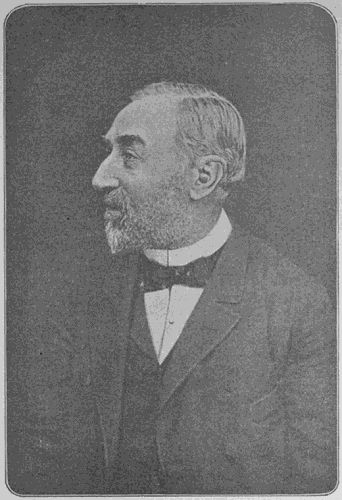
Munich, Ignatius Doellinger. Born at Bamberg, on February 28, 1799, he
made rapid and brilliant studies at Wurzburg and in his native town. He
was ordained priest in 1822 and spent a few months in parochial work. In
1823 he was made professor of history and canon law in the preparatory
college of Aschaffenburg, and when the University of Landshut was
transferred to Munich, he was selected for the chair of history in the
new institution.
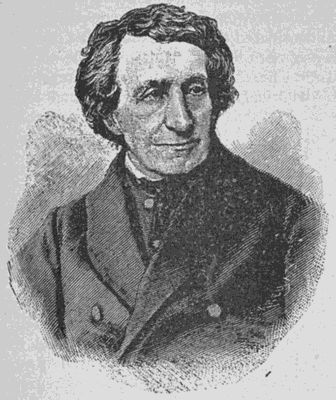 DOELLINGER.
In his earlier career, in fact as late as 1860, Doellinger was one of
the foremost and loyal of German Catholics. At a time when so many of
his co-religionists were being led into the campaign of hostility to
Papal authority and the ancient discipline of the Church, Doellinger
ever remained true to his ultramontain principles. In 1826 appeared his
first theological work, The Doctrine of the Eucharist During the First
Three Centuries of the Church, which was followed in rapid succession
by a series of brilliant expositions of Catholic truth and history. In
1847 appeared his three magnificent volumes on "The Reformation, Its
Interior Development and Its Effects." It was the signal for a crusade
against the falsehoods of Protestant historians as uttered in nearly all
the universities of Germany.
In 1861 appeared his "Church and the Churches, the Papacy and the
Temporal Power," a collection of public lectures which the author had
delivered at the "Odeon" of Munich during that year. The work created a
sensation among the Catholic teachers of the land, who could not but
recognize in it the germs of the conflict which Doellinger was yet to
wage with the Holy See. The Piedmontese had just completed their
invasion of the Papal States, and naturally the world looked to
Doellinger for words of protest. The unhappy theologian proved recreant
to his duty at a moment of so much importance. Instead of uttering an
unequivocal protest, Doellinger babbled only about the necessity of
liberal institutions secularization, etc., imitating to a humiliating
degree the expressions of Cavour and Napoleon III. Doellinger had now
steered his bark into the stormy waters of Liberalism.
In 1863, at an assembly of savants, at Munich, he discussed in a very
bold manner the "Past and the Present of Catholic Theology," which
called forth words of indignation from Scheeben, the eminent theologian
of Cologne. Doellinger, together with some other disaffected Catholics,
considered that the moment had nearly arrived for displaying open
hostility to Rome. The man who had defended the Church in the Bavarian
Chamber from the year 1845, who had spoken in terms of pure loyalty and
affection at the Parliament of Frankfort, and at the Catholic
congresses, who had spoken in no uncertain terms against the
persecutions incident to the question of mixed marriages, who had flayed
with his vehement scorn the supporters of a bill to abolish clerical
celibacy, and had denounced the profligacy of King Louis and his
favorite Lola Montez, in 1848, was preparing to turn his back upon a
career so brilliant, and to take up arms against his mother, the ancient
Church.
In 1869 when Pope Pius IX. named the commission which was to prepare the
way for the Council of the Vatican, the name of Doellinger was omitted
from the list. Although he could expect no other treatment than this,
having already signified his utter disregard of all that history and
tradition had taught concerning the Holy See, and having even gone out
of his way to invent calumnies and garbled citations from historical
writers in opposition to every papal claim, nevertheless Doellinger
protested against his exclusion from this august body, and accordingly
manifested even in advance his hostile attitude to any and every
decision which the future Council might make. One of his principal moves
in this direction was to instigate Prince Hohenlohe, president of the
Bavarian ministry, to arouse all the cabinets of Europe against the Holy
Father.
During the Vatican Council he gave his best talents to the cause of
opposition. While the episcopate of the whole world was deliberating in
St. Peter's, Doellinger published his heretical views in his Janus,
and in various Roman Letters to the Allgemeine Zeitung, besides
putting forth many "declarations" stigmatizing the work of the Council.
When the Archbishop of Munich demanded his submission to the decrees of
the Council, Doellinger made a formal refusal, on March 28, 1871, and
drew upon himself the sentence of excommunication.
APOSTASY OF DOELLINGER.
The decisive step was now taken, and Doellinger in separating himself
from the Catholic body was welcomed by the enthusiastic acclamations of
all the liberal camp. Dreaming that he was about to play the role of a
new Luther, the apostate gathered about him the disaffected elements of
German Catholicism, especially in the various universities of the
country. Men who held high prestige in the scientific and literary
world, threw themselves at his feet and called him the savior of
Germany. Forty-four professors in the University of Munich, a stronghold
of Rationalism ever since 1848, and among them Freiderich Sepp and
Reischl, were foremost among the defenders. Theologians like Hilgers,
Langen, Reusch, and Knoodt from the University of Bonn; Reinkens,
Baltzer and Weber, from Breslau; Michelis, from Braunsberg, and Schulte
from Prague were but the leaders in the list of eminent savants who
placed themselves under his rebel banner. The heart of Doellinger was
inflated with pride and in laying the foundations of that sect to which
the euphonious title of "The Old Catholics" was given, the apostate
imagined that a new Reformation was beginning, which would presently
count its supporters by the thousands and millions.
History, with pitiless irony, has told the sad fate of his ambitions.
Despite the immense aid given by the State to the new religion, despite
the prestige even of Doellinger and his savants, the Old Catholics
degenerated in a few years into a squabbling, disunited mob, to such an
extent that Doellinger himself became ashamed of the child of his fancy.
Too proud to acknowledge publicly the error which his heart recognized,
he continued his apostasy until his death, by apoplexy, January 10,
1890.
Hermes, Günther, Frohschammer and Doellinger were but the manifestations
of that spirit of disorder among the German Catholics, whose purpose was
primarily to reconcile, by their own methods, the spirit of faith with
the spirit of the age. Pride had created blindness, and blindness,
spiritual suicide. But the liberal world that looked on placed their
mutilated carcasses upon the altars of hate, and made their fall the
occasion of fiery denunciations against the Church and all that it
represented.
PROTESTANT ASCENDANCY.
A second cause of the Kulturkampf lay in the desire of Prussia's rulers
and statesmen to place the Protestant Evangelical Church in a position
whence it might dominate all religious life in the Empire. Long before
efforts were made, especially after the Third Centenary of Luther in
1817, to bring the whole of Prussian Germany into the ranks of the
Evangelical Church. The schemes manipulated by means of mixed marriages,
the long and pitiless persecutions of Frederick William III., followed
by the comparative peace during the reign of Frederick William IV. This
latter period had been prolific in examples of Christian life, in
pilgrimages to holy shrines, in a great increase of popular devotion, in
the spread of religious orders with their sane and vivifying
influences. The Catholic Church had been gradually arising out of a
state of torpor and subjection to a position of prominence that called
for consideration and respect from all non-Catholic sources.
The Protestants of Germany, however, were not altogether gratified at
these beautiful results, and indeed, it was not long before they began
to resent openly the evidences of Catholic progress. In their
determination to stem the tide of Catholic conversion and increase they
were not slow to use every means that opportunity placed at their
disposal. Among these was the spirit of the Prussian people to which the
name of Borussianism has been given, and which manifested itself as
early as 1848.
The two great powers of Germany then contending for supremacy among the
loosely confederated States were Prussia and Austria. In the Parliament
of Frankfort the presidency of that body was conferred upon an Austrian
archduke. The alarm was immediately sounded. If Germany were to become a
united empire, was it not possible that Austria, as an integral part,
might gain the ascendancy, and thus subject the whole German nation to
the rule of a Catholic sovereign? In 1848 the union of the German Empire
was set aside, and Frederick William IV. even refused to accept an
imperial crown that would have among its gems the great Austrian state.
Again in 1866, when the union of German States was being formed, Austria
was formally excluded, nor has she been invited to enter the
Confederation ever since. Her Catholic influences were the obstacles
that stood in her way toward Prussian favor.
WAR UPON CATHOLIC STATES.
At the same time Prussia could not ignore the fact that many powerful
and influential States around her and even within her dominions were
almost entirely Catholic. Poland, Bavaria and the Rhenish Provinces were
too strongly Catholic to permit of any open aggression upon religious
lines, although in the secrecy of ministerial cabinets the way for such
aggressions was being constantly prepared. What was wanted was only an
evidence of political weakness in the Catholic States, and this
opportunity was offered only too soon.
Since 1860 the papal power had been slowly yielding in Italy to the
attacks of Liberalism, aided very much by the encouragement of German
cabinets. In 1866, Austria was stricken down by the hand of Prussia; in
1870, Catholic France felt its force at Sedan and at Paris; in the same
year, Rome fell into the hands of usurpers. Even among the Catholic
States of Germany the influence of Prussian intrigue had weakened the
governments and made them tools in the hands of the more powerful ally.
All these disasters in Catholic countries signified that Protestant
Prussia was now in a position to impose herself with her laws and her
religion upon the whole body of people coming within her sway. It is not
surprising, therefore, that when William I. felt the glory of the
imperial crown upon his brow, he should begin, like his predecessor,
Frederick William III., to dream of a universal German Church of which
he should be the Pope, and of which all his people should become willing
and faithful members.
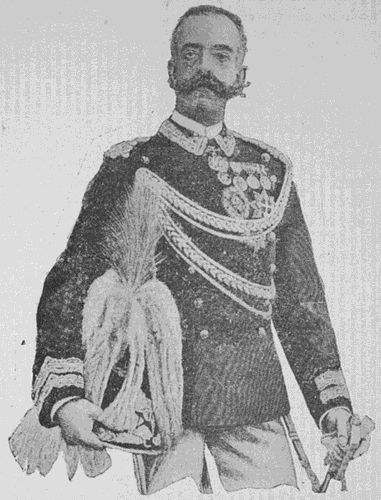
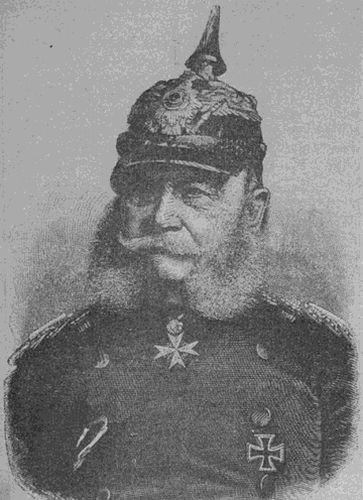 THE EMPEROR WILLIAM I.
Closely allied with this desire for a Protestant ascendancy was an
intense hatred of Rome and of Ultramontainism, especially as manifested
in the dogma of Papal Infallibility as declared in the Council of the
Vatican in 1870. This spirit had betrayed itself before 1870 especially
in the words and actions of Bismarck, who remarked during the course of
the French War: "As soon as the war with France is ended, I shall march
against the infallibility." To this end the populace was aroused and
Protestant fanaticism was given full swing. The tocsin of alarm was
sounded before the imaginary peril of a Roman invasion, and before the
pretended assaults of the Church upon the State.
HATRED OF INFALLIBILITY.
For two years the secular press had echoed these fears and waved before
the eyes of Germany the effigy of "Infallibility." All sane notions were
cast aside, while defiance and hatred were sown in all hearts. All the
journals, with one accord, took up the ever new theme of the Syllabus
and of Infallibility to demonstrate to the German people that the
jurisdiction of the bishops was absorbed forever by the papal
jurisdiction, that the clergy were now slaves, and that every Roman
Catholic, at a sign from the Pope, was bound henceforth to betray his
king, his conscience, and the laws of the country. Feeling, under such
impulsion, ran high, to such an extent in fact that the fear of
Infallibility made many forget the part the Catholics had ever taken for
the defence of the King, the country, and social order.
Underlying all these causes was the true reason of the Kulturkampf, the
spirit of Caesarism, the desire to make the Church subservient in its
life, in its doctrines, and in its hierarchy, to the caprices of the
sovereign State. The forces to effect this had been growing steadily for
some time. There were especially three parties to which the idea of a
State controlled Church appealed. There were those who were hostile
radically to the idea of religion, and whose campaign was directed
against God; their leader was Bluntschl. Others, antagonistic to the
Christian idea, attacked all positive religion, and desired the
abolition of all Christian denominations; they were led on by Bennigsen.
Finally, the Prussian Evangelicals, jealous of the progress of
Catholicity, wished to create a great national Church in what they would
call the Evangelical Empire, a Church that would acknowledge no
interference from the outside, from Rome or elsewhere. Into this
national Church it was determined to absorb all the Catholics of the
Empire. This was the dream of Bismarck.
In 1870 these various elements of disorder seemed to unite into a
compact force directed against the common enemy, the Catholic Church.
Rancors, divisions, jealousies, all were forgotten in the common
impulse. It was the world banding together to exterminate the handiwork
of God. The years have passed by, the Kulturkampf is over, its leaders
are forgotten, its purposes have lapsed into history; but the Church in
Germany has not been exterminated; indeed, it enjoys at present the most
flourishing epoch in its history.
II.
MEN OF THE CRISIS.
BISMARCK.
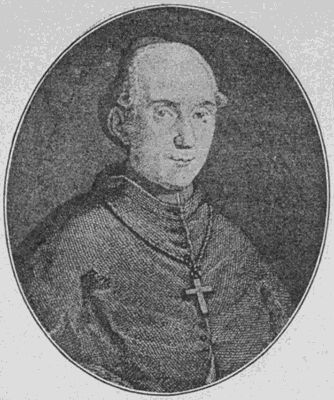
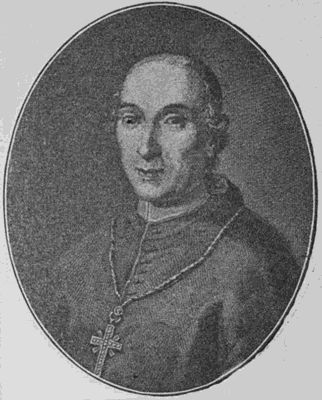
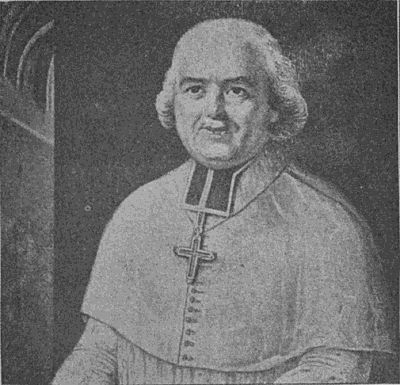
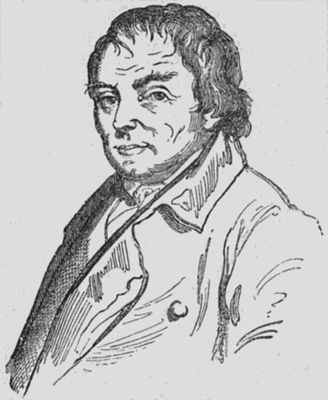
Among the characters most prominent in the Kulturkampf, we shall confine
our more lengthy consideration to Bismarck, Windthorst, Malincrodt and
Ketteler.
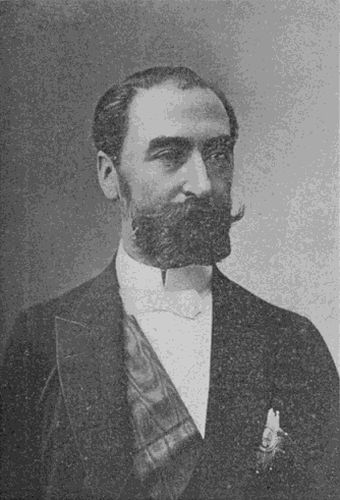
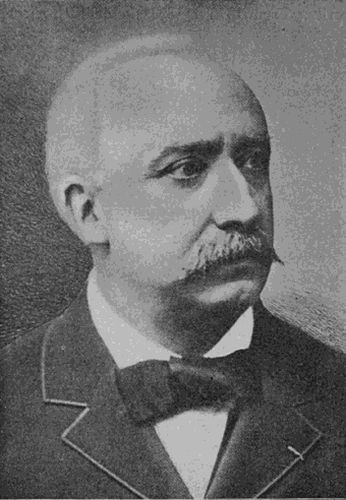
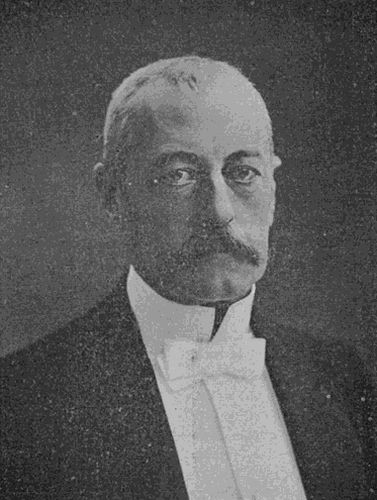
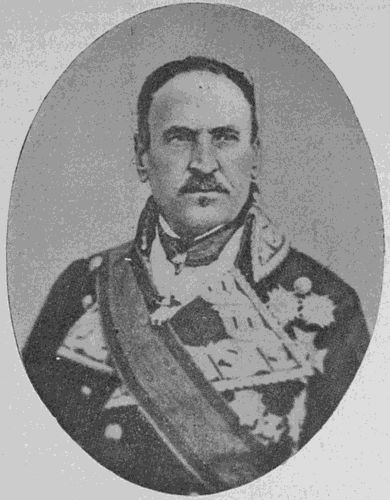
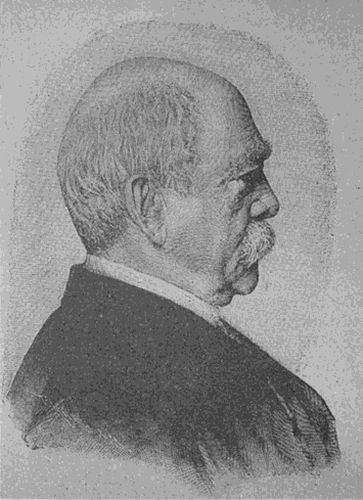
In Prince Bismarck were concentrated all the forces of the various
parties uniting against the Church. He was born in the patrimonial
castle of Schoenhausen, April 1, 1815, and received the name of Otto
Edward Leopold von Bismarck. In 1832, when seventeen years of age, he
entered the University of Goettingen. Here he attracted attention by his
turbulent and fantastic character. A lively, boisterous companion, he
was known as a drinker, epicure, smoker, duellist, and eccentric. He
fought more than twenty duels. He became popular among his fellow
students for his feats of arms, and his reputation in that regard
extended to other universities. After leaving the University, he became
an assessor of the Tribunal of Berlin, then referendary at
Aix-la-Chapelle, and at Pottsdam, after which he enlisted as a
lieutenant in the Uhlan guards. Shortly after 1846 he married Johanna
von Puttkammer, a woman who was later to exercise a malevolent influence
over him during the troubles following 1870.
 BISMARCK.
In 1847 Bismarck entered actively into the political life of the
nation. It was at the time when King Frederick William IV., yielding to
the importunities of the Liberals, convoked a preliminary Diet, at which
Bismarck was present to supply the place of a member rendered incapable
of attending through sickness. Therein he showed himself an
indefatigable defender of the conservatives against the demands of the
Liberals, making himself soon the chief of his party.
This consultive Diet was forced to yield, the following year, 1848, to
the popular demand for a more representative assembly. Another Diet
accordingly met and voted for universal suffrage and the immediate
elaboration of a new constitution. Bismarck distinguished himself in
that Assembly, as in the preceding, by his unyielding opposition to
Liberal innovations, and by the violence and asperity which
characterized his utterances.
To propagate his ideas Bismarck founded a journal, which remains even
yet the organ of the Conservative party in Germany, the Gazette of the
Cross. As a result of Bismarck's many efforts, the King, urged on by
the nobility, dispersed the Parliament, assembled the troops in Berlin
and placed the city in a state of siege. The same year, 1848, the
national Diet, composed of Liberals and Conservatives, met at Frankfort,
and decided to re-establish the Empire, offering the imperial crown to
the King of Prussia. In this matter Bismarck strongly opposed the views
of the delegates and induced the King to refuse the proffered honor. The
same actions recurred in the following year, Bismarck taking the same
stand against German unity.
Thenceforth the new statesman began to be a power for the Kingdom of
Prussia. His hatred of Austria seems to have dictated all his policies
for the next twenty years. The war for the annexation of
Schleswig-Holstein in 1864, the war against Austria in 1866, the
question of the Duchy of Luxembourg, and even the Franco-Prussian war of
1870, were all inspired by the fear that Austria should become too
powerful, and deprive the Protestant State of Prussia of that ascendancy
which Bismarck more than any other determined that she should have.
It was in 1862 that Bismarck was called upon by the King to take up the
post of Premier, a position which was to make him in a few years the
most powerful statesman of Europe. At the ending of the Franco-Prussian
War, on January 18, 1871, in the Palace of Versailles, it was the power
of Bismarck that placed the imperial crown upon the head of the new
Emperor, William I. of Germany. The union of German States against which
the Chancellor had fought in years gone by, was now the creature of his
own making. The time was propitious, France, Austria and the Papacy were
all humbled. Prussia had become one of the Great Powers. If Bismarck had
rested there, his name would have been greeted with the accumulated
blessings of all the German people, even though all these triumphs had
been won by the way of deceit, brutality and an absolute disregard of
all the promptings of justice and humanity.
That Bismarck had been preparing for his persecution of the Catholics is
sufficiently proven from documentary evidence, although after 1888 he
spent much time and effort to disclaim his part in the Kulturkampf. The
Crown Prince of Germany in his diary of the date of October 24, 1870,
wrote: "Bismarck related to my brother-in-law that immediately after the
war he would enter upon the campaign against infallibility." Again, the
Abbe Majunke, the eminent historian of the Kulturkampf, published in the
Historico Political Papers of Munich, a sensational article wherein he
proved from existing documents that Bismarck was meditating the
Kulturkampf before the opening of the Council: "The notes gathered
together by Poschinger demonstrate that as early as 1850 the adversary
of Windthorst has been the principal instigator of the Bavarian
Kulturkampf," a fact which argued that he was the real instigator of the
late Prussian persecution. Again Arnim, the former ambassador to Rome,
shows that the Chancellor was projecting the conflict against
infallibility at least while the Council was going on. Again, on
September 13, 1870, Bismarck remarked to the deputy Werle, Mayor of
Rheims: "When we have disposed of Catholicism, they (i. e. the Latin
nations) will not be long in disappearing." All these and other
evidences remain to show that the mind of Bismarck had been meditating
the extermination of the Catholic religion before the actual hostilities
began. His part in the conflict itself will be shown in discussing its
events. In 1887, he made his peace with Pope Leo XIII., from whom he
received the Grand Cross of the Order of Christ, and died in 1898, after
witnessing the final collapse of the Kulturkampf and acknowledging its
utter failure to accomplish the the end it had in view.
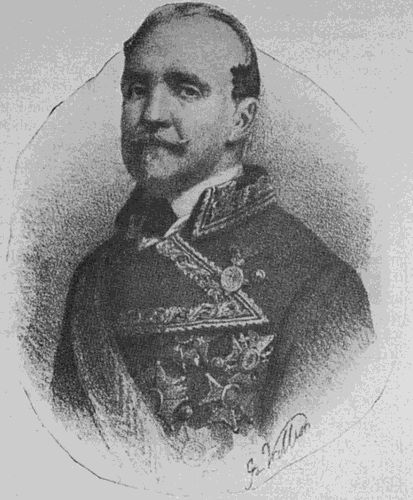
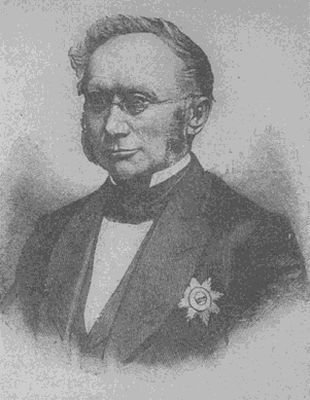
Directly opposed to Bismarck was another statesman in whom with all the
energy and determination of his adversary were found the qualities of
honor and justice united together in absolute loyalty to Catholic
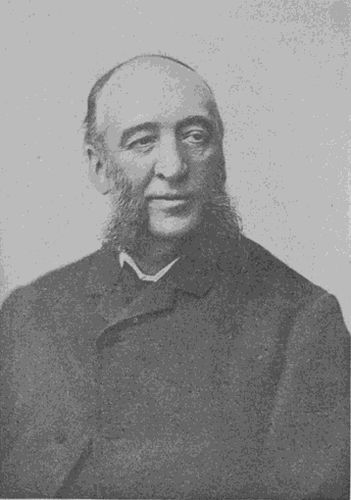
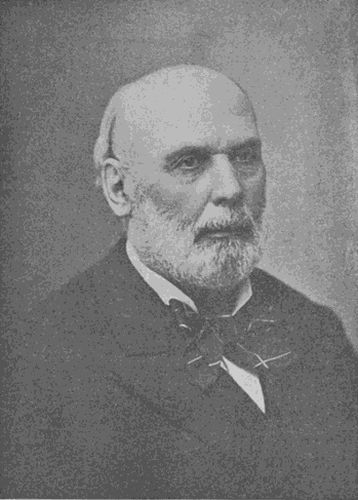
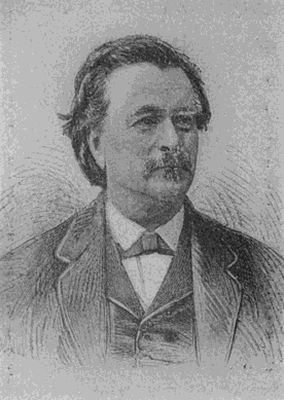
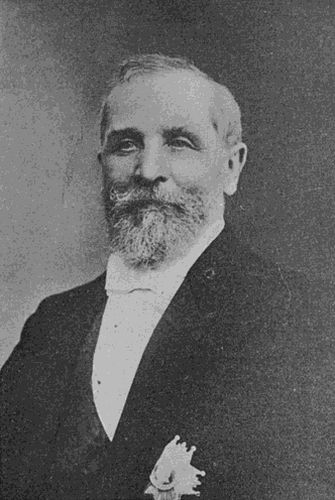
principles. This man was Louis Joseph Windthorst, born January 17, 1812,
at Osterkapelln in the Kingdom of Hanover. After showing for some time
an inclination for the ecclesiastical state, he finally decided his
vocation in 1836 by entering the bar at Osnabrück. He was later made
syndic of the Equestrian Order of the Nobility, and then lay President
of the ecclesiastical tribunal. In 1838 he married and his union was
blessed not only by conjugal happiness, but more than all by the birth
of four children, the eldest of whom survived him.
 WINDTHORST.
In 1848 there were in Germany two political parties; one defending the
maintaining of Austria in the Confederation and desirous that she should
be at its head; the other demanding the exclusion of Austria, and the
preponderance of Prussia. Elected to the Diet from Hanover in 1849,
Windthorst declared himself for Austria, a Catholic power which promised
to permit the different States to retain their autonomy; and he
combatted openly the members of the German Parliament at Frankfort when
they offered the imperial crown to William IV. of Prussia. Windthorst
had just been nominated to the Presidency of the Hanoverian Chamber of
Deputies, in 1851, when upon the accession of George V. to the throne,
he received the portfolio of Justice. He served in that capacity until
1853 when the ministry of which he formed a part was overturned.
It was during the period of comparative quiet that followed, that
Windthorst rendered to his natal diocese a remarkable service. Both in
the Chamber and at Court he pleaded for the ancient principality of
Osnabrück, which had been in the hands of a lay administrator ever since
the great secularization. His efforts were crowned with success. In 1857
the diocese of Osnabrück was re-established and the Abbe Melchers, then
Vicar General of Münster, was made its bishop.
In 1862 Windthorst was again called to the ministry of Justice, and
again pleaded the cause of Austria. In a short time, however, he again
left the ministry and was made Procurator General of the Court of
Appeals at Celle. Hitherto Windthorst had been the principal adviser of
George V., the intrepid defender of his country's independence, and the
influential protector of Catholic interests in the midst of a Protestant
Court; when at length his powers in that direction were ended by the
action of Prussia in taking possession of Hanover.
The little kingdom thus blotted out, Windthorst turned his attention to
the larger interests of the whole country. In placing himself, however
unwillingly upon the platform of accomplished facts, and in taking the
oath of the Prussian Constitution, Windthorst accepted the ruling of the
Prussian Landtag, and was elected first to the Constituent Assembly, and
then to the Reichstag of the Confederation of Northern Germany, in
1871. He remained until his death the representative from Meppen, whence
his soubriquet, the Pearl of Meppen. He was also sometimes termed His
Little Excellency, from his slight stature, and also "the Guelph
Leader," from his indomitable attitude in defending the interests of the
weaker side against the aggressions of the unscrupulous majority.
In the Kulturkampf his position was the exact antithesis to that of
Bismarck. By his strict ideas of honor and justice, and his indomitable
courage in forcing the issues he had at stake, he gained his cause over
the brutal and unscrupulous strength of the Chancellor. The ideal which
he pursued was that of Christian society, the independence of the
Church, respect for authority, and the maintenance of liberty and of
civil equality. He was a contrast in every way to Bismarck. Windthorst
was the champion of right, Bismarck the representative of force; the one
was calm in his certainty of ultimate victory; the other fought with
animosity and fury. Windthorst strove to enlighten and convince his
adversary; the Chancellor was bent upon crushing and annihilating his
enemy. In seeking the triumph of a principle, the one recognized neither
menaces nor boastings; the other seeking his own personal aggrandisement
spoke in terms of haughtiness and contempt of all who dared to differ
from him. Windthorst was almost the only man who could not be cowed by
Bismarck, and thus, urged on by the hand of God, the Pearl of Meppen
crushed at last the Iron Chancellor. Windthorst was a man of men,
constant, faithful to his friends, and firm as a rock in his trust in
God. The words of Pope Leo XIII., at the time of his death in 1891, were
significant: "He so loved his country and respected his sovereign, that
he never separated his duties as a citizen from his zeal for religion.
So well did he encounter his adversaries by the weight of his
arguments and the force of his eloquence, that it was easy to see that
it was the love of truth which urged him on, and not any greedy desire
for personal advantages or honors."
 MALINCRODT.
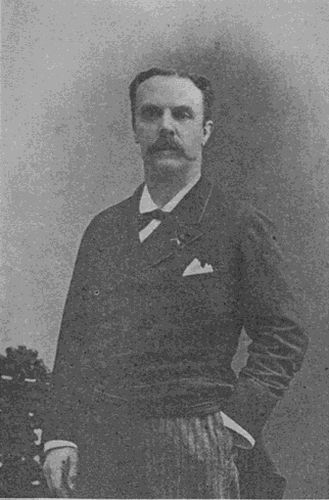
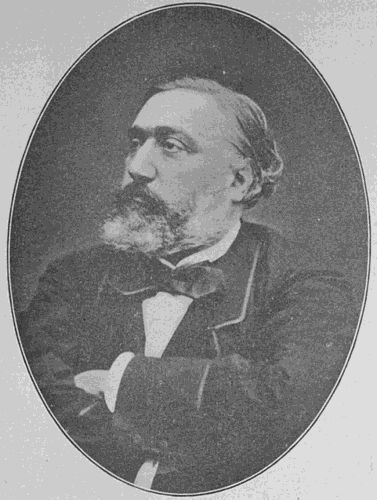
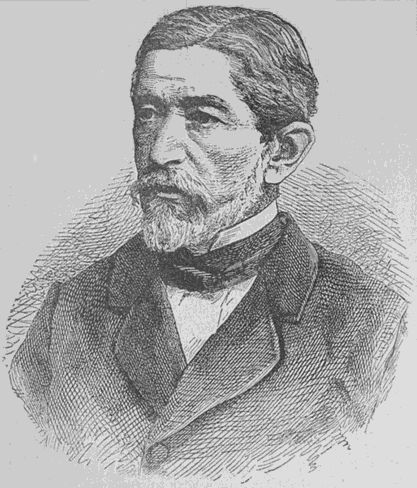
Herrmann von Malincrodt, the great orator of the Centre during the
Kulturkampf, was a native of Minden in Westphalia, where he was born on
February 5, 1821. His father was a Protestant, yet of such natural
honesty, that he would not stand in the way of his son's education in
Catholic faith and doctrine. The mother of Herrmann was a pious
Catholic, a cultured lady, whose care for the religious bringing up of
her children was not satisfied with the religious teaching given them at
school, but called a priest to her house to supplement the training of
the school. The classical studies of young Malincrodt were made at
Aix-la-Chapelle, where his father had taken up his residence in 1823.
When, in 1838, the future deputy went to study law at Bonn, and later at
Berlin, his faith was still intact as his heart was pure. He passed
through the University with equal safety. The teachings of his good
mother, who died some years before, were his safeguard and preserved him
against the dangers so often fatal to youth. The anti-Christian
doctrines of his professors, and the shameless examples of his fellow
students had no effect upon his strong character. In his twentieth year
he left his studies as good a Catholic as he was a learned jurist.
After a short period at the tribunal of Paderborn, and having been
referendary successively at Münster and Erfurt, he retired for over a
year to study for his degree. When his thesis, entitled Juridical
Relations between Church and State was presented, the judges marvelled
to find in so young a man such an evidence of solid learning, clear
reasoning, and originality of thought. They noted moreover the
uncompromising Catholic character of his essay, and accordingly, while
they accounted his endeavor a success, they added the remark: "A work
too favorable to the Church." In 1849 he was named Assessor for the
Regency of Minden, and two years later was sent to Erfurt to fulfil the
same functions. In the latter place he made so favorable an impression
upon the people that the government made him First Burgomaster of the
town. This choice was all the more significant that four-fifths of the
population were Protestants, while Malincrodt was known as an ultra
Catholic; they were won, indeed, by his characteristic integrity, his
tolerance and justice, and the nobility of deportment. So well satisfied
were the citizens with his administration that he was accorded the right
of the city.
The people of Westphalia were naturally proud of their fellow citizen,
and in the elections of 1852, the district of Münster-Coesfeld sent him
to the Prussian Landtag. He arrived at Parliament at a moment when a new
conflict was threatening between the State and the Church. The ministers
had just interdicted the missions of the Jesuits and forbade Prussian
students to pursue their theological studies at Rome. King Frederick
William IV. was animated with kindlier dispositions. He had witnessed
the bravery and loyalty of the Catholics during the stirring times of
1848, and in recognition of the same he had effected that a clause
should be inscribed in the Constitution guaranteeing the most essential
ecclesiastical liberties. Unfortunately his ministers did not share his
sentiments, and the court canonists found it too difficult to break with
the old Prussian traditions, and accordingly they gave their best
efforts to nullify the concessions of the sovereign. In the presence of
the hostile manifestations the Catholics felt it incumbent upon them to
organize for the better defence of their rights. In the elections of
1852, despite every ministerial pressure, they succeeded in sending
sixty-three Catholics to the Parliament, and the group thus elected
took the name of the Catholic Faction.
Malincrodt had his place in the ranks of these pleaders for the Church.
On March 11, 1853, after many months of silence, he made his maiden
speech and proved himself an orator of the first rank. During that
session he held the floor thirty-six times. In all the parliamentary
discussions, whenever it was necessary to defend the Holy See, the
rights of Catholics, or conservative principles, Malincrodt was always
to the fore. His talents increased year by year, and would have brought
him still higher distinction, had not the elections of 1864 sent him
back to private life.
During the following three years events in his country were fast
approaching a climax. The Danish and Austrian wars had demonstrated what
Bismarck meant by "moral conquests." Malincrodt was among those who
could foresee the coming storm. In 1867 the electors of Westphalia sent
him to the Federal Diet of Northern Germany. It was there that he met
for the first time that lilliputian of Hanover, already known as the
Meppen Pearl, the Little Excellency, Herr Windthorst. The two Catholic
statesmen recognized each other, and began a friendship which was to
continue, under the aegis of the Church, until death. The speeches of
Malincrodt in the Reichstag were a revelation to the assembly who
recognized in him a man with whom German statesmen would have to reckon.
He was as much opposed to German union as desired by the Prussians, as
was Windthorst, and that because he knew how Prussia with the power in
her hands would not fail to destroy the autonomy of the lesser States.
The Franco Prussian War followed, with its consequence of the
unification of Germany under the imperial domination of Prussia. The
Kulturkampf made necessary the formation of the Centre, of which
Malincrodt was at first the chief and spokesman. His eloquence
throughout that stormy period was terrific, and had his career lasted a
little longer, he could no doubt, in conjunction with Windthorst, have
ended the struggle much earlier. He died, however, in his sixty-third
year, in 1874, at Berlin after a burst of oratory that convinced even
Lasker, one of the most implacable of his adversaries.
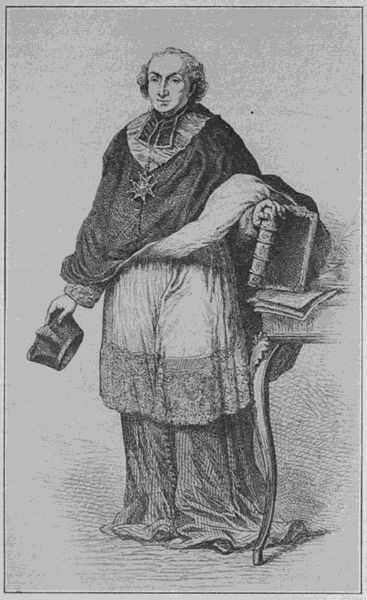
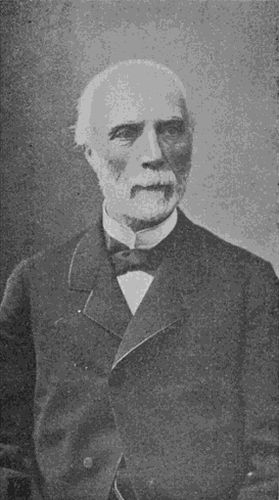
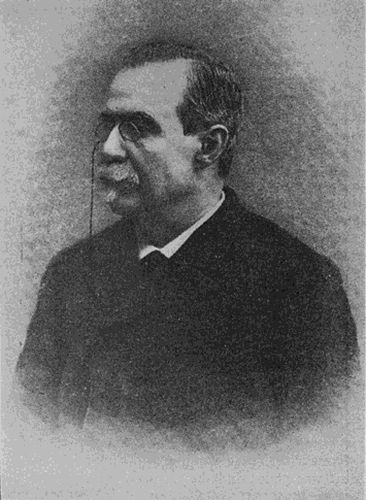
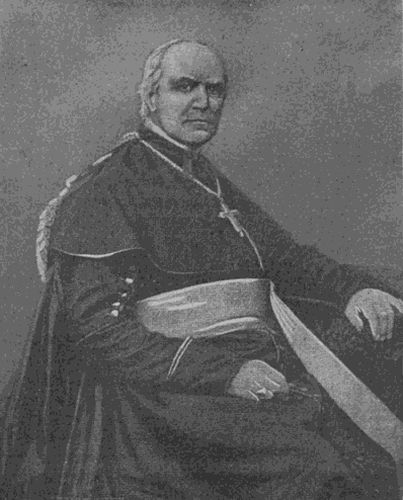
William Emmanuel von Ketteler was born on December 25, 1811, at Münster
in Westphalia. He was thus, like his colleagues, Windthorst and
Malincrodt, a Saxon. His mother, the former Baroness von Wenge von Beck,
exercised a decisive influence over his heart and at an early age she
inspired him with that truly Christian love for the poor which was one
of his salient characteristics during life. He was remarkable even in
childhood for his air of reflection and gravity, significant of a mind
that was serious and inclined to a sense of conscientious duty. At the
age of thirteen, in 1824, he was sent to the Jesuit College of Brieg in
the Valais, where he finished his studies.
According to the German usage, his family sent him to many Universities,
and thus he spent a short period successively at Goettingen, Berlin,
Heidelberg, and Munich. He was everywhere an adept at athletic exercises
and an ardent worker. After his examinations in law he was appointed
referendary of the government of his natal city, Münster.
It seemed as if he had found his vocation in law and politics. It was
about this time, 1838, that he beheld the venerable Archbishop of
Cologne, Clement August von Droste Vischering, dragged a prisoner to the
fortress of Minden. Indignant at this act of barbarity, Ketteler threw
up his governmental position. On July 9, 1838, he wrote to his brother
Wilderich: "As I do not care to serve a State which demands the
sacrifice of my conscience, it seems to me that the priesthood is my
most certain refuge. But how far I am from such a determination! To make
me worthy of that sublime ministry would require a miracle greater than
raising the dead to life." In 1841, he overcame his scruples, and went
to seek counsel from Mgr. de Reisach, the Bishop of Eichstadt, who
assured him that his vocation was genuine.
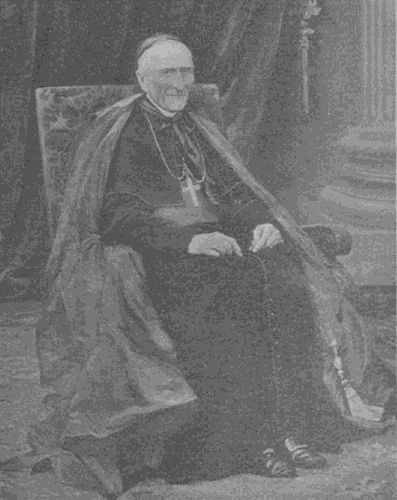
 BISHOP KETTELER.
He entered the University of Munich, then at the zenith of its renown.
Under the patronage of King Louis of Bavaria it had become the
rendezvous of all that Catholic society esteemed as brilliant and
distinguished. Görres, the great philosopher, was there with Philipps,
the Professor of Law, and Doellinger, as yet orthodox in his teaching of
history.
After three years of study he was ordained to the priesthood on June 1,
1844, after which he was appointed assistant in the little town of
Beckum, in Westphalia, where he shared the labors of two young priests,
one of whom, Brinckmann, afterwards also became a bishop. After two
years he was sent as pastor to Hopsten on the confines of Hanover, where
he spent his time in those duties which had become so dear to his heart,
the care of the poor and the instruction of the young.
In 1848 he was sent as a deputy to the national Diet of Frankfort from a
district composed chiefly of Protestants. Out of the 600 members present
there, he found that forty were priests, while there were a few bishops
and many notable Catholic laymen. Ketteler appeared in the tribune, a
man with no political record and no literary glory. But his first speech
aroused enthusiasm and proclaimed him one of the orators of the day.
Ketteler demanded liberty of religious association for all creeds,
liberty of education, and autonomy in the commune in all that concerns
the public school and the interior administration. After the
assassination of Prince Lichnowsky and General von Auerwald by the
insurgents, the Abbe Ketteler was charged by the Assembly to pronounce
the funeral oration.
Fifteen days after this event the first great Catholic Congress was held
at Mentz, and instituted a programme in which Ketteler was for nearly
thirty years to have a leading part. This was the Catholic action in the
Social question.
In 1850 William Ketteler was consecrated Bishop of Mentz, and entered at
once into his role as the great social reformer of Germany. His
solicitude for the poor was constant and practical. For the sick poor he
called into his diocese the Franciscans of Aix-la-Chapelle; for the
orphans and abandoned children he founded establishments in 1856 and
1864. For the workingmen he founded, in 1851, a Geselleverein, or
Workingmen's Association, one of the first of its kind, besides bureaus
of aid, and circles and societies for procuring cheap lodging for the
needy. He had remarked that the numerous class of servant girls were
almost altogether without religious attendance, moral protection, or
material assistance. With the aid of the Countess Ida von Hahn-Hahn he
founded refuges for their kind, and looking then toward those others to
whom the allurements of the world had proved too fascinating, he
established a House of the Good Shepherd. His work in the direction of
the poor and of the laboring men went on without ceasing. His
Establishments of Hospitality for the Workers provided board and lodging
at the price of eighteen pennies a day. In 1856 the Association of Notre
Dame de Bon Secours came to the aid of those who, while out of a place
for a time, could find lodging until another situation were found for
them.
Nor was he content with the mere attention to the ordinary routine
implied by such works. The service of his brilliant and well stored mind
was also devoted to the cause, presenting some works that still remain
authoritative guides in the matter of social economics. His great work
in this regard was his Christianity and the Labor Question, written at
a time when the doctrines of Lasalle and his companions were beginning
to stir the workingmen into a campaign of violence and anarchy. The
voice of the great prelate was heard also in the various congresses held
every year in Germany to discuss questions of Catholic interest. In the
Meeting of the Bishops at Fulda, in 1869, Mgr. Ketteler spoke eloquently
upon the questions, "Does the Social Question Exist in Germany?" "Can
the Church Aid Therein, and What is Her Duty?" "What are the Remedies at
Her Disposal?" In the Catholic Congress of 1871, he delivered a masterly
discourse upon Liberalism, Socialism, and Christianity.
In the Council of the Vatican, the position held by Ketteler in regard
to the Definition of the Great Dogma, was that of many German bishops,
namely, that while admitting the doctrine of infallibility as true and
essentially Catholic, they were unwilling to admit that its definition
was just then opportune. On the eve of the last session Mgr. Ketteler
addressed to Pius IX. a letter full of submission, and during the rest
of his life he defended the doctrine with all the enthusiasm of his
heart and soul.
During the Kulturkampf until his death the great prelate proved a power
of resistance against the tyranny of Bismarck, and although he could not
live to behold the final failure of the enemy, he was rejoiced to know
that the persecution was already producing fruits of conversion and
edification everywhere. His great soul comprehended that the Church must
finally come forth from the contest crowned with the glory of triumph.
It was in the assurance of this hope that he died in the Capuchin
Convent of Bruchhausen in Bavaria, as he was returning from his last
visit to Pope Pius IX. His part in the Kulturkampf, we shall review in
the succeeding paragraphs.
Such then were the giants who came to the conflict of the Kulturkampf
armed cap-a-pie, one indeed, with the weapons forged by hate and selfish
ambition; the others with those emblems of Christian faith the lustre of
which called forth the admiration even of the adversaries, and finally
brought all opposition to a standstill.
III.
The Kulturkampf! The name was invented by Virchow, the atheistic
professor. He calls it a War for Civilization, though he of all men very
well knew that the reality could mean only a return to savagery and
barbarism. But as the Kulturkampf began in hypocrisy, was continued in
hypocrisy, and finished in cowardly hypocrisy, what matters it, if even
the name by which the mongrel is called is also born of hypocrisy!
The war was not the sudden ebullition of frenzied fear; it was a
carefully prepared campaign. It was launched only when every
circumstance seemed favorable to its success. France and Austria were
helpless to oppose it; England and Italy were full of encouragement; the
Protestants of Germany were excited by the spectre of infallibility; the
Liberals welcomed it as a rebuke against their old enemy, Conservatism;
the Holy Father himself was closed in behind the walls of the Vatican, a
prisoner, and therefore without the prestige of governmental influence.
At the beginning of 1871, the Catholic Church in Germany stood alone
without an influential friend in the world. It was then that cowardice
raised its hand to strike; it was the act of a ruffian felling with a
blow of his mailed fist the woman whom robbers had left half dead by the
roadside.
If the Catholics were to blame in any manner, it was only because they
had permitted themselves to be cajoled in advance by the smiles and
hypocritical advances of Bismarck and his henchman, though it is true,
they had every right to expect a grateful treatment from the new Empire.
In 1870, Peter Reichensperger, one of the most prudent leaders of the
Catholic party, advised the Bavarian Diet to join the Prussian alliance,
through the trust he had in that State at the moment. Even Bishop
Ketteler was deceived when he beheld the comparatively fair treatment of
Catholics in the Rhenish province, whose proximity to France rendered it
advisable that they should not be discomforted, though at the same time
the Polish subjects of Prussia, at the other end of the Kingdom were
complaining of political aggressions against their religious liberty.
Bishop Ketteler, however, was soon compelled to avow his mistake. "It
was a great fault on our part," he writes, "to have believed in the
stability of the Prussian Constitution, in the rights which it plainly
allowed us. We were culpable for having believed that, in Prussia,
justice could triumph over the inveterate prejudice against Catholics,
and over party feelings. We were deceived; but our fault is not of the
kind that should cause us to blush."
The Catholics had, indeed, just reason to expect favorable treatment.
They had been repeatedly assured that it would be accorded to them. In
1870 the Emperor, replying to an address from the Knights of Malta from
the Rhenish Provinces and Westphalia, had uttered the significant words:
"I regard the occupation of Rome by the Italians as an act of violence;
and when this war is ended, I shall not fail to take it into
consideration, in concert with other sovereigns."
Thus it was that the Catholic people of Germany, whose men fought
against the bullets of France for the Fatherland, whose priests and nuns
went about the battle fields succoring and comforting the wounded and
the dying, who, in a word, stood in every trial foremost among the
defenders of the King and of his Government, were unprepared to see the
hand that they had aided, raised in a moment to strike them down, and
the sword that they had supported, uplifted for their extermination. It
was again the conflict of the Church against a lying, hypocritical,
ungrateful world.
THE CENTRE.
To the most farseeing Catholics of the country it had long been evident
that there was need of a strong organization of Catholic political
forces. Before the Franco Prussian war no such distinctive organization
existed. At the Reichstag of Northern Germany the Catholics were not
grouped together, and at the Prussian Landtag they formed only an
inconsiderable minority. There appeared to be no need of concerted
action in the political field since peace and security seemed fully
assured. The schools were Christian, the religious Orders performed
their benevolent actions freely and unimpeded, the clergy was respected
and honored. Nothing being attacked, there was nothing to defend. The
Catholic deputies could enroll their names in any party they chose to
favor. Thus it was that when the time of danger came they were scattered
on every side.
After the war, however, Malincrodt, with some of his friends, brought
the Catholic members together, and elaborated a manifesto which served
as a platform for the voters of the country, according to which
Catholics were asked to cast their votes only for such candidates as
would pledge themselves to enter the new Catholic party and support its
principles. In the elections of March 3, 1871, the advice of these
leaders brought sixty-seven Catholic representatives to the Chamber, a
number that increased as the Kulturkampf progressed.
The new party took the name of the "Centre," and on March 27 affirmed
its existence by publishing its programme. At the head of this document
was written its motto: "Justice, the basis of Governments." The chiefs
of the party, Savigny, Windthorst, Malincrodt, Peter Reichensperger,
Prince Loëwenstein, and Freitag, were appointed a committee of direction
for the party and empowered to act for the furtherance of its interests.
The party thus constituted took for its permanent devise the words: "For
truth, justice and liberty," and the Catholic deputies pledged
themselves to defend these three causes with all the energy of their
will and intelligence. They demanded, moreover, in the members of the
party qualities worthy of its great purposes; no candidate might place
his name on their list except such as were without fear and without
reproach. For the interests of religion were in danger; and could they
be defended efficaciously by men who were not themselves living in
conformity with that religion? Every inconsistency of behavior would
naturally be taken advantage of by the enemy and made the basis of
scandal, and hence, as it was necessary not to give an opportunity for
criticism, the party bound itself to a platform of moral integrity and
austerity. A Catholic deputy guilty of having engaged in a duel contrary
to the laws of the Church, could not be admitted. Even the stain of
imputation, however undeserved, provided it gained popular credence,
could debar one from its numbers. And thus for the thirty years of its
existence not one of its members, as far as is known, has cast dishonor
upon the standard thus raised by its leaders. It is because of this high
moral standard, this unflinching loyalty to the Church in all her
endeavors, that the Centre was enabled to stand uncowed and unconquered
throughout the long war that followed its inception.
The new Centre party was called into action almost from the day of its
birth. The first Reichstag of the German Empire met on March 21, 1871.
In his speech from the throne the Emperor solemnly declared that the new
Empire was to be "the citadel of the peace of Europe." The Reichstag
voted an address in answer to the Emperor's speech, which, while
containing a sentiment of greeting and congratulation to the sovereign,
was at the same time, to define the attitude of Germany with regard to
European questions of the day. The Catholic people still remembered the
promises formulated at Versailles on November 8, 1870, and confirmed at
the beginning of 1871, and accordingly had reason to hope that Germany
would make use of her diplomatic intervention in favor of Pope Pius IX.,
despoiled by his enemies and imprisoned in the Vatican. This hope was
expressed in a resolution formulated by the Centre and proposed for the
acceptation of the Reichstag. But the Liberal party, at the instigation
of Bennigsen, repulsed the proposal of the Centre as a clerical
intrigue, and voted that "Germany, without being influenced either by
sympathy or antipathy, would permit every nation to attain its unity in
its own way, and leave to each State the choice of the form of
government which that State might consider best." This attitude of the
new Government was thus a refusal to support the Holy See and an
official recognition of the claims of Victor Emmanuel and his followers.
It was an act, moreover, which placed the Centre party in a very
compromising position, for in refusing to vote the address containing
such an article they would lay themselves open to the charge of
disloyalty and disrespect toward the sovereign, while in case they
should vote for it, they would thereby approve of the iniquitous
spoliation of the Papal States and the indignities heaped upon the Holy
Father. There was no hesitation, however, in the action of the Centre.
While faithful to their religious principles, and at the same time
loyally devoted to their Fatherland, they refused to vote the obnoxious
article. As was expected, their action drew upon them the envenomed
hatred of all parties, in months they were greeted as traitors,
renegades, and the "ultramontaine party."
The resolution of Bennigsen was voted on March 30, 1871, by a majority
of 150. It was but the prelude of open hostilities. On April 1, 3 and 4,
a discussion upon the Constitution was in progress, and Peter
Reichensperger, of the Centre, endeavored to conserve in the new
document the religious liberties guaranteed by the Constitution of 1850,
with its consequences of freedom of worship and freedom of association.
Under the leadership of Lasker, Treitschke and Blankenberg, the Liberals
again repulsed the claims of the Catholic despite the fervid and logical
eloquence of Bishop Ketteler. By a vote of 223 to 59 these liberties
were expunged from the Constitution, and at its reading one of the
Liberals, Marquard, remarked: "We have declared war upon
Ultramontainism, and we will carry it to a finish."
The efforts of the Centre, however, although meeting with repulse in
their first appearances, were yet indicative of a power with which the
Liberal party would have to reckon. Hence it was considered necessary to
effect its ruin in order that the principles of State absolution should
acquire the domination to which it aspired. To effect this object,
Bismarck made use of a stratagem entirely in accord with his usual
dishonesty and lack of scruple. His plan was no other than to throw
discredit upon the Centre attack in the eyes of the Catholic people. He
had already misrepresented the Centre before the Holy See as a source of
trouble for the Church in the Empire, and he strove to induce the Holy
See to formally disavow the operations of the Centre. Not being able to
obtain such a disavowal, he pretended that he had actually obtained it.
One of the Catholic members, Count Frankenberg, was deceived by the
assurances of the Chancellor, and abandoned the party, on May 17, 1871,
without giving any apparent reason. Three days later Malincrodt, certain
of the trickery of Bismarck, published a formal protest against such an
unworthy manoeuvre. Frankenberg, beginning to doubt, asked of Bismarck
an explanation, and was assured that "the interview of which you have
spoken between Count Tauffkirchen and the Cardinal Secretary of State
will hardly be revoked. The Centre party has been disapproved. This
disapprobation does not surprise me after the evidences of satisfaction
and the expressions of entire confidence which His Majesty, the King,
has received from His Holiness, the Pope, on the occasion of the
re-establishment of the German Empire." So categorical an avowal at
first threw the Catholics into a state of consternation, but Bishop
Ketteler, of Mentz, feeling that something was wrong, wrote to Cardinal
Antonelli, who at once, on June 5, sent a solemn denial of the
interview, which was published as an answer to the declaration of
Bismarck.
The chagrin caused by this exposure found its vent in the non-Catholic
journals of the time, stigmatizing in the broadest terms the loyalty of
Catholics. Bismarck's own newspaper, the Gazette of the Cross, called
all Prussia to arms against the Centre and Ultramontainism, those
internal enemies who must be punished as were the Austrians and the
French "for it is time to take up again the work of the Reformation, and
to assure the supreme victory of Germanism over Romanism." In accordance
with these sentiments the friends of Bismarck set to work with open
aggressions. On July 8, 1871, a royal ordinance suppressed the Catholic
section of the Ministry of Worship, which had been founded by Frederick
William IV. in 1841, to give the Catholics an opportunity of presenting
their needs and claims before the Government. The Catholic population
was thus shut out from any officially favorable recognition.
At the same time Bismarck hastened to acts whereby the free action of
the German bishops were nullified at the caprice of the State. There was
at the time, in the Gymnasium of Brauensberg, a certain teacher of
Christian doctrine, named Wollmann, who had undertaken to speak openly
in opposition to the dogma of Papal Infallibility, and thus incurred the
imputation of heresy, together with a director of the Normal School, one
Freibel, a member of the Old Catholic sect. Bishop Krementz, of Ermland,
after vain endeavors to bring him to a sense of his errors,
excommunicated him and his companion, and then reported his action to
the Minister of Worship, von Muhler, claiming that an excommunicated
heretic should not be permitted to teach in a Catholic school. The
Minister refused to remove the objectionable teacher (June 29, 1871),
declaring that the dogma of Infallibility in no way affected the
relations of Church and State. When, on July 9, following, Bishop
Krementz protested in so just and logical a manner that none of the
official journals dared to report his words, the Ministry replied by
threatening to expel any student of the Gymnasium who should refuse to
attend the lessons of Wollmann.
The persecution proceeded from day to day. On November 23, 1871, the
Bavarian Minister, von Lutz, presented before the Reichstag a law
entitled "for abuse of the pulpit," the "Kanzel-paragraph," which went
into vigor on December 10, 1871, and which was expressed in the
following terms: "Any ecclesiastic or official of the Church, who during
the exercise, or on the occasion of the exercise of his ministry, be it
in the church in presence of the crowd, or in any place set apart for
religious gatherings, shall, before several persons take as the theme of
his discussions affairs relating to the domain of the State, in such a
manner as to jeopardize the public tranquility, shall be punished by
imprisonment the duration of which can be extended to two years."
The purport of this law was plainly perceived by the Catholic people. De
Lutz, who with Prince Hohenlohe of Bavaria, a Catholic in a Catholic
State, had elaborated the law, confessed openly, that "this was the
first buttress in the defence of the State against the Catholic Church,
and that still others would yet be erected." He admitted even more, that
the law's intent was to protect apostasy, the rebellion of disloyal
theologians against the dogmas and discipline of the Church. Hence he
declared: "The law is framed to give courage to 'good priests,' who
might suffer from the tyranny of the infalliblist bishops, who might
force them to acts which we would punish." In reply to this declaration
Herr Windthorst remarked: "Thus this law is an agreement between the new
Empire and the Protestantism of Doellinger."
On the 8th of the following February, 1872, another law was proposed,
giving to the Government all rights over the schools. It had been
suggested by Muhler, and was sustained by his worthy successor, Falk,
aided by Bismarck. To oppose it more than 500 petitions were placed
before the Landtag; those from Silesia alone contained more than 80,000
signatures.
In the discussions, Bismarck brought to sustain his cause the most
influential members of the ministerial group, such as Gneist, a
Freemason, Lasker, a hostile Jew, the apostate pastor,
Richter-Mariendorf, and the materialist professor, Virchow. He himself
met with his usual brutal cynicism the protests of Windthorst, and
Malincrodt, and all the Polish and Guelph orators who dared to take the
stand for justice and honor. The law was finally voted and passed with a
majority of 42. Thus the Government had the right to supervise all
institutes of education both public and private, the right to appoint
the inspectors of schools, or to deprive those exercising such posts of
their office. It was a law in fact which placed Catholic pastors under
the direct and unreasoning surveillance of the State in a matter most
closely connected with religion.
The tyrannical character of the law was recognized not by Catholics
alone, but by all fair-minded men. The Kreutzeitung, and the
Germania, differing in faith and thought, were in accord in this
matter and complained bitterly of a law which meant only "the loss of
that which had hitherto been the good fortune of Prussia, since it was
clear that the Government and the National Liberals desired only the
extinction of religion." The bishops protested with one voice, declaring
the law "offensive to the essential and inalienable rights of the
Church, and that grave perils and dangers were hovering over Church and
State." Then as their protests and petitions remained unheard, they sent
forth, on April 11, 1872, a collective letter informing their priests of
their resolution never to yield except to violence: "Since no power on
earth can dispense us from the obligation of watching over the Christian
education of the little children who have been confided to us by the
divine Savior, we are firmly resolved to continue to fulfil faithfully
the duties of our pastoral charge in that which touches the popular
schools which the law takes away, in principle, from the maternal action
of the Church, and that duty we shall fulfil to the end, as long as it
is not made absolutely impossible."
The Government, however, which at first pretended to respect the rights
of the Church, little by little removed many priests from the schools,
took away as far as possible the priestly supervision, and favored mixed
schools of Catholics and Protestants. The crucifix was then removed from
the school rooms, together with all biblical pictures and the statues of
the saints.
The Bishop of Ermland, who in July, 1871, had excommunicated the
apostate Wollmann, received from the Minister of Public Worship, Falk, a
notification to the effect that: "as the excommunication was not a
merely spiritual penalty, but had also a civil signification, so it
could not be admitted that it should be inflicted only by an
ecclesiastical superior, and that the latter in using it would violate
the prerogatives of citizens placed under the protection of the State,
and would commit an assault against the rights of the State, which can
and ought to oppose it; hence in his action against the two
excommunicated persons, he had gone beyond the limits of his
ecclesiastical powers; this act was therefore annulled, and the
Government would refuse any longer to recognize him who had so acted, as
the Bishop of Ermland."
Bishop Krementz answered, on March 30, exposing the absurdity of Falk's
doctrine, the justice of his own action in regard to Wollmann and
Michelis, and dissipating the many sophisms and garbled citations
contained in the letter of March 11. The Bishop declared, moreover, that
he could not and would not obey, and spurned the malicious action he was
commanded to do despite all right and all laws. The words of the
courageous Bishop only served to fan the flame of hatred, but had no
effect in lessening the injustice and violence of the Government.
When the bureaucrats of Berlin perceived that the bishops of the country
were holding firm to their principles, they again had recourse to the
dishonest methods of strategy. There was at the time a cardinal in
Germany, the brother of that Prince Hohenlohe who had been instrumental
in Bavaria in stirring up an agitation against the Papal authority.
Cardinal Hohenlohe was one of those ecclesiastics who at the Council of
the Vatican had held out most strongly against the definition of
infallibility, and though he had finally acquiesced with the other
bishops, he harbored in his heart something not at all in harmony with
the Catholic position of his native land. He was therefore looked upon
by the Government at Berlin as a most favorable subject to act as an
intermediary between Berlin and Rome to force the hands of the unwilling
bishops. Accordingly in the beginning of 1872, Bismarck caused it to be
reported abroad that the Cardinal was to be sent to Rome as the German
ambassador to the Holy See. A strange feature of this appointment was
that the Pope had received no official intimation of the Government's
intention, contrary to all diplomatic usages. The Cardinal accepted the
mission without having asked the consent of the Holy See. In fact, the
Papal Secretary, Cardinal Antonelli, soon received a laconic dispatch
from the Chancellor informing him of the approaching arrival of the new
ambassador. The plan of Bismarck was clearly to effect through the
offices of Cardinal Hohenlohe the suppression of the Centre party,
knowing well that in case the Holy See refused to accept the embassy, it
would arouse in Germany a storm of animosity which must prove invaluable
in aiding the anti-Catholic movement.
The Pope naturally refused to receive Cardinal Hohenlohe as an
ambassador. As a result the anti-Catholic press began at once to print
its most violent invectives against the Catholic Church. In the
Reichstag, the deputy Bennigsen, boiling with fury, demanded the final
suppression of the embassy to the Holy See. The embassy was,
nevertheless, continued, for Bismarck could not think of thus closing up
an avenue, which, he fondly thought, would finally lead to the
extinction of that Centre party which he hated as he hated the Catholic
Church itself. Moreover, official documents are existent which betray
the fact that Bismarck even at that early date was seriously considering
the project of directing the future Conclave towards a choice which
would favor the political ends he had in view.
On May 28, 1872, Von Roon, Minister of War, suspended Bishop
Namszanowski, the high military chaplain, from his office, because the
latter had refused to officiate in a place desecrated by the services of
the Old Catholics. It was an act of Caesarism which tended to reduce the
whole episcopate to the entire will of the State. It was remonstrated
that there were no laws to authorize the action of Von Roon; accordingly
it was proposed to make such laws.
While these were in preparation the persecution was for a time
concentrated upon the Jesuits. For two years, indeed, the more bitter
among the Protestants united at Darmstadt had demanded the banishment of
the members of this Order. It was a proposition most savory to the Old
Catholics, who would find it more easy to banish the Jesuits than to
conquer them, and it was through their efforts principally that the
question of their persecution was finally brought before the Reichstag.
In the meantime the Government began to be besieged with petitions, some
demanding the expulsion of the Jesuits, others defending them by greater
numbers and stronger arguments. By April 29, 1872, there were forty-one
such petitions against the Order, while its defenders presented as many
as four hundred and seventy-six. On May 16, the Reichstag consigned all
petitions to the Chancellor, Bismarck, as was proposed by the
Councillor, Wagener. Thus was left to the arbitration of one man a
matter which interested the whole Empire, to a man, moreover, who that
same day was charged with preparing a law regulating the legal
conditions of the religious Orders, congregations and associations, and
which "should establish penalties for their activity when hurtful to the
State."
While hardly ten thousand signatures demanded from the Reichstag the
banishment of the Jesuits, more than four hundred thousand more were
presented in their favor. On June 12, a law against the Jesuits was
proposed; Prince Hohenlohe and three others aggravated its hostile
measures by extending its effects to all Congregations bearing a
resemblance to the Society of Jesus. Wagener declared openly that its
purpose was to combat Rome, and hence that the law which was to strike
the Jesuits should be only the beginning of the war upon Catholics. To
give some semblance of plausibility to such a far-reaching design, he
spread abroad the rumor that there were Jesuits hidden under every kind
of habit. Malincrodt responded ably to the sensational clamorings of
Wagener, proving that the intentions of the proposed law were violations
of the rights of nature, of existing legislation, of the particular
Constitutions of the States, of that of the Empire, and of the primary
elements of justice and good sense. The battle that ensued called for
the loftiest eloquence of the Centre, from Windthorst, Ballestrem, the
two Reichenspergers, and from Ketteler. One of the Reichenspergers
declared that the enemies of the Jesuits "believe they must break every
law to create a new law of proscription in order to protect themselves
from two hundred Jesuits. Ah, gentlemen! confess that your law is but
the failure of Liberalism!" On June 19, the infamous law was passed.
A few days after Pius IX., addressing on June 25, 1872, some Germans at
Rome, gave them such advice as might be expected from the great Father
of Christendom. "Pray," he said, for prayer is the most powerful means
of restraining the persecutors of the Church. He bade them to oppose
their enemies by word and writing, with firmness, and yet with respect.
It was God's will that they should obey and respect their superiors, but
He wills also that we should speak out the truth and combat error. The
discourse of the holy Pontiff aroused evil feelings among the enemies of
the Church in Germany, who declared it an exhortation to rebellion, and
to civil war, that it was an intolerable usurpation, and that the Pope
ought not to meddle with such matters.
Meanwhile the sisters were banished from the public schools, and the
communes were ordered to break all contracts made with religious
Congregations. The young men in the gymnasiums and high schools were
forbidden to be members of Catholic societies, though Protestants were
permitted full liberty in such matters. Thus in Bavaria the Government
forbade the meetings of the great St. Boniface Association which looked
after the spiritual interests of Catholics in Protestant districts,
while at the same time it tolerated the Society of Gustavus Adolphus,
an association which pretended to care for Protestants in Catholic
States. Indeed, Falk boasted that his aim was to restrain the Catholic
propaganda.
The law against the Jesuits as printed in the decree of July 5, 1872,
reads as follows: "The Order of the Company of Jesus, being excluded
from the German Empire, it is no longer lawful for the members of that
Order to continue to exercise any office of the Order itself, above all
in the church and in the school; nor is it permitted to them to preach
missions; within six months at the most the houses of the Company of
Jesus must be closed."
Following the issue of this decree the Catholics everywhere were
subjected to a most humiliating espionage. Jesuits were discovered
everywhere and denounced to the authorities. Not only secular priests,
but laymen and officials of the army were accused. The decree gave the
Jesuits six months; but in many places their persecution began
immediately. Colleges, houses and churches were closed; the Jesuits were
forbidden to preach, to hear confessions and even to say Mass.
With the Jesuits were included also the Redemptorists, the Lazarists,
and the Brothers and Sisters of the Christian Schools; even the pious
congregations directed by these Orders were dispersed as being
affiliated with the Jesuits.
The Bishops of Germany assembled at Fulda on September 20, 1872, and
protested against the persecutions. They made use of the occasion to
defend the noble attitude of Bishop Krementz of Ermland, to reproach the
Government for its open favoritism in the case of the Old Catholics, to
declare that Bishop Namszanowski had fulfilled his duty. They deplored
this new offense against the Church through the persecution of the
Company of Jesus and of other Orders. In their summing up they declared
that "the principles herein expressed by us will always be the criterion
of our actions, and we are ready for that end to make the greatest
sacrifices, even that of our lives."
In the meantime the anti-Catholics were busily elaborating their plan of
campaign. A certain professor, Emile Friedberg of the University of
Leipzig, published a rabid attack upon the Church wherein he outlined
the policy to be pursued by his party in dealing with them. Among his
suggestions, nearly all of which were ultimately adopted, were the
following: The establishment of obligatory civil marriage; suppression
of obligatory baptism; separation of Church and State; secularization of
charitable works; a penal law against "abuse of the pulpit;" measures to
prevent ecclesiastics not in harmony with the Government from using the
pulpit; a rigorous surveillance of the education of the clergy; an order
forbidding the appointment of ecclesiastics who by their civil or
political relations could create difficulties for the Government;
suppression of the Order of Jesuits; an interdict striking all
Congregations not authorized by the Government; recourse to the State
against the decisions of ecclesiastical authority; punishment of "abuse
of power" by fines, and by suspension from exercise of jurisdiction;
measures compelling the State never to place its powers at the
discretion of the Church, never to punish an ecclesiastic resisting his
ecclesiastical superiors, never to confirm the penalties ordained by the
bishops; measures to abolish the sanctification of the holy days, etc.
All these measures and many more like them are worthy of note inasmuch
as they contained the program of the real hostilities now about to
begin. The separation of Church and State, being in the eyes of the
Radicals, the supreme end, it was proposed to proceed gradually,
destroying first the means of life in the German Church, stopping up its
veins and arteries, and finally strangling all its activities, until it
should at length have become so weak and inert that any measure for its
extinction should be easy and successful. It was the proposal of men;
God, Himself, however, was to show that the last word remained in His
divine power.
MAY LAWS.
On January 9, 1873, Falk, the Minister of Worship, placed upon the desk
of the Chamber four resolutions, the object of which was to inaugurate a
certain Civil Constitution for the clergy, and to place the Church
entirely at the mercy of the State. After having proscribed the
religious Orders, these new resolutions aimed at the destruction of the
secular clergy.
The first of these laws, "on the appointment and education of
ecclesiastics," required that all ecclesiastics should be of German
birth, that they should have graduated from a German gymnasium, and have
spent three years in a State University, after which they should undergo
an examination directed by the prescriptions of the ministry of worship.
The State was to supervise all establishments of ecclesiastical
training, even the Grand Seminaries which alone were to remain, all the
lesser Seminaries being closed. The President of the Province had the
right to reject every appointment or transfer of ecclesiastics made by a
bishop, and the bishops should be obliged to notify the President of all
appointments and transfers; moreover, the President could impose a fine
of one thousand thallers upon any bishop who should not appoint a person
acceptable to the ministry, and this appointment should be made within
the space of a year; otherwise he could lay hands upon the property of
the bishop or of any other ecclesiastic refusing obedience, nor could
the bishop appeal from such judgment to the crown. This civil punishment
rendered the ecclesiastic unfit for the divine ministry. A fine was to
be imposed upon any priest who after being deposed by the Government
should dare to exercise his ecclesiastical functions.
A second law assigned the limits within which the bishops might judge in
ecclesiastical affairs, the penalties they were to pronounce, though
always with the consent of the civil authorities; an appeal was
instituted from the judgment of the bishop to the High Court of Justice
for Ecclesiastical Affairs, which Court could order the suspension of a
bishop who had unjustly condemned a subject. There was to be a penalty
for the bishop who should refuse to surrender to the State the records
of any ecclesiastical trial; moreover, the High Court could justify
itself for any deposition of a bishop by the plea that his continuance
could not be permitted for reasons of public utility.
A third law regarded those who should wish to abandon the Catholic
religion. It was a measure of encouragement to apostates whose defection
it surrounded with the most benevolent and watchful care. The only thing
necessary to legalize any act of apostasy was that the unfortunate
should appear before a civil official with a declaration written and
sealed, and the payment of five silver groschen (12 cents).
The fourth and last law, "on the limits of the use of means of
punishment and correction in the Church" was one hardly likely to have
any honest interest for the bishops, since it forbade, what they were
never likely to do, the physical punishment of lay people, and any
punishment attaining the fortune or the honor of the citizens. It was a
law which hoped that by formally forbidding any criminal act, would
lead an inflamed public opinion to believe such a criminal act had
really been perpetrated.
Such were the May laws which despite the pleading of the Centre orators,
and their innate and evident injustice passed the lower House on April
5, 1873. In the Landtag, however, the difficulty of pushing them through
was at once evident. To win his point at all hazards moved Bismarck to a
stratagem worthy of his evil genius. The Emperor was accordingly induced
to appoint twenty-four new members to the Landtag, all of whom were warm
partisans of the Chancellor. The best men of the Landtag pleaded
eloquently for justice and right, but their voices were drowned in the
chorus of hate swelled by these new accessions. On the 1st of May the
whole bill was passed, and by the middle of the month they received the
royal signature.
As soon as the discussion upon the new laws was begun the German bishops
addressed a memorial to the Government detailing with all precision and
clearness the injustice and the necessary consequences of the proposed
legislation. On February 5, they addressed a collective letter to the
Landtag containing the principal portions of the former memorial, and
declaring firmly: "For, if these projects, which are in direct
opposition to the prescriptions and very essence of the Church, are
adopted, not a Catholic, and still less a priest or a bishop, can
recognize them, or submit voluntarily to them without betraying his
faith." The petitions of the bishops had little effect with the Iron
Chancellor, who smiled at the thought that fifteen aged prelates could
turn him aside from his set purpose. On May 2, the bishops of Prussia
addressed a circular to the priests and faithful of their dioceses,
declaring: "The projects in question have not yet the force of law; if
that should happen, however, with God's grace, let us defend
unanimously and constantly the principles exposed in our memorials,
those principles not being our own, but those of Christianity itself and
of eternal justice. We shall thus accomplish our pastoral duty even
until death, and as we stand before the tribunal of the divine Pastor
Who has called us, and Who Himself gave His life for His sheep, we shall
not be rejected as hirelings."
On May 16, the day when the May Laws first appeared before the public,
the bishops of Prussia sent a collective declaration to Secretary of
State, again stating their claims to liberty of conscience and affirming
the utter impossibility of submitting to these persecuting laws. "The
Church cannot recognize the principle of a pagan State, according to
which the civil laws are the only source of right, so that the Church
can have only so much liberty as is conceded by legislation and the
Constitution of the State. She cannot recognize such pretensions without
denying the divinity of Christ, the heavenly Source of her doctrine and
institution, and without placing Christianity itself under the arbitrary
caprice of men."
The example of the bishops found an echo in the courageous behavior of
the priests and faithful. From all sides the priests of Germany joined
in collective protestations of their loyalty to the principles of the
Church, and gave the lie to the Liberal sheets which pretended that
defections had already begun in the ranks of the clergy. The faithful
were not less zealous in manifesting their sentiments of admiration for
the courage of their bishops and priests, and of a determined resolve to
start firm for all their God and their Church should demand of them.
An election for the Reichstag was approaching, and the influential
Catholics of the Empire bent all their energies to gain whatever might
lie in their power. On May 20, this election took place at Neustadt, a
place that in 1871 had sent Count Oppensdorf, a strong partisan of
Bismarck, to the Chamber with a majority of 5000 votes. The Catholics
took up the struggle for this district. Their candidate was Count
Frederic von Stolberg-Stolberg. Their efforts were successful and the
Catholic candidate was elected by a vote of 6427 against 2155. The glory
of this triumph was due principally to the work of the General
Association of German Catholics, which now took up the cause of Catholic
liberty as never before. As if in gratitude for this and some other
similar successes, the General Association, at once published an
official circular announcing that it had placed all Catholic committees
under the protection of the Sacred Hearts of Jesus and Mary, and
declaring: "If we place our confidence in that Savior so bitterly
rejected by our times, we shall not be confounded."
The Government looked with astonishment upon these manifestations of
Catholic loyalty and zeal, and endeavored by subtle trickery to bring
them to nothing. To overcome the firm stand of the Catholic nobility,
Bismarck induced Prince Ratibor, a Catholic, whose honor was not
immaculate, to address the Emperor in the name of the Catholic people.
His memorial entitled "Address of the Catholics of the State,"
recognized in the imperial Government the right of placing the Church in
subjection; but nobody, even among the enemies of the Church, was
deceived by the ruse.
The High Court for Ecclesiastical Affairs now began its work. It was
composed at the time of nine Protestants and two Catholics, Dooc and
Forckenbeck, both being creatures of Bismarck. It immediately sent out
its police inspectors to spy upon all public meetings; every speech was
criticized, the audience disturbed, the names of all present at such
meetings set down in note books, and, if caprice so dictated, the
meetings might be dissolved by the police. While every sheet that
attacked the Catholics was protected and subsidized, the Catholic
newspapers were subjected to vexatious intermeddling and suppression.
Many Catholic editors, like Dr. Majunke, of the Germania, payed for
their zeal by imprisonment.
In the midst of these troubles, Pope Pius IX. wrote on August 7, 1873,
to the Emperor: "Every measure of the Government demonstrates that its
intention is to combat Catholicity; nor is there any apparent reason for
such deeds; His Majesty approves of them as is shown by his letters; how
then, can they continue? Does not the Emperor perceive that they are a
menace to his throne?" The answer of William was worthy of the injustice
of his Government; he defended himself by appealing to his rights and
casting the blame upon the Centre and the German bishops. This
correspondence between the Emperor and the Pope was spread throughout
all Germany, which in its inflamed state was willing to take every word
of the Pontiff as an insult and cause for further persecution. But the
holy Pontiff, in his Encyclical of November 21, 1873, exposed the
hypocritical sophisms of the Emperor, and upheld both the Centre and the
bishops in the magnificent work they were carrying on.
In the meantime a ministerial ordinance of Falk, dated September 2,
abolished all difference between the Old Catholics and the Catholics of
Rome, declaring that the name, Catholic, should be common to both. At
the same time, Reinkens of Breslau, who had been chosen by his
co-religionaries as the "German Bishop," and consecrated by the
Jansenists of Deventee and Harlem, was so highly recognized by the
Government, that the Emperor decided, by an official act, communicated
on September 19, to all the provincial governors, that "Bishop" Reinkens
constituted a part of the Catholic Church. The document is interesting:
"We, William, by the grace of God, King of Prussia, etc., announce by
these presents that we recognize and wish to have recognized as a
Catholic bishop Joseph Hubert Reinkens, ordinary professor in the
Faculty of theology of Breslau."
WAR OF VIOLENCE.
The May Laws of 1873 were put into operation with hardly any delay. The
first to feel their force was Archbishop Melchers of Cologne, who had
excommunicated the apostates, Rabbers and Pasfrath, and who had
forbidden any ecclesiastic ordained by the Jansenists of Utrecht to
exercise the clerical offices. The Government closed the Grand
Seminaries of Posen and of Paderborn after the bishops of those Sees had
refused to submit to the Government, or to bend to its will even after
the sequestration of their salaries. At Treves, Cologne and Fulda also
the income of the Seminaries were confiscated.
The Archbishop of Gnesen-Posen, Mgr. Ledochowski, had named a pastor and
a vicar without consulting the Government. He was cited before the High
Court, and was condemned to a fine of two hundred thallers, while the
two priests he had appointed received notice that they could not
exercise any ecclesiastical office. The same courageous Archbishop had
ordered that the catechism in the Catholic school of Wongrowitz should
be taught in the Polish language, while the Government demanded that it
should be taught in German. As a result the teachers of the school were
deprived of their places, and an effort was made to forbid religious
instruction even in the churches.
Again in August the High Court condemned for the crime of appointing
pastors and assistants, the same Archbishop Ledochowski, together with
Bishops Förster of Breslau, Martin of Paderborn, Cardinal Schwartzemberg
of Prague, the Bishop of Olmutz and the Administrator of Freiberg in
Brisgovia. The two latter prelates were not even subjects of Prussia,
but were persecuted for having appointed pastors in Prussian territory
without the permission of Berlin. Bishop Koett of Fulda was actually
dying when the sentence of condemnation was launched against him; he saw
the closing of his Seminary just before he died on October 15, 1873. The
furniture of the dead prelate's house was taken to pay the fine imposed
upon him. Truly even the dead were pursued by the fanatics of hatred.
The bishops of Heldesheim, Osnabrück, Münster and Treves, were also
condemned by the High Court. Every day the priests of the Prussian
dioceses were punished for daring to prefer the jurisdiction of the
bishops to that of the bureaucrats. Religious and Sisters were hunted
and banished under the pretext that they were affiliated with the
Jesuits. Catholic teachers were driven from the schools, which were then
committed to Protestants, rationalists, anything but Catholics.
On November 24 the Government invited Mgr. Ledochowski to resign his
See; on the 30th of that month his palace was forced by agents of the
Government, and searched, and all his correspondence with Rome and with
his clergy was seized. In answer to the demand of the Government he had
declared that as he had been placed over his diocese by God, through the
means of His Vicar, the Government had no power to depose him; nor could
any Court deprive him of his jurisdiction; as to resigning his See,
that would never happen as long as his persecuted people were exposed to
such dangers.
On February 6, 1874, the Archbishop was arrested in his palace, and
without trial or sentence, was carried away to Ostrowo, where he was
cast into prison. On April 15 the High Court passed its sentence upon
the Archbishop, already in prison, as on March 31, Archbishop Mechers
had been sentenced and imprisoned. On March 6, Bishop Eberhard of Treves
received the same fate, and three days after soldiers and guards
surrounded his Grand Seminary, banished its directors and professors and
confiscated all its property.
In the meantime a dissension had arisen in the Camp of the enemy. Arnim,
who had served Bismarck during the Council of the Vatican, had come into
disfavor with his powerful employer, and began to show revolutionary
tendencies. One of the results of this discord between the Chancellor
and his former tool was the disclosure of certain shady operations of
Bismarck prior to 1870. Certain documents were brought forth showing
that, in 1869, Doellinger had influenced the Bavarian Prince Hohenlohe
to begin the war against Rome, and that at that time Bismarck was
laboring in every part of Europe to arouse the Governments against the
definition of papal infallibility. It was shown also that from June 18,
1870, this Arnim, whom Pius IX. called the "New Architofel," had
suggested against the Church all the measures of which Bismarck had made
use during the year that followed. These revelations coming thus in
1874, in the very heat of the persecution, gave additional evidence that
the Council and the infallibility were only pretexts, and not the real
causes of the Kulturkampf, an event which had been in preparation long
before the Council was convened.
The greater indignities perpetrated upon the heads of the Catholic
Church in Germany now followed each other with such rapidity and
violence as to overshadow the thousands of minor grievances. On July 27,
1874, Bishop Janiczewski, auxiliary of the See of Posen, was imprisoned
at Kosmin for fifteen months for having assumed the episcopal office
without the permission of the Government. The same day, Mgr.
Koryskowski, delegated by the Archbishop of Gnesen to administer the
affairs of that diocese, was sent into exile at Stargard. The Canon
Woiyewski was imprisoned for having continued in his capacity as
ecclesiastical judge after the imprisonment of his Archbishop. Bishop
Martin of Paderborn was deposed from his bishopric; he refused to read
the sentence which was nailed to the door of his prison cell; he was
liberated, however, but conducted to the frontiers at Wesel. On January
18, 1875, the Seminary of Fulda, the most ancient establishment of its
kind in Germany, was closed.
The record of persecution during the first five years of the Kulturkampf
is an appalling arraignment of its perpetrators. Five bishops
imprisoned, and all bishops fined and insulted, fourteen hundred priests
incarcerated, all the seminaries closed, it seemed little short of
miraculous that religion survived the merciless onslaught. Yet the end
had not arrived. On December 4, 1874, Bismarck suppressed the embassy to
the Vatican, an act which moved the Catholic people to send to the
Sovereign Pontiff an address signed by all the faithful of the Empire.
It was in answer to this address that Pius IX. published that eloquent
encyclical of February 5, 1875.
Strange to say, however, all the previous legislation had not begotten
the results that were expected. The clergy like the episcopate resisted
the anti-religious laws, preferring exile, imprisonment and fines to
defection, however tempting. The faithful stood loyally by their
afflicted pastors, refusing with one mind the ministrations of
ecclesiastics sent to them by governmental orders.
The Chancellor, therefore, was driven to a final resort to effect his
purpose of extinguishing Catholic faith in Germany. Accordingly a new
series of laws was elaborated, entitled the Sperrgesetz, or laws
suppressing the payments made to ecclesiastics by the State. One cannot
rightly term these payments "salaries," a word which indicates no other
claim than remuneration for services performed. The amounts annually
payed to the Church by the State were moneys which the State owed to the
Church since the beginning of the century on account of the wholesale
confiscation of ecclesiastical properties and revenues following upon
the Treaty of Luneville in 1803. As such they had been formally
recognized, and hence their payment to the officials of the Church was a
matter of justice which the State could not afford to refuse without
incurring the stigma of robbery.
This, however, was the object of the new laws which were as follows:
Article 1. Beginning from the day on which the present law
shall be published, the payment of all that the Government
has hitherto allotted to dioceses, to institutions and to
ecclesiastics who belong to such dioceses shall be
suppressed. The same measure shall be extended to such
ecclesiastical funds as the State administers permanently.
Art. 2. The ecclesiastical salaries shall be re-established
whenever the bishop, or the diocesan administrator shall
pledge himself in writing to observe the laws of the State.
Art. 3. In the dioceses of Posen-Gnesen and Paderborn the
ecclesiastical salaries shall be re-established as soon as a
new bishop shall be appointed in concert with the Government.
Art. 5. If in any diocese, in which the ecclesiastical
salaries shall have been re-established, any priest refuses
obedience to the laws of the State despite the pledges given
by his bishop, the Government is authorized to suppress anew
any allowance in favor of such recalcitrants.
Art. 6. The Government is authorized to re-establish the
salaries of priests who by their acts manifest the intention
of obeying the laws of the State. If after that they shall
violate the law, the suppression of their salaries shall be
enforced.
This was the law, variously called the Brodkorbgesetz, the Sperrgesetz
and the like, which was passed on April 22, 1875, with the hope thereby
of starving the priesthood of Germany into submission.
On May 13, 1875, the minister Falk brought forth another law placing
under the power of the State all sales and alienations of ecclesiastical
properties and of pious foundations. A law of June 20 gave to the State
the temporal administration of Catholic parishes; it was a law very much
like that of the present French regime which would impose associations
cultuelles upon the French churches. On July 4 came a still more
iniquitous ordinance, regulating "the rights of the Old Catholics to the
property of the churches." Thereby these sectaries were authorized to
claim a part of the usufruct of parochial properties, and to employ in
their services the use of Catholic churches and vestments.
If a pastor or curate should apostatize to this sect he might claim
possession of the rectory and church, which at his death would pass into
the hands of the Old Catholics, should they be in the majority. In fact,
in some places, such as Bochum and Wiesbaden, the Catholics were
expelled from their Church by a very small minority of the sectaries.
On February 18, 1876, the priest was deprived of the right of directing
Catholic instruction in the primary schools. On June 7, of the same
year, the State claimed formally the right of surveillance over the
administration of the property of the Catholic Church.
There was little more that the State could now do to subjugate Catholic
faith short of absolute murder. The Kulturkampf had reached its most
critical stage. It was, indeed, a moment when the human pride of the
persecutors impelled them to boast of their crimes, and promise, if it
were possible, greater exactitude in the future. The Chancellor could
declare, in 1877, that the Kulturkampf was then at its zenith. In
consequence it was time to look for that civilization which Virchow had
prophesied as its ultimate result. Its real fruits were not what
Bismarck or his Protestant clientele would have wished.
A new order had arisen in Germany, an order of unrest and anarchy which
manifested its existence in a manner not at all to the liking of the
ruling powers. Thus, on May 11, 1878, the Socialist Hoedel attempted the
life of the Emperor, and the crime was repeated by Nobiling a few weeks
after, on June 2. Even Protestantism felt the destructive force of the
blow aimed at Catholicity. There were hardly any more marriages
performed by Protestant ministers; their temples were deserted; their
pastors openly attacked the divinity of Christ, while everywhere like a
shadow of death a reign of crime and immorality rested upon the
population.
TURN OF THE TIDE.
The country at length began to awaken to a sense of the criminality of
those laws which it had imposed upon an inoffensive people. Even the
Gazette of the Cross, the organ of the orthodox conservatives, could
say: "It is through the Kulturkampf that we have encountered our moral
and material miseries, miseries that are evident in every part of the
German Empire. It is only by renouncing the Kulturkampf, and the ideas
which brought it forth, that we can hope to escape from our
embarrassments. Such is our opinion, and it is becoming more general
every day. Where there is a will there is a way." The Gazette but
echoed the sentiments of nearly all the German Protestants who had
retained anything of Christian faith, and in consequence a demand was
sounded throughout the Empire for a cessation of the persecution.
Bismarck, himself, though still wedded to his hope of dominating the
spiritual life of the Church, saw clearly that his methods had proven
abortive. Hence, from 1878 onward, the trend of governmental action
proceeded slowly but surely towards a reconciliation with the Catholic
elements in the nation. Moreover, it was becoming more and more evident
that the Government needed the co-operation of the Catholics in curbing
the spirit of revolution now making itself heard above the clamor of
intrigue and oppression.
It was not surprising, therefore, that Prince Bismarck should turn to
the Holy See for succor in his difficulty. Mgr. Masella, the papal
nuncio at Munich, afterwards Cardinal, was therefore invited to Berlin
to confer upon matters touching the relations of Church and State. Such
a visit, however, was entirely out of the question as long as the laws
against Catholics continued in vigor. The Chancellor contrived
nevertheless to arrange a meeting at the baths of Kissingen, but without
arriving at any satisfactory agreement. The Prince then sent his
representative, Count Hübner, to Vienna to confer with the papal nuncio
at that Court, Mgr. Jacobini. Again negotiations were opened at Gastein
in the duchy of Salzburg, but like the others came to naught, as the
papal representative refused conciliation as long as the May Laws should
continue.
It now became quite evident that the plans of Bismarck must require a
reversal of his former policy. Accordingly, in 1880, a beginning was
made by a slight modification of the obnoxious laws. The Government
thereby yielded its claim to the right of deposing ecclesiastics; in
1881, it recognized the vicars-general who had been appointed through
ecclesiastical channels to administer the dioceses of Paderborn,
Osnabrück and Breslau; nor were these prelates required to take the oath
of blind obedience to obnoxious laws. The bishoprics of Fulda and of
Treves had been filled by papal appointment, the former receiving as its
incumbent, Mgr. Kopp, and the latter, Mgr. Korum; strange to say, the
Chancellor recognized both prelates.
These victories of the Catholics, slight in themselves, were powerful as
evidencing the direction of governmental policies. The reversion,
however, of Bismarck, was not so quickly followed by the creatures whom
he had placed in the Chambers, and whose hostility to Catholic interests
continued as violent and bitter as ever. "Let us be patient for one or
two years," cried Bennigsen, the leader of the Liberals, "and we shall
see the fruits of our glorious policy; we shall have conquered the
Pope." In two years, 1882, the Pope remained unconquered, while in
Germany the Catholic party increased in numbers and in power.
On May 31, 1883, new concessions were made to the Catholics. Provision
was made for the pardoning of deposed bishops, the legal formalities
required by candidates for ecclesiastical offices could be dispensed
with at the option of the Minister of Worship, the State examinations
of ecclesiastical students were set aside. Still the May Laws remained
upon the statute books, and against them the Centre party, under the
leadership of Windthorst, continued to protest even though advised to
show some leniency by Mgr. Galimberti. The firmness of the great leader
was rewarded. The affair of the Caroline Islands, disputed between
Germany and Spain, gave Bismarck an opportunity of approaching the Holy
See with better grace than before. Accordingly the Chancellor arranged
that the Holy Father, Leo XIII., should be invited to arbitrate between
the contending nations. The Sovereign Pontiff could not help being
happily impressed by this diplomatic action on the part of the two
powers, which thereby recognized the Holy Father as a temporal sovereign
despite the Piedmontese occupation of Rome.
The successful result of the papal arbitration opened up new avenues
whereby reconciliation might be effected in Germany. The Sees of Cologne
and Fribourg were at once filled, and Mgr. Kopp, Bishop of Fulda, was
offered a seat in the Upper House of Prussia. In return for the many
evidences of good feeling thus betrayed by the Government, Cardinal
Ledochowski, who knew himself to be a persona non grata to the Prussian
State, resigned his diocese of Posen, which was immediately filled by a
new incumbent, Mgr. Dinder. On May 21, 1886, the theological schools
were re-established as they had been before the beginning of the
Kulturkampf. The High Court instituted for the adjudging of
ecclesiastical affairs was suppressed, and the Sovereign Pontiff was
hitherto to be recognized as the superior judge in such matters. The
elections of February, 1887, increased the numbers of the Centre party,
and Bismarck, thereupon, deemed the time fitting to end once for all the
supreme trial of the Kulturkampf. Certain modifications of the May Laws
were placed in the hands of the Centre; some were accepted, others
rejected. The concessions, however, were of such a nature that they
might be in a way accepted, inasmuch as they gave promise of other and
larger benefits. Through that diplomatic farsightedness which ever
distinguished the great Pope Leo XIII., affairs were gradually assuming
a condition satisfactory to the Catholics of Germany, although
Windthorst and the Centre Party still claimed many concessions due in
ordinary justice. The peace finally concluded, the Holy Father conferred
upon the Chancellor the Order of Christ. It was a complimentary
decoration that if it did not win the real convictions of Bismarck, at
least served to silence any open hostility on his part for the future.
The May Laws were finally revised in the Reichstag and abolished.
Thenceforth cordial relations were established between the Pope and the
Emperor William II. The Catholics of Germany began to taste the fruits
of peace; today they have become a power in the country.