WAR MEDALS OF THE BRITISH ARMY, AND HOW THEY WERE WON.
Transcriber’s Note:
New original cover art included with this eBook is granted to the public domain.
War Medals of the British Army.
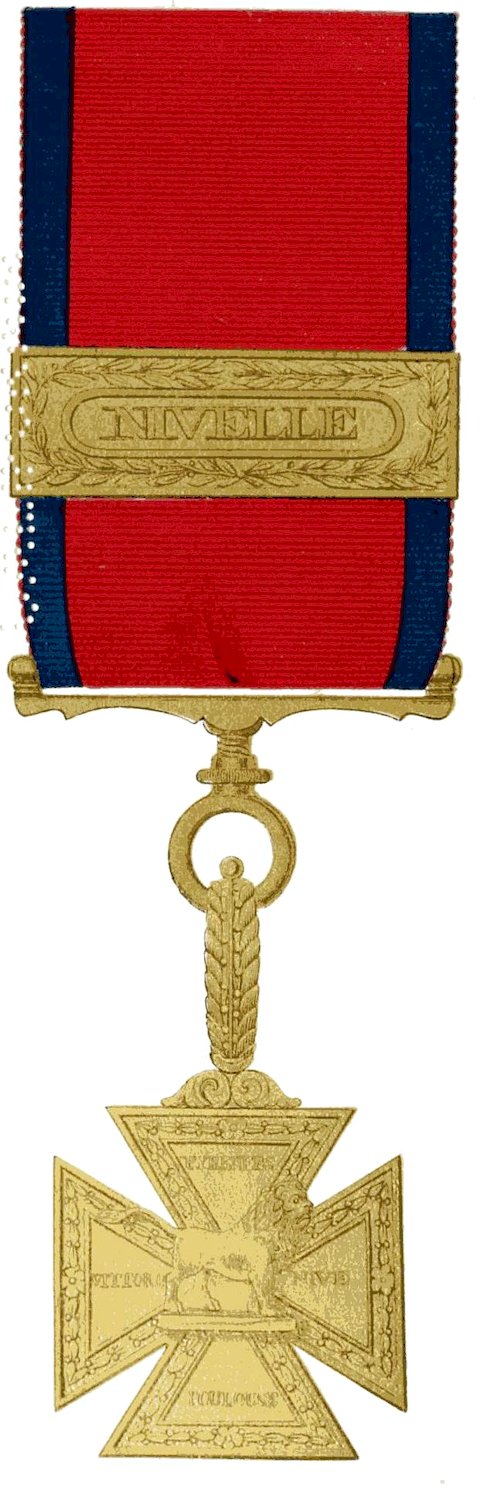
The Gold Cross and Clasp
BY
THOMAS CARTER.
REVISED, ENLARGED, AND CONTINUED TO THE PRESENT TIME
BY
W. H. LONG,
EDITOR OF
“The Oglander Memoirs,” “Memoirs of Lady Hamilton,” &c.
“What is a ribbon worth to a soldier?
Everything!—Glory is priceless!”
Sir E. B. Lytton, Bart.
“He wears her like her medal, hanging
About his neck.”—Winter’s Tale.
LONDON:
NORIE AND WILSON, 156, MINORIES.
1893.
PREFACE.
v
When Napoleon proposed the institution of
the Legion of Honour, he was met by
the assertion that: “Crosses and ribbons were the
pillars of an hereditary throne, and that they were
unknown to the Romans, who conquered the world.”
In his reply to this objection—after showing that
Rome rewarded the achievements of her citizens by
all kinds of distinctions—he added: “For the
soldier, as for all men in active life, you must
have glory and distinction; recompenses are the
food which nourish military virtue.”
For many years a similar antagonistic feeling
to the granting of Medals to all ranks prevailed in
this country, although the propriety of rewarding
the victors of a hundred fights with some decoration
was warmly advocated by the press, and the result
eagerly expected by the veterans who had survived.
It remained for her present Majesty the Queen
to carry out the foregoing maxim of a great
military genius, in her Army and Navy; for with
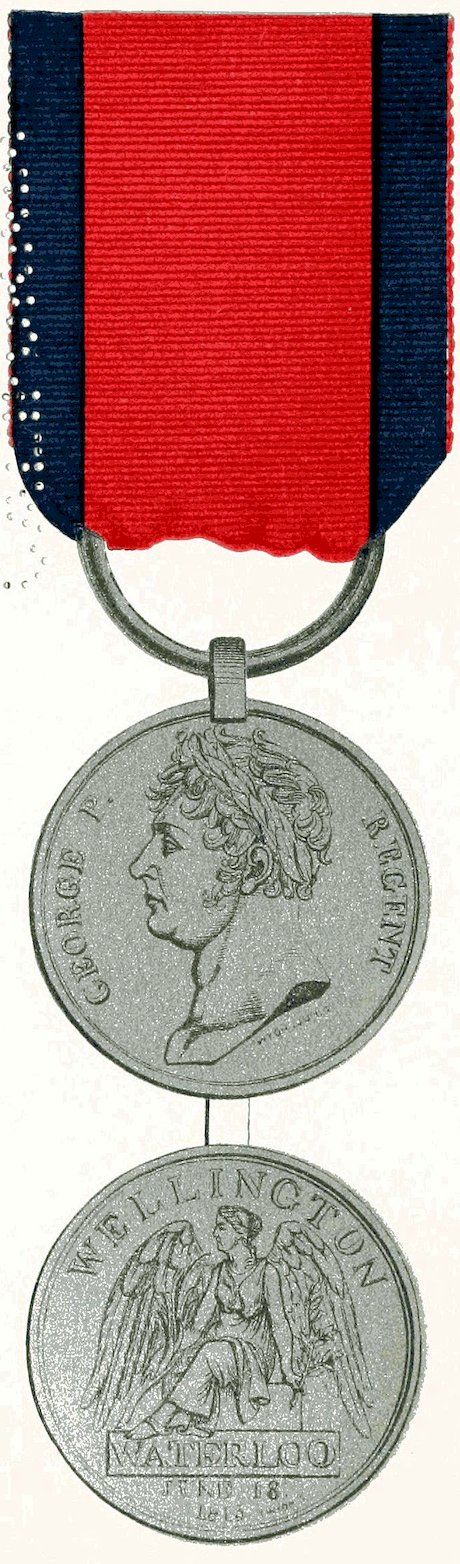
vithe exception of the Medal given for Waterloo, the
soldiers who won the fields of Assaye, Salamanca,
and Vittoria, and the gallant seamen who conquered
at St. Vincent, the Nile, and Trafalgar,
remained undecorated till the year 1847, without
even a piece of ribbon to show for the many
actions in which they had risked their lives in the
service and defence of their country.
The following Work, besides describing the
Medals, aims at giving a concise account of the
Campaigns and Actions for which Medals and
Clasps have been conferred, drawn from the most
authentic sources; interspersed with notes and anecdotes
of regimental and individual acts of bravery.
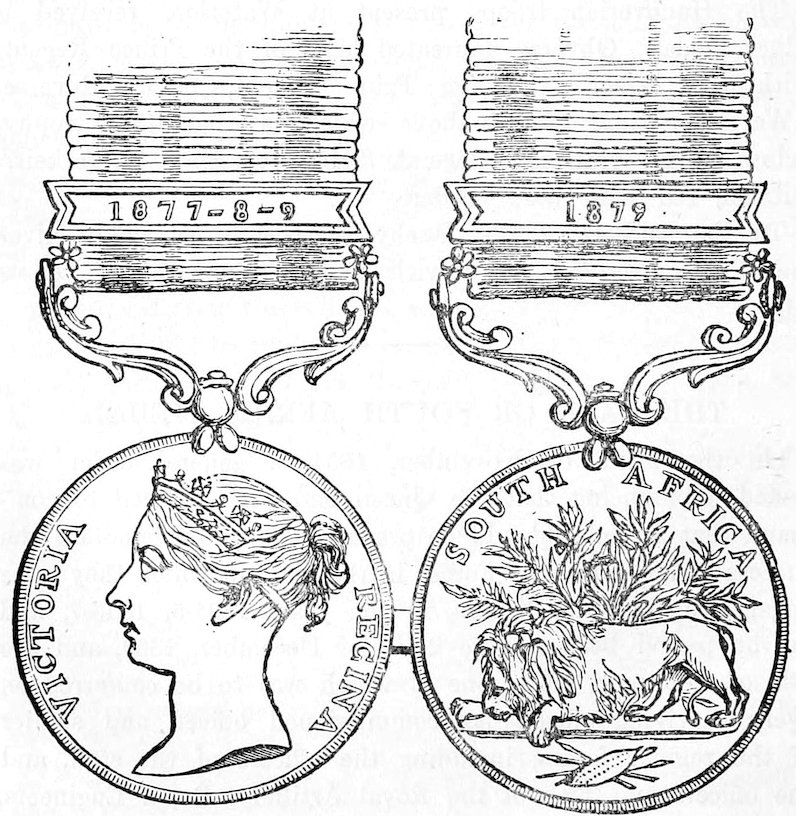
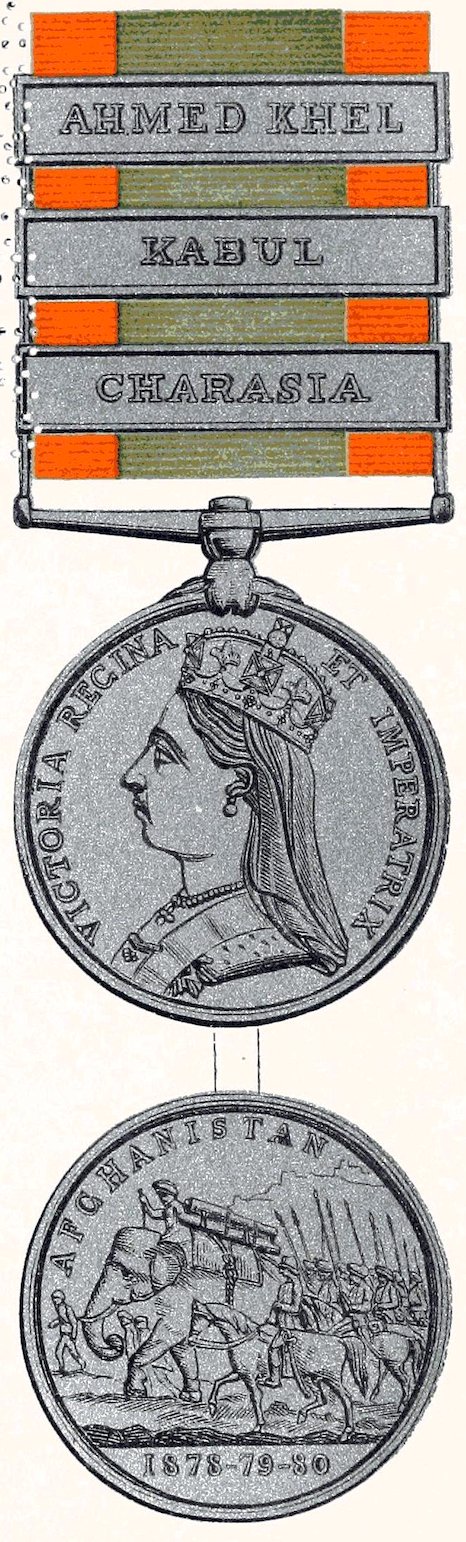
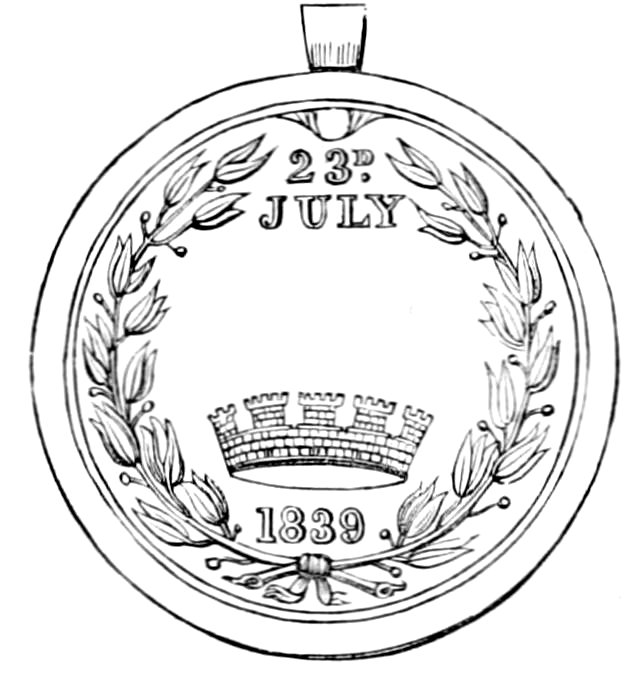
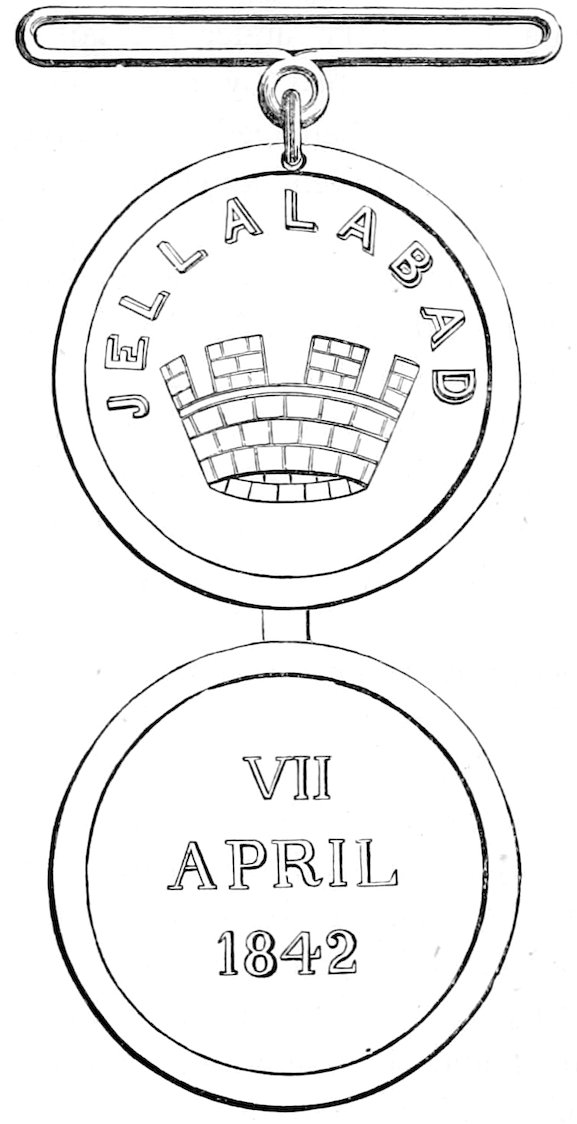
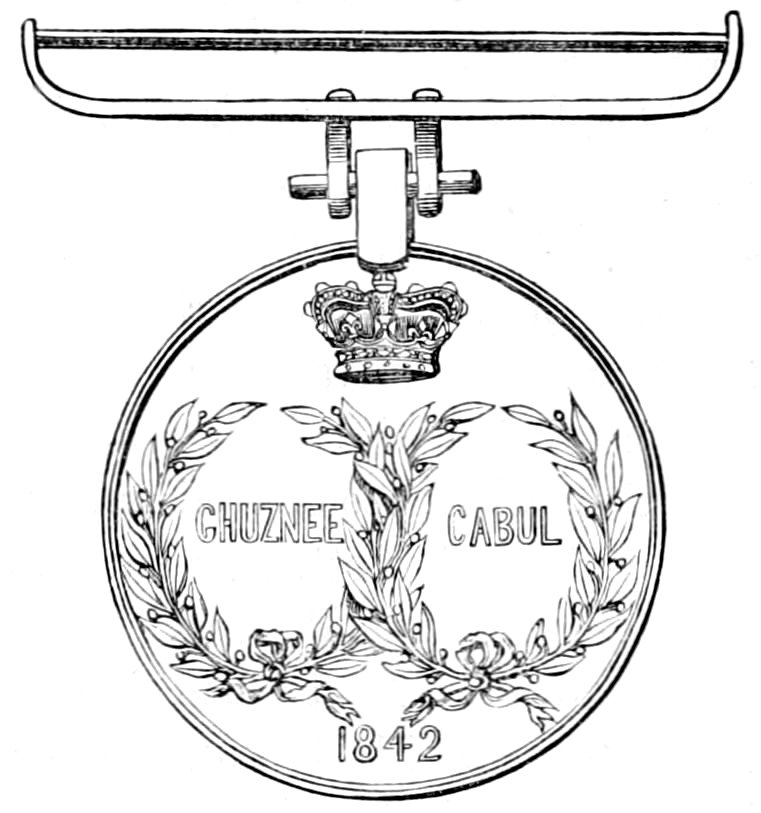
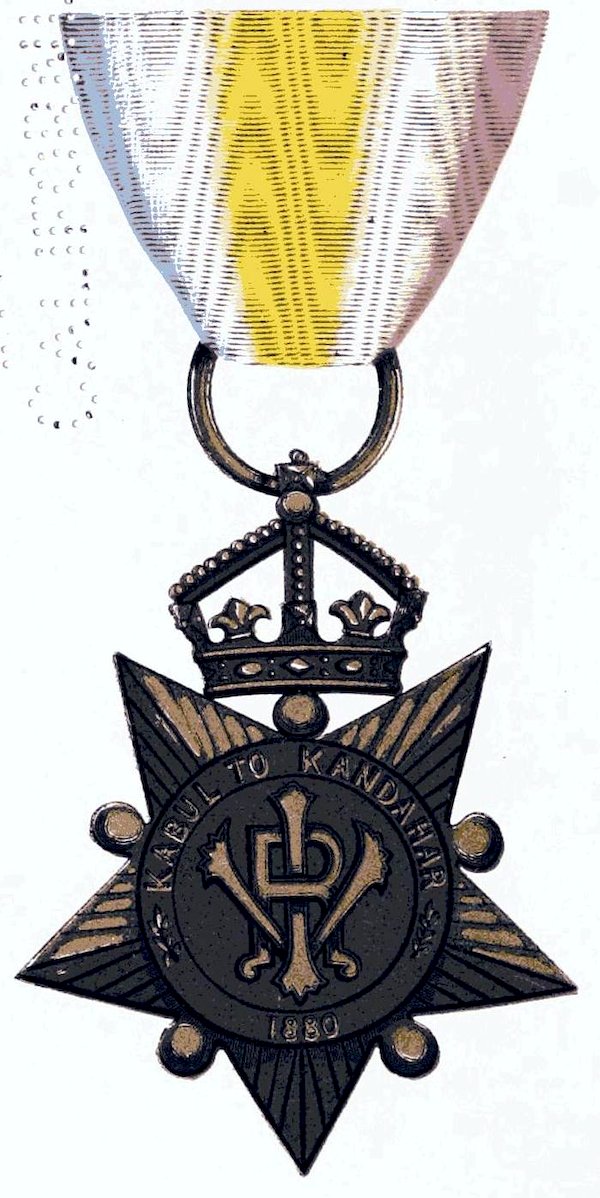
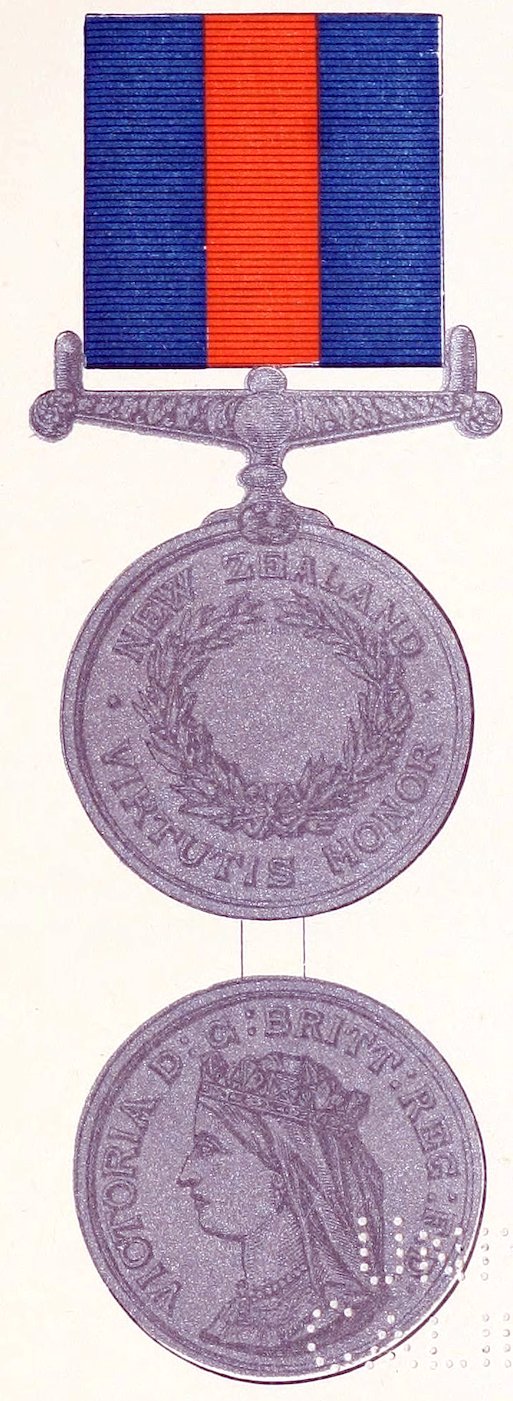
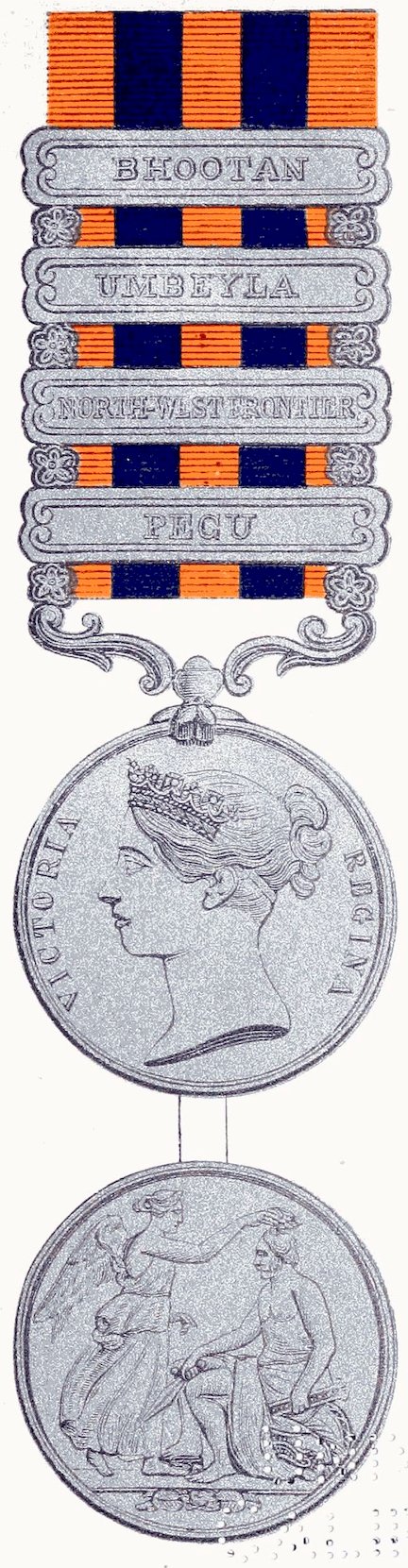
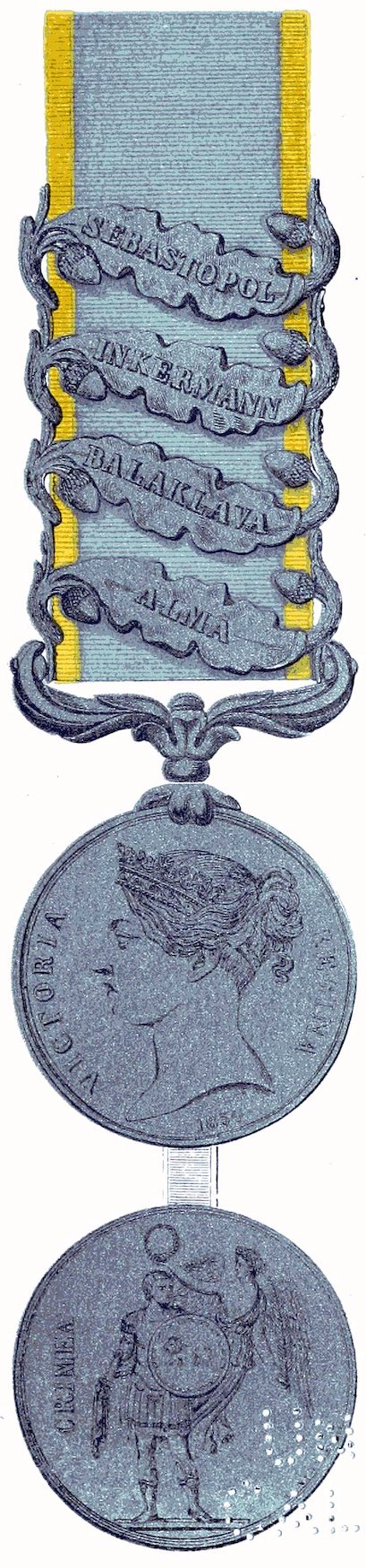
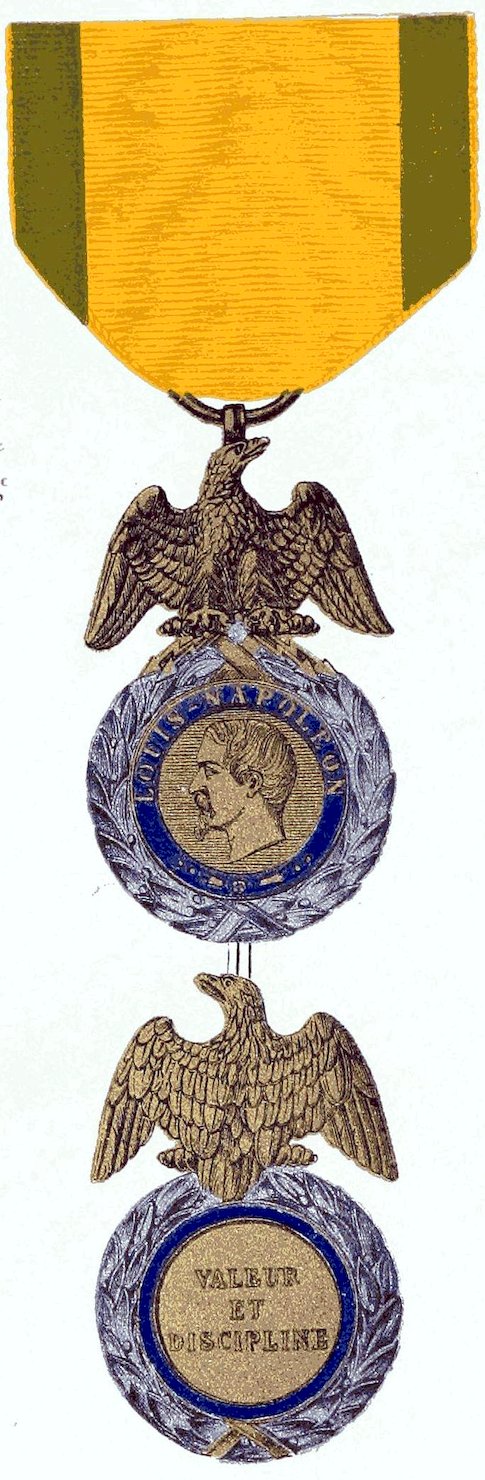
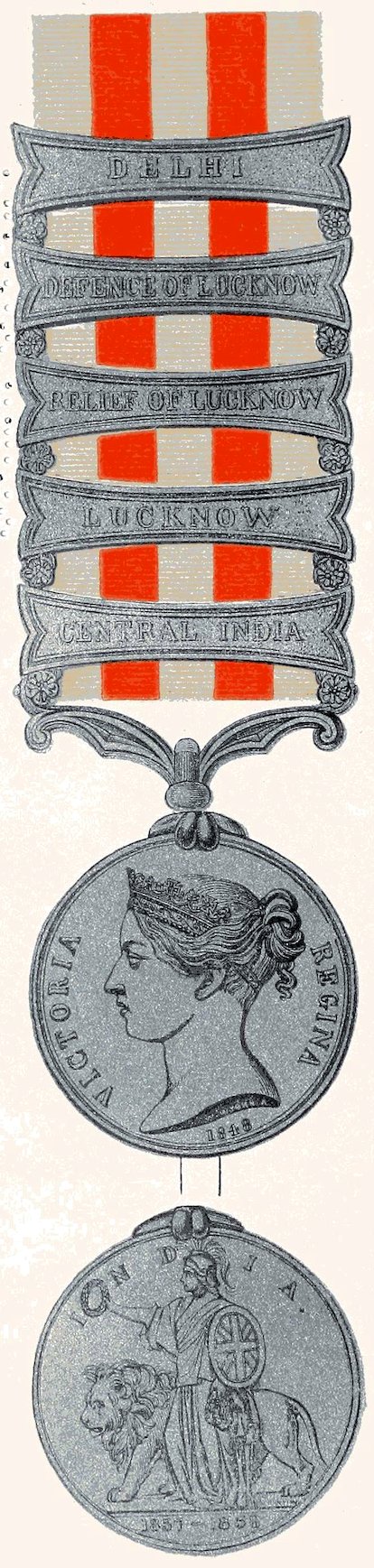
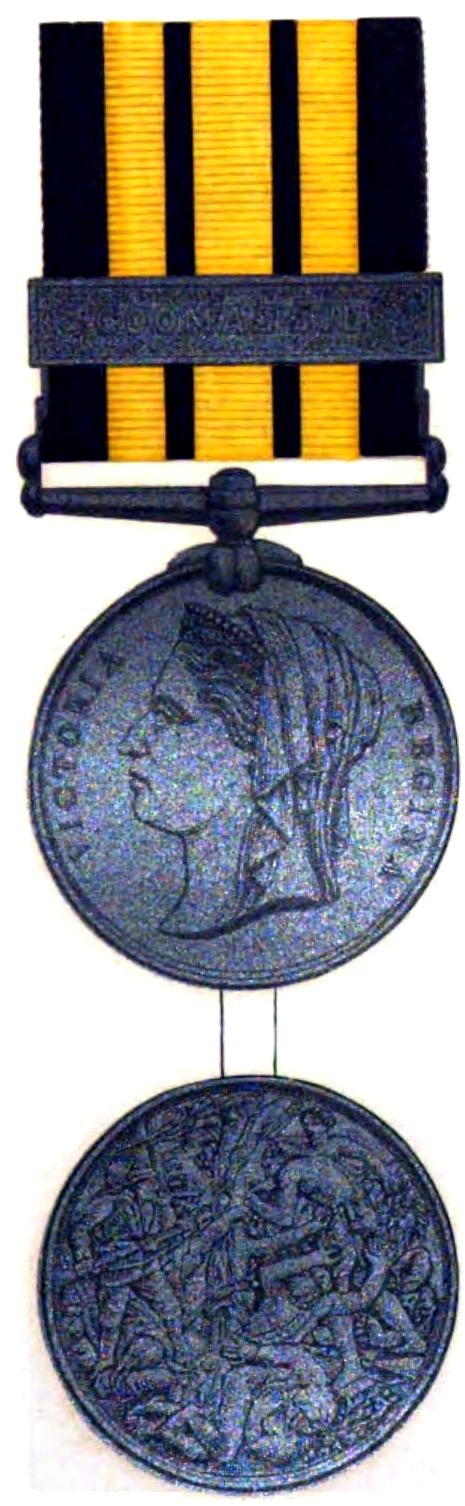
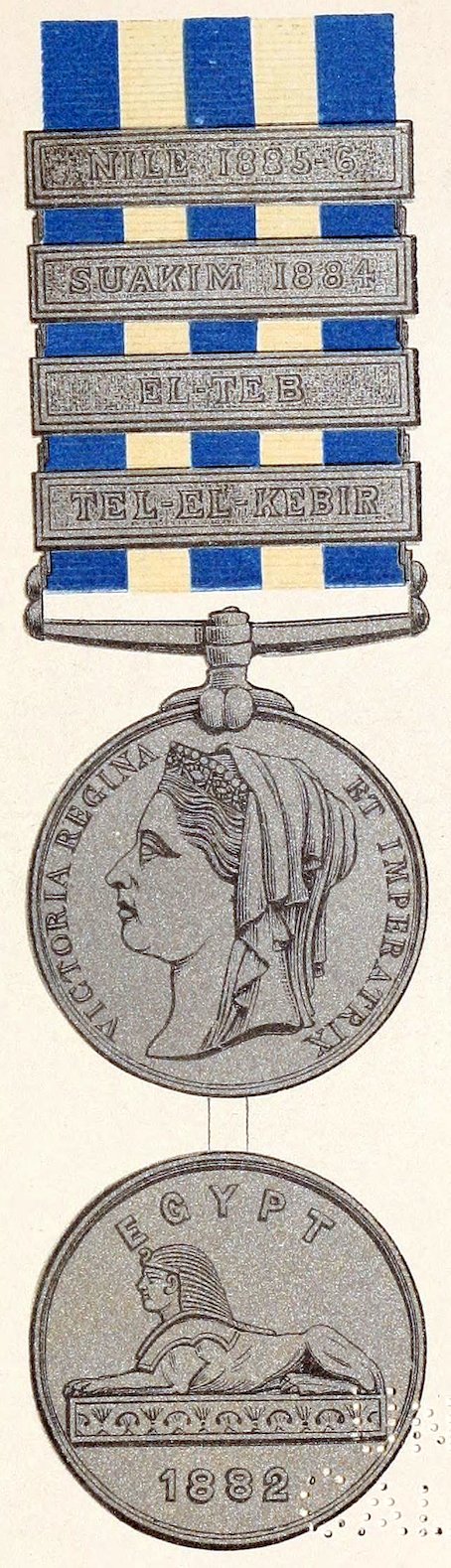
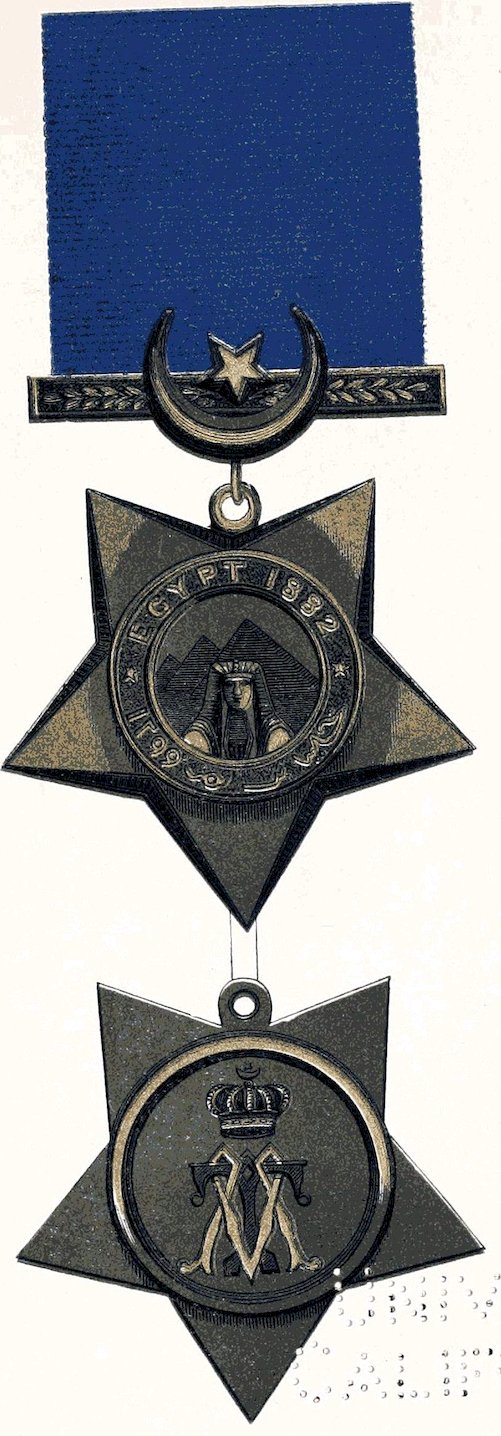
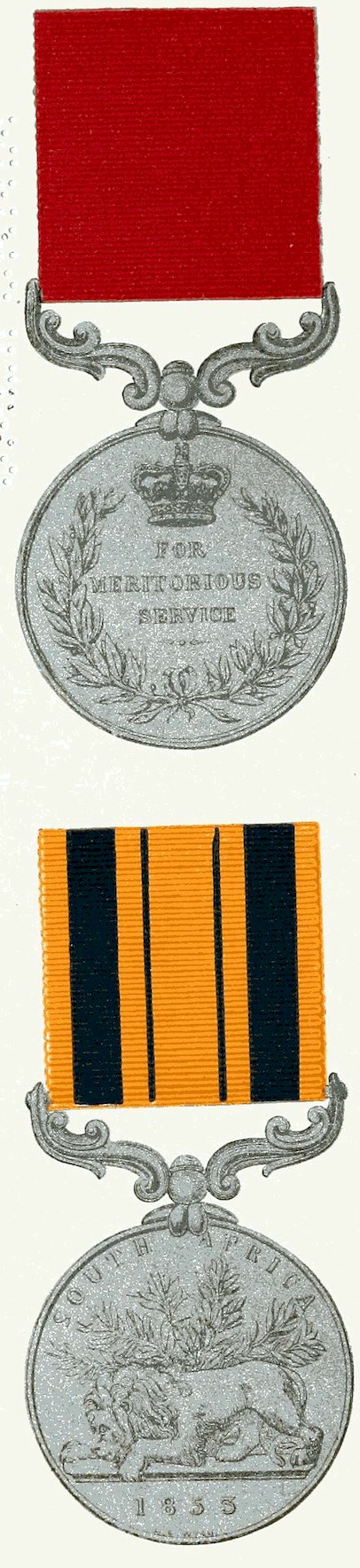
The engravings have been executed from the Medals
themselves, so as to ensure their exact representation;
and it is hoped the narratives of “How
they were won,” will be found equally trustworthy,
as no pains have been spared to secure accuracy.
The accounts of the Wars in New Zealand
and South Africa, and of the numerous Expeditions
for which the Indian General Service Medal has
been granted, will be found in a more detailed
and collected form than hitherto published in a
single volume.
The first edition of this Work, by the late Mr.
T. Carter, described the Medals of the British
viiArmy, and the Campaigns for which they were
granted, to the year 1860. This part has been
carefully revised, and alterations either of excision
or addition made in almost every page. For the
accounts of all Expeditions and Battles, and the
Decorations given for them, from 1860 to the
present date, the Editor alone is responsible.
Descriptions of some Naval Engagements and
Actions of Naval Brigades will also be found, as in
most of the campaigns the operations of the two
branches of the service have been so combined,
that it is scarcely possible to describe one without
the other.
A complete history of the Medals of the British
Navy, and how they were won; forming a companion
volume to the present, is now in the press, and
will be published as speedily as possible.
W. H. L.
February, 1893.
CORRIGENDA.
viii
Page 176.—In Note, for “colours” read “accoutrements.”
„ 234.—Afghanistan Medals. No. 3, “Candahar and Ghuznee,” was never issued.
The highest rewards in all ages and nations have invariably
been bestowed upon deeds of valour and martial daring; and
no renown has generally been considered equal to that honorably
gained by Arms in face of an enemy. The most noble families
are proud to trace their descent from some celebrated warrior,
and any distinction or trophy won by him is usually more
treasured and prized than any other dignity or mark of honour.
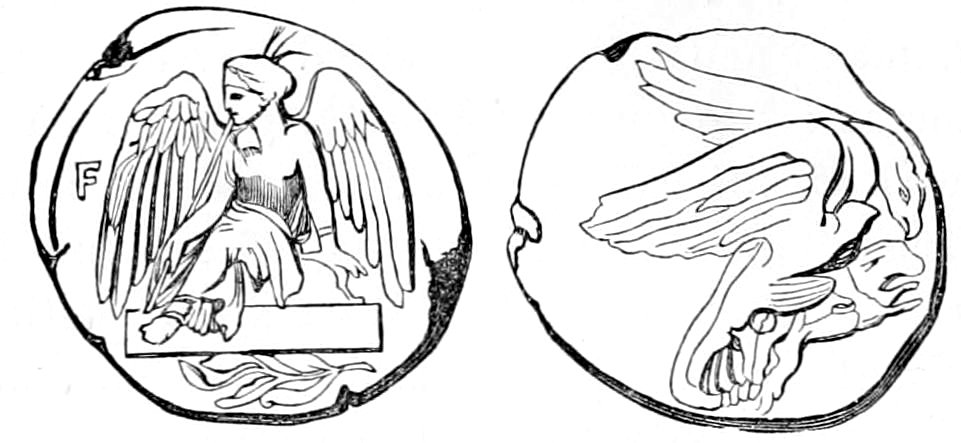
The custom of striking medals to commemorate victories, important
events, or in honour of remarkable persons or deeds, dates
from the times of the Greeks and Romans; but only in modern
times have medals been issued as a reward of martial services,
and worn as personal decorations.
Gold chains and medals were frequently bestowed by Princes
in the XV. and XVI. centuries on Ambassadors, and others
whom they wished to honour, and these marks of favor were
certainly intended to be worn by the recipients; Queen Elizabeth[1]
gave medals for naval achievements; but not until the
next century can instances be found of such rewards being
conferred for distinguished services in the field. Probably the
earliest Medal in existence struck by, or for an Englishman, is
a war medal dated 1480, of large size, and in the early Italian
style. On the obverse is a head with “Jo Kendal Rhodi.
Turcupellarius,” and on the reverse the arms of Kendal, with
the inscription “Tempore obsidionis Turcorum, mcccclxxx.”
The first medals given in England for Military services were
2struck by order of Charles I., by a warrant dated from the
Court at Oxford, May 18th. 1643; to reward such soldiers as
distinguished themselves in forlorn hopes. The warrant was
issued to the Wardens of the Mint:—
“Charles R.,
“Trusty and well-beloved, we greet you
well: whereas we have received information that those soldiers
which have been forward to serve us in the Forlorn-hope, are
not looked upon according to their merited valour and loyal
service. We do therefore require, that from henceforward, the
Commander-in-Chief, both of Horse and Foot, which lead up
the Forlorn-hope, upon whom also we mean to bestow special
tokens of our princely favour, do signify in writing the names
of those soldiers whom they find most forward in serving us,
their King and country, that care may be taken to reward their
deservings, and make them specially known to all our good
subjects. For which end we have thought fit to require Sir
William Parkhurst, Kt., and Thomas Bushell, Esq., Wardens of
our Mint, to provide from time to time certain Badges of Silver,
containing our Royal image, and that of our dearest son, Prince
Charles, to be delivered to wear on the breast of every man who
shall be certified under the hands of their Commander-in-Chief
to have done us faithful service in the Forlorn-hope.
“And we do therefore, most straightly command, that no
soldier at any time do sell, nor any of our subjects presume to
buy, or wear, any of these said Badges, other than they to whom
we shall give the same, and that under such pain and punishment
as our Council of War shall think fit to inflict, if any
shall presume to offend against this our Royal command. And
we further require the said Commanders and Wardens of our
Mint, to keep several Registers of the names of those, and of
their country, for whom they shall give their certificate. Given
at our Court at Oxford the 18th. day of May, 1643.”
These Medals had the effigy of the King on one side, and
of Prince Charles on the other.
On Sunday, October 23rd., 1642, was fought the battle of
Edgehill, in which Robert Welsh or Walsh, an Irish gentleman,
who commanded a troop of horse, succeeded in recovering from
3the Parliamentary forces, the standard of the King’s own regiment,
taken by them, and also captured two pieces of cannon,
and a waggon belonging to the Earl of Essex. The following
morning, the king, upon the top of Edgehill, knighted Mr. Walsh,
who was presented to him with these trophies by Prince Rupert;
and on the 1st. of June, 1643, a gold medal was ordered for
this officer, the obverse to bear the royal figure and his son
Prince Charles, the reverse to have the royal banner used in
the above battle, to be inscribed “Per Regale Mandatum
Caroli Regis hoc assignatur Roberto Welch Militi.” Sir
Harris Nicolas states that a copy of the warrant, with a drawing
of the medal, which is oval, having on one side the effigies of the
king and of Prince Charles, inscribed Car. Rex. M. B. F. et
H. Car. Princeps; and on the reverse the royal standard, in
bend sinister, inscribed “Per Regale Mandatv’ Caroli Regis
hoc assignatur Rob: Welch Militi,” was recorded in the
College of Arms, on the 14th. of August, 1685. This medal
was worn on the breast, as appears by the knight’s own
narrative, printed for himself in 1679. The long parliament
passed an act in 1649, enacting that the tenth of all prizes
due to the Lord High Admiral, should be appropriated for
medals or other rewards for eminent service at sea, which
ordinance was repeated in the succeeding year.[2]
After the defeat of the Scots at Dunbar, by Cromwell, on the
3rd. of September, 1650, the House of Commons “ordered that
it be referred to the committee of the army, to consider what
medals may be prepared for officers and soldiers, that were
in this service in Scotland, and set the proportions and the
values of them, and their number, and present the estimate
of them to the House.” The house voted that the officers
and men “which did this excellent service” should be presented
with gold and silver medals. Simon, an eminent
engraver of that day, was sent to Cromwell, to consult with
him as to the device for this medal. Dr. Harris, in the
appendix to his “Historical and Critical Account of Oliver
Cromwell,” page 538, has printed an original letter of Cromwell’s
to the parliament (then in the possession of James
4Lamb, Esq., of Fairford, in Gloucestershire, and subsequently
of John Raymond Barker, of the same place), on Symond’s
(Simon) proceeding as above stated. The letter is highly
characteristic, and is as follows.—
“For ye Honble the Committee for the Army, these.
“Gentl.,—It was not a little wonder to me to see that you
should send Mr. Symonds so great a journey about a business
importinge so little, as far as it relates to me when, as if
my poore opinion may not be rejected by you, I have to
offer to that wch I thinke the most noble end, to witt, the
commemoracon of that great mercie at Dunbar, and the
gratuitie to the army, wch might better be expressed upon
the meddal by engraving as on the one side the Parliamt,
wch I heare was intended, and will do singularly well; so,
on the other side, an army wth this inscription over the
head of it, The Lord of Hosts, wch was or word that day:
wherefore, if I may begg it as a favor from you, I most
earnestly beseech you, if I may do it wth out offence, that
it may be soe; and if you thinke not fitt to have it as I
offer, you may alter it as you see cause, only I doe thinke
I may truely say it will be verie thankfully acknowledged
by me, if you will spare the having my effigies in it.
“The gentlemans paynes and trouble hither have been verie
great, and I shall make it my seconde suite unto you that
you will please to conferr upon him that imploymt in yr
service wch Nicholas Briott had before him; indeed, the man
is ingenious and worthie of encouragemt. I may not presume
much, but if at my request and for my sake he may obteyne
this favor, I shall put it upon the accompt of my obligacons,
wch are not a few, and I hope shal be found readie
gratefully to acknowledge and to approve myself, Gentl.,
“Yor most reall servant,
“Edinburgh, 4th. of Feb., 1650–1.” “O. Cromwell.”
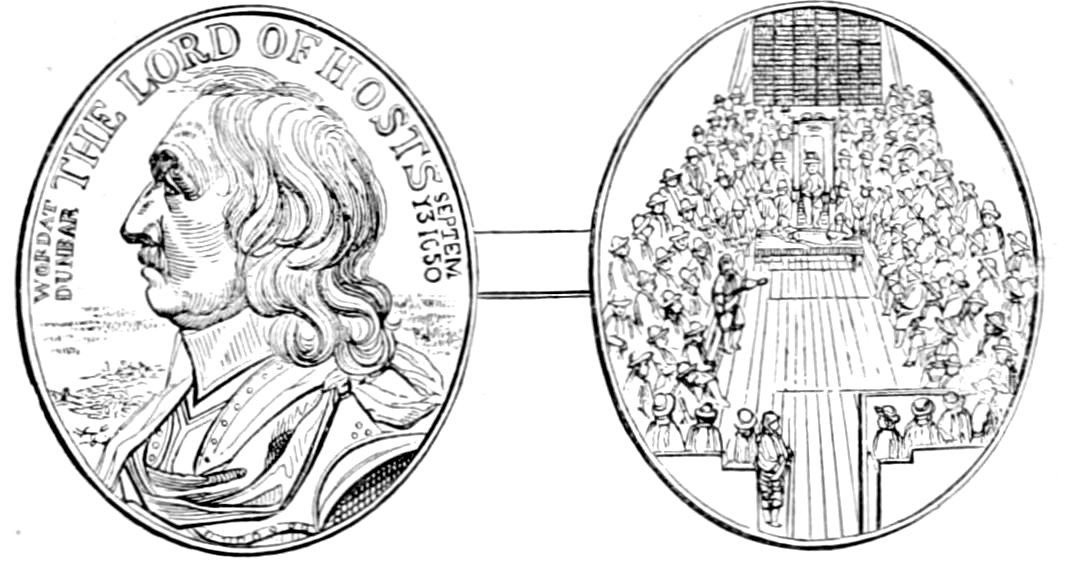
Cromwell’s modesty was over-ruled, and the medal bears his
bust. On the obverse is the head of Cromwell, profile;
under the shoulder, Tho: Simon F.; the motto about the
5head, Word at Dunbar,—The Lord of Hosts,—Septem ye
3, 1650; behind the head a prospect of the battle. The
reverse has the House of Commons sitting, as represented
on the Parliament Great Seal, 1648, and also on that of the
Commonwealth, 1651. It is remarkable also for Cromwell’s
likeness when Lieutenant-General. This is engraved in “The
Medallick History of England,” and in “Simon’s Medals and
Coins.” The Dunbar Medal is of two sizes,[3] and is the
first given generally to officers and men, as is the present
practice, and no instance occurred of a general distribution of
medals by the Sovereign’s command until that for Waterloo
was authorised.[4]
In the two works immediately referred to there are engravings
of several medals, probably worn by officers and
soldiers as honorary badges; some contain the effigy of King
Charles the First or Prince Rupert, or Sir Thomas Fairfax
or his son, or the Earls of Essex, Manchester, or Dumferline,
General Rossiter, or of other Parliamentary commanders; on
6the reverse were their names or arms, or a representation
of the Parliament, or the words Meruisti, or Pro Religione
Lege et Parliamento, or For King and Parliament. It
now seems impossible to discover the precise history of these
medals. The victory of Naseby, on the 14th. of June, 1645,
was commemorated by a silver-gilt medal, with a ring: on
one side was the effigy of Sir Thomas Fairfax, inscribed,
Tho: Fairfax miles Milit. Parl. Dux. Gen.; the reverse
bore Meruisti, within a circle, and Post Hæc Meliora, 1645.
The Parliamentary medal, which was distinct from the naval
medal, before adverted to, cannot be described with certainty;
but it is supposed to have had the effigies of the victorious
generals on one side, and the Parliament on the other. It
appears to have been instituted soon after that for Dunbar,
as the House of Commons conferred it on Colonel Mackworth,
by resolution dated the 27th. of August, 1651, with a chain
of gold to the value of one hundred pounds. This officer
was governor of Shrewsbury, and his service consisted in
refusing to surrender the castle and garrison when summoned
by the forces of the royalists.
With these exceptions the medals of the Commonwealth
era appear to have been given for naval services against the
Dutch, such distinctions being granted to Generals Blake
and Monk, Vice-Admiral Penn, and Rear-Admiral Lawson,
and certain officers of the fleet. Blake’s medal for the victory
over the Dutch fleet off the Texel, in 1653, was purchased
by William the Fourth for one hundred and fifty guineas.
At this period the position of these officers was scarcely
defined, for at times they appear to have fought on land
as well as at sea.[5]
The medals of succeeding reigns appear to have been
confined to naval services: although medals were struck in
commemoration of the victories of the great Duke of Marlborough,
it is certain that they were not worn by either
officers or soldiers.
After the battle of Culloden, on the 16th. of April, 1746, a
gold medal was struck, having on the obverse, the head of the
7Duke of Cumberland; the reverse had a figure of Apollo, and
a dragon pierced by an arrow, inscribed, Actum est ilicet
perit, and in the exergue, Præl. Colod. Ap. xvi., MDCCXLVI.
This medal was given to officers who commanded regiments
at the battle, and was worn round the neck by a crimson
ribbon with a green border.
The medals granted by the Honourable East India Company[6]
are next in order of time.
A medal was issued to Officers and men, by the East India
Company, for the Campaigns in the Deccan, against Hyder Ali
and his son Tippoo Sahib, 1780–84. This medal was granted
by an order in Council, January 19th., 1784, and was in gold,
silver, and inferior metal. Obverse, Britannia, seated upon a
trophy of Arms, holding a wreath in her outstretched hand
towards a fortress in the distance. Reverse, an inscription
in Persian, which may thus be translated: “The courage and
exertions of those valiant men by whom the name of Englishmen
has been celebrated and exalted from Hindostan to the
Deccan, having been established throughout the world, this
has been granted by the Government of Calcutta, in commemoration
of the excellent services of the brave. Year of
the Hegira, 1199,” i.e., 1784. Within a circle is the following
legend, also in Persian: “As coins are current in the world,
so shall the bravery and exploits of those heroes by whom
the names of the victorious English nation was carried from
Bengal to the Deccan.” Suspended from a yellow cord.
In 1793, June 4th., by an order in Council, the East India
Company granted a medal to the Officers and men under
Lord Cornwallis, General Meadows, and General Abercromby,
engaged in the war in Mysore, 1791–92, against Tippoo Sahib.
The medal was issued in gold, silver, etc., as the Deccan Medal.
Obverse, a Sepoy in the Military costume of the time, holding
the British flag in his right hand, in his left the Mysore
banner reversed, in the background a view of Seringapatam.
Reverse, within a wreath, “For services in the Mysore, 1791–1792”;
surrounded by a Persian inscription, “A token of the
bravery of the troops of the English Government in the war
in the Mysore, in the year of the Hegira, 1205–1206.”
8There were two sizes of this medal in silver, and it was
worn suspended from a yellow silk cord.
One of the most dashing exploits in the war of Mysore was
the capture of Bangalore, the second city in the dominions of
Tippoo. It was enclosed by a high wall and a deep ditch,
and the gate was covered by a close thicket of Indian thorns.
The attack was made without any examination of the ground,
and the troops in advancing and endeavouring to force an
entrance, were exposed to a destructive fire of musketry.
Colonel Moorhouse, one of the best officers in the service,
fell mortally wounded. At length Lieutenant Ayre, a man of
diminutive stature, succeeded in forcing his way through the
shattered gate; which gallant action, being observed by General
Meadows, he shouted to the stormers, “Well done! now
whiskers, try if you can follow and support the little gentleman.”
This animated appeal succeeded, the troops rushed
through the gate into the town, and drove out the enemy at
the point of the bayonet.
By an order in Council, Fort William, May 15th. 1807, a
medal was granted to the troops engaged in the capture of
Ceylon from the Dutch, 1795–96. Obverse, “For services in
the Island of Ceylon, A.D. 1795–96.” Reverse, an inscription
in Persian, “This medal was given by way of acknowledgement
of services in Ceylon, in the year of the Hegira, 1209–1210,”
suspended from a yellow silk cord. (Seringapatam Medal, see
post).
A medal for services in Egypt was granted by general order,
July 31st., 1802. In 1801, General Sir David Baird was
dispatched from India in command of a force of 2,800 British
troops, 2,000 Sepoys, and 400 picked artillerymen, to Egypt,
to join the army under Sir Ralph Abercromby, landed
them from England, to act against the French. Sir David
was joined on the 17th. of May, at Jeddah, in the Red Sea,
by an expedition from the Cape of Good Hope, consisting
of the 61st. Regiment, some light cavalry and artillery, and on
June 8th. landed at Cossier. (See Egyptian Campaign, post).
Obverse, a Sepoy holding a Union Jack in his right hand,
in rear, a camp, with an inscription in Persian: “This medal
has been presented in commemoration of the defeat of the
9French armies in the Kingdom of Egypt, by the bravery and
ability of the victorious army of England.” Reverse, a ship
in full sail, with the Union Jack flying; pyramids and obelisk
in the back ground. In the exergue, the date, 1801. Worn
as the preceding.
In 1850 a clasp was added to this medal, which was sanctioned
by the Queen in 1848.
In July, 1810, a small Anglo-Indian force, under the command
of Colonel Keating, with a squadron of ships of the
Royal Navy, under Commodore Rowley, captured the Isle
of Bourbon from the French.
On the 29th. of November of the same year, an army of
about 10,000 men from India, commanded by General J.
Abercromby, assisted by a squadron of ships, under the command
of Vice-Admiral Bertie, landed in the Isle of France,
and after a smart action, in which the French were defeated,
General Decaen, the French Governor, proposed terms of
capitulation, and on December 3rd., surrendered the Island
to Great Britain. Two hundred and nine pieces of heavy
ordnance, with ample stores of ammunition, five French frigates,
and a corvette, with twenty-four merchant ships, were captured.
From that time, the Isle of France, henceforth known by
its older name of Mauritius, has remained a dependency of
the British crown.
For these services a medal was granted, by general order,
dated, Fort William, September 10th., 1811. Obverse, a Sepoy
holding the Union Jack, trampling on the French colours and
Eagle; by his side a gun; in the back ground, ships at anchor.
Reverse, within a wreath a Persian inscription: “This medal
was conferred in commemoration of the bravery and accustomed
fidelity exhibited by the Sepoys of the English
company in the capture of the Mauritius Islands, in the year
of the Hegira, 1223.” Round the wreath, “Rodrigues, 6th.
July, MDCCCIX. Bourbon, 8th. July, and Isle of France,
3rd. December, MDCCCX.” The medal is worn as the preceding.
Her Majesty’s 69th. and 86th. Regiments were engaged in
this service.
By a general order, February 11th., 1812, a medal was
conferred on the troops, numbering about 12,000, engaged in
10the reduction of Java, under the command of General Sir
S. Auchmuty. (See capture of Java, post). Obverse, Sepoys
carrying Fort Cornelis; on the flag-staff is the British flag
over the Dutch, above, the word Cornelis. Reverse, a Persian
inscription: “This medal was given in commemoration of the
valour and courage displayed by the Sepoys of the East India
Company, in the capture of Java, in the year of the Hegira,
1228.” The legend is in English, “Java, conquered, 26th.
August, MDCCCXI.” Worn as the preceding.
Her Majesty’s 14th., 59th., 69th., 78th., and 89th. Regiments
of foot were present at the capture of Java.
A medal was granted by general order, March 20th., 1816,
for the two campaigns in Nepaul, 1814–16, under Generals
Marley, Wood, Gillespie (who was killed), and Ochterlony.
Obverse, troops marching across hills crowned with stockades;
on the left, a field gun. Reverse, inscription in Persian:
“This medal was given by the Nawab Governor-General
Bahadur, in testimony of the energy, good service, skill, and
intrepidity which were displayed during the campaigns on the
hills, in the year of the Hegira, 1229–1230.”
Worn as the preceding. A clasp for Nepaul was granted
with the “Army of India” Medal in 1851. (See War in
Nepaul, post).
In 1826, April 22nd., a medal was granted for the first
Burmese War, 1824–26, troops commanded by Sir Archibald
Campbell and General Morrison. Obverse, the white Elephant
of Burmah crouching to the British Lion; the Burmese colours
lowered to the Union Jack, palm-trees in the back ground.
A Persian inscription: “The Elephant Ava submitting to
the British Lion, 1826.” Reverse, a storming party advancing
towards the Great Pagoda of Rangoon, a steam-boat
and boats on the river Irrawaddy; Sir A. Campbell directing
the movement in the foreground, under a palm-tree. An inscription
in Persian: “The Standard of the victorious army of
England in Ava.” This medal is by Wyon, and worn with
a crimson ribbon with blue edge. A clasp for “Ava,” was
given with the “Army of India” Medal in 1851. (See War
in Ava, post).
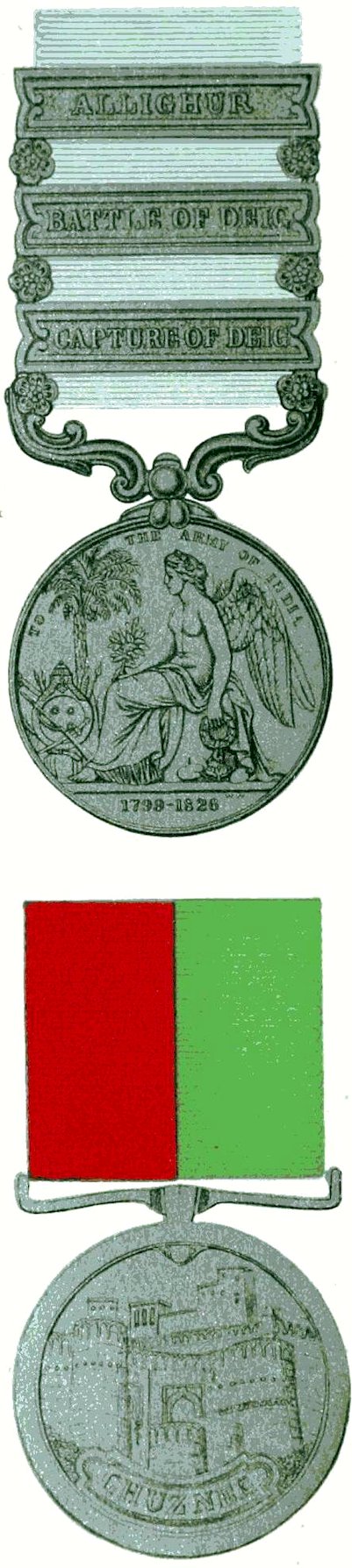
The Indian War Medal.—1799–1826
The Ghuznee Medal.—1830
THE INDIAN WAR MEDAL. 1799–1826.
11
On the 21st. of March, 1851, a General Order was issued,
announcing that The Queen had been pleased to signify her
assent to a measure that had been proposed by the Court of
Directors of the East India Company, of granting a medal
to the surviving officers and soldiers of the Crown, who were
engaged in the following services in India:—Storm of Allighur,
September 4th., 1803; Battle of Delhi, September 11th., 1803;
Battle of Assaye, September 23rd., 1803; Siege of Asseer Ghur,
October 21st., 1803; Battle of Lawsarree, November 1st., 1803;
Battle of Argaum, November 29th., 1803; Siege and Storm of
Gawilghur, December 15th., 1803; Defence of Delhi, October,
1804; Battle of Deig, November 13th., 1804; Capture of Deig,
December 23rd., 1804; War in Nepaul in 1816; Battle of
Kirkee, and Battle and Capture of Poona, November, 1817;
Battle of Seetabuldee, and Battle and Capture of Nagpoor,
November and December, 1817; Battle of Maheidpore, December
21st., 1817; Defence of Corygaum, January 1st., 1818; War
in Ava, 1824 to 1826; and Siege and Capture of Bhurtpore,
January, 1826.
The mode of application was similar to that specified in the
General Order granting the War Medal, (see War or Peninsula
Medal, post,) but the concluding paragraph announced that,
“It having, moreover, been represented to Her Majesty, that
the officers and soldiers of the Crown, who were engaged in the
Mysore war, and at the Siege of Seringapatam had already
received medals from the East India Company for those services,
Her Majesty has further been graciously pleased to
permit the same to be worn by them with their uniforms.”
Following the order of date, the first service is
THE MYSORE WAR AND SIEGE OF SERINGAPATAM. February to May, 1799.
Although the reduction of the power and resources of
Tippoo Sahib, effected by the treaty of Seringapatam, which
terminated the campaign of 1792, had weakened his influence,
yet it had not extinguished his intense hatred of the British.
12The Sultan had entered into a negotiation with the Governor of
the Isle of France, in 1798, and sent an embassy to Zemaun
Shah, Sovereign of Cabool, for the purpose of inducing him to
attack the possessions of the Company. Having also derived
encouragement from the successes of the French arms in Egypt,
from which country the Directory intended to act against the
British dominions in India, Tippoo commenced augmenting his
military force, and his hostile designs became every day more
apparent. The Governor-General the Earl of Mornington
(afterwards Marquis of Wellesley) perceiving a rupture inevitable,
resolved to anticipate the attack, and ordered the army
to take the field, and march into the heart of Tippoo’s
territory.
Major-General George (afterwards Lord) Harris, who was
serving with the local rank of Lieutenant-General, in conformity
to these orders, advanced with the army under his command
on the 11th. of February, 1799, and entered the Mysore territory
on the 5th. of March. On the 27th. the troops arrived
at Mallavelly, and on approaching the ground of encampment
the forces of Tippoo were seen drawn up on a height a few
miles off. The enemy attacked the advanced pickets, and a
general action ensued, in which the 33rd. regiment highly distinguished
itself. A body of two thousand men moved forward
in the best order towards the regiment, which, firmly standing
its ground, coolly reserved its fire until within a distance of
about sixty yards, and then led by its Lieutenant-Colonel, the
Honourable Arthur Wellesley, in person, boldly advanced, and
charging with the bayonet, compelled the approaching column
to give way. This movement being seconded by Major-General
Floyd, who made a rapid charge with the cavalry, completed
the disorder, and the enemy retreated before the whole of the
British line, which immediately moved forward.
While this attack was being made by the left wing, under
Lieutenant-Colonel the Honourable Arthur Wellesley, with the
Nizam’s contingent, the 33rd., and Major-General Floyd’s
cavalry, Lieutenant-General Harris with the troops, which
formed the right wing, had been also engaged.[7]
13In this affair Tippoo sustained a loss of nearly two thousand,
including some of his most valuable officers; whilst the British
casualties amounted to only sixty-six men.
On the following morning the army advanced, and arrived
before Seringapatam on the 5th. of April, when preparations
for the siege were at once commenced.
An attack was made on an entrenchment of the enemy about
six o’clock in the evening of the 20th. of April, in which the
flank companies of the 12th. and 73rd. regiments were
employed. This was successful, and although the enemy
had two hundred and fifty men killed and wounded, and
the entrenchment was occupied by about eighteen hundred
of Tippoo’s infantry, the British had but one man wounded.
The siege was prosecuted with vigour, and a breach being
reported practicable on the 3rd. of May, the assault was ordered
to take place in the heat of the following day, as the besieged
would then be the least prepared to oppose the attack. On
this service were employed the ten flank companies of the
European corps necessarily left to guard the camp, and outposts,
followed by the 12th., 33rd., 73rd., and 74th. regiments,
three corps of grenadier Sepoys, two hundred of the Nizam’s
14troops, a hundred of the artillery, and the corps of pioneers,
the whole under the orders of Major-General (afterwards Sir
David) Baird. The assault took place about half-past one
o’clock in the afternoon of the 4th. of May, and in a short
space of time the British colours waved over the fortress.[8]
The Major-General had divided his force for the purpose of
clearing the ramparts to the right and left; one division was
commanded by Colonel Sherbrooke, and the other by Lieutenant-Colonel
Dunlop; the latter was wounded, but both corps,
although strongly opposed, were completely successful. The
spirited attack, led by Lieutenant-Colonel Campbell, of the
74th. Highlanders, was particularly mentioned in general
orders, in which all the officers and men were thanked
for this memorable achievement. The body of Tippoo Sultan
was found among heaps of slain, and was afterwards interred
in the magnificent mausoleum which he had erected over the
tomb of his father, the once powerful Hyder Ali, a portion
of the victorious troops attending the ceremony.
In this manner terminated the siege of Seringapatam, and
the fall of the capital placed the kingdom of Mysore at the
disposal of the British government, and destroyed a power in
India which had proved itself a formidable enemy.
The following regiments were engaged in the storming and
capture of Seringapatam on the 4th. of May, 1799; namely,
the 19th. and 22nd. (late 25th.) Light Dragoons, (both since
disbanded;) the 12th., 33rd., 73rd., 74th., 75th., 77th. regiments,
the Scots Brigade, afterwards the 94th.[9] regiment, and
the 103rd.
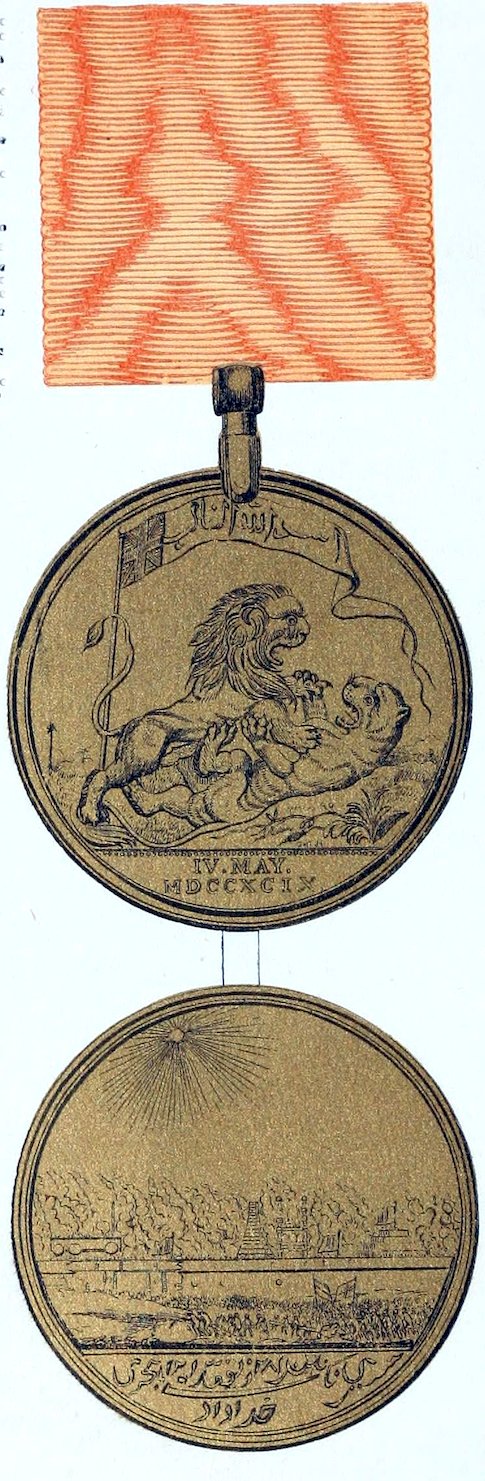
The Seringapatam Medal.—1799.
THE SERINGAPATAM MEDAL, [10] 1799.
15
This medal was distributed to officers and soldiers—European
and Native—on one side of it is represented the storming of
the breach of Seringapatam, from an actual drawing on the
spot, with the meridian sun, denoting the time of the storm,
and the following inscription in Persian underneath:—“The
Fort of Seringapatam, the gift of God, the 4th. May, 1799.”
On the reverse side is the British Lion subduing the Tiger,
the emblem of the late Tippoo Sultan’s Government, with the
period when it was effected, and the following words in Arabic
on the banner:—“Assud otta-ul Ghaulib,” signifying the
Lion of God is the Conqueror, or the Conquering Lion of God.
Of these medals gold ones were struck for His Majesty, the
Right Honourable Lord Melville, the Governor-General of India
at the time, the Marquis Cornwallis, the Nizam and his two
ministers, the Peishwah and his minister, the Nabobs of Arcot
and Oude, and the Rajahs of Tanjore, Travancore, Mysore,
Coorga, and Berar, Dowlut Rao Scindiah, the Commander-in-Chief,
general officers on the staff employed in the Service,
and for the Oriental Museum.
Silver-gilt medals were struck for the members of council
at the three Presidencies, the Residents of Hydrabad and
16Poonah, the field officers, and the general staff on the service.
Silver for the captains and subalterns, copper-bronzed for the
non-commissioned officers, and pure grain tin for the privates.
The European officers of the Company’s service received
permission in August, 1815, to wear the Seringapatam Medal.
On the 16th. of that month the following representation was
made to the Right Honourable the Earl of Buckinghamshire:—
“My Lord,
“Medals having been struck by the
Court of Directors, with the approbation and concurrence of
His Majesty’s Ministers, in commemoration of the storming of
Seringapatam, and of the other splendid successes of the British
Army in Mysore, in 1799; to be executed by an eminent
artist, and distributed to the officers and soldiers, both of His
Majesty’s, and of the Company’s troops, who served in that
brilliant and decisive campaign.
“The European officers of the Company’s Service have represented
to us that highly as they have been gratified with the
receipt of those honourable bestowments, they experienced considerable
mortification in not feeling themselves at liberty to
wear them on great public occasions, such as being presented
at Court, and at the Military Levees of His Royal Highness
the Commander-in-Chief.
“This sentiment necessarily strikes them with peculiar force
at the present period, when all the officers of Europe, who
have distinguished themselves in the service of their several
Sovereigns, appear upon all public occasions, decorated with
the honourable badges of their services and glory.
“We therefore intreat your Lordship to transmit these circumstances
to His Royal Highness, the Prince Regent, and to
solicit his gracious permission, that the medals granted by the
East India Company, upon the occasion of the capture of
Seringapatam by storm on the 4th. of May, 1799, and the
other splendid successes of the British Army in Mysore in that
year, may be worn by the officers, who have received them,
in such manner, and at such times as to His Highness may
appear proper.
“We have etc.,
“Charles Grant.
“Thomas Read.”
This request was complied with in a letter, dated Whitehall,
29th. August, 1815, of which the accompanying is an extract:—
“Gentlemen,
“His Royal Highness has been pleased
to grant his gracious permission that such officers may wear
their medals in any part of His Majesty’s dominions.
“To the Chairman and (Signed) Buckinghamshire.”
Deputy-Chairman.”
STORM OF ALLIGHUR. 4th. September, 1803.
17
This service occurred during the Mahratta war. The
empire of the Mahrattas, of which Sevajee was the founder,
had become a confederacy of five chieftains, the Peishwah,
Scindiah, Holkar, the Rajah of Berar, and the Guicowar;
each of whom, although acknowledging a kind of fealty to the
descendant of Sevajee, was independent of the other. The
18Peishwah, who was regarded as the nominal head of the confederation,
was considered only as an instrument in the hands
of the strongest. Dowlut Rao Scindiah, who ruled over Malwa
and Candeish, had acquired an absolute control in the
councils of Bajee Rao, the Peishwah, and was regarded with
great jealousy by his rival Holkar. Both these chieftains
had armies officered by Europeans, principally Frenchmen.
Holkar suddenly crossed the Nerbudda, marched on Poonah,
and having defeated the united troops of Scindiah and the
Peishwah, the latter placed himself under the protection of the
British, and after his restoration in May, 1803, it was ascertained
that Scindiah was in négociation with Holkar and the
Berar Rajah, with a view to subvert the British alliance with
the Peishwah. After the evasions and procrastinations inseparable
from oriental diplomacy, hostilities commenced, Major-General
the Honourable Arthur Wellesley being appointed to
the chief command of the British and allied troops in the
territories of the Peishwah, of the Nizam, and of any
Mahratta state; subject alone to the orders of General Stuart
and General Lake, the Commander-in-Chief in India.
General Lake was instructed to conquer the whole of Scindiah’s
territory between the Jumna and the Ganges, to seize
upon Delhi and Agra, and to destroy the army commanded
by General Perron, a French officer. On the 7th. of August,
1803, the troops advanced from Cawnpore, and entered the
Mahratta territory on the morning of the 29th. of that month.
Perron occupied a strong position, with about fifteen thousand
men, in the vicinity of Coel. General Lake resolved to turn
his left flank, against which he advanced, but the enemy
retired after firing a few rounds, without venturing a regular
engagement; the rapidity of his flight rendering the several
attempts made to charge him quite ineffectual. After this affair,
Perron took up a position between the town of Coel and the
fortress of Allighur, and every effort to induce the governor
to surrender proving unsuccessful, the necessary arrangements
were made for the assault of the fort.
Allighur was a place of considerable strength, the country
being levelled around and open to its fire in every direction.
It was provided with a broad ditch and a fine glacis, and
19had only one entrance, which was very intricate, and over
a narrow causeway. On the 4th. of September, a storming
party, consisting of four companies of the 76th., with two
battalions and four companies of native infantry, was placed
under the orders of the Honourable Lieutenant-Colonel Monson.
At half-past four o’clock in the morning it had advanced
within a few hundred yards of the place before being discovered;
when, a tremendous fire being opened, the colonel
rushed forward with the flank companies of the regiment, in
the hope of being able to enter the main gateway with a
fugitive guard which had been stationed in a breastwork outside
the place. In this he was disappointed, and, as the enemy’s
cross fire was very severe, Major Macleod, and two grenadiers
of the regiment, endeavoured to scale the wall, but encountered
such a powerful phalanx of pikemen that they were compelled
to fall back. A gun was with some difficulty placed opposite
to the gate, which, after a few discharges, was blown open.
During these operations the party for twenty minutes was exposed
to a raking fire of grape, wall pieces, and matchlocks.
Colonel Monson was severely wounded by a pike discharged
from a gun, and the adjutant and four officers of grenadiers
were killed.
After clearing the first gate, a long and intricate passage
conducted the troops, in the midst of a heavy cross fire,
through a second and third gateway, which were easily
forced, to a fourth, that led immediately into the body of
the place. With great difficulty the gun was brought up,
but the gate could not be blown open. At last the grenadiers,
with Major Macleod at their head, succeeded in pushing
through the wicket, and mounted the ramparts, after which
but little opposition was offered by the Mahrattas, who for
the space of an hour had made a most vigorous defence. They
lost about two thousand men, while the casualties of the
assailants were likewise severe.
As Allighur was the chief residence and principal depôt of
General Perron, a large quantity of ordnance and military
stores were captured, and several carriages were found laden
with treasure, which the victors divided amongst themselves
on the spot. A few days after the fall of this fortress,
General Perron withdrew from the Mahratta service; his
popularity amongst the natives had excited the jealousy of
Scindiah, whose conduct would have palliated a severe retaliation;
but the high-minded Frenchman, disdaining an
unworthy action, resigned the command under circumstances
most honourable to his personal character.
The 76th. may feel proud of the praise which was bestowed
upon the regiment and its officers by the Governor-General
for their gallantry.[11]
BATTLE OF DELHI. 11th. September, 1803.
20
Although General Perron had been permitted to enter the
British territories, the troops which he had commanded still
remained under other officers. Having left a sufficient force
at Allighur, the British proceeded towards Delhi on the 7th.
of September. After a fatiguing march of eighteen miles,
and when, on the 11th. of that month, they had arrived
within two leagues of the city, information was received that
M. Louis Bourquin, another French officer in command of
Scindiah’s army, had crossed the Jumna with a numerous force,
in order to attack General Lake. This intelligence was quickly
confirmed by an attack upon the outlying pickets which had
just been posted.
The British commander immediately proceeded with the
whole of his cavalry to reconnoitre the enemy, and found
them drawn up in order of battle on a rising ground, their
flanks resting on a morass, while the front was defended by
a line of entrenchments and a formidable artillery. As it
was considered impossible to make any impression upon so
21excellent a position by a direct attack, stratagem was employed
to induce them to quit it. The cavalry, which had
proceeded considerably in advance, were directed to fall back
before the Mahrattas, and afterwards to form behind the right
wing of the infantry. This manœuvre was completely successful;
the cavalry retired, while the infantry were quickly
formed, and advanced in line, under a tremendous cannonade
of round, grape, and chain shot. Nothing could exceed the
steadiness of the troops; no man took his musket from his
shoulder until arrived within a proper distance of the enemy.
A volley was fired, and General Lake, placing himself at the
head of the 76th. the whole line rushed forward to the charge
with an impetuosity which it was impossible to withstand.
Thrown into confusion, the Mahrattas fled in the utmost consternation,
while the cavalry, dashing forward, completed the
work which their irresistible companions had so well commenced.
Bourquin was the first man to leave the field, and
he surrendered, with five other foreign officers, three days after
to his conqueror.
By this splendid victory, sixty-eight pieces of cannon, two
tumbrils laden with treasure, and thirty-seven with ammunition,
fell into the hands of the conquerors. The loss of
the enemy was estimated at three thousand men out of
thirteen thousand infantry (nearly all regular troops), and
six thousand cavalry, which had been brought into the field.
Of the British, who had four thousand engaged, four hundred
and eighty-five were killed, wounded, and missing. The
76th., the only King’s regiment at Allighur, Delhi, or at the
subsequent battle at Laswarree, had two sergeants and thirty-one
rank and file killed; Lieutenant Alexander Macdonald,
one sergeant, and ninety-six rank and file were wounded.
Delhi was entered without opposition, and the venerable
and blind emperor, Shah Aulum, the nominal sovereign of
Hindostan, who had been for years in the hands of the
Mahrattas, was restored to his throne.
In testimony of the gallantry of the troops under General
Lake, the Governor-General in council ordered honorary colours,
with a suitable device, commemorative of the reduction of
Allighur and the battle of Delhi, to be presented to all.
Those granted[12] to the 27th. Dragoons (since disbanded) and
the 76th. Regiment, were to be used by these corps while
they continued in India, or until His Majesty’s pleasure
should be signified.
BATTLE OF ASSAYE. 23rd. September, 1803.
22
This was the battle which gained a name for the illustrious
Duke of Wellington, and it is commemorated on the colours
of the 74th. and 78th. regiments. On the 21st. of September,
Major-General the Honourable Arthur Wellesley had a conference
with Colonel Stevenson, and a plan was concerted to
attack the enemy’s army with the divisions under their
command on the 24th. This intention was not carried out,
as circumstances occurred which determined the former to
attack without waiting for the junction of the troops.
On the 23rd. of September, while on the march, it was
discovered that the enemy was much nearer than was imagined;
whereupon Major-General Wellesley immediately determined
to move in advance to reconnoitre them, and if
convenient bring them to action. He ordered the cavalry to
mount, and went on with them for this purpose; the infantry,
except the rear battalion (1st. of the 2nd. Native Infantry),
received directions to follow by the right. The second of
the 12th. to join the left brigade to equalize the two; the
first of the second to cover the baggage on the ground marked
for the camp, and to be joined by the rear-guard on its
arrival, and four brass light twelve-pounders to be sent to the
heads of the line.
These dispositions did not occasion ten minutes’ halt to the
column of infantry, but the cavalry moving in front with
23the Major-General, came first in sight of the enemy’s position,
from a rising ground to the left of the road, and within
cannon-shot of the right of their encampment, which lay along
one of the banks of the River Kaitna, a stream of no magnitude,
but with steep sides and a very deep channel, so as not
to be passable except in particular places, mostly near villages.
Along their rear ran a similar stream (the Jooee
Nullah), which fell into the Kaitna half a mile beyond their
left. Scindiah’s irregular cavalry formed their right, and the
Berar troops their left. These were composed of seventeen
battalions, amounting to about ten thousand five hundred
men, formed into three brigades, each of which had a corps
of cavalry of a better kind than the rest, and a body of
skilled marksmen; and the artillery amounted to about one
hundred and two pieces, or perhaps a few more.
The infantry were dressed, armed, and accoutred like
the Sepoys; they were remarkably fine men, and in a high
state of discipline. Although the English officers had left
them, there was a number of French and other European
officers both with the infantry and artillery. The guns were
served by Golundaze, exactly like those of the Bengal service,
which had been some time before disbanded, and were
probably the same men. It was soon, however, found that
they were extremely well trained, and that their fire was
both as quick and as well-directed as could be produced
by the Company’s artillerymen. What the total number of the
enemy was cannot be ascertained, or even guessed at with any
degree of accuracy, but it is certainly calculated very low
at thirty thousand men, including the light troops who were
out on a plundering excursion (and were those which had
marched in the morning), but they returned towards the close
of the action.
The force of Major-General Wellesley’s army in action was
nearly four thousand seven hundred men, of whom about
one thousand five hundred were Europeans, including artillery
with twenty-six field pieces, of which only four twelve and
eight six-pounders were fired during the action; the remainder
being the guns of the cavalry and of the second line, could
not be used.
24On the Major-General approaching the enemy for the
purpose of reconnoitring, they commenced a cannonade, the
first gun of which was fired at twenty minutes past one
p.m., and killed one of his escort. He then resolved to
attack their left, in order to turn it, and ordered the infantry
column to move in that direction, while some of his staff
looked out for a ford, to enable his troops to cross the
Kaitna and execute this movement. All this march being
performed considerably within the reach of the enemy’s cannon,
the fire increased fast, and by the time the head of the
column reached the ford, about a short half-mile beyond their
left flank, it was tremendously heavy, and had already destroyed
numbers.
During this movement the first line of the enemy’s infantry
changed their front to the left, and formed with their left
on Assaye, a village on the Jooee, near the left of their
second line, which did not change position, the right of their
first line resting on the Kaitna, where the left had been.
They brought up many guns from their reserve, and the
second line to the first.
Being obliged to cross the ford in one column by sections,
the British were long exposed to the cannonade. The first
line formed nearly parallel to that of the enemy, at about
five hundred yards distance, having marched down the
alignment to its ground. The second line rather outflanked
the first to the right, as did the third (composed of the
cavalry) the second. The left of the first line was opposite
the right of the enemy’s. During this formation their artillery
fired round shot with great precision and rapidity, the
same shot often striking the three lines. It was answered
by the guns of the first line of the British with great spirit
and coolness, but the number of gun bullocks killed soon put
the advance of the artillery (except by men) out of the
question.
The British lines were formed from right to left as follows:—First
line; pickets, four twelve-pounders, one battalion of
the 8th. and one of the 10th. Native Infantry, and the 78th.
regiment. Second line; 74th. regiment, and the second battalion
of the 12th. and the 1st. of the 4th. Native Infantry.
25Third line; 4th. Native Cavalry, 19th. Light Dragoons, 5th.
and 7th. Native Cavalry. Major-General the Honourable
Arthur Wellesley named the picket as the battalion of direction,
and ordered that the line should advance as quickly
as possible, consistent with order, and charge with the bayonet,
without firing a shot.
At fifteen minutes before three the word was given for the
line to advance, and was received by Europeans and natives
with a cheer. Almost immediately, however, it was discovered
that the battalion of direction was not moving forward
as intended, and the first line received the word to halt. This
was a critical moment; the troops had reached the ridge of
a little swell in the ground that had somewhat sheltered
them, particularly on the left, and the enemy, supposing
them staggered by the fire, redoubled their efforts, firing
a number of chain shot with great effect. Dreading the
consequences of this check to the ardour of the troops, the
Major-General rode up to one of the native corps of the
first line, and, taking off his hat, cheered them on in their
own language, repeating the words “to march.” Again the
soldiers received the order with loud cheers, and the three
left battalions of the first line, followed by the first battalion
of the 4th., advanced in quick time, and with the greatest
coolness, order, and determination upon their opponents.
On coming within about one hundred and fifty yards, the
78th. withdrew its advanced centre sergeant, and the men
were cautioned to be ready to charge. Soon after the battalion
opposed to them fired a volley, and about the same time
some Europeans were observed to mount their horses and
ride off. The 78th. instantly ported arms, cheered, and redoubled
its pace, when the enemy’s infantry, deserted by
their officers, broke and ran. The 78th. pushed on and fired,
the front rank to the charge, overtaking and bayonetting a
few individuals. But Scindiah’s gunners held firm by their
guns; many were bayonetted in the acts of loading, priming,
or pointing, and none quitted them until the bayonet was
at their breast.
The 78th. now halted for an instant to complete the files
and restore exact order, and then moved forward on the
26enemy’s second line, making a complete wheel to the right,
whose pivot was the right of the army, near the village of
Assaye.
In consequence of the pickets having failed to advance,
the 74th. pushed up, in doing which they were very much
cut down by grape, and at length charged by cavalry headed
by Scindiah in person. They suffered severely (as did the
pickets and the second battalion of the 12th. Native Infantry),
and the remains were saved by the memorable charge of the
cavalry, commanded by Lieutenant-Colonel Maxwell. This part
of the British line, however, though it broke the enemy’s first
line, did not gain much ground; and the foe still continued
in possession of several guns about the village of Assaye,
from which they flanked the British line when arrived opposite
their second.
Several of the enemy also coming up from the beds of the
river and other ways, attacked and killed a large proportion
of the artillerymen, amongst whom were four officers. They
also regained possession of many of the guns of their first
line, which had been taken and passed, and from them
opened a fire of grape on the British rear.
It is impossible to praise too highly the behaviour of the
infantry at this critical moment. Deprived of the assistance
of their artillery, the enemy’s second line being untouched
and perfectly fresh in their front, firing steadily upon them,
flanked by round shot from the right, grape pouring on the
rear, and cavalry threatening the left. Not a word was heard
or a shot fired, all waiting the orders of the general with
the composure of a field day, amidst a scene of slaughter
scarcely to be equalled. This, however, was not of long duration.
The British cavalry came up and drove off the body
that threatened the left, who did not wait to be charged,
when Major-General Wellesley ordered the principal part of
the line to attack the front, while the 78th. and 7th. Native
Cavalry moved to the rear, and charged the guns which were
firing from thence. The enemy’s second line immediately
retired; one brigade in perfect order, so much so that it repulsed
a gallant charge of the 19th. Dragoons, at the head of
which Colonel Maxwell was killed.
27After being obliged to change front two or three times
under the fire of grape, the 78th. succeeded in clearing the
guns in the rear. The enemy’s light troops, that had been
out, now came on the ground, and were ordered to be attacked
by the Mysore Horse, which they did not wait for,
and the firing entirely ceased. About half-past four o’clock
the enemy had set fire to all their tumbrils, which blew up
in succession, many of them some time later; and the corps
which had retired in such good order appear soon to have
lost it, for they threw their guns into the river, four of which
were afterwards found, exclusive of ninety-eight left on the
field of battle.
Thus terminated the battle of Assaye, a general’s battle, due
even more to the ability of the commander, than to the valour
of his men; the first victory gained by the Iron Duke in
which he commanded in chief, and one of the most decisive
as well as one of the most desperate ever fought in India. The
leader of the English was foremost in the fight, led two
charges in person, and had two horses shot under him; of
the two Rajahs that headed the enemy, one fled at the first
onset, and the other followed the example, on witnessing
the defeat of his cavalry. The British loss was very great;
of Europeans, killed and wounded, including artillery and
officers, there were upwards of six hundred, and the natives
were estimated at about nine hundred. “Assaye” is borne
on the colours of the 74th. and 78th. regiments.[13]
At sunset the British collected about the village of Assaye,
and lay on their arms all night, except the cavalry, which,
after resting some hours, were sent back to assist in escorting
the baggage; and about ten in the morning of the 24th.
the troops were encamped on the left bank of the Kaitna,
on the ground the column had moved over previous to
crossing the ford into the field of battle. That evening at
sunset the cavalry and one battalion of Native Infantry of
Colonel Stevenson’s division arrived, and the next morning
(25th.) the remainder of his force, which a day or two afterwards
were ordered to follow the enemy into Candeish, and
to possess themselves of the city of Berhampore and the hill
fort of Asseer Ghur.
SIEGE OF ASSEER GHUR. 21st. October, 1803.
28
Colonel Stevenson obtained possession of the city of Berhampore
without opposition on the 15th. of October, 1803, and
two days afterwards marched to Asseer Ghur, a strong fort in
that vicinity. Having carried the pettah on the 18th., he
opened a battery against the fort on the 20th.; about an
hour afterwards a white flag was hoisted, which was the signal
that had been agreed upon in case the terms of surrender,
offered two days previously, should be accepted; hostages were
sent down, and it was arranged that this important fortress
should be delivered over on the following morning. This was
the last of the possessions of Dowlut Rao Scindiah in the
Deccan, and the operations of the troops were subsequently
directed towards those of the Rajah of Berar. The casualties
were trifling, and were confined to the native troops.
BATTLE OF LASWARREE. 1st. November, 1803.
On the 27th. of October, the British advanced against a
division of the enemy, formed of two battalions which had
escaped from the wreck at Delhi, and fifteen, which had been
detached from the main army of Scindiah to support General
Perron in the early part of the campaign. These troops
amounting to nine thousand infantry and four thousand cavalry,
and provided with a train of seventy-two pieces of cannon,
had been directed to recover possession of Delhi. After great
29exertions the British cavalry came up with them about seven
o’clock in the morning of the 1st. of November; they were
discovered in an excellent position; their right resting on a
rivulet, their left on the village of Laswarree, or Leswarree,
and their whole front amply furnished with a powerful artillery.
Being anxious to prevent their escape, General Lake immediately
attacked them with the cavalry alone. The first brigade,
under Colonel Thomas Pakenham Vandeleur,[14] of the 8th.
Dragoons, who fell mortally wounded, charged their lines, and
dashed into the village; but finding that their attacks on the
masses of infantry could make no sensible impression, the
cavalry were withdrawn out of the range of the destructive
fire of artillery which it had encountered, in order to wait the
arrival of the infantry and artillery. About eleven o’clock
in the forenoon, the Anglo-Indian infantry arrived, but after
so long a march, it was absolutely necessary to allow the
men to refresh themselves, and during this interval Scindiah’s
forces offered to surrender their guns if certain terms were
conceded.
After a fruitless negotiation, the infantry, which had been
formed in two columns, were ordered to advance to the attack.
The first of these headed by the 76th. regiment, under Major
Macleod, was to turn the enemy’s right, which since the morning
had been thrown back from the rivulet, and to attack the
village of Mohaulpoor, situated between his two lines; while
the second and a brigade of cavalry were to support them in
the execution of this movement. Having encountered several
impediments, the rear divisions were so retarded in their march,
that a considerable interval was occasioned between them and
the 76th., which had arrived within a hundred yards of the foe.
In this situation the regiment was exposed to such a dreadful
fire, and was losing so many men, that the Commander-in-Chief
placing himself at its head, led it forward to the attack,
supported by only one battalion and six companies of Sepoys,
30namely, the second battalion of the 12th., and six companies of
the second battalion of the 16th. Bengal Native Infantry.
“As soon as this handful of heroes,” wrote General Lake,
“were arrived within reach of the enemy’s canister shot, a
most tremendous fire was opened upon them.” Their loss was
so severe, that the enemy’s cavalry advanced to the charge,
but were gallantly repulsed by this steady and invincible band.
Rallying, however, at a short distance, they assumed so
menacing a posture, that the General directed an attack by
the British cavalry. In superintending the attack, the horse of
the General was shot under him, and his son who had dismounted
and offered his father his horse, was severely wounded.
The cavalry charged with admirable intrepidity, while the
infantry fell upon the Mahratta line, which at length gave
way, though disputing every inch of ground, and fighting till
it was driven from every position and had lost every gun. By
four o’clock in the afternoon the work of destruction had
ceased.
The loss of the enemy was most severe; his numerous
French-officered battalions of infantry—the boasted “Deccan
Invincibles”—were annihilated; his cavalry dispersed; and
the baggage and camp equipage, elephants, camels, and bullocks,
with forty-four stand of colours, seventy-two guns,
sixty-four tumbrils of ammunition, three laden with treasure,
and two thousand prisoners, remained in the hands of the
victors; five thousand stand of arms were collected in the
field.
By this victory, which was mainly gained by the gallantry
of the 76th., that regiment acquired great honour, and its “heroic
bravery” was borne testimony to in the official despatches.
During this campaign the regiment acquired a gurrah, or
Indian gong of great value, which was afterwards carried
about by the corps; being usually planted opposite the guard
room, and a sergeant regularly striking the hours on it.
This decisive action terminated the campaign of 1803 and
the war with Scindiah, a treaty of peace highly advantageous
to the East India Company being concluded on the 30th. of
December.
“Hindoostan” inscribed around the elephant on the colours
of the 76th., keeps in remembrance the services of the regiment
in the East at this period. “Leswarree” was, however, authorized
for the guidons and appointments of the 8th. Hussars,
which is the only corps that bears the word. General Lake
gained a peerage, being created Baron Lake of Delhi, Leswarree,
and Aston Clinton. Several Indian titles were also conferred
upon him, which being translated from the Persian, signified
Saviour of the State, the hero of the land, the lord of the
age, and the victorious in war.
BATTLE OF ARGAUM. 29th November, 1803.
31
A series of active movements in pursuit of the Rajah of
Berar were re-commenced on the 25th. of October, 1803; and
on the 29th. of November, Major-General Wellesley, having been
joined by the subsidiary force under Colonel Stevenson, encountered
the united armies of Scindiah, and the Rajah of Berar, on
the plains of Argaum. Although late in the day, the Major-General
resolved to attack; he formed his army in two lines, the
infantry in the first, the cavalry in the second, and supporting
the right; and the Mogul and Mysore cavalry the left, nearly
parallel to that of the enemy, with the right rather advanced,
in order to press upon his left. When formed, the whole
advanced in the greatest order; the 74th. and 78th. Highlanders
were attacked by a large body, supposed to be Persians,
who were all destroyed. “These two regiments,” wrote
the British general, “had a particular opportunity of distinguishing
themselves, and have deserved and received my
thanks.” The enemy’s line retired in disorder, leaving thirty-eight
pieces of cannon and all their ammunition; whereupon
the British cavalry pursued them for several miles, destroying
great numbers, and capturing several elephants and camels,
with a considerable quantity of baggage. One hour more of
daylight, and not a man would have escaped.
In the orders thanking the army for its exertions on this
day, the 74th. and 78th. were particularly mentioned; Colonel
Harness being very ill, Lieutenant-Colonel Adams, of the 78th.,
commanded the right brigade in the action, and Major Scott
being in charge of the pickets as field officer of the day, the
command of the regiment fell to Captain Fraser. In this
battle, as at Assaye, a scarcity of officers occasioned the colours
of the 78th. to be carried by sergeants, and it is somewhat
extraordinary that not a shot penetrated either colour in the
two actions; at the latter it was probably owing to the high
wind, in consequence of which they were carried rolled close
round the poles. The names of the non-commissioned officers
who carried them on these memorable occasions were at Assaye
Sergeant Leavock, paymaster’s clerk, afterwards quarter-master,
and Sergeant John McKenzie, senior sergeant, and immediately
afterwards quartermaster-sergeant. At Argaum, Sergeants Leavock
and Grant; the latter was regimental clerk, and was subsequently
promoted to a commission in the 78th. Highlanders.
The regiments of the crown engaged were the 19th. Light
Dragoons, and the 74th., 78th., and 94th. regiments.
SIEGE AND STORM OF GAWILGHUR. 15th. December, 1803.
32
After the victory of Argaum, Major-General Wellesley,
resolved to lose no time in commencing the siege of Gawilghur,
a strong fort situated on a range of mountains between
the sources of the rivers Poorna and Taptee; he
accordingly marched on, and arrived with both divisions
at Ellichpoor on the 5th. of December, whence, after establishing
an hospital for the men wounded at Argaum, both
divisions advanced upon Gawilghur, on the 7th. of that
month. The heavy ordnance and stores were dragged by hand
over mountains and through ravines, for nearly the whole
distance, by roads which the troops had to make for themselves.
The batteries were opened against the place on the
morning of the 13th., and the breach of the outer fort being
reported practicable on the following night, the storm took
place on the 15th. of December. All the troops advanced
about ten in the morning, and an entrance was effected
without difficulty. The wall in the inner fort, in which no
breach had been made, had then to be carried; when Captain
Campbell with the light infantry of the old 94th. escaladed
the wall; opened the gates for the stormers, and the
fort was shortly in their possession. This service was effected
with slight loss, but vast numbers of the enemy were killed,
especially at the different gates. The garrison was numerous,
comprising a great portion of the infantry which had escaped
after the battle of Argaum, and were all armed with
the Company’s new muskets and bayonets.
This led to a treaty with the Rajah of Berar on the 17th.
of December, and on the 30th. of the same month, peace
was signed with Scindiah.
DEFENCE OF DELHI. October, 1804.
33
This defence of Delhi by Native troops, under British
superintendence, presents a striking contrast to that made
by them during the Indian Mutiny, against their former
instructors in the art of war, and deservedly met with a
different result.
As General Lord Lake advanced upon Muttra, Holkar
secretly despatched his infantry and artillery for the purpose
of surprising Delhi, leaving his cavalry to engage the attention
of the British Commander. From its great extent and
unprotected state, Holkar expected an easy conquest; his troops
arrived before the city on the morning of the 8th. of October.
Colonel Ochterlony, the resident, at once made the
most judicious preparations for its defence; his garrison
amounted to nearly two thousand two hundred men, and
consisted entirely of Native troops. Lieutenant-Colonel Burn,
as senior officer, commanded, and the resident’s time was
fully taken up in preserving peace within the city, with
the Mahomedan population of Delhi. Lieutenant Bose, with
two hundred of the 14th. native infantry, one hundred and
fifty irregulars, and a reserve of fifty men and a six-pounder,
made a sortie during the evening of the 10th., and
succeeded in storming the enemy’s battery, of which he
gained possession, and having spiked the guns, withdrew,
with trifling loss. At daybreak on the 14th. of October,
under cover of a heavy cannonade, the enemy assaulted the
Lahore gate, but were repulsed, leaving the ladders behind,
which were drawn up over the walls by the Sepoys. After
this defeat Holkar’s troops became dispirited, and before the
following morning, his whole force had retired from the
place. This successful defence by so small a force, was
highly applauded, and it is a circumstance worthy of record,
that as the men could not be frequently relieved, the resident
caused provisions and sweetmeats, of which the natives
are specially partial, to be distributed to them.
BATTLE OF DEIG. 13th. November, 1804.
34
The British army which had marched from Muttra on the
12th. of October, arrived at Delhi on the 18th., and encamped
under its walls. On the 5th. of November the main
body of the infantry, of which the 76th. was the only King’s
regiment, with some corps of native cavalry, and the park
of artillery, proceeded under the command of Major-General
Frazer towards Deig, on the right bank of the Jumna, where
the enemy’s infantry and guns were assembled. Although
numerically the foe was superior, it was determined to attack
him, and about daybreak on the 13th. of November, the
action commenced. Major-General Frazer received a dangerous
wound from a cannon-shot, which carried away his
right foot and part of the leg, and resulted in his death
eleven days after; whereupon the Honourable Colonel Monson
assumed the command. According to the most reliable statements
the opposing force consisted of twenty-four battalions,
from five to seven hundred men each, a numerous body of
cavalry, and one hundred and sixty guns. In this battle the
76th. acquired additional renown; its “undaunted bravery and
steadiness” being specially adverted to in the despatches.
About two thousand of the enemy were killed and drowned
in attempting to escape. Eighty-seven pieces of cannon were
captured, including some which Colonel Monson had previously
lost.
CAPTURE OF DEIG. 23rd. December, 1804.
35
When the troops of Holkar fled before the British in the
action of the 13th. of November, the guns of the garrison
of Deig, which belonged to the Rajar of Bhurtpore, were
opened upon the pursuers, and the fugitives were sheltered
within the fort. Accordingly an order was issued for the
annexation of all his strongholds and territories, to the dominions
of the Company; and the army encamped within ten
miles of the strong fortress of Deig, on the 3rd. of December.
The siege commenced on the 14th. of that month. A
fortification had been erected by the foe on an eminence
named Shah Bourj, or King’s redoubt, which commanded the
town and forts; and the besieged had also entrenched themselves
in its front, throwing up batteries in the best situations.
The possession of this eminence being deemed essential, at
half-past eleven o’clock in the night of the 23rd. of December,
the flank companies of His Majesty’s 22nd. and 76th.
Foot, and those of the 1st. European regiment, and the first
battalion of the 8th. Native Infantry, were ordered to storm
it. In an hour the gallantry of this heroic party had surmounted
every obstacle, and completely succeeded in the
enterprise. The two other columns were equally fortunate,
notwithstanding that the enemy’s gunners offered a strenuous
resistance; fighting desperately with their tulwars, and being
mostly bayoneted at their posts. About half-past twelve the
moon arose, and enabled the assailants to secure the guns
they had so nobly captured. An attempt was now organized
for the assault of the citadel, but during the night of the 24th.
it was evacuated; and on Christmas morning the British flag
was hoisted on the fortress. Considering the nature of the
operations the loss was small. One hundred guns, sixteen of
which were brass, became the trophies of the victors. The
flank companies of the 22nd., and 76th. Foot, represented the
King’s troops on this service.
WAR IN NEPAUL, 1816.
36
In consequence of the Rajah of Nepaul having refused to
ratify the treaty which had been signed by his ambassadors,
an army was collected under the command of Major-General
Sir David Ochterlony, K.C.B., with a view to coerce this
refractory ruler. There were three King’s regiments with this
force: the 24th. belonging to the first brigade, the 66th. to
the second brigade, and the 87th. Royal Irish Fusiliers to
the third brigade. The first brigade, commanded by Colonel
Kelly, of the 24th., was to penetrate by Hurryhurpore; the
second brigade, under Lieutenant-Colonel Nicol, of the 66th.,
was to enter the hills at Ramnuggur, and by a circuitous
route join Sir David Ochterlony before Muckwanpore. The
third brigade, under Lieutenant-Colonel Miller, of the 87th.,
remained with the fourth brigade (native troops), under
Sir David Ochterlony, who marched through the forest at the
foot of the Nepaul Hills on the 9th. of February. Great
difficulty was experienced in carrying the guns through the
forest, which was accomplished by the personal exertions of
each individual.
On the 27th. of February, the advance guard arrived at
Muckwanpore, and on the following day the brigade was ordered
to take possession of the heights of Sierapore; an action
ensued, which commenced about noon, and terminated at six
o’clock, leaving the British in possession of the heights for
a considerable distance from Sierapore, and of one field-piece.
For this affair, Lieutenant-Colonel Francis Miller, of the
first battalion of the 87th., and Lieutenant Fenton, who had
performed very arduous duties, having been placed in charge
of the advanced guard, composed of the light company of
his regiment and those of the native infantry, with two guns,
received the public thanks of the authorities in India.
Meanwhile Colonel Kelly, with the first brigade, encountered
and defeated the Rajah’s troops on the heights of Hurryhurpore,
on the 1st. of March.
Convinced of the inutility of further opposition, the Rajah
sued for peace, and a treaty was eventually concluded on the
4th. of March, which terminated the war in Nepaul.
BATTLE OF KIRKEE, AND BATTLE AND CAPTURE OF POONA. November, 1817.
37
On the 2nd. of November accounts were received of the
Peishwah’s renewed treachery, when the division under Brigadier-General
Lionel Smith, C.B., was instantly put in motion,
and on arrival at Ahmednuggur on the 8th., it was ascertained
that the gallantry of the troops at Poona under Lieutenant-Colonel
Burr, of the 7th. Bombay infantry, had successfully
resisted the Peishwah’s attempt to annihilate them, in their
position at Kirkee, on the 5th. of November. After some
slight skirmishing on the road, the force under Brigadier-General
Smith (of which the King’s 65th. regiment formed
a portion), joined the Poona brigade at their position on the
13th. of November, when immediate preparations were made
for attacking the enemy’s camp, which was on the opposite
side of the Moottah Moola. The force moved down before
daybreak on the 14th. of November, but finding the river
too deep to cross, it again encamped. The ford having been
more particularly ascertained under some skirmishing and trifling
loss, the left wing under the command of Lieutenant-Colonel
Milnes, of the 65th., crossed on the evening of the 16th., in
face of the enemy, whose artillery and matchlocks occasioned
considerable loss during the passage and advance to a position
on the right of the Peishwah’s camp.
During the night the Peishwah abandoned his capital, and
moved to the southward. The inhabitants made their submission,
and about noon on the 17th. of November, the British
flag was hoisted on his palace, under a royal salute.
The 65th. regiment, for the above and subsequent services,
has received authority to bear on its colours and appointments
the figure of the Royal Tiger, with the word India above,
and Arabia beneath, also the 84th., this regiment now being
linked to the 65th.
BATTLE OF SEETABULDEE, AND BATTLE AND CAPTURE OF NAGPOOR. November and December, 1817.
38
Without any previous declaration of hostilities, or the
slightest act of aggression on the part of the Indian government,
the Rajah of Berar attacked the troops at Nagpoor;
consisting of two weak battalions of the Madras Native
Infantry, and three troops of cavalry, in the evening of
the 26th. November; and after an action which lasted eighteen
hours was repulsed. Lieutenant-Colonel Scott at the requisition
of the Resident had taken post on the hill of Seetabuldee,
overlooking the city of Nagpoor, when the attack took place,
in which the three troops of the 6th. regiment of native
cavalry, and the 1st. battalions of the 20th. and 24th. Madras
Native Infantry, were highly distinguished.
Reinforcements immediately marched on to the seat of war,
of which eight companies of the 2nd. battalion of the 1st.
Royals, formed part of the second division, under Brigadier-General
Doveton. Upon his arrival the Rajah was desirous
of treating for peace, and agreed to surrender his guns and disperse
his troops; but the treachery he had already evinced
made the Brigadier-General dispose his troops in order of
battle, when he advanced to take possession of the guns.
This precaution was not in vain. No opposition was encountered
in obtaining the first battery, but on the soldiers
entering the plantation, a sharp fire of musketry was treacherously
opened upon them. The Rajah had formed an army
of twenty-one thousand men, of which fourteen thousand
were horse; the position being marked by irregularities of
the ground, and clusters of houses and huts, and a thick
plantation of trees, with ravines and a large reservoir. In
the action of the 16th. of December, which ensued, the 2nd.
battalion of the 1st. Foot added to the former honours of that
corps. The batteries were carried with great gallantry, the
enemy driven from all his positions and pursued a distance
of five miles; his camp equipage, forty elephants and seventy-five
guns being captured. The battalion had nine men killed
and twenty-six wounded.
After this success the siege of the city of Nagpoor was
commenced. The troops which defended this place, consisting
of about five thousand Arabs and Hindoostanees, insisted upon
extraordinary terms, and these not being acceded to they
determined on a desperate defence. On the 23rd. of December
a breach was made in one of the gates, when an assault
was resolved upon. At half-past eight o’clock in the
morning of the 24th. of December the stormers advanced,
but the breach being found untenable, the troops were withdrawn,
although the parties had gained the desired points.
On the following day the Arabs renewed their offer, and their
terms being granted, they marched out of the city on the
1st. of January, 1818; being permitted to go where they
pleased with the exception of proceeding to Asseerghur.
“Nagpore” on the regimental colours of the Royals commemorates
the foregoing services.
BATTLE OF MAHEIDPORE. 21st. December, 1817.
39
While the eighth battalion companies of the Royals had
been engaged at Nagpoor, the two flank companies, commanded
by Captain Hulme, had shared in the movements of the first
division of the army of the Deccan. On the 8th. of December
the troops arrived near Maheidpore, where the army of Mulhar
Rao Holkar, one of the coalesced Mahratta powers against the
British interests in India, was assembled. After various fruitless
negotiations the Anglo-Indian troops advanced against the
enemy on the morning of the 21st. of December, and as they
were crossing the ford of the Soopra river they were exposed
to a powerful and concentrated cannonade. About half a
mile beyond the river stood the troops of Holkar, and after
passing the stream Brigadier-General Sir John Malcolm
proceeded with two brigades of infantry to attack their
left, and a ruined village situated on an eminence near the
centre. They were completely routed, and in the general
orders of Lieutenant-General Sir Thomas Hislop, Bart., Commander-in-Chief
of the army of the Deccan, dated 22nd. of
December, the charge of the squadron of the 22nd. Light
Dragoons, under Captain Vernon, and the intrepid courage and
animated zeal of the flank companies of the Royals under
Captain Hulme, were specially commended.
In commemoration of the conduct of the flank companies
the words “Maheidpore” was authorized to be inscribed on
the regimental colours of the Royals.
DEFENCE OF CORYGAUM. 1st. January, 1818.
40
This eminent service was confined to the Company’s troops.
The Peishwah having advanced towards Poonah, Colonel Burr,
commanding in that city, requested a reinforcement from Seroor;
accordingly Captain Staunton, of the second battalion 1st regiment
of Bombay Native Infantry, was despatched with that
corps, barely six hundred strong, a few Madras artillery, with
two six-pounders, and about three hundred auxiliary horse.
The Peishwah’s army, estimated at twenty thousand horse and
about eight thousand infantry, were encamped on the right
bank of the Beemah, above the village of Corygaum. Captain
Staunton, upon coming in sight of this overwhelming force, on
the 1st. of January, immediately moved upon Corygaum, and
had scarcely succeeded in reaching the village, when he was
attacked by three divisions of infantry, supported by immense
bodies of horse, and two pieces of artillery. The enemy obtained
immediate possession of the strongest posts of the village;
and the remaining position was most obstinately contested from
noon until nine at night, after a fatiguing march of twenty-eight
miles. Ultimately the enemy was forced to abandon the
village, after sustaining great loss. During the night of the
2nd., the detachment returned unmolested to Seroor, which
was reached at nine o’clock on the following morning, without
having partaken of any refreshment since the evening of the
31st. of December. Nearly all the wounded were brought in,
and both the gun and the colours of the regiment were
preserved.[15]
WAR IN AVA. 1824 TO 1826.
41
The repeated acts of aggression of the Burmese governors
in the country adjacent to the British territory, at length
rendered it necessary to demand an explanation from the
Court of Ava. This terminated by a mutual declaration of
war, and troops were assembled to penetrate the Burmese
empire. His Majesty’s 13th. and 38th. regiments, and two
companies of artillery, and the 40th. Native Infantry, amounting
to two thousand one hundred and seventy-five men, proceeded
from Bengal, while His Majesty’s 41st. and 89th. Foot, the
Madras European regiment, and the 9th., 12th., 28th., and
30th. Madras Native Infantry, and artillery embarked from
Madras,—making in all eleven thousand four hundred and
seventy-five men. The troops from Bengal embarked in April
and May, 1824.[16] To occupy Rangoon and the country at
the mouth of the Irrawaddy was the first object. Brigadier-General
Sir Archibald Campbell with his troops took possession
of Rangoon on the 12th. of May, without the loss of a man;
and Cheduba, on the Arracan coast, was also captured by
storm on the 17th. of May, by a detachment under Brigadier-General
McCreagh, of the 13th. Light Infantry, three companies
of the regiment being employed on this service.
Meanwhile the Burmese army continued in great force in
the vicinity of Rangoon, under the fortifications of wood called
42stockades, and of the dense jungle which covered the country.
In carrying the stockades without ladders on the 28th. of May,
portions of the 13th. and 38th. regiments were specially noticed.
On the 10th. of June, Kemmendine was assaulted; when
about two miles from the town, the head of the column
was stopped by a strong stockade, full of men, against
which the artillery opened fire, and in half an hour a breach
was made. The 41st., and part of the Madras European regiment,
stormed the works in front; and the detachments of the
13th. and 38th. assaulted the rear face, which was ten feet
high. The soldiers being encouraged and animated by the
spirited conduct of Major (afterwards Sir Robert) Sale, who was
the first on the top, climbed the works, one helping another
up, and entering simultaneously with the party by the breach,
they bayoneted every man that opposed them.
This point being gained, the column advanced about a
mile, and at four o’clock in the afternoon took up a position
against the principal stockade. Batteries were erected during
the night, and the artillery opened a heavy fire at daylight,
when the Burmese forsook their works and fled.
An attack was made upon the British pickets on the 1st.
of July, which was repulsed. The Burmese position in the
rear of the great pagoda was assaulted on the 5th. of July,
and a general attack was made on the 8th. of that month,
one column advancing by land, under Brigadier-General
M‘Bean, while the other column proceeded by water. Major
Wahab, with the Native Infantry, landed and immediately
attacked the breach; Lieutenant-Colonel Henry Godwin, of the
41st., entered the work higher up by escalade; Major Sale encountered
the Burmese commander-in-chief in the works, and
slew him in single combat, taking from him a valuable gold-hilted
sword and scabbard. Eight hundred of the enemy were
killed on this occasion, and thirty-eight pieces of artillery,
forty swivels, and three hundred muskets were captured.
An expedition was sent on the 11th. of October against
Martaban, on the Saluen river, under the command of Lieutenant-Colonel
Godwin, of His Majesty’s 41st. regiment, and
the place was captured on the 30th. of that month.
Meanwhile the Burmese recovered from the consternation
43into which they had been thrown, and a veteran chief,
named Maha Bandoola, being appointed their commander, he
approached the British position on the 1st. of December, with
upwards of fifty thousand foot, a body of Cassay horse, and
three hundred pieces of artillery, and commenced forming
entrenchments. Major Sale advanced against the left of the
Burmese line with two hundred of the 13th. Light Infantry,
under Major Dennie, and two hundred and fifty of the 18th.
Native Infantry, under Captain Ross, and stormed the entrenchments
in sight of the whole army. The soldiers of the
13th. led the charge with great intrepidity; they burst
through the intrenchments, and overcame all opposition; this
example was followed by the native infantry, when the Burmese
fled, and the British troops returned to their posts laden
with trophies.
This victory was followed by another over the left wing
of the Burmese army, on the 5th. of December. The first
advantage was followed up, the enemy was overthrown, and
of the three hundred pieces of ordnance which they had in
position, two hundred and forty were brought into the British
camp.[17]
On the 7th. of December the trenches were assaulted in
four columns of attack, under the superintendence of Lieutenant-Colonel
Miles, the second in command, and led by
Lieutenant-Colonels Mallet (both of the 89th.), Parlby,
Brodie, and Captain Wilson, of the 38th. regiment. At a
quarter before twelve every gun that would bear upon the
breaches opened fire. Major Sale at the same time made a
diversion on the enemy’s left and rear. At noon the cannonade
ceased, and the columns moved forward to their
points of attack, when the total defeat of Bandoolah’s army
ensued, his loss being estimated at five thousand men.
44In an attack on the enemy’s corps of observation, on the
Dalla side of the river, on the 9th. of December, the 89th.
regiment highly distinguished itself.
Rallying his broken legions, the Burmese commander called
reinforcements to his aid, and took up another position,
which he fortified with great labour and art. These formidable
works were attacked on the 15th. of December, when
two hundred of the 13th., under Major Sale, with three
hundred of the 18th. and 34th. Madras Native Infantry,
formed the right column of attack under Brigadier-General
(afterwards Sir Willoughby) Cotton; this made a detour
round the enemy’s left to gain the rear of his position at
Kokien, which was to be attacked in front by another column.
Sir Archibald marched with the left column, which consisted
of five hundred Europeans, from the 38th., 41st., 89th., and
Madras European Regiment, with portions of native infantry,
to attack the foe in front. Of this column two divisions
were formed, the command of one being given to Lieutenant-Colonel
Miles, of the 89th., and the other to Major Evans,
of the 28th. Madras Native Infantry. On arriving in front
of the position it presented a very formidable appearance;
but when the signal was given, the soldiers rushed forward,
and in less than fifteen minutes they were in full possession
of these stupendous works. Major Sale received a severe
wound in the head, and was succeeded by Major Dennie,
who although wounded in the hand, continued at the head of
the 13th., regiment until the action was over. The Burmese
after a short resistance, fled in a panic, leaving their camp
standing, and abandoning all their baggage, together with a
great portion of their arms and ammunition.
These successes, connected with those of the royal navy,
had produced important results; the maritime provinces of
Mergui, Tavoy, Yeb, and Martaban, had been captured, and
seven hundred pieces of artillery had been taken from the
Burmese. Lieutenant-Colonel Elrington, with a small detachment,
consisting of a portion of the 47th., with some seamen
and marines, carried by storm the factory and stockades of
Syriam on the 11th. and 12th. of January, 1825. To wrest
additional territory from the court of Ava, Major Sale proceeded
45against the city of Bassein, in the south-west part of the ancient
kingdom of Pegu, which constituted part of the Burmese
empire. The troops, after a tedious passage, arrived in the
evening of the 24th. of February, off Pagoda Point, Great Negrais.
On the 26th. the expedition entered the river, and the
13th., 38th., and the 12th. Native Infantry landed and captured
a stockade. The force afterwards re-embarked, and proceeded
to the next stockade, which the Burmese abandoned as the
soldiers went on shore to storm the works; so great was
their consternation, that the City of Bassein was set on fire
and abandoned, the enemy retiring on Donabew.
Brigadier-General Cotton, in the interim, with a detached
force, of which the 47th. and 89th regiments formed
a part, had attacked the pagoda stockade in advance of
Donabew, on the 7th. of March. The troops were formed in
two columns, under Lieutenant-Colonel O’Donaghue, 47th.,
and Major Basden, 89th. regiment. All were exposed to a
heavy fire, which was kept up to the last, with greater spirit
and perseverance than was usual. The operations against the
second defence, distance about five hundred yards from the
pagoda stockade, were not successful, and the force was re-embarked
on the 18th., after the enemy’s cannon had been
spiked and his arms destroyed.
Meanwhile, a force of eleven thousand men, under Brigadier-General Morrison, of the 44th., of which that regiment
and the 54th. formed a portion, had been assembled at Chittagong
towards the end of September of the preceding year,
moved forward early in January, in order to penetrate through
Arracan, and across the mountains into Ava, where it was
to effect a junction with the army at Rangoon. The first
attack at Arracan, on the 29th. of March, failed, owing
principally to a dense fog, which prevented the great strength
of the position from being discovered. On the night of the
31st., Brigadier Richards proceeded by a circuitous route, and
gained the summit of the range unperceived; and on the
morning of the 1st. of April the Burmese were attacked in
flank, while the front was assailed by the main body. In a
short time the heights were abandoned, and Arracan was
gained. The Burmese army having retreated to Donabew, two
46columns were formed to attack it by land and water, the land
column being under the command of Sir A. Campbell, and
the water column under Brigadier-General Cotton. Donabew
was strongly fortified by a stockade extending nearly a mile
along the Irrawaddy, composed of teak beams fifteen to seventeen
feet high, driven into the earth as closely as possible to
each other. Behind this wooden wall was the old brick rampart,
and the works were mounted with one hundred and fifty guns
and swivels. The marine attack failed, after carrying the first
stockade, and the flotilla retreated ten miles down the river,
leaving the wounded in the power of the enemy. Next day
most of the killed and wounded that had been left in the
stockade, were crucified and placed on rafts, which were sent
down the stream to the boats of their comrades.
After a bombardment by the land column, Donabew was
taken possession of by Sir Archibald Campbell on the 2nd.
of April; Maha Bandoolah having been killed by a rocket,
the other chiefs could not prevail on the garrison to remain,
and the place was evacuated during the night of the 1st. of April.
After this success the march was resumed to Prome, where
the army arrived on the 25th. of April, the Burmese having
evacuated the town after setting it on fire, but the decisive
measures adopted saved the place from a general conflagration.
In consequence of the season of military operations being
over, the army remained inactive at Prome, and in the autumn
overtures of peace were made by the Burmese, but hostilities
were resumed in the middle of November; and the army of
Ava, having repulsed the attack of three bodies of Sepoys,
became suddenly elevated with a high idea of its own power,
and advanced to attack the British troops at Prome, which
had been reinforced by the detachments left at Rangoon.
About sixty thousand Burmese environed six thousand Anglo-Indian
troops; but undismayed by this formidable host, four native
regiments were left for the defence of Prome, and the
remainder advanced on the 1st. of December to attack the
enemy’s left wing at Simbike. This post was gallantly
stormed by the troops under Brigadier-General Cotton, and the
works were carried in ten minutes. The flank companies
of the Royals, under Captain Thomas John Harvey, with the
4741st. and 89th. regiments, commanded respectively by Major
Peter Latouche Chambers, and Brevet-Major Henry Ross Gore,
supported by the 18th. Madras Native Infantry, and led by
Lieutenant-Colonel Godwin, performed this service.
After a harassing march of about twenty miles, the troops
bivouacked at Ze-ouke, and at daylight on the morning of
the 2nd. of December they were again in motion, to attack
the formidable position occupied by the enemy’s centre
division on the Napadee Hills. Arriving in the vicinity,
the British artillery commenced a sharp cannonade; Brigadier-General
Elrington’s troops drove the enemy from the jungle,
and six companies of the 87th. Royal Irish Fusiliers carried
the posts at the bottom of the ridge; the Burmese were
driven from the valley to their principal works on the hills,
which appeared very formidable, as the heights could only be
ascended by a narrow road, commanded by artillery, and defended
by stockades crowded with men armed with muskets.
When the artillery had made an impression on the works,
the 13th. and 38th. regiments, the latter leading, rushed into
them, overthrew all opposition with the bayonet, and forced the
Burmese from hill to hill, over precipices that could only be
ascended by a narrow stair, until the whole of the position
nearly three miles in length, was captured. Scarcely a shot
was fired in return to the enemy’s continued volleys, and the
six companies of the 87th. advancing through the jungle to
the right, drove everything before them on that side.
On the 5th. of December the enemy’s right wing was
driven from its post. The division employed under Brigadier-General
Cotton consisted of two hundred and fifty of the
Royal Regiment, two hundred and seventy of the 41st., two
hundred and sixty of the 89th., the light company of the
28th. Madras Native Infantry, and one hundred pioneers.
The immense army of Ava was thus forced from its positions,
and the Burmese legions sought safety in flight. After this
success the army continued to advance; the Burmese evacuated
Meeaday, and took post at Melloon, at the same time they
renewed their offers for terminating the war; but this appeared
to be with the view of gaining time to re-organize
their forces for a more determined resistance.
48The conditions of peace not being ratified by the stipulated
time, hostilities were resumed on the 19th. of January, 1826,
on which day the 13th. and 38th. regiments embarked in
boats under Lieutenant-Colonel Sale, to assault the main face
of the enemy’s fortifications at Melloon. At the same time
Brigadier-General Cotton, with the flank companies of the
47th. and 87th. regiments, and the 89th., under Lieutenant-Colonel
Hunter Blair, the 41st. regiment and the 18th. Madras
Native Infantry, under Lieutenant-Colonel Henry Godwin,
commanding the first brigade of Madras troops, and the 28th.
Madras Native Infantry, with the flank companies of the 43rd.
Madras Native Infantry, under Lieutenant-Colonel Parlby
were to cross above Melloon, and, after carrying some outworks,
were to attack the northern face of the principal
work. The whole of the boats quitted the shore together;
but the current and breeze carried the 13th. and 38th. to
their point of attack before the other divisions could reach the
opposite bank of the river, and Lieutenant-Colonel Sale was
wounded in his boat; but the two regiments landed, formed
under the command of Major Frith, of the 38th. (who was
wounded in the assault), and rushed forward with such intrepidity
that they speedily became masters of these formidable
works. When Brigadier-General Cotton saw that they were
carried, he ordered the brigade under Lieutenant-Colonel Blair,
of the 87th., to cut in upon the enemy’s line of retreat,
which was performed with much effect.
On the 28th. of January, the 87th., with the flank companies
of the 28th. Native Infantry, and detachments of the
Governor-General’s body-guard and artillery, under Brigadier
Hunter Blair, were sent from Tongwyn, to attack the position
of Moulmein, eleven miles distant. The position, being a
great annoyance to the surrounding country, was destroyed,
and the troops returned to camp the same evening.
The army advanced upon the Burmese capital, and the
legions of Ava resolved once more to try the fortune of war.
A new army of 40,000 men was raised, and placed under
the command of a noted warrior named Nee Woon-Breen,
which has been translated—“Prince of Darkness,” “King of
Hell,” and “Prince of the Setting Sun.” They met the British
49in the open fields near Pagahm Mew, where an action took
place on the 9th. of February. The 13th. Light Infantry led
the right attack, supported by the 38th. and 89th. regiments.
That on the left was supported by the 41st. Part of the
Burmese troops, broken by the 38th., retired into a well-constructed
field-work, but were so closely pursued that they had
not time to form for its defence: here from three to four
hundred of them perished either by the bayonet or plunging
into the river to escape. The result was another defeat to
the enemy. The “Prince of Darkness” fled to Ava, where he
was put to a cruel death by the order of the King.
After this victory the army continued its advance upon
Ummerapoora, the capital, situated upon the shores of a
beautiful lake; and when within four days’ march of that
city the king of Ava sent the ratified treaty, paying the
expenses of the war, and relinquishing a considerable portion
of territory. The treaty of peace was finally signed at Gandaboo,
February 24th., 1826. The King of Ava renounced all
claim on Assam, ceded to the East India Company Arracan,
and four other provinces with their islands and dependencies,
and agreed to pay a crore of rupees as a war indemnity; free
trade also to be allowed to British subjects in all parts of his
dominions. In one of the conferences the negotiators had
objected to the payment of money, and stated, that by using
great economy, they might furnish a million baskets of rice
within a year, but they did not grow rupees; and if the
British had any objection to the rice, there was abundance
of fine trees in the forest, which they might cut down and
take away in lieu of the money.
On the conclusion of this campaign, the following statement
appeared in general orders:—“While the Governor-General in
Council enumerates, with sentiments of unfeigned admiration,
the 13th., 38th., 41st., 89th., 47th., 1st. (or Royals), 87th,
and 45th. regiments, the Honorable Company’s Madras European
regiment, and the Bengal and Madras European artillery,
as the European troops who have had the honour of establishing
the renown of the British arms in a new and distant region,
His Lordship in Council feels that higher and more justly-merited
praise cannot be bestowed on those brave troops
than that, amidst the barbarous hosts whom they have fought
and conquered, they have eminently displayed the virtues,
and sustained the character, of the British Soldier.”[18]
SIEGE AND STORM OF BHURTPORE. January, 1826.
50
Baldeo Singh, Rajah of Bhurtpore, had become attached
to the British government, with which he formed an alliance
offensive and defensive, and procured a guarantee for the succession
of his youthful son, Bhulwunt Singh to the throne, from
Sir David Ochterlony, then Commander of the forces and
Political Resident at Delhi, who acknowledged the boy’s right,
and pledged his word to support him. But among many of
the Rajah’s subjects a strong feeling of hostility to the British
existed, particularly in the army, and his nephew, Doorjun
Sal, headed a party opposed to the alliance. After the Rajah’s
decease his nephew gained possession of the capital, seized the
young prince, and assumed the sovereign power. Sir David
Ochterlony assembled a force (of which the 59th. formed part)
and marched on Bhurtpore; but the government having disapproved
of the measures taken, the troops returned to Cawnpore.
Sir David in consequence resigned, and died at Meerut
in July, 1825, his decease being, it is considered, hastened by
this event.
It was, however, afterwards determined to carry into effect
the engagements entered into with the late Rajah, by placing
his son on the throne. An army was assembled under General
51Lord Combermere, the Commander-in-Chief in India, and the
siege of the capital, the fortified city of Bhurtpore, was determined
upon. Great confidence was placed by the natives
in the strength of this place, the fort being upwards of five
miles in circumference, and having in 1805, withstood four
attacks of Lord Lake’s army, wherein were five king’s regiments,
which had been repulsed with great loss.
On the 10th. and 11th. of December, 1825, the British
appeared before this celebrated city and fortress. The army
amounted to twenty-five thousand three hundred men, of
which His Majesty’s 11th. and 16th. Light Dragoons, and the
14th. and 59th. regiments formed part, the remainder being
made up of Native corps. The garrison was nearly equal
in numbers to the besieging force. The Bhurtporees had
cut a sluice into the embankment of a lake near the
town, to fill the ditch round the woods with water, but
they were speedily driven from the spot; the sluice was
stopped, and the embankment was turned into a military
post, which was entrusted to a company of the 14th. Foot
and some sepoys. About eighteen inches of water only had
flowed into the ditch, and this sudden seizure of the embankment
facilitated the progress of the siege by keeping
the ditch nearly empty, and thus prevented the enemy from
filling it with water, as was done in Lord Lake’s time. The
several corps took up their ground, and the investment became
complete, orange and date trees from the groves being
converted into fascines and gabions.
At an early hour on the morning of the 24th of December,
the fires of two batteries were opened on the town; additional
works were constructed, the batteries became more numerous,
and the siege was prosecuted with vigour. It was, however,
found extremely difficult to effect practicable breaches in the
peculiarly-constructed walls of Bhurtpore, as they were in
many places thickly studded with large trees of a very tough
description of timber, which offered a remarkable resistance
to shot. The process of mining was adopted; several explosions
took place, and the result soon rendered it evident
that the horrors of an assault was drawing near. Great
bravery and perseverance was evinced by the garrison; they
52exposed themselves resolutely to the fire of besiegers, and
built up in the night the works which were knocked down
during the day, labouring under a ceaseless fire, and evincing
a firm determination to persevere in the defence.
Considerable progress having been made towards effecting
practicable breaches, it was determined to attempt the storming
of the place on the morning of the 18th. of January, 1826,
the explosion of the mine under the north-east angle being
the signal for the assault. The 14th. and 59th. regiments
headed the two attacks, and they were directed to wheel as
soon as they entered the breaches, one to the right and
the other to the left, and, continuing their career round the
ramparts, to drive the enemy before them till they met.
Some delay occurred in the mine, and the soldiers stood
seven hours anxiously waiting for the moment to commence
the assault, during which time the thunder of the artillery
was tremendous. The mine having exploded in an unexpected
direction, several men of the 14th., at the head of the column
of attack, were killed, and Brigadier-General John M‘Combe,
(of that regiment,) and other officers received severe contusions.
As soon as the tremendous crash was over the troops
rushed through the cloud of smoke and dust, and commenced
ascending the breach, and, the summit, after some opposition,
was gained. Here a short pause ensued from the native corps
appointed to support not being near, when the enemy opened
a heavy fire from the buildings near the breach, and sprang
a mine, which killed several of the soldiers. The Bhurtpore
artillerymen fought with great desperation, and the defenders
of the walls exhibited much bravery; but in two hours the
whole rampart surrounding the town, together with the
command of the gates, were in possession of the British.
The citadel surrendered about four o’clock, and the 14th.,
(at the head of which the Commander-in-Chief entered it,)
was placed there in garrison, as a compliment to the gallantry
of the corps.
General Viscount Combermere, G.C.B., in his despatch
stated, “I must particularly remark the behaviour of His
Majesty’s 14th. regiment, commanded by Major Everard, and
the 59th., commanded by Major Fuller; these corps, having
53led the columns of assault, by their steadiness and determination
decided the events of the day.” His lordship also specially
adverted to the services rendered by Brigadier, now General
Sir James Wallace Sleige, K.C.B., commanding the cavalry;
the general good and active conduct of the cavalry, and the
spirited manner in which they volunteered their services
when it was anticipated (before the arrival of the 1st.
European regiment) to employ them in the storm were also
mentioned.[19]
Thus was accomplished the capture of this city, regarded
throughout the East as impregnable, the natives being accustomed
to remark that India was not subdued because
Bhurtpore had not fallen. The usurper Doorjun Sal was
captured while attempting to escape, and the young Rajah
was placed on the throne. The 14th. had Brigadier-General
Edwards and Captain Armstrong killed, and the 59th. lost
Captain Pitman, and had Major Fuller and other officers
wounded.
The state of the Burmese war at this period rendered it of
the highest importance that Bhurtpore should be captured, as
a failure in that object would have paralyzed British domination
in the East.[20]
“Bhurtpore” was authorised by the Sovereign to be borne on
the standards and colours of the 11th. and 16th. Light
Dragoons, and the 14th. and 59th. regiments.
Lord Combermere, whose earliest services had been connected
with the siege of Seringapatam, in 1799, and who
had commanded the British cavalry during the Peninsula
war, under Wellington, was made a Viscount for this capture.
THE INDIAN WAR MEDAL, 1799–1826.
54
This medal, the design of which is extremely chaste and
beautiful, has on the obverse the Queen’s head, with the
inscription Victoria Regina, similar to the Crimean and
other medals. The artist, the late William Wyon, Esq., R.A.,
was the chief engraver to the Royal Mint until his decease in
1851. On the reverse of the medal is a figure of Victory
seated, holding in her right hand a laurel branch, in her left,
a victor’s laurel-wreath. A lotus flower, emblematic of India,
is by her side, a trophy of Oriental arms and a palm-tree in
the background. Above are the words, “To the army of India”:
in the exergue, “1799–1826.” The various services are commemorated
by clasps, and the medal is worn with a pale blue
ribbon.
The glorious achievements of the army of India, from the
decisive victory of Assaye to the capture of Bhurtpore, were
not commemorated by a medal till the year 1851, and the few
survivors who took part in the first-named battle did not receive
the decoration until forty-eight years after the event.
THE PENINSULA WAR MEDAL.
When the distribution of the Waterloo Medal both to
officers and men took place, it was no wonder that the
veterans who had fought through the several actions of the
Peninsula war should desire to have a similar distinction.
By a letter from the Duke of Wellington, dated Brussels,
13th. April, 1815, to His Royal Highness Field-Marshal the
Duke of Kent, then Colonel of the Royals, it would appear
that there was some general distinction intended to be conferred
on the Peninsula army:—“When your Royal Highness
first communicated to me your desire that the 3rd. battalion
Royals should wear a distinguishing badge for their services
under my command, it was in the contemplation of His
Royal Highness the Commander-in-Chief, that the whole
army which served in the Peninsula and in the South of
France should wear one. I have not heard what has
prevented His Royal Highness from carrying that intention
into execution, but I will enquire, and I will recommend
that the Royals shall have one, if it is not intended that
one should be given to the whole army.” This design appears
to have been abandoned.
The War Medal.
55It has been shewn that during the reign of King Charles
the First, and the period of the Commonwealth, the humblest
soldier was eligible for a medal, and that for Waterloo is
the first since that time which has been conferred by the crown
on both officers and soldiers. Major Mackie, in a poem entitled
“Britannia Ingrata,” made a poetical appeal in behalf of the
gallant Peninsula army. There were volumes of correspondence
in the several military journals, in which the grievances
of veterans were set forth; officers who had passed through
the fields of Corunna, Talavera, Busaco, Salamanca,[21] and other
sanguinary actions, felt they deserved the red and blue-edged
ribbon as well as the more fortunate Waterloo man. Even
the badge of merit was defined, some thinking that it should
be a cross formed of the metal of guns taken during the war.
The hardship continued for years, and there is no doubt
that the Duke of Richmond in his place in Parliament, aided
by public opinion, was mainly instrumental in obtaining the
desired honour. So sensible were the war officers of his exertions
in their cause, that a testimonial was subscribed for and
presented to His Grace at a grand dinner at Willis’s Rooms,
on Saturday, the 21st. of June, 1851. It was a most interesting
gathering, and many of the Peninsula veterans were present.
The testimonial was in solid silver, the value of the plate being
about fifteen hundred guineas. The inscription was as follows:
“Presented on June 21st., 1851, 38th. Anniversary of the Battle
of Vittoria, to His Grace the Duke of Richmond, Lennox, and
Aubigny, K.G., by the Recipients of the War Medal, in grateful
remembrance of his long and unwearied exertion in their
behalf, as a token of the Admiration, Respect, and Esteem,
from his humbler brethren in Arms, who successfully aided in
56defending their Island Home throughout a long and sanguinary
war, in which they gained a series of resplendent victories,
that led to the capture of Madrid, Paris, Washington, and
finally to an honourable and lasting peace.”
Queen Victoria fully repaired the omission of her predecessors,
by conferring the boon so long and anxiously coveted, and on
the 1st. of June, 1847 (the anniversary of a glorious naval
victory), the following general order was issued, which, it is
almost superfluous to add, was read with delight by the
surviving Peninsula veterans.
“Horse Guards, 1st. June, 1847.
“Her Majesty having been graciously pleased to command
that a Medal should be struck to record the Services of
Her Fleets and Armies during the Wars commencing in
1793, and ending in 1814, and that one should be conferred
upon every Officer, Non-Commissioned Officer, and Soldier of
the Army, who was present in any Battle or Siege, to
commemorate which, Medals had been struck by command
of Her Majesty’s Royal Predecessors, and had been distributed
to the General or Superior Officers of the several Armies
and Corps of Troops engaged, in conformity with the Regulations
of the Service at that time in force;—General and
other Officers, Non-Commissioned Officers, and Soldiers, who
consider that they have claims to receive this mark of their
Sovereign’s gracious recollection of their Services, and of her
desire to record the same, are each to apply to the Secretary
of the Board of General Officers, Whitehall, London, and to
send in writing to the same Officer, a statement of his claim,
for what Action, at what period of time, and the Names of
the Persons, or the titles of the Documents by which the
Claim can be proved.
“These Claims are to be sent, by General Officers having
such Claims, through the hands of the Commander-in-Chief
of the Army:—
“The Staff Officers having such Claims, through the General
Officers under whom they served, if alive;—if not alive,
through the Adjutant-General of the Army:—
“Officers, Non-Commissioned Officers, and Soldiers of
57Regiments, Battalions, and Detachments, through the Commanding
Officer of the Regiment, Battalion, or Detachment,
at the time, if still alive.[22] This will be known by enquiry
at the Agents of the Regiments resident in London. If
such Commanding Officer should not be alive, the Application,
in writing, must be sent through the Adjutant-General of
the Army.
“The Board of General Officers is hereby, by Her Majesty’s
Command, directed to take into consideration,—to investigate
the facts stated in each of these several applications,—and
to report to the Commander-in-Chief upon the same, for the
information of Her Majesty, and to enable those commanded by
Her Majesty to deliver to the Claimants the Medals accordingly.
“The Adjutant-General, and the Military Secretary of the
Commander-in-Chief will transmit to the Secretary of the
Board of General Officers, such information as they may have
been able to acquire, to assist in the investigations which
the Board will have to make.
“The Commander-in-Chief has been required to desire,
that the Board of General Officers will have Alphabetical
Lists made out of the names of the Claimants to one of these
Medals, with his Rank, and the name of the particular
Battle or Siege for which he claims to receive the same inserted
in the Margin,—and at which the Board of General
Officers may consider that he was present.
“The occasions for which Medals have been granted by
the Sovereign are specified in the annexed page for general
information and guidance, as at page 73 of the Annual Army
List.
“By Command of Field-Marshal,
The Duke of Wellington, Commander-in-Chief,
John Macdonald, Adjutant-General.”
58“Honorary Distinctions have been granted to Officers in Commemoration
of their Services in the following Battles or
Actions:—Maida, July 4th., 1806; Roleia, August 17th.,
1808; Vimiera, August 21st., 1808; Sahagun, Benevente, etc.,
December, 1808, and January, 1809; Corunna, January 16th.,
1809; Martinique, February, 1809; Talavera, July 27th. and
28th., 1809; Guadaloupe, January and February, 1810; Busaco,
September 27th., 1810; Barrosa, March 5th., 1811; Fuentes
d’Onor, May 5th., 1811; Albuhera, May 16th., 1811; Java,
August and September, 1811; Cindad Rodrigo, January, 1812;
Badajoz, March 17th. and April 6th., 1812; Salamanca, July
22nd., 1812; Fort Detroit, America, August, 1812; Vittoria,
June 21st., 1813; Pyrenees, July 28th. to August 2nd., 1813;
St. Sebastian, August and September, 1813; Chateauguay,
America, October 26th., 1813; Nivelle, November 10th., 1813;
Chrystler’s Farm, America, November 11th., 1813; Nive,
December 9th. to 13th., 1813; Orthes, February 27th., 1814;
Toulouse, April 10th., 1814.”
A similar order was issued regarding naval services, these
commenced with Lord Howe’s action on the 1st. of June,
1794, but the earliest military service thus decorated was
the campaign in Egypt, 1801, a general order, dated the
12th. of February, 1850, being issued, by which the war
medal was to be conferred on the surviving Egyptian veterans;
and if they had already received it, an additional bar,
bearing the word “Egypt,” was to be granted.
The Medal has on the obverse the head of the Queen, with
the date 1848; and on the reverse Her Majesty, as the
representative of the country or people, is in the act of crowning
with a laurel wreath the Duke of Wellington, in a
kneeling attitude, as emblematic of the army. In the exergue
is engraved 1793–1814, (the former date only applying to
the navy,) and by the side of the dais is the British lion.
The inscription is “To the British Army.” In the illustration
only a few of the bars are given, but all the services enumerated
in the foregoing list were of course commemorated by
their names being placed on the bars. Fifteen is the greatest
number of bars known to have been worn by any recipient
of the medal. The rank and names of recipients were engraved
round the edge of the medal. The ribbon is red, with
blue edges.[23]
The first service then, in the order of date, is
THE EGYPTIAN CAMPAIGN, 1801.
59
In the year 1800, a French army, which had been designated
the “Army of the East,” held Egypt in subjection, and the
British government anticipating that India was the meditated
scene of conquest, determined to employ the disposable force
of the kingdom in relieving Egypt from her invaders. After
experiencing much severe weather at sea, the fleet arrived at
Malta, where the troops landed, and the abundance of fresh
provisions afforded by the inhabitants was most welcome.
Leaving that island on the 20th. of December, 1800, the armament
sailed to Marmorice, in Asiatic Turkey, where the
fleet anchored in a spacious bay environed by mountains, whilst
gunboats were being procured for the expedition, horses for
the cavalry, and a plan of co-operation was in course of
arrangement with the Turks.
This force was under the command of the veteran General
Sir Ralph Abercromby, K.B., and about six thousand men
from India and the Cape of Good Hope, under Major-General
Baird, so celebrated for his conduct at Seringapatam, were
appointed to co-operate.
At this period the British forces were brigaded as follows:—Guards,
Major-General the Honourable George J. Ludlow,
First Royals, 54th., two battalions, and 92nd, Major-General
(afterwards Sir Eyre) Coote; 8th., 13th., 18th., and 90th.,
Major-General (afterwards Sir John) Cradock; 2nd., 50th., and
79th., Major-General Lord Cavan; 30th., 44th., and 89th.,
60Brigadier-General (afterwards Sir John) Doyle; Minorca,
De Rolle’s, and Dillon’s regiments (since disbanded,) Major-General
John Stuart, (afterwards Count of Maida.) The reserve
consisted of detachments of 11th. and Hompesch’s dragoons,
40th., flank companies, 23rd., 28th., 42nd., 58th., and Corsican
Rangers, (since disbanded,) Major-General (afterwards Sir John)
Moore; 12th. and 26th. dragoons, Major-General the Honourable
Edward Finch; artillery and pioneers, Brigadier-General
Lawson.
After some delay at Marmorice, in expectation of receiving
reinforcements of Greeks and Turks, the expedition proceeded
to its destination, and on the 2nd of March, 1801, anchored
in the Bay of Aboukir, eastward of Alexandria, when, notwithstanding
all the exertions of the navy, under the orders
of Admiral Lord Keith, the necessary arrangements for landing
the troops could not be effected until a week afterwards,
owing to unfavourable weather, and other obstructions. A
landing was however effected on the 8th. of March.
The troops forming the first division, consisting of the reserve,
under the command of Major-General (afterwards Sir
John) Moore; the brigade of Guards, under the Honourable
Major-General Ludlow; and a portion of the first brigade,
under Major-General Coote, got into the boats early in the
morning; they had generally about six miles to row, and did
not reach the point of landing until ten o’clock. The front
of disembarkation was narrow, and a hill, which commanded
the whole, seemed almost inaccessible. Notwithstanding their
being exposed to a very severe cannonade, and under the fire
of grape shot, the troops made good their landing, ascended
the hill, and forced the enemy to retire, leaving behind him
seven pieces of artillery, together with a number of horses. The
troops that ascended the hill in the face of dangers and difficulties
sufficient to intimidate ordinary men, consisted of the
23rd. Royal Welsh Fusiliers, and the four flank companies of
the 40th. regiment, under the command of Colonel Spencer,
whose conduct was specially commended in the despatches; in
which also the good order of the disembarkation of the 28th.
and 42nd. regiments, under the command of Brigadier-General
Oakes was particularly noticed. Whilst these regiments formed
61and mounted the position, the Foot Guards and 58th. regiment
prolonged the attack, the Royals and the 54th. pushing forward
to sustain their gallant comrades. A column of French
infantry advancing through a hollow way with fixed bayonets
against the left flank of the Foot Guards, encountered the two
latter regiments; the British advanced, when their opponents
hesitated, fired a volley, and then retreated. The disembarkation
of the army continued on the 8th. and the day following.[24]
The troops which landed on the 8th., advanced three miles
the same day, and on the 12th., the army moved forward, and
came in sight of the enemy, who was strongly posted with
his right to the canal of Alexandria, and his left towards the
sea.
About six o’clock in the morning of the 13th. of March, the
British advanced to attack the enemy’s position in front of
Mandora. The leading brigades were commanded by Major-Generals
Cradock and the Earl of Cavan. The 90th. formed
the advanced guard of the front line, and the 92nd. that of
the second; both battalions suffered severely, and were highly
distinguished. These two regiments bear the word “Mandora”
62on their colours. The French having opened a most destructive
fire from their artillery, enfiladed the column to its whole
depth, and orders were consequently given to deploy into line.
This was considered a favourable moment, and the enemy immediately
advanced to the attack. Major-General Cradock
formed his brigade under a heavy fire, and the gallant conduct
of the regiments, (the 8th., 13th., 18th., and 90th. infantry,)
was equal to the emergency. In this action Lieutenant-Colonel
(afterwards Viscount) Hill commanded the 90th., and exhibited
that coolness and conspicuous bravery so frequently displayed
during the Peninsula campaigns. The remainder of the army
were immediately in a situation not only to face but to repel
the enemy. The reserve, under Major-General Moore, which
was on the right, on the change of the position of the army,
moved on in column, and covered the right flank. The French
were driven from their position, and were compelled to retreat
over the plains into the lines on the heights before Alexandria.
In the general orders issued on the following day, it was
stated, that “The Commander-in-Chief has the greatest satisfaction
in thanking the troops for their soldier-like and intrepid
conduct in the action of yesterday; he feels it incumbent on
him particularly to express his most perfect satisfaction with
the steady and gallant conduct of Major-General Cradock’s
brigade.”
Having gained a second victory on the shores of Egypt, the
army took up a position about four miles from Alexandria,
having a sandy plain in front, the sea on the right, and the
canal of Alexandria and the lake of Aboukir on the left. The
reserve, was posted under Major-General Moore, on very high
ground, projecting a quarter of a mile on the right, and extending
to the large and magnificent ruins of a palace, built
in the time of the Romans, within fifty yards of the sea.
This high ground of sand-hills and old ruins, was about three
hundred yards broad; it sloped gradually down into a valley,
which lay between it and the other parts of the position.
The 58th. regiment occupied the ruins, and the 28th. a redoubt
near them; the 23rd. and 42nd., with the flank companies
of the 40th., and the Corsican Rangers, were placed a short
distance behind the ruins and the redoubt; the other corps
of the army extending to the canal. The French occupied a
parallel position on a high and almost perpendicular ridge of
hills; in the centre of their line appeared Fort Crétin—in
the left of its rear Fort Caffarelli,—Pompey’s Pillar on its
right,—Cleopatra’s Needle on the left, and the city of Alexandria
extending to the sea, with the masts of the shipping
in the harbour at the back of the town. The whole presented
a most interesting appearance; objects celebrated in history,
even some of the wonders of the world, could be distinctly
seen, and the ruins under the soldier’s feet were of interesting
antiquity.
For seven days the army occupied this position without
interruption; the soldiers being under arms every morning at
three o’clock, and working parties being afterwards employed
in strengthening the post.
BATTLE OF ALEXANDRIA. 21st. March, 1801.
63
The French army having been augmented by the arrival
of additional troops from the interior, General Menou advanced
early on the morning of the celebrated 21st. of March, and
attacked the British position with great intrepidity. The
action commenced about an hour before daylight by a false
attack on the British left, consisting of the 8th., 13th., 18th.,
and 90th. regiments, which was under Major-General Cradock’s
command, where they were soon repulsed. The most vigorous
efforts of the enemy were directed against the right, which
they endeavoured to turn. The attack on that point was commenced
with great impetuosity by the French infantry, sustained
by a strong body of cavalry, who charged in column.
They were received with equal ardour, and with the utmost
steadiness and discipline. The contest was unusually obstinate;
the enemy was twice repulsed, and his cavalry became repeatedly
mixed with the British infantry. At length they
retired, leaving an immense number of killed and wounded
on the field. In these attacks the 28th. and 42nd. regiments
gained great renown; the former had been ordered into the
64redoubt on the left of the ruins of the palace of the Ptolemies,—the
left wing of the 42nd. advanced under Major Stirling,
and took post on the open ground quitted by the 28th., and
the right wing of the regiment under Lieutenant-Colonel
Stewart, formed two hundred yards in the rear of the left
wing. In an instant the ruins, redoubt, and left wing were
attacked by the enemy with great impetuosity; but the steady
and well-directed fire of the British regiments forced their
assailants to retire.
While the front was thus engaged, a column of the famed
“Invincible Legion” advanced, preceded by a six-pounder gun,
silently along the interval between the left of the 42nd. and
the right of the Foot Guards, from which the cavalry picket
had retired, and calculating its distance correctly, although in
the dark, it wheeled to its left, and penetrated unobserved
between the wings of the 42nd. regiment drawn up in parallel
lines. The instant this column was seen, the right wing of
that regiment attacked its front with great gallantry, and
captured the gun,—the rear rank of the left wing faced about
attacked to its rear, and the French being thus placed between
two fires, rushed towards the ruins of the ancient palace,—receiving
the fire of the 28th. as they passed the redoubt,
of the grenadiers and light infantry of the 40th. as they passed
the ground occupied by these companies, and being pursued
in full career by the 42nd. As the French entered the ruins,
two companies of the 58th. wheeled back, and after firing a
few rounds of musketry, charged with the bayonet. Being
thus attacked in front and on the flanks, and pursued by the
Highlanders, who closed with bayonets on the rear, the “Invincible
Legion” resisted until six hundred and fifty of their
number had fallen, when the survivors, about two hundred and
fifty in number, threw down their arms and surrendered, delivering
up their standard to Major Stirling, of the 42nd., who
gave it in charge of a sergeant, with directions to remain close
to the gun which the regiment had taken from the enemy.[25]
65This column of the enemy being thus disposed of, the 42nd.
instantly issued from among the ruins, and formed line in
battalion on the flat, with their right supported by the redoubt;
but at that moment the French infantry pressed forward so
rapidly, that Major-General Moore ordered the regiment forward
before its formation was completed, when Sir Ralph
Abercromby, who was on the spot, encouraging the troops,
called out “My brave Highlanders, remember your country,
remember your forefathers!” and the regiment rushed forward
with heroic ardour, drove back the French, and pursued them
along the sandy plain. Major-General Moore, who had the
advantage of a keen penetrating eye, saw through the increasing
clearness of the atmosphere, fresh columns of the enemy, with
three squadrons of cavalry, prepared to charge through the
intervals of the retreating infantry, and instantly calling to
the 42nd. to cease pursuing, directed them to resume their
former ground to resist the charge of cavalry. This order to
fall back to the redoubt was repeated by Lieutenant-Colonel
Stirling, but it was only partially heard by the regiment, owing
to the noise from the firing; the companies which heard it
fell back, and the others remained in advance. While in this
broken state, the regiment was charged by the French horsemen,
who dashed forward with great audacity, as to an assured
victory; but the gallant Highlanders stood firm, and their fire
thinned the enemy’s ranks in the advance. All the companies
which were formed repulsed the dragoons with loss; the other
companies were broken, yet the Highlanders individually, or
in small groups, maintained a fierce contest with the dragoons,
and a number of single combats took place, in which great
courage and activity were displayed. The French dragoons
which had penetrated the broken companies, or passed through
the intervals, turned to their left towards the ruins of the
old Roman palace, as the column of infantry had done early
in the morning, and were nearly annihilated by the fire of
the 28th. regiment.
During this fierce contest the British troops had expended
66their ammunition, and while a supply was being procured from
the ordnance stores at a distance, their fire ceased; that
of the enemy, however, was continued with great execution, and
put to a severe test the patient endurance of the troops, who
suffered severely. When a supply of ammunition arrived, the
enemy retreated, and the action terminated.
One stand of colours and two field pieces were taken.
Sir Ralph Abercromby received a mortal wound at the commencement
of the action, but which he concealed until the
battle was decided. This gallant general died on the 28th.
of March, and was buried at Malta. He was succeeded in the
command of the army by Lieutenant-General (afterwards Lord)
Hutchinson. In that officer’s despatch, the conduct of the
reserve, under Major-General (afterwards Sir John) Moore
against whom the principal attack was directed, was highly
noticed; Major-General Moore and Brigadier-General Oakes,
both wounded nearly at the same time, were specially mentioned;
and the 28th. and 42nd. regiments[26] were reported as
having acted “in the most distinguished and brilliant manner.”
After this victory one division traversed the country to Rosetta,
and captured the forts at that place; part of the army
then advanced up the River Nile, and forced the French
troops at the city of Cairo to surrender. Another portion
was engaged in the blockade of Alexandria.
Meanwhile the force under Major-General Baird had sailed from
Bombay for the Red Sea. The original design was to proceed
to the port of Suez, but the monsoon had commenced before
67the fleet entered the Red Sea, in April, 1801, when the Major-General
determined to land at Cosseir, on the Red Sea, and brave
the difficulties of the desert, in the hope of affording important
aid to the forces which had arrived in Egypt from Europe.
This was the first occasion that British troops had proceeded
by the overland route,[27] which course was again adopted during
the Crimean Campaign, when two regiments of cavalry (10th.
and 12th. Dragoons) proceeded from India to Sebastopol. At
this early period the fourteen-days’ march through the desert
was a more serious affair than in later times.
On landing, the country presented a frightfully desolate
prospect, but the soldiers commenced their march with alacrity,
although suffering from excessive heat and dysentery,
occasioned by bad water. The march was made during the
night. A short distance from Cosseir the troops entered a
ravine, which appeared to be the old bed of a river, along
which they travelled three days, when it terminated at
Moilah: thence the desert had generally a hard gravelly
soil, until the troops arrived at Baromba, where the first
habitable spot was met with after leaving Cosseir, not a
single hut being previously seen. There was an almost irresistible
inclination to sleep, and some soldiers straggling from
the line of march that they might lie down, lost their lives.
About ten miles from Baromba was Kenna, which was reached
without further difficulty.
Lieutenant-General the Honourable Sir John Hely Hutchinson,
K.B., who had succeeded to the command upon the
death of General Sir Ralph Abercromby, advanced to Grand
Cairo, which capitulated on the 27th. of June, 1801. General
Menou, refusing to accept the capitulation of Cairo, was
closely besieged in Alexandria. The operations against the
enemy’s works commenced on the 17th. of August. Major-General
Coote embarked with a strong body of troops
in the night of the 16th. and 17th. of August, and effected
68a landing to the westward of Alexandria, and immediately invested
the strong castle of Marabout.
On the night between the 18th. and 19th., Major-General
Coote opened batteries against the castle of Marabout. This
fort, situated on an island at the entrance to the old harbour
of Alexandria, capitulated to the troops under Major-General
Eyre Coote, on the 21st. of August, 1801. No
loss was sustained. A brass gun was captured from the enemy
by the first battalion of the 54th. regiment, which it retained
until December, 1841; and on its being placed in the repository
established in the Royal Arsenal at Woolwich, the corps
received the royal authority to bear the word “Marabout” on
the regimental colours and appointments, in commemoration
of the gallantry evinced by the battalion at the capture of
that fort. No other regiment bears this distinction.
During the evening of the 27th. of August, General Menou
sent an aide-de-camp to request an armistice for three days,
in order to afford time to prepare a capitulation, which after
some difficulties and delays was signed on the 2nd. of September.
It is on record that after the terms of surrender
were concluded, the French General received Brigadier-General
Hope with the natural politeness of his countrymen, and an
invitation was given to dinner, the repast consisting entirely
of horse-flesh.
This terminated the campaign in Egypt, and the achievements
of the British army were a prelude to future victories.
The troops received the thanks of both Houses of Parliament,
and all the regiments received the royal authority to
bear on their colours the word “Egypt,” with the Sphinx as
a lasting memorial of the glories acquired during this arduous
and important campaign, which had exalted the military fame
of Great Britain, by the expulsion of the “invincible” legions
of Buonaparte from Egypt, whence he had expected to extend
his conquests through Asia. The following were the regiments
employed in Egypt in 1801:—
8th. Light Dragoons, one Troop, Captain Hawkins; 11th.
Light Dragoons, one Troop, Captain A. Money; 12th. Light
Dragoons, Colonel Mervyn Archdall; 22nd. Light Dragoons,[28]69Lieutenant-Colonel Honourable William Lumley; 26th. (afterwards
23rd) Light Dragoons, Lieutenant-Colonel Robert Gordon;
Hompesch’s Hussars, (detachment,) Major Sir Robert
T. Wilson; Coldstream Guards, 1st. Battalion, Lieutenant-Colonel
Arthur Brice; 3rd. Foot Guards, 1st. Battalion, Lieutenant-Colonel
T. Hilgrove Turner; Royals, 2nd. Battalion, Lieutenant-Colonel
Duncan Campbell; 2nd. Queen’s Royal, Colonel the
Earl of Dalhousie; 8th. Foot, King’s, Colonel Gordon Drummond;
10th. Foot, Lieutenant-Colonel Richard Quarrell; 13th.
Foot, Lieutenant-Colonel Honourable Charles Colville; 18th.,
Royal Irish, Lieutenant-Colonel Henry T. Montresor; 20th.
Foot, 1st. and 2nd. Battalions, Lieutenant-Colonel George Smith;
23rd. Royal Welsh Fusiliers, Lieutenant-Colonel John Hall;
24th. Foot, Lieutenant-Colonel John R. Forster; 25th. Foot,
Colonel William Dyott; 26th. Foot., Colonel Lord Elphinstone;
27th. Inniskilling, 1st. and 2nd Battalions, Lieutenant-Colonel
Samuel Graham; 28th. Foot, Colonel Honourable Edward Paget;
30th. Foot, Lieutenant-Colonel William Wilkinson; 40th. Foot,
(Flank Companies,) Colonel Brent Spencer; 42nd. Royal Highland
Regiment, Lieutenant-Colonel William Dickson; 44th.
Foot, Lieutenant-Colonel David Ogilvie; 50th. Foot, Colonel
Patrick Wanchope; 54th. Foot, 1st. and 2nd. Battalions, Lieutenant-Colonel
John Thomas Layard; 58th. Foot, Lieutenant-Colonel
William Houstoun; 61st. Foot, Lieutenant-Colonel Francis
Carruthers; 79th. Foot, Colonel Alan Cameron; 80th. Foot.
Lieutenant-Colonel John Montresor; 86th. Foot, Lieutenant-Colonel
James P. Lloyd; 88th. Foot, Colonel William Carr
Beresford; 89th. Foot, Colonel William Stewart; 90th. Foot,
Colonel Rowland Hill; 92nd. Foot, Lieutenant-Colonel Charles
Erskine; De Watteville’s Regiment, Lieutenant-Colonel Louis
de Watteville; The Queen’s German Regiment, Lieutenant-Colonel
Peter John James Dutens; De Rolle’s Regiment, Lieutenant-Colonel
the Baron De Dürler; Dillon’s Regiment, Lieutenant-Colonel
the Baron Perponcher; Royal Corsican Rangers,
Major Hudson Lowe; Ancient Irish Fencibles; Chasseurs Britanniques,
Colonel John Ramsey; and the Staff Corps, (detachment.)
THE TURKISH MEDAL.
70
The Grand Seignior, with a view to perpetuate the services
rendered to the Ottoman empire, established an order of knighthood,
designated the Crescent, which was conferred on the
general officers. He also presented gold medals of three sizes
to the field officers, captains, and subalterns, which they were
authorized by His Majesty to accept and wear. A palace was
built at Constantinople for the future residence of the British
ambassadors. The medal from which the engraving has been
made is the smaller one, given to captains and subalterns, but
is the same in pattern as the larger size, conferred on the field officers.
Obverse, a Crescent and Star of eight points, surrounded
by an ornamental border; Reverse, the Sultan’s cypher,
under which is the year 1801; the border is the same on both
sides; the ribbon is dark orange, with a hook and chain.
BATTLE OF MAIDA. 4th July, 1806. — Gold Medal for Maida.
A squadron of British and Russian vessels having, in November,
1805, landed some troops at Naples, without any
opposition from the Neapolitan court, shortly afterwards departed.
On receiving intelligence of this transaction, the French
Emperor issued a proclamation, that “the Neapolitan dynasty
had ceased to reign,” and his brother Joseph, assisted by
Marshal Massena, proceeded with an army to that country.
The French entered Naples on the 15th. of February, and
shortly obtained possession of the whole kingdom, excepting
Gaeta. Meanwhile the Court had retired to Sicily. A decree
was soon issued, by which the crown of Naples was conferred
by Napoleon on his brother Joseph, who was proclaimed king
on the 30th. of May.
Turkish Medal for Egypt.—1801
A body of troops was assembled by the French in Calabria,
and extensive preparations were made for the invasion of Sicily.
Major-General Stuart, who then commanded the British troops
in Sicily, formed the design of penetrating Calabria, and attacking
the French division, under General Regnier: the result was
71the Battle of Maida, Upper Calabria, which was fought on the
4th. of July, 1806. On hearing of the disembarkation of the
British at St. Euphemia, General Regnier made a rapid march
from Reggio, uniting, as he advanced, his detached corps. seven-pounders
Stuart resolved to anticipate the attack, and the army
commenced its march on the morning of the 4th. of July. By
nine o’clock in the morning the opposing fronts were warmly
engaged. The right of the advanced line consisted of the
battalion of light infantry, commanded by Lieutenant-Colonel,
afterwards Sir James, Kempt, consisting of the light companies
of the 20th., 27th., 35th., 58th., 61st., 81st., and Watteville’s,
(since disbanded,) together with one hundred and fifty chosen
battalion men of the 35th. regiment, under Major Robinson.
Directly opposed to them was the favourite French regiment,
the Ire. Légére. The two corps, at the distance of about one
hundred yards, fired reciprocally a few rounds, when, as if by
mutual consent, the firing was suspended, and in close compact
order and dreadful silence they advanced towards each
other, until their bayonets began to cross. This momentous
crisis appalled the enemy; they broke and endeavoured to fly,
but it was too late, and they were overtaken, when the most
terrible slaughter ensued.
Brigadier-General Acland, whose brigade, consisting of the
78th. and 81st. regiments, was immediately on the left of the
light infantry, availed himself of this favourable moment to
press instantly forward upon the corps in his front, when the
78th., under Lieutenant-Colonel Macleod, and the 81st., under
Major Plenderleath, had an opportunity of distinguishing themselves.
The enemy fled in dismay and disorder, leaving the
plain covered with their dead and wounded.
Being thus completely discomfited on his left, General Regnier
commenced a new effort in the hope of recovering the
day. The grenadier battalion and the 27th. regiment, which
formed the first brigade, under Brigadier-General Cole resisted
the enemy most gallantly. Nothing could shake the undaunted
firmness of the grenadiers, under Lieutenant-Colonel O’Callaghan,
and of the 27th. regiment, under Lieutenant-Colonel Smith.
The cavalry successively repelled from before their front, attempted
to turn their left, when Lieutenant-Colonel Ross, who
72had that morning landed from Messina with the 20th. Foot,
and was coming up to the army during the action, having
observed this movement, threw his regiment opportunely into
a small cover upon their flank, and by a heavy and well-directed
fire completely frustrated the attempt. The 20th.,
with natural pride, always commemorated this day’s glory.
The enemy having succeeded with his cavalry in turning the
British left, owing to the total deficiency of that arm on the
part of the English, might possibly have retrieved the day,
but for this movement. This was the final struggle, and the
French began precipitately to retire; leaving above seven
hundred of their dead upon the field of battle.
The British infantry continued in pursuit as long as they
were able, but as the enemy dispersed in every direction, and
the victors were under the necessity of preserving order, the
trial of speed became unequal. The total loss sustained by
the French was estimated at four thousand men.
For this victory Major-General Stuart received the thanks
of Parliament, with a vote of a thousand pounds a year for
life; the approbation of his Sovereign, and the dignity of a
Knight of the Bath; he was created Count of Maida by the
King of Naples, and the city of London voted him its freedom
and a sword.
In the official communication from the British minister at
Palermo, the battle of Maida was thus adverted to:—“There
is not to be found in the annals of military transactions an
enterprise prepared with more deliberate reflection, or executed
with greater decision, promptitude, and success, than the late
invasion of Calabria by Sir John Stuart. I trust, therefore,
you will not think me presumptuous for venturing to add my
testimony of the high sense entertained by this Court, of the
merits of the British General, and of his gallant army, who,
on the fertile plains of Maida, have added new trophies to
those which the same troops had formerly earned, from the
same enemy, on the sandy regions of Egypt.”
The following regiments were engaged in this action, the
20th., 27th., 35th., 58th., 61st., (flank companies,) 78th., and
81st. Foot.
73
In commemoration of this victory a gold medal was struck,
and conferred upon all the superior officers who were present.
On the obverse is the lauriated head of the Sovereign, inscribed
Georgius Tertius Rex. The reverse has Britannia brandishing
a spear with her right hand, and on her left a shield charged
with the crosses of the Union banner. A flying figure of
Victory is crowning her with a wreath of laurel; behind Britannia
is the triquetra, or trinacria, the ancient symbol of Sicily,
and before her is inscribed MaidaIVL. IV. MDCCCVI. Round
the edge the name and rank of the officers were engraved.
There was only one size of this medal, which was worn both
by General and Field officers from the button-hole of their
uniform, to a red ribbon, with blue edges, and a gold buckle.
The issue was limited to the Commander of the Forces engaged,
officers in command of brigades, battalions, or of corps equivalent
to a battalion, or the officer who succeeded on the removal
from the field of the original commander, and the Deputy
Quartermaster-General. As a general rule, no officer below the
rank of Major was considered eligible, unless he succeeded to
the command of a battalion during the action. Only seventeen
officers received this medal.
BATTLES OF ROLEIA AND VIMIERA. 17th. and 21st. August, 1808. — Gold Medal for Roleia and Vimiera.
74
At this period the Peninsula was the centre of political
interest. Portugal, deserted by her government, and Spain
betrayed, the people of each of those countries rose in arms
to recover the national independence. Dissensions had arisen
in the royal family of Spain, occasioned by the sway of Manuel
Godoy, who bore the title of the Prince of Peace. This
minister was dismissed, but the court was unable to restore
tranquillity. In this emergency the French Emperor was solicited
to be umpire, and Napoleon eventually placed the crown
of Spain on his brother Joseph, who was transferred from the
throne of Naples. The Spaniards at once flew to arms, and
the British government resolved to aid the Spanish and Portuguese
patriots. A British army was accordingly ordered to proceed
to the Peninsula under the command of Lieutenant-General
Sir Arthur Wellesley. After a favourable passage the troops
destined for this service anchored in Mondego Bay, in the
beginning of August, and a landing was effected in the vicinity
of the village of Frejus. The division under Major-General
(afterwards Sir Brent) Spencer, K.B., from Cadiz,
consisting of about four thousand men, joined on the 8th. of
August; and after a short halt, the army was put in motion
to occupy a more forward position, where it remained for
some days. Sir Arthur marched from Leiria on the 13th.,
and arrived at Alcobaça on the 19th., which place the enemy
abandoned in the preceding night. The French, about four
thousand in number, were posted at Roliça, or Roleia, (the
latter mode of spelling having been inaccurately adopted
from the despatch for the colours,) and Brilos was occupied
by their advanced posts. The possession of this latter village
being important to future operations, it was determined to
occupy it, and as soon as the British infantry arrived upon
the ground, a detachment, consisting of four companies of
riflemen of the 60th. and 95th. regiments, was ordered to
effect this duty. A trifling resistance was offered by a small
picket of the enemy’s infantry and a few cavalry, after which
they retired, being followed by a detachment of riflemen to the
75distance of three miles from Brilos. The riflemen were then
attacked by a superior body of the enemy, who attempted to
cut them off from the main body of the detachment to which
they belonged. Large bodies of the enemy appeared on both
the flanks of the detachment, which had advanced in support
of the riflemen, and it was with difficulty that Major-General
Spencer was enabled to effect a retreat to Obidos, which
village it remained in possession of.
Two days afterwards was fought the Battle of Roleia, or
Roliça. General Laborde continued in his position at this place,
and Sir Arthur Wellesley determined to attack him in it on
the morning of the 17th. of August. Roliça is situated on an
eminence, having a plain in its front, at the end of a valley,
which commences at Caldas, and is closed to the southwards
by the mountains, which join the hills, forming a valley on the
left, looking towards Caldas. In the centre of the valley, and
about eight miles from Roliça, is the town and old Moorish
fort of Obidos, from whence the enemy’s pickets had been
driven on the 15th., and from that time he had posts in the
hills on both sides of the valley, as well as in the plain in
front of his army, which was posted on the heights in front
of Roliça; its right resting upon the hills, its left upon an
eminence, on which was a windmill, and the whole covering
four or five passes into the mountains in his rear.
About seven o’clock in the morning the troops moved from
Obidos. Brigadier-General Fane’s riflemen were immediately
detached into the hills on the left of the valley, to keep up
the communication between the centre and left columns, and
to protect the march of the former along the valley; the enemy’s
posts were successively driven in. Major-General Hill’s
brigade moved on to attack the French left, and Brigadier-Generals
Nightingall and Craufurd advanced with the artillery
along the high road, until at length Nightingall’s formed in the
plain immediately in the enemy’s front, supported by the light
infantry companies, and the 45th. regiment of Brigadier-General
Craufurd’s brigade; while the other two regiments of his brigade,
the 50th. and 91st., were kept as a reserve in the rear.
Major-General Rowland (afterwards Viscount) Hill and Brigadier-General
Nightingall advanced upon the enemy’s position,
76and at the same moment Brigadier-General Fane’s riflemen
were in the hills on his right; the Portuguese infantry in a
village upon his left; and Major-General Ferguson’s column
was descending from the heights into the plain. From this
situation the French retired by the passes into the mountains
with the utmost regularity and celerity; and notwithstanding
the rapid advance of the British infantry, the want of a sufficient
body of cavalry was the cause of their suffering but
little loss in the plain. It then became necessary to make a
disposition to attack the formidable position which had been
taken up. Brigadier-General Fane’s riflemen were already in
the mountains on the enemy’s right, but no time was lost in
attacking the different passes, as well as in supporting the riflemen,
so as to ensure a complete victory.
The Portuguese infantry were ordered to move up a pass
on the right of the whole; the light companies of Major-General
Hill’s brigade, and the 5th. Fusiliers advanced up a pass next
on the right; and the 29th. regiment, supported by the 9th.
foot, under Brigadier-General Nightingall, a third pass; and
the 45th. and 82nd. regiments, passes on the left. These
were all difficult of access, and some of them were well
defended, particularly that assailed by the 9th. and 29th.
Foot; both regiments attacked with the greatest impetuosity,
and reached the enemy before those whose assaults
were to be made on their flanks; the defence was desperate,
and it was in this attack that the greatest loss was sustained,
Lieutenant-Colonel the Honourable George A. F. Lake being
killed at the head of his regiment, the 29th. Foot.
General Laborde was, however, driven from all the positions
he had taken in the passes of the mountains, and the
British troops were advanced in the plains on their tops. For
a considerable length of time the 9th. and 29th. regiments
alone were advanced to this point, with Brigadier-General
Fane’s riflemen at a distance on the left; they were afterwards
supported by the 5th., and by the light companies of Major-General
Hill’s brigade, which had arrived on their right, and
by the other troops ordered to ascend the mountains, the latter
arriving by degrees. Here three most gallant attacks were made
upon the 9th. and 29th. regiments, in all of which the enemy
77was repulsed; but he succeeded in effecting a retreat in good
order, owing principally to Sir Arthur’s want of cavalry, and
to the difficulty of bringing up the passes of the mountains
with celerity a sufficient number of troops and of cannon, to
support those who had first ascended. The French loss was
nevertheless very great, and three pieces of cannon were
captured.
Sir Arthur Wellesley, in his despatch, observed “that although
we had such a superiority of numbers employed in the operations
of this day, the troops actually engaged in the heat
of the action were, from unavoidable circumstances, only the
5th., 9th., 29th., the riflemen of the 60th., and 95th., and the
flank companies of Major-General Hill’s brigade, being a
number by no means equal to that of the enemy: their
conduct, therefore, deserves the highest commendation.”
Thus was the first victory in the Peninsula gained; and it
afforded an omen of future successes, which was afterwards
fully accomplished. The 5th., 6th., 9th., 29th., 32nd., 36th.,
38th., 40th., 45th., 60th., 71st., 82nd., 91st., and Rifle Brigade,
took part in this battle.
Lieutenant-General Sir Arthur Wellesley did not pursue the
enemy by the high-roads, but keeping to the right, near the
sea, marched to Vimiera, to cover the landing of a brigade
commanded by Major-General Anstruther, which was effected
on the 20th. of August. The following morning was to be
given up to the troops in order to prepare and repose themselves.
Whilst the men were engaged in washing and
cleaning their equipments, the approach of the enemy,
was discovered at eight o’clock in the morning, and the
brigades commanded by Major-General Ferguson, Brigadier-Generals
Nightingall, Acland, and Bowes, proceeded across a
valley from the heights on the west to those on the east of
Vimiera.
Marshal Junot, Duke of Abrantes, advanced to the attack
of the position, and commenced it on the British centre,
where the 50th. regiment was posted, moving along the front
gradually to the left, until the whole line became engaged.
Notwithstanding the fire of the riflemen, the enemy advanced
close to the 50th., and were checked and driven back only
78by the bayonets of that regiment. The second battalion of
the 43rd. was likewise closely engaged with them, in the
road leading into Vimiera, a part of that corps having been
ordered into the churchyard to prevent them from penetrating
into the town. On the right of the position they were repulsed
by the bayonets of the 97th. regiment, successfully
supported by the second battalion of the 52nd., which, by
an advance in column, took the enemy in flank.
The attack upon the heights on the road to Lourinha was
supported by a large body of cavalry, and was made with
the usual impetuosity of French troops. They were received
with steadiness by the brigade under Major-General Ferguson,
consisting of the 36th., 40th., and 71st. regiments. These
corps charged as soon as the enemy approached them, who
gave way, and they continued to advance upon him, supported
by the 82nd., one of the corps of Brigadier-General Nightingall’s
brigade, which, as the ground extended, afterwards formed a
part of the first line; by the 29th. regiment, and by Brigadier-General’s
Bowes and Acland’s brigades; whilst Brigadier-General
Craufurd’s brigade and the Portuguese troops, in two
lines, proceeded along the heights on the left. In the advance
of Major-General Ferguson’s brigade, six pieces of cannon were
taken, with many prisoners, and vast numbers were killed
and wounded.
An attempt was afterwards made by the French to recover
a portion of their artillery, by attacking the 71st. and 82nd.
regiments, which were halted in a valley in which the guns
had been captured. The attempt failed, and the enemy were
compelled again to retire with great loss.
Sir Arthur Wellesley especially noticed the following corps:—The
Royal artillery, commanded by Lieutenant-Colonel
Robe; the 20th. Dragoons, (since disbanded,) commanded by
Lieutenant-Colonel Taylor, who was killed; the 50th. regiment,
commanded by Colonel Walker; the second battalion of the
95th. regiment, (rifles,) commanded by Major Travers; the
fifth battalion 60th. regiment, commanded by Major Davy;
the second battalion 43rd., commanded by Major Hull; the
second battalion 52nd., commanded by Lieutenant-Colonel
Ross; the 97th. regiment, commanded by Lieutenant-Colonel
79Lyon; the 36th., commanded by Colonel Burne; the 40th.,
commanded by Colonel Kemmis; the 71st., commanded by
Lieutenant-Colonel (afterwards Sir Denis) Pack; and the 82nd.
regiment, commanded by Major Eyre. The British commander,
always chary of praise, paid a special tribute to the 36th.
regiment.
Thirteen pieces of cannon, twenty-three ammunition waggons,
with powder, shells, stores of all descriptions, and twenty
thousand rounds of musket ammunition, were captured. General
Beniere was wounded and taken prisoner, together with
several officers. The defeat was signal, and not more than
half the British army was actually engaged. The French
casualties amounted to nearly two thousand killed, wounded,
and taken prisoners.
In this action, George Clark, one of the pipers of the 71st.
Highland Light Infantry, was wounded; and being unable to
accompany his corps in the advance against the enemy, put
his pipes in order, and struck up a favourite regimental air
to the intense delight of his comrades.
Both Houses of Parliament voted their thanks to the British
troops for this victory, and the word “Vimiera” was authorized
to be borne on the colours and appointments of the following
regiments:—2nd., 5th., 6th., 9th., 20th., 29th., 32nd., 36th.,
38th., 40th., 43rd., 45th., 50th., 52nd., 60th., 71st., 82nd.,
91st., and Rifle Brigade.
Lieutenant-General Sir Harry Burrard arrived during the
action, but did not assume the command: Lieutenant-General
Sir Hew Dalrymple landed on the following day, and took
command of the army. The force under Lieutenant-General
Sir John Moore was also embarked during the negociation which
subsequently took place, making the British forces to amount
to thirty-two thousand men. This treaty, which was styled
the “Convention of Cintra,” was signed on the 30th. of
August, and by its provisions the French troops evacuated
Portugal.
All the objects of the expedition having been effected,
and the French forces embarked for France, the British army
remained for some time at Lisbon and its vicinity. This
convention excited great dissatisfaction in England, and a
Court of Enquiry was assembled to investigate the circumstances
attending it.
80
Although these battles were distinct actions only one medal
was conferred, but it was granted to those who were present
at either of them. On the obverse Britannia is represented
seated on the globe; in her right hand extended a wreath
of laurel, and in her left a palm branch; to her right the
British lion, and on the left a shield charged with the crosses
of the union banner. The reverse had a wreath of laurel,
within which the name of the event was engraved, and the
year, thus—Roleia and Vimiera, 1808. The name and rank
of the officer were engraved on the edge. Further particulars
regarding these medals will be given with the description of
that for Talavera, of which an illustration has been made,
and which is similar to that granted for the above and subsequent
victories.
SIR JOHN MOORE’S CAMPAIGN.
Lieutenant-General Sir Harry Burrard received His Majesty’s
commands to place a large portion of the army in Portugal
under the orders of Sir John Moore, to be employed on a
particular service, which was announced in a general order
on the 8th. of October, 1808, and preparations were accordingly
made for entering Spain. Upon arriving in that
country the troops were directed to wear the white cockade, in
addition to their own, as a compliment to the Spanish
nation, and to use every means to maintain the good
opinion entertained of them by that high-spirited people.
On the 27th. of October the division under the command
of Lieutenant-General the Honourable John Hope, afterwards
the Earl of Hopetoun, was put in motion, and after a short
stay at Badajoz, resumed the march to Talavera de la Reyna.
From this town the column proceeded to the Escurial, seven
leagues to the north-west of Madrid, where it arrived and
halted on the 22nd. of November. Intelligence was here received
of the enemy’s movements, and a night march was
made to the left by Avila and Peneranda, and finally to
Alba de Tormes, where a junction was formed with a detachment
from the army under Lieutenant-General Sir John
Moore. The troops were shortly afterwards put in motion
towards Valladolid, and subsequently to the left, to effect a
junction with the division under Lieutenant-General Sir David
Baird, which had landed at Corunna.
Previously to this period, the Spanish armies under General
Blake, near Bilboa on the left, General Castanos in the centre,
and General Palafox lower down the Ebro on the right, had
been completely defeated; and Lieutenant-General Sir John
Moore consequently made arrangements for a retreat on
Portugal by Ciudad Rodrigo; but it having been represented
to him that Madrid held out against the French, he was
induced to effect a junction with Lieutenant-General Sir David
Baird, in order to make a diversion in favour of Madrid, by
attacking Marshal Soult on the River Carion.
SAHAGUN, BENEVENTE, ETC. December, 1808, and January, 1809.
81
The British commander ascertained that instead of a powerful
army covering his advance, not a Spanish soldier was in his
front, the enemy was at hand, and those Spanish armies
with which he had been directed to co-operate, had been
routed and dispersed; at the same time the winter had set
in with unusual severity, and the troops were almost constantly
marching through snow. Napoleon had three hundred thousand
men in Spain, and to confront this host of veterans, Sir
John Moore had not twenty-five thousand British troops, yet
he boldly advanced and menaced the enemy’s lines.
Three leagues from the quarters of the Hussar brigade,
consisting of the 7th., 10th., and 15th. Hussars, about eight
hundred French dragoons were in cantonments at Sahagun,
under Brigadier-General Debelle. About two o’clock on the
82morning of the 21st. December, the 15th., with Captain
Thornhill and twelve soldiers of the 7th. Hussars, and Lieutenant-General
Lord Paget (afterwards Marquis of Angelsey) at their
head, moved along the left bank of the Cea, in order to
intercept the retreat of the French dragoons from Sahagun.
The 10th. marched straight to the town, while Lieutenant-General
Lord Paget, with the 15th., endeavoured to turn it. The
British hussars arrived in the vicinity of Sahagun before
daylight; but a French patrol had given the alarm, and his
lordship found the enemy formed within the town. The
march had been performed with difficulty, the weather being
extremely cold, and from deep snow on the ground, the road
was so covered with ice in many places, that the men had
to dismount and lead their horses. Between five and six
o’clock the advance guard of the 15th. fell in with a French
patrol, and took five prisoners, but in consequence of the
extreme darkness the rest escaped, and galloping off to
Sahagun, gave the alarm, thus preventing the surprise of
the enemy. Upon approaching that place shortly before
daylight, the French dragoons were discovered formed up
beyond a rugged hollow way, which was unfavourable for
cavalry, and as the 15th. came near the enemy withdrew
towards a bridge on their left. In numbers the French were
about two to one, but his lordship instantly charged, overthrew
them, and captured nearly one hundred and fifty
prisoners, including two lieutenant-colonels, and eleven other
officers.
Lord Paget, and Lieutenant-Colonel Grant, of the 15th.,
each received a medal. The conduct of the hussars was
commended by the British General, and the regiment was
permitted to bear on its appointments the word Sahagun.
The attack by Lord Paget on a vastly superior force, so
far as numbers were concerned, at Sahagun, in which the
enemy were cut to pieces, occasioned Sir John Moore to issue
the following order:—
“Head Quarters, Sahagun.
“The different attacks made by parties of cavalry upon
those of the enemy, on the march, have given them an opportunity
to display a spirit, and to assume a tone of superiority
83which does them credit, and which the Commander of the
Forces hopes will be supported on more important occasions.
“The attacks conducted by Brigadier-General Stewart, with
the 18th. Hussars, when upon the Douro, and that by
Lieutenant-General Lord Paget upon the enemy’s cavalry at
this place, are honourable to the British cavalry.
“The Commander of the Forces begs that the Lieutenant-General
and Brigadier-General will accept his thanks for their
services, and that they will convey them to Brigadier-General
Slade, and the officers, non-commissioned officers, and men of
the cavalry under their command, for their conduct in the
different affairs that have taken place.”
An order like this naturally made the infantry very desirous
to emulate the cavalry, and the opportunity was shortly
afterwards afforded. Arrangements had been made for attacking
the enemy, but the approach of Napoleon, with an overwhelming
force, rendered a retrograde movement necessary;
and while the cavalry pickets were skirmishing with the
French, the baggage, and several brigades of infantry withdrew.
Christmas, with all its social customs was thus dawning,
when the troops commenced their retreat. A heavy and
continued fall of snow hid the ruts in the roads, caused by
the passage of the guns. Officers lost their boots in these
ruts, and were compelled to walk barefooted. Two days
rest after the reserve had crossed the Esla, enabled measures
to be taken to repair the sufferings from the bad roads, a
supply of soles and heels having been furnished to each
regiment; the officers and men had also the welcome issue of
new blankets, and one hundred and fifty pairs of shoes were
supplied to each regiment.
On the 24th. of December the hussars fell back to Cal;
on the 25th. they arrived at Sahagun, and on quitting that
place on the 26th., a considerable force of the enemy’s cavalry
was seen on some high ground at Majorga. Lord Paget directed
Colonel Leigh, of the 10th. Hussars, to dislodge them
with two squadrons of his regiment, and the colonel instantly
led one squadron forward, the other following in support. Arriving
on the top of the hill, he paused a short time for the
84horses to recover their wind after the ascent, and was exposed
to a heavy, but not destructive, fire; he afterwards gave the
word “Charge,” and in five minutes the French were overthrown,
many were killed, others wounded, and about a
hundred taken prisoners. On this, and on all other occasions,
the superiority of the British cavalry over the French
horsemen, was proved to an extent beyond anything that had
been anticipated. The British hussars set superior numbers
at defiance, and their temerity was not, in any instance,
punished by repulse or defeat.
Continuing the retreat, the cavalry arrived at Benevente
on the 27th. of December; they had scarcely entered the
town, when an alarm of the approach of a body of French
troops was given, and the hussars turned out, but the enemy
retired. The infantry continued their retreat on the following
morning, but the cavalry remained in the town, with parties
watching the fords on the Esla.
Six hundred cavalry of the French imperial guard, commanded
by General Lefebre Desnouettes, forded the river near
the bridge, and drove back the videttes, when the British
pickets, commanded by Lieutenant-Colonel Otway, (afterwards
Lieutenant-General Sir Loftus William Otway,) major of the
18th. Hussars advanced, and repeatedly charging the enemy’s
leading squadrons, kept the whole in check until Lieutenant-General
Lord Paget and Brigadier-General the Honourable
Charles Stewart (afterwards the Marquis of Londonderry)
arrived. A detatchment of the 10th. Hussars, under Major
Quentin, was engaged on this occasion, and evinced signal
gallantry. Lord Paget hastened to bring up the regiment
from the town: Brigadier-General Stewart placed himself at
the head of the pickets, and the ground was obstinately
disputed, many charges being made by both sides, the French
veterans fighting in a manner worthy of their high reputation.
The pickets were ordered to fall back gradually,
and the squadrons were repeatedly mingled. Brigadier-General
Stewart evinced great personal bravery, and while
engaged with a French officer, his sword fell, when Lieutenant-Colonel
Otway gave the general his own sword, and
recovered the other from the ground. While the fight was
85taking place on the plain, the hussars formed at the edge
of the town, and, on receiving the signal to advance, they
galloped forward. The pickets, perceiving the 10th. advancing
to support them, gave a loud cheer, and dashed
at speed upon their numerous opponents. In an instant the
French were broken and driven in great disorder towards the
river, which they repassed with precipitation, leaving behind
them about thirty men killed, twenty-five wounded, and
seventy prisoners. General Lefebre Desnouttes was pursued
by the hussars, and refusing to stop when overtaken, he was
cut across the head, and made prisoner by Private Levi
Grisdall.
On the 30th. of December the troops came up with the
wretched remains of the army under the Marquis de la
Romana; instead of these being of any assistance they impeded
the march of the British, and exhausted the few resources
left, the houses being filled by them.
The retreat presented many harrowing features. An eye-witness,
Lieutenant-Colonel Charles Cadell, of the 28th., which
regiment formed part of the reserve, the post of honour in
a retreat, states,—“On the arrival of the cavalry at Canberas,
about midnight, the reserve immediately moved on, and
arrived next morning, 1st. January, 1809, at Bembibre, just
as the other division was marching off to Villa Franca.
The scene of drunkenness that here presented itself was
truly shameful. The stragglers from the preceding division
so crowded every house, that there was hardly a place
to be had for the wearied reserve. Crowds of half-naked
and unfortunate peasants of Romana’s army, added to the
confusion. On the 2nd., when Sir John Moore left Bembibre,
with the reserve and the cavalry, for Villa Franca,
Colonel Ross was left with that excellent regiment, the 20th.,
and a detachment of hussars, to cover the town, while officers
were employed in endeavouring to collect the stragglers. A
few were got away, but many were so tired and lame from
sore feet, that they did not care if the French sabres and
bayonets were at their breasts, so completely did most of
them give themselves up to despair. The rear-guard was at
length forced to retire and leave those unfortunate people to
86their fate. Some of these poor fellows, who had thought
better of it, and were endeavouring to overtake their countrymen,
were unmercifully sabred by the French cavalry, many
of them in a defenceless state.”
In the same gallant veteran’s “Narrative of the Campaigns
of the 28th. Regiment,” this striking incident occurs:—“The
following occurrence had more effect in establishing the good
conduct of the reserve than anything that had yet been done.
We were formed into close column on the Bembibre side of
the river, when our gallant chief, General Paget, in an excellent
address, called the attention of the soldiers to the
dreadful and disgraceful scene of yesterday, and the merciless
conduct of the enemy’s cavalry had shewn to many of the
stragglers. He told the men that they had become the
rear-guard of the army, and upon their sober, steady, and
good conduct the safety of the whole depended. Just as the
general had finished his admirable and soldier-like address,
and after all the orders had been given, and the necessary
examples that had been made, two men of the reserve were
found in the very act of shamefully plundering a house in
the village, and ill-treating the inhabitants. The report was
made, and the reserve was instantly formed in square; the
culprits were brought out, the general being determined that
an example should be made. They were ordered to be hanged
upon a tree close to the village. Everything being prepared,
the awful sentence was about to be carried into execution;
the unfortunate men were in the act of being lifted up to
the fatal branch, when a officer of the hussars rode into
the square, and reported that the enemy were at that moment
advancing. The general said he did not care if the whole
French cavalry were coming up, that he would hang those
men, who had been guilty of so shameful an outrage. At
that instant a few distant shots were heard, and a second
officer arrived at full speed with another report. The general
then stopped the execution, and turning round to the reserve,
said, ‘Soldiers! if you promise to behave well for the future,
I will forgive those men; say yes, in an instant.’ ‘Yes!’ was
said by every one. ‘Say it again,’ said the general. ‘Yes,
yes,’ was again exclaimed by all. ‘Say it a third time,’
87‘Yes, yes, yes?’ and a cheer followed.[29] The men were forgiven,
the square was reduced, and the 52nd. regiment,
under Colonel Barclay, went through the village in double-quick
time, and in the most beautiful manner took possession
of the vineyards on the opposite side of the river, while
the remainder of the reserve crossed the bridge under cover
of the 95th., and formed on the hill behind the 52nd. By
this time the enemy were close upon us, and attacked the
95th. in great force, the cavalry joining in the onset. They
were terribly galled by the rifles as they advanced through the
village. The 95th. then retired up the road to the right
and left, the French being at the same time exposed to a
murderous fire from the 52nd., in the vineyards, which completely
checked them. The 52nd. then retired up the road,
when the enemy were again most gallantly repulsed. The
French in this affair lost the general officer commanding the
advanced guard, and many men. A column of them was also
severely handled by Captain Carthew’s guns, and stopped
descending the hill on the other side of the river. This
kept them quiet until the afternoon of the 5th. of January.
Our gallant commander-in-chief was present during this affair,
and wherever there was a shot fired was he always to be
found. This was the first time the infantry had met the
enemy.”
Marshal Soult, unwilling to attack, followed the sorely-pressed
army with unwonted caution. One night and two
days brought the army from Villa Franca to Lugo. All the
attacks of the advanced guard of the French upon the rear
were repulsed. Notwithstanding this, however, the retreating
troops became more and more harassed. When the two
bullock cars, containing treasure to the amount of twenty-five
88thousand pounds, became immovable, the money had to be
thrown over the precipice. Lieutenant-Colonel Charles Cadell
thus narrates the circumstance:—“On the morning of the 5th.
(January, 1809,) the reserve left Nogales. We were detained
at a bridge a little way on the road, covering the engineers,
who were endeavouring to destroy it, but they did not
succeed. The 28th. regiment was now the rear-guard of the
reserve, and the flank companies, with a company of the
95th., formed the rear-guard of the regiment. The whole
distance was a continued skirmish. About noon we came
up with two cars laden with dollars; but the bullocks that
drew them being completely exhausted, it was impossible to
save the treasure. Under these circumstances Sir John
Moore decided that the whole should be thrown down the
mountain, most judiciously considering, that if the casks were
broken, the men would make a rush for the money, which
would have caused great confusion, and might have cost the
lives of many. The rear-guard, therefore was halted; Lieutenant
Bennet, of the light company, 28th. regiment, was
placed over the money, with strict orders from Sir John
Moore to shoot the first person who attempted to touch it.[30]
It was then rolled over the precipice; the casks were soon
broken by the rugged rocks, and the dollars falling out,
rolled over the height—a sparkling cascade of silver. The
French advanced guard coming up shortly after to the spot,
were detained for a time picking up the few dollars that
had been scattered on the road.”
BATTLE OF CORUNNA. 16th. January, 1809.
89
Sir John Moore concentrated his army near Lugo, where
he determined to give battle. About twelve o’clock in the
morning of the 6th. of January, the French appeared on the
opposite heights. The British soldiers, full of the national
spirit, desired nothing better than to confront them. The
troops were immediately under arms, but each looked at the
other until evening set in, and it became evident that the
day of battle was to be postponed. On the following morning
the enemy at daybreak opened a cannonade, which was
forthwith returned, and in the space of a few minutes the
French fire was silenced. Towards sunset a French column
commenced the ascent of the rising ground, and was met by
a wing of the 76th.; this regiment gradually retired until
joined by the 51st. In the latter Sir John Moore had served
as an ensign, and he addressed them briefly, reminding them
of that circumstance, and expressing his reliance on their
gallantry. The speech, short as it was, produced its effect,
and after a few discharges of musketry, they rushed onward
with the bayonet, when the enemy was beaten back, leaving
on the ground several killed and wounded.
At dark, when large fires illumined the heights, the British
re-commenced their retreat, undiscovered by the French until
daylight. But little was seen of the enemy until the army
arrived at Corunna, where the leading brigades marched in
during the afternoon of the 11th. of January, the adjacent
villages and suburbs being occupied by the troops. The trying
retreat was completed; but there was a disappointment to be
experienced. No transports were there to receive the troops.
In the evening the foe came up, and occupied a position
on the other side of the river Mero. The battle-ground was
not marked out until the 12th of January, and this was the
range of hills round the village of Elvino, about a mile from
Corunna, on which Sir John Moore resolved to place his army.
90Before the arrangements were completed, the French were
observed moving along the opposite bank of the river. Nothing
occurred until the 14th., when a fire of artillery was kept
up for a short time. A terrible explosion occurred on that
day; a magazine of four thousand barrels of gunpowder,
which had been sent from England for the use of the
Spaniards, being destroyed, to prevent its falling into the
hands of the French. This caused quite a panic in both
armies, and, although occurring three or four miles from
Corunna, many of the windows in the town were broken.
Fine weather enabled the soldiers to dry their clothes,
and to make themselves comparatively comfortable; and during
the afternoon of the 14th. the whole fleet of transports,
convoyed by numerous ships of war, appeared in sight. Some
slight skirmishing occurred to the right on the 15th. During
the afternoon and night of the 15th. the sick, wounded, women,
and children were embarked, and on the following day the
greater proportion of the artillery was placed on board, the
ground not being adapted for that arm. Before going on
board the cavalry had to destroy the remainder of their horses,
and the sight was naturally most painful. All animals were
left on the beach at Corunna;[31] but the wife of Sergeant
Monday, the orderly-room clerk of the 28th regiment, is
stated to have carried a lap-dog in a basket over her arm
throughout the retreat, and brought it to England with her.
About one o’clock in the afternoon of the 16th. of January,
the enemy, who had early that day received reinforcements,
and who had placed some guns in front of the right and left
of his line, was observed to be moving his troops towards his
left flank, and forming various columns of attack at that
extremity of the strong and commanding position which on the
morning of the 15th. he had taken in the immediate front
of the British. This indication of his intention was immediately
succeeded by a rapid and determined attack upon Lieutenant-General
91Sir David. Baird’s division, which occupied the right
of the position. The first effort of the enemy was met by
the 42nd. regiment, and the brigade under Major-General
Lord William Bentinck. The village on the right then became
an object of obstinate contest. Lieutenant-General Sir
David Baird was severely wounded, and shortly after Sir John
Moore fell by a cannon-shot. The troops though not unacquainted
with the irreparable loss they had sustained, were
not dismayed, and by the most determined bravery, not only
repelled every attempt of the enemy to gain ground, but
actually forced him to retire, although fresh troops had been
brought up in support of those originally engaged.
Finding himself foiled in every attempt to force the right
of the position, the enemy endeavoured by numbers to turn
it. A judicious and well-timed movement, which was made
by Major-General the Honourable Edward Paget with the
reserve, that corps having moved out of its cantonments to
support the right of the army, by a vigorous attack defeated
this intention. The Major-General, having pushed forward
the 95th., (rifle corps,) and the first battalion of the 52nd.
regiment, drove the foe before him, and in his rapid and
judicious advance threatened the left of the enemy’s position.
This circumstance, with the position of Lieutenant-General
Fraser’s division, which was calculated to give still further
security to the right of the line, induced the enemy to relax
his efforts in that quarter. They were then, however, more
forcibly directed towards the centre, where they were again
successfully resisted by the brigade under Major-General
Manningham, forming the left of Sir David Baird’s division,
and a part of that under Major-General Leith.
Upon the left the enemy at first contented himself with
an attack upon the pickets, which in general maintained
their ground. Seeing, therefore, his efforts unavailing on
the right and centre, he appeared determined to render the
attack upon the left more serious, and succeeded in obtaining
possession of the village through which the great
road to Madrid passes, and which was situated in front of
that part of the line. From this post he was soon expelled,
with considerable loss, by a gallant attack of some companies
92of the second battalion of the 14th., regiment, under Lieutenant-Colonel
Nicolls. Before five in the evening, not only
had every attack upon the British position been successfully
repelled, but ground had been gained in all points, a more
forward line being occupied than at the commencement of the
action. Eventually the enemy confined his operations to a
cannonade, and the fire of his light troops, with a view to
draw off his other corps. At six o’clock the firing entirely
ceased. The different brigades were re-assembled on the ground
they occupied in the morning, and the pickets and advanced
posts resumed their original stations.
The corps chiefly engaged were the brigades under Major-Generals
Lord William Bentinck, Manningham, and Leith,
and the brigade of guards under Major-General Warde,
Major-General Hill, and Brigadier-General Catlin Crauford,
with their brigades on the left of the position, ably supported
their advanced posts. The brunt of the action fell upon the
4th., 42nd., 50th., and 81st. regiments, with parts of the
brigades of guards, and the 28th. regiment.
About ten at night the troops quitted their position, and
marched to their respective points of embarkation in the town
and neighbourhood of Corunna. The pickets remained at
their posts until five in the morning of the 17th., when they
were withdrawn unperceived by the French. The embarkation
proceed rapidly, and, with the exception of the brigades
under Major-Generals Hill and Beresford, which were destined
to remain on shore until the movements of the enemy
should become manifest, the whole were afloat before daylight.
The brigade of Major-General Beresford, which was alternately
to form the rear-guard, occupied the land front of the town of
Corunna, whilst that of Major-General Hill was stationed in
reserve on the promontory behind the town.
Soon after eight o’clock in the morning of the 17th. of
January, the French light troops moved towards the town,
and almost immediately occupied the heights of St. Lucia,
which command the harbour. Notwithstanding this circumstance,
and the manifold defects of the place, there being
no apprehension that the rear-guard could be forced, and the
disposition of the Spaniards appearing to be good, the embarkation
93of Major-General Hill’s brigade was commenced and
completed by three in the afternoon. Major-General Beresford
withdrew his corps from the land front of the town soon
after dark, which, with all the wounded that had not been
previously moved, were embarked before one on the morning
of the 18th.
Sir William Napier has thus described the British general’s
death:—
“Sir John Moore, whilst earnestly watching the result of the
fight about the village of Elvino, was struck on the left breast
by a cannon-shot. The shock threw him from his horse with
violence, but he rose again in a sitting posture, his countenance
unchanged, and his stedfast eye still fixed upon the
regiments engaged in his front, no sign betraying a sensation
of pain. In a few moments, when he was satisfied that
the troops were gaining ground, his countenance brightened,
and he suffered himself to be taken to the rear. Being
placed in a blanket for removal, an entanglement of the belt
caused the hilt of his sword to enter the wound, and
Captain Hardinge attempted to take it away altogether,
but with martial pride the stricken man forbade the alleviation,—he
would not part with his sword[32] in the field.”
Wrapped in a military cloak the warrior’s remains were
consigned to their resting-place, by the officers of his staff,
in the citadel of Corunna. The guns of the enemy paid his
funeral honours, and Marshal Soult evinced the respect he
bore to departed valour, by chivalrously raising a monument
to his memory. It may be added that the soldiers of the 9th.
Foot dug his grave on the rampart, and the well-known lines
by the Rev. Charles Wolfe are as truthful as they are poetic.
The several regiments, and their commanding officers, composing
the army under Lieutenant-General Sir John Moore at Corunna,
were as follows:—
7th. Light Dragoons, Lieutenant-Colonel Vivian; 10th. Light
Dragoons, Lieutenant-Colonel Leigh; 15th. Light Dragoons,
Lieutenant-Colonel Grant; 18th. Light Dragoons, Lieutenant-Colonel
94Jones; 3rd. Light Dragoons, (King’s German Legion,)
Major Burgwesel; Artillery, Colonel Harding; Engineers,
Major Fletcher; Waggon Train Detachment, Lieutenant-Colonel
Langley; 1st. Foot Guards, first battalion, Lieutenant-Colonel
Cocks, third battalion, Lieutenant-Colonel Wheatley; 1st. Foot,
third battalion, Major Muller; 2nd.,[33] first battalion, Lieutenant-Colonel
Iremonger; 4th., first battalion, Lieutenant-Colonel
Wynch; 5th., first battalion, Lieutenant-Colonel Mackenzie;
6th., first battalion, Major Gordon; 9th., first battalion, Lieutenant-Colonel
Cameron; 14th., second battalion, Lieutenant-Colonel
Nicolls; 20th., Lieutenant-Colonel Ross; 23rd., second
battalion, Lieutenant-Colonel Wyatt; 26th., first battalion,
Lieutenant-Colonel Maxwell; 28th., first battalion, Lieutenant-Colonel
Belson; 32nd., first battalion, Lieutenant-Colonel
Hinde; 36th., first battalion, Lieutenant-Colonel Burn; 38th.,
first battalion, Lieutenant-Colonel the Honourable Charles
Greville; 42nd., first battalion, Lieutenant-Colonel Stirling;
43rd., first battalion, Lieutenant-Colonel Gifford, second battalion,
Lieutenant-Colonel Hull; 50th., first battalion, Major
Charles James Napier;[34] 51st., Lieutenant-Colonel Darling;
52nd., first battalion, Lieutenant-Colonel Barclay, second
battalion, Lieutenant-Colonel John Ross; 59th., second battalion,
Lieutenant-Colonel Fane; 60th., second battalion, Lieutenant-Colonel
Codd, fifth battalion, Major Davy; 71st., first battalion,
Lieutenant-Colonel Denis Pack; 76th., first battalion, Lieutenant-Colonel
Symes; 79th., first battalion, Lieutenant-Colonel
Cameron; 81st., second battalion, Major Williams; 82nd.,
Major M‘Donald; 91st., first battalion, Major Douglas; 92nd,
first battalion, Lieutenant-Colonel Alexander Napier; 95th.,
(rifle regiment,) first battalion, Lieutenant-Colonel Beckwith,
second battalion, Lieutenant-Colonel Wade; Staff Corps Detachment,
Lieutenant-Colonel Nicolay; first light battalion
King’s German Legion, Lieutenant-Colonel Leonhart, second
battalion, Lieutenant-Colonel Halkett.[35]
BATTLE OF TALAVERA DE LA REYNA. 27th. and 28th. July, 1809. — Gold Medal for Talavera.
95
When the British Forces had returned to England, Corunna,
Bilboa, and all the most important places on the northern
coast of Spain, fell under the French sway. Saragossa was
besieged a second time, and after a defence unequalled perhaps
in modern military history, was compelled to capitulate.
Marshal Soult quitted Gallicia, entered Portugal, and obtained
an entrance into Oporto. In April, Lieutentant-General Sir
Arthur Wellesley, with another British army, disembarked at
Lisbon, and advanced on Oporto.
Although no medal was granted for the passage of the
Douro, on the 12th. of May, 1809, the exploit was a highly
brilliant one. The British commander was desirous of passing
the river to drive the French from Oporto; but the stream
was deep, rapid, and more than three hundred yards in width,
and ten thousand French veterans guarded the opposite shore.
96The passage was however effected in the following manner.
A Portuguese barber had crossed the river in a skiff, and a
British staff officer (Colonel Waters) aided by the barber and
the prior of Amarante, traversed the stream and returned in
half an hour with three large barges. Between ten and
eleven o’clock an officer and twenty-five soldiers of the 3rd.
Foot entered the first boat, crossed the stream unobserved,
and took post in a large unfinished building on the banks of
the river, designated the seminary, which was surrounded by
a wall extending to the water on each side of it. In this
manner a lodgment was made in the midst of the enemy’s
army without being noticed. A second and a third boat
followed, but scarcely had the men from the latter reached
the shore, when a sudden burst of alarm was heard amidst
the French troops, and a furious attack was made by their
cavalry, infantry, and artillery, upon the seminary. The 3rd.
Foot stood their ground bravely, and singly resisted the
French legions until supported by the 48th. and 66th. British
and 16th. Portuguese regiments. Meanwhile Lieutenant-General
the Honourable Edward Paget had fallen dangerously
wounded, and Major-General Hill commanded in the seminary.
A fierce conflict of musketry was maintained, the French
artillery played on the building, the British guns on the other
side of the river opened their fire, and the struggle soon
became violent. Meanwhile some citizens crossed the river
with several large boats, additional forces were enabled to
pass over, and ultimately the French were driven from Oporto
with the loss of five hundred men killed and wounded, in
addition to about seven hundred left in the hospitals.
The British commander subsequently pursued Marshal Soult’s
army through the wild and mountainous districts of Portugal,
but, in consequence of Marshal Victor having defeated General
Cuesta, was compelled to resist from following Marshal Soult;
and having formed a junction with the Spanish general, the
combined forces proceeded along the valley of the Tagus, and
took up a strong position at Talavera. The enemy, in the
course of the 24th., 25th., and 26th., collected all his forces
between Torrijos and Toledo, leaving but a small corps of
two thousand men in that place. The united army consisted
97of the corps of Marshal Victor, of that of General Sebastiani,
and of seven or eight thousand men, the guards of Joseph
Bonaparte, and the garrison of Madrid; and it was commanded
by him, aided by Marshals Jourdan and Victor, and General
Sebastiani.
It became obvious that the enemy intended to try the
result of a general action, for which the best position appeared
to be in the neighbourhood of Talavera; and General Cuesta
having taken up this position on the morning of the 27th.,
Lieutenant-General Sherbrooke was directed to retire with
his corps to its station in the line, leaving Major-General
M‘Kenzie with a division of infantry and a brigade of cavalry,
as an advanced post in a wood on the right of the Alberche,
which covered the left flank of the British.
The position taken up by the troops at Talavera extended
rather more than two miles; the ground was open upon the
left where the British army was stationed, and it was
commanded by a height, on which was, in echellon and in
second line, a division of infantry, under the orders of Major-General
Hill. Between this height and a range of mountains
still further upon the left, there was a valley, which
was not at first occupied, and it was commanded by
the height before mentioned, whilst the mountain range
appeared too distant to have any influence upon the expected
action.
Spanish troops composed the right, which extended immediately
in front of the town of Talavera down to the Tagus. This
part of the ground was covered by olive trees, and was much
intersected by banks and ditches. The high road leading from
the bridge over the Alberche, was defended by a heavy
battery in front of a church, which was occupied by Spanish
infantry. All the avenues to the town were defended in a
similar manner; the town was occupied, and the remainder of
the Spanish infantry were formed in two lines behind the
banks on the roads which led from the town and the right,
to the left of the British position. In the centre, between
the two armies, there was a commanding spot, on which a
redoubt had been commenced, with some open ground in the
rear. Here Brigadier-General Campbell was posted with a
98division of infantry, supported in his rear by Major-General
Cotton’s brigade of dragoons, and some Spanish cavalry.
At about two o’clock on the 27th. of July the enemy
appeared in strength on the left bank of the Alberche, and
manifested an intention to attack Major-General M‘Kenzie’s
division. The attack was made before they could be withdrawn,
but the troops, consisting of Major-General M‘Kenzie’s
and Colonel Donkin’s brigades, with Major-General Anson’s
brigade of cavalry, and supported by Lieutenant-General Payne
with the other four regiments of cavalry, in the plain between
Talavera and the wood, withdrew in good order, but with
some loss, particularly by the second battalion of the 87th.,
and the second battalion of the 31st. regiment in the wood.
In his despatch, Lieutenant-General the Right Honourable
Sir Arthur Wellesley, K.B., stated, “Upon this occasion the
steadiness and discipline of the 45th. regiment, and of the
fifth battalion of the 60th., were conspicuous; and I had
particular reason for being satisfied with the manner in which
Major-General M‘Kenzie withdrew his advanced guard.”
As the day advanced, the French appeared in larger numbers
on the right of the Alberche, and it was apparent that
they were advancing to a general attack upon the combined
army. Major-General M‘Kenzie continued to fall back gradually
upon the left, where he was placed in the second line, in
the rear of the guards, Colonel Donkin being posted in the
same situation further upon the left, in the rear of the
King’s German Legion.
The enemy immediately commenced his attack in the dusk
of the evening, by a cannonade upon the left of the allied
position, and by an attempt with his cavalry to overthrow
the Spanish infantry, posted, as before stated, on the right.
This attempt entirely failed. Early in the night he pushed
a division along the valley on the left of the height occupied
by Major-General Hill, of which a momentary possession was
obtained, but it was instantly regained by an attack with the
bayonet. Another attempt was repeated during the night,
but failed, and again at daylight in the morning of the 28th.
of July, by two divisions of infantry, which was repulsed by
Major-General Hill. In these different affairs the 29th., and
99the first battalion of the 48th. regiment, gained especial
notice. Many brave officers and soldiers were lost in the
defence of this important point, and Major-General Hill was
slightly wounded.
A general attack by the enemy’s whole force was made
about noon, upon the whole of that part of the position
occupied by the British army. Sir Arthur, in consequence of the
repeated attempts upon the height on his left by the valley,
had placed there two brigades of British cavalry, supported
in the rear by the Duc d’Albuquerque’s division of Spanish
cavalry. The enemy then placed light infantry in the range
of mountains on the left of the valley, which were opposed
by a division of Spanish infantry, under Lieutenant-General
De Bassecourt. The general attack began by the march of
several columns of infantry into the valley, with a view to
attack the height occupied by Major-General Hill. These
columns were immediately charged by the 1st. German Light
Dragoons and 23rd. Dragoons, under the command of Major-General
Anson, directed by Lieutenant-General Payne, and supported
by Brigadier-General Fane’s brigade of heavy cavalry;
and although the 23rd. Dragoons suffered considerable loss,
the charge had the effect of preventing the execution of that
part of the enemy’s plan. At the same time he directed an
attack upon Brigadier-General Alexander Campbell’s position
in the centre of the combined armies, and on the right of
the British. This attack was most successfully repulsed by
Brigadier-General Campbell, supported by the king’s regiment
of Spanish cavalry and two battalions Spanish infantry:
the enemy’s cannon being taken by the Brigadier-General,
who mentioned particularly the conduct of the 97th., the
second battalion of the 7th., and the second battalion of the
53rd. regiment.
An attack was also made at the same time upon Lieutenant-General
Sherbrooke’s division, which was on the left and
centre of the first line of the British army. This attack was
most gallantly repulsed by a charge with bayonets by the
whole division; but the brigade of guards, on the right,
having advanced too far, they were exposed on their left
flank to the fire of the enemy’s battery, and of their retiring
100columns. The division was obliged to retire towards the
original position, under cover of the second line of Major-General
Cotton’s brigade of cavalry, which had been moved from the
centre, and of the first battalion of the 48th. regiment. This
regiment had also been moved from its original position on
the heights, as soon as the advance of the guards was observed,
and it was formed on the plain and advanced upon
the enemy, covering the formation of Lieutenant-General
Sherbrooke’s division.
Shortly after the repulse of this general attack, in which
apparently all the enemy’s troops were employed, he commenced
his retreat across the Alberche, which was conducted
in the most regular order, and was effected during the night,
leaving in the hands of the British twenty pieces of cannon,
ammunition, tumbrils, and some prisoners.
The attacks were principally if not entirely directed against
the British troops. The Spanish commander-in-chief, his
officers, and troops, manifested every disposition to render
assistance to their allies, and those of them who were engaged
did their duty; but the ground which they occupied was so
important, and its front at the same time so difficult, that
Sir Arthur Wellesley did not think it proper to urge them to
make any movement on the left of the enemy, while he was
engaged with the troops more immediately under his command.
Such a prolonged action against more than double the number
of the British could not be sustained without great loss
of valuable officers and soldiers, but the casualties of the
enemy were much larger. Entire brigades of French infantry
were destroyed, and the battalions that retreated were much
reduced in number. The French loss was estimated at ten
thousand men. Generals Lapisse and Morlot were killed;
Generals Sebastiani and Boulet were wounded.
Major-General M‘Kenzie, who had distinguished himself on
the 27th., Brigadier-General Langwerth, of the King’s German
Legion, and Brigade-Major Beckett, of the Coldstream Guards,
were killed.
During a pause in the second day’s fight both armies went
to the banks of the small stream, a tributary of the Tagus,
for water, which flowed through a part of the battle-ground.
101The men approached each other and conversed like old acquaintances,
even exchanging their canteens and wine-flasks.
In the words of the author of “The Bivouac” (the Rev.
W. H. Maxwell, Prebendary of Balla):—“All asperity of
feeling seemed forgotten. To a stranger they would have
appeared more like an allied force than men hot from a
ferocious conflict, and only gathering strength and energy to
re-commence it anew. But a still nobler rivalry for the time
existed; the interval was employed in carrying off the
wounded, who lay intermixed upon the hard-contested field;
and, to the honour of both be it told, that each endeavoured
to extricate the common sufferers, and remove their unfortunate
friends and enemies without distinction. Suddenly the
bugles sounded, the drums beat to arms; many of the rival
soldiery shook hands and parted with expressions of mutual
esteem, and in ten minutes’ after they were again at the
bayonet’s point.”
The following regiments were specially noticed in the despatch:—The
cavalry, particularly Major-General Anson’s brigade;
the 29th regiment; first battalion of the 48th.; the
second battalions of the 7th. and 53rd. regiments; the 97th.;
the first battalion of detachments; the second battalion of
the 31st.; the 45th.; and fifth battalion of the 60th. The
advance of the brigade of guards was also highly commended.
This victory gained over the French army, commanded by
Joseph Buonaparte in person, occasioned great joy in England,
and Lieutenant-General Sir Arthur Wellesley was raised to
the peerage, by the title of Viscount Wellington.
The following regiments were engaged at the battle of Talavera
de la Reyna, on the 27th. and 28th. July, 1809:—
3rd. Dragoon Guards, Lieutenant-Colonel Sir Granby Calcraft;
4th. Dragoons, Lieutenant-Colonel Lord Edward Somerset;
14th. Light Dragoons, Colonel Samuel Hawker; 16th.
Light Dragoons, Major the Honourable Lincoln Stanhope;
23rd. Light Dragoons, Lieutenant-Colonel Seymour; 1st.
Light Dragoons, King’s German Legion, Lieutenant-Colonel
Arentschild; Royal British Artillery, Lieutenant-Colonel Framingham,
Royal German Artillery, Major Hartineau; the whole
artillery being under Brigadier-General Howorth, Royal Engineers,
102Lieutenant-Colonel Fletcher; Royal Staff Corps, Major
Dundas; Coldstream Guards, first battalion, Lieutenant-Colonel
Hulse; 3rd. Guards, first battalion, Colonel the Honourable
Edward Stopford; 3rd. Foot, Lieutenant-Colonel Muter; 7th,
second battalion, Lieutenant-Colonel, Sir William Myers, Bart.;
24th., second battalion, Lieutenant-Colonel Drummond; 29th.,
first battalion, Lieutenant-Colonel White; 31st., second battalion,
Major Watson; 40th., first battalion, Major Thornton;
45th., first battalion, Lieutenant-Colonel Guard; 48th., first
battalion, Lieutenant-Colonel Donellan, second battalion, Lieutenant-Colonel
Duckworth; 53rd., second battalion, Lieutenant-Colonel
Bingham; 60th., fifth battalion, Major Davy; 61st, first
battalion, Colonel Saunders; 66th, second battalion, Captain
Kelly; 83rd, second battalion, Lieutenant-Colonel Gordon;
87th., second battalion, Major Gough; 88th., first battalion,
Major Vandeleur; 97th., first battalion, Lieutenant-Colonel
Lyon; first battalion of Detachments,[36] Lieutenant-Colonel
Bunbury, 3rd. Foot; second battalion of Detachments, Lieutenant-Colonel
Copson, 5th., Foot; first and second light and
first line battalions King’s German Legion, Major Bodecker;
second line battalion, Lieutenant-Colonel Brauns; fifth line
battalion, Captain Humelberg; seventh line battalion, Major
Burger.
After this defeat the enemy continued to keep a rear-guard
of ten thousand men on the heights on the left of the
Alberche; the extreme fatigue of the troops, the want of provisions,
and the number of wounded to be taken care of,
prevented Viscount Wellington moving from this position.
Brigadier-General Craufurd arrived with his brigade (first
battalions of the 43rd., 52nd., and 95th,.)[37] on the 29th. of July,
early in the morning, having marched fifty-two miles in
twenty-six hours, a wonderful proof of the energy of British
soldiers.
The Talavera Medal.
103
In consequence of the victories gained in the Peninsula
during 1808 and 1809, two gold medals were struck for presentation
to such superior officers as had distinguished themselves
in action; the same medals were afterwards conferred
for military services in other portions of the world. No corps
were returned in the list for medals, which had not been
engaged. This, by the Duke of Wellington’s despatches, appears
to have been the rule.
A notification appeared in the “London Gazette,” dated
Horse Guards, 9th. September, 1810, stating that His Majesty
had been graciously pleased to command that, in commemoration
of the brilliant victories obtained by divisions of his Army
over the enemy in the Battles of Roleia and Vimiera, also in
the several instances where the cavalry had an opportunity of
distinguishing themselves against the enemy in Spain, and in
the battles of Corunna and Talavera de la Reyna, the Officers
of the Army present on those occasions should enjoy the privilege
of wearing a Medal, and His Majesty having approved
of the Medal which had been struck, was pleased to command
that it should be worn by the General Officers, suspended
by a Ribbon of the colour of the Sash, with a blue edge,
round the neck; and by the Commanding Officers of Corps, (not
being of rank inferior to Lieutenant-Colonel,) and the Chiefs
of Military Departments, attached by a ribbon of the same
colour to the button-hole of their uniform. His Majesty was
also pleased to command that the Medals which would have
been conferred upon the Officers who had fallen at or died
since the above-named actions, should, as a token of respect
for their memories, be deposited with their respective families.
These medals were alike except in size. On the obverse,
Britannia, wearing a helmet, is seated on the globe; in her
right hand extended a wreath of laurel, and in her left a
palm branch; to her right the British lion, and on the left
a round shield charged with the crosses of the union banner.
The reverse has a wreath of laurel, within which the name
104of the event and the year were engraved, thus—Roleia and
Vimiera, 1808; or Corunna, 1809; or Talavera, 1809; or
Nivelle, Nive, etc. The name and rank of the officer were
engraved on the edge. The large medal, of the size of that
granted for Maida, was for general officers; in full dress it
was worn from the neck, to a crimson ribbon with blue
edges. The small medal, (of which an illustration is given,)
attached to the ribbon by a gold swivel, with a gold buckle
above, was conferred on field and other officers.
At this period the rules and regulations regarding the issue
of medals were, 1st.—Medals are only to be bestowed upon
occasions of great importance or of peculiar brilliancy. 2nd.—Medals
of a larger size are conferred upon General Officers,
including Brigadiers, who wear them suspended by a ribbon
round the neck.[38] Medals of a smaller size are bestowed
upon Colonels, and Officers of the senior ranks. 3rd.—No
General or other officer is considered to be entitled to receive
a Medal, except he has been personally and particularly engaged
upon the occasion, in commemoration of which this
distinction is bestowed, and has been selected by the Commander
of the Forces upon the spot, and has been reported
by him to have merited the distinction, by very conspicuous
services. 4th.—The Commander of the Forces (after he shall
have been informed of the intention of Government to bestow
medals) shall transmit to the Secretary of State for the War
Department, and to the Commander-in-Chief, returns signed
by himself, specifying the names and ranks of those Officers
whom he shall have selected as particularly deserving. 5th.—The
Commander of the Forces, in making this selection of
the most deserving Officers, will consider his choice restricted
to the undermentioned ranks, as it is found to be absolutely
necessary that some limitation should be put upon the grant
of this honour.
The rank and situations held by Officers, to render them
eligible for the distinction of Medals, were, General Officers;
Commanding Officers of Brigades; Commanding Officers of
Artillery or Engineers; Adjutant-General and Quartermaster-General;
their Deputies having the rank of Field Officers,
and their Assistants having the same rank, and being at the
head of the Staff, with a detached corps or distinct division
of the Army; Military Secretary, having the rank of Field
Officers; Commanding Officers of Battalions, Corps equivalent
thereto, and Officers who have succeeded to the actual command
during the engagement, in consequence of the death or removal
of the original Commanding Officer.
CAPTURE OF MARTINIQUE AND GUADALOUPE. February, 1809, and January and February, 1810.
105
In January, 1809, the armament which had been assembled
at Carlile Bay, Barbadoes, under the command of Lieutenant-General
(afterwards Sir George) Beckwith, commanding in
the Leeward Islands, proceeded against Martinique, off which
island, then in the possession of France, it arrived on the
30th. of January. The troops landed in two divisions. The
first division, under Lieutenant-General Sir George Prevost,
consisting of between six and seven thousand men, and the
second, numbering over three thousand men, under Major-General
Frederick Maitland, landed near St. Luce and Point
Solomon, in the afternoon of the 30th., without opposition,
106and notwithstanding the difficulties of the country, occupied
a position on the banks of the Grande Lezarde River before
daybreak on the 31st., after a night march of seven miles.
On the 1st. of February, the 7th. Royal Fusiliers, and the
light companies of the brigade which were in advance, drove
a body of the enemy from Morne Bruno to the heights of
Surirey, where the enemy on the 2nd. of February made a
determined stand. A sharp action ensued, in which British
valour was conspicuously displayed, and the French were
driven from their position with considerable loss. Batteries
were subsequently erected, and the siege of Fort Bourbon was
commenced with such vigour that the garrison surrendered
on the 24th. of February. Amongst the trophies captured on
this occasion were three eagles and several brass drums.
Having thus captured this valuable island, Lieutenant-General
Beckwith congratulated the troops, and stated in his official
despatch, that “the command of such an army will constitute
the pride of my future life. To these brave troops, conducted
by Generals of experience, and not to me, their King and
Country owe the sovereignty of this important colony; and I
trust that by a comparison of the force which has defended
it, and the time in which it has fallen, the present reduction
of Martinique will not be deemed eclipsed by any former
expedition.”
The gold medal was conferred on the general and regimental
commanding officers, according to the practice of the
service at this period.
An expedition, under Lieutenant-General Sir George Beckwith,
against Guadaloupe, the only island remaining to the
French in the West Indies, was embarked in January, 1810.
The expedition rendezvoused at Prince Rupert’s, Dominica;
and on the morning of the 28th. of January, a landing was
effected by the first division, at the Bay of St. Marie. The
second division sailed on the 26th. of that month, and anchored
at the Saints until the 29th., when it proceeded towards
Guadaloupe, and menaced the enemy’s defences at the Three
Rivers. A landing was effected near the village of Les Vieux
Habitans during the night without opposition. The French
appeared in force on some high open ground, when the 15th.
Foot turned their right flank, the Royal West Indian Rangers
the left, and the 13th. Light Infantry advanced against the
front, and the enemy was speedily forced from his ground.
The 7th., 8th., 13th., 15th., 23rd., 25th., (flank companies,)
60th., 63rd., 90th. Foot, and 1st. West India regiment were
engaged in this service.
Shortly afterwards the conquest of the island was completed,
and the achievement reflected great credit on the troops employed.
In general orders, dated 6th. February, it was
announced that “The Commander of the Forces returns his
thanks to the officers of all ranks, for their meritorious exertions,
and to the non-commissioned officers and soldiers, for
the cheerfulness with which they have undergone the fatigues
of a march, difficult in its nature, through the strongest
country in the world, and the spirit they have manifested
on all occasions to close with the enemy.”
Guadaloupe is now borne on the colours of the 15th.,
63rd., 90th., and 1st. West India regiment; and medals were
granted to the superior officers, both for the capture of that
island and also of Martinique. The medal was like that for
Talavera, already described. When the War Medal was
issued, bars were inscribed with the names of these two
islands.
BATTLE OF BUSACO. September 27th., 1810.
107
The advance of Marshal Massena in the summer of 1810,
was preceded by the proud but vain boast, that, in pursuance
of the imperial orders, he would drive the English leopards
into the sea, and plant the eagles on the tower of Lisbon.
His first operations were attended with success. Ciudad
Rodrigo surrendered to Marshal Ney on the 10th. of July.
After the gallant but hazardous combat between the light
division and the French advance on the 24th. of that month,
they passed the Coa in overwhelming numbers, when the
108retrograde movement and concentration of the allies behind
the Mondego immediately commenced. Almedia having surrendered
on the 27th. of August, the allies were again
withdrawn to their former positions. The French line of
invasion was not finally indicated until the middle of September,
when they commenced their advance into Portugal along the
right bank of the Mondego. Lieutenant-General Viscount
Wellington, notwithstanding their vastly superior numbers,
determined to give them battle in the position of Busaco, a
lofty and rugged sierra or mountain ridge, extending about
eight miles in a northerly direction from the Mondego, and
crossing their line of march.
On the night of the 26th. of September, the combined
British and Portuguese armies assembled in line on the precipitous
sierra, named after the village and convent of Busaco.
The second (Lieutenant-General Hill’s) division occupied the
extreme right, guarding the declivities towards the Mondego;
next to it the fifth (Major-General Leith’s) division; then
the third division, having the first (Lieutenant-General Sir
Brent Spencer’s) division on its left, occupying the highest
part of the ridge; then the light (Brigadier-General Craufurd’s)
division at the convent of Busaco; and the fourth (the Honourable
Major-General Cole’s) division on the extreme left. In
front, within cannon-shot and in full view of the British
position, was assembled Massena’s army, seventy thousand
strong, occupying the opposite range of mountains. The day
passed over peaceably, but during the evening and night, small
parties of skirmishers, passing up the dark ravines, attempted
to establish themselves close to the British line, and kept all
upon the alert.
The position of Busaco, although formidable from the
steepness and rugged character of its face, was too extensive
to be completely occupied by the twenty-five thousand British,
and the same number of Portuguese troops, which formed the
allied army, and there was an interval of about two miles
between the left of the fifth and the right of the third
division, which occupied the lowest and most accessible part
of the position.
An hour before day, Lord Wellington went through the
109ranks on foot. He passed in comparative silence, for the
English soldiers seldom indulge in those boisterous demonstrations
of joy so common with the troops of other nations, and
indeed rarely are known to hurrah, except when closing with
the enemy; but wherever he was recognised, his presence
was felt as the sure presage to another victory, to be gained
by the men whom he had already led in so many fields of
triumph. To be beaten when he commanded, seemed, in the
opinion of his soldiers (which is no bad criterion to judge
by) next to impossible.
At six in the morning of the 27th. of September, two
desperate attacks were commenced upon the British position,
the one on the right, the other on the left of the highest
point of the sierra. The assault upon the right was made
by two divisions of the second corps, on that part of the
sierra occupied by the third division of infantry. One division
of French infantry arrived at the top of the ridge, when it
was attacked in the most gallant manner by the 88th.
Connaught Rangers, under the Honourable Lieutenant-Colonel
Wallace, and the 45th., under the Honourable Lieutenant-Colonel
Meade, and by the 8th. Portuguese regiment, under
the command of Lieutenant-Colonel Douglas, directed by
Major-General (afterwards Sir Thomas) Picton. These three
corps advanced with the bayonet, and drove the enemy’s
division from the advantageous ground it had obtained.
The other division of the second corps attacked further on
the right, by the road leading by St. Antonio di Cantaro,
also in front of Major-General Picton’s division; but was repulsed
before it could reach the top of the ridge, by the
74th. Highlanders, under the command of the Honourable
Lieutenant-Colonel French, and the brigade of Portuguese infantry,
under Colonel Champelmond, directed by Colonel Henry
Mac Kinnon; Major-General Leith also moved his left to support
Major-General Picton, and aided in the defeat of the French
in this post, by the third battalion of the Royals, and the
first and second battalions of the 38th. regiment.
His Lordship stated in his despatch, that he never witnessed
a more gallant attack than that made by the 38th.,
45th., and 8th. Portuguese regiment, on the enemy’s division,
110which had reached the ridge of the sierra. Major William
Smith, of the 45th., was killed.
Meanwhile, on the left, the enemy attacked with three
divisions of infantry, of the sixth corps, that part of the
sierra occupied by the left division, commanded by Brigadier-General
Craufurd, and by the brigade of Portuguese infantry,
under Brigadier-General (afterwards Sir Denis) Pack. “One
division of infantry,” wrote Viscount Wellington, “only made
any progress towards the top of the hill, and they were
immediately charged with the bayonet by Brigadier-General
Craufurd with the 43rd, 52nd.,[39] and 95th. regiments, and the
3rd. Caçadores, and driven down with immense loss.”
Besides these attacks, the light troops of the two armies
were engaged throughout the 27th. The loss sustained by
the enemy was immense, two thousand being killed upon the
field of battle, with a corresponding amount of wounded.
Captain Lord Fitz Roy Somerset, (the late Lord Raglan,)
Aide-de-Camp to the British Commander; Captain the Marquis
of Tweeddale, of the 1st. Foot Guards, Deputy-Assistant
Quartermaster-General; Major Charles Napier, of the first
battalion 50th., (severely;) and Captain George Napier, of
the first battalion 52nd., were amongst the wounded.
Busaco on the colours of the 1st., 5th., 9th., 38th., 43rd.,
45th., 52nd., 74th., 83rd., 88th., and Rifle Brigade, commemorates
this achievement.
111There is a charming episode related by Sir William Napier,
of the orphan girl, which belongs to this battle:—“Meanwhile
an affecting incident, contrasting strongly with the savage
character of the preceding events, added to the interest of the
day. A poor orphan Portuguese girl, about seventeen years
of age, and very handsome, was seen coming down the
mountain, and driving an ass loaded with all her property,
through the midst of the French army. She had abandoned
her dwelling in obedience to the proclamation, and now passed
over the field of battle with childish simplicity, totally unconscious
of her perilous situation, and scarcely understanding
which were the hostile and which the friendly troops, for no
man on either side was so brutal as to molest her.”
On the following day there was some skirmishing on different
points of the line, but the French, taught by experience to
appreciate the strength of the position and the valour of its
defenders, did not renew the assault. Towards evening their
columns were seen in movement to their right, and their whole
army was shortly on the march to turn the British left flank.
The allies then commenced their retreat, and before daylight
on the 29th., the position of Busaco was evacuated, the
divisions moving on their previously-arranged lines of retreat
towards the lines of Torres Vedras. This stupendous line of
entrenchments and fortifications, had by Viscount Wellington’s
orders, been constructed, with admirable skill and immense
labour, for the defence of Lisbon. The French general, who
had followed the retreat through a wasted and deserted country,
with the confident expectation that he was driving the British
to their ships, found his progress arrested on the 10th. of
October by this barrier, which he soon perceived to be impregnable,
and which extended twenty-nine miles from the
Tagus to the sea. Within the lines, supplies were abundant,
and with the exception of some employment in strengthening
the defensive works, amusements, exercises, and field sports
of every attainable kind were the occupation of all ranks,
who engaged in them as if no hostile interruption was to be
apprehended. The allied army was at this time augmented
by fresh regiments from England, and a sixth division of
infantry added to it.
BATTLE OF BARROSA. 5th. March, 1811. — Medal for Barrosa.
112
Wellington’s generals, like those under the illustrious
Marlborough, did not often have the opportunity of fighting
independent battles. What Wynendale was to Webb in
Queen Anne’s reign, Almaraz was to Lord Hill, Albuhera to
Lord Beresford, and Barrosa to Lieutenant-General Thomas
Graham, (afterwards Lord Lynedoch,) who commanded the
British forces in Cadiz at the above period. In consequence
of Marshal Soult having proceeded into Estremadura, Marshal
Victor was left to carry on the siege of Cadiz, and a combined
attack on the rear of the blockading army at Chiclana was
determined upon. Accordingly a British force of about three
thousand men, under Lieutenant-General Graham, and a body
of seven thousand troops, commanded by General Le Pena, were
selected for this expedition. The forces having first proceeded
to Gibraltar, afterwards disembarked at Algesiras, on the 23rd.
of February, and being all united at Tarifa, marched thence
on the 28th. of that month.
General Zayas pushed a strong body of Spanish troops across
the river Santi Petri near the coast on the 1st. of March,
threw a bridge over, and formed a tête-de-pont. This post was
attacked by the enemy on the nights of the 3rd. and 4th. of
March, who was repulsed, though the Spaniards sustained
considerable loss. On the 5th. of March, 1811, Lieutenant-General
Graham, and the army under his command, arrived
on the low ridge of Barrosa, and gained a decisive victory
over the French army, under Marshal Victor, composed of the
two divisions of Generals Rufin and Laval.
The circumstances under which Lieutenant-General Graham
found himself placed were such as compelled him to attack
the very superior force, in point of numbers, of his opponents.
The allied army, after a night march of sixteen hours from
the camp near Veger, arrived on the morning of the 5th. at
the low ridge of Barrosa, about four miles to the southward
of the mouth of the Santi Petri river. This height extends
inland about a mile and a half, continuing on the north the
113extensive heathy plain of Chiclana. A great pine-forest skirts
the plain, and circles round the height at some distance, terminating
down to Santi Petri, the intermediate space between
the north side of the height and the forest being uneven and
broken. A well-conducted and successful attack on the rear
of the enemy’s lines near Santi Petri, by the vanguard of the
Spaniards, under Brigadier-General Ladrizabel, opened the
communication with the Isla de Leon, and Lieutenant-General
Graham received General La Pena’s directions to move down
from the position of Barrosa to that of the Torre de Bermeja,
about half-way to the Santi Petri river, in order to secure
the communication across the river, over which a bridge had
been recently constructed. This latter position occupied a narrow
woody ridge, the right on the sea cliff, the left falling
down to the Almanza creek on the edge of the marsh. An
easy communication between the western points of these two
positions were kept up by a hard sandy beach. Lieutenant-General
Graham, while on the march through the wood towards
the Bermeja, received intelligence that the enemy had appeared
in force on the plain of Chiclana, about fifty miles from Tarifa,
and was advancing towards the heights of Barrosa.
This position being considered by the British general as the
key to that of Santi Petri, he immediately countermarched in
order to support the troops left for its defence, and the alacrity
with which this manœuvre was executed, served as a favourable
omen. It was, however, impossible in such intricate and
difficult ground to preserve order in the columns, and time
was never afforded to restore it entirely. Before the British
could get quite disentangled from the wood, the troops on the
Barrosa hill were seen returning from it, while the enemy’s
left wing was rapidly ascending. His right wing at the same
time stood on the plain, on the edge of the wood, within
cannon-shot. A retreat in the face of such a foe, already
within reach of the easy communication by the sea-beach, must
have involved the whole allied army in all the danger of
being attacked during the unavoidable confusion of the different
corps arriving nearly at the same time on the narrow ridge
of the Bermeja.
Lieutenant-General Graham relying on the heroism of British
114troops, and regardless of the number and position of the enemy,
determined on an immediate attack. Major Duncan soon opened
a powerful battery of ten guns in the centre. Brigadier-General
Dilkes with the brigade of Guards, Lieutenant-Colonel
Browne’s (of the 28th.) flank battalion, Lieutenant-Colonel
Norcott’s two companies of the second Rifle corps, and Major
Acheson with a part of the 67th. Foot, (separated from the
regiment in the wood,) formed on the right. Colonel Wheatley’s
brigade, with three companies of the Coldstream Guards, under
Lieutenant-Colonel Jackson, (separated likewise from his battalion
in the wood,) and Lieutenant-Colonel Barnard’s flank
battalion, formed on the left.
As soon as the infantry was thus hastily got together, the
guns advanced to a more favourable position, and kept up a
most destructive fire. The right wing proceeded to the attack
of General Rufin’s division on the hill, while Lieutenant-Colonel
Barnard’s battalion, and Lieutenant-Colonel Bushe’s
detachment of the 20th. Portuguese, were warmly engaged
with the enemy’s tirailleurs on the left.
General Laval’s division, notwithstanding the havoc made by
Major Duncan’s battery, continued to advance in very imposing
masses, opened his fire of musketry, and was only checked by
that of the left wing. The left wing now advanced firing; a
most determined charge by three companies of the Guards and
the 87th. regiment, supported by all the remainder of the wing,
decided the defeat of General Laval’s division. The eagle of
the 8th. regiment of light infantry, which suffered immensely,
and a howitzer, rewarded this charge, and remained in possession
of Major Gough, (afterwards General Viscount Gough), of the
87th. regiment.[40] These attacks were zealously supported by
Colonel Belson, with the 28th. foot, and Lieutenant-Colonel
Prevost with a part of the 67th. regiment.
A reserve formed beyond the narrow valley, across which
115the enemy was closely pursued, next shared a similar fate,
and was routed by the same means. Meanwhile the right
wing was not less successful; the French, confident of success,
met Brigadier-General Dilkes on the ascent of the hill, and
the contest was sanguinary: but the undaunted perseverance
of the brigade of Guards, of Lieutenant-Colonel Browne’s battalion,
and Lieutenant-Colonel Norcott’s and Major Acheson’s
detachment, overcame every obstacle, and General Rufin’s division
was driven from the heights in confusion, leaving two
pieces of cannon in the hands of the victors.
In less than an hour and a half from the commencement
of the action, the enemy was in full retreat. The retiring
division met, halted, and seemed inclined to form; but a new
and more advanced position of the British artillery quickly
dispersed it. The exhausted state of the troops rendered
pursuit impossible, and a position was occupied on the eastern
side of the hill. When the conflict had ceased, Lieutenant-General
Graham remained on the field of battle; but the
Spanish general, La Pena, who had looked on while this
obstinate battle was fought, did not seize the favourable
opportunity which the valour of the British troops had put
into his hands, of striking a severe blow at the remains of
the French army retreating in disorder. The inactivity of the
Spaniards continuing, the British proceeded on the following
day to Cadiz.
Among the prisoners were the General of Division Rufin,
the General of Brigade Rousseau,[41] the latter being mortally
wounded; the Chief of the Staff, General Bellegarde; an aidede-camp
of Marshal Victor; the Colonel of the 8th. regiment
and several other officers. The prisoners amounted to two
general officers, one field officer, nine captains, eight subalterns,
and four hundred and twenty rank and file. The enemy lost
about three thousand men in killed, wounded, and prisoners,
and six pieces of cannon were captured.
Both Houses of Parliament unanimously voted their thanks
to Lieutenant-General Graham, and the officers and men under
his command, for his victory.
The following corps were engaged in this battle:—2nd.
Hussars, King’s German Legion; Loyal Artillery; Royal Engineers;
1st. Foot Guards, 2nd. battalion; Coldstream Guards,
2nd. battalion; 3rd. Foot Guards, 2nd. battalion; 9th. Foot,
1st. battalion, (flank companies;) 28th. Foot, 1st. battalion;
47th. Foot, 2nd battalion, (flank companies;) 67th. Foot, 2nd
battalion; 82nd. Foot, 2nd. battalion, (flank companies;) 87th.
Foot, 2nd. battalion; Rifle Brigade, 2nd. and 3rd. battalions;
20th. Portuguese Regiment; and one company of the Royal
Staff Corps.
116
The medal for this battle was similar to that granted for
the victories commencing with Roleia, and the following
Memorandum, dated Horse Guards, November, 1811, was published
in the “London Gazette”:—
“The Prince Regent having been graciously pleased, in the
name and on behalf of His Majesty, to command that, in
commemoration of the brilliant victory obtained over the enemy
by a division of His Majesty’s army, under the command of
Lieutenant-General Graham, at Barrosa, on the 5th. of March,
1811, the undermentioned officers of the army, present upon
that occasion, should enjoy the privilege of bearing a Medal,
and His Royal Highness having approved of the medal which
has been struck, is pleased to command, that it should be
worn by the General Officers, suspended by a ribbon, of the
colour of the sash, with a blue edge, round the neck, and by
the Commanding Officers of corps and detachments, and the
Chiefs of Military Departments, attached by a ribbon of the
same colour to the button-hole of their uniform:—
Lieutenant-General Thomas Graham; Major-General William
Thomas Dilkes; Colonel William Wheatley, 1st. Foot Guards;
Lieutenant-Colonels Charles P. Belson, 28th. Foot, William
Augustus Prevost, 67th. regiment, The Hon. T. Cranley Onslow,
3rd. Foot Guards, Andrew F. Barnard, 95th. Rifle regiment,
John Macdonald, Deputy Adjutant-General, Edward Sebright,
1st. Foot Guards, John Frederick Brown, 28th. regiment, Amos
Godsill Norcott, 95th. Rifle regiment, The Hon. Charles M.
Cathcart, Deputy Quartermaster-General, Richard Bushe, 20th.
Portuguese regiment, Alexander Duncan, Royal Artillery, and
Hugh Gough, 87th. regiment; and Major A. F. Baron Bussche,
2nd. Light Dragoons, King’s German Legion.
By the command of His Royal Highness the Prince Regent,
in the name and on the behalf of His Majesty.
Frederick, Commander-in-Chief.
Henry Torrens, Lieutenant-Colonel and Military Secretary.”
BATTLE OF FUENTES D’ONOR. 5th. May, 1811. — Medal for Busaco and Fuentes d’Onor.
117
At this period the sixth division of the British army had
invested Almeida, and a force of British and Portuguese, under
Marshal Beresford, was employed in the Alentejo and Spanish
Estremadura, which compelled the enemy to abandon Campo
Mayor. Olivenza was next besieged by Marshal Beresford, and
retaken on the 15th. of April, 1811, after which he broke
ground before Badajoz.
Marshal Massena had reached Ciudad Rodrigo on the 25th.
118of April, and having concentrated his forces, crossed the Agueda
at that place on the 2nd. of May, and advanced towards the
allied army, posted between that river and the Coa, in order
to blockade Almeida, which place, it was ascertained, was but
ill supplied with provisions for its garrison. Upon the approach
of the French, the British light division and cavalry fell back
upon Fuentes d’Onor, where three other divisions were posted,
and in which position Viscount Wellington determined to receive
the attack of the enemy.
The village of Fuentes d’Onor, (Fountain of Honor,) is
situated on low ground, at the bottom of a ravine, with an
old chapel and some buildings on a craggy eminence, which
overhang one end. Shortly after the enemy had formed on
the ground, on the right of the Duas Casas, in the afternoon
of the 3rd., they attacked the village with a large force, which
was gallantly defended by Lieutenant-Colonel Williams, of the
fifth battalion of the 60th. regiment, in command of the light
infantry battalions, belonging to Major-General Picton’s division,
supported by the light infantry battalion in Major-General
Nightingall’s brigade, commanded by Major (afterwards Sir
Robert) Dick, and the light infantry battalion in Major-General
Howard’s brigade, commanded by Major Archibald M‘Donnell, of
the 92nd. regiment, and the light infantry battalion of the King’s
German Legion, commanded by Major Charles Aly, of the fifth
battalion of the Line, and by the second battalion of the 83rd.
regiment, under Major Henry William Carr.
These troops maintained their position, but the British
commander seeing the repeated efforts which were made to obtain
possession of the village, and being fully aware of the advantage
the enemy would derive therefrom in their subsequent operations,
the place was reinforced successively by the 71st., under
the Honourable Lieutenant-Colonel Cadogan, and the 79th.
under Lieutenant-Colonel Cameron, and the 24th. under Major
Chamberlaine. The former, at the head of the 71st., charged the
French, and drove them from the part of the village of which
they had obtained momentary possession. About this time
Lieutenant-Colonel Williams was wounded, and the command
devolved upon Lieutenant-Colonel Cameron, of the 79th. regiment.
The contest continued until night, when the British Troops
119remained in possession of the whole. The light infantry battalions
and the 83rd. regiments were subsequently withdrawn, leaving
only the 71st. and 79th. regiments in the village, with the second
battalion of the 24th to support them.
During the 4th. of May the enemy reconnoitred the positions
which the British had occupied on the Duas Casas river, and that
night General Junot’s corps was moved from Almeida to the left
of the position occupied by the sixth corps, opposite to Fuentes
d’Onor. From the course of the reconnoissance it was considered
that an attempt would be made to obtain possession of that place,
and of the ground occupied by the troops behind the village, by
crossing the Duas Casas at Poza Velho, and in the evening the
seventh division, under Major-General Houstoun, was moved to
the right, in order to protect, if possible, that passage.
On the morning of Sunday, the 5th. of May, the eighth corps
appeared in two columns, with all the cavalry on the opposite side
of the valley of the Duas Casas to Poza Velho; and as the sixth
and ninth corps also made a movement to their left, the light
division, which had been brought back from the neighbourhood
of Almeida, was sent with the cavalry, under Lieutenant-General
Sir Stapleton Cotton, Bart., (afterwards Field-Marshal Viscount
Combermere, G.C.B.) to support Major-General Houstoun, while
the first and third divisions made a movement to their right,
along the ridge between the Turon and Duas Casas rivers, corresponding
to that of the sixth and ninth corps, on the right
of the latter river.
Major-General Houstoun’s advanced guard, consisting of the
85th., under Major M‘Intosh, and the 2nd Portuguese Caçadores,
under Lieutenant-Colonel Nixon, was attacked by the eighth
corps, and compelled to retire, which was done in good order,
although with some loss. The eighth corps being thus established
in Poza Velho, the enemy’s cavalry turned the right of the seventh
division between that place and Nave d’Aver, and charged.
The charge of the advanced guard of the French cavalry was
met by two or three squadrons of the different regiments of
British Dragoons, and the enemy was driven back, Colonel La
Motte, of the 13th. Chasseurs, and some prisoners being taken.
The main body was checked, and obliged to retire, by the fire of
Major-General Houstoun’s division, the Chasseurs Britanniques
120and a detachment of the Duke of Brunswick’s Light Infantry
behaving in the most steady manner. Notwithstanding the
repulse of this charge, Viscount Wellington determined to concentrate
his force towards the left, and to move the seventh light
and the other two divisions, and the cavalry from Poza Velho
towards Fuentes d’Onor. The former place and neighbourhood
had been occupied in the hope of maintaining the communication
across the Coa by Sabugal, as well as to provide for the blockade,
which objects, it became obvious, were incompatible with each
other, and that which was deemed the least important was abandoned;
the light division was placed in reserve in the rear of the
left of the first, and the seventh on some commanding ground
beyond the Turon, which protected the right flank and rear of the
first division, besides covering the communication with the Coa,
and prevented that of the French with Almeida by the roads
between the Turon and that river.
Upon this occasion the movement of the troops, although
under very critical circumstances, was well conducted by Major-General
Houstoun, Brigadier-General Craufurd, and Lieutenant-General
Sir Stapleton Cotton. The seventh division was covered
in its passage of the Turon by the light, under Brigadier-General
Craufurd, and this last, in its march to join the first
division, by the British cavalry. The British position thus
extended on the high ground from the Turon to the Duas
Casas. The seventh division on the left of the former, covered
the rear of the right; the first division, in two lines, was
on the right; Colonel Ashworth’s brigade, in two lines, in the
centre; and the third division, in two lines, on the left. The
light division and British cavalry in reserve; and the village
of Fuentes d’Onor in front of the left. Don Julian’s infantry
joined the seventh division in Frenada, and he was sent with
his cavalry to endeavour to interrupt the enemy’s communication
with Ciudad Rodrigo. The efforts on the right part of the
British position, after it was occupied as above described, were
confined to a cannonade, and to some cavalry charges upon
the advanced posts.
One of these was repulsed by the pickets of the first division,
under Lieutenant-Colonel Hill, of the 3rd. regiment of Guards;
but as they were falling back, they did not see the direction
121of another in sufficient time to oppose it, and the Lieutenant-Colonel
was taken prisoner, many men were wounded and some
captured, before a detachment of the British cavalry could
move up to their support. The second battalion of the 42nd.,
under Lieutenant-Colonel Lord Blantyre, also repulsed a charge
of the cavalry directed against them. They likewise attempted
to push a body of light infantry down the ravine of the Turon
to the right of the first division, which was repulsed by the light
infantry of the Guards, under Lieutenant-Colonel Guise, aided
by five companies of the 95th., under Captain O’Hara.
Throughout this day the enemy’s principal effort was again
directed against Fuentes d’Onor, and notwithstanding that the
whole of the sixth corps was at different periods employed to
attack this village, the French were never able to gain more than
a temporary possession. It was defended by the 24th., 71st., and
79th. regiments, under the command of Colonel Cameron; these
troops were supported by the light infantry battalions in the
third division, commanded by Major Woodgate; the light
infantry battalions in the first division, commanded by Majors
Dick, M‘Donnell, and Aly; the 6th. Portuguese Caçadores,
commanded by Major Pinto; by the light companies in Colonel
Champelmond’s Portuguese brigade, under Colonel Sutton; and
those in Colonel Ashworth’s Portuguese brigade, under Lieutenant-Colonel
Pynn; and by the pickets of the third division,
under the command of the Honourable Lieutenant-Colonel
Trench. Lieutenant-Colonel Cameron was severely wounded in
the afternoon, and the command in the village devolved upon the
Honourable Lieutenant-Colonel Cadogan.
In addition to the foregoing, the troops in Fuentes d’Onor were
supported, when pressed by the enemy, by the 74th. regiment,
under Major Russell Manners, and the 88th. Connaught Rangers,
under Lieutenant-Colonel Wallace, belonging to Colonel Mac
Kinnon’s brigade; on one of these occasions the 88th., with the
71st. and 79th., under the command of Colonel Mac Kinnon,
charged the enemy, and drove them through the village.
This prolonged contest again lasted in this quarter until night,
when the British still held their post, and from that time there
was no fresh attempt made on any part of their position.
Although the actions were partial, yet they were very severe, and
the casualties were also. The enemy had a great superiority of
force, and their loss was likewise great; they left four hundred
killed in the village of Fuentes d’Onor.
The following regiments were engaged at Fuentes d’Onor:—14th.
and 16th. Light Dragoons; the 24th., 42nd., 43rd., 45th.,
52nd., 60th., 71st., 74th., 79th., 83rd., 85th., 88th., 92nd., and Rifle
Brigade.
On the 8th. of May the enemy retired to the woods between
Espeja, Gallegos, and Fuentes d’Onor, in which position the
whole army was collected by the following day, with the exception
of that part of the second corps which continued opposite
Almeida; but during the night of the 9th. the whole broke up
and retired across the Azava, covering their retreat by their
numerous cavalry, and on the following day the whole crossed the
Agueda, leaving Almeida to its fate.
122
The customary medal was granted for the above battles, the
pattern being like that for the other actions in the Peninsula.
The following letter from Viscount Wellington to the Earl of
Liverpool, dated July 11th., 1811, gives his views regarding
the distribution of medals:—
“I have had the honour of receiving your Lordship’s letter of
the 22nd of June, in which your Lordships desires to have my
opinion as to the restrictions which it may be expedient to put
upon the grant of medals to British officers, for distinguished
merit displayed upon such occasions as the battles of Vimeiro,
Corunna, Talavera, and Barrosa.
“My opinion has always been, that the grant of a medal to an
individual officer ought to have been founded originally, partly on
the importance of the occasion or action which it was intended to
commemorate, and partly on the share which the individual
officer had had in the action to be commemorated; and that
medals should have been granted for important actions only, and
to those engaged in them in a conspicuous manner, whatever
might be their rank in the service. It was decided, however, that
medals should be granted on the same principle only, but following
strictly the example of the grant of medals to the navy, notwithstanding
123that an action on shore is very different from an
action at sea; and the merit of the different classes of
individuals is likewise entirely different. At the same time, this
principle was departed from in some of the grants made.
“If the principle adopted in the grant of medals to the navy is
adhered to in the grant of medals to officers of the army, and that
medals, to be granted to general officers, and Lieutenant-Colonels
commanding regiments, on an occasion to be commemorated,
because, on a similar occasion, they would be granted to Admirals
and Captains of ships of the line, it is difficult to restrict the grant
or make a selection of officers to whom they should be granted to
commemorate the battles at Busaco and Fuentes d’Onor, if
government determine that these actions should be commemorated
in that manner. If, however, that principle is departed from, it is
not difficult to make out a list of the names of officers already
reported to your Lordship, who were at the head of corps or
detachments upon these occasions, and who had a conspicuous
share in the event which it is the intention of the government to
commemorate in this manner. It is not probable, however, that
the adoption of this principle will decrease the number of those
to whom the honour would be granted; but, as I have already
represented to your Lordship, I don’t think this important; that
which is important in the establishment of the principle on which
the grant of this honour should be made, is that every officer
should feel that he shall receive the mark of distinction, if he
should be in the place to distinguish himself, and should act in
the manner to deserve to be distinguished, whatever may be his
military rank. It may be contended for by me, that the officers
of the British army don’t require an honour of this description to
stimulate their exertions, and that the grant of the medal is therefore
useless; but, however, those who contend for this principle
must admit that a selection of those who have had an opportunity
of distinguishing themselves in an action is a less objectionable
mode of granting it than the grant of it by classes, whether the
individuals composing those classes have distinguished themselves
or not.
“I have now the honour to enclose lists of the names of the
officers who, on the principle of selection, ought, in my opinion,
to receive medals for the battles of Busaco and Fuentes d’Onor, if
government think proper to distinguish these battles by medals.
In respect to the battle of Albuhera, I was not there, and I am
not able to give an opinion upon it. One brigade of the fourth
division of infantry, however, was not in the action, nor Brigadier-General
Madden’s brigade of cavalry. The brunt of the action
was on the right; but some of the corps of infantry, I believe, and
certainly General Otway’s brigade of cavalry, on the left, were
not engaged. At all events, these troops were not engaged, as far
as I understand, in a greater degree than the whole army were at
Busaco, and every corps on the field at Fuentes d’ Onor.
“I mention these circumstances only to point out to your Lordship,
that in every action on shore, however severe, there must be
some to whose lot it does not fall to have an opportunity to distinguish
themselves; and that the principle of selection, without
reference to ranks, ought to be adopted in every instance of the
grant of medals to the army.”
BATTLE OF ALBUHERA. 16th. May, 1811. — Medal for Albuhera.
124
Early in May the first siege of Badajoz was commenced by the
British, and whilst the operations against that fortress were in
progress, Marshal Soult quitted Seville, and advanced to its relief.
The portion[42] of the allied army under Marshal Sir William
125Beresford, moved forward to meet him, and took up a position in
front of Albuhera.
At nine o’clock in the morning of the 16th. of May, the
enemy commenced his attack, and after a strong and gallant
resistance by the Spanish troops, he gained the heights upon
which they had been formed; meanwhile the division of the
Honourable Major-General William Stewart had been moved up
to support them, and that of Major-General Hamilton brought to the left of the Spanish line, and formed in contiguous close
columns of battalions, to be available in any direction. The
Portuguese brigade of cavalry, under Brigadier-General Otway,
remained at some distance on the left, to check any attempt that
might be made below the village.
Nearly at the commencement of the battle a heavy storm of
rain came on, which with the smoke from the firing, rendered it
impossible to discern anything distinctly. This, with the nature
of the ground, had been extremely favourable to the attacking
columns. The right brigade of Major-General Stewart’s division,
under Lieutenant-Colonel Colborne, (now Field-Marshal Lord
Seaton,) first came into action, and behaved in the most gallant
manner, and, finding that the enemy’s column could not be shaken
by fire, proceeded to attack it with the bayonet; while thus in
the act of charging, a body of Polish lancers, which the thickness
of the atmosphere and the nature of the ground had concealed,
(and which was, besides, mistaken by those of the brigade when
discovered for Spanish cavalry, and therefore not fired upon,)
turned it, and being thus attacked unexpectedly in the rear, was
unfortunately broken, and suffered immensely. The second
battalion of the 31st. regiment, under the command of Major
L’Estrange, alone held its ground against all the colonnes en masse,
until the arrival of the third brigade under Major-General Hoghton.
The conduct of this brigade was most conspicuously gallant, and
that of the second brigade, under the Honourable Lieutenant-Colonel
Abercromby, was not less so. Major-General Hoghton,
cheering on his men to the charge, fell pierced with wounds.
Although the principal attack was on this point of the right
a continual attempt was also made upon that part of the original
front at the village and bridge, which were defended in the most
gallant manner by Major-General Baron Alten, and the light
126infantry brigade of the German Legion, whose conduct, in every
point of view, was reported as “conspicuously good.” The
enemy’s cavalry, on his infantry attempting to force the right,
had endeavoured to turn it; but the able manœuvres of Major-General
the Honourable William Lumley, commanding the
allied cavalry, though vastly inferior in point of numbers, foiled
the design. Major-General the Honourable George Lowry Cole,
seeing the attack, very judiciously brought up his left a little,
marched in line to attack the enemy’s left, and arrived most
opportunely to contribute, with the charges of the brigades of
Major-General Stewart’s division, to force the enemy to abandon
his situation, and retire precipitately, and to take refuge under
his reserve. Here the Fusilier brigade, consisting of two battalions
of the 7th. and one of the 23rd. Fusiliers, immortalized itself.[43]
So numerous were the casualties, that Captain Stainforth’s company
of the 23rd. Royal Welsh Fusiliers, was commanded, at the
127close of the action, by Corporal Thomas Robinson. The enemy
was pursued by the Allies to a considerable distance, and as far
as it was considered prudent, with his immense superiority of
cavalry, and Marshal Beresford contented himself with seeing
him driven across the Albuhera.
Commencing at nine o’clock, the battle continued without
interruption until two in the afternoon, when the enemy having
been driven over the Albuhera, for the remainder of the day
there was but cannonading and skirmishing.
It was observed during this sanguinary battle, that the British
dead, particularly the 57th. regiment, were lying as they fought,
in ranks, and every wound was in the front. This corps here
gained the name of the Die-hards.
On this memorable day the loss was very severe, but the
French casualties were still greater. About two thousand dead
were left by them on the field, and nearly a thousand prisoners
were taken. Five of their generals were killed and wounded.
The British had Major-General Hoghton, thirty-three officers,
thirty-three sergeants, four drummers, and nine hundred and
seventeen rank and file killed.[44]
Amongst the instances of the defence and preservation of the
colours, the following are remarkable, and more especially that of
the 3rd., Buffs, for which a medal was struck. In the accounts of
the time, Ensign Walsh, of the 3rd. Foot, was reported to have
prevented the colour of the regiment from being taken by tearing,
when the staff of the colour was broken by a cannon ball, the
colour off and concealing it in his bosom. This statement misled
128the then Chancellor of the Exchequer when he moved a vote of
thanks to the army, on the 7th. of June following, for its gallantry
in this sanguinary battle. The honour, however, was due to
Lieutenant Latham, who preserved the regimental colour from
falling into the enemy’s hands in the following gallant manner:—While
the Buffs were engaged with the French infantry, they
were attacked in the rear by a large force of French and Polish
cavalry. Ensign Thomas, who carried the second, or regimental
colour, was called upon to surrender; but he replied that could
only be with his life. He fell, mortally wounded, a victim to his
bravery, and the colour was captured. The first, or the king’s
colour, was carried by Ensign Walsh; the sergeants who protected
it had fallen in its defence, and this officer was pursued by several
Polish lancers. Lieutenant Latham saw the danger of the colour
being borne in triumph from the field by the enemy; his soul
was alive to the honour of his corps, and he ran forward to protect
it. Ensign Walsh was surrounded, wounded, and taken
prisoner; but Lieutenant Latham arrived at the spot in time to
seize the colour, which he defended with heroic gallantry. Environed
by a crowd of assailants, each emulous of the honour of
its capture, and his body bleeding from wounds, Lieutenant
Latham clung with energetic tenacity to his precious charge,
defended himself with his sword, and refused to yield. A French
hussar, seizing the flag-staff, and raising in his stirrups, aimed at
the head of the gallant Latham a blow which failed in cutting
him down, but which sadly mutilated him, severing one side of
the face and nose. Although thus severely wounded, his resolute
spirit did not shrink, but he sternly and vigorously continued to
struggle with the French horsemen, and, as they endeavoured to
drag the colour from him, he exclaimed, “I will surrender it only
with my life.” A second sabre stroke severed his left arm and
hand, in which he held the staff, from his body. He then dropped
his sword, and, seizing the staff with his right hand, continued to
struggle with his opponents until he was thrown down, trampled
upon, and pierced with lances; but the number of his adversaries,
impeded their efforts to destroy him, and that moment the British
cavalry came up and the French troopers fled. Lieutenant Latham,
although desperately wounded, was so intent on preserving the
colour, that he exerted the little strength he had left to remove it
129from the staff and to conceal it under him. The Fusilier brigade
advanced, and, by a gallant effort, changed the fortune of the day.
Sergeant Gough, of the first battalion of the 7th. Royal Fusiliers,
found the colour under Lieutenant Latham, who lay apparently
dead. The colour, for which so desperate a struggle had been
maintained, was restored to the Buffs, and the sergeant was
rewarded with a commission, being, in consequence of his
gallant conduct, appointed ensign in the 2nd. West India
Regiment, on the 14th. of November, 1811. After lying
some time on the ground in a state of insensibility, Lieutenant
Latham revived and crawled towards the river, where he
was found endeavouring to quench his thirst. He was removed
to the convent, his wounds dressed, and the stump of his arm
amputated: he ultimately recovered. Ensign Walsh escaped
from the enemy soon after he had been made prisoner. When
recovered of his wounds, he joined his regiment, and made known
the circumstance of the colour having been thus preserved by
Lieutenant Latham. The officers of the Buffs, with a readiness
which reflected great honour on the corps, subscribed one hundred
guineas for the purchase of a gold medal, on which the preservation
of the colour by Lieutenant Latham was represented in high
relief, with the motto, “I will surrender it only with my life.”
Application was made to His Royal Highness the Commander-in-Chief,
by General Leigh, then Colonel of the 3rd. Foot, or the
Buffs, for the royal authority for Lieutenant Latham to receive
and wear the medal, which was granted, in a letter dated Horse
Guards, 4th. January, 1813. The medal was presented to this
gallant officer at Reading, on the 12th. of August following. An
operation was performed in 1815, by the celebrated surgeon,
Mr. Carpue, assisted by Assistant John Morrison, M.D., of the
Buffs, to repair the mutilation of Captain Latham’s face, at the
suggestion of His Royal Highness the Prince Regent, who kindly
defrayed the expense of the operation and cure. Captain Latham
received, by authority of the royal warrant, a pension of one
hundred pounds a year, in consequence of the loss of his left arm,
and a further annual pension of seventy pounds on account of
his other severe wounds. He continued to serve in the 3rd.
regiment until the 20th. of April, 1820, when he exchanged to
half-pay, receiving the regulated difference.
Ensign James Jackson carried the regimental colour of the
57th. at Albuhera. Soon after the action commenced, the officer
with the king’s colour was severely wounded, and the colour fell
to the ground, when Ensign Jackson immediately directed one of
the non-commissioned officers to pick it up, and taking it from
him, gave the regimental colour to the sergeant, which he retained
until an officer was brought to take charge of it. The king’s
colour, which Ensign Jackson carried, received thirty balls
through it, and two others broke the pole and carried away the
top. Nine balls passed through his clothes, of which four
wounded—one through the body. During the greatest part of
the battle the hostile lines were less than one hundred yards
from each other. Brevet-Major James Jackson was placed on
retired full pay as captain, 57th. regiment, on the 25th. of June,
1841, and was promoted to the brevet rank of Lieutenant-Colonel
on the 28th. of November, 1854.
Marshal Soult retired after the battle to the ground he had
been previously on, and during the night of the 17th. he commenced
his retreat towards Seville, leaving Badajoz to its fate.
130
The medal for the battle of Albuhera was the same as that
conferred for other actions of this period, and of which an illustration
is given for Talavera; but there appears also to have been
one awarded by the Spanish monarch, for in a letter, dated
Gonesse, 2nd. July, 1815, addressed to Marshal Lord Beresford,
G.C.B., the Duke of Wellington wrote, “You should recommend
for the Spanish medal for Albuhera, according to the rules laid
down by the King of Spain, for the grant of it. I think it should
be given only to those who were there, and actually engaged.”
When the silver war medal was authorized, it is almost superfluous
to state that a bar was granted for this victory.
CAPTURE OF JAVA. August and September, 1811. — Medal for Java.
131
The British government resolved to complete its dominion
in the East, by the conquest of the island of Java, of which
the Dutch had held undisturbed possession for more than one
hundred years. The extent of the island,—six hundred and
forty miles long, and about a hundred broad; the luxuriant
and fertile character of the soil, the mountain districts yielding
the vegetables and grain of Europe, and the plains the delicious
fruits and other vegetable productions of the East in abundance,
without the necessity of laborious tillage, and to so great an
extent, as to occasion it to be sometimes called the granary
of the East; rendered the island of Java a valuable acquisition
to the United Provinces, and its principle city, Batavia, was
the capital of the Dutch settlements in the East Indies. Holland
having become a part of that empire which Napoleon
was forming to prepare the way for universal dominion, it
became necessary to deprive the Dutch of this large and fertile
island.
Lord Minto, the Governor-General of India, planned the expedition,
and in order to carry out his idea, gave orders for
the collection of a number of troops at Madras. The squadron
was placed under Rear-Admiral the Honourable Robert Stopford,
and the land forces were commanded by Lieutenant-General
Sir Samuel Auchmuty; whilst his lordship determined
to accompany the armament.
A landing was effected on the 4th. of August, 1811, at
Chillingching, within twelve miles east of Batavia, which was
taken possession of on the 8th. of that month without opposition.
The possession of Batavia was of the utmost importance.
Although large storehouses of public property were burnt previous
to the retreat of the enemy, and every effort made to
destroy the remainder, some valuable granaries and other stores
were preserved. During the night of the 8th. a feeble attempt
was made by the enemy to cut off a small guard, which had
been sent for the security of the place; but the troops of the
132advance had reinforced the party early in the evening, and
the attack was repulsed. The advance under Colonel (afterwards
Major-General Sir Robert Rollo) Gillespie occupied the
city on the 9th. of August.
On the 10th. a sharp affair took place with the élite of
General Jansen’s army; the British had advanced from Batavia,
and found three thousand select men of the Gallo-Batavian troops
in a strong position at Weltervreeden, defended by abattis; this
post was stormed and carried at the point of the bayonet by
the troops under Colonel Gillespie, many of the enemy being
killed, and their guns captured; the remainder retreated to
the entrenched position at Cornelis, between the great river
Jacatra and the deep aqueduct of Slokan, neither of which was
fordable. In this affair the grenadier company of the 78th.,
and the detachment of the 89th. regiment, were particularly
distinguished in charging and capturing their adversaries’ artillery.
The British loss was trifling compared with that of
their opponents, which was estimated at about five hundred
men, with Brigadier-General Alberti dangerously wounded.
Although success had thus attended the British troops, further
progress became extremely difficult, and somewhat doubtful.
The position of the foe was extremely formidable. Seven
redoubts, and many batteries, mounted with heavy cannon,
occupied the most commanding ground within the lines, the
whole of the works being defended by a numerous and well-organized
artillery. As the season was too far advanced,
the heat so violent, and the number of troops insufficient
to admit of regular approaches, the only alternative was to
attempt to carry the works by assault, and in aid of this
design, some batteries were erected for the purpose of disabling
the principal redoubt; a heavy fire was kept up by the
British for two days, from twenty eighteen-pounders and eight
mortars and howitzers. Their execution was great, and although
answered at the commencement of each day by a far more
numerous artillery, the nearest batteries were daily silenced,
and every part of the position was considerably disturbed.
At dawn on the 26th. of August, the assault on Cornelis
was made. To Colonel Gillespie, a gallant and experienced
officer, the attack was entrusted. He had the infantry of the
133advance and the grenadiers of the line with him, and was
supported by Colonel Gibbs, with the 59th. regiment and the
fourth battalion of Bengal Volunteers. They were intended,
if possible, to surprise the redoubt, No. 3, constructed beyond
the Slokan, to endeavour to cross the bridge over that stream
with the fugitives, and then to assault the redoubts within the
lines, Colonel Gillespie attacking those to the left, and Colonel
Gibbs to the right. Lieutenant-Colonel William Macleod,
with six companies of the 69th., was directed to follow a path
on the bank of the great river, and when the attack had
commenced on the Slokan, to endeavour to possess himself of
the left redoubt, No. 2. Major Tule, with the flank corps of
the reserve, reinforced by two troops of cavalry, four guns of
horse artillery, two companies of the 69th. and the grenadiers
of the reserve, was to attack the corps at Campong Maylayo,
on the west of the great river, and endeavour to cross the
bridge at that post.
The remainder of the army, under Major-General (afterwards
General Sir Frederick) Wetherall, was at the batteries, where
a column under Colonel Wood, consisting of the 78th. regiment
and the fifth volunteer battalion, was directed to advance
against the enemy in front, and at a favourable moment,
when aided by the other attacks, to force his way, if practicable,
and open the position for the line. General Jansens
was fully prepared for the conflict, and was in the redoubts
when it commenced. After a long detour through a close
and intricate country, Colonel Gillespie came on the enemy’s
advance, routed it in an instant, and, under a heavy fire of
grape and musketry, rapidly possessed himself of the advanced
redoubt, No. 3. Passing the bridges with the fugitives, under
a tremendous fire, he assaulted and carried with the bayonet
the redoubt No. 4, after a very obstinate resistance. Here
the two divisions of the columns separated. Colonel Gibbs
turned to the right, and with the 59th. and a portion of the
78th., which had now forced their way in front, carried the
redoubt No. 1. At the instant of its capture an explosion of
the magazine occurred, which destroyed a number of officers
and men who were crowded on its ramparts, which the foe
had abandoned. The redoubt No. 2, against which Lieutenant-Colonel
134William Macleod’s (69th. Foot) attack was directed, was
carried in equally gallant style, but that officer fell in the moment
of victory. The front of the position being thus open,
the assailants rushed in from every quarter.[45] The cavalry,
towards the rear, and horse artillery forced a passage through
the lines, the fort of Cornelis was carried, and the British
were triumphant at every point. Nearly two thousand of the
enemy were killed, and about five thousand prisoners were
taken, including three general officers.
General Jansens, with about fifty horse, the remnant of his
army of ten thousand men, escaped into the interior, where,
having collected a small force, he made a feeble attempt
at further resistance, which resulted in the surrender of himself
and his troops in September, with the island of Java
and its dependencies, to the British arms. This valuable
island was annexed to the dominions of the British crown,
but was restored to Holland at the termination of the war,
by the treaty of Vienna, in 1814.[46]
The 14th., 59th., 69th., 78th., and 89th. regiments were present
at the capture of Java.
135
The medal which was conferred for this success was the
same as that granted for the Peninsula victories, and was
similarly distributed. When the general silver medal was
subsequently authorized for the several services specified at
page 58, the word Java was inscribed on one of the bars, as
was done for the capture of Martinique and Guadaloupe.
SIEGE OF CIUDAD RODRIGO. January, 1812.
As soon as the troops had recovered from their sickness and
fatigue, Viscount Wellington determined the siege of Ciudad
Rodrigo, which place was approached on the 8th. of January,
1812. It was not, however, regularly invested, for the light
division only crossed on that day. The French garrison in
the Francisco redoubt considered the affair merely as one of
observation, and amused themselves with bowing and saluting
the new comers. At night a party was formed from each
regiment of the above division, under Lieutenant-Colonel
John Colborne, of the 52nd., and the redoubt was stormed:
the conduct of this officer, and of the detachment, was highly
applauded in the official despatches.
Viscount Wellington, in the afternoon of the 14th. of
January, opened fire from twenty-two pieces of ordnance in
three batteries in the first parallel, and the British established
themselves in the second parallel on the same night. Lieutenant-General
Graham facilitated this measure by having
surprised the enemy’s detachment in the convent of Santa
Cruz, on the night of the 13th.; and Major-General the
136Honourable Charles Colville, in temporary command of the
fourth division, had, on the night of the 14th., obtained
possession of the convent of St. Francisco, and of the other
fortified posts of the suburb. The latter service was gallantly
performed by Lieutenant-Colonel Harcourt, with the 40th.
regiment, which remained from that period in the suburb of
St. Francisco, and materially assisted in the attack on that
side of the place. The siege was prosecuted with such vigour,
that on the 19th. of the same month, two practicable breaches
having been made in the body of the place, the British commander
resolved to carry it by storm.
The assault was made on the evening of Sunday, the 19th.
of January, in five separate columns. Brigadier-General Pack,
who was destined to make a false attack upon the southern
face of the fort, converted it into a real one, his advance
guard, under the command of Major Lynch, having followed
the enemy’s troops from the advanced works into the fausse-braye,
where all opposed to them were made prisoners.
Major Ridge, of the second battalion of the 5th. Fusilliers,
having escaladed the fausse-braye wall, stormed the
breach in the body of the place, together with the 94th.
regiment, (Scots Brigade,) commanded by Lieutenant-Colonel
Campbell. These regiments not only effectually covered the
advance from the trenches of Major-General Mac Kinnon’s
brigade, by their first movements and operations, but preceded
it in the attack.
Major-Generals Craufurd and Vandeleur, and the troops of
the light division on the left, were likewise very forward on
that side; and in less than half an hour from the time the
attack commenced, the British troops were in possession of,
and formed on the ramparts of the place, each body contiguous
to the other. The enemy, having sustained a considerable
loss in the contest then submitted.
The British casualties were severe, especially in officers of
high rank and estimation. During the siege, and in the
assault, nine officers and one hundred and sixty-nine men
were killed, seventy officers and seven hundred and forty-eight
men wounded; in all nine hundred and ninety-six.
Major-General Mac Kinnon was blown up by the accidental
137explosion of one of the enemy’s expense magazines, close to
the breach, after having gallantly and successfully led the
troops under him to the attack. Major-Generals Craufurd and
Vandeleur were wounded, the former severely, whilst leading
on the light division to the storm; Lieutenant-Colonel Colborne,
of the 52nd. Light Infantry,[47] who was severely wounded,
and Major (afterwards Sir George) Napier, who led the
storming party of the light division, also wounded on the
top of the breach, and lost an arm. The garrison likewise
sustained severe loss, and was reduced to one thousand
seven hundred men.
Viscount Wellington specially praised the troops of the first,
third, fourth, and light divisions, and Brigadier-General Pack’s
brigade, by whom the siege was carried on. His lordship
added:—“The conduct of all parts of the third division, in the
operations which they performed with so much gallantry and
exactness on the evening of the 19th., in the dark, affords
the strongest proof of the abilities of Lieutenant-General
Picton and Major-General Mac Kinnon by whom they were
directed and led; and I beg particularly to draw your Lordship’s
attention to the conduct of Lieutenant-Colonel O’Toole,
2nd. Caçadores, Major Ridge. 5th. Foot, Lieutenant-Colonel
Campbell, 94th., Major Manners, 74th., and of Major Grey,
5th. Foot, who has been twice wounded during this siege.
“It is but justice also to the third division to report,
that the men who performed the sap belonged to the 45th.,
74th., and 88th. regiments, under the command of Captain
M‘Leod, of the Royal Engineers, and Captain Thompson, of
the 74th., Lieutenant Beresford, of the 88th. (Connaught
Rangers), and Lieutenant Metcalf, of the 45th. (Sherwood
Foresters); and they distinguished themselves not less in the
storm of the place than they had in the performance of their
laborious duty during the siege.
“Although it did not fall to the lot of the troops of the
first and fourth divisions to bring these operations to their
successful close, they distinguished themselves throughout
their progress, by the patience and perseverance with which
they performed the labours of the siege. The brigade of
Guards, under Major-General H. Campbell, was particularly
distinguished in this respect.”
The British commander was advanced to the dignity of an
Earl, with an annuity of two thousand pounds. Parliament
voted its thanks to him and his gallant army. This success
also gained for him, from the Spanish government, the title
of Duke of Ciudad Rodrigo.
The 5th., 43rd., 45th., 52nd., 60th., 74th., 77th., 83rd.,
88th., 94th. regiments, and Rifle Brigade, were engaged in
the capture of Ciudad Rodrigo.
SIEGE OF BADAJOZ. 17th. March and 6th. April, 1812.
138
The formidable fortress of Ciudad Rodrigo having been captured
with such unlooked-for rapidity, astonished the French General,
who had assembled an army of sixty thousand men for its relief,
which now again returned to its winter quarters. As soon as the
breaches were repaired, and the place put in a state of defence,
the Earl of Wellington undertook, for the third time, the siege of
Badajoz. The preparations for this service had been carried on
with extraordinary secrecy, and were completed about the beginning
of March, when the army broke up from its cantonments in
the neighbourhood of Almeida, and, moving with the greatest
rapidity, arrived before Badajoz on the 16th. of that month when
the place was invested by the third, fourth, and light divisions.
An advanced post, the Picurina, was taken by storm on the
25th., and on the following day two breaching batteries opened
fire on the town.
On the 6th. of April three breaches were considered practicable,
and orders were issued for the assault. It was determined to
139assault the castle of Badajoz by escalade. Accordingly the attack
was made on the night of the 6th. of April, at ten o’clock. Major-General
Kempt’s brigade[48] led, and he was wounded in crossing
the River Rivillas, below the inundation. Notwithstanding this
circumstance and the obstinate resistance of the enemy, the castle
was carried by escalade, and the third division (known as the
“Fighting Third”) established therein about half-past eleven.
Meanwhile Major Wilson, of the 48th. regiment, carried the ravelin
of St. Roque, with a detachment of two hundred men of the guard
in the trenches, and, with the aid of Major Squire, of the Engineers,
he established himself within that work.
The fourth and light divisions were not perceived by the enemy
until they reached the covered way, and the advanced guards of
the two divisions descended without difficulty into the ditch, protected
by the fire of the parties stationed on the glacis for that
purpose. They advanced to the assault of the breaches, led by
their gallant officers, with the utmost intrepidity; but such was
the nature of the obstacles prepared by the garrison at the top
and behind the breaches, and so determined the resistance, that
the assailants could not establish themselves within the place.
Many brave officers and soldiers were killed or wounded by explosions
at the top of the breaches, and others who succeeded to
them were compelled to give way. Repeated attempts were made
till after twelve at night, when the Earl of Wellington, seeing that
success was not to be attained, and that Lieutenant-General Picton
was established in the castle, the fourth and light divisions were
140ordered to the ground on which they had first assembled for the
attack.
Major-General Leith in the meantime had pushed forward
Major-General Walker’s brigade on the left, supported by the 38th.,
under Lieutenant-Colonel Nugent, and the 15th. Portuguese regiment,
under Lieutenant-Colonel Do Rego; and he had made a
false attack upon the Pardaleras, with the 8th. Caçadores, under
Major Hill. Major-General Walker forced the barrier on the road
of Olivença and entered the covered way on the left of the bastion
of St. Vicente, close to the Guadiana. There he descended into
the ditch, and escaladed the face of that bastion.
This proceeding was supported by Lieutenant-General Leith,
with the 38th., and the 15th. Portuguese regiment; and the British
troops being thus established in the castle, which commanded all
the works of and in the town; and the fourth and light divisions
being formed again for the attack of the breaches, all resistance
ceased. At daylight in the morning of the 7th. of April, the
Governor, General Philippon, who had retired to Fort St. Christoval,
surrendered, together with the whole garrison, which consisted
of five thousand men at the commencement of the siege, of
whom one thousand two hundred were killed or wounded during
the operations, besides those lost in opposing the assault. About
three thousand five hundred prisoners were captured, being all
that survived of the gallant garrison.
The regiments present at the capture of Badajos, were the 4th.,
5th., 7th., 23rd., 27th., 30th., 38th., 40th., 43rd., 44th., 45th., 48th.,
52nd., 60th., 74th., 77th., 83rd., 88th., 94th., and Rifle Brigade.
This success cost the British and Portuguese the following heavy
casualties:—Seventy-two officers, fifty-one sergeants, two drummers,
and nine hundred and ten rank and file killed; three
hundred and six officers, two hundred and sixteen sergeants,
seventeen drummers, and three thousand two hundred and forty-eight
rank and file wounded. No wonder that the Iron Duke
wept, when he saw that the glory of the capture was purchased at
such a price.
BATTLE OF SALAMANCA. 22nd. July, 1812.
141
On the 17th. of June, the forts at Salamanca were invested by
the sixth division, and operations commenced by the light companies
thereof, under Colonel Samuel Venables Hinde, of the
32nd. regiment. The remainder of the army was formed in order
of battle on the heights of San Christoval, in front of Salamanca,
from the 20th. to the 28th. of June, to meet Marshal Marmont,
who advanced with forty thousand men to relieve the forts.
They were attacked without success on the 23rd., and carried on
the 27th. of June, by a party under the command of Lieutenant-Colonel
Daviss, of the 36th. regiment. Several skirmishes and
changes of position occurred. The Earl of Wellington advanced
in pursuit of the French Marshal, who, having received reinforcements,
crossed the Douro, and the allies retired, skilfully
manœuvring and taking up different positions in presence of the
enemy, until the 21st., when they reached the ground they had
formerly occupied, on the height of San Christoval.
Shortly after daylight on the 22nd. of July, detachments from
both armies attempted to obtain possession of the more distant
from the allied right of the two hills called Dos Arapiles. In this
attempt the enemy succeeded, his detachment being the strongest;
by which success the French position was materially strengthened,
and they had in their power increased means of annoying that of
their opponents.
The light troops of the seventh division, and the 4th. Caçadores,
belonging to Major-General Pack’s brigade, were engaged
in the morning with the enemy on the height of Nuestra Senora
de la Pena, on which they maintained themselves throughout the
day. The improved position of the French rendered it necessary
for the Earl of Wellington to extend the right of his army en
potence to the heights behind the village of Arapiles, and to
occupy it with light infantry; here the fourth division, under the
command of Lieutenant-General the Honourable Lowry Cole,
was placed.
A variety of evolutions and movements having been made
142by the French Marshal, he proceeded to carry out his plan about
two o’clock in the afternoon; and under cover of a very heavy
cannonade, which did but little injury, he extended his left, and
moved forward his army, apparently with an intention to embrace,
by the position of his troops, and by his fire, the British
post on that of the two Arapiles, and thence to attack and break
the line; or at all events to render difficult any movements to the
right. This extension of the French line to their left, and its
advance upon the allied right, gave the British commander an
opportunity of attacking him, for which he had long been
anxious. “The attack of the third division,” says Lord Londonderry,
in his “Story of the Peninsula War,” “was not only the
most spirited, but the most perfect thing of the kind that modern
times have witnessed. Regardless alike of a charge of cavalry
and of the murderous fire which the enemy’s batteries opened, on
went these fearless warriors, horse and foot, without check or
pause, until they won the ridge, and then the infantry giving
their volley, and the cavalry falling on, sword in hand, the French
were pierced, broken, and discomfited. So close indeed was the
struggle, that in several instances the British colours were seen
waving over the heads of the enemy’s battalions.”
The British General, in his despatch, observed that “Major-General
the Honourable Edward Pakenham[49] formed the third
division across the enemy’s flank, and overthrew everything
opposed to him. These troops were supported in the most
gallant style by the Portuguese cavalry, under Brigadier-General
D’Urban, and Lieutenant-Colonel Hervey’s squadrons of the
14th., who successfully defended every attempt made by the
enemy on the flank of the third division.”
In front the French were attacked by Brigadier-General Bradford’s
brigade, the fourth and fifth divisions, and the cavalry
under Lieutenant-General Sir Stapleton Cotton, Bart., and were
driven from one height to another. The cavalry made a most
143successful charge against a body of French infantry, which they
overthrew, and cut to pieces. In this charge Major-General Le
Marchant was killed. The sixth division, under Major-General
Clinton, was ordered up at a critical period to relieve the fourth
division, which had been heavily pressed, and the battle was soon
restored to its former success.
The enemy’s right, reinforced by the troops which had fled
from his left, and by those which had by this time retired from
the Arapiles, still continued to resist; and while other corps were
directed to turn the right, the sixth division,[50] supported by the
third and fifth, attacked the front. It was dark before this point
was carried by the sixth division, and the enemy then fled through
the woods towards the Tormes. The pursuit was made by the
first and light divisions, and Major-General William Anson’s
brigade of the fourth division, and some squadrons of cavalry,
under Lieutenant-General Sir Stapleton Cotton, Bart.; but the
darkness of the night enabled many of the enemy to escape, and
was unfortunately the cause of Sir Stapleton being wounded by
one of the allied sentries. The same troops renewed the pursuit
at break of day the next morning, with Major-Generals Bock’s
and Anson’s brigades of cavalry, which had joined during the
night. On coming up with the enemy’s rear-guard of cavalry and
infantry near La Serna, they were at once attacked by the two
brigades of dragoons; the French cavalry fled, leaving the
infantry to their fate. The gallant charge made on the infantry
by the heavy brigade of the King’s German Legion, under Major-General
Bock, which was completely successful, was highly commended;
the whole body of infantry, consisting of three battalions
of the French first division, were made prisoners on this occasion.
Eleven pieces of cannon, several ammunition waggons, two
eagles, and six colours were captured; one general, three colonels,
three lieutenant-colonels, one hundred and thirty officers, and
about seven thousand soldiers were taken prisoners. Marshal
Marmont was badly wounded, and lost an arm; four general
officers were killed, and several wounded.
The British loss was in all four thousand nine hundred and
sixty-four killed and wounded. Major-General Le Marchant was
killed; Field-Marshal Sir W. C. Beresford, K.B., Lieutenant-Generals
Sir Stapleton Cotton-Leith, and the Honourable George
Lowry Cole, and Major-General Victor Alten were amongst the
wounded. The French loss was still more considerable.
This victory was followed by the surrender of Madrid to the
allies, who entered that city on the 12th. of August, and were joyfully
received by the inhabitants. The title of Marquis was conferred
on the Earl of Wellington.
The following regiments took part in the victory of Salamanca:
5th Dragoon Guards, 3rd., 4th., 11th., 14th., and 16th. Light
Dragoons; 1st., 2nd., 4th., 5th., 7th., 9th., 11th., 23rd., 24th., 27th.,
30th., 32nd., 36th., 38th., 40th., 43rd., 44th., 45th., 48th., 51st.,
52nd., 53rd., 58th., 60th., 61st., 68th., 74th., 79th., 83rd., 88th., and
94th. Foot, and Rifle Brigade.
CAPTURE OF FORT DETROIT. August, 1812.
144
The negotiations between the British Government and the
United States of America, which had several times been broken
off and renewed, ultimately terminated on the 18th of June, 1812,
by the latter declaring war. Their first design was the conquest
of Canada, and early in July the American commander, Brigadier-General
145Hull, invaded that country, by crossing the Detroit River
on the 12th. of that month, with two thousand three hundred
men, consisting of regular cavalry and infantry, and militia, with
several field pieces; having driven in the militia towards Amherstsburg,
he advanced to Sandwich, and afterwards approached
the former place with a part of his army to the River Cunard,
about five miles from the fort, where he was foiled in three
attempts to cross that river, which cost him a considerable loss.
The garrison of Amherstsburg at that time consisted of a subaltern’s
detachment of the royal artillery, commanded by Lieutenant
Troughton, a detachment of three hundred men of the 41st. regiment,
under Captain Muir, and about the same number of militia,
the whole commanded by Lieutenant-Colonel Saint George, the
district inspecting field officer of militia. Some skirmishes occurred
between the troops under the latter officer, and the enemy
upon the River Canard, which uniformly terminated in his being
repulsed with loss. Major-General Isaac Brock detached a force
down the River Thames, capable of acting in conjunction with
the garrison of Amherstsburg offensively, but Captain Chambers
who had been appointed to direct this detachment, experienced
difficulties that frustrated the design; whereupon Colonel Proctor
was ordered to assume the command, and his force was soon after
increased with sixty men of the 41st. regiment. Meanwhile the
most strenuous exertions were made; and voluntary offers of service
were received from that portion of the embodied militia the
most easily connected. The Attorney-General, John M‘Donell,
Esq., acted as provincial aide-de-camp to Major-General Brock,
and other gentlemen of the first character and influence evinced
similar devotion.
A sufficiency of boats being collected at Long Point for the
conveyance of three hundred men, the embarkation took place on
the 8th. of August, and in five days the troops arrived at Amherstsburg.
The judicious arrangement which had been adopted immediately
upon the arrival of Colonel Proctor, of the 41st., compelled
the Americans to retreat and take shelter under the guns
of the fort; that officer commenced operations by sending strong
detachments across the river, with a view of cutting off the enemy’s
communications with his reserve. This produced two smart
skirmishes on the 5th. and 9th. of August, in both of which the
146Americans suffered considerable loss; the British had only three
killed and thirteen wounded, amongst the latter were Captain
Muir and Lieutenant Sutherland, of the 41st. regiment. Batteries
had likewise been commenced opposite Fort Detroit, for one
eighteen-pounder, two twelve, and two five and a half-inch mortars
all of which were opened on the evening of the 15th. of August,
Brigadier-General Hull having been previously summoned to surrender,
and though opposed by a well-directed fire from seven
twenty-four pounders, such was their construction, under the able
directions of Captain Dixon, of the royal engineers, that no injury
was sustained therefrom.
Major-General Brock having collected the force at his disposal
during the 15th. of August in the neighbourhood of Sandwich,
the embarkation commenced a little after daylight on the following
morning, and by the able arrangements of Lieutenant
Dewar, of the quartermaster-general’s department, the whole
landed at Springwell, about three miles west of Detroit. The
Indians, who in the meantime had effected a landing two miles
below, moved forward and occupied the woods, about a mile
and a half on the British left. The force which was instantly
directed to march against the enemy, consisted of thirty royal
artillery, two hundred and fifty of the 41st. regiment, fifty
Royal Newfoundland regiment, four hundred militia, and about
six hundred Indians, to which were attached three six-pounders,
and two three-pounders. The troops afterwards advanced to
within one mile of the fort, when an assault was determined
upon. Brigadier-General Hull, however, prevented this movement,
by proposing a cessation of hostilities, for the purpose
of preparing terms of capitulation. The American troops that
surrendered consisted of two thousand five hundred men, and
were divided into two troops of cavalry; one company of artillery
regulars; the 4th. United States regiment; detachments
of the 1st. and 3rd. United States regiment, volunteers; three
regiments of the Ohio militia; and one regiment of the Michigan
territory. Thirty-three pieces of brass and iron ordnance had
already been secured. This capitulation was concluded at
Detroit on the 16th. of August, 1812, and the 41st. foot bears
the name of the fort on the regimental colour, likewise the
69th. its linked battalion. The medal granted for this service
was similar to that authorized for the Peninsula; and on the
war medal being issued a clasp was added commemorative of
the foregoing events.
BATTLE OF VITTORIA. 21st. June, 1813.
147
On the night of the 19th. of June, 1813, the French troops,
commanded by Joseph Buonaparte, having Marshal Jourdan as
the Major-General of the army, took up a position in front of
Vittoria, the left resting upon the heights which end at La Puebla
de Arganzon, and extending thence across the valley of the
Zadorra, in front of the village of Arinez. The Marquis of
Wellington reconnoitred the enemy’s position on the 20th., with
design of giving him battle on the following morning, if he
should still remain in it, and accordingly on the 21st. of June
ordered an attack to be made on three separate points—Lieutenant-General
Sir Rowland Hill, with the second division,
was to assail the French left at La Puebla; with Lieutenant-General
Sir Thomas Graham, with the first and fifth divisions,
was to make a wide detour to the left, and crossing the Zadorra
at Vittoria, to attack their right, and to cut off their retreat
by the great road to Bayonne. The centre, consisting of the
fourth and light divisions, (under Lord Wellington himself,)
on the right, and the third and seventh, (under Lieutenant-General
Lord Dalhousie,) on the left, was to pass the bridges
in front, and attack as soon as the movements on the flanks
should be executed. The troops moved from the camp on the
Bayas at daybreak; and the operations of the day commenced
by Lieutenant-General Sir Rowland Hill obtaining possession
of the heights of La Puebla. The enemy soon discovered the
importance of these heights, and reinforced their troops to such
an extent, that the Lieutenant-General was obliged to detach
first the 71st. regiment and the light infantry battalion of
Major-General Walker’s brigade, under the command of Lieutenant-Colonel
the Honourable Henry Cadogan, and successively
other troops to the same point. The allies not only gained,
148but maintained possession of these important heights throughout
their operations, notwithstanding the strenuous efforts made by
the enemy to retake them. Lieutenant-Colonel Cadogan was
here mortally wounded. The contest was thus at first chiefly
on the extreme right and left, because, on account of the
rugged nature of the ridges they had to pass, the left centre
column, (third and seventh divisions,) did not reach the Zadorra
until nearly one o’clock; the fourth and light divisions crossed
the Zadorra immediately after Sir Rowland Hill had obtained
possession of Subijana de Alava, the former at the bridge of
Nanclares, and the latter at the bridge of Tres Puentes. The
right brigade of the third division, followed by the seventh
division, under the Earl of Dalhousie, then crossed the bridge
of Mendoza, the other brigades of the third division fording
higher up the river.
The seventh division and the centre brigade of the third
division attacked the French right centre, in front of the
villages of Margarita and Hermandad, and the Marquis of
Wellington, seeing the hill in front of the village of Arinez
weakly occupied by the enemy, ordered the right brigade of
the third division, under Lieutenant-General Picton, in
close columns of battalions across the front of both armies
to that central point. The hill was carried immediately,
and the French withdrew under cover of a cannonade from
fifty pieces of artillery and a crowd of skirmishers, to the
second range of heights, on which their reserve had been
posted; they, however, still held Arinez on the great road
leading to Vittoria. The brigade then advanced to the attack
of the village of Arinez; the three right companies of the
74th., under Captain Mc Queen, with the companies of the
60th., immediately dashed forward and charged through it,
drove out the enemy, and captured three guns; these companies
were then halted under cover of some houses until the
remainder of the regiment and brigade should come up, as
the French were again advancing upon the post with increased
numbers, keeping up a terrific fire of artillery and musketry.
Finally they were driven back in confusion at the point of
the bayonet.
By the capture of the village the great road was gained,
149and the French extreme left was turned, while they were
hard pressed by Sir Rowland Hill’s attack on their front.
They retreated on Vittoria, and the British continued the
advance in admirable order, notwithstanding the difficulty of
the ground. For six miles the action became a running fight
and cannonade. When within a mile of Vittoria, the enemy
made a stand, and the third division, being the foremost,
bore the brunt of a heavy fire, until a hill on the French
left was carried by the fourth division, which caused them
to abandon the position.
Meanwhile Lieutenant-General Sir Thomas Graham, with
his divisions, had attacked the French right. The village of
Gamarra Mayor was most gallantly stormed and carried by
Brigadier-General Robinson’s brigade of the fifth division, which
advanced in columns of battalions under a very heavy fire of
artillery and musketry, without firing a shot, assisted by two
guns of Major Lawson’s brigade of artillery. The French suffered
severely, and three pieces of cannon were captured. Sir
Thomas then proceeded to attack the village of Abechuco with
the first division. These two villages were strongly occupied by
the enemy as têtes-de-pont to the bridges over the Zadorra at
these places. During the operations at Abechuco, which was
carried, the light battalions having charged and taken three
guns and a howitzer on the bridge, the greatest efforts were
made to recover Gamarra Mayor, which were gallantly repulsed
by the troops of the fifth division, under Major-General Oswald.
Two divisions of the French were in reserve on the heights
upon the left of the Zadorra, and it was not possible to cross
by the bridges until the troops, which had moved upon the
centre and left, had driven them through Vittoria. The whole
then co-operated in the pursuit, which was continued by all
till after dark.
The movement of the troops under Sir Thomas Graham, and
their possession of Gamarra and Abechucho, intercepted the
enemy’s retreat by the high road to France. They were then
obliged to turn to the road towards Pampeluna, but were
unable to hold any position for a sufficient length of time to
allow the baggage and artillery to be drawn off. The whole,
therefore, of the latter which had not been already captured
150by the troops, in their attack of the successive positions taken
up by the French in their retreat from their first position on
Arinez, and on the Zadorra, together with all their ammunition
and baggage, fell into the hands of the British close to Vittoria.
Only one gun and howitzer were carried off by the
enemy.
Count Gazan, the Chief of the French Staff, in his report,
shewed the state of destitution to which the officers were reduced.—“To
such an extent are they stripped, that no one can
account for what he has, or what is due to him. Several of
the generals and officers have nothing in the world but the
coats on their backs, and most of them are barefooted.” The
French occupation of the Peninsula was virtually settled by
this day’s success.
Although the nature of the ground did not admit of the cavalry
regiments being generally engaged, they were kept close to the
infantry to support them, and were most active in the pursuit.
The court equipage of King Joseph was taken, and his carriage
being taken, and his carriage being seized, he had barely time to
escape on horseback. The defeat was the most complete that had
been experienced in Spain.
Marshal Jourdan’s bâton[51] was taken, and sent to the Prince
Regent, who in the name and on behalf of His Majesty, appointed
the Marquis of Wellington a Field-Marshal. In a most flattering
letter, the Prince Regent thus conferred the honour:—“You have
sent me among the trophies of your unrivalled fame, the staff of a
French Marshal, and I send you in return that of England.” This
bâton was taken by the 87th., Royal Irish Fusiliers, under Lieutenant-Colonel
(afterwards Viscount) Gough. The colours of the
fourth battalion of the 100th. regiment were also among the
trophies, and a hundred and forty-three brass guns were captured
on the field.
Both armies were nearly equal in numbers, consisting of about
seventy thousand men each. The French loss was stated by themselves
at six thousand, and the casualties of the allies amounted
to nearly five thousand men.
The following regiments were present at the battle of Yittoria:—The
3rd. and 5th. Dragoon Guards; 3rd., 4th., 14th., 15th., and
16th., Light Dragoons; 1st., 2nd., 4th., 5th., 6th., 7th., 9th., 20th.,
23rd., 24th., 27th., 28th., 31st., 34th., 38th., 39th., 40th., 43rd., 45th.,
47th., 48th., 50th., 51st., 52nd., 53rd., 57th., 58th., 59th., 60th.,
66th., 68th., 71st., 74th., 82nd., 83rd., 87th., 88th., 92nd., and Rifle
Brigade.
ACTIONS OF THE PYRENEES. 28th. July to 2nd. August, 1813.
151
After the decisive battle of Vittoria, the British commander
blockaded the fortress of Pampeluna, besieged St. Sebastian, and
took up a position with the covering army in the Pyrenees.
On the 17th. of July the blockade of Pampeluna was entrusted
to the Spaniards. The whole frontier of the Pyrenees,
from the pass of Roncesvalles to the mouth of the Bidassoa
river, was now occupied by the second, seventh, and light
divisions, with some Portuguese brigades in the front line;
and by the third, fourth, and sixth divisions as supports,
covering the blockade of Pampeluna, and the siege of St.
Sebastian, then going on under Lieutenant-General Sir Thomas
Graham. The British army, after years of toil and conflict,
procured liberty for the oppressed inhabitants of the Peninsula,
had forced the intrusive monarch of Spain from his
throne, and stood triumphant on the lofty pinnacles of the Pyrenees;
but another mighty struggle was at hand, in which the
innate valour and hardihood of British soldiers were about to be
tested, and the French Army, having been re-organized by Marshal
Soult, was pushed boldly forward to drive them from the
mountains.
Marshal Soult having arrived at Bayonne on the 13th. of
July, to command, as “Lieutenant of the Emperor,” the
united French army of Spain, on the 25th. of that month
attacked with about forty thousand men Major-General Byng’s
152post at Roncesvalles. Lieutenant-General the Honourable Sir
Lowry Cole moved up to his support with the fourth division,
and these officers were enabled to maintain their post throughout
the day; but the enemy having turned it in the afternoon, Sir
Lowry deemed it advisable to withdraw during the night, and
marched to the neighbourhood of Zubiri. A detachment of the
20th. evinced signal gallantry in its attacks on the head of a
French column, but was forced back by superior numbers. The
Marquis of Wellington stated in his despatch, that “in the actions
which took place on this day, the 20th. regiment distinguished
themselves.”
Lieutenant-General Sir Rowland Hill’s position in the Puerto
de Maya, at the head of the valley of Bastan, was also attacked
by two divisions of the centre of the French army in the afternoon
of the same day. The brunt of the action fell upon Major-Generals
Pringle’s and Walker’s brigades in the second division,
under the command of Lieutenant-General the Honourable
William Stewart. These troops were at first compelled to give
way, but having been supported by Major-General Barnes’s
brigade of the seventh division, they regained that part of their
post, which was the key of the whole, and would have enabled
them to re-assume it, had circumstances permitted it.[52] Sir
Rowland Hill, having been apprised of the necessity that Sir
Lowry Cole should retire, considered it advisable to withdraw his
troops also to Irurita, and the enemy did not advance on the
following day beyond the Puerto de Maya.
153During the seven hours these brave troops were engaged but
little advantage was acquired by the French, notwithstanding
the numerical superiority of the latter. All the regiments
charged with the bayonet, and the conduct of the 82nd., which
moved up with the brigade under Major-General Barnes, was
particularly reported. Lieutenant-General the Honourable
William Stewart was slightly wounded.
These events were not known to the Marquis of Wellington
until late in the night of the 25th. and 26th., whereupon his
lordship adopted immediate measures to concentrate the army to
the right, at the same time making provision for the siege of
St. Sebastian, and for the blockade of Pampeluna.
The hill on the right of the fourth division, which was occupied
on the 27th. of July by one battalion of the 4th. Portuguese regiment,
and by the Spanish regiment of Pravia, was attacked; but
these troops defended their ground and drove back the enemy.
This height being important to the British position, the 40th. was
ordered to reinforce it, and this corps, with the Spanish regiments
of El Principe and Pravia, succeeded in holding it, despite the
repeated efforts made during the 27th. and 28th. by the enemy to
obtain possession. On the morning of the 28th. the sixth division
joined, and it was ordered to form across the valley in rear of the
fourth. Scarcely had they taken their position when they were
attacked by a very large force; their front was however so well
defended by the fire of their own light troops from the heights on
their left, and by that from the heights occupied by the fourth
division and Brigadier-General Campbell’s Portuguese brigade,
that the foe was soon driven back with immense slaughter.
To extricate their troops from the difficulty in which they
were placed, the enemy attacked the height on which the
left of the fourth division stood, which was occupied by the
7th. Caçadores, and succeeding in obtaining a momentary possession.
They were again attacked by this regiment, supported
by Major-General Ross, at the head of his brigade of the
fourth division, and were driven down with great loss.
Now the battle became general along the whole front of
the heights occupied by the fourth division, and in every
part was in favour of the allies, excepting where one battalion
of the 10th. Portuguese regiment of Major-General Campbell’s
154brigade was posted. This battalion having been overpowered,
and compelled to give way immediately on the right of
Major-General Ross’s brigade, the French established themselves
on the British line, and that general was obliged to withdraw
from his post.
The 27th. and 48th. regiments were then ordered to charge,
first that body which had established a footing on the height,
and next the portion on the left. Both attacks succeeded,
and the enemy was forced down with immense loss; and the
sixth division having moved forward at the same time to a
situation in the valley of Lanz, nearer to the left of the
fourth, the attack upon that front entirely ceased, and was
continued but faintly on other points of the line.
During this hard-fought action the following regiments were
specially noticed by the Marquis of Wellington, who observed
in his despatch:—“In the course of this contest the
gallant fourth division, which has so frequently been distinguished
in this army, surpassed their former good conduct.
Every regiment charged with the bayonet,—the 40th., 7th.,
20th., and 23rd., four different times. Their officers set
them the example; and Major-General Ross had two horses
killed under him. The Portuguese troops likewise behaved
admirably, and I had every reason to be satisfied with the
conduct of the Spanish regiments, El Principe and Pravia.”
As soon as it was ascertained that Lieutenant-Generals Sir
Thomas Picton and Sir Lowry Cole had moved from Zubiri,
that post not being considered tenable for the time during
which it would have been necessary to wait therein, Lieutenant-General
Sir Rowland Hill received orders to march
by Lanz upon Lizaso, and Lieutenant-General the Earl of
Dalhousie from San Estevan to the same place, where both
arrived on the 28th. of July, and the seventh division came
to Marcalain.
Sir Rowland Hill was followed by the enemy’s force that
had been in his front, and which ultimately endeavoured to
turn the left of the allies by an attack on his corps. They
reinforced with one division the troops that had been opposed
to him, and during the night of the 29th. and 30th., occupied
in strength the crest of the mountain on the British
155left of the Lanz, opposite to the sixth and seventh divisions,
thus connecting their right in their position with the divisions
detached for the attack of Sir Rowland Hill’s corps.
Wellington had resolved, however, to attack this position.
The Earl of Dalhousie was ordered to possess himself of the
top of the mountain in his front, thus turning the enemy’s
right; and Lieutenant-General Sir Thomas Picton was to
cross the heights, so as to turn his left by the road to
Roncesvalles. As soon as the effect of these movements on
the flanks should become apparent, the front of the position
was to be attacked. Major-General the Honourable Edward
Pakenham, who had been sent to take the command of the
sixth division on Major-General Pack being wounded, turned
the village of Sorauren as soon as the Earl of Dalhousie had
driven the foe from the mountain, by which that flank was
defended. The sixth division and Major-General Byng’s
brigade, which had relieved the fourth division on the left
of the position on the road to Ostiz, at once attacked, and
succeeded in carrying that village.
The front of the main position was likewise attacked by
Lieutenant-General Sir Lowry Cole, with the 7th. Caçadores,
supported by the 11th. Portuguese regiment, the 40th., and
the battalion under Colonel Bingham, consisting of the 2nd.
and 53rd. regiments. These combined operations compelled the
enemy to abandon a position pronounced by the British commander
to have been one of the strongest and most difficult of
access that he had ever seen occupied by troops. In the
retreat therefrom the French lost a great number of prisoners.
During the course of these operations, and as their success
was observed, troops were detached to the support of Lieutenant-General
Sir Rowland Hill, before whom the enemy
appeared in his front late in the morning, and commenced at
once an extended manœuvre upon his left flank which obliged
him to withdraw from the height which he occupied behind
the Lizaso to the next range; there, however, he maintained
himself, and that general specially praised the 28th., 34th.,
and 60th. regiments.
At sunset the Marquis of Wellington having continued the
pursuit of the enemy, after his retreat to Olague, found himself
156immediately in the rear of their attack upon Sir Rowland
Hill, from whose front they withdrew in the night, and on
the 31st. of July took up a strong position, with two divisions,
to cover their rear in the pass of Donna Maria. This pass
was attacked and carried by Sir Rowland Hill and the Earl
of Dalhousie, notwithstanding a vigorous opposition, and the
strength of the position. On this occasion Lieutenant-General
the Honourable William Stewart was wounded. A very thick
fog prevented that advantage being taken of the situation of
the enemy, which otherwise might have been effected.
Meanwhile the Marquis of Wellington moved with Major-General
Byng’s brigade and the fourth division, under Lieutenant-General
Sir Lowry Cole, by the Pass of Velate upon
Irurita, in order to turn the French position on Donna Maria.
Major-General Byng (afterwards Earl of Strafford) intercepted in
Elizondo a large convoy and captured several prisoners. The
pursuit of the enemy was continued in the valley of the Bidassoa,
and many prisoners and much baggage were taken; the
latter General possessed himself of the valley of Bastan, and
of the position on the Puerto de Maya, so that the British
forces on the night of the 1st. of August, occupied nearly the
same positions as on the 25th. of July.
The French troops having been considerably reinforced and
re-equipped after their recent defeat, made a most formidable
attempt on the 28th. to relieve the blockade of Pampeluna
with the whole of their forces, excepting the reserve under
General Villatte, which remained in front of the British corps
on the great road from Irun. This attempt was however entirely
frustrated by the operations of a part only of the allied
army, and the enemy sustained a defeat, and suffered considerably
both in officers and men. They sent off the guns
to St. Jean de Pied de Port on the evening of the 28th. of
July, which alone ensured their safety.
Again the fourth division was most highly spoken of—the
British commander stating that it is impossible to describe
its “enthusiastic bravery.”
On the morning of the 2nd. of August, the enemy still continued
posted, with a force of two divisions, on the Puerto de
Echalar, and nearly the entire army behind the Puerto, when
157the fourth, seventh, and light divisions advanced by the valley,
of the Bidassoa to the frontier, it having been determined to
dislodge them by a combined attack and movement of the
three divisions. The seventh division having, however, crossed
the mountains from Sumbilla, had necessarily preceded the
arrival of the fourth, and Major-General Barnes’s brigade was
therefore formed for the attack, and advanced, before the fourth
and light divisions could co-operate, with a regularity and
gallantry which the British commander “had seldom seen
equalled, and actually drove the two divisions of the enemy,
notwithstanding the resistance opposed to them, from those
formidable heights.” This exploit was the admiration of all
who witnessed it. Major-General Kempt’s brigade of the light
division likewise forced a very considerable force from the rock
forming the left of the Puerto. The enemy were now in their
own territory, and the British troops awaited in the Pyrenees
the capture of St. Sebastian and Pampeluna.
In these combats, which have been designated the “Battles
of the Pyrenees,” the following regiments were engaged, namely:
2nd., 3rd., 6th., 7th., 11th., 20th, 23rd., 24th., 27th., 28th., 31st.,
32nd., 34th., 36th., 39th., 40th., 42nd., 45th., 48th., 50th., 51st.,
53rd., 57th., 58th., 60th., 61st., 66th., 68th., 71st., 74th., 79th.,
82nd., 91st., and 92nd. Foot.
As may be readily conceived, the loss of the allies during
these protracted encounters was great; they had forty-one
officers and eight hundred and forty-seven men killed, and
three hundred and twenty-eight officers and five thousand
one hundred and seventy-two men wounded; many, however,
were but slight cases.[53]
SIEGE OF ST. SEBASTIAN. August and September, 1813.
158
The allies having advanced to so great a distance from
Portugal, that country was no longer used by the British as
a place of arms, and the establishments there were consequently
broken up. In conjunction with the ocean, the Western Pyrenees
offered a fresh base of operations, and the capture of St.
Sebastian became of primary importance.
One of the first objects was the reduction of the convent
and redoubt of San Bartolomeo, which were battered by the
artillery, and so far damaged, that on the 17th. of July, it
was determined to storm these posts. The pickets of the 4th.
Caçadores, and one hundred and fifty men of the 13th. Portuguese
regiment, supported by three companies of the 9th.,
with a reserve of three companies of the Royals, formed on
the right to attack the redoubt; two hundred men of the 5th.
Caçadores, and two hundred of the 13th. Portuguese, supported
by the 9th. regiment, formed on the left to attack the convent.
At ten o’clock in the forenoon, the troops rushed from
behind the hill overlooking the convent. Both the convent
and the houses of the suburb were assaulted, and in the latter
a fierce struggle ensued, but eventually the French were expelled
with severe loss.
The capture of the convent facilitated the progress of the
siege, and on the 24th. of July the breaches were deemed
practicable, when the third battalion of the Royals was directed
to storm the great breach, the 38th. regiment, under Lieutenant-Colonel
Miles, the lesser breach, and the 9th. under Lieutenant-Colonel
Cameron, supported the Royals, under Major Peter
Fraser. At daybreak on the morning of the 25th. of July,
the troops advanced to the attack with signal intrepidity;
the cannon of the fortress played upon them in front; the
ground was difficult to pass; and the volleys of musketry
were incessant; at the same time showers of hand-grenades,
shells, and large stones were poured down upon them; yet the
attack was made with valour; and the defences round the
159breach had not been destroyed, and success was found to
be impracticable. Lieutenant-Colonel Cameron and Lieutenant-Colonel
Campbell, of the 9th., distinguished themselves on this
occasion, and the latter (afterwards General Lord Clyde,) who
led the left wing of the Royals, was severely wounded. The
loss sustained was severe, especially by the third battalion of the
Royals, the leading one of Major-General Hay’s brigade, which,
being on duty in the trenches, formed the column of attack.
During the contest in the mountains, before described, the
siege was turned into a blockade; when the French, however,
had been repulsed and driven back with severe loss, the siege
was resumed, and was afterwards prosecuted with vigour. On
the 26th. of August, the fire against the fort was opened, and
Lieutenant-General Sir Thomas Graham directed that an establishment
should be formed on the island of Santa Clara, in
the bay of St. Sebastian. At three o’clock on the morning of
the 27th. of August, a hundred soldiers of the 9th. Foot, commanded
by Captain Hector Cameron, sailed from Passages in
boats to attack the island. As the boats approached the shore,
a heavy fire was opened upon them, but a landing was effected,
and the garrison made prisoners.
On the morning of the 27th. of August, the French made
a sally against the new batteries on the isthmus, but were
repulsed. St. Sebastian was again attacked by storm on the
31st. of August, and the heroic perseverance of all the troops
concerned was at length crowned with success. The column
of attack was formed of the second brigade of the fifth division,
commanded by Major-General Robinson, with the following
detachments as supports:—one hundred and fifty volunteers of
the light division, under Lieutenant-Colonel Hunt, of the 52nd.;
four hundred of the first division, consisting of two hundred
of the brigades of guards, under Lieutenant-Colonel Cook; one
hundred of the light battalion, and one hundred of the line
battalions of the King’s German Legion, under Major Robertson;
and two hundred volunteers of the fourth division, under Major
Rose, of the 20th. Foot. In reserve were the remainder of the
fifth division, consisting of Major-General Spry’s Portuguese
brigade, and the first brigade under Major-General Hay, together
with the fifth battalion of Caçadores of Major-General Bradford’s
160brigade, under Major Hill; the whole were under the
direction of Lieutenant-General Sir James Leith, commanding
the fifth division. The difficulties to be overcome were so
formidable, and the resistance of the enemy so determined, that
the reserve brigade was pushed on by degrees. For five hours
the conflict raged at the beaches, when an explosion destroyed
the enemy’s traverses. The guns were turned against the curtain,
against which a heavy fire of artillery was directed. This passed
a few feet only over the heads of the troops on the breach,
and was kept up with remarkable precision. The advance of the
first battalion of the 13th. regiment, under Major Snodgrass, over
the open breach and across the river, and a detachment of the
24th. regiment, under Lieutenant-Colonel Mac Bean, in support,
was gallantly made under a very severe fire of grape.
A great effort was next made to gain the high ridge, and
to storm the hornwork. The second brigade of the fifth
division, under Colonel the Honourable Charles Greville, moved
out of the trenches for this purpose, and the third battalion
of the 1st. foot, under Lieutenant-Colonel Barns, supported by
the 38th., under Lieutenant-Colonel Miles, opportunely arrived
to assault the trench of the curtain about the time when the explosion
had created some confusion amongst the garrison. After
a severe conflict the narrow pass was gained, and the troops on
the right of the breach having succeeded in forcing the barricades
on the top of the narrow line wall, found their way into the
houses which joined it. After an assault which lasted over two
hours, a firm footing, under the most trying circumstances,
was obtained. Nothing could restrain the impetuosity of the
troops, and in an hour more the enemy were driven from all
the complications of defences prepared in the streets, and after
suffering severe loss, they abandoned the town and retreated
into the castle.[54]
Batteries mounting fifty-four pieces of ordnance opened a
tremendous fire upon the citadel on the 8th. of September,
and in less than three hours the garrison hoisted the flag of truce,
and after some discussion surrendered. The loss of the garrison
was related to have amounted to two-thirds of their
numbers at the commencement of the siege.
From the 28th. of July to the 31st. of August the British
had thirty-six officers, thirty-one sergeants, one drummer, and
five hundred and three men killed; seventy officers, (including
Lieutenant-General Sir James Leith and Major-Generals Oswald
and Robinson,) fifty-four sergeants, six drummers, and nine
hundred and seventy-three rank and file were wounded. The
Portuguese had eight officers and one hundred and eighty-one
men killed, and thirty-five officers and five hundred and fifty-nine
men wounded.
St. Sebastian on the colours of the 1st., 4th., 9th., 38th.,
47th., and 59th. regiments, commemorates this arduous and
glorious service.
THE GOLD CROSS AND CLASPS. [55]
161
Officers in the course of the war had received so many
medals, that it became extremely inconvenient to wear them,
and it was the practice for a short time to engrave the name
of the second or third action on the medal originally given
to them.[56] It was afterwards determined that only one
162medal should be worn by any officer; for every other action
in which he might distinguish himself, a gold clasp, with the
name of the event, was to be attached to the ribbon, until
two clasps had been received. On the next occasion whereon
he might signalize himself, a gold cross, having on each
compartment the names of each of the four services, was to
be conferred instead of the medal and clasps originally received.
For every subsequent action a clasp was to be issued, to be
attached to the ribbon above the cross. In the centre of
the cross, which was fastened to the ribbon or swivel by a
large ring, chased with laurel, is a lion statant; in each compartment,
surrounded by an edge of laurel, is the name of the
battle or action. Wreaths of laurel are also round the names
of the actions on the clasps.
So much reluctance was evinced by officers to relinquish
the original medals, that the design of having them returned
was given up. When officers had received both the medals,
as necessarily happened during the lengthened struggle in the
Peninsula, the large one was worn, with the clasps of the
actions for which the small medals had been conferred.
The following regulations regarding the grant of the Cross
and clasps were published in the “London Gazette”:—
“Horse Guards, October 7th., 1813.
Whereas considerable inconvenience having been found to
attend the increased number of medals, that have been issued
in commemoration of the brilliant and distinguished events, in
which the success of His Majesty’s arms has received the royal
approbation, the Prince Regent has been pleased to command,
in the name and on behalf of His Majesty, that the following
regulations shall be adopted, in the grant and circulation
of such marks of distinction, namely,—
1st.—That one medal only shall be borne by each officer,
recommended for such distinction.
2nd.—That for the second and third events, which may be
163subsequently commemorated in like manner, each individual
recommended to bear the distinction, shall carry a gold clasp
attached to the ribbon to which the medal is suspended, and
inscribed with the name of the battle, or siege, to which it
relates.
3rd.—That upon a claim being admitted to a fourth mark
of distinction, a cross[57] shall be borne by each officer, with the
names of the four battles, or sieges, respectively inscribed
thereupon; and to be worn in substitution of the distinctions
previously granted to such individuals.
4th.—Upon each occasion of a similar nature, that may occur
subsequently to the grant of a cross, the clasp shall again be
issued to those who have a claim to the additional distinction,
to be borne on the ribbon to which the cross is suspended, in
the same manner as described in No. 2, of these regulations.
His Royal Highness is further pleased to command, in the
name and on behalf of his Majesty, that the distribution of
medals, or badges, for military services of distinguished merit,
shall be regulated as follows, namely,—
1st.—That no general, or other officer, shall be considered
entitled to receive them, unless he has been personally, and
particularly engaged upon those occasions of great importance
and peculiar brilliancy, in commemoration of which the Prince
Regent, in the name and on behalf of His Majesty, may
be graciously pleased to bestow such marks of distinction.
2nd.—That no officer shall be considered a candidate for the
medal, or badge, except under the special selection and report
164of the Commander of the Forces upon the spot, as having
merited the distinction by conspicuous services.
3rd.—That the Commander of the Forces shall transmit to
the Commander-in-Chief, returns signed by himself, specifying
the names and ranks of those officers whom he shall have
selected as particularly deserving.
4th.—The Commander of the Forces, in making the selection,
will restrict his choice to the undermentioned ranks,[58] namely,—General
officers: Commanding officers of brigades; Commanding
officers of artillery, or engineers; Adjutant-General, and Quartermaster-General,
Deputies of Adjutant-General, and Quartermaster-General,
having the rank of field officers; Assistants-Adjutant
and Quartermaster-General, having the rank of field officers,
and being at the head of the staff, with a detached
corps, or distinct division of the army; Military Secretary,
having the rank of field officer; Commanding officers of battalions,
or corps equivalent thereto; and officers who may have succeeded
to the actual command during the engagement, in consequence
of the death, or removal, of the original commanding officer.
The Prince Regent is therefore graciously pleased to command,
in the name and on behalf of His Majesty, that,
in commemoration of the brilliant victories obtained by His
Majesty’s arms in the battles of Roleia and Vimiera, Corunna,
Talavera de la Reyna, Busaco, Barrosa, Fuentes d’Onor, Albuhera,
and Salamanca, and in the assaults and captures of
Ciudad Rodrigo and Badajoz, the officers of the army, present
on those occasions, shall enjoy the privilege of bearing badges
of distinction; and His Royal Highness having approved of the
crosses, medals, and clasps, which have been prepared, is pleased
to command that they shall be worn by the general officers,
suspended by a ribbon the colour of the sash, with a blue edge,
round the neck; and by the commanding officers of battalions,
or corps equivalent thereto, and officers who may have succeeded
to the actual command during the engagement, the
chiefs of military departments, and their deputies and assistants,
(having the rank of field officers,) and such other officers as
may be specially recommended, attached by a ribbon of the
same description to the button-hole of their uniform.
The Prince Regent is also pleased to command, in the name
and on the behalf of His Majesty, that those badges which
would have been conferred upon the officers who have fallen
at, or died since, the above-named battles and sieges, shall,
as a token of respect for their memories, be transmitted to
their respective families.
By command of His Royal Highness the Prince Regent.
Frederick, Commander-in-Chief.
H. Torrens, Colonel and Military Secretary.”
AFFAIR OF CHATEAUGUAY. 26th. October, 1813.
165
This was one of the actions which occurred during the war
between Great Britain and the United States. In the autumn
of 1813, a great effort was made by the Americans for the
invasion of Canada at different points. The expedition commenced
with the advance of Major-General Hampton to the
frontier, whilst Major-General Wilkinson, in co-operation, embarked
with ten thousand men, on Lake Ontario, and proceeded
in boats down the river St. Lawrence, with the intention of
reaching Montreal. On the 8th. of October, Major-General
Hampton occupied with a considerable force of regulars and
militia, a position on the Chateauguay river, near the settlement
of the Four Corners. The American army crossed the
line of separation between Lower Canada and the United States
early on the 21st. of that month, surprised a small party
of Indians, and drove in a picket of militia, posted at
166the junction of the Ontard and Chateauguay rivers, where it
encamped, and proceeded in establishing a road of communication
with its last position, for the purpose of bringing forward
its artillery. All arrangements having been completed on the
24th., the American General commenced on the following day
his operations against the advanced posts of the British; at
about eleven o’clock in the forenoon of the 26th. of October,
his cavalry and light infantry were discovered advancing on both
banks of the Chateauguay, by a detachment covering a working
party of habitans employed in felling timber, for the purpose
of constructing abattis.
Lieutenant-Colonel De Salaberry, who had the command of
the advanced pickets, composed of the light infantry company
of the Canadian Fencibles, and two companies of Voltigeurs,
on the north side of the river, made so excellent a disposition of
his small force, that he checked the advance of the principal
column, led by Major-General Hampton in person, and accompanied
by Brigadier-General Izard; whilst the American
light brigade, under Colonel M‘Carty, was similarly repulsed
in its progress on the south side of the river, by the spirited
advance of the right flank company of the third battalion of
the embodied militia, under Captain Daly, supported by Captain
Bruyer’s company of Chateauguay Chasseurs. Captains
Daly and Bruyer being wounded, (the former twice severely,)
and their companies having sustained some loss, their position
was immediately taken up by a flank company of the first
battalion of embodied militia. The American troops rallied
and repeatedly returned to the attack, but were foiled at all
points by a handful of men, who by their determined bravery,
maintained their position, and protected the working parties,
who were enabled to continue their labours.
Nearly all the British troops having been pushed forward
for the defence of Upper Canada, that of the lower province
depended in a great degree on the valour and exertions of its
incorporated battalions and its sedentary militia. This loyal
and honourable line of conduct was persevered in by the
Canadians.
It appeared by report of prisoners taken in the affair
on the Chateauguay, that the American forces consisted of
seven thousand infantry and two hundred cavalry, with ten
field pieces. The British advance force, actually engaged, did
not exceed three hundred, and the enemy suffered severely,
not only from the British fire, but also from their own, some
detached corps in the woods having fired upon each other.
Lieutentant-General Sir George Prevost, Bart., solicited from
His Royal Highness the Prince Regent five pairs of colours for
the first, second, third, fourth, and fifth battalions of the embodied
battalions of the Canadian militia, as a mark of royal
approbation of their conduct.
A medal was granted for this service, which was similar to
that authorized for the Peninsula actions, and it was afterwards
commemorated by a bar, when the general war medal was
distributed.
PASSAGE OF THE NIVELLE. 10th. November, 1813.
167
After the fall of St. Sebastian, the hostile armies remained
for some time inactive, or occupied only in strengthening their
respective positions, and preparing for the further prosecution
of the campaign. The troops, however, suffered severely from
the inclemency of the weather. Exposed on the bleak summits
of the Pyrenees, they gazed with intense longing on the beautiful
plains of France, which lay stretched out beneath their
feet; but the close neighbourhood of a watchful enemy rendered
the greatest vigilance necessary, and the duties were severe.
Flushed with success the British troops ardently longed for
further victories. This moment at length arrived. Early on
the morning of the 7th. of October, the army, under favour
of a dark and stormy sky, descended from the heights, crossed
the Bidassoa, and with little opposition established itself on
the French territory. The continued inclemency of the weather,
and the badness of the roads, retarded the further advance of
the army till the 10th. of November, when all preparations
being completed, the columns moved down the passes of the
168Pyrenees in the most perfect silence, and lay down, each at
its appointed station, to await the dawn of day to make their
attack. This was commenced by the fourth division, which
carried a strong redoubt in front of the village of Sarre, drove
the enemy from that village, and continued its advance against
the heights in its rear, exposed to the fire of entrenchments
by which the position was secured. These, however, were
successively abandoned as the division advanced, the enemy
flying in great disorder, towards the bridges on the Nivelle;
the garrison of one redoubt, which alone offered any resistance,
being made prisoners. The other attacks were all equally successful;
the enemy driven from the centre of his line, concentrated
himself on the heights above St. Pé, whence he was
dislodged by a flank movement of the third and seventh
divisions on the left, in conjunction with the sixth division,
which proceeded in the contrary direction. Marshal Soult
at length withdrew the whole of his army, and resigned his
position to the allies, who went into cantonments in advance
of the Nivelle, where they enjoyed another interval of repose.
In the Marquis of Wellington’s official report occurred the
following; after speaking of the handsome attack of the sixth
division, he continued, “I likewise particularly observed the
gallant conduct of the 51st. and 68th. regiments, under the
command of Major Rice and Lieutenant-Colonel Hawkins, in
Major-General Inglis’s brigade, in the attack of the heights
above St. Pé, in the afternoon of the 10th.”
The 43rd. and 52nd. regiments added to their former renown
on this occasion, especially in the storming of the Petite Rhune,
and in the completion of the victory.
Considering the strength of the positions attacked, and the
length of time (from daylight till dark) during which the troops
were engaged, the loss, although severe, was not so great
as might have been expected. Major-Generals Kempt and
Byng were wounded. The enemy lost fifty guns, two thousand
men, fifteen hundred prisoners, and large quantities of stores
and ammunition.
The following regiments were engaged in this service:—the
2nd., 3rd., 5th., 6th., 11th., 23rd., 24th., 27th., 28th., 31st., 32nd.,
34th., 36th., 39th., 40th., 42nd., 43rd., 45th., 48th., 51st., 52nd.,
53rd., 57th., 58th., 60th., 61st., 66th., 68th., 74th., 79th., 82nd.,
83rd., 87th., 88th., 91st., 94th., and Rifle Brigade.
ACTION AT CHRYSTLER’S FARM. 11th. November, 1813.
169
Major-General James Wilkinson, who had been instructed to
co-operate with Major-General Hampton in the invasion of
Lower Canada, and for the avowed purpose of taking up his
winter quarters in Montreal, quitted Grenadier Island, on
Lake Ontario, on the 30th October, 1813, with ten thousand
men, in small craft and batteaux, and proceeded down the
St. Lawrence. Having, on the 31st., halted a few miles below
Gravelly Point, on the south side of the river, his position
was on the following day reconnoitred, and subsequently cannonaded
by a division of gunboats, under the command of
Captain Mulcaster, of the Royal Navy. By keeping close to
his own shore, the enemy arrived, on the 6th. of November,
within six miles of the port of Prescott, which he endeavoured
to pass unobserved during the night of the 7th.; but the
attempt was frustrated by the vigilance of Lieutenant-Colonel
Pearson, who commanded there, and the American Armada
was compelled to sustain a heavy and destructive cannonade
during the whole of that operation.
Lieutenant-General Sir George Prevost, having anticipated
the possibility of the American government sending its whole
concentrated force from Lake Ontario towards this territory,
had ordered a corps of observation, consisting of the remains
of the 49th. regiment, the second battalion of the 89th., and
three companies of the Voltigeurs, with a division of gunboats,
the whole under the command of Lieutenant-Colonel J. W.
Morrison, of the 89th., to follow the movements of Major-General
Wilkinson’s army.
An attack was made at Chrystler’s Farm, on the 11th. of
November, 1813, upon the corps of observation, by a portion
of the American force, under Brigadier-General Boyd, amounting
to nearly four thousand men, which resulted in the
170complete repulse and defeat of the enemy, with considerable
loss, upwards of one hundred prisoners, with a field-piece,
being captured; their total loss was estimated at eight
hundred men. This action commenced about two o’clock in
the afternoon, when the Americans, having moved forward
from Chrystler’s point, attacked the advance, which gradually
fell back to the position selected for the detachment to
occupy, the right resting on the river, and the left on a
pine wood, exhibiting a front of about seven hundred yards.
In consequence of the ground being open, the troops were
thus disposed: the flank companies of the 49th. regiment, the
detachment of the Canadian Fencibles, with one field-piece,
under Lieutenant-Colonel Pearson on the right, a little advanced
on the road; three companies of the 89th. regiment under
Captain Barnes, with a gun formed in echellon, with the
advance on its left supporting it. The 49th. and 89th.
thrown more to the rear, with a gun, formed the main
body and reserve, extending to the woods on the left, which
were occupied by the Voltigeurs under Major Herriot, and the
Indians under Lieutenant Anderson. At about half-past two
the action became general, when the enemy endeavoured, by
moving forward a brigade from his right, to turn the British
left, but was repulsed by the 89th. forming en potence with
the 49th., and both corps moving forward, occasionally firing
by platoons. His efforts were next directed against the right,
and to repulse this movement, the 49th. took ground in that
direction, in echellon, followed by the 89th.; when within
half-musket-shot the line was formed under a heavy, but
irregular fire from the Americans.
Orders were next given for the 49th. to charge the gun
posted opposite, but it became necessary when within a
short distance of it, to check this forward movement, in
consequence of a charge from the American cavalry on the
right, lest they should fall upon their rear; but they were
received in so gallant a manner by the companies of the
89th., under Captain Barnes, and the well-directed fire from
the artillery, that they quickly retreated, and by an immediate
charge from three companies, one gun was captured.
About half-past four the Americans gave way at all points
from an exceedingly strong position, endeavouring to cover
the retreat by their light infantry, which were soon driven
away by Lieutenant-Colonel Pearson. The detachment for the
night occupied the ground from which the foe had been
driven, and afterwards moved forward in pursuit.
This action was also rewarded by the usual medal, and
consequently a bar, inscribed “Chrystler’s Farm,” was authorized
when the war medal was granted. The force engaged
consisted of the Royal Artillery, 49th., the second battalion
of the 89th. regiment; Canadian Fencibles, Canadian Voltigeurs,
and Militia Artillery and Dragoons, and Indians.
No distinction has been granted for the colours, on account
of either Chateauguay or Chrystler’s Farm.
PASSAGE OF THE NIVE. 9th. to 13th. December, 1813.
171
After the retreat of the French from the Nivelle, they
occupied a position in front of Bayonne, which had, since
the battle of Vittoria, been entrenched with great labour.
The bad state of the roads, and the swelling of the rivulets
from the fall of rain, had prevented the Marquis of Wellington
from at once passing the Nive.[59] The state of the weather
and roads at length enabled the British commander to collect
the materials, and make preparations for forming the
necessary bridges. The troops moved out of their cantonments
on the 8th. of December, and Lieutenant-General Sir Rowland
Hill, with the right of the army, crossed on the 9th. at,
and in the neighbourhood of Cambo, Marshal Sir William
Beresford supporting the operation by passing the sixth division,
under Lieutenant-General Sir Henry Clinton, at Ustaritz;
172both operations succeeded completely. The enemy were
immediately driven from the right bank of the river, and
retired towards Bayonne, by the great road of St. Jean Pied
de Port. Those posted opposite Cambo were nearly intercepted
by the sixth division, and one regiment, being driven
from the road, was compelled to march across the country.
On the morning of the 10th. of December the enemy moved
out of the entrenched camp with their whole army, with the
exception only of that portion which occupied the works
opposite to Sir Rowland Hill’s position, and drove in the
pickets of the light division, when an action ensued, the
brunt of which fell upon the first Portuguese brigade under
Major-General Arch. Campbell, and upon Major-General
Robinson’s brigade of the fifth division, which moved up in
support.
When night closed the French were still in great force in
front of the British posts, on the ground from which they
had driven the pickets. During the night they retired from
Lieutenant-General Sir John Hope’s front, leaving small posts,
which were immediately driven in. About three in the
afternoon they again drove in that officer’s pickets, and attacked
his posts, but were once more repulsed with considerable
loss.
On the morning of the 12th. the attack was re-commenced
by the enemy with the same want of success, the first
division under Major-General Howard, having relieved the
fifth division; the enemy discontinued it in the afternoon, and
retired entirely within the entrenched camp on that night.
After the 10th. the attack was never renewed on the posts
of the light division.
It was not until the 12th. of December that the first
division, under Major-General Howard, was engaged, when
the guards conducted themselves with their usual spirit.
Having thus failed in all the attacks with their whole
force upon the British left, the enemy withdrew into their
entrenchments on the night of the 12th., and passed a large
force through Bayonne; with which, on the morning of the
13th. of December, a most desperate attack was made upon
the troops under Lieutenant-General Sir Rowland Hill. In
173expectation of this the Marquis of Wellington had requested
Marshal Sir William Beresford to reinforce the Lieutenant-General
with the sixth division, which crossed the Nive at
daylight on that morning; and a further reinforcement of
the fourth division, with two brigades of the third, received
orders to join Sir Rowland Hill. The troops under his immediate
command had defeated the enemy with immense loss,
before these succours arrived. Two guns and some prisoners
were taken from the French, who, being beaten at all points,
and having sustained considerable loss, were compelled to
withdraw upon their entrenchment.
Soult’s objects were to gain the bridge of St. Pierre, to make
himself master of the road to St. Jean Pied de Port, and to
break through the position of the allies. For these purposes
he put forth his whole strength, and was completely vanquished.
Even before the sixth division arrived, Sir Rowland Hill had
repulsed him with prodigious loss; and although he skilfully
availed himself of a high ground in retreating, he could not stand
against the famous charge of General Byng, and was entirely
defeated. It was a battle fought and won by the corps of Sir
Rowland Hill alone and unaided. At the instant of victory
Lord Wellington came up, and in the ecstacy of the moment
of triumph, caught him by the hand, and said, “Hill, the day
is your own.”
The late Field-Marshal the Earl of Strafford, and Colonel
of the Coldstream Guards, (then Major-General Byng,) highly
distinguished himself in this action, wherein he led his troops,
under a most galling fire, to the assault of a strong height
occupied in great force by the enemy, and having himself
ascended the hill first with the colour of the 31st. regiment
of foot in his hand, he planted it upon the summit, and
drove the enemy (far superior in numbers) down the ridge to
the suburbs of St. Pierre, for which act he received the royal
authority on the 4th. of July, 1815, to bear the following
honourable augmentation, namely, “Over the arms of the
family of Byng, in bend sinister, a representation of the
colour of the 31st. regiment,” and the following crest, namely,
“Out of a mural crown an arm embowed, grasping the colour
of the aforesaid 31st. regiment, and, pendent from the wrist
by a riband, the Gold Cross presented to him by His Majesty’s
command, as a mark of his royal approbation of his distinguished
services,” and in an escroll above, the word “Mouguerre,”
being the name of a height near the hamlet of St. Pierre.
The following regiments took part in this action The 16th.
Light Dragoons, 1st., 3rd., 4th., 9th., 11th., 28th., 31st., 32nd.,
34th., 36th., 38th., 39th., 42nd., 43rd., 50th., 52nd., 57th., 59th.,
60th., 61st., 62nd., 66th., 71st., 76th., 79th., 84th., 85th., 91st.,
and 92nd. Foot, and Rifle Brigade.
BATTLE OF ORTHES. 27th. February, 1814.
174
Little rest was accorded to the Peninsula troops. The
weather having improved, and the roads become passable, in
the second week of February the Marquis of Wellington continued
his victorious career. The sixth and light divisions
were ordered to break up from the blockade of Bayonne, and
General Don Manuel Freyre was directed to close up the cantonments
of his corps towards Iran, and to be prepared to
move when the left of the army should cross the Adour.
Immediately after the passage of the Gave d’Oléron, by Sir
Rowland Hill, at Villenave, on the 24th. of February, that
general and Sir Henry Clinton moved towards Orthes, near
which place the French army was assembled on the 25th.,
having destroyed all the bridges on the Gave de Pau.
At this period the third division of the British army was
at the broken bridge of Berenx, five miles lower down the
river, having the sixth and seventh divisions (then arrived
under Marshal Beresford) on its left, while the remainder of
the force was assembled in front of Orthes. On the 26th.
the third division forded the river lower down, and a pontoon
bridge was afterwards laid at Berenx, by which the fourth and
sixth divisions crossed on the morning of the 27th., at which
time the third division was already posted with skirmishers
thrown out close upon the left centre of the French position.
The sixth division was placed on the right between the third
175division and the river, and the light division on its left in rear
as a reserve. During the whole morning there had been occasional
skirmishing by the third division, but the real attack
commenced at nine o’clock by the third and sixth divisions on
the French left centre, and the fourth and seventh divisions on
their right, which last was intended to be the principal point
of attack; but it having been found, after three hours’ hard
fighting, that the enemy were there too strongly posted, the
Marquis of Wellington ordered an advance of the third and
sixth divisions, with the 52nd. regiment, from the centre
upon the left centre of the French position, which they
carried and secured the victory;[60] meanwhile Lieutenant-General
Sir Rowland Hill, with the second division, had crossed the
river above Orthes, and nearly cut off the only line of retreat
open to the enemy, who then retired from the field, but
without confusion, and constantly resisting the advance. The
allies followed, keeping up an incessant fire and cannonade,
but lost many men, particularly of the third division, which
was the most strongly opposed; this continued until the
French nearly reached the Luy de Bearn river, when their
retreat became a flight, and they effected their escape by the
fords and one bridge, which they destroyed, having lost four
thousand men and six guns. In this battle the Marquis of
Wellington was wounded.[61]
The regiments engaged at Orthes were the 14th. Light
Dragoons, 5th., 6th., 7th., 11th., 20th., 23rd., 24th., 27th., 28th.,
31st., 32nd., 34th., 36th., 39th., 40th., 42nd., 45th., 48th., 50th.,
51st., 52nd., 58th., 60th., 61st., 66th., 68th., 71st., 74th., 82nd.,
83rd., 87th., 88th., 91st., 92nd., and 94th Foot, and the Rifle
Brigade.[62]
BATTLE OF TOULOUSE. 10th. April, 1814.
176
This, the last general action of the Peninsula war, was
fought on Easter Sunday, the 10th. of April, 1814. The
town of Toulouse is surrounded on three sides by the Canal
of Languedoc and the Garonne; on the left of that river,
the suburb, which the enemy had fortified with strong field-works
in front of the ancient wall, formed a good tête-de-pont.
The city itself was only accessible from the south,
and its strong though old-fashioned walls had been rendered
more defensible by redoubts, and by an exterior line of
entrenchments on a strong and rugged range of heights, about
two miles in length beyond the canal. On the 28th. of
March the enemy’s troops were driven within the suburbs
of St. Cyprien, and several attempts were made to attack
them by crossing the Garonne above Toulouse. Operations
were, however, impeded by the floods and rapidity of the
river, until the 3rd. of April, when the third, fourth, and
sixth divisions, with three brigades of cavalry, under Marshal
Beresford, passed over by a pontoon bridge fifteen miles below
Toulouse; but the crossing of the remainder of the army
was again impeded by the rising of the river, which caused
the removal of the bridges, until the 8th., when the Marquis
of Wellington crossed, and advanced within five miles of
Toulouse; Lieutenant-General Sir Rowland Hill, with two
divisions, remaining on the left bank.
177The Marquis of Wellington then fixed his plan of attack
on the French position, according to which, on the left of
the Garonne, Lieutenant-General Sir Rowland Hill was to
menace the suburb of St. Cyprien, while on the right of the
river the third and light divisions were to menace the
northern front, driving the enemy’s outposts within the canal,
from its junction with the Garonne to the commencement of
the range of heights at the hill of Pugade. A Spanish
division was to carry that hill, and the fourth and sixth
divisions, under Marshal Beresford, to carry the heights beyond
it. On the 10th. of April, at about six o’clock in the
morning, the battle commenced, and the different columns
advanced according to orders. The third division on the right,
next the Garonne, drove in the outposts of the enemy for
about three miles, as far as the bridge of Jumeaux on the
canal; this bridge was defended by a strong palisade tête-de-pont,
too high to be forced without ladders, and approachable
only on open flat. Six companies of the 74th., (three under
Brevet-Major Miller, and three under Captain McQueen,) were
ordered to attack this work, which they did in the most
gallant style; but it was commanded from the opposite side
of the canal, and was impregnable without artillery; the attacking
party was therefore compelled to retire, after sustaining
severe loss. The French then occupied the work in
great force, and the continued efforts of the whole brigade
could not dispossess them. The attack upon this work was
unfortunately ordered by Lieutenant-General Sir Thomas Picton,
after the duty assigned to his division of driving in the outposts
and menacing the enemy had been performed, although
the impossibility of carrying the work without artillery had
been represented.
Marshal Sir William Beresford crossed the Ers, formed his
corps in three columns of lines in the village of Croix d’Orade,
the fourth division leading, with which he immediately carried
Mont Blanc. He then moved up the Ers in the same order,
over most difficult ground, in a direction parallel to the
enemy’s fortified position, and as soon as he reached the
point at which he turned it, he formed his lines, and moved
to the attack. The gallant efforts of Lieutenant-General Don
178Manuel Freyre upon the Pugade Hill did not meet with
success, but they were highly applauded by the Marquis of
Wellington. Meanwhile Marshal Sir William Beresford, with
the fourth division under the command of Lieutenant-General
Sir Lowry Cole, and the sixth division under Lieutenant-General
Sir Henry Clinton, attacked and carried the heights
on the enemy’s right, and the redoubt which covered and
protected that flank; and he lodged those troops on the
same heights with the enemy, who were, however, still in
possession of four redoubts, and of the entrenchments and
fortified houses. The badness of the roads had induced the
Marshal to leave his artillery in the village of Mont Blanc;
some time elapsed before it could be brought up, and before
Lieutenant-General Don Manuel Freyre’s corps could be re-formed
and led again to the attack. As soon as this was
effected the Marshal continued his movement along the ridge,
and carried, with Major-General Pack’s brigade of the sixth
division, the two principal redoubts and fortified houses in
the French centre. The enemy made a desperate effort from
the canal to regain these redoubts, but they were repulsed
with considerable loss; and the sixth division continuing its
movement along the ridge of the height, and the Spanish
troops pursuing a corresponding movement upon the front, the
French were driven from the two redoubts and entrenchments
on the left, and the whole range of heights were gained by
the British.
In his despatch, the Marquis of Wellington added,—“We
did not gain this advantage, however, without severe loss,
particularly in the brave sixth division. Lieutenant-Colonel
Coghlan, of the 61st., an officer of great merit and promise,
was unfortunately killed in the attack of the heights; Major-General
Pack was wounded, but was enabled to remain in the
field; and Colonel Douglas, of the 8th. Portuguese regiment,
lost his leg, and I am afraid I shall be deprived for a considerable
time of his assistance.”
“The 36th., 42nd., 79th., and 61st. regiments lost considerable
numbers, and were highly distinguished throughout the
day.
“The fourth division, although exposed on their march
179along the enemy’s front in a galling fire, were not so much
engaged as the sixth division, and did not suffer so much;
but they conducted themselves with their usual gallantry.”
After these operations the French withdrew behind the
canal, and thus ended this hard-fought but unnecessary battle.[63]
The 5th. Dragoon Guards, 3rd. and 4th. Light Dragoons,
2nd., 5th., 7th., 11th., 20th., 23rd., 27th., 36th., 40th., 42nd.,
43rd., 45th., 48th., 52nd., 53rd., 60th., 61st., 74th., 79th.,
83rd., 87th., 88th., 91st., 94th., and Rifle Brigade were engaged
at Toulouse.
During the night of the 11th. of April, the French troops
evacuated Toulouse, and a white flag was hoisted. On the
following day the Marquis of Wellington entered the city,
amidst the acclamations of the inhabitants. In the course of
the afternoon of the 12th. of April, intelligence was received
of the abdication of Napoleon, and had not the express been
delayed on the journey by the French police, the sacrifice
of many valuable lives would have been prevented. A disbelief
in the truth of this intelligence occasioned much unnecessary
bloodshed at Bayonne, the garrison of which made a desperate
sortie on the night of the 14th. of April, and Lieutenant-General
Sir John Hope, (afterwards Earl of Hopetoun,) was taken
prisoner. Major-General Andrew Hay was killed, and Major-General
Stopford was wounded.
A treaty of peace was signed between Great Britain and
France; May 30th., 1814, Louis the Eighteenth was restored
to the throne of France; and Napoleon Bonaparte was permitted
to reside at Elba, with the title of Emperor, the
sovereignty of that island having been conceded to him by
the allied powers.[64]
THE WATERLOO MEDAL, AND CAMPAIGN IN FLANDERS, 1815.
180
There was but a brief interval of peace after the battle of
Toulouse. The triumphs of the Peninsula were not destined
to give repose to Europe. Napoleon having learnt that at the
Congress of Vienna it had been debated whether he should not
be sent to St. Helena, (a measure opposed by the Duke of
Wellington, and the idea relinquished,) and reckoning on the
attachment of the French people, escaped from Elba, landed
at Cannes, in Provence, on the 1st. of March, 1815, with a
handful of men, and on the 20th. of that month entered Paris
at the head of an army which had joined him on the road.
Louis XVIII at once withdrew to Ghent, and Napoleon assumed
his former dignity of Emperor of the French; the allied powers
at once refused to acknowledge his sovereignty, and determined
to effect his dethronement. Preparations for war commenced,
troops were assembled in the Netherlands, and the regiments
which had been engaged in America were, on their return,
immediately forwarded to the seat of war.
Britain had no selfish end in view in this great struggle,
but sent her sons to battle in support of the rights of nations,
and to secure herself from a military despotism. To those
readers who would study the events of this short but momentous
campaign, no better guide can be recommended than Captain
Siborne’s elaborate account,—the work of a life-time. In this
last success, Wellington, like a graceful actor, took his leave
of war, for this terminated his active military career. The
right wing of the Duke’s army, in and about Ath, was commanded
by Lord Hill; the left, near Braine le Comte and
Nivelle, was under the Prince of Orange; the cavalry, under
the Earl of Uxbridge, was quartered about Grammont, and
the reserve was in proximity to Brussels and its neighbourhood.
ACTION AT QUATRE BRAS. 16th. June, 1815.
181
Napoleon left Paris on the 12th. of June, and endeavoured
by one of those rapid marches for which he had been so celebrated,
to interpose his forces between the British and Prussian
armies, and then attack them in detail. Information of this
movement arrived at Brussels during the evening of the 15th.
of June, and the Duke of Wellington caused the troops to be
prepared to march. Pursuing their way through the forest of
Soignies, Genappe, and along the road towards Charleroi, after
a march of twenty-two miles, they arrived on the 16th. of
June, at some farm-houses denominated Les Quatre Bras, where
the main road from Charleroi to Brussels is crossed by another
from Nivelles to Namur, and which served as the British
182communication with the Prussians on the left. Here the second
French corps, under Marshal Ney, was developing a serious
attack against that position with very superior numbers.
The battle commenced by an attack on Perponcher’s Dutch-Belgian
Brigade, which was commanded by the Prince of
Orange. As fast as the British regiments arrived on the scene,
they were formed and led into action. About two o’clock
Picton’s division came up, with Pack’s brigade, and Best’s
Hanoverians. Soon after, part of the Black Brunswickers, and
some of the Nassau troops arrived, and about six in the evening
the brigade of Sir Colin Halkett, consisting of the 30th., 33rd.,
69th, and 73rd. regiments, with Kielmansegge’s Hanoverians
came up.
Considerable loss was sustained, but the repeated charges
of the enemy were repulsed. About four o’clock His Royal
Highness the Duke of Brunswick fell bravely fighting at the
head of his troops, who were seized with a panic, and retired,
pursued by the French cavalry, who were repulsed in their turn
by the 92nd. In the Duke of Wellington’s account of this
action the 28th., 42nd.,[65] 79th, and 92nd.[66] regiments were
specially mentioned.
Speaking of one of the attacks of the French cavalry, Captain
W. Siborne, in his “History of the War in France and
Belgium in 1815,” observes, “If this cavalry attack had fallen
so unexpectedly upon the 42nd. Highlanders, still less had it
183been anticipated by the 44th. regiment. Lieutenant-Colonel
Hamerton, perceiving that the lancers were rapidly advancing
against his rear, and that any attempt to form square would
be attended with imminent danger, instantly decided upon
receiving them in line.... Never, perhaps, did British
infantry display its characteristic coolness and steadiness more
eminently than on this trying occasion. To have stood in a
thin two-deep line, awaiting, and prepared to receive, the
onset of hostile cavalry, would have been looked upon at least
as a most hazardous experiment; but with its rear so suddenly
menaced, and its flanks unsupported, to have instantly faced
only one rank about, to have stood as if rooted to the ground,
to have repulsed its assailants with so steady and well-directed
a fire, that numbers of them were destroyed—this was a feat
of arms which the oldest, or best-disciplined corps in the world
might have in vain hoped to accomplish; yet most successfully
and completely was this achieved by the gallant second battalion
of the 44th. British regiment, under its brave commander’
Lieutenant-Colonel Hamerton.
“In this attack occurred one of those incidents which, in
daring, equal any of the feats of ancient chivalry; which make
the wildest fables of the deeds of the knights of old appear
almost possible; which cause the bearing of an individual to
stand out, at it were, in relief amidst the operations of the
masses; and which, by their characteristic recklessness, almost
invariably ensure at least a partial success. A French lancer
gallantly charged at the colours, and severely wounded Ensign
Christie, who carried one of them, by a thrust of his lance,
which, entering the left eye, penetrated to the lower jaw. The
Frenchman then endeavoured to seize the standard, but the
brave Christie, notwithstanding the agony of his wound, with
a presence of mind almost unequalled, flung himself upon it,
not to save himself, but to preserve the honour of his regiment.
As the colour fluttered in its fall, the Frenchman tore off a
portion of the silk with the point of his lance; but he was
not permitted to bear the fragment beyond the ranks. Both
shot and bayoneted by the nearest of the soldiers of the 44th.,
he was borne to the earth, paying with his life for his display
of unavailing bravery.”
184Just before seven o’clock, Sir G. Cooke’s brigade of guards,
came into action, after a forced march of 27 miles, drove
the enemy back, and repulsed at all points the repeated and
desperate charges of Kellerman’s cavalry, supported by a preponderance
of artillery. As the British reinforcements arrived,
Key’s furious attacks became feeble and fewer, and about
sunset the conflict ceased, and the French retired upon the
village of Frasnes. After a long march of nearly forty miles
the British cavalry, and some artillery arrived, but too late at
night to take any part in the battle.
The following is a list of the regiments engaged, and of
their killed and wounded at Quatre Bras, a battle gained by
the British infantry:—
Regiments engaged.
KILLED.
WOUNDED.
Officers.
Non-com. Offi. & Men.
Officers.
Non-com. Offi. & Men.
Royal Artillery
9
2
17
1st. Foot Guards, 2nd. battalion
2
23
4
256
„ 3rd. „
1
20
6
235
2nd. „ 2nd. „
3rd. „ 2nd. „
7
30th. Regiment, 2nd. „
5
2
28
33rd. „
3
16
7
67
69th. „ 2nd. battalion
1
37
4
110
73rd. „ 2nd. „
4
4
44
28th. „ 1st. „
11
4
77
32nd. „ 1st. „
1
21
21
153
79th. „ 1st. „
1
28
16
258
95th. „ 1st. „
1
8
4
51
1st. „ 3rd. „
6
20
12
180
42nd. „ 1st. „
3
42
15
228
44th. „ 2nd. „
2
10
15
94
92nd. „ 1st. „
4
35
21
226
Total
25
289
137
2031
Whilst Marshal Ney was attempting to force this position,
the Emperor defeated the Prussians at St. Amand and Ligny.
During the night Marshal Blucher, finding himself so weakened
by the severity of the contest, and the fourth corps not having
arrived, determined to fall back and concentrate his army
upon Wavre.
ACTION ON THE 17TH. OF JUNE.
185
This movement of the Prussian commander rendered a corresponding
one necessary on the part of the British, who retired
from the farm of Quatre Bras upon Genappe, and thence on
Waterloo on the morning of the 17th., at ten o’clock. No
effort was made by the enemy to pursue Marshal Blucher,
neither was there any attempt to molest the march of the
British to the rear, although made in the middle of the day,
excepting by following with a large body of cavalry, brought
from the French right, the cavalry under the Earl of Uxbridge,
who had taken up a position to cover the retrograde movement.
The rear of the infantry and artillery having proceeded
some miles along the great road from Quatre Bras through
Genappe, the cavalry were withdrawn by brigades in succession,
each brigade re-forming as soon as it arrived at a suitable
position in the rear of the column. The enemy’s cavalry advanced
in great force; the main body of his army moved on
Quatre Bras, and his advance guard began to press on the
rear of the retiring troops. To check this movement, the 7th.
hussars charged a corps of French lancers in the town of Genappe;
the lancers, however, having their flanks secure, presented
an almost impenetrable row of pikes, and they were enabled
to repel the charge. The attack was repeated by the hussars,
but without making any impression; the French cavalry pressing
forward, passed the ground occupied by the 7th., when the
1st. Life Guards were directed by the Earl of Uxbridge to
charge the French lancers. Wheeling about, the Life Guards
advanced to the attack, which proved irresistible, and the
lancers were pursued through the streets of Genappe. After
this repulse the retreat was continued with cannonading and
skirmishing, until the cavalry arrived at the position of Mont.
St. Jean, in front of the forest of Soignies, and near to the
village of Waterloo.
About five in the afternoon the allies had taken up their
prescribed position, and during the wet and disagreeable night,
violent showers having fallen during the afternoon, and the rain
continuing throughout the night, accompanied by cold and
strong gusts of wind, so frequently a prelude to the Duke’s
victories, awaited the dawn of the memorable 18th. of June.
BATTLE OF WATERLOO. 18th. June, 1815.
186
The position which was taken up in front of Waterloo,
crossed the high-roads from Charleroi and Nivelles, its right
being thrown back to a ravine near Merke Braine, which
was occupied; its left extended to a height above the hamlet
of Ter la Haye, which was also occupied. In front of the
right centre, and near the Nivelles road, the house and
garden of Hougomont, which covered the return of that
flank, was made available for defence, and in front of the
left centre the farm of La Haye Sainte was put to a similar
use. By the left a communication was maintained with
Marshal Prince Blucher, at Wavre, through Ohain, who had
promised that in case of an attack, he would advance in
support, not with one or more corps, but with his whole
army.
On a range of heights in front of the British, were collected
during the night the whole of Napoleon’s army, with
the exception of the third corps, under Marshal Grouchy,
who had been detached to watch the movements of the
Prussians. At about half-past ten on the morning of the
18th., a furious attack was made upon the post at Hougomont,
occupied by a detachment from Major-General Byng’s
brigade of Guards, which was in position in its rear, and
it was for some time under the command of Lieutenant-Colonel
(afterwards Sir James) Macdonell, and subsequently
under Colonel Home. It was maintained throughout the day
with the utmost gallantry by these brave troops, although
repeated efforts of large bodies vainly endeavoured to obtain
possession of the place.
“About one o’clock a cart of ammunition, which had been
187sent for early in the day, was brought into the farm-yard
of Hougomont, and proved most seasonable. The men had
only time to fill their pouches, when a discharge of artillery
suddenly burst upon them, mingled with the shouts of a
column rushing on to a fresh attack. A cloud of tirailleurs
pushed through the wood and cornfields: they were aimed
at with fatal certainty from the loopholes, windows, and
summit of the building. But the enemy eventually compelled
the few men that remained outside to withdraw into the
chateau by the rear gate. In the meantime the French
redoubled their efforts against it, and the fire of the immediate
defenders of that point for a moment ceased. The
gate was then forced. At this critical moment Macdonell
rushed to the spot with the officers and men nearest at
hand, and not only expelled the assailants, but re-closed the
gate. The enemy, from their overwhelming numbers, again
entered the yard, when the guards retired to the house, and
kept up from the windows such a destructive fire, that the
French were driven out, and the gate once more was closed.”
Such is the description given by Colonel MacKinnon, in
his valuable “Record of the Origin and Services of the Coldstream
Guards.” Captain Siborne thus narrates the circumstances
“The French, however, succeeded in forcing the
gate; but the defenders betook themselves to the nearest
cover, whence they poured a fire upon the intruders, and
then rushing forward, a struggle ensued, which was distinguished
by the most intrepid courage on both sides. At
length Lieutenant-Colonel Macdonell, Captain Wyndham,
Ensigns Gooch and Hervey, and Sergeant Graham, of the
Coldstream Guards, by dint of great personal strength and
exertions, combined with extraordinary bravery and perseverance,
succeeded in closing the gate against their assailants.
Those of the latter who had entered the courtyard fell a
sacrifice to their undaunted and conspicuous gallantry.”
Alluding to Sergeant Graham, he adds, “This individual
deserves honourable mention, having greatly distinguished
himself during the memorable defence of Hougomont. At a
later period of the day, when in the ranks along the garden
wall facing the wood, and when the struggle was most severe
188in that quarter, he asked Lieutenant-Colonel Macdonell’s
permission to fall out. The Colonel, knowing the character
of the man, expressed his surprise at the request made at
such a moment. Graham explained that his brother lay
wounded in one of the buildings then on fire, that he wished
to remove him to a place of safety, and that he would then
lose no time in rejoining the ranks. The request was granted:
Graham succeeded in snatching his brother from the horrible
fate which menaced him, laid him in a ditch in rear of the
enclosures, and, true to his word, was again at his post.”
Finding Hougomont so stubbornly defended, the French
artillery opened upon the house, which was quickly in a
blaze. The Guards however, about 2000 men, with 1100
German troops, maintained the post to the end of the day,
against the repeated attacks of nearly 30,000 men. The loss
of the enemy was fearful, the killed and wounded lying in heaps round the chateau, in the woods, and in every
avenue leading to it. The division of General Foy alone lost
3000 men, and the total loss of the French in their attacks
upon this position, was not far short of 10,000 killed and
wounded.
This attack upon the right of the British centre was accompanied
by a heavy cannonade upon the whole line, which
was destined to support the repeated attacks of cavalry and
infantry, occasionally mixed, but sometimes separate, that were
made upon it. In one of these the French carried the farmhouse
of La Haye Sainte, as the detachment of the light
battalion of the German Legion, which held it, had expended
all its ammunition, and the enemy occupied the only communication
there was with them. Repeated charges were
made by the French cavalry upon the infantry, but these
attacks were uniformly unsuccessful, and they afforded opportunities
to the British cavalry to charge, in one of which Lord
Edward Somerset’s brigade, consisting of the Life Guards,
Royal Horse Guards, and 1st. Dragoon Guards, highly distinguished
itself, with that of Major-General Sir William
Ponsonby, having taken many prisoners and an eagle.
Soon after four o’clock a grand onslaught was made on the
British front by the whole of the French cavalry; cuirassiers,
189lancers, and chasseurs à cheval of the Imperial Guard, consisting
of about forty squadrons, supported by a tremendous fire
of artillery. As they advanced, every discharge of the British
guns, double shotted, fearfully shattered their ranks; but they
rushed on, with shouts of “Vive l’Empereur!” to the very
faces of the infantry squares, inside of which the gunners
were lying down for shelter, and swept round the flanks, till
they recoiled in disorder and confusion before the close and
destructive fire under which men and horses fell in heaps.
These attacks continued to be repeated until about seven
o’clock in the evening, and the Prussians were fast approaching
Planchenoit, on the right rear of the enemy, with about
30,000 men and sixty-four guns, when Napoleon made
a last desperate effort with his Imperial Guard in two
columns, supported by the fire of artillery, to force the left
centre, near the farm of La Haye Sainte. Led by Ney, the
veterans of Jena and Wagram, in spite of a decimating fire
of case and grape shot, advanced to within fifty yards of
Halkett’s brigade, and the Foot Guards, who were lying down
to avoid the cannonade which covered the onset of Napoleon’s
chosen troops. On the word being given, the Guards in a
line four deep, sprang to their feet, and poured in such a
destructive volley that the front of the column of the Imperial
Guard seemed to melt away. Their officers vainly
strove to rally them, when the British with a ringing cheer
charged, and the enemy were driven down the hill in wild
confusion. The second column of the Imperial Guard, rent
and torn by close discharges of case shot, and assailed with
volleys of musketry in front and flank, also broke, turned,
and fled, only two rear battalions retaining their ranks.
Having observed that the enemy retired from this attack
in great confusion, and that the march of General Bulow’s
corps upon Planchenoit and La Belle Alliance had begun to
take effect, the fire of his cannon being perceived, and as
Marshal Prince Blucher had joined in person with a corps
of his army to the left of the British line by Ohain, the Duke
immediately advanced the whole line of infantry, supported
by the cavalry and artillery. The Anglo-allied army formed
line, and with one impetuous charge decided the fortune of
190the day. The enemy was forced from his position on the
heights, and fled in the utmost confusion. The pursuit was
continued until long after dark, and then, in consequence
of the fatigue of the British troops, which had been engaged
during twelve hours, Marshal Blucher was left to follow the
enemy, from whom he captured sixty pieces of cannon, belonging
to the Imperial Guard, together with several carriages,
baggage, etc., belonging to Napoleon. About one hundred
and fifty pieces of cannon, with their ammunition, had been
taken by the British, together with two eagles.
Sir Thomas Picton,[67] the hero of so many Peninsula actions,
fell, and Major-General the Honourable Sir William Ponsonby.
The Earl of Uxbridge, after having passed unscathed throughout
the day, lost his right leg by nearly the last shot fired, and
His Royal Highness the Prince of Orange was wounded.
Lieutenant-General Sir Charles Baron Alten, Major-Generals Sir
Colin Halkett, Sir Edward Barnes, (Adjutant-General,) Fred:
Adam, Sir James Kempt, and Cooke, and Colonel Sir William
191De Lancey[68] (Deputy-Quartermaster-General,) were wounded.
Lieutenant-Colonel Lord Fitz Roy Somerset (the late Lord
Raglan) had his right arm amputated.
Vain would it be to select regiments on this glorious occasion.
“It gives me the greatest satisfaction (so wrote the
Duke to Earl Bathurst,) to assure your Lordship, that the
army, never, upon any occasion, conducted itself better. The
division of Guards, under Major-General Cooke, who is severely
wounded; Major-General Maitland, and Major-General Byng,
192set an example which was followed by all; and there is no
officer nor description of troops, that did not behave well.”
At Waterloo the Anglo-allied army consisted of sixty-seven
thousand six hundred and sixty-one men, and one hundred
and fifty-six guns;[69] and the French had seventy-one thousand
nine hundred and forty-seven men, and two hundred and forty-six
guns, composed of fifteen thousand seven hundred and
sixty-five cavalry, seven thousand two hundred and thirty-two
artillery, and forty-eight thousand nine hundred and fifty infantry.
Both Houses of Parliament voted their thanks to the army
with the greatest enthusiasm, “for its distinguished valour at
Waterloo;” and the following regiments engaged, also the
battalions to which they are now linked, but which took no
part in the battle, bear the word “Waterloo” on their colours
and appointments, in commemoration of their distinguished
services on the 18th. of June, 1815, namely, 1st. and 2nd. Life
Guards, Royal Horse Guards, 1st. Dragoon Guards, 1st., 2nd.,
6th., 7th., 10th., 11th., 12th., 13th., 15th., and 16th. Light
Dragoons, Grenadier Guards, Coldstream Guards, Scots Fusilier
Guards, 1st., 4th., 14th., 23rd., 27th., 28th., 30th., 32nd., 33rd.,
40th., 42nd., 44th., 51st., 52nd., 69th., 71st., 73rd., 79th., and
92nd., Foot, Rifle Brigade, and Royal Artillery. Every subaltern
officer and soldier present in this battle, or in either of the
actions immediately preceding it, received permission to count
two years additional service.
The oft-mooted question as to the share taken in this momentous
contest by the Prussians, and to their presence on the
field in gaining the victory, must be met by the Duke’s
opinion, as expressed in his despatch:—“I should not do justice
to my own feelings, or to Marshal Blucher and the Prussian
193army, if I did not attribute the successful result of this
arduous day to the cordial and timely assistance I received
from them. The operation of General Bulow upon the enemy’s
flank was a most decisive one; and, even if I had not found
myself in a situation to make the attack which produced the
final result, it would have forced the enemy to retire if his
attacks should have failed, and would have prevented him
from taking advantage of them if they should unfortunately
have succeeded.” There are, however, even now, some prejudiced
people, who exclaim, like Solomon Probity, in “The
Chimney Corner,” “Don’t tell me! it was Blucher as won
Waterloo.”
The meeting of the Duke and Blucher at La Belle Alliance
after the battle is apocryphal. In the concluding volume of
the Wellington Dispatches, (page 332,) there is a letter to
Mr. Mudford, in which occurs the following passage in reference
to this and other mis-statements:—“Of these a remarkable instance
is to be found in the report of a meeting between
Marshal Blucher and me at La Belle Alliance; and some have
gone so far as to have seen the chair on which I sat down
in that farmhouse. It happens that the meeting took place
after ten at night, at the village of Genappe; and anybody
who attempts to describe with truth the operations of the different
armies will see that it could not be otherwise. In
truth, I was not off my horse till I returned to Waterloo,
between eleven and twelve at night.”
The following anecdote is illustrative of the effect produced
by the irresistible attack of the Life Guards:[70]—Immediately
after the first charge, while the Life Guards were pursuing
the French, three of their cuirassiers turned down a narrow
lane, with a view of escaping that way, and they were
pursued by Private John Johnson, of the 2nd. regiment.
There proved to be no thoroughfare at the end of the
road, when Johnson, though alone, attacked the three, and,
after a slight resistance, they surrendered themselves prisoners.
194Several instances of distinguished bravery displayed by individuals
of the Life Guards, have been recorded; amongst
others, Corporal Shaw and Private Godley, of the 2nd.
regiment. The former for his great prowess, and the number
of cuirassiers he slew; and the latter for a distinguished
act of bravery, namely, when his horse was killed, himself
wounded, and his helmet knocked off, bareheaded as he was,
he attacked a cuirassier, slew him, and mounted his horse.
Shaw was killed in the first charge. Godley lived several
years after, and a stone was erected to his memory by his
comrades in the burial ground of St. John’s Wood, London,
with appropriate devices and inscription. During the engagement
the Duke of Wellington came to the head of the
1st. regiment of Life Guards, and thanked the squadrons for
their gallant behaviour.
Colonel Ferrier, of the 1st. Life Guards, before he fell
had eleven times led his regiment to the charge. Several of
these charges were made after his head was laid open by a
sabre cut, and his body had been pierced by a lance.
During the heat of the conflict Captain Alexander Kennedy
Clark (now Lieutenant-General A. K. Clark Kennedy, C.B.)
commanding the centre squadron of the 1st. Royal Dragoons,
having led his men about two hundred yards beyond the
second hedge on the British left, perceived, in the midst of
a crowd of infantry, the eagle of the French 105th. regiment,
with which the bearer was endeavouring to escape to the
rear. Against this body of men Captain Clark instantly led
his squadron at full speed, and, plunging into the midst of
the crowd, overtook, and slew the French officer who carried
the eagle. Several men of the Royal Dragoons coming up
at the moment of its capture, Captain Clark gave the eagle
to Corporal Stiles, and ordered him to carry it to the rear.
The corporal was afterwards rewarded with an ensigncy in
the 6th. West India Regiment.
Another eagle, that of the French 45th. regiment, was
captured by Sergeant Charles Ewart, of the 2nd. Royal North
British Dragoons. This gained for the gallant sergeant an
ensigncy in the 3rd. Royal Veteran Battalion.
The following is a remarkable instance of preservation:—Lieutenant
195George Doherty, of the 13th. Light Dragoons,
besides being severely wounded in the head, was struck by
a ball, which was stopped and flattened by the interposition
of his watch. He had taken out his watch to remark
the time, when the regiment was ordered to advance, and
not being able to return it, he put it into the breast of
his jacket, and thus, providentially, his life was saved.
In one of the charges made by the 28th. regiment at
Waterloo, a flag belonging to the 25th. French regiment was
taken by Private John O’Brien, of the eighth company, who
the moment after received a severe wound, which ultimately
occasioned the loss of his leg. The trophy, however, was
preserved, and sent to Major-General Sir James Kempt, who
commanded the division, when the regiment arrived at Paris.
In the “Letters of Colonel Sir Augustus Simon Frazer,
K.C.B.,” commanding the Royal Horse Artillery in the army
under the Duke of Wellington, edited by Major-General Edward
Sabine, from which the above has been extracted, is this
allusion to Waterloo:—“Never was there a more bloody
affair, never so hot a fire. Bonaparte put in practice every
device of war. He tried us with artillery, with cavalry, and,
last of all, with infantry. The efforts of each were gigantic,
but the admirable talents of our Duke, seconded by such
troops as he commands, baffled every attempt.”
There is some difference of opinion as to the exact time the
battle commenced. In the “Life of Lord Hill,” by the Rev.
Edwin Sidney, A.M., occurs the following:—“In reading the
various accounts of this battle, it is curious to observe the
discrepancies as to the time it commenced. Lord Hill has,
however, settled this point. On arriving in London the autumn
after the conflict, he passed his first evening at the house of
his friend Lord Teignmouth. ‘Can you tell me,’ said Lord
Teignmouth, ‘at what time the action commenced?’ Lord Hill
replied, ‘I took two watches into action with me. On consulting
my stop-watch after the battle was over, I found that the first
gun was fired at ten minutes before twelve.’”
Captain Moorsom, in his “History of the 52nd. Light Infantry,”
gives the following characteristic account of the commencement
of the action:—“The night was wet and disagreeable,
196as usual before—the Duke of Wellington’s battles. As
the morning broke, between four and five o’clock, Captain
Diggle’s company of the 52nd., and two or three companies
of the 95th. Rifles, were sent into the enclosures of the village
of Merbe Braine, with their front towards Braine-le-Leud. At
twenty minutes past eleven a cannon-shot was fired. Diggle,
a cool old officer of the Peninsula, took out his watch, turned
to his subaltern Gawler, who was another of the same Peninsula
mould, and quietly remarked, ‘There it goes.’ The leaders,
in fact, had then opened the ball.”
In the “Life of Lord Hill,” before quoted, occurs the following
account of the final struggle:—“Sir Digby Mackworth,
who was on the staff of Lord Hill, has kindly communicated
what he witnessed of his General’s efforts at the grand crisis
of the day. ‘He placed himself,’ Sir Digby states, ‘at the
head of his Light Brigade, 52nd., 71st., and 95th., and charged
the flank of the Imperial Guard, as they were advancing against
our Guards. The Light Brigade was lying under the brow of
the hill, and gave and received volleys within half-pistol-shot
distance. Here Lord Hill’s horse was shot under him, and,
as he ascertained the next morning, was shot in five places.
The general was rolled over and severely bruised, but in the
mêlée this was unknown to us for about half an hour. We
knew not what was become of him; we feared he had been
killed; and none can tell you the heart-felt joy which we felt
when he rejoined us, not seriously hurt.’ When the tremendous
day was over, Lord Hill and his staff again re-occupied the
little cottage they left in the morning. His two gallant brothers,
Sir Robert Hill and Colonel Clement Hill, had been removed
wounded to Brussels; the party was, nevertheless, nine in
number. A soup made by Lord Hill’s servant, from two fowls,
was all their refreshment, after hours of desperate fighting
without a morsel of food. Lord Hill himself was bruised and
full of pain. All night long, the groans and shrieks of sufferers
were the chief sounds that met their ears. It was to
them all a night of the greatest misery. The men whom the
nations of Europe were about to welcome with acclamations,
and to entertain in palaces, could only exchange sigh for sigh
with each other in a wretched cottage. Such is war even to
the winners. May a gracious God soon make it to cease in
all the earth!”
The Waterloo Medal
The casualties amongst the officers of the British army,
(including the King’s German Legion,) amounted to one hundred
and thirty-nine killed, five hundred and eighty-five wounded,
and fifteen missing. The Hanoverian troops had twenty officers,
and three hundred and eight men killed, seventy-seven officers
and one thousand two hundred and forty-four men wounded.
The Brunswick troops had seven officers and one hundred and
forty-seven men killed, and twenty-six officers and four hundred
and thirty men wounded. The Nassau contingent had
five officers and two hundred and forty-nine men killed, and
nineteen officers and three hundred and seventy men wounded.
Numerous as these casualties were, those of the French far
exceeded them, amounting, according to the most correct calculations,
to about thirty thousand.
THE WATERLOO MEDAL.
197
A medal was struck for this victory, which was conferred
on all present in the three actions of the 16th., 17th., and
18th. of June, 1815. In a letter from the Duke of Wellington
to the Duke of York, dated Orville, 28th. June, 1815, His
Grace wrote, “I would likewise beg leave to suggest to your
Royal Highness the expediency of giving to the non-commissioned
officers and soldiers engaged in the Battle of Waterloo a
medal. I am convinced it would have the best effect in the
army; and if that battle should settle our concerns, they will
well deserve it.” In a letter from His Grace to Earl Bathurst,
Secretary of State for the War Department, on the 17th. of
September, this passage occurs:—“I have long intended to
write to you about the medal for Waterloo. I recommended
that we should all have the same medal, hung to the same
ribbon as that now used with the medals.”
The Waterloo Medal has on the obverse the laureated head
of the Prince Regent, inscribed George P. Regent; on the
reverse is Victory, seated on a pedestal, holding the palm in
the right hand, and the olive branch in the left. Above the
198figure of Victory is the name of the illustrious commander
Wellington, and under it the word Waterloo, with the date
of the battle, June 18th., 1815. This figure evidently owes its
origin to the ancient Greek coin represented in the accompanying
engraving. A specimen of the coin is preserved in
the British Museum. The name, rank, and regiment of the
officer or soldier were engraved round the edge[71] of the
medal, which was to be suspended from the button-hole of
the uniform to the ribbon authorized for the military medals,
namely, crimson with blue edges. In the “London Gazette,”
of the 23rd. of April, 1816, was published the following
official notification:—
Memorandum.
“Horse Guards, March 10th., 1816.
“The Prince Regent has been graciously pleased, in the
name and on the behalf of His Majesty, to command, that in
commemoration of the brilliant and decisive victory of Waterloo,
a medal should be conferred on every officer, non-commissioned
officer, and soldier of the British Army, present upon that
memorable occasion.
“His Royal Highness has further been pleased to command,
that the ribbon issued with the medal, shall never be worn
but with the medal suspended to it.
“By command of His Royal Highness the Prince Regent;
Frederick, Commander-in-Chief.
H. Torrens, Major-General and Military Secretary.”
Coin of Elis, about 450, B.C.
The distinction for Waterloo became the more valuable, from
the fact that there was only one ribbon and one medal for all
ranks of the army, from the Commander of the Forces to the
youngest drummer.
The 35th., 54th., 59th., and 91st. regiments forming the
brigade of Sir Charles Colville, which was detached, were
granted the medal, but these regiments do not bear “Waterloo”
on their colours.
The Prince Regent also ordered that medals should be given
to the Brunswickers who survived the actions of the 16th.,
17th., and 18th. of June. This medal, of bronze, was made
from the captured guns. Obverse, bust of Duke Frederick
William, who fell at Quatre Bras, with the legend, “Friedrich
Wilhelm Herzog.” Reverse, the date 1815, within a wreath
of oak and laurel; legend, “Braunschweig Seinen Kriegern—Quatre
Bras and Waterloo,” the ribbon yellow, with a light
blue border.
The Hanoverian troops present at Waterloo, received a
silver medal. Obverse, laureated head of the Prince Regent,
with the legend, “George Prinz Regent, 1815.” Reverse,
“Waterloo, June 18th.,” above which is a military trophy,
below, laurel branches; legend, “Hannoverscher Tapferkeit.”
Ribbon, red with blue border.
To the soldiers of the Duchy of Nassau, a small silver
medal was awarded, worn with a dark blue ribbon, yellow
edge.
THE CAPE OR SOUTH AFRICA MEDAL.
199
On the 22nd. of November, 1854, a general order was
issued, announcing that the Queen had been pleased to command
that a medal should be prepared, “to commemorate the
success of her Majesty’s Forces in the wars in which they were
engaged against the Kaffirs, in the years 1834–5, 1846–7, and
in the period between the 24th. of December, 1850, and the
6th. of February, 1853; one of which was to be conferred on
every surviving officer, non-commissioned officer, and soldier
of the regular forces, including the officers of the staff, and
the officers and men of the Royal Artillery, Royal Engineers,
200and Sappers and Miners, who actually served in the field
against the enemy in South Africa, at the periods alluded to,
excluding those who may have been dismissed for subsequent
misconduct, or who have deserted and are absent.”
The obverse has the Queen’s head, with the inscription
Victoria Regina. On the reverse is the lion crouching under
a shrub, above which are the words South Africa, and
beneath the year “1853.” The ribbon is orange, with dark
blue stripes. No clasp was granted with this medal for any
of the actions fought during the campaigns between 1834,
and 1853. The same medal, or rather one similar, with the
substitution of crossed assegais and a shield in the exergue,
instead of the date 1853 (ribbon the same), was given for
the campaigns in Kaffraria, Basutoland, and Zululand;
against the Galekas and Gaikas 1877–78, the Griquas 1878,
Basutos 1879, Zulus 1879, and Sekukuni 1878–79. The dates
of the campaigns are given on the only clasp issued.
CAMPAIGNS IN SOUTH AFRICA. 1834–5. — Second Kaffir War , 1846–1847. — Third Kaffir War , 1850–1853.
201
The aggressions of the Kaffir tribes, which were divided
into three nations, the Amapondas, the Tambookies, and the
Amakosa, about this time assumed a formidable and an
atrocious character before unknown. The colonial boundary
extended, on one side, to the Keiskamma; but a chief named
Macomo had been permitted to reside within the British
territory. Owing to some outrages committed by him and his
followers on the Tambookies, he was deprived of the lands
he held by sufferance in the British territory. His expulsion,
however, was not strictly enforced until 1833, when he was
removed beyond the boundary, and he became violently incensed
against the government. The predatory habits of the
Kaffirs also led to disputes when the British were searching
for stolen property, and the lenity observed towards the aggressors,
emboldened them to become more violent in their
attacks. Towards the end of 1834, multitudes of Kaffirs rushed
into the colony, and commenced the work of murder, rapine,
and devastation by fire amongst the settlers. The ruins of
once flourishing farms spoke of savage vengeance. Graham’s
Town was barricaded, and the houses turned into fortifications.
Troops were ordered to the frontier, and preparations were
made to carry hostilities into the heart of Kaffirland, to visit
with necessary chastisement these aggressions, and to take
measures to prevent the recurrence of similar outrages.
The forces which were assembled for operations beyond
the eastern frontier, were distributed into four divisions. The
first division, (with which were the head-quarters of the Commander-in-Chief,
Major-General Sir Benjamin D’Urban, K.C.B.,)
was commanded by Lieutenant-Colonel Peddie, K.H., of the
72nd. Highlanders, and consisted of two guns Royal Artillery,
a detachment of Cape Mounted Riflemen, 72nd. Highlanders,
first battalion Provisional Infantry, and the Swellendam Burgher
Force. The second was commanded by Lieutenant-Colonel
Somerset, K.H., and was composed of two guns Royal Artillery,
202Cape Mounted Riflemen, (head-quarter division,) the George,
Uitenhage, and the Albany Burgher Forces. The third, commanded
by Major Cox, of the 75th. regiment, consisted of two
guns Royal Artillery, detachment Cape Mounted Riflemen, second
battalion Provisional Infantry, detachment Swellendam Burgher
Force, Beaufort Burgher Force, and the Kat River Legion.
The fourth, under Field Commandant Van Wyk, consisted of
the Somerset Burgher Force.
Colonel Smith, C.B., (afterwards the celebrated Sir Harry
Smith, of Aliwal,) was appointed second in command, continuing
at the same time in the performance of his duties as
Chief of the Staff to the United Regular and Burgher Forces;
on the 26th. of March, 1835, he led a well-directed inroad into
the enemy’s country; the Buffalo Mountains were penetrated,
and the combined and successive operations in Kaffirland were
eminently successful, numerous heads of cattle, the great wealth
of the enemy, being captured.
On the 24th. of April, 1835, it was declared that the
troops were in a state of hostility with the Kaffir tribes of
the Chief Hintza, but it was decided that no kraals or huts
should be burnt, and that the gardens and cornfields should
be foraged in a regular manner.[72] The operations of the
troops were so successful that Hintza sued for peace, which
was concluded personally with that chief by the end of the
month.
To give some idea of the difficulties inseparable from these
campaigns, it may be sufficient to state that in the expedition
beyond the mouth of the Bashee, Colonel Smith, with his
force, composed of detachments of the 72nd., Cape Mounted
Riflemen, and some colonial levies, in seven days marched
two hundred and eighteen miles, overcame all opposition,
crossed and re-crossed this large river, of very difficult banks,
and brought off from its further side three thousand head
of cattle, which had been plundered from the colony, besides
203rescuing from destruction a thousand of the Fingo race, who
would have fallen a sacrifice to the Kaffirs.
The difficult and laborious service of conducting the British
missionaries and traders, with their families and effects,
(previously brought in from the Bashee by Captain Warden,)
the Fingo nation, amounting to more than ten thousand
souls, from the eastern side of the Kei, into the colonial
border, was accomplished by Colonel Somerset, with the second
division.
It is a singular fact that the tribes were found to possess
many guns, but without ammunition, and strenuous exertions
were used to prevent gunpowder being conveyed beyond the
boundary of the eastern frontier by importers and retail
dealers.
Major William Cox, of the 75th. regiment, made a very
successful series of operations in the mountains of the Chumie,
Amatola, and Keiskamma range during the end of July, and
beginning of August, 1835, which resulted in an interview
with Macomo and other chiefs, when a provisional cessation
of hostilities was agreed upon.[73]
During September some effectual excursions were made by
Lieutenants Moultrie and Bingham, of the 75th., which
caused them to be thanked in orders by the Commander-in-Chief
at the Cape, (Major-General Sir Benjamin D’Urban, K.C.B.,)
who also therein praised the cool and soldier-like conduct of
Private Thomas Quin, of that regiment, on the 15th. of
that month.
Peace was not finally concluded until the following year.
On the 8th. of August, 1836, a despatch was received at the
Cape, from the Secretary of State for the Colonies, communicating
to the troops employed in the Kaffir war, that “It
affords His Majesty high gratification to observe that in this
new form of warfare, His Majesty’s forces have exhibited
their characteristic courage, discipline, and cheerful endurance
of fatigue and of privations.”—(Signed) Glenelg.
The 27th., 72nd., 75th., and Cape Mounted Riflemen, were
the regiments employed during this campaign.
204
From the numerous outrages upon life and property that had
for some time been perpetrated by the Gaika Kaffirs on the
settlers located along the frontier, the Government declared
war against them in the beginning of April, 1846.
The force with which it was proposed to invade Kaffirland
was organised into two divisions; one was placed under the
command of Lieutenant-Colonel Robert Richardson, (now Major-General
Richardson-Robertson,) of the 7th. Dragoon Guards,
and consisted of the following detail:—Three troops of the 7th.
Dragoon Guards, part of the reserve battalion of the 91st. regiment,
two guns of the Royal Artillery, and one company of
the Cape Mounted Riflemen. The second division was placed
under the command of Colonel H. Somerset, of the Cape
Mounted Riflemen, and consisted of one troop of the 7th.
Dragoon Guards, two guns of the Royal Artillery, two companies
of the 91st., and the head-quarters of the Cape Mounted
Riflemen. The total strength of the British force, including
cavalry, infantry, and artillery, did not amount to more than
seven hundred men; whilst it was to be expected that the
whole of the Gaika Kaffirs would join in resisting the invasion
of their country. There were supposed to be upon good
authority nearly sixty thousand fighting men, a considerable
portion being armed with muskets.
Captain Bambrick, of the 7th. Dragoon Guards, fell early in
the operations, namely, on the 16th. of April, 1846. This officer
in the eager pursuit of the Kaffirs, was decoyed into an almost
impenetrable jungle, where a shower of balls was discharged
at his party, and he was killed. Captain Rawstorne and Lieutenant
H. D. Cochrane, of the 91st. regiment, were wounded,
the latter dangerously. Of so entangled a nature was the bush,
205that several of the swords of the men were torn out of the
scabbards by its thorny branches. Captain Sandes, of the Cape
Mounted Riflemen, was killed three days afterwards.
Sir Peregrine Maitland arrived from Port Victoria in April,
and a general order, dated Block Drift, 20th. April, 1846, was
issued, in which he congratulated Colonel Somerset and the
officers and troops under his orders, on the chastisement of the
enemy, which closed the operations of the 18th. of April. The
movement on Block Drift had been successfully effected by the
combined force with little loss, in the presence of an enemy
of many times its numerical amount, through a harassing
country, and against persevering attempts to impede its march.
The Kaffirs were no longer the same foe as on former occasions,
when they were chiefly armed with native weapons,
but at this period they had become more formidable, from a
great increase of numbers, a considerable mounted force, and
especially through possessing firearms, an acquisition particularly
adapted to their entangled country.
Colonel Somerset, with the second division, after a series of
successful movements, discovered and fell in with the enemy
in two considerable bodies, on the 8th. of June, in the neighbourhood
of the Gaika and Gwanga streams, when he attacked
and routed them, killing two hundred, and capturing one hundred
firelocks, twenty horses, and large quantities of assagais,
besides securing two prisoners. This was effected with a loss
of two men killed, and three officers and sixteen men wounded.
It being considered desirable to amalgamate the troops and
Burgher forces, which were assembling, they were formed into
two divisions, the first under the orders of Colonel Hare, C.B.,
and the second under Colonel Somerset, K.H.
Immediately after the troops moving to Block Drift, the
Kaffirs entered the colonies in large bodies, and committed
great destruction of life and property. To impede the operations
of the British, the enemy burnt the grass everywhere
along the line of march, and from the long and unusual
drought, it became so dry that they readily effected their
object. Active operations were however brought to a successful
termination in October, the Chief Sandilli, together with his
brother, and eighty of his followers, having surrendered. The
closing services were rendered the more arduous by the constant
inclemency of the weather to which the troops were exposed.
The columns of attack against Sandilli were commanded by
Lieutenant-Colonel Buller, of the first battalion of the Rifle
Brigade, and by Lieutenant-Colonel Campbell, of the reserve
battalion of the 91st. regiment.
Lieutenant-General Sir Harry Smith, Bart., G.C.B., who
had highly distinguished himself in India, and had previously
seen so much service at the Cape, was appointed Governor,
High Commissioner, and Commander-in-Chief of the forces in
the Colony, the duties of which he assumed on the 17th. of
December, 1847.
During this long and protracted desultory warfare great
fatigue and exertions had been undergone with the characteristic
heroism of the British soldier, and the humanity and
forbearance displayed by him towards the fickle, treacherous,
and revengeful enemy, were as conspicuous as his bravery.
The following corps shared in this campaign:—7th. Dragoon
Guards, Royal Artillery, Engineers, and Sappers and Miners,
6th., 27th., 45th., 73rd., 90th., and 91st. regiments; the Rifle
Brigade (1st. battalion,) and Cape Mounted Riflemen.
206
Some years of peace resulted, but the Kaffir tribes stifling
their resentment for a time, at length determined to venture
again on hostilities. Sir Harry Smith hearing of their designs,
immediately summoned a meeting of the chiefs, which was
attended by several, but Sandilli, who was regarded as their
king, did not appear, whereupon he was outlawed; this occasioned
a general rising, and operations for the purpose of
securing Sandilli were at once commenced in the Keiskamma
River by Colonel Mackinnon, who left Fort Cox on the 24th.
of December, 1850, with a force of six hundred men, composed
of three hundred and twenty-one of the 6th. and 73rd. regiments,
one hundred and seventy-four of the Cape Mounted
Riflemen, and about one hundred of the Kaffir Police. The
207Kaffirs attacked these troops in the Keiskamma defile, and it
was with difficulty that he succeeded in reaching Fort Cox.
Sir Harry Smith’s position at Fort Cox, too, had become critical,
being hemmed in by numbers of the enemy; while Colonel
Somerset, in his endeavour to succour him from Fort Hare,
had been driven back on the 29th., after a hard contest, in
which the small body of regular troops made a gallant but
unavailing resistance. Lieutenants Melvin and Gordon, (adjutant,)
of the 91st. regiment, were killed in action on the 29th.
of December.
The Governor at the head of a flying escort, escaped from
Fort Cox, and arrived at King William’s Town, at which place
his head-quarters became established. Flushed by the advantages
which the knowledge of their native fastnesses afforded
the Kaffirs, and which made them almost a match for disciplined
troops, they ravaged the country, and committed great
depredations. It would be wearisome to detail all the skirmishes
that occurred; the only warfare that could be adopted
against an enemy who avoided concentration, or to encounter
his opponents in open fight, was to continually harass them in
their strongholds; but the force at the Cape was numerically
insufficient for the contest. In these campaigns the great
object was to carry on operations rapidly, and at a distant
point, which made the fatigue excessive.
On the morning of the 3rd. of January, 1851, Fort White
was attacked in force by the Kaffirs, in four bodies, but
they were driven back, with great loss, by the garrison under
Captain Mansergh, of the 6th. Foot.
A sharp action was fought, on the 21st. of January, between
about six thousand Kaffirs, who hemmed in Fort Hare and
the adjacent Fingo village of Alice, and the troops which
garrisoned that post, under Major Somerset. The Fingoes
were formerly held in subjection by the Kaffirs; but being
relieved by the war of 1836, they afterwards proved friendly
to the British, and behaved with great determination.
The troops, serving upon the frontier and in British Kaffraria,
were in February, 1851, formed into two divisions designated
the first and second. The first was under Major-General
Somerset, and the second under Colonel Mackinnon; and
208combined operations were carried out by these officers, in
order to clear the Chumie Hoek of the enemy.
About the end of May an insurrection broke out amongst
the Hottentots in Lower Albany, and Major-General Somerset
proceeded from Graham’s Town with a portion of the 74th.
Highland Regiment, which had recently arrived at the Cape.
A desperate encounter took place on the 3rd. of June, and two
days afterwards the stronghold of the insurgents were surrounded.
Major-General Somerset commenced his operations in the
Amatola Mountains on the 26th. of June, 1851. The gallant
attack made by the 74th., under Lieutenant-Colonel Fordyce,
upon the enemy’s position on the 28th. of that month, which
was carried, received special commendation.
Colonel Mackinnon had proceeded from King William’s
Town on the 24th. of June, with a force of two thousand
and fifty-five men, composed of three hundred and thirty-seven
of the 6th. Foot, four hundred and twenty of the 73rd.,
forty-seven of the Royal Marines, one hundred and twenty
of the Cape Mounted Riflemen, and the rest consisting of
colonial levies. During the course of his operations the
troops under Major-General Somerset were seen scouring the
ridges between the Amatola and Wolf Valley. These combined
movements harassed the enemy at all points and were
fully successful. In September, a force proceeded under Colonel
Mackinnon to the Fish River Bush. The 2nd. Foot, on the
9th. of that month, sustained in these fastnesses a severe loss,
Captain Oldham, four sergeants, and nineteen men being killed
in action, and four corporals and nineteen privates wounded.
During the month, this regiment, commanded by Lieutenant-Colonel
Burns, which had just arrived at the seat of war, lost
five sergeants and thirty-two men killed and died of wounds.[74]
From the 14th. of October to the 8th. of November, 1851,
the troops were employed in the operations in the Waterkloof.
The plan comprised a series of attacks on the mountain
209fastnesses of the Kromme range, Waterkloof, Fuller’s Hock,
and other heights, wherein Macomo determined to await the
approach of the British. The scouring of the various ravines
was carried out, the inclemency of the weather adding to the
natural difficulties of the place. During these operations
Lieutenant-Colonel Fordyce, the beloved commanding officer
of the 74th., was killed on the 6th. of November.[75] The regiment
also lost Lieutenants Carey and Gordon and many men,
among them some who were taken prisoners, and who were
subjected by the Kaffirs to the most horrible tortures.
Lieutenant-Colonel Eyre effected the passage of the Kei
in December, 1851. Here occurred the first instance during
the war of the enemy throwing obstacles in fords, and constructing
breastworks; the Kaffirs ingeniously heaped large
stones together in the river, and erected a number of stone
breastworks, one above the other, forming a somewhat formidable
flank defence against musketry. The troops were six
weeks in the field without a single blanket, and without
tents. Lieutenant-Colonel Pole, of the 12th. Lancers, Lieutenant-Colonel
Napier, Major Somerset, and Captain Bramly,
of the Cape Mounted Riflemen, were specially noticed in general
orders. Other operations followed, and the Kaffir chiefs of
the Gaikas and Seyolo sued for peace, but declining to comply
with the proffered terms, the troops, in seven columns, were
directed to penetrate the Amatolas, and the country of Seyolo
and other chiefs, on the left bank of the Keiskamma.
In March Major-General Somerset conducted operations in
the Waterkloof, and Lieutenant-Colonel (now Major-General Sir
210John) Michel carried the Iron Mountain with the bayonet,
despite a spirited opposition. Lieutenant-Colonel Perceval and
Major Armstrong, in two divisions, on the 10th., attacked the
strong position of the Chief Stock in the Fish River Bush, and
after a sharp conflict, drove the enemy from every point.
Reinforcements had been sent from England to the Cape,
but, owing to the wreck of the “Birkenhead,” nine officers
and three hundred and forty-nine men, out of fifteen officers
and four hundred and seventy-six men (the total number embarked)
perished.[76]
Attacks were also carried out by Lieutenant-Colonels Eyre
and Perceval, (Macomo’s den being carried by the former,)
the result of which was that the Kaffirs were driven from
all their strongholds in the Amatolos. Lieutenant-Colonel Eyre’s
pursuit of the enemy with his herds across the Kei, was pronounced
by Sir Harry Smith to be one of the most enterprising
and successful forays of the campaign, in which Major Armstrong,
of the Cape Mounted Riflemen, and Captains Cureton
and Oakes, of the 12th. Lancers, greatly distinguished themselves.
Lieutenant-General the Honourable Sir George Cathcart
211relieved Sir Harry Smith in the command at the Cape, in
April, in which month five hundred Minié muskets were
placed at the disposal of the troops in South Africa; these
were equally distributed at six per company; the six best
marksmen, being men of trust and intelligence, in each company
were selected, and were termed “marksmen.”
Major-General York, (now Lieutenant-General Sir Charles
Yorke, G.C.B., and recently Military Secretary at the Horse
Guards,) a Peninsula and Waterloo veteran, commanding the
second division of the army acting in British Kaffraria, having
obtained reliable information as to the movements and position
of the permanent Laager of the rebel Hottentots, who associated
with the hostile Kaffirs, had committed great outrages,
made his arrangements at the moment when they were
all at home, for a combined attack on the Buffalo Mountains,
with a portion of the 43rd. and 73rd. regiments, and other
troops of the brigade of Lieutenant-Colonel Eyre. This disposable
force proceeded from the post occupied by the latter
in the centre of the Amatolas. A similar movement was
made by a force consisting of parts of the 6th. and 60th.
regiments, and certain levies, under Lieutenant-Colonel Michel,
issuing from King William’s Town. On the morning of the
20th. of June, the columns, one from the north, and the other
from the south, approached Murray’s Krantz nearly simultaneously.
The intricacies and difficulties inseparable from the
rugged and densely wooded forests were surmounted; and although
the enemy attempted a stand on several occasions, yet
they were driven headlong over the Krantz with severe loss.
Forays still continued. Lieutenant-General Sir George Cathcart,
in July, moved with three columns upon the Waterkloof;
the enemy appeared in considerable numbers, but offered only
a faint resistance.
In August, when Major-General Somerset was placed on
the staff in India, Colonel (now Major-General) Sir George
Buller was appointed to the command of the first division,
and that of the first battalion of the Rifle Brigade devolved
on Major (now Sir Alfred) Horsford.
A force of four guns and three thousand troops were collected
in September, for the purpose of finally clearing the Waterkloof
212and adjacent fastnesses. Each night the troops bivouacked on
the ground of their operations, and the following day pursued
the arduous task of searching for, and clearing the forests and
krantzes of, the enemy.
This protracted struggle was now drawing to a termination;
in November the troops marched into the Orange River territory,
and on the 20th of December were engaged with the
Basutos, under their chief Moshesh, at the Berea. The contest
lasted from early in the morning until eight o’clock at night,
when the enemy, with a force of about six thousand well-armed
horsemen, under considerable organization, were defeated and
driven from the field; after repeatedly assailing the troops at
every point, with such severe loss, as to be compelled to sue
for peace.
Hostilities shortly afterwards terminated, peace being proclaimed
on the 12th. of March, 1853; the result of these exertions
was the final clearance of the Waterkloof, Fish River, and all
the other strongholds of the Kaffirs within the colony; the
surrender of the chiefs Sandilli, Macomo, and the Gaika people,
who had been expelled from all their former territories, including
the Amatolas,—that troublesome race being removed to
the banks of the Kei. The Basutos, Tambookies, and other
tribes were completely subdued, and the Hottentot rebellion
was extinguished.
In the words of Sir George Cathcart,—“The Field of Glory
opened to them in a Kaffir war and Hottentot rebellion, is
possibly not so favourable and exciting as that which regular
warfare with an open enemy in the field affords, yet the unremitting
exertions called for in hunting well-armed yet skulking
savages through the bush, and driving them from their innumerable
strongholds, are perhaps more arduous than those required
in regular warfare, and call more constantly for individual
exertion and intelligence.”
Lieutenant-General the Honourable George Cathcart, and
Major-General Henry Somerset, C.B., were appointed Knights
Commanders of the Most Honourable Order of the Bath; and
Lieutenant-Colonels William Eyre, of the 73rd. regiment, John
Michel, of the 6th. Foot, Charles Cooke Yarborough, 91st.
regiment, John Maxwell Perceval, of the 12th. Foot, and George
Thomas Conolly Napier, late Lieutenant-Colonel of the Cape
Mounted Riflemen, to be Companions of the above Order.
Colonel Eyre was also appointed aide-de-camp to the Queen,
with the rank of Colonel in the army.
During this campaign the troops employed were the
12th. Lancers, Royal Artillery, Royal Engineers, and Sappers
and Miners, 2nd., 6th., 12th., 43rd., 45th., Royal Marines,
60th., (2nd. battalion,) 73rd., 74th., 91st., Rifle Brigade, (1st.
battalion,) and the Cape Mounted Riflemen.
CAMPAIGN AGAINST THE GALEKAS AND GAIKAS, 1877–78.
213
Kaffraria and Basutoland lie to the eastward of Cape
Colony. The Fingoes and Gaikas occupy the portion called
British Kaffraria, or sometimes the Ciskei, and the Galekas,
Griquas, Pondos, and other tribes, the Transkei, or Kaffraria
proper. The Fingoes, whose name signifies “dogs,” had always
been persecuted by the other tribes, and had been since
1835, under British protection. They are a peaceable race,
wealthy in cattle, and in time of war are staunch allies, fighting
always on the British side. The Galekas led by their chief Kreli,
and the Gaikas under their chief Sandilli, mortal enemies of the
Fingoes, who were formerly their slaves, and envying their prosperity
resolved on attacking them, in hope of an easy conquest
and plenty of plunder. The old Cape Mounted Rifles having
been disbanded in July, 1877, the only Colonial force was the
Frontier Mounted Police, little more than three hundred strong,
with three field pieces, commanded by Charles Griffiths, an old
British officer. On September 25th., 1877, a body of about five
thousand Galekas, crossed the frontier, and fiercely attacked
the Fingoes (about one thousand five hundred strong) and a
small party of the Mounted Police, at a place called Guadana;
but after a sharp contest, were repulsed with loss. A few
days after, about eight thousand Galekas attacked the fortified
station of Ibeka, held by Commandant Griffiths, with a
214handful of men, three seven-pounders, and about two thousand
Fingoes. After a series of determined assaults, from ten in
the morning till five in the afternoon, the enemy disheartened
by their enormous losses gave up the contest and retreated.
General Sir Arthur Cunningham, commander-in-chief of the
forces in South Africa, a Crimean veteran, now assumed
the chief command. Detachments of the 24th. and 88th.
regiments were sent to the front, volunteers were enrolled for
active service, and Commandant Griffiths, with three thousand
Europeans, and five thousand Fingoes led by European officers,
were ordered to invade Kreli’s country. Griffiths with two
guns advanced, and after an action in which the Galekas lost
one thousand five hundred men, captured and burnt Kreli’s
kraal, but was compelled to fall back for want of supplies.
The enemy were well armed with muskets and assagies, and
fought with much determination. After a smart skirmish
at Umzintzani, in December, the General resolved to cross
the river Kei with all available force. The 88th. Connaught
Rangers were ordered to the front, fifty men of the 24th.
regiment were mounted as cavalry, and their band were
utilized as gunners. On December 26th., the column started,
the centre under Colonel Glynn, the right under Major Hopton,
the left under Captain Upcher of the 24th. Each column
had a gun or two, and to each was attached a small
Naval Brigade, from H. M. S. “Active” and “Florence,” some
of the Mounted Police, and one thousand Fingoes. Information
being received that the Galekas now joined by the Gaikas of
Sandilli, were concentrating in strength near the Kei river,
Colonel Glynn, joined the Quintana Column, commanded by
Major Owen of the 88th. at a place called Nynnuxa, and immediately
advanced against the enemy. Colonel Glynn took
command, Major Owen leading his column, which was in the first
line, and Captain Upcher the second. In the centre were the
guns, under Lieutenant Kell, and a rocket party of blue jackets
under Lieutenant Maine, R.E. After a very sharp action, the
enemy terrified by the execution done among them by the
rockets, and the Martini-Henry rifles, (this being almost the
first time they were used) broke and fled, leaving four chiefs
of rank among the slain. The enemy then collected in great
215numbers in the Chickaba Valley, which is about thirteen miles
long, and covered with a dense bush, so thick in some places as
to render any movement all but impossible. On January 14th.,
1878, two columns, the right under Colonel Lambert, and the
left under Major Brown, both of the 88th. regiment, left
Komgha, to attack Chickaba. The enemy for a time showed
a bold front, but were shelled and driven out of the valley,
and a vast number of their sheep and cattle taken. Soon
after, another large body of Galekas and Gaikas, about four
thousand, under Kreli and Sandilli, were repulsed with great
loss in an attack upon Quintana, by the column of Colonel
Glynn. The enemy fought bravely, and withstood and returned
a heavy fire of rifles, rockets, and case shot for twenty minutes,
at a distance of five hundred yards, but after this defeat they
never again appeared in bodies in the field. On the day of
the victory at Quintana, another was gained by Commandant
Griffiths over a chief called Gongabele, who occupied the most
difficult position in the country, and one which the Kaffirs had
held during the last war, in spite of all efforts made to dispossess
them. This position was carried, and the enemy routed, with
the loss of five only of the attacking party. Soon after this, the
90th. Perthshire regiment with a field battery arrived from
England, and on February 25th, Sir Arthur Cunningham was
superseded in the command of the Army by General Thesiger,
better known as Lord Chelmsford, as he succeeded to the title
on the death of his father a few months later. Sandilli with
a large number of his tribe assembled in the Perie Bush on
the Amatola Mountains, in February, 1878, was defeated by a
column under the command of Colonel (now Sir Evelyn
Wood), who also made another successful attack upon the
enemy at Intaba Indodo, April 30th. In these affairs Major
Buller of the 60th. Rifles (now General Sir Redvers Buller V.C.),
much distinguished himself. After a few more skirmishes, the
war was ended, Sandilli[77] was killed, and Kreli had previously
surrendered. On June 28th., 1878, an amnesty was proclaimed
for all except the sons of the first-named chief; and the
Gaikas were removed to new settlements beyond the River Kei.
CAMPAIGN AGAINST THE GRIQUAS, 1878.
216
While the war was still raging in Kaffraria, disturbances
arose in Griqualand West, to the northward of the Orange
river. The Griquas are a mixed race, descended from the Dutch
Colonists, and the original Hottentot inhabitants. About seventeen
years before, they had emigrated from Cape Colony to
the territory named from them Griqualand, of which Colonel
Owen Lanyon, of the 2nd. West India Regiment was Governor,
at the time the revolt against British Authority broke out.
This insurrection was suppressed by the Colonial forces alone,
after several sharp engagements, with a hardy foe, armed with
muskets, and skilled in their use. On June 11th. their stronghold
was attacked, and carried after a contest of six hours, by
a force under Inspector Nisbett; and a large number of cattle,
sheep, and horses were captured. In June and July several
skirmishes took place, in all but one of which the Griquas
were worsted, with heavy loss in men, and cattle. On July 20th.,
1878, they again suffered a severe defeat, soon after which an
Amnesty was proclaimed, and the war ended.
THE BASUTO WAR, 1879–80.
The Amnesty had scarcely been proclaimed among the
Griquas, before a far more formidable conflict began with the
Basutos, who had been at peace with the British since the
action at Berea 1852. In 1868, Basutoland was declared to be
a portion of Cape Colony, and this was confirmed by an Act
of the local Parliament in 1871. The Basutos are divided into
tribes, and at this time were supposed to number about one
hundred and fifty thousand. The troubles began with an old
217warrior called Moirosi, and his son Dodo, chief of a tribe
known as the Baphutis; who resisted the payment of a hut
tax, which they had agreed to pay, in return for the protection
of the Government. After a trifling skirmish with the Cape
Mounted Rifles, Moirosi and his people retired to an almost
inaccessible mountain near the Orange River, which some time
before he had strongly fortified and provisioned, and now
believed to be impregnable. Three sides of this mountain
were perpendicular, and the fourth was protected by a series
of walls, and traverses from eight to ten feet high, loopholed
for musketry. The Baphutis were excellent marksmen, artillery
proved useless against their traverses, and Moirosi for nine
months defied the whole forces of the Colony. Several gallant
attacks in this stronghold were repulsed, but at length an old
brass mortar obtained from the Cape Town Museum, made
such havoc among the defenders, by the shells thrown from
it over their walls, and exploding behind them, that the place
was stormed with but little loss, and Moirosi was among the
slain. Dodo escaped, but the Baphutis were decimated; the
fortifications were blown up, and the mountain abandoned to
its pristine solitude.
An Act for the disarming of the native tribes, kindled the
flames of war fiercer than ever. The musket of a Basuto is
dearer to him than wealth, wife, or child, and he will consent
to part with it, only when reduced to the last extremity. The
Colonial Government had made a great error in allowing
firearms to be sold to the natives, “but blinded by a desire
to secure cheap labour,” about four hundred thousand muskets
and rifles, many of them breechloaders, had been conveyed into
the country. The Basutos proved themselves to be admirable
horsemen; very skilful in the construction of stone defences,
and fought with much more courage and daring than had
been expected. The Imperial troops in the Colony in 1879,
were the 3rd. Buffs 2nd. battalion, 1st. battalion of the 13th.
(Somersetshire Light Infantry), 1st. battalion 24th. (Warwickshire
Regt.), and some Artillery, but other regiments soon arrived from
England, and before the war was ended, the Imperial and
Colonial forces in the field amounted to fifteen thousand men.
Early in the contest, the Basutos till that time considered loyal,
joined their countrymen, and the Tambookies, a tribe numbering
over ninety thousand, also helped to swell the ranks of the rebels.
In fact, the whole of the native tribes were in a state of
dissatisfaction and ferment, and a racial war seemed to be
imminent. The Frontier Armed Police, which had been changed
into the Cape Mounted Rifles, about six hundred and fifty
strong, under Colonels Carrington and Bayley, were the first
in the field, but their numbers were too few to act with effect
against the overwhelming force of the enemy. The first
skirmish was with the followers of a rebel chief named
Letherodi. The Rifles routed the enemy, but the latter being
strongly reinforced, surrounded and besieged the Colonial troops
at a place called Matafeng, which they made desperate attempts
to carry by storm. Their attacks failed, and Matafeng was
relieved by a force under Colonel Clarke. Colonel Bayley was
surrounded at Maseru, in October, but after several hours
fighting, the Basutos retreated. On November 10th. Colonel
Carrington severely defeated the enemy at Golah Mountain,
and the war afterwards was little more than a succession of
skirmishes; in which a few hundreds of white men with native
allies more or less doubtful, withstood the onset of thousands
of Kaffirs, repelling their attempts to beleaguer them, and
routing them in the open field, generally with great loss, with
wonderfully few casualties among themselves. Some of the rebel
chiefs were slain, others fled, and Letherodi who was one of
the principal instigators of the revolt, was anxious to submit to
the Government. In April 1881, a treaty of peace, and general
amnesty was proclaimed, by which the Basutos gained nearly
all they demanded before the commencement of the war.
THE ZULU WAR, 1879.
218
Zululand lies to the north-east of Natal, and its inhabitants
are the most warlike of all the Kaffir tribes. Chaka, who became
chief of the Zulus in 1810, established a military despotism,
which converted the whole manhood of the tribe into a disciplined
army, obedient to the will of one man. These warriors
219in battle fought with desperation, as on their return from an expedition,
all cowards were ruthlessly massacred. Chaka found
the Zulus a pastoral unimportant clan, and left them the most
martial native race in South Africa. In 1828 this ferocious chief
was assassinated by his brother Dingaan, who succeeded him.
Dingaan, who did not possess the military ability of his brother,
waged an exterminating war against the Boers; but at length
being utterly defeated by them under Andreas Pretorius, in 1840
he fled for refuge among the Swazies, who received and murdered
him. His brother Panda, who had revolted against Dingaan
with a portion of the tribe and joined the Dutch, was then proclaimed
King of the Zulus, and wisely preferring trading to
warfare, continued on friendly terms with the Boers and the
English till his death in 1872. Panda was succeeded by his son
Cetewayo, and at the request of the Zulu nation, Sir Theophilus
Shepston was present at his installation as King, representing
the British Government. But Cetewayo was ambitious, and soon
abandoned the pacific policy of his father, to follow the militant
example of his predecessor Chaka. He re-organised the old
regiments, and formed new ones, trained and disciplined by
means of torture and death. He armed his men with guns, instead
of only shield and assagai, and perfected the peculiar Zulu
formation for attack in three divisions; two “horns” to assail
the flanks and rear of an enemy, and a main body to advance
and complete the victory. In 1878 this army numbered over
fifty thousand men, eager for battle, commanded by an ambitious
and savage chief, a menace and cause of apprehension to all its
neighbours. Another savage chieftain, and an ally of Cetewayo,
named Sekukuni (of whom more, presently) who defied the Colonial
Government, and had in 1876 repulsed an attack of the Boers
on his stronghold, gave rise to a common saying among the
natives, “If the bull-calf (Sekukuni) has to be left alone, what
will happen when the elephant (Cetewayo) attacks the white
man?” In August, 1878, two sons of Sirayo, a favourite chief
of Cetewayo, with a party of Zulus, made an incursion into
British territory, and seized two women whom they claimed as
runaway wives of their father Sirayo. Resistance was useless,
and the women were carried across the river Buffalo and slain.
The surrender of the offenders was demanded by the Colonial
220Government, and a fine of five hundred cattle as a reparation
for the violation of the Natal territory. Neither being forthcoming,
Sir Bartle Frere sent an ultimatum to the Zulu King,
requiring among other things, the disbandment of his army,
and freedom of marriage among his people; also informing him
that unless he complied with the terms on, or before December
31st., he would be invaded by a British army to enforce these
demands. The time allowed by the ultimatum being expired,
and Cetewayo making no sign, on January 11th., 1879, the
British forces under the command of Lord Chelmsford, crossed
the Buffalo and Tugela rivers, and the war began. The army
was divided into three columns, with two smaller bodies of
troops under Colonel Durnford, R.E., and Colonel Rowlands,
V.C., the whole being intended to effect a junction near Ulundi.
The first column commanded by Colonel Pearson of the 3rd.
Buffs, was composed of the 2nd. battalion 3rd. Buffs, Lieutenant-Colonel
Parnell, and afterwards six companies of the 99th.
Regiment; a detachment of Royal Artillery with four guns,
one gatling and a rocket battery, under Lieutenant Lloyd, R.A.;
a Naval Brigade of one hundred and seventy seamen and
marines from H.M.S. Active, under Captain Campbell, R.N.,
one hundred mounted Infantry under Captain Barrow, 19th.
Hussars, some mounted Volunteers, and one thousand natives
under Major Graves, 3rd. Buffs. Second column, Colonel Glyn,
24th. Regiment, commanding. Seven companies 1st. battalion
24th. Regiment, and 2nd. battalion of the 24th., under Colonel
Degacher, a detachment of Royal Artillery with two seven-pounders
under Major Harness, a body of Natal Mounted Police
under Major Dartnell, and Mounted Volunteers, with a native
contingent of one thousand men under Commandant Lonsdale,
formerly of the 74th. Highlanders. Third column, Colonel
Evelyn Wood, V.C., commanding; comprising the 90th. Regiment
and 1st. battalion 13th. Regiment, Royal Artillery with four seven-pounders
and two rocket tubes, under Major Tremlett, one
hundred mounted Infantry under Major Russell, Frontier Light
Horse, two hundred strong, under Major Redvers Buller, one
hundred volunteers, and a body of five thousand Swazies.
There was also a contingent of Boers, all crack shots, under
Commandant Piet Uys.
221The total strength of the army, including the garrisons,
was about sixteen thousand men, with twenty guns; the European
portion of which, much under one half, being the only
reliable, as the Native Contingent was not equal to the enemy
in bravery, and after the disaster at Isandhlwana almost useless.
Colonel Pearson’s column on the 18th. of January began its
march into the interior, and on the 22nd., near the Myezane
river, attacked and defeated a body of Zulus, estimated at
from five to seven thousand men.
On the following day the column arrived at the deserted
mission station of Ekowe, when it received news of the terrible
disaster at Isandhlwana, on the day previous. Pearson decided
on holding the position with the British portion of his force;
the Native Contingent, and the Mounted Corps, being sent
back to the Lower Tugela. Lord Chelmsford sent him instructions
to do the best he could with the troops under his
command; and under the direction of Captain Wynne, R.E.,
the post was fortified and rendered impregnable to the attacks
of any force without artillery.
On January 10th., Colonel Glyn’s column, with whom was
Lord Chelmsford, encamped at Rorke’s Drift. On the 12th.
a portion of the force, after a smart skirmish, burnt Sirayo’s
kraal, and captured a large number of cattle. On the 20th.
the column encamped near the isolated hill known as Isandhlwana,
and on the 22nd., Lord Chelmsford and Colonel Glyn,
with the second battalion of the 24th. Regiment, the mounted
men, and four guns, set out in search of a large body of
Zulus, reported to be near a place called Matyan’s kraal;
leaving in camp five companies of the 1st. battalion 24th.,
one company of the 2nd. battalion 24th., about seventy
artillerymen with two guns, and part of the Native Contingent,
under the command of Lieutenant-Colonel Pulleine.
Colonel Durnford, who had been left at Rorke’s Drift with
five hundred natives and a rocket battery, was ordered up
to take command of the camp. The commander-in-chief who
had neglected to fortify his camp at Isandhlwana, either by
throwing up entrenchments or “laagering” his waggons, proceeded
to encounter the enemy, who retired as he advanced.
Meanwhile a force of from fourteen to twenty thousand Zulus,
222including some of their best regiments, led by Dabulamanzi,
the king’s half-brother, were preparing for an attack upon
the camp.
About nine o’clock on the morning of the 22nd., Colonel
Durnford arrived, and took over the command from Colonel
Pulleine. The mounted men, with the rocket battery, under
Colonel Durnford in person, advanced some four miles from
the camp, and began to skirmish with the enemy, being
unaware of their vast superiority in force. The rocket battery
was suddenly surrounded and destroyed to a man; the mounted
men fled towards the camp, pursued by thousands of Zulus,
who came on in regular order in battalions eight deep, and
all the troops in the camp rushed to their arms. For a
time the enemy were checked by the tremendous fire with which
they were received, and their ranks showed signs of wavering,
when the Native Contingent broke and fled, making a fatal
gap in the lines, through which the Zulus poured like a torrent;
and about the same time the right “horn” of their attack
having swiftly worked round to the rear of the hill beneath
which the camp was pitched, took the position in reverse,
and launched about four thousand bounding and leaping
warriors on the flank of the devoted British force. In an
instant all was confusion, two companies of the 24th. not
having time to form rallying squares were annihilated, the
gunners of the Mountain Battery were assegaied; Major Smith,
R.A., being killed while endeavouring to spike one of the
guns. Some of the mounted natives managed to escape, but
the soldiers of the 24th., the Mounted Police, and Volunteers,
in groups, or back to back, kept their foes at bay while
their ammunition lasted, and then fought hand to hand till
the last man fell where he stood.[78]
In the midst of the carnage, Lieutenants Coghill and Melville
made a desperate but unsuccessful attempt to save the
223colours. They escaped from the field, but in swimming across
the Buffalo, Melville’s horse was killed, and Coghill returning
to assist his comrade, who was clinging to a rock, his horse
was also shot, and the colours fell into the river. The two
officers reached the Natal side safely, but were overtaken and
slain about three hundred yards from the river’s bank. Their
bodies were found lying side by side, and the colours which
they had died to save, were found ten days afterwards in
the rocky bed of the river.
The victory of the Zulus cost them dear, between two
and three thousand of them being killed in the battle, or
died afterwards of their wounds.
The British loss was terrible, fifty imperial and colonial
officers, and over eight hundred non-commissioned officers
and men having perished around that fatal hill. Five entire
companies of the 1st. battalion of the 24th. fell, with ninety
men of the 2nd. battalion, and hundreds of natives. Upwards
of one hundred waggons, fourteen hundred oxen, two seven-pounders
(afterwards retaken), eight hundred Martini-Henry
rifles, and a vast quantity of stores of all kinds, fell into the
hands of the enemy.
Meanwhile the column under Lord Chelmsford, after a
slight skirmish, was returning towards the camp, and about
four miles from it met with the Natal Native Contingent,
which had halted in a state of dismay at the turn affairs
had taken. Half an hour afterwards a solitary horseman came
up. It was Commandant Lonsdale, who had unsuspiciously
ridden into the captured camp, and escaping a shower of
bullets, brought the almost incredible news that the camp
was in possession of a Zulu army. The General immediately
sent an order for Colonel Glyn’s troops to join, and on their
arrival marched at once towards Isandhlwana hill.
The daylight was fading, and darkness had set in before
the column, unopposed, reached the fatal camp, which they
found silent, and deserted by all but the dead. The tents
were upset, the waggons destroyed, and the whole place
strewn with the dead bodies of men and horses.
After a sad bivouac, Lord Chelmsford marched at dawn
for Rorke’s Drift, expecting to find it in the hands of the
224enemy, but to his surprise and gratification found it still
in the possession of an heroic handful of the 24th.
On the advance of the centre column, a company of the
24th., and a small body of natives, under the command of
Lieutenant Bromhead, had been left to guard some sick men
and stores at Rorke’s Drift. “A worse position,” says one
present, “could hardly be imagined. Two small thatched
buildings, about thirty yards apart, with thin walls, commanded
by rising ground in the south and west, completely
overlooked on the south by a high wall. On the north side
an orchard and garden gave good cover to an enemy up to
within a few yards of the houses.” The place had formerly
been a Swedish Mission Station. One of the buildings was
filled with stores, and the other had been converted into a
military hospital. Some fugitives bringing tidings of what had
happened at the camp, Lieutenant Bromhead and Lieutenant
Chard, R.E., who was with him, at once set to work to
strengthen the position. The buildings were loopholed and
barricaded, and connected by defences formed by a few waggons
sacks of “mealies,” and Indian corn, and biscuit boxes.
The natives, terror-stricken, fled, and the garrison was reduced
to the company of the 24th., consisting of about eighty men;
the total number within the defences—including thirty-five
sick in the hospital—being one hundred and thirty-nine all
told. The place was soon surrounded by three or four thousand
Zulus, who commenced a series of desperate attacks. They
set fire to the hospital, which the garrison defended room by
room, but five sick soldiers perished in the flames. Such
was the fury of the assault, that the garrison were forced
to retire to an inner line of defence. Six times the Zulus
got inside the barricades, but each time they were hurled
back with loss. At length, after a conflict which lasted
from five p.m. on January 22nd. till four a.m. on the following
morning, the Zulus retired defeated and disheartened,
leaving three hundred and seventy dead around the post.
Their whole loss was probably about five hundred, while the
heroic defenders had but seventeen killed and ten wounded.
The left column, under Colonel Evelyn Wood, after the
Isandhlwana disaster, by order of Lord Chelmsford, fell back
225to a strong position at Kambula Kop, about twenty miles
from the Blood river, where was formed an entrenched camp.
From this position a series of dashing raids upon the Zulu
kraals and stores was made by the Frontier Horse, under
Colonel Redvers Buller, and the Dutch Burgher troop of Piet
Uys, which inflicted great damage on the enemy, who were
astonished by the daring and range of these expeditions.
About the end of March, Colonel Wood received a letter
from Lord Chelmsford, to the effect that he was taking steps
for the relief of Colonel Pearson, at Ekowe, and directing
Wood to make a diversion in the direction of the Zlobani to
distract the enemy. His force had been strengthened by a
body of Mounted Infantry, and some Border Horse, commanded
by Colonel Weatherley, formerly of the 4th. Dragoons. About
twelve miles from the camp was a precipitous, thickly-wooded,
and almost inaccessible stronghold of the Zulus, known as
the Zlobani, or Inhlobani mountain, at which place they had
gathered together great herds of cattle—their chief wealth—thinking
it impregnable. This fastness Colonel Wood resolved
to attack, with his mounted men and natives, operating
simultaneously against the mountain on both sides. His
force was divided into two columns, under Colonels Buller
and Russell.
Buller’s force, with whom was Colonel Wood, attacked the
mountain at dawn on March 28th., and under cover of the
mist gained the summit with trifling loss; the Zulus retreating
into caves, with which the place abounded. Colonel Russell’s
column had scarcely reached the westward side of the
mountain, when he was aware of a Zulu army of twenty thousand,
marching rapidly, with the object of cutting off Buller’s
retreat. Russell abandoned some cattle he had taken; sent his
native troops back to Kambula, and formed up his mounted
men at the foot of the mountain, to cover the retreat of Buller.
The Zulus on the mountain seeing the advance of their warriors,
came out of their hiding places, and harassed the movements
of Buller’s men, who had no alternative but to descend the
rugged side of the mountain by paths “utterly impracticable
for even led horses.” The retreat soon became a rout, for the
Zulus occupied the rocks; pouring a hot fire at point blank
226range into the struggling mass of men and horses, and using
their assegais with fatal effect. But for the heroic efforts of
Colonel Buller, Major Leet, and Commandant Darcy, the force
would have been exterminated. How Buller escaped was almost
miraculous, he saved the lives of six of his men at least, personally,
and was one of the last down the rocks, where only
one horseman could pass abreast, called the “Devil’s Pass.”
Once clear of this precipitous path, the worst was over;
the retreat being covered by Colonel Russell, and the remainder
of the force reached Kambula, with a loss of over one
hundred killed and wounded, including thirteen officers. Colonel
Weatherley and his son, a lad of fifteen, and the whole of
his Border Horse, except eight, were slain. Captain Barton,
of the Coldstream Guards, who lost his life in endeavouring
to rescue a wounded trooper, and eighteen of his men perished;
also the gallant old Boer leader, Piet Uys,[79] whose father and
uncles had fallen in the wars against Dingaan.
Encouraged by this success, next day the Zulu army, numbering
twenty-five thousand men, made a most determined
attack upon the entrenched camp at Kambula, which was
manned by detachments of the 18th., 80th., and 90th. Regiments,
with a battery of Royal Artillery, under Major Tremlett,
and some Volunteers. For more than four hours raged a
desperate conflict, during which the enemy, in spite of enormous
losses, madly rushed on with deafening yells, till their
assegais clashed against the British bayonets; but finding all
their efforts of no avail, and mowed down by the deadly fire,
lost heart, and began to retire in confusion. A ringing cheer
arose from the camp, the mounted men sprang into their
saddles, and led by Buller and Russell, pursued the enemy for
seven miles, strewing their way with the bodies of hundreds
of Zulus, and amply avenging the disaster of the previous
day. General Wood on seeing the panic-stricken flight of
the enemy, exclaimed, “Oh, for two regiments of British
cavalry!”
227The loss of the enemy in killed and wounded was variously
estimated from three to four thousand; fifteen hundred dead
bodies were lying around the camp at nightfall, of which
many were carried away before morning, but the victors were
occupied for two days in burying their dead foemen. The
wounded that were captured, were kindly treated, and their
wounds dressed.
The British loss was two officers[80] and twenty-three men
killed, and eight officers and fifty-seven men wounded.
A week or two before this, another disaster, similar to the affair
at Isandhlwana, but fortunately of lesser magnitude, befel Captain
Moriarty and a company of the 80th. Regiment, encamped on
the bank of the Intombe River; who were surprised in the
early dawn, by an overwhelming body of Zulus, and two-thirds
of the party slain on the spot. Lieutenant Harvard,
the only surviving officer, leaving the remnant of his men
to shift for themselves, galloped off to Luneberg for help;
and it was only by the exertions and bravery of Colour-Sergeant
Anthony Booth, that a man escaped. For this service,
Sergeant Booth well won, and obtained, the Victoria
Cross.
All this time the force under Colonel Pearson remained
blockaded at Ekowe. Pearson had made some successful raids
on the enemy; but his stock of provisions was rapidly diminishing,
and he was anxiously expecting relief.
On March 29th., Lord Chelmsford, with a force of three
thousand three hundred English soldiers and seamen, from
the “Shah,” “Tenedos,” and “Boadicea,” with gatling guns
and a rocket battery, and about two thousand two hundred
Natives, set out from Fort Tenedos for Ekowe. On the 2nd.
of April he was attacked by the Zulu army, under Dabulamanzi,
at Ginghilovo. The enemy fought with desperation, but their
frantic attacks were repulsed with enormous loss, and after
a very sharp action of about one and a half hours, they fled
in disorder, hotly pursued by the mounted men, under Captain
228Barrow. Eight hundred Zulus were buried on the field, and
their total loss must have been over a thousand men. The
British casualties were trifling.
Ekowe was relieved two days after, the works destroyed and
the post abandoned; the whole force returning to the Lower
Tugela.
In the meanwhile large reinforcements arrived from England,
including the 1st. Dragoon Guards, the 17th. Lancers, the Royal
Scots Fusiliers, the 58th., 91st., and 94th. Regiments, and
drafts for other corps in the Colony, the whole amounting to
over ten thousand officers and men. Among the new arrivals
was the unfortunate Prince Imperial, who reached Durban two
days after the conflict at Kambula, and was appointed an extra
A.D.C. on the head-quarter staff.
An immediate advance into Zululand was decided on, and
organised in three divisions. The first under General Crealock,
C.B.; the second under Major-General Newdigate; and
the third—a flying column—under General Wood; with whom
was Lord Chelmsford, acting in advance of the second division;
Ulundi being the object of the combined operations.
For a time the invaders were almost unopposed, the enemy
seeming to realise the uselessness of attacking, with assegai
and shield; entrenchments, and squares of men armed with
breechloaders, gatlings, and rockets; but they had gained
wisdom by experience, and avoiding fighting, overran defenceless
territory and carried off cattle, at the same time as a ruse,
sending messengers with proposals of peace.
At the commencement of this final stage of the war, occurred
another untoward accident, which cast a gloom over the
whole campaign, and thrilled the heart of England with shame
and indignation. On June 1st., the Prince Imperial of France,
Louis Napoleon, while out on a reconnoitring expedition with
Lieutenant Carey of the 98th. Regiment, and six troopers of
Bettington’s Horse, was surprised and killed by a party of
Zulus. As an officer in the camp wrote:—“The news of his
death fell like a thunderbolt on all.” His body was next day
recovered and sent to England.
On June 5th. was a smart cavalry skirmish, in which Lieutenant
Firth, of the 17th. Lancers, was killed.
229Lord Chelmsford, with General Newdigate’s division and
Wood’s flying column, kept steadily advancing; establishing
posts, and securing his communication as he moved forward.
On July the 3rd., Colonel Buller, with five hundred cavalry,
pushed forward to the Umvalosi River, on the road to Ulundi, to
reconnoitre the country. He crossed the river, but had advanced
but little beyond it, when he was suddenly assailed in
front and flank by five thousand Zulus, who attempted to surround
him and cut off his retreat. Buller retired, not without
loss, hotly pursued, and would have suffered much, but for
the fire of the nine-pounder guns of Major Tremlett, which
checked the enemy. In this affair, Lord William Beresford,
of the 9th. Lancers, who had obtained six months’ leave from
India, and had come to Africa from sheer love of fighting,
gained the Victoria Cross for his gallantry in rescuing from
the pursuing Zulus a dismounted trooper of the Frontier
Light Horse.
Next day, in the early morning,[81] Lord Chelmsford crossed
the Umvalosi, with a total strength of four thousand Europeans,
and about eleven hundred natives, with two gatlings, and
twelve guns. In the front were the 80th., 90th., and 13th.
Regiments, with four seven-pounders, two nine-pounders, and
two gatlings; the 58th. and 94th. Regiments, with two seven-
and four nine-pounders; and in the rear the Scots Fusiliers,
with three squadrons of the 17th. Lancers. About eight
o’clock he reached the King’s kraal at Ulundi, and was attacked
by the Zulu army, variously estimated at from fifteen to twenty
thousand men. The troops were formed in a hollow square
four deep, which the furious and repeated charges of the enemy,
who advanced with the utmost bravery, in spite of a murderous
shell and rifle fire, utterly failed to break, and at no point
did they succeed in approaching nearer than thirty yards. In
forty minutes the Zulus were in full flight, pursued by Colonel
Drury Lowe, and the 17th. Lancers, who did terrible execution,
literally cutting them up with lance and sabre.
The British loss in this battle, which virtually ended the
war, was Captain Wyatt-Edgell (17th. Lancers) and ten men
killed, and about seventy officers and men wounded.
The loss of the enemy was upwards of fifteen hundred
killed, there being no wounded on the field, as the native contingent
despatched all they could find with their assegais.
Sir Garnet Wolseley, who had arrived at the Cape at the
end of June from London, now superseded Lord Chelmsford
in the command, who with Generals Newdigate and Crealock,
Sir E. Wood, Colonel Buller, and the principal officers, returned
to England. Sir Garnet despatched two columns in pursuit of
Cetewayo, under Colonel Clark of the 57th. Regiment, and
Colonel Baker Russell, C.B., of the 13th. Hussars. For sixteen
days the fugitive king baffled his pursuers, but on August
28th. he was captured in a kraal in the almost impenetrable
Ngome Forest, by Major Marter of the 1st. Dragoon Guards.
On the 1st. of September, 1879, the sixth anniversary of the
day when Cetewayo was installed King of the Zulus, by Sir
Theophilus Shepstone, and on the same spot, was held a meeting
of chiefs; who in the presence of Sir Garnet Wolseley, acknowledged
the sovereignty of Queen Victoria, abolished the military
system, and gave up the importation of arms into Zululand.
They also agreed to condemn none of their subjects to death
without a trial, and their men were also to be free to marry when
they pleased. Fugitives from justice were to be given up,
and in all disputes the decision of the British Resident was
to be final.
The cost of this war was estimated to be about £5,230,000.
OPERATIONS AGAINST SEKUKUNI, 1878–79.
230
Sekukuni was a chief of the Basutos, who in his fastness
in the Lulu mountains, between the Oliphant and Steel Poort
Rivers, had defied the Colonial Government, successfully resisted
231the Boers, and allied himself with Cetewayo. Occupying
a mountain range of fifty miles in length, he was surrounded
by all the lawless and warlike spirits in the district, attracted
by the hope of plunder; and like one of the robber barons of
the Middle Ages, he despatched them in all directions to
ravage and lay waste the surrounding country. In February,
1878, some of his men made a raid on a chief under the
protection of the English; and Sekukuni, encouraged by Cetewayo,
in reply to the complaint of the British Commissioner,
answered that “the English were afraid to fight—that the
country was his, not theirs, and that he was quite ready for
war.”
In October a small body of one hundred and thirty men of
the 13th. Regiment, some Frontier Horse, and Mounted Infantry,
commanded by Colonel Rowlands, V.C., advanced to
attack Sekukuni, but through the roughness of the country,
want of water, and the smallness of his force, he could effect
nothing, and was obliged to retreat. War in Zululand now
being imminent, operations against this formidable chieftain
were for a time suspended, but after the capture of Cetewayo,
a new expedition against him was organised by Sir
Garnet Wolseley.
Sekukuni’s chief stronghold, called his “Fighting Koppie,”
and deemed impregnable by the Basutos, was a tremendous
natural fortress rising from the plain several hundred feet.
Boulders and vast rocks piled one over another formed the
sides, the interior was honeycombed by caverns and crannies
innumerable, and the base of the hill was covered with trees
and jungly brushwood. It was occupied by a population
of about twelve thousand, but only five thousand were
fighting men. The British force consisted of two thousand
two hundred Europeans, of whom fourteen hundred were
detachments of the 21st., 94th., and 80th. Regiments, and about
ten thousand Swazies, under Major Bushman (9th. Lancers)
and Captain Macleod, the whole being commanded by Colonel
Baker Russell.
Sir Garnet Wolseley having completed his arrangements, the
attack on the stronghold was made November 28th., 1879, at
four a.m., in three divisions. Commandant Ferreira, with his
232colonial troops, carried the heights on the south; Major Carrington,
of the 24th. Regiment, commanding the left attack,
occupied the heights to the north; and Major Bushman, with
his Swazies, gained the top of the ridge commanding the “town,”
and combining with Carrington’s attack, poured down on the
central kraal, which was soon wrapped in flames. The “Fighting
Koppie” now being completely surrounded, was shelled
by two Krupp guns, and two seven-pounders, directed by
Captain Knox, R.A., and at ten a.m., was stormed by the centre
column, consisting of the English infantry under Colonel
Murray. The kraals below were burning fiercely; Ferreira’s
men rushed up on the right, and with the Volunteers and
Swazies, raced with the red-coats to be first in the Koppie,
but after an obstinate struggle, the men of the 21st. and 80th.
gained the summit of the hill, and the place was taken.
The position was captured, but the resistance of the defenders
was not at an end. Hundreds of them sought refuge in
the caverns with which the hill abounded, and from them
kept up an intermittent fire till they were hunted out and slain.
Sekukuni for some days escaped capture, but being surrounded
on all sides, his supply of water cut off, and his caverns blown
up, he surrendered on December 2nd. to Major Clark, and
was conveyed a prisoner to Pretoria.
In this brilliant affair the British loss was three officers
and seven men killed, and six officers and forty-three men
wounded. The Swazies had nearly a thousand killed and
wounded, and the five thousand defenders of the Koppie were
nearly all slain, as our native allies gave no quarter.
Among the officers who distinguished themselves was Major
Herbert Stewart, who shewed great energy and tact in dealing
with the Native Contingent, and who in January, 1885, as General
Sir H. Stewart, in command of the Gordon Relief Expedition,
was mortally wounded, near Metammeh, on the Nile.
The regiments engaged in these harassing operations were:
the 1st. Dragoon Guards, 1879; the 17th. Lancers, 1879; the
3rd. and 4th. Foot, 1879; the 13th., 1878–9; 21st, 1879; 24th.,
1877, 1878, and 1879; 57th., 1879; 58th., 1879; 60th., 1879;
80th., 1878–79; 88th. and 90th., 1877, 1878, and 1879; 91st.,
1879; 94th., 1877, 1878, and 1879; and the 97th., 99th., 1879.
The Afghanistan Medal.
Every incident in these campaigns, which greatly consisted
in patrolling and skirmishing in all directions, has not been
narrated in detail; yet enough has been stated to show that
the military power of Great Britain has seldom contended
with more obstinate and braver enemies than the half-civilised
Kaffirs and Zulus; and no medal has been more hardly earned
than that granted for services in South Africa.
THE AFGHANISTAN MEDALS, 1839–1880.
233
For services in Afghanistan from the year 1839 to 1880 ten
medals altogether have been granted, including those given for
the storming of Ghuznee, and the defence of Jellalabad and
Kelat-i-Ghilzie. The Ghuznee medal[82] was given by Shah Soojah,
the restored King of Afghanistan, to the British troops present
at the storming of that place, under Sir John Keane, July 22nd.
and 23rd., 1839. This medal is silver, having on the obverse
a view of the fortress, with the name “Ghuznee” underneath.
Reverse: A laurel wreath, encircling a mural crown, with the
date, “23rd. July,” above, and “1839” below. Ribbon, half
crimson and half green; no clasp. Permission was granted by
the Queen in 1841 to wear this medal. For the successful
defence of Jellalabad two medals were given. The first was
granted by Lord Ellenborough, Governor-General of India—silver.
Obverse: A mural crown, with “Jellalabad” inscribed
above, on the reverse the date of the victorious sortie, “VII.
April, 1842.” The second Jellalabad medal, designed by Wyon,
was issued by the English Government, and was intended to
be worn in place of the first[83], but from its rarity it seems that
but few men took advantage of the offered exchange. Obverse:
Head of the Queen, crowned, with the inscription, “Victoria
Vindex.” Reverse: Victory, with the Union Jack in her left
hand, and laurel wreaths in her right, flying over the fortress of
234Jellalabad; above the figure are the words, “Jellalabad, VII.
April,” and in the exergue, “MDCCCXLII.” Ribbon: Rainbow
pattern for both medals; no clasp. The Kelat-i-Ghilzie medal
was also granted by Lord Ellenborough to the defenders of that
place—silver. Obverse: A laurel wreath, encircling a shield,
inscribed, “Kelat-i-Ghilzie,” surmounted by a mural crown.
Reverse: A trophy of arms, inscribed “Invicta,” with the date
MDCCCXLII. underneath. Ribbon, rainbow pattern. For services
at Ghuznee, Cabul, and Candahar, five distinct medals were
distributed, all having on the obverse the head of the Queen,
with the legend, “Victoria Vindex,” but the inscription on the
reverse varying as follows:—
(1.) “Candahar,” “Ghuznee,” and “Cabul,” 1842, under each
other, given to those men who served during the whole
campaign.
(2.) “Candahar,” 1842, given to men who were engaged with
the enemy from January 1st. to August 10th., 1842.
(3.) “Candahar” and “Ghuznee,” given to men present at both
places only.
(4.) “Ghuznee” and “Cabul,” given to the troops who went
with General Nott from Ghuznee to Cabul, 6th to 17th of
September, 1842.
(5.) “Cabul,” given to those who reached Cabul after
September 16th, 1842; no clasps; ribbon, rainbow pattern.
The reverse of these medals, excepting that for Ghuznee and
Cabul, are alike in design, the names “Candahar,” &c., being
inscribed within a laurel wreath, surmounted by a crown, with
the date 1842 below. The medal for Ghuznee and Cabul has
the names inscribed within a double wreath of laurel, with the
crown over, and in the exergue “1842.” The obverse of this
medal, and of that given for Cabul, has a laurel wreath surrounding
the Queen’s head. The authority for these medals
to be worn by the Queen’s troops was notified to the army in
India, January 25th, 1843. The medal given for the campaigns
of 1878, 1879, and 1880 is of silver. Obverse: Head of the
Queen, veiled and crowned, with the inscription, “Victoria
Regina et Imperatrix.” Reverse: An elephant bearing a
mountain gun; in foreground a mounted British officer, cavalry
with lances, following on the march; in the background,
mountains; above, the word, “Afghanistan,” and the dates
1878, 1879, and 1880 in the exergue. Clasps inscribed “Ali
Musjid,” “Peiwar Kotal,” “Charasia,” “Kabul,” “Ahmed Khel,”
and “Kandahar,” were also granted, the greatest number worn
with the medal being four. Ribbon, green centre with crimson
borders.
For the march of General Roberts from Kabul to Candahar
a bronze star was given, made from guns captured at Cabul.
The star is of five points, suspended from an Imperial crown;
in the centre a monogram, composed of the letters “V. R. I.,”
surrounded by the words “Kabul to Kandahar,” with the
date 1880 underneath. Ribbon, rainbow pattern. On the
reverse of the star is engraved the rank, name, and corps of the
recipient.
THE FIRST AFGHAN WAR. 1839.
235
Shah Soojah-ool-Moolk had been driven from the throne
of Afghanistan, and his kingdom divided among several
chiefs. A Persian army besieged Herat, on the Afghan
frontier, and the court of Persia claimed an extensive portion
of territory, which, lying between India and Persia, appeared
to menace the safety of the British dominions in the East
Indies. These circumstances, and the unprovoked attack made
on a British ally, Runjeet Singh, by Dost Mahomed Khan,
occasioned a tripartite treaty to be concluded between the
British, Runjeet Singh, and Shah Soojah, for the purpose
of effecting the restoration of the dethroned monarch, and a
British force designated the “Army of the Indus,” was assembled
to effect this object. In addition to the native corps,
it comprised the 4th. and 16th. Dragoons, (the cavalry
being commanded by Lieutenant-General Sir Joseph Thackwell,
G.C.B., then Major-General,) and the 2nd., 13th.,
and 17th. regiments of the regular army. The Bengal column
was placed under Major-General Sir Willoughby Cotton, K.C.B.,
and the Bombay one under Major-General Willshire. General
Sir Henry Fane was to have commanded the whole, but on
236information being received in October, 1838, that the siege of
Herat had been raised by the Persian monarch, who had
marched therefrom towards his capital, the force was reduced,
and the second Bengal division was left at Ferozepore. Lieutenant-General
Sir John (afterwards Lord) Keane, was consequently
appointed to the command.
The plan of operations was thus arranged:—Major-General
Sir Willoughby Cotton was to march near Scinde, through
the Bolan Pass to Candahar, and proceed thence to Ghuznee
and Cabool. The Bombay division of the army commenced
its march from the mouth of the Indus, through the country
occupied by the Ameers of Scinde, who, refusing permission
for the troops to pass through their territory, a passage had to
be effected by force. Hyderabad, the capital, was captured;
Kurrachee was occupied; and the Ameers were brought to
submission early in February, 1839. The army then continued
its march, passed the Indus on a bridge of boats near the
fortress of Bukkur, which had been delivered up as a place
of arms during the war in Afghanistan, and entered upon
regions never before traversed by British troops, but which
are interesting from their association with the operations and
reverses of Alexander the Great.
Advancing from Shikarpore the troops arrived in the middle
of March, at Dadur, situated a few miles from the Bolan
Pass, through which they marched between mountains covered
with snow. In these wild regions bands of Beloochees lurked
to avail themselves of every opportunity to follow their predatory
habits, and they murdered several camp followers, and
plundered some baggage. Issuing from this gloomy defile of
more than fifty miles in length, the army entered the Dushi-be-doulut,
or the unhappy desert, and halted a short time
at Quettah, situated in the centre of the valley of Shawl, of
which it is the capital. Supplies of provisions could not be
procured in these sterile regions; the issue of grain for the
horses ceased, the soldiers were placed upon half rations,
the native followers upon quarter, and several men, who
were searching for forage at a distance from the camp, were
sacrificed by the natives, who availed themselves of every
opportunity of destroying small parties.
All these hardships were borne with fortitude, and in the
early part of April the army commenced its march through the
vale of Shawl; it descended the picturesque height of Kotul
into the valley of Koochlak; forded rivers; and passed
the height of Kozak, where the men had to drag the artillery
over the precipice with ropes. Surmounting every obstacle
with patient perseverance, the troops continued to press forward;
the rulers of Afghanistan, struck with dismay, fled
from the capital, leaving the country to the Sovereign whom
the British were advancing to restore. As the army proceeded
on its way, various classes of individuals tendered their
submission, and on the 27th. of April it arrived at Candahar,
the capital of western Afghanistan, where provisions and repose
were obtained. The tents were pitched in the grassy
meadows, among enclosures covered with crops of grain. The
watery exhalations from the low grounds however proved injurious
to the health of the men, and the great heat experienced
in the tents, with a saline impregnation in the water,
augmented the number of the sick.
CAPTURE OF GHUZNEE. 23rd. July, 1839.
237
Breaking up from Candahar on the 27th. of June, to reduce
the remainder of the Shah’s dominions to obedience, the army
advanced along a valley of dismal sterility to the Turnuk
river; then proceeding up the right bank, traversed the country
of the Western Ghilzees, and arrived on the 21st. of July
before Ghuznee, a strong fortress garrisoned by three thousand
Afghans under Prince Mahomed Hyder Khan, who were well
provided with stores and had determined on a desperate defence,
having blocked up every gate with masonry excepting one.
Not having a battering train of sufficient power to proceed
by the regular method of breaching the walls, Lieutenant-General
Sir John Keane resolved to storm the place without
delay, and a reconnoissance was made on the 21st. of July,
when it was determined to blow open the gate, and accordingly
238during the night of the 22nd. of July a quantity of gunpowder
was secretly brought to the one not blocked up with masonry,
which was to be destroyed by an explosion before daylight on
the following morning.
To the 13th. Foot was assigned the duty of covering the
operations, in blowing open the gate, and they paraded at
two o’clock, a.m. Three hundred pounds of gunpowder (in
twelve sandbags) were used for this purpose. The regiment
proceeded in advance of the storming party to the causeway
of the gate under cover of the darkness of the night, and
the fire of the batteries of the assailants, six men of the
leading company being told off to assist in carrying the
powder-bags. On reaching the causeway, the 13th. extended
in light order along the ditch, and by their fire distracted
the enemy’s attention from the gate. After the explosion a
company of the regiment, under Lieutenant Jennings, moved
up with the engineer officer to ascertain if the operation had
been attended with success; on which the light company of
the 2nd. (or Queen’s Royal,) No. 9 company of the 13th.,
under Captain Vigors, the light companies of the 17th., and
of the Bengal European Regiment, which had been named to
form the advance of the storming column, immediately pressed
forward under the command of Brigadier Dennie, and despite
a heavy fire gained an entrance into the fort. These were
quickly followed by the main storming column under Brigadier
Sale, (who was severely wounded on this occasion,) which
consisted of the 2nd. Queens, under Major Carruthers, and
the Bengal European Regiment, under Lieutenant-Colonel
Orchard; to these succeeded the 13th. Light Infantry, under
Major Fraser, as they collected from the duty of skirmishing,
with which they were directed to commence, and the 17th.,
under Lieutenant-Colonel Croker. The whole were soon established
in possession of the fort.
After this the garrison rushed some to the citadel and
others to the houses, from which they kept up an annoying
fire, when the 13th. and 17th. regiments were directed against
the former, which unexpectedly was found evacuated. Large
supplies of grain, ammunition of all kinds, and several guns
with about two thousand horses, fell into the hands of the
239victors. A company of the 13th., under Lieutenant Arthur
Wilkinson, succeeded in capturing the redoubt, (or outwork,)
and took two standards and about sixty prisoners. A standard
was captured by the 17th., but was afterwards lost by the
wreck of a transport, in which a part of the regiment was
embarked.
The loss sustained in the assault of Ghuznee by the Queen’s
regiments, (the 2nd., 13th., and 17th. Foot,) was limited
to five men killed, and six officers and sixty-three men
wounded.
When the Afghan horsemen, who had assembled in the
neighbourhood, learnt the fate of the fortress, they abandoned
their camp equipage and baggage, and fled towards Cabool, the
capital of Eastern Afghanistan, in the direction of which city
the British forces immediately advanced.
Dost Mahomed Khan, the ruler of the country, assembled a
formidable host in position near Ughundee; but ascertaining
that his soldiers had resolved to abandon him, he fled with a
body of select cavalry, leaving his artillery in position; and
the British army advancing to the capital, replaced Shah
Soojah-ool-Moolk, on the 7th. of August, in the possession of
the palace of his forefathers, from which he had been an exile
many years. The conquest of a kingdom was thus achieved
with trifling loss, and the troops pitched their tents in a rich
valley near Cabool.
An order of merit was instituted by the Shah, called the
Order of the Dooranée Empire, the decorations[84] of which were
conferred on the general and field officers. The following
regiments of the Queen’s army were engaged in this service:—the
2nd. Queen’s, the 13th. and 17th. Foot, and the Bengal
European Regiment, (now the 101st.,) the 4th. Light Dragoons,
and the 16th. Lancers.
Shah Soojah’s government became so unpopular, that the
Afghans determined to expel the British, by whose aid he had
been reinstated, and whose presence in Cabool was rendered
necessary to support him on the throne. The crisis arrived in
2401841. In October the Afghans broke out into open insurrection;
the British envoy, Sir William Macnaughten, and Sir Alexander
Burnes, were treacherously murdered, and the troops, including
the 44th. regiment,[85] which occupied Cabool, being compelled
to evacuate that place, and retreat towards Jellalabad, were
cut to pieces on the march, Dr. Brydon of the Shah’s forces,
being the only officer who succeeded in reaching that place.
It is remarkable that this officer was one of the heroes of
Lucknow.
The 13th. regiment was more fortunate; under its gallant
Lieutenant-Colonel, Sir Robert Sale, (serving with the local
rank of Major-General), it reached Jellalabad, having at the
breaking out of the insurrection been detached from Cabool
with a force in order to reduce the insurgents, and after
much hard fighting in the passes, had taken possession of
Jellalabad, the successful defence of which by his small garrison,
forms so bright a feature in this terrible and gloomy
history. Before describing this heroic defence, only equalled
by that of Lucknow, it is necessary to show the manner in
which the gallant band reached the place of safety. The 13th.
and other troops left Cabool on the 11th. of October, in consequence
of a body of insurgents having possessed themselves
of the Khoord Cabool pass,[86] about ten miles from the capital,
with a view to expel the rebels, and re-open the communication
241with India. On the 12th. of October the pass was
forced, the troops under Sir Robert penetrating to Khoord
(Little) Cabool.
Major-General Sir Robert Sale, Captain Hamlet C. Wade,
(Major of Brigade,) Lieutenant George Mein, and Ensign Oakes
were wounded. Lieutenant Mein being dangerously wounded,
was obliged to be sent back in a litter to Cabool. Upon
Sir Robert Sale being compelled to quit the field from the
severity of his wound, the command of the troops devolved
upon Lieutenant-Colonel Dennie, C.B., also of the 13th. The
regiment then faced about, to return through the pass according
to the plan for executing the operation, leaving the
other corps at Khoord Cabool. Possession was then taken of
Bootkhak, where the regiment was stationed until the 18th. of
October. During this delay, incessant night attacks were made
by the enemy, called by them Shub Khoon, (night slaughter;)
Sir Robert Sale’s precaution in ordering the men to lie down
on their alarm posts, as soon as the fire was opened on the
camp, prevented much loss: his orders prohibiting any return-fire
likewise saved many, and all the enemy’s attempts to force
an entrance therein were successfully resisted by the bayonet
alone. Meanwhile the rebellion continued of a formidable
character, and the 13th. were ordered to march to Tezeen,
where they arrived on the 22nd. of October, and were engaged
with a body of insurgents, whom they drove from some heights
and strong positions.
In consequence of orders from Cabool, the force under Major-General
Sir Robert Sale marched for Gundamuck, and were
continually pressed day and night, by insurgent bands hovering
on their flanks and rear, which occasioned the fatigues and
duties of the troops to be particularly harassing; the way led
along defiles and over mountains, and when the soldiers halted,
breastworks had to be thrown up to defend the bivouac ground
from sudden attacks of the Afghan cavalry.
On the 29th. of October the rebels were found in force at
the Jugdulluck Pass, and for some time they checked the
advance of the column; but the skirmishers of the 13th. sprang
forward, and driving the Afghans from almost inaccessible
heights protected by breastworks, enabled the British force to
surmount every obstacle in the defile, and to arrive at Gundamuck
on the following day.
Sir Robert Sale remained at Gundamuck with his troops
until the 5th. of November, when they proceeded and captured
the fort of Mamoo Khail in the neighbourhood, and returned
on the 6th. to Gundamuck. There intelligence was received
of the breaking out of a violent insurrection at Cabool, on
the 2nd. of November, and of the probability that the rebellion
would become general. Under these circumstances, two forced
marches on Jellalabad were made, with a numerous enemy
pressing on the flanks and rear; a body of insurgents were
beaten at Futtehabad by the rear-guard under Lieutenant-Colonel
Dennie; and Jellalabad, the chief town in the valley
of Ningrahar, was seized by the British troops on the 12th.
of November, to establish a post upon which the corps at
Cabool might retire, if necessary, and thus restore a link in
the chain of communication with India.
MEDAL FOR THE CAPTURE OF GHUZNEE.
DEFENCE OF JELLALABAD. 12th. November, 1841, to 7th. April, 1842.
242
The fortress of Jellalabad was found to be in a very dilapidated
state, and the inhabitants disaffected to the government
of the Shah. The Afghans collected to about ten thousand,
and the walls of the fort being without parapets, and the
243garrison having only one day and a half supplies, on half
rations, a sally was made on the 14th. of November, which
routed the enemy, and enabled the troops to collect provisions,
and erect works for the defence of the fortress, which called
forth the efforts of all. While thus employed, the Afghans
in great force again invested the place on the 27th. of November,
but they were completely routed and dispersed by a sally of
the garrison on the 1st. of December.
On the 9th. of January, 1842, the garrison was summoned
to give up the fortress by the leader of the Afghan rebellion,
in fulfilment of a convention entered into at Cabool with
Major-General Elphinstone, who was taken prisoner at a conference,
and died shortly afterwards; but Sir Robert Sale being
fully assured of the bad faith of the insurgents, refused.
Captain Broadfoot, garrison engineer, and Captain Abbott,
commissary of ordnance, aided by the indefatigable exertions
of the troops, put the works into a state of defence to
resist any Asiatic enemy not provided with siege-artillery;
but the place was kept in a continual state of alarm by the
occurrence of one hundred shocks of an earthquake in the
course of a month, one of which, on the 19th. of February,
occasioned the parapets to fall, injured the bastions, made a
breach in the rampart, destroyed the guard-houses, reduced
other portions of the works to ruins, and demolished one
third of the town. With that unconquerable spirit of perseverance
for which the troops had already been distinguished,
they instantly turned to the repair of the works. Sirdar
Mahomed Akbar Khan, Barukzye, the assassin of the late
Envoy, and the treacherous destroyer of the Cabool force, flushed
with success, approached with a numerous army to overwhelm
the little garrison; he attacked the foraging parties on the
21st. and 22nd. of February; but was astonished at finding
the works in a state of defence, whereupon he established a
rigorous blockade. From that time to the 7th. of April, the
reduced garrison was engaged in a succession of skirmishes, in
which the 13th. had opportunities of distinguishing themselves;
particularly detachments under Captains Pattisson and Fenwick,
Lieutenants George Wade and W. Cox.
Information was received on the 5th. of April, that the force
244under Major-General, now General Sir George Pollock, G.C.B.,
had experienced reverses in the Khyber, and had retraced its
steps towards Peshawur; and on the 6th. a feu-de-joie and
salute of artillery were fired by Mahomed Akbar, in honour of
the event. It was also reported that the Ghazees had been
defeated, and that the Sirdar had retreated into Lughman.
Sir Robert Sale resolved to anticipate the last-mentioned
event, by a general attack on the Afghan camp, with the
hope of relieving Jellalabad from blockade, and facilitating
Major-General Pollock’s advance. Directions were accordingly
given to form three columns of infantry, the central one consisting
of the 13th., (mustering five hundred bayonets,) under
Colonel Dennie, C.B.; the left comprising a similar number
of the 35th. Native Infantry, under Lieutenant-Colonel Monteath,
C.B.; and the right composed of one company of
the 13th., one of the 35th. Native Infantry, and the detachment
of Sappers, under the command of Lieutenant Orr,
amounting to three hundred and sixty men, was commanded
by Captain (afterwards the celebrated Sir Henry) Havelock,
of the 13th.: these were supported by the fire of the guns
of No. 6 field battery under Captain Abbott, the whole of
the small cavalry force being under Captain Oldfield and
Lieutenant Mayne.
At daylight on the morning of the 7th. of April, the troops
issued from the Cabool and Peshawur gates. Mahomed
Akbar Khan, had formed his force of about six thousand
men in order of battle for the defence of his camp; its
right resting on a fort, and its left on the Cabool river. The
attack was led by the skirmishers and column under Captain
Havelock; this drove the enemy from the extreme left of
his advanced line of works, which it pierced at once, and
proceeded to advance into the plain; the central column at
the same time directed its efforts against a square fort, upon
the same base, the defence of which was obstinately maintained.
Colonel Dennie, while nobly leading his regiment to
the assault, received a shot through his body, which, to the
deep regret of officers and men, shortly after proved fatal.
The rear of the work having been finally gained by passing
to its left, orders were given for a combined attack upon the
245enemy’s camp; this was brilliant and successful. The artillery,
advanced at the gallop, and directed a heavy fire upon the
Afghan centre, while two columns of infantry penetrated his
line near the same point, and the third forced back his left
from its support on the river, into which some of his horse
and foot were driven. The Afghans repeatedly attempted to
check the advance by a smart fire of musketry—by throwing
forward heavy bodies of horse, which twice threatened in force
the detachments of infantry under Captain Havelock, and by
opening three guns, screened by a garden wall; but in a
short time they were dislodged from every point of their
positions, their cannon taken, and their camp involved in a
general conflagration.
By about seven o’clock in the morning the battle was over
and the enemy in full retreat in the direction of Lughman.
Two Afghan cavalry standards were taken, besides four guns
which had been lost by the Cabool army and Gundamuck
forces. Great quantities of matériel and stores were, together
with the enemy’s tents, destroyed, and the defeat of Mahomed
Akbar, in open field, by the troops he had boasted of blockading,
was complete.
Armourer Sergeant Henry Uylett, of the 13th., captured
Mahomed Akbar’s standard, which he took from a cavalry
soldier, whom he killed. The standard is of scarlet cloth,
with a green border, and crimson and yellow fringe. It is
triangular in shape and swallow-tailed. About the centre a
patch of light blue cloth is introduced, on which are neatly
sewn some characters in yellow cloth, being an extract from
the Koran, signifying “The Omnipotent God! In the name of
God, the clement and the merciful! With God as a helper,
victory is nigh.” This and two other flags, captured by the 13th.
on the same day, were deposited in Chelsea Hospital.
The enemy’s loss was very severe; the field of battle was
strewed with the bodies of men and horses, and the richness
of the trappings of some of the latter denoted that chiefs of
rank (several being present and taking part in the action) had
fallen.
In February following, the thanks of Parliament were accorded
to the Governor-General of India, and to the officers
246and troops employed in Afghanistan, the resolutions being
moved in the House of Lords by the Duke of Wellington, and
in the House of Commons by Sir Robert Peel, who, after
eulogizing the gallant conduct of Sir Robert Sale and the
garrison of Jellalabad, (appropriately designated “Illustrious,”)
specially deplored the death of Colonel Dennie, justly described
as “one of the most noble and gallant spirits, whose
actions have ever added brilliance to their country’s military
renown.”
FIRST JELLALABAD MEDAL.
On the 26th. of August, 1842, it was officially announced
in the “London Gazette,” that “In consideration of the distinguished
gallantry displayed by the 13th. Light Infantry,
during the campaigns in the Burmese empire and in Afghanistan,
Her Majesty has been graciously pleased to approve of
that regiment assuming the title of the ‘13th., or Prince
Albert’s Light Infantry;’ and of its facings being changed
from yellow to blue.
“Her Majesty has also been pleased to authorize the 13th.
Regiment of Light Infantry to bear on its colours and appointments
a ‘Mural Crown,’ superscribed ‘Jellalabad,’ as a memorial
of the fortitude, perseverance, and enterprise, evinced by that
regiment, and the several corps which served during the blockade
of Jellalabad.”
SECOND AFGHAN CAMPAIGN. 1842.
247
When the news of the Afghan tragedy reached India, it
was resolved to rescue the gallant garrison, and to restore
British Supremacy beyond the Indus. Accordingly a force was
collected at Peshawur, in the north of the Punjaub, under
Major-General Pollock, early in 1842. Of this army, the
Queen’s regiments consisted of the 3rd. Light Dragoons, and
the 9th. and 31st. Foot. On the 5th. of April the Khyber
Pass was forced, although strongly occupied, and its mouth
having a breastwork of stones and bushes.
Precipitous and rocky hills, on the right and left, presented
great natural obstacles to the ascent of troops, and it was an
undertaking of no ordinary difficulty to gain the summit of
such heights, defended as they were by a numerous body of
the enemy; the columns destined to accomplish this most important
object, moved off simultaneously with the main one
intended to assault the entrance, but were compelled to make
a considerable detour to the right and left, to enable them to
commence the ascent. The right column, consisting of four
companies of the 9th. Foot, and the same number of companies
of the 26th. and 64th. Native Infantry, were under the command
of Lieutenant-Colonel Taylor, of the 9th. regiment,
and Major Anderson, of the 64th. Native Infantry. The left
column, consisting of four companies of the 9th. Foot, a similar
number of companies of the 26th. and 64th. Native Infantry,
together with four hundred Jezailchees, commanded by Lieutenant-Colonel
Moseley and Major Huish, commenced the ascent,
led by Captain Ferris, of the regiment of Jezailchees.
Both columns, after considerable opposition, succeeded in
routing the enemy, and gaining possession of the crest of the
hills on either side. While the flanking columns were in
progress on the heights, Captain Alexander, in command of
the artillery, placed the guns in position, and threw shrapnel
among the enemy when opportunity offered, which assisted
much in their discomfiture. Upon the heights being gained,
the main column was advanced to the mouth of the Pass,
and commenced destroying the barrier, which the enemy had
evacuated on perceiving their position was turned; portions
of the right and left columns were left to keep the heights,
under the command of Lieutenant-Colonel Moseley and Major
Anderson, and Major Huish and Lieutenant-Colonel Taylor
continued their advance to crown the hills in front, and on
each side, which were covered with the foe, who appeared
determined to contest every inch of ground; but the gallantry
of the troops carried everything before them.
Thus was accomplished without the payment of any tribute,
the passage of the Khyber Pass,[87] and the road to Jellalabad
was gained. The siege of that place (as already shewn) had
been abandoned, when Major-General Pollock arrived on the
16th. of April, and found the garrison, after a siege which
had lasted upwards of five months, in excellent health, with
a plentiful supply of ammunition, and all most anxious to
march on Cabool.
ADVANCE ON CABOOL. 1842.
248
Major-General Pollock urged upon Lord Ellenborough, the
new Governor-General of India, the advance upon Cabool; the
31st. regiment, which had followed by forced marches, joined
249at Jellalabad on the 5th. of May, having undergone much privation
on the way, and the loss of several men from famine
and fatigue; while at Jellalabad the army was halted in
wretched tents, the climate being so unhealthy during the
summer, that the natives use it only as a winter residence.
Soon the effect of this displayed itself; the days became so
oppressive, that both officers and men were obliged to dig
deep holes underground in which to shield themselves, in
some slight measure, from the burning heat of the sun, the
thermometer rising in the tents as high as 126°.
In consequence of the extreme heat the troops suffered a
loss which the most sanguinary encounter with the enemy
could not have exceeded. Neither was it in men alone that
the army was daily losing its efficiency. From the valley
of Jellalabad having been so long the seat of war, the fertile
land had become a desert,—the wretched half-starved camels
could find no forage on the bare face on the sand, and they
died by hundreds; their dead bodies lying about in all directions,
swollen with the sun, and emitting the most pestilential
exhalations, together with the filth and dirt of a standing
camp of fifty thousand men, added to the disease which raged
among the troops.
Eventually it was found necessary to divide the force, and
the fourth brigade, in which was the 31st. regiment, was
ordered to march under Brigadier Monteath into the Shinwaree
country, to punish some refractory tribes, who had attacked
several convoys, and been guilty of many acts of murder and
plunder. The warlike and turbulent Shinwaree tribes sheltered
themselves in their strongholds, which were formed in a narrow
valley, strengthened by many forts and stockaded enclosures,
while the heights on either side were defended by numerous
sunghas, or breastworks of large stones, which were so constructed
as to enable them to dispute every inch of ground
with an advancing force.
On the 26th. of July, Brigadier Monteath prepared to attack
the enemy near Mazeena with his whole force; and accordingly,
leaving his camp standing under an efficient guard, he moved
towards the position occupied by the Afghans, who were prepared,
and nothing loath to meet him. The engagement was
250commenced by the 31st. regiment, seconded by the 33rd. and
53rd. Native Infantry, ascending the heights, and driving the
Shinwarees from their breastworks, and along the ridges of the
hills, while the 10th. Light Cavalry, in the valley below, charged
them whenever they showed front on level ground. The camp
followers and pioneers had been furnished with combustibles
to burn the forts, as the Shinwarees were driven out of them,
which service was very efficiently performed. Meanwhile, on
the heights, the enemy disputed every foot of ground until
taken at the point of the bayonet, and Lieutenant M‘Ilween,
of the 31st., was killed in leading one of the attacks.
The Afghans being driven from their defences, the artillery,
under the command of Captain Abbott, played upon them with
great effect; and after contesting the day until every fort and
place of defence had been taken and destroyed, they fled, dispersing
themselves among the neighbouring hills, where it was
impossible to pursue them. Their loss was very great, including
most of their leaders.
After this action the brigade returned to Jellalabad, and on
the 20th. of August the army marched in two divisions en route
to Cabool. Three days afterwards the troops arrived at Gundamuck,
when information was received that the enemy, under
the Chiefs Hadji Ali and Khyroolah Khan, occupied the village
and fort of Mammoo Khail, about two miles distant, and it
was determined to attack them there on the following morning.
Accordingly on the 24th. of August, at four o’clock, a.m., the
troops advanced, and the attack on Mammoo Khail was attended
with complete success.
Major-General Pollock left Gundamuck on the 7th. of September,
and on the day after the troops were engaged with
the forces of Mahomed Khan and the Ghilzie chiefs at the
Pass of Jugdulluck; in the valley were seen the blackened remains
of the unfortunate Cabool force. No further opposition
was shewn to the advance of the army until nearing the valley
of Tezeen;—the road from this place to Khoord Cabool was
through a succession of lofty hills, called the Huft Kotul, or
Eight Hills.
On the 10th. of September, it having been ascertained that
Akbar Khan, with twenty thousand men, had established himself
251in the Khoord Cabool Pass, in order to cover the capital and
fight a pitched battle with the British, the second division was
ordered to join the first by a forced march to Tezeen, where
Major-General Pollock was encamped. This junction was effected
on the 11th. of September, with little loss, although a running
fight was kept up the greater part of the way.
Shortly after daybreak on the 13th. of September, the army
moved off its ground towards the Tezeen Pass, the advanced
guard being commanded by Sir Robert Sale. After moving
carefully along the Pass for about two miles, the Afghans
were discovered, in great force, occupying strong positions on
the heights on either side, while their artillery and cavalry
were formed some distance farther on in the Pass itself. The
action commenced by a heavy fire on the advanced guard of
the British; and the distance being too great for musketry,
from the effect of which also the Afghans were covered by
extensive sunghas, for the whole length of their position, it
was judged necessary for the troops to ascend the heights and
drive them from their posts at the point of the bayonet. This
service was most effectively performed on the left heights by
the 9th. and 31st. regiments, and on the right by the 13th.
Light Infantry.
The companies ascended the face of the mountain under a
most galling fire, from the effects of which many casualties
occurred, and not returning a shot until the ledge was gained:
a combined volley within ten yards of the enemy, followed
by an immediate charge of bayonets, drove him from his
defences with great slaughter, and the heights were gained.
Being reinforced by fresh troops, the British pushed on, and
storming one entrenchment after another, threw the Afghans
into great confusion. The artillery was now brought up, and
played upon them with terrific effect, while the British cavalry,
having charged and overthrown their horse, posted in the
Pass, and taken their guns, together with the state tent of
their commander, Mahomed Akbar Khan, victory, even at this
early period was in favour of the British arms; but the warlike
mountaineers continued the struggle with desperate valour.
Attack after attack was made upon the troops occupying the
posts from which the enemy had first been driven. Reckless
252of life, the stern fanatics came on to be shot down from the
defences which they had themselves thrown up. In a series of
desultory attacks the day declined, and the British having obtained
possession of every height commanding the Pass, the
remains of the Afghan army made a détour among the hills,
and attacked the British rear-guard, commanded by Colonel
Richmond, but they were warmly received, and entirely discomfited.
So complete was the defeat of the Afghan army on the
13th. of September, that Akbar Khan escaped from the field
accompanied only by a solitary horseman. The enemy acknowledged
to have lost fifty-three chiefs and persons of consequence
and seven hundred men. The casualties on the part of the
British amounted to one hundred and eighty-five.
No impediments now existed to the advance of the British
on Cabool, at which city the army arrived on the 15th. of
September, and encamped on the race-course. On the following
morning the British colours were hoisted on the highest pinnacles
of the battlements of the Bala Hissar, (upper fort,) on
the spot most conspicuous from the city; the National Anthem
was played, and a royal salute fired from the guns of the horse
artillery, the whole of the troops present giving three cheers.
The colours were left in the Bala Hissar to be hoisted daily
as long as the troops should continue at Cabool.
All the objects of the campaign were thus gained, and the
rescue of the prisoners effected, amongst whom were several
officers[88] and ladies, (Lady Sale being of the number,) together
with thirty-six non-commissioned officers and men of the 44th.
regiment—one hundred and five in all.
CANDAHAR. 1842.
253
As the 13th. Light Infantry are so intimately connected with
the defence of Jellalabad, in like manner the 40th. regiment
is associated with Candahar. Major-General Sir William Nott,
like Sir Robert Sale, refused to obey the order from Major-General
Elphinstone to surrender. After the insurrection at
Cabool, a general rising took place throughout Afghanistan,
and the insurgents in the neighbourhood of Candahar being
headed by Prince Sufter Jung, the son of Shah Soojah, and
brother of Prince Timour, (Governor of Candahar,) who had
left on the 29th. of November, 1841, to place himself at the
head of those whom Mahomed Atta Khan was assembling on
the eastern frontier. The insurgents under these two chiefs
having approached within eight miles, Major-General Sir William
Nott, G.C.B., moved out to attack them on the morning of
the 12th. of January, 1842, the 40th. forming the advance.
This regiment, during the previous year, had suffered severely
from sickness, the number of deaths amounting to one hundred
and fifty-nine. A strong position, with a morass in their front,
had been taken up by the enemy, which rendered the approach
of the troops difficult. The Afghans were, however, quickly
routed. At this period, and until the 7th. of May, the soldiers
remained accoutred every night.
During the month of February considerable numbers of Afghans,
under the command of Prince Sufter Jung and other
chiefs assembled in the vicinity of Candahar, plundering the
villages, and by every possible means urging the inhabitants
to join in an attack upon the British troops, especially those
occupying the cantonments; but owing to the severity of the
weather the Major-General was unable to move, and such a
measure became impracticable till the 7th. of March, when,
the enemy having approached closer, Sir William Nott marched
with the remainder of his army against them; they were
followed, and dispersed in every direction. While the force
were thus absent, a strong detachment of the enemy made an
attack on the city, and succeeded in burning the Herat gate,
but were repulsed with great loss by the troops in garrison.
On the 25th. of March, Sir William moved out with a force
(of which the 40th. formed a part,) to the support of a brigade
detached under the command of Colonel Wymer, C.B., of the
Bengal army, to forage and to afford protection to the numerous
villages, when the Afghans were driven across the Urghundaub
in the greatest confusion.
Major-General (now Lieutenant-General Sir Richard) England,
who had at first been unsuccessful in conveying stores to
Candahar from Scinde, having been reinforced at Quetta,
again advanced, and accomplished his object. On the 28th.
of April he attacked the enemy’s strong position in front of
the village of Hykulzie. The 41st., which formed part of
his force, was the only Queen’s regiment that shared in this
action; two out of the three columns of attack were led by
Majors Simmons and Cochran, the reserve being under Major
Browne, all of the 41st. Foot.
KELAT-I-GHILZIE.
254
On the 19th. of May, a force, composed of the 40th. and
other corps, under Colonel Wymer, marched for the purpose
of drawing off the garrison of Kelat-i-Ghilzie, a hill fort eighty-four
miles from Candahar, on the road to Ghuznee, which had
been held with difficulty throughout the winter, and had for some
months been closely blockaded. It arrived there on the 26th.,
but on the 21st. the fort had been attacked by four thousand
Ghilzees, at four in the morning, whom the defenders had
gallantly defeated. The troops consequently were only occupied
in destroying the defences, etc., till the 1st. of June, when
they returned to Candahar.[89]
Major-General Nott moved with his army on the 10th. of
August, upon Cabool. The 40th. and 41st. regiments formed
a portion of his force, the wounded, sick, and weakly men
being sent to India viâ the Kojuck Pass, with the troops
under Major-General England. Captain White, of the light
company of the 40th., was appointed to command the advance,
composed of the light companies of the 40th. and 41st., and
the 2nd., 16th., 38th., 42nd., and 43rd. regiments of Bengal
Native Infantry, and the regiment of Kelat-i-Ghilzie.
BATTLE OF GONINE. 30th. August, 1842.
255
Shumshoodeen, the Afghan governor of Ghuznee, about three
o’clock in the afternoon, on the 30th. of August, brought nearly
the whole of his army, amounting to about twelve thousand
men, into the vicinity of the camp at Gonine, distant thirty-eight
miles south-west of Ghuznee, where Major-General Nott
moved out with one half of his force, and after a short but
spirited contest, defeated the Afghans, capturing their guns,
tents, ammunition, etc., and dispersing them in every direction.
One hour more of daylight, and the whole of their infantry
would have been destroyed. Shumshoodeen fled towards Ghuznee,
accompanied by about thirty horsemen. Major Hibbert, of
the 40th., was especially noticed in the despatches. Two officers
were killed and four wounded; thirty-six non-commissioned
officers and men were killed and sixty-two wounded.
RE-CAPTURE OF GHUZNEE. 6th. September, 1842.
256
Major-General Sir William Nott, on the morning of the
5th. of September, moved upon Ghuznee. Lieutenant-Colonel
Palmer, Political Agent, commanding at Ghuznee, upon promise
of honourable treatment and safety on the march to Cabool,
and by the orders of Major Pottinger and Major-General Elphinstone,
had, in March, 1842, capitulated. The garrison, which
only occupied the citadel, was exhausted by fatigue and want
of water, and the men had suffered greatly from cold, the
thermometer having been fourteen degrees below zero. Upon
Shumshoodeen, Nephew of Dost Mahomed Khan, swearing on
the Koran that he would give the Sepoys a safe escort to
Hindoostan, they consented to deliver up their arms; but had
scarcely marched out of the citadel, when they were attacked
by the fanatical Ghazees. An English officer, his wife, and
their servants, were massacred on the spot, and native women,
children, and Sepoys were butchered in heaps. Colonel Palmer
was put to the torture, after which, he and nine only surviving
officers were thrown into a dungeon. The city was found
to be full of men, and a range of mountains running north-east
of the fortress was covered by heavy bodies of cavalry and
infantry; the gardens and ravines in the vicinity being likewise
occupied. Major Sanders, of the Bengal Engineers, was directed
to reconnoitre the works; this brought on some smart skirmishing,
and Captain White, of the 40th., commanding the light
companies, was pushed forward, when the Major-General determined
to carry the enemy’s mountain positions before encamping
his force. This was effectively performed by the troops,
and the Afghans were driven before them until every point
was gained. Two regiments and some guns were sent from
the camp, (which had been pitched,) to occupy the village of
Bullool, about six hundred yards from the walls of Ghuznee,
upon the spur of the mountain to the north-east, as this appeared
to be a desirable spot for preparing a heavy battery.
During the night of the 5th. of September, the engineers
sappers, and miners, and infantry working parties were employed
257in erecting breaching batteries; before the guns, however, had
reached the position on the morning of the 6th., it was ascertained
that the fortress had been evacuated, and at daybreak
the British colours were flying from the citadel. The 40th.
had one private killed and three privates wounded; the 41st
had the same number wounded. In these operations the loss
was much less than might have been expected, from the numbers
and positions of the enemy, and from the fact of the
troops being obliged to move under the range of the guns of
the fortress. Three hundred and twenty-seven Sepoys of the
27th. Native Infantry were here released from the state of
slavery to which they had been reduced by the Afghans. A
party was detained, under Lieutenant G. White, to take down
the celebrated gates of Somnauth, concerning which so much
discussion afterwards arose.
On the 10th. of September the troops continued their march
on Cabool, when Shumshoodeen, Sultan Jan, and other chiefs
having assembled about twelve thousand men, occupied, on
the 14th. and 15th. of September, a succession of strong
mountains, intercepting the advance at Beenee Badam, and
Mydan, but they were dislodged, and driven from their position.
No further opposition was encountered, and on the 17th. the
troops, under Major-General Nott, reached Cabool, and joined
the force under Major-General Pollock.
After the strong town of Istalif had been captured by the
troops under Major-General McCaskill, on the 29th. of September,
in which the 9th. Foot and the light companies of the
41st. bore a gallant part, the army broke ground on its return
to India on the 12th. of October, the grand bazaar at Cabool,
named the Chahar Chuttah, where the remains of the British
envoy had been exposed to public insult, having been first
destroyed. On arriving at Jellalabad, the fortress was destroyed.[90]
During the march through the Passes several attacks
of the Afghans were repulsed. According to the wish of Lord
Ellenborough, the Governor-General, the garrison of Jellalabad
proceeded in advance of the rest of the troops, in order to
make a triumphant entry. The medals (mural crown pattern)
granted to the garrison for the defence and battle near Jellalabad
had been forwarded a few days previously, in order
that they might be worn on its entrance into Ferozepore, which
took place on the 17th. of December.
The following Queen’s regiments took part in these campaigns:—Cabool,
1842.—3rd. Light Dragoons, 9th., 13th., 31st.,
40th., and 41st. regiments. Candahar and Ghuznee.—40th. and
41st. regiments. Jellalabad.—13th. Light Infantry.
THE SECOND AFGHAN WAR. 1878, 1879, 1880.
258
Dost Mohammed, our antagonist in the war of 1842, died
Ameer of Afghanistan in 1863, and was succeeded by his third
son, Shere Ali. His authority was disputed by his brother, but,
after a series of bloody conflicts, he, being aided by Sir John
Lawrence with arms and money, overcame his rivals, and in 1869
259was sole ruler of Afghanistan. In March of the same year he had
an interview at Umballa with Lord Mayo, Viceroy of India, and
was granted another subsidy; but not meeting with the succour
he desired, Shere Ali returned home in a very suspicious and
dissatisfied state of mind. Lord Northbrook, during his Vice-royalty,
met the prime minister of Shere Ali at Simla in 1873,
who, failing to obtain any positive assurance of support in case
of an attack by Russia, his master concluded that his best policy
would be to make friends with that power, and he accordingly
entered into correspondence with General Kauffman, the Russian
commander in Central Asia. In 1877 he refused to allow a
British Resident at Cabul, and broke off all communications with
the Indian Government, the result being that his annual subsidy
was withheld. In June, 1878, a Russian envoy, Stoletoff, with a
military escort, was received with honour at Cabul, and a treaty
signed, constituting Russia the guardian of the Ameer. Upon
this, Lord Lytton sent as envoy to Cabul, Gholam Hussein Khan,
with letters to the Ameer informing him of the intention of the
Indian Government to send to Cabul an English mission, but the
envoy was dismissed with presents, and intercourse with the
English declined. A special mission was despatched from
Peshawur under Sir Neville B. Chamberlain, commander of the
Madras Army, with whom was Major Cavagnari, which proceeded
to the fort of Ali Musjid at the entrance of the Khyber Pass, but
was there stopped, and threatened with attack if it proceeded
further, September 22nd. As the escort with the mission was not
strong enough to force a passage, Sir Neville returned to Peshawur.
As it was impossible that the Indian Government could submit
to see a Russian Envoy received with honour at Cabul, and its
own officers refused admission into the country, an ultimatum
was sent to Shere Ali, to the effect that if a British Resident was
not received at Cabul war would be declared. No answer to this
having been received within the time prescribed, November 20th,
on the next day war was formally proclaimed. It was decided to
invade Afghanistan in three columns, operating by the Khyber
and Bolan Passes, and the Kuram Valley. A fourth column,
called the Thal-Chotiali Field Force, was placed under the orders
of General Donald Stewart in Southern Afghanistan, and a
reserve column was formed at Jumrood. The column commanded
by General Sir S. Browne, V.C., known as the First
Division of the Peshawur Field Force, crossed the frontier the
day war was proclaimed, and marched direct upon
ALI MUSJID, November 21st., 1878.
260
Ali Musjid is a strong fort on a steep detached hill, about
six miles from the frontier, commanding the deep gorge of the
Khyber Pass, and flanked by batteries on the hill sides. The
fort was armed with fifteen guns, and the spurs of the hills
were occupied by the enemy, their right resting on a ridge covered
with a line of breastworks, forming a position of great strength.
General Browne’s force was divided into four brigades. The
first, under General Macpherson, consisting of the 4th. Battalion
Rifle Brigade, the 20th. Bengal Infantry, and the 4th. Ghoorkas,
with a mountain battery, was directed to make a long detour,
and occupy the Pass a mile or two beyond the fort. The
second brigade under Col. Tytler, composed of the 1st. Battalion
17th. Foot, the 1st. Sikhs, the Guides, and a mountain battery,
was ordered to take a hill opposite the fort, on which were
some batteries, and to turn the enemy’s position; and the
third and fourth brigades, under General Appleyard, C.B.,
comprising the 51st. and 81st. regiments, the 14th. and 45th.
Sikhs, and the 6th. and 24th. Native Infantry, with a mountain
battery, and a battery of Horse Artillery were to march up
the valley. As the troops advanced the fort opened fire on
them, and the fire being returned by a battery of forty-pounders,
the effect on the fortification was soon visible. The 81st. and the
14th. Sikhs threw out lines of skirmishers to clear the advanced
defences of the Afghans; a battery of nine-pounders was got
into position, and the forty-pounders poured a destructive fire
into Ali Musjid, and soon reduced its guns to silence. A general
advance was ordered, the 51st. and the Sikhs threatened the
enemy’s left, and both sides of the steep hill slopes were covered
with infantry in skirmishing order, keeping up a heavy musketry
fire on the Afghan defences. The skirmishers pushed forward
till they came nearly abreast of the fort, and some gallant but
unsuccessful attacks were made upon the enemy’s entrenchments,
but it was evident that the fort and batteries could not be
carried by a direct attack but with immense loss, and as night was
coming on, a halt was ordered. Nothing was yet known how
Macpherson and Tytler had succeeded in their part of the
operations; both brigades had met with enormous obstacles on
their march, and the first failed to reach the point assigned
to it in the plan of the attack; but these movements, and the
arrival of Tytler’s brigade in the night at its destined position,
struck the Afghans with terror. The defenders of Ali Musjid
on hearing that a force was in their rear which would cut off
their retreat, abandoned their post with precipitation and fled,
leaving their fires burning, and their guns loaded. In their
rapid flight towards Jellalabad, they were intercepted by Tytler’s
brigade, which captured a large number of prisoners, among
them being the Ameer’s Master of the Horse. In the
morning Ali Musjid was occupied by the troops without
further resistance. Twenty-two guns were taken in the fort,
and seven more in a battery on the ridge, with large stores of
ammunition, food, and clothing. The Afghans were so cowed
by the capture of a fort they believed to be impregnable, that
Sir S. Browne pushing rapidly onwards, reached and established
himself at Jellalabad, with scarcely a shot being fired. The
British loss was Major Birch, Lieut. Fitzgerald and thirty-five
men killed. The regiments engaged were the 10th. Hussars,
11th. Bengal Lancers, the 17th., 51st., 81st. Regiment, and Rifle
Brigade, the 6th., 14th., 20th., 27th., and 45th. Bengal Infantry;
1st. Sikh Infantry, 4th. Ghoorkas, Bengal Sappers and Miners,
and four Batteries of Artillery.
PEIWAR KOTUL. December 2nd., 1878.
261
Major-General Roberts, V.C. (now General Sir F. Roberts, V.C.),
at the outbreak of the second Afghan war was Quartermaster-General
of the Bombay Army, and was appointed by the Viceroy,
Lord Lytton, to the command of the force which was to invade
Afghanistan by the Kuram Valley. The Kuram Field Force was
262not numerically strong, but it included some of the finest regiments
in the Indian Army, with two seasoned British regiments;
and most of the officers were men of much experience in
campaigning. The cavalry, consisting of one squadron of the
10th. Hussars and the 12th. Bengal Cavalry, was under Colonel
Hugh Gough, C.B., V.C., and the infantry, in two brigades, were
commanded by Brigadier-General Cobbe, of the 17th. Regiment,
and Brigadier-General Thelwell, C.B. At dawn on November
21st., the same day that the column under Sir S. Browne commenced
its advance, General Roberts crossed the river at Thall,
and a few days later occupied the Kuram fort, which the enemy
abandoned on his approach. The Afghans then took up a very
strong position on the Peiwar Kotul, about twelve miles off, where
they determined to make a stand. On November 30th. the
British force approached the enemy’s position, and a heavy fire
was opened upon them from the ridge occupied by the Afghans.
For a time a sharp exchange of shots took place, but the British
were gradually withdrawn from under fire, and encamped beyond
the range of the guns of the enemy. The snow was falling thickly
in the Peiwar Kotul, the cold was intense, and supplies were
difficult to keep up, but three days elapsed while General Roberts
reconnoitered the almost impregnable post of the Afghan army,
and matured his plans. It was found that the position of the enemy
was too strong to be successfully attacked in front, so the General
determined, while making a feigned frontal attack, to become
a real attack in time, to turn the Afghan position by a long and
difficult night march of nearly ten miles, to the summit of the
hills on the right of the Kotul. This march, one of the most
hazardous ever undertaken, he directed in person, and failure
meant ruin, if not utter annihilation; as the entire force at his
disposal was little more than 3,300 men, of whom only 900 were
Europeans, against an army of 3,500 regular Afghan troops, with
eighteen guns, besides hundreds of tribesmen. The attention of
the enemy was occupied in their front by the pioneers constructing
a battery, and a demonstration made by some artillery and
cavalry; when at 10 p.m., December 2nd., the troops detailed for
the turning force, consisting of the 29th Native Infantry and 5th.
Ghoorkas, a wing of the 72nd. Highlanders, the 2nd. Punjaub
Infantry, and 23rd. Pioneers, under Brigadier Thelwell, with a
263four gun elephant battery, fell silently into their ranks without
sound of drum or bugle, and the march commenced. The encampment
they left was 8,000 feet above the sea level, and as the
column ascended the cold became intense, a cutting wind
blowing; the ground also for the first half of the distance
traversed was very rough and broken, intersected by ravines and
watercourses. The men tramped on in silence, when an act of
treachery nearly proved fatal to the whole force. Two shots were
fired in rapid succession in the ranks of the 29th. Native
Infantry, which startled all, and a halt was immediately made.
The offenders could not then be discovered, but the general ordered
the 5th. Ghoorkas, and two companies of the 72nd. to head the
column, and the march was resumed.[91] Shortly before daybreak
the van of the column found itself in contact with the first
Afghan outpost, and its way barred by an abattis of felled trees,
eight feet in height. The enemy lining this defence fired upon
the men of the 5th. Ghoorkas, who, gallantly led by Major
Fitzhugh and Captain Cook, sprang over the breastwork and
engaged the Afghans hand to hand. Driven from this defence,
the enemy fell back upon another, eighty yards in the rear, and
made another stand; but the Ghoorkas, supported by the 72nd.,
and aided by the fire of two guns, under Captain Kelso, who was
shot through the head while advancing, carried stockade after
stockade in the grey light of the dawn; and within half an hour
of the firing of the first shot, all were in the possession of the
British, and the line of the Afghan defence turned. General
Roberts flashed the news of his success to Brigadier-General
Cobbe, who had commenced to carry out the front attack on the
Khotul, and had been heavily engaged with the batteries at the
head of the Pass since daybreak. For some hours he made no
great progress, as the enemy resisted desperately, but he kept a
large number of the enemy within their entrenchments, and
prevented them from going to the assistance of their defeated
comrades on the left. Roberts now advanced against the Afghan
main body, which had been strengthened with fresh troops,
and taken up a strong position in the dense woods surrounding
the plateau. The Punjaubees were met with such a heavy fire
that they fell back, being unsupported by the Ghoorkas and
Highlanders, in spite of the general’s efforts in person to rally
them. The 23rd. Pioneers and an elephant battery now came up,
and the Ghoorkas and 72nd. followed; and, after a hot contest of
some hours, the Afghans finding their retreat threatened, and
General Cobbe’s brigade in possession of their defences in front,
fled in such haste that they left their tents standing, their
baggage, and everything they had. By this time the short winter
day was drawing to a close, and that night the British troops
encamped at an elevation of nearly 10,000 feet, but luckily with
good fires, as the thermometer registered over twenty degrees of
frost. In this brilliant action the total British loss was—Major
Anderson, of the 23rd. Pioneers, and Captain Kelso killed, and
General Cobbe wounded; and ninety Europeans and natives
killed and wounded. The Afghan loss was severe, and six field
pieces and eleven mountain guns were captured. A few days
after this defeat, Shere Ali fled from Cabul to Balkh, with the
intention of seeking refuge in Russia; but, while waiting for permission
from the Russian Government to take this step, fell ill of
a fever and died, in February, 1879. The British troops engaged
at Peiwar Kotul were the 12th. Bengal Cavalry, the 8th. and 72nd.
Regiments, the 23rd. and the 29th. Bengal Infantry, the 5th
Ghoorkas, and the 2nd. and 5th. Punjaub Infantry.
CHARASIA. October 6th., 1879.
264
On the death of Shere Ali, his son Yacoub Khan, who had
rebelled against, and had been imprisoned by his father, succeeded
him as Ameer of Afghanistan. Negociations for peace were
opened with him, and he visited the British camp at Gundamuck,
where he was received with honour by General Sir S. Browne and
265his staff. After some preliminaries a treaty was signed and ratified
on May 30th., 1879; by which the Ameer agreed—to place the
Foreign relations of Afghanistan under British control, to have
a British resident at Cabul, and to allow the occupation of the
Khyber Pass, and the Kuram and Pisheen Valleys, by the
British; who were to pay him an annual subsidy of six lakhs
of rupees, while he adhered to his engagements. A lasting
peace seemed now to be assured, and in accordance with the
terms of the treaty; Sir Louis Cavagnari, with Mr. Jenkins as
his Secretary, Dr. Kelly as Medical Officer, and an escort of
twenty-five Cavalry and fifty Infantry of the Guides, under
Lieut. Hamilton, were despatched to Cabul, arriving there on
July 24th. For a time all went well. Daily supplies of fruit,
milk, and vegetables, were sent from the Ameer to the Envoy,
who rode out continually with his staff and a small escort, to
the various places of interest in the neighbourhood of the city.
But on August 5th. some regiments from Herat arrived at Cabul,
who used insulting language to the Resident, and quarrels and
outbreaks arose between them and the men of his escort. These
regiments had never been defeated by the British, and they
taunted the Cabulese with being cowards. On the night of
September 2nd., the Herat regiments aided by the populace,
attacked the Residency, and after an heroic resistance lasting
for hours, the Envoy, the three English Officers, and almost
all the escort were slaughtered; a few natives only escaping.
Twenty-four hours after, the news of the massacre reached the
Kuram Valley, and from thence was telegraphed to Lord Lytton
at Simla. No time was lost in endeavouring to avenge the
outrage. General Sir F. Roberts, who was then at Simla, started
the next day for Ali Kheyl, with orders to advance as rapidly
as possible on Cabul; General Sir Donald Stewart who had
but just evacuated Candahar, was ordered to return and reoccupy
that place, and a reserve of 5000 men was assembled between
Rawul Pindee, and Peshawur. On September 13th., General
Baker took command of the troops at the Shutargardan Pass,
the 23rd. Pioneers, the 5th. Ghoorkas, and the 72nd., and occupied
a position at Kushi. Want of transport animals was the
greatest obstacle to a rapid advance. When the previous
campaign was ended, as usual with mistaken economy, everything
266was sold and scattered, and now everything had to be
replaced at any expense. All the available animals near the
frontier were secured, and with the utmost exertions Sir F.
Roberts managed to collect sufficient cattle to make an advance,
with three or four months supplies for about 6000 troops, and
3,500 camp followers. On September 27th. he started from Ali
Kheyl, and the advance commenced. On the route to the
Shutargardan, some attacks were made on the baggage convoys
by the Mangals, who were repulsed, and on the 29th. the General
arrived at Kushi, where he met with the Ameer, Yakoub Khan,
who had ridden into the camp the preceding day and surrendered
himself, with his eldest son and ministers. The Ameer stated
that his power was gone, and that he had been dethroned by
his rebellious troops. An Officer present wrote—“What his true
reasons for this step may have been, we never knew; certainly
not the one he gave, for no Afghan ever told the truth intentionally.”
Ultimately the complicity of the Ameer with the Massacre
of the British Mission was proved, and he was sent to India, where
he was detained as a state prisoner.
Meanwhile Sir F. Roberts pushed on towards Cabul, and on
October 6th. encountered the Afghan Army, who had taken up
an almost impregnable position at Charasia, about eleven miles
from that city. The valley here is narrowed to a mere defile,
on both sides of which the enemy had placed guns in position,
and had lined the steep and barren heights with troops. Only
one brigade of Infantry, that of Brigadier Baker, with the
addition of the 92nd. Regiment was to the front, the remainder
of the force with the cavalry, under Brigadier-General Macpherson,
being on march in the rear, in charge of the commissariat
and reserve ammunition, and did not come up till the battle
was over. The General convinced that any delay before the
enemy would lead to a general rising of the tribes, determined
to attack at once; and as their front position was of great
strength, made his real attack by a flanking movement on
their right, while he occupied their left by a feint. He divided
his force into two columns; one, under General Baker, was
to storm the heights of the Chardeh Valley which formed the
Afghan right; and the other under Major White, of the 92nd.,
was directed to attack the Sang-i-Nawishtu defile; and as
267General Macpherson’s brigade was advancing, a small reserve
only was left in defence of the camp.
Baker’s column advanced over the bare hills, flanked by steep
rocky crags, easily defensible against any force, more than 1,500
feet in height; and carried the first position, though the Afghans,
armed with Sniders and Enfields, kept up a continuous fire,
and it was nearly two hours before they retreated to a second
ridge, about six hundred yards in the rear. This position too
was carried by the troops in successive rushes, supported by the
fire of the mountain guns; and by 3.45 the enemy’s defences
were captured, or taken in reverse.
In the meantime Major White had turned his feigned, into
a real attack on the Sang-i-Nawishtu defile, though there the
enemy was strongly posted, and outnumbered his men ten to
one. Finding that his artillery was powerless, he led his men
in person from one steep ledge to another, till at length being
opposed face to face by an overwhelming number of Afghans,
he took a rifle, and shooting their leader dead, his followers
fled, leaving four mountain guns behind them. He pursued
them through the Pass, and effected a junction with General
Baker in the rear of the enemy’s position. By four o’clock,
the Afghans were in complete rout, flying towards Cabul, with
the loss of two standards, and all their guns (twenty pieces),
three hundred killed and a vast number wounded. The British
loss was twenty killed, and less than seventy wounded.
General Macpherson having arrived in the camp, Sir F.
Roberts marched the next morning towards Cabul, and on
October 8th. established himself in the cantonments of Sherpur,
where seventy-three guns were taken,[92] and occupied the Bala
Hissar, or citadel of Cabul.
The troops engaged in this affair, were the 9th. Lancers,
12th. Bengal Cavalry, 14th. Bengal Lancers, 5th. Punjaub
Cavalry, the 67th., 72nd., and 92nd. Foot, Bengal Sappers and
Miners, 23rd. and 28th. Bengal Infantry, 5th. Ghoorkas, 5th.
Punjaub Infantry, one Battery R. H. A., and two Mountain
Batteries.
CABUL. December, 1879.
268
Though the whole country was bitterly hostile to the British,
for some weeks, with the exception of a skirmish or two, and
an explosion of gunpowder in the Bala Hissar, by which Capt.
Shafto, and several Ghoorkas were killed; the occupation of
Cabul by Sir F. Roberts and his army remained undisturbed.
In the beginning of December, a change took place. Instigated
by an aged and fanatic Moollah, a chief called Mohammed Jan,
and other leaders, the Afghans of the Maidan and Ghuznee
districts, and of the Kohistan country to the north of Cabul,
began to collect in thousands, with the intention of expelling
or massacring the invaders of their country.
Sir F. Roberts at first was not aware of the strength of this
combination, but knowing of their advance, and the importance
of dispersing the tribes before they could effect a junction,
two columns were formed to march out and attack the enemy,
December 8th. One under General Macpherson, went towards
Urghandeh, to meet the enemy coming from Maidan, and the
other under General Baker, was dispatched viâ Charasia, but
also towards Maidan, with the object of intercepting the enemy
in their anticipated retreat.
General Macpherson first met with the Kohistanees, who were
marching to join Mohammed Jan, near Chardeh, and a sharp
fight ensued. The guns did some execution, but the nature
of the ground prevented the cavalry from being of any service.
Mohammed Jan was now at the head of about ten thousand
men, and succeeded in placing himself between General Macpherson
and Cabul, and also, as it turned out, between his
infantry, and the cavalry and guns moving to join him on the
morning of December 11th. The four guns, escorted by a
squadron of the 9th. Lancers, and forty-four men of the 14th.
Bengal Lancers, under General Massey, after a four-mile march,
fell in with the enemy, but as only about two thousand showed
themselves, they were supposed to be a body of fugitives flying
from either Macpherson or Baker.
269Massey, without the orders of General Macpherson, at once
attacked, but the fire from his guns had no effect in checking
the advance of the enemy’s masses, and the handful of cavalry,
after two desperate charges, were compelled to retreat with
the loss of twenty-seven killed, including four officers, and
twenty-five wounded.[93] The guns being stuck in a water-course,
were spiked and abandoned; but were afterwards retaken by
Colonel Macgregor, on the arrival of Macpherson’s column.
On seeing the advance of Macpherson’s infantry, the Afghans
ceased following the retreating cavalry, and rushed away
direct for Cabul. Sir F. Roberts on this, started from Sherpur
with the 72nd. regiment, to secure the defile barring the road
to the city, and was but just in time to prevent its being taken.
The steady fire of the Highlanders checked the advance of
the enemy, and after half an hour’s contest they retired, and
occupied the heights to the south of the Bala Hissar.
Next day, General Macpherson dispatched Colonel Money
with a detachment of the 67th., 72nd., the 3rd. Sikhs, and 5th.
Ghoorkas, to drive the enemy from the heights to the south
of Cabul, who had hidden from view five or six thousand men,
and awaited the attack with confidence. After several hours
of fighting the troops dislodged the Afghans from the low
hill, but were too few to carry the position above.
On December 13th., General Baker, who had returned to
Sherpur, acted in concert with Macpherson, and at eight in
the morning left the cantonments and again attacked the
enemy. After some hard fighting the ridge was carried by
the 92nd. and Guides led by Major White, and the 72nd., 3rd.
Sikhs, and 5th. Ghoorkas under Major Sym. While this
was going on a large body of Afghans moved round towards
Beni Hissar, so as to threaten the road to Sherpur, but they
were dispersed by some dashing charges made by the Guides,
Punjaub Cavalry, and 9th. Lancers, with the loss of Captain
Butson and four men killed.
270The position of the British, though victorious in the field,
was becoming serious, as the enemy was continually reinforced
by large numbers of men, and nothing daunted by their defeats,
occupied the Asmai heights in force. On December 14th. this
position was attacked by General Baker with a force of about
sixteen hundred men of all arms, and four guns. After a
desperate contest the enemy were driven from their first position,
and the Asmai heights were carried. Scarcely had this been
done, when a body of Afghans, from fifteen to twenty thousand
strong, appeared on the plain, rushing onwards with frantic
shouts and gesticulations, with the object of retaking the
position just captured by General Baker, headed by a chosen
leader, and Moollahs, in white raiment, shouting the war-cry
of Islam:—“Allah! Yâ Allah!” On they came, regardless
of the shells which were pitched with great execution into them,
and the volleys poured down from the hills just gained, with
deadly effect.
The 5th. Punjaubees recoiled at their onset, and after an
heroic resistance, in which Captain Spens of the 72nd. was
killed in a hand to hand conflict, the column of Colonel Jenkins
was compelled to retreat with the loss of two guns, but
the rest of the position was held. Reinforcements presently
arrived from Sherpur, the guns were recovered, and in a brilliant
charge, made with twelve men, Captain Vousdon, of the
Bengal Staff Corps, cut down five Afghans with his own
hand, and gained the Victoria Cross.
It being signalled from the Bala Hissar, that bodies of the
enemy were advancing from the north, south, and west, in overwhelming
numbers, General Macpherson was ordered to fall back
at once to Sherpur, and General Baker was directed to hold the
position he had occupied since the morning, until all the troops
from the heights were withdrawn. These movements were
well executed with but little loss, and on the night of December
14th., all the British forces were concentrated in the cantonments
of Sherpur, while the exultant Afghans re-occupied the
Bala Hissar and the city of Cabul. The Sherpur cantonments
had been built by Shere Ali for his own troops, but never
occupied by them. The front towards Cabul was fortified by a
loopholed wall, sixteen feet high, and about two thousand yards
271long, with small semi-circular bastions at intervals, and a ditch;
enclosing a range of barracks capable of accommodating five
thousand men. In the rear were the steep Behmaru Hills,
within the line of defence, and also fortified.
Sir F. Roberts, with admirable foresight, had before collected
stores calculated to last for some months, emptying the granaries
and stores of Cabul; so his force of seven thousand men
of all arms, with twenty-three guns, including two gatlings, were
not likely to feel the absolute want of the necessaries of life
till reinforcements could arrive from India. The enemy occupied
themselves for some days with plundering Cabul, and in preparing
for a general attack; during which time Sir F. Roberts
employed all his men in strengthening and perfecting the
defences of Sherpur. There was skirmishing daily, till on
December 23rd., the anniversary of the murder of Sir William
Macnaghten, at the same spot in 1841, the long-prepared assault
on Sherpur took place. Brigadier-General Gough was now
rapidly advancing from Gundamuck with reinforcements, and
the enemy felt that there was no time to be lost, if they meant
to repeat the massacre of Elphinstone’s army of 1842. On
the preceding evening, some native scouts had informed the
General, that the Afghans had provided themselves with scaling
ladders capable of carrying two men abreast, and that at the
break of day he would be attacked on all sides, the signal
being the lighting of a great beacon on the Asmai heights above
Cabul. At four in the morning the troops were on the alert,
at six, a brilliant flame arose on the Asmai ridge, and with
the hoarse shouts of many thousand voices, and the deafening
rattle of innumerable drums, the attack commenced. Day
had not yet broken, but the stars, and the snow lying around,
gave light enough for the defenders to direct a most deadly
fire on their frantic assailants, not one of whom came near
enough to scale the wall. Till one p.m. the assaults lasted,
when the cavalry sallied out, and did great execution on the
enemy, who fled on all sides, and dispersed so rapidly that
by nightfall not a man of them could be seen.
The strength of the Afghans was estimated at about thirty
thousand, and their losses “at not less than three thousand
killed and wounded.” The British casualties were exceedingly
small: two officers and eight men killed, and five officers,
including General Gough, and forty-one men wounded.
Next morning the welcome news arrived that General Gough
was approaching, and a force was sent out to occupy the Siah
Sang range to prevent any resistance being made to his advance;
but no enemy appeared, the whole force of the Afghans having
fled during the night. On Christmas Day the reinforcements
arrived, Cabul was re-occupied without any opposition, and
the British were again masters of the country.
The whole of the British casualties from the 10th. to the
24th. of December, were one hundred and three officers and
men killed, and two hundred and sixty-three officers and men
wounded. Many of the wounded died, among them Colonel
Cleland, of the 9th. Lancers; Lieutenant Montanaro, R.A.; and
Major Cooke, of the 5th. Ghoorkas, who had gained the V.C.
at the Peiwar Kotul. Sir F. Roberts wrote: “Had Major
Cooke survived, he would have risen to the highest honours
of his profession.” The regiments engaged in the actions around
Cabul were the 9th. Lancers, 12th. Bengal Cavalry, 14th. Bengal
Lancers, 5th. Punjaub Cavalry; the 67th., 72nd., and 92nd.
Foot; 23rd. and 28th. Bengal Infantry; 2nd., 4th., and 5th.
Ghoorkas; 5th. Punjaub Infantry, two Punjaub Mounted Batteries,
and Bengal Sappers and Miners.
AHMED KHEL. April 19th., 1880.
272
In the spring of 1880, rumours began to be circulated of
preparation made for another attack on Cabul by the Afghans,
and as Ghuznee was the stronghold of Mohammed Jan, and
the centre of a gathering of hostile tribes; in April, General
Donald Stewart marched from Candahar, with a force of about
seven thousand men, with orders to occupy Ghuznee, and open
communications with Sir F. Roberts at Cabul. As the troops
approached Ghuznee, bodies of the enemy were observed hovering
about, and the villages were deserted, the Moollahs having
stirred up a holy war.
273On April 19th. the Afghans were found in strength at Ahmed
Khel, twenty-three miles south of Ghuznee, occupying a ridge
directly in front, with a force estimated at about fifteen thousand
horse and foot, chiefly tribesmen. The British column covered
nearly six miles in marching order, the baggage being far in
the rear. The advance was ordered at eight o’clock, and when
about one and a half miles from the enemy’s position, the
artillery, under Waters and Campbell, moved to the front and
opened fire. Scarcely had the attack commenced, and before
the infantry were in proper formation, a dense body of men
with standards appeared on the crest of the ridge, with a body
of horsemen outflanking the British left, with the intention of
getting into the rear and attacking the baggage. At a signal,
the mass of Afghans in the front, poured headlong down from
their position, stretching out to the right and left, and charged
and almost enveloped Stewart’s army. This charge was made
by about four thousand fanatical Ghazis, men who cared nothing
for their own lives, if they could only exterminate the hated
infidels. So rapid and unexpected was their attack, that the
range of the guns had to be altered to case-shot distance, and
when all the case was expended, the guns were loaded with
shrapnel, the heads towards the charge, to explode on leaving
the muzzle, which covered the ground with heaps of fearfully
mutilated dead and wounded. A squadron of the Bengal
Lancers was swept away and lost to sight in clouds of dust
and smoke, and the situation was critical, as the cavalry could
not be rallied till they had passed to the right of the infantry,
then so hotly pressed that many of the men had not even
time to fix their bayonets. So furious was the onslaught,
that some of the enemy swept round to the rear of the infantry,
and a desperate conflict hand to hand ensued. The
whole of the reserve, including the General’s escort, was ordered
up to support the guns and reinforce the fighting line; and
according to the correspondent of the Standard—“At this
crisis our line was penetrated, and both flanks turned, the
artillery having fired away all their case-shot.” But the infantry
stood firm, and Colonel Gyster, forming the 3rd Ghoorkas
in rallying squares, left spaces through which friends and foes
passed together. As the Ghazi horsemen with fierce yells
rushed onward, the Ghoorkas, the 59th., the 2nd. Sikhs, and
19th. Punjaub Infantry poured a terrific fire point blank into
their ranks, which checked their advance and mowed them
down in heaps. Their attack had spent itself, and as the
cavalry now rallied and fell upon the shattered ranks with
lance and sword, their retreat soon became a disorderly flight.
The battle was won, and though a body of the enemy made
a last stand on an eminence in their rear, the 1st. Punjaub
Cavalry, under Colonel Maclean, coming up, with one charge
dispersed them, and the rout was complete.
More reckless bravery than that of the Ghazis was never
seen, about one thousand of them lay dead on the ground, with
double that number of wounded, though the conflict lasted but
little more than an hour. The loss of the victors was seventeen
killed and one hundred and twenty-six wounded, including
nine officers.
After a halt of two hours the army continued its march to
Nani, about fourteen miles from Ghuznee, and encamped for
the night. Next day Ghuznee was entered without opposition,
Mohammed Jan having fled. On May 2nd. General Stewart
arrived at Cabul, and as senior officer to Sir F. Roberts, took
the chief command.
The troops engaged at Ahmed Khel were the 19th. Bengal
Lancers, 1st. Punjaub Cavalry, three Batteries of Artillery, the
59th. Foot, 60th. Rifles, 2nd. Sikh Infantry, and the 15th.,
19th., and 25th. Bengal Infantry.
THE MARCH TO KANDAHAR. August, 1880.
274
For some time after the arrival of General Stewart at Cabul
things remained quiet. Negociations were going on with Abdur
Rahman Khan, a nephew of Shere Ali, and grandson of Dost
Mahommed, who for several years had been living in Russian
Turkestan, and receiving a pension from the Czar. Abdur
Rahman seeming to have the best and strongest claims to the
Ameership of Afghanistan, he was recognised by the British
government, and on his approach to Cabul the troops were
ordered to return to India. But their work was not yet finished.
On learning of the recognition of Abdul Rahman, Ayoub Khan,
a younger brother of Yakoob Khan, resolved to strike a blow
for the Ameership, and started from Herat, of which place he
was the Governor, with a strong force, thirty-six guns, and a
large body of irregulars, the most fierce and warlike of the
western Afghan tribes, with the intention of seizing Kandahar.
When General Stewart marched from Kandahar to Cabul, a
British force was left at the former place under General Primrose.
The Star for General Roberts’ March.
275To check the advance of Ayoub Khan, a British brigade of
about two thousand men and six guns moved from Kandahar,
under Brigadier-General Burrows, and on July 27th. encountered
the vastly superior army of the enemy at Maiwand. Instead
of vigorously attacking, Burrows remained on the defensive
for some hours, and the Ghazis rushing on in overwhelming
numbers, regardless of their losses, rolled up the British troops
from left to right, and drove them from the field; with a loss
of half their number and two guns.
The remainder of the Brigade reached Kandahar after a
terrible retreat, no water being obtainable on the route, and
the fugitives being fired on from every village they passed.
General Primrose immediately evacuated the cantonments and
concentrated his troops in the citadel of Kandahar, in which
from August 11th. he was beleaguered by the Afghans.
On August 16th. a sortie was made on the besiegers, but
the affair was mismanaged, Brigadier-General Brooke, who
commanded, and many officers and men of the 7th. Fusiliers
and Native Infantry being killed and wounded. After this,
the garrison remained on the defensive till relieved, Ayoub
making no serious attack, but endeavouring to starve the defenders
into submission.
The news of the disaster at Maiwand came upon the Governor
of India like a thunderbolt, and measures were at once
taken for the relief of Kandahar.
Sir F. Roberts who was at the time with Sir D. Stewart
at Cabul, arranging for the withdrawal of the British troops
to India, immediately offered to march to Kandahar in command
276of a force of ten thousand men, and his offer was accepted by
the government. General Phayre was to advance with another
force from Quettah, but being delayed by want of a commissariat
train, did not reach Kandahar till after the force from Cabul
had arrived there, though Roberts had a very much greater
distance to march. The army of General Roberts was composed
of three Batteries of Artillery, the 9th. Lancers, 3rd.
Bengal Cavalry, 3rd. Punjaub Cavalry, Central India Horse,
under Brigadier-General Gough; 2nd. Battalion 60th. Rifles,
72nd. and 92nd. Highlanders, 23rd. Pioneers, 24th. and 25th.
Punjaub Infantry, the 15th. Sikhs; 2nd., 4th., and 5th.
Ghoorkas; 2nd. and 3rd. Sikh Infantry; forming three brigades,
under Brigadiers Baker, Macpherson, and Macgregor;
and about eight thousand camp followers. Three days only
were occupied in preparations, and on August 8th. the march
began, a distance of more than three hundred miles, through
a mountainous and difficult country, peopled with fierce and
warlike tribes, for the most part hostile.
On August 15th. Ghuznee was reached, and the next day
the army passed over the battle-field of Ahmed Khel, the
scene of General Stewart’s victory in the preceding April. On
August 23rd. Sir F. Roberts arrived at, and relieved the strong
fort of Khelat-i-Ghilzie, held by a small garrison, under Colonel
Tanner, one hundred and thirty-six miles from Cabul. A halt
was here made for a day or so, and then taking the garrison
with him, the General pushed on for Kandahar, and on
August 27th opened communications with General Primrose
by his cavalry. As the relieving force advanced, Ayoub withdrew
from before Kandahar, and took up a position on some
hills near the city, his head-quarters being at a place called
Mazra.
On August 31st., Sir F. Roberts entered Kandahar, and the
same day made a reconnaissance in force, in which Generals
Gough and Macpherson, after some sharp fighting, carried
several of the enemy’s defences at the point of the bayonet,
and fully discovered the positions and strength of the Afghan
army. At half-past five on the morning of September 1st.,
all officers commanding brigades were summoned to the tent
of the General, and received his final orders and directions.
277He informed them that he meant to attack the south-west
part of the ridge occupied by the enemy, with three brigades
of infantry massed in rear of the Piquet Hill, while his forty-pounders
on the right, supported by the 7th. Fusiliers and Rifles,
engaged and silenced Ayoub’s guns posted on the Baba Wali.
The Kandahar garrison were to hold the city and threaten
the Murcha Pass, while Gough’s cavalry were to act on the
left and cut off the retreat of the enemy to Giriskh. The real
attack was to be made by storming the village of Gundi Moollah
Sahibdab, turning the Paimal Hill, and finally taking the
Baba Wali in reverse. The General concluded by saying: “If
the ridge of Pie Paimal can be turned then the Baba Wali
Kotal will be untenable. I look, gentlemen, to you to carry
out my instructions, and I leave the details to you.” At nine
o’clock, all was ready for the advance. The village of Gundi
Moollah was stormed by the 92nd. and the 2nd. Ghoorkas, in
spite of a hot fire from garden walls and windows of houses;
while the 72nd., the 2nd. Sikhs, supported by the 3rd. Sikhs
and the 5th. Ghoorkas, worked round the end of the Pie Paimal
and carried village after village. The fighting among the enclosures
with loopholed walls was desperate in the extreme, as
the Ghazis, reckless of death, fought with the ferocity of tigers,
hurling themselves upon the British rank till their shields
clashed with the bayonets, in spite of the withering volleys
poured into them at the distance often of a few yards. After
a very severe contest, the 1st. and 2nd. brigades swept the
enemy through the closely wooded gardens and orchards on
the west of the hill, and the village of Pie Paimal was taken soon
after noon. Behind the northern hill the country is cut up
by canals and watercourses, and here between a river and the
slopes, in an entrenched camp the Afghans made their final
stand. This position was taken by a rush of the 92nd., under
Major White,[94] supported by the Ghoorkas and 23rd. Pioneers. Of
this advance, General Roberts said: “Nothing could be finer
than the rush made by the Ghoorkas and the Highlanders, and
how well the 23rd. and 24th. worked up in support.”
In four hours from the time the battle began, the enemy
were totally defeated and in full flight; their camp and all
their artillery (thirty-two guns), including the two taken at
Maiwand, being abandoned to the victors. Their tents, including
Ayoub’s, were left standing, and in front of one of
them was found the still bleeding body of Lieutenant Maclaine,
R.H.A., who had been taken prisoner at Maiwand. His
ruffianly captors finding the battle going against them, and their
camp taken, had deliberately cut his throat and fled. Ayoub,
leaving about twelve hundred of his army of thirteen thousand
in killed alone behind, fled towards Herat with a handful
of men.
The British loss was three officers killed, among them Colonel
Brownlow, commanding the 72nd., and eleven wounded; and
forty-six men killed and about two hundred wounded, the
72nd. suffering most severely. After the battle was over, the
General rode up to the head of every battalion, and personally
thanked it for its share in gaining the victory, which concluded
the campaign.
The relieving force was broken up in September, but before
returning to India, Sir F. Roberts distributed medals for distinguished
service to the men of the 72nd., the 82nd., and the
5th. Ghoorkas. Kandahar, in accordance with the promise of
the Indian Government, was evacuated, and the Afghan war
was ended. The entire force engaged at Kandahar on September
1st., 1889, was composed of the 9th. Lancers, 3rd. Bengal Cavalry,
3rd. Bombay Cavalry, 3rd. Punjaub Cavalry, 3rd. Scinde Horse,
Central India Horse, the Poona Horse; the 7th. Fusiliers, 60th.
Rifles, the 66th., 72nd., and 92nd. Foot; 15th., 23rd., 24th.
and 25th. Bengal Infantry; the 1st., 4th., 19th., 28th. and 29th.
Bombay Infantry; the 2nd., 4th., and 5th. Ghoorkas; the 2nd.
and 3rd. Sikh Infantry, and three Batteries of Artillery.
THE CHINA MEDALS, 1840, 1842, 1856, 1860.
278
The first China medal granted for the war 1840–42, by the
Indian Government, and authorised by the Queen, was designed
by Wyon, and has on the obverse the Queen’s head, with the
inscription, “Victoria Regina.” Reverse: A shield bearing the
arms of Great Britain, with cannon, flags, anchor, &c., resting
against a palm-tree, with the motto, “Armis Exposcere Pacem.”
In the exergue, “China,” with the date 1842 underneath.[95] No
clasp issued. Ribbon, crimson with yellow edges; given to both
services.
Medal for First Chinese War.
Medal for Second Burmese War.
The medal for the second Chinese war, 1856–60, was granted
by a warrant, dated March 6th., 1861, and is similar to that given
for the first war, except that the date 1842 on the reverse is
omitted. The ribbon is the same; given to both services.
Clasps: “Fatshan, 1857”; “Canton, 1857”; “Taku Forts,
1858”; “Taku Forts, 1860”; “Pekin, 1860.” An additional
clasp—inscribed “China, 1842”—was issued to those in possession
of the first medal. The clasp for “Fatshan, 1857” was
given to the navy and Marines only.[96]
FIRST CHINESE WAR. 1840–1842.
279
In consequence of the Chinese government having commenced
summary measures without sufficient previous notice, the British
superintendents of trade applied to the Governor-General of
India for a number of ships of war and armed vessels for the
protection of life and property. Although the introduction of
opium into China was prohibited, the local authorities did not
enforce the law. Ultimately Captain Elliot and the merchants
at Canton were confined to the factories as prisoners, and in
June the Chinese High Commissioner, and other officers proceeded
to Chunhow, near the Bocca Tigris, and commenced
280destroying vast quantities of the prohibited drug, besides offering
insult to Captain Elliot, R.N., the Queen’s representative.
Hostilities became unavoidable, and the 18th., 26th., and 49th.
regiments, a native corps of Bengal volunteers, and detachments
of artillery and sappers from the presidency of Madras, were
embarked under Brigadier-General George Burrell, of the Royal
Irish. It became important to gain possession of a portion
of the Chinese territory as a point d’appui for subsequent
operations; and the governor of Chusan, an island lying off
the coast, was summoned to surrender in the beginning of
July. He, however, made dispositions to defend the place,
and on the morning of the 5th. of July the shore, landing-place,
wharf, and adjoining hill were crowded with Chinese
troops. The British shipping silenced the war-junks and
batteries; and the right wing of the 18th. regiment, commanded
by Major Henry William Adams, with the Royal
Marines of the fleet, forming the advance, landed. They were
followed by other corps, and the British troops, commanded
by Brigadier-General George Burrell, Lieutenant-Colonel of
the 18th., took up a position in front of the fortified city
of Ting-hae-hien, whence a sharp fire was sustained for some
time; but before the following day the Chinese soldiers fled
in a panic, and the city was taken possession of, but the
climate proved injurious to the health of the troops.
This success was followed by negotiations; the tardy councils
of the Chinese being expedited by the activity of the British
naval force, and in the early part of 1841 they agreed to give
up the island of Hong Kong, pay an indemnity of six million
dollars, and open a direct intercourse for trading upon an equal
footing. Accordingly the island was occupied; but the
authorities appeared to have had no intention of fulfilling the
other stipulations of the treaty. Hostilities were in consequence
resumed, and the force embarked in February with
the expedition up the Canton river. In less than an hour
the fleet silenced the batteries of Wantong, and a body of
troops, consisting of detachments of the 26th. and 49th. regiments,
Royal Marines, and the 37th. Madras Native Infantry,
and Bengal volunteers, commanded by Major Pratt, of the 26th.,
landing, the island was captured without the loss of a man,
281thirteen hundred Chinese soldiers surrendering prisoners of war.
Continuing the voyage, the fleet arrived at the bar, destroying
the war-junks, the works being stormed and captured by the
marines and seamen. As the expedition pursued its way up the
river, the Chinese abandoned several batteries and armed rafts,
and solicited terms of peace; but procrastination seemed to be
their only object, and the British fleet advanced. The forts
in front of Canton soon fell under the fire of the artillery,
the Chinese flotilla was destroyed, and peace was again
requested. While negotiations were pending, bodies of Tartar
troops were arriving at Canton, which shewed the object of
the enemy; and on the 24th. of May the troops landed, and
on the following day they advanced against the fortified heights
on the north of the city, when dispositions were made for
the attack. About half-past nine o’clock the advance was
sounded, and by a spirited effort the heights were carried—the
18th. and 49th. being emulous which should first reach their
appointed goals—and the British colours waved triumphantly
on the captured forts.
A fortified Chinese camp had been established on the high
ground on the north-east of Canton, and from this bodies
of the enemy advanced against the British troops. The 18th.,
49th., and a company of marines, met and repulsed the principal
attack, and, following the fugitives along a causeway, stormed
and captured the entrenched camp in gallant style. It was
afterwards burnt, and the magazines destroyed.
On the following morning (26th. of May) a flag of truce
was seen on the walls, and hostilities were suspended; but
delay still appearing to be the object of the Chinese, preparations
were made to attack the city by storm, when six
millions of dollars were agreed to be paid for the redemption
of Canton, and opening the port for trade.
Disregarding the stipulations of treaties, the Emperor of China
issued a mandate for the extermination of the British who
dared thus to insult his coasts and capture his towns, offering
at the same time, immense rewards for the heads of the
commanders, and even a large sum for that of a private
soldier. His decrees were responded to by depriving him of
a further extent of territory; and on the 22nd. of August an
282expedition proceeded against the island and city of Amoy,
situated in a fine gulf in the province of Fokein, the great tea
district of China. On the 25th. of August the fleet arrived
before Amoy, which was defended by five hundred pieces of
cannon and a numerous force; but nothing could withstand the
combined efforts of the British naval and land forces. On the
following day the works were bombarded for two hours, and a
landing was effected about three o’clock, when the Chinese
and Tartar soldiers fled in dismay, after firing a few shots.
The small island of Koolangsoo was captured on the preceding
day.
On the 5th. of September the expedition sailed for the recapture
of Chusan, which island had been given up in consequence
of the stipulations of the first treaty. The place was
found more strongly fortified than before, and a resolute but
unavailing stand was made by the Chinese. A landing in two
columns was effected on the 1st. of October; the first, about
fifteen hundred strong, was accompanied by Major-General Sir
Hugh Gough, and was under the command of Lieutenant-Colonel
Craigie, of the 55th. foot. The second, about one
thousand strong, was commanded by Lieutenant-Colonel Morris,
of the 49th. regiment.
The expedition proceeded on the 6th. against the city of
Chinhae, the military depôt of the province, situated on the
mainland opposite Chusan, and surrounded by a wall of extraordinary
height and thickness. The troops landed on the 10th.
of October, advanced through a difficult country towards the
city, and stormed the works covering the approach to the
place. In this city an extensive arsenal, and cannon foundry,
with military stores, fell into the hands of the captors. The
force employed consisted of detachments of the 18th., 49th.,
and 55th. regiments, and of the Royal and the Madras Artillery.
From Chinhae the expedition proceeded up the river on the
13th. of October, against the fortified city of Ningpo, where
no resistance was encountered. The troops landed, and formed
on the ramparts, and possession was taken of the second city
in the province of Che-Keang, containing three hundred thousand
inhabitants.
On the 10th. of March, 1842, a large army of Tartars and
283Chinese made a sudden attack upon Ningpo, escalading the
walls, and forcing some of the gates, with great spirit, when
the few British in garrison, triumphed over their numerous
opponents. A guard of the 18th. Royal Irish Regiment, consisting
of Lieutenant Anthony Armstrong, one sergeant,
and twenty-three rank and file, stationed at the West-gate,
being attacked by large numbers, behaved steadily, and gallantly
drove them back, capturing two banners, the bearers of
which had been shot at the gate: the spirited behaviour of
this officer was commended in the public despatches.
Five days afterwards the troops embarked from Ningpo, and
sailed up the river to attack the enemy’s posts. On the 15th.
of March they were engaged at Tsekee, and the heights of
Segaon, which were captured; the Chankee-pass was also forced,
and the expedition, of which the 18th., 26th., and 49th. formed
a portion, returned to Ningpo on the 17th. of March. This
place was evacuated by the British in May, and an expedition
proceeded against the fortified city of Chapoo, where a landing
was effected on the 18th. of May. The 18th. and 49th.
regiments composed the right column, under Lieutenant-Colonel
Morris; and the 26th. and 55th. regiments were in the left,
under Colonel Schoedde; the centre column under Lieutenant-Colonel
Montgomerie, comprised detachments of the Royal and
Madras Artillery, and the 36th. Madras Native Infantry. Lieutenant-Colonel
Tomlinson met a soldier’s death at the head of
his regiment, the 18th. Royal Irish.
In June an expedition sailed up the Yangtse-Keang river,
and the fortified posts of Woosung and Poonshau were captured.
The city of Shanghae was afterwards taken possession
of without opposition. Reinforcements arrived, including the
98th. regiment from England, and the expedition proceeded
against Chin-Keang-foo, one of the strongest and most important
cities of China. The fleet left Woosung on the 6th.
of July, the Chinese troops were driven from Suyshan, and on
the 20th. of July the armament approached Chin-Keang-foo.
On the following day, after the reconnaissance had been completed,
and the ships were in position, the landing commenced.
The first brigade, consisting of the 26th., the Bengal Volunteers,
flank companies of the 41st. Madras Native Infantry,
284and the 98th., was under the command of Major-General
Lord Saltoun; the second (centre) brigade consisting of a
detachment of the Royal Artillery, 55th., 6th. Madras Native
Infantry, 36th. Madras Rifles, 2nd. Madras Native Infantry, and
a detachment of Sappers, was commanded by Colonel, afterwards
Lieutenant-General Sir James Holmes Schoedde, K.C.B., (55th.
Foot;) the third brigade comprised the 18th. and 49th., and
the 14th. Madras Native Infantry, and was commanded by
Colonel, afterwards Sir Robert Bartley, K.C.B., (49th. regiment,)
both these officers having the local rank of Major-General.
Major-Generals Lord Saltoun and Schoedde commenced
landing the troops before daylight, but considerable delay occurred
from the rapidity of the current and the scattered state
of the ships. The guns were next landed, followed by Major-General
Bartley’s brigade. Lord Saltoun moved forward
with the troops of his brigade first landed, the 98th. under
Lieutenant-Colonel Campbell, (afterwards Lord Clyde), and
some companies of the native regiments, to destroy the encampments,
and cut off the enemy’s communication with the city,
between twelve and fifteen hundred of whom had shewn
themselves. The soldiers drove them over the hills and destroyed
the encampments. Major-General Schoedde escaladed
the city walls at the north angle and carried the inner
gateway, which was obstinately defended.
The 55th. highly distinguished itself on this occasion.[97]
Lieutenant Cuddy, of that regiment, was the first to mount
the walls, and was shortly afterwards severely wounded. Major
(afterwards Major-General Charles Warren, C.B.,) commanding
the 55th., after he was himself wounded, cut down two
of the enemy, and was personally engaged with a third.
Every angle and embrasure had to be carried at the point of
285the bayonet. Brevet-Major Maclean commanded the storming
party, and Captain Greenward the Royal Artillery.
Meanwhile the west gate had been blown in by Captain
Pears, the commanding engineer. A body of Tartars having
been driven into one division of the western outwork, refused
to surrender, when most of them were either shot or destroyed
in the burning houses, several of which had been set on fire
by the enemy, or by the British guns. Major-General Bartley
subsequently proceeded with a body of troops, consisting of the
18th. and part of the 49th. regiment, when a hot engagement
ensued with about one thousand Tartars, who, under cover of
some enclosures, opened a destructive fire on the soldiers as they
were filing round the walls. The leading division of the
49th. dashing down the ramparts on their left, while the 18th.
pushed on to turn their right, they were soon dispersed,
although some fought with great desperation.
From the sun becoming so overpowering, it was found impossible
to move with men already fatigued by their exertions,
many of whom died from the intense heat. The troops
therefore remained in occupation of the gates until six o’clock,
when several parties were pushed into the Tartar city and
to the public offices. On passing through the city and suburbs
the painful spectacle presented itself of hundreds of the dead
bodies of men, women, and children, lying in the houses,
numerous families having destroyed themselves sooner than outlive
the disgrace of their city being captured by foreigners.
The Royal Artillery, 18th., 26th., 49th., 55th., and 98th.
regiments shared in this service.
Sir Hugh Gough proceeded to carry his victorious troops
into the heart of the empire, and attack Nankin, the ancient
capital of China, wherein the fugitives from Chin-Keang-foo
had sought refuge. By the 9th. of August the British naval
and land forces environed Nankin, and a great portion of the
troops landed. This decisive step produced the desired results,
and conditions of peace were acceded to; the Chinese paying
an indemnity, and ceding a portion of territory to the British
crown.
In consideration of the gallantry displayed by the troops
employed on the coasts and rivers of China, Her Majesty was
graciously pleased to permit the 18th., 26th., 49th., 55th.,
and 98th. regiments, and their linked battalions, to bear on their
colours and appointments the word “China,” and the device of
the Dragon.
The Navy took an important part in the first Chinese war,
under Commodore Sir Gordon Brewer, at the capture of Chusan,
and the Bogue Forts, and in the operations against Canton, in
1840–41. Under Admiral Sir William Parker, the fleet took
the principal share in the capture of Amoy and Chinhae, in
1841, and in the attack on Woosung in 1842. The principal
ships engaged were—the two-deckers, “Wellesley,” “Blenheim,”
and “Melville”; the “Calliope,” “Samarang,” “Alligator,” “Druid,”
and “Blonde,” frigates; and the steamers, “Queen,” “Sesostris,”
“Phlegethon,” and above all the “Nemesis,” commanded by
Master W. H. Hall. Several other sloops and small craft also
were engaged in the operations.
SECOND CHINESE WAR. 1856–1860.
286
The second war against the Chinese arose from various acts
of aggression; amongst which the seizure of the crew of the
memorable lorcha named the “Arrow,” sailing under British
colours, was the most prominent. The operations were at first
confined to the navy and Marines. Admiral Sir Michael
Seymour pursued vigorous measures; he opened fire upon
Canton in October, destroyed several Chinese junks on the 5th.
of November, 1856, and the Bogue Forts, mounting upwards
of four hundred guns, were captured on the 12th. and 13th.
of that month. The Chinese made repeated but abortive
attempts to destroy the fleet with fire-rafts and infernal
machines, some of which were charged with three thousand
pounds of gunpowder. On December 3rd., a strong fort called
the French Folly, was bombarded by the “Encounter” and
“Barracouta,” and Captains Wilson and Cochrane, at the head
of eight hundred and fifty sailors and marines, attacked and
stormed it on the land side. Thirty guns, some of them sixty-eight
pounders, were captured and destroyed, and the fort
blown up. This gave the Admiral command over the whole
river, and his blockade annihilated the trade of Canton.
An attack was made on the suburbs of the city of Canton
on the 12th. of January, 1857, when a detachment of the 59th.,
employed in conjunction with the naval forces, sustained a
few casualties.
FATSHAN CREEK. June 1st., 1857.
287
Admiral Sir Michael Seymour having determined on attacking
the Chinese main fleet in Fatshan Creek, consisting
of upwards of eighty junks, manned by six thousand picked
warriors, and armed with above eight hundred guns, many
of them being forty-two pounders of European manufacture; on
June 1st., led in person in the little “Coromandel” tender, a
force of eleven gunboats, and between fifty and sixty boats of
the fleet, carrying nearly two thousand men, against the enemy,
at half-past three in the morning. The Chinese had constructed
heavy batteries on both sides of the creek, and believed
their position to be impregnable. The first point of attack was
the battery on the right, which was stormed and taken by a
body of seamen and marines, under Commodore Elliot, with
trifling loss. Owing to the receding tide, most of the gunboats
grounded, and the ships’ boats pushed on by themselves, in
face of a well-directed and heavy cannonade, boarded the junks,
and in a short time they were in flames. In the meantime,
Commodore Hon. H. Keppel (now Admiral of the Fleet, Sir
H. Keppel), in the “Hong Kong,” at the head of another
division, had attacked the battery on the left side of the
creek. His gunboats taking the ground, he quitted them, and
in his galley led the boats against the junks and boarded the
largest himself. The whole fleet was soon captured, the crews
escaping to the land. Leaving some of his boats in the
rear to burn the junks, he pushed on with the remainder towards
another squadron visible in the distance. After a
long pull he came directly upon twenty junks of the largest
288size, most of which were aground, but so compactly moored
that their bow guns appeared like the broadside of a heavy
frigate, which received him with a fire, the precision of which
exceeded anything yet experienced in China. Almost every
boat was struck, the gig of Captain Cochrane was disabled,
and Keppel’s own boat and the launch of the “Calcutta”
sunk. So great was the confusion, that the flotilla retired a
little to re-form, while the Chinese beat their gongs and
uttered loud yells of triumph. But the tide was now fast
flowing, the Admiral sent up a reinforcement, and Keppel returned
to the attack with such vigour, that in a quarter of
an hour the junks slipped from their cables and fled up the
river. They were pursued, gradually disabled and taken; and
of the whole proud Chinese fleet, but three junks escaped.
Eighty-nine junks were destroyed, and the loss of the enemy
must have been heavy; that of the victors was thirteen
men killed, and forty wounded.
An exceedingly graphic and stirring account of the action
was written by the gallant Commodore himself, in a letter
to his friends in England, which proceeds thus:—“When the ‘Hong Kong’ grounded, I led on the boats in my gig,
but as the tide was rising, she kept following us as fast as
she could. The first division of the Chinese fleet was attacked
by about nineteen hundred men, and soon gave way. I did
not take up more than a quarter of that number to attack the
second division, which was three miles higher up the river,
in a well-selected place, and evidently the élite of their
fleet. They numbered exactly twenty, in one compact row,
mounting from ten to fourteen guns each, two of them on
stern and bow being heavy 32-pounders. I saw I had all
the ‘Raleigh’s’ boats well up, and determined to push on.
They fired occasional shots, as if to ascertain our exact distance,
but did not open their heaviest fire until we were
within six hundred yards, and then I soon saw how impossible
it would be to force our way until I had reinforcements.
We cheered, and I tried to get on, when a shot struck my
boat quite amidships, cut one man in two, and took off the
arm of another. Prince Victor (of Hohenlohe) who was
with me, jumped forward to bind the man’s arm with his
289neckcloth. While he was doing so, another round shot passed
through both sides of the boat, wounding two others of the
crew. The boat was filling with water, and I got on one of
the seats to keep my legs out of it; just as I stepped up,
a third round shot went through both sides of the boat, not
more than an inch below the seat on which I was standing.
Many of our boats had now got huddled together, the oars
of most being shot away. A boat of the ‘Calcutta’ being
nearest, we got in, pulling our wounded men with us. My
dog ‘Mike’ refusing to leave the body of the seaman who
had been his favourite, we were obliged to leave him. I
then gave the order to retire on the ‘Hong Kong,’ and re-form
abreast of her. While we were going down a shot cut
away all the oars on one side. I called to Lieutenant Graham
to get his boat ready, as I would hoist my broad pennant, and
lead the next attack in his boat. I had no sooner spoken
than a shot disabled his boat, wounding him, and killing
and wounding four others. I saw Graham one mass of blood,
but it was from a marine who stood next to him, and part of
whose skull was forced three inches into another man’s
shoulder. When I reached the ‘Hong Kong’ the whole of
the enemy’s fire seemed to be centred upon her. She was
‘hulled’ twelve times in a few minutes; her deck was covered
with the wounded who had been taken on board from the
boats. I was looking at them, when a round shot cut down a
marine, and he fell among them. From our paddle-box I saw
that our heavy firing was bringing up strong reinforcements.
The account of my having been obliged to retire had reached
them, and they were pulling up like mad. I ordered a bit of
blue bunting to be got ready to represent my broad pennant;
I called out: ‘Let us try the row-boats once more, boys!’ and
went over the side into our cutter. At this moment there
arose from the boats, as if every man took it up at the same
instant, one of those British cheers so full of meaning, that
I knew at once that it was all up with John Chinaman.
They might sink twenty boats, but there were thirty others
which would go ahead all the faster! On we went. Three
more cheers, and then began an exciting chase for seven miles.
As our shot told on them, they ran ashore, and their crews
forsook them. Seventeen were come up with, and captured
in this way; three only escaped.”
Soon afterwards the Earl of Elgin arrived at Hong Kong
as the British Plenipotentiary, to negotiate with the Emperor,
and if satisfactory terms were not conceded, to carry on the
war with vigour. His lordship arrived at Hong Kong early
in July, 1857, and the news of the terrible Indian Mutiny
having reached him at Singapore, a portion of the force selected
for operations in China was, with a noble patriotism,
at once despatched to Calcutta, the Earl following them soon
after with additional troops from Hong Kong.
Lieutenant-General the Honourable Thomas Ashburnham,
C.B., who had been appointed to the military command of
the force destined for China, having left for Calcutta, was
succeeded by Major-General (afterwards Sir Charles) Van
Straubenzee. Lord Elgin was not able to act effectively until
December, in which month Commissioner Yeh was informed
that the British and French governments were united in their
determination to proceed against Canton until the demands
required were conceded. Operations were eventually prosecuted
with increased vigour, in consequence of the evasive
replies of the Chinese Commissioners, which resulted in the
CAPTURE OF CANTON. 29th. December, 1857.
290
A reconnaissance was made on the 22nd. of December,
1857, by a body of British and French troops, to ascertain
the exact position and strength of the forts to the north of
Canton. A similar step was taken in the course of a day or
two, to gain information regarding the eastern side of the
city, and a proclamation was subsequently issued, notifying
that the place, if not surrendered, would be bombarded and
stormed.
After a cannonade, which commenced on the 28th. of
December, 1857, the troops were embarked for Kupar Creek
at the south-east of the town, which was deemed the most
291convenient for landing the attacking force.[98] This was composed
of British and French troops; the former had been formed
into two brigades; the first, consisting of the first and second
battalions of Royal Marine Light Infantry, was under Colonel
Holloway, of that corps; the second, composed of Royal
Engineers and Volunteer Company of Sappers, Royal Artillery,
and Royal Marine Artillery, Provisional Battalion Royal Marines,
the 59th. regiment, and the 38th. Madras Native Infantry,
was commanded by Colonel Hope Graham, of the 59th. The
artillery was under Colonel Dunlop.
The landing having been effected, the enemy was immediately
attacked. The East or Linn Fort was soon gained, the Chinese,
after a vigorous fire, having abandoned it and retreated to
Gough’s Fort. The cannonade continued all day, and throughout
the following night, the firing from the ships being also continued.
On the 29th. the east wall of the city was escaladed
by the British and French, and after a considerable resistance,
the enemy was driven along it and out of the eastern gate
of the city, of which possession was at once taken. On
this occasion the 59th., under Major Burmester, advanced as
the covering party to the French Naval Brigade and Royal
Marines. Major Luard, Brigade-Major to the second brigade,
is stated to have been the first on the walls of Canton. The
casualties were small.
For a week the allies occupied the walls between Magazine
Hill and the south-east corner of the city, no descent being
made into the streets. All this time everything appeared to
be proceeding as usual, the inhabitants pursuing their avocations
with the greatest unconcern, no offer of submission being made.
This was soon changed; on the morning of the 5th. of January,
the troops descended into the streets, when the governor of the
city, the Tartar General, and the celebrated Commissioner Yeh
were soon captured.[99] The latter was subsequently sent to
Calcutta.
CAPTURE OF THE PEIHO, OR TAKU FORTS. May 20th, 1858.
292
After the capture of Canton, Lord Elgin and the French
Ministers finding all their proposals treated with evasion and
delay by the Chinese, resolved to transfer the scene of operations
to the mouth of the Peiho river, on which stands Pekin
the capital of China. They accordingly placed the conduct
of affairs in the hands of the English and French Admirals
(Sir M. Seymour and Admiral de Genouilly), with directions
to use their efforts to bring about a satisfactory settlement.
Sir Michael and his colleague, with the Ambassadors, arrived
off the mouth of the Peiho at the end of April, and some
time was lost in fruitless negotiations, which the Chinese
employed in strengthening their forts and defences, till they
considered them to be impregnable. A final demand being
sent for the surrender of the forts, to be held as a surety
till the conclusion of a treaty, to which no answer was returned,
the Admiral determined on an immediate attack.
The works were very formidable. For nearly a mile earthworks
and batteries had been thrown up on both sides of the
river, commanding every part of the Channel, mounting
upwards of 150 heavy guns, besides gingalls; a strong boom
was placed across the river in front, and the sides were staked
to prevent any attempts at landing. In the rear were several
camps strongly entrenched, and filled with picked troops. On
the morning of May 20th., the two Admirals hoisted their
flags together on the “Slaney” gunboat, and at 10 a.m. the
signal was made for the attack. Captain Saumarez in the
“Cormorant” led the way, and at full speed went for the
boom, which was composed of five seven-inch bamboo cables.
Her men were lying flat on the deck, no one being visible
but her commander and an officer or two, the three forts opened
upon her at once; when with a crash she shivered the boom,
passed through, and directed her fire on the northern forts.
The “Nimrod” followed her, and concentrated her fire on
the southern defences, diverting their attention from the “Cormorant.”
Four French gunboats quickly followed, and for
more than an hour the contest raged, for the Chinese stood
well to their guns. Some of their batteries being silenced,
and the fire from all slackening, the landing parties, which
the smaller gunboats had in tow, pushed ashore, and having
but a few yards to traverse, were in the embrasures at once,
taking the enemy entirely by surprise. On seeing the capture
of the southern forts, the defenders of the northern forts fled,
and the landing parties entered them without any opposition.
In about two hours from the commencement of the attack,
the whole of the defences at the mouth of the river were in
the possession of the allies, and the Chinese army in full
retreat. The forts were destroyed, the camps taken, and the
road to Pekin open to the conquerors.[100] The arrogance of the
enemy was at last subdued, and convinced of the uselessness
of further resistance, a treaty was signed by their Ministers
at Tientsin on the 26th. of June following, in conformity
with the terms proposed by the allies, containing concessions
never before thought possible by a Chinese, nor proposed by a
European.
CAPTURE OF THE TAKU FORTS. 21st. August, 1860.
293
This treaty the Chinese Government refused to ratify, and
the British and French were resolved to obtain that result.
In the first instance persuasion and diplomatic efforts were
294resorted to, but without success. Every attempt at negotiation
having proved fruitless, recourse was again had to arms,
Major-General Sir James Hope Grant, K.C.B., so distinguished
during the Indian Mutiny, being appointed to the command,
with the local rank of Lieutenant-General. On the 1st. of
August the troops landed at Pehtang, which they quitted on
the 12th., and on that morning Major-General Sir Robert
Napier commanding the second division, encountered the enemy
at Sin-ho. In this action the Armstrong guns were first used
in war. The attack of the entrenched fortified camp of Tangku
occurred on the 14th. of August, and on the 20th. orders
were issued for the attack of the North Taku Forts, by a force
composed of British and French troops, about fifteen hundred
of each. The 44th., 67th., and Royal Marines, under Sir
Robert Napier represented the British quota; there was however
a heavy train of field artillery, comprising several eight-inch
mortars and two Armstrong batteries. In the evening the
gunboats took up their positions, and the troops having crossed
a flat and muddy plain, the night was employed in throwing
up trenches and batteries. Such alacrity was shewn by the
Chinese for the fight, that early in the morning of the 21st.
of August they opened fire upon the troops an hour before
the time fixed upon by the Allies; this was followed by a
tremendous bombardment in reply, aided by the gunboats,
which pitched shell and rockets into the North Fort. The
assault then took place.[101] The place was defended with great
determination, although the grand magazine had exploded from
the fire of the British artillery. At length the regiments
before named, in conjunction with the French, gained a footing
on the walls. Even then the Tartars fought with noble
intrepidity, but eventually they endeavoured to take refuge in
the next fort about half a mile distant, although few succeeded
in the attempt. Their loss was at least three thousand;
the British casualties were seventeen killed, and one hundred
and fifty-eight wounded; their allies had about thirty killed
and upwards of one hundred wounded. Four hundred guns were
taken, and the capture of this strong fort caused the Chinese
the same afternoon to surrender the others, together with the
province of Pecheli, upon a cessation of hostilities being granted.
OCCUPATION OF PEKIN. 13th. October, 1860.
295
Tientsin was reached by the allies on the 6th. of September,
when the Chinese authorities as usual endeavoured to
gain time by negociation. On arrival at the encamping ground,
it was found occupied by a large Chinese army, while batteries
had been hastily thrown up; Mr. Parkes, (accompanied by
Lieutenant Anderson, of Fane’s Irregular Horse, Mr. De
Norman, and Mr. Bowlby, the special correspondent of “The
Times,” whose vigorous reports were of such universal interest),
proceeded to Tang-chow to ascertain the reason of this threatening
attitude.[102] Mr. Loch, accompanied by Captain Brabazon, Deputy-Assistant
Quartermaster-General, were afterwards despatched
under a flag of truce to order them to return. Meanwhile
the Chinese line opened fire, and an action ensued, when their
troops, far superior in numbers were dispersed, the enemy
losing six hundred men, and seventy-five guns. This action
was fought on the Chow-Ho on the 18th. of September,
and another occurred on the 21st. of September, on which
day the 1st. or King’s Dragoon Guards performed “very
296excellent service.”[103] The Chinese entrenched camp was taken,
and they were driven back upon Pekin. Nearly six hundred
pieces of cannon were captured by the allies during these
operations. Continuing the advance on that city, a portion
of the French army occupied the famed Summer Palace of
the Emperor. On the 7th. of October the Chinese were
informed, that if the prisoners were not restored, and one of
the gates of Pekin delivered up, the city would be stormed.
This was agreed to, and a force of two hundred French and
British took peaceable possession of the gate at noon on the
13th. of October. This operation concluded the campaign.[104]
The crowning result was that the former treaty was ratified,
a large sum of money was paid by the Chinese, and such
prisoners as survived were released. Some of them, however,
died from the savage treatment they experienced, and amongst
them were Mr. De Norman, Lieutenant Anderson, Mr. Bowlby,
and Captain Brabazon. £100,000 were paid by the Chinese
297as a compensation to the relatives of the murdered prisoners;
and Kowloon, a district at the mouth of the Canton river,
opposite Hong Kong, was ceded to the British Government.
THE SCINDE MEDALS, 1843.
298
These medals were granted by the Government of India,
to those who served in the Scinde campaign of 1843, and were
present at the battles of Meeanee and Hyderabad, under Sir
Charles Napier. There are three varieties of this medal, the
obverse of all being the same; the head of the Queen with
the legend “Victoria Regina,” reverse, No. 1 has the word
“Meeanee” inscribed within a circle of laurel leaves, surmounted
by a crown, and below is the date 1843, awarded to those
present at the battle of Meeanee only. No 2, has on the
reverse “Meeanee” and “Hyderabad,” with the date; given
to those who were engaged in both battles. No. 3 has on the
reverse the word “Hyderabad,” with the date; given to those
who were present at Hyderabad only. No clasp. Ribbon—rainbow
pattern. These medals are similar to that granted
for meritorious service, of which an illustration is given in
this work; the names of the battles being inscribed within
the wreath, instead of the words “For Meritorious Service.”
Four ships of the Indian navy took part in this campaign, and
their officers and crews received the medal. The 22nd. was
the only English regiment to which this medal was granted.
THE CAMPAIGN IN SCINDE.
The withdrawal of the troops from Afghanistan was regarded
by the Ameer of Scinde as a sign of weakness, and they
consulted how they might destroy the British power. Being
feudatories of the Dooranée empire, they had been persuaded
to take a bold part in what they considered the common
cause. A force was consequently assembled under Major-General
Sir Charles Napier, and its first employment was the destruction
of the Fort of Emaun Ghur, in the desert, on the 14th.
and 15th. of January, 1843.
This service was described by the Duke of Wellington in the
House of Lords, “as one of the most curious military feats
he had ever known to be performed, or had ever perused an
account of in his life. Sir Charles Napier (added his Grace)
moved his troops through the desert against hostile forces;
he had his guns transported under circumstances of extreme
difficulty, and in a manner the most extraordinary; and he
cut off a retreat of the enemy which rendered it impossible
for them ever to regain their positions.”
As Emaun Ghur could only serve as a stronghold in which
the Beloochees might be able to resist British supremacy,
Major-General Sir Charles Napier determined upon destroying
the fortress. It was a place of great strength, and was constructed
of unburnt bricks, into which the shot easily penetrates,
but brings nothing down, so that recourse was had to mining.
The place was full of gunpowder and grain, and the former
was employed in blowing up the fortress, which was effected
on the 15th. of January. The 22nd. was the only Queen’s
regiment employed in this service, three hundred and fifty
of that corps having been carried on camels.
After this difficult and harassing service, the troops returned
on the 23rd. of January to Peer-Abu-Bekr, without the loss
of a man, or without even a sick soldier, and the Ameer’s
plan of campaign was frustrated.
On the 14th. of February a treaty of peace was signed by
these chiefs, and directions were sent by them to the British
political resident, Major Outram, to quit Hyderabad, the capital;
but before this was complied with, eight thousand Beloochees,
commanded by several Ameers in person, attempted to force
an entrance into the enclosure of the British residency. After
a sharp contest of four hours, the assailants were repulsed
by a small force under Captain Conway, aided by the fire of
a British steamer lying in the river; but the position being
untenable was abandoned, and the resident with his escort
arrived safely in the camp of Sir Charles Napier.
BATTLE OF MEEANEE. 17th. February, 1843.
299
Having thus commenced hostilities, the Ameers assembled
a numerous force to destroy the few British troops in the
country. Sir Charles Napier, trusting to the valour of the
force under his orders, advanced to meet the enemy. On the
30017th. of February, twenty-two thousand Scindian troops were
discovered encamped at Meeanee. The position of the enemy
had been chosen with great skill, and they were immensely
superior in numbers. Both their flanks were covered by
thick woods, and their front was protected by the dry bed
and steep banks of the Fulailee river. The British, mustering
two thousand eight hundred men, advanced in echelon of
regiments to attack their numerous opponents, and the 22nd.,
commanded by Lieutenant-Colonel (now Lieutenant-General
Sir John) Pennefather, led the attack. As soon as the British
forces came within range, a battery of fifteen guns opened
upon them, a numerous body of Beloochees discharged their
matchlocks and pistols at the 22nd., and then rushed forward
sword in hand to close upon the British line; but these
bold and skilful swordsmen went down under the superior
power of the musket and bayonet.[109]
In the stirring words of General W. F. P. Napier—the
Beloochees—“Guarding their heads with their large dark shields,
they shook their sharp swords beaming in the sun, their shouts
rolling like a peal of thunder, as with frantic gestures, they
dashed forward with demoniac strength and ferocity, full against
the front of the 22nd. But with shouts as loud, and shrieks
as wild and fierce as theirs, and hearts as big, and arms as
strong, the Irish soldiers met them with the queen of weapons—the
musket, and sent their foremost masses rolling back in
301blood. These wild warriors continually advanced, sword and
shield in hand, striving in all the fierceness of their valour, to
break into the opposing ranks; no fire of small arms, no thrusts
of bayonets, no sweeping discharges of grape from the guns—could
drive the gallant soldiers back. They gave their breasts
to the shot, they leaped upon the guns by twenties at a time;
their dead went down the steep slope by hundreds; but the
gaps in their masses were continually filled up from the rear;
the survivors of the front rank still pressed forward with
unabated fury, and the bayonet and the sword clashed in full
and frequent conflict.”
After a severe contest of three hours the Scindian army
was defeated, and, on the day following the victory, six of the
Ameers delivered their swords to the British General upon
the field of battle. The Beloochees lost five thousand men,
and all their guns, ammunition, and treasure were taken,
together with their camp and standards.
In the Notification of the Right Honourable Lord Ellenborough,
the Governor-General of India, it was directed, “That
the unserviceable guns, taken at Hyderabad, shall be sent to
Bombay, and there cast into a triumphal column, whereon shall
be inscribed in the English, and two native languages, the
names of Major-General Sir Charles Napier, K.C.B., and of
the several officers mentioned by His Excellency in his despatch,
and likewise the names of the several officers, non-commissioned
officers, and privates mentioned in the reports, that
thus the names may be for ever recorded of those who, at
Meeanee, obtained for themselves that glory in the field, which
is the reward dearest to a true soldier.” Sir Charles Napier
set the example, which has since been more or less followed,
in naming the non-commissioned officers and men who had
specially distinguished themselves.[110]
The loss of the 22nd. regiment was Captain J. Mc Leod
Tew, one sergeant, and twenty-two rank and file killed;
Lieutenant-Colonel Pennefather, Captain T. S. Conway, Lieutenants
W. M. G. Mc Murdo and F. P. Harding, Ensigns R.
Pennefather and H. Bowden, one sergeant, one corporal, and
fifty privates wounded.
BATTLE OF HYDERABAD. 24th. March, 1843.
302
The whole of the Ameers did not submit, and the chiefs
who continued to resist assembled an army, which was commanded
by Meer Shere Mahomed. The British advanced from
Hyderabad at daybreak on the morning of the 24th. of March,
and about half-past eight o’clock twenty thousand Scindian
troops were discovered in order of battle behind a nullah.
Arrangements were immediately made for commencing the
action, and the 22nd. regiment led the attack. Major Poole
commanded the brigade, and Captain F. D. George the regiment,
which advanced steadily against the enemy’s left, exposed to
a heavy fire of matchlocks, without returning a shot until
arriving within forty paces of the entrenchment, when it stormed
the position occupied by the Beloochees. Lieutenant Coote
first mounted the rampart, seized one of the enemy’s standards,
and was severely wounded while in the act of waving it and
cheering on his men; Lieutenant Powell seized another, and
the gallant example of the officers stimulated the men to similar
deeds. Privates J. Doherty, C. Lynar, E. Jobin, J. Mc Cartin,
J. Walmsley, G. Roberts, E. Watson, and J. Oakley shot the
defenders, and then captured fourteen standards, making five
of their opponents prisoners. Privates S. Cowen, S. Alder, and
G. Banbury also captured colours; and Corporal Tim. Kelly
shot one of the Scindians, taking from him a silver-knobbed
standard. The Beloochee infantry and artillery fought well,
but were unable, although greatly superior in numbers, to
resist the determined attack of disciplined soldiers.
The Second Jellalabad Medal.
The Maharajpoor Star.
Major-General Sir Charles Napier stated in his public despatch,
“The battle was decided by the troop of Horse Artillery, and
Her Majesty’s 22nd. regiment.”[111]
The loss of the enemy was very great, and eleven pieces of
cannon were taken in position on the nullah, together with
seventeen standards. The Beloochee force was completely defeated,
and their commander, Meer Shere Mahomed, fled to the
desert.[112] Among the killed was the great promoter of the war,
Hoche Mahomed Seedee. Twenty-three rank and file of the
22nd. regiment were killed on this occasion; Lieutenants Chute,
Coote, Evans, and Brennan, Ensign Richard Pennefather, six
sergeants, one drummer, four corporals, and one hundred and
twenty-three privates were wounded. At the battle of Hyderabad
the regiment mustered only five hundred and sixty-two
rank and file; the remainder, being sick and convalescent,
having been left at Sukkur, in Upper Scinde.
These successes gained for the troops the high honour of the
thanks of Parliament, and the Order of the Bath for several
of the officers.
THE STAR FOR MAHARJPOOR AND PUNNIAR. 1843.
303
The Government of India, as a mark of their distinguished
merit, presented to every officer and soldier engaged in these
battles, a bronze star of six points, made from the captured
guns, faced with a smaller star of silver. Both stars are similar,
the only difference being that one has “Maharajpoor” on the
silver face, the other “Punniar,” the date being the same—“December
29th., 1843.” They were permitted to be worn by
the Queen’s regiments. The star was originally issued with a
brass hook to fasten it to the breast of the wearer’s coat, but
eventually it was worn with the “rainbow ribbon.”
BATTLES OF MAHARAJPOOR AND PUNNIAR. 29th. December, 1843.
304
A force named the “Army of Exercise” was assembled at
Agra, in November, 1843, in consequence of affairs in the
state of Gwalior, which had for some time required the attention
of the Indian Government, although it was not anticipated
that actual hostilities would take place. The events
which led to the collision between the Anglo-Indian troops
and those of the once powerful Mahratta kingdom, are as
follow:—Upon the decease of Maharajah Thunkojee Rao Scindiah,
the British Government promptly acknowledged as his
successor the Maharajah Tyajee Rao Scindiah, who was nearest
in blood to the late sovereign of Gwalior, and whose adoption
by the Maharanee, his Highness’s widow, was approved by the
chiefs. During the minority of the Maharajah, the office of
regent was to be held by Mama Sahib. In a short time the
regent was compelled by force to quit the Gwalior state, and
the Dada Khasgee Walla succeeded to the confidence of the
Maharanee without possessing generally that of the chiefs, and
by his influence various acts were committed insulting and injurious
to the British Government. The delivery of the Dada
being peremptorily insisted upon as a necessary preliminary to
the re-establishment of the customary relations with the Gwalior
state, the Maharanee at length complied with the request, and
the Governor-General, in order to give friendly support to the
youthful Maharajah, directed the immediate advance of forces
sufficient for the purpose. The Anglo-Indian troops entered
the dominions of Scindiah, and a strong government having
been established at Gwalior, they received orders to withdraw;
but were not destined to return to their own territory without
a severe conflict. Negotiations appeared proceeding to an
305amicable issue, but the design of the enemy to gain time
to concentrate his forces became at length so evident, that
active measures of hostility were determined upon. The British
army left Agra, between the 12th. and 18th. of December, under
the command of Major-General Sir Hugh Gough, who was
accompanied by the Governor-General, Lord Ellenborough, in
person.
The main division crossed the Koharee river early in the
morning of the 29th. of December, and found the Mahratta
forces drawn up in front of the village of Maharajpoor, in
a very strong position, which they had occupied during the
night, and which they had carefully entrenched. The British
were about fourteen thousand strong, with forty pieces of
artillery, while the enemy mustered eighteen thousand men,
including three thousand cavalry, with a hundred guns. Notwithstanding
the extreme difficulty of the country, intersected
by deep and almost impassable ravines, the whole of the
Anglo-Indian troops were in their appointed positions by eight
o’clock in the morning of the 29th. of December. The action
commenced by the advance of Major-General Littler’s column,
which was exactly in front of Maharajpoor; whilst Major-General
Valiant’s brigade took it in reverse, both being supported
by Major-General Dennis’s column, and the two light
field batteries.
Her Majesty’s 16th. Lancers, and the 39th. and 40th.
regiments highly distinguished themselves. The 30th., forming
part of Brigadier Wright’s brigade with the 56th. Native Infantry
attacked with such vigour that they stormed the enemy’s
batteries and bayoneted the gunners at their posts. But the
Mahrattas rallied in the village, and after firing their Matchlocks
threw them away, and fought sword in hand with the most
determined bravery. In the meantime General Valiant’s brigade
had taken Maharajpoor in reverse, and by this combined movement
twenty-eight guns were captured, but the Mahratta position
was not taken till nearly all its defenders had been slain on the
spot.
A small work of four guns on the left of the entrenched main
position of Chonda was long and obstinately defended, but
subsequently carried; and the guns captured by the grenadiers
306of the 39th., under Captain Campbell, admirably supported
by a wing of the 56th. Native Infantry, under Major Philips.
Not less distinguished was the conduct of the 40th.; this
regiment in the attack on the enemy’s entrenched positions,
had two successive commanding officers, Major Stopford[113] and
Captain Coddington, wounded at the very muzzles of the guns.
Two regimental standards were captured by the 39th., and
four by the 40th. regiment. Major-General Valiant was also
wounded.
Major-General Churchill, C.B., Quarter-Master General of
Her Majesty’s forces in India, and Captain Somerset of the
Grenadier Guards, Military Secretary to Lord Ellenborough,
both received several wounds in personal rencontres. The
former died after amputation of the leg. Major Henry Havelock,
C.B., of the 13th. Light Infantry, Persian interpreter, served
on Sir Hugh Gough’s personal staff.
Brigadier Cureton’s brigade of cavalry, of which the 16th.
Lancers (under Lieutenant-Colonel Macdowell) formed part,
took advantage of every opportunity, manœuvring most
judiciously on the right, and had it not been for an impassable
ravine, would have cut off the retreat of the whole,.
The cavalry division was under the orders of Major-General
Sir Joseph Thackwell, K.C.B.
In this action fifty-six guns, and the whole of the enemy’s
ammunition waggons were captured.
Major-General Grey, who had been directed to push on
with the left wing as rapidly as practicable to Punniar, twelve
miles south-west of Gwalior, gained also a complete victory
307on the same day as the battle of Maharajpoor was fought,
namely, the 29th. of December.
About four o’clock in the afternoon the enemy was observed
to have taken up a strong position on a chain of lofty
hills, four miles eastward of the camp. The Major-General
determined immediately to attack him, and the 3rd. Buffs,
with a company of sappers and miners, were detached to occupy
a position on an opposite ridge, followed afterwards to
the right by five companies of the 39th. Native Infantry,
until the troops, amounting to two thousand and seven men,
could be brought up, and an attack made upon the enemy’s
left flank and centre. Owing to the lateness of the day, it
was some time before this force could be supported. The
Buffs, under Lieutenant-Colonel Clunie, and the sappers attacked
the centre, exposed to a galling fire from the guns, and gallantly
carried every position, driving the enemy from height to
height, and capturing eleven of his guns, with a standard. The
second infantry brigade under Acting-Brigadier Anderson, of
the 50th., arrived in time to put a finish to the action;
forming on the crest of the hill, he, by a gallant and judicious
movement, attacked the enemy’s left, and completely defeated
him, taking the remainder of his guns. Major Petit commanded
the 50th., and distinguished himself by the charge he made
down the hill at the head of that regiment. The 50th.
Native Infantry shared in the above movement. Major White
commanded the latter, and took the second infantry brigade
out of action upon Brigadier Anderson being wounded.
A portion of the first cavalry brigade, under Brigadier
Campbell of the 9th. Lancers, accompanied the force as far
as the ground would admit, but no opportunity was afforded
for actively employing them. General Grey at once affected
a junction with Sir H. Gough under the walls of Givalin,
which capital they occupied unopposed, and the Maharatta
army was disbanded.
These victories were not gained without severe loss,[114] owing
to the enemy’s force greatly exceeding the British, particularly
in artillery, and to the commanding position of his guns,
which were well served and resolutely defended both by
gunners and infantry; the peculiar difficulties of the country
gave also additional advantages to the gallantry of the
Mahratta troops, whose casualties were exceedingly heavy.
The regiments engaged at Maharajpoor, were the 16th. Lancers,
39th. and 40th. Foot. Bengal Artillery and Sappers, 1st., 4th.,
and 10th. Native Cavalry, 2nd. Skinner’s Horse, and the 14th.,
16th., 31st., 43rd., and 56th. Native Infantry. At Punniar;
the troops engaged were the 9th. Lancers; the 3rd. and 50th.
Foot; the 8th. Bengal Irregular Cavalry, a company of Sappers,
and five companies of the 39th. and 50th. Native Infantry.
THE SUTLEJ AND PUNJAUB MEDALS, FOR THE FIRST AND SECOND SIKH WARS. 1845–6 AND 1848–9.
308
For the first Sikh War, or Sutlej Campaign, four Silver
Medals were issued, for the four battles of “Moodkee, 1845;”
“Ferozeshuhur, 1845;” “Aliwal, 1846;” “Sobraon, 1846.” By
a general order, if a soldier was present at only one of these
battles of the Campaign, he received the medal with the name
of the battle inscribed on the reverse; but if he had been
engaged in more battles than one, he received for each battle
an additional clasp. The medal was designed by W. Wyon,
and is considered a beautiful example of art. Obverse: The
diademed head of the Queen, with the legend “Victoria Regina.”
Reverse: A figure of Victory standing, with a laurel wreath
in her right hand, and a palm branch in her left, at her feet
a trophy of Sikh arms. Above is the inscription “Army of
the Sutlej”; and in the exergue, the name and date of the
battle for which the medal was given. Clasps for “Ferozeshuhur,”
“Aliwal,” “Sobraon.” The 31st. and 50th. were the
only European regiments that received the medal with three
clasps for the four battles. Ribbon—dark blue with crimson
edges.
The Sutlej Medal.
The Punjaub Medal.
By a general order, dated Ferozepore, April 2nd., 1849, a
medal (silver) was granted for the Punjaub Campaign, second
Sikh War, 1848–9. Obverse: same as the Sutlej Medal.
Reverse: Lord Gough on horseback, the Sikh army laying
down their arms before him, the British army in line with
colours flying, in the background palm-trees. The superscription
is “To the army of the Punjaub,” and in the exergue
the date, MDCCCXLIX. Three clasps were issued for “Mooltan,”
“Chillianwala,” and “Goojerat.” Ribbon—dark blue, with
narrow stripes of yellow at the edges. The medal, without a
clasp, was given to the officers and men of the Indus Flotilla
who took part in the Campaign, and a Naval Brigade of about
one hundred men, received the medal, with a clasp, for Mooltan.
Two clasps were the greatest number worn with any medal.
THE SUTLEJ CAMPAIGN. 1845–1846.
309
The Sikh army which had been formed by Runjeet Singh,
and trained by French and Italian refugees in his service,
according to European tactics, had, since the decease of that
politic ruler in 1839, become the dominant power, and finally
coerced, or induced the Lahore authorities to commence hostilities.
The Maharajah was an infant, his advisers powerless;
but the soldiers, who styled themselves the “Punth Khalsajee,”
or true believers, accustomed to conquest, and elated by success,
were eager for a contest with the English, whom they were
confident of expelling from Hindostan. Accordingly the Sikh
army, having crossed the Sutlej on the 11th. December, 1845,
invested Ferozepore on one side, and took up an entrenched
position at the village of Ferozeshah, about ten miles in advance
of Ferozepore, and nearly the same distance from Moodkee,
the enemy placing in this camp one hundred and eight pieces
of cannon, with a force exceeding fifty thousand men. Sir
Henry Hardinge, the Governor-General of India, had for some
time been aware of the intentions of the Sikhs, and so far from
being unprepared to meet and repel an invasion, before he had
been three months in India, large bodies of troops were marching
from different points towards the North West Frontier, to reinforce
the army of observation on the Sutlej. At the beginning
of December, 1845, there were 10,472 men and 24 guns at
Ferozepore, 7235 men with 12 guns at Loodiana, and nearly
13,000 men with 70 guns at Umballa; in all, nearly 31,000
men and 70 guns, under the command of Sir Hugh Gough.
The Sikhs remained inactive in the vicinity of Ferozepore
for some days, which may be regarded as a providential circumstance,
as instead of annihilating Major-General Sir John
Littler’s weak divisions, they contented themselves with stopping
the dâks, and plundering the country, until the 17th. of December,
when they marched to intercept the approach of the “Army
of the Sutlej,” then advancing to the relief of Ferozepore from
Umballa, under Sir Hugh Gough, with whom was the Governor-General.
BATTLE OF MOODKEE. 18th. December, 1845.
310
After a harassing march of one hundred and fifty miles,
along roads of heavy sand, the troops arrived at Moodkee, on
the 18th. of December, having endured every kind of privation;
the incessant labour required of them admitting scarcely an
hour’s uninterrupted repose before being called upon for renewed
exertions. About three o’clock in the afternoon, the army,
suffering severely from the want of water, and in a state of
great exhaustion, received intelligence of the advance of the
Sikhs on Moodkee, and the troops had scarcely time to get
under arms, and to move to their positions, before the information
was confirmed. The horse artillery and cavalry were
immediately pushed forward, the infantry and field batteries
moving in support. Two miles were scarcely passed, when
the enemy, consisting of about twenty thousand infantry, and
an equal number of cavalry, with forty guns, under Lal Singh,
were discovered in position, which they had either just taken
up, or were advancing in order of battle. The country at this
spot was a dead flat, dotted with sandy hillocks, and covered
at short intervals with a low thick jungle, forming an excellent
screen for the infantry and guns of the enemy, from which they
311opened a severe cannonade upon the advancing troops, which
was vigorously replied to by the horse artillery under Brigadier
Brooke. After the manœuvres of the cavalry on the left
and right flanks of their opponents, the infantry commenced
their participation in the fight, and advancing under Major-Generals
Sir Harry Smith, Walter Gilbert, and Sir John Mc
Caskill, attacked in echelon of lines the Sikh infantry, the
wood and approaching darkness of night rendering them almost
invisible. The great superiority of numbers of the enemy
necessarily caused their extended line to outflank the British,
but the movements of the cavalry counteracted this advantage.
Desperate was the opposition experienced, but the roll of fire
from the infantry soon convinced the Sikhs of the inutility
of resistance; their whole force was driven from position to
position with great slaughter at the point of the bayonet; night
only saved them from further disaster, this stout conflict being
maintained for an hour and a half of dim starlight, objects
being rendered still more obscure from the clouds of dust which
arose from the sandy plain. Lal Singh, the Sikh commander,
was wounded, and narrowly escaped being taken prisoner.
Darkness alone prevented the pursuit of the foe; and the
force bivouacked on the field for some hours; returning to
their encampment, when it was ascertained that they had no foe
before them, as the enemy fled to their camp at Ferozeshuhur.
In this manner was achieved the first of a series of victories
over the Sikh troops; troops that had fought with the British
army only three years previously, in the advance on Cabool,
and had been thanked in general orders for their services,
sustaining as they did, at the forcing of the Khyber Pass, a
loss equal to that of the Anglo-Indian force; it appears therefore
but reasonable to infer, that much of the skill evinced by them
in the disposition and arrangement of their army may be in some
degree attributed to the experience they gained by their co-operation
in the Afghan campaign; proving themselves unquestionably
at Moodkee, and in the succeeding conflicts, one
of the best disciplined and most powerful antagonists the British
had ever encountered in India.
This victory was not gained without considerable loss; several
gallant officers fell and two hundred men, amongst them the
hero of Afghanistan, Major-General Sir Robert Sale, who, towards
the conclusion of the action, had his thigh shattered with a
grape shot, from the effects of which he died. Major-General
Sir John McCaskill, K.C.B., who had served with the 9th. Foot
in that country, was also amongst the slain.
The troops engaged at Moodkee were the 3rd. Light Dragoons,
9th., 31st., 50th., and 80th. Foot, Skinner’s Horse, 8th. Bengal
Irregular Cavalry, and the 5th., 7th., and 26th. Bengal Infantry.
BATTLE OF FEROZESHAH OR FEROZESHUHUR. 21st. and 22nd. December, 1845.
312
On the 19th. of December the army was concentrated at
Moodkee, no further operations taking place until the 21st.,
when it moved by its left on Ferozepore; and having on the
march been reinforced by Major-General Sir John Littler’s
division of five thousand men from that place, General Sir
Hugh Gough formed his forces in order of battle. It was then
resolved to attack the enemy’s entrenched camp at Ferozeshah,
or Ferozeshuhur, where they were posted in great force, and
had a most formidable artillery; their camp was a parallelogram,
about a mile in length, and half that distance in breadth,
including within its area the village of Ferozeshuhur, the shorter
sides looking towards the Sutlej and Moodkee, and the longer
towards Ferozepore, and the open country. The plains, as at
Moodkee, were covered with low jhow jungle; this added to
the difficulty of the advance, which was made in four divisions;
the left wing under the direction of the Governor-General,
(Lieutenant-General Sir Henry Hardinge,) who had volunteered
his services as second in command. The force of the Sikhs
was about 35,000 men, two-thirds of whom were regular troops,
with ninety-eight guns, and another army of 23,000 regulars and
sixty-seven guns, under Tej Singh, was only ten miles distant.
Upwards of one hundred guns of the enemy, nearly one half of
battering calibre, opened a heavy cannonade, which was checked,
but not silenced, by the far less numerous artillery of the
313assailants.[115] In spite of this storm of shot and shell, the infantry
gallantly advanced, and boldly carried the formidable entrenchments,
throwing themselves upon the guns, and wresting them
from the enemy. These exertions, however, only partially gained
the batteries, and the soldiery had to face so hot a fire from the
Sikhs from behind their guns, that the most heroic efforts could
only succeed in carrying a portion of the entrenchment. Darkness
did not bring a total cessation of hostilities, for about the
middle of the night the Sikhs caused one of their heavy guns
to bear upon that part of the field gained, and on which the
troops had bivouacked. The gun was soon captured by the
80th. regiment;[116] but the enemy, whenever moonlight revealed
the position, still continued to harass the troops by the fire of
their artillery.
At length the long night wore away, and with daylight of
the 22nd. of December came retribution. The infantry formed
into line, supported on both flanks by horse artillery, whilst
a fire was opened from the centre, aided by a flight of rockets.
Here a masked battery played with great effect, dismounting
the pieces and blowing up the tumbrils of the British, but at
this juncture Sir Henry Hardinge placed himself at the head
of the left wing, the right being led by Sir Hugh Gough.
Unchecked by the opposing fire, the line advanced, and drove
the foe rapidly out of the village of Ferozeshah, and the encampment;
then changing front to the left, continued to sweep
the camp, bearing down all opposition. Eventually the Sikhs
were dislodged from their whole position. The line now halted,
and the two brave leaders rode along its front, amid the cheering
of the soldiers and the waving of the captured standards of
the Khalsa army. Seventy-three pieces of cannon were also
captured.
314The British, masters of the entire field, now assumed a
position on the ground they had so nobly won; but their
labours were not ended, for in less than two hours Sirdar Tej
Singh brought up from the vicinity of Ferozepore fresh battalions,
and a large field of artillery, supported by thirty
thousand Ghorechurras, previously encamped near the river.
Driving in the cavalry parties, he made strenuous efforts to
regain the position at Ferozeshah; this attempt was defeated;
but the Sirdar renewing the contest with fresh troops, and a
large artillery, commenced the attack by a combination against
the left flank; and after being frustrated in this attempt, essayed
such a demonstration against the captured village, as
compelled the British to change the whole front to the right.
Meanwhile an incessant fire was maintained by the foe without
being answered by a single shot, the artillery ammunition being
completely expended in these protracted encounters. The almost
exhausted cavalry were now directed to threaten both flanks
at once, the infantry preparing to advance in support; this
soon caused the Sikhs to discontinue firing, and to abandon the
field, precipitately retreating towards the Sutlej, large stores of
grain and matériel of war being abandoned by the enemy.[117]
It is not surprising that the British casualties were numerous;
the total loss being six hundred and ninety-four killed,
and one thousand seven hundred and twenty-one wounded.
The entire staff of the Governor-General was killed or wounded,
except his son, Captain Hardinge, who had his horse shot under
him. Within thirty hours an entrenched camp had been stormed,
a general action fought, and two considerable conflicts sustained
with the enemy. Thus in less than four days, sixty thousand
Sikh soldiers, supported by upwards of one hundred and fifty
pieces of cannon, were dislodged from their position, and received
a just retribution for their treacherous proceedings, without
provocation or declaration of hostilities.
The 3rd. Light Dragoons, 9th., 29th., 31st., 50th., 62nd.,
and 80th. Foot; the 2nd. Skinner’s Horse, 8th. Bengal Irregular
Cavalry, Bengal Sappers and Miners, Royal Bengal Fusiliers;
4th., 5th., and 7th. Bengal Infantry, took part in the battle
of Ferozeshuhur. In the official despatch there were no
regiments particularized, for all were equally exposed during
this protracted conflict.[118]
BATTLE OF ALIWAL. 28th. January, 1846.
315
On the 16th. of January, 1846, the first brigade, with a
few guns and some native cavalry, received sudden orders to
march on the following morning in the direction of Loodiana,
316under the command of Major-General Sir Harry Smith. By
a forced, march on the 17th., the fort of Dhurrumkote was
surprised, and the garrison, consisting of about three hundred
men, laid down their arms, and were sent prisoners to head-quarters.
On the 20th. of the same month this division was
reinforced near the fort of Jugraon by the 16th. Lancers,
the 53rd. Foot, a detachment of recruits of the Queen’s
regiments, and a troop of horse artillery. The Major-General
decided on attempting the relief of Loodiana, which was but
slightly garrisoned, and was threatened by a large body of
the enemy. The troops commenced their march about one
o’clock in the morning of the 21st.; about eleven the enemy
was observed to be drawn up, parallel with the British line
of march, in a strong position at Buddiwal, his front covered
by a ridge of low sand-hills, bristling with forty pieces of
artillery, which were so placed that it was necessary, in
order to gain Loodiana, either to risk a battle to dislodge
him from a strong position,—which, with troops fatigued by
a long march, under a burning sun, and greatly inferior in
numbers, would have been a hazardous proceeding,—or to
proceed along the entire front of his position under a galling
fire.
Having a just confidence in the steadiness of his troops,
Sir Harry Smith chose the latter course. The infantry, formed
in open column of companies right in front (the grenadier
company of the 31st. leading,) and ready at any moment to
form line, preceded by the artillery, and covered by the
cavalry, marched at a distance of five hundred yards, along
the front of this formidable line, receiving the fire of each
battery as it bore upon them. The Sikh position being
passed, and the enemy declining to follow, by three o’clock
in the afternoon the troops arrived at Loodiana, thus effecting
the desired object.
On the 22nd. and 23rd. the soldiers were permitted to rest
themselves after their late fatigue, and on the 24th. the
enemy retired to Aliwal, a village on the Sutlej. The British
moved to the ground lately occupied by them at Buddiwal,
where they were reinforced by the second brigade of Sir
Harry Smith’s division, consisting of the 50th. Foot and 48th.
317Native Infantry, with some cavalry and infantry from Loodiana.
At daylight on the 28th. Sir Harry Smith marched with
his whole force to attack the Sirdar Runjoor Singh and the
Rajah of Ladwa in their camps at Aliwal, the enemy being
drawn up in line of battle with his left resting on the village,
numbering about fifteen thousand men, with fifty-six guns.
From information afterwards received, it appeared that the
Sikhs were about to march upon Jugraon that very morning,
for the purpose of getting between Sir Harry Smith’s force
and the heavy guns coming up from Delhi under a very
slender escort. The march having been previously conducted
in columns of brigades at deploying distance, each brigade
deployed on its leading company, and thus formed one long
line. Abour ten o’clock in the morning the action commenced
by a heavy cannonade from the Sikh artillery, which was
principally directed on the British centre. The village of
Aliwal was filled with infantry, supported by cavalry in the
rear, and further defended by two guns on its left.
“The enemy,” says Sir Harry Smith, “fought with much
resolution, and maintained frequent encounters with our
cavalry hand to hand. In one charge of infantry upon the
16th. Lancers, they threw away their muskets, and came on
with their swords and targets against the lance.” But all
their bravery was fruitless. The village was carried, and the
two guns were captured,[119] but the line being in consequence
somewhat disarranged, it was quickly re-formed, and advanced
in excellent order, overcoming all opposition. The attack of
the enemy by the left wing was equally successful; the line
advanced, making a steady and successful charge, and the
Sikhs, being beaten in every quarter, fled towards the river
in the utmost confusion, leaving their camp, baggage, and
stores, with fifty-two pieces of artillery, as trophies in the
hands of the victors.
The regiments engaged in this battle were the 16th. Lancers,
31st., 50th., and 53rd. Foot, 3rd. Skinner’s Horse, 1st. and
2nd. Ghoorkas, and 7th. and 13th. Bengal Infantry.
BATTLE OF SOBRAON. 10th. February, 1846.
318
Although the intelligence of the victory of Aliwal, and
the sight of the numerous bodies which floated from the
vicinity of that battle-field to the bridge of boats at Sobraon,
apparently disheartened the enemy, and caused many of them
to return to their homes, yet in a few days they appeared as
confident as ever of being able in their entrenched position, to
defy the Anglo-Indian army, and to prevent the passage of
the Sutlej.
The heavy ordnance having arrived on the 8th. of February,
the day on which the forces under Major-General Sir Harry
Smith rejoined the main body of the army, it was determined
at once to storm their entrenchments, and finally drive them
out of Hindoostan. This was no ordinary undertaking, as,
from observations made during the time the head-quarters of
the army were stationed at the village of Nihalkee, it was
ascertained that the position at Sobraon was covered with formidable
entrenchments, and defended by thirty thousand of
the élite of the Khalsa troops; besides being united by a good
bridge to a reserve on the opposite bank of the river, on which
was stationed a considerable camp, with artillery, which commanded
and flanked the Sikh field-works on the British side
of the Sutlej.
About daybreak on the 10th. of February, the mortars,
battering guns, and field artillery were disposed on the alluvial
land, embracing within their fire the enemy’s works. As
soon as the sun’s rays cleared the heavy mist which hung
over the plain, the cannonade commenced; but notwithstanding
the admirable manner in which the guns were served, it
319would have been visionary to expect that they could, within
any limited time, silence the fire of seventy pieces of artillery
behind well-constructed batteries, or dislodge troops so strongly
entrenched. It soon therefore became evident that musketry
and the bayonet must ultimately decide the contest.
The British infantry, formed on the extreme left of the
line, then advanced to the assault, and in spite of every impediment,
cleared the entrenchments, and entered the enemy’s
camp. Her Majesty’s 10th., 53rd., and 80th. regiments, with
the 33rd., 43rd., 59th., and 63rd. Native Infantry, moving
at a firm and steady pace, never fired a shot till they had
passed the barriers opposed to them, to which was attributed
the success of their first effort, and the small loss sustained
by them. When checked by the formidable obstacles and
superior numbers to which the attacking division was exposed,
the second division, under Major-General Gilbert,
afforded the most opportune assistance by advancing to the
attack of the Sikh batteries, entering the fortified position
after a severe struggle, and sweeping through the interior of
the camp. A very severe loss was inflicted by this division
upon the retreating enemy. The same gallant efforts, attended
by similar results, distinguished the attack of the enemy’s
left by the first division, under Major-General Sir Harry
Smith, in which the troops nobly sustained their former
reputation.[120]
Fighting with the energy of desperation, the Sikhs even
320when some of their entrenchments were mastered with the
bayonet, endeavoured to recover with the sword the positions
they had lost. The cavalry under General Sir Joseph Thackwell,
rode through the openings made by the sappers, in single file,
and re-forming as they passed them, galloped on and cut down
the Sikh artillerymen at their guns. But it was not until the
weight of all three divisions of infantry, in addition to several
regiments of cavalry, and the fire of every piece of field artillery
that could be sent to their aid, had been felt, that the enemy
gave way. The Sikh regiments retreated at first in tolerable
order, but the incessant volleys soon caused them to seek
safety in a rapid flight. Masses of them precipitated themselves
on their bridge, which, being broken by the heavy fire,
was incapable to sustain the multitudes pressing forward; the
sudden rise too of the Sutlej rendered the ford almost
impassable, adding another obstacle to their escape. A
dreadful carnage ensued. The stream was red with the
blood of men and horses, the bridge in many places had
given way, and it is considered that at least a third of
the Sikh army perished in this battle; sixty-seven of their
guns were captured, together with two hundred camel-swivels
(zumbroorucks,)[121] numerous standards, and vast munitions of
war.
In this manner ended the battle of Sobraon; at six in
the morning it commenced; at nine it became a hand to
hand conflict; and by eleven it was gained. Major-General
Sir Robert Dick, K.C.B., the former leader of the 42nd.
Royal Highlanders in Spain, fell at the moment of victory;
Brigadier Taylor, C.B., the beloved commanding officer of the
second division, was also killed. In these several battles the
British loss amounted to six thousand two hundred and
seventy-two officers and men killed and wounded.
Of the Queen’s regiments, besides those already mentioned,
the 31st. and 50th. were described in orders as having
greatly distinguished themselves. The gallant conduct of the
9th., 29th., and 62nd. regiments, was also specially noticed,
and the cavalry were not forgotten.[122] The 3rd. Light
Dragoons and the 10th. especially distinguished themselves.
The following regiments were present at this decisive
victory, namely,—3rd. Light Dragoons; 9th., and 16th.
Lancers, 9th., 10th., 29th., 31st., 50th., 53rd., 62nd., and
80th. Foot; their conduct and that of the officers received
the thanks of Parliament, the 1st. Bengal Europeans; 4th.
5th., 6th., 7th., 8th., 9th., and 26th. Bengal Native Infantry,
and 1st., and 2nd. Goorkhas.
Ten days after the battle of Sobraon the British arrived
before Lahore. So complete was the discomfiture of the
Sikhs, that no further opposition was experienced: and on
the 22nd. of February a brigade of troops took formal possession
of the palace and citadel of Lahore. A treaty was signed
on the 7th. of March, which, while it evinced the moderation
and justice of the paramount power of India, appeared
calculated to secure the frontier against similar acts of
aggression.
THE PUNJAB CAMPAIGN. SIEGE OF MOOLTAN.
321
7th. September, 1848, to 2nd. January, 1849.
Major-General Sir John Littler had been selected to
command the garrison of about ten thousand men which
had been left at Lahore, to protect the chief sirdars from
their own turbulent countrymen, while re-constructing the
government, with Sir Henry Lawrence as political Resident,
and everything appeared to be progressing in a satisfactory
manner, when, in 1848, Moolraj, the Dewan of Mooltan,
having apparently agreed to the arrangement for appointing
322Sirdar Khan Singh his successor as governor of that town,
Mr. Vans Agnew, of the Civil Service, and Lieutenant
Anderson, of the Bombay Army, who had been sent to
Mooltan to install Khan Singh were treacherously attacked
and murdered. This was followed by a general outbreak
at Lahore, and endeavours were made to expel the British
from the Punjab. In this capital Maharaj Singh, a Gooroo
or priest, raising the standard of rebellion, soon collected
a numerous body of the disbanded Sikhs, and thus prevented
the British troops at Lahore from marching against Mooltan,
which was occupied by the enemy at the commencement of
hostilities.
It was at this juncture that Lieutenant Edwardes[123] accomplished
that for which he gained such just renown. By his
gallantry and judicious skill he not only raised forces, but
exerted so strong an influence that he succeeded in holding
Moolraj in check until succours could be afforded; and having
united his troops with those of Colonel Cortlandt, several
successful encounters took place with the insurgents. On
June 18th., Edwardes and Cortlandt with troops consisting
chiefly of Sikhs and Mohammedans, after an action of 9 hours
defeated the army of Moolraj at Kineyree, with great loss
of men and baggage; six guns also were taken. In July
they again attacked Moolraj, who with an army of eleven
thousand men had taken up a strong position at the village
of Suddoosam, and after a fierce fight of six hours drove
him to seek shelter within the walls of Mooltan. Major-General
Whish arrived from Lahore on the 18th. of August,
1848, with a force of which Her Majesty’s 10th. Foot
formed part, and on the next day was joined by a column
from Ferozepore, with which was the Queen’s 32nd. regiment.
323The village of Ramteerut was taken possession of on
the 7th. of September, and the working parties having
made good progress, it was resolved to attack the outworks
on the 12th. of that month, when Shere Singh deserted with
five thousand Sikhs to the enemy. This defection made it
necessary to raise the siege on the 15th. of that month,
and a position was taken up some miles distant.
Meanwhile Lord Gough was marching into the Punjab, and
the advance force, under Brigadier-General Campbell, C.B.,
(afterwards Lord Clyde,) was engaged at Ramnuggur on the
22nd. of November, 1848. Here the gallant Brigadier-General Cureton,
C.B., commanding the cavalry division, (the flaxen
haired boy of the Peninsula,) and Lieutenant-Colonel William
Havelock, K.H., were killed. The brilliant charges of the
3rd. and 14th. Light Dragoons, and of the 5th. and 8th.
regiments of Light Cavalry, against the enemy’s horsemen,
numbering between three and four thousand men, was specially
noticed in general orders.
This engagement was followed by the action of Sadoolapoor,
on Sunday, the 3rd. of December, 1848, by the troops under
Major-General Sir Joseph Thackwell, K.C.B., in which the
3rd. Light Dragoons, and the 24th. and 61st. regiments
shared. The enemy’s loss was severe, but the British casualties
were comparatively small, amounting to only seventy-three
killed and wounded.
A gallant and successful attack was made with little loss,
on a strong position of the enemy on the eastern side of
the Grand Canal, by the troops under Brigadier-General F.
Markham, on the morning of the 7th. of November.[124] This
324is known as the action of Sooroojkhund, in which the 10th.
and 32nd. regiments shared, (the latter being commanded by
Major Inglis, afterwards the heroic defender of Lucknow,)
when the enemy’s strongly entrenched position was carried,
and four of his guns captured without firing a shot.
While these events were occurring Major-General Whish
renewed the siege of Mooltan; and having been joined on the
26th. of December by Brigadier the Honourable H. Dundas,
C.B., of the 60th. Rifles, with the Bombay column, which,
in addition to native corps, comprised the 60th. Royal Rifles,
an attack was made on the entrenchments on the 27th. of
December; and the enemy being driven from the suburbs, a
position was taken up by the British within four hundred
yards of the walls. The gallantry and discipline of the 60th.
Rifles were specially noticed; they had Major Gordon killed,
and Major Dennis wounded. Three companies of the 32nd.
shared in the re-occupation of the suburbs on this occasion.
By a shell from one of the mortars on the 30th. the
principal magazine, containing 400,000 lbs. of powder, in the
citadel was blown up, destroying the grand musjid and several
houses, and costing the lives of about eight hundred of the
garrison. Nowise dismayed by this misfortune, Moolraj refused
to surrender, and continued the defence, saying he had powder
enough left to last him for twelvemonths; but breaches were
effected during the nights of the 30th. and 31st., one near
the Delhi gate, and the other near the Bohur gate. A
sortie was made by the garrison on the last day of the year,
but this was repulsed by Major Edwardes and Lieutenant
Lake, the enemy being driven back with severe loss. The
place was eventually stormed in the afternoon of the 2nd. of
January, 1849.
Colour-Sergeant John Bennett, of the 1st. Bombay Fusiliers,
performed a most gallant act. He planted the Union Jack in
the crest of the breach, standing beside it until the troops had
passed. Both colour and staff were riddled with balls. The
suburbs between the Delhi gate and the left breach were
occupied by pickets from the first brigade, under Major Dennin
of the 60th. Rifles, a company of that regiment, under Captain
Douglas, being stationed in the houses opposite the breach is,
the Khoonee Boorj, to cover the advance of the storming party,
and two companies, under Captains Young and Sibthorp, to
perform the same office for the Bengal column.
Two practicable breaches having been made, orders were
issued to storm the citadel (into which Moolraj had retired)
on the 22nd.; and when the British troops were about to
commence, the Sikh chief, with the whole of the garrison,
surrendered.[125] Moolraj was subsequently tried for the murder
of Mr. Agnew and Lieutenant Anderson, but the capital
sentence was changed into imprisonment for life. This siege
cost the British a loss of nearly one thousand two hundred
killed and wounded. After this brilliant success, Major-General
Whish proceeded with a considerable portion of his troops,
to join the army immediately under the command of Lord
Gough.
The 10th., 32nd., and 60th. regiments took part in these
operations. These three regiments, after the fall of the place,
proceeded to join the army under Lord Gough, and by forced
marches succeeded in being in time to share in the final
struggle at Goojerat. The Native regiments present were—the
Royal Bombay Fusiliers, 5th. Bengal Cavalry, 1st. and 2nd.
Scinde Horse; 3rd., 7th., 9th., and 19th. Bombay Infantry; and
Bengal and Bombay Sappers and Miners.
BATTLE OF CHILIANWALA. 13th. January, 1849.
325
Lord Gough having received information on the 10th. of
January of the fall of the fortress of Attock, which had been
defended for a lengthened period, by Major Herbert, and of
the advance of Chuttur Singh, in order to unite his forces
326with those under his son, Shere Singh, resolved to attempt
the overthrow of the Sikh army in his front; and, accordingly,
at daylight on the morning of the 12th., moved on
the Dingee from Loah Tibba, and thence on the following
morning towards the village of Chilianwala, the army making
a considerable detour to the right, partly to distract the
enemy’s attention, but chiefly with the view of keeping as
clear of the jungle as possible. The village was reached
about noon, when a strong picket of the enemy’s cavalry and
infantry was discovered on a mound close to it. This was at
once dispersed, and from the elevation was obtained a very
extended view of the country and of the enemy drawn out
in order of battle.[126] The ground in front although not a dense
was still a difficult jungle; and as the day was so far advanced,
Lord Gough decided to take up a position in rear of
the village.
While ground was being selected for the encampment the
enemy advanced some horse artillery, and opened a fire on
the skirmishers in front of the village. Orders were given
for this fire to be silenced by a few rounds from the heavy
guns, which was instantly returned by that of nearly the
whole of the enemy’s field artillery, thus exposing the position
of his guns, which had hitherto been concealed by the jungle.
As it was evident that the Sikhs intended to fight, and
would probably advance their guns so as to reach the encampment
during the night, the British were at once drawn
up in order of battle. After about an hour’s fire that of the
enemy appeared to be, if not actually silenced, at least
sufficiently disabled to justify an advance upon his position
and guns.
The left division, under Brigadier-General Colin Campbell
(afterwards Lord Clyde), was then ordered to advance. This
had to move over a greater extent of ground, in front of which
the foe appeared not to have many guns. Shortly afterwards
Sir Walter Gilbert was directed to advance, Brigadier Pope
being instructed to connect the flank and support the movement.
327Brigadier Penny’s brigade was held in reserve, while
the Irregular Cavalry, under Brigadier Hearsey, with the
20th. Native Infantry, was ordered to protect the provisions
and baggage.
Brigadier Pennycuick’s brigade having failed in maintaining
the position it had carried, Brigadier Penny’s reserve was
ordered to support; but Brigadier-General Colin Campbell,
(to use Lord Gough’s own words,) “with that steady coolness
and military decision for which he is so remarkable, having
pushed on his left brigade and formed line to his right,
carried everything before him, and soon overthrew that portion
of the enemy which had obtained a temporary advantage
over his right brigade.”
This last brigade mistook for the signal to move in double
time the action of their brave leaders, Brigadier Pennycuick
and Lieutenant-Colonel Brookes, who waved their swords over
their heads as they cheered on their gallant troops. This unfortunate
mistake caused the Europeans to outstrip the native
corps, which were unable to keep pace, and arriving, completely
blown, at a belt of very thick jungle, got into some
confusion, and Lieutenant-Colonel Brookes, heading the 24th.,
was killed between the Sikh guns. At this moment a numerous
body of infantry, which supported their guns, opened so
destructive a fire that the brigade was compelled to retire,
but not before having lost their gallant leader, Brigadier
Pennycuick,[127] and the three other field officers of the 24th.,
together with nearly half the regiment;[128] the native corps
also suffered severely.
328In the height of the conflict, from causes never satisfactorily
explained, the cavalry of Brigadier Pope’s brigade,
suddenly retreated, bursting through their own artillery in
their course. They were pursued by the Sikh horse, who
charged the artillery, unable to fire without killing their own
cavalry, as friends and foes in the mêlée were intermixed.
Seventy-five of the gunners were cut down, and six guns
captured by the enemy. But the reserve artillery came up,
the cavalry rallied, and the infantry standing firm, the Sikh
horsemen were repulsed with loss, and two of the guns
captured retaken.
Major-General Sir Joseph Thackwell, on the extreme left
and rear, charged the enemy’s cavalry wherever they shewed
themselves, and the right attack of infantry, under Major-General
Sir Walter Gilbert, was most successful, whilst the
left brigade, under Brigadier Mountain, was highly distinguished.
Brigadier Godby ably supported the advance with the right
brigade.[129]
Lord Gough remained with Brigadier-General Campbell’s
division, which had been reinforced by Brigadier Mountain’s
brigade, until nearly eight o’clock, in order to effect the bringing
in of the captured ordnance,[130] and of the wounded.
At the close of this battle, which Havelock states:—“was
the most sanguinary, and the nearest approximation to a defeat
of any of the great conflicts of the British power in India,”—Lord
Gough, for want of water, fell back for about a mile,
and took up a new position clear of the jungle.
The loss of the Sikhs, principally among their old and tried
soldiers, was computed at three thousand killed, and four
thousand wounded. With the exception of Sobraon, it was
remarked by Lord Gough that he never remembered seeing
so many of an enemy’s slain upon the same space. The British
casualties were likewise heavy.[131]
In this battle the “undaunted bravery” of Her Majesty’s
29th. regiment, under Lieutenant-Colonel Congreve, was specially
noticed, and the conduct of the 61st. was equally
distinguished. The regiments engaged at Chillianwala were
the 3rd. and 14th. Light Dragoons, 9th. Lancers, 24th., 29th.,
and 61st. Foot; Bengal Fusiliers, and 2nd. and 11th. Bengal
Native Infantry.
BATTLE OF GOOJERAT. 21st February, 1849.
329
After the battle of Chilianwala, the enemy occupied their
position for nearly a month, with the British encamped on their
left flank, but on February 12th. they quitted their entrenchments,
and took up a position between Goojerat and the Chenab,
with about 61,500 men and fifty-nine guns, under Shere Singh.
It appears to have been their intention to cross this river, and,
after plundering the Rechna Doab, to have marched to Lahore;
but this was prevented by Major-General Whish, who had
detached a brigade to guard the fords above and below
Wuzeerabad, in which direction Lord Gough had moved.
At half-past seven o’clock in the morning of the 21st. of
February, the army advanced with the precision of a parade
movement. The Sikhs opened their fire at a very long distance,
which exposed to the artillery both the position and
range of their guns. For the first time the English commander
was superior in artillery to the enemy, having ninety-seven
guns, some of heavy calibre, but only 24,000 infantry. The
infantry was halted just out of fire, and the whole of the
artillery were advanced, covered by skirmishers.
The Sikh guns were served with their accustomed rapidity,
and the enemy well and resolutely maintained his position,
but the terrific force of the British fire obliged him, after
330an obstinate resistance, to fall back. The infantry were then
deployed, and a general advance was directed, the movement
being covered, as before, by artillery.
Burra Kalra, the left village of those of that name, wherein
the enemy had concealed a large body of infantry, and which
was apparently the key of their position, lay immediately in
the line of Major-General Sir Walter Gilbert’s advance, and
was carried in the most brilliant style by a spirited attack
of the third brigade, under Brigadier Penny, consisting of
the 2nd. Europeans, and 31st. and 70th. regiments of Native
Infantry, which drove the enemy from their cover with great
slaughter. A very spirited and successful movement was also
made about the same time against a heavy body of troops in
and about the second or Chotah Kalra, by part of Brigadier
Hervey’s brigade, most gallantly led by Lieutenant-Colonel
Franks, of the 10th. Foot.
The heavy artillery continued to advance, taking up successive
forward positions, driving the enemy from those he
had retired to, whilst the rapid advance and beautiful fire
of the horse artillery and light field batteries, which were
strengthened by bringing to the front the two reserved troops
of horse artillery, under Lieutenant-Colonel Brind, Brigadier
Brook having the general superintendence of the whole of the
horse artillery, broke the enemy’s ranks at all points. The
whole infantry line then rapidly advanced, and drove their
opponents before it. The nullah was cleared, several villages
stormed, the guns that were in position carried, the camp
captured, and the whole army of Shere Singh routed in every
direction; the right wing and Brigadier-General Campbell’s
division passing in pursuit to the eastward, and the Bombay
column to the westward of the town.
Thus hotly pursued, the retreat of the Sikhs soon became
a perfect flight, all arms dispersing over the country,
rapidly followed by the troops for a distance of twelve miles,
their track strewed with their wounded, their weapons, and
military equipments, which they threw away to conceal that
they were soldiers.
On the left a most successful and gallant charge was made
upon the Afghan cavalry, and a large body of Goorchurras,
331by the Scinde horse, and a party of the 9th. Lancers, when
several standards were captured. The 14th. Light Dragoons and
the other cavalry regiments on the right, regular and irregular,
by their bold front and gallant conduct, contributed much to the
success of the day, while their conduct in following the fugitives
received high commendation.
Thus were defeated the forces brought by the Sikhs into the
field, amongst whom were the élite of the old Khalsa army. Their
numbers were estimated at sixty thousand men of all arms, and
fifty-nine pieces of artillery; under the command of Sirdar
Chuttur Singh, and Rajah Shere Singh, with a body of one
thousand five hundred Afghan horse, led by Akram Khan, son of
the Ameer, Dost Mahomed Khan. For the first time had the
Sikhs and Afghans combined together, but the complete victory
of Goojerat showed the futility of the compact.
Among the fifty-three guns captured were recovered those lost
at Ramnuggur and Chillianwala; and it was also a gratifying fact
that the casualties of the British were less than could be expected.
For twelve miles did the exulting horsemen pursue the flying
foe, and the shades of evening were falling when they returned
weary to camp. The following morning Major-General Gilbert
resumed the pursuit towards the Jhelum, with the view of cutting
off the enemy from the only practicable gun-road to that river.
Another division of infantry, under Brigadier-General Colin
Campbell, advanced on the road to Bimber, scouring the country
in that direction to prevent their carrying off their guns by that
route; and a body of cavalry under Lieutenant-Colonel Bradford,
successfully pushed on several miles into the hills, accompanied
by Captain Nicholson, a most energetic political officer, with the
same object; while Lord Gough remained in possession of the
field for the purpose of supporting these operations, covering the
fords of the Chenab, and destroying the vast magazines of ammunition
left scattered in all directions. These combinations
were entirely successful, and by them the power of the Sikhs was
completely broken. The regiments which took part in this
decisive victory were, the 3rd., 9th., and 14th. Light Dragoons;
the 10th., 24th., 29th., 32nd., 53rd., 60th., and 61st. Foot; the
1st. and 2nd. Bengal European, 1st. Bombay European; 1st., 5th.,
6th., and 8th. Bengal Light Cavalry; 3rd., 9th., 11th., and 14th.
Irregular Cavalry; Scinde Horse; nine troops Horse Artillery,
four batteries Bombay Artillery; 2nd. and 11th. Bengal Infantry,
and 19th. Bombay Infantry.
Major-General Sir Walter Gilbert, K.C.B., crossing the
Jhelum on the 3rd. of March, came up with a portion of the
retreating army, under Shere Singh and Chuttur Singh, at
Hoormuck, where they surrendered on the 11th. of March;
the sirdars and the remainder of his troops, amounting to
sixteen thousand men, laid down their arms at Rawul Pindee
three days afterwards. Forty-one pieces of artillery were
given up, and the Sikhs remaining, after so many fields of
slaughter, being given each a rupee, dispersed to their homes.
The Afghans were energetically pursued through Attock and
Peshawur, as far as the Khyber Pass, losing half their number
in the field, and many of the remainder in their retreat. Dost
Mahomed then sued for peace, which was granted to him.
The Duke of Wellington, then Commander-in-Chief, being dissatisfied
with the conduct of Lord Gough for incurring such
heavy losses, superseded him in his command by Sir Charles
Napier, who, selected at a moment’s notice, had proceeded to
India, but found on his arrival that the British arms had gained
the ascendancy in that country, and the consequence of Lord
Gough’s crowning victory was the annexation of the Punjab. A
pension was granted to the Maharajah Dhuleep Singh; and the
celebrated diamond, the Koh-i-Noor, or Mountain of Light,
taken from Shah Sooja by Runjeet Singh, was presented to Her
Majesty.
THE NEW ZEALAND MEDAL.
332
This medal was granted by a general order, March 1st.,
1869, to the troops who had been engaged in the two wars
in New Zealand, during the years 1845–47, and 1860–66. Obverse:
Queen’s head, crowned and veiled; with the inscription,
“Victoria, D.G. Britt. Reg. F.D.”; reverse: a laurel wreath,
within which is engraved the years during which the recipient
served, with the words “New Zealand” above and “Virtutis
Honor” below. No clasp issued. Ribbon: dark blue, with
broad red stripe in the centre. Given to both services. Some
of the medals were issued without dates on the reverse, but
most with dates varying from 1845 to 1847, and from 1860
to 1866.
The New Zealand Medal.
THE FIRST NEW ZEALAND WAR. 1845–7.
333
The first actual British settlement in New Zealand was
made in 1839, and in the following year the first Governor,
Captain Hobson, concluded the Treaty of Waitangi with the
native chiefs, by which the sovereignty of the Islands was
ceded to Great Britain. Until 1841 all the settlements in New
Zealand were under the Sydney Government, but in that year
the three Islands were constituted an independent colony, with
Auckland for the capital. As the settlers increased, disputes
arose between them and the natives, about the possession of
lands; which the settlers asserted they had purchased, but to
which the natives held they had no claim whatever. These
contentions and quarrels were intensified by the ignorance of
both races of the customs and modes of procedure of each
other, as well as by the irregular manner land was bought
and sold. In June, 1843, these disputes culminated in a conflict
in the Wairau Valley, in the province of Nelson; where
two chiefs, who had resisted the survey of their lands, defeated
a party sent to arrest them, headed by the Police Magistrate,
killing him and twenty-one settlers in the fray, or in the general
massacre of prisoners which followed it. This disastrous repulse
destroyed the prestige of the English, and the natives
began to boast that they had the settlers at their mercy.
Troops, however, arrived from Australia, the affair was smoothed
over, and for some months peace was undisturbed. Trouble
then arose in the northern Island; a powerful chief, called
Hone Heke, who had been educated by the missionaries, with
many of his countrymen, grew discontented with the customs
duties, the high price of tobacco and blankets, and the absence
of the usual whale ships at the town of Kororareka (now
Russell), near which he was residing. Considering that the
334British flag, which waved on the hill above the town, represented
the power which fettered the trade and kept away the whalers,
and having a grudge against some of the inhabitants, Heke,
on July 8th., 1844, assembled his men, danced the war-dance
at Kororareka, cut down and burned the flag-staff, plundered
several stores, and took possession of the town for several days.
A proclamation was issued by the Governor, offering £100 for
the capture of Heke, who replied by offering a similar reward
for the Governor’s (Captain Fitzroy) head. H.M.S. “Hazard,”
with a detachment of the 96th regiment was sent to Kororareka,
the flag-staff was re-erected, and troops stationed to guard it.
As Heke threatened the flag-staff should not remain, Captain
Robertson landed from the “Hazard” with a gun, a blockhouse
was constructed, the inhabitants aroused, and the town put
in a state of defence. At daybreak on March 11th., 1845, the
handful of men guarding the flag-staff were surprised by Heke,
and the staff again cut down. At the same time Captain
Robertson was attacked by two hundred natives, under a chief
called Kawiti, and after a sharp skirmish was compelled to
spike his gun and fall back to a fortified house near the beach.
Aided by the guns of the “Hazard,” the soldiers and inhabitants
defended themselves for three hours against the attacks
of the natives, till their magazine exploded. During a truce,
asked by the enemy to carry off their killed and wounded,
it was resolved to abandon the settlement, and the soldiers,
with the whole of the inhabitants, embarking on board the
“Hazard,” and other ships which were lying in the Bay, sailed
for Auckland. The town was then plundered and burnt.
Reinforcements arriving from Sydney, an expedition, under
Colonel Hulme, 96th. Regiment, was despatched to Kororareka,
which landed without opposition, re-hoisted the British
flag, and proclaimed martial law. Heke having taken up a
fortified position at Okaihau, a place about eighteen miles
inland, a force, consisting of the 58th Regiment, under
Major Bridge, a detachment of the 96th., some seamen and
marines from H.M. Ships “North Star” and “Hazard,” in all
about four hundred men, under Colonel Hulme, with about
the same number of native allies, set out to attack him.
Most of the road lay through a forest; it took four days
335to reach the fortification, or “pa,” during which time the
rain fell in torrents. Each soldier carried five days’ biscuit
and thirty rounds of ammunition, and, being without tents,
two-thirds of the ammunition and all the biscuits were unfit
for use on arriving at Okaihau. The “pa” was found to
be too strong to be taken without artillery, and after a
fruitless assault, and repulse of a sally made by the natives,
the troops returned to the ships, with a loss of fourteen
killed and thirty-nine wounded.
More troops having arrived from Australia, another expedition
was formed against Heke, who now occupied a stronghold
at Oheawai, a place nineteen miles inland from the
Bay of Islands. It was composed of the 58th. Regiment,
under Major Bridge, detachments of the 96th. and 99th.
Regiments, thirty men from H.M.S. “Hazard” and eighty
volunteers from Auckland, the whole numbering six hundred
and thirty men, with four guns, and about two hundred
and fifty natives, commanded by Colonel Despard, of the
99th. On June 23rd. the force was before Oheawai, a pa
ninety yards by fifty, with projecting flanks, surrounded by
three rows of palisades, between which was a ditch five feet
deep, with traverses and loopholes. On each side of the
pa was a ravine with woody hills, and the adjacent country
was thickly covered with trees. Next day the guns proved
to be useless against the stockades, though at last fired at
a range of eighty yards, but Commander Johnstone, of
H.M.S. “Hazard,” bringing up a thirty-two pounder, two
breaches were made, and Colonel Despard ordered an assault.
The assault was made on July 1st., by one hundred and
sixty soldiers, under Major Bridge, and forty seamen and
volunteers, under Lieutenant Philpotts, R.N., who bravely
strove to enter the place under a heavy fire, but the
inner palisade being unbroken, the party was forced to
retire, with two officers and half their number killed and
wounded. Among the killed were Captain Grant of the
58th., and Lieutenant Philpotts,[132] R.N., son of the Bishop of
Exeter.
336The troops remained in front of the pa for some days,
and were preparing for another assault, but in the night of
July 10th. the enemy abandoned their position, which was
then taken by the British, and the palisades destroyed.
After this the war languished for some months, till Capt.
(afterwards Sir George) Grey, replaced Captain Fitzroy as
Governor, in November, when more active measures were
taken. The new Governor gave the two chiefs, Heke and
Kawiti, a fixed time to decide for peace or war, and this
expiring without any satisfactory answer from either of them,
Colonel Despard was ordered to renew hostilities. The
enemy being in want of food, divided their forces, Heke
remaining at a position he had fortified at Ikorangi, ten
miles from Oheawai, while Kawiti fortified and garrisoned
a place called Ruapekapeka, on the side of a hill in a
forest. The English troops comprised the 58th. Regiment,
under Lieutenant-Colonel Wynyard, with detachments of
the 99th., Royal Artillery, East India Company’s Artillery,
Royal Marines, and volunteers, under Captain Atkins with a
brigade of three hundred and sixteen seamen from H.M.S.
“Castor,” “North Star,” and “Racehorse,” and the E.I.C.’s ship
“Elphinstone”; and a body of natives, with their chiefs, Walker,
Nene, Repa, and Macquarrie. The whole force amounted to
one thousand one hundred and seventy-three Europeans,
and four hundred and fifty natives, with three thirty-two
pounders, one eighteen-pounder, and seven brass guns and
rocket tubes. The enemy had improved in the art of fortification,
and Ruapekapeka was found a much stronger
place than Oheawai. The “pa” measured about one hundred
and seventy yards by seventy, well flanked at the sides and
angles, surrounded by two rows of palisades with a ditch
between them, with the earth thrown up behind to form an
inner parapet, and inside were huts with underground excavations.
On December 31st. the British opened fire from
all their guns in position and continued it till January 2nd.,
when the enemy made a sally which was repulsed. On the
33710th. two breaches were made in the stockade, and the defenders
losing heart began to retire. Next day some of
the native allies finding the “pa” almost deserted, crept up
to the palisades, and supported by a detachment of the
58th. Regiment, under Captain Denny, rushed through the
breaches, and the place was taken and destroyed, with a
loss to the victors of thirteen men killed and thirty wounded.
This virtually finished the war. Heke was occupied at
Ikorangi by a feigned attack made by Macquarrie, and
after the capture of Ruapekapeka, his followers, and those of
Kawiti, began to disperse, and both chiefs were anxious for
pardon and peace. This was granted to them by the
Governor, in January, 1846, and the war in the North
Island was at an end.
While these events were occurring in the North Island, a
harassing series of surprises and skirmishes was carried on
in the southern. On May 16th., 1847, a party of the 58th.
Regiment, under Lieutenant Page, stationed at Boulcott’s
Farm, were surprised an hour before daylight, and six men
killed and four wounded.[133] After a skirmish or two, Major
Last, with a detachment of the 99th. Regiment, attacked a
stockade held by Rangihaeata, the chief of the insurgents in
the Southern Island, and was so far successful that the natives
abandoned the position, and were pursued and dispersed by
parties of soldiers, militia, and police. A determined attack
was made on May 19th., on the settlement of Wanganui by
six hundred of the enemy, which was defended by one
hundred and seventy men of the 58th. Regiment, in three
block houses, aided by a gunboat on the river. The attack
lasted five hours, in spite of a constant fire of shot and
shell, but in the night the enemy decamped, dispirited by
their losses.
In the beginning of June they again appeared in force, attacked
a party of the 65th. Regiment, and a day or two after
approaching near the block houses, challenged the soldiers to
come out and fight. On the 19th. the troops made a sally,
and drove the enemy into the bush, and on the 23rd. they
sent in a flag of truce and stated their wish for peace.
While the war lasted they were deprived of their usual supplies
of tobacco, blankets, tea, and other things which had
become necessary to them, and their privations disgusted
them with a contest by which nothing could be gained.
On the 21st. of February, 1848, the principal chiefs met
Governor Grey, at Wanganui; stolen cattle were restored,
the natives paid for the lands in dispute by the Government,
a general pardon granted, and peace concluded. For
their services in this war, Captain Sir E. Home, R.N., Captain
Graham, R.N., Colonel Despard, 99th. Regiment, and Lieutenant-Colonel
Wynyard, 58th. Regiment, were made Commanders
of the Order of the Bath.
THE SECOND NEW ZEALAND WAR. 1860–66.
338
The long and desultory second war in New Zealand, lasting
with an interval of peace for some months, from 1860 to 1866,
arose like the first, from disputes with the natives concerning
the sale and possession of land. All the members of
each tribe looked upon the land they occupied as their
hereditary property, and if the consent of the whole tribe
was not given to the sale and transfer, they considered the
proceeding invalid and worthless. In the year 1861, the
sale of land to the settlers provoked the natives of Taranaki
to take up arms in defence of what they imagined to be
their rights, and the conflict eventually spread over the
greater part of the North Island. The Maoris proved themselves
to be no despicable antagonists; they were well-armed
with double-barrelled guns and rifles, and skilled in their
use, and in bush-fighting; so that the heavily equipped
British soldiers found it no easy task to subdue such wily
and active enemies. They were also extremely skilful in the
construction of rifle-pits and fortified “pas,” which were often
339so strongly palisaded and entrenched as to be almost impregnable,
even to artillery.
At the beginning of the struggle the British troops in New
Zealand were but very few in number, and till reinforcements
arrived it was as much as they could do to maintain their
ground.
After some skirmishes, an attack on the Maories at Taranaki,
June 13th., 1860, was repulsed with heavy loss to
the assailants, but reinforcements were despatched from Australia,
under Major-General Pratt, who defeated the enemy
at Mahoetaki, on November 6th. A chain of redoubts was
thrown up to keep the natives in check, and to protect the
town of New Plymouth, and these being occupied by detachments
of different regiments, almost daily skirmishes
took place with the enemy. A detachment of the 40th.
Regiment was stationed in Redoubt No. 7, on the river
Waitara, and on March 18th. a party, under Capt. Richards,
was sent out to discover the Maories, who were known to
be lurking in the bush, which about a thousand yards from
the redoubt was in its primitive condition. The open space
was crossed without opposition, but as soon as the detachment
entered the bush, they were received with a heavy
fire from unseen foes. Captain Richards ordered his men
to extend in skirmishing order, and return the fire, which
had little effect on their concealed opponents, by whose
deliberate aim several of the soldiers fell killed and wounded.
Lieutenant Rees, the second in command, seized the rifle of
one of the fallen men, and encouraged his men by his example
to keep up a steady fire. In a few minutes the
lieutenant fell wounded, but Sergeant Lucas came to his
assistance and sent him to the rear, while he himself with
two men only that remained unwounded in that part of the
field, took shelter behind a tree, and by the spirited fire
they maintained, kept the enemy at bay, amid showers of
bullets which flew on every side of them, till they were
rescued by a party from the redoubt, under Lieutenants
Gibson and Whelan, at whose approach the Maories fled.
For his gallant behaviour on this occasion Sergeant Lucas
obtained the Victoria Cross. The natives having previously
340experienced several defeats, were convinced of the futility of
further resistance, and this was the last affair in the Taranaki
war. Next day, March 19th., 1861, witnessed a general surrender,
and the establishment of peace.
Unfortunately the embers of discord still smouldered, and
the hoped-for peace proved to be but a lengthened truce. On
May 4th., 1863, hostilities were resumed by an attack made
by the natives on a military escort, who were fired upon
from the bush, and eight of their number killed. In consequence
of this, an encounter took place at Kuitkara, in
which twenty-four Maories were slain, and the province of
Auckland became again the scene of war.
The Maories having chosen one of their chiefs to be king,
prior to the beginning of the war, now asserted their intention
of driving the settlers out of the North Island;
while General Duncan Cameron, Commander-in-Chief, by a
proclamation declared all natives in arms, rebels, if they did
not surrender in a week. The result of this was, that they
retired with their goods to a place called Kohewa, and taking
up a strongly fortified position at Roherea, a mountainous
ridge, two miles from Kohewa, and near the Waikato river,
set the General at defiance. Here Cameron attacked them;
and under a hot fire carried their rifle-pits, and drove the
Maories into the adjacent swamps.
Previous to this, Volunteers, or Militia, had been raised
among the colonists, four thousand of whom took up arms
in defence of their homes, and redoubts had been erected
for the defence of Auckland and other towns.
In September, a detachment of the 65th. Regiment was
stationed at Fort Alexandra, in the neighbourhood of Cameron
Town, when news reached the fort, that Mr. Armitage, a
magistrate living near, and a number of friendly natives had
been massacred by the enemy. Captain Swift, in command
of the detachment, with Lieutenant Butler, Sergt. McKenna,
and a party of about fifty men, started into the bush in
pursuit of the foe. They crossed swamps and forded rivers,
till they suddenly found themselves exposed in the bush to
a heavy fire on both sides. Captain Swift and Lieutenant
Butler were mortally wounded, and the command of the
341party devolved on Sergeant McKenna, to whose coolness and
intrepidity the party owed its safety. The skirmish was
kept up till nightfall, when the little band—several of them
wounded—began their retreat, through ten miles of swamp
and bush, in the face of three hundred savages, thirsting
for their blood. After a harassed night march, and more than
once losing their path, about eight in the morning they met
a party of their comrades, under Colonel Murray, coming to
their assistance, and were in safety.
For his intrepid behaviour, Sergeant McKenna received the
Victoria Cross and a Commission. Corporal Ryan, who with
four privates had remained with the wounded officers till
they died, and fortunately escaped in safety at the break of
day, also received the Cross, and the four privates the medal
for distinguished conduct in the field.
This affair was followed by some unimportant skirmishes,
in one of which, at Pontoko, October 2nd., Ensign Down and
Drummer Stagpoole, of the 57th. Regiment, gained the Victoria
Cross, for bringing in a wounded man, under a heavy
fire at close range.
The enemy having retired to a strong “pa” they had erected
on an eminence at Rangariri, midway between the Waikato
and a lake, on November 20th, after a bombardment lasting
an hour and a half, the position was attacked by a force
of regular troops—artillerymen, seamen, and militia—about
one thousand in all, commanded by General Cameron. The
outer works and rifle-pits were soon carried, but the stormers
on finding stronger defences still in front of them, hesitated,
and fell back before the fire of the enemy. The militia,
though encouraged by their officers, who placed themselves
in the front, remained immoveable, but the small body of
Royal Artillery—about fifty all told—armed with swords and
revolvers, at a word from the General, headed by their
Colonel—Mercer—rushed forward, and gained the parapet of
the “pa,” when their gallant leader fell mortally wounded, and
his brave handful of gunners were repulsed. Two or three
of his men in the attempt to rescue him were shot down,
when Surgeon W. Temple, R.A., went to his assistance and
dressed his wound, under showers of bullets, at the risk of
342his own life. His noble conduct was witnessed by General
Cameron, who recommended him for the Victoria Cross, which
he obtained.
A body of seamen, commanded by Commander Mayne, of
H.M.S. “Eclipse,” next endeavoured to carry the position, but
were also repulsed, and an attempt made to dislodge the enemy
with hand-grenades failed. Luckily the Maories felt that they
had had enough, and at dawn next day they hoisted a white
flag and surrendered. One hundred and eighty Maories were
taken in the “pa,” and forty-five were found there dead. The
loss of the assailants were six officers killed and nine wounded,
and one hundred and twenty men killed and wounded, made
up the roll of casualties. This affair however produced the
surrender of the Maori King, on December 9th., but the war
still continued.
A native stronghold at Rangiawhia was attacked and captured
February 21st., 1864. On the 2nd. of April another
fortified “pa” at Orakau was taken by assault, by a force commanded
by Major-General Carey, after three days’ investment;
and then for several weeks the Maories, without interruption
by the military, occupied themselves in the erection of a most
formidable “pa” at Tauranga. It was built on the highest part
of a narrow neck of land, well palisaded, and further defended
by an entrenched line of rifle-pits. On both sides were swamps
extending to the water, so that it was secure from a flank
attack, and was named the Gate Pa. On the 28th. of April,
General Cameron, after a reconnaissance of the entrenchments,
made preparations for an attack. The forces at his disposal
were the 43rd. and 68th. Regiments, detachments of the 14th.,
65th., and 70th., Regiments, a Naval Brigade of over three
hundred men from the squadron of Commodore Sir W. Wiseman,
and a detachment of Royal Artillery, amounting to nearly
one thousand seven hundred men of all ranks, with six Armstrong
guns, two howitzers, and eight mortars. The intention
of the General being to cut off the retreat of the enemy, after
dark a feigned attack was made on the front of his position,
while the 68th. Regiment, with some seamen, picked their way
through the swamp, and before morning were posted in the
rear of the “pa.” The Artillery opened fire soon after daybreak
343on the 29th., and continued with little intermission till about
four p.m., when, the pallisades being almost destroyed and a
practicable breach made, the assault was ordered. One hundred
and fifty of the 43rd., with the same number of seamen and
Marines, led by Commander Hay, of H.M.S. “Harrier” formed
the assaulting column under the command of Lieut.-Colonel
Booth, of the 43rd. The remainder of the 43rd., with a body
of seamen and Marines, formed the reserve. Commander Hay
led the stormers, who, with a ringing cheer, crossed the ditch,
mounted the embankment, and rushed through the breach
into the “pa,” and, as only a few straggling shots were heard,
the troops outside thought the place was won and the enemy
beaten; when all at once a tremendous fire of musketry accompanied
with savage yells, broke out in the interior of the
entrenchment, and after a fierce conflict of a few minutes,
during which Colonel Booth, Commander Hay, and Captain
Glover fell mortally wounded, and almost every officer of the
column was killed or disabled; the storming party was seen
pouring out through the breach in utter confusion. Captain
Hamilton at once led on the supports, but fell shot through
the head, the supports became mixed with the fugitives, and
in spite of the exertions of the officers, the whole body hotly
fired on by the enemy, fell back to the nearest cover.[134] Darkness
had now set in, but the troops lay on their arms in their
entrenchment, within a hundred yards of the enemy, furious
at their repulse and fully determined to conquer or die on the
morrow. During the night, which was wet and dark, the enemy
evacuated the “pa,” and stealing in small parties through the
swamps eluded the vigilance of the 68th.; and in the early
morning Major Greaves, of the 70th., creeping up to the breach
344found the stronghold silent and deserted. Colonel North[135] and
a few privates were found still alive, and to the credit of
the enemy they had not been ill treated during the night, nor
had the bodies of the slain been mutilated. In this sad affair
seven officers of the 43rd. Regiment were killed, or died of
their wounds, and the Naval Brigade had four officers and
forty seamen and Marines killed and wounded.
When Commander Hay fell, mortally wounded, Samuel
Mitchell, captain of the foretop of H.M.S. “Harrier,” refused
to leave his dying officer, though ordered by him to leave
him and look after his own safety. He raised the commander
in his arms, and carried him outside the “pa”
amidst a shower of bullets, and for his gallant conduct
deservedly obtained the Victoria Cross. Surgeon Manly, R.A.,
also gained the same distinction for attending to the wounded
under a heavy fire.
The day after the affair at Gate “pa,” a redoubt at Sentry
Hill, Taranaki, held by a detachment under the command of
Major Shortt, of the 57th. Regiment, was attacked by a
strong body of Maories, who were repulsed with heavy loss.
Some weeks later, it being known that the natives were
gathering in force, and engaged in the construction of another
stronghold at Te Ranga, a place about four miles from Gate
“pa,” Colonel Green, commanding the troops at Tauranga,
marched with the 43rd. and part of the 68th. Regiment,
against the enemy, whom he found strongly posted in a
chain of rifle-pits, the commencement of a formidable “pa.”
After a smart skirmish for about two hours, being reinforced
by the Waikato Militia, the advance was sounded, and the
pits carried by storm in the most dashing manner.[136] For a
345few minutes the Maories fought desperately, but were utterly
routed, and pursued for several miles. As usual, their situation
was favourable for their retreat, otherwise few would
have escaped. On the following day the bodies of one hundred
and eight of the enemy were found and buried in their own
rifle-pits, but many more were killed and remained in the
ravines. Among the slain were several powerful chiefs, one
of whom, Rawhiri, was the leader at Gate “pa.” The British
loss was small, ten men killed and thirty-three wounded,
considering the heavy fire they were exposed to in advancing
to the attack.
During the following month, many of the natives laid down
their arms and surrendered; and on August 6th., 1864, most
of the chiefs proffered their unconditional submission to the
government: yet the war still lingered on. In January, 1865,
the natives made a daring attack on the British camp at
Nukumaru, and suffered a severe repulse; and in the month
of July following, a force under the command of Lieut.-Colonel
Trevor, consisting of detachments of the 14th. and
18th. regiments, some colonial troops, and a body of friendly
natives, captured the Wereroa “pa,”—an exceedingly strong
position occupied by the Maories, about three hundred feet
above the wooded banks of the Waitotara river, surrounded
by precipices and swamps.
During the years 1865–66, the war was mostly confined to
the West Coast. In January of the latter year a strong “pa”
at Pretahi was captured, and the Otapawa “pa” was stormed
by the 57th. regiment, with the loss of Lieut.-Colonel Hassard
and many brave men; but the contest dwindled to a fitful
series of unimportant skirmishes, and the capture and destruction
of “pas” and villages. After the year 1866, the struggle
was carried on by the colonial forces, commanded by Colonel
Whitmore, who had been military secretary to General Cameron
(afterwards General Sir George Whitmore, K.C.M.G.), who in
January, 1869, finally crushed the last Maori outbreak.
At the end of the year 1864, the colonial ministry had requested
the home government to withdraw the imperial troops,
and to allow them complete responsibility, but it was not till
January, 1870, that the last British regiment, the 18th., left
the colony. The same year the long and harassing war was
brought to a close, and a durable peace established.
The regiments engaged in the New Zealand War of 1845–47
were the 58th., 65th., 96th., and 99th. Foot; and in the war of
1860–66 the 1st. Battalion, 12th. Regiment; 2nd. Battalion, 14th.
Regiment; 2nd. Battalion, 18th. Regiment; and the 40th.,
43rd., 50th., 57th., 65th., 68th., and 70th. Regiments.
THE INDIAN GENERAL SERVICE MEDAL.
346
Since the publication of the first edition of this work, the
medal granted for the “Second Burmese War, 1852–3,” and
the war with Persia, 1856–7, has been designated the “Indian
General Service Medal,” and is now always given as a reward
for the almost perpetual expeditions[137] against the native
tribes on the frontiers of India, and in adjoining territories.
The medal, designed by L. C. Wyon, was first issued in
1854, with a clasp “Pegu,” to commemorate the services
against the Burmese in 1852–3; and was also given for the
Persian campaign, 1856–57, with clasp “Persia.” By a general
order, July 1, 1869, the medal with a clasp inscribed “North
West Frontier,” was granted for services on the North West
Frontier of India, dating from 1849 to 1863. On the
obverse of this medal is the diademed head of the Queen,
with the legend “Victoria Regina.” On the reverse is a
figure of Victory crowning a seated classic warrior with a
laurel wreath. In the exergue is the lotus flower, but neither
legend nor date. Ribbon: alternate stripes of crimson and
blue. The name and regiment, or ship, are indented on the
edge of the medal.
The Indian General Service Medal.
Generally, but not invariably, where the recipient had served
in two or more expeditions, and had previously gained the
medal, a bar or clasp only was added to those already worn,
instead of giving another medal; but subsequent to 1876 instances
occur of men having two medals, with bars for different
campaigns. Since 1869, by a series of general orders,
twelve bars have been issued with this medal, inscribed—“Umbeyla,”—“Bhootan,”—“Looshai,”—“Perak,”—“Jowaki,
1877–8”—“Naga,”—“Burma, 1885–7”—“Sikkim, 1888”—“Hazara,
1888”—“Burma, 1887–89”—“Chin-Lushai, 1889–90”—“Samana,
1891”—the medal in all cases being the same.
SECOND BURMESE WAR. 1852–53.
347
The King of Ava having refused redress for injuries inflicted
on British subjects at Rangoon, in violation of the
treaty of Yandaboo, concluded at the termination of the first
Burmese war, after an ineffectual attempt at negociation, hostilities
commenced. Troops were collected from Bengal and
Madras, and placed under the command of Major-General
Godwin, who had borne a prominent part in the first war
with Ava. The Queen’s regiments which formed part of
the force were the 18th., 51st., and 80th.,[138] and a naval
squadron, under the command of Commodore Lambert, consisting
of H.M.S. “Fox” (40), “Serpent” (16), “Rattler” (11),
“Hermes” (6), “Salamander” (6), and a gunboat, with
thirteen vessels of the East Indian Company and Uncovenanted
Service, took a very active part in the operations, afloat and
ashore.
Major-General Godwin embarked with the force under his
command on the 28th. of March, 1852, and three days afterwards
the destruction of the stockades on the banks of the
river Irrawaddy was effected. The next service was the
attack and capture of Martaban, on the 5th. of April, in
348which portions of the 18th. and 80th. shared. Captain Campbell
commanded the wing of the 18th., and Major Lockhart
that of the 80th. Captain Gillespie, in command of the
grenadiers of the former regiment was first on the walls,
and the soldier following him received three wounds. About
seven o’clock in the morning the troops landed, and the
storming party was soon under the walls and over them,
when Lieutenant-Colonel Reignolds at once took possession,
after some skirmishing, of the pagoda on the height, and
by eight o’clock a.m. Martaban was won. The storming party
from the 80th. was commanded by Captain Christie of that
regiment.
At this period the Madras division (comprising the 51st.
regiment) had not arrived at Rangoon, but by the 7th. of
April it reached the rendezvous at the mouth of the Rangoon
river, and on the 11th. (Sunday) Rangoon was bombarded.
The ships silenced and destroyed the stockades at the mouth
of the river, and Commander Tarleton of the “Fox” landed with
a party of seamen and marines, spiked the guns and destroyed
their ammunition. At daybreak on the following morning the
troops commenced landing. They had not proceeded far when
some guns were opened on the British, and shortly afterwards
skirmishers showed themselves in the jungle. This was a new
mode of fighting with the Burmese, as no instance occurred
in the former war of their attacking the flanks or quitting
their stockades. Now they were not only good shots, but bold
in their operations, and clever in selecting their ground and
covering themselves. A strong outwork named the White
House Redoubt was assaulted; the storming party, of which
four companies of the 51st. Light Infantry, under Lieutenant-Colonel
St. Maur, formed part, carried the stockade, but in
consequence of the intense heat of the sun, which occasioned
the death of two officers, it was not until the 14th. of April
that the fortified town and pagoda of Rangoon were stormed
and captured. A Naval Brigade of one hundred and twenty
men, under Lieutenant Dorville of the “Fox,” served on shore
with the troops, and worked a battery of heavy guns.
The 80th. and 18th. formed the advance, and the 51st., under
Major Errington, Colonel St. Maur having been compelled to
349quit the field from a stroke of the sun, were in reserve. After
an advance for about a mile the ground became very difficult,
barely admitting of the 80th. and 18th. occupying it in close
order. The troops also suffered from a heavy fire, when an
immediate assault was determined upon. The storming party
was formed of a wing of the 80th., under Major Lockhart,
two companies of the 18th., under Lieutenant Hewitt, and
two companies of the 40th. Bengal Native Infantry, under
Lieutenant White, the whole commanded by Lieutenant-Colonel
Coote, of the Royal Irish; Captain Latter, accompanying the
party to show the road. Captain J. Wood, who was specially
mentioned, commanded the 18th. regiment. The golden
pagoda—a most sacred temple—was soon carried, and all the
country fell with it, the once strong post of Kemmendine
having been abandoned and destroyed.
During the attack and storming of Rangoon, on the 11th.,
12th., and 14th. of April, the British had two officers and
fifteen men killed, and fourteen officers and one hundred and
eighteen men wounded. The casualties in the fleet were
seventeen.
General Godwin and Commodore Lambert in May planned
an attack on Bassein, one of the three chief ports of Burmah;
and the two commanders, with four steamers of the East
India Company, having on board about eight hundred men,
proceeded to carry their design into execution. On May 18th.
the squadron anchored in front of the town, and the troops
landed under cover of the guns.
Major Errington with his force, of which four hundred of
the 51st. formed a portion, advanced on the chief pagoda and
carried it in grand style: the citadel, a strong mud fort, was
next assaulted by a company of the 51st. and two of the
Madras Native Infantry, under Captains Rice and Borthwick.
Captain Rice, whilst gallantly leading his company, was shot
through the lower part of the neck, when his place was taken
by Lieutenant Carter, who, followed by his men, was the first
on the parapet; here he was struck down by a musket-ball,
and rolled over the exterior slope, but still insisted upon being
carried into the work. Although the defence was obstinate,
yet in forty minutes after the landing, the whole of the works
350were in possession of the British. Eighty cannon and wall
pieces were captured, and the stockades burnt. This dashing
operation occasioned the officers and men of Captain Rice’s
company to be specially thanked in orders. Major Errington,
who commanded the troops, was wounded. After leaving a
garrison in Bassein the remainder of the troops returned to
Rangoon.
Martaban was attacked by a Burmese force of upwards
of one thousand men on the 26th. of May, but they were
gallantly repulsed by the garrison, consisting of the 49th.
Madras Native Infantry, under Major Hall. The 51st. regiment,
which had been sent to reinforce the garrison, assisted
in driving back the enemy from the stockade, and pursued
him some distance.
During the middle of September, the 18th. and 80th. regiments
embarked at Rangoon for Prome, and arrived there on
the morning of the 9th. of October. The troops were landed
in the evening in a suburb to the north of and beyond the
town. As they advanced towards the position selected for
the night, a very smart fire of musketry and jingalls was
simultaneously opened from some jungle and houses on the
British left, and a small pagoda in the front. The grenadiers
of the 80th. under Captain Christie, and two companies of
the same regiment under Captain Welsh, accompanied by
Brigadier Reignolds, Lieutenant-Colonel of the 18th. regiment,
in a short time most gallantly drove the enemy from their
position. The remainder of the troops were landed on the
following morning, when the place was found evacuated by
the Burmese. Thus the important city of Prome was gained,
with the small loss of one killed and eight wounded.
Captain Loch, H.M.S. “Winchester,” subsequently destroyed
several strong fortifications in the neighbourhood of Prome.
One at Akouktoung, armed with five guns and garrisoned by
four hundred men, completely commanded the river, being
situated on a hill three hundred feet high. Captain Loch
with eighty men scaled the hill overgrown with jungle, the
enemy fled, and the battery was taken and demolished.
On Sunday, the 21st. of November, Pegu was attacked by
a force under Brigadier Mc.Neill, of the Madras Army, composed
351of the 1st. Bengal Fusiliers, under Lieutenant-Colonel
Tudor, three hundred; 1st. Madras Fusiliers, Major Hill, three
hundred; 5th. Madras Native Infantry, Major Shubrick, four
hundred; seventy Sappers; and thirty-two Artillery. The
morning was foggy, and the Burmese were taken by surprise.
They retreated to the pagoda, but after some sharp fighting
were driven out, and the city captured. It had been taken
by a handful of soldiers and seamen under Commander Tarleton
three months before, but the force being too small to
occupy the place returned to Rangoon.
When the news of the capture of this city was received
at Calcutta, a proclamation was issued annexing the whole
province of Pegu to the British territories.
On the 8th. of December the enemy attacked Prome in
force, but were repulsed with loss; the engagement lasted
from midnight until four o’clock in the morning of the 9th.
The 51st. shared in this action.
The small garrison left in Pegu was constantly harassed
by the attacks of the Burmese army, encamped at a short
distance, which were gallantly repulsed by Major Hill, of the
Madras Fusiliers. A reinforcement of twelve hundred men
left Rangoon on the 11th. of December, and arrived at Pegu
on the 14th; when, after a toilsome march through a close
country without a road, and an attack from a large body
of skirmishers, the relief was effected. A further advance into
the country, with a view to bring on a general action, was
made on the 17th., and an attack subsequently ensued, when
the Burmese rapidly abandoned their entrenched position and
took to flight; after a further march of two days, the enemy
avoiding a general engagement, the state of the commissariat
forced the British general to return to Pegu, and subsequently
to Prome.
An expedition proceeded under Brigadier-General Sir John
Cheape, K.C.B., to the Donabew district of Pegu, in order
to reduce the stronghold of Myat-toon, a robber-chief. The
force was actively engaged on the 17th., 18th., and 19th. of
March, 1853; after a severe struggle of four hours’ duration
the place was stormed and destroyed. The left wing was
commanded by Lieutenant-Colonel Sturt, of the 67th. Bengal
Native Infantry, and the right wing by Major Wigstone, of
the 18th. Royal Irish, who was severely wounded. The total
loss amounted to twenty-two killed, and one hundred and
eight wounded, fourteen being officers. The casualties sustained
by the 18th., 51st., and 80th. regiments, amounted to
thirteen killed and sixty-five wounded.
A short time before, a combined naval and military force,
commanded by Captain Loch, of about five hundred men with
three guns, had been repulsed with loss, in an attempt to dislodge
this freebooter. In this affair, Lieutenant Kennedy,
H.M.S. “Fox,” and Captain Price of the 67th. Bengal Infantry
were killed, and Captain Loch mortally wounded.
On the 30th. of June, 1853, the termination of the war
was officially announced, and although the king of Ava
refused to sign a formal treaty of peace, yet as all the
concessions demanded were agreed to, the Governor-General
proclaimed that hostilities would not be resumed so long as
the British possession of Pegu remained undisputed. All the
captives in Ava were released, and the navigation of the
Irrawaddy was declared to be free for the purposes of trade
between the two countries.
The British regiments that took part in this war were the
18th., 51st., and 80th. Foot, also the men of the Naval
Brigade.
THE PERSIAN CAMPAIGN. 1856–1857.
352
A rupture occurred with Persia, in consequence of that
power having taken possession of Herat on the 25th. of October,
and war was declared on the 1st. November following.
An expedition accordingly proceeded to the Persian Gulf,
under Major-General Stalker, C.B., and the Island of Karrack
was taken formal possession of on the 3rd. of December without
opposition. The troops landed on the 7th. at Ras Halala,
about fifteen miles below Bushire, and two days afterwards
stormed the position at the old Dutch fort of Reshire, which
353was taken, the place being carried at the point of the bayonet.[139]
The casualties were principally confined to the officers, amongst
whom was Brigadier James Stopford, C.B., of the 64th., killed.
On the morning of the 10th. the British marched on Bushire,
a walled town, which surrendered unconditionally, after a bombardment
of upward of four hours. No loss was sustained;
sixty-five guns, with large quantities of ammunition and warlike
stores, were here captured. The garrison, consisting of
about two thousand, (a large number having previously effected
their escape, and several drowned in the attempt), grounded
their arms in front of the British line, and were on the following
morning escorted by the cavalry some distance into the
country, and then set at liberty. Her Majesty’s 64th., under
Major Stirling, shared in this success.
A stronger expedition subsequently proceeded from Bombay,
commanded by Lieutenant-General Sir James Outram; this
was composed of two divisions, one of which was under
Brigadier-General Havelock, and the other under Major-General
Stalker; the 78th. Highlanders were added to this force. On
the evening of the 3rd. of February, 1857, Sir James Outram
marched against Sooja-ool-Moolk, strongly posted in an entrenched
camp at Borazgoon. Each man carried his great
coat, blanket, and two days’ provisions, but without any tents
or other equipage; the rain fell heavily, and the nights were
bitterly cold. The position was reached in the afternoon of
the 5th. of February, when the Persians rapidly retreated, leaving
their camp, ammunition and equipage in the hands of the
British.
354On the return march during the night of the 7th., the rear-guard
was attacked by the Persians, who were kept in check
until daybreak, when the enemy, amounting to between six
and seven thousand men, were perceived drawn up near
Koosh-ab. Two mounds in their centre, on which they placed
their guns, served as redoubts, and some deep nullahs on
their flank were lined with skirmishers. In the action that
followed, the enemy’s guns were silenced by the British artillery;
the cavalry drove his horse from the field; and on the
advance of the infantry, the Persians broke and fled, throwing
away their arms and accoutrements in their flight. By ten
o’clock the defeat of the Persian troops was complete.[140]
After this victory the British bivouacked for the day close
to the battle-field, and at night, by another route, accomplished
a march of twenty miles, over a country rendered
almost impassable by the incessant heavy rains. After a rest
of six hours, the greater portion of the infantry continued
their march to Bushire, which was reached before midnight,
thus performing another most arduous march of forty-four
miles under incessant rain, besides fighting and defeating the
enemy during its progress, within the short period of fifty
hours. On the morning of the 10th. the cavalry and artillery
arrived in camp.
The loss in the action of Koosh-ab on the 8th. of February
was limited to sixteen killed and sixty-two wounded. Lieutenant
Frankland, of the 2nd. European regiment, was the only
officer killed.[141] This officer, together with Captain Forbes, commanding
355the 3rd. regiment of Light Cavalry, and Lieutenant
Doveton Downes Greentree, of the 64th. regiment, both severely
wounded (the latter losing his leg), received special mention
in the Governor-General’s Notification.
For some months the Persians had been engaged in fortifying
their position at Mohammerah, a place at the confluence
of the Karun and Euphrates rivers. Batteries had
been erected of solid earth, twenty feet thick, and eighteen
feet high, with casemated embrasures, armed with heavy guns,
commanding both sides of the river, but Lieutenant-General
Outram resolved to attack them. Their army estimated at
thirteen thousand men, with thirty guns, was commanded by
the Shazada, Prince Khauler Mirza, in person; whilst the
Anglo-Indian troops consisted of about five thousand. This
place was bombarded on the 26th. of March by five steamers
and two sloops of war of the Indian navy, under the command
of Commodore Young. The action commenced soon
after daybreak, and the Persians stood to their guns well
till 10 a.m., when the magazine in the north battery blew
up. Three more explosions followed; the enemy’s fire slackened,
and by one o’clock was completely silenced. A fire of musketry
was then opened from the batteries, until storming parties were
landed from the ships, who drove out the Persians, and took
possession of their works and guns. Brigadier-General Havelock
landed the troops, but no portion of the military force
was actively engaged, except some European riflemen sent on
board the war vessels, as the Persians fled from their entrenched
camp without waiting an attack. Meanwhile a treaty
of peace had been in progress, the ratifications of which were
exchanged at Bagdad on the 2nd. of May, whereby Herat
was agreed to be evacuated, and all interference with the
internal affairs of Afghanistan was to be avoided.
The regiments employed in this expedition, were the 14th.
Light Dragoons, the 64th. and 78th. regiments, 3rd. Bombay
Cavalry, Poonah Horse, 1st. Scinde Horse, 2nd. Bombay Europeans,
Bombay and Madras Sappers and Miners, and 2nd.,
3rd., 4th., 5th., 8th., 11th., 15th., 20th., 22nd., 23rd., 25th.,
26th., 28th., and 29th. regiments of Bombay Infantry.
NORTH WEST FRONTIER. 1849–1863.
356
The first of the principal of the expeditions during this
period was into the Eusufzye country, north of Peshawur,
December, 1849. This expedition, under the command of
Brigadier Bradshaw, 60th. Rifles, was despatched to chastise
the Hill tribes on the Swat Border, and several of their
villages were captured and destroyed. The British troops
engaged in this affair were the 60th. Rifles and the 61st.
Foot.
AGAINST THE AFRIDIS. February, 1850.
The Afridis are a fierce and warlike tribe inhabiting a
series of steep and rugged hills lying between the Kohat and
Peshawur districts. They are good shots, and if combined,
could muster 15,000 to 20,000 fighting men. The Punjab
Government paid them an annual subsidy of 5,700 rupees
in return for their protecting the pass from Peshawur to
Kohat. But in spite of this arrangement, on February 2nd,
1850, a body of Afridis attacked a body of Sappers making
a road in the Kohat pass, killed twelve of them, and put
the rest to flight. To punish them for their treachery,
a column, under the command of Sir Colin Campbell (afterwards
Lord Clyde), who was accompanied by the Commander-in-Chief,
Sir Charles Napier, forced the pass, in spite
of the efforts of the Afridis, routed them, and burnt their
villages. As usual in hill campaigns the heaviest of the fighting
357fell on the rear of the retiring force in its march to Peshawur.[142]
The regiments that took part in this expedition were the 60th.
Rifles, 61st., and 98th. Foot, besides Native troops. In the
latter part of the year 1851, the Mohmunds, a tribe inhabiting
the Khyber Pass, committed a series of depredations on villages
under British rule, and made an attack on a fort at Shubkuddur.
To chastise them, on October 25th, Sir Colin Campbell left
Peshawur with a force of about 2000 men, including two companies
each of the 61st. and 98th. Foot, and destroyed several
of their villages with their stores of grain. After some skirmishes
Sir Colin, leaving garrisons at Shubkuddur and Dubb, returned
to Peshawur in February, 1852. In the same month the Mohmunds
made another inroad, and in March Sir Colin again took
the field against them, with a column of 2500 men, consisting
of a troop of Horse Artillery, the 32nd. Foot, and several Native
regiments. On March 20th. the Mohmunds attacked him in
force at Pung Rao, but after a hot action of three hours were
repulsed with considerable loss. Another skirmish took place
in April, near Shubkuddur, and on the retreat of the Mohmunds,
Sir Colin, with the Europeans, returned to Peshawur. But
the disturbances on the North West frontier were far from
being over. The Ootman Khail,[143] or tribe, of Afridis, began
to make incursions into British territory, and on the 7th. of
May, Sir Colin, with the 32nd. Foot, a wing of the 53rd.
regiment, the Guide Corps, and some regiments of Punjaubees
and Goorkhas, marched against them, and after a few skirmishes
captured and destroyed, with small loss, the strongly
fortified hill village of Praunghur.
On May 17th Sir Colin attacked about 8000 of the enemy
at a village called Istakote, at the entrance of the Ranize Valley,
and a smart action followed, in which Sir Colin himself headed
the cavalry of the Guides in a charge, with the result that
the hill men were driven back in confusion. They suffered
severely, but were not subdued, though checked for a time.
AGAINST THE HUSSUNZIES AND BOREE AFRIDIS. 1852–53.
358
A party of Hussunzies having murdered two British officials,
and the tribe refusing to surrender the murderers, an expedition
was dispatched to chastise them. The Hussunzies
occupied the western slopes of the Black Mountains, a height
of about 10,000 feet above the sea level, and trusted to the
inaccessibility of their stronghold, which had hitherto defied
every assailant. In December, 1852, two Brigades took up a
position at the foot of the Black Mountain, and three columns
commanded by Colonel Napier (afterwards Lord Napier of
Magdala), Colonel Mackeson, and Major Abbot, were formed
for the assault. After an obstinate resistance all three columns
won their way up the steep ascent, and bivouacked for three
nights on the summit of the so-called impregnable Black
Mountain. The villages of the enemy were burnt in the sight
of their owners, and the columns, with little loss, descended
the mountain and were broken up. No British regiment seems
to have been engaged in this affair.
In the latter part of the year 1853, the Boree Afridis inhabiting
the country near the Kohat Pass, began to commit depredations,
and refusing any reparation or promise to abstain
from similar acts in the future, a force under the command of
Colonel Boileau, with Colonel Napier, was sent against them
in November. The troops comprised the 22nd. Foot, the
Guides, 66th. Goorkhas, and Native Infantry. The expedition
was ably planned and successfully executed; the principal
villages of the enemy were destroyed, and the Afridis taught
a lesson which they long remembered.
AGAINST THE LURRUCKZAI MOHMUNDS AND MEERANZIES. 1854–55.
359
To punish the Mohmunds for their raids into British territory,
in August, 1854, an expedition commanded by Sir Sydney
Cotton was despatched against them. After an unimportant
skirmish or two the principal villages of the Mohmunds were
taken and destroyed, and the troops returned. The 22nd. Foot
was the only British regiment which took part in this affair.
The Meeranzies, a Pathan tribe, occupying the hilly country
near Thull, for a long time had made incursions into British
territory, sacking the villages, and carrying off the inhabitants
for ransom. At length the Punjaub Government resolved to
chastise them, and in April, 1855, a strong force of 3500 men
under the command of Brigadier (afterwards Sir Neville)
Chamberlain, marched towards Meeranzie. On April 30th. he
was attacked by the enemy in Upper Meeranzie, but after a
brief action drove them back in confusion. The hill men were
pursued, their villages and stores of grain destroyed, and a
severe retribution dealt them for their long continuous acts of
hostility against the defenceless inhabitants of the British
border. None but Native troops were employed in this
expedition.
AGAINST THE AFRIDIS AND BOZDARS ON THE DEJERAT FRONTIER.
The expedition against these tribes in March, 1857, is generally
known as the Bozdar Hill Expedition. In it Native troops
only were employed, under the command of Brigadier Neville
Chamberlain, and Colonels Green and S. Browne. The principal
affair in this campaign was the forcing of the Khanbund
defile.[144]
AGAINST THE CABUL KHAIL WUZEREES, 1859, AND THE MAHSOOD WUZEREES, 1860.
360
During the year 1859 the Cabul Khail Wuzerees began to
grow troublesome, they made plundering incursions over our
border, and in one of them murdered Captain Mecham. It
being determined to send a force into their country, Brigadier-General
Chamberlain marched from Kohat with nearly 4000
native troops of all ranks, in December, and found the enemy
posted in a range of hills near the Kurum river. Here they
had removed their families, flocks, and stores of grain, and had
strongly fortified their position with breastworks. On December
22nd. the attack was made in two columns, and after two hours
hard fighting the Wuzerees were driven from ridge to ridge,
leaving their tents, and as much of their cattle as they could
not remove, in the possession of the assailants. A few days
afterwards their chiefs submitted, and agreed to terms for
peace. Three months had scarcely passed, when the Mahsood
Wuzerees, a far more powerful tribe, who had made forays on
British villages for years, poured down from their hills upon
the lands of the Nawaub of Tonk, which were under British
protection, and plundered and burnt in their customary manner.
On hearing of this act of aggression the Indian Government
resolved to teach these freebooters a lesson once for all. Brigadier-General
Chamberlain took the field at the head of about
5000 Native troops, with Lieut.-Colonel Lumsden as second
in command; and on April 17th., 1860, entered the hills, carrying
sixteen days’ provisions. After traversing a difficult and unknown
country, the Brigadier encamped at Paloseen, and
hearing that the enemy was in force near, marched in search
of them, leaving Colonel Lumsden with about 1300 men in
charge of the camp and baggage. The Mahsoods saw their
opportunity. On the night of April 22nd., 3000 of them silently
gathered in a depression to the rear of the British, and early
on the following morning drove in the pickets and furiously
assailed the camp. Luckily Colonel Lumsden was on his
guard. Two chieftains of the enemy fell by his hand, and
his men, cheered by their leader’s example, checked the rush
of the Wuzerees, and in ten minutes utterly routed them
with heavy loss. General Chamberlain, finding his information
false, returned to Paloseen, and a few days later forced the
Burara Pass, after some severe fighting. He next assaulted
and captured the town of Kaneegoum, situated about 7,000
feet above the sea level, with trifling loss. On May 11th. he
captured Mukeem, the principal town of the Mahsoods, who
suffered heavily. The place was burnt, the towers blown up,
and the troops returned to Bunnoo; having defeated a tribe
which had never before been worsted, and penetrated a hostile
region previously almost unknown. The expedition was a complete
success, and added much to the prestige of the British
in the eyes of the neighbouring clans. For their distinguished
bravery in this campaign six native soldiers were decorated
with the Order of Merit. The operations in the Eusufyze
country, in the latter part of the year 1863, formed part of
what is known as—
THE UMBEYLA CAMPAIGN.
361
The cause of this war was the predatory incursions of a
body of Mussulman fanatics, and rebels, driven from Bengal
at the time of the Mutiny, who occupied the town of Mulkah,
on one of the lower spurs of the Mahabun, a ridge situated
on the right bank of the Indus, about forty miles from Attock.
A force of about 5600 men of all arms was assembled in the
Eusufyze country on October, 1863, under the command of
General Chamberlain. On October 19th., with little opposition,
he took possession of the Umbeyla Pass, and established
outposts on his flanks in the mountains on both
362sides, strengthened with breastworks as far as possible.
The most advanced post on the left flank was called the
“Eagle’s Nest,” and that on the right the “Crag Picket,” and
both posts were invisible from the camp. On October 25th.
the enemy made an attack on the right, but were driven
back by Colonel Keyes, and lost one of their standards. The
next day a fierce assault was made upon the “Eagle’s Nest”
post, and after four hours hard fighting the Hill-men were
repulsed with severe loss, but nearly half of the defenders
were killed or wounded. In the early morning of the 30th.,
the “Crag Picket” being held by only twelve men, was surprised
and taken by the enemy, but it was splendidly recaptured,
after a desperate hand to hand conflict, by a small party of
Pathans, led by Colonel Keyes (who was wounded), and Lieut.
Fosbery, who, for his gallant conduct, received the Victoria
Cross.
In the meantime an attack had been made on the front of
the camp, which was defeated, the assailants suffering heavily.
The bodies of the British slain were found shockingly mutilated
by the enemy, and from that time no quarter was given on
either side.[145] On the night of November 12th., the “Crag
Picket,” held by 160 men, under Colonel Brownlow, the successful
defender of the “Eagle’s Nest,” was again furiously
assailed by about 3000 of the enemy, who made repeated
attempts to storm the works. In spite of heavy loss they
made a determined attack on both sides of the weakest angle
of the post, pulled down the wall, hurling the stones on the
defenders, and gained possession of part of the defences.
Colonel Brownlow called for volunteers, drove the enemy out,
rebuilt the wall, and held the post till morning. Shortly after
daybreak the garrison was relieved by a party of Punjaubees
363under Captain Davidson. Before they were properly in position
the Hill-men made another assault, killed Davidson and many
of his men, and captured the post, but it was retaken shortly
afterwards by the 101st. Bengal Fusiliers led by Colonel Salusbury.
On November 18th. there was more severe fighting, and
on the next day, the enemy, reinforced by tribesmen from
Swat, Bonair, and other places, made repeated and desperate
attempts to recapture the “Crag Picket,” which was held by
200 men of the 101st. Fusiliers and 20th. Punjaub Infantry.
After a hard struggle for four hours the defenders were driven
out, and for the third time the “Crag Picket” fell into the
hands of the enemy. In this affair two officers and a large
number of men were killed. General Chamberlain ordered
the 71st. Highlanders to the front, which regiment, led by
himself and Colonel Hope, without a check, carried the position
at the point of the bayonet, and held it; but both the leaders
were severely wounded in the conflict. General Chamberlain
being thus disabled, General Garvock took the command,
advanced against the enemy, captured and burnt the village
of Laloo, and drove the tribesmen back into their valleys.
On December 16th. the troops descended from the hills,
destroyed the village of Umbeyla, and offered battle to their
opponents on level ground. Most of them declined the encounter,
but a body of 250 Ghazees made a frantic charge
on the column, and were slain to a man, and with this action
the Umbeyla expedition came to an end.[146] In this brief but
sharp campaign of two months, 19 officers and 238 men were
killed, and 47 officers, and 670 men wounded. For his services
General Chamberlain was created a K.C.B. The British
regiments employed in these operations were the 1st. Battalion
7th. Fusiliers, 71st., 93rd., and 101st. Fusiliers.
BHOOTAN. 1864–65–66.
364
Bhootan is situated in the north-east of India, and comprises
the almost unknown and mountainous region lying
between the Himalayas and the British Provinces. The inhabitants
are a different race from all others in Hindostan, and
apparently of Mongolian origin. They profess Buddhism,
and are ruled by a temporal and spiritual Governor, known
as the Deb and Dhurma Rajahs. The Dhurma Rajah has
the most extensive power, and is always a member of the
priesthood. The Bhootanese had made raids into British
territory for years, and refusing to release their captives or
to agree to any terms of pacification, the Indian Government
determined to annex a portion of their frontier and to put an
end to their outrages for the future. In November, 1864, a field
force was organised in three columns, under the command
of Brigadier Mulcaster, who operated on the right from the
Assam frontier, and Brigadier Dunsford, C.B., who crossed
the Teesta river and advanced on the left. On December 3rd.
General Dunsford pushed up the Ambiok Valley and captured
the post of Dhalimcote, with trifling loss. Another
place called Chamoorchee, containing a monastery full of sacred
books, was assaulted and taken on the 1st. of January, 1865.
In the meantime a column under Colonel Watson had marched
across the Dooar and taken possession of a fort called Buxa,
and General Dunsford having established posts at the foot of
the hills, and completed his arrangements for the annexation
of the country lying between Dhalimcote and the frontier
near Darjeeling, returned to his camp in the plains. The force
under General Mulcaster, crossed the Brahmapootra, advanced
up the Darungah Pass and captured the important hill post of
Dewangiri at its summit. This place contained three great
temples, situated on a ridge nearly 2000 feet above the level
of the plains below. A small garrison was left in possession
and the annexation of the Dooars was erroneously supposed
to be completed.
The Government had issued orders for the breaking up of
365the Dooar Field Force early in February, and arrangements
were made for the civil rule of the newly annexed territory,
in districts, by deputy-commissioners. But all this time the
Bhootanese had been actively preparing for a general attack
upon the whole line of posts from Chamoorchee to Dewangiri.
Before daybreak on the morning of January 30th a furious
attack was made on the garrison of the latter place; but Colonel
Campbell, in command, as soon as the enemy could be seen,
charged upon and routed them. The Bhootanese though repulsed,
harassed the garrison by destroying their supply of
water, and at length established themselves at the mouth
of the Darungah Pass, cutting off Campbell’s communication
with Assam. The garrison, not being strong enough to dislodge
the enemy, and being also short of ammunition, Colonel
Campbell evacuated his post in the night,[147] and after many
difficulties and dangers reached head-quarters. Buxa, and the
other posts were attacked in a similar manner, but in most cases
the Bhootanese were beaten off, and the garrisons as far as
possible strengthened. The 55th. regiment, with some companies
of the 80th., and two batteries of Royal Artillery were
ordered to the front, and with some regiments of Punjaub
Infantry marched for the north-east frontier, under the command
of Brigadier-General Tombs, V.C., and Brigadier Fraser
Tytler. On March 15th., the latter officer with his brigade
recaptured Balla, and Buxa and Chamoorchee a few days
afterwards, with small loss. The brigade under General Tombs
marched to recapture Dewangiri, fighting their way through
passes which the enemy had fortified with stockades. The
troops arrived before the place on April 1st., and Dewangiri
was carried by storm the next morning. Being untenable
during the rainy season, the buildings were destroyed, and on
April 7th. the force began its return to India. General Tytler
fixed his head-quarters at Gowhatti, and a series of posts were
established from Lower Assam to Darjeeling, which for the
time effectually curbed the Bhootanese. But though defeated
they were not subdued, and in 1866 the Indian Government
assembled a force of about 7000 men, to enter Bhootan in two
columns, and to thoroughly reduce the inhabitants to submission.
The troops had scarcely commenced their march, when the
Deb Rajah of Bhootan, overawed by these preparations, granted
all that was demanded of him, and concluded a treaty with
Colonel Bruce, the civil commissioner. The British troops that
took part in these operations were Royal Artillery, the 55th.
and 80th. Regiments.
LOOSHAI. December, 1871–February, 1872.
366
The Looshais, a predatory tribe inhabiting the hilly country
to the north-east of Chittagong, had long been a trouble to the
Indian Government. Their constant raids on villages under
British protection,[148] which they plundered and destroyed, was
the cause of an expedition being sent against them in December,
1871. A force of three regiments, with Artillery and Sappers,
and a Coolie Corps, under the command of General Bourchier,
operated from Cachar, and a smaller column, under General
Brownlow, from Chittagong. The enemy, armed with old muskets,
bows and arrows, spears, and knives, showed a bold front,
and their mode of fighting in their dense jungles and trackless
hills was much in their favour.
But General Bourchier steadily advanced among steep and
wooded hills, by rugged paths winding along the face of precipices,
capturing village after village by storm, and destroying
them with the stores of grain they contained, till the
Looshais begged for a cessation of hostilities. This was granted,
but the enemy suddenly resumed the offensive, and after a
few more skirmishes, in one of which the General was wounded,
the stronghold of Poiboi, the Looshai leader, situated on a hill
8,500 feet in height, was taken and burnt; and the head men
of the tribe agreed unconditionally to the terms of peace dictated
to them by General Bourchier.
The column returned to Cachar in March, 1872, and was
broken up.[149] No British troops were engaged in this affair,
but the medal and clasp were given to the Native regiments
and their European officers.
PERAK. November, 1875–March, 1876.
367
Perak is situated on the west side of the Malay peninsula,
to the south of the Wellesley Province. Being the scene of
almost constant strife between the Chinese and Malays, which
often disturbed the peace of the adjoining British territory,
culminating in a civil war between claimants to the succession
as Sultan, Col. Sir W. D. Jervois, Governor of the Straits
Settlements, in 1875, accepted a surrender of the sovereignty
from Ismail, one of the claimants, and appointed Mr. W. J.
Birch, as British Resident in Perak. For some time all went
on well, but in November, Ismail, weary of the restraint of the
Resident, and intending to seize the throne for himself, attacked
the Residency at the head of a band of maurauders, tore down
the British flag, and murdered Mr. Birch in his bath, afterwards
shamefully mutilating his body. Most of the native rajahs
joined Ismail, and an attack on a stockade held by one of them,
by Captain Innes, R.E., with a handful of the 10th. regiment
and some Sepoys, was repulsed, and Innes himself killed.
The news of this disaster reaching Singapore, General Colborne,
368with about three hundred men of the 80th. regiment,
set out at once for Perak; artillery was sent from Calcutta,
and a squadron consisting of the “Modeste” corvette, and the
gunboats “Thistle,” “Fly,” and “Ringdove,” came from Hong
Kong. An advance was made up the Perak river by a small
party of troops, and a Naval Brigade under Captain Whitlaw of
the 10th. regiment, and Commander Stirling, of H.M.S. “Thistle,”
which captured and destroyed the fortified village of Passir
Sala, the hold of the Maharajah Lela, and with other things
gained possession of six guns, a quantity of small arms, and
Mr. Birch’s books and papers.
General Colborne, commanding in Perak, on hearing that
Ismail and Lela were at a town called Kinta, marched through
the dense jungle against them, storming stockades in his route,
and capturing Kinta, which he occupied with his troops. Ismail
and the Maharajah fled into the jungle.
On January 4th, 1876, Brigadier-General Ross, with a
column composed chiefly of a detachment of the 3rd. Buffs
and Goorkhas, attacked and stormed Kotah Lama, the stronghold
of the Malays, but in the affair Major Hawkins was killed.
Kotah Lama, which contained large stores of rice, was burned,
and the troops returned to Qualla Kangsa. On the 19th.
Ismail was attacked and routed with loss, seventeen elephants
with all his baggage being taken; and after much wandering
in the jungle, on March 22nd. he himself was captured and
sent to Singapore.
The war was ended, and Perak has since remained under
British protection. The success of these operations were greatly
due “to the aid given by the Naval Brigades[150] as rocket and
gun parties, and in managing the country boats, which alone
could be used.”
The British troops engaged were: Royal Artillery, 1st. Battalion
of the 3rd. Buffs, and detachments of the 10th. and 80th.
regiments.
JOWAKI. 1877–78.
369
The disturbances in the Malay Peninsular were scarcely
settled when the Indian Government was compelled to despatch
an expedition against the Jowakis, a ferocious tribe of the
Afridis, occupying the hills on the Afghan border to the west
of the Indus. During the months of October and November,
1877, they swept down from their mountains on the plains
below, slaughtered the inhabitants, burnt their villages, and
carried away their cattle and property. In one of these raids
they had the daring to attack a detachment of troops guarding
stores near the frontier, though a few months previously they
had been severely chastised by a small force sent against them
under Sir R. Pollock. To put an end to these continued incursions,
and to reduce these freebooters to submission, a regular
force was organised under the command of Generals Keyes and
Ross, the former being Brigadier. General Keyes with the
main body advanced through the defiles, attacked the Jowakis,
destroyed their crops and walled villages, and blew up many
of their fortified towers. On the 1st of December he reached
Jummoo, the principal stronghold of the tribe; a town situated
in a fertile and cultivated valley, watered by a fine stream.
The town was captured with trifling loss, the Jowakis being
taken by surprise, abandoned their goods and dwellings and
fled to the mountains. Here General Keyes for a while halted,
while the troops scoured the adjacent valleys, taking away the
cattle and burning the villages.
About the end of January, 1878, the head men of the Jowakis
came into the camp and made overtures for peace; but on
learning the terms on which it would be granted, declined
to accept them, and withdrew. Hostilities were resumed, and
on February 15th., a body of troops, consisting almost entirely
of cavalry, inflicted a crushing defeat on the tribesmen, which
effectually dispersed them, and resulted in their unconditional
surrender. The British regiments employed in this expedition
were the 9th. and 51st. Foot, and 4th. Battalion Rifle Brigade.
NAGA. 1875–1880.
370
In January, 1875, a party of about seventy Sepoys and Coolies,
under the command of Lieutenant Holcombe, were sent by the
Indian Government to survey a wild tract of country in the
north-east part of Assam, inhabited by the Nagas, an uncivilized
race, whose name is derived from Nag, the Hindustani word
for a snake. As their name implies, these people are very
treacherous, and regardless of human life; but theft they regard
with detestation. Clothing they entirely dispense with, but
fantastically tattoo their totally naked bodies. A premeditated
and sudden attack was made by them on the surveying party,
and Lieutenant Holcombe, and the whole of his men were
killed on the spot, or severely wounded. A force, under Colonel
Nuthall, was at once dispatched to punish the tribe for this
massacre, and after seven days’ march the troops reached the
jungle-covered hills of the Nagas. There was very little fighting,
and with the loss of one man, the villages and stores of
grain of the enemy were destroyed, and their flocks and cattle
captured. The effects of this lesson lasted for a long time,
but about the close of the year 1879, the Nagas, of Konoma,
renewed their outrages, and murdered Mr. Damant, the political
agent in charge of the Naga Hills, and were again severely
chastised in January, 1880, by a column commanded by Brigadier-General Nation.
No European troops were engaged in either of these expeditions,
but the medal and clasp were given to the Native
regiments employed, and their British officers.
BURMA. 1885–87, AND 1887–89.
371
The relations between the Indian Government and Burma
had for some time been unsatisfactory, but in 1885, Thebaw,
the despotic and extravagant King of Burma, finding his
treasury exhausted, in an endeavour to replenish it, entered
into fruitless negotiations with the French. He then began
to extort money on different pretexts from the “Bombay and
Burma Trading Company,” and on the agents of the Company
refusing to pay the blackmail demanded from them, they were
harassed and plundered, and at last fired upon by some of
the King’s troops. Remonstrances having proved to be useless,
the British representative was instructed to break off the negotiations,
and an ultimatum was presented to the King, which
embodied the British demands, one of them being that a British
agent should be received at Mandalay. Thebaw replied by a
proclamation, in which he stated that the British had made
ridiculous proposals which he could not accept, and called on
his subjects to fight in defence of their country and religion.
He further declared his intention to conquer and annex the
country of the “barbarians.”
An expeditionary force was dispatched to Burma under the
command of General Prendergast, who arrived at Thayetmyo
November 14th. A British proclamation declaring the dethronement
of King Thebaw was issued to the Burmese people,
and the first hostile act was the capture of one of the King’s
war vessels by two armed launches from H.M.S. “Turquoise,”
after a smart encounter. General Prendergast advanced up
the Irrawaddy, and on November 16th. shelled a position which
the Burmese had fortified on the left bank of the river, and
which they abandoned on the landing of the troops. Next
day, another position at Minhla, was attacked and carried by
storm, after a contest of three hours, by three regiments of
Native Infantry, with small loss, and General Prendergast
marched for Mandalay.[151] On November 26th. he reached Ava
372when he was met by an envoy from Thebaw, requesting an
armistice, and terms of peace. The General replied that the
only terms he could offer were the surrender of the King,
his army, and Mandalay.
The following day the messenger returned with orders from
Thebaw to accede to all demands. Ava at once surrendered,
the garrison laid down their arms, and on November 28th.
Mandalay was occupied by the British troops without opposition.
The day after, the King surrendered to General Prendergast at
Mandalay, and with his queen, and about seventy members of
his court, was put on board a steamer and sent to Rangoon.
Soon after he was removed to a place of security in British
India, and on January 1st., 1886, Lord Dufferin, Viceroy of
India, announced the annexation of Upper Burma to the British
Empire.
But Burma for a long time continued in a very unsettled
state. The regular Burmese army for the most part had been
disarmed, but swarms of “dacoits,” or native insurgents, spread
over the country, and encounters between them and the British
troops were of constant occurrence. A few weeks after the
annexation there were skirmishes with dacoits at Sagaing and
Kaddoo; and in April a daring attempt was made to burn
Mandalay, the town being fired in four places, and the walled
city in two. Hundreds of houses were destroyed, and the incendiaries
escaped with little loss. The same month, a small
force of two hundred men, under Captain Wace, had a sharp
encounter with dacoits, near Bhamo, and was obliged to retreat;
and on June 12th. in an affair at Salen, Captain Durnford of the
8th. King’s regiment, was killed. On the 26th. of the same
month, in an engagement near Mingyan, Lieutenant Shubrick
was slain; and on July 19th., Lieutenant King, with a detachment
of the Welsh Fusiliers, at Shwebo, attacked and defeated
a body of eight hundred insurgents with loss, taking one hundred
and eighteen prisoners.
General Sir Herbert Macpherson, V.C., who had succeeded
General Prendergast in the chief command in Burma, died of
fever at Prome, October 20th., and General Sir F. Roberts
proceeded from India and took the command.
During the month of November there was some sharp fighting.
373Colonel Lockhart assaulted and captured the camp of an
insurgent chief, called the Kemendine Prince, who escaped;
and on the 22nd., Colonel Holt of the 2nd. Queen’s regiment,
attacked and carried the strong Burmese position of Puzan
Myang, at the point of the bayonet, the Burmese leader being
among the slain.
On New Year’s day, 1887, a party commanded by Major
Jeffreys, Connaught Rangers, attacked the Kemendine Prince
at Meiktela, killing him and forty of his followers, but the
desultory warfare still continued. Another dacoit leader, called
Boshway, gave considerable trouble. His camp was attacked
and captured by a party under Captain Golightly, 60th. Rifles
on January 30th., but Boshway and most of his men escaped.
His good fortune at length deserted him.
In the month of October following, Major Harvey, 24th.
regiment, with a party of Mounted Infantry, after a forced
march of fifty miles, made a sudden dash on his camp, killed
Boshway and dispersed his band. The same month, Major
Kennedy, Hyderabad Contingent, and Captain Beville, Assistant
Commissioner, were killed while leading an attack upon a village
occupied by dacoits. During the whole of the succeeding year,
1888, this guerrilla warfare was carried on, and the British
troops were worn out by incessant skirmishing, and the privations
they endured in scouring fever-haunted jungles in pursuit
of dacoits, often with but little success. At the end of the year
a small force of one hundred Mounted Infantry, one hundred
of the Rifle Brigade, and about three hundred Native Infantry
and Sappers, commanded by Brigadier-General Collett, was
sent against a tribe called the Red Karens, who with their
chief Sawlapaw had given much trouble. On January 9th.,
1889, Sawlon, the chief town of the Karens, was captured, and
Sawlapaw fled. In the same month, Lieutenant W. H. Nugent
in a daring attempt to carry a dacoit stockade, with but sixteen
men of the 17th. Regiment, was killed.
About the end of January, a column composed of a company
of the 37th. regiment, and three hundred Sikhs and
Goorkhas with two guns, was despatched against the Kachyins
and Lepu tribes, in the north-east of Upper Burma. After some
weeks of toilsome marching and skirmishing, Khama, the chief
town of the Lepu tribe was captured and destroyed, and the
troops returned.
Upper Burma is still far from being in a quiescent state,
and affairs with dacoits and hill tribes seem to be almost
perpetual.
The European regiments which served in Burma[152] in 1885–87
were Royal Artillery, 2nd. Queen’s, 8th. King’s, 13th. Somersetshire,
21st. Fusiliers, 23rd. Welsh Fusiliers, 24th. South Wales
Borderers, 51st. Yorkshire, 67th. Hampshire, 104th. Munster
Fusiliers and Rifle Brigade. In 1887–89—Royal Artillery, 9th.
Norfolk, 17th. Leicester, 37th. Hampshire and Rifle Brigade.
The Native troops in the Expedition were—4th. Punjaub, 81st.
Bombay Mountain Batteries, 7th. Bengal Cavalry, 1st. Madras
and 1st. Bombay Lancers, 3rd. Hyderabad and 2nd. Madras
Cavalry, eight companies Bengal, Madras, and Bombay Sappers
and Miners, 1st., 2nd., 5th., 11th., 12th., 13th., 15th., 16th., 18th.,
26th., 27th., and 43rd. Bengal Infantry, 3rd. Goorkhas, 1st. Madras
Pioneers; 3rd., 12th., 13th., 15th., 16th., 17th., 21st., 23rd., 25th.,
and 27th. Madras Infantry, 2nd. and 3rd. Hyderabad Infantry,
1st., 5th., 7th., 23rd., 25th., and 27th. Bombay Infantry.
SIKKIM. 1888.
374
The Thibetians having been for some time endeavouring to
annex Sikkim, a state lying between Nepaul and Bhootan, on
the south-eastern slope of the Himalayas; and treating the
remonstrances of the Indian Government as evidences of want
of courage and ability to encounter them; in March, 1888, a
field force was organised to expel them from the state, and
bring the dispute to a conclusion. The force consisted of two
companies of the 95th., 2nd. Derbyshire, 32nd. Bengal Pioneers,
Goorkhas, etc.; in all about 2000 men, commanded by Colonel
T. Graham, R.A. The operations lasted from March, with
but little result, to September 24th, when Colonel Graham
attacked the Thibetan army of nearly 10,000 men, posted on
the Tukola Ridge, and completely routed it. Colonel Sir B.
Bromhead was wounded, and the total loss of the victors was
very small. This engagement practically ended the Thibetan
campaign. A bronze medal and clasp, similar to that in silver
issued to the troops, was given to all recognised followers who
accompanied them.
HAZARA. 1888.
375
The operations against the Thibetans were not finished, when
an expedition was despatched against the fierce and warlike
tribe of the Azokais, inhabiting the Black Mountain, a range
lying to the north of Hazara, between the Indus and Cashmere.
The tribesmen had been severely punished for their raids, and
their villages burnt, by a force commanded by General Sir
Thomas Wilde, in October, 1868,[153] which reduced them to sue
for peace, and to give hostages for their good behaviour in the
future. For many years they remained quiet, but on June
18th., 1888, a body of them attacked a surveying party under
Major Battye and Captain Urmston, and massacred the two
officers with several of their followers. To chastise the tribe
for this outrage, the Hazara, or Black Mountain Field Force,
comprising the 15th. Bengal Cavalry, a detachment of Royal
Artillery, and a Hazara Mountain Battery, 5th. Northumberland
Fusiliers, 18th. Royal Irish, 12th. Suffolk, 107th. Sussex, 78th.
Highlanders, 2nd., 3rd., 14th., and 45th. Sikhs, 5th. Goorkhas,
4th., 24th., and 29th. Punjaub Infantry, 34th. Pioneers, and
40th. Bengal Native Infantry, about 8000 men, all told, commanded
by Major-General McQueen, and Brigadier-Generals
Channer, V.C., and Galbraith, made an entrance into the
enemy’s country on October 3rd. Two days afterwards General
McQueen encountered and defeated the mountaineers near
Surmulbutspur, with the loss of Captain Beley, killed, and
Colonel Crookshank, who died of wounds received in the action.
On November 2nd., a column under General Channer, principally
composed of the Northumberland Fusiliers and Khyberees,
assaulted and carried the Gorapher Peak, 9,500 feet above the
level of the sea, the most elevated position ever carried by
British troops, with the loss of one man killed and one wounded.
Convinced of the uselessness of further resistance, on November
5th., the tribesmen unconditionally submitted, and the troops
commenced their return march to Oghi.
CHIN-LUSHAI. 1889–90.
376
The tribes inhabiting the Chin Hills and the Lushai country
situated between our Indian and Burmese frontier, had for
some years occasionally made incursions into British territory,
culminating, on February 3rd., 1888, in an attack on a surveying
party under Lieutenant Stewart, 100th. Leinster, in which
that officer and two of his men were killed, after a gallant
resistance. A punitive expedition was formed, which was
divided into two columns, one operating from Burmah against
the Chin tribes, under Brigadier-General Symons, in chief command;
and the other, commanded by Brigadier Tregear, advanced
from Chittagong against the Lushais in November, 1889.
The tribesmen made feeble opposition, but as the troops were
unprovided with tents, owing to the difficulty of transport, they
suffered very severely from sickness, both Europeans and Natives;
the Punjaub Coolies suffering most of all. The jungle, through
which the troops had to make roads, was very unhealthy; a
dense greenish mist being almost always prevalent, and the
vegetation soaking wet. During the month of February some
skirmishes took place, and a stockade or two was captured,
but the natural difficulties of the country, and the climate,
were the greatest obstacles to the expedition. The villages and
crops of the tribes being destroyed, and they, finding the troops
gradually closing in around them on all sides, and roads made
through places they had regarded as impassable, grew disheartened
and anxious for peace. Their chiefs hastened to tender
their submission, and two of them who had been implicated
in the attack on the party of Lieutenant Stewart, surrendered
(on the assurance that their lives would be spared), and restored
the head of that unfortunate officer, with the guns and instruments
they had taken in their raid.
A strong fort was erected in a position which commanded
the adjacent country, and being connected with posts garrisoned
by the Frontier Police, would render hostile incursions by the
tribes almost impossible in the future. On April 30th., 1890,
the expeditionary force was broken up, having been completely
successful. The only European troops employed were: 1st.
Battalion 22nd. Cheshire, and 1st. Battalion 25th. Scottish
Borderers, in the Burma column.
The officers and men who had already gained the Indian
Medal, received the clasp only, inscribed “Chin-Lushai, 1889–90,”
and a bronze medal and clasp was given to the authorised
Government followers who accompanied the troops.
SAMANA. 1891.
377
Another expedition against the Meeranzies, who were severely
chastised by Sir Neville Chamberlain in 1855, was dispatched
from Kohat, April 5th., 1891, under the command of Sir W.
Lockhart. The tribesmen were defeated with severe loss at
Mastaon, and reduced to submission. The operations were
perfectly successful, but the British loss was greater than
usual in these frontier expeditions, upwards of one hundred men,
including five European and three Native officers, being killed
and wounded. Some Native regiments were left to garrison
Samana, and the tribes who had recently been fighting against
us, readily brought in grass and supplies.
The 1st. Battalion 60th. Rifles, and 96th. Manchester regiment
were the only European troops engaged in this expedition, which
was ended May 25th., 1891. A bronze medal, as usual, was
given to all authorised Government followers of the troops.
THE CRIMEAN MEDAL AND CAMPAIGN. 1854–56.
378
In December, 1854, the Queen was pleased to command
that a medal, bearing the word “Crimea,” with an appropriate
device, should be conferred on all the officers, non-commissioned
officers, and private soldiers of Her Majesty’s Army,
who had been engaged in the arduous and brilliant campaign
in the Crimea; and that clasps, with the words “Alma” or
“Inkermann” thereon, were to be also awarded to such as
were present in either of those battles. In February, 1855,
Her Majesty granted a clasp for the action at Balaklava,
and in October following, a clasp inscribed “Sebastopol” was
added to the Crimean medal, and was awarded to all present
between the 1st. of October, 1854, the day on which the
Army sat down before the place, and the 9th. of September,
1855, when the town was taken. Alma, Balaklava, Inkermann,
and Sebastopol, are, therefore, the services to be most prominently
described, as they are commemorated not only by the
clasps above referred to, but likewise by inscriptions authorized
by Royal Authority to be borne on the Regimental Colours of
the corps entitled thereto; those having no standards or colours
bearing these distinctions on their cap or helmet-plates, and
Rifle Regiments on their breast-plates and cap-plates. The
following are the Regiments in question:—
Two companies of the 46th., which preceded the Regiment,
were present at Alma and Inkermann, and obtained medals
for those victories, but the head-quarters and remainder of
the corps did not arrive until the day following the last-named
battle, and therefore did not receive these inscriptions
for the colours. Six officers and two hundred and twenty-five
men were granted the medal for the first-named battle, and
six officers and two hundred and one men obtained the clasp
for Inkermann.
The Crimean medal, designed by W. Wyon, has on its
obverse the effigy of Her Majesty, from the die of the Peninsular
medal, with the legend “Victoria Regina,” and in the exergue,
the date 1854; the reverse has a figure of Fame about to place
a wreath upon the brows of a stalwart hero, in classic military
costume, bearing a round shield on his left arm, on which is
shown the British Lion, with the word “Crimea” on the right
of the figure. The ribbon is of pale blue with yellow edges.
The clasps are of silver, with acorn ornaments, and severally
inscribed “Alma,” “Balaklava,” “Inkermann,” and “Sebastopol.”
The name and regiment of recipient are indented or engraved
on the edge of the medal. A special clasp for “Azoff” was
issued to the Navy, and the Marines received medals with
clasps for “Balaklava,” “Inkermann,” and “Sebastopol.” The
medal was also given to a selection of the French, Sardinian,
and Turkish troops engaged in the campaign.
THE BATTLE OF THE ALMA. 20th. September, 1854.
380
Lord John Russell’s memorable words in the House of
Commons, on the 17th. of February, 1854, “May God defend
the right,” like those of Nelson, “England expects every man
this day will do his duty,” had an electrical effect, and made
the country nerve itself for the approaching contest, which, for
some time threatening, shortly afterwards commenced. The
nation sympathized with the efforts of the Turks, under their
distinguished commander, Omar Pasha, and after the terrible
massacre at Sinope, hostilities became inevitable.
Before the end of February the Guards and other regiments
had embarked for the East, the Queen, from the Balcony of
Buckingham Palace, bidding the former farewell. Each regiment
as it marched for the port of embarkation, was greeted with
hearty and sympathetic cheers, which showed the popular opinion
in favour of the coming struggle. Lord Raglan, so long the
Military Secretary of the great Duke of Wellington, and afterwards
the Master General of the Ordnance, was appointed to
the command of the British Forces destined for the East.
The official declaration of war appeared in the London
Gazette, on the 28th. of March, and that of the Emperor of
the French, the ally of England, was published simultaneously.
The first place of rendezvous was Malta, and thence the troops
proceeded to Gallipoli and Scutari, and subsequently to Varna,
which was reached towards the end of June. After the gallant
defence of Silistria, and the repulse of the Russians, in which
Captain James Armar Butler, Ceylon Rifle Regiment, and
Lieutenant Charles Nasmyth, Bombay Artillery, as volunteers,
so highly distinguished themselves, and where the former, with
the brave Turkish commander, Mousso Pasha, met a soldier’s
death, Turkey became no longer in danger of invasion, and
the allied armies, being released from supporting by their
presence the valour of the Ottoman troops;—the expedition
to the Crimea was determined upon.
381On Thursday, the 7th. of September, 1854, the fleet conveying
the allied army, sailed from Baldjick Bay, whither the
troops had proceeded from Varna, for the Crimea. Cholera
still prevailed, but the voyage materially improved the health
of the soldiers. The British troops consisted of one thousand
one hundred cavalry, three thousand one hundred artillery, and
twenty-two thousand five hundred and ninety infantry; making
a total, of all arms, of twenty-six thousand eight hundred men.
The French troops, under the command of Marshal St. Arnaud,
amounted to nearly the same numbers, namely, twenty-six
thousand five hundred and twenty-six, which, with seven thousand
Turks, under Selim Pasha, attached thereto, made an
aggregate force of sixty thousand three hundred men, with
one hundred and thirty-two guns, of which sixty-five pieces of
ordnance belonged to the British Siege Train. The general
rendezvous was the Isle of Serpents, whence, on the 11th. of
September, the expedition proceeded direct to its destination,
and two days afterwards the fleets halted in the Bay of Eupatoria.
The occupation of Eupatoria was gained without resistance,
and the same night the fleet sailed for Kalamita Bay,
and anchored at 8 a.m. on the 14th., at the position near Old
Fort, distant about eighteen miles south of Eupatoria, which
had been ultimately selected as the point of debarkation.
The soldiers of No. 1 company of the 23rd. Royal Welsh
Fusiliers, under Major Lysons and Lieutenant Drewe, were the
first British troops that landed in the Crimea. Some arabas
having been seen in the distance, this party was at once dispatched
by Brigadier-General Airey, Quartermaster-General, in
pursuit of them; after marching some distance they got within
reach of the waggons, and fired a few shots at the Cossack
escort who were endeavouring to save them. These horsemen
forthwith galloped off, leaving fourteen arabas full of fire-wood
and fruit, with their drivers and bullocks; this was the commencement
of the Land Transport of the Army.
No opposition was offered to the landing, which was effected
without any casualties or accidents, save a few horses drowned.
The weather, which had been fine, changed; in the afternoon
it rained, and at night the troops on shore were deluged, rain
coming down in such torrents as could scarcely be surpassed
382even in India. With morning the clouds cleared away, and
a bright sunshine made amends for the past night, and the
trials of the first bivouac in the Crimea.
The morning of the 19th. of September witnessed the
commencement of the march of the allied forces towards
Sebastopol, and in the evening occurred the first actual encounter
with the enemy. This took place between the advanced
cavalry of the British, supported by the first brigade of the
light division, and a strong body of Dragoons and Cossacks
with artillery. The Earl of Cardigan’s brigade of Light Cavalry
exhibited most praiseworthy steadiness, his lordship’s coolness
and spirit being specially mentioned in the official despatch,
and the enemy’s artillery was soon silenced by the batteries
which Lord Raglan ordered to be brought into action. Four
men only were wounded in this affair, and the allies bivouacked
on the left bank of the Bulganak. This insignificant stream
was most welcome after the wearisome day’s march, made under
a burning sun, and an absence of water. On the morning of
the 20th. of September both armies moved towards the Alma.
It was arranged that Marshal St. Arnaud should attack the
enemy’s left, by crossing this river at its junction with the
sea, and immediately above it; the rest of the French divisions
were to move up the heights in their front, whilst the right
and centre of the Russian position were to be attacked by
the British.
By nature the position taken up by the Russians, which
crossed the great road about two miles and a half from the
sea, was very strong. The bold and almost precipitous range
of heights, varying from three hundred and fifty to four hundred
feet, that from the sea closely bordered the left bank of the
river, here terminated and formed their left; and turning thence
round a spacious amphitheatre, or wide valley, ended at a
salient pinnacle, where their right rested, and whence the
descent to the plain was more gradual. The front was about
two miles in extent. Across the mouth of this great opening
occurred a low ridge of different heights, from sixty to one
hundred feet, distant about six hundred to eight hundred yards
from the river, to which it was parallel. The river, although
generally fordable, had extremely rugged banks, which were
383in most parts steep;—the willows along it had been felled
to prevent them from affording cover to the assailants, with
the exception of those below the bridge, which were full of
Russian riflemen.
On the right bank of the Alma, in front of the position,
at a distance of about two hundred yards from the river, is
situated the village of Bourliouk;—the wooden bridge of which
had been partly destroyed by the Russians.
The key of the position was the lofty pinnacle and ridge
before described, and there consequently the preparations for
defence were the most considerable. Half-way down the height,
and across its front, was a trench extending some hundred
yards, to afford cover against an advance up the even steep
slope of the hill. Somewhat retired on the right was a powerful
covered battery, armed with heavy guns, which flanked the
entire right of the position. Artillery was also posted at the
several points which best commanded the passage of the river
and its approaches. On the slopes of these hills, which formed
a kind of table-land, were placed dense masses of the enemy’s
infantry, and the heights above were occupied by his great
reserve, the whole variously estimated from thirty to upwards
of forty thousand men.
Such was the Russian position; but its extraordinary strength
only stimulated the allies to deeds of more than ordinary
daring,—on this, for the first time during many centuries, that
British and French soldiers were to fight side by side.
Half an hour before the battle is thus vividly described by
Mr. N. A. Woods, in his work entitled “The Past Campaign:
a Sketch of the War in the East, from the Departure of
Lord Raglan to the Capture of Sebastopol”:—“The day was
clear and hot: not a cloud in the sky—not a breath in the
air. Except the clank of artillery chains, and the occasional
neigh of a horse, there was a dead silence, which, as your eye
glanced over the glittering masses of soldiers, was solemn and
impressive. The close dark lines of our adversaries at the
side of the Alma were equally steady. So still, so silent, lay
both posts, that had I shut my eyes, I could have imagined
myself in a perfect solitude.”
A change was soon to come over the scene, and the stillness
384was about to be broken by the stern alarums of battle.
Both armies advanced on the same alignment, the British in
contiguous double columns, with the front of two divisions
covered by light infantry and a troop of horse artillery; the
second division, under Lieutenant-General Sir De Lacy Evans,
forming the right, and touching the left of the third French
Division, under His Imperial Highness Prince Napoleon, and
the light division, under Lieutenant-General Sir George Brown,
the left; the first being supported by the third division under
Lieutenant-General Sir Richard England, and the last by the
first division, commanded by Lieutenant-General His Royal
Highness the Duke of Cambridge. The fourth division, under
Lieutenant-General the Honourable Sir George Cathcart, and
the cavalry, under Major-General the Earl of Lucan, were
held in reserve, to protect the left flank and rear against large
bodies of the Russian cavalry, which had shown themselves
in those directions.
Upon approaching within range of the guns, whose fire soon
became extremely formidable, the two leading divisions deployed
into line, and advanced to attack the front, the supporting
divisions following the movement. Scarcely had this taken
place, when the village of Bourliouk, immediately opposite the
centre, was fired by the Russians at all points, creating a continuous
blaze for three hundred yards, obscuring their position,
and rendering a passage through it impracticable. In consequence
of this, two regiments of Brigadier-General Adams’s
brigade, part of Sir De Lacy Evan’s division, had to pass,
under a sharp fire, the river at a deep and difficult ford to
the right; whilst his first brigade, under Major-General Pennefather,
with the remaining regiment of Brigadier-General
Adams, crossed to the left of the conflagration, opposed by
the artillery from the heights above, and pressed on towards
the left of the position with the utmost gallantry and steadiness.
Meanwhile, Sir George Brown, with the light division,
effected the passage of the Alma in his immediate front. The
advance was made under great disadvantages, the rugged and
broken banks of the river offering most serious obstacles,
whilst the vineyards through which the troops had to pass
(the men suffering from thirst eagerly seizing bunches of
385grapes,[154]) and the felled trees rendered every species of formation
under a galling fire almost an impossibility. Sir George, nevertheless,
persevered in this difficult operation, and the first brigade,
under Major-General Codrington, succeeded in carrying the
great redoubt, aided materially by the judicious and steady
manner in which Brigadier-General Buller moved on the left
flank, and by the advance of four companies of the Rifle Brigade,
under Major Norcott. The heavy fire of grape and musketry
to which the troops were opposed, and the casualties sustained
in consequence by the 7th., 23rd., and 33rd. regiments, compelled
this brigade partially to relinquish its hold. The Duke
of Cambridge had succeeded in crossing the river, and had
moved up in support; when a brilliant advance of the brigade
of Foot Guards, under Major-General Bentinck, drove the
enemy back, and secured the final possession of the work.
Major-General Sir Colin Campbell, with the Highland
Brigade, advanced in admirable order and steadiness up the
high ground to the left, co-operating with the Guards. Major-General
Pennefather’s brigade, which had been connected with
the right of the light division, forced the enemy completely
to abandon the position they had taken such pains to defend
and secure, and which was considered almost impregnable.
The 95th. Regiment, immediately on the right of the 7th.
Royal Fusiliers in the advance, suffered equally with that old
corps and the 55th. an immense loss. The aid of the Royal
Artillery in all these operations was most effectual, whilst the
exertions of the field officers and the captains of troops and
batteries to get the guns into action, were unceasing, and the
precision of their fire materially contributed to the victory.
Lieutenant-General Sir Richard England brought his division
to the immediate support of the troops in advance; and
Lieutenant-General Sir George Cathcart was actively engaged
in watching the left flank of the enemy. It likewise appears
by Lord Raglan’s despatch, that although the nature of the
386ground did not admit of the employment of cavalry, they
succeeded at the close of the battle in capturing some prisoners.
The cheerfulness with which the regimental officers had
submitted to unusual privations was not forgotten. It being
necessary to bring into the country every available cavalry
and infantry soldier, prevented the embarkation of the baggage
animals, so that the officers had nothing but what they could
carry, and were, with the men, without tents or covering. Not
a murmur was, however, heard, for all appeared impressed
with the necessity of the arrangement. “The conduct,” adds
his lordship, “of the troops has been admirable. When it
is considered that they have suffered severely from sickness,
during the last two months; that since they landed in the
Crimea they have been exposed to the extremes of wet, cold,
and heat; that the daily toil to provide themselves with
water has been excessive, and that they have been pursued by
Cholera to the very battle-field,[155] I do not go beyond the truth
in declaring that they merit the highest commendation. In
the ardour of attack they forgot all they had endured, and
displayed that high courage, that gallant spirit, for which the
British soldier is ever distinguished, and under the heaviest
fire they maintained the same determination to conquer, as
they had exhibited before they went into action.”
Nor were the Royal Navy omitted, for his lordship continues,—“I
should be wanting in my duty, my Lord Duke,
if I did not express to your Grace, in the most earnest manner,
my deep feeling of gratitude to the officers and men of the
Royal Navy, for the invaluable assistance they afforded the
Army upon this, as on every occasion where it could be brought
to bear upon our operations. They watched the progress of
the day with the most intense anxiety; and as the best way
of evincing their participation in our success, and their sympathy
in the sufferings of the wounded, they never ceased,
from the close of the battle till we left the ground this morning,
387to provide for the sick and wounded, and to carry them
down to the beach—a labour in which some of the officers
even volunteered to participate—an act which I shall never
cease to recollect with the warmest thankfulness.”
The various episodes of this victory would fill a volume of
themselves; the newspapers were eagerly sought after, and
the letters from the actors in the busy scene of war, and
from correspondents of the public journals proved of untiring
interest. Some of the epistles are full of graphic touches;
they show how the Duke of Cambridge roughed it like the
rest, and slept with his head covered by a tilt cart. How
Sir George Brown’s horse, pierced by eleven shots, brought
him to the ground, but rising unhurt, he again led the soldiers
on. How Colonel Chester, with eight officers, fell at the head
of the 23rd. Royal Welsh Fusiliers, and how severely the regiment
suffered. As Corporal Harwood writes—“Our artillery
kept up a tremendous fire at them for an hour and a half, at the
end of which the order ran through our lines, ‘Light division
advance and take the entrenchments.’ The 23rd. was in the
light division, and on we went, covered by two companies of the
Rifle Brigade. We crossed a vineyard, and were led by Colonel
Chester through the river, the opposite bank of which was
very steep. The Colonel went through with us,—we all
shared alike,—and as we clambered out the enemy gave us
a fierce fire, the cannon belching forth murderous volleys of
grape and round shot, and musket-balls fell as thick as hail.
The men fell dead and wounded before me and at my side.
They fell in every direction, and mechanically I still pressed
on untouched. Up the hill we went with the Rifle Brigades,
and half-way up the heights we reached the cannons’ mouths,
which were planted on the entrenchments. Our regiment
was about to cross to the stockade in the enemy’s position, when
the word was given, ‘Cease firing, and retire,’ because we
were in danger of firing on the French. Our Colonel rushed
in front of us, shouting ‘No, no, on lads!’ He fell with the
word on his lips; he never spoke or raised his head again.
We did retire then, and an unfortunate mistake it was, for
the enemy returned to the guns we had once silenced, and
gave us some terrific volleys; but we soon rallied, and supported
388by the 7th., 33rd., a portion of the Guards, and the
Highlanders, we rushed up the hill again, and the enemy
fled in every direction.”
This letter refers to an unfortunate mistake which occurred.
A mounted officer called out “Cease firing; you are firing on
the French;” the words ran down the line and caused some
hesitation and confusion. The Russians took advantage of it
in a moment, and advancing some heavy columns, drove the
light division back from the redoubt; the first division, then
at some distance in the rear, at once advanced and re-took
the redoubt. The light division rallied, and again pushed on
in a second line, when the key of the enemy’s position
having been thus forced, and his left turned by the French,
the foe retreated on all sides.
More than ordinary interest was created by the circumstances
under which Captain and Lieutenant Eddington, of
the 95th., met their deaths. When the former dropped, early
in the charge, with a ball in his chest, he was left for a few
moments on the hill side, while the regiment fell back to
re-form. A Russian rifleman, kneeling down beside him
pretended to raise his canteen to the wounded officer’s lips,
and deliberately blew his brains out. This was in sight of
the regiment, and as they charged up the hill, the Lieutenant,
maddened by the sight, rushed forward to avenge his
beloved brother’s death, but in a few moments met a similar
fate, his breast being absolutely riddled with the storm of
grape shot and rifle balls.
During the battle the Russians had succeeded in getting
away all their guns but two, one of which, a sixteen-pounder,
with two horses to it, was taken by Captain Bell, of the
23rd., who received the Victoria Cross. This officer ran up
to the driver as he was trying to make off, and held a
pistol to his head; the man jumped off his horse, when
the captain took the gun back to the rear. Captain Donovan,
of the 33rd., scratched his name on the other gun, but
there being no horses to it, he could not remove it. Lieutenant-Colonel
Chester and Captain Evans were killed near
the redoubt, and Major Lysons being at the time with the
second division, as Assistant Adjutant-General, Captain Campbell
389next took the command, but was soon hit, first slightly on
the head;—in a few minutes afterwards he received a ball
in the thigh, which obliged him to go to the rear; the honour
of bringing the Royal Welsh out of the action was thus reserved
for Captain Bell.
In all battles the defence of the colours necessarily forms
an interesting feature, and Alma exhibited several instances.
The 33rd., Duke of Wellington’s Regiment, had nineteen
sergeants killed or wounded, chiefly in defence of the colours.
Captain Robert William Hamilton, of the Grenadier Guards,
was wounded when carrying the colours, but continued with
them throughout the day. The Scots Fusilier Guards had a
memorable contest for theirs. Lieutenants Lindsay and Thistlethwayte,
who carried the colours, cut their way through the
enemy, and though the broken staff and the marks of sixteen
bullets showed the severity of the struggle, and the colour-sergeants
were struck down pierced with bullets, yet, bearing
as it were “a charmed life,” these gallant officers, unwounded,
bore their colours triumphantly to the top of the hill.
Lieutenant Anstruther, of the 23rd. Royal Welsh Fusiliers,
having been killed near the redoubt, whilst carrying the Queen’s
colour, it was picked up by private William Evans, No. 8
company, who gave it to Corporal Luby; it was afterwards
carried by Sergeant Luke O’Connor, who was shot in the
breast, and fell, but, recovering himself, would not relinquish
the colour, and carried it till the end of the action (although
urged by Lieutenant Granville to go to the rear on account
of his wound), for which he was praised by Major-General
Sir William Codrington on the field, was recommended for,
and obtained his commission in the 23rd. (in which he is now
a captain), on account of his gallantry, and has received the
Victoria Cross and the Sardinian War Medal.[156] Corporal Luby
has also obtained the latter for his services on this occasion.
Lieutenant Butler was shot under the regimental colour;
Lieutenant Granville next volunteered to carry it, but there
being no officer with his company, Major-General Codrington,
390who was riding up and down the ranks on his grey horse
during the whole action, directed a sergeant to be sent to
take it. The honour of carrying the colour out of action
fell to the lot of Sergeant Honey Smith.
During the action the regimental colour of the 7th. Royal
Fusiliers was found by Captain Pearson (Aide-de-Camp to
Sir George Brown), who was then riding by, in the hands
of a soldier lying on the ground, the officers and sergeants
that had carried it having been disabled. He picked it up,
but no officer of that corps being near, Major-General Codrington
desired him to give it to Captain Bell, saying that “it
cannot be in safer keeping than with the Royal Welsh.” The
colour was accordingly placed between those of the 23rd.
regiment, and there carried by a sergeant of the 7th., until
the termination of the battle.[157]
Lieutenant the Honourable Hugh Annesley, of the Scots
Fusilier Guards, was severely wounded by a ball, which entered
the left cheek and went out at the mouth, taking away the
front teeth. So severe a wound did not damp the spirits
of this gallant officer, for in a letter to his mother (the Countess
Annesley), speaking of a friend who visited him and was scarcely
able to recognise him, he expressed a hope that one of his
decayed teeth had gone with the rest of his brethren; and
adds that “there is a good bit of tongue gone also, but the
doctors say that will not signify, and that I shall speak as
plainly as ever, or at most with a becoming lisp; so altogether
I think even you must allow that I have every reason to be
thankful, and I hope you will not allow yourself to fret the
least about me.”
In “Letters from Head Quarters,” by an Officer on the Staff,
the termination of the battle is thus graphically told:—“The
men were tired, and many almost exhausted for want of water.
Lord Raglan rode up and down the line of troops, the men
cheering him vociferously. There was such a shaking of hands;
391one felt very choky about the throat, and very much inclined
to cry, as one wrung the hand of a friend; and “God bless
you, old fellow—so glad to see you all right!” and like expressions,
were heard on every side between brother officers.
It was a touching sight to see the meeting between Lord
Raglan and Sir Colin Campbell. The latter was on foot, as
his horse had been killed in the earlier part of the action.
He went up to his lordship, and, with tears in his eyes, shook
hands, saying it was not the first battle-field they had won
together, and that now he had a favour to ask, namely, that
as his Highlanders had done so well, he might be allowed
to claim the privilege of wearing a Scotch bonnet. To this
Lord Raglan, of course, gave a smiling assent; and, after a
few more words of friendship on both sides, they parted to
their several duties.”
The French, with their wonted chivalry, commenced the
attack, and Marshal St. Arnaud’s words evinced that they had
not degenerated, and that “they are the soldiers of Austerlitz
and Jena;” and he thus paid a deserved tribute to the British:—“On
our left the English met with large masses of the enemy,
and with great difficulties, but everything was surmounted.
The English attacked the Russian positions in admirable order
under the fire of their cannon, carried them, and drove off
the Russians. The bravery of Lord Raglan rivals that of
antiquity. In the midst of cannon and musket-shot he displayed
a calmness which never left him.”
By six o’clock in the evening the French Marshal’s tent
was set up on the very spot where that of Prince Menschikoff
had stood in the morning; the Russian commander considered
himself so secure of victory, that he left his carriage there,
which Marshal St. Arnaud took possession of; and it is recorded
that a party of ladies had journeyed from Sebastopol,
and were stationed on a hill to witness the destruction of
the allies.
Such a success was not obtained without great loss. The
battle commenced about half-past one, and lasted a few minutes
over two hours. The British casualties were twenty-five
officers killed, and eighty-one wounded; three hundred and
thirty-seven non-commissioned officers and men were killed;
392one thousand five hundred and fifty wounded, and nineteen
missing. The French casualties were reported as about fourteen
hundred hors de combat, Generals Canrobert and Thomas being
amongst the wounded; these are believed to include all those
who died in the Dobrudscha.
According to Prince Menschikoff’s despatch, the Russians
had one thousand seven hundred and sixty-two killed, two
thousand three hundred and fifteen wounded, and four hundred
and five contusions. Amongst the former were forty-five
officers. Major-Generals Karganoff and Shokanoff (the first
was very severely wounded, and did not recover), were taken
prisoners.
About midnight the Russians crossed the Katcha—the position
which it was reported to the Czar would, if not impregnable,
at least be held for three weeks, having been taken in as
many hours.
The sun went down on the evening of this memorable day
upon a scene which words fail to describe, and scarcely imagination
can conceive. For two days the armies continued on
the field,—the time passing rapidly in tending the wounded
and burying the slain. Short as the interval was, death had
been busy,—Brigadier-General Tylden, of the Engineers, died
of cholera on the morning of the 23rd. of September, just as
the victors were leaving the heights of the Alma, on their
march to the Katcha. Spite of warnings the soldiers devoured
large quantities of grapes, apples, and pears, so abundant in
the Crimea, which tended to encourage the disease. The
account of victory would be incomplete without the mention
of two volunteers, who remained to attend to the wants of
upwards of two hundred wounded Russians that still lay upon
the field; these were Dr. Thompson, surgeon of the 44th., and
his servant; and the prayers of many a dying foe must have
ascended to heaven for these good men who thus exhibited
the highest graces of Christian devotedness. The noble-hearted
Doctor fell a prey to cholera at Balaklava, on the 5th. of
October following, on which day the news of Marshal St.
Arnaud’s death was received in camp. He had been compelled,
a week previously, through ill-health, to resign his
command to General Canrobert, and died at sea on the 29th.
393of September, his remains arriving at Constantinople on the
following morning, whence they were conveyed to Paris, and
honoured with a public funeral.
While thanks were being offered on Sunday, the 30th. of
September, 1854, for the plenteous harvest, in every church
and chapel of the land, a telegraphic address announced the
news of the glorious victory of the Alma, and rumour with
her thousand tongues volunteered the intelligence that Sebastopol
was taken. It does not appear that the false report
was the result of premeditation, and although the crowning
event of the war was not to take place so speedily, there
was a glorious commencement of the drama, notwithstanding
that the fifth act had yet to be played out. Her Majesty’s
gracious approbation of the gallant conduct of the army at
the battle of the Alma, was notified to the troops on the 27th.
of October following, and Lord Raglan particularly adverted
to that portion in which the Queen’s sympathy is expressed
for the fallen, the wounded, and their sorrowing relatives.
Ultimately the allies proceeded to attack the south side of
Sebastopol, and the combined forces quitted the Belbec (where
they had arrived on the 24th.) on the 25th. of September,
leaving a small force to threaten the northern side of the
fortress, in order to cover the celebrated flank march of the
combined armies, suggested by Lieutenant-General Burgoyne.
Whilst on the march through the “Bush,” by McKenzie’s
farm, to the valley of the Tchernaya, the cavalry and artillery
fell in with the rear of a Russian division, which was on its
march from Sebastopol to Simferopol; they captured all its
baggage and a great quantity of small-arm ammunition. The
light division was in support of the cavalry and artillery on
this occasion, and the 23rd. Royal Welsh Fusiliers were leading
the column; the second battalion of the Rifle Brigade went
on in advance with the guns, and were in immediate contact
with the enemy. On that evening, and the morning of the
26th., the troops arrived at the plain of Balaklava, having
passed through a tract of country densely wooded, and without
regular roads. The small garrison of Balaklava, consisting
of about sixty men, surrendered at the first approach of the
light division, after firing a few shot from some mortars, when
this little town was forthwith entered and placed by the British
in a posture of defence.
SIEGE OF SEBASTOPOL. [158]
394
On the 28th. of September, the British Siege Train, consisting
of eight companies of Royal Artillery, commenced
disembarking, and notwithstanding the smallness of the harbour
of Balaklava, and the want of suitable facilities for the reception
of the guns, shot, and shell, the whole matériel was landed
in five days, the sailors of the Royal Navy rendering good
service on this and other occasions.
The basis of operations, in connection with the fleets, being
now attained, the main body of the British army moved forward
towards Sebastopol, and occupied ground on the western
side of the plateau, near the “Maison d’Eau,” General Bosquet’s
division taking up a position beyond Cathcart’s Hill, on the
extreme right. The celebrated Redan and Flagstaff batteries
occupied the centre of the position, and ships of war were
moored in the dockyard and careening creeks, and at the
head of the harbour, in order that their broadsides might be
brought to bear on any lines of approach attempted by the
storming parties of the allied troops. Batteries were at once
commenced, to be established in order to reduce the fire of
the enemy’s artillery, and an alteration was made in the relative
positions of the French and English forces, with a view of
bringing the former nearer their base of operations at Kamiesh.
To effect this, the British were ordered to carry on the attacks
on the left of the enemy, for which purpose they moved to
the right until their right was beyond the west of the ridge
on which the Russians had a large advanced white tower,
afterwards the famed Malakoff.
It was a busy time for the assailants; guns and siege
matériel had to be brought to the front; ammunition, military
stores, and provisions were conveyed with great labour for
seven miles, that being the distance from the port of Balaklava.
Obstacles only nerved the soldiers to increased exertion, and
day by day some new earthwork was completed, some guns
placed, or heaps of ammunition accumulated for the destruction
of the place. Determined efforts at the same time were
made by the Russians to frustrate the efforts of the besieging
troops, and their sharpshooters had frequent skirmishes with
the outlying pickets.
FIRST BOMBARDMENT OF SEBASTOPOL.
395
Every heart beat high with expectation on the 16th. of
October, for on the morrow was to commence the first bombardment
of Sebastopol, and at half-past six o’clock on the
morning of that day one hundred and twenty-six pieces of
ordnance from the French and British batteries opened their
396fire on the fortress. The tower of the Malakoff by ten o’clock
had become untenable, and all its guns had been either damaged
or dismounted, whilst the earthen battery round it had slackened
its fire. Five hours afterwards the Redan was so considerably
injured by an explosion in its rear, that only three guns
remained standing; during the afternoon several explosions
occurred in the lines of the army.
It was not until one o’clock that the allied fleets commenced
their share in the fray. At this period the French batteries
had ceased firing, two of their magazines having exploded, which
completely disabled two of their batteries. Thus the Russians
directed their whole attention to the British lines, and such
of their guns, relieved from the French bombardment, as could
be turned against the British batteries were brought to bear
thereon, but the latter did not suspend their fire until evening.
A determined sortie was made by the Russians against the
extreme left of the French, between four and five o’clock
in the afternoon, but, after displaying great gallantry, they
were compelled to retire.
The ammunition expended from the mortars and guns during
the bombardment of the 17th. of October, amounted to twenty-one
thousand eight hundred and eighty-one rounds, of which
two thousand seven hundred and forty-five were from mortars.
Each of the shells from the Lancaster guns cost about £25,
and three hundred and seventy were fired on this occasion,
which alone made it a costly proceeding.
Shortly after daybreak on the 18th. of October the British
batteries re-opened their fire, and continued it during the day.
This was replied to by a formidable fire from the Russians,
who had repaired the works and re-mounted the guns in the
famous Redan. The French were employed in repairing
their batteries, and were therefore not in a position to assist,
so that the British stood alone in this day’s cannonade. On
the following morning, the French having succeeded in that
respect, the whole of the Anglo-French lines renewed the
bombardment. It however became evident that Sebastopol
could not be assaulted so early as was at first anticipated, and
consequently many changes in the works of attack had to be
made; the fire of the Russians continued such as to prevent
397the principal alterations being effected otherwise than during
the night.
A naval brigade of over a thousand men, with fifty heavy
guns, had been landed from the fleet, and took part in the
bombardment. In the attack by the fleet it was arranged
that the English should take the north side of the harbour,
the French the south, the Turkish ships being in the centre.
The English sailing ships were placed in their proper positions
by steamers lashed alongside; the “Albion” by the “Firebrand,”
the “London” by the “Niger,” “Britannia” by “Furious,”
“Queen” by “Vesuvius,” “Trafalgar” by “Retribution,”
“Vengeance” by “Highflyer,” “Rodney” by “Spitfire,” “Bellerophon”
by “Cyclops,” and “Arethusa” by the “Triton.”
The “Terrible,” “Tribune,” “Samson,” “Sphinx,” “Spitfire,”
and “Lynx” took up independent positions, and engaged principally
the forts and earthworks on the cliff to the north of
Fort Constantine. The French ships were first engaged; and
about two p.m. the “Agamemnon,” Admiral Sir E. Lyons, piloted
by the steam tender “Circassian,” Master E. Bale, who had
volunteered for the service, anchored, amidst a storm of shot
and shell, about 750 yards from Fort Constantine, in five
fathoms water, and opened her fire. A few minutes afterwards,
the “Sanspareil” (Captain Dacres), and the “London”
(Captain Eden), anchored astern, followed soon after by the
“Albion” (Captain Lushington), and most ably supported Sir
Edmund, who from his position was exposed to a cross fire
from the forts. The action became general, but after an hour’s
furious cannonading the Albion and London, much shattered,
hauled off to a greater distance, and the Russians concentrated
their fire on the Agamemnon, but the greater part
of their shot (the ship lying so close to the forts), fortunately
struck her rigging instead of her hull. As it was, she was
almost reduced to a wreck, every spar being more or less
damaged, her rigging hanging in shreds, and her main top
and hammock nettings on fire. The “Queen,” “Rodney,” and
“Bellerophon,” by signal, bore down to support her, but the
Queen being set on fire by a shell was towed out again,
and the Rodney ran aground under Fort Constantine, but
was got off by the exertions of her own crew, and Commander
Kynaston in the Spiteful. The engagement continued
till dusk, and soon after six p.m. the ships drew off, when
darkness had compelled the combatants to cease firing. The
loss in the fleet was forty-four men killed, and two hundred
and sixty-six wounded, and two of the ships, the Albion
and Arethusa, had suffered so much in their hulls and
rigging that they were sent to Malta to be repaired. The
French had more ships disabled, but their loss in men was
less, and the Turks escaped with but trifling damage. The
result of the contest was not satisfactory. It was a trial of
strength between stone and wood, and stone proved itself
the stronger.
ACTION AT BALAKLAVA. 25th. October, 1854.
398
The toils, difficulties, and sameness of trench life were shortly
to be varied by a conflict which will ever be memorable in
British military annals, occurring to, as it did, on the anniversary
of one of England’s remarkable victories, that of
Agincourt. The low range of heights traversing the plain
at the bottom of which Balaklava is situated, was protected
by four small redoubts, hastily constructed. Of these, three
had guns; and on a higher hill, in front of the village of
Kamara, in advance of the right flank of the British, a work
of somewhat more importance was established. No other
force being disposable, the several redoubts were garrisoned
by Turkish troops. The only British regiment in the plain,
with the exception of a portion of a battalion of detachments,
composed of weakly men, and a battery of artillery belonging
to the third division, was the 93rd. Highlanders. On the
heights, behind the right, were placed the Marines, who had
been landed from the fleet by Vice-Admiral Dundas. The
whole of these, including the Turkish troops, were under the
immediate orders of Major-General Sir Colin Campbell, who
had been taken, with the 93rd. from the first division.
At an early hour on the morning of the 25th. of October,
the enemy attacked the position in front of Balaklava. Lord
399Raglan, in consequence, withdrew from before Sebastopol the
first and fourth divisions, commanded by Lieutenant-Generals
His Royal Highness the Duke of Cambridge and the Honourable
Sir George Cathcart, and brought them down into the
plain. General Canrobert subsequently reinforced these troops
with the first division of French infantry and the Chasseurs
d’Afrique.
The first operation of the enemy was the attack on the
work on the British side of the village of Kamara, which,
after very little resistance, they carried; they likewise obtained
possession of the three others in contiguity to it, being opposed
only in one, and that but for a very short space of time.
The farthest of the three they did not retain, but the immediate
abandonment of the others enabled them to take
possession of the guns in them, amounting in the whole to
seven. Those in the three lesser forts were spiked by the one
English artilleryman who was in each.
Advancing in great strength, supported by artillery, the
Russian cavalry appeared on the scene. One portion of
them assailed the front and right flank of the 93rd., but
were instantly driven back by the vigorous and steady fire
of that distinguished regiment, under Lieutenant-Colonel
Ainslie. The other, and larger mass, turned towards the
heavy cavalry, and afforded Brigadier-General the Honourable
James Yorke Scarlett, under the guidance of Lieutenant-General
the Earl of Lucan, the opportunity of inflicting upon them a
most signal defeat. Notwithstanding that the ground was
anything but favourable for the attack of the dragoons, no
obstacle could check their advance, and they charged into
the Russian column, which, although far superior in numbers,
soon sought safety in flight.
No writer has surpassed Mr. Russell’s description of this
exciting scene.[159] “As lightning flashes through a cloud, the
400Greys and Enniskilleners pierced through the dark masses of
Russians. The shock was but for a moment. There was a
clash of steel and a light play of sword-blades in the air,
and then the Greys and the red-coats disappeared in the
midst of the shaken and quivering columns. In another
moment we saw them emerging with diminished numbers,
and in broken order, charging against the second line. It
was a terrible moment. ‘God help them! they are lost!’ was
the exclamation of more than one man, and the thought of
many. With unabated fire the noble hearts dashed at their
enemy. It was a fight of heroes. The first line of Russians,
which had been utterly smashed by our charge, and had
fled off at one flank and towards the centre, were coming back
to swallow up our handful of men. By sheer steel and
sheer courage Enniskillener and Scot were winning their
desperate way right through the enemy’s squadron, and already
grey horses and red-coats had appeared right at the rear
of the second mass, when, with irresistible force, like one
bolt from a bow, the 4th. Dragoon Guards, riding straight
at the right flank of the Russians, and the 5th. Dragoon
Guards, following close after the Enniskilleners, rushed at
the remnants of the first line of the enemy, went through it
as though it were pasteboard, and put them to utter rout.
“This Russian horse in less than five minutes after it met
our dragoons, was flying with all its speed before a force
certainly not half its strength. A cheer burst from every
lip; in the enthusiasm officers and men took off their caps,
and shouted with delight; and thus keeping up the scenic
character of their position, they clapped their hands again
and again. Lord Raglan at once despatched Lieutenant
Curzon, Aide-de-Camp, to convey his congratulations to
Brigadier-General Scarlett, and to say ‘Well done!’”
Lord Raglan observed in his despatch, that “the charge
of this brigade was one of the most successful I ever witnessed;
it was never for a moment doubtful, and is in the
highest degree creditable to Brigadier-General Scarlett, and
the officers and men engaged in it.”
As the Russians withdrew from the ground which they
had momentarily occupied, Lord Raglan directed the cavalry,
401supported by the fourth division, under Lieutenant-General
Sir George Cathcart, to move forward and take advantage of
any opportunity to regain the heights. Not having been able
to accomplish this immediately, and it appearing that an
attempt was being made to remove the captured guns, the
Earl of Lucan was desired to advance rapidly, follow the
enemy in their retreat, and try to prevent them from effecting
their object. Meanwhile the Russians had time to re-form
on their own ground, with artillery in front and upon
their flanks.
From some misconception of the instruction to advance,
(so runs the despatch), the Lieutenant-General considered
that he was bound to attack at all hazards, and he accordingly
ordered Major-General the Earl of Cardigan to move
forward with the Light Brigade. This order was obeyed
in the most spirited and gallant manner. Lord Cardigan
charged with the utmost vigour, attacked a battery which
was firing upon the advancing squadrons, and, having passed
beyond it, engaged the Russian cavalry in its rear; but
there his troops were assailed by artillery and infantry, as
well as cavalry, and necessarily retired, after having committed
much havoc upon the enemy. This movement was
effected in some confusion; and the loss sustained was
severe in officers, men, and horses, only counter-balanced by
the brilliancy of the attack, and the gallantry, order, and
discipline which distinguished it, forming a striking contrast
to the conduct of the enemy’s cavalry, which had previously
been engaged with the Heavy Brigade.
The casualties in killed, wounded, and missing, in what is
popularly known as “the Death Ride,”[160] amounted to thirty-eight
402officers and three hundred and fifty-six non-commissioned
officers and men. Three hundred and eighty-one horses were
killed. The 93rd. Highlanders did not sustain any loss.
It must not be omitted that the Chasseurs d’Afrique
advanced on the English left, and gallantly charging a
Russian battery, checked its fire for a time, and thus rendered
an essential service to the British cavalry.
After this the enemy made no further movement in advance,
and at the close of the day the brigade of Guards of the first
division, and the fourth division, returned to their original
encampment, as did the French troops, with the exception
of one brigade of the first division, which was left in support
of Sir Colin Campbell by General Canrobert. The remaining
regiments of the Highland brigade also continued in the
valley. Sir George Cathcart, the fourth division being advanced
close to the heights, caused one of the redoubts to
be re-occupied by the Turks, affording them his support,
and availed himself of the opportunity to assist with his
riflemen in silencing two of the enemy’s guns. This redoubt
had to be abandoned at nightfall, in consequence of its
being so exposed, from the enemy’s retaining possession of
the two others; and Lord Raglan, seeing that the means of
defending the extensive position which had been occupied
by the Turkish troops in the morning, had proved wholly
inadequate, decided, in concurrence with General Canrobert,
to withdraw from the lower range of heights, and to concentrate
the force, which was subsequently increased by a
considerable body of seamen. The Russians, although unsuccessful
in their chief object, had by their occupation of the
Turkish redoubts, obliged the British to abandon the use of
the Woronzoff road for the circuitous route by the Col de
Balaklava.
SORTIE OF THE 26TH. OF OCTOBER.
403
The partial success already described induced the enemy
to make a sortie on the following day; and about noon, on
the 26th. of October, an assault was made on the right
flank of the British position at Inkermann, where the second
division was posted under Lieutenant-General Sir De Lacy
Evans, who was attacked by several columns of infantry,
supported by artillery. The division immediately formed line
in advance of the camp,—the left under Major-General
Pennefather, the right under Brigadier-General Adams, whilst
Lieutenant-Colonel Fitzmayer, and the captains of batteries
(Turner and Yates) promptly posted their guns and opened
fire. Immediately on the cannonade being heard the Duke
of Cambridge brought up the brigade of Guards, under Major-General
Bentinck, with a battery under Lieutenant-Colonel
Dacres. General Bosquet, with similar promptitude, and from
a greater distance, approached the position with five French
battalions; Sir George Cathcart, with a regiment of rifles
hastened to the scene of action, and Sir George Brown
pushed forward two guns in co-operation by the left. The
enemy came on at first rapidly, assisted by their guns, on
the mound hill; but the pickets, then chiefly of the 30th.
and 49th. regiments, resisted them with remarkable determination
and firmness. Lieutenant Conolly, of the 49th.,
Captain Atcherley and Bayly, of the 30th., all of whom
were severely wounded, greatly distinguished themselves.
Great bravery was also displayed at this point by Sergeant
Daniel Sullivan, of the 30th., who was subsequently appointed
to a commission in the 82nd. regiment.
Meanwhile, the eighteen guns in position, including those
of the first division, were served with the utmost energy, and
in half an hour they forced the enemy’s artillery to abandon
the field. The batteries were then directed with equal accuracy
and vigour upon the Russian columns, which, being
also exposed to the close fire of the advanced infantry, soon
fell into complete disorder, and, taking to flight, were literally
chased by the 30th. and 95th. regiments over the ridges and
down towards the head of the bay. So eager was the pursuit,
that it was with difficulty Major-General Pennefather eventually
effected the recall of the men. The above regiments
and pickets were gallantly led by Lieutenant-Colonel Mauleverer,
30th.; Major Eman, 41st.; and Majors Champion and
Hume, 95th. The Russians were similarly pursued farther
towards the right, by four companies of the 41st., gallantly
led by Lieutenant-Colonel the Honourable Percy Herbert,
Assistant Quartermaster-General. The 47th. also contributed.
The 55th. were held in reserve.
Upwards of eighty prisoners were captured, and about one
hundred and thirty of the enemy’s dead were left within or
near the British position. It was estimated that the Russian
casualties could scarcely be less than six hundred. The
British loss exceeded eighty, of whom twelve were killed, and
five officers wounded. This affair has received the name of
“Little Inkermann.”
BATTLE OF INKERMANN. November 5th., 1854.
404
Two days after the sortie of the Russians had been repulsed,
they were strengthened by considerable reinforcements, which
created an expectation that an extensive movement would not
be long deferred, and this anticipation was fully realized. According
to their own accounts they had seventy-six thousand
men assembled in and near Sebastopol, when Prince Menschikoff
resolved to attack the right wing of the English position. The
plan proposed to be carried out, was for twenty thousand men,
under Prince Gortschakoff, proceeding from Tchorgoun into the
plain of Balaklava, to make a demonstration against that place,
and against General Bosquet’s corps of observation, to prevent
any troops being detached to support the British; a like number
occupied Sebastopol, of whom a portion, under General Timofieff,
was ordered to make a strong sortie against the extreme
left of the French, and thereby occupy the attention of their
besieging army; five thousand men were to be in observation
405on McKenzie’s Heights; the remaining thirty-one thousand,
divided into two columns of attack, were destined for the immediate
assault of the British position. Lieutenant-General
Soimonoff, with his column of seventeen thousand five hundred
men, issued from the Little Redan before daylight, on Sunday,[161]
the memorable 5th. of November, but instead of ascending the
ridge on which he then stood, so as to assault the Light
Division near the Victoria Redoubt, he crossed the Careening
Creek ravine at once upon quitting the town, and with his
three leading regiments proceeded to attack the position of the
Second Division. The two leading regiments of the second
Russian column of thirteen thousand five hundred men, under
Lieutenant-General Pauloff, having crossed the Tchernaya, and
finding part of Soimonoff’s column already occupying a portion
of the field of battle, fell upon the outposts of the Second
Division, occupying the Sandbag battery. With admirable
gallantry these pickets defended the ground foot by foot against
the overwhelming masses which poured in upon them, until
the Second Division, under Major-General Pennefather, with
its field guns, which had immediately been got under arms,
406was placed in position. Without loss of time the Light Division
was brought to the front by Lieutenant-General Sir George
Brown, the long slopes to the left towards Sebastopol being
occupied by the first brigade, under Major-General Codrington;
thus protecting the British left, and guarding against attack
on that side; the second brigade, under Brigadier-General
Buller, formed on the left of the Second Division, with the
88th. Connaught Rangers, commanded by Lieutenant-Colonel
Jeffreys, thrown in advance.
The Brigade of Guards, under His Royal Highness the Duke
of Cambridge and Major-General Bentinck, proceeded likewise
to the front, and took up most important ground to the
extreme right on the alignment of the Second Division, but
separated from it by a deep and precipitous ravine, and posting
its guns with those of the Second Division.
The Brigade of Guards having driven the Russians out of
the Sandbag battery, maintained that post against repeated
efforts to acquire possession. The Grenadiers were in the
battery, the Scots Fusiliers on their left, and the Coldstreams,
who arrived afterwards, to the left of these. The Second
Division occupied the ground immediately in front of their
own camp, and repulsed all attempts to force that part of the
position.[162]
The Fourth Division, under Lieutenant-General Sir George
407Cathcart, having been brought from its encampment, advanced
to the front and right of the attack; the first brigade, under
Brigadier-General Goldie proceeded to the left of the Inkermann
road; the second brigade, under Brigadier-General Torrens,
to the right of it, and on the ridge overhanging the
valley of the Tchernaya. The Third Division, under Lieutenant-General
Sir Richard England, occupied in part the ground
vacated by the Fourth Division, and supported the Light
Division by two regiments under Brigadier-General Sir John
Campbell, while Brigadier-General Eyre held the command
of the troops in the trenches.[163]
So dark was the morning, independent of the drizzling rain,
that it was nearly impossible to discover anything save the
flash and smoke of artillery, together with a heavy musketry
fire. It however soon became evident that the enemy, under
cover of a vast cloud of skirmishers, supported by dense columns
of infantry, had advanced numerous batteries of large calibre
to the high ground to the left and front of the Second Division,
while powerful columns of infantry attacked with great
vigour the Brigade of Guards. Additional Batteries of heavy
artillery were also placed by the enemy on the slopes to
the British left; the guns in the field, amounting in the
whole to ninety pieces, independently however of the ship
guns and those in the works of Sebastopol.
Protected by a tremendous fire of shot, shell, and grape,
the Russian columns advanced in great force, requiring every
effort of gallantry on the part of the troops to resist them.
At this time two battalions of French infantry, which had on
the first notice been sent by General Bosquet, joined the
English right, and very materially contributed to the successful
resistance to the attack, cheering with the men, and charging
the enemy down the hill with great loss. About the same
period a determined assault was made on the extreme left of
the British, and for a moment the Russians possessed themselves
408of four guns, three of which were retaken by the
88th., while the fourth was speedily recaptured by the 77th.
regiment, under Lieutenant-Colonel Egerton. In the opposite
direction the Brigade of Guards, under His Royal Highness
the Duke of Cambridge, was engaged in a severe conflict.
The enemy, under the cover of thick brushwood, advanced
in two heavy bodies, and assaulted with great determination
a small redoubt which had been constructed for two guns, but
was not armed. The combat was most arduous; and the
Brigade, after displaying the utmost steadiness and gallantry,
was obliged to retire before very superior numbers, until
supported by a wing of the 20th. regiment of the Fourth
Division, when they again advanced and re-took the redoubt.
This ground was afterwards occupied in gallant style by
French troops, and the Guards speedily re-formed in the rear
of the right flank of the Second Division.
Meanwhile, Lieutenant-General the Honourable Sir George
Cathcart, with a few companies of the 68th. regiment, considering
that he might make a strong impression by descending
into the valley, and taking the enemy in flank, moved rapidly
forward, but finding the heights above him in full occupation
of the Russians, he suddenly discovered that he was entangled
with a superior force, and whilst attempting to withdraw his
men, he received a mortal wound, shortly previous to which
Brigadier-General Torrens, when leading the 68th., was likewise
severely wounded. Subsequently to this, the battle continued
with unabated vigour and with no positive result, the
enemy availing themselves not only of the fire of all their
field batteries, but of those in front of the works of the place,
and the ship guns, till the afternoon, when the symptoms of
giving way first became apparent, and shortly after, although
the fire did not cease, the retreat became general, and heavy
masses were observed retiring over the bridge of the Inkermann,
and ascending the opposite heights, abandoning on the field
of battle five or six thousand dead and wounded, multitudes
of the latter having already been carried off by them.
During the engagement, Major-General Codrington, fearing
that the British position would be forced near the five-gun
battery, and that the camp of the first brigade of the Light
409Division would be endangered, sent Major Mc Kenzie back
to the camp, to order all the bâtmen, men on guard, and
any sick who could carry arms, to turn out at once. No
officer being in camp, Lieutenant-Colonel Lysons, of the 23rd.,
who was at the time recovering from an attack of fever,
got up and took command of the parties of three regiments
of the first brigade; every man who could stand volunteered
to go out; they went to the front in support of
comrades, but no serious attack was ever made in the direction
of the Light Division hills, although the fire from
the enemy’s field pieces across the front, especially at the
before-mentioned battery (which they completely enfiladed),
and near the old redoubt, was very heavy.
With the hope of diverting attention from the Inkermann
attack, a Russian column, five thousand strong, made a sortie
on the French lines, and succeeded in spiking several guns,
but were gallantly repulsed, and pursued to the very walls
of Sebastopol, the town being entered by a portion of the
French troops, their leader, General Lourmel, meeting his
death in the charge; General Forey experienced great difficulty
in recalling his soldiers, who were carried away by
the ardour of the chase. The Russians lost a thousand
men in this attack, and the French casualties were also
considerable.
Thus terminated one of the most sanguinary contests of
modern times. For several weeks the troops had been subjected
to constant labour, and many of them had passed
the previous night in the trenches. A zealous devotion to
duty characterized the gallantry of both French and English,
and, after a hard-fought day, the “soldier’s battle,” as it
has been designated, ended in a victory over, as regards
numbers, an infinitely superior force.
Nq positive conclusion could be arrived at in regard to
the actual numbers brought into the field by the Russians,
as the configuration of the ground did not admit of any
great development of their force, the attack consisting of a
system of repeated assaults in heavy masses of columns. It
was, however, considered, judging from the numbers seen in
the plains after they had withdrawn in retreat, that they
410could not have been less than sixty thousand men. The
number of British troops actually engaged scarcely exceeded
eight thousand[164] men, whilst those of General Bosquet’s
Division only amounted to six thousand, the remaining
available French troops on the spot having been kept in
reserve.
Prince Menschikoff’s intention was to drive the British from
their position, and to entrench himself at once on the heights,
for several waggons, laden with fascines and gabions, were
noticed in the retreating columns across the Tchernaya.
His first attack was made with vigour and determination
but it was completely defeated by the British before the
arrival of the French. No part was taken in the renewed
assault by the Russian regiments composing the above attack,
as they could not again be organized for further offensive
operations.
The casualties were heavy,—the British had forty-three
officers killed, one hundred wounded, and one taken prisoner;
five hundred and eighty-nine non-commissioned officers and
men were killed, one thousand seven hundred and seventy-eight
wounded, and sixty-two missing, in all two thousand
five hundred and seventy-three.
It was stated that the French casualties amounted to about
411one thousand eight hundred killed and wounded, whilst those
of the Russians were estimated at fifteen thousand men.
There is a peculiar feature incident to the battle of Inkermann,
for the British soldiers were nearly all in their grey
great coats; this arose from the fact of their being turned
out before daylight, and on account of the rain, besides
which the greater portion of the Guards, and the Fourth
Division, had come from the trenches, in which they had
been employed for twenty-four hours, and were consequently
similarly clothed. It is also worthy of record that the battle
was fought fasting by the British.
The gallant deeds of the following officers and men at
Inkermann, will appear among the recipients of the Victoria
Cross, but their names are here mentioned to facilitate references:—Colonel
the Honourable Hugh Manvers Percy,
Lieutenant-Colonel Sir Charles Russell, and Private Palmer,
of the Grenadier Guards; Lieutenant-Colonel Robert James
Lindsay, of the Scots Fusilier Guards; Lieutenant Walker,
30th. regiment; Brevet-Major Rowlands, 41st.; Private Mc
Dermond, 47th.; Private Thomas Beach, 55th.; Private John
Byrne, 68th.; Sergeant John Park, 77th.; Lieutenant-Colonel
the Honourable H. Clifford, Rifle Brigade; and Corporal
Prettyjohn, of the Royal Marines. In addition to these, the
list of officers and men who received French and Sardinian
War Medals, will shew the special acts of bravery performed
by them throughout the campaign.
There is a peculiar interest attaching to the soldiers’ accounts
of this hard-fought battle, and the two following are but types
of many others, all of which are full of natural characteristics.
The first is from a soldier in the Scots Fusilier
Guards:—
“We have had another general engagement, on the 5th.
of November. Well shall I remember that day. I ought
never to forget the goodness of God in bringing me off the
ground safe, and without a scratch.
“And now I will endeavour to give you an account, as
far as I am able, of the battle. But I must tell you that
on the night preceding the battle it was very foggy, and
the morning was misty. The Russians availed themselves
412of it. A strong force, about forty thousand men (we are
informed) under the command of General Osten-Sacken, from
Odessa, with numerous artillery, got possession of some
heights, and when the mist cleared away opened fire, drove
in the outlying pickets, and got possession of the hills overlooking
the Second Division’s tents. It was about a quarter
part six a.m. when the firing commenced. I was just up,
and saw the Second Division falling in. Some men were
killed in front of their tents. We fell in anyhow. We had
only six companies—two on picket; the Grenadier Guards
five companies; and, I believe, the Coldstream Guards seven
companies. The brigade of Highlanders are guarding Balaklava;
the Second Division is encamped on our right. We
went up, and a fearful sight it was going through the
Second Division’s encampment. The shells were bursting
over our heads, and the cannon-balls rolling through us,
bringing down tents, and poor bât-horses were knocked to
pieces by them.
“We were, of course, all taken by surprise, finding that
the enemy being so near, and had gained possession of a
redoubt; and the Duke of Cambridge, with only the Guards
and two companies of the 46th., said, ‘You must drive
them out of it.’ Well, then, they were only twenty yards
from us, and we were firing at each other. The pioneers
and drummers, with the stretchers, were told to find the
best shelter they could, and so I, myself, with our drum-major,
were lying down behind a small bush, and we both
expected every moment to be shot, the bullets actually passing
within a few inches of our heads, and breaking off the
branches over us as we lay there. Well, they succeeded in
driving the Russians out of the place, and got them down
the hill, when they were ordered to retire.
“They retired, and the Russians came up with redoubled
strength, and completely surrounded us. The Russians took
possession of the redoubt. The Duke[165] said, ‘They must come
413out of it again.’ The Russians cheered, as also did the
Guards. Things now looked desperate, as we had no support
except the Almighty, and He defended the right.
“At it they went, and for half an hour things seemed to
favour the enemy. We were all surrounded—no getting out.
The Grenadier Guards nearly lost colours; they had only
about forty men to defend them. We gave another cheer,
and out of the redoubt they went again, and the Grenadier
Guards managed to keep their colours. We drove them out
at the point of the bayonet down the hill. The Guards
were ordered to retire again, but would not, and, in fact,
could not; if they had got down this steep hill, they could
not have got back again well. The brave French came up
to our assistance, and kept them at bay while we retired
and got our ammunition completed; and then the brigade
of Guards were formed into one regiment of six companies,
and at it we went again; and by this time, plenty of assistance
coming to us, we managed to do them, but at a
great loss to us. Officers behaved bravely. The Coldstreams
had eight officers killed on the field; the Grenadiers three
officers. Only picture to yourself eleven officers being buried
at one place and time! there was not a dry eye at the
funeral. We had Colonel Walker wounded in three places.
Colonel Blair died and was buried to-day. He had only
joined three weeks ago; he was shot in the breast. Our
Adjutant, Captain Drummond, Captain Gipps, Colonel F.
Seymour, and Mr. Elkington, were all wounded. Colonel
Ridley and Colonel Dalrymple left us to-day sick. We
have scarcely any officers now left. We had two sergeants,
four corporals, and thirty-one privates killed on the field,
and eleven have died since of their wounds.”
The second is from a soldier of the 95th., who writes
thus:—“On the 5th. instant, the anniversary of the Gunpowder
Plot, we had a most terrible day of it. The Russians
414advanced to attack our position, and drive us into
the sea (as has since been learned), at about six in the
morning, and continued the battle until four in the afternoon.
Not once or twice, but thrice and again did they
advance, and endeavour to take our position; and after our
repeated attacks and charges, and our great losses, they had
nearly carried the crest of our position, but were met by
a Division of our brave allies, the French, who formed like
the letter V, and drove them back. The battle was far
more desperate than that at Alma. The Russians fought
well, and attempted to advance up the face of the hill,
which was sheer madness, and can only be accounted for
by their state of intoxication, which, I believe, is usual;
the custom being to issue spirits before any enterprise is
undertaken. The loss on our side I cannot as yet inform
you of, but in our brigade the killed and wounded amounted
to three hundred and sixty-one. The Guards, I think, have
lost the most of any English regiment, and the point which
they defended shows their prowess—hundreds of Russians
lying dead and wounded (some say a thousand) in that spot
alone. It is said that we have taken a thousand prisoners.
I myself saw at least two hundred wounded brought in to-day
of the Russians, and I do not think that all have yet
been brought in.”
The Staff Officer, in his “Letters from Head Quarters,” a
most valuable and interesting work, relates the following
anecdote, regarding the battle of Inkermann, which shews of
what material the British soldier is made:—“I should also
tell you an instance of great self-possession on the part of a
sergeant, I think, of the 7th. Fusiliers. It was towards the
close of the battle, and Lord Raglan was returning from
taking leave of poor General Strangways, and was going up
towards the ridge. A sergeant approached us, carrying
canteens of water to take up for the wounded, and as Lord
Raglan passed, he drew himself up to make the usual salute,
when a round shot came bounding over the hill, and
knocked his forage-cap off his head. The man calmly picked
up his cap, dusted it on his knee, placed it carefully on
his head, and then made the military salute, and all without
415moving a muscle of his countenance. Lord Raglan was
delighted with the man’s coolness, and said to him, ‘A near
thing that, my man.’ ‘Yes, my Lord,’ replied the sergeant,
with another salute, ‘but a miss is as good as a mile.’”
Not less interesting is the same writer’s account of the poor
wounded horses:—“One of the most painful things during
the action was the number of wounded horses. Some of the
poor creatures went grazing about the field, limping on three
legs, one having been broken or carried away by shot; others
galloping about, screaming with fright and terror. At times,
some would attach themselves to the Staff, as if desirous of
company; and one poor beast, who had its nose and mouth
shot away, used to come in amongst us, and rub its gory
head against our horses’ flanks; he was ordered to be killed
by one of the escort, which was of course done.”
Field-Marshal Lord Raglan, to which rank his lordship was
advanced for this victory, in publishing to the Army in General
Orders the despatch of the Minister of War, conveying the
Queen’s entire approbation of the conduct of the troops at
Inkermann, especially drew attention to the passage, “Let not
any Private Soldier in those ranks believe that his conduct is
unheeded. The Queen thanks him—his Country honours him.”
In addition to the medal and clasps ordered for these successes,
the Queen, as a mark of Her Majesty’s recognition of
the meritorious services of the non-commissioned officers serving
in the Crimea, directed that one sergeant should be selected
from each regiment of cavalry, guards, and infantry, serving
under Lord Raglan, for promotion to a commission, to be dated
5th. November, 1854. The thanks of the House of Lords and
Commons were given for these services, and the same tribute
was conveyed to General Canrobert and the French Army for
their gallant and successful co-operation. This distinction was
most highly prized, and the French Commander, in his general
order, gave utterance to sentiments that found a ready response
in every heart, and which, it is hoped, time will never efface:
“You will all feel its value, and I shall, in your name and mine,
assure Field-Marshal Lord Raglan, that it will, if possible,
tighten still more the bonds of good fellowship, which a mutual
high esteem, and the blood we have shed in common, have
416established between our British gallant companions in arms and
ourselves.”
Contrasted with the painful though glorious scenes for which
medals were being gained, stands out the mission of Miss
Nightingale, who exemplified what womanly devotion could
effect. The public desire to alleviate the sufferings endured
by the soldiers in the far-off battle-field, met with a generous
response, and the subscription, originated by the all-powerful
“Times,” was liberally responded to, and a special correspondent
of that newspaper, Mr. Macdonald, judiciously administered
its distribution; whilst the devoted widow of the heroic Colonel
Moore, whose husband, preferring the lives of his men to his
own, met his death in the burning troopship “Europa,”
thinking the best consolation for her bereavement would be
found in administering consolation to the sick and wounded,
fell a victim to her self-denial, but left a name which will
be associated with Mr. and Mrs. Bracebridge and Florence
Nightingale, and will never be forgotten, for the example of
the Dorcas of the Crimea and her Christian associates will
be ever held up as a noble instance in the holy cause of
suffering humanity. The difficult task which, at the pressing
instance of the Right Honourable Sidney Herbert, Secretary
of State for War, she undertook, was deemed by some at first
visionary, but the arduous enterprise was successfully carried
out by these ladies, and their arrival at Scutari at the period
of the battle of Inkermann was most opportune. This was
truly designated as a Christian episode in a Christian war.
Few will forget the exhibition of the fine arts in aid of
the patriotic fund, to which the Princess Royal, the Prince
of Wales, and Prince Alfred contributed. The touching picture
sent by Her Royal Highness, wherein the devoted wife
has found the dead body of her husband, was as appropriate
as it was truthful. This, and the pen-and-ink sketches of
knightly warriors and kings, furnished by the youthful princes,
realized handsome prices. The patriotic fund reached the
munificent amount of half a million of money, whilst by the
“Central Association,” ably superintended by Major the
Honourable Henry Littleton Powys, of the 60th., and the
regimental and other funds about two hundred thousand
pounds were obtained. Such appreciation by their country
of her gallant soldiers, and regard for their wives and
children, were alike worthy of the nation and of their noble
devotion and patient endurance before Sebastopol.
CONTINUATION OF THE SIEGE.
417
The day following this victory a council of war was assembled,
and it was resolved to postpone the assault until fresh reinforcements
should arrive, and, at the same time, works
for the defence of the Inkermann position were ordered to be
forthwith commenced, as there was then every probability of
the allies having to winter in the Crimea.
It is calculated that at this time forty-six thousand five
hundred and thirty-seven rounds of ammunition had been
expended. It is singular that Russian shot had been collected
by the soldiers, and fired back into Sebastopol. By the general
order, dated 24th. October, 1854, payment was authorized of
fourpence for each small shot, and sixpence for each large
shot brought into camp; but a subsequent order on the 4th.
of November following cancelled the foregoing. A similar
circumstance occurred during the Peninsular war, and it excited
the surprise of the Duke of Wellington.[166]
At this time the nights became intensely cold, and the
incessant rain caused the roads to be anything but passable;
whilst on the 14th. a tremendous hurricane, tearing many
of the tents to pieces, and scattering their goods, added to the
discomforts of the troops. Several French, British, and Turkish
vessels were either lost or damaged from the same untoward
circumstance; and most unfortunately the “Prince” steamer,
with the winter clothing for the English army, and a good
supply of engineer stores and ammunition, was shattered to
418pieces on the rocks at Balaklava, and one hundred and
thirty-seven souls perished. It would be difficult to depict
the desolation which the hurricane occasioned in the encampment
of the allies, and the next day the soldiers found
ample employment in repairing its ravages. Poor fellows,
they needed nothing further to aggravate the privations
already endured.
During the night of the 20th. of November, an affair
occurred which drew forth the praise not only of Lord
Raglan, but also of the Commander-in-Chief of the French
army. The Russian advanced posts in front of the left attack
of the British, having taken up a position which incommoded
the troops in the trenches, and occasioned not a few casualties,
besides taking in reverse the French troops working in their
lines, a detachment of the first battalion of the Rifle Brigade,
of two hundred men, under Lieutenant Tryon, was directed on
the night of the 20th. to dislodge the enemy. The caves in
which the Russian riflemen had established themselves, were
popularly known as the Ovens. This service was most gallantly
and effectively performed, but at some loss in killed
and wounded. Lieutenant Tryon, who rendered himself conspicuous
on the occasion, was killed; he was considered a most
promising officer, and held in the highest estimation by all.
Several attempts were made by the Russians to re-establish
themselves on the ground before daylight on the 21st., but
they were instantly repulsed by Lieutenant Bourchier, the senior
surviving officer of the party. The detachment received well-merited
praise, and the conduct of Lieutenants Tryon, Bourchier,
and Cuninghame, was highly commended. So highly prized
was this little exploit by General Canrobert, that he instantly
published an “Ordre Général,” announcing it to the French
army, and combining, with a just tribute to the gallantry of
the troops, the expression of his deep sympathy in the regret
felt for the loss of a young officer of so much distinction as
Lieutenant Tyron.
The Russians moved upon the British advanced pickets, in
front of the left attack, on the 12th. of December, in some
force, but were instantly driven back by a detachment of the
first battalion of the Rifle Brigade on the right, and by one
419of the 46th. on the left. The firing, however, was kept up
for some time afterwards.
A sortie was made by the enemy on both the right and
left attack, during the night of the 20th. of December, the
one being conducted silently, the other with drums beating,
and shouting; the first was probably the real object of the
advance, as nearer to the Inkermann heights. Owing to the
extreme darkness of the night, the Russians were enabled to
approach very near the right attack without being perceived,
and, having made a sudden rush upon the most forward
parallel they compelled the men occupying it to withdraw,
until reinforced by a party under Major Welsford, of the
97th. Regiment, when it was regained possession of, and the
enemy retired, not, however, without occasioning some loss in
both killed and wounded. Lieutenant John Byron, of the
34th., was taken prisoner.
On the left attack the enemy were met with great gallantry
by Lieutenant Gordon, of the 38th. Regiment, who, when
supported by the covering party of the trenches, under
Lieutenant-Colonel Waddy, of the 50th., succeeded in at once
driving them back. Here the loss was still more severe,
Major Möller of the 50th., falling mortally wounded; Capt.
Frampton and Lieutenant Clarke, both of the 50th., were
taken prisoners. The gallantry and vigilance of these troops,
and the distinguished conduct of Lieutenant-Colonel Waddy,
were highly praised.
The Christmas before Sebastopol will not be easily forgotten;
the time-honoured phrase of wishing a merry one, and a
happy new year, must have sounded almost as a mockery
to the suffering troops. During December the weather became
very severe, and the duties more and more arduous;
both officers and men were frequently on duty two and
three nights in succession, without any shelter from the
snow and rain; provisions and forage became scarce, owing
to the want of transport; and the young soldiers, unable to
bear the hardships and fatigue, died in numbers.
Neither was the commencement of the new year more
promising; when the commissariat transport broke down, it
became necessary to send fatigue parties to carry up rations
420and warm clothing from Balaklava, a distance of seven miles;
horses and mules were picked up wherever they could be found,
officers’ chargers not excepted. Men were frequently found
dead in the trenches from cold and exhaustion. The sick
present and absent at Scutari on the 11th. January, 1855,
amounted to sixteen thousand and one men.[167]
Such sufferings excited the public feeling, and Mr. Roebuck’s
motion for a committee of enquiry occasioned a change of
ministry, when Lord Palmerston became Premier, and Lord
Panmure was appointed Secretary of State for War. It is
not, however, within the scope of this work to dwell upon
the political view of the campaign; its object being to show
how the Medals were won. No sympathy could have cheered
the soldiers more than that expressed by the Queen in a
letter to Mrs. Sidney Herbert, which fortunately was published.[168]
Constant visits of the Sovereign to the bed-sides of
the invalids on their arrival in England, and substantial
acts of kindness in finding occupation for several of them,
shewed Her Majesty’s deep interest in her soldiers.
In January a railroad was commenced from Balaklava to
the camp, which may be classed as one of the “curiosities
421of war.” At this period the French army had been reinforced,
and consisted, in round numbers, of about sixty-seven
thousand men.
The Russians still retain the old style of reckoning, and,
during the night of the 12th. of January, 1855 (their New
Year’s Day), they made a powerful sortie, under protection
of a heavy cannonade, along the Woronzoff Road and the
ravine on the extreme left, on the French and English
trenches, but were ultimately forced to retire. The following
morning was the commencement of a severe frost, the snow
in some places on the plain being eighteen inches deep, whilst
the drifts were not only deep, but in many spots dangerous.
The old adage that “it’s an ill wind that blows nobody any
good,” was here realized, for the ground became hardened
and consequently improved, by the frost, which aided the
communication to the front: there was, however, a drawback
on account of the difficulty of obtaining fuel for cooking
and hospital requirements. Indeed the scarcity of wood of any
kind was great. The brushwood along the Inkermann ridge
had long been used up; the soldiers had even employed the
vine roots to cook their meals. Fortunately large quantities
of charcoal were arriving at Balaklava, and although the seige
works did not improve by the employment of the Turkish
troops in bringing up this necessary article, the comfort of
the army was materially increased. Warm clothing also
arrived; but sickness could not be reduced.
About the middle of January there was a marked improvement
in the weather, and on the 21st. a French Division
afforded valuable relief to the British by relieving the
pickets of the Second and Light Divisions, and enabled the
latter to afford better covering parties for their batteries. It
was fortunate at this period that the enemy was ignorant of
the small number of men employed in their defence.[169]
The hospitals in Constantinople, from the improvements
422effected therein under the superintendence of Florence Nightingale,
were already bearing fruit, by the number of convalescent
soldiers constantly returning to the Crimea.
On the 2nd. of March occurred the death of the Emperor
of Russia, and the event appeared at first calculated to lead
to peace, but that hope soon vanished. During this month
the operations of the siege began to be more actively carried
on; large working parties were employed, and an approach
was made from the middle ravine to the twenty-one gun
battery; a new approach was also made to the right of the
advanced work, or third parallel; this trench was extended
to communicate with the new French right attack against the
Mamelon and Malakoff; old batteries were repaired, and new
ones constructed, and the guards of the trenches were increased.
On the 16th. of March, Lieutenant-General Simpson arrived
to undertake the duties of Chief of the Staff, and Sir John
McNeill and Colonel Tulloch, who had been sent out by the
government, to report upon the state of the army, arrived a
few days before.
Frequent night alarms occurred during this month, and on
the morning of the 22nd. of March, the French troops in the
advanced parallel moved forward, and drove the enemy out
of their rifle-pits in their immediate front, but nothing of any
importance happened during the day. Early in the night,
however, a serious attack was made upon the French works
in front of the Victoria redoubt, opposite the Malakoff tower.
The firing, which was very heavy, could scarcely be heard in
the British camp, the wind being so boisterous. After attacking
the head of the sap which the French were carrying on
towards the Mamelon, the Russians fell in with two heavy
masses on their new parallel, to the rear of which they succeeded
in penetrating, after a gallant resistance. Passing along
the parallel and in rear of it, until they came in contact with
the troops stationed in the advanced parallel, extending into
the ravine, from the right of the British advance, where it
was connected with the French trench, the enemy was there
met by detachments of the 77th. and 97th. regiments, forming
part of the guard of the trenches, who although thus taken
suddenly, both in flank and rear, behaved with the utmost
423gallantry and coolness.[170] The detachment of the 97th., which
was on the extreme right, and which, consequently first came
in contact with the enemy, repulsed the attack at the point
of the bayonet. They were led by Captain Hedley Vicars,
who fell mortally wounded, not before he had knocked over
two Russians. The “Memorials” of this officer are well known
in every English home, and dissipate the prevalent error that
christian and military virtues cannot be united. His life was
an exemplification of the motto of the 97th., “Quo fas et
Gloria ducunt.” Lord Raglan stated in his despatch,—“I am
assured that nothing could be more distinguished than the
gallantry and good example which he set to the detachment
under his command;” and added, “the conduct of the 77th.
was equally distinguished; and the firmness and promptitude
with which the attack, in this part of our works, was met,
were in the highest degree creditable to that regiment.”
These troops were under the direction of Major Gordon,
of the Royal Engineers, who was severely wounded by a
musket-ball through the arm. The Russians were finally
driven out of the parallel, the repulse being conducted with
great judgment by this officer.
The attention of the troops in the advanced works having
been by these transactions drawn to the right, the enemy
took occasion to move upon, and succeeded in penetrating
into, the left front of the British right attack, near the
battery where two ten-inch mortars had recently been placed.
They advanced along the works until they were met by a
detachment of the 7th. and 34th. regiments, which had been
at work in the neighbourhood, under the direction of Lieutenant-Colonel
424Tylden, of the Royal Engineers, who promptly
made them stand to their arms, and led them with the greatest
determination and steadiness against the enemy, who were
speedily ejected from their works, and fairly pitched over the
parapet, with but little or no firing on the part of the
British. The French, in retiring from their advanced parallel
upon their supports, speedily rallied, and fell upon the enemy,
whom they repulsed with great loss, and followed so far up
towards the Mamelon, that they were enabled to level and
destroy nearly all the “ambuscades,” or “rifle concealments,”
erected along their front. This success was not accomplished
without considerable loss, though that of the Russians was
much greater.
Meanwhile the enemy in great numbers found their way
into the advanced batteries on the extreme left of the
British, which were then not armed, and immediately obtained
possession of them. The working parties were, however,
speedily collected and re-formed by Captain Chapman, of the
20th. regiment, Acting Engineer, and they at once drove the
Russians out of the trenches with the utmost gallantry.
Captain Montagu, of the Royal Engineers, who was superintending
the works, unfortunately fell into their hands.
There was a suspension of hostilities for about three hours
on Saturday, the 24th. of March, for the purpose of burying
those who had fallen in the late encounters, when it became
evident from the number of bodies of the enemy, and of the
French, to whom the last sad offices had to be paid, that the
loss sustained both by the French and the Russians had been
very severe, particularly that of the latter. Some French,
too, were found lying close to the Mamelon, a proof that
their gallant spirit had carried them up to the enemy’s
entrenchments.
At this period of the siege, a sixty-eight pounder manned
by the Naval Brigade, caused so much damage to the
Mamelon, that the Russians specially brought up a gun of
similar calibre to dismount it. During the truce on March
24th., this fact was made known to the British by a Russian
officer, and the next day a regular duel took place between
the two guns. The enemy were confident of success, but
after the interchange of about seventeen shots, the Russian
gun was silenced, while that of the Naval Brigade continued
battering the Mamelon as before.
SECOND BOMBARDMENT OF SEBASTOPOL.
425
During Easter Sunday, the 8th. of April, 1855, the busy
hum of preparation might be heard in the allied camp, the
second bombardment of Sebastopol having been resolved on
for the morrow. Showers had been frequent during the day,
and in the evening there was heavy rain; the trenches in
consequence became flooded, and in more than one battery
the drenched soldiers were standing in eight inches of water;
this comfortless position was not improved by the darkness
of the night and the gale which was blowing. A thick fog
and drizzling mist heralded in the morning of the 9th. of
April, which prevented the enemy’s works from being seen;
but about half-past five the outlines of the Redan and
Malakoff were discerned, the mist having partially cleared.
A few minutes afterwards and the first gun fired from the
British batteries, was followed almost immediately by the
whole of the right and left attacks, with the single exception
of No. 9 battery, right attack; and on the French attacks
commencing, the south side of Sebastopol was environed by
the fire of the allies. The fleet had no share in this bombardment.
It was evident that the besieged were taken by surprise,
as for a short interval they did not return a shot, and it
was almost six o’clock before anything like a general fire was
opened by the enemy. Heavy rain fell throughout the day,
and the southerly wind driving the smoke from the allied
batteries over the town, completely concealed it and prevented
the effect of the fire being observed. Towards one o’clock a
somewhat brisker fire was opened by the enemy, which was
immediately checked by the British and French batteries.
When the mist was somewhat dispelled, towards three in the
afternoon, these works were noticed to be considerably injured.
426Towards evening the fire of both parties, as if by consent,
slackened, but at daylight on the following morning the
fire was resumed from all the batteries, to which the enemy
vigorously responded. By ten o’clock, the sun, so long a
stranger, burst out, and the heavy rain subsided. The fire
of the Malakoff was considerably lessened, while that of the
Mamelon was soon checked; not so that of the Redan, which
still continued formidable. The fleets advanced at mid-day,
on the 11th. of April, but did not attack. Both officers and
men of the Royal Artillery now became exhausted, having
had only two reliefs since the afternoon of the 8th., and
their unparalleled exertions and overwork began to tell upon
them. So swollen were the men’s feet from being constantly
wet that they were fearful of not being able to get on their
boots again if they attempted to take them off. Nevertheless
both officers and men toiled on with persevering resolution,
and few gave up, although many were fitter for the hospital
than for these trying duties.
Another day dawned, and the 12th., as the others, opened
with fire. But the Russians, like the shoes of the dancing
princesses in the fairy-tale, seemed to be as fresh as ever,
their resources appearing inexhaustible; and their courage and
determination being fully equal to the emergency. The mornings
of the 13th., 14th., 15th., and 16th. of April, witnessed
the repetition of the previous ones, and the day after orders
were received from Lord Raglan to lessen the fire from all
the batteries, which was nearly confined to that from the
mortars, some of the guns firing daily about eight rounds.
The Russians also ceased firing.
Thus the second bombardment of Sebastopol terminated
without any decided result. Eight days’ incessant firing had
not succeeded in silencing the fire of the Russians, or in
destroying their works, although some of the heaviest guns
and mortars ever employed on a like occasion, had been
served with a precision, zeal, and determination unequalled in
any siege, but had not produced that permanent effect which
might have been anticipated from its constancy, power, and
accuracy. The advantages obtained daily over the Malakoff
and Mamelon, were, as before adverted to, repaired by night,
and their fire was not sufficiently subdued to justify an assault
being attempted. Forty-seven thousand eight hundred and
fifty-four rounds of ammunition (thirty-two thousand five
hundred and sixty-eight shot, and fifteen thousand two hundred
and eighty-six shell) had been expended during this
second bombardment, which lasted from the 9th. to the 16th.
of April, both days inclusive.
CONTINUATION OF THE SIEGE.
427
Large rifle-pits having been made by the Russians in front
of the advanced works of the British right attack, it became
necessary to dislodge them. One of these rifle-pits was gallantly
taken during the night of the 19th. of April. The
resistance of the enemy, although obstinate, was speedily
overcome by the impetuosity of the troops, and the pit was,
without the loss of a moment, connected with the British
approach, thereby furnishing protection to the working party
to continue its labours without interruption for a considerable
time. At the interval, however, of about three hours,
the enemy brought a heavy fire of artillery and musketry
upon the party in advance of the pit, into which they retired,
and which they effectually defended and maintained; but this
brilliant achievement was not accomplished without considerable
sacrifice of life. Colonel Egerton, of the 77th., was killed
when forming troops for the support of those on the extreme
advance; and Captain Lemprière, of the same regiment,
fell in the first affair; in which also, Colonel Egerton received
a contusion that only incapacitated him from duty for
a few minutes. Five officers were wounded, three of them
dangerously. A second rifle-pit was abandoned by the enemy
on the following night, and not being required, was filled up
by the British. The other rifle-pits were connected with
each other and the quarries.
The “Staff Officer” relates the following characteristic anecdote,
in reference to the rifle-pits.—“A drummer-boy of the
77th. regiment went with his comrades in the first rush agains
428the enemy’s pits, when he saw a Russian trumpet-boy trying
to clamber over the parapet in order to get away. He was
immediately collared by our drummer, who, having no arms,
began to pummel him in truly British fashion. The Russian
boy, not understanding this mode of treatment, tried to
grapple with him, but in this he signally failed, as the English
boy threw him on the ground, made him a prisoner and took
his trumpet from him. He afterwards gave it to Sir George
Brown, who liberally rewarded him, and praised him much
for his courage and daring. Lord Raglan, hearing of the
circumstance, also made the boy a present.”
During the night of the 5th. of May, the enemy assaulted
the advanced parallel on the right attack, and some actually
got into the trench; but they were speedily driven out and
repulsed with the utmost gallantry, by the detachments occupying
it, of the 30th. and 49th. regiments, under Captain
Williamson and Lieutenant Gubbins, of the former, and Lieutenant
Rochfort, of the latter, who was severely wounded.
On the same night Captain Arnold, of the 4th. Foot, was
wounded and taken prisoner whilst posting the advanced
sentries of the left attack, and died of his wounds. Lord
Raglan stated that “the loss of the services of this officer
is greatly to be lamented. He had done his duty unremittingly,
and in the most spirited manner, throughout the
operations of the siege.”
Two serious assaults were made by the enemy upon the
most advanced parallel of the right attack, during the night
of the 9th. of May, but they were, on each occasion, most
nobly met, and repulsed with considerable loss.
During the following night the Russians opened a powerful
fire on the trenches, and exposed their columns to a heavy
musketry fire from the troops on duty. They did not, however,
reach the parapets, nor approach very near them.
On the night of the 11th. of May, a very determined
sortie was made upon the advance of the left attack. The
enemy moved forward in two columns from the Woronzoff
road. The advanced sentries having slowly retired, the guard
of the trenches was prepared to receive them, and drove
them back in the most determined manner. A few Russians
429only got into the parallel, and five were left dead close
outside.
One of the most memorable events of the month was the
presentation of the Crimean Medal by Her Majesty to the
officers and men of the troops, and of the Naval Brigade and
Marines, who, from ill-health, or on account of wounds, had
returned from the seat of war. The Queen had already
shown her interest for the wounded, by visiting them in
hospital, and this requital of their valour was a becoming
sequel. Never had such an honour been thus conferred; and
it was a most touching sight to witness the officers and men,
many of whom by their pallid countenances or maimed limbs,
affectingly appealed to the sympathy of all, receiving from
their Sovereign’s own hands the well-earned guerdon of bravery;
they represented, as it were, their brethren in arms before the
beleaguered city, and the recital of this day’s proceedings
must have exercised a great effect upon the troops before
Sebastopol, although it was no new thing for them to experience
the Queen’s consideration.
This interesting ceremony took place on the parade of the
Horse Guards, on the 18th. of May, 1855, in the presence of
numerous spectators, including the members of the Royal
Family, and of both Houses of Parliament, for whom galleries
were erected, as well as for the fortunate persons who were
enabled to obtain tickets. Every exertion was made to accommodate
as many as possible, and the ceremony, which was
of a most impressive and affecting character, is not one
easily to be forgotten.
Colonel Sir Thomas Troubridge, Bart., of the 7th. Royal
Fusiliers, who lost both his feet at Inkermann, and Captain
Sayer, of the 23rd., who had the ankle joint of his right
leg shot away at the Alma, were drawn in wheeled chairs.
Captain Currie, of the 19th. regiment, desperately wounded
at the Alma, approached on crutches, with his disabled leg
supported by a soldier. To these, as to many other officers
whose wounds still crippled them, the Queen addressed expressions
of kind commiseration, and Sir Thomas was appointed
one of her aides-de-camp.
The recipients of the medal were subsequently marched to
430Buckingham Palace, in the riding-house of which the men
partook of a substantial repast, during which the Queen and
royal party visited them. The officers were entertained at
luncheon in the palace. Until the announcement of dinner
the whole were permitted to walk in the gardens of the
palace, and there, likewise, Her Majesty encouraged them
in their enjoyment by her presence and sympathy. The
formation of the troops was superintended by His Royal
Highness the Duke of Cambridge, who had been compelled,
through ill-health, to return to England.
Renewed exertions were made during this month by the
allies, the railway which had been constructed proving of
immense benefit. The enemy at the same time were actively
employed in covering their advanced works; they constructed
a new battery on their left of Mamelon, and troops were
constantly in motion on the north side. A welcome reinforcement
had arrived, in the shape of a portion of the Sardinian
troops. The expedition which had been embarked early in
May, for Kertch, and countermanded, again sailed on the
22nd. of May, and was attended with complete success. It
was composed of British, French, and Turkish troops, commanded
by Lieutenant-General Sir George Brown, and
Admiral Sir Edmund Lyons,[171] the French being under General
D’Autremarre.
The forts were forced, and the magazines were exploded by
the Russians themselves; but all their guns, an immense
quantity of corn, grain, munitions of war, naval stores, and
military equipments, fell into the hands of the troops. A
most serious blow to the enemy was thus effected, and the
whole coast of the Crimea became open to the allies, and
the difficult route through Perekop was the only road by
which reinforcements or provisions could be sent to the
troops in Sebastopol.
After leaving a sufficient garrison, principally Turks, in
Kertch and Yenikale, the greater portion of the troops returned
to Balaklava on the 15th. of June. It was a matter
of congratulation that so much was effected without loss of
life.
An expedition to Anapa was in course of preparation,
when on the 5th. of June, the Russians withdrew from that
place, and thus abandoned their last stronghold on the coast
of Circassia.
THIRD BOMBARDMENT OF SEBASTOPOL.
431
The third bombardment of Sebastopol was commenced at
about half-past two o’clock in the afternoon of the 6th. of
June, instead of at daybreak as in the two former instances.
Circumstances, too, were more favourable, for on this occasion
a summer sky made the works stand out in bold relief,
instead of being veiled in rain and mist. The additional
weight of metal of the British guns, and the increase in
the number of mortars, added to the plentiful supply of
ammunition in the several batteries, augured a speedy termination
of the siege. The Mamelon and Malakoff by half-past
four were nearly silenced.
The firing re-commenced at daybreak on the 7th. of June.
The Russians, with their wonted promptitude, having made
good the damage sustained, kept up a vigorous fire from
the Redan and Barrack batteries, and the Mamelon and
Malakoff soon became in the same plight as before.
It was determined to make the attack on the enemy’s
outworks from the Quarries in front of the Redan, on the
Mamelon, and on the Ouvrages Blancs, during the evening;
and at six o’clock, as the Anglo-French troops formed in
the trenches, a crushing fire told with great effect on the
Mamelon, which, in half an hour afterwards, was occupied
by the French. The mortars and guns were then turned on
the Malakoff, towards which the French advanced, but were
driven back, and the Mamelon was again in possession of
its original owners, but after a short interval was once
more re-occupied by the French. A heavy fire was then
poured into the Malakoff until dusk.
432Whilst the French had succeeded in their attack upon the
Mamelon (so named from its appearance—a rounded hill),
the British had obtained possession of the Quarries. This
success was thus achieved:—On the evening of the 7th. of
June, an assault was made upon these works, which, as
their name implies, were pits from which stone had been
excavated for the buildings in the town. They were situated
in front of the Redan, from the British advanced parallel in
the right attack. Their possession was achieved with great
gallantry and determination, and the ground was maintained,
notwithstanding that during the night and in the morning
of the 8th., repeated attempts were made to regain them;
but each terminated in failure, although supported by large
bodies of troops, by heavy discharges of musketry, and by
every species of offensive missile. On these occasions, overpowering
numbers succeeded in re-entering, but were each
time driven back at the point of the bayonet.
The troops employed in storming the Quarries were composed
of detachments from the Light and Second Divisions,
and at night they were supported by the 62nd. regiment.
The charge of holding the Quarries, and of repelling the
repeated attacks of the enemy, was confided to Lieutenant-Colonel
Robert Campbell, of the 90th., after he had led the
assault, in which he was twice wounded. Colonel Shirley, of
the 88th., acted as General of the day in the trenches of the
right attack. The 55th. regiment received special commendation,
and had fifty-three out of one hundred and sixty killed
and wounded. Captain Cure commanded the party; Lieutenant
Stone was killed at the head of his men, charging the Russians
in their trench with the bayonet; Captain Elton was
particularly noticed, and Lieutenants Scott and Williams were
likewise named as most active in performing their duties.
Shortly before, the French, on the right, had moved out of
their trenches, and attacked the Ouvrages Blancs, and the
Mamelon. These were carried without the smallest check, and
their leading column rushed forward and approached the
Malakoff tower. This it had not been contemplated to assail
and therefore the troops were brought back, and finally established
in the enemy’s works, from which the latter did not
succeed in expelling them, notwithstanding that the fire of
musketry and cannon brought to bear upon them was tremendous.
Nothing could be more spirited and rapid than
the advance of the French.
A heavy fire was opened on the morning of the 9th. of
June, and it was continued, with the exception of a truce for
the burial of the dead, which lasted from one till six o’clock.
No sooner was the white flag lowered than both sides again
opened fire, the Russians having, during the interval, mounted
additional guns in the Malakoff and Redan. During the 10th.
of June, the Malakoff and Redan rarely fired more than a
few shots at long intervals. Again the bombardment was
ordered to terminate, and it was decided that the attack on
the town should be deferred until the French had established
their batteries in the Mamelon. By the 16th. of June new
batteries were completed, which, it was hoped, would enable
the besiegers to resume the offensive with the utmost vigour.
From the 6th. to the 14th. of June, thirty-two thousand
eight hundred and eighty-three rounds of ammunition had
been expended.
FOURTH BOMBARDMENT OF SEBASTOPOL.
433
The fourth bombardment commenced on Sunday, the 17th.
of June, at daybreak, when a very heavy fire was opened from
all the batteries in the British and French trenches, and maintained
throughout the day. The effect produced was so satisfactory,
that it was resolved the French should attack the
Malakoff on the following morning, and that the British should
assail the Redan as soon after as might be considered advisable.
It was originally proposed that the artillery fire should be
resumed on the morning of the 18th., and should be kept up
for about two hours, with a view of destroying any works
which the Russians might have thrown up during the night,
and of opening passages through the abatis that covered the
Redan; but during the evening of the 17th., Lord Raglan
434received an intimation from General Pelissier, who had in May
succeeded General Canrobert in the command of the French
army, that he had determined, upon further consideration, to
cause the French attack to take place at three o’clock on the
following morning. Before that hour Lord Raglan with the
head-quarter staff and other officers assembled at the appointed
post. As day broke the French commenced their operations,
and as their several columns came within range of the enemy’s
fire they encountered the most serious opposition, both from
musketry and the guns in the works which had been silenced
the previous evening. Lord Raglan observing this, at once
ordered the British columns to move out of the trenches upon
the Redan. It had been arranged that detachments from the
light, second, and fourth divisions, which were placed under
the command of Lieutenant-General Sir George Brown, should
be formed into three columns; the right one to attack the
left face of the Redan, between the flanking batteries; the centre
to advance upon the salient angle; and the left to move upon
the re-entering angle formed by the right face and flank of the
work; the first and last preceding the centre column.
On the signal being given the flank columns at once advanced,
preceded by covering parties of the Rifle Brigade, and by sailors
carrying ladders, and soldiers carrying wool-bags; but they
had no sooner shown themselves beyond the trenches than they
were assailed by a most murderous fire of grape and musketry,
and all in advance were either killed or wounded.
Major-General Sir John Campbell, who led the left attack,
and Colonel Shadforth, of the 57th., who commanded the
storming party under his direction, were both killed, as was
also Colonel Yea, of the Royal Fusiliers, who commanded the
right column.
“I never before witnessed,” writes Lord Raglan, “such a
continued and heavy fire of grape combined with musketry
from the enemy’s works, which appeared to be fully manned;
and the long list of killed and wounded in the light and fourth
divisions, and the seamen of the Naval Brigade, under Captain
Peel, who was unfortunately wounded, though not severely,
will show that a very large proportion of those that went
forward fell.”
435By half-past three it was perceived that the French had
not succeeded in their attack upon the Malakoff. All the
batteries were ordered to resume their fire as heavily as possible,
but about half-past seven the firing slackened, in consequence
of the attack being relinquished.
The superiority of the fire of the allies had led both Lord
Raglan and Pelissier to conclude that the anniversary of
Waterloo would have been crowned with a happier result;
but the Russians shewed that their resources were not yet
exhausted, and that they had still the power, either from their
ships or from their batteries, to bring an overwhelming fire
upon their assailants.
Whilst the direct attack upon the Redan was proceeding,
Lieutenant-General Sir Richard England was directed to send
one of the brigades of the third division, under the command
of Major-General Barnard, down the Woronzoff Ravine, with
a view to give support to the attacking columns on his right;
and the other brigade, under Major-General Eyre, still further
to the left, to threaten the works at the head of the Dockyard
Creek.
The success achieved by the third division on this eventful
day, was detailed in a supplementary despatch from Lord
Raglan. By this it appears that the first brigade, under Major-General
Barnard, proceeded down the Woronzoff Road, and
was placed in position on the right of the ravine, ready to
co-operate with the columns of attack on the right; whilst
the second brigade, under Major-General Eyre, moved down
the ravine which separated the left of the English from the
right of the French advanced works, for the purpose of attacking
the enemy’s ambuscades, and making a demonstration on
the head of the Dockyard Creek.
The service was performed with the utmost gallantry, and,
notwithstanding that they were exposed to a most galling fire,
the troops maintained themselves in the position they had
taken up during the day, and in the evening withdrew, unmolested,
leaving a post at the cemetery, which had been one
of the objects of the attack in the morning.
Between one and two o’clock a.m., Major-General Eyre had
moved off with his brigade, consisting of the 9th., 18th., 28th.,
43638th., and 44th. regiments (total strength about two thousand
bayonets), and proceeded down the ravine, on the left, by the
French picket-house, for the purpose of attacking the enemy’s
ambuscades, and of making a demonstration on that side.
In attacking the first of these ambuscades the troops were
anticipated by the French, who cleverly took the Russians on
their left flank as they advanced in front, and made several
prisoners. Beyond this the French had no instructions to co-operate,
and the Major-General therefore pushed on an advanced
guard, under Major Feilden, 44th. composed of marksmen from
each regiment, supporting it on the right by the 44th. and 38th.,
and on the left by the 18th. regiment, keeping at first the
9th. and 28th. in reserve.
The enemy, whose strength could not be estimated, occupied
a strong position; their right rested on a mamelon, their left
on a cemetery. These points were occupied by marksmen.
The intervening ground was intersected, and the road barricaded
with stone walls, which the men were obliged to pull down,
under fire, before they could advance. In rear of this position,
towards the fortress, the Russians occupied several houses, and
there were bodies of them seen in rear, as reserves. This
position, under the fire of the guns of the fortress, was strong,
and it could not be expected to be carried and retained without
incurring considerable loss, and which was experienced both
in officers and men, all most nobly discharging their duty.
The 18th. regiment pushed on, and occupied some houses immediately
under Garden Battery. The 44th. occupied some
houses on the right, from whence they kept up a fire on the
enemy’s embrasures. Lieutenant-Colonel Lowth moved on with
his regiment (the 38th.), and after taking possession of some
houses in front, endeavoured to turn the flank of a battery
which annoyed the troops in front. These parties were afterwards
from time to time reinforced or relieved by the 9th.
regiment, the 28th. regiment being drawn up in line in rear,
to support the whole.
Having driven the enemy from these points, they were continued
to be occupied, with the view to ulterior movements,
in the event of the attack on the right being successful, and
until it was decided what portion of the ground should be
retained for siege operations.
437The position was held until late in the evening, when the
troops, after being exposed all day to a concentrated fire from
the guns of the fortress, in addition to some field guns brought
up by the enemy, were gradually withdrawn, the ground being
too far in advance to be permanently occupied for siege operations,
when Major-General Eyre, who had received a wound
in the head in the early part of the day, gave over the command
of the brigade to Lieutenant-Colonel Adams, of the 28th.
regiment. No attempt was made by the enemy to molest
the troops on their retiring. The losses sustained amounted
to thirty-one officers, forty-four sergeants, and four hundred
and eighty-seven rank and file killed or wounded.
On the 19th. of June orders were received to discontinue
the bombardment, during which, from its commencement on
the 17th., twenty-two thousand six hundred and eighty-four
rounds of ammunition had been fired against Sebastopol.
Twenty-two officers were killed and seventy-one wounded.
Two hundred and thirty men were killed, one thousand one
hundred and thirty-six wounded, and twenty-four missing.
The French losses exceeded this number.
On the 28th. of June, 1855, the following extract of a
telegraphic despatch from Lord Panmure was published to
the army in the Crimea:—“I have Her Majesty’s Commands
to express Her grief that so much bravery should not have
been rewarded with merited success; and to assure her brave
Troops that Her Majesty’s confidence in them is entire.” This
was the last general order published by Lord Raglan, for
about nine o’clock of the above day his gallant spirit breathed
its last. Posterity will endorse the Minister for War’s expression
of Her Majesty’s grief for this great loss. “The
country has been deprived of a brave and accomplished
soldier, a true and devoted patriot, and an honourable and
disinterested subject.” His lordship’s remains were borne to
Kamiesch Bay, and placed on board the Caradoc, for conveyance
to England, the officers and men of both armies vieing
with each other in paying the last honours to the departed
warrior.
In the absence of Lieutenant-General Sir George Brown, on
account of ill-health, the command of the forces devolved on
438Lieutenant-General Simpson, the next senior officer, upon
whom the Queen conferred the appointment of Commander-in-Chief
of the Army in the Crimea.
At five o’clock on the morning of the 10th. of July, a
heavy fire was opened upon the Redan, by the allied batteries,
in order to assist the advances upon that work, to which the
besieged responded, at intervals, with considerable warmth.
This had the effect of checking the musketry fire, which
had proved very annoying. Comparative tranquility reigned
in the batteries until the 17th. of July, when the enemy
opened a heavy fire upon the French in the Mamelon,
which was answered by the British on the Tower and Redan.
During the night of the 22nd. of July, the Russians opened
a heavy fire of musketry from the parapets of the Malakoff
and adjacent works, but they did not attempt an attack.
They opened a similar fire in the course of the night on the
left of the French. It is believed that they apprehended an
attack from the French, and for this reason opened the
above fire, which did no damage to either the works or soldiers.
Between ten and eleven o’clock at night on the 2nd. of
August the enemy made a sortie in considerable force, by
the Woronzoff road. Their strength was computed to be
about two thousand, and their object was to destroy a heavy
iron chevaux-de-frize, made across the above road, between
the right and left attacks, and being further supported by
heavy columns in rear, to take advantage of such circumstances
as might present themselves. They advanced with
loud cheers and bugling, and were received with great gallantry
by the advanced picket, under the command of Lieutenant
R. E. Carr, of the 39th., who withdrew his men, firing
at the same time upon the enemy, to the main body, under
the command of Captain Leckie, of the same regiment.
A heavy and well-directed fire was opened upon the enemy
by the party under the latter officer, on the Woronzoff road;
as also by the guards of the trenches on the right of the
fourth parallel, under the command of Captain Boyle, of the
89th., and Captain Turner, of the 1st. Royals, which, in
about ten minutes, caused the enemy to retire from an
attack that, if it had not been so well met, might have
been a serious affair.
Thus passed the time during July and August in repelling
sorties from the enemy, combined with an occasional heavy
firing, and in preparations for a renewal of the bombardment.
As the movements of troops in Sebastopol, and the reliefs
moving to and from the Russian works, could be observed
from the deck of the flag-ship of Sir Houston Stewart,
“Hannibal,” which was anchored off the mouth of the harbour,
a telegraphic communication was established between it and
a station erected on the hill in front of the light division.
This directed the fire of the mortar batteries, and caused
serious losses to the enemy.
In the beginning of August the troops had been unceasingly
employed in strengthening and improving the advanced works,
which, by the 10th., had become so close to the enemy,
that it was with the greatest difficulty any approach could
be made. Every precaution was taken by the allies to prevent
the Russians forcing them to raise the siege by a
vigorous attack from without, which was anticipated about
the middle of this month.
The Czar’s last hope of relieving Sebastopol was dissipated
by the battle of the Tchernaya gained over the Russians on
the 16th. of August. This brilliant success was achieved by
the French and Sardinian troops, and the enemy’s attempt
to pass the above river, although made with overwhelming
numbers, met with a most decisive repulse. The British
cavalry, under Lieutenant-General Sir James Yorke Scarlett,
were placed in the plain of Balaklava, prepared to take advantage
of any circumstance that might present itself, but the
opportunity did not arise for calling upon their services.
FIFTH BOMBARDMENT OF SEBASTOPOL.
439
The fifth bombardment of Sebastopol commenced at daylight
on the 17th. of August, the fire being directed against
the Malakoff and Redan, which continued throughout the day:
the Russian fire, which at first replied briskly became feeble
by the evening. The fire[172] from the batteries of the allies was
reported by General Simpson, in his despatch of the 21st. of
August, to have been very effective, and the result attained
to have been sufficient to enable the works against the place
to progress satisfactorily.
On the night of the 30th. of August, the enemy’s pickets
made a rush at the advanced trench, upset a few gabions,
and killed Lieutenant Preston, of the 97th. In this affair
Captain Pechell, of the 77th., who commanded the advanced
party, and Lieutenant-Colonel Bunbury, of the 23rd. regiment,
who commanded the supports, behaved with great gallantry.
The brightness of the nights prevented a large amount of
work being executed, and what was performed became a task
of great difficulty. By the 1st. of September the head of the
sap was about one hundred and fifty yards from the salient
of the Redan, and the garrison interrupted the work by all
possible means.
FINAL BOMBARDMENT OF SEBASTOPOL.
440
Now arrived the time for the sixth and final bombardment
of Sebastopol, before which the allies had been nearly a year.
It was ordered that the firing should commence steadily on
the morning of the 5th. of September, and as the day progressed
it was to be increased, it being so regulated that
a sufficient quantity of ammunition should remain for a very
heavy fire during the assault, which was to take place on the
morning of the 8th. The French commenced a tremendous
cannonade about five o’clock a.m., the British batteries opening
on the Redan and Malakoff. During the 6th. and 7th. the
bombardment continued, and on the morning of the 8th. the
whole of the batteries were in full play. At a few minutes
before noon the French signal was given, and their columns
moved to the front. The Russians were at dinner, and the
Malakoff was taken by surprise without loss. This work was
441retained by the French, who repulsed every attack to regain
possession of it. The tri-colour planted on the parapet was
the signal for the British to advance; and the fire of the
artillery having made as much of a breach as possible in the
salient of the Redan, it was decided that the columns of
assault should be directed against that part, as being less
exposed to the heavy flanking fire by which the work was
protected.
The arrangement for the attack were entrusted to Lieutenant-General
Sir William Codrington, who carried out the details in
concert with Lieutenant-General Markham. The Second and
Light Divisions were to have the honour of the assault, from
the circumstance of their having defended the batteries and
approaches against the Redan for so many months, and from
the intimate knowledge they possessed of the ground. The
assaulting column was to be formed by equal numbers of
these two Divisions, the column of the Light Division to lead,
and that of the Second to follow.
Leaving the trenches at the preconcerted signal, the troops
moved across the ground, preceded by a covering party of
two hundred men, and a ladder party of three hundred and
twenty. Upon arriving at the crest of the ditch, and the
ladders being placed, the men immediately stormed the parapet
of the Redan, and penetrated into the salient angle. Major
Welsford, of the 97th., who led the storming party, was killed,
and Lieutenant-Colonel the Honourable Henry Handcock, commanding
the regiment, was mortally wounded. Here a most
determined and sanguinary contest was maintained for nearly
an hour, but, though supported to the utmost, and the greatest
bravery displayed, it was found impossible to maintain the
position. It was a marvel that any escaped.
Colonel Windham’s gallantry on this occasion brought that
officer’s name prominently before the public. One of his
messages reached the trenches, and the right wing of the
23rd. was in consequence ordered out by Lieutenant-Colonel
Sir William Codrington, when a brilliant advance was made,
and a most severe loss sustained. All was of no avail; the
soldiers of the several corps employed had displayed undaunted
courage, but unfortunately the attack was not successful.
442A loss of twenty-nine officers killed, and one hundred and
twenty-five wounded, together with three hundred and fifty-six
non-commissioned officers and men killed, one thousand
seven hundred and sixty-two wounded, and one hundred and
seventy-five missing, bore fatal evidence of the severity of
the struggle.
General Simpson, whilst enumerating the services of the
army, did not omit the sister service; in his despatch it
was stated that “The Naval Brigade, under the command of
Captain the Honourable Henry Keppell, aided by Captain
Moorsom, and many gallant officers and seamen who have
served the guns from the commencement of the siege, merit
my warmest thanks.”
Her Majesty’s navy, commanded by Rear-Admiral Sir Edmund
Lyons, and ably seconded by Sir Houstoun Stewart, received
special mention. Of the former it was stated “when at
times affairs looked gloomy, and success doubtful, he was at
hand to cheer and encourage; and every assistance that could
tend to advance the operations was given with the hearty
good-will which characterizes the British sailor. Nothing has
contributed more to the present undertaking, than the cordial
co-operation which has so happily existed from the first
between the two services;” also the conduct of the Royal
Engineers, and of Major-General (afterwards Sir Harry) Jones;
the latter, although suffering on a bed of sickness, was conveyed
on a litter at the eventful hour of the assault, to witness
the completion of his arduous undertakings. The Royal Artillery,
under Major-General (afterwards Sir Richard) Dacres, the
chief of the Staff, the Adjutant and Quartermaster-Generals, and
General Staff, as well as Generals commanding divisions and
brigades, were all likewise thanked for their cordial co-operation
and assistance.
It was determined to renew the attack on the following
morning, with the Highlanders, to be supported by the Third
Division; this was arranged by General Simpson with Lieutenant-General
Sir Colin Campbell, who commanded the Highland
Brigade, and Major-General Sir William Eyre commanding
the Third Division. The Highland Brigade occupied the
advanced trenches during the night. About 11 o’clock the
443enemy commenced exploding their magazines, and Sir Colin
Campbell, having ordered a small party to advance cautiously
to examine the Redan, found the work abandoned. It was
not, however, deemed necessary to occupy it until daylight.
During the night extensive explosions were heard, and great
fires were seen in the town. It soon became known that
the Russians were retiring from the south to the north side,
by means of the raft bridge recently constructed, and which
was afterwards disconnected and conveyed to the other side.
The men-of-war were all sunk during the night.
In Mrs. Henry Duberly’s “Journal kept during the Russian
War” occurs the following description of the Redan after the
final contest:—“What wonderful engineering! What ingenuity
in the thick rope-work which is woven before the guns
leaving only a little hole, through which the man laying the
gun can take his aim, and which is thoroughly impervious to
rifle-shot! The Redan is a succession of little batteries,
each containing two or three guns, with traverses behind each
division; and hidden away under the gabions, sandbags, and
earth, are little huts, in which the officers and men used to
live. Coats, caps, bayonets lay about, with black bread and
broken guns.”
Thus ended the great siege of Sebastopol. The fortress had
fallen, but Prince Gortschakoff, in his retreat, sustained his
well-earned fame. The following telegraphic message was
transmitted to the Commander of the Forces in the Crimea:—
“The Queen has received with deep emotion the welcome
intelligence of the Fall of Sebastopol. Penetrated with profound
gratitude to the Almighty, who has vouchsafed this
triumph to the Allied Army, Her Majesty has commanded me
to express to yourself, and through you, to her Army, the
pride with which she regards this fresh instance of their
heroism.
“The Queen congratulates her Troops on the triumphant
issue of their protracted siege, and thanks them for the cheerfulness
and fortitude with which they have encountered
its toils, and the valour which has led to its termination.
“The Queen deeply laments that this success is not without
its alloy, in the heavy losses that have been sustained; and
444while she rejoices in the victory, Her Majesty deeply sympathizes
with the noble sufferers in their country’s cause.
“You will be pleased to congratulate General Pelissier, in
Her Majesty’s name, upon the brilliant success of the assault
on the Malakoff, which proves the irresistible force, as well
as the indomitable courage of our brave allies.
“(Signed) Panmure.”
With the fall of Sebastopol the “Medal” History of the
Campaign in the Crimea terminates, and it therefore only remains
to add, that in October following Kinburn was captured
by the troops under Brigadier-General the Honourable Augustus
Spencer, and the garrison of thirteen hundred men became
prisoners. The troops employed on this successful service
consisted of an escort of cavalry, four guns, the 17th., 20th.,
57th., and 63rd. regiments, and two battalions of Marines.
The Crimean campaign will be ever remembered for the
first employment, to any extent, of the rifled musket, the use
of which has created a revolution in warfare. Other novelties,
before alluded to, were also adopted. The sacrifice of life
during this protracted siege was immense, but the numbers
who died from disease far exceeded those who fell on the
field of battle.[173]
French War Medal.
On the 11th. of November, General Sir William Codrington,
K.C.B., succeeded to the command of the army in the Crimea,
General Sir James Simpson having resigned that appointment.
Further proceedings were deferred in consequence of the commencement
of winter, and in February, 1856, a suspension of
hostilities took place. This was followed by a treaty of peace,
which was signed at Paris on the 29th. of March.
By official returns it appears that over two hundred and
fifty-one thousand shot and shell, weighing upwards of nine
thousand tons, were fired during the siege, and that more
than one thousand two hundred tons of powder were used.
The expenditure of ammunition was nearly one million five
hundred thousand rounds, or a thousand tons a day. The
position of the Russians extended about fifteen miles, whilst
the trenches of the besiegers were fifty-two miles in length,
and comprised one hundred and nine batteries, armed with
eight hundred and six pieces, the guns and mortars being of
a calibre seldom before used in a siege. For three hundred
and thirty-four days the trenches were open, and the batteries
for three hundred and twenty-seven days.
British valour and endurance were eminently shewn during
this campaign, and the troops, firm to a sense of duty, never
disappointed the expectations of their countrymen. The gallantry
of the French soldiery, too, and the mutual good-will existing
between the allied armies, cemented by dangers and difficulties
common to both, will ever be remembered, whilst the Sardinian
forces will dwell upon the battle of the Tchernaya, and be
inseparably linked with the valorous deeds performed before
Sebastopol.
THE FRENCH MILITARY WAR MEDAL.
445
In addition to the Decoration of the Legion of Honour
given to officers and men of the Army and Navy who had
distinguished themselves, the Emperor of the French sent
five hundred of the French Military War Medal for distribution
to a proportion of the British Army. The medal is
silver-gilt, and has on the obverse the head of the Emperor,
446within a blue enamelled circle, inscribed “Louis Napoleon,”
surrounded by a laurel wreath. On the reverse are the words
“Valeur et Discipline,” surrounded by a similar circle and
wreath; the whole surmounted by the Imperial Eagle displayed,
with a loop for suspension. Ribbon—Orange, with
green edges. Only two officers received this medal, His Royal
Highness the Duke of Cambridge, and Sir Wm. Codrington.
The deeds of the following non-commissioned officers and
men, who were selected for recommendation to His Majesty,
to receive the above medal, not only furnish exciting episodes,
but are valuable as examples of military daring, endurance, and
kind-heartedness:—
FOURTH DRAGOON GUARDS.—Regimental Sergeant-Major
William Joyce, Sergeant Richard Cooke, and Private Patrick Hogan;
exemplary and uniform good conduct during the campaign of 1854 and
1855. Sergeant-Major Joseph Drake, exemplary conduct in living in
the same tents with, and unremitting attention to, numerous men
when ill and dying of cholera in the Crimea in 1854 and 1855.
FIFTH DRAGOON GUARDS.—Acting Regimental Serjeant-Major
J. Russell, served during the whole Eastern Campaign from May, 1854,
until the end of the war, and was never absent from his duty a single
day; he was present at the Battle of Balaklava, on which occasion he
had his horse killed under him, but procured for himself a second
horse, and immediately rejoined the regiment; he was also present at
Inkermann. Troop Sergeant-Major S. Griffith, served throughout
the whole Eastern Campaign, from May, 1854; whilst the regiment was
in Bulgaria, and cholera raging to a fearful extent, he was most
indefatigable in attending to the wants of the sick; he was present at
the battles of Balaklava and Inkermann, and never absent from duty
during the whole period of the war. Troop Sergeant-Major William
Stewart, served in the Eastern Campaign from May, 1854, until the
end of the war; was present at the battle of Balaklava, on which
occasion he had two horses killed under him, but still continued to act,
procuring a third horse, and remaining in action with his regiment;
was present at Inkermann, and never absent from his duty a single
day throughout the war. Sergeant M. Davidson, served throughout
the whole of the Eastern Campaign; was present at Inkermann,
Balaklava, and the whole of the siege of Sebastopol.
SIXTH DRAGOON GUARDS.—Regimental Sergeant-Major William
Lyons, and Private Thomas Edwards; length of service.
447FIRST DRAGOONS.—Troop Sergeant-Major John Norris, served
as Troop Sergeant-Major during the whole of the Eastern Campaign;
was present at the action of Balaklava, where he distinguished himself
by defending himself against four Russian Hussars, one of whom he
killed, and whose horse he captured. Troop Sergeant-Major Matthew
Bailey, served as a Sergeant during the whole of the Eastern Campaign;
distinguished himself on patrol duty when his party was
attacked by some Cossacks. Private John Savage, served during the
whole of the Eastern Campaign; distinguished himself on outpost
duty, and by his care and attention to his horse during the severe
winter.
SECOND DRAGOONS.—Regimental Sergeant-Major John Greene,
Troop Sergeant-Major George Tilsley and Private Andrew Wilson;
gallantry in the field at the battle of Balaklava on the 25th. of October,
1854, and exemplary good conduct throughout the campaign, and
during their periods of service. Lance-Sergeant James Borthwick,
gallantry in the field in the action of Balaklava, and good conduct
during the period he served in the Crimea.
FOURTH LIGHT DRAGOONS.—Regimental Serjeant-Major
James W. Kelly, Sergeant John Andrews, Private Thomas Guthre,
and Private George McGregor; gallantry and distinguished conduct
in the charge of the Light Cavalry Brigade on the 25th. of October,
1854; served during the whole campaigns of 1854–5. Were present at
the battles of the Alma, Balaklava, Inkermann, Traktir, and expedition
to Eupatoria in October, 1855.
SIXTH DRAGOONS.—Troop Sergeant-Majors T. J. Wakefield
and Andrew Morton, and Trumpeter Thomas Monkes; gallantry in
the field in the action of Balaklava on the 25th. of October, 1854, and
served with uniform good conduct during the whole of the campaign.
Private Humphrey Polkinghorn; embarked with the first detachment
of the regiment for the East, on the 2nd. of June, 1854. Was present
with it in Bulgaria, and during the first winter in the Crimea.
Received clasps for Balaklava, Inkermann and Sebastopol, and distinguished
himself much in the former action.
EIGHTH HUSSARS.—Troop Sergeant-Major John Pickworth,
Sergeant Charles Macauley, Corporal James Donaghue, and Private
John Martin; these men charged with the Light Brigade at Balaklava;
were also present in the ranks at the Alma and Inkermann, and
served with the regiment throughout the war.
TENTH HUSSARS.—Troop Sergeant-Major William Finch, this
non-commissioned officer was present with his troop, which was engaged
with the enemy near Kertch, on the 21st. of September, 1855, and
by his example and personal bravery was a great support to the officer
in charge of the party.
ELEVENTH HUSSARS.—Troop Sergeant-Major Rourke Teevan,
present at the battles of the Alma and Balaklava, in which latter he
448led a troop and behaved gallantly; was also present at the battle of Inkermann.
Sergeant Seth Bond, battles of the Alma, Balaklava, and
Inkermann; at the Alma, when ordered to pursue and capture
prisoners, he exhibited great subordination in sparing (at the suggestion
of a staff officer) a Russian, who had wounded him; and also
at the action of Balaklava his coolness and gallantry were noticed.
Lance-Corporal Thomas Harrison, the battles of the Alma and Balaklava,
where he behaved very gallantly in galloping to the rescue of
several comrades who were fighting against overwhelming odds; was
also present at the battle of Inkermann. Private Cornelius Teehan,
battles of the Alma and Balaklava, where he behaved gallantly; was
also at the battle of Inkermann. All served the campaign in Bulgaria,
in 1854, and were present at the affair of Bouljanak, and throughout
the campaign in the Crimea from 1854 to 1856. Regimental Sergeant-Major
G. L. Smith, recommended by the vote of his comrades, who
with himself returned from the Crimea previous to the first issue of
the French medal; served until the 25th. of January, 1856, and was
present at the battles of the Alma, Balaklava, and Inkermann.
TWELFTH LANCERS.—Corporal J. W. Cannings, and Trumpeter
John Earson; the former served as orderly and the latter as field
trumpeter to the commanding officer in the actions of Tchourgan and
Tchernaya, and the whole of the operations round Eupatoria, under
General d’Allonville.
THIRTEENTH LIGHT DRAGOONS.—Regimental Sergeant-Major
Thomas G. Johnson, served the Eastern Campaign, including the reconnoissance
on the Danube under the Earl of Cardigan, battles of
Balaklava and Inkermann, siege of Sebastopol, and expedition to Eupatoria.
Sergeant Richard Davis, and Privates George Dearlove and
John Fenton; served the Eastern Campaign, including the affairs of
Bouljanak and McKenzie’s Farm, battles of the Alma, Balaklava, and
Inkermann, siege of Sebastopol, and expedition to Eupatoria.
SEVENTEENTH LANCERS.—Regimental Sergeant-Major Chas.
Wooden, Sergeants John Shearingham and James Nunnerly, and
Private Charles Watson; Alma, Balaklava, and Inkermann, and
were never absent from their duties.
ROYAL ARTILLERY.—Sergeant William Kempton, landed at
Varna with ‘I’ Troop, Royal Horse Artillery, and was present in every
skirmish and action in which the troop was engaged, including the
Bouljanak, Alma, McKenzie’s Farm, Balaklava, Inkermann, etc.;
joined “C” troop the 11th. of June, 1855, and went with the Light
Cavalry Brigade to Eupatoria; present in every affair with the enemy.
Sergeant William Scott, served with the troop since its leaving
Woolwich for service in the East; present at the battles of the Alma,
Balaklava, Inkermann, Tchernaya, and siege of Sebastopol. Driver
Robert Smeaton; present with the troop since its leaving Woolwich for
service in the East; present at the battles of the Alma, Balaklava,
449Inkermann, Tchernaya, and siege of Sebastopol; on the 25th. of
September, 1854, this man gallantly jumped into the river Belbec, and
succeeded in saving the life of a French soldier, who would have been
drowned but for the timely assistance rendered by Driver Smeaton.
Gunner and Driver Henry Wood, served in five bombardments with
zeal and gallantry, and exerted himself in bringing in a wounded
Croat, under a heavy fire, in the September bombardment. Gunner
and Driver Robt. Botfield, five bombardments; one of a spiking party
on the 8th. of September, 1855, as a volunteer. Acting Bombardiers
George Gibson and William J. Burrows, skirmish with Russian
advanced posts September 19th., 1854; battle of the Alma, September
20th.; taking of Balaklava, September 26th.; action of Balaklava,
October 25th.; repulse of sortie from Sebastopol, October 26th.; and
battle of Inkermann, November 5th.; also served in the October, 1854,
April and June, 1855, bombardments. Sergeant Fredk. Iles, present
at the Alma, Balaklava, and Inkermann, and throughout the siege.
Gunner and Driver John Douglas, in the trenches during the October
bombardment, and with the exception of one month, he regularly
served in the trenches till the fall of the city, taking part in every
bombardment. Bombardier William Hewitt, was present at the
battles of the Alma, and Inkermann, Shell Hill, October 26th., 1854,
first, second, third, fourth, fifth, and sixth bombardments, and the
taking of the Quarries, June 7th., 1855; wounded in the head, June
18th., 1855. Gunner and Driver James Cannell, distinguished himself
during six bombardments. Gunner and Driver John M‘Ardle, volunteered
for the spiking parties on the 18th. of June, and the 8th. of
September, 1855; on the 18th. of June, during the storming of the
Redan, Gunner Glass left the advanced trenches of the right attack
with a few men, and advanced towards the Redan; on getting about
half-way he was badly wounded in three places, Gunner M‘Ardle crept
out of the trenches on his hands and knees, managed to get Gunner
Glass on his back, returning with him into the trenches. Gunner and
Driver John Hay, served throughout the whole of the campaign, from
the first landing in Bulgaria, and was never absent from the battery.
Sergeant Richard Perkins, landed in the Crimea on the 26th. of
December, 1854, and present in all the bombardments since that time;
was recommended by Captain Walcot, Royal Artillery, for distinguished
conduct; specially recommended by Captain Oldfield, R.A., and forwarded
by Lord Raglan with his recommendation for conduct in No. 8
battery, on the 13th. and 14th. of April, 1855. Gunner and Driver
George Davis, served in reserve at the battle of the Alma; at the
battle of Inkermann, as a driver (both his horses killed); in the siege
train from the 12th. of July till the fall of Sebastopol, including the
two last bombardments. Gunner and Driver John Powell, distinguished
himself in the Sandbag battery; when the embrasure had
caught fire he leaped into it and extinguished the flame under a very
450heavy fire; served trench duty from December, 1854, to the 8th.
of September, 1855, and in each bombardment. Sergeant Christopher
Fitzsimons, served in the trenches, without intermission, from the 6th.
of March, 1855, to the reduction of the fortress; present at the
bombardments of the 9th. of April, 8th. of June, 18th. of June, and
5th. of September, 1855; commanded the Mortar Battery (No. 10) on
three occasions as a subaltern officer; armed the Quarries after they
were captured by the troops. Sergeant John Adams, in the trenches
from December, 1854, until the fall of Sebastopol, including intermediate
bombardments. Sergeant John Acland, present at the third
and fourth bombardments; wounded in August, 1855; lost an eye.
Corporal James Hamilton, was engaged at five bombardments; on the
8th. of September, 1855, he was one of the spiking party in the attack
on the Redan; he also carried a wounded captain of the 3rd. Buffs
from the Redan ditch to the advanced trench; for this act he was
recommended for a distinguished conduct medal. Corporal Joseph
Milligan, present at the battle of the Alma and served in the trenches,
and was present at all bombardments. Bombardier John Bower, one
of the spiking party on the 8th. of September, 1855, for which duty he
volunteered, and then greatly exerted himself in bringing in wounded
men, until wounded himself; he was present in the trenches during
five bombardments. Gunner and Driver Michael O’Donohue, served
in five bombardments with zeal; one of the spiking party on the 18th.
of June, as a volunteer. Gunner and Driver Michael Malowney, at the
skirmish on the 19th. of September, 1854; battles of the Alma, Balaklava,
and Inkermann; Tchernaya (in reserve); bombardments of the
9th. of April, 6th. and 17th. of June, 1855. Sergeant John Fairfax
and Gunner and Driver James Magee, at the skirmish of the 19th. of
September, 1854; battles of the Alma, Balaklava, and Inkermann;
the former was at the Tchernaya (in reserve); bombardment of the
9th. of April, 1855; noticed on the field at battle of Inkermann for
his coolness and courage; the latter served at the bombardments on
the 9th. of April, and 6th. and 17th. of June, 1855. Acting Bombardiers
John Hagan and Charles Henderson, present at the bombardments
of the 9th. of April, 16th. and 17th. of June, 17th. of August,
and the 5th. of September, 1855; the former volunteered for the
assault on the 18th. of June, and the latter for that of the 8th. of
September following. Acting Bombardier David Jenkins, spiked the
guns in the redoubt on Canrobert’s Hill, on the 25th. of October, 1854;
remained in the work after the Turks evacuated it, and although the
Russians were advancing rapidly up the hill, he did not quit the place
until he had spiked every gun; Lord Raglan mentioned his name in
a despatch, and by Her Majesty’s command the names of Gunner
Jenkins and three others were forwarded to the Horse Guards. Sergeant
James McGarrity, present during the whole campaign, including
the battles of the Alma, Balaklava, Inkermann, and the third and
451fourth bombardments; took powder to the trenches on the 17th. of
October, 1854, under a very heavy fire. Corporal Patrick Conway,
present at the battle of Inkermann, and was mentioned for very
gallant conduct by Major Boothby, R.A., and Captain Henry, Land
Transport Corps, the latter of whom he assisted in rescuing from the
enemy when severely wounded. Gunner and Driver George Bines,
present at the battle of Inkermann; third, fourth, and fifth bombardments.
Gunner and Driver James McGrath, assisted Sergeant Henry
(who received twelve bayonet wounds in this service) in limbering-up
a gun surrounded by Russians at Inkermann. Sergeant-Major Walter
Flockhart, landed with the siege train; served in the trenches during
five bombardments; present at Inkermann; was No. 1 of the gun
where the parapet was blown out to allow it to bear on the Russians
advancing after the storming of the Malakoff; slightly wounded in the
head. Corporal James Browne, ditto; was present with the eighteen-pounders
at Inkermann; volunteered, and went with spiking party on
the 18th. of June, 1855. Bombardier Angus Sutherland, landed with
the siege train; served in the first bombardment; severely wounded in
both legs by the bursting of a shell; served again in the April and
subsequent bombardments; at the explosion of the French gun park
was one of the first men to volunteer to carry away a number of live
shell and carcasses. Gunner and Driver John Norton, landed in the
Crimea with the siege train; served in the trenches during five bombardments;
volunteered to go out with the rocket tube in front of the
twenty-one gun battery. Trumpeter John M‘Claren, came out at the
commencement of the campaign; was in Turkey; present at the Alma,
Balaklava, and Inkermann; volunteered and served as No. 6 of No. 2
gun at that battle, after Lieutenant-Colonel Dacres had taken his
horse, his own having been shot. Gunner and Driver John Vance,
present at the battles of the Alma, Balaklava, and Inkermann; engaged
on night fatigues during the whole siege, under fire, taking
ammunition to the trenches. Gunner and Driver Patrick Knight,
engaged in all the bombardments, and rendered himself conspicuous
by his general coolness and gallantry under fire; wounded in the side
by the bursting of a gun in the first bombardment. Corporal Matthew
Fenton, in the trenches before Sebastopol from the 1st. of October,
1854, till the 8th. of September, 1855, and was also present at the battle
of Inkermann. Sergeant Conductor Job Smith, landed in the Crimea
on the 30th. of September, 1854; served in the trenches from the 17th.
of October, 1854, to the 8th. of September, 1855, and was present
at the battle of Inkermann with the two eighteen-pounder guns.
Sergeant Conductors Joseph Buchanan and James Boggie, served in six
bombardments. Sergeant Joseph Smith, constant duty in the trenches
from December, 1854. Sergeant John M‘Pherson, landed at Balaklava
in September, 1854; present during the whole siege and at all the
bombardments; was in No. 7 Battery, left attack, the day it was
452opened and knocked to pieces; was slightly wounded on the 20th. of
October, 1854; was at Inkermann. Sergeant Henry Bacchus, served
throughout the Crimean campaign; at the Alma, Balaklava, Inkermann,
expedition to Eupatoria, etc. Gunner and Driver Richard
Woodbridge, was present at all the bombardments, and never absent
from his duty in the trenches; particularly distinguished himself at
the bombardment of the 18th. of June, for his zeal and gallant conduct.
Sergeant Thomas Walsh, served in the trenches from November, 1854,
until the fall of Sebastopol, and displayed on all occasions great bravery
and coolness under fire, setting a good example to young soldiers.
Bombardier John Trotter, cleared an embrasure in the advanced
trenches on the 17th. of August, 1855, under a heavy fire. Corporal
Thomas Betts, shewed great zeal and coolness under fire from the 18th.
of April to the fall of Sebastopol. Gunner and Driver Thos. Margree,
shewed general zeal and attention to his duties, and great coolness
under fire. Bombardier J. Bower, gallant conduct at the assault on
the Redan on the 8th. of September, on which occasion he was
wounded; always behaved well under fire. Gunner and Driver E.
O’Brien, for gallantry in the trenches, and volunteering for the assault
on the Redan on the 18th. of June and the 8th. of September.
Gunner and Driver Hugh Davis, served with gallantry at the Alma and
Inkermann; specially mentioned by Lord Raglan for his conduct with
the two heavy guns at the latter engagement, where he lost both
his arms by a round shot. Sergeant Samuel Ewing, shewed great zeal
and energy in command of a gun in the June bombardment; volunteered
for a spiking party and lost a leg. Gunner and Driver William
Hovenden, strongly recommended for his zeal and gallantry throughout
the siege; lost his leg in the trenches. Gunner and Driver T.
Reynolds, for gallant conduct throughout the siege; was wounded, but
remained at his gun until ordered away by an officer. Bombardier
William Ramsey, strongly recommended for gallant conduct under fire
and general attention to duty in the trenches. Sergeant J. McKown,
served with great gallantry in all the bombardments since November,
1854.
ROYAL ENGINEERS.—Colour-Sergeant Kester Knight, joined
the army at Scutari, in May, 1854; present at every bombardment, and
has received a medal with two clasps; was specially selected by
Colonel Tylden for important daily duties in the trenches of the
right attack, and was subsequently recommended strongly by him
for promotion, which he received. Corporal John Ross, served at
Bomarsund, and joined the army in the East in December, 1854;
since which time he was never absent from the army; mentioned
specially for distinguished conduct in Brigade Orders, dated the
22nd. of July, and 24th. of August, 1855, receiving a pecuniary gratuity
on both occasions by order of the Commander of the Forces.
Corporal Robert Hanson, joined the army at the Katcha Bivouac,
453and was never absent from it; has received a medal and two clasps;
was selected for special duties in the trenches by the director of the
left attack, who reported, at the close of the siege, that he had conducted
the operations entrusted to him with ability and perseverance,
whilst under a heavy fire. Second Corporal Walter Conning, joined
the army in the East at the commencement of the war, and was never
absent from it; has received a medal with three clasps. Private
John Perie, ditto; has received the war medal and four clasps;
distinguished himself by frequent good service in the trenches, and
especially at the assault on the Redan, on the 18th. of June, 1855.
Corporal John McMurphy, served in the Crimea five months; was
present at the capture of the Quarries on the 7th. of June, 1855,
assault on the Redan, June 18th., bombardment of the 17th. of
August, and capture of Sebastopol; distinguished himself by carrying
into the trenches a wounded soldier from the open, under a
heavy fire from the enemy, before Sebastopol, in August, 1855, for
which act of gallantry he was awarded the sum of three pounds by
the Commander-in-Chief of the Forces. Corporal William James
Lendrim, served in the Crimea from November, 1854, and was several
times recorded as having displayed great skill and coolness under fire.
GRENADIER GUARDS, THIRD BATTALION.—Colour-Sergeant
Charles Sargeant, embarked with the battalion in February, 1854;
served without intermission until the close of the war; was present at
the battles of the Alma, Balaklava, Inkermann (wounded), siege and
capture of Sebastopol. Private Isaac Archer, volunteered as one of
the sharpshooters of the Brigade of Guards in October, 1854; was
present in every action during the war. Private Thomas Elger,
served during the whole of the campaign. Private Aaron Hale,
present during the whole of the campaign; favourably reported by
the engineer officer for his conduct on the night of the 24th. of
August, 1855. Private James King, served throughout the campaign;
was present in every engagement. Private William Myers,
distinguished conduct in the trenches in August, 1855, in volunteering
to bring in wounded men from the front. Private William
Williams served through the whole campaign. Pay-Sergeant Robert
Powley, he went out with the battalion in February, 1854; he was
present at the battles of the Alma and Inkermann, in which latter
battle he greatly distinguished himself. Private William Nurton,
present at the battles of the Alma and Inkermann; severely wounded
at Inkermann.
COLDSTREAM GUARDS, FIRST BATTALION.—Sergeant-Major
Sheppard Carter, served with the battalion from its embarkation in
February, 1854; actually engaged in the battles of the Alma and Inkermann,
and served in the trenches before Sebastopol. Drill-Sergeant
John Burnett, and Sergeant Wm. Reed, embarked with the battalion
in February, 1854; actually engaged at the Alma and Inkermann, and
454served in the trenches throughout the siege. Sergeant George Walden,
ditto, and was wounded at the latter battle, which caused him
to be absent for a short time. Privates John Winter, Philip Balls,
and Charles Tutt, actually engaged at the Alma and Inkermann,
and did duty in the trenches without any intermission throughout
the siege; Private Winter served since February, 1854, and Balls
and Tutt since July, 1854. Corporal Frederick Vile, for gallant conduct
at Inkermann. Private John Bott, for general good and gallant
conduct during the campaign.
SCOTS FUSILIER GUARDS, FIRST BATTALION.—Pay and
Colour-Sergeants William M‘Gregor, and James Badenoch, distinguished
themselves both at the Alma, Inkermann, and in the
trenches; conduct exemplary throughout the whole campaign. Drill-Sergeant
James Lennox, in all the actions, and in the trenches up
to the 28th. of February, 1855, when he was employed at the
sanitorium at Balaklava. Sergeant David Manson, came out with
the battalion; distinguished himself at the Alma; was present at
the other actions, and throughout the siege. Corporal John Judd,
present in all the actions, and was conspicuous during the siege
for his unwearied zeal when he was constantly employed on a
fatiguing duty. Acting Corporal Joseph Coulter, particularly
distinguished himself at the Alma; continuing to fire on the
enemy after being severely wounded. Private John Drummond, distinguished
himself throughout the whole campaign, and was present
in all the engagements. Pay and Colour-Sergeant George Attrill,
served with distinction at the Alma, Inkermann, and in the trenches
before Sebastopol; was also present at Balaklava; he displayed energy,
gallantry, and zeal in the performance of all his duties until invalided.
Assistant Drill-Sergeant George Sharp, was present at the Alma,
Balaklava, Inkermann, and siege of Sebastopol, in all of which his
conduct was very conspicuous.
ROYAL REGIMENT, FIRST BATTALION.—Sergeant William
Sparks, recommended by officers in charge of covering parties for
intrepid conduct and zealous performance of his duty. Corporal John
Horsfall, and Privates Daniel Moran, and James Colver, continued
faithful service in the trenches during the whole of the siege operations.
Private Andrew Campbell, mentioned favourably in orders, through
the recommendation of an engineer officer, for zealous conduct whilst
employed on trench duty. Colour-Sergeant A. J. Stewart, and
Corporal W. J. Sullivan, continued devotedness to their duty throughout
the siege.
ROYAL REGIMENT, SECOND BATTALION.—Sergeant-Major
Stephen Hunter, constant, active, zealous, and efficient services in the
trenches before Sebastopol, from the 22nd. of April to the 8th. of
September, 1855. Sergeant James Mulvany, continuous, zealous, and
efficient service in the trenches, from the 22nd. of April to the 8th. of
455September, 1855. Private Charles Pulfer, constant zeal and alacrity
in the performance of his duty in the trenches, from the 22nd. of April
to the 8th. of September, 1855. Private Frederick Lock, distinguished
zeal and activity in the trenches, from the 22nd. of April to the 8th.
of September, 1855. Drummer Henry Clarke, present at the attack
on the Quarries, on the 7th. of June, 1855, when he took a rifle and
accoutrements, and performed the duties of a rank and file.
THIRD FOOT.—Sergeant William Heyes, and Privates William
Brown, John Connors, John Eagan, John Hall, and John Walsh, the
whole of these men were repeatedly mentioned for their soldier-like
behaviour throughout the siege; all specially distinguished themselves
at the Redan, on the 8th. of September, 1855. Private John Connors
received the Victoria Cross.
FOURTH (KING’S OWN) REGIMENT.—Colour-Sergeant William
O’Grady, present at the head-quarters of his regiment during the whole
campaign, and performed his duty throughout in the most exemplary
manner in every respect. Colour-Sergeant Alexander Flemming,
ditto, but was absent from the 2nd. of August, 1855, to the 25th.
of December following, being attached to the commissariat department.
Colour-Sergeant Robert Marshall, present at the head-quarters of
his regiment from the 9th. of December, 1855; was strongly recommended
for zeal and activity in the performance of his duties in the
trenches. Corporal John Clarkson, present at the head-quarters of
his regiment during the whole campaign; twice wounded, namely,
on the 14th. of April, and the 22nd. of June, 1855. Lance-Corporal
John Fitzgerald, present at the head-quarters of his regiment during
the whole Eastern Campaign; volunteered and acted as a sharpshooter
as long as that force was employed. Private Teddy Murray, upon
volunteers being called for on the 16th. of October, 1854, to act as
marksmen, he was one of the first to offer his services, and he continued
to serve in that capacity as long as the force was employed. Private
James Murphy, present at the head-quarters of his regiment during
the whole campaign, and never missed a trench duty until severely
wounded on the 18th. of June, 1855. Sergeant James Newth, continuous
performance of his duty during the campaign, and in the
trenches before Sebastopol, from the commencement of the siege until
the 5th. of June, 1855. Private John Fitzpatrick, zealous in the discharge
of his duties before Sebastopol, from the commencement of
the siege operations until the 21st. of June, 1855, when he was severely
wounded.
SEVENTH ROYAL FUSILIERS.—Sergeant-Major Joseph Bell,
landed in the Crimea on the 14th. of September, 1854; engaged at the
Alma and Inkermann, sortie on the 26th. of October, 1854, and both
assaults on the Redan. Colour-Sergeant John Watts, landed in the
Crimea on the 14th. of September, 1854; was engaged at the Alma,
and brought the company out of action; engaged with the enemy
456on the 26th. of October, 1854, also at Inkermann, on the 5th. of
November, 1854, and brought the company out of action; at the
taking of the Quarries, and both the assaults on the Redan. Sergeants
John Laws and Thomas Poulton, and Corporals Patrick Hanlon and
William Marshall, engaged at the Alma and Inkermann, both assaults
on the Redan, in all trench duties, and were never absent from their
regiment; Corporal Marshall was wounded on the 18th. of June,
1855. Private Michael Edwards, served at the Alma and Inkermann,
at both the assaults on the Redan, and the capture of the Quarries;
especially mentioned by the officer commanding the regiment on the
latter occasion; and never missed a day’s duty in the trenches.
Sergeant-Major William Bacon, wounded at the attack on the Redan
on the 18th. of June, 1855; and desperately wounded on the 8th. of
September, 1855. Sergeant William White, was present at the battles
of the Alma and Inkermann, and in the trenches; left the Crimea in
May, 1855.
NINTH FOOT.—Sergeant George Ripton, conspicuous for gallantry
in the trenches throughout the siege of Sebastopol. Sergeant Ezekiel
Firmin, exposed himself to great personal risk on the 18th. of June,
1855, in order to succour Lieutenant-Colonel Lowth, 38th. regiment,
when wounded. Private D. M‘Mahon, exposed himself, and rescued a
wounded comrade in the trenches on the 18th. of August, 1855, when
the working party to which he belonged was driven back by the
destructive fire of the enemy. Private Christopher Farrell, rejoined
the 9th. after volunteering to the 68th. Light Infantry, with which he
served with credit at the Alma, Inkermann, and throughout the siege;
volunteered for and behaved well during the capture of the Quarries on
the 7th. of June, 1855. Private John Redmond, distinguished himself
as a volunteer for the advance party, during the attack on the Cemetery,
on the 18th. of June, 1855; and generally in the trenches during the
siege. Sergeant Andrew Rielly, served with conspicuous zeal in the
trenches throughout the siege, and distinguished himself during the
attack on the Cemetery on the 18th. of June, 1855. Corporal Michael
Monaghan, rendered valuable service on the 18th. of June, 1855, by
conveying a letter from his commanding officer to the Brigadier-General,
under a most perilous fire, by which he was wounded on his
return; again wounded in the trenches on the 5th. of July, 1855.
THIRTEENTH REGIMENT.—Sergeant James Godwin, Senior
Sergeant with the regiment in the trenches during the bombardment,
from the 6th. to the 8th. of September; in command of party in the
rifle-pit near 2nd. Boyau, right attack, where he did good service.
Private Valentine Corry, good conduct in the trenches, and good
service in the rifle-pits, 2nd. Boyau, during the night of the 7th. of
September, 1855. Corporal Edward Tallmann, severely wounded in
the advanced parallel, right attack, on the 7th. of September. Sergeant
Thomas Coopen, good conduct when in charge of a detached party in
457the rifle-pits, on the night of the 7th. of September, 1855. Private
Frederick Stokes, was severely wounded during the bombardment.
FOURTEENTH REGIMENT.—Sergeant Thomas Cooper, volunteered
with twenty men to attack a rifle-pit in the Cemetery, left attack,
on the 18th. of June, 1855. Sergeant John Macdonald, carried off,
under fire, from the open ground in front of the trenches, a wounded
man of the 39th. regiment. Private Robert Harrison, zealous and
constant attention to his duty in the trenches. Private Thomas Caby,
volunteered to go out, under a heavy fire, to bring in a wounded man
from the first Royal Regiment. Private Patrick Canty, a clean and
well-conducted soldier in camp and in the trenches, where he was
wounded. Sergeant Thomas Brown, served in the Crimea from the
19th. of January, 1855, to the 6th. of January, 1856; severely wounded
on the 18th. of June, 1855.
SEVENTEENTH FOOT.—Corporal Philip Smith, distinguished
himself by going out on the glacis of the great Redan several times on the
18th. of June, 1855, after the assault, under very heavy fire, and bringing
in several wounded men on his back; never missed a duty; present
during the whole time. Private John Davis, distinguished himself by
cool bravery and remarkably steady gallantry at the assault on the
great Redan, on the 18th. of June, 1855; reported by the officers and
several men of his company; wounded twice. Private Richard Hogan,
distinguished by his officers and many of his comrades for superior
intelligence in the trenches; present with his regiment during the
whole period of service in the Crimea; wounded. Private Thomas
Lawless, distinguished as one of the seven men who went out on the glacis
of the great Redan at the assault on the 18th. of June, 1855, under very
heavy fire, and brought in the dead body of their Captain, John Croker.
Private Benjamin Vaughan, distinguished at the assault on the great
Redan, on the 18th. of June, 1855, when orderly to the commanding
officer, for cool courage and steadiness; firelock broken in his hands
by a shot. Sergeant Charles Collins, highly gallant conduct in the
morning of the 22nd. of March, 1855, in volunteering and remaining
out with the advanced sentries on the Woronzoff Road for two hours
during a sortie made by the Russians that night.
EIGHTEENTH ROYAL IRISH REGIMENT.—Colour-Sergeant
Edward Dunne, constant and good services in the trenches. Sergeant
John Harvey, zealous performance of duty in the trenches. Corporal
Neil O’Donnell, service in the trenches, and was remarked for his
gallantry at the assault on the 18th. of June, 1855. Private John Cox,
great bravery in the field and in the trenches, and always encouraging
others by a peculiarly cheerful manner of performing his duty. Sergeant
John Gleeson, gallantry on the 18th. of June, 1855, and noted for his
unwearied zeal in the trenches. Private Edward Langton, gallantry
on the 18th. of June, 1855. Private John Byrne, great bravery in
removing from the front, and under very heavy fire, wounded men, on
the 18th. of June, 1855; and zeal in the trenches.
458NINETEENTH REGIMENT.—Colour-Sergeant William John
Britts, present with his regiment during the whole of the campaign;
distinguished himself in repulsing the sortie made by the enemy on the
night of the 22nd. of March. Sergeant William Murphy, ditto.; never
absent from duty from sickness; was wounded severely in the attack
on the Redan, on the 8th. of September, 1855, when he distinguished
himself. Sergeant Thomas Murphy, did duty with his regiment without
intermission throughout the whole campaign. Sergeant William Smith,
ditto; was slightly wounded on the 8th. of September, 1855. Sergeant
Henry Strick, ditto; lost the forefinger of the left hand at the attack
on the Redan, on the 8th. of September, 1855. Private Hugh B.
Higgins, ditto; was never absent from duty in the trenches through
sickness or any other cause. Private James Duffy, ditto; volunteered
and was employed as sharpshooter for three weeks; wounded at the
attack of the Redan, on the 8th. of September, 1855. Sergeant George
Rolins, for distinguished conduct when Corporal in the eight-gun
battery before Sebastopol, during a sortie made by the enemy on the
night of the 22nd. of March, 1855. Private Samuel Evans, for voluntarily
entering an embrasure, and assisting the sappers to reconstruct
it, under a heavy fire from the enemy, on the 13th. of April, 1855,
before Sebastopol; honourably mentioned in division orders, and
received a gratuity of five pounds, by order of Field-Marshal Lord
Raglan.
TWENTIETH REGIMENT.—Sergeant Joseph Moss, all these non-commissioned
officers and men landed in the Crimea on the 14th of
September, 1854; was present at the three actions; brought prominently
to notice at the battle of Inkermann, and was through the whole
of the siege operations: Sergeants George Boxall and John Brown
were present at the three actions; through the whole of the siege
operations; and were active and zealous non-commissioned officers in
the trenches. Private Joseph Brown, was present at all the actions,
and through the whole of the siege operations; behaved well at the
sortie on the 22nd. of March, 1855, and also at the attack on the Redan
on the 18th. of June. Private George Kirkham, present at all the
actions; brought himself to notice at the battle of Inkermann, and
also in repulsing a sortie on the advance trench; through the whole
siege operations. Privates William Hennessy and Henry Gray, present
at all the actions, and through the whole of the siege operations; the
former behaved with great spirit in the trenches, when a live shell fell
amongst his party, depriving one of his comrades of his presence of
mind, who remained standing near it until Private Hennessy rushed
out and brought the man under cover. Private Patrick Callaghan, was
present at the battles of the Alma, Balaklava, and Inkermann, and the
siege of Sebastopol; was also one of a party who, under a heavy fire,
brought the body of Lieutenant-General the Honourable Sir George
Cathcart from the field. Private John Lowe, was present at the battles
459of the Alma, Balaklava, and Inkermann, and during the whole siege;
never absent from any duty until he left the Crimea, in December,
1855.
TWENTY-FIRST FUSILIERS.—Colour-Sergeant John Higdon, for
distinguished conduct at the battle of Inkermann, and uniform good
conduct during the campaign. Sergeant James Sim, for gallant
conduct throughout the siege, and on the 18th. of June, with the ladder
party. Private Timothy Driscoll, for having served without interruption
in the trenches during the whole siege, and for his very good
character, he not having a single entry in the defaulters’ book.
Sergeant Patrick Kelly, for having served without interruption during
the whole siege, and for his very good character. Private Michael
M‘Phely, for distinguished conduct during the sortie of the 22nd. of
March, 1855, and for general gallant conduct throughout the siege.
Sergeant John Russell, for gallant conduct at the battle of Inkermann,
and uninterrupted performance of his duties throughout the siege.
Private Peter Crowley, for distinguished conduct in having rescued an
officer of another regiment from a Russian soldier, whom he also took
prisoner at the battle of Inkermann; and for uniform good conduct
throughout the siege. Colour-Sergeant Richard Ellis, landed with the
regiment at Old Fort, on the 14th. of September, 1854; present at the
Alma; wounded at Inkermann. Sergeant Edward Marshman, served
throughout the campaign in the Crimea; volunteered on the morning
of the 23rd. of March, 1855, when in an advanced trench, to lead a
party against a Russian sortie, and to outflank them, for which service
he was promoted to Corporal, and afterwards Sergeant.
TWENTY-THIRD REGIMENT.—Sergeant-Major William Handley,
recommended for general good service during the war; shewed
great gallantry at the battle of the Alma, and in the trenches; and
especially in the attack on the Redan on the 8th. of September. Sergeant
James Collins, recommended for general good service and great
gallantry throughout the various actions, including the attack of the
Quarries and the final assault of the Redan; mentioned particularly as
distinguishing himself on one occasion by reposting a line of sentries in
front of the five-gun battery, the first line of sentries having been driven
in; present at the Alma and Inkermann. Sergeant Charles Godden,
recommended for general good service at the Alma and Inkermann,
and throughout the whole period, including the final attack on the
Redan; mentioned particularly as having distinguished himself on the
21st. of December, 1854, by remaining at his post after the rest of the
party had been driven in from the advanced trenches by the Russians.
Sergeant William Andrews, distinguished himself particularly in the
final attack on the Redan. Colour-Sergeant James Boyse, especially
for very distinguished conduct in the attack on the Redan on the 8th.
of September, 1855, on which day he shewed great coolness in endeavouring
to keep up a fire on the enemy who lined the parapet on the
460right of the British attack. Private John Brown, and Colour-Sergeant
Charles Coviton, particularly in the attack on the Redan on the 8th. of
September, 1855; all were at the Alma and Inkermann, and were
distinguished for general good service. Colour-Sergeant James O’Neill,
served gallantly at the battle of the Alma, at Inkermann, and was
zealous throughout the siege; also at the assault on the Redan on the
8th. of September, 1855, where he was severely wounded. Sergeant
William Parkinson, served gallantly at the Alma, and was zealous in
his duties throughout the siege in the trenches; was wounded in the
final assault on the Redan on the 8th. of September, 1855. Private
Thomas Gerraghty, behaved well at the battle of the Alma, and was
wounded at the final assault on the Redan on the 8th. of September,
1855.
TWENTY-EIGHTH REGIMENT.—Sergeant William Cook: the
following all landed in the Crimea with the regiment, and were present
at the Alma and Inkermann; performed excellent duty in the trenches
the whole period, and gave general satisfaction to all officers employed
with him; was in the affair of the Cemetery on the 18th. of June.
Sergeant George Dunnery, ditto; present during the whole siege;
behaved most gallantly in the affair of the Cemetery on the 18th. of June.
Private James Carson, volunteered as sharpshooter under the command
of Captain Mounsell, who spoke in great praise of him; was employed
from the first bombardment till the end of December; present during
the whole siege. Private Michael Connell, present in all the siege
operations; behaved gallantly, volunteering for the advanced party of
sharpshooters in the Cemetery, on the 18th. of June, when he was
severely wounded. Private William Dunn, engaged in the siege operations
the whole period; volunteered for the advanced party of sharpshooters
on the 18th. of June, in the Cemetery, when he was severely
wounded. Private John Blake, present throughout the whole siege,
and was most active, forward, and energetic on all occasions in the
trenches. Private John Tobin, volunteered as sharpshooter from the
first bombardment to the end of December, 1854; spoken highly of by
Captain Mounsell, who commanded the sharpshooters; present during
the whole siege, and did excellent service; was in the affair of the
Cemetery, on the 18th. of June, 1855. Private Jonathan Hill, present
at the battles of the Alma and Inkermann, and performed good duty in
the trenches during the whole winter of 1854, up to the 18th. of June,
on which day he was with the regiment in the Cemetery, and was
severely wounded. Private Patrick Tulley, similar service until March,
1855, when he was sent back to Scutari; volunteered his services as
sharpshooter in the advanced works of the left attack during the winter
of 1854.
THIRTIETH REGIMENT.—The following, except Private Smith,
who was not at Inkermann, having been wounded in the sortie on the
26th. of October, all landed with the 30th regiment in the Crimea, on the
46114th. of September, 1854, and were present at the battles of the Alma
and Inkermann, and at the sortie of the 26th. of October. Colour-Sergeant
John Richardson, served regularly in the trenches throughout
the siege; he was mentioned in orders after the battle of the Alma for
his distinguished conduct; he was present at the assault on the Redan.
Sergeant Owen Curran, served in the trenches throughout the siege,
and was present at both assaults on the Redan. Colour-Sergeant
Thomas M‘Donogh, at both assaults on the Redan, and throughout the
siege; he was slightly wounded on the 8th. of September, 1855.
Lance-Corporal Michael Byrne, served in the trenches throughout the
siege; was present at the two assaults on the Redan; was slightly
wounded at the battle of Inkermann. Private William Nicholl, served
in the trenches during the whole siege; was present at both the assaults
on the Redan; was mentioned in orders, for gallant conduct, at the
battle of the Alma; wounded slightly at the Alma, Inkermann, and on
the 26th. of October, 1854, and severely at the assault on the Redan on
the 8th. of September, 1855. Private Charles Quigley, served in the
trenches throughout the siege, and was present at the two assaults on
the Redan; received a medal for distinguished service in the field, for
his conduct at the Alma and Inkermann. Private John Smith, wounded
at the sortie of the 26th. of October, 1854; served in the trenches from
May, 1855, till the close of the siege, and was present at both the
assaults on the Redan, at the latter of which his gallant conduct was
especially remarked by Lieutenant-Colonel Mauleverer, C.B., and other
officers; he obtained a medal for distinguished service in the field, for
his conduct on the 26th. of October, 1854. Colour-Sergeant Hastings
McAllister, landed in the Crimea on the 14th. of July, 1855; distinguished
himself greatly at the storming of the Redan, on the 8th. of
September, 1855, on which occasion he was wounded in five places.
Private Thomas McDonald, landed in the Crimea on the 14th. of
September, 1854; present at the battles of the Alma, the sortie of the
26th. of October, 1854, and the battle of Inkermann, where he highly
distinguished himself, and was severely wounded.
THIRTY-FIRST REGIMENT.—Colour-Sergeant James Foley,
strongly recommended for his cool and soldier-like bearing on the evening
of the 17th. of June, 1855, when the 31st. regiment occupied the
trenches for the first time, thus setting a good example to the young
soldiers. Privates Richard Stapleton and James Ruth, these two
soldiers were strongly recommended by Captain Rowlands, 41st. Regiment,
who commanded the party engaged in taking the rifle-pits, in the
advance of the right sap, advance trench, on the night of the 4th. of
September, 1855, and their conduct particularly mentioned for great
coolness and bravery in keeping possession of one of the pits till ordered
to retire. Private Lacky Ryan, engaged with Lieutenant Leeson,
31st. regiment in taking the rifle-pits in the advance of the right sap,
advance trench, on the night of the 4th. of September, 1855, and
462particularly noticed for his coolness and bravery. Private John Spelman,
this man was one of a party (engaged in taking possession of
the rifle-pits in the advance of the right sap, advance trench, on the
night of the 4th. of September, 1855), whose conduct was particularly
mentioned for coolness and bravery by Captain Rowlands, of the 41st.
regiment, in keeping possession of the pits for half an hour, till
ordered to retire; he was severely wounded on this occasion.
THIRTY-THIRD REGIMENT.—Sergeant-Major William Barwell,
distinguished himself very much in the attack on the Redan on
the 18th. of June, and served nearly the whole campaign. Sergeant
Patrick Whelan, served through the whole campaign; was always a
first-rate soldier in the battle-field and in the trenches, and was one of
the first men of the regiment at the Redan on the 8th. of September.
Colour-Sergeant James Bacon, was noticed by Sir William Codrington
at the battle of the Alma, and was wounded at the attack on the Redan
on the 18th. of June; served through the whole campaign, never being
absent. Private Francis Crotty, served through the whole campaign;
distinguished himself on the 18th. of June. Private William Douglas,
volunteered and served as a sharpshooter during the first bombardments
of Sebastopol; with nine other men charged a party of Russians
and made them retire, at Inkermann, where he volunteered to join
Colonel Waddy, 50th. regiment, to follow the retiring enemy; was
wounded on the 8th. of September, 1855. Sergeant William Crane,
served at the Alma; was noticed by Captain Drewe, 23rd. Royal Welsh
Fusiliers, who strongly recommended him for gallantry on the 8th. of
September, 1855. Colour-Sergeant William Menaing, served through
the whole campaign; present with the regiment the whole time.
Colour-Sergeant Philip Read, served through the whole campaign;
volunteered to go with the regiment on the 8th. of September, at the
attack on the Redan, when warned for that duty; was severely
wounded on that occasion. Private Patrick M‘Guire, volunteered as
sharpshooter at the commencement of the siege of Sebastopol; was
taken prisoner on the 20th. of October, 1854, when employed on that
duty, by a party of Russians; killed the two men who had him in
charge, and made his escape; was present during the whole campaign.
THIRTY-FOURTH REGIMENT.—Sergeant William Quirk,
gallant conduct on the 7th. of June, 1855, during the attack on the
Quarries; also on the 19th. of April, 1855. Sergeant John Haydon,
general gallant conduct in the trenches, especially on the 19th. of April,
1855, at the taking of Egerton’s rifle-pit. Sergeant William Carney;
and Private Thomas Loft, carrying Sergeant Harrison (34th.) in, when
wounded, on the 8th. of September, 1855, under a heavy fire. Corporal
William Coffer, throwing a live shell out of a trench on the 29th.
of March, 1855. Private William Gill, recommended by Major Gwilt,
34th. regiment, for binding up his arm when wounded, on the 18th. of
June, 1855, under a heavy fire. Colour-Sergeant William Smith,
463gallant conduct at the assault on the Redan on the 18th. of June, 1855,
when he was severely wounded. Private Clement Brophy, gallant
conduct at the repulse of the Russian sortie on the 22nd. of March,
1855; severely wounded in the trenches on the 31st. of August, 1855.
and lost his left arm.
THIRTY-EIGHTH REGIMENT.—The following all served throughout
the war. Sergeant-Major Patrick M‘Fadden, did his duty well in
the trenches; was particularly distinguished in his conduct on the 18th of
June, 1855, in the attack on the Cemetery. Private John Walsh,
particularly engaged in repelling a sortie on the 20th. of December,
1854, when the conduct of his company was commended in division
orders; in advance on the 18th. of June, 1855. Private Robert Longheed;
did his duty well in the trenches; volunteered for the advanced
guard on the 18th. of June, 1855. Corporal Thomas Brennan, engaged
in the repulse of the sortie of the 20th. of December, 1854; distinguished
particularly on the 18th. of June, 1855. Sergeant Andrew
Clarke, distinguished on the 18th. of June, 1855; wounded; always
a good soldier in the field. Private Michael Murphy, distinguished
himself in the repulse of the sortie of the 20th. December, 1854; in
advance during the whole day of the 18th. of June, 1855. Private
Benjamin Newhall, was a volunteer as sharpshooter in the beginning
of the siege; was present and wounded in the attack on the Cemetery
on the 18th. of June, 1855. Private William Moore, distinguished
himself highly on the 18th. of June, 1855; received three wounds on
that day, from one of which he lost his arm from the socket. Private
James Blackmore, particularly distinguished himself on the night of
the 20th. of December, 1854, in the repulse of a sortie.
THIRTY-NINTH REGIMENT.—Private Michael Boyle, on the 25th.
of April, 1855, he volunteered to bring in a soldier of another regiment,
who was lying wounded outside the advanced line of sentries, beyond
the “Ovens,” a work, at the hour of the day when it was performed,
of considerable danger; was also one of the party on the Woronzoff
Road, on the 2nd. of August, 1855, when a sortie of the Russians,
reported to consist of two thousand men, attacked the chevaux-de-frize.
Colour-Sergeant James Garrett, conduct highly spoken of by all ranks
for conspicuous gallantry, coolness, and intrepidity on all occasions
while on duty in the trenches. Private Lawrence Lind, on the evening
of the 18th., of June, when a party of the 39th. was stationed in the
trenches overlooking the Cemetery, which that day had been taken
possession of by the brigade under Sir William Eyre, cries and groans
of a wounded man attracted attention. Lieutenant Smyth, in command
of the party, asked for volunteers to accompany him and ascertain
the cause, when Lawrence Lind, Martin Lyons, and McCluskey
of the light company, cheerfully volunteered to accompany him, and
they brought in a wounded Sergeant of the 38th. regiment, who had
been lying for fifteen hours at some distance from the Cemetery, in
464advance. The party attracted the attention of the enemy, and consequently
had to perform the duty under a heavy fire. Sergeant
George Pegram, almost every officer has on various occasions spoken
most highly of the service in the trenches of Sergeant Pegram, as
a remarkably brave, willing, and forward non-commissioned officer;
in former years, in 1843, his conduct attracted attention at Maharajpore,
where the regiment suffered so severely, and he had previously
obtained the character of being a brave soldier under Sir De Lacy
Evans, in Spain. Private Michael Ryan, on the 29th. of March, when
a part of the guard went before it was dark, towards the Woronzoff
Road, under Captain Baird, and brought on a fire from which Colour-Sergeant
James Rodd lost his life, Ryan is reported to have been one of
four men who behaved remarkably well; on the 25th. of April he was
on sentry on the chevaux-de-frize on the Woronzoff Road when the
enemy opened a heavy fire, and remained at his post steadily, and
attracted attention by his good conduct; on the 2nd. of August, on the
occasion of the large sortie referred to in Michael Boyle’s case, Ryan
was on sentry, and when driven in kept retreating up the hill on one
side of the ravine, and continued firing on the Russians till they finally
abandoned the attack; he was wounded on the 23rd. of May, when
going to the trenches, in the thigh, by a splinter from a shell.
Corporal Thomas Omealy, distinguished for coolness and intrepidity
while under fire, and duty in the trenches; wounded on the 15th.
of July, 1855, while on duty in the advanced trenches.
FORTY-FIRST REGIMENT.—Colour-Sergeant William Davis,
served before Sebastopol during the greater part of the siege; was conspicuous
in having charged gallantly inside the Redan on the 8th.
of September, 1855. Colour-Sergeant James Kelly, served before
Sebastopol during the greater part of the siege; was conspicuous in
having charged gallantly inside the Redan on the 8th. of September,
1855. Both landed in the Crimea on the 14th. of September, 1854;
the former was present at the Alma and Balaklava, and the latter at
the Alma and Inkermann. Privates Patrick Garvey, John Kennelly,
Thomas M‘Quade, and Corporal Charles Nelson; all landed in the
Crimea at the above date, and were present at the battles of the Alma
and Inkermann, and at the sortie of the 26th. of October; and all
served before Sebastopol during the whole of the siege. Privates Patrick
Garvey and John Kennelly were also conspicuous in having charged
gallantly inside the Redan on the 8th. of September, 1855. Private
Martin Rogerson, landed in the Crimea in January, 1855, and served
before Sebastopol during the remainder of the siege; was in the
trenches on the 18th. of June, and was conspicuous in bringing
wounded men from the glacis of the Redan, under a heavy fire from
the enemy, on the same night. Colour-Sergeant Ambrose Madden,
landed in the Crimea on the 14th. of September, 1854; was present at
the battles of the Alma, Inkermann, sortie of the 26th. of October, and
465served in the trenches before Sebastopol till the 19th. of March, 1855;
headed a party which took prisoners a Russian officer and fourteen
privates, three of whom he personally and alone captured in the general
sortie of the 26th. of Oct., 1854; for this he received the Victoria Cross.
Colour-Sergeant John Smith, for remarkable zeal in the field from the
date of the landing of the army in the Crimea on the 14th. of September,
1854, till June, 1855; was present at the battles of the Alma, the
sortie on the 26th. of October, 1854, the battle of Inkermann, and the
attack on the Quarries on the 7th. of June, 1855.
FORTY-SECOND REGIMENT.—Colour-Sergeant Thomas Ridley,
on the 3rd. of July, 1855, was one of a working party employed in turning
an old Russian trench in the advanced parallel, the party under fire, and
much exposed; he encouraged the men by working with them himself
in the most exposed position, and it was mainly owing to his example
and good conduct that the work was speedily and satisfactorily done.
Sergeant William Strathern, on the 11th. of October, 1854, at the commencement
of the siege, when with a covering party on the right
attack, the enemy came out in force and attacked with field pieces, he
volunteered to pass, under a heavy fire, to a party of the Rifle Brigade,
with orders to bring them up to the assistance of the party in the
battery. Lance-Corporal Robert M‘Nair, on the 9th. of August, when
a sentry in front of the advanced trenches, under fire, was distinguished
for his coolness and daring; he was severely wounded on that occasion,
but remained at his post until regularly relieved. Private Donald
M‘Kenzie, volunteered as a sharpshooter at the commencement of the
siege; was employed on that duty until he was wounded on the 19th.
of October, 1854; on the night of the 18th. of June, 1855, during a
sortie, was distinguished for his good conduct in encouraging the
young soldiers, and by his example giving them confidence; the next
morning he volunteered to go towards the old Russian trench from the
third parallel, to bring in a missing comrade, supposed to be wounded.
Lance-Corporal William Bennett, on the night of the 18th. of June,
1855, when a sortie was expected and a sudden alarm given, the men
of another regiment, immediately on the left of where he was, having
retired, it was mainly owing to his steadiness and example that the
men of his party kept their ground. Private Neil Carmichael, on the
night of the 6th. of August, 1855, when a partial attack was made by
some of the enemy’s pickets, he was distinguished for his good conduct;
on the same night an attack was expected from the Redan; he was one
of those who volunteered to go out to the front, under fire, to watch it
closely. Sergeant George Fox, volunteered as a sharpshooter at the
opening of the siege of Sebastopol; was conspicuous for his coolness
and intrepidity, and continued at that duty daily till he was severely
wounded on the 19th. of October, 1854. Private Andrew Cromtie, on
the night of the 18th. of June, 1885, during a sortie on the trenches,
was distinguished for his courage and daring when in a very exposed
466position; on the 24th. of June, 1855, was one of a party sent to dislodge
some of the enemy’s riflemen, who were annoying a working party
in the right attack; on this occasion he received a musket-shot through
his wrist.
FORTY-FOURTH REGIMENT.—The following all served throughout
the campaign (the first as Colour-Sergeant), except Private James
Edlow, who attended the sick on board ship for three weeks, for which
disagreeable duty he volunteered. Quartermaster-Sergeant Denis Reddin,
was noticed for his vigilance and activity on all occasions when in
the trenches, and his gallantry was most conspicuous on the 18th. of June
at the attack on the Cemetery. Sergeant Thomas Brown never missed
any duty; was always vigilant and alert in the trenches; was on guard
on the 18th. of June, but volunteered and accompanied the regiment in
the attack on the Cemetery, where his gallantry was noticed. Lance-Corporal
Denis Canty, always noticed for his activity and daring in the
trenches, and especially on the 18th. of June at the attack on the
Cemetery. Corporal John Drenon, was one of the few who constantly
remained at their duty; was always active and vigilant in the trenches;
was also present at the attack on the 18th. of June. Private James
Edlow, was present at the attack on the 18th. of June, and on all
occasions in the trenches, when his activity and readiness for any duty
was noticed; was very forward and active during the whole day of the
18th. of June, especially in driving some Russians out of an adjoining
house. Private John Burnside, was always ready and willing for any
duty; was present on the 18th. of June at the attack on the Cemetery.
Private Thomas M‘Carthy, was present on the 18th. of June at the
attack on the Cemetery, when his gallantry was particularly noticed,
and where he several times exposed himself to a most galling fire, for
the purpose of rescuing his wounded comrades and soldiers of other
regiments; he volunteered and was sharpshooter at the commencement
of the siege, and again on the 18th., of June, when he was one of the
advanced guard. Colour-Sergeant James Donelan, served throughout
the campaign and siege of Sebastopol till the spring of 1856, and though
never in very good health persisted in remaining with his regiment.
Corporal Robert Murray, served in the Crimea from the landing on the
14th. of September, 1854, also during the siege of Sebastopol, till the
18th. of June, 1855, when he was severely wounded in the attack on
the Cemetery.
FORTY-SIXTH REGIMENT.—Colour-Sergeant Stephen Harbour,
this sergeant was present at the battles of the Alma, Balaklava, and
Inkermann; he served in the trenches during the whole of the siege.
Sergeant George Blagdon, was particularly remarked for his conduct
in the trenches during the whole siege, for which, and his activity in
camp, he was promoted to be corporal, and sergeant. Corporal
William Watt, was particularly remarked for his conduct during the
sortie of the 11th. of May, 1855; both landed on the 8th. of November,
4671854. Private James Hunt, landed on the 14th. of September, 1854;
was present at the Alma, Inkermann, and Balaklava, and was particularly
remarked for his conduct during the whole campaign. Private
Jeremiah Condon, landed on the 8th. of November, 1854, and was
remarkable on all occasions for gallantry and daring. The above five
never missed a duty in the trenches. Sergeants William Brommell,
and Leonard Gooding, both these sergeants landed in the Crimea on
the 8th. of November, 1854; the former was wounded in the trenches
before Sebastopol on the 21st. of December, 1854; leg amputated; was
remarkable for zeal and gallantry in the trenches; the latter never
missed a duty in the trenches up to the 24th. of August, 1855.
FORTY-SEVENTH REGIMENT.—Colour-Sergeant George M‘Donald,
in holding the Quarries, on the 7th. of June, the detachment running
short of ammunition, this non-commissioned officer passed through a
heavy fire of grape, shell, and musketry for ammunition, and returned
through the same fire with a barrel of ammunition on his shoulder;
served throughout the siege from November, 1854. Corporal Connor
O’Loghlin, recommended for distinguished conduct on the 7th. of June,
at the taking of the Quarries, and for having on all occasions throughout
the campaign, attracted the attention of the captain of his company
by his gallantry and good conduct when before the enemy. Colour-Sergeant
Gill, distinguished himself by his gallantry and coolness at
the storming of the Quarries, and repulse of the several attacks of the
enemy on the night of the 7th. of June, and throughout the campaign
and siege generally. Sergeant William Bowler, distinguished himself
when on outlying pickets at the attack on the position of the second
division on the 26th. of October, 1854, on which occasion he was severely
wounded; served well during the siege; present at the Alma. Private
Daniel Flanagan, recommended for volunteering under a very heavy
fire to place sandbags in the embrasures of the twenty-one gun
battery, on the 9th. of April, 1855; assisted in working a gun, and in
every possible way distinguished himself on that occasion. Private
John Dillon, distinguished himself at the capture of the Quarries;
wounded at Inkermann; Privates Flanagan and Dillon were present
during the siege, and at all the engagements. Private John Dinneen,
distinguished himself at the capture of the Quarries, and served
gallantly on all other occasions. Sergeant Robert Court, present at
the battle of the Alma (wounded); rejoined his regiment on the 19th.
of January, 1855, and Was present in all the affairs from that time until
the end of the siege; distinguished himself by his coolness and gallantry
in assisting to lead and cheer on the men to repulse the attacks
of the Russians on the night of the 7th. of June, after taking the
Quarries (wounded). Private John McDermond, gallant conduct at the
battle of Inkermann in rescuing Colonel Haly, 47th. Foot, when lying
wounded on the ground, from a party of Russians; present and
wounded at the battle of the Alma.
468FORTY-EIGHTH REGIMENT.—Acting Sergeant-Major S. Francis,
for having, when on duty in the trenches, on the night of the 4th. of
June, 1855, when an alarm was given that the Russians were approaching,
and a sortie about to be made, and when the sentries in advance had
retired in some confusion, supplied their place by a new line of sentries,
which he formed out of a number of volunteers who offered themselves,
and thereby prevented the further advance of the Russians. This took
place under a very heavy fire. On another occasion this non-commissioned
officer conveyed a message from Lieutenant-Colonel Riky,
commanding the 48th. regiment, to the general of the right attack,
regarding the movement of some troops, on the 9th. of June, 1855,
under a heavy fire. Corporal T. Kelly, for having assisted in working
a gun, voluntarily, in the battery in which he was on duty, on the
night of the 7th. of September, 1855, for which he was particularly
brought to notice by the captain of artillery on duty in the battery; on
which occasion he received a severe wound. Corporal T. Goorly and
Private J. Downey, assisted the Adjutant of the 48th. regiment, early
on the morning of the 19th. of June, 1855, in endeavouring to bring
into the trenches a wounded British soldier who was lying in a rifle-pit
in the Cemetery. The attempt failed, in consequence of the ground
being swept by a cross fire from the enemy’s works, and from which
the men were placed in the most imminent danger, as the fire was very
heavy and well directed.
FORTY-NINTH REGIMENT.—The following were all at the Alma,
sortie of the 26th. of October, and at Inkermann. Colour-Sergeant
George Vayng, engaged in the trenches throughout the siege; at the
capture of the Quarries, on the 7th. of June, 1855, and with the regiment
on the 8th. of September, 1855; a gallant soldier and most excellent
non-commissioned officer. Colour-Sergeant John M‘Coy, present at
the attacks on the Redan on the 18th. of June, and the 8th. of
September, 1855; constantly at his duty in the trenches during the
siege. Lance-Corporal Alexander Pendridge, engaged in the attack
and capture of the Quarries on the 7th. of June, 1855; shewed great
gallantry on the 25th. of August, 1855, when engaged on a working
party in the trenches, in setting a good example, when “breaking
ground” under a very heavy fire from the enemy; present at both
attacks on the Redan, on the 18th. of June, and the 8th. of September,
1855; mentioned in division orders for gallant conduct on the 26th. of
October, 1854. Sergeant Michael Rooney, highly distinguished himself
at Inkermann, and refused to go to the rear during action, although
seriously contused by a spent shot; attack and capture of the Quarries
on the 7th. of June, 1855; attacks on the Redan on the 18th. of June
and the 8th. of September, 1855. Colour-Sergeant John Thompson,
joined his regiment in the field at Inkermann, having marched that
morning, on hearing the firing, from Balaklava, where he had been on
detached regimental duty; constantly at his duty in the trenches
469during the siege; in both attacks on the Redan on the 18th. of June,
and the 8th. of September, 1855. Private Robert M‘Kenna, attack and
capture of the Quarries, on the 7th. of June, 1855; both of the attacks
on the Redan, on the 18th. of June and the 8th. of September, 1855;
brought to the notice of Lieutenant-General Markham, for his gallantry
in taking a rifle-pit on the 20th. of April, 1855. Colour-Sergeant
Charles Barnes, landed in the Crimea on the 14th. of September, 1854;
was present at the battle of the Alma; at the repulse of the sortie by
the second division on the 26th. of October, 1854; was severely wounded
on the 7th. of June, 1855, in storming the Quarries before Sebastopol,
up to which time he had been always at his duty in the trenches, but
on account of his wounds was invalided to England. Corporal William
Reilly, present at the battle of the Alma on the 20th. of September, on
the 26th. of October, 1854, battle of Inkermann on the 5th. of November,
1854; served in the trenches until the 8th. of June, 1855, when he
was wounded, and sent in consequence to England.
FIFTIETH REGIMENT.—Sergeant-Major Robert Foley, most
zealous in supporting the discipline of his regiment. Private Lawrence
Ward, a good soldier on duty, and was remarkable for his conduct at the
battle of Inkermann. Private Michael Hannan, was distinguished for
his coolness and steadiness at Inkermann. Private John Brennan, was
distinguished for gallant conduct in the trenches on the occasion of a
sortie in December, 1854. Private William Cooney, gallant conduct
in the trenches on the occasion of a sortie in December, 1854. Colour-Sergeant
William Turner, was very active and attentive to his duties in
the trenches. Sergeant Richard W. Newcombe, a most trustworthy
non-commissioned officer; he volunteered to take charge of the sharpshooters
of his regiment in front of the left attack; Sergeants Foley,
Turner, and Newcombe, and Privates Hannan and Brennan served
throughout the whole of the Crimean Campaign.
FIFTY-FIFTH REGIMENT.—Sergeants Hendrick, Spencer, and
Campion, and Privates Wilson and Whelan landed with the regiment in
the Crimea on the 14th. of September, 1854, and were present at the
battle of the Alma, repulse of the sortie on the 26th. of October, and battle
of Inkermann; and served in the trenches to the fall of Sebastopol.
Colour-Sergeant Henry Hendrick, present at the taking of the Quarries,
on the 7th. of June, 1855; attack on the Redan, on the 18th. of June
and the 8th. of September, 1855, where he commanded a company
(there being no officer with it); was wounded, and mentioned for his
distinguished conduct in the assault. Sergeant William Spencer particularly
distinguished himself at the storming of the Quarries, on the
7th. of June, 1855, by his gallantry, and promptness in carrying orders,
and getting up extra ammunition under a heavy fire; present at the
attacks on the Redan, on the 18th. of June and the 8th. of September,
1855. Lance-Corporal William M‘Lachlan, with the regiment in the
Crimea from the 24th. of October, 1854; present at the sortie at
470Inkermann, on the 26th. of October; battle of Inkermann; served in
the trenches up to the fall of Sebastopol; distinguished himself by his
gallant conduct at the storming of the Quarries, on the 7th. of June,
1855, and in volunteering to fetch a wounded comrade out of the
enemy’s advanced work under a heavy fire; at the attacks on the
Redan, on the 18th. of June and the 8th. of September, 1855. Private
Joseph Wilson, present at the taking of the Quarries, on the 7th. of
June, and attacks on the Redan, on the 18th. of June and the 8th. of
September, 1855; distinguished himself by his conduct in the trenches
throughout the whole siege; but particularly at the storming of the
Redan, on the 8th. of September, 1855, on which occasion he was
severely wounded. Sergeant William Campion, present at the attack
on the Redan, on the 18th. of June, and distinguished himself by his
gallantry at the storming of the Redan on the 8th. of September, 1855.
Private Jeremiah Whelan, present at the attack on the Redan on the
18th. of June, at the Quarries on the 7th. of June, 1855, and particularly
distinguished himself by his gallant conduct at the storming of
the Redan on the 8th. of September, 1855. Private Thomas Johnstone,
landed in the Crimea on the 31st. of December, 1854; served in the
trenches up to the fall of Sebastopol; present at the storming of the
Quarries on the 7th. of June, 1855; attack on the Redan on the 18th.
of June, 1855; and distinguished himself by his gallant conduct at the
storming of the Redan on the 8th. of September, 1855. Colour-Sergeant
Peter Pope, landed with the 55th. regiment in Turkey on the
21st. of May, 1854; present at the battle of the Alma, (wounded),
repulse of the sortie at Inkermann on the 26th. of October, 1854, battle
of Inkermann, and served in the trenches during the whole of the
siege; received the Distinguished Conduct Medal for his gallantry at
Inkermann; at the storming of the Redan, on the 8th. of September,
1855, on which occasion he was severely wounded. Private James
Dunn, landed with the 55th. regiment in Turkey on the 21st. of May,
1854; present at the battle of the Alma, repulse of the sortie at Inkermann
on the 26th. of October, and battle of Inkermann; received a
Distinguished Conduct Medal for his gallantry at Inkermann, where he
was severely wounded; served during the whole siege of Sebastopol,
and mentioned by Captain J. R. Hume, 55th. regiment, as having
particularly distinguished himself at the storming of the Redan on the
8th. of September, where he lost his arm.
FIFTY-SIXTH REGIMENT.—Colour-Sergeants William Dibbs
and Joseph Whittaker, and John Lord and Lewis Hogan; fearless and
steady conduct when employed in the trenches; the first on the 29th.
of August and the 1st. of September, 1855; the second on the 29th.
of August and the 2nd. and 5th. of September, 1855; and the third and
fourth on the 29th. of August and the 5th. of September, 1855. Private
James Butler, severely wounded whilst doing his duty in the trenches
on the 4th. of September, 1855; right arm amputated.
471FIFTY-SEVENTH REGIMENT.—Colour-Sergeants John
McCardle and John Coughlan, Sergeant James F. Andrews, Corporal
Thomas Connell, Lance-Corporal William Kinnarney, and Private
John Murray; were present at the battles of Balaklava on the 25th. of
October, and Inkermann, on the 5th. of November, 1854; assault on the
Redan, on the 18th. of June, 1855; and in the trenches during the siege.
Lance-Corporal Kinnarney and Private Murray were severely wounded
on the 18th. of June, 1855, and the latter was twice wounded in the
trenches during the siege. Colour-Sergeant John Jones, for gallant
conduct at the battle of Inkermann, where he was severely wounded.
Lance-Corporal Thomas Anderson, for gallant conduct during the
siege of Sebastopol.
SIXTY-SECOND REGIMENT.—Sergeant William Reilly, and
Privates Michael Brophy and James McKee, served in the trenches from
the arrival of the regiment in the Crimea on the 12th. of November,
1854, till the fall of Sebastopol, on the 9th. of September, 1855, and were
present with the regiment on all occasions of its being engaged against
the enemy during that period. Privates Thomas Carney and John
M‘Carthy, served in the trenches from the arrival of the regiment
in the Crimea on the 12th. of November, 1854, till the fall of Sebastopol
on the 9th. of September, 1855, and were present with the regiment on
all occasions of its being engaged against the enemy during that
period; the former was mentioned in General Simpson’s despatch
as having volunteered to bring in wounded men from the front on the
8th. of September, 1855; and the latter was severely wounded in the
attack on the Redan on the 8th. of September, 1855. Drummer
Thomas Finnigan, served with the regiment from its arrival in the
Crimea on the 12th. of November, 1854, and was present at the attack
on the Quarries on the 7th. of June, 1855, the attack on the Redan on
the 18th. of June, 1855, and on the 8th. of September, 1855. Sergeant
James Warren, captured a French soldier, who was deserting and
going to the enemy; the above was performed under a heavy fire from
the enemy’s advanced post on the 22nd. of February, 1855; served
during the siege of Sebastopol; was present at the attack on the
Quarries on the 7th. of June, and the assaults of the Redan on the 18th.
of June and the 8th. of September. Private John McSharry, wounded
in the right shoulder by a musket-ball, and lost one finger of the left
hand on the 8th. of September, 1855, at the assault on the Redan.
SIXTY-THIRD REGIMENT.—Sergeant-Major Robert Hughes,
distinguished himself in the trenches before Sebastopol on the 3rd. of
October, 1855, being with a company of the regiment far in advance to
cover a working party, and the company being exposed to a cross fire;
he shewed great coolness and intrepidity, keeping the men steady and
firm; and subsequently, the colours of the regiment having been
brought from the camp by a company left to guard them, and afterwards
ordered out, he took one of the colours and carried it under
472a heavy fire. He was wounded at Inkermann, but notwithstanding
was very instrumental in defending an officer of the regiment who had
been severely wounded; he continued with his regiment the whole war.
Colour-Sergeant James Ward, when in the trenches on a sortie of the
enemy which excited some alarm, immediately went round the sentries
and posted himself with the most advanced one, and took a prominent
part in repulsing the enemy, maintaining the character he had acquired
during previous engagements. Colour-Sergeant William Morris, at the
battle of Inkermann, finding himself far in advance, with a number of
men, he collected them, took the command, and, though attacked by
superior numbers, he retained his post, repulsing the attacking party.
Sergeant William Ahern, during the battle of Inkermann a portion of
the regiment in their ardour having gone beyond their position, and on
their return it being known that Ensign Clutterbuck was killed, and
that his body was left on the field, Sergeant Ahern instantly volunteered
to fetch it, and being accompanied by a private, he went far in
advance and brought in the body; on the same day, the only officer of
his company being wounded, he took the command of the company,
and held it during the charge. Private John McGowan, at the battle
of Inkermann behaved in a particular gallant and bold manner,
charging, forwarding, and being the first to clear a breastwork in
pursuit of the enemy. Private Daniel Sullivan, one of his comrades
being made prisoner at the battle of Inkermann by five of the enemy,
he rushed at them, killed three, and rescued his comrade; he was in
the battle, and on every occasion, whether in the trenches or in open
field, distinguished for his valour and spirit. Lieutenant John Brophy,
4th. Lancashire Militia, late Colour-Sergeant 63rd. Foot, was colour-sergeant
of the regiment at the battle of Inkermann, and accompanied
the colours; the regiment and the enemy were engaged in a hand to
hand struggle; Ensign Clutterbuck, who carried one of the colours,
which was separated from the other, was killed; Sergeant Brophy immediately
took it up, and, though severely wounded, defended it, and
brought it safe from the mêlée. Sergeant Arthur Roberts, at the
battle of Inkermann, carrying one of the colours, the ensign having
been severely wounded, he received a wound which caused him to fall,
he got up quickly, took up the colours, and, refusing to leave the field,
continued to carry the colours until incapacitated by a second
wound.
SIXTY-EIGHTH REGIMENT.—Sergeant-Major John Gibbons,
struck in the chest by a grape shot at Inkermann, and a bullet through
his cap; particularly distinguished for “discipline.” Sergeant Peter
Delany, was twice wounded at Inkermann, and did not go to the rear;
came back with a draft from Scutari directly his wounds were well, and
went to his duty. Corporal Patrick Finns, particularly distinguished
himself at Inkermann; two musket-balls through the jaw; never went
into hospital, and did his duty in the trenches through the siege.
473Private James Sims, on the 22nd. of November, 1854, in broad daylight,
volunteered, under a heavy fire, to bring in a wounded rifleman from
the pits. Sergeant Thomas Watson and Privates William Ferris and
Charles Ross, on the 11th. of May, 1855, during a sortie; the latter
was wounded, but volunteered to leave the hospital on the 18th. of
June. Private Joseph Mitchell, wounded at Inkermann; on return
from Scutari, was wounded a second time. Corporal Donohue, wounded
in a sortie on the 11th. of May, 1855, in which the enemy was repulsed
with much loss.
SEVENTY-FIRST REGIMENT.—Colour-Sergeant James Hughes,
and Privates William Don, Roger Martin, and Alexander Rattray;
service not specified. Privates John Cousins and James Laughlan,
present in the ranks from the 22nd. of December, 1854, to the 21st.
of March, 1856; the latter served to the 17th. of May following.
SEVENTY-SECOND REGIMENT.—Corporal Archibald Duncan,
gallant conduct in the unfinished portions of the fifth parallel, on the
night of the 18th. of August, 1855. Private Thomas Alison, gallantry
on outlying picket, when engaged with the enemy, on the night of the
18th. of August, 1855, in the Karabelnaia Ravine. Private John Harper,
gallantry when on out-sentry on the nights of the 22nd. of July and
the 12th. of August, 1855; likewise in assisting to bring in the
wounded on the 8th. of September, under heavy fire, in front of
the Redan. Private Samuel McNeish, gallant conduct when on sentry,
detached from the outlying picket, under heavy fire, on the 16th.
of July, 1855, above the Woronzoff Ravine; also distinguished for
general good behaviour under fire.
SEVENTY-SEVENTH REGIMENT.—The following served
throughout the war with gallantry. Colour-Sergeant James Toohey,
distinguished on various occasions, more particularly on the night of the
19th. of April, 1855, at the capture of the Russian rifle-pits, when he
was severely wounded. Drummer Thos. McGill, distinguished on various
occasions, more particularly on the night of the 19th. of April, 1855,
at the capture of the Russian rifle-pits, when he was one of the first in
the pits, and took a Russian bugler prisoner. Private Alexander Wright,
distinguished on various occasions, more particularly on the night of
the 19th. of April, 1855, at the capture of the Russian rifle-pits, where
he was severely wounded. Private Murdock Charleston, distinguished
on various occasions; he was noticed for conspicuous bravery at the
battle of Inkermann, and at the attack on the Redan on the 8th.
of September, 1855, when, though severely wounded, he refused to
quit the ranks or fall to the rear. Lance-Corporal William Wilson,
distinguished on various occasions, more particularly on the night of
the 30th. of August, 1855, in front of the advanced trench. Private
William M‘Guire, noticed for conspicuous bravery at the battle of
Inkermann, at the capture of the rifle-pits on the 19th. of April, 1855,
and the taking of the Quarries. Private John Quinlan, noticed for
474conspicuous bravery at the battle of Inkermann, at the capture of the
Russian rifle-pits, and at both attacks on the Redan.
SEVENTY-NINTH REGIMENT.—Colour-Sergeants James Spence
and Alexander Goodbrand, Sergeants Colin Campbell and William
Davie, Privates Robert Bruce and James Wilkie; for good and gallant
conduct at the battles of the Alma and Balaklava, and in the trenches
before Sebastopol. Sergeant Davie and Private Wilkie, volunteered
and acted as sharpshooters at the early part of the siege. Sergeant
William Gunn and Private James Sloan, present at the Alma, Balaklava,
and siege of Sebastopol; the former volunteered to act in front
as a sharpshooter.
EIGHTY-EIGHTH REGIMENT.—Sergeant-Major Stephen Conyngham,
took a very active part in the attack on the Quarries on the 7th.
of June, 1855, and was recommended for a medal and £5 on that occasion,
but could not obtain it, the regiment having received the allotted
number; was noted at the Horse Guards. Colour-Sergeant Hubert
Kelly, very distinguished conduct on the 8th. of September, 1855, in
going out of the advanced trench under a heavy fire and bringing
in the body of Colour-Sergeant Gilmore, who was lying mortally
wounded some distance in front. Colour-Sergeant Maurice Canty
volunteered to form one of the attacking party ordered against
“Egerton’s Pit” on the 12th. of April, 1855, as also on several other
occasions. Private Michael Ryan, distinguished himself on the 8th. of
September, 1855, in bringing in his officer, Captain Beresford, who was
severely wounded. Both these were present and did duty during the
whole campaign. Private Bernard M‘Namara, was a sharpshooter at
the beginning of the siege, and recommended for a medal for distinguished
service in December, 1854, but did not receive it, as he was
invalided to Scutari. Private Thomas Handley, distinguished himself
about the night of the 14th. of August, 1855, when some young sentries
were disposed to retire before a body of Russians, by forcing them back
to their posts, and remaining out himself all night close to a Russian
rifle-pit. Private Henry Spellacy, a sharpshooter; on the 22nd. of
October, 1855, wounded and made a Russian officer prisoner; volunteered
on all occasions. Sergeant John Myers, commanded sharpshooters,
and was conspicuous on the 17th. of October, 1854. Drummer
Richard Grannon, gallant conduct at Inkermann. Acting Corporal
Henry McKeon, sharpshooter, and shewed general gallant conduct in
the trenches.
EIGHTY-NINTH REGIMENT.—Sergeant John Grant, commanded
a detached party of ten men, in a cutting, just over the chevaux-de-frize,
on the night it was broken down; held his ground and kept up a very
effective fire on the enemy. Corporal John Tremwith and Privates
Patrick Kinneally, Darby Lenaghan, and Willlam Heffernan performed
zealous and constant service in the trenches from the arrival of
the regiment on the 15th. of December, 1854, to the 9th. of September,
4751855; did not miss a single duty; Private Heffernan volunteered
to go to the Cemetery in the day-time, under a heavy fire, to bring in
a wounded man, in August, 1855.
NINETIETH REGIMENT.—Colour-Sergeant Charles Sanderson.—Brought
back Captain Tinling, on the 8th. of September, 1855, after the
Redan was given up; distinguished conduct generally during the assault
and during the siege. The following never missed a trench duty: Private
John Alexander, present at the capture of Egerton’s pits; present on
the 8th. of June and on the 18th. of June, in the Quarries; on the 6th.
of September, 1855, brought back Captain Buckley, Scots Fusilier
Guards, when mortally wounded; on the 8th. of September, 1855, was
one of the last men in the Redan; generally distinguished. Bugler
Edward Flaxman, on the 18th. of June, 1855, rescued several wounded
men in front of the Quarries under a heavy fire; on the 8th. of
September, 1855, volunteered for the assault in place of another bugler,
and brought back Lieutenant-Colonel Hancock, and secured his jewellery,
watch, etc.; also brought back Lieutenant Deverill, 90th;
generally gallant behaviour. Private John Lawless, present on the
19th. of April, 1855; assault on Egerton’s rifle-pits; on the 18th. of
June, 1855, present; recommended by Captain Preston for distinguished
conduct, when a working party was assaulted, when he remained with
him after all had retired; on the 8th. of September, at the Redan, took
the first Russian prisoner; brought in a wounded comrade. Private
Thomas Bayley, distinguished conduct during a sortie, when he
remained with his captain, the others, except one, having retired;
present on the 18th. of June in the Quarries, and working party in the
Quarries on the 8th. of September; conduct always gallant and
permanent. Private John Goldsmith, attack of rifle-pits, on the 19th.
of April, 1855; defence of Quarries, on the 8th. of June; attack on the
Redan, on the 18th. of June; assault on the Redan, on the 8th. of
September; personal encounter with a Russian soldier while in the act
of stabbing an officer of the 97th. regiment, and wounded through the
face and nose. Corporal Henry Hill, was in the attack on the Redan
on the 8th. of September, 1855, and wounded in the Redan; generally
gallant conduct. Private Michael Whelan, was in the attack on
Egerton’s Rifle-pits on the 19th. of April, 1855, and in reserve in the
attack on the Quarries, on the 7th. of June, 1855, and in the attack on
the Redan on the 8th. of September, 1855; was wounded in nine
places; generally gallant behaviour; both landed in the Crimea with
the regiment, on the 5th. of December, 1854, and never missed a trench
duty.
NINETY-THIRD REGIMENT.—The following (except Private
Leslie who was not present at Balaklava, but was at the other actions,)
served throughout the war, and were present at the Alma, Inkermann,
and Balaklava, and the assaults of the 18th. of June and the 8th. of
September, 1855. Colour-Sergeant Alexander Knox, Colour-Sergeant
476at the Alma and Balaklava, and distinguished himself by his coolness
and activity in the trenches. Sergeant Archibald Crabtree, was
sergeant of the volunteers of the regiment who entered the Redan on
the night of the fall of Sebastopol. Lance-Corporal William M‘Kenzie,
was the first man to step out when volunteers were called for from the
regiment to enter the Redan on the night of the fall of Sebastopol.
Private John Leslie, was severely wounded at the Alma, but refused
to leave the field, and remained fighting in the ranks, although shot
through the right arm, until the battle was over. Private Peter
M‘Kay, was the first man of the volunteers of his regiment who
entered the Redan on the night of the fall of Sebastopol. Private
John Forbes was severely wounded in the trenches on the 14th. of
July, 1855, and discharged from hospital on the 26th. of July, 1855;
rejoined his regiment, and was present at the final assault. Private
James Davidson. Sergeant James Kiddie and Private James Cobb,
both present throughout the war, including the actions of the Alma
and Balaklava, till severely wounded in the trenches, the former on the
16th. of July, 1855, and the latter on the 8th. of September following.
NINETY-FIFTH REGIMENT.—The following seven men were
present at the Alma, sortie of the 26th. of October, and Inkermann,
and (with the exception of Privates English and Jacques) served in
the trenches throughout the whole siege. Private James Cody, wounded
at Inkermann. Private Patrick Dooley, volunteered to carry ammunition
to the Quarries on the 8th. of June, 1855, and remained there
fighting when the enemy attempted to retake them. Corporal James
Linn, present at the battle of the Alma, repulse of sortie on the 26th. of
October, 1854, and battle of Inkermann. Corporal Samuel Webb,
volunteered to carry ammunition to the Quarries on the 8th. of June,
1855, and remained therein when the enemy attempted to retake them;
mentioned in division orders by Sir De Lacy Evans for his gallantry at
the Alma. Private James English, served in the trenches nearly
throughout the siege. Private Peter Gallagher, served in the trenches
throughout the whole siege. Private John Jacques, present at the
Alma, (wounded in shoulder and right arm); served in the trenches
from March, 1855, to the end of the siege. Sergeant Nathan Ormond,
gallantry at the Alma. Private William Harris, gallantry in the
trenches.
NINETY-SEVENTH REGIMENT.—Sergeant Patrick Donnellan,
was mentioned in General Simpson’s despatch on account of his gallant
conduct on the 8th. of September, 1855; he spiked one of the enemy’s
guns. Corporal Andrew Curran, was bugler to the regiment on the
above assault, and behaved in a remarkably cool and gallant manner,
and was mentioned in the despatch. Private Henry Jackson, was
mentioned in the despatch as having highly distinguished himself at the
assault on the Redan, on the 8th. of September, 1855, and was wounded.
477Private John Cotterill, was likewise mentioned for his gallant bearing,
and was severely wounded; he was also engaged with the enemy on
the 22nd. of March, 1855. Private Patrick M‘Miltry, highly distinguished
himself on the occasion of the assault on the Redan, on the
8th. of September, and was severely wounded; he was also engaged in
the sortie on the 22nd. of March, 1855, and greatly distinguished
himself. Sergeant William Newmann, was one of the first to enter the
Redan, on the 8th. of September, and took the Russian captain of
artillery prisoner, when, taking him to the rear, he was so severely
wounded that his life was for a long time despaired of. Colour-Sergeant
Francis Wedgeworth, landed with the regiment in the Crimea,
and did duty uninterruptedly until the date of his promotion to the
Depôt Companies, on the 22nd. of February, 1856; was present at the
attack on the Redan on the 8th. of September, and was severely
wounded; he was mentioned in General Simpson’s despatch among
those highly distinguished. Private William Fitzgerald, highly distinguished
himself on the occasion of the assault on the Redan, on the
8th. of September, 1855; lost his left leg.
RIFLE BRIGADE, FIRST BATTALION.—Each of the following
received a medal and four clasps: Colour-Sergeant John Hicks, was a
volunteer for the attack on the rifle-pits, on the 20th. of November, 1854,
under Lieut. Tryon, by whose side he was when that officer was killed;
was one of the covering party on the 18th. of June, and was distinguished
throughout the siege for his coolness and gallantry. Private
Bernard M‘Mahon, was serving in the band, and displayed great
coolness and courage on various occasions in bringing in wounded; on
the 18th. of June he joined the ranks (a volunteer) in order that he
might take a more active part in the attack of that day. Privates
John King, Patrick M‘Cann, Henry Bailey, Thomas Davis, and John
Green, were in the attack on the rifle-pits, under Lieutenant Tryon,
on the 20th. of November, 1854; retaking of the third parallel on the
2nd. of December, 1854; and the sortie on the Woronzoff Road on the
12th. of December, 1854. Privates King, Bailey, Davis, and Green
were also volunteers for the rifle-pits on the 17th. of October, in advance
of Greenhill, and volunteers to occupy the rifle-pits on the 12th. of
April, 1855. Private Bailey was not at the sortie on the 12th. of
December, but was a volunteer sharpshooter in April, 1855; and Private
Davis was one of the covering party on the 18th. of June following.
Sergeant-Major Richard Cornelius, present at the battles of the Alma,
Balaklava, and Inkermann; Sergeant-Major of the battalion during
the siege of Sebastopol from October, 1854, to October, 1855, and distinguished
for his zeal and activity during the winter of 1854–5; medal
and four clasps. Private Walter Eagle, present at the taking of the
rifle-pits on the 20th. of November, 1854; retaking of the third parallel
on the 2nd. of December, 1854; in the sortie on the Woronzoff Road
on the 12th. of December, 1854; volunteer for sharpshooting on the
12th. of April, 1855; severely wounded, and subsequently discharged
on pension; granted a medal and four clasps.
RIFLE BRIGADE, SECOND BATTALION.—The following three
sergeants were present at the Alma and Inkermann: Sergeant-Major
John Waller, general gallant conduct during siege operations; severely
wounded on the 8th. of September. Colour-Sergeant Daniel Fisher,
formed up a party, and silenced two carronades in the caponnière of
the Redan, on the 8th. of September; went in search of wounded comrades
same afternoon, under heavy fire. Sergeant James Harrywood,
good and gallant conduct during the whole of the campaign; severely
wounded in the new sap on the 1st. of September. Sergeant Thomas
Burge, present at the Alma, commanded sharpshooters with much
credit during the latter part of the siege; rendered great service to
Lieutenant Blayne, in command of a covering party, on the 8th. of
September. Corporal Joseph Bradshaw, accompanied Captain Forman
in a night reconnaissance to Russian advanced works on the 16th. of
June; volunteered on the 18th. of June and the 8th. of September;
Alma and Inkermann. Private Charles Feough, acted as volunteer
sharpshooter through the whole of the siege; present at the Alma and
Inkermann; general gallant conduct. Private Michael M‘Cormick,
conspicuous on the 18th. of June in his exertions to assist the officer in
command of the ladder party under very heavy fire, when the latter
was disabled; present at the Alma. Colour-Sergeant C. F. Munro,
general gallant conduct in the trenches and at the Alma. Private
Mark Benn, present during the whole campaign; gallant conduct
during the siege and at the Alma. Private Charles Dencer, present at
the Alma, and a volunteer sharpshooter during the siege.
THE SARDINIAN WAR MEDAL.
478
The King of Sardinia, following the example of the Emperor
of the French, presented four hundred war medals for military
valour to the British troops; and fifty to the Royal Navy and
Marines. This medal was distributed both to officers and men.
It has a watered, dark blue ribbon. On the obverse are the
arms (white cross of Savoy) and crown of Sardinia, with a
branch of laurel and of palm, and the inscription “Al Valore
Militare,” For Military Valour. The reverse bears two laurel
branches, with the words “Spedizione d’Oriente,” Expedition
of the East, and the date 1855–1856. The following officers
and men were selected for the Sardinian Medal, on account of
the services specified against their names:—
Sardinian War Medal.
479GENERAL OFFICERS.—General Sir George Brown, G.C.B., commanded
the light division at the battles of the Alma and Inkermann, and
was severely wounded on the last-named occasion; commanded the expedition
to Kertch; was in command of the light division, except while
absent on account of his wound, and while in command of the expedition
to Kertch; served also during the siege of Sebastopol up to the
27th. of June, 1855, when he was compelled to return to England
by severe illness. Lieutenant-General Sir Richard England, G.C.B.,
commanded the third division at the battles of the Alma and
Inkermann, and the siege of Sebastopol, till August, 1855, when he
was compelled to return to England by severe illness. Major-General
Sir Henry John William Bentinck, K.C.B., commanded the brigade
of Guards at the battles of the Alma and Inkermann, and was severely
wounded on the last-named occasion; on his return to the army he
commanded the fourth division during the remainder of the siege of
Sebastopol. Major-General Lord Rokeby, K.C.B., commanded the
brigade of Guards from February, 1855, till the end of the siege of
Sebastopol; for part of the time also was in command of the first
division. Major-General the Honourable Sir James Yorke Scarlett,
K.C.B., commanded the heavy cavalry brigade at the Alma, Balaklava,
and Inkermann; subsequently in 1855, the cavalry division. Major-General
Sir Harry David Jones, K.C.B., Royal Engineers, commanded
the Royal Engineers during the siege of Sebastopol, from March, 1855.
Major-General Sir William Eyre, K.C.B., commanded a brigade at the
battles of the Alma, Balaklava, and Inkermann, and the siege of
Sebastopol. Major-General John Edward Dupuis, C.B., Royal Artillery,
served the Eastern Campaign of 1854–5, including the battles of the
Alma, Balaklava, and Inkermann, and siege of Sebastopol.
STAFF.—Brevet-Lieutenant-Colonel George Wynel Mayow, unattached;
served as a Staff officer attached to the cavalry in the campaign
of 1854–5, and was present at the battles of the Alma, Balaklava,
and Inkermann, and siege of Sebastopol. Lieutenant-Colonel Honourable
Adrian Hope, 93rd. regiment; served on the Staff of the third
division at the Alma, Inkermann, and siege of Sebastopol, till April,
1855, when he was ordered to join his regiment at home, in consequence
of regimental promotion. Brevet-Lieutenant-Colonel Honourable
Leicester Curzon, Rifle Brigade; served the Eastern Campaign of
1854–5 as Assistant Military Secretary to the Field Marshall (Lord
Raglan); and afterwards, in the same capacity, to General Sir James
Simpson, G.C.B.; was present at the battles of the Alma, Balaklava,
and Inkermann, and siege of Sebastopol. Brevet-Lieutenant-Colonel
Kenneth Douglas Mackenzie, 92nd. regiment; served the Eastern
Campaign of 1854–5; served at the battles of the Alma and Inkermann
480as a brigade-major attached to the light division; afterwards as an
assistant quartermaster-general at Balaklava. Brevet-Lieut.-Colonel
Hugh Smith, 3rd. regiment; served the Eastern Campaign of 1854–5;
at the Alma, Balaklava, and Inkermann as a deputy-assistant quartermaster-general
attached to the fourth division; afterwards, during the
siege of Sebastopol, as assistant adjutant-general to that division; and
in the same capacity with the expedition to Kinburn. Brevet-Lieutenant-Colonel
Joseph Edwin Thackwell, unattached; served the
Eastern Campaign of 1854–5; at the battles of the Alma and Inkermann,
and sortie of the 26th. of October, 1854, and till August, 1855,
as a brigade-major attached to the second division; subsequently as
assistant adjutant-general to the third division. Brevet-Lieutenant-Colonel
Robert Lockhart Ross, served the Eastern Campaign of 1854–5
as a captain with the 93rd. regiment at the battles of the Alma and
Balaklava; and subsequently on the Staff as an assistant adjutant-general
at Balaklava. Brevet-Lieutenant-Colonel Lawrence Shadwell,
unattached; served the Eastern Campaign of 1854–5; at the battles of
the Alma, Balaklava, and Inkermann, and part of the siege of Sebastopol,
as aide-de-camp to Lieutenant-General Sir Colin Campbell,
G.C.B., subsequently, during the remainder of the service, as an
assistant adjutant-general. Lieutenant-Colonel Edward Bruce Hamley,
Royal Artillery; served the Eastern Campaign of 1854–5, including the
battles of the Alma, Balaklava, and Inkermann, sortie of the 26th. of
October, 1854, and the siege of Sebastopol. Brevet-Lieutenant-Colonel
Honourable Augustus Murray Cathcart, unattached; served the
Eastern Campaign of 1854–5; at the battles of the Alma and Inkermann
as aide-de-camp to Major-General the Honourable Sir George
Cathcart, K.C.B.; during the siege of Sebastopol as deputy-assistant
quartermaster-general to the light division. Brevet-Lieutenant-Colonel
John Agmondisham Vesey Kirkland, unattached; served the Eastern
Campaign of 1854–5, including the battles of the Alma and Inkermann,
and siege of Sebastopol, up to August, 1855, as deputy-assistant
adjutant-general. Brevet-Major Vincent Wing, 95th. regiment; served
the Eastern Campaign of 1854–5; was severely wounded at the battle
of the Alma, when he was on the Staff of Major-General Sir John
Lysaght Pennefather, K.C.B.; was afterwards with his regiment
during part of the siege of Sebastopol. Brevet-Major Edward
Fellowes, 11th. Hussars; served the Eastern Campaign of 1854–5 as
deputy-assistant quartermaster-general attached to the cavalry division;
was present at the battles of the Alma, Balaklava, and Inkermann,
and siege of Sebastopol. Brevet-Major John Hackett, unattached;
served the Eastern Campaign of 1854–5 as deputy-assistant quartermaster-general;
was present at the battles of Balaklava and Inkermann,
and the early part of the siege of Sebastopol, till ordered to
proceed to Scutari, where the services of an officer of the quartermaster-general’s
department were required. Brevet-Major Archibald
481Henry Plantagenet Stuart Wortley, unattached; served the Eastern
Campaign of 1854–5 as a deputy-assistant quartermaster-general
attached to the third division; was present at the battles of the Alma
and Inkermann, and siege of Sebastopol, including the attack by Sir
William Eyre’s column on the Cemetery on the 18th. of June, 1855.
Brevet-Major Honourable Gilbert Elliot, Rifle Brigade; served the
Eastern Campaign of 1854–5; at the battles of the Alma and Balaklava
as aide-de-camp to Major-General the Honourable Sir George
Cathcart, K.C.B.; was compelled by ill-health to be sent to England,
but returned after a short absence, and served during the remainder of
the siege of Sebastopol, and till the army broke up, as a deputy-assistant
quartermaster-general. Brevet-Major William Faussett,
44th. regiment; served the Eastern Campaign of 1854–5 as a brigade-major
attached to the third division; was present at the battles of the
Alma and Inkermann, and during the siege of Sebastopol, including
the attack on the Cemetery by Major-General Eyre’s column on the 18th.
of June, 1855. Brevet-Major Archibald Campbell Snodgrass, 38th.
regiment; served the campaign of 1854–5; was present at the battles of
the Alma and Inkermann, expedition to Kertch, and siege of Sebastopol,
and was severely wounded at the assault on the Redan on the
18th. of June, 1855, as aide-de-camp to Major-General Sir John
Campbell, K.C.B.; rejoined the 38th. regiment on his recovery, and
served with it till the conclusion of the war. Brevet-Major the
Honourable William James Colville, Rifle Brigade; served the Eastern
Campaign of 1854–5; with the Rifle Brigade at the battle of the Alma,
and subsequently as aide-de-camp to General Sir James Simpson,
G.C.B., during the siege of Sebastopol. Brevet-Major Algernon
Robert Garrett, 46th. regiment; served as brigade-major attached to
the fourth division, during the siege of Sebastopol. Brevet-Major
Frederick Augustus Thesiger, Grenadier Guards; served during part
of the siege of Sebastopol with his regiment, and as aide-de-camp to
Major-General Markham till that officer’s return to England at the end
of the siege. Major Andrew Pitcairn, 42nd. regiment; served the
campaign of 1854–5; including the battles of the Alma and Balaklava,
expedition to Kertch, and siege of Sebastopol. Brevet-Major Richard
George Amherst Luard, 77th. regiment; served at the siege of Sebastopol
from March, 1855, as a deputy-assistant adjutant-general. Brevet-Major
Richard Lyons Otway Pearson, Grenadier Guards; served the
campaign of 1854–5 as aide-de-camp to Lieutenant-General Sir George
Brown, G.C.B., including the battles of the Alma and Inkermann,
expedition to Kertch, and siege of Sebastopol. Brevet-Major Frederick
Hammersley, 14th. regiment; served during the siege of Sebastopol,
in the early part with his regiment, and subsequently as a deputy-assistant
quartermaster-general. Brevet-Major Charles William St.
Clair, 57th. regiment; served the Eastern Campaign of 1854–5, including
the battles of the Alma and Inkermann, and siege of Sebastopol;
482was severely wounded at the attack on the Redan, on the 18th.
of June, 1855. Captain Arthur Edward Valette Ponsonby, Grenadier
Guards; served as aide-de-camp to General Sir George Brown at the
expedition to Kertch, and subsequently at the siege of Sebastopol, till
Sir George Brown’s return to England after the 18th. of June; after
that, till the end of the war, as aide-de-camp to Lieutenant-General
Sir William Codrington, K.C.B. Captain Henry Clarke Jervoise,
Coldstream Guards; served the campaign of 1854–5 with the 42nd.
regiment at the Alma and Balaklava, and as aide-de-camp to Major-General
Sir Richard Airey, K.C.B., the Quartermaster-General of the
army during the siege of Sebastopol. Captain the Honourable Charles
James Keith, 4th. Light Dragoons; served the campaign of 1853–5 as
aide-de-camp to Lieutenant-General Sir Richard England, G.C.B.;
was present at the battle of Inkermann and during the siege of Sebastopol.
Captain Roger Swire, 17th. regiment; served at the siege of
Sebastopol from December, 1854; was severely wounded at the assault
on the Redan on the 8th. of September; served subsequently as aide-de-camp
to Major-General Wyndham, C.B. Captain Charles Edward
Mansfield, 33rd. regiment; served the campaign of 1854–5 as aide-de-camp
to Lieutenant-General Sir Colin Campbell, G.C.B., including the
battles of the Alma and Balaklava, and siege of Sebastopol. Captain
Richard George Ellison, 47th. regiment; served the Eastern Campaign
of 1854–5, including the battles of the Alma and Inkermann, and sortie
on the 26th. of October, 1854; in the latter part of the siege as aide-de-camp
to Major-General Sir John Lysaght Pennefather, K.C.B. Captain
William Earle, 49th. regiment; served the Eastern Campaign of 1854–5,
including the battles of the Alma and Inkermann, sortie on the 26th.
of October, 1854, and siege of Sebastopol; latterly as a Brigade-major
attached to the second division. Captain Henry Hooper Day, 88th.,
regiment; served at the battle of Inkermann and siege of Sebastopol,
including the attack on the Quarries and assaults on the Redan on the
18th. of June and the 8th. of September, 1855; in the latter part of
the siege as aide-de-camp to Brigadier-General Shirley. Captain
George Montague Stopford, Royal Engineers; was present at the
battles of the Alma, Balaklava, and Inkermann, and part of the siege
of Sebastopol as aide-de-camp to General Sir John Fox Burgoyne,
Bart., G.C.B.
FOURTH DRAGOON GUARDS.—Brevet-Lieutenant-Colonel William
Charles Forrest, served the campaign of 1854–5, including the
battles of Balaklava and Inkermann, and siege of Sebastopol. Brevet-Major
Francis Rowland Forster, commanded the first squadron of the
regiment at the action of Balaklava, on the 25th. of October, 1854.
Lieutenant-Colonel Thomas Westropp M‘Mahon, C.B., served the campaign
of 1854–5, including the battles of the Alma, Balaklava, and
Inkermann, and the siege of Sebastopol; served in 1854, as Assistant Quartermaster-General
of the cavalry division, and in 1855, as
483Lieutenant-Colonel commanding the 5th. Dragoon Guards. Assistant-Surgeon
William Cattell, was present during the whole of the
campaign in the Crimea, and shewed the greatest zeal during the time
of the cholera, and during the action at Balaklava, and wherever
his services were required under fire. Troop Sergeant-Major John
Evans, displayed gallant conduct at the action of Balaklava, where
he was wounded. Lance-Sergeant James Gamble, was under fire a
considerable portion of the day on the 25th. of October, as orderly
to Major-General the Honourable Sir James Yorke Scarlett, K.C.B.;
had his horse shot through the thigh, but procured another, and
returned to his duty immediately.
FIRST DRAGOONS.—Colonel John Yorke, C.B., served in the Crimea
until the action at Balaklava, when he was so severely wounded in
command of his regiment, as to oblige him to retire from active service.
Captain George Campbell, displayed gallant conduct under fire in the
cavalry action at Balaklava, on the 25th. of October, 1854, and continued
in command of his troop, although severely wounded, until the
regiment was out of fire. Sergeant John Hill, displayed coolness and
intrepidity when on patrol and attacked by a party of Russians on the
10th. of October, 1854; and again on the 25th. of October, 1854, when
his horse was shot under him, on which occasion, having captured one
belonging to the enemy, he immediately rejoined his regiment and did
duty with it for the rest of the day.
SECOND DRAGOONS.—Colonel Henry Darby Griffith, C.B.; served
the campaign of 1854–5; commanded his regiment at the battle of Balaklava.
Captain George Buchanan, this officer’s conduct in the heavy
cavalry charge at the action of Balaklava was cool and gallant, and by
his example great execution was done against the enemy; he afterwards
commanded a squadron under fire in support of the light
brigade charge. Sergeant-Major John Wilson, was under arrest for a
minor offence, but on finding the regiment was likely to be engaged,
he made ready his horse, and coming up to the adjutant, said, “I have
broken my arrest, sir, as I could not see my regiment going into action
and remain quiet in camp; I have come to report myself, and wish to
join and do my duty.” In the heavy cavalry charge at Balaklava
he fought most gallantly, using his sword with great execution, and he
was afterwards wounded by a round shot when his regiment went
in support of the light brigade. He was promoted to troop sergeant-major
for his gallant conduct.
FOURTH LIGHT DRAGOONS.—Colonel Lord George Augustus
Frederick Paget, C.B., served the campaign of 1854–5, including the
battles of the Alma, Balaklava, and Inkermann, and siege of Sebastopol,
and the battle of the Tchernaya; in 1854 was in command of the 4th.
Light Dragoons; in 1855 in command of a brigade of light cavalry.
Brevet-Lieutenant-Colonel Alexander Lowe, served the campaign of
1854–5, including the battles of the Alma, Balaklava, Inkermann, and the
484Tchernaya, and siege of Sebastopol; in 1854 as Major of the 4th. Light
Dragoons; in 1855 in command of the regiment. Brevet-Major Robert
Portal, served the Eastern Campaign of 1854–5; the Alma, Balaklava,
Inkermann, and siege of Sebastopol. Troop Sergeant-Major William
Waterson, displayed very gallant conduct at the action at Balaklava,
in the light cavalry charge, particularly in the retreat of the regiment
after they had sabred the artillerymen at their guns.
SIXTH DRAGOONS.—Captain Edward D’Arcy Hunt; Captain
Hunt was squadron leader of the second squadron of the 6th. Dragoons,
which was detached under the command of Lieutenant-Colonel Shute,
during the action of Balaklava, and led the squadron with great steadiness
and gallantry. Trumpeter John Hardy, acted as field trumpeter
to Lieutenant-Colonel White, C.B., during the action of Balaklava, and
was consequently more exposed during the whole of that day than any
other man in the regiment, more particularly during the charge of the
heavy brigade.
EIGHTH HUSSARS.—Lieutenant-Colonel Robert de Salis, served
the campaign of 1854–5, including the battles of the Alma, Balaklava,
Inkermann, and Tchernaya, and siege of Sebastopol; also commanded
the cavalry in the expedition to Kertch; in 1854 as Major of the 8th.
Hussars; in 1855 in command of the regiment. Brevet-Major Edward
Tomkinson, advanced with the light brigade to Balaklava, and led the
squadron he commanded with courage and steadiness; he had his
horse shot under him; he was subsequently present at the battle of the
Tchernaya. Trumpeter William Wilson, charged with the light
brigade at Balaklava, and evinced great coolness and courage, being
then only sixteen years of age; he was subsequently at the battle of
the Tchernaya.
TENTH HUSSARS.—Colonel William Parlby, commanded a
brigade of cavalry in the campaign of 1855, before Sebastopol, and at
the battle of the Tchernaya.
ELEVENTH HUSSARS.—Lieutenant and Adjutant John Yates, was
present in the Crimea from the commencement of the campaign until
August, 1855; was present at the Alma, Balaklava, and Inkermann,
and behaved gallantly; acted as brigade-major to Major-General the
Earl of Cardigan, K.C.B., at Balaklava, and for a fortnight previously.
Sergeant Robert Davies, after having passed through the battery in
the light cavalry charge, perceiving a Russian field-piece limbered up
to retreat, Sergeant Davis called Private John T. Bambrick, who was
riding next him, to follow and endeavour to capture it; in going to
perform this duty he was attacked by two Russian lancers, one of whom
he cut down, the other shot his horse; when on the ground he received
a lance wound on the right thigh; he then caught a loose horse and
rejoined his regiment.
TWELFTH LANCERS.—Major Thomas George Alexander Oakes,
commanded a squadron of the 12th. Lancers, detached as the escort
of General La Marmora, at the battle of the Tchernaya.
485THIRTEENTH LIGHT DRAGOONS.—Captain Percy Shawe
Smith, distinguished conduct in the light cavalry charge at Balaklava,
on the 25th. of October, 1854. Corporal William Gardiner, distinguished
conduct on the same occasion.
SEVENTEENTH LANCERS.—Colonel John Lawrenson, commanded
the 17th. Lancers at the Alma, and a brigade of cavalry in the
campaign of 1855. Cornet James Duncan, served the Eastern campaign
of 1854–5 to the end of the war, including the affair of the Bulganak,
the battles of the Alma, Balaklava (horse killed), and Inkermann (horse
killed), and siege of Sebastopol; was never absent from the regiment.
Sergeant A. Ranson, embarked with the regiment for foreign service;
was present at the battles of the Alma, where he distinguished himself;
Balaklava, where he again distinguished himself by engaging
and cutting down a Russian officer; and Inkermann; siege of Sebastopol;
was never absent from the regiment.
ROYAL ARTILLERY.—Major Francis Beckford Ward, served at
the siege and fall of Sebastopol; commanded the Royal Artillery at the
battle of the Tchernaya. Brevet-Lieutenant-Colonel John Charles
William Fortescue, served at the battles of the Alma, Balaklava, and
Inkermann, and was present during the whole of the siege of Sebastopol.
Brevet-Lieutenant-Colonel Charles Henry Morris, C.B., joined
the army in October, 1854, and remained with it until the termination
of the war; was present at the sortie on the 26th. of October, at Inkermann,
and in the trenches; was with Marshal Bosquet at the assault
of the Mamelon and Malakoff. Brevet-Lieutenant-Colonels Samuel
Enderby Gordon and the Honourable Edward Thomas Gage; served
at the battles of the Alma and Balaklava, and was present during the
whole of the siege of Sebastopol. Brevet-Lieutenant-Colonel Charles
Stuart Henry, the siege of Sebastopol; was severely wounded (with
siege train.) Brevet-Lieutenant-Colonel Henry John Thomas; the
siege of Sebastopol. Brevet-Major Philip Gosset Pipon, the campaign
of 1854–5; battles of the Alma and Balaklava; siege of Sebastopol.
Brevet-Majors Gaspard Le Marchant Tupper and Charles Henry
Ingilby, the campaign of 1854–5; Balaklava and Inkermann, where
they were wounded; sortie on the 26th of October, 1854; and siege of
Sebastopol. Brevet-Major Henry Peel Yates, the campaign of 1854–5;
battles of the Alma and Inkermann; sortie on the 26th. of October,
1854; and siege of Sebastopol. Brevet-Major James Farrell Pennycuick,
the campaign of 1854–5; battle of Inkermann and siege of
Sebastopol. Brevet-Majors Alexander Cæsar Hawkins and George
Shaw, served in the trenches to the fall of Sebastopol, the former from
March, and the latter from January, 1855. Brevet-Major Edward
Moubray, Eastern Campaign of 1854–5; battle of Inkermann; siege of
Sebastopol; commanded a battery in the Tchernaya. Brevet-Major
William Wigram Barry, Eastern Campaign of 1854–5; battles of the
Alma, Balaklava, and Inkermann, and siege of Sebastopol. Brevet-Major
486John Edward Michell, Eastern Campaign of 1854–5; the Alma,
Balaklava, and siege of Sebastopol. Brevet-Majors George Cecil Henry,
James Sinclair, and Lewis William Penn (with siege train); Eastern
Campaign of 1854–5; Inkermann; and siege of Sebastopol; Major
Sinclair was very severely wounded during the siege. Brevet-Major
Edward Taddy, Eastern Campaign of 1854–5; the Alma, Balaklava,
and Inkermann; siege of Sebastopol. Brevet-Major Paget Walter
L’Estrange, Eastern Campaign of 1854–5; the siege of Sebastopol
(with siege train.) Brevet-Majors Reginald Henry Champion (with
siege train), and William Gilly Andrews, the campaign of 1854–5;
battle of Inkermann and siege of Sebastopol. Brevet-Major William
George Le Mesurier, the Alma, Balaklava, and siege of Sebastopol.
Lieutenants Benjamin Geale Humfrey, Sir John William Campbell,
Bart., Edward John Ward, Frederick Augustus Anley, Charles Orde
Browne, Henry Barlow Maule, and Charles Fyshe Roberts; all
served in the trenches to the fall of Sebastopol; the first, second, fourth,
and seventh from March, 1855; the third and sixth from May; and the
fifth from April. Staff-Surgeon William Perry, served at the battle of
the Alma, the repulse of the sortie on the 26th. of October, 1854, and
the battle of Inkermann; was also present throughout the whole of the
siege of Sebastopol. Assistant-Surgeon Essex Bowen, served at the
battle of Inkermann; was also present throughout the whole of the
siege of Sebastopol; served in the trenches from October, 1854 (the first
bombardment) to May, 1855. Troop Sergeant-Major J. Beardsley, was
present during the whole of the campaign, and served at the battles of
the Alma and Balaklava with great zeal and gallantry. Company
Sergeant-Major J. Hamilton, recommended for his bravery and distinguished
conduct in the trenches; was also remarkable for the
example of coolness and intrepidity he offered to others; received the
medal for distinguished conduct in the field. Sergeant John Hamilton,
served in the trenches without intermission from December, 1854, to
the fall of Sebastopol. Sergeant Samuel Ewing, served in the first,
second, third, and fourth bombardments against Sebastopol; when in
command of a gun in the bombardment between the 6th. and the 10th.
of June, 1855, he exposed himself freely in the embrasures, and
encouraged the men; was a volunteer for the spiking party which left
the trenches to assail the Redan on the 18th. of June, 1855, on which
occasion he lost a leg. Sergeant Daniel Dowling, afterwards Lieutenant,
military train; served throughout the whole of the Crimean
Campaign; was present at the battles of the Alma, Balaklava, sortie
on the 26th. of October, 1854, and Inkermann; served as a volunteer
in the second and third bombardments against Sebastopol; was
wounded on the 7th. of June, 1855, and noticed for his gallant conduct
on two occasions. Sergeant George Symons, served with great gallantry
with the eighteen-pounders at the battle of Inkermann, and distinguished
himself repeatedly in the trenches during the siege by his
487great zeal, gallantry, and good conduct; was severely wounded in
June, 1855. Sergeant Moses Hunter and Bombardier Daniel Cambridge,
served in the trenches throughout the whole of the siege of
Sebastopol; the former was distinguished for his good conduct and
bravery in the trenches, and the latter formed one of the spiking party
on the 8th. of September, 1855, on which occasion he was severely
wounded; Bombardier Cambridge received the Victoria Cross. Bombardier
W. Ramsey, served with zeal and distinction in the trenches
throughout the whole siege of Sebastopol; particularly distinguished
himself in the June bombardment in the advanced batteries of the left
attack, where he took charge of the gun on which the heaviest fire was
directed, and performed the duties required of him in a most gallant
and able manner. Acting Bombardier H. Collier, was present at the
battles of the Alma, Balaklava, and Inkermann, and during the whole
of the siege of Sebastopol; as a driver he was constantly engaged in
taking ammunition to the trenches; also accompanied the expedition
to Kinburn. Gunner and Driver Edward O’Brien, served in the
trenches in five bombardments against Sebastopol, and with the spiking
party (as volunteer) upon two different occasions, namely, the 18th. of
June and the 8th. of September, 1855. Gunner and Driver Jacob
M‘Garry, served at the battle of the Alma, and was detached with the
Turks in one of the advanced redoubts in front of Balaklava, on the
25th. of October, 1854; upon the Turks retiring from the redoubts
on the advance of the Russians he remained to spike the guns in his
charge, for which conduct he received the approval of Her Majesty,
conveyed through the Secretary of State for War. Gunner and Driver
Thomas Arthur, was present at five bombardments against Sebastopol,
and formed one of the spiking party of artillery on the 18th. of June,
1855, as a volunteer, on which occasion he was severely wounded.
Gunner and Driver John Death, served in the trenches throughout the
whole of the siege of Sebastopol, and was present with one of the two
eighteen-pounders at the battle of Inkermann. Gunner and Driver
John Barrett, served at the battle of the Alma, and was detached with
the Turks in one of the advanced redoubts in front of Balaklava, on
the 25th. of October, 1854; when the Turks retired from the redoubts
on the advance of the Russians, he remained to spike the guns in his
charge, for which conduct he received the approval of Her Majesty,
conveyed through the Secretary of State for War.
ROYAL ENGINEERS.—Colonel John William Gordon, C.B., the
Eastern Campaign of 1854–5, the battle of the Alma, and the siege
of Sebastopol; was second in command of the Royal Engineers;
was severely wounded on the night of the 22nd. of March, 1855.
Colonel Frederick Edward Chapman, C.B., and Lieutenant-Colonel
Edward Stanton, C.B.; the Eastern Campaign of 1854–5, battles
of the Alma, and Inkermann, and the whole siege of Sebastopol.
Lieutenant-Colonel James Frankfort Manners Browne, C.B., the
488siege of Sebastopol; was engaged at the capture of the Quarries;
was very severely wounded in the trenches on the 24th. of August,
1855. Major Horace William Montague, the Eastern Campaign
of 1854–5; the siege of Sebastopol till taken prisoner on the 22nd. of
March, 1855; rejoined the army shortly before the termination of
the siege. Major Fairfax Charles Hassard, the siege of Sebastopol;
expedition to Kertch. Major Charles Brisbane Ewart,
the Eastern Campaign of 1854–5; the Alma, Balaklava, Inkermann,
and siege of Sebastopol. Major Francis Horatio De Vere, the Eastern
Campaign of 1854–5; the Alma, Balaklava, and the siege of Sebastopol.
Lieutenant Wilbraham Oates Lennox, rendered distinguished service
during the siege of Sebastopol; has received the decoration of the
Victoria Cross. Lieutenant Arthur Leary, rendered distinguished
service during the early part of the siege of Sebastopol. Lieutenant
Francis Edward Pratt, rendered distinguished service during the siege
of Sebastopol. Private A. M‘Caughey, rendered distinguished service
on various occasions during the siege of Sebastopol, particularly at
Egerton’s rifle-pit. Second Corporal W. Baker, distinguished for his
courage and coolness on the morning after breaking ground in the
trenches before Sebastopol. Private W. Tumble, rendered distinguished
service during the siege in the trenches before Sebastopol, particularly
on the 5th. of November, 1854.
GRENADIER GUARDS.—Colonel Charles William Ridley, C.B.,
commanded the Grenadier Guards for the first six months of the siege
of Sebastopol, in 1855, and subsequently a brigade in the first division
during the remainder of the siege, and till the end of the year. Lieutenant-Colonel
Lord Arthur Hay, served during the siege of Sebastopol
from the end of 1854 until the termination of the war; a great part of
the time as assistant adjutant-general to the first division. Captain
Charles Napier Sturt, served during the Eastern Campaign, including
the battles of the Alma, Balaklava, and Inkermann; at the latter was
severely wounded; and siege of Sebastopol. Captain Henry William
Verschoyle, served through the whole of the campaign, and carried
the regimental colours at Inkermann, when surrounded by the enemy.
Captain Robert William Hamilton, was wounded when carrying the
colours at the Alma, but continued with them throughout that day;
was with the colours again at Inkermann, when surrounded by the
enemy. Colour-Sergeant Richard Minor, was with the colours when
surrounded by the enemy at Inkermann. Private Thomas Sharpe,
served with distinction both at the Alma and Inkermann.
COLDSTREAM GUARDS.—Lieutenant-Colonel Clement William
Strong; served in the Eastern Campaign, including the battles of the
Alma, Balaklava, and Inkermann, and siege of Sebastopol. Lieutenant-Colonel
Lord Augustus Charles Lennox Fitz Roy; served at the
battles of Balaklava and Inkermann, and at the latter was very
severely wounded; siege of Sebastopol. Brevet-Majors Philip Sambrook
489Crawley and Sir James Dunlop, Bart.; were present at the
Alma, Balaklava, and Inkermann, and the whole of the trench duty.
Brevet-Major John Augustus Connolly; served during the Eastern
Campaign of 1854, with the 49th. regiment, including the battle of the
Alma and siege of Sebastopol; was highly distinguished and severely
wounded at the repulse of the sortie made on the second division on
the 26th. of October, 1854; has received the decoration of the Victoria
Cross. Sergeant G. Haynes and Lance-Sergeant F. File; were
present at the Alma, Balaklava, Inkermann, and the whole of the
trench duty. After the battle of Inkermann, Lance-Sergeant File was
sent with a party of four men to collect the wounded; having sent the
party to camp with the wounded men, he found, when alone, twenty-nine
Russians (three of them severely wounded) in a quarry; he took
them prisoners, without resistance, and brought them to camp.
SCOTS FUSILIER GUARDS.—Colonel Edward Walker Forestier
Walker, C.B.; Commanded the Scots Fusilier Guards in the Crimea
from the 22nd. of September to the end of the war; was at the action
of Balaklava and Inkermann (where he was severely wounded), and the
siege of Sebastopol. Brevet-Major the Honourable Wenham Clarence
Walpole Coke; served with zeal at the siege of Sebastopol, and
distinguished himself by his coolness under fire in the trenches.
Brevet-Major the Honourable Alexander Edward Frazer; served
during the Eastern Campaign of 1854 and part of 1855, including the
battles of the Alma, Balaklava, Inkermann, and siege of Sebastopol.
Captain Seymour John Blane; served during the Eastern Campaign
of 1854–5, including the action of Balaklava and battle of Inkermann,
where he was severely wounded. Siege of Sebastopol. Captain John
Scott; served the Crimean Campaign with distinction, especially at
the battle of the Alma; he was then in the 79th. regiment. He afterwards
served before Sebastopol in the Scots Fusilier Guards, with
credit to himself and benefit to the service. Sergeant John McBlain;
served throughout the whole campaign; he was present at the Alma,
Balaklava, Inkermann, and siege of Sebastopol. Sergeant J. Stewart;
distinguished himself by his gallantry at the battles of the Alma,
Balaklava, and Inkermann, and siege of Sebastopol.
FIRST REGIMENT, FIRST BATTALION.—Lieutenant-Colonel
Alexander Barry Montgomery, C.B.; served through the Eastern
Campaign of 1854, including the battles of the Alma and Inkermann,
and siege of Sebastopol, up to the 23rd. of August, 1855. Brevet-Lieutenant-Colonel
the Honourable Charles Dawson Plunkett;
served during the Eastern Campaign of 1854–5, including the battles of
the Alma and Inkermann, and siege of Sebastopol. Captains William
Frederick John Rudd, and William Spicer Cookworthy; faithful,
zealous, and active in the discharge of their duties throughout the
whole campaign. Lieutenant Frederick Harry Hope; served the
Eastern Campaign of 1854–5, including the battles of the Alma and
490Inkermann, and siege of Sebastopol. Sergeant-Major R. Henshall
and Colour-Sergeant William M‘Dowell; faithful, zealous, and active
in the discharge of arduous duties throughout the whole campaign.
FIRST REGIMENT, SECOND BATTALION.—Brevet-Lieutenant-Colonel
Francis Gregor Urquhart; was present at the siege of
Sebastopol from the 22nd. of April, 1855. Major William James
Gillum; rendered constant, zealous, and efficient service in the trenches
before Sebastopol from the 22nd. of April to the 8th. of September,
1855, on which day, during the attack on the Redan, he was severely
wounded (lost a leg). Private G. Woodhouse; rendered constant,
active, willing, and efficient service in the trenches before Sebastopol
from the 22nd. of April to the 8th. of September, 1855. His claims
to distinction were considered to entitle him to receive the French
Military War Medal had there been more for distribution.
THIRD REGIMENT.—Colonel Charles Thomas Van Straubenzee,
C.B.; served during the siege of Sebastopol from the 22nd. of April,
1855, and commanded a brigade of the light division at the assault on
the Redan on the 8th. of September, 1855. Brevet-Major George
James Ambrose; displayed conspicuous bravery when in command of
a party (two hundred) of the Buffs on the 7th. of June, 1855,
in repelling a sortie of the enemy in their endeavour to retake the
Quarries, when he was dangerously wounded; was also present at the
attack and capture of the Quarries in the earlier part of the day;
promoted to be Brevet-Major for his services on that occasion; was
mentioned in the despatch of the 20th. of June, 1855. Private John
Fahey; on the night of the 14th. of August, 1855, was one of a picket
posted at the head of a ravine in front of a working party; the picket
was in the open; a very heavy fire was commenced by the enemy upon
the working party; Private Fahey was the only one of the picket who
stood his ground, which he did all night.
FOURTH REGIMENT.—Lieutenant-Colonel John Josiah Hort
and Captain Francis Fisher Hamilton; served the Eastern Campaign,
including the battles of the Alma and Inkermann and siege of
Sebastopol; Captain Hamilton was wounded at the Alma. Captain
Augustus Joseph Sykes; was present with the head-quarters of his
regiment during the whole Eastern Campaign; was cheerful and zealous
in the performance of his duties during the period of the siege operations.
Lieutenant John Howley; joined the head-quarters of his
regiment in the Crimea on the 8th. of November, 1857; was remarkable
for zeal and activity in the discharge of his duty on all occasions
when under fire; remained with his regiment until the embarkation of
the army for England in 1856. Sergeant J. M‘Ardell; served continuously
with his regiment throughout the Eastern Campaign; was
always most conspicuous for the active, cheerful, and zealous performance
of his duty in the trenches during the winter of 1854–5;
frequently volunteered and went on the trenches night after night
491with readiness, when (owing to excessive sickness), sufficient non-commissioned
officers could not be found for duty. Private Thomas
Scannells; served continuously with his regiment during the whole of
the Eastern Campaign. On the night of the 5th. of May, 1855, this
man was on sentry in front of the advanced trench before Sebastopol,
when a small party of the 4th. regiment, under the command of
Captain Arnold, was surprised by a large body of Russians, who fired
upon them (mortally wounding and taking prisoner Captain Arnold)
and compelled them to retire; when consequent on the surprise and
confusion which existed, some of the sentries on adjacent posts ran
into the trench; Private Scannells, however, remained firm at his post,
and by his example encouraged the other sentries to stand fast.
SEVENTH REGIMENT.—Lieutenant-Colonel Reginald Yonge
Shipley; was present at the battle of the Alma, where he was very
severely wounded. Brevet-Lieutenant-Colonel John Rowley Heyland;
served in the siege of Sebastopol in 1855; he was very severely
wounded at the attack on the Redan on the 8th. of September, 1855.
Brevet-Major Hugh Robert Hibbert; served the Eastern Campaign of
1854–5; the Alma (wounded), Inkermann, siege of Sebastopol, assaults
on the Redan on the 18th. of June and the 8th. of September; was
wounded in the trenches, and very severely on the 8th. of September,
1855. Lieutenant William Hope; at the great explosion of the French
siege train, on the 15th. of November, 1855, Lieutenant Hope was conspicuous
for his coolness and activity when in charge of a fatigue party
to cover the mill with wet blankets; the roof had been blown off, and
one hundred and sixty tons of gunpowder were exposed to the fire of
burning materials, rockets, etc.; he mounted the mill and by his
courage and example saved the magazine, which was momentarily
expected to explode, and preserved the lives of probably hundreds of
the light division. He had previously distinguished himself at the
assault and taking of the Quarries. He received the decoration of the
Victoria Cross. Private William Barrack; volunteered for sharpshooting
on the 17th. of October, 1854, and continued with the sharpshooters
until the battle of Inkermann, where he was severely wounded;
on the 17th. of October, 1854, he was taken prisoner while out with the
sharpshooters, and made his escape the same day. Private John
M‘Guire; on the 6th. of May, 1855, Private John M‘Guire, at the risk
of his own life, brought in a wounded comrade who was lying in
the Woronzoff road; to perform this meritorious act he was obliged
to cross a considerable space of open ground, exposed to the fire of the
Russian sharpshooters. Private John M‘Guire was also present at the
battles of the Alma and Inkermann, the storming of the Quarries, and
both the assaults on the Great Redan. Deserted since he was recommended
for the medal, which he, in consequence, forfeited.
NINTH REGIMENT.—Lieutenant-Colonel Frederick D. Lister;
served during the siege of Sebastopol, from the 27th. of November,
4921854, till the capture of the place. Captain William Nugent; displayed
gallant conduct in the trenches on several occasions between the
27th. of November, 1854, and the 8th. of September, 1855; also during
the attack on the Cemetery on the 18th. of June, 1855. Sergeant P.
Donohue; displayed gallant conduct in the trenches on many occasions
during the siege of Sebastopol; also on the 18th. of June, 1855, during
the attack on the Cemetery.
FOURTEENTH REGIMENT.—Colonel Maurice Barlow, Brevet-Lieutenant-Colonel
Sir James Edward Alexander, and Brevet-Major
W. C. Trevor; served in the siege of Sebastopol from January, 1855.
Colonel Barlow was in command of a brigade at the fall of the place.
Captain John Gittens Maycock; was present with the 47th. regiment
at the battles of the Alma, sortie on the 26th. of October, 1854, and
Inkermann; wounded at the Alma. Sergeant W. Hopkins; particularly
recommended by the officers of the regiment for zealous and
exemplary conduct in the trenches.
SEVENTEENTH REGIMENT.—Brevet-Major Alexander M‘Kinstry;
displayed gallant conduct on the 18th. of June, 1855, at the
assault on the Great Redan. Colour-Sergeant H. Gibson; displayed
remarkable intelligence and general gallantry in the trenches throughout
the whole time the regiment served at the siege of Sebastopol.
EIGHTEENTH REGIMENT.—Lieutenant-Colonel John Clark
Kennedy, C.B.; served in the siege of Sebastopol from December,
1854, including the attack on the Cemetery on the 18th. of June, 1855.
Brevet-Lieutenant-Colonel George Frederick Stevenson Call; siege
of Sebastopol in 1855. Lieutenant Thomas Durand Baker; displayed
great gallantry on the 18th. of June, 1855, at the assault of Sebastopol,
and zeal in the trenches. Private J. Weir; displayed gallant conduct
at the assault of Sebastopol on the 18th. of June, 1855, specially, and
on several previous occasions.
NINETEENTH REGIMENT.—Lieutenant-Colonel Robert Warden;
served the campaign of 1844 and 1855, including the battles of the
Alma and Inkermann, at both of which he was wounded; the whole
of the siege of Sebastopol; and was also engaged at the attack on the
Quarries, and on the Redan on the 8th. of September, 1855. Captain
Henry Turner Uniacke; served the campaign of 1854 and 1855,
present at the battle of the Alma and the whole of the siege of Sebastopol,
including the attack on the Redan on the 8th. of September,
1855. Captain George Alexander Warburton; landed in the Crimea
on the 17th. of January, 1855; served during the siege of Sebastopol,
including the assault of the Redan on the 8th. of September, 1855; was
never absent from his duty during this period from sickness or any
other cause. Lieutenant and Adjutant Thomas Thompson; landed
with his regiment in the Crimea; was present at the battles of the
Alma and Inkermann, and during the siege of Sebastopol, until
ordered to England on duty on the 14th. of February, 1855; was
493never absent from his duty during the period of his service with the
Eastern expedition. Sergeant John Sherlock, and Private John
Halloran; served during the whole of the campaign of 1854–5, during
which period they were never absent from duty, from sickness or any
other cause. The former was present at the Alma, Inkermann, the
taking of the Quarries, and at the two assaults on the Redan on
the 8th. of September, 1855, when he was slightly wounded. The
latter was present at the Alma, Inkermann, and the assault of the 8th.
of September, 1855.
TWENTIETH REGIMENT.—Colonel Frederick Horn, C.B.;
served the campaign of 1854–5, including the battles of the Alma and
Inkermann, at the last of which he was wounded; commanded a
brigade during the siege of Sebastopol. Major William Pollexfen
Radcliffe; served the campaign of 1854–5, including the battles of the
Alma and Inkermann, and the whole of the siege of Sebastopol.
Captain Charles Edward Parkinson; landed in the Crimea on the
14th. of September, 1854; was present at the battles of the Alma,
Balaklava, and Inkermann, and through the whole of the siege (except
twenty-one days’ sick leave at Balaklava); discharged his duty at all
times with zeal and activity. Lieutenant Hector Barlow Vaughan;
landed in the Crimea on the 14th. of September, 1854; was present at
the battles of the Alma and Inkermann, and throughout the whole
of the siege of Sebastopol (except ten days sick on the heights).
Colour-Sergeant J. Whybrow and Private Peter Rowe; both landed
with the expedition on the 14th. of September, 1854, and were present
at all the actions. Colour-Sergeant Whybrow was wounded at Inkermann,
and served through the whole of the siege operations, performing
his duty with zeal. Private Rowe brought himself prominently to
notice at the battle of Inkermann, in a position against a considerable
force of the enemy, where he behaved in a very gallant
manner, and was conspicuously in the front of the small party of
which he was one. Was afterwards severely wounded in the trenches.
TWENTY-FIRST REGIMENT.—Colonel Charles Richard Sackville
(Lord West), C.B.; served the campaign of 1854–5, including
the battles of the Alma and Inkermann, and the whole of the siege of
Sebastopol. Brevet-Major George Neeld Boldero; served the
campaign of 1854, including the battles of the Alma and Inkermann,
at the last of which he was severely wounded, and siege of Sebastopol.
Captains Henry King and Richard Stephens; both landed with the
regiment at Old Fort, on the 14th. of September, 1854. The former
was present at the battles of the Alma, Balaklava, and Inkermann;
was dangerously wounded through the neck at the latter engagement.
The latter was present at the battles of the Alma and Inkermann, and
was very severely wounded (arm amputated) when carrying the Queen’s
colours in the latter battle. Each did duty in the trenches to the 5th.
of November, 1854. Captain S. H. Clerke; served in the Crimea from
494the 14th. of September to the 26th. of October, 1854, and from the 27th.
of December to the end of the war. Present at the Alma and Kinburn.
Sergeant-Major W. Fowler and Colour-Sergeant R. Ellis; both
landed with the regiment at Old Fort. The former was present
at the battles of the Alma, Balaklava, and Inkermann; did duty
in the trenches, and was present with his regiment throughout the
war. The latter was present at the Alma and Inkermann (wounded in
the arm at the latter), and did his duty in the trenches till the 11th.
of May, 1855.
TWENTY-THIRD REGIMENT.—Colonel Daniel Lysons, C.B.;
served the campaign of 1854–5, including the battles of the Alma and
Inkermann, and the whole siege of Sebastopol; engaged in the assaults
on the Redan on the 18th. of June and the 8th. of September, 1855; on
the latter occasion he was severely wounded. Major Francis Edward
Drewe; for going out to the front under a heavy fire on the evening
of the 8th. of September, 1855, to assist in bringing in Lieutenant and
Adjutant Dyneley, 23rd. Fusiliers, who was lying mortally wounded
near the Redan, where he had fallen during the unsuccessful assault
that day. This voluntary duty Major Drewe performed with the
assistance of Corporal Shields and a party of four other volunteers.
Major Drewe further served with credit throughout the whole of the
siege, including the battles of the Alma and Inkermann; capture
of Egerton’s Rifle-pits; capture of the Quarries; sortie on the 22nd. of
March; assaults on the Redan, the 18th. of June and the 8th. of September,
1855. Wounded on the 8th. of September. Captain Sydney
Crohan Millett; served the campaign of 1854–5, the battles of the
Alma and Inkermann, and the whole of the siege of Sebastopol. Was
severely wounded on the 8th. of September, 1855, at the assault on the
Redan. Lieutenant Luke O’Connor and Corporal E. Luby; services
at the Alma as already detailed; the former also behaved with great
gallantry in the assault on the Redan, the 8th. of September, 1855,
where he was severely wounded through both thighs. The latter
served throughout the siege, and displayed great coolness and courage
at the assault on the Redan on the 8th. of September, 1855, where he
acted as Orderly to Lieutenant-Colonel Bunbury, and made himself
very useful while on the parapet and in the ditch of the Redan.
Corporal Thomas Symonds; for going out to the front of the trenches,
right attack, with another man (since dead), and bringing in a wounded
corporal of the 97th. regiment. Was mentioned for it by Lieutenant-General
Sir William Codrington, K.C.B., in Divisional Orders, 7th. of
September, 1855, as follows:—“The Lieutenant-General has great
pleasure in referring to the good conduct of two men of the 23rd.
regiment, named James Brown and Thomas Symons, who brought in
from the front a corporal of the 97th. regiment, who had been severely
wounded, and left in a very exposed position, to which they went out
most gallantly and humanely at the risk of their own lives. The
495Commander of the Forces, in wishing their names to be publicly
noticed, desires they may receive a gratuity of £3 each.”
TWENTY-EIGHTH REGIMENT.—Colonel Frank Adams, C.B.,
and Lieutenant-Colonel Robert Julian Baumgartner, C.B.; served
the campaign of 1854–5, the battles of the Alma and Inkermann, the
whole siege of Sebastopol, and engaged in the attack on the Cemetery
on the 18th. of June, 1855. Brevet-Lieutenant-Colonel Edmund
Gilling Hallewell, unattached; served the campaign of 1854–5, the
battles of the Alma and Inkermann, and the whole siege of Sebastopol.
Major Thomas Maunsell; served with the 28th. regiment in Turkey;
landed in the Crimea on the 14th. of September, 1854; was present at
the battles of the Alma and Inkermann. Volunteered as captain to
command the sharpshooters of the third division; was employed as
such from the opening of the siege before Sebastopol till he was
severely wounded on the 30th. December, 1854. Captain Sussex
Lennox Aubrey Beauclerk Messiter; served the campaign of 1854–5,
battles of the Alma and Balaklava, and the whole siege of Sebastopol.
Captain Thomas Lynden Bell; served with the 28th. regiment in
Turkey; landed in the Crimea on the 14th. of September, 1854; was
present at the battles of the Alma and Inkermann; served at the
siege before Sebastopol from the commencement of the operations till
August, 1855, when he was obliged to leave on account of sickness.
Was at the attack and occupation of the Cemetery before Sebastopol,
on the 18th. of June, 1855. Corporal J. M‘Loughlin and Private
W. Gleeson; both served with the regiment in Turkey; landed in the
Crimea on the 14th. September, 1854; were present at the battles
of the Alma and Inkermann, the fall of Sebastopol, and at the attack
and occupation of the Cemetery before Sebastopol on the 18th. of June,
1855. During the whole siege Corporal M‘Loughlin was never sick or
absent from his duty one day, and took his regular tour of the trench
duty. On the 18th. of June he volunteered to carry a letter to the
advanced party from Major-General Sir William Eyre, then commanding
the attack, which duty was performed in a most gallant
manner, under a very heavy and galling fire from the enemy. Private
Gleeson on the same occasion volunteered for the advanced party as
sharpshooter, and distinguished himself by carrying to the rear, from
an advanced post, a wounded comrade, under a very heavy and galling
fire from the enemy.
THIRTIETH REGIMENT.—Lieutenant-Colonel James Thomas
Mauleverer, C.B.; served the campaign of 1854–5; battles of the
Alma, Inkermann (severely wounded); sortie on the 26th. of October;
the whole siege of Sebastopol; and was wounded in the assault on the
Redan on the 8th. of September, 1855. Brevet-Lieutenant-Colonel
Thomas Henry Pakenham; displayed especial gallant conduct in
leading his company to the attack at the battle of the Alma, where
he was dangerously wounded. Major Robert Dillon; rendered good
496and gallant service in the trenches before Sebastopol, and on Inkermann
heights during the winter of 1854–5. Lieutenant and Adjutant
Gilbert Howard Sanders; the siege of Sebastopol; was twice
wounded and lost a leg at the assault on the Redan on the 8th. of
September, 1855. Sergeant T. Shaw; displayed distinguished conduct
in the field in making a Russian mounted officer prisoner, for
which service he was specially thanked in orders, by the General,
on the 13th. November, 1854. Private J. Andrews; for distinguished
conduct in the field in having aided Sergeant Shaw to capture a
Russian mounted officer, for which service he (in conjunction with the
Sergeant) was specially thanked in orders, by the General, on the
13th. of November, 1854.
THIRTY-FIRST REGIMENT.—Colonel George Staunton; served
in the siege of Sebastopol from May, 1855, to the capture of the place.
THIRTY-THIRD REGIMENT.—Lieutenant-Colonel George
Valentine Edward Mundy, C.B.; served the campaign of 1854–5, the
Alma, Inkermann, and the whole siege of Sebastopol; was engaged
in the attack on the Redan on the 18th. of June, 1855. Brevet-Lieutenant-Colonel
John Elias Collings; served the campaign of
1854–5, the Alma, Inkermann and siege of Sebastopol; was engaged in
the attack on the Redan on the 18th. of June. Captain Alexander
Bruce Wallis; was present with his company at the battle of the
Alma, and was called upon during the action to carry one of the
regimental colours; while so employed he was severely wounded
through the right thigh, and although suffering much he remained
with the colours until the close of the action. Lieutenant the Honourable
R. H. De Montmorency; on the 8th. of September, 1855,
Lieutenant De Montmorency went most gallantly over the parapet of
the Redan at the commencement of the assault, cheering on the men;
and on the same day he volunteered to lead a party to occupy some
rifle-pits, in order to prevent their being taken by the Russians, which
he held for some time after the attacking party had been withdrawn.
Assistant-Surgeon Thomas Clark; served the campaign of 1854–5,
battles of the Alma and Inkermann, and the whole siege of Sebastopol.
Private P. Leary; was one of the first men to enter the Redan on the
8th. of September, 1855, and after having been severely wounded in
the head, he volunteered to assist in taking some rifle-pits, to prevent
their being occupied by the Russians. This man was recommended
for the French Military War Medal. Private James Bond; behaved
very gallantly after the attack on the Redan on the 18th. of June, 1855,
by volunteering to go out between the advanced works and the Redan,
under a very heavy fire, to bring in the Honourable Edward Fitzclarence,
of the 7th. Fusiliers, who was severely wounded.
THIRTY-FOURTH REGIMENT.—Brevet-Lieutenant-Colonel
John Simpson and Brevet-Major Joseph Jordan; both served during
the siege of Sebastopol from the 9th. of December, 1854; the former
497was engaged at the capture of the Quarries and assault on the Redan
on the 8th. of September, 1855; and the latter was engaged in the
sortie on the 22nd. of March; at the capture of the rifle-pits, 19th. of
April; and assault on the Redan on the 18th. of June, 1855, when he
was severely wounded. Lieutenant Abel Woodroffe Boyce; for
having at the assault on the Redan, on the 18th. of June, 1855, after
the troops had retired to the trenches, gone out in front of the advanced
trenches under a heavy fire of grape, and rendered great assistance in
bringing in Lieutenant and Adjutant Hobson, 7th. Fusiliers, who was
lying outside, severely wounded. Lieutenant Francis Peel; for cool
and gallant conduct at the assault on the Redan on the 18th. of June,
1855, on which occasion he was wounded. Colour-Sergeant J. Pratt;
displayed gallant conduct at the assault on the Redan, in encouraging
the men and assisting to carry a scaling ladder to the abattis, on which
occasion he was wounded. Corporal D. Coughlan; displayed gallant
conduct at the assault on the Redan on the 18th. of June, 1855, in
assisting to carry a scaling ladder to the abattis, when the rest of the
bearers first employed were either killed or wounded. He also brought
in a wounded comrade to the trenches under a heavy fire.
THIRTY-EIGHTH REGIMENT.—Lieutenant-Colonel James
Pattoun Sparkes, C.B., and Brevet-Lieutenant-Colonel William
James Loftus; Eastern Campaign of 1854–5; the Alma and whole
siege of Sebastopol; engaged in the attack on the Cemetery on the
18th. of June, 1855. Lieutenant Constantine William Septimus
Gaynor; rendered good and zealous service in the trenches before
Sebastopol, till he was wounded severely by a rifle-ball on the 21st. of
February, 1855. Lieutenant Arthur Johnson Allix Ewen; was in
advance on the 18th. of June, 1855, in the attack and capture of the
Cemetery by the second brigade, third division. Privates P. McGuire
and T. Reynolds; both were in advance on the 18th. of June, 1855, in
the attack and capture of the Cemetery by the second brigade, third
division. Was one of those who reached close under the Russian
batteries. Private M‘Guire, though severely wounded in the left hand,
remained at his post during the whole day, firing on the Russian embrasures;
and Private Reynolds always behaved well in the trenches
during the siege.
THIRTY-NINTH REGIMENT.—Major Thomas Wright Hudson;
served throughout the siege of Sebastopol from the 19th. of December,
1854. Lieutenant and Adjutant Thomas Westropp Bennett; displayed
general zealous and good conduct in the trenches before
Sebastopol during the bombardments, and was present at the attacks
on the 18th. of June and the 8th. of September, 1855. Private
J. M‘Cluskey; on the 18th. of June, 1855, when a party of the 39th.
regiment was stationed in the trenches overlooking the Cemetery,
which had that day been taken possession of by the brigade under Sir
William Eyre, cries and groans of a wounded man attracted attention.
498Lieutenant Smith, in command of the party, asked for volunteers to
accompany him to ascertain the cause. This man and another (who
has received the French War Medal), came forward, and they brought
in a wounded sergeant of the 38th. regiment, who had been lying there
for several hours. This act was performed under a heavy fire, and very
close to the Russian sentries.
FORTY-FIRST REGIMENT.—Lieutenant-Colonel Robert Pratt;
served throughout the siege of Sebastopol, and was wounded at the
attack on the Redan on the 18th. of September, 1855. Major George
Skipworth; campaign of 1854–5; the Alma, sortie on the 26th.
of October, and Inkermann; the whole siege of Sebastopol. Major
Henry Stratton Bush; for having gallantly led men of his company
to an advanced position, which he succeeded in holding against
a superior force, at the battle of Inkermann (severely wounded.)
Captain George Peddie; for having commanded a working party,
under a heavy fire, with zeal, determination, and courage, on duty, to
reverse the enemy’s trenches, after the taking of the Quarries.
Corporal W. Crawford; for having on the 26th. of October, 1854,
volunteered and been conspicuous in cutting off and taking prisoners a
Russian officer and fourteen soldiers. Private P. Collins; for being
conspicuous in going to the front to carry off the late Colonel Carpenter,
when mortally wounded, under a heavy fire, at the battle of Inkermann,
and for repeated zeal in the discharge of a similar arduous duty.
FORTY-SECOND REGIMENT.—Colonel Duncan Alexander
Cameron, C.B.; served the Eastern Campaign of 1854–5; commanded
the 42nd. regiment at the battle of the Alma, and the Highland
Brigade at Balaklava, and during the remainder of the siege of Sebastopol;
served on the expedition to Kertch. Lieutenant-Colonel
Alexander Cameron; served the Eastern Campaign of 1854–5, including
the battles of the Alma and Balaklava, and siege of Sebastopol.
Captain Henry Montgomery; served the whole campaign in the
Crimea, the greater part of the time on the Staff as Aide-de-Camp
to Major-General Cameron, C.B. Was present at the battles of the
Alma and Balaklava, and throughout the siege of Sebastopol.
Captain Sir Peter Arthur Halkett, Bart.; served with the 42nd.
regiment in the Crimea to the 24th. of October, 1855; was present at
the battles of the Alma, Balaklava, and siege of Sebastopol. Colour-Sergeant
D. Dalgleish and Private E. M‘Millan; served the whole
campaign in the Crimea; were present at the battles of the Alma and
Balaklava, and siege of Sebastopol.
FORTY-FOURTH REGIMENT.—Colonel the Honourable Augustus
Almeric Spencer, C.B.; served the Eastern Campaign of 1854–5;
commanded the 44th. regiment at the Alma and Inkermann, and siege
of Sebastopol, including the attack on the Cemetery on the 18th.
of June, 1855. Commanded the troops on the expedition to Kinburn.
Lieutenant-Colonel Charles William Dunbar Staveley, C.B.; served
499the Eastern Campaign of 1854–5, including the battles of the Alma and
Balaklava, siege of Sebastopol, and attack on Cemetery on the 18th.
of June, 1855. Brevet-Lieutenant-Colonel William M‘Mahon, and
Brevet-Major William Fletcher; served the Eastern Campaign of
1854–5, including the battles of the Alma and Inkermann, siege
of Sebastopol, and attack on Cemetery, on the 18th. of June, 1855.
Captain Robert Baillie; landed in the Crimea with the 44th. regiment;
served throughout the whole campaign. Was present at the
capture of Kinburn. Lieutenant William Arthur Wood; landed in
the Crimea with the 44th. regiment; served throughout the whole
campaign with it, until the regiment returned to England. Was
present and in advance at the affair of the Cemetery on the 18th. of
June. Served as Adjutant to the regiment from the 29th. of January,
1855, till the end of the siege. Private William Doole; served
throughout the campaign, except for four months, on account of
wounds. Volunteered as a sharpshooter at the commencement of the
siege, and was wounded in October, 1854. He again volunteered on
the 18th. of June, 1855, for the advance guard of Major-General
Sir William Eyre’s brigade, when he was again wounded, and particularly
noticed. Private William Woodgate; served throughout the
whole war in the trenches. He was present at the attack on the
Cemetery, where his gallantry was particularly noticed. Always set a
good example to his comrades by his readiness and cheerfulness under
the most trying circumstances during the bad winter of 1854.
FORTY-SIXTH REGIMENT.—Colonel Sir Robert Garrett,
K.C.B, K.H.; the siege of Sebastopol; in command of a brigade in
the fourth division from the 8th. of November, 1854, till the end of the
service. Brevet-Lieutenant-Colonel Colin Frederick Campbell;
the siege of Sebastopol; was wounded in the trenches. Captain
Nicholas Dunscombe; landed with the regiment in the Crimea on the
8th. of November, 1854, and served uninterruptedly till the end of the
campaign. Captain George Henry Knapp; was present at the battles
of the Alma, Inkermann, and Balaklava, and served uninterruptedly
till the end of the campaign. Colour-Sergeant P. Cullen; landed
with the regiment in the Crimea on the 8th. of November, 1854, and
was particularly noticed for gallantry in the trenches and attention
to his duties during the campaign. Private P. Flinn; never missed a
duty in the trenches from the 8th. of November, 1854, and was remarkable
on all occasions for gallantry and daring.
FORTY-SEVENTH REGIMENT.—Lieutenant-Colonel Richard
Thomas Farren, C.B.; served the Eastern Campaign of 1854–5,
including the battles of the Alma and Inkermann, sortie on the 26th.
of October, 1854, and the whole siege of Sebastopol. Brevet-Lieutenant-Colonels
James Villiers and John Henry Lowndes; served
the Eastern Campaign of 1854–5, including the Alma, Inkermann,
sortie on the 26th. of October, 1854, the whole of the siege of Sebastopol,
500and was engaged in the attack and capture of the Quarries on
the 7th. of June, 1855. Captain the Honourable Bernard Matthew
Ward; distinguished himself on the morning of the 5th. of November,
1854, in support of the pickets of the second brigade, second division.
The conduct of this officer was particularly noticed by Lieutenant-Colonel
Fordyce, C.B. Captain Henry James Buchanan; served the
Eastern Campaign of 1854–5, the Alma, Inkermann, sortie of the 26th.
of October, 1854, and siege of Sebastopol. Sergeant W. Grant and
Private Edward M‘Mahon; distinguished themselves particularly on
the night of the 7th. of June, 1855, by their cool and gallant conduct
in assisting to drive the enemy from the Quarries, and repulsing his
attacks.
FORTY-EIGHTH REGIMENT.—Captain Wm. Henry Cairnes;
for steadiness and soldier-like conduct whilst in command of a party
of his regiment, sent to relieve and reinforce a party of the fourth
regiment on the night of the 22nd. of June, 1855, in the trenches
before Sebastopol. Sergeant Richard Batlin; for volunteering to
join the party above referred to, and accompanying his captain.
FORTY-NINTH REGIMENT.—Lieutenant-Colonel John Thornton
Grant, C.B.; served the Eastern Campaign of 1854 and 1855, including
the Alma, Inkermann, sortie of the 26th. of October, 1854, the
whole siege of Sebastopol, and rendered important service in command
of strong working parties of the second and light divisions at the
attack on the Quarries on the 7th. of June, 1855. Lieutenant-Colonel
John Hynde King; served the Eastern Campaign of 1854–5, including
the Alma, Inkermann, sortie on the 26th. of October, 1854, the whole
siege of Sebastopol; was engaged in the attack and capture of the
Quarries on the 7th. of June, 1855; was severely wounded at the
attack on the Redan on the 8th. of September (arm amputated.)
Captain George Kemp Chatfield; joined the service companies on
the 14th. of November, 1854, and was present during the whole of the
siege of Sebastopol; also at the assault and capture of the Quarries on
the 7th. of June, 1855. Was mentioned in Field-Marshal Lord Raglan’s
despatch on the 18th. of June, 1855, at the first attack on the Redan.
Was wounded in the trenches on the 7th. of September, 1855. Captain
William Young; joined the service companies on the 14th. of November,
1854, and was present in the Crimea during the whole siege of
Sebastopol; the attack and capture of the Quarries on the 7th.
of June, 1855 (wounded); attacks on the Redan on the 18th. of June
and the 8th. of September, 1855. Surgeon John Davies; landed in the
Crimea in medical charge of the 49th. regiment. Was present at the
battles of the Alma and Inkermann, and siege of Sebastopol, with
the exception of the last attack on the Redan. During the period the
Army occupied Bulgaria, Surgeon Davies’s unceasing solicitude and
attention to the sick of the regiment was attended with the most beneficial
results, and during the whole of the campaign in the Crimea, up
501to the month of July, 1855, he was scarcely ever out of his hospital
tending the sick and wounded. Sergeant-Major R. Holden; was
present at the battles of the Alma and Inkermann, and repulse of
sortie on the 26th. of October, 1854. Was with his regiment during
the whole siege of Sebastopol. Private J. Gibbons; greatly distinguished
himself on the 26th. of October, 1854, in personal encounter
with the Russians. Was mentioned in division orders on the occasion
by Lieutenant-General Sir De Lacy Evans, G.C.B. Was present
during the whole campaign, including the battles of the Alma and
Inkermann, and siege of Sebastopol.
FIFTIETH REGIMENT.—Colonel Richard Waddy, C.B., and
Lieutenant-Colonel John Lucas Wilton, C.B.; served the Eastern
Campaign of 1854–5, including the Alma, Inkermann, and siege of
Sebastopol. Brevet-Lieutenant-Colonel Henry Edward Weare;
served the Eastern Campaign of 1854 as Deputy-Assistant Adjutant-General,
and was severely wounded at the Alma; also was present at
the latter part of the siege of Sebastopol. Major Edward George
Hibbert; served the Eastern Campaign of 1854–5, including the battles
of the Alma and Inkermann, and siege of Sebastopol. Lieutenant
Montague De Salis M‘Kenzie George Augustus Clarke; this officer
was in command of a company in the advanced trench of the left
attack before Sebastopol, in December, 1854, when the Russians made
a sortie. He was engaged in a personal encounter with a Russian
officer, whom he cut down with his sword, but being wounded in two
places, he was overpowered and taken prisoner. His sword was found
next day in front of the trench, broken in two and covered with blood.
Lieutenant James Lamb; this officer served throughout the Crimean
Campaign, and his conduct was conspicuous on the occasion of a sortie
made by the Russians on the advanced trench of the left attack before
Sebastopol in December, 1854, when a few companies of the 50th.
regiment suffered severely in repelling the attack. Private A. O’Leary;
this man (with another, since dead) volunteered to go out to look for
the body of the captain of his company, who was supposed to have
been killed in December, 1854, when the Russians made a strong sortie
on the advanced trench of the left attack. The Russians were repelled,
but (the night being very dark) it was some time before it was
ascertained that the works were completely cleared of them. However,
this man at once proposed to go out from the second parallel
to look for his captain; he was permitted to do so. His captain had
been taken prisoner. Private Thomas Reghan; served throughout the
Crimean Campaign, and was remarkable for his coolness under fire
when in the trenches before Sebastopol.
FIFTY-FIFTH REGIMENT.—Colonel Charles Warren, C.B.;
served the Eastern Campaign of 1854, including the battles of the
Alma, and Inkermann (where he commanded a brigade and was severely
wounded), and took part in the sortie on the 26th. of October, 1854;
502was present during the latter part of the siege of Sebastopol in 1855.
Lieutenant-Colonel Alfred Capel Cure; the siege of Sebastopol in
1855. Commanded the regiment in the assaults on the 18th. of June
and the 8th. of September, 1855. Lieutenant William Byrne Johnson;
served from the 22nd. of November, 1854, to the end of the war,
including the siege of Sebastopol and the trenches; was severely
wounded at the final assault on the Redan on the 8th. of September,
1855, where he distinguished himself, as on several other occasions, by
his forward gallantry. Lieutenant James Scott; landed in Turkey
with the regiment in May, 1854; served at the battles of the Alma and
Inkermann, siege of Sebastopol, and in the trenches, including the
repulse of the sortie on Inkermann heights on the 26th of October,
1854, and the attack on the Quarries on the 7th. of June, 1855; was
wounded, and mentioned in the despatches for his distinguished
gallantry. Sergeant J. Meara; landed with the regiment in Turkey,
in May, 1854; served in the Crimea during the whole campaign, including
the battles of the Alma and Inkermann; took part in the
repulse of the sortie at Inkermann on the 26th. of October, 1854, and
served in the trenches generally; distinguished himself particularly by
his gallantry at the storming of the Redan on the 8th. of September,
1855, where he was severely wounded. Lance-Sergeant J. O’Donnell;
landed with the regiment in Turkey, in May, 1854; was present at the
battle of the Alma (severely wounded); served in the trenches, and
distinguished himself at the storming of the Redan on the 8th. of September,
1855, when he was again severely wounded.
FIFTY-SEVENTH REGIMENT.—Lieutenant-Colonel John Alfred
Street, C.B.; served the Eastern Campaign of 1854–5, including the
battles of the Alma and Inkermann, the whole of the siege of Sebastopol,
and expedition to Kinburn. Brevet-Major Gerald John
Forsyth; this officer’s conduct on every occasion when under fire, from
the 23rd. of September, 1854, to the end of the siege, on the 8th. of
September, 1855; was most conspicuous for gallantry and coolness.
On the 18th. of June, when one of the assaulting party, he remained
with three or four men of his company close under the abattis of the
Redan, awaiting reinforcements. These men kept up a constant fire
at the embrasures, and Captain Forsyth himself remained with them
until the whole of their ammunition was exhausted, when, finding no
support come to their aid, he retired to the trenches. Lieutenant
Alfred Frederick Adolphus Slade; this officer volunteered to join
the service companies in the field on the 15th. of November, 1854, and
obtained permission to do so without joining the depôt. His conduct
was marked by conspicuous bravery during his service in the trenches
from the above date to the 18th. of June, 1855, when he was severely
wounded in front of the Redan. Although suffering from a severe
wound in the shoulder, and directed to go back to the trenches, he
continued to encourage the men to advance under a heavy fire from
503the Russian batteries, until he was struck again, and, the attack having
failed, he retired with the remainder of the regiment. Drummer
M. Norton; landed with the regiment at Katcha River on the 22nd.
of September, 1854, and was present at Inkermann, Balaklava, and
during the siege of Sebastopol; at the assaults on the 18th. of June
and the 8th. of September, 1855. Private J. Healy; was recommended
for the medal and gratuity for his very distinguished conduct throughout
the whole period of his service in the Crimea, namely, from the
23rd. of September, 1854, to June, 1856, and more particularly at the
assault of the Redan on the 18th. of June, 1855, when he remained in
advance of the trenches, with Major Forsyth and two or three other
men, until the whole of his ammunition was expended. He did not
receive the medal on that occasion, because the whole amount of
gratuities allowed the regiment were expended.
SIXTY-SECOND REGIMENT.—Colonel Charles Trollope, C.B.,
and Lieutenant-Colonel William Lennox Ingall, C.B.—Both served
the siege of Sebastopol from the 13th. of November, 1854. Colonel
Trollope was in command of a brigade in the second division up to
July, and afterwards as a Brigadier-General; also in command of one
in the third division. Lieutenant-Colonel Ingall was severely wounded
at the storming of the Quarries on the 7th. of June, 1855. Brevet-Major
Charles Cooch and Captain George Hampden Wilkieson;
for long service in the trenches before Sebastopol. Major Cooch was
mentioned in the despatches of General Sir James Simpson, G.C.B.
Sergeant J. Warren and Private J. Farrell; for capturing a French
soldier who was deserting to the enemy from the advanced trenches on
the 22nd. of February, 1855, they being at the time exposed to a heavy
fire from the enemy’s advanced posts, and for which service they
received the thanks of the Commander-in-Chief in the Crimea.
SIXTY-THIRD REGIMENT.—Lieutenant-Colonel the Honourable
Robert Alexander George Dalzell, C.B.; served the Eastern
Campaign of 1854, including the battles of the Alma and Inkermann,
and the first part of the siege of Sebastopol in 1855. Lieutenant-Colonel
Charles Edward Fairclough; served the Eastern Campaign
of 1854; the Alma, and Inkermann; at the latter he was severely
wounded. Captain F. T. Logan Paterson; served the Eastern
Campaign of 1854–5, including the battles of the Alma, Balaklava, and
Inkermann; siege of Sebastopol; also in expeditions to Kertch and
Kinburn. Private P. Ceaton; served the Eastern Campaign of 1854–5,
including the battles of the Alma, Balaklava, and Inkermann; expedition
to Kertch; assault and fall of Sebastopol; capture of Kinburn.
At the battle of Inkermann, Private Ceaton attacked and stabbed two
Russians. Was himself wounded, but refused to leave the field.
SIXTY-EIGHTH REGIMENT.—Colonel Henry Smith, C.B.;
served the Eastern Campaign of 1854–5, including the battles of the
Alma and Inkermann, and the whole siege of Sebastopol. Lieutenant-Colonel
504George Macbeath, C.B.; served the Eastern Campaign of
1854–5, including the battles of the Alma and Inkermann, and siege
of Sebastopol. Lieutenant Sheffield Grace; under the command of
a captain in the 63rd. regiment, Lieutenant Grace took post at the
chevaux-de-frize, in front of the position in the Woronzoff road, with
only one man to support him, the remainder (of a party of twelve)
having fallen back in consequence of the heavy fire. Lieutenant
Francis De Luttrell Saunderson; on the 11th. of May, 1855, Lieutenant
Saunderson was actively engaged repelling a sortie. The night
was wet and stormy, and some of the rifles were difficult to load, and
this officer particularly distinguished himself by assisting the men in
loading. Private Samuel Burrows; on the morning of the 22nd. of
November, 1854, in broad daylight under a heavy fire from the enemy,
he proceeded from the rifle-pits, in company with another man, to
bring in a wounded officer of the rifle brigade. This occurred in the
left attack of the siege of Sebastopol. Private J. Magner; when on
duty in the trenches before Sebastopol on the 11th. of May, 1855,
during a sortie, when volunteers were called for by Captain Hamilton
to charge the enemy, Private Magner was one of the first to leap on the
parapet, and say, “Here is one, sir.” He afterwards volunteered to
go out on patrol to see that the enemy had all retired. On another
occasion, when on duty in the fourth parallel, he was wounded in the
hip, and though told by an officer and surgeon to go home, he refused,
saying, “The Russians are coming out, and I would sooner stay with
my company.”
SEVENTY-FIRST REGIMENT.—Captains Frederick J. Colin
Halkett and John Otway Wemyss; rendered general good service
in the trenches before Sebastopol, and at Kertch. Privates H.
Gourley and J. Cathcart; rendered general good service; both
slightly wounded.
SEVENTY-SECOND REGIMENT.—Lieutenant-Colonel Parke;
in the Crimea from the 13th. of June, 1855, to the end of the war.
SEVENTY-SEVENTH REGIMENT.—Brevet-Lieutenant-Colonel
George Harry Smith Willis and Captain Richard Butler Willington;
served the Eastern Campaign of 1854–5, including the battles of
the Alma and Inkermann, and siege of Sebastopol. Assistant-Surgeons
Robert Graves Burton and Alexander Humfrey; for distinguished
courage in the trenches during the whole siege of Sebastopol, where
they were exposed, under fire, and in presence of the enemy, to as
much danger as executive officers, and where their humanity to the
wounded was valuable and constant. Sergeant R. Bushell and
Lance-Corporal G. Brown; for conspicuous courage under fire in the
presence of the enemy, in every action, sortie, or attack during the
whole war.
SEVENTY-NINTH REGIMENT.—Lieutenant-Colonels John
Douglas, C.B., and Richard Chambre Hays Taylor, C.B., and BrevetLieutenant-Colonel
505Robert Douglas Clephane; served the Eastern
Campaign of 1854–5, including the battles of the Alma and Balaklava,
and siege of Sebastopol. Lieutenant-Colonels Douglas and Clephane
served in the expedition to Kertch. Captain Henry Holford
Stevenson; was employed on important duty in the advanced trenches
the night preceding the fall of Sebastopol, while on the Staff of Lieutenant-General
Sir Colin Campbell, G.C.B. Also present at the battles
of the Alma and Balaklava. Quartermaster R. Jameson; was present
at the battle of the Alma; acted as a volunteer subaltern at the action
of Balaklava; rendered constant good and gallant service under fire in
the trenches before Sebastopol. Sergeant J. Anderson and Private
W. Campbell; were present at the battles of the Alma and Balaklava,
and rendered constant good and gallant service in the trenches before
Sebastopol.
EIGHTY-EIGHTH REGIMENT.—Colonel Horatio Shirley, C.B.,
and Lieutenant-Colonel George Vaughan Maxwell, C.B.; served the
Eastern Campaign of 1854–5; the battles of the Alma and Inkermann;
siege of Sebastopol; attack on the Quarries. The former was general
officer in the trenches at the attack on the Quarries on the 7th. of June,
1855, and at the attack on the Redan on the 18th. of June, and commanded
a brigade at the assault on the 8th. of September. Lieutenant-Colonel
Maxwell also commanded the 88th. regiment at the assaults on
the Redan on the 18th. of June, and the 8th. of September, 1855, and
at the last he was severely wounded. Lieutenant-Colonel Edward
John Vesey Brown and Brevet-Major Thomas Gore; served the
Eastern Campaign of 1854–5; the Alma, Inkermann, and siege of
Sebastopol. Brevet-Major Edward Gilling Maynard; for leading
the men under his orders into the Russian works (called the Quarries)
in a most gallant manner, on the night of the 7th. of June, 1855.
Captain John Edward Riley; for gallant conduct at Inkermann. He
was most active in rallying his men when retreating; also was most
active during the action, as Adjutant. He likewise behaved exceedingly
well on picket, in the Middle Ravine, in the beginning of October,
1854, when the enemy advanced upon him on a certain occasion.
Lieutenant George Priestly; was very conspicuous in the attack on
the Redan, leading the Grenadier company in a dashing manner.
Private J. Sullivan; displayed general activity and gallantry during
the night of the 7th. of June, 1855, in the attack on the Quarries.
Private W. Durwoode; this man, with only one other, answered to
the call of Lieutenant-Colonel Maxwell, to rally round a gun, when the
regiment was repulsed at the beginning of the battle of Inkermann.
He served throughout the whole campaign, and was at last wounded in
the attack on the Redan.
EIGHTY-NINTH REGIMENT.—Lieutenant-Colonel Caledon
Richard Egerton and Major Robert B. Hawley; served the siege of
Sebastopol till the end of the service; the former from the 17th. of
506December, 1854, and the latter from the 31st., of January, 1855.
Major Leslie Skynner; landed in the Crimea on the 15th. of December,
1854, and performed good service in the trenches during the whole
campaign. Corporal P. Scott; landed with the regiment in the Crimea
on the 15th. of December, 1854. Never missed a tour of duty in the
trenches until after the 5th. of December, 1855, when he was wounded
severely by a piece of shell in the right knee.
NINETIETH REGIMENT.—Brevet-Lieutenant-Colonel Thomas
Smith; served the siege of Sebastopol from the 5th. of December, 1854,
till the end of the service. Brevet-Major James Perrin; rendered uninterrupted
service with his regiment from its arrival in the Crimea
until its embarkation for England, in June, 1856. Never missed
a tour of duty in the trenches. In reserve during the attack on the
Quarries on the 7th. of June, 1855. Assault on the Redan, on the
8th. of September. Captain James Herne Wade; landed in the
Crimea with his regiment; was always present, except during a short
period when laid up with fever at Scutari. Was at the assault of the
Redan on the 8th. of September, 1855, where he was severely wounded.
Sergeant-Major A. Kirkland; displayed gallant conduct at the
assault of the Redan on the 8th. of September, 1855, he being one of
the first soldiers who entered that battery. Went to the assistance
of Sergeant-Major Moynihan (afterwards Ensign) and Major Rowlands,
41st regiment, when attacked by five or six of the enemy, and shot
three Russians dead as fast as he could load and fire. Also went to the
assistance of Lieutenant Swift, 90th regiment. Was wounded in the
Redan and left there after the troops had retired, but subsequently
fought his way out. Private W. Smith; accompanied his regiment to
the Crimea, and served uninterruptedly till the fall of Sebastopol.
Was present at the capture of the rifle-pits on the 18th. of April, 1855,
and at the attack on the Redan on the 8th. of September, 1855, where
he was wounded.
NINETY-THIRD REGIMENT.—Lieutenant-Colonel William
Bernard Ainslie, C.B.; served the Eastern Campaign of 1854 and
part of 1855; the Alma, Balaklava, and latter part of the siege of
Sebastopol. Brevet-Lieutenant-Colonel John Alexander Ewart;
served the Eastern Campaign of 1854–5; the Alma, Balaklava, and
entire siege of Sebastopol, except while employed in the expedition to
Kertch. Captain James Dalzell, Lieutenant Richard Augustus
Cooper, and Colour-Sergeant G. Allan; served without interruption
throughout the campaign, and showed on all occasions conspicuous
zeal and gallantry. Lance-corporal J. Robertson: served throughout
the whole campaign, and was conspicuous as a volunteer upon two
occasions, once in repairing damages in an advanced trench under a
heavy fire, and once in accompanying his captain by night to reconnoitre
a trench near the Redan, believed to be occupied by the enemy.
NINETY-FIFTH REGIMENT.—Lieutenant-Colonel Alfred
507Thomas Hayland, C.B., served the Eastern Campaign of 1854–5 at
the Alma, where he was severely wounded, and arm amputated; siege
of Sebastopol. Brevet-Major Julius Augustus Robert Raines; served
with zeal and distinction from the opening of the Crimean Campaign.
Was engaged at the battle of the Alma; was present at the repulse of
a sortie on the 26th. of October, 1854, and battle of Inkermann as an
assistant engineer, and in the trenches; also at the battle of the
Tchernaya. Brevet-Major Alexander James John Macdonald;
ordered Private James Murphy, who had volunteered to protect him,
when wounded, to retire and leave him, when overpowered by numbers
of the enemy, by whom he was afterwards wounded in eighteen
different parts of the body on the 5th. of November, 1854. Captain
Basil Charles Boothby; served the campaign of 1854. Severely
wounded at the battle of the Alma (foot amputated.) Colour-Sergeant
F. Cluney; discovered and dug out of the ground a number of
fougasses laid by the enemy, and by the explosion of some of which
several men were wounded on the 9th. of June, 1855. Private James
Keenan; seized the Queen’s colours, and planted them in a Russian
battery on the 20th. of September, 1854, the officer who had previously
carried them having been wounded.
NINETY-SEVENTH REGIMENT.—Major Fowler Burton;
served in the siege of Sebastopol from the 20th. of November, 1854.
Captain George Henry Hibbert Ware; for having highly distinguished
himself (when Lieutenant) on the night of the 30th. of August,
1855, having been ordered out with a party under Captain Brinkley to
retake a sap, and bring in the wounded who were lying under the
enemy’s rifle-pits, which duty he was performing in a gallant manner,
when he received a severe wound which obliged him to retire. This
officer did duty in the trenches from the 28th. of November, 1854, to
the 30th. of August, 1855, under trying circumstances, in a most unflinching
manner. Lieutenant Charles Henry Browne; distinguished
himself at the assault on the Redan on the 8th. of September, 1855,
having entered that work, where he was slightly wounded. He did
duty in the trenches from the 4th. of May, 1855, to the end of the
siege, and was remarkable for the soldier-like manner in which he
always did his duty, although a young officer, with but little experience.
Sergeants M. Kemmy and W. Moore; for having highly distinguished
themselves on the 8th. of September, 1855, at the assault on the Redan,
having been severely wounded inside that work. The former was
mentioned in General Simpson’s despatch for his general gallantry on
that occasion; did duty in the trenches from November, 1854, to the
end of the siege, and was distinguished on several other occasions;
and the latter was taken prisoner inside the Redan. Sergeant Moore
likewise did duty in the trenches from November, 1854, to the end of
the siege, and was remarkable for the unflinching manner in which he
did his duty under very trying circumstances.
508RIFLE BRIGADE, FIRST BATTALION.—Colonel William
Sherbrook Ramsay Norcott, C.B.—Served in the Eastern Campaign
of 1854–5, including the Alma and entire siege of Sebastopol. Lieutenant-Colonel
Alfred Hastings Horsford, C.B., (now Deputy
Adjutant-General to the Forces, and K.C.B.); served in the Eastern
Campaign of 1854, including the Alma and Inkermann, and first part
of the siege of Sebastopol, until compelled to return to England on
account of ill-health, after which he commanded the third battalion.
Lieutenant-Colonel Alexander Macdonell, C.B., and Brevet-Lieutenant-Colonel
Charles John Woodford; served in the Eastern
Campaign of 1854–5, the battles of the Alma and Inkermann, and
siege of Sebastopol. Brevet-Lieutenant-Colonel Lord Alexander
George Russell; served in the siege of Sebastopol in 1855. Brevet-Major
the Honourable James Stuart; was present with the army
during the whole war, having embarked with the second battalion for
Varna, and was afterwards promoted into the first battalion. He was
present at the Alma as aide-de-camp to Colonel Norcott, in command
of the left wing of the second battalion. Served during the siege in
the first battalion, and commanded the storming party on the 18th. of
June, for which he received his brevet rank. Lieutenant George
Robert Saunders; joined the battalion in December, 1854, before
Sebastopol, and performed his duties without interruption to the end
of the war; was present (under Major Stuart), with the covering party
on the 18th. of June, 1855. Corporal J. Rudling; was present at the
Alma, Inkerman, Balaklava, sortie on the Woronzoff road, the storming
party on the 18th. of June, and when the advanced party in the
graveyard was attacked; also accompanied Major-General Windham
on a reconnoitring party at the commencement of the siege. Was
present at the front with the battalion from the landing in the Crimea
until the withdrawal of the army. Corporal Thomas Tarrant; volunteered,
on the 17th. of October, to lie out in front of the works, to keep
down the enemy’s fire. He was present at the sorties on the 13th. of
August, 1855, and served through the whole of the campaign without
leaving the front.
RIFLE BRIGADE, SECOND BATTALION.—Lieutenant Fitz
Roy William Fremantle; joined in the Crimea on the 1st. of December,
1854, and did duty in the trenches from that date until the 18th.
of June, 1855. Was present at the last sortie made on the Quarries on
the 8th. of June. Commanded the woolsack party of the right column
of attack on the 18th. of June, 1855, on which occasion he was severely
wounded. Lieutenant John Croft Moore; joined in the Crimea on
the 10th. of June, 1855, and served in the trenches until the fall of
Sebastopol. On the attack of the 8th. of September he commanded an
advanced party of about thirty men, which was pushed forward for the
purpose of keeping down the fire of some embrasures on the proper
right of the Redan, which enfiladed the attack. He was mentioned in
General Simpson’s despatch. Sergeant J. Cherry; two men employed
as sharpshooters having ventured down to the gardens near the
Woronzoff road, in July, 1855, one of them was wounded and disabled.
Sergeant Cherry went to his assistance under a heavy fire, and returned
to report that it was impossible to remove him during daylight. When
it was sufficiently dark, he headed a party, and brought in the wounded
man. Volunteered for secret service on the 6th. of September, 1855.
Was wounded in four places. Served during the whole campaign.
Private E. Tarvish; served with great gallantry during the whole
campaign in the Crimea, especially in the assault of the 8th. of September,
1855, on which occasion he entered the Redan and was taken
prisoner.
Turkish War Medal.
THE TURKISH WAR MEDAL. [174]
509
This medal was distributed generally to the allied forces. On
the obverse are the four flags of France, Turkey, England, and
Sardinia, and beneath is a map of the Crimea spread over
a gun wheel, which rests upon the Russian flag; a mortar
and anchor, etc., are arranged alongside. The word “Crimea,”
and the date, 1855, are under all. On the reverse is the
Sultan’s cypher, beneath which is inscribed “Crimea” in Turkish,
and lower still is the year of the Hegira, 1271, written from
right to left, corresponding with the year 1855. Ribbon crimson,
with light green edges. These medals were issued without
names, or regiments, engraved, or indented on them. There
is a variation in the arrangement of the flags; in those medals
intended for the Sardinian forces the flag of that country is
next to that of Turkey, and the words “La Crimée,” with
the date, are inserted. This, it is needless to state, is Italian,
and many of the medals first issued to the British soldiers
are of that pattern, arising probably from the demand being
greater than the supply, or from the fact of a number of them
being lost in consequence of the wreck of the vessel conveying
them to this country. The medal issued to the French army
has the flag of that nation next to that of Turkey, corresponding
with the Sardinian and British, and inscribed “La Crimée.”
Those supplied to the latter are like the engraving, and although
the difference is but slight, yet the reason of it may not be
uninteresting.
MEDAL FOR DISTINGUISHED CONDUCT IN THE FIELD.
510
This medal and the gratuity adverted to in the list of recipients
of the Sardinian Medal, and also in the list of the
recipients of the French Medal, were authorized by the Royal
Warrant of the 4th. of December, 1854, with the special view
of marking the Sovereign’s sense of the distinguished service
and gallant conduct in the field, of the army then serving in
the Crimea, under Field-Marshal Lord Raglan. By its provisions
the commanding officer of each regiment of cavalry was allowed
to recommend one sergeant, two corporals, and four privates;
and the commanding officer of each regiment of infantry, and
of each battalion of the Foot Guards, and of the Rifle Brigade,
was permitted to select one sergeant, four corporals, and ten
privates, to receive a medal and a gratuity of fifteen pounds
for a sergeant, for a corporal ten pounds, and for a private five
pounds. The gratuity was to be placed in the regimental
savings’ bank, there to remain in deposit at interest until the
discharge of the soldier, and to be considered his personal
property. On the obverse of the medal are the Royal Arms, surmounted
by a cuirass and helmet, and surrounded with helmets,
cannon, shot, drums, trumpets, muskets, swords, and flags;
and on the reverse is inscribed “For Distinguished Conduct
in the Field.” The ribbon is red and ribbed, with a broad blue
stripe in the centre. This medal has since been awarded to
soldiers for services performed during the Indian Mutiny and
subsequent campaigns. The name of the recipient, with his
rank and regiment, are indented on the edge of the medal,
and in most cases the date of the action for which the medal
was given.
Medal for Distinguished Conduct in the Field.
The Victoria Cross.
THE VICTORIA CROSS.
511
The year 1856 was memorable for the establishment of a
decoration to which all ranks of the army and navy might
aspire. It was instituted by a warrant dated June 29th.,
1856, and revised April 23rd., 1881. This new reward of
valour appropriately bears the name of the “Victoria Cross,”
and its value is heightened by the fact of the Queen personally
conferring the distinction, when the recipient happens
to be in this country. It consists of a Maltese cross of bronze,
attached by the letter V to a bar, on which a sprig of laurel
is embossed. On the obverse, in the centre is the British
Lion and Crown, and beneath it a scroll, bearing the inscription
“For Valour;” the reverse is plain, the name and
corps of the recipient being engraved on the bar to which
the ribbon is attached, and the date of the act of bravery
in the centre of the Cross. The ribbon for the army is
red, whilst for the navy it is blue. All are placed on an
equal footing as regards eligibility for this decoration, as
neither rank, long service, wounds, nor any other circumstance
whatever, save conspicuous bravery, can establish a
claim to the honour. Every non-commissioned officer or
soldier is entitled to a special pension of ten pounds a
year from the date of the act by which the decoration was
gained. Should further acts of bravery be performed by the
recipient, which, had he not already received the Cross,
would have entitled him thereto, additional bars attached to
the ribbon are accorded, carrying with them further pensions
of five pounds per annum for each. The same of course holds
good for the navy. The names of recipients are published
512in the “London Gazette,” and a registry thereof is kept in
the office of the Secretary of State for War. The following
is a list, arranged alphabetically, of the winners of the
Cross since its institution to the present time (1892), giving
the date when, and the campaign in which, the act of
bravery was performed, with a brief notice of the same,
and the rank the recipient eventually attained.
Ablet, Sergeant A., Grenadier Guards. Sept. 2, 1855. Throwing
outside trench a live shell from the midst of a number of ammunition
cases, which burst as it touched the ground.
Adams, Rev. J. W., Bengal Ecclesiastical Establishment, Killa Kazi,
Afghanistan. Dec. 11, 1879. Rescuing from drowning some of the 9th.
Lancers, in the immediate presence of the enemy, under a heavy fire,
and up to his waist in water.
Addison, Private H., 43rd. Foot. Indian Mutiny, Jan. 2, 1859. Defending
and saving the life of Lieut. Osborne. Addison received two
wounds and lost a leg in this service.
Aikman, Colonel F. R., 4th. Bengal Native Infantry. Indian Mutiny,
March 1, 1858. Routing a body of 500 rebel infantry, 200 horse, and
two guns, which he captured, with only 100 of the 3rd. Sikh Cavalry.
Aitken, Colonel R. H. M., late of the 13th. Bengal Native Infantry.
Indian Mutiny, 1857. Various gallant acts during defence of Lucknow
Residency, among others saving a powder magazine from explosion,
capturing guns, etc., from June 30 to Nov. 22, 1857.
Alexander, Private J., 90th. Foot. Redan, June 18 and Sept. 6, 1855.
Bringing in wounded men on two occasions, under heavy fire, one
being Capt. Buckley, Scots Fusilier Guards.
Allen, Corporal W., 2nd. Batt. 24th. Foot. Rorke’s Drift, Zululand,
Jan. 22, 1879. Severely wounded in defending the hospital till the
patients were removed. See Private F. Hitch.
Anderson, Corporal C., 2nd. Dragoon Guards. Indian Mutiny, Oct.
8, 1857, and Trumpeter T. Monaghan. Saving the life of Lieut.-Col.
Seymour, C.B., commanding the regiment, when cut down and surrounded
by a body of mutineers.
Anson, Brevet-Lieut.-Col. A. H. A., 84th. Regiment. Indian Mutiny,
Sept. 28 and Nov. 16, 1857. For conspicuous bravery at Bolundshahur,
and the storming of the Secundra Bagh at Lucknow.
Arthur, Gunner T., Royal Artillery. Sebastopol, June 7 and 18,
1855. Carrying barrels of ammunition to the 7th. Fusiliers, several
times, under fire, and volunteering for the spiking party at the assault
on the Redan.
Ashford, Private J., Royal Fusiliers. Candahar, Aug. 16, 1880. Assisting
in removing wounded, under a heavy fire. See Lieut. Chase.
Baker, Lieutenant C. G., Bengal Police Batt. Indian Mutiny, Sept.
51327th., 1858. For gallant conduct in an attack on 1000 mutineers at
Suhejnee, near Peroo, which ended in the rout of the enemy.
Bambrick, Private V., 60th. Rifles. Indian Mutiny, May 6th., 1858.
For conspicuous bravery at Bareilly, where he was attacked by three
Ghazees, and though wounded twice, cut down his assailants.
Banks, Cornet W. G. H., 7th. Hussars. Indian Mutiny, Dec. 31,
1858. Cross provisionally conferred upon him by the Commander-in-Chief
in India, for his gallantry in thrice charging a body of fanatics,
who had rushed upon the guns near Lucknow, but he died from his
wounds before the recommendation was confirmed.
Beach, Private T., 55th. Foot. Inkermann, Nov. 5, 1854. Defending
Lieut.-Colonel Carpenter, 41st., when wounded, from the attacks
of several Russians, two of whom he killed.
Bell, Captain M. S., Royal Engineers. Ordashu, Ashanti, Jan. 4,
1874. Gallantry in encouraging an unarmed party of Fantees to
work under fire without a covering party.
Bell, Private David, 2nd. Batt. 24th. Foot. Island of Little Andaman,
May 7, 1867. For the gallant manner in which, with Surgeon
Douglas and three other privates, he manned a boat, and rowed
through a dangerous surf to the rescue of seventeen officers and men
from almost certain destruction. See Surgeon C. M. Douglas.
Bell, Captain E. W. D., 23rd. Fusiliers. Alma, Sept. 20, 1854. The
first to capture a Russian gun, which was limbered up and being
driven off. During the battle he succeeded to the command of the
regiment, all his senior officers being killed or wounded.
Beresford, Lord W. L. de la Poer, 9th. Lancers. Umvolosi River,
Zululand, July 3rd., 1879. For his gallant conduct in mounting
Sergt. Fitzmaurice, 24th. Foot, behind him on his horse, and bringing
him off, under a close and heavy fire.
Bergin, Private J., 33rd. Foot. April 13, 1868, and Michael Magner,
Drummer of the same regiment. For their gallantry in the assault of
Magdala, being the first to enter the fortress, by climbing a cliff and
forcing their way through a strong fence, and over the wall.
Berryman, Major J., 17th. Lancers. Alma and Balaklava. For
distinguished conduct in the above battles. At Balaklava, his horse
being shot under him, he remained on the field with Capt. Webb, who
was wounded, under a heavy fire, and refused to leave him till he was
placed in safety. He has also a bar for bravery at Inkermann.
Blair, Colonel J., 2nd. Bombay Light Cavalry. Indian Mutiny,
Aug. 12 and Oct. 23, 1857. For volunteering to apprehend armed
rebels at Neemuch, who had barricaded themselves in a house, the door
of which he burst open. At Jeerum he fought his way through a body
of rebels who had surrounded him, and his sword breaking, he, though
wounded, charged at the head of his men with his broken sword, and
routed the enemy.
514Blair, Lieutenant R., 2nd. Dragoon Guards. Indian Mutiny, Sept.
28, 1857. For attacking a body of about sixty rebel cavalry, with a
sergeant and twelve men. He killed four of the enemy himself, and
though severely wounded, retreated without losing a man.
Boyle, Major A. C., 78th. Foot. Indian Mutiny, July 29, 1857.
Leading the way into a loopholed house occupied by the enemy, at
Oonao, in which service he was severely wounded.
Booth, Colour-Sergt. A., 80th. Foot. South Africa, March 12, 1879.
In the Zulu attack on the Intombi river, he rallied a few men, and
covered the retreat of fifty soldiers for three miles, before an overwhelming
force of the enemy.
Boulger, Major A., 84th. Foot. Indian Mutiny, 1857. “For distinguished
bravery and forwardness as a skirmisher, in all the twelve
actions fought between July 12 and Sept. 22, 1857.”—From Orders of
Major-General Sir H. Havelock.
Bourchier, Colonel C. T., Rifle Brigade. Sebastopol, Nov. 20, 1854.
For distinguished bravery at the capture of the rifle-pits. (His conduct
was recorded in the French General Orders).
Boyes, D. G., Midshipman, H.M.S. “Euryalus.” Seki, Japan,
Sept. 6, 1864. Carrying the colours in the face of a heavy fire, at the
capture of a stockade, both his colour-sergeants having been wounded
(one mortally). The colours were six times pierced with balls.
Bradshaw, Private J., 2nd. Batt. Rifle Brigade. Crimea, April 22,
1855. With another rifleman carrying a rifle-pit in broad daylight.
He also received the French War Medal.
Bradshaw, W., Assist.-Surgeon 90th. Foot. Indian Mutiny, Lucknow,
Sept. 26, 1857. For his intrepidity, with Surgeon Home of the
90th., in removing the wounded men of the column that forced its way
into Lucknow; in close proximity to the enemy, and abandoned by the
dhooly bearers.
Brennan, Bombardier J., Royal Artillery. Indian Mutiny, April 3,
1858. For his gallantry at the assault of Jhansi, in bringing up two
guns, under a heavy fire, and so directing them as to compel the enemy
to abandon their battery.
Bromhead, Major G., 2nd. Batt. 24th. Foot. Zululand, Jan. 22 and
23, 1879. For his gallant conduct with Lieutenant J. R. Chard, R. E.,
at the defence of Rorke’s Drift, against an enormously superior force
of Zulus.
Brown, Lieut.-Colonel F. D. M., 1st. Bengal European Fusiliers.
Indian Mutiny, Nov. 16, 1857. For his gallantry at Narrioul, where,
at the risk of his life, he carried off a wounded soldier, under a heavy
fire, with the enemy’s cavalry close upon him.
Browne, Trooper P., Cape Mounted Rifles, Zululand, April 8, 1879.
For carrying water to wounded men at the assault on Moirosi’s Mountain,
under fire, in which service he was severely wounded.
Browne, Captain E. S., 1st. Batt. 24th. Foot. Zululand, March 29,
5151879. Saving life of a soldier at Inhlobana, by twice returning towards
pursuing enemy under heavy fire, and assisting him to mount
his horse.
Browne, Colonel H. G., 32nd. Foot. Indian Mutiny, Aug. 24, 1857.
Leading sortie during siege of Lucknow Residency, to spike two guns,
protected by palisades and the embrasures fitted with sliding shutters.
He removed the shutters and spiked the guns.
Browne, Lieut.-General Sir S. J., K.C.B., K.C.S.I., Commandant of
the 2nd. Punjaub Cavalry. Indian Mutiny, Aug. 31, 1858. For attacking
at Seerporah, with one orderly, the gunners of a 9-pounder, and
preventing gun being served until captured by his men. In this service
he was severely wounded, his left arm being severed at the shoulder
by a sword cut.
Buckley, Captain C. W., Royal Navy. Crimea, May 29, 1855. Twice
undertaking the desperate service of firing Russian stores, at Genitchi
and Taganrog, in a four-oared gig, in the face of 3000 Russian troops.
Buckley, J., Assistant-Comm. of Ordnance, Bengal Establishment.
Indian Mutiny, May 11, 1857. Defending Delhi magazine against the
mutineers.
Buller, Colonel Sir R. H., C.B., K.C.M.G., 60th. Rifles. Zululand,
March 28, 1879. For saving lives of two officers—Capt. D’Arcy and
Lieut. Everett, of the Frontier Light Horse—and one trooper, on the
same day, at the retreat of Inhlobana.
Burgoyne, Captain H. T., Royal Navy. Crimea, May 29, 1855.
Assisting to fire Russian stores at Genitchi, in the presence of a strong
force of the enemy.
Burslem, Captain N., 67th. Foot. Capture of Taku Forts, Aug. 21,
1860. Swimming the ditch, accompanied by Private T. Lane, and
obtaining entrance into the North Taku Fort, during the assault, in
which both were severely wounded.
Butler, Major T. A., 1st. Bengal European Fusiliers. Indian
Mutiny, Lucknow, March 9, 1858. Swimming the Goomtee and climbing
the parapet of a work and remaining there, under heavy fire, till
the work was occupied.
Byrne, Private J., 86th. Foot. Indian Mutiny, April 3, 1858. Carrying
in Lieut. Sewell, who was lying wounded, under a heavy fire.
Byrne, Private John, 68th. Foot. Inkermann, 1855. For bringing
in wounded soldier under heavy fire, when the regiment was ordered to
retire, and defending entrance of work.
Bythesea, Rear-Admiral J., C.B., C.I.E. Island of Wardo, Baltic Sea,
Aug. 9 and 12, 1854. Assisted by W. Johnstone, stoker, seizing
Russian despatches from five men, three of whom they took prisoners,
and brought on board the “Arrogant.”
Cadell, Lieut.-Colonel T., late 2nd. Bengal European Fusiliers.
Indian Mutiny, June 12, 1857. For his gallant conduct before Delhi,
in bringing in two wounded soldiers under a heavy fire.
516Cafe, Major-General W. M., 56th. Bengal Native Infantry. Indian
Mutiny, April 15, 1858. Bearing away, under heavy fire, the body of
Lieut. Willoughby, assisted by Privates Thompson, Crowie, Spence,
and Cook; and going to the rescue of Spence, who was severely
wounded in this service.
Cambridge, Sergeant D., Royal Artillery. Sebastopol, Sept. 8, 1855.
Volunteering for spiking party at assault on the Redan, and remaining
when severely wounded; and bringing in a wounded man under
heavy fire.
Cameron, Colonel A. S., 72nd. Foot. Indian Mutiny, March 30, 1858.
For bravery at Kotah, in heading a small party against a body of armed
fanatic rebels, strongly posted in a loopholed house, which he stormed.
He killed three of the rebels in single combat, and was severely
wounded.
Carlin, Private P., 13th. Foot. Indian Mutiny, April 6, 1858. For
rescuing a wounded Naick of the 4th. Madras Rifles on the field of
battle.
Champion, Sergeant-Major J., 8th. Hussars. Indian Mutiny, Sept.
8, 1858. For continuing at his duty during the pursuit at Beejapore,
although severely wounded by a ball through his body, and for distinguished
conduct at Gwalior.
Channer, Lieut.-Colonel G. N., Bengal Staff Corps. Perak, Dec. 20,
1875. In the command of a small party of the 1st. Ghoorka Light Infantry,
he jumped into a strongly fortified stockade, shooting one man
and keeping the rest at bay till his men followed him, and captured
the place.
Chaplin, Colonel J. W., 67th. Foot (afterwards 8th. Hussars). Capture
of Taku Forts, Aug. 21, 1860. Planting the colours of the regiment
on the breach made by the storming party, assisted by Private T.
Lane, and subsequently on the cavalier of the fort, which he was the
first to mount. In doing this he was severely wounded.
Chard, Major J. R. M., Royal Engineers. Rorke’s Drift, Zululand,
1879, and Major G. Bromhead. For the defence of Rorke’s Drift
against enormously superior force. See Bromhead, Major G.
Chase, Lieutenant W. St. L., Bombay Staff Corps. Candahar, Aug.
16, 1880, and Private J. Ashford. Carrying off wounded soldier under
heavy fire.
Chicken, Mr. G. B., Indian Navy. Indian Mutiny, Sept. 27, 1858.
For his bravery at Suhejnee, where he charged into the middle of a
body of rebels, and killed five before he was cut down himself.
Clifford, Major-General Hon. Sir H. H., Rifle Brigade. Inkermann,
1855. Leading a charge, in which he killed one of the enemy
with his sword, disabled another, and saved the life of a soldier.
Clogstoun, Captain H. M., 19th. Madras Native Infantry. Indian
Mutiny, Jan. 15, 1859. For conspicuous gallantry in charging the
rebels at Chichumbah, with only eight men, and compelling them to
517abandon their plunder. In this affair he was severely wounded, and
seven of his men were killed.
Cochrane, Colonel H. S., 86th. Foot. Indian Mutiny, April 1, 1858.
Near Jhansi, capturing single-handed a gun under a heavy fire, and
holding it till his company came up. Also for attacking the rear-guard
of the enemy, when he had three horses shot under him in succession.
Coffey, Private W., 34th. Foot. Sebastopol, March 29th., 1855.
Throwing live shell over the parapet.
Coghlan, Sergeant-Major C., 75th. Foot. Indian Mutiny, June 8
and July 18, 1857. For penetrating with others into a Serai strongly
occupied by the enemy, and removing Private Corbett, 75th. Regiment,
who was severely wounded. Also encouraging a party to charge down
a lane, raked with a cross fire, at Delhi, and returning under fire for
dhoolies for wounded.
Coghill, Lieutenant, 24th. Foot, Zululand, Jan. 22, 1879. Endeavouring,
together with Lieutenant Melville, of the same Regiment, to
save the colours of the 24th. after the disaster at Isandhlwana, in
which duty they were both killed. (Conferred posthumously).
Coleman, Sergeant J., 97th. Foot. Sebastopol, Aug. 30th., 1855.
Defending a new sap until all his comrades had been killed or wounded,
and carrying in a wounded soldier under fire.
Collis, Gunner J., Royal Horse Artillery. Afghanistan, Maiwand,
July 27, 1880. For drawing enemy’s fire from wounded to himself,
until they were removed out of danger.
Commerell, Admiral, Sir J. E., k.c.b. Crimea, Oct. 11, 1855. For
crossing the Isthmus of Arabat, with Wm. Rickard, Quartermaster,
and Geo. Milstone, Seaman, and destroying large quantities of stores on
the Crimean shore of the Sivash, retreating under a heavy fire of
musketry.
Conolly, Lieutenant-Colonel J. A., 49th. Foot. Balaklava, October
26th., 1854. Personally encountering several Russians when in command
on outlying picket duty, till he fell dangerously wounded. His
conduct was highly praised in General Orders.
Connolly, Gunner W., Bengal Horse Artillery. Indian Mutiny,
July 7th, 1857. For his gallantry at Jhelum, when he continued to
serve his gun when twice severely wounded, and declined to go out
of action. He was again, soon after shot through the leg, but continued
to load until he fainted from loss of blood.
Connors, Private J., 3rd. Foot. Redan, September 8th., 1855.
Conspicuous gallantry during the assault, and rescuing a officer of the
30th. Regiment, when surrounded by Russians. Selected by his
company for the French war medal.
Cook, Major J., Bengal Staff Corps. Afghanistan, Peiwar Kotal,
December 2nd., 1878. For his intrepidity in charging the enemy, who
broke and fled, and rescuing Major Galbraith, who was personally
engaged with an Afghan soldier.
518Cook, Private W., 42nd. Foot. Indian Mutiny, January 15th., 1859.
At Maylah Ghaut, when all the officers were killed or wounded, and
the colour-sergeant killed, with Private D. Miller going to the front,
and directing the company.
Cooper, Boatswain H. Crimea, June 3rd., 1855. Performing
desperate service at Taganrog, landing and firing stores in the
presence of the enemy.
Cooper, Private J., 2nd. Battalion 24th. Foot. Little Andaman
Island, May 7th., 1867. See Private D. Bell and Assistant-Surgeon
C. M. Douglas.
Corbet, Private T., 3rd. Battalion the King’s Royal Rifle Corps.
Egypt, Kafr Dower, August 5th., 1882. Remaining under fire with
wounded officer, and assisting to bring him in.
Craig, Sergeant J., Scots Fusilier Guards. Redan, September 6th.,
1855. For volunteering and collecting volunteers to go out under fire
and search for Captain Buckley, of his regiment, and bringing in his
body, during which duty he was wounded.
Creagh, Major O’Moore, Bombay Service Corps, Afghanistan, April
21st., 1879. Defending the village of Kam Dakka, with 150 men,
against 1,500 Mohmunds, whom he repeatedly repulsed, till relieved.
Crimmin, Surgeon J., Bombay Medical Service. Eastern Karenni,
Burmah, January 1st., 1889. Attending to wounded under fire and
murderous attack of Red Karens, one of whom he killed with his
sword.
Crowe, Lieutenant J. P. H., 78th. Highlanders. Indian Mutiny,
August 12th., 1857. For being the first to enter a redoubt at Bourzekee
Chowkee, an entrenched village.
Cubitt, Colonel W. G., 13th. Bengal Native Infantry. Indian
Mutiny, June 30th., 1857. Saving lives of three men of the 32nd.
regiment, at risk of his own, during retreat from Chinhut.
Cunninghame, Major Sir W. J. M., Bart., Rifle Brigade. Sebastopol,
November 20th., 1854. For his gallantry at the capture of the rifle-pits.
Recorded in French General Orders.
Cunyngham, Captain W. H. D., Gordon Highlanders. Afghanistan,
December 13th., 1879. For exposing himself to the heavy fire of the
enemy at Shurpur, and by his example encouraging the men who were
wavering.
Curtis, Boatswain’s Mate H. Sebastopol, June 18th., 1855.
Rescuing wounded soldier. See Rear-Admiral H. J. Raby, c.b.
Dalton, Assistant-Commander J. L. Rorke’s Drift, Zululand,
January 22nd., 1879. For his conspicuous gallantry during the
defence, and saving a man’s life; was severely wounded during the
conflict.
Danaher, Trooper J., Nourse’s Horse. South Africa, June 16th.,
1881. For attempting to save wounded soldier. See Lance-corporal
J. Murray.
519Daniels, Midshipman E. St. J., Royal Navy. Inkermann and
Redan, November 5th., and June 18th., 1854–55. Bringing in powder
under heavy fire, and bandaging the arm of his leader, Captain Peel,
on the glacis of the Redan, exposed to a very close and heavy fire.
D’Arcy, Captain Cecil, Frontier Light Horse. Ulundi, Zululand,
July 3rd., 1879. Endeavouring to save a dismounted trooper, when
his horse had kicked them both off, and the Zulus had closed upon
him.
Daunt, Colonel J. C. C., 11th. Bengal Native Infantry. Indian
Mutiny, October 2nd., and November 2nd., 1857. For his bravery at
Chota Behar, where, with Sergeant Dynon, of the 53rd. Foot, he captured
two guns; and gallantry in attacking a large body of mutineers,
when he was dangerously wounded.
Davis, Major-General Gronow, Royal Artillery. Redan, September
8th., 1855. Gallantry during the attack, and saving the life of Lieutenant
Sanders, 30th. regiment, and other wounded soldiers, under a
“murderous” fire.
Davis, Private James, 42nd. Foot. Indian Mutiny, April 18th., 1858.
Carrying Lieutenant Bramley’s body from under the very walls of
Fort Ruhya.
Day, Captain G. Fiott, Royal Navy. Crimea, October, 1855.
Successfully making two reconnaissances within enemy’s lines at
Genitchi, by night, often up to his knees in water.
Dempsey, Private D., 10th. Foot. Indian Mutiny, August 12th. and
March 14th., 1857–58. For carrying a bag of powder through a burning
village, exposed to a heavy fire from the enemy behind loopholed
walls, and being the first man to enter the village of Jugdispore, under
a very hot fire.
Diamond, Gunner B., Bengal Horse Artillery. Indian Mutiny,
September 28th., 1857, and Gunner R. Fitzgerald. Together working
their guns under heavy fire, and clearing the road of the enemy at
Boolundshuhur, after all their comrades had been killed or wounded.
Dickson, General Sir C., K.C.B., Royal Artillery. Sebastopol,
October 17th., 1855. Personally assisting in carrying powder barrels
to supply the batteries, under a heavy fire.
Divane, Private John, 60th. Foot. Indian Mutiny, September 10th.,
1858. Heading a successful charge on the trenches of the mutineers
before Delhi. Elected by privates of his regiment.
Dixon, Major-General M. C., Royal Artillery. Sebastopol, April
17th., 1855. When his battery was blown up by a shell, which
destroyed the parapet and disabled five guns, continuing to defend it
till sunset with one gun.
Donohoe, Private P., 9th. Lancers. Indian Mutiny, September
28th., 1857. Going to the support of Lieutenant Blair, who was
severely wounded, and bringing him in through enemy’s cavalry.
Doogan, Private J., 1st. Dragoon Guards. South Africa, January
52028th., 1881. Although himself wounded, he endeavoured, under heavy
fire of the Boers, to induce a wounded officer to take his horse, receiving
another wound while doing so.
Douglas, Brigadier-Surgeon C. M., M.D., 2nd. Battalion 24th. Foot.
Little Andaman Island, May 7th., 1867, and Privates T. Murphy,
J. Cooper, D. Bell, and W. Griffiths. For proceeding in a boat,
through a most dangerous surf, to rescue some comrades. See Privates
Bell, Cooper, etc.
Dowell, Lieutenant-Colonel G. D., Royal Marine Artillery. Attack
on Viborg, Baltic, July 13th., 1855. Rowing to the assistance of a
disabled rocket-boat of the “Arrogant,” saving three of the crew, and
bringing off the boat under heavy fire of grape and musketry.
Dowling, Private W., 32nd. Foot. Indian Mutiny, July 4th. and
9th., and September 27th., 1857. Going out on three occasions to
spike guns under heavy fire from the enemy, and killing a Soubadar
by one of the guns.
Down, Ensign J. F., 57th. Foot. New Zealand, October 2nd., 1863,
and Drummer D. Stagpoole. Bringing in wounded man under close
and heavy fire at Pontoko.
Duffy, Private T., 1st. Madras Fusiliers. Indian Mutiny, September
26th., 1857. For his cool intrepidity and daring in saving a 24-pounder
gun from falling into the enemy’s hands.
Dundas, Lieutenant J., Royal Engineers. Bhootan, April 30th.,
1865. For his gallantry in leading attack on a loopholed Blockhouse
at Dewangiri, and entering the place head foremost, through an
opening two feet wide, in the face of 200 desperate men. See Major
Trevor.
Dunlay, Lance-Corporal J., 93rd. Foot. Indian Mutiny, November
16th., 1857. For being the first man (surviving) of the regiment to
enter the Secundra Bagh, at Lucknow. Elected by the privates of
regiment.
Dunn, Lieutenant A. R., 11th. Hussars. Crimea, October 25th.,
1854. For saving the lives of Sergeant-Major Bentley and a private,
by attacking and cutting down some of the enemy in the light cavalry
charge at Balaklava.
Dynon, Sergeant D., 53rd. Foot. Indian Mutiny, October 2nd.,
1857. For his distinguished bravery in capturing two guns at Chota
Behar, by shooting the gunners. See Colonel Daunt.
Edwards, Private T., 1st. Batt. Royal Highlanders. Egypt, Tamai,
March 13th., 1884. For his gallantry in defending gun, and, though
wounded, remaining by it.
Edwards, Captain W. W. M., 2nd. Battalion 74th. Light Infantry.
Egypt, Tel-el-Kebir, 1882. For rushing single-handed into a battery
of the enemy, and killing officer in charge.
Elphinstone, Colonel Sir H. C., K.C.B., Royal Engineers. Crimea,
Redan, June 18th, 1855. For volunteering to command a party of
521volunteers to recover ladders left behind after repulse, on the night
preceding, and rescuing twenty wounded men.
Elton, Lieutenant-Colonel F. C., 55th. Foot. Sebastopol, August
4th., 1855. Setting example to his men by personally working under a
dreadful fire in front of the Quarries, and volunteering with a small
party to drive off a body of Russians.
Esmond, Lieutenant-Colonel T., 18th. Foot. Redan, June 18th. and
20th., 1855. For his intrepidity in repeatedly rescuing wounded under
heavy fire, and extinguishing a fire-ball before it could betray the
position of his working party.
Evans, Private Samuel, 19th. Foot. Sebastopol, April, 18th., 1855.
For repairing embrasure under a very heavy fire.
Ewart, Sergeant R., 5th. Foot. Indian Mutiny, September 24th.,
1857. For conspicuous bravery at the Alumbagh, in going to aid
wounded comrade under heavy fire, and bringing him safe into the
camp.
Farmer, Lance-Corporal J. J., Army Hospital Corps. South Africa,
Majuba Mountain, February 27th., 1881. He held a white flag over
the wounded, and when his arm was shot through by the Boers, he
called out that he had “another.” He then held the flag up with the
other arm, until it also was disabled by a bullet.
Farquharson, Lieutenant F. E. H., 42nd. Highlanders. Indian
Mutiny, March 9th., 1858. Storming bastion and spiking two guns at
Lucknow.
Farrell, Quartermaster J., 17th. Lancers. Balaklava, October 25th.,
1854. For his devotion in remaining with Captain Webb, when
wounded, and assisting to bring him in, under a shower of shot
and shell.
Ffrench, Captain A. K., 53rd. Foot. Indian Mutiny, September
16th., 1857. For his gallantry at the taking of the Secundra Bagh,
being one of the first to enter the building. Elected by the officers
of regiment.
Fitzgerald, Gunner, R., Bengal Horse Artillery. Indian Mutiny,
September 28th, 1857. For working gun under very heavy fire. See
Gunner B. Diamond.
Fitzgibbon, Hospital Apprentice A. F., Indian Medical Establishment.
Taku Forts, August 21st., 1860. Attending to wounded under
heavy fire, in which duty he was himself severely wounded.
Fitzpatrick, Private Francis, 94th. Foot. Sekukuni’s Town, South
Africa. November 28th., 1879, and Private T. Flawn. For carrying
out of action a wounded officer under heavy fire.
Flawn, Private T., 94th. Foot. South Africa, November 28th., 1879.
See Private F. Fitzpatrick.
Flinn, Private T., 64th. Foot. Indian Mutiny, November 28th.,
1857. For his gallantry in a charge on the enemy’s guns, in which he
was wounded.
522Forrest, Captain G., Bengal Veterinary Estab. Indian Mutiny,
May 11th., 1857. For gallant conduct in defence of Delhi magazine.
Fosbery, Lieutenant-Colonel G. V., late 4th. Bengal European
Regiment. India, October 30th., 1863. For volunteering to lead
a party to recapture the Craig Piquet after its garrison had been
driven in by the enemy, and sixty of them killed in desperate hand to hand
fighting.
Fowler, Private E., 90th. Foot. South Africa, March 28th., 1879.
For his behaviour at the assault of the Inhlobani Mountain. See
Lieutenant H. Lysons.
Fraser, Major-General C. C., 7th. Hussars. Indian Mutiny,
December 31st., 1858. Swimming, under heavy fire, to the rescue of
Captain Stisted and men of the 7th. Hussars, who were in danger
of drowning in the Raptee, while in pursuit of the mutineers.
Freeman, Private J., 9th. Lancers. Indian Mutiny, October 10th.,
1857. Going to the assistance of Lieutenant Jones, who was wounded,
and defending him against several of the enemy.
Gardiner, Colour-Sergeant George, 57th. Foot. Sebastopol and
Redan, March 22nd., and June 18th., 1855. Rallying covering party
which had been driven in by enemy; and in the attack on the Redan,
remaining, under fire, firing at enemy on the parapet till his ammunition
was exhausted.
Gardner, Quartermaster-Sergeant W., 42nd. Foot. Indian Mutiny,
May 5th., 1858. For his gallant conduct at Bareilly in saving the life
of his commanding officer, Colonel Cameron, when attacked by three
fanatics, killing two of them.
Garvin, Colour-Sergeant S., 1st. Battalion 60th. Rifles. Indian
Mutiny, June 23rd., 1857. Leading a small party, under heavy fire,
and dislodging enemy from the “Sammy House,” also for gallant
conduct during operations before Delhi.
Gifford, Major Lord E. F., 24th. Foot. Ashanti, February 1st.,
1874. For his gallantry at the head of scouts during the war, and
especially at the taking of Becquah.
Gill, Sergeant-Major P., Loodiana Regiment. Indian Mutiny,
June 4th., 1857. For volunteering with Sergeant-Major Rosamond to
bring into barracks Captain Brown and family from detached bungalow
at Benares; also saving the life of non-commissioned officer, and twice
saving the life of Major Barrett, 27th. Native Infantry.
Goat, Lance-Corporal W., 9th. Lancers. Indian Mutiny, March
6th., 1858. For his conduct at Lucknow in twice attempting to
recover the body of Major Smyth in face of the enemy, succeeding the
second time.
Goodfellow, Colonel C. A., Royal Engineers. Indian Mutiny,
October 6th., 1859. At the attack on the Fort of Beyt, for recovering,
under a sharp fire, the body of a soldier who was then dead, but whom
he supposed to be only wounded.
523Goodlake, Lieutenant-General G. L., Coldstream Guards. Sebastopol,
October 26th., 1854. For holding the Windmill ravine against
a much superior force, and surprising enemy’s piquet.
Gorman, Seaman J., Inkermann, November 5th., 1854. Defending
the Lancaster Battery, under a heavy fire, using the muskets of the
disabled soldiers. See Seamen T. Reeves and M. Schofield.
Gough, Colonel Sir C. J. S., K.C.B., 5th. Bengal European Cavalry.
Indian Mutiny, August 15th. and 18th., 1857; January 27th. and
February 23rd., 1858. Distinguished gallantry at Khurkowdah, where
he saved his wounded brother, killing two of the enemy; and for his
intrepid conduct at Shumshabad and Meangunge, where he went to
the assistance of Major O. St. George Anson, and killed his opponent.
Gough, Colonel Sir H. H., K.C.B., 1st. Bengal European Light
Infantry. Indian Mutiny, November 15th., 1857, and November 25th.,
1858. Capturing two guns near Alumbagh, and for charging the
enemy’s guns near Lucknow, where he had two horses killed under him,
and was severely wounded.
Grady, Sergeant T., 4th. Foot. Sebastopol, October 18th., 1854.
For volunteering to repair embrasures, under a heavy fire, and refusing
to leave front when severely wounded.
Graham, Major-General Sir G., Royal Engineers. Redan, June
18th., 1855. Determined gallantry at the head of a ladder party, and
on several occasions going out of the trenches and bringing in wounded
officers and men, under fire.
Graham, Private P., 90th. Foot. Indian Mutiny, November 17th.,
1857. Bringing in wounded comrade, under heavy fire, at Lucknow.
Elected by privates of the regiment.
Grant, Private P., 93rd. Foot. Indian Mutiny, November 16th.,
1857. For his gallantry in killing five of the enemy with one of their
own swords, in defence of Colonel Ewart, carrying the colours at
the Secundra Bagh. Elected by privates of regiment.
Green, Colour-Sergeant P., 75th. Foot. Indian Mutiny, September
11th., 1857. Rescuing wounded comrade at Delhi, when hotly pressed
by the enemy.
Grieve, Sergeant-Major J., 2nd. Dragoons. Balaklava, October
25th., 1854. Saving the life of an officer surrounded by the enemy,
killing one, and disabling and dispersing the others.
Griffiths, Private W., 2nd. Battalion 24th. Foot. Little Andaman
Island, May 7th., 1867. See Brigadier-Surgeon C. M. Douglas.
Guise, Lieutenant-General J. C., C.B., 90th. Foot. Indian Mutiny,
November 16th. and 17th., 1857. For conspicuous gallantry in action
at Lucknow. Elected by the officers of the regiment.
Hackett, Brevet-Lieutenant-Colonel T. B., 23rd. Fusiliers. Indian
Mutiny, November 18th., 1857. For rescuing, with Private Monger,
at Secundra Bagh, Lucknow, a wounded corporal, under fire, and
524removing thatch from bungalow in order to prevent its being set on
fire, under a heavy fire.
Hale, Surgeon-Major T. E., M.D., 7th. Foot. Sebastopol, September
8th., 1855. For remaining with Captain H. M. Jones, who was
wounded, and bringing in wounded under a very heavy fire, after the
troops had retired to the trenches.
Hall (Coloured) Seaman W., H.M.S. “Shannon.” Indian Mutiny,
November 10th., 1857. See Commander J. Young.
Hamilton, Major-General T. de Courcy, 68th. Foot. Sebastopol,
May 11th., 1855. During a sortie, at the head of a small force, recovering
possession of a battery strongly held by the enemy.
Hamilton, Lieutenant W. R. P., Bengal Staff Corps. Futtehabad,
April 2nd., 1879. For leading charge (in which his commander,
Major W. Battye, was killed), against a superior force of the Guides,
and rescuing a sowar by cutting down three of the enemy.
Hammond, Major A. G., Bengal Staff Corps. Kabul, December
14th., 1879. For his distinguished conduct in defending the top of a
hill with rifle and bayonet, covering retiring party, and assisting
to carry away wounded Sepoy under very close and heavy fire.
Hancock, Private T., 9th. Lancers. Indian Mutiny, June 19th.,
1857, and Private J. Purcell; before Delhi. Remaining by and assisting
in action Brigadier Grant, his commanding officer, whose horse had
been shot. In doing this he was severely wounded, and Purcell’s
horse was shot under him.
Harding, Chief Gunner Israel, H.M.S. “Alexandra,” Alexandria,
July 11th., 1882. For extinguishing fuse of live shell by throwing
it into a tub of water.
Harrington, Lieutenant H. E., Bengal Artillery. Indian Mutiny,
1857, with E. Jennings (roughrider), J. Park, T. Laughnan, and H.
M‘Innes (gunners.) Elected by officers, non-commissioned officers,
and privates generally, of each troop or battery, for conspicuous
gallantry at the relief of Lucknow, from 14th. to 22nd. November,
1857.
Harrison, Boatswain’s Mate J., Royal Navy. Indian Mutiny,
November 16th., 1857. For conspicuous gallantry at Lucknow, in
volunteering and climbing up a tree to reply to the fire of the enemy.
See Rear-Admiral N. Salmon.
Hart, Lieutenant-Colonel R. C., Royal Engineers. Afghanistan,
January 31st., 1879. For running, exposed to the fire of the enemy,
some 1200 yards, and risking his own life to save that of a private
sowar of the 13th. Bengal Lancers.
Hartigan, Pensioned Sergeant H., 9th. Lancers. Indian Mutiny,
June 8th. and October 10th., 1857. For distinguished gallantry in
rescuing a wounded comrade surrounded by enemy; also rescuing a
comrade from four of the enemy near Delhi, being disabled in doing
so. He ran, unarmed, to the assistance of Sergeant Crews, who was
525attacked by four rebels. Hartigan, with his right hand, seized a
tulwar from one of them, and with his left, hit him in the mouth, then
attacking the other three, he killed one and wounded two.
Hartley, Surgeon-Major E. B., Cape Mounted Rifles, South Africa,
Basutoland, June 5th., 1879. Attended to wounded under heavy fire,
and carrying wounded corporal to place of safety, afterwards returning
under fire to attend again to the wounded.
Havelock-Allan, Lieutenant-General Sir H. M., Bart., C.B., 10th.
Foot. Indian Mutiny, July 16th., 1857. Charging and capturing the
last gun of the enemy at Cawnpore.
Hawkes, Private D., Rifle Brigade. Indian Mutiny, March 11th.,
1858. Rescuing a wounded comrade under fire. See Corporal Nash
and Major Sir H. Wilmot, Bart., C.B.
Hawthorne, Bugler R., 52nd. Foot. Indian Mutiny, September
16th., 1857. For his gallantry when forming one of the explosion
party at Delhi, and assisting a wounded officer (Lieutenant Salkeld),
under heavy fire.
Heaphy, Major C., Auckland Militia, New Zealand, February 11th.,
1864. For his conduct at the Mangapiko River in assisting a wounded
soldier who had fallen in the midst of the enemy, under a very close
and heavy fire. Five balls pierced his clothes and cap, and he was
wounded in three places.
Heathcote, Lieutenant A. S., 60th. Foot. Indian Mutiny, 1857.
Volunteering for services of extreme danger, and for gallantry during
the siege of Delhi, June to September, 1857. Elected by officers
of his regiment.
Heneage, Major C. W., 8th. Hussars. Indian Mutiny, June 17th.,
1858. With Sergeant J. Ward, Farrier G. Hollis, and Private J.
Pearson. For their bravery in a desperate charge at Gwalior, in which
two guns were captured. Elected by their comrades in the charge.
Henry, Captain A., Land Transport Corps. Inkermann, 5th.
November, 1854. Continuing to defend the guns of his battery until
he had received twelve bayonet wounds.
Hewett, Rear-Admiral Sir W. N. W., K.C.B. Sebastopol, October
26th., 1854. Being Mate of H.M.S. “Beagle,” for defending his
battery with one gun against heavy advance of Russians. By mistake
an order to spike the gun was brought, which he disregarded; also for
conspicuous gallantry at Inkermann.
Hill, Lieutenant A. R., 2nd. Battalion Northamptonshire Regiment.
South Africa, Laing’s Nek, January 28th., 1881. Bringing wounded
soldier out of action, then returning and rescuing another, under
heavy fire of the Boers. He had previously attempted to save Lieut.
Baillie, but that officer was again struck and killed while he was
carrying him out of fire.
Hill, Sergeant S., 90th. Foot. Indian Mutiny November 16th.
and 17th., 1857. Saving the life of Captain Irby, his commanding
526officer, at the storming of the Secundra Bagh, Lucknow, and going
out under a heavy fire to aid two wounded men; also for his gallant
conduct all through the relief of Lucknow. Elected by the officers of
his regiment.
Hills-Johnes, Major-General Sir J., K.C.B., Royal Artillery.
Indian Mutiny, July 9th., 1857. For gallant defence of his post before
Delhi. See Tombs, General Sir H.
Hinckley, Seaman G., H.M.S. “Sphinx.” China, October 9th.,
1862. For his gallant conduct at Fung Wha, in volunteering to carry
two wounded men to place of safety, under heavy fire.
Hitch, Private Frederick, 2nd. Battalion 24th. Foot. Rorke’s Drift,
Zululand, January 22nd. and 23rd., 1879, and Corporal W. Allen.
Together holding the hospital, a most dangerous post, raked by the fire
of the enemy from a hill, until the patients could be withdrawn.
When prevented by wounds from fighting they continued serving out
ammunition during the night.
Hodge, Private S. (coloured), 4th. West India Regiment. Africa,
June 30th., 1866. For distinguished bravery at storming and capture
of Tubabecolong, River Gambia. Presented by his commanding
officer, Colonel D’Arcy, to his comrades as the bravest soldier in the
regiment.
Hollis, Farrier G., 8th. Hussars. Indian Mutiny, June 17th., 1858.
See Major C. W. Heneage.
Hollowell, Private J., 78th. Foot. Indian Mutiny, September
26th., 1857. Successfully directing defence of a burning house in
Lucknow, against a large force of rebel Sepoys.
Holmes, Private Joel, 84th. Foot. Indian Mutiny, October 17th.,
1857. Volunteering to assist in working gun under a heavy fire, by
which almost all the artillerymen were killed.
Home, Surgeon-General Sir A. D., K.C.B., 90th. Foot. Indian
Mutiny, September 26th., 1857, and Assistant-Surgeon W. Bradshaw.
Gallantly defending the wounded left under their charge, for twenty-two
hours, when the troops under General Havelock forced their way
into the Residency of Lucknow.
Home, Lieutenant D. C., Bengal Engineers. Indian Mutiny, 1857,
and Lieutenant P. Salkeld and Sergeant J. Smith. Provisionally
conferred upon them by General Sir A. Wilson, Bart., K.C.B., for
performing the desperate duty of blowing in the Cashmere Gate, at
Delhi, in broad daylight, September 14th. None of them survived for
the nomination to be confirmed.
Hook, Private Henry, 2nd. Battalion 24th. Foot. Rorke’s Drift,
Zululand, January 22nd. and 23rd., 1879. Defending the hospital
and rescuing eight patients. See Private J. Williams.
Hope, Lieutenant W., 7th. Foot. Redan, June 18th., 1855. Assisting
in bringing in wounded officer (Lieut. Hobson), under a very
heavy fire.
527Hughes, Corporal M., 7th. Foot. Sebastopol, June 7th. and 18th.,
1855. Twice fetching ammunition under heavy fire, and bringing
in at different times a wounded officer (Lieut. Hobson, 7th. Fusiliers),
and a wounded private, while so doing he was severely wounded
himself.
Humpston, Sergeant R., Rifle Brigade. Sebastopol, April 22nd.,
1855. With another rifleman capturing rifle-pit occupied by enemy
in broad daylight. For this act he received a gratuity of £5, and was
promoted.
Ingouville, G., Captain of Mast H.M.S. “Arrogant.” Attack on
Viborg, Baltic, July 13th., 1855. Jumping overboard, swimming to
and recovering disabled cutter, which had drifted under enemy’s
battery.
Innes, Colonel J. J. McLeod, Royal Engineers. Indian Mutiny,
February 23rd., 1858. At the action of Sultanpore he was the first up
to seize a gun, and holding another, although quite unsupported and
under heavy fire, till assistance reached him.
Irwin, Private C., 53rd. Foot. Indian Mutiny, November 16th.,
1857. Although severely wounded he was one of the first to enter the
Secundra Bagh, at Lucknow. Elected by the privates of his regiment.
Jarrett, Lieutenant-Colonel H. C. T., 26th. Bengal Native Infantry.
Indian Mutiny, October 14th., 1858. For daring bravery at Baroun,
with only four men, in attempting to take possession of a house occupied
by seventy Sepoys, the only approach to which was up a very
narrow street, and under heavy fire.
Jee, Deputy-Inspector-General J., C.B., 78th. Foot. Indian Mutiny,
September 25th., 1858. For conspicuous gallantry in attending, protecting,
and saving a number of wounded at Lucknow, on the entry of
General Havelock’s relieving force.
Jennings, Roughrider E., Bengal Artillery. Indian Mutiny, Lucknow,
November, 1857. See Lieut. H. E. Harrington.
Jerome, Colonel H. E., 86th. Foot. Indian Mutiny, April 3rd. and
May 28th., 1858, and Private J. Byrne. For his intrepid conduct at
Jhansi, in bringing in Lieut. Sewell, who was severely wounded, with
the assistance of Private J. Byrne, under very severe fire, and daring
gallantry on other occasions, particularly in an action with a very
superior force of rebels on the Jumna, when he was severely wounded.
Johnstone, Stoker W., Royal Navy, H.M.S. “Arrogant.” Baltic
Sea, April 12th., 1854. See Rear-Admiral J. Bythesea.
Jones, Lieutenant-Colonel Alfred S., 9th. Lancers. Indian Mutiny,
June 8th., 1857. Capturing one of the enemy’s guns and turning it
upon them. “This was a well conceived act, gallantly executed.”—Despatch
of Major-General Hope Grant.
Jones, Captain H. M., 7th. Foot. Sebastopol, June 7th., 1855.
At the storming of the Quarries, for repeatedly leading on his men
528to repel continual night attacks of the enemy, although himself
wounded.
Jones, Private R., 24th. Foot. Rorke’s Drift, Zululand, January
22nd. and 23rd., 1879, and Private W. Jones. Defending their post in
the hospital till the last, until six out of seven patients were removed
into the inner line of defence.
Jones, Private W., 24th. Foot. Rorke’s Drift, Zululand, 1879. See
Private R. Jones.
Kavanagh, Mr. T. H. (“Lucknow Kavanagh”) Assistant Commissioner
in Oudh, Indian Civil Service, Indian Mutiny, November
8th., 1857. Voluntarily proceeding through the city of Lucknow in
disguise, to camp of Commander-in-Chief, and guiding the relieving
force to the beleaguered garrison in the Residency.
Keatinge, Colonel R. H., Bombay Artillery. Indian Mutiny,
March 17th., 1858. At the assault of Chundairee volunteering to lead
the column through the breach, under a heavy cross fire, by a path
across the ditch which he had discovered, receiving two dangerous
wounds in the act.
Kellaway, Boatswain J., Royal Navy, H.M.S. “Wrangler.”
Russia, Azoff, September, 1855. Returning towards enemy to assist
Mr. Odevaine, mate, who had fallen, and endeavouring to rescue him
from fifty Russians. Both taken prisoners after stout resistance.
Kells, Trumpet-Major R., 9th. Lancers. Indian Mutiny, September
28th., 1857. For his bravery at Bolundshuhur, in defending his
commanding officer (Captain Drysdale), who was wounded, against
numbers of the enemy and remaining with him till out of danger.
Kenny, Private J., 53rd. Foot. Indian Mutiny, November 16th.,
1857. For bravery at the taking of the Secundra Bagh, at Lucknow,
and for bringing up ammunition under severe cross fire. Elected by
the privates of his regiment.
Kerr, Lieutenant W. A., 24th. Bombay Native Infantry. Indian
Mutiny, July 10th., 1857. Taking a stronghold near Kholapore, held
by a party of mutineers, by making a dash at a gateway with his
dismounted horsemen, forcing an entrance under fire, and killing and
capturing the whole of the enemy.
Kirk, Private J., 10th. Foot. Indian Mutiny, June 4th., 1857.
Assisting to rescue officer and family who were besieged by rebels
in a house at Benares.
Knox, Major J. S., Scots Guards. Alma and Redan, 1854–55. For
his exertions in re-forming the ranks of the Guards at Alma, and
volunteering for the ladder party in the attack on the Redan, June 18th.
Lambert, Sergeant-Major G., 84th. Foot. Indian Mutiny, 1857.
Distinguished conduct at Oonao, July 29th., Bithoor, August 16th.,
and Lucknow, September 26th.
Laughnan, Gunner, Bengal Artillery. Indian Mutiny, Lucknow,
November, 1857. See Lieutenant H. E. Harrington.
529Lawrence, Major S. H., 32nd. Foot. Indian Mutiny, July 7th. and
September 26th., 1857. In a sortie from Lucknow he was the first
to mount a ladder and enter the window of a house strongly held by
enemy. Also charging in advance of his company with two men and
capturing a nine-pounder gun in a sortie.
Lane, Private T., 67th. Foot. Gallantry at the capture of the Taku
Forts, August 22nd., 1860. See Captain M. Burslem.
Leach, Lieutenant-Colonel E. P., Royal Engineers. Afghanistan,
March 17th., 1879. For his bravery in action near Maidanah, in
promptly charging with some men of the 45th. Sikhs a superior force
of the enemy, thereby saving his party from annihilation. In this
encounter he killed two or three of the enemy, and was himself
severely wounded.
Leet, Lieutenant-Colonel W. K., 1st. Battalion 13th. Foot. Zululand,
March 26th., 1879. Rescuing Lieutenant A. M. Smith from
Zulus, under close fire, during the retreat from the Inhlobana.
Leitch, Colour-Sergeant P., Royal Engineers. Redan, June 18th.,
1855. Forming a caponière and ramp across the ditch by tearing
down gabions from the parapet, filling and placing them, under heavy
fire, until he was wounded and disabled.
Leith, Major J., 14th. Light Dragoons. Indian Mutiny, April 1st.,
1858. For his distinguished conduct at Bretwah, in charging alone,
and rescuing Captain Need from a large number of rebel infantry.
Lennox, Major-General W. O., Royal Engineers. Sebastopol,
November 20th., 1854. Establishing a lodgement in rifle-pits, and
assisting to repel assaults. Specially noticed in French general order
by General Canrobert.
Lennon, Major E. H., 67th. Foot. Capture of Taku Forts, August
22nd., 1860. For swimming the ditch, and entering the North Fort by
an embrasure during the assault.
LeQuesne, Surgeon F. S., M.S. Upper Burmah, May 4th., 1889.
For his gallantry in assisting, while under a close fire from a stockade,
Lieutenant Michel, Norfolk Regiment, who was mortally wounded.
Shortly after he was himself severely wounded while attending to
another wounded officer.
Lindrim, Quartermaster-Sergeant W. J., Royal Engineers. Crimea,
April 11th., 1855. Intrepidity in climbing to top of magazine and
extinguishing burning sandbags, and making good the breach, under
fire; also superintending replacing of capsized gabions under very
heavy fire, and for being one of four who volunteered to destroy a
Russian rifle-pit, April 20th.
Loyd-Lyndsay, Brevet-Major (afterwards Lord Wantage), which see.
[175]Lucas, Captain C. D., Royal Navy. Attack on Bomarsund, June
21st, 1854. Throwing overboard a live shell, which fell on board
H.M.S. “Hector.”
530Lucas, Colour-Sergeant J., 40th. Foot. New Zealand, March 18th.,
1861. Going to the assistance of Lieutenant Rees, under close and
heavy fire; also remaining at his post guarding arms, though wounded,
till the arrival of supports.
Lumley, Major C. H., 97th. Foot. Redan, September 8th., 1855.
For his bravery at the assault, in which he was severely wounded,
being one of the first inside the work.
Lyons, Private J., 19th. Foot. Sebastopol, June 10th., 1855.
Throwing live shell over the parapet, which fell in the trenches.
Lysons, Lieutenant H., 2nd. Battalion Cameronians. South Africa,
March 28th., 1879, and Private Fowler. Gallantry in dislodging the
enemy from a cave at the assault of the Inhlobane Mountain.
Lyster, Colonel H. H., 72nd. Bengal Native Infantry. Indian
Mutiny, May 23rd., 1858. Singly charging and breaking a square of
retreating mutineers from Calpee, killing several of the enemy.
McBean, Lieutenant-Colonel W., 93rd. Highlanders. Indian
Mutiny, March 11th., 1858. For his distinguished bravery in the
breach of the Begum Bagh, Lucknow, where he killed eleven of the
enemy with his own hand.
McCorrie, Private C., 57th. Foot. Sebastopol, June 23rd., 1855.
Throwing a live shell over parapet.
McCrea, Surgeon J. F., 1st. Regiment Cape Mounted Police.
Transvaal, January 14th., 1881. For his conduct in attending to the
wounded, under a close and heavy fire, though wounded himself, and
carrying a wounded man to place of safety under a heavy fire.
McDermond, Private J., 47th. Foot. Crimea, November 5th., 1854.
Rescuing Colonel Haly, lying on the ground, surrounded by a number
of Russians, killing the man who had wounded him.
Macdonald, Captain H., Royal Engineers. Sebastopol, April 19th.,
1855. Gallantry in effecting a lodgment in enemy’s rifle-pits, and
persistently carrying on the sap under constant attacks.
McDonnell, Mr. H. T., Magistrate of Sarun, Bengal Civil Service.
Indian Mutiny, July 30th., 1857. Exposing himself to an incessant
fire in order to cut loose the rudder of a boat during retreat of the
troops from Arrah.
M‘Dougall, Private John, 44th. Foot. Taking of Taku Forts,
China, August 21st., 1860. For swimming the ditch. See Major
E. H. Lennon.
McGauran, Sergeant John, 1st. Bengal Fusiliers. Indian Mutiny,
June 23rd., 1858. Gallantry before Delhi, when he carried a wounded
comrade, under fire, into camp, at the risk of his own life.
M‘Gaw, Lance-Sergeant S., 42nd. Foot. Amoaful, Ashanti, January
21st., 1874. Skilfully leading his section through the bush through
the whole day, although severely wounded.
McGregor, Sergeant R., 2nd. Battalion Rifle Brigade. Sebastopol,
April 22nd., 1855. In the advanced trenches, for crossing open space,
under fire, and dislodging two Russians from a rifle-pit.
531M‘Guire, Sergeant J., 1st. Bengal European Fusiliers. Indian
Mutiny, September 14th., 1857, and Drummer M. Ryan. At the
assault on Delhi saving many lives at the risk of their own, by throwing
burning ammunition boxes over parapet into the water.
M‘Hale, Private P., 5th. Foot. Indian Mutiny, October 2nd. and
December 22nd., 1857. For conspicuous bravery at Lucknow, being
the first man, on two occasions, at the capture of a gun from the
enemy.
M‘Innes, Gunner H., Bengal Artillery. Indian Mutiny, Lucknow,
November, 1857. See Lieutenant H. E. Harrington.
Macintyre, Major-General Donald, Bengal Staff Corps. Looshai
Expedition, January 4th., 1872. For his gallantry in storming a
stockade at Lalgnoora, under very severe fire, being the first man to
climb over.
Mackay, Private D., 93rd. Foot. Indian Mutiny, November 16th.,
1857. Capturing the enemy’s colours at the Secundra Bagh, Lucknow.
Elected by the privates of his regiment.
McKechnie, Sergeant J., Scots Fusilier Guards. Alma, September
20th., 1854. For his conduct in rallying the men round the colours
when the regiment was disordered.
McKenna, Colour-Sergeant E., 65th. Foot. New Zealand, September
7th., 1863. For his intrepid coolness in drawing off a small force
through a rugged country while harassed by the enemy, after an engagement
near Cameron Town.
MacManus, Private P., 5th. Foot. Indian Mutiny, Lucknow, September
26th., 1857. Protecting a party besieged in a house by firing
at rebels from behind a pillar outside; and, with Private J. Ryan,
rushing into the street and rescuing Captain Arnold out of a dhooly,
under close and heavy fire.
M‘Master, Assistant-Surgeon V. M., 78th. Foot. Indian Mutiny,
September 25th., 1857. At Lucknow, for attending to, and bringing in
wounded men under heavy fire.
McNeill, Major-General Sir J. C., K.C.M.G., 107th. Foot. New
Zealand, March 30th., 1864. For his gallantry in rescuing Private
Vosper, thrown from his horse and surrounded by enemy.
Macpherson, Major-General Sir H. T., K.C.B., 78th. Foot. Indian
Mutiny, September 25th., 1857. Distinguished bravery at Lucknow,
in capturing two brass nine-pounders, at the point of the bayonet.
McPherson, Colour-Sergeant S., 78th. Foot. Indian Mutiny, September
26th., 1857. For rescuing a wounded private lying in exposed
situation, under heavy fire, at the Residency, Lucknow.
McQuirt, Sergeant B., 95th Foot. Indian Mutiny, January 6th.,
1858. For his gallant conduct at the capture of Rowa, when he
attacked three of the enemy single-handed, killing one, and wounding
another. In this service he was wounded by five sabre cuts, and a
musket-shot.
532McWheeney, Sergeant W., 44th. Foot. Sebastopol, October 20th.
and December 5th., 1854; and June 18th., 1855. For his conspicuous
bravery in volunteering as a sharpshooter, bringing in wounded men,
on two occasions under a very heavy fire, and volunteering for the
advanced guard on the Cemetery. He was never absent from duty
during the war.
Madden, Sergeant-Major A., 41st. Foot. Inkermann, November
5th., 1854. Heading a party of his regiment and taking prisoners one
officer and fourteen privates, three of whom he took himself, alone.
Magner, Drummer M., 33rd. Foot. Abyssinia, April 13th., 1868,
and Private J. Bergin. For their gallantry at the assault of Magdala,
being the first to enter. See Private J. Bergin.
Mahoney, Sergeant P., 1st. Madras Fusiliers. Indian Mutiny, September
21st., 1857. For distinguished gallantry in aiding in the
capture of the colours of the mutineers at Mungulwar.
Malcolmson, Lieutenant J. G., 3rd. Bombay Light Cavalry. Persia,
February 8th., 1857. Saving the life of Colonel Moore in the midst of
a square of the enemy. See Colonel A. T. Moore.
Malone, Sergeant Joseph, 13th. Light Dragoons. Balaklava,
October 25th., 1854. Staying by Captain Webb, 17th. Lancers,
mortally wounded, under heavy fire, himself on foot, his horse having
been shot.
Mangles, Mr. R. L., Assistant-Magistrate, Patna, B.C.S. Indian
Mutiny, July 30th., 1858. As a volunteer; during the retreat from
Arrah, binding up the wounds, and carrying for several miles to the
boats, a wounded soldier, while wounded himself, and under a murderous
fire, which killed or wounded almost the whole detachment.
Manley, Deputy-Surgeon-General W. G. N., Royal Artillery. New
Zealand, April 29th., 1864. At the assault on the Gate Pa, near
Tauranga, risking his life to save Commander Hay, R.N., and others.
Marling, Lieutenant P. S., King’s Royal Rifle Corps. Soudan,
Tamai, March 13th., 1884. Saving the life of a wounded soldier at the
risk of his own, by placing him on his horse.
Marshall, Quartermaster-Sergeant W. T., 19th. Hussars. Soudan,
El Teb, February 29th., 1884. Saving life of Colonel Barrow, 19th.
Hussars, whose horse had been killed under him.
Maude, Colonel F. C., C.B., Royal Engineers. Indian Mutiny, July
12th., 1857. At the head of his artillerymen, one third of whom were
killed in this service, checking advance of the enemy in General
Havelock’s march on Cawnpore.
Maude, Lieutenant-General Sir F. F., K.C.B., 3rd. Foot. Redan,
September 8th., 1855. For remarkable bravery during the attack, and
holding a position till dangerously wounded.
Mayo, Midshipman A., Indian Navy. Indian Mutiny, November
22nd., 1857. For his gallantry in leading the advance against two six-pounder
guns, which were keeping up a heavy fire.
533Melville, Lieutenant, 24th. Foot. See Lieutenant Coghill.
Millar, Private D., 42nd. Foot. Indian Mutiny, January 15th.,
1859, and Private W. Cook. In the action at Maylah Ghaut, when all
the officers and the colour-sergeant were either killed or wounded,
going to the front and directing the company, displaying a courage
which was admired by all who witnessed it.
Miller, Lieutenant-Colonel F., Royal Artillery. Inkermann, Nov.
5th., 1854. For having personally attacked three Russians, and
gallant defence of guns when surrounded by the enemy.
Miller, Conductor J., Bengal Ordnance Department. Indian
Mutiny, November 28th., 1857. Going to assistance of Lieutenant
Glubb, who was wounded, at great personal risk, and carrying him out
of action.
Mitchell, Captain of the Foretop of H.M.S. “Harrier.” New Zealand,
April 29th., 1864. Bringing Commander Hay out of the Gate
Pah when mortally wounded, although ordered by that officer to leave
him, and seek his own safety.
Monaghan, Trumpeter T., 2nd. Dragoon Guards. Indian Mutiny,
October 8th., 1858. For saving the life of Lieutenant-Colonel Seymour,
commanding the regiment. See Corporal C. Anderson.
Monger, Private G., 23rd. Regiment. Indian Mutiny, November
18th., 1857. See Lieutenant-Colonel B. Hackett.
Moore, Colonel A. T., 3rd. Bombay Light Cavalry. Persia, February
8th., 1857, and Lieutenant J. G. Malcolmson. Colonel Moore
leaped his horse into the enemy’s square, his horse was killed and his
sword broken, and he would have been killed had not Lieutenant
Malcolmson fought his way to his aid and carried him off through
a crowd of enemies.
Moore, Colonel H. G., 88th. Foot. South Africa, December 29th.,
1877. For his gallant conduct in an action against the Gaikas, near
Komgha, in endeavouring to save the life of a soldier surrounded by
the enemy, not giving up the attempt till the man was killed, and himself
wounded.
Morley, Private S., Bengal Military Train. Indian Mutiny, April
15th., 1858, and Private M. Murphy. Bravery in saving the life of
Lieutenant Hamilton, when unhorsed, wounded, and surrounded by
enemy.
Mouat, Surgeon-General J., C.B., 6th. Dragoons. Balaklava,
October 26th., 1854, and Quartermaster C. Wooden. Going to the
assistance of Lieutenant-Colonel Morris, 12th. Lancers, who was lying
wounded in an exposed situation, and dressing his wounds in presence
of the enemy, under fire.
Moynihan, Ensign A., 8th. Foot. Redan, September 8th., 1855.
Personally engaging and killing five Russians, and rescuing a wounded
officer under heavy fire.
Mullane, Sergeant P., Royal Horse Artillery. Afghanistan, Maiwand,
534July 27th., 1880. Carrying a wounded comrade out of action,
and fetching water under heavy fire.
Munro, Colour-Sergeant J., 93rd. Foot. Indian Mutiny, November
16th., 1857. For gallantry at Secundra Bagh in going to the assistance
of Captain Walsh, who was wounded, and removing him to a place
of safety.
Murphy, Private M., Military Train. Indian Mutiny, April 15th.,
1858. See Private S. Morley.
Murphy, Private T., 24th. Foot. Little Andaman Island, 1867.
See Surgeon-Major C. M. Douglas, Private Bell, etc.
Murray, Lance-Corporal J., 2nd. Battalion Connaught Rangers, and
Trooper J. Danaher, Nourse’s Horse. South Africa, January 19th.,
1881. Attempting to save a wounded private under heavy fire of the
Boers, by which Murray was himself severely wounded.
Murray, Sergeant J., 68th. Foot. New Zealand, June 21st., 1864.
For distinguished bravery in attacking alone a rifle-pit, occupied by
eight or ten Maories, killing or wounding them all.
Mylot, Private P., 84th. Foot. Indian Mutiny, July 21st., 1857.
Being first to take possession of an enclosure under a shower of balls,
and gallantry on all occasions. Elected by the privates of his regiment.
Napier, Sergeant W., 13th. Foot. Indian Mutiny, April 6th., 1858.
For his gallant conduct near Azimghur in protecting a wounded
private and carrying him to a place of safety, under heavy fire.
Nash, Corporal W., Rifle Brigade. Indian Mutiny, March 11th.,
1858. For his conduct in helping rescue a wounded comrade, though
severely wounded himself. See Major Sir H. Wilmot, Bart., C.B.
Newell, Private E., 9th. Lancers. Indian Mutiny, March 19th.,
1858. Gallantry at Lucknow, in assisting comrade whose horse had
fallen, and bringing him away under heavy fire of musketry.
Norman, Private W., 7th. Foot. Sebastopol, December 19th., 1854.
When on sentry, in a post of much danger, capturing two out of three
Russians who were reconnoitring, without alarming the Russian
pickets.
O’Connor, Colonel Luke, Royal Welsh Fusiliers. Alma and Redan,
September 20th., 1854, and September 8th., 1855. When Sergeant at
the Alma, taking colours from wounded officer and carrying them till
end of action, though himself wounded; and gallantry at the assault
on the Redan, where he was shot through both thighs.
Odgers, Seaman W., H.M.S. “Niger.” New Zealand, March 28th.,
1860. Being the first to enter a Pah and assisting to haul down
the enemy’s colours.
O’Hea, Private T., 1st. Battalion Rifle Brigade. Canada, June
19th., 1866. For extinguishing fire in a railway car containing ammunition,
between Quebec and Montreal.
Olpherts, General W., C.B., Royal Artillery. Indian Mutiny,
September 25th., 1857. For distinguished bravery in capturing two
535guns in face of a heavy fire of grape, in the city of Lucknow, and
returning under fire for limbers and horses to carry them off.
Osborne, Private J., 58th. Regiment. South Africa, February 22nd.,
1881. Going to assist a wounded soldier in the front of a strong body
of Boers, and removing him under a heavy fire.
O’Toole, Sergeant E., Frontier Light Horse. Ulundi, Zululand,
July 3rd., 1879. For his gallantry on several occasions, especially in
assisting Lord W. Beresford to rescue Sergeant Fitzmaurice when
almost surrounded by Zulus.
Owens, Sergeant J., 49th. Foot. Sebastopol, October 30th., 1854.
Gallantry in personal encounter with the Russians, and nobly assisting
Major Connolly, Coldstream Guards.
Oxenham, Corporal W., 32nd. Foot. Indian Mutiny, June 30th.,
1857. Saving the life of Mr. Capper, Bengal Civil Service, under
heavy fire.
Palmer, Private Anthony, Grenadier Guards. Inkermann, November
5th., 1855. For his gallantry in charging singly a party of the
enemy, and saving Sir C. Russell’s life. See Russell, Sir C.
Park, Sergeant J., 77th. Foot. Alma and Inkermann, September
20th. and November 5th., 1854, and April 19th., 1855. For distinguished
bravery at the battles of Alma and Inkermann, and gallantry
at taking of rifle-pits and at both assaults on the Redan.
Park, Gunner J., Bengal Artillery. Indian Mutiny, November,
1857. See Lieutenant H. E. Harrington.
Parkes, Private Samuel, 4th. Light Dragoons. Balaklava, October
25th., 1854. Defending Trumpet-Major Crawford in the retreat on two
occasions against overwhelming odds, and saving his life the first time.
Paton, Sergeant J., 93rd. Foot. Indian Mutiny, November 16th.,
1857. For conspicuous gallantry at Lucknow, in proceeding alone
round the Shah Nujiff, under fire, and discovering a breach on the
opposite side, to which he conducted his regiment, and the place was
taken. Elected by non-commissioned officers of the regiment.
Pearson, Sergeant J., 86th. Foot. Indian Mutiny, April 3rd., 1858.
Attacking a number of armed rebels at the storming of Jhansi, killing
one and wounding two others; also bringing in a wounded private
under heavy fire, at Calpee.
Pearson, Sergeant John, 8th. Hussars. Indian Mutiny. Gwalior,
June 17th., 1858. See Major C. V. Heneage.
Peel, Captain W., Royal Navy. The Crimea, 1854–1855. On
October 18th., 1854. For his intrepidity in taking up a live shell from
the midst of several powder cases, outside a magazine, and throwing it
over the parapet (it burst as it left his hands), thereby saving the magazine
and many lives. On November 5th., 1854, at Inkermann, he joined
the officers of the Grenadier Guards in defending the colours of the
regiment. On June 18th., 1855, he volunteered to lead a ladder party
at the assault on the Redan, and carried the first ladder until he was
wounded.
536Percy, Colonel Hon. H. H. M., Grenadier Guards. Inkermann,
November 5th., 1854. Charging singly into the sandbag battery and
extricating some men who had charged too far, and were surrounded
by the enemy.
Perie, Sapper J., Royal Engineers. Redan, June 18th., 1855. For
conspicuous bravery in leading the sailors with ladders, and rescuing
a wounded man under fire, although himself wounded.
Phillips, Ensign E. A. L., 11th. Bengal Native Infantry. Indian
Mutiny. Would have received the Victoria Cross for many gallant
deeds during the siege of Delhi had he survived. He captured the
Water Bastion with small party of men at the assault of that city,
and was killed there on September 18th.
Pickard, Lieutenant A. F., Royal Artillery. New Zealand, November
20th., 1863. For gallantry at the assault on Rangiriri, in crossing
and re-crossing a point exposed to a concentrated fire, to procure
water for the wounded, when no one else would perform the service.
See Surgeon-Major W. Temple.
Pitcher, Captain H. W., 4th. Punjaub Infantry. Umbeyla, India,
October 30th., 1863. For his bravery in leading two assaults to retake
the Crag Piquet, in the latter of which he was severely wounded. See
Fosbery, G. V.
Prendergast, Major-General H. N. D., Madras Engineers. Indian
Mutiny, November 21st., 1857. For attempting to cut down a Velaitee
who was about to shoot Lieutenant Dew; and for gallantry in the
actions at Ratgurh and Betwa, when he was severely wounded.
Prettyjohn, Corporal J., Royal Marines. Inkermann, November
5th., 1854. For placing himself in an advanced position and shooting
four Russians.
Pride, T., Captain of Afterguard H.M.S. “Euryalus.” Seki,
Japan, September 6th., 1864. Gallantly supporting Midshipman
Boyes when carrying the colours in action, until wounded.
Probyn, Lieutenant-General Sir D. M., K.C.S.I., C.B., 2nd. Punjaub
Cavalry. Indian Mutiny, September, 1857. For several acts of
distinguished gallantry, amongst them capturing a standard in the
midst of a number of the enemy.
Prosser, Private J., 1st. Foot. Sebastopol, June 16th. and August
11th., 1855. Pursuing and capturing, while exposed to two cross fires,
a soldier in act of deserting to the enemy; and assisting to bring in a
wounded man under heavy fire.
Purcell, Private J., 9th. Lancers. Indian Mutiny, June 19th., 1857.
Assisting Brigadier Grant. See Private T. Hancock.
Pye, Lieutenant C., 53rd. Foot. Indian Mutiny, November 17th.,
1857. For bringing up ammunition under fire at Lucknow, and
gallantry on every occasion. Elected by the non-commissioned officers
of the regiment.
Raby, Rear-Admiral H. J., c.b., Sebastopol, June 18th., 1855, and
537Captain of Forecastle J. Taylor, and Boatswain’s mate H. Curtis.
After the assault on the Redan, carrying in a wounded soldier under
heavy fire.
Ramage, Sergeant H., 2nd. Dragoons. Balaklava, October 26th.,
1854. Saving the life of a wounded comrade when surrounded by
seven Russians; also bringing in prisoner from the Russian lines, and
carrying to the rear another wounded soldier, under a very heavy fire.
Raynor, Captain W., Bengal Veterinary Estab. Indian Mutiny,
May 11th., 1857. For his gallantry in defence of the magazine at
Delhi.
Reade, Deputy Surgeon-General H. T., 61st. Foot. Indian Mutiny,
September 14th. and 16th., 1857. For dislodging with a small force a
party of rebels firing on the wounded, and gallantry at the assault of
Delhi, where he was one of the first up the breach, and helped to spike
one of the guns of the enemy.
Reeves, Seaman T., Royal Navy. Inkermann, November 5th., 1854.
Defending battery under heavy fire, and repeated attacks. See Seamen
J. Gorman and M. Scholefield.
Rennie, Lieutenant-Colonel W., 90th. Foot. Indian Mutiny, September
21st. and 25th., 1857. For his bravery in the advance on
Lucknow, and at that city, in charging guns in advance of his column,
in the face of a heavy fire.
Renny, Major-General G. A., Royal Artillery. Indian Mutiny,
September 16th., 1857. For his heroism in preventing the enemy
firing the magazine at Delhi, by climbing to the top of the wall and
throwing lighted shells amongst them.
Reynolds, Surgeon-Major J. H., M.B., Army Medical Department.
Rorke’s Drift, Zululand. January 22nd. and 23rd., 1879. For his
attention to the wounded under fire, and for fetching ammunition for
defenders of the hospital under a cross fire.
Reynolds, Private W., Scots Fusilier Guards. Alma, September
20th., 1854. For his conspicuous gallantry in rallying the men round
the colours when the line was disordered.
Richardson, Private G., 34th. Foot. Indian Mutiny, April 27th.,
1859. For his determined courage at Kewanie, having, when one
of his arms was disabled, closed with and secured a rebel armed with a
loaded revolver.
Rickard, Quartermaster W., Royal Navy. Black Sea, October
11th., 1855. Remaining to assist fallen comrade under close fire. See
Admiral Sir J. E. Commerell.
Ridgeway, Captain R. K., Bengal Staff Corps. Konoma, Eastern
frontier of India, November 22nd., 1879. For his bravery in attempting
to destroy a barricade, under a heavy fire, in which duty he was
severely wounded, at Genitchi.
Roberts, Lieutenant-General Sir F. S., Bart., G.C.B., Bengal Artillery.
Indian Mutiny, January 2nd., 1858. Capturing a standard from two
538Sepoys, single-handed, at Khodagunge, and for conspicuous gallantry
on every occasion.
Roberts, Chief Gunner John. Black Sea, May 29th., 1855. Setting
fire to stores, in face of enemy. See Captain Buckley.
Roberts, Private J. R., 9th. Lancers. Indian Mutiny, September
28th., 1857. Bringing a wounded comrade through a street under
heavy fire, in which he was himself wounded, at Bolundshuhur.
Robinson, Seaman E., Naval Brigade. Indian Mutiny, March 13th.,
1858. For having, at Lucknow, extinguished a fire among the sandbags
of a battery under very heavy fire of musketry.
Roddy, Lieutenant-Colonel P., Bengal Army. Indian Mutiny,
September 27th., 1857. For charging and cutting down a rebel armed
with a musket, who killed his horse; and other gallant acts.
Rodgers, Private G., 71st. Foot. Indian Mutiny, June 16th., 1858.
For daring conduct in attacking alone a party of seven rebels strongly
posted, killing one of them, at Marar, Gwalior.
Rogers, Colonel R. M., 44th Foot. Capture of Taku Forts, China,
August 21st., 1860, with Lieutenant E. H. Lenon, and Private
J. M‘Dougal. For swimming the ditches, and being the first in the
fort, entering through an embrasure. See Lieutenant Lenon.
Rosamond, Serjeant-Major M., 37th. Bengal Native Infantry.
Indian Mutiny, June 4th., 1857. Accompanying Lieutenant-Colonel
Spottiswoode to fire the lines of mutinous Sepoys at Benares, and
volunteering to bring in Captain Brown, his family, and others from
a detached bungalow.
Ross, Corporal J., Royal Engineers. Sebastopol and Redan, July
21st. and August 23rd., 1855. For distinguished conduct in placing
and filling gabions under heavy fire and light balls, and creeping to
the Redan and reporting its evacuation on the night of September
8th.
Rowlands, Major-General H., c.b., 41st. Foot. Inkermann,
November 5th., 1854. Rescuing Colonel Haly when wounded and
surrounded by Russians, and gallantly holding his post on picquet.
Rush, Serjeant-Major David, 9th. Lancers. Indian Mutiny, March
19th., 1858. For conspicuous bravery near Lucknow, in attacking
with one man eight of the enemy, killing three of them.
Russell, Lieutenant-Colonel Sir C., Bart., Grenadier Guards. Inkermann,
November 5th., 1854. Volunteering to dislodge a party of
Russians from the Sandbag Battery, if anyone would follow him.
The attack was successful.
Ryan, Private John, 1st. Madras Fusiliers. Indian Mutiny, September
26th., 1857. For his gallantry in saving the wounded from being
massacred at Lucknow.
Ryan, Lance-Corporal J., 65th. Foot. New Zealand, September
7th., 1863. For his conduct, with Privates Bulford and Talbot of the
539same regiment, in removing Captain Smith, who was mortally
wounded, from the field of action, and remaining beside his body all
night in the bush.
Ryan, Drummer M., 1st. Bengal European Fusiliers. Indian
Mutiny, Delhi, September 14th., 1857. See Serjeant-Major J. M‘Guire.
Salkeld, Lieutenant P., Bengal Engineers. Indian Mutiny, September
14th., 1857. Mortally wounded in the desperate duty of
blowing in the Cashmere Gate. See Lieutenant D. C. Home.
Salmon, Rear-Admiral N., C.B., Naval Brigade. Indian Mutiny,
November 16th., 1857; and Boatswain’s Mate John Harrison. Climbing,
under fire, a tree, touching the angle of the Shah Nujiff, in order
to reply to the fire of the enemy, when Captain Peel had called for
volunteers.
Sartorius, Lieutenant-Colonel E. H., 59th. Foot. Afghanistan,
October 24th., 1879. Leading party of five men of the 59th. Regiment
at Shahjui against enemy of unknown strength, and dislodging
them from a strong position on the top of a hill. In this service he
was wounded.
Sartorious, Lieutenant-Colonel R. W., C.M.G., 6th. Bengal Cavalry.
Ashanti, January 17th., 1874. At Abogov, removing wounded non-commissioned
Houssa officer under heavy fire and placing him under
cover.
Schiess, Corporal, Natal Native Contingent. Rorke’s Drift, Zululand,
January 22nd., 1879. For conspicuous gallantry in repulsing
Zulus with the bayonet; also creeping along a wall and shooting three
others who were firing from the wall which had been abandoned.
Scholefield, Seaman M. Inkermann, November 5th., 1854. See
Seamen J. Gorman and T. Reeves.
Scott, Major A., Bengal Staff Corps. India, July 6th., 1877.
Saving the life of Lieutenant Kunhardt, at Quetta, from some Pathan
coolies, bayoneting two and closing with a third.
Scott, Lieutenant R. G., Cape Mounted Rifles. South Africa, April
8th., 1879. In the attack on Moirosi’s Mountain, attempting to throw
time shells over a stone barricade amongst the enemy, under a heavy
fire. In the performance of this duty he was severely wounded.
Seely, Seaman W., H.M.S. “Euryalus.” Japan, September 6th.,
1864. Daring in ascertaining enemy’s position, and remaining at the
front after being wounded.
Sellar, Lance-Corporal G., Seaforth Highlanders. Kabul, December
14th., 1879. For his bravery at Asmai, being first at top of a hill
and cutting down one of the enemy after fierce fight, in which he was
wounded himself.
Shaw, Lieutenant-Colonel H., 18th. Foot. New Zealand, January
24th., 1865. Rescuing a wounded soldier under heavy fire, and with
the assistance of four privates who volunteered, bringing him in, on two
occasions the same day.
540Shaw, Private S., 3rd. Battalion Rifle Brigade. Indian Mutiny,
January 13th., 1858. Attacking and killing a Ghazee with his short
sword, after a desperate struggle, in which he was himself wounded.
Shebbeare, Captain R. H., 60th. Bengal Native Infantry. September
14th., 1857. At the assault on Delhi, attempting to reorganise his
men before walls of loopholed serai, and conducting rear-guard of
retreat across a canal, though severely wounded.
Sheppard, Boatswain J., H.M.S. “St. Jean d’Acre.” Sebastopol,
July 15th., August 16th., 1855. Twice proceeding into the harbour
alone in a punt, and endeavouring to blow up a Russian man-of-war.
Shields, Corporal R., 23rd. Foot. Sebastopol, Redan, September
8th., 1855. Volunteering to go out and bring in Lieutenant Dynely,
who was mortally wounded, under heavy fire.
Simpson, Major J., 42nd. Foot. Indian Mutiny, April 15th., 1858.
At the attack on the fort of Ruhya, bringing in first a wounded officer,
and then a wounded man, under close and heavy fire.
Sims, Private J., 34th. Foot. Redan, 18th. June, 1855. Bringing in
wounded under heavy fire, in broad daylight.
Sinnot, Lance-Corporal J., 84th. Foot. Indian Mutiny, October 6th.,
1857. For distinguished gallantry at Lucknow in going out with
Sergeants Glynn and Mullins, and Private Mullins, to the rescue of
Lieutenant Gibaut, who was wounded, and bringing him in under
heavy fire. Selected by his companions as the most worthy.
Sleavon, Corporal M., Royal Engineers. Indian Mutiny, April 3rd.,
1857. At the attack on the fort at Jhansi, continuing to work at head
of sap under heavy fire.
Smith, Gunner Albert, Royal Artillery. At Abu Klea, Soudan,
January 17th., 1885. Defending Lieutenant Guthrie, Royal Artillery,
who was mortally wounded.
Smith, Colonel F. A., 43rd. Foot. New Zealand, June 21st., 1864.
Gallantly leading his company to attack a position at Tauranga,
although wounded.
Smith, Lance-Corporal H., 52nd. Foot. Indian Mutiny, September
14th., 1857. Carrying away wounded comrade under heavy fire of
grape and musketry at Delhi.
Smith, Sergeant J., Bengal Engineers. Indian Mutiny, Delhi,
September 14th., 1857. See Lieutenant Home.
Smith, Private J., 1st. Madras Fusiliers (102nd. Regiment). Indian
Mutiny, November 16th., 1857. For having been one of the first to try
and enter the Secundra Bagh, and on the gate being forced, he
was among the first inside. He received immediately three desperate
wounds, but fought his way out, and performed his duties for the day.
Elected by the privates of the regiment.
Smith, Corporal P., 17th. Foot. Redan, June 18th., 1855. For
repeatedly going out in front of the trenches and bringing in wounded,
under heavy fire.
541Spence, Troop Sergeant-Major, 9th. Lancers. Indian Mutiny,
January 17th., 1858. Rescuing a wounded comrade from a number of
rebels, at Shumsabad.
Spence, Private E., 42nd. Foot. Indian Mutiny, April 15th., 1858.
He, with Lance-Corporal Thomson, would have been recommended for
the decoration, for having covered retreat of the party bringing in the
body of Lieutenant Willoughby, under heavy fire, but he died from
wounds received when doing so.
Stagpoole, Drummer D., 57th. Foot. New Zealand, October 2nd.,
1863. Has also the medal for distinguished service in the field. See
Ensign J. T. Down.
Stanlock, Private W., Coldstream Guards. Sebastopol, October,
1854. For volunteering to crawl up within six yards of Russian sentry,
thereby enabling officer in command of reconnoitring party to effect a
surprise.
Stewart, Major W. G. D., 93rd. Foot. Indian Mutiny, November
16th., 1857. For his gallantry at Lucknow in leading attack and
capturing two guns. Elected by the officers of the regiment.
Strong, Private George, Coldstream Guards. Sebastopol, September
1855. Throwing away live shell which fell in the trenches.
Sullivan, Chief Boatswain J. Sebastopol, April 10th., 1855.
Placing flag on a mound at great risk, so as to enable fire to be opened
on a concealed Russian battery.
Sutton, Bugler W., 60th. Foot. Indian Mutiny, September 13th.,
1857. Reconnoitring the breach at Delhi the night before the assault,
and rushing over trenches when the enemy was attacking in force, and
killing a bugler who was about to sound. Elected by the privates of
the regiment.
Sylvester, Assistant-Surgeon H. T., 23rd. Foot. Redan, September
8th., 1855. Going out under heavy fire to dress the wounds of Lieut.
Dynely, who was laying mortally wounded, and assisting the wounded
under fire on other occasions.
Symons, Lieutenant G., Military Train. Sebastopol, June 6th., 1855.
Unmasking battery under terrific fire, in which act he was severely
wounded.
Taylor, J., Captain of the Forecastle. Sebastopol, June 18th., 1855.
See Rear-Admiral H. J. Raby, C.B.
Teesdale, Colonel C. C., Royal Artillery. Defence of Kars, September
29th., 1855. Driving the enemy from a redoubt, the key of the
position, and rallying Turkish artillerymen when driven from their
guns, and inducing them to return to their post; and also, at great
personal risk, saving many of the wounded Russians from the fury
of the Turks.
Temple, Surgeon-Major W., Royal Artillery. New Zealand, November
20th., 1863; and Lieutenant A. F. Pickard. For their devoted
conduct in assisting the wounded under heavy fire, during the assault
of Rangiriri.
542Thackery, Lieutenant-Colonel E. T., Bengal Engineers. Indian
Mutiny, September 16th., 1857. For daring in extinguishing a fire
in the magazine at Delhi, under close musketry fire, and at imminent
risk of being blown up.
Thomas, Bombardier J., Bengal Artillery. Indian Mutiny, September
27th., 1857. Carrying away wounded comrade under heavy fire,
during a sortie from Lucknow.
Thomson, Lance-Corporal A., 42nd. Foot. Indian Mutiny, April
15th., 1858. Volunteering to assist in bringing in an officer’s body
under heavy fire. See General Cafe.
Thompson, Private J., 60th. Foot. Indian Mutiny, July 9th., 1857.
For saving the life of his captain (Wilton) when surrounded by a party
of Ghazees, and gallantry on all occasions. Elected by the privates of
the regiment.
Tombs, Major-General Sir H., K.C.B., Bengal Artillery. Indian
Mutiny, July 9th., 1857. Twice going to the assistance of Lieutenant
Hills, before Delhi, killing his man on each occasion. See Lieutenant
Hills.
Travers, General J. Indian Mutiny, July 1st., 1857. For his
bravery in the attack on the Presidency at Indore, when, supported by
only five men, he charged the guns of the mutineers, and by this act
saved the lives of many European fugitives.
Trevor, Colonel W. S., Royal Engineers. Bhootan, April 30th.,
1865; and Lieutenant J. Dundas. Gallantry in leading attack on a
loopholed blockhouse at Dewangiri. See Lieutenant Dundas.
Trewavas, Seaman J., H.M.S. “Beagle.” Straits of Genitchi, July
3rd., 1855. Cutting hawsers of the floating bridge at Genitchi under
heavy fire, in which he was wounded.
Turner, Private S., 60th. Rifles. Indian Mutiny, June 19th., 1857.
At Delhi, during a severe fight with the mutineers, he carried off on
his shoulders Lieutenant Humphreys, who was mortally wounded, and
was himself wounded in so doing.
Tytler, Lieutenant-Colonel J. A., 60th. Bengal Native Infantry.
Indian Mutiny, February 10th., 1858. For charging rebel guns in
advance at Choorpoorah, and engaging gunners alone hand to hand,
till the guns were carried. In the action he was severely wounded.
Vousden, Major W. J., Bengal Staff Corps. Kabul, December
14th., 1879. Charging with a small party through and through superior
force of retreating Kohistanees, backwards and forwards several times,
on the Asmai heights.
Wadeson, Colonel R., 75th. Foot. Indian Mutiny, before Delhi,
July 18th., 1857. Twice saving a soldier’s life when attacked by rebel
sowars.
Walker, Major-General M., 30th. Foot. Inkermann, November
5th., 1854. By his example encouraging his comrades to repulse a
superior force of Russian Infantry.
543Waller, Colour-Sergeant G., 60th. Rifles. Indian Mutiny, September
14th. and 18th., 1857. For conspicuous gallantry at Delhi, in
charging and capturing guns. Elected by the non-commissioned
officers of the regiment.
Waller, Lieutenant-Colonel W. F. F., 25th. Bombay Light Infantry.
Indian Mutiny, June 20th., 1858. For distinguished bravery in
capturing Gwalior by storm, with a handful of men. Lieutenant Rose,
the only other European present, was killed in the assault.
Walters, Sergeant G., 49th. Foot. Inkermann, November 5th.,
1854. Rescuing Brigadier-General Adams when surrounded by the
enemy, one of whom he killed.
Wantage, Lord (Loyd-Lindsay, Lieutenant-Colonel Sir R. J., K.C.B.),
Scots Fusilier Guards. Alma and Inkermann, 1854. At the Alma,
re-forming the line, and standing firm with the colours; and at Inkermann,
charging and repulsing a strong body of Russians with a
few men.
Ward, Private H., 78th. Highlanders. Indian Mutiny, September
25th. and 26th., 1857. Escorting and protecting Lieutenant H. M.
Havelock, and a private, who were wounded, through heavy cross fire,
to a place of safety, at Lucknow.
Ward, Sergeant J. 8th. Hussars. Indian Mutiny, June 17th.,
1858. For gallantry at Gwalior. See Major C. W. Heneage and
Private Pearson.
Wassal, Private S., 80th. Foot. Zululand, Isandhlwana, January
22nd., 1879. Rescuing comrade from drowning, under heavy and close
fire, in the Buffalo river.
Watson, Major-General J. C. B., 1st. Punjaub Cavalry. Indian
Mutiny, November 14th., 1857. For distinguished conduct in attacking
rebel cavalry in advance of his men, and dismounting their leader
in single combat.
Wheatley, Private F., Rifle Brigade. Sebastopol, November 10th.,
1854. Throwing live shell over parapet of the trenches.
Whirlpool, Private F., 3rd. Bombay European Regiment. Indian
Mutiny, April 3rd. and May 2nd., 1858. Bringing in wounded under
heavy fire, at the attack on Jhansi, and going to the rescue of Lieutenant
Donne, who was wounded, at Lohari. In this service he
received seventeen wounds, but his gallant example greatly contributed
to the success of the day.
White, Lieutenant-Colonel G. S., 92nd. Foot. Afghanistan,
October 7th., 1879, and September 1st., 1880. For his gallantry at
Charasiah, in dislodging overwhelming numbers of enemy from fortified
hill, with only two companies of his regiment. His men exhausted
with climbing, he advanced alone and shot the enemy’s leader, causing
the rest to retreat; also dashing forward on another occasion and
capturing a gun at Candahar.
Wilkinson, Bombardier Thomas, Royal Marine Artillery. Sebastopol,
544June 5th., 1855. For his conduct in the advanced trenches, in
repairing work under heavy fire.
Williams, Private John, 2nd. Battalion 24th. Foot. Rorke’s Drift,
Zululand, January 22nd. and 23rd., 1879, and Private H. Hook.
Gallantly defending and rescuing hospital patients. See Privates
Hitch, Jones, etc.
Wilmot, Major Sir Henry, Bart., C.B., Rifle Brigade. Indian
Mutiny, March 11th., 1858; and Corporal W. Nash and Private D.
Hawks. For his gallantry in covering retreat of three of his men, who
were carrying away a wounded comrade exposed to the fire of the
enemy.
Wilson, Captain A. K., H.M.S. “Hecla.” Soudan, El Teb, February
29th., 1884. Engaging, in defence of a Gardner gun, several of
the enemy, single-handed and wounded.
Wood, Major-General, Sir H. E., K.C.B., 17th. Light Dragoons.
Indian Mutiny, October 19th., 1858. Attacking and routing almost
single-handed, a body of rebels at Sindwaho; and with two soldiers
rescuing a Potail from band of robbers, near Sindhora.
Wood, Colonel J. A., Bombay Staff Corps. Persia, December 9th.,
1856. At Bushire he was first on the parapet, and although struck by
seven bullets, he cut down the leader of the enemy, and established
himself in the place.
Wooden, Quartermaster Charles, 17th. Lancers. Balaklava, October
26th., 1854. Saving life of Colonel Morris. See Surgeon-General
J. Mouat, C.B.
Wright, Private A., 77th. Foot. Crimea. For conspicuous
gallantry throughout the whole war. He greatly distinguished himself
on several occasions, and was twice wounded.
Young, Commander J., Royal Navy. Indian Mutiny, November
10th., 1857, and Captain of Foretop, W. Hall, H.M.S. “Shannon.”
Gallantry in working a 24-pounder gun brought up to the angle of the
Shah Nujiff, at Lucknow.
Since the above list has been in type, three officers have
won the Cross, for the distinguished bravery shown by them
during the recent operations in the Hunza and Nagar Country,
on the Gilgit frontier, in December, 1891; namely, Captain F.
H. Aylmer, of the Royal Engineers, and Lieutenants G. H.
Boisragon and J. M. Smith, of the Indian Staff Corps. Capt.
Aylmer and Lieutenant Boisragon gained the decoration for
their conspicuous gallantry in the assault and capture of the
Nilt Fort, December 2nd., 1891. Captain Aylmer accompanied
the storming party, and blew open the inner gate of the place
with gun cotton, and, though severely wounded, continued
fighting till he fainted from loss of blood. Lieutenant Guy H.
Boisragon led the assault, and returned for reinforcements,
under a heavy cross fire. The Cross was given to Lieutenant
J. M. Smith for the gallantry with which he led the storming
party at the attack and capture of a very strong position near
Nilt, in the Hunza-Nagar country, December 20th., 1891,
which had stopped the advance of the force for seventeen
days.
The Indian Mutiny Medal.
THE INDIAN MUTINY MEDAL. 1857–1858.
545
This medal, which is by L. C. Wyon, Esq., was granted by
a General Order, dated August 18th., 1858. The obverse has
the Queen’s head, diademed, with the superscription “Victoria
Regina,” and on the reverse Britannia is represented in an
erect position, instead of being seated. In her right hand,
outstretched, is a laurel wreath. An oval shield with the
crosses of the Union is on the left arm, and in the hand
are other wreaths. The British Lion forms an appropriate
background, above is the word “India,” and in the exergue
the date 1857–1858. The ribbon is French-white, with two
red stripes. It was granted to all engaged in operations
against the rebels or mutineers, and was also conferred on
non-military persons who had borne arms as volunteers
against them. There are five bars attached, respectively inscribed
“Delhi,” “Defence of Lucknow,” “Relief of Lucknow,”
“Lucknow,” and “Central India.” The first clasp was granted
to the troops employed in the operations against, and at
the assault of, Delhi; that for the “Defence of Lucknow”
was conferred on all of the original garrison, under Major-General
Inglis, and to those who succoured them, and continued
the defence under Major-Generals Sir Henry Havelock
and Sir James Outram, until relieved by Lord Clyde; “Relief
of Lucknow” was given to the troops engaged in the operations
against that place, under the immediate command of Lord
Clyde, in November, 1857; and the clasp of “Lucknow” was
awarded to the force engaged under his lordship’s immediate
command in March, 1858, in the final capture of the town,
and in all operations connected therewith; “Central India”
was granted to the column under Major-General Sir Hugh
Rose, G.C.B., engaged in the operations against Jhansi,
Calpee, and Gwalior, and also to the troops, which, under
the command of Major-Generals Roberts and Whitlock respectively,
performed such important service in Central India.
Four was the greatest number of bars issued with any one
medal, and the medal was given to the Naval Brigade,
without a bar, and with bars, for “Relief of Lucknow,” and
“Lucknow.”
SIEGE OF DELHI. 30th. May to 14th. September, 1857.
546
Sunday, the 10th. of May, 1857, will never cease to be
remembered in India. An outbreak, for some time contemplated,
broke out at Meerut in the afternoon of that day.
A century had elapsed since Clive’s celebrated battle of
Plassey, the forerunner of so many victories gained in India,
by the valuable co-operation of the Native troops, when the
latter, forgetful of their former glories and of their loyalty,
burst out into mutiny, with the view of overthrowing British
supremacy in the East; the outbreak of Vellore, in the
Madras Presidency, in 1806, having been the only exception
to the long-continued fidelity of the Sepoy soldier. During
the operations against Persia the Court of Delhi had entered
into correspondence with the Shah, and Dost Mahomed, the
Sovereign of Cabool, had been urged to invade the Punjab
when, by the secession of the Bengal native army, the time
should be opportune. The grievance of the greased cartridges
was indeed urged, but the combination had been for
some time forming, and the name of the King of Delhi,
over eighty years of age, was imagined to be a “tower of
strength” in the endeavour to be made to restore the
supremacy of the Mogul dynasty.
547There is no doubt the rebellion was prematurely commenced;
but scenes of the most heart-rending descriptions occurred, and
several officers, ladies, and even children fell victims to the
brutality of the Sepoys. Outbreaks occurred at Allahabad,
Jhansi, Azimghur, Bareilly, Lucknow, Cawnpore, Benares, and
other places; the European women and children being, in
many cases, murdered, and the several mutinous regiments
all made for Delhi, hastening thither, as a central point,
from all quarters, and committing the greatest outrages.
When the mutineers had seized Delhi, and proclaimed a
descendant of the Mogul as king, their next object was to
gain the chief magazine in that city. After a gallant defence
it was exploded by order of Lieutenant Willoughby, who died
of his wounds. Sculley and Buckley were the two gunners,
and the former, who fired the train, escaped, together with
the other heroes Lieutenants Forrest and Raynor.
At this momentous period the Commander-in-Chief in India
was General the Honourable George Anson, who had proceeded
to Simla to escape the heat of the plains. Immediately upon
receiving intelligence of the mutiny, he hurried to Umballa,
and collecting all the available troops,[176] marched on Delhi,
but died of cholera at Kurnaul on the 27th. of May. His
successor was Major-General Reed, who on the day following
quitted Rawul Pindee, and arrived early in June at the camp
of Major-General Sir Henry Barnard, K.C.B., at Aleepore,
where a numerous force had been collected.
While Brigadier-General Archdale Wilson hastened with a
body of troops from Meerut to join the former, the mutineers
from Delhi attempted to intercept his march. He was attacked
on the 30th. of May at Ghazee-ood-deen-nuggur, when seven
548hundred British soldiers defeated a disciplined force more
than seven-fold their number. This is considered as the commencement
of operations before Delhi.
On the following day (Whit-Sunday) the attack was renewed,
and the enemy was again repulsed, twenty-six guns
being captured. The 6th. Dragoon Guards and first battalion
60th. Rifles have reason to be proud of their deeds performed
this day. No further opposition was encountered, and Brigadier-General
Wilson joined Sir Henry Barnard at Aleepore. The
united forces commenced their march shortly after midnight,
and Brigadier-General Reed being unable from sickness to
proceed with the army, the command devolved on Major-General
Sir Henry Barnard.
At dawn on the 8th. of June the British arrived before
Badlee-ke-Serai, a fortified position, when the enemy opened
fire. Brigadier Hope Grant, C.B., with his column, consisting
of portions of the 9th. Lancers, 6th. Dragoon Guards. 75th.,
first battalions 60th. and 87th. were highly distinguished.
On the regimental colour of the 75th. appeared the Royal
Tiger, gained in former fields in India, and they added to
their well-earned reputation by charging the enemy with
the bayonet, who abandoned the whole of his guns.
This entrenched position being carried, Sir Henry Barnard
divided his army into two columns, one of which proceeded
along the main trunk road under Brigadier-General Wilson,
while the other marched under his own command to the site
of the Delhi cantonments, before they were burnt. Here on
an eminence the mutineers were posted, which position was
taken by Sir Henry Barnard, the enemy being forced to
abandon their guns; while this rapid flank movement to the
left, by Brigadier Wilson’s column forcing its way through
gardens with high walls, compelled the foe to take refuge
in Delhi, the two commanders meeting at a place named
Hindoo’s Rao’s House.
In these actions the Ghoorkas, evinced that gallantry which
was so prominent during every subsequent encounter with
the enemy.
After these events the British army took up a position
before Delhi. The force at this period comprised the following
549Queen’s regiments:—two squadrons of the 6th. Dragoon
Guards (Carabineers), the 9th. Lancers; head-quarters and
six companies of the 60th. Rifles; head-quarters and nine
companies of the 75th. Regiment; in addition to these were
three troops of horse artillery; a company of foot artillery, a
detachment of sappers and miners, the first Bengal Fusiliers;
and the head-quarters and six companies of the second
Fusiliers, and the Sirmoor battalion.
A strongly-built residence, named Hindoo Rao’s House, on
the top of a high eminence about half a mile in advance
of the camp, offered an excellent position for bombarding
the town, and from the three batteries erected thereon a constant
fire of shot and shell was kept up. Between Hindoo
Rao’s House and the Grand Trunk Road the ground was
rough and rocky, covered with brushwood and enclosed gardens,
over which the Sepoys frequently crept up in skirmishing
order, availing themselves of the shelter thus afforded,
but they were always repulsed by the guides and riflemen,
being at times pursued nearly to the city walls. Every
mutineer who was captured was at once shot or bayoneted.
The lines of defence were gradually advanced, and the
rebels were driven from the Subzee Mundee, formerly used
as a market for vegetables, and the Serai, a large building
in front of it, which the British strongly fortified, together
with the Pagoda opposite the Moree Gate.
Early in June cholera appeared in the camp; this added to
the trials of the troops; there being in consequence of the
small force scarcely any rest by night, as the limited numbers
barely admitted of relief, lessened as they were by
those required for picket duty. Fighting by day, and being
on the alert for a renewal of the conflict by night, occasioned
great fatigue, and shewed what British troops can
endure; besides which the ammunition supplies were not
very plentiful for heavy ordnance.[177] Another large Serai,
550near the Ajmeer Gate, was gallantly taken on the 17th. of
June, by a body of troops under Major Tombs, of the
artillery.
In consequence of a prophecy that the 23rd. of June, the
centenary anniversary of Plassey, was to be fatal to British
rule in India, a determined effort was made by the mutineers
on that morning, who advanced from the city in large bodies,
and attacking the batteries, kept up a sustained and vigorous
fire throughout the day. Their prophets proved false, for
the enemy was beaten as usual.
This victory of the 23rd. of June occasioned much rejoicing
in the camp. Frequent skirmishes occurred towards
the end of the month, and during July. The besieging
force had now been strengthened by a wing of the 8th. Foot
and of the 61st. Regiment.
Early in July Sir Henry Barnard died of cholera, when
the command devolved on Major-General Reed, who, although
the senior, had relinquished it to him upon the decease of
General Anson. Reed, on account also of ill-health, was soon
compelled to give over the command to Brigadier-General
Wilson. The 8th. and 61st. Regiments suffered severely from
cholera, attributed to their long march during the height of
the rainy season. The former, in four months, from July to
October, lost one hundred and thirty-three men, and the
deaths in the latter during the same period amounted to
two hundred and forty-six.
A sortie was made by the enemy on the 9th. of July.
During the forenoon of the 14th. another attack occurred
in which Brigadier-General Chamberlain, the Adjutant-General,
was severely wounded; Captain Norman, of the 31st. Native
Infantry (frequently thanked in the dispatches for his services),
the second in the department, was appointed to carry
on the duties of this arduous office. On the 18th. and
23rd. other sorties took place, and the rebels were again
repulsed.
Two dense columns of the enemy attempted, on the 31st.
of July, to gain the rear of the British camp, but the
bridges having been destroyed, they were unable to cross the
canal, and after a brisk cannonade the troops returned to
551the city. An attack sustained with great determination occurred
on the 1st. of August, the anniversary of the great
Mahomedan festival, commemorating Abraham’s sacrifice, not
of Isaac, but of Ishmael, when the mutineers received a
severe punishment. Brigadier Showers, on the 12th. of that
month, succeeded in capturing four of the enemy’s guns.
Four days previously Brigadier-General Nicholson reached
the camp in advance of his column, which had been employed
in disarming rebellion in the Punjab;[178] his force consisting
of two thousand five hundred men, Europeans and
Sikhs, was a welcome addition to the army before Delhi.
Brigadier-General Nicholson gained a brilliant victory over
the enemy at Nujjuffghur, twenty miles from Delhi, on the
55225th. of August, and thus prevented an attack upon the rear
of the British camp.
For some time the siege train from Meerut had been
anxiously expected, and on the morning of the 4th. of
September it arrived.
A crisis was now fast approaching; fifty-four siege guns
were placed in position in several batteries, and on the 11th.
of September an incessant fire was opened, and sustained,
upon the line of defence between the Water and Cashmere
Gates. The latter was in ruins on the 13th., and shortly
after three o’clock on the following morning, the assaulting
columns prepared to advance. There were four columns of
attack; Brigadier-General Nicholson commanded the first;
Brigadier-General Jones the second; Brigadier Campbell the
third; and Major Reid the fourth. There was also a fifth
reserve column under Brigadier Longfield.
It being necessary to blow open the Cashmere Gate, in
order that the attacking force might effect an entrance into
the city, this desperate duty was performed by Lieutenants
Home and Salkeld,[179] of the Engineers. The latter died of
his wounds, and the former was shortly afterwards killed by
553an explosion, whilst blowing up a fort abandoned by the
rebels in Bolundshuhur.
Brigadier Nicholson with the first column of attack, consisting
of three hundred men of the 75th., two hundred
and fifty of the 1st. European Bengal Fusiliers, and five
hundred of the 2nd. Punjab Infantry was ordered to assault
the breach in the Cashmere Curtain Gate. A portion escaladed
the left face of the bastion of the gate, while the
remainder, covered by the fire of the 60th., rushed up the
breach made upon their left of the gate. After reaching
the Cabool Gate, so destructive a fire was opened by the
enemy, that the advancing troops were compelled to desist.
Their gallant commander, Nicholson, whilst inducing the men
to renew the attempt, here fell mortally wounded, and died
nine days afterwards. Colonel Herbert, of the 75th., was
previously wounded on the glacis, and the command of this
portion of the assaulting column devolved on Captain William
Brookes, of that regiment.
Brigadier William Jones with the second column, composed
of the 8th., 2nd. European Bengal Fusiliers, and 4th. Sikh
regiment of infantry (the storming party consisted of seventy-five
men of these corps, and the assault was led by Brevet-Major
R. S. Baynes, of the 8th. Foot, who was dangerously
wounded), covered by the fire of the skirmishers of the
60th. Rifles, advanced through the breach in the bastion at
the Water Gate, and gained possession of the walls as far
as the Cabool Gate without meeting any check. Upon
reaching the latter the troops turned one of the guns immediately
on the Lahore Gate, from which the foe was firing
grape and round shot.
Colonel George Campbell, of the 52nd. Light Infantry,
proceeded with the third column of assault, consisting of two
hundred and forty of the 52nd., five hundred of the 1st.
Punjab Infantry, and two hundred and sixty of the Kumaon
battalion, and when the Cashmere Gate had been blown open
by the explosion, the stormers rushed in, and in a short
time the column gained possession of the main guard, where
so many murders had occurred at the outbreak of the mutiny
and at once advanced to the attack of the great mosque, the
554Jumma Musjid, situated about the centre of the city. When
almost close to the mosque, it was found that there were
no means of gaining an entrance, the force being without
powder-bags or artillery; and having to sustain a concentrated
musketry fire from the surrounding houses, the column
was eventually compelled to withdraw.
Major Reid, of the Sirmoor Battalion, who led the fourth
column (consisting of fifty men of the 60th. Rifles, two
hundred Sirmoor Battalion, one hundred and sixty 1st.
Fusiliers, two hundred Guides, twenty-five Coke’s Corps,
sixty-five Kumaon Battalion, eighty 61st. Regiment,—seven
hundred and eighty in all), was severely wounded; his fall
checked the advance of the Goorkhas; Captain D. D. Muter,
of the 1st. battalion of the 60th., succeeded to the command;
and the rush of the Rifles and Fusiliers placed them for a
moment in possession of the breastwork at the end of the
Serai of Kishengunge, but being unsupported, were unable to
maintain the position, under the heavy flanking fire to which
they became exposed.
Meanwhile the cavalry brigade (consisting of two hundred
of the 9th. Lancers, and four hundred and ten Natives from
the Guides, 1st., 2nd., and 5th. Punjab Cavalry, and Hodson’s
Horse; with three guns of the first Troop Horse Artillery,
and four guns of the second, under Major Toombs), commanded
by Brigadier Hope Grant, forming in front of the
walls, proceeded to the Cabool Gate, and although exposed
to a heavy fire, did excellent service by preventing the
mutineers, who came out in great numbers through the gardens,
from attacking the British batteries. During the operation
on the 14th. of September the casualties amounted to
eleven hundred and seventy killed, wounded, and missing.
Lieutenant-Colonel Deacon, of the 61st., succeeded in capturing
the magazine in the city of Delhi, on the 16th. of
September. Not a word was spoken, not a trigger pulled, until
the stormers and the support had reached the summit of the
breach and the magazine yard, when a cheer and a charge
were given and made, on which the enemy, taken most completely
by surprise, fled precipitately, throwing down the port-fires
at their guns. Several of them were bayoneted close to
555the breach, the others were closely pursued by the 61st. and
the 4th. Punjab Infantry. A party under Lieutenant-Colonel
Rainey, of the former (under the guidance of Captain H. W.
Norman, Assistant-Adjutant-General), having passed through
the magazine, turned to their left, and spiked a gun, which
was in position on the eastern wall of the city, and which
was pointed at the College Garden Battery; here the enemy
fought desperately. Assistant-Surgeon Reade and Colour-Sergeant
Mitchell, both of the 61st., also spiked a gun. One
hundred and seventy guns, together with stores of all descriptions,
were found in the magazine. During the fore and
afternoon attacks were made by the rebels, which were repulsed
on every occasion by the troops then within the walls,
under Lieutenant-Colonel Farquhar, of the Belooch Battalion.
A determined opposition was kept up for a few days in
the city, and only slow progress was made; but on the
morning of the 20th., possession was secured of the Lahore
Gate, and the troops then advanced upon the other bastions
and gates, until the entire defences of the city were acquired.
The enemy, unable to withstand the uninterrupted
and vigorous fire from the guns and mortars, from the first
entrance of the city by the British, and the steady and persevering
advance of the troops, at length took to flight,
abandoning their camp, property, and several of their sick
and wounded, besides the greater portion of their field artillery;
some four or five thousand fled across the bridge of
boats into the Doab, or country between the Jumna and the
Ganges, and the rest along the right bank of the former
river.
After the gate of the palace had been blown in, it was
occupied by the troops about noon on Sunday, the 20th. of
September, and the head-quarters of Major-General Wilson
were established therein the same day. The rapid advance
upon the Jumna Musjid by Major Brind, of the artillery,
with a detachment of fifty men of the 8th. Foot, and twenty
of the 1st. Bengal European Fusiliers, under the command of
Captain Bannatyne, of the former regiment, an entrance into
which was forced about an hour and a half prior to the
assault upon the palace, contributed towards the success of the
556operations, and the complete occupation of the city. At
sunrise on the 21st. a royal salute proclaimed that Delhi was
again under British rule; the aged Sovereign, after a trial,
being sent a prisoner for life to Rangoon.[180]
When the capture of Delhi was completed, a flying column,
under the command of Lieutenant-Colonel E. H. Greathed,[181]
consisting of the 9th. Lancers, 8th. and 75th. Regiments, the
2nd. and 4th. Punjab Infantry, two hundred of Hodson’s Horse
with the 1st., 2nd., and 5th. Punjab Cavalry and Horse Artillery,
proceeded on the morning of the 23rd. of September,
from Delhi in a south-easterly direction upon Bolundshuhur
and Allyghur, with a view of cutting off the mutineers on the
right bank of the Jumna, in their endeavour to pass the
river into the Doab. At Bolundshuhur, on the 28th. of
September, the column defeated a body of the enemy, and
afterwards destroyed the fort of Malaghur; here, Lieutenant
Home, who shared in the blowing open of the Cashmere
Gate at Delhi, met an accidental death by an explosion of
gunpowder. While on the march along the Great Trunk
road to Allyghur, the rebels were again encountered and
scattered.
Pursuing this successful course the troops arrived at Agra,
after a night march from Hattrass; fatigued as they were,
and while preparing to encamp, an attack was suddenly made
upon them on the 10th. of October, by a numerous body
of the enemy. In the action which ensued, the 9th. Lancers
were specially mentioned. Lieutenant-Colonel Cotton, commanding
at Agra, at once repaired to the camp, and assumed
the command, but Lieutenant-Colonel Greathed was not
aware of his presence for some time. The attack was soon
overpowered, and turned into a complete rout, notwithstanding
several ineffectual attempts to make a stand, and the
pursuit was continued during the rest of the day for a
distance of eleven miles, the whole of the enemy’s guns,
twelve in number, being captured. This was effected under
the rays of an Indian sun, and with comparatively small
loss, but the casualties of the enemy were immense.
Lieutenant-Colonel Greathed having crossed the Jumna was
joined, on the 14th. of October, by Brigadier Hope Grant,[182]
who, as senior officer, took the command. After dismantling
the fort of a rebel Rajah of Mynporee, who did not attempt
any resistance, the column put to flight a body of fugitives
from Delhi, killing many of them. Possession was gained of
the fort of Jhujjur by Brigadier Showers, on the 17th.
of October, which is regarded as the close of the operations
against Delhi. Brigadier Grant, continuing his march, arrived
at Cawnpore on the 28th. of October, and on the 30th. crossed
the Ganges, reaching the vicinity of the Alumbagh on the
8th. of the following month.
The troops engaged at Delhi were—Artillery (European and
Native); 6th. Dragoon Guards; 9th. Lancers; 1st. and 2nd.
Hodson’s Horse; and 1st., 2nd., and 5th. Punjaub Cavalry;
8th., 52nd., 60th., 61st., and 75th. Royal Bengal Fusiliers;
Bengal Sappers and Miners; 32nd. Bengal Infantry; 1st., 2nd.,
4th. and 24th. Punjaub Infantry; 2nd. and 3rd. Ghoorkas;
4th. Sikh Infantry; 27th. Bombay Light Infantry; Irregular
and Guide Cavalry and Infantry; and the Belooch Battalion.
DEFENCE OF LUCKNOW. 29th. June to 25th. September, 1857.
557
Sir Henry Lawrence, having received information in the
evening of the 29th. of June, that a body of rebels were about
to march upon Lucknow from the village of Chinnahut, distant
558about eight miles from the town, determined on making a reconnoissance.
This was accordingly commenced on the following
day. Misled by the reports of wayfarers, who stated that there
were few or no men between Lucknow and Chinnahut, the
troops proceeded a greater distance than was originally intended,
and suddenly fell in with the enemy, who had up to that moment
eluded the vigilance of the advanced guard by concealing themselves,
in overwhelming numbers, behind a long line of trees.
For some time the foe was held in check by the force, composed
of three hundred of the 32nd., and portions of the 13th.,
48th., and 71st. Native Infantry, with the howitzer; but the
Oude artillerymen and drivers were traitors, and they overturned
their six guns into ditches, cut the traces of their horses,
and abandoned them, notwithstanding the remonstrances of
their own officers, and of those on Sir Henry Lawrence’s staff,
the Brigadier himself heading them, and drawing his sword upon
the caitiffs. Thus exposed to a vastly superior fire of artillery,
and completely outflanked on both sides by the enemy’s infantry
and cavalry, which actually penetrated to the rear, the British
were forced to retire with the loss of three pieces of artillery,
and with a sad list of killed and wounded.
By this untoward event the whole available force was so
far diminished, that there was not a sufficient number of men
remaining to occupy the Residency and the fort named Muchhee
Bhowun, an old dilapidated edifice which had been hastily put
in repair, although the defences were far from complete, and
were moreover commanded by many houses in the city. The
Brigadier-General therefore, on the 1st. of July,[183] signalled the
garrison of the Muchhee Bhowun to evacuate and blow up
that fortress in the course of the night. The orders were ably
carried out, and at twelve p.m. the troops marched into the
Residency with their guns and treasure, without the loss of
a man; and shortly afterwards the explosion of two hundred
and forty barrels of gunpowder and six millions of ball cartridges,
which were lying in the magazine, announced to Sir Henry
559Lawrence and his officers—who were anxiously waiting the
report—the complete destruction of that post, and all that it
contained. If it had not been for this wise and strategic
measure, no member of the Lucknow garrison, in all probability,
would have survived to tell the tale: for, as the Muchhee
Bhowun was commanded from other parts of the town, and
was moreover indifferently provided with heavy artillery ammunition,
while the suffering and loss which the Residency garrison
(even with the reinforcements thus obtained) endured in holding
the position, proved that if the original intention of holding
the two posts had been adhered to, both would inevitably have
fallen.
A sad calamity occurred at the outset. On the first of July,
an eight-inch shell burst in the room of the Residency in which
Sir Henry Lawrence was sitting. The missile burst between
him and Mr. Couper, close to both, but without injury
to either. The whole of his staff implored Sir Henry to
take up other quarters, as the place had then become the
special target for the round shot and shell of the enemy.
This, however, he jestingly declined to do, observing that
another shell would certainly never be pitched into that
small room. On the very next day, however, he was mortally
wounded by the fragment of another shell which
burst exactly in the same spot, and Captain Wilson, Deputy-Assistant
Adjutant-General, received a contusion. Sir Henry
Lawrence terminated his distinguished career on the morning
of the 4th. of July, having previously directed Brigadier-General
Inglis to take the command of the troops, and Major Banks
to succeed to the office of chief commissioner.
Scarcely had the garrison recovered this shock, when it
had to lament the death of Major Banks, who received a
bullet through his head while examining a critical outpost
on the 21st. of July.
When the blockade was commenced only two of the
batteries were completed, and the defences were in an unfinished
condition, the buildings in the immediate vicinity,
which gave cover to the enemy, being only partially cleared
away. Indeed the heaviest losses were caused by the fire
from the enemy’s sharpshooters, stationed in the adjoining
560mosques and houses of the native nobility, the necessity of
destroying which had been repeatedly pressed on Sir Henry
by the staff of engineers, but his invariable reply was,
“Spare the holy places, and private property as far as
possible;” and the garrison consequently suffered severely
from this tenderness to the religious prejudices, and respect
to the rights, of the rebellious citizens and soldiery.
Then ensued a defence as heroic as any in the annals of
war. The narrative of Brigadier Inglis, simple and earnest,
will never be forgotten by his countrymen. By it the
reader will see that not a building within the walls of the
Residency was safe;[184] the wounded were shot while in hospital,
and ladies and children met the same fate in houses
considered secure. The enemy, while working the guns concealed
by the trenches, were shielded from the fire of the
garrison, upon whom an incessant cannonade was kept up
until the 20th. of July, at ten o’clock, on which morning
the besiegers, in great numbers, after exploding a mine
within the British defences, attempted to storm the Residency,
and did not cease their efforts until two o’clock in
the afternoon, being driven back by the gallant defenders,
who were sustained by the consciousness of the mighty trust
committed to their charge.
It was not until the 10th. of August that another assault
was attempted, although during the interval the forlorn
garrison became exposed to a constant fire, with famine
staring it in the face. This second attempt, similar in its
features to the first, commencing with the springing of a
mine close to the brigade mess, although repeated at various
points, met with a like result; in some instances the defenders,
acting like grenadiers of a former time, dislodged
the foe with hand-grenades. On the 18th. of August another
mine was sprung in front of the Sikh lines with deadly
effect, burying alive eleven men beneath the ruins, whence
it was impossible to extricate them, owing to the tremendous
561fire kept up by the enemy from houses distant less
than ten yards in front of the breach. Captain Orr, unattached,
and Lieutenants Mecham and Soppitt were blown
into the air, but, wonderful to state, received no further
injury than a severe shaking. A general assault followed
the explosion, which was soon repulsed; but the enemy
succeeded in establishing themselves in one of the houses of
the British position, from which they were driven in the
evening by the bayonets of the 32nd. and 84th. regiments.
Fresh mines were sprung on the 5th. of September, when
the last serious assault was made. It was in vain; all
these repeated attacks met everywhere with defeat. Thus
ended the four great struggles which occurred during the
siege. For eighty-seven days and nights officers and men
stood or slept under arms.
Notwithstanding all the hardships experienced, the garrison
made no less than five sorties, in which two of the enemy’s
heaviest guns were spiked, and several of the houses, from
which a harassing fire was experienced, were blown up.
Cholera, small pox, and an unknown, but fatal disease,
added to the loss sustained from the enemy’s fire. Delicate
women, some whilst in their earliest grief for the loss of
their husbands, assisted in nursing the sick and wounded.
The names of Birch, Polehampton, Barbor, and Gall, will
descend to posterity as worthy imitators of Florence Nightingale.
The conduct of the 32nd. (reduced to less than three
hundred), and the detachment of the 84th. was splendid.
The loyalty of the native troops, but especially the 13th.,
was never surpassed. The other regiments were the 48th.
and 71st. Native Infantry,[185] the European and Native Artillery,
and the Sikhs of the respective corps.[186] The number
562of artillerymen was so reduced, that on the occasion of an
attack, the gunners, although aided by men of the 32nd.
regiment, and by volunteers of all classes, had to run from
one battery to another, wherever the enemy’s fire was hottest,
there not being nearly sufficient men to serve half the
number of guns at the same time. Eventually the number
of European gunners was only twenty-four, while, including
mortars, there were no less than thirty guns in position.
So near too were the heavy guns of the assailants, that
their taunts and threats addressed to the native defenders
could be easily heard; besides which many of the British
military airs, such as “Brighton Camp,” “See, the Conquering
Hero Comes,” and the “National Anthem,” were, with matchless
effrontery, frequently played by the enemy.
In general orders it was announced that “There does not
stand recorded in the annals of war an achievement more
truly heroic than the defence of the Residency at Lucknow.
The good services of H.M.’s 32nd. regiment throughout this
struggle have been remarkable.”
“Lucknow” has been authorized to be borne on the
regimental colour and appointments of the 32nd., which for
its gallantry, has been constituted light infantry; and the
Queen’s officers and men of the garrison were allowed to
reckon one year’s additional service.
While the force, under Brigadier Inglis, afterwards advanced
to the rank Major-General, and appointed a Knight Commander
of the Bath, had been defending the Residency of
Lucknow, the eyes of Europe were directed to the efforts
made for its relief by Brigadier-General Havelock, who,
after his Division in Persia had been broken up, proceeded
to Bombay, and thence to Calcutta. He was immediately
selected to command a moveable column, and hearing that
the mutineers were proceeding from Cawnpore[187] towards
563Futtehpore, a forced march, under a burning sun, was made
upon that place. Major Renaud joined him on the road
with about eight hundred troops, the latter having been
actively engaged in suppressing the mutiny in the neighbourhood.
This column consisted of the third company
eighth battalion of the Royal Artillery, seventy-six; 1st. Madras
Fusiliers, three hundred and seventy-six; 64th. regiment,
four hundred and thirty-five; 78th. Highlanders, two hundred
and eighty-four; 84th. regiment, one hundred and ninety;
detachment of the Bengal Artillery, twenty-two; Volunteer
Cavalry, twenty; total British, one thousand four hundred
and three. The native troops:—The Regiment of Ferozepore,
four hundred and forty-eight; 13th. Irregular and 3rd.
Oude Irregular Cavalry, ninety-five; Galundauze, eighteen; total
native troops, five hundred and sixty-one; in all, one thousand
nine hundred and sixty-four. It is computed that the
mutineers numbered three thousand five hundred, and they
occupied a strong position at Futtehpore, with twelve guns.
Pushing forward two of their guns, they commenced, on
the 12th. of July, a cannonade on the British front, while
a body of infantry and cavalry threatened the flanks. The
enemy had imagined an easy victory over Major Renaud’s
force, but they found Brigadier-General Havelock ready to
564receive them. Astonished by the precision of the fire of the
guns under Captain Maude, of the Royal Artillery, and the
deadly aim of the Enfield rifles, they fell back upon
Futtehpore in disorder, leaving three of their cannon. Here
they endeavoured to make a stand, but were compelled to
take to flight, abandoning twelve guns. This victory, in
Havelock’s order of the day, was attributed “to the British
Artillery, to the Enfield rifle, to British pluck, and to the
blessing of Almighty God.”
Brigadier-General Havelock continued his march upon Cawnpore,
and on the 15th. of July was twice engaged with the
mutineers, first at the village of Aeng, and next at the
bridge over the Pandoo Nuddee. Successful in both instances,
the column pushed on, having captured the two guns with
which it had been intended to defend the bridge. After it
had been carried, information was received that Nena Sahib
occupied a position at Ahirwa; this position was a very strong
one, and in order to save the troops from the fire of his
heavy guns, the British General make a flank movement,
which resulted on the 16th. in a direct charge with the
bayonet. The 78th. Highlanders, gallantly led by Colonel
Hamilton, supported by the Madras Fusiliers, succeeded in
turning the enemy’s left flank; while the 64th. and 84th.,
and the Regiment of Ferozepore, broke the right: the
mutineers were driven headlong on Cawnpore, leaving a
twenty-four pounder on the field.
The victors bivouacked on the ground, from which the roofless
barracks at Cawnpore could be perceived. When Nena
Sahib[188] saw that nothing could withstand the advance of
the avenging column, he gave directions on the 17th. for
the massacre of the women and children in his power, and
with savage barbarity caused their bodies to be thrown into
a well.
565Early on that morning a heavy explosion was heard, arising
from the blowing up, by the enemy, of the magazine at
Cawnpore, when Nena Sahib was withdrawing thence upon
Bithoor. Cawnpore was at once occupied, and the troops
were horrified at the traces which remained of the massacre.
The capture of the castellated palace of Nena Sahib at
Bithoor, where he was unable to make a stand, was effected
without firing a shot, and twenty guns were taken.
Upon Brigadier-General Neill’s arrival at Cawnpore, from
Benares, he was left in command of the former place,
whilst Brigadier-General Havelock commenced his march
upon Lucknow. Having passed the Ganges into Oude,
the mutineers were next encountered near Unao, on the
29th. of July. The action was commenced by the 78th.
Highlanders and the 1st. Fusiliers, with two guns. Afterwards,
the 64th., commanded by Colonel Wilson, were
ordered up. Patrick Cavanagh, a private of that regiment,
was hewn in pieces by the Sepoys whilst exhibiting to his
comrades an example of the highest gallantry. This valiant
soldier had he survived would have received the Victoria
Cross. At the narrow pass between the village and the
town of Unao the mutineers were discovered in great force,
but, after an obstinate contest, they sought safety in flight.
Subsequently the troops pushed on towards Busherut Gunge,
a walled town, with wet ditches, which was captured by the
1st. Fusiliers, 64th., and 78th. regiments.
Major-General Havelock’s[189] force was not of sufficient
strength to continue the advance upon Lucknow, cholera
having broken out amongst them; and he fell back on the
2nd. of August, on Munghowar. On the 5th. he again attacked
the enemy at Busherut Gunge, driving them out of
the town with great slaughter. Preparations were next commenced
for passing over the Ganges to Cawnpore. The
baggage had already been forwarded across the river, when he
resolved, on the 11th. of August, to attack the mutineers a
566third time at Busherut Gunge, where they had once more
collected in great force, and again defeated them.
Returning to their former position at Munghowar, the troops,
on the 12th. and 13th. of August, crossed the Ganges to
Cawnpore, where they arrived, nearly worn out by fatigue,
sickness, and constant exposure to an Indian sun. Almost
immediately, however, they struck another effective blow on
the mutineers. A large body of them had collected at
Bithoor, and were menacing Brigadier-General Neill at Cawnpore.
Major-General Havelock, uniting his force with the
former, marched on Bithoor, and gained another victory.
During these several encounters forty guns had been taken,
and sixty more recovered for the government. Great loss had
been inflicted on the enemy, while the British casualties
were comparatively small.
The British column afterwards remained at Cawnpore waiting
for reinforcements, and on the 16th. of September,
Major-General Sir James Outram arrived with the welcome
aid; although the senior officer, he nobly relinquished to
Major-General Havelock the honour of relieving the Lucknow
garrison, and accompanied the column as Chief Commissioner
of Oude, proffering his military services as a volunteer.
On the 19th. and 20th. of September, the relieving force,
amounting to about two thousand five hundred men, and
seventeen guns crossed the Ganges. The 5th. Fusiliers, 84th.,
detachments of the 64th. and 1st. Madras Fusiliers, composed
the first infantry brigade, under Brigadier-General
Neill; the 78th. Highlanders, 90th. Light Infantry, and the
Sikh Ferozepore regiment, made up the second brigade,
under Brigadier Hamilton, of the 78th.; Major Cooper commanded
the artillery brigade, consisting of Captains Maude,
Oliphant, and Major Eyre’s batteries; Captain Borrow commanded
the Volunteers and Irregular Cavalry.
Only a feeble resistance was offered by the enemy, who
retired upon the old position of Munghowar. Here they
were attacked on the morning of the 21st. of September,
and after an obstinate contest were routed, two of the four
guns captured, being taken in a cavalry charge led by Sir
James Outram.
567Continuing the march on Lucknow, the rebels were discovered
on the 23rd., in a strong position, with their left
resting on the enclosure of the Alumbagh, an isolated building
to the south-east of the city of Lucknow, and about three
miles from the Residency, their centre and right being
drawn up behind a chain of hillocks. Five guns were taken
by the British on this day, but the relieving force was incessantly
cannonaded throughout the 24th. The enemy’s cavalry,
one thousand strong, made a sudden irruption upon the baggage
massed in the rear; when the soldiers of the 90th. Light
Infantry forming the baggage guard gallantly dispersed the
whole body, but not without losing some brave officers and
men.
As the troops had been marching for three days under a
perfect deluge of rain, irregularly fed, and badly housed in
villages, the assault on the city was deferred until the 25th.
On that morning the baggage and tents were deposited in
the Alumbagh, and the force advanced. The gratifying
object of relieving the garrison was the result, but great
loss was sustained by the constant fire from the flat-roofed
and loopholed houses, the gallant Brigadier-General Neill
being shot dead; but every obstacle was at length overcome,
and the troops established themselves within the enclosure
of the Residency.[190] It was not, however, until the following
evening that the remainder of the force, with the sick and
wounded, constantly exposed to the attacks of the foe, could
be brought in. This succour is regarded, in respect to the
medal-clasps, as a continuation of the defence of Lucknow.
RELIEF OF LUCKNOW. 17th. November, 1857.
568
Sir Colin Campbell,[191] who, like Sir Charles Napier, had
proceeded at a moment’s notice to India, did not find the
task completed, as was the case in the Punjaub emergency.
There was work to be done, and how nobly and successfully
it was performed is now matter of history. Troops constantly
arrived from England at Calcutta, and were moved up to
Cawnpore as speedily as possible, but owing to the want of
transport, only slow progress was made, and Sir Colin was
not prepared to proceed therefrom for the final relief of the
garrison at Lucknow before the 9th. of November. By a rapid
march he joined, on the same day that he quitted Cawnpore,
the column under Brigadier-General Grant in camp at Buntara,
about six miles from the Alumbagh. Remaining there for
reinforcements until the 12th. of November, he advanced on
the Alumbagh, which he reached in the evening, after having
captured the guns of a body of the enemy who had attacked
his vanguard. As the direct road from the Alumbagh to the
569Residency was through the heart of the city of Lucknow,[192]
wherein every street was a fortification, the houses being loopholed
and filled with desperate men, Sir Colin determined to
make a detour to the right, and after forcing his way through
the Dilkoosha park and the Martinière, to cross the canal to
the east of Lucknow, and then arrive at the Residency by a
circuitous route round the north-east corner of the city. Very
great assistance was afforded to the military operations at
Cawnpore and the vicinity by the Naval Brigade, under their
gallant leader, the late Captain (afterwards Sir William) Peel.
The Brigade consisted of about five hundred and eighty officers
and men the crew of H.M.S. “Shannon,” with six 8-inch guns
from the ship. With a small military force of about seven hundred
men, under Captain Powell, they were engaged on the 1st.
of November at Kadjwa, twenty-four miles from Futtehpore,
and succeeded in routing with severe loss, the mutineers,
amounting to four thousand men. On the loss of Captain
Powell, who was killed in this encounter, the command fell
upon Captain Peel. The duties were very arduous; after this
battle, with the exception of a day’s rest for the footsore men,
who had marched seventy-two miles in three days, besides
gaining the above victory, daily marches had to be made in
order to join the column before Lucknow, where the brigade
arrived on November 12th. At the attack on the Secundra
Bagh, Midshipman Daniel and three or four of the brigade
were killed, and Lieutenant Salmon and above a dozen men
wounded. On January 2nd. the brigade took part in the
battle of Kallee-Nuddee, in which the mutineers were severely
defeated; and on the 3rd. of March was before Lucknow,
and shared in the capture of the Dilkoosah. Captain Peel
570was wounded on March 9th. and died of small pox on his
way to Calcutta. With the capture of Lucknow the active
services of the brigade ended, and on September 15th. following,
the “Shannon” sailed for England. Another Naval
Brigade, under Captain Sotheby, of H.M.S. “Pearl,” numbering
about two hundred and fifty officers and men, known as the
“Pearl Brigade,” served for about fifteen months with the
Goruckpore Field Force, and took part in several engagements
with the mutineers.
On the 15th. of November, as the troops approached the
park, the leading men were met by a long line of musketry
fire; the advanced guard was quickly reinforced by a field
battery and companies of infantry, when after a running fight
of nearly two hours, the rebels were driven across the garden
and park at the Martinière, and far beyond the canal. Both
the park and the latter building were at once occupied by
the troops, when they sustained an attack in front, and promptly
driving back the enemy, pursued them across the canal.
Early on the morning of the 16th. of November, the victorious
troops proceeded to attack the Secundra Bagh (garden
or plantation), a high walled enclosure of strong masonry,
one hundred and twenty yards square, and carefully loopholed
all round. This post was numerously defended. Opposite
to it, at a distance of one hundred yards, was a village which
was likewise loopholed, and filled with men. As the head
of the column advanced along the lane to the left of the
Secundra Bagh, a fire was opened on it by the enemy, which
was hotly maintained for an hour and a half on both sides.
A small breach having been made, it was determined to storm
the position, and this was effected by the remainder of the
Highlanders and the 53rd. and 4th. Punjaub Infantry, supported
by a battalion of detachments under Major Barnston.[193]
After this brilliant commencement Captain Peel’s Royal
571Naval Siege Train proceeded to the front, and advanced
towards the Shah Nujjeef, together with the field battalion
and some mortars, the village to the left having been cleared
by Brigadier the Honourable Adrian Hope and Lieutenant-Colonel
Gordon. This position was resolutely defended against
a heavy cannonade of three hours. It was then stormed in
the boldest manner by the 93rd. Highlanders, under Brigadier
Hope, supported by a battalion of detachments under Major
Barnston, who was wounded. Captain Peel gallantly led up
his heavy guns within a few yards of the building, to batter
the massive stone walls. This concluded the day’s operations,
and about three o’clock in the afternoon of the 17th. a building
named the “Mess House,” after being cannonaded by
Captain Peel, was stormed by a company of the 90th. under
Captain Wolseley, and a picket of the 53rd., under Captain
Hopkins, supported by Major Barnston’s battalion of detachments
under Captain Guise of the 90th., with some of the
Punjaub Infantry under Lieutenant Powlett. The place was
immediately carried, and the troops pushed forward with
great vigour, and lined the wall separating the Mess House
from the Motee Mahal. Here a final stand was made, but
after an hour’s fighting, during which openings had been broken
in the wall, the opposition was overcome, and the soldiers
pouring through with a body of sappers, accomplished the
communications with the Residency. Shortly afterwards Sir
Colin had the gratification of greeting Sir James Outram and
Sir Henry Havelock, who came out to meet him before the
action was terminated.
While the final relief of the besieged garrison had been
thus achieved by the indomitable gallantry of the army under
Sir Colin Campbell, the garrison within the walls had not
been inactive. The mines which had been driven under the
outer wall of the garden in advance of the palace, already
breached in several places by the enemy, and also under
some buildings in its vicinity, were exploded as soon as it
was ascertained that the Commander-in-Chief was assailing
the Secundra Bagh; at the same time two powerful masked
batteries poured shot and shell into the palace. When the
advance sounded the effect was electrical; pent up for six
572weeks, and subjected to constant attacks, the soldiers felt
that the hour of retribution had arrived. It was impossible
to withstand them, and in a few minutes the whole of the
buildings were in their possession, were armed with cannon,
and steadily held against all attacks.
It was now Sir Colin Campbell’s great object to effect the
removal of the non-combatants from the Residency, including
the sick and wounded, without subjecting them to the enemy’s
fire. By a series of masterly arrangements, which may be
regarded as a perfect example of such combinations, the desired
object was attained. A fire was opened upon the Kaiserbagh
on the 20th., and when the foe was led to believe that
an immediate assault was contemplated, orders were issued
for the garrison to withdraw through the line of pickets at
midnight on the 22nd. Brigadier the Honourable Adrian
Hope so ably carried out the dispositions to cover the movement,
that the mutineers were completely deceived, and instead
of following, they commenced firing on the old positions, many
hours after they had been quitted by the British.
During all these operations from the 16th. of November,
the remnant of Brigadier Greathed’s brigade closed in the
rear, and again formed the rear-guard as the troops retired
to Dilkoosha, which was reached by the whole force by four
o’clock in the afternoon of the 23rd. of November. On the
previous day that valued soldier whose name is so identified
with Lucknow, the gallant Sir Henry Havelock, died of an
attack of dysentery, to the universal regret of the army, and
of his country.
The troops which took part in the relief of Lucknow, were
the Naval Brigade; 9th. Lancers; 1st., 2nd., and 5th. Punjaub
Cavalry; Hodson’s Horse; Bengal Horse and Field Artillery;
Punjaub Sappers and Miners; the 8th., 53rd., 75th., and 93rd.
Foot; 2nd. and 4th. Punjaub Infantry.
LUCKNOW. 2nd. to 21st. of March, 1858.
573
Sir Colin Campbell, leaving a portion of his army at the
Alumbagh, under Sir James Outram, commenced his march
upon Cawnpore on the 27th. of November, 1857, and arrived
at Bunnee that evening. On the following morning he received
intelligence of the attack made upon Major-General
Windham,—who had been fiercely engaged with the Gwalior
rebels. That officer on the 26th. attacked one of the enemy’s
Divisions, eight miles from Cawnpore, routed them and captured
all but one gun. Next morning, being reinforced, they
returned to the assault, forced the British within their lines
at Nuwabgunge, burning down the camp of three regiments.
The Rifle Brigade under Colonel Walpole, supported by the
88th. under Lieutenant-Colonel Maxwell, which suffered very
severely, were highly distinguished. On the 28th. the renewed
attempts of the enemy were triumphantly defeated.[194] Then
followed the decisive battle of the 6th. of December,[195] when
the Commander-in-Chief utterly routed the rebel army, which
had been augmented by four regiments from Oude, and the
followers of Nena Sahib, estimated at not less than twenty-five
thousand men, with about thirty-six guns.
After this action Sir Colin Campbell continued at Cawnpore
574until the beginning of 1858, employed in restoring order in
the stronghold of the mutiny, and in preparing to advance
on Lucknow. Several assaults were made by the rebels to
dislodge Sir James Outram from his position at the Alumbagh,
before he could be aided by Sir Colin Campbell; especially
on the 12th. and 16th. of January, and subsequent months,
but they were all defeated. The first portion of the army
crossed the Ganges at Cawnpore on the 4th. of February.
Brigadier Franks, while on his road to Lucknow, on the 19th.,
defeated two separate bodies of the enemy, at Chanda and
Amereepore, and on the 23rd. of that month gained a decisive
victory over their united forces, when attempting to capture
Badshahgunge, a strong fort near Sultanpore. In this action
the enemy lost twenty-one guns and nearly two thousand
men. The loss of the victors was eleven.
Being joined on this day by the siege train from Agra, and
all the requisite arrangements having been completed, Sir
Colin Campbell proceeded direct from Cawnpore to the Alumbagh,
where the army arrived on the 1st. of March. The Divisions
under Brigadier-Generals Sir Hope Grant and Walpole,
who had been employed watching the mutineers, had meanwhile
rejoined, and on the following morning the Dilkoosha
palace was seized after a skirmish, in which a gun was captured
from the enemy.[196] This palace was at once occupied
as an advanced post on the right, and the Mahomed Bagh on
the left, heavy guns being placed at each point to keep down
the fire of the rebels. The remainder of the siege train
575and additional troops arrived on the next and succeeding
days: the right of the British line now rested on Bibiapore
and the river Goomtee; the left stretching in the direction
of the Alumbagh. Brigadier-General Franks, C.B., joined
with his division on the 5th. of March,[197] after a march of
one hundred and thirty miles, during which four actions
had been fought, with the small loss of thirty-seven killed
and wounded. Thirty-four pieces of ordnance were captured.
Sir James Outram was withdrawn from the Alumbagh, and
having crossed to the left bank of the Goomtee[198] on the 6th.
of March, at once pushed on to turn the first line of the
works abutting on the river, and on the morning of the 9th.
attacked the position, driving the enemy before him at all
points, until he was enabled to occupy the Fyzabad road, and
plant his batteries so as to enfilade the works on the canal.
Meanwhile a heavy fire was kept up by the British on
the Martinière, from the batteries at the Dilkoosha palace;
and in the afternoon of the 9th. of March the former was
stormed by the troops under Brigadiers Sir Edward Lugard[199]576and the Honourable Adrian Hope. The regiments were the
42nd., 53rd., and 90th. Next came into operation the second
part of the plan of attack against the Kaiser Bagh, which
was to use the great blocks of houses and palaces extending
from Banks’s house to the former as the approach, instead
of sapping up towards the front of the second line of works.
By these means the Commander-in-chief was able to turn
towards his own left, at the same time that the enemy was
enfiladed on the right by Sir James Outram’s advance. The
latter had received orders to plant his guns with a view of
raking the position of the rebels, to annoy the Kaiser Bagh
with a vertical and direct fire,—also to attack the suburbs
in the vicinity of the iron and stone bridges shortly after
daybreak, and to command the iron bridge from the left
banks. These instructions were carried out with the most
marked success, but the enemy still clung pertinaciously to
his own end of the iron bridge, on the right bank, and heavy
cannonading ensued from both sides, until the bridge was
subsequently taken in reverse. On the 11th. Sir Edward
Lugard pressed forward in like manner. As the operation
had now become one of an engineering character, the most
earnest endeavours were used to save the infantry from being
hazarded before due preparation was made. The chief
engineer, Brigadier Napier, placed the batteries so as to breach
and shell a large block of the palaces designated the Begum
Kotee. At four o’clock in the morning the latter were
stormed with great gallantry by the 93rd. Highlanders, supported
by the 4th. Punjaub Rifles and one thousand Ghoorkas,
led by Brigadier the Honourable Adrian Hope, under Brigadier-General Sir Edward Lugard’s direction. The whole block of
buildings was secured by the troops, who inflicted a heavy
loss on the enemy, and the attack was pronounced by Sir
Colin Campbell to have been “the sternest struggle which
occurred during the siege.”
The chief engineer pushed forward the approach with the
greatest judgment through the enclosures, by the aid of the
sappers and heavy guns, the troops immediately occupying
the ground as he advanced, and the mortars being moved from
one position to another, as the ground was won on which
577they could be placed. The buildings to the right, and the
Secundra Bagh, were taken early in the morning of the same
day, without opposition, and during the night of the 12th.
Sir James Outram was reinforced with a number of heavy
guns and mortars, and directed to increase his fire upon the
Kaiser Bagh, while the mortars placed in a position at the
Begum’s house never ceased playing on the Imambarrah,
the next large palace it was found necessary to storm, between
the Begum Kotee and the Kaiser Bagh.
Upon Brigadier-General Franks, C.B., who had relieved
Sir Edward Lugard, and the second division with the fourth,
on the 12th. of March, devolved the duty of attacking the
Imambarrah. For this purpose a column of attack was formed
on the morning of the 14th., by Brigadier David Russell,
who at the second relief of Lucknow had been severely
wounded. The Maharajah Jung Bahadoor too had joined,
with a force of about nine thousand men and twenty-four
field guns, drawn by men, and took up his position in the
British line on the 12th., and moved close to the canal on
the following day. His Highness passed the canal and attacked
the suburbs in his front, and considerably to the left of
Banks’s house, at the request of the Commander-in-chief;
his troops were thus most advantageously employed in covering
Sir Colin Campbell’s left for several days, during which,
from the nature of the operations, it was necessary to mass
all the available strength of the British force towards the
right in the joint attack carried along both banks of the
Goomtee.
Early on the 14th. the Imambarrah was carried, and the
Sikhs of the Ferozepore Regiment, under Major Brasyer,
pressing forward in pursuit, entered the Kaiser Bagh, the
third line of defences having been turned without a single
gun being fired from them. Supports were quickly thrown
in, and all the well-known ground of former defence and
attack, the Mess House, the Tara Kotee, the Motee Mahul,
and the Chutter Munzil, were rapidly occupied by the troops,
while the engineers devoted their attention to securing the
position towards the south and west. The doomed city was
now hastily evacuated by the enemy, thousands of fugitives
being seen to escape to the north and west. Flying columns
were sent after them, and building after building which had
been occupied as a defence, was successively taken, until all
save the city itself was in the hands of the British.
A combined movement was organized on the 19th. of March.
Sir James Outram moved forward directly on the Moosa
Bagh, the last position of the foe on the line of the Goomtee;
the latter was cannonaded from the left bank by Sir James
Hope Grant, whilst Brigadier Campbell moved round the
western side from the Alumbagh, preventing retreat in that
direction. The rout was complete, great loss being inflicted
on the enemy by all these columns.
Major-General Sir Edward Lugard was directed to attack,
on the 21st., a stronghold in the heart of the city, held by
the Moulvie. This he occupied after a sharp contest, and
it then became possible to invite the return of the inhabitants,
and to rescue the city from the horrors of this prolonged
struggle. Brigadier William Campbell, of the 2nd. Dragoon
Guards, attacked the enemy with his cavalry, when retreating
from the city in consequence of Sir Edward’s advance, occasioning
them heavy loss, and pursuing the fugitives for six
miles.[200] Two days after, Sir Hope Grant defeated a strong
body of rebels, twenty miles from the city, and captured their
guns, and with this action the recapture of Lucknow was
completed.
CENTRAL INDIA. January to June, 1858.
578
Major-General Sir Hugh Rose, K.C.B., at the end of
January, 1858, captured Rathghur, a strong fort in Central
India. For two whole days, the 26th. and 27th. of January,
the guns of the British played upon the walls, and when a
practicable breach had been effected, the garrison, on the
28th., endeavoured to escape by using ropes to aid them in
579their descent. Meanwhile an attempt was made by the enemy
outside to relieve the fort by an attack on the rear of the
camp; this was, however, soon frustrated, and the place was
taken. On the 31st. of January a victory was gained over
the insurgents, near Baroda.
An advance was next made by Sir Hugh Rose upon Saugor,
where several Europeans, amongst whom were about a hundred
women and children, had been closely besieged since July,
1857. The British general arrived before the fort on the 3rd.
of February, 1858, and effected its immediate relief. Meanwhile
Major-General Whitlock, commanding the Madras column,
had been marching towards Saugor with the same view, and
reached Jubbulpore on the 7th. of that month. Thus the
Bombay and Madras troops were gradually sweeping the country
before them: and compelling the mutinous bands to withdraw
towards the line of the Jumna, where at Calpee and Gwalior
they mustered strongly.
On the 10th. and 11th. of February the fort at Garakota
was captured and demolished, when Sir Hugh Rose withdrew
to Saugor, which he quitted on the 27th. of February, and
marched upon Jhansi.
The forts of Serai, Marowra, and Thal Behut, next fell
into the hands of the British. Brigadier C. S. Stuart, with the
first brigade, took by assault the fort of Chandairee on the
17th. of March; the impetuous rush of the stormers of the
86th. Foot, and the 25th. Bombay Native Infantry, carried
everything before them; the loss before this place amounted
only to two killed and twenty-eight wounded, nineteen of these
casualties falling on the first-named regiment. The Brigadier
having effected a junction with Sir Hugh Rose, was sent on
with a body of cavalry and artillery to invest the fortress
of Jhansi, a place of great strength both natural and artificial,
defended by a garrison of about twelve thousand men, headed
by a determined Amazon, the Ranee of Jhansi. Sir Hugh
Rose with the rest of the troops arrived before this stronghold
on the 21st. of March.
On the 1st. of April, the so-called army of the Peishwah,
under Tantia Topee, advanced across the Betwa to relieve the
place, but this attempt was defeated, and the enemy was pursued
580some distance beyond the river. This was a remarkable
action, and was fought by the small force left in camp[201], without
relaxing in the least the arduous siege and investment
of Jhansi. The victory was gained with the small loss of
fifteen killed and sixty-six wounded; seven died of wounds.
The casualties of the 14th. Light Dragoons were the greatest,
namely, five killed and twenty-four wounded. Fifteen hundred
of the enemy were killed, and all his artillery, stores,
and ammunition were captured. Captain Need’s troop of
this regiment was specially commended, and Lieutenant Leith
gained the Victoria Cross for having charged alone, and
rescued that officer when surrounded by a large number of
rebel infantry.
The assault was made on the 3rd. of April, the storming
parties being divided into two columns, one of which formed
the right, under Lieutenant-Colonel Lowth, of the 86th.,
and the other the left attack. The latter was led by Major
Stuart, of the same regiment, and making its way partly
through the breach and partly by escalading a bastion into
the city, penetrated to the palace; here it was met by the
right column, which had advanced along the streets in the
midst of a galling fire from the houses on each side.[202] The
conduct of the 86th. received high commendation. Possession
having been gained of a large portion of the city by the 3rd.
Europeans and 86th. Foot, these two corps occupied with
pickets commanding houses, and several hand to hand combats
occurred.[203]
581Preparations were being made for the continuance of the
attack, when intelligence reached Sir Hugh Rose that the
Ranee had during the preceding night fled from the fortress,
attended by a small escort; she was seen mounted on
a grey horse, and although hotly pursued, was not overtaken;
this was succeeded by a general abandonment of
the place by the rebels, who proceeded in a north-easterly
direction. Jhansi was taken possession of without further
opposition, when nothing could exceed the humanity shewn
by the victorious troops.
In the meantime Awah, in Rajpootana, a strongly fortified
town, had been taken by Colonel Holmes, on the 24th. of
January, and Major-General Roberts in March advanced
against Kotah, the Rajah of which was friendly to the
British, but was coerced by his followers.
Two hundred men of the 83rd., and the Rifle Company of
the 13th. Native Infantry, under Brevet-Lieutenant-Colonel
Heatly, of the former regiment, were sent by Major-General
Roberts, commanding the Rajpootana Field Force, on the
26th. of March, into the portion of the town held by the
Maha Rao, who had been assaulted on two successive mornings
by the rebels; the service rendered by Lieutenant-Colonel
Heatly with this detachment on this occasion, and
up to the time of the assault was prominently noticed.
Late on the evening of the 28th., the 8th. Hussars, under
Lieutenant-Colonel Salis, arrived.
On the 30th. of March the place was carried with the
greatest gallantry, the 72nd. and 95th. regiments[204] leading the
way. The first column, under Brigadier Parke, of the
72nd. was composed of two hundred and fifty men from
each of the following regiments, namely, the 72nd., under
Major Thellusson, 13th. Native Infantry, under Captain Adams,
accompanied by a party of Sappers, under Lieutenant Paterson,
Royal Engineers. The second column, under Lieutenant-Colonel
582Holmes, comprised a like number of the 83rd.
under Major Steele, and of the 12th. Native Infantry, under
Lieutenant Howison; and the third column, under Lieutenant-Colonel
Raines, of the 95th., was similarly made up of the
95th., under Major the Honourable Eyre Massey, of that
regiment, and the 10th. Native Infantry, under Lieutenant
Roome, each accompanied by a party of Sappers, under an
engineer officer. The reserve under Brigadier Macan, consisted
of two hundred and fifty of the 83rd., under Lieutenant-Colonel
Heatly, and of the 13th. Native Infantry,
under Captain Steuart.
By the explosion here of a magazine fired by the rebels,
after the capture of the city, Captain Robert Bainbrigge, of
the 23rd. Bombay Light Infantry, Brigade-Major of the first
brigade of the Rajpootana Field Force, and Captain Evelyn
Bazalgette, of the 95th. regiment, were unfortunately killed.
From the 23rd. to the 30th. of March the British casualties
amounted to fourteen killed and forty-six wounded—a small
loss when compared with the importance of the capture. The
cavalry and Colonel Blake’s troop of Horse Artillery were
sent in pursuit.
Major-General Whitlock, in command of the Madras column,
gained a decisive victory at Banda, on the 19th. of April,
over the troops of the Nawab of that place. The battle lasted
four hours.[205] The enemy mustered about seven thousand,
including one thousand mutinous Sepoys of the Bengal army,
and their loss amounted to five hundred men and several guns.[206]
Banda surrendered at once, and the Major-General then moved
583on towards Calpee to co-operate in the attack intended to be
made by Sir Hugh Rose upon that stronghold. The latter on
the 7th. of May, attacked and captured the fort of Koonch.
Marching thence to Golowlie on the Jumna, three miles distant
from Calpee, a determined attack was there made by the insurgents
upon the British, on the 22nd. of May, and the enemy
sustained another defeat. On the 23rd. Sir Hugh Rose
moved upon Calpee. Seized with a panic, the mutineers,
after firing a few shots fled from the town, which was at once
occupied; here was discovered a subterraneous magazine, containing
five hundred barrels of gunpowder, and vast quantities
of ordnance; besides which were four foundries for cannon,
several guns used by the enemy having been cast there.
Owing to the intense heat, the flying column sent after the
rebels to the fort of Sheerghur, whither they had retired,
was compelled to relinquish the pursuit; but they were subsequently
overtaken on the road, and between five and six
hundred of them killed.
The work of the gallant Central India Field Force was now
considered to be terminated, and it was announced in orders
that it was about to be broken up, but there was further employment
for the troops. Tantia Topee, the leader of the
rebels at Calpee, had given proofs of being the most active
and vigorous opponent of the British during the mutiny, being
nearly the only rebel leader who had gained anything approaching
to a military reputation, having defeated with great
adroitness all attempts to capture him. Prior to the capture
of Calpee he retired therefrom towards Gwalior, and after his
arrival at the capital of Scindiah’s territory, endeavoured to
gain over the Maharajah’s troops. A numerous body of the
enemy retreated westward in the direction of Gwalior; Scindiah
attacked them at the Morar cantonment, near the capital,
on the 1st. of June, and sustained a complete defeat; his men
deserted during the action, and he was obliged to take refuge
in the British cantonments at Agra. After this success the
rebels placed upon the musnud or throne of Gwalior, Rao Sahib,
a nephew of Nena Sahib.
Upon receiving this intelligence Major-General Sir Hugh
Rose, recalling his detachments, marched to Sassowlee, where
584he arrived on the 15th. of June. Meanwhile the insurgents
at Gwalior, after making themselves masters of the treasure
in the capital, commenced deserting in great bodies. Even
the Nawab of Banda and Tantia Topee left the place, but the
valorous Ranee of Jhansi remained, attired in male costume,
to head the Sepoys and the Gwalior contingent, who alone
remained to abide the fortune of war.
On the 16th. of June, Sir Hugh Rose advanced upon Gwalior,
and on that day, in the action upon Morar, Lieutenant Neave
of the 71st., which regiment well maintained its historical
renown, was killed. Brigadiers Smith and Orr, with additional
troops, arrived on the 17th. at Kota-ki-Serai, ten miles from
Gwalior, where they defeated some of the advanced posts.
The charge through the enemy’s camp of the 8th. Hussars
and the conduct of the 95th., were most highly spoken of.
The infantry was commanded by Lieutenant-Colonel Raines,
of the latter regiment. In a hand to hand contest the stout-hearted
Ranee of Jhansi was killed, and as her body could
not be discovered, it is supposed to have been burnt. Sir
Hugh Rose subsequently arrived, and a fierce attack was
made on the 19th. by the insurgents, who were repulsed, and
after a severe contest on the plain between the town and the
heights, were completely defeated. Next day, Lieutenant W. F.
Waller and Lieutenant Rose, with a handful of men, captured
the fortress of Gwalior in a most gallant manner. Climbing
on the roof of a house, they shot down the gunners opposed
to them, and carried the fort, killing every man in it. In this
daring action Lieutenant Rose was killed, these two officers
being the only Europeans present. Gwalior was then occupied,
and the Maharajah Scindiah was once more restored to his
throne.
After this decisive battle the Central India Field Force
was broken up, and was distributed in the garrisons of Gwalior,
Jhansi, and other places. Sir Hugh Rose afterwards returned
to the Bombay Presidency, prior to which, in general orders,
the Commander-in-chief in India thanked him and Major-Generals
Roberts and Whitlock for their eminent services.
Such is a brief account of the special services for which
clasps have been awarded, which naturally divide into five
585acts the exciting drama of the Indian Mutiny; there are,
however, several episodes which alone would fill a volume.[207]
In this campaign there were many separate columns, which
afforded officers greater opportunities of distinguishing themselves
than in ordinary cases. So various were the military
operations that it is almost impossible to condense them into
one connected whole.
Amongst the most determined opponents of the British was
the ex-Queen of Oude, commonly known as the Begum, under
whom many of the fugitives had rallied. She endeavoured to
gain over that active ally Jung Bahadoor, but without success.
Moveable columns successfully effected the objects intended.
Beni Madho, a powerful chieftain, whilst Lieutenant-Colonel
Carmichael was in pursuit, was intercepted and driven across
the Goomtee, by Brigadier (now Sir Alfred) Horsford, who,
at the head of a separate column, had highly distinguished
himself. On the 30th. of December, Nena Sahib and his
followers were attacked and driven through a jungle which
they endeavoured to defend; afterwards across the Raptee,
the 7th. Hussars entering that river with the fugitives. The
Nena escaped punishment for the time, but although not taken
586by the British, there is no reason to doubt the certainty of
his death. Tantia Topee, in pursuit of whom so many long
marches had been made, was ultimately captured and hanged.
Thus may the contest be said to have terminated, and the
resistance of one hundred and fifty thousand armed men
overcome; in no campaign had greater exertions been displayed,
and more honour acquired by the British soldier.
Besides the names of Lieutenant-General Sir James Outram,
Major-Generals Sir Henry Havelock, Sir Hugh Rose, Roberts,
Whitlock, Sir Archdale Wilson, Sir James Hope Grant, Sir
William Rose Mansfield, Sir Thomas Harte Franks, Sir Edward
Lugard, Windham, and Sir John Michel, the campaign produced
a number of Brigadier-Generals, such as Neill, the Honourable
Adrian Hope, Walpole, Sir Robert Napier, Russell, Nicholson,
Horsford, Barker, Wetherall, Jones, Parke, Rowcroft, and others,
who are intimately associated with the military operations by
which an extensive country may be said to have been re-conquered,
and peace restored.
The Abyssinia Medal.
Lord Canning, the able Governor-General of India, and the
Earl of Elgin, who nobly diverted the troops ordered for
China, are inseparably connected with these events; and if
difficulty has been experienced in doing justice to individual
officers during the mutiny, it is enhanced when attempting
to record the deeds of him who, linked with military services
extending over half a century, brought this momentous struggle
to a successful termination. In other times enemies had to be
encountered in India, and great battles had been won, but in
this instance the men had been armed and disciplined by
their conquerors. Ho words can be more applicable than
those of His Royal Highness the Duke of Cambridge, when
the vote of thanks to the Army in India was proposed in the
House of Lords, on the 14th. of April, 1859:—“As to Lord
Clyde it would be preposterous in me to sing his praises;
they are not only patent to every nobleman present, but they
are known throughout the length and breadth of this country
of the continent, and in other parts of the world.”
The regiments that received the medal for the Indian Mutiny
were:—Royal Artillery, 3rd. and 6th. Dragoon Guards, 7th.,
8th. and 14th. Hussars, and 9th. and 12th. Lancers. The
4th., 5th., 6th., 8th., 10th., 13th., 19th., 20th., 23rd., 24th.,
27th., 32nd., 34th., 35th., 37th., 38th., 42nd., 43rd., 52nd.,
53rd., 54th., 61st., 64th., 70th., 71st., 72nd., 73rd., 74th., 75th.,
78th., 79th., 80th., 81st., 82nd., 83rd., 84th., 86th., 87th.,
88th., 89th., 90th., 92nd., 93rd., 95th., 97th., 101st., 102nd.,
104th., 107th., 108th., and 109th. Foot; 60th. Rifles, and
Rifle Brigade.
THE ABYSSINIAN MEDAL.
587
This medal is smaller and altogether different in design to
those usually issued, granted by a General Order, dated
March, 1869, and designed by Messrs. Wyon. Obverse, a
crowned and veiled head of the Queen, surrounded by a
star of nine points, containing the letters A. B. Y. S. S. I. N. I. A.
Reverse, a laurel wreath, with inner circle, within which, in
raised letters, is the recipient’s name, rank, regiment, or
ship; above the medal is a crown, with a ring for suspension.
Ribbon, crimson, with broad white edges. Twenty
thousand of the medals were struck, and given to both
services.
THE ABYSSINIA EXPEDITION. October, 1867, to April, 1868.
588
Since the time of Bruce, Abyssinia remained almost a terra
incognita to Europeans till nearly the middle of the nineteenth
century. Soon after 1850, missionaries and traders
who visited the region, reported that a chieftain, who claimed
descent from King Solomon, and professed the Christian
faith, had by a series of victories over the Gallas tribes, the
Shoans, and other half-savage races, made himself master of
Tigré and Amhara, the principal provinces of Abyssinia, and
aspired to the sovereignty of the whole country. In the year
1855, this ruler, a fierce, but able and ambitious man, assumed
the title of Theodore, Emperor of Abyssinia, fixed his
capital at Magdala, a steep and lofty height which he deemed
to be impregnable, and had a seal engraved with the motto
“King of Kings.” An ancient prophecy existed that a King
Theodore would establish the Christian religion in Abyssinia,
and become the ruler of the world; and this, and his successes,
excited the vanity of Theodore almost to insanity, he
looked upon himself as the destined monarch, and expected
an alliance with England on equal terms. He was desirous
of having Europeans about him, his grand chamberlain was
an Englishman; English and German missionaries settled in
the country, with artizans of various nations, who were
employed by the king in the manufacture of cannon and
muskets.
The English Government in 1861 appointed Captain Cameron
as Consul to Abyssinia, who, on his arrival at Massowah,
on the shore of the Red Sea, was welcomed by Theodore
with letters and presents. In October of the same
year, Theodore despatched a letter to the Queen, stating that
his mission was to subjugate the Gallas and Turks, his
enemies, and asking for her friendship and support. The
letter was forwarded by Captain Cameron, but for a long
time it lay unnoticed at the Foreign Office, and in the reply of
Earl Russell to the Consul, was not mentioned. This circumstance,
589and a visit which Cameron made to a frontier province,
excited the suspicions and anger of Theodore; his
vanity was wounded by his letter remaining unanswered,
and in the Consul’s expedition he suspected a desire to assist
the Egyptians, who he believed were preparing to invade
Abyssinia. In revenge for what he regarded as insults and
injuries, the half-savage potentate made prisoners of the Consul,
and all the Europeans he could seize in his territories.
The missionaries and workmen were also imprisoned in
wretched huts—some put in irons—and treated alternately with
kindness and severity, according to the caprice of Theodore,
who removed them from place to place, and generally kept
most of them strictly guarded in his camp.
Mr. Rassam, who was partly of African descent, with Lieut.
Prideaux and Dr. Blane, was then sent by the British Government
to endeavour to obtain the release of the captives. At
first they were received with some show of respect, but almost
before the negociations were begun, they were also made
prisoners and taken to Theodore’s camp. The good offices of
the Armenian patriarch were employed in vain, and every
effort to induce Theodore to release his prisoners proving
useless, the English Government determined to send an expedition
to compel their deliverance.
The difficulties of the undertaking were well known and
counted on. Colonel Merewether, the Resident at Aden, was
sent in command of a reconnoitring party to select a place for
the landing of the troops, and he fixed on Annesley Bay as
best suited for the base of operations. Sir Robert Napier,
Commander-in-Chief of the Bombay army, was appointed to
command the expedition, and Major-General Sir Charles
Staveley was second in command, having under them a force
of nearly twelve thousand men, and about fourteen thousand
camp followers. Most of the troops were natives belonging to
the Bombay Establishment, but four thousand of them were
British.
Piers and storehouses were constructed by the sailors at
Annesley Bay, wells were dug, mules and cattle purchased for
the transport service, and guides procured from the tribes who
were in rebellion against Theodore.
590On January 3rd., 1868, Sir Robert Napier arrived on board
H.M.S. “Octavia,” and found a port formed on a desert
shore, a road made through a rugged mountain pass, friendly
relations existing with tribes who had been notorious robbers,
and his advance force firmly established at Senafé, on the
highlands of Abyssinia. The advance pushed on to Antalo,
where it halted for nearly a month, when the operations for
keeping open communication with the transports and supplies
being complete, on March 12th. the march on Magdala began
in earnest. The pioneer force, under Brigadier-General Field,
with whom was Colonel Phayre, Quartermaster-General, led the
advance, and formed part of the First Division, under Major-General
Sir Charles Staveley. The rest of the troops were
divided into two Brigades, commanded by Brigadiers Schneider
and Wilby.
The country traversed was extremely rough and mountainous,
with difficult passes, and ravines filled with loose
boulders and rocks. Often before any advance, a road had to
be made for the mules, and men, carrying besides their accoutrements,
fifty-five pounds weight each, more than half the
load of a mule. All superfluous baggage was left behind, and
tents, except for hospitals, were reduced to the smallest number
practicable. The rations were of the roughest description,
no spirits and scarcely any tea were procurable, and the officers
fared the same as the private soldiers.
Day after day the troops toiled on, over mountains eleven
thousand feet above the sea level; during the day oppressed by
the heat, and suffering often severely from the cold after sunset.
During this time Theodore had been strengthening his
stronghold at Magdala, and making all possible efforts by
forming roads, to transport his heavy guns into that place.
Sir Charles Staveley arrived with the Second Brigade at
Santara, at the end of March, and on the 1st. of April the
three Brigades were formed into two, the whole numbering
about four thousand men, and in addition fourteen hundred
and four men were advancing to reinforce these two Brigades.[208]
591Magdala was now almost reached. It stands among a sea
of hills, its sides frowning and precipitous, at a height of
more than 9,000 feet above the level of the sea, on the eastern
part of a crescent; of which the hill called Fahla is the western
extremity, while midway between the two rises the peak of
Sellasye, looking in the distance like a triple topped mountain.
Sellasye and Magdala are connected by a saddle about a mile
long, flanked by precipices sloping down to ravines 3,000 feet
below the level of the stronghold. On April 8th. the British
Army encamped on the Talanta plateau, in full view of Magdala,
and by the close of the next day the preparations for storming
the fortress were complete. The army of Theodore, with his
heavy guns, were posted on the flat-topped hill of Fahla,
behind which rose his stronghold, towering on three sides
precipitously from the plain. Between these hills and the
British camp was a deep ravine, through which flows the
muddy stream of the river Bashilo. While waiting for the
arrival of the 2nd. Division, in the afternoon of April 10th.,
a reconnoitring party, with a mountain battery, under Colonel
Milward, crossed the Bashilo, and advanced up the pass. The
head of the baggage train was just reaching the plateau from
the ravine below, when suddenly Theodore’s guns on Fahla
opened fire on Colonel Milward, and several thousand men
yelling defiance, led by chiefs on ponies, rushed furiously
down the slopes of the hill. Part advanced across the plain
but a large body hastened to attack the baggage train. Sir
R. Napier sent the Punjab Pioneers to the assistance of Colonel
Milward, and the Naval Brigade sent rocket after rocket among
592the Abyssinians, which for a time checked their progress, the
missiles being new and strange to them; which enabled the
4th. regiment to get into line, and open fire with their Snider
rifles, here for the first time used in actual warfare. The fire
of the 4th. made terrible havoc in the ranks of the enemy;
their General—Gabri[209]—fell, shot through the head, and the
shattered remnant of his troops fled in confusion. In the
ravine, the attack on the baggage train was more serious.
The baggage guard defended themselves gallantly, but the
Abyssinians pressed forward till the Punjaubees took them
in flank, and after firing volley after volley into them, charged
with the bayonet, and drove them back with a loss of more
than 500 in killed alone. As the enemy retreated, the Naval
Brigade again plied them with rockets, till they fled in all
directions, few returning to Magdala. The blue jackets then
turned their attention to the guns on Fahla, near which stood
Theodore himself, and sent a shower of rockets among them
with so accurate an aim that they were speedily deserted, and
were quietly taken possession of a day or two afterwards by
six men of the 33rd., two artillerymen, and three officers. The
action only lasted about half an hour, and ended in a tempest
of rain and thunder.
After this defeat Theodore made overtures for peace, and
on the morning of the 11th. Mr. Flad and Lieutenant Prideaux
were sent into the British camp to propose terms. None could
be offered but those of unconditional surrender, with honourable
treatment for himself and family. With this answer the
envoys returned to Magdala. Great fears were entertained
for their safety, as only two days before Theodore had butchered
over three hundred native political prisoners, slaying some
with his own hand, and throwing their bodies half-way down
a precipice. The tyrant refused to surrender, but in the
593evening the captives were released and arrived in the British
camp. Theodore then sent in a present of cattle, but finding
no better terms could be obtained, gave way to despair, and
attempted to escape from his stronghold. But the British
were in front, and the Gallas, his most inveterate enemies,
encircled Magdala on all other sides, rendering escape
impossible. The greater part of his followers had also
disbanded, or refused to obey his orders. On Easter Monday,
April 13th., Magdala, naturally one of the strongest fortresses
in the world, was carried by storm. The 33rd. regiment led
the assault, and gained the top of Fahla, where some thousands
of natives were found, who tendered their submission without
a shot being fired. The men were disarmed, and all then
allowed to depart, while the troops marched on over the
shoulder of Sellasye towards Magdala. About two o’clock a
fire of shot, shell, and rockets was opened on the huts and
gateway of the fortress, and the 33rd., with a company of
Engineers and Sappers, advanced to the attack. The ascent
was by an extremely steep and narrow path, crowned by a
rude gateway which had been filled up with stones;
the approach to which was defended on both sides by a
thick hedge, with stakes. A few determined men could have
held the position against the assault of an army. The column
reached the gate keeping up a continuous fire with their
sniders, receiving but a few scattered shots in reply, by which
not a man was killed, and only ten wounded; when the right
hand companies planted their ladders, broke through the
bushes, and entered the place. A few dead bodies were lying
near the gate, which after some trouble was opened from
inside, and the rest of the stormers rushed in. All resistance
then ceased. Theodore was found about fifty yards from a
second gate, lying shot through the head. In the moment of
his utter defeat, resolving never to be taken alive, he had
discharged a pistol into his mouth. His body was buried
in a church within the precincts of the fortress, the huts of
which were burnt, the gates blown up, and all the guns burst
and destroyed. Theodore’s Queen, with her son, placed herself
under the protection of the British, but the Queen died
during the return march. Her son was brought to England,
when he was carefully educated, but died a few years after
of consumption. The return of the expedition was as successful
as its advance, and before the end of June, the last man had
left Annesley Bay.
For his services Sir R. Napier was raised to the peerage
by the title of Lord Napier of Magdala, with a pension; and
a large number of Commanderships and Companionships of
the Bath were distributed among the other officers who took
part in the operations. The total expense of the expedition
was between eight and nine millions.
The following regiments received the medal:—3rd. Dragoon
Guards; Royal Artillery and Engineers; the 4th., 26th., 33rd.,
and 45th. Foot; the Naval Brigade; Scinde Horse; 3rd.
Bombay Cavalry; 10th. Bengal Lancers; 12th. Bengal Cavalry;
Bombay and Madras Sappers and Miners; 1st., 2nd., 3rd.,
10th., 18th., 21st., 25th., and 27th. Bengal Native Infantry.
THE ASHANTEE MEDAL.
594
This Medal was granted by a General Order of June 13th.,
1874, to all officers and men who had served on the Gold
Coast between the 9th. of June, 1873, and February 4th.,
1874. Obverse, head of the Queen, veiled and crowned,
with the inscription “Victoria Regina.” Reverse, a bush fight,
in relief, from the design of E. J. Poynter, R.A., the name and
regiment, or ship, of the recipient, with the date, “1873–4,”
are engraved on the edge of the medal. A clasp inscribed
“Coomassie” was added. Ribbon, alternate stripes of yellow
and black. Given to both services. About eleven thousand
of this medal was issued.
The Ashantee Medal.
THE ASHANTEE WAR. 1873–74.
595
Cape Coast Colony is situated on the west coast of Africa.
The town, called Cape Coast Castle, has been in the possession
of the British since the 17th. century, and a tract of
country extending back eighty miles from the coast to the
river Prah, is under their protection. To the west of Cape
Coast Castle is the Dutch post of Elmina. North and west
of the river Prah, is the country of the Ashantees, a fierce
and warlike tribe, who had conquered or driven out all their
neighbours, and founded Coomassie as their capital, about
one hundred and forty miles to the north of Cape Coast
Castle. Their religion is the most degraded fetishism, and
hundreds of human beings were slaughtered yearly as sacrifices
by their king.
The Ashantees had a communication with the sea through
Elmina, and the Dutch were in the habit of sending their
king an annual present—or tribute as he considered it—but
the Dutch having exchanged Elmina with the British for
some ports higher up the coast, in 1868, the transfer gave
great offence to the black potentate, who asserted that the
place belonged to him, and that the Dutch had no right to
dispose of it.
The unwarlike Fantis inhabiting the country between Cape
Coast Castle and the Prah, were regarded with utter contempt
by the Ashantees, who also held the fighting powers of
the British in no high estimation, for in the year 1824, Sir
Charles Macarthy, Governor of Cape Coast Castle, crossed
the Prah with a small force, against them, and being deserted
by the Fantis, was surrounded and completely destroyed—three
white men only escaping. This defeat had never been
avenged, and encouraged the Ashantees, in 1873, to cross the
Prah with the intention of capturing Elmina. A small force
comprising seven companies of the 2nd. West India Regiment,
with a large body of Fantis under Lieutenant Hopkins,
endeavoured to stop their advance, but after a short skirmish
596the Fantis fled, and the Lieutenant was obliged to retreat.
The Ashantees took possession of Dunquah, and threatened
to attack Elmina and Cape Coast Castle, and had they
pushed on, both places would probably have fallen into their
hands. At this juncture H.M.S. “Barracouta,” Captain Fremantle,
arrived on the coast, having on board a detachment
of one hundred and ten marines, commanded by Colonel
Festing, R.M.A. The marines landed at Cape Coast Castle
June 9th.; Colonel Festing took command of the troops, and
martial law was proclaimed.
The native inhabitants of Elmina joined the Ashantees, a
strong body of whom advanced on the town, which was bombarded
and burnt by the “Barracouta.” Colonel Festing,
with the marines, a detachment of the 2nd. West India
Regiment, a body of Houssas, a party of sailors from the
“Barracouta,” “Druid,” “Seagull,” and “Argus,” under Capt.
Fremantle, attacked the enemy, and drove them back with
a loss of two hundred men.
More skirmishes followed; the “Simoon” arrived with a
strong body of marines, also Commodore Commerell in the
“Rattlesnake” from the Cape of Good Hope, who assumed
the command of the marine forces; but shortly after in an
advance up the Prah with the boats of the squadron, he was
fired upon by the enemy concealed in the bush, and so
severely wounded that he was ordered at once to return to
the Cape.
On October 2nd. Sir Garnet Wolseley landed at Cape
Coast Castle, with some twenty British officers, but no troops,
having called at Sierra Leone en route, and made arrangements
for raising men from the tribes on the coast. Efforts
were immediately made to form an army of Fantis, but
after a month’s experience, Sir Garnet gave up the attempt
as hopeless, and wrote to England for a force of disciplined
troops. A body of Houssas were trained as gunners by
Captain Rait and Lieutenant Wilmot, R.A., who performed
their duties admirably throughout the expedition, and two
regiments of natives from the bravest tribes, of about four
hundred men each, were raised and well drilled by British
officers. One of these regiments was commanded by Lieut.-Colonel
597Evelyn Wood, the other by Major Russell, and the
men on all occasions behaved well and courageously.
Captain Glover, formerly of the Royal Navy, also raised a
large Native force, with which he prepared to make the river
Volta his base of operations, and to march on Coomassie from
the east. Glover had been administrator at Lagos, and possessing
a thorough knowledge of the native tribes on the
coast, his undertaking proved to be completely successful.
In the meantime, Sir G. Wolseley, with a body of marines,
sailors, and Houssas, made an attack on the Ashantees occupying
villages near Elmina, and put them to flight. A
camp had been formed at Abrakampa, a place of much importance,
which had been a missionary station, surrounded
by thick woods. It was garrisoned by Major Russell with
his black regiment, and a body of seamen and marines, who
totally defeated a determined attack made on the position by
the enemy, who after this repulse began to retreat across the
Prah.
The invasion of the Protectorate had failed, and the invaders
were driven across the frontier, by native levies,
“admirably conducted by British officers, without the assistance
of any English troops except the marines and blue
jackets who were on the station.”
Major Home, R.E., now commenced a road twelve feet in
width, towards the Prah. A camp was formed at Prahsu to
accommodate two thousand European troops, with a hospital
and storehouses, which on January 3rd., 1874, was occupied
by a Naval Brigade of about two hundred and eighty men,
under Commodore Hewett and Captain Grubbe.
On new year’s day, the 42nd. Highlanders, the Rifle Brigade,
with detachments of the 23rd. Fusiliers, Royal Engineers, and
Royal Artillery disembarked at Cape Coast Castle, numbering
in all two thousand five hundred and four men. Early in
January the whole of the British troops reached Prahsu, and
on the 20th., a bridge across the Prah being completed by the
sailors and engineers, the march on Coomassie began.
Lord Gifford, in command of a party of native scouts, led
the advance, and was followed by the two regiments of
natives, under Colonels Wood and Russell. The country
598through which the troops marched was almost entirely
covered by trees, with an undergrowth of dense scrub
and creepers, through which it was impossible to pass,
unless where natural paths existed, or a way had been cut
by the pioneers. Marshes also lay in every direction, which
emitted exhalations destructive to the health and lives of
Europeans exposed to their noxious influence. Fommanah,
a village thirty miles from Coomassie, was entered without
opposition, January 24th.
Koffee Kalkalli, the Ashantee king, alarmed by the British
advance, sent in some German missionaries, whom he had
kept for some time as prisoners, and dispatched letter after
letter asking for peace. His object being only to gain time,
and the demand of Sir G. Wolseley for hostages being disregarded,
the troops continued their march, and the reply sent
to the king was, the British meant to go to Coomassie.
Information that the Ashantees were posted in great force
in the villages of Amoaful and Becquah, being received by
the General, he resolved to attack them immediately. On
the morning of January 31st. was fought the battle of Amoaful,
about twenty miles from Coomassie, where Amanquatia, the best
Ashantee General, had concentrated an army of twenty thousand
warriors. The British force consisted of the 42nd. Highlanders,
under Major Macpherson; 2nd. Battalion Rifle Brigade, under
Lieutenant-Colonel Warren; and a detachment of the 23rd.
Fusiliers, under Lieutenant-Colonel Mostyn. These regiments
formed the “White Brigade,” commanded by Brigadier Sir
A. Alison. The other troops consisted of the Naval Brigade,
under Captain Grubbe; a detachment of the 2nd. West India
regiment, under Lieutenant Jones; the Houssa Artillery, under
Captain Rait, R.A.; and the native regiments of Russell and
Wood. The 42nd. led the attack, with the Naval Brigade
and Russell’s and Wood’s natives on the flanks; the Rifle
Brigade being held in reserve. The enemy fought most stubbornly,
and the thick bush favouring their mode of fighting,
for some time but little advance was made. Though the village
of Agamassie had been carried, the Ashantees still held the
bush not two hundred yards from it, and made desperate efforts
to retake the place, while so heavy was the fire they maintained
599that the air seemed literally alive with slugs. Two
companies of the Rifles were sent up as reinforcements. Rait’s
Artillery poured round after round of grape into the bush,
till the fire of the enemy slackened, and they fled before the
rush of the 42nd. At the top of the hill they again made a
stand, and contested every foot of ground, but gave way at
another charge, and the British gained the open clearing in
which the village of Amoaful was situated. A fire was opened
from the houses, but the 42nd. drove the Ashantees out of
the place, and all resistance in that quarter was at an end.
But the enemy were not yet beaten. When the battle seemed
to be over they made a final and furious attempt to turn
the flank of the British, and retake the village of Agamassie.
The Rifle Brigade marched back and met them, and after a
sharp contest of an hour the Ashantees rapidly retreated, and
the day was won. The action altogether lasted twelve hours,
the British casualties being Captain Buckle, R.E., and three
men killed, and twenty-one officers and one hundred and
seventy-three men wounded. Nearly every fourth man of
the 42nd. had been hit, among them being Major Macpherson.
The loss of the enemy was estimated at between two and
three thousand, including their General Amanquatia. The
troops took up their quarters for the night at Amoaful.
Next day the village of Becquah was taken, and the advance
continued to a place called Aggemamu, fifteen miles from
Coomassie. The General now stated his intention of making
a dash on the capital, and the men were asked if they would
make their rations for four days last for six, if required. Their
answer was “Most willingly.” Over streams and through
swamps they pushed on, disregarding a message from King
Koffee, without hostages, and reached the river Ordah, over
which the Engineers at once commenced to make a bridge.
By daybreak on February 4th. the bridge was finished, and
the troops passed over, the Naval Brigade being left to guard
the passage. The enemy immediately fired on the advance,
but with a dash the village of Ordashu was carried by the Rifles,
and held in spite of repeated efforts of the Ashantees to retake
it. About noon, the 42nd., supported by the Rifles and
Rait’s Artillery, moved direct on Coomassie, and disregarding
600repeated flank attacks and ambuscades, carried position after
position; till the enemy finally broke and fled in complete
disorder, leaving the ground strewn with umbrellas, war-chairs
of chiefs, drums, muskets, and killed and wounded. An halt
of about an hour was then made, when the whole force again
advanced, crossing the pestilential swamp which surrounds
the town, and entered Coomassie without opposition about
half-past five p.m. A party was sent to the palace, who found
the King and Princes had fled. To remain at Coomassie was
impossible, owing to the lack of supplies, and the rains having
commenced the rivers would soon become impassable. Sir
G. Wolseley therefore determined to destroy the town and
palace, and return to the coast.[210]
Next morning the return march began. The King’s palace
was blown up, and the town set on fire and destroyed. So
thorough had been the defeat of the Ashantees that the troops
were not molested on their return, and on February 12th.,
during a halt at Fommanah, ambassadors from King Koffee
overtook the army, bringing with them one thousand ounces
of gold, as a portion of the indemnity of the fifty thousand
ounces demanded, and returned with a treaty of peace which
the King eventually signed. The chief terms dictated by Sir
G. Wolseley were, besides the indemnity, the abolition of
human sacrifices, and perpetual peace. So salutary has been
the effects of this successful expedition on the Ashantees, that
they have never since disturbed their neighbours across the
Prah. About a week after Sir G. Wolseley had left Coomassie,
Captain Glover, at the head of nearly five thousand natives,
entered the town, having marched from the Volta river.
King Koffee sent him by an ambassador, a plateful of gold
as a sign of submission, and Glover then proceeded southwards
with his forces into friendly territory, having performed
his arduous undertaking with the utmost daring, judgment,
and success. A day or two before, Captain R. Sartorius, of
601the 5th. Bengal Cavalry, was dispatched by Captain Glover[211]
to report to Sir G. Wolseley that he was within eighteen miles
of the capital. He started on his adventurous errand with
forty natives, but without provisions, as he expected to meet
the General at Coomassie. At the close of the first day he
halted at a village, seven miles from the capital, when he
heard that the place was burnt and the English gone. Fully
aware of his danger he determined to push on, and the next
morning rode through Coomassie, which he found destroyed
and deserted. Night found him at Amoaful, and the day
following he reached the head-quarters at Fommanah, having
travelled fifty-five miles through the heart of the Ashantee
country. Not a shot was fired at him throughout his journey,
and he saw but few Ashantees, who fled at his approach.
For this and other services, Captain Sartorius deservedly
gained the Victoria Cross. The troops, with the Major-General
and his staff, reached Cape Coast Castle on February 19th.
In the actions during the march on Coomassie the total number
of officers and men killed and wounded was two hundred
and sixty-nine. Eight only were killed, and about one hundred
and sixty were but slightly wounded, but many of the troops
and Naval Brigade died of fever.
Thirty-three officers engaged in the expedition received the
Order of the Bath; Lord Gifford received the Victoria Cross,
and Captain Glover was made a Knight of St. Michael and
St. George. Sir G. Wolseley, who declined a baronetcy offered
him, was voted a sum of £25,000 in recognition of his services.[212]
The cost of the war was estimated at £900,000.
The troops who served in this campaign were the 23rd.
and 42nd. Foot; 2nd. Battalion Rifle Brigade; 2nd. West
India Regiment; the Houssa Artillery; and Naval Brigade.
THE EGYPTIAN AND SOUDAN MEDALS.
602
By a General Order in October, 1882, a medal was
granted to all troops who landed in Egypt, and served there,
between July 16th. and September 14th., 1882. Obverse,
head of the Queen, veiled and crowned, with the inscription,
“Victoria Regina et Imperatrix.” Reverse, a Sphinx, on
a pedestal, above which is the word “Egypt” and the date
“1882” below. The name and regiment, or ship of the recipient,
are engraved on the edge. Ribbon, alternate stripes
of blue and white. Two clasps were issued with this medal,
“Alexandria,[213] 11th. July,” and “Tel-el-Kebir.” The first
was given to the seamen and marines engaged in the action
of July 11th., and who landed in Alexandria after the bombardment;
and the other to all who were present at Tel-el-Kebir—soldiers,
sailors, and marines.
At the end of the first Soudan War, 1884, a similar medal,
but without a date, was given to all men of both services
who took part in the operations against the Arabs in the
neighbourhood of Suakim, from July 19th. to March 26th.,
1884. Ribbon, blue and white. Four bars were issued with
this medal:—“Suakim, 1884”; “El Teb—Tamaai”; to those
who were present at both these battles; “El Teb,” to those
present there only; and “Tamaai,” to those who were only
in that action.
The Egyptian Medal.
By a General Order in 1885, at the close of the second
Soudan campaign, the same medal was granted to the troops
and Naval Brigade, with five additional bars. Ribbon, the
603same. The order specified that—“Individuals already in
possession of the decoration will only be eligible to receive
such of the clasps specified hereafter, as they may be entitled
to. All officers and soldiers who served south of Assouan
on or before March 7th., 1885, will be held entitled to the
medal, except those who are already in possession of it. All
officers and soldiers who were on duty at Suakim between
27th. March, 1884, and 14th. May, 1885, will also be entitled
to the medal, except those already in possession of it. Her
Majesty has further approved of clasps being issued as follows:
a clasp, inscribed ‘The Nile, 1884–85,’ to those officers and
soldiers who served south of Assouan on or before March
7th., 1885. A clasp, inscribed ‘Abu Klea,’ to those officers
and soldiers who took part in the action fought there on
17th. January, 1885, under the late Major-General Sir H.
Stewart, K.C.B. A clasp, inscribed ‘Kirbekan,’ to those
officers and soldiers who took part in the action fought there
on the 10th. February, 1885, under the late Major-General
Earle, C.B. A clasp, inscribed ‘Suakim, 1885,’ to those officers
and soldiers who were engaged in the operations at Suakim
between the 1st. March and 14th. May, 1885, both inclusive.
A clasp, inscribed ‘Tofrek,’ to those officers and men who were
actually present at the action fought there on the 22nd.
March, 1885.” No medals were issued with single clasps for
Tofrek, Abu Klea, or Kirbekan, as all who were present at
Tofrek received also the clasp for Suakim, 1885; and all
present at the other two actions, were given the clasp for the
Nile, 1884–5. The medals without a bar, dating from 1882
to 1885–86, were also given to the captains of all ships employed
as transports, and to others who shared in the campaign,
not belonging to the service. The whole number issued was
forty-four thousand. The medal, without clasp, was also given
to all officers and soldiers who served at, and to the South
of Wady Halfa, between November 30th., 1885, and January
11th., 1886, under Lieutenant-General Sir J. Stephenson, if
they had not received it for any previous campaign.
A General Order of January 2nd., 1890, granted a further
issue of the Soudan medal, with a clasp, inscribed “Gemaizah,
1888,” to all troops who were at Suakim before December
20th., 1888, and who were present at the action on that day.
By the same order, the medal was given to all troops who
were employed on the Nile, at, and south of Korosko, on August
3rd., 1889, and a clasp, inscribed “Toski, 1889,” was given to
all who were present at that action on August 3rd. of the
same year. The total number of clasps already issued with
this medal is thirteen.[214]
The Khedive of Egypt gave a bronze star, to every officer
and man of both services who was entitled to the English
medal. The star is five-pointed, and suspended by a ring
and bar, on which is a small star and a crescent. On the
obverse is a Sphinx, with the Pyramids in the background,
surrounded by a band, with the word “Egypt,” and the date
1882, 1884, or 1884–6 above, and the same in Arabic below.
On the reverse is the Khedive’s monogram in a circle, surmounted
by a crown. Ribbon, dark blue. The decoration
was issued without names, but some of the recipients had
their names and regiments engraved on the reverse at their
own expense.
THE EGYPTIAN WAR. BOMBARDMENT OF ALEXANDRIA.
604
July 11th., 1882.
Early in the year 1882, what may be styled a revolution
took place in Egypt. The army, headed by Arabi Pasha, set
aside the authority of the Khedive, and assumed the supreme
power, with the intention of emancipating the country
from all foreign control. Arabi had entered the Egyptian
army, and had risen from the ranks to the position of colonel.
Being the idol of the ignorant soldiers, he imprisoned the
Khedive in his own palace, and compelled him to bestow the
post of Minister of War on himself. He next made himself
Pasha, and the bulk of the Egyptian people supporting the
army, Arabi became the head of the national movement, and
inscribed on his banners: “Egypt for the Egyptians.” These
proceedings were viewed with apprehension in England. The
Khedive had always been favourable to British interests, and
the support afforded him by the British so excited the hostility
of Arabi and his party, that they threatened to seize
the Suez Canal, and so block the highway to India. The
Egyptians beginning to show the greatest animosity towards
all foreigners, an English and French fleet appeared before
Alexandria, to give moral support to the Khedive, and to
protect the European inhabitants. In June, serious riots
broke out in the city, many Europeans were killed and
wounded, and the remainder driven to seek shelter on board
the ships in the harbour. Preparations for war were made
on both sides. The fortifications of Alexandria were strengthened,
new batteries constructed, and the garrison increased.
Sir Beauchamp Seymour, the British Admiral, ordered the
Egyptians to discontinue these operations, with no effect;
upon which he sent in an ultimatum threatening an immediate
bombardment, unless the working on the fortifications
was suspended, and the forts surrendered to him. No attention
was paid to this demand, and the fleet prepared for
action.
The Khedive’s Star.
605The French fleet had already left Alexandria; all neutral
vessels were warned to leave the harbour, and the British
fleet steamed out and took its position opposite the outer
forts. On the evening of July 10th., the “Invincible” (10),
“Monarch” (6), and “Penelope” (10), anchored to the west
of Fort Mex, and by daybreak on the 11th. all the other
ironclads were in the positions assigned to them. At 6.30
all the ships cleared for action, which was begun by the
“Alexandra” pitching a shell into Fort Ada. It was immediately
replied to, upon which all the ships and the forts
opened fire, and the engagement became general. The “Sultan”
(13), “Alexandra” (12), “Superb” (4), and “Inflexible” (4),
were opposed to the forts at Pharos Point and Ras-el-Tin,
606and the “Téméraire” (8), supported the Invincible, Monarch,
and Penelope, in the attack on Fort Mex, and the adjoining
batteries. The gunboats “Bittern,” “Condor,” “Decoy,” “Cygnet,”
and “Beacon” were placed in a second line behind the
ironclads, with orders to hold themselves at the disposal of
the Admiral.
The wind was favourable to the Egyptians, and after the
first broadside or two a thick cloud of smoke enveloped the
ships, making it impossible to see the effects of their firing,
which could only be directed from the tops.
The gunboats were not willing to remain idle spectators, so,
without orders, the “Cygnet” opened fire, and the “Condor,”
with two 64-pounders, and one 7-inch rifled gun, steamed
away to the west, and alone engaged the Marabout Fort,
armed with two 18-ton, and two 12-ton guns, twenty 32-pounders,
and five mortars; for nearly two hours. Sir B.
Seymour, seeing the disproportion of force, signalled the
“Bittern” and “Beacon” to join her, and the other gunboats
also moved off to assist the “Condor.”
About 8.30, Fort Marsa-el-Kanat was blown up by shells
from the “Invincible” and “Monarch,” and by nine o’clock,
the “Téméraire,” “Monarch,” and “Penelope” had disabled
all the guns but four, in Fort Mex. It was difficult through
the smoke to hit on the locality of these guns, but by 11
a.m. the Fort was almost in ruins, and silent. About the
same time the gunboats had silenced Fort Marabout, and
joined the ironclads before Fort Mex, which was entered by
a small party of volunteers from the “Invincible,” covered by
the “Bittern” and “Condor,” and found deserted by all but
the dead. The guns in the Fort were blown up and destroyed,
and the party returned to the ships without loss.
The Egyptians stood to their guns well, but before five
o’clock all their guns were disabled, and soon after all firing
from the fleet ceased, and the ships drew off the shore. The
“Alexandra” suffered the most, she was hit fourteen times in
her hull, and a shell burst in the captain’s cabin. All the
ships except the “Monarch” were struck more or less, but
none of the projectiles of the enemy pierced the armour of
one of them. The casualties of the British were five men
killed and twenty-seven wounded, those of the Egyptians
were estimated at nine hundred or a thousand.
During the night Alexandria was seen to be in flames. The
convicts had been liberated, and with the Arabs, had set fire
to, and plundered the European quarter, and massacred all the
Europeans they could find.
Next day, a force of six hundred seamen and marines landed,
and found that Arabi with his troops, and most of the inhabitants,
had left the town. Captain Lord C. Beresford, of
the “Condor,” was appointed chief of the British forces acting
as police in Alexandria, the streets were cleared of rioters, all
incendiaries shot on the spot, and natives entering the place,
disarmed[215] For his services, Admiral Sir F. B. Seymour received
the thanks of both Houses, and was raised to the
peerage by the title of Lord Alcester, with a grant of
£25,000.
TEL-EL-KEBIR. September 13th, 1882.
607
Sir Archibald Alison commanded the troops at Alexandria,
and kept the Egyptians at bay till the arrival of Sir
Garnet Wolseley from England, on August 15th., who at once
changed the base of operations from Alexandria to the Suez
Canal. Leaving a division of troops under Sir E. Wood to
protect the town, on August 19th. the fleet and army sailed
for Port Said,[216] and proceeded up the Suez Canal to Ismailia,
608which place was occupied without resistance, and the army
disembarked. Owing to the difficulties of transport there was
considerable delay before the troops were able to advance,
and in the meantime Arabi had collected a large army at
a strongly fortified position at Tel-el-Kebir. On August 28th.
a most determined attack was made on the British advanced
force at Kassassin; consisting of under two thousand men, including
the Marine Artillery, commanded by General Graham, by
about ten thousand of the enemy, with twelve guns; but after
a day’s hard fighting, the cavalry, under General Drury Lowe,
charged the Egyptians in the rear, and routed them with loss.
By September 11th., the whole expeditionary force, including the
Indian contingent,[217] commanded by General Sir H. Macpherson,
was assembled at Kassassin, and the next day General Wolseley
having carefully reconnoitered the enemy’s position, explained
to his officers his plan of attack. This was, to move with his
whole force at nightfall, and marching eight miles through
the desert, to attack the Egyptian entrenchments with the
bayonet at daybreak.
The enemy’s position was defended by sixty guns, and a
disciplined force of about twenty thousand men, besides several
thousand irregular troops. The British army consisted of
eleven thousand infantry, two thousand cavalry, and forty-two
guns, including the Indian contingent. In the evening
the camp was struck, and the troops moved out, piled their
arms, and lay down on the sand till one o’clock in the morning,
when they silently fell into rank and advanced. Marching
across the desert, guided by the light of the stars, with occasional
halts; as day began to break the dim outlines of
the entrenchments of Tel-el-Kebir became visible. On the
extreme right were the Cavalry and mounted Infantry, with
two batteries of Horse Artillery; next was General Graham’s
Brigade, with the Guards in support; in the centre was
massed the Artillery, forty-two guns, and on the left the
Highland Brigade, supported by the 46th., 3rd. Battalion 60th.
609Rifles, and a Battalion of Royal Marine Artillery; on the
line of railway was the Naval Brigade, with a forty-pounder
on a truck, and on the other side of the canal the 72nd. and
the Indian troops. So silent was the advance of the assailants
in the early dawn that they were not perceived by the enemy
till they were within three hundred yards of the works.
Then suddenly a terrific fire flashed along the line of sand-heaps,
and a storm of bullets swept over the heads of the
advancing troops. Not a shot was fired in reply, but a wild
cheer broke from the Highlanders as they dashed at the
enemy’s trenches. The first line of entrenchments was carried,
but from a second line the enemy opened a heavy fire. For
a few minutes the Highlanders replied, and then, making
another rush, a hand to hand contest followed, till some
of the force penetrated between the redoubts and opened
a flank fire on the Egyptians, who soon broke and fled.
Graham’s brigade was vigorously opposed on the other flank.
The enemy here were not taken by surprise, and for a while
held their ground stubbornly. The 18th. Royal Irish were
sent to turn their left, and with a yell they went straight at
the works, and carried them at the bayonet’s point. The 18th.
were followed by the 84th. and 87th., but the Egyptians,
though outflanked, clung to an inner line of trenches, and
at every angle and redoubt, rallied and sustained the fight.
But they fell in scores before the bayonet charges, the inner
entrenchments were won, the Highlanders were in the midst
of their camp, and the enemy, losing heart, fled in confusion,
pursued by the cavalry.
Within an hour from the commencement of the attack the
Egyptian army was in complete rout. The whole of their
guns (sixty-six) and military stores, several trains of ammunition,
and other matériel, fell into the hands of the victors.
The British pressed on in pursuit. Zagazig was occupied in
the afternoon, and the next day, General Drury Lowe, with
fifteen hundred Cavalry and a battery of Horse Artillery,
entered and took possession of Cairo, containing twenty-seven
thousand fanatics and its citadel garrisoned by ten thousand
men. At ten o’clock the same night, Arabi surrendered himself
to General Lowe, and on September 15th., Sir Garnet
Wolseley, with a portion of his infantry, entered the city,[218]
and telegraphed to London—“The war is over, send no more
troops to Egypt.” The British loss in this battle was nine
officers and forty-eight non-commissioned officers and men
killed[219]; twenty-seven officers, and three hundred and fifty-three
non-commissioned officers and men wounded; and twenty-two
men missing; total of casualties, four hundred and fifty-nine.
The loss of the enemy, exclusive of prisoners, was
over two thousand killed and wounded.
The regiments which shared in this decisive victory were
detachments of 1st. and 2nd. Life Guards and Royal Horse
Guards; 4th. and 7th. Dragoon Guards, and 19th. Hussars;
a battalion each of Grenadier, Coldstream, and Scots Guards;
the 18th., 42nd., 46th., 60th., 72nd., 74th., 75th., 79th., 84th.,
and 87th. Also a Naval Brigade of about two hundred men;
a battalion of Marine Artillery and Light Infantry, and the
Indian Contingent.
THE WAR IN THE SOUDAN. BATTLE OF EL TEB. February 29, 1884.
610
The Khedive, Tewfik, had been reinstated in Egypt, the
English army of occupation had been reduced, and preparations
made for the evacuation of the country, when in 1883,
611a formidable insurrection against the Egyptian rule broke out
in the Soudan. It was headed by a fanatic who assumed
the title of the Mahdi, or Messiah, and who was regarded
by the Soudanese as the successor of Mahomet, and their deliverer
from the yoke of the Egyptians. An Egyptian army
sent against him under Hicks Pasha, was almost annihilated
on November 3rd., and his followers then overran the Soudan,
and besieged the Egyptian garrisons in the towns they occupied.
One of the chiefs of the Madhi, called Osman Digma,
had invested the towns of Sinkat and Tokar, and was threatening
the port of Suakin, on the Red Sea. Admiral Sir W.
Hewitt was ordered to protect Suakin, and with the “Ranger,”
“Spynx,” “Decoy,” and “Euryalus,” took his station off the
town, landed a body of seamen and marines, and effectually
defended it against Osman Digma and his followers. Valentine
Baker Pasha, with an ill-disciplined force of 5000 Egyptians,
was then sent to relieve the beleagured garrisons. He landed
at Trinkitat, and marched towards Tokar, but was attacked
by the tribesmen of Osman Digma at El Teb, on February
1st., and disastrously defeated, with the loss of more than
half his men; nearly all the British officers accompanying
him being slain.
The Egyptian garrison of Sinkat, finding themselves without
hope of relief, and their provisions exhausted, then gallantly
marched out, and endeavoured to cut their way to the coast,
but were surrounded, and exterminated, not a man escaping
to tell the tale.
English troops were then sent from Egypt and Aden, and
a force was assembled at Suakin under Major-General Graham,
which proceeded by sea to Trinkitat, and disembarked there
February 23rd. A day or two before, the garrison of Tokar
surrendered and joined the enemy. By February 26th., most
of the stores being landed, the bulk of the troops marched
out of Trinkitat and encamped at Fort Baker, about two
miles on the road towards Tokar, where a supply of food
and water for three days had been provided. The 65th.
regiment having arrived from Aden, the next morning, February
29th., the advance towards Osman Digma’s position at
El Teb began in earnest. Numbered roughly, the column
612consisted of about 4000 men. The advance was made in a
hollow square, the transport animals and hospital equipment
being in the centre. In front was the 75th. Highlanders; in
rear the 42nd.; on the right the 89th. and 60th. Rifles; on
the left the 65th. Royal Marine Artillery, and Light Infantry.
Intervals were left at the angles for the guns and gatlings;
the Naval Brigade of one hundred and sixty-two men, under
Commander Rolfe, of the “Euryalus,” occupying the front
and the Royal Artillery the rear angles. Two squadrons of
the 10th. and 19th. Hussars were in the front and on the flanks,
the rest of the cavalry in the rear, under Colonel Stewart.
With the troops were Admiral Sir W. Hewitt, General Baker
Pasha, in charge of the Intelligence Department, and Colonel
F. Burnaby. The square advanced over the track taken by
Baker’s ill-fated troops a few weeks previously, whose bodies
lay about in hundreds, polluting the air. The position of the
enemy was on a low ridge, marked by a number of banners,
and at several points along the line, which extended nearly
a mile, guns could be seen placed. As the troops neared the
enemy, who were seen to be in great strength, General Graham
determined to turn their position and take it in reverse. The
square continued to march obliquely past the left front of
the enemy, when a sharp fire of musketry broke out, and two
Krupp guns opened upon it with case shot and shell. This
was about 11 o’clock. The square halted, the men ordered
to lie down, and four guns of the Royal Artillery and the
machine guns were brought into action. The Krupp guns
which had been captured from Baker’s force, and were now
worked by Egyptian artillerymen from Tokar, were well handled,
many men were struck, and General Baker wounded in the
face by a piece of a shell; but the machine guns of the Naval
Brigade poured such a stream of bullets upon them, that the
two guns were silenced, being taken in reverse, and the
gunners killed, or driven from them. Then the order was
given to advance, the bagpipes struck up, the men sprang to
their feet with a cheer, and went straight at the enemy’s position.
From every bush and pit the Arabs leaped up, and rushed
on the advancing troops. The brunt of their attack fell on
the 42nd., the 65th., and the Naval Brigade. Swept away
613by the deadly fire of the machine guns and rifles, the Soudanese
came on again with their spears and cross-hilted swords, in
groups of twenty and thirty, and sometimes alone, but not
one broke through the line of bayonets. The Cavalry then
swept round the right flank of the square, and charged in
three lines, over the broken ground, swarming with Arabs;
who crouching among the scrub, hamstrung the horses as they
passed over them, and then speared the dismounted troopers.
In this conflict Major Slade, Lieutenants Probyn and Freeman,
were killed; and Colonel Barrow, commanding the 19th.
Hussars, severely wounded, and his life only saved by the
gallantry of three of his men. The position of the enemy was
carried, their guns captured and turned against them, but
they still fiercely contested every foot of ground till the village
of El Teb, with its wells, were taken by the Highlanders;
when they gave up the contest and sullenly retired in the
direction of Tokar. The British loss was thirty killed, including
four officers, and about one hundred and sixty officers
and men wounded, several of whom, including Lieutenant
Royds, of H.M.S. “Carysfort,” afterwards died. Colonel Burnaby
had his horse shot under him, and a bullet through one of
his arms. The loss of the Arabs was over two thousand, and
four Krupp guns, two brass howitzers, and a Gatling gun
were captured. The next day, Tokar, eleven miles distant,
was occupied without opposition, and a quantity of rifles and
ammunition destroyed. The force then returned to Trinkitat,
and re-embarked for Suakin.
The troops engaged at El Teb were the 10th. and 19th.
Hussars; 6th. Battery First Brigade Royal Artillery; 26th.
Company Royal Engineers; the 42nd., 65th., 1st. Battalion
60th. Rifles, 75th., 89th. Foot; a Battalion of Royal Marine
Artillery and Light Infantry; and the Naval Brigade.
TAMAAI. March 13th, 1884.
614
The power of Osman Digma, though shaken, was yet
far from destroyed. The victors of El Teb, had scarcely
reached Suakin, when they were again put in motion against
a strong body of Arabs, reckoned to be about eight thousand,
which he had collected at a place called Tamaai, and with
which he threatened utter destruction to all unbelievers. On
March 11th. General Baker marched out to Baker’s zareba,
seven miles from Suakin, and the next day continued his
advance towards Tamaai. At nightfall the troops bivouacked
in a hastily constructed zareba, within two miles of the enemy’s
position, which Commander Rolfe, R.N., after darkness had
set in, alone set out from the zareba to reconnoitre, and saw
the Arabs asleep around their fires. About one o’clock the
enemy opened a random fusilade on the British camp, which
they kept up the remainder of the night, but fortunately
with little effect. At eight on the morning of March 13th.,
the troops formed in front of the zareba in two brigades.
On the left was the 2nd. Brigade, commanded by General
Davis, consisting of the 42nd., 65th., Marines, and Naval
Brigade, with machine guns. Then came the Artillery, under
Major Holley, and on the right the 1st. Brigade, commanded
by General Buller, comprising the 75th., 89th., and 60th. Rifles,
with a battery of Artillery. Two squadrons of cavalry were
sent to the front as skirmishers, and a brisk fire began on
both sides; but the enemy advancing, the cavalry fell back,
and the brigade opened a heavy fire of rifles and machine
guns on the Arabs. The 42nd., who were in front, with a
cheer charged the enemy at the double, but this movement
leaving a gap between them and the 65th., the Arabs seeing
their advantage, rushed like a torrent on the right side of
the square, and for a time all was confusion.[220] The 65th.
615wavered, and fell back on the Marines, and the Naval Brigade
surrounded by a mass of soldiers mixed in a wild mêlée with
the foe, were unable to use their guns and compelled
to abandon them, with the loss of three officers and many
seamen. But Buller’s brigade advancing on the right rear in
perfect order, by its terrible fire prevented the enemy from
coming to close quarters,[221] and the 42nd. and the Marines
fighting back to back checked further disaster, and the brigade
was re-formed. The two brigades now advanced abreast,
the captured Gatlings were recovered, and turned by the seamen
with great effect on a fresh body of Arabs, who charged
out of a deep ravine in force, till their masses seemed to
melt away under the tremendous fire poured into them. The
ravine was carried, and a ridge beyond it; the bravest men
of the enemy had fallen, and the rest lost heart and fled.
After a brief halt General Graham pushed on to the wells
of Tamaai, three miles from the battle-field, and occupied
the camp of Osman Digma. Next day, the camp, with the
village of Tamaai, was destroyed, and the troops returned to
Suakin.
The British casualties were five officers—Lieut. Montressor,
H.M.S. “Carysfort”; Lieut. Almack, H.M.S. “Briton”; Lieut.
H. Stewart, H.M.S. “Dryad”; Major Aiken, 42nd., and Capt.
Ford, 65th. regiment; and one hundred and four men killed;
and eight officers and one hundred and twenty men wounded
and missing. The 42nd. had no less than eight sergeants
killed. The loss of the Arabs was estimated to be at least
three thousand in killed alone.
The troops present at Tamaai were—10th. and 19th. Hussars;
Royal Artillery; the 42nd., 60th., 65th., 75th., and 89th.
Foot; Royal Marines; and Naval Brigade.
SUAKIN. 1884.
616
After his defeat at Tamaai, Osman Digma was reported
to be occupied in the Tamanieb Valley, about four miles from
the last battle-field, in collecting more tribesmen to oppose
the British. A party of the 75th. and 19th. Hussars were
sent to occupy Handoab, on the road to Berber, and native
spies brought the information that Osman was encamped near
Tamanieb with two thousand men, who were all willing to
fight again. On March 25th. General Graham, with the 10th.
and 19th. Hussars, 42nd., 60th., 65th., 75th. Mounted Infantry
and Marines, marched out from Suakin once more against
the Lieutenant of the Mahdi; Admiral Sir W. Hewitt landing
two hundred seamen to hold the town in the absence of the
troops. The heat was intense, causing the men much suffering,
and there were many cases of sunstroke. The troops bivouacked
at night in an oblong square, and slept in all their accoutrements.
In the morning the cavalry and mounted infantry
were sent out in advance, and two or three skirmishes took
place during the day, but the enemy fired at a distance, and
did not come to close quarters. At half-past four a.m. on
March 27th., the troops fell in, and at six, advanced up the
valley, the cavalry being out all round as scouts. At seven
the enemy showed themselves, but were driven back by the
mounted infantry, and they were dislodged from a height on
which they attempted to make a stand, by the fire of the
artillery. Osman’s camp, or the remains of it, was committed
to the flames, and the column returned unmolested to Suakin
on March 28th. Soon after, Sir G. Graham and the bulk
of the troops, sailed for Cairo and England.
THE NILE, 1884–85.
617
The British Government having decided to abandon the
Soudan, General Gordon, C.B., R.E., of Chinese celebrity,
and who had been Governor of the equatorial provinces of
Africa, under the Khedive, was sent to Khartoum to withdraw
the Egyptian garrisons from the country, and to make
the best arrangements he could for its future government.
He had no connection with the Egyptian Government, which
he declined to serve under any circumstances. He was accompanied
by Colonel J. D. Stewart, who had been at Khartoum
in the preceding year. On February 18th. they reached
Khartoum, where they were received by the inhabitants with
the greatest joy and enthusiasm. But General Gordon soon
found that his mission to carry out the evacuation of the
Soudan by the Egyptian garrisons, numbering about thirty
thousand men, was impracticable. In March, the whole country
south of Berber declared for the Mahdi; in May, Berber was
taken by the enemy, and Gordon, with Colonel Stewart and
Mr. Power, the British Consul, was closely besieged in Khartoum.
For months he defended himself with the greatest
skill and valour against overwhelming odds, but it was not
until August that the British Government decided to despatch
an expedition for his relief, under the command of General
Lord Wolseley.
Regiments were then ordered from India, Malta, and other
places, to Egypt; eight hundred boats, at a cost of £75 each,
were built in England for the conveyance of the troops up
the Nile; steam pinnaces and light steamers were provided
for towing purposes; and five hundred Canadian boatmen,
and three hundred Kroomen, were engaged to navigate the
boats and steamers over the cataracts of the river. British
troops were pushed on to Wady Haifa, and on September
10th. Lord Wolseley reached Cairo,[222] with instructions to
618advance up the Nile and bring away General Gordon and
Colonel Stewart from Khartoum, and to undertake no further
offensive operations of any kind.
On his arrival at Cairo the General formed a camel corps
from volunteers from the Guards and Cavalry, consisting of
over one thousand two hundred officers and men, divided
into three bodies, called, the Guards, Heavy, and Light camel
regiments. These chosen men sailed from England on September
26th., and by their conduct in the desert march to the Nile,
in January following, amply justified their organization. For
nearly four months a British army of nine thousand men,
with their baggage and matériel were toiling hundreds of miles
up the broken and tortuous course of the Nile, tugging at
the oar, transporting stores, and dragging boats by main force
through rapids and over cataracts.[223] On November 3rd. Lord
Wolseley and his Staff reached Dongola, and on December
16th. arrived at Korti, one thousand two hundred and fifty
miles from Cairo. The situation of Khartoum was known
to be critical, and on December 30th., 1884, General Sir
Herbert Stewart was despatched, with about one thousand
six hundred men and two thousand camels, across the desert
to Metammeh, on the Nile, one hundred and seventy miles
from Korti; from whence he was to proceed in Gordon’s
steamers to Khartoum, one hundred miles further up the
river.
Sometime previous, Colonel Stewart and Mr. Power had
been sent by Gordon down the Nile to Dongola, to endeavour
to open communications with the British, but their steamer
was wrecked near Berber on October 6th., and the two Europeans
with most of their party were massacred by the natives.
Two days before Lord Wolseley reached Korti, on December
14th., Gordon wrote in his diary—“Now mark this: If the
Expeditionary Force—and I ask no more than two hundred
men—does not come in ten days, the town may fall, and I
have done my best for the honour of our country. Good
bye.”[224]
ABU KLEA. January 17th, 1885.
619
Sir H. Stewart, after a long and waterless march, reached
Gakdul, about one hundred miles from Korti, on January
2nd. Here, water was found in abundance, and a halt of some
days was made. On the 14th. the march to the Nile was
resumed, but on approaching Abu Klea, two short marches
from Metammeh, the scouts of the 19th. Hussars reported
the enemy to be encamped in force near the wells. The troops
were in need of water, but formed a zareba about four miles
from the Arab camp, and slept on their arms, exposed to a
desultory fire all night, by which five or six men were wounded
and several camels killed. As soon as it was daylight, on the
morning of January 17th., General Stewart began his preparations
for an advance, his object being to drive the enemy
from the wells of Abu Klea. A strong body of skirmishers
with the guns were sent out, who engaged the enemy at long
range, but failed to draw them from their position, though
a brisk fire was kept up for some time by both sides. At
about half-past eight o’clock, leaving most of the camels and
the sick and wounded in the zareba, with a guard of Mounted
Infantry, and one hundred and twenty-five men of the 35th.
regiment, the troops advanced against the enemy in a square,
620which was formed as follows:—“Left front face, two companies
Mounted Infantry; right front face, two companies Guards,
with the three guns Royal Artillery in the centre; left face,
two companies Mounted Infantry; one company Heavy Camel
Regiment; rear face, four companies Heavy Camel Regiment,
with Naval Brigade with Gardner gun in the centre.” The
19th. Hussars, numbering one hundred and twenty men, under
Colonel Barrow, were stationed on the flanks. The square
moved towards the left flank of the enemy, under a hot fire
from the sharpshooters, and was nearly abreast of their position,
when several thousand Arabs, with loud yells and beating of
tom-toms, rushed down on the left and left rear of the square.
The three guns of Captain Norton, and a heavy rifle fire was
opened on them, but did not check their advance; the British
skirmishers came racing for life into the square, while with
waving flags the enemy rushed on like a vast black wave of
surf. “By twos and threes our skirmishers had now reached
our lines, and the left face being nearly clear, a volley was
sent into the enemy at one hundred and fifty yards, as they
rose over the last crest between our opposing fronts. A hundred
or more Arabs dropped, and for a moment I saw the force
waver and halt, as a man stops to gasp for breath. Had
that volley been promptly repeated, there would have been
little more of the battle to tell.” The Gardner gun of the
Naval Brigade[225] was brought into action at the left flank,
621but after a few rounds had been fired, the gun jammed, and
was rendered useless, and Lieutenants Piggott and De Lisle
with several seamen were killed. Many of the rifles were also
rendered temporarily useless from the same cause, the jamming
of the cartridges. Colonel F. Burnaby, who had arrived a
few days before from Korti, called on the Heavies to meet
the Arab charge, and riding out to assist two or three skirmishers,
was surrounded and slain, and the enemy closed in
upon the square, throwing its left face into confusion. So
furious was their rush that many of them penetrated to the
middle of the square, where they killed the camels and slew
the wounded in their litters, but none of them returned, being
all slain to a man. Meanwhile the Guards and Mounted Infantry
poured such a heavy fire into the dense crowds of the Arabs,
that after a few minutes they began to waver and recoil, and
at length took to flight, under a fire of rifles and shell from
the guns; and followed by the Hussars and Mounted Infantry.
The hard-fought battle was won, the square re-formed and
presently advanced, while the Hussars pushed on and took
possession of the wells at Abu Klea, at which place, the whole
force, with the wounded, arrived at the close of the day.
The British loss was Colonel Burnaby, Major Carmichael,
5th. Lancers, and seven other officers killed; nine officers
wounded (Lord St. Vincent and another, mortally); sixty-five
non-commissioned officers and men killed; and eighty-five
wounded. The total Arab force was estimated at over twelve
thousand men, and of these more than two thousand were
killed and wounded. “Five or six hundred of the enemy lay
heaped in front of, and around our dead camels.”
The troops present at Abu Klea, were detachments of 19th.
Hussars; Royal Artillery, with three seven-pounders; the
Guards, and Heavy Camel Corps; Mounted Infantry; 35th.
Regiment; a detachment of Royal Engineers; Naval Brigade
of fifty-two officers and men, under Lord C. Beresford; and
Departmental Corps.
At four p.m. on January 18th., the column pushed on for
the Nile, marching all night, and found at daybreak it was
still six miles from the river, with the enemy, in force, barring
the way. Sir H. Stewart halted near Abu Kru, and formed
622a zareba under a continual fire, which caused many casualties.
The General himself fell, severely wounded, and the correspondents
of the Standard and Morning Post were killed.
Sir Charles Stewart then took the command, and it was
decided that if the Arabs did not attack by two p.m., to march
out and cut a passage to the Nile. About three hundred men
with the guns were left in the zareba, under Lord C. Beresford
and Colonel Barrow; and the rest of the column, in square,
pushed on for the river, under a heavy rifle fire from the
scrub. The accurate fire of the British guns scattered the
masses of the enemy, and prevented many from joining in
the attacks; but a body of several thousands made a furious
rush on the square, about two miles from the zareba, and
were repulsed with fearful loss. The Arabs then retreated
to Metammeh, and the wearied troops reached the Nile at
about five in the evening.
The British losses in the battle of Abu Kru, or Gubat, were
two officers and twenty-two men killed, and nine officers and
ninety-two men wounded, many severely. Next day the bulk
of the column returned to the zareba, the dead were buried,
the wounded removed, and at night the whole force was encamped
on the bank of the Nile.
On the following morning, January 21st., a reconnaissance
in force was made towards Metammeh, the column being
joined by two hundred and fifty of Gordon’s men, with four
guns. These, with four steamers, had been waiting the arrival
of the relief force for some weeks on an island a little way
above Metammeh. The place was cannonaded with little
effect, and being considered too strong to be taken by assault,
the troops retired. On the 24th., Sir. C. Wilson started for
Khartoum with two of Gordon’s steamers, but on approaching
the town he was met by so heavy a fire from rifles and Krupp
guns, that he was compelled to return, with the knowledge
that the expedition had failed in its object, and that Khartoum
was in the possession of the Mahdi.
Information was soon received that on the night of January
26th. the place had fallen through treachery, and the heroic
Gordon, with many of his followers, had perished. On his
return down the river the two steamers of Sir Charles were
wrecked by the treachery of the pilots, about thirty miles from
the British camp, and Sir C. Beresford was sent with another
steamer to rescue him and his party. In this service Beresford’s
steamer was for a time disabled by a shot from the enemy,
but after many dangers and difficulties, Sir C. Wilson and his
men were taken on board, and all reached Gubat in safety.
As the recovery of Khartoum was impracticable, General Sir
Redvers Buller was dispatched by Lord Wolseley to withdraw
the troops from Gubat to Korti. On February 14th. the
return commenced, and after a smart skirmish at Abu Klea,
the column reached Gakdul without further opposition. Here
many of the sick and wounded died, among them, on February
16th., the gallant Sir Herbert Stewart, to the unfeigned regret
of every officer and man. By March 9th. the whole of the
troops returned to Korti, and a few weeks after, the expedition
was broken up.
Khartoum had fallen after a noble defence of over ten
months, maintained by the pluck and endurance of a single
Englishman, who scorned to desert his post; and the efforts
and lives of his countrymen who bravely struggled in the
face of countless perils and difficulties to effect his deliverance,
were fruitlessly thrown away. As Gordon had written months
before, the expedition was “just too late.”
KIRBEKAN. February 10th, 1885.
623
While the fate of Khartoum was trembling in the balance, and
the battles of Abu Klea and Gubat were being fought, another
column was dispatched up the Nile, under Major-General Earle,
C.B., to punish the Monassir tribe for the treacherous murder
of Colonel Stewart and his companions in the preceding September.
As already stated, Stewart was sent by General
Gordon from Khartoum to Dongola, but his steamer was wrecked
near Berber, and most of the party massacred. General Earle
was also ordered afterwards to push on to Berber, and after
624capturing it, to take part in any further operations at, or
beyond Khartoum. Leaving Korti, Earle concentrated his
troops—consisting of the 38th. and 42nd. Foot, a squadron of
19th. Hussars, and the Egyptian Camel Corps, with two guns—at
Handab. On January 24th. he began his advance, but the
difficulties of the river were many, and his progress slow, so
that he did not reach the vicinity of Kirbekan, near Dulka
Island, seventy miles from Merawi, till February 9th. The
enemy had fallen back as he advanced, but now, reinforced
by a body of Dervishes from Berber, were encamped on a rocky
range of hills near the Nile, and prepared for an obstinate
resistance. The front of their position was very strong, and
fortified in places with loopholed walls. At sunrise on the
morning of February 10th. the assault commenced. Leaving
two companies of the 38th., with his two guns in front, to
make a feigned attack, the General with the bulk of his troops
made a detour, and turning the left of the enemy’s position
attacked them in the rear. The Arabs, being taken by surprise,
but having the advantage of the ground, fought most desperately,
and contested the possession of every rock and boulder, till
the British by rushes gained fastness after fastness, and dislodged
the defenders at the point of the bayonet. A determined
band of the enemy made a frantic charge on the 42nd.,
but were all killed or driven into the Nile, save some who
took possession of a stone built hut. General Earle, though
warned that the building was full of Arabs, attempted to
enter it, and was immediately shot dead by one of them. The
door of the hut being strongly barricaded, it was set on fire,
and all the enemy within were shot down or burned alive.
Another steep hill, on which the Soudanese made their last
stand, was stormed by the 38th., and in the meanwhile the
Hussars had captured their camp, three miles in the rear.
This ended the battle of Kirbekan, after a contest of five
hours.
The loss of the British, besides their General, was Colonel
Eyre, of the 38th.; Colonel Coveny, V.C., of the 42nd.; and
seven men killed; and about fifty of all ranks were wounded,
some severely. The loss of the enemy was heavy. Many
were drowned in the Nile, and, as Lord Wolseley wrote,
“Scarcely any can have escaped.” Their force was estimated
at above two thousand men.
General H. Brackenbury assumed the command on the fall
of General Eyre, and pushed on towards Abu Hamed, in the
direction of Berber, but was recalled to Korti by Lord Wolseley,
acting on orders from England. Soon after, the force returned
to Cairo, with the exception of a detachment left on the
frontier of Egypt proper.
SUAKIN. 1885.
625
The news of the fall of Khartoum and the death of General
Gordon caused a profound impression in England, and the
Government, influenced by public opinion, resolved on another
campaign for the recovery of the Soudan. Troops were dispatched
from England, Cairo, and India, to Suakin, to break
the power of Osman Digma; and it was determined, at an
enormous expense, to construct a line of railway in the face
of the enemy, from Suakin to Berber, a distance of two
hundred and eighty miles. From this place it was contemplated
to operate with Lord Wolseley, in his projected march
from Korti to Khartoum; which, owing to a change of purpose
of the Government, was never carried out. The force collected
at Suakin, consisting of a brigade of Guards and an Indian
contingent, was commanded by General Sir G. Graham. The
Engineers having selected some hills near the village and wells
of Hasheen, about fourteen miles distant, as the site of an
entrenched camp, after a reconnaissance, March 20th., General
Graham moved out of Suakin to occupy the place in force.
He advanced in a square formation, the 49th. and 70th. regiments
and Marines, in the front, on the right the Guards, on
the left the Indian Contingent, with the guns and camels in
the centre. The cavalry scouted in front and on the flanks.
The first ridge of hills were reached without opposition,
the outposts of the enemy falling back as the troops advanced,
626and the sappers began to throw up redoubts on two of them.
The square pushed on through a pass, into a plain surrounded
by rugged bills, on one of which, on the left, the enemy were
seen to be posted in strength. Their sharpshooters opened
a hot fire from among the rocks and scrub; the Marines and
49th. were sent against them, and climbing some hills on the
right, after a smart contest dislodged the Soudanese, who in
their retreat were charged by the Indian Cavalry. But the
Arabs being reinforced, rallied, and closed in upon the Indians,
to whose movements the broken ground was altogether unfavourable,
and forced them to retire upon the Guards, formed
in square. Over two thousand of the enemy, in pursuit of
the cavalry, led by a youth on a white camel, rushed with
loud yells straight on the square, but were received by such a
withering fire, that not an Arab was able to reach the outer
line of levelled bayonets by several yards. The cavalry having
re-formed, again charged the now disordered enemy and
scattered them in all directions. Another body of Arabs
then came round on the right, with the most daring bravery,
but were received by such a hot fire from rifles and the
artillery that they were unable to concentrate for a charge,
and withdrew in confusion, followed by the British.
At half-past ten a.m. all the hills had been cleared of the
enemy, and about one o’clock the force was on the point of
being withdrawn, but the Soudanese made another furious
onset on the 17th. and 28th., but were driven back after a
hotter contest than any during the day, and pursued by the
5th. Lancers. The 70th. Regiment was left to hold the redoubts
in the hills, and the rest of the troops returned to
Suakin, after an engagement which lasted nearly seven hours.
In this affair Captain Dalison, Scots Guards, and twenty-two
non-commissioned officers and men were killed, and about
fifty officers and men wounded.
Four thousand was the estimated strength of the enemy,
and of these, three hundred were killed. After the battle, the
bulk of them retreated southwards in the direction of Tamaai.
Little more than a week afterwards the New South Wales
contingent, of about eight hundred officers and men, landed
at Suakin, and were welcomed with enthusiasm. The railway
627was pushed on to Otao and Tambouk, about fifteen miles
on the road to Berber, but the enemy made almost nightly
attempts to destroy it, and, by orders from England, it was
presently abandoned.
Osman Digma being reported to be again occupying Tamaai
in force, on April 2nd., General Graham, with about eight
thousand men, including the Australian contingent, marched
from Suakin to meet him. After a fatiguing march of five
hours Tesilah was reached, where a zareba was constructed,
and on the following morning the troops advanced to Tamaai,
which they found to be unoccupied, and which they burnt.
During the advance some skirmishing took place, in which
two men were killed and fourteen men (including two Australians)
wounded; but on its return to Suakin the column
was not molested by the enemy. A strong body of Arabs
having taken up a position at Dhakdul, with the intention
of harassing the British outposts and destroying the railway,
two flying columns were despatched from Suakin and Otao
to disperse them. The columns, consisting of the Camel Corps,
Lancers, Hussars, and Mounted Infantry, left Suakin at midnight,
and, marching all night, reached Dhakdul at daybreak
on the morning of May 7th. The troops advancing upon the
place from two directions, the enemy were completely taken
by surprise, and after a running fight fled to the hills,
abandoning their flocks and herds, pursued by the cavalry.
The expedition was well planned and executed; about one
hundred and fifty Arabs were killed, and above two thousand
cattle, horses, camels, and sheep captured; the casualties of
the British being only two or three men wounded. Dhakdul
was destroyed, the wells there blown up with gun cotton, and
the force returned to Suakin. The heat now became almost
unbearable, and the troops suffered much from sickness.
On May 2nd. Lord Wolseley arrived at Suakin, and on the
7th. proceeded with his Staff to Otao and Handoub, and inspected
the troops. A few days afterwards he inspected and
thanked the Australian contingent, and on May 16th. he issued
his last general order to the “Soldiers, Seamen, and Marines
of the Army of the Soudan,” at Suakin. The place was then
evacuated by the British troops except the 53rd., a battery
of Artillery, and some Engineers, which, with the Indian
contingent of three regiments of Infantry and one of Cavalry,
held the place till May, 1886, when they were replaced by an
Egyptian garrison, under Watson Pasha (Major Watson, R.E.).
The troops engaged in the operations at and around Suakin,
were a battalion each of the Grenadier, Coldstream, and Scots
Guards; Royal Artillery; 5th. Lancers; 19th. Hussars; Engineers;
49th., 53rd., and 70th. Foot; the New South Wales
contingent; the Indian contingent, comprising the 9th. Bengal
Lancers, three battalions of Native Infantry, and a company
of Sappers; Mounted Infantry; Royal Marines; and Naval
Brigade.
TOFREK. March 22nd., 1885.
628
Two days after the engagement at Hasheen, Major-General
Sir John McNeill, V.C., an officer who had served in India,
New Zealand, and in the Ashantee Expedition, moved out of
Suakin at daybreak, with a squadron of the 5th. Lancers, the
49th. Regiment, a battalion of Marines, the three Infantry
Regiments of the Indian Contingent (under Brigadier-General
Hudson), a detachment of Engineers, and a Naval Brigade,
with four Gardner guns, in the direction of Tamaai. His
purpose was to construct some zarebas, about six miles out,
to be garrisoned by the 49th., while the other troops were
to return to Suakin. Though the enemy were seen to be in
force on the hills, and spies and prisoners had reported the
intention of Osman Digma to attack the British advanced
zarebas, no intimation of this seems to have reached General
McNeill.
Between ten and eleven o’clock in the morning the troops
commenced making their zarebas, a large one in the centre
for the camels, and two on the angles of this, each to contain
a battalion, and two Gardner guns manned by the Naval Brigade.
So little was an attack expected, that one zareba being completed,
with the guns mounted, and the others in progress
629of formation, the camels and baggage animals which brought
the supplies, were beginning to slowly to move off on their
return to Suakin, and a portion of the troops were at breakfast.
The working parties were in the bush hacking at the tough
underwood, with a picket or two and a few cavalry scouts thrown
out, but none more than about thirty yards in advance, when
suddenly the outposts came rushing in, breaking through
the working parties, with the enemy at their heels uttering
the most frightful yells. “Stand to your arms” resounded
on all sides, but the men were scattered, many working at
a distance from the piles of arms, but all did their best to
get into proper position and to form in squares. Everything
was in favour of the enemy, before whose furious onset the
whole assemblage of transport animals plunged forward upon
the zareba. “There was a multitude of roaring camels heaped
one upon the other, with strings of screaming mules entangled
in one moving mass. Crowds of camp followers were carried
along by the huge animal wave—crying, shouting, fighting.
Mingled with this mass of brutes and terrified natives, which
swept all before it, were the Arab swordsmen, hewing and
slashing at men and animals with the ferocity of demons.
They hamstrung every animal they could reach and cut the
helpless camp followers to pieces, amidst a shower of bullets
from all sides, and there can be little doubt but that many
men and camels were killed by our own fire in the confused
mêlée.” The British force found itself suddenly engaged in a
most desperate hand to hand conflict with masses of a fanatical
and fearless enemy. The 17th. Native Infantry gave way
before the terrific rush of the Arabs, their commanding officer,
Major Von Beverhoudt, being killed in an attempt to rally
his men; and sixty of the enemy got inside the square
of the Marines, to be all shot or bayonetted. Half of the
49th. were in the zareba, and the remainder in a rallying
square outside. On the first rush of the enemy about one
hundred and twenty of them entered the zareba at the corner,
and were all killed after a desperate conflict. The Gardner
guns, under Lieutenant Paget, now came into action, and
checked the advance of the enemy by a rain of bullets, while
a steady fire from the zareba and the squares outside, mowed
630down the charging masses of the Arabs like grass. The
Soudanese saw that their attack had failed, and sullenly withdrew,
vanishing into the bush from which they had so suddenly
burst forth.
In this brief but furious action the 49th. had Lieutenant
Swinton and twenty-five men killed; the Naval Brigade, Lieutenant
Seymour and six men; the Engineers, Captain Romily,
Lieutenant Newman, and thirteen men killed; the total casualties
(exclusive of the loss of the Indian contingent) being
five officers and ninety-four men killed; six officers and one
hundred and thirty-six men wounded; and one officer and
seventy men missing. The Indians had about one hundred
and twenty men killed and wounded, and the Departmental
Corps and camp followers suffered heavily. Upwards of eight
hundred camels and transport animals were also killed.
When the clouds of smoke and dust had cleared away, the
ground in and around the zarebas was seen to be thickly
strewn with the bodies of the enemy, in every conceivable
attitude. It was computed that nearly one thousand five
hundred Arabs lay there, for the most part dead.[226] Outside
the zareba the dead and wounded camels and baggage animals
lay literally in heaps. The enemy still swarmed in the bush,
and were active all night in removing their slain and wounded,
and searching for their standards, of which three were captured[227]
during the fight.
The next morning General Graham arrived from Suakin,
with the Guards and Mounted Infantry, and a new zareba
was constructed away from the vicinity of the reeking battle-field.
The wounded were sent in the afternoon to Suakin,
escorted by the Grenadier Guards and Indians, and were
taken on board the hospital ship “Ganges.”
The withdrawal of the Nile expedition commenced in May,
1885, and on the 25th., the advanced post of Merawi was
evacuated by the 42nd. Regiment. Garrisons of British
troops and Egyptians however held various places in Upper
Egypt, which presently were attacked by the Dervishes. In
December, three thousand of them attacked Mograkeh, occupied
by the 79th. and two hundred Egyptians, but were repulsed
with heavy loss. On the 30th. of the same month, General
Sir F. Stephenson, with a force of British and Egyptian troops,
consisting of about four thousand five hundred men, moved
out early in the morning and attacked the Arabs, about six
thousand strong, who were entrenched at Ginnis. With
General Stephenson, were Generals Grenfell, Butler, and Huyshe,
and Colonel Ardagh. The action commenced at six a.m., and
by nine o’clock the enemy were totally defeated and their
position captured, with four guns and twenty banners.
The British loss was trifling. Lieutenant Soltau, of the
49th. Regiment, was killed; and one officer and twenty-one
men wounded; and of the Egyptians about twenty men were
killed and wounded. The loss of the Arabs was computed
to be about six hundred killed. In these operations the
19th., 38th., 49th., 79th., and 106th. Foot, were engaged.
GEMAIZAH. December 20th., 1888.
631
The Arabs having again advanced in force on Suakin,
and preparing by the construction of trenches and redoubts
to invest the place, General Grenfell, commanding the British
and Egyptian troops there, resolved to attack them. The
men were under arms before dawn on December 20th., and
at half-past five the action commenced by H.M.S. “Racer”
opening fire on the trenches of the enemy. The garrison
batteries and forts also poured a heavy fire on the enemy’s
redoubts, which was hurriedly returned. General Grenfell and
his aide, Captain Maxwell, then rode to the front, and having
made a hasty inspection, ordered the troops to advance. The
first brigade, under Colonel Kitchener, of three regiments of
Soudanese, was on the right, and the second, under Colonel
Holled Smith, consisting of Soudanese and two Egyptian
regiments, were on the left. The cavalry, comprising the
20th. Hussars, and Egyptian Mounted Infantry, numbering
about three hundred men, with the 25th. and 41st. Regiments,
were held in reserve about five hundred yards in the rear.
The advance was made about seven o’clock, the British Infantry
opening fire to cover the Soudanese, who rushed on
the Arab entrenchments. They were received with a hot fire,
and the enemy brought a heavy gun to bear on them, but the
Soudanese dashed at the gun, and drove the Dervishes out
of their trenches. At the same time the redoubts in spite
of a determined resistance were carried, and the Arabs were
completely routed, and pursued by the Hussars. H.M.S. “Starling”[228]
and the Egyptian steamers then shelled the wells. At
half-past eight the fighting was over, and the enemy dispersed,
with the loss of about four hundred men, all their matériel,
and camp. The British casualties were four men of the 20th.
Hussars killed, and two officers and three men wounded.
The loss of the Egyptians was also trifling.
TOSKI. August 3rd., 1889.
632
The Nile Expedition having been withdrawn, and the
Soudan, with the exception of Suakin, practically abandoned
by the British and Egyptians, the Dervishes resolved on an
invasion of Egypt proper. In June 1889, an army of them,
about fourteen thousand strong, crossed the frontier, and
steadily advanced northwards. Near Wady Halfa they were
met on the first of July, by an Egyptian force under Colonel
633Wodehouse, R.A., and, after a smart action, defeated with
the loss of five hundred men.
This failed to stop their progress, but Wodehouse’s column
harassed them by constant attacks during their advance of
fifty miles in the Egyptian territory.
On the morning of August 3rd. they had pushed on to
within six miles of Toski, a place about three miles from the
Nile, occupied by Sir F. Grenfell, Sirdar, or Commander-in-Chief,
of the Egyptian army. The General sent out his
mounted troops, consisting of the 20th. Hussars, the Egyptian
Cavalry, and the Camel Corps, to skirmish with the enemy,
who rapidly advanced, their riflemen driving back the mounted
troops, who slowly withdrew in the direction of Toski, keeping
up an incessant fire. The enemy were drawn on step by step
till two guns came up at a gallop, and opened fire on them
with great effect, giving time for the infantry to arrive and
take a position on a ridge of hills lying almost due east and
west, completely checking the movement of the Dervishes
northwards. Thus out-manœuvred, they formed in order of
battle on several small hills, which they covered with waving
flags and thousands of spears glittering in the morning sun,
their riflemen being extended in an attempt to turn the Egyptian
right. A hot fire was kept up on both sides, but the enemy
finding themselves enfiladed on their left, charged down the
hill, and were literally mown down by the volleys poured into
them. The first brigade was then ordered to advance direct
on the hillocks held by the Arabs, and at the same time the
second brigade advanced on the extreme left, and took their
position in flank. The enemy for a time held their ground
with the utmost bravery, and though driven from post to post,
charged again and again in the most fearless manner. But
they were beaten from the hills in disorder to the plain below,
where they were repeatedly charged by the Hussars and the
Egyptian Cavalry.
Their chief, Wadj-el-Njumi, and every Emir of importance
but one was killed, and the Dervishes, completely overwhelmed,
fled in confusion, closely pursued by both infantry and cavalry
for some miles. The enemy’s force was entirely broken up,
upwards of fifteen hundred of them being killed, and nearly
three thousand spears and swords, one gun, one hundred and
fifty rifles, a large quantity of ammunition, and over three
thousand prisoners being taken.
The British loss was one private of the 20th. Hussars and
sixteen Egyptians killed; and one hundred and thirty men
wounded, including six British.
This action closes the long list of the generally useless,
and almost profitless fields of bloodshed and slaughter which
crimsoned the sands of Egypt and the Soudan.
THE NORTH WEST CANADA MEDAL. 1885.
634
This medal was given by the British Government to the
Canadian Militia, Volunteers, and Mounted Police, for the
suppression of the rebellion of Louis Riel in the North West
of Canada, March to May, 1885. The obverse of the medal
is the same as the medal for Egypt, and on the reverse are
the words “North West Canada, 1885,” within a wreath of
maple leaves. With the medal was given a clasp inscribed
“Saskatchewan,” to all those who had been under fire. The
medal without the clasp, was given to the troops called
out to suppress the revolt, but who were not present at any
of the engagements. It was issued without names. Ribbon,
dark blue, with two red stripes. No English troops
were engaged in the operations. The rebels were mostly
French half-breeds and Indians. The force which suppressed
them numbered about five thousand men, under the command
of Major-General Sir F. D. Middleton. Battleford was besieged
by the Indians, and relieved by a force under Colonel
Otter, who routed the rebels with a loss of 150 killed and
wounded. Riel entrenched himself at Batoche, where he was
attacked and defeated by General Middleton on May 11th.,
and this action virtually ended the rebellion. Riel was
afterwards tried and executed.
THE INDIAN GENERAL SERVICE MEDAL. 1891.
635
Since the pages of this work describing the actions for
which the Indian General Service Medal and Clasps have
been given, were written, three additional clasps have been
granted, inscribed “Hazara, 1891,” “N. E. Frontier, 1891” and
“Hunza, 1891”—making a total of fifteen clasps issued to
the present time (1892). Officers and men who already possessed
the medal received the new clasps only; and a bronze
medal and clasp of similar pattern was given to all authorised
Government followers.
The force operating against the Hazara tribes, under
Major-General Ellis, advanced from Derband, on March 12th.,
and defeated the tribesmen at Dilari on March 23rd. All
active operations ceased by May 16th., and before the end
of the month the tribes surrendered unconditionally, and
their chiefs accepted the terms imposed on them by General
Ellis. The 78th. Highlanders, and 23rd. Welsh Fusiliers, were
the British regiments engaged in this affair.
The clasp inscribed “N. E. Frontier,” was given to the
native troops employed in the Manipur Expedition, between
the dates of their advance from Tamu, March 28th.; Silchar,
April 15th; and Kohimar, April 20th.; to May 7th., 1891;
when the operations were ended, by the submission of the
Rajah, and the punishment of the officials who had incited
the attack on the British Resident.
The clasp for “Hunza, 1891,” was granted to all troops
employed in the Hunza-Nagar Expedition, between the 1st.
and 22nd. of December, 1891, both dates inclusive.
The Hunzas are a nation of robbers and slave dealers,
inhabiting an almost inaccessible country. The expedition
against them was commanded by Lieutenant-Colonel A. G.
Durand, who, after some sharp fighting, stormed the strongly
fortified fort of Nilt, on the Hunza river, December 2nd.
In this service he was severely wounded. Only Indian
troops were engaged in these operations.
MEDAL FOR LONG SERVICE AND GOOD CONDUCT.
636
This Medal was first instituted by King William IV., on
July 30th., 1830, for non-commissioned officers and men who
had been discharged in receipt of gratuities, under the provisions
of the Royal Warrant of November 14th., 1829. The
men recommended must have served twenty-one years in the
Infantry, Artillery, or Engineers, or twenty-four years in the
Cavalry, with irreproachable characters. A gratuity not exceeding
£5 for a European soldier, or £3 for a black soldier,
is given to each recipient. On the obverse of the medal is
a military trophy, with a shield bearing the royal arms, with
a smaller shield in the centre bearing the arms of Hanover.
The reverse has the inscription “For long service and good
conduct.” Ribbon: crimson, suspended by a steel loop. The
name and regiment of the recipient, with the date, were indented
on the edge of the medal. After the accession of
Queen Victoria the arms of Hanover were omitted on the
medal, and some years subsequently, but before the Crimean
War, the steel suspender was replaced by a silver clasp, similar
to other medals.
By a Royal Warrant of January 16th., 1860, the medal,
without gratuities, was in future to be given to such soldiers
as might fulfil the conditions previously required, but who
were precluded from becoming recipients of the medal with
a gratuity, in consequence of the aggregate amount to be
annually awarded having been already appropriated. No
soldier is entitled to the medal unless he has specially distinguished
himself, or has, at least, three good conduct badges.
A record of the recipients of these medals is kept in the
office of the Secretary of State for War.
Meritorious Service Medal.
The Cape Medal.
THE MEDAL FOR MERITORIOUS SERVICE.
637
By a Royal Warrant, dated December 19th., 1845, it was
ordered that a sum, not exceeding £2000 per year, should be
distributed in annuities, as rewards for distinguished or meritorious
service, to Sergeants recommended by the Commander-in-Chief,
either while serving, or after discharge, with, or
without pension, in sums not exceeding £20 in each case.
By a Warrant of June 4th., 1853, the sum to be distributed
was increased to £4000 per annum; and by another Warrant
dated December 4th., 1854, it was ordered that one sergeant
of each regiment of Cavalry and Infantry, and one from each
battalion of Foot Guards and Rifle Brigade, should be selected
for the annuity, as a reward for their services in the Crimea.
The obverse of the medal bears the Queen’s head, crowned,
with the legend “Victoria Regina” and date of issue. The
reverse has the inscription “For Meritorious Service,” surrounded
by laurel, with a crown above. Ribbon: crimson.
The name and regiment of the recipient are engraved on the
edge of the medals. The annuity and medal are also given
to Sergeants of the Marines, and worn with a blue ribbon.
If an annuitant is promoted to a commission the medal may
be retained, but the annuity must be relinquished.
A sergeant on becoming an annuitant, is required to relinquish
the gratuity of which he may be in possession, making
a declaration in writing that he does so voluntarily. The
medal inscribed for “Meritorious Service” cannot be held
together with that for “Good Conduct and Long Service;”
but the latter must be surrendered on receipt of the former.
Neither can two medals for “Distinguished Conduct” be
held by the same individual, but a sergeant, on becoming an
annuitant, must relinquish one of them. An annuitant may,
however, hold the “Meritorious Service” medal, or that for
“Good Conduct and Long Service,” together with the medal
for “Distinguished Conduct in the Field.”[229]
EAST INDIA COMPANY’S MEDALS. 1848.
638
By a General Order of the Right Honourable the Governor-General
of India, dated “Fort William, May 20th., 1848,”
medals for Long Service and Good Conduct, and for Meritorious
Service, were granted to the troops of the East India Company.
On the obverse of the medal is a shield bearing the Arms of
the East India Company, surrounded by military trophies; and
on the reverse, the words “For Long Service and Good Conduct”
in a circle, within which is engraved the name, rank, and
regiment of the recipient. Ribbon, red. The medal for
Meritorious Service was given to non-commissioned officers,
with an annuity not exceeding £20 in any case. On the
obverse is the head of the Queen, with the words “Victoria
Regina,” and the date “1848.” On the reverse are the Arms
of the East India Company, surrounded by the words “For
Meritorious Service.” The name and regiment of the recipient
are engraved on the edge of the medal. Ribbon, red. A medal
for Long Service and Good Conduct was struck with the intention
of giving it to the men of the Company’s Navy, but it was
never distributed. A few were issued by mistake to the Army.
On the obverse is the head of the Queen, and on the reverse
the words “For Long Service and Good Conduct,” with
a crown and anchor, surrounded by oak leaves. Ribbon, red.
THE DISTINGUISHED SERVICE ORDER.
639
Was instituted by Royal Warrant, dated September 6th.,
1886. It is given to officers of the Navy, Land Forces,
Marines, and Indian and Colonial Naval and Military Forces,
who have been specially mentioned in despatches for meritorious
or distinguished services in the field before the enemy.
This Order ranks next after the Order of the Indian Empire.
The badge consists of a gold cross, enamelled white, edged
with gold. On the obverse in the centre, within a wreath
of laurel, enamelled green, is the Imperial crown in gold,
upon a red ground. On the reverse, within a similar wreath,
and on a similar red ground is the Imperial and Royal cypher—V.R.I.
It is worn on the left breast, with a red ribbon,
edged with blue.
THE INDIAN ORDER OF MERIT.
A similar decoration to the Victoria Cross, called the
Order of Merit, is given to native officers and men of the
Indian Army, for personal bravery only. It is an eight-pointed
star, having, on a blue enamelled ground, two crossed
swords, surmounted by the words “Reward of Valour,” within
a gilt laurel wreath. It is divided into three classes: the
first, or senior star is gold; the second silver; and the third
also silver, without the gilding. Ribbon: dark blue, with
red edges. The third class is to be obtained by any conspicuous
act of gallantry on the part of any native officer
or soldier in the field, or in the attack or defence of fortified
places. The second class is to be obtained by those only
who already possess the third, and for similar services. The first
class is to be obtained in like manner, only by those who
already possess the third and second classes. Every member
of the Order of Merit is entitled to additional pay, and on
his death his widow receives this allowance for three years.
MISCELLANEOUS MILITARY MEDALS.
640
A medal was struck by the Scottish Darien Company in
1700, to reward the services of Colonel Alexander Campbell,
of Finab, and his surviving companions, for their services
against the Spaniards in that unfortunate settlement. Campbell
was an old soldier who had served in Flanders under
William III. On learning the distressed state of the new
settlers, Campbell was sent to Darien to take the command
there. With two hundred men and forty Indians, he attacked
and totally routed a body of one thousand six hundred Spaniards,
at a place called Toubocanti. In spite of this success the
colonists were compelled to surrender to the enemy, and
Campbell, with a few others, were all that ever returned to
Scotland. The Darien Council ordered a gold medal of the
value of £16 to be struck for Campbell, and silver ones of
the value of ten shillings for his companions. The medal was
designed by M. Smeltzing. On the obverse, is Campbell with
sword and shield, advancing to storm a fort in the distance,
on a scroll above are the words “Quid non pro patria,” and
in the exergue, “Toubocanti—Ubi 1600, Hispan. fudit, Dux
Alexander Campbell, MDCC., 8 Feb., M.S.” Reverse, a shield
with the arms of the Scottish African Company, above—on
the scroll the words “Qua panditur orbis,” below, “Vis unita
fortior.”
The Caribs, or natives of the Island of St. Vincent, West
Indies, instigated by the French settlers, rebelled against the
English in 1772, but, after a severe struggle, were reduced
to submission by Major-General Dalrymple, Commander-in-Chief
in the West Indies, in February, 1773. The troops engaged
in this campaign were the 14th., 31st., and 70th. Foot, and
a strong force of local Militia and Volunteers. After the
rebellion was suppressed, the Legislative Assembly voted that
silver medals should be given to the local troops as a reward.
The medal is of large size, having on the obverse the bust
of George III. in a cuirass, with the legend “Georgius III.
M.B. Rex.” and on the reverse, Britannia standing, with her
right hand on her shield, and offering with her left an olive
641branch to a Carib, who has laid his gun and bow and arrows
at her feet. Above are the words “Peace and prosperity to
St. Vincents,” and in the exergue the date 1773. Worn with
a red ribbon. For a subsequent war in the same island, in
1795, with the French and Caribs, a bronze medal was given
to the native troops who took part in it. This has on the
obverse a figure of Victory, with the legend “St. Vincent’s
Black Corps,” and on the reverse a negro soldier with a
musket.
During the American War of Independence, large and
handsome medals in silver were struck and presented to the
chiefs of the North American Indians, as rewards for their
loyalty and good service to King George III. They were of
various sizes, and with some were given silver chains for suspension.
One of the largest bears on the obverse a laureated
bust of George III., in a cuirass, with the legend “Georgius
III., D. G. M. Bri. Fra. et Hib. Rex. F. D.” Reverse, an Indian
and European sitting under a tree, with their hands clasped,
and the Indian offering his pipe to his companion as a token
of friendship. In the background are wigwams, and above,
the words “Happy while united.” The loop for suspension
is formed of the wing of an eagle and the calumet of peace,
placed crosswise. Another specimen has on the obverse the
bust of the King, and on the reverse the arms of Great
Britain[230]; and another, of large size, with an obverse almost
similar, bears on the reverse the British lion—reclining, watching
a snarling wolf (America); in the background, is a church
with trees.
To commemorate the long and successful defence of Gibraltar,
1779–1783, against the combined forces of France and Spain,
a large medal was struck in silver. On the obverse is a bird’s-eye
view of Gibraltar, with the words “Battering ships destroyed”
in a scroll above, and in the exergue, “September 13th., 1782.”
642On the reverse is inscribed “By a zealous exertion of patience,
perseverance, and intrepidity, after contending with unparalleled
succession of dangers and difficulties in the defence of Gibraltar
during a blockade and siege of almost four years; the Garrison,
under the auspices of George III., triumphed over the combined
powers of France and Spain”; surrounded by a wreath
springing from a pedestal, on which reclines the British lion,
holding a shield charged with a castle and key, and below
which, in the exergue, is the inscription “Blockade commenced
June 21st, 1779; siege terminated Feby. 11th., 1783.” This
medal was not worn as a decoration, but another of smaller
size was struck in silver by General Elliott, and given to the
officers and men of the Hanoverian Brigade who took part
in the defence. The English troops did not receive this medal,
but specimens in gold were struck for George III. and the
Royal Family. Obverse, a view of Gibraltar, besieged, with
the Spanish fleet in the fore ground; above are the words
“Per tot discrimina rerum,” and in the exergue “13th. September,
1782.” On the reverse, within a laurel wreath, are
the names of the principal officers “Reden, Lamotte, Sydow,
Eliott,” surrounded by the German motto “Bruderschaft.”
This medal was designed by L. Pingo.
In 1794 a gold medal was given by Pope Pius VI. to twelve
officers of the 12th. Light Dragoons (now 12th. Lancers) as
a mark of his approbation of their conduct while stationed
at Civita Vecchia. On the obverse is a bust of the Pope,
with the legend “Pius Sextus Pont Max. A. XVII.” Reverse,
a figure of Ceres, seated, with a cornucopia in her right hand,
her left arm extended, and a wreath on her head; above
are the words “Aero Pomptin Colonis Rest,” and in the
exergue, the date “1791.” Two or three Naval officers also
received this medal, which was originally struck to commemorate
the restoration of the harbour of Civita Vecchia
by the Pope, and not specially as a reward to the British
officers.
A large and handsome gold medal and chain was presented
by the Emperor of Germany, Francis II., on May 1st., 1798,
to eight officers of the 15th. Light Dragoons, for the gallant
conduct of the regiment at the action of Villiers-en-Couché,
643near Cambray, April 24th., 1894; by which the Emperor
was preserved from being taken prisoner by the French.
There were but two squadrons of the 15th. engaged, but
they, with a small body of German Cavalry, attacked and
routed several thousands of the enemy, and captured three
guns. The medal weighs 4 ozs. 7 dwts., with a gold chain
of the same weight. On the obverse is a laureated head of
the Emperor, with the words “Imp. Caes. Franciscus. II.,
P. F. Aug.”; beneath the head is the name of the engraver,
J. N. Wirt, F. On the reverse “Forti Britanno in Exercitu.
Foed. ad Cameracum, XXIV. Apr., MDCCXCIV.,” with laurel
branches beneath.
The officers who received the medal were, Major William
Aylett; Captains Edward Pocklington, and Edward M. Ryan;
Lieutenants Thomas G. Calcraft, Wm. G. Keir, and Thomas
B. Blount; Cornets Edward G. Butler, and Robert Wilson.[231]
Only nine medals were struck in gold, and one of these was
deposited in the Imperial cabinet at Vienna.
In 1835 a body of English Volunteers, called the Anglo-Spanish
Legion, commanded by General Sir de Lacy Evans,
was raised by permission of the Government, for service in
Spain, on the side of the Queen, Doña Isabella, against Don
Carlos. A Naval force of seamen and Marines, under Lord
John Hay, also took part in the operations on the north
coast of Spain. A medal was given by the Spanish Government
to the officers and men of the British Volunteers present
at the action near San Sebastian, May 5th., 1836. The medal
was made of white metal, or pewter; but the officers, on
their return to England, in 1837, had a similar medal struck
in silver for themselves, by Messrs. Loewenstark, of London.
On the obverse is a lion, statant, surrounded by the collar
of the Golden Fleece. Reverse, a Maltese cross, with crowns
in the angles; in the centre within a wreath, the words “San
644Sebastian, 5 de Mayo, 1836.” It was worn with a dark purple
ribbon with two yellow stripes.
About twenty officers and men of the Royal Artillery were
given a small gold cross for their services at Bilbao in 1836,
and a detachment of Royal Artillery and Marines received
the Order of Maria Isabella Luisa.
The East India Company, in 1837, gave a medal to the
chiefs of the loyal Coorgs, who had suppressed an insurrection
in the Canara country. The two principal Dewans each received
a gold medal and chain, valued at 400 rupees; twelve
Subadars, medals valued at 200 rupees each; twenty medals,
without chains; and ten, valued at 50 rupees each, were given
to leaders who had distinguished themselves; and two hundred
silver medals, without chains, of the value of 10 rupees each,
were bestowed on the inferior leaders and distinguished Ryots.
On the obverse is a Coorg warrior in a fighting attitude,
surrounded by an inscription in Canarese, “For a Memorial
of Fidelity to the Government of the East India Company,
in suppressing disturbances during the months of April and
May, 1837.” Reverse, a trophy of Coorg arms, suspended in
a laurel wreath, surrounded by the words “For distinguished
loyalty to the British Government, Coorg, April, 1837.” The
medals were struck at the Calcutta Mint, and are two inches
each in diameter, but of varying thickness.
General Sir H. G. Smith, commanding the troops in South
Africa, in 1851, to express his approbation of the conduct
of a detachment of Cape Mounted Rifles and colonial levies,
presented each man with a silver medal. On the obverse
is a lion, statant; above, a wreath of laurel; and below, in
the exergue, the date “1851.” On the reverse, in raised letters,
“Presented by His Excellency Sir H. G. Smith, G.C.B.,
to —— for gallantry in the field.” Ribbon: dark blue,
with red edges. Only about thirty of this medal were issued.
By an Army Circular in 1869, a medal was instituted to be
given annually, with a gratuity of £20, to the best shot in
the Army. It was at first struck in bronze, but afterwards
in silver. Only sixteen of these medals were issued, the last
being given in 1883, when the system was altered. In the
years 1875 and 1876 two medals were given, one to the best
shot with the Martini-Henry, and the other to the best shot
with the Snider rifle. Private G. Bryant, of the 62nd. Foot,
won the medal and gratuity two years in succession, in 1870
and 1871. The obverse is the same as the Ashantee medal.
The reverse, which was designed by E. J. Poynter, R.A.,
bears a figure of Victory rising from a throne on a pedestal,
in the act of crowning an ancient warrior with a wreath of
laurel; in his right hand is a bow, and in his left a shield
transfixed with three arrows. The medal is worn on the
right breast, with a red ribbon edged with black and white
stripes.
REGIMENTAL MEDALS.
645
Towards the end of the last century the officers of a few
regiments instituted Orders of Merit, and gave medals to
their men as rewards for particular acts of gallantry, distinguished
service in the field, long service, good conduct, etc.
These medals were not issued by the Government, but were
presented by the officers of the different regiments at their
own expense. They were generally discontinued on the institution
of the medal for long service and good conduct by
William IV. in 1830.
Subjoined is a List of the principal Regimental Medals
known. It is not exhaustive, and exigences of space compel
the omission of detailed descriptions of each medal. Of some
of them, especially those struck in gold, and given as a
reward for a special act of bravery, but a single specimen
was ever issued, and of many of those in silver but one or
two specimens are known. When bestowed as a reward for
gallant conduct, the names of the battles in which the recipient
had been engaged were usually engraved on the medal.
They were generally in silver, but were sometimes struck in
bronze and white metal.
One of the first regiments to introduce a system of honourable
distinction in its ranks was the 5th. Fusiliers. The
medals were of three classes—worn, suspended by a green
646ribbon, from a button-hole of the left lapel. The first, or
lowest class, which was given to such men as had served
irreproachably for seven years, was made of bronze, having
on the obverse the badge of the regiment, St. George and
the Dragon, with the motto “Quo fata vocant”; and on the
reverse, within a laurel wreath, “Vth. Foot, Merit, March
10th., 1767.” The second class was silver, having on the
reverse the words “Reward of fourteen years’ Military Merit.”
The third was similar to the second, but was inscribed with
the name of the individual whose conduct had earned it,—“A. B.,
for twenty-one years’ good and faithful service as
a soldier, has received from his commanding officers this
honourable testimony of his merit.” These medals were bestowed
only upon soldiers who, for the respective periods
of seven, fourteen, or twenty-one years, had never incurred
the censure of a court-martial. They were given by the commanding
officer at the head of the assembled battalion; and
if, which rarely happened, the owner of a medal subsequently
forfeited his pretensions to enrolment among the men of merit,
his medal was cut from his breast by the drum-major as
publicly as he had been invested with it. Those who obtained
the third, or twenty-one years’ medal, had also an
oval badge of the colour of their facings on the right breast,
embroidered round with gold and silver wreaths, and inscribed
in the centre with the word “Merit” in gold letters.[232]
The 5th. Fusiliers being one of the earliest, if not the first
647regiment to reward meritorious soldiers with medals, has been
placed first in the list, as a typical example how regimental
decorations were commonly won and conferred.
Royal Artillery.—In 1813 a troop of the Royal Horse Artillery was
armed with rockets, and served in the battle of Vittoria, and afterwards
at Leipsic, in the German Allied Army, against the French. A
silver medal was given to the men of the rocket troop, who were present
at these battles, inscribed “Vittoria and Leipsic,” but by whom
is not known.
Ninth Lancers.—1837. Silver. Two sizes. Ribbon, red with blue
edges.
Tenth Hussars.—1843–46. Silver. Ribbon, dark blue.
Twelfth Lancers.—Silver.
Fourteenth Hussars.—1812. Silver. Ribbon, red.
Sixteenth Lancers.—1813. A large Maltese cross. Silver. Given
by Lieutenant-General Sir J. Vandeleur.
Seventeenth Lancers.—A small engraved gold medal, presented by
the non-commissioned officers and privates of Captain Willett’s troop
to Troop Sergeant-Major Farley.
Twenty-Second Light Dragoons.—“Reward of Merit.” 1815.
Silver. Ribbon, yellow.
First Foot.—1847. Silver. Ribbon, red.
Second Foot.—A Maltese cross, in bronze for six years’ service; in
silver for ten years. Ribbon, dark blue.
Third Buffs.—Gold medal given to Lieutenant Latham. (See page
129).
Seventh Foot.—1788. Silver and bronze. Ribbon, dark blue.
Ninth Foot.—Silver. Ribbon, yellow.
Tenth Foot.—“For Expertness in Ball-firing.” Bronze. Ribbon,
yellow.
Thirteenth Foot.—Medal of Merit. Gold for twenty years’ good
conduct; silver for fourteen, ten, and seven year. Also a silver badge
of a bugle and sphinx. Ribbon, yellow with red edges.
Sixteenth Foot.—1838. A Temperance Medal. Silver.
Seventeenth Foot.—1816. Reward of Merit. Silver. Ribbon, blue.
648Twentieth Foot.—1838. Gold and silver, with an ornamental clasp.
Ribbon, yellow. The silver medal was a reward for good shooting.
Twenty-Second Foot.—Order of Merit. 1785. Silver gift for twenty-one
years’ good conduct; silver for fourteen years; and bronze for
seven. Ribbon, blue or yellow.
Twenty-Third Foot.—1816. Silver. Engraved. Ribbon, red, blue
edges.
Twenty-Sixth Foot.—1823. Silver and bronze. Ribbon, red with
yellow edges.
Thirty-First Foot.—In 1804 a gold medal was presented to Private
W. Pentency and his two companions, for their bravery in extinguishing
a fire in the powder magazine at St. Heliers, Jersey.
Thirty-Fourth Foot.—1836–43. Silver, of large size, with a bar.
Thirty-Seventh Foot.—1843. Gold and silver for the best marksmen.
Also a large oval badge. Silver. Ribbon, red, with blue
edges.
Thirty-Eighth Foot.—Silver and bronze.
Fortieth Foot.—Silver. Struck to commemorate the gallant defence
of German Town, a village six miles from Philadelphia, and
repulse of the Americans, by this regiment, under Lieutenant-Colonel
Musgrave. October 4th., 1777. Suspended by a narrow dark blue
string.
Forty-Second Foot.—1819. Silver. Three varieties.[233] Ribbon, red,
with blue edges; also a circular badge in the form of a garter, given to
the best marksman.
Forty-Third Foot.—Medal “Presented by the officers of the
regiment to Private Henry Wharton,”—who served seven campaigns
in Spain and France.
Forty-Fourth Foot.—1812. Silver. A Forlorn Hope medal.
649Forty-Fifth Foot.—A gold oval medal, presented by the inhabitants
of Wexford, 1793, to Lieutenant-Colonel Oliver Nicolls.
Forty-Sixth Foot.—Silver.
Forty-Eighth Foot.—1819. Silver. Engraved. Ribbon, red with
blue edges.
Forty-Ninth Foot.—1837. Silver. A temperance medal.
Fifty-Second Foot.—1812–13. Silver. A Forlorn Hope medal,
given to volunteers in the assault on Badajoz and San Sebastian. Ribbon,
red, with blue edges.
Fifty-Third Foot.—1812. A silver plate, with an engraved clasp.
Ribbon, blue and red. This decoration was given to fifteen sergeants
for distinguished conduct in the Peninsula.
Fifty-Fifth Foot.—A small Maltese cross. Silver. Given to
marksmen.
Fifty-Sixth Foot.—Silver. A temperance medal, with a bar.
Fifty-Seventh Foot.—1798. A social medal for officers.
Fifty-Eight Foot.—“Gibraltar, 1782.” A gilt medal.
Sixty-Second Foot.—Silver. A good conduct medal.
Seventieth Foot.—Silver. Given to marksmen.
Seventy-First Foot.—Silver. Given for long service. Four varieties.
Also, a silver star—a prize for marksmen. Ribbon, red with blue
edges.
Seventy-Third Foot.[234]—Silver. “Prize for the best marksman.”
Seventy-Fourth Foot.—1814. Silver. Given in three classes.
First, to men who had been in eight or nine general actions. Second,
to those present in six or more. Third, to those who had been in four
or upwards. The different classes vary slightly in size, and the names
of the battles are engraved on the medal. Specimens were also issued
in bronze. Ribbon, yellow. Permission was granted by the Commander-in-Chief
to wear this medal.
Seventy-Sixth Foot.—1837. Silver. Prize for best shot.
Seventy-Seventh Foot.—1818. Silver. For services in the Peninsula.
Ribbon, red, with blue edges.
Seventy-Ninth Foot.—1819. Silver, for fourteen years’, and bronze
for seven years’ good conduct. Ribbon, dark green.
Eighty-Eighth Foot.—1818. Silver. In three classes. First class,
a large Maltese cross, given to men present in twelve general actions;
the names of the battles being inscribed on the arms of the cross.
Second class, a medal bestowed on men present in six to eleven general
actions. Third class, a similar medal, but smaller, given to men present
in six, or less number of actions. All the medals had a bar for
suspension. Ribbon, red, with blue edges. Seventy first class crosses,
one hundred and forty-five second class, and two hundred and seventeen
third class medals, were issued.
Ninety-Fourth Foot.—Silver; with a clasp inscribed “Peninsula,”
Ribbon, red, with blue edges.
Ninety-Fifth Foot (Rifle Brigade).—1807–13. Silver medals were
given to eleven sergeants for their gallant conduct at the storming of
Monte Video, 1807. A Forlorn Hope medal for San Sebastian, 1813.
Also, a Maltese cross (silver), a prize for marksmen.
Ninety-Sixth Foot.—A silver star. Prize for the best marksman.
Ninety-Seventh Foot (Queen’s German Regiment).—1801. Silver.
One Hundred and First Foot (First Bengal Europeans).—1837.
Silver. Good conduct medal.
One Hundred and Fifth Foot.—1780. Silver.
Second West India Regiment.—1846. Bronze, silver-gilt.
MEDALS OF THE MILITIA, YEOMANRY, AND VOLUNTEERS.
650
About the end of the last century, and the beginning of
the present, England was in constant danger of invasion, and
regiments of volunteers started into existence all over the
country. The inhabitants of every town and village turned
out to defend their homes and property, and in the years
1803–4, the number of the Volunteers in Great Britain amounted
to nearly three hundred and eighty thousand men. Most of
them were disbanded after the battle of Waterloo, in 1815.
Medals and prizes were freely given by the officers of each
regiment, as rewards for merit and good shooting, and there
was scarcely a single corps that did not decorate some of
its members. The shapes and designs of these medals were
various, and the dates of their issue are generally from about
1790 to 1814.
651Appended is an alphabetical list of corps that issued medals,
but with no pretensions to completeness.
Acrotormentarian Society of Riflemen.—1816. Brass.
Bethnal Green Volunteers.—1803. Silver, by P. Wyon.
Birmingham Light Horse.—1798. Bronze and white metal.
Birmingham Volunteers.—1802. Silver.
Breadalbane Highlanders.—1798. Silver.
Bristol Volunteers.—1814. Silver.
Bucks Yeomanry Cavalry.—1821. Silver. Given to the men who
formed the royal escort at the coronation of George IV.
Camberwell Volunteers.—1805.
Carmarthen Militia.—1798. Silver.
Carmarthen Yeomanry Cavalry.—1827. Silver.
Cork True Blues.—1745. (A hundred gentlemen, equipped at their
own expense.)
Cork (Royal) Volunteers.—1776. Silver. Oval.
Drumkeen Infantry.—1797. Silver-gilt.
Duke of Cumberland’s Sharpshooters.—1803. “The first Volunteer
Rifle Corps in Great Britain” (now the Victoria Rifles). Silver
and bronze; given by Colonel Beaumont.
Edinburgh Royal Volunteers.—1803. Silver. Oval.
Essex Light Dragoons.—1820. Bronze.
Fermoy Cavalry.—1798. Silver-gilt.
Godley Volunteer Cavalry.—1804. Silver. Oval.
Irvine Volunteers.—1820. Silver.
John of Gaunt’s Bowmen.—1795. Silver. Large oval.
Liberty Rangers.—Dublin, 1797. Silver-gilt.
Limerick Militia.—1798. Silver. (The Colooncy medal, given to
the Militia for defeating the French, near Sligo.)
Suffolk Loyal Yeomanry Cavalry.—1795. Silver and bronze.
Surrey Volunteers (1st).—1808. Silver-gilt. Large oval.
Sutherland Volunteers.—1802. Silver-gilt. Large oval.
Sutton’s (Captain) Rifle Company.—1806. Silver. Large size.
Tyrone Militia (Royal).—1797. Silver and bronze.
Tyrone Volunteers (Royal). Silver. Oval.
Westminster Loyal Volunteers.—1803. Silver-gilt.
West and East Ham Loyal United Volunteers.—1798. Silver-gilt.
West Somerset Yeomanry Cavalry.—1820. Silver, and silver-gilt.
Wicklow Militia.—1797. Silver. Presented by the Westmeath
Grand Jury.
Worlingworth Volunteers.—(Suffolk), 1798. Silver.
653These very interesting decorations are now almost the only
memorials existing of the patriotic exertions of the people of
the British Islands at an important epoch in the history of
their country. It is to be regretted that of many medals
issued, not a single specimen can now be found, having
probably been consigned to the melting pot, and any descriptions
of their designs, if such there were, have equally disappeared.[235]
The brave men who served in the campaigns of the latter
half of the 19th. century, have been honoured by a far
more lavish distribution of medals and clasps than were
ever granted to the veterans, who, after a contest of years,
vanquished Napoleon by sea and land; but the list of the
glorious deeds of these, though unrewarded by medal or
cross, form with the no less distinguished actions of their
successors, a chronicle of achievements which none of their
countrymen can regard but with feelings of pride and exultation,
and which will ever be regarded as examples for
imitation by the British Army.
1. These Medals were of silver, and oval in shape, having on one side
the head of the Queen, and on the other an Ark on the Sea, inscribed—Sœvas
tranquilla per undas.
3. Both are in the British Museum; one is in gold and the other
in silver; there is an aperture at the top for the ribbon.
4. It is recorded that when Napoleon surrendered himself on board
the Bellerophon, he was received by a captain’s detachment of the
Royal Marines. After acknowledging the salute, he minutely inspected
the men, and having remarked that they were very fine and well
appointed, the ex-emperor added, “are there none amongst them who
have seen service?” Upon being told that nearly the whole of them
had seen much service, he exclaimed, “What! and no marks of merit.”
The officer explained that it was not customary to confer medals, except
upon officers of the highest ranks. The conversation terminated by
Napoleon remarking, “Such is not the way to excite or cherish the
military virtues.”
6. These medals were almost invariably given to the Native troops only.
7. As the 12th. Foot moved forward, a large body of Mysorean cavalry
formed in the shape of a wedge, having an elephant with a howdah on
his back in front, appeared advancing to charge the regiment, and the
British line halted to receive the attack. Immediately afterwards two
other very large bodies of the enemy were discovered in two topes or
woods, preparing to support the first charge. Lieutenant-General
Harris, seeing the danger which menaced the regiment, placed himself
in its rear, frequently repeating the words, ‘Steady, Twelfth!’
‘Steady, old Twelfth!’ and when the wedge approached within a
hundred yards of the line, the Mysoreans discharged their carbines and
pistols, but without doing execution. The 12th. remained steady,
with their muskets at the recover, until the enemy arrived within
about thirty yards, when a well-directed volley, followed by rapid
file firing, carried destruction into the enemy’s ranks; a rampart of
killed and wounded men and horses lying along the front of the regiment.
The rear of the wedge were embarrassed by the killed and
wounded in front, and could not continue the charge. The elephant
was severely wounded, his conductor killed, and the chiefs on his back
had fallen, when, turning round, he directed all his fury on the Mysoreans,
overturning everything in his retrograde movement, and producing
great havoc with a prodigious chain, which he swayed. A few
Mysorean horsemen broke through the regiment, but they were instantly
shot in its rear, and the British artillery arriving, and opening
its fire, the enemy’s cavalry fell back; at the same time the line advanced,
and decided the fate of the day at that part of the field; a
distant cannonade, however, indicated that the battle was raging elsewhere.
8. Eight stand of colours were captured by the 12th. Foot. A forlorn
hope of each attack consisted of a sergeant and twelve Europeans, followed
by two subaltern’s parties; that of the right column, under
Lieutenant Hill, of the 74th., and that of the left column, commanded
by Lieutenant Lawrence, of the 77th., the father of sons subsequently
memorable in Indian annals, and especially during the mutiny.
9. This was the old 94th., and not the present regiment which was
only ordered to be raised in December, 1823, now known as the 2nd.
Battalion Connaught Rangers. The former was known for years, as
the Scots Brigade, before receiving its numerical title on the 25th. of
December, 1802. This corps had been formed in 1568, for service in
Holland against the oppression of Spain. Being a British corps, it
was demanded from the United Provinces by King James II, on the
rebellion of the Duke of Monmouth, in 1685, after the suppression of
which it returned to Holland. It again embarked for England with
the Prince of Orange, at the revolution of 1688, and remained there
until the Protestant cause had been established, when it re-embarked
for Flanders in 1691, and served in the campaigns of King William III.
It remained in the service of Holland until 1793, until it was decided
by King George III., upon the application of the British officers remaining
in it, to require the corps to return to Great Britain. It was
taken on the British establishment on the 5th. of July, 1793. It then
consisted of three battalions; in 1795 it was reduced to two battalions,
and embarked for Gibraltar. In 1796 it was formed into one battalion,
and embarked for the Cape of Good Hope; it proceeded in 1798 to the
East Indies, from whence it returned to England in 1808. It embarked
for Cadiz and Lisbon, and served in the Peninsula War from
January, 1810, to July, 1814. It was disbanded at Belfast on the 24th.
of December, 1818.
10. For the specimen of the ribbon of the Seringapatam medal I have
to acknowledge my obligations to Albert Woods, Esq., Lancaster
Herald, and Inspector of Regimental Colours, who has furnished me
with much valuable information on this and other points. From a
letter addressed to him by the gallant General Sir James L. Caldwell,
G.C.B, now in his 91st. year, in reply to a query on this subject, the
following interesting particulars have been afforded:—When the
medal was issued no ribbon accompanied it, but the recipients were
given to understand that it was to be of a deep yellow colour, and
about an inch in width. This colour was adopted in reference to the
tiger, selected by the Sultan Tippoo as his favourite insignia, the
golden throne found in the palace being constructed on the back of
that animal, and his chosen Sepoys being clothed in tiger jackets. The
head of this animal of the throne is now at Windsor Castle, having been
obtained by the Marquis of Wellesley, from the prize agents, together
with the ideal and fictitious bird termed the “Huma,” supposed to
ensure perpetual royalty to the person over whose head it is suspended,
and being regarded as a bird of Mahomedan Paradise: it is shewn to
strangers under the misnomer of the Seringapatam Peacock. The
above information was accompanied by a piece of the ribbon, the
colour of which resembles the light fur of the tiger. It may be added
that the name Tippoo signifies Tiger, and that the tiger-stripe was
adopted in the uniform of the Sultan’s infantry. In the United Service
Museum, amongst other oriental curiosities, are two of Tippoo’s
pistols, having a tiger’s head at the end, and also the dress he wore
when killed. The famous organ of Tippoo representing a tiger tearing
a prostrate British soldier is in the East Indian Museum, together with
his suit of chain armour. When the handle of the organ is turned
sounds are emitted similar to the shrieks of a human being and the
growl of the animal.
11. “I think that General Lake’s capture of Allighur is one of the
most extraordinary feats that I have heard of in this country. I never
attacked a fort that I did not attempt the same thing, namely, to blow
open the gates; but I never succeeded. I have always taken them by
escalade, which appears to have been impossible in this instance.”—Wellington
Dispatches.
This practice of blowing open the gates has since, on more than one
occasion, been successfully practised in India.
12. The 19th. Dragoons (since disbanded), the 74th. and 78th. regiments,
had honorary colours for Assaye conferred by the Governor-General
of India. In consequence, however, of the inconvenience
occasioned by taking a third officer from his duty to carry it, the 74th.
received the orders of the Commander-in-Chief on the 31st. of August,
1830, to discontinue the use of the third colour in the field, and to
carry it only at reviews, inspections, and on gala days.
13. The 19th. Light Dragoons, who had their commanding officer,
Lieutenant-Colonel Maxwell, killed, and the 74th. and 78th. regiments
received honorary colours as stated in note at page 22. In the latter
part of the action Major-General the Honourable Arthur Wellesley had
a horse killed under him close to the 78th. Nearly all the mounted
officers lost horses, some having two and even three killed. No part of
the Mysore or Mahratta allies were engaged; their infantry were left
with the baggage, and the cavalry not being in uniform, it was apprehended
that mistakes might have arisen had they been brought into
action.
14. Colonel Thomas Pakenham Vandeleur rode a celebrated race-horse,
of a jet-black colour. Long after the melancholy fate of his rider, this
horse kept his place with the regiment, and afterwards became the property
of Cornet Burrows, who took great care of him until the regiment
left India, when he was shot, that he might not fall into unworthy
hands.
15. The following officers were engaged in this brilliant affair:—Madras
Artillery.—Lieutenant Chisholm, killed; Assistant-Surgeon
Wylie. 2nd. Battalion 1st. Regiment Bombay Native Infantry.—Captain
Staunton; Lieutenant and Adjutant Pattinson, died of wounds;
Lieutenant Connellan, wounded; Lieutenant Jones, 10th regiment,
doing duty with the 2nd battalion 1st. regiment; Assistant-Surgeon
Wingate, killed. Auxiliary Horse.—Lieutenant Swanston, Madras
Establishment, wounded.
16. Additional troops proceeded from Madras in the autumn, and before
the close of the year His Majesty’s 47th., with the governor-general’s
body-guard, had joined the expedition, which then amounted to about
thirteen thousand men.
17. “All their artillery, stores, and reserve depôts, which had cost
them so much labour to get up, with a great quantity of small arms,
gilt chattahs, standards, and other trophies fell into our hands. Never
was victory more complete or decided, and never was the triumph of
discipline and valour, over the disjointed efforts of irregular courage
and infinitely superior numbers, more conspicuous. Majors Dennie and
Thornhill, of the 13th. Light Infantry, and Major Gore, of the 89th.,
were distinguished by the steadiness with which they led their men.”—Brigadier-General
Sir A. Campbell’s despatch.
18. In the same general orders it was announced that “Medals also,
bearing a suitable device, are to be distributed to the native troops
which at any period during the war, were employed under the command
of Major-General Sir Archibald Campbell, including the officers and
men of the gunboats serving in the Irrawaddy.” This medal, also
designed by William Wyon, Esq., contained on the obverse a quaint
device—the Asiatic elephant crouching to the British Lion. It was not
conferred on the regiments of the Crown, and therefore does not come
within the scope of this work. When the medal for services in India
from 1803 to 1826 was authorized, a bar inscribed Ava was granted.
The 1st., 13th., 38th., 41st., 44th., 45th., 47th., 54th., 87th., and
89th. King’s regiments were permitted to bear the word Ava on their
colours, in commemoration of their gallantry during this service.
19. In consequence of the scarcity of European infantry with the
infantry, it was deemed necessary to call for volunteers from the
cavalry, each King’s regiment to furnish three officers and eighty
rank and file. This number was at once obtained. The officers’
names were Captain Browne, Lieutenant Windus, and Comet Pearson,
of the 11th. Dragoons, and Captain Luard, and Lieutenants McConchy
and Walker, of the 16th. Lancers. Viscount Combermere had formerly
served in the latter regiment.
20. From the 24th. of December, 1825, to the 18th. of January, 1826,
the expenditure of shot and shells during the twenty-six days was as
follows:—Shot 42,215, shells 17,060, shrapnells 1,096, grape 693, case
404, carcasses 4; in all 61,472.
21. One officer wrote:—“It is very vexatious to honourable feelings,
when we go into society at home and abroad, to meet foreigners of all
nations covered with medals and orders, when we, who have had the
pleasure of licking them in every part of the world, have neither
orders nor medals.”
22. Long before this order was issued, the majority of these old
warriors, the survivors of a hundred fights, had fallen before the
irresistible scythe of Time, with no mark of their glorious services,
except the honourable scars which they had received on the field of
battle.
23. As to the rarity of the Peninsula medal, it is very uncommon to
meet with any having more than eight or nine bars, and if any of the
bars should have inscribed on them the actions of “Fort Detroit.”
“Chateauguay,” or “Chrystler’s Farm;” the value of the medal is
greatly enhanced. The clasps for the cavalry actions of “Sahagun”
and “Benevente,” in the Peninsula; and the bars for “Maida,”
“Martinique,” “Guadaloupe,” and “Java,” are also of rare occurrence.
The old 45th., Sherwood Foresters, bore more Peninsula honours on
their colours than any other regiment.
24. As the soldiers were burying a Highlander of the 42nd. regiment,
who was supposed to be dead, Captain David Stewart, of Garth, requested
them to take him out of the grave, and carry him to the surgeon;
he soon recovered of a swoon, his wound was cured, and he resumed
his duty shortly afterwards. It is to be hoped that this soldier
did not evince his gratitude like the private of the 31st. regiment,
mentioned in the following anecdote:—In 1799, the 31st. regiment was
serving in Holland, and at Egmont-op-Zee crossed bayonets with the
French regiment bearing the same number; a ball fired during the
retreat of the latter, passed through the jaws of a soldier of the former,
named Robert Hullock; in the course of the afternoon he was buried
in the sand-hill where he had fallen, by a soldier of his regiment named
John Carnes. During the night Hullock having been but lightly
covered with sand, crept out and crawled to a picket of his corps posted
near. He was sent to hospital, recovered, and was serving with his
regiment in Malta, in 1809. His face having been much disfigured,
and his voice scarcely intelligible, (a part of his tongue and palate
having been carried away,) he had for some years served as pioneer to
his company; a soldier of it died, and Hullock, as a part of his duty,
dug the grave, in which he was found, on the arrival of the body for
interment, still at work, though then nearly ten feet deep. On being
drawn out he was asked for his reason in making it so unusually deep,
he replied, “Why, Sir, it’s for poor John Carnes, who buried me, and
I think, Sir, if I get him that deep, it will puzzle him to creep out as I
did.” On the burial service being read, he proceeded to fill up the
grave, and actually buried the man who ten years previously had
buried him. Hullock was discharged and pensioned in 1814.
25. When the standard was delivered up to Major Stirling, of the 42nd.,
he gave it in charge to a sergeant to remain close to the gun which that
corps had captured, but in a subsequent charge, this non-commissioned
officer was ridden over by the French Dragoons, was stunned in consequence,
and when he returned to consciousness the standard of the “Invincible
Legion” was gone. It was afterwards recaptured from the French
by Private Anthony Lutz, of the Minorca regiment in the British service,
was sent to England, and placed in the Royal Military Chapel, Whitehall,
and subsequently in Chelsea Hospital.
26. The Highland Society, at London, in grateful acknowledgment, and
commemoration of the valour of their countrymen, on this day, presented
the 42nd. regiment with a piece of plate, value one hundred guineas, inscribed
with an appropriate motto and designs. A silver medal was also
struck, in commemoration of the capture of Buonaparte’s invincible standard;
one to be given to each private as well as officer in the regiment,
or, if killed or dead, to their nearest surviving relations. The cool and
intrepid courage of Colonel Stewart’s foreign corps, and of the 28th. and
42nd. regiments, on whom the fury of the enemy principally fell,
it is agreed on all hands, was also, on this important day, particularly
distinguished. In this battle, the 28th., now the 1st. Gloucestershire regiment,
gained the privilege of wearing their badge on the back and front
of their helmets. The regiment while in line, was attacked in front by
infantry, and in the rear by cavalry, under cover of the mist. There was
no time to form in square, the rear rank went to the right about, and thus
back to back, the 28th. repulsed both attacks of the enemy.
27. The regiments which proceeded from India were the 10th., 80th.,
86th., and 88th. regiments; a troop of the 8th. Light Dragoons and the
61st. regiment embarked from the Cape of Good Hope, joined the army,
under Major-General Baird, at Cosseir, in July, 1801, and proceeded
through the desert to Kenna, on the Nile, where the troops afterwards
embarked for Cairo.
28. The 22nd. Light Dragoons, 20th. (two battalions,) 24th., 25th., and
26th. Regiments, the Ancient Irish Fencibles, and the foreign corps of
De Watteville and Chasseurs Britanniques, joined the Army in Egypt, in
July, 1801.
29. The same incident is related in the “Record of the 52nd. Light
Infantry,” edited by Captain Moorsom, late captain of that regiment,
by which it appears there were three men, one a straggler from the
artillery, another from the guards, and the third a man named Lewis, of
the 52nd. Lewis generally contrived to have an attack of rheumatism
soon after getting into action, and thus got out of sight of his officers,
for the purpose of filling his havresack. Although a sad plunderer, he
was a gallant soldier, and was afterwards killed at Orthes, by the side
of the late Duke of Richmond.
30. “The rear regiments of the reserve only were present when the
money was cast away, and certainly not a man of those left their ranks
in the hope of obtaining a portion. This discipline, however, did not
extend to the ‘followers,’ who, as soon as they arrived at the spot
where the dollars were rolling over the mountain side, at once began
a scramble, in which the wife of the regimental master-tailor, Malony,
(who was a merry one, and often beguiled a weary march to the men
with her tales,) was so successful that her fortune was apparently made.
The poor woman went through all the subsequent perils and hardships
of the retreat, but on stepping from the boat to the ship’s side on embarking
at Corunna, her foot slipped, and down she went, like a shot,
and owing to the weight of dollars secured about her person she never
rose again.”—Historical Record of the 52nd. Light Infantry.
31. “Our baggage animals were all left on the beach. Major Browne
was fortunate enough to get a pig in exchange for a horse. The Major
was rather unlucky with his pork; for in the hurry of embarkation,
piggy was taken on board one ship, and the Major on board another.”
—Lieutenant-Colonel Cadell’s Narrative.
32. This sword is now in the possession of the Officers’ Mess of the
43rd. Regiment (Oxford Light Infantry). It was presented to the
regiment by General Lynedoch Gardiner.
33. The following remarkable circumstance occurred in the 2nd.
Foot:—“Samuel Evans, a private in the Grenadier Company of the
2nd. Foot, was carried off amongst the wounded at Corunna. He
arrived in England, and died in the military hospital at Plymouth, on
the 30th. of January, 1809. On a post mortem, examination being made,
it was discovered that he had been shot through the heart, and yet had
survived sixteen days.”—Curiosities of War.
34. Major (afterwards Sir Charles) Napier received five terrible wounds
at Corunna, and but for the aid of a generous French drummer, would
there have been killed; he was made a prisoner, and his fate being long
unknown, he was mourned for as dead by his family. In the battle of
Busaco, a bullet struck his face, and lodged behind the ear, splintering
the articulation of the jawbone; yet with this dreadful hurt, he made
his way, under a fierce sun, to Lisbon, more than one hundred miles!
Returning from France, after the battle of Waterloo, the ship sunk off
Flushing, and he only saved himself by swimming to a pile, on which
he clung until a boat carried him off, half drowned, for the pile was too
large to climb up; he had caught it during the recession of a wave, and
was overwhelmed by each recurring surge. He escaped Cholera, and a
second shipwreck off the Indus, and marvellously recovering from the
stroke of a rocket at Kurrachee, was again firm on horseback, and conducted
a dangerous war to a glorious termination. On the 13th. of
December, 1842, whilst in Scinde, he was observing the practice of a
rocket-train, when one of the fiery missiles burst, rocket and shell
together, and tore the calf of his right leg open to the bone; but
neither the bone itself nor the great artery were injured, and the wound
was instantly stitched. His decease did not occur until some years
afterwards.
35. The last survivor of the victory of Corunna, Thomas Palmer,
of the 32nd. Regiment, died April 20th, 1889.
36. These two battalions were formed on the 1st. February, 1809, and
consisted of detachments that had been left in Portugal, belonging to
the regiments composing the division of the army which had marched
into Spain under the orders of Lieutenant-General Sir John Moore.
37. The 43rd. and 52nd. are now known as the 1st. and 2nd. Battalions
of the Oxford Light Infantry, the old 95th. being the present
Rifle Brigade.
38. Some of the general officers applied to Viscount Wellington to
ascertain whether, upon ordinary occasions, they might not wear the
ribbon of the medal at the button-hole, instead of round the neck;—“This,”
his lordship remarked, “would be a more convenient way of
wearing it, and they would consequently wear it more frequently, which
would be desirable.” In the reply to the general officers, dated Cartaxo,
3rd. February, 1811, his lordship acquainted them that an answer
had been received from Lieutenant-Colonel Torrens, Military Secretary,
“stating that the General Officers should wear the ribbon of the medal
at their button-hole, the same as the Field Officers, in undress; but
when the medal is worn itself, it should be round the neck.”
The medal for Maida was worn at the button-hole, and that mode
is alluded to in a letter from the Marquis of Wellington to Earl
Bathurst, dated Grenada, 20th. April, 1813. “To Earl Bathurst.—We
must have the orders of the Secretary of State for any alteration in
the mode of wearing the medal by the General Officers. It may do
very well for an admiral to wear his medal round his neck on his
quarter-deck, but we on horseback ought to wear it always at our
button-hole. Indeed this is the common practice in all distributions
of this description, and was the rule at first on the grant of the medal
for the battle of Maida; and I don’t know why it was altered.”
39. “Several prisoners were taken by the regiment, and amongst
others the French General Simon. He surrendered himself to Private
James Hopkins, of Captain Robert Campbell’s company, who received
a pension of twenty pounds per annum, as the reward of his bravery
on this occasion. Private Harris, of the 52nd., also shared in the
capture, and a pension was awarded to him in 1843, by the late Viscount
Hardinge, then the Secretary at War, on the representation of
Lieutenant-General Sir J. F. Love, who was present at the capture of
General Simon, and who delivered him as a prisoner to Brigadier-General
Craufurd.”—Historical Record of the 52nd. Light Infantry, by
Captain Moorsom.
Captain Moorsom also relates the following medal incident:—“When
the head of Simon’s column appeared in the act of deploying, and the
52nd. advanced to charge, Captain William Jones, more commonly
known in the division by the name of “Jack Jones,” a fiery Welshman,
rushed upon the Chef de Bataillon, who was in the act of giving the
word to his men, and killed him on the spot with a blow of his sword.
Jones immediately cut off the medal with which the major was decorated,
and appropriated it to himself.”
40. In the midst of the engagement, Sergeant Patrick Masterson, of
the 87th., seized and kept possession of the eagle of the 8th. French
regiment of light infantry, (which was the first taken in action since
the commencement of the Peninsula war,) and for this His Royal Highness
the Prince Regent promoted him to an ensigncy in the Royal York
Light Infantry Volunteers; he was subsequently removed to the 87th.
regiment, now the 1st. Battalion Royal Irish Fusiliers.
41. An interesting anecdote has been preserved of this officer’s canine
friend:—“After the battle of Barrosa, the wounded of both nations
were, from want of means of transport, necessarily left upon the field
of action the whole night and part of the following day. General
Rousseau, a French general of division, was of the number; his dog, a
white one of the poodle kind, which had been left in quarters upon the
advance of the French force, finding that the general returned not
with those who escaped from the battle, set out in search of him;
found him at night in his dreary resting-place, and expressed his
affliction by moans, and by licking the hands and feet of his dying
master. When the fatal crisis took place, some hours after, he seemed
fully aware of the dreadful change, attached himself closely to the
body, and for three days refused the sustenance which was offered
him. Arrangements having been made for the interment of the dead,
the body of the general was, like the rest, committed to its honourable
grave; the dog lay down upon the earth which covered the beloved
remains, and evinced by silence and deep dejection his sorrow for the
loss he had sustained. The English commander, General Graham,
whose fine feelings had prompted him to superintend the last duties
due to the gallant slain, observed the friendless mourner, drew him,
now no longer resisting, from the spot, and gave him his protection,
which he continued to him until his death, many years after, at the
general’s residence in Perthshire.”—Maxwell’s Victories of the British
Army.
42. The following British troops were engaged at the battle of Albuhera.
Cavalry, under Major-General the Honourable Sir William Lumley:—3rd.
Dragoon Guards, 4th. Dragoons, and 13th. Light Dragoons.
Second division, Major-General the Honourable W. Stewart:—3rd.
Foot, first battalion, 31st., second battalion, 48th., second battalion,
66th., second battalion 60th., one company fifth battalion, Lieutenant-Colonel
Colborne; 29th. Foot. 48th., first battalion, 57th., first battalion
60th., one company fifth battalion, Major-General Hoghton; 28th.
Foot, second battalion, 34th., second battalion, 39th., second battalion,
60th., one company fifth battalion, Honourable Lieutenant-Colonel
Abercromby. Fourth division, Major-General the Honourable Lowry
Cole: 27th. Foot, first battalion, 40th., first battalion, 97th Queen’s
Own 60th., one company fifth battalion, Colonel Kemmis; Fusilier
Brigade,—7th. Foot, first and second battalions, 23rd., first battalion,
Brunswick Oels, one company. First and second light battalions
German Legion, Major-General Baron Charles Alten.
43. No description can surpass that given by Sir William Napier:—“Such
a gallant line issuing from the midst of the smoke, and rapidly
separating itself from the confused and broken multitude, startled the
enemy’s heavy masses, which were increasing and pressing onwards as
to an assured victory; they wavered, hesitated, and then vomiting
forth a storm of fire, hastily endeavoured to enlarge their front, while
a fearful discharge of grape, from all their artillery, whistled through
the British ranks. Myers was killed, Cole, and the three colonels,
Ellis, Blakeney, and Hawkshawe fell wounded, and the Fusilier
battalions, struck by the iron tempest, reeled and staggered like sinking
ships. But suddenly and sternly recovering, they closed on their
terrible enemies, and then was seen with what a strength and majesty
the British soldier fights. In vain did Soult, by voice and gesture,
animate his Frenchmen; in vain did the hardiest veterans, extricating
themselves from the crowded columns, sacrifice their lives to gain time
for the mass to open out on such a fair field; in vain did the mass
itself bear up, and, fiercely striving, fire indiscriminately upon friends
and foes, while the horsemen, hovering on the flanks, threatened to
charge the advancing line. Nothing could stop that astonishing infantry.
No sudden burst of undisciplined valour, no nervous
enthusiasm weakened the stability of their order; their flashing eyes
were bent on the dark columns in their front; their measured tread
shook the ground; their dreadful volleys swept away the head of
every formation; their deafening shouts overpowered the dissonant
cries that broke from all parts of the tumultuous crowd, as slowly, and
with a horrid carnage, it was pushed by the incessant vigour of the
attack, to the farthest edge of the height. There the French reserve,
mixing with the struggling multitude, endeavoured to sustain the
fight; but the effort only increased the irremediable confusion; the
mighty mass gave way, and like a loosened cliff, went headlong down
the steep. The rain flowed after in streams discoloured with blood,
and fifteen hundred unwounded men, the remnant of six thousand unconquerable
British soldiers, stood triumphant on the fatal hill.”
44. Mustering the living and recording the dead became afterwards
our melancholy duty. On reckoning our numbers, the 29th. regiment
had only ninety-six men, two captains, and a few subalterns remaining
out of the whole regiment; the 57th. regiment had but a few more, and
were commanded out of action by the adjutant; the first battalion of
the 48th. regiment suffered in like manner; not a man of the brigade
was prisoner; not a colour was lost, although an eloquent historian most
unwarrantably stated that the 57th. had lost theirs—the 57th. lose their
colours!—never! Major-General Hoghton, commanding the brigade,
and Lieutenant-Colonel Duckworth, of the 48th. regiment, were killed;
Lieutenant-Colonel White, of the 29th. regiment, mortally wounded;
Colonel Inglis, of the 57th., and Major Way, of the 29th. regiments, very
severely. In fact, every field officer of the whole brigade was either
killed or wounded, so that at the close of the action the brigade remained
in command of a captain of the 48th. regiment, and singular
enough, that captain was a Frenchman (Cemetiere.)
45. “During the operations on the right, Colonel Gillespie pursued his
advantage to the left, carrying the enemy’s redoubts towards the rear,
and being joined by Lieutenant-Colonel Alexander M‘Leod, of the
59th., with part of that corps, he directed him to attack the park of
artillery, which that officer carried in a most masterly manner, putting
to flight a body of the enemy’s cavalry that formed and attempted to
defend it. A sharp fire of musketry was now kept up by a strong body
of the enemy, who had taken post in the lines in front of Fort Cornelis,
but were driven from them, the fort taken, and the enemy completely
dispersed. They were pursued by Colonel Gillespie, with the 14th.
regiment, a party of Sepoys, and the seamen from the batteries under
Captain Sayer, of the Royal Navy. By this time the cavalry and horse
artillery had effected a passage through the lines, the former commanded
by Major Travers, and the latter by Captain Noble; and, with the
gallant Colonel at their head, the pursuit was continued, till the whole
of the enemy’s army was killed, taken, or dispersed. Major Tule’s
attack was equally spirited, but, after routing the enemy’s force at
Campong Maylayo, and killing many of them, he found the bridge on
fire, and was unable to penetrate further.”—Lieutenant-General Sir
Samuel Auchmuty’s despatch.
46. After the capture of Java the 14th. regiment remained on the
island for some time. The Sultan of Mataram, who governed a
portion of the interior, trusting to his power, and the strength of his
fortified palace, at Djocjocarta, meditated the expulsion of all Europeans
from the island, and committed aggressions of which it became
necessary to stop the progress. To effect this, his palace was captured
by storm on the morning of the 20th. June, 1812; on which occasion the
14th. had another occasion of distinguishing themselves. Lieutenant-Colonel
Watson (now General Sir James Watson, K.C.B., and Colonel
of the 14th.) commanded the main attack, and the grenadiers of the
regiment headed the assault with their usual gallantry.
47. “Lieutenant Gurwood, (afterwards the editor of the Wellington
Dispatches,) of the 52nd., who led the forlorn hope, took the French
Governor, General Barrié, prisoner in the citadel. Lord Wellington
presented Lieutenant Gurwood with the sword of General Barrié on
the breach by which Gurwood had entered,—a fitting and proud compliment
to a young soldier of fortune!”
48. At its head marched the 45th. regiment, supporting the advanced
storming party, composed of the flank companies of the division and
the 83rd. regiment. Few more desperate conflicts are on record than
that which took place. After repeated assaults the escalade was effected,
and the place carried.
Lieutenant M‘Pherson, of the 45th., though wounded previous to his
ascending the ladders in the escalade, was distinguished in hauling
down the French flag from the staff of the citadel, which being brought
to Major Greenwell, who commanded the regiment, he ordered a jacket
of the 45th. to be substituted, in its place, acting upon the well-known
adage of—“exchange no robbery.” It had been a point of emulation
amongst the different regiments during the siege, which should have
the honour of striking the French flag, and spiking a certain gun in
the castle, which had been particularly offensive during the operations;
the 45th. had the good fortune to do both.
49. On the enemy’s commencing to give way, a French officer picked
up a firelock, thrown down by one of his men, and levelled it at Major-General
the Honourable Edward Pakenham; the piece missed fire,
when the intrepid officer snatched up another, and presented it, on
which Corporal Patrick Cavanagh, of the 45th., advanced out of the
ranks, shot the officer, and saved the general; but both parties were
now so near, that in the act of firing the Corporal was himself shot.
50. The 11th. and 61st. regiments specially distinguished themselves
on this occasion; evening was fast approaching, and the legions of
Napoleon were retreating in much disorder, when the French division,
commanded by General Maucune, made a determined stand to cover
the retreat of the broken battalions; then ensued a desperate musketry
action in the dark. The difficulty of the ascent gave the enemy’s
division, formed on the summit, a decided advantage; but at length
Maucune’s battalions were forced from the height. Of Major-General
Hulse’s brigade, (the 11th., 53rd., and 61st.,) only nine officers and
three hundred men remained, which were formed on the following day
into one battalion. A round shot (probably fired at the colours of the
11th.,) took the heads off the two sergeants, posted between the colours,
and of a black man who beat the cymbals in the band, and who was in
rear of them, without injuring either of the officers carrying the
colours; one of them (Ensign Scott) was afterwards killed. The colour
party of the 61st. regiment, being all shot down, the colours were
seized by Privates Crawford and Coulson, who carried them till the close
of the battle. Crawford was made a sergeant on the field, and the
same rank was offered to Coulson, who declined it, saying that he was
already over rewarded by the cheers and congratulations of his comrades.
The regiment went into action with 27 officers and 420 men,
and at the close of the fight had only 3 officers and 78 men left.
51. Southey thus describes the bâton:—“It was rather more than a
foot long, and covered with blue velvet, on which the imperial eagles
were embroidered; and it had been tipped with gold, but the first
finder had secured the gold for himself. The case was of red morocco,
with silver clasps, and with eagles on it, and at either end the Marshal’s
name imprinted in gold letters.”
52. In this desperate combat in the Pass of Maya, the 6th., 28th.,
34th., 50th., 71st., 82nd., and 92nd. regiments had opportunities of
distinguishing themselves. The latter having been hotly engaged for
ten successive hours, and in want of ammunition, was ordered by Lieutenant-General
the Honourable William Stewart not to charge, and the
gallant Highlanders, for the first time, disregarded orders, not only
charging, but leading the charge. Lieutenant-Colonel Cameron, of
the 92nd., who commanded the first brigade, was permitted by his
Sovereign to bear on his shield the word Maya in commemoration of
this action. The 92nd. had thirty-four men killed and two hundred
and sixty-eight men wounded; one officer was killed, and eighteen
officers were wounded, one of whom died of wounds. Sir William
Napier, in his history of the Peninsula War, has remarked that “so
dreadful was the slaughter, especially of the 92nd., that it is said the
advancing enemy was actually stopped by the heaped mass of dead and
dying. The stern valour of the 92nd., principally composed of Scotchmen,
would have graced Thermopylæ.”
53. “Although our wounded are numerous, I am happy to say that
the cases in general are slight, and I have great pleasure in reporting
to Your Lordship that the utmost attention has been paid
to them by the Inspector General, Dr. M‘Grigor, and by the officers
of the department under his directions.”—Marquis of Wellington’s
despatch.
54. Just before the assault was given, a sergeant of the 28th. regiment,
named Bull, being sent with a party to the coast from Roncesvalles,
to make purchases for the officers, placed the money entrusted to him,
2000 dollars, with a Commissary, and took a receipt. He then persuaded
his party to join the stormers, so, as he said, that the ‘Slashers’
should be represented, and took part in the assault, which he survived,
reclaimed his money, made his purchases, and rejoined his regiment.
Singularly this gallant little party did not sustain any loss.
55. The illustration is copied from the Cross and Clasp conferred upon
the late General Sir George Scovell, G.C.B. Gold medals were struck
to commemorate the battles of Roleia, Vimiera, Corunna, Talavera,
Busaco, Barrosa, Fuentes d’Onor, Albuhera, Salamanca, Vittoria,
Pyrenees, Nivelle, Nive, Toulouse, the capture of Java, Martinique,
Guadaloupe, etc. These were only granted to superior officers, and
worn with a red ribbon with blue edge. For example, see plate of
“Talavera Gold Medal.”
56. “Richoso, 1st. October, 1811.—Adverting to your Lordship’s despatch
of the 3rd. September, regarding the grant of medals to the
officers of the army, it occurs to me that an improvement might still be
made in the system; for instance, many officers, in the course of service,
become entitled to two or three or more medals. In my opinion, they
should receive but one; but for every additional action deemed worthy
of the medal, in which any officer having a medal should be present, he
should be warranted to have the name of that action engraved on his
medal, and that in that case the fresh medal for that action should be
given to the officer next in command in the regiment, who was present
and distinguished in the action.”—The Wellington Dispatches.
“To the Earl of Liverpool.”
57. Some correspondence had taken place on the subject with the
Marquis of Wellington, as appears by the following:—
“Freneda, 16th. March, 1813.
“I have received your letter of the 24th. February, in regard to the
medals, and I concur entirely with you regarding all the improvements
you propose on the subject. You have provided a remedy for a difficulty
which I could never get over in a way at all satisfactory to
myself. I likewise agree with you in the propriety of having a cross
with eight bars, or a star with eight points, for those who are entitled
to more than seven distinctions. I am not certain that it would not
be best that all general officers, as well as others, should wear the
medal or cross at the button-hole, till they should receive the last distinction.
It is very awkward to ride in round the neck.”
“To Earl Bathurst.”
The Wellington Dispatches.
58. It appears that the Duke of Wellington was in favour of a more
general distribution, for in a letter dated Vera, 6th. November, 1813,
addressed to Marshal Sir William Carr Beresford, K.B., in reference to
his claim for the Ciudad Rodrigo medal, he remarked, “In regard to
the medals, I have always been of opinion, that government should
have extended the principle more than they did; and in executing their
orders, I believe it will be found that, whenever a medal could be given
to an individual under the orders of government, I have inserted his
name in the return. However, my decision on this or any other subject
is not final; and if anybody doubts, I wish he would apply to
superior authority.”—The Wellington Dispatches.
59. Whilst the British were in position on the banks of the Nive, in
November, 1813, the French used to meet the English officers at a narrow
part of the river, and chat over the campaign. One of the latter, in
order to convince them of the reverses of Napoleon in Germany, rolled
a stone up in the Star newspaper, and endeavoured to throw it across
the stream. The stone, unfortunately, went through it, which made it
fall into the water. The French officer thereupon remarked, in pretty
fair English, “Your good news is very soon damped.”
60. “This attack, led by the 52nd. regiment, under Lieutenant-Colonel
Colborne, and supported on their right by Major-General Brisbane’s and
Colonel Keane’s brigades of the third division, and by simultaneous
attacks on the left by Major-General Anson’s brigade of the fourth
division, and on the right by Lieutenant-General Sir Thomas Picton,
with the remainder of the third division, and the sixth division, under
Lieutenant-General Sir Henry Clinton, dislodged the enemy from the
heights, and gave us the victory.”—Wellington’s despatch.
61. “I walked down to the bridge with Lord Wellington yesterday (6th
March, 1814,) and found him limp a little, and he said he was in rather
more pain than usual, but it was nothing. At dinner yesterday, he said
he was laughing at General Alava having had a knock, and telling him
it was all nonsense, and that he was not hurt, when he received this
blow, and a worse one in the same place himself. Alava said it was to
punish him for laughing at him.”—Larpent’s Journal.
In “Recollections, by Samuel Rogers,” recently published, there is a
remark of Wellington’s in allusion to the above circumstance:—“The
elastic woven corselet would answer very well over the cuirass. It saved
me, I think, at Orthes, where I was hit on the hip. I was never struck
but on that occasion, and then I was not wounded. I was on horseback
again the same day.”
62. The 7th. Hussars, who highly distinguished themselves in this battle
do not bear “Orthes” on their accoutrements; though Wellington in his
despatches, said, “The charge of the 7th. Hussars under Lord E.
Somerset, was highly meritorious.”
63. The following statement gives the number of troops employed in
Spain and the South of France, at the periods of the several actions
mentioned:—
Actions.
Number of Troops.
Present and fit for Duty.
Sick.
On Command.
Total.
Roleia
14,871
Vimiera
18,903
Talavera
28,987
48,827
1596
35,410
Busaco
29,138
7,079
2526
38,743
Fuentes d’Onor
34,647
9,298
4912
48,857
Ciudad Rodrigo
37,014
12,392
4217
53,623
Badajoz
36,025
12,711
4433
53,169
Salamanca
38,531
13,891
5004
57,426
Vittoria
47,927
9,605
4294
61,826
Pyrenees
41,263
12,698
4916
58,877
Nivelle
45,104
13,658
4425
63,187
Nive
43,680
14,732
5007
63,419
Orthes
42,959
12,972
4690
60,621
Toulouse
42,807
12,907
5638
61,352
64. A few notes on the Peninsula Medals may be given in addition to
that on page 59. Of the Gold Medals, large and small, given only to
General Officers, four hundred and sixty-nine were issued. Of these,
one hundred and forty-three had one clasp, seventy-two two clasps.
Sixty-one gold Crosses were awarded; forty-six with one clasp, eighteen
with two, seventeen with three, eight with four, seven with five, three with
six, two with seven, and one only with nine clasps, given to the Duke of
Wellington, for thirteen general engagements. To the cavalry which
served during the war, the highest number of bars issued with any
medal was eleven, and only four medals with this number. There were
only six survivors to claim the medal with fifteen bars in 1847. Two
medals only with two bars—“Fort Detroit” and “Chrystler’s Farm”—were
issued; one of these was sold in 1887 for £25 10s. 0d. A medal
with the bar “Chrystler’s Farm” was sold in 1878 for £6 6s. 0d. A
medal with fourteen bars was sold for £14. A medal with clasp for
“Nive” was given as recently as March, 1889, to an old veteran, Capt.
Gammell, who as an ensign was present at the sortie from Bayonne;
but leaving the army soon afterwards, and neglecting to forward his
claim in 1847, did not receive this recognition of his services till seventy-five
years had elapsed, when nearly all his companions in arms had
long been in their graves.
65. “As the 42nd. regiment advanced through a field of rye, which reached
nearly to the men’s shoulders, a body of cavalry was seen approaching,
which was supposed to be either Prussians or Flemings, but which
proved to be French. The mistake was not discovered in time to complete
the proper formation to receive the charge; the regiment, however,
attempted to form square, and while in the act of so doing, the
French lancers galloped forward with great impetuosity, being assured
of victory when they saw the unprepared state of the regiment. The
regiment suffered severely; but the lancers were repulsed with loss.
When the enemy’s ardour was cooled and the attacks had become less
frequent and fierce, the regiment completed its formation. It had sustained
a severe loss in killed and wounded: Lieutenant-Colonel Sir
Robert Macara, K.C.B., had fallen, and the command of the regiment
devolved on Brevet Lieutenant-Colonel (afterwards Sir Robert Henry)
Dick.”
66. “The Duke, on this occasion, was very nearly overtaken by the
French cavalry; and being obliged to gallop towards the 92nd. Highlanders,
he called out to the nearest men to lie down in the ditch, when
he fairly leaped over them.”—Captain Siborne.
67. “It is only recently that the remains of Sir Thomas Picton were
removed to St. Paul’s. In the Times of Thursday, May 5th, 1859,
appeared a letter from W. Brewer, Esq., of 21, George Street, Hanover
Square, stating that in the vaults of the burying ground in the
Bayswater road, might be seen the thick chest or oak box, in which the
remains of this general, as they were packed up in the village of
Waterloo, and sent to England, were deposited. As these vaults were
just closed by order of the Privy Council, and the brickwork to close
in the coffins was at once to be commenced, this gentleman appealed
to the country that the body of this illustrious warrior might be deposited
in some distinguished mausoleum:—the result of this appeal
was that the remains of this gallant general were removed on the 8th.
of June, 1859, to St. Paul’s, and the following account of the ceremony
appeared in the Morning Post of Thursday, June 9th., 1859:—
“Yesterday morning, according to arrangement, the remains of the
late Lieutenant-General Sir Thomas Picton were removed from the
cemetery belonging to the parish of St. George, Hanover Square, to St.
Paul’s Cathedral.
“The coffin was placed on a gun-carriage, drawn by eight horses,
It was covered with a rich silk Genoa velvet pall with richly emblazoned
armorial bearings of the late general, and with the union-jack.
The procession was under the direction of the Royal Artillery.
The first carriage contained Mr. J. Picton, the Hon. Colonel Vereker,
Colonel Bagot, and General Wood. The second contained the Rev.
Henry Howarth, rector of St. George’s, Hanover Square, Mr. Stanley,
and Dr. Brewer. In the third were Mr. Cooper, Mr. Westerton, and Treherne. Then followed the carriages of Lord Strafford, the
Right Hon. Mr. Estcourt, the Home Secretary, Lord Gough, General
Sir F. Stovin, Sir John Burgoyne, Sir Hew Ross, Sir Robert Gardiner,
and Sir James Coleman.
“Amongst the others who appeared as mourners was the Rev. Dr.
Macnab, of Canada, representing his uncle, Captain Alexander Macnab,
of the 30th. Regiment of Foot, who was aide-de-camp to General
Picton, and who fell at the battle of Waterloo.
“The procession moved slowly through the principal streets to St.
Paul’s Cathedral. When the body reached St. Paul’s Cathedral, some
time was taken up in removing the ponderous mass from the gun-carriage,
and bearing up the steps on the south side into the Cathedral.
It was there met by the Very Rev. the Dean Milman, Archdeacon Hale,
the Rev. W. Murray and several other prebendaries and minor canons,
who preceded the body to the crypt, where a vault had been constructed
not far from the tomb of Wellington, the illustrious chief of
the noble hero. At that moment the organ began to play the ‘Dead
March in Saul.’ Followed by the old comrades of the illustrious
general, the body was conveyed, in the most solemn silence, to the
tomb, where it was received and lowered into the grave in the presence
of Colonel Vereker, Mr. J. Picton, and a large number of private
mourners.”
68. Lady de Lancey, a sister of Captain Basil Hall, carefully attended
her dying husband, Sir William de Lancey, in a peasant’s cottage at
Waterloo, for seven or eight days after the battle, in which he had been
severely wounded, and, in fact, was at first returned as killed. In
“Recollections, by Samuel Rogers,” the following account is given by
the Duke:—“De Lancey was with me when he was struck. We were
on a point of land that overlooked the plain, and I had just been
warned by some soldiers, (but as I saw well from it, and as two
divisions were engaging below, I had said, ‘Never mind,’) when a ball
came leaping along en richochet, as it is called, and striking him on the
back, sent him many yards over the head of his horse. He fell on his
face, and bounded upward and fell again. All the staff dismounted,
and ran to him; and when I came up he said, ‘Pray tell them to
leave me, and let me die in peace.’ I had him conveyed into the rear:
and two days afterwards, when, on my return from Brussels, I saw
him in a barn, he spoke with such strength that I said, (for I had reported
him among the killed,) ‘Why, De Lancey, you will have the
advantage of Sir Condy in Castle Rackrent; you will know what your
friends said of you after you were dead.’ ‘I hope I shall,’ he replied.
Poor fellow! We had known each other ever since we were boys.
But I had no time to be sorry; I went on with the army, and never
saw him again.”
70. The Life Guards and Blues were without cuirasses at Waterloo;
and the 1st. Foot Guards received the royal authority to be styled
Grenadier Guards, to commemorate their having been victorious over
the Imperial Guard.
71. In an interesting paper, entitled “Apsley House,” which appeared
in the “Quarterly Review,” for March, 1853, descriptive of a visit to
the late Duke’s residence, the writer thus alludes to this medal,—“His
own Waterloo medal, engraved ‘Arthur, Duke of Wellington,’ and
much worn by use, with the ring cobbled and mended by himself, is
indeed a relic.”
72. At this period the Fingo tribes placed themselves under the
protection of the British government; great care was ordered to be
observed that they should not be taken for the enemy. Their
warriors were distinguished from the Kaffirs, by carrying shields.
73. At this period the 27th. Foot joined. On the arrival of the
regiment at Graham’s Town, on the 8th. of September, a provisional
battalion, consisting of four hundred Hottentots, divided into four
companies, and officered by colonists, was attached to the corps.
The 72nd. and 75th. regiments had similar battalions attached to
them.
74. “The conduct of the troops has well maintained the character of
British soldiers, and the losses sustained by the 2nd. Queen’s Royal
Regiment, will stand prominent on the Regimental Records of the
former achievements of this gallant corps.”—Cape General Orders.
75. “At the moment he was hit, he was giving directions to a company
of his own well-loved corps, which was skirmishing in the bush, and
the position of which he wished to alter a little. Whilst raising his
arm to indicate the ground he alluded to, a huge Hottentot stepped
rapidly from a thick clump close by, and delivered the fatal shot; observing
with characteristic cunning the irreparable mischief he had
done, he screeched out, in hellish accents, ‘Johnny, bring stretcher,’
and, turning on his heel, dived into the clump again before the infuriated
74th. could wreak their vengeance upon him.
“Fordyce lived a quarter of an hour after receiving his death-wound.
The ball had passed through his abdomen; and, as he was borne away
in the consciousness of approaching death, he was just able to utter,
in faint accents, the words—‘Take care of my poor regiment—I am
ready,’ when he passed placidly away.”—United Service Magazine, April,
1852.
76. The “Birkenhead,” an iron steam transport, sailed from Queenstown
for the Cape, with drafts of the 12th. Lancers, 2nd., 6th., 12th.,
43rd., 45th., 60th., 73rd., 74th., and 91st. Regiments; the whole under
the command of Lieutenant-Colonel Seton of the 74th. Off Simon’s
Bay, on 26th. February, 1852, she struck on a sunken rock, and shortly
afterwards sank. Out of six hundred and thirty-eight souls on board,
only 184 were saved. Colonel Seton and his men exhibited an example of
the highest coolness and self-possession, and died at their post with the
courage and resolution of British soldiers. A graceful tribute has been
paid by the Queen to his memory, and that of the officers, non-commissioned
officers, and men who perished in the wreck. Her Majesty,
desirous of recording her admiration of their heroic constancy and unbroken
discipline, has caused to be placed in the colonnade at Chelsea
Hospital, a tablet in commemoration of this event. When the ship
struck, Colonel Seton called all the officers about him, and impressed
upon them the necessity of preserving order and silence among the
men, and intimated to the soldiers by his sergeant-major, that he
would be the last to quit the ship. After placing the women,
children, and sick, in the over-crowded boats, with his men drawn
up on the deck, as if standing on parade, they all went down together
with the wreck; one of the noblest examples of heroism ever
recorded. As a splendid instance of heroic constancy, the late William
I., Emperor of Germany, then King of Prussia, ordered the
glorious story to be read on parade at the head of every regiment in
his service.
77. The body of Sandilli was found in the bush, and was brought on
a horse into the British camp. As he lay on the ground wrapped
in a piece of old sail cloth, the Fingoes marched past, and each shook
his assagai in the face of the dead chief. He was then interred by
them in the presence of the troops.
78. Some time after, a Zulu chief in speaking of the battle at Isandhlwana,
said: “The red soldiers killed many of us with their bayonets;
when they found we were upon them, they turned back to back. They
all fought till they died, they were hard to kill. Not one tried to
escape.” Another said: “Ah, those red soldiers, how few they were,
and how they fought! They fell like stones, each man in his place.”
79. “He was last seen with his back to a rock, six Zulus lying dead at
his feet, his empty revolver in his left hand, a bloody sabre in his right,
and two assegais quivering in his body.”
80. One of the wounded officers was the gallant Major Hackett, V.C.,
of the 90th. Perthshire Regiment, who led his men into action with a
pipe in his mouth. He was shot through the head, but recovered with
the loss of both eyes.
81. On the preceding evening, Sir E. Wood paraded his men, and thus
addressed them, to their great encouragement:—“This is the last
of the laagering business. The Zulus think we cannot beat them in
the open, and we are going to try. I have conversed with Oham’s
men and others who were at Isandlhwana, and they all state that the
Zulus would never have beaten those companies of the 24th., but that
they got in rear of them. Now, I want you, to-morrow, to pay
attention to your officers, as we are going to fight them in square, and
I have every confidence in you, providing you keep shoulder to shoulder,
fighting back to back. I cannot promise all will return, but that we
shall be victors I am sure.”
82. This Medal was struck at the Government Mint in Calcutta.
83. The first Jellalabad medal is also very scarce. Since 1842 it has
been the custom with medals granted for service in India to present
them to the legal representatives of deceased officers and soldiers.
84. A gold Maltese cross, on a larger cross of silver, supported by two
crossed swords, in the centre, a circle of pearls, worn with a red
and green ribbon.
85. The 44th. regiment arrived at Jellalabad in January 1841, and was
moved to Cabool in May following. On the 1st. of October of that year,
the strength of the regiment in Afghanistan was 25 officers, 35 sergeants,
14 drummers, and 635 rank and file. The number killed at Cabool,
and during the retreat, amounted to 22 officers and 543 men; three
officers, Lieutenant-Colonel Shelton, and Lieutenants Evans and
Souter, and 51 men were taken prisoners. The officers killed between
the 10th. of November, 1841, and the 13th. of January, 1842, were
Lieutenant-Colonel Mackrell, Major Scott, Captain Swayne, McCrea,
Leighton, and Robinson; Lieutenants Dodgin, Collins, White, Wade,
Hogg, Cumberland, Raban, Cadett, Swinton, Fortye, and Gray;
Paymaster Bourke; Quartermaster Halahan; Surgeon Harcourt, and
Assistant-Surgeons Balfour and Primrose.
Lieutenant Souter, severely wounded, preserved the colours of the
44th. by tying them round his waist. 102 officers were killed at
Cabool, and during the retreat.
86. This was the place where the massacre of the British troops
occurred, and not as too frequently stated, in the Khyber pass, which
had they been able to reach, being on the Indian side Jellalabad, they
would have been safe.
87. It is remarkable that the Sikhs, afterwards such formidable opponents
during the Sutlej and Punjab campaigns, were able supporters
at this period, and during the recent Indian Mutiny they sustained
their former character, the Sikh regiments being most valuable allies.
88. One of these officers, Lieutenant Mein, was thus alluded to in
reference to his conduct, while serving with the army on its retreat
from Cabool, by Sir Robert Peel, on moving the vote of thanks to the
army employed in Afghanistan:—“I have said that, in the course of
this campaign, instances of the most generous devotion, of friendly
sympathy, and of desperate fidelity, were displayed, which deserve at
least a passing notice. Lieutenant Eyre says: ‘Lieutenant Sturt (son-in-law
to Sir Robert and Lady Sale) had nearly cleared the defile, when
he received his wound, and would have been left on the ground to be
hacked to pieces by the Ghazees, who followed in the rear to complete
the work of slaughter, but for the generous intrepidity of Lieutenant
Mein, of Her Majesty’s 13th. Light Infantry, who, on learning what
had befallen him, went back to his succour, and stood by him for
several minutes, at the imminent risk of his own life, vainly entreating
aid from the passers by. He was, at length, joined by Sergeant
Deane, of the Sappers, with whose assistance he dragged his friend, on
a quilt, through the remainder of the Pass, when he succeeded in
mounting him on a miserable pony, and conducted him in safety to the
camp, where the unfortunate officer lingered till the following morning,
and was the only man of the whole force who received Christian burial.
Lieutenant Mein was himself at this very time suffering from a
dangerous wound in the head, received in the previous October; and
his heroic disregard of self, and fidelity to his friend in the hour of
danger, are well deserving of a record in the annals of British valour
and virtue; I think, Sir, it is but just that the name of Lieutenant Mein
should be mentioned with honour in the House of Commons, and I do
not regret having noticed this circumstance, as it has called forth so
generous, and general an expression of sympathy and approval.’”
The name and sufferings of Lady Sale will be ever connected with the
disasters in Afghanistan. Her Journal is one of exciting and absorbing
interest.
89. A General Order of October, 1842, announced: “To every officer,
non-commissioned officer, and private present within Kelat-i-Ghilzie,
and forming part of the garrison during the late investment, will be
presented a silver medal,” &c. The garrison consisted of 600 of the
Shah’s army and three companies of the 12th. Bengal Native Infantry.
No Queen’s regiment took part in the defence, but there were present
forty European artillery and sixty Sappers and Miners, the whole being
under the command of Captain John Craigie.
90. On the south face of the fort was a large bastion, close to which
was an open space which had been converted into a burial ground;
here the remains of Colonel Dennie, with many other gallant soldiers
were laid, and the engineer officer in mining the bastion caused the
whole mass to be thrown by the explosion over the graves, thus leaving
a lasting and appropriate monument over them, and effectually preventing
the bodies being disturbed by the Afghans.
91. The shots were fired by two Pathan soldiers in the 29th. to rouse
their neighbours, the Afghans, at the top of the Pass. A native officer
detected them at the time by smelling the barrels of their rifles, but,
to screen his co-religionists, kept his knowledge to himself, and made
no report to his superior of the matter. The traitors were subsequently
discovered and tried by court-martial; one was condemned to death
and hanged, and the other imprisoned for two years with hard labour.
The native lieutenant was also sentenced to transportation for seven
years.
92. Among the guns captured were seventeen Armstrongs, and an old
brass Dutch piece, with the date 1625. How it got to Cabul is a
mystery.
93. The Rev. J. W. Adams, Chaplain to the Force, who had accompanied
the troopers, gained the Victoria Cross for rescuing some men
of the 9th. Lancers, who had fallen into a deep ditch, he being all the
time under a heavy fire, and up to his waist in water. Haying dismounted
in order to give more effectual assistance, he made his escape
on foot, when the Afghans were within a few yards of him.
94. In this charge, Major White shouted to his men: “Just one charge
more to settle the business.”
95. The first design for this medal showed the Chinese Plenipotentiaries
signing the treaty, and on the cloth of the table was an embroidered
pattern representing the British Lion trampling on the Chinese dragon.
So much was this part of the design approved of, that it was adopted
for the reverse, instead of the whole, with the motto as above, and
“Nankin, 1842,” underneath; but the present medal was ultimately
struck, the first being deemed offensive to the feelings of the conquered
people.
96. There was but one medal for the second Chinese war, issued with
five clasps, to a Royal Marine artilleryman. When first issued, the ribbon
of the medal was blue, yellow, red, white and green, in stripes,
but afterwards changed to crimson and yellow.
97. “The grenadier company of H. M. 55th. Foot, and two companies
of the 6th. regiment of M. N. I., with the Sappers carrying the ladders,
under the command of Brevet-Major Maclean, 55th. Foot, advanced
against the north-east angle. The Sappers, commanded by Lieutenant
Johnstone, with the greatest steadiness and gallantry reared their
ladders against the wall, and in a few minutes the grenadiers of the
55th. had mounted, and dividing into two parties, proceeded to clear
the ramparts, one party turning to the right, under Brevet-Major
Maclean, and another to the left, under Lieutenant Cuddy, 55th.”—Major-General
Schoedde’s despatch.
98. The 59th. regiment, Royal Sappers and Miners, first landed, then
the French Naval Brigade, followed by that of the Royal Marines, and
later in the day by the British Naval Brigade. The numbers amounted
to five thousand six hundred and seventy-nine, namely, eight hundred
troops; Royal Marines, two thousand one hundred; Naval Brigade,
one thousand eight hundred and twenty-nine; and French Naval
Brigade, nine hundred and fifty. The mot d’ordre, or parole, throughout
the operations was “France and England.” Shortly after the
landing, Lieutenant Hacket, of the 59th., aide-de-camp to Colonel
Graham, whilst carrying an order, was surprised by a party of Chinese,
who inhumanly beheaded him, and then made off. Two of them were
shot, and a third was afterwards hanged.
99. Yeh was captured while endeavouring to escape, by a party of blue
jackets, under the command of Captain Key, who took the Commissioner
with his own hand. He was eventually sent as a prisoner to
Calcutta, where he died in the month of April following.
100. The loss in this brilliant affair was trifling, 21 English being
killed and wounded, and 67 on the side of the French, principally
through the explosion of a magazine in one of the forts after its
capture.
101. The storming party consisted of a wing of the 44th., under
Lieutenant-Colonel Mac Mahon, and one of the 67th., under Lieutenant-Colonel
Thomas, supported by the other wings of those two
regiments and the Royal Marines, under Lieutenant-Colonel Gascoigne.
A detachment of the latter, under Lieutenant-Colonel Travers, carried
a pontoon bridge for crossing the wet ditches, and Major Graham, of
the Royal Engineers, conducted the assault. The whole were commanded
by Brigadier Reeves; who, although severely wounded in
three places, did not quit the field until he had conducted his men into
the fort.
102. Mr. Parkes and all his companions, with Mr. Loch and Captain
Brabazon, were made prisoners; the whole number being twenty-six
British, and twelve French subjects. Twenty of them died from the
horrible treatment of the Chinese. The remains of Lieutenant Anderson,
Messrs. de Norman, and Bowlby were subsequently delivered up by
their captors, or rather murderers, and were publicly and solemnly
interred in the Russian cemetery, within the walls of Pekin.
103. The late Lord Herbert, in his first speech in the House of Lords,
in moving the vote of thanks to the Forces in China, alluded to this
service:—“The Tartar cavalry had posted themselves upon an eminence,
which had a sudden fall at the foot of it, and in the deepest part they
had made a ditch. They evidently thought our cavalry could not pass
this ditch, and that they should be able to pick off our men as they
came up with the greatest ease with their matchlocks. The spot has
been described to me by an eye-witness as what would be called, in
hunting phraseology, “a very ugly place,” one which very many
would have looked at twice, and which very few would have gone
at. The probability is that the majority of the field would have gone
round, and attained their object in some other way. The 1st. Dragoon
Guards however rode at it, and so successfully, that they cleared the
place without more than one or two of the men getting out of the
ranks. This struck dismay into the Tartars, who had no conception
such a feat was possible, and they instantly scattered themselves all
over the plain. A Chinese force afterwards attempted to clear the
place, as our men had, but they utterly failed, and fell back into the
ditch. It is said to have been singular to witness the great respect the
enemy always paid to our cavalry, whether regulars or irregulars, but
the alarm depicted in their countenances, and their sudden change of
tactics whenever our Dragoon Guards afterwards came into the field,
was something remarkable.”
104. As a lesson to the Emperor and his officials, and as a punishment
for their perfidy and cruelty towards these unfortunate gentlemen, the
summer residence of the Emperor, called Yuen-ming-yuen, which extended
for six or seven miles, was plundered and burnt. Some idea
of its extent may be given in the fact that it took two days to set fire
to and destroy all the buildings. The grounds were more than ten miles
in diameter, and the palace consisted of thirty distinct residences with
appendages.
Corps employed against Canton, in 1857, and the Taku Forts and
Pekin, in 1860. Those present at Canton, Taku Forts, Pekin, (as
shewn by the figure 1,) have been authorised to bear the names of
these places on their regimental colours; the 60th., being Rifles, have
them on their appointments. The Artillery, Engineers, and Marines
have a general motto, and do not receive such distinctions:—
105. Three batteries at Canton, nine at Taku Forts, five at Pekin.
106. Half a Company at Canton, two and a half companies at Taku
and Pekin.
107. Three Battalions at Canton, one at Taku Forts.
108. Detachment of two officers and forty men; being so small a
portion of the corps, the word “Canton” was not authorised for the
regiment.
109. The only Queen’s regiment at Meeanee was the 22nd., and the following
extracts from the despatch of Major-General Sir Charles Napier
testify the part borne by it in this victory:—“Lieutenant-Colonel
Pennefather was severely wounded, as, with the high courage of a
soldier, he led his regiment up the desperate bank of the Fulailee.
Major Wyllie, Captains Tucker and Conway, Lieutenants Harding
and Phayre, were all wounded while gloriously animating their men to
sustain the shock of numbers. Captains Meade, Tew, and Cookson,
with Lieutenant Wood, all fell honourably, urging on the assault with
unmitigated valour. Major Poole, of the 22nd., and Captain Jackson,
of the 25th. Native Infantry, who succeeded to the command of those
regiments, proved themselves worthy of their dangerous posts. The
Acting Assistant Quartermaster-General, Lieutenant McMurdo, of the
22nd. regiment, had his horse killed, and, while on foot leading some
soldiers in a desperate dash down the enemy’s side of the bank, he cut
down a chieftain. He has greatly assisted me by his activity and zeal
during the whole of our operations. Innumerable are the individual
acts of intrepidity which took place between our soldiers and their
opponents, too numerous for detail in this despatch, yet well meriting
a record.”
110. Major Poole, commanding the 22nd. regiment, in consequence of
Lieutenant-Colonel Pennefather having been severely wounded, stated
in his report, respecting the soldiers of the regiment under his command,
who had distinguished themselves in the battle of Meeanee,
“that the officers generally assert that they feel difficulty in making
selections, where the conduct of every man of their companies was so
satisfactory. In so general a field of action and persevering exertion,
I equally feel at a loss where to draw a distinction; but it may be
proper to mention the names of Private James O’Neill, of the light
company, who took a standard whilst we were actively engaged with
the enemy, and Drummer Martin Delaney; the latter shot, bayoneted,
and captured the arms of Meer Whullee Mahomed Khan, who was
mounted, and directing the enemy in the hottest part of the engagement.”
111. The words “Meeanee,” “Hyderabad,” and “Scinde,” were authorised
to be borne on the colours of the 22nd. regiment.
112. In the pursuit of Meer Shere Mahomed, the following men of the
22nd., concealing their wounds received in the battle of Hyderabad,
marched with their regiment the next day, thinking another action was
at hand:—Sergeant Haney, John Durr, John Muldowney, Robert
Young, Henry Lines, Patrick Gill, James Andrews, Thomas Middleton,
James Mulvey, and Silvester Day.
113. Brigadier Stopford, C.B., of the 64th., who was killed on the 9th.
of December, 1856, at the attack on Reshire, in Persia, commanded
the 40th. at Maharajpoor, and fell whilst leading on his regiment,
dangerously wounded, at the very muzzles of the enemy’s guns. For
this service he was made Lieutenant-Colonel and a C.B. He lay for a
considerable time wounded on the field, among the dying and the dead,
men and horses, and might have fallen a victim to his own generosity.
When his dooly or stretcher was sent for him from the rear, and he
perceived Major-General Churchill lying near him mortally wounded,
with both legs carried away by a cannon ball, like another Sidney, he
said, “Oh! General you are worse than I am, you’ll bleed to death,
you must go on this dooly.” Colonel Stopford was at last carried to
the rear, and was only in time to bid farewell to the general who died
immediately afterwards.
114. The total casualties, including the Native corps, exceeded a thousand
killed and wounded.
115. The British army consisted of 5,674 Europeans and 12,053 natives,
with sixty-five guns.
116. “Near the middle of it, one of their heavy guns was advanced, and
played with deadly effect upon our troops. Lieutenant-General Sir
Henry Hardinge immediately formed Her Majesty’s 80th. Foot and
the 1st. European Light Infantry. They were led to the attack by
their commanding officers, and animated in their exertions by Lieutenant-Colonel
Robert Blucher Wood (Aide-de-Camp to the Lieutenant-General),
who was wounded in the outset, the 80th. captured the gun,
and the enemy dismayed by this counter-check, did not venture to
press on further.”—General Sir Hugh Gough’s Despatch.
117. A vivid picture of this sanguinary struggle was given by the late
Viscount Hardinge, in a letter to a member of his family, which was
quoted by Sir Robert Peel, when the vote of thanks to the army was
proposed in Parliament. “It was the most extraordinary of my life.
I bivouacked with the men, without food or covering, and our nights
are bitter cold. A burning camp in our front, our brave fellows lying
down under a heavy cannonade which continued during the whole
night, mixed with the wild cries of the Sikhs, our English hurrah, the
tramp of men, and the groans of the dying. In this state, with a handful
of men, who had carried the batteries the night before, I remained
till morning, taking very short intervals of rest by lying down with
various regiments in succession, to ascertain their temper and revive
their spirits. I found myself again with my old friends of the 29th.,
31st., 50th., and 9th., and all in good heart. My answer to all and
every man was, that we must fight it out, attack the enemy vigorously
at daybreak, beat him, or die honourably in the field. The gallant old
General, kind-hearted and heroically brave, entirely coincided with
me. During the night I occasionally called upon our brave English
soldiers to punish the Sikhs when they came too close, and were imprudent;
and when morning broke we went at it in true English style.
Gough was on the right. I placed myself, and dear little Arthur by
my side, in the centre, about thirty yards in front of the men, to prevent
their firing, and we drove the enemy without a halt from one
extremity of their camp to the other, capturing thirty or forty guns as
we went along, which fired at twenty paces from us, and were served
obstinately. The brave men drew up in an excellent line, and cheered
Gough and myself as we rode up the line, the regimental colours
lowering to me as on parade. The mournful part is the heavy loss I
have sustained in my officers. I have had ten aides-de-camp hors de combat,
five killed and five wounded. The fire of grape was very heavy
from 100 pieces of cannon. The Sikh army was drilled by French
officers, and the men the most warlike in India.”
118. “The Governor-General’s thanks are due to all the infantry regiments
of Her Majesty, and to the 1st. European Light Infantry of the
East India Company’s service, all of which regiments distinguished
themselves by the most devoted courage in braving the destructive fire
of the enemy’s batteries, and valiantly capturing their guns. The
Governor-General offers his thanks more especially to Her Majesty’s
3rd. Dragoons, who on all these occasions, sought opportunities of
useful conflict with the enemy, and fought with that superiority over
their opponents which skill and discipline impart to brave and determined
men.”—General Orders by the Right Honourable the Governor-General.
119. Shortly after the storming of the village of Aliwal, an European
officer in the Sikh service was given in charge to the 31st. regiment,
having surrendered himself as a prisoner to an officer of one of the
cavalry regiments in the Company’s service. He said his servant had
galloped off with his charger, and, being rather stout, preferred giving
himself up to the chance of running away; his name was John Potter,
a native of Maidstone, in Kent; he had deserted from the Company’s
artillery twenty years before, and was now a Colonel of artillery in the
Sikh service, having a native wife and family at Lahore. The
Governor-General afterwards permitted him to hold an appointment
in the Sikh service.
120. A most gallant act was performed by Sergeant Bernard McCabe, of
the 31st. Foot. Lieutenant Tritton, bearing the Queen’s colour, was
shot through the head, and Ensign Jones, who carried the regimental
one, was nearly at the same time mortally wounded. The regimental
colour falling to the ground, was seized by Sergeant McCabe, who
rushing forward, crossed the ditch, and planted it on the highest point
of the enemy’s fortifications, maintaining his position under a most
tremendous fire, the colour being completely riddled with shot. The
men, cheering, scrambled into the works as best they could, and drove
the enemy into the river, Lieutenant Noel bearing the Queen’s colour,
the staff of which shivered in his hand. Sergeant McCabe was
appointed to an ensigncy in the 18th. Royal Irish Regiment, on the
recommendation of the late General Sir Harry Smith, who pronounced
this deed to be one of the most daring he ever witnessed, and which he
considered tended much to shorten the struggle. Captain McCabe, of
the 32nd., to which regiment he was afterwards promoted, died of
wounds, received while leading his fourth sortie, at Lucknow, on the
1st. of October, 1857.
121. Guns mounted upon camels, and carrying shot about one pound
in weight.
122. “Major-General Sir Joseph Thackwell has established a claim on
this day to the rare commendation of having achieved much with a
cavalry force, where the duty to be done consisted entirely of an attack
on field works, usually supposed to be the particular province of
infantry and artillery. His vigilance and activity throughout our
operations, and the superior manner in which our outposts duties have
been carried on under his superintendence demand my warmest
acknowledgements.”—General Sir Hugh Gough’s despatch.
123. A superb gold medal, designed by William Wyon, Esq., was
presented to this officer by the Honourable East India Company. The
obverse bears the head of the Queen, superscribed Victoria Regina,
and on the reverse are Victory and Valour crowning the arms of Major
Edwardes; these figures are resting on the lotus flower, and beneath is
the infant Hercules strangling the serpents, in allusion to the youth
of the hero; within the border thus formed is the following
inscription:—From the East India Company to Lieutt. and Brevt.-Major
H. B. Edwardes, C.B., for his services in the Punjab, A.D.
MDCCCXLVIII.
124. Brevet-Major Edwardes, C.B., in his despatch to Major-General
Whish giving such details of the action of the 7th. of November as
concerned the Irregular Auxiliary Force under his command, and
Lieutenant Lake, stated:—“I regret to say that the head of the
British line reached the east side of the nullah as our Irregulars arrived
at the passage in the canal, which connected the entrenchments on the
east and west, and a party of Sheikh Emamoodeen’s Rohillas, disregarding
the heat of the action the orders they had received to keep
on their own side of the nullah, crossed over and had captured a gun
on the eastern bank, when they were mistaken by the Sepoys for
Moolraj’s troops, and two were shot down before the error could be
explained.
“I deem it my duty to bring to your notice the noble conduct of a
private of Her Majesty’s 32nd. Foot, who at this juncture, perceiving
what was going on, leaped down the canal, and putting himself in
front of my Pathans, faced the British troops, and waved his shako on
the end of his bayonet as the signal to cease firing. Thus many
friendly lives were saved. The name of this brave man is Howell.”
125. During this siege, the first Naval Brigade was organised. It consisted
of about one hundred men from Captain Powell’s steamers of
the Indus flotilla, who worked a battery of eighteen-pounders, in the
most effective manner.
126. The Sikhs “were magnificently placed, on a low hill surrounded
by a thick jungle, equalling the British in number of guns, and more
than doubling them in troops.”—Letter from Officer engaged in the battle.
127. When Brigadier Pennycuick fell mortally wounded, a Sikh was
mangling the body; on seeing which his son rushed forward, dealt an
avenging blow, and across his father’s corpse endeavoured to protect the
remains; but it was in vain, and the heroic youth fell overpowered by
numbers.
Another father and son met a like fate in this campaign. Colonel
Cureton was killed at Ramnuggur, and his son, Lieutenant A. J.
Cureton, of the 14th. Light Dragoons, fell at Chilianwala.
128. The loss of the 24th., which advanced on the Sikh guns with unloaded
muskets, and blown by the run, was fearful; it was the central
regiment of the fifth brigade, under Brigadier Pennycuick, which
formed the right brigade of the third division, under Brigadier-General
Colin Campbell. Lieutenants-Colonels Brookes and Pennycuick,
C.B., Major Harris, Captains Lee, Travers, Harris, and Shore, Lieutenants
George Phillips, Payne, Woodgate, and Ensigns William
Phillips, Collis, and Pennycuick were killed; Major Paynter, Captains
Brown and Bazalgette, Lieutenants Williams, Croker, Berry,
Thelwall, and Hartshorn (Adjutant), Macpherson, and Archer (96th.
Foot,) were wounded. Of the men the casualties were returned as
four hundred and ninety-seven killed or wounded; two hundred and
twenty-seven of these were killed in action, and nine subsequently
died of their wounds.
129. “This division nobly maintained the character of the Indian Army,
taking and spiking the whole of the enemy’s guns in their front, and
dispersing the Sikhs wherever they were seen.”—Lord Gough’s despatch.
130. Forty guns, twelve of which were brought into the British camp.
131. Thirty-eight officers and five hundred and sixty-four men killed,
ninety-four officers and one thousand five hundred and fifty-seven men
wounded, and one hundred and four missing.
132. Lieutenant Philpotts having been some time on the station was well
known and respected by Heke and the natives. At the head of his
men, while endeavouring to hew down the palisades with an axe, the
defenders called to him by name, and told him to go away, or they
should shoot him. This he disregarded and fell. His body being left
in possession of the Maories, was by them cooked and partly eaten.
133. The loss would have been greater but for the noble conduct of
Allen, the bugler of the detachment, a mere lad: who when struck on
the right arm by a tomahawk in the act of sounding the alarm, seized
the bugle with his left, and gave a blast which effectually roused his
sleeping comrades, when another stroke laid him dead on the ground.
134. The soldiers blamed the sailors for the miscarriage of this affair,
who retaliated by making a similar charge against the military. The
day was closing when the assault took place, and it appears that when
the party led by Commander Hay got into the interior of the “pa,”
nothing could at first be seen but a few wounded Maories lying about,
and concluding the place to be abandoned, some of the men began
straggling in search of plunder. The enemy, who had lain concealed
and secure from the bombardment, in holes dug out of the earth
covered with turf and brushwood, suddenly rose up on all sides,
and poured in such close and withering volleys that the stormers seeing
their officers all shot down, were seized with a panic, and discipline was
at an end.
135. General Cameron wrote in his despatch “The 43rd Regiment: the
Service have sustained a serious loss in the death of Lieut.-Colonel
Booth, which took place on the night after the attack. I have already
mentioned the brilliant example shown by the officers in the assault;
and when I met him on the following morning as he was being carried
out of the work, his first words were an expression of regret that
he had found it impossible to carry out my orders.”
136. Corporal J. Byrne, V.C., of the 68th., when the order to charge
was given, was the first man of his company into the rifle-pits; a
Maori, whom he ran through with his bayonet, seized his rifle with
one hand, and holding it firm, with the bayonet through his body,
tried to cut down the corporal with his tomahawk, but his life was
saved by Sergeant Murray, who for his distinguished bravery on
the occasion was awarded the Victoria Cross. Sergeant Murray
charged a rifle-pit containing from eight to ten of the enemy, and,
single-handed, killed or wounded every one of them.
137. So numerous were these expeditions, that no less than fifteen occurred
between the years 1849 and 1855 inclusive.
138. 18th., eight hundred and fifty men; 51st., nine hundred; 80th.,
four hundred and sixty; Artillery, five companies, five hundred and
seventeen; Native Infantry, three regiments, two thousand eight
hundred; Gun Lascars, seventy; Sappers and Miners, one hundred
and seventy; in all five thousand seven hundred and sixty-seven men.
139. Captain John Augustus Wood, of the 20th. Bombay Native Infantry,
gained the Victoria Cross for his gallantry on the 9th. of
December. On that day he led the grenadier company, which formed
the head of the assaulting column. He was the first man on the parapet
of the fort, where he was instantly attacked by a large number of
the garrison, who suddenly sprang on him from a trench cut in the
parapet itself. These men fired a volley at Captain Wood and the head
of the storming party, when only a yard or two distant; although
struck by no less than seven musket-balls, he at once threw himself
upon the enemy, passed his sword through the body of their leader,
and, being closely followed by the men of his company, speedily overcame
all opposition, and established himself in the place. His wounds
compelled him to leave the force for a time; but with the true spirit of
a good soldier, he rejoined his regiment, and returned to his duty at
Bushire before the wounds were properly healed.
140. Lieutenants Arthur Thomas Moore (Adjutant), and John Grant
Malcolmson, of the 3rd. Bombay Light Cavalry, here gained the Victoria
Cross. On the occasion of an attack on the enemy on the 8th. of
February, 1857, led by Lieutenant-Colonel Forbes, C.B., Lieutenant
Moore, the Adjutant of the Regiment, was, perhaps, the first of all by
a horse’s length. His horse leaped into the square, and instantly fell
dead, crushing down his rider, and breaking his sword as he fell among
the broken ranks of the enemy. Lieutenant Moore speedily extricated
himself, and attempted with his broken sword to force his way through
the press; but he would have assuredly lost his life had not Lieutenant
Malcolmson, observing his peril, fought his way to his dismounted
comrade through a crowd of enemies, and, giving him his stirrup,
safely carried him through everything out of the throng.
141. “To Lieutenant-General Sir James Outram, and to his brave companions
in arms, the Governor-General in Council desires to offer an
early assurance of the warm approbation and thanks which they have
so well merited. These are especially due to Major-General Stalker,
C.B., and to Colonel Lugard, C.B., chief of the staff, who are described
by Sir James Outram as having guided the troops to victory in the
time—most happily not of long continuance—during which he was
disabled by a severe fall from his horse.”—Fort William, March 12th, 1857.
Major-General Stalker and Commodore Ethersey both destroyed
themselves at Bushire, while labouring under mental aberration; the
former on the 14th. of March, 1857, and the latter three days afterwards.
142. Sir Charles Napier, in a General Order of February 16th., 1850,
thus speaks of these operations. “The fighting and labour fell on
those who had to scale precipices to secure the camp, and when marching
to protect the front, flank, and rear of the column while passing
through a dangerous defile, thirteen miles in length, under a constant
fire of matchlock men. It is said that in making this march Runject
Singh lost 1,000 men. The Commander-in-Chief does not know
whether this story is correct or not, but Brigadier Sir Colin Campbell
has not lost twenty, nor was there one bit of baggage taken by our
enemies, though they are renowned for being the most daring and
dexterous plunderers in the world.”
143. The Afridis are divided into eight principal Khails, or tribes,
which are nearly always at war with each other. Each tribe has
a debtor and credit account with its neighbour, life for life, and
consider revenge the strongest of all obligations, but among them
hospitality is the first of virtues.
144. In 1858, a force under Sir Sidney Cotton was despatched to
Sittana, on the Eusufyze border, against a body of Hindostanee
Wahabee fanatics, who had committed depredations on British villages.
The 81st. and 98th. Regiments were the only British troops employed
in this expedition, which was successful.
145. “An officer seeing a stir upon the hill side amongst the European
troops sent out to the scene of an action fought two days before, and
a large group assembled about some object on the ground, ascended a
rock above them to learn the cause. A curious sight presented itself.
In the centre lay the mutilated body of a slain comrade, and at its head
stood a non-commissioned officer with a Testament in his hand. Man
after man came up, and to each was administered a solemn oath that
from that day they would neither save nor spare, but pay that debt
to the uttermost. That oath was afterwards well kept.”—Fosbery’s
Umbeyla Campaign.
146. The Umbeyla expedition was scarcely ended, when the Mohmund
tribe made a raid into British territory at Shubkuddur, and killed an
officer of the Irregular Cavalry who opposed them. To punish the
tribe, the Doab Field Force was formed under Colonel Macdonnel, who
encountered and severely defeated the Mohmunds near Shubkuddur,
January 2nd., 1864. The European troops engaged in this affair were
three troops of the 7th. Hussars, and 3rd. Battalion Rifle Brigade;
who, twelve years afterwards, were given the Indian Medal, with the
“North West Frontier” clasp.
147. Two guns and a number of wounded were abandoned during the
retreat, the men of the 43rd. Bengal Infantry refusing to carry them;
but to the honour of the Bhootan General, Tongso Punlow, he treated
all the wounded very kindly, fed them, and sent them to the British
camp, each man with a small present.
148. In one of their raids the Looshais carried off an English girl from a
plantation, which was one cause of the expedition being organised
against them. At the end of war the girl was given up by the Looshai
chiefs.
149. The following is a portion of the farewell order issued by General
Bourchier, on the breaking up of the force:—“From the beginning of
November to the present time, every man has been employed in hard
work, cheerfully performed, often under the most trying circumstances
of heat and frost—always bivouacking on the mountain side, in rude
huts of grass or leaves; officers and men sharing the same accommodation,
marching day by day over precipitous mountains,—and having
made a road fit for elephants from Luckipur to Chipoune, a distance of
103 miles. The spirits of the troops never flagged; and when they
met the enemy, they drove them from their stockades and strongholds,
until they were glad to sue for mercy.”
150. Three Naval Brigades were employed in these expeditions. One,
under Captains Butler and Singleton, co-operated with General Colborne
on the Perak river; another, under Commander Garforth,
comprising officers and men of the “Philomel,” “Modeste,” and
“Ringdove,” co-operated with the column under Brigadier-General
Ross; and a third, under Commander Stirling, was engaged on the
Perak and Lakut rivers. The brigade under Captain Butler, was for
one month without vegetables or bread, and lived on tinned meats,
varied occasionally by the flesh of a wild buffalo. During the ten days
advance to Kinta, the men frequently marched through stagnant water
waist-deep, under torrents of rain, and slept in the open-air without
cover of any kind. The officers and crews of H.M.S. “Egeria,” “Charybdis,”
and “Hart” also took part in the operations.
151. A Naval Brigade, under Captain Clutterbuck, captured a Burmese
position at Mayangyan on November 23rd.
152. By a General Order issued January 3rd., 1888, the Indian Medal of
1854, with a clasp inscribed “Burma, 1885–87” was granted “to the
troops engaged in the operations between November 14th., 1885, and
April 30th., 1887.” A bronze medal and clasp, of a similar pattern was
given to all recognised Government followers who accompanied the
troops so engaged. Another Order of December 3rd., 1889, notifies—“the
Queen’s command, that the grant of the Indian Medal of 1854,
with a clasp inscribed “Burma, 1887–89,” shall be extended to all
troops engaged in the military operations in Upper Burma, and to those
actually engaged in Lower Burma, between the 1st. of May, 1887, and
the 31st. of March, 1889. A medal and clasp of similar pattern, but in
bronze, is to be issued to all authorised Government followers, who
accompanied the troops. Officers and men who already possess the
Indian medal, including those wearing the clasp “Burma, 1885–87,”
will receive the clasp only.” The medal was struck in England, but
the clasp was made in Calcutta. The names of the recipients and their
regiments are engraved on the edge of the medal.
153. The European regiments engaged in this expedition were the
1st. Battalions of the 6th. and 19th. Foot, who received the Indian
Medal, with the “North West Frontier” clasp.
154. A parallel circumstance is found in the campaigns in Spain, during
the reign of Queen Anne. The day before the battle of Saragossa,
which was fought on the 20th. August, 1710, several men who were
so pressed with hunger and thirst as to venture to gather grapes
in a vineyard situated between the two armies, were shot by the
enemy’s outposts.
155. As an instance of this, the following circumstance has been narrated
to the author by an officer, who, on following the second division
up the heights after the battle, found a poor fellow that had escaped
untouched by the enemy’s fire, dying of cholera. He offered the man
a drop of brandy, who refused it, saying, “It’s too late, sir, there is no
use wasting it on me.”
156. This officer also behaved with great gallantry at the assault on the
Redan, 8th. September, 1855, where he was shot through both thighs.
157. For this and other interesting information the author is indebted
to Colonel Lysons, C.B., who served throughout the Crimean Campaign,
and is now employed as Assistant Adjutant-General upon the
Staff of Lieutenant-General Sir James Frederick Love, K.C.B.,
Inspector General of Infantry.
158. It cannot be too generally known that there is an excellent model
of the Siege of Sebastopol deposited in the Museum of the United
Service Institution, Whitehall Yard, which forms a worthy companion
to that of the Battle of Waterloo, by Captain Siborne, also to be seen
there. The Sebastopol model owes its origin to the following circumstances:—While
the war in the Crimea was still being carried on,
His Royal Highness the Prince Consort, as a mark of the continued
interest he has always taken in the above Institution, presented to its
Museum, in November, 1855, a model of the Siege of Sebastopol,
based upon the best information that could at that time be procured
in England. His Royal Highness, on presenting it, made a stipulation
that the council would take steps to mark (in colour or otherwise),
the exact position of the attacks of the allies, and of the Russian
defences at the time of the capture of the place.
The council lost no time in inviting some officers who had lately
returned from the Crimea, to undertake the completion of the model,
according to His Royal Highness’s wishes; difficulties, however,
presented themselves in endeavouring to carry this out in a satisfactory
manner, which it was found impossible to overcome. In the
meantime, at the expiration of the war in 1856, the officers of the
Royal Engineers and of the Quartermaster-General’s department
had completed their official surveys of the country, and, with His
Royal Highness’s concurrence, it was resolved to construct a new
model, based upon the latest and most accurate information. Colonel
F. W. Hamilton, C.B., of the Grenadier Guards, who was wounded at
the Battle of Inkermann, undertook the execution, the officers of the
Army and Navy being invited to subscribe to a fund for defraying
the necessary expenses, the Prince Consort heading the list with a
donation of £50. The model is constructed to a horizontal scale
of eleven inches to one mile, or one inch to four hundred and eighty
feet. A succinct but valuable description of the model by Colonel
Hamilton has been printed, from which the above particulars have
been extracted.
159. All inventions and resources were pressed into service during
the war: photography lent its aid; a telegraph and a railroad were
ultimately constructed; and Soyer made his culinary campaign; but
from the first the leading public journals had their representatives in
the field. The letters of Mr. W. H. Russell, the special correspondent
of “The Times,” were eagerly read by all, and the above has been extracted
from that gentleman’s work, “The British Expedition to the
Crimea.”
160. “The English cavalry, commanded by Lord Cardigan, had attacked
our brigade of hussars (6th. Cavalry Division), with extraordinary impetuosity,
but being themselves assailed in flank by four squadrons of
our combined regiment of Lancers, they were thrown back, while the
artillery of the 12th. and 16th. divisions fired after them with canister,
and the Lancers with their carbines.”
“The English cavalry, while charging our hussars, succeeded in
penetrating to the battery of Don Cossacks, No. 3, and cut down some
of its gunners.”—Extract from Prince Menschikoff’s despatch, dated 25th.
October, 1854.
“The enemy’s attack was most pertinacious; he charged our cavalry
in spite of the grape fired with great precision from six guns of the light
battery, No. 7, in spite of the fire of the skirmishers of the regiment
“Odessa,” and of a company of the fourth battalion of “Tirailleurs,”
that stood on the right wing, and even unheeding the artillery of
General Yabokritski.”—General Liprandi’s report to Prince Menschikoff,
26th. October, 1854.
161. In the “Curiosities of War,” are shown the numerous battles
which have been fought on Sundays, especially on Palm, Easter, and
Whit Sundays. From the Wars of the Roses to the time of Wellington,
Sunday has been memorable in English military annals. It is a stern
necessity, that offers so strong a contrast to the prayer which then
is ascending from ivied village church or stately city fane, to preserve
us “from battle and murder, and from sudden death.” The Peninsular
War was fruitful in Sunday fighting, and the following instances
in that and more recent campaigns are here inserted, as being intimately
connected with the “Medals of the British Army.”—The
second battle in Portugal, that of Vimiera, was fought on Sunday,
21st. August, 1808. The battle of Fuentes d’Onor was gained on
Sunday, the 5th. of May, 1811. On Sunday evening, 10th. January,
1812, Lord Wellington issued the brief and determined order, that
“Ciudad Rodrigo must be carried by assault this evening, at seven
o’clock.” The battle of Orthes was fought on Sunday, the 27th. of
February, 1814, and that of Toulouse—the last general action of the
Peninsular War—occurred on Easter Sunday, the 10th. of April
following. The Battle of Waterloo was also decided on Sunday, the
18th. of June, 1815. The second Burmese War afforded two examples:—Easter
Sunday the 11th. April, 1852, the attack on the
lines of defence at Rangoon; and the attack and capture of Pegu,
on Sunday, the 21st. of November, 1852. The victory of Inkermann,
as above narrated, was achieved on Sunday, the 5th. of November,
1854. And it was on Sunday, the 10th. of May, 1857, that the terrible
Indian Mutiny broke out at Meerut.
162. “Every bush hid a dead man, and in some places small groups
lay heaped. In a spot which might have been covered by a common
bell-tent, I saw lying four Englishmen and seven Russians. All the
field was strewn; but the space in front of the two-gun battery,
where the Guards fought, bore terrible pre-eminence in slaughter.
The sides of the hill, up to and around the battery, were literally
heaped with bodies. It was painful to see the noble Guardsmen, with
their large forms and fine faces, lying amidst the dogged, low-browed
Russians. One Guardsman lay, in advance of the battery, on his back,
with his arms raised in the very act of thrusting with the bayonet; he
had been killed by a bullet entering through his right eye. His coat
was open, and I read his name on the Guernsey frock underneath—an
odd name—‘Mustow.’ While I was wondering why his arms had not
obeyed the laws of gravity, and fallen by his side when he fell dead, a
Guardsman came up and told me he had seen Mustow rush out of the
battery and charge with the bayonet, with which he was thrusting
at two or three of the enemy, when he was shot. In their last charges
the Russians must have trodden at every step on the bodies of their
comrades.”—“The Story of the Campaign of Sebastopol,” by Lieutenant-Colonel
E. Bruce Hamley, Royal Artillery.
163. The first notice of the advance of the Russians was given by Sir
Thomas Troubridge, who commanded the outposts of the first brigade
of the Light Division. After relieving the advanced sentries, he went
down before daybreak towards the Mamelon, and, sweeping the
ground with a field-glass, descried the enemy on the opposite side
of the ravine.
164. Some misapprehension having arisen regarding the numbers then
actually belonging to the army in the Crimea, in consequence of the
above statement in Lord Raglan’s despatch, the following return of
the strength on the 4th. of November, 1854, is inserted:—
Cavalry.
Artillery and Sappers & Miners.
Infantry.
Under arms
1,417
3,154
17,436
Detached on command, Bâtmen, and otherwise employed
449
260
4,353
Sick { Present
149
50
1,131
Sick { Absent
512
130
5,104
2,527
3,594
28,024
Officers
107
147
708
Total officers and men, 4th. November, 1854 35,107.
The brigade of Highlanders, upwards of 2,000 men, was at Balaklava;
the third division of 3,400 men occupied the heights in rear of the
trenches, a sortie from the town being expected: and about 3,600
were in the trenches; these, deducted from 17,436, the “Infantry
under arms,” leave 8,436, nearly agreeing with the number given
in the despatch.
165. “At one time, while the Duke was rallying his men, a body of
Russians began to single him out, and to take shots at him in the most
deliberate manner. A surgeon, Mr. Wilson, 7th. Hussars, who was
attached to the brigade, perceived the danger of his Royal Highness,
and with the greatest gallantry and coolness, assembled a few men of
the Guards, led them to the charge, and utterly routed and dispersed
the Russians. The Duke’s horse was killed in the course of the fight.
At the close of the day he called Mr. Wilson in front of the regiment
and publicly thanked him for having in all probability saved his life.”—“Expedition
to the Crimea,” by W. H. Russell, L.L.D.
166. The incident is thus alluded to in a letter written on the day
following the escape of the French garrison of Almeida, by the Duke
of Wellington to Viscount Beresford:—“Villa Formosa, 11th. May,
1811. You will hardly believe that we were obliged to pick up the
French shot in our camp to make up ammunition for Arentschild’s
guns, his reserve having been left behind at Saragossa.”
167. Non-commissioned officers and men, 11th. January, 1855:—
Cavalry.
Artillery and Sappers & Miners.
Infantry.
Under arms
1,086
2,971
17,050
Bâtmen, & otherwise employed
306
100
3,040
On command
242
206
2,029
Sick { Present
193
564
4,821
Sick { Absent
576
673
9,174
2,403
4,514
36,114
Officers
111
161
832
Total officers and men, 11th. January, 1855 44,135.
168. “Would you tell Mrs. Herbert that I begged she would let me see
frequently the accounts she receives from Miss Nightingale or Mrs.
Bracebridge, as I hear no details of the wounded, though I see so many
from officers, etc., about the battle-field, and naturally the former
must interest me more than anyone. Let Mrs. Herbert also know
that I wish Miss Nightingale and the ladies would tell these poor
noble wounded and sick men that no one takes a warmer interest, or
feels more for their sufferings, or admires their courage and heroism
more than their Queen. Day and night she thinks of her beloved
troops; so does the Prince. Beg Mrs. Herbert to communicate these
my words to those ladies, as I know that our sympathy is much valued
by these noble fellows.—Victoria.”
169. “The covering party for the entire right attack (upwards of a mile
in extent) never had exceeded, at this period of the siege, three hundred
and fifty men, and on the night of the 21st. of January it numbered
only two hundred and ninety men. The guards for the other attacks
were equally small.”—Major Elphinstone’s “Journal of Operations
conducted by the Royal Engineers.”
170. “The gallant old 7th. Fusiliers had to run the gauntlet of a large
body of the enemy, whom they drove back à la fourchette. The 34th.
regiment had an enormous force to contend against, and their Colonel,
Kelly, was carried off by the enemy. In the midst of the fight, Major
Gordon, of the Royal Engineers, displayed that cool courage and
presence of mind which never forsook him. With a little switch in his
hand, he encouraged the men to defend the trenches, and standing up
on the top of the parapet, unarmed as he was, hurled down stones
upon the Russians. He was struck by a ball, which passed through
the lower part of his arm, and at the same time received a bullet
through the shoulder. All rejoiced that he was not dangerously
wounded.”—The British Expedition to the Crimea, by W. H. Russell, L.L.D.
171. The British ships employed in this expedition were the “Royal
Albert,” “Agamemnon,” “Hannibal,” “Algiers,” “St. Jean d’Acre,”
“Princess Royal,” ships of the line; and twenty-seven frigates and
gunboats. The land forces amounted to nearly 16,000 men, with six
batteries of artillery.
172. “From the 13th. to the 19th. of August, inclusive, the expenditure
of ammunition amounted to twenty-six thousand two hundred and
seventy rounds, and that of powder to about eighty-one tons.”—Artillery
Operations, compiled by Captain and Brevet-Major W. E. M.
Reilly, C.B., Royal Artillery.
173. Number killed, wounded, etc., of the British army in the Crimea,
from the date of embarkation for the East, to the 30th. April, 1856.
Cavalry.
Artillery.
Engineers.
Infantry.
Officers.
N.-C. O. & Men.
Officers.
N.-C. O. & Men.
Officers.
N.-C. O. & Men.
Officers.
N.-C. O. & Men.
Killed in action
9
114
11
121
9
32
125
2331
Died of wounds
4
26
1
52
6
23
73
1832
Died of disease, etc.
23
1007
10
1298
5
175
105
13,414
Total deaths
36
1147
22
1471
20
230
303
17,577
Wounded { severely
12
113
6
632
7
31
254
5186
Wounded { slightly
14
124
24
6
55
181
5220
Total wounded
26
237
30
632
13
86
435
10,406
Number who suffered amputation
1
22
1
32
2
7
34
810
174. The “Turkish General Service Medal,” instituted by Mahomet
II., in 1831, was given by the Sultan, to Colonel (afterwards General
Sir J. Lintorn) Simmons, two officers, and sixteen men of the tenth
company Royal Engineers, and to two officers, and thirty men forming
the crew of a gunboat, for services in the Danube in 1854. The
medals given to Colonel Simmons and Commander Carr-Glyn, were in
gold, the others in silver. On the obverse is the Sultan’s cypher,
within a circle, surmounted by the crescent and star, on the sides are
flags and laurel branches. The reverse has a large elliptical star,
surmounted by another of six points, below is a scroll with a Turkish
inscription, signifying Medal, or Mark of Honour. Ribbon: red, with
green edges. Medals—one in gold, and the others in silver—were also
given to seven British officers in command of Turkish troops at the
successful defence of Silistria, in 1854; and a silver medal was given
to General Sir F. Williams and the officers under him for the defence
of Kars, 1855.
175. The first act of bravery for which the Cross was given.
176. Queen’s Regiments in India on the 1st. of May, 1857:—6th. Dragoon
Guards, 9th. and 12th. Lancers, and 14th. Light Dragoons, 8th. Foot,
10th. (first battalions), 24th., 27th., 29th., 32nd., 35th., 43rd., 52nd.,
53rd., 60th. (first battalion), 61st., 64th., 70th., 74th., 75th., 78th.,
81st., 83rd., 84th., 86th., and 87th. Regiments. Strength:—seven
hundred and fifty-seven officers and twenty-two thousand four hundred
and seventy-one men. The East India Company’s troops raised this
force to two hundred and seventy-seven thousand seven hundred and
forty-six; the Native Troops included therein amounting to two hundred
and thirty-two thousand two hundred and twenty-four, and the
Europeans to forty-five thousand five hundred and twenty-two.
177. The following fact is significant of the scarcity of this kind of
ammunition:—In one of the field force orders it was notified that two
annas would be given for each of the enemy’s twenty-four pounder
round shot that might be brought into camp, to be again used up.
Similar instances occurred during the siege of Sebastopol, and in the
Peninsula, as noticed in the account of the War in the Crimea, at page
417 of this work.
178. Sir John Lawrence, the able chief commissioner of the Punjab, by
his wise and prompt measures secured the tranquility of that portion
of India. The necessary steps to disarm the Native Regiments were
ably carried into effect by the 81st., the only Queen’s regiment at
Lahore. Putteeala, a powerful Sikh chieftain, also gave zealous aid,
not only by sending troops to replace those who had marched from
Umballa to join their comrades before Delhi, but also by affording protection
to fugitives, and exercising his influence to keep his countrymen
faithful to the British; his relative, the Jheend Rajah also proceeded
to Delhi with a body of his own troops, and bore an active share in the
subsequent operations. The authorities at Peshawur, where fourteen
thousand men were stationed, only about one-fourth being Europeans,
were on the alert; the fort of Attock was at once provisioned for a
siege, the 57th. Queen’s regiment forming the garrison, and the 64th.
Native Infantry were distributed in the frontier forts, the treasure being
deposited at Peshawur. The Guides were sent to join the army before
Delhi, where they arrived in June, after a march of about six hundred
miles, pronounced by Sir Henry Barnard to be without a parallel.
Colonel Edwards, of Punjab fame, also by his appeals caused several
bodies of Sikh troops to uphold British rule, and they were found
most welcome at Delhi, above all, the great object of disarming
the suspicious regiments was carried out. Colonel Ellice with three
companies of the 24th. regiment, had an affair with the 14th. Native
Infantry, at Jhelum on the 7th. of July; in which he himself was
dangerously wounded; and a flying column, under Brigadier-General
Nicholson, encountered the mutineers about noon on the 12th.
of July, as they were crossing the Ravee; in this action the 52nd. Light
Infantry, under Colonel Campbell, maintained their high character.
After another attack on the 16th. of that month, the Brigadier proceeded
to several disturbed parts of the country, and eventually joined
the troops before Delhi on the 14th. of August. The column from the
Punjab comprised the 52nd. Light Infantry, a wing of the 61st., No.
17 Light Field Battery, 2nd. regiment of Punjab Infantry, a wing of
the 7th. Punjab Police Battalion, 4th. Sikh Infantry, two hundred and
fifty Mooltanee Horse, with siege guns and ordnance stores. The 52nd.
were six hundred and eighty strong, with six sick, but on the 14th. of
September, owing to the ravages of fever and cholera, they only mustered
two hundred and forty effectives of all ranks.
179. In addition to these two officers there were Sergeants John Smith
and A. B. Carmichael, and Corporal F. Burgess, alias Joshua Burgess
Grierson, of the Sappers and Miners; Bugler Hawthorne, of the 52nd.
Light Infantry, and twenty-four Sappers and Miners, viz.:—fourteen
Native and ten Punjabees. Covered by the fire of the 60th. Rifles, this
party advanced at the double towards the Cashmere Gate; Lieutenant
Home, with Sergeants John Smith and Carmichael, and Havildar Madhoo,
all of the Sappers, leading and carrying the powder-bags, followed
by Lieutenant Salkeld, Corporal Burgess, and a section of the remainder
of the party. Sergeant Carmichael was killed whilst laying his powder,
and Havildar Madhoo was wounded. Whilst endeavouring to fire the
charge Lieutenant Salkeld was shot through the leg and arm, and
handed over the slow match to Corporal Burgess, who fell mortally
wounded just as he had successfully performed his duty. Havildar
Tiluk Singh, of the Sappers and Miners was wounded, and Ram Heth,
Sepoy, of the same corps, was killed during this part of the operation.
The demolition having been most successful, Lieutenant Home then
caused the bugle to sound the regimental call of the 52nd. as the signal
for the advance of the column; this was repeated three times, as it
was feared that amidst the noise of the assault the sound might not be
heard. The bugler, Robert Hawthorne, after performing his own
dangerous duty, humanely attached himself to Lieutenant Salkeld, and
after binding up that officer’s wounds under a heavy musketry fire, had
him removed without further injury. For this deed, pronounced to be
“as noble as any that has ever graced the annals of war,” he received
the Victoria Cross.
180. Well might the Governor-General, in his “Notification,” remark,
that “Before a single soldier, of the many thousands who are hastening
from England to uphold the supremacy of the British power, has set
foot on these shores, the rebel force, where it was strongest and most
united, and where it had the command of unbounded military appliances,
has been destroyed or scattered by an army collected within the
limits of the North-western Provinces and the Punjab alone.”
181. At one time there were three brothers of this name before Delhi, the
8th. Foot being in command of Lieutenant-Colonel Greathed at the
assault on that city; this was the elder; the other, H. H. Greathed,
Esq., Commissioner and Political Agent of the Bengal Civil Service,
died of cholera on the 19th. of September, the day previous to its
capture; and the youngest, Brevet-Major William Wilberforce Harris
Greathed, C.B., of the Bengal Engineers, was severely wounded in
the storming of Delhi.
183. The strength of the Lucknow garrison on the 1st. of July, 1857,
consisted of one thousand six hundred and eighteen officers and men,
“effective, fit for duty”; the sick and wounded amounted to eighty
officers and men.
184. One of the most remarkable relics of the siege that I have seen was
the mess plate of the 32nd. regiment. The spoons were twisted by the
effect of the enemy’s shot, and the soup tureen presented a singular
appearance, the handles being nearly wrenched off. These battered
articles were sent to Windsor Castle for the inspection of Her Majesty.
185. The native non-commissioned officers and men who formed part of
the garrison, received the Indian Order of Merit, and were permitted
to count three years of additional service. The 13th., 48th., and 71st.
regiments of Native Infantry were afterwards formed into one corps,
designated the “Regiment of Lucknow.”
186. The garrison of Lucknow, from the 30th. of June to the 26th. of
September, 1857, had one hundred and forty officers and men, Europeans,
killed, and one hundred and ninety wounded; Natives, seventy-two
killed and one hundred and thirty-one wounded.
187. Cawnpore unfortunately occupies a prominent place in the history
of the mutiny. General Sir Hugh Wheeler, seeing the state of the
native troops, which composed part of the garrison, formed an entrenched
camp round the hospital barracks, and collected a supply of
provisions. Owing to the defection of the native corps, some of which
at first appeared faithful, the force ultimately consisted of the first
company sixth battalion of artillery, sixty-one; 32nd. regiment, eighty-four;
1st. European Fusiliers, fifteen; 84th. regiment, fifty; in all,
two hundred and ten. To these may be added the officers of the three
native infantry regiments, and others, amounting to about one hundred.
The non-combatants amounted to five hundred and ninety, one hundred
and sixty women and children being included in the latter number,
in all nine hundred. Considering the defenceless state of the
camp, it was wonderful that the garrison could withstand the enemy
for a single day. The Sepoys commenced their attack on the 7th. of
June, and continued an almost constant fire on the camp until the
24th. The garrison had only eight guns, while some opposed to them
were twenty-four pounders. Frequent attempts were made to carry
the enclosure by storm, but they were unsuccessful, the Sepoys being
driven back each time. The sufferings of the garrison were so extreme,
that on the 25th. of June, arrangements were entered into with Nena
Sahib for the evacuation of the place. The result is but too well known.
While the unfortunate people were proceeding towards Allahabad, the
treacherous mutineers fired upon all in the boats; the one in which
General Wheeler (who had been severely wounded) was in they brought
back to Cawnpore. Only a few escaped, one of whom, Lieutenant
Delafosse, has given a narrative of what he witnessed. All who were
not killed in the boats were carried back to Cawnpore; the men being
shot, and the females detained prisoners.
188. This miscreant’s real name was Doondoo Punt, and he was the
adopted son of Bajee Kao, the ex-Peishwah of Poona. After the death
of the latter, in 1852, he made claim to the pension which had been
allowed to that chief by the treaty of 1818, when he gave himself up to
Sir John Malcolm. The refusal of the Indian authorities to recognise
his right made him commence his vindictive course. He had been
permitted to keep up a retinue of two hundred soldiers, and had a
fortified place of residence at Bithoor, ten miles from Cawnpore.
189. Promoted to the rank of Major-General on the 30th. of July, 1857,
and was afterwards appointed a Knight Commander of the Bath; also
created a baronet, but dying before the patent was sealed, the dignity
was conferred upon his son, Lieutenant-General Sir Henry M.
Havelock, Bart., of the 18th. Royal Irish regiment.
190. Captain William Robert Moorsom, of the 52nd. Light Infantry,
rendered most important service in guiding Havelock’s second column.
This young officer had been selected in 1856 to conduct a scientific
survey of Lucknow, and having preserved rough copies of it, his knowledge
of the city proved of the highest importance, not only on this,
but subsequent occasions, his gallantry being repeatedly mentioned in
the despatches. Captain Moorsom met a soldier’s death at the early
age of twenty-four, at the head of a column of attack on the rebel parts
of the city of Lucknow, on the 11th. of March, 1858, and the 52nd.,
feeling that the career of this young officer, who had been engaged in
nine pitched battles and numerous skirmishes, having been twice
wounded, was an honour to the regiment, erected a monumental tablet
to his memory in the cathedral of Rochester. The Division of Sir
James Outram also erected in Westminster Abbey a memorial window
to their youthful Quartermaster-General.
191. Captain Oliver J. Jones, R.N., in his “Recollections of a Winter
Campaign in India, 1857–8,” gives the following amusing anecdote of
his first peep at the Commander-in-Chief. The author was wandering
through the rooms of a “strongish place” taken from a Rajah.—“In
one of them I found a couple of glass candlesticks, not worth sixpence
a piece; but as my establishment only sported an empty porter bottle,
I thought they would make a handsome addition, and took them.
Coming down stairs, I met Forster—poor fellow! he is now dead—one
of the Chief’s aide-de-camps, who said,—‘By Jove, old fellow, you’d
better not let Sir Colin catch you looting—here he comes!’ upon which
I dropped them, as Paddy says, like a hot murphy; and in a couple of
minutes after saw a Sikh walking off with my elegant candlesticks.
Soon afterwards I saw the Chief serving out bamboo backsheesh to some
Sikhs who had passed him with loot, with a big stick, and I rejoiced at
the warning my friend Foster had given me, else, perhaps, in his wrath,
he might have broken my head too.”
The promising young officer above referred to, namely Captain W. F.
Godolphin Forster, of the 18th. Royal Irish Regiment, son of Major-General
W. F. Foster, K.H., Military Secretary at Head Quarters, died
at Lucknow on the 14th. of May, 1858, and up to that date had accompanied
Sir Colin Campbell in all his battles and operations against the
mutineers.
192. Mr. Thomas Henry Kavanagh, Assistant Commissioner in Oude,
when serving under the orders of Lieutenant-General Sir James Outram,
in Lucknow, on the 8th. of November, 1857, volunteered on the
dangerous duty of proceeding through the city to the camp of the
Commander-in-Chief, for the purpose of guiding the relieving force to
the beleaguered garrison in the Residency,—a task which he performed
with chivalrous gallantry and devotion.
A highly interesting work has been written by this gentleman, showing
how he won the Victoria Cross, which was conferred upon him under
the Royal Warrant of the 13th. of December, 1858; by which this high
distinction was accorded to certain non-military persons, who, as Volunteers,
had borne arms against the mutineers in India.
193. “There never was a bolder feat of arms, and the loss inflicted on
the enemy, after the entrance of the Secundra Bagh was effected, was
immense,—more than two thousand of the enemy were afterwards
carried out. The officers who led the regiments were Lieutenant-Colonel
L. Hay, H.M.’s 93rd. Highlanders, Lieutenant-Colonel Gordon,
H.M.’s 93rd. Highlanders; Captain Walton, H.M.’s 53rd. Foot;
Lieutenant Paul, 4th. Punjaub Infantry (since dead); and Major
Barnston, H.M.’s 90th. Foot.”—Sir Colin Campbell’s despatch.
194. “The fighting on the 28th. was very severe. On the left advance,
Colonel Walpole with the Rifles, supported by Captain Greene’s
battery, and part of the 82nd. regiment, achieved a complete victory
over the enemy, and captured two eighteen-pounder guns. The glory
of this well-contested fight belongs entirely to the above-named companies
and artillery.”—Major-General Windham’s Despatch.
195. Force employed on the 6th. of December:—Brigadier Greathed’s
Brigade—8th., 64th., and 2nd. Punjaub Infantry. Artillery Brigade—two
troops Horse Artillery; three light field Batteries; guns of the
Naval Brigade; heavy field Battery Royal Artillery. Cavalry Brigade—9th.
Lancers; detachments 1st., 2nd., and 5th. Punjaub Cavalry
and Hodson’s Horse. 4th. Brigade—53rd. Foot; 42nd. and 93rd.
Highlanders; 4th. Punjaub Rifles. 5th. Infantry Brigade—23rd.
Royal Welsh Fusiliers; 32nd. and 82nd. Regiments. 6th. Brigade—second
and third battalions Rifle Brigade; detachment 38th. Foot.
Engineer Brigade—Royal Engineers, and detachments Bengal and
Punjaub Sappers and Miners attached to the various brigades of
Infantry.
196. Troops employed:—Head-quarters of the division of Artillery and
of the Field Artillery brigade under Major-General Sir A. Wilson,
K.C.B., and Colonel D. Wood, C.B. Royal Horse Artillery: Lieutenant-Colonel
D’Aguilar’s troop, Royal Horse Artillery; Lieutenant-Colonel
Toombs, C.B., and Lieutenant Bishop’s troops; Bengal Horse Artillery,
under Lieutenant-Colonel Turner; two twenty-four pounders and two
eight-inch howitzers of the “Shannon’s” Naval Brigade; two companies
Punjaub Sappers and Miners. Head-quarters of the Cavalry
division and the 1st. Cavalry Brigade, under Brigadier-General Sir
J. H. Grant, K.C.B., and Brigadier Little. 9th. Lancers; 2nd. Punjaub
Irregular Cavalry; detachment of 5th. Punjaub ditto; 1st. Sikh
Irregular Cavalry. Second division of Infantry, under Brigadier-General
Sir E. Lugard, K.C.B., consisting of third brigade, Brigadier
P. M. M. Guy, 34th., 38th., and 53rd. Foot; fourth brigade, Brigadier
the Honourable Adrian Hope, 42nd. and 93rd. Highlanders and 4th.
Punjaub Rifles.
197. The force under Brigadier-General Franks consisted of one
hundred and forty European and one hundred and seven Native
officers, and five thousand six hundred and forty-six men, and was
composed of two companies of Royal, one of Bengal, and one of
Madras Artillery; detachments of Benares Horse; Lahore Light
Horse, Pathan Horse, and third Sikh Irregular Cavalry; Her Majesty’s
10th., 20th., and 97th. regiments, and six battalions of Ghoorkha
infantry and artillery. A dashing cavalry combat occurred at Nyapoorwa,
on the 1st. March, in which Captain Aikman, commanding
the 3rd. Sikh cavalry, was greatly distinguished; and on the 4th. of
that month, the fort of Dhowrara was captured.
198. Force sent across the Goomtee under Sir James Outram:—Lieutenant-Colonel
D’Aguilar’s troop Royal Horse Artillery; Major Remmington’s
and Captain McKinnon’s troops Royal Horse Artillery,
under Lieutenant-Colonel F. Turner; Captains Gibbons’ and Middleton’s
Light Field Batteries; Royal Artillery and head-quarters Field
Artillery Brigade; head-quarters Cavalry Division and of first Cavalry
Brigade; 2nd. Dragoon Guards; 9th. Lancers; 2nd. Punjaub Cavalry,
detachments 1st. and 5th. Punjaub Cavalry, under Captains Watson
and Sanford; third Infantry Division under Brigadier-General R.
Walpole; fifth Brigade, Brigadier Douglas, C.B., 23rd. Royal Welsh
Fusiliers, 97th. Highlanders, and 1st. Bengal Fusiliers; sixth Brigade,
Brigadier Alfred Horsford, C.B., second and third battalions Rifle
Brigade, and 2nd. Punjaub Infantry.
199. Promoted Major-General for his services on this occasion, and also
when in command of the force employed at the relief of Azimghur, in
April, 1858.
200. From the 2nd. to the 25th. of March, 1858, the British had one
hundred and twenty-seven officers and men killed, and five hundred
and ninety-five wounded.
201. Force employed at the Betwa.—Artillery, three siege guns, sixteen
light field guns; 14th. Light Dragoons, two hundred and forty-three
rank and file; Hyderabad Cavalry, two hundred and seven sabres; 86th.
Regiment, two hundred and eight rank and file; 3rd. Bombay
European Regiment, two hundred and twenty-six rank and file;
24th. Bombay Native Infantry, two hundred and ninety-eight rank
and file; and 25th. Bombay Native Infantry, four hundred rank and
file.
202. Several standards were captured, together with a silk Union Jack
which had been given by Lord William Bentinck to the grandfather
of the Ranee’s husband, with permission to have it carried before him
as a reward for his fidelity, a privilege accorded to no other Indian
Prince. The soldiers who had so bravely won this flag of their country,
asked permission to hoist it on the place,—a request to which Sir Hugh
Rose at once acceded.
204. Lieutenant Cameron, of the 72nd., received the Victoria Cross for
conspicuous bravery on this day, in having headed a small party of
men, and attacked a body of armed fanatic rebels, strongly posted in
a loopholed house, with one narrow entrance. He stormed the house,
and killed three rebels in single combat. This officer was severely
wounded, having lost the half of one hand, by a stroke from a tulwar.
205. In addition to four killed and fourteen wounded, the 14th. Light
Dragoons had eighteen cases of sunstroke, two proving fatal. The
71st. Highland Light Infantry suffered from the same cause, eight out
of the nineteen cases dying from the intense heat, one day in the
shade it rose to 130 degrees. Sir Hugh Rose stated in his despatch,
that when a wing of the 71st. was prostrated by sun-sickness, the only
complaint he heard in the field hospitals from these gallant fellows,
was that they could not rise and fight.
206. Troops employed in the action at Banda:—Horse Artillery, European
and Native; 12th. Lancers (left wing); one squadron Hyderabad
Cavalry, one hundred and thirty-six; detachments Royal Artillery;
Madras Artillery; Sappers and Miners; 3rd. Madras European Regiment;
1st. Regiment of Native Infantry; Detachment 50th. Native
Infantry.
207. One of these, the defence of Arrah, is most remarkable. Sixteen
Europeans and fifty Sikh soldiers, made a noble stand against three
thousand mutineers. The Europeans were Mr. Littledale, judge; Mr.
Bombe, collector; Mr. Wake, magistrate; and Mr. Boyle, railway
engineer—all civilians. The first attempt to relieve them failed; on
the 27th. of July portions of the 10th. and 37th. regiments, and some
Sikhs, about four hundred in all, were sent up the river from Dynapore
in two steamers, one of which grounded: this caused a delay, but in
the evening of the 29th. the troops were disembarked. Captain
Dunbar pushed on until he reached the outskirts of the town, when
the Sepoys suddenly opened a destructive fire of musketry from the
wood, a great number, including himself, being killed, the survivors
being hotly pursued to the steamer. Major Vincent Eyre, of the
Bengal Horse Artillery (author of the well-known work on the disasters
at Cabool), who was in command of a flying force, on hearing of this
event advanced from Shawpore, a distance of twenty-eight miles, and
on the 2nd. of August encountered the rebels near Goojerajunge; and
although the odds were twenty to one, gallantly defeated them. Mr.
Ross Lowis Mangles, Assistant-Magistrate at Patna, and Mr. William
Fraser M‘Donell, Magistrate of Sarun, both of the Bengal Civil Service,
received the Victoria Cross for their services; the former for volunteering
to serve with the above, having, on the morning of the 30th. of
July, after Captain Dunbar’s death, during the retreat, with signal
gallantry and generous self-devotion, and notwithstanding that he had
himself been previously wounded, carried for several miles, out of
action, a wounded soldier of the 37th. regiment, bore him in safety to
the boats, after binding up his wounds under a murderous fire, which
killed or wounded almost the whole detachment; and the latter for
great coolness and bravery on the same day and occasion, in having
climbed, under an incessant fire outside the boat in which he and
several soldiers were, up to the rudder, and with considerable difficulty
cut through the lashing which secured it to the side of the boat; on
this being cut the boat obeyed the helm, and thus thirty-five European
soldiers escaped certain death. In this feat of arms, by which the
gallant garrison was relieved, one hundred and fifty-four men of the
5th. Fusiliers, under Captain L’Estrange, maintained the ancient fame
of their regiment, and shared with the first company of the 5th.
battalion of the Bengal Artillery, and the Buxar Gentlemen Volunteers,
in this important result; so honourable to them and to their daring
commander. Captain Scott, Ensigns Lewis Oldfield (wounded), and
Mason, and Assistant-Surgeon Thornton, were the other officers of
the detachment of the 5th. Fusiliers.
208. The First Brigade, with whom was Sir Robert Napier, consisted of
the third Scinde Horse; head-quarters 12th. Bengal Cavalry; a battery
21st. Brigade Royal Artillery, with steel 7-pounder guns; head-quarters
10th. Company Royal Engineers; 4th. King’s Own; 23rd. Punjaubees,
and wing of 27th Beloochees, also a Naval Brigade of eighty-three
men under Commander Fellowes, H.M.S. “Dryad,” with twelve 12-pounder
rocket tubes, divided into two batteries. The Second Brigade
comprised four troops 3rd. Bombay Cavalry; a battery of the 14th.
Brigade Royal Artillery, with four 12-pounder Armstrong guns; detachment
5th. battery 25th. Brigade R.A., with two 8-inch mortars;
battery 21st. Brigade, with steel 7-pounders; company of Sappers and
Miners; 2nd., 3rd., and 4th. Companies of Bombay Sappers and
Miners; the 33rd. Regiment, and wing of the 10th. Bombay Native
Infantry. The reinforcement consisted of six companies of 45th. Regiment;
wing of 3rd. Native Infantry; wing of the 27th. Native Infantry;
one troop 3rd. Cavalry; wing of 3rd. Dragoon Guards; and a
squadron of 10th. Bengal Cavalry.
209. “The body of Fitaurari Gabri could be distinguished from the remainder
of the fallen by its gorgeous attire. He had been one of the
first to fall, and seven chiefs who had attempted to bear away his body
were laid in a heap around him. On the left, where the pioneers and
baggage guard had been engaged, the dead lay thickest. Along the
ravine where the bayonet charge was made men and horses were
heaped in tens and twenties. In addition to those that lay there, hundreds
had been carried into the fortress during the night.”—(Lieut.
Shepherd, correspondent of the Daily News).
210. “Nothing was left us but to leave marks of our power or vengeance,
which would long be remembered. No more utterly atrocious Government
than that which has thus, perhaps fallen, ever existed on the face
of the earth. Their capital was a charnel-house, their religion a combination
of cruelty and treachery, their policy the natural outcome of
their religion.”—Despatch of Sir G. Wolseley to Lord Kimberley.
211. Among the small body of British officers with Captain Glover,
besides Captain Sartorius, were Lieutenants Cameron and Barnard,
19th. regiment; Commander Larcom, Lieutenant Moore, Dr. Rowe,
and Dr. Bailey, R.N., and three master gunners of the Royal Artillery.
212. The plunder captured at Coomassie, consisting chiefly of the gold
ornaments of the King’s wives, was sold at Cape Coast Castle, and
realised nearly £6,000. Among it was an ivory-hilted sword, having
on one side of the blade the following inscription, “From Her Majesty
Queen Victoria to the King of Ashantee.” This sword which was
found in the King’s bedchamber, was purchased by the Officers of the
Staff, and presented by them to Sir Garnet Wolseley. On the reverse
of the blade is another inscription, “Major-General Sir Garnet Joseph
Wolseley, K.C.B., from the Officers of his Staff. Coomassie, 4th.
February, 1874.”
213. Only one military officer, Colonel A. B. Tulloch, C.B., Chief of the
Intelligence Department, who was present at the bombardment,
received this clasp.
214. The greatest number of bars given with any single medal was six,
and but four were issued with this number, to four men of the 19th.
Hussars. The medals were supplied by the Mint, but a Birmingham
firm assisted in their production. All the officers above the rank of
captain, who served in the campaign of 1882, received the Order of the
Medjidie from the Khedive.
215. The Naval Brigade held Alexandria till the end of July, by which
time so many troops had arrived, that the services of the seamen on
shore were no longer required, with the exception of those serving in
Captain Fisher’s moveable armoured battery. The marines remained
on shore, and took the chief part in a smart engagement near Ramleh,
on August 5th.
216. Port Said was seized by Captain Fairfax, R.N., and Ismailia
occupied by Captain Fitzroy, R.N. On August 20th. the seamen and
marines of the “Seagull” and “Mosquito,” with two hundred of the
72nd. Highlanders, attacked and carried an entrenched position
at Chalouf.
217. The troops from India consisted of 1st. Battalion 72nd. Highlanders;
7th. Native Infantry; 29th. Punjaubees; 29th. Beloochees;
a battery of seven-pounder screw guns; and the 2nd., 6th., and 13th.
Bengal Cavalry.
218. The Highland Brigade, on entering Cairo, was first quartered in
the Citadel, but removed and occupied a camp without the walls during
the months of October and November. One night in October a curious
incident happened. A large number of Bedouins were prowling
around the city and encampment, into which they now and then fired.
The dress of the Highlanders completely puzzled the Arabs, and
imagining them to be the wives of the Infidel soldiers in Cairo, they
made a dash at the tents, hoping to capture some of the damsels to
enliven their homes in the desert. They were undeceived by being
saluted with a volley that stretched forty of them on the ground, and
the survivors sought safety in flight.
219. Among the officers killed was the gallant Lieutenant Wyatt-Rawson,
R.N., who had guided the Highland Brigade by the stars,
throughout the night, and was among the first to enter the Egyptian
works. He was Naval aide-de-camp to Sir G. Wolseley, to whom his
last words were “Didn’t I lead them straight, General!” Major
Strong and Captain Wardell, of the Royal Marines, were both shot
dead while leading and cheering on their men up the glacis, within
twenty yards of the enemy.
220. When the order to charge was given, the 42nd. charged instantly,
and the 65th. after a short interval, and more quickly than the flank
half battalion. This inequality of movement left the right corner and
part of the right flank of the square open. Worse still, the charge was
made, to quote the common expression in the camp “at nothing.”
The line stopped short, and in a few moments came the Arab rush, and
the Highlanders and 65th. were so closely jammed together that they
had hardly elbow room to use their weapons. Only three or four
of the enemy got inside the square, and they were killed as soon
as they entered.
221. “The formation of the Arabs, which was like a half moon, overlapped
the front and right face of the 1st. Brigade. Buller had his
men well in hand, just as if they were at a review. He commenced
firing volleys at them. The Arabs, who were in irregular formation,
and from three to ten deep, came along at a run, and it was just like a
big black wave running up a beach. It began to break on the crest,
the white foam being represented by the men that fell simultaneously
with every volley, and the wave began to grow less and less the more
it neared the square. Within two hundred and fifty yards it nearly
ceased, and not one man could get near enough to use his spear.”—Wylde’s—In
the Soudan.
222. With Lord Wolseley were Major-General Sir Redvers Buller, V.C.,
Chief of the Staff; Colonel W. F. Butler, C.B., Assistant Adjutant-General;
Colonel Sir C. W. Wilson, R.E., Chief of Intelligence
Department; and Colonel Sir H. Stewart, K.C.B. Colonel H. Brackenbury,
R.A.; Colonel R. Harrison, R.E.; Colonel Webber, R.E.; and
others, for special service.
223. The advance of the troops up the Nile was difficult and onerous in
the extreme. Some of the cataracts extended for two and three miles,
and all the stores had to be taken out of the boats and carried miles
round, over broken and rocky ground, and then shipped again beyond
the obstruction. It often took seventy men to haul one boat through
the rapids, and some days the whole progress made was under a mile.
Many of the boats were capsized and wrecked, and fifty men of the
expedition, including ten Canadians, were drowned before reaching
Dongola.
224. The troops which proceeded up the Nile were detachments of the
1st. and 2nd. Life Guards; the Horse Guards; 2nd., 4th., and 5th.
Dragoon Guards; 1st. and 2nd. Dragoons; 5th. and 16th. Lancers;
and 3rd., 4th., 7th., 10th., 11th., 15th., 18th., 19th., 20th., and 21st.
Hussars. Most of them served as mounted infantry, or in the camel
corps. Detachments of Grenadier, Coldstream, and Scots Guards;
13th., 21st., and 94th. Foot, 60th. Rifles and Rifle Brigade, and the
18th., 35th., 38th., 42nd., 46th., 50th., 56th., 75th., 79th. Foot; Royal
Marines; and Naval Brigade. The 18th. Foot were the winners of
Lord Wolseley’s prize of £100 in the race up the Nile to Debbah.
225. “Immediately I perceived the enemy coming down, I ran the gun
to a position in the centre of the left flank, and commenced firing.
After about thirty rounds the gun jammed. The enemy then were
about two hundred yards from the muzzle of it. The captain of it,
Will Rhoods, and myself, unscrewed the plate to clean the barrel,
when the enemy were upon us. Rhoods was killed by a spear; Miller,
drummer, I also saw killed at the same moment. I was knocked down
in rear of gun, but uninjured, except a spear scratch on left hand. As
I struggled up I was carried against the face of the square, which was
literally pressed back by sheer weight of numbers. The crush was so
great, that at the moment few on either side were killed, but fortunately
this flank of the square was forced up a very steep little mound, which
enabled the rear rank to open a tremendous fire over the heads of the
front rank men. This relieved the pressure, and enabled the front
rank to bayonet or shoot those of the enemy nearest them. The enemy
then turned to the right and streamed away along the rear face of the
square, where, I afterwards heard they effected an entrance. None of
them got into the square at the place I indicated, where the crush was,
which was held by the Mounted Infantry.”—Despatch of Lord Charles
Beresford, R.N.
226. All the Arabs killed belonged to the Hadendowa tribe, and among
them were several women, clad as men. Their fanaticism was
amazing. As an eye-witness wrote—“When our men went out to
bring in the wounded rebels lying in the bush, these latter crept
bleeding on all fours, with the spears in their mouths to stab them,
and even hobbled on broken legs to attack them.”
227. One of the standards had this inscription—“From the Mahdi, the
true Prophet of God. Whoever fights under this banner shall be
victorious.”
228. The Soudan Medal, with the clasp “Gemaizah, 1888,” was given
to the officers, seamen, and marines of H.M.S. “Racer” and “Starling”
who belonged to those vessels on December 20th., 1888, the date
of the action.
229. Medals granted for service in the field, as well as medals and
gratuities, and medals and annuities, for good conduct, are forfeited
by soldiers on conviction of desertion or felony, or being sentenced to
penal servitude, or on discharge with ignominy. They are also liable
to forfeiture by sentence of court-martial, on conviction of disgraceful
conduct; or, in case of sergeants, on reduction to the ranks. Medals
thus forfeited are transmitted to the Horse Guards, in order to their
being returned to the Mint. Under certain regulations lost medals are
replaced; if the loss be proved to have occurred from carelessness or
neglect, the loser may be recommended to the Commander-in-Chief for
a new medal, at his own expense, after two years’ absence from the
regimental defaulters’ book. In order to justify the replacement of a
medal at the public expense, the loss must be shewn to have occurred
while on duty, or by some accident entirely beyond the control of the
loser; in all other cases, such as the loss of a medal cut from a tunic,
or stolen from the person, the soldier has to pay for it himself. In
cases wherein the clasps are not lost, they are forwarded to the
Adjutant-General to be attached to the new medal. When medals are
designedly made away with, or pawned, the soldier is to be tried by
court-martial, and, if convicted, put under stoppages, the amount
being credited to the public. After five years’ absence from the
regimental defaulters’ book, the offender may be recommended for
a new medal, on again paying the value thereof.
230. A somewhat similar medal was given to the Indian chiefs who had
distinguished themselves by their loyalty, at the close of the war
between America and England, in 1814. On the obverse is a laureated
bust of George III., in the mantle and collar of the garter, with the
legend “Georgius III. Dei Gratia, Britannarum Rex. F. D.”; and
on the reverse, the Royal Arms, with the date 1814 in the exergue.
All these medals are of extreme rarity.
231. Two years afterwards, in November, 1800, the Emperor further
rewarded the eight officers of the 15th., by conferring on each of them
the Cross of the Order of Maria Theresa, permission to accept and wear
the insignia being granted by George III. At the Greg sale, May 16,
1887, the medal and chain, with the cross of Maria Theresa, given to
Cornet E. G. Butler, were sold for £240.
232. This “Order of Merit” having attracted the attention of the local
military authorities, the commanding officer was called upon by Lord
Hill, to explain under what regulations and arrangements it was conferred.
The explanation produced the following letter:—
Horse Guards, 20th June, 1832.
Sir,—I have had the honour to submit to the General Commanding
in Chief your letter of the 4th. instant, with its enclosure, on the
subject of the “Order of Merit” existing in the 5th. Foot, and am
directed to acquaint you, that the explanation afforded by Lieutenant-Colonel
Sutherland, shews that the order in question is dispensed under
the most laudable regulations, and has been productive of the best
effects, during the long period since its original establishment in the
regiment.
It is considered highly desirable, however, that both officer and
soldier should, under all circumstances, be taught to expect professional
honours from the Sovereign alone; and under this impression, Lord
Hill has been induced to recommend to the King to give the royal
authority for the confirmation and continuance of this regimental
badge of distinction, an arrangement which, while it bestows upon it
legitimate existence, will, at the same time, no doubt enhance its value
in the estimation of those on whom it is conferred.
You will, therefore, be pleased to communicate this decision to
Lieutenant-Colonel Sutherland, and acquaint him that he is at liberty
to proceed in the distribution of the medals and badges as heretofore.
I have, etc.,
John Macdonald,
Adjutant-General.
Lieutenant-General
Sir Wm. Houstoun, G.C.B. and G.C.H.,
Commanding at Gibraltar.
233. This medal was struck in Dublin, and issued to those entitled to
wear it, at their own expense.
234. In the year 1818, the 73rd. were engaged in suppressing a rebellion
of the Candians in Ceylon. A small party of the regiment, in charge
of Lance-Corporal R. McLoughlin, while on a march, was attacked by
a numerous body of the enemy, and two men were killed. As the
Candians generally mutilated the remains of British soldiers, the little
party of the 73rd. divided; part remaining to guard the bodies, and the
other part, at an equal risk, forcing their way to Badulah, a few miles
distant. From this place they returned with a reinforcement, drove
back the enemy, and carried off the bodies of their slain comrades. To
reward this gallant conduct, a medal was struck by the Ceylon government
for presentation to Corporal McLoughlin, and three privates, but
they all died of fever before it was issued.
235. The following account of the presentation of medals to a body
of Volunteers, on their disbanding, appeared in the Morning Chronicle
of April, 1802, just after the signing of the Treaty of Amiens:—
“Yesterday the Hon. John Henniker Major met his respectable
corps of Suffolk Volunteers, in that county; and, after thanking them,
in an elegant and appropriate speech, for the zeal and activity that
they had manifested in the defence of their country, delivered to each
of them a silver medal, decorated with military devices, as a mark of
the high sense he entertained of their services; after which, Mr. Major
informed them they were now disbanded, conformably to the regulation
of the Government, with a reward the most gratifying, viz., their
Sovereign’s approbation of their conduct.”