Buttevant Barracks—Army Life—Mess-room Talk—Condition
of the Barracks—Balleybeg Abbey—Old Church—Native
Wedding—Kilcoman Castle, Spenser's Home—Doneraile
Court—Mrs. Aldworth, the only Woman Free
Mason—Irish Wit—Regimental Plate—Departure from
the Barracks.
In the barracks at Buttevant are at present
quartered a battalion of the Dublin Fusiliers,
a regiment which dates back to the days of
Charles II., and which has spent most of its years
in India. Now this battalion is back home and I
doubt not that both officers and men find the cool
grey skys and green fields a welcome contrast
to the blazing heavens and burnt brown stretches
of the Far East. Yet I imagine that there will
be certain moments of longing for the land
where they have made their home for so many
years,—a land which never entirely releases her
hold upon those who have dwelt there.
"If a year of life you give her;
If her temples, shrines you enter;
The door is closed, you may not look behind."
But that state has not arrived with these men yet
and they are very contented to be "at home."
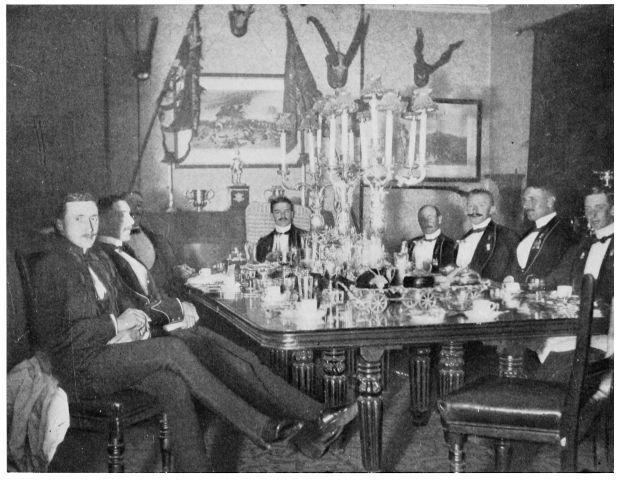
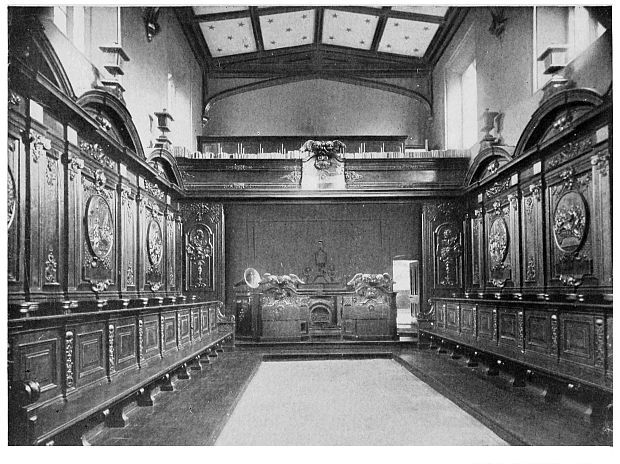
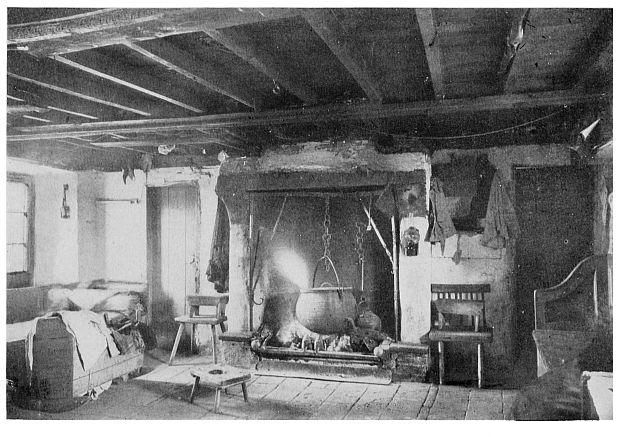
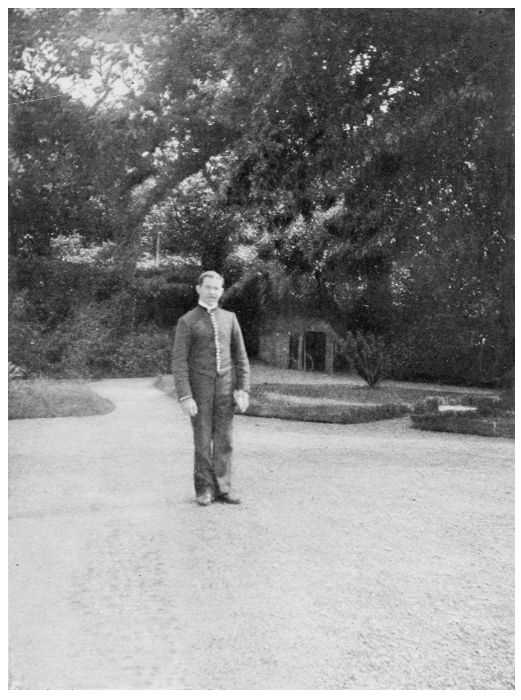
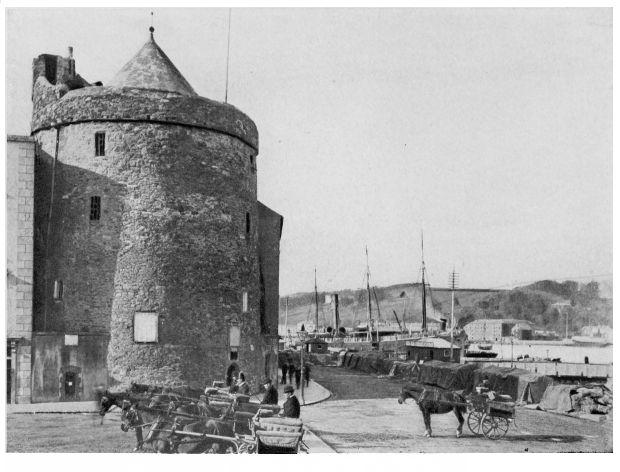
Photo by W. Leonard
Dinner at Buttevant Barracks
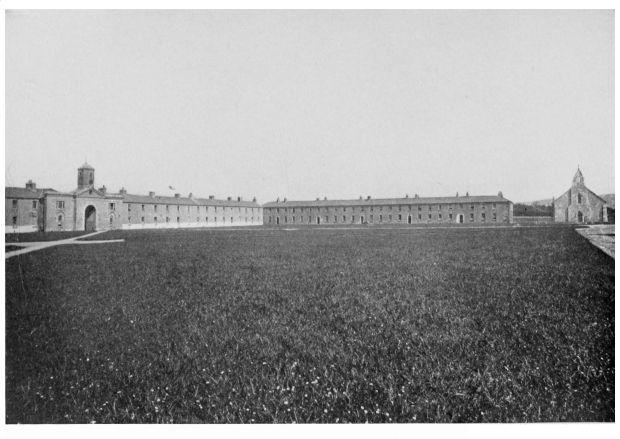
These barracks at Buttevant are spacious and,
as barracks go, very comfortable. Situated in a
good hunting country, one hears horse and hound
talk intermingled with the many bugle calls
and the stirring sounds of the fife. The campus
or compound, a great green square surrounded
by the quarters, is constantly a gay spot, often
with lawn-tennis and cricket going on in its
centre, and there are always the officers' wives
and children, giving the scene just that touch
and charm which can only come from women's
presence.
Orderlies are leading or riding around the drive
the hunters recently purchased at the neighbouring
horse fair, and constant are the comments upon
each nag as it passes,—mingled with much badinage
at the expense of the purchasers.
The regimental band of fifty men discourses
sweet music. Tea is on in the mess-room—soldiers
in khaki and soldiers in scarlet coats are everywhere.
Snatches of songs come from the different
quarters and life does not seem hard to these
soldiers, at least not now, and yet—the call to
arms and the chance of a skirmish is always
welcome at first, until they realise that "War is
Hell" and once entered upon cannot be so easily
stopped. There is no thought of war here now
and life goes merrily onward.
At seven-thirty the dressing bugle sounds and
we are off to reassemble in the officers' mess at
eight for that most important function, dinner.
I confess I feel slovenly in my black clothes
amongst the scarlet and gold of the officers.
The mess dress of the army is very effective,
a scarlet jacket fitting closely and showing
a generous shirt front, dark blue trousers with
scarlet stripes, strapped over patent leather
boots bearing spurs,—a dress becoming to any
man. Once he knows you, a British officer is
always very cordial and agreeable; there are few
exceptions to that rule. I am certainly given a
cordial welcome amongst them on my first evening.
Dinner announced, we file down to the mess-room
where if you imagine things are crude or
camp-like you are mistaken. The spacious apartment
is adorned with the "colours" old and new of
the whole regiment (as this is the headquarters
of all its battalions and all such things are here
stored), most of them torn with the strife of
battle. The table, of Bombay oak (which travels
with the regiment wherever it goes), is of great
width and as long as the room will permit.
For dinner it is decked with magnificent plate
in the form of candelabra, cups and fantastic
salt-cellars, etc. There are flowers and snowy
linen of course, and the room is brilliant with
scarlet coats and the mellow light of wax
candles. The dinner goes merrily on, while
outside the regimental band discourses its best.
Towards the end we are brought to our feet with
"Gentleman, the King," and so, to the national
anthem, drink the health of his Majesty.
(I must compliment this band. It is excellent,
and I believe is considered the best in south
Ireland.)
After dinner, we adjourn to the smoking-room
upstairs, and "bridge" comes in for proper
attention.
Not caring for the game, Major Beddoes and I
are seated before the fire. The room is a large one
and, I am thankful to say, does not possess
electric lights; a shaded lamp throws a warm
glow downward upon the card tables while the
flashes of the firelight bring the scarlet coats and
gold braid of the players, and the tattered battle
flags beyond them into bold relief now and then.
The air is full of tobacco smoke, but aside from
our subdued voices and an occasional remark
thrown at me by the players because I neither
smoke nor play, the room is very quiet. Outside,
the barracks and the town seem to have gone
to sleep save for an occasional bugle call or sentry
challenge.
There had been some commotion below earlier in
the evening because of a young setter pup, which
Capt. D. had shut up in his room, having eaten
one of the Captain's new walking boots, and Major
Beddoes had some words with his man, whom
he had discovered wearing one of his, the Major's,
best dress shirts. "Sure, Major, 'twasn't soiled
enough to give to old Mag beyant there to wash,
and I jest thought I would give it a wear or so
mesell, knowin' ye wouldn't care."
But those incidents of barracks life have passed
on, when I ask the Major what he thinks are the
real feelings of the English for Americans,—do you
like us?—he is enough like a Yankee to throw
the query back at me with the parties reversed;
but I came first upon the field and insist upon
that advantage. After some moments of quiet
pulling at his beloved pipe, he answers, "I think
individually, yes,—as a nation, no, and you have
probably discovered that for yourself, and the
feeling on our part may be based on jealousy.
You are also aware that the same holds in your
own land toward our people. As a general thing
we like your women, but not your men, and our
opinion of the latter is probably influenced by
those of your citizens who have turned their backs
upon their own land and settled amongst us. Of
these I do not include those who have come
amongst us for business reasons,—they always
expect to go 'home,' and are at all periods of
their sojourn here Americans,—but those others
who, drawing their entire support from their
own country, settle here and become more anti-American
than any Englishman ever was. We
despise them, and no matter how hard they may
work for it, they will never be looked upon otherwise
than as strangers,—their children, reared
over here, possibly, but never themselves, for
whether we like you or not, we do think that
one born in America should be proud of that
fact and not a cad. Do you agree with me?"
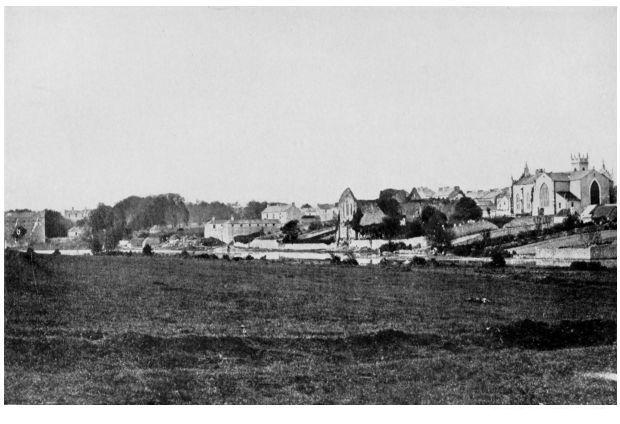
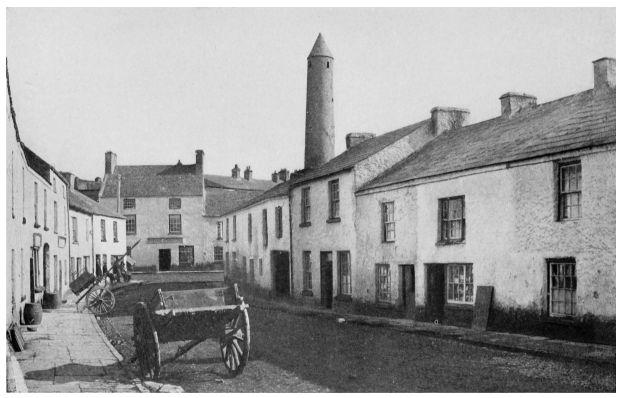
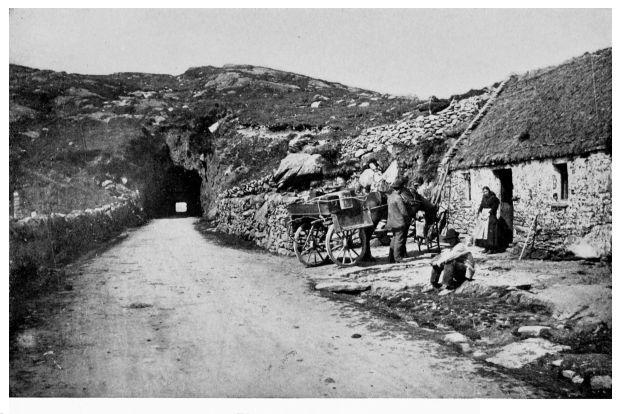
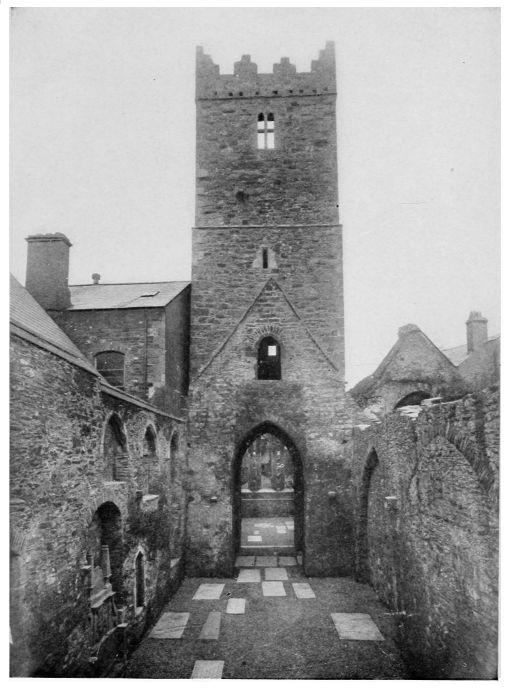
Photo by W. Leonard
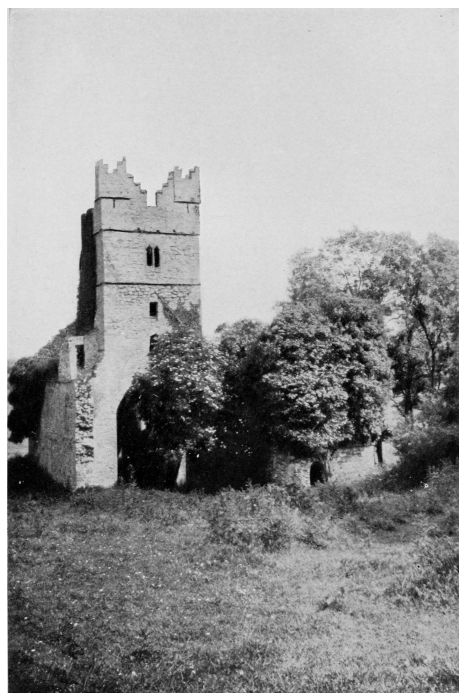
Buttevant
"Assuredly, and personally whatever pride
in the past I possess is centred in those of my
ancestors who helped to make and preserve our
great nation,—beyond them, while it is interesting
to trace backward into the countries of the old
world, it is simply a pastime."
"You certainly send us funny lots of people
during the touring months."
"Yes,—but have you ever tried to talk to
them?"
"Just recall that lot at Mallow the other day.
Could any party on the surface be more unattractive?"
"You are quite correct, but if you had spoken
to that most aggressive looking man and his
more aggressive looking wife and daughter, you
would have discovered well educated and intelligent
people, such as form the real backbone of a
nation. They have consumed six summers travelling
in Norway alone, and thoroughly appreciate
that beautiful country. They believe that the
world is a better book than any ever enclosed
between covers, and they intend to read it, and
when the years bring old age upon them, all that
world will still be an open volume, its changes and
improvements fully appreciated and understood.
Can you not excuse much that is unpleasant
in people like these? And do they not compare
favourably with the masses of English of a certain
class found all over Europe."
As for the sentiments of one nation for another,
it is summed up in the words of a recent author,
"Moreover, the fine old dislike which Bretons
bestow upon everything outside Brittany was
hers both by inheritance and careful cultivation."
There you have it in a nutshell,—not only as
regards the English but all other nations. England
certainly holds that feeling towards all the continent
and I believe towards America; Boston has
it for all the rest of our land. New York has of
late years become more liberal, more cosmopolitan,
yet I heard but lately a man make the remark
in her best club that he had "a perfect horror
of the middle West." How does that sound from
an educated man in this twentieth century,
and of cities which have long since passed their
centennial? To be sure, far from being a criterion
for the citizens of New York, he was one who had
kept his nose down on the books of some counting-house
and had never left the confines of the city.
As for California, I have known the dislike of
everything outside of that State, especially Eastern,
to separate husband and wife and destroy a
family; where the wife's hatred of "outsiders"
extended from her husband's parents to and
including every friend he had in the East,—an impersonal
sort of hatred because she was stranger
to most of them, yet none the less violent, with
the result as stated.
Again, did not such a feeling have something
to do with our Civil War? Does not England
even to-day believe that the cultivation was
largely in the South, and yet how unjust such an
opinion! I am half Southern, my mother's
family having been slave-owners for generations,
and I think I can speak without prejudice, and
I say again "how unjust such an opinion." The
cultivation in the South was sprinkled over a
sparsely settled country and centred in a few
thousands of planters and their families. In the
North, it covered all of a densely populated section,
and from ocean to ocean it would have been
impossible to find a class like the mountaineers
of Virginia, so ignorant that many of them not
only could not read but did not know what "reading"
meant. Furthermore where were, and still
are, all the greater universities and seats of
learning? In the North. Where did our great
poets and essayists come from? The North
again. I do not desire to decry the South,—far
from it,—but the old idea was an absurdity;
the South in her palmiest ante-bellum days sent
the majority of her sons north to be educated,
but——
Bridge in the meantime is over for to-night
and the group before the fire increased thereby.
So the talk drifts on and on. I am not given
to slang and do not like it, but I happened to use
a bit just here, "he monkeyed with a buzz saw."
Attracted by the silence which followed I looked
up to find every face gazing upon me in puzzled
amazement, until finally Major—— felt that some
explanation must be forthcoming.
"Monkeyed with a buzz saw? Now let me see,
let me see. What exactly is a 'buzz saw,' and
what happened to the monkey?"
My laughter forced them all to join in and
for the next hour these defenders of the British
flag took a lesson in American slang, until upon the
soft air outside sounded the notes of the "last
post" (or "taps" as we call it), the saddest bit
of melody in the world of music, and so "good
night," "good night." One by one the lights
went out and sleep settled upon the living while
the moon, turning her attention elsewhere, went
off to light the fairies dancing on the river and the
witches down in old Ballybeg Abbey.
The following day being Sunday the soldiers
of the King go to service in full dress; the grim
barracks are brilliant with hundreds of scarlet
coats and to the music of Stars and Stripes Forever
our one time foes move off to pray for peace
while prepared for war. I notice that Hiawatha
is the favourite tune for marching men, and am
told that it is not only because it is a most excellent
march but because the fife plays an important
part in its rendering and the fife is the only instrument
which can be heard above the din of battle.
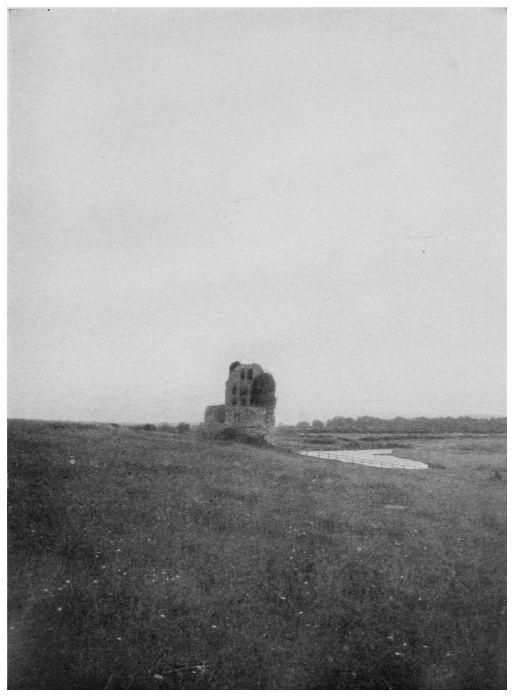
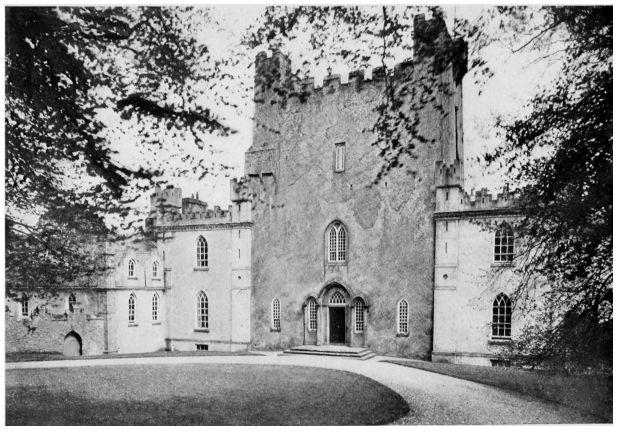
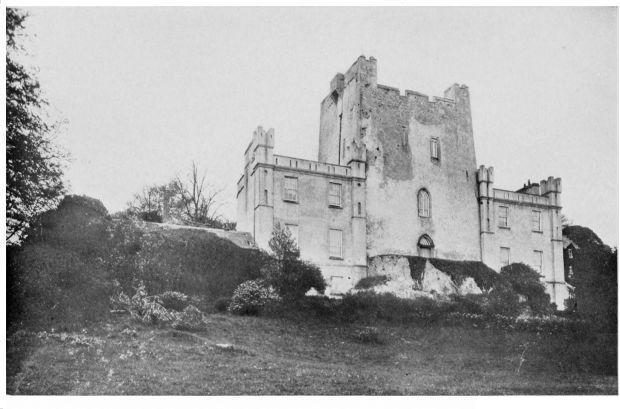
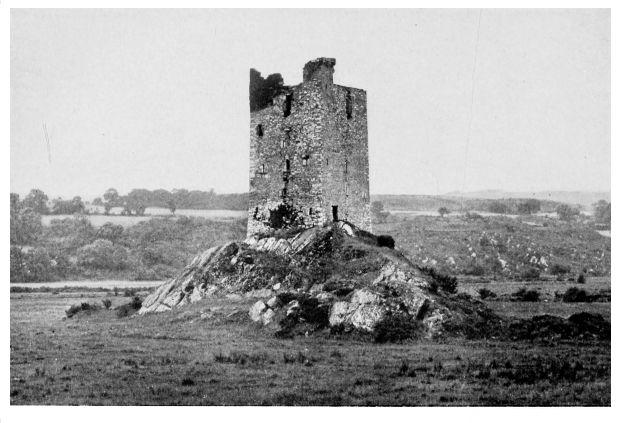
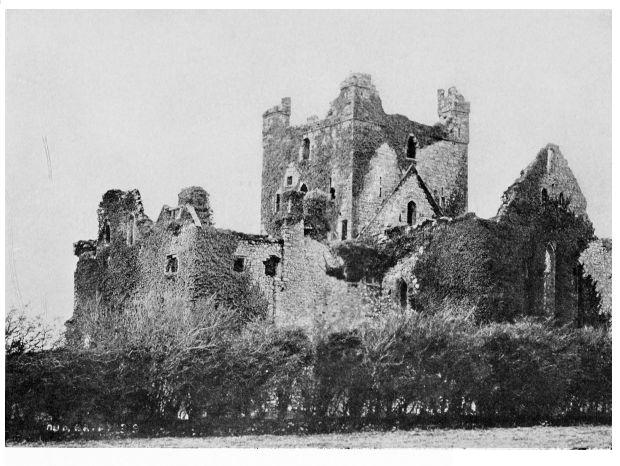
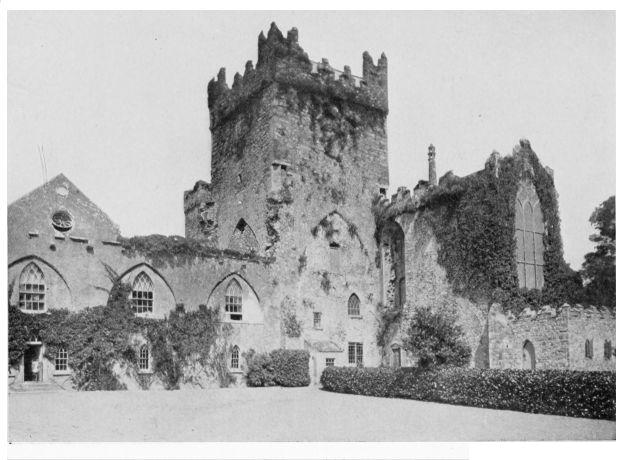
Kilcoman Castle
Spenser's Home
Where he wrote The Faerie Queene
There is a drummer in this band whose movements
are simply amazing, and I find myself trying
to imitate them with pole and cane to the peril
of life and property. How he does swing those
great sticks around his head and bring them
down upon that huge bass-drum! A drummer
surely whose pomposity surpasses anything of its
kind within my memory. As the inspiring music
grows fainter and fainter and the scarlet coats
pass away down the streets of the old town I turn
for an inspection of the barracks. On the top of
the entrance arch are the offices, on the right
the guard-house, and beyond it a large gymnasium.
On either side of the green and running at right
angles to the entrance are the officers' quarters,
while a large barracks for the men forms the
fourth side of the square. Back of this is another
square surrounded by large barracks, while the
married men have a separate building beyond
these and the Colonel lives in a retired pleasant
house off in one corner. Of that house and
the dwellers therein I have some very pleasant
memories.
To a looker-on in this twentieth century the
disregard of sanitary measures in such a barracks
as this is surprising and I doubt not the same
holds in all others of the Empire and perhaps
in all those of other countries, including my own.
Of that I am unable to speak, but the outrage is
an outrage all the same. One can understand
the lack of such things in far western camps
or in war times, but that a great stone place like
this with a hundred years to its credit should have
no proper baths or toilet-rooms for its officers is
"an outrage" most certainly, and one which the
nation should insist upon being promptly corrected.
There are a few bathrooms with good tubs and
hot and cold water for the men but the officers have
nothing save the inconvenient, nasty little tin tubs,
and it is practically impossible for a big man
to keep himself in proper condition by their use.
These quarters are, as I have stated, massive
stone buildings. Each officer has a sitting-room
with two small rooms adjoining and so placed
that either of the latter could be transformed
at small cost into an excellent bathroom with
hot and cold water laid on. As it is now, these
gentlemen must use a little tin thing with an
inch or two of cold water. It's a common saying
amongst the officers of the army that nothing is
done for them. What the government does is all
for the rank and file. That the soldiers should
receive everything needful is in all ways proper,
but are not the men who lead them, the brains
of this strength of the nation, entitled to like
consideration? They offer their lives upon the
slightest cause, and gladly too, yet their government
is so far forgetful, not to call it by a harsher
term, that it neglects their well-being in this
manner. They are willing to put up with nothing
when it is necessary, and surely are entitled to a
bare something, and this is nothing more, when it
can so easily be done and at such small expense.
Cleanliness is certainly more essential to health
than many brilliant coats and much silver plate.
There is often scorn expressed for our bathrooms
with their modern appliances, but I noticed
at P—— that one of the scoffers, who might
have had his little "tub" (so constantly extolled)
in his bedroom, waited and almost missed his
dinner that he might use the only bathroom in
that vast establishment. I do not desire to accuse
the officers of uncleanliness—very far from
it—but they should be better provided for in this
respect.
I am also astounded to note the treatment of
the common soldiers—"Tommy Atkins"—by the
public. In time of war he is worshipped, but
in time of peace is scarce considered to be a
man, merely a servant to be pushed and shoved
about and treated most discourteously, to say
the least. I saw this done in a theatre the other
night, to a soldier who addressed a simple, civil
question to the man next him. The reply he
got and the treatment he received would, in
America at least, have resulted in a row, and
justly too. However, that occurred in Ireland
where the "red coats" are not liked.
I understand that the pay per year of the
officers in the British army is about as follows:
A Colonel, £400 Sterling
Lt. Colonel, 300
Major, 240
Captain, 200
Lieutenant, 100
These figures do not seem very large when a man
offers his life to his country, but they are in excess
of many nations on the Continent, where the
officers are forced into beastly poverty by the call
for outside gorgeousness. At a late grand review
the eye of a beholder was attracted by an officer
quite resplendent in a beautiful white uniform,
superb high black boots with glittering spurs, a
silver breastplate, and glittering helmet, and
mounted on a splendid black charger, his appearance
was gorgeousness intensified. After the review
the observer, passing the tent of this same
officer, saw the entire gorgeousness as to uniform
hung up to dry and on the wretched camp bed sat
the man with no socks on,—"too poor to buy
them," all the pay and far more gone in the
useless display,—and yet not altogether useless,
for without the uniforms these great standing
armies would melt away like mist before the
sun and many a throne totter to its fall. However,
if the splendour must be maintained, and it is
certainly beautiful to look at, then those forced
to wear it and bear its expense should be better
paid, remembering at the same time that the
wearers are ready at any moment to stand up
to be shot to death in defence of the home where
you sit comfortably reading your paper—therefore
"PAY, PAY, PAY!"
The officers of these Fusiliers are devoted
to their cook. I suggested the other day that
his coffee might be improved,—it was wretched,
in fact, not coffee at all, while no fault could be
found with the rest of the menu. They replied
that they knew it, but he had been so devoted in
battle, had cooked under a galling Gatling fire,
had rushed so many times over death spots to
bring them hot sausages which he was forced
to carry in his hands, that they could not scold
him. I drank his coffee with great pleasure
after that. The heroes in this world do not
always wear the most brilliant uniforms and has
it not been proven that it is the commissary
which in the end decides the conflict?
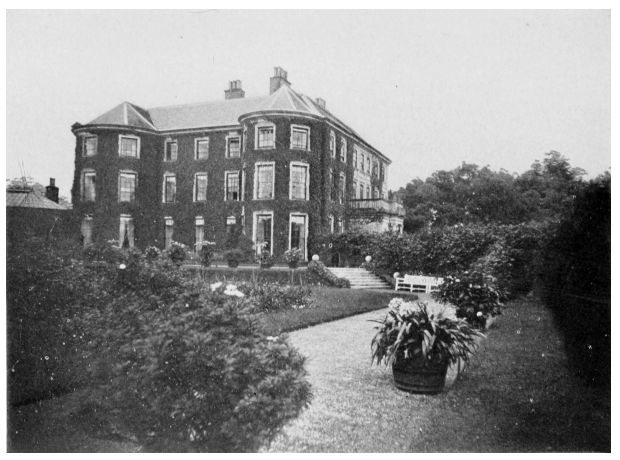
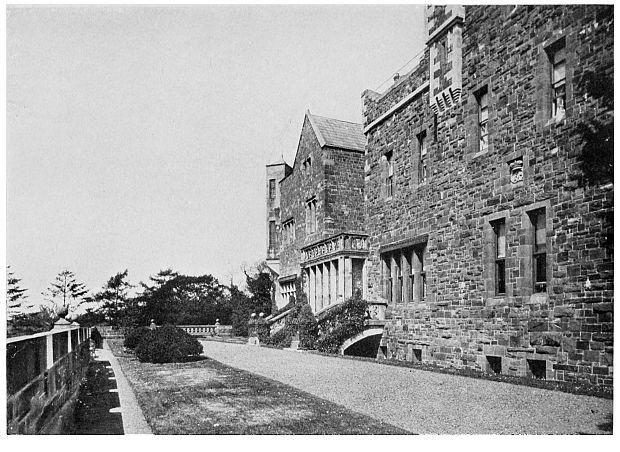
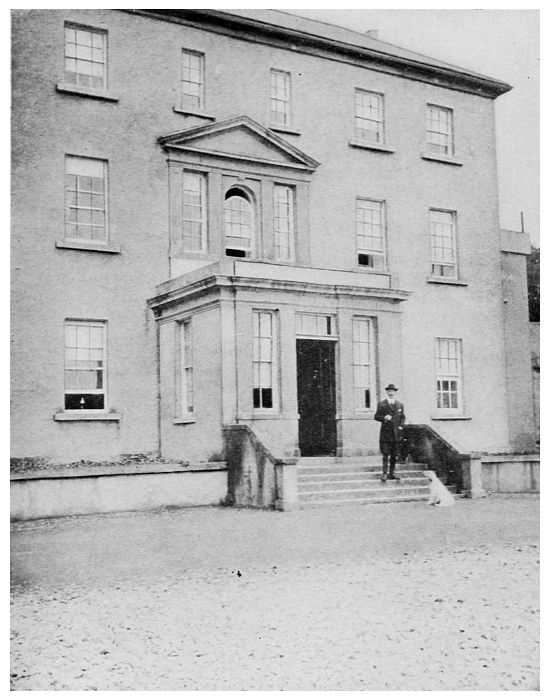
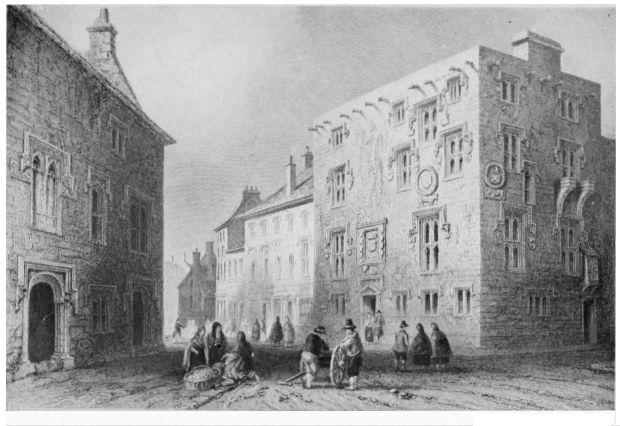
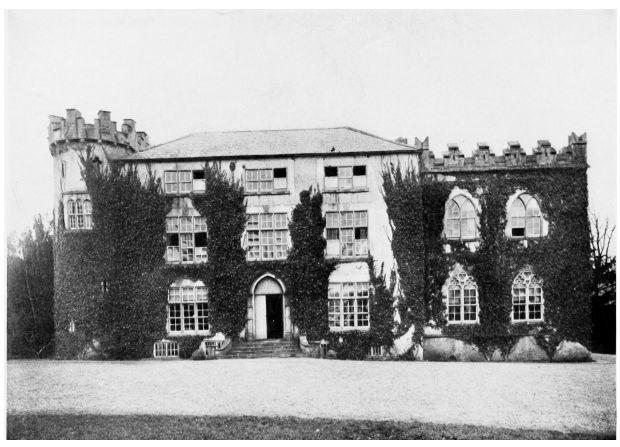
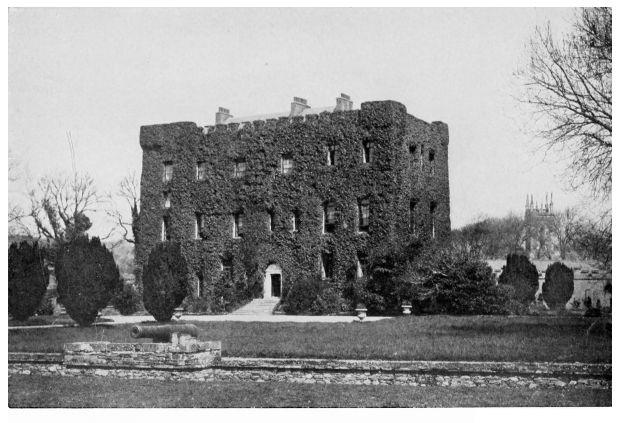
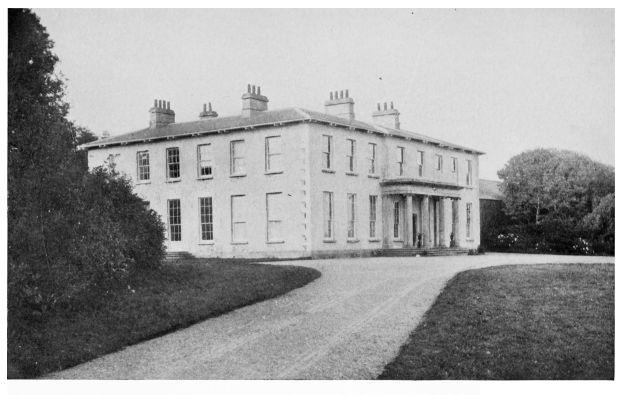
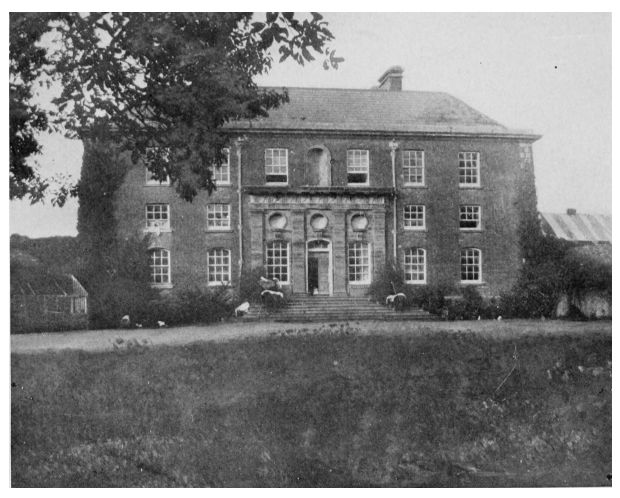
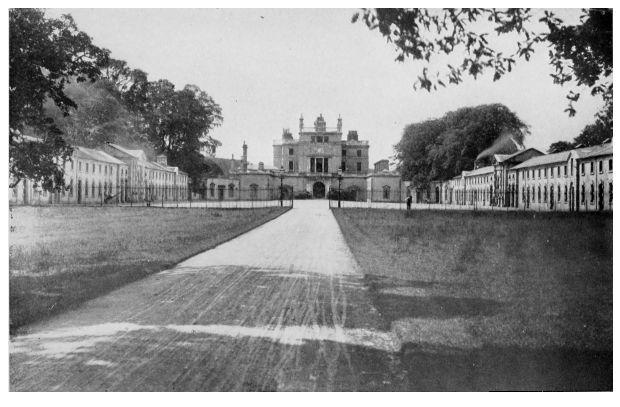
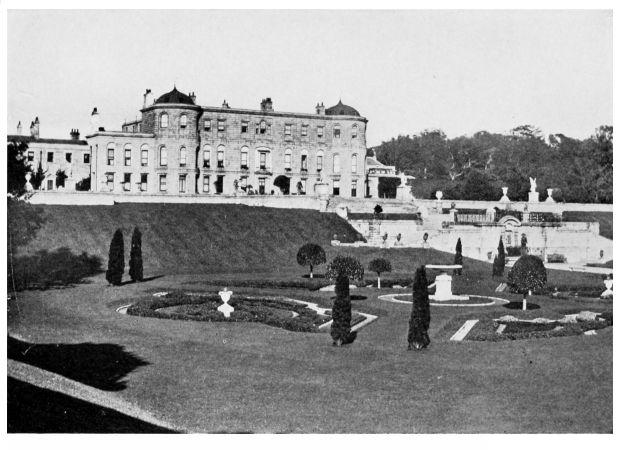
Doneraile Court, County Cork
There is nothing going on in the barracks
this morning which interests me, save perhaps
a court-martial, at which I am told that my
absence will be very precious. So I stroll off
in the soft sunlight through the great gateway,
where a sentry holds constant ward and watch,
just for appearance sake, I imagine, as it cannot
be to keep the boys in or strangers out, for just
at yonder corner is a breach in the wall unguarded
where any one may come and go at pleasure, and
I doubt not many of the boys do go and for
pleasure, though there can be little amusement
in the sad town which clusters between the
barracks and castle. Of young men it seems
to hold none, and there are not many children,
so that when these few old people pass onward and
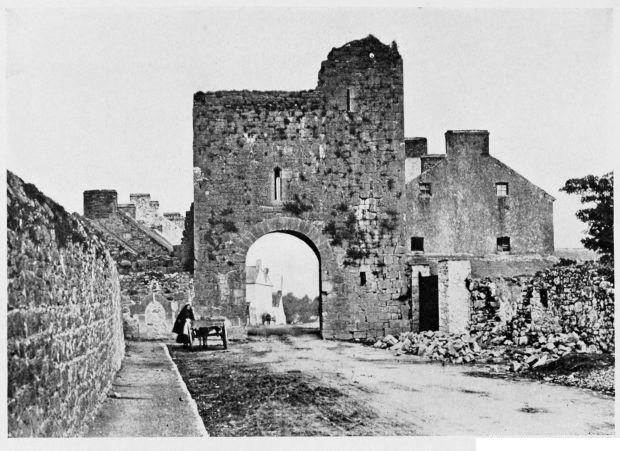
enter for eternity yonder churchyard, old Buttevant
will wither away altogether. Many kindly
faces come to the doors to watch me, knowing
that I am an American, and their eyes have a
questioning look as though to ask for some dear
one in the land beyond the sea.
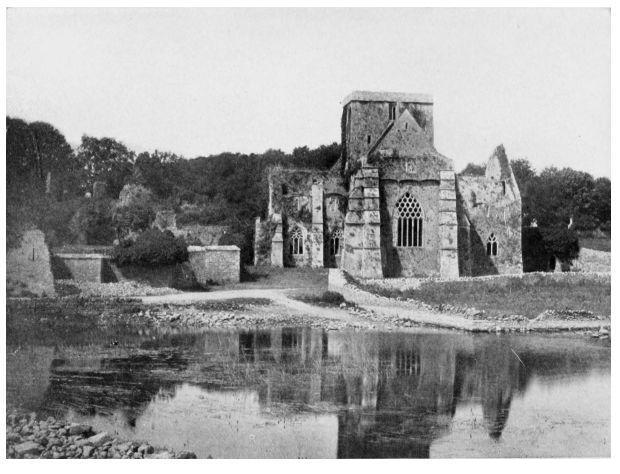
The place is indeed very old and every now and
then as I pass through the streets I come across
some vestige of its past greatness and a mile
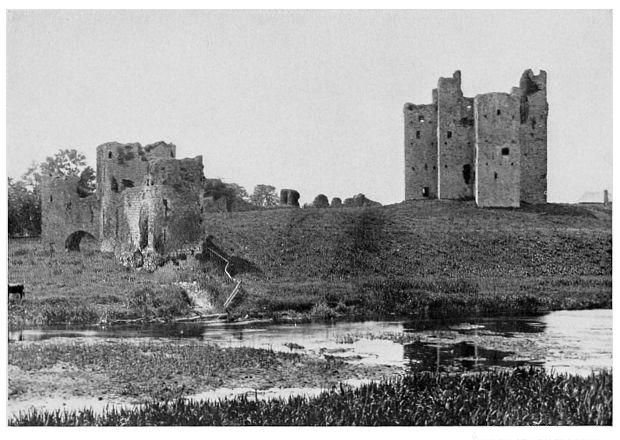
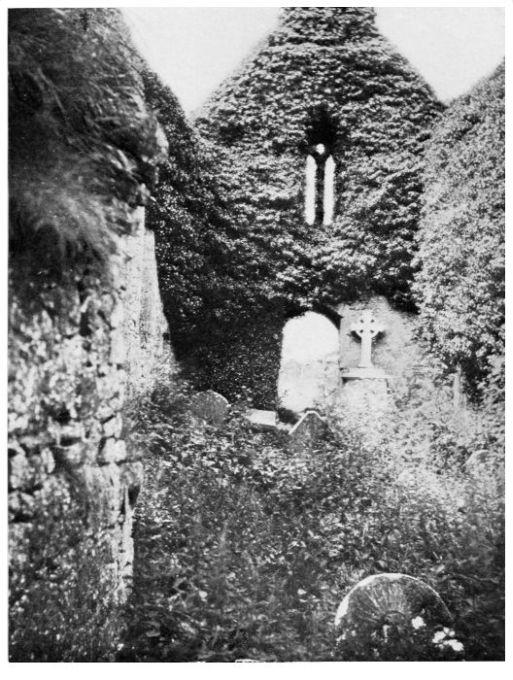
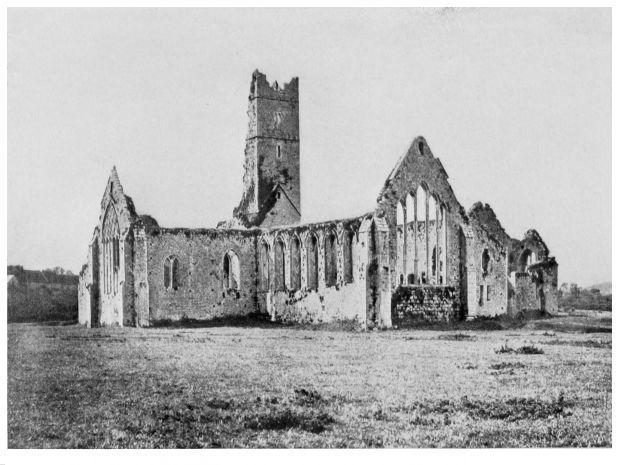
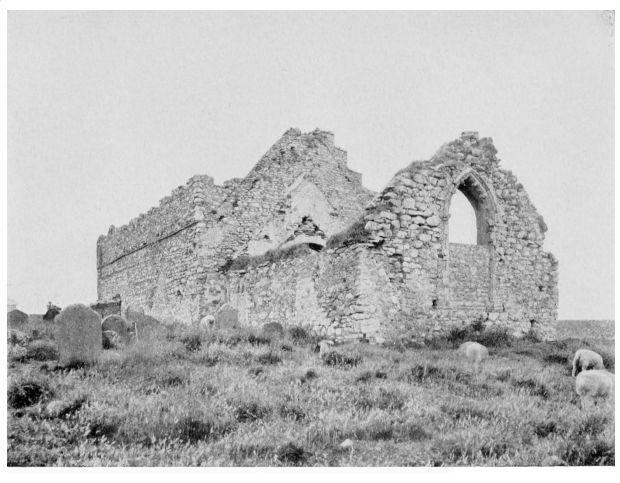
beyond its limits reach the ruins of Ballybeg
Abbey, in a smiling meadow down by the river
Awbeg. Something of a stately structure in its
palmy days, there is little of that left now, but on
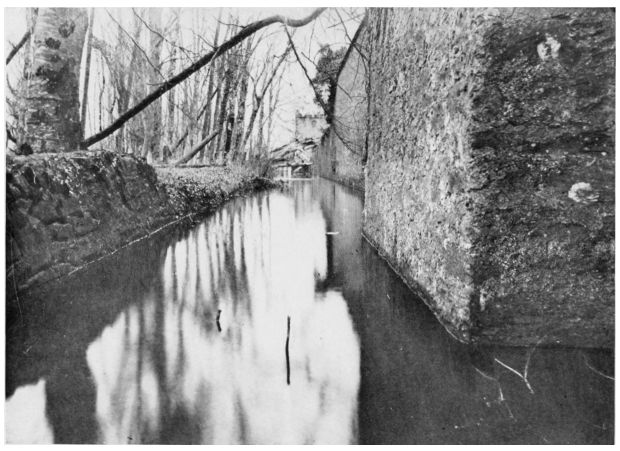
the whole it is all rather sociable. The river is
of that sort, and having loitered downward under
its trees and through its grasses murmurs confidential
bits of gossip about the castle yonder
upon its banks. Yellow buttercups push their
heads upward through the turf which climbs to
the old grey walls of the abbey, and in the abbot's
doorway the white face of a ruminating cow is
silhouetted against the inner darkness. "They
also serve who only stand and wait," must have
been written of Ballybeg and its kind, for it has
left no trace upon the pages of history. Yet
withal, as I have stated, it's a sociable old place
and I spend some time in its company, seated
on the parapet of a neighbouring stone bridge
where 'tis said the fairies dance when the moon is
full.
I expected much from the name—Ballybeg—why
I can scarcely tell but I cannot say that I
am disappointed, though such stately structures
as Fountaine and Tintern in Wales would scarce
consider Ballybeg to be exactly "in their set."
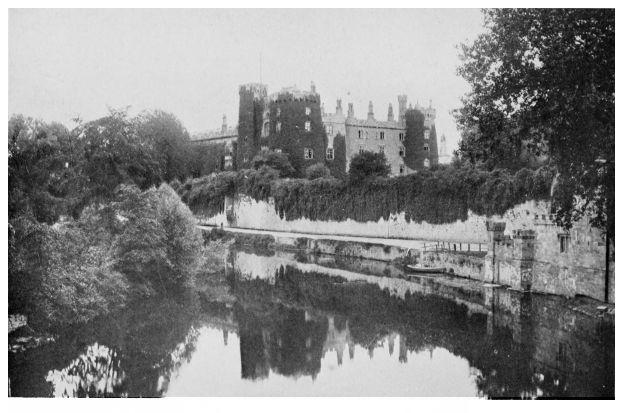
Wandering up the banks of the Awbeg, I pass
beyond the castle. We had tea there last season
and a medieval castle which can descend to having
afternoon tea served within its walls is not
worthy of description. It is owned by an irascible
old lady who occupies one part and rents out the
other and who generally keeps such a strict eye
upon her tenants that it results in driving them
out. When we visited it the tenants were an
officer and his wife, and just that shortly happened,
so that on my second visit to Buttevant, the castle
stares at me with vacant eyes of windows, and I
pass onward up the river to the centre of the town,
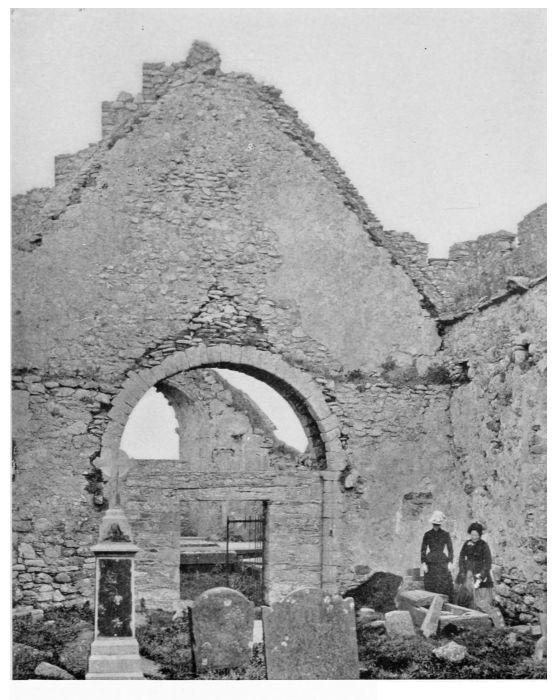
where the ruins of its Franciscan abbey raise their
arches and columns and guard the dead of long
ago, and those who come in this later day to
sleep beneath its shadows.
If you enter its crypt, you will stand amazed at
the vast quantity of human bones piled pell-mell
there. Some say that they are but the natural
accumulation of departing humanity and others
that they all came from the neighbouring battlefield
of Knockninoss,—others believe that when
in the flesh they all lived yonder in old Ballybeg.
Be that as it may, they are here now, quietly
awaiting that day of days, which shall summon
them forth once more, and as I stand in the darkness
with my foot on a skull, which might have
enclosed the brains of an Irish king, downward
through a broken casement comes the sound of a
voice and the words "I am the resurrection and
the life, he that believeth in me, though he were
dead, yet shall he live," and I roll the skull
gently back into denser shadows, wondering,
wondering, and then, as we all must do, ceasing
to wonder, and just continuing to—trust.
Passing upward into the sunshine and forward
amidst the long grasses which cover the humbler
dead, I find that one more has but now joined
this silent company, and those who brought her
here are slowly leaving the churchyard. Poor
people, all of them,—there does not appear to be
any others in this town of Buttevant,—but death
seems to hold no terrors for any one of these and
many sit round on the tombstones and do not hesitate
to discuss the qualities, good and bad, of
those asleep beneath them and to admire the
inscriptions. Here is one quaint enough surely:
"Here lies Pat Steele—that's very true;
Who was he? What was he? What's that to you?"
Yonder is a cross of wood under discussion at the
present moment. It states that "here lies Kate
O'Shea and also her sister Mrs. Mary Buckley," and
that as "their father died last year, this is the
end of the O'Shea family." That thereby hangs
a tale is very evident, and yonder fat old lady
on whose head a bit of a black bonnet is poised
and round whose shoulders a comfortable shawl
is wrapped could and would tell me if there were
not so many listeners about, who knowing her
love of gossip keep sharp watch and ward, so that
of those who are gone I learn nothing, but of
what is shortly to happen I hear more.
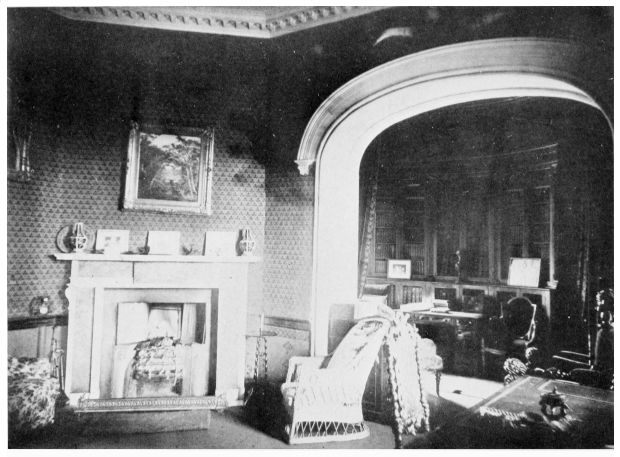
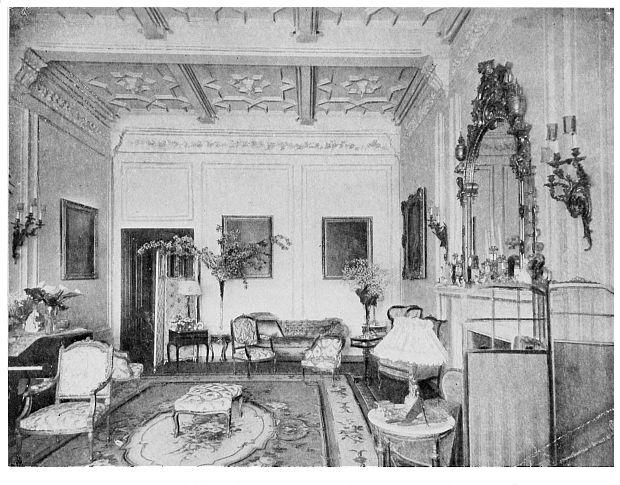
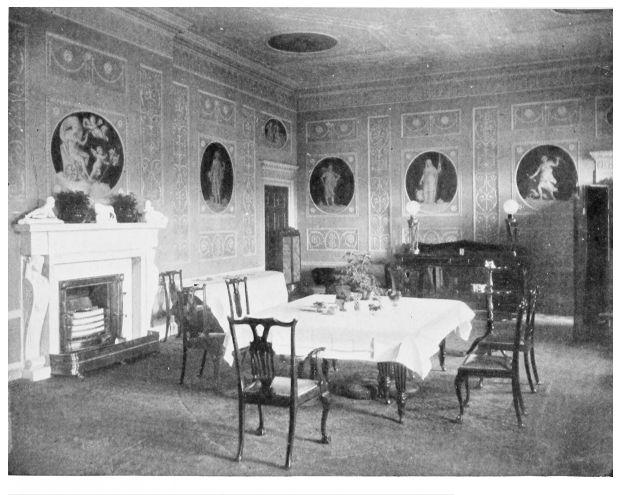
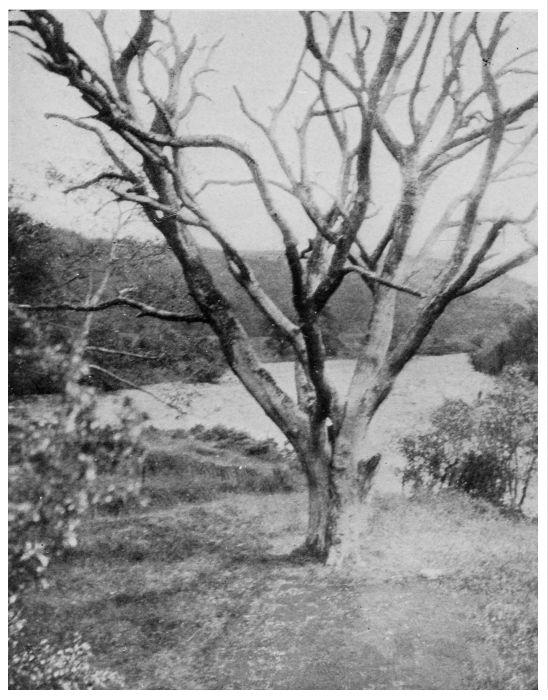
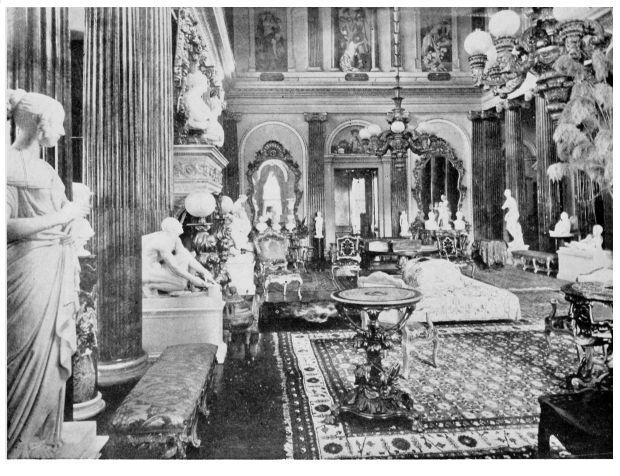
The Room in Doneraile Court where Mrs. Aldworth Hid
A wedding is to take place in the modern church just
here and we sit round on the tombstones, awaiting
the coming of the bride. There are hints as to
this bride which rouse my curiosity, and I decide
to await her coming, which shortly happens. She
is a comely looking young woman, modestly
dressed in a green gown, and a blue hat with
red roses thereon. Her blue eyes do not possess
a very happy look as they rest on the fat middle-aged
bridegroom, and the old lady on the tombstone
next to me heaves a sigh which tells
unutterable things. Still, all seems going smoothly
and we follow into the church. The ceremony
begins, and progresses as usual to that point
where the bride is asked if she takes this man
to be her wedded husband, when upon the amazed
and horrified ears of all falls the reply in sharp
tones, "Indade, I won't," followed by a swish of a
blue skirt and a flash of red roses down the aisle
and out the door and the bride is gone. I leave
a description of the hubbub which followed to
your imagination.
Getting finally outside, I find myself once more
near the old lady of ample proportions, and just
in time to hear her remark "and him wid nine
illegant fat pigs and sivin suits of clothes aich
one better than the other." This entirely destroys
my dignity and self-control and I double up with
laughter upon a neighbouring tombstone, whereupon
the old lady, after one look of grand amaze,
gives me "the full of her back" and with her
"nose trun in the air" passes majestically away.
I learn later that of that bride they never again
heard. Like the bubble on the river she was
gone and for ever.
The neighbourhood of Buttevant is full of interest
to those who will turn aside from the usual tour
of Ireland. To-day we are off through the green
lanes for a visit to Kilcoman Castle, the home
for some years of the poet Spenser, and where he
wrote his Faerie Queene. We shall later visit
the scenes of that poem.
In 1586 Spenser received some fifteen hundred
acres of land from the crown, and on them stood
this ancient stronghold of the Desmonds, which he
made his home for years. Those were troublous
times and he saw much of their misery, and their
sadness tinges his great poem.
He received but small acknowledgment for his
work from Elizabeth, and even that was objected
to by Burleigh,—"What—so much for a song!"
This castle was sacked whilst he occupied it
and he fled to London, where he died in poverty.
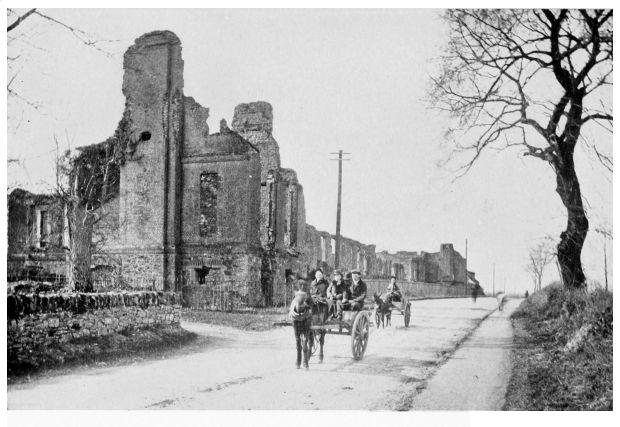
The ruins rise from the midst of a green meadow
some seven miles from Buttevant, and consist
of a lonely tower, to the top of which we mounted
by its ancient staircase within the walls. The
tower chamber still has its roof intact, but at its
best the castle must have formed a poor abiding-place
even three centuries ago.
The prospect from the top is rather dreary,
and we leave the spot without regret.
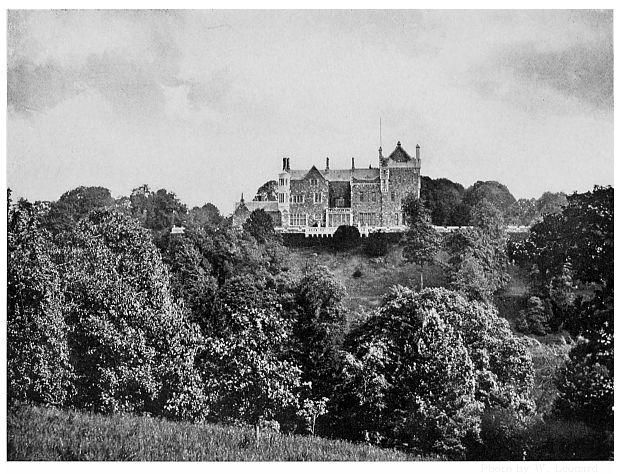
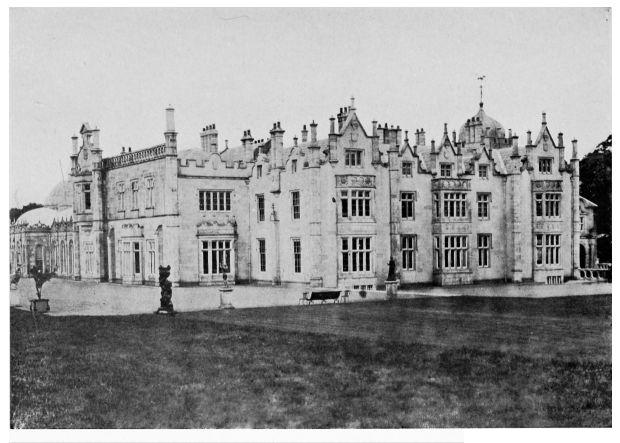
Doneraile Court, in whose vast park were laid
the scenes of the Faerie Queene, is very different.
It is now the property of Lord Castletown.
One more fully appreciates the comfort of a
motor-car when forced suddenly as we were
last night to take a jaunting-car for a ride of
nine miles to Doneraile. That distance would
be nothing at all in the former vehicle, but is
every inch of nine miles in the latter. It's no easy
matter to hold one's seat in these cars. If you
happen to have a trotting horse it's not so difficult,
but if the beast is inclined to canter, as ours
was, the wheels of the car will almost leave the
ground with every canter, and chances are that
you will desert the car altogether. I came near
doing so several times last night, and reached
the court in a breathless state, which the horse,
with a wicked leer in his eye, seemed to enjoy to
the full. Tom, the driver, secure on his perch
in front, rode most of the way with his back to
the horse, which appeared to know whither
we were bound, Tom the while discoursing to me
upon the charms of hunting in Ireland and showing
me several of the favourite jumping places. I
did not enthuse; though I have ridden all my
life and hunted some, still a jump composed of a
stone wall, a hedge, and a deep drop on the far
side did not commend itself to me, especially
as a man had "broken his neck there but lately."
One can scarcely understand such clumsiness
on his part as the drop was quite sufficient for
horse and rider to turn a complete summersault,
and still come out right side up. However, I
shall not try the trick, but that I would hesitate
for an instant, for such a reason, to join in the
national sport stamps me as unsportsmanlike—as
one who will not buy a horse, and that settles
my position, in Ireland.
We approached Doneraile Court through the
village of that name, which clusters close under
its park walls. Doneraile is quite the place in
this section, and we find it a stately mansion
presiding over one of the most beautifully wooded
parks in Great Britain.
These houses in Ireland, mostly all dating from
the Restoration, are commodious and ofttimes
stately structures, and have a beauty all their
own and very different from anything in England,
hence one cannot compare them. This estate
somewhat antedates that period as it was purchased
from Spenser's son by William St. Ledger,
President of Munster in Charles I.'s reign, and
the town gives the title to the family.
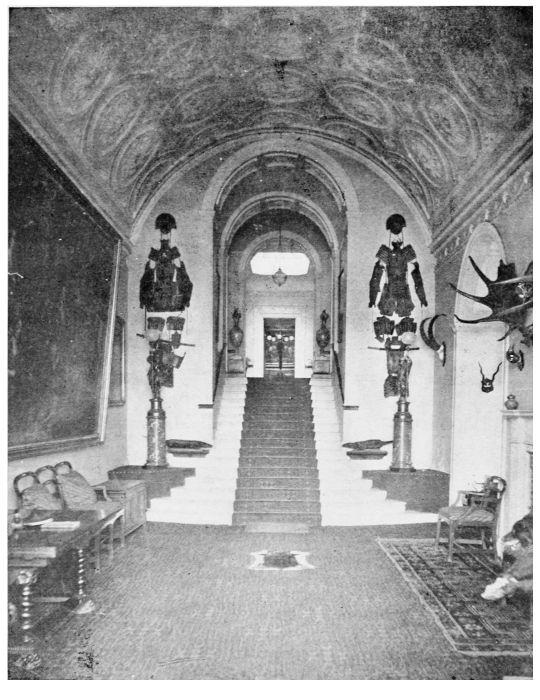
Doneraile presents a lofty and attractive front
to the park and the attraction abides as one
enters the spacious halls filled with the trophies
of the chase and with quaint arms gathered from
all over the world. In the distance a stately
staircase mounts to the upper floors and on the
left is a suite of handsome withdrawing-rooms
and a library, while the dining-room holds on its
walls many interesting family portraits, one of
which quite diverts my attention from the
conversation during dinner. It is that of Mrs.
Aldworth, and shows a very strong, determined
countenance. The finger on that book indicates
that you will believe what she tells you or she will
know the reason.
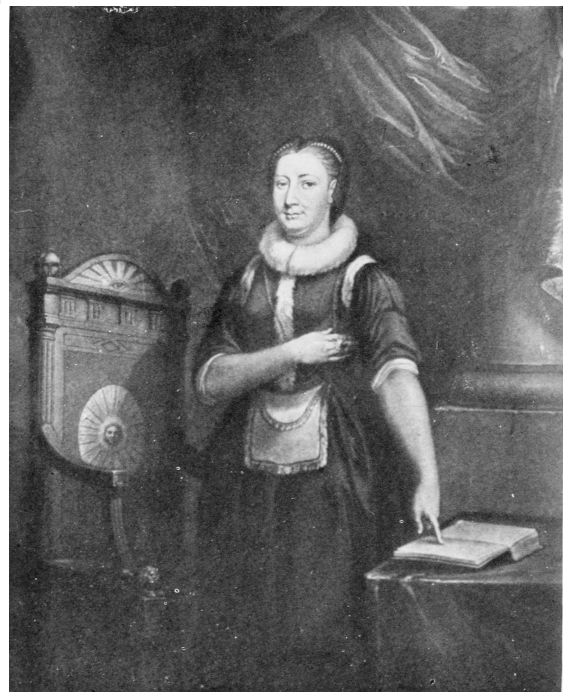
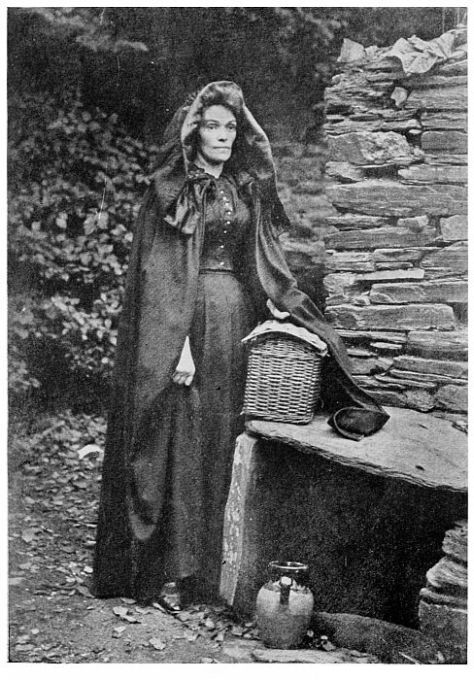
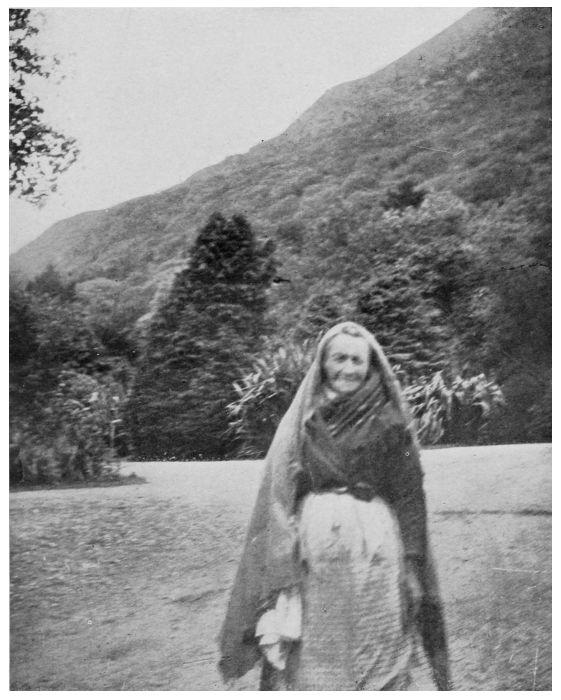
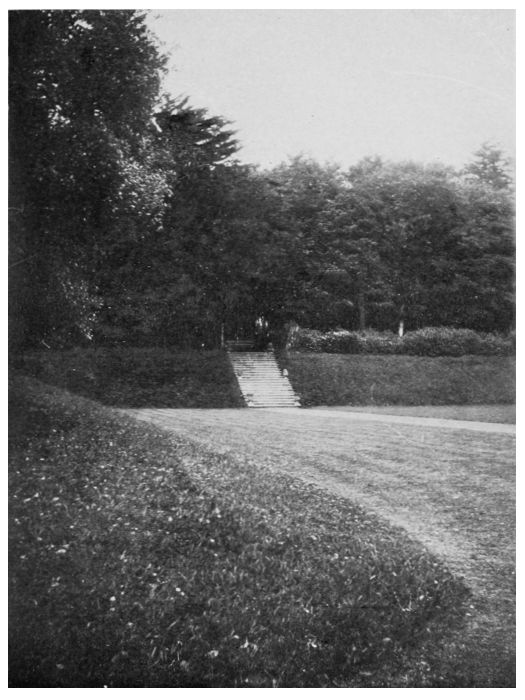
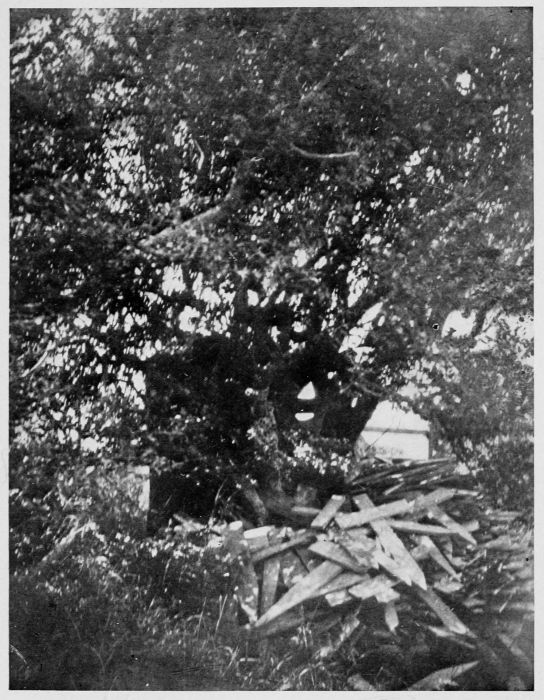
The Hon. Mrs. Aldworth
The only woman Freemason
I have another picture of the lady from a painting
in Doneraile,—never photographed before,—but
it is not so distinct as the one I give, and is
merely that of a beautiful woman, a woman of the
world before her character has been developed.
Certainly none would dare claim—in her presence
at least—that the character of the lady in the
portrait I do give has not been developed, nor
would it be well to cast any aspersions upon that
character. You may think you know a thing
or two, but if wise you will not dare the owner
of that face yonder. Madam, I doubt not but
that you were the very best Mason the sun ever
shone upon, so let me alone, will you?
She was born in 1695, and her history is told
us by Lord Castletown in the room where its
great event occurred.
It is the first on your right in front as you enter
the mansion, and the interest of the house centres
there, for therein was being held in 1725 the
Free-masons' lodge when the Hon. Mary St.
Ledger, afterwards Mrs. Aldworth, hid herself,
some say in the great clock, and upon being discovered
was by those present condemned to
death, when one man so plead for her that her
life was spared and she was made a full-fledged
Mason, the only one in the world's history. What
could follow an incident so romantic save a
wedding, and it did follow shortly. It is said
that she was condemned for ever to wear clocks
on her stockings, hence that name for that bit of
embroidery. It is also stated that Aldworth at
first voted for her death and she married him to
pay him out again. Whichever tale is correct it is
stated that in later years he more than regretted
that he had not voted for her death, but he was
probably a degenerate man, for the face in yonder
portrait was worth fighting for. In the room
where it all occurred are her masonic emblems,
a "square" about three inches long, the stone
above an amethyst, the rising sun above, gold,
and the rays diamonds (or old paste), a greyish
stone, and yellow amethyst in alternate rays.
A little thing to last when she who wore it and
created all this disturbance has been dust and
ashes since 1775.
The room is a double or alcoved apartment
with bookcases ranged around its walls, and
still holds, I believe, the same furniture as
upon the eventful night.
The talk drifted onward about her and many
other curious persons and things, and the smoke
from the cigars grew denser and denser until I
dreamed that I saw all sorts of vanished faces
in the space around me, and I fear that I was
dreaming actually when aroused by Major Beddoes
and told that "the ladies are retiring" and so we
lighted their candles for them, and chatting a
moment at the foot of the staircase, watched them
disappear above.
Burne-Jones must have gotten the idea for his
famous picture from such a scene. There is no
place where a group of stately, beautifully gowned
women show to better advantage than upon a
staircase. I was strongly reminded of his painting
on this occasion. After all the custom of good
night to the ladies with the lighting of candles
and its pleasant chat is a pretty one though you
may object to their early disappearance and
would greatly prefer an hour's more talk with
them than with your own sex.
However, it is late to-night, and bidding our
host adieu we move off through the glades of the
park where Spenser wandered and dreamt so long
ago, pausing a moment by the lake where the
swans still drift as on a surface of molten silver.
The midsummer air is balmy and delightful and
a full moon lights up the woods until one almost
fancies the Faerie Queene is out in their glades
with all her court, or adrift on the lake with the
swans.
My stay in the barracks is drawing to a close,
and perhaps it is well. Major Beddoes threatens
me with arrest, fearing a riot if I am allowed to
wander around attending weddings and other
functions to which I have not been bidden.
During my sojourn I have employed a boy
named Tom who owns a sprightly horse and a
jaunting-car not more than a century old, the
latter harnessed to the former by means of strings.
We have had many a rare drive between the
hawthorn hedges, leaving the motor neglected in
a shed: its day will come.
I have been desirous since leaving Achill to
hear again that mournful cry for the dead,—"keening,"—and
had arranged with Tom to bring two
old women into the barracks after dark, to whom
I was to give half a crown each and a bottle of—let
us say "cologne"; but they did not materialise
and when I questioned Tom he replied, "Sure, sor,
I had 'em beyant Major Beddoe's rooms, but he
druv 'em away."
"Certainly I did," chimed in the Major; "do
you want me court-martialled?"
I would not object if it were in a good cause.
I think there is also a bit of personal malice
in his acts, as I laughed at him the other day.
He has lately married a charming wife, and is at
present quartered in Mallow, from whence he runs
the nine miles in a motor-car of his new father-in-law.
When he made his first appearance the
other day on the barracks compound, with all
the officers and their families assembled to greet
him, said motor-car looked as though it had been
through the wars, and was as pug-nosed as many
of the aborigines of the land, caused by sudden
contacts with stone gates and the sides of houses,
to say nothing of unexpected excursions through
old ladies' gardens and into gullies not intended
for motors. I laughed, I could not help it, hence
the malice aforesaid, with threats of arrest.
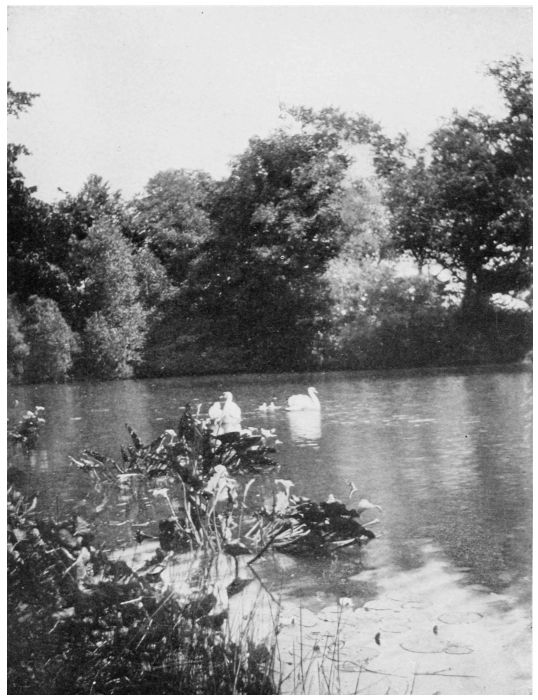
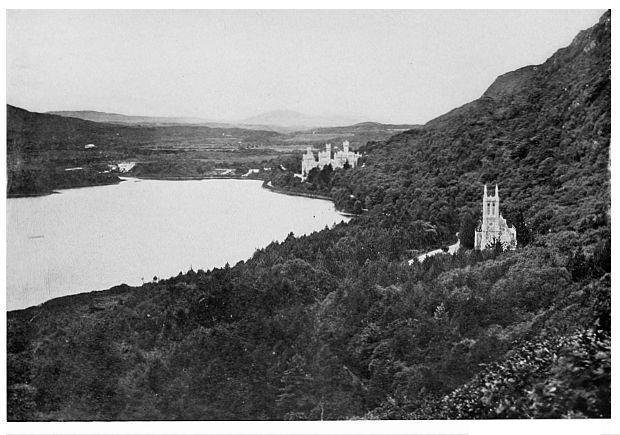
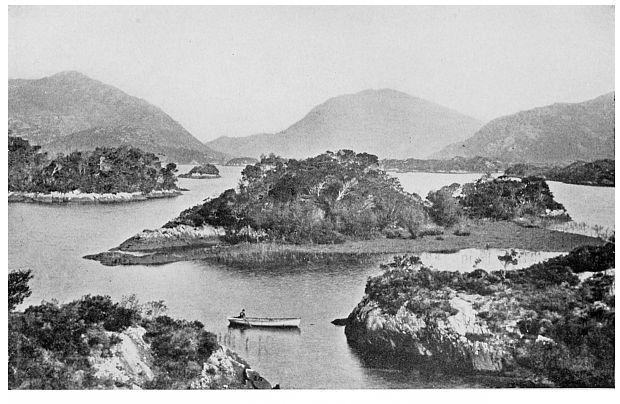
The Lake at Doneraile Park
One day we are returning from a jaunt to
nowhere in particular, having been out just looking
for things to happen,—which they generally did,—when,
as we draw near the barracks, we pass a
dilapidated old trap with some men inspecting it.
One hails our boy with the query, "I say, Tom,
is that your family chariot?" Quick as thought
comes the reply: "Yes, and I am in want of a mule;
are you widout occupation?"
After that we find it advisable to order the car
into the barracks enclosure when dismissing it—at
which time I get a wink from Tom—we shortly
find ourselves ensconced before a bright fire in
the smoking-room.
The quarters are very comfortable. This room
is a large double apartment with easy chairs
and lounges, red rugs and carpets, two fire-places
for winter use, and books and cards galore. Downstairs
there is a billiard-room. The quarters of
the officers are cleanly and comfortable, the dwellers
therein a healthy, happy looking lot, though
they all agree with what I have said about the
bathrooms.
The regiment has collected its plate throughout
all the years since its foundation, nearly two centuries
and a half, and it forms a superb collection,
which I examined with great interest.
When in 1661 Charles II. married Catherine
of Braganza, Bombay was ceded to England by
Portugal as part of the dower of that princess.
This regiment of the Fusiliers was formed at that
time and has been in existence ever since. As the
years have gone by this plate, now amounting
in value to some thousands of pounds, has been
collected, and the designs and taste of two and a
half centuries are interestingly displayed in the
various articles, especially in the smaller pieces,
such as salt-cellars, snuff-boxes, etc. There are,
of course, the greater pieces, stately candelabra,
drinking-cups, and epergnes. One piece especially
attracted my attention, a train of silver cars, each
holding its crystal decanter for port, sherry,
brandy, etc., which after the cloth was removed
was rolled around the ancient table. This plate
and table go with the regiment at all times. It
even went to South Africa.
Captain D. got it all out for my inspection one
day and assured me that it was often in use even
in war times.
Therein lies the difference between the English
and Americans. They live and we spend our
lives getting ready to live, and rarely reach the
goal. A soldier especially realises that his life
is but from day to day, and therefore uses each
day, with all he owns, to the full. An American
regiment would store such plate and it would be
absolutely useless, rarely if ever seeing the light
of day,—but throughout its two centuries and
a half of existence this plate has had constant
usage and shows it.
Ah, well, what, I wonder, will be our manners
and customs when our nation, like this, has a
thousand years to its credit? What will America
be, what will England be then? Let us trust both
better and greater and grander than they are
now.
While I handle these dainty bits of silver that
have outlasted the lives of so many great men,
Captain D. pours bits of gossip about army life
and the late war into my ears, and I notice that
he does not hear very well on one side, and ask
why. "Oh, nothing much; a Boer bullet hit me
one day and clipped out a bit of my skull under
my left eye, coming out behind my ear, and destroying
my sight and hearing on that side,—it
was not much." No! I suppose all soldiers
would say it was merely in the line of their profession,
yet life is the best thing given to us, and
those who hold it at a nation's disposal should
have the best that nation can bestow at all times.
I have no doubt but that each nation intends to
give all—they are careless, not ungrateful.
After these days of rest in Buttevant barracks,
it is pleasant to see again our green car
glide round the corner and draw up at the door—not
that we have not used it while here. My
sojourn with these soldiers of the King has proven
a delightful experience which I shall never
forget. As we are loaded up and the car is
snorting to be off they crowd around us and we
make all sorts of appointments for future meetings,
few of which in the usual course of life will ever
be carried out, but there is pleasure in the making.
With a last handshake, I give the word and the car
glides noiselessly forward, turns out through the
great archway, and Buttevant Barracks are a
thing of the past for us,—really so, as this regiment
moves in September to Fermoy.
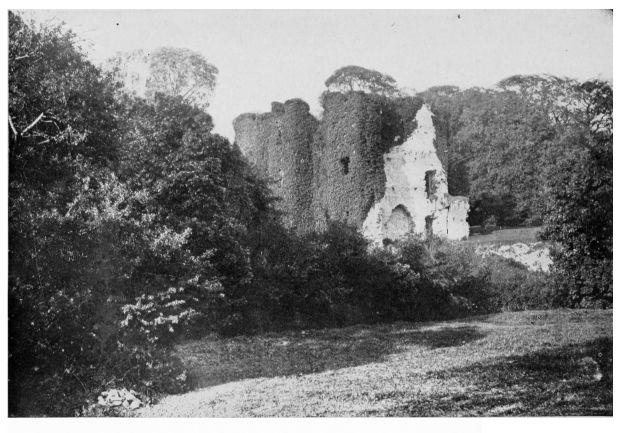
Photo by W. Leonard
Mallow Castle
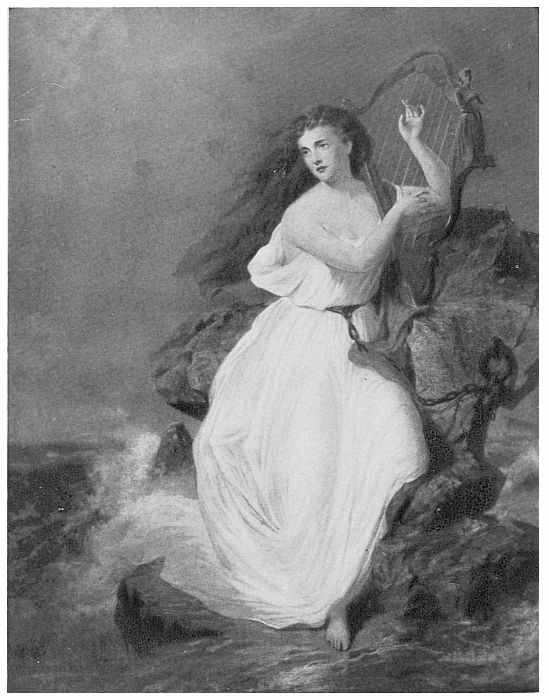 "The Harp of Erin"