VICK’S
ILLUSTRATED MONTHLY
MAGAZINE.
Devoted to the Profitable Culture of Flowers and Vegetables.
Vick Publishing Co.
Fifty Cents Per Year.
ROCHESTER, N. Y., MARCH, 1894.
Volume 17, No. 5.
New Series.
COUGHS AND COLDS
are only the beginning. Lungs are weakened next, the body becomes emaciated, and then the dreaded Consumption Germ appears.
Scott’s
Emulsion
the Cream of Cod-liver Oil and Hypophosphites, overcomes Coughs and Colds, strengthens the Lungs, and supplies vital energy. Physicians, the world over, endorse it.
BABIES AND CHILDREN
and Weak Mothers respond readily to the nourishing powers of Scott’s Emulsion. They like the taste of it, too.
Don’t be Deceived by Substitutes!
Prepared by Scott & Bowne, Chemists, New-York City. Druggists sell it.
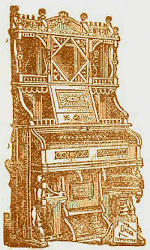
ORGANS $27.50 up
PIANOS, $175 up
FREE:
Our large 24-page Catalogue, profusely illustrated, full of information on the proper construction of Pianos and Organs. We ship on test trial, ask no cash in advance, sell on instalments, give greater value for the money than any other manufacturer. Send for this book at once to
BEETHOVEN ORGAN CO.,
WASHINGTON, N. J. P. O. Box 280

☞ SAVE MONEY
| $90 Top Buggy | $52.50 |
| $65 Top Buggy | 36.75 |
| $75 Spring Wagon | 42.25 |
| $40 Road Wagon | 24.75 |
| $130 4-Pass Surrey | 77.50 |
| $15 Texas Saddle | 8.25 |
| $15 Cowboy Saddle | 25.00 |
Single Harness $3.75, $5.25 and $10, same as sell for $7, $10 and $18, Double Team Harness $12, $17, $20, same as sell for $20, $30, $35. We ship anywhere to anyone at WHOLESALE PRICES with privilege to examine without asking one cent in advance. Buy from manufacturers, save middlemen’s profits. World’s Fair medals awarded. Write at once for catalogue and testimonials free. CASH BUYERS’ UNION, 158 W. Van Buren St., B3, Chicago, Ill.
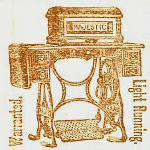
Death to High Prices!
Buy Direct from the Factory
and save agents’ and canvassers’ commissions. Hereafter we shall sell the Majestic direct to the consumer at factory cost. The Majestic is recognized as the best machine for family use, and has always been sold by our agents for $60. For a limited time we shall sell it for $22 and furnish all attachments free of charge. Shipped on approval anywhere. Send for a sample of its work and catalogue.
THE TILTON S. M. CO., 275 Wabash Av., Chicago, Ill.

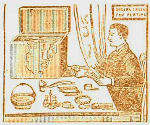
AGENTS $10 a day at home selling LIGHTNING PLATER and plating Jewelry, Watches, Tableware, Bicycles, etc. Plates finest jewelry good as new, and on all kinds of metal with gold, silver or nickel. No experience. Anyone can plate the first effort. Goods need plating at every house. Outfits complete. Different sizes, all warranted. Wholesale to agents $5 up. Big profits, good seller. Circulars free.
H. F. Delno & Co. Dept. No. 6, Columbus, O.
HALM’S ANTI-RHEUMATIC AND ANTI-CATARRHAL CHEWING GUM
Cures and Prevents Rheumatism, Indigestion, Dyspepsia, Heartburn, Catarrh and Asthma. Useful in Malaria and Fevers, Cleanses the Teeth and Promotes the Appetite. Sweetens the Breath, Cures Tobacco Habit. Endorsed by the Medical Faculty. Send for 10, 15 or 25 cent package. Be convinced.
Silver, Stamps or Postal Note.
Geo. R. Halm, 140 W. 29th St., New York
Montbretias for Spring Planting.
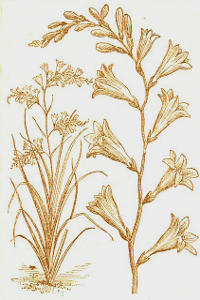
An order of plants belonging to the Iris family, are natives of Africa, and their general appearance is that of the gladiolus, 18 inches high. Bloom profusely from July to October, throwing out spike after spike of beautiful blossoms. Hardy south of the Ohio; North, lift in fall and keep in dry sand.
Crocosmiflora. This is a hybrid variety, having scarlet flowers about one and one half inch in length, borne numerously in a long panicle standing well up above the foliage, considered hardy.
Pottsii. Flowers bright yellow, flashed on the outside with brick-red; very ornamental and hardy.
Rosea. Flowers rose colored. Mixed. All colors.
Named varieties 5c. each; 6 for 25c.; 12 for 40c. Mixed 5c. each 6 for 20c.; 12. for 35c.
POPULAR SELECTED COLLECTIONS.
To all who want good sensible Collections for the Flower and Vegetable Garden we can recommend either of the following. All of the seeds contained in them are our regular sized packages, and first class in every respect. They give to our customers a good assortment, best adapted to produce a continued succession of the most useful kinds throughout the year.
Several thousand of our Collections are sold annually, and to the same people, which shows that they are perfectly satisfactory.
FLOWER SEEDS.
- No. 1—Twenty Varieties Choice Annuals, $1.00.
- No. 2—Forty Varieties Choice Annuals, $2.00.
- No. 3—“Beauteous” Collection of 60 Varieties of the Finest Annuals, Biennials and Perennials, $3.00.
- No. 4—“Perfection” Collection of 100 Varieties of the Finest Annuals, Biennials and Perennials, $5.00.
VEGETABLE SEEDS.
- No. 5—Twenty-three Varieties, for Small Garden, $1.00.
- No. 6—Forty-six Varieties. All Leading Vegetables. $2.00.
- No. 7—“Giant” Collection ($4.00 worth) of Finest Varieties of Vegetables for Family Garden, $3.00.
- No. 8—“Mammoth” Collection ($6.50 worth) of Finest Varieties of Vegetables for Family Garden, $5.00.
FLORAL GUIDE, 1894,
The PIONEER CATALOGUE
of Vegetables and Flowers.
Contains 112 pages 8 × 10½ inches, with descriptions that describe, not mislead; instructions that instruct, not exaggerate.
The cover is charming in harmonious blending of water color prints in green and white, with a gold background,—a dream of beauty. 32 pages of Novelties printed in 8 different colors. All the leading novelties and the best of the old varieties. These hard times you cannot afford to run any risk. Buy Honest Goods where you will receive Full Measure. It is not necessary to advertise that Vick’s seeds grow, this is known the world over, and also that the harvest pays. A very little spent for proper seed will save grocer’s and doctor’s bills. Many concede Vick’s Floral Guide the handsomest catalogue for 1894. If you love a fine garden send address now, with 10 cents, which may be deducted from first order.
$360.00 CASH PRIZES FOR POTATOES.
JAMES VICK’S SONS, Rochester. N. Y.
Vick’s Magazine.
Vol. 17. ROCHESTER, N. Y., MARCH, 1894. No. 5.
MARCH
MABEL RAY’S LESSON.
BY ROSE SEELYE-MILLER.

Times had been hard, harder than common this past year, and it seemed to Mabel Ray as though there was little bright to look forward to, and less to encourage her in trying to do right, trying to be the Christian she wanted to be some years ago. She had married Harry Ray three years previous; he was a thriving young merchant, but the past year it had seemed to the young wife as if he had grown taciturn and almost fretful if she wanted money for any little thing which she deemed necessary. Only this morning he had refused her money for the fur cape that she really needed so much, especially if they were going to her folks for New Year’s day. She had always had what she wanted when at home, and if Harry begrudged her the necessities of life, why, she almost believed she had better go back to that home, for she was an only daughter and was idolized by her parents. She sat and thought, and thought, of her wrongs until the tears came, and then, after having a good cry, she went into the conservatory and began picking flowers for the church decoration in which site was to take part. There was to be a concert and recitations and such entertainments, and the funds were to go to help the needy ones in the parish. For there were many who needed, many men were out of work, and their families were destitute indeed. Mabel was always ready for work of this kind, it relieved the tedium of the days when Harry was at the store, and then, be it known to you, although Mabel would have blushed had she realized it herself, she liked the notices in the city personals about the charming and philanthropic Mrs. Ray who took such a prominent part in every good work.
Her time was her own; there were no little ones for her to care for; her household was managed by a competent housekeeper who looked well to the domestic arrangements; so, altogether, Mrs. Ray rather needed something to give her an idea of usefulness. She was selfish, I am sorry to say, but when you think that she was an only child, reared in luxury, with everything she desired procured for her, it is no wonder that she learned to think that what she wanted was the first thing to be considered.
Harry Ray really loved his wife, but he was bearing a heavy burden of financial care, and then, besides, he did not possess the means that Mabel’s father had. He would do anything, sacrifice anything for her, but she seemed thoughtless about his sacrifices, and did not realize that perhaps she too had a duty to perform.
She came home from decorating the church that afternoon in better spirits, but was almost vexed when Harry assured her it would be impossible for him to attend the Charity function with her that evening. “Wrap yourself up well, Mabel,” Harry said thoughtfully, “and let the coachman await you.” He looked almost wistfully at her bright young beauty and longed for a word of sympathy and help from her, but none came. He looked worn and worried, and a thoughtful wife would have noticed this long before, but Mabel had not been taught to notice others in that way.
So Harry went to his work in his office, and Mabel, dressed richly, went to the Charity function, where she expected to sing. The evening passed pleasantly to Mabel, for she loved a brilliant scene and the compliments she always received.
The next day she was one of a committee to dispense the various gifts among the poor. She rose early for her, and with several others she visited such haunts of misery as she had never dreamed of. Poverty had always been a rather pleasant thing in her mind where people were always holding some sort of meetings to relieve it, and where kind hearted women were taking chicken broth or cups of jelly to others who lay in bed; she never really thought that perhaps it would be pleasanter to make one’s own chicken broth or furnish one’s own jelly, or that perhaps the one who lay in bed might do something besides just simply lie there; she did not realize the tragedy of many of those lives where poverty binds and sickness holds with chains invincible beyond all human aiding.
There was more wretchedness depicted in the squalid homes she visited than she had ever dreamed of, there was not only poverty but there was dirt, and there was suffering, and she began to wonder if there were not other things needed by the poor besides chicken broth and jelly; she thought soap would not be misplaced, and that clothes would find lodgement, she was sure flowers would be welcomed by some, and she went home with her heart really aroused from its selfish stupor. Harry did not come home to tea, and it was so late before he did come that being very wearied she retired, and soon fell asleep. But here, even, she was not free, she seemed to be in the midst of a white-robed throng who went about ministering to the needs of others, and when she spoke to them they only said “Even Christ pleased not Himself,” and winged their way on their errands of mercy, and then she seemed transported to the sunny fields where flowers bloomed and birds sang their sweetest carols; there were certain ones gathering the flowers and when she spoke to them they said “Even Christ pleased not Himself.”
And then she was transported to the city and into the haunts of misery and she saw a wan-faced woman going into a poor hovel with a blossom in her hand that she had picked from where it had fallen from some fair lady’s bouquet. She placed it carefully in a pitcher with a broken spout and turned the fairest side of the flower toward a sick one lying upon a pallet of straw, and when she looked a halo seemed to surround the flower and a voice said “Even Christ pleased not Himself.” And suddenly she seemed to be in her husband’s office, and there sat Harry, his face was haggard, and there were tense lines about his mouth, and he seemed trying in vain to make the accounts tally in the ledger before him, and ruin and disaster embodied seemed looking in upon him as he worked, and finally he laid down his pen, saying “I can do no more—if it were not for Mabel.”
Then she was in her own beautiful home and everything seemed going on strangely; the flowers in the conservatory had withered and died because they lived to please themselves, and so it seemed with everything in the house; the housekeeper was keeping house to please herself, the cook was not going to serve the dinner because it did not please her to do so, and so it