— VERSES FOR CHILDREN — AND — SONGS FOR MUSIC — BY
Whole book · 55 sections
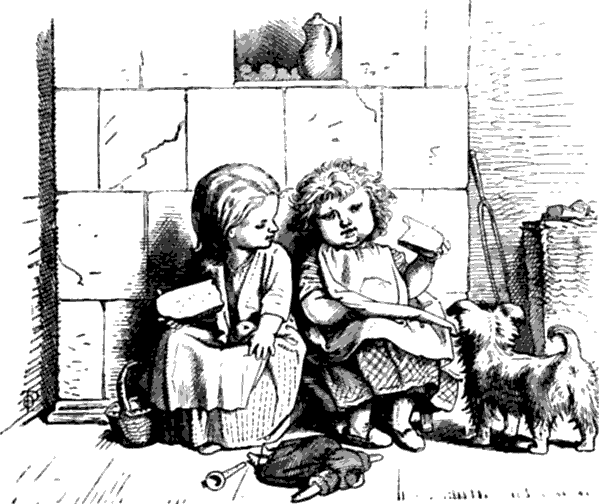
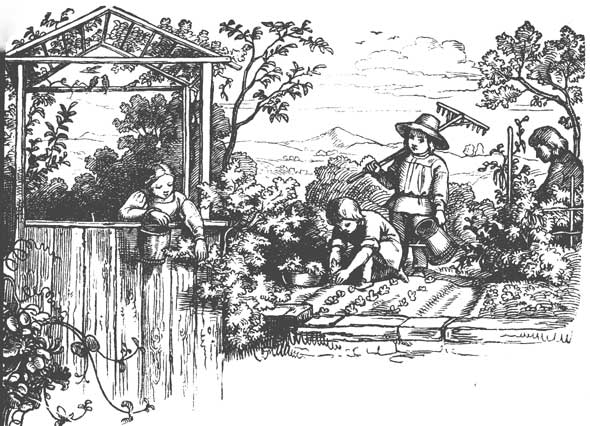
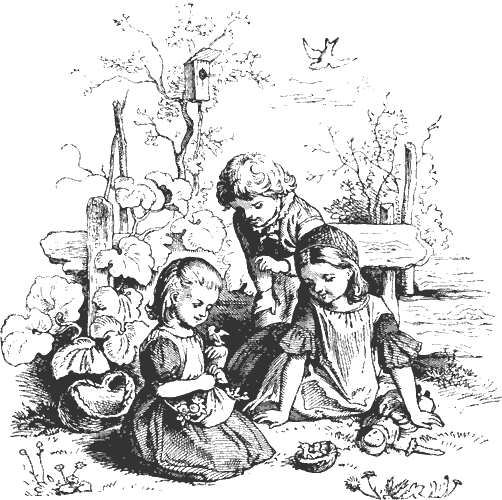
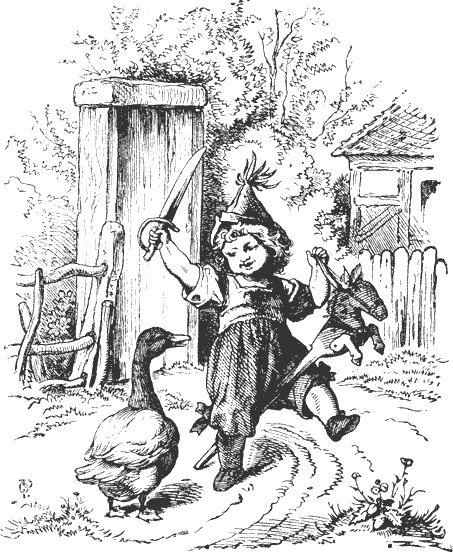
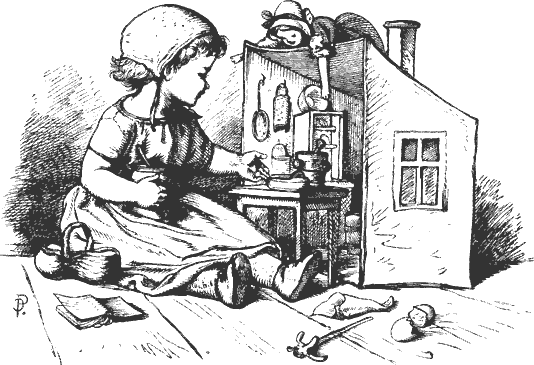
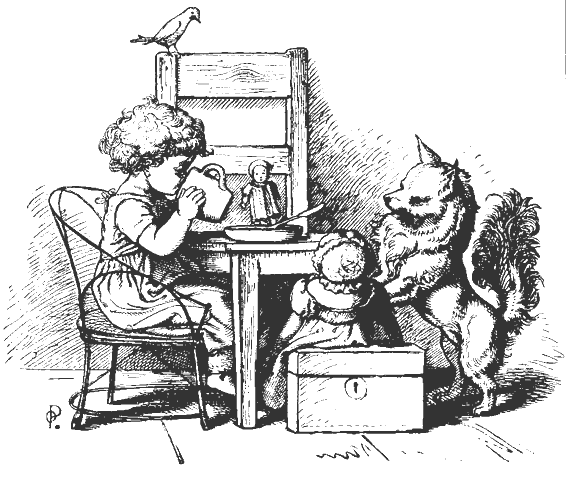
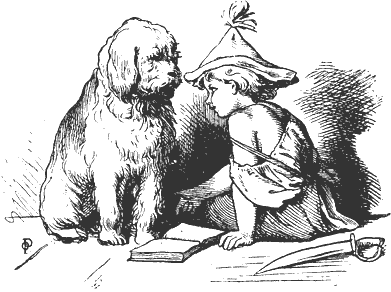
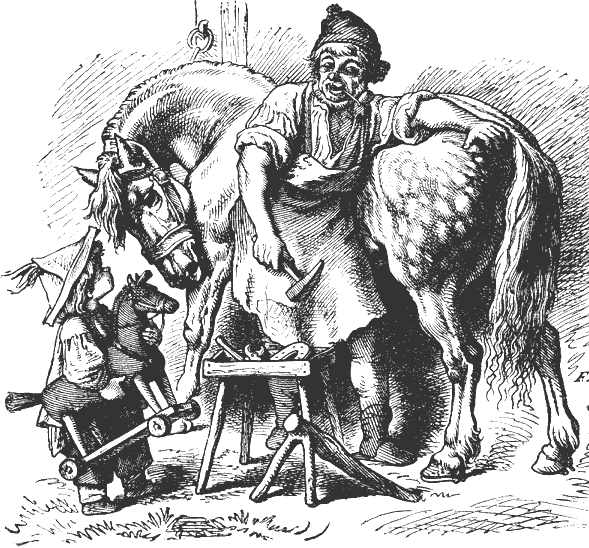
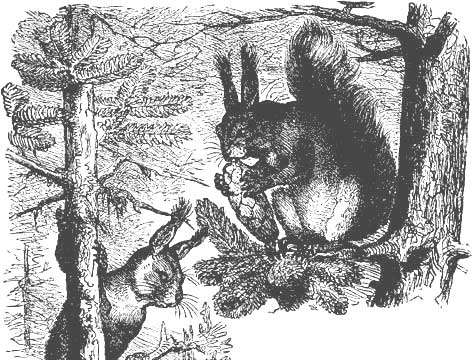
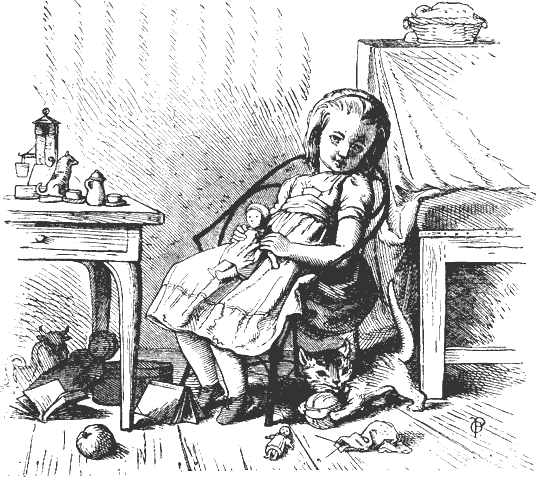
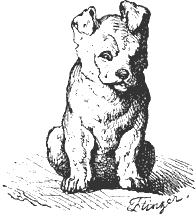
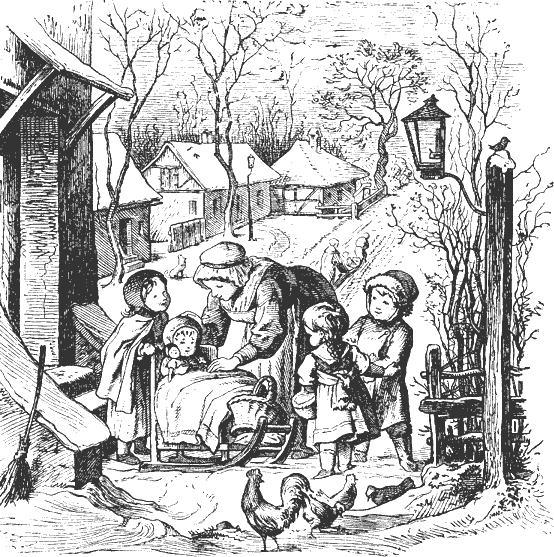
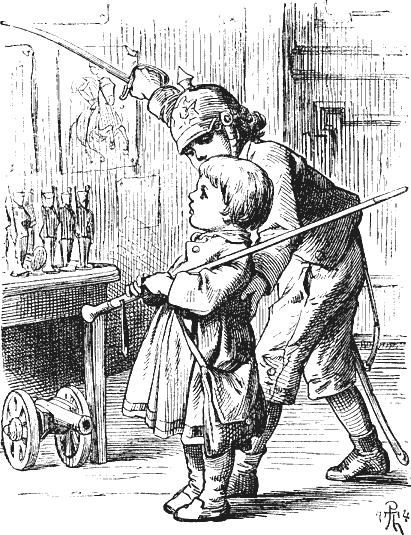
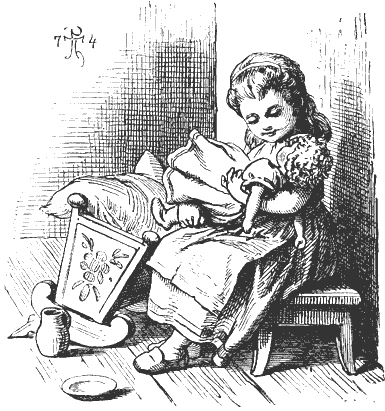
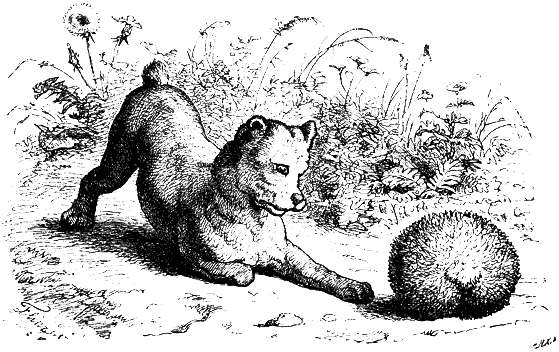
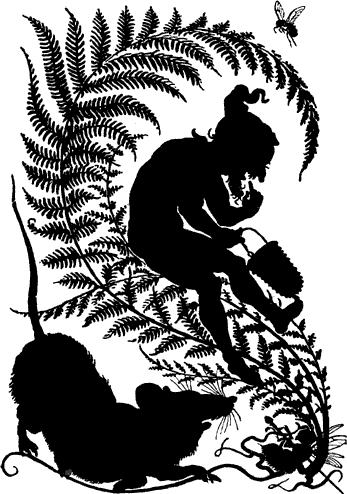
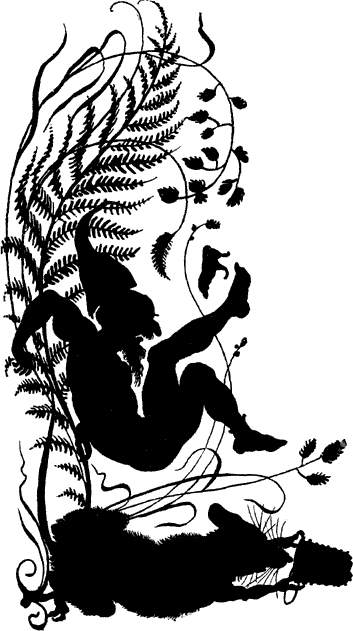
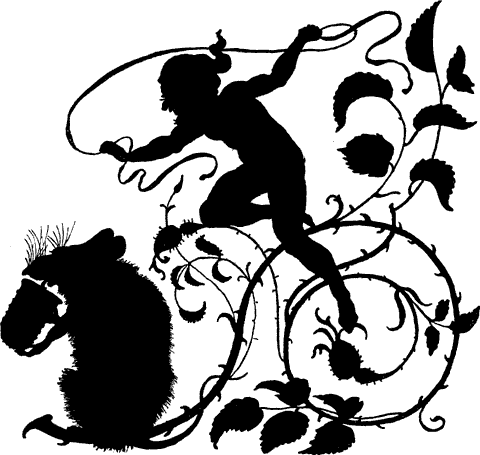
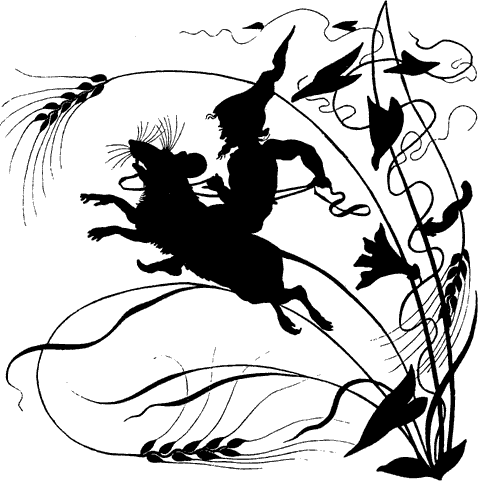
It has been decided in publishing this volume to reproduce the illustrations with which the verses originally appeared in Aunt Judy's Magazine. In all cases Mrs. Ewing wrote the lines to fit the pictures, and it is worthy of note to observe how closely she has introduced every detail into her words. Most of the woodcuts are by German artists, Oscar Pletsch, Fedor Flinzer, and others; but the frontispiece is from an original sketch by Mr. Gordon Browne. In accordance with his special desire, it has only been used for Mrs. Ewing's poem, as the Convalescent was a little friend of the artist, who did not live to complete his recovery. The poem is the last that Mrs. Ewing wrote for children, and it was penned when she herself was enduring the discomforts of convalescence with all the courage she so warmly advocates.
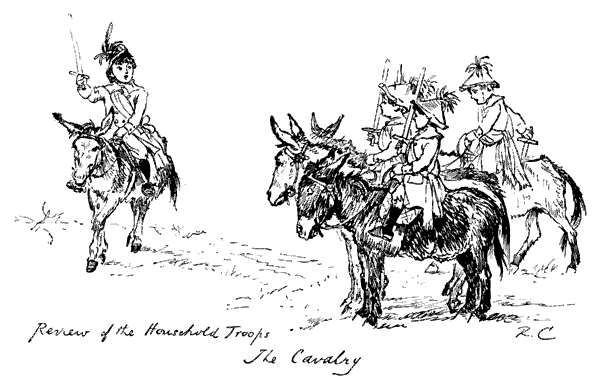
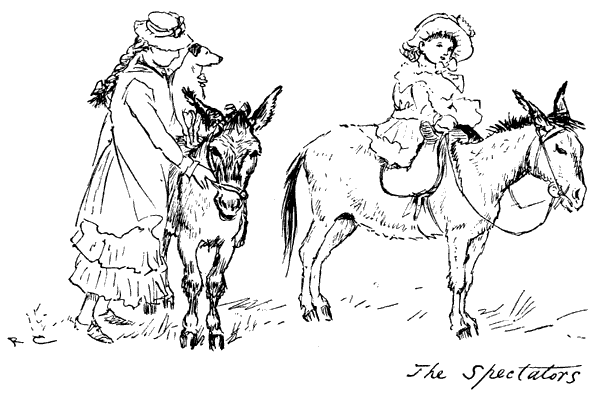
Mr. Randolph Caldecott's illustrations to "Mother's Birthday Review" first appeared in his Sketch Book, but the letterpress that accompanied them was very brief, and Mrs. Ewing could not resist asking permission to write some verses to the pictures, and publish them in Aunt Judy's Magazine. This favour was kindly granted, and by Mrs. Caldecott's further kindness the sketches are again used here.
The contents of this volume have been arranged chronologically as far as is possible.
"The Willow Man" and "Grandmother's Spring" were both written to protest against wantonly wasting Dame Nature's gifts, and the Note on page 69 shows that Mrs. Ewing had learnt this lesson herself in childhood. My Father has lately recalled an incident which he believes first roused our Mother to teach the lesson to us. They were driving to Sheffield one day, when on Bolsover Hill they saw a well-known veterinary surgeon of the district, Mr. Peech, who had dismounted from his horse, and was carefully taking up a few roots of white violets from a bank where they grew in some profusion. He showed Mrs. Gatty what he was gathering, but told her he was taking care to leave a bit behind. This happened fully forty years ago, long before the Selborne and other Societies for the preservation of rare plants and birds had come into existence, and Mother was much impressed and pleased by Mr. Peech's delicate scrupulousness.
"A Soldier's Children" was written in 1879, whilst many friends were fighting in South Africa, and ten years before a story bearing the same name was issued by the writer of Bootles' Baby.
The "Songs for Music" appeared in 1874 in a volume called Songs by Four Friends, except the two last poems, "Anemones" and "Autumn Tints." The former was given by Mrs. Ewing to her brother, Mr. Alfred Scott-Gatty, to set to music, and it has recently been published by Messrs. Boosey. "Autumn Tints" was found amongst Mrs. Ewing's papers after her death, and is now printed for the first time.
Horatia K.F. Eden.
June 1895.





Fairy King.
Boy.
Boy.



The following note was given in Aunt Judy's Magazine, June 1880, when "Grandmother's Spring" first appeared:—"It may interest old readers of Aunt Judy's Magazine to know that 'Leave some for the Naïads and the Dryads' was a favourite phrase with Mr. Alfred Gatty, and is not merely the charge of an imaginary mother to her 'blue-eyed banditti.' Whether my mother invented the expression for our benefit, or whether she only quoted it, I do not know. I only remember its use as a check on the indiscriminate 'collecting' and 'grubbing' of a large family; a mystic warning not without force to fetter the same fingers in later life, with all the power of a pious tradition."—J.H.E.
[1] The colours of lobsters vary a good deal in various localities. Homarus vulgaris, the common lobster, is spotted, and, on the upper part, more or less of a bluish black. I once saw a lobster that had just got a new shell, and was of every lovely shade of blue and violet.
[2] Palurinus vulgaris, the spiny lobster, has no true claws, but huge hairy antennæ. These lobsters are red during their lifetime! I have seen them (in the Crystal Palace Aquarium) seated exactly as here described, with blue lobsters watching them from niches of the rocky sides of the tank, where they looked like blue-jerseyed smugglers at the mouths of caves.
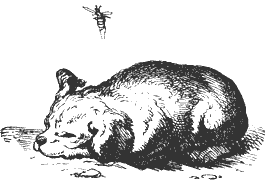

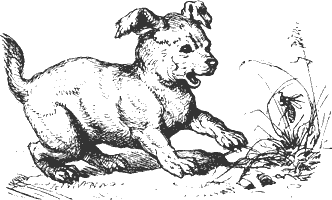
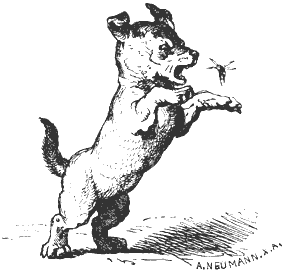
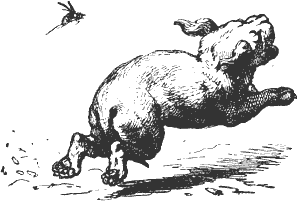
[3] The "Demoiselle" Dragon-fly, a well-known slender variety (Libellula), with body of brilliant blue.
[4] The Walkyrie in Teutonic mythology, whose office it is to bear the souls of fallen heroes from the field of battle.

Hedge-Plants.
Dandelion.
Thistle.
Dog-rose.
Nettle.
Dog.
Hedge-Plants.
Dog.
Dandelion.
Dandelion.
Hedge-Plants.
Brother Bill.
[5] Dame Elizabeth Treffry (temp. Henry VI.) defended Place House, Fowey, Cornwall, in the circumstances and with the vigorous measures described. On his return her husband wisely "Embattled all the walls of the house, and in a manner made it a Castelle, and unto this day it is the glorie of the town building in Faweye."—Carew. The beauties of Place Castle remain to this day also.
Dolly.
Jack Ass.
[6] Heath bed-straw (Galium Saxatile). This white-flowered bed-straw grows profusely on Hampstead Heath.
Child.
Bird.
Chorus of Children.
Child.
Chorus.
Published in Aunt Judy's Magazine, July 1866, with music by Alexander Ewing.


I.

II.

III.
IV.
V.
VI.

VII.
VIII.
IX.

[7] "Elleree" is the name of one who has the gift of second sight.
[8] "Bodach Glas," the Man in Grey, appears to a Highland family with the gift of second sight, presaging death.






Richard Clay & Sons, Limited, London & Bungay.
The present Series of Mrs. Ewing's Works is the only authorized, complete, and uniform Edition published.
It will consist of 18 volumes, Small Crown 8vo, at 2s. 6d. per vol., issued, as far as possible, in chronological order, and these will appear at the rate of two volumes every two months, so that the Series will be completed within 18 months. The device of the cover was specially designed by a Friend of Mrs. Ewing.
The following is a list of the books included in the Series—
1. MELCHIOR'S DREAM, AND OTHER TALES.
2. MRS. OVERTHEWAY'S REMEMBRANCES.
3. OLD-FASHIONED FAIRY TALES.
4. A FLAT IRON FOR A FARTHING.
5. THE BROWNIES, AND OTHER TALES.
6. SIX TO SIXTEEN.
7. LOB LIE-BY-THE-FIRE, AND OTHER TALES.
8. JAN OF THE WINDMILL.
9. VERSES FOR CHILDREN, AND SONGS.
10. THE PEACE EGG—A CHRISTMAS MUMMING
PLAY—HINTS FOR PRIVATE
THEATRICALS, &c.
11. A GREAT EMERGENCY, AND OTHER TALES.
12. BROTHERS OF PITY, AND OTHER TALES
OF BEASTS AND MEN.
13. WE AND THE WORLD, Part I.
14. WE AND THE WORLD, Part II.
15. JACKANAPES—DADDY DARWIN'S DOVECOTE—THE
STORY OF A SHORT LIFE.
16. MARY'S MEADOW, AND OTHER TALES
OF FIELDS AND FLOWERS.
17. MISCELLANEA, including The Mystery of the
Bloody Hand—Wonder Stories—Tales of the
Khoja, and other translations.
18. JULIANA HORATIA EWING AND HER
BOOKS, with a selection from
Mrs. Ewing's
Letters.
S.P.C.K., Northumberland Avenue, London, W.C.