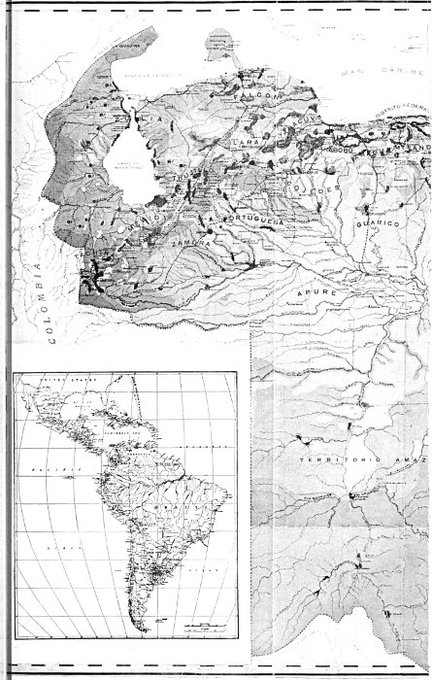
The Agricultural Zone of Venezuela covers about 300,000
square kilometers, according to recent statistics, and extends
from the Atlantic Ocean to Colombia, embracing the territory
between the Caribbean seacoast and the plains of the Orinoco
towards the south of the country.
Venezuela has fertile soil, perfect adaptability to the growth
and maturity of everything that is essential to the existence of
man and beast, mild climate, with temperatures varying
according to the elevation of the land and latitude, and
strategic geographical position. These favorable conditions
designate Venezuela as one of the most attractive and advantageous
regions for agricultural pursuits. Twenty per cent of
the population are engaged in agricultural work, but this proportion
is far from being sufficient for an extensive development
of the natural resources of this vast area. It is estimated that
a population one hundred fold greater could derive a comfortable
subsistence from this agricultural region. This vast area,
including such a great number of square kilometers, should
become one of the most prosperous, rich and accessible agricultural
fields of the world following an increase in population,
greater and improved transportation facilities, and with the
introduction of new methods of cultivation and more general
application of modern machinery.
The principal agricultural products of Venezuela are: coffee,
cacao, sugar, tobacco, India-rubber, tonka-beans, cotton, corn,
vanilla, wheat and kindred products.
The vegetable seeds are also numerous and consist of vetches,
bean seed, peas, beans, peanuts and okra.
The vegetable plants consist of: cabbage, cauliflower,
melons, asparagus, turnips, radishes, beets, egg plants, garlic,
pepper, celery, carrots, cresses, onions, spinach, lettuce and
artichokes.
The fruits of Venezuela, of which there are many different
species, include: oranges, large sweet lemons, limes, plantains,
pineapples, pomegranates, figs, grapes, strawberries, plums,
breadfruit, chestnuts, mangoes, zapotes, parchas, medlars,
tamarinds, cactus fruit, mandarines, and a great variety of
bananas of a very high quality. There is a vast region available
for the raising of bananas, but, up to the present no use
has been made of it and there is a very small amount of capital
invested in the production of this fruit ($100,000 in American
gold).
The cultivation of coffee in Venezuela began in 1784. At the
present time, it is estimated by experts that there are about 260
million coffee trees under cultivation, which place Venezuela
second among the coffee growing countries, according to recent
statistics.
Coffee is produced in the temperate climate regions of the
Republic from five hundred to two thousand meters above sea
level. It is estimated that coffee trees last from forty to fifty
years, yielding an average crop of one-eighth of a kilogram of
coffee beans per tree. Sixteen million dollars are invested in
coffee trees in Venezuela at the present time.
Venezuela possesses one of the choicest cacao zones of the
world. The natural cacao (Theobroma edenda,—edible food
of the Gods) is a seed from a tree indigenous to the soil of Venezuela.
From this seed the chocolate of commerce is made.
As the cacao tree requires for full development and good crops a
temperature of 80 degrees Fahrenheit, and a moist air, therefore
the Venezuelan lands along the coast of the Caribbean Sea,
sloping from the mountain tops to the shore, and which are
bedewed by the exhalation of the sea and irrigated by the many
rivers coursing down the valleys, are found to be well adapted
in all respects to the very profitable cultivation of cacao. It is,
however, also found and cultivated in other parts of Venezuela.
About two hundred trees may be planted in one hectare
(about two and one-half acres) and they must be protected
from the sun by shade trees until they have acquired normal
size. Five years after having been planted the trees begin to
bear two crops a year, ripening in June and December. The
average life of a tree is about forty years. The seed is similar
to a shelled almond; about sixteen of these seeds are enclosed in
an elongated pod ribbed like a musk melon. The pods are of a
yellow and red color and when they become ripe turn purple.
On being gathered and heaped in piles on the ground, after a
few days they ferment and burst; then the seeds are shelled,
washed and housed.
There are two grades of cacao grown in Venezuela, namely,—the
criollo, which is the native cacao, and the trinitario, which
was originally imported from the Island of Trinidad. The
criollo, a very high grade, grows especially well in the valleys
situated near the sea, where the temperature is warm and moist.
The demand for this product in Europe before the war was
considerable and large quantities were exported annually. In
Spain and Italy cacao is used in the form of chocolate, whereas
in France, England and the former German Empire, it is chiefly
used in the manufacture of sweets and confections, but its use
is becoming so varied and extensive that it will soon be a staple
article of consumption as universally needed as coffee or tea.
Venezuelan cacao also finds a ready market in the United
States where it is known as Caracas and Maracaibo Cacao.
As the cacao-yielding region in the world is comparatively
restricted, the planters of this staple need not fear the increasing
competition which has been met in the cultivation of other
staple products. At the present time it is estimated that $12,400,000
are invested in the cultivation of cacao in Venezuela.
Tobacco, discovered by the Spaniards in Yucatan, was introduced
from there to the West Indies and thence transplanted to
Venezuela, where it is most successfully cultivated in Capadare,
Yaritagua, Mérida, Cumanacoa, Guanape, Guaribe and
Barinas. Excellent tobacco is grown near Cumaná, that from
Guacharo being considered exceptionally good. The plant
thrives best in humid and fertile soil. Cultivation requires
about six months in Venezuela before it is ready for the market,
and while the cost of cultivation is not large, great care is
required.
Some tobacco is exported from Venezuela, chiefly to Havana,
where it is mixed in the manufacture of Havana cigarettes.
The different classes of tobacco grown in Venezuela are distinguished
according to the regions where they are produced.
These regions are
Maturin:
This grade of tobacco is produced chiefly in Venezuela and is
used in the manufacture of Venezuelan cigarettes. It is one
of the better known classes of tobacco entering foreign trade.
This class of tobacco has:
1. Leaves which are light with relation to their bulk.
2. Medium strength, agreeable aroma.
3. It will keep in good condition for a maximum of two years
but then begins to rot and completely loses its strength.
Capadare:
This class of tobacco is considered to be better than the
Maturin tobacco. It maintains its strength and does not rot
until three or more years after it has been gathered. It has a
very agreeable taste and its weight as compared with its bulk
is greater than that of the Maturin tobacco and does not burn
as fast as the latter. It is classified into first and second class
tobacco by the gatherers.
Salon:
On account of the very fine leaves and aroma which this
tobacco possesses it is used as the outer leaf in making fine cigars.
It burns well, is light in relation to its bulk and is classed by the
gatherers as Cover, Inner-cover and Core tobacco.
Golfero:
This region is on the shores of the Gulf of Cariaco and has
recently been planted with Havana tobacco seeds and is now
producing a superior quality. It has strength, aroma of a fine
quality and burns very well. It lasts about two years without
rotting and on account of its steady strength and agreeable
aroma, it is very much demanded by the manufacturers of cigarettes.
It is divided into Principal, Half-tree and Sprouts.
Guaribe:
This tobacco is rather strong, has an agreeable taste and aroma
but as a general rule does not burn well. It is used in the manufacture
of cigarettes, in small proportions, in order to give
strength. It is also divided into Principal, Half-tree and
Sprouts.
Cocorote:
This tobacco is mostly used in the manufacture of cigarettes.
It has a delicate leaf, is light in weight, has considerable strength
and good taste. It is classified as Cover, Inner-cover and Core
tobacco.
Guacharo:
This tobacco is produced near the Gulf of Cariaco in the
vicinity of the Guacharo Caves. It has an exceptional and
superior strength, a better taste and finer aroma than any other
tobacco, not only of Venezuela but of any place in the world
where tobacco is cultivated. There is only a small supply of
this kind of tobacco because it will not grow in any other region
on account of the very mature strata formation. The leaf is
small and delicate; there is consequently a great demand for it
from the cigar manufacturers. Cigarette manufacturers can
not make use of it because the quantity produced is too small.
The annual production of the different classes of tobacco in
Venezuela varies a great deal according to the conditions of the
season and the demand for the product. The approximate
output between the years 1914-1919 was estimated at more
than 3,000 tons from the different regions. The average production
above referred to is liable to increase to a considerable
extent provided the demand requires it, as soil fit for tobacco
cultivation is plentiful. The price of tobacco naturally varies
with the supply and demand and an increase of exports of
tobacco contemplated in the near future will tend to increase
the prices. The total value of tobacco exported from Venezuela
in 1917 amounted to more than $50,000; in 1918(?) the
exportation amounted to more than $800,000.
The total amount of capital invested in Venezuela in the
cultivation of the tobacco plant is estimated at $2,000,000.
Rubber, which was discovered in French Guiana in 1758, is
called "caucho" or "goma elastica," in Venezuela. The
rubber produced in the Orinoco, Cassiquiare and Rio Negro
sections of Venezuela comes from forests of Heveas. There
are other species of rubber trees but their sap is less elastic and
much thicker. The tree is found in plentiful quantities throughout
the Guiana section and the Andes Range, and in some States
of the East, West and South of Venezuela. More than twenty
tribes of Indians inhabiting the Amazon territory of Venezuela
gather rubber and prepare it, but, as a general rule, in a very
primitive manner.
In the Orinoco region the Hevea tree produces from 40 to 50
grams of juice; in that of the Rio Negro from 80 to 100 grams
and in that of the Cassiquiare from 125 to 150 grams per tree.
Due to the fact that this product as well as many others of the
country are gathered within the vast territory bordering on
Brazil, they are exported through the Brazilian port of Para and
reach American and European markets as of Brazilian origin.
Rubber trees when cultivated in a scientific manner yield an
average of 95% of pure rubber, each tree producing about 460
grams of juice.
The exploitation of rubber in Venezuela may be considered
as limited entirely to the gathering of the natural product on a
small scale, as the many million acres producing rubber would
require several million people to exploit them. The investment
of capital on a large scale is required to develop this important
industry. First and most important, labor must be induced to
come to Venezuela in order to develop this immense natural
resource now scarcely touched. The world demand for this
product is great and rubber would undoubtedly be a profitable
investment for American investors if undertaken in a systematic
and technical way. It is estimated that not more than $1,200,000
are invested in the rubber industry in Venezuela.
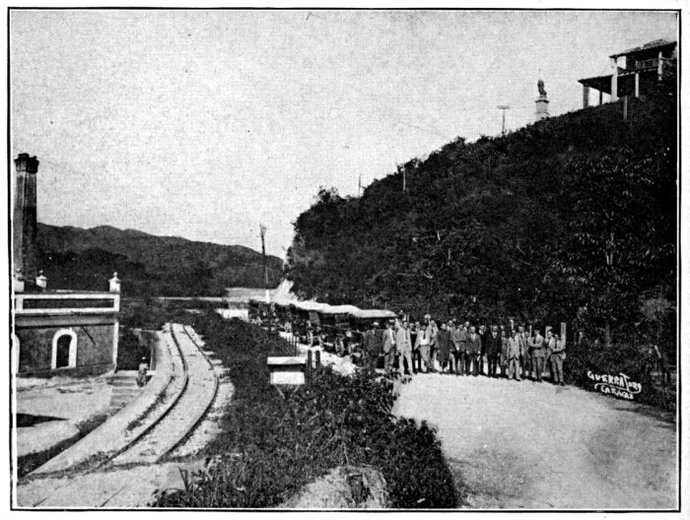
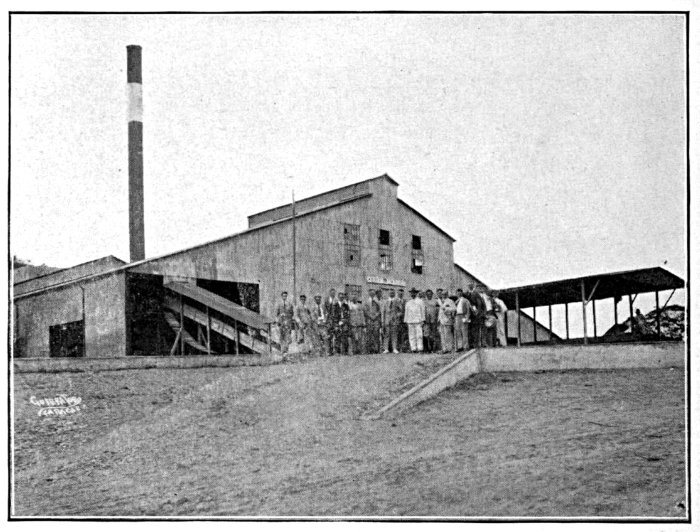
Sugar cane is indigenous in Venezuela and cultivated with
good results. Lately, Sugar Cane Central Factories have been
established to manufacture the products of the sugar cane.
These plants equipped with the best modern improvements as
to buildings and machinery have at their disposal sufficient capital
to enable them not only to supply the home consumption
but to export their products in considerable quantity.
The climate and the fertile soil of Venezuela are the principal
factors in the production of sugar cane, as it grows everywhere
in Venezuela except in mountainous parts lacking irrigation.
Four species of sugar cane are cultivated in Venezuela,
namely: Criolla, the Otati, the Batavian and the Salangore.
The Criolla is cultivated to the largest extent on account
of its sweetness and good results.
The planting and cutting of the sugar cane is controlled in
such a manner that there is always in the plantations sufficient
cane reaped and ready, in order to avoid interruptions in the
grinding during the whole year round. To ensure this continuity
of crops, the soil must be kept well irrigated at all times.
The region near the Lake of Valencia produces longer and
thicker canes having more juice, but they contain less sweetness.
Sugar plantations are usually divided into Tablones covering
ninety meters square, each lot separated by a road. Such lots,
when well manured, irrigated and sown with sugar cane, produce
sixty to eighty loads of "papelon" (brown sugar), or 160
loads of alcohol: that is, 5,120 cones of brown sugar weighing
8,129 kilograms or 9,600 liters of alcohol. Every plantation of
any importance has a special building with the necessary
machinery and equipment for manufacturing the different
sugar products. These are: sugar, brown sugar, alcohol and
rum.
Brown sugar is offered for sale molded in different forms such
as cones and squares. The best quality of sugar produced in
Venezuela is manufactured near Guatire, a town three hours
distance from Caracas by motor truck or automobile. Rum is
manufactured from sugar cane and alcohol. The previously
mentioned Sugar Central Factories command an aggregate
capital of $7,700,000, have a total of 12,800 hectares of sugar
cane under cultivation and can produce 2,600 metric tons of
sugar per day. This product at present commands a high price
abroad; therefore, with proper management these plants now
offer a Venezuelan product for exportation in large quantities
and of a very fine quality, and for which without much difficulty
they should be able to establish a wide market.
As far back as 1913 there existed 600 individuals and companies
devoted to the cultivation of sugar cane, with an aggregate
total capital of more than $10,600,000 invested in this
industry.
This product was introduced into Venezuela by the Spaniards
at the beginning of the conquest and was cultivated in Aragua,
Barquisimeto, Trujillo, Mérida and the Táchira. The high
table lands and valleys in the mountainous regions of Western
Venezuela are available for cultivation of wheat. Fine crops
of this grain are now raised, which, after being made into bread,
is the chief breadstuff of all classes of the country.
In the Republic of Colombia wheat is cultivated on a large
scale with good results both in cold, temperate and hot zones.
Venezuela has similar zones, therefore by sowing the proper
kind of grain in each zone as practiced in Colombia and by
adopting the same or similar systems of cultivation as are there
used, wheat could easily be raised in Venezuela not only for
home consumption, but for export.
Cotton, although a natural product of Venezuela, was not
cultivated until 1782. Its output became important during the
Civil War of the United States, but after that event and the
subsequent great decline in prices of this staple product, the
industry was gradually abandoned. The cotton tree attains
the height of a shrub and under usual cultivation produces in
Venezuela more than in the United States. At the beginning of
1800 the average exportation of cotton was 450,000 kilograms a
year. In 1850 the export of cotton was of 300,000 kilograms
and in 1888 of 57,000 kilograms. In 1913, 267,300 kilograms of
cotton with a commercial value of $72,120 were exported.
Cotton grows in nearly the whole territory of Venezuela, but
the best results have been obtained in the States of Aragua and
Carabobo, which produce 54% of the total Venezuelan crop.
The farmers sow cotton when they plant corn or beans during
the month of July and the crop of cotton begins to be gathered
at the end of the month of November or the beginning of
December. This depends upon the time when rains permit the
sowing. The crops of corn or beans pay the expense of the whole
cultivation of the cotton and the only outlay in the raising of
cotton is the gathering. It is estimated that the production of
cotton in Venezuela in normal times, excepting droughts,
locusts, etc., amounts to 7,000,000 kilograms in the seed. There
is an average of 28.5% cotton in the seed, therefore, 1,995,000
kilograms of seeded cotton are produced. The cotton seeds
which were sown in the month of June, 1918, began to give a
crop in the month of December of the same year, and the
gathering of said crop ended in the month of March, 1919. It
has been estimated that this crop produced a total of 1,995,000
kilograms of seeded cotton grown in the various states of the
Venezuelan Federal Union.
The price of cotton in Venezuela during the last eight years
(1911-1919) has fluctuated between Bolivars 70 to 150 per 46
kilograms. The last price of 150 Bs. per 46 kilograms was the one
paid at the end of the 1919 crop, due to the high price of cotton
in the United States, the country producing the greatest amount
of cotton in the world.
Since Venezuela produced in 1919 a total of 1,995,000 kilograms
of seeded cotton which were sold at an average of 3.25
Bs. per kilogram, the total value of the Venezuelan cotton crop
amounted to Bs. 6,483,750 ($1,296,750 American gold).
Venezuelan cotton is classified as Cotton No. 2. (Egypt produces
cotton No. 1.) Due to the difference in seeds, soil, cultivation
on a small scale, etc., Venezuelan cotton is mixed in such
a manner that a standard quality of uniform length of fibre is
not obtainable in a given lot. For this reason the price of Venezuelan
cotton is always somewhat less than that of the medium
class cotton from the United States.
The State of Zulia produces the best quality of Venezuelan
cotton, due to the length of its fibre and because it is more
advantageous when manufactured, but as the cloth industry
in Venezuela is not intensive enough to warrant the classification
of fibres, this advantage is not noticeable in the aggregate
cotton trade of Venezuela. The cotton plant gives but one crop
a year and requires to be replanted every year. At the present
time it is estimated that $200,000 are invested in the cultivation
of this product.
These beans, which are exported from Venezuela on a large
scale, have the shape of a large black almond and give out a
delicious perfume. When dry their peculiar perfume develops
still more and it is used as an odorous basis to make high grade
perfumes, and to flavor tobacco. The bean is a natural product
and needs no cultivation, as a general rule; it is gathered in the
Tonka forests existing in the Amazon territory and the District
of Cedeno, in the Venezuelan Guianas. Tonka beans are a
staple of great value in the regions watered by the Orinoco
River and its tributaries, and almost the entire crop of Venezuelan
Tonka beans are exported by the way of Ciudad Bolívar.
The gathering process formerly in use brought about the
destruction of the trees, but the Venezuelan Government has
taken the necessary measures to prevent the trees from being
felled as was formerly the case. The large trees now in existence
are being protected perfectly. In the year 1913 Venezuela
exported more than half a million kilograms of tonka beans
having a commercial value of $727,800. One or several well
organized companies with the necessary capital at their command
would derive great profit from such exploitation.[10]
Venezuela produces an uncultivated vanilla plant called
"vanilla lutescens," but that commonly known to commerce
is the more aromatic kind called "vanilla plantifola." The
cultivation of this product has not been fostered to any great
extent. It grows readily in the rich soil of the States of Falçon,
Lara, Bolívar, Anzoatequí and Zamora. No official figures are
available as to the production, cultivation or export of this
product, although there is a good opportunity for further development.
There are many cocoanut tree plantations in Venezuela,
chiefly in the regions of Zulia, Carabobo, Bolívar, Barcelona and
Cumaná. Cocoanuts are used for various reasons abroad and
in the United States, therefore the cultivation of this natural
product could be fostered so as to make it an article of export
on a large scale and it would become a profitable investment not
requiring a large capital. In 1913 there were invested in Venezuela
in the cultivation of cocoanut trees $1,095,200.
This product is successfully cultivated in all the States of
Venezuela where it grows in every kind of soil, from the level of
the sea to 2,800 meters above it. It thrives best, however, at an
altitude of 500 to 1,000 meters. There are about 73,131 acres
in Venezuela devoted to the production of corn, and the total
amount raised is estimated at 150,000 metric tons. Special
attention has lately been paid to the cultivation of corn, which
is the real bread-plant in Venezuela, especially in the interior of
the country, and a considerable quantity of Indian corn has
been exported.
Beans are also successfully grown in all the States of Venezuela
and a great variety of them are produced. Those having
the greatest demand are the "black beans." Their production
not only meets the domestic demand but they have been lately
exported in considerable quantities. They grow readily at all
times of the year and are one of the principal articles of domestic
commerce in Venezuela.
This product was introduced into Venezuela in 1777 and
planted near La Victoria and later in many other places. The
best quality was produced at San Sebastian. Due to the high
price attained by coffee many years ago, the cultivation of indigo
was abandoned. In 1902 the exportation of indigo amounted
to 1,876,510 pounds having a value of $2,450,000.
This product has now sufficient demand in foreign markets
to warrant the revival of its cultivation as a remunerative
exportable commodity of Venezuela.
During the year 1917-1918 the products exported from the
agricultural zone of Venezuela amounted to $10,400,000; in
this zone there is now invested $46,600,000. A presidential
decree of March 12, 1917, created an experiment station of
agriculture, live stock, and forestry with a garden of acclimatization
to be located at Cotiza near Caracas. Its purposes
were stated to be:
The study of improved methods of cultivating the agricultural
products of the country; the introduction, selection and distribution
of seeds; experiments in reforestation; preparation of
reports upon nature of soil and most adaptable crops from each
region, with practical work for the training of agricultural foremen
and forest rangers.[11]
Other purposes are:
To maintain circulating agrarian libraries, to promote expositions,
to form nurseries of exotic plants, to introduce new
agricultural machinery and implements, and to supply all
possible information and assistance to the country.
In the following table the amount of capital invested in Venezuela in the
cultivation of its eight principal agricultural products is shown.[12]
| Coffee trees |
$16,000,000 |
| Cacao |
13,000,000 |
| Balata and rubber |
2,000,000 |
| Cocoanut trees |
2,000,000 |
| Tobacco |
2,000,000 |
| Bananas |
500,000 |
| Cotton |
400,000 |
| Sugar cane |
11,500,000 |
| Total |
$47,400,000 |
The following table shows the principal products exported from the Agricultural
Zone of Venezuela from 1917-1918,—weight in Kilograms and values
in Bolivares.[13]
|
Products. |
Weight in kilograms. |
Value in Bolivares. |
| 1. |
Cotton |
3,067 |
4,930 |
| 2. |
Starch |
248,801 |
104,307 |
| 3. |
Sugar |
13,260,562 |
5,526,798 |
| 4. |
Cacao |
20,280,865 |
10,603,372 |
| 5. |
Coffee |
34,123,145 |
29,190,622 |
| 6. |
Bananas |
377,636 |
58,205 |
| 7. |
Indian Corn |
21,360,191 |
4,878,173 |
| 8. |
Brown sugar |
5,440,551 |
1,427,161 |
| 9. |
Tobacco |
297,579 |
324,436 |
|
Total |
95,392,397 |
B. 52,118,004 |
This vast region extends from the Gulf of Maracaibo over the
mountains of Yaracuy, San Felipe, Aroa, Tucacas, San Camilo,
Guayana and its territories, and from the untouched forest of
the Trujillo and Barquisimeto mountains to the fertile woodlands
of the State of Zamora.
The Forest Zone of Venezuela comprises about half of its
territory; of this half, 98% is still virgin land, a fact which may
be regarded as one of the principal hopes for the progressive
future of the country. The Zone has an area of 795,640 square
kilometers, from which over two thousand specimens were
exhibited in Caracas at one time. From this immense region
Venezuela can derive natural resources of unlimited wealth,
when sufficient labor and capital are available, better means of
transportation established, and more modern machinery and
implements introduced.
The following figures show the division of the Forest Zone of Venezuela:
| Public |
Forest |
Lands |
295,400 |
sq. |
kilometers |
| [14]Private |
" |
" |
125,000 |
" |
" |
The Forest Zone of Venezuela comes within the forest area
of South America. Richest in quantity, and, probably in variety
of vegetable life, is the well-known land of Guayana, with
its vast forests, hot climate and heavy rainfall. Within this
area the plants range from the alpine shrubs and reindeer moss
found on some of the higher plateaux and hills to the bamboos
and orchids of the river banks. The high timber trees grow
fairly close together, and their spreading tops fifty, eighty, or
one hundred feet from the ground, with the abundant hanging
manes and flowering creepers, keep all but a feeble light from
the ground; hence it comes that the undergrowth is usually
sparse or absent, and progress on foot is comparatively easy.
Of all the forest giants of Guayana, "Schomburgk" is considered
the most magnificent; the average diameter of the trunk
is about three feet, and it seldom branches at less than forty
feet from the ground. Its wood, dark red and fine grained, is
said to be excellent for shipbuilding purposes.
Caoba, whose wood is very like mahogany in color, and a certain
big tree called "rosewood," which it resembles, are notable
among the timber trees. The huge Ceibas have a soft, easily
worked wood, excellent for the dugout canoes of the Indians.
The equally large Mucurutu or cannon-ball tree furnishes a
beautiful but hard grained timber.
Two fruit trees whose products are well known throughout
Europe grow in the regions of Guayana, the Brazil nut and
tonka bean trees.
The gums and resins of Guayana include the balatá, copaiba-balsam,
and rubber-producing trees, the latter chiefly varieties
of hevea, while cinchona or quinine, with innumerable creepers
and trees possessed of medicinal or toxic properties are found
on all sides. There are more than 2,450 known species of plants
to be found in the Forest Zone and more are being added to the
list daily; it is probable that in such an assembly there must be
many of value as yet undiscovered and unused.
The forest plants and trees of Guayana also flourish in the
Delta Region and in the forests bordering the Llanos of Maturin,
but the vegetation of Northern Venezuela is generally different
from that of the South. The great brown plain of the Llanos
is beautified by small golden, white, and pink flowers, while
sedges and irises make up much of the small vegetation. The
banks of the rivers often support denser groves of ceibas, crotons,
guamos, etc., and along the banks in front of the trees are masses
of reeds and semi-aquatic grasses.
In the region of the Cordilleras many different types of vegetation
can be found in the various zones. The very hot section
has generally a heavy rainfall and supports thick forests, but
along the sea coast there are barren stretches with only cactus,
acacia, croton, and similar plants. In this region we have the
plantations of cacao, sugar, bananas, plantains, maize and cassava,
which are the staple foods of the inhabitants. The growth
of cocoanuts is also encouraged. In addition, there are many
products of the forests, chief of which are the dyewoods, and
tanning barks, including logwood, dividive, mangrove, indigo,
and many others. There is also a great deal of valuable timber
in this region, the chief woods exported being mahogany and
cedar.
In the cooler regions we find a mixture of hot country plants
and those of the mountains. One may see in the same valley,
within a short distance of one another, bananas, potatoes, sugar
cane, wheat, yuca or cassava, peas, maize, cotton, cocoa and
coffee, all flourishing, and a single orchard may contain guavas
and apples, peaches and oranges, and a variety of other fruits;
the garden adjoining will have a mixture of roses, carnations,
violets and dahlias and many tropical flowers. Strawberries,
mint, nasturtiums and other of our garden plants have been
successfully grown in these mountain regions within 10 degrees
of the equator.
The higher part of this region exhibits a great variety of
plants peculiar to this zone. Along the mountain roads can be
seen palms, screw-pines, and beautiful tree ferns, also cranberries,
blackberries, ivy, quinine-trees, small bamboos, silver-ferns,
and many other beautiful plants and shrubs. In short,
here can be seen the greatest variety of color and floral scenery.
In the cold region of the Cordilleras the small woods of the
temperate zone gradually die out, and toward the snow line we
have the alpine grasses, heaths, and thick leaved, aloe-shaped
plants which have lumps of resin clinging to their roots, and
seem to take the place of pines, which are not found in Venezuela.
The value of the products of the Forest Zone of Venezuela
exported during 1917-1918 was more than $1,800,000. The
capital invested in the cultivation of this zone amounts to more
than $2,000,000.
Matthew J. Heiler.