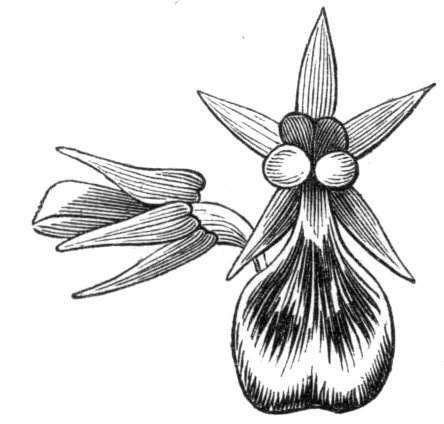
As full details relating to the disposition or arrangement of the
general organs of flowering plants are given in all the ordinary
text-books, it is only necessary in this place to allude to the main
facts at present known, and which serve as the standard of comparison
with which all morphological changes are compared.
Even in the case of the roots, which appear to be very irregular in
their ramification, it has been found that, in the first instance at
least, the rootlets or fibrils are arranged in regular order one over
another, in a certain determinate number of vertical ranks, generally
either in two or in four, sometimes in three or in five series. This
regularity of arrangement (Rhizotaxy), first carefully studied by M.
Clos, is connected with the disposition of the fibro-vascular bundles in
the body of the root. This primitive regularity is soon lost as the
plant grows.
In the case of the leaves there are two principal modes of arrangement,
dependent, as it would seem, on their simultaneous or on their
successive development; thus, if two leaves on opposite sides of the
stem are developed at the same time, we have the arrangement called
opposite; if there are more than two, the disposition is then called
verticillate or whorled. On the other hand, if the leaves are developed
in succession, one after the other, they are found to emerge from the
stem in a spiral direction. In either case the leaves are arranged in a
certain regular manner, according to what are called the laws of
Phyllotaxis, which need not be entered into fully here; but in order the
better to estimate the teratological changes which take place, it may be
well to allude to the following circumstances relating to the
alternation of parts. The effect of this alternation is such, that no
two adjacent leaves stand directly over or in front one of the other,
but a little to one side or a little higher up. Now, in the alternate
arrangement the successive leaves of each spiral cycle alternate one
with another till the coil is completed. For the sake of clearness this
may be illustrated thus:—Suppose the spiral cycle to comprise five
leaves, numbered 1, 2, 3, 4, 5, then 2 would intervene between 1 and 3,
and so on, while the sixth leaf would be the commencement of a new
series, and would be placed exactly over 1. This arrangement may be thus
formularised:
      6      7      8       9      10
      1      2      3       4       5
In the verticillate or simultaneous arrangement of leaves the case is
somewhat different. Let us suppose a whorl of eight leaves, surmounted
by a similar whorl of eight. In such a case it will generally be found
that the whorls alternate one with another, as may be represented by
this symbol:
     9     10     11     12     13     14     15     16
  1     2      3      4      5      6      7      8
The simplest illustration of this arrangement is seen in the case of
decussate leaves, where those organs are placed in pairs, and the pairs
cross one another at right angles. This may be expressed by the
following symbol:
         7      8
      5      6
         3      4
      1      2
Thus, while in both the annular and the spiral modes of development the
individual members of each complete series necessarily alternate one
with another, in the former case the series themselves alternate, while
in the successive arrangement they are placed directly one over the
other. There are, of course, exceptions, but the rule is as has been
stated, and the effect is to prevent one leaf from interfering with the
development and growth of its neighbours.
In the case of the whorled or simultaneous arrangement the conditions of
growth must be uniform on all sides, but in the successive or spiral
disposition the conditions influencing growth act with unequal force, on
different sides of the stem, at the same time. In the whorl there is an
illustration of radiating symmetry, while in the spiral arrangement
there is a transition to the bilateral symmetry. There are frequent
passages from one to the other even under normal circumstances; thus,
while the one arrangement obtains in the ordinary leaves, the parts of
the flower may be disposed according to the other method. In the annular
disposition it generally happens that the rings are separated one from
the other by the development of the stem between them, the internodes
between the constituent leaves themselves of course being undeveloped;
on the other hand, in the spiral or successive arrangement there is no
such alternate growth and arrest of growth of the stem between the
leaves, or between successive cycles, but the growth is, under favorable
conditions, continuous—leaf is separated from leaf, and cycle from
cycle, by the continually elongating stem. Thus, the two modes of growth
correspond precisely with those observed in the case of definite and
indefinite inflorescence respectively.
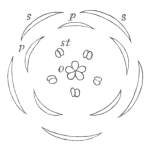
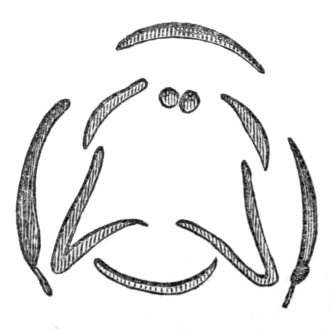
Fig. 1.—Diagram showing the arrangement of parts in a
complete, regular, pentamerous flower: s, sepals; p, petals; st,
stamens; o, ovaries.
The same arrangements, that are observed in the disposition of the
leaves, apply equally well to the several parts of the flower; thus, in
what is for convenience considered the typical flower, there is a calyx
of five or more distinct sepals, equal in size, and arranged in a whorl,
a corolla of a similar number of petals alternating with the sepals,
five stamens placed in the same position with reference to the petals,
and five carpels alternating with the stamens. Throughout this book this
arrangement is taken as the standard of reference. Nevertheless the
spiral order does occur in the floral leaves as well as in those of the
stem; it often happens, especially when the organs are numerous, that
they form spiral series; and the same holds good very generally, when
the parts of the flower are uneven in number, as in the very common
quincuncial arrangement of the sepals, &c.
To these general remarks, intended to show the agreement between the
disposition of the leaves of the stem and those of the flower, it is
merely necessary to add that the arrangement of the placentas, as well
as that of the ovules borne on them, is also definite, and takes place
according to methods explained in all the text-books, and on which,
therefore, it is not necessary to dilate in this place.
The branches of the stem or axis correspond for the most part in
disposition with that of the leaves from the axils of which they
originate, subject, however, to numerous disturbing causes, and to
alterations from the usual or typical order brought about by the
development of buds. These latter organs, as it seems, may be found in
almost any situation, though their ordinary position is in the axil of a
leaf or at the end of a stem or branch.
The points just mentioned are of primary importance in structural
botany, and as such are seized on not only by the morphologist, but by
the systematic botanist, who finds in them the characters by which he
may separate one group from another. Thanks to the labours of those
observers who have devoted their attention to that difficult but most
important branch of study, organogeny, or the investigation of the
development of the various organs, and to the researches of the students
of comparative anatomy or morphology, the main principles regulating the
arrangement and form of the organs of flowering plants seem to be fairly
well established, though in matters of detail much remains to be
cleared up, even in such important points as the share which the axis
takes in the construction of the flower and fruit, the nature of the
placenta, the construction of the ovules, and other points.
The facts already known justify the adoption of a standard or typical
arrangement as just mentioned. The intrinsic value of this type is shown
by the facility with which all varieties of form or arrangement may be
explained by reference to certain modifications of it. It must, however,
be considered as an abstraction, and should be looked on in the light
rather of a scaffolding, which enables us to see the building and its
several parts, than of the edifice itself, but which latter, from our
imperfect knowledge and limited powers, we could not see without some
such assistance.
The typical form may be, hypothetically at least, considered as the
primitive one transmitted by hereditary descent from generation to
generation, and modified to suit the requirements of the individual, or
in accordance with circumstances. If it be borne in mind that it is but
an artificial contrivance, more or less true—a means to an end, and not
the end itself—no harm will arise from its employment; and as knowledge
increases, or as circumstances demand, the hypothetical type can be
replaced by another more in accordance with the actual state of science.
Teratological changes in the arrangement of organs depend upon arrest of
growth, as when parts usually spirally arranged remain verticillate,
owing to the non-development of the internodes, or to excessive growth,
or development; but in many instances it is impossible, without
studying the development of the malformed flower, to ascertain whether
the altered arrangement is due to an excessive or to a diminished
action. Practically, however, it is of comparatively little importance
to know whether, say, the isolation of parts, that are usually combined
together, is congenital (i.e. the result of an arrest of growth
preventing their union), or whether it be due to a separation of parts
primitively undivided; the effect remains the same, though the cause may
have been very different.
The principal alterations to be mentioned under this head may therefore
be conveniently arranged under the following categories:—Union,
Independence, Displacement, Prolification, Heterotaxy, and Heterogamy.
The union of parts, usually separate in their adult condition, is of
very common occurrence as a malformation. The instances of its
manifestation admit of being grouped under the heads of Cohesion, where
parts of the same whorl, or of the same organ, are united together; and
of Adhesion, where the union takes place between members of different
whorls, or between two or more ordinarily wholly detached and distinct
parts. In either case, the apparent union may be congenital (that is,
the result of a primitive integrity or a lack of separation), or it may
really consist in a coalition of parts originally distinct and separate.
In practice it is not always easy to distinguish between these two
different conditions. Indeed, in most cases it cannot be done without
tracing the development of the flower throughout all its stages. It is
needless to make more than a passing allusion to the frequency with
which both congenital integrity or subsequent coalescence of organs
exist under ordinary circumstances. Considered as a teratological
phenomenon, union admits of being grouped into several subdivisions,
such as Cohesion, Adhesion, Synanthy, Syncarpy, Synophty, &c. Each of
these subdivisions will be separately treated, but it maybe here said
that, in all or any case, the degree of fusion may be very slight, or it
may be so perfect that there may be a complete amalgamation of two or
more parts, while to all outward appearance the organ may be single.
The column of Orchids may be referred to as an illustration under
natural circumstances of the complete union of many usually distinct
parts.
In the uncertainty that exists in many cases as to the real nature of
the occurrence, it would be idle to attempt to explain the causes of
fusions. It is clear, however, that an arrest of development will tend
towards the maintenance of primordial integrity (congenital fusion), and
that pressure will induce the coalition of organs primarily distinct.
Following Augustin Pyranius De Candolle, botanists have applied the term
cohesion to the coalescence of parts of the same organ or of members of
the same whorl; for instance, to the union of the sepals in a
gamosepalous calyx, or of the petals in a gamopetalous corolla. It may
arise either from a union between organs originally distinct, or more
frequently from a want of separation between parts, which under general
circumstances become divided during their development. Nothing is more
common as a normal occurrence, while viewed as a teratological
phenomenon it is also very frequent. For the purposes of convenience it
admits of subdivision into those cases wherein the union takes place
between the branches of the same plant, or between the margins of the
same leaf-organ, or between those of different members of the same
whorl.
Cohesion between the axes of the same plant.—This cohesion may occur in
various manners. Firstly. The branches of the main stem may become
united one to the other. Secondly. Two or more stems become joined
together. Thirdly. The branches become united to the stem; or, lastly,
the roots may become fused one with another.
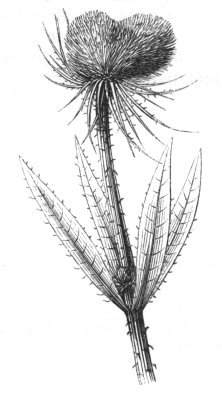
Fig. 2—Cohesion of two branches in Dipsacus sylvestris.
The first of these is most commonly met with, doubtless owing to the
number of the branches and the facilities for their union. An
illustration of it is afforded by the figure (fig. 2), showing cohesion
affecting the branches of a teazle (Dipsacus sylvestris). Union of the
branches may be the result of an original cohesion of the buds, while in
other cases the fusion does not take place until after development has
proceeded to some extent. Of this latter kind illustrations are common
where the branches are in close approximation; if the bark be removed by
friction the two surfaces are very likely to become united (natural
grafting). Such a union of the branches is very common in the ivy, the
elder, the beech, and other plants. It may take place in various
directions, lengthwise, obliquely, or transversely, according to
circumstances. This mode of union belongs, perhaps, rather to the domain
of pathology than of teratology. Some of the instances that have been
recorded of very large trees, such as the chestnut of Mount Ætna, are
really cases where fusion has taken place between several of the
branches, or suckers, thrown out from the same original stem.[10] The
same process of grafting occurs sometimes in the roots, as in Taxus
baccata mentioned by Moquin, and also in the aerial roots of many of
the tropical climbing plants, such as Clusia rosea, &c.
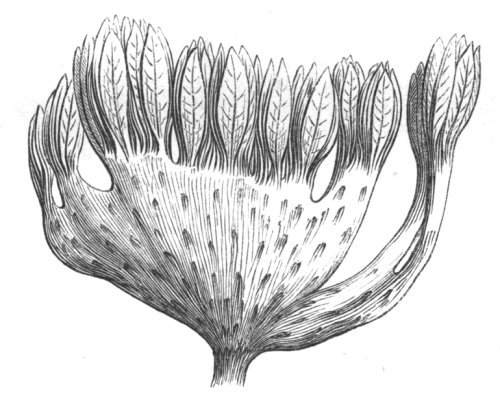
Fig. 3.—Fasciation in Lettuce.
Fasciation.—In the preceding instances of union between the branches,
&c., the actual number of the fused parts is not increased; but if it
happen that an unusual number of buds be formed in close apposition, so
that they are liable to be compressed during their growth, union is very
likely to take place, the more so from the softness of the young
tissues. In this way it is probable that what is termed fasciation is
brought about. This is one of the most common of all malformations, and
seems to affect certain plants more frequently than others. In its
simplest form it consists of a flat, ribbon-like expansion of the stem
or branch; cylindrical below, the branches gradually lose their pristine
form, and assume the flattened condition.
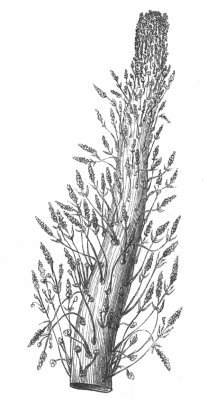
Fig. 4.—Fasciation in Asparagus.
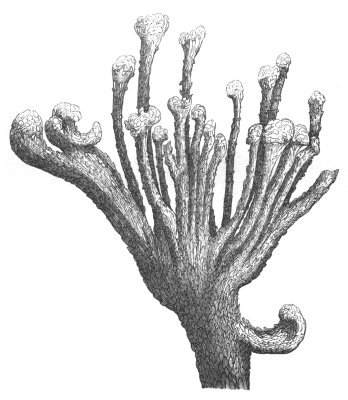
Fig. 5.—Fasciated branch of Pinus Pinaster.
Very generally the surface is striated by the prominence of the woody
fibres which, running parallel for a time, converge or diverge at the
summit according to the shape of the branch. If the rate of growth be
equal, or nearly so, on both sides, the stem retains its straight
direction, but it more generally happens that the growth on one side is
more rapid and more vigorous than on the other, and hence arises that
curvature of the fasciated branch so commonly met with, e.g. in the
ash (Fraxinus), wherein it has been likened to a shepherd's crook. It
is probable that almost any plant may present this change. It occurs
alike in herbaceous and in woody plants, originating in the latter case
while the branches are still soft. It may be remarked that, in the case
of herbaceous plants, the fasciation always affects the principal stem,
while, on the other hand, in the case of trees and shrubs the deformity
occurs most frequently in the branches; thus, while in the former it
may be said that the whole of the stem is more or less affected, in the
latter it is rare to see more than one or two branches of the same tree
thus deformed. It is a common thing for the fasciated branch to divide
at the summit into a number of subdivisions. These latter may be
deformed like the parent branch, or they may resume the ordinary aspect
of the twigs.
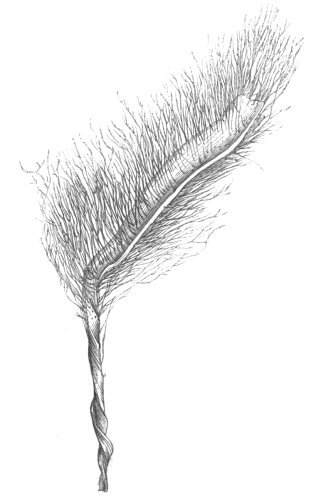
Fig. 6.—Fasciation and spiral torsion in the stem of Asparagus.
Sometimes the flattened stem is destitute of buds, at other times, these
organs are scattered irregularly over its surface or are crowded
together in a sort of crest along the apex. When, as often happens, the
deformity is accompanied with a twisting of the branch spirally, the
buds may be placed irregularly, or in other cases along the free edge of
the spiral curve. In a specimen of Bupleurum falcatum mentioned by
Moquin the spiral arrangement of the leaves was replaced by a series of
perfect whorls, each consisting of five, six, seven, or eight segments,
and there was a flower-stalk in the axil of each leaf.
When flowers are borne on these fasciated stems they are generally
altered in structure; sometimes the thalamus itself becomes more or less
fasciated or flattened, and the different organs of the flower are
arranged on an elliptical axis. A case of this nature is described by
Schlechtendal ('Bot. Zeit.,' 1857, p. 880), in Cytisus nigricans, and
M. Moquin-Tandon describes an instance in the vine in one flower of
which sepals, petals, stamens, and ovary were abortive, while the
receptacle was hypertrophied and fasciated, and bore on its surface a
few adventitious buds.[11] The pedicels of Streptocarpus Rexii have
also been observed in a fasciated state.[12]
It has been occasionally observed that the fasciated condition is
hereditary; thus, Moquin relates that some seeds of a fasciated
Cirsium reproduced the same condition in the seedlings,[13] while a
similar tendency is inherited in the case of the cockscomb (Celosia).
With reference to the nature of the deformity in question there is a
difference of opinion; while most authors consider it to be due to the
causes before mentioned, Moquin was of opinion that fasciation was due
to a flattening of a single stem or branch. Linnæus, on the other hand,
considered such stems to be the result of the formation of an unusual
number of buds, the shoots resulting from which became coherent as
growth proceeded:—"Fasciata dici solet planta cum plures caules
connascuntur, ut unus ex plurimis instar fasciæ evadat et compressus"
(Linn., 'Phil. Bot.,' 274). A similar opinion was held by J. D. Major in
a singular book entitled 'De Plantâ, Monstrosa, Gottorpiensi,'
Schleswig, 1665, wherein the stem of a Chrysanthemum is depicted in
the fasciated condition.
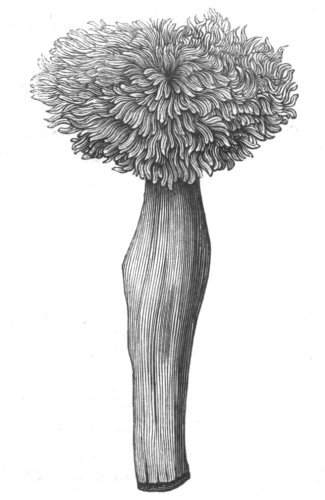
Fig. 7.—Fasciation in the scape of the Dandelion (Leontodon Taraxacum).
The striæ, which these stems almost invariably present, exhibit the
lines of junction, and the spiral or other curvatures and contraction,
which are so often met with, may be accounted for by the unequal growth
of one portion of the stem as contrasted with that of another. Against
this view Moquin cites the instances of one-stemmed plants, such as
Androsace maxima, but, on the other hand, those herbaceous plants
having usually but a single stem not unfrequently produce several which
may remain distinct, but not uncommonly become united together. Prof.
Hincks[14] cites cases of this kind in Primula vulgaris, Hieracium
aureum, and Ranunculus bulbosus. I have myself met with several cases
of the kind in Primula veris, in the Polyanthus, in the Daisy, and in
the Leontodon Taraxacum, in which latter a fusion of two or more
flower-stems bearing at the top a composite flower, and made up of two,
three, four, or more flowers combined together, and containing all the
organs that would be present in the same flowers if separate, is very
common.
Moquin's second objection is founded upon the fact that, in certain
fasciated stems, the branches are not increased in number or altered in
arrangement from what is usual; but however true this may be in
particular cases, it is quite certain that in the majority of instances
a large increase in the number of leaves and buds is a prominent
characteristic of fasciated stems.
Another argument used by the distinguished French botanist to show that
fasciated stems are not due to cohesion of two or more stems, is founded
on the fact that a transverse section of a fasciated stem generally
shows an elliptical outline with but a single central canal. On the
other hand, if two branches become united and a transverse section be
made, the form of the cut surface would be more or less like that of the
figure 8[symbol: 8 turned 90°], although in old stems this may give
place to an elliptical outline, but even then traces of two medullary
canals may be found. This argument is very deceptive, for the appearance
of the transverse section must depend, not only on the intimacy of their
union, but also on the internal structure of the stems themselves. When
two flowers cohere without much pressure they exhibit uniting circles
somewhat resembling the figure of 8[symbol: 8 turned 90°], but when more
completely combined they have an outline of a very elongated figure, and
something similar is to be expected in herbaceous stems. Even the
elongated pith of a transversely cut, woody, fasciated stem only marks
the intimate union of several branches, and Prof. Hincks, whose views
the writer entirely shares, has noticed instances of the union of two,
and of only two, stems where the internal appearance was the same as in
other fasciations.
Moquin, moreover, raises the objection that it is unlikely that several
branches should become united lengthwise in one plane only, and,
further, that in the greater number of fasciations all the other
branches which should be present are to be found—not one is wanting,
not one has disappeared, as might have been anticipated had fusion taken
place. In raising this objection, Moquin seems not sufficiently to have
considered the circumstance that the buds in these cases are in one
plane from the first, and are all about equal in point of age and size.
The last objection that Moquin raises to the opinion that fasciation is
the result of a grafting process is, that in such a case, examples
should be found wherein the branches are incompletely fused, and where
on a transverse section traces of the medullary canals belonging to each
branch should be visible. The arrangement of leaves or buds on the
surface should also in such a case indicate a fusion of several spiral
cycles or whorls. To this it may be replied that such cases are met with
very frequently indeed. A figure is given by De Candolle[15] of a stem
of Spartium junceum having several branches only imperfectly
fasciated.
Fasciated stems, then, seem to be best explained, as is stated by Prof.
Hincks, "on the principle of adhesion arising in cases where from
superabundant nourishment, especially if accompanied by some check or
injury, numerous buds have been produced in close proximity, and the
supposition that these growths are produced by the dilatation of a
single stem is founded on a false analogy between fasciated stems and
certain other anomalous growths."
It will not, of course, be forgotten that this fasciated condition
occurs so frequently in some plants as almost to constitute their
natural state, e.g. Sedum cristatum, Celosia, &c. This condition
may be induced by the art of the gardener—"Fit idem arte, si plures
caules enascentes cogantur penetrare coarctatum spatium et parturiri
tanquam ex angusto utero, sic sæpe in Ranunculo, Beta, Asparago,
Hesperide Pinu, Celosiâ, Tragopogone, Scorzonerâ Cotula fœtida,"
Linnæus op. cit.
Plot, in his 'History of Oxfordshire,' considers fasciation to arise
from the ascent of too much nourishment for one stalk and not enough for
two, "which accident of plants," says Plot, the German virtuosi ('Misc.
Curios. Med. Physic. Acad. Nat. Cur.,' Ann. i, Observ. 102,) "think only
to happen after hard and late winters, by reason whereof, indeed, the
sap, being restrained somewhat longer than ordinary, upon sudden thaws
may probably be sent up more forcibly, and so produce these fasciated
stalks, whereas the natural and graduated ascent would have produced
them but single." Prof. Hincks' explanation is, however, more near to
the truth, and his opinion is borne out by the frequency with which this
change is met with in certain plants which are frequently forced on
during their growth, as lettuce, asparagus, endive, &c., all of which
are very subject to this change. In the 'Transactions of the
Horticultural Society of London,' vol. iv, p. 321, Mr. Knight gives an
account of the cultivation of the cockscomb, so as to ensure the
production of the very large flower-stalks for which this plant is
admired. The principal points in the culture were the application of a
large quantity of stimulating manure and the maintenance of a high
temperature. One of them so grown measured eighteen inches in width.
The list which is appended is intended to show those plants in which
fasciation has been most frequently observed. It makes no pretension to
be complete, but is sufficiently so for the purpose indicated: the *
denotes the especial frequency of the change in question; the !
indicates that the writer has himself seen the plant, so marked,
affected in this way. The remainder have been copied from various
sources.
Exogens.
α. Herbaceous.
See also—Moquin-Tandon, 'Elem. Ter. Veget.,' p. 146; C. O.
Weber, 'Verhandl. Nat. Hist.,' Vereins, f. d. Preuss., Rheinl.
und Westphal., 1860, p. 347, tab. vii; Hallier, 'Phytopathol.,'
p. 128; Boehmer, 'De plantis Fasciatis,' Wittenb., 1752.
Cohesion of foliar organs.—This takes place in several ways, and in
very various degrees; the simplest case is that characterised by the
cohesion of the margins of the same organ, as in the condition called
perfoliate in descriptive works, and which is due either to a cohesion
of the margins of the basal lobes of the leaf, or to the development of
the leaf in a sheathing or tubular manner. As an abnormal occurrence, I
have met with this perfoliation in a leaf of Goodenia ovata. The
condition in question is often loosely confounded with connation, or the
union of two leaves by their bases. In other cases the union takes place
between the margins of two or more leaves.
Cohesion of margins of single organs.—The leaves of Hazels may often be
found with their margins coherent at the base, so as to become peltate,
while in other cases, the disc of the leaf is so depressed that a true
pitcher is formed. This happens also in the Lime Tilia, in which genus
pitcher- or hood-like leaves (folia cucullata) may frequently be met
with. There are trees with leaves of this character in the cemetery of a
Cistercian Monastery at Sedlitz, on which it is said that certain monks
were once hung: hence the legend has arisen, that the peculiar form of
the leaf was given in order to perpetuate the memory of the martyred
monks. ('Bayer. Monogr. Tiliæ,' Berlin, 1861.) It is also stated that
this condition is not perpetuated by grafting.
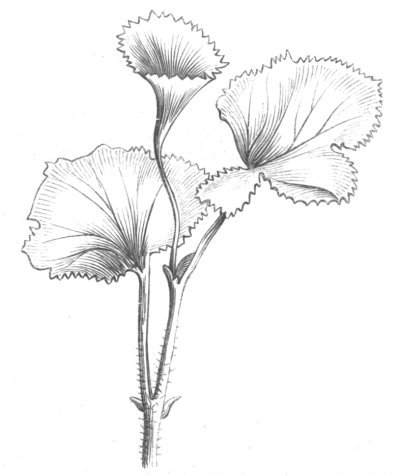
Fig. 8.—Pitcher-shaped leaf of Pelargonium.
I have in my possession a leaf of Antirrhinum majus, and also a
specimen of Pelargonium, wherein the blade of the leaf is funnel-like,
and the petiole is cylindrical, not compressed, and grooved on the upper
surface, as is usually the case. A comparison of the leaves of
Pelargonium peltatum with those of P. cucullatum ('Cav. Diss.,'
tab., 106) will show how easy the passage is from a peltate to a tubular
leaf. In these cases the tubular form may rather be due to dilatation
than to cohesion. M. Kickx[16] mentions an instance of the kind in the
leaves of a species of Nicotiana, and also figures the leaf of a rose
in which two opposite leaflets presented themselves in the form of
stalked cups. Schlechtendal[17] notices something of the same kind in
the leaf of Amorpha fruticosa; Treviranus[18] in that of Aristolochia
Sipho.
M. Puel[19] describes a leaf of Polygonatum multiflorum, the margins
of which were so completely united together, as only to leave a circular
aperture at the top, through which passed the ends of the leaves. The
Rev. Mr. Hincks, at the meeting of the British Association at Newcastle
(1838), showed a leaf of a Tulip, whose margins were so united that the
whole leaf served as a hood, and was carried upwards by the growing
flower like the calyptra of a Moss.
The margins of the stipules are also occasionally united, so as to form
a little horn-shaped tube. I have met with instances of this kind in the
common white clover, Trifolium repens, where on each side of the base
of the petiole the stipules had the form just indicated. That the bracts
also may assume this condition, may be inferred from the peculiar
horn-like structures of Marcgraavia, which appear to originate from
the union of the margins of the reflected leaf.
Tubular petals occur normally in some flowers, as Helleborus,
Epimedium, Viola, &c., and as an exceptional occurrence I have seen
them in Ranunculus repens, while in Eranthis hyemalis transitions
may frequently be seen between the flat outer segments of the perianth
and the tubular petals. To Dr. Sankey, of Sandywell Park, I am indebted
for the flower of a Pelargonium, in which one of the petals had the
form of a cup supported on a long stalk. This cup-shaped organ was
placed at the back of the flower, and had the dark colour proper to the
petals in that situation. I have seen a petal of Clarkia similarly
tubular, while some of the cultivated varieties of Primula sinensis
exhibit tubular petals so perfect in shape as closely to resemble
perfect corollas.
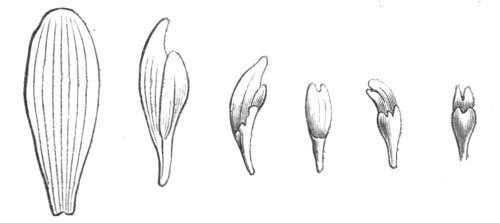
Fig. 9.—Eranthis hyemalis. Transition from flat sepal to tubular petal.
Like the petals, the stamens, and even the styles, assume a hollow
tubular form. This change of form in the case of the stamens is, of
course, usually attended by the petaloid expansion of the filament, or
anther, and the more or less complete obliteration of the pollen sacs,
as in Fuchsias, and in some double-flowered Antirrhinums.[20] So also in
some semi-double varieties of Narcissus poeticus, and in Aquilegia.
By the late Professor Charles Morren, this affection of the stamens and
pistils was called Solenaidie,[21] but as a similar condition exists
in other organs, it hardly seems worth while to adopt a special term for
the phenomenon, as it presents itself in one set of organs.
In many of these cases it is difficult to say whether the cup-like or
tubular form is due to a dilatation or hollowing out of the organ
affected, or to a fusion of its edges. The arrangement of the veins will
in some cases supply the clue, and in others the regularity of form
will indicate the nature of the malformation, for in those instances
where the cup is the result of expansion, its margin is more likely to
be regular and even than in those where the hollow form is the result of
fusion.
Cohesion of several organs by their margins:—leaves, &c.—The union of
the margins of two or more different organs is of more common occurrence
than the preceding, the leaves being frequently subjected to this
change. Occasionally, the leaflets of a compound leaf have been observed
united by their margins, as in the strawberry, the white trefoil, and
others. Sometimes the union takes place by means of the stalks only. I
have an instance of this in a Pelargonium, in Tropæolum majus, and
Strelitzia regina; in other cases, the whole extent of the leaf
becomes joined to its neighbour, the leaves thus becoming completely
united by their edges, as in those of Justicia, oxyphylla.[22] M.
Clos[23] has observed the same thing in the leaves of the lentil Ervum
lens, conjoined with fasciation of the stem, and many other examples
might be given. Some of the recorded cases are probably really due to
fission of one leaf into two rather than to fusion. Although usually the
lower portions of the leaf are united together, leaving the upper parts
more or less detached, there are some instances in which the margins of
the leaf at their upper portion have been noticed to be coherent, while
their lower portions, with their stalks, were completely free.[24]
Cohesion of the leaves frequently accompanies the union of the branches
and fasciation as might have been anticipated. Moquin cites the
fenestrated leaves of Dracontium pertusum, as well as some cases of a
similar kind that are occasionally met with, as instances of the
cohesion of the margins at the base and apex of the leaf, which thus
appears perforated. This appearance, however, is probably due to some
other cause. When the leaves are verticillate and numerous, and they
become coherent by their margins, they form a foliaceous tube around the
stem. When there are but two opposite leaves, and these become united by
their margins, we have a state of things precisely resembling that to
which the term connate is applied.
Fusion of the edges of the cotyledons also occasionally takes place, as
in Ebenus cretica.[25] It has also been observed in Tithonia, and is
of constant occurrence in the seed leaves of some Mesembryanthema.
This condition must be carefully distinguished from the very similar
appearance produced by quite a different cause, viz., the splitting of
one cotyledon into two, which gives rise to the appearance as if two
were partially united together.
Some of the ascidia or pitcher-like formations are due to the cohesion
of the margins of two leaves, as in a specimen of Crassula
arborescens, observed by C. Morren.
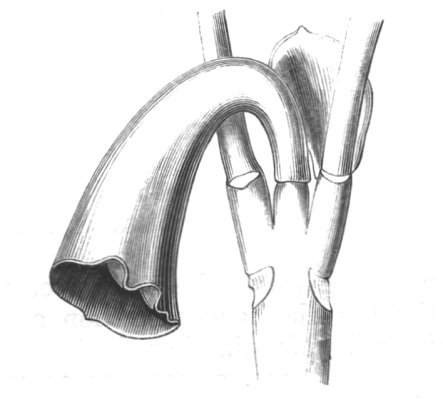
Fig. 10.—Two-leaved pitcher of Crassula arborescens, after C. Morren.
The stipules may also be fused together in different ways; their edges
sometimes cohere between the leaf and the stem, and thus form a solitary
intra-axillary stipule. At other times they become united in such a
manner as to produce a single notched stipule opposite to the leaf.
Again, in other cases, they are so united on each side of the stem, that
in place of four there seem only to exist two, common to the two leaves
as in the Hop.
To the Rev. M. J. Berkeley I am indebted for specimens of a curious
pitcher-like formation in the garden Pea. The structure in question
consisted of a stalked foliaceous cup proceeding from the inflorescence.
On examination of the ordinary inflorescence, there will be seen at the
base of the upper of two flowers a small rudimentary bract, having a
swollen circular or ring-like base, from which proceeds a small
awl-shaped process, representing the midrib of an abortive leaf. In some
of Mr. Berkeley's specimens, the stipules were developed as leafy
appendages at the base of the leaf-stalk or midrib, the latter retaining
its shortened form, while, in others, the two stipules had become
connate into a cup, and all trace of the midrib was lost. The cup in
question would thus seem to have been formed from the connation of two
stipules which are ordinarily abortive.
Cohesion of the bracts by their edges, so as to form a tubular
involucre, or by their surfaces, so as to form a cupule, is not of
uncommon occurrence, under natural conditions, and may be met with in
plants which ordinarily do not exhibit this appearance.
Cohesion of the sepals in a normally polypetalous calyx renders the
latter gamosepalous, and is not of uncommon occurrence, to a partial
extent, though rarely met with complete. I have observed a junction of
the sepals to be one of the commonest malformations among Orchids,
indeed such a state of things occurs normally in Masdevallia
Cypripedium, &c. An illustration of this occurrence is given by Mr. J.
T. Moggridge in Ophrys insectifera, in 'Seemann's Journal of Botany,'
1866, p. 168, tab. 47. In Orchids, this cohesion of sepals is very often
co-existent with other more important changes, such as absence of the
labellum, dislocation of the parts of the flower, &c.
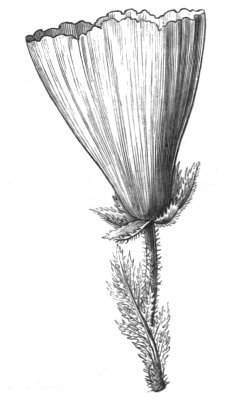
Fig. 11.—Gamopetalous flower of Papaver bracteatum.
Cohesion of the petals.—Linnæus mentions the occurrence of cohesion of
the petals in Saponaria.[26] Moquin notices a Rose in which the petals
were united into a long tube, their upper portions were free and bent
downwards, forming a sort of irregular limb. An instance of the
polypetalous regular perianth of Clematis viticella being changed into
a monopetalous irregular one, like the corolla of Labiates, is recorded
by Jaeger.[27] There is in cultivation a variety of Papaver
bracteatum, in which the petals are united by their margins so as to
form a large cup. Under normal circumstances, the petals become fused
together by their edges along their whole extent, at the base only, at
the apex only, as in the Vine, or at the base and apex, leaving the
central portions detached. Indications of the junction of the petals may
generally be traced by the arrangement of the veins, or by the notches
or lobes left by imperfect union. In Crocuses I have frequently met with
cohesion of the segments of the perianth, by means of their surfaces,
but the union was confined to the centre of the segment, leaving the
rest of the surfaces free.
Cohesion of the stamens.—Under natural circumstances, cohesion of the
stamens is said to take place either by the union of their filaments, so
as to form one, two, or more parcels (Monadelphia, Diadelphia,
Polyadelphia); at other times, by the cohesion of the anthers
(Syngenesia), in which latter case the union is generally very slight.
It must be remembered, however, that the so-called cohesion of the
filaments is in many cases due rather to the formation of compound
stamens, i.e. to the formation from one original staminal tubercle of
numerous secondary ones, so that the process is rather one of over
development than of fusion or of disjunction. These conditions may be
met with as accidental occurrences in plants or in flowers, not usually
showing this arrangement. Thus, for instance, Professor Andersson, of
Stockholm, describes a monstrosity of Salix calyculata, in which the
stamens were so united together as to form a tube open at the top like a
follicle.[28] This is an exaggerated degree of that fusion which exists
normally in Salix monandra, in Cucurbits and other plants.
Cohesion of the pistils is also of very frequent occurrence in plants,
under ordinary circumstances, but is less commonly met with than might
have been expected as a teratological phenomenon.
Further details relating to cohesion of the various parts of
the flower are cited in Moquin-Tandon, 'El. Ter. Veg.,' p. 248;
'Weber. Verhandl. Nat. Hist. Vereins f. d. Preuss. Rheinl. und
Westphal.,' 1860, p. 332, tabs. 6 et 7.
Formation of ascidia or pitchers.—In the preceding paragraphs, the
formation of tubular or horn-like structures, from the union of the
margins of one organ, or from the coalescence, or it may be from the
want of separation of various organs, has been alluded to, so that it
seems only necessary now, by way of summary, to mention the
classification of ascidia proposed by Professor Charles Morren[29], who
divides the structures in question into two heads, according as they are
formed from one or more leaves. The following list is arranged according
to the views of the Belgian savant, and comprises a few additional
illustrations. Those to which the ! is affixed have been seen by the
writer himself; the * indicates the more frequent occurrence of the
phenomenon in some than in other plants. Those plants, such as
Nepenthes, &c., which occur normally and constantly, are not here
included. Possibly some of the cases would be more properly classed
under dilatation or excavation.
Ascidia.
A. Monophyllous.
1. Sarracenia-like pitchers, formed by a single leaf, the edges
of which are united for the greater portion of their length,
but are disunited near the top, so as to leave an oblique
aperture.
- *Brassica oleracea (several of the cultivated varieties)!
- *Tilia europæa!
- Pelargonium inquinans!
- Staphylea pinnata.
- Amorpha fruticosa.
- Pisum sativum!
- Lathyrus tuberosus.
- Vicia sp.
- Gleditschia sp.
- Ceratonia siliqua.
- Trifolium repens!
- Cassia marylandica.
- Mimosa Lophantha.
- Rosa centifolia.
- Begonia sp.
- Bellis perennis!
- Nicotiana sp.
- Goodenia ovata!
- Antirrhinum majus!
- Vinca rosea.
- Polygonum orientale.
- Aristolochia sipho?
- Codiæum variegatum var.!
- Spinacia oleracea.
- Corylus avellana!
- Polygonatum multiflorum.
- Xanthosoma appendiculatum!
2. Calyptriform or hood-like pitchers, formed by the complete
union of the margins, and falling off by a transverse fissure
(as in the calyx of Escholtzia).
B. Polyphyllous.
1. Diphyllous, formed by the union of two leaves into a single
cup, tube, or funnel, &c.
- Pisum sativum (stipules)!
- Crassula arborescens.
- Polygonatum multiflorum.
2. Triphyllous, formed by the union of three leaves.
Besides the above varieties of ascidia formed from the union of
one or more leaves, there are others which seem to be the
result of a peculiar excrescence or hypertrophy of the leaf.
Such are some of the curious pitcher-like structures met with
occasionally in the leaves of cabbages, lettuces, Aristolochia,
&c. See Hypertrophy, cup-like deformities, &c.
In addition to other publications previously mentioned,
reference may be made to the following treatises on the subject
of ascidia:—Bonnet, 'Rech. Us. Feuilles,' p. 216, tab. xxvi,
f. 1, Brassica; De Candolle, 'Trans. Hort. Soc.,' t. v, pl.
1, Brassica; Id., 'Org. Veget.,' I, 316; 'Bull. Soc. Bot.
Fr.,' I, p. 62, Polygonatum; 'Bull. Acad. Belg.,' 1851, p.
591, Rosa; Hoffmann, 'Tijdschrift v. Natuur. Geschied.,' vol.
viii, p. 318, tab. 9, Ceratonia; C. Mulder, 'Tijdschrift,
&c.,' vol. vi, p. 106, tab. 5, 6, Trifolium, Mimosa,
Staphylea;' Molkenboer,' p. 115, t. 4, Brassica.
Adhesion, so called, occurs either from actual union of originally
distinct members of different whorls or from the non-occurrence of that
separation which usually takes place between them. It is thus in some
degree a graver deviation than cohesion, and is generally a consequence
of, or at least is coexistent with, more serious changes; thus if two
leaves of the same whorl are coherent the change is not very great, but
if two leaves belonging to different whorls, or two leaves in the same
spiral cycle are adherent, a deformation in the axis or a certain amount
of dislocation must almost necessarily exist. Adhesion as a normal
occurrence is usually the result of a lack of separation rather than of
union of parts primitively separate. Instances of adhesion between
different organs is seen under ordinary circumstances in the bract of
the Lime tree, which adheres to the peduncle, also in Neuropeltis,
while in Erythrochiton hypophyllanthus the cymose peduncles are
adherent to the under surface of the leaf.
Adhesion between the axes of the same plant is sufficiently treated of
under the head of Cohesion, from which it is in this instance impossible
to make a distinction. Adhesion of the inflorescence is necessarily a
frequent accompaniment of fasciation and cohesion of the branches.
Adhesion of foliar organs may occur either between the margins or
between the surfaces of the affected parts; in the former case there is
almost necessarily more or less displacement and change of direction,
such as a twisting of the stem and a vertical rather than a horizontal
attachment of the foliar organ to it; hence it generally forms but a
part of other and more important deviations.
Adhesion of leaves by their surfaces.—The union of leaves by their
surfaces is not of very frequent occurrence, many of the instances cited
being truly referable to other conditions. Bonnet describes the union of
two lettuce leaves, and Turpin that of two leaves of Agave americana,
in which latter the upper surface of one leaf was adherent to the lower
surface of the leaf next above it, and I have myself met with similar
instances in the wallflower and in lettuce and cabbage leaves; other
instances have been mentioned in Saxifraga, Gesnera, &c.[30]
In these cases, owing to the non-development of the internodes, the
nascent leaves are closely packed, and the conditions for adhesion are
favorable, but in most of the so-called cases of adhesion of leaf to
leaf by the surface, a preferable explanation is afforded either by an
exuberant development (hypertrophy) or by chorisis (see sections on
those subjects). Thus, when a leaf of this kind is apparently so united,
that the lower surface of one is adherent to the corresponding surface
of another, the phenomenon is probably due rather to extra development
or to fission. There is an exception to this, however, in the case of
two vertically-erect leaves on opposite sides of the stem; here the two
upper or inner surfaces may become adherent, as in an orange, where two
leaves were thus united, the terminal bud between them being suppressed
or abortive.
Adhesion between the membranous bract of Narcissus poeticus and the
upper surface of the leaf is described by Moquin.[31] The same author
mentions having seen a remarkable example of adhesion in the involucels
of Caucalis leptophylla, the bracts of which were soldered to the
outer surface of the flowers. M. Bureau[32] mentions an instance
wherein the spathe of Narcissus biflorus was partially twisted in such
a manner that the lower surface of its median nerve was adherent to the
corresponding surface of one of the sepals, mid-rib to mid-rib, thus
apparently confirming a law of G. de Hilaire, that when two parts of the
same individual unite, they generally do so by the corresponding
surfaces or edges, but the rule is probably not so general in its
application as has been supposed.
Adhesion of foliar to axile organs.—The appendicular organs may
likewise be found united to the axile ones. This union takes place in
many ways; sometimes the leaves do not become detached from the stem for
a considerable distance, as in the so-called decurrent leaves, at other
times the leaves are prolonged at their base into lobes, which are
directed along the stem, and are united with it. Turpin records a
tendril of a vine which was fused with the stem for some distance, and
bore leaves and other tendrils. Union of the leaf or bract with the
flower-stalk is not uncommon. It occurs normally in the Lime and other
plants.
Adhesion of the sepals to the petals is spoken of by Morren as
calyphyomy, καλυξ φυομαι.[33] Moquin cites an instance in
Geranium nodosum, in which one petal was united by its lower surface
to one of the segments of the calyx. A similar circumstance has been
observed in Petunia violacea by Morren. Duchartre describes an
instance wherein one of the outer sepals of Cattleya Forbesii was
adherent to the labellum.[34]
Adhesion of the stamens to the petals is of common occurrence under
natural circumstances. Cassini has described a malformation of
Centaurea collina, in which two of the five stamens were completely
grafted with the corolla, the three others remaining perfectly free.
Adhesion of the petals to the column is not of infrequent occurrence
among Orchids. I have observed cases of the adhesion of the segments of
the perianth to the stamen in Ophrys aranifera, Odontoglossum, sp.
&c. It is the ordinary condition in Gongora and some other genera. I
have seen it also in Lilium lancifolium. Some forms of Crocus,
occasionally met with, present a very singular appearance, owing to the
adhesion of the stamens to the outer segments of the perianth, the
former, moreover, being partially petaloid in aspect. M. de la Vaud[35]
speaks of a similar union in Tigridia pavonia. Morren[36] describes a
malformation of Fuchsia wherein the petals were so completely adherent
to the stamens, that the former were dragged out of their ordinary
position, so as to become opposite to the sepals; the fusion was here so
complete that, no trace of it could be seen externally. It should be
remarked that it was the outer series of stamens that were thus
fused.[37]
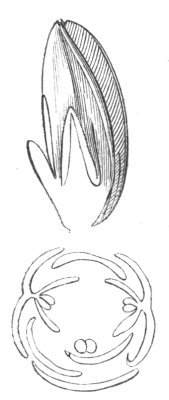
Fig. 12.—Crocus. Adhesion of petaloid stamens to perianth.
Adhesion of stamens to pistils.—The stamens also may be united to the
pistils, as in gynandrous plants. Moquin speaks of such a case in a
Scabious; M. Clos in Verbascum australe.[38] I have seen cases of
the same kind in the Wallflower, Cowslip (Primula veris), Tulip,
Orange, in the garden Azalea and other plants.
Miscellaneous adhesions.—Sometimes organs, comparatively speaking,
widely separated one from the other, become united together. Miquel has
recorded the union of a stigma with the middle lobe of the lower lip of
the corolla of Salvia pratensis.[39] In the accompanying figure [fig.
13], taken from a double wallflower, there is shown an adhesion between
a petal and an open carpel on the one side, and a stamen on the other.
Moquin speaks of some pears, which were united, at an early stage, with
one or two small leaves borne by the peduncle and grafted to the fruit
by the whole of their upper surface. As the pear increased in size the
leaves became detached from it, leaving on the surface of the fruit an
impression of the same form as the leaf, and differing in colour from
the rest of the surface of the fruit. Traces of the principal nerves
were seen on the pear.
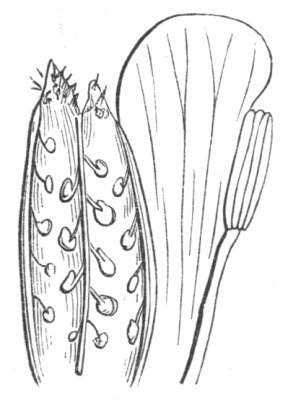
Fig. 13.—Cheiranthus cheiri. Adhesion of petal to stamen and open carpel.
It is curious to notice how very rare it is for the calyx to adhere to
the ovary in flowers where that organ is normally superior. The "calyx
inferus" seems scarcely ever to become "calyx superus," while, on the
other hand, the "calyx normaliter superus" frequently becomes inferior
from detachment from, or from want of union with the surface of the
ovary.
Adhesion of fruit to branch.—Of this Mr. Berkeley[40] cites an instance
in a vegetable marrow (Cucumis), where a female flower had become
confluent with the branch, at whose base it was placed, and also with
two or more flowers at the upper part of the same branch, so as to make
an oblique scar running down from the apex of the fruit to the branch.
Synanthy.—Adhesion of two or more flowers takes place in various ways;
sometimes merely the stalks are united together, so that we have a
single peduncle, bearing at its extremity two flowers placed in
approximation very slightly adherent one to the other. In this manner I
have seen three flowers of the vegetable marrow on a common stalk, the
flowers themselves being only united at the extreme base. Occasionally
cases may be met with wherein the pedicels of a stalked flower become
adherent to the side of a sessile flower. I have noticed this commonly
in Umbelliferæ. Union of this kind occurs frequently in the common
cornel (Cornus), wherein one of the lower flowers becomes adherent to
one of the upper ones. In De Candolle's 'Organographie Végétale,' Plates
14 and 15, are figured cases of fusion of the flower stems of the
Hyacinth and of a Centaurea. In other cases the union involves not
only the stalk but the flowers themselves; thus fusion of the flowers is
a common accompaniment of fasciation, as was the case in the Campanula
figured in the cut (fig. 14).
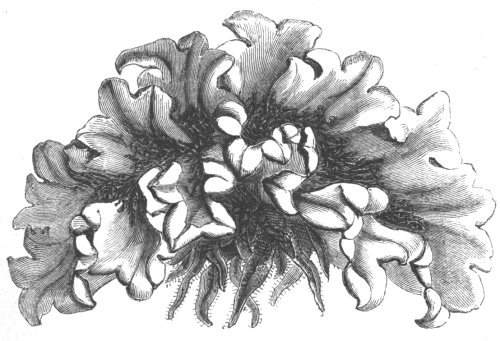
Fig. 14.—Synanthic flowers of Campanula medium.
Synanthy may take place without much derangement of the structure of
either flower, or the union may be attended with abortion or suppression
of some of the parts of one or both flowers. Occasionally this union is
carried to such an extent that a bloom appears to be single, when it is,
in reality, composed of two or more, the parts of which have become not
only fused, but, as it were, thrust into and completely incorporated one
with another, and in such a manner as to occupy the place of some parts
of the flower which have been suppressed. It must not be overlooked that
this adhesion of one flower to another is a very common occurrence under
natural circumstances, as in Lonicera, in the common tomato, in
Pomax, Opercularia, Symphyomyrtus, &c., while the large size of
some of the cultivated sunflowers is in like manner due to the union of
two or more flower-heads.
One of the simplest instances of synanthy is that mentioned by M.
Duchartre,[41] in which two flowers of a hyacinth were united together
simply by means of two segments of the perianth one from each flower. A
similar occurrence has been cited by M. Gay in Narcissus chrysanthus.
In like manner the blossoms of Fuchsias or Loniceras occasionally become
adherent merely by their surface, without involving any other change in
the conformation of the flowers. M. Maugin alludes to a case of this
kind in Aristolochia Clematitis.[42]
But it is more usual for some of the organs to be suppressed, so that
the number of existing parts is less than would be the case in two or
more uncombined flowers. A few illustrations will exemplify this. In two
flowers of Matthiola incana, that I observed to be joined together,
there were eight sepals, eight petals, and ten perfect stamens, eight
long and two short, instead of twelve. Closer examination showed that
the point of union between the two flowers occurred just where, under
ordinary circumstances, the two short stamens would be. In this instance
but little suppression had occurred. In similar flowers of Narcissus
incomparabilis I remarked a ten-parted perianth, ten stamens within a
single cup, two styles, and a five-celled ovary. Here, then, it would
appear that two segments of the perianth, two stamens, and one carpel
were suppressed. In a Polyanthus there were nine sepals, nine petals,
nine stamens, and a double ovary.
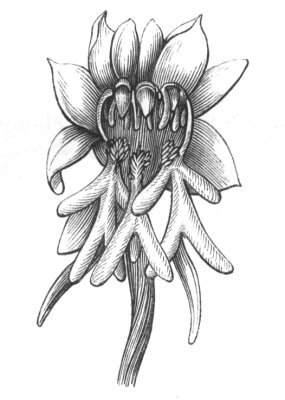
Fig. 15.—Union of three flowers of Calanthe vestita.
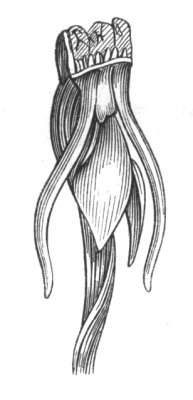
Fig. 16.—Shows the abortion of the central spur in synanthic flowers of Calanthe vestita.
As an illustration of a more complicated nature reference may be made to
three flowers of Aconitum Napellus, figured by A. de Chamisso,
'Linnæa,' vol. vii, 1832, p. 205, tab. vii, figs. 1, 2. In this specimen
the two outer blossoms had each four sepals present, namely, the upper
hooded one, one of the lateral sepals, and both of the inferior ones;
the central flower had only the upper sepal and one other, probably one
of the lower sepals; thus there were but ten sepals instead of fifteen.
The nectary-like petals, the stamens, and pistils were all present in
the lateral flowers, but were completely suppressed in the middle one. A
less degree of suppression was exemplified in a triple flower of
Calanthe vestita sent me by Dr. Moore, of Glasnevin, in which all the
parts usually existing in three separate flowers were to be found, with
the exception of the spur belonging to the labellum of the middle flower
(figs. 15, 16).
One of the most common malformations in the Foxglove (Digitalis)
results from the fusion of several of the terminal flowers into one. In
these cases the number of parts is very variable in different instances;
the sepals are more or less blended together, and the corollas as well
as the stamens are usually free and distinct, the latter often of equal
length, so that the blossom, although truly complex, is, as to its
external form, less irregular than under natural circumstances. The
centre of these flowers is occupied by a two to five-celled pistil,
between the carpels of which, not unfrequently, the stem of the plant
projects, bearing on its sides bracts and rudimentary flowers. (See
Prolification.) An instance of this nature is figured in the 'Gardeners'
Chronicle,' 1850, p. 435, from which the cut (fig. 17) is borrowed.
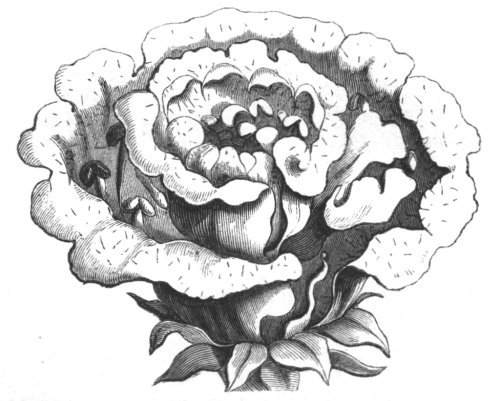
Fig. 17.—Synanthy and other changes in a Foxglove.
One of the most singular recorded instances of changes connected with
fusion of the flowers is that cited by Reinsch,[43] where two female
flowers of Salix cinerea were so united with a male one as to produce
an hermaphrodite blossom.
It follows, from what has been said, that the number of parts that are
met with in these fused flowers varies according to the number of
blossoms and of the organs which have been suppressed. Comparatively
rarely do we find all the organs present; but when two flowers are
united together we find every possible variety between the number of
parts naturally belonging to the two flowers and that belonging to a
single one. Sometimes instances are met with wherein the calyx does not
present the normal number of parts, while the other parts of the flower
are in excess. I have seen in a Calceolaria a single calyx, with the
ordinary number of sepals, enclosing two corollas, adherent simply by
their upper lips, and containing stamens and pistils in the usual way.
In this instance, then, the sepals of one flower must have been
suppressed, while no such suppression took place in the other parts of
the flower.
Professor Charles Morren paid special attention to the various methods
in which the flowers of Calceolarias may become fused, and to the
complications that ensue from the suppression of some parts, the
complete amalgamation of others, &c. Referring the reader to the Belgian
savant's papers for the full details of the changes observed, it is only
necessary to allude to a few of the most salient features.
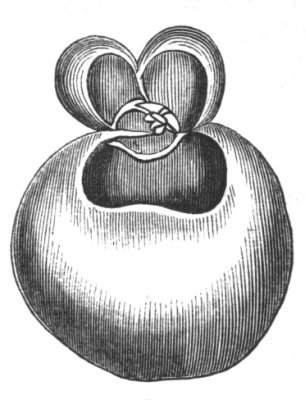
Fig. 18.—Synanthic flowers of Calceolaria in which, with two upper lips, there was but a single lower one.
Sometimes the upper lips of two flowers are fused into one, the two
lower remaining distinct. In other cases, the upper lip disappears
altogether, while there are two lower lips placed opposite one another;,
of the stamens, sometimes the outermost, at other times the innermost
disappear.[44]
Occasionally there appears to be, as it were, a transference of the
parts of one flower to another. One of the simplest and most
intelligible cases of this kind is recorded by Wigand in the 'Flora' for
1856, in a compound flower of Polygonatum anceps, in which within a
twelve-parted perianth there were twelve stamens and two pistils, one
four-celled, the other two-celled; hence it would appear as if a carpel
belonging to one flower had become united to those constituting the
pistil of the adjacent one. Among Orchids this fusion of some of the
elements of different flowers, together with the suppression of others,
is carried to such an extent as to render the real structure difficult
to decipher. Sometimes flowers of Ophrys aranifera, at first sight
seeming normal as to the number, and almost so as regards the
arrangement of their parts, have yet, on examination, proved to be the
result of a confluence of two flowers. Mr. Moggridge has observed
similar phenomena in the same species at Mentone.
Sometimes the fusion affects flowers belonging to different branches of
the same inflorescence, as in Centranthus ruber, described by
Buchenau, 'Flora,' 1857, p. 293, and even a blossom of one generation of
axes may be united with a flower belonging to another generation. Thus
M. Michalet[45] speaks of a case wherein the terminal flower of
Betonica alopecuros was affected with Peloria, and fused with an
adjacent one belonging to a secondary axis of inflorescence, and not yet
expanded. This latter flower had no calyx, but in its place were three
bracts, surrounding the corolla; this again was united to the calyx of
the terminal bloom in a most singular manner, the limb of the corolla
and that of the calyx being so joined one to the other as to form but a
single tube. It is not uncommon, as has been before stated, to find two
corollas enclosed within one calyx, but this is probably the only
recorded instance of the fusion of the calyx and corolla of two
different flowers belonging to two different axes.
From the preceding details, as well as from others which it is not
necessary to give in this place, it would appear that synanthy is more
liable to occur where the flowers are naturally crowded together[46]
than where they are remote; so too, the upper or younger portions of the
inflorescence are those most subject to this change. In like manner the
derangements consequent on the coalescence of flowers are often more
grave in the central organs, which are most exposed to pressure, and
have the least opportunities of resisting the effects of that agency,
than they are in the outer portions of the flowers where growth is less
restricted.
Morren in his papers on synanthic Calceolarias, before referred to,
considers that the direction in which fusion acts is centripetal, e.g.
from the circumference towards the centre of the flower, thus reversing
the natural order of things. He considers that there is a radical
antagonism between the normal organizing forces and the teratological
disorganizing forces, and explains in this way the frequent sterility of
monsters from an imperfect formation of stamens, or pistils, or both.
The greater tendency in synanthic flowers of parts of one whorl to
adhere to the corresponding organs in another flower has often been
remarked, though the dislocation of parts may be so great as to prevent
this from being carried out in all cases. It appears also that synanthy
is more frequently met with among flowers which have an inferior ovary
than in those in which the relative position of the organ in question
is reversed. This remark applies particularly to individual cases; the
proportion as regards the genera may not be so large. The explanation of
this must of course depend on the circumstances of each particular case;
and it would be wrong to attempt to lay down a general rule, when
organogenists have not yet fully decided in what plants the inferior
ovary is an axial structure, and in what others the appearance is due to
the adhesion of the base of the calyx to the carpels.
The list which follows is not intended as a complete one, but it may
serve to show what plants are more particularly subject to this anomaly;
the * indicates unusual frequency of occurrence, the ! signifies that
the writer has himself seen instances in the plants named. Many of the
recorded cases of Synanthy are really cases of adhesion of the
inflorescence rather than of the flowers.
- Ranunculus Lingua.
- Aconitum Napellus.
- Delphinium sp.!
- Matthiola incana!
- Arabis sagittata.
- Silene sp.
- Reseda odorata!
- Vitis vinifera.
- Citrus aurantium.
- *Fuchsia var. hort.!
- Œnothera sp.
- Saxifraga sp.
- Podalyria myrtillifolia.
- Prunus Armeniaca.
- Pyrus Malus.
- Persica vulgaris.
- Cratægus monogyna.
- Robinia pseudacacia.
- Gleditschia triacanthos.
- Syringa persica.
- Cornus sanguinea.
- Viburnum sp.
- *Lonicera sp. plur!
- Centranthus ruber!
- Valantia cruciata.
- Centaurea moschata.
- Zinnia elegans.
- Zinnia revoluta.
- Helianthus sp.!
- Spilanthes oleracea.
- Dahlia.
- *Leontodon Taraxacum!
- Senecio Doria.
- Cichorium Intybus.
- Lactuca sativa.
- Anthemis retusa.
- *Campanula medium!
- Azalea indica!
- Vinca minor.
- Atropa Belladonna.
- *Solanum Lycopersicum!
- *Petunia violacea!
- Galeopsis ochroleuca.
- Betonica alopecuros.
- *Digitalis purpurea!
- *Antirrhinum majus!
- *Linaria purpurea!
- *Pedicularis sylvatica!
- *Calceolaria var. hort.!
- Scrophularia nodosa.
- Salpiglossis straminea.
- Streptocarpus Rexii.
- *Gesnera var. hort.!
- Æschynanthus sp.!
- Thyrsacanthus rutilans!
- Anagallis collina.
- *Primula veris!
- *Primula acaulis, var. umbellata!
- Aristolochia Clematitis.
- Blitum sp.
- Chenopodium sp.
- Rumex sp.
- Salix cinerea.
- *Hyacinthus orientalis!
- Lilium bulbiferum!
- croceum, et sp. alix, pl.
- Tulipa, sp.
- Polygonatum anceps.
- Fritillaria imperalis!
- Agave americana.
- Iris versicolor.
- Crocus, sp.
- Colchicum autumnale.
- Narcissus incomparabilis!
- Tazetta.
- biflorus.
- chrysanthus.
- *Ophrys aranifera!
- Calanthe vestita!
- Oncidium bicolor.
In addition to the works before cited, additional information
on this subject may be gained from the following:—Jaeger,
'Missbilld.,' p. 92. v. Schlechtend, 'Bot. Zeit.,' 1856,
Robinia. Weber, 'Verhandl. Nat. Hist. Vereins. Preuss.
Rheinl.,' 1849, p. 290, Primula. Hincks, 'Rep. Brit. Assoc.
Newcastle,' 1838, Salpiglossis. Clos, 'Mém. Acad. Toulouse,'
vol. vi, 1862, Anagallis. Wigand, 'Flora,' 1856, tab. 8,
Pedicularis. Henfrey, 'Botan. Gazette,' i, p. 280, Reseda.
P. Reinsch, 'Flora,' 1860, tab. 7, Petasites. Weber,
Verhandl. Nat. Hist. Vereins. f.d. Preuss. Rheinl. u.
Westphal.,' 1860, p. 332, tabs. 6 et 7, Prunus, Persica,
Campanula, Taraxacum, Saxifraga, Silene, Hyacinthus,
&c. Miquel, 'Linnæa,' xi, p. 423, Colchicum. Michel,
'Traité du Citronnier,' tab. 6, Citrus.
Syncarpy.—In the preceding section it has been shown that the carpels,
like other parts of the flower, are subject to be united together. This
union may either take place between the carpels of a single flower or
between the pistils of different flowers. In the latter case the other
floral whorls are generally more or less altered. Where, however, the
ovary is, as it is called, inferior, it may happen that the pistils of
different flowers may coalesce more or less without much alteration in
the other parts of the flower, as happens normally in many
Caprifoliaceæ, Rubiaceæ, &c. &c. In some of these cases it must be
remembered that the real structure of the apparent fruit is not made out
beyond dispute, the main points of controversy being as to what, if any,
share the dilated fruit-stalk or axis takes in the formation of such
organs. Again, it will be borne in mind that in some cases the so-called
fruit is made up of a number of flowers all fused together, as in the
Mulberry or the Pineapple, in which plants what is, in ordinary
language, called the fruit really consists of the whole mass of flowers
constituting the inflorescence fused together. Union of the fruits may
also in some cases take place between the carpels after the fall of the
other floral whorls, particularly when the outer layers of the pericarp
assume a succulent condition, so that under the general head of syncarpy
really different conditions are almost necessarily grouped together,
and, in seeking to investigate the causes of the phenomenon, the
particular circumstances of each individual case must be taken into
account. Syncarpy takes place in various degrees; sometimes only the
stalks are joined; at other times the whole extent of the fruit, as in
cherries, &c. This peculiarity did not escape the observant mind of
Shakespeare—
"A double cherry seeming parted.
But yet a union in partition,
Two lovely berries moulded on one stem."
'Midsummer Night's Dream,' act iii, sc. 2.
A similar union has been observed in peaches, gooseberries, gourds,
melons, and a great many other fruits. In the Barbarossa grape I have
frequently seen a fusion of two, three, four or more berries quite at
the end of the bunch, so that the clusters were terminated by a compound
grape. Seringe has remarked sometimes two, sometimes three, fruits of
Ranunculus tripartitus soldered together. He has also seen three
melons similarly joined.[47] Turpin mentions having seen a complete
union between the three smooth and leathery pericarps which are
naturally separate and enclosed within the spiny cupule of the
chestnut.[48] Poiteau and Turpin have figured and described in their
treatise on fruit trees, under the name of Néfle de Correa, four or five
medlars, joined together and surmounted by all the persistent leaflets
of the calyces.[49]
A very remarkable example of Syncarpy has been recorded by E. Kœnig
in which nine strawberries were borne on one stem (Fragaria
botryformis),[50] and a similar malformation has been observed in the
Pineapple.
When two fruits are united together they may be of about equal size,
while in other cases one of the two is much smaller than the other. This
was the case in two cucumbers given to me by Mr. James Salter. These
were united together along their whole length excepting at the very
tips; the upper one of the two was much larger than the lower, and
contained three cells, the lower fruit was one-celled by suppression.
Both fruits were curved, the curvature being evidently due to the more
rapid growth of the upper as compared with the lower one.
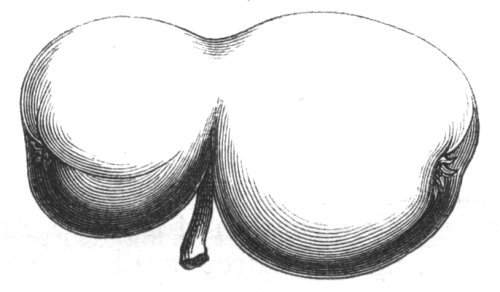
Fig. 19.—Adhesion of two apples.
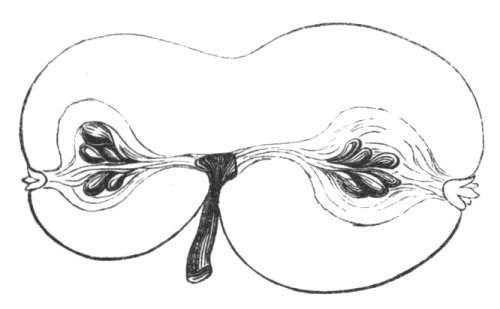
Fig. 20.—Section of united apples.
In many of these cases, where the fruits are united by their bases, the
summits become separated one from the other, so as to resemble the
letter V. Such divergence is of frequent occurrence where fruits are
united by their stalks, because, as growth goes on, the tendency must
necessarily be towards separation and divergence of the tips of the
fruit.
In some cases of Syncarpy the fusion and interpenetration of the carpels
is carried to such an extent that it is very difficult to trace on the
outer surface the lines of union. The fruit in these cases resembles a
single one of much larger size than usual. Moquin mentions a double
apple in which the connection was so close that the fruit was not very
different in form from what is customary, and a similar thing happens
with the tomato. In the case of stone-fruits it sometimes happens, not
only that the outer portions are adherent, but that the stones are so
likewise.
M. Rœper has observed two apples grafted together, one of which had
its stalk broken, and seemed evidently borne and nourished by the other
apple;[51] and a similar occurrence happens not infrequently in the
cucumber. Moquin has seen three united cherries having only a single
stalk jointed to the central fruit, the lateral cherries having each a
slight depression or cicatrix marking the situation of the suppressed
stalks. Schlotterbec has figured three apples presenting precisely
similar appearances.[52]
Fusion of two or more nuts (Corylus) is not uncommon; I have seen as
many as five so united.[53] In these cases the fruits may be united
together in a ring or in linear series.
In some Leguminosæ, contrary to the general rule in the order, more
than one carpel is found; thus peas, French beans, and other similar
plants, are occasionally met with having two or more pods within the
same calyx, and in Gleditschia triacanthos and Cæsalpinia digyna
this is so commonly the case as to be considered almost the normal
state. (De Cand. 'Mem. Leg.,' pl. 2, fig. 6; pl. 3, fig. 2.) At times
these carpels become fused together, and it becomes difficult, when the
traces of the flower have disappeared, to ascertain whether these
carpels were formed in one flower, or whether they were the result of
the fusion of several blossoms. I have seen an instance of this kind in
a plum in which there were two carpels in the same flower, the one being
partially fused to the other. The nature of such cases may usually be
determined by an inspection of the peduncle which shows no traces of
fusion. (See chapter on Multiplication.)
When, however, the fruits are sessile, and they become grafted together,
the kind of syncarpy is difficult to distinguish. It, may, nevertheless,
be said as a general rule that the union brought about by the
approximation of two fruits, after the fall of the floral whorls, is
never so complete or so intimate as that determined by synanthy; and
also that in those cases where there are supernumerary carpels in the
flower, and those carpels become united together, they are rarely so
completely fused that their individuality is lost.
An analogous phenomenon takes place not uncommonly in mosses, the spore
capsules of which become united together in various ways and degrees.
Schimper[54] cites the following species as subject to this
anomaly:—Buxbaumia indusiata, Leskea sericea, Hypnum lutescens,
Anomodon alternatus, Clinacium dendroides, Bryum cæspititium,
Brachythecium plumosum, Mnium serratum, Splachnum vasculosum. It
has also been observed in Trichostomum rigidulum and Hypnum
triquetrum.
In addition to the authorities already mentioned, the reader
may consult Moquin-Tandon, 'El. Ter. Veg.,' p. 270. Turpin.
'Mém. greffe. Ann. Sc. Nat.,' ser. i, t. xxiv, p. 334. De
Candolle, 'Organ. Veget.,' t. i. Duhamel, 'Phys. des Arbres,'
t. i, p. 304, tab. xiii, xiv. Weber. 'Verhandl. Nat. Hist.
Vereina f. d. Preuss. Rheinl. u. Westphal.,' 1860, p. 332, tab.
vi. et vii.
Synspermy, or Union of the Seeds.—Seeds may be united together in
various degrees, either by their integuments,[55] or by their inner
parts. Such union of the seeds, however, is of rare occurrence. It takes
place normally, to a slight extent, in certain cultivated forms of
cotton, wherein the seeds are aggregated together into a reniform mass,
whence the term kidney cotton. Union of the parts of the embryo is
treated under another head (see Synophty).
Adhesion between the axes of different plants.—Under this head may be
classed the union that takes place between the stems, branches, or roots
of different plants of the same species, and that which occurs between
individuals of different species; the first is not very different in its
nature from cohesion of the branches of the same plant (figs. 21, 22).
It finds its parallel, under natural circumstances, among the lower
cryptogams, in which it often happens that several individual plants,
originally distinct, become inseparably blended together into one mass.
In the gardening operations of inarching, and to some extent in budding,
this adhesion of axis to axis occurs, the union taking place the more
readily in proportion as the contact between the younger growing
portions of the two axes respectively is close. The huge size of some
trees has been, in some cases, attributed to the adnation of different
stems. This is said to be the case with the famous plane trees of
Bujukdere, near Constantinople, and in which nine trunks are more or
less united together.[56]
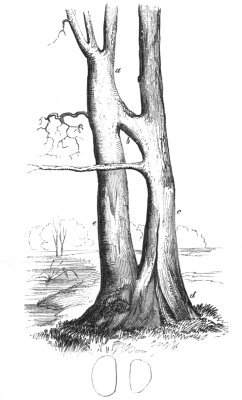
Fig. 21.—Adhesion of two distinct stems of oak, or possibly cohesion of branches of the same tree. 'Gard. Chron.,' 1846, p. 252.
A similar anastomosis may take place in the roots. Lindley cites a case
wherein two carrots, of the white Belgian and the red Surrey varieties
respectively, had grown so close to each other that each twisted half
round the other, so that they ultimately became soldered together; the
most singular thing with reference to this union was, that the red
carrot (fig. 23, b), with its small overgrown part above the
junction, took the colour and large dimensions of the white Belgian
(d), which, in like manner, with its larger head above the joining
(a), took the colour and small dimensions of the red one at and below
the union (e d). The respective qualities of the two roots were thus
transposed, while the upper portions or crowns were unaffected: the root
of one, naturally weak, became distended and enlarged by the abundant
matter poured into it by its new crown; and in like manner the root of
the other, naturally vigorous, was starved by insufficient food derived
from the new crown, and became diminutive and shrunken (see Synophty).
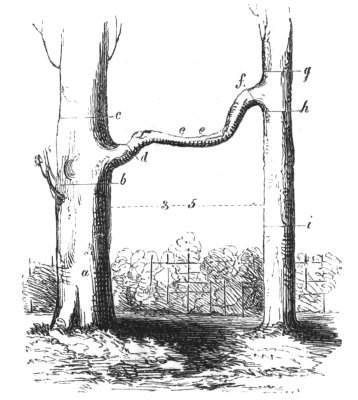
Fig. 22.—Adhesion of the branches of two elms. 'Gard. Chron.,' 1849, p. 421.
The explanation of the fact that the stumps of felled fir trees
occasionally continue to grow, and to deposit fresh zones of wood over
the stump, depends on similar facts. In Abies pectinata, says
Goeppert,[57] the roots of different individuals frequently unite; hence
if one be cut down, its stump may continue to live, being supplied with
nourishment from the adjacent trees to which it is adherent by means of
its roots.
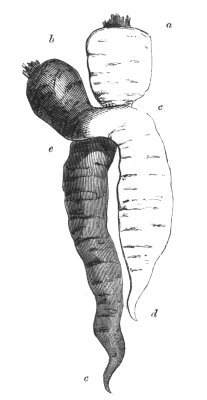
Fig. 23.—Adhesion of two roots of carrot. 'Gard. Chron.,' 1851, p. 67.
A not uncommon malformation in mushrooms arises from the confluence of
their stalks (fig. 24), and when the union takes place by means of the
pilei, it sometimes happens, during growth, that the one fungus is
detached from its attachment to the ground, and is borne up with the
other, sometimes, even, being found in an inverted position on the top
of its fellow.[58]
The garden operations of budding, grafting and inarching have already
been alluded to as furnishing illustrations of adhesion, but it may be
well to refer briefly to certain other interesting examples of adhesion
induced artificially; thus, the employment of the root as a stock,
"root-grafting," is now largely practised with some plants, as affording
a quicker means of propagation than by cuttings; and a still more
curious illustration may be cited in the fact that it has also been
found possible to graft a scion on the leaf in the orange.[59]
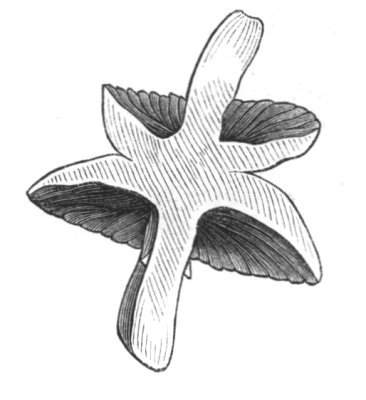
Fig. 24.—Section through two adherent mushrooms, the upper one inverted.
Mr. Darwin, in his work on the 'Variation of Animals and Plants,' vol.
i, p. 395, alludes to the two following remarkable cases of
fusion:—"The author of 'Des Jacinthes' (Amsterdam, 1768, p. 124) says
that bulbs of blue and red hyacinths may be cut in two, and that they
will grow together, and throw up a united stem (and this Mr. Darwin has
himself seen), with flowers of the two colours on the opposite sides.
But the remarkable point is, that flowers are sometimes produced with
the two colours blended together." In the second case related by Mr.
Trail, about sixty blue and white potatoes were cut in halves through
the eyes or buds, and the halves were then joined, the other buds being
destroyed. Union took place, and some of the united tubers produced
white, others blue, while some produced tubers partly white and partly
blue.
Adhesion of the axes of plants belonging to different species is a more
singular occurrence than the former, and is of some interest as
connected with the operation of grafting. As a general rule
horticulturists are of opinion, and their opinion is borne out by facts,
that the operation of grafting, to be successful, must be practised on
plants of close botanical affinity. On the other hand, it is equally
true that some plants very closely allied cannot be propagated in this
manner. Contact between the younger growing tissues is essential to
successful grafting as practised by the gardener, and is probably quite
as necessary in those cases where the process takes place naturally.
Although there is little doubt but that some of the recorded instances
of natural or artificial grafting of plants of distant botanical
affinities are untrustworthy, yet the instances of adhesion between
widely different plants are too numerous and too well attested to allow
of doubt. Moreover, when parasitical plants are considered, such as the
Orobanches, the Cuscutas, and specially the mistleto (Viscum), which
may be found growing on plants of very varied botanical relationship,
the occurrence of occasional adhesion between plants of distant affinity
is not so much to be wondered at. Union between the haulms of wheat and
rye, and other grasses, has been recorded[60]. Moquin-Tandon[61] relates
a case wherein, by accident, a branch of a species of Sophora passed
through the fork, made by two diverging branches of an elder
(Sambucus), growing in the Jardin des Plantes of Toulouse. The branch
of the Sophora contracted a firm adhesion to the elder, and what is
remarkable is that, although the latter has much softer wood than the
former, yet the branch of the harder wooded tree was flattened, as if
subjected to great pressure[62]. It is possible that some of the cases
similar to those spoken of by Columella, Virgil[63], and other classical
writers, may have originated in the accidental admission of seeds into
the crevices of trees; in time the seeds grew, and as they did so, the
young plants contracted an adhesion to the supporting tree. Some of the
instances recorded by classical writers may be attributed to intentional
or accidental fallacy, as in the so-called "greffe des charlatans" of
more modern days.
Adhesion of the roots of different species has been effected
artificially, as between the carrot and the beet root, while Dr. Maclean
succeeded in engrafting, on a red beet, a scion of the white Silesian
variety of the same species. In all these cases, even in the most
successful grafts, the amount of adhesion is very slight; the union in
no degree warrants the term fusion, it is little but simple contact of
similar tissues, while new growing matter is formed all round the cut
surfaces, so that the latter become gradually imbedded in the newly
formed matter.
Synophty or adhesion of the embryo.—This often occurs partially in the
embryo plants of the common mistleto (Viscum), but is not of common
occurrence in other plants, even in such cases as the orange (Citrus),
the Cycadeæ, Coniferæ, &c., where there is frequently more than one
embryo in the seed. Alphonse De Candolle has described and figured an
instance of the kind in Euphorbia helioscopia, wherein two embryo
plants were completely grafted together throughout the whole length of
their axes, leaving merely the four cotyledons separate. A similar
adnation has been observed by the same botanist in Lepidium sativum
and Sinapis ramosa, as well as in other plants.[64] I have met with
corresponding instances in Antirrhinum majus and in Cratægus
oxyacantha, in the latter case complicated with the partial atrophy of
one of the four cotyledons. It is necessary to distinguish between such
cases and the fallacious appearances arising from a division of the
cotyledons. M. Morren has figured and described the union of two roots
of carrot (Daucus), which were also spirally twisted. He attributes
this union to the blending of two radicles, and applies the term
"rhizocollesy" to this union of the roots.[65] Mr. Thwaites cites a case
wherein two embryos were contained in one seed in a Fuchsia, and had
become adherent. What is still more remarkable, the two embryos were
different, a circumstance attributable to their hybrid origin, the seed
containing them being the result of the fertilisation of Fuchsia
coccinea (quere F. magellanica?) by the pollen of F. fulgens.
Under this head are included all those instances wherein organs usually
entire, or more or less united, are, or appear to be, split or
disunited. It thus includes such cases as the division of an ordinarily
entire leaf into a lobed or partite one, as well as those characterised
by the separation of organs usually joined together. Union, as has been
stated in a previous chapter, is the result either of persistent
integrity or of a junction of originally separate organs, after their
formation; so in like manner, the separation or disjunction of parts may
arise from the absence of that process of union which is habitual in
some cases, or from an actual bonâ fide separation of parts originally
united together. In the former case, the isolation of parts arises from
arrest of development, while in the latter it is due rather to luxuriant
growth. A knowledge, as well of the ordinary as of the unusual course,
of development in any particular flower is thus required in order to
ascertain with accuracy the true nature of the separation of parts. The
late Professor Morren[66] proposed the general term Monosy (μονωσις) for all these cases of abnormal isolation, subdividing the
group into two, as follows—1, Adesmy (α-δεσμος), including
those cases where the separation is congenital; and 2, Dialysis (διαλυω), comprising those instances where the isolation is truly a
result of the separation of parts previously joined together. Adesmy,
moreover, was by the Belgian savant said to be homologous when it
occurred between members of the same whorl, e.g. between the sepals of
an ordinary monosepalous calyx, or heterologous when the separation took
place between members of different whorls, as when the calyx is detached
from the ovary, &c. The former case would thus be the converse of
cohesion, the latter of adhesion.
To the adoption of these words there is this great objection, that we
can but rarely, in the present state of our knowledge, tell in which
group any particular illustration should be placed.
The terms adopted in the present work are, for the most part, not
necessarily intended to convey any idea as to the organogenetic history
of the parts affected. Where a single organ, that is usually entire,
becomes divided the term Fission is used; in cases where parts of the
same whorl become isolated, the word Dialysis is employed, and in the
same sense in which it is generally used by descriptive botanists, and
where the various whorls become detached one from the other, the
occurrence is distinguished by the application of the term Solution.
When an organ becomes divided it receives at the hands of descriptive
botanists the appellations cleft, partite, or sect, according to the
depth of the division; hence in considering the teratological instances
of this nature, the term fission has suggested itself as an appropriate
one to be applied to the subdivision of an habitually entire or
undivided organ. It thus corresponds pretty nearly in its application
with the term Chorisis or "dédoublement," or with the "disjonctions qui
divisent les organes" of Moquin-Tandon.[67] It is usually, but not
always, a concomitant with hypertrophy, and dependent on luxuriance of
growth.
It must be understood therefore that the term, as generally applied,
does not so much indicate the cleavage of a persistent organ, as it does
the formation and development of two or more growing points instead of
one, whence results a branching or forking (di-tri-chotomy) of the
affected organ. In some instances it seems rather to be due to the
relative deficiency of cellular, as contrasted with fibro-vascular
tissue.
Fission of axile organs.—This condition is scarcely to be distinguished
from multiplication of the axile organs (which see). A little attention,
however, will generally show whether the unusual number of branches is a
consequence of the development of a large number of distinct shoots, as
happens, for instance, when a tree is pollarded, or of a division of
one. M. Fournier[68] gives as an illustration the case of a specimen of
Ruscus aculeatus in which there occurred a division of the foliaceous
branches into two segments, reaching as far as the insertion of the
flower, but no further. He also mentions lateral cleavage effected by a
notching of the margin, the notch being anterior to the flowers and
always directed towards their insertion. In the allied genus Danaë,
Webb, 'Phyt. Canar.,' p. 320, describes the fascicles of flowers as in
"crenulis brevibus ad marginem ramulorum dispositis." Sometimes, on the
other hand, Danaë has a fascicle of flowers inserted on the middle of
the upper surface, as in Ruscus. Wigand mentions an instance in
Digitalis lutea, where the upper part of the stem was divided into six
or seven racemes; possibly this was a case of fasciation, but such a
division of the inflorescence is by no means uncommon in the spicate
species of Veronica. I have also seen it in Plantago lanceolata,
Reseda luteola, Campanula medium, Epacris impressa, and a
bifurcation of the axis of the spikelet within the outer glumes in
Lolium perenne[69] and Anthoxanthum odoratum. In the Kew Museum is
preserved a cone of Abies excelsa,[70] dividing into two divisions,
each bearing bracts and scales. A similar thing frequently occurs in the
male catkins of Cedrus Libani (fig. 25).
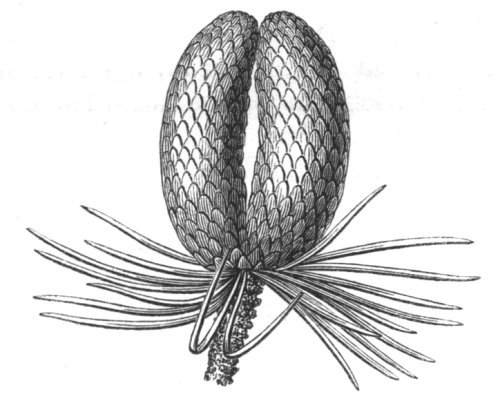
Fig. 25.—Bifurcated male inflorescence, Cedrus Libani.
This subdivision of axial organs is not unfrequently the result of some
injury or mutilation, thus Duval Jouve alludes to the frequency with
which branched stems are produced in the various species of Equisetum,
as a consequence of injuries to the main stem, but this is rather to be
considered as a multiplication of parts than as a subdivision of one.
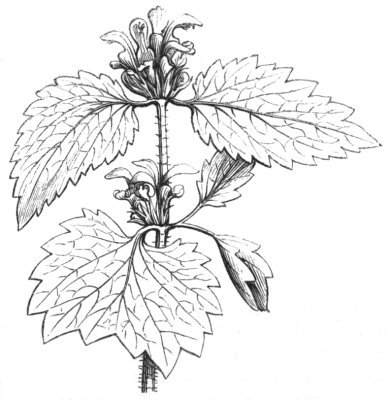
Fig. 26.—Bifurcated leaf of Lamium album, &c.
Fission of foliar organs.—Many leaves exhibit constantly the process of
fission, such as the Salisburia adiantifolia, and which is due perhaps
as much to the absence or relatively small proportion of cellular as
compared with vascular tissue, as to absolute fission. In the same way
we have laciniated leaves of the Persian lilac, Syringa persica, and
Moquin mentions instances in a species of Mercurialis in which the
leaves were deeply slashed. In Chenopodium Quinoa the leaves were so
numerous and the clefts so deep, that the species was hardly
recognisable, while on a branch of Rhus Cotinus observed by De
Candolle the lobes were so narrow and so fine as to give the plant the
aspect of an Umbellifer. Wigand ('Flora,' 1856, p. 706) speaks of the
leaves of Dipsacus fullonum with bi-partite leaves; Moquin mentions
the occurrence of a leaf of an oleander bi-lobed at the summit, so as to
give the appearance of a fusion of two leaves. Steinheil has recorded an
instance in Scabiosa atropurpurea in which one of the stem leaves
presented the following peculiarities. It was simple below, but divided
above into two equal lobes, provided each with a median nerve.[71]
Steinheil has also recorded a Cerastium in which one of the leaves was
provided with two midribs; above this leaf was a group of ternate
leaves. I have seen similar instances in the common Elm, Ulmus
campestris, and also in the common nettle, Urtica dioica, the leaves
of which latter thus resembled those of Urtica biloba, which are
habitually bilobed at the summit. M. Clos[72] mentions an instance where
the terminal leaf and first bract of Orchis sambucina were divided
into two segments. The same author also mentions the leaves of
Anemiopsis californica, which were divided in their upper halves each
into two lobes—also leaves of a lentil springing from a fasciated stem
and completely divided into two segments, but with only a single bud in
the axil. The axillary branches in like manner showed traces of
cleavage. Fig. 26 represents a case of this kind in Lamium album,
conjoined with suppression of the flowers on one side of the stem. I
have also in my herbarium a leaf of Arum maculatum, with a stalk
single at the base, but dividing into two separate stalks, each bearing
a hastate lamina, the form of which is so perfect that were it not from
the venation of the sheath it would be considered that there was here a
union of two leaves rather than a bifurcation of one. A garden
Pelargonium presented the same appearance.
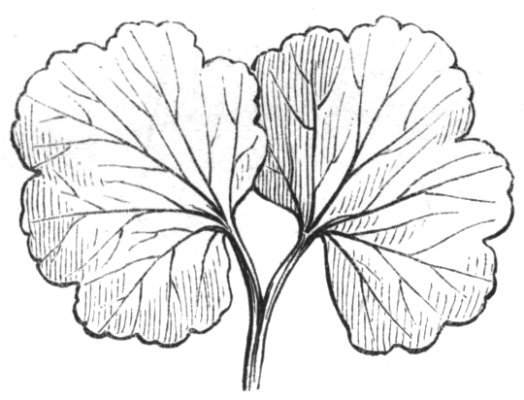
Fig. 27.—Bifurcated leaf of Pelargonium.
Fern fronds are particularly liable to this kind of subdivision, and
they exhibit it in almost every degree, from a simple bifurcation of the
frond to the formation of large tufts of small lobes all formed on the
same plan by the repeated forking of the pinnules. These may be
considered as cases of hypertrophy.
Moquin-Tandon, at a meeting of the Botanical Society of France (April
3rd, 1858) exhibited a leaf of Cerasus Lauro-Cerasus divided in such a
manner as to resemble a leaf of Citrus or of Phyllarthron. In this
case, therefore, the disunion must have taken place laterally, and not
from apex towards base, as is most common. The leaves of the common
horse-radish, Cochlearia Armoracia, are very subject to this pinnated
subdivision of the margin, and numerous other illustrations might be
given.
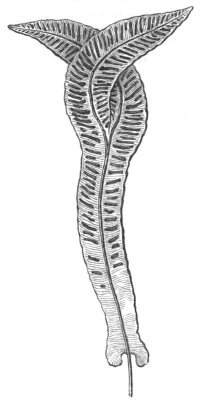
Fig. 28.—Bifurcated frond, Scolopendrium vulgare.
A. Braun describes a singular case in a leaf of Irina glabra
wherein the blade of the leaf on one side was deeply and irregularly
laciniated, the other side remaining entire. (Verhandl., d. 35,
Naturforscherversammlung, tab. 3.) Laciniate varieties of plants are of
frequent occurrence in gardens where they are often cultivated for their
beauty or singularity; thus, there are laciniated alders, fern-leaved
beeches and limes, oak-leaved laburnums, &c. A list of several of these
is subjoined. A similar fission takes place constantly in the cotyledons
of some plants, sometimes, as in Coniferæ, to such an extent as to
give an appearance as if there were several cotyledons.[73]
It is not always easy to recognise, at a first glance, whether the
division be the result of disunion or of an incomplete union of two
leaves, but we may be guided by the number of leaves in the cycle or the
whorl. The number is complete in cases of partial disjunction, while in
cases of fusion it is incomplete. Again, in instances of disjunction,
there is only one point of origin, but, when two leaves are grafted
together, two such points may generally be detected at the base of the
leaf, or a transverse section of the leaf-stalk will show indications of
fusion. The number and position of the midribs will also serve as a
guide, as in cases of fusion there are generally two or more midribs,
according to the number of fused leaves; but as Moquin well remarks,
this latter character cannot be always depended upon, for the median
nerve may divide without any corresponding separation of the cellular
portions of the leaf. The author just quoted cites examples of this kind
in Cardamine pratensis, Hedera Helix, Plantago major, Geranium
nodosum.
The following list of plants commonly producing leaves that are cleft or
divided, to a greater extent than is usual in the species, is mainly
taken from one given by Schlechtendal, 'Bot. Zeit.,' 1844, p. 441, with
additions from other sources. The ! indicates that the author has
himself met with the deviation in question. Many are cultivated as
garden varieties under the names here given.
- Trollius europæus dissectus.
- Chelidonium majus laciniatum!
- Glaucium luteum.
- Brassica oleracea!
- Tilia parvifolia laciniata.
- Acer platanoides laciniatum.
- Æsculus Hippocastanum incisum!
- Vitis vinifera apiifolia!
- Ilex Aquifolium!
- Rhus Toxicodendron quercifolium.
- Ervum Lens.
- Cytisus Laburnum quercifolium!
- Rubus fraticosus laciniatus!
- Pyrcis communis.
- Cerasus Lauro-cerasus.
- Apium graveolens!
- Pimpinella magna.
- Cratægus Oxyacantha laciniata.
- Ribes nigrum.
- Sambucus nigra laciniata!
- Dipsacus fullonum.
- Scabiosa atropurpurea!
- Symphoricarpus racemosus.
- Helianthus sp.!
- Lonicera Periclymenum quercifolia!
- Syringa persica laciniata!
- Syringa vulgaris!
- Nerium Oleander!
- Lamium purpureum.
- Salvia officinalis.
- Solanum Dulcamara!
- Fraxinus excelsior crispa.
- Veronica austriaca.
- Polemonium cæruleum.
- Juglans regia laciniata!
-
- heterophylla.
- filicifolia.
- Anemiopsis californica.
- Chenopodium Quinoa.
- Ulmus americana incisa.
- Fagus sylvatica heterophylla!
-
- laciniata!
- aspleniifolia!
- incisa.
- salicifolia!
- Mercurialis perennis.
- Urtica dioica.
- Quercus Cerris laciniata!
- Betula populifolia laciniata.
- Alnus incana laciniata!
- glutinosa laciniata!
- quercifolia.
- oxyacanthifolia.
- Corylus Avellana heterophylla!
- Carpinus Betulus incisa!
-
- quercifolia.
- heterophylla.
- Castanea vesca heterophylla.
- Populus alba acerifolia.
-
- palmata.
- quercifolia.
- balsamifera.
- Orchis sambucina.
- Arum maculatum.
- Filices sp. pl.
See also Schlechtendal, 'Bot. Zeit.,' tom. xiii, p. 823. A.
Braun, loc. supra citat. For Ferns too numerous for insertion,
see Moore, 'Nature-Printed Ferns,' 8vo ed., 2 vols. Clos, 'Mém.
Acad. Toulouse,' 1862, p. 51.
Fission of the petals, &c.—The floral leaves are subject to a similar
process of cleavage to that which has just been mentioned as taking
place in the leaves. This, indeed, occurs very often as a normal
occurrence as in the petals of mignonette (Reseda), or those of
Alsine media and many other plants. Here, however, we have only to
allude to those instances in which the cleavage occurs in flowers whose
sepals or petals are usually entire. Under this category Moquin mentions
a petal of Brassica oleracea completely split into two. Linné in his
'Flora Lapponica' (pp. 145 and 164) mentions quadrifid petals of
Lychnis dioica, and much divided petals of Rubus arcticus. Among
other plants subject to this division of sepals or petals may be
mentioned as having come within the writer's personal observation,
Ranunculus Lingua, R. acris, Papaver somniferum, and others of
this genus, Saponaria sp., Dianthus, Narcissus, &c.
In some of the garden varieties of Cyclamen the corolla looks at first
sight as if double, and the plan of the flower is oblong or elliptical,
instead of circular. In these flowers each lobe of the corolla is
divided almost to the base into two lobes, so that there appear to be
ten lobes to the corolla instead of five, as usual. The stamens are
normal in form and number in these flowers.
In the paroquet tulips of gardeners the segments of the perianth are
deeply and irregularly gashed, the segments occasionally becoming rolled
up and their margins coherent so as to form little tubular spurs. I have
also noticed the segments of the perianth in Crocus and Colchicum
deeply cleft, so much so sometimes, as to equal in this particular the
stigmas. In the flowers of a species of Oncidium, communicated to me
by Mr. Currey, the lip was divided into three segments perfectly
distinct one from the other, but confluent with the column; the two side
pieces had callosities at the upper edge close to the base, the central
piece had a similar wartlike process in its centre. In these flowers the
ovary, the stigma, and the anther were all in a rudimentary condition.
Some verbenas raised by Mr. Wills offer a curious illustration of this
condition. It will be remembered that some of the lobes or petals of a
verbena are normally divided at the base to a slight degree, but in the
flowers in question this is carried to such an extent that the enlarged
lobes are pushed into the centre of the flower and simulate, at a first
glance, a distinct and separate organ, though in reality it is but an
enlargement of what occurs normally.[74]
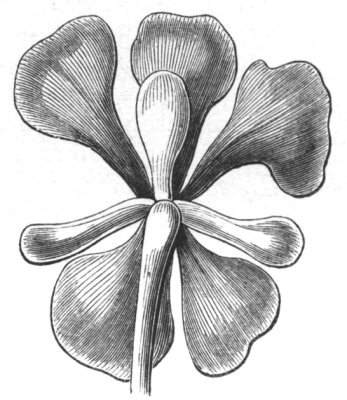
Fig. 29.—Flower of Oncidium sp. seen from the back. The lip is divided into three unequal segments.
Moquin mentions having seen the stamens of Matthiola incana and
Silene conica completely divided, each section bearing half an anther,
exactly as happens in Polygalaceæ. In tulips and lilies the same
author mentions division of the anther only, the filament remaining
entire, as happens naturally in many species of Vaccinium.
A division of the individual carpels occurs very frequently when those
organs become more or less leafy, as in Trifolium repens, and other
plants to be hereafter mentioned.
The instances given in this chapter have all been cases wherein the
division or the accessory growth has taken place in one plane only and
that plane the same as that of the affected organ, but there are other
examples, probably equally due to fissiparous division, where the new
growth is either parallel to, or even at angle with the primary organ.
Of such nature are some of those instances wherein two leaves appear to
be placed back to back. These partake of the nature of excrescences or
of exaggerated developments, and hence will be more fully treated of
under the head of hypertrophy. It must be remembered that in some of
these cases the fission may be a resumption of characters proper to the
species under natural conditions, but lost by cultivation or otherwise.
Thus, Mr. Buckman accounts for "finger-and-toe" in root-crops on the
principle of reversion to the wild form.
This term is here made use of in the same sense as in descriptive
botany, to indicate the isolation of parts of the same whorl; it is thus
the opposite of cohesion. Morren, as has been previously stated,
employed the word in a different sense, while Moquin-Tandon[75] included
cases of this description under the category of "Disjonctions qui
isolent les organes."
Dialysis, as here understood, may be the result of an arrest of
development, in consequence of which parts that under ordinary
circumstances would become fused, do not do so; or, on the other hand,
it may be the result of an actual separation between parts primitively
undivided. As it is not possible in every case to distinguish between
the effects of these two diverse causes, no attempt is here made to do
so.
Dialysis of the margins of individual foliar organs.—In cases where the
leaf or leaf-like organ is ordinarily tubular or horn-like in form,
owing to the cohesion of its edges, it may happen either from lack of
union or from actual separation of the previously united edges, that the
tubular shape is replaced by the ordinary flattened expansion. Thus, in
Eranthis hyemalis, wherein the petals (nectaries) are tubular and the
sepals flat, I have met with numerous instances of transition from the
one form to the other, as shown in fig. 9, p. 24.
It is, however, in the carpels that this separation occurs most
frequently. When these organs appear under the guise of leaves, as they
often do, their margins are disunited, so that the carpel becomes flat
or open. This happens in the strawberry (Fragaria), the columbine
(Aquilegia), in Trifolium repens, Ranunculus Ficaria, &c.[76]
Dialysis of the parts of the same whorl:—calyx.—The separation of an
ordinarily coherent series into its constituent parts is necessarily of
more common occurrence than the foregoing. As here understood, it is the
precise converse of cohesion, and it may be represented diagrammatically
by a dotted line above the letters denoting the sepals, petals, &c. When
this change happens in the calyx we have the gamosepalous condition
replaced by the polysepalous one, as thus represented:
         .............
         S  S  S  S  S
instead of
         _____________
         S  S  S  S  S
as in a calyx of five coherent sepals.
Detachment of this kind occurs not unfrequently, as in Primula
vulgaris, Trifolium repens, &c. In Rosaceæ and Pomaceæ this
separation of the calyx is of the more moment, as it has reference to
the structure of the inferior ovary, as will be more fully mentioned
hereafter. Here, however, a case recorded by M. J. E. Planchon may be
alluded to[77] wherein a quince fruit (Cydonia) was surmounted by five
leaves, the surface of the pome being marked by as many prominences,
which apparently corresponded to the five stalks of the calycine leaves.
In this specimen, then, the inferior position of the ovary appeared to
be not so much due to an expansion of the fruit stalk, as to the fusion
of the hypertrophied stalks of the sepals. Some of the malformations
among Cucurbits point to a similar structure. It is probable that in
many of these cases the so-called inferior ovary is partly axial partly
foliar, i.e., sepaline, and partly carpellary in its nature.
Dialysis of the sepals in calyces that are usually gamosepalous has been
most frequently observed in Rosaceæ, Pomaceæ, Umbelliferæ, less
commonly in Leguminosæ, also in the following genera:—Primula,
Symphytum, Gentiana, Campanula, &c.
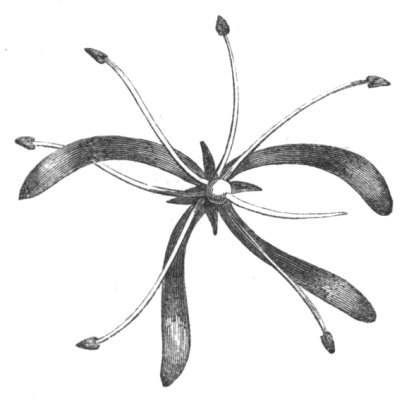
Fig. 30.—Dialysis of the sepals and petals in Correa.
Dialysis of the corolla is likewise of frequent occurrence, either
partially or to such an extent as to render the corolla truly
polypetalous. Among Labiatæ the upper lip of the corolla may be often
met with partially cleft, as it is constantly in Phlomis biloba, or
more markedly among the Lobeliaceæ.
In the Compositæ, a similar separation of the petals is not
infrequent, thus showing frequent transitional stages between the
labiatifloral and tubulifloral divisions respectively. The ligulate
corollas also may often be found in Chrysanthemums, Dahlias, &c., more
or less deeply divided into their component parts.
A more complete separation occurs not unfrequently in Campanula,
Rhododendron, Phlox, &c. Figs. 30 and 31 illustrate dialysis of
the corolla; the first in Correa, the second in Campanula.
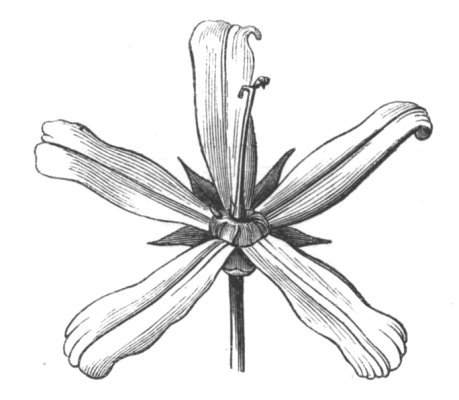
Fig. 31.—Dialysis of the corolla in Campanula sp., after De Candolle.
In the last-named genus, C. rotundifolia has been found with
polypetalous flowers in a wild state in the mountains of Canton
Neufchatel, Switzerland, and gave rise to the creation of a new genus.
This form is now introduced into gardens.
It must be remembered that in some genera, where this separation of the
petals has been met with, there are species in which a similar isolation
occurs normally, as in Rhododendron. R. linearilobum, a Japanese
species, offers a good illustration of this.
The following list contains the names of the genera in which this
separation of the petals of an ordinarily gamopetalous flower takes
place most frequently.
- Correa.
- Campanula! sp. pl.
- Polemonium.
- Phlox!
- Cobœa!
- Rhododendron!
- Erica!
- Rhodora.
- Azalea!
- Compositæ! sp. pl.
- Lonicera!
- Convolvulus!
- Pharbitis.
- Antirrhinum!
- Verbascum!
- Mimulus.
- Digitalis!
- Orobanche.
- Solanum.
- Nicotiana.
- Gentiana!
- Anagallis.
- Primula!
- Lamium!
- Convallaria!
- Lilium!
- Colchicum!
- &c. &c.
This list does not include those very numerous cases in which this
change is associated with more or less complete frondescence or leafy
condition of the petals.
Dialysis of the stamens.—A similar isolation of the stamens occurs
occasionally; for instance, when Mallows (Malvaceæ) become double, one
of the first stages of the process is often the disjunction of the
stamens, and a similar dissociation occurs in Leguminosæ and
Compositæ, as in Tragopogon, as related by Kirschleger, in
Hypochæris by Wigand, and in Coreopsis by Schlechtendal.
Dialysis of the carpels.—In the case of the carpels this disunion is
more frequent than in the stamens. M. Seringe[78] figures carpels of
Diplotaxis tenuifolia more or less completely separated one from the
other; indeed, this separation is very common amongst Cruciferæ and
Umbelliferæ.
Generally speaking, the disunion is complicated with frondescence—but
not always so. I have, in my herbarium, specimens of Convallaria
majalis, Commelyna sp., and of Lilium auratum, in all of which the
three carpels are completely disjoined, and present three styles, three
stigmas, &c., without any other change. Engelmann[79] speaks of three
classes of this malformation. 1st, that in which the carpels separate
one from the other without opening, as in the lily just alluded to; 2nd,
that in which the ovary remains closed, but loses its internal
partitions, as in a case mentioned by Moquin in Stachys sylvatica, in
which, owing to imperfect disjunction, the two bi-lobed carpels were
changed into a nearly one-celled capsule;[80] and 3rd, those cases in
which the carpels are open and foliaceous.
Fig. 32.—Anomalous form of orange.
Disjunction is more frequent in dry fruits than in fleshy ones. In the
latter instance it happens at an early stage of existence, and the
pericarp becomes more or less leafy, losing its faculty of becoming
fleshy, as in Prunus Cerasus and Amygdalus persica; nevertheless,
fleshy fruits sometimes become disunited. I have seen a case similar to
that mentioned by M. Alphonse de Candolle in Solanum esculentum, in
which the pericarp became ruptured, and the placentas protruded. A like
occurrence has also been observed in a species of Melastoma.[81] This
is analogous to what happens in Caulophyllum and Slateria.
Disjunction of the carpels is not rare in oranges. Sometimes this takes
place regularly, at other times irregularly; occasionally in such a
manner as to give the appearance of a hand and fingers to the fruit. Of
one of these, Ferrari,[82] in the curious volume below cited, speaks
thus: "Arbor profusissima, quia dat utraque manu; imo quia vere manus
dat in poma conversis; utque magis munifica sit poma ipsa convertit in
manus."
M. Duchartre[83] mentions a semi-double flower of orange with eight to
ten distinct carpels in a whorl, and occasionally several whorls one
above another. De Candolle[84] considers the rind of the orange as a
production from the receptacle, and this view is confirmed by the
specimens of Duchartre, in which the carpels were quite naked or had a
common envelope truncated, and open above to allow of the passage of the
styles and stigmas.
Fig. 33.—Orange. Showing disjunction of carpels, after Maout.
Fig. 34.—Section of orange shown in fig. 33 after Maout.
It frequently happens in conjunction with this separation of the carpels
one from the other, that a lack of union manifests itself between the
margins of the individual carpels themselves. Very numerous cases of
this kind have been recorded, and the double tulips of gardens may be
referred to as showing this condition very frequently. In connection
with this detachment of the carpels, a change in the mode of
placentation is often to be observed, or two or more kinds may be seen
in the same pistil, as in double-flowered saponarias, many Crucifers,
&c., as alluded to under the head of displacements of the placenta.
The isolation or separation of different whorls that are ordinarily
adherent together is by no means of rare occurrence. Were it not that
the isolation is often congenital, the word detachment would be an
expressive one to apply to these cases, but as the change in question
occurs quite as often from a want of union, an arrest or stasis of
development, as from a bonâ fide separation, the word solution seems
to be, on the whole, the best. It corresponds in application to the word
liber (calyx liber, &c.), in general use by descriptive botanists.
As here employed, the term nearly corresponds with the "adesmie
hetérologue" of Morren. Moquin Tandon does not make any special
subdivision for the class of cases here grouped together, but places
them all under "Disjonctions qui isolent les organes." It seems,
however, desirable to have a separate word to express the converse
condition of adhesion, and for this purpose the term solution, as above
stated, is here employed. Diagrammatically, the condition may be
expressed by placing a dotted line at the side of the letters thus:
      : S S S S S :
      : C C C C C :
would indicate the disjunction of the sepals from the carpels (c), in
contradistinction to adhesion, which may be represented by the unbroken
line thus:
      | S S S S S |
      | C C C C C |
Solution of the calyx from the ovary.—Of all the instances of adhesion
which take place under ordinary circumstances, that between the calyx
and the ovary is perhaps the most common. The calyx adhærens or
superus is a structural characteristic to which all botanists attach
considerable importance; so that when exceptional cases occur in which
the calyx becomes detached from the ovary, becomes, that is, inferus
or liber, a proportionate degree of interest attaches to the
irregularity. It is not within the scope of the present work to inquire
whether this detachment be real or merely apparent, arising from a want
of union between parts ordinarily united together. This point must be
left to the organogenists to decide in each particular case. So also the
question as to what share, if any, the expanded and dilated flower-stalk
may take in what are usually called inferior ovaries, can be here only
incidentally touched upon.
Among Rosaceæ, the change in question is very common, especially in
conjunction with an elongation of the axis of the flower (apostasis) and
with prolification, though it is by no means always co-existent with
these malformations. When this alteration in the apparent relative
position of calyx and carpels occurs in roses (Rosa) the appearances
are generally such as to indicate that the "hip" of the rose is a
dilatation of the peduncle, continuous above with the coherent bases of
the sepals; this inference seems also to be borne out by what happens in
the Pomaceæ. In some cases in this sub-order, the calyx becomes
detached from the carpels, so that the latter organs become more or less
"superior," and distinct one from the other. This happens constantly in
the double-flowered thorn, Cratægus Oxyacantha, in some blossoms of
which the hollowed end of the peduncle still invests the base of the
carpels, leaving the upper portions detached. In apples flowers are
occasionally met with of greater size than usual and on longer stalks,
so that the whole looks more like a rose than an apple blossom. In these
cases it will usually be found that the calyx consists of distinct
sepals, without a trace of the ordinary swelling beneath the flower. The
petals are often more numerous than usual; the stamens variously
changed, and the carpels sometimes absent; at other times, as in the
instance figured in the adjacent woodcuts, figs. 36, 37, consisting of
separate, superior ovaries, sometimes destitute of ovules, or, at other
times, having two of these bodies.[85]
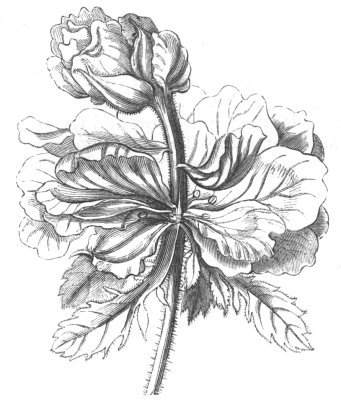
Fig. 35.—Proliferous Rose. Showing an absence of the usual dilatation of the flower-stalk, and other changes.
This condition accords precisely with the account of the development of
the flowers in Pomaceæ as given by Payer, Caspary, and others, so that
the flowers above described would owe their deficiency of the swollen
receptacle to an arrest of development. M. Germain de Saint Pierre,
among other malformations of the rose, presented to the Botanical
Society of France in 1854[86] two specimens which are of special
interest as relating to this contested point. In the one, the swollen
portion beneath the flower was surmounted by five perfect leaves, as,
indeed, is not infrequent in such malformations; here, then, the calyx
could have had little or no share in the production of the swelling in
question. In the other, the swollen portion was actually above the
insertion of the sepals here represented by five perfect leaves.
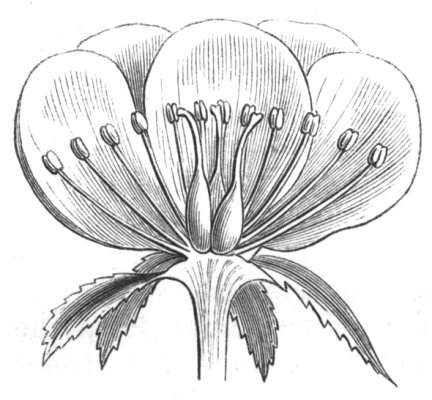
Fig. 36.—Section through Apple blossom, showing detachment of calyx from ovaries, absence of dilated flower-stalk, &c.
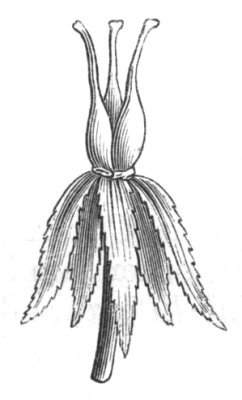
Fig. 37.—Calyx detached from carpels in Apple.
On the other hand, M. Planchon's specimen of the Quince before alluded
to, not to mention other instances, tends to show that the bases of the
sepals do sometimes enter into the composition of the pome. And, indeed,
in many of these cases it would be impossible to say where the axial or
receptacular portion ended, and the foliar portion began. As both from
normal organogeny as well as from unusual conformation contradictory
inferences may be drawn, it would obviously be unsafe to attempt the
explanation of the so-called calyx-tube in general from any particular
instances; so far as Rosaceæ are concerned, there is so much variation
in the relative position of calyx and carpels under ordinary
circumstances, that it is no matter for surprise that similar
diversities should exist in teratological cases. A similar remark will
apply to Saxifragaceæ, Cucurbitaceæ, Myrtaceæ, Bruniaceæ,
Rubiaceæ, and other families of like conformation.
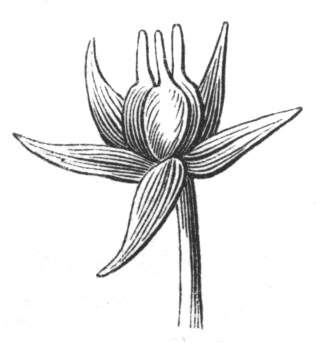
Fig. 38.—Flower of Œnanthe crocata, in which the five sepals were completely detached from the ovaries, here three in number and destitute of stylopods.
In Umbelliferæ, a detachment of the calyx from the ovaries frequently
occurs, sometimes without any other change; at other times attended by
more serious alterations. So far as can be judged from exceptional
occurrences of this kind, it would appear that in this order the axis or
flower-stalk does not, in any material degree, enter into the
composition of the fruit.
In the Rubiaceous genus Bikkhia, as mentioned by Duchartre, the ovary
is completely inferior, but when the fruit arrives at maturity four
small leaves are detached from its surface which had previously adhered
to it, and which it seems reasonable to consider as the sepals.
In Campanulaceæ a similar separation of calyx from the ovary may be
occasionally met with. On the other hand, the occasional formation of a
leaf on the inferior ovary of those plants would indicate the axial
nature of the fruit. In Campanumæa and Cyclodon the calyx is
inferior, while the corolla is superior. In the last-named genus this
peculiarity "is carried to the highest degree, the sepals being, in C.
parviflorum, placed on the peduncle of the flower far removed from the
base of the corolla and ovary, whilst in C. truncatum and in
Campanumæa they adhere to the base of the tube of the corolla."[87] In
this order, then, as in Saxifragaceæ, Bruniaceæ, &c., no hasty
conclusion should be drawn as to the nature of the fruit. In Brunia
microphylla the ovary is superior, enclosed within but not adnate to
the cup-like calyx, to which latter, however, the petals and stamens are
attached.
In Onagraceæ (Jussieua), as also in Cactaceæ (Opuntia), buds
have been observed on the surface and edges of the inferior ovary.
Indeed, in the former genus, they have been produced artificially, but
as buds may be formed on foliar as well as on axial organs, the fact
cannot be made great use of in support either of the foliar or axial
nature of the inferior ovary. In Epilobium, I have met with four
perfect leaves at the summit of the ovary, in the place usually occupied
by the sepals. This would also favour the notion that the axis entered
into the constitution of the fruit in this genus.
Mr. B. Clarke, in his 'New Arrangement of Phanerogamous Plants,' p. 4,
cites a case wherein the perianth was completely detached from the
surface of the ovary in Cannabis sativa.
It must be borne in mind that some of the recorded instances of change
in the relative position of the calyx and pistil ought more properly to
be referred to a substitution of carpels for stamens, as in Begonia,
Fuchsia, &c. Among Cucurbitaceæ, examples have been recorded, both
of the detachment of the calyx from the ovary,[88] and of the partial
conversion of some of the anthers of the male flower to carpels.
The very singular mode of germination of Sechium edule in which the
fruit, instead of rotting, becomes thickened into a kind of rhizome or
tuber, is a fact that should not be overlooked in investigating the true
nature of the fruit in this order.
The following are the genera in which the change has been most
frequently observed:
- *Rosa!
- *Pyrus!
- *Cratægus!
- *Daucus!
- Pastinaca.
- Torilis.
- Apium.
- Œnanthe!
- Heracleum,
- Athamanta.
- Selinum.
- Carum.
- Imperatoria.
- Rudbeckia!
- *Campanula!
- Lonicera!
- Cucumis!
- Cannabis.
Solution of the stamens from the petals.—A separation of the stamens
from the petals in flowers, wherein those organs are usually adherent
one to the other does not often occur unattended by other changes. It
has been observed in Cobæa scandens (Turpin), in Antirrhinum majus,
and in many double flowers.
Partial detachment of the stamens from the styles occurs frequently in
semi-double flowers of Orchis.[89]
Necessarily connected with changes in the arrangement of organs are
similar alterations in their position; so closely, indeed, that but for
convenience sake, it would be unnecessary to treat them separately.
There are, however, some anomalous developments affecting the relative
position of organs that could hardly be treated of under any of the
preceding paragraphs. There are, also, certain rare instances where an
organ is not so much displaced as misplaced; that is to say, it is
developed on or from a portion of the plant, which under usual
circumstances does not produce such an organ. In the former instance,
the altered position is due to or coexistent with other changes, but in
the latter case the new growth may spring from organs otherwise in
nowise different from ordinary. The word Displacement is here used to
signify the unusual position of an organ; while Heterotaxy may serve to
include those cases where a new growth makes its appearance in an
unwonted situation, as, for instance, a leaf-bud on a root, &c.
Prolification is also included under this heading, the unusual position
of the buds in these cases being of graver import than the mere increase
in number. Alterations in the position of the sexual organs are spoken
of under the head of Heterogamy.
Real or apparent displacement of organs from their usual position is an
almost necessary consequence of, or is, at least, coexistent with a
large number of teratological phenomena. It is obvious that abnormal
unions or disunions, suppressions, hypertrophies, &c., are very liable
to bring about or to be accompanied with changes in the position, either
of the parts directly affected or of adjoining organs.
In this place, then, it is merely necessary to allude to some of the
more important displacements, and to refer for further details to the
sections relating to those irregularities of growth on which the
displacement depends.
Displacement of bulbs.—I owe to the kindness of Mr. James Salter a
tulip bulb which had been dug up after flowering, and from the base of
which were suspended several small bulbs; and I have since seen another
specimen showing the same unusual arrangement. The explanation of these
formations seems to be that they correspond to the bulbils ordinarily
found in the axils of the scales of the parent organ, and which, in some
way or another, have been displaced and thrust into the ground.
Professor de Vriese figures something of the same kind in Ixia
carminosa.[90]
Of somewhat different nature to those above described was an anomaly
described by M. Gay at a meeting of the Botanical Society of France,
April 8th, 1859. The plant affected was Leucoium æstivum, and the
changes observed were apparently attributable to a simple separation of
two leaves that are usually contiguous. "Suppose," says M. Gay in
describing this malformation, "the first leaf of the terminal bud
separated by a long internode from the other leaves, which remain
closely packed; and further, suppose an evident thickening of the upper
portion of the lengthened internode, and there will be not only a single
bulb, bearing with the leaves of the present year all the remnants of
the leaves of the two preceding years, but two bulbs placed one above
another, on the same axis, separated by the length of the internode."
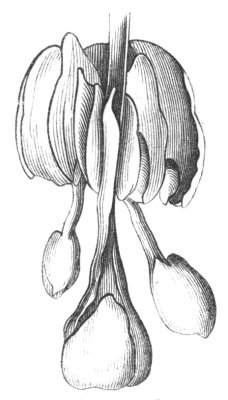
Fig. 39.—Unusual position of bulbs of tulip; the parent-bulb cut open.
The formation of bulbs in the axils of the leaves, as happens
occasionally in tulips, is further alluded to under the head of
hypertrophy.
Displacements affecting the inflorescence.—These are, for the most
part, dependent on hypertrophy, elongation, atrophy, spiral torsion,
&c., but there are a few instances of a different nature, which may here
be alluded to as not being coincident with any of the phenomena just
mentioned. Sometimes these deviations from the ordinary position have
the more interest as affecting characters used to distinguish genera;
thus one of the distinctions between rye-grass (Lolium) and wheat
(Triticum) resides in the relative position of the spikelets and the
main stem; in Triticum the spikelets are placed with their backs
against the rachis, in Lolium with one edge against it; but in a
specimen of rye-grass that has come under my own observation, the
arrangement was that of Triticum.
M. Kirschleger relates having found a specimen of Leucanthemum
pratense, in which the ligulate female flowers were growing singly in
the axils of the upper leaves of the stem.[91] The ordinary capitulum
would here seem to have been replaced by a spike or a raceme. A less
degree of this change wherein a few flowers may be found, as it were,
detached from the ordinary capitulum may often be observed in
Compositæ, Dipsacaceæ, &c. I have also met with specimens of Lamium
album in which some of the fascicles or clusters of flowers in place of
being placed at the same level on opposite sides of the stem were placed
alternately one above another.
Caspary[92] mentions a flower of Aldrovanda vesiculosa, which was
elevated on a stalk that was adherent to the stem for a certain
distance, and then separated from it. This flower, with the leaf to
which it was axillary, evidently belonged to the whorl beneath, where
there was a corresponding deficiency. Another flower of the same plant
bore on its pedicel a small leaf, which was doubtless the bract raised
above its ordinary position.
M. Fournier mentions an instance in Pelargonium grandiflorum, where,
owing to the lengthening of the axis, the pedicels, instead of being
umbellate, had become racemose; and I owe to the kindness of Dr. Sankey
a somewhat similar specimen, but in a less perfect condition. Here there
was but a single flower, and that rudimentary, placed at the extremity
of the axis. There were several bracts beneath this flower disposed
spirally in the 1/3 arrangement, all being empty, excepting the terminal
one. In like manner, a head of flowers becomes sometimes converted into
an umbel.
Displacement of leaves.—A cohesion of parts will sometimes give rise to
an apparent displacement, but the true nature of the malformation can,
in general, be readily made out.
Steinheil[93] found a specimen of Salvia Verbenaca, the leaves of
which presented very curious examples of displacement arising from
cohesion. Two of these leaves placed at the base of a branch were
completely fused in their lower thirds, and divided into two distinct
lobes at the upper part; each of these lobes seemed to be as large as
the limb of an ordinary leaf. Above these was another very broad one,
apparently entire, but evidently produced by a complete cohesion of two.
This completely fused leaf alternated in position with the imperfectly
fused one below it; the alternation is explained by supposing that the
opposite leaves of each pair were directed one towards the other, and
became fused, and that thus resulted the displacement. The dislocation
of the organs took place in one direction for one pair of leaves, and in
another direction for the other pair, hence the alternation. Thus,
leaves normally opposite and decussate may, by fusion, become alternate.
A similar instance occurred to the writer in Lysimachia vulgaris,
wherein the changes arising from fusion and suppression of parts, &c.,
were very considerable; as far as the leaves were concerned they
presented the following arrangement in succession from below
upwards:—first verticillate, then opposite, then spirally alternate,
lastly opposite.[94] The term "diremption" has sometimes been applied to
cases where leaves are thus apparently dragged out of position.
In Tradescantia virginica I have met with opposite connate leaves;
the altered position, however, being due to the union of two stems.
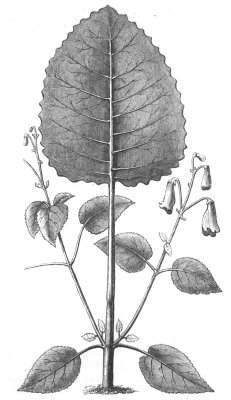
Fig. 40.—Large-coloured leaf occupying the position of the inflorescence in Gesnera, after Morren.
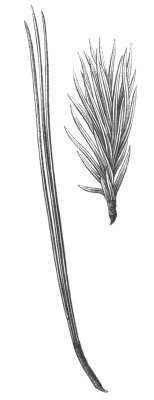
Fig. 41.—Ordinary arrangement of leaves in fascicles of three in Pinus pinea and unusual arrangement of leaves of same plant in spires.
Twisting of the stem is a frequent cause of the displacement of leaves
(see spiral torsion), as also hypertrophy, whether that excess of
development take place laterally or lengthwise (see elongation). Atrophy
or suppression will also frequently bring about an alteration in the
position of leaves; sometimes in such a manner that the place of the
suppressed organ is occupied by another one. One of the most curious
instances of displacement of leaves arising from suppression is that
mentioned by Morren,[95] where, in Gesnera Geroltiana, a large leaf
apparently occupied the extremity of the axis, a position which, under
ordinary circumstances, no leaf could assume. The explanation given by
the Belgian professor is, that the axis in this case, instead of
throwing off a pair of leaves, one on each side, had from some cause or
another produced only one; this one not only being much larger than
ordinary, but brightly coloured, thus assuming some of the
characteristics as well as the position of the inflorescence.
Alterations in the usual arrangement of leaves, however, are not always
dependent on or coexistent with other teratological changes, but may
simply depend on a natural elongation of the internodes, or on fission
or multiplication; for instance, in some conifers, such as the Larch,
(Abies Larix) or Pinus pinea, there may be found at different stages
in the growth of the branches leaves in crowded fascicles or tufts;
while, when growth is more rapid, the leaves may be disposed in a spiral
or alternate manner.
In the yew (Taxus) the leaves at the ends of the shoots not
unfrequently lose their usual distichous arrangement and become arranged
in a close spiral manner, the elongation of the shoot being arrested.
This appears to be the result of the injury effected by some insect.
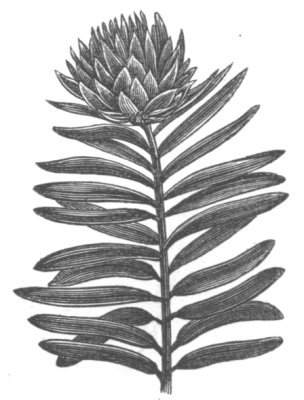
Fig. 42.—Altered arrangement of leaves of yew, Taxus baccata.
So, too, the alteration from verticillate to spiral, or vice versâ,
may take place without any other notable change.[96] This may frequently
be seen in Rhododendrons.
Displacement of the parts of the flower.—This subject is partly touched
on in the chapters on solution, adhesion, and in those on hypertrophy,
elongation, prolification, &c., so that in this place it is only
requisite to offer a few general remarks, and to refer to other sections
for further details. Morren, in referring to displacement of the floral
organs, mentions an instance in a Fuchsia, wherein the four petals in
place of being alternate with the sepals were placed in front of them,
owing to the adhesion that had taken place between the petals and the
stamens. He speaks of this transposition as metaphery.[97] The same
author also gives an account of the displacement of several of the
organs of the flower in Cypripedium insigne, the displacement being
consequent, apparently, on a spiral torsion proceeding from right to
left, and involving the complete or partial suppression of several of
the organs of the flower. The dislocation of organs in a spiral
direction led Morren to apply the term "speiranthie" to similar
deviations from the usual construction. Changes of this kind among
Orchidaceæ are by no means uncommon; the following may be cited by way
of illustration. In a specimen of Oncidium cucullatum furnished me by
Mr. Anderson, well known for his success as a cultivator of these
plants, there was, associated with a cohesion of one sepal with another,
and probably dependent on the same cause, a displacement of the sepals
and petals—so that all were dragged out of place. This dislocation may
be better appreciated by the accompanying formula than even by the
woodcut. Let the usual arrangement be thus represented:
         S

    P   ST   P

         L

    S        S
S standing for sepal, P for petal, L for lip, ST for stamen; then the
dislocated form may be represented thus:
           S

      P         P

             T
            S

     S_S
          L
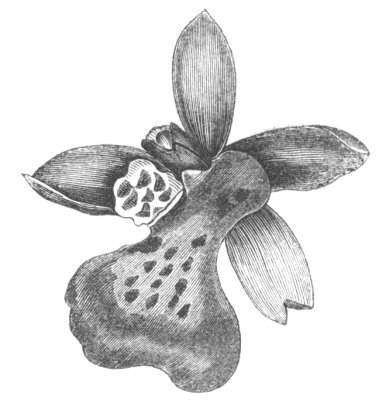
Fig. 43.—Flower of Oncidium cucullatum, showing union of two lower sepals, displacement of column and lip, &c.
In a specimen of Cypripedium also furnished by Mr. Anderson the
appearance was as represented in the accompanying figure and diagrams,
figs. 44, 45. Referring to the plan of the natural arrangement at fig.
46, it will be seen that an explanation of the peculiar appearance of
the flower may be arrived at by supposing a disunion and lateral
displacement of the upper segment of the outer perianth together with
the complete absence of the lower one. In the second or inner whorl of
the perianth the lip is merely a little oblique on one side, but the
lateral petals are distorted, displaced, and adherent one to the other
and to the column, while the posterior shield-like rudimentary anther is
completely wanting.
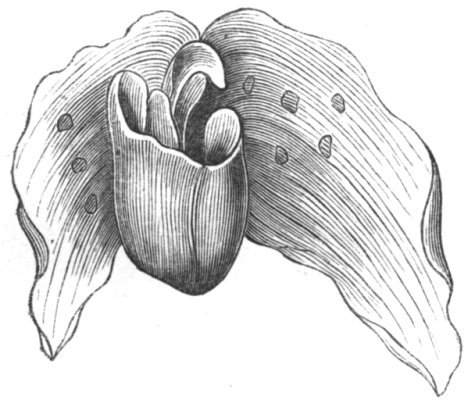
Fig. 44.—Malformed flower of Cypripedium.
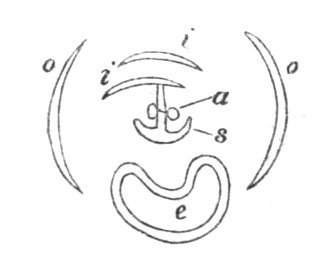
Fig. 45.—Diagram of malformed Cypripedium. o, outer segments; i, inner segments of perianth; e, lip; s, stigma; a, anther.
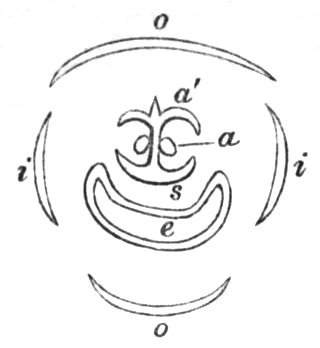
Fig. 46—- Diagram showing ordinary arrangement in Cypripedium. o, outer, i, inner segments of perianth; e, lip, a, anther, a', abortive stamen; s, stigma.
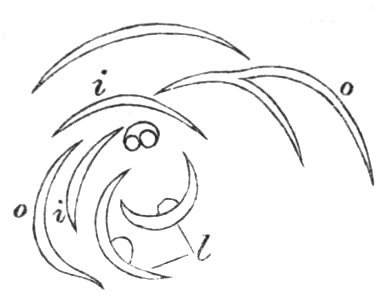
Fig. 47.—Plan of flower of Lycaste Skinneri showing displacement of organs.
In a specimen of Lycaste Skinneri similar changes were observed, as
shown in the plan, fig. 47. Here the posterior sepal was deficient, the
two lateral ones were present, one of them with a long tubular spur, o
o; of the two lateral petals, i i, one was twisted out of place, so
as partially to occupy the place of the deficient sepal; the lip was
represented by two three-lobed segments, l, one above and within the
other. The column and ovary of this flower were in their normal
condition.
Cohesion of two or more segments of the perianth is frequently
associated with displacements of this nature: thus, in a flower of
Dendrobium nobile, a diagram of which is given at fig. 48, the
uppermost sepal was coherent with one of the lateral ones, and at the
same time diminished in size, and, as it were, dragged out of position.
All the other organs of the flower are also more or less displaced,
forming a minor degree of the change already alluded to, and which
Morren termed speiranthy. The changes will be better appreciated by
comparing them with fig. 49, a diagram showing the natural arrangement
of parts in this species.
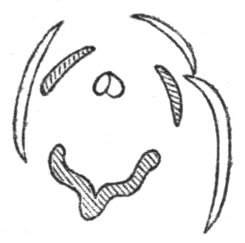
Fig. 48.—Plan of malformed flower of Dendrobium nobile.
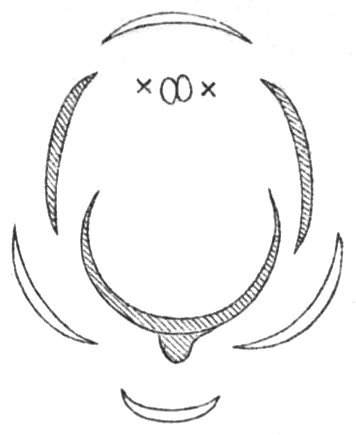
Fig. 49.—Plan of natural arrangement in Dendrobium nobile. The x x represent processes of the column, perhaps rudiments of stamens.
Sometimes the displacement seems consequent on hypertrophy of one of the
parts of the flower, the disproportionate size of one organ pushing the
others out of place. This was the case in a violet, fig. 50, in which
one of the sepals s was greatly thickened, and the petals and stamens
were displaced in consequence.
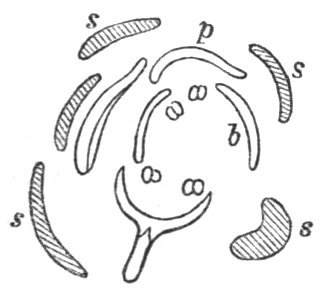
Fig. 50.—Plan of flower of violet showing displacement of petals, &c. At b was a rudiment of a stamen.
It is curious to observe in many of these cases that the transposed
organ not only occupies the place of a suppressed or abortive organ,
but frequently assumes its colour, and, to some extent, its function.
This has been alluded to in the case of the leaf of Gesnera (see p.
88) and in Orchids this replacement seems to be very common; thus, in
addition to the cases before mentioned, in a flower of an Odontoglossum,
for which I am indebted to Professor Oliver, the two lateral sepals were
united together and occupied the position of the labellum, which was
absent. A similar occurrence happens occasionally in Lycaste Skinneri,
thus recalling the structure of Masdevallia, where the labellum is
normally very small. The arrangement in Lycaste may thus be symbolised:
              S
      P      st      P
              +
             S S
             ---
[Transcriber's note: The underscores represent a horizontal curly brace
in the original.]
the + indicating the position of the absent labellum.
Cases of this kind are the more interesting from their relation to the
fertilization of these flowers by insects; it seems as though, when the
labellum, which performs so important an office in attracting and
guiding insects, is deficient, its place is supplied by other means.
Displacement of the parts of the flower from elongation of the
receptacle is a not infrequent teratological occurrence, resulting
sometimes in the conversion of the verticillate into the spiral
arrangement. Instances of this are cited under Elongation,
Prolification, &c. In this place it is merely necessary to refer to a
curious circumstance that is met with in some double flowers, owing to
this separation of some parts of the flower and the cohesion or adhesion
of others. Thus, in some double flowers of Primula sinensis and in the
Pea (Pisum sativum), I have seen a gradual passage of sepals to
petals, so that the calyx and corolla formed one continuous sheet,
winding spirally around the central axis of the flower, after the
fashion of a spiral tube.[98]
Displacement of the carpels arises from one or other of the causes above
alluded to, and when suppression takes place in this whorl it generally
happens that the place of the suppressed organ is occupied by one of the
remaining ones, which thus becomes partially dislocated.
Displacement of the placentas and ovules is a necessary result of many
of the changes to which the carpels are subject. The disjunction or
dialysis of the carpels, for instance, frequently renders axile
placentation marginal. Moreover, it frequently happens, when the carpels
become foliaceous and their margins are disconnected, that the ovules,
in place of being placed on the suture, or rather on the margins of the
altered carpel, are placed on the surface of the expanded carpel. Thus,
in some double flowers of Ranunculus Ficaria that came under the
writer's notice the carpels were open, i.e. disunited at the margins,
and each bore two imperfect ovules upon its inner surface a little way
above the base, and midway between the edges of the carpel and the
midrib, the ovules being partly enclosed within a little depression or
pouch, similar to the pit on the petals. On closer examination the
ovules were found to spring from the two lateral divisions of the
midrib, the vascular cords of which were prolonged under the form of
barred or spiral fusiform tubes into the outer coating of the ovule. In
this instance, then, the ovules did not originate from the margins of
the leaf, nor from a prolonged axis, but they seemed to spring, in the
guise of little buds, from the inner surface of the carpellary leaf.[99]
The occurrence, also, of different forms of placentation in different
flowers on the same plant is no unusual thing in malformed flowers;
thus, in double flowers of Saponaria officinalis I have met with
sutural, parietal, and free central placentation in the same plant.[100]
Professor Babington describes in the 'Gardeners' Chronicle,' 1844, p.
557, a curious flower of Cerastium, in which, in addition to other
changes, the five carpellary leaves "were partially turned in without
touching the placenta, which bears a cluster of ovules, and is perfectly
clear of all connection with those partitions" (fig. 51). See also
Lindley, 'Veg. Kingdom,' p. 497.
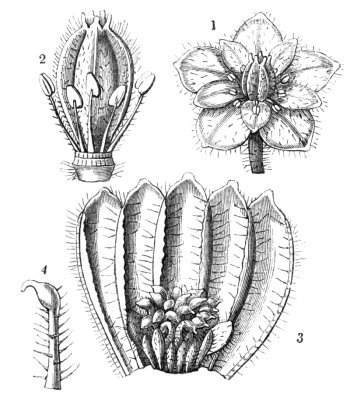
Fig. 51.—1. Monstrous flower of a Cerastium; sepals and petals leafy. 2. Stamens and pistils separate. 3. Ovary cut open to show the imperfect dissepiments and the attachment of the ovules. 4. A deformed ovule.
M. Baillon[101] records flowers of Bunias, some with ovules on the
margins of the carpels, others with a central branch bearing the ovules;
hence he concludes very justly that no fair inference can be drawn from
these facts as to the normal placentation of Cruciferæ.
The same excellent observer has recorded the occurrence of free central
placentation in malformed flowers of Trifolium repens.[102]
In malformed flowers of Digitalis the change from axile to parietal
placentation may often be seen. Mr. Berkeley describes an instance of
this nature where the placentas were strictly parietal, and therefore
receded from the distinctive characters of the order, and approximated
to those of Gesneraceæ.
The same author alludes to certain changes in the same flower where two
open carpels "were soldered together laterally, as was clear by the
rudiments of two styles, the placenta being produced only at the two
united edges, the outer margins remaining in the normal condition. This
may possibly tend to the explanation of some cases of anomalous
placentation, for the only indication of the true nature of the
placentation is afforded by the two rudimentary styles, in the absence
of which the spongy receptacle of the seeds must have been supposed to
spring from the medial nerve."
In other cases the placentas were parietal above, but axile at the base
of the capsule, a striking instance of the facility with which axile
placentation becomes parietal, the change being here effected by the
prolongation of the axis, and the formation on it of a second whorl of
carpellary leaves.
In double flowers of Primulaceæ similar alterations in the
placentation may often be observed. I have seen in Primula sinensis
sutural, parietal, axile, and free central placentation all on the same
plant; nay, even in the same capsule the ovules may be attached in
various ways, and transitions from one form of placentation to another
are not infrequent. The late Professor E. Forbes describes[103] an
instance of true foliar and true axile placentation in the same flower
in Vinca minor.
These and many similar changes, which it is not necessary further to
allude to, are not so much to be wondered at when it is borne in mind
how slight an alteration suffices to produce a change in the mode of
placentation, and how frequent is the production of adventitious buds or
of foliar outgrowths, as may be seen in the sections relating to those
subjects and to Substitutions.
It will be remembered, also, how, in certain natural orders, under
ordinary circumstances, considerable diversity in placentation exists,
according as the margins of the carpels are merely valvate or are
infolded so as to reach the centre. Often this diversity is due merely
to the changes that take place during growth; thus, the placentation of
Caryophylleæ, Cucurbitaceæ, Papaveraceæ, and many other orders,
varies according to the age of the carpel, and if any stasis or arrest
of development occurs the placentation becomes altered accordingly.
It is not necessary, in this place, to enter into the question whether
the placenta is, in all cases whatsoever, a dependence of the axis, as
Payer, Schleiden, and others, have maintained, or whether it be foliar
in some cases, axial in others. This question must be decided by the
organogenists; teratologically, however, there can be no doubt that
ovules may be formed from both foliar and axial organs, and, moreover,
that, owing to the variability above referred to, both in what are
called natural and in what are deemed abnormal conditions, it can rarely
happen that any safe inferences as to the normal or typical placentation
of any family of plants can be drawn from exceptional or monstrous
formations.
On the subject of placentation the following authors may be consulted:
R. Brown, 'Ann. Nat. Hist.,' 1843, vol. xi, 35. Brongniart,
'Ann. Sc. Nat.,' 1834, sér. 2. i, p. 308. Alph. De Candolle,
'Neue Denkschrift der Allg. Schweizer Gesellsch.,' Band v.
1841, p. 9. Duchartre, 'Ann. Sc. Nat.,' 3rd ser., 1844, vol.
ii, p. 290. Ibid., 'Elem. Bot.,' p. 574; 'Rev. Bot.,' 1846–7,
p. 213. Babington, 'Gard. Chron.,' 1844, p. 557. Lindley,
'Elements,' p. 89; 'Veg. King.,' pp. 313, 497, &c. Berkeley,
'Gard. Chron.,' 1850, p. 612. Unger, 'Nov. Act. Acad. Nat.
Cur.,' 1850; and in Henfrey's, 'Bot. Gazette,' 1851, p. 70.
Schleiden, 'Principles,' English edit., p. 385. Payer, 'Elem.
Bot.,' pp. 196, 211, 224. Baillon, 'Adansonia.' iii, p. 310.
tab. iv. Cramer, 'Bildungsabweichungen,' p. 20, &c. Clos, 'Ann.
Sc. Nat.,' 5th ser., iii, 313, as well as any of the general
treatises on botany. Reference may also be made to the chapters
on Prolification and Substitutions (in the case of the carpels
and ovules), and to the authorities therein cited.
Moquin-Tandon and other writers have classed the production of buds in
unwonted situations under the head of multiplication, but, as the
altered arrangement is of graver import than the mere increase in
number, it seems preferable to place these cases under this heading
rather than under that of alterations of number.
The adventitious bud may be a leaf-bud or a flower-bud; it may occupy
the centre of a flower, thus terminating the axis, or it may be axillary
to some or other of its component parts, or, again, it may be
extra-floral. In this last case the prolification is of the
inflorescence, and is hardly distinguishable from multiplication or
subdivision of the common flower-stalk. In accordance with these
differences we have median, axillary, and extra-floral prolification,
each admitting of subdivision into a leafy or a floral variety,
according to the nature of the adventitious bud. Under the head of each
variety certain special peculiarities are noticed, but it may here be
advisable to add a few general remarks on the subject.
Axillary prolification is a much less frequent malformation than the
median form. If only the number of orders and genera be reckoned, the
truth of this statement will be scarcely recognised; but if individual
cases could be estimated, the difference in frequency between the two
would be very much more obvious. This may, perhaps, be explained by the
fact that the branch has a greater tendency to grow in length than it
has to develop buds from the axils of the leaves. The flower is admitted
to be homologous with the branch, and it is also known that, up to a
certain time, the branch-bud or leaf-bud and the flower-bud do not
essentially differ.[104] At a later stage the difference between the two
is manifested, not only in the altered form of the lateral organs in the
flower-bud, but in the tendency to an arrest of growth, thus limiting
the length of the central axial portion. Now, in prolified flowers the
functions and, to a considerable extent, the appearance of a leaf-bud or
of a branch are assumed, and with them the tendency to grow in length is
developed. Median prolification, therefore, in this sense, is a further
step in retrograde metamorphosis than is the axillary form. To grow in
length, and to produce axillary buds, are alike attributes of the
branch; but the former is much more frequently called into play than the
latter; for the same reason, median prolification is more common than
the axillary form. This is borne out by the frequency with which
apostasis, or the separation of the floral whorls one from another, to a
greater degree than usual, is met with in prolified flowers.
In both forms the adventitious growth is much more frequently a
flower-bud or an inflorescence than a leaf-bud or a branch. This may be
due to the position of the flowers on a portion of the stem of the plant
especially devoted to the formation of flower-buds, to the more or less
complete exclusion of leaf-buds, i.e. on the inflorescence. This
conjecture is borne out by the comparative rarity with which
prolification has been observed in flowers that are solitary in the
axils of the ordinary leaves of the plant. If the lists of genera
appended hereto be perused, it will be seen that nearly all the cases
occur in genera where the inflorescence is distinctly separated from the
other branches of the stem. In direct proportion, then, to the degree in
which one region of the axis or certain branches of a plant are devoted
to the formation of flower-buds to the exclusion of leaf-buds, is the
frequency with which those flowers become affected with floral
prolification.
Flowers produced upon indefinite inflorescences are liable to be
affected with either form of prolification more frequently than those
borne upon definite inflorescences. Prolification in both varieties is
also more frequently met with in branched inflorescences than in those
in which the flowers are sessile; but the degree of branching seems less
material, inasmuch as this malformation is more commonly recorded as
occurring in racemes than in the more branched panicles, &c. From the
similar arrest of growth in length, in the case of the flower, to that
which occurs in the stem in the case of definite inflorescence, it might
have been expected that axillary prolification would be more frequent in
plants having a cymose arrangement of their flowers than in those whose
inflorescence is indefinite; such, however, is not the case. The reason
for this may be sought for in the lengthening of the floral axis, so
common in prolified flowers—a condition the reverse of that which
happens in the case of definite inflorescence.
Median prolification occurs frequently in double flowers; the axillary
variety, on the other hand, is most common in flowers whose lateral
organs have assumed more or less of the condition of leaves. The other
coincident changes are alluded to elsewhere or do not present useful
points of comparison, and may therefore be passed over.
Prolification of the inflorescence.—This consists in the formation of
leaf-buds or of an undue number of flower-buds on the inflorescence. It
must be distinguished from virescence, or the mere green colour of the
floral organs, and from chloranthy, in which all or the greater portion
of the parts of the flower are replaced by leaves. Prolification is, in
fact, a formation of supernumerary buds, leafy or floral, as the case
may be, these buds being sessile or stalked, the ordinary buds being not
necessarily changed. Prolification of the inflorescence, like the other
varieties, admits of subdivision, not only according to the foliar or
floral nature of the bud, but according to its position, terminal or
median and lateral.
Terminal prolification of the inflorescence, whether leafy or floral, is
hardly to be looked upon in the light of a malformation[105] seeing that
a similar condition is so commonly met with normally, as in Epacris,
Metrosideros, Bromelia, Eucomis, &c., wherein the leafy axis
projects beyond the inflorescence proper; or as in Primula imperialis,
in which plant, as also in luxuriant forms of P. sinensis, tier after
tier of flowers are placed in succession above the primary umbel.
Nevertheless, when we meet with such conditions in plants which, under
ordinary circumstances, do not manifest them, we must consider them as
coming under the domain of teratology.
Median foliar prolification of the inflorescence is frequently met with
in Coniferæ, and has of late attracted unwonted attention from the
researches of Caspary, Baillon, and others, on the morphology of these
plants. The scales and bracts of the cone in these abnormal specimens
frequently afford transitional forms of the greatest value in enabling
morphologists to comprehend the real nature of the floral structure. It
would be irrelevant here to enter into this subject; suffice it merely
to say that an examination of very numerous specimens of this kind, in
the common larch and in Cryptomeria Japonica, has enabled me to verify
nearly the whole of Caspary's observations. A similar prolongation of
the axis occurred in some of the male catkins of Castanea vesca,
each of which had a tuft of small leaves at their extremity. In the
common marigold and in Lotus corniculatus I have also seen instances
of this kind. Kirschleger[106] describes a tuft of leaves as occurring
on the apex of the flowering spike after the maturation of the fruit in
Plantago, and a similar growth frequently takes place in the common
wallflower, in Antirrhinum majus, &c. In cases where a renewal of
growth in the axis of inflorescence has taken place after the ripening
of the fruit, the French botanists use the term recrudescence, but the
growth in question by no means always occurs after the ripening of the
fruit, but frequently before. Professor Braun cites the case of a
specimen of Plantago lanceolata, in which the spike was surmounted by
a tuft of leaves and roots, as well as a still more singular instance in
Eryngium viviparum, in which not only did particular branches
terminate in rosettes of leaves provided with roots, but similar growths
proceeded from the heads of flowers themselves. Baron de Mélicoq[107]
gives a case in Primula variabilis, in which at the top of the
flower-stalk, in the centre of six flowers, was placed a complete plant
in miniature, having three leaves, from the axil of one of which
proceeded a rudimentary flower. Mr. W. B. Jeffries also forwarded me a
polyanthus (fig. 52) in which the peduncle was surmounted by a small
plant, forming a crown above the ordinary flower-stalk, just as the
crown of the pineapple surmounts that fruit. A similar instance was
exhibited at the Scientific Committee of the Horticultural Society on
July 11th, 1868, by Mr. Wilson Saunders; the species in this case was
P. cortusoides. To Mr. R. Dean I am indebted for a similar proliferous
cyclamen, which seems similar to one mentioned by Schlechtendal.[108]
This author alludes to an analogous circumstance in the inflorescence of
Cytisus nigricans, where, however, the change was not so great as in
the preceding cases. The instances just cited all occur in plants having
an indefinite form of inflorescence; but the production of a tuft of
leaves or of a leafy shoot above or beyond the inflorescence is not
confined to plants with this habit of growth, for Jacquin figures and
describes an instance of this nature in the cymose flower-stems of a
Sempervivum. "Hi racemi," says he, "ultra flores producuntur in
ramos, foliosos duo bifidos qui tandem trium unciarum longitudinem
adepti fuerunt."[109]
Fig. 52.—Inflorescence of Polyanthus, bearing a tuft of leaves at the top of the scape intermixed with the flowers.
Median floral prolification of the inflorescence, wherein a new
inflorescence projects beyond the primary one, is not uncommon in plants
having their flowers arranged in close heads or umbels, as in the
common wild celery and other Umbelliferæ.[110] I have also met with
it in Trifolium repens, in the umbellate variety of the common
primrose, and in the scarlet geranium. Engelmann cites it in Triticum
repens, Roëper in Euphorbia palustris.[111]
Lateral foliar prolification of the inflorescence is of more common
occurrence than the preceding. I have met with it, amongst other plants,
frequently in Brassica oleracea, Pelargonium zonale, Scabiosa,
Bellis, and many other composites, also in Leguminosæ, e.g. Lupinus,
Trifolium, Coronilla, &c. Prof. Oliver forwarded me a specimen of
Euphorbia geniculata in which, in addition to other changes, there was
a series of stalked buds bearing tufts of green scales, but without any
trace of stamens or pistil; these adventitious buds occurred within the
ordinary involucre of the plant, between it and the stamens. The pistil
was unaffected in some cases, while in some others it was entirely
wanting, the gynophore being surmounted by a cup-like involucre, divided
into three acutely pointed lobes, each with a midrib; these encircled a
series of stalked involucels, as before, and among which were scattered
a few stamens, some perfect, others partially frondescent.
In a specimen of Scrophularia nodosa examined by me one of the lateral
buds on each of the cymes was represented, not by a flower, but by a
tuft of leaves, the other buds being unchanged. As the inflorescence was
much contracted in size, the appearance of the whole plant was greatly
changed.
Many of the instances of so-called viviparous plants, e.g., Polygonum
viviparum, may be cited under this head.[112] Many species of Allium,
Lilium, Saxifraga, Begonia, Achimenes, normally produce
leaf-buds or bulbs in the inflorescence; so, too, leafy shoots are
sometimes found in Alisma natans, Juncus uliginosus, Chlorophytum
Sternbergianum, &c. As an accidental occurrence, a similar thing has
been noticed in Lychnis coronaria, Phaius grandifolius, Oncidium
cebolleta, Epidendrum elongatum,[113] &c. &c.
Here, too, may be mentioned those cases wherein a leaf-bud is found upon
the surface of the so-called inferior ovary; generally a leaf only is
found, but a leaf-bud may also originate in this situation, and in
either case the inference is that the ovary is, in part at least, made
of the dilated and hollowed axis. Leaves may occasionally be found in
this way on the so-called calyx-tube or on the inferior ovaries of
roses, pears, apples, Pereskia, Cratægus tanacetifolia, &c.
The fruits of Opuntia Salmania and of O. fragilis ('Bull. Soc. Bot.
France,' vol. i, p. 306; vol. v, p. 115) have been observed to form
small fruit-like branches around their summits. This circumstance is
more fully treated of in the succeeding chapter relating to Heterotaxy.
Lateral floral prolification of the inflorescence.—This, which is
termed by Engelmann Ecblastesis foliorum sub floralium,[114] is much the
most common of all these deviations, and it is met with in every degree,
from the presence of a single supernumerary flower in the axil of a
bract to the existence of a small cluster or panicle of such flowers.
Fig. 53.—Lateral prolification in inflorescence of Pelargonium.
It is common in the Anemone coronaria and hortensis, also in the
common scarlet Pelargonium (fig. 53). It has been frequently recorded
in Poterium sanguisorba, and in Sanguisorba officinalis, and is
especially common in Umbelliferæ, Dipsacaceæ, and Compositæ; a
familiar illustration in the latter order is afforded by the
hen-and-chicken daisy. In some species of Compositæ, indeed, it is a
normal and constant occurrence, while in other cases, such as Filago
germanica, usually described as proliferous, there is not, strictly
speaking, any prolification, for the branching of the stalk takes place
below the inflorescence, and the branches originate from the axils of
ordinary leaves, not from the floral leaves or bracts. Convolvulus
Sepium is very commonly subject to the production of flower-buds from
the axils of the floral leaves. The several species of Plantain
(Plantago) seem very liable to this and similar changes.
Schlechtendal[115] gives a summary of the various kinds of malformation
affecting the inflorescence in Plantago, and divides them into five
groups, as follows:—1st, bracteate, wherein the inferior bracts are
quite leaf-like, as is frequently seen in Plantago major. 2nd,
roseate; bracts leafy in tufts or rosettes, without flowers, as in the
so-called rose plantain, common in old-fashioned gardens in this
country. 3rd, polystachyate; spike-branched, bearing other spikes in the
axils of the bracts, as in P. lanceolata, P. maritima, &c. 4th,
proliferous, where the flower-stalk bears a rosette, a spike, or a head
with other rosettes. 5th, paniculate, in which the inflorescence has
become a much-branched pyramidal panicle, covered with little bracts,
and with very rudimentary flowers.[116] The first two groups belong
rather to frondescence of the bracts; but with regard to the whole of
them it will easily be surmised that intermediate forms occur, linking
one group to the other, and defying exact allocation in either. Thus, in
the borders of richly cultivated fields in the neighbourhood of London I
have frequently gathered specimens of Plantago major with a branched
spike provided with large leafy bracts, the branches of the spike being
but little less in diameter than the ordinary single spike. These
specimens would therefore seem to be intermediate between
Schlechtendal's bracteate and polystachyate divisions. Wigand[117] also
describes an anomalous specimen of Plantago major similar to those
just mentioned, but having small lateral spikes in place of large ones.
The instance quoted from Professor Braun would fall under the roseate
section, as would also that of Kirschleger, though we are expressly told
that the tuft of leaves in this last case was not developed until after
the ripening of the seed-vessel. One of the characters of the roseate
group, according to Schlechtendal, is the absence of flowers, but most
persons who have had the opportunity of watching the growth of the rose
plantain must have observed the occasional production of flowers,
sometimes stalked, in the axils of the leafy bracts, and at the same
time have noticed that the internodes become elongated, so that an
approach is made to the ordinary spike-like form of the inflorescence.
The proliferous group would include such specimens as that of P.
lanceolata mentioned by Dr. Johnston,[118] wherein were several
spikes, some sessile, others stalked and pendent, the whole intermixed
with leaves and disposed in a rose-like manner. I have myself gathered
specimens of this nature, occurring in the same plant, at Shanklin, Isle
of Wight (fig. 56).
Fig. 54.—Plantago major, with panicled inflorescence.
Fig. 55.—Inflorescence of Plantago major, with bracts partly replaced by leaves and spike branched.
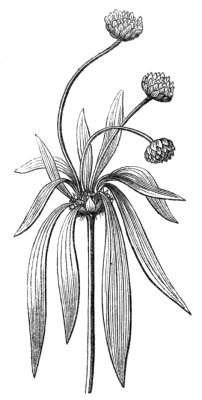
Fig. 56.—Inflorescence of Plantago lanceolata, bearing a tuft of leaves and flowers at the end of the flower-scape.
It is rather singular that each species of Plantago seems to have its
own perverse mode of growth; for instance, the bracteate, polystachyate
and paniculate forms are almost exclusively confined to P. major, the
roseate form to P. media, the proliferous form to P. lanceolata.
The instances wherein flower-buds originate from the surface of an
inferior ovary, as in those cases where the top of the stem is dilated
so as to form part of the fruit, would be properly classed under the
head of prolification of the inflorescence. As, however, there is still
some difference of opinion as to the correct morphological
interpretation to be put on some of these cases, it has been thought
better to include them under the head of heterotaxy than of
prolification.
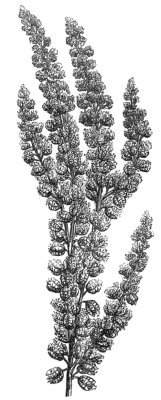
Fig. 57.—Branched inflorescence of Reseda luteola.
Some of the cases of prolification of the inflorescence resulting in a
branching of an ordinarily simple inflorescence, as in Reseda luteola
(fig. 57), might equally well be placed with fission or multiplication
of the axile organs. Branched spikes of this character are not so common
among Orchids as might be expected. Professor Reichenbach enumerates a
few instances in the Report of the International Botanical Congress of
London, 1866, p. 121, and the same author gives an illustration in his
'Orchidographia Europœa,' tab. 150.
In Grasses, as indeed in other plants with a spicate inflorescence, this
change occurs not unfrequently. The common Ray Grass (Lolium) is
especially subject to the change in question, and among cultivated
cereals, maize and wheat occasionally show this tendency to subdivision.
One variety of the latter grain is cultivated in hot countries under the
name of Egyptian wheat—Triticum vulgare, var. compositum.
Prolification of the inflorescence has been most frequently observed in
the following genera:
| Leafy. | Floral. |
| Ranunculaceæ | Ranunculus. | Ranunculus! |
| Anemone. | Anemone. |
| Cruciferæ. | *Brassica! | |
| Caryophyllaceæ. | Lychnis! | |
| Dianthus! | |
| Geraniaceæ. | *Pelargonium! | *Pelargonium! |
| Leguminosæ. | *Trifolium! | Trifolium! |
| Lotus! | Lotus! |
| Coronilla! | |
| Cytisus. | Cytisus. |
| Rosaceæ. | | Poterium. |
| *Pyrus! | *Pyrus! |
| *Cratægus! | Cratægus! |
| *Rosa. | Rosa! |
| | Sanguisorba. |
| Philadelphaceæ. | | Philadelphus. |
| Crassulaceæ. | Sempervivum. | |
| Echeveria. | |
| Crassula. | |
| Ficoideæ. | | ?Tetragonia. |
| Cactaceæ. | Opuntia. | Opuntia. |
| Pereskia. | |
| Saxifragaceæ. | Saxifraga! | |
| Umbelliferæ. | Seseli. | |
| | *Apium! |
| | Cnidium. |
| | Chærophyllum. |
| Eryngium. | Eryngium. |
| | Silaus. |
| Heracleum! | Heracleum! |
| Hydrocotyle. | Hydrocotyle. |
| Daucus. | |
| | Carum. |
| | Selinum. |
| | Angelica! |
| | Conium. |
| | Astrantia. |
| Œnanthe. | Œnanthe. |
| Begoniaceæ. | Begonia! | |
| Valerianaceæ. | Valeriana. | |
| Dipsacaceæ. | *Scabiosa! | *Scabiosa! |
| Knautia! | Knautia! |
| Compositæ. | | *Bellis! |
| | Centaurea. |
| Calendula. | Calendula. |
| | Anthemis. |
| | Coreopsis. |
| | Apargia. |
| | Lampsana. |
| | Carlina. |
| | Arnoseris. |
| Tragopogon! | Tragopogon! |
| | Rudbeckia! |
| | Senecio! |
| | Carlina. |
| Bidens! | Pyrethrum. |
| | Filago. |
| | Hedypnois. |
| | Cirsium. |
| | Lactuca. |
| Campanulaceæ. | Prismatocarpus. | |
| Lobeliaceæ. | | Jasione. |
| Ericaceæ. | Azalea! | |
| Convolvulaceæ. | Convolvulus! | Convolvulus! |
| | Calystegia! |
| Scrophulariaceæ. | Scrophularia! | |
| Antirrhinum! | |
| Gesneraceæ. | Achimenes! | |
| Primulaceæ. | Primula! | Primula! |
| Cyclamen! | Cyclamen! |
| Plumbaginaceæ. | | Armeria. |
| Plantaginaceæ. | *Plantago! | *Plantago! |
| Polygonaceæ. | Polygonum! | |
| Euphorbiaceæ. | Euphorbia! | |
| Urticaceæ. | | Ficus. |
| Amentaceæ. | | Corylus! |
| Castanea! | Castanea. |
| Coniferæ. | *Larix! | |
| *Cryptomeria! | |
| Taxodium! | Pinus. |
| Orchidaceæ. | Phaius! | Ophrys! |
| Epidendrum! | |
| Oncidium! | |
| Liliaceæ. | *Allium! | |
| *Ornithogalum! | |
| *Lilium! | |
| Amaryllidaceæ. | Fourcroya | |
| Alismaceæ. | Alisma! | |
| Palmaceæ. | Cocos. | |
| Juncaceæ. | *Juncus! | |
| Restiaceæ. | Restio! | Restio! |
| Elegia! | Elegia! |
| Willdenovia! | Willdenovia! |
| Cyperaceæ. | | Carex. |
| Graminaceæ. | | Dactylis. |
| | *Lolium! |
| | Festuca. |
| | *Zea! |
| | *Triticum! |
| | *Hordeum! |
| | Secale. |
| | Phleum. |
In addition to the papers already cited the following works may be
consulted with reference to prolification of the inflorescence:
Moquin-Tandon. 'El. Ter. Veg.,' p. 376. Engelmann, 'De
Antholysi,' §§ 85–87. Fleischer, 'Missbild. Versch. Cultur.
Pflanz.' For figures of Hen and Chicken Daisy (Bellis
prolifera). see Lobel, 'Ic.,' 477. Sweert, 'Florileg.,' pl.
98, f. 5. 'Hort. Eystett. Plant. Vern.,' fol. iv, f. i. &c. For
similar malformations in marigold (Calendula), see Lobel,
'Ic.,' 553. 'Act. Acad. Nat. Cur.,' vol. x, p. 208. Jaeger,
'Missbilld.,' 192–195. 'Hort. Eystett.,' pl. æstiv. fol. iii,
f. i. Klinsmann, 'Linnæa,' t. x, p. 607.
For monstrous plantains, in addition to previous citations, see
Camerarius, 'Epist.,' p. 261, P. rosea. Matthioli,
'Krauterb,' 245. Lobel, 'Stirp. Advers. Nov.,' p. 128, P.
major paniculata. J. Bauhin, 'Hist. Plant.,' i, p. 503 b.
Ibid., p. 503, a, c, P. major rosea, bracteata
paniculata, prolifera, &c. 'Hort. Eystett.,' pl. æstiv., t.
vii, f. 2, P. rosea et P. bracteata. Lobel, 'Stirp. Hist.,'
p. 162. Dodonæus, 'Pempt.,' 1–4, cap. xxiii, P. major spica
multiplex, i.e. paniculata. Gerard, 'Herbal.' Clusius,
'Plant. Rar. Hist.,' lib. v, p. 109–10, Plantago augustifolia
Gareti prolifera. Marchand, 'Adansonia,' iv, p. 156.
Coniferæ.—Richard, 'Mem. Conif.,' tab. xiii, f. 9. A. Braun,
'Das Individ.,' 1853, p. 65. De Cand., 'Organogr.,' tab. xxxvi.
Wigand, 'Bot. Untersuch.,' 154. Schlechtendal, 'Bot. Zeit.,'
1859, p. 239. Caspary, 'De Abiet. flor. fem. struct. morphol.'
Parlatore, 'Ann. Sc. Nat.,' 1862, vol. xvi, p. 215. Cramer,
'Bildungsabweich.,' p. 4, &c., &c.
Gramineæ.—Bauhin, 'Pinax.,' 21. Morison, 'Hist. Plant.,' t.
i. Winckler, 'Ephem. Nat. Cur.,' dec. i, ann. 7, 8, p. 151.
Irmisch, 'Flora,' 1858, p. 40, &c.
See also under Chloranthy, Viviparous plants, &c.
Prolification of the flower.—In the preceding sections the formation of
adventitious buds of a leafy or floral nature on the inflorescence has
been considered. A similar production of buds may take place in the
flower itself, either from its centre or from the axil of some of its
constituent parts. Prolification of the flower is therefore median or
axillary, and the adventitious bud itself may be of a leafy or a floral
nature.
Median leafy prolification.—In this malformation the centre of the
flower is occupied by a bud or a branch; the growing point or
termination of the axis which ordinarily ceases to grow after the
formation of the carpels, takes on new growth. This is well shown in the
accompanying illustration (fig. 58), representing the thalamus of a
strawberry prolonged beyond the fruits into a small leaf-bearing branch.
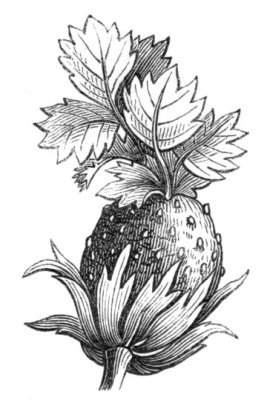
Fig. 58.—Receptacle of strawberry prolonged into a leafy branch. From the 'American Agriculturist.'
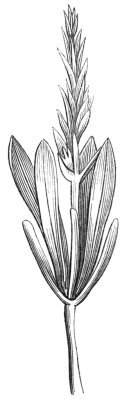
Fig. 59.—Flower of Verbascum with five disunited sepals, five similar green petals, and a prolonged branch in the centre of the flower.
In other cases the carpels are entirely absent and their place is
supplied by a leafy shoot as in a species of Verbascum, which came
under my own observation. In this case the petals were virescent, and
the stamens and pistils were entirely absent, hence in truth, the
so-called flower more nearly resembled a branch. In a flower of a May
Duke cherry, for which I am indebted to Mr. Salter, there was a gradual
change from the floral to the foliar condition; thus there were five
distinct lanceolate sepals, the arrangement of whose veins betokened
that they were leaf-sheaths rather than perfect leaves, ten petals
partly foliaceous and sheath-like as to their venation, one of them
funnel-shaped, but whether from dilatation or cohesion of the margins
could not be determined. The stamens were eight or ten in number, their
connectives prolonged into foliaceous or petaloid appendages, so that
the filament represented the stalk of the leaf. The pistil was entirely
absent and its place was supplied by a branch with numerous perfectly
formed stipulate leaves.
Some flowers of Anagallis arvensis described by Dr. Marchand[119] are
so interesting and show so well the gradual stages by which this
malformation is arrived at, that it is desirable to cite the summary of
Dr. Marchand's researches as given in the 'Gardeners' Chronicle' by Mr.
Berkeley, taking that instance first in which the parts of the flower
departed least from the normal condition, and then the others in their
proper order. In all the parts there was a greater or less tendency to
assume a green tint; in some they were entirely green, in others the
brighter colours were confined to the more recently developed parts.
"1. In the first case then, the sepals and petals were in their normal
position, though rather more dilated than usual; the anthers were
fertile, the principal change existing in the ovary, the upper part of
which was wanting, so that the ovules were exposed seated on the central
placenta.
2. In the next step the calyx, more developed than usual, was separated
from the corolla by a long peduncle, and the ovary, which was ovate,
contained instead of a placenta a sort of plumule or young shoot.
3. In this case the corolla and calyx were distant from each other;
there was no trace of stamens, but the axis was continued from the
centre of the corolla, and ended in a leaf-bud.
4. The calyx and corolla nearly as before, but instead of stamens a
whorl of little leaves was developed, in the centre of which the axis
was continued, bearing at its tip two whorls of leaflets, alternately
three and three.
5. In this case two out of the five stamens were normal, the other three
changed into leaves, showing clearly the origin of the leaflets, in the
last case, which took the place of the stamens.
6. The ovary varied in different flowers. In some the placenta was
crowned with ovules; in others the ovules were replaced by a single
whorl of leaflets; in others there was every shade of change from
ordinary ovules to perfect leaflets; while in others, again, every ovule
was converted into a leaf with a long petiole.
7. In these flowers shoots were developed in the axils of the sepals, or
on the face of the petals between the point of their insertion and that
of the stamens, and, what is most curious, in the interior of the
ovaries round the foot of the placenta.
8. Here, again, a very singular condition presented itself: the calyx
and corolla separated from each other, the stamens partly developed, the
axis continued beyond the corolla, branched and bearing normal leaves so
as exactly to resemble an ordinary stem, while in consequence of the
calyx and corolla being bent down to the ground, adventitious roots were
developed from the axis on the under side above each of them. In another
case, where the calyx and corolla were approximated, the ovary was open
above, and sent out six shoots from within, perfectly developed, clearly
representing the central placenta and five axile buds, and each giving
out a number of adventitious roots at its base."
In other genera of the same order (Primulaceæ) an extension of the
placenta into a leafy branch has been observed, as in Lysimachia,
where in one case the prolonged placenta was removed and struck as a
cutting.[120]
In Ericaceæ too, the axile placenta has been seen ovuliferous at the
base and prolonged above into a leafy branch.[121]
Median floral prolification.—This is of more frequent occurrence than
the preceding. The prolonged axis is more frequently terminated by a
flower-bud than by a leaf-bud, though it must be remarked, that the
lengthened and protruded stem frequently bears leaves upon its sides,
even if it terminate in a flower, and thus the new growth partakes of a
mixed leafy and floral nature. Instances of this kind have long been
familiar to observers, and have always excited attention from the
singularity of their appearance. In one of the old stained-glass
windows, apparently of Dutch manufacture, in the Bodleian Picture
Gallery at Oxford, is a representation of a Ranunculus affected with
median floral prolification.[122] In pinks the affection is not
unfrequently met with. Fig. 60 shows an instance of the kind copied from
Schotterbec.
A singular instance of prolification in the central flower of one of the
verticillasters of Phlomis fruticosa fell under my own notice; it was
a case wherein the calyx was torn on one side, and one of its lobes had
become petaloid. Between the calyx and the corolla were three or four
spathulate, hairy, bract-like organs; the corolla and stamens were
unchanged; but in place of the usual four-lobed ovary there was a single
carpel with a basilar style, terminated by a forked stigma. Occupying
the place of the other lobes of the pistil was an oblong woolly
flower-bud, consisting of calyx, corolla, and stamens, but with no trace
of pistil. I have been unable to find recorded any instance of
malformation among Labiates or Borages at all similar to this. It
differed from most other examples of prolification in that the axis was
not prolonged, the adventitious bud occupying precisely the position of
the three lobes of the ovary that were absent. The sole remaining carpel
had a style and a stigma as perfect in appearance as though the pistil
had been complete.
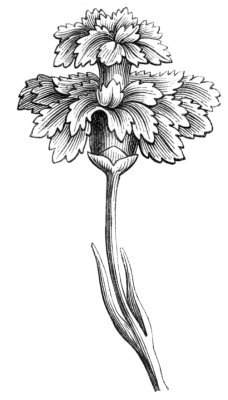
Fig. 60.—Flower of Dianthus affected with median floral prolification.
In a flower of Conostephium (Epacridaceæ) forwarded to me by Mr.
Bentham, there was a similar adventitious bud placed by the side of the
pistil, but as the latter contained the usual number of cells it is
probable that the supernumerary bud in this case originated rather from
the side than the end of the axis.
Certain families of plants present this deviation from their ordinary
structure with greater frequency than others: the following orders seem
to be the most frequently affected by it: Ranunculaceæ,
Caryophyllaceæ, Rosaceæ; while it is commonly met with in
Scrophulariaceæ, Primulaceæ and Umbelliferæ. Of genera which seem
peculiarly liable to it may be mentioned the following: Anemone,
Ranunculus, Cheiranthus, Dianthus, Dictamnus, Daucus, Rosa,
Geum, Pyrus, Trifolium, Antirrhinum, Digitalis, Primula.
A reference to the subjoined list of genera affected by this
malformation, and the knowledge of its comparatively greater frequency
in some than in others of them, will show that it is more often met with
in plants having an indefinite form of inflorescence than in those
having a definite one. The change may affect some only, or the whole of
the flowers constituting an inflorescence; and though it is by no means
a constant occurrence, it very frequently happens that the central or
terminal flower in a definite inflorescence is alone affected, the
others remaining in their ordinary condition, as in pinks (Dianthus);
and in the indefinite forms of inflorescence, it is equally common that
the uppermost flower or flowers are the most liable to be thus affected.
In those plants which present this deviation from the ordinary condition
with the greatest frequency, it often happens that the axis is normally
more or less prolonged, either between the various whorls of the flower,
as in the case of the gynophore, &c., or into the cavity of the carpels,
as in the instances of free central placentation. To bear out this
assertion, the following instances taken from those genera having
definite inflorescence, and which are very commonly affected with
prolification, may be cited; thus, in Anemone and Ranunculus the
thalamus is prolonged to bear the numerous carpels; in Dianthus there
is a marked internode separating the carpels from the other parts of the
flower; in Primulaceæ central prolification is very common, and this
is one of the orders where the placenta seems from the researches of
Duchartre and others, to be truly a production of the axis within the
carpels;[123] in Thesium also, another genus with free central
placenta, this malformation has been found.
So also among plants with indefinite inflorescence, prolification seems
very frequently to affect those wherein the axis is normally prolonged;
thus it is common in Dictamnus, which plant has an internode
supporting the pistil; it is frequent among Umbelliferæ, where the
carpophore may be truly considered an axile production; it is common
among Rosaceæ and Ranunculaceæ, in many of which the axis or
thalamus is well-marked, and it is by no means infrequent in the flowers
of the Orange, where the floral internodes are also slightly elongated;
on the other hand, there is no case on record in Magnoliaceæ, and some
other orders where the floral part of the axis is at some point or other
elongated; still, on the whole, there can be but little doubt that there
is a real relation between prolification and the normal extension of the
floral internodes.
Under these circumstances, those instances wherein the parts of the
flower become separated one from the other by the elongation of the
internodes (apostatis), constitute a lesser degree of the same change,
which operates most completely in the formation of a new bud at the
extremity of the prolonged axis. Some specimens of Geum rivale (a
plant very liable to become prolified) in my possession show this very
clearly. In the wild plant the thalamus is elevated on a short stalk; in
the abnormal ones the thalamus is simply upon a longer stalk than usual,
or in a more advanced stage of the deviation the lengthened thalamus
takes the form of a branch provided with leaves and terminated by a
flower; it is noticeable, also, in these specimens, that the sepals of
the lower flower have assumed entirely the dimensions and appearance of
leaves.
Median prolification has occasionally been recorded in flowers that
have, in their ordinary condition, but one carpel, as in Leguminosæ
and in Santalaceæ. In Leguminosæ, as also in Amygdalus, it would
seem as if the adventitious bud were strictly a lateral and axillary
production, and moreover that the carpel itself is not strictly terminal
but lateral in position, though apparently terminal from the abortion of
other carpels. In the only recorded instance that I am aware of, of this
malformation affecting the genus Thesium, the pistil was altogether
absent, and occupying its place was the new bud or branch.[124]
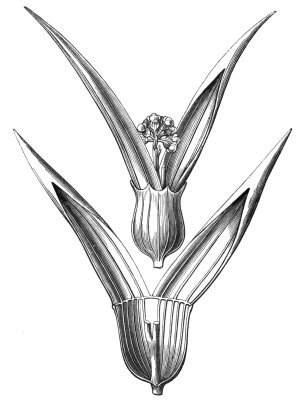
Fig. 61.—Daucus Carota, showing leafly carpels, prolification, &c.
As the carpels are not unfrequently absent in cases of median
prolification, it has been thought that the pistil in such cases was
metamorphosed into a stem bearing leaves or flowers. Setting aside the
physiological difficulties in the way of accepting such an opinion, an
examination of any number of cases is sufficient to refute it; for, as
Moquin well remarks, the carpels may frequently be found either in an
unaltered condition or more or less modified.
If the pistil be normally syncarpous, its constituent carpels, if
present at all in the prolified flower, become disjoined one from the
other to allow of the passage between them of the prolonged axis; thus
in some malformed flowers of Daucus Carota gathered in Switzerland
(fig. 61), not only was the calyx partially detached from the pistil,
but the carpels themselves were leaf-like, disjoined, and unprovided
with ovules; between them rose a central prolongation of the axis, which
almost immediately divided into two branches, each terminated by a small
umbel of perfect flowers, surrounded by minute bracts.[125]
Not only are the carpels thus frequently separated one from the other by
the prolonged axis, but they undergo commonly a still further change in
becoming more or less completely foliaceous, as in the Daucus just
mentioned, where the carpels were prolonged into two lance-shaped
leaves, whose margins in some cases were slightly incurved at the apex,
forcibly calling to mind the long "beaks" that some Umbelliferous genera
have terminating their fruits—for instance, Scandix. Dr. Norman, in
the fourth series of the 'Annales des Sciences,' vol. ix, has described
a prolification of the flower of Anchusa ochroleuca, in which the
pistil consisted of two leaves, situated antero-posteriorly on a long
internode, with a small terminal flower-bud between them; and numerous
similar instances might be cited.
In this place may also be noticed those instances wherein the placenta
elongates so much that the pericarp becomes ruptured to allow of the
protrusion of the placenta, although this prolongation is not attended
by the formation of new buds. Cases of this kind occurring in
Melastoma and Solanum have been put on record by M. Alph. de
Candolle.[126] This is a change analogous with that which occurs in some
species of Leontice or Caulophyllum, as commented on by Robert
Brown. See 'Miscellaneous Botanical Works' of this author, Ray Society,
vol. i, p. 359.
If the pistil be apocarpous, and the carpels arranged spirally on an
elevated thalamus, it then frequently happens that the carpels,
especially the upper ones, become carried up with the prolonged axis,
more widely separated one from the other than below, and particularly
liable to undergo various petalloid or foliaceous changes as in
proliferous Roses, Potentilla, &c.
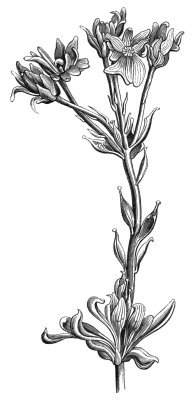
Fig. 62.—Median floral prolification, &c., in flower of Delphinium.
Fig. 62, copied from Cramer, shows an instance of this kind in
Delphinium elatum, where not only is the thalamus prolonged, and the
carpels separated, but from the axils of some of the latter which have
assumed from the disunion of their margins somewhat of the appearance of
leaves, other flowering branches proceed—axillary prolification. If, on
the other hand, the carpels be few in number, and placed in a
verticillate manner, the axis then generally passes upwards without any
change in the form or position of the carpels being apparent, as in a
proliferous columbine, figured in the 'Linnean Transactions,' vol.
xxiii, tab. 34, fig. 5.
When a flower with the ovary naturally inferior or adherent to the calyx
becomes prolified, a change in the relative position of the calyx and
ovary almost necessarily takes place, the latter becoming superior or
detached from the calyx; this has been already alluded to in
Umbelliferæ. In a species of Campanula examined by me, the calyx was
free, the corolla double, the stamens with petaloid filaments, and in
the place of the pistil there was a bud consisting of several series of
green bracts, arranged in threes, and enclosing quite in the centre
three carpellary leaves detached from one another and the other parts of
the flower, and open along their margins, where the ovules were placed.
In other similar instances in the same species of Campanula, the
styles were present, forming below an imperfect tube which surrounded
the adventitious bud; in another, contrary to what occurs usually in
such cases, the ovary was present in its usual position, but surmounted
by a bud of leafy scales, enclosed within the base of a tube formed by
the union of the styles. A similar relative change in the position of
the calyx and the ovary takes place when the Compositæ are affected
with central prolification, or even in that lesser degree of change
which merely consists in the separation and disunion of the parts of the
flower, but which in these flowers appear to be, as it were, the first
stage towards prolification. I owe to the kindness of Professor Oliver a
sketch of a species of Rudbeckia? showing this detachment of the calyx
from the ovary. In a monstrous Fuchsia that I have had the opportunity
of recently examining, the calyx was similarly detached from the ovary
simultaneously with the extension of the axis. Here the petals were
increased in number and variously modified, the stamens also; while in
the centre and at the top of the flower, conjoined at the base with some
imperfect stamens, was a carpel open along its ovuliferous margins. Such
instances as these seem to be the first stages of a change which,
carried out more perfectly, would result in the formation of a new bud
on the extremity of the prolonged axis.
In Orchidaceæ, among which family I have now met with several
instances of prolification, the ovary seems usually to be absent. Fig.
63 shows a prolified flower of Orchis pyramidalis in which the
perianth was nearly regular, the central portions of the flower absent,
and their place supplied by a new miniature raceme. This specimen was
forwarded to me by Dr. Moore, of Glasnevin.
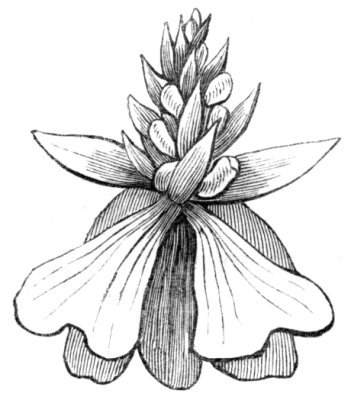
Fig. 63.—Median prolification in Orchis pyramidalis, the outer segments of the perianth regular and reflexed.
As might be expected, it very rarely happens that median prolification
occurs without some other deviation in one or more parts of the flower
being simultaneously manifested. Some of these changes have been already
mentioned, but others are commonly met with, as, for instance, the
multiplication or doubling, as it is termed, of the petals; others,
though less frequent, are of more interest. Fusion of two or more
flowers in association with prolification is especially common in
cultivated specimens of Digitalis purpurea; the uppermost flowers of
the raceme become fused together so as to form one large, regular,
erect, cup-shaped corolla, to the tube of which the stamens are
attached, in greater number than ordinary, and all of equal length; the
bracts and sepals are confusedly arranged on the exterior of the flower;
while in the centre, in the place usually occupied by the pistil, there
rises a conical prolongation of the axis, bearing at its outer or lower
portion a number of open carpels, provided, it may be, with styles and
ovules; these enclose an inner series of scale-like bracts, from whose
axils proceed more or less perfect florets; so that in the most highly
developed stage a perfect raceme of flowers may be seen to spring from
the centre of a cup-shaped regular flower, whose lobes show its compound
character. All intermediate stages of this malformation may be found
from cases where there is a simple fusion of two flowers with a second
verticil of carpels within the outer, up to such cases as those which
have been just mentioned. It is worthy of special remark, that in all
these cases the flowers at the uppermost part of the raceme are alone
affected, and that, in addition to the prolification, there is fusion of
two or more flowers, and regularity in the form of the compound corolla
and stamens.
The calyx of a prolified flower is either unchanged, or it is modified
in harmony with the changes in the central part of the flower. If the
ovary be normally superior or free from the calyx, then the latter is
comparatively rarely altered; for instance, in proliferous pinks
(Dianthus) the calyx is seldom affected, except, indeed, in those
instances where the floral axis is prolonged, and produces from its side
a successive series of sepals, as in what is called the wheat-ear
carnation; but though these instances may be, as I believe, an imperfect
degree of prolification, they do not affect the general truth of the
above opinion, that the calyx, if it be free from the ovary, is but
rarely changed in a prolified flower; but that this is not a universal
rule is shown by proliferous flowers of Geum rivale, where the sepals
are usually large and leaf-like, as they likewise are frequently in
proliferous roses and pears.
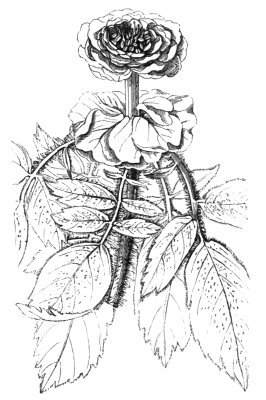
Fig. 64.—Proliferous rose. Hip absent, sepals leafy, stamens wanting, axis prolonged bearing supplementary flower, &c. (Bell Salter).
Proliferous roses have a special interest, inasmuch as they show very
conclusively that the so-called calyx-tube of these plants is merely a
concave and inverted thalamus, which, in prolified specimens, becomes
elongated (fig. 64) after the fashion of Geum rivale, &c.[127]
Occasionally from the middle of the outer surface of the urn-shaped
thalamus proceeds a perfect leaf, which could hardly be produced from
the united sepals or calyx-tube; a similar occurrence in a pear is
figured in Keith's 'Physiological Botany,' plate ix, fig. 12.
The change which the calyx undergoes when flowers with an habitually
adherent ovary become prolified, and wherein the calyx is disjoined from
the ovary, has been before mentioned, but it may also be stated that,
under such circumstances, the constituent sepals are frequently
separated one from the other, and not rarely assume more or less of the
appearance of leaves, as in proliferous flowers of Umbelliferæ,
Campanulaceæ, Compositæ, &c.
As to the corolla, it was long since noticed that prolification was
especially liable to occur in double flowers; indeed, Dr. Hill, who
published a treatise on this subject, setting forth the method of
artificially producing prolified flowers, deemed the doubling to be an
almost necessary precursor of prolification;[128] but, though frequently
so, it is not invariably the case that the flower so affected is
double—e.g. Geum. If double, the doubling may arise from actual
multiplication of the petals, or from the substitution of petals for
stamens and pistils, according to the particular plant affected.
Occasionally in prolified flowers the parts of the corolla, like those
of the calyx, become foliaceous, and in the case of proliferous pears
fleshy and succulent. There is in cultivation a kind of Cheiranthus?
in which there is a constant repetition of the calyx and corolla,
conjoined with an entire absence of the stamens and pistils; a short
internode separates each flower from the one above it, and thus
frequently ten or a dozen of these imperfect flowers may be seen on the
end of a flower-stalk, giving an appearance as if they were strung like
beads, at regular intervals, on a common stalk. I have seen a similar
instance in a less degree in a species of Helianthemum.
The stamens are subject to various changes in prolified flowers; they
assume, for instance, a leaf-like or petal-like condition, or take on
them more or less of a carpellary form, or they may be entirely absent;
but none of these changes seem to be at all necessarily connected with
the proliferous state of the flower. Of more interest is the alteration
in the position of these organs which sometimes necessarily accrues from
the elongation of the axis and the disjunction of the calyx; thus, in
proliferous roses the stamens become strictly hypogynous, instead of
remaining perigynous. In Umbelliferæ the epigynous condition is
changed for the perigynous, &c.
The condition of the pistillary organs in prolified flowers has already
been alluded to. Hitherto those instances have been considered in which
either the carpels were absent, or the new bud proceeded from between
the carpels. There is also an interesting class of cases where the
prolification is strictly intra-carpellary; the axis is so slightly
prolonged that it does not protrude beyond the carpels, does not
separate them in any way, but is wholly enclosed within their cavity.
Doubtless, in many cases, this is merely a less perfect development of
that change in which the axis protrudes beyond the carpels. This
intra-carpellary prolification occurs most frequently in plants having a
free central placenta, though it is not confined to them, as it is
recorded among Boragineæ. A remarkable instance of this is described
by Mr. H. C. Watson in the first volume of Henfrey's 'Botanical
Gazette,' p. 88. In this specimen a raceme of small flowers was included
within the enlarged pericarp of a species of Anchusa. But the most
curious instances of this form of prolification are, no doubt, those
which are met with among Primulaceæ and other orders with free central
placentation.
Duchartre, in his memoir on the organogeny of plants with a free central
placenta, in the 'Ann. des Sc. Nat.,' 3 sér., 1844, p. 290, among other
similar instances, mentions two flowers of Cortusa Matthioli, wherein
the placenta was ovuliferous at the base; but the upper portion, instead
of simply elongating itself into a sterile cone, had produced a little
flower with its parts slightly different from those of the normal
flowers. M. Alph. de Candolle has likewise described somewhat similar
deviations, and one in particular in Primula Auricula, where the
elongated placenta gave off long and dilated funiculi bearing ovules,
while other funiculi were destitute of these bodies, but were much
dilated and foliaceous in appearance.[129] In some flowers of
Rhododendron I have observed a similar condition of the ovules, which,
moreover, in the primary flowers, were attached to the walls of the
carpels—parietal placentation.
In speaking of these as cases of intra-carpellary prolification, it is,
of course, impossible to overlook the fact that they differ in degree
only from those cases where the lengthened axis projects beyond the
cavity of the carpels; nevertheless they seem to demand special notice,
because in these particular plants the placenta or its prolongation
appears never to protrude beyond the carpels, or at least very rarely.
There are, however, numerous instances of such an extension of the
placenta and of prolification occurring among Primulaceæ in
conjunction with the more or less complete arrest of growth of the
carpels.[130] An instance of this kind has come under my own notice in a
monstrosity of the chinese primrose, in which the carpels were reduced
to a hardly discernible rim surrounding an umbel of five rays, each
terminated by a small normally constituted flower-bud.
The ovules of a prolified flower are either unaffected, or they occur in
a rudimentary form, or, lastly, they may be present in the guise of
small leaves.
Under the term prolification of the fruit two or three distinct kinds of
malformation appear to have been included. The term seems usually to be
applied to those cases where from the centre of one fruit a branch
bearing leaves, flowers, or another fruit, is seen to project, as
happens occasionally in pears. Now, in many instances, not only the
fruit, is repeated, but also the outer portions of the flower, which
wither and fall away as the adventitious fruit ripens; so that at length
the phenomenon of one fruit projecting from another is produced. It is
obvious that this form of prolification in no wise differs from ordinary
central prolification. Sometimes some of the whorls of the adventitious
flower are suppressed; thus, M. Duchartre describes some orange blossoms
as presenting alternating series of stamens and pistils one above
another, while the calyces and corollas belonging to each series of
stamens and pistils were entirely suppressed.[131] In other cases,
doubtless, the carpellary whorl is alone repeated, the other whorls of
the adventitious flower being completely absent.
Another condition, apparently sometimes mistaken for prolification of
the fruit, is that in which the carpellary whorl becomes multiplied; so
that there is a second or even a third series within the outer whorl of
carpels. If the axis be at all prolonged, then these whorls are
separated one from the other, and produce in this way an appearance of
prolification. This happens frequently in oranges, as in the variety
called Mellarose.[132]
Moquin has given an explanation of the St. Valery Apples, wherein the
petals are sepaloid, the stamens absent, and where there is a double row
of carpels, by supposing these peculiarities to be due to "a
prolification combined with penetration and fusion of two or more
flowers," but it is surely more reasonable to conceive a second row of
carpels placed above the first by the prolongation of the central part
of the axis. Supposing this view to be correct, the inner calyx-like
whorl might be considered either as a repetition of the calycine whorl,
or it might be inferred that the corolla was present in the guise of a
second calyx.
Moquin-Tandon suggests another explanation—namely, that though the
stamens are absent in these curious flowers, at least in their ordinary
shape, they are represented by the lower row of carpels, which become,
in process of development, fused with the upper or true carpels. If this
were so, surely some intermediate conditions between stamen and carpel
would occasionally be present; but such does not appear to be the
case.[133]
In some of the instances of so-called proliferous pears the carpels
would seem to be entirely absent, and the dilated portion of the axis to
be alone repeated. Thus, the axis dilates to form the lower fruit
without any true carpels being produced, but at its summit a whorl of
leaves (sepals) is formed; above these another swelling of the axis
takes place also without the formation of carpels, and this, it may be,
is terminated in its turn by a branch producing leaves. In these cases
there is no true prolification, but simply an extension of the axis.
That the outer portion (so-called calyx-tube) of these fruits is really
an axile product there can now be little doubt; and, as if to show their
axile nature, they occasionally produce leaves from their sides, as
before mentioned. Moquin, in the tenth volume of the 'Bulletin of the
Botanical Society of France,' p. 73, says that when the case is one of
prolification the lower fruit is larger and is formed of a fleshy mass;
moreover, the line of demarcation between the fruits is more distinct,
and there are traces of the seed-bearing cavity in the interior, and of
calycine lobes at the top. On the other hand, if the case be one of
hypertrophy merely, the lowermost fruit is the smallest, and there is no
trace of seed-bearing cavity nor of sepals. See also under Hypertrophy.
Some other malformations usually referred to prolification of the fruit
seem due to branching of the inflorescence, as in Plantago, wheat,
maize; or to a simple extension of the axis beyond its ordinary limit,
as in some cones of firs, &c. It is obvious that the true fruits in
these cases are in no wise affected.
From these considerations it would appear better to abandon the use of
the expression prolification of the fruit, as unnecessary where it is
really applicable, and as delusive in the numerous other cases where it
is employed.
Median prolification of one or other kind has been met with in the
following genera:
| Leafy. | Floral. |
| Ranunculaceæ. | | Clematis. |
| Anemone! | *Anemone! |
| Ranunculus! | *Ranunculus! |
| | Delphinium. |
| | Caltha. |
| | Aquilegia! |
| Cruciferæ. | | Bunias. |
| | *Cheiranthus! |
| | Erucago. |
| | *Matthiola! |
| | Sisymbrium! |
| | Brassica! |
| | Nasturtium. |
| | Hesperis. |
| | Sinapis! |
| | Diplotaxis. |
| | Lunaria. |
| | Erysimum. |
| | Alyssum. |
| | Peltaria. |
| | Cardamine! |
| | Cleome. |
| Cistaceæ. | | Helianthemum! |
| Caryophylleæ. | Dianthus! | *Dianthus! |
| | Silene! |
| | Lychnis! |
| Violaceæ. | | Viola! |
| Tiliaceæ. | Triumfetta! | |
| Geraniaceæ. | | Geranium! |
| Sapindaceæ. | Pavia! | Pavia! |
| Malvaceæ. | | Paritium. |
| | Hibiscus! |
| Malpighiaceæ. | | Byrsonima! |
| Rutaceæ. | Genera not specified. | *Dictamnus! |
| Resedaceæ. | | Reseda. |
| | Caylussa! |
| Aurantiaceæ. | | *Citrus! |
| Vitaceæ. | Vitis. | Vitis. |
| Umbelliferæ. | | Heracleum. |
| | Angelica. |
| | Thysselinum. |
| | *Athamanta. |
| | *Daucus! |
| | *Torilis. |
| Rosaceæ. | *Rosa! | *Rosa! |
| *Geum! | *Geum! |
| Agrimonia. | Amygdalus. |
| | Prunus! |
| Spiræa! | Spiræa! |
| | Rubus. |
| *Pyrus! | *Pyrus! |
| ?Leguminosæ | | Trifolium! |
| | Medicago! |
| | Melilotus. |
| | Pisum! |
| Cucurbitaceæ. | | Cucumis. |
| Passifloraceæ. | | Passiflora. |
| Philadelphaceæ. | | Philadelphus. |
| Onagraceæ. | Epilobium! | |
| Epacridaceæ. | | Epacris! |
| Ericaceæ. | | *Erica. |
| | Rhododendron! |
| Convolvulaceæ. | Convolvulus. | |
| Gentianaceæ. | Gentiana. | Gentiana. |
| Apocynaceæ. | | Vinca. |
| Jasminaceæ. | | Jasminum! |
| Scrophulariaceæ. | Verbascum! | Antirrhinum! |
| | *Digitalis! |
| | *Linaria! |
| | Veronica. |
| Orobanchaceæ. | | Orobanche. |
| Labiatæ. | Genera not specified. | Stachys. |
| | Phlomis! |
| Hydrophyllaceæ. | | Hydrophyllum. |
| Boraginaceæ. | | Anchusa. |
| | Symphytum. |
| Primulaceæ. | *Dodecatheon. | *Cortusa. |
| *Anagallis! | *Anagallis! |
| | *Primula. |
| Dipsacaceæ. | | Scabiosa. |
| Compositæ. | Hieracium! | Hieracium! |
| Cirsium. | Cirsium. |
| Hypochæris. | Calendula! |
| | Spilanthes. |
| | Carthamus. |
| | Coreopsis. |
| Campanulaceæ. | Campanula. | *Campanula! |
| Polygonaceæ. | Genera not specified. | Rumex. |
| Santalaceæ. | | Thesium. |
| Liliaceæ. | Genera not specified. | Tulipa! |
| | Hemerocallis! |
| | Asphodelus. |
| | Hyacinthus! |
| Iridaceæ. | | Iris. |
| Amaryllidaceæ. | | Narcissus! |
| | Leucojum. |
| Orchidaceæ. | | Orchis! |
| | Habenaria. |
| Cyperaceæ. | | Carex. |
| Gramineæ. | | Phleum. |
Axillary prolification is the term applied to those cases wherein one or
more adventitious buds spring from the axils of one or more of the parts
of the flower. Engelmann makes use of the word ecblastesis to denote the
same condition. Both terms are open to the objection that they do not
clearly enable us to distinguish prolification occurring within the
flower from a similar state originating outside the flower, within the
bracts of the inflorescence. This latter condition, called by
Moquin-Tandon lateral prolification (see Prolification of the
Inflorescence), is as truly axillary as that to which the name is
restricted. In consequence of certain peculiarities in the structure of
some flowers, to be hereafter alluded to, it is not in all cases easy to
decide whether the new growth springs from the interior of the flower,
or from the inflorescence beneath the flower.
The accessory bud presents itself as a leaf-bud, a branch, a flower-bud,
or a miniature inflorescence; it may be sessile, but is far more
frequently stalked, and in more than half the number of cases it is a
flower-bud or an inflorescence. There may be one or more of these buds;
if two only, then they are usually placed directly opposite one to the
other, on the opposite sides of the flower.
It will be seen, from the appended list, that the orders and genera in
which this description of adventitious growth occurs most frequently are
the following:—Cruciferæ, especially the genus Brassica;
Caryophyllaceæ, e.g. Dianthus; Resedaceæ; Leguminosæ, e.g.
Melilotus, Trifolium, &c.; Rosaceæ, e.g. Rosa, Potentilla,
&c.; Umbelliferæ, and Campanulaceæ. For the most part, these are
groups also peculiarly liable to central prolification.
All the parts of the flower may be thus affected; but, as might have
been anticipated from the foliaceous nature of the sepals, the new bud
usually arises from within the axil of one of those organs. Next in
frequency to the calyx, the pistil is subjected to this change—the
carpels in such a case being disunited and leaf-like. The petals rank
next, and lastly the stamens; these latter, indeed, are usually, but not
invariably, absent, the new growth occupying their position. Hence it
may well be that when such is the case, there is no real axillary
prolification, but rather the substitution of a bud for a stamen.
Generally, however, the position of the accessory bud is such that it
may properly be referred to the axil of an undeveloped or rudimentary
stamen.
The largest number of instances of this malformation, not merely
generically, but also individually, occurs in plants the members of
whose floral whorls are not united one to the other; thus, it is far
more common in polypetalous plants than in gamopetalous ones. In the
prolified flowers belonging to the latter group, the sepals, if not
actually uncombined, are only united for a short distance. The same
relationship, but in a much less degree, exists in the case of median
prolification, as that aberration is likewise most commonly met with in
polypetalous flowers. Another feature of interest is the rarity with
which axillary prolification is found in irregular gamopetalous blooms.
It may be that the irregular and comparatively excessive growth in some
parts of these flowers, as compared with others, may operate in checking
any luxuriant tendency in other directions.
As in the case of median prolification, plants having an indefinite
inflorescence are more liable to be affected with ecblastesis than those
having a definite one. The degree of branching of the inflorescence may
be noticed, as this deformity is far more common in plants whose
peduncles are branched than in those which have either a solitary flower
or an unbranched flower-stalk. More than two thirds of the entire number
of genera cited as the subjects of this malformation have a branched
inflorescence of some form or other; and about two thirds of the cases
occur in genera having some form of indefinite inflorescence. If
individual instances could be accurately computed, the proportion would
be even higher.
Fully three fourths of the entire number of genera recorded as
occasionally the subjects of this irregularity possess in their usual
state some peculiarity of the thalamus; for instance, in about a third
of the whole number of genera the thalamus is more or less prolonged
between some or other of the floral whorl, e.g. Caryophyllaceæ,
Potentilla, Anemone, Dictamnus, Umbelliferæ, &c. About one
fourth of the genera have numerous stamens or numerous carpels, or both,
springing naturally from the thalamus. In others (about one sixth) the
thalamus is enlarged into a disc, or else presents one or more
glandular swellings, e.g. Reseda, Nymphæa, Cruciferæ. In the
last-named family, as has been already remarked, prolification is very
common. It would be interesting to ascertain precisely what part of an
inflorescence is most liable to this affection; but as information on
this point is but rarely given in the records of these cases, I can only
give the results of my own observations, which go to show that, in a
many-flowered inflorescence, those flowers at the outside, or at the
lower portion, seem to be more frequently the subjects of this change
than those situated elsewhere. This may probably be accounted for by the
fact that the malformation is met with most generally in plants with an
indefinite form of inflorescence, and therefore the lowermost or
outermost flowers are most fully nourished; the upper flowers being in a
less advanced condition, the change is more likely to be overlooked in
them; or it may be that from the unusual luxuriance in the lower
flowers, the upper ones may be either present in their ordinary
condition, or may be (as indeed frequently happens) stunted in the size
and proportion of their several parts.
Axillary foliar prolification of the flower.—The formation of an
adventitious leaf-bud in the axil of any of the parts of the flower is
not of such common occurrence as the development of a flower-bud in
similar situations, nor is it so frequent as median foliar
prolification. I have seen leafy shoots proceeding from the axils of the
sepals in the flowers of Brassica, and a similar occurrence has been
noticed in Caltha palustris, Herreria parviflora, and other plants.
Dr. Marchand's flowers of Anagallis, previously referred to at p. 117,
showed good illustrations of this occurrence, as also some specimens
described by Kirschleger in A. phœnicea.[134] Steinheil has figured
and described[135] a flower of Scabiosa in which there was an
adventitious formation of leafy shoots in the axil of the outer calyx.
In some flowers, such as Convolvulus, Anemone, &c., the exact nature
of the sub-floral leaves is uncertain, i.e. it is open to doubt
whether the organs in question are bracts or leaves pertaining to the
inflorescence, or whether they are really parts of the flower. When
leafy shoots are formed in the axils of such organs, the adventitious
growth may be referred to extra-floral prolification, prolification of
the inflorescence that is, or to axillary prolification, according to
the view taken of the real nature of the sub-floral leaves. So far as
the mere occurrence of prolification is concerned, it is not very
material which view be adopted. The same remark applies to cases where
leaf-buds occur on the outer surface of inferior ovaries, as in
Rosaceæ, Pomaceæ, Philadelphus, or Tetragonia expansa, as
elsewhere mentioned.
It would seem more consistent with the general arrangements of parts,
that the adventitious buds should be formed more frequently outside than
within the flower proper.
Knight[136] figures and describes the occurrence of small tubers or
fleshy leaf-buds in the axils of the sepals of a potato, a curious
illustration of the real morphological nature of the tuber.
Axillary floral prolification of the flower.—As already stated, this is
of more common occurrence than the formation of a leaf-bud in a similar
situation. Any of the parts of the flower may thus subtend a flower-bud,
though probably the new buds more frequently originate in the axils of
the sepals than in the other whorls. In Cruciferæ the change in
question is, relatively speaking, very common. In cauliflowers and
broccoli I have frequently met with stalked flowers proceeding from the
axils of the sepals, so also in some fuchsias I have seen a ring of
stalked flower-buds alternating with the petals, which, together with
the stamens and pistil, remained unaffected. The number of parts in the
supernumerary structures is generally less than the normal flowers.
In Mr. Herbert Spencer's 'Principles of Biology,' part iv, p. 37, are
figured and described some monstrous inflorescences in Angelica and
other Umbelliferæ, from which, amongst other things, the author draws
the conclusion that there is no absolute distinction between leaf and
branch. Without staying for the moment to discuss this matter, it may
here be said that the Umbellifers in question apparently owe their
peculiarities rather to axillary prolification within the flower, or to
prolification of the inflorescence, than to an actual transformation of
a flower or any portion of a flower into an umbellule.[137]
In the 'Gardeners' Chronicle,' 1855, p. 551, an instance is figured of
the production of a supernumerary flower proceeding from the axil of a
stamen in a species of Nymphæa (fig. 65). The ovary in this case was
wanting, but in its place was a tuft of small leaves. It is curious that
among Dr. Kirk's drawings of east tropical African plants now at Kew,
there should be one representing a precisely similar state of things.
The species in both instances was Nymphæa Lotus, or a cultivated
variety of it.
M. Wesmael[138] describes a very singular case of what appears to have
been referable to axillary prolification in the flowers of Carex
acuta. The rachillus is described as prolonged through the utricle by
the side of the stigmas, bearing on its side a bract, then a secondary
utricle, from the axil of which sprung a short stem surmounted by an
ovary. Wigand, 'Flora,' 1856, mentions a similar change in Carex
glauca. In this instance the base of the female inflorescence bore
lateral spikes, which projected from the utricles; some of these
adventitious spikes were female, others female below and male above,
others, again, wholly male.
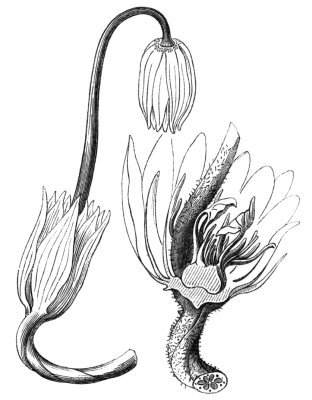
Fig. 65.—Flower of Nymphæa Lotus, var., showing axillary floral prolification. The section also shows the tuft of leaves that occupied the place of the ovary.
Various changes in the form and arrangement of the several floral whorls
accompany axillary prolification; some of these affect the particular
organ or organs implicated, and these only, while in other cases some
other parts of the flower likewise undergo modification. The changes
most commonly met with are such as may be classed under Goethe's theory
of retrograde metamorphosis; for instance, if a supplementary bud be
developed in the axil of a sepal, that sepal is likely to be more than
ordinarily leaf-like in appearance. The dislocation of the affected
sepal from its fellows is a very frequent occurrence; in cases of this
kind the detached sepal is placed below the others, thus approximating,
in position as well as in function, to the bracts. In some of the
instances of proliferous pears, on which I shall have occasion to
comment, the sepals are described as sharing in the succulent character
of the fruit.
The petals, under such circumstances, often exist in the guise of sepals
or of small leaves; and instances are recorded wherein the place of the
calyx and corolla was supplied by a succession of overlapping green
scales, from the axils of which the new buds arose. M. Germain de Saint
Pierre records such a case in Trifolium repens, wherein the calyx and
corolla were replaced by overlapping scales, in the axils of each one of
which arose a flower; above there was a row of stamens, and in the
centre a pistil in the guise of a trifoliate leaf.[139] Such instances
seem to afford an extreme degree of a more common change, viz., the
diminished size and contracted appearance of the sepals and petals when
affected with axillary prolification. They have also a close
relationship to such developments as we see in the wheat-ear carnation,
in certain species of the genus Mæsa and others, wherein the calyx is
repeated over and again, to the partial or complete suppression of the
other parts of the flower. All these cases may be in part explained by
the operation of the principle of compensation.
So far as the andrœcium is concerned, the stamens either remain
unaltered, or they are present in a more or less petal-like condition;
but it far more frequently happens that the stamens are entirely
suppressed, the adventitious bud supplying their place; thus was it in
the Dianthus represented in the adjoining woodcut, fig. 66, where the
stamens were entirely absent, and their places supplied by
flower-bearing branches. This Dianthus has the more interest from its
similarity to the one described by Goethe, Metam. der Pflanzen, cap.
16, sect. 105; but in that instance median prolification also existed.
For my specimens I am indebted to Mr. T. Moore.
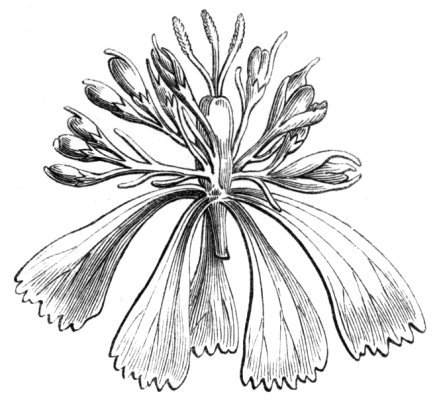
Fig. 66.—Flower of Dianthus sp., calyx removed; petals turned down so as to show the stalked flower-buds springing from their axils.
The pistil, too, is necessarily subject to very grave alterations when
affected with this malformation. It is separated into its constituent
carpels; and these assume a leaf-like aspect, and are in the great
majority of instances destitute of ovules. Indeed, virescence or
chloranthy is very intimately connected with this aberration, as might
have been anticipated, for if the parts of the flower assume more or
less of the condition of stem-leaves or bracts, it is quite natural to
expect that they will partake likewise of the attributes of leaves, even
at the expense of their own peculiar functions.
It occasionally happens that an adventitious bud arises from the axil of
a monocarpellary pistil. This takes place sometimes in Leguminosæ, and
seems to have been more frequently met with in Trifolium repens than
in other plants. The species named is, as is well known, particularly
subject to a reversion of the outer whorls of the flower to leaves, and
even to a leaf-like condition of the pistil. There are on record
instances wherein a leaf-bud has been placed in the axil of a more or
less leaf-like carpel; while at other times a second imperfect carpel
has been met with in the axil of the first.[140] I have myself seen
numerous imperfectly developed cases of this kind.
It may be asked whether such cases are not more properly referable to
central prolification—whether the axis is not in such flowers
terminated by two, rather than by one carpel? It is, however, generally
admitted by morphologists that the solitary carpel of Leguminosæ is
not terminal, but is the sole existing member of a whorl of carpels, all
the other members of which are suppressed as a general rule, though
exceptional instances of the presence of two and even of five carpels
have been described.[141]
Again, the adventitious bud or carpel is placed, not laterally to the
primary one, or opposite to it, on the same level, but slightly higher
up—in fact, in the axil of the primary carpellary leaf. Griffith
figures and describes[142] an instance of the kind in a species of
Melilotus. The stalk of the ovary is mentioned as having a sheathing
base, bearing in its axil a prolongation of the axis of inflorescence,
in the form of a short spike with hairy bracts and imperfect flowers,
the latter having a well-formed calyx and rudimentary petals and
stamens. Griffith infers, from this specimen, that the legume is not to
be considered as a terminal leaf.
List of Genera in which Axillary Prolification has been observed.
| Order | Genus. | Leaf-bud or Branch | Flower-bud or Inflorescence | From what organ. |
| Ranunculaceæ | Clematis | | Flower-bud | Sepals. |
| Caltha | | Ditto | Ditto. |
| Aconitum | | | Ditto. |
| Delphinium | | Ditto | Sepals, carpels, &c. |
| Anemone! | | Ditto | Involucre? |
| Nymphæaceæ | Nymphæa! | | | Fruit? |
| Nymphæa | | Flower | Petal. |
| Cruciferæ | *Brassica! | Leaf-bud | Flower-bud | Sepals and petals. |
| Brassica! | | Ditto | Stamens. |
| Brassica! | Ditto | Ditto | Pistil. |
| Cardamine! | | Ditto | Sepals. |
| Matthiola! | | Ditto | Sepals and petals. |
| Cheiranthus! | | Ditto | Sepals. |
| Erysimum | Ditto | | Sepals and pistils. |
| Lepidium! | | Ditto | Petals and stamens. |
| Arabis | | Ditto | Sepals. |
| Diplotaxis | | Flower, inflorescence | Pistil, calyx and corolla. |
| Capsella | | | |
| Capparidaceæ | Cleome | | Flower-bud | Sepals. |
| Resedaceæ | *Reseda | | Ditto | Ditto. |
| Caryophyllaceæ | Arenaria | Branch | | Ditto. |
| Agrostemma | Leaf-bud | | Ditto. |
| *Lychnis | Ditto | | |
| Stellaria | Ditto | | |
| Silene | Ditto | | |
| *Gypsophila | Ditto | Ditto | Sepals and stamens. |
| *Dianthus! | Ditto | Ditto | Sepals. |
| Dianthus! | Ditto | Inflorescence | Petals and stamens. |
| Cucubalus | | | Sepals |
| Saponaria! | | | Sepals and petals. |
| Malvaceæ | Alcea | | Flower-bud | Stamen. |
| Aurantiaceæ | Citrus! | | Ditto | Ditto. |
| Rutaceæ | Dictamnus! | Ditto | | Pistil leafy. |
| Tropæolaceæ | Tropæolum! | Ditto | | Petals. |
| Celastraceæ | Celastrus | Ditto | | Sepals. |
| Leguminosæ | *Melilotus! | | Inflorescence | Sepals and petals. |
| Medicago | | Flower-bud | Sepals. |
| Coronilla | | Ditto | Ditto. |
| Trifolium! | Ditto | Second carpel axillary to first | Pistil. |
| Melilotus! | | Ditto | Ditto |
| Trifolium! | | Flower-bud | Sepals and petals. |
| Rosaceæ | Pyrus! | | Fruit? | Fruit? |
| Cerasus! | | Flower-bud | Petals and stamens. |
| Potentilla! | | Ditto | Leafy carpels. |
| Cratægus! | | Ditto | Petals. |
| *Rosa! | Ditto | Ditto | Sepals, petals, stamens and pistil. |
| Myrtaceæ | Lecythis | Ditto | | Fruit? |
| Tetragoniaceæ | Tetragonia? | | Ditto | Ditto. |
| Cactaceæ | Opuntia! | Fruit-like branch | | Tufts of spines. |
| Pereskia | Ditto | | Sepals? |
| Echinocactus | Ditto | | Ditto. |
| Philadelphaceæ | Philadelphus | | Ditto | Sepals. |
| Umbelliferæ | *Athamanta | | Ditto | Calyx. |
| *Daucus! | | Ditto | Calyx and pistil. |
| Bupleurum | | Ditto | Ditto ditto. |
| Torilis | | Ditto | Ditto ditto. |
| Apium | | Flower-bud | Calyx and pistil. |
| Pastinaca | | Ditto | Ditto ditto. |
| Heracleum! | | Ditto | Ditto ditto. |
| Angelica! | | Umbel | Ditto ditto. |
| Campanulaceæ | *Campanula! | Branch | | Sepals. |
| Prismatocarpus | Ditto | Fruit | Sepals, &c. |
| Gentianaceæ | Gentiana! | | Flower-bud | Sepals. |
| Convolvulaceæ | *Convolvulus! | | Ditto | Outer calyx. |
| Solanaceæ | Solanum! | | Ditto | Sepals. |
| Solanum | Tubers | | Sepals and petals. |
| Scrophulariaceæ | *Digitalis! | | Ditto | Petals, &c. |
| Veronica | | Raceme | Calyx. |
| Primulaceæ | Anagallis! | Branch | Ditto | Petals. |
| Primula | Ditto | | Petals and carpels. |
| Polygonaceæ | Rumex | | Ditto | Sepals. |
| Santalaceæ | Thesium | Leaf-bud | | In place of stamens and pistils, both absent. |
| Euphorbiaceæ? | Euphorbia? | Ditto | ? | Outer bracts? |
| Orchidaceæ | Orchis! | | Flower-bud | Perianth. |
| Amaryllidaceæ | Leucoium | | Ditto | Ditto. |
| Iridaceæ | Iris | | Ditto | Pistil. |
| Liliaceæ | Herreria | Ditto | | Sepals. |
| Hyacinthus | | Flower and raceme | Perianth. |
| Convallaria | | Flower-bud | Ditto. |
| Allium | | Ditto | Ditto. |
| Cyperaceæ | Carex | | Inflorescence | Utricle. |
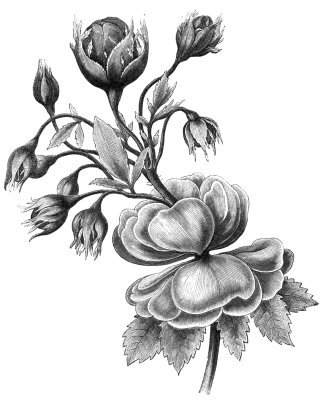
Fig. 67.—Proliferous Rose. Calyx leafy; petals normal, some reflexed; stamens and pistil absent; in their places a branch with leaves and flowers.
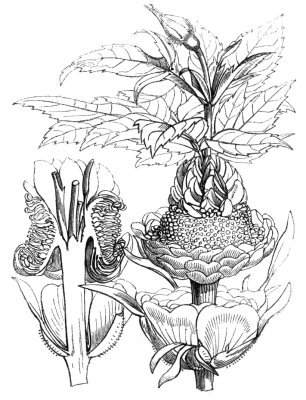
Fig. 68.—Rose exhibiting median, axillary, lateral, floral, and leafy prolification in same flower.
Complicated prolification.—From what has been before stated it may be
seen that prolification of two or more kinds may coexist in the same
flower. Mixed leafy and floral prolification is not unfrequent in
proliferous roses, where a shoot is, as it were, prolonged through the
centre of the original flower and terminated by a second flower, or
even by a cluster, as is well shown in the accompanying figure (fig.
67). Median and axillary prolification, also, not unfrequently coexist
in the same flower; thus, in a proliferous rose forwarded to me by Mr.
W. Thomson (fig. 68), the following changes were observed:—the swollen
portion below the calyx, the "hip," was entirely absent; the sepals were
leaf-like in aspect, the petals unaffected; above the petals the axis
was prolonged for a short distance and then bore a circlet of miniature,
sessile roses, destitute, indeed, of calyx, but provided with numerous
petals, stamens, and pistils. Above these lateral flowers, the prolonged
axis bore a number of scales in many rows. The scales were in their turn
surmounted by a whorl of five perfect leaves, beyond which, again, the
axis was prolonged into a leafy shoot terminated by a flower bud, the
whole constituting a remarkably complicated admixture of elements
belonging to the flower, the bud, the inflorescence, and the
leafshoot.[143]
Proliferous flowers of Orchids also occasionally present great
complexity in the arrangement of their parts. An instance of this kind
was described by myself from specimens furnished by Dr. Moore, of
Glasnevin, in the 'Journal of the Linnean Society,' vol. ix, p. 349,
tabs. x, xi, and from which the following summary is extracted:
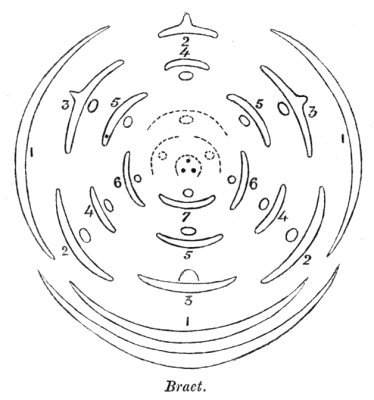
Fig. 69.—Proliferous Orchis. Diagram showing the arrangement of the several organs in the seven outer circles of the flower. Each whorl is numbered, and the position of the axillary buds shown by the small circles.
The primary flowers were composed of five distinct whorls, and of at
least two others less perfectly developed. These primary flowers did not
give rise to median formations, but they produced secondary buds in the
axils of the segments of the perianth. These latter buds were themselves
the subject of tertiary prolification of both kinds, median and
axillary. The tertiary median growths, like the primary flower, did not
develop median buds, but only lateral ones—quaternary axillary
prolification.
The accompanying diagrams are intended to show the plan of arrangement
in these flowers. Fig. 69 shows the disposition of parts in the primary
flower and the situation of the axillary buds. Fig. 70 shows the primary
flower without any central prolongation, but giving off axillary buds,
two of which are shown in the diagram, 2, 2; these are, each of them,
the subject of both median, 3, 3, and axillary prolification, 4', 4'.
Fig. 70.—Diagram to explain the construction of the double-flowered Orchis.
1. The primary flower, with no median bud, the position of which, had it
been present, is shown by the dotted line.
2. Two axillary buds proceeding from 1, and themselves giving origin to
3, 3. Median buds, and 3', 3', axillary buds.
4' 4'. Axillary buds, proceeding from 3. No median bud is produced from
3; its situation, had it been present, is indicated by the dotted line.
In Narcissus major a similar combination of both forms of
prolification exists, as described by Morren.[144]
On the general subject of Prolification in flowers, in addition to the
authorities already cited, the reader may refer to the following among
many others:
Linnæus, 'Prolepsis,' §§ vi et vii. Goethe, 'Versuch.
Metamorph.,' cap. xv and xvi §§ 103–106. Moquin-Tandon,' El.
Ter. Veg.,' p. 362, &c. Engelmann, 'De Antholys.,' §§ 52–62,
&c. Cramer, 'Bildungsabweichungen,' &c. Orchidaceæ,
Umbelliferæ, Compositæ, Leguminosæ, Primulaceæ,
Ranunculaceæ. Fleischer, 'Missbild. Cultur Gewachs.'
Schlechtendal, 'Linnæa,' xv, p. 408, Rosa. 'Bot. Zeit.' vol.
xx, 1862, p. 382, Cyclamen. 'Bot. Zeit.,' vol. xx, p. 301,
Asphodelus; et Lilium. Seringe, 'Bull. Bot.,' i, t. xi, f.
7, 8, Arabis, Diplotaxis. Clos, 'Mem. Acad. Toulouse,' 5th
sér., 1862, Papaver. Wigand, 'Flora,' 1856, p. 716,
Hypochæris; et 'Bot. Untersuch.,' p. 19. Buchenau,' Flora,'
1857, p. 295, Reseda. Roeper, 'Bot. Zeit.,' 1852, p. 427,
Orchis. Presl., 'Linnæa,' vi, p. 599, tab. ix, figs. 5–8,
Sisymbrium, Vrolik., 'Flora,' 1846, p. 97, t. i et ii, id.
1844, t. i, Digitalis. See also Schlechtendal, 'Bot. Zeit.,'
vol. ix, 1851, p. 579. Klinsmann, 'Linnæa,' x, p. 604, t. v,
Hesperis. Fuckel, 'Flora,' 1848, p. 609. Melilotus. De
Candolle, 'Organogr.,' i, 396, t. 33. Turpin, 'Atlas de
Goethe,' p. 65, t. 5, figs. 12, 13. Fenzl. 'Sitzungsbericht d.
k. Akad. d. Wissensch. Wien.,' heft, iii, tabs. 3, 4, Rosa.
Kirschleger, 'Flora,' 1845, 613, Dianthus, Rosa.
'Institut.,' 1841, No. 413, p. 421, Tragopogon. Baron de
Melicoq., 'Ann. Sc. Nat.,' 3rd ser., vol. v. 1846, p. 61,
Antirrhinum. Reichenbach, 'Icon. Fl. Germ.,' tab. 100,
Reseda—"monstrosa anticipatio Euphorbiacearum et
Capparidearum." Duhamel, 'Phys. Arbres.,' liv. iii, cap. 3, p.
303, pl. xii, f. 306, Rosa. Caspary, 'Bull. Soc. Bot. Fr.,'
vol. vi, 1859, p. 235, Rev. Bibl., Pyrus. Eichler, 'Flora,'
1865, tab. ix, Cleome. Lindley, 'Elements of Botany,' p. 63,
&c., Rosa, Epacris, Anagallis, Pyrus. Irmish, 'Flora,'
1858, p. 38, Pyrus; and 'Bot. Zeit.,' xix, 1861, p. 342,
Hyacinthus. Duchartre, 'Bull. Soc. Bot. France,' 1861, p.
451, Rosa. Weber, 'Verhandl. Nat. Hist. Verein. Rhein.
Preuss., &c.' 1858 et 1860. Landrin, 'Mem. Soc. Sc. Nat. Seine
et Oise,' 1866?[145] Masters, 'Trans. Linn. Soc.,' vol. xxiii,
p. 359, tab. 34 and p. 481, tab. 54.
Prolification of the embryo.—This term was applied by Moquin-Tandon to
a peculiar condition of the almond (Amygdalus), in which, indeed, it
is not of unfrequent occurrence. In these cases one almond encloses
within its cotyledons a second embryo, and this, again, in some
instances, a third, the little plants being thus packed like so many
boxes one within the other. The supplementary embryos are, in the ripe
state at least, quite separate and detached one from another. These
cases differ from the ordinary instances wherein there is an increased
number of embryos in one seed in their position. In the latter case, as
often happens in the seeds of the orange, the new products are placed by
the side one of another.[146]
For other cases of prolification or the adventitious formation of buds
on leaves, roots, &c., see under Heterotaxy.
Under this category are here included a variety of deviations from the
ordinary arrangement and position of parts which cannot conveniently be
classed under the preceding or under other headings. The term heterotaxy
is intended to apply to the production of organs in situations where,
under usual circumstances, they would not be formed. It thus does not
include cases of substitution, where one part is replaced by another, or
more or less metamorphosed, nor cases of multiplication, nor of
prolification which are characterised not only by the production of
members in unwonted situations, but also in unwonted numbers. From the
very nature of the anomalies, and specially from the scanty knowledge we
possess concerning their mode of development, it is not possible to
allocate them in all cases correctly, and moreover many of them might as
well be placed in one group as in another.
Formation of adventitious roots.—This is of exceedingly common
occurrence in a vast number of plants, so much so that in most cases it
cannot be considered as in any way abnormal; there are, however, a few
instances where the formation of these organs may be considered to come
within the scope of teratology, or, at least, where their production is
the result of injury or of some unfavorable condition to which the plant
is exposed.
Thus the production of adventitious roots on the stem of the vine is
considered to be due to untoward circumstances impairing the proper
action of the ordinary subterranean roots. So, too, the formation of
roots on the upper portions of stems that are more or less decayed
below, as in old willows, is to be considered as an attempt to obtain
fresh supplies through a more vigorous and healthy channel.
A similar occurrence often arises as a consequence of some injury.
Virgil had this circumstance in view when he wrote
"Quin et, caudicibus sectis, mirabile dictu,
Truditur e sicco radix oleagina ligno."—'Georg.' Bk. ii.
I have seen many specimens of adventitious roots produced on the olive
in the way just mentioned.
In the 'Gardeners' Chronicle,' January 8th, 1853, p. 21, is described a
curious formation of roots in the fissure between two divisions of a
laburnum stem. In the same journal, January 1st, 1853, p. 4, Mr. Booth
mentions the case of a Cornish elm, the trunk of which was divided at
the top into two main divisions, and from the force of the wind or from
some other cause the stem was split down for several feet below the
fork. Around the edges of the fracture, layers of new bark were formed,
from which numerous roots issued, some measuring an inch in diameter and
descending into the cleft portion of the tree: similar instances must be
familiar to all observers.
It may happen that these roots sent down into the cavity of a decaying
trunk may, after a time, become completely concealed within it, by the
gradual formation and extension of new wood over the orifice of the
cavity formed by the death and decay of the old wood. Such is presumed
to be the explanation of a specimen of this kind in the possession of
the writer, and taken from a cavity in an apparently solid block of
rosewood; externally there were no marks to indicate the existence of a
central space, but when the block was sawn up for the use of the
cabinet-maker, this root-like structure was found in the centre and
attached to one end of the cavity.
The production of roots which ultimately serve as props to support the
branches, or as buttresses to compensate for the increasing weight of
branches and foliage, is also a familiar occurrence. The huge gnaurs and
burrs met with occasionally on some trees often produce great
quantities, not only of adventitious buds, but of roots also.
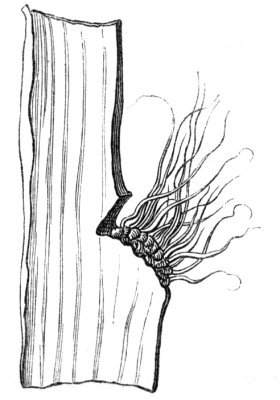
Fig. 71.—Production of adventitious roots from leaf stalk of celery.
The leaves, equally with the stems, have the power of emitting roots
under certain conditions, as when the leaves are in close contact with
moist soil or as the result of injury. This happens in some plants more
readily than in others—Bryophyllum calycinum is a well-known
instance. Mr. Berkeley has described the formation of roots from the
fractured leaves of celery,[147] and also in a cabbage where a snail
"having gnawed a hole into the middle of a leaf at its junction with the
stem, a fascicle of roots was formed, bursting through the tissue lining
the cavity, and covered with abundant delicate hairs after the fashion
of ordinary radicles."
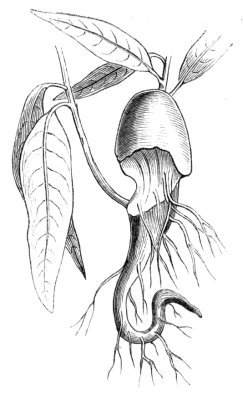
Fig. 72.—Germinating plant of mango, showing production of roots from one of the cotyledons (from the Kew Museum).
The production of adventitious roots is not limited to the ordinary
leaves of the plant, but may be manifested on the cotyledons; thus
Irmisch describes cases of this kind in the cotyledons of Bunium
creticum and Carum Bulbocastanum.[148] I have figured and described
an analogous case in the cotyledons of the Mango (fig. 72).[149]
To this formation of adventitious roots the gardener owes the power he
has of propagating plants by cuttings, i.e., small portions of the
stem with a bud or buds attached, or in some cases from portions of the
leaves, of the roots themselves, or even of the fruit, as in the case of
the cactus (Baillon). Care also has to be exercised in grafting certain
fruit trees not to allow the grafted portion to be too close to the
ground, else the scion throws out roots into the soil, and the object of
the cultivator is defeated.
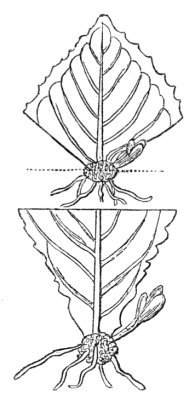
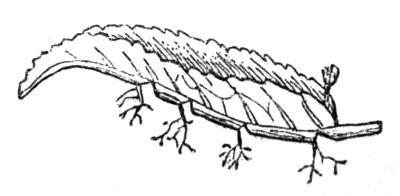
Figs. 73 and 74 show formation of roots from leaves induced by the art of the gardener.
Layering is another garden operation dependent on the formation of these
organs, and advantage is also sometimes taken of this tendency of some
plants to produce roots when injured to reduce the dimensions of a plant
when getting too large for the house in which it is growing. By
gradually inducing the production of new roots from the central or upper
portions of the stem, it becomes possible, after a time, to sever the
connection between the original roots and the upper portion of the
trunk, and thus secure a shortened plant.
On the subject of adventitious roots, &c., reference may be
made to Trécul, 'Ann. Sc. Nat.,' 1846, t. v, p. 340, et vi, p.
303. Duchartre, 'Elements de Botanique,' p. 219. Lindley,
'Theory and Practice of Horticulture.' Thomson's 'Gardener's
Assistant,' pp. 374, et seq.; and any of the ordinary
botanical text-books.
Formation of adventitious buds on roots.—One of the characteristics by
which roots are distinguished from stems in a general way consists in
the absence of buds; but, as is well known, they may be formed on the
roots under certain circumstances, and in certain plants, e.g., Pyrus
Japonica, Anemone Japonica, &c. What are termed suckers, owe their
origin to buds formed in this situation.
If roots be exposed or injured, they will frequently emit buds. The
well-known experiment of Duhamel, in which a willow was placed with the
branches in the soil and the roots in the air, and emitted new buds from
the latter and new roots from the former, depended on this production of
adventitious organs of either kind.
Gardeners often avail themselves of the power that the roots have of
producing buds to propagate plants by cuttings of the roots, but in many
of these cases the organ "parted" or cut is really an underground stem
and not a true root.
M. Claas Mulder has figured and described a case in the turnip-radish of
the unusual formation of a leafy shoot from the root, apparently after
injury.[150] From the figure it appears as if the lower portion of the
root had been split almost to the extremity, while the upper portion
seems to have a central cavity passing through it. From the angle,
formed by the split segments below, proceeds a tuft of leaves, some of
which appear to have traversed the central cavity and to have emerged
from the summit, mingling with the other leaves in that situation. The
production of a flower-bud has even been noticed on the root of a
species of Impatiens.
Formation of shoots beneath the cotyledons.—The tigellar or axial
portion of the embryo plant, as contrasted with the radicle proper, is
very variously developed in different cases; sometimes it is a mere
"collar" bearing the cotyledons, while at other times it is of
considerable size. Generally it does not give origin to shoots or leaves
other than the seed-leaves, but occasionally shoots may be seen
projecting from it below the level of the cotyledons. This happens
frequently in seedling plants of Anagallis arvensis, Euphorbia
peplus, and other species, Linaria vulgaris, some Umbelliferæ,
&c.[151]
Adventitious formation of leaves.—The term phyllomania has been vaguely
applied both to the production of an unwonted number of leaves and to
their development in unusual situations. Under the present heading the
latter class of cases are alone included. The extraordinary tendency in
some Begonias to develop leaves or leafy excrescences from their
surfaces is elsewhere alluded to, and is, in reality, a species of
hypertrophy or over-luxuriant growth.
In some flowers where the inferior ovary is supposed to be, in part at
least, formed by a dilatation of the top of the flower-stalk, leaves
have been met with proceeding from the surface of the ovary or fruit, as
in Cratægus tanacetifolia, roses, pears, gooseberries, &c. In a
specimen of Nymphæa alba I have met with scale-like leaves projecting
from the surface of the fruit (or torus?), and which did not appear to
be metamorphosed stamens or styles (fig. 76).
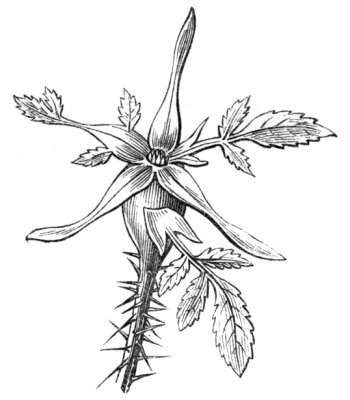
Fig. 75.—Leaf proceeding from hip of the Rose.
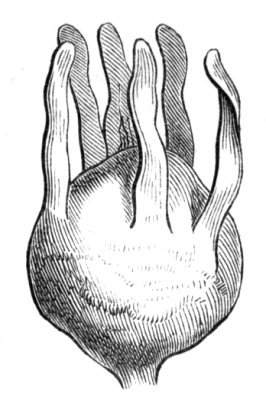
Fig. 76.—Leaves proceeding from the ovary of Nymphæa.
For other illustrations of increased leaf-formation, see Multiplication
of foliar organs.
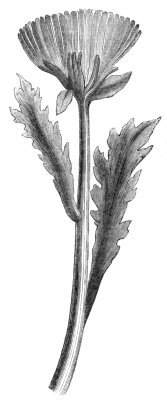
Fig. 77.—Leontodon. Scape with two leaves; the bracts of the involucre are also leafy.
Production of leaves on a usually leafless inflorescence.—The
development of the bracts of an inflorescence to such an extent that
they resemble ordinary leaves is elsewhere alluded to as of common
occurrence. It happens far less frequently that leaves are developed on
an inflorescence usually destitute of them, without any metamorphosis or
substitution, and without any formation of adventitious buds, such as
happens in prolification. Such a partial change from a floriferous to a
foliiferous branch may be seen in a specimen of Sambucus nigra in the
Smithian herbarium in the Linnean Society, where the ultimate branches
of the cyme bear small leaves. My attention was directed to this
specimen by the Rev. W. Newbould.
Jacquin figures an analogous case in Sempervivum sediforme,[152] in
which the branches of the inflorescence were prolonged into leafy
shoots.
Sometimes from the side of a flower-stalk or scape, which usually does
not bear leaves, those organs are produced. The common dandelion,
Taraxacum, sometimes offers an illustration of this, and also the
daisy (Bellis).[153] In a specimen of fasciated cowslip given me by
Mr. Edgeworth there was a similar formation of leaves on the flattened
stalk.
Production of leaves or scales in place of flower-buds.—The position of
the leaf and of the flower-buds respectively is, in most plants, well
defined, but occasionally it happens that the former is formed where,
under ordinary circumstances, the latter organ should be. This may
happen without the formation of any transitional organs between the two,
and without actual increase in the number of the buds. Where there is
evidently a passage from leaf-bud to flower-bud, or vice versâ, the
case would be one of metamorphy. If the number of buds be augmented, or
they be mixed with the flower-buds, then it would be referable to leafy
prolification of the inflorescence. There remains a class of cases
wherein there is a complete substitution of one structure for the other,
it may be without the slightest indication of transition between the
two, and without any admixture of leaf-buds among flower-buds, or any
absolute increase in the number of organs, as in Prolification. Such a
case is represented in fig. 78, which shows a portion of the stem of a
species of Valeriana, bearing at the summit, not an inflorescence, but
a tuft of leaves without the slightest indication of flowers.
Drs. Hooker and Thomson relate that in Northern India the flowers of
Anemone rivularis are very generally absent, and their place supplied
by tufts or umbels of leaves.[154] In the collection of the late Mr. N.
B. Ward was a specimen of lupin in which the flowers were all absent,
and their place supplied by tufts of leaves.
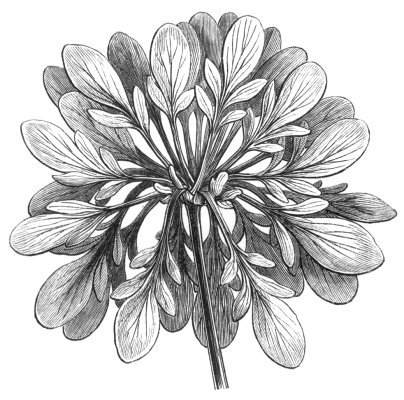
Fig. 78.—Tuft of leaves replacing the inflorescence in a species of Valeriana.
A similar appearance has been noticed in Compositæ, and I owe to the
kindness of Professor Oliver the communication of a specimen of a
species of Bidens from Peru, in which the capitula, instead of
consisting of florets, as usual, contained tufts of linear ciliolated
bracts within the involucre, without a trace of flowers. In the eleventh
volume of the 'Linnæa,' 1837, p. 301, Von Cesati figures and describes
an analogous case in Carduus crispus. The same author[1] records a
similar instance in the umbel of Seseli coloratum, where the place of
the flowers was occupied by stalked tufts of leaves. In the 'Gardeners'
Chronicle,' October 6th, 1860, p. 894, is mentioned an instance where
the blossoms of the pea were entirely absent, and their place supplied
by accumulations of small, ovate, green scales, thus presenting an
appearance similar to that brought about by the inordinate
multiplication of the sepals in the "wheat-ear carnation," and in the
Sweet William, and not unlike the condition met with in Bryophyllum
proliferum. In Digitalis purpurea a similar anomaly is sometimes met
with.
In the apple I have observed leafy shoots bearing terminal tufts of
leaves where the flower should have been, so that what, under ordinary
circumstances would be a corymb of flowers, is here represented by a
series of tufts of leaves. In the cultivated azaleas also, leafy shoots
occupying the position of the flower may occasionally be met with.
In Bouchea hyderabadensis I have seen the inflorescence more than
usually branched and covered with little tufts of bracts, without a
trace of true flower. A similar condition seems not infrequent in
Gentiana Amarella, as I have not only met with the plant myself in
this condition, but have been favoured with specimens by Mr. Pamplin,
Mr. Darwin, and others. In Phyteuma spicatum an analogous appearance
has been recorded.
Among Griffith's collections from Affghanistan is a species of willow
(Salix) in which the inflorescence replaced by a much branched
panicle, bearing a quantity of minute bracts, in the axils of which
nestle numerous small buds. In another specimen the inflorescence
preserves its usual catkin-like shape, but the flowers are replaced by
little tufts of leaves. M. Germain de Saint Pierre mentions a case
wherein the flowers of Alisma parnassifolia were completely replaced
by leaf-buds.[155]
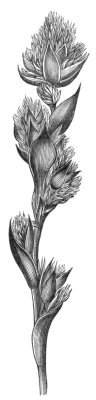
Fig. 79.—Spikelets of Willedenovia, composed entirely of scales to the exclusion of flowers.
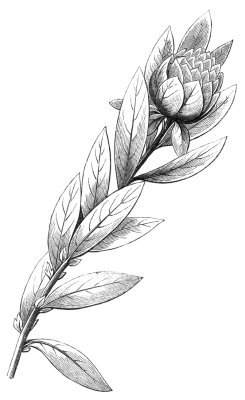
Fig. 80.—Rose Willow, Salix, sp.
Here, also, may be mentioned the curious aggregations of scales which
occur in some grasses, in Restiaceæ, Juncaceæ, and other orders, in
which the inflorescence is made up of collections of scales or bracts
with no trace of floral structure. Fig. 79 shows this in a species of
Willdenovia, and a very good example is figured in a bamboo,
Pseudostachyum polymorphum, by General Munro.[156]
"Rose willows" (fig. 80) owe their peculiar appearance to a similar
cause, the scales of the catkin being here replaced by closely crowded
leaves. These aggregations of scales or leaves are not confined to the
inflorescence, but may be found in other parts of the plant, and may be
frequently met with in the willow, birch, oak, &c., generally as the
result of insect puncture. On the other hand, the production of leaves
or leaf-buds in place of flowers is, as is well known, generally the
consequence of an excess of nutrition, and of the continuance rather
than of the arrest of vegetative development.[157] It has even been
asserted that a flower-bud may be transformed into a leaf-bud by
removing the pistil at a very early stage of development, but this
statement requires further confirmation.[158]
Viviparous plants.—The spikelets of certain grasses are frequently
found with some of their constituent parts completely replaced by
leaves, like those of the stem, while the true flowers are usually
entirely absent. A shoot, in fact, is formed in place of a series of
flowers. In these cases it generally happens that the outermost glumes
are changed, sometimes, however, even the outer and inner paleæ are
wholly unchanged, while there is no trace of squamulæ or of stamens and
pistils within them, but in their place is a small shoot with miniature
leaves arranged in the ordinary manner.
The grasses most commonly affected in this manner are Dactylis
glomerata!, Poa bulbosa!, Poa annua!, P. trivialis!,
pratensis!, alpina!, angustifolia, and laxa, Cynosurus
cristatus, Festuca nemoralis, F. ovina!, Glyceria fluitans!, Gl.
aquatica, Aira alpina!, cæspitosa!, Phleum phalaroides, Lolium
perenne!, Alopecurus pratensis!, Agrostis alba, Holcus mollis!
Fig. 81.—Portion of panicle of Aira vivipara and separate floret.
From an examination of the structure of viviparous grasses Von Mohl was
led to the conclusion that the lower palea is to be considered as a
bract, and not a perianthial leaf, because the base of the palea
surrounds the stem or axis of the spikelet entirely, and both its
margins cohere towards its lower extremity.[159]
A similar condition occurs not infrequently in Polygonum viviparum,
and in Juncaceæ, Cyperaceæ, &c.
In the genus Allium an analogous formation of little buds or bulbils
takes place in lieu of flowers; this is specially the case with A.
vineale, the flowers of which are rarely seen.
Other illustrations of a similar character, where the adventitious
leaf-buds are mixed in amongst the flower-buds, are cited under the head
of Prolification of the Inflorescence.
Formation of buds on leaves.—The formation of little bulbs upon the
surfaces or edges of leaves, forming what are called viviparous leaves,
has long been familiar to botanists amongst Alliums. Professor Alexander
Braun,[160] who has paid much attention to this subject, divides cases
of this kind according to the position of the buds; thus, for instance,
they are sometimes formed upon the upper portion of the leaf or petiole,
as in many ferns, in Nymphæa guineensis, some Arads, &c. The same
condition has been met with as a teratological occurrence in the leaves
of Cardamine pratensis, Hyacinthus Pouzolzii, Drosera
intermedia,[161] Arabis pumila, Chelidonium majus, Chirita
sinensis,[162] Episcia bicolor,[163] Zamia, &c.[164] Many species
of Begonia possess the power of emitting buds from the petioles and
veins of the leaf; the little ramenta or scales which so plentifully
beset the surface of some of these plants likewise, in some instances,
pass gradually into leaves. B. phyllomaniaca, Mart., is the species
best known as manifesting this tendency, but others have it also.[165]
Buds are also very often formed upon the margins of the leaf, the best
known instance of which occurs in Bryophyllum calycinum;
Weinmann[166] figures an instance of this kind in Alchemilla minima,
or they may occur upon the lower surface of the leaf, as in
Ornithogalum scilloides and longe-bracteatum. M. Duchartre[167]
mentions a case in the tomato in which the leaves gave origin to small
leaf-bearing branches, which, of course, must have originated from buds,
just in the same way as in the Drosera before mentioned.
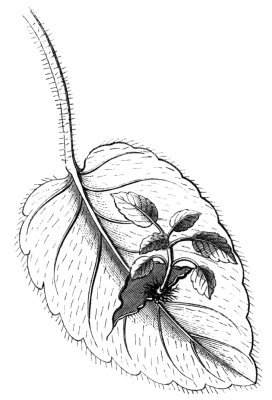
Fig. 82.—Formation of shoot on leaf of Episcia bicolor.
Gardeners occasionally avail themselves of this formation of buds from
leaves to propagate plants, e.g. Hoya, Gesnera, Gloxinia, &c.
Formation of buds in the pith.—This is said to be a normal condition
in the curious Stangeria paradoxa,[168] and Mr. Berkeley records an
instance of this in sea-kale[169] (fig. 83) where the crown had been
injured, and buds were seen sprouting from its centre.
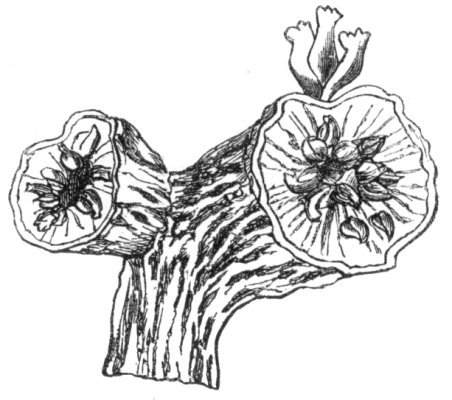
Fig. 83.—Adventitious buds in sea kale.
Fig. 84.—Hyacinth bulb cut across to induce the formation of new bulbs.
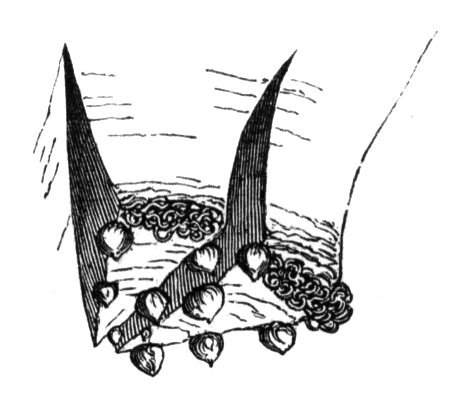
Fig. 85.—Showing the formation of new bulbs on the cut edges of an old hyacinth bulb.
It will be remarked that the adventitious production of buds, like that
of roots, is very often consequent on decay or injury. The Dutch
bulb-growers have availed themselves of this latter circumstance in the
propagation of hyacinths. Mr. Fortune, who published some articles on
this subject in the 'Gardener's Chronicle,'[170] describes two special
modes as adopted by these skilful horticulturists—the one to make two
or three deep cuts at the base of the bulb, destroying the nascent
flower-stalk when, after a time, small bulbs are formed along the edges
of the cut surfaces (figs. 84, 85). The other method is effected by
scooping out the interior of the base of the bulb, thus leaving exposed
the cut ends of the sheathing leaves arranged concentrically; along
these lines the new bulbs are, after some time, formed in great numbers
(fig. 86).
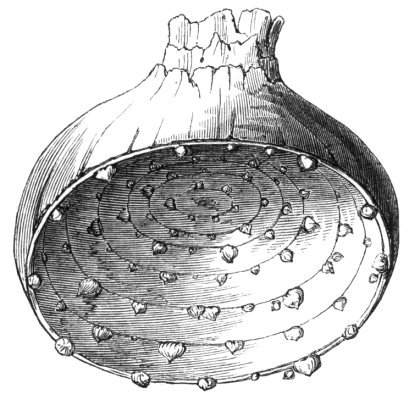
Fig. 86.—Showing the production of small bulbs on the inner surface of the scooped-out bulb of hyacinth.
For the formation of supernumerary leaves on the surface of the normal
one, see Multiplication and Hypertrophy.
Production of gemmæ in place of spores.—An instance of this is
recorded by Dr. Montagne[171] in the case of a moss, Encamptodon
perichætialis, in which, in the interior of the capsule, in lieu of
spores numerous minute gemmæ of the same nature as those in the cup of
Marchantia were seen.
Formation of flowers on leaves.—It is very doubtful whether a
flower-bud has ever been found actually on a leaf. Mere adhesion of the
pedicels of the leaf, such as happens in Ruscus, in Helwingia,
Erythrochiton hypophyllanthus, and a few other plants, is, of course,
not really to be considered in the light of an actual growth from the
leaf, and it is very doubtful in the present state of our knowledge
whether the case of the Nepaul barley should find a place here, but for
convenience sake it is placed in this section, as it is uncertain at
present where it properly belongs.
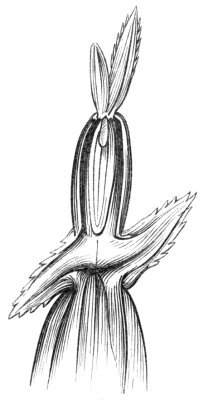
Fig. 87.—Three-lobed end of outer palea of Nepaul barley bearing supplementary florets.
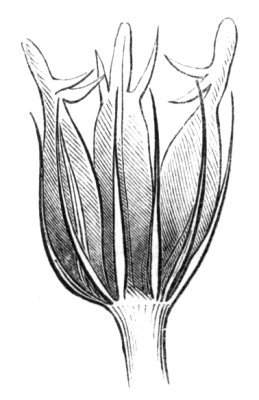
Fig. 88.—Three spikelets of Nepaul barley.
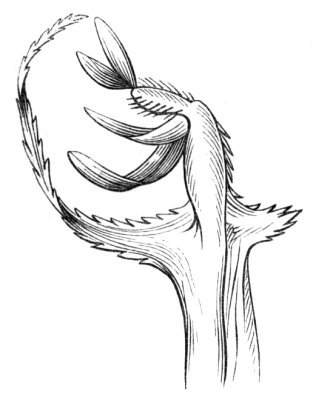
Fig. 89.—Lip of outer palea of Nepaul barley.
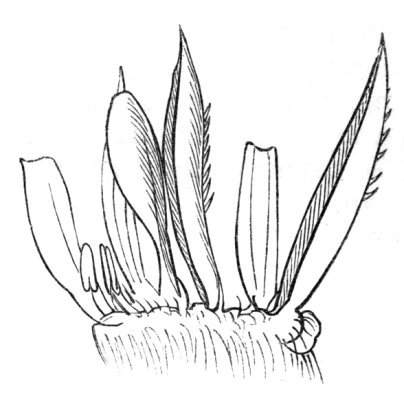
Fig. 90.—Supplementary rachillus or outer palea of Nepaul barley bearing florets.
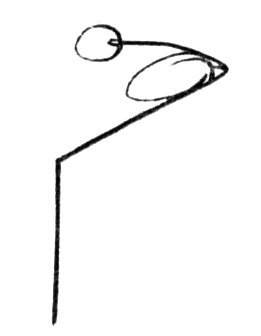
Fig. 91.—Diagram showing arrangement of supplementary rachillus and florets.
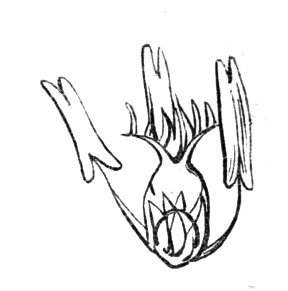
Fig. 92.—Supplementary floret of Nepaul barley; palea removed.
This curious plant has been described and figured by Irmisch in the
13th volume of the 'Linnæa,' p. 124, t. iv; also by Professor Henslow,
'Hooker's Journal of Botany,' 1849, vol. i, p. 33, tabs. 2, 3. The lower
palea of this plant forms an inverted flower-bud upon its midrib. In
some fresh specimens which I have lately examined I find the structure
to be as follows:—On each notch of the rachis there are three spikelets
(fig. 88), each one-flowered, and each provided with two linear glumes;
the outer palea in all cases is three-lobed at the summit, the central
lobe being oblong and hollow, forming a kind of hood (figs. 87–89), and
covered with hairs, which are directed downwards towards the centre of
the plant. The two lateral lobes are more pointed than the central one;
like it they are provided with hairs, but the hairs, in this case, are
turned away from the centre of the plant. The cavity of the side lobes
is generally empty, but that of the central lobe is occupied by a very
slender stalk, which is apparently the termination of the midrib, but
which is bent inwards at an acute angle, so as to occupy the hollow
space (figs. 90–91). On this slender axis are developed two florets,
more or less imperfect in their structure. Only one of the florets that
I have seen contained a perfect ovary. The tips of the lateral lobes of
the paleæ in the primary flower are sometimes extended into a long awn.
A similar awn may also be occasionally found on the tips of the paleæ of
the rudimentary florets. The occurrence of an adventitious axial
structure with rudimentary flowers has been adduced in support of the
opinion that the lower paleæ is, at least so far as its midrib is
concerned, an axial rather than a foliar structure, but in the present
uncertain state of our knowledge as to the morphology of grasses it is
hazardous to risk any explanation founded on so exceptional a case as
that of the Nepaul barley.[172]
Production of flower-buds in place of leaf-buds.—Under natural
circumstances this does not appear to be of so common occurrence as the
change above alluded to, but by the art of the gardener the change is
often effected. In rhododendrons and in peach trees and roses I have met
with this change occurring without human agency. The means adopted by
the gardener are such as check the luxuriance of the leaf-shoots,[173]
and this is effected in various ways, as by continuous "pinching" or
removal of the leaf-buds, by pruning, ringing the bark, confining the
roots, limiting the supply of nutriment, and other means all based on
the same principle. Some of the Cape bulbs (Cyrtanthus) are known not
to produce their flowers till their leaves have received, in some
manner, a check. Fires which often destroy the herbage thus have the
effect of throwing the plant into bloom. A very remarkable instance is
recorded of the production of flower-buds after an injury to the
leaf-buds in the 'Bulletin of the Botanical Society of France,' vol. ix,
p. 146. It appears that during the war of the French against the Arabs
in Algiers, the latter planted several hundreds of Agaves with a view to
obstruct the passage of the French cavalry. The soldiers hacked these
plants with their sabres, and cut out the central tuft of leaves, or the
heart, as gardeners call it. The following season almost every one of
these Agaves sent up their large handsome flower-spikes. It is well
known that, under ordinary circumstances, these plants do not flower
except at long intervals of time.
Presence of flowers on spines.—That the spine, as a contracted branch,
should occasionally produce flowers is not to be wondered at, though the
occurrence is by no means common. M. Baillon showed at a meeting of the
Botanical Society of France ('Bulletin,' vol. v, 1858, p. 316) a
branched spine of Gleditschia bearing a flower at the end of each of
the sub divisions. This was, therefore, strictly analogous with those
cases in which the peduncle is normally spiney.
Formation of flower-bud on the petals.—An instance of this, it is
believed, the only one on record, is cited in the 'Gardeners' Chronicle'
for 1865, p. 760, by the Rev. M. J. Berkeley, who describes the
formation of a flower-bud on the surface of a petal of Clarkia
elegans. Reasoning from analogy there seems no reason why buds should
not be formed on the petals as well as on the leaves.
Formation of buds on fruits.—This is a point of some moment with
reference to the share which the axis takes in the production of
"inferior" fruits. A very frequent malformation in pears is one wherein
a second pear proceeds from the centre of the first, and even a third
from the centre of the second.[174] Pears are occasionally also observed
arising either from the axils of the sepals of the primary pear or from
the axil of leaves originating on the outer surface of the fruits—using
the term fruit in its popular sense. These cases afford strong
confirmation of the view that the outer portion of the so-called fruit
in these plants is rather to be considered as an expansion and
hollowing-out of the flower-stalk, than as formed from the calyx-tube.
It is noteworthy that the true carpels and seeds are frequently entirely
absent in these cases.[175] Further reference to these fruits will be
made under the head of Hypertrophy.
M. Trécul has described and figured an instance in a species of
Prismatocarpus, in which a second flower proceeded from the axil of a
bract attached to the side of the fruit of the first flower.[176] A
similar growth was observed in the fruit of Philadelphus speciosus by
M. A. Gris, who observed that the so-called calyx-tube was provided with
two small bracts, from the axil of one of which proceeded a small
flower-bud.[177]
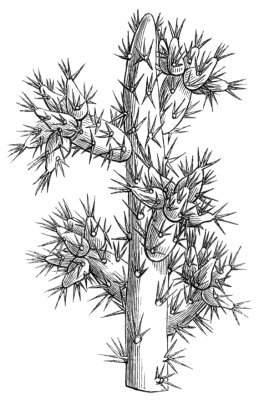
Fig. 93.—Small buds projecting from the edges of the fruit in Opuntia.
The fruits of Opuntia Salmiana, O. fragilis,[178] O. monacantha,
and of some species of Echinocactus, have been observed to form small
fruit-like branches around their summits. M. Napoléon Doumet describes
the fruit as ripening as usual, but as being destitute of seeds in the
interior; after a little while the fruit begins to wither, and then a
circle of small buds, like those of the stem, may be seen at the top of
the fruit, each bud springing from the axil of a little tuft of wool and
spines found on the fruit. These little buds elongate into long shoots,
produce flowers the following year, which flowers exhibit the same
peculiarity. Gasparini and Tenore are said to have recorded the same
fact as long since as 1832. The specimen from which the figure (fig. 93)
was taken produced its fruits in the Royal Gardens at Kew, and is now
preserved in the museum of that establishment. The adventitious growth
in these cases appears to arise from the tufts of spines, which, it has
been suggested, are the homologues of the sepals. There can, however, be
little doubt that the outer and lower portion of the fruit of Opuntia
and its allies is a dilatation of the flower-stalk. This is borne out by
the fruits of Pereskia, which bear leaves on their surface arranged
spirally; indeed, the fruits of Pereskia Bleo are mentioned as
producing buds from their summits, in the same way as the Opuntia
just cited. P. Bleo is said, by M. Delavaud,[179] to present this
anomaly as a constant occurrence. On the summit of the primary fruit,
arising apparently from the axils of the sepals, or of small leafy
bracts in that situation, are a series of fruit-like branches, which, in
their turn, are surmounted by others, even to the fourth generation.
The fruits of Tetragonia expansa frequently have attached to their
side a secondary flower or fruit in such a position as to lead to the
inference that it springs from the upper portion of the peduncle which
is dilated to invest the true carpels. In other instances it is due to
an adhesion of the pedicel to the side of the fruit. In either case the
production of an adventitious bud might be considered as an illustration
of prolification of the inflorescence, though not as was supposed by
Moquin and others of axillary prolification.[180]
Buds have also been produced artificially on the surface of some of the
fruits in the construction of which the axis is supposed to share; thus,
the unripe fruits of some species of Lecythis were stated by Von
Martius, at a meeting of the German Naturalists at Carlsruhe, to produce
buds when placed in the earth. The fruit of these plants is probably of
the same nature as that of the Pomaceæ, and Baillon[181] succeeded in
producing buds on the surface of the inferior ovary of Jussiæa.
Some of the cases just mentioned have been considered to be instances of
prolification of the fruit, but the fruit has little to do with the
appearances in question.
Formation of adventitious flowers and fruits within the ovary.—This
generally arises either from substitution of a flower-bud for an ovule
or from prolification; there are certain cases, however, where the new
growth seems not to be either due to metamorphosis or to prolification
strictly.
The cut, fig. 94, represents a case where, in the dilated upper portion
of the ovary of Sinapis arvensis, two flower-buds were found
projecting from a raised central line, corresponding, as it would seem,
to the midrib, and not to the margins of the carpel. Similar cases have
occurred in Nasturtium amphibium, Brassica Rapa, and Passiflora
quadrangularis.
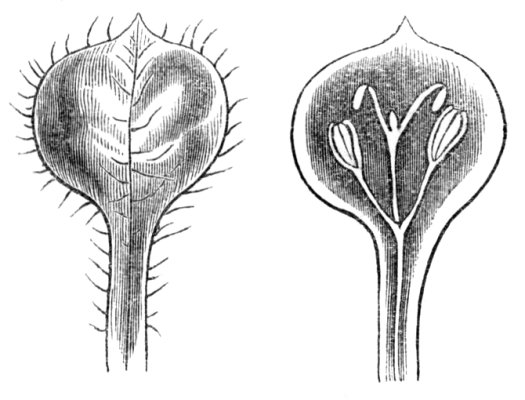
Fig. 94.—Distended pod of Sinapis arvensis bearing in the interior stalked flower buds.
In Bromfield's 'Flora Vectensis,' p. 35, the following account is given
of an abnormal development in Cardamine pratensis: "On the lower part
of the corymb were several seed vessels on pedicels changed from their
usual linear to an ovate elliptical figure, so as to resemble a
silicula. These, on being opened, were found to contain petals of the
usual colour, which in the pods above had burst from their confinement
and appeared as semi-double flowers; the valves of the pod answering to
the true calyx. * * * From their verticillate arrangement it is evident
that these petaloid expansions were not transformed seeds, but simply a
development of the common axis within the ovary into an abortive whorl
of floral organs, besides which there were evident rudiments both of
stamens and germens in the centre of the bundle." Baillon[182] also
records a case of the same nature in Sinapis arvensis.
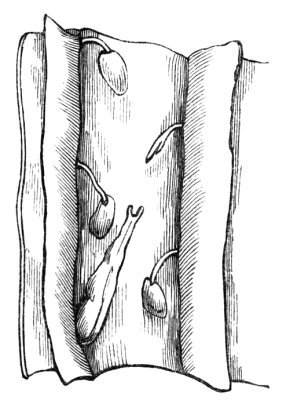
Fig. 94*.—Portion of the interior of the silicle in Cheiranthus Cheiri, showing adventitious pod in the place of an ovule.
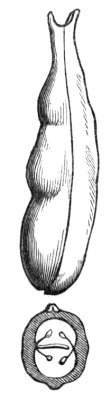
Fig. 95.—Adventitious pod from fig. 94, enlarged.
Here, too, may also be mentioned the presence of an adventitious siliqua
within the ordinary one attached along the same line as the ovules, and
partially divided by a replum into two cavities. In this case there was
nothing to indicate the presence of floral envelopes (figs. 94, 95). A
similar occurrence has been brought under my notice in some grapes which
were observed to be cracking before they were perfectly ripe, and in
which adventitious fruits were found within the parent grape, occupying
the position of seeds (figs. 96, 97).
Similar anomalous growths are noticed under the heads of Substitution
and Prolification.
Formation of stamens within the cavity of the ovary.—The only instance
of this that has come under the author's observation occurred in some
flowers of Bæckea diosmæfolia, Rudge, for an examination of which he
is indebted to Mr. Bentham.
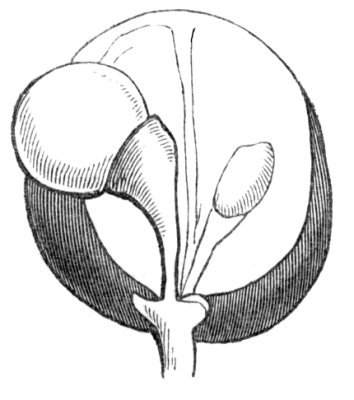
Fig. 96.—Section of Barbarossa grape showing adventitious grape in the position of a seed.
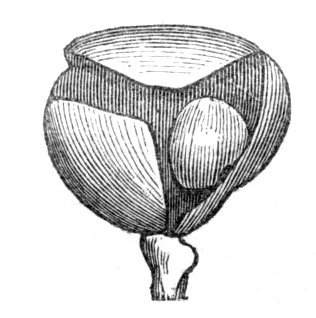
Fig. 97.—Grape with supplementary fruit in the interior
In the normal flower there is a turbinate hollow calyx, whose limb is
divided into five serrated lobes; alternating with these latter, and
springing from the throat of the calyx, are the petals. Originating from
the same annular disk as the petals are the stamens, seven or eight in
number. The ovary is partially adherent, is surmounted by a style, and
has two or three loculi with an axile placenta, to which several small
curved ovules are attached. The malformed flowers did not present
anything peculiar in their outer parts, nor did the ovary, partially
immersed within the expanded top of the flower-stalk and the calyx-tube,
which is continuous with that organ, show externally any indication of
the change within. On cutting it across, however, in any direction,
numerous perfect stamens (filaments and anthers) were seen projecting
from the walls of the cavity (fig. 98). In most of the flowers the ovary
was one-celled; but in a few there was the usual axile placenta; yet
even in these latter cases the stamens originated from the walls of the
cavity, and not from the placenta. The stamens presented different
degrees of development; in some cases they were fully formed, the
anther-lobes open, and the pollen exposed; while in other instances the
filaments were involute or circinate, just as the ordinary stamens are
in the unexpanded flower-bud. In some cases imperfect stamens were
found, mere barren filaments, with or without rudimentary anthers at the
top. In no instance was there a perfect ovule, or, indeed, any trace of
ovules. The stamens appeared to be arranged irregularly on the walls of
the ovarian cavity; and while they were certainly more numerous at the
lower portion (that now generally considered to be formed by the
cup-like end of the pedicel), they were not wanting in the upper half of
the ovary (or that which is probably formed from the carpellary leaves).
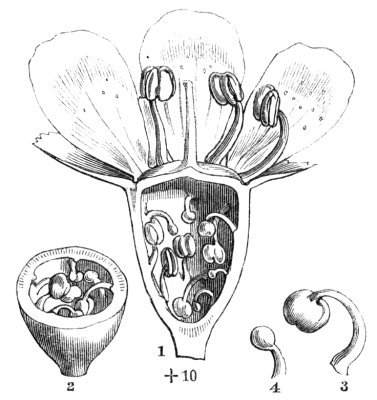
Fig. 98.—1. Vertical section of flower of Bæckea diosmæfolia, showing stamens within the ovary; magnified ten times. 2. Transverse section of ovary. 3. Stamen. 4. Imperfect stamen.
This case differs from most that have been recorded, and in which there
has been a more or less complete substitution of anther for carpel, or
where the tissues of the carpel have produced pollen, and so taken upon
themselves the appearance and functions of anthers. Instances of this
latter kind are not uncommon; but in the Bæckea there were perfect
stamens proceeding from perfect and completely closed ovaries.
Moquin-Tandon[183] cites from Agardh an instance which seems more
closely to resemble the state of things in the Bæckea, and which
occurred in a double hyacinth, wherein both anthers and ovules were
borne on the same placenta. Probably, though the fact is not stated, the
ovary of the hyacinth was open; and we are told that the flower was
double—that it was, in fact, modified and changed in more organs than
one; while in the Bæckea nothing at all unusual was observed till the
ovary was cut open. The style was present even in those flowers where
there was no axile placenta; hence in these cases it could not be, as
Lindley stated it to be in the closely allied Babingtonia, a
prolongation of the placenta.[184]
Formation of pollen within the ovules.—This has now been recorded in
two instances by Mr. S. J. A. Salter in Passiflora cærulea and in P.
palmata,[185] and by the author in Rosa arvensis.[186]
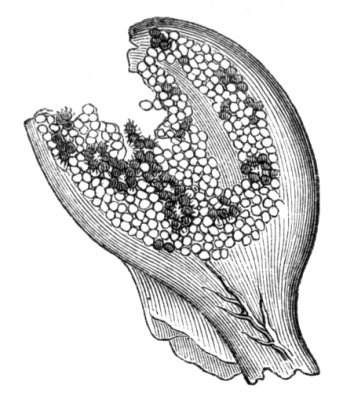
Fig. 99.—Pollen within the ovule of Passiflora (after Salter).
In the case of the passion-flower there were various malformations in
the ovaries, which were all more or less split open at the distal end,
indicating a tendency towards dialysis. The pollen-bearing ovules were
borne on the edges of these ovaries, and presented various intermediate
conditions between anthers and ovules, commencing at the distal
extremity of the carpel with a bi-lobed anther, and passing in series to
the base of the ovary, an antheroid body of ovule-like form, a modified
ovule containing pollen, an ovule departing from a perfectly natural
condition only in the development of a few grains of pollen in its
nucleus, and, finally, a perfect, normal ovule.
In the flowers of the Rose the stamens exhibited almost every
conceivable gradation between their ordinary form and that of the
carpels, while some of the ovules contained pollen in greater or less
abundance. Speaking generally, the most common state of things in these
flowers was the occurrence on the throat of the calyx, in the position
ordinarily occupied by the stamens, and sometimes mingled with those
organs, of twisted, ribbon-like filaments, which bore about the centre
one or more pendulous, anatropous ovules on their margins. Immediately
above the latter organs were the anther-lobes, more or less perfectly
developed, and surmounting these a long style, terminating in a fringed,
funnel-shaped stigma. Sometimes the ovules were perfect, at other times
the nucleus protruded through the foramen, while in a third set the
nucleus was included within the tegument, the ovules having in all
respects their natural external conformation, containing, however, not
only pollen-grains, but also a layer of those peculiar spheroidal cells,
including a fibrous deposit, which are among the normal constituents of
the anther. In one case, where the coat of the ovule was imperfect, and
allowed the nucleus to protrude, the pollen was evidently contained
within the central mass of the structure. In this instance the fibrous
cells were not detected, these being only found in cases where the
investment of the ovule was perfect; and hence it seems likely that the
fibrous cells were part of the coat of the ovule, while the pollen was
formed within the nucleus. In no case was any trace of embryo sac to be
seen.
The main interest, as Mr. Salter remarks, in these cases is
physiological; so far as structure alone is concerned, there does not
appear any reason why pollen-grains should not be developed in any
portion of the plant; the mother cells in which the pollen is formed not
differing, to all outward appearance, from any other cells, unless it be
in size.
The fundamental unity of construction in all the organs of plants could
hardly be better illustrated than by these cases; while, in spite of
their exceptional nature, they must be of great interest
physiologically, as showing the wide limits of possible variation which
thus may even involve the sex, "for an ovule to develop pollen within
its interior," says Mr. Salter, "is equivalent to an ovum in an animal
being converted into a capsule of spermatozoa. It is a conversion of
germ into sperm, the most complete violation of individuality and unity
of sex. * * * * The occurrence of an antheroid ovule and a normal ovule
on the same carpellary leaf realises the simplest and the most absolute
form of hermaphroditism."
It must, however, be remarked that the term substitution would be
preferable to conversion. There is, at present, no evidence to show that
the germinal vesicles were present in these cases; on the other hand, it
seems most probable that they were not, so that the presence of the
pollen-cells must be considered as simply adventitious. It can hardly be
that they were, in the first instance, germinal vesicles, which, in
course of time, became so modified as to assume the appearance of
pollen-grains. Between the nucleus of the ovule and the tubercle of
cellular tissue constituting the primordial anther, there is little or
no difference, so that it may be said that, for a time, there is no
distinction of sex in the nascent flower, but as development goes on,
the difference becomes perceptible. It cannot at present be stated what
precise circumstances induce the one mass to form mother-cells and
pollen-grains, and the other to develop an embryo sac and germinal
vesicles. Position and external circumstances may have some indirect
effect, and it may, perhaps, be significant that in all the instances of
polliniferous ovules, the ovular structures have been exposed on an open
carpel or otherwise, in place of being confined within the cavity of a
closed ovary, as under ordinary circumstances. Even among Conifers the
ovuligerous scales are so closely packed that there is little or no
exposure of the ovules. But, apart from all speculative notions as to
the relation between the structure and functions of the anther and of
the ovule respectively, and of the possibility or the reverse of
parthenogenesis, it will clearly be necessary in any future alleged
occurrence of the latter phenomenon to ascertain whether any or all of
the apparent ovules are, or are not, anthers in disguise.
Homomorphic flowers of "Compositæ."—In a large section of the
Compositæ there is, as is well known, a distinction between the
florets of the "disc" and those of the "ray," the latter being ligulate,
the former tubular.
In what are erroneously called double flowers in this order, e.g. in
the Chrysanthemum, Dahlia, &c. &c., the florets are all ligulate. This
change is sometimes classed with peloria, but there is no abnormal
regularity in these cases. On the other hand, were the ligulate florets
to be all replaced by tubular ones, the term peloria would be more
strictly applicable. It will be remembered that in the sub-order
Ligulifloræ, the florets are naturally all ligulate, so that the
change above mentioned is not in itself a very grave one.
Heterotaxy affecting the inflorescence.—Under the head of
Prolification, Heterogamy, &c., various deviations from the normal
inflorescence are alluded to. In this place, therefore, it is only
necessary to mention certain rare deviations from the customary
arrangement of the inflorescence, such as the change from a definite
centrifugal form of inflorescence to an indefinite centripetal one. This
occurs occasionally in roses, where the shoot, instead of terminating in
a flower-bud, lengthens and bears the flower-bud on its sides as in a
raceme.
In the hyacinth, the inflorescence of which is properly indefinite, the
terminal flower may frequently be found to expand first, though in order
of development it may have been the last formed.
It occasionally happens that certain plants will, contrary to their
usual custom, bloom twice in the same season; this usually arises from
the premature development of buds which, under ordinary circumstances,
would not unfold till the following spring. In these instances of what
the French term "fleuraison anticipée," the position of inflorescence is
not changed, but there are other cases where the position of the
inflorescence is altered, as in the laburnum, where, in some seasons,
racemes may be seen springing from short lateral "spurs" along the sides
of the branches, as well as from the extremities of long shoots.
Of a similar nature are those cases wherein stems or branches usually
sterile become fertile; this happens in Equisetaceæ,[187] in
Restiaceæ, and other orders. In the equisetums, the condition in
question has been specially noticed to occur after prolonged drought.
Equisetaceæ are likewise subject to an anomaly called by Duval Jouve
interruption of the spike, and wherein the scales bearing the spore
cases are separated by whorls of branches instead of forming one compact
unbroken spike as usual.
This alternation of the organs of vegetation and reproduction may also
be seen occasionally in Typha, and other plants.
Kirschleger describes a case in which the male catkins of Salix
cinerea were placed at the ends of the branches instead of being
lateral productions; moreover the usual articulation was not formed, so
that the catkin was persistent instead of deciduous.[188]
Supra-soriferous ferns.—In the great majority of ferns the sori or
clusters of spore cases are placed on the under surface of the fronds;
nevertheless, a few cases are on record where the fructification is
produced on the upper as well as on the lower surface, and sometimes
abundantly so. This occasionally happens from the elongation of the
normally placed sorus, which thus extends to the margin, and returns on
the upper side, when the sori chance to be placed opposite to the
marginal crenatures. But it is also frequently the case that the sori
are produced on the upper side, distinctly within the margin, and where
there are no corresponding sori beneath. Those varieties which have the
margin crenated or lobed seem most liable to assume this abnormal
supra-soriferous condition. Among the ferns in which this condition has
been observed are the following: Scolopendrium vulgare, Polypodium
anomalum, Hook., Asplenium Trichomanes, Cionidium Moorei.[189]
This term is here intended to apply to all those cases in which the
arrangement of the sexual organs is different from what it is
habitually. It is evident that in many instances there is no
malformation, no monstrosity, but rather a restoration of organs
habitually suppressed, a tendency towards structural completeness
rather than the reverse. It must be also understood that the following
remarks apply to structural points only, and are not intended to include
the question of function. The occurrence of heteromorphic unions renders
it necessary to keep in mind that plants hermaphrodite as to structure
are by no means necessarily so as to function.
The simplest case of this alteration in the relative position of the
sexes is that which occurs in monœcious plants, where the male and
female flowers have a definite position, but which in exceptional
instances is altered.
Change in the relative position of male and female flowers may thus
occur in any monœcious plant. Cultivated maize, Zea Mays,
frequently exhibits alterations of this kind; under ordinary
circumstances, the male inflorescence is a compound spike, occupying the
extremity of the stem, while the female flowers are borne in simple
spikes at a lower level, but specimens may now and then be found where
the sexes are mixed in the same inflorescence; the upper branching
panicle usually containing male flowers only, under these circumstances,
bears female flowers also.[190] In like manner, but less frequently, the
female inflorescence occasionally produces male flowers as well.
Among the species of Carex it is a common thing for the terminal spike
to consist of male flowers at the top, and female flowers at the base;
the converse of this, where the female flowers are at the summit of the
spike, is much more uncommon. An illustration of this occurrence is
given in the figure (fig. 100). Among the Coniferæ numerous instances
have been recorded of the presence of male and female flowers on the
same spike, thus Mr. now Professor Alexander Dickson exhibited at the
Botanical Society of Edinburgh in July, 1860, some malformed cones of
Abies excelsa, in which the inferior part of the axis was covered with
stamens, whilst the terminal portion produced bracts and scales like an
ordinary female cone. The stamens of the lower division were serially
continuous with the bracts above. Some of the lower scales of the female
portion were in the axils of the uppermost stamens, which last were
somewhat modified, the anther cells being diminished, whilst the
scale-like crest had become more elongated and pointed, in fact, more or
less resembling the ordinary bracts.[191] Mohl, Schleiden, and A. Braun
have observed similar cones in Pinus alba, and Cramer figures and
describes androgynous cones in Larix microcarpa. C. A. Meyer ('Bull.
Phys. Math.,' t. x, 1850) also describes some catkins of Alnus
fruticosa which bore male flowers at the top, and female flowers at the
base.
Fig. 100.—Spike of Carex acuta, with female flowers at the summit.
On the subject of this section the reader may consult A.
Braun,. 'Das Individ.,' 1853, p. 65. Caspary, 'De Abietin.
flor. fem. struct. morphol.' Schleiden. 'Principles,' English
edition, p. 299. Mohl, 'Verm. Schrift.,' p. 45. Meyen in
'Wiegm. Archiv.,' 1838, p. 155. Cramer, 'Bildungsabweich,' p.
4, tab. v, figs. 13–17. Parlatore, 'Ann. Sc. Nat.,' ser. iv,
vol. xvi, p. 215, tab. 13a. See also under the head of
Prolification, Substitutions, &c.
Change from the monœcious to the diœcious condition.—This is of
less frequent occurrence than might have been anticipated. In the
'Gardeners' Chronicle,' 1847, pp. 541 and 558, several instances are
noted of walnut trees bearing female flowers to the exclusion of males.
The mulberry tree has also been noticed to produce female blossoms only,
while in other plants male flowers only are developed.
It seems probable that the age of the plant may have something to do
with this production of flowers of one sex to the exclusion of the
other.
Change from the diœcious to the monœcious
condition.—Androgynism.—This is of far more common occurrence than the
preceding.
Fig. 101.—Monœcious inflorescence of Hop.
In the hop (Humulus Lupulus), when monœcious, the female catkins
are usually borne on the ends of the branches as shown in the cut (fig.
101), and a similar thing has been noticed in Urtica dioica by Clos,
'Bull. Soc. Bot. France,' vol. 9, p. 7.
Baillon ('Etudes du groupe des Euphorbiacées,' p. 205) mentions the
following species of that order as having been seen by him with
monœcious inflorescence: Schismatopera distichophylla, Mozinna
peltata, Hermesia castaneifolia. Oliver mentions ('Hook. Icon.
Plant.,' t. 1044) that in Leitneria floridana the upper scales of the
male catkin occasionally subtend an ovary.
It would seem that external conditions have some effect in determining
the formation of one sex, as in some species of Carex, while in the
case of Salix repens, Hampe[192] says that when grown partially or for
a time under water, those twigs which are thrust up above the surface
bear female flowers, while those twigs that blossom after the water is
dried up, produce male flowers only.
Carrière[193] says that a plant of Stauntonia latifolia which for some
years produced stamens only, now produces flowers of both sexes; it was
diœcious, but is now monœcious. The same author alludes to a
similar occurrence in Juniperus Virginiana. The hops is also said to
vary in sexual characteristics from time to time.[194] In addition to
the genera, already named, in which this production of flowers of both
sexes has been observed may be mentioned Taxus! Gunnera! Urtica!
Mercurialis! Restio! Cannabis! Salix! Humulus! as well as others in
which the change is less frequent.
Among cryptogams a similar change occurs. As an illustration may be
cited Leucobryum giganteum, as quoted from Müller in Henfrey's
'Botanical Gazette,' i, p. 100.
As to androgynous willows, in addition to the references given
under the head of Substitution of stamens for pistils, see
Schlechtendal, 'Flora Berol.,' ii. p. 259. Tausch, 'Bot.
Zeit.,' 1833, i. p. 229. Koch, 'Synops. Flor. Germ.,' 740.
Host, 'Flor. Aust,.' ii, p. 641 (S. mirabilis). See also
Hegelmaier, 'Württemberg Naturwissenshaft Jahreshefte,' 1866,
p. 30. Other references to less accessible works are given in
'Linnæa,' xiv, p. 372.
Change from hermaphroditism to unisexuality.—Many flowers ordinarily
hermaphrodite as to structure, become unisexual by the abortion or
suppression of their stamens, or of their carpels, as the case may be.
This phenomenon is lessened in interest since the demonstration of the
fact by Darwin and others, that many plants, structurally hermaphrodite,
require for the full and perfect performance of their functions the
cooperation of the stamens and pistils, belonging to different
individuals of the same species.
Some of the Ranunculaceæ constantly exhibit a tendency towards the
diœcious condition, and the rarity with which perfect seeds of
Ranunculus Ficaria are formed is to be attributed, in great measure,
to the deficiency of pollen in the anthers of these flowers. Ranunculus
auricomus also is frequently sterile. Specimens of Ranunculus
bulbosus may be met with in which every flower is furnished with
carpels, most of which have evidently been fertilised, although there
are no perfect stamens in the flowers.
Knight and other vegetable physiologists have been of opinion that a
high temperature favours the production of stamens, while a lower degree
of heat is considered more favorable to the production of pistils, and
in this way the occurrence of "blind" strawberries has been accounted
for. Mr. R. Thompson, writing on this subject, speaks of a plantation of
Hautbois strawberries which in one season were wholly sterile, and
accounts for the circumstance as follows: the plants were taken from the
bearing beds the year previous, and were planted in a rich well-manured
border, in which they started rapidly into too great luxuriance, the
growth being to leaves rather than to fruit. The following season these
same plants bore a most abundant crop, hence these plants were
accidentally prevented from perfecting their female organs.[195]
Mr. Darwin[196] cites from various sources the following details
relating to strawberries which it may be useful to insert in this place,
as throwing some light upon the production of unisexual flowers.
"Several English varieties, which in this country are free from any such
tendency, when cultivated in rich soils under the climate of North
America commonly produce plants with separate sexes. Thus, a whole acre
of Keen's seedlings in the United States has been observed to be almost
sterile in the absence of male flowers; but the more general rule is,
that the male plants over-run the females.... The most successful
cultivators in Ohio plant, for every seven rows of pistillate flowers,
one row of hermaphrodites, which afford pollen for both kinds; but the
hermaphrodites, owing to their expenditure in the production of pollen,
bear less fruit than the female plants."
Stratiotes aloides has been said to produce its carpels with greater
abundance towards the northern limits of its geographical distribution,
and its stamens, on the other hand, are stated to be more frequently
developed in more southern districts.
Honckenya peploides affords another illustration of the sexual
arrangements in the flower being altered as it would seem by climatal
conditions. Thus, in the United States, according to Professor Asa Gray,
the flowers are frequently hermaphrodite, while in this country they are
usually sub-diœcious.[197]
Treviranus[198] says that the flowers of Hippuris and Callitriche
are apt to be hermaphrodite in summer, but female only at a later
period.
For further remarks on this subject, see sections relating to
suppression of stamens and pistils.
Change from unisexuality to hermaphroditism.—This occurrence depends on
one of two causes, either organs are developed (stamens or pistils as
the case may be), which are habitually absent in the particular flower;
or some of the stamens may be more or less completely converted into or
replaced by pistils, or vice versâ.
The first condition is the opposite of suppression; it is, as it were, a
restoration of symmetry, and might be included under the head of regular
peloria, inasmuch as certain organs which habitually undergo suppression
at a certain stage in their development, by exception, go on growing,
and produce a perfect, instead of an imperfect flower. In teratological
records it is not always stated clearly to which of the two above-named
causes the unusual hermaphroditism belongs, though it is generally easy
to ascertain this point. Very many, perhaps all, diclinous flowers may,
under certain conditions, become perfect, at least structurally. I have
myself seen hermaphrodite flowers in Cucurbita,[199] Mercurialis,
Cannabis, Zea Mays, and Aucuba japonica, as well as in many
Restiaceæ, notably Cannamois virgata and Lepyrodia hermaphrodita.
Spinacia oleracea, Rhodiola rosea, Cachrys taurica, and Empetrum
nigrum are also occasionally hermaphrodite.
Gubler[200] alludes to a similar occurrence in Pistacia Lentiscus,
wherein, however, he adds that there was a deficiency of pollen in the
flowers.
Schnizlein[201] observed hermaphrodite flowers in the beech, Fagus
sylvatica, the ovaries being smaller than usual, and the stamens
epigynous.
Baillon[202] enumerates the following Euphorbiaceæ as having
exceptionally produced hermaphrodite flowers, Crozophora tinctoria,
Suregada sp., Phyllanthus longifolius, Breynia sp., Philyra
brasiliensis, Ricinus communis, Conceveiba macrophylla, Cluytia
semperflorens, Wall, non Roxb. Mercurialis annua and
Cleistanthus polystachyus.
In some of these cases the hermaphroditism is due to the development of
anthers on the usually barren staminodes, though, in other cases, the
stamens would seem to be separate, independent formations, as they do
not occupy the same relative position that the ordinary stamens would do
if developed.[203]
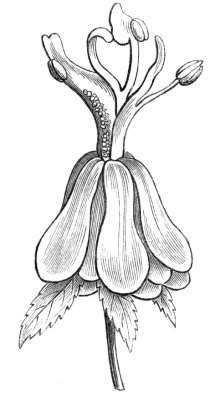
Fig. 102.—Flower of Fuchsia in which the calyx was leafy, the petals normal (reflexed in the figure), the stamens partially converted into ovaries, the ordinary inferior ovary being absent. See Substitution.
Robert Brown[204] observed stamens within the utricle of Carex acuta,
and Gay is stated by Moquin ('El. Ter. Veg.,' p. 343) to have observed
a similar occurrence in Carex glauca.
Paasch[205] observed a similar occurrence in C. cæspitosa, and
Schauer, in C. paludosa,[206] though in the latter instance the case
seems to have been one of transformation or substitution rather than one
of hermaphroditism.
The second cause of this pseudo-hermaphroditism is due either to the
more or less perfect mutation of male and female organs, or it may be to
the complete absence of one and its replacement by another, as when out
of many stamens, one or more are deficient, and their places occupied by
carpels. This happens very frequently in willows and poplars, and has
been seen in the beech.[207]
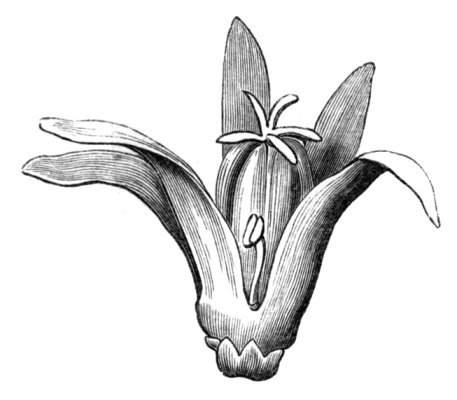
Fig. 103.—Hermaphrodite flower of Carica Papaya.
In Begonia frigida[208] the anomaly is increased by the position of
the ovaries above, the perianth, a position due, not to any solution or
detachment of the latter from the former, but simply to the presence of
ovaries where, under ordinary circumstances, stamens only are formed,
as happened also in a garden variety of a Fuchsia, wherein, however,
the change was less perfect than in the Begonia, and in which, as the
flower is naturally hermaphrodite, the alteration is of the less
importance.
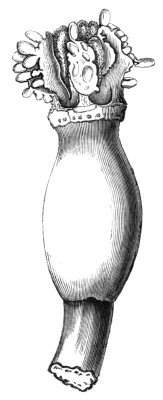
Fig. 104.—Ovuliferous anthers—Cucurbita.
In hermaphrodite flowers of Carica Papaya (fig. 103) there is a single
row of five stamens instead of two rows of five each as in the normal
male flowers, the position of the second or inner row of stamens being
occupied by five carpels, which, however, are not adherent to the
corolla as the stamens are, thus, supposing the arrangement of parts in
the normal male flowers to be as follows:
     ---------------------------
       S    S    S    S    S
     ---------------------------
    |    p    p    p    p    p
    |
    | st   st   st   st   st
    |
    |    st   st   st   st   st
    |
That of the hermaphrodite blossoms would be, in brief, as follows:
    | 5    S
    |------------
    | 5        p
    |
    | 5    st
    |
    | 5        c
    |
One of the most curious cases of this kind recorded is one mentioned by
Mr. Berkeley,[209] wherein a large white-seeded gourd presented a
majority of flowers in which the pollen was replaced by ovules. It would
seem probable from the appearances presented by the figure that these
ovules were, some of them, polliniferous, like those of the
Passiflora, &c., described at p. 185, but nothing is stated on the
subject.
See also section on Regular Peloria, Substitution, Pistillody of the
stamens, &c.
The deviations from the ordinary direction of organs partake for the
most part more of the nature of variations than of absolute malposition
or displacement. It must also be borne in mind how frequently the
direction of the leaves, or of the flower, varies according to the
stage of development which it has arrived at, to unequal or
disproportionate growth of some parts, or to the presence of some
impediment either accidental or resulting from the natural growth of the
plant. These and other causes tend to alter the direction of parts very
materially.
Change in the direction of axile organs, roots, stems, &c.—The roots
frequently exhibit good illustrations of the effect of the causes above
mentioned in altering the natural direction. The roots are put out of
their course by meeting with any obstacle in their way. Almost the only
exception to the rule in accordance with which roots descend under
natural circumstances, is that furnished by Trapa natans, the roots of
which in germination are directed upwards towards the surface of the
water. So in Sechium edule, the seed of which germinates while still
in the fruit, the roots are necessarily, owing to the inverted position
of the embryo, directed upwards in the first instance.
A downward direction of the stem or branches occurs in many weak-stemmed
plants growing upon rocks or walls, or in trees with very long slender
branches as in Salix Babylonica, and the condition may often be
produced artificially as in the weeping ash.
The opposite change occurs in what are termed fastigiate varieties,
where the branches, in place of assuming more or less of a horizontal
direction, become erect and nearly parallel with the main stem as in the
Lombardy poplar, which is supposed to be merely a form of the black
Italian poplar.
M. de Selys-Longchamps has described a similar occurrence in another
species of Poplar (P. virginiana Desf.), and amongst a number of
seedling plants fastigiate varieties may frequently be found, which may
be perpetuated by cuttings or grafts, or sometimes even by seed; hence
the origin of fastigiate varieties of elms, oaks, thorns, chestnuts, and
other plants which may be met with in the nurseries.
Sometimes when the top of the main stem is destroyed by disease or
accident, one of the heretofore lateral shoots takes its place, and
continues the development of the tree in the original direction. It is
often an object with the gardener to restore the symmetry of an injured
tree so that its beauty may ultimately not be impaired.[210]
Climate appears sometimes to have some influence on the direction of
branches, thus Dr. Falconer, as quoted by Darwin,[211] relates that in
the hotter parts of India "the English Ribston-pippin apple, a Himalayan
oak, a Prunus and a Pyrus all assume a fastigiate or pyramidal habit,
and this fact is the more interesting as a Chinese tropical species of
Pyrus naturally has this habit of growth. Nevertheless many of the
fastigiate varieties seen in gardens have originated in this country by
variation of seeds or buds."
M. Carrière has also recorded a curious circumstance with reference to
the fastigiate variety of the false acacia Robinia pseudacacia; he
states that if a cutting or a graft be taken from the upper portion of
the tree, the fastigiate habit will be reproduced, and the branches will
be furrowed and covered with short prickles; but if the plant be
multiplied by detaching portions of the root-stock, then instead of
getting a pyramidal tree with erect branches, a spreading bushy shrub is
produced, with more or less horizontal, cylindrical branches, destitute
of prickles.[212]
Eversion of the axis.—In the case of the fig, the peculiar
inflorescence is usually explained on the supposition that the
termination of the axis becomes concave, during growth, bearing the true
flowers in the hollow thus formed. The cavity in this case would
probably be due not to any real process of excavation, but to a
disproportionate growth of the outer as contrasted with the central
parts of the fig. Some species of Sempervivum have a similar mode of
growth, so that ultimately a kind of tube is formed, lined by the
leaves, the central and innermost being the youngest. The hip of the
Rose may be explained in a similar manner by the greater proportionate
growth of the outer as contrasted with the central portions of the apex
of the flower-stalk. In cases of median prolification, already referred
to, the process is reversed, the central portions then elongate into a
shoot and no cavity is formed. A fig observed by Zuccarini (figs. 105,
106) appears to have been formed in a similar manner, the flower-bearing
summit of the stalk not being contracted as usual, the flowers projected
beyond the orifice of the fig. If this view be correct the case would be
one rather of lengthening of the axis than of absolute eversion since it
was never inverted.
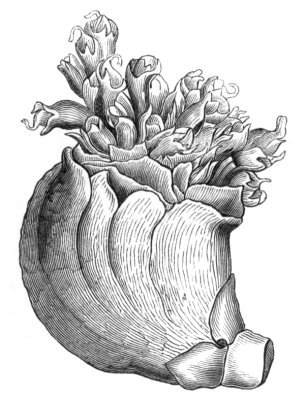
Fig. 105.—Fig showing prolonged inflorescence and projecting flowers.
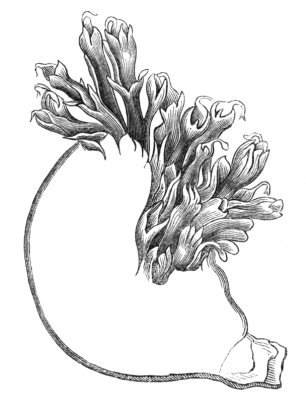
Fig. 106.—Section of the same.
Altered direction of leaves.—The leaves partake more or less of the
altered direction of the axis, as in fastigiate elms, but this is not
universally the case, for though the stem is bent downwards the leaves
may be placed in the opposite direction; thus in some specimens of
Galium Aparine growing on the side of a cliff from which there had
been a fall of chalk, the stems, owing apparently to the landslip, were
pendent, but the leaves were abruptly bent upwards.
One of the most singular instances of an inverted direction of the
leaves is that presented by a turnip (fig. 107) presented to the Museum
of King's College, London, by the late Professor Edward Forbes. The
turnip is hollow in the interior and the majority of the leaves
springing from its apex instead of ascending into the light and air
become bent downwards so as to occupy the cavity, and in such a manner
as to bring to mind the position of an inverted embryo in a seed.
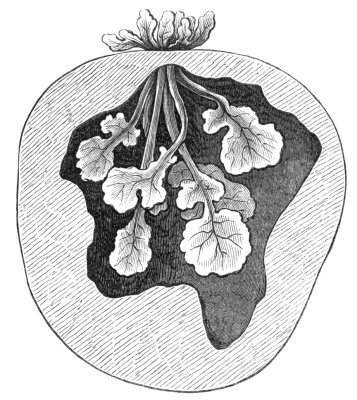
Fig. 107.—Hollow turnip, showing some of the leaves inverted and occupying the cavity.
Altered direction of the flower and its parts.—The changes which take
place in the relative position either of the flower as a whole or of its
several parts during growth are well known, as also are the relations
which some of these movements bear to the process of fertilisation, so
that but little space need here be given to the subject beyond what is
necessary to point out the frequent changes of direction which
necessarily accompany various deviations from the ordinary form and
arrangement of parts.
In cases where an habitually irregular flower becomes regular, the
change in form is frequently associated with an alteration in direction
both of the flower as a whole and, to a greater or less extent, of its
individual members, for instance of Gloxinia, the normal flowers of
which are irregular and pendent, there is now in common cultivation a
peloriate race in which the flowers are regular in form and erect in
position.
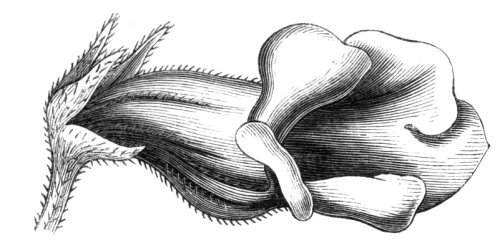
Fig. 108.—Flower of normal Gloxinia.
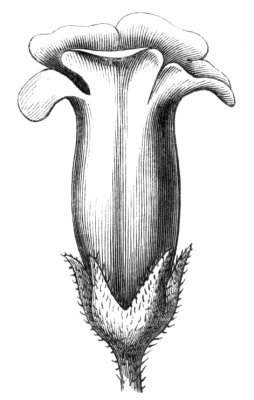
Fig. 109.—Flower of Gloxinia, erect and regular (regular Peloria).
Fig. 108 shows the usual irregular form of Gloxinia, with which may be
contrasted figs. 109, 110 and 111.
Fig. 109 shows the regular erect form; fig. 110 the calyx of the same
flower; while in fig. 111 are shown the stamens and style of the two
plants respectively. In the upper figure the style of the peloriate
variety is shown as nearly straight, and the stamens undergo a
corresponding change. No doubt the relative fertility and capacity for
impregnation of the two varieties is affected in proportion to the
change of form. The Gloxinia affords an instance of regular congenital
peloria in which the regularity of form and the erect direction are due
to an arrest, not of growth, but of development, in consequence of which
the changes that ordinarily ensue during the progress of the flower from
its juvenile to its fully formed condition do not take place.
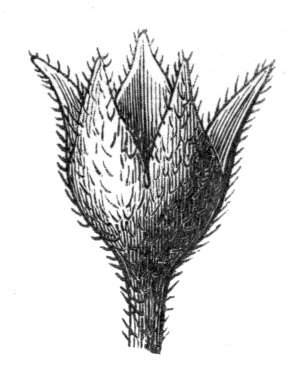
Fig. 110.—Calyx of erect Gloxinia.
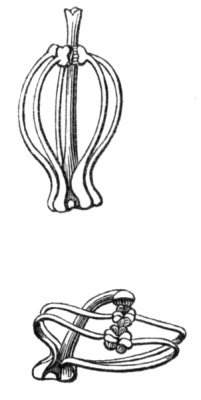
Fig. 111.—Stamens of erect regular, and of pendent irregular-flowered Gloxinia.
A similar alteration accompanies this form of peloria in other flowers
(see Peloria). A change in direction may result also from other
circumstances than those just alluded to. Abortion or suppression of
organs will induce such an alteration; thus in a flower of Pelargonium
now before me three of the five carpels, from some cause or other, are
abortive and much smaller than usual, and the style and the beak-like
torus are bent downwards towards the stunted carpels instead of being,
as they usually are, straight.
Amongst orchids, where the pedicel of the flower or the ovary is
normally twisted, so that the labellum occupies the anterior or inferior
part of the flower, it frequently happens, in cases of peloria and other
changes, that the primitive position is retained, the twist does not
take place, and so with other resupinate flowers. In Azaleas a curious
deflexion of the parts of the flower may occasionally be met with. Fig.
112 shows an instance of this in which the corolla, the stamens and the
style were abruptly bent downwards: as young flowers of this singular
variety have not been examined it is difficult to form an opinion as to
the cause of this variation. In one plant the change occurred in
connection with the suppression of all the flowers but one in the
cluster, or rather the place of the flowers was occupied by an equal
number of leafy shoots.
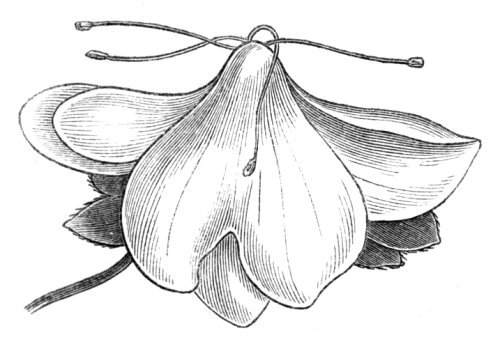
Fig. 112.—Flower of Azalea, showing the corolla reflected.
Moquin[213] mentions a flower of Rosa alpina in which two of the
petals were erect, while the remaining ones were much larger and
expanded horizontally. The same author quotes from M. Desmoulins the
case of a species of Orobanche, in which a disjunction of the petals
constituting the upper lip took place, thus liberating the style and
allowing it to assume a vertical direction.
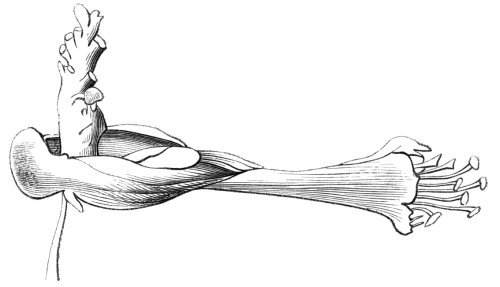
Fig. 113.—Flower of Cuphea miniata enlarged, showing protrusion and hypertrophy of an erect placenta, after Morren.
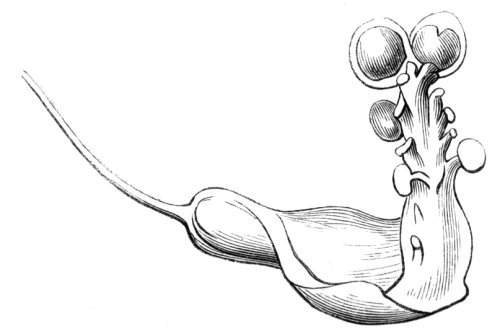
Fig. 114.—Placenta from the flower shown at fig. 113; the ovary is membranous and torn, the placenta, erect and ovuliferous, after Morren.
M. Carrière[214] has described an instance wherein two apples were
joined together, a larger and a smaller one; the former was directed
away from the centre of the tree as usual, while the smaller one was
pointed in exactly the opposite direction. The larger fruit had the
customary parchment-like carpels, the smaller was destitute of them.
Sometimes the direction assumed by one flower as an abnormal occurrence
is the same as that which is proper to an allied species or genus under
natural circumstances; thus flowers of the vine (Vitis) have been met
with in which the petals were spreading like a star (fleurs
avalidouires), as in the genus Cissus.[215]
Morren describes a curious condition in some flowers of Cuphea
miniata, in which the placenta protruded through an orifice in the
ovary, and losing the horizontal direction became erect (figs. 113,
114). A similar occurrence happened in Lobelia erinus. To this
condition the Belgian savant gave the name of gymnaxony.[216]