While certain cities may lay claim to having been at one time or another
the capital of the united kingdom of Leon and Castile, and while, in
fact, two often held the rank at the same time, Zaragoza, from its
reconquest by the Christians to the unification of the Spanish monarchy,
was the undisputed capital of the kingdom of Aragon. We must not expect
on that account to find that it was any more amenable to the royal
authority, or any less turbulent than the cities of the sister state. On
the contrary, nowhere in the Peninsula was liberty more highly prized or
more strenuously vindicated, than in the chief city of Aragon. And it
holds what out of Spain, at any rate, will be considered the honourable
distinction of having offered the most determined resistance to the
establishment of the Inquisition. Many cities in the dominions of His
Catholic Majesty are entitled to style themselves ‘most heroic.’ None
assuredly deserve the description better than this, the Numantia of
modern Spain.
An Iberian town seems to have existed here from the remotest times, and
to have been known as Salduba. On its annexation by the Romans, it was
rechristened Caesaraugusta, and under that name is referred to by
Pompeius Mela as the most famous of the inland cities of Tarraconensis.
Christianity took root here at an early date. Bishops of Caesaraugusta
are mentioned by St. Cyprian, and the local martyrology includes the
names of Saints Valerus, Vincent, and Engracia. When, in the year 542,
Zaragoza was besieged by the Franks under Childebert, the exposition of
the relics of these martyrs is said to have sufficed to propitiate the
enemy and to preserve the town from destruction.
In the year 713 the city opened its gates to Muza, the Moorish invader,
without, as Don Francisco Codera believes, striking a blow. The Crescent
reigned over Zaragoza for four centuries. During that time there were
many changes of rulers. The blood of martyrs again watered the soil
under the cruel Wali, Othman Aben Nasr, though generally throughout the
period of Muslim domination the Christians enjoyed the same freedom as
their co-religionists, under the same yoke, in other parts of Spain.
Their principal church having been converted into a mosque, San Pablo
was, during this period, their place of worship.
In the year 778 occurred the famous expedition of Charlemagne, around
which an almost impenetrable veil of poetry and legend was woven through
the Middle Ages. Hoseya al Arabi having been superseded in the
government of the city by order of the Khalifa, Abd-ur-Rahman, appealed
for assistance to the great Emperor of the West, who, for motives which
remain obscure, entered Spain with a considerable force. On reaching
Zaragoza, he found that Al Arabi had already regained possession of the
city; and either on that account, or because his late ally refused to
open the gates, he retraced his steps towards the north. In the pass of
Roncesvalles his rearguard was attacked and cut up by the
mountaineers—a reverse which has been immortalised as the occasion of
the death of the Paladin Roland, and commemorated in the legendary lore
of nearly every European tongue.
At the latter end of the ninth century Zaragoza (or Sarakusta, as it was
called by the Moors), shook off the yoke of the Khalifas, and under the
sway of the renowned Hafsûn became for a short time an independent
state. More lasting was the monarchy set up at the close of the eleventh
century, on the break-up of the Spanish Khalifate, by the vigorous
Almundhir Ben Hud, whose power extended from Lerida to Guadalajara, from
the mountains of Biscay to the Mediterranean. His son and successor,
Suleyman, made the mistake of dividing his dominions among his four
sons, Sarakusta being assigned to the eldest, Ahmed Almuktader. But,
united or disunited, the Moors of north-eastern Spain were incapable of
offering an effective resistance to the ever-growing power of the
Christian kingdom of Aragon. In the spring of 1118, Alfonso el
Batallador appeared before the walls of Zaragoza with a formidable host.
The city held out till the garrison witnessed the total defeat of an
army sent to their relief by the Almoravides. All hope being then gone,
the gates were opened on December 18, 1118, and Zaragoza became the
capital of the kingdom of Aragon.
As such, it was endowed with a very liberal charter—the fuero, of
which we read so often in Aragonese history. The defence of these
liberties was intrusted to twenty magistrates, who were invested with
authority to deal in the most summary and drastic fashion with
evildoers, whatever might be their station. Nor did they hesitate, in
after years, to raze the castles of any barons who threatened the peace
of the city. Domestic affairs were regulated by twelve jurates,
representing the twelve parishes. Pedro II. amplified these privileges,
and decreed that the municipality should not be responsible for its acts
even to the sovereign.
The history of Zaragoza during the twelfth, thirteenth, and fourteenth
centuries is full of instances of civil strife, of faction fights, and
of struggles with the royal authority. The citizens refused to recognise
Alfonso III. as king till he had been crowned within their walls. They
paid dearly for their arrogance under Pedro IV., who hanged thirty of
their number at the Toledo gate, and burnt the articles of the Union—a
pact extorted from one of his predecessors—in a public assembly.
Under Fernando I. the city’s privileges were further curtailed. But as
licence and disorder showed no signs of abating, a kind of vigilance
committee was formed in 1454, headed by Jimeno Gordo. This worthy put
down all disturbances with iron hand, and waged war on the neighbouring
barons. His career was cut short in 1474 by Ferdinand the Catholic, who
caused him to be publicly executed. All the disorderly elements of the
city rejoiced at his death.
The introduction of the Inquisition met with much opposition in several
Spanish towns, but nowhere more than at Zaragoza. Deputations were sent
from the states of Aragon to wait on the king at Valladolid, to urge
upon him the withdrawal of the obnoxious tribunal, without avail. Such
contemptuous indifference to the laws and wishes of the people of Aragon
roused the Zaragozans to a dangerous pitch of exasperation. About
midnight, September 14, 1485, a party of six men entered the cathedral,
and found the Inquisitor, Pedro de Arbues of Epila, in prayer before the
altar. They at once transfixed him with their swords and knives, but
only a few of the blows struck home, thanks to the shirt of mail which
the victim, like most of the Inquisitors, wore beneath his cassock. The
deed, of course, only riveted the chains of the Holy Office more firmly
upon the Aragonese.
Most of the assassins were captured, and perished in the flames. De
Arbues was canonised in 1664. There can be no question that the
Inquisition was established contrary to the laws of the country, and
that the man met his death through presuming to discharge unlawful
functions. He died for having broken the law, his executioners for
having vindicated it.
The persistent encroachments of the Crown upon their constitutional
rights during the next century met with strenuous resistance from the
people of Aragon. The long-impending storm burst in 1590. Antonio Pérez,
having incurred the anger of Philip II., fled to Zaragoza, and invoked
the protection of the states. According to the fueros, he was then
confined in the prison of the Manifestacion pending his trial. But the
Holy Office impudently removed him from the custody of the law, and
threw him into their prison of the Aljaferia. A popular tumult followed.
Pérez was released and taken back to his first prison. The Viceroy, the
Marqués de Almenara, died of chagrin, it is said, at the insults he had
received from the crowd. Four months later a fresh riot broke out, and
enabled Pérez to make good his escape to France.
Philip now sent an army of 14,000 men into Aragon to re-establish his
authority on the ruins of the constitution. The Justiciary, Juan de
Lanuza, summoned the people to defend their country. But the Castilians
dispersed this hastily collected force at the first encounter, and
entered Zaragoza unopposed on December 12. Juan de Lanuza and many
other persons of note were judicially murdered; the leaders of the
aristocracy were imprisoned, and the city sacked from end to end.
Never again did Zaragoza raise its head in defiance of the King of
Spain. The fueros continued nominally in force till 1707, when they
were formally abrogated by Philip V. in revenge perhaps for the defeat
sustained before the walls at the hands of Stanhope and Stahremberg. But
the spirit of the people was far from being crushed. They might bow
before their own king, but they would not bend the knee to a foreigner.
Zaragoza’s defence in 1808 is one of the most glorious episodes in the
history of the nation. When the revolution broke out at Madrid on May 2,
the citizens expelled the Governor, Guillelmi, and elected as leader Don
Jose Palafox, a young noble of great personal courage and charm. He was
assisted by a priest named Santiago Sas, his secretary Boggiero, who is
said to have penned all his proclamations, and by three peasant leaders,
‘Tio’ Jorge, ‘Tio’ Marin, and Mariano Cerezo. All their equipment for
war consisted at the outset of 220 men, a few muskets, and sixteen guns;
yet when Lefebvre Desnouettes arrived before the place on June 15, he
met with so stubborn a resistance that he was compelled to proceed
cautiously. He reduced the city indeed to a heap of ruins, but he had
not taken it when Dupont’s surrender at Bailen obliged him, on August
15, to raise the siege.
The French reappeared in December 1808, to the number of 18,000 men,
under the command of Marshals Lannes, Moncey, Mortier, and Junot. The
city was attacked on two sides at once, but more especially from the
Jesuit convent on the left bank of the Ebro, which the Spaniards had
neglected to secure. What followed may be read in the pages of Napier.
The besiegers breached the wall near the convent of Santa Engracia, and
the combat was continued day after day in the streets of the town. Every
house was held as a fortress, every few yards of street was defended by
a barricade. In answer to the summons to surrender rang Palafox’s
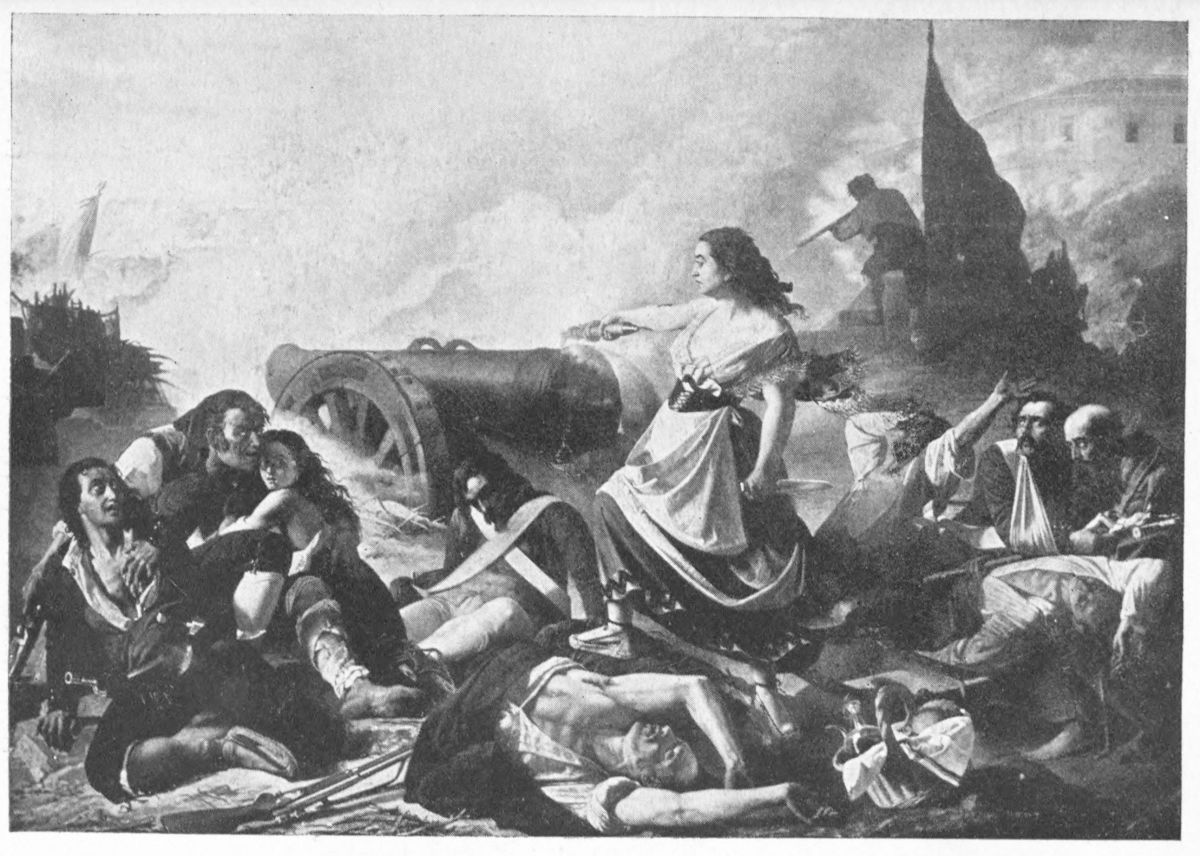
defiant ‘War to the knife and to the last ditch!’ The women in many
cases fought beside the men. When Maria Agustin saw her sweetheart fall
at his post, she took the linstock from his hand and fired the gun
herself. The fame of this ‘Maid of Saragossa’ has penetrated every
land. For twenty-one days the fighting continued in the streets.
Finally, on February 21, 1809, the defenders capitulated on honourable
terms. The town was a smoking heap of ruins and of dead. Zaragoza had
shown an astonished world that the spirit of Saguntum and Numantia yet
lived in Spaniards. And, we doubt not, it still lives.
The city soon arose from the ashes. It rapidly recovered its prosperity,
which took a fresh impetus on the opening of the four railways, east,
west, north, and south. Here you see both the Old and the New Spain—the
one with its heroic, glorious memories, the other with its promise of
things as great and happier.
Zaragoza stands on the right bank of the Ebro in an oasis in the desert
of Aragon. Nothing could be more attractive than the immediate environs,
or more desolate than the country a few miles farther out. Such a
situation was familiar to the Berber conquerors, who made themselves at
home here and left their mark on the architecture of the city long after
the last ‘Tagarin’ Moor had been expelled. Not, of course, that Zaragoza
is to be compared as regards Musulman architecture with Seville,
Cordova, Granada, and Toledo; but the Moor has left behind him
unmistakable evidences of his presence, and an interesting monument
called the Aljaferia, which endures, though oft and oft restored, to
this day.
The name seems to be derived from Jaffir, a not uncommon name among the
Moors, and borne perhaps by one of the Beni Hud dynasty, for whom the
building served as a palace. At the conquest in 1118 it was allotted by
Alfonso the Battler to the Benedictine order. In the fourteenth century
it again became the residence of royalty, and doubtless was entirely
transformed and repaired. It was the scene of great splendour at the
coronation of King Martin, and of several of his successors. To-day it
presents a sad and dilapidated appearance. The imposing staircase,
decorated with fine stucco work, is the creation of the Catholic
sovereigns, who seem to have had some idea of reconstituting the past
glories of the palace in true Moorish style. The ceilings of some of the
chambers are in the artesonado style—the work of fifteenth-century
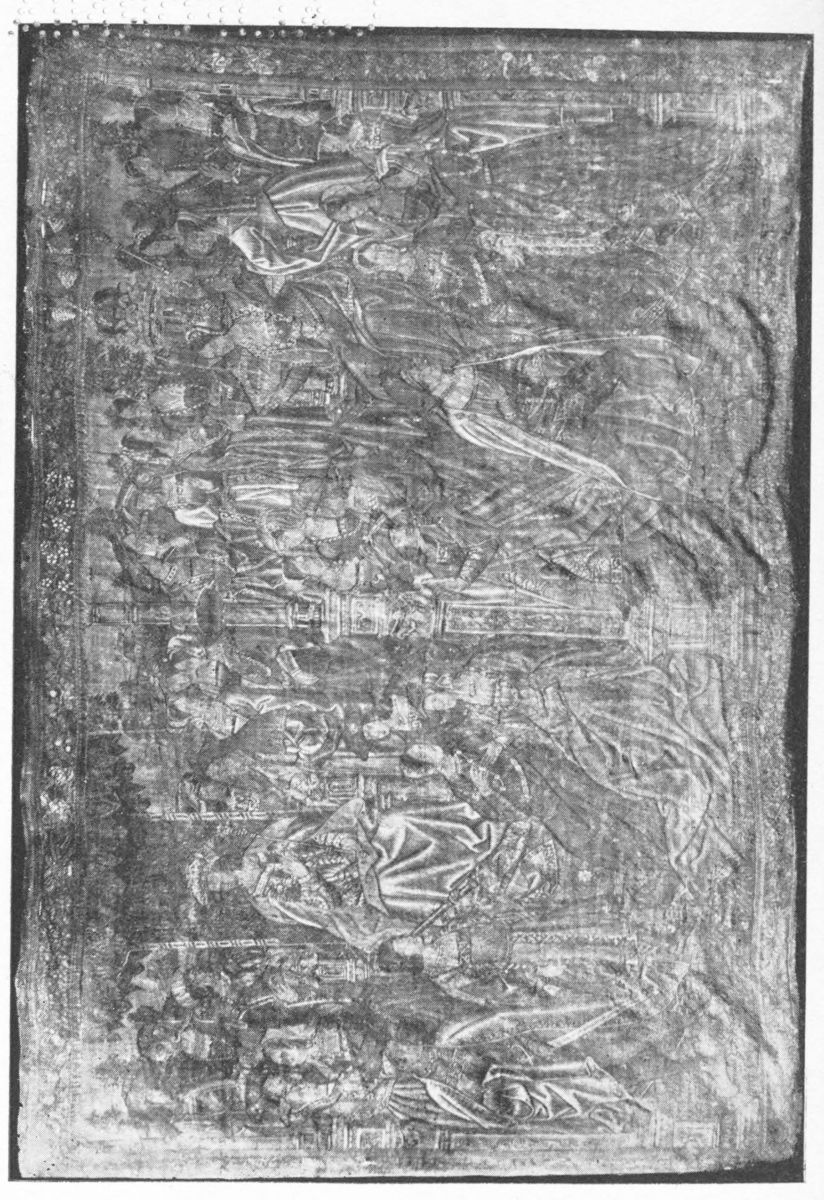
artificers. The most beautiful is to be seen in the Salon de la Alcoba,
where was born in 1271 the sainted Princess Isabel, afterwards Queen of
Portugal, and persistently confounded by English writers with St.
Elizabeth of Hungary. Everywhere among the decorations appear the
devices and mottoes of Ferdinand and Isabel.
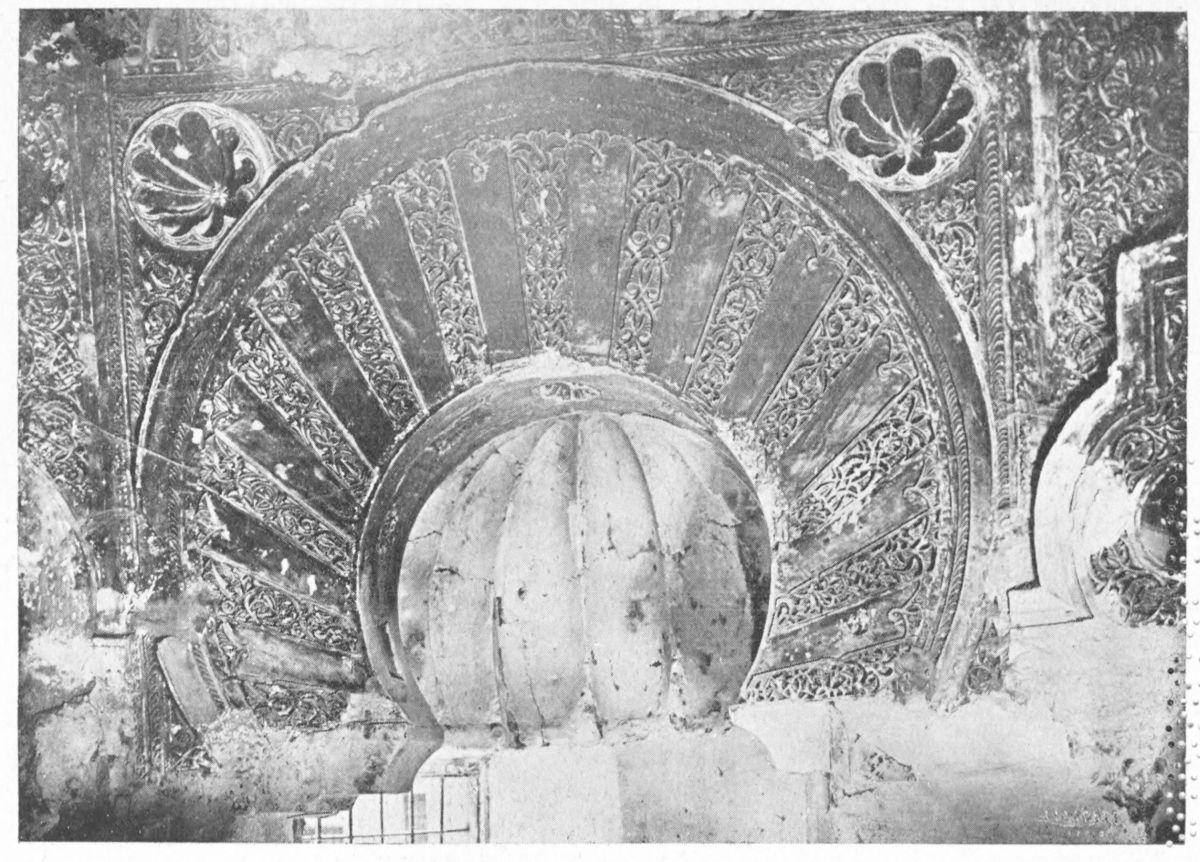
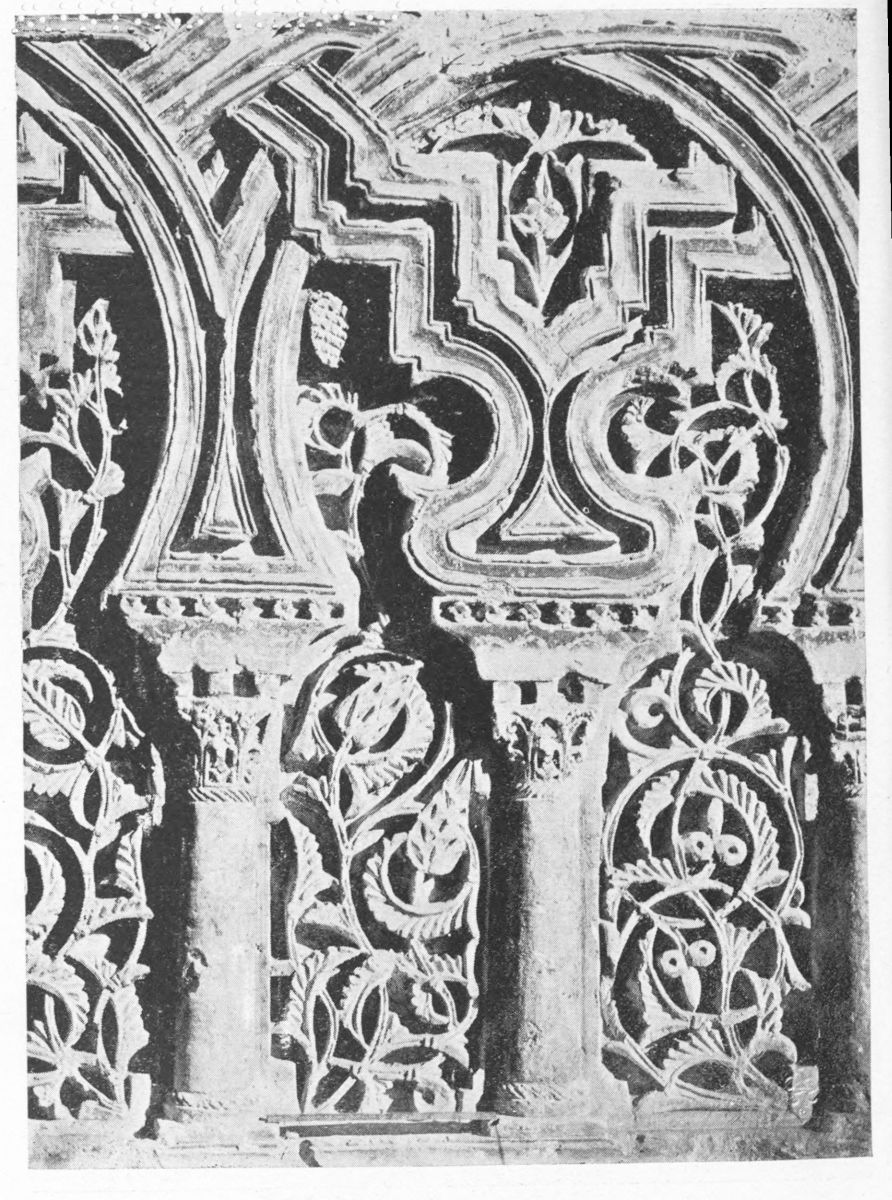
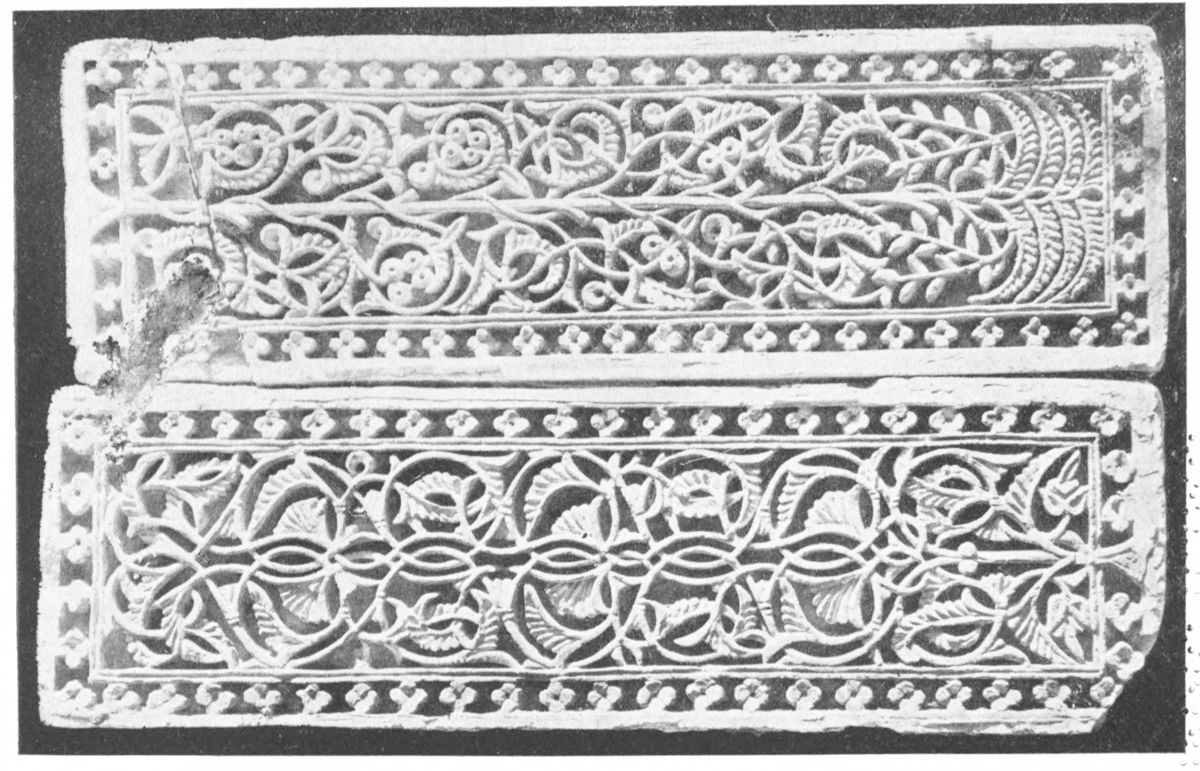
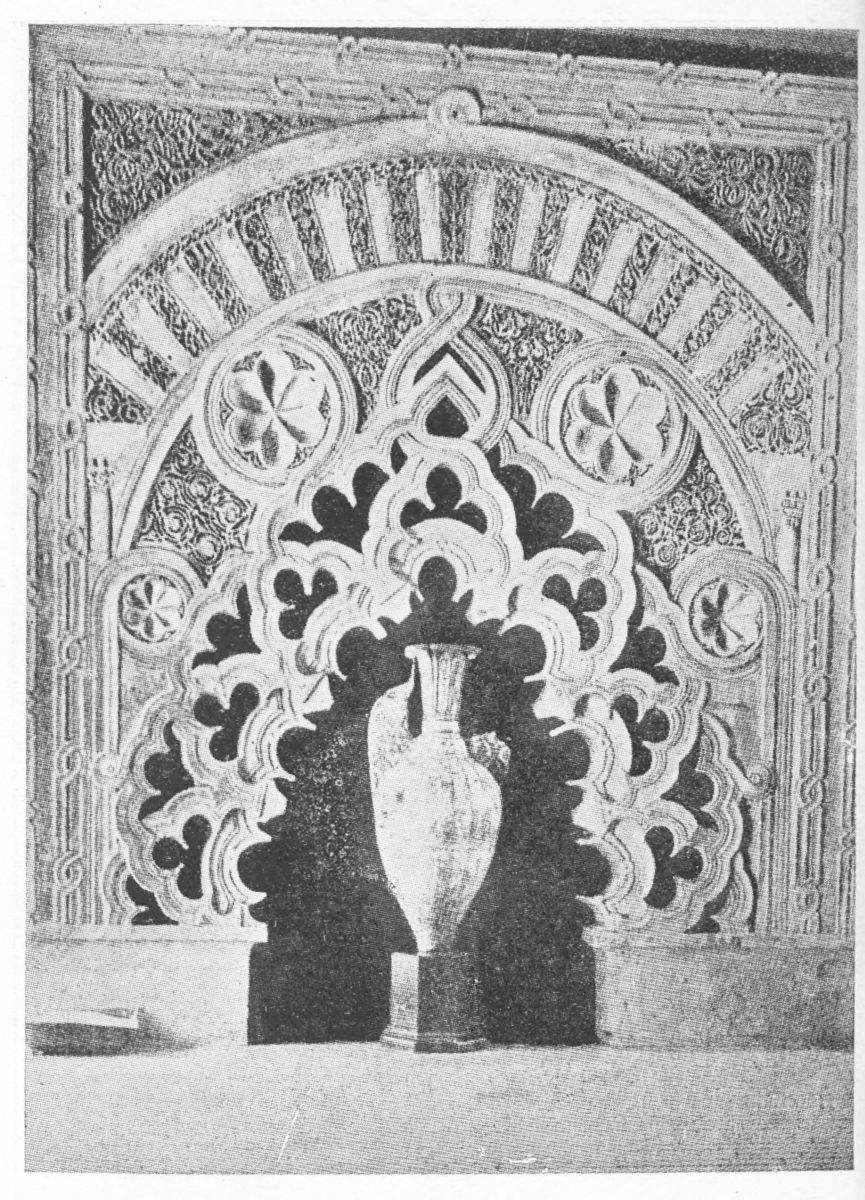
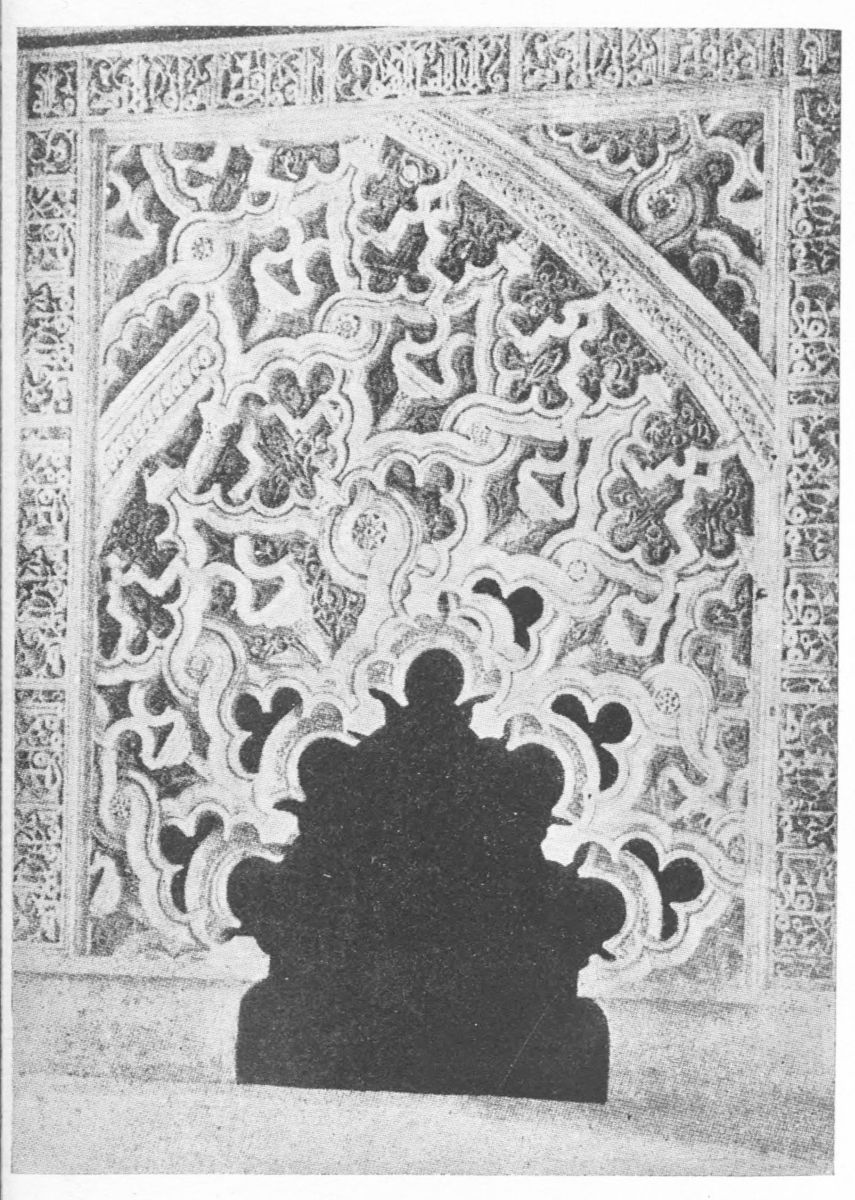
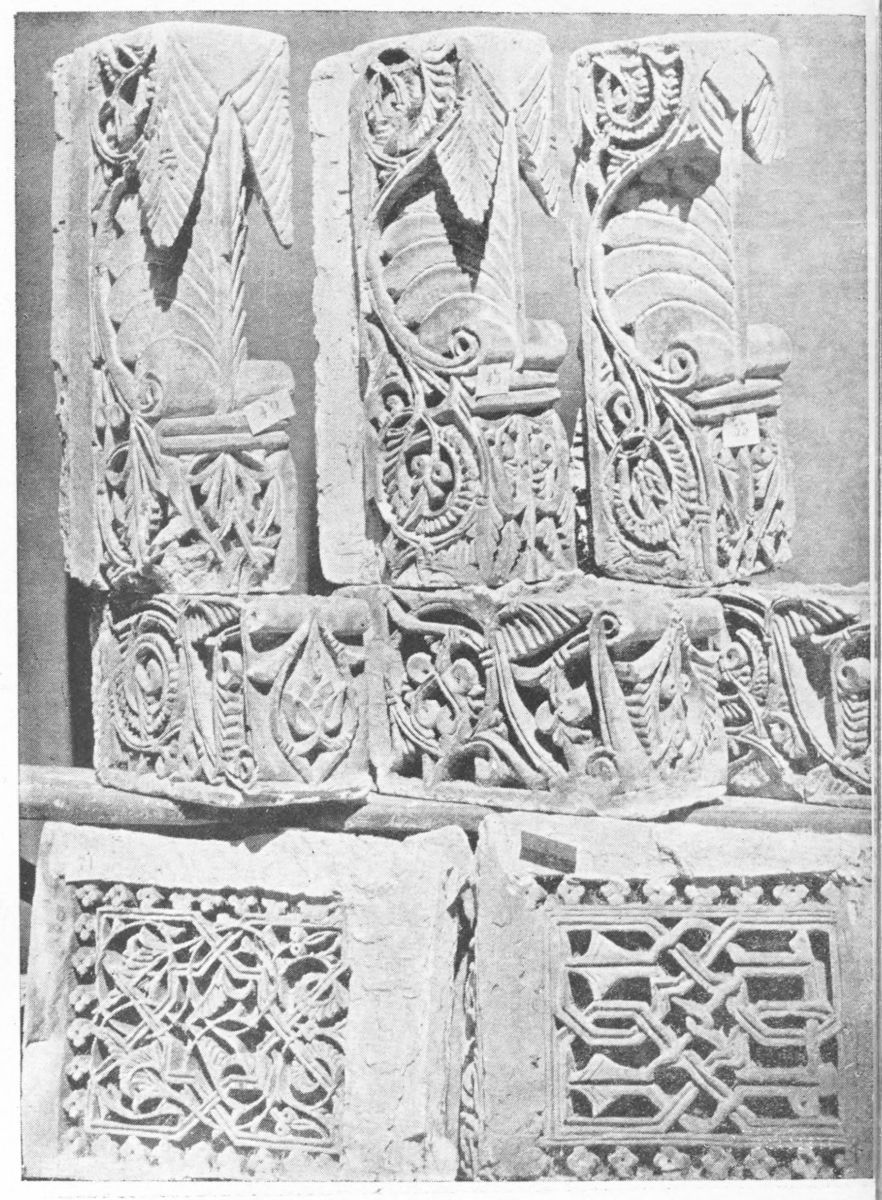
Genuine Moorish work is to be seen in a little octagonal chamber opening
off the patio. Of the eight arches, two are in horseshoe shape, and the
others formed by irregular and capricious curves. The columns are almost
hidden in the walls. The ceiling is modern, and unfortunately cuts off
the view of the elegant ajimeces and arabesques of the upper stage.
The ornamentation recalls that of the Alhambra. This chamber—said by
some, on no particular authority, to have been a mosque—was the seat of
the Inquisition down to 1706. The guide points out a cell called La
Torreta, in which—according to Verdi’s opera Il Trovatore—Manrico
was confined. The opera is founded on a legend of Zaragoza, and the
libretto was written by Garcia Gutierrez, a native of the city.
Some may enjoy the beautiful view of the Pyrenees obtained from the
Aljaferia more than the building itself.
Probably only a few fragments of this old palace are older than the
Cathedral of La Seo. This is the name commonly given in Aragon to the
cathedral church, and comes, of course, from the Latin sedes, like our
own word ‘See.’ Zaragoza became the metropolitan city of Aragon in 1318,
and the archiepiscopal dignity was reserved as far as possible to the
illegitimate sons of the kings. The city has now two cathedrals, which
are used for alternating periods of six months. The Seo is the older of
these, and occupies the site of the Moorish mosque—some say, even of an
earlier Christian temple dating from Roman times. The church was, at all
events, entirely rebuilt between 1188 and 1432, several Moorish names
being mentioned among the architects. It can hardly be said to have been
completed till the year 1550. Here were crowned the Kings of Aragon, and
here, as we have related, was slain the Inquisitor, Pedro de Arbues.
The west front was completed as late as 1685 by Julian Garza and Juan
Bautista Contini. It is in the classical style of that period, and is in
two stages separated by a broad entablature. The lower stage is adorned
with massive Corinthian columns, and pierced with three doorways; the
upper story is decorated with three statues of Christ and the Apostles
Peter and Paul, by Giral, placed in niches; above is a pediment
finished with an ugly finial. This front is flanked by an octagonal
tower of four stages, each smaller than the lower one, and is therefore
not inaptly compared by Ford to a telescope. This structure is in the
same style and reveals the same want of taste as the adjoining façade.
The third stage contains the belfry. The whole is surmounted by a
weather-vane and steeple, perched on a Moorish-looking dome. The statues
of the Apostles on the belfry are by Acali. There is no other façade
worthy of notice; but the Puerta de la Pavostria is in the better and
earlier classic style of the sixteenth century. It derives its name from
a functionary known as the Pavorde, who here distributed alms.
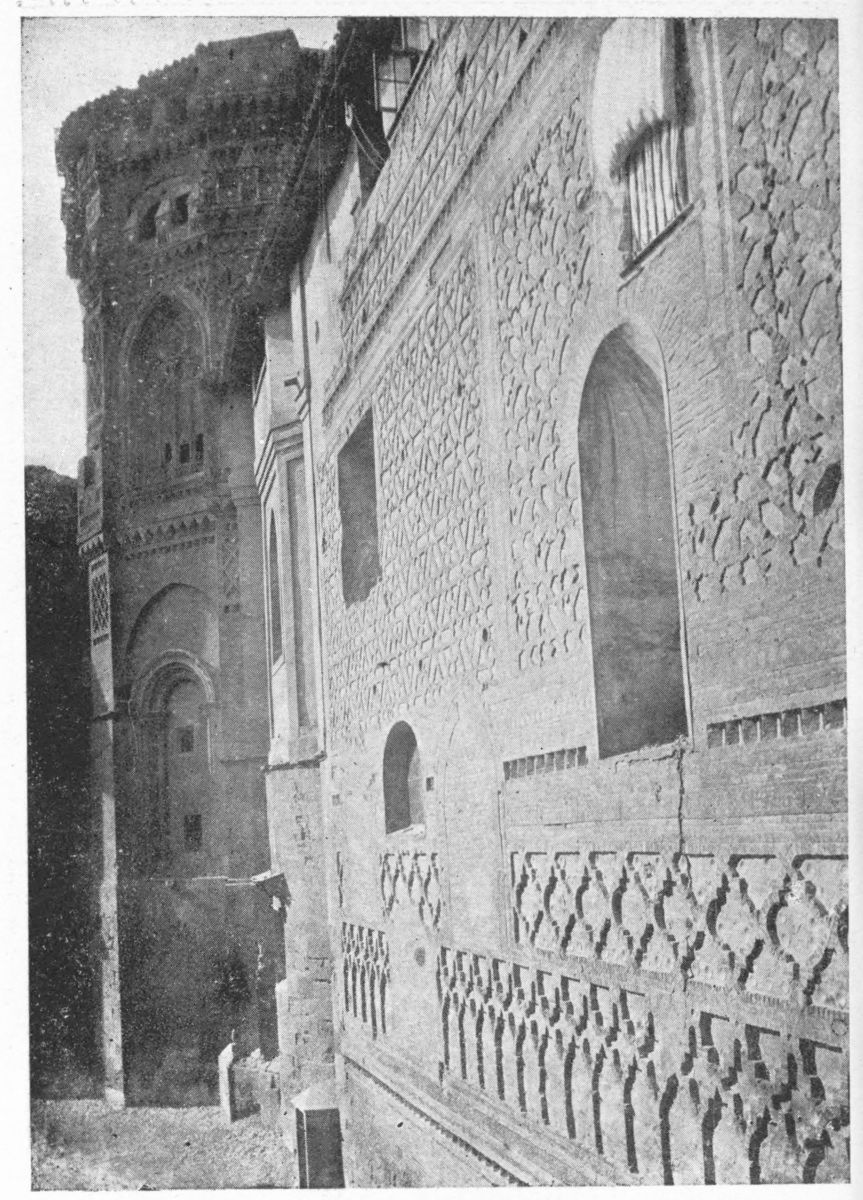
Street, who did not consider this cathedral in general interesting, has
much to say about a portion of brickwork at the north-east angle, inlaid
with small tiles in diapers, red, blue, green, white, and buff on white.
The eminent architect sees in this an interesting specimen of Moorish
work, and praises the grave quiet of the whole decoration (Gothic
Architecture in Spain, xvii. 372).
The church is of unusual breadth, there being two aisles and a row of
chapels on each side of the nave. ‘The nave and aisles,’ says the
authority we have just quoted, ‘are all roofed at the same level, the
vaulting springing from the capitals of the main columns, and the whole
of the light is admitted by windows in the end walls, and high up in the
outer walls of the aisles. In this respect Spanish churches of late date
almost always exhibit an attention to the requirements of the climate,
which is scarcely ever seen in the thirteenth and fourteenth centuries;
and this church owes almost all its good effect to this circumstance,
for it is in light and shade only, and neither in general detail nor in
design that it is a success.’
The vaultings are adorned with gilded pendants and bosses, very much in
the Moorish style. The light red marble pavement, with rays diverging
from the yellow marble bases of the columns, appears to have been
intended to suggest a reflection of the roof with its ogive vaultings
above. The decoration is tasteful and not elaborate. The capitals are
sculptured with putti upholding escutcheons with animals and foliage.
Over the chancel is the lantern, octagonal in plan, which replaced an
earlier one in the first quarter of the sixteenth century. The work was
undertaken by Enrique de Egas, only at the express command of the king.
The lower part is adorned with statues in niches, and with the canting
arms (the half-moon) of the family of Archbishop de Luna.
The reredos of the High Altar is of alabaster and in the Gothic style.
It was executed at the order of (and not by, as we have seen erroneously
stated) Archbishop Dalmacio de Mur (1430-1456). The seven compartments
are filled with compositions representing the martyrdom of St. Lawrence,
the burial of St. Vincent, and episodes in the history of St. Valerus;
with statues of the two latter saints, angels, and New Testament scenes.
In all, the expressions and the draperies are exquisitely rendered. Don
J. M. Quadrado is of opinion that this superb work was executed by Pedro
Johán of Cataluña, Ans, Gombao, Caspar, and Gil Morlán successively.
Before the High Altar the coronation took place, and the king, robed
like a deacon, prostrated himself before the primate. On the gospel side
is the wooden coffin which contains the ashes of Maria, daughter of
Jaime lo Conqueridor, who died in 1267. At her side is the noble
marble tomb of Archbishop Don Juan de Aragon, brother of Ferdinand the
Catholic, with statues of the Mater Dolorosa, attended by Saints
Jerome, Martin, and Francis. Here are also the tombs of Archbishop Don
Alonso, natural son of Ferdinand the Catholic, and of his natural son,
also Archbishop, Don Fernando. The first-named did not take orders till
after the birth of his son and successor, and only celebrated one mass,
deeming himself unworthy of the sacerdotal functions. Beneath a tablet
is deposited the heart of the Infante Baltasar Carlos, eldest son of
Philip IV., carried off by smallpox at the age of seventeen. His
portrait is familiar to students of Velazquez.
The choir occupies two of the five bays west of the crossing. It is in
the Gothic style, and closed by a modern railing. In the centre is the
tomb of Archbishop de Mede, from whose time the choir dates. The stalls
are of Flemish oak. The fine lectern dates from 1413. The trascoro, or
back of the choir, is a gorgeous plateresque affair in marble and
stucco, the work of Tudelilla of Tarazona, who flourished about 1538.
His are the statues of the martyrs Vincent and Laurence, the four
reliefs illustrating their martyrdom, and that of San Valero, and the
groups of cherubim. The tabernacle is in a not untasteful baroque style,
and has side columns of black marble and a good crucifix. This figure
of Christ is said to have addressed Canon Funes, afterwards Bishop of
Albarracin, who is shown on his knees regarding it. The sides of the
choir are adorned with statues of saints, including that of Pedro de
Arbues, on the very spot where he was slain.
Few of the chapels are of interest, and all but one have been disfigured
with baroque portals. In the chapel of San Bernardo is the fine tomb and
effigy by Morlánes of Archbishop Don Fernando de Aragon, above being a
retablo representing the Betrayal and the Crucifixion. Close by lies
Doña Ana de Gurrea, mother of the prelate (died 1527). The chapel of San
Gabriel, founded by Gabriel de Zaporta, is notable for its fine bronze
reja and plateresque adornments. In the chapel of San Dominguito del
Val are preserved ‘the remains of the third child crucified by the Jews
in hatred of Christ towards the year 1250’; and the chapel of San Pedro
de Arbues contains that worthy’s body, his kneeling effigy by José
Ramirez, and paintings by Jimenez of Tarazona. In the chapel of Nuestra
Señora de la Blanca are collected the tombs of sundry archbishops. The
chapel of San Miguel owes its origin to a ghastly legend. Passing
through the pine grove of Villaroya, the Archbishop Don Lope de Luna
heard a voice calling him. He turned and saw that it proceeded from a
severed head which came leaping towards him. The decapitated man had
called on the Archangel at the moment the axe descended, and life was
miraculously preserved in his head till he had made his confession, and
was absolved by the primate. De Luna’s tomb is a triumph of Gothic art.
He is shown with mitre and crozier, reclining on a sarcophagus which is
sculptured with twenty-eight figures of friars in various attitudes. In
niches in the wall surrounding the tomb are beautifully carved figures
of ecclesiastics and grandees, full of vigour and expression. The name
of the sculptor of this fine work is unhappily unknown.
In the sacristy is to be seen the Gothic cross of gold and jewel-work,
on which the kings of Aragon swore to observe the fueros. Some of the
vestments are very fine. A casulla is said to have come from old St.
Paul’s, London, at the time of the Reformation. There is a magnificent
custodia, dating from 1537, and a fine silver reliquary, sent from
Avignon in 1405 by Benedict XIII. (the anti-pope, De Luna). In the Sala
Capitular are pictures attributed to Ribera and Zurbarán. The fine tiled
pavement of this room is modern.
The church of Santiago is mentioned as far back as 1121, and retains a
few Romanesque features. Here the saint is said to have lived on his
visit to Spain; and in the porch the magistrates of the city used to
assemble and to administer justice.
The most important church in Zaragoza after the Seo is, in Street’s
estimation, that of San Pablo, built in 1259. The octagonal steeple is
faced with tiles in much the same way as the part of the cathedral wall
above described, and is certainly a later addition to the structure. The
nave is of four bays and terminates in a five-sided apse. The aisle is
continued all round the church, and communicates with the nave by
pointed arches in an extraordinarily thick wall. In the left aisle are
five early and highly interesting Gothic retablos. The elaborate reredos
of the High Altar, with its reliefs of the Passion and of the Acts of
St. Paul, is hardly worthy of the master—Damian Forment—to whom it has
been hastily attributed. Ford suggests that it is the work of one of his
pupils.
The church of Santa Engracia, which figured prominently in the great
siege, commemorates the massacre of a number of Christians of both sexes
by the soldiery of Dacian. The bodies of the saints, Engracia and
Lupercius, having been discovered here in 1389, the church already built
on the spot was enlarged, and finally rebuilt with great splendour by
Ferdinand the Catholic. A terrific explosion on August 13, 1808,
completely wrecked the fabric, leaving little more than the plateresque
portal, believed to have been designed by Morlánes. The entrance is
through a round arch recessed within another, and surrounded by a
retablo-like arrangement of niches containing groups. The outer arch is
flanked by four statues of doctors of the Church in niches, and
surmounted by statues of Ferdinand and Isabel.
The existing church, clumsily restored by the Hermits of St. Jerome,
contains some interesting tombs of the martyrs. They appear to date from
the fifth century. One is decorated with reliefs in the rudest Byzantine
style, the subjects being Adam and Eve and the Serpent, and the sixteen
martyrs, whose relics are enclosed. The pillar is shown at which Santa
Engracia was flogged by order of Dacian, and a well which is believed to
contain the bones of innumerable martyrs.
It is curious and painful how constantly the memorials of religious
fanaticism confront one in this beautiful country. Here we are shown the
spot where a Christian suffered for his faith; there where a Jew
perished; there where a Moor died for conscience’ sake. Persecution
naturally engenders a vindictive and intolerant temper in its victims,
and these, become the masters, are hardened, not softened, by
affliction. Religion, too, in Spain was almost always identified with
race. The Moor, the Jew, and the Lutheran were not only infidels or
heretics, but aliens—the political and racial enemies of the Spaniard.
In fact, religious intolerance in the Peninsula cannot be said to have
assumed such unnatural forms as in France and Germany, where men of the
same blood and language cut each other’s throats, and vied with each
other in doing the most harm to their native lands.
To the dawn of the sixteenth century also belonged the famous leaning
tower at Zaragoza, the Torre Nueva, now demolished; while the Lonja or
Exchange commemorates the reign of Juana la Loca, or as the inscription
states, of her and her son, Don Carlos, ‘conregnantes’ (1551). This is
one of the many buildings scattered over Spain and Europe generally
which were intended to accommodate brokers and business men, who
resolutely refuse to swarm in the appointed spots—witness our own Royal
Exchange, the Lonjas of Seville and Granada, etc. The exterior belongs
to no recognised style. The round-headed door is flanked by two windows
of similar shape; above runs a sort of imitation gallery, then two more
rows of round-headed windows, finished off with a fine eaves-cornice.
The soffits of the arches are elaborately carved. At each corner of the
edifice is a little tower, roofed with white and green tiles. The
interior is divided into a nave and aisles by twenty-four columns, of
which seventeen are embedded in the walls. From their Ionic capitals
spring seventeen arches, which at the points of intersection are studded
with gilt bosses. The Lion of Zaragoza may be distinguished among the
decorations, and over the door and on the walls the arms of Spain.
O’Shea says that the ‘gigantones’—gigantic figures representing the
four quarters of the globe, carried about in processions—are kept here.
A great many of the fine old mansions (solares) of the aristocracy and
merchants of Zaragoza disappeared in the siege, or to permit of modern
improvements. Those which remain date mostly from the sixteenth century.
The finest, on the whole, is the Casa de la Infanta, so-called as having
been the residence of La Vallabriga, a lady banished from Madrid for
marrying the Infante Don Luis. The house was built by a rich merchant
named Gabriel Zaporta in the middle of the sixteenth century. A square
entrance admits to a court, round which runs a gallery, upheld by
columns on fluted pedestals, and formed of caryatide figures
interlocked. On these rest the capitals, elaborately carved with masks,
and on these again is borne the gallery, the arches and parapet of which
are enriched with medallions, masks, grotesques, and foliage. The
decoration is a fine specimen of the plateresque style. The staircase,
in the same style, is worthy of note.
The fine old Casa de Comercio, described in several guide-books of
recent date, no longer exists. The noble mansion of the Counts of
Sastago housed Philip III. in 1599; and the Audiencia occupies the site
of the ancestral home of the De Luna family, to which belonged the
anti-pope Benedict XIII. and the wicked Count in Verdi’s opera.
We have left almost to the last that ambitious but meretricious memorial
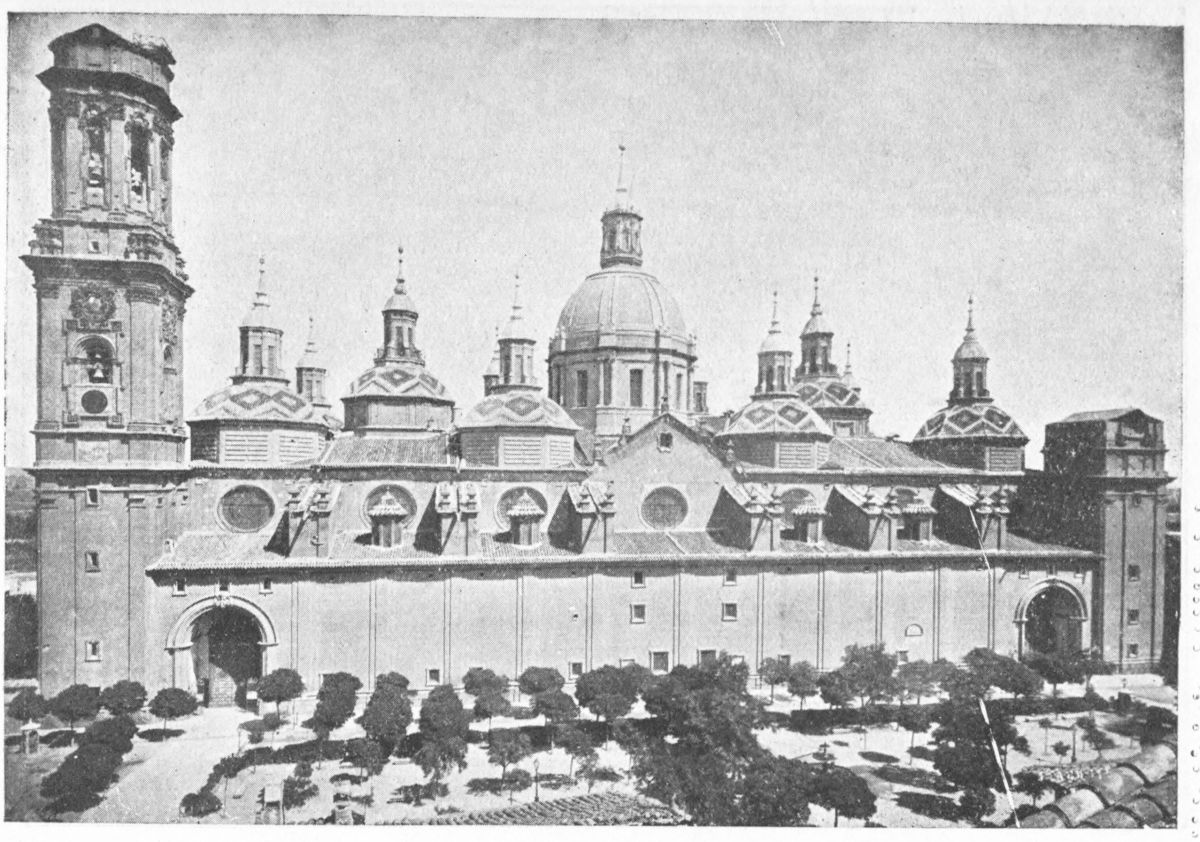
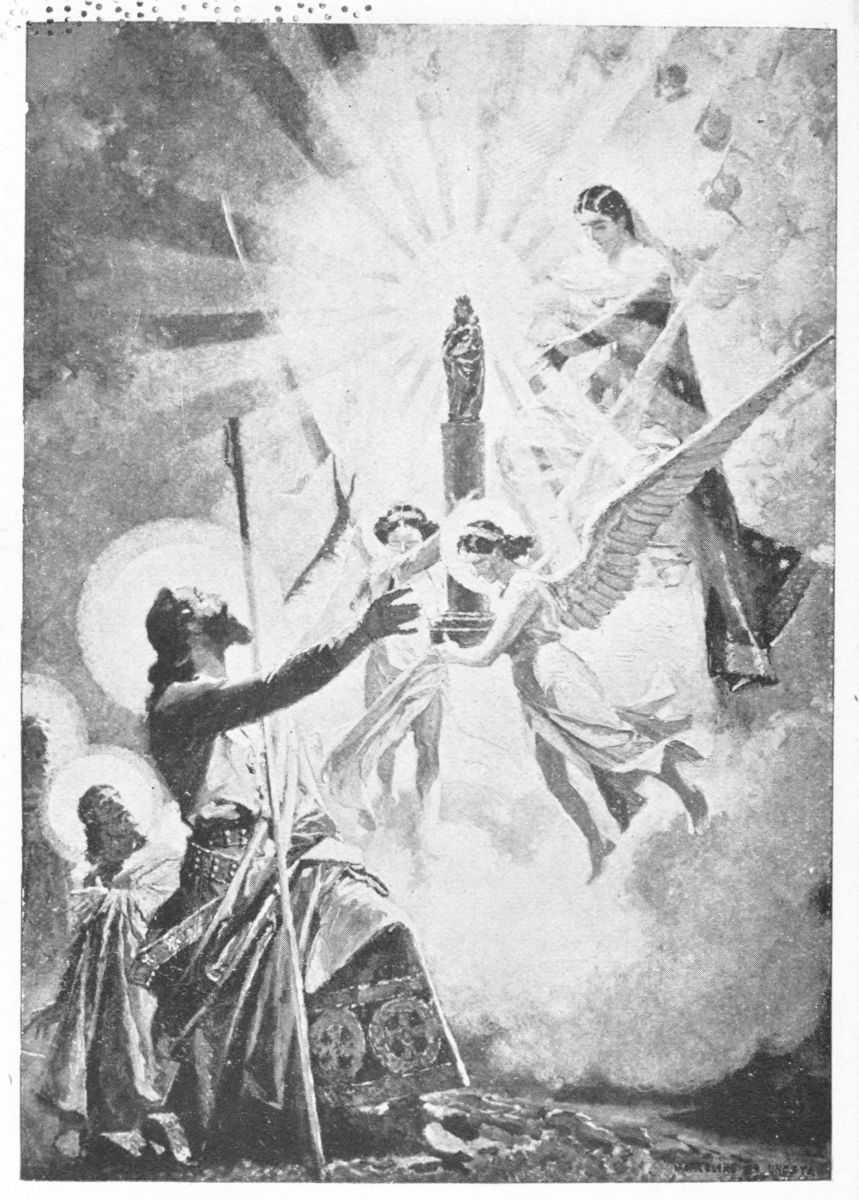
of the decadence, the new cathedral, or Iglesia del Pilar. The Apostle
James (Santiago), according to tradition, visited the city forty years
after the birth of Christ. He was favoured by a vision of the Blessed
Virgin, poised on a pillar of jasper, and attended by angels. He built
a modest chapel on the spot, which soon became a great resort of
pilgrims. This was replaced in the thirteenth century by a large church,
which was demolished to make room for the present building, erected in
1686 by Don Francisco Herrera. The design, bad enough in itself, was
made worse by Ventura Rodriguez seventy years later. The exterior hardly
merits description, though the domes or cupolas with their brilliant
green, yellow, and white tiling are not without a certain bizarre
beauty.
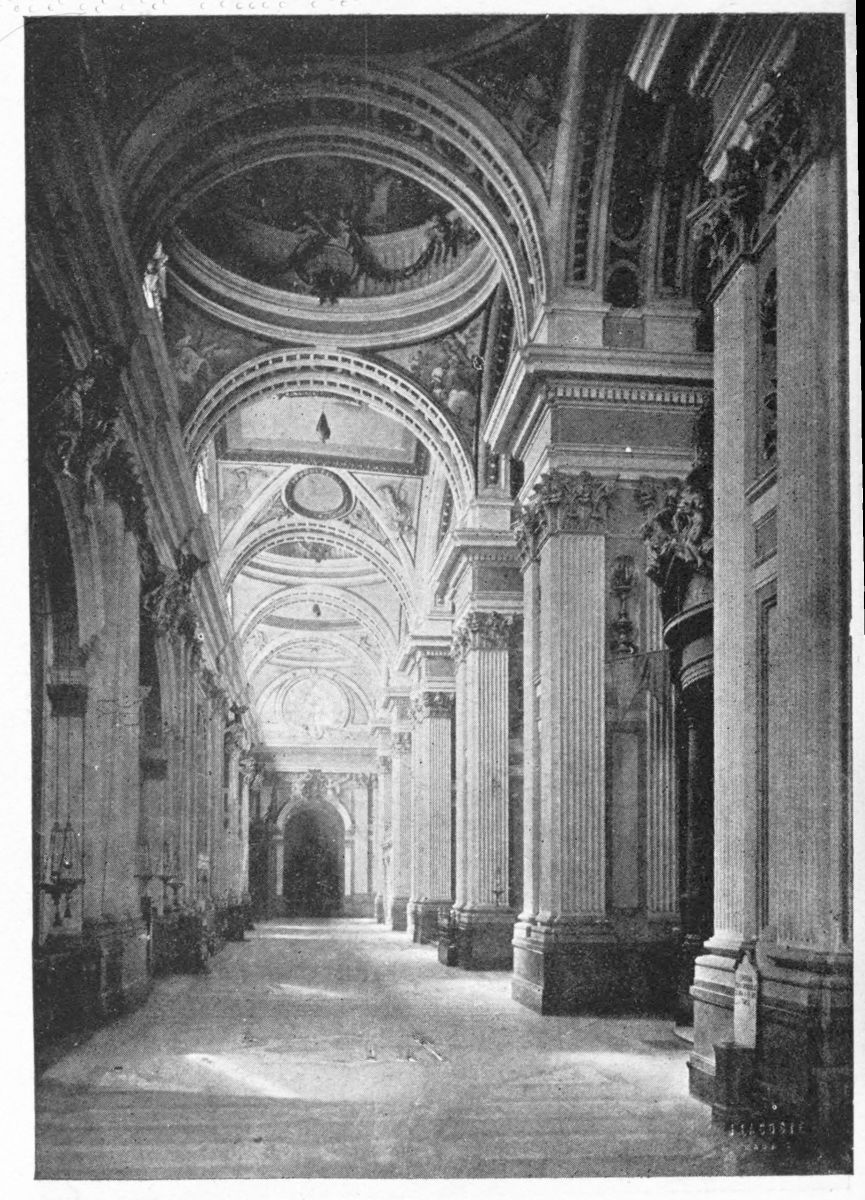
Spanish writers are as severe as others in their condemnation of this
spacious edifice: ‘The baroque style’ (says Don J. M. Quadrado), ‘as
timid and clumsy in the general proportion of the work as it was
audacious and presumptuous in detail, gave space not repose to the
Pilar—size without grandeur. The eye measures vainly this square of
1500 feet, and observes the nave and aisles equal in dimensions; it
rests on the twelve square piers—enormous masses which might serve for
the bases of towers, recoils from the bare vault, from the thick
cornice, from the ridiculous foliage of the capitals, the arches, etc.
This disagreeable impression is intensified by the strange and confused
disposition of the temple, which, divided into two by the Shrine and
the High Altar, presents two centres of attraction, and obstructs the
nave with objects masking each other.’
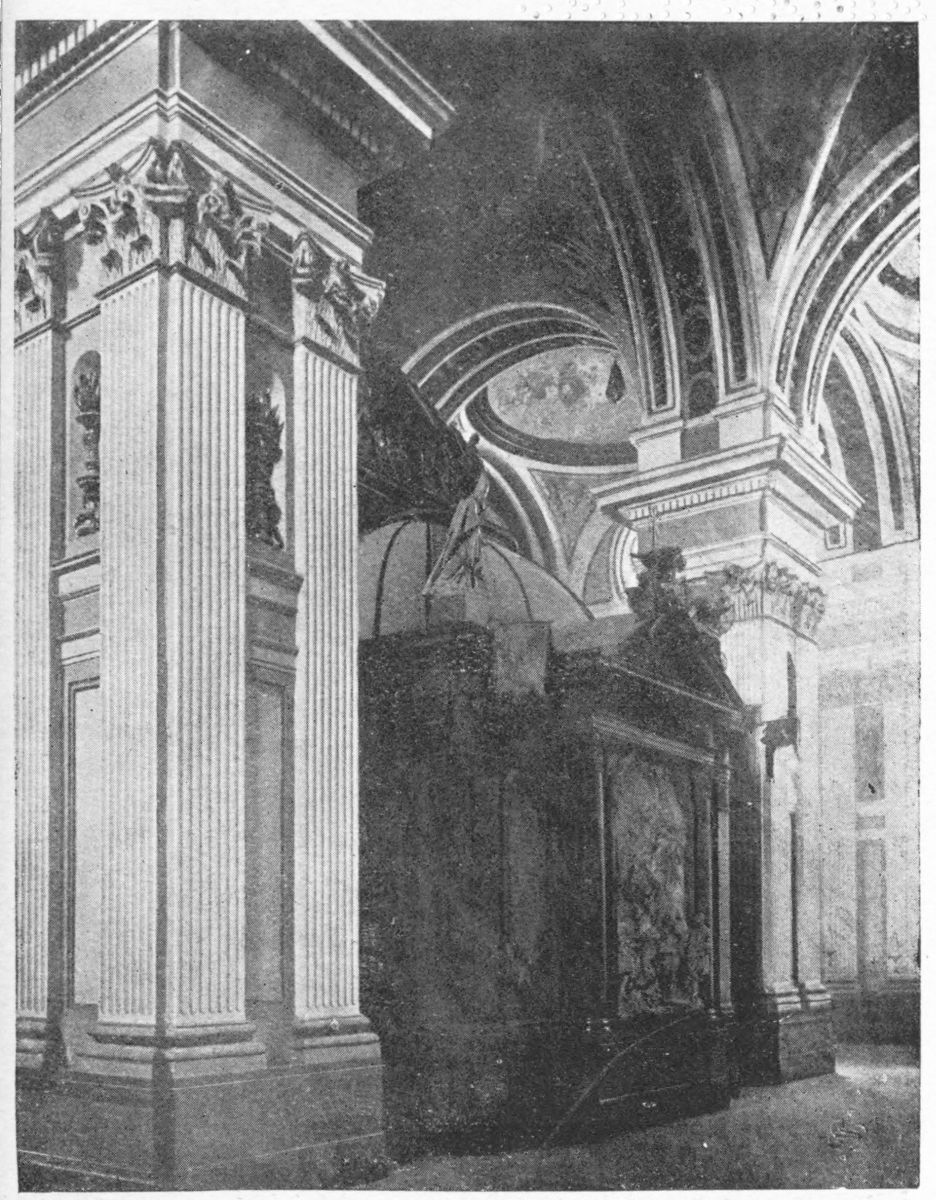
The only objects of particular interest in this vast edifice are those
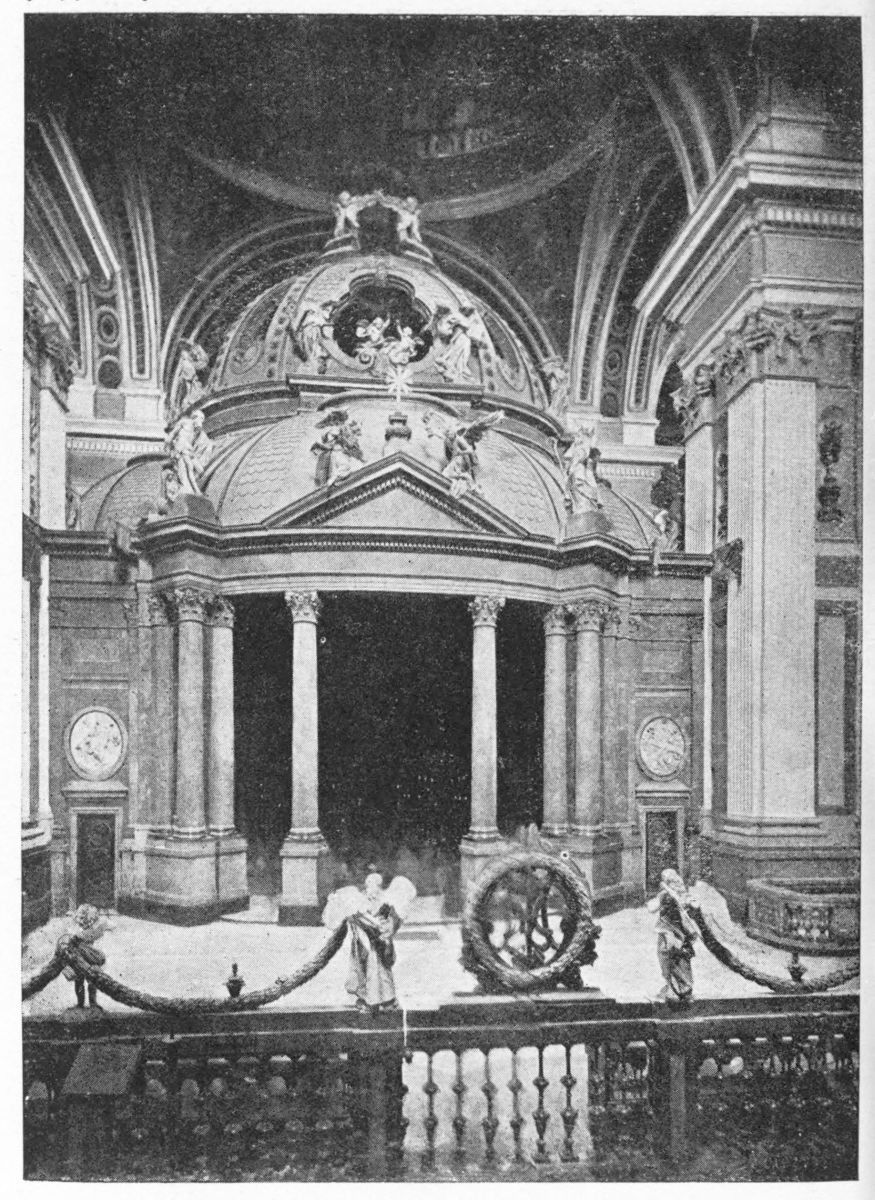
just named, which stand back to back. The Shrine or Capilla Santa
constitutes a chapel within a chapel, the exterior being rectangular,
the interior elliptical. Overhead is an oval dome borne on four
Corinthian columns, with capitals richly gilded, and over this again
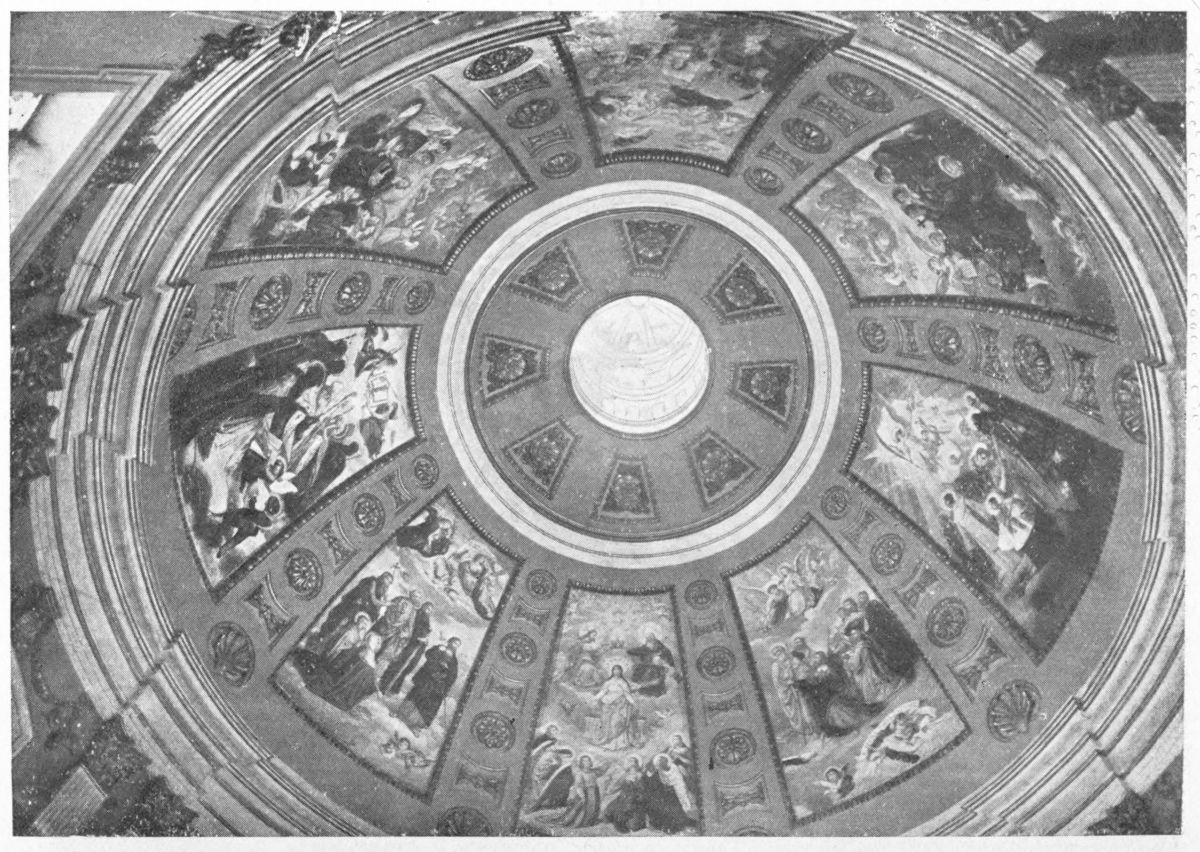
another cupola or lantern painted by a namesake (not a relative) of
Velazquez. There are four smaller domes painted by Goya and Bayeu. The
profusion of rich marbles, the elaboration of the architecture, the
brilliancy of the frescoes, and the multitude of statues give this
chapel a sumptuous and not inartistic appearance. Around are hung
banners taken from the infidels. The Sacred Pillar is almost entirely
concealed, but there is a hole in the casing through which the devout
may kiss it. On each side of the chapel imposing staircases lead to the
crypt, in which lie several archbishops and canons, and the heart of Don
Juan José of Austria, brother of Carlos II.
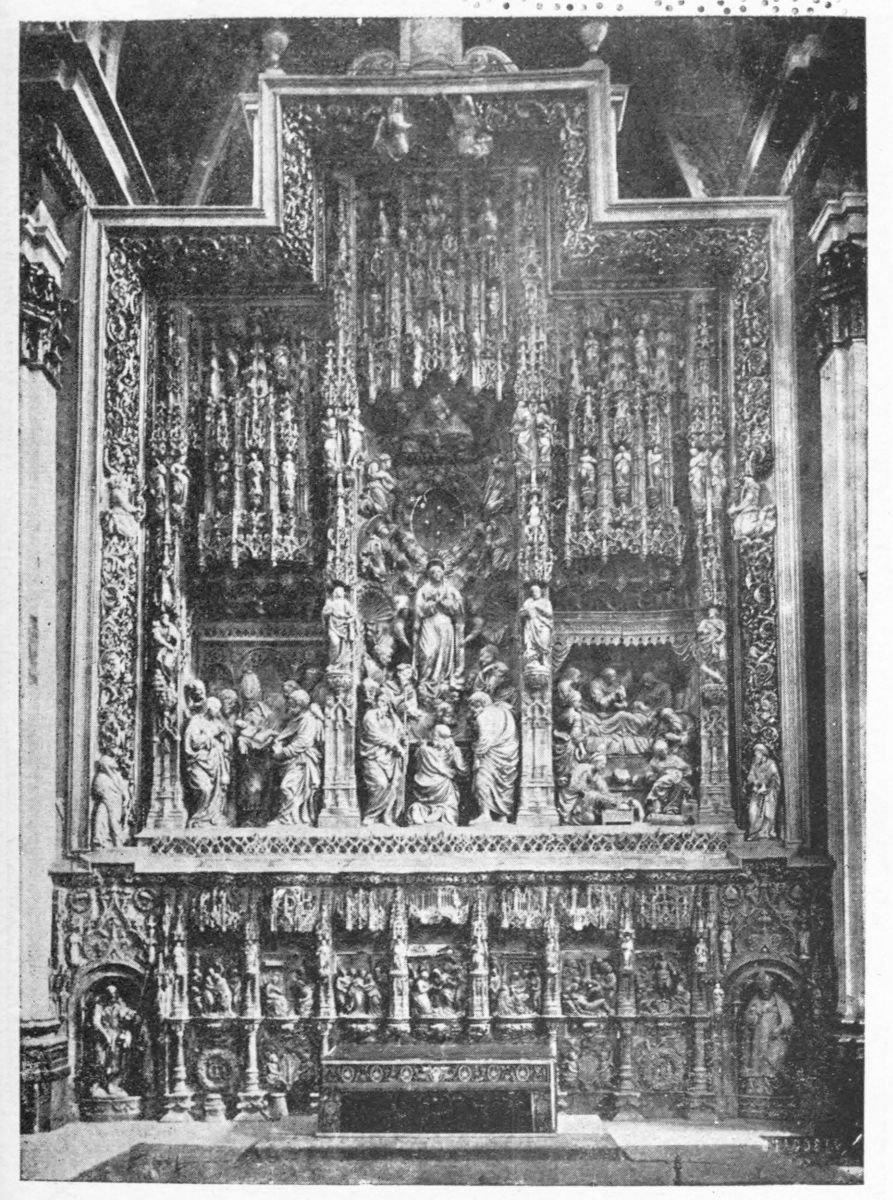
The High Altar of the cathedral is of alabaster and in the Gothic
style, the work of one Damian Forment, an early sixteenth-century
artist. The lower reliefs, separated by slender pilasters, represent the
Espousals of the Virgin, the Annunciation, the Visitation, the Nativity,
the Adoration of the Magi, the Crucifixion, and the Resurrection. Above,
in canopied niches, are the Assumption, the Nativity, and the
Presentation. The canopies are richly adorned with the figures of
saints. At the sides are two large statues of St. James and St.
Braulio—objects of special devotion—and at the apex of the
altar-screen are two angels supporting Our Lady of the Pillar. The whole
is undoubtedly the finest work of art in the cathedral.
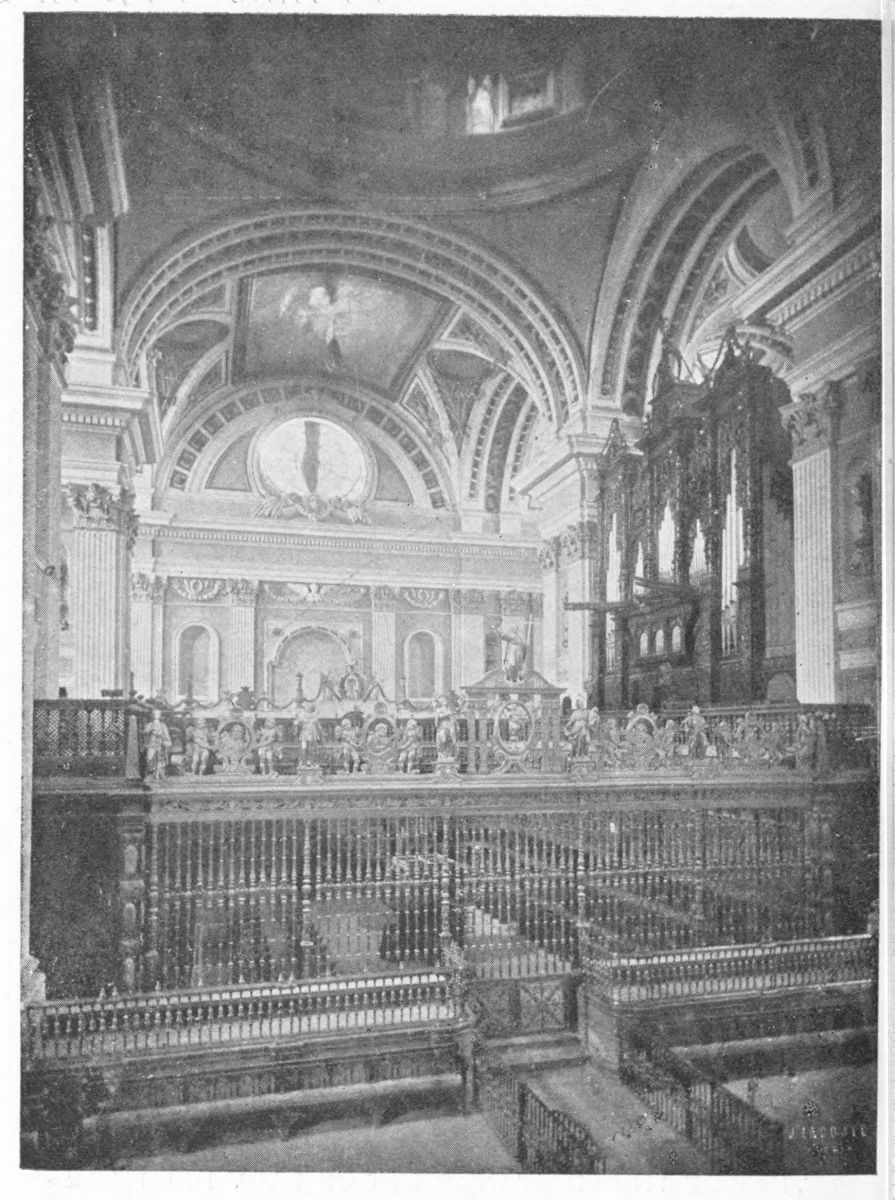
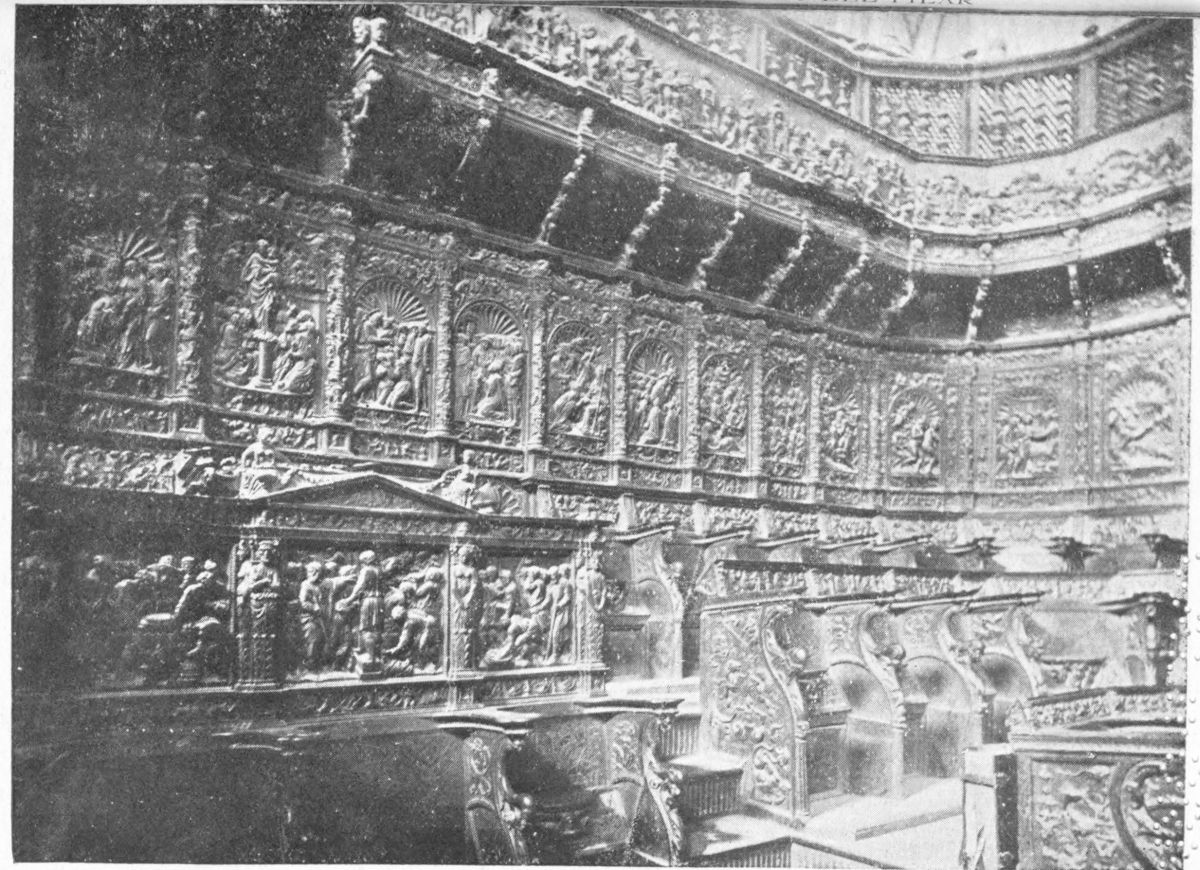
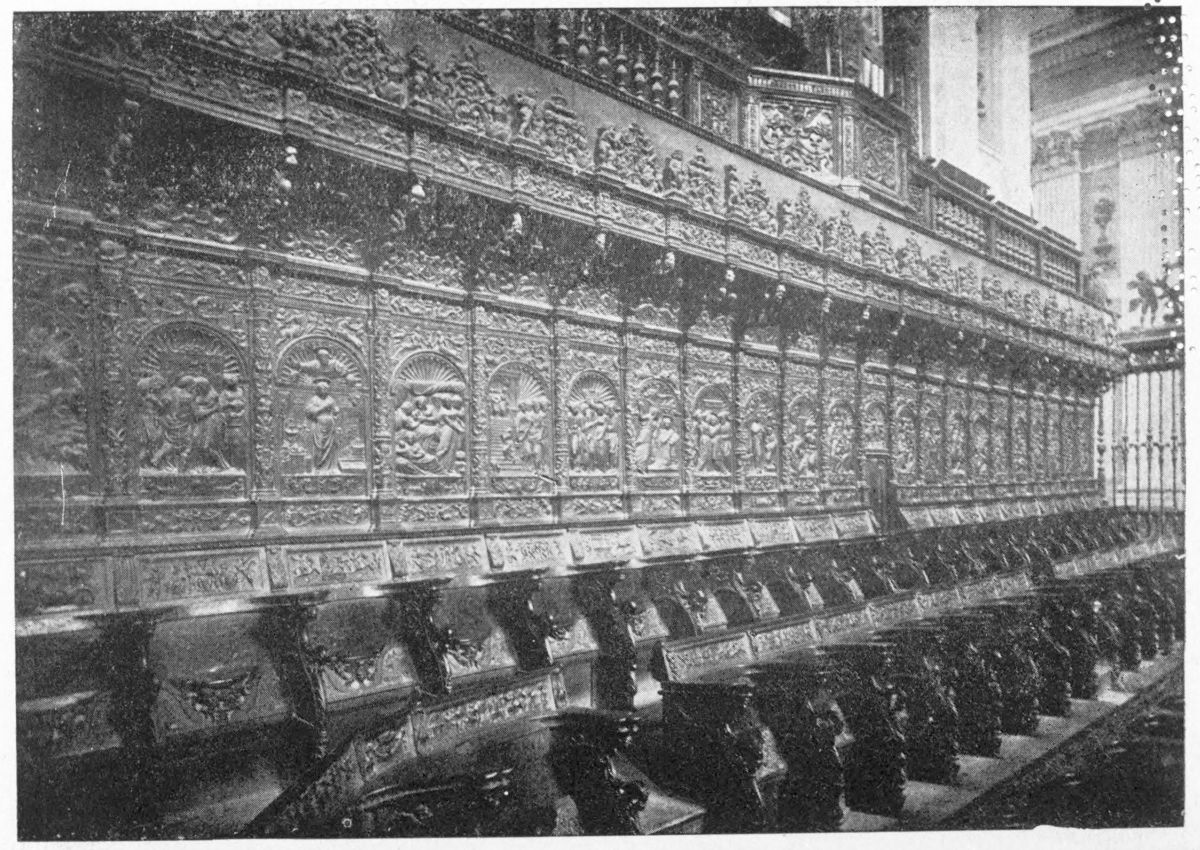
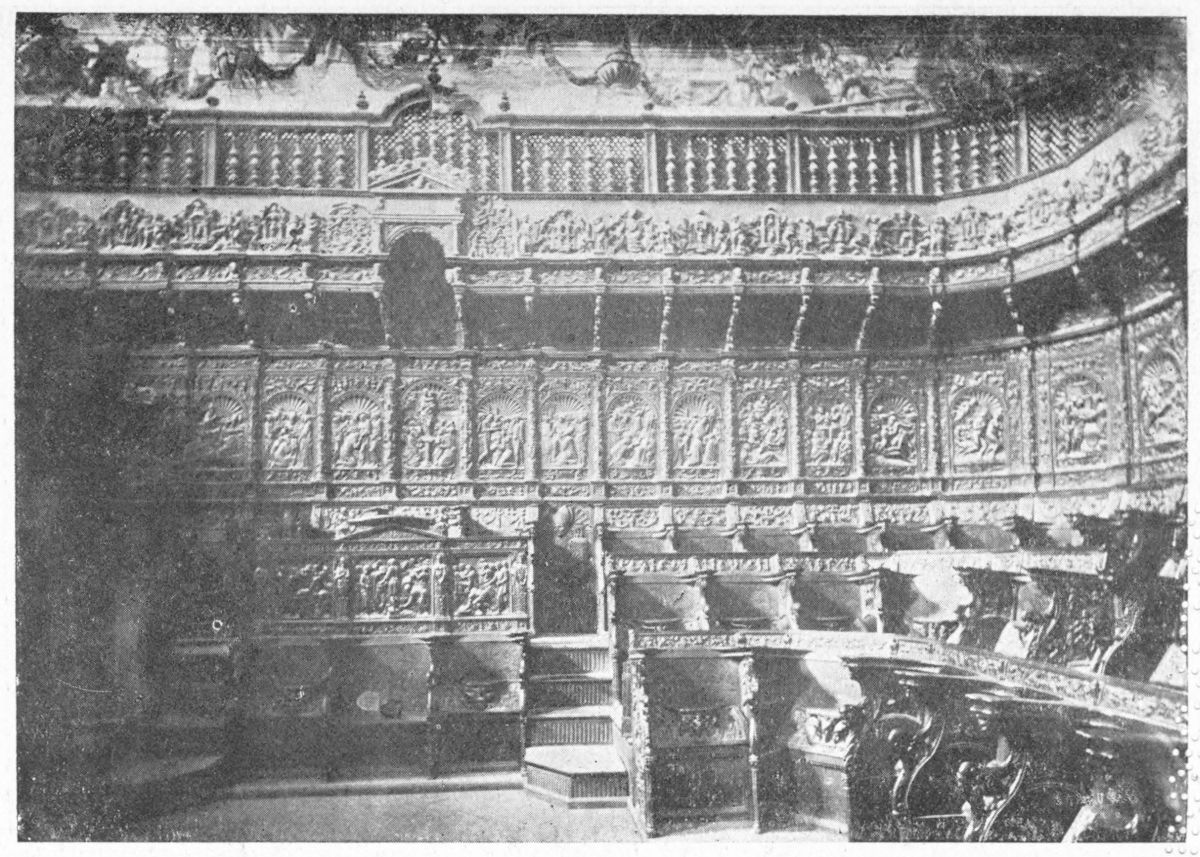
The choir stalls merit attention. They were designed by the Navarrese
Estebán de Obray, and carved by the Florentine Giovanni Moreto and
Nicolás de Jobato between 1542 and 1548. The infinite number and variety
of the designs, the delicacy and intricacy of the work, suggest that it
was accomplished in two or more generations rather than in six years.
Equally admirable is the bronze reja by Juan Tomás Celina (1574) on a
marble base, sculptured by the Majorcan artist, Guillermo Salvá.
The sacristy contains an immense variety of offerings to the shrine by
pilgrims from all parts of the world. These had been accumulating for
centuries, and the Chapter were able some years ago to raise a sum of
£20,000 by disposing of only a portion of them. Without profanity we
might perhaps say that the Virgen del Pilar is to Zaragoza what Diana
was to the Ephesians. Hundreds make a living by selling pictures and
models of the shrine, and a surprising number of silversmiths do a
roaring trade in images and medals. Yet it is not quite wise or safe for
the traveller to scoff at a devotion which largely inspired the heroic
defence of 1808, and supplied the place of arms, strategy, and able
leadership.
Close by, the yellow Ebro is spanned by the seven arches of the Puente
de Piedra. Its origin is of unknown antiquity. It was here in 1435, when
one of the arches collapsed—presaging the destruction by the Genoese of
the Aragonese fleet which sailed that day; and the inscription
mentioning Alfonso V., and the date 1437, can only refer to its
reconstruction. And across this bridge we pass into the stern, desert
country of Aragon, and so on to the distant, gleaming Pyrenees.
Plate 1
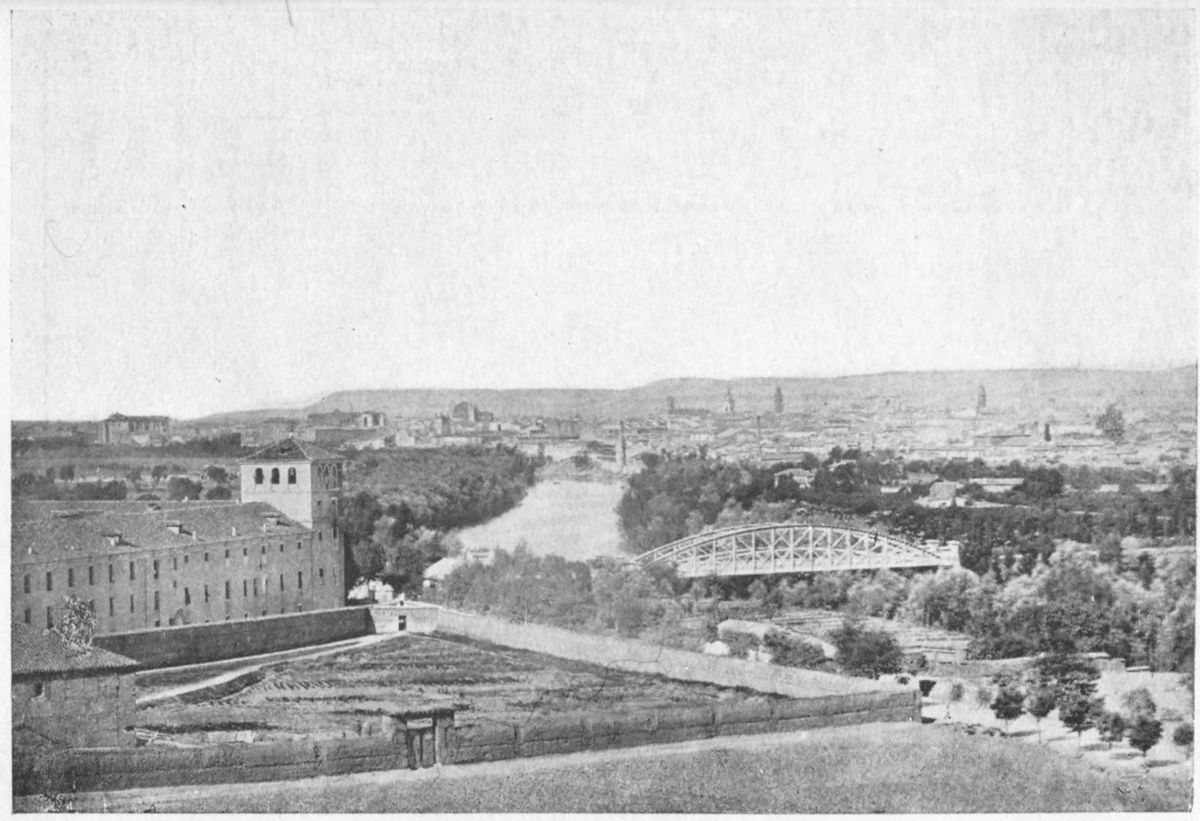
GENERAL VIEW OF VALLADOLID
Plate 2
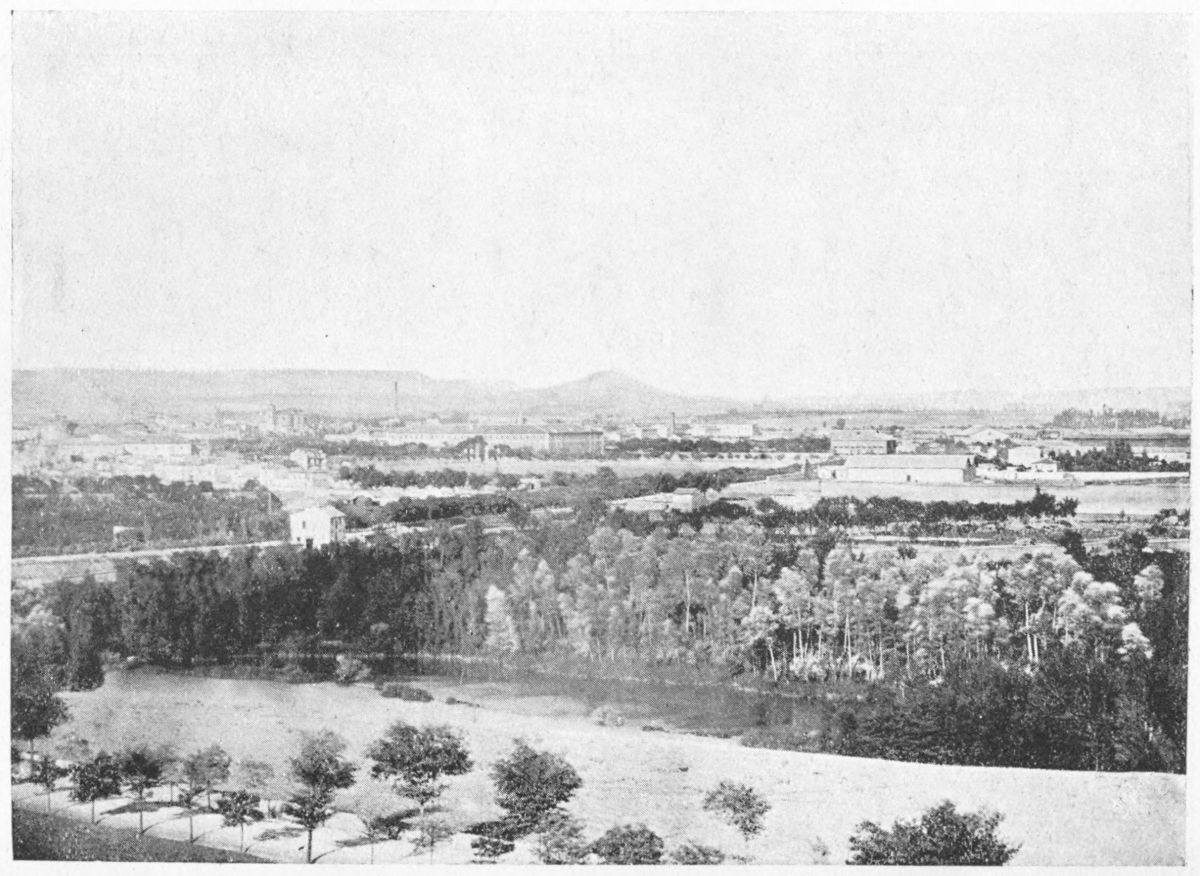
GENERAL VIEW OF VALLADOLID
Plate 3
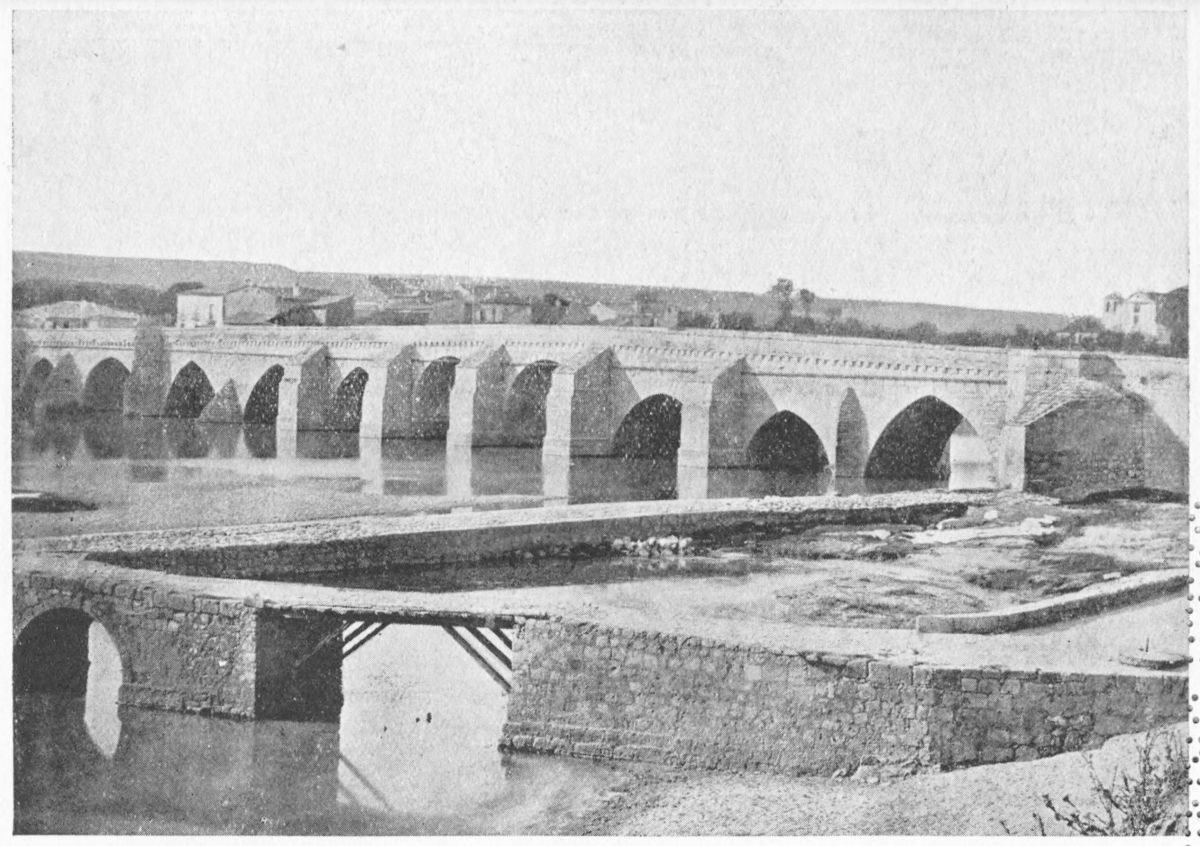
THE BRIDGE OF PIEDRA
VALLADOLID
Plate 4
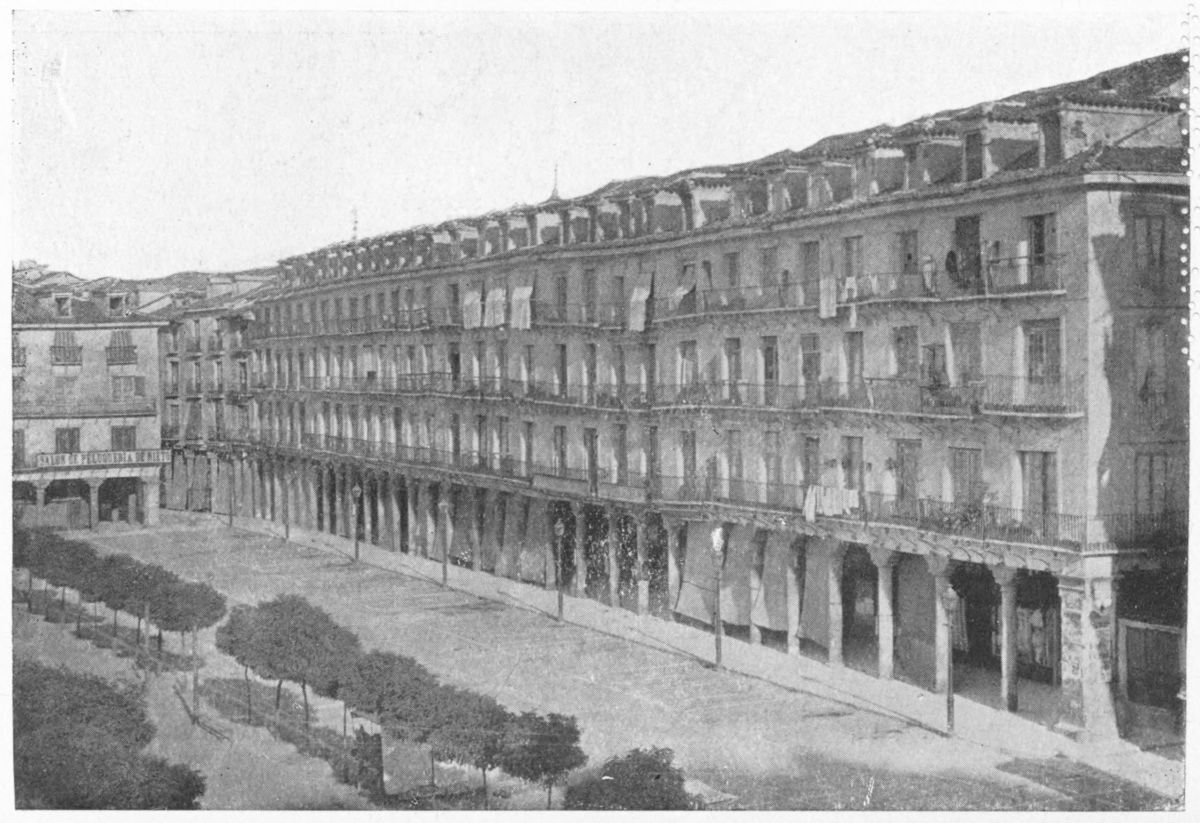
LA ACERA DE SAN FRANCISCO
Plate 5
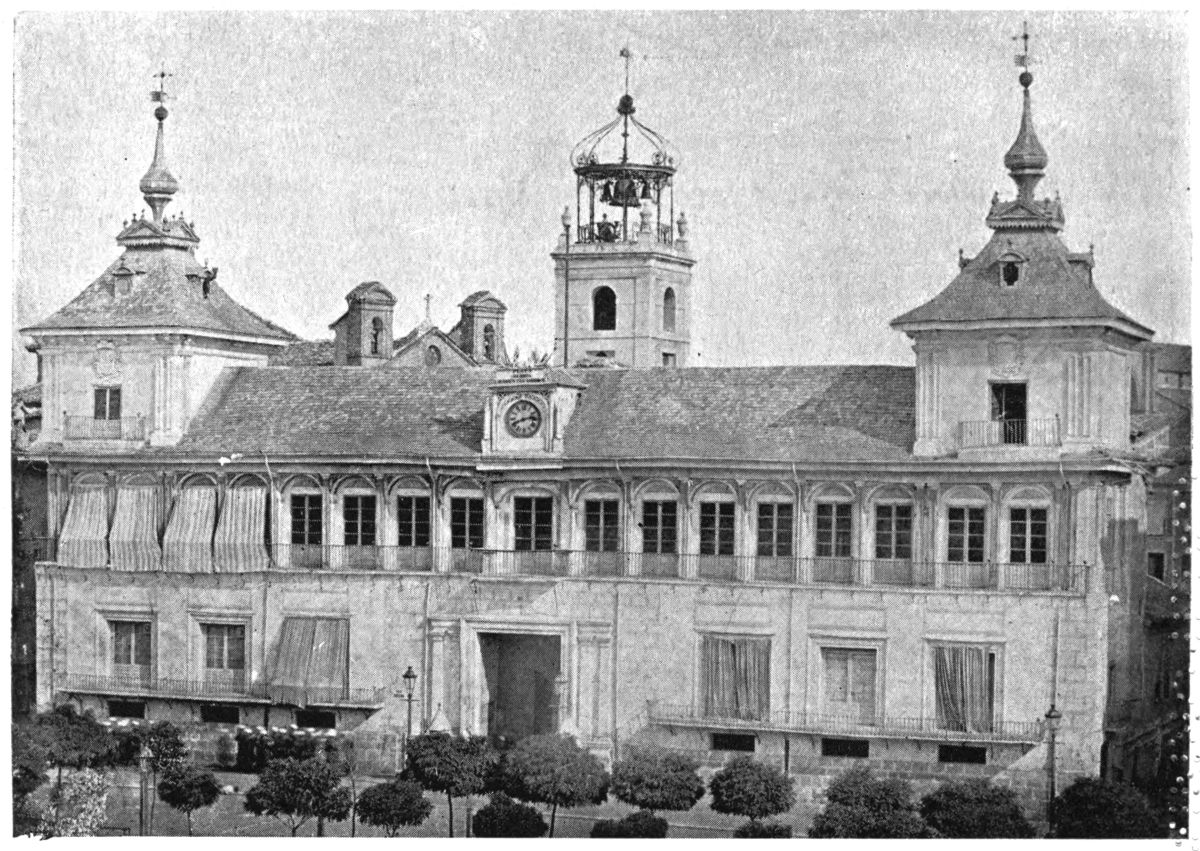
THE TOWN HALL
VALLADOLID
Plate 6
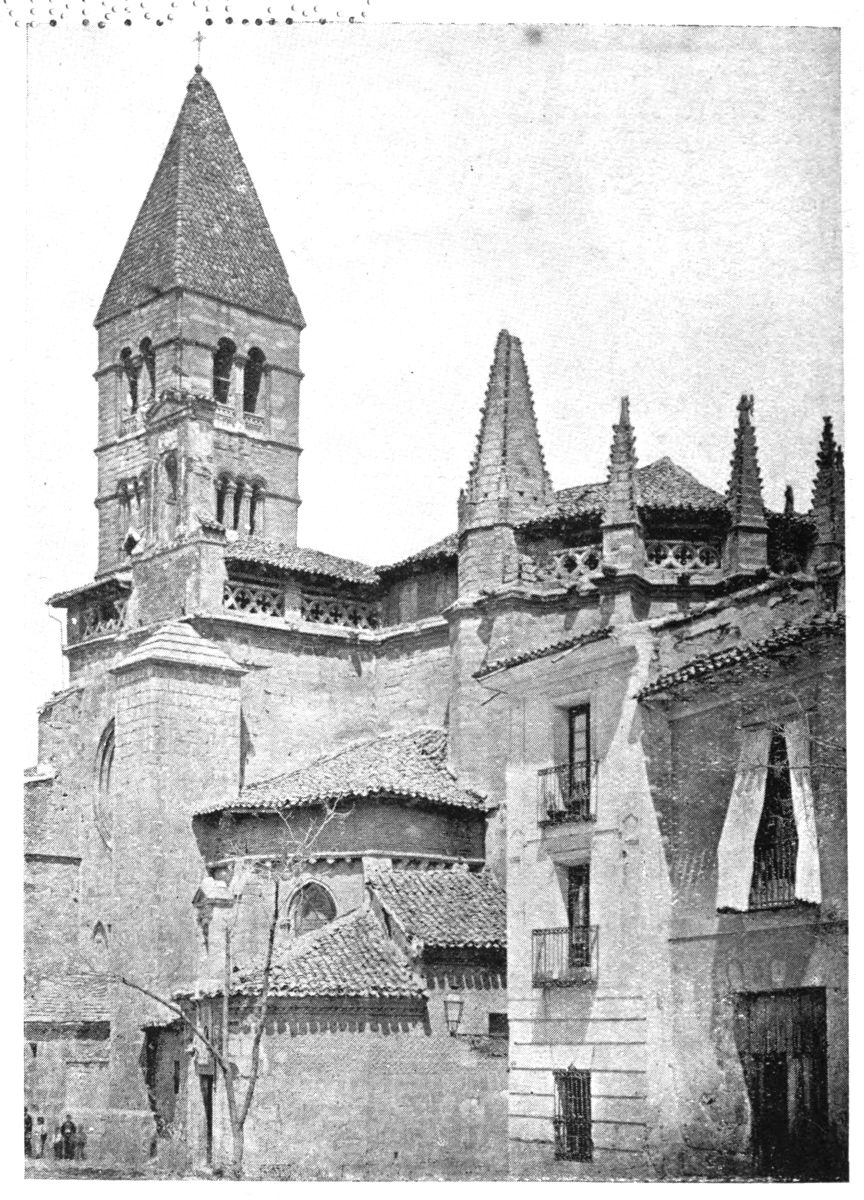
THE OLD PARISH CHURCH
VALLADOLID
Plate 7
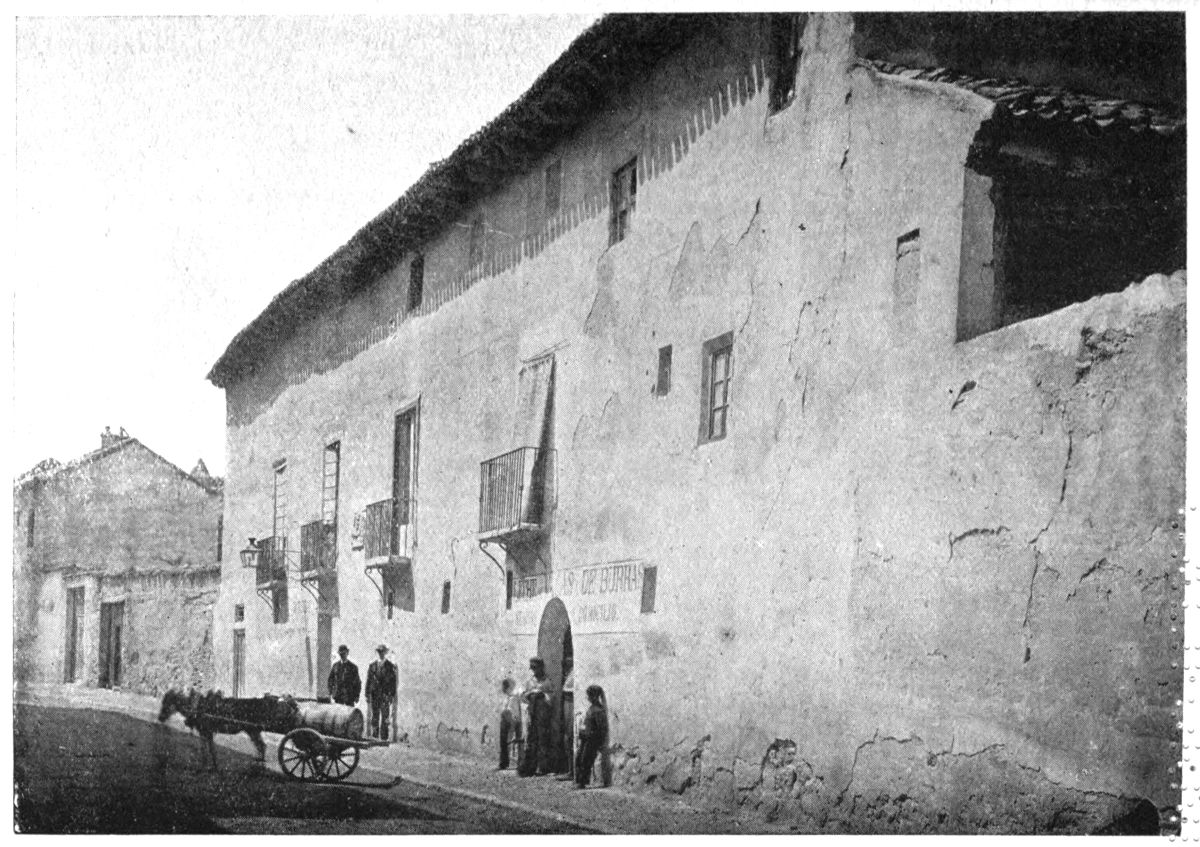
HOUSE IN WHICH CHRISTOPHER COLUMBUS DIED, 1506
VALLADOLID
Plate 8
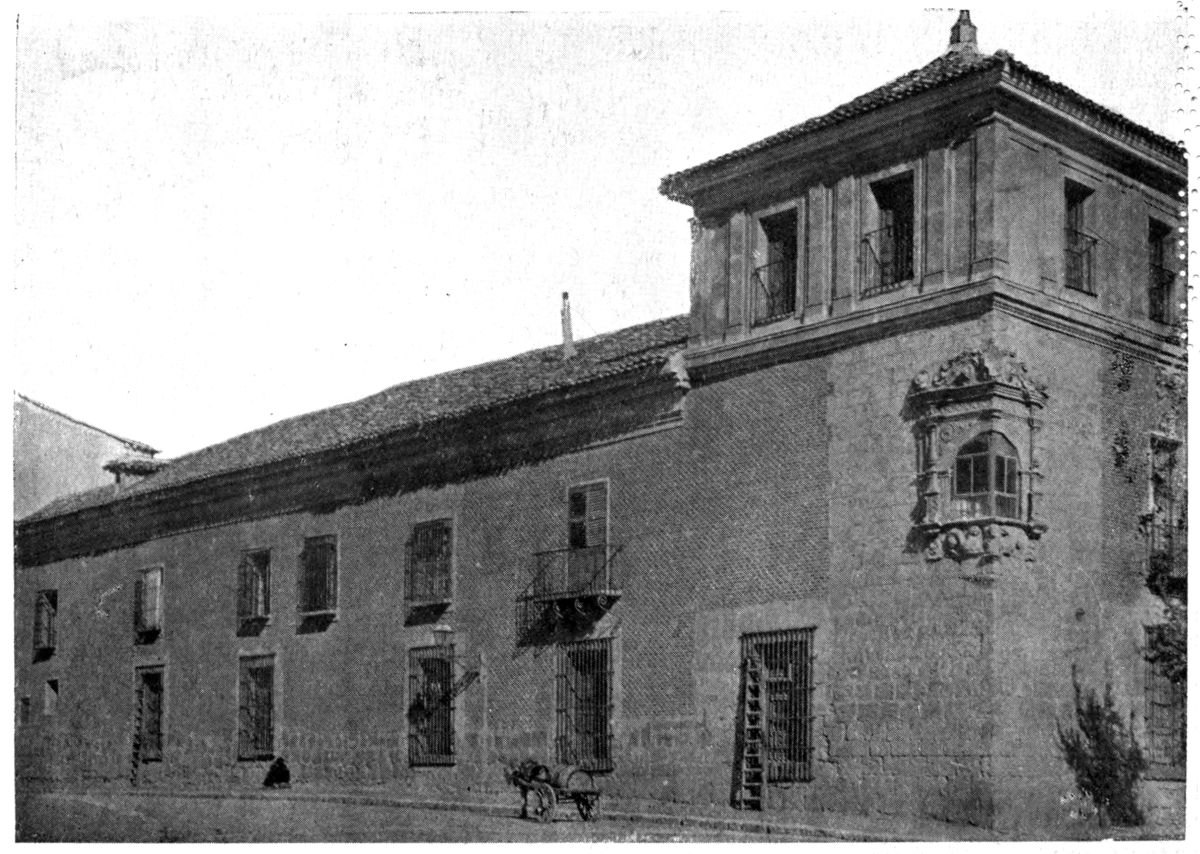
HOUSE WHERE KING PHILIP II. WAS BORN, 1527
VALLADOLID
Plate 9
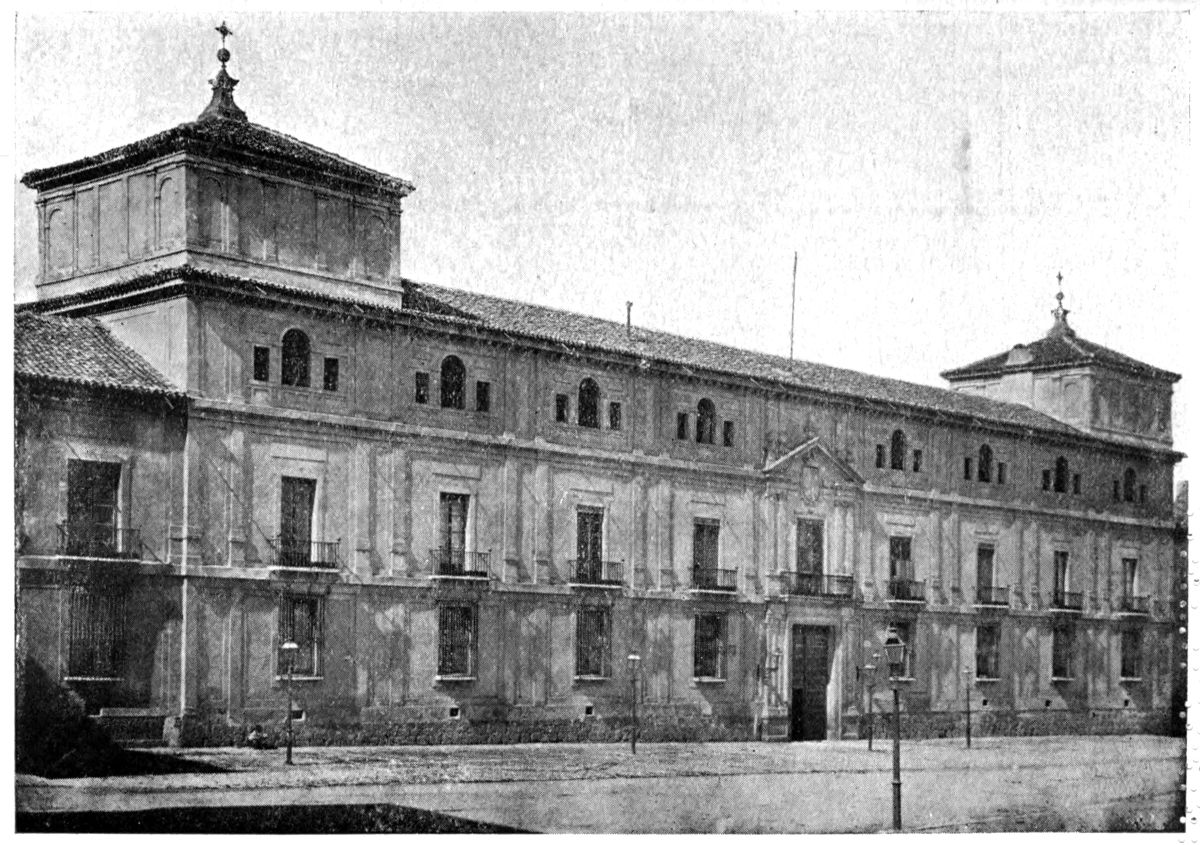
THE ROYAL PALACE OF PHILIP III.
VALLADOLID
Plate 10
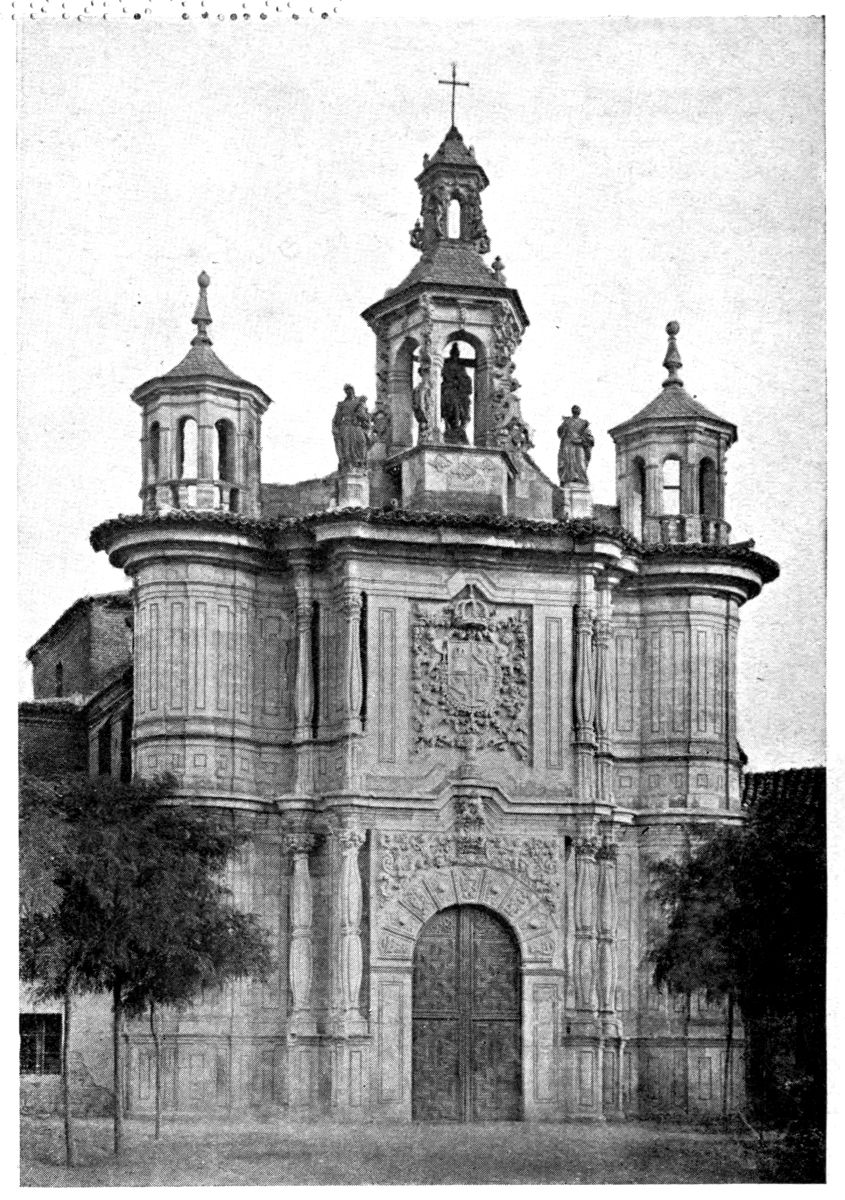
CHURCH OF SAN JUAN DE LETRAN
VALLADOLID
Plate 11
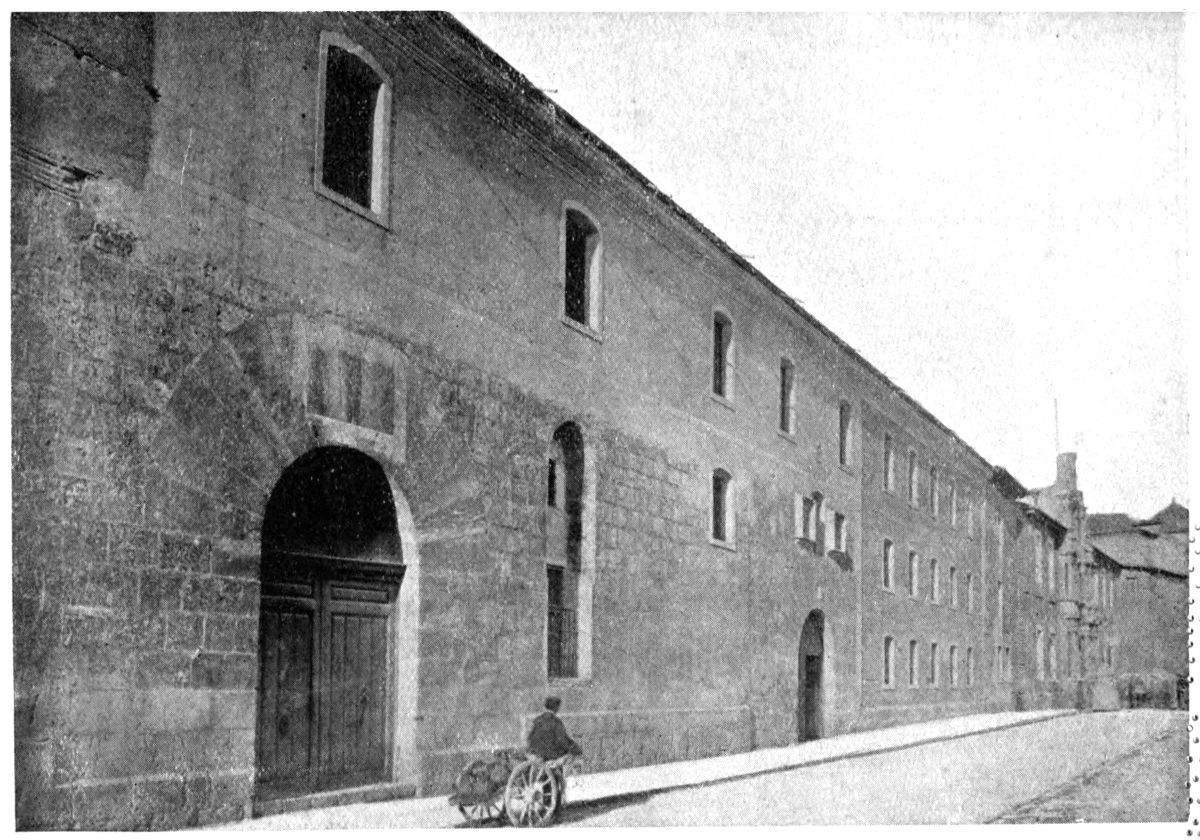
COLLEGE OF THE ESCOCESES
VALLADOLID
Plate 12
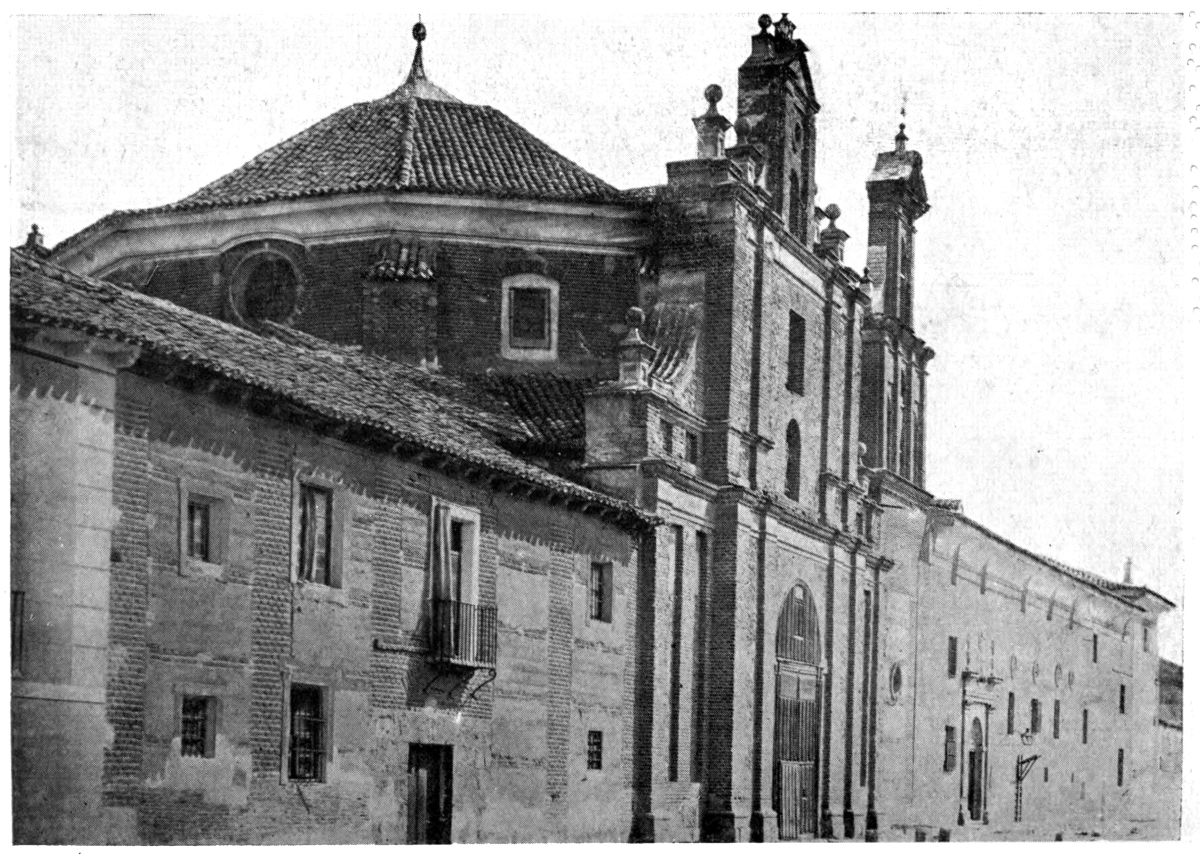
COLLEGE OF THE INGLESES
VALLADOLID
Plate 13
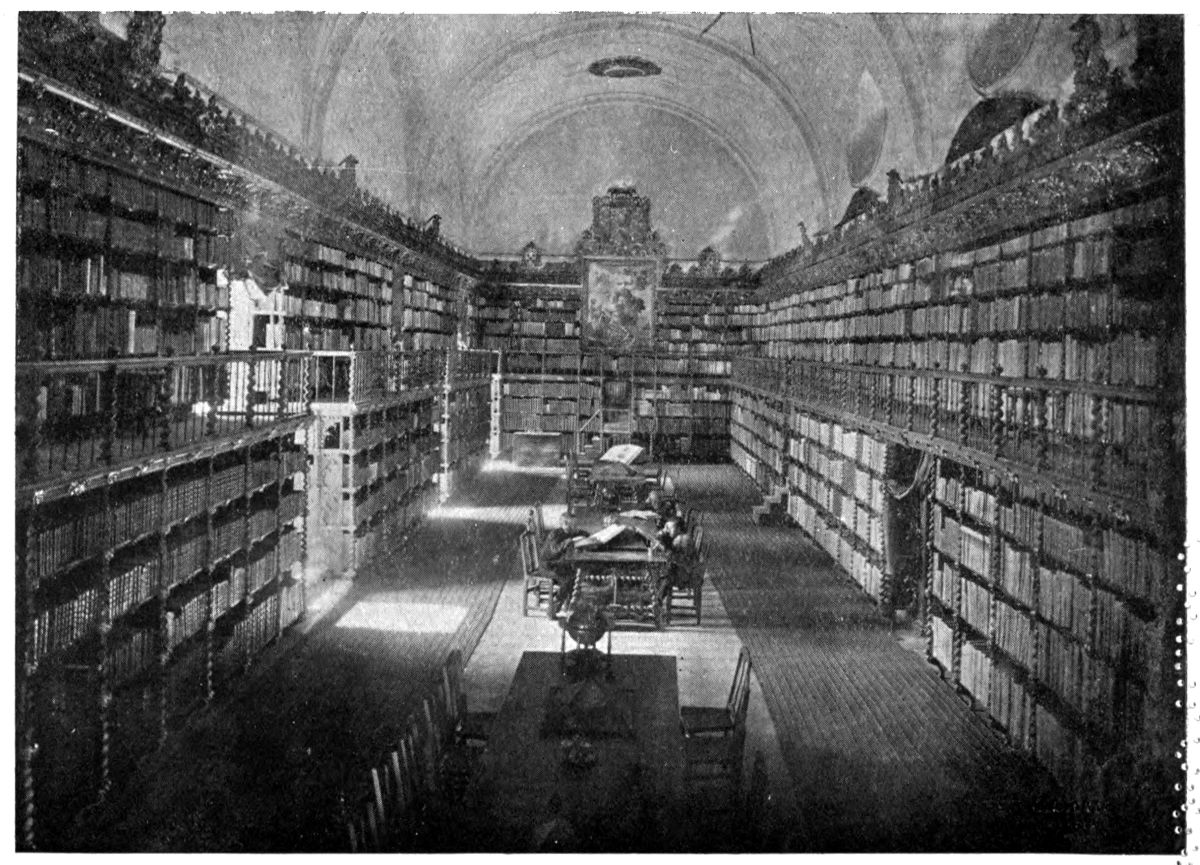
INTERIOR VIEW OF THE LIBRARY
VALLADOLID
Plate 14
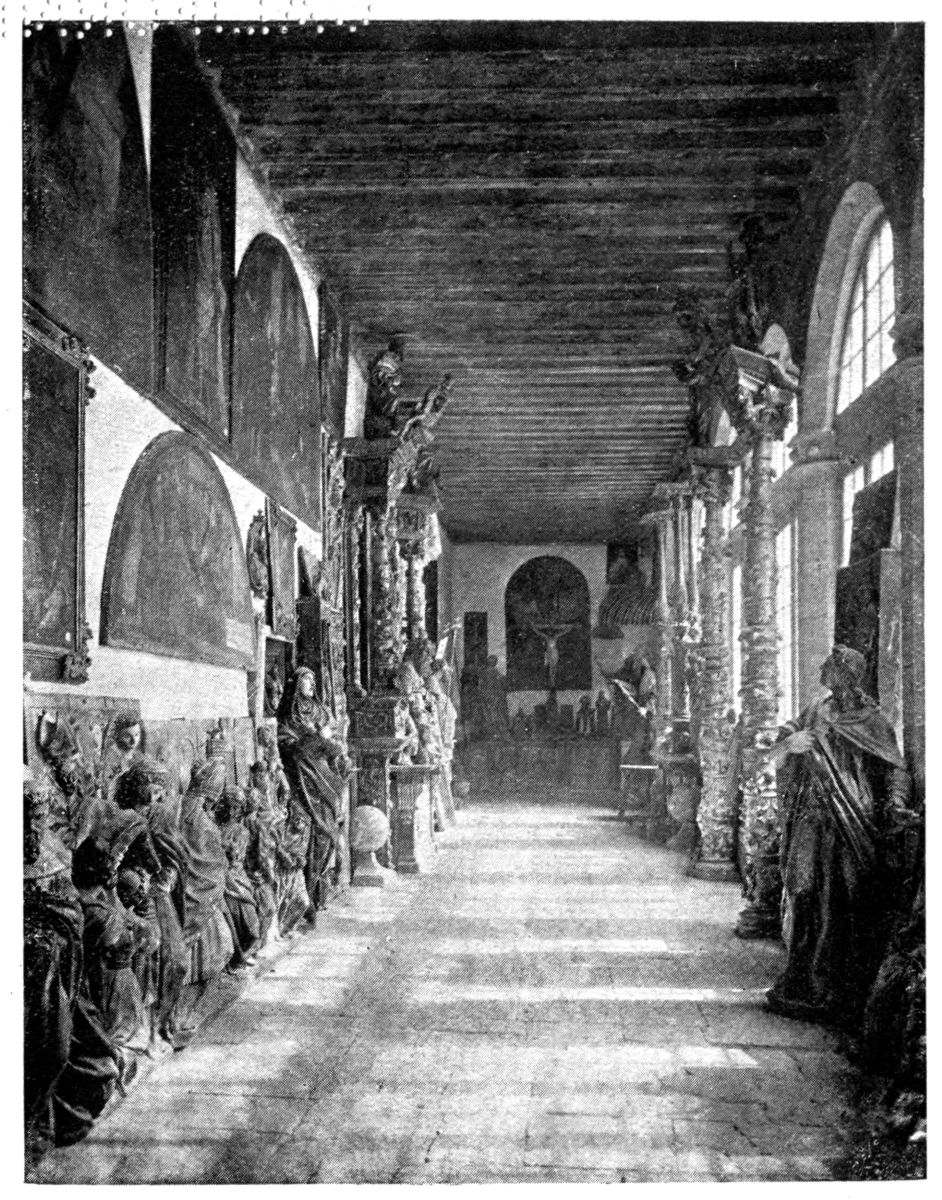
INTERIOR OF THE MUSEUM
VALLADOLID
Plate 15
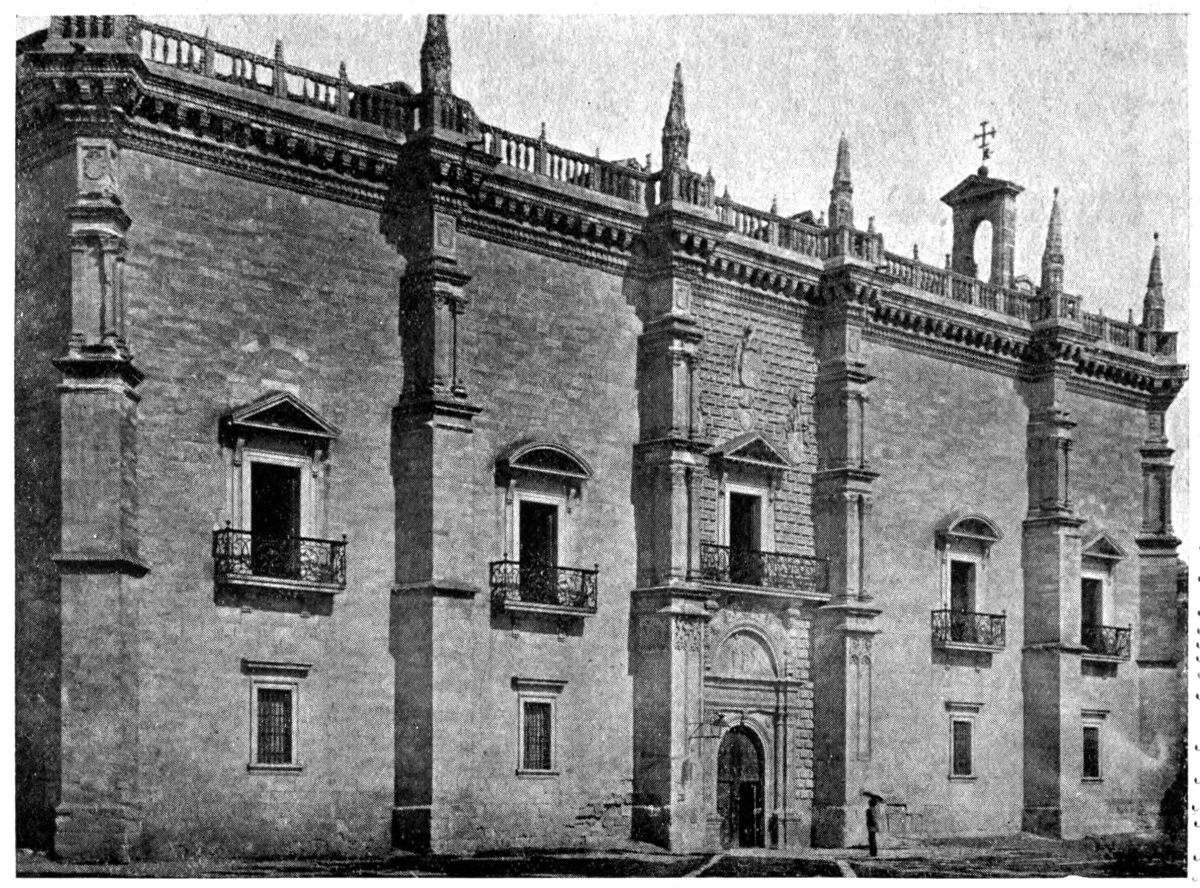
FAÇADE OF THE MUSEUM
VALLADOLID
Plate 16
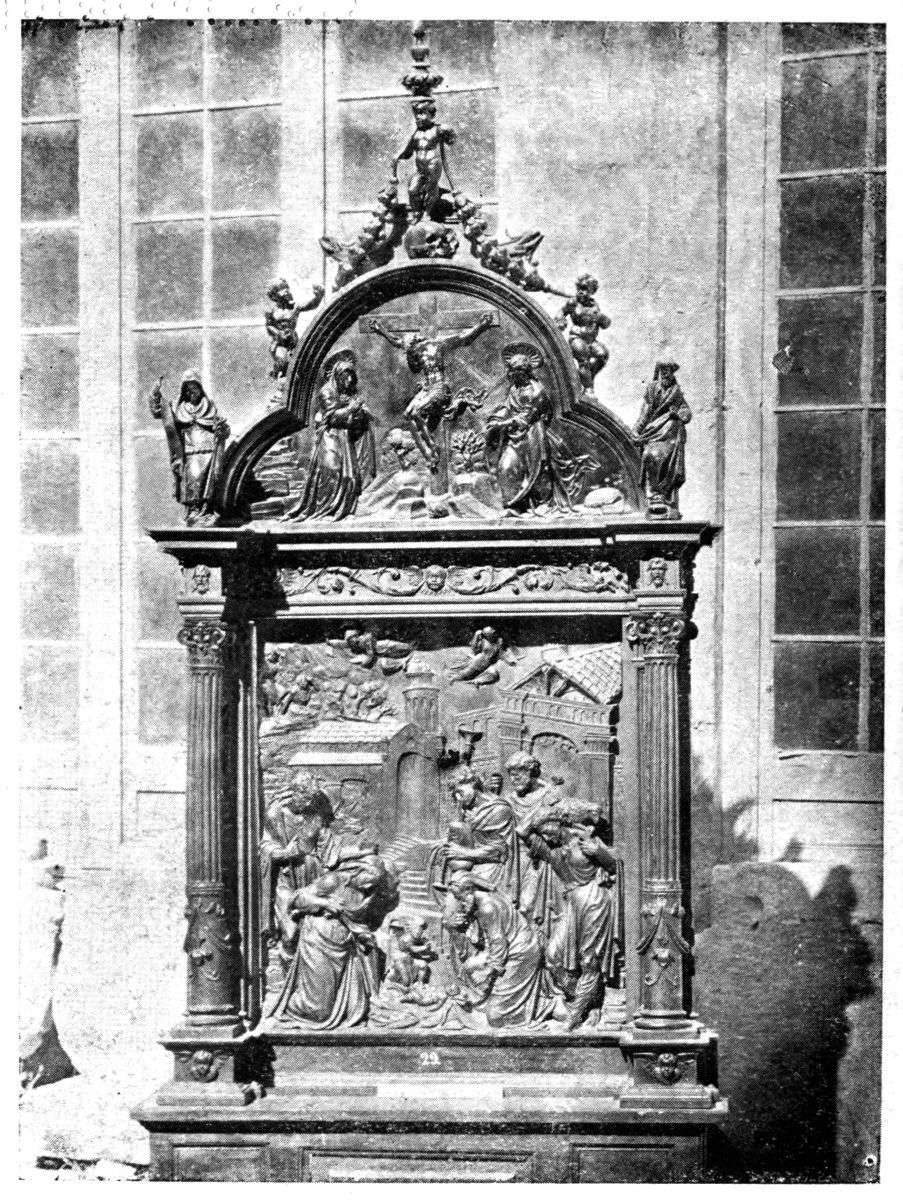
MUSEUM. BACK OF A CHOIR STALL. BY BERRUGUETE
VALLADOLID
Plate 17
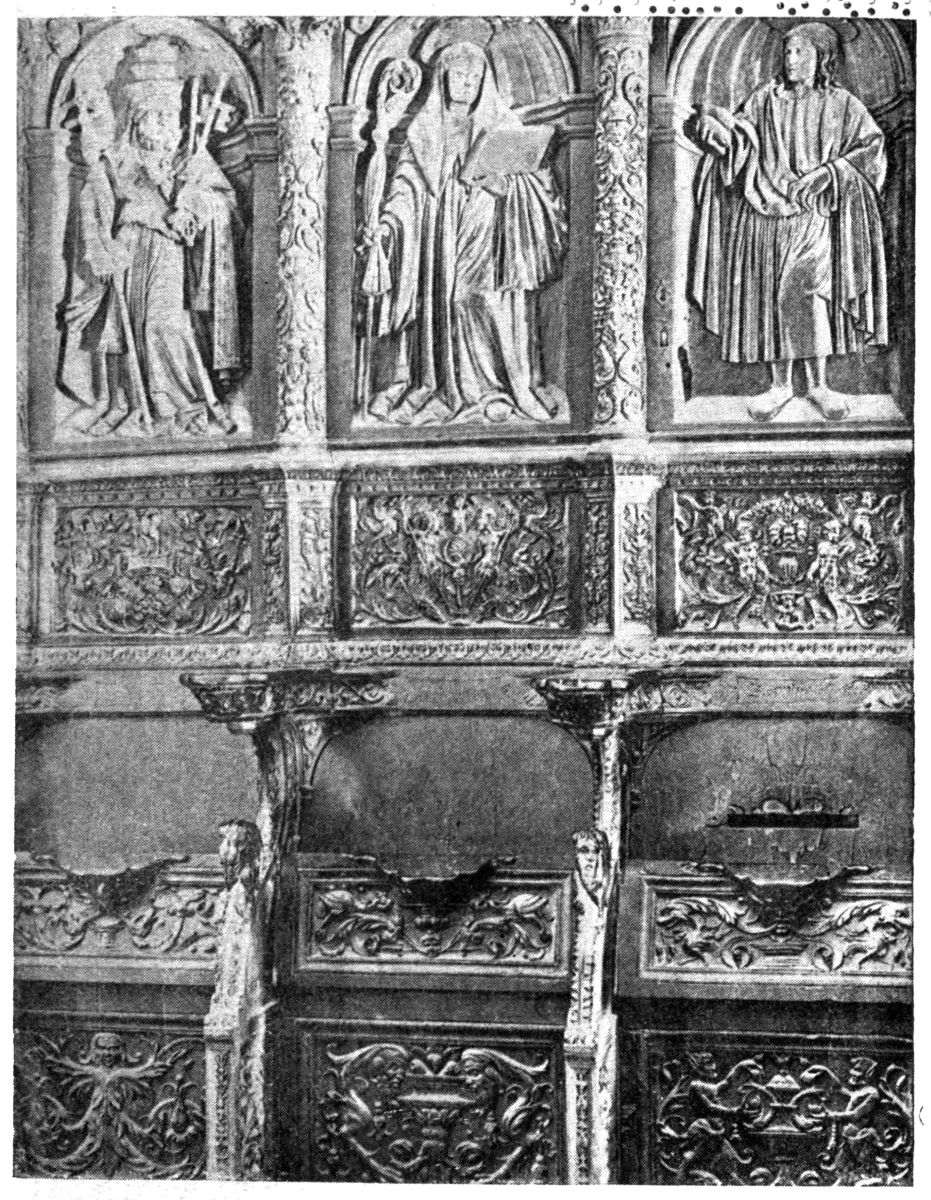
MUSEUM. DETAIL OF THE CHOIR STALLS OF SAN BENITO
VALLADOLID
Plate 18
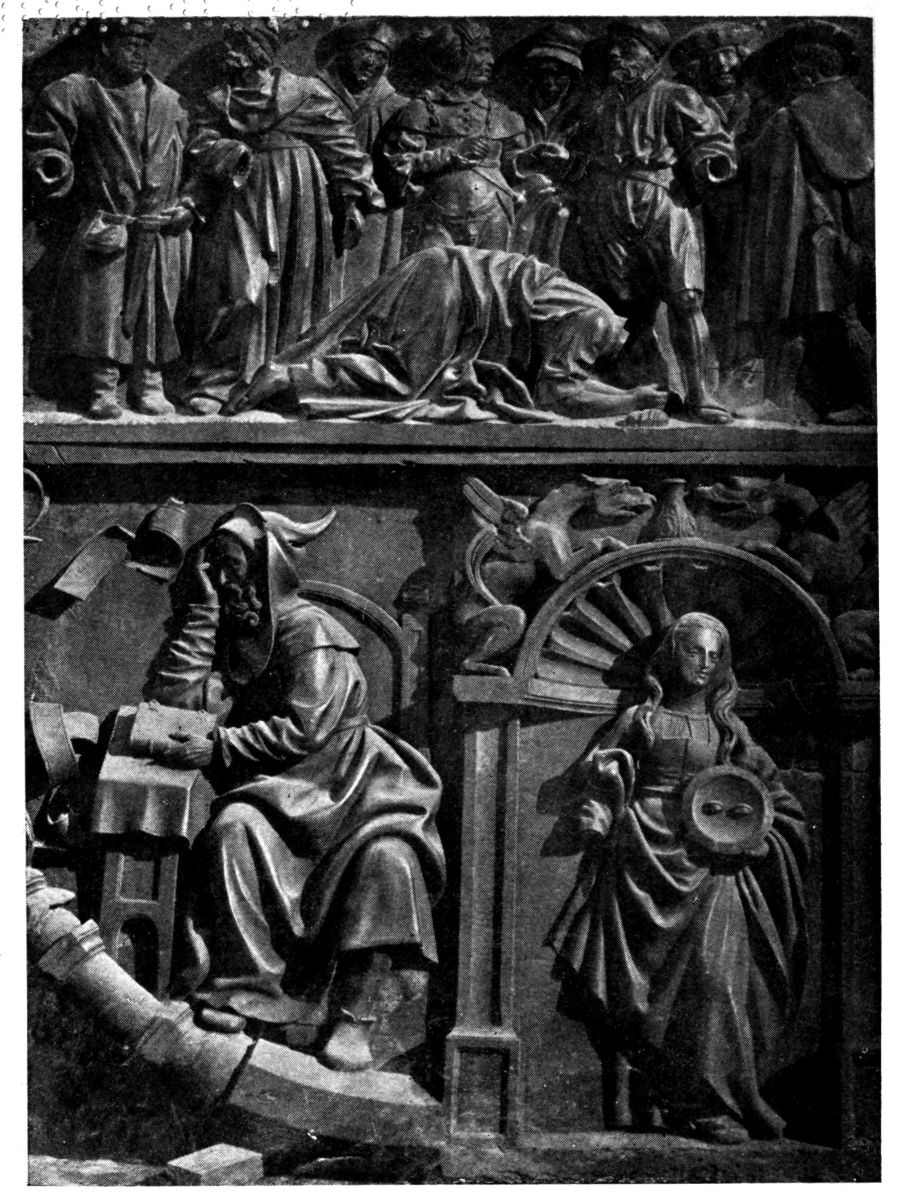
MUSEUM. SEVERAL FRAGMENTS OF CHOIR STALLS BY BERRUGUETE
VALLADOLID
Plate 19
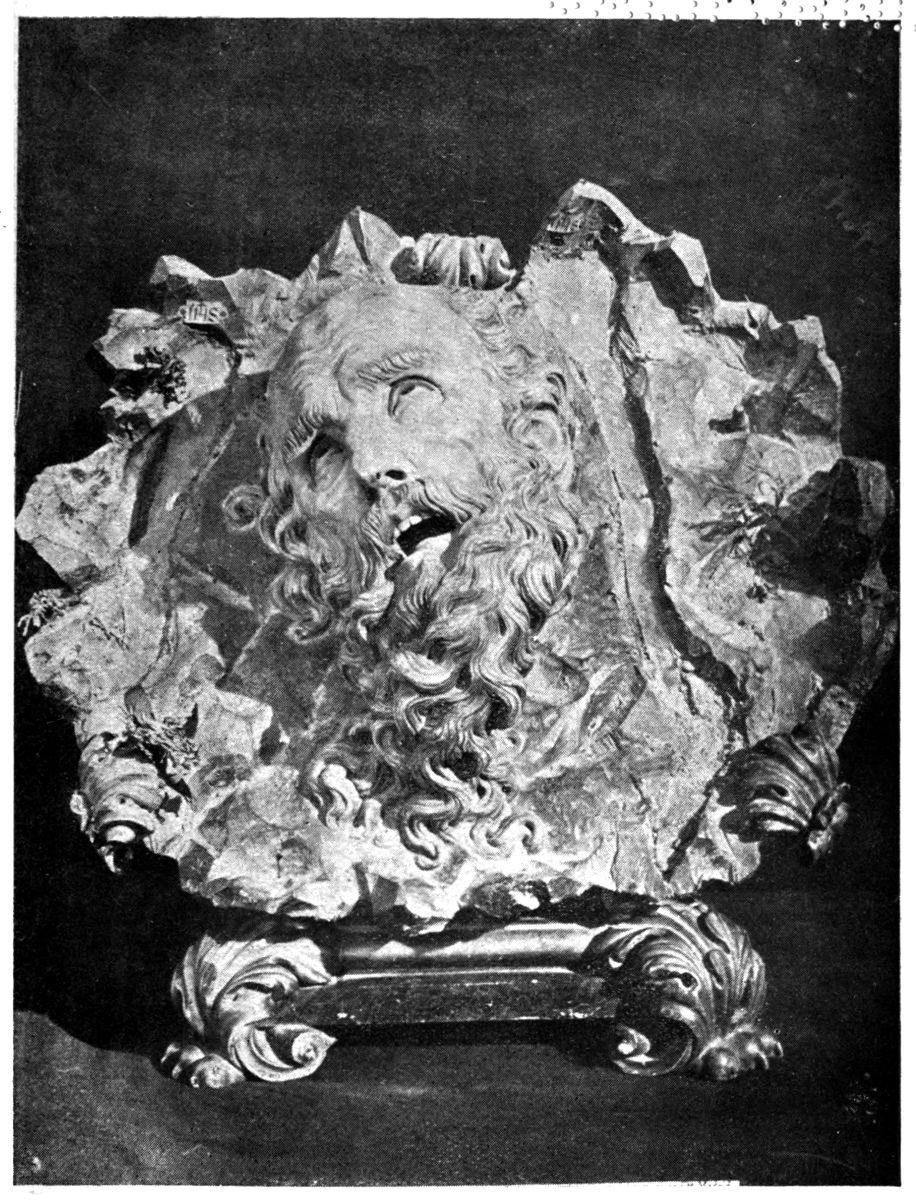
MUSEUM. HEAD OF ST. PAUL. WOOD CARVING. COMMENCEMENT OF EIGHTEENTH
CENTURY
VALLADOLID
Plate 20
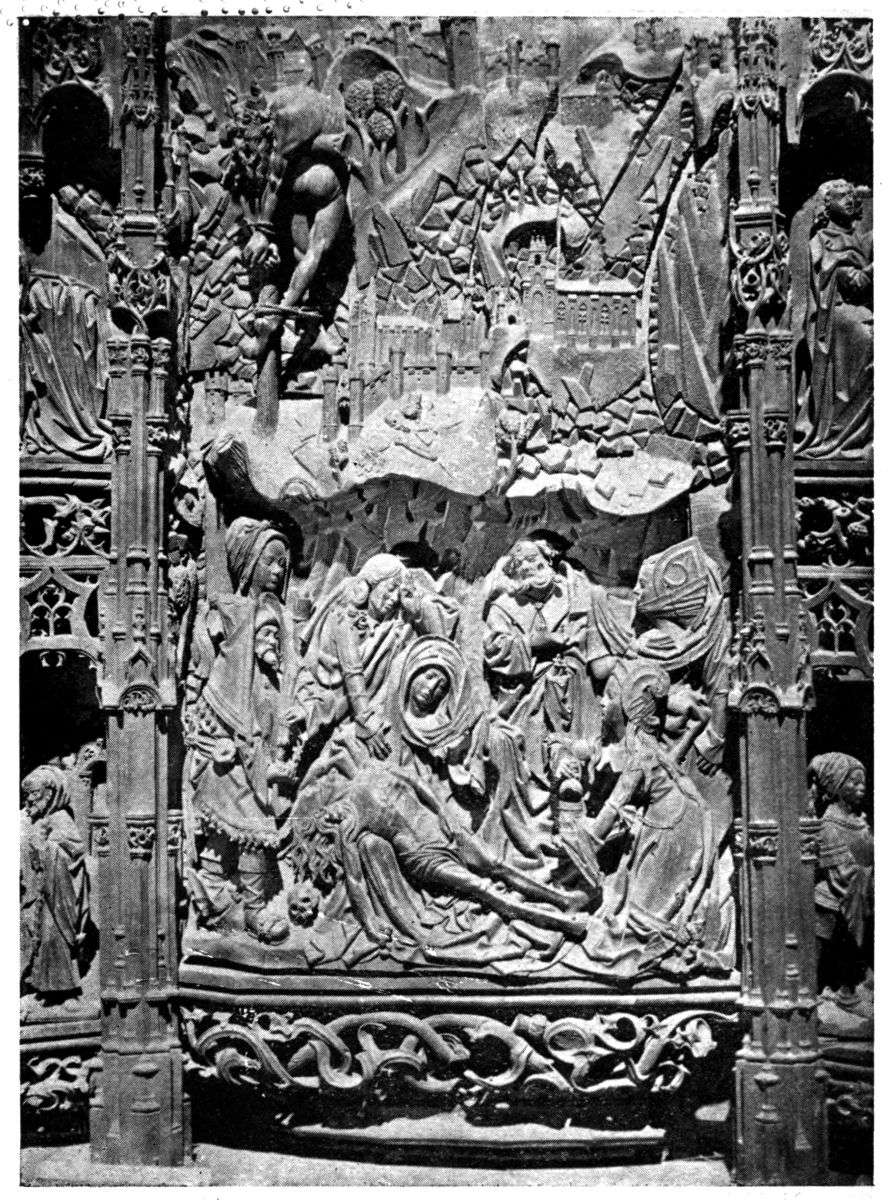
MUSEUM. CENTRE-PART OF A WOODEN ALTAR-PIECE END OF THE FIFTEENTH CENTURY
VALLADOLID
Plate 21
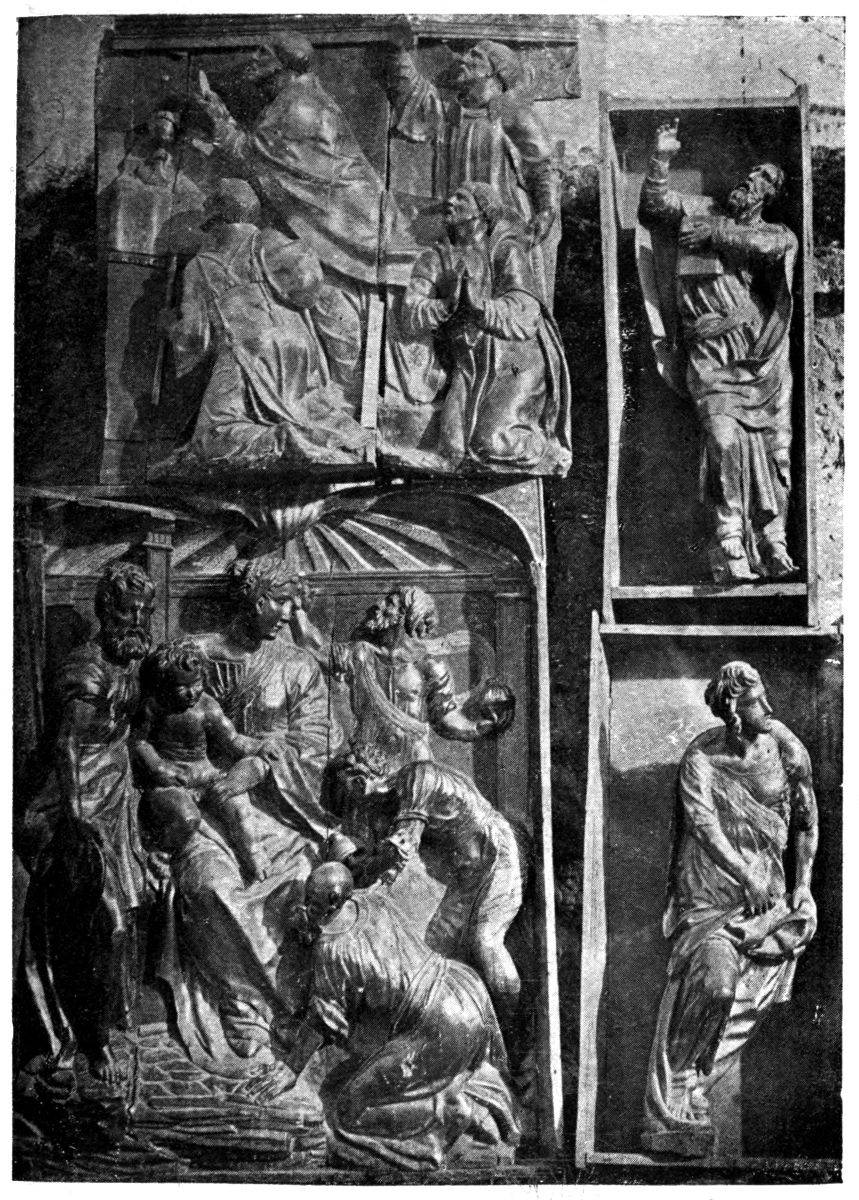
MUSEUM. FRAGMENTS OF CHOIR STALLS. BY BERRUGUETE
VALLADOLID
Plate 22
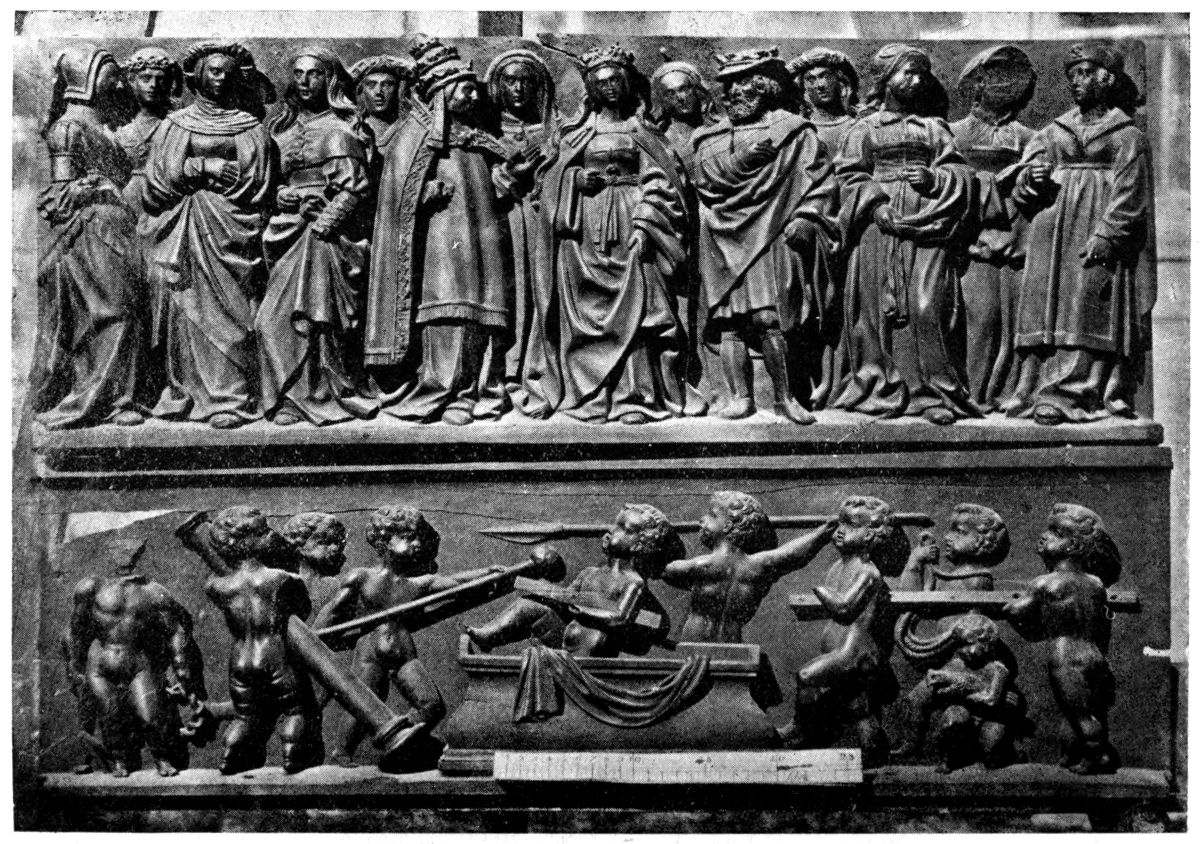
MUSEUM. FRAGMENTS OF CHOIR STALLS. BY BERRUGUETE
VALLADOLID
Plate 23
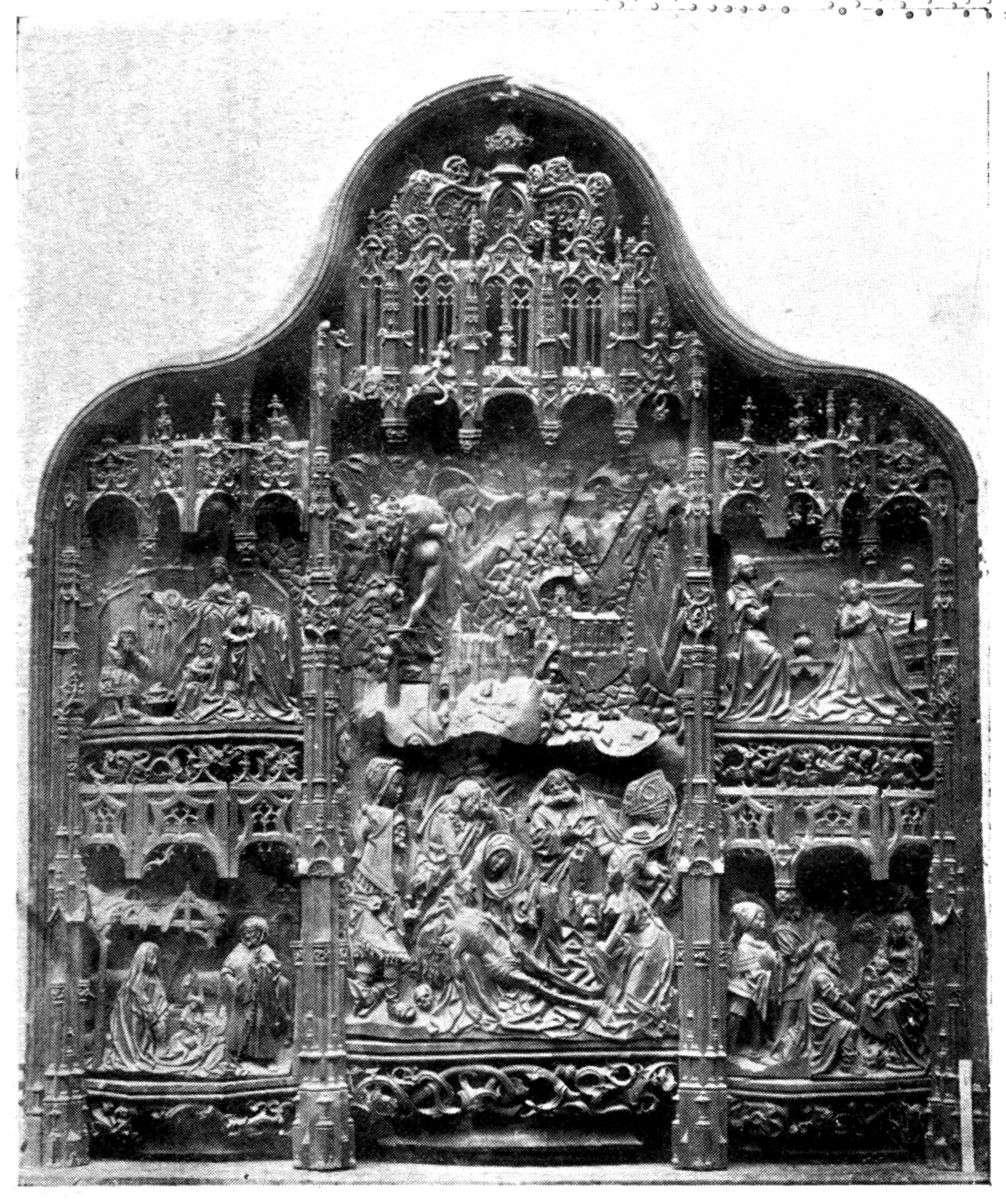
MUSEUM. ALTAR-PIECE CARVED IN WOOD. END OF FIFTEENTH CENTURY
VALLADOLID
Plate 24
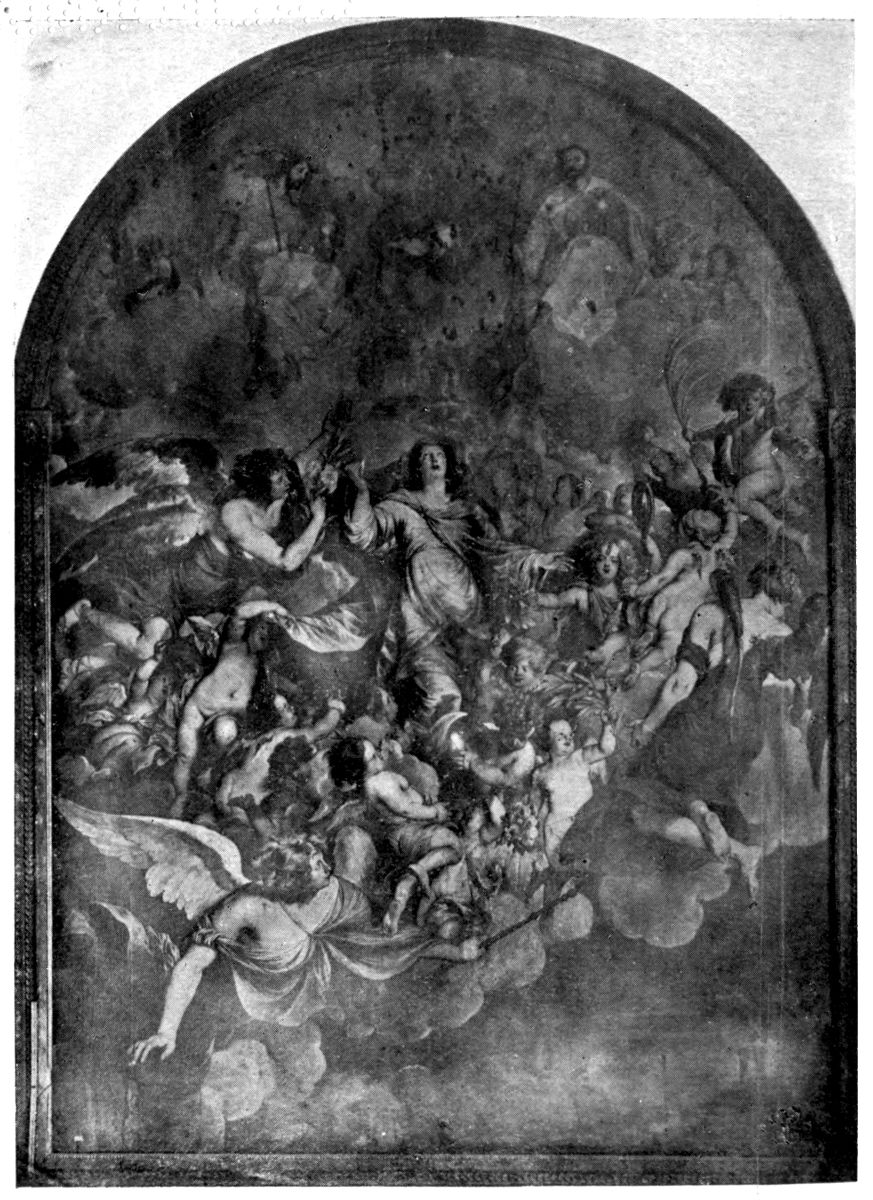
MUSEUM. THE ASSUMPTION OF THE VIRGIN. BY RUBENS
VALLADOLID
Plate 25
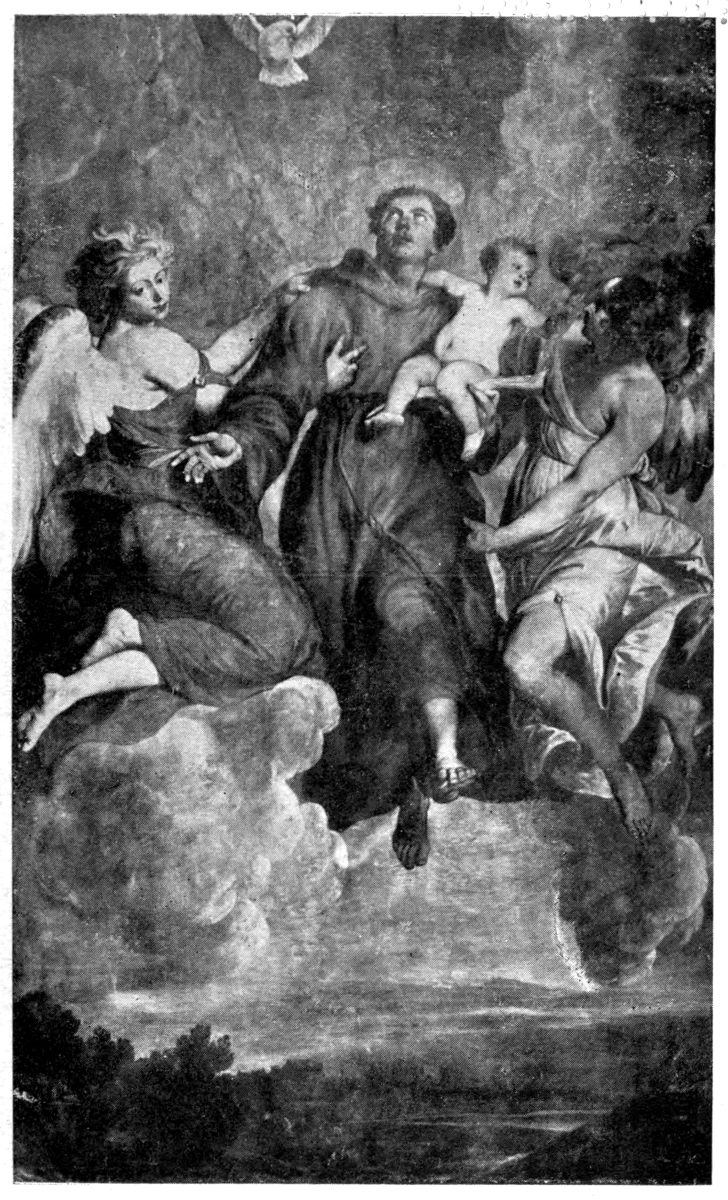
MUSEUM. ST. ANTHONY OF PADUA AND THE CHILD JESUS. BY RUBENS
VALLADOLID
Plate 26
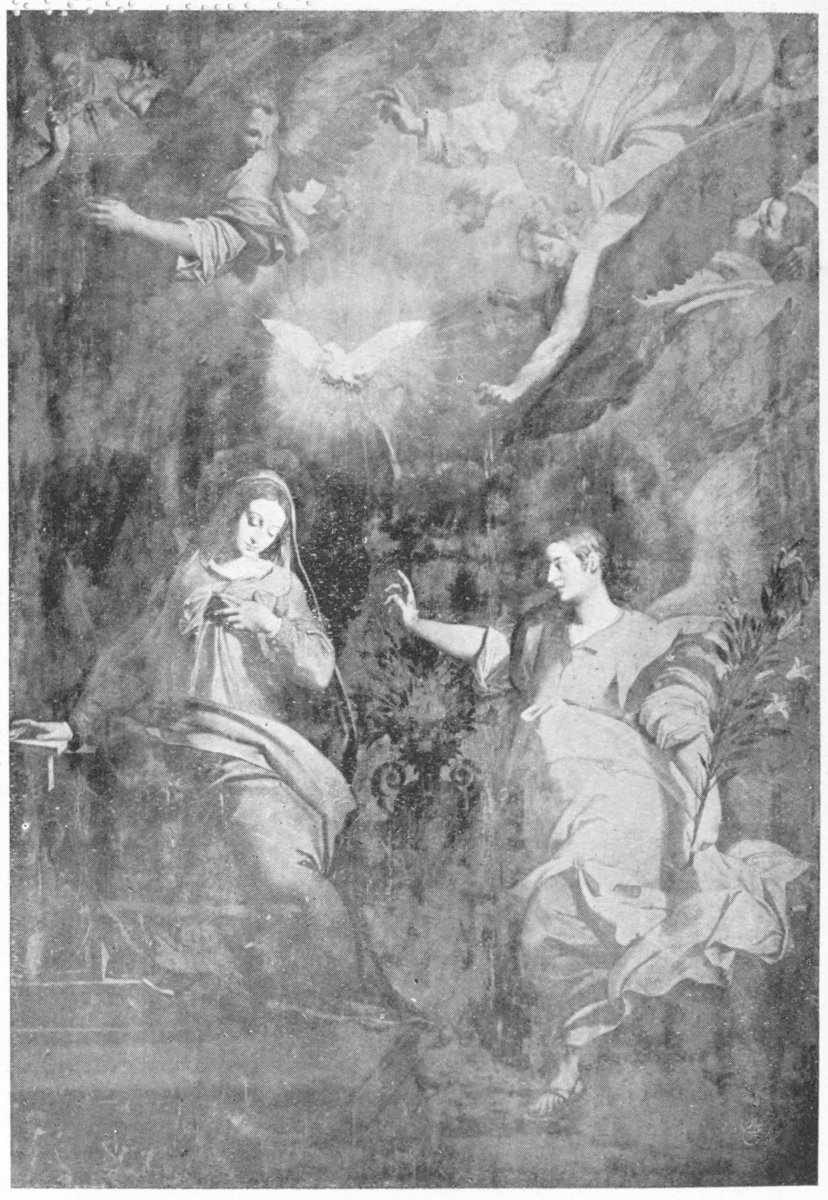
MUSEUM. THE ANNUNCIATION. BY JOSÉ MARTINEZ
VALLADOLID
Plate 27
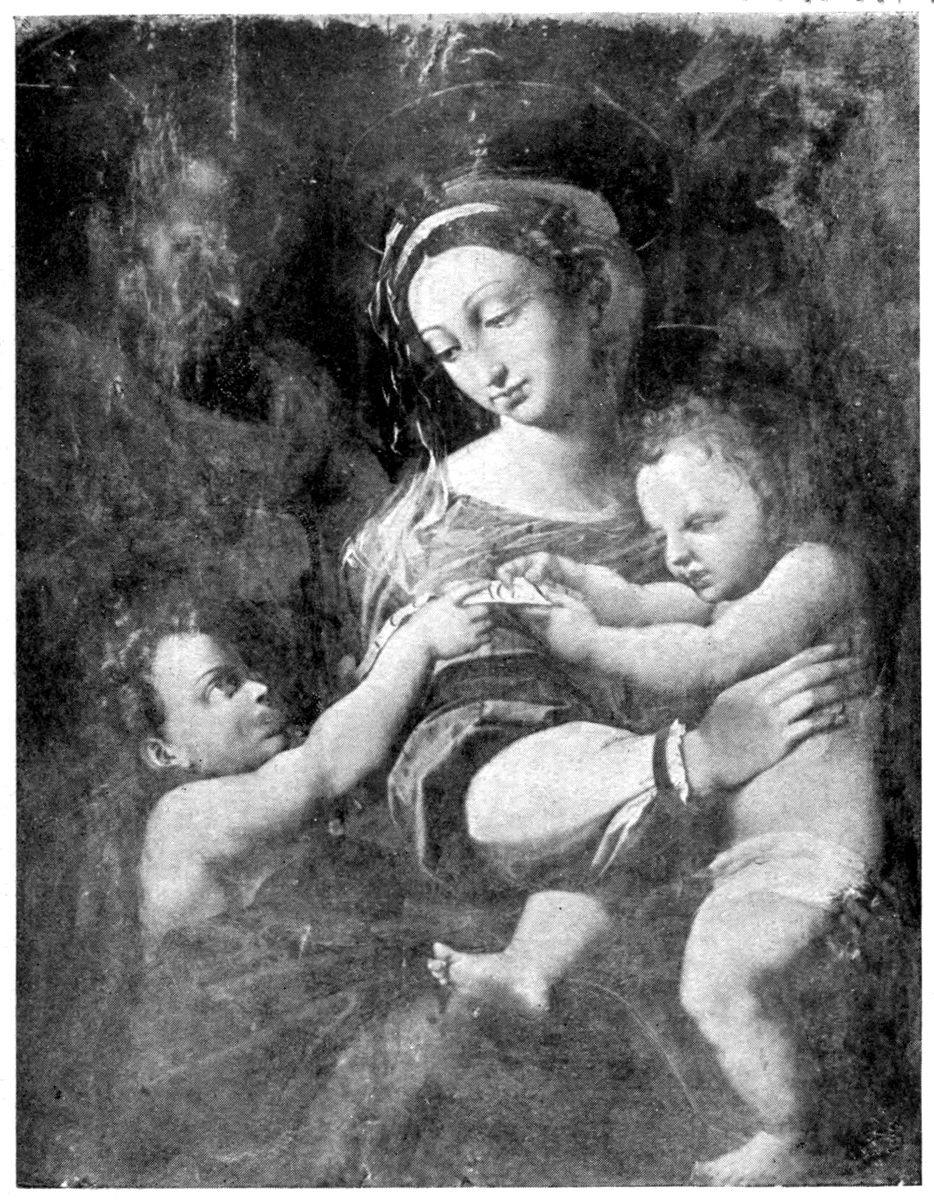
MUSEUM. THE HOLY FAMILY. BY RAPHAEL
VALLADOLID
Plate 28
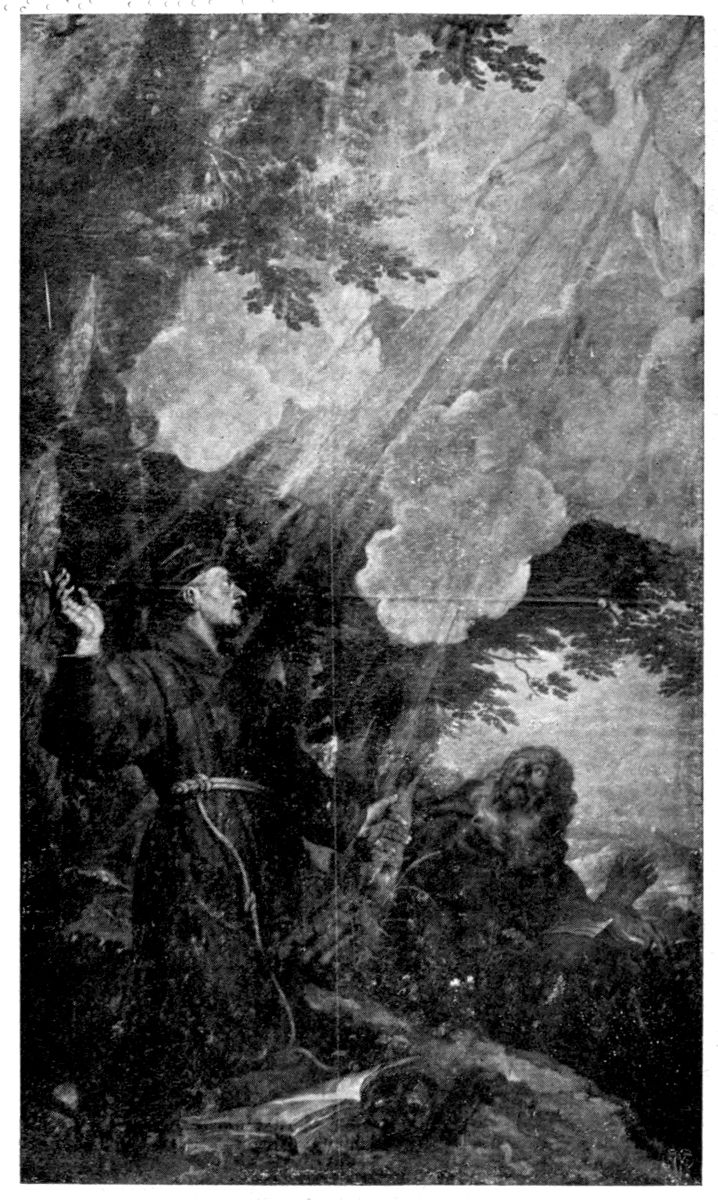
MUSEUM. ST. FRANCIS AND A LAY BROTHER BY RUBENS
VALLADOLID
Plate 29
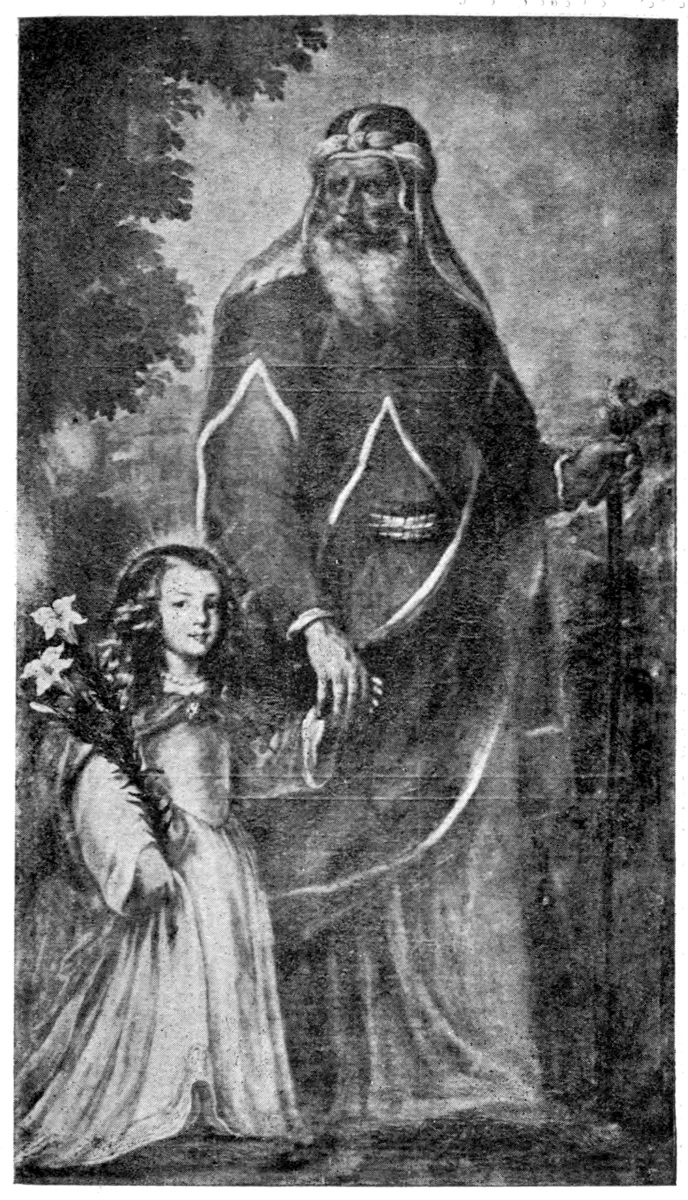
ST. JOACHIM AND THE VIRGIN AS A CHILD BY MURILLO
VALLADOLID
Plate 30
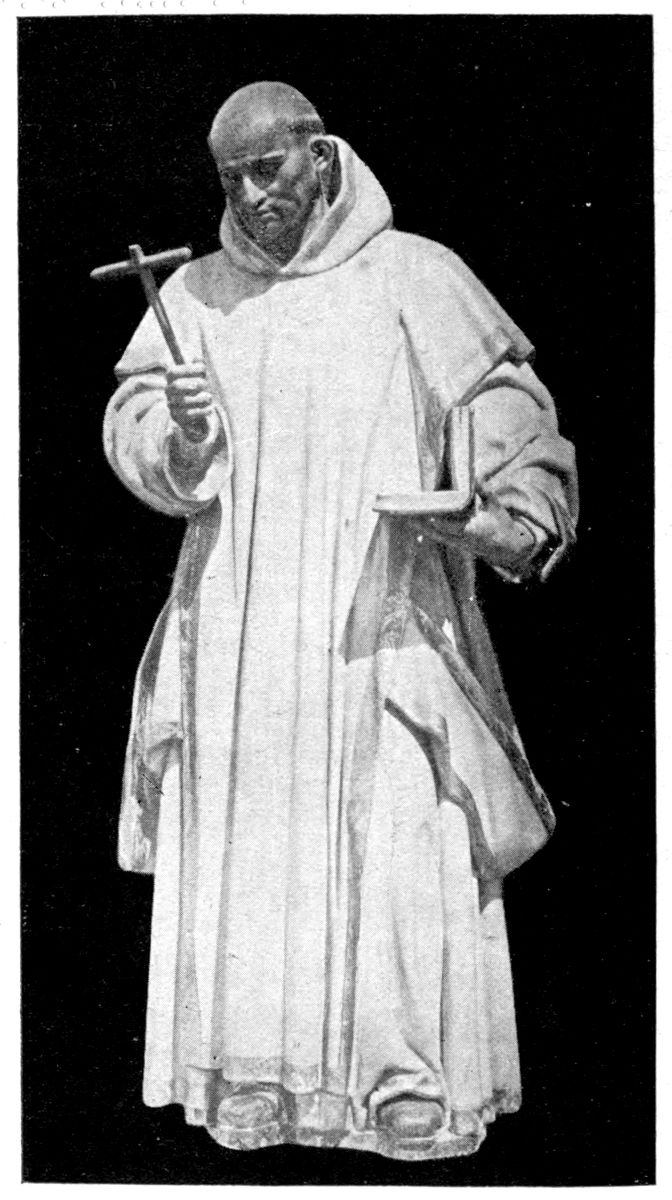
PROVINCIAL MUSEUM. ST. BRUNO
VALLADOLID
Plate 31
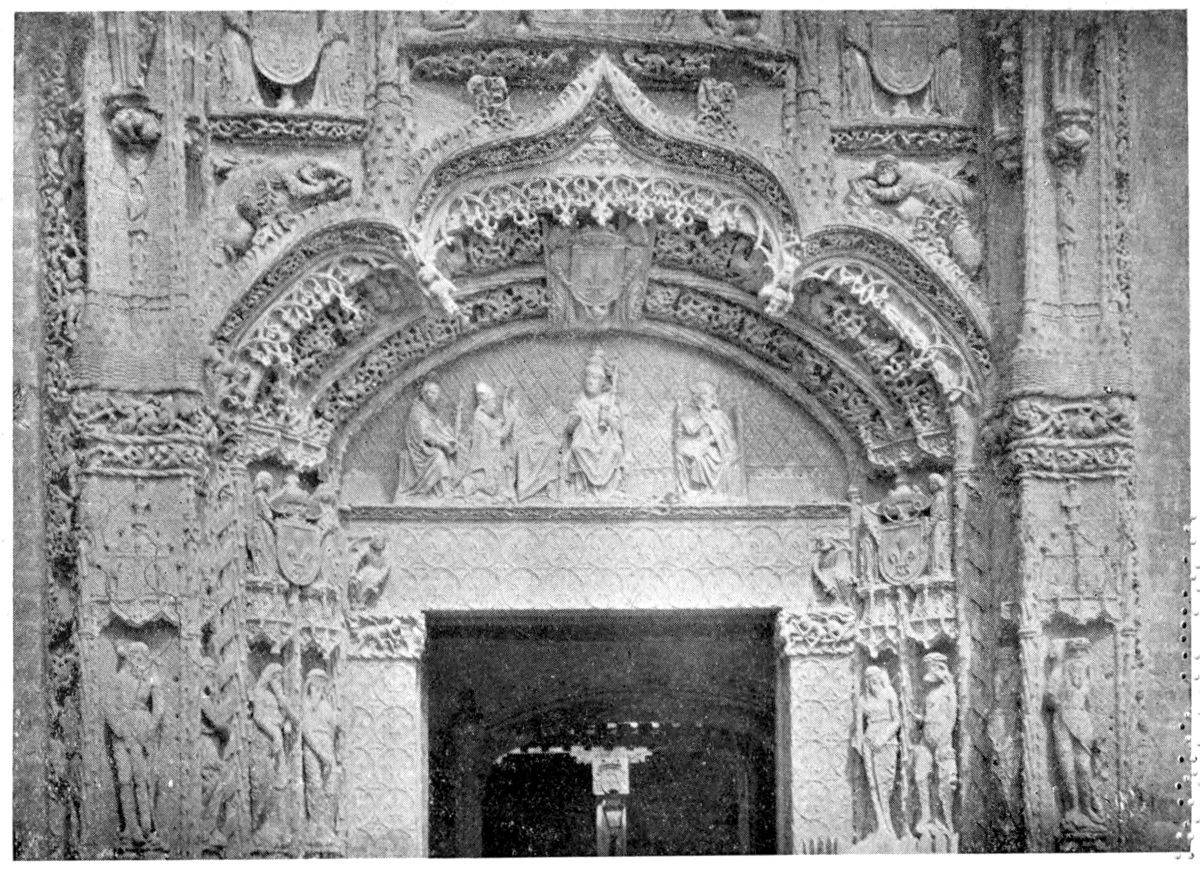
CENTRE OF THE FAÇADE OF ST. GREGORIO
VALLADOLID
Plate 32
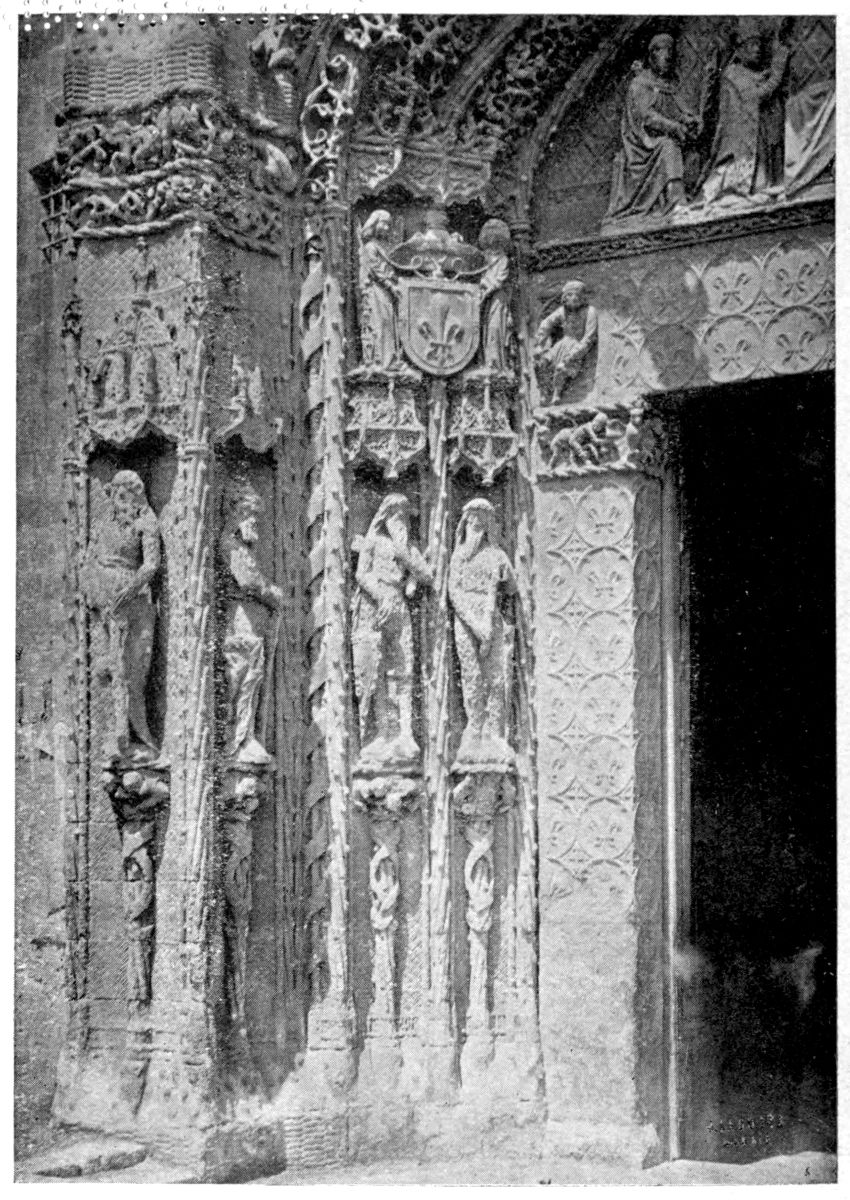
DETAIL OF THE FAÇADE OF ST. GREGORIO (LEFT SIDE)
VALLADOLID
Plate 33
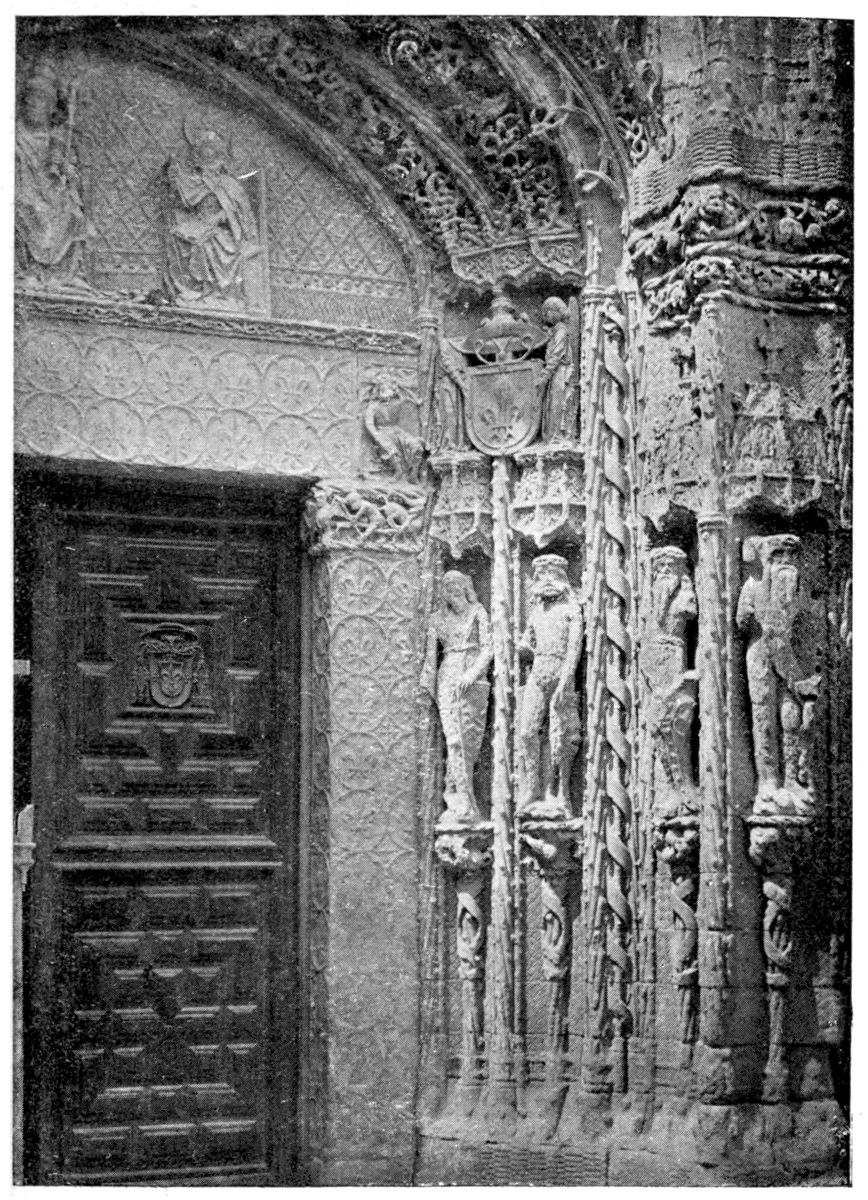
DETAIL OF THE FAÇADE OF ST. GREGORIO (RIGHT SIDE)
VALLADOLID
Plate 34
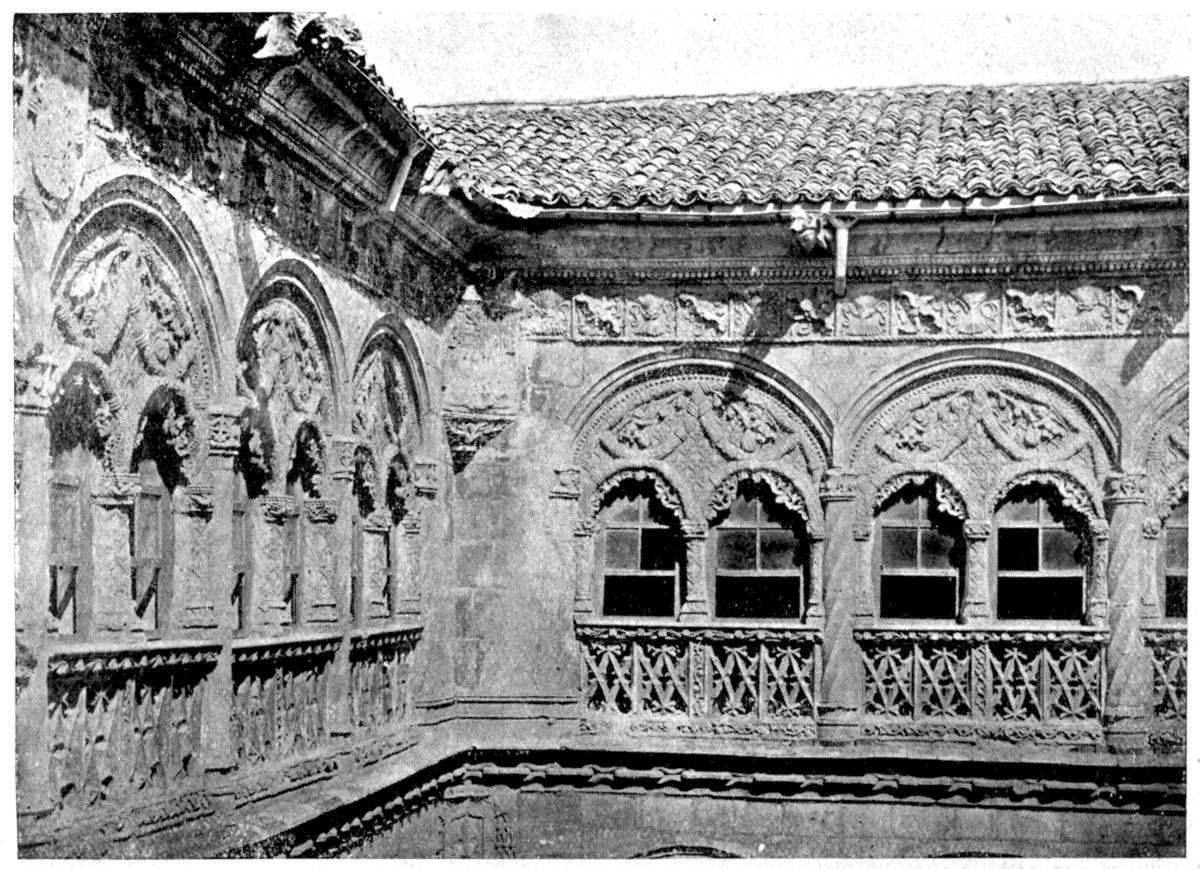
LEFT ANGLE IN THE COURT OF ST. GREGORIO
VALLADOLID
Plate 35
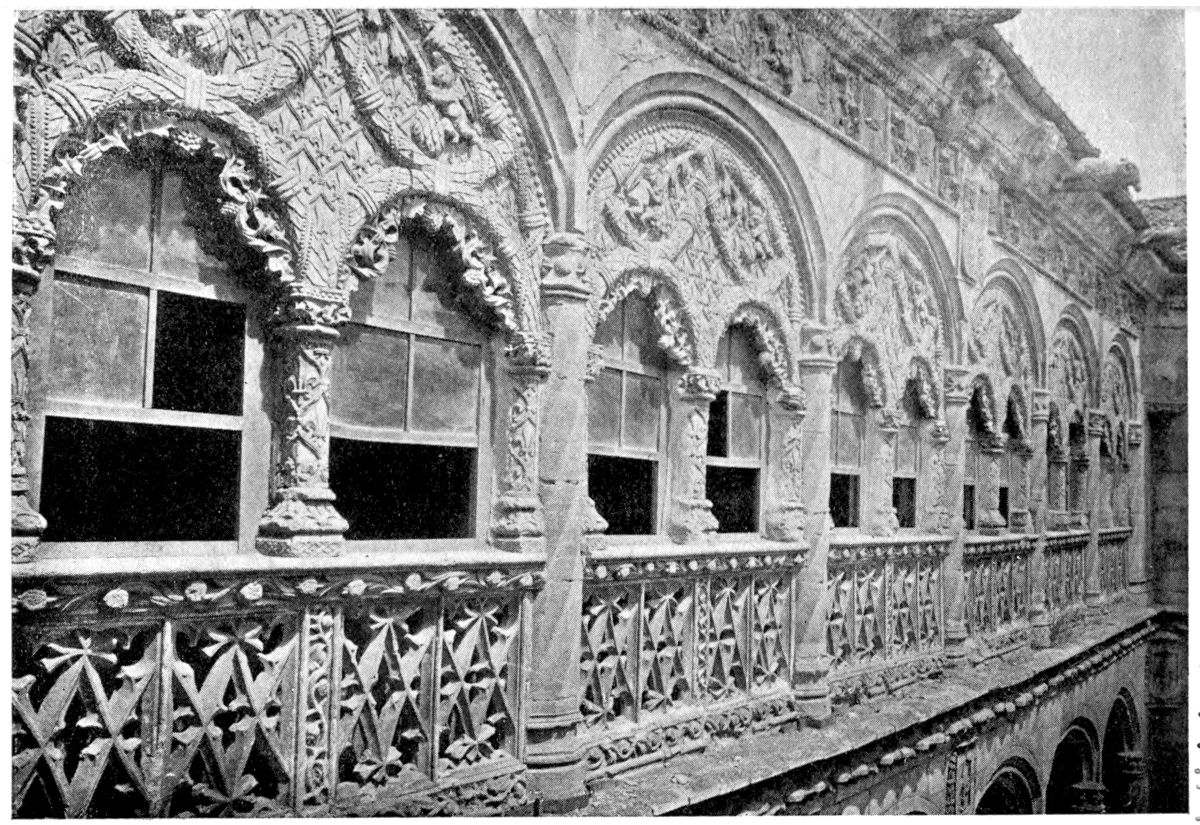
GALLERY IN THE COURT OF ST. GREGORIO
VALLADOLID
Plate 36
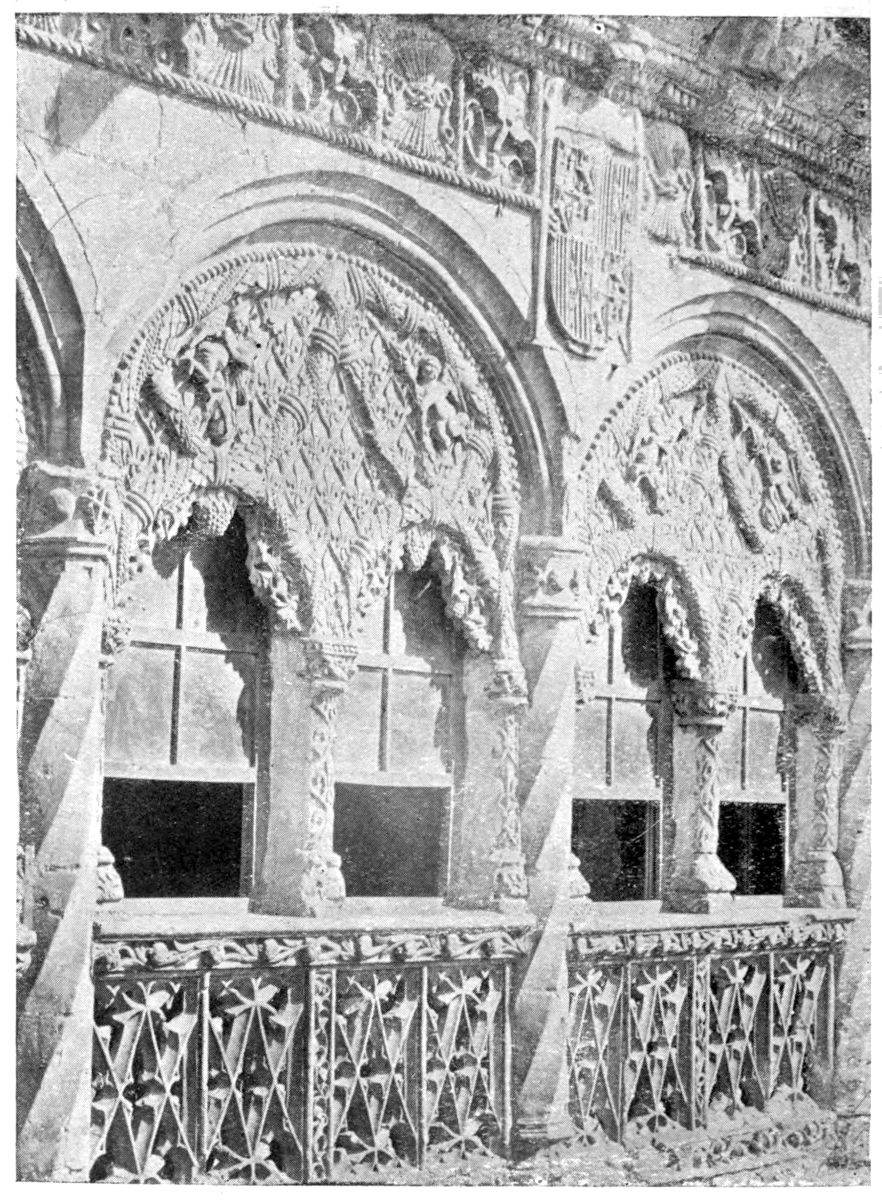
DETAIL OF THE COURT OF ST. GREGORIO
VALLADOLID
Plate 37
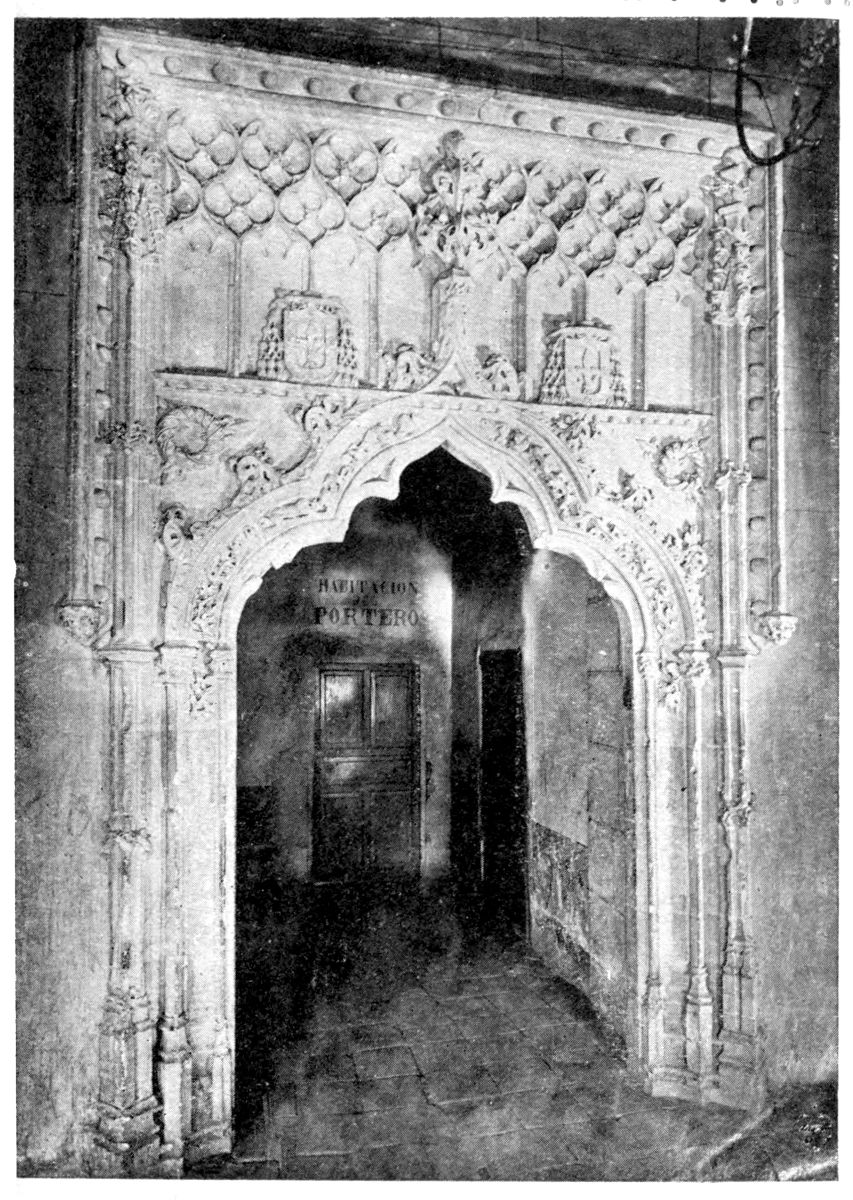
INTERIOR GATE OF ST. GREGORIO
VALLADOLID
Plate 38
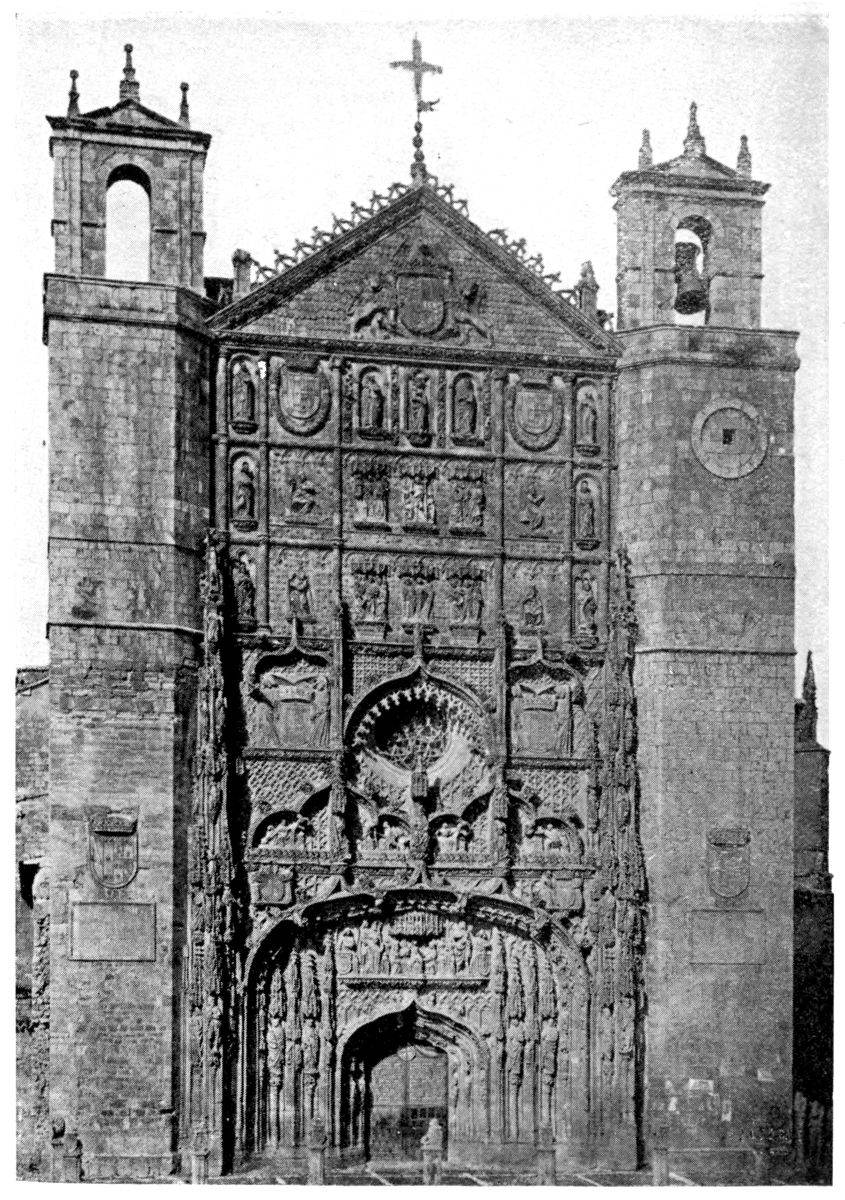
FAÇADE OF ST. PABLO
VALLADOLID
Plate 39
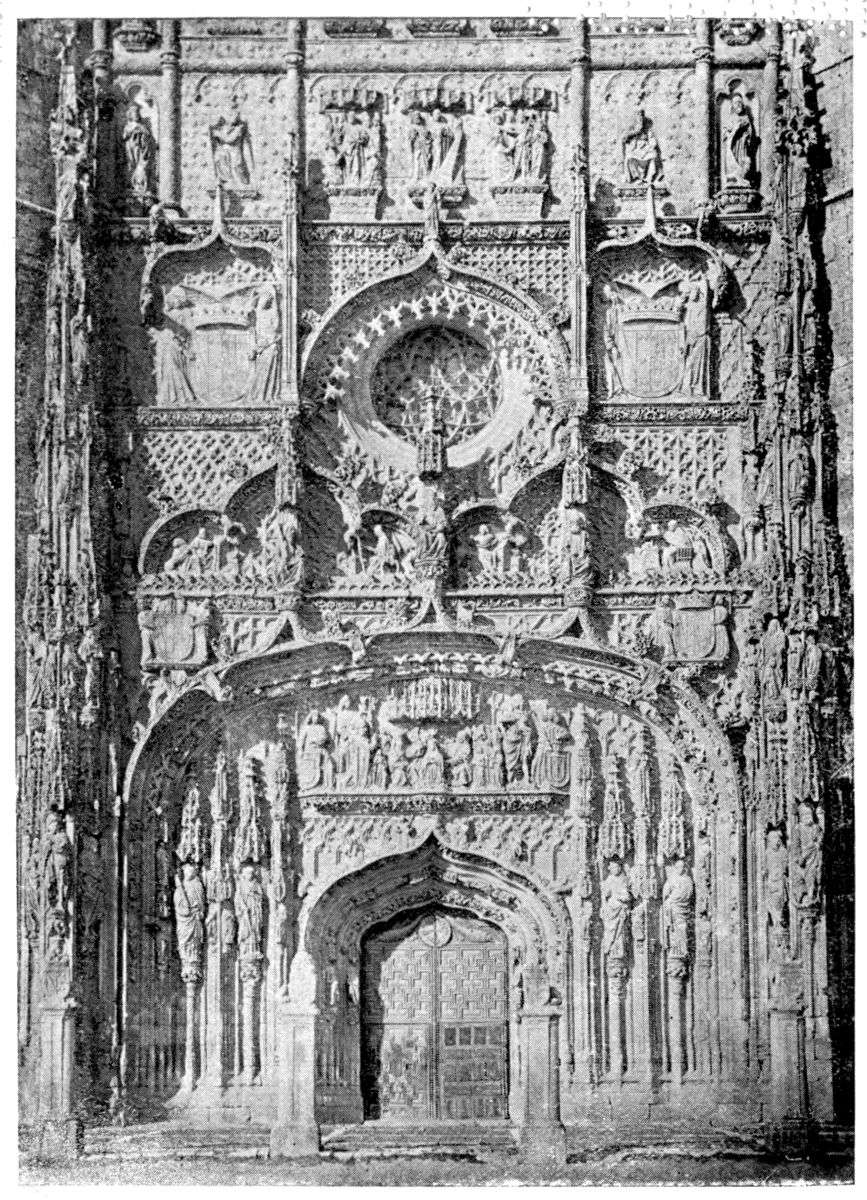
LOWER PART OF THE FAÇADE OF ST. PABLO
VALLADOLID
Plate 40
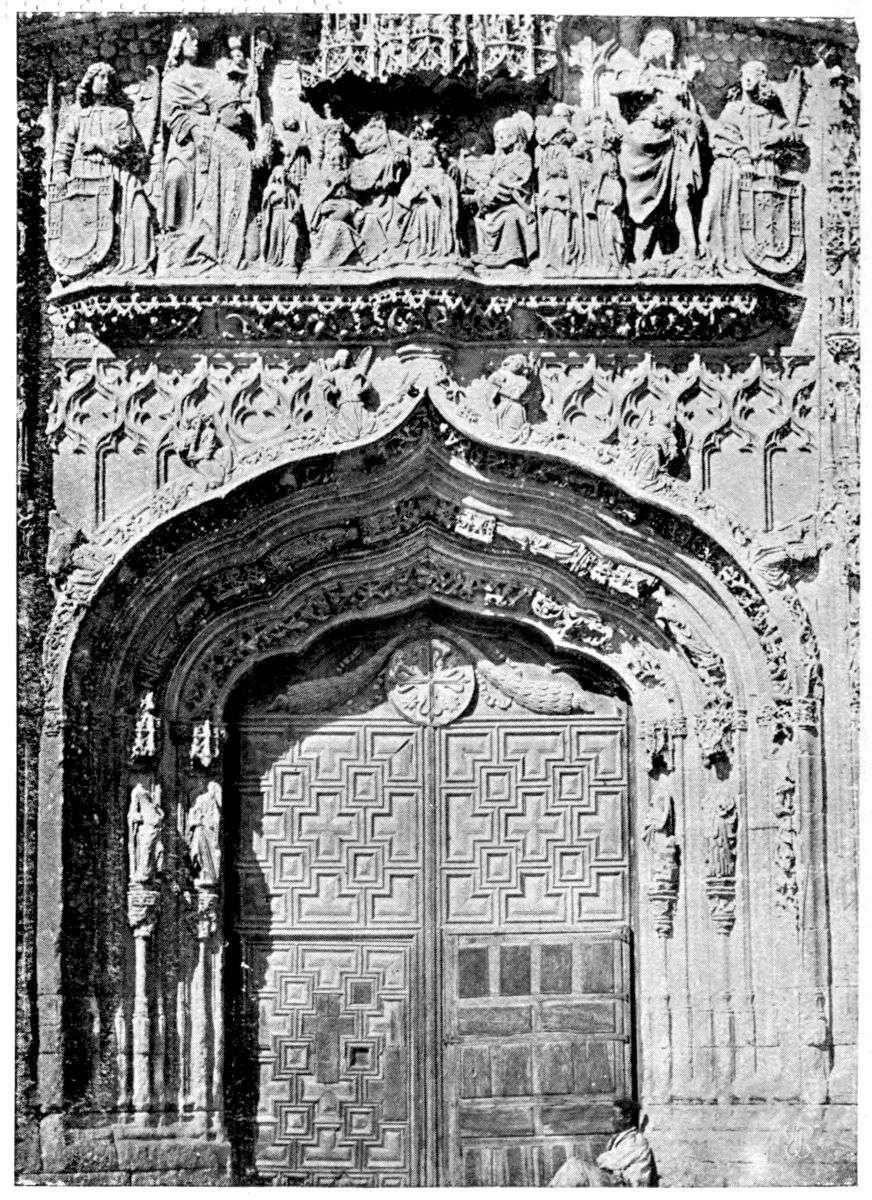
DETAIL OF THE PORTAL OF ST. PABLO
VALLADOLID
Plate 41
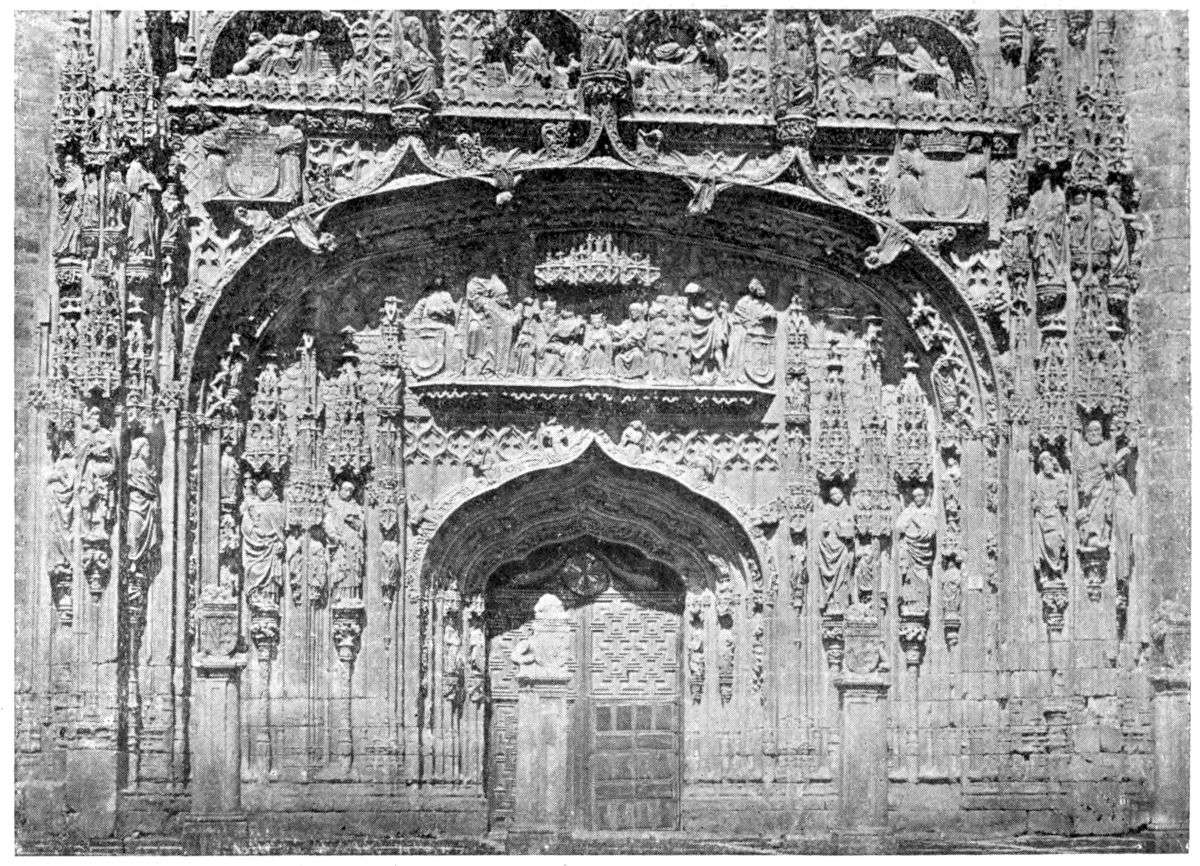
LOWER CENTRAL PART OF THE FAÇADE OF ST. PABLO
VALLADOLID
Plate 42
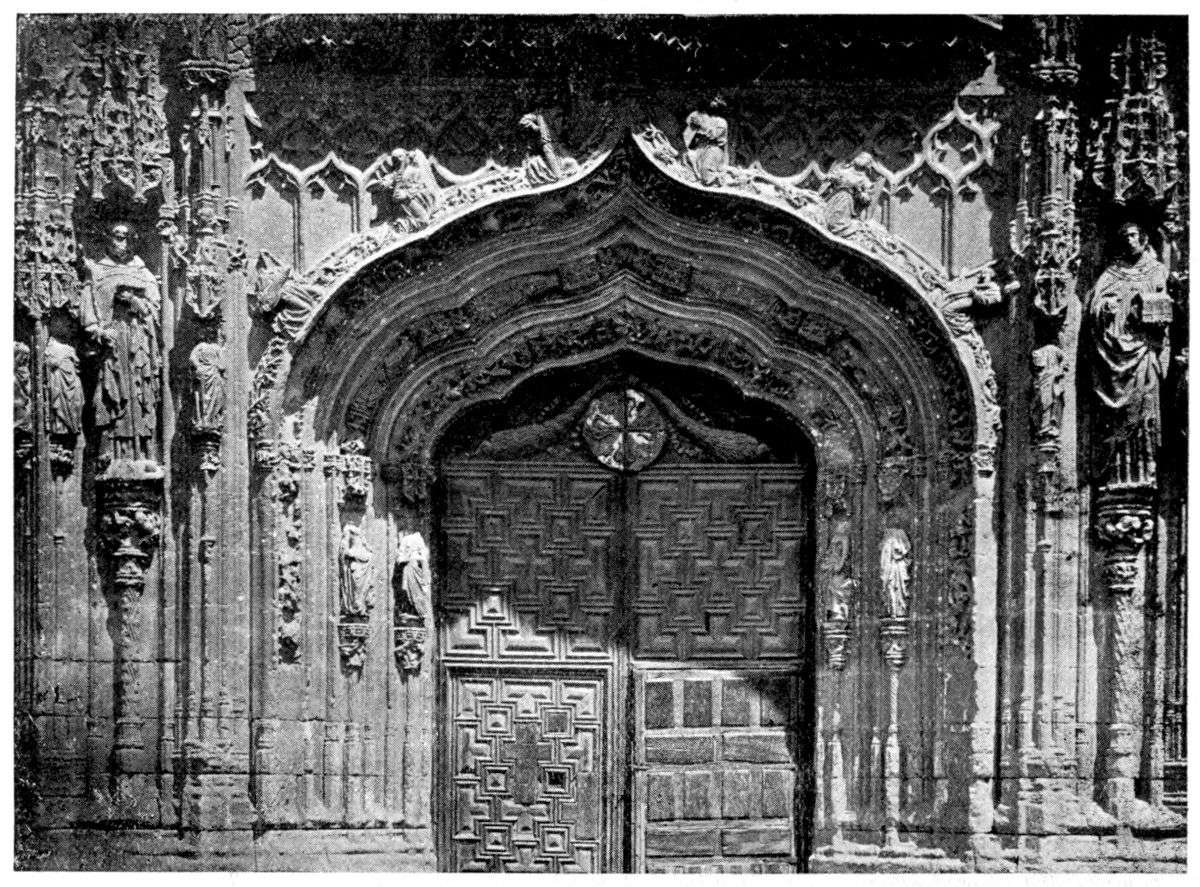
PORTAL OF ST. PABLO
VALLADOLID
Plate 43
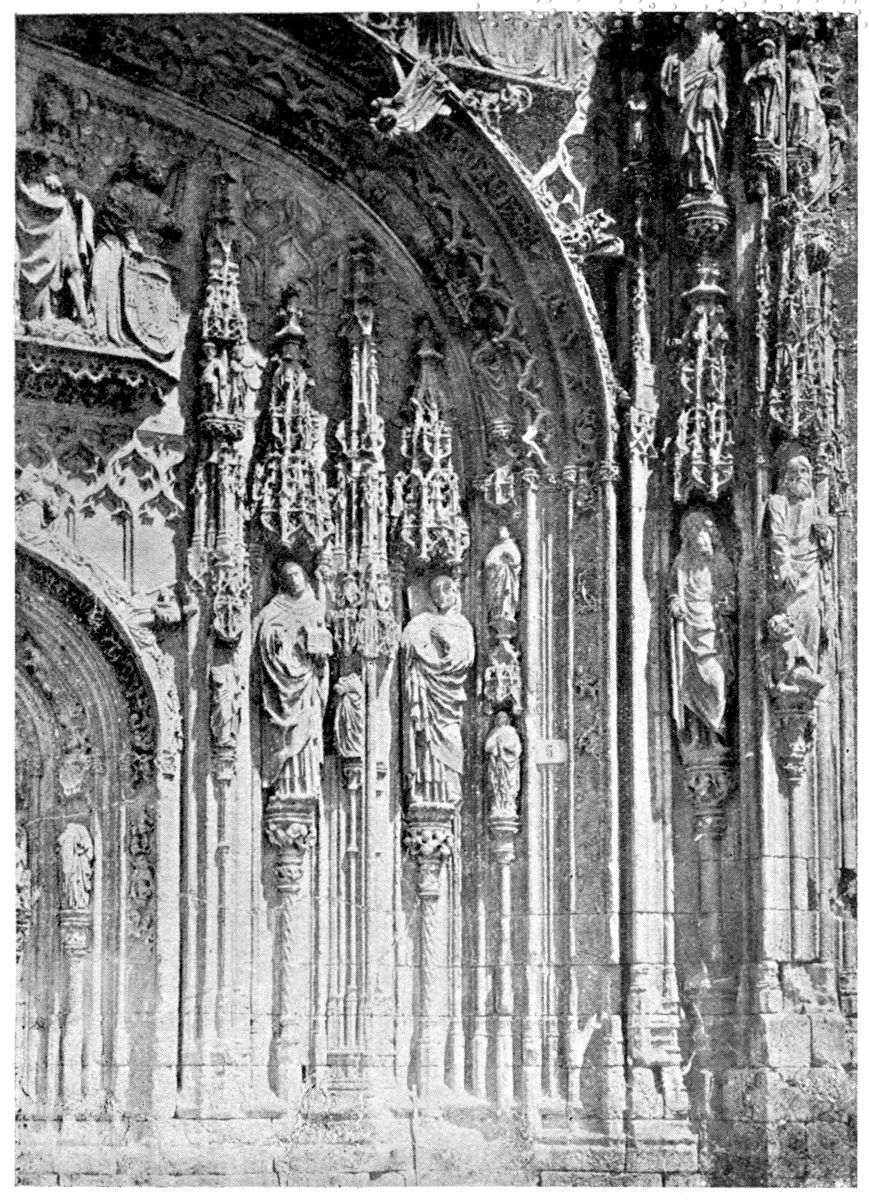
DETAIL OF THE RIGHT-HAND SIDE OF THE PORCH OF ST. PABLO
VALLADOLID
Plate 44
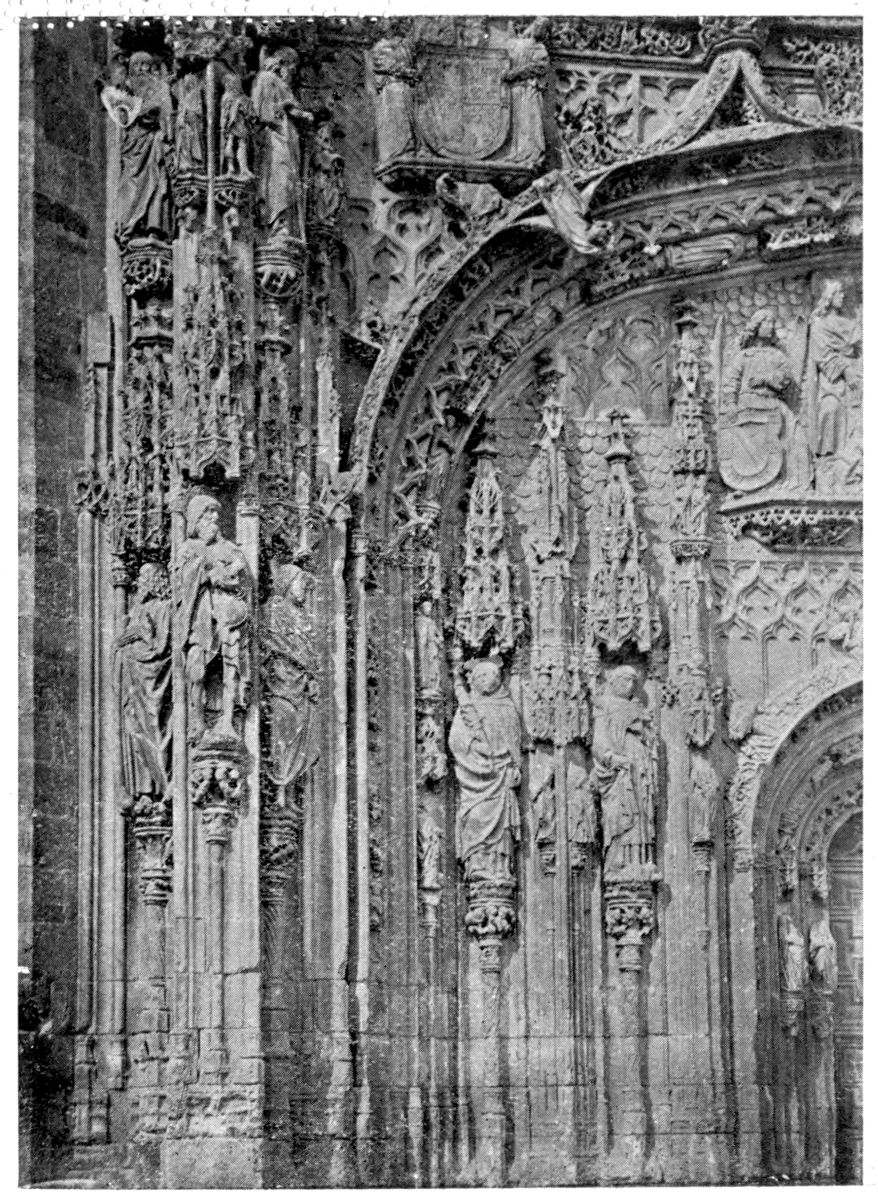
DETAIL OF THE LEFT-HAND SIDE OF THE PORCH OF ST. PABLO
VALLADOLID
Plate 45
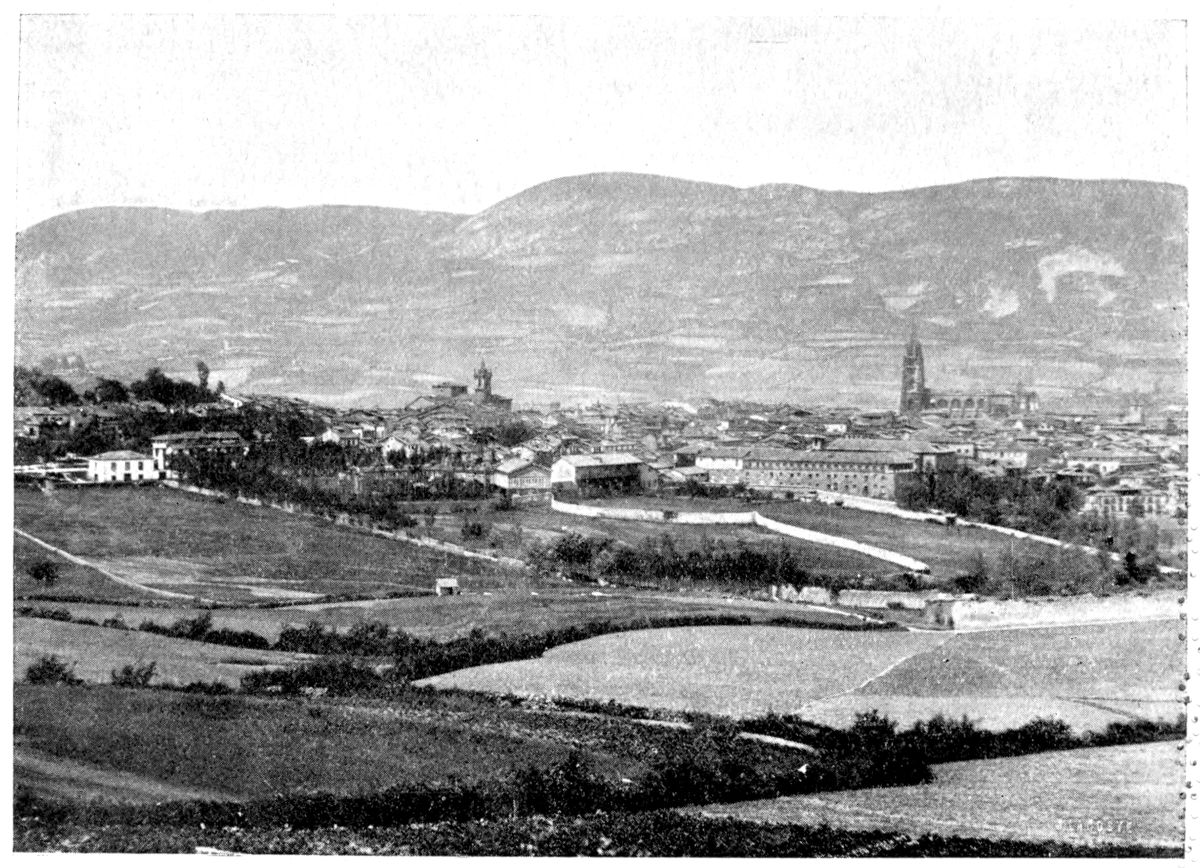
GENERAL VIEW
OVIEDO
Plate 46
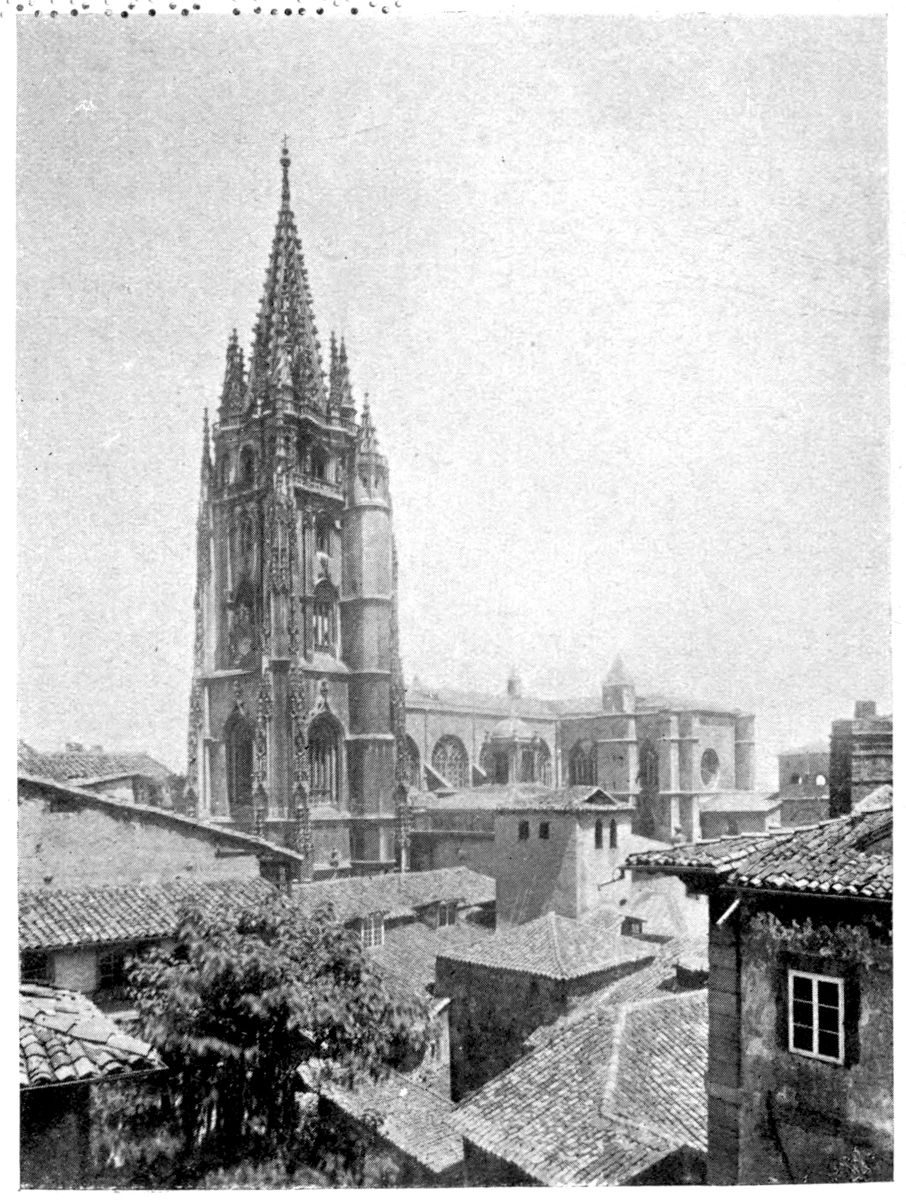
TOWER OF THE CATHEDRAL
OVIEDO
Plate 47
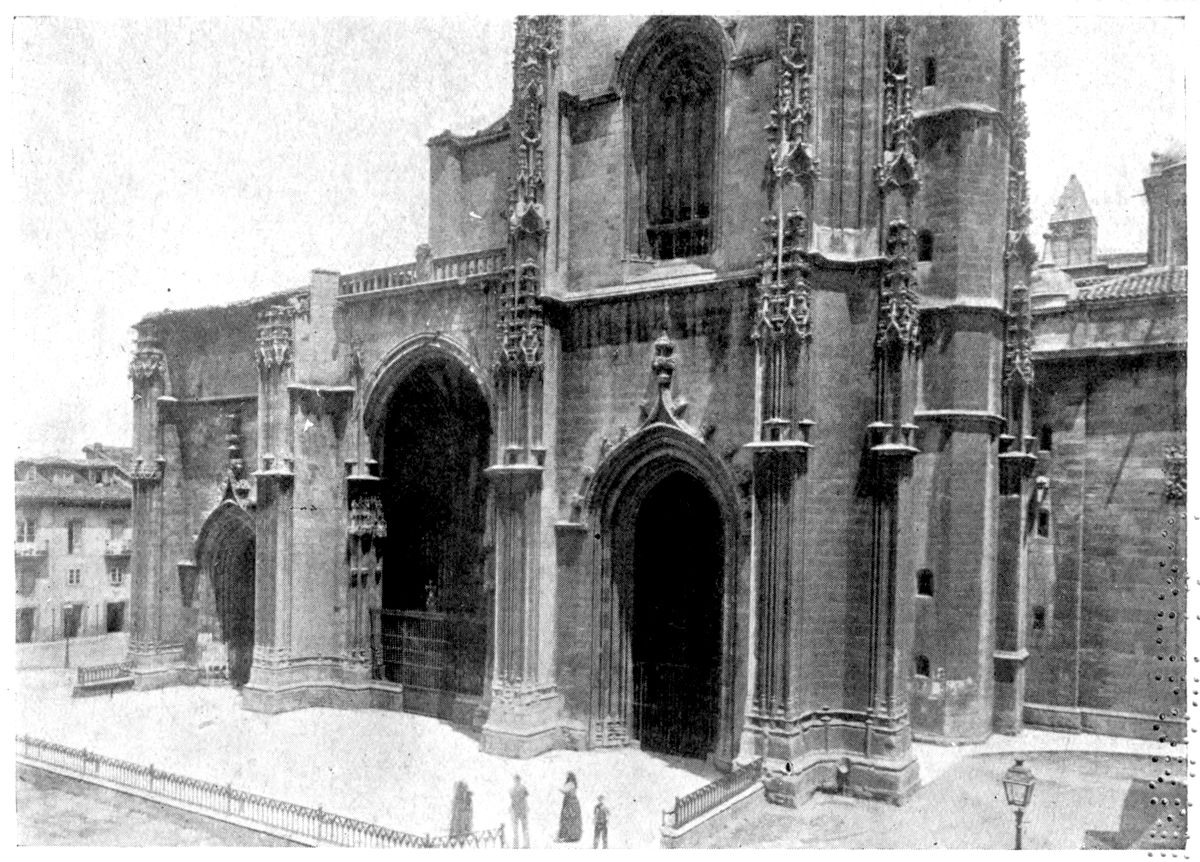
PRINCIPAL ENTRANCE TO THE CATHEDRAL
OVIEDO
Plate 48
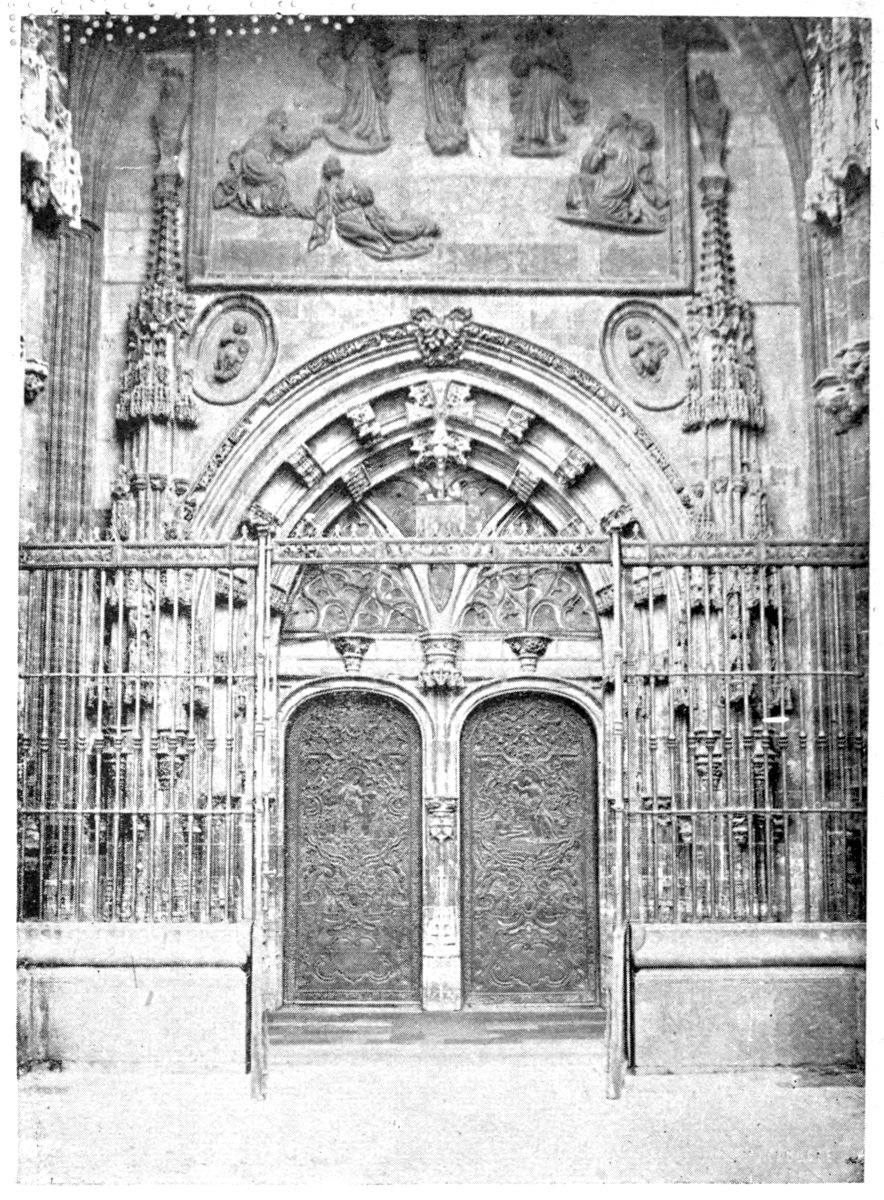
PRINCIPAL GATE OF THE CATHEDRAL
OVIEDO
Plate 49
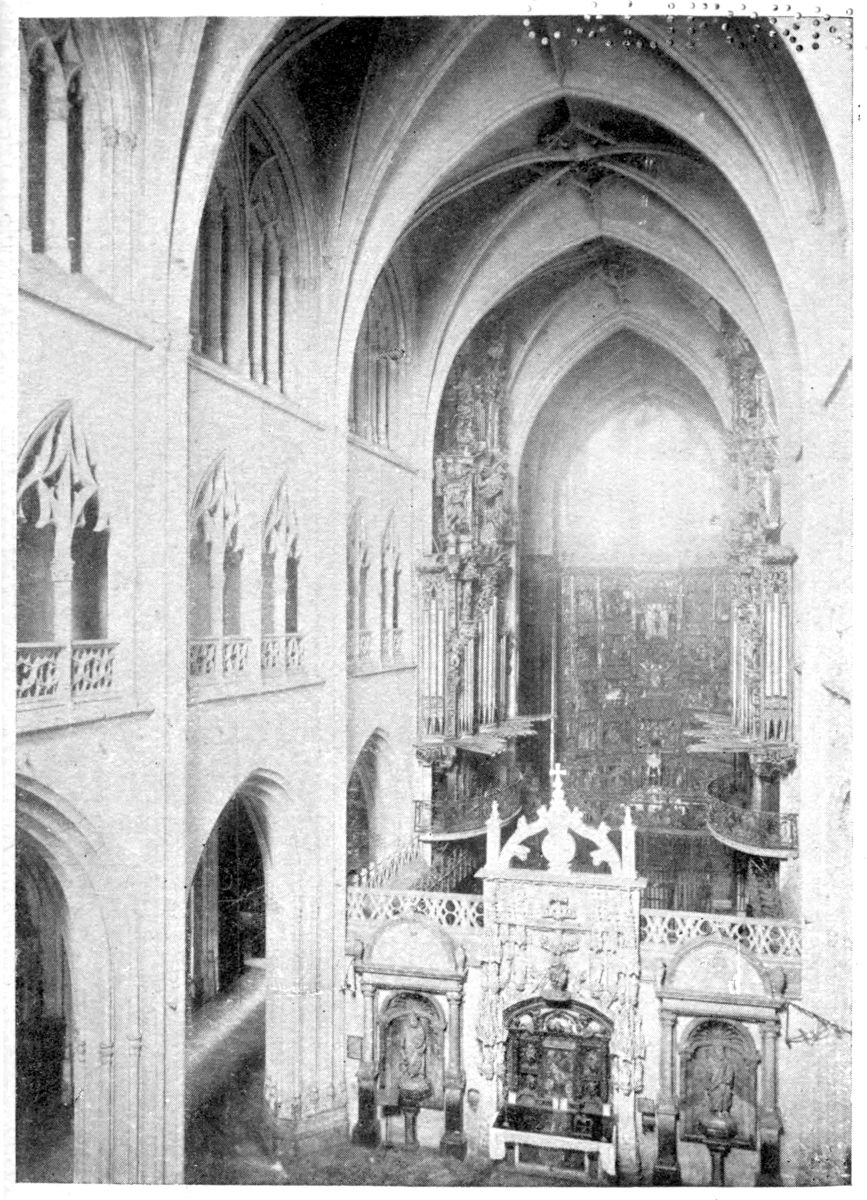
CATHEDRAL. VIEW OF THE INTERIOR
OVIEDO
Plate 50
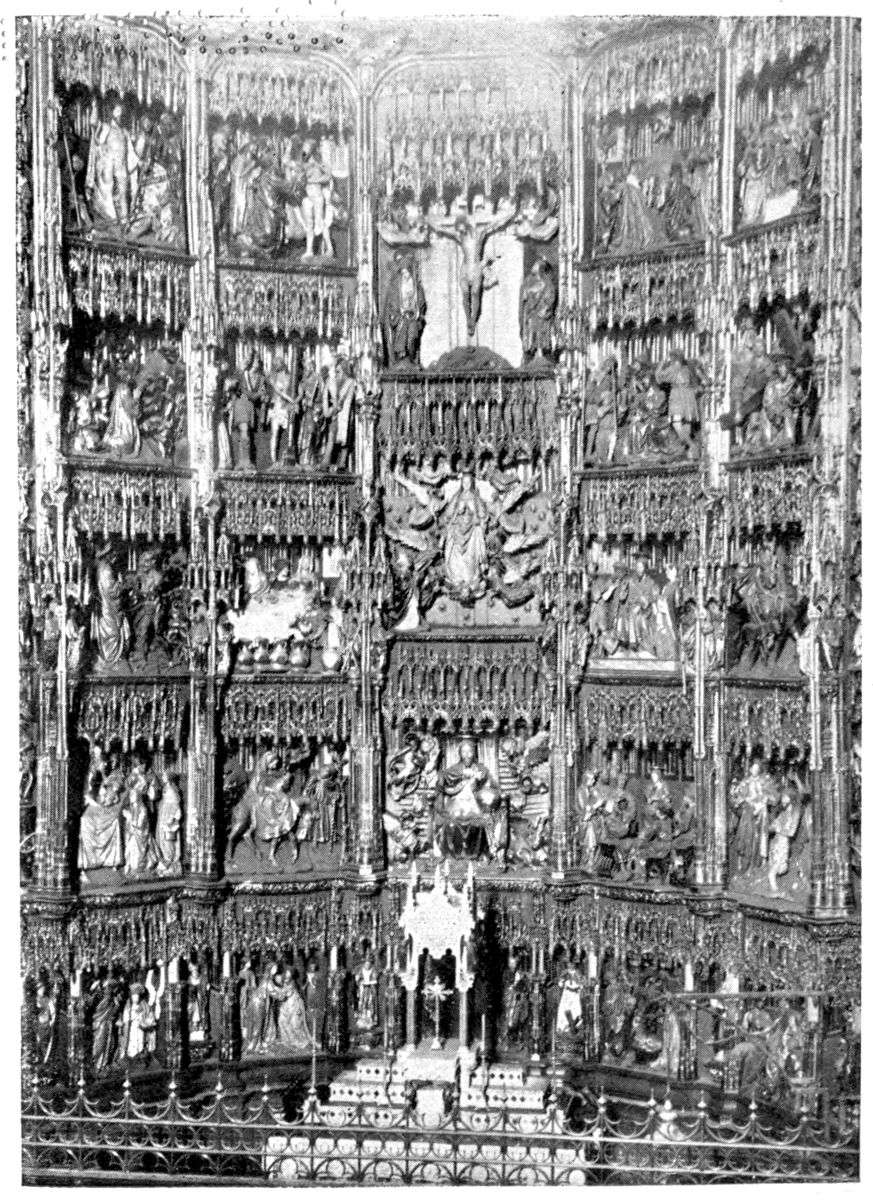
CATHEDRAL. THE RETABLO
OVIEDO
Plate 51
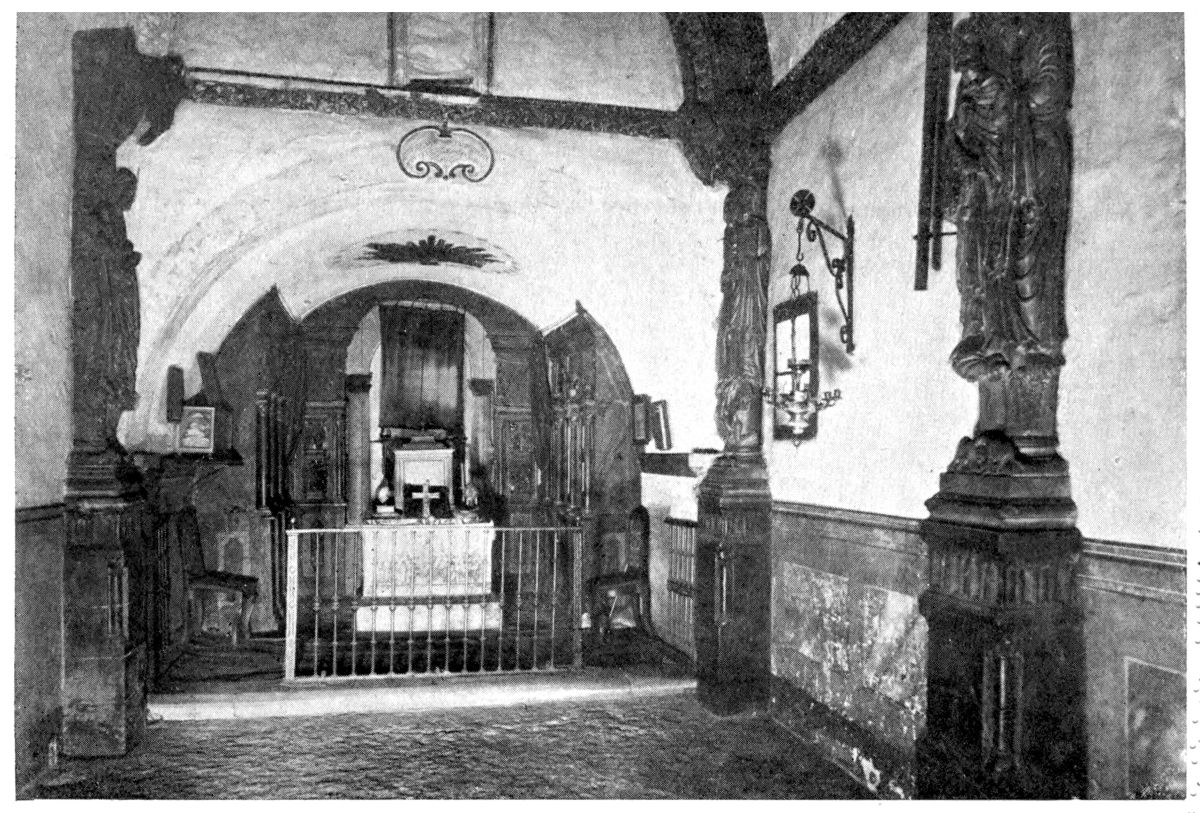
LA CAMARA SANTA; OR PRIMITIVE CHAPEL OF SAN MIGUEL WHERE ARE PRESERVED
THE RELICS SAVED BY PELAYO FROM THE HANDS OF THE MOORS
OVIEDO
Plate 52
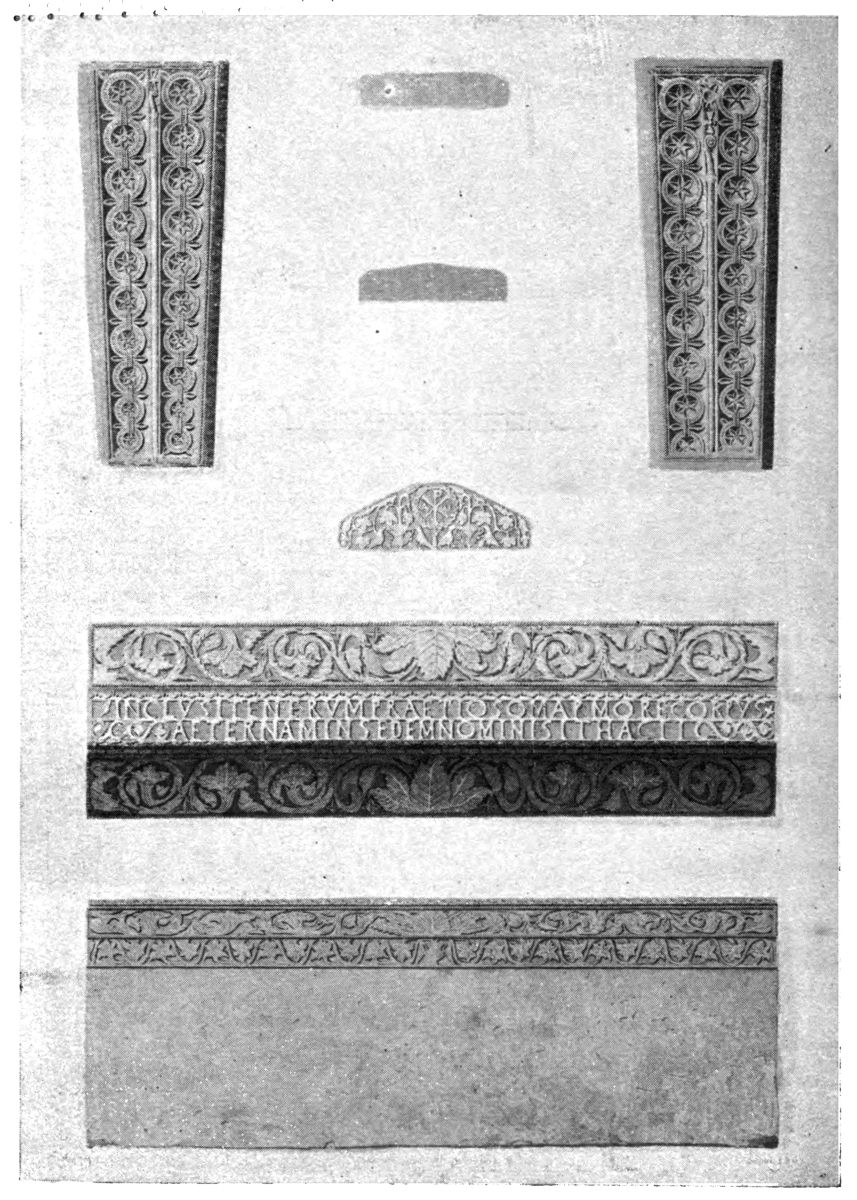
COFFIN IN OVIEDO CATHEDRAL, AND DETAILS OF THE SEPULCHRE FROM COVADONGA
OVIEDO
Plate 53
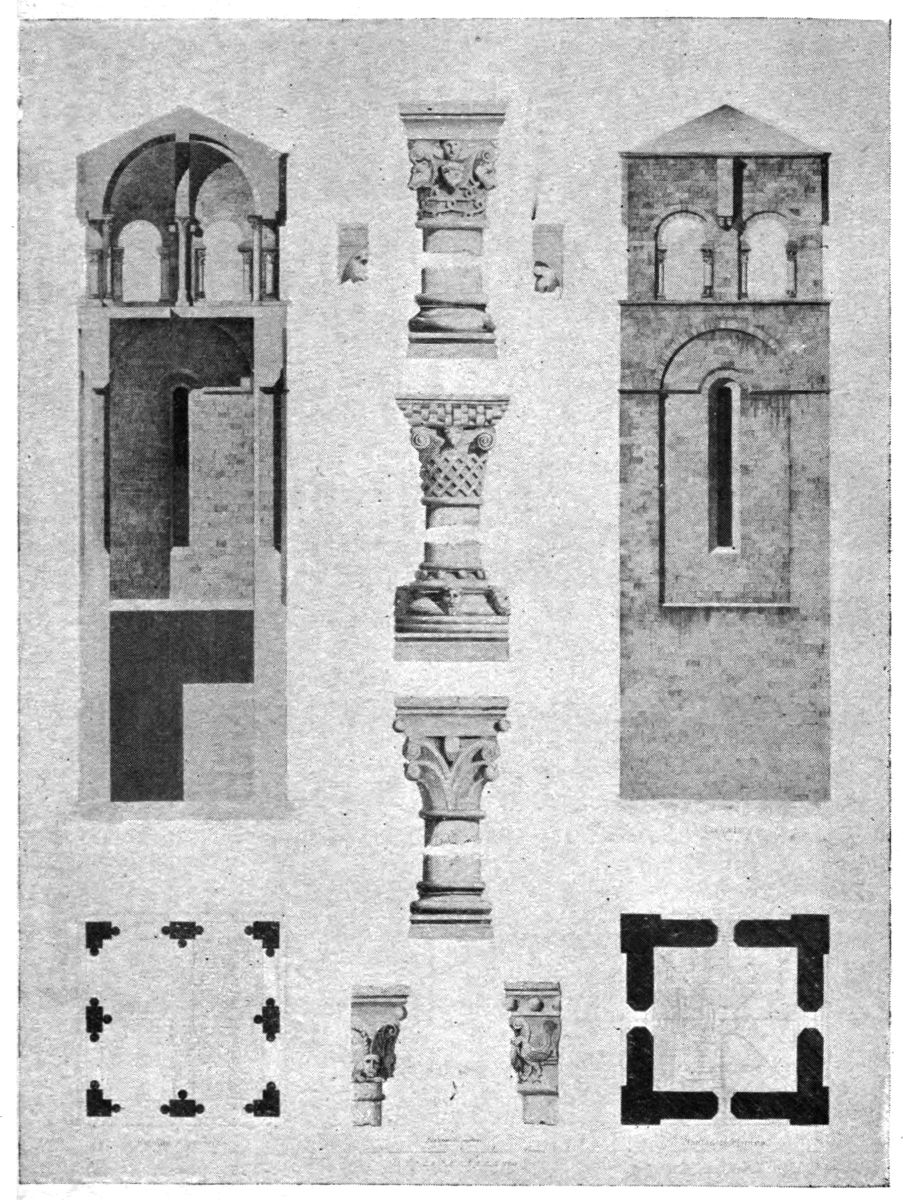
OLD TOWER OF THE CATHEDRAL
OVIEDO
Plate 54
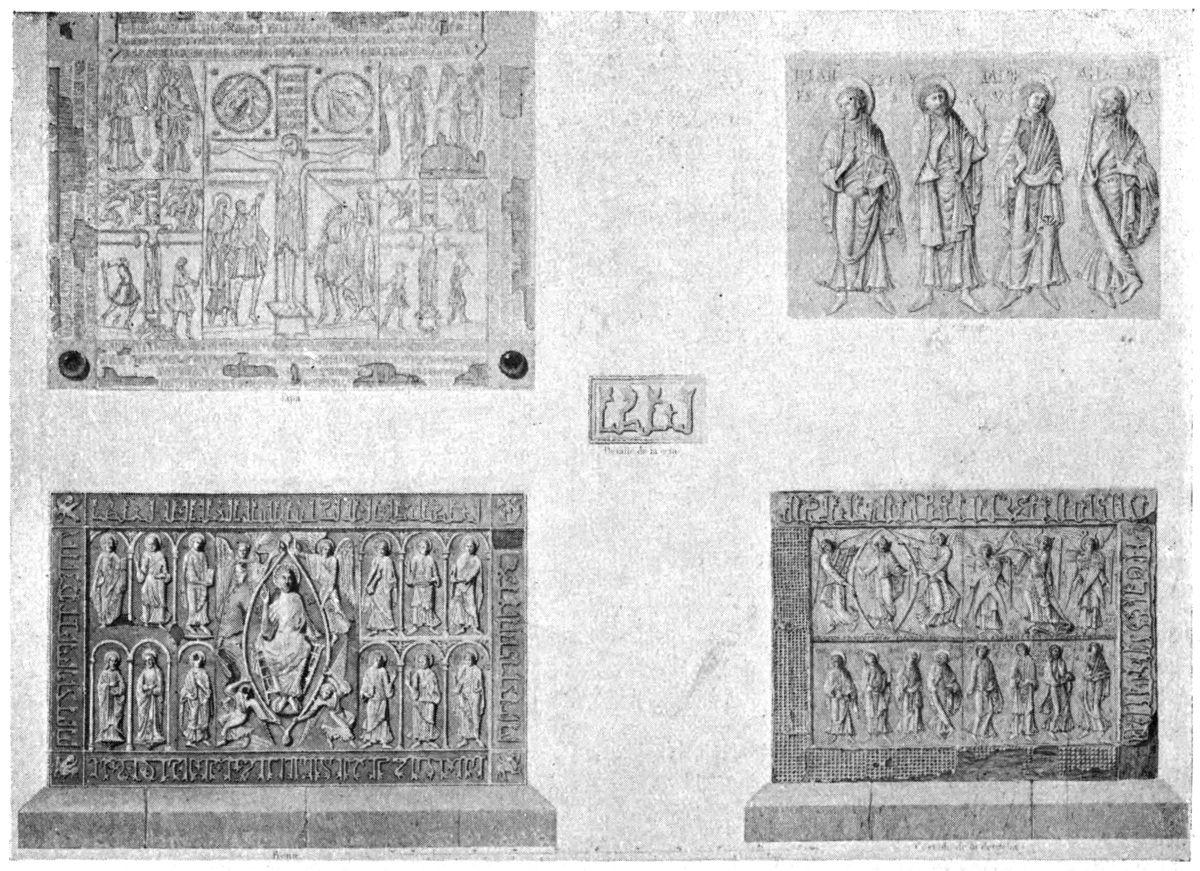
CATHEDRAL. OAKEN ARK, OR CHEST CONTAINING HOLY RELICS, IN THE CAMARA
SANTA
OVIEDO
Plate 55
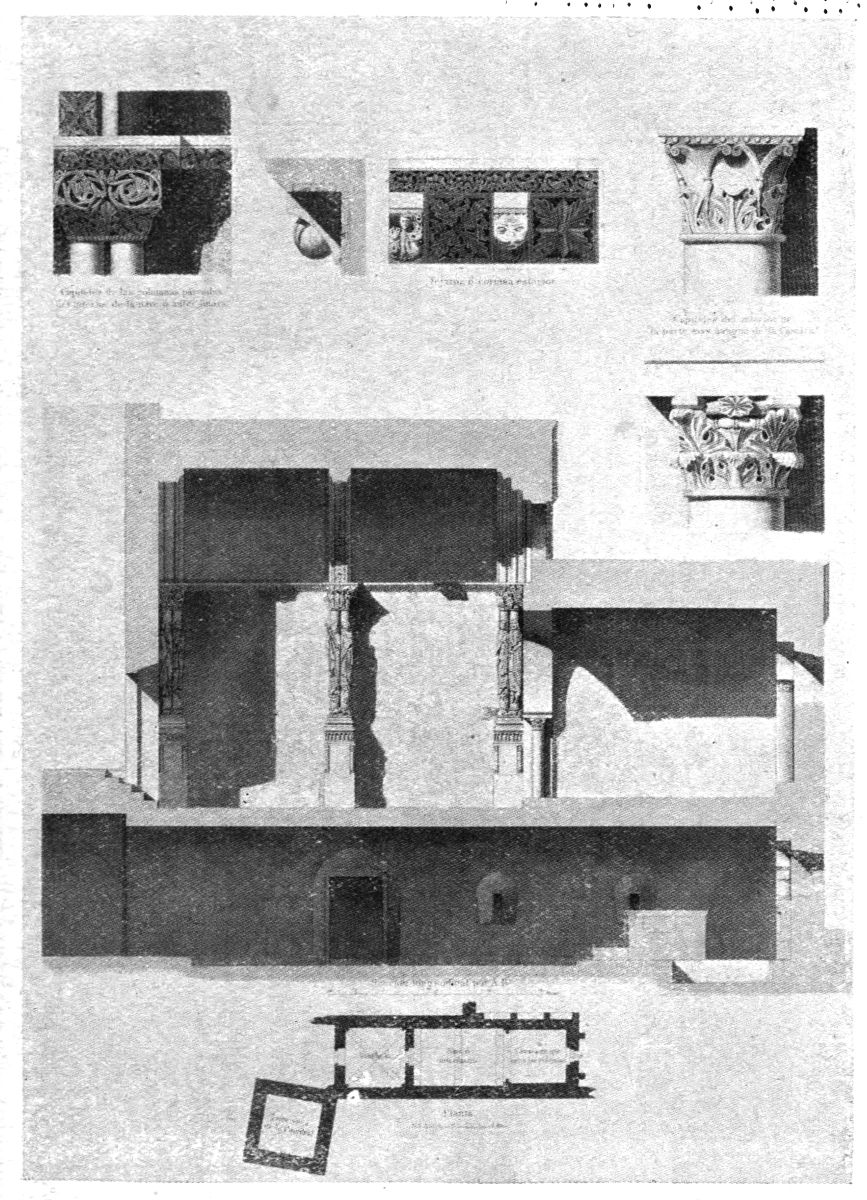
SECTION, PLAN, AND DETAILS OF THE CAMARA SANTA IN THE CATHEDRAL
OVIEDO
Plate 56
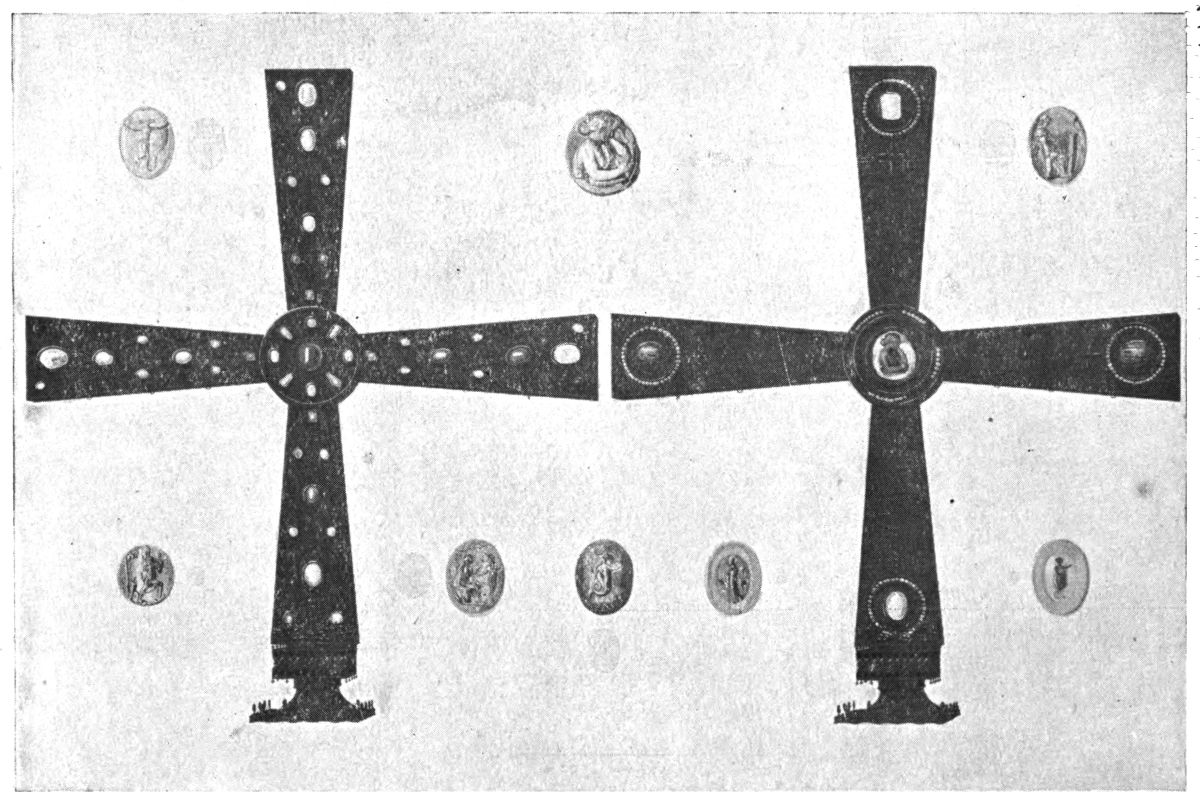
CATHEDRAL. CROSS OF THE ANGELS, IN THE CAMARA SANTA
OVIEDO
Plate 57
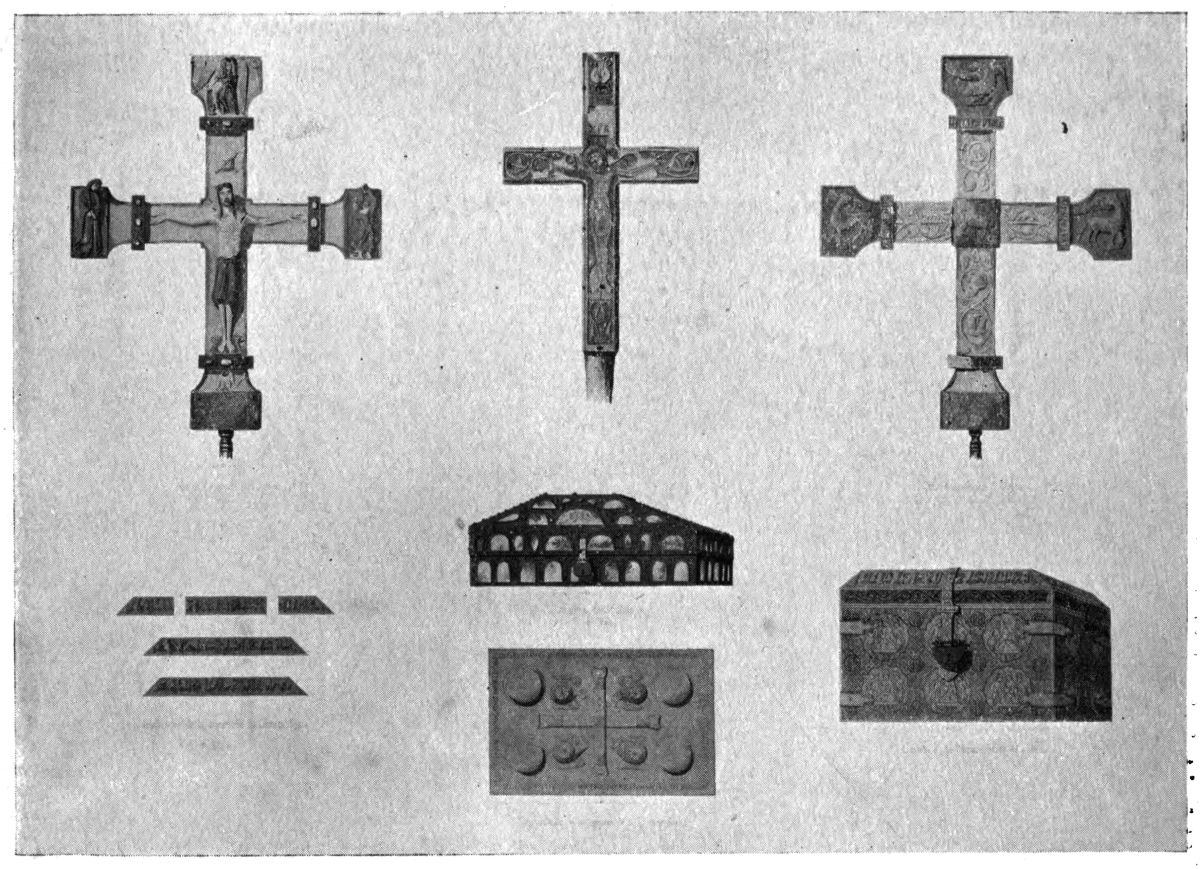
CROSSES AND CASKETS OF THE ASTURIAS
OVIEDO
Plate 58
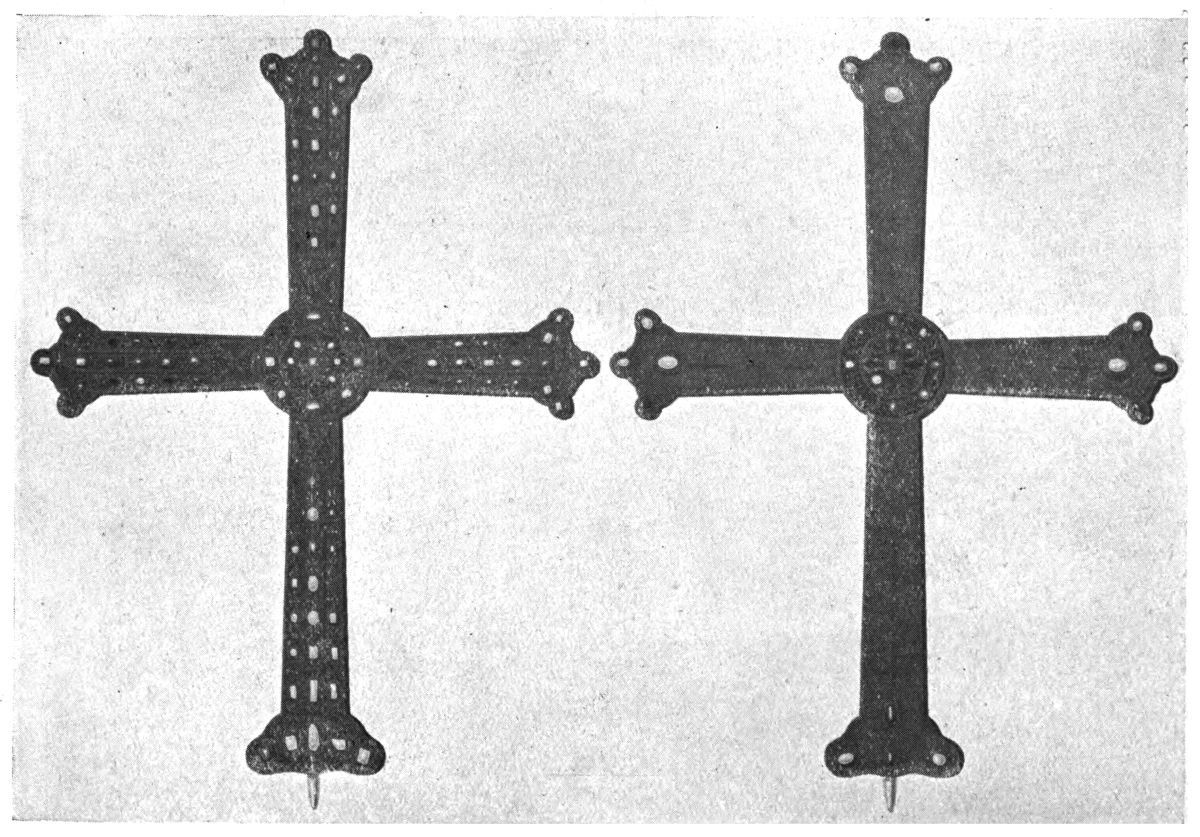
CATHEDRAL. CROSS OF VICTORY, OR OF PELAYO, IN THE CAMARA SANTA
OVIEDO
Plate 59
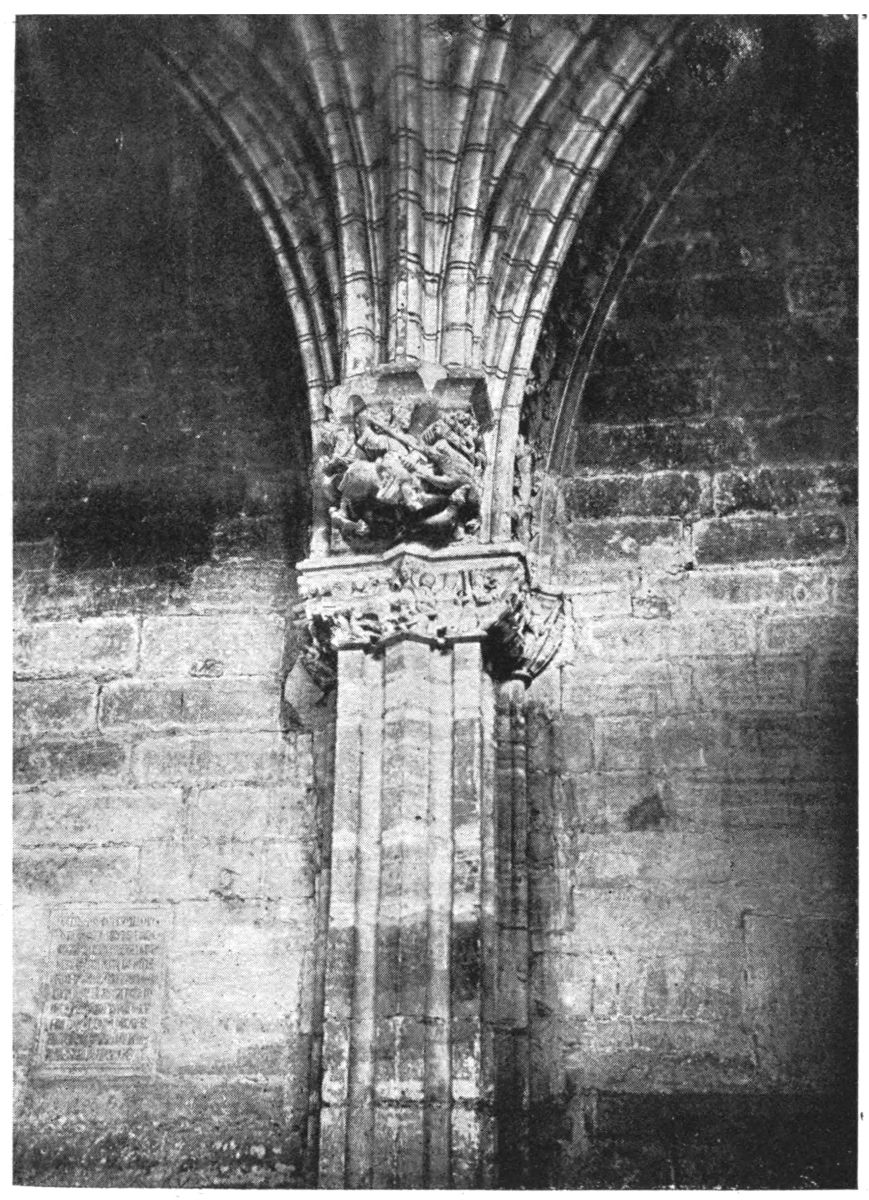
CAPITAL, REPRESENTING THE DEATH OF FAVILA THE FATHER OF PELAYA
OVIEDO
Plate 60
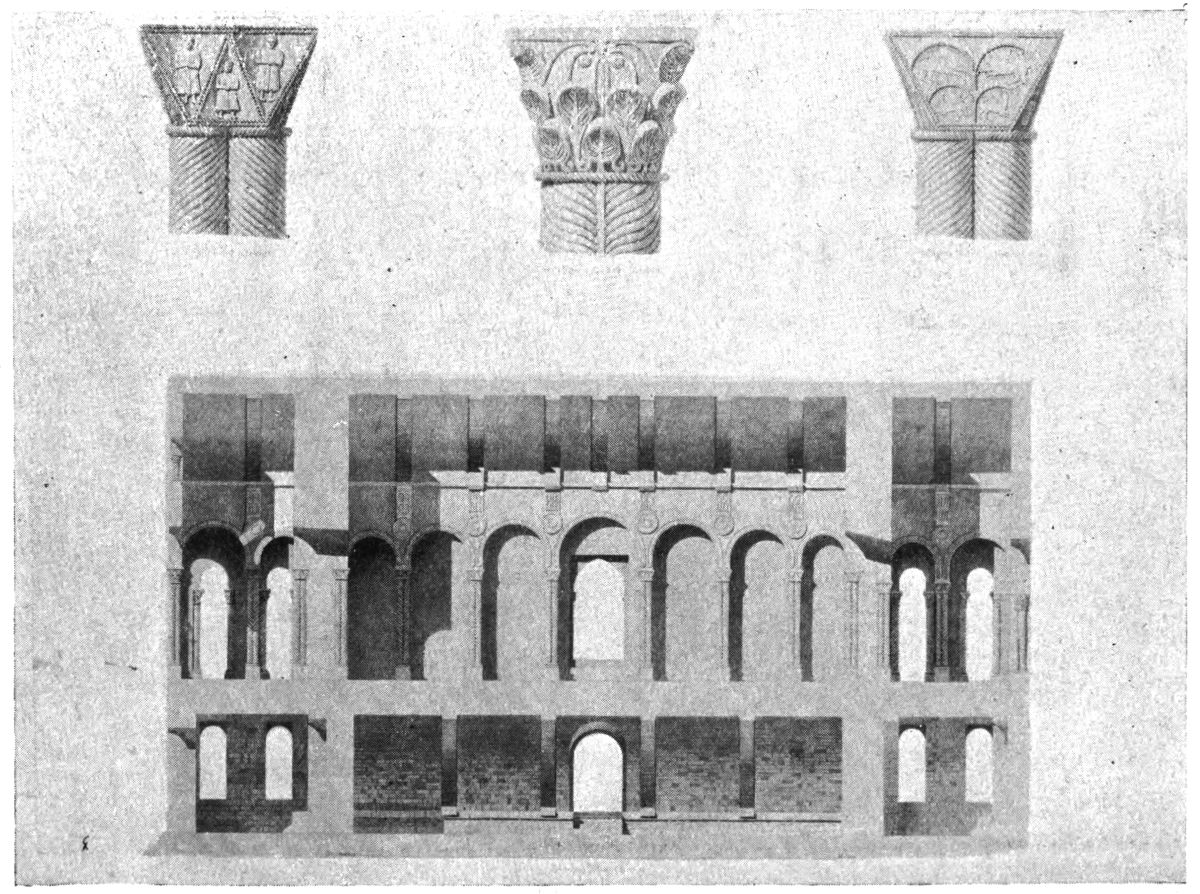
SANTA MARIA DE NARANCO
OVIEDO
Plate 61
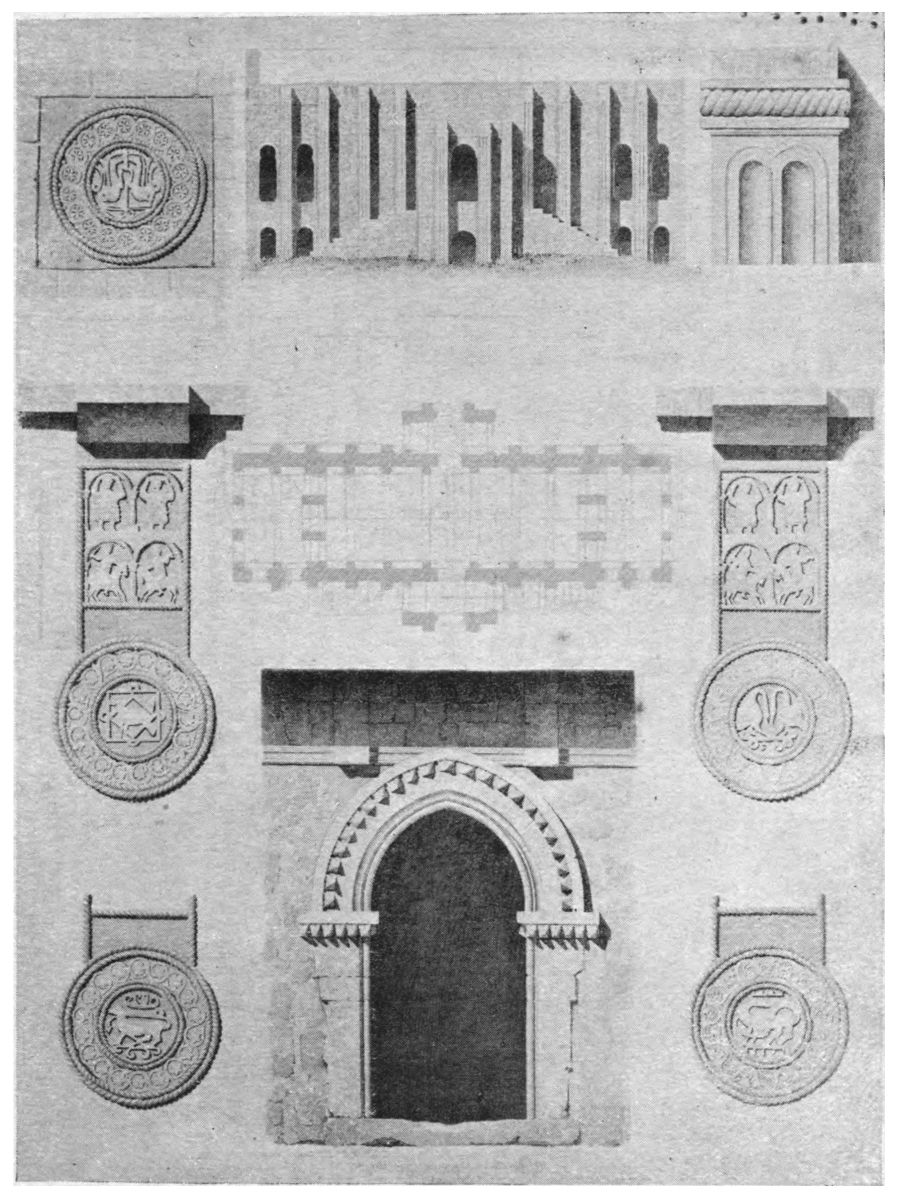
THE PARISH CHURCH OF SANTA MARIA DE NARANCO
OVIEDO
Plate 62
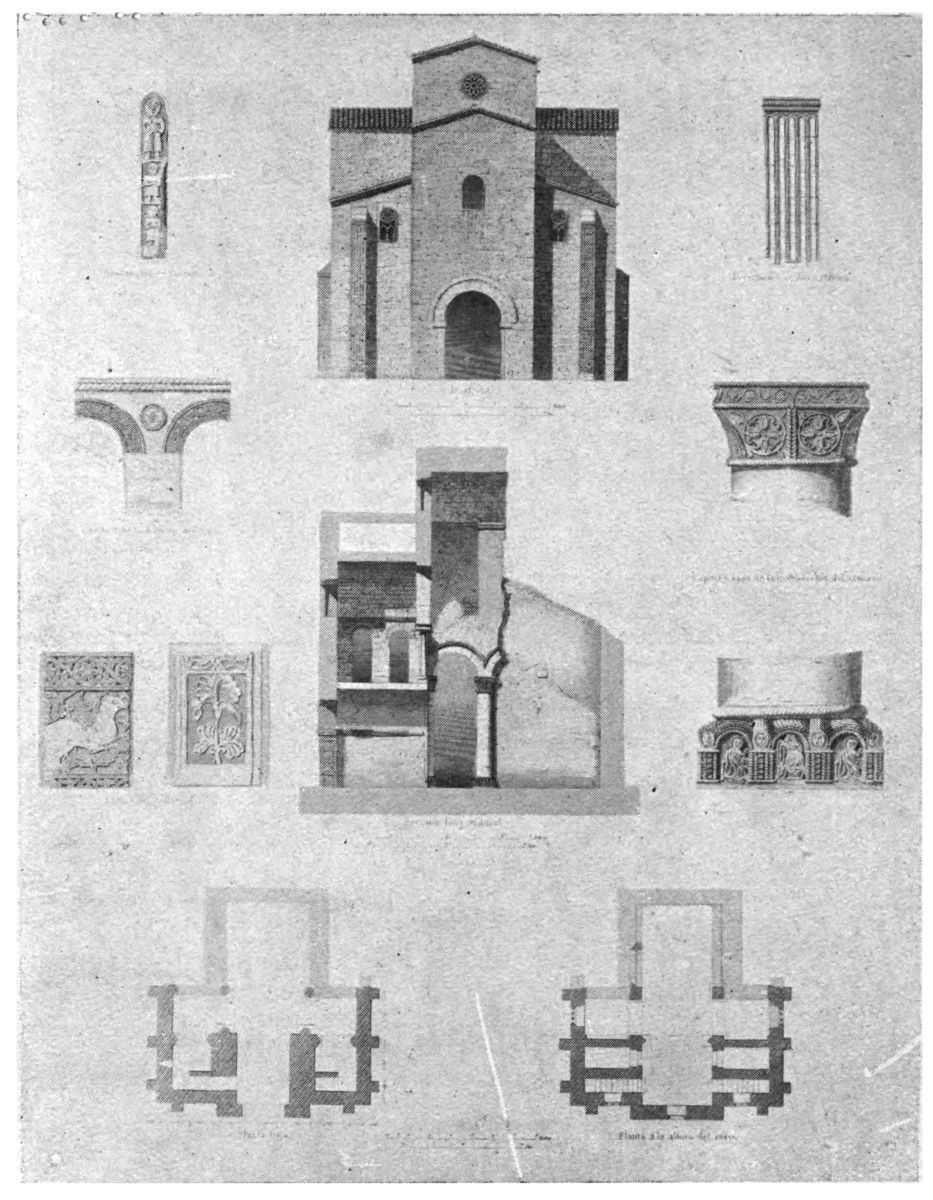
CHURCH OF SAN MIGUEL DE LINEO
OVIEDO
Plate 63
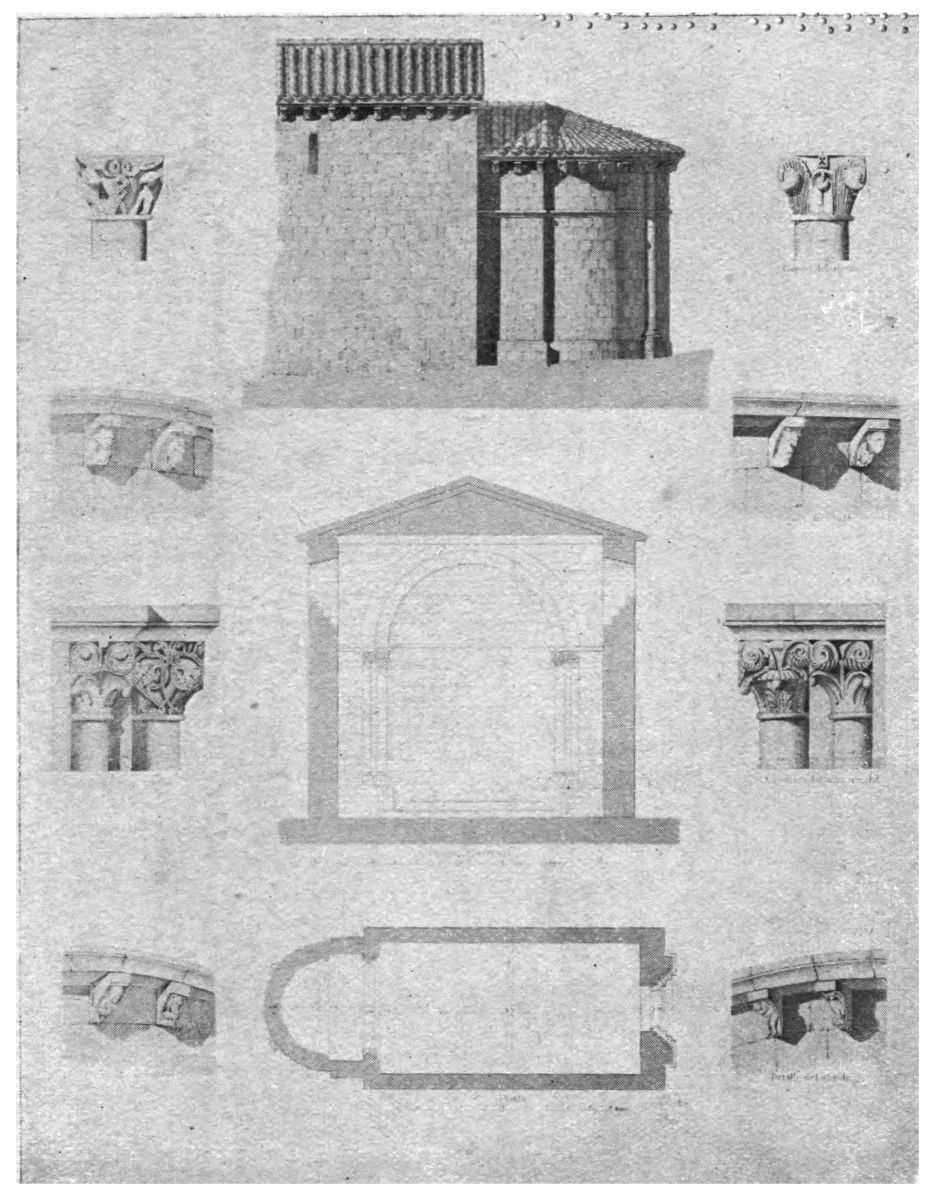
PARISH CHURCH OF SAN JUAN DE PRIORIO
OVIEDO
Plate 64
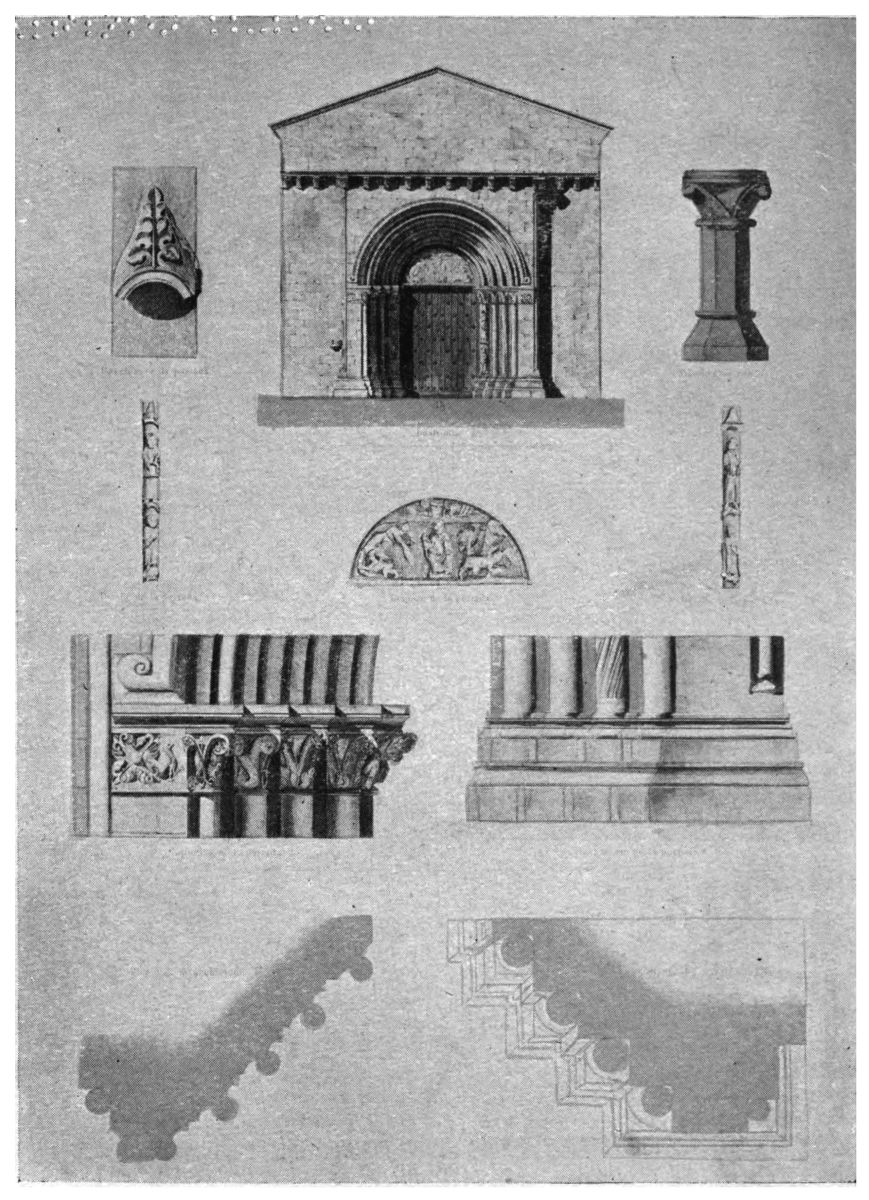
CHURCH OF SAN JUAN DE PRIORIO
OVIEDO
Plate 65
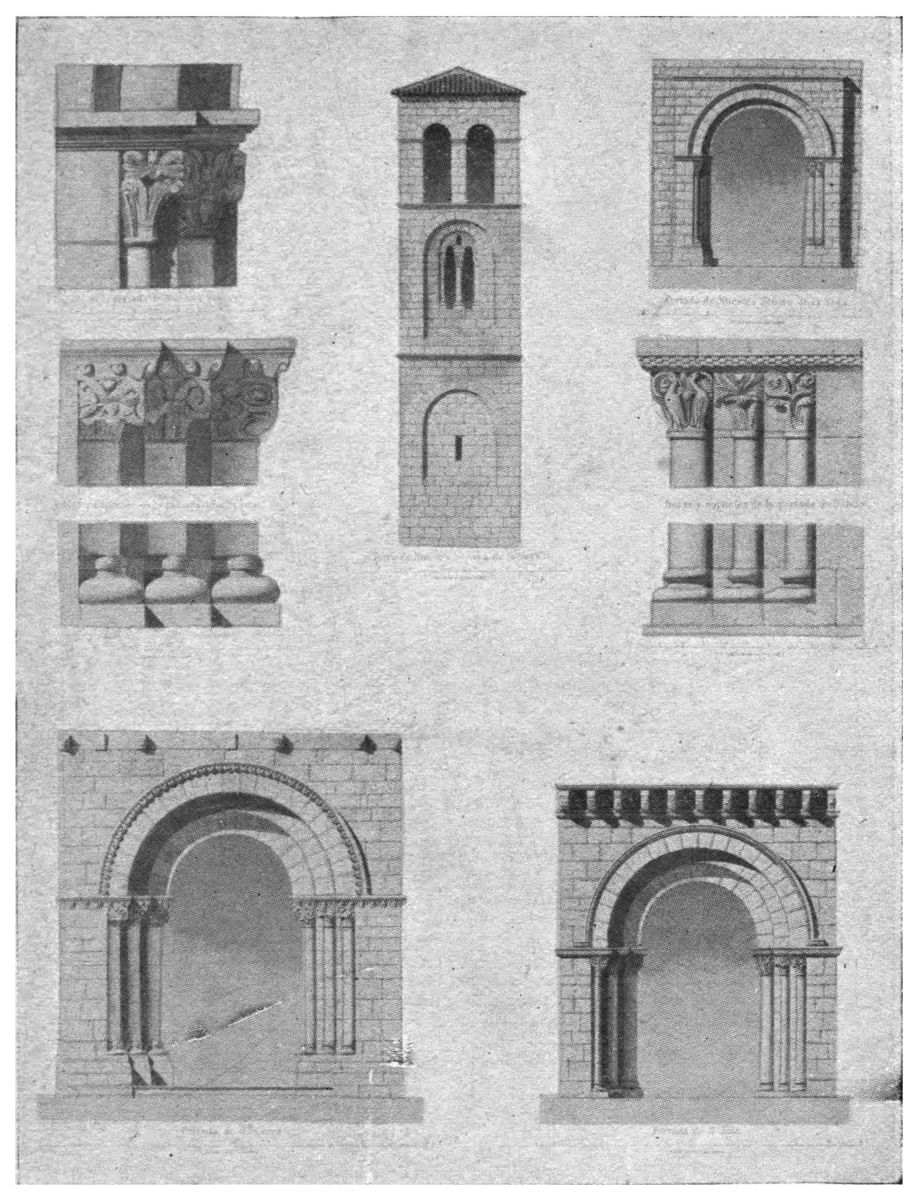
PORTALS, TOWER, AND DETAILS OF THE CHURCHES OF ST. CLARA, ST. JOHN, AND
OUR LADY DE LA VEGA, THE LAST-NAMED FOUNDED IN THE TWELFTH CENTURY
OVIEDO
Plate 66
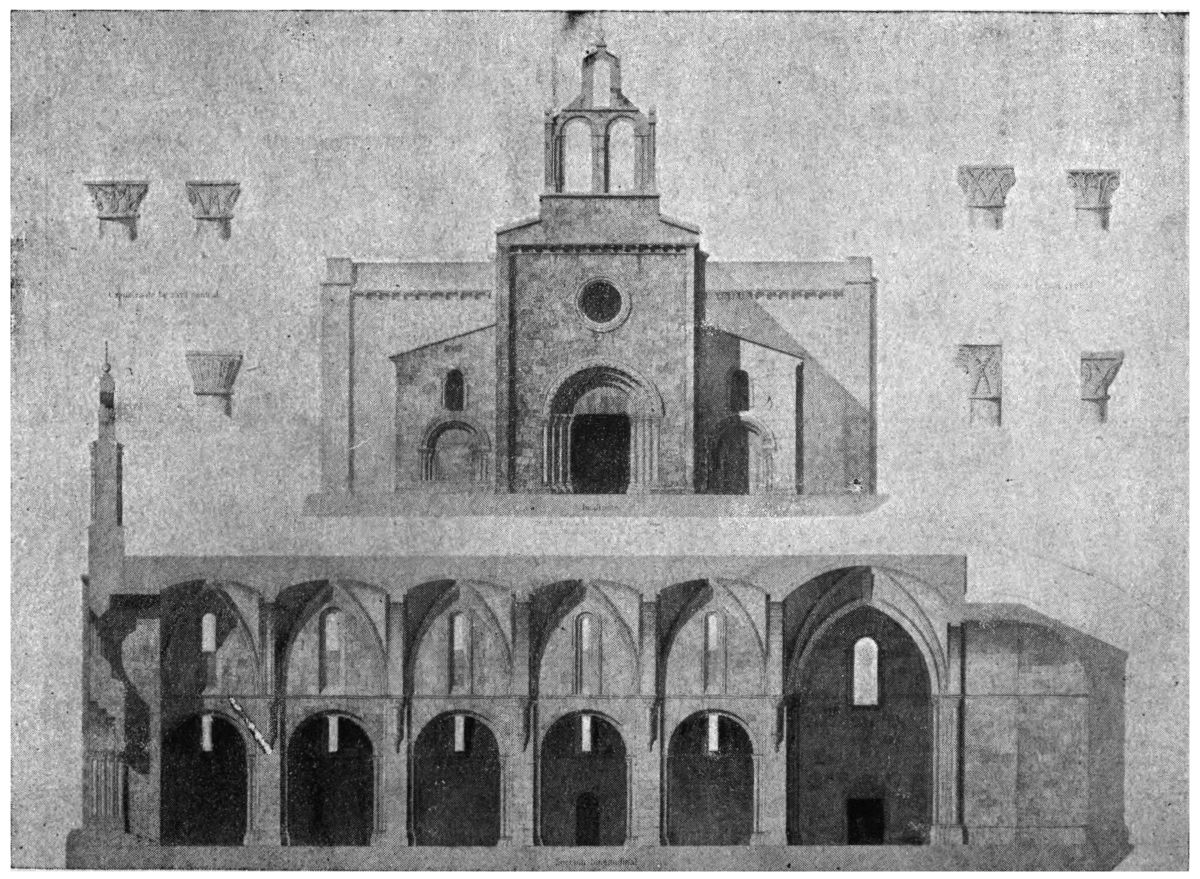
DETAILS OF SANTA MARIA DE VALDEDIOS (CONCEJO DE VILLAVICIOSA)
PROVINCE OF OVIEDO
Plate 67
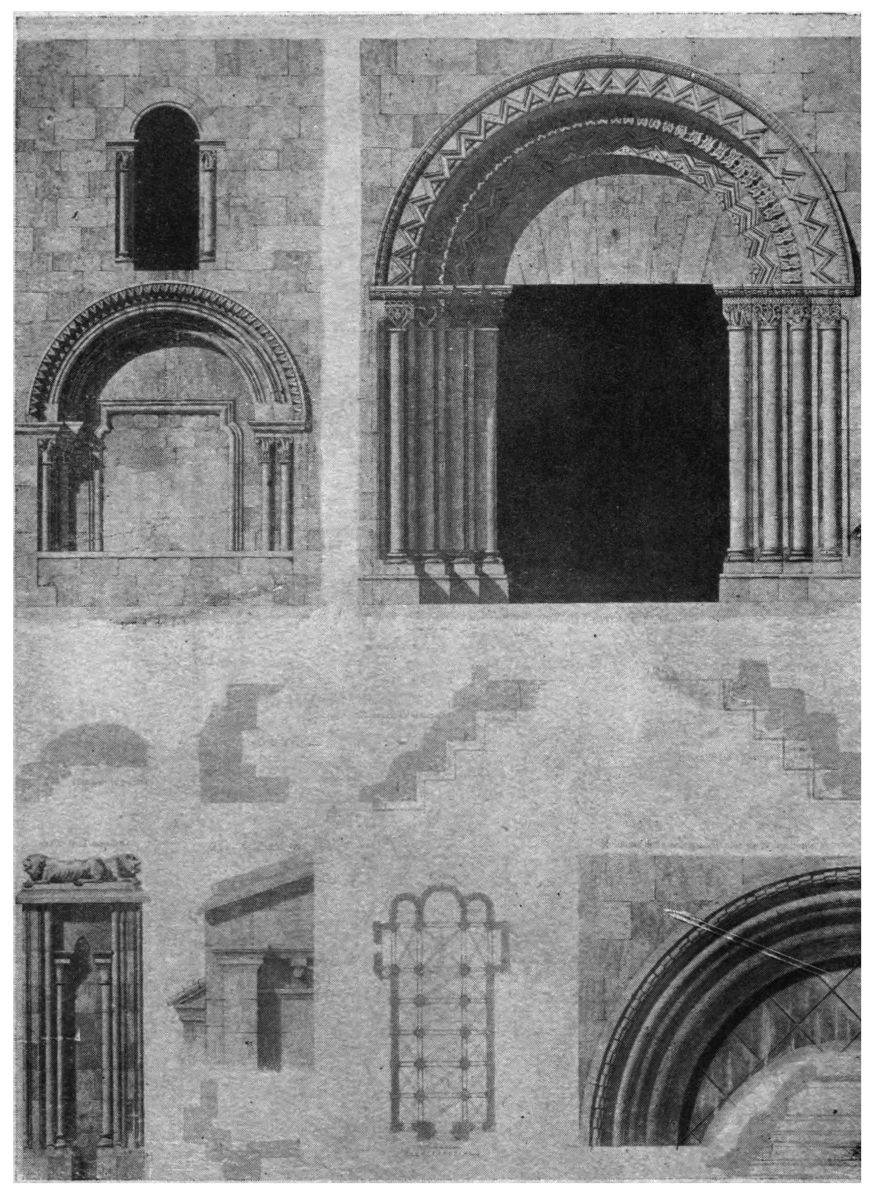
PLAN AND DETAILS OF SANTA MARIA DE VALDEDIOS (CONCEJO DE VILLAVICIOSA)
PROVINCE OF OVIEDO
Plate 68
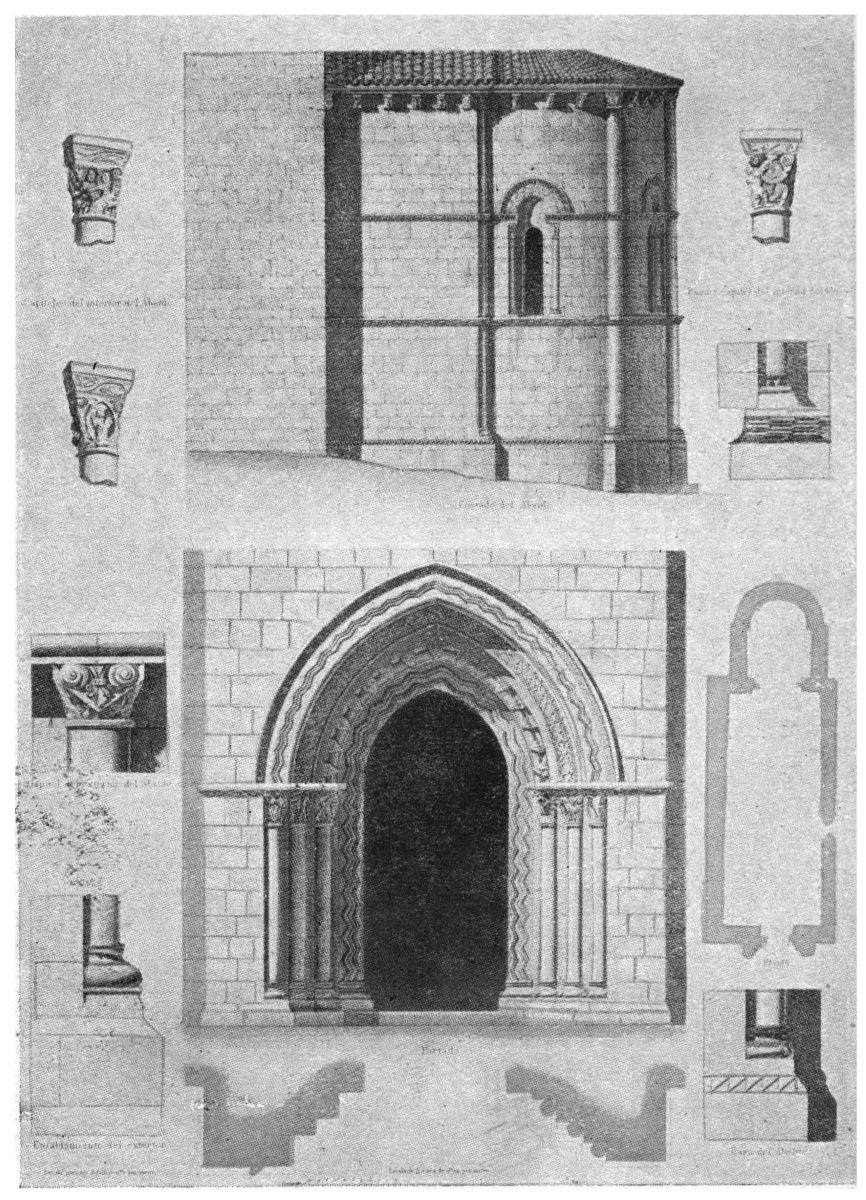
PLAN, PRINCIPAL ENTRANCE, AND DETAILS OF THE CHURCH OF SAN JUAN DE
AMANDI (CONCEJO DE VILLAVICIOSA)
PROVINCE OF OVIEDO
Plate 69
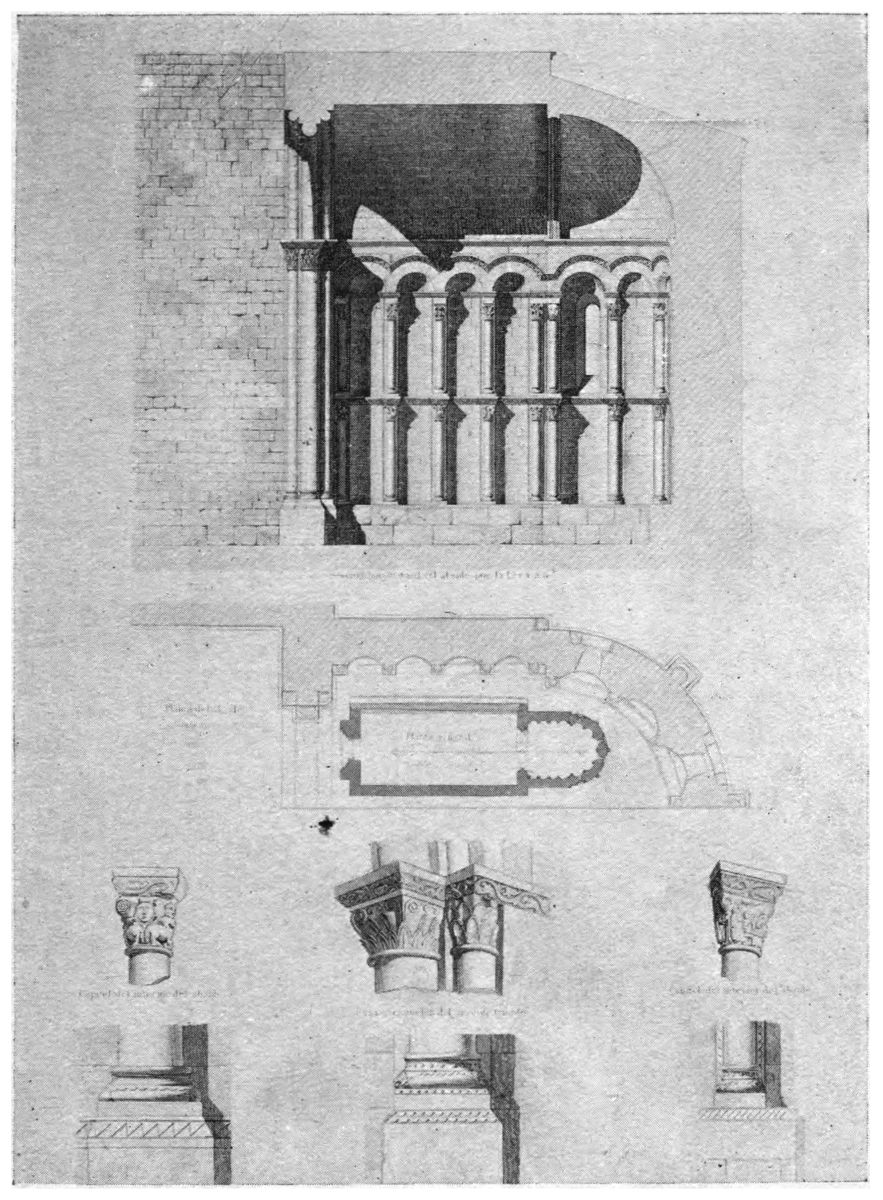
PLAN, LONGITUDINAL SECTION, AND DETAILS OF THE PARISH CHURCH OF SAN JUAN
DE AMANDI (CONCEJO DE VILLAVICIOSA)
PROVINCE OF OVIEDO
Plate 70
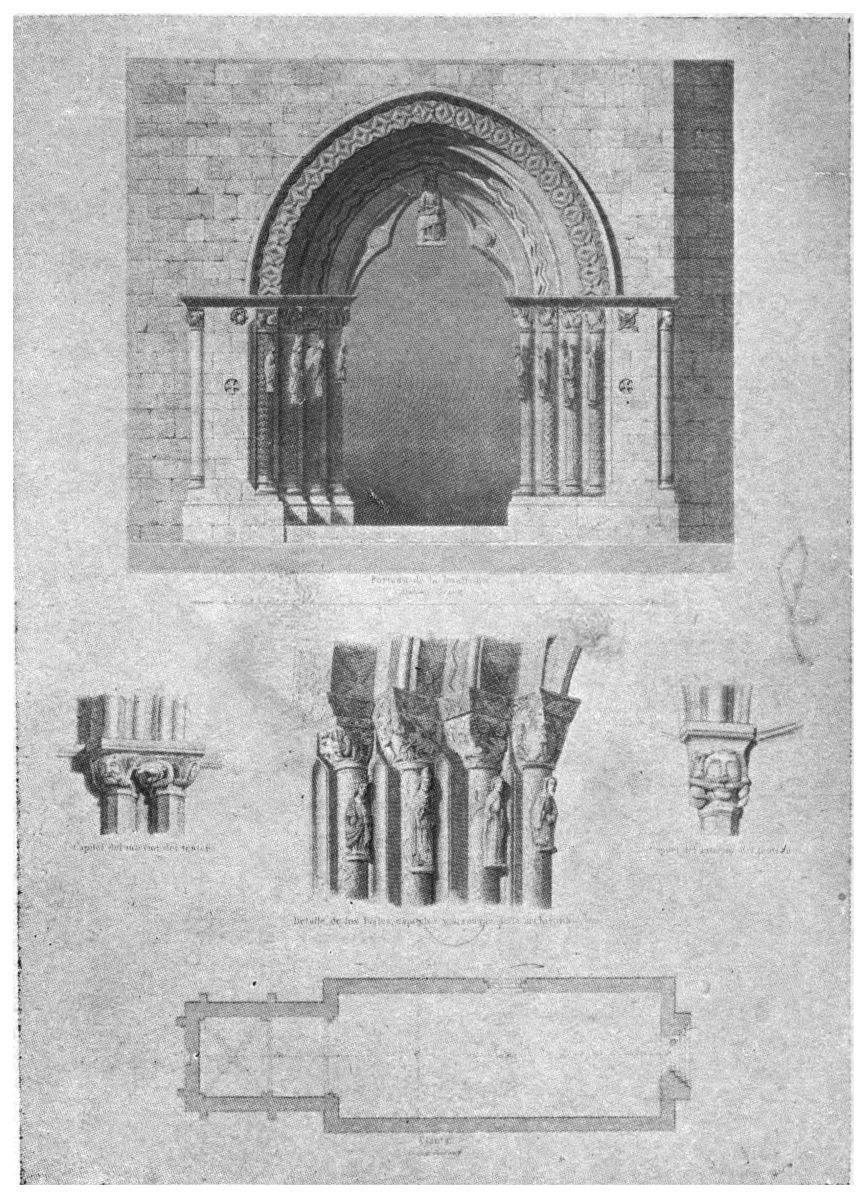
PLAN, PORCH, AND DETAILS OF THE PARISH CHURCH OF VILLAVICIOSA (CONCEJO
DE VILLAVICIOSA)
PROVINCE OF OVIEDO
Plate 71
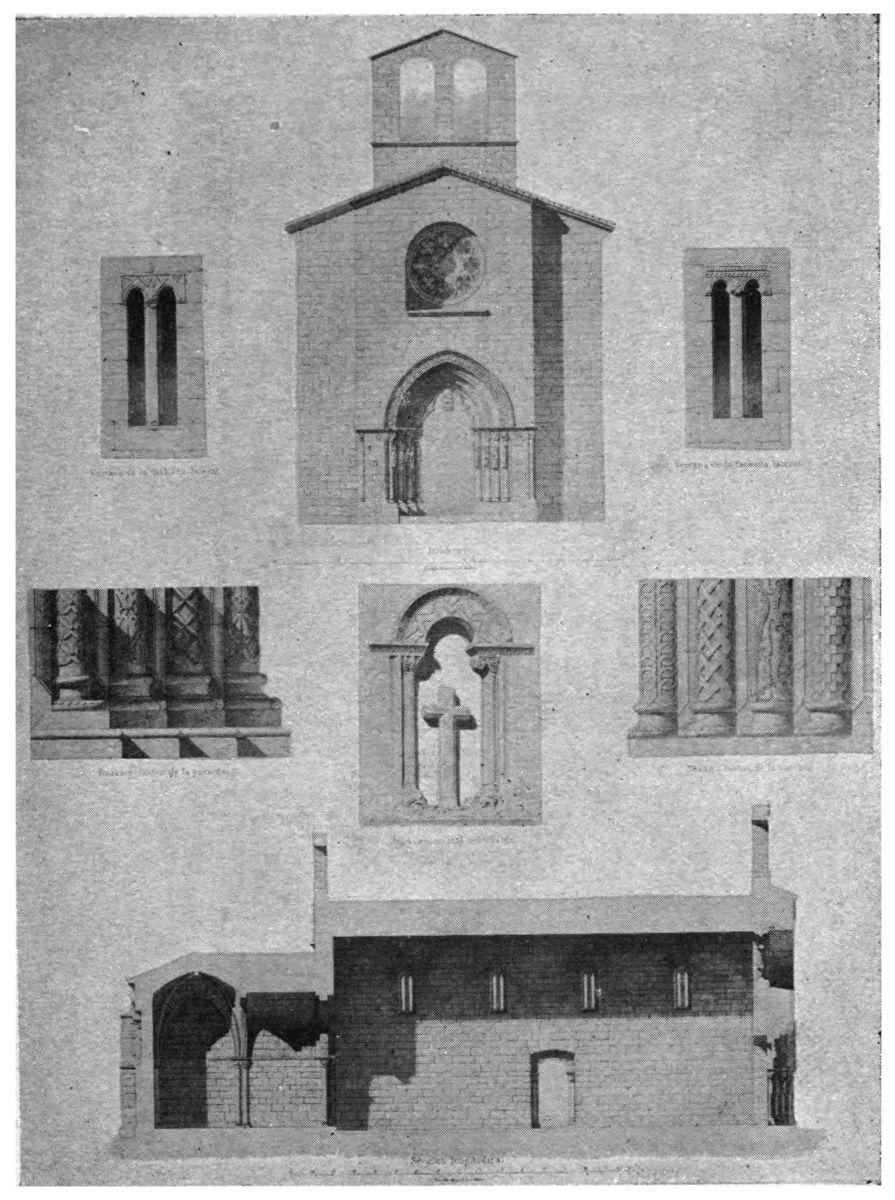
FRONT, LONGITUDINAL SECTION, AND DETAILS OF THE PARISH CHURCH OF
VILLAVICIOSA (CONCEJO DE VILLAVICIOSA)
PROVINCE OF OVIEDO
Plate 72
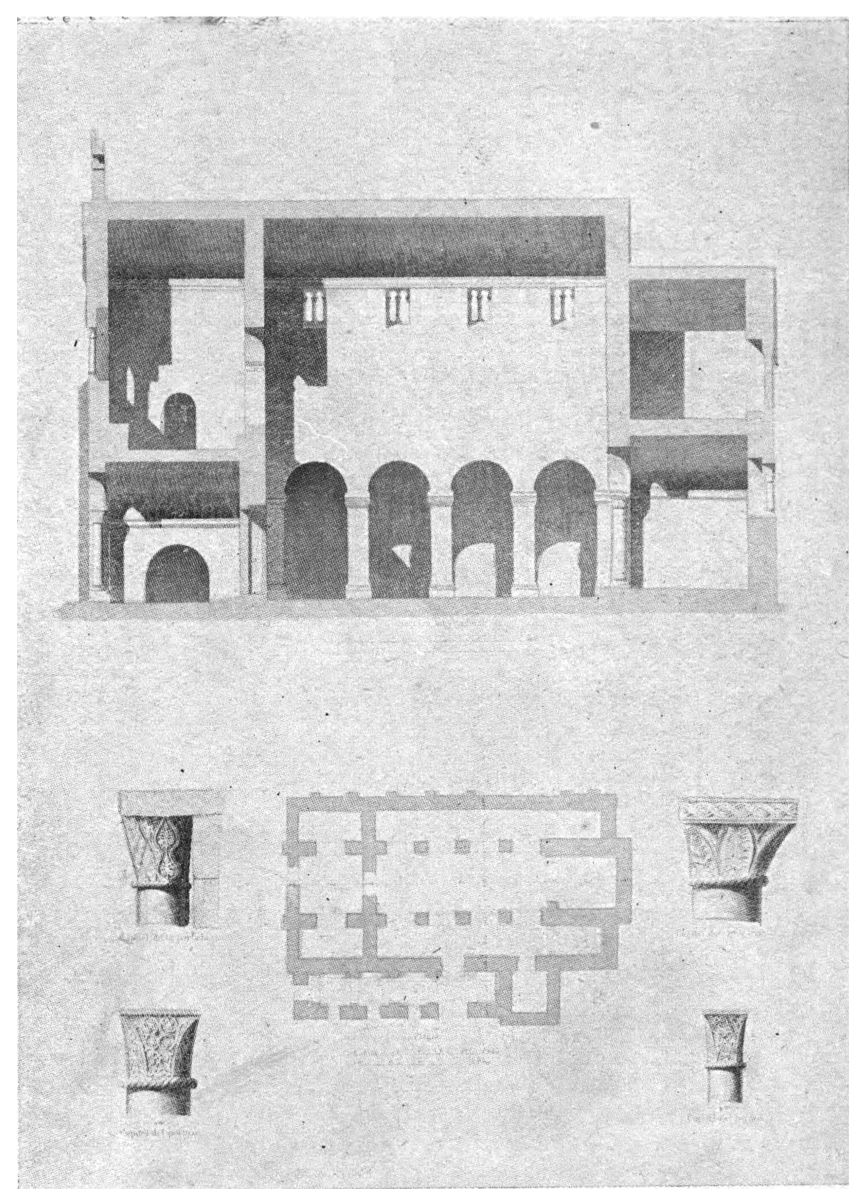
PLAN AND SECTION OF CHURCH OF SAN SALVADOR DE VALDEDIOS (CONCEJO DE
VILLAVICIOSA)
PROVINCE OF OVIEDO
Plate 73
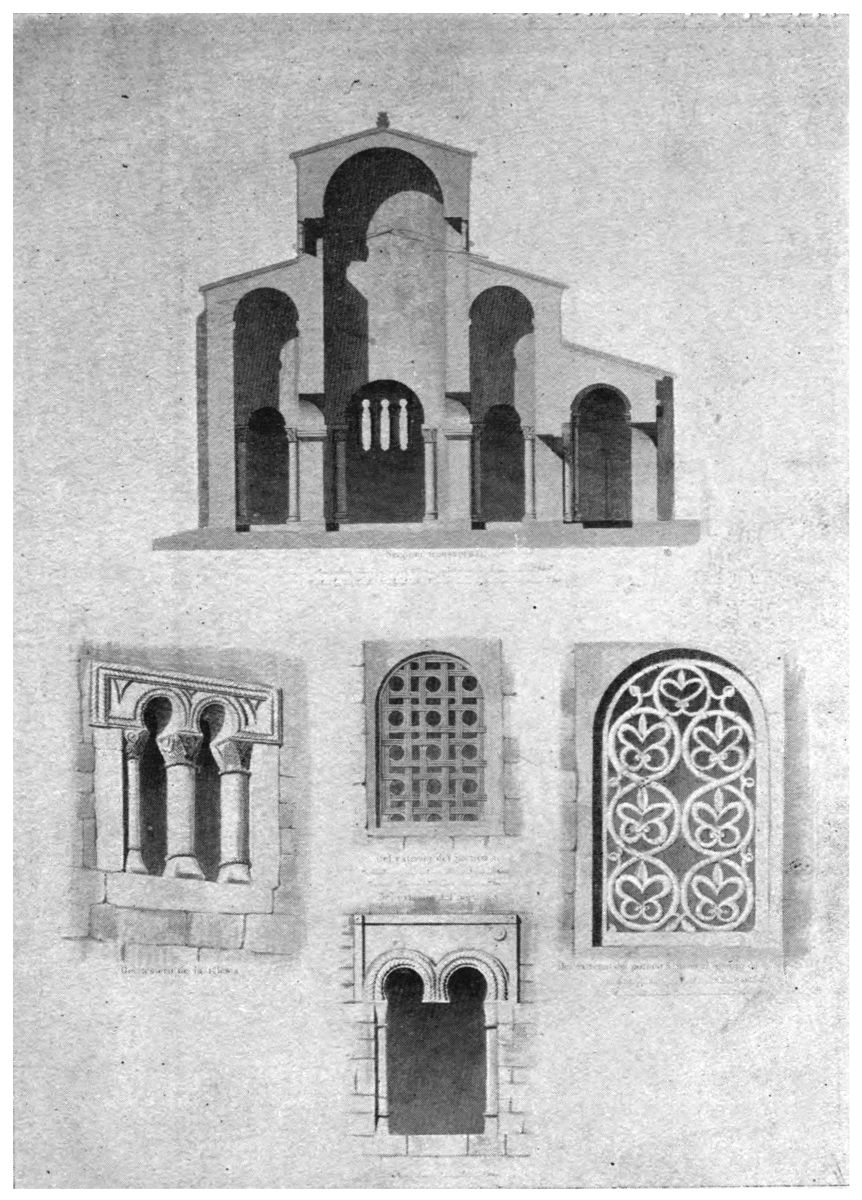
TRANSVERSE SECTION AND WINDOWS OF THE CHURCH OF SAN SALVADOR DE
VALDEDIOS (CONCEJO DE VILLAVICIOSA)
PROVINCE OF OVIEDO
Plate 74
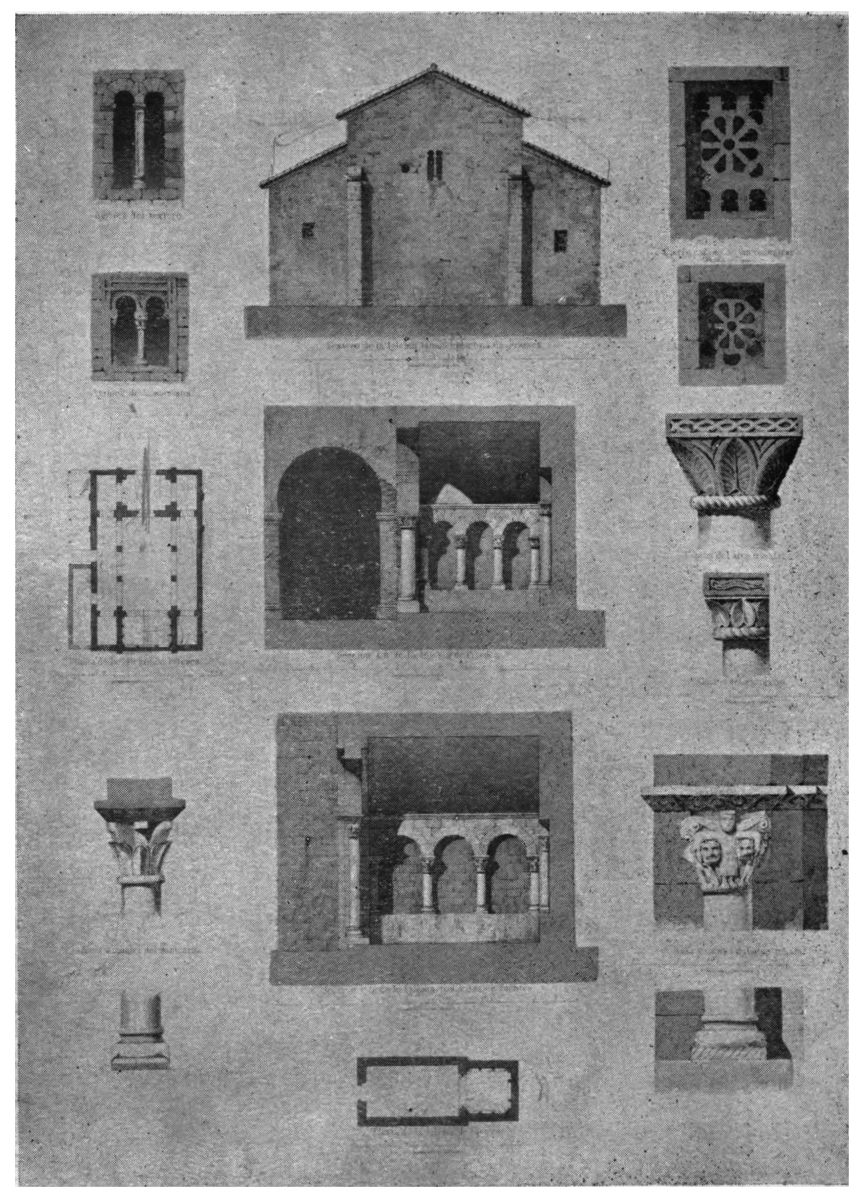
PLANS, SECTIONS, AND DETAILS OF THE PAROCHIAL CHURCHES OF PRIESCA AND
FUENTES (CONCEJO DE VILLAVICIOSA)
PROVINCE OF OVIEDO
Plate 75
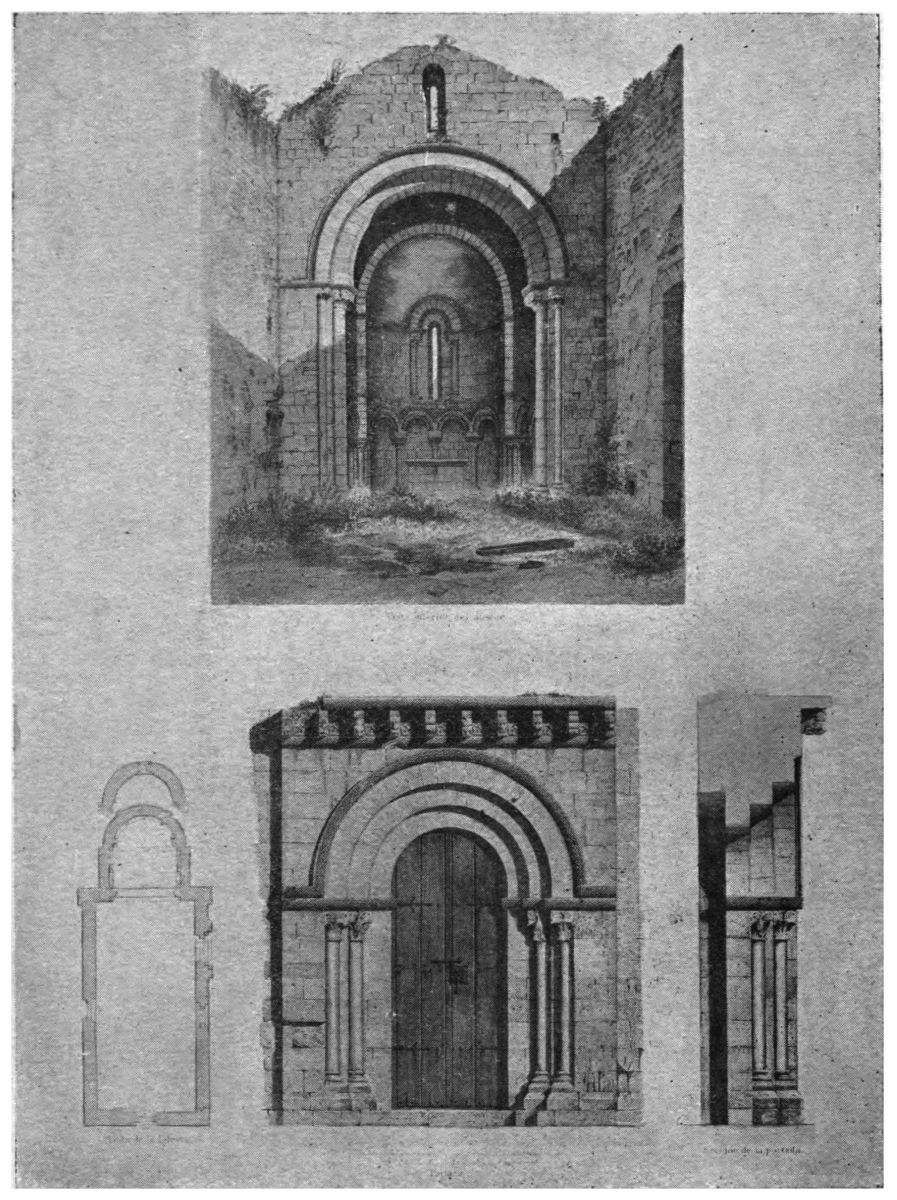
DETAILS OF CHURCH OF SANTA MARIA DE VILLAMAYOR (CONCEJO DEL INFIESTO)
PROVINCE OF OVIEDO
Plate 76
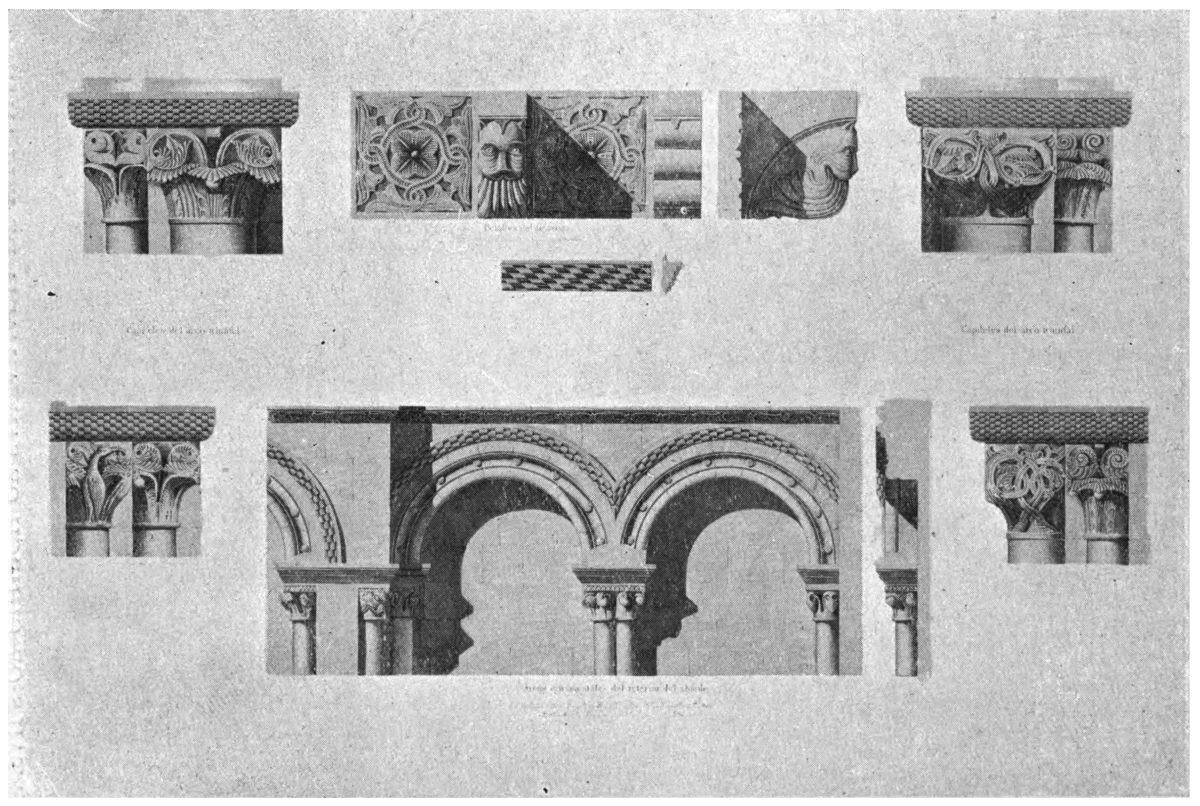
DETAILS OF SANTA MARIA DE VILLAMAYOR (CONCEJO DE INFIESTO)
PROVINCE OF OVIEDO
Plate 77
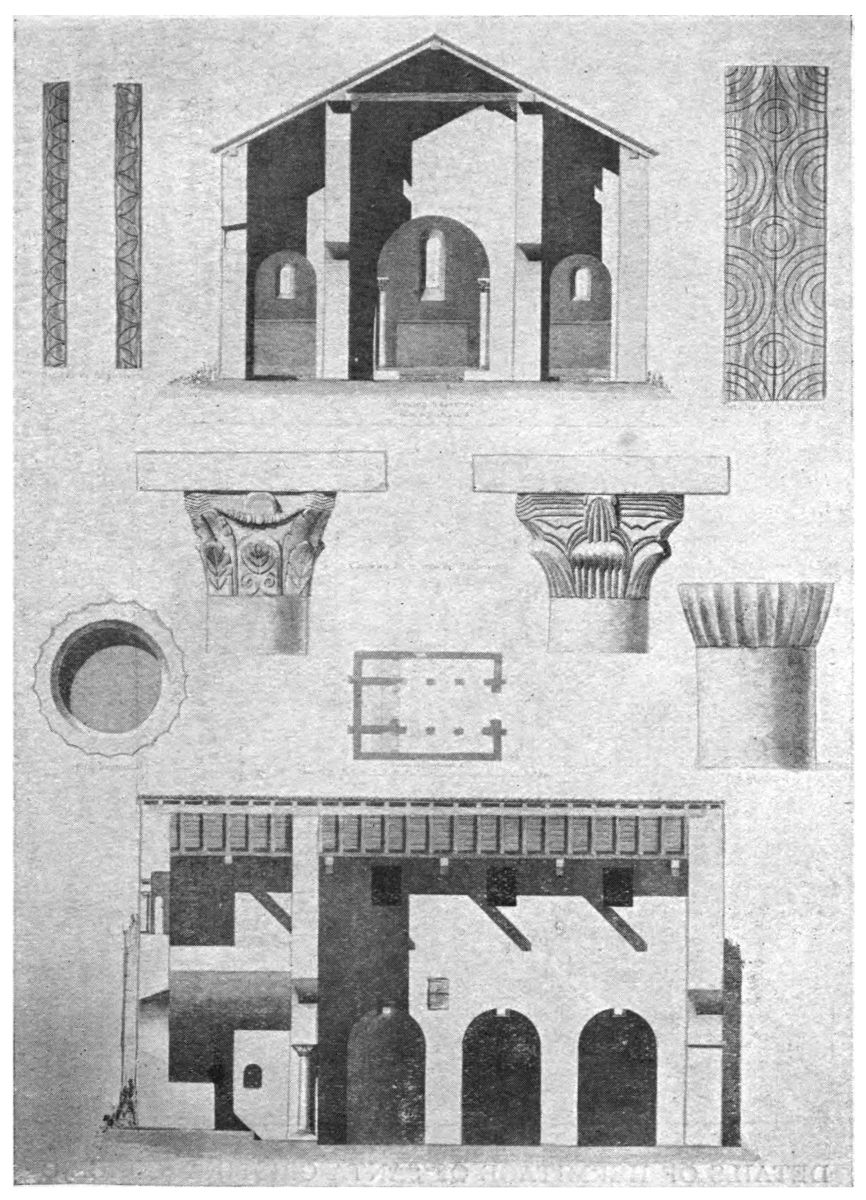
PLAN, SECTIONS, AND DETAILS OF SAN ADRIAN DE TUÑON (CONCEJO DE
VILLANUEVA)
PROVINCE OF OVIEDO
Plate 78
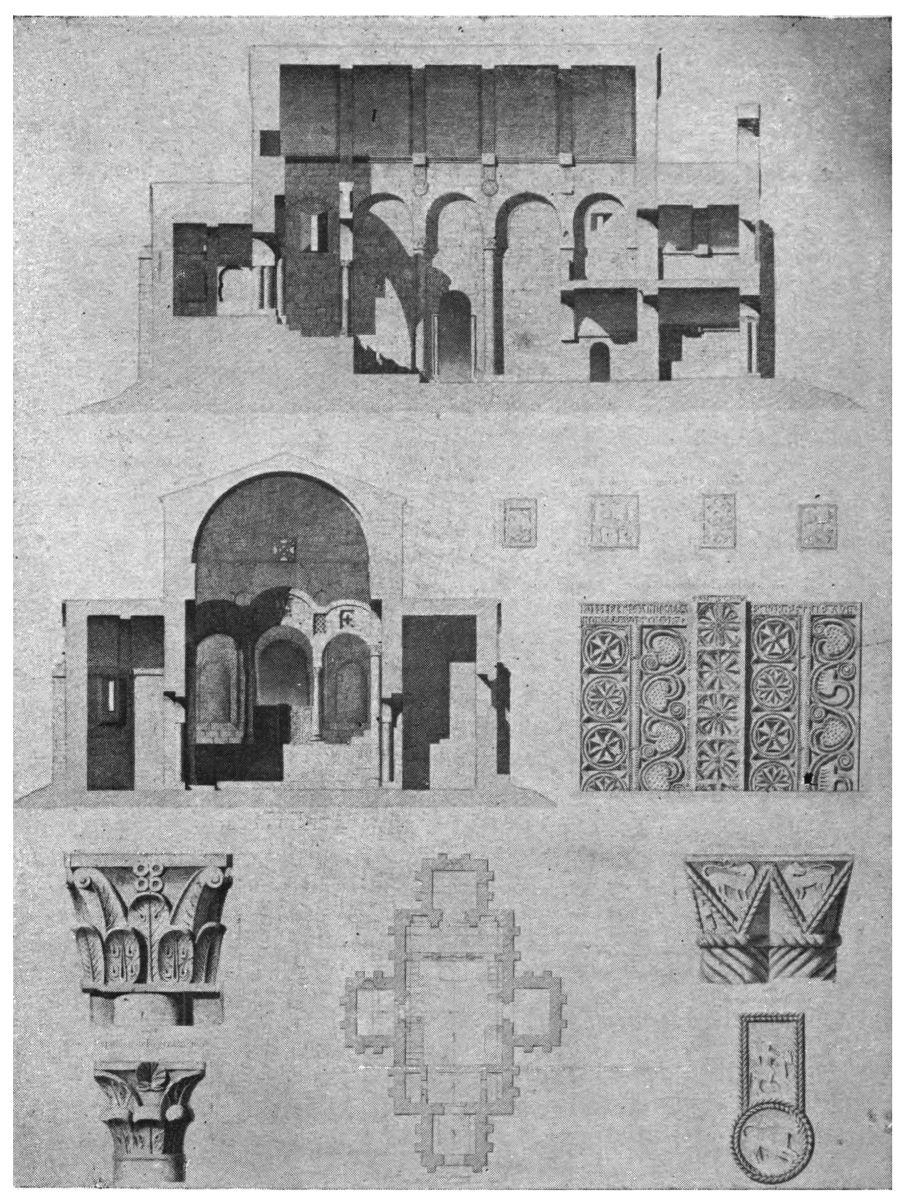
DETAILS OF HERMITAGE OF SANTA CRISTINA (CONCEJO DE LA POLA DE LENA)
PROVINCE OF OVIEDO
Plate 79
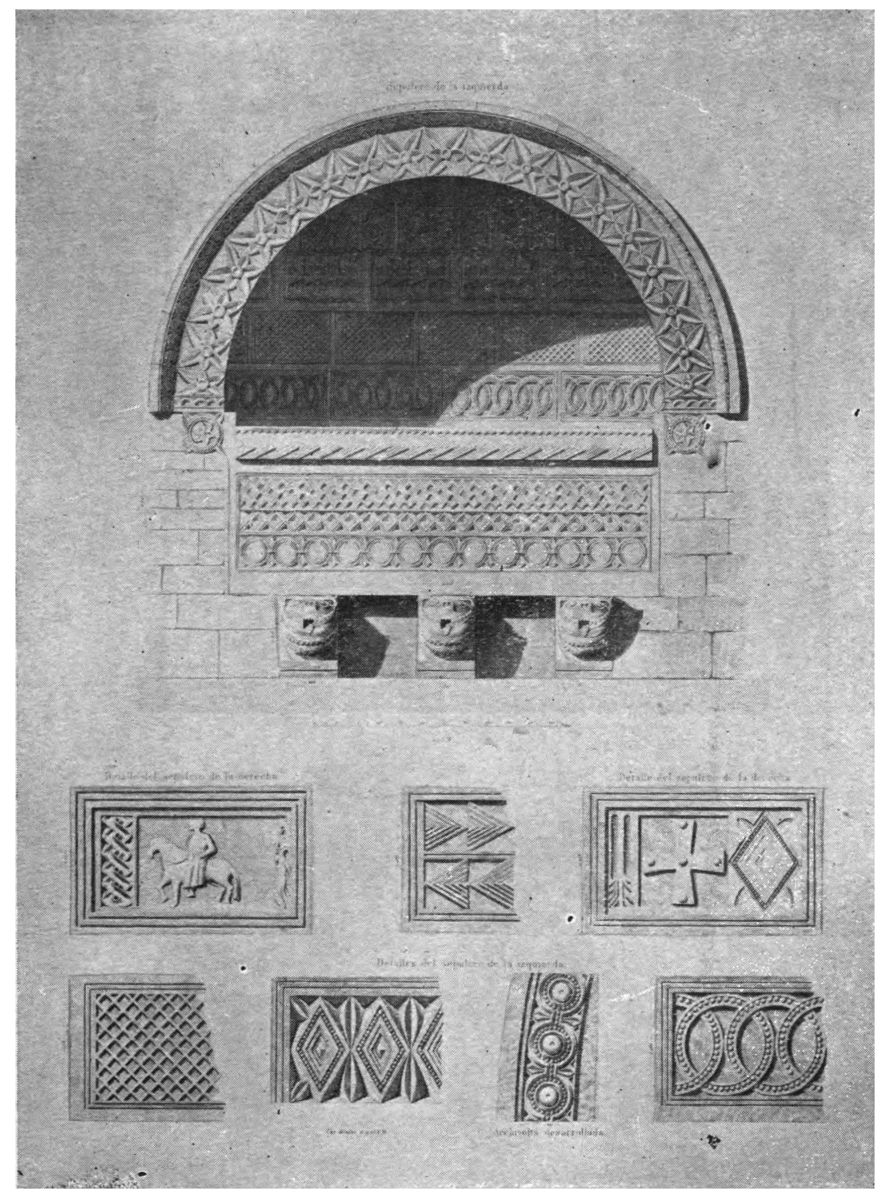
DETAILS OF SEPULCHRES IN THE CLOISTERS OF THE COLLEGIATE CHURCH OF
COVADONGA (CONCEJO DE CANGAS DE ONIS)
PROVINCE OF OVIEDO
Plate 80
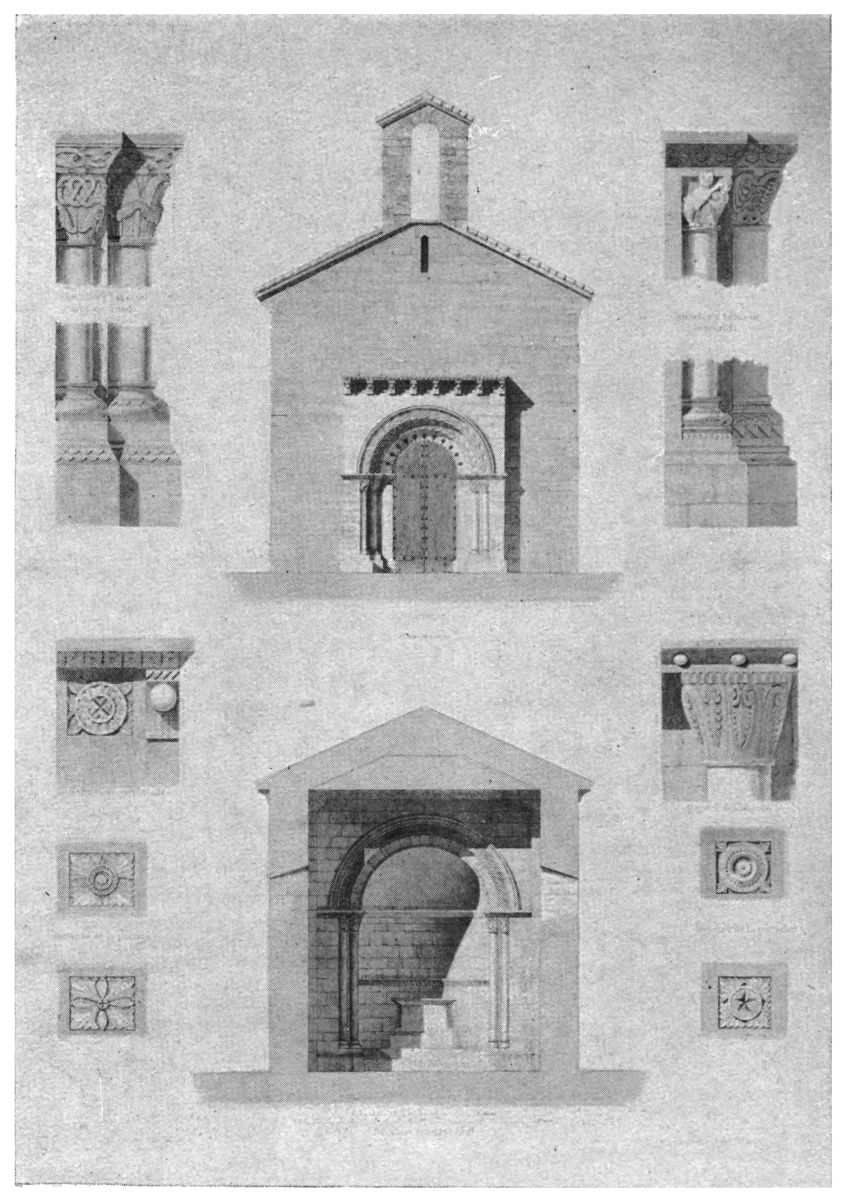
DETAILS OF PARISH-CHURCH OF UJO (CONCEJO DE MIERES)
PROVINCE OF OVIEDO
Plate 81
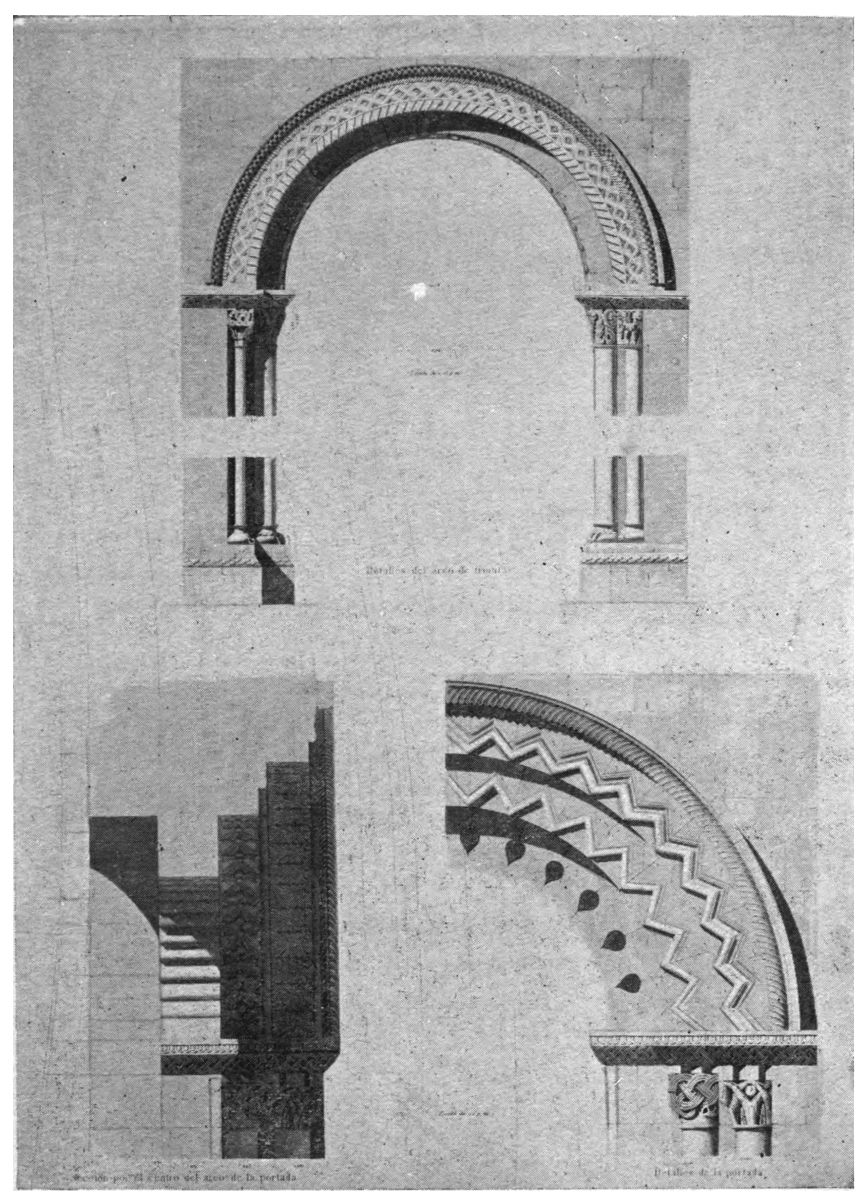
DETAILS OF PAROCHIAL CHURCH OF UJO (CONCEJO DE MIERES)
OVIEDO
Plate 82
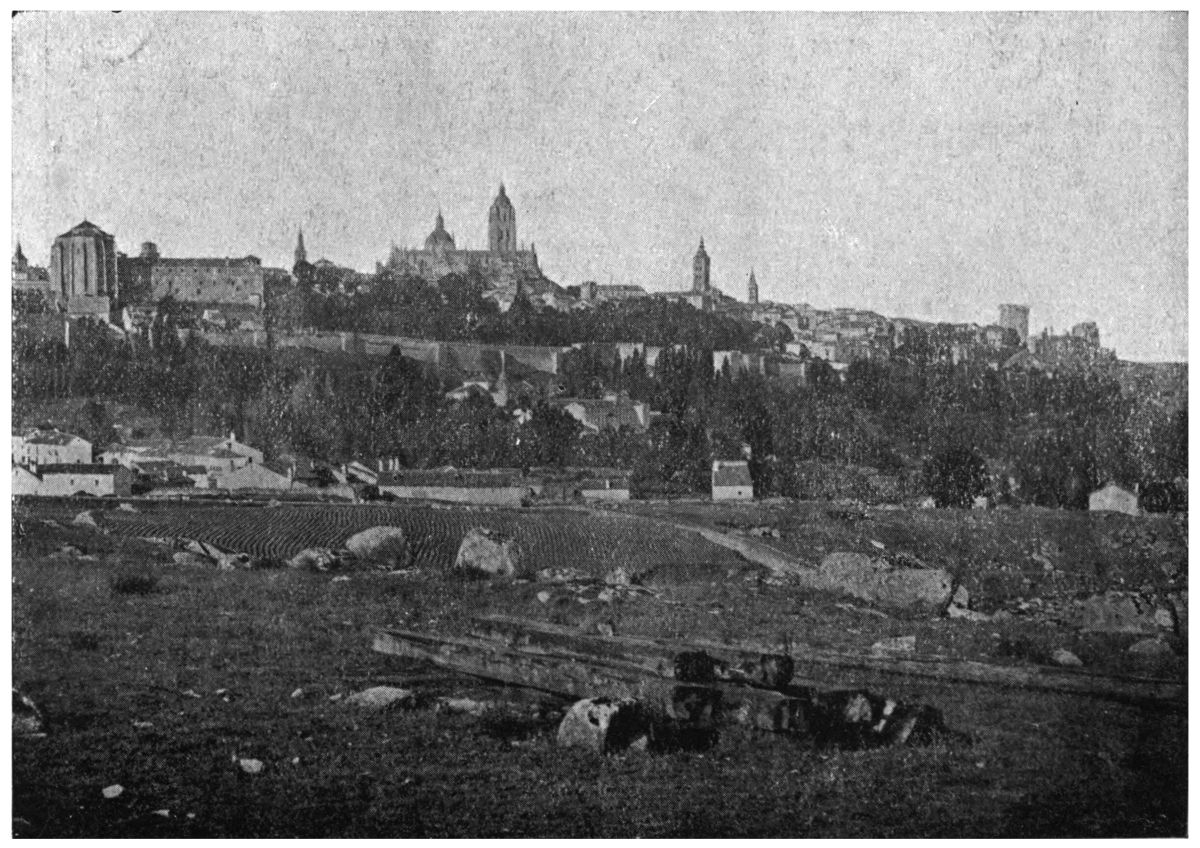
GENERAL VIEW OF SEGOVIA FROM THE NIEVAS
SEGOVIA
Plate 83
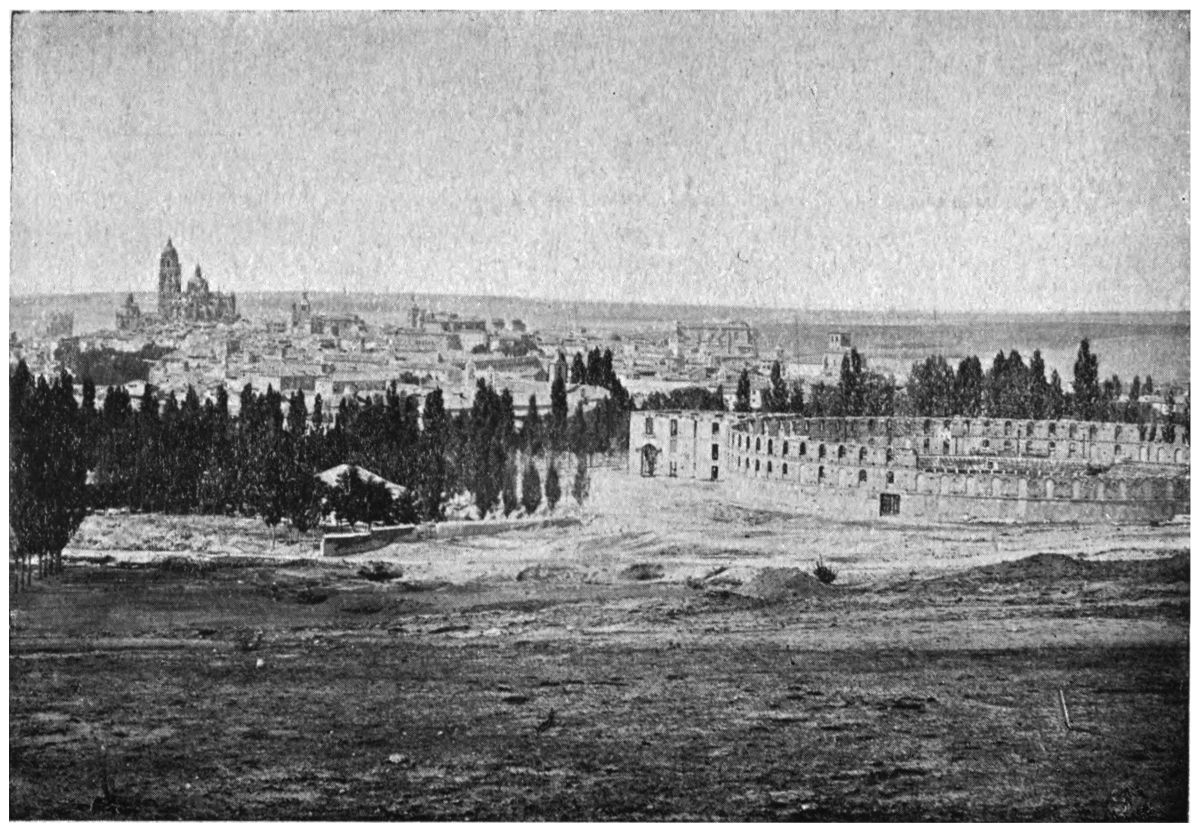
GENERAL VIEW OF SEGOVIA
Plate 84
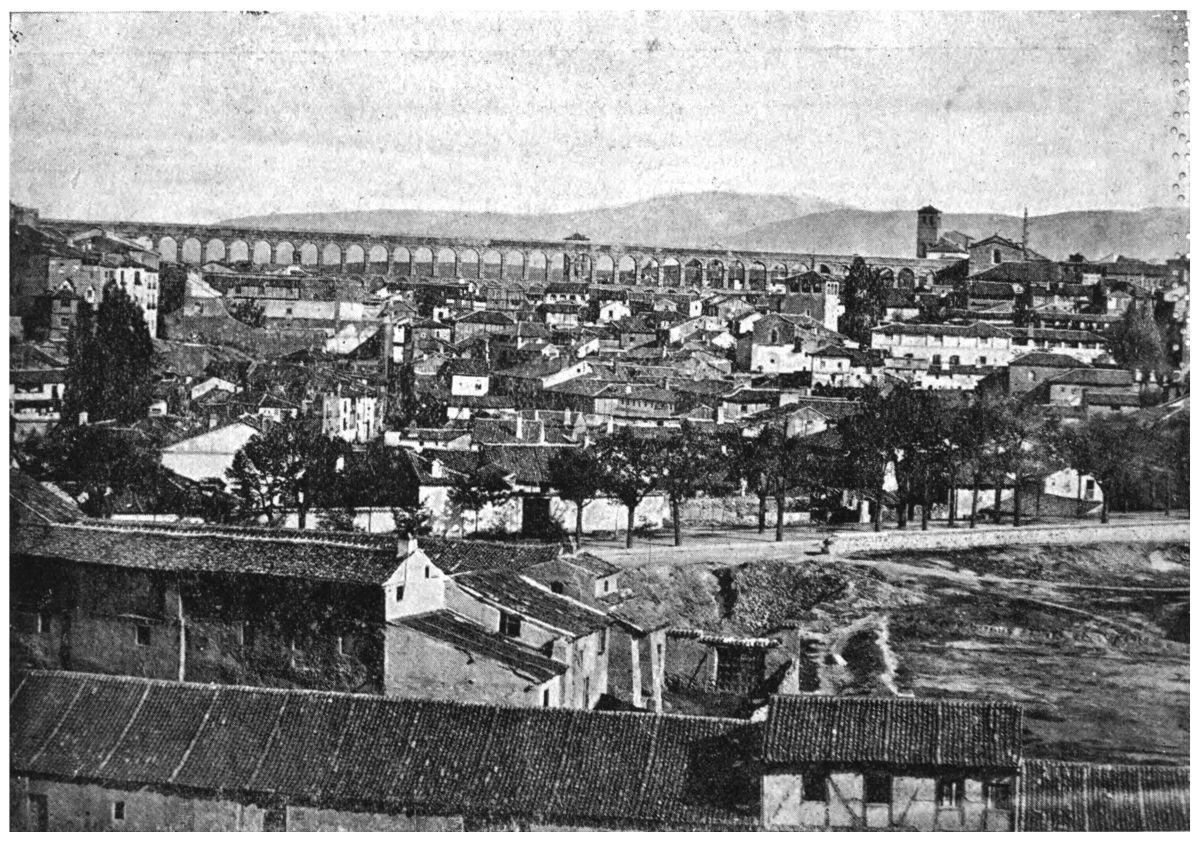
THE ROMAN AQUEDUCT
SEGOVIA
Plate 85
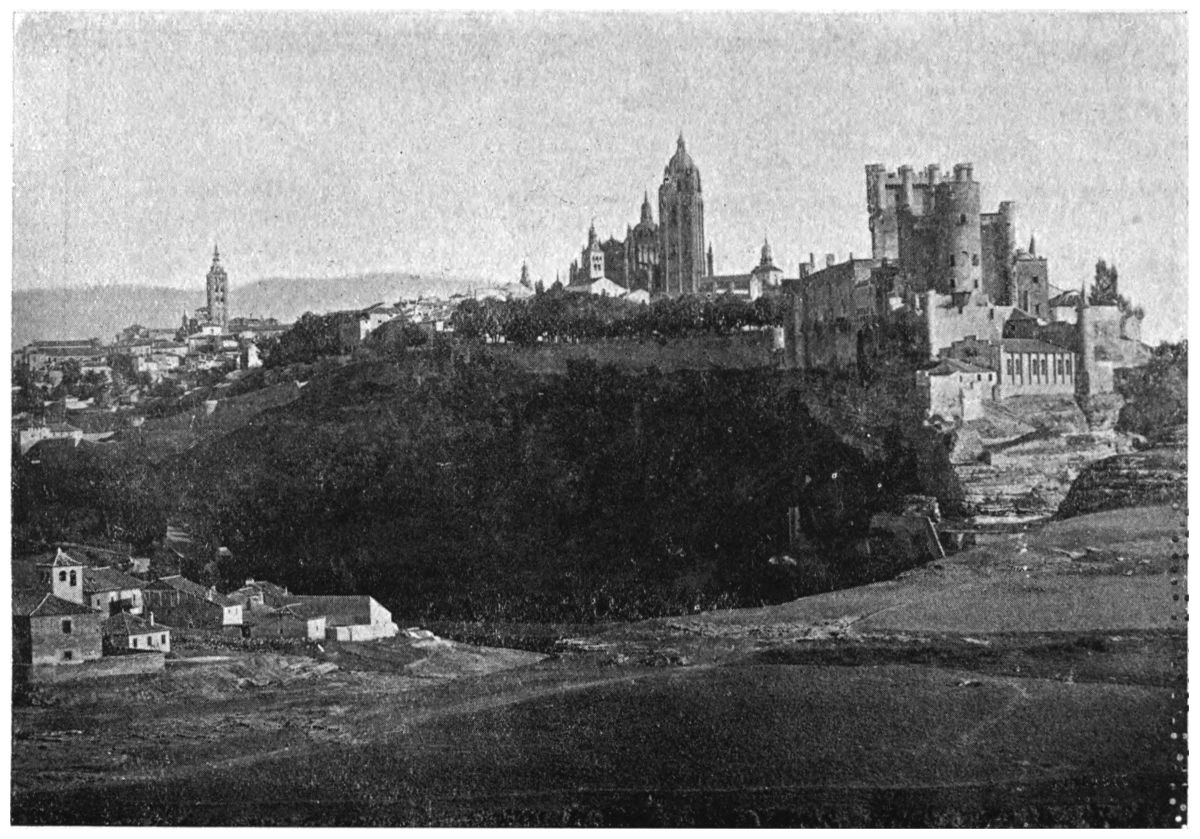
THE ALCAZAR AND CATHEDRAL FROM THE FUENCISLA
SEGOVIA
Plate 86
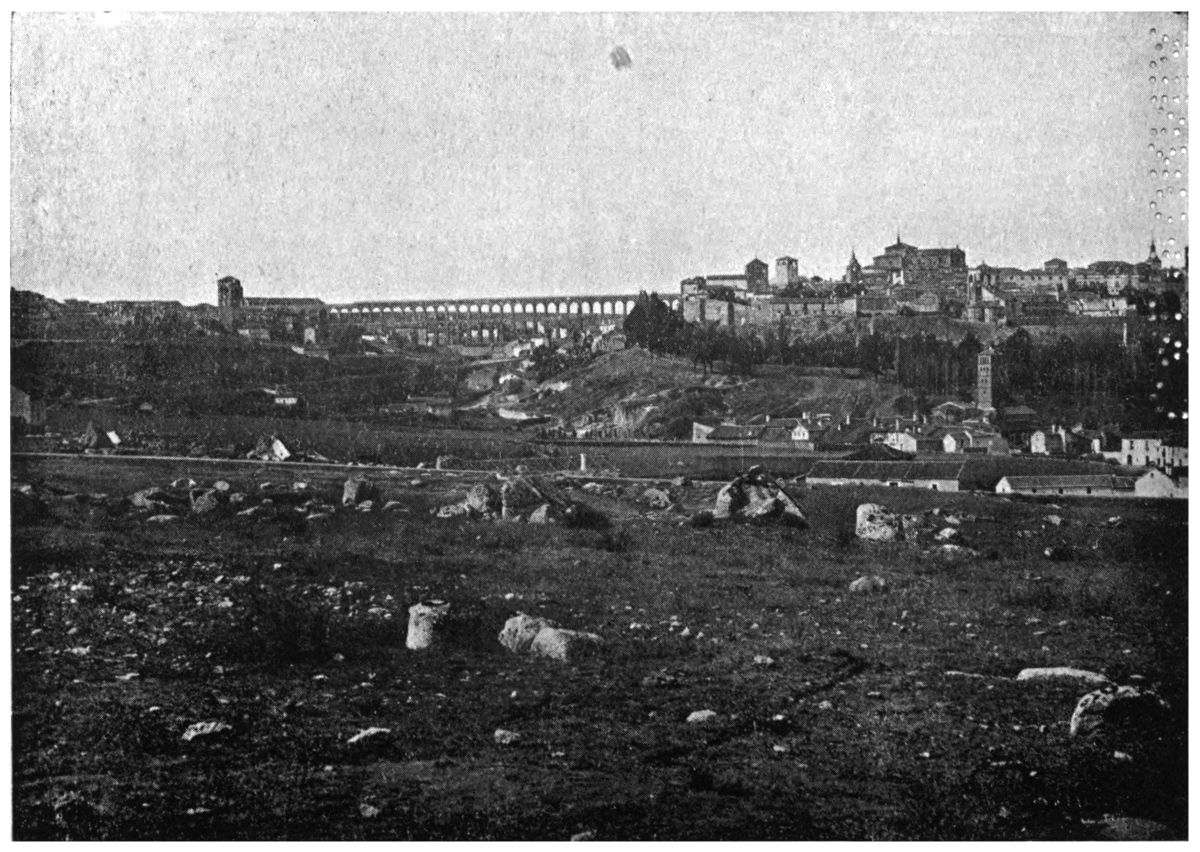
GENERAL VIEW FROM THE NIEVAS
SEGOVIA
Plate 87
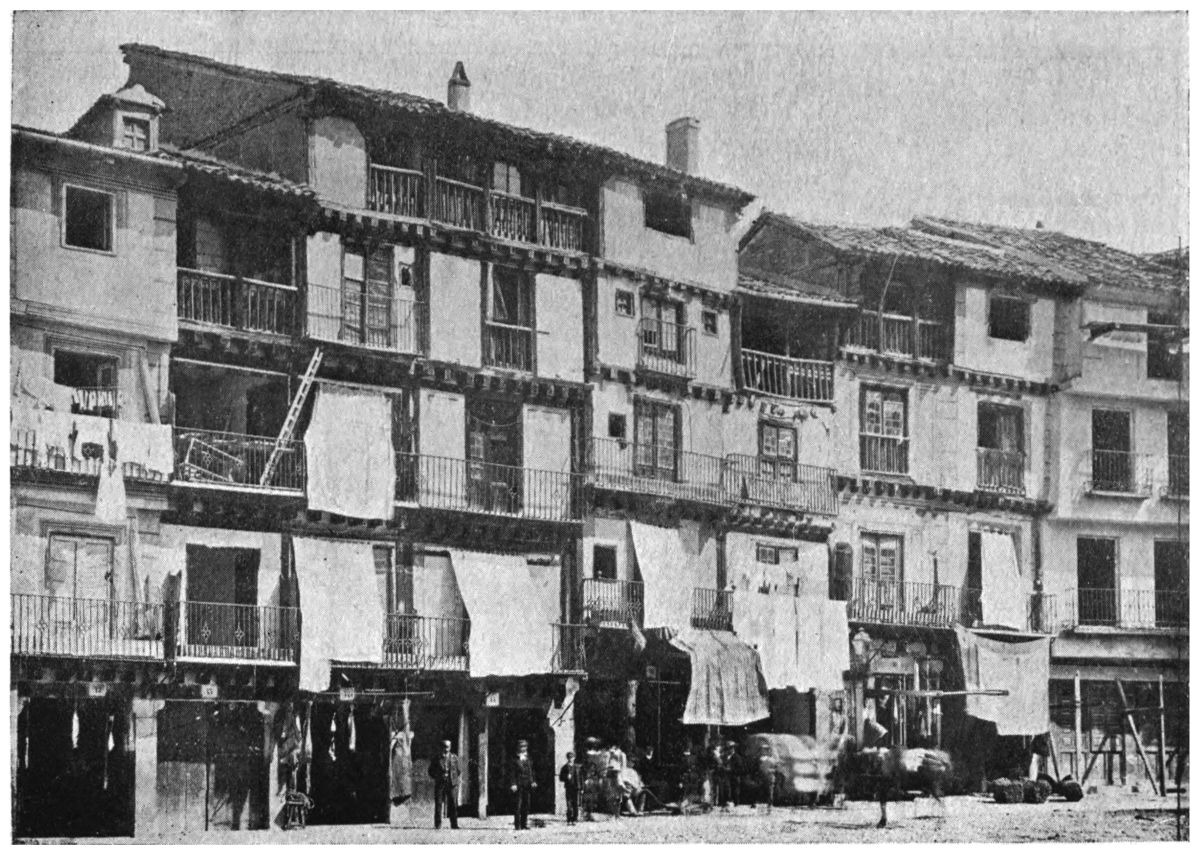
OLD HOUSES IN THE PLAZA MAYOR
SEGOVIA
Plate 88
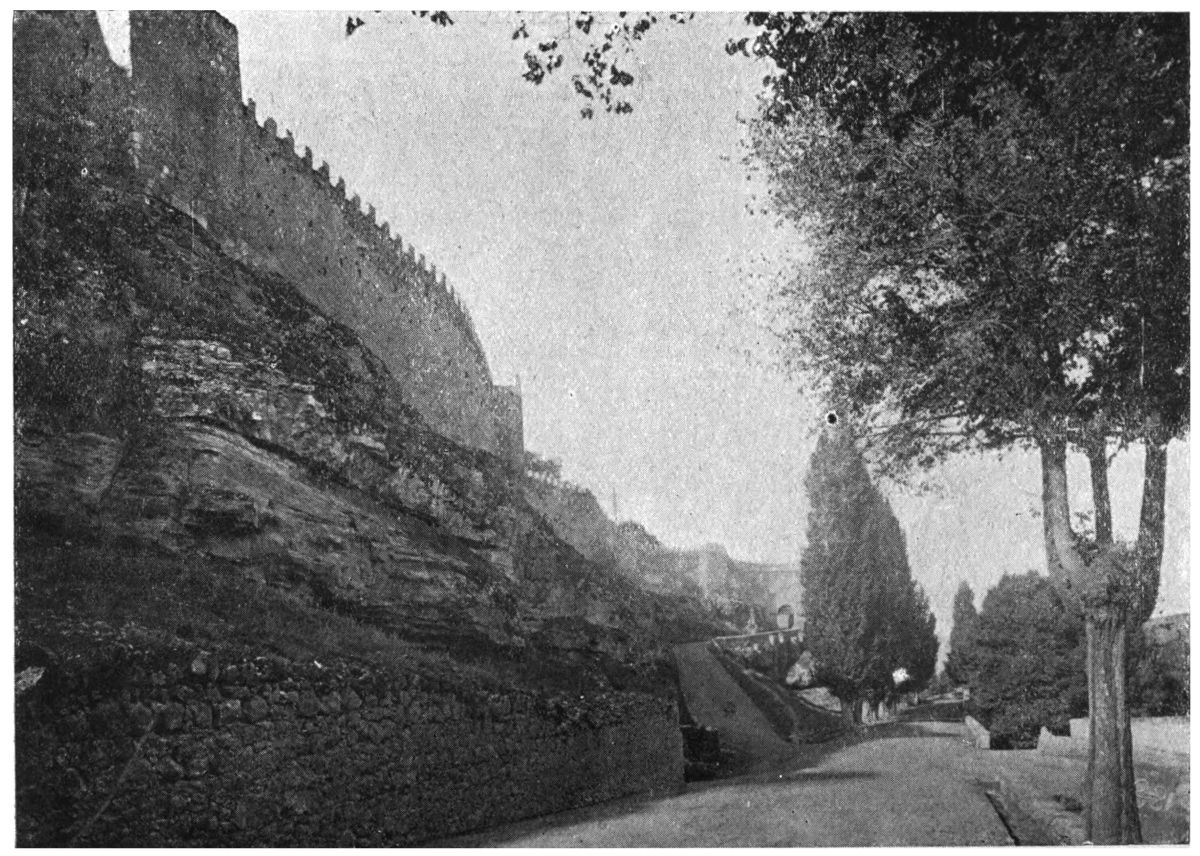
VIEW OF THE WALLS
SEGOVIA
Plate 89
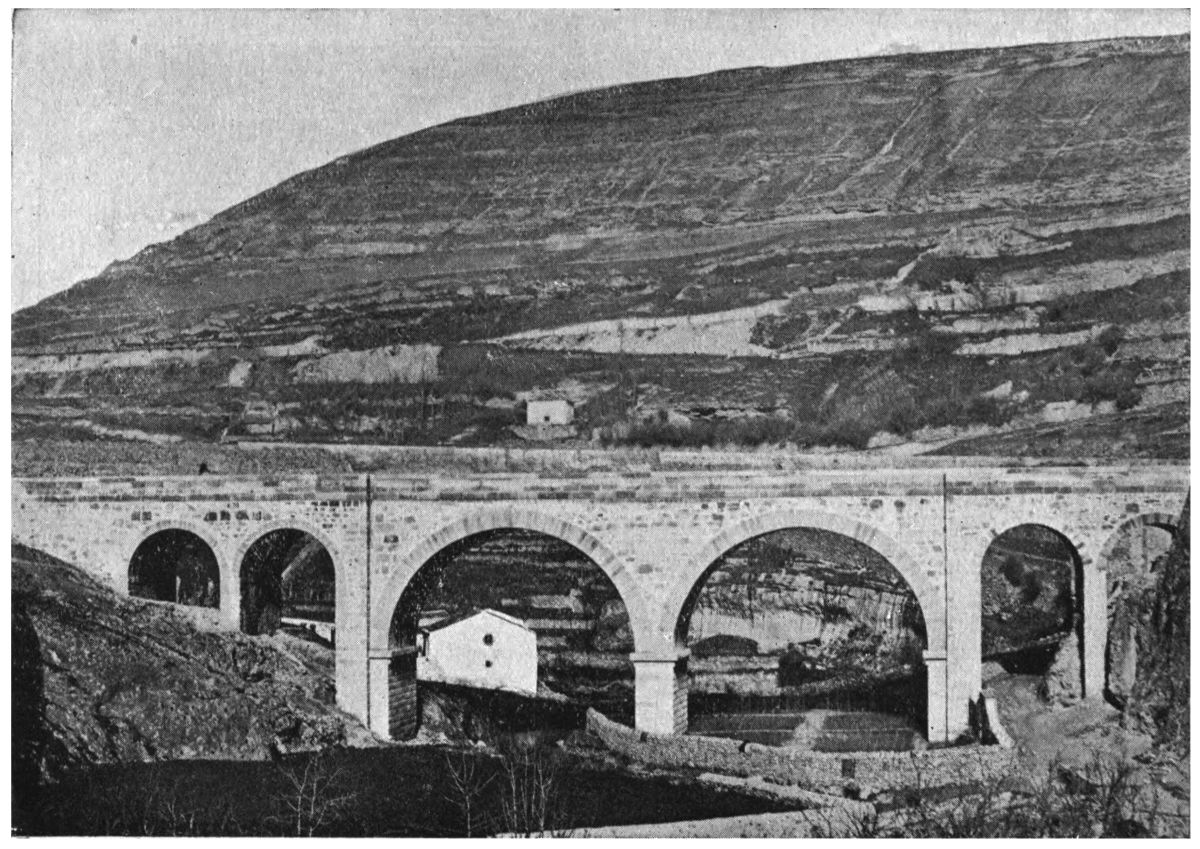
AQUEDUCT OVER THE RIVER CASTILLA
SEGOVIA
Plate 90
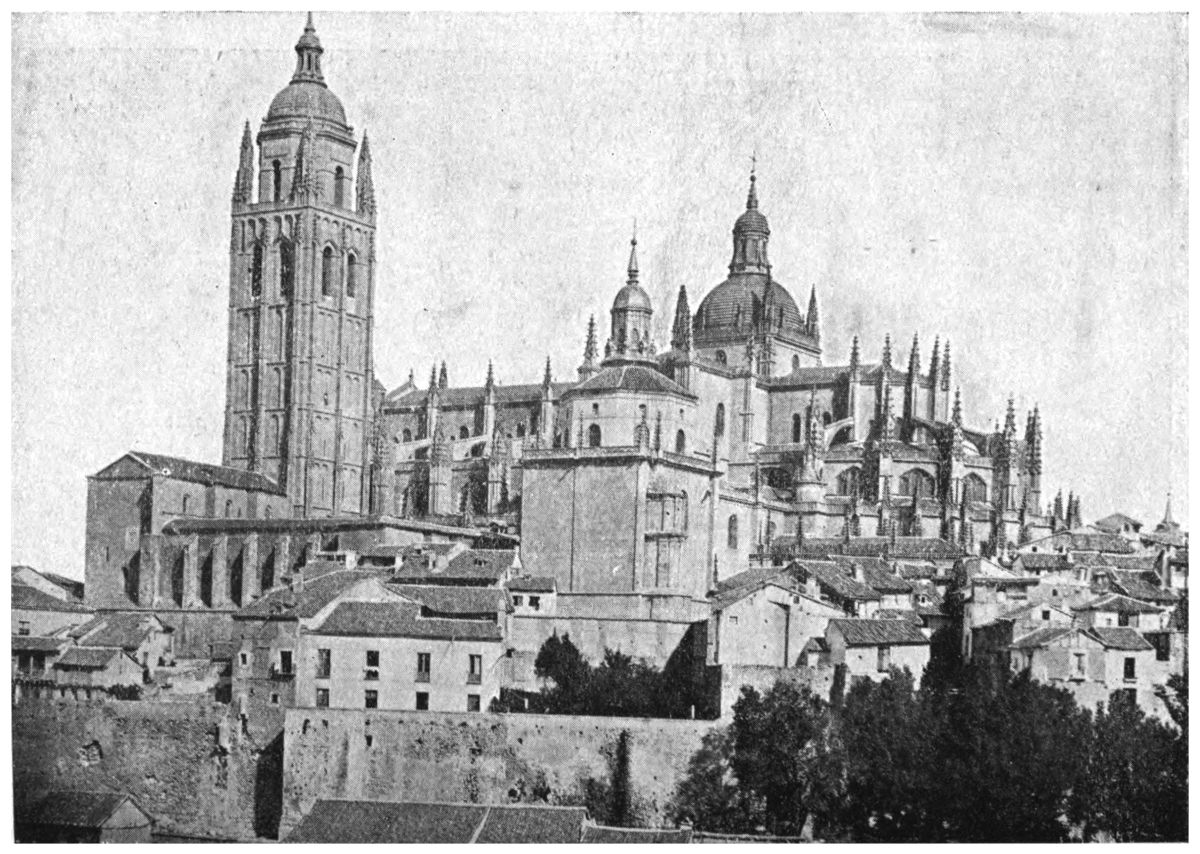
THE CATHEDRAL FROM THE HOYOS HILL
SEGOVIA
Plate 91
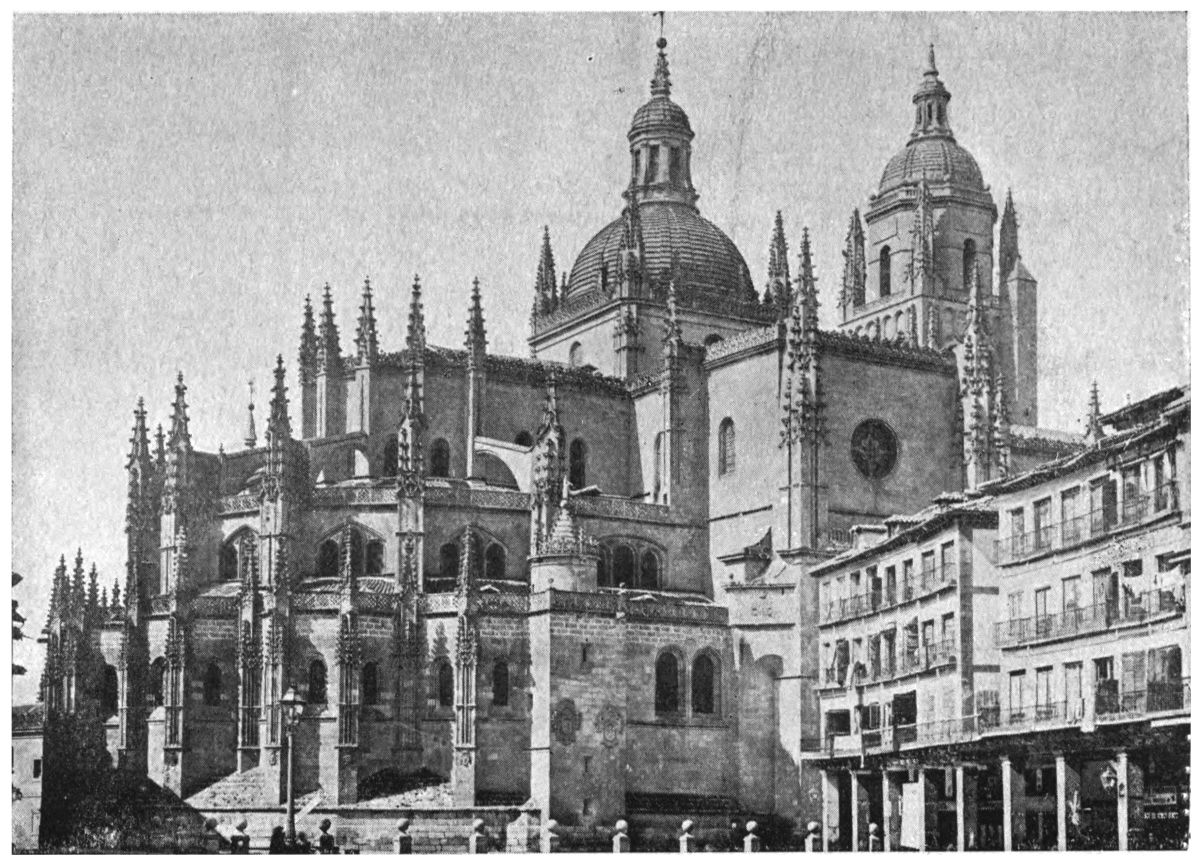
VIEW OF THE CATHEDRAL FROM THE SQUARE
SEGOVIA
Plate 92
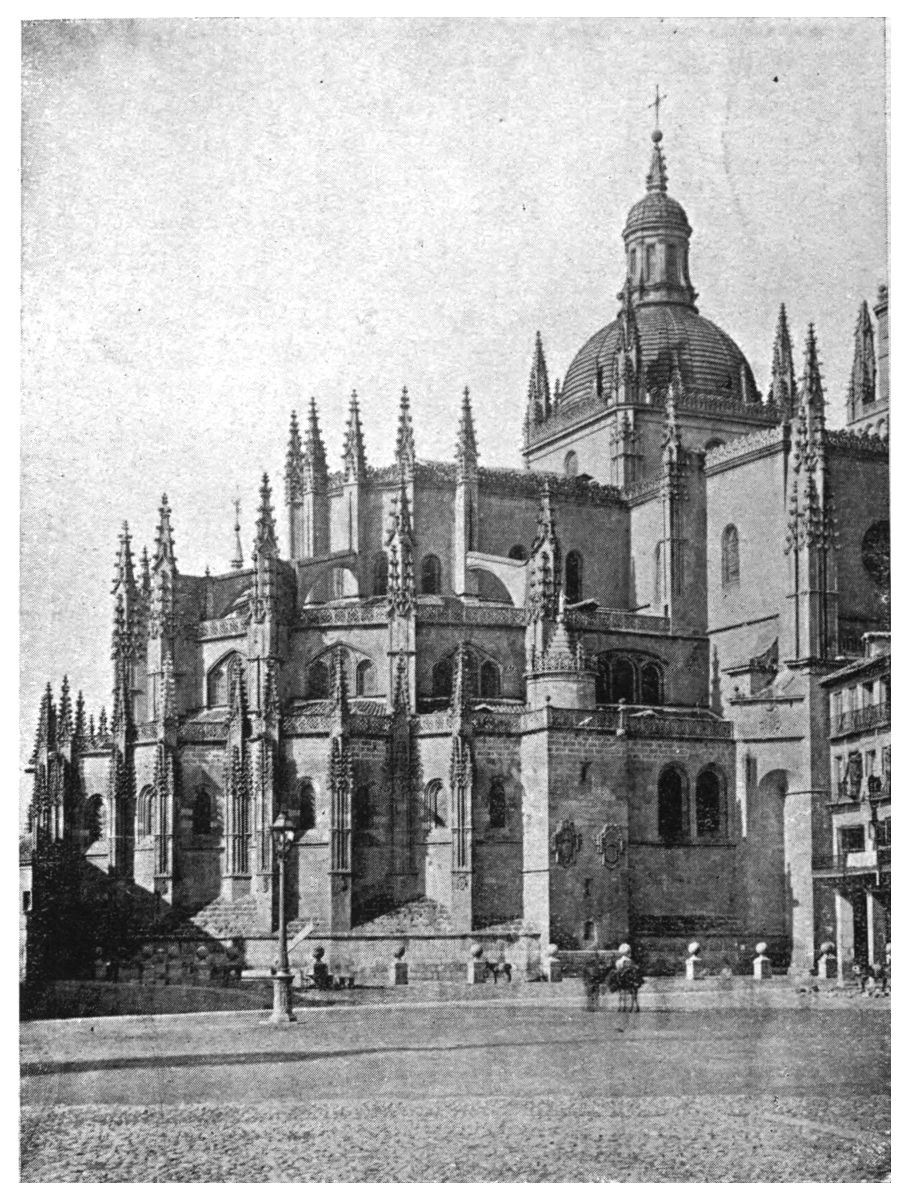
VIEW OF THE CATHEDRAL FROM THE SQUARE
SEGOVIA
Plate 93
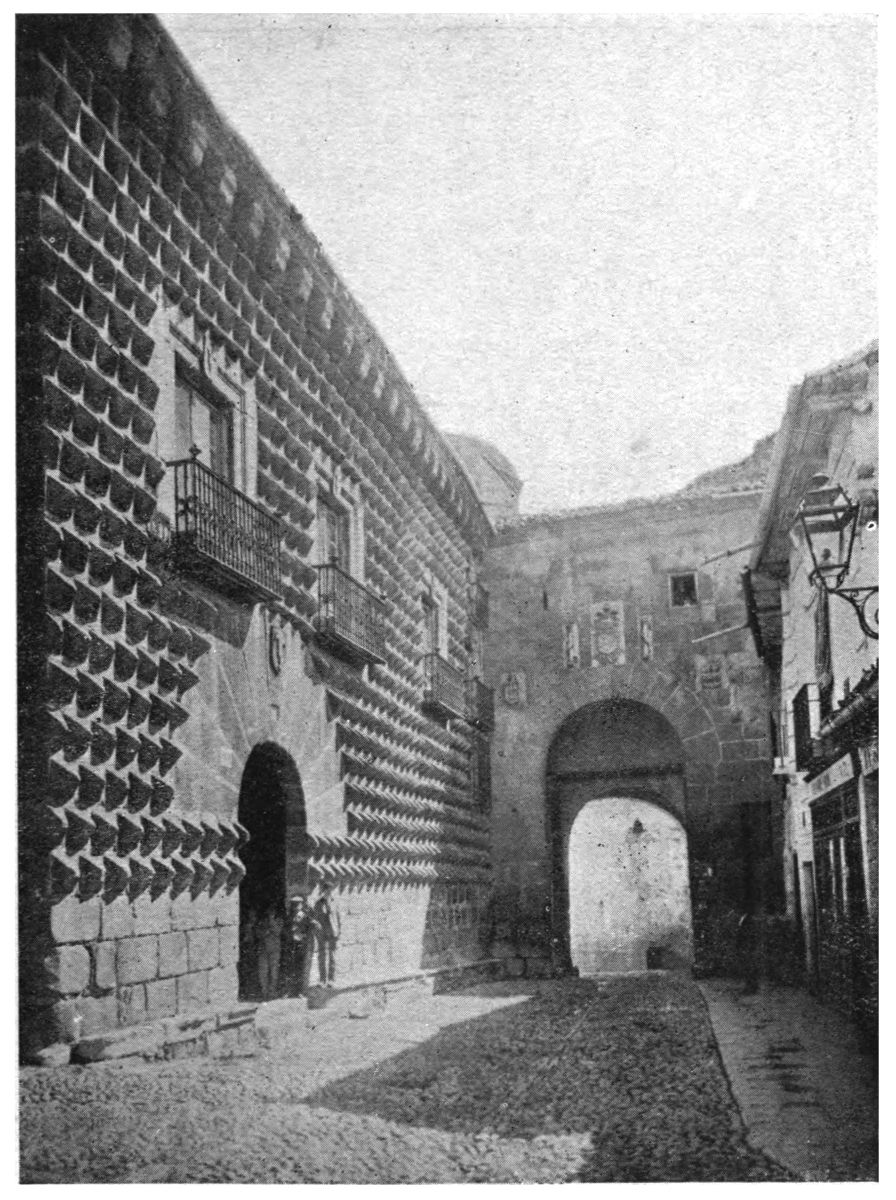
CASA DE LOS PICOS
SEGOVIA
Plate 94
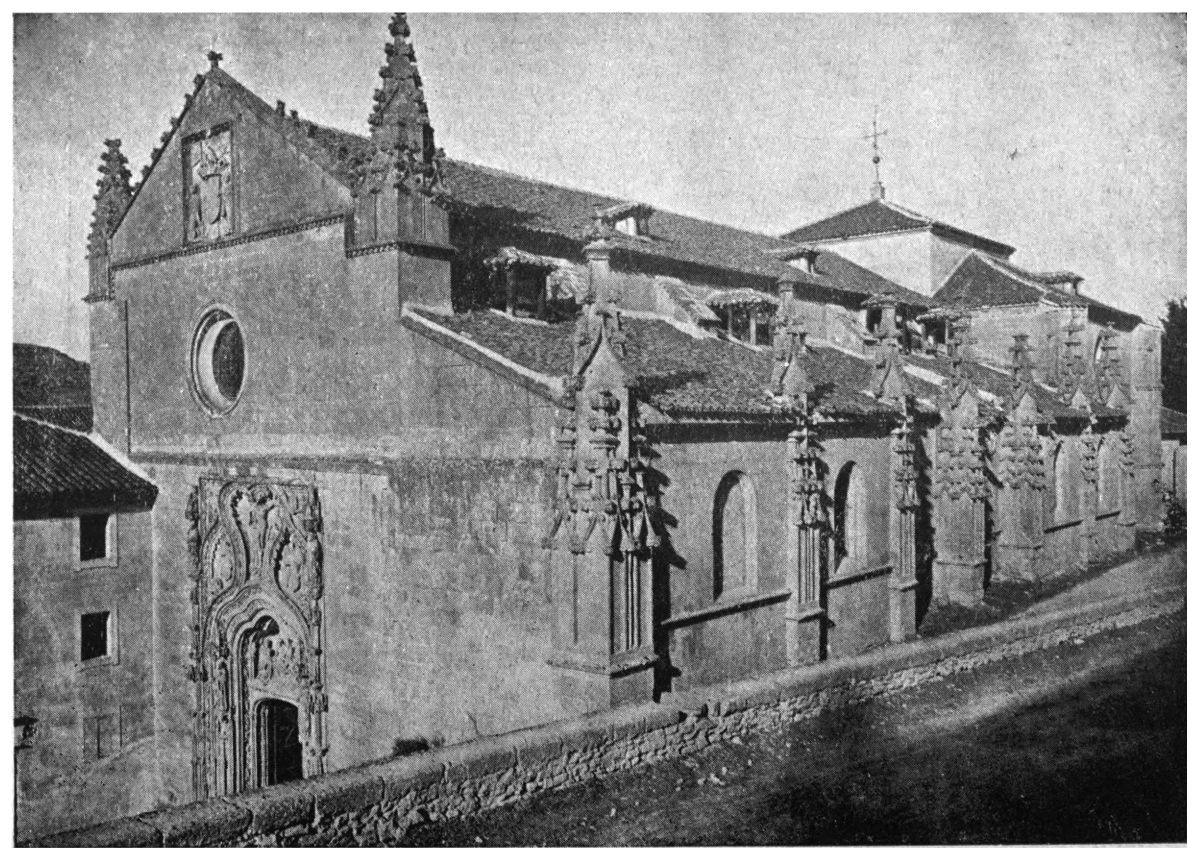
CHURCH OF SANTA CRUZ
SEGOVIA
Plate 95
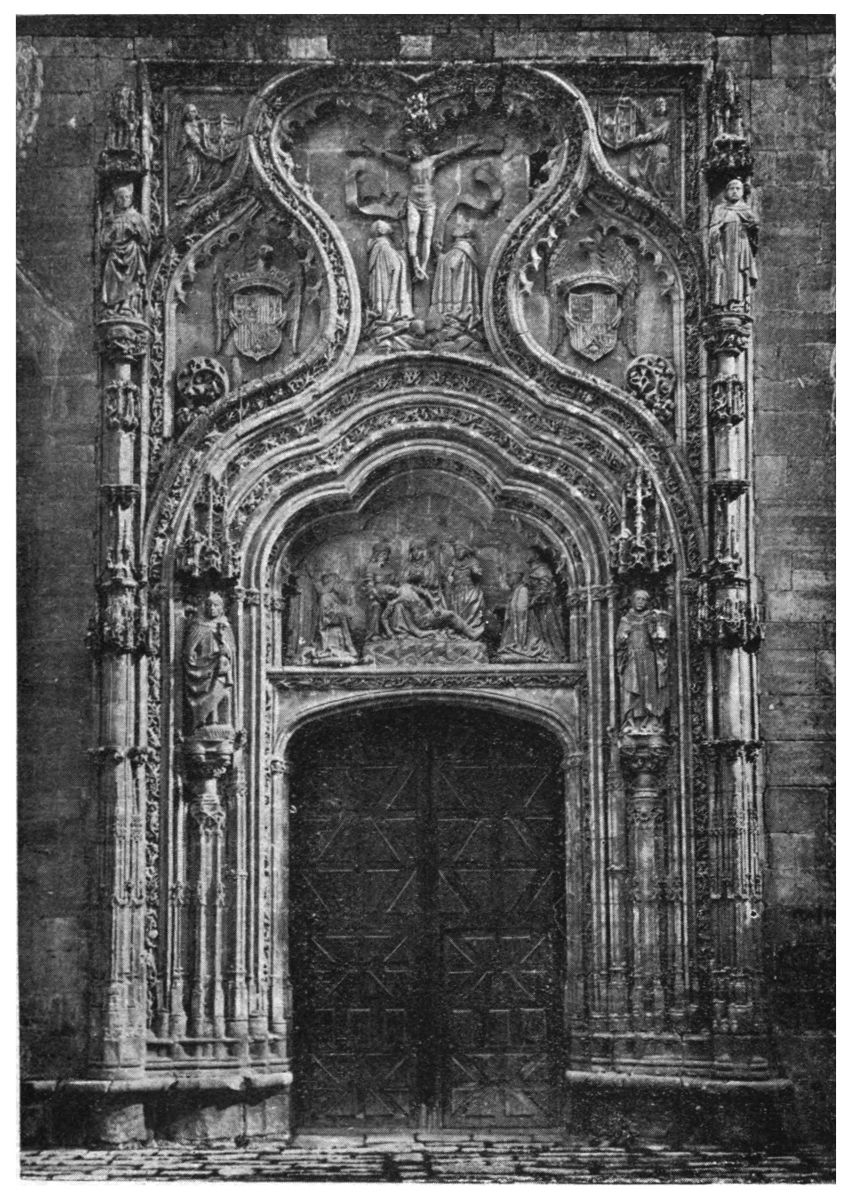
PORCH OF THE CHURCH OF SANTA CRUZ
SEGOVIA
Plate 96
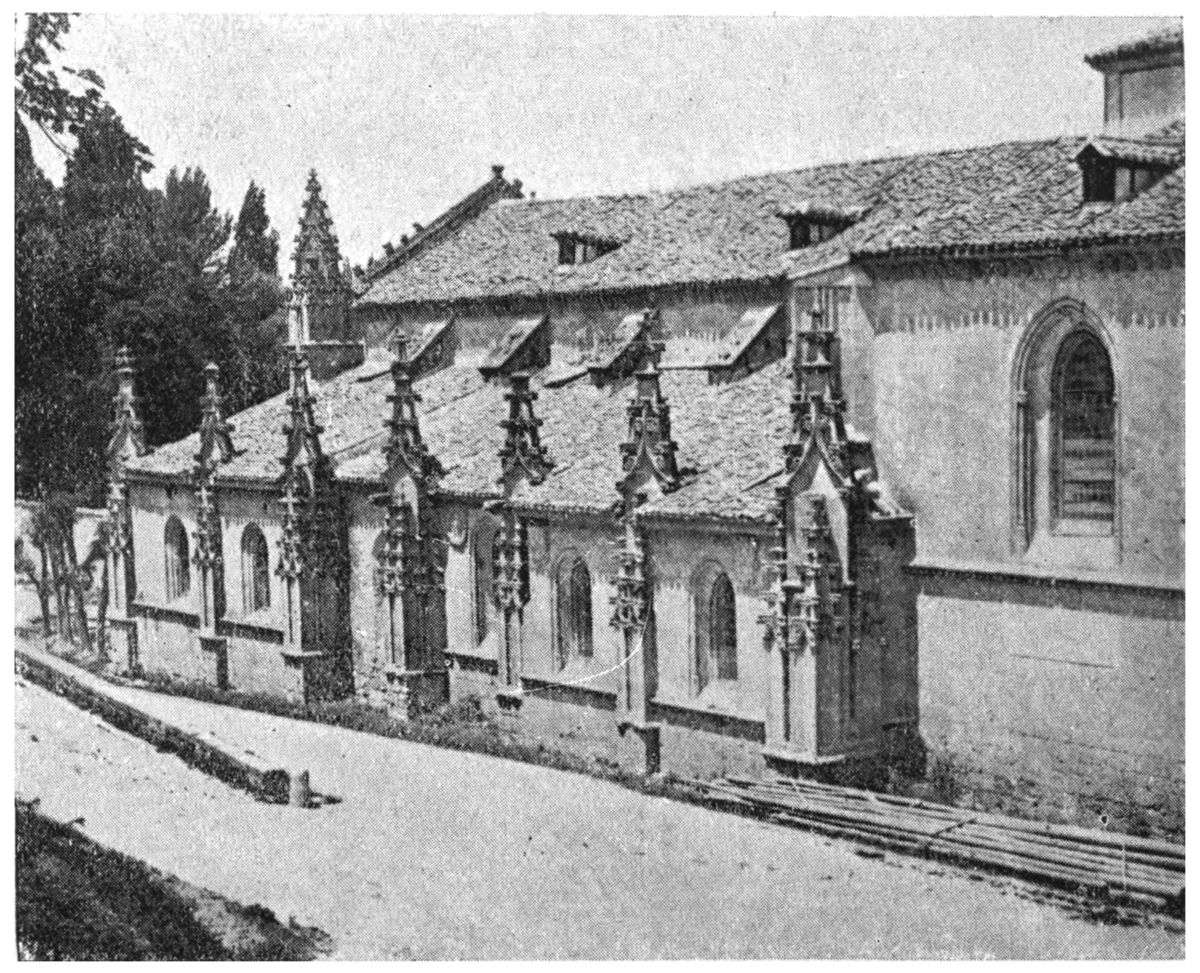
CHURCH OF SANTA CRUZ
SEGOVIA
Plate 97
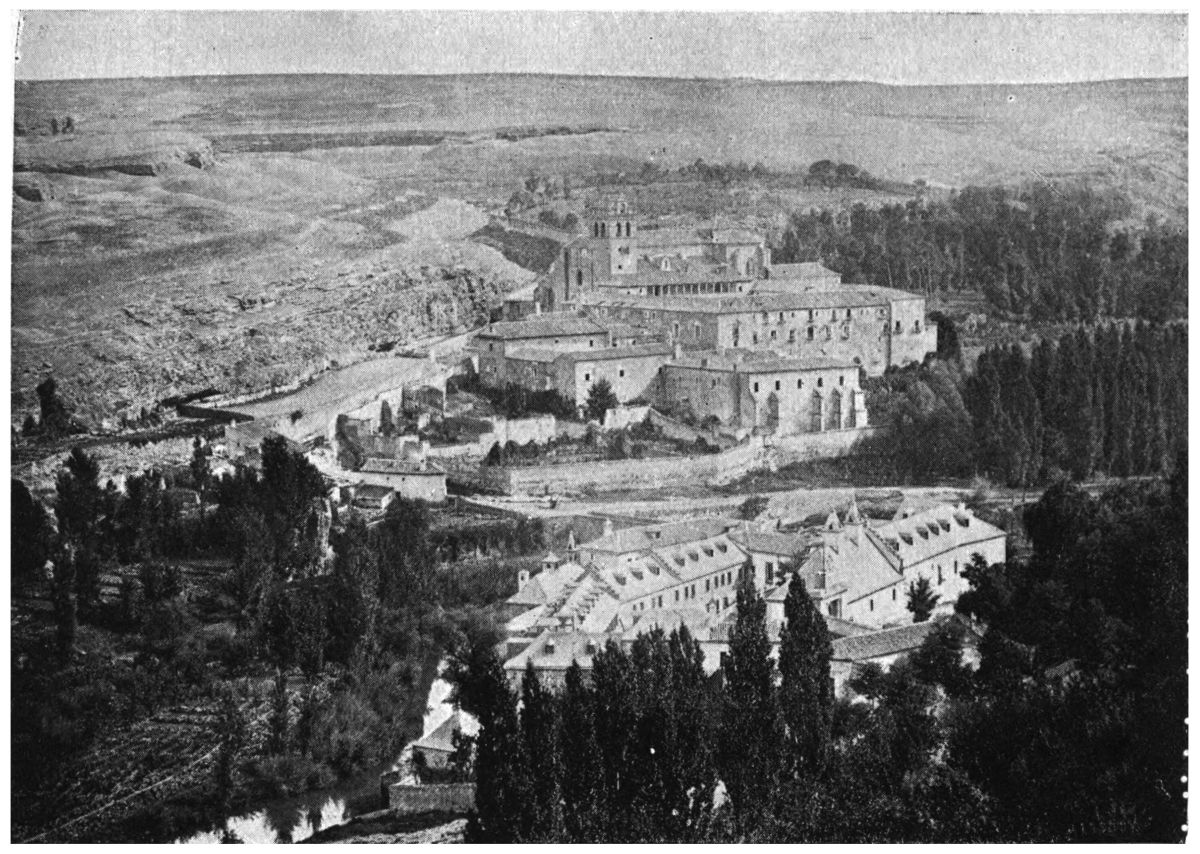
VIEW OF THE MINT AND THE PARRAL
SEGOVIA
Plate 98
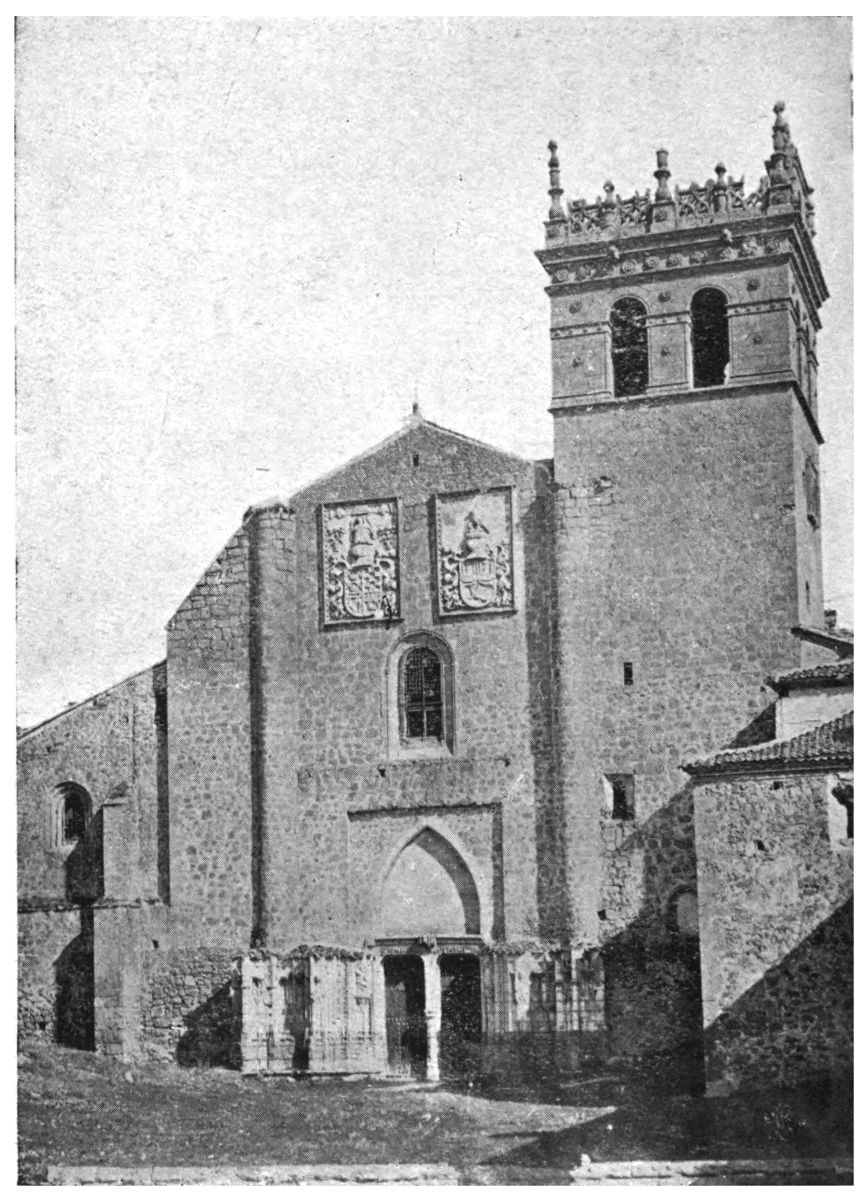
FAÇADE OF THE PARRAL
SEGOVIA
Plate 99
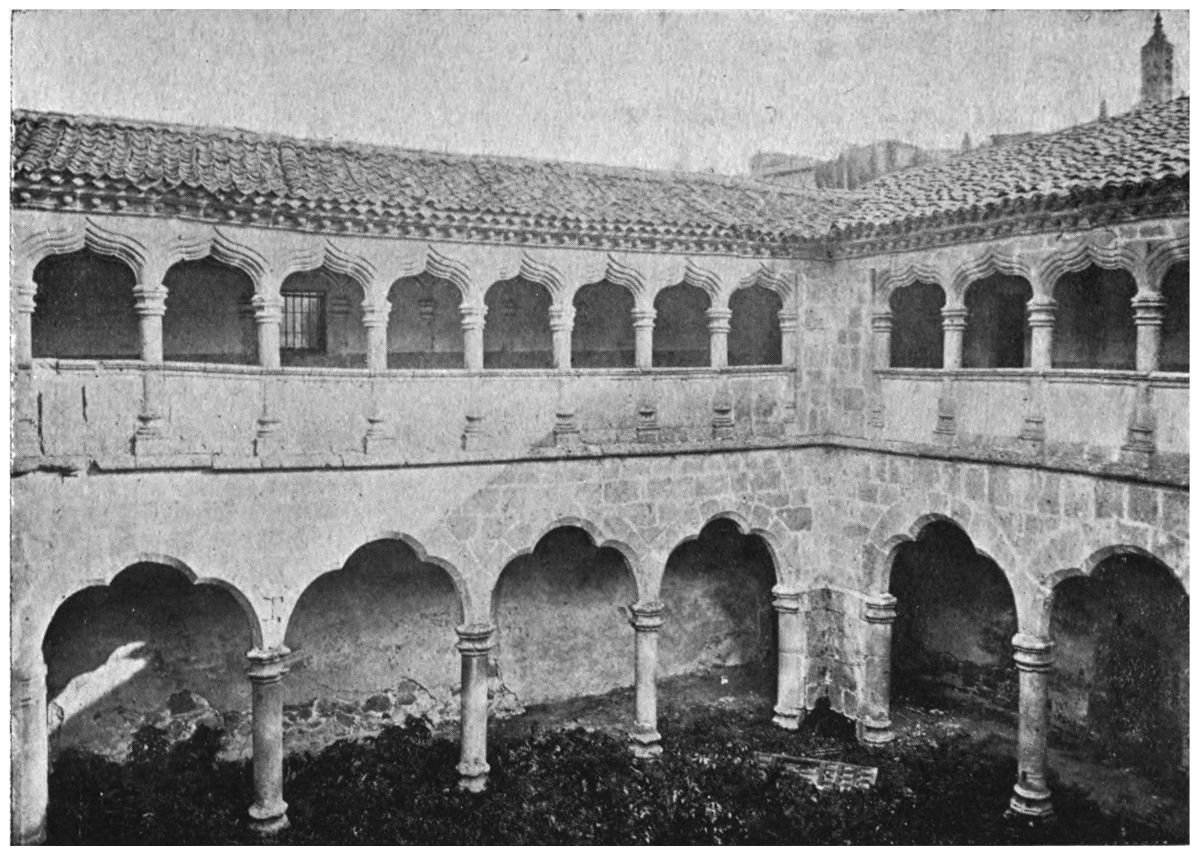
CLOISTERS OF THE PARRAL
SEGOVIA
Plate 100
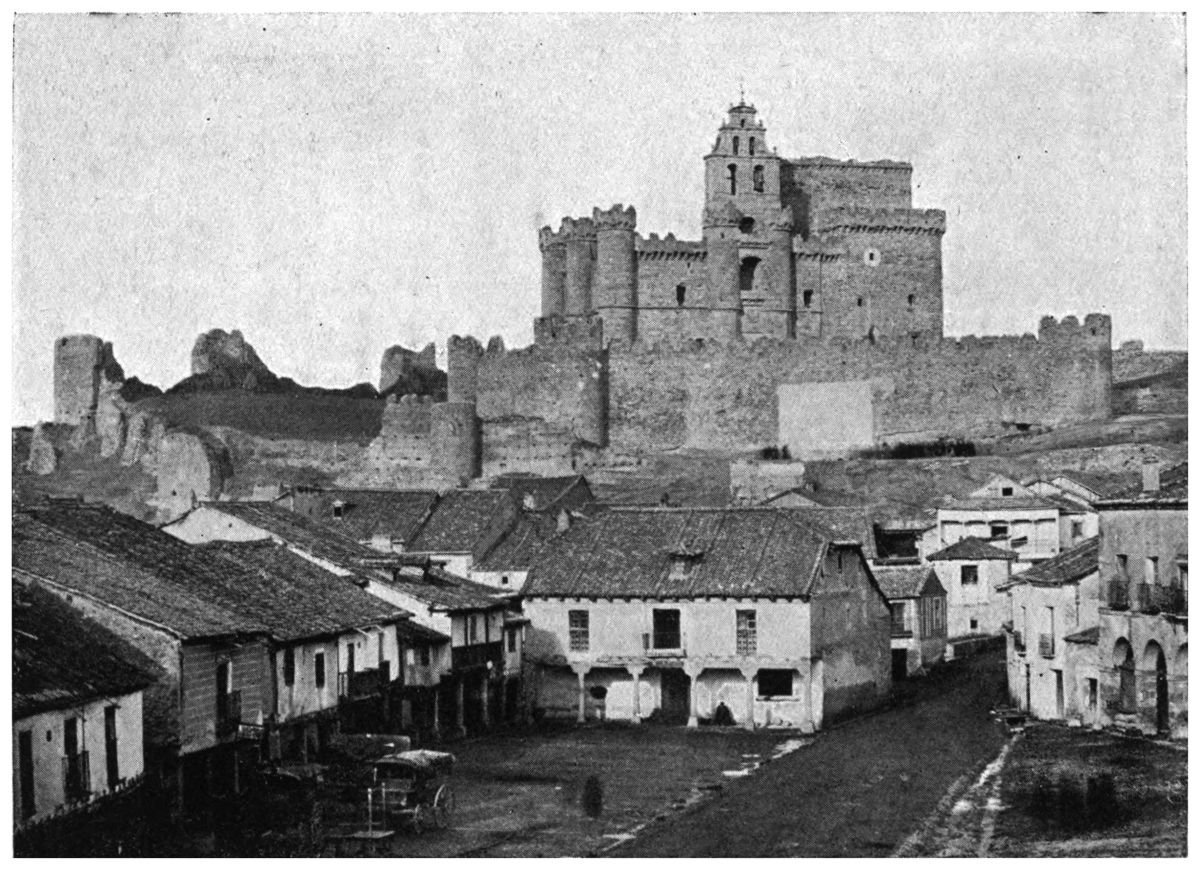
GENERAL VIEW OF TURÉGANO
Plate 101
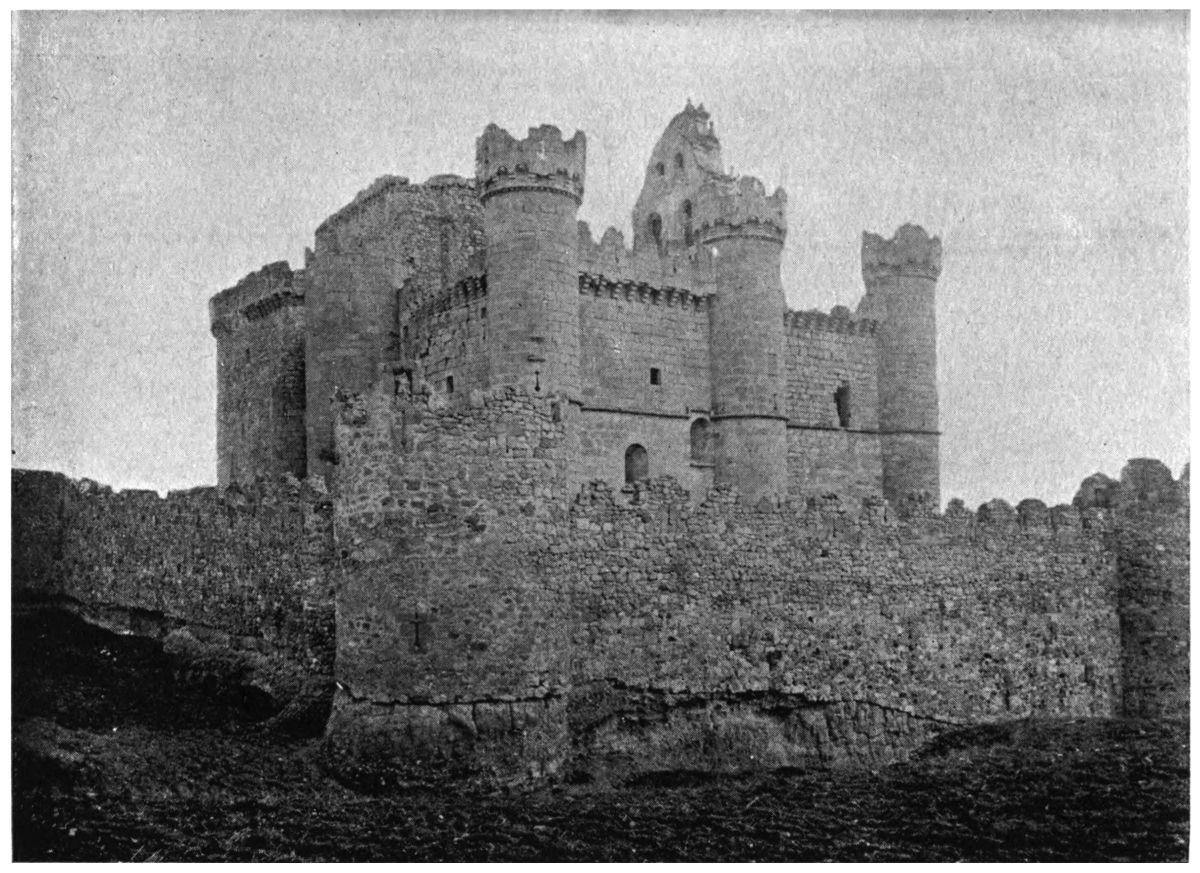
TURÉGANO CASTLE
PROVINCE OF SEGOVIA
Plate 102
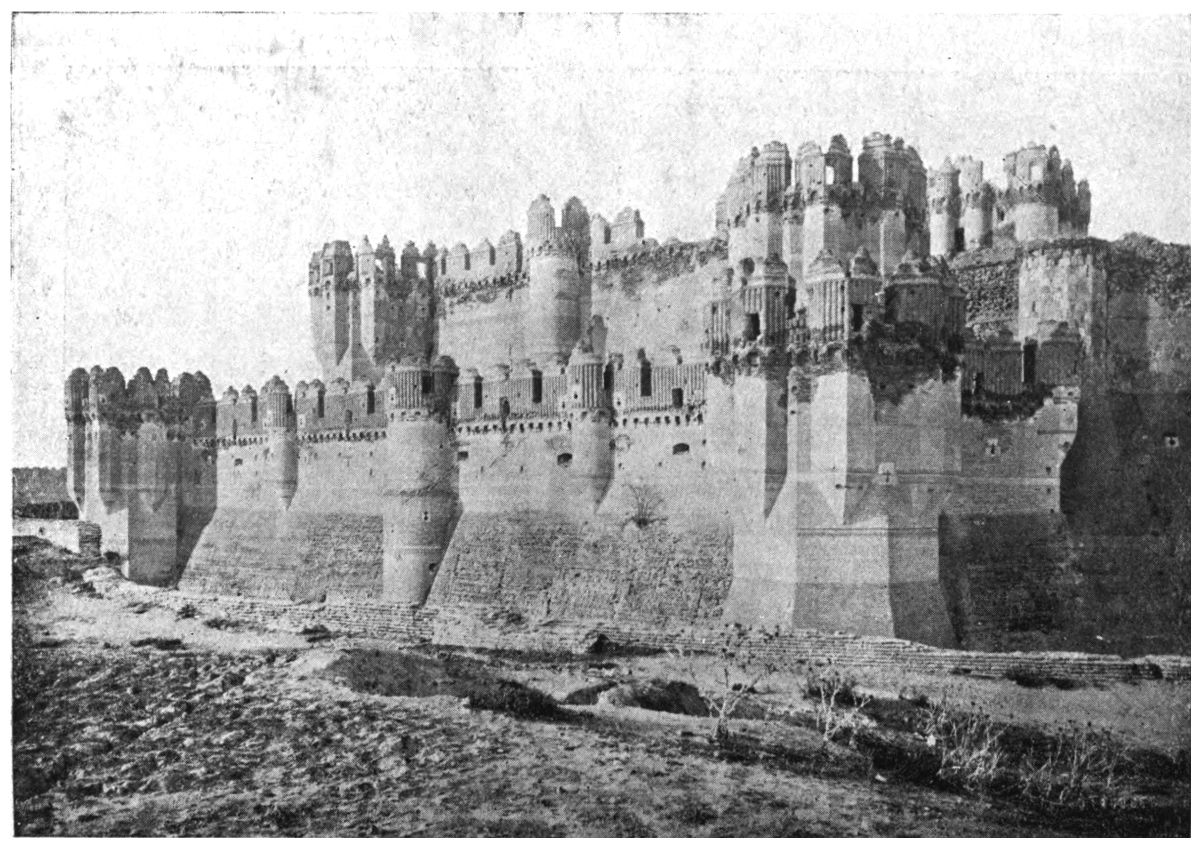
GENERAL VIEW OF COCA CASTLE
PROVINCE OF SEGOVIA
Plate 103
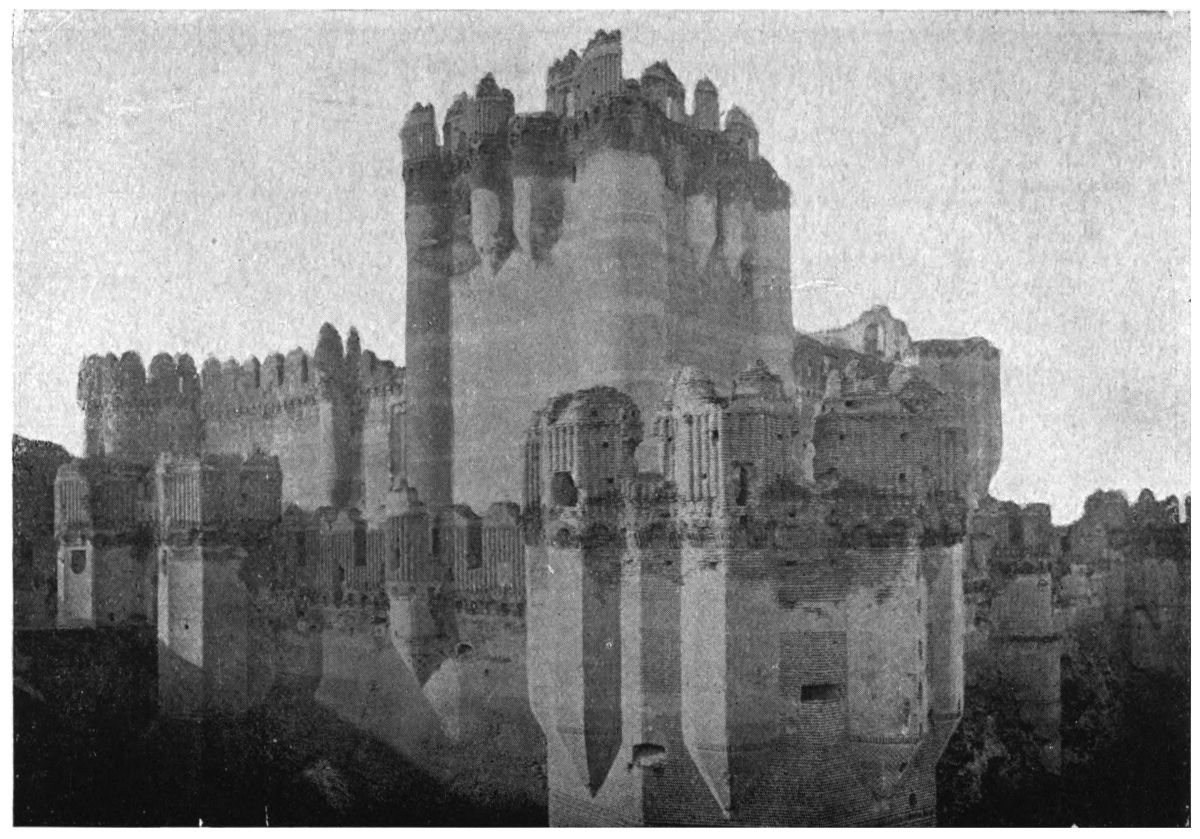
ANOTHER VIEW OF COCA CASTLE
PROVINCE OF SEGOVIA
Plate 104
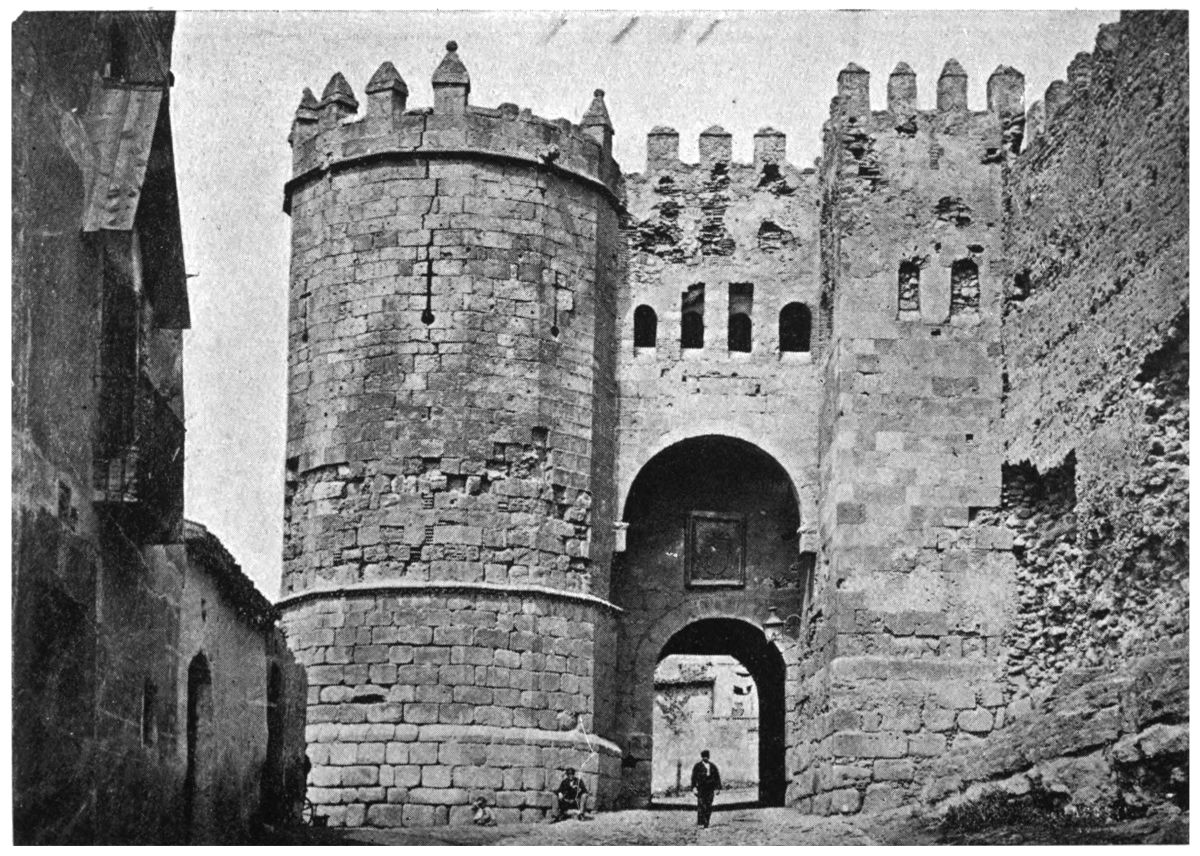
ST. ANDREW’S GATE
SEGOVIA
Plate 105
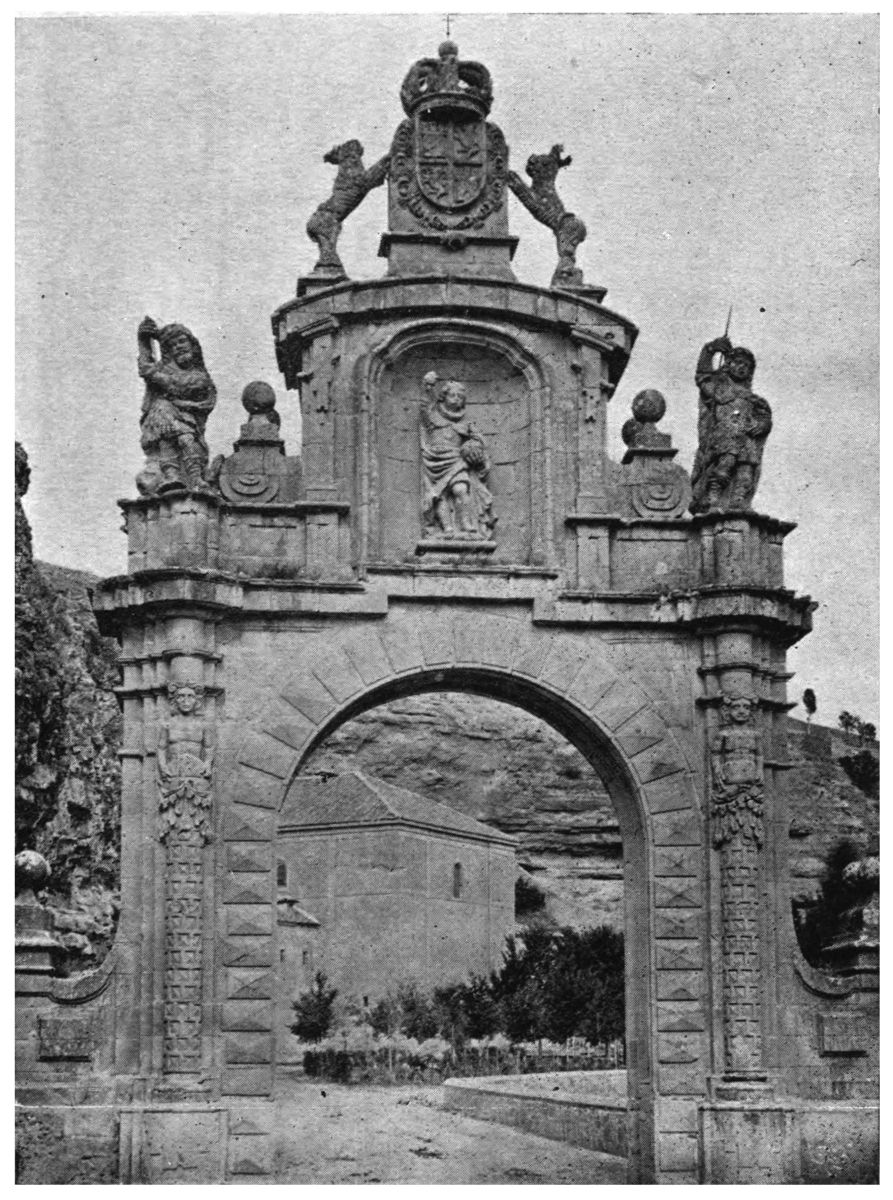
THE ARCH OF THE FUENCISLA
SEGOVIA
Plate 106
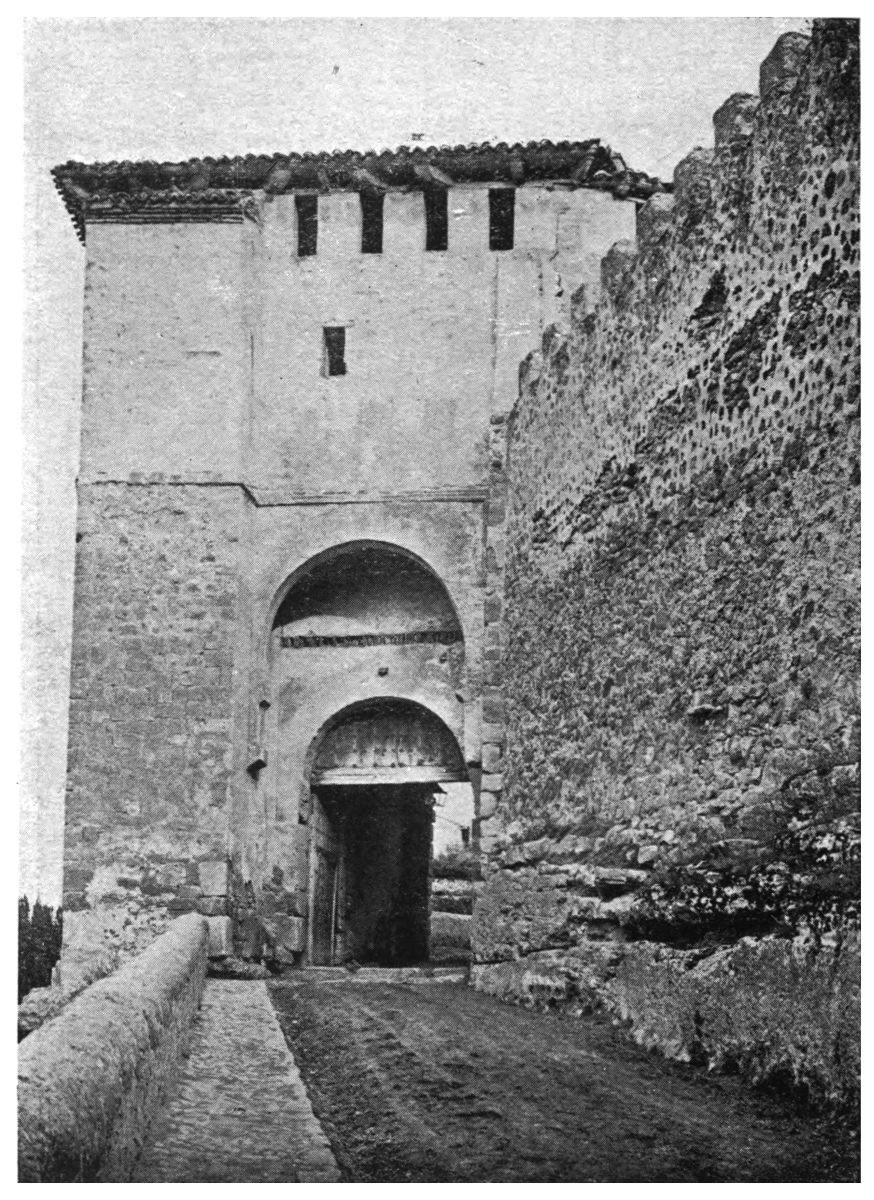
GATE OF SANTIAGO
SEGOVIA
Plate 107
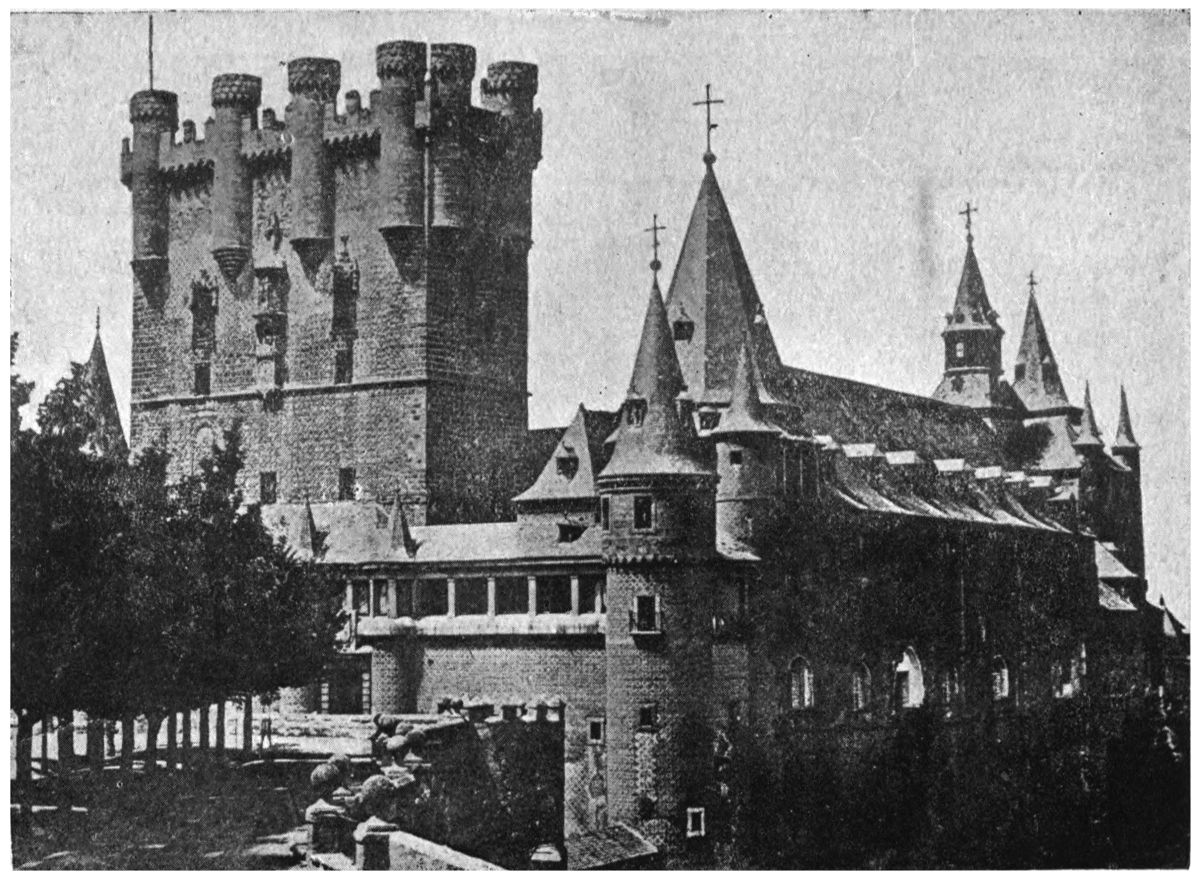
THE ALCAZAR BEFORE THE FIRE IN 1862
SEGOVIA
Plate 108
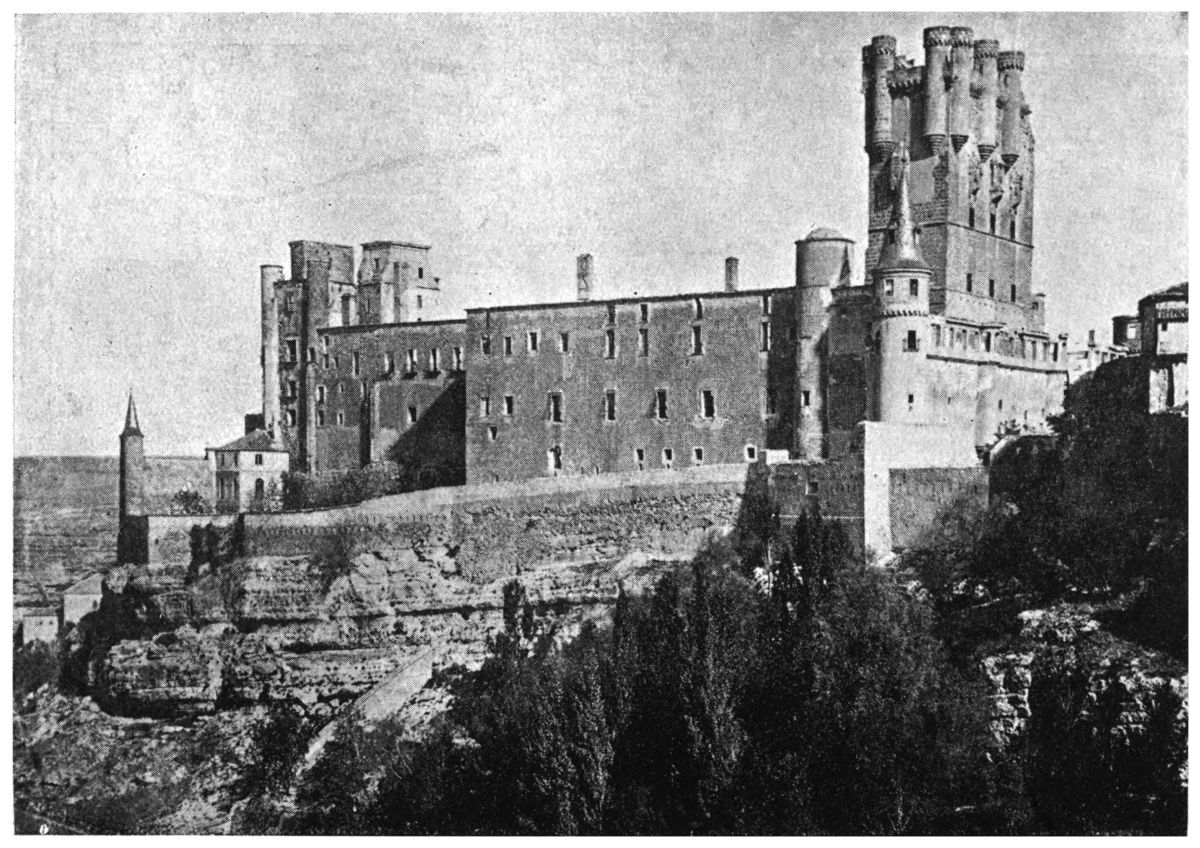
THE ALCAZAR FROM THE HOYOS HILL
SEGOVIA
Plate 109
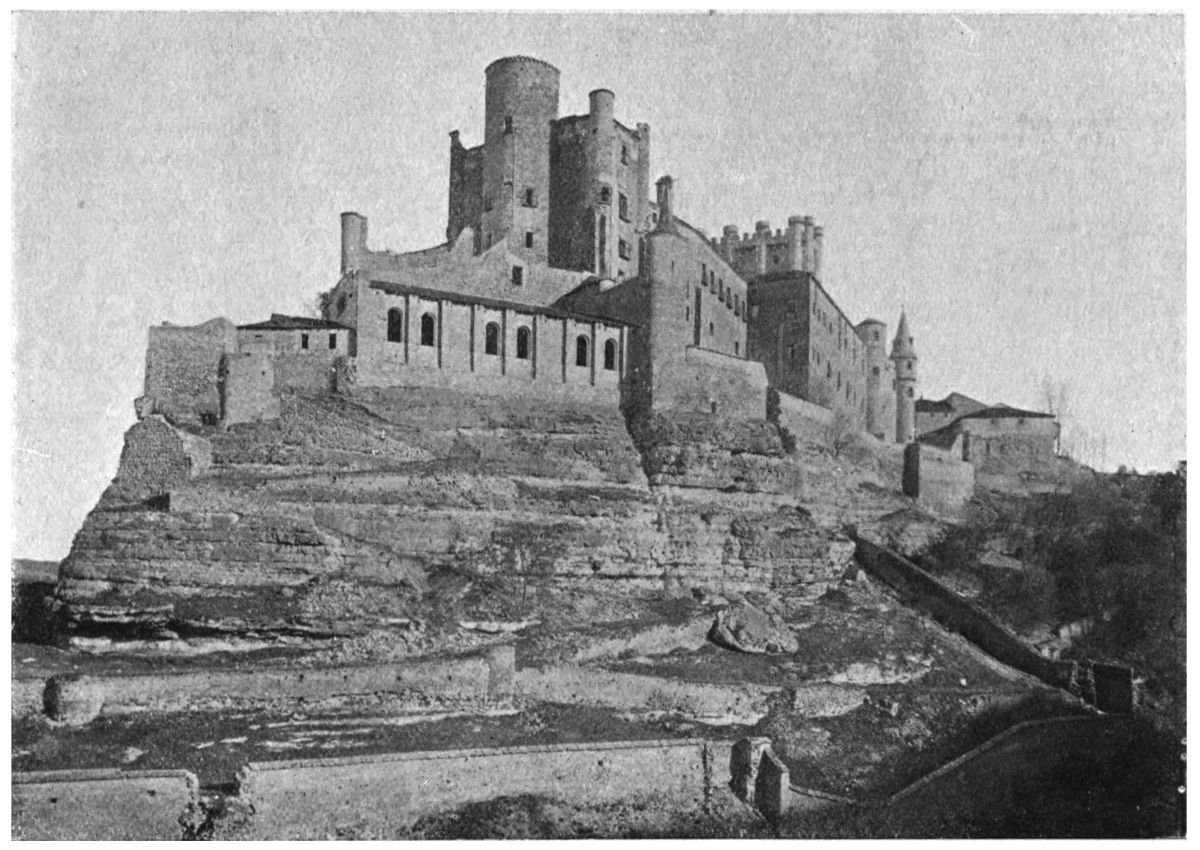
VIEW OF THE ALCAZAR
SEGOVIA
Plate 110
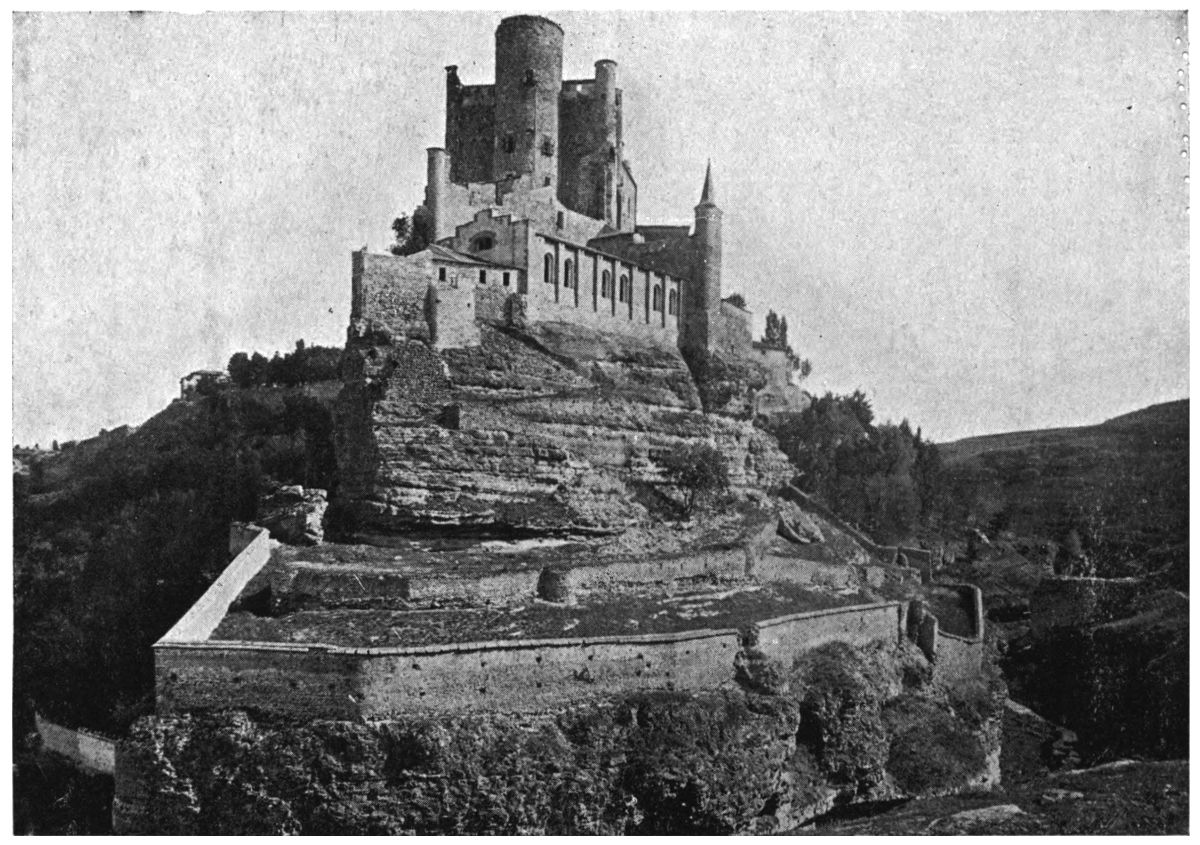
THE ALCAZAR FROM THE CAVES
SEGOVIA
Plate 111
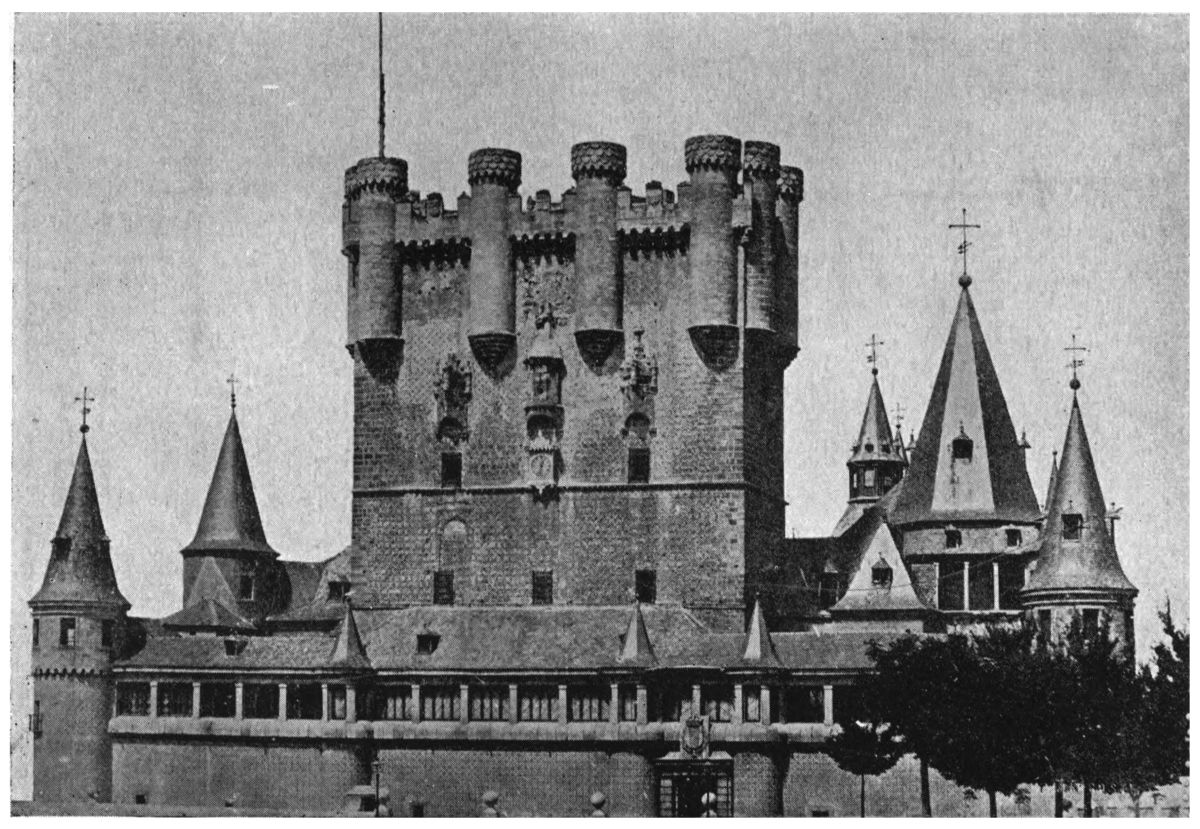
FAÇADE OF THE ALCAZAR BEFORE THE FIRE IN 1862
SEGOVIA
Plate 112
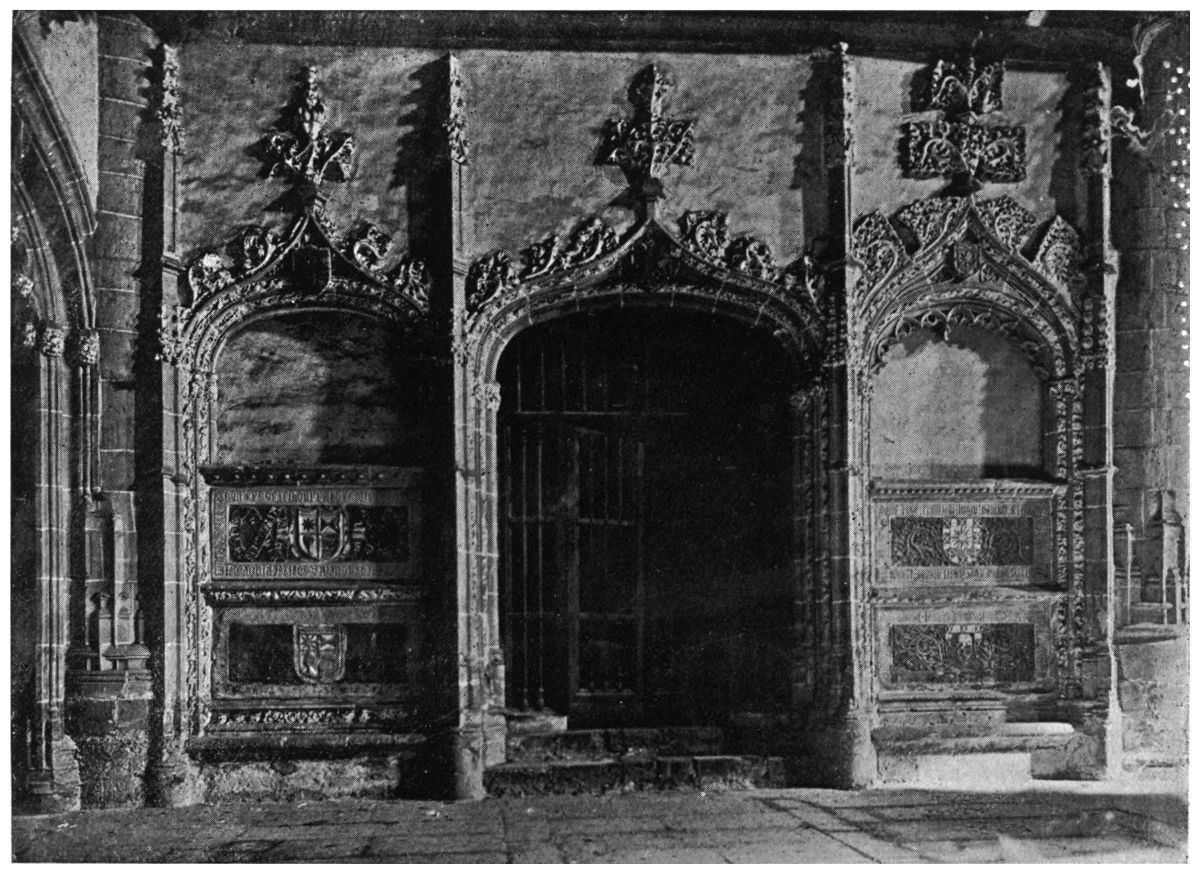
SEPULCHRES OF THE FAMILY OF THE MARQUESES DE VILLENA IN THE CHURCH OF
THE PARRAL
SEGOVIA
Plate 113
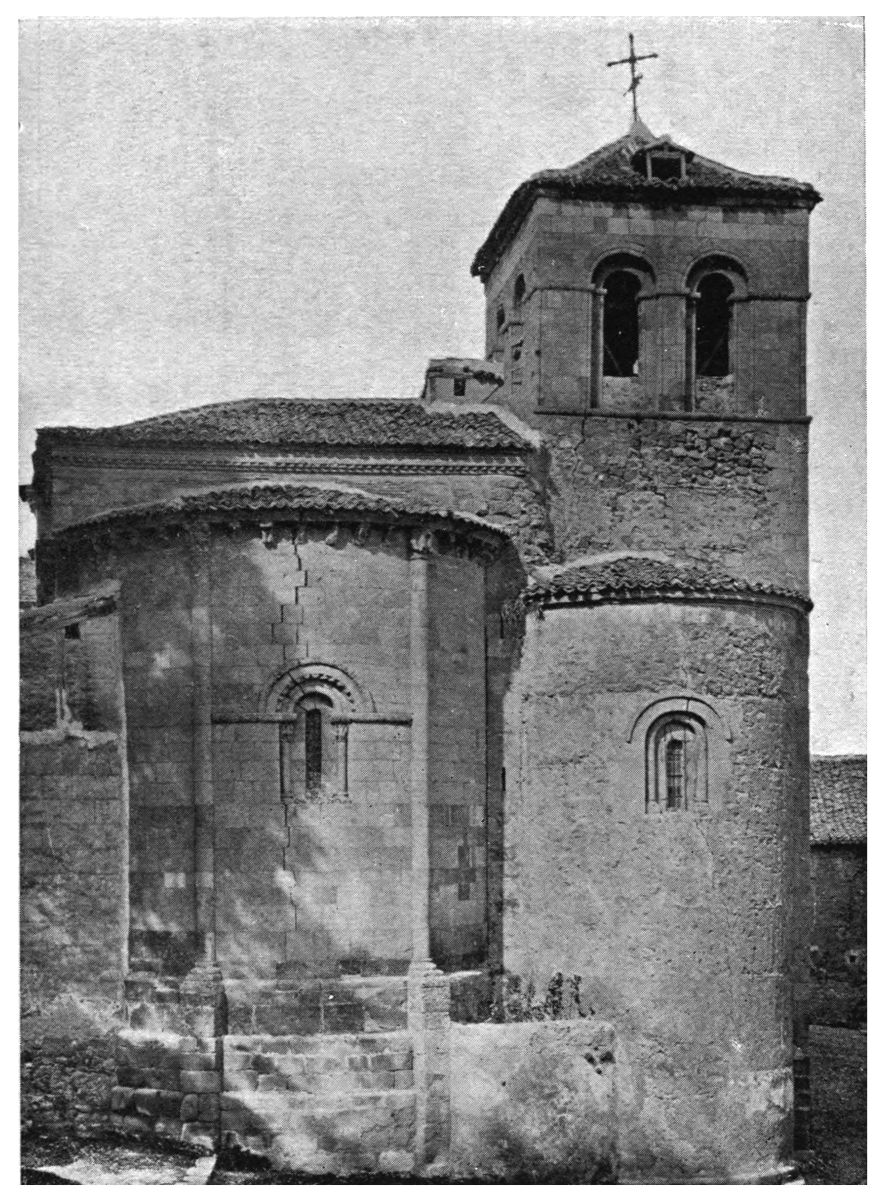
CHURCH OF ST. NICHOLAS
SEGOVIA
Plate 114
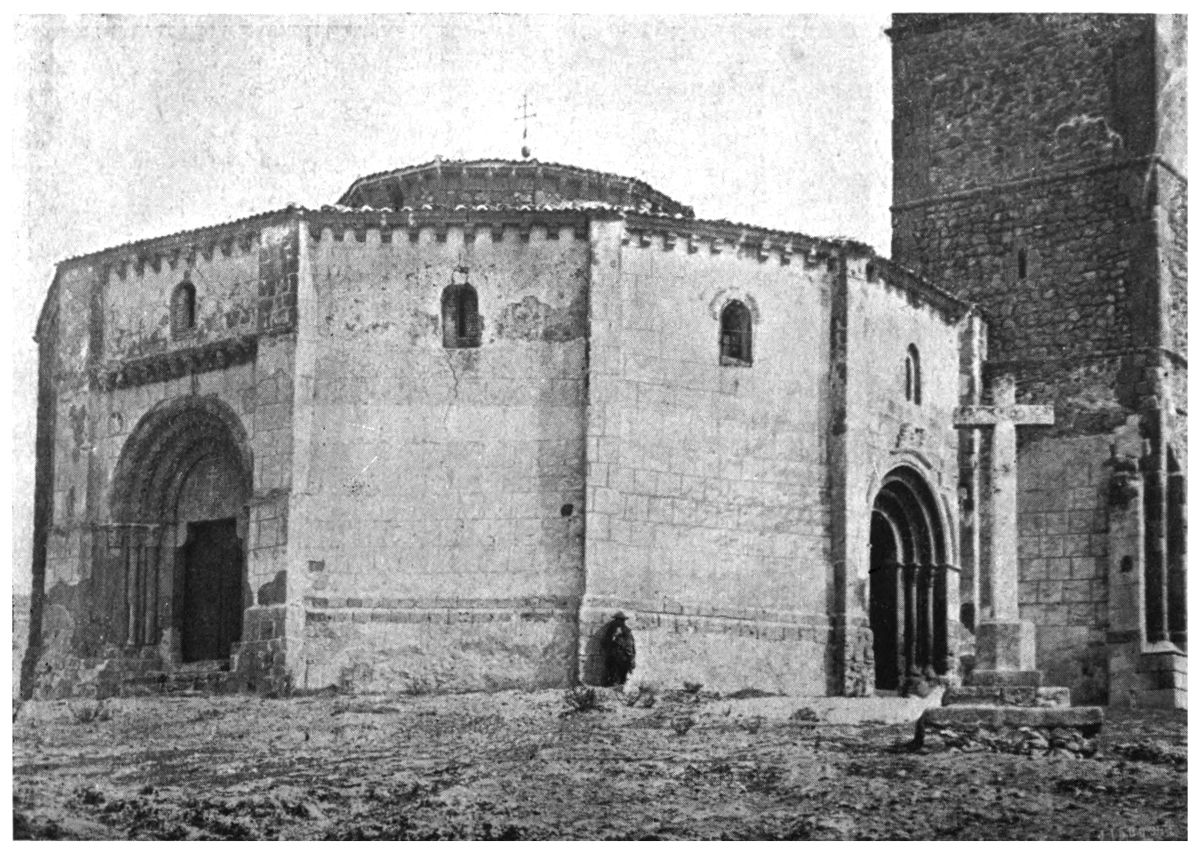
GENERAL VIEW OF THE CHURCH OF VERA CRUZ
SEGOVIA
Plate 115
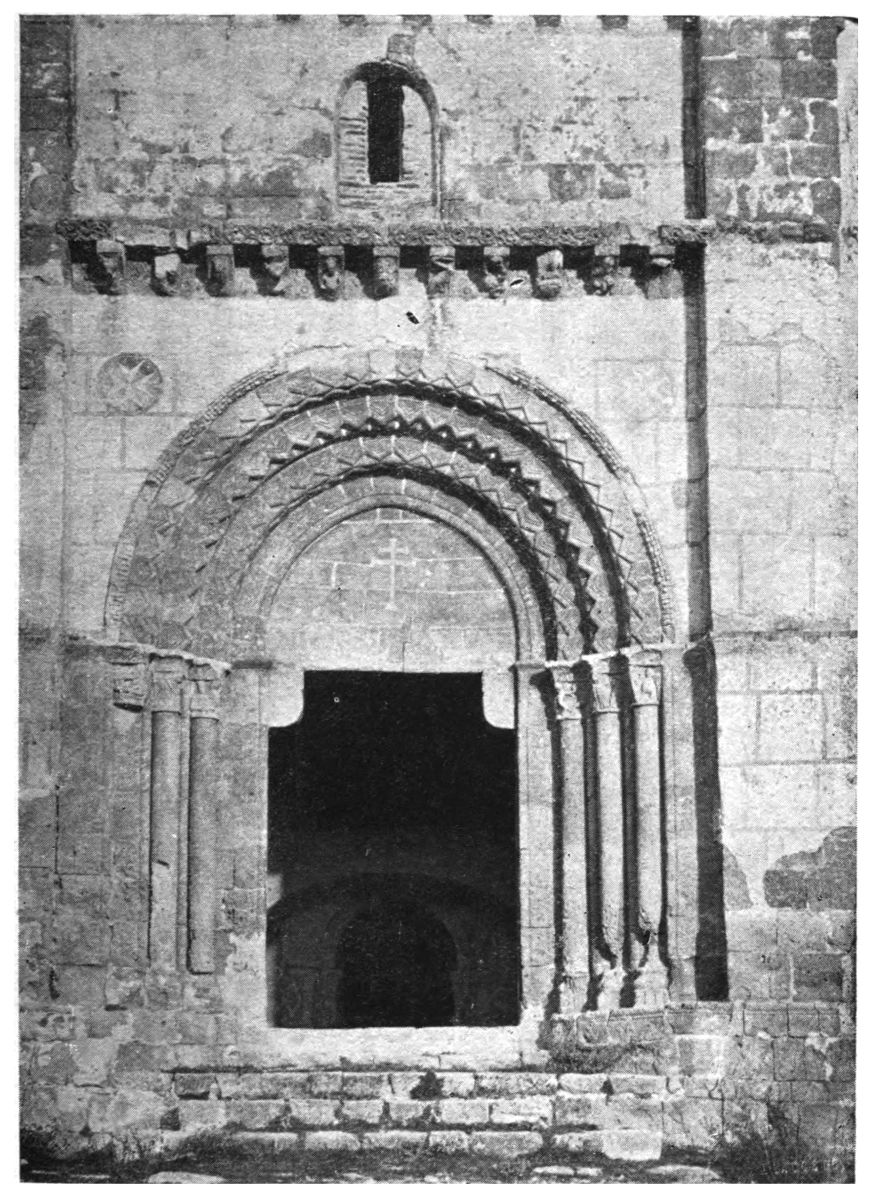
PORCH OF THE CHURCH OF VERA CRUZ
SEGOVIA
Plate 116
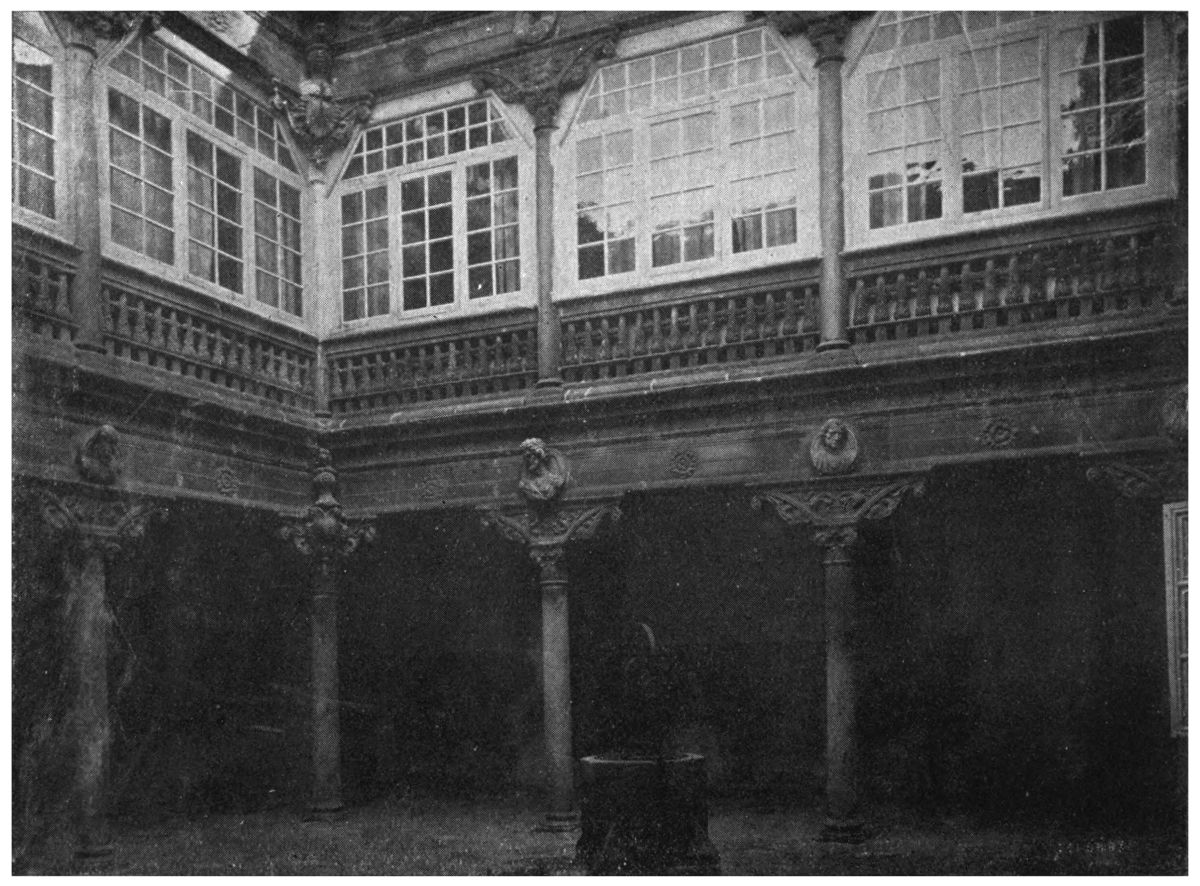
COURTYARD OF THE MARQUIS OF ARCOS’ HOUSE
SEGOVIA
Plate 117
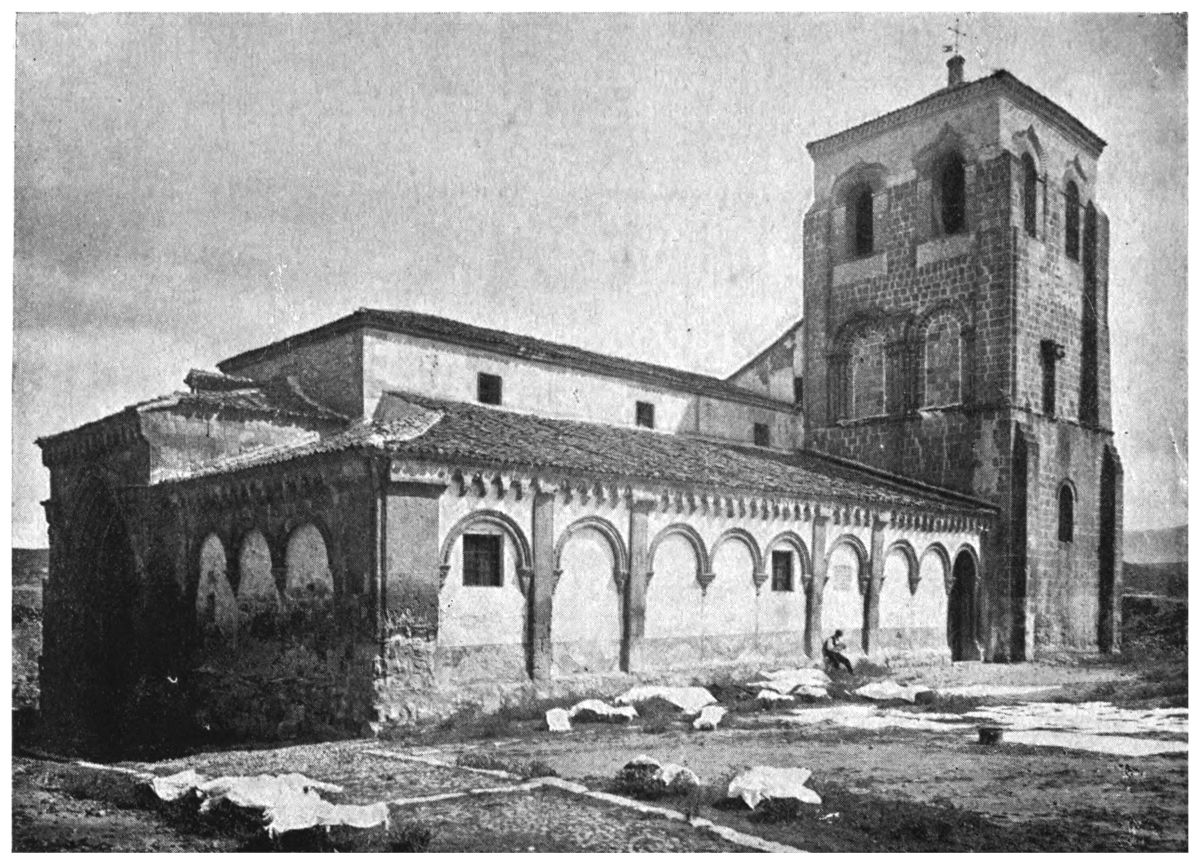
FAÇADE OF ST. JOHN
SEGOVIA
Plate 118
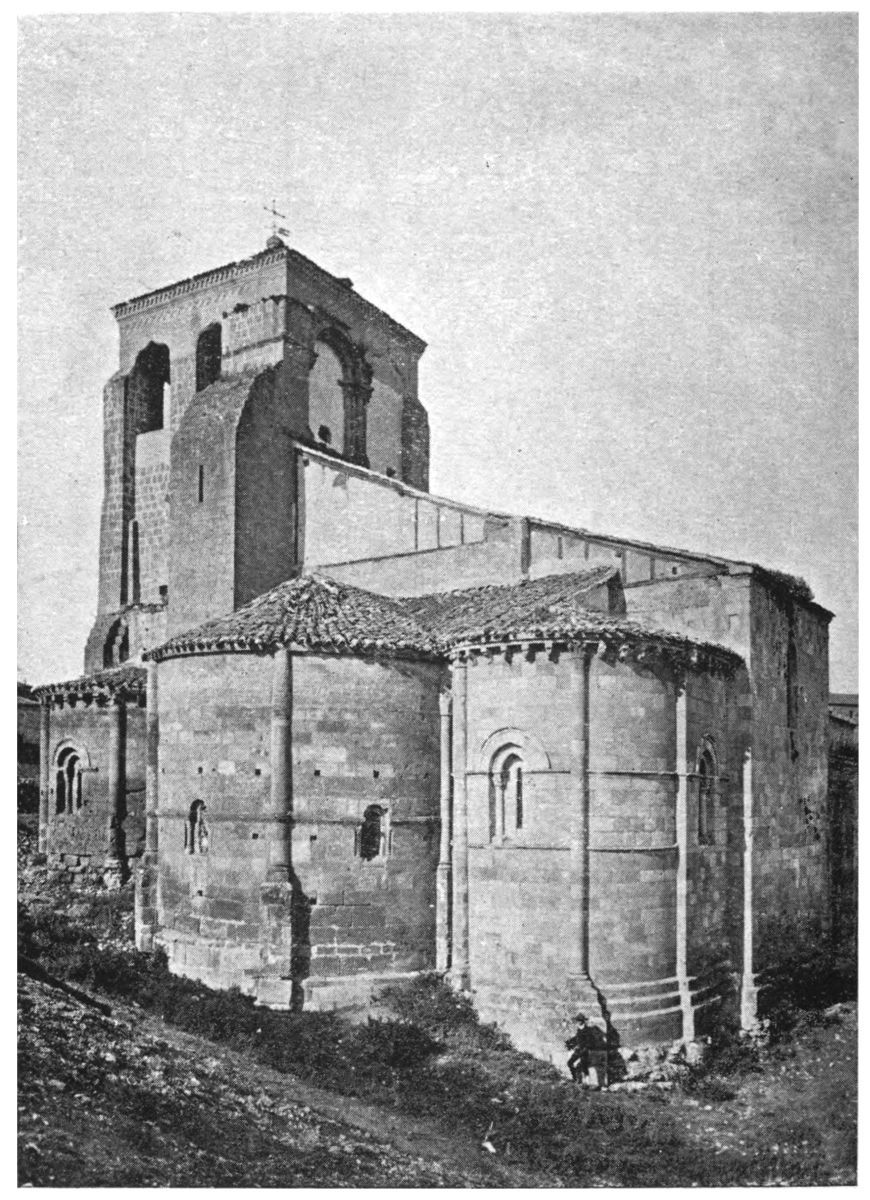
CHURCH OF ST. JOHN. SEGOVIA FROM THE EAST
SEGOVIA
Plate 119
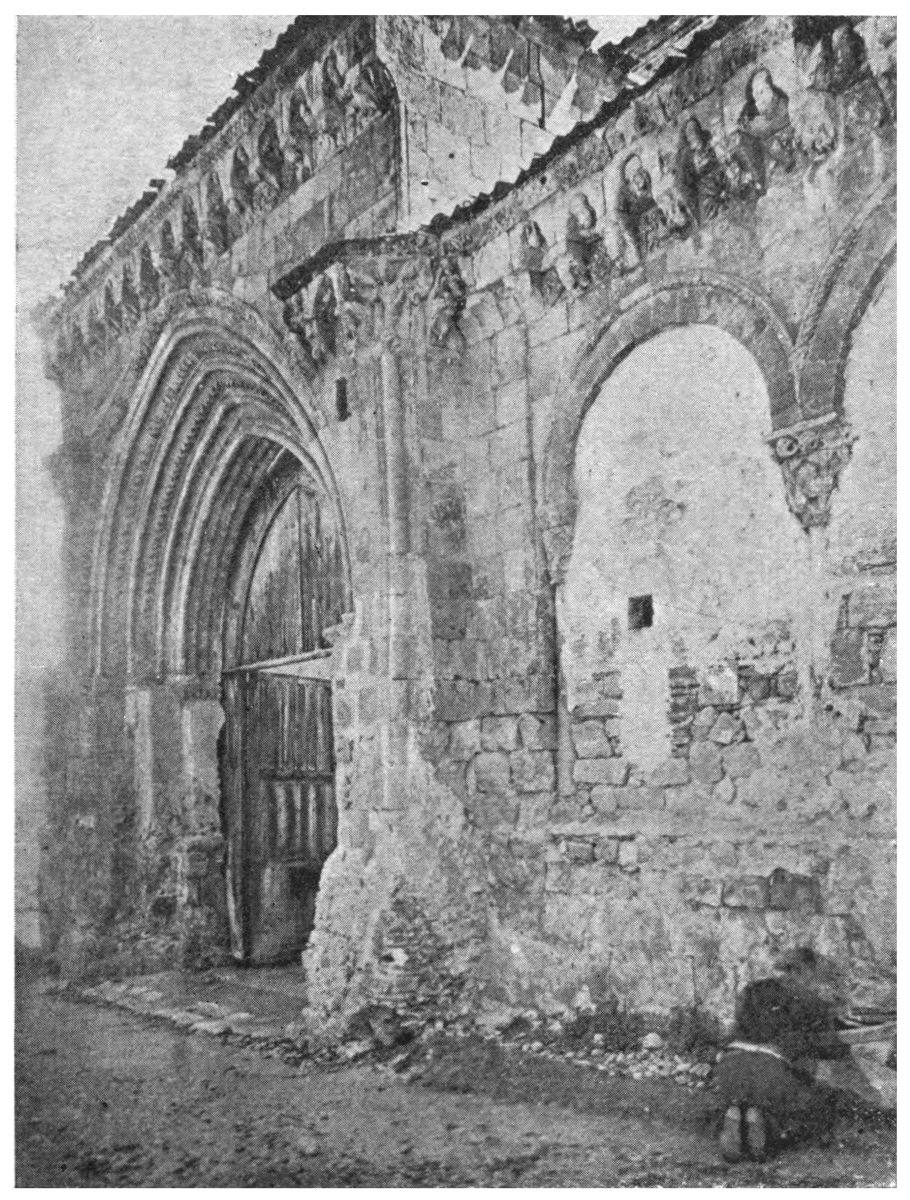
SAN JUAN DE LOS CABALLEROS
SEGOVIA
Plate 120
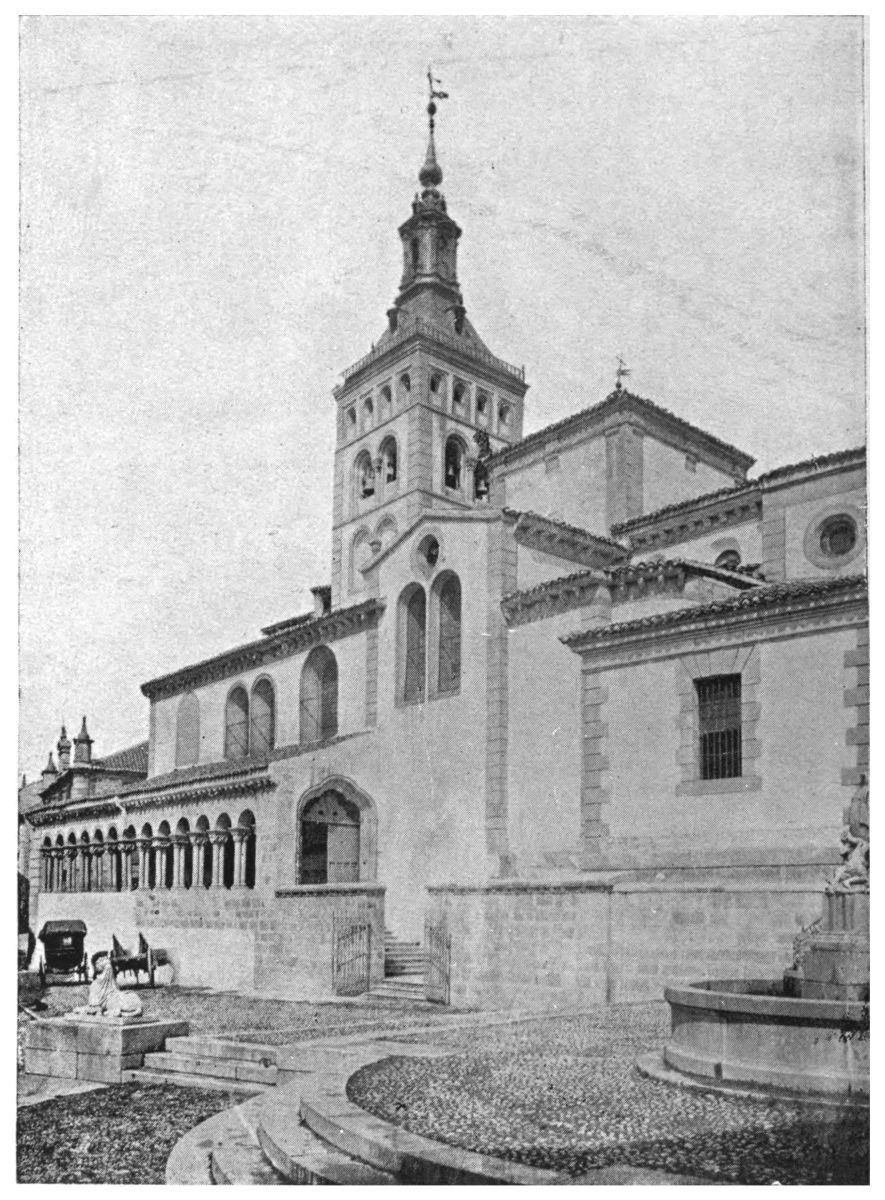
CHURCH OF ST. MARTIN
SEGOVIA
Plate 121
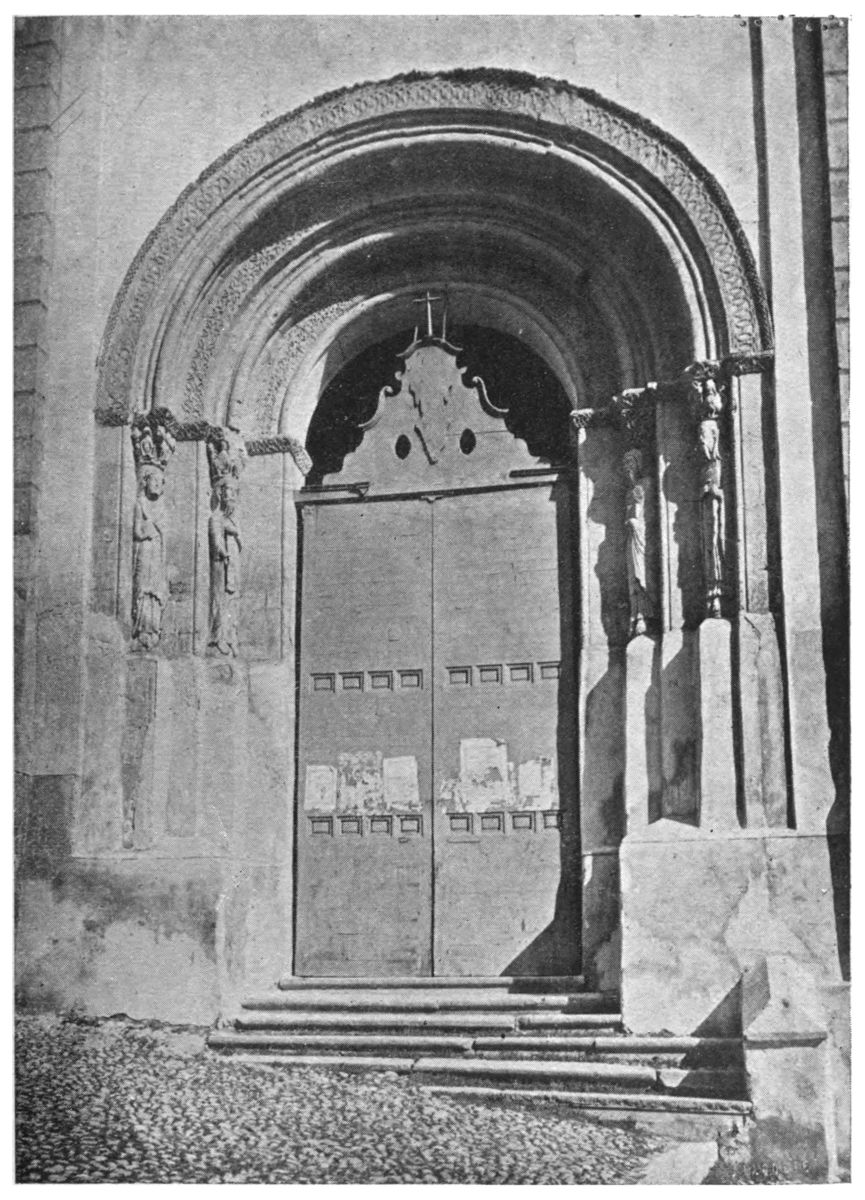
PORCH OF ST. MARTIN
SEGOVIA
Plate 122
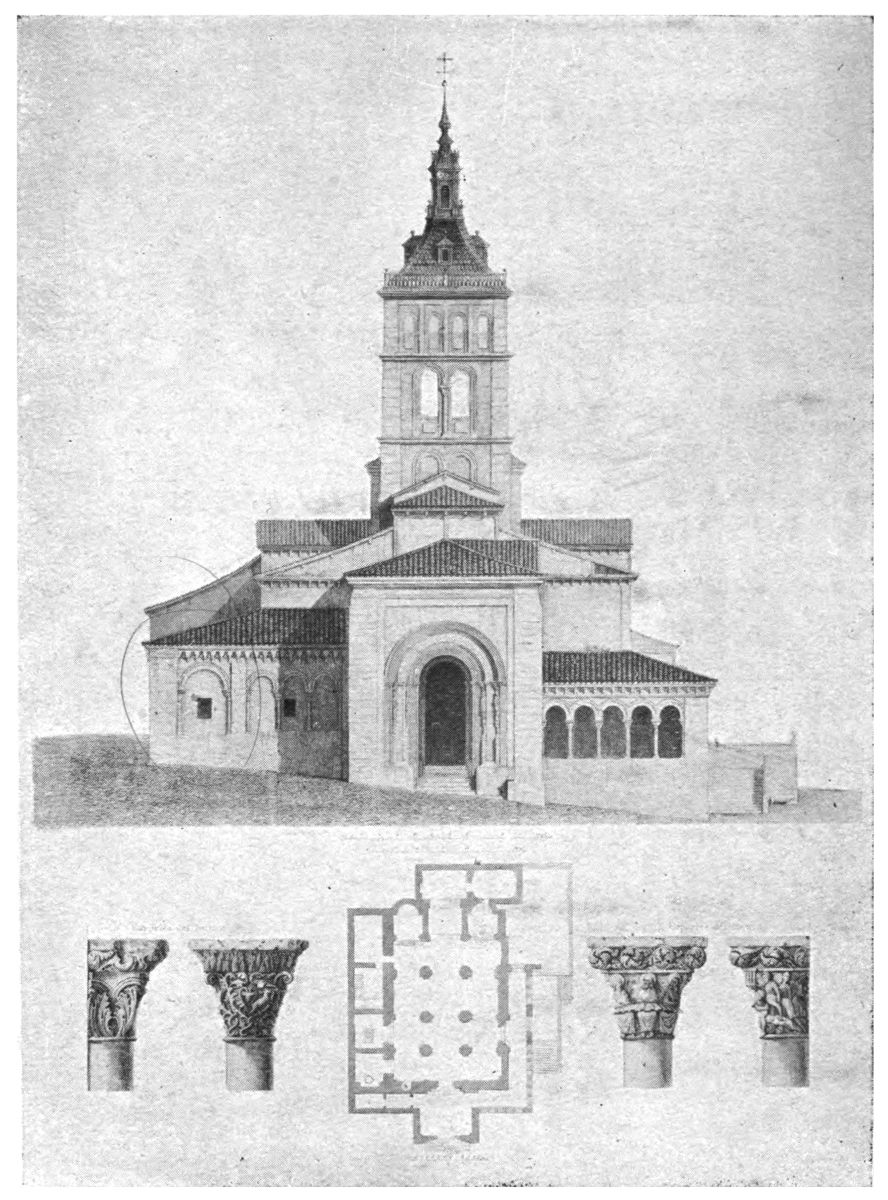
PARISH CHURCH OF ST. MARTIN
SEGOVIA
Plate 123
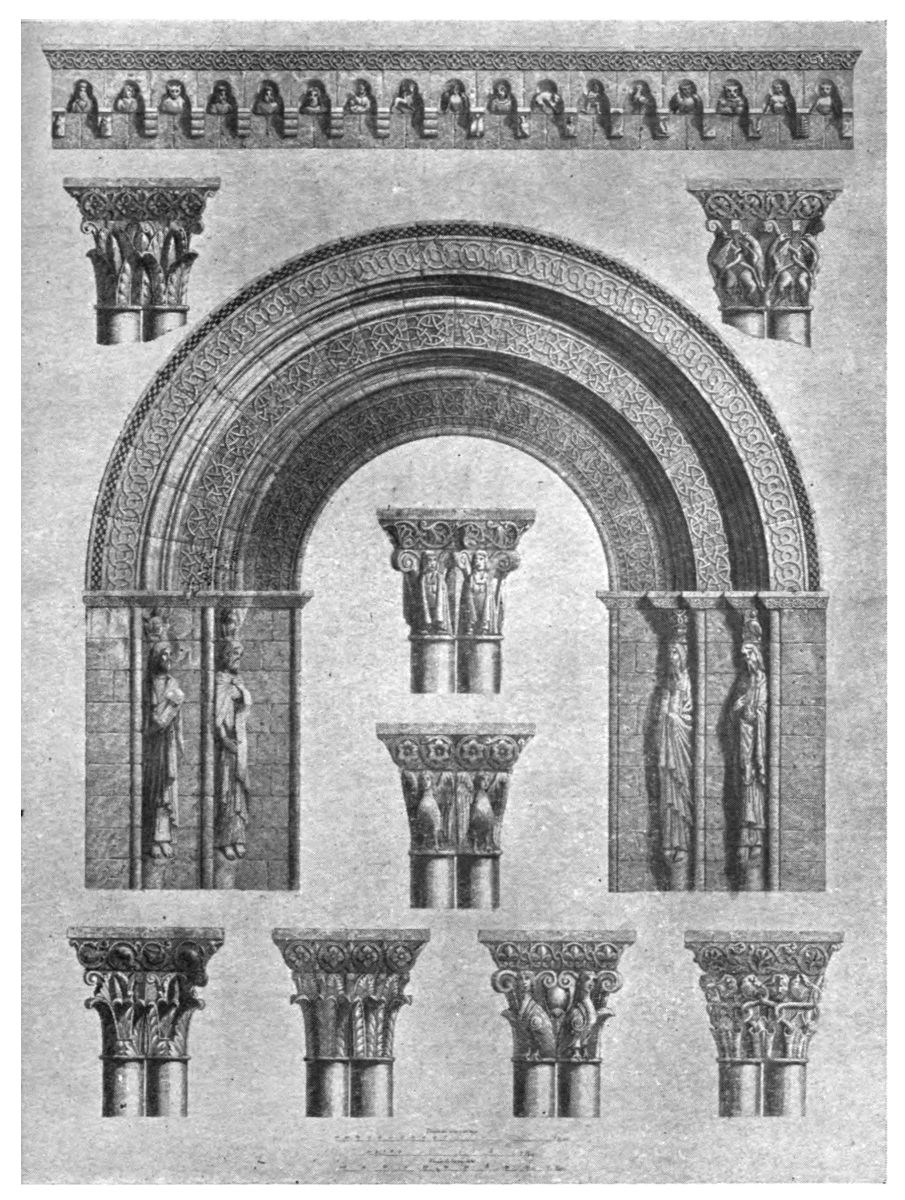
ARCH OF THE PORTICO, CORNICE AND CAPITALS OF THE PORTICO OF THE PARISH
CHURCH OF ST. MARTIN
SEGOVIA
Plate 124
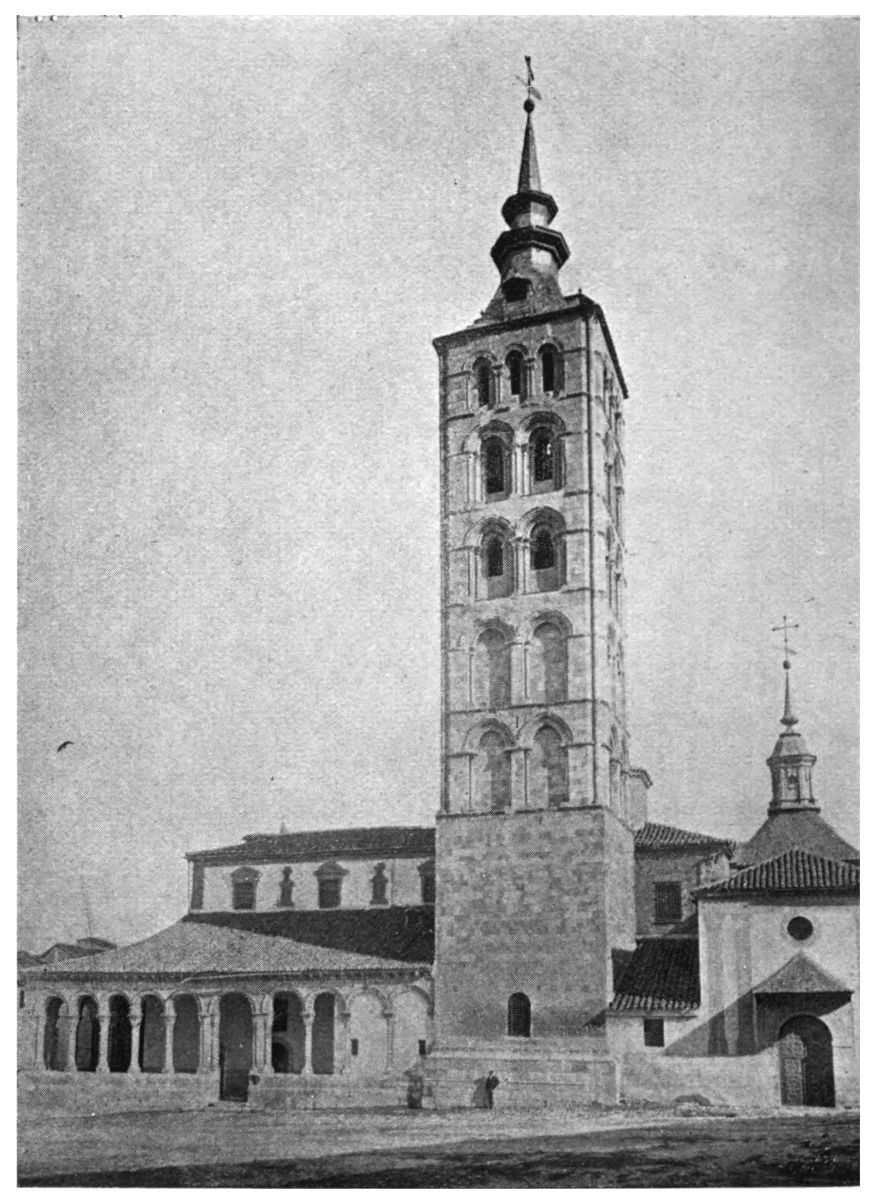
GENERAL VIEW OF ST. STEPHEN
SEGOVIA
Plate 125
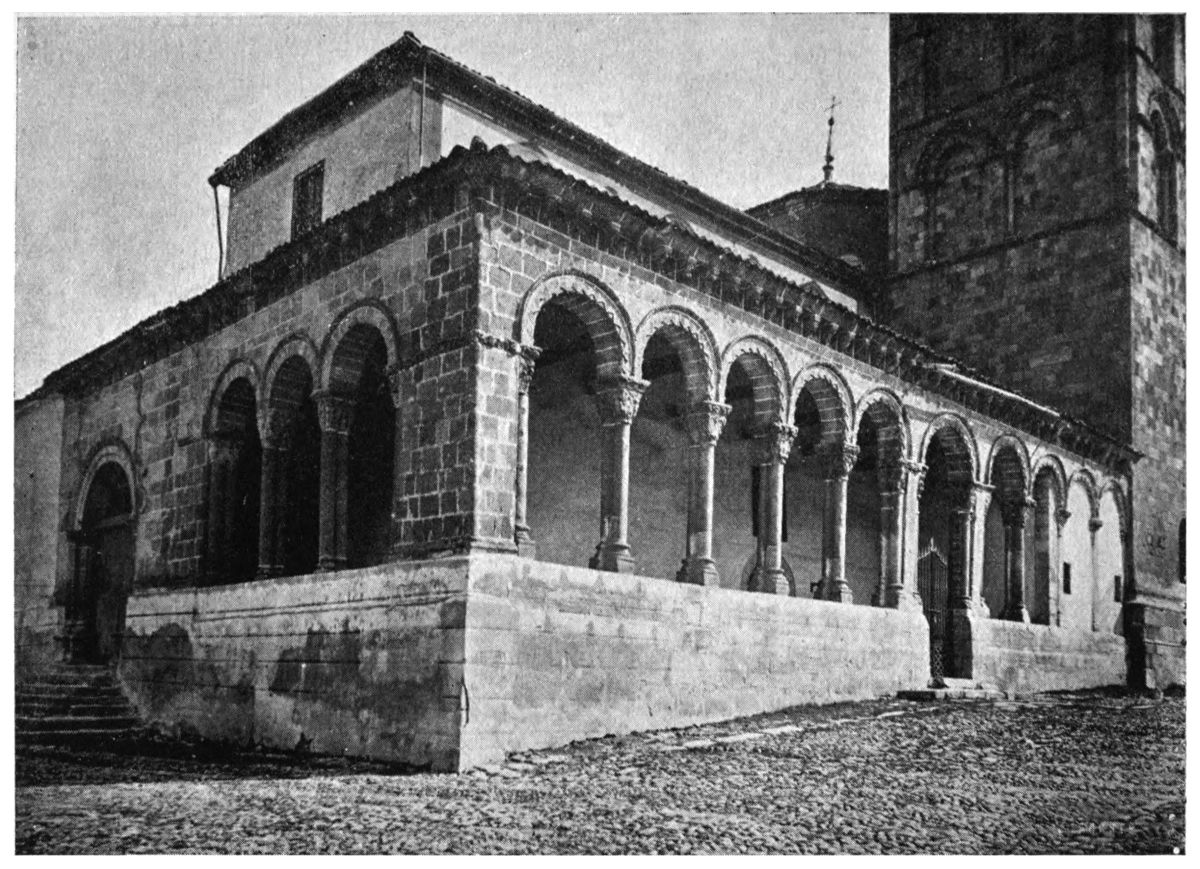
PORTICO OF ST. STEPHEN
SEGOVIA
Plate 126
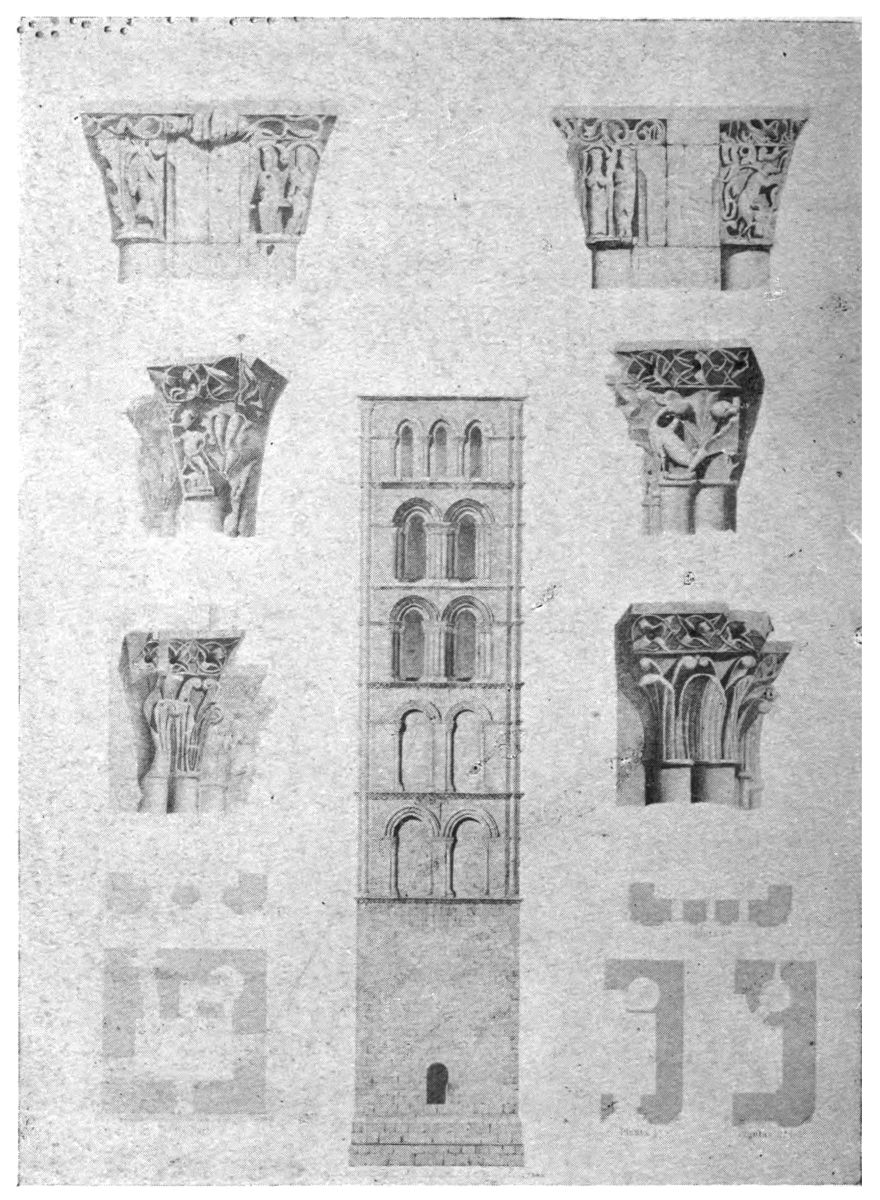
TOWER OF ST. STEPHEN AND EXTERIOR DETAILS
SEGOVIA
Plate 127
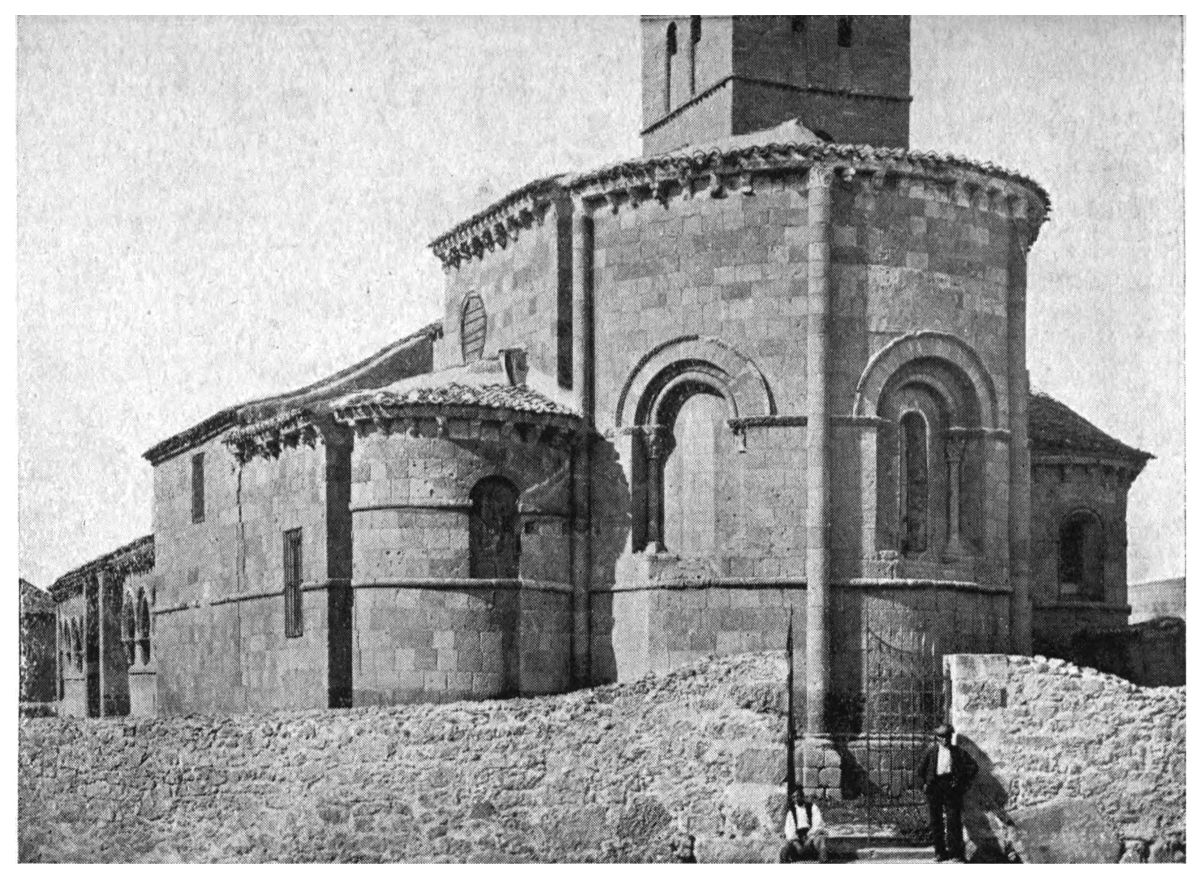
CHURCH OF SAN LORENZO
SEGOVIA
Plate 128
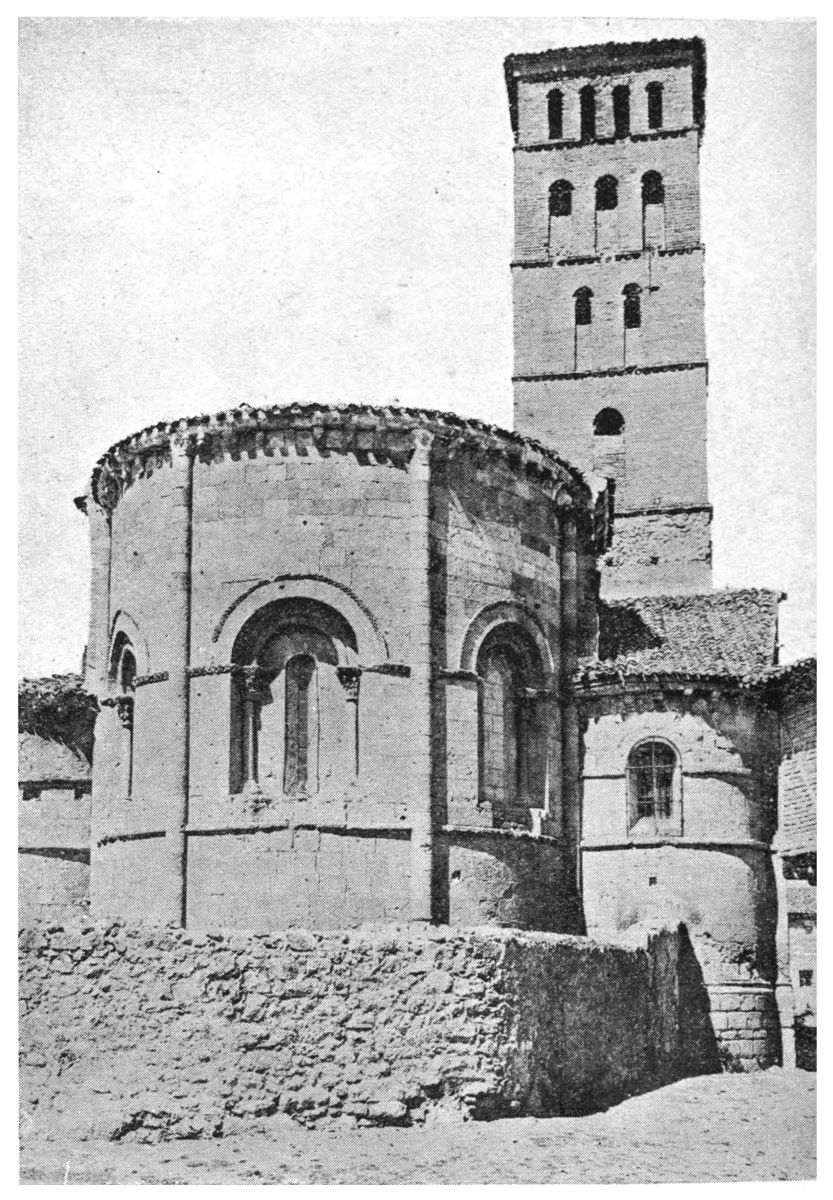
CHURCH OF SAN LORENZO
SEGOVIA
Plate 129
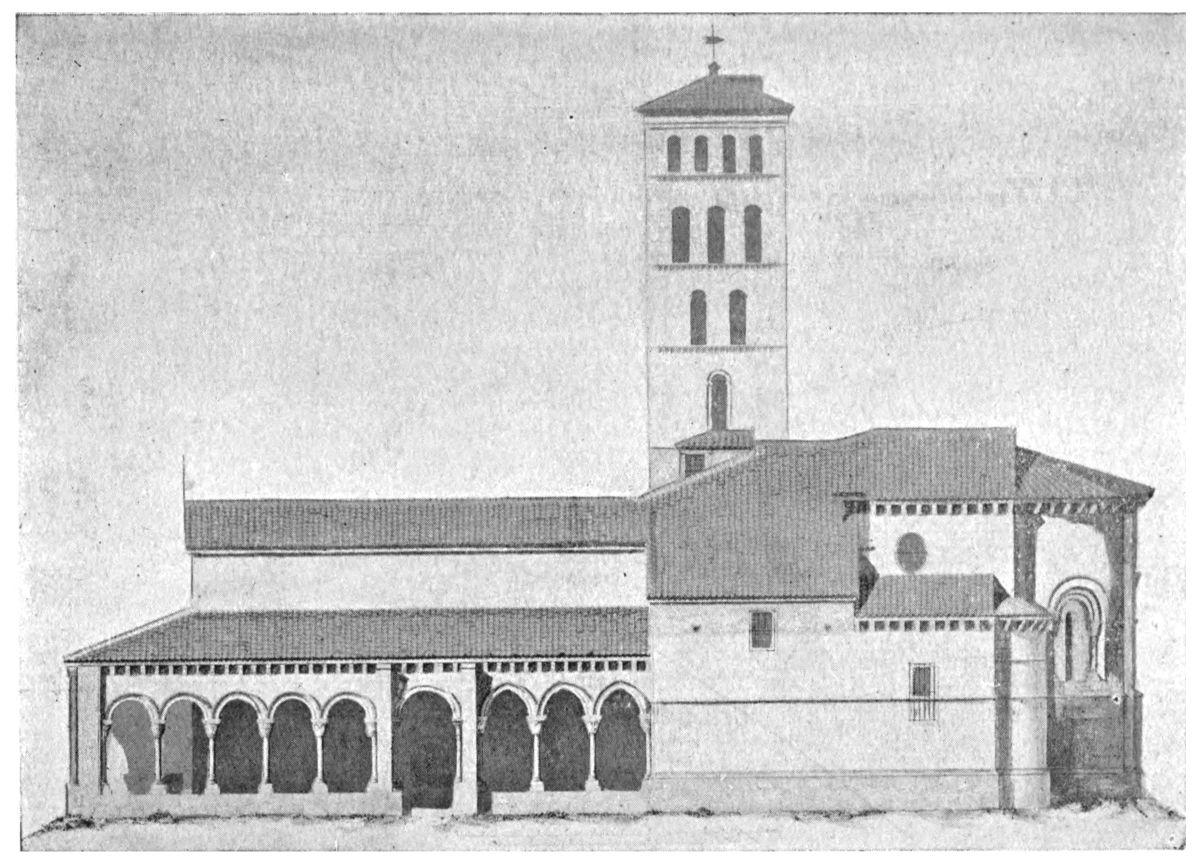
LATERAL FAÇADE OF THE CHURCH OF SAN LORENZO
SEGOVIA
Plate 130
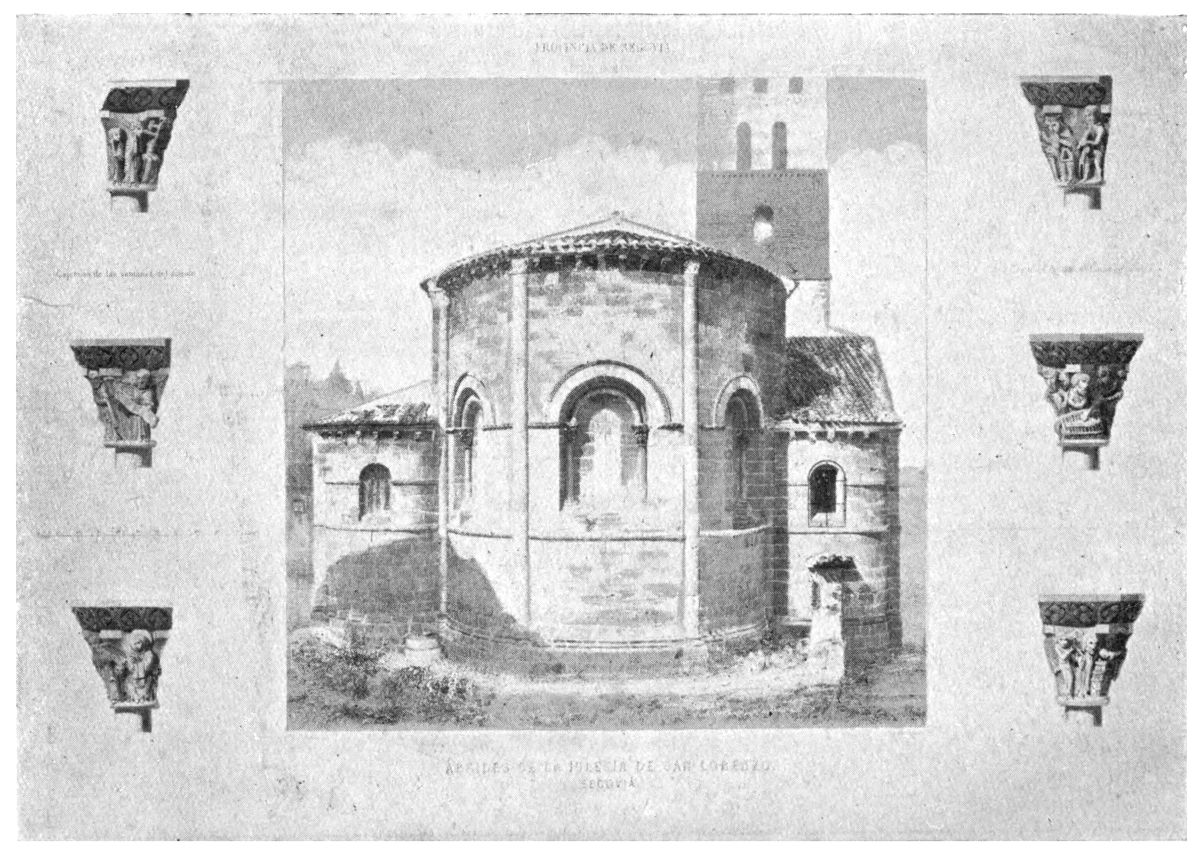
THE CHURCH OF SAN LORENZO, WITH DETAILS OF CAPITALS
SEGOVIA
Plate 131
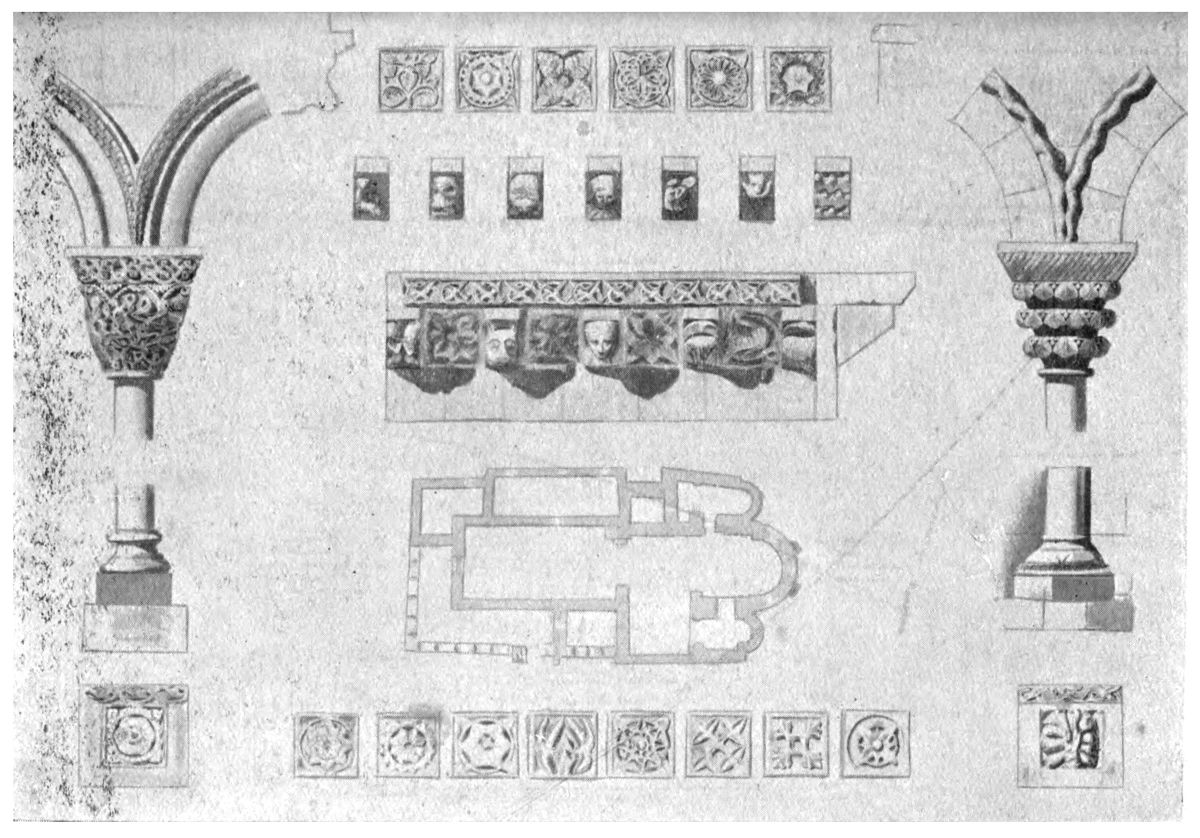
DETAILS OF THE CHURCH OF SAN LORENZO
SEGOVIA
Plate 132
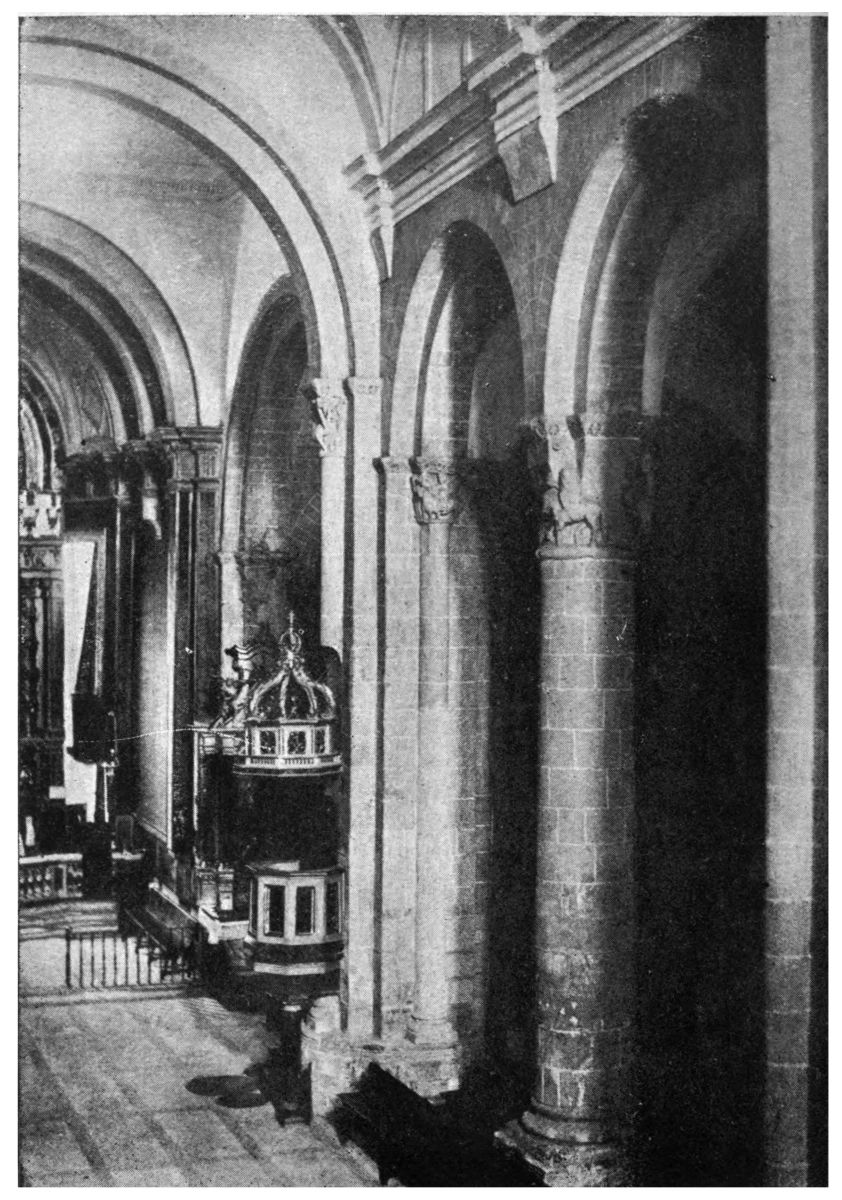
INTERIOR OF SAN MILLÁN. THE EPISTLE SIDE
SEGOVIA
Plate 133
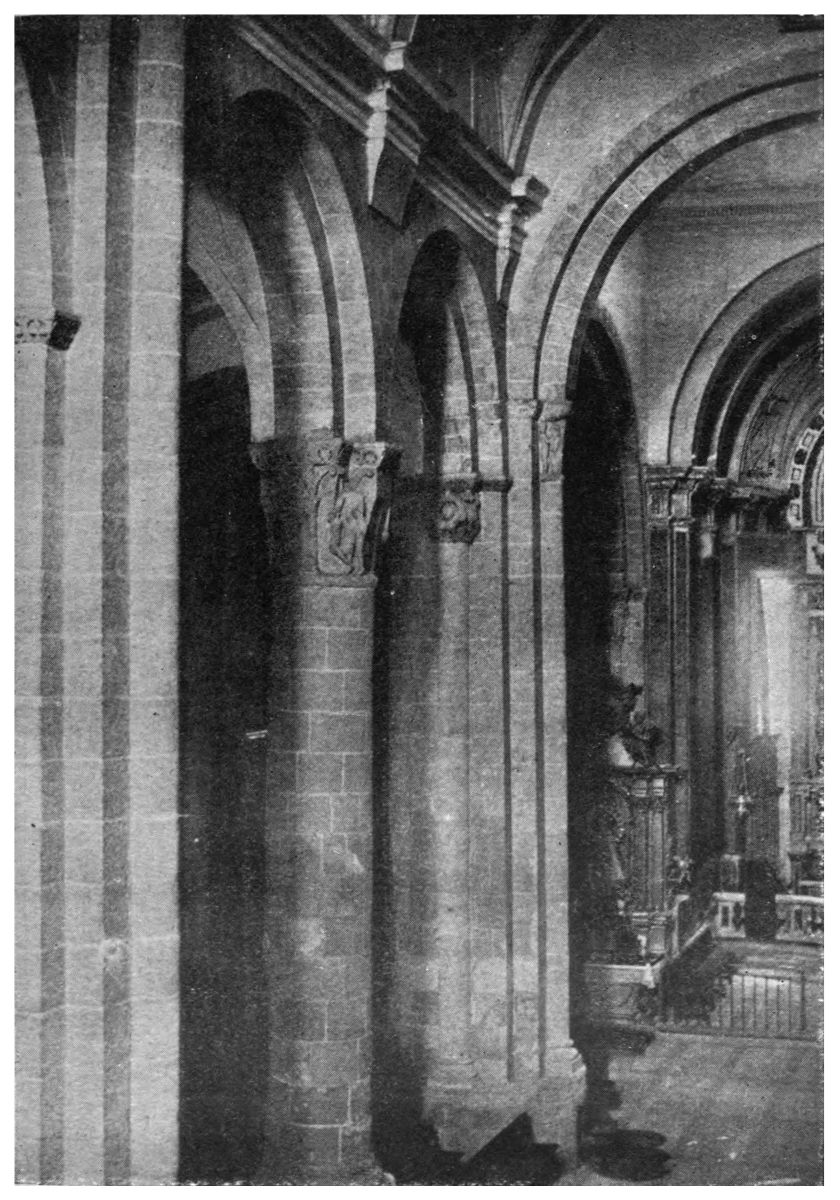
INTERIOR OF SAN MILLÁN. THE GOSPEL SIDE
SEGOVIA
Plate 134
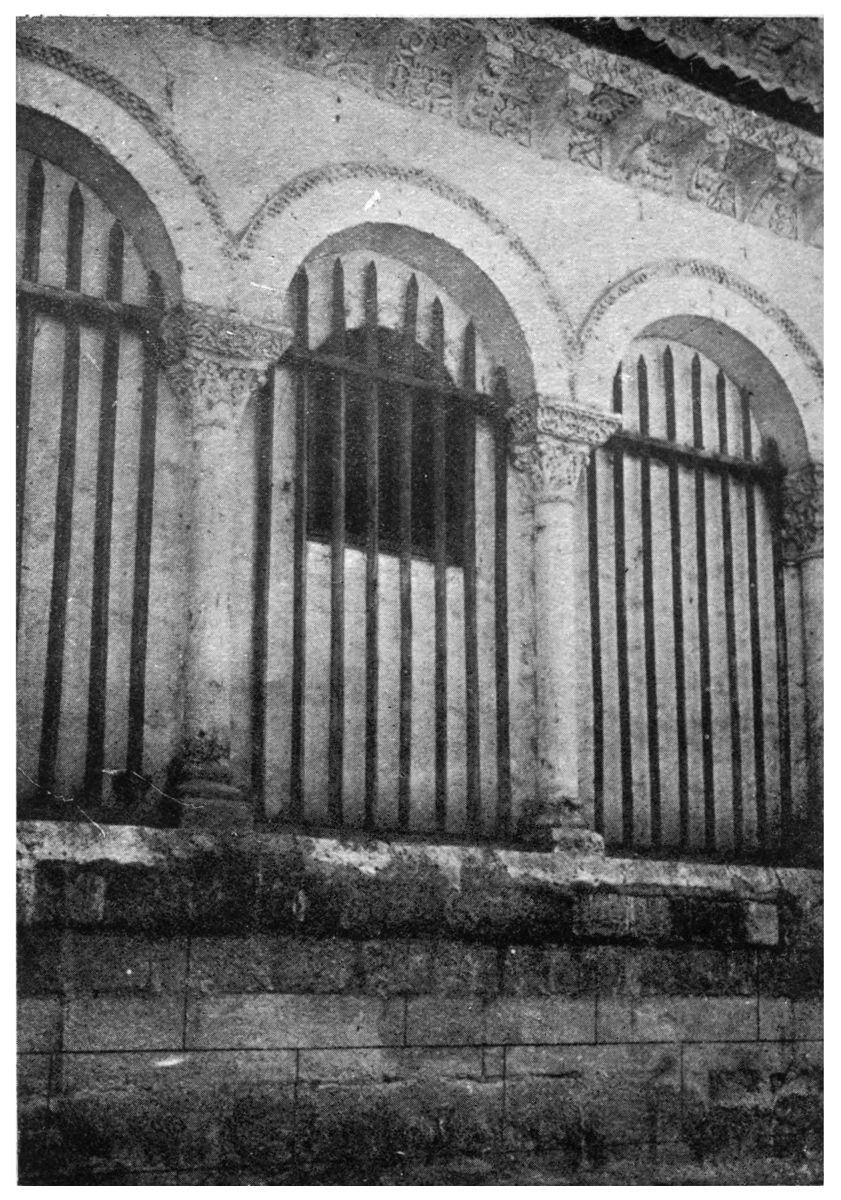
ARCHES AND EAVES OF SAN MILLÁN
SEGOVIA
Plate 135
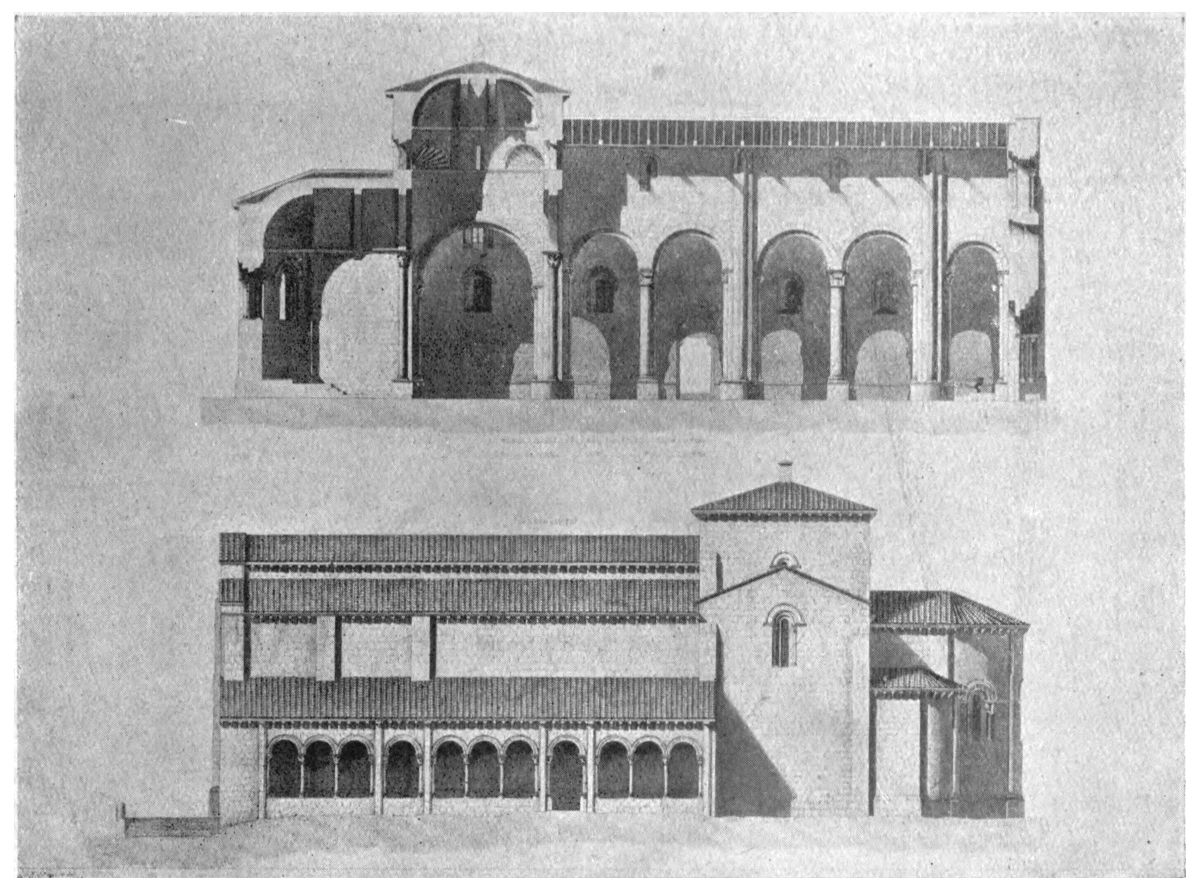
SECTIONAL ELEVATIONS OF THE PARISH CHURCH OF SAN MILLÁN
SEGOVIA
Plate 136
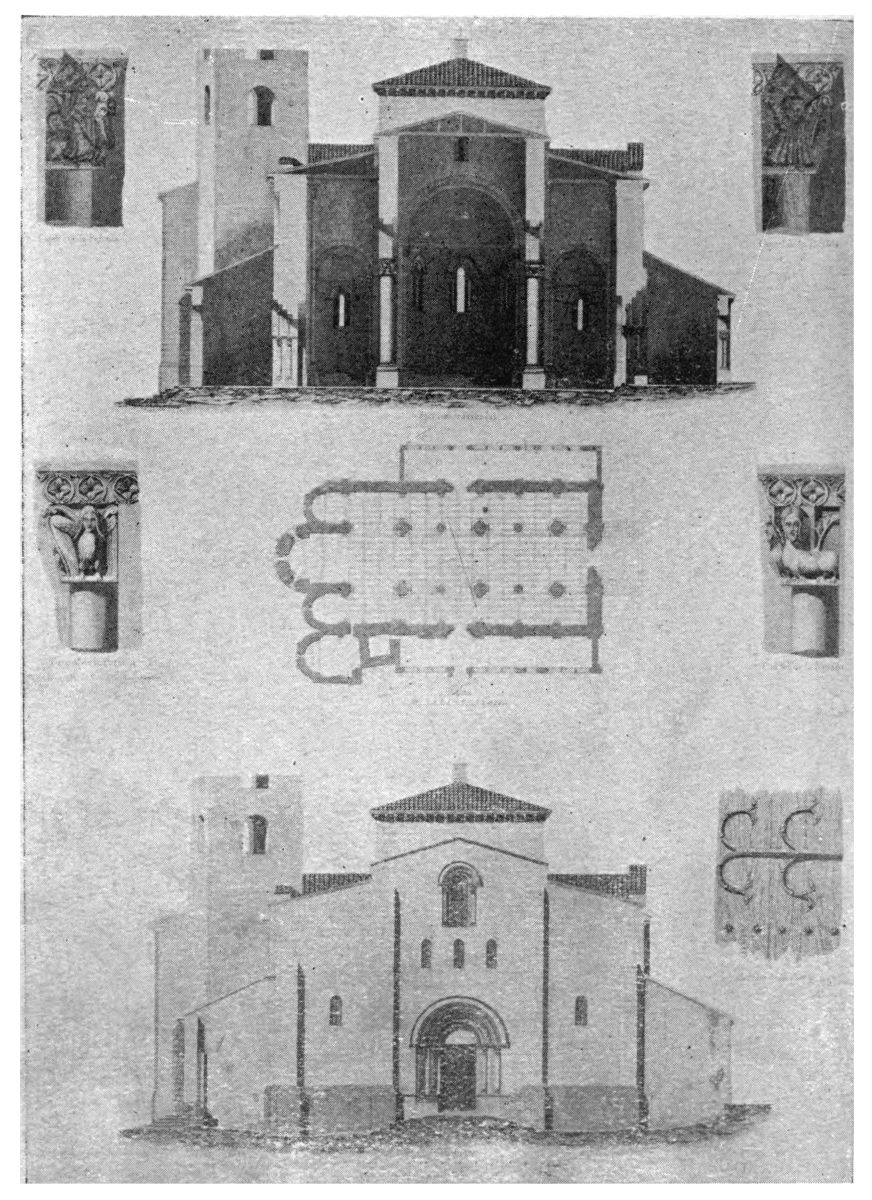
PLAN, AND DETAILS OF THE PARISH CHURCH OF SAN MILLÁN
SEGOVIA
Plate 137
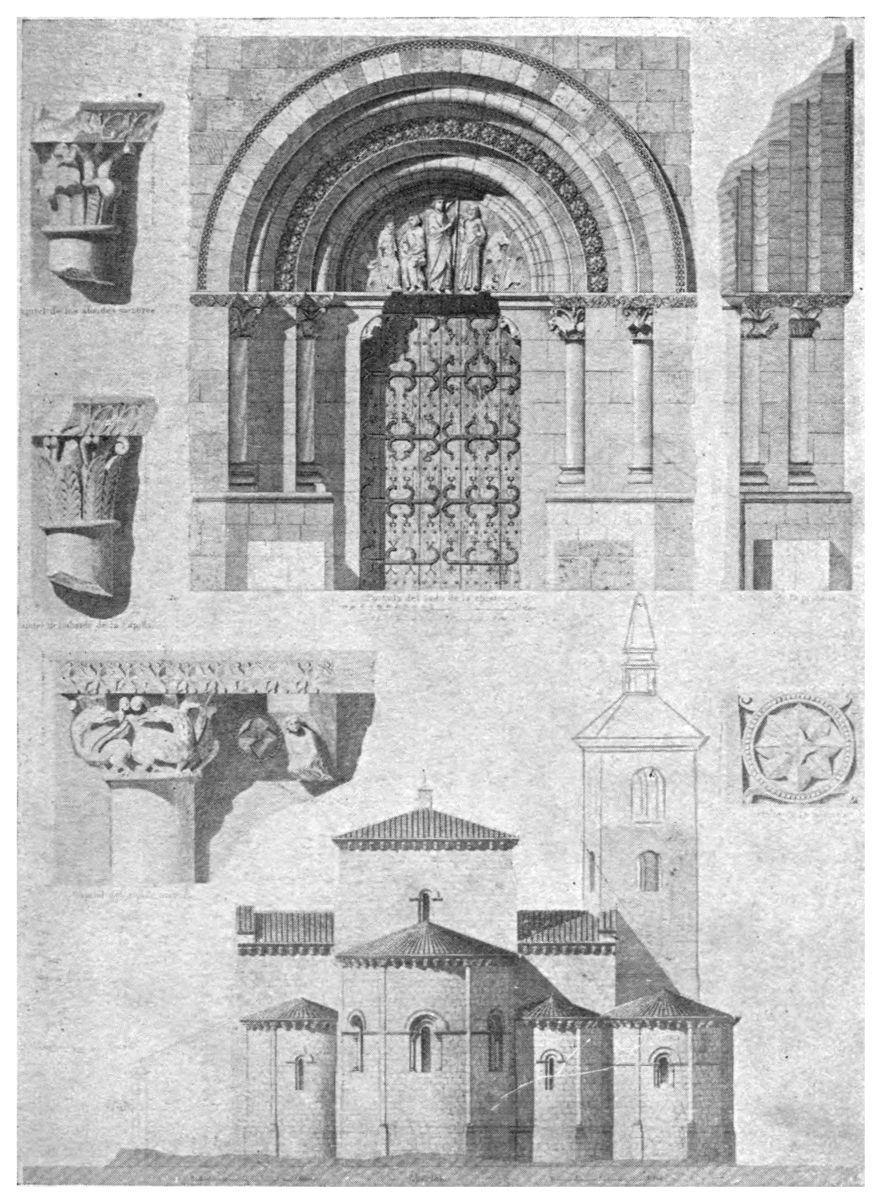
DETAILS OF THE PARISH CHURCH OF SAN MILLÁN
SEGOVIA
Plate 138
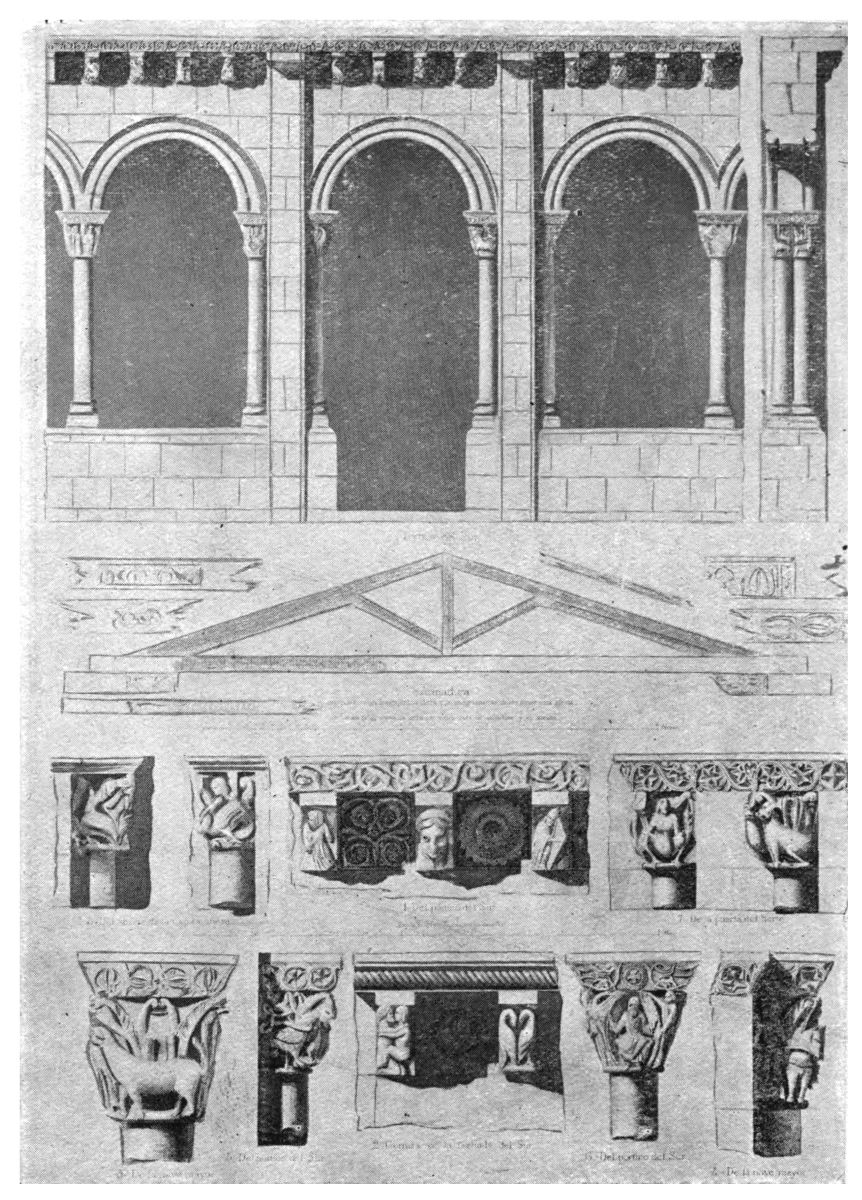
DETAILS OF THE PARISH CHURCH OF SAN MILLÁN
SEGOVIA
Plate 139
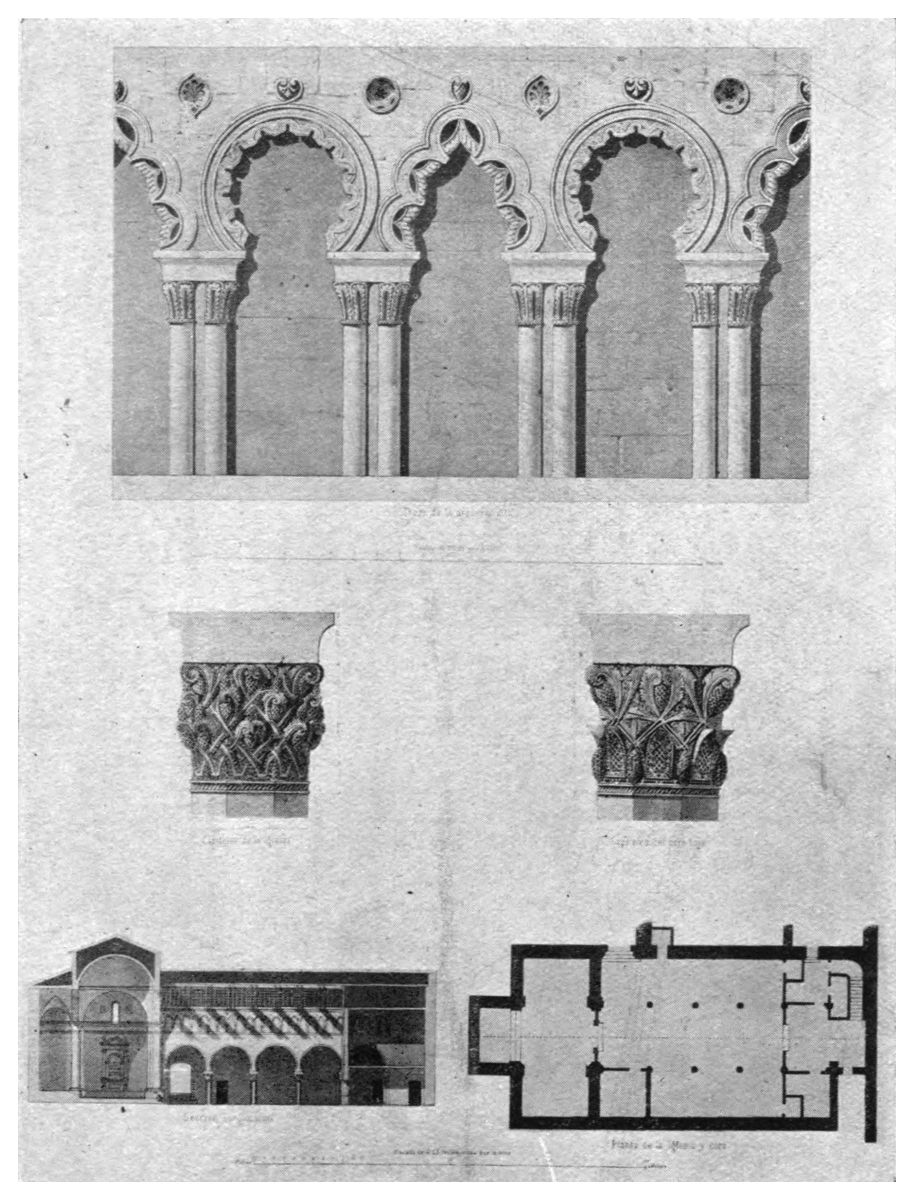
PLAN, AND DETAILS OF THE CHURCH OF THE CONVENT OF CORPUS CHRISTI
SEGOVIA
Plate 140
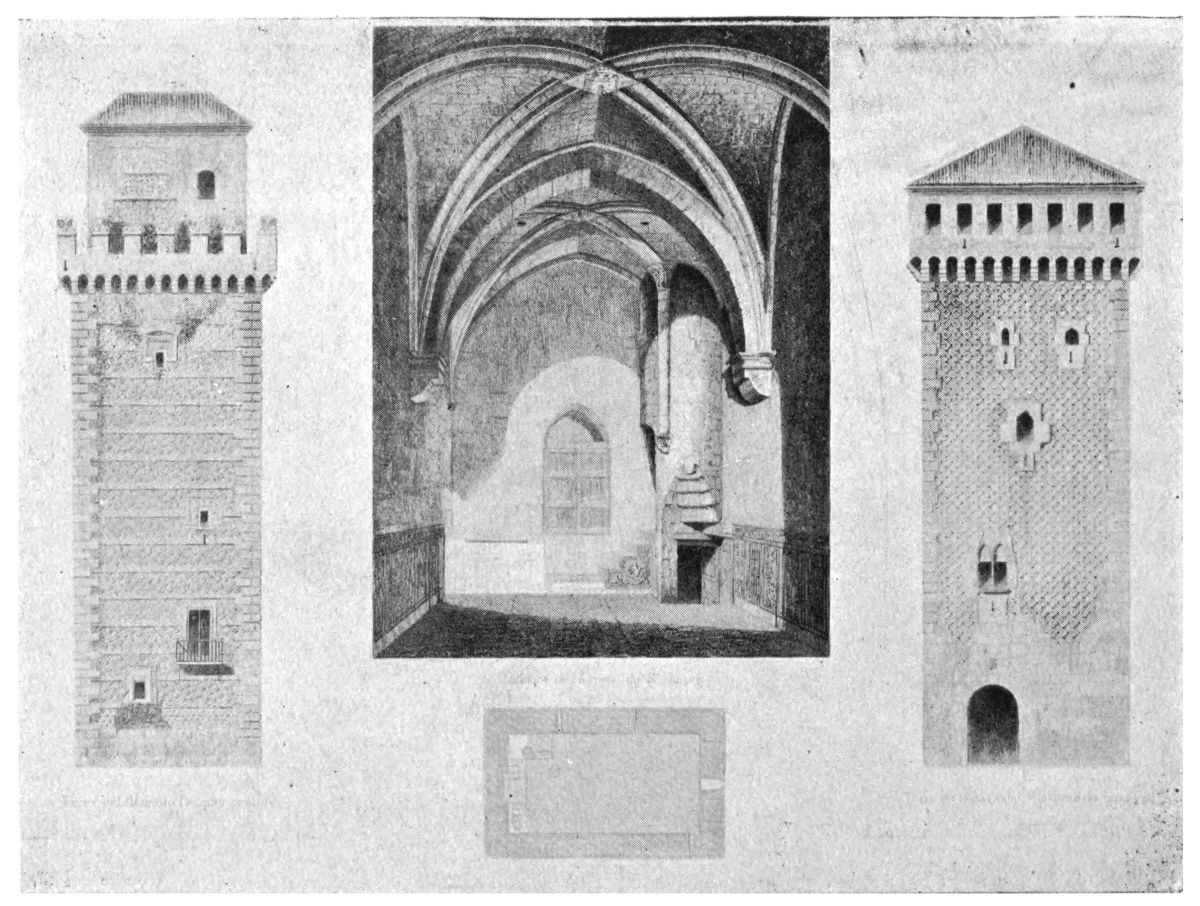
INTERIOR OF THE CONVENT OF SANTO DOMINGO AND TOWERS
SEGOVIA
Plate 141
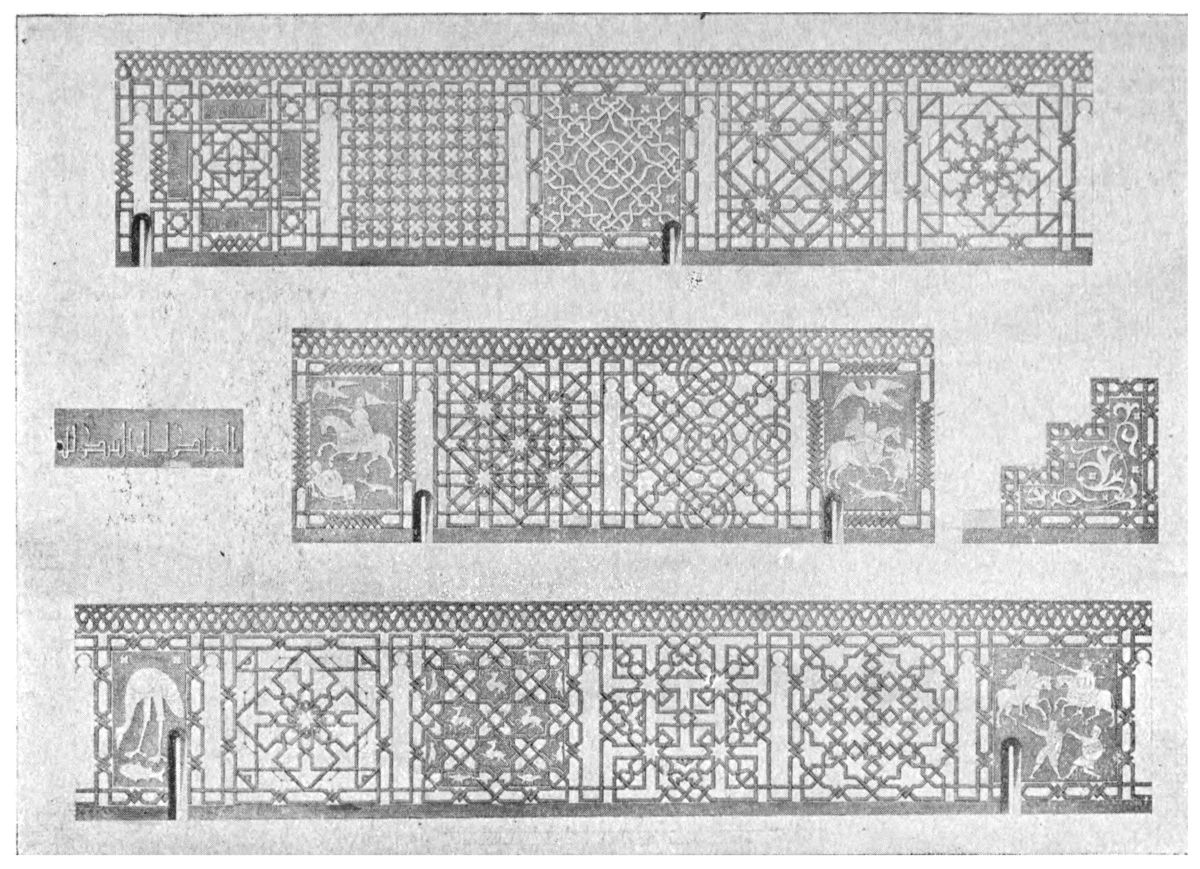
PAINTED SOCLES IN THE INTERIOR OF THE TOWER OF SANTO DOMINGO, COMMONLY
CALLED THE TOWER OF HERCULES
SEGOVIA
Plate 142
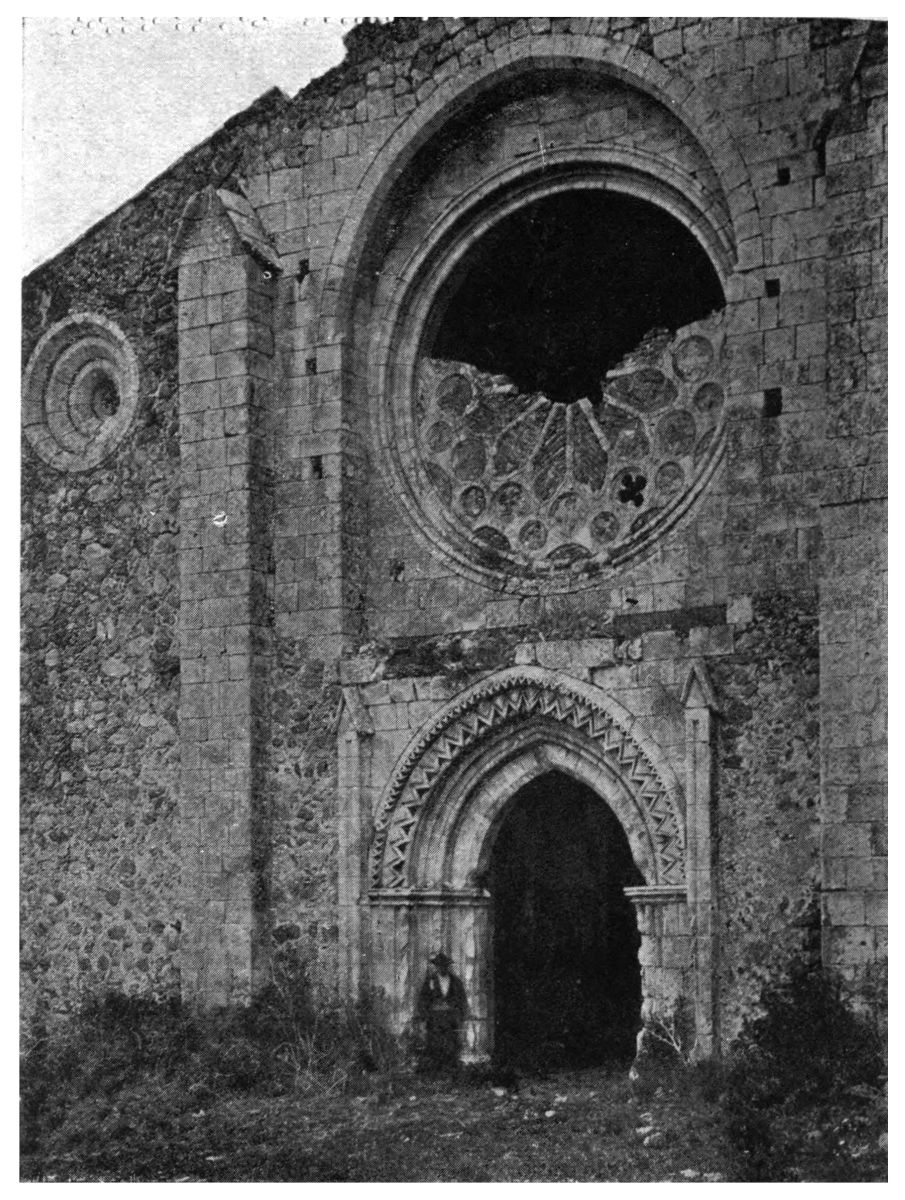
FAÇADE OF THE CONVENT OF OUR LADY DE LA SIERRA
SEGOVIA
Plate 143
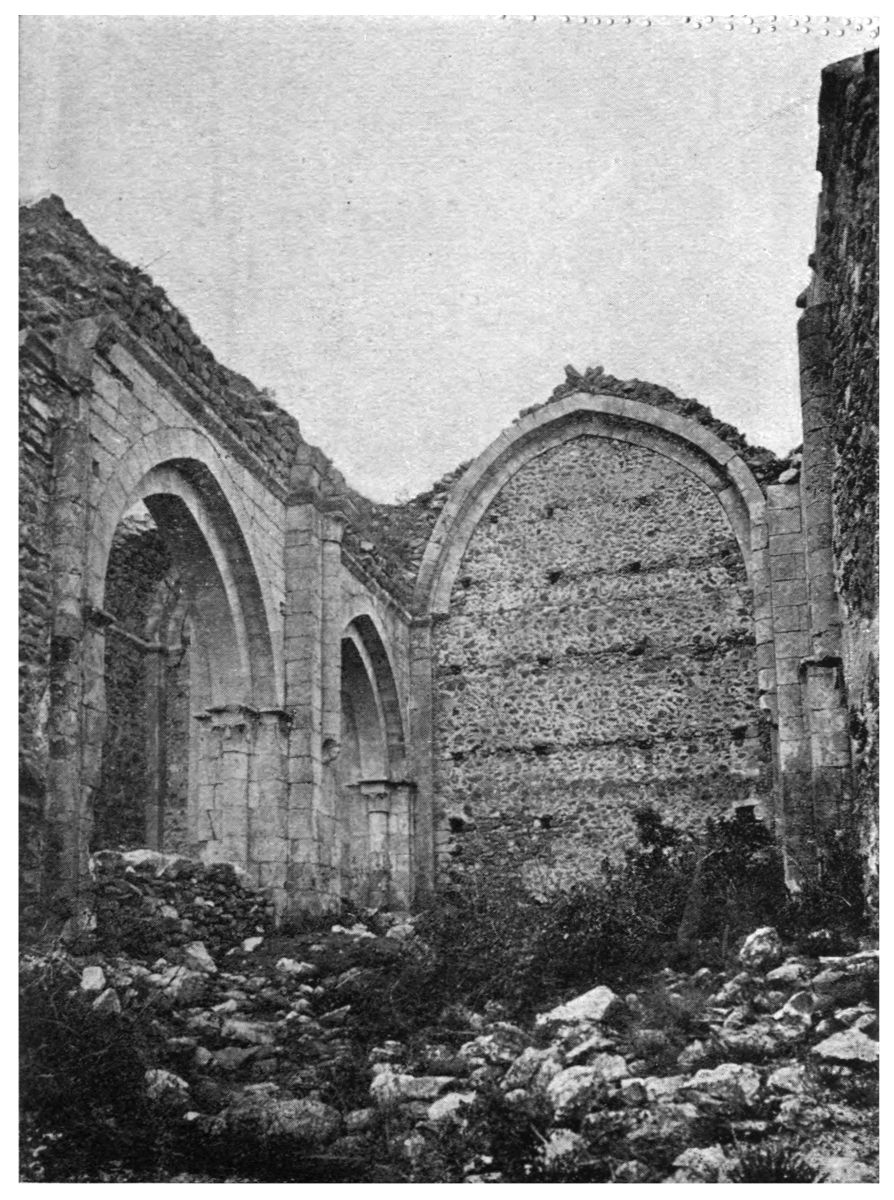
RUINS OF THE CHAPEL OF THE CONVENT OF OUR LADY DE LA SIERRA
SEGOVIA
Plate 144
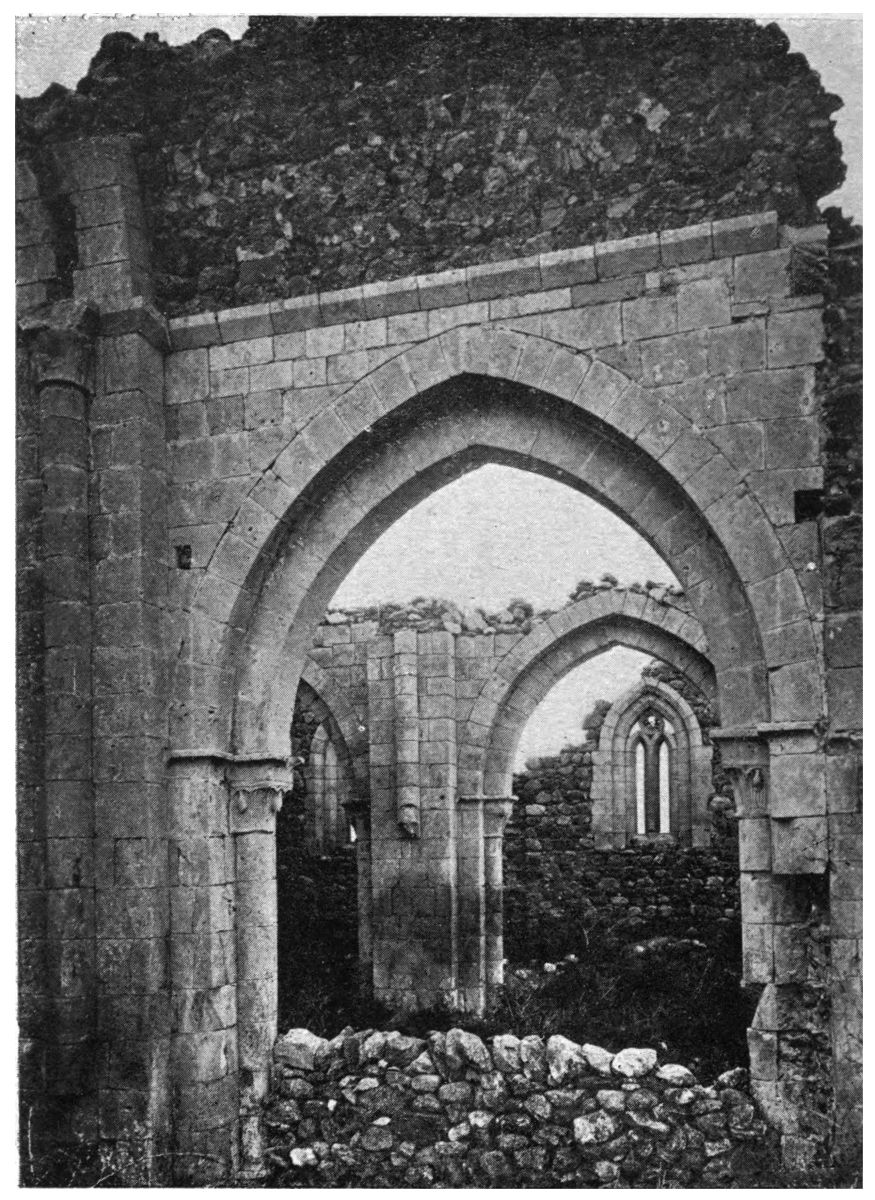
INTERIOR OF THE RUINED CONVENT OF OUR LADY DE LA SIERRA
SEGOVIA
Plate 145
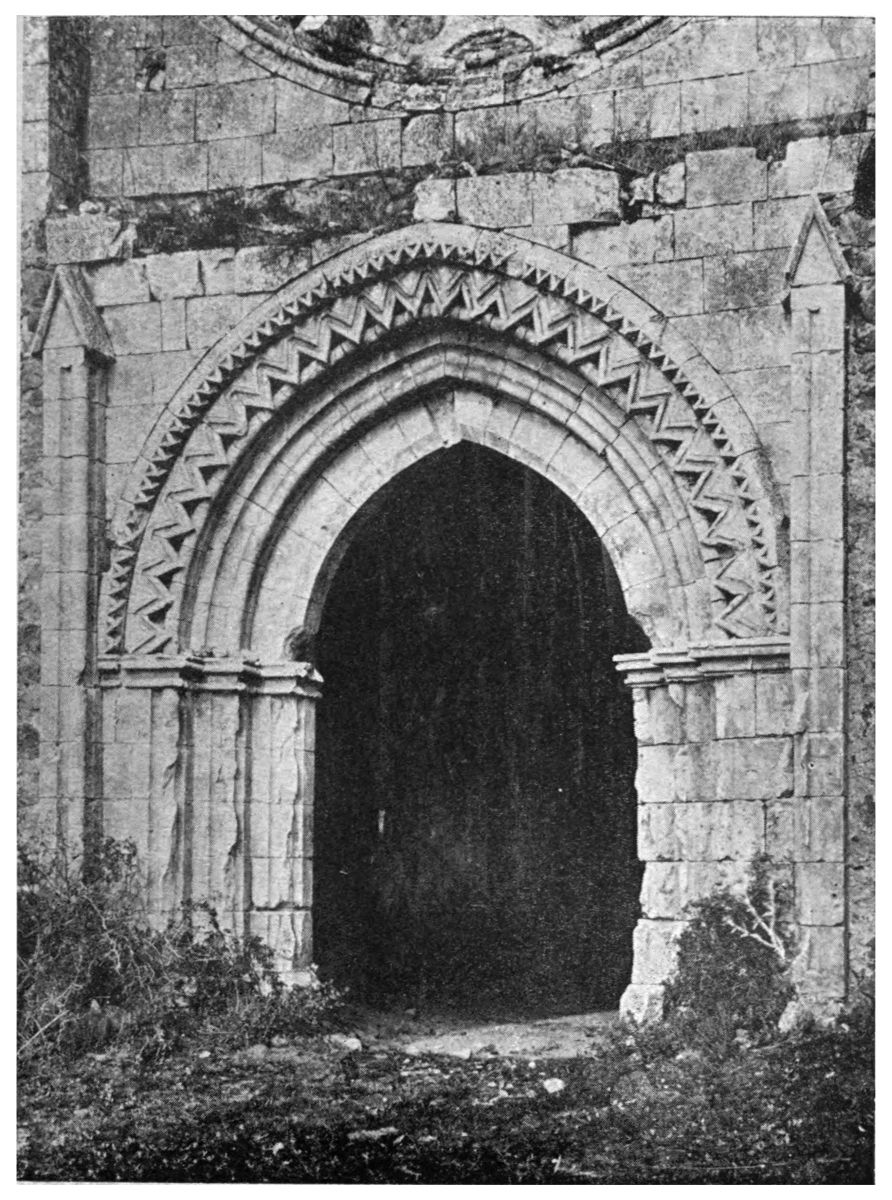
PORCH OF THE CONVENT OF OUR LADY DE LA SIERRA
SEGOVIA
Plate 146
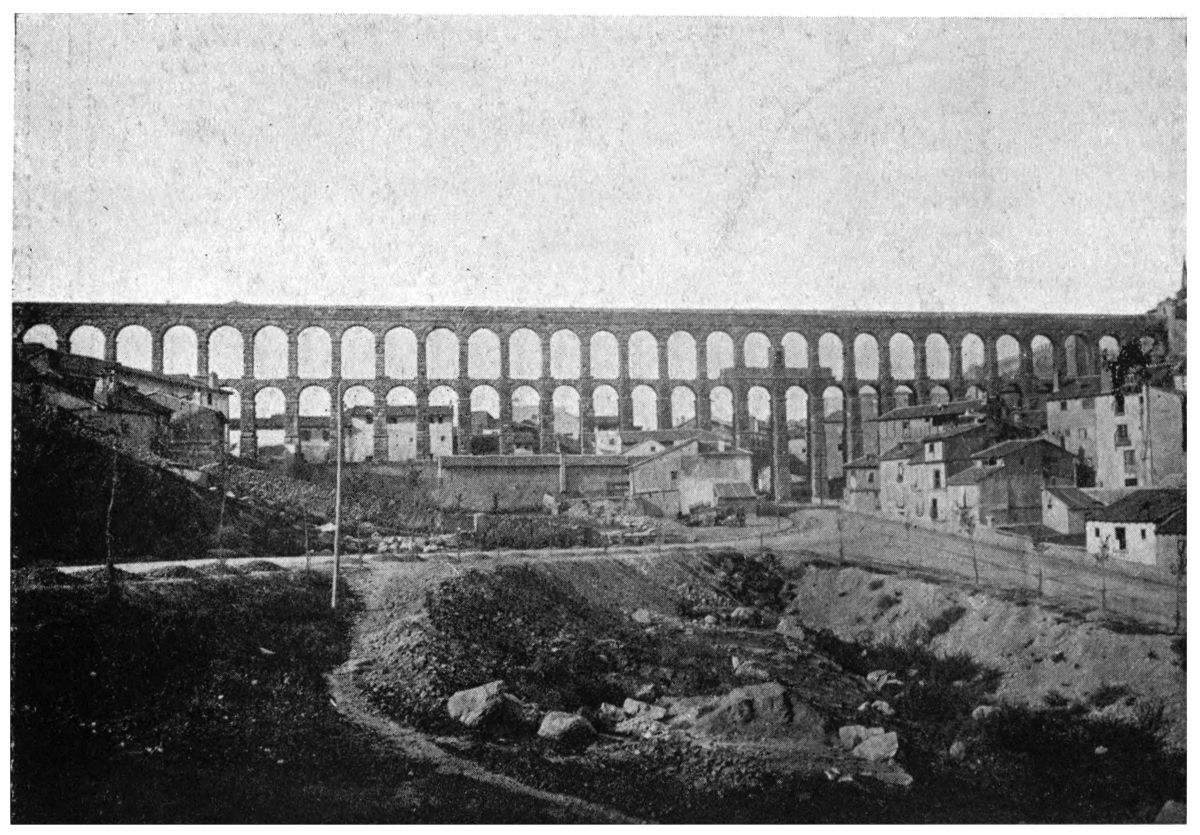
GENERAL VIEW OF THE ROMAN AQUEDUCT
SEGOVIA
Plate 147
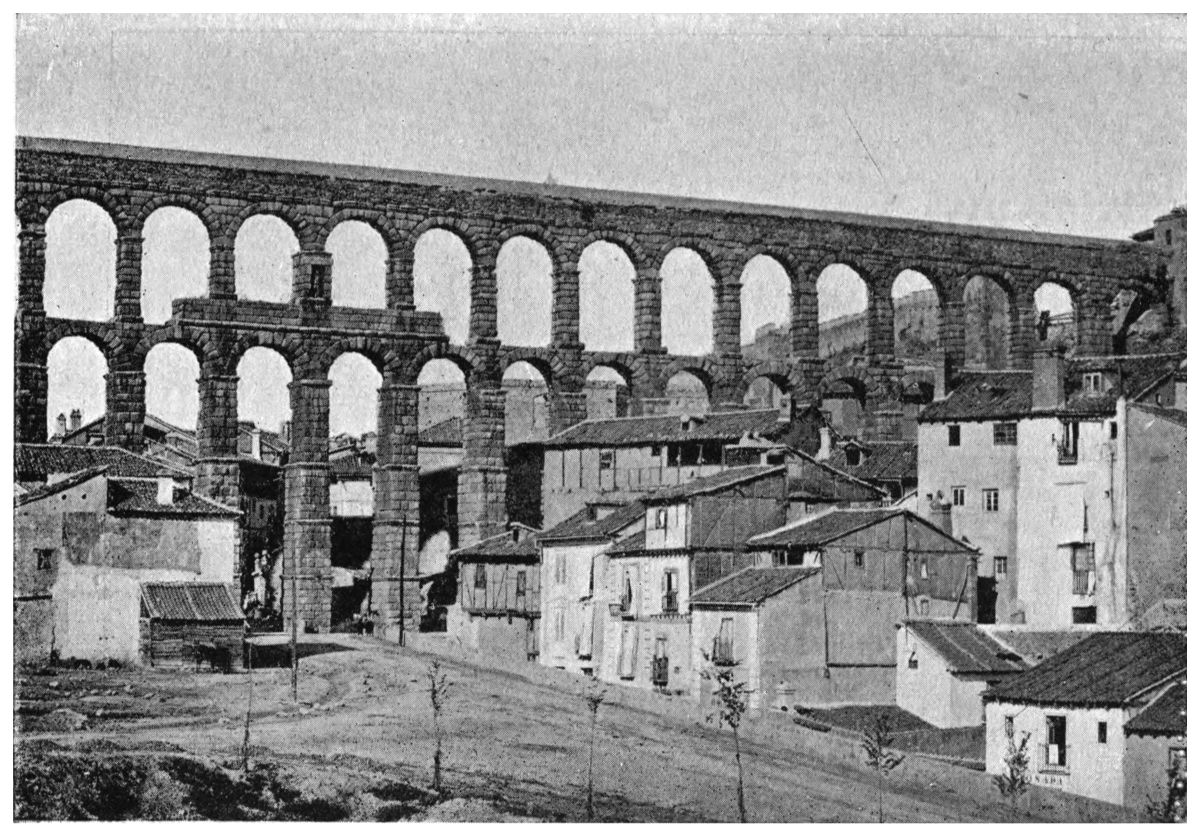
THE ROMAN AQUEDUCT
SEGOVIA
Plate 148
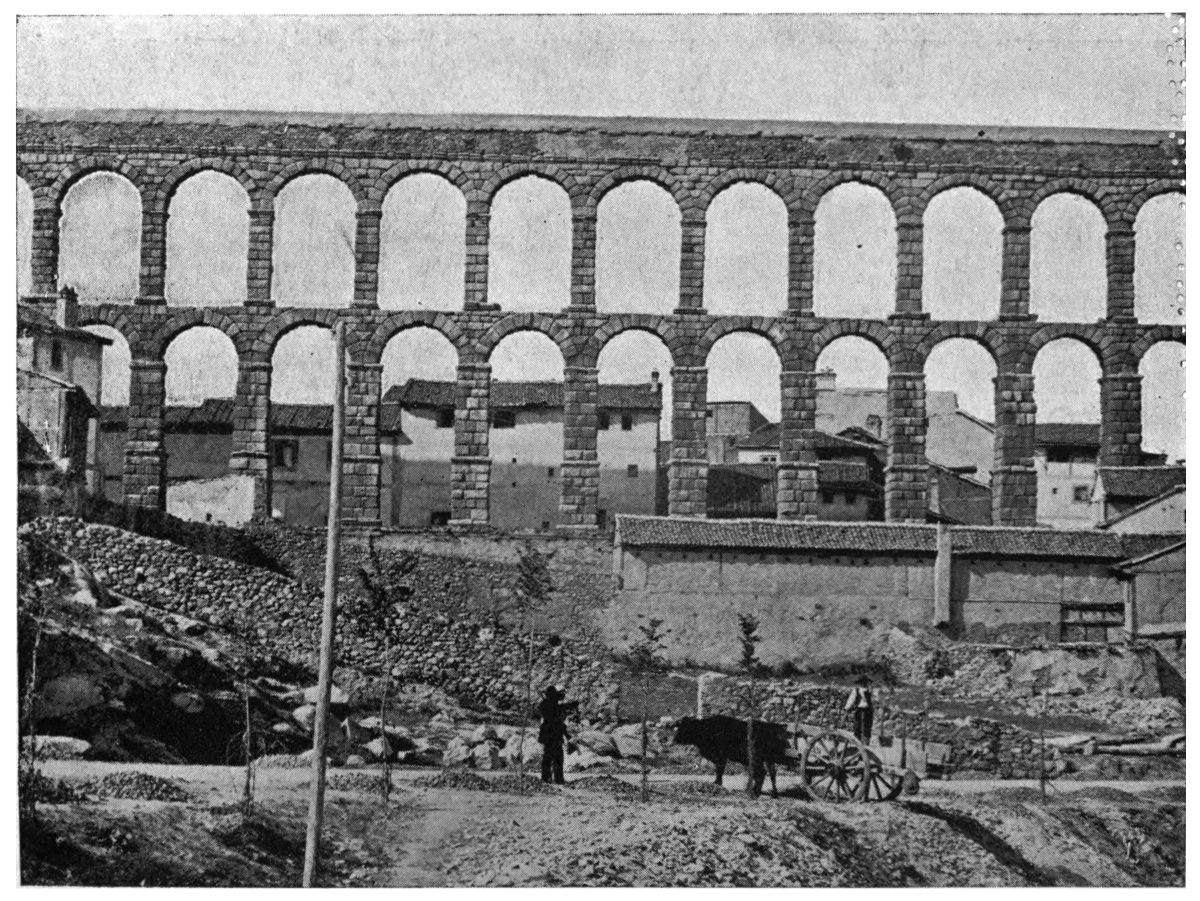
THE ROMAN AQUEDUCT
Plate 149
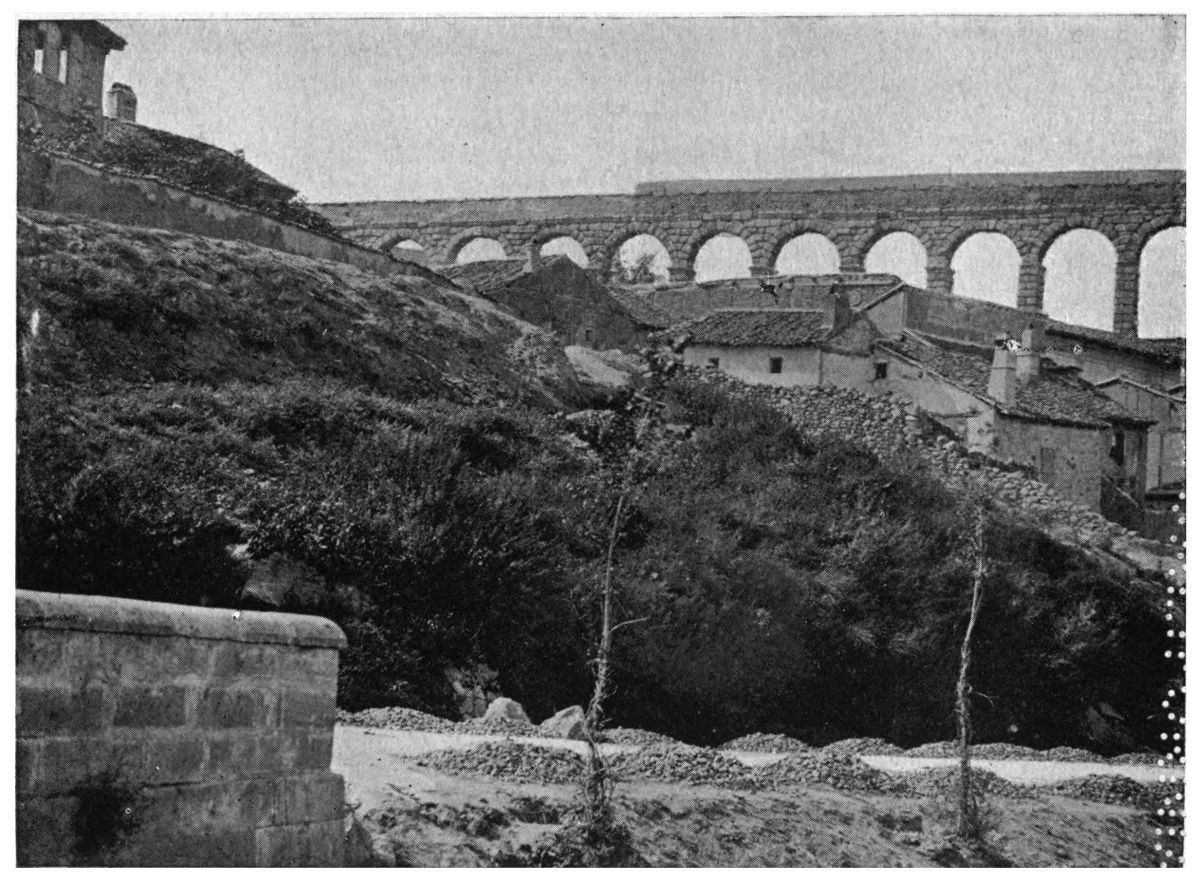
THE ROMAN AQUEDUCT
SEGOVIA
Plate 150
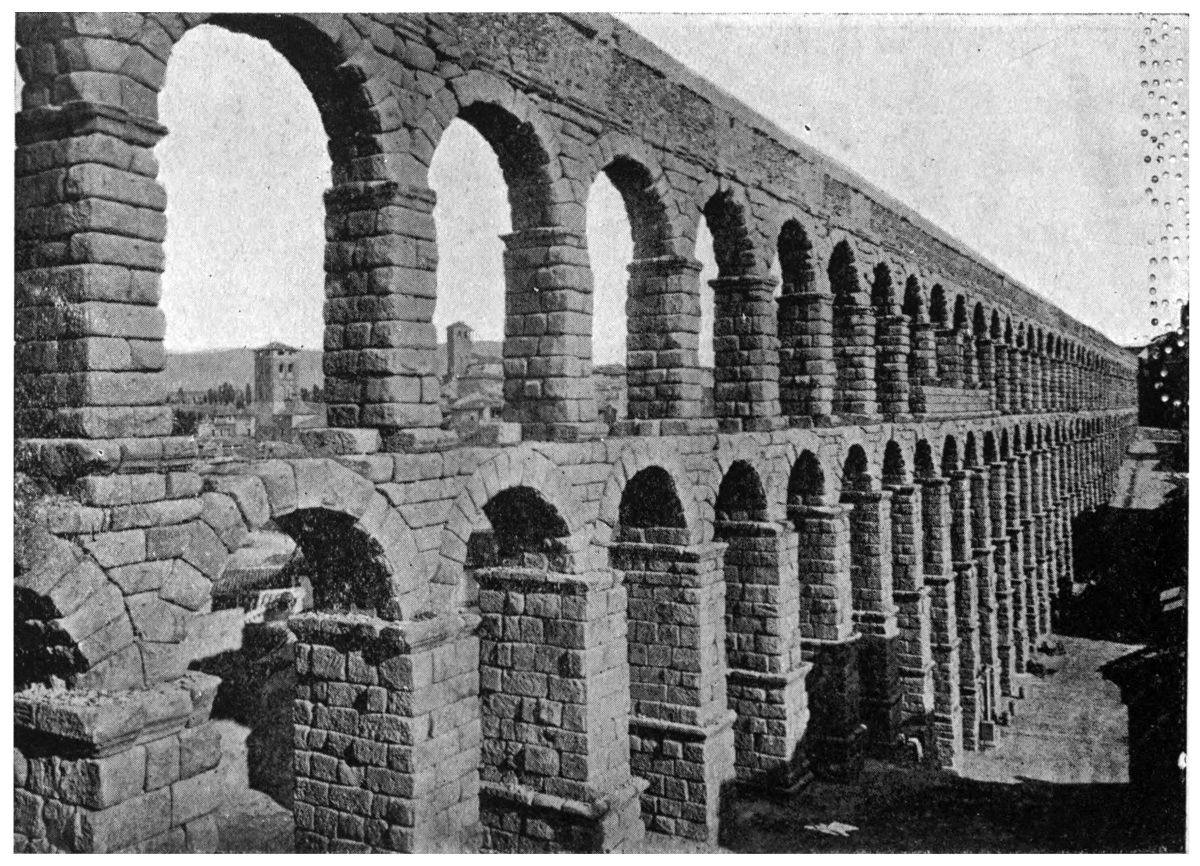
THE ROMAN AQUEDUCT
SEGOVIA
Plate 151
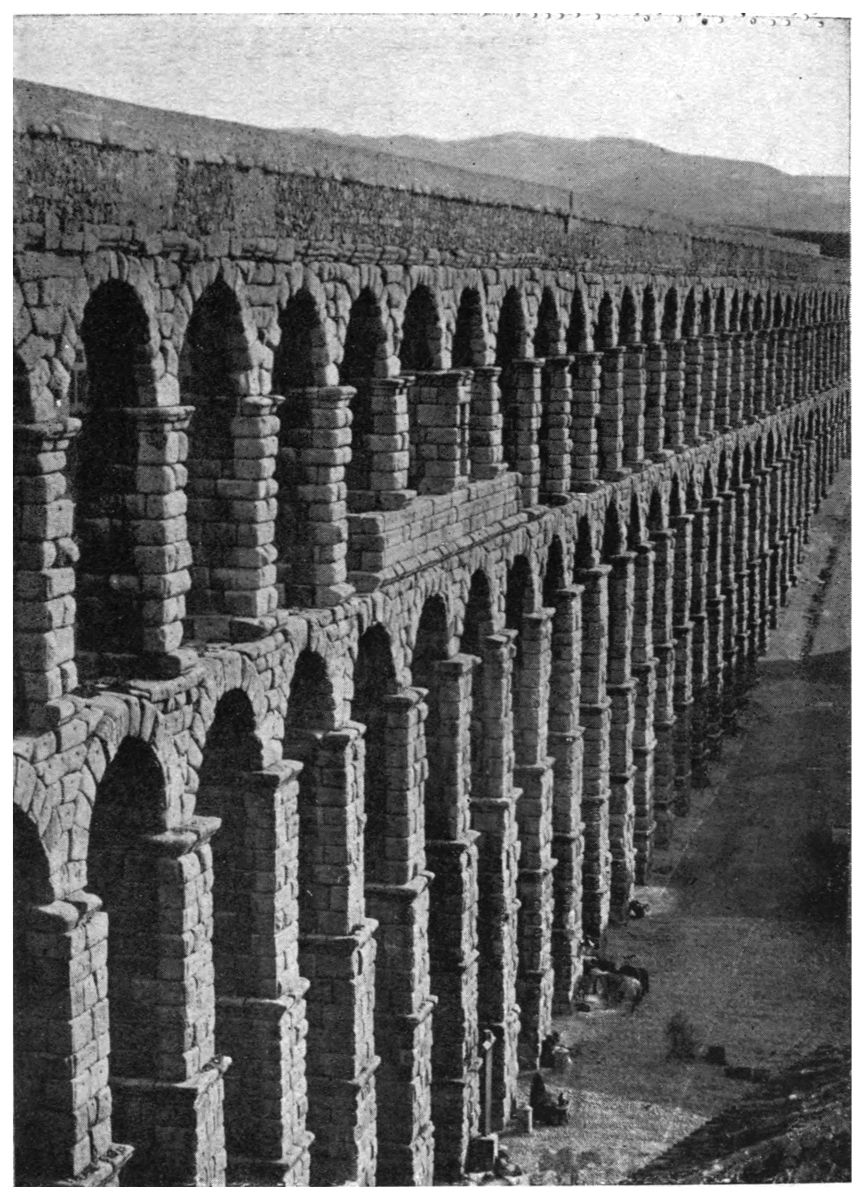
THE ROMAN AQUEDUCT
SEGOVIA
Plate 152
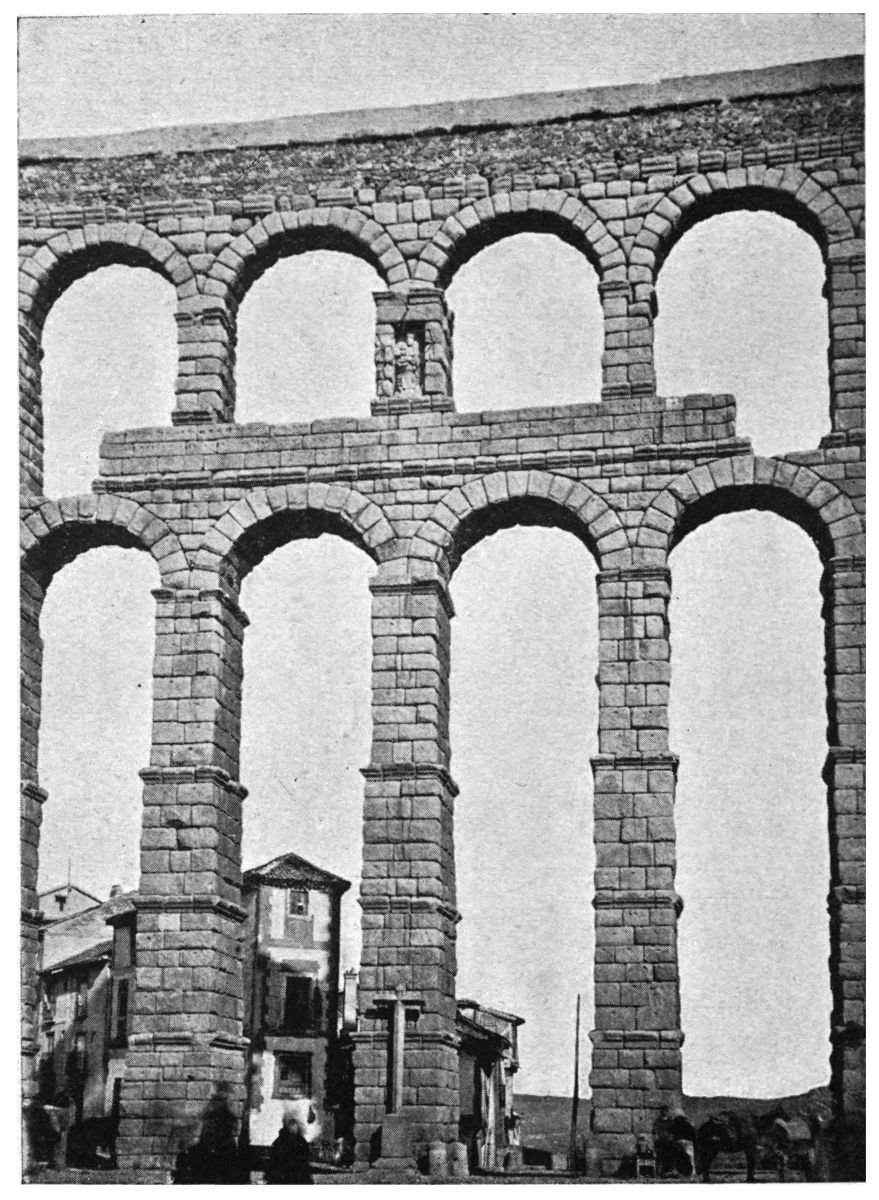
THE ROMAN AQUEDUCT
SEGOVIA
Plate 153
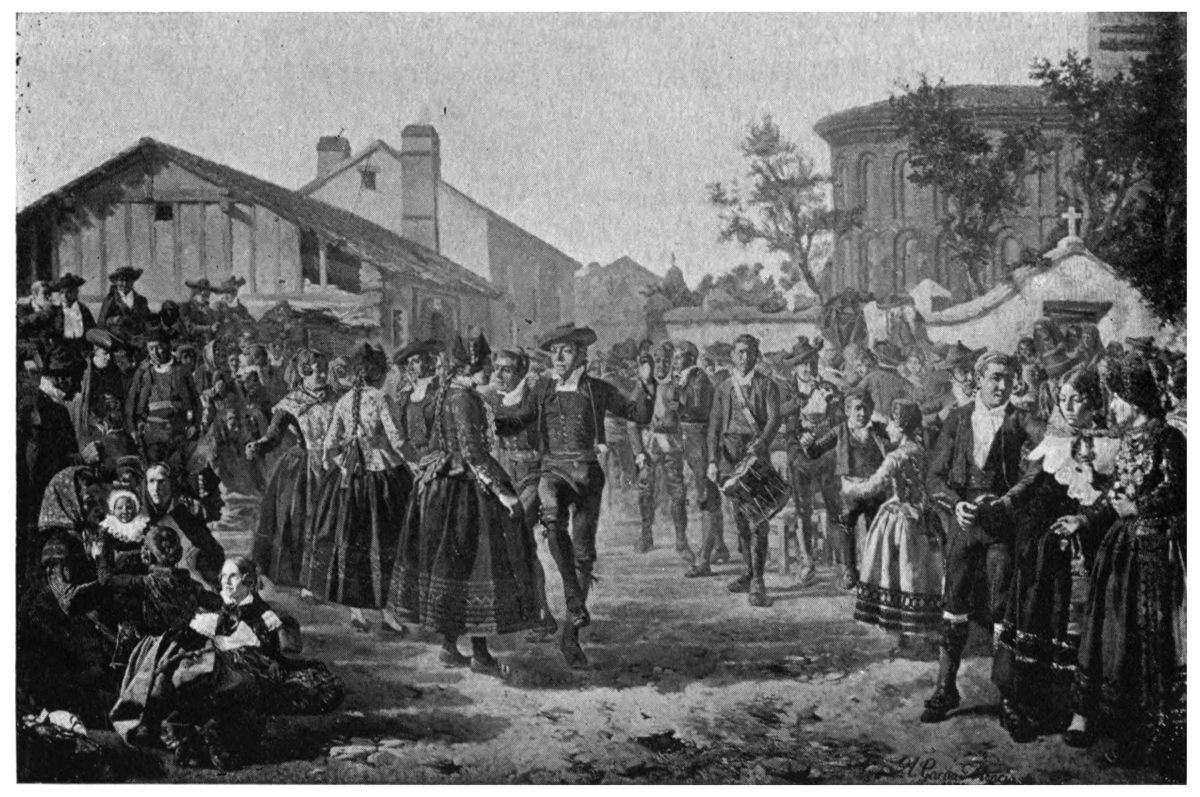
A DANCE IN THE PLAZA DEL PUEBLO DE NIEVA, SEGOVIA. BY A. GARCIA MENCIA.
(No. 181, EXHIBITION OF 1871)
Plate 154
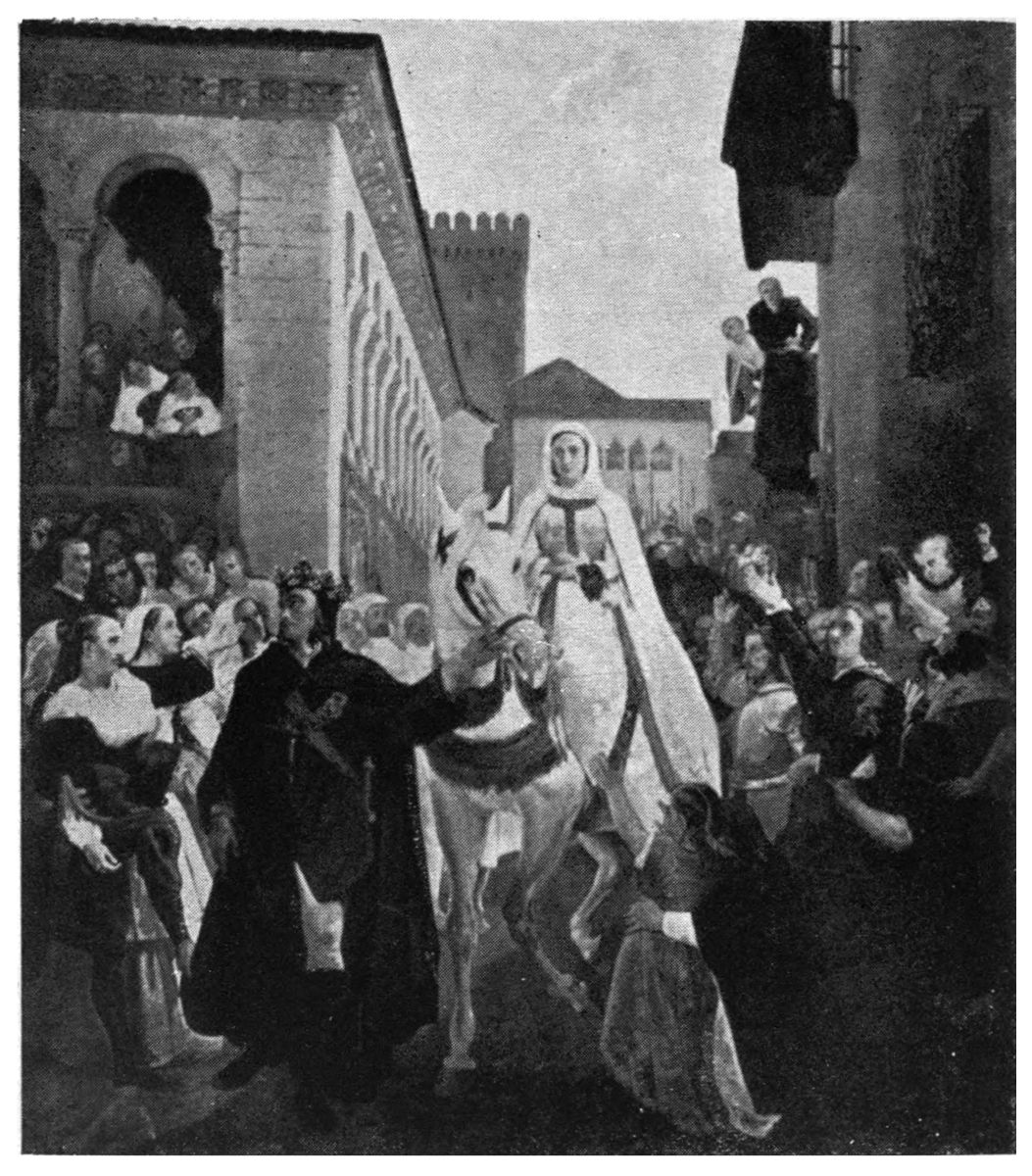
ENRIQUE IV. CONDUCTING THE INFANTA ISABEL THROUGH THE STREETS OF
SEGOVIA
Plate 155
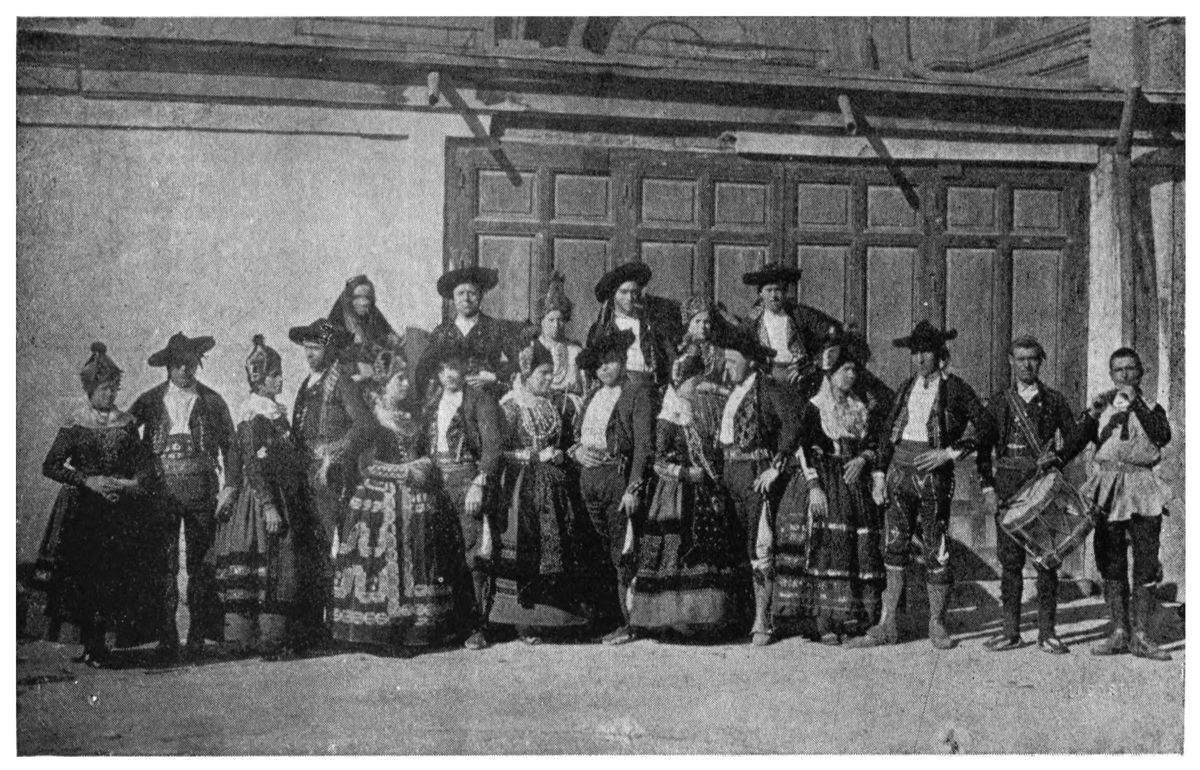
GROUP OF PEASANTS OF THE PROVINCE
SEGOVIA
Plate 156
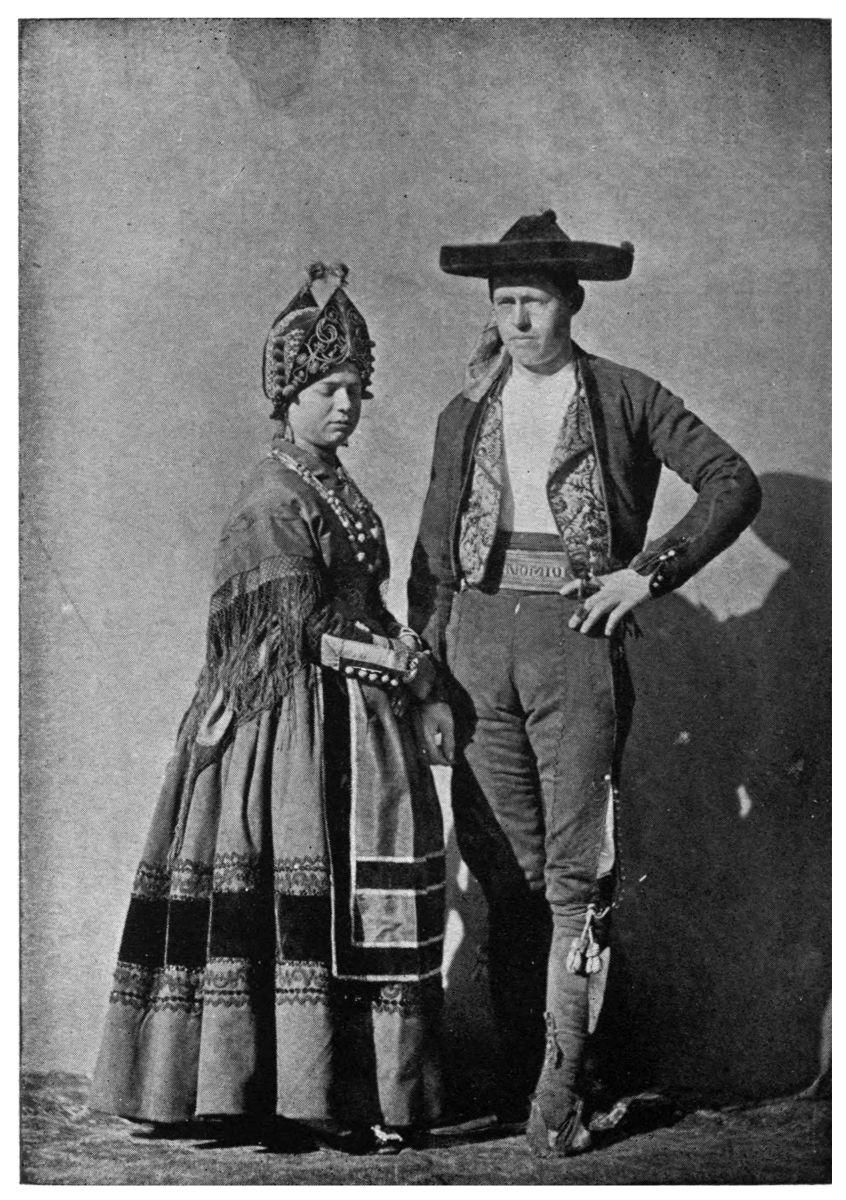
PEASANTS OF THE PROVINCE
SEGOVIA
Plate 157
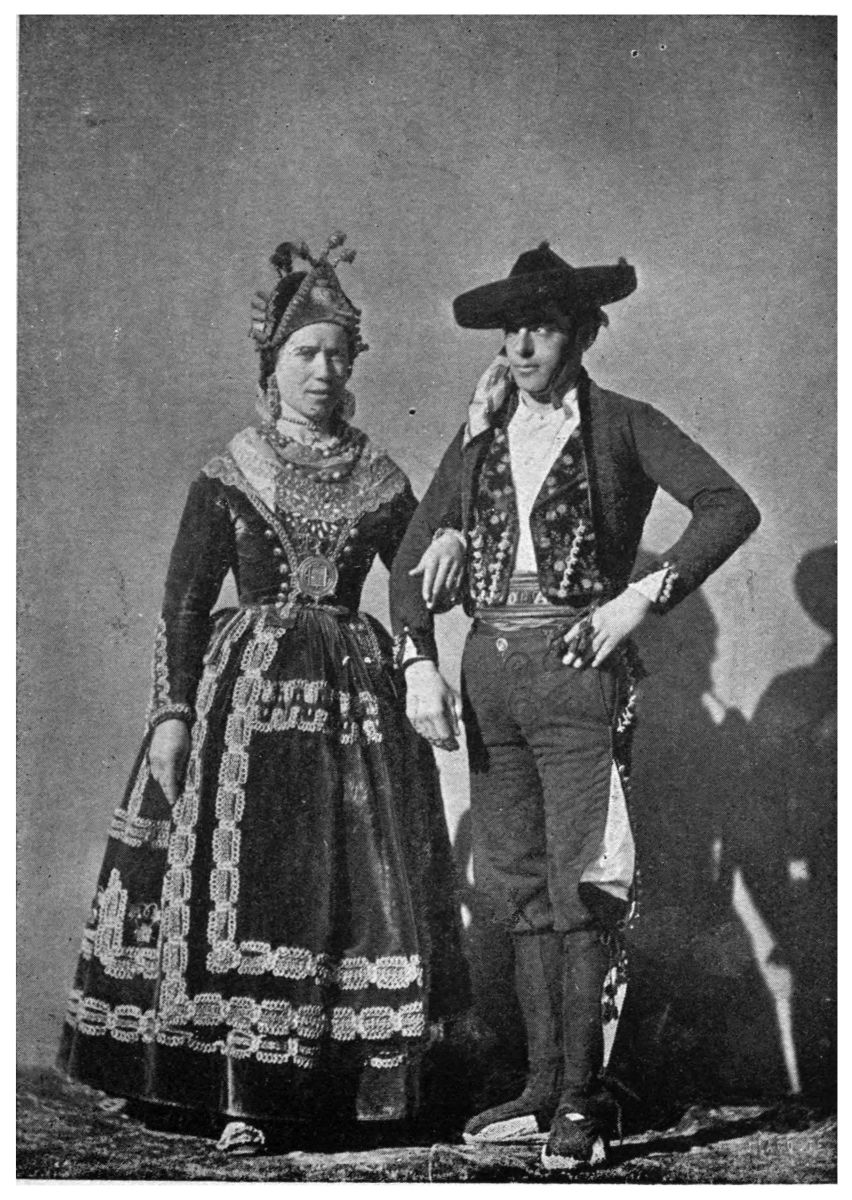
PEASANTS OF THE PROVINCE
SEGOVIA
Plate 158
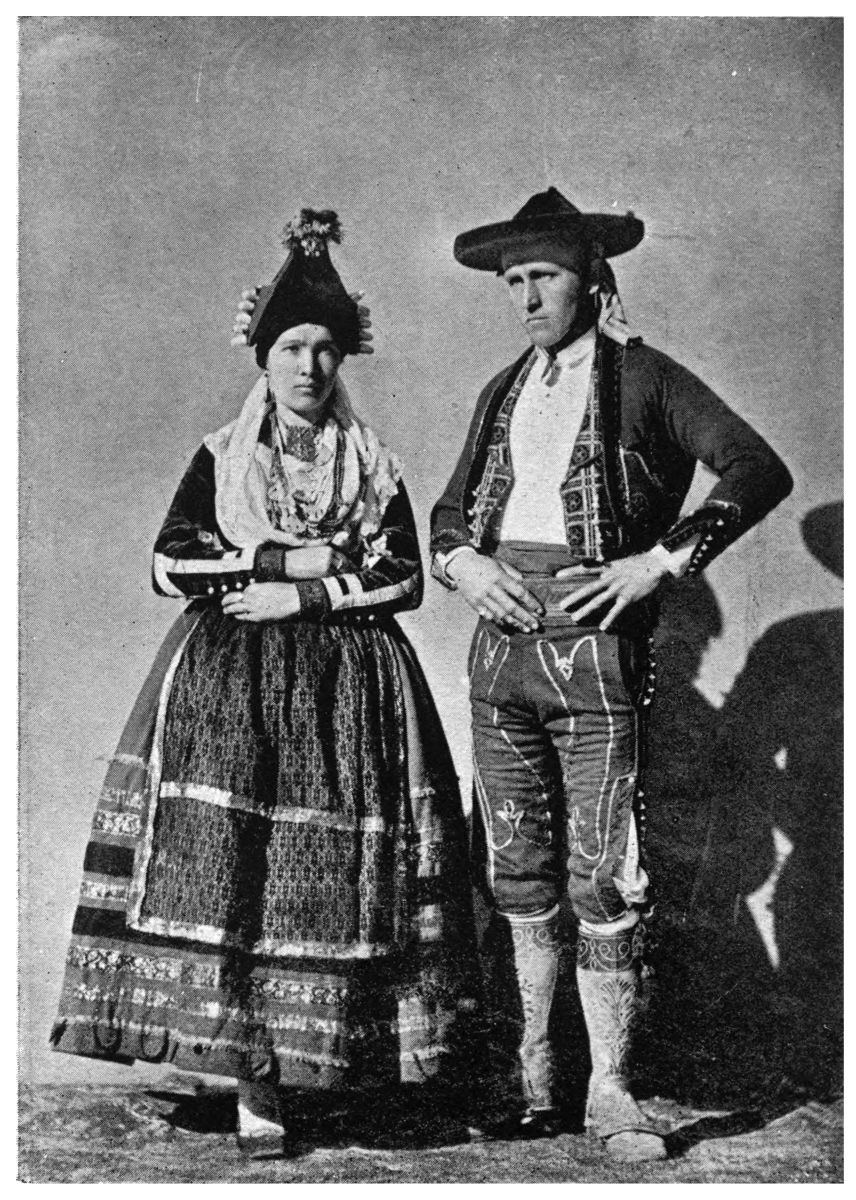
PEASANTS OF THE PROVINCE
SEGOVIA
Plate 159
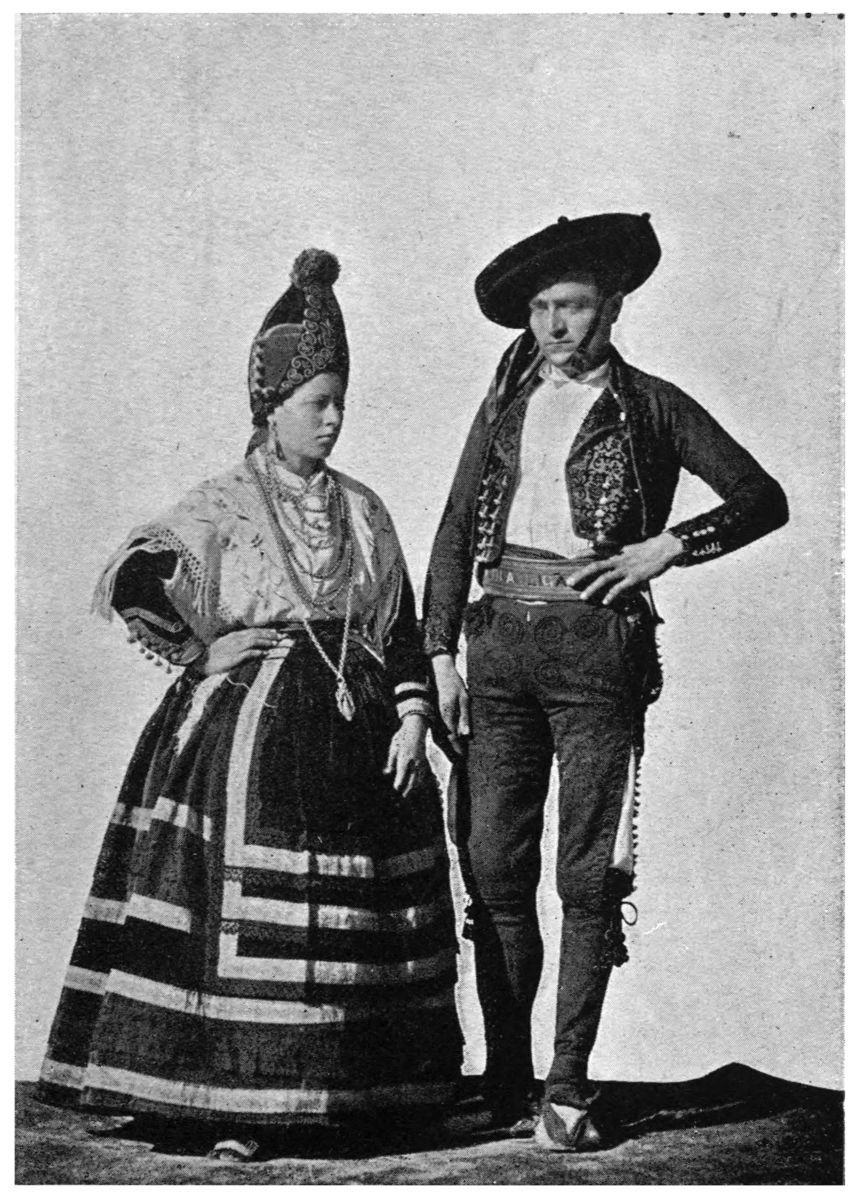
PEASANTS OF THE PROVINCE
SEGOVIA
Plate 160
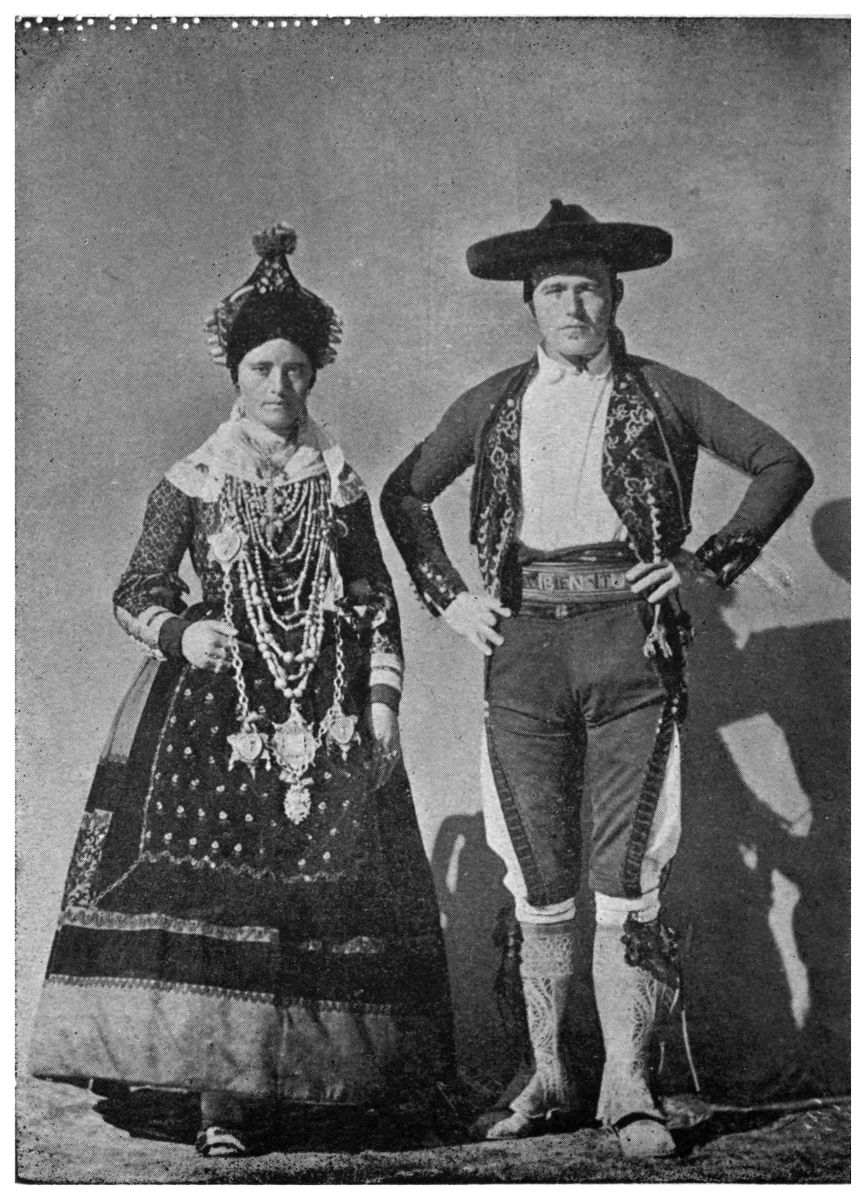
PEASANTS OF THE PROVINCE
SEGOVIA
Plate 161
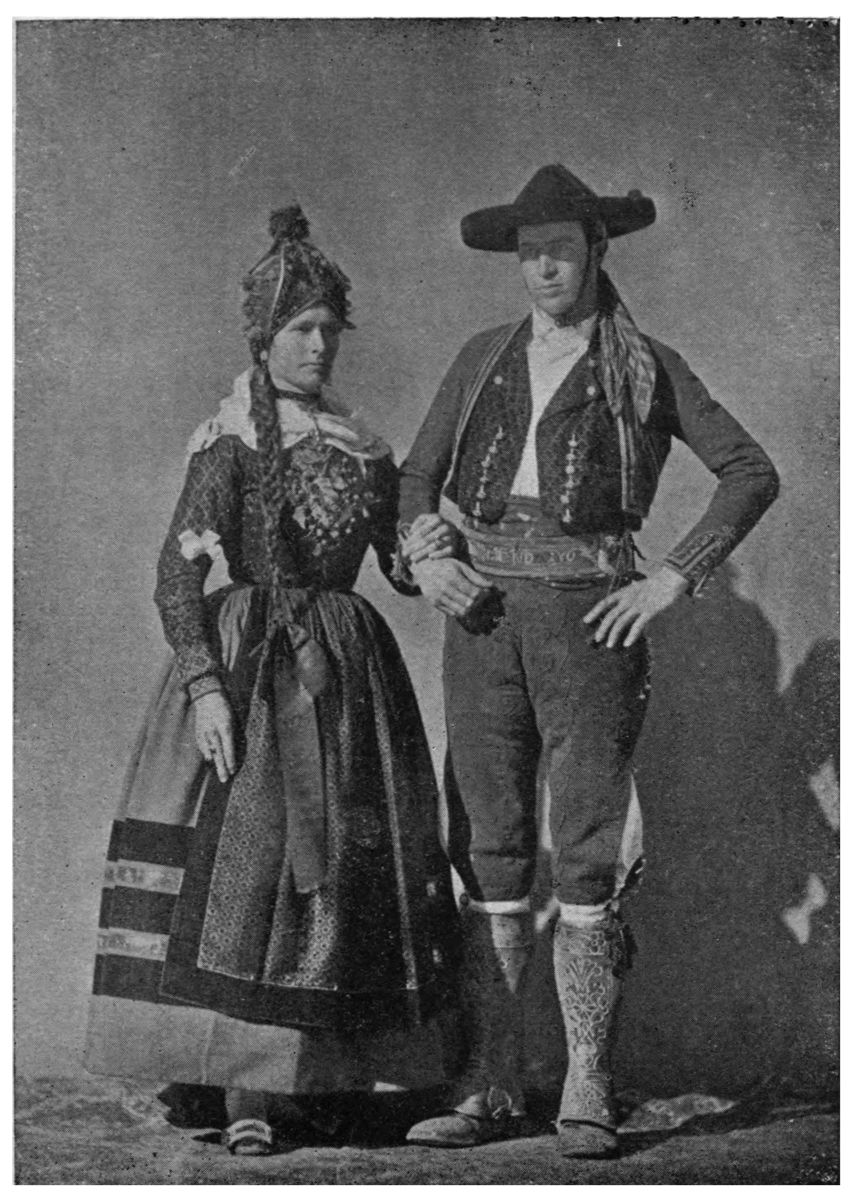
PEASANTS OF THE PROVINCE
SEGOVIA
Plate 162
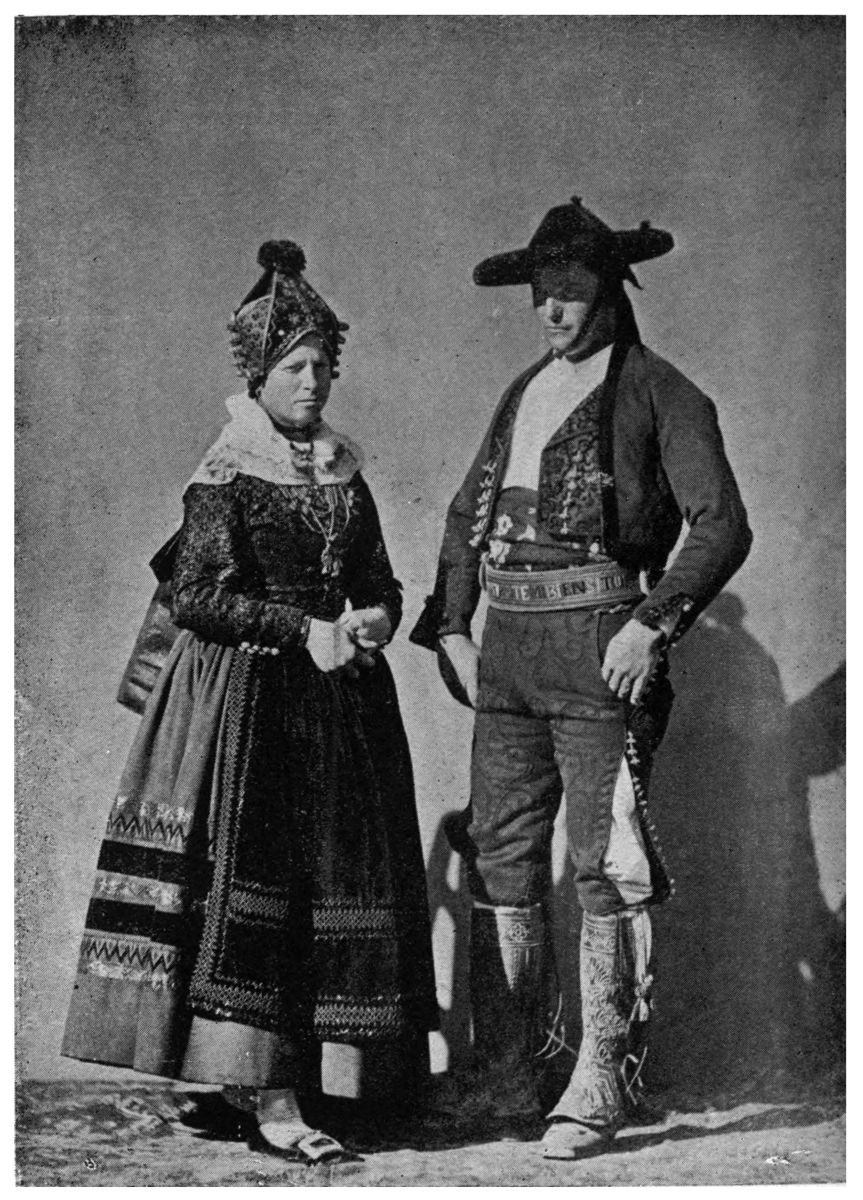
PEASANTS OF THE PROVINCE
SEGOVIA
Plate 163
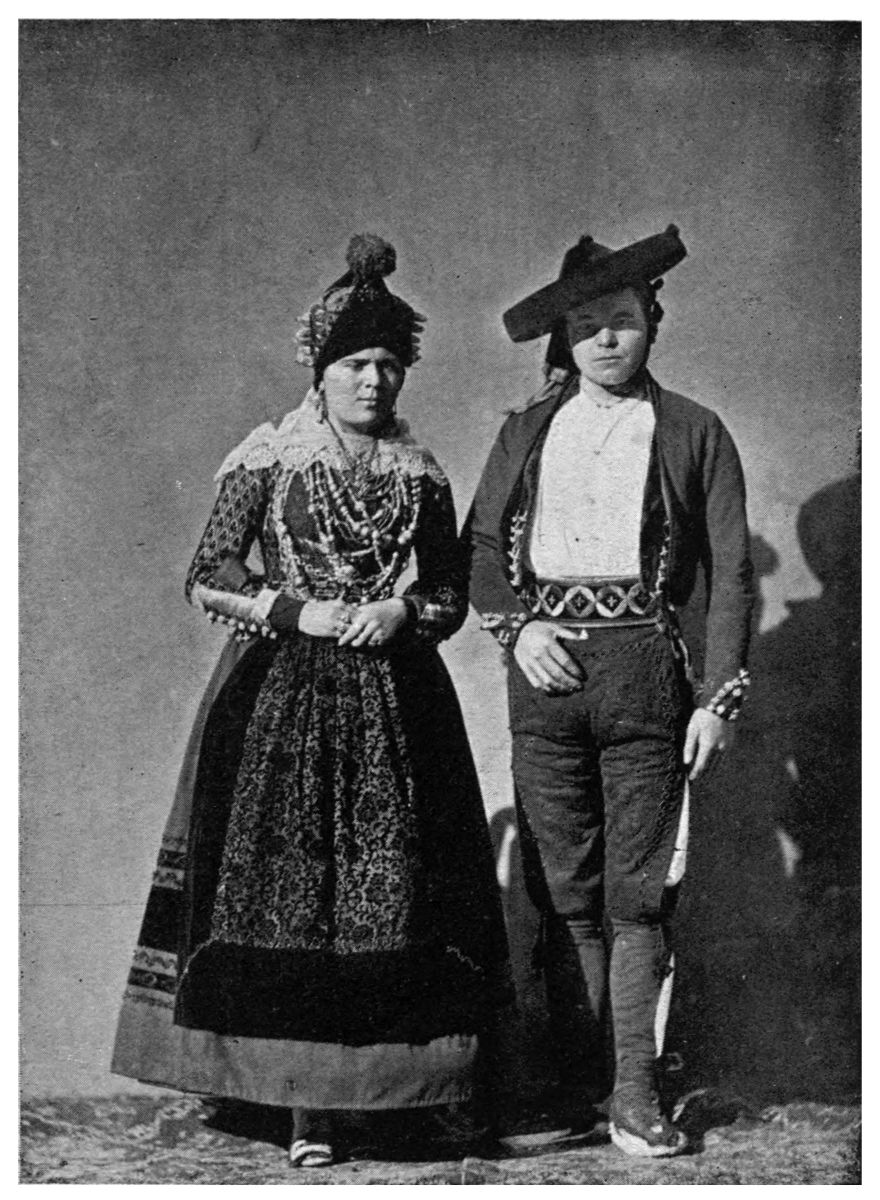
PEASANTS OF THE PROVINCE
SEGOVIA
Plate 164
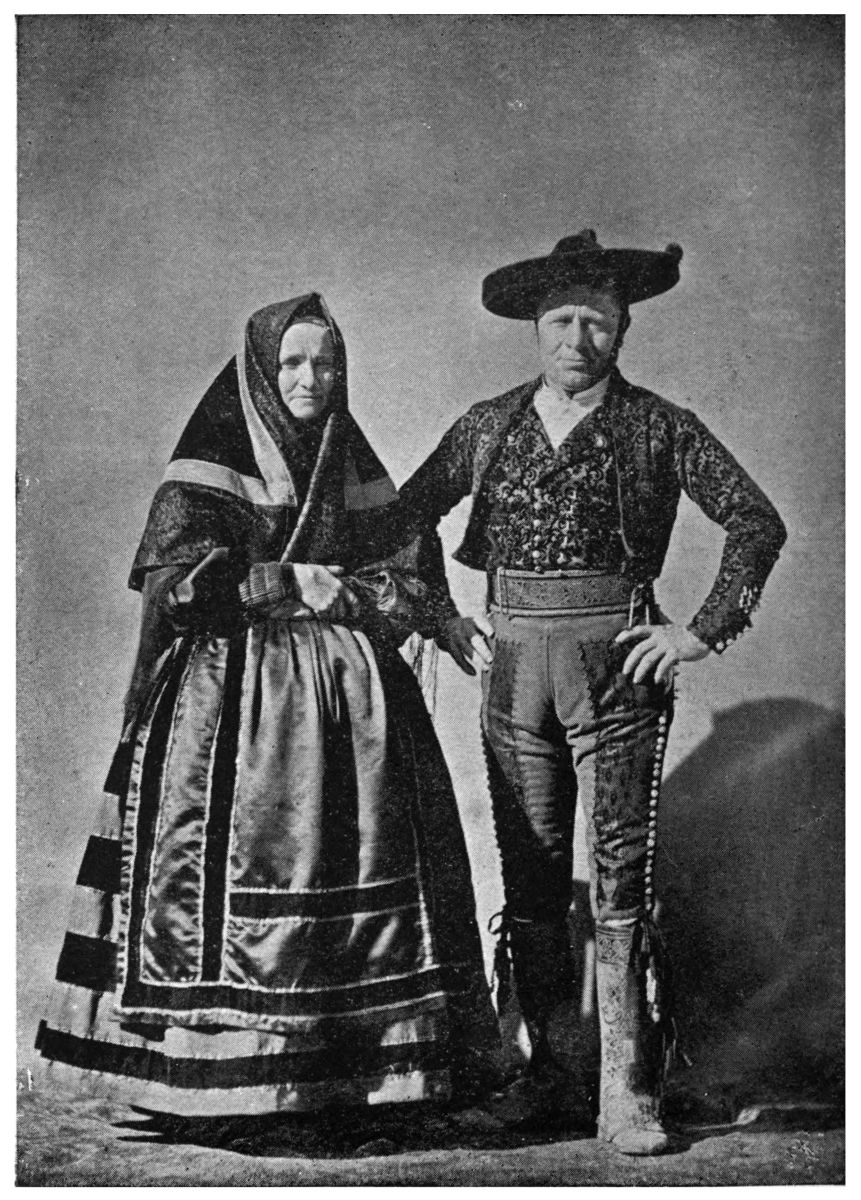
PEASANTS OF THE PROVINCE
SEGOVIA
Plate 165
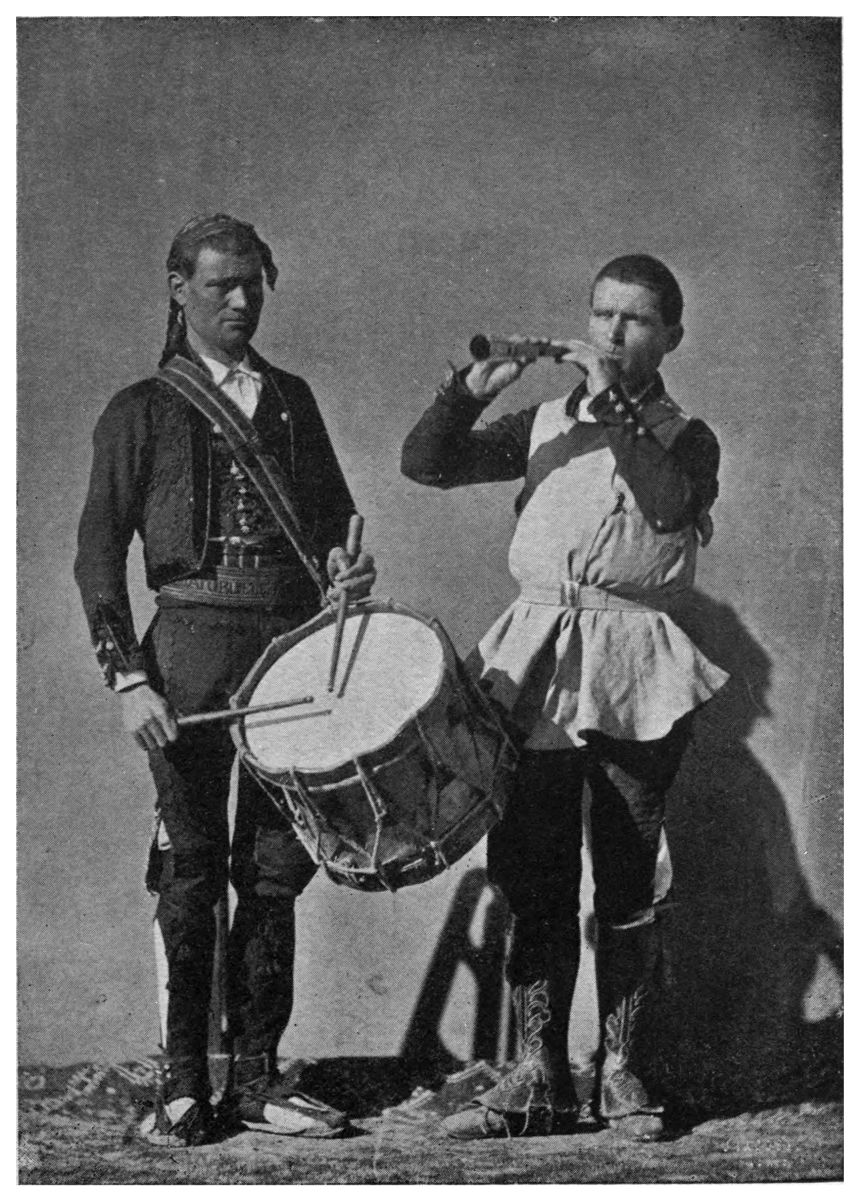
PEASANTS OF THE PROVINCE
SEGOVIA
Plate 166
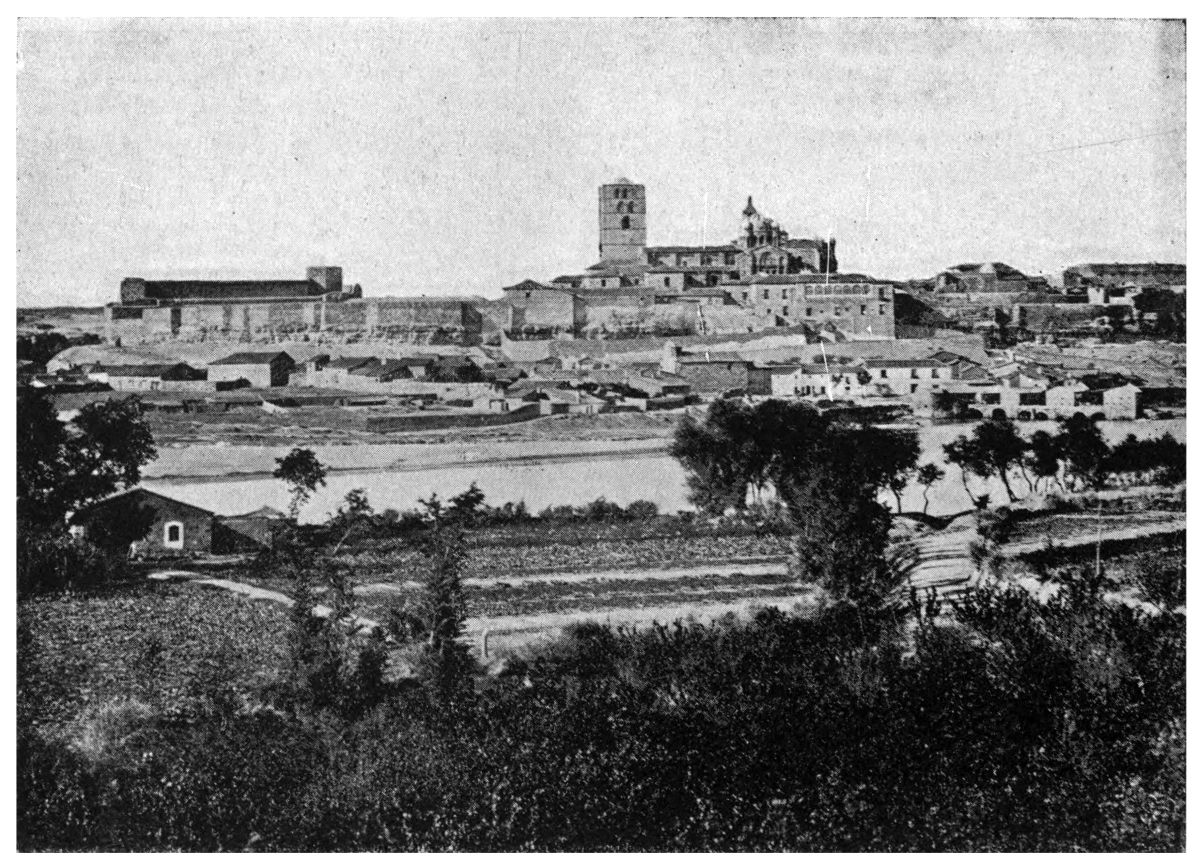
VIEW OF ZAMORA
Plate 167
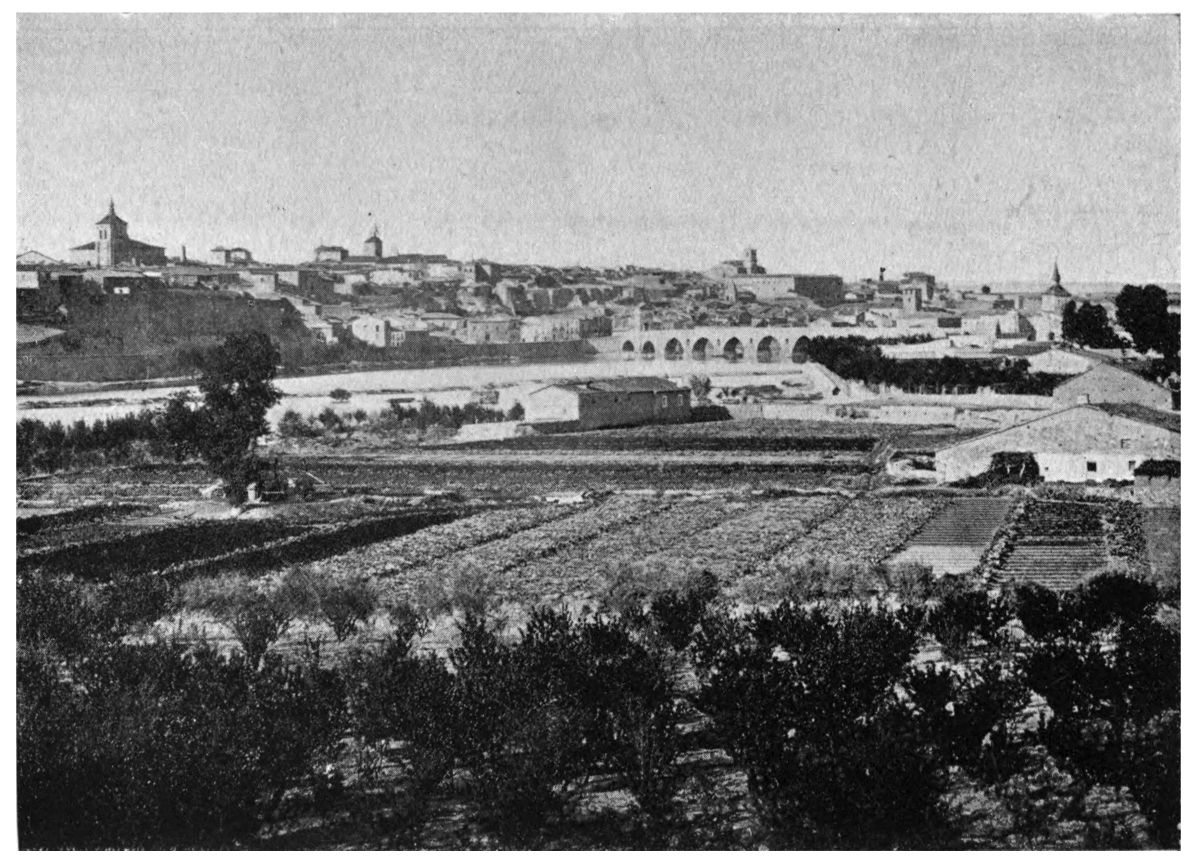
VIEW OF ZAMORA
Plate 168
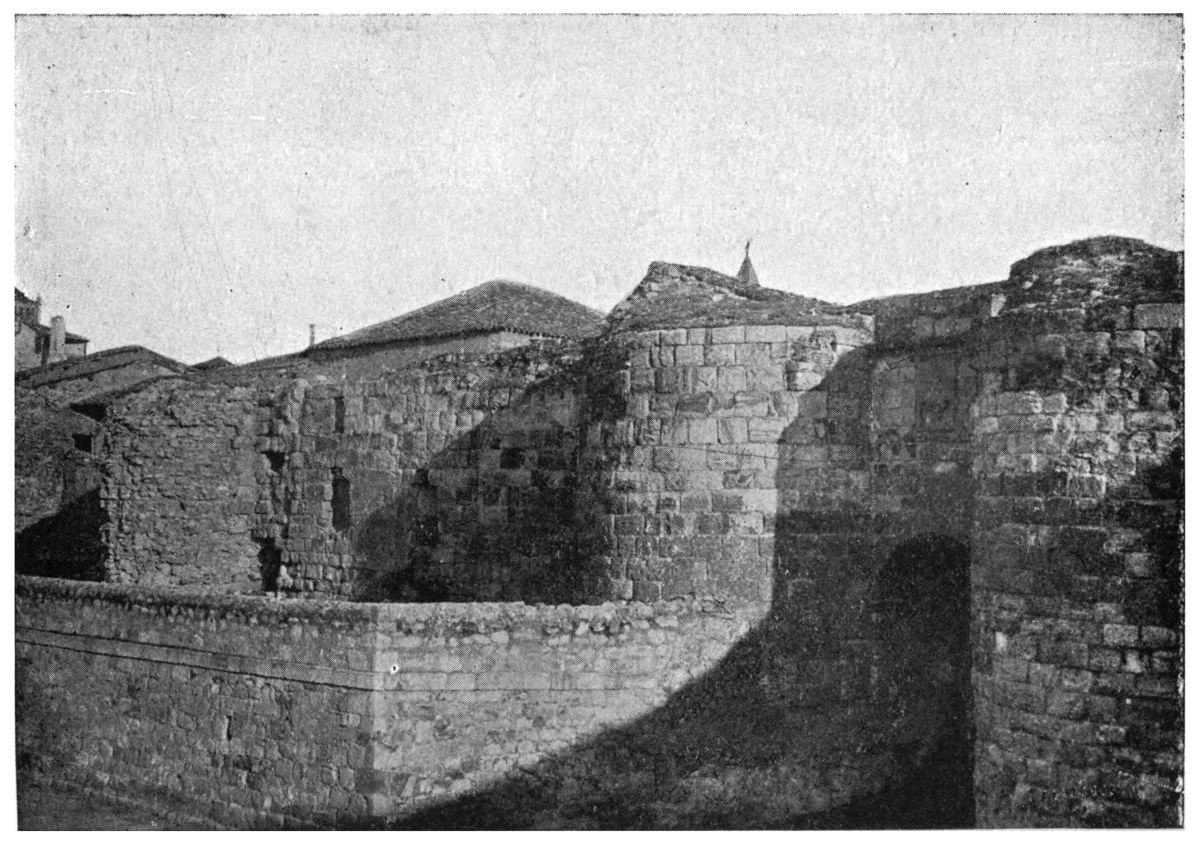
WALLS AND POSTERN GATE WITH THE HOUSE OF DOÑA URRACA
ZAMORA
Plate 169
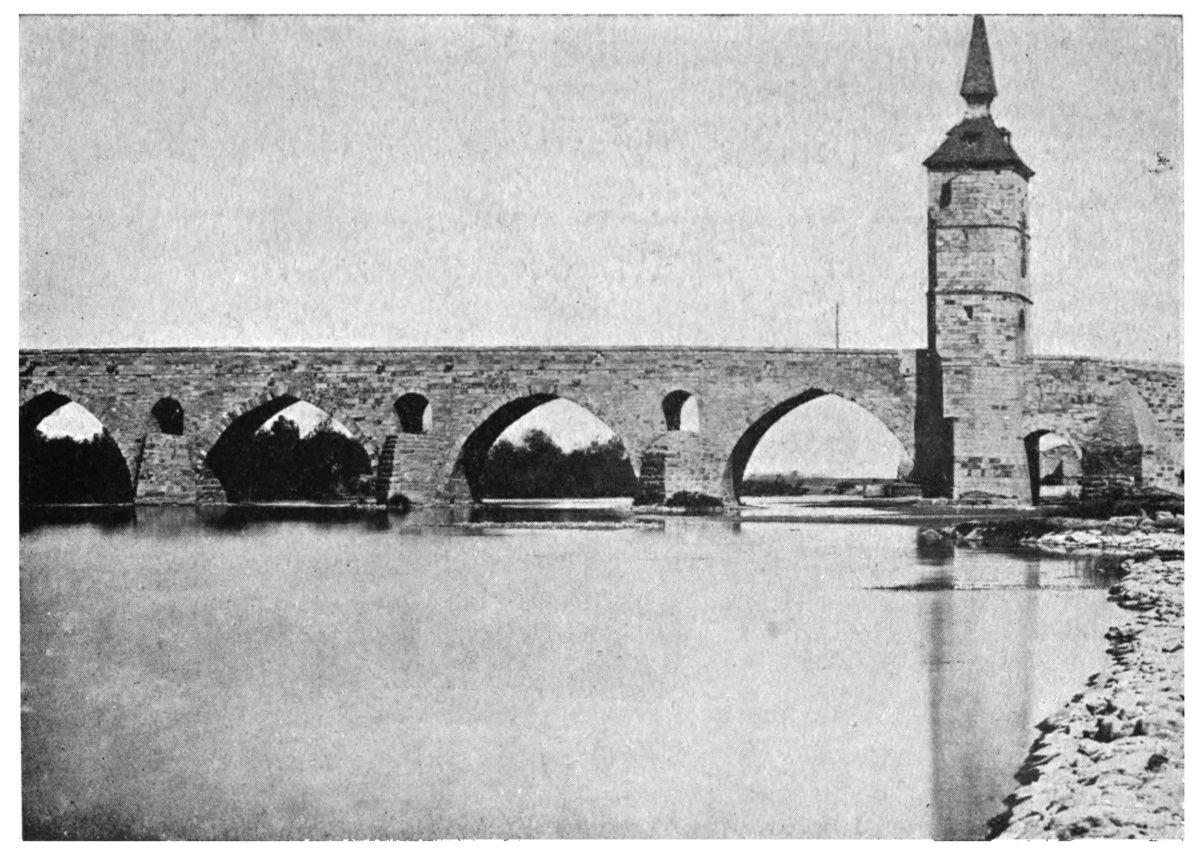
STONE BRIDGE OVER THE DUERO
ZAMORA
Plate 170
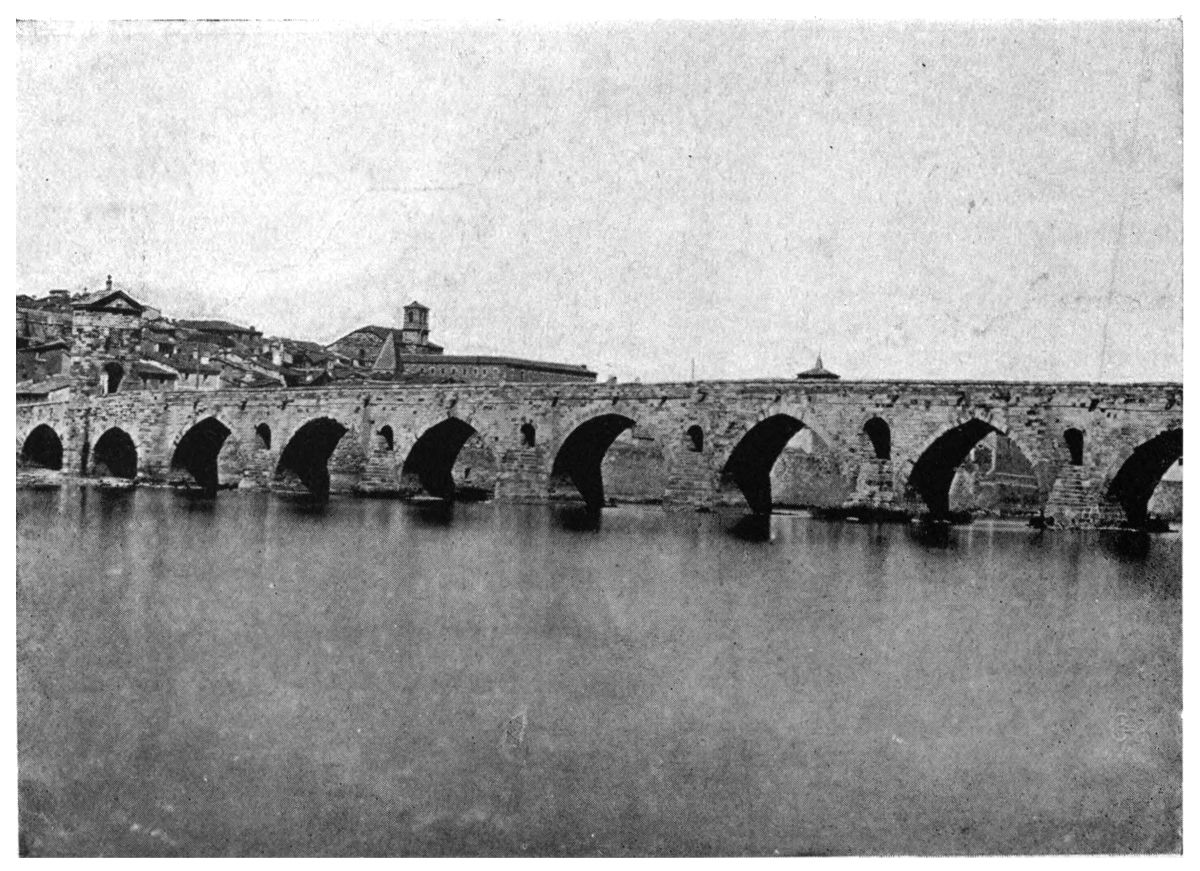
BRIDGE OVER THE DUERO
ZAMORA
Plate 171
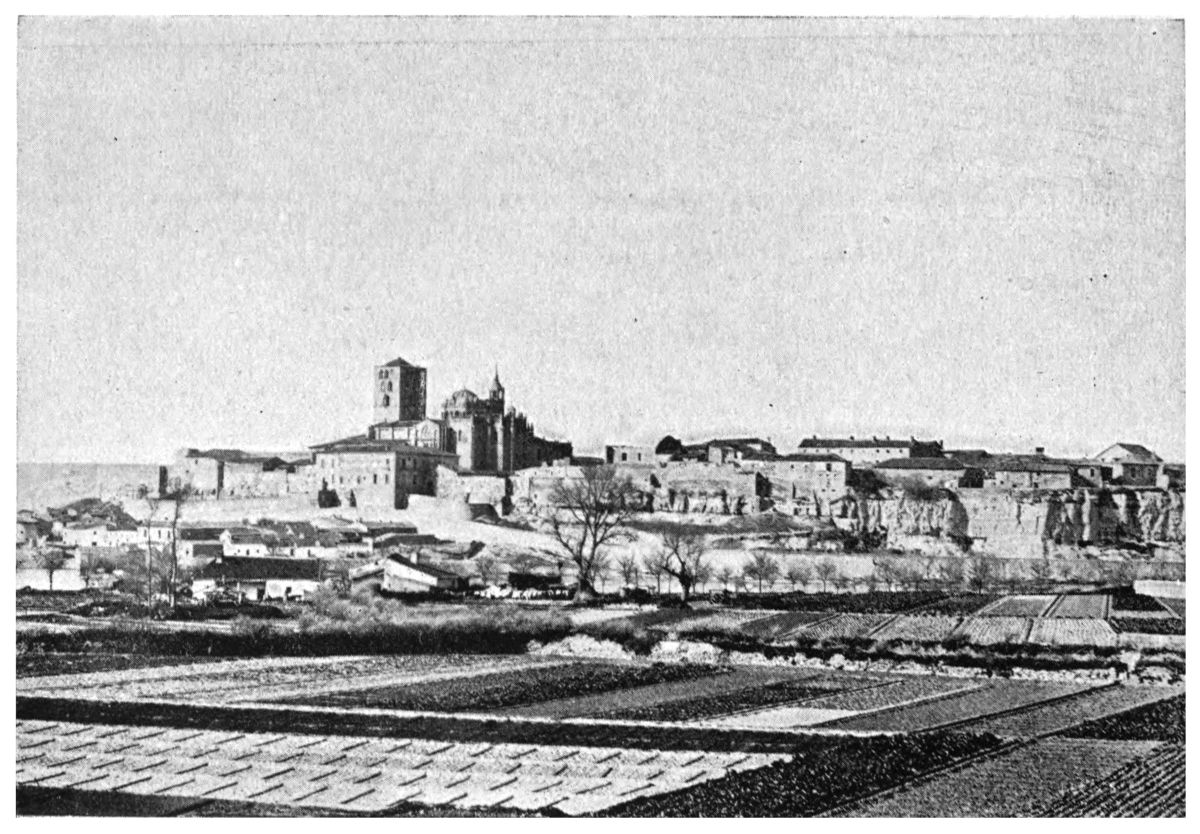
VIEW OF THE CATHEDRAL
ZAMORA
Plate 172
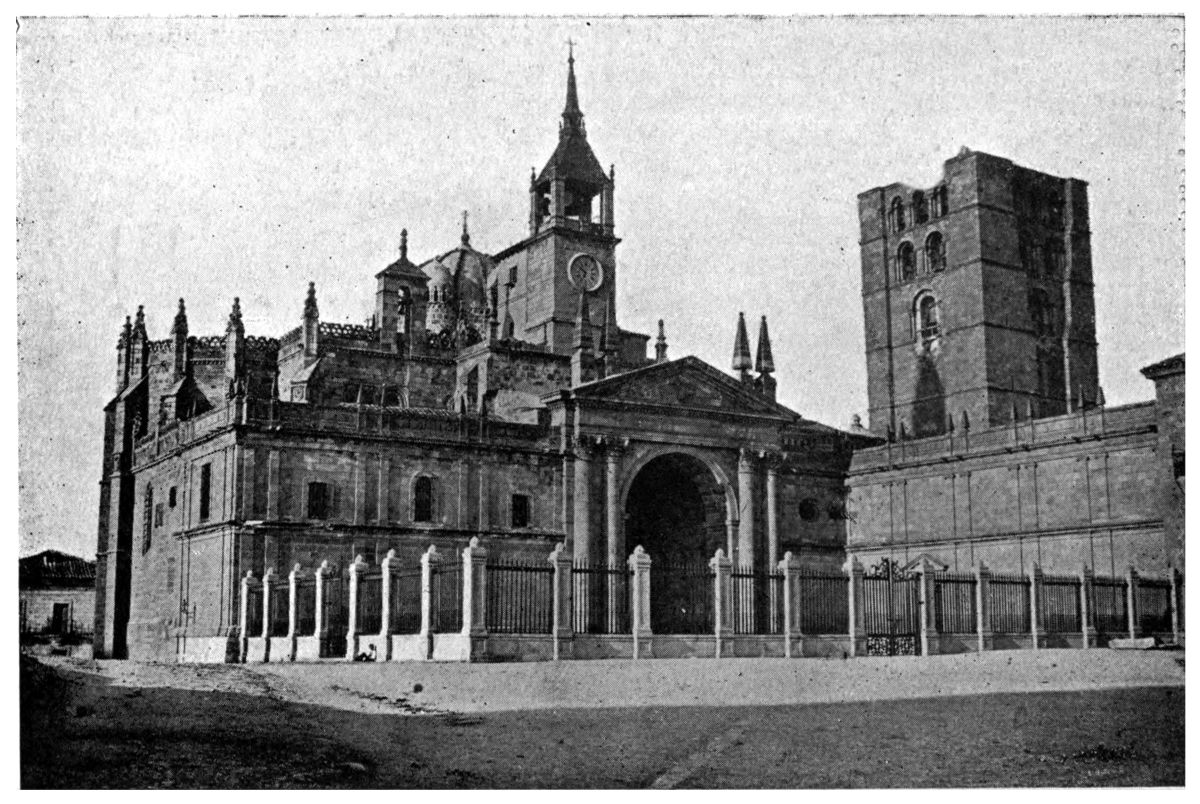
FAÇADE OF THE CATHEDRAL
ZAMORA
Plate 173
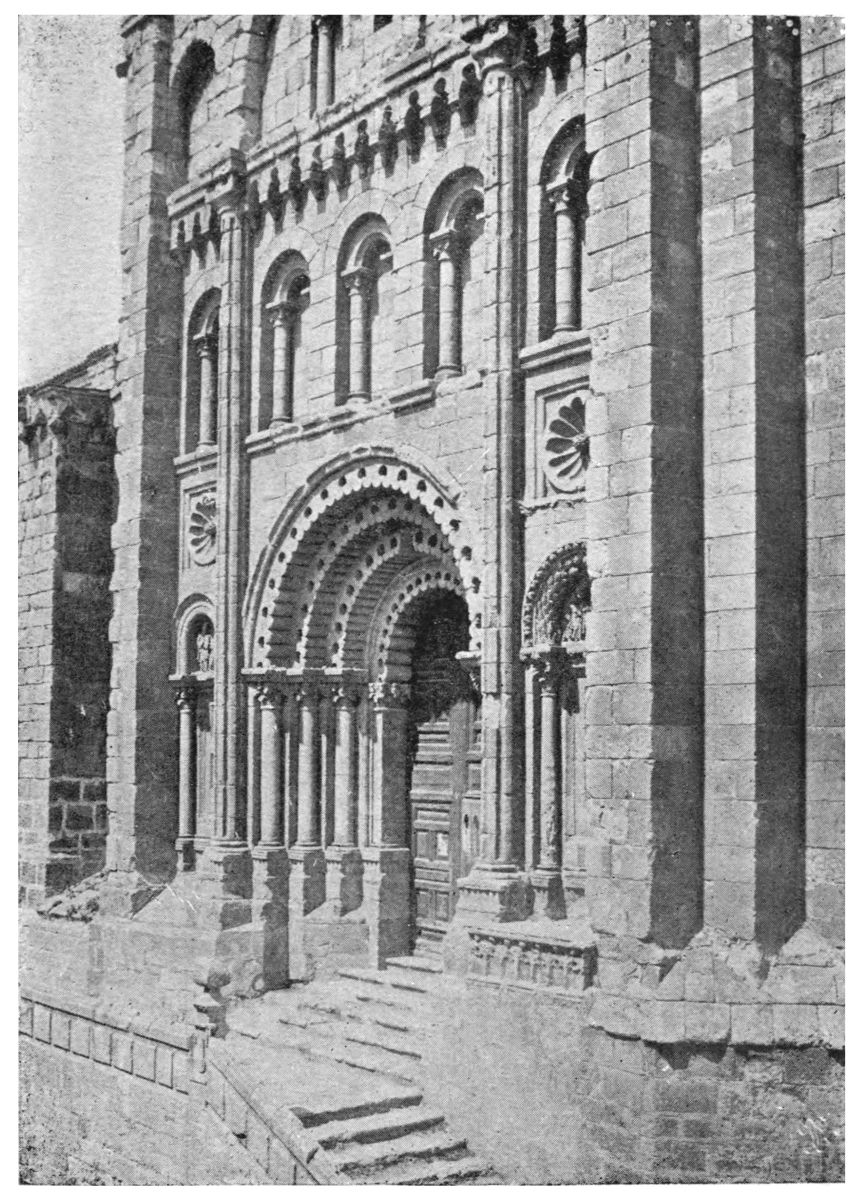
CATHEDRAL. GATE OF THE BISHOP
ZAMORA
Plate 174
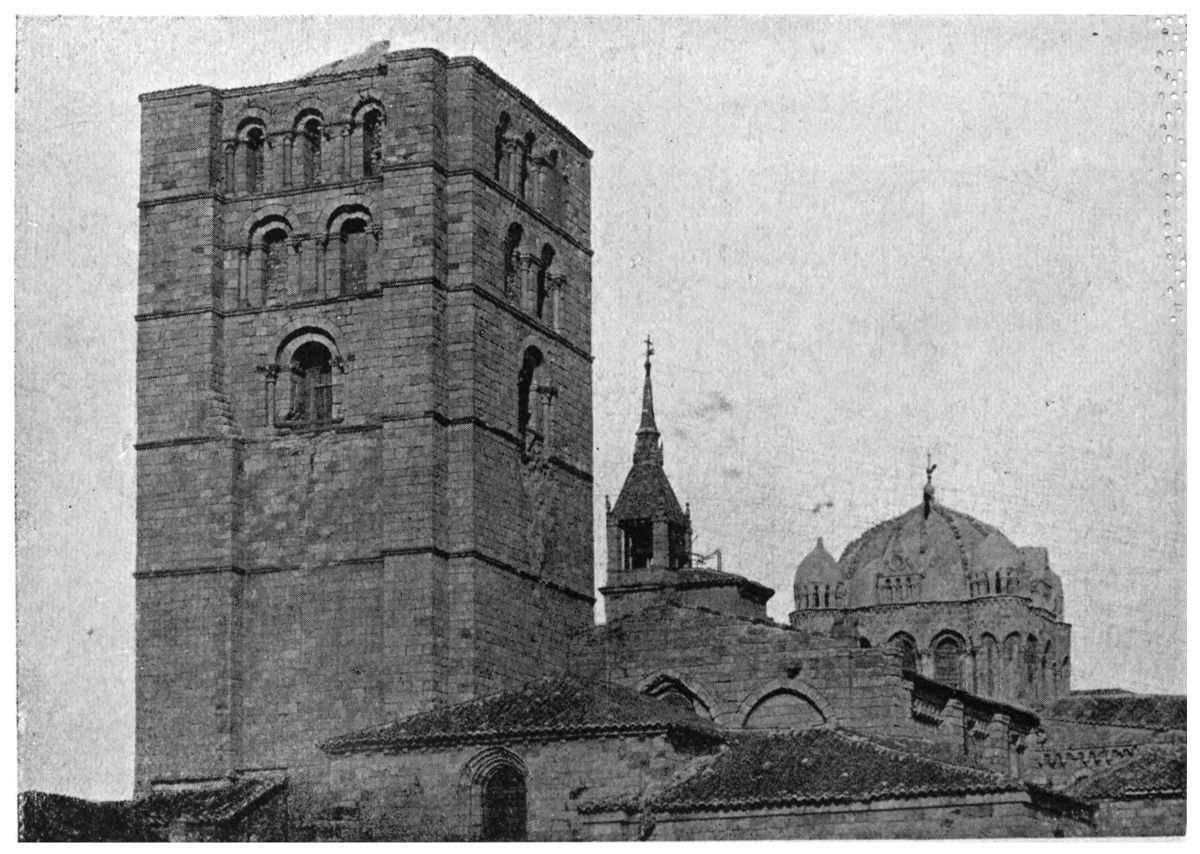
THE CATHEDRAL. EAST FRONT
ZAMORA
Plate 175
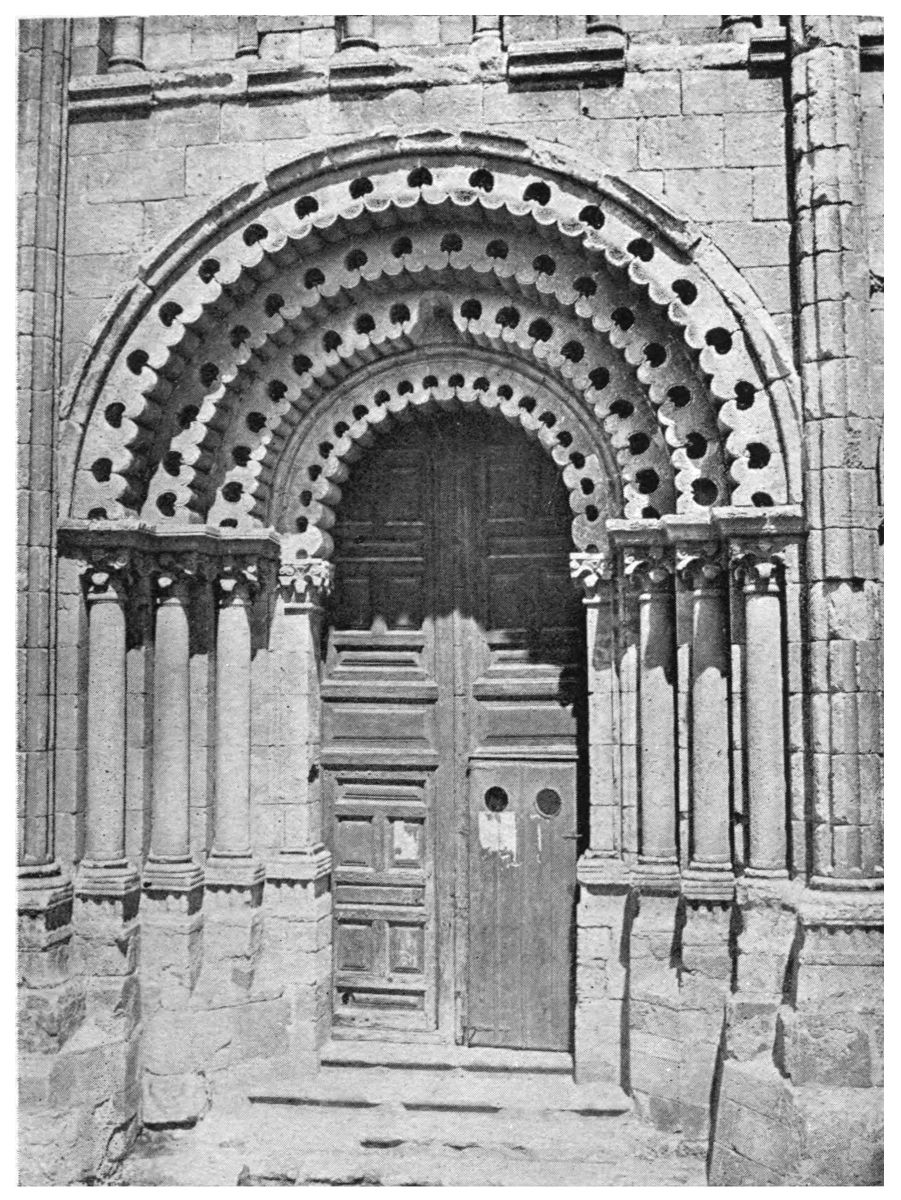
CATHEDRAL. GATE OF THE BISHOP
ZAMORA
Plate 176
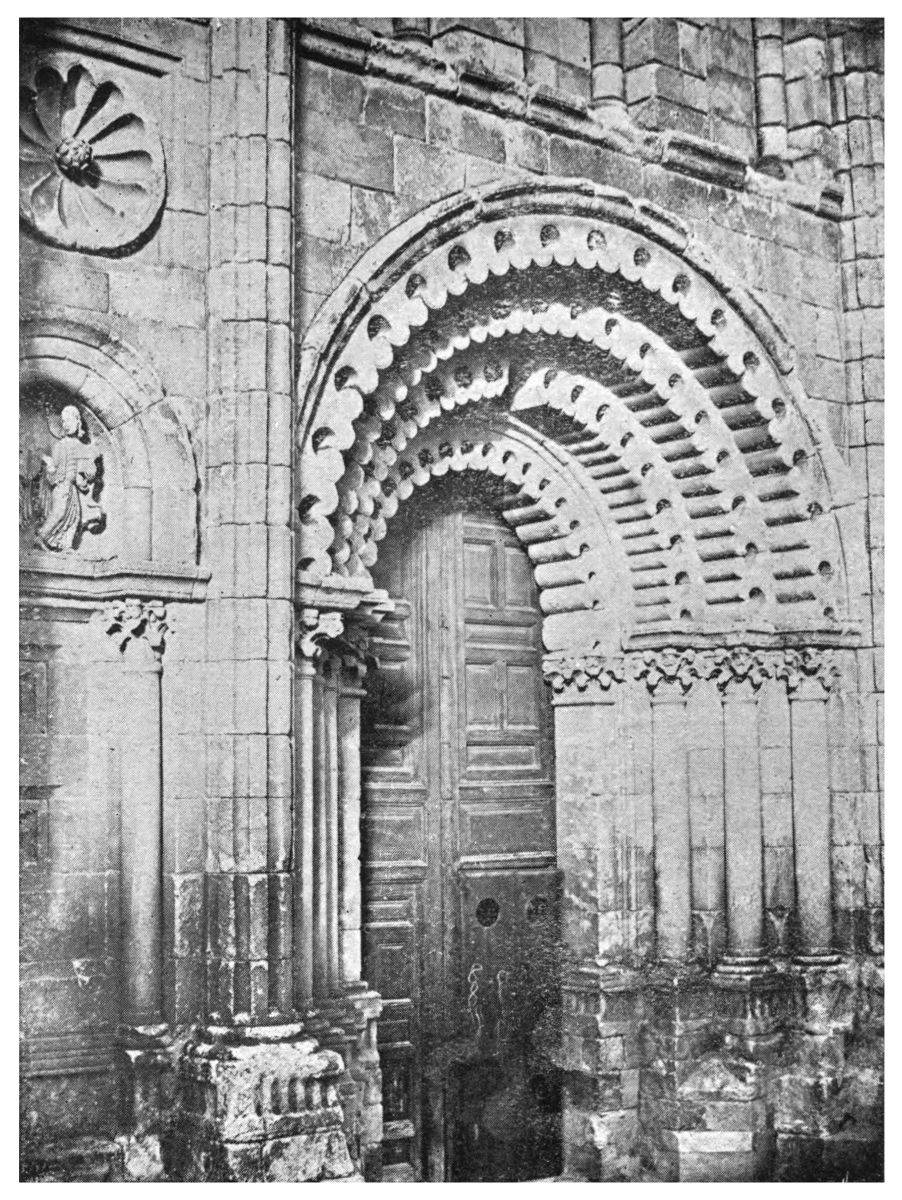
CATHEDRAL. GATE OF THE BISHOP
ZAMORA
Plate 177
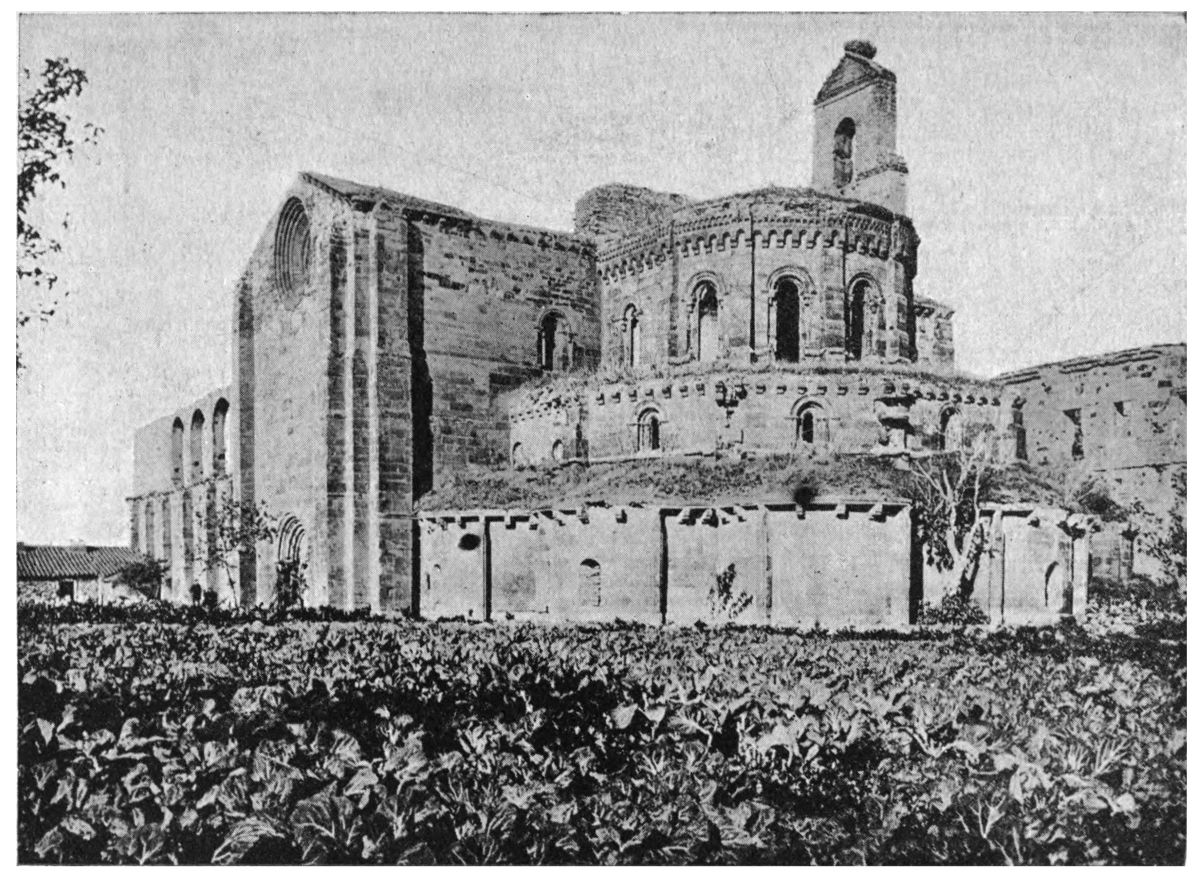
ANCIENT CISTERCIAN MONASTERY OF MORERUELA
PROVINCE OF ZAMORA
Plate 178
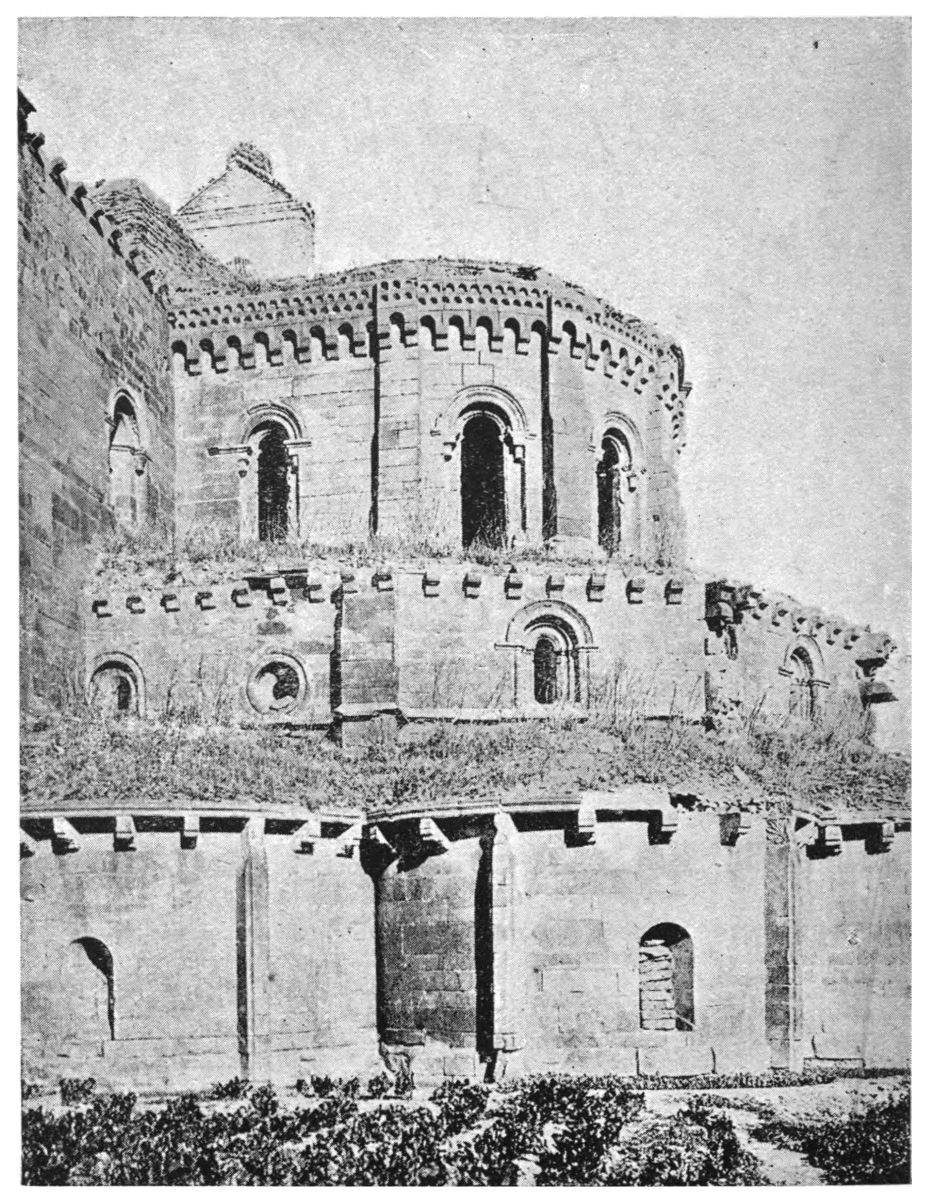
ANCIENT CISTERCIAN MONASTERY OF MORERUELA
PROVINCE OF ZAMORA
Plate 179
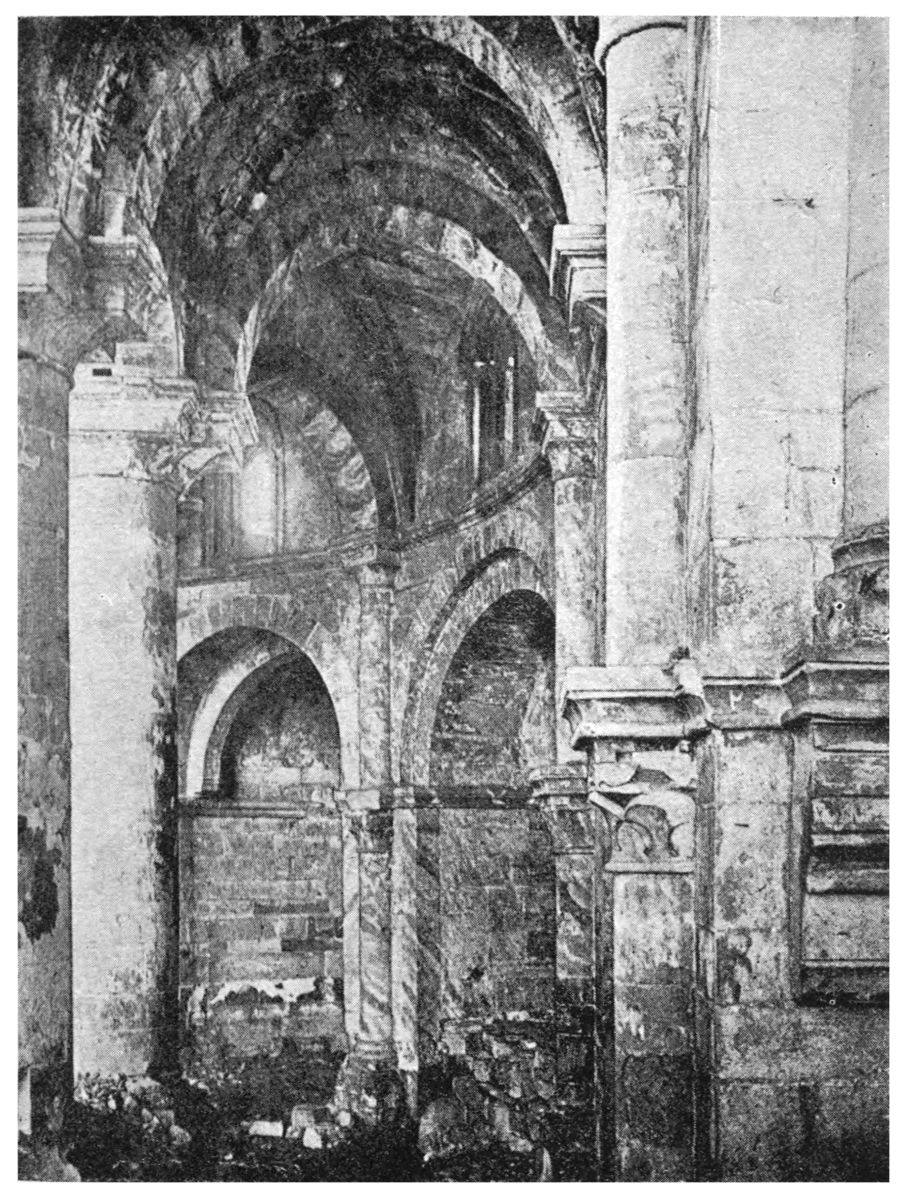
ANCIENT CISTERCIAN MONASTERY OF MORERUELA
DETAIL OF THE INTERIOR
PROVINCE OF ZAMORA
Plate 180
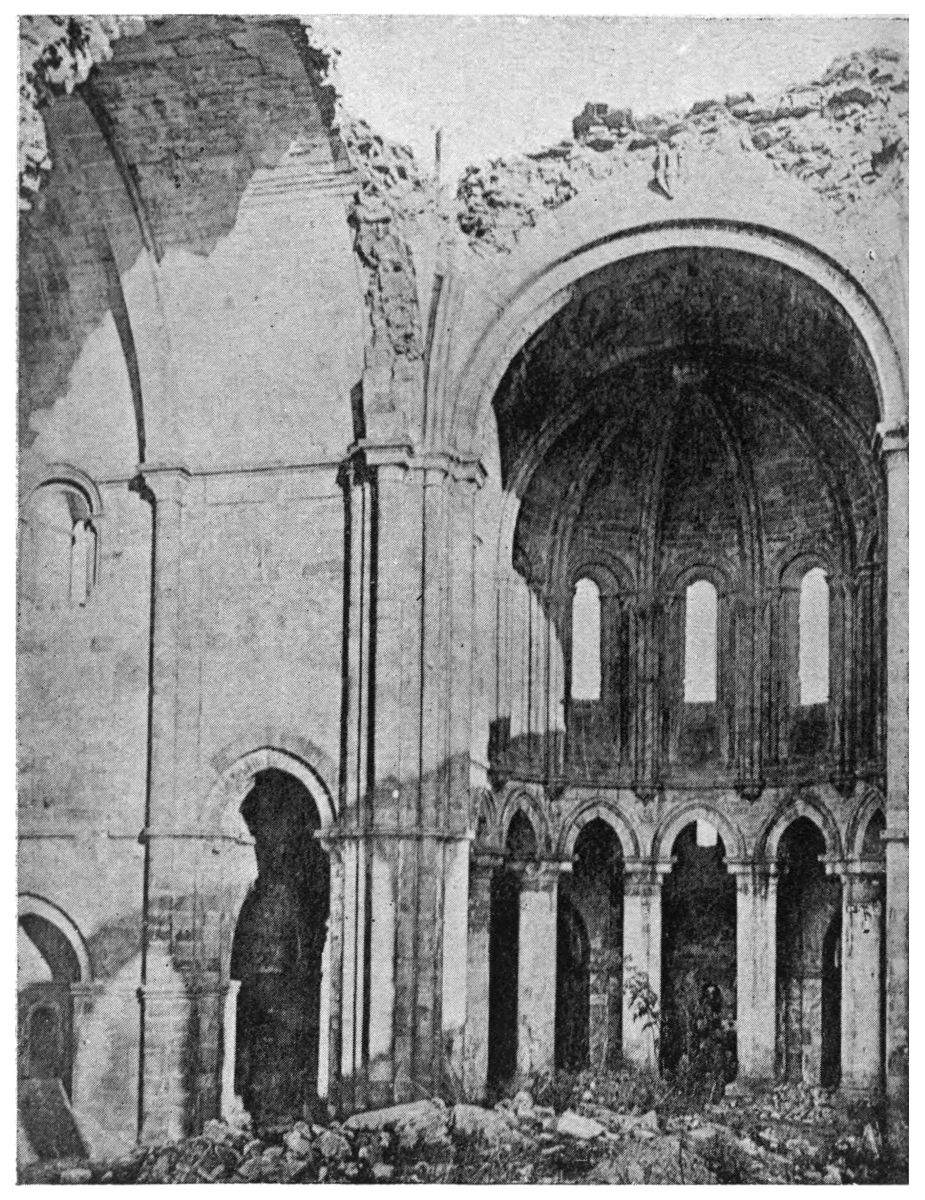
ANCIENT CISTERCIAN MONASTERY OF MORERUELA.
DETAIL OF THE INTERIOR
PROVINCE OF ZAMORA
Plate 181
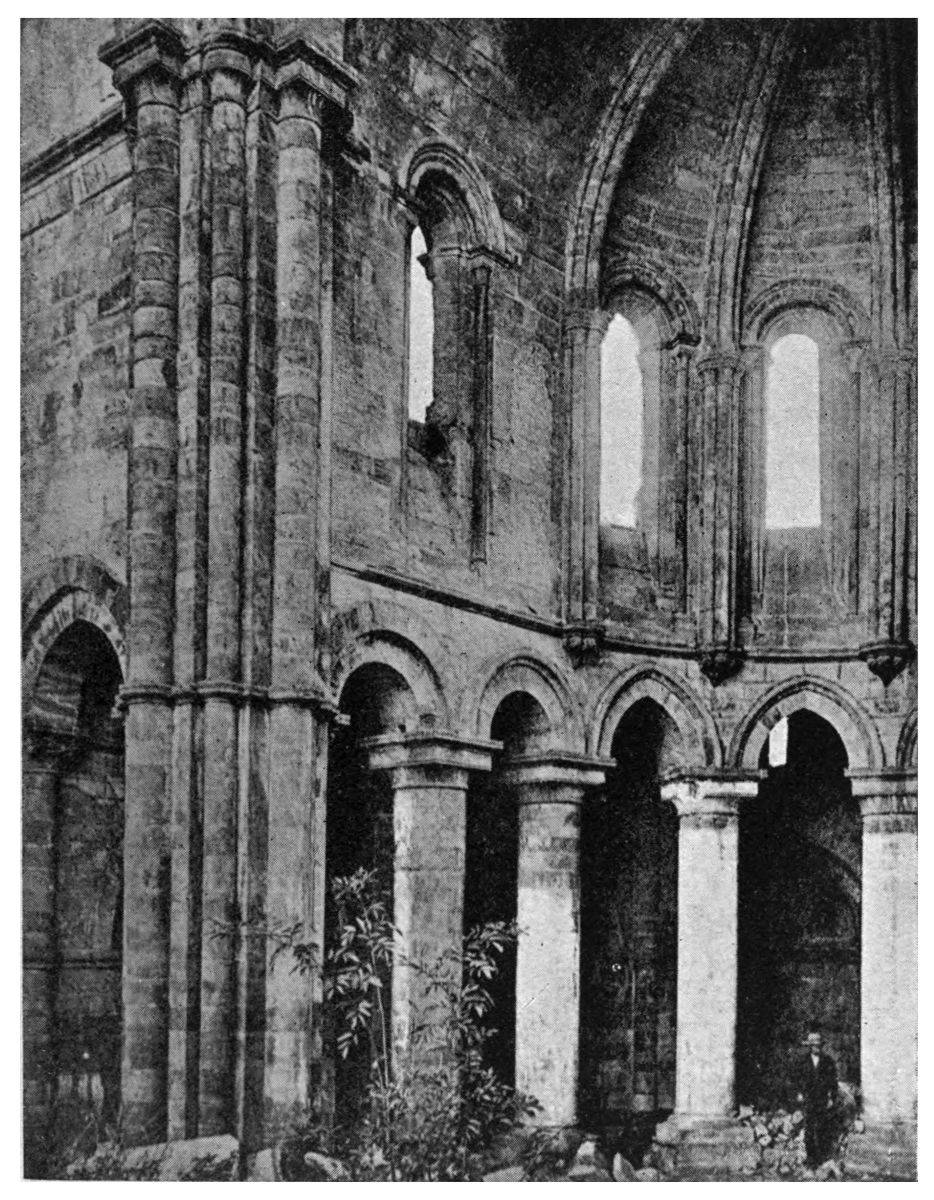
ANCIENT CISTERCIAN MONASTERY OF MORERUELA. CHANCEL
PROVINCE OF ZAMORA
Plate 182
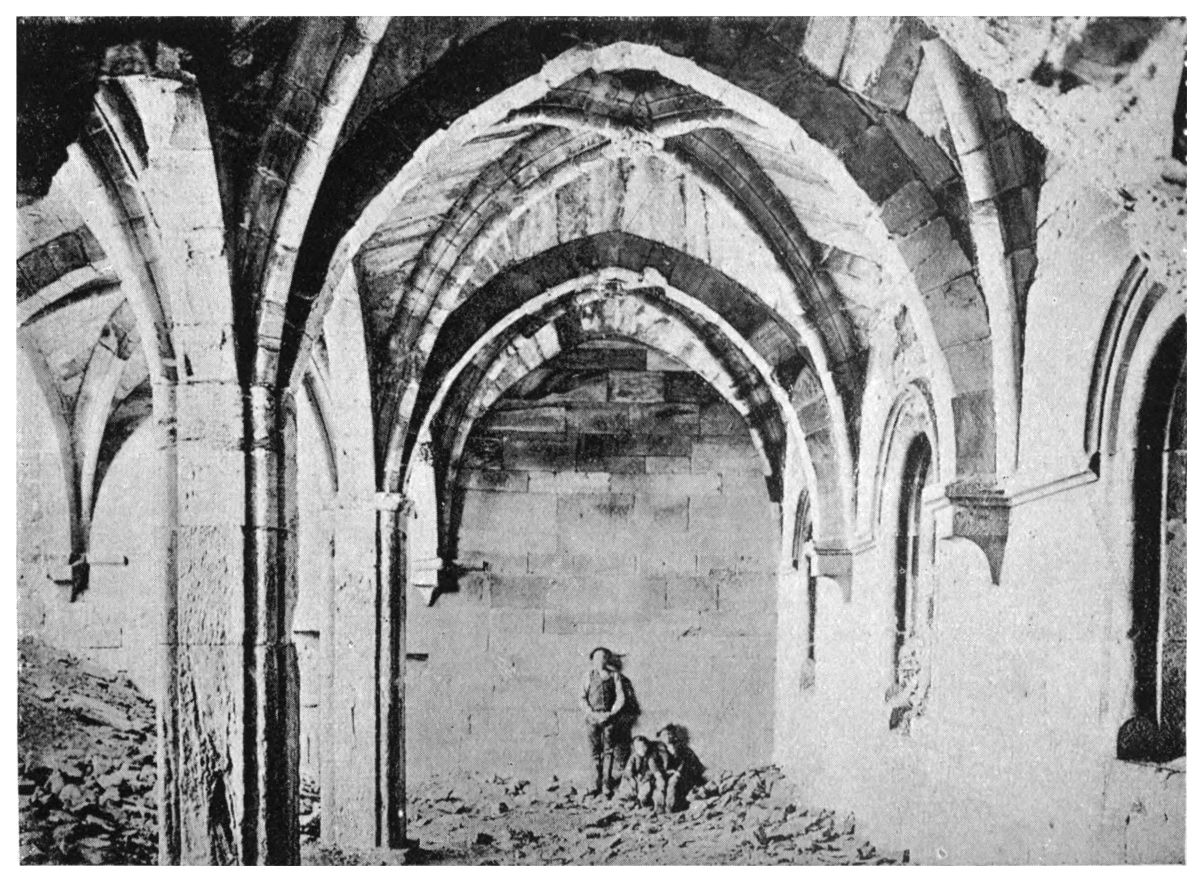
ANCIENT CISTERCIAN MONASTERY OF MORERUELA: EXAMPLE OF THE VAULTING
PROVINCE OF ZAMORA
Plate 183
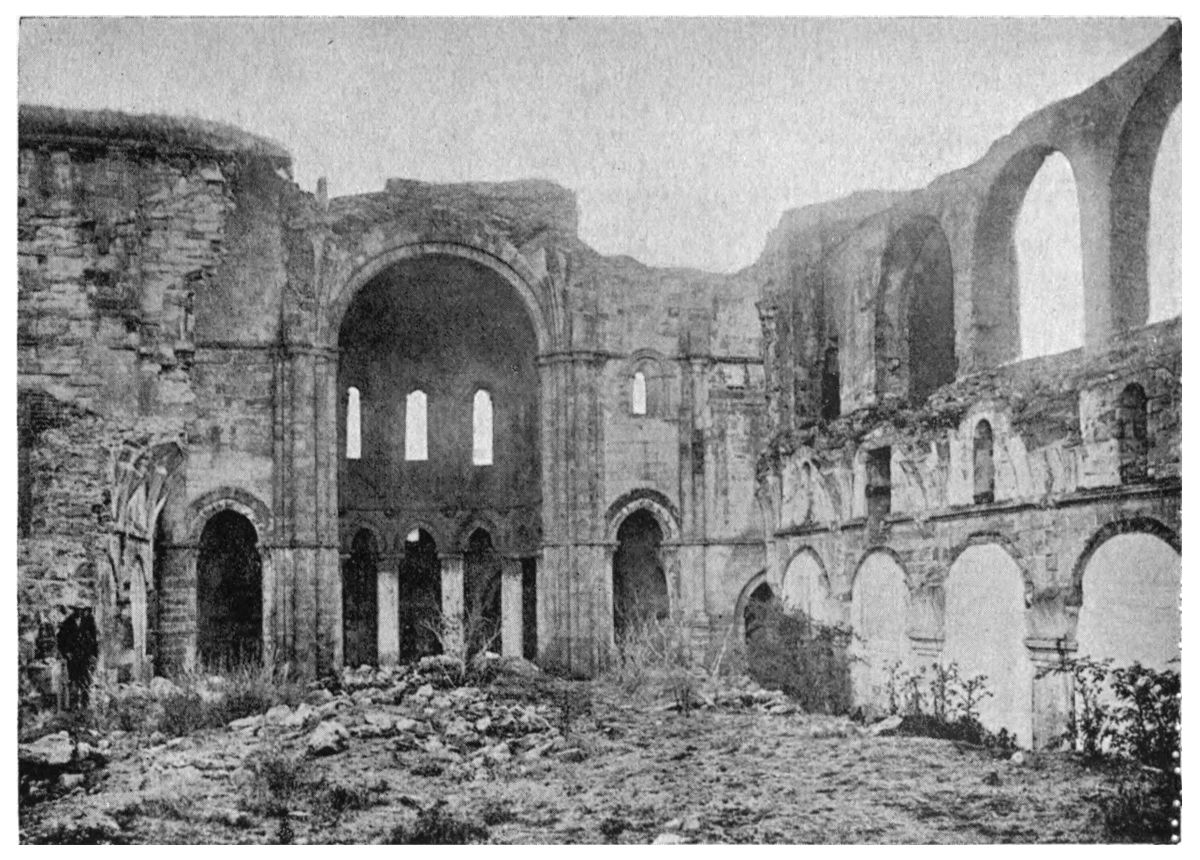
ANCIENT CISTERCIAN MONASTERY OF MORERUELA. INTERIOR
PROVINCE OF ZAMORA
Plate 184
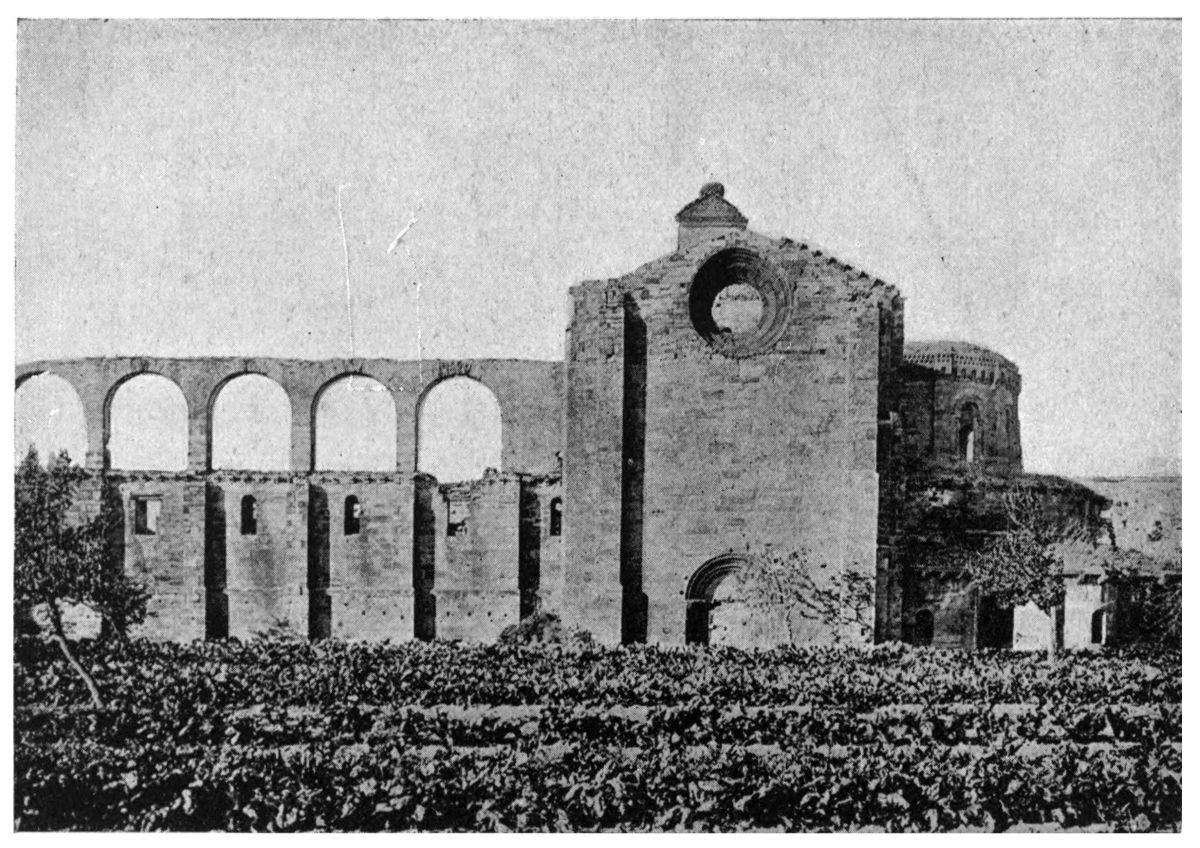
ANCIENT CISTERCIAN MONASTERY OF MORERUELA. TRANSEPT AND NAVE
PROVINCE OF ZAMORA
Plate 185
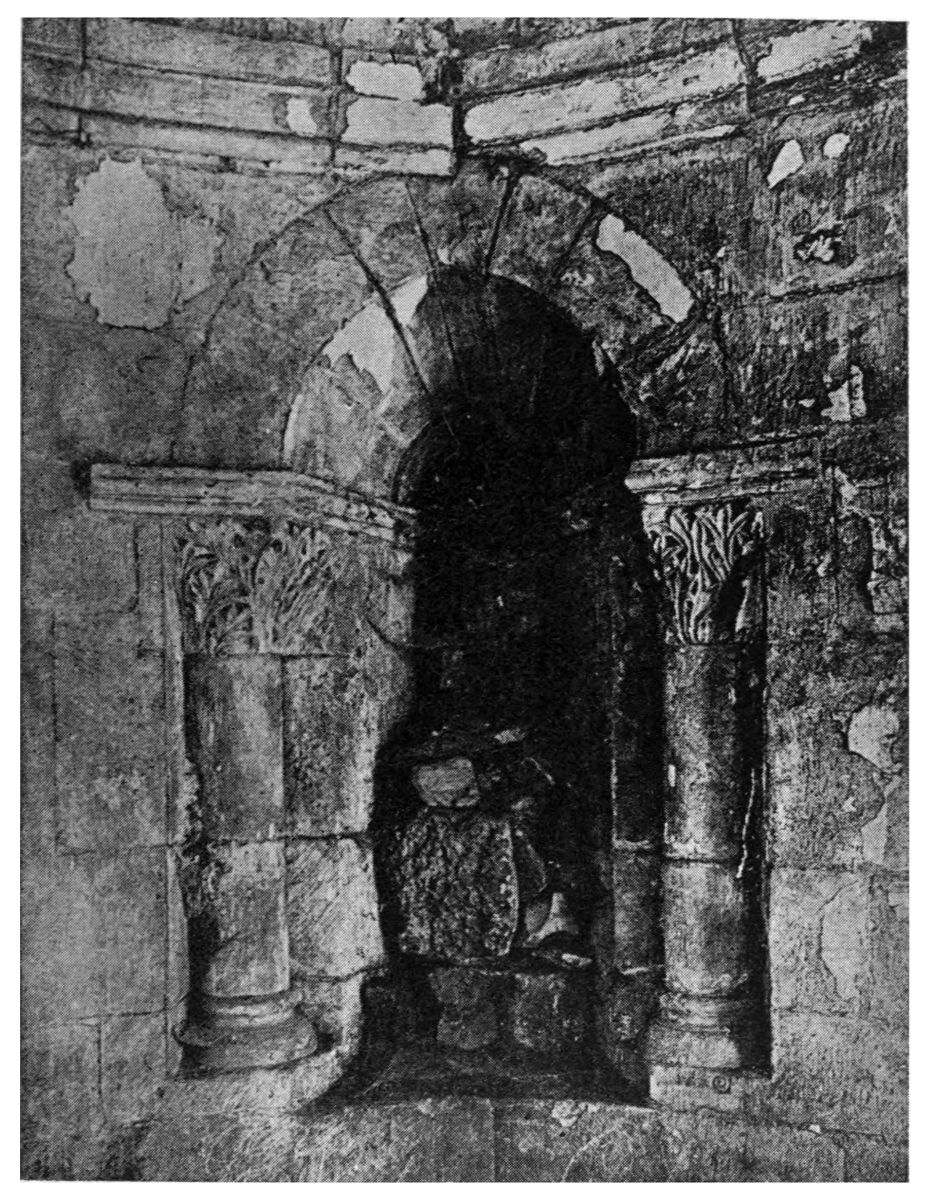
ANCIENT CISTERCIAN MONASTERY OF MORERUELA
DETAIL OF A WINDOW DEEPLY RECESSED
PROVINCE OF ZAMORA
Plate 186
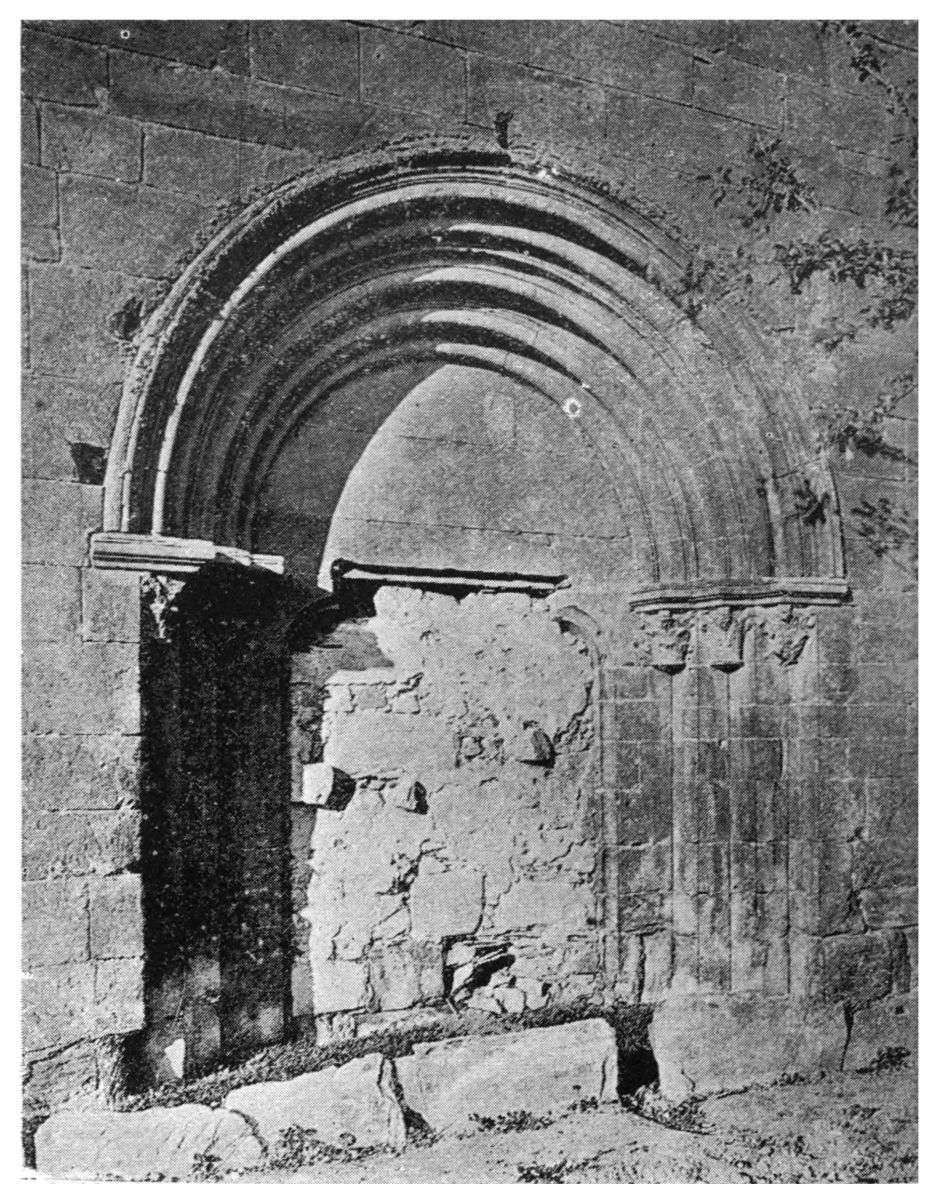
ANCIENT CISTERCIAN MONASTERY OF MORERUELA
TRANSEPT PORCH
PROVINCE OF ZAMORA
Plate 187
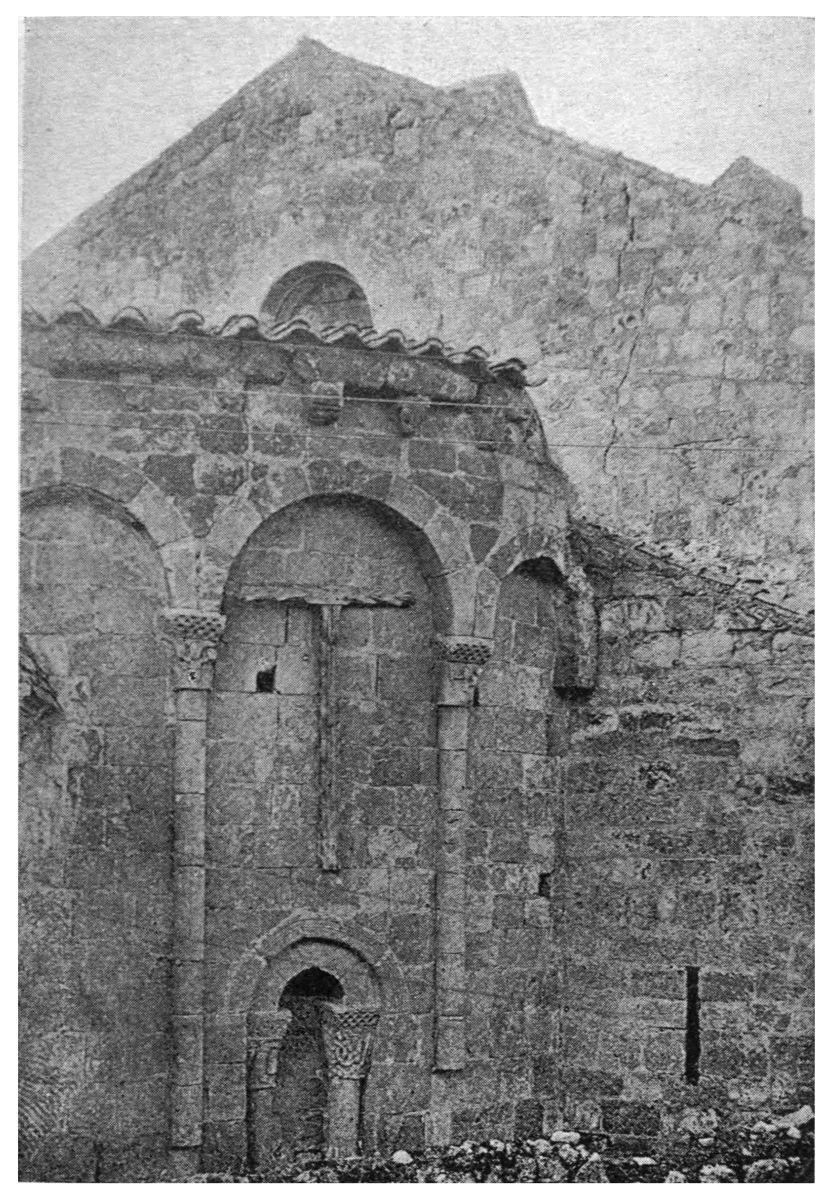
SANTA MARIA LA NUEVA. DETAIL OF THE EXTERIOR
PROVINCE OF ZAMORA
Plate 188
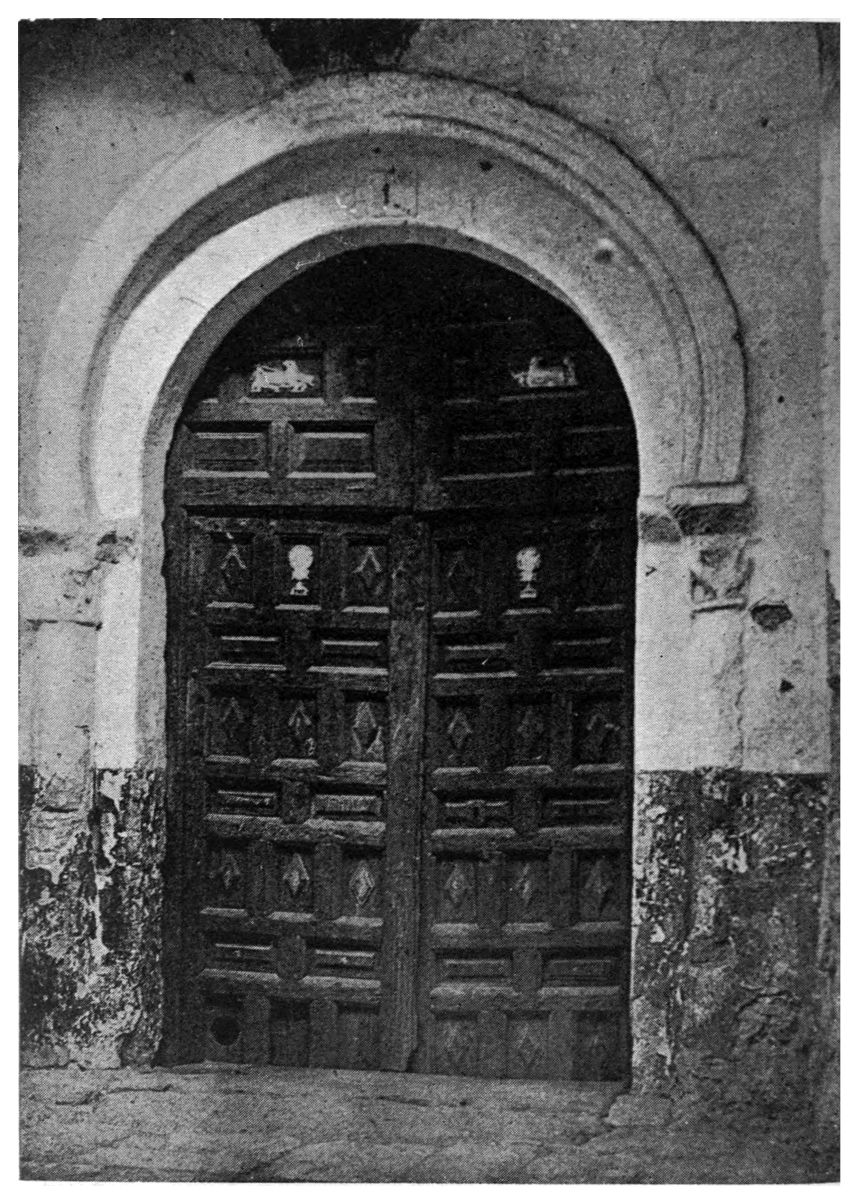
SANTA MARIA LA NUEVA. DOORWAY IN THE WALL ON THE EPISTLE SIDE
PROVINCE OF ZAMORA
Plate 189
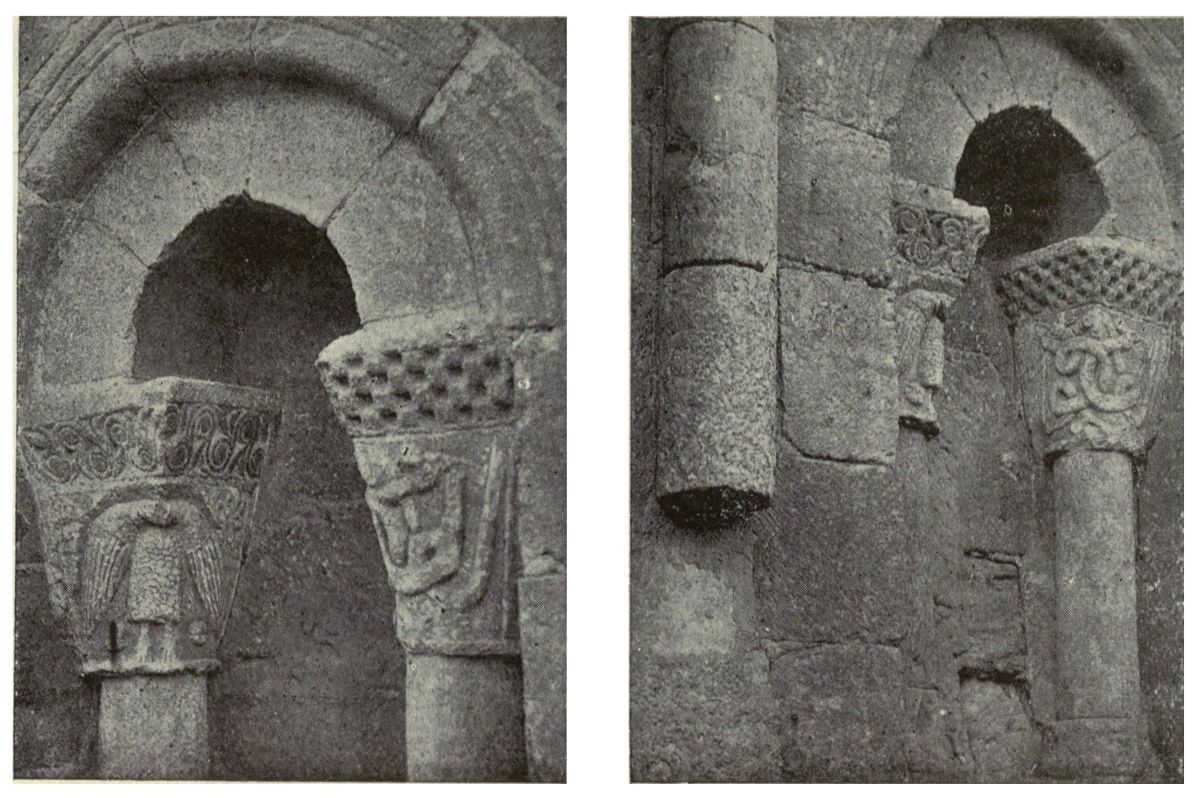
SANTA MARIA LA NUEVA. CAPITALS OF RECESSED WINDOWS
PROVINCE OF ZAMORA
Plate 190
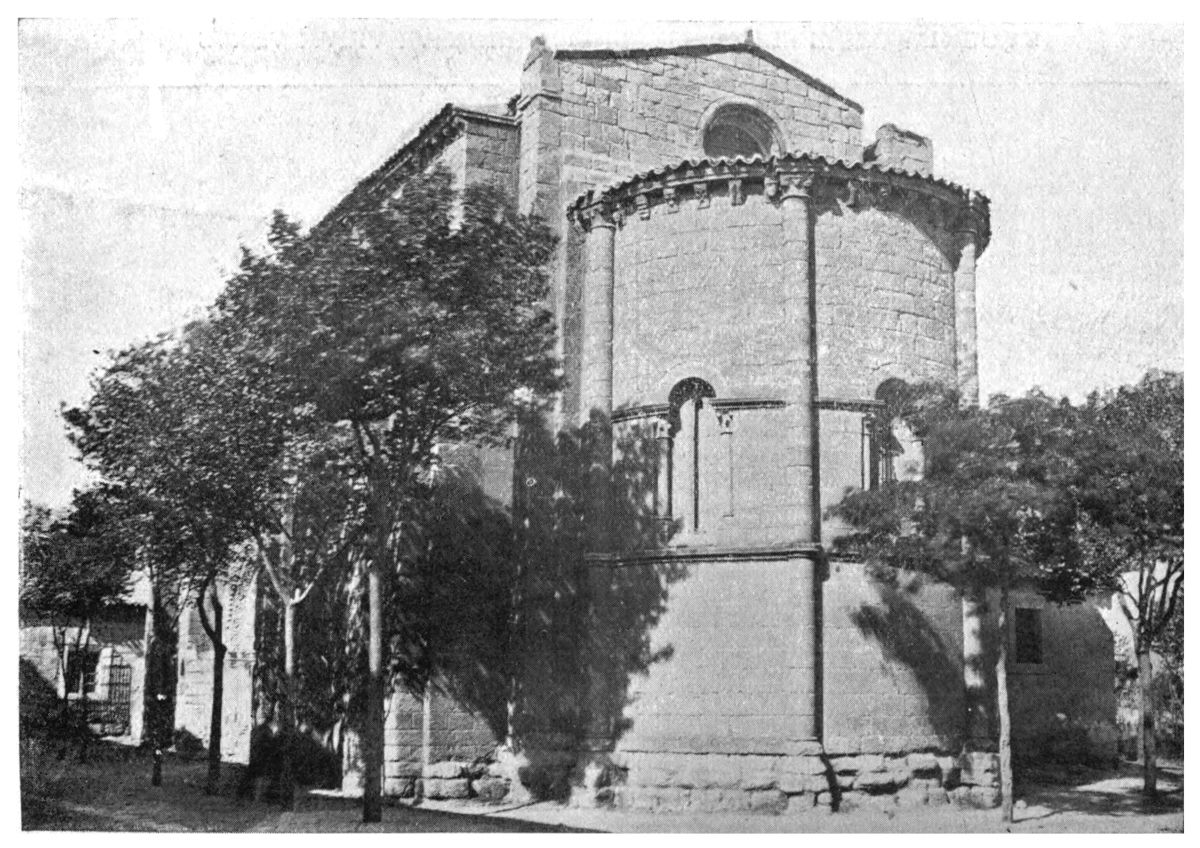
CHURCH OF MAGDALEN
Plate 191
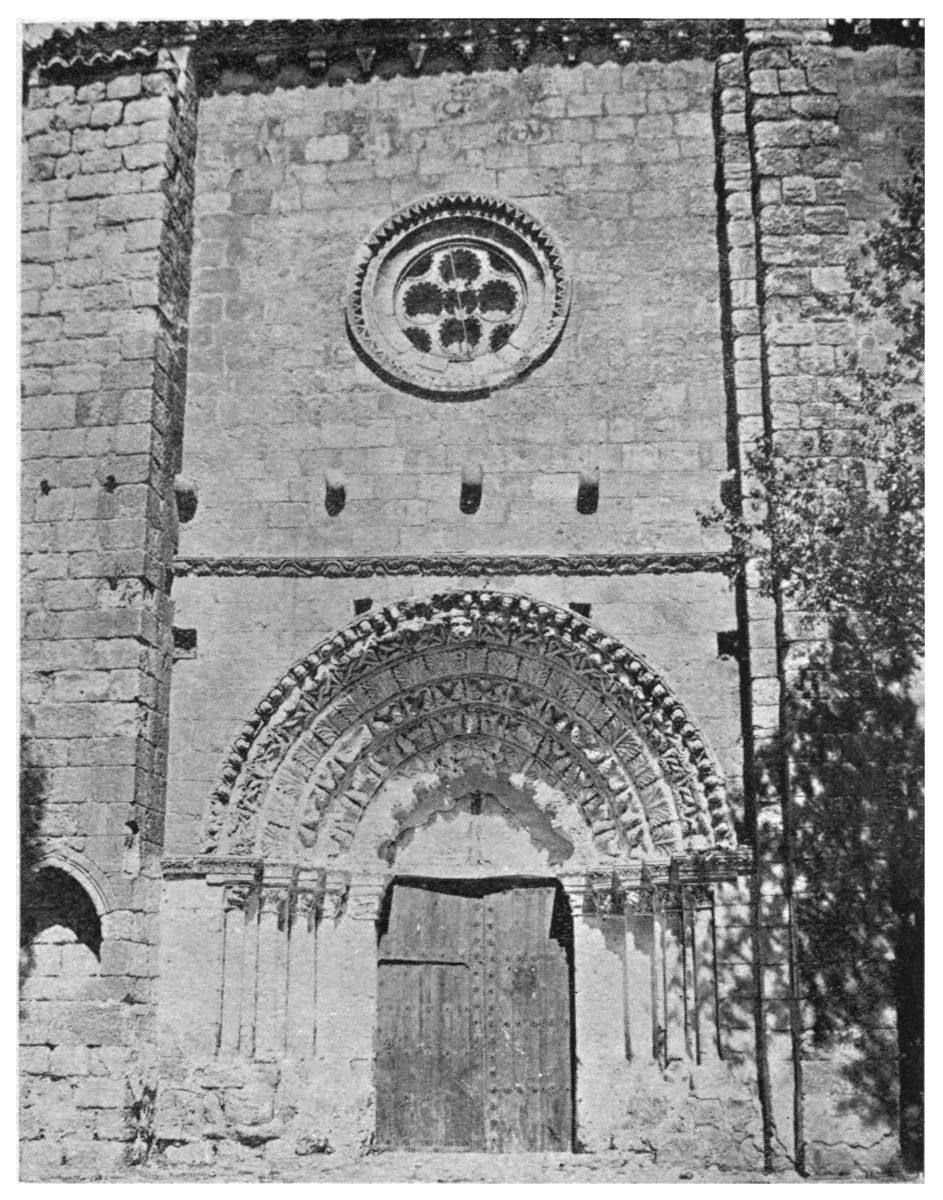
PRINCIPAL DOOR OF THE CHURCH OF THE MAGDALEN
ZAMORA
Plate 192
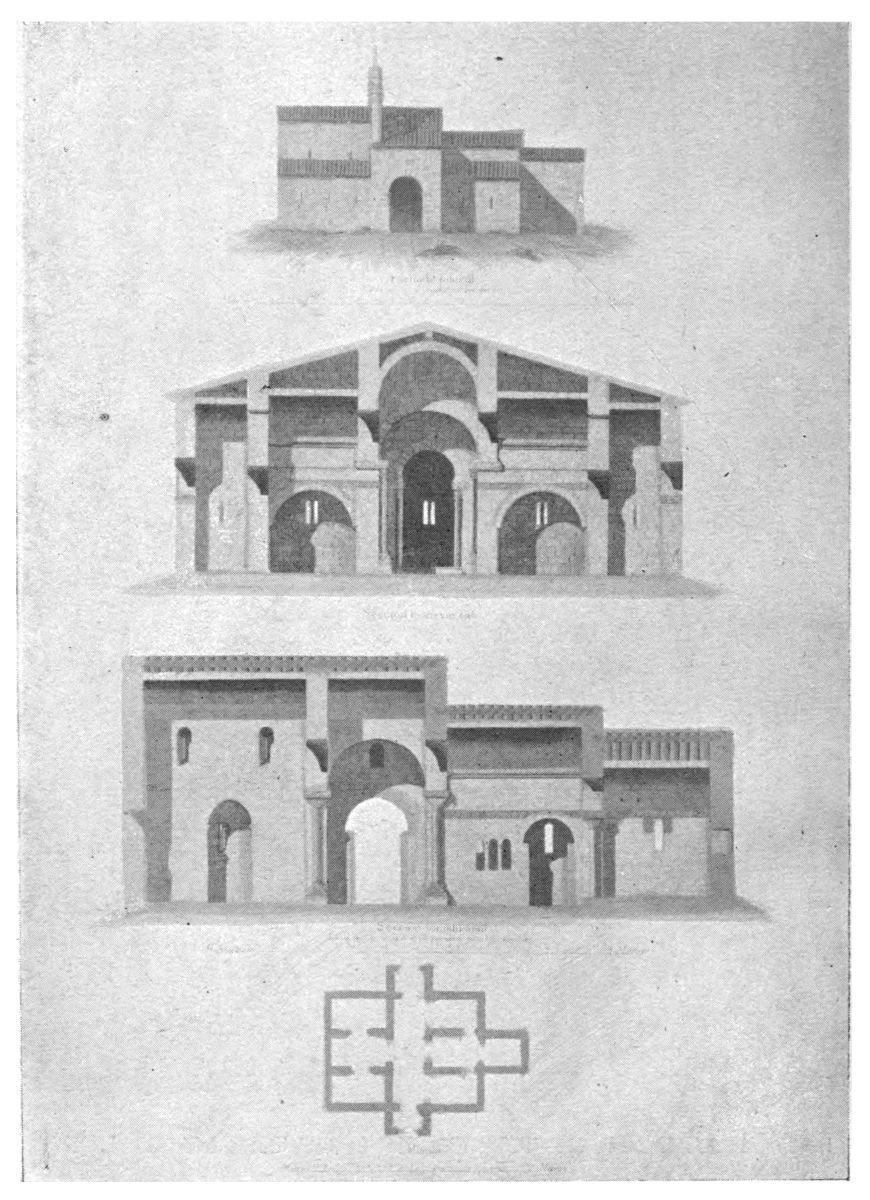
PLAN AND SECTIONS OF THE PARISH CHURCH OF ST. PETER
ZAMORA
Plate 193
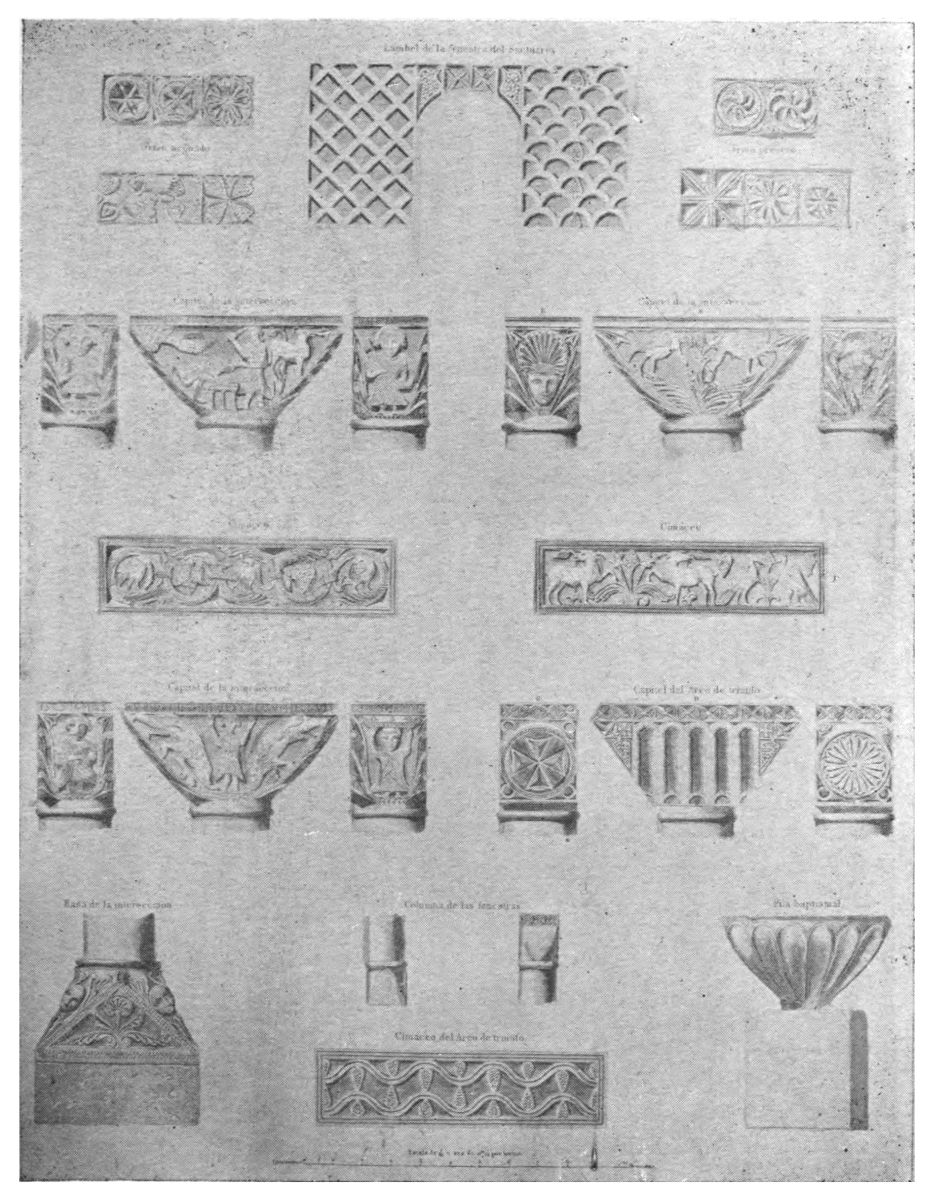
DETAILS OF THE PARISH CHURCH OF ST. PETER (NAVE)
ZAMORA
Plate 194
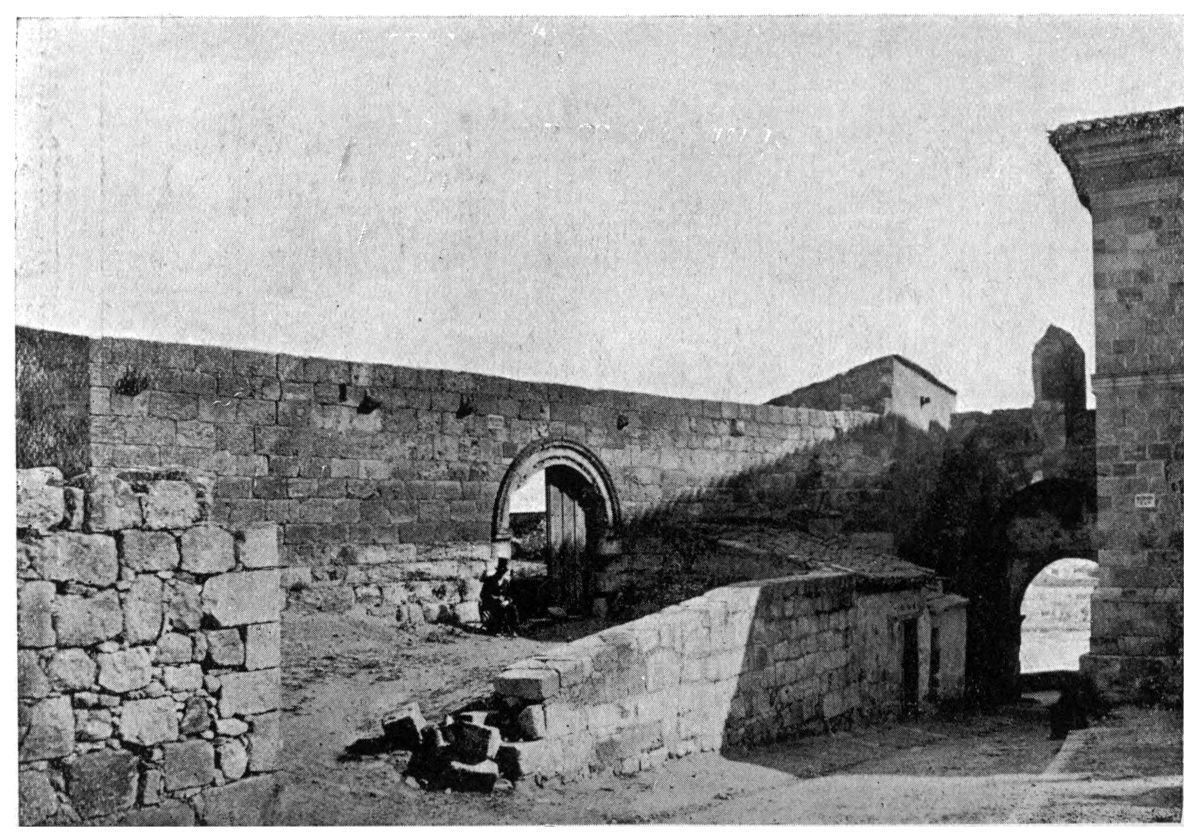
HOUSE OF THE CID
Plate 195
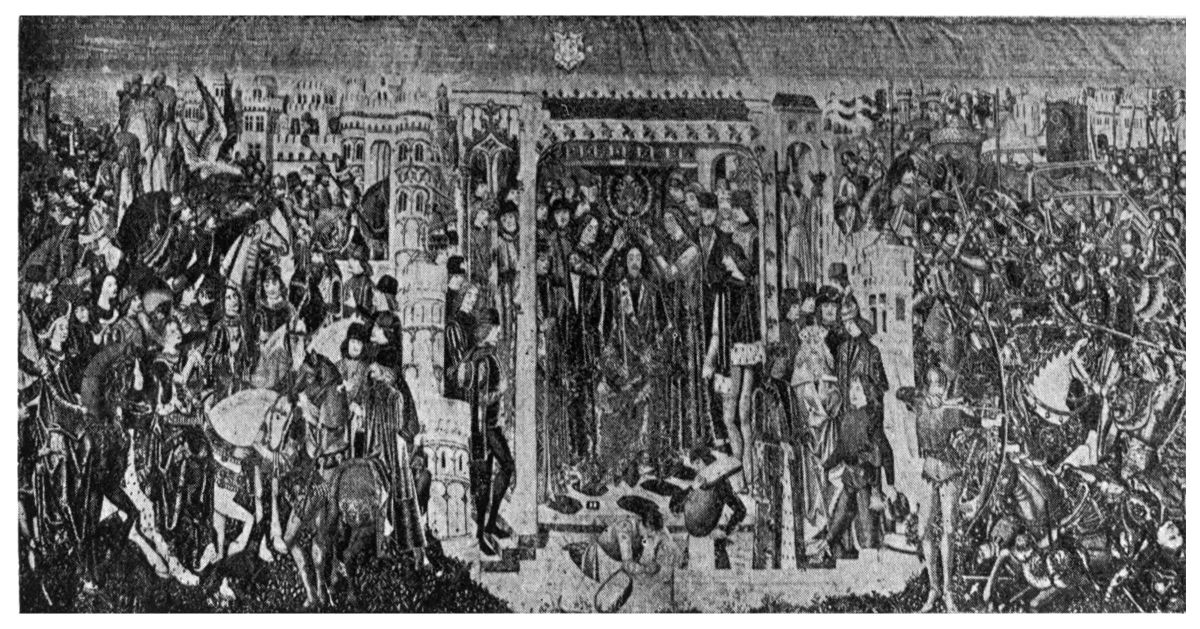
TAPESTRY OF THE BEGINNING OF THE FIFTEENTH CENTURY
ZAMORA
Plate 196
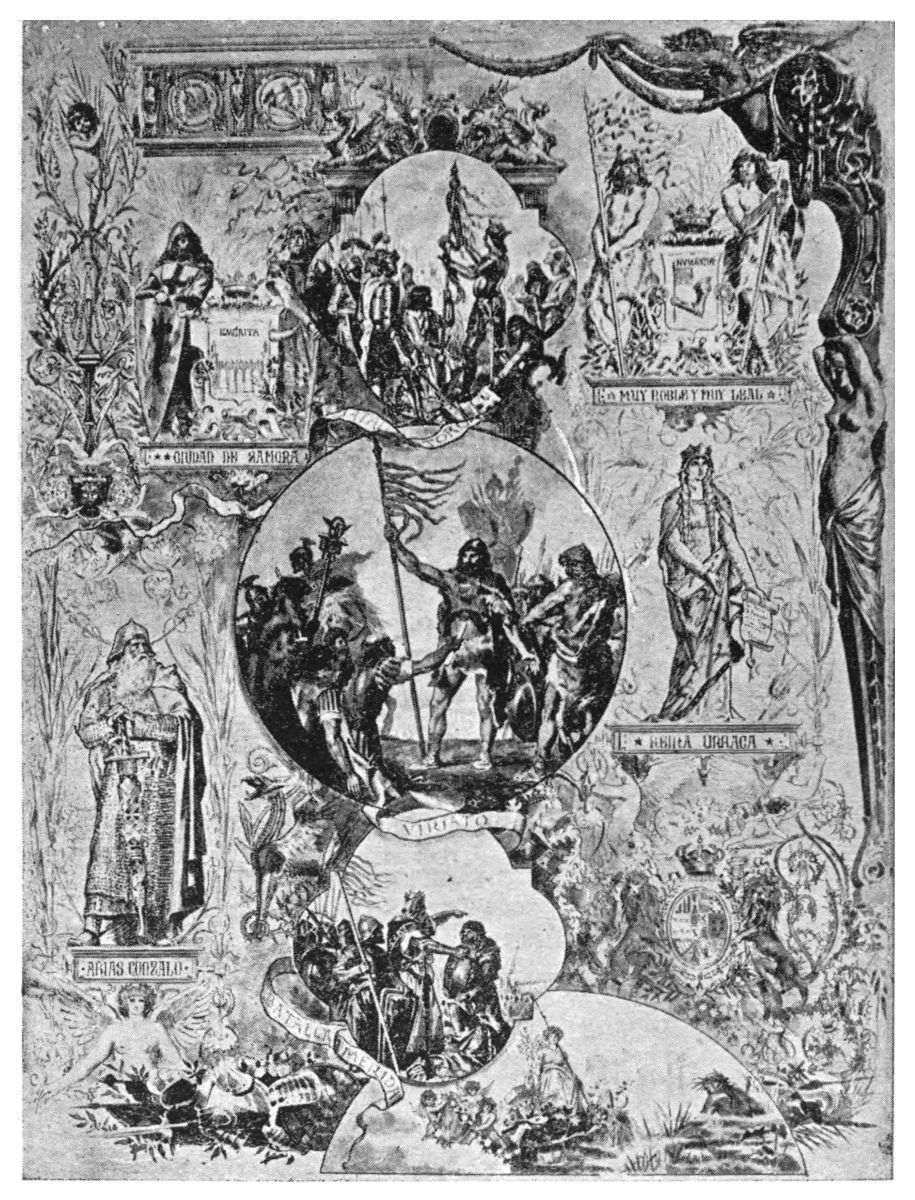
DECORATIVE PAINTING IN THE TOWN HALL. BY RAMON PEDRO Y PEDRET
ZAMORA
Plate 197
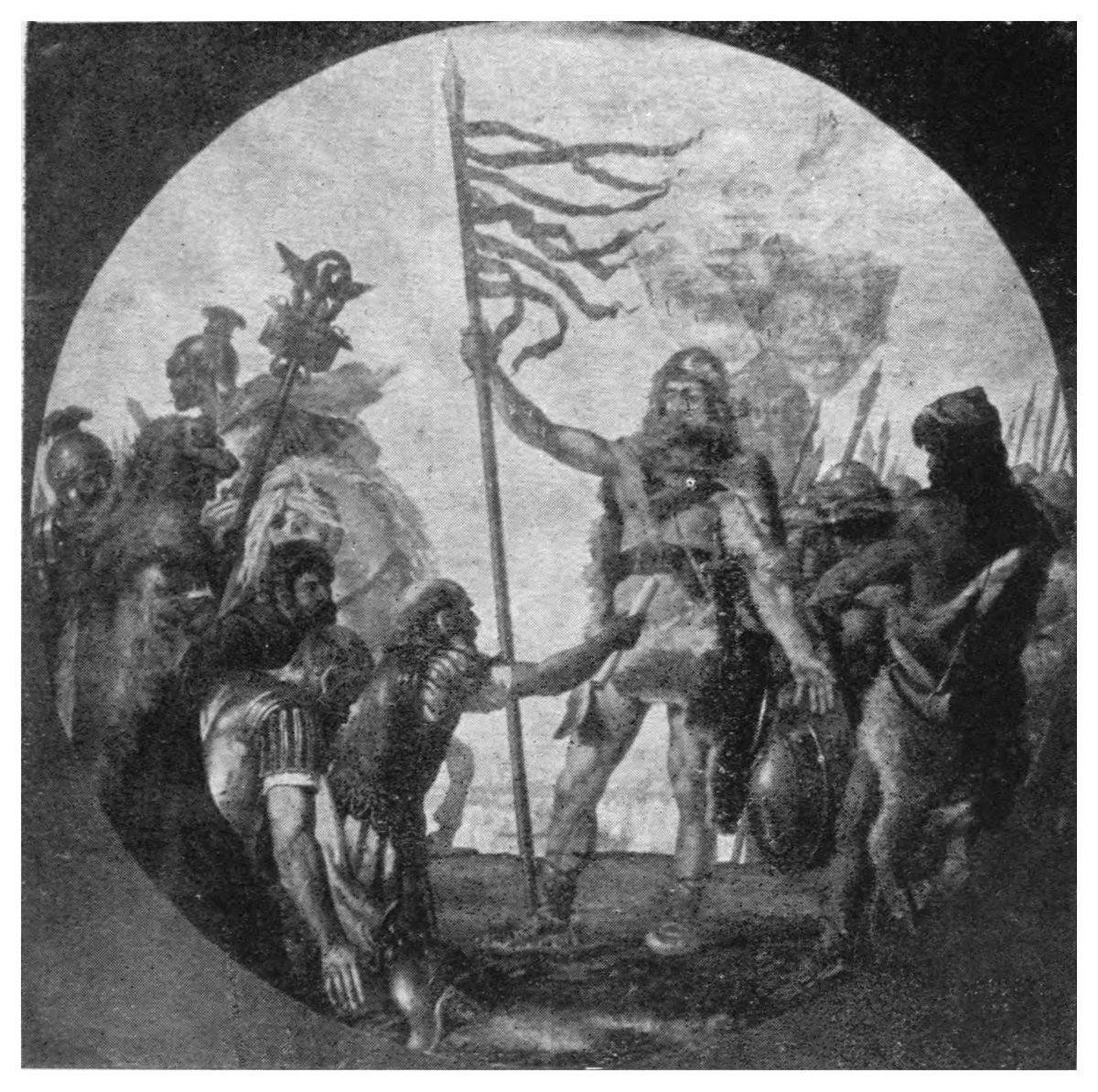
PAINTING IN THE TOWN HALL BY RAMON PEDRO Y PEDRET
ZAMORA
Plate 198
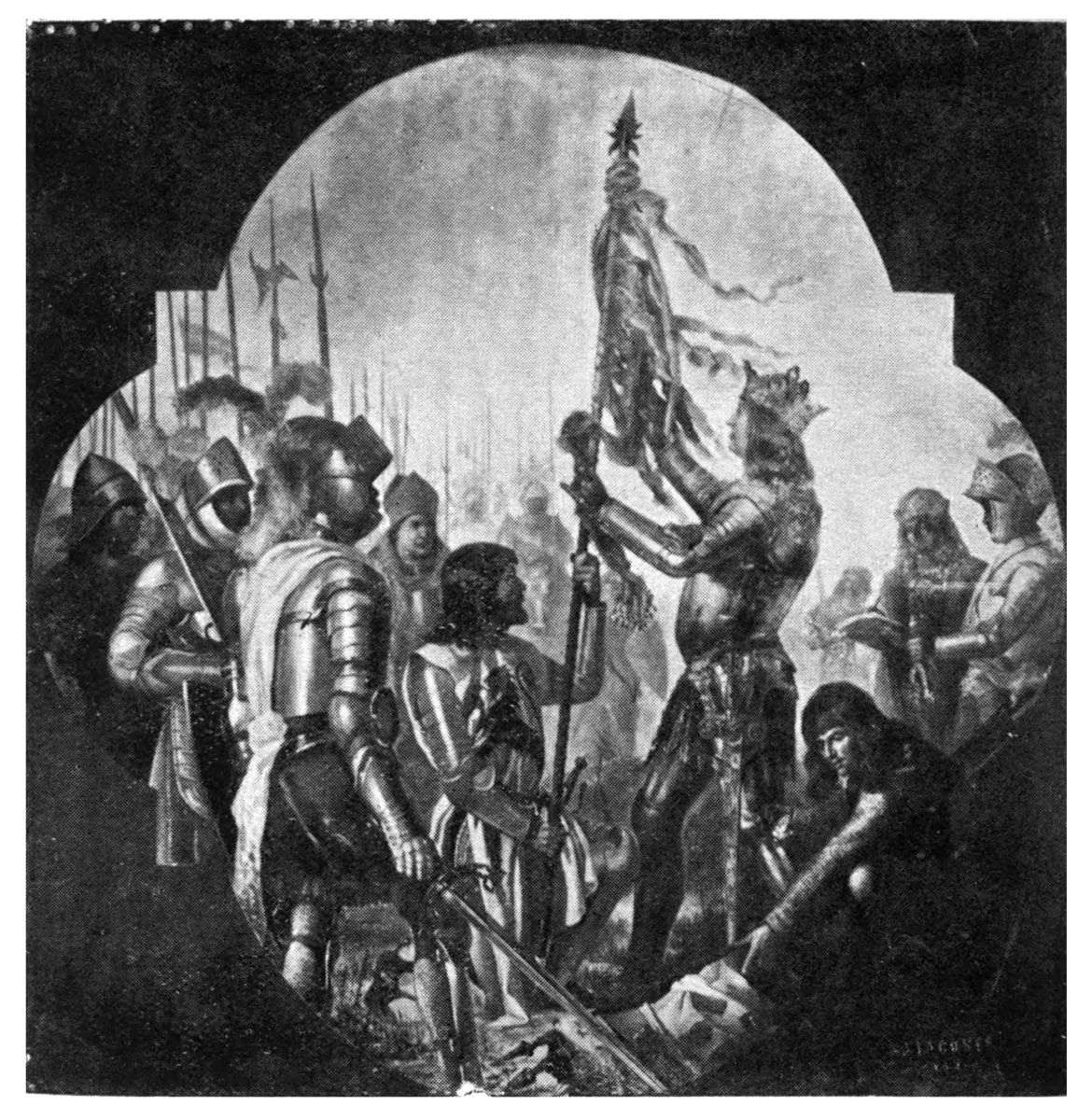
PAINTING ON THE UPPER PART OF THE CENTRE HALL OF THE TOWN HALL. BY RAMON
PEDRO Y PEDRET
ZAMORA
Plate 199
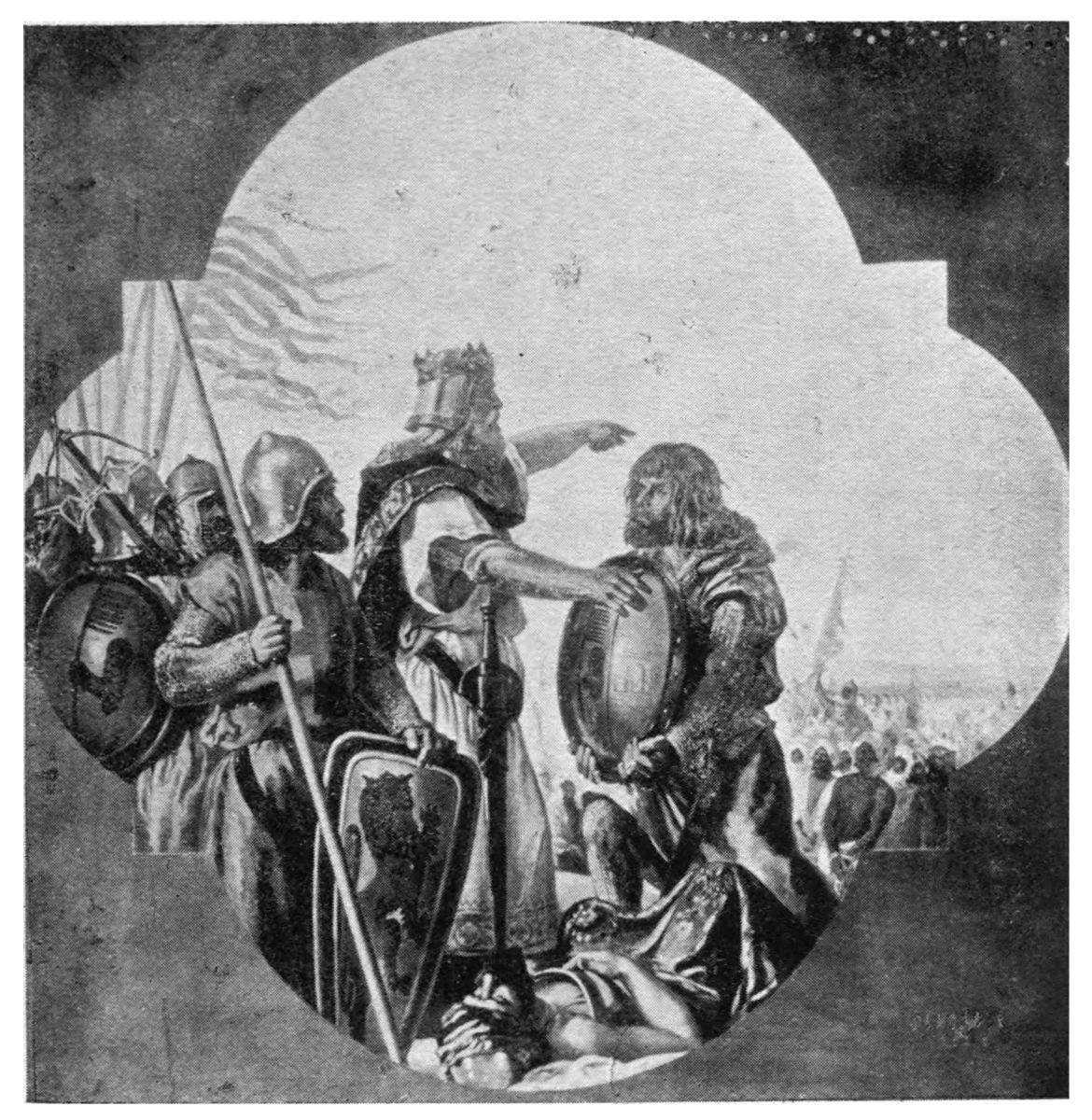
PAINTING ON THE LOWER PART OF THE CENTRE HALL OF THE TOWN HALL. BY RAMON
PEDRO Y PEDRET
ZAMORA
Plate 200
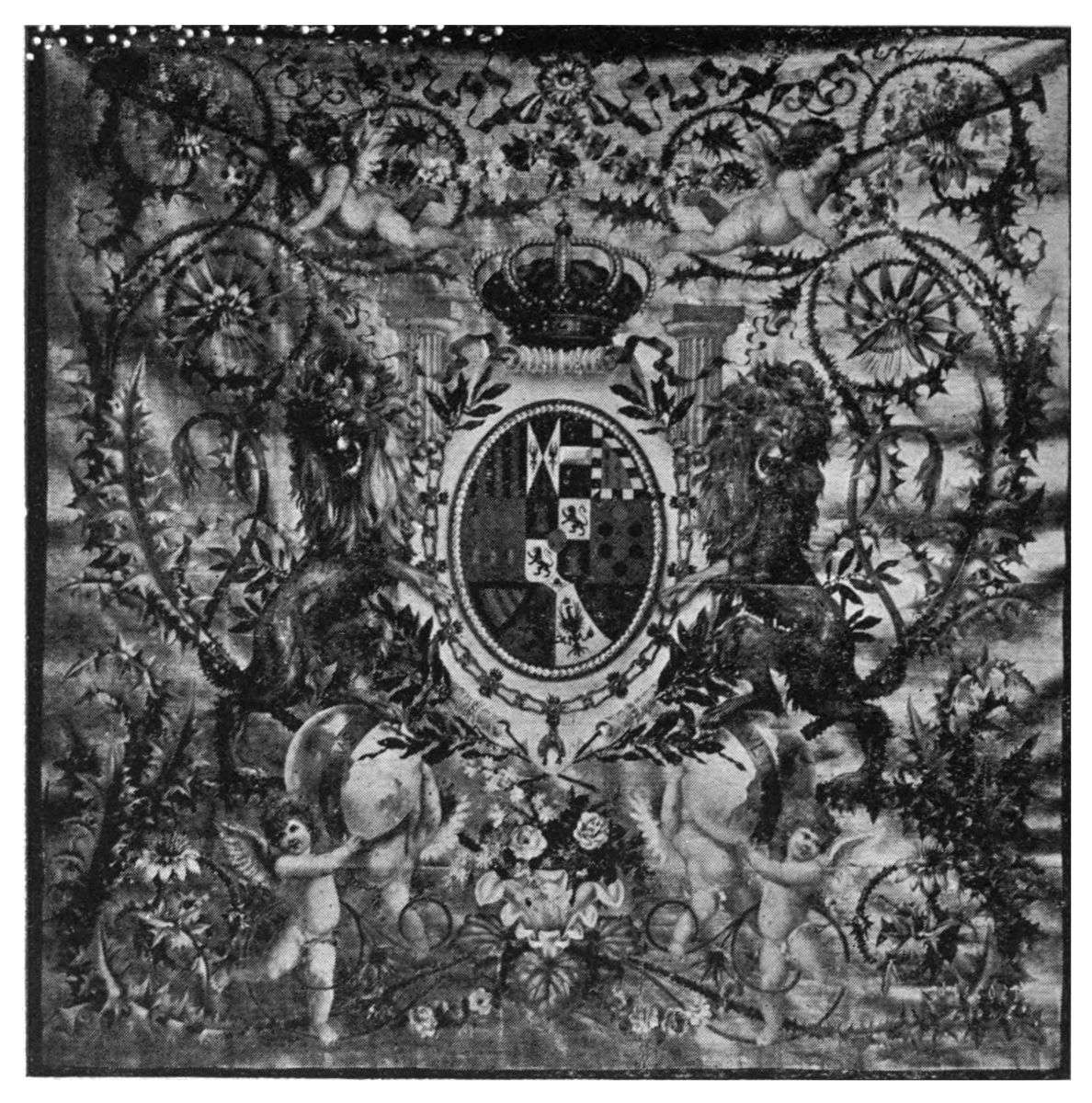
THE ROYAL ESCUTCHEON. DECORATIVE PAINTING IN THE TOWN HALL. BY RAMON
PEDRO Y PEDRET
ZAMORA
Plate 201
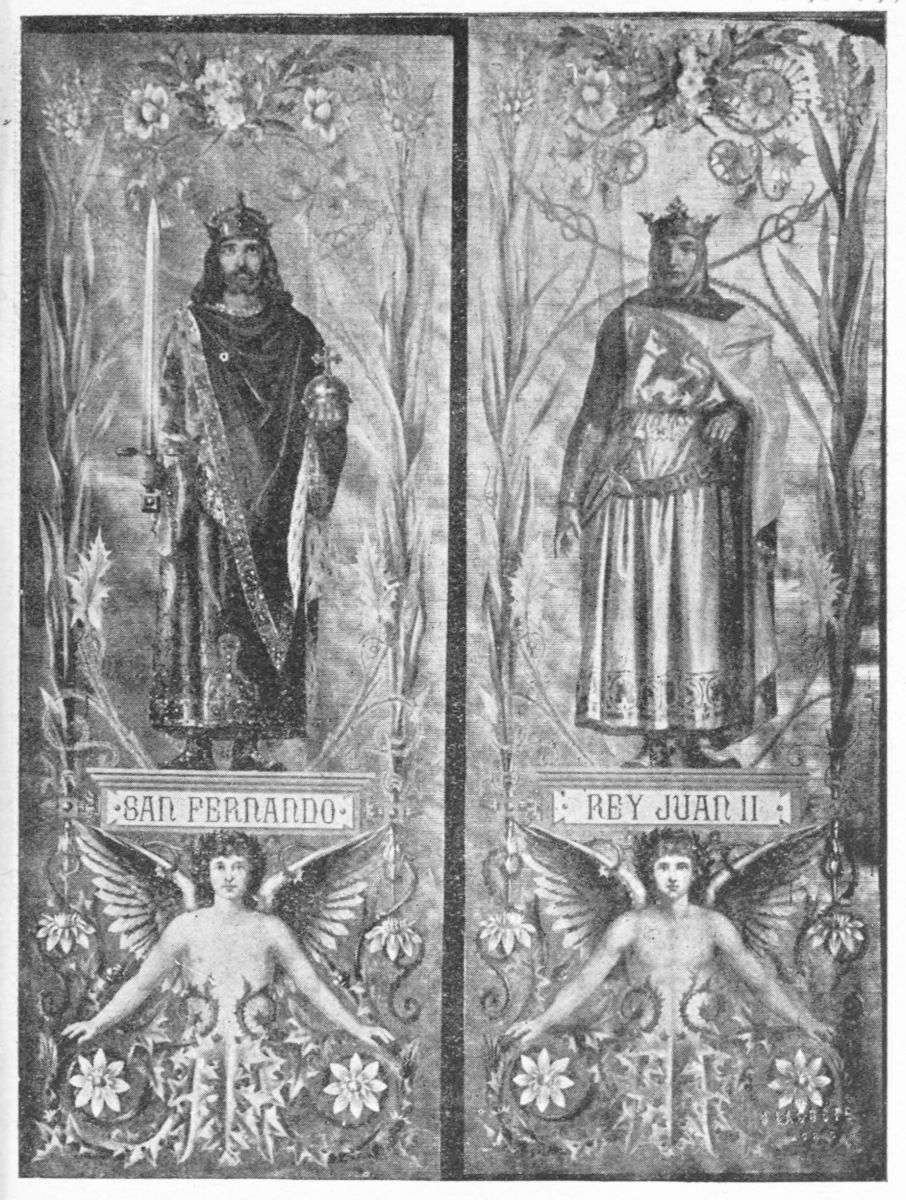
ST. FERDINAND AND KING JOHN II. DECORATIVE PAINTING IN THE TOWN HALL. BY
RAMON PEDRO Y PEDRET
ZAMORA
Plate 202
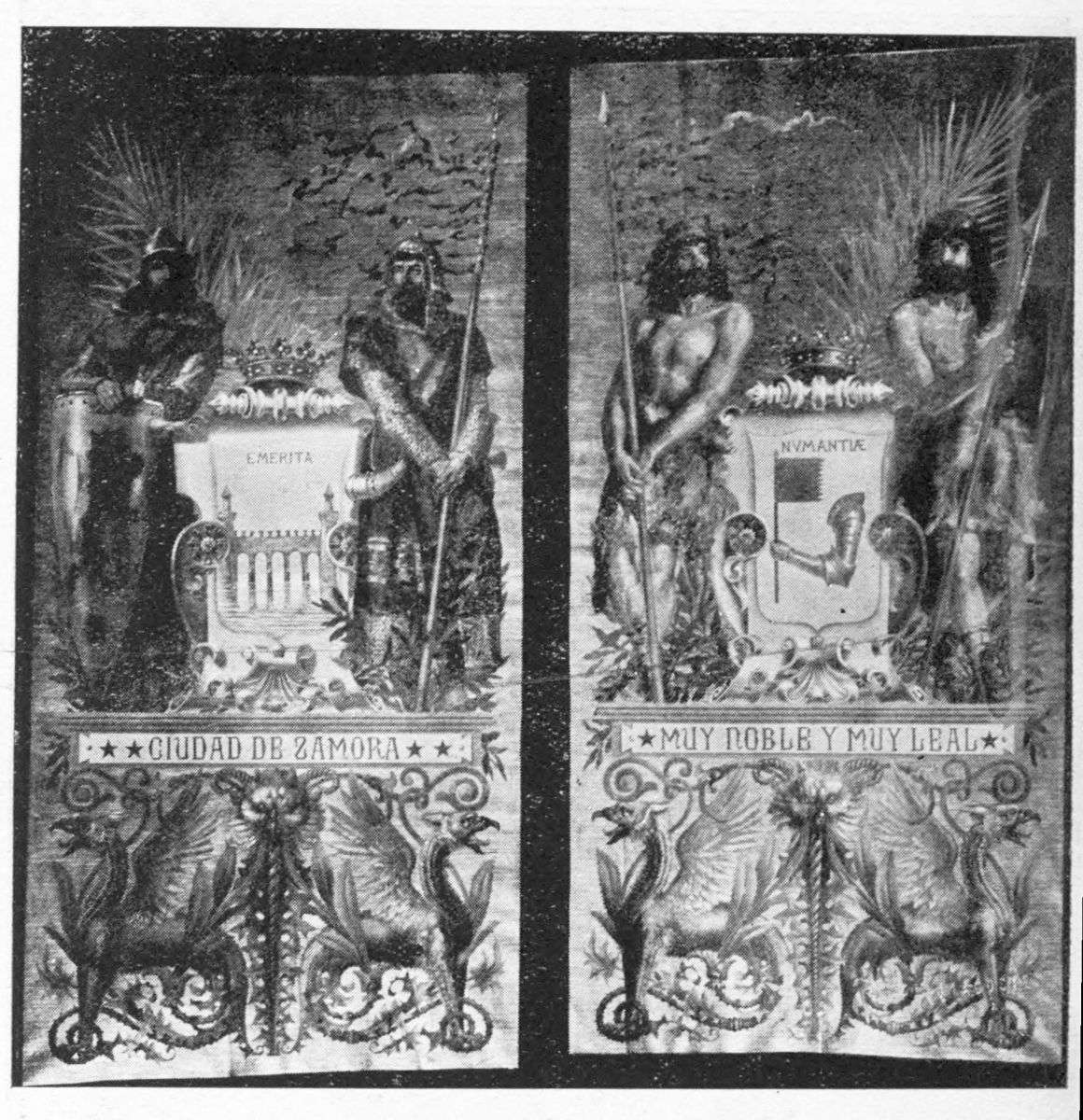
THE ARMS OF THE TOWN. BY RAMON PEDRO Y PEDRET
ZAMORA
Plate 203
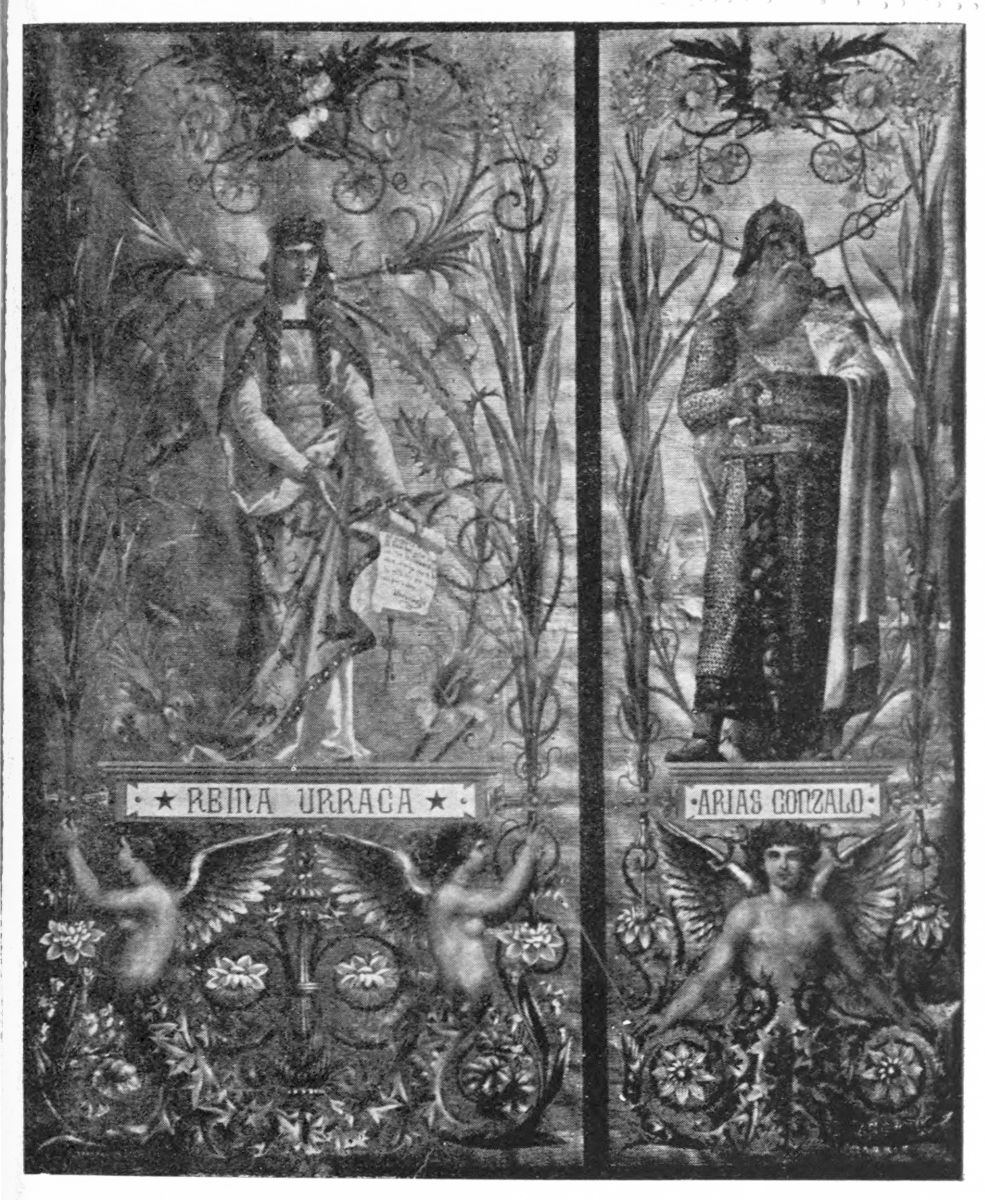
QUEEN URRACA AND ARIAS GONZALO. DECORATIVE PAINTING IN THE TOWN HALL. BY
RAMON PEDRO Y PEDRET
ZAMORA
Plate 204
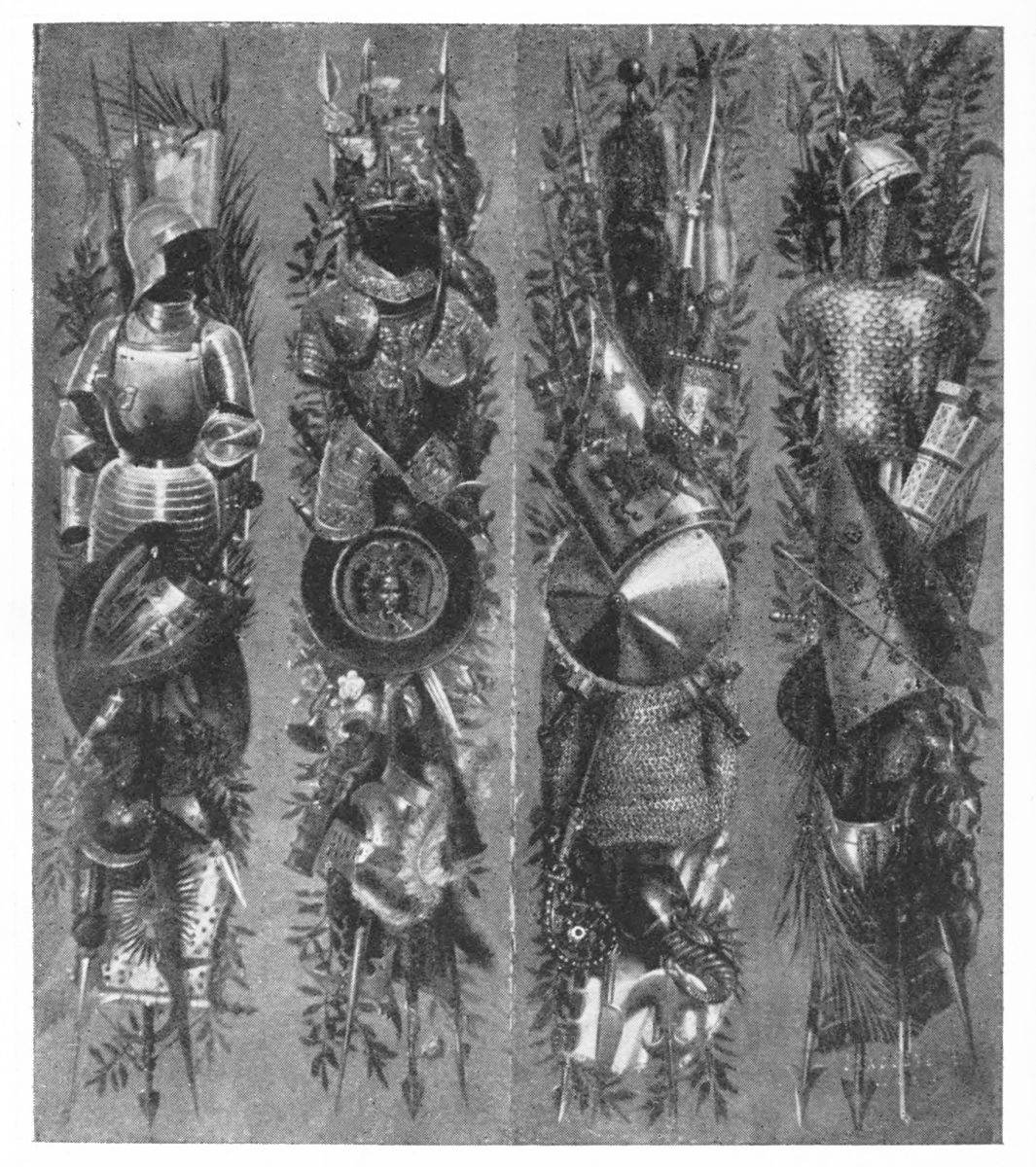
TROPHIES OF ARMS AND ARMOUR IN THE TOWN HALL BY RAMON PEDRO Y PEDRET
ZAMORA
Plate 205
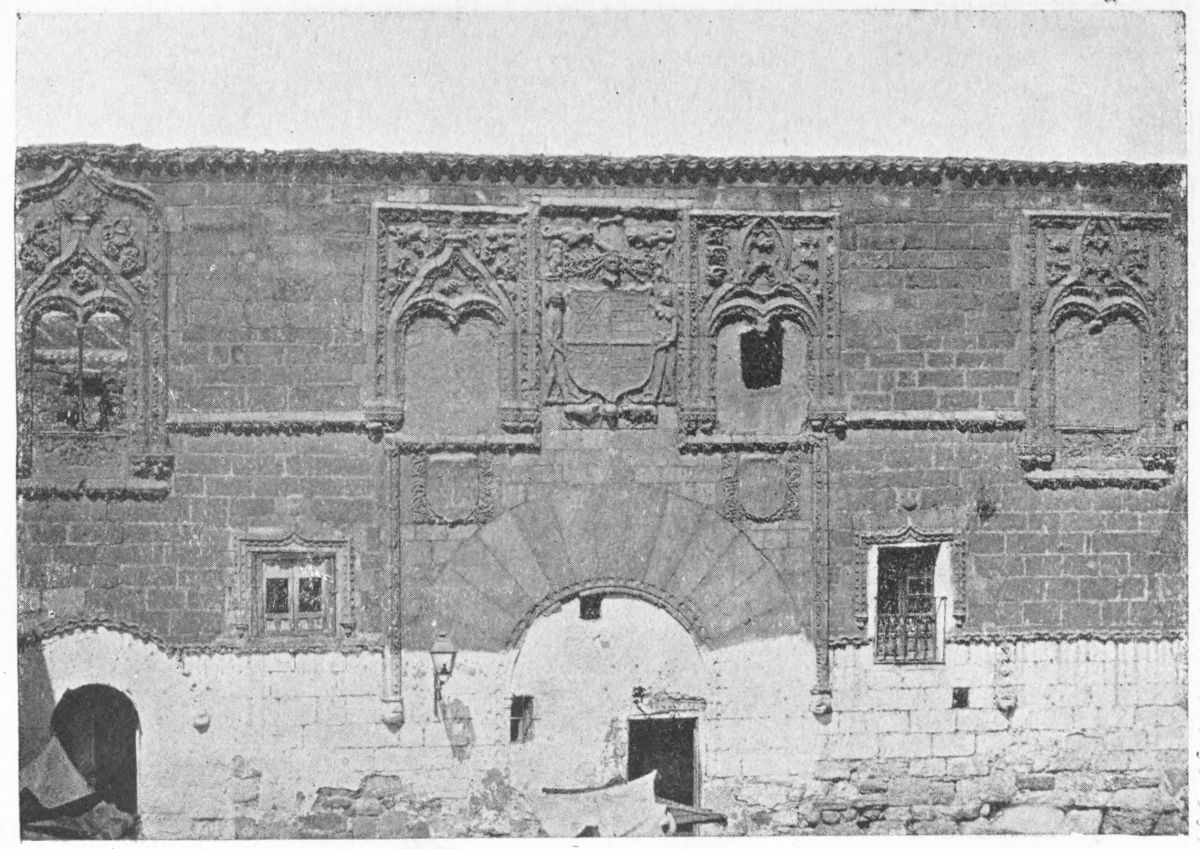
THE HOUSE OF THE MOMOS
ZAMORA
Plate 206
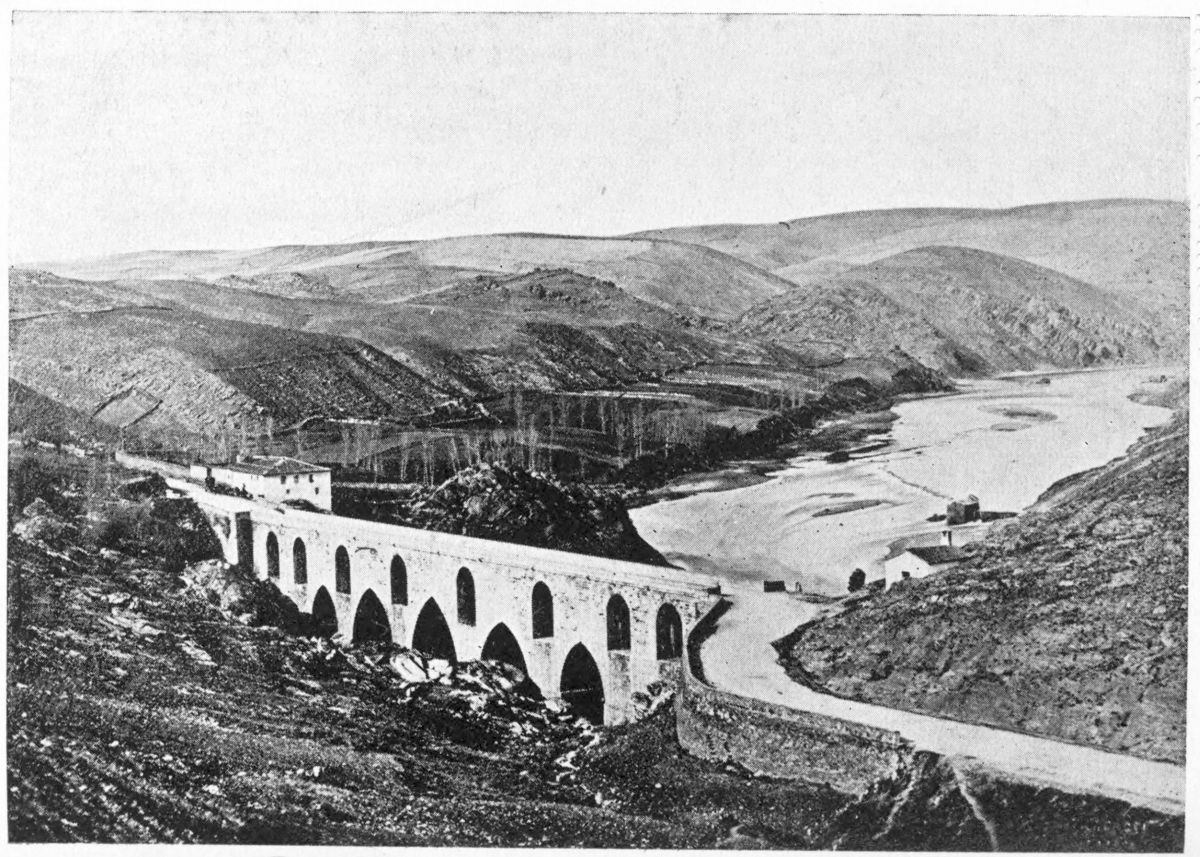
BRIDGE OF ROCOBAYO OVER THE ESLA
ZAMORA
Plate 207
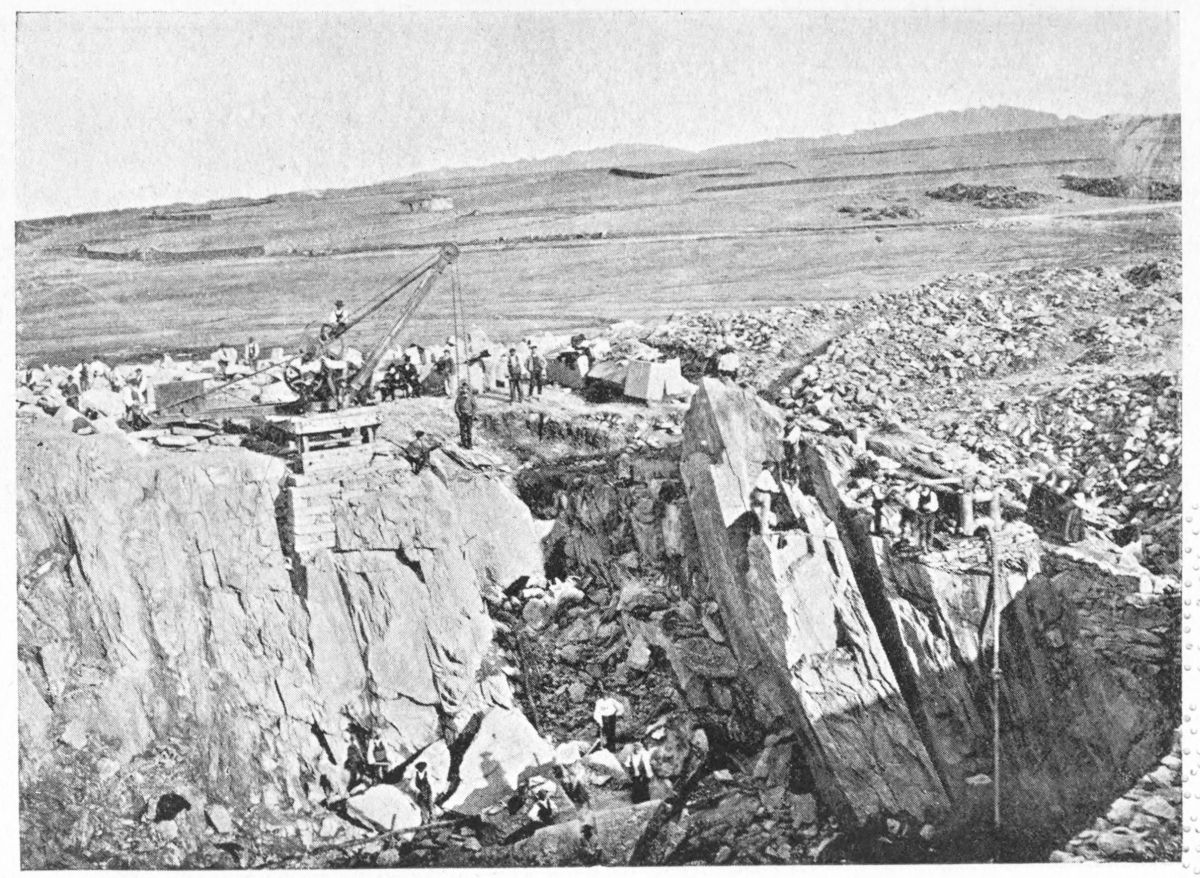
STONE QUARRIES OF THE TOWN OF VALDEROJO
ZAMORA
Plate 208
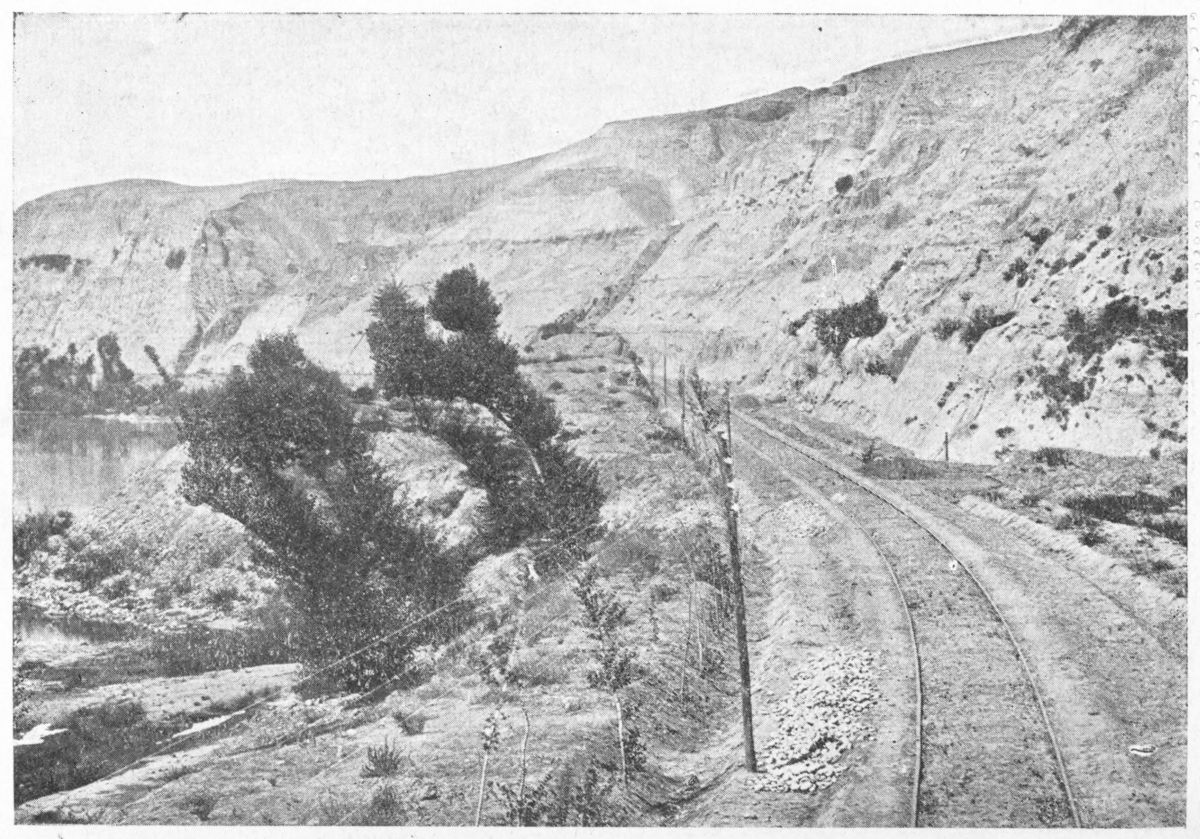
EARTHWORKS OF THE ANCIENT CITY OF TORO
Plate 209
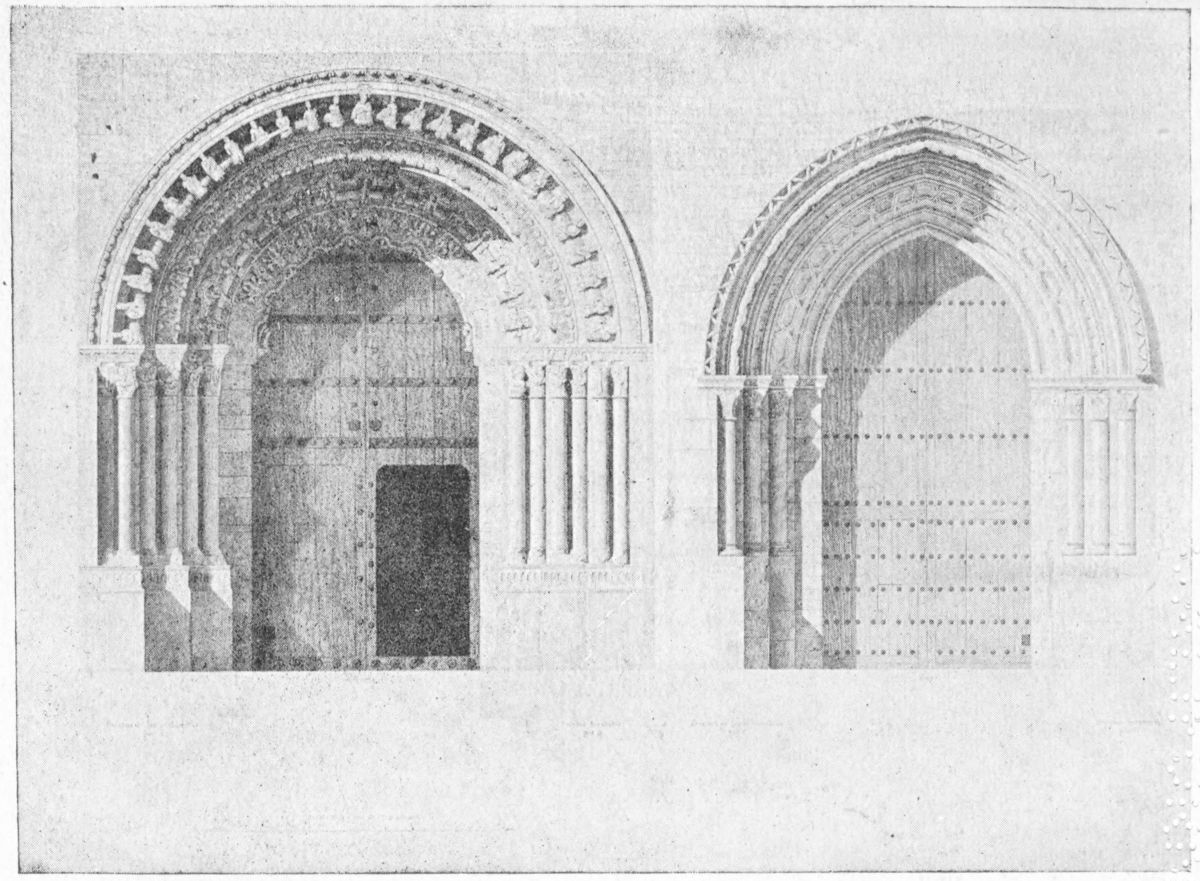
NORTH AND CENTRE GATES OF THE COLLEGIATE CHURCH OF TORO
Plate 210
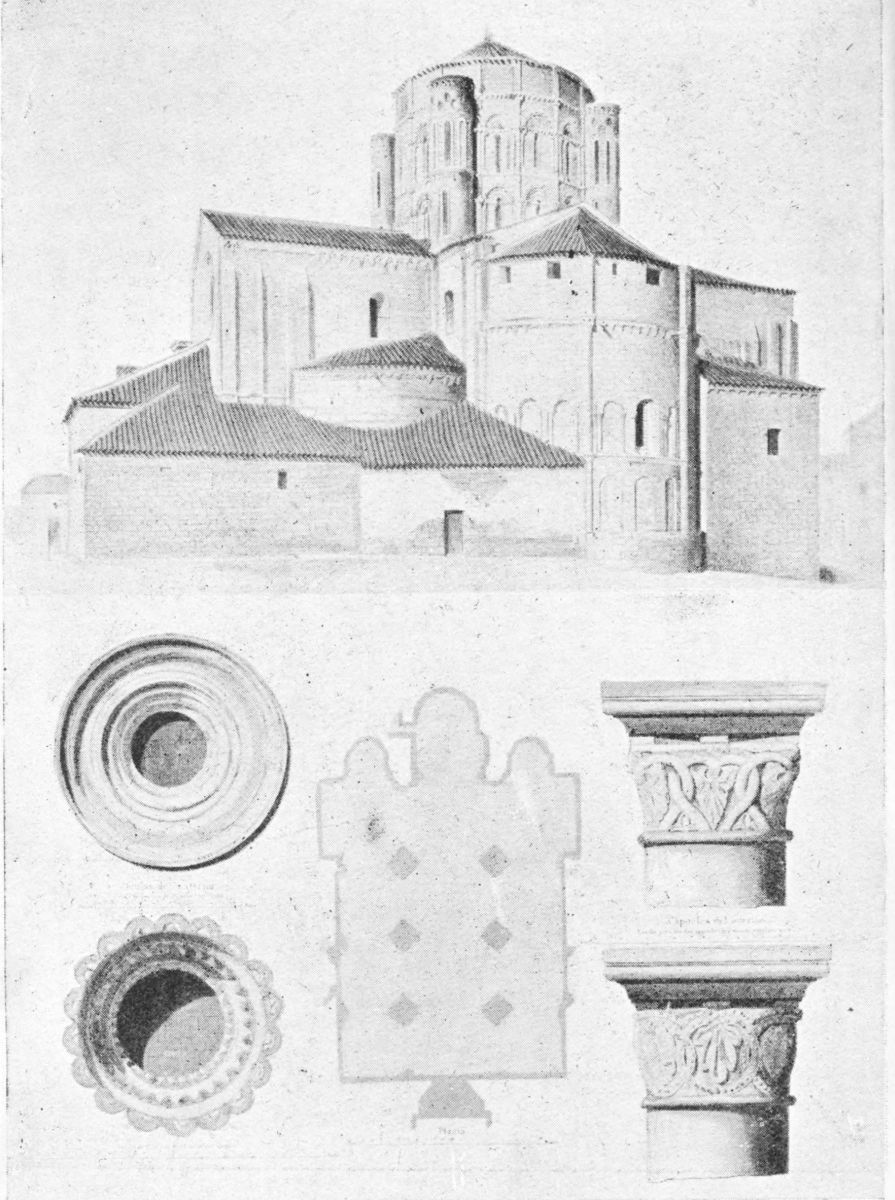
PLAN, EXTERIOR VIEW, AND DETAILS OF THE COLLEGIATE CHURCH OF TORO
Plate 211
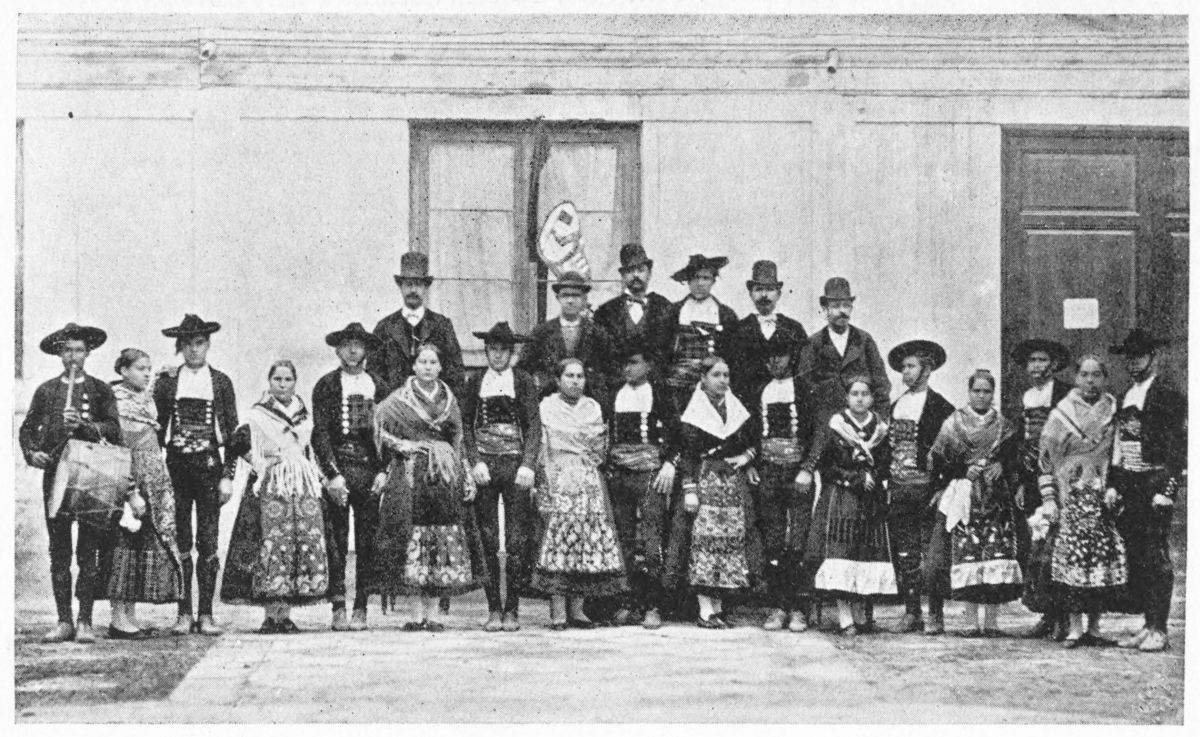
GROUP OF PEASANTS OF THE VILLAGE OF BERMIGO DE SAYAGO
PROVINCE OF ZAMORA
Plate 212
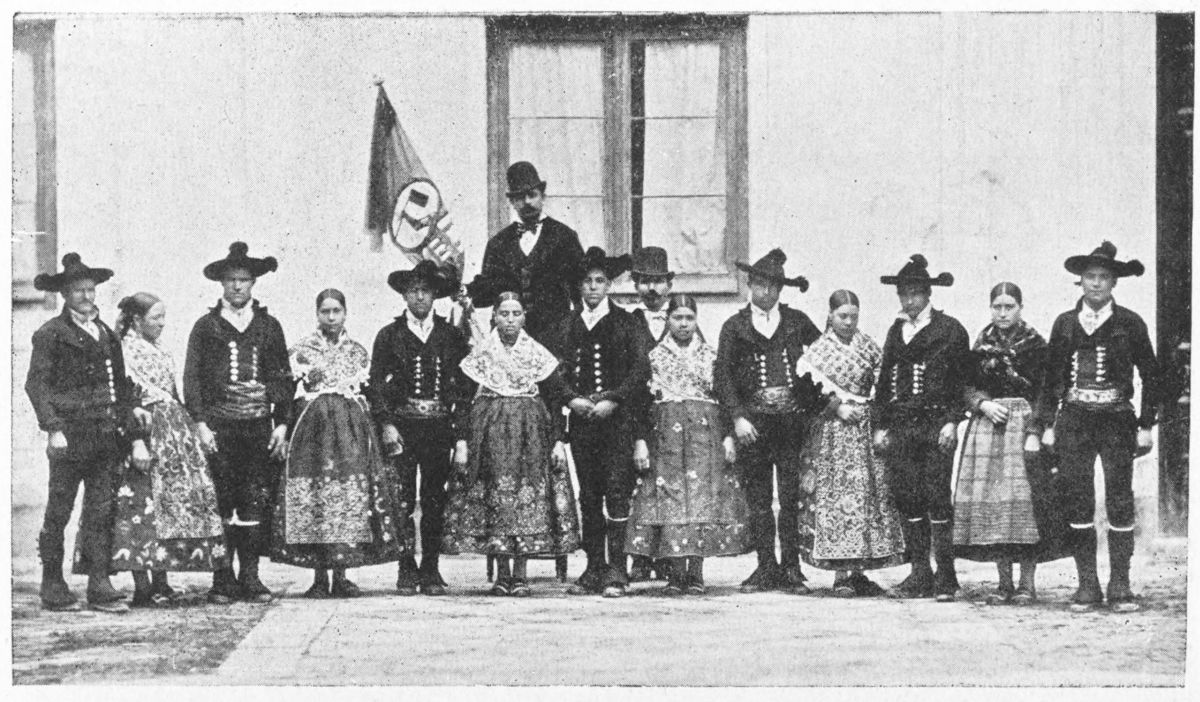
GROUP OF PEASANTS OF THE VILLAGE OF CARBAJALES
PROVINCE OF ZAMORA
Plate 213
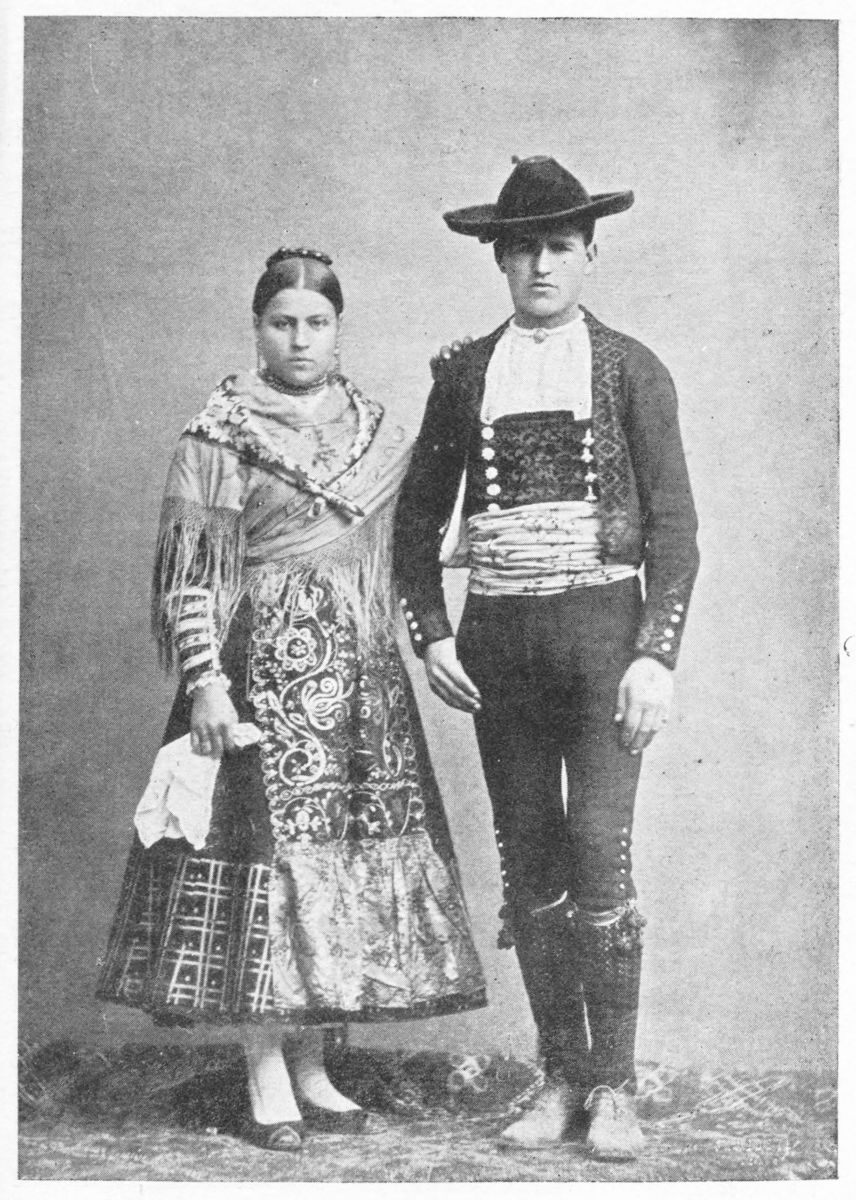
PEASANTS OF THE VILLAGE OF BERMIGO DE SAYAGO
PROVINCE OF ZAMORA
Plate 214
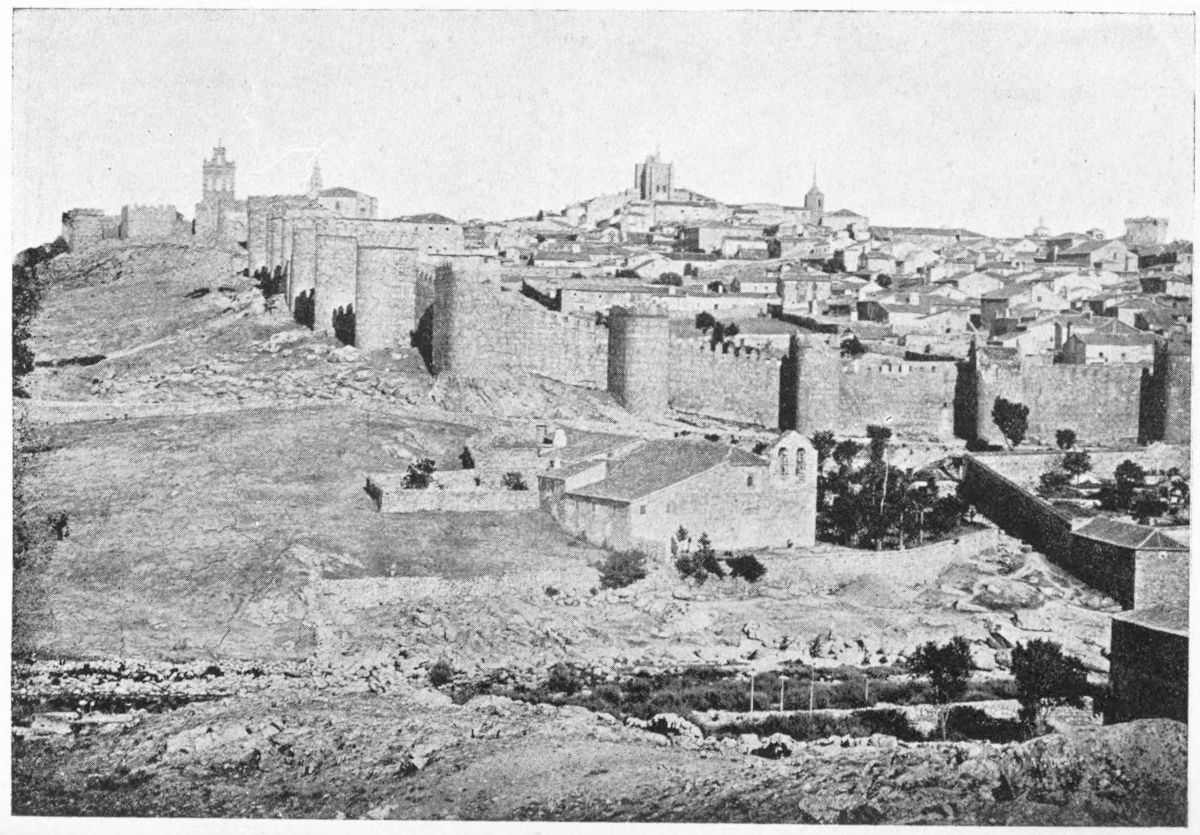
GENERAL VIEW OF AVILA
Plate 215
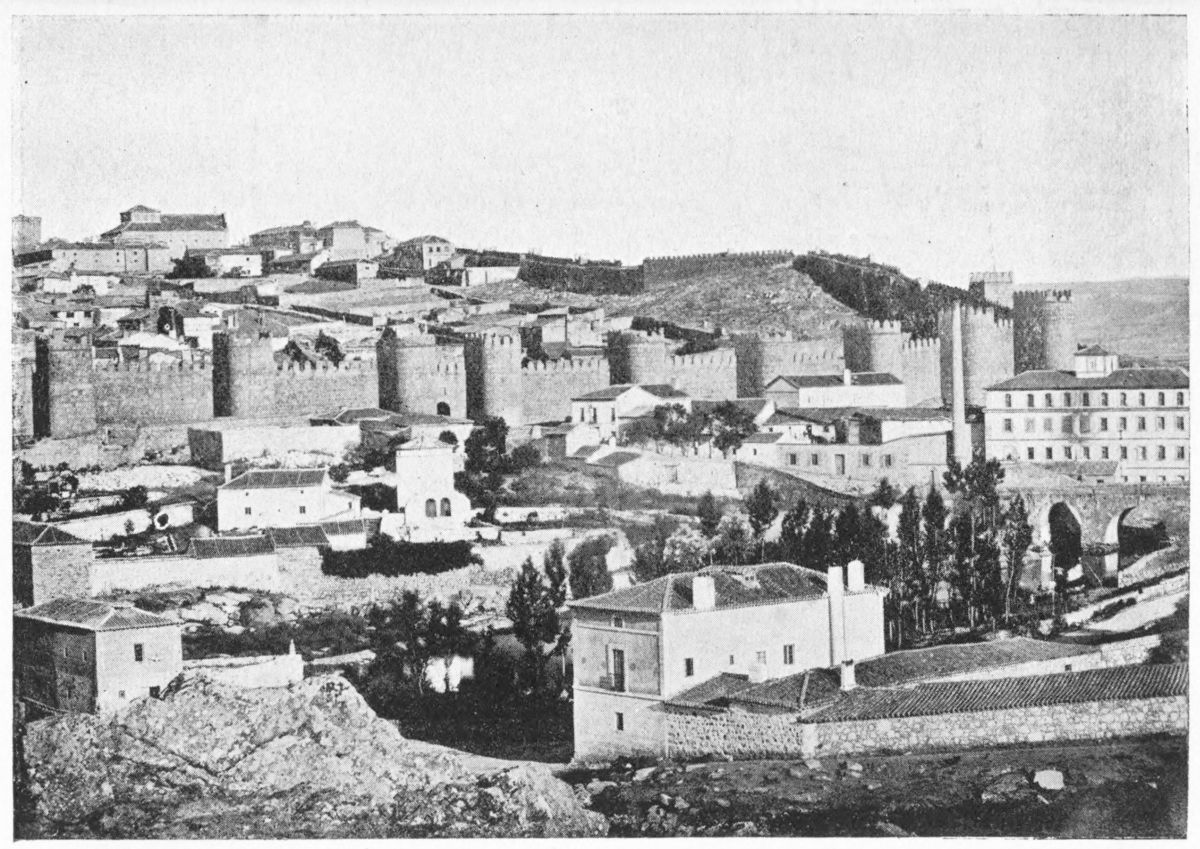
GENERAL VIEW OF AVILA
Plate 216
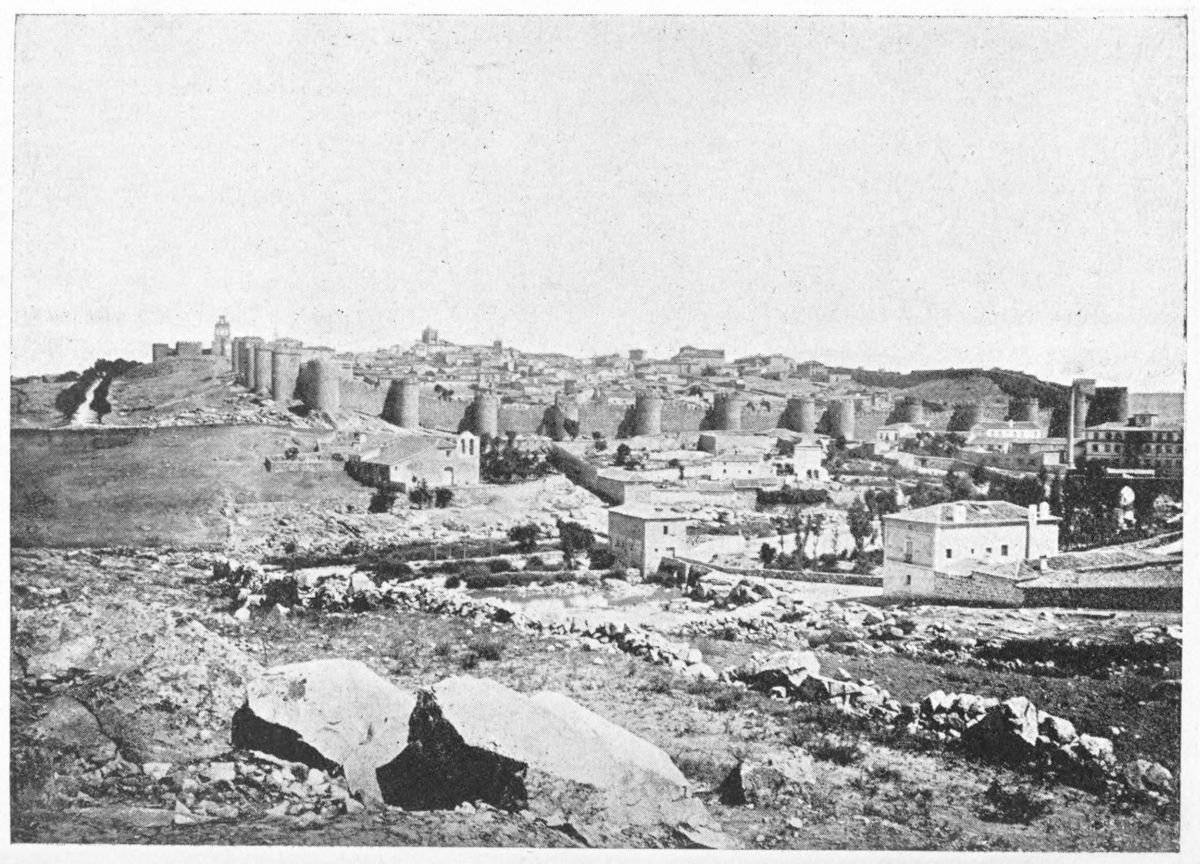
VIEW OF AVILA
Plate 217
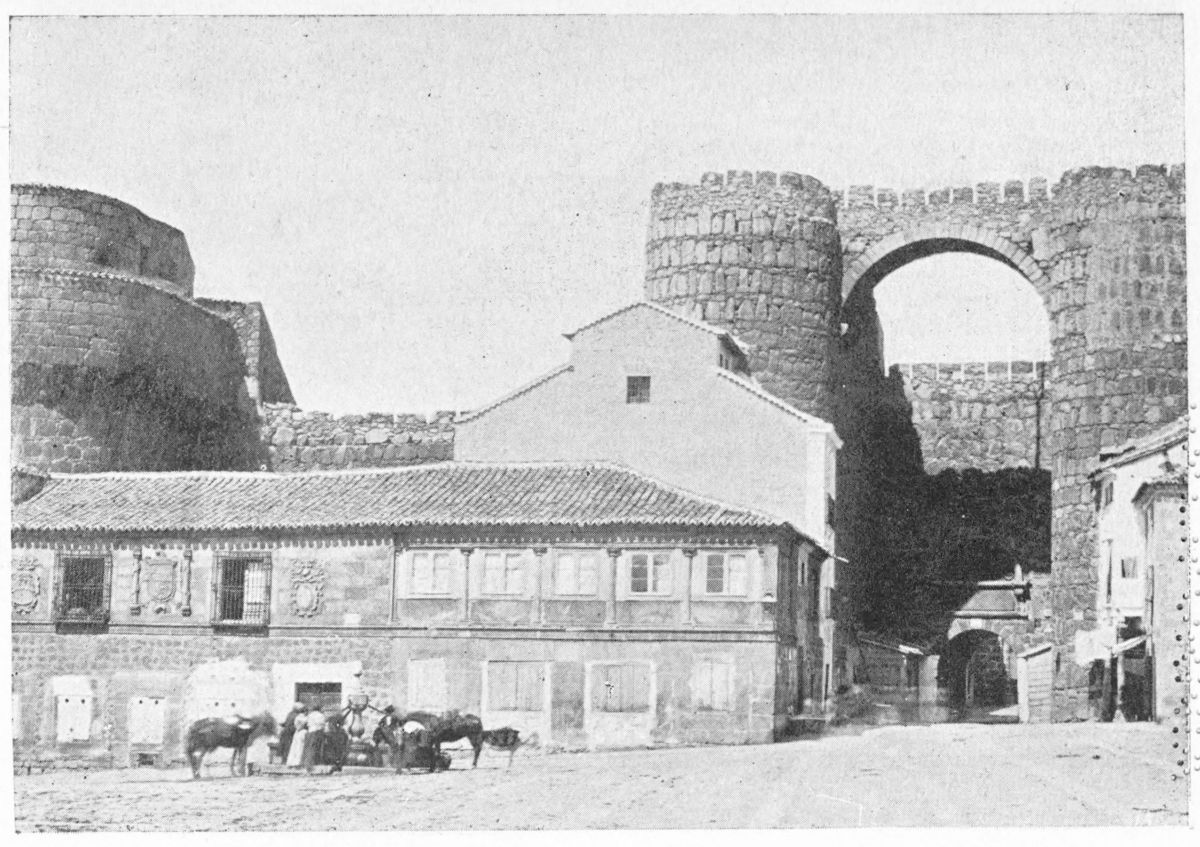
GATE OF THE ALCAZAR
AVILA
Plate 218
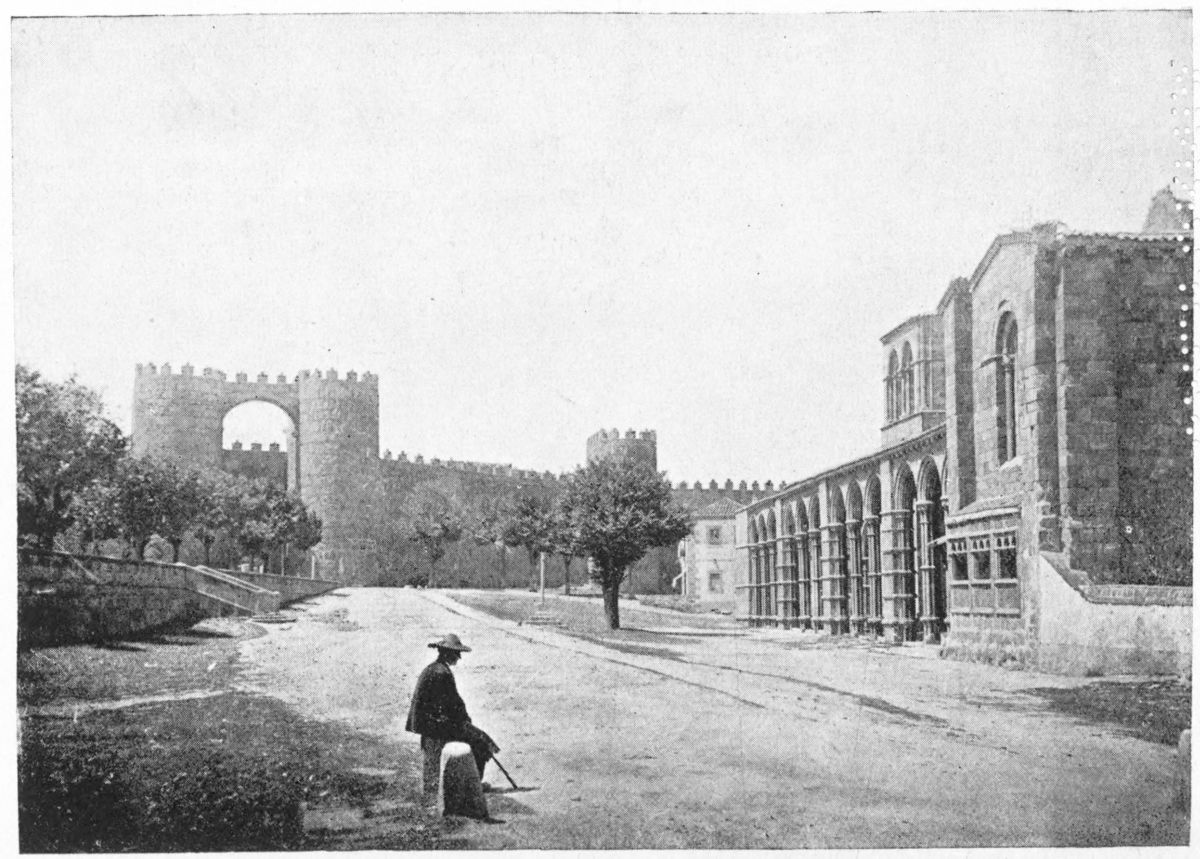
GATE OF SAN VICENTE
AVILA
Plate 219
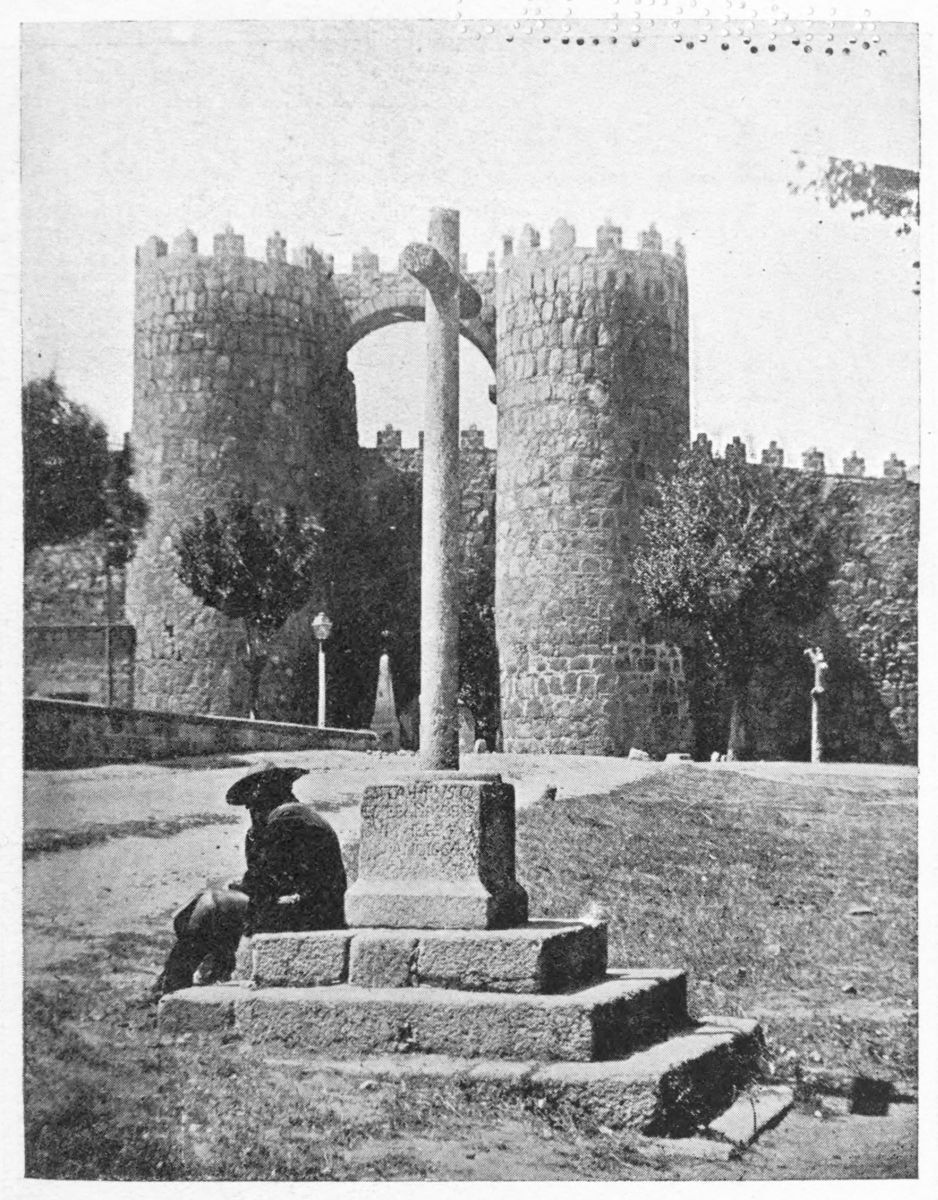
GATE OF SAN VICENTE
AVILA
Plate 220
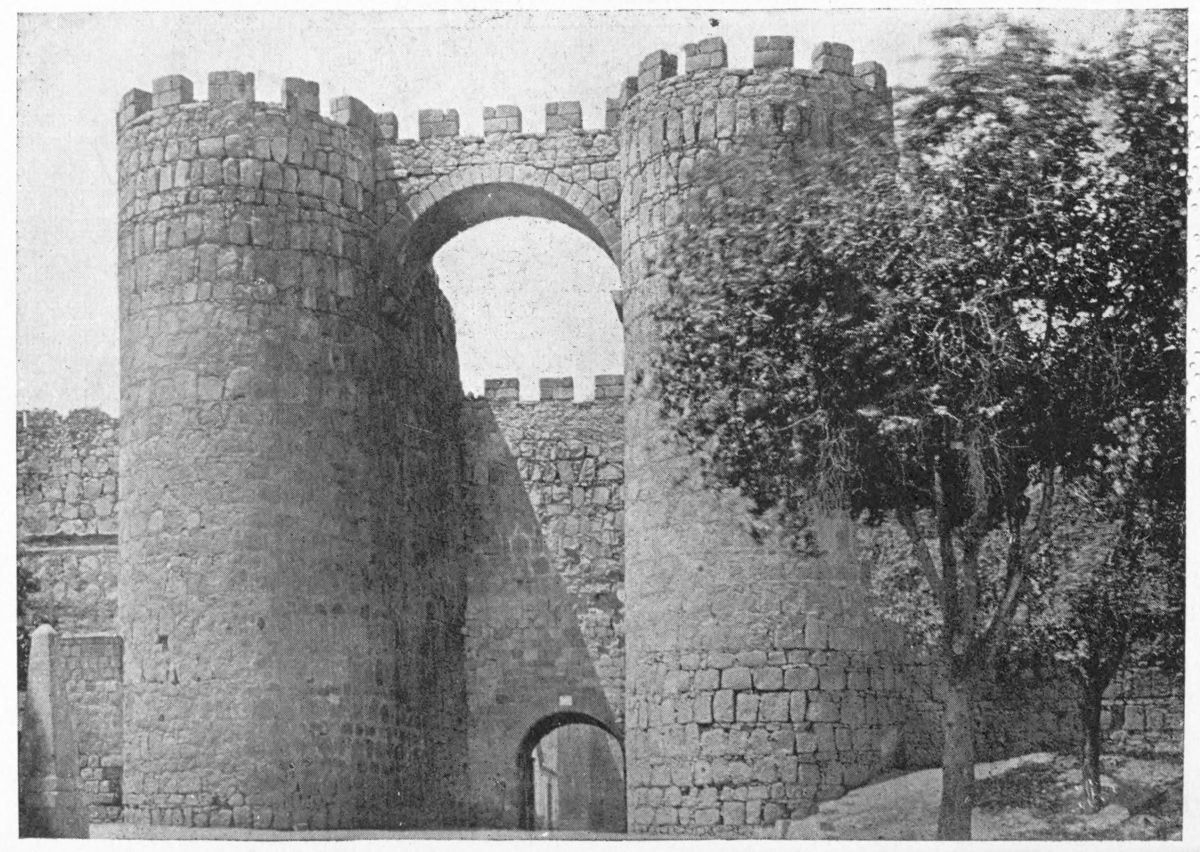
GATE OF SAN VICENTE
AVILA
Plate 221
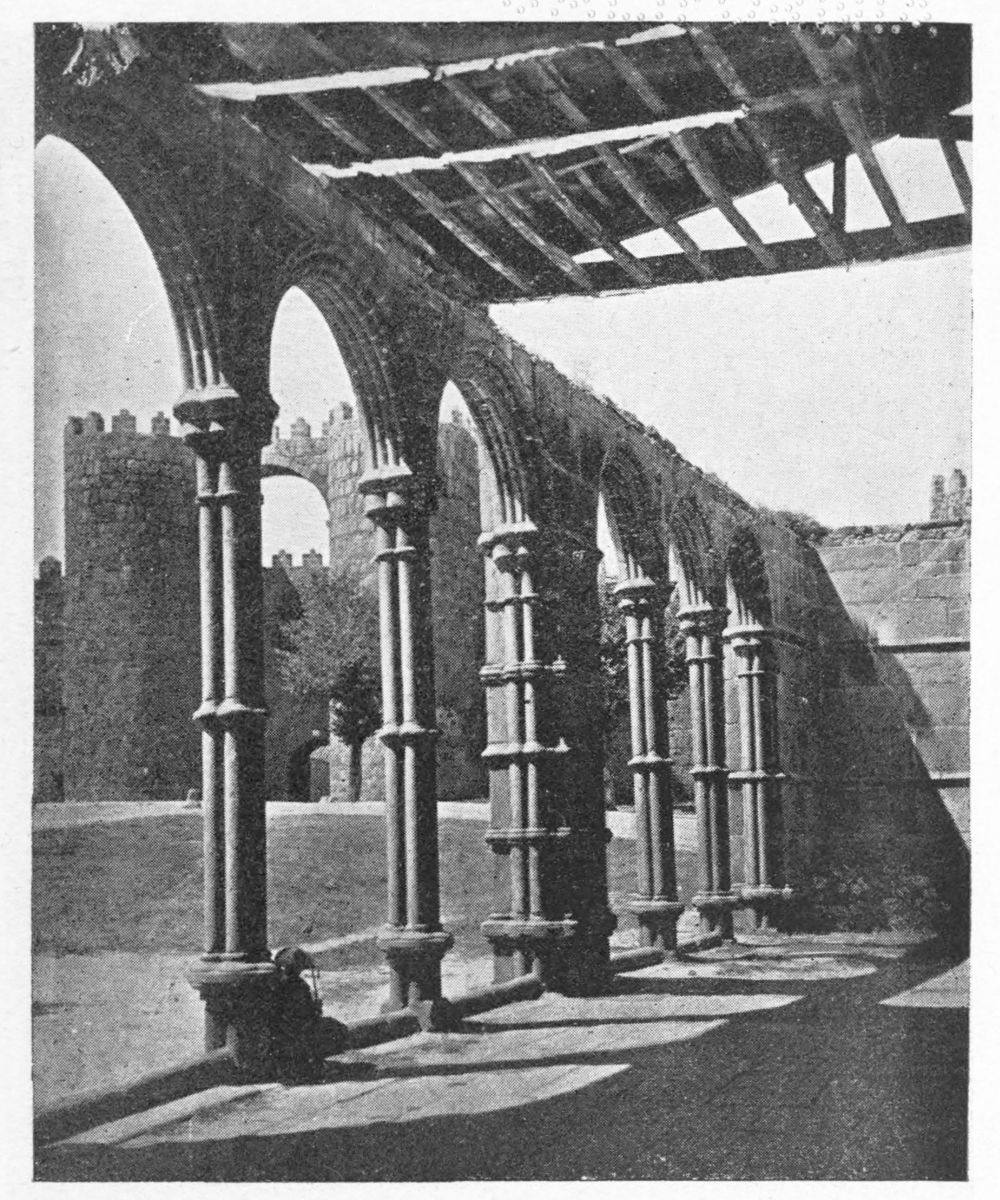
GATE OF SAN VICENTE
AVILA
Plate 222
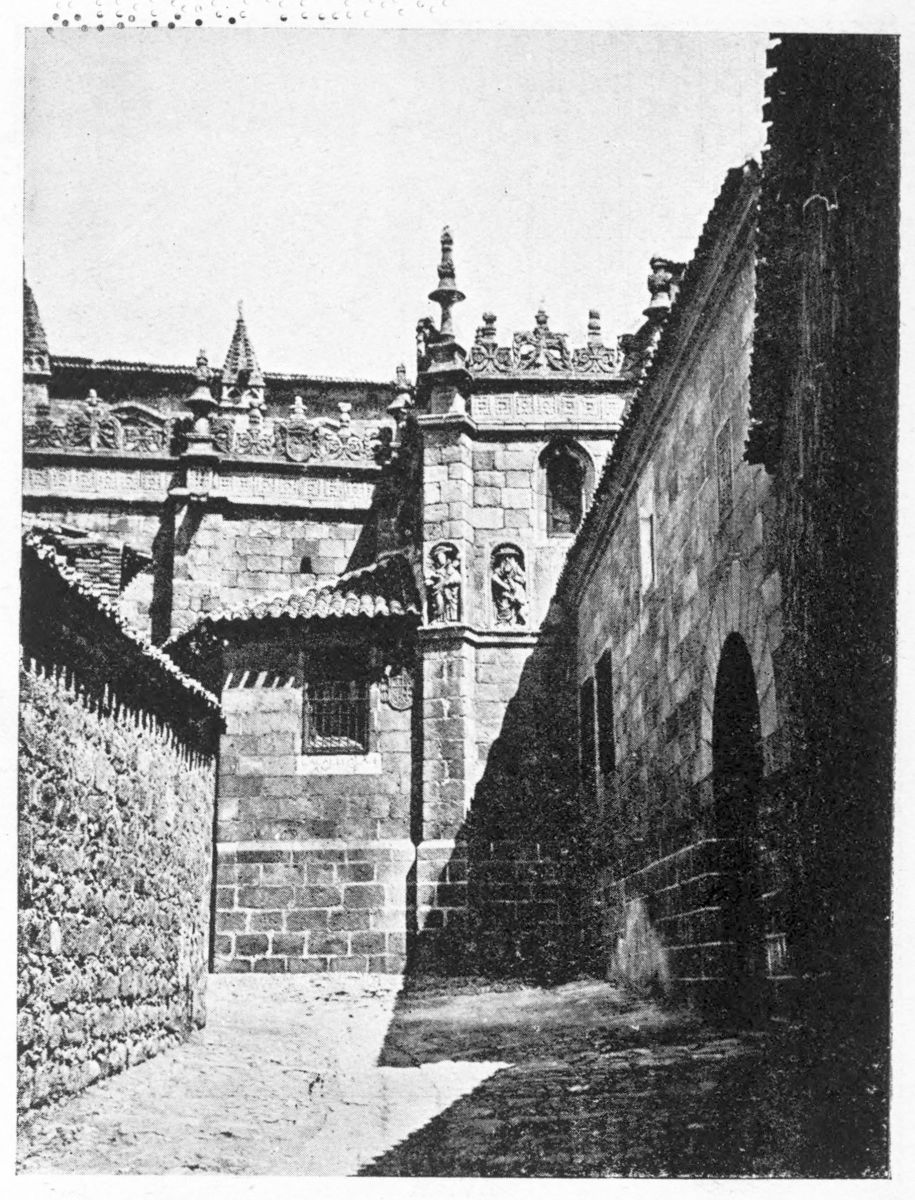
A STREET IN AVILA
Plate 223
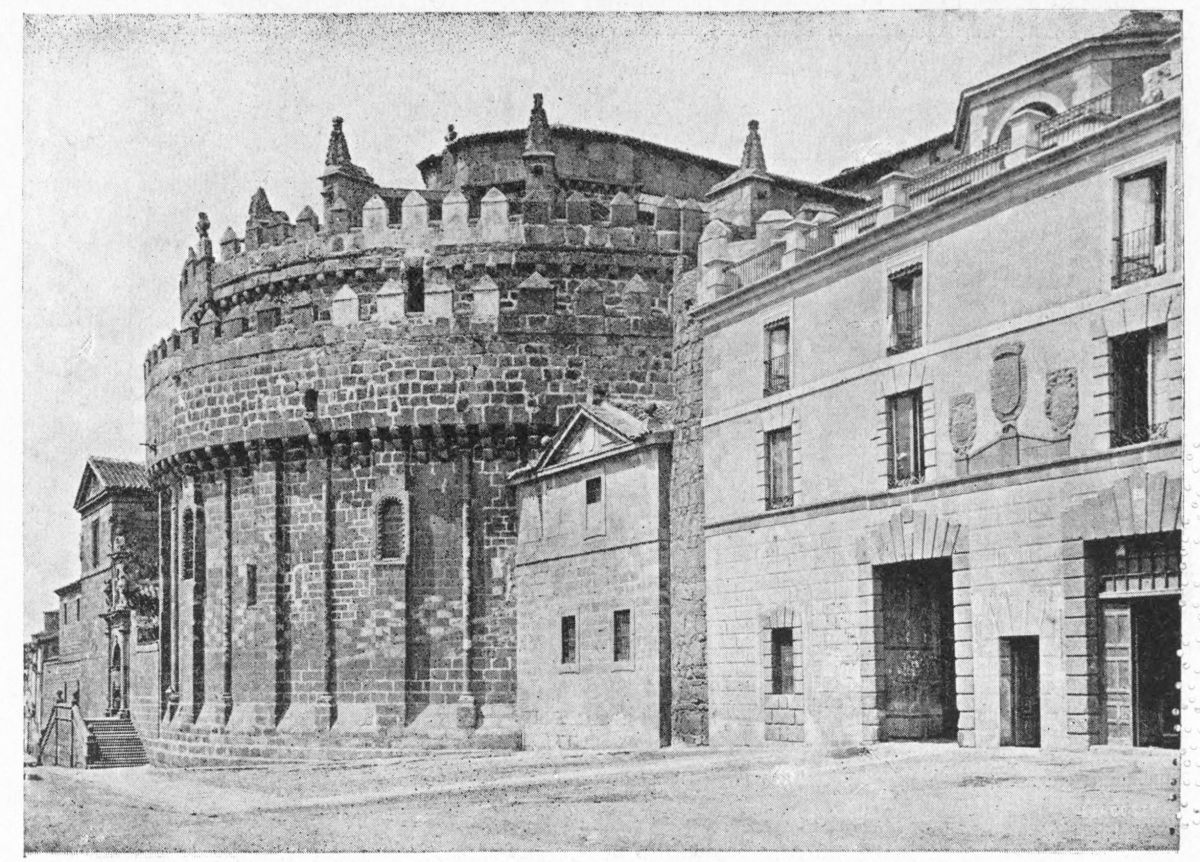
VIEW OF THE CATHEDRAL
AVILA
Plate 224
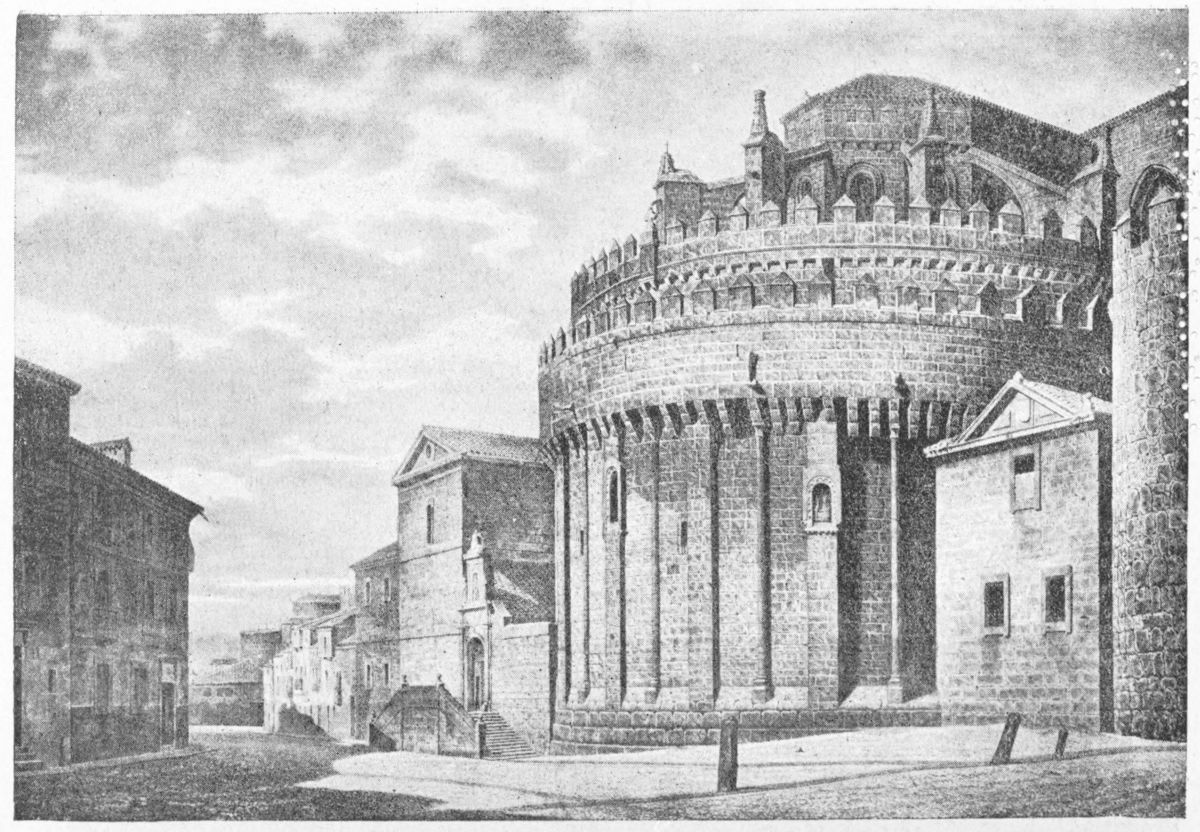
EXTERIOR OF THE CATHEDRAL
Plate 225
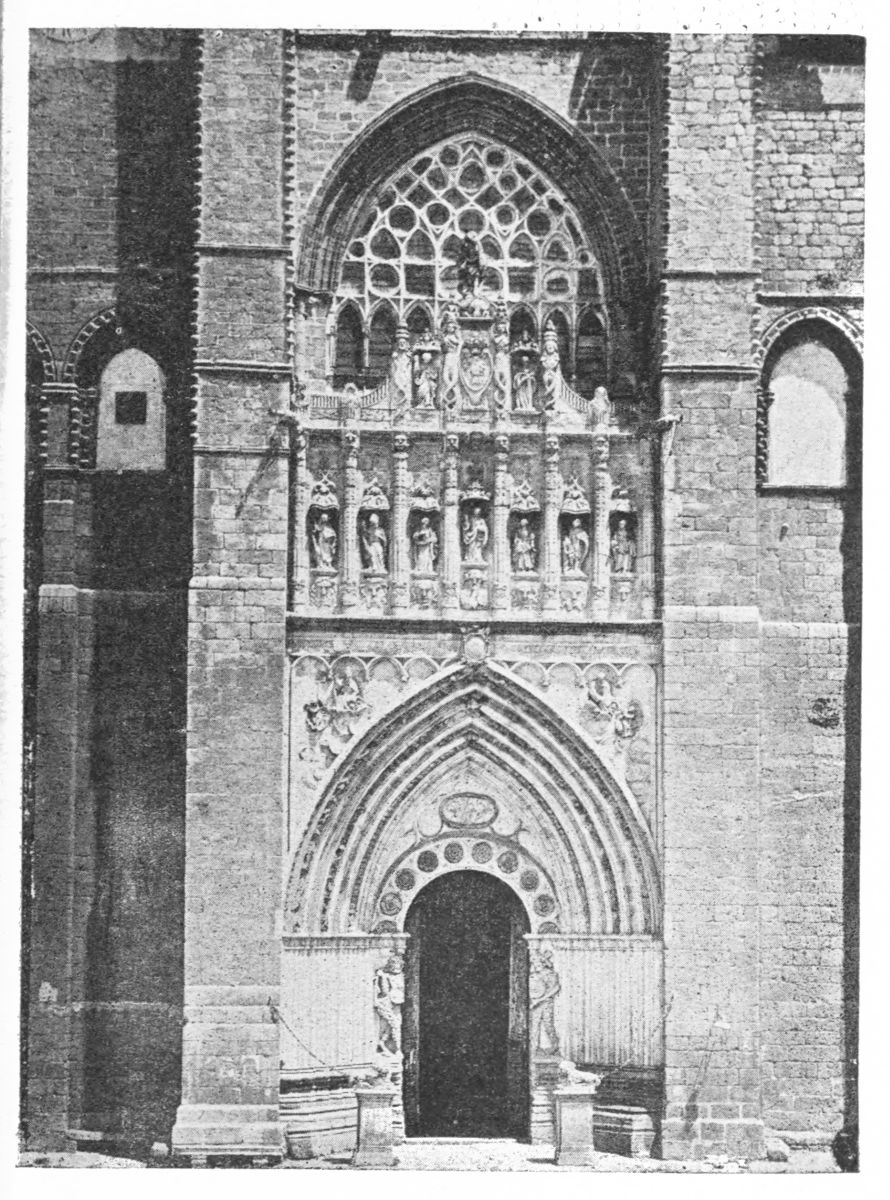
ENTRANCE TO THE CATHEDRAL
AVILA
Plate 226
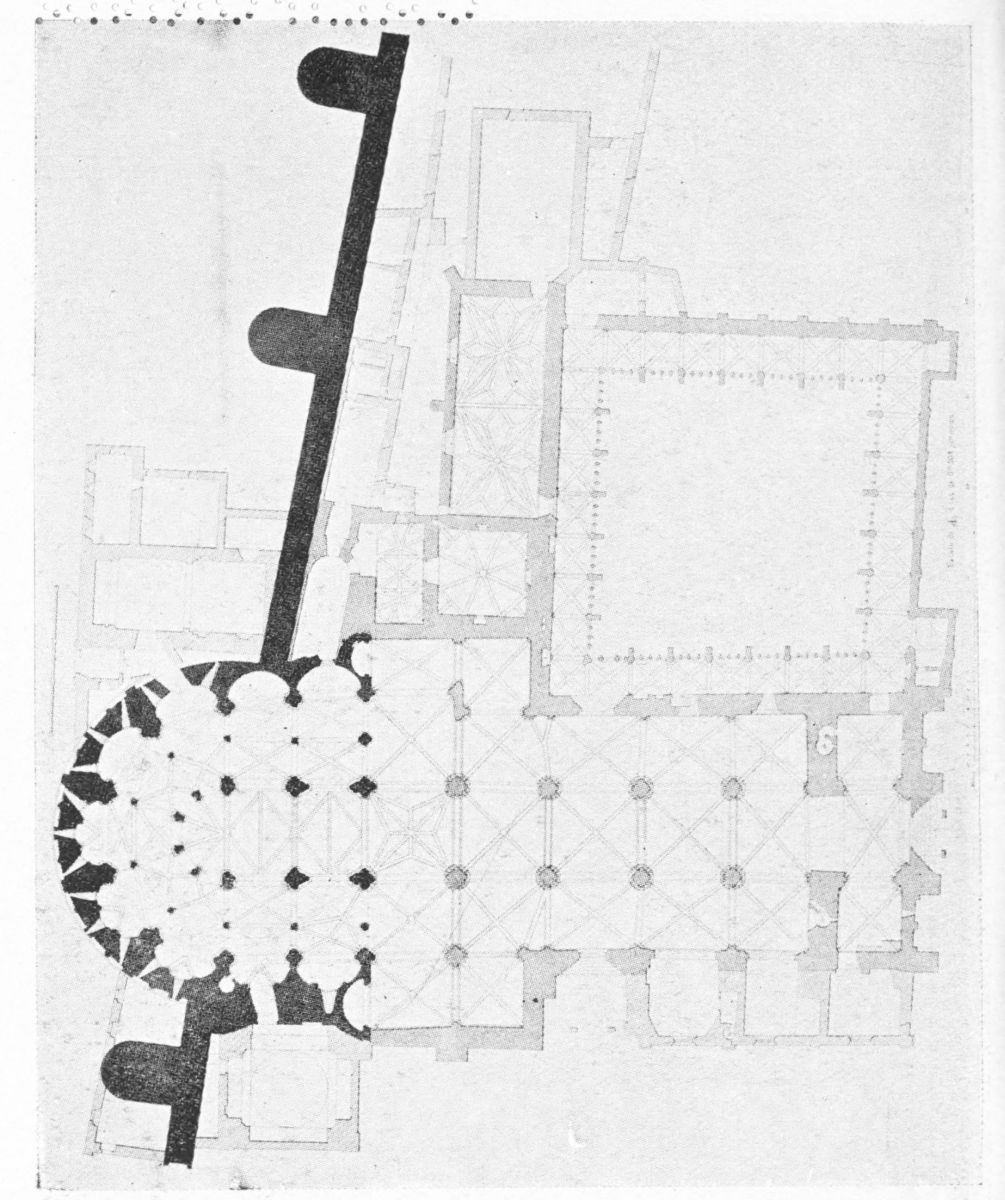
PLAN OF CATHEDRAL
Plate 227
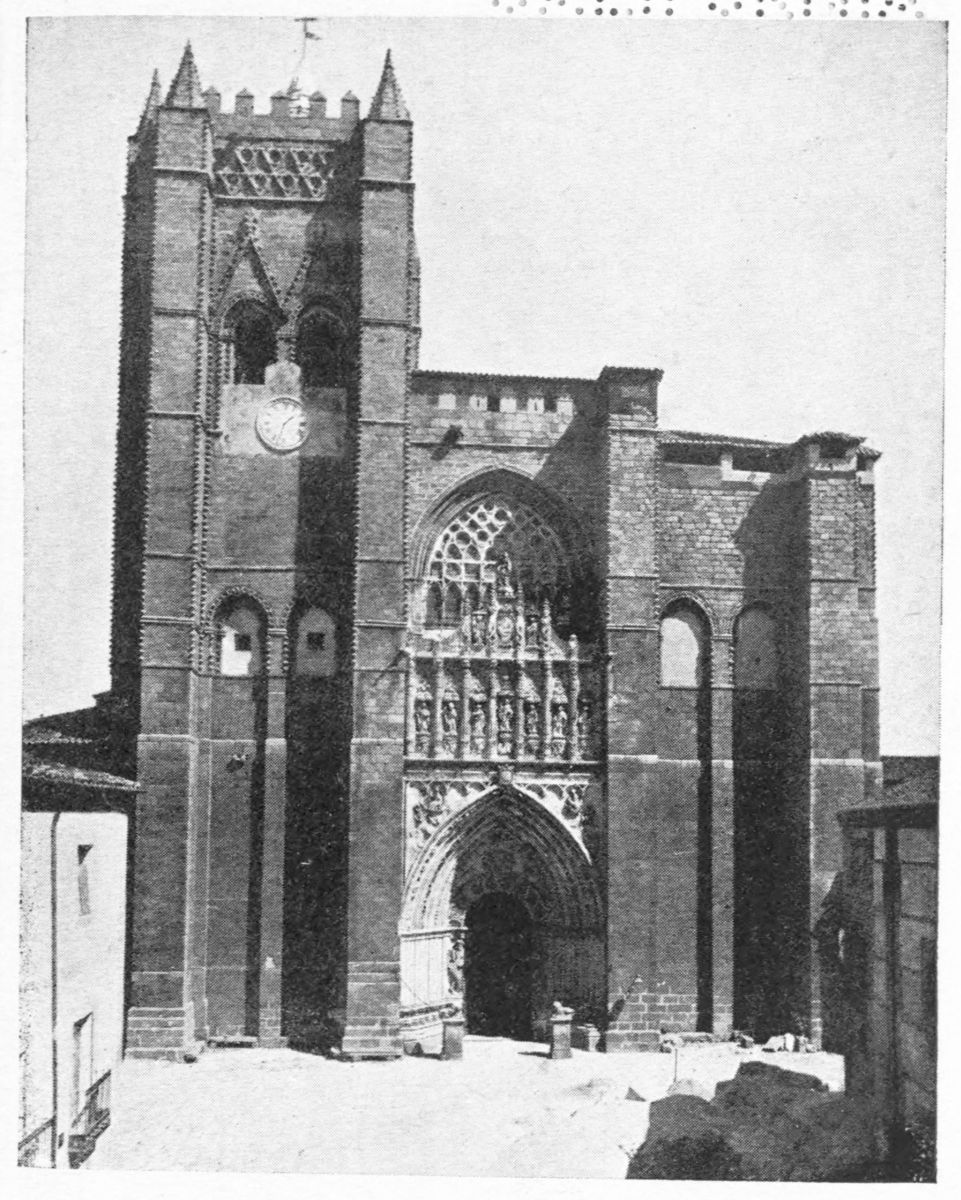
AVILA CATHEDRAL
Plate 228
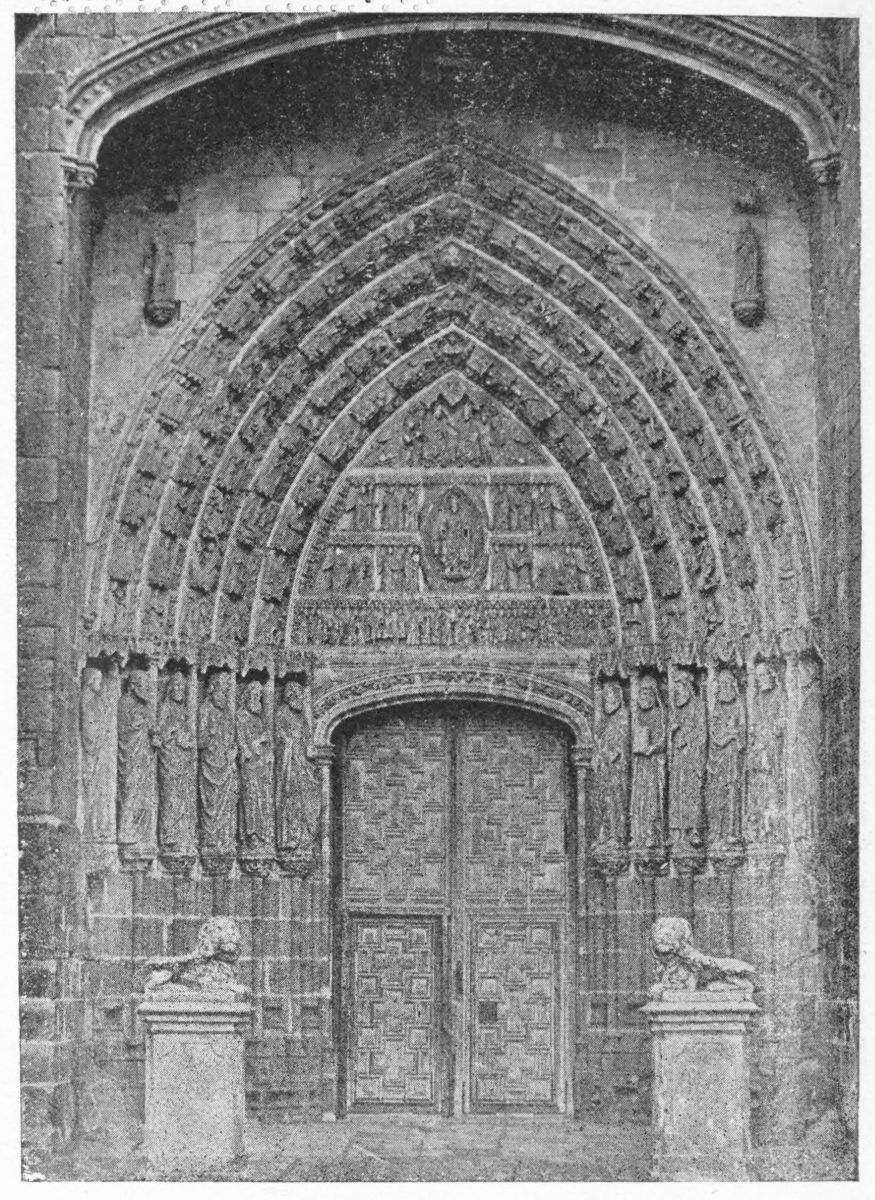
SIDE DOOR OF THE CATHEDRAL
AVILA
Plate 229
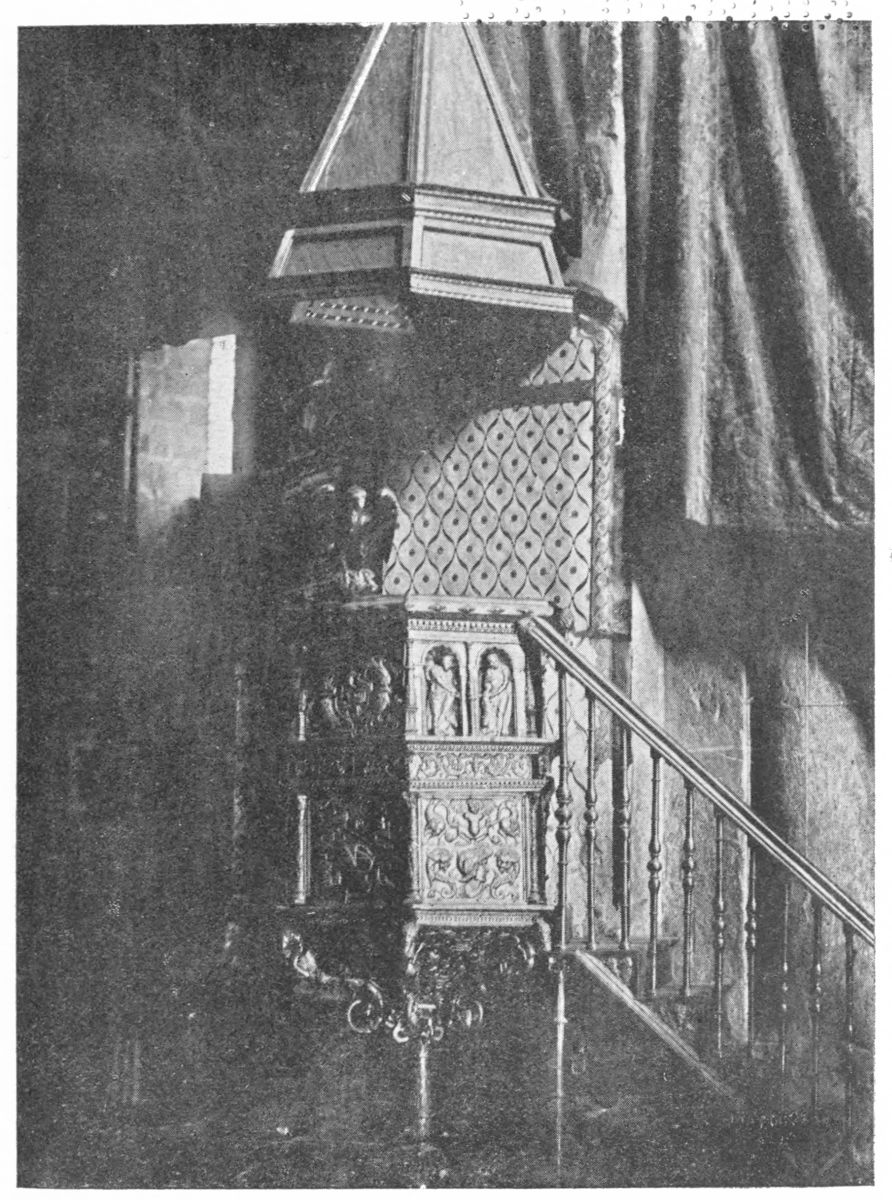
CATHEDRAL. PULPIT OF REPOUSSÉ IRON WORK
AVILA
Plate 230
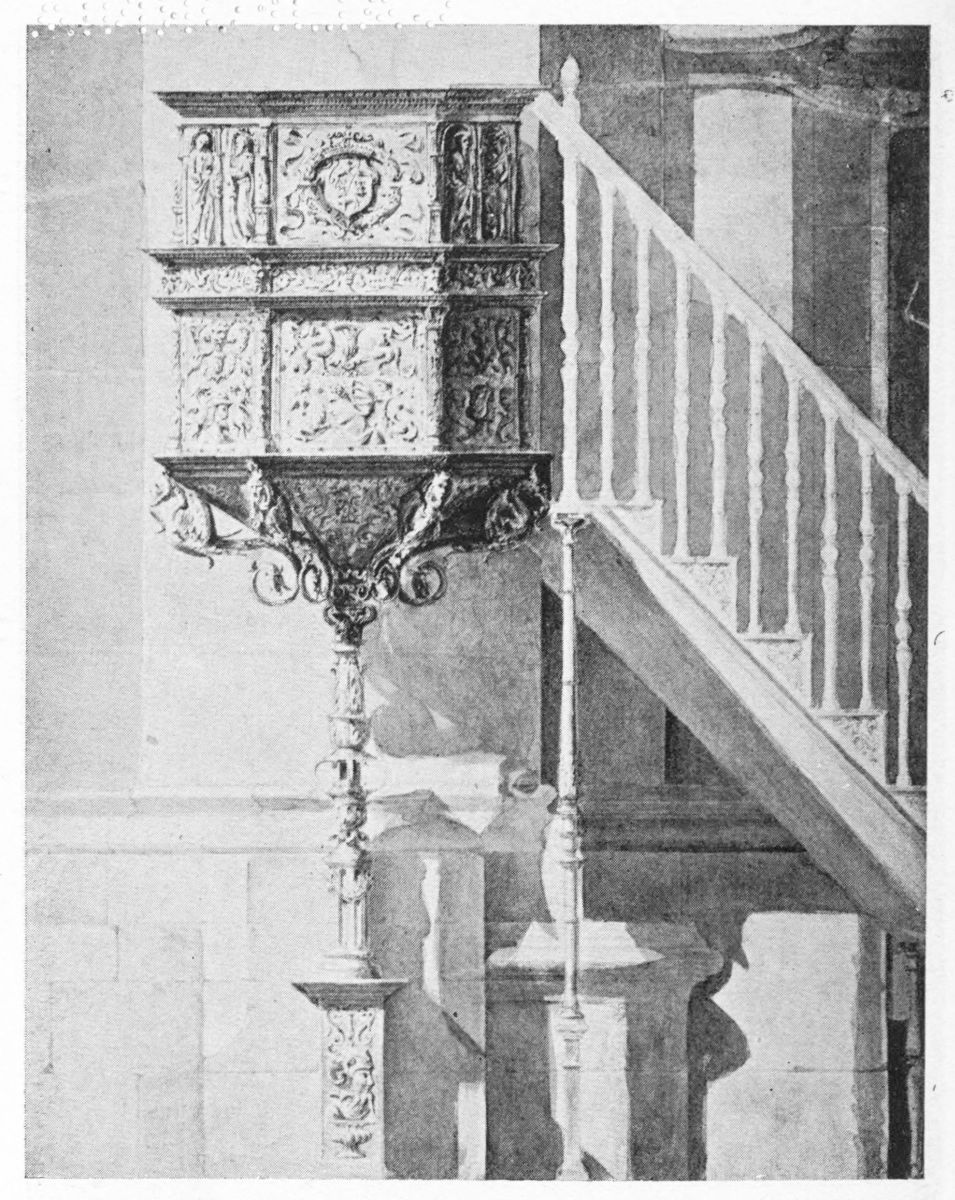
CATHEDRAL. PULPIT OF REPOUSSÉ IRON WORK
AVILA
Plate 231
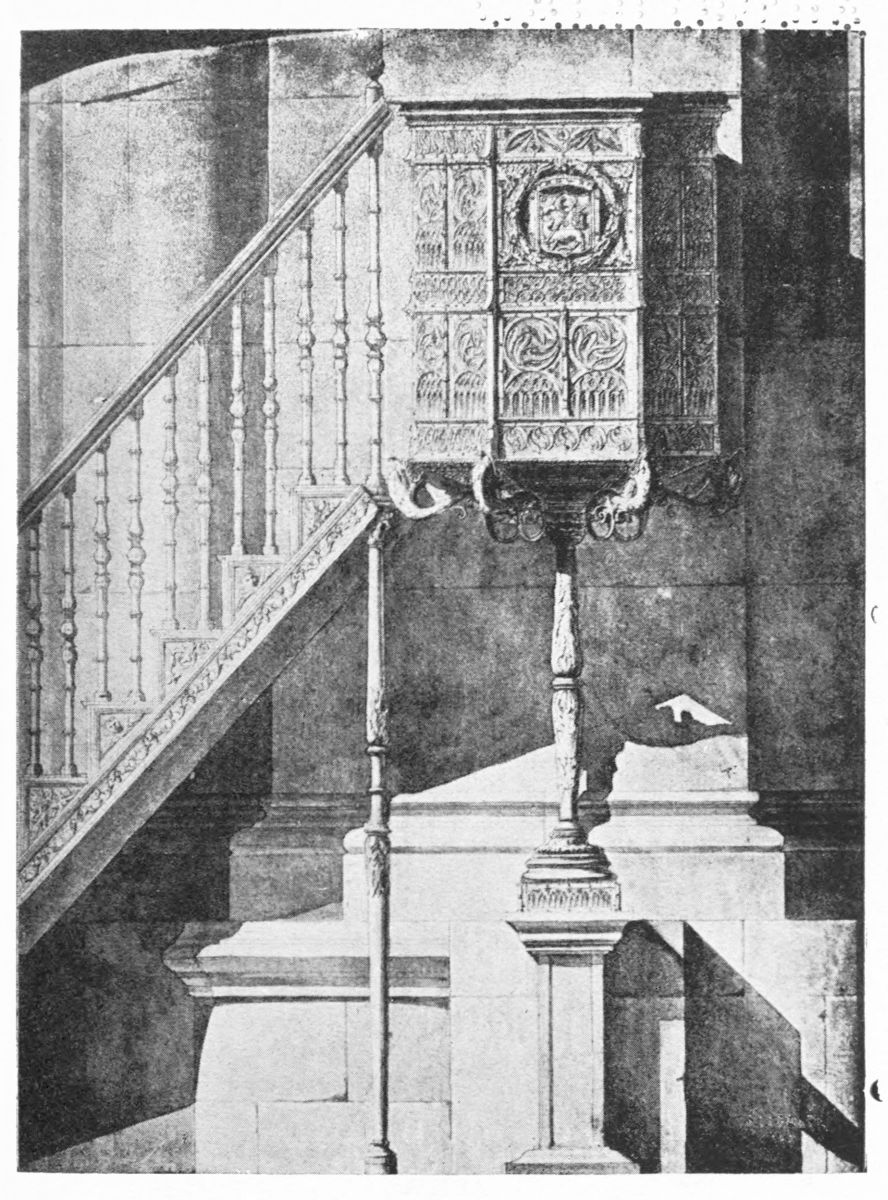
CATHEDRAL. PULPIT OF REPOUSSÉ IRON WORK
AVILA
Plate 232
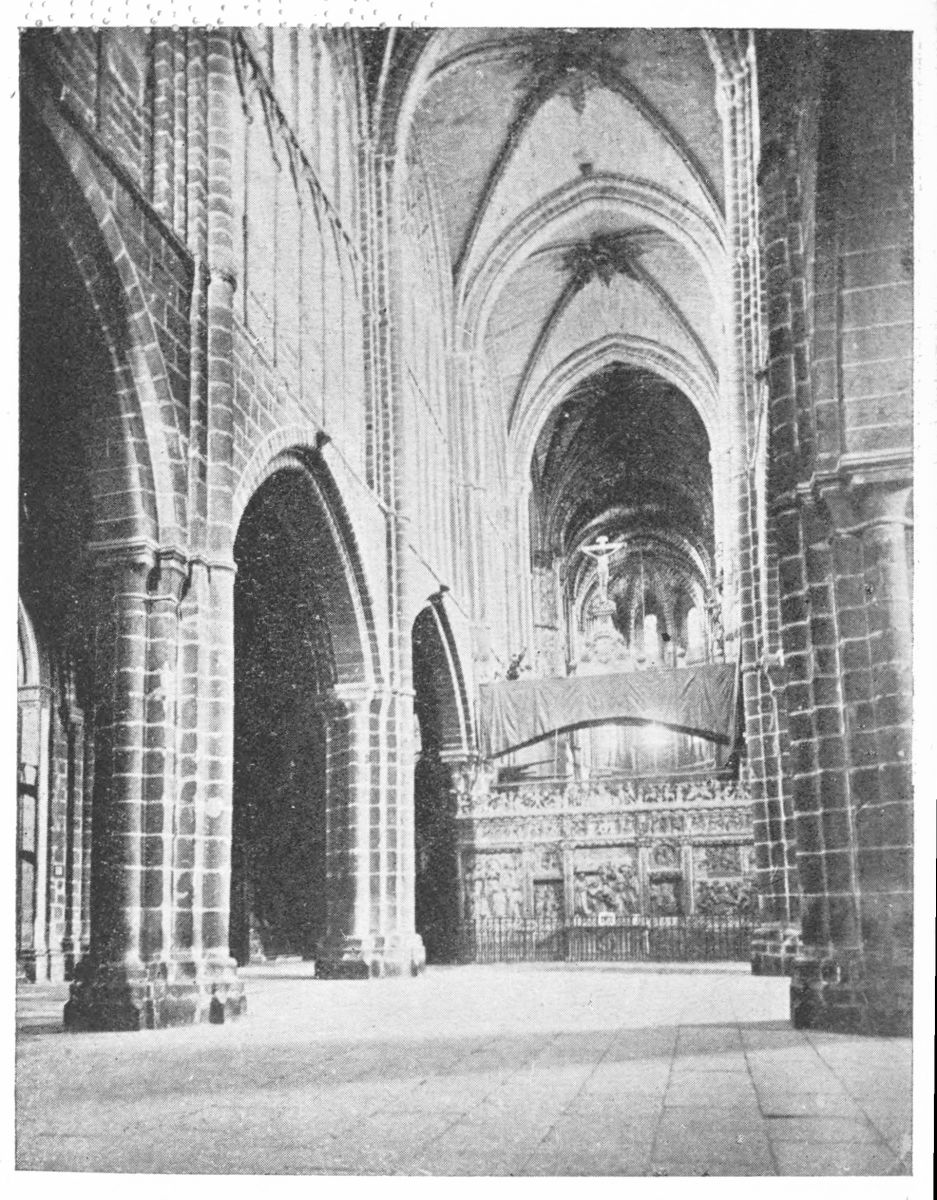
INTERIOR OF THE CATHEDRAL
AVILA
Plate 233
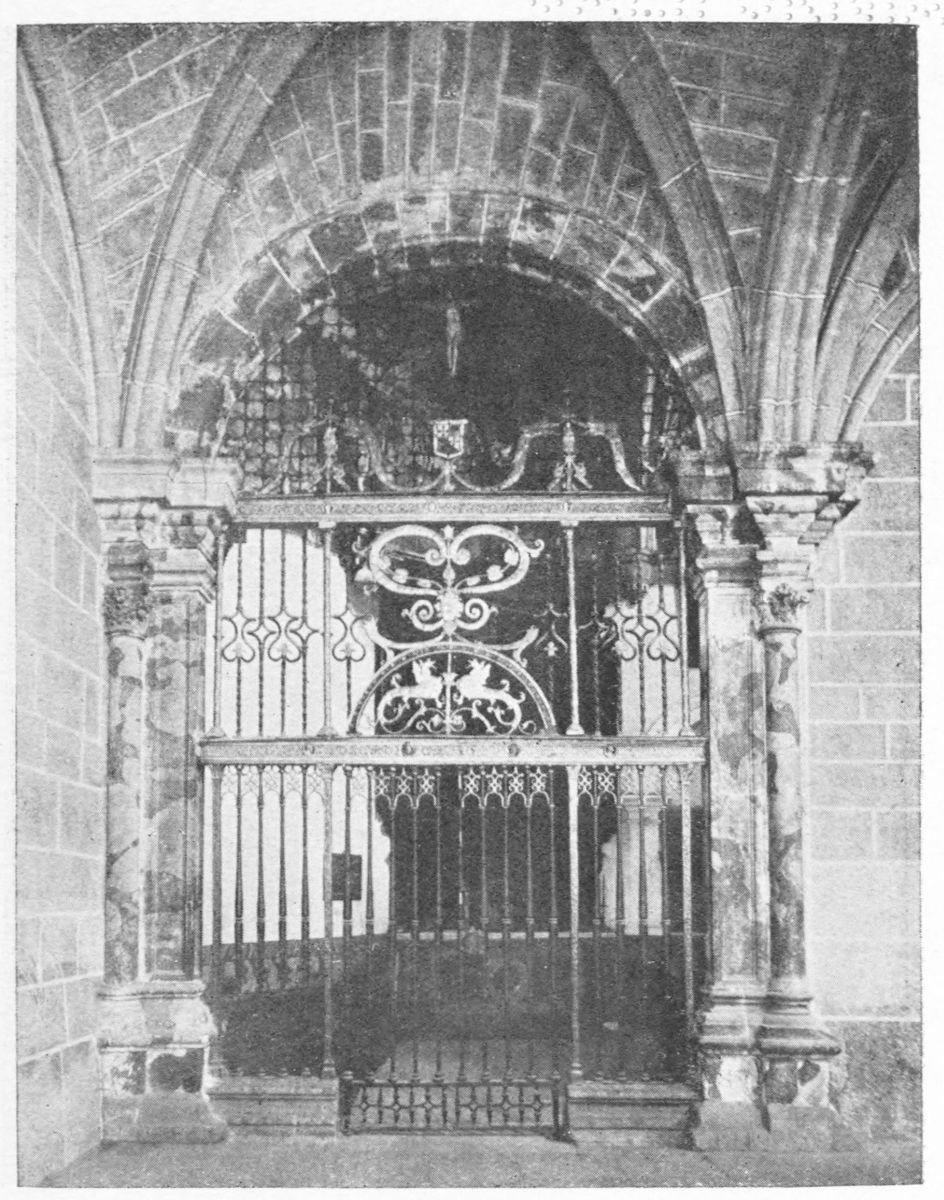
CATHEDRAL. DETAIL OF THE INTERIOR
AVILA
Plate 234
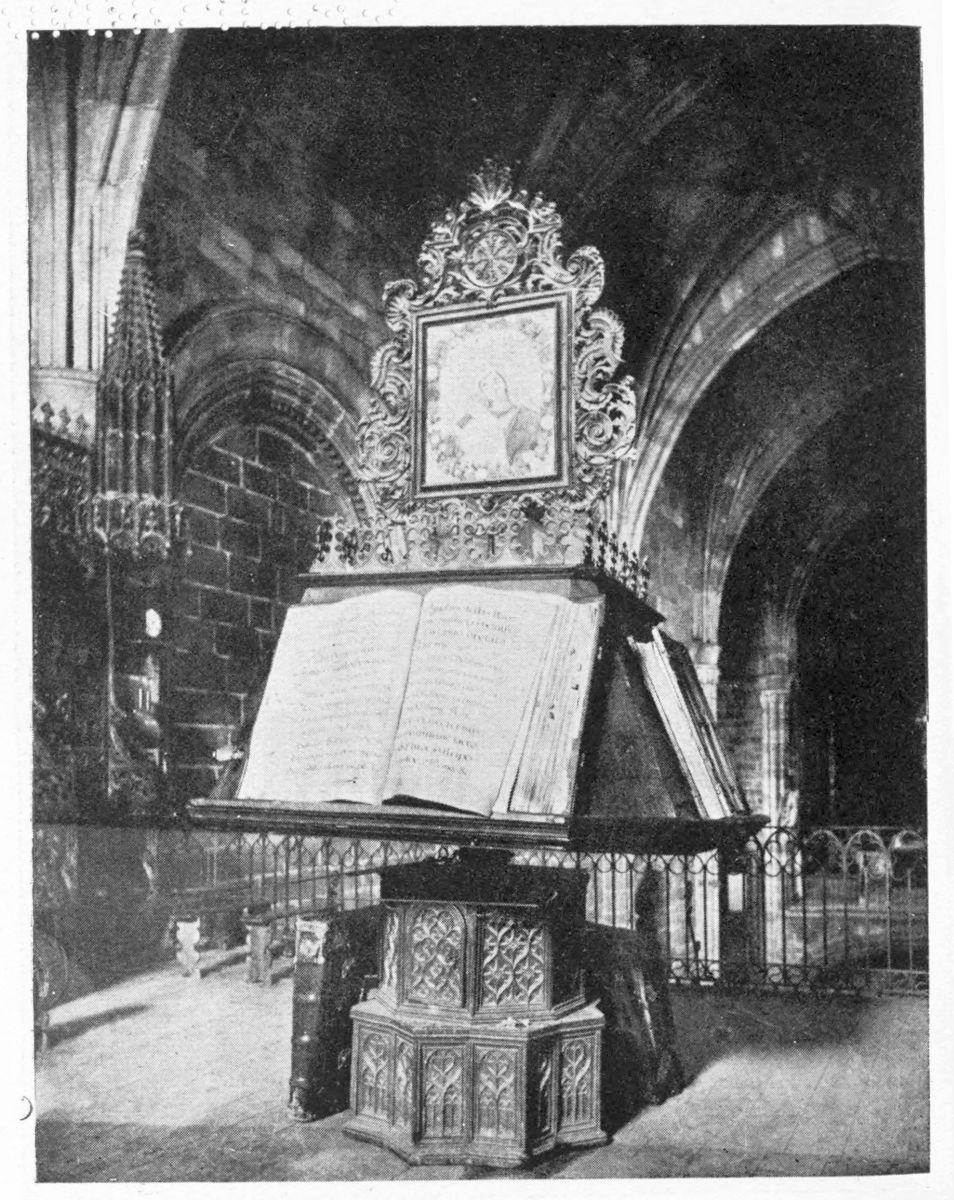
CATHEDRAL. DETAIL OF THE CHOIR
AVILA
Plate 235
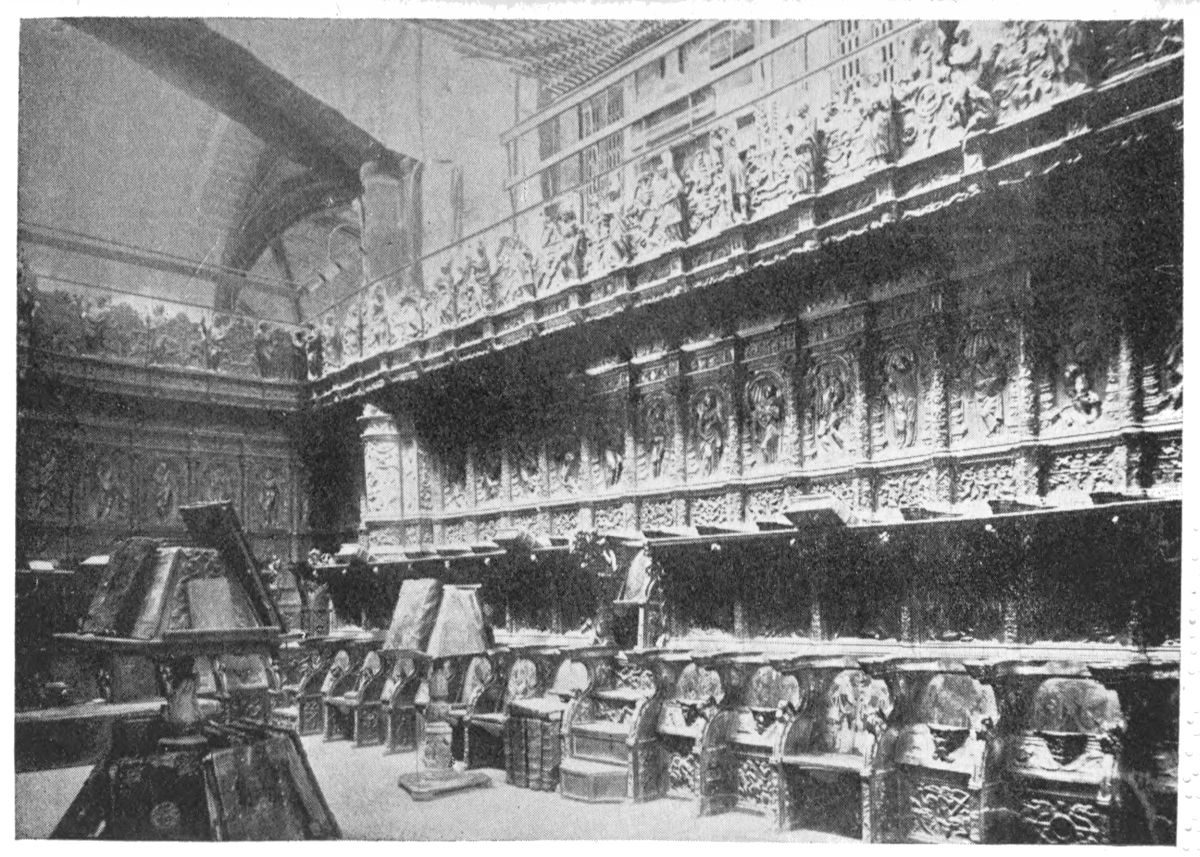
CATHEDRAL. THE CHOIR
AVILA
Plate 236
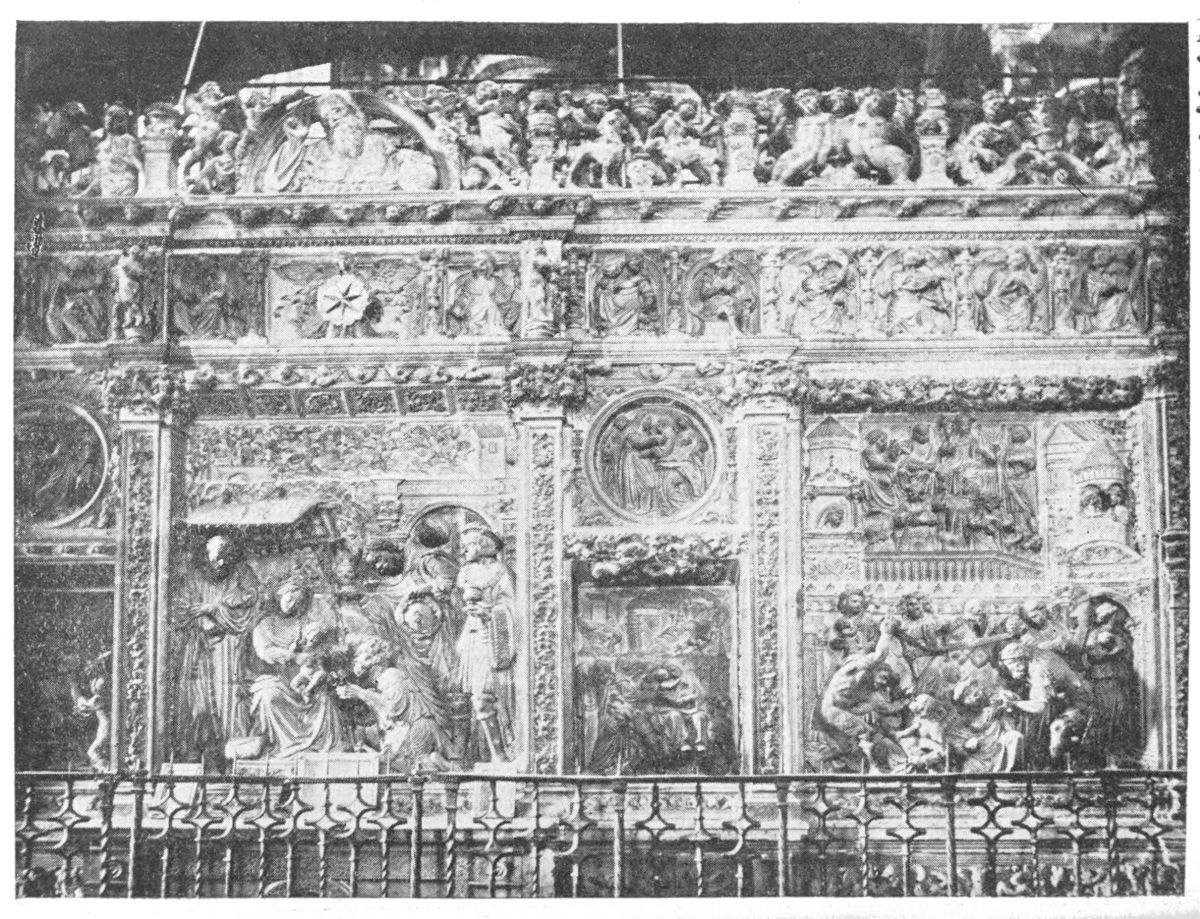
CATHEDRAL. DETAIL OF THE CHOIR
AVILA
Plate 237
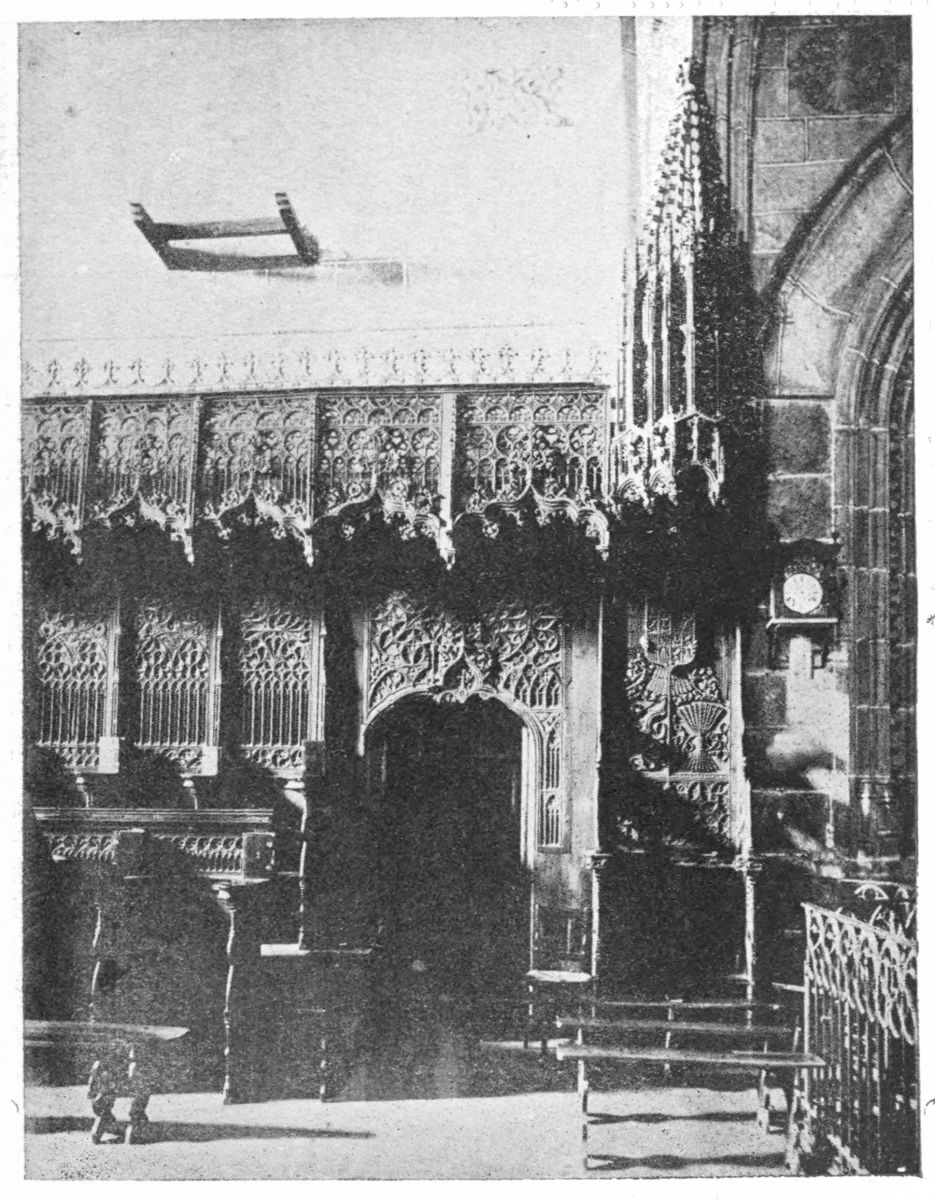
CATHEDRAL. DETAIL OF THE CHOIR
AVILA
Plate 238
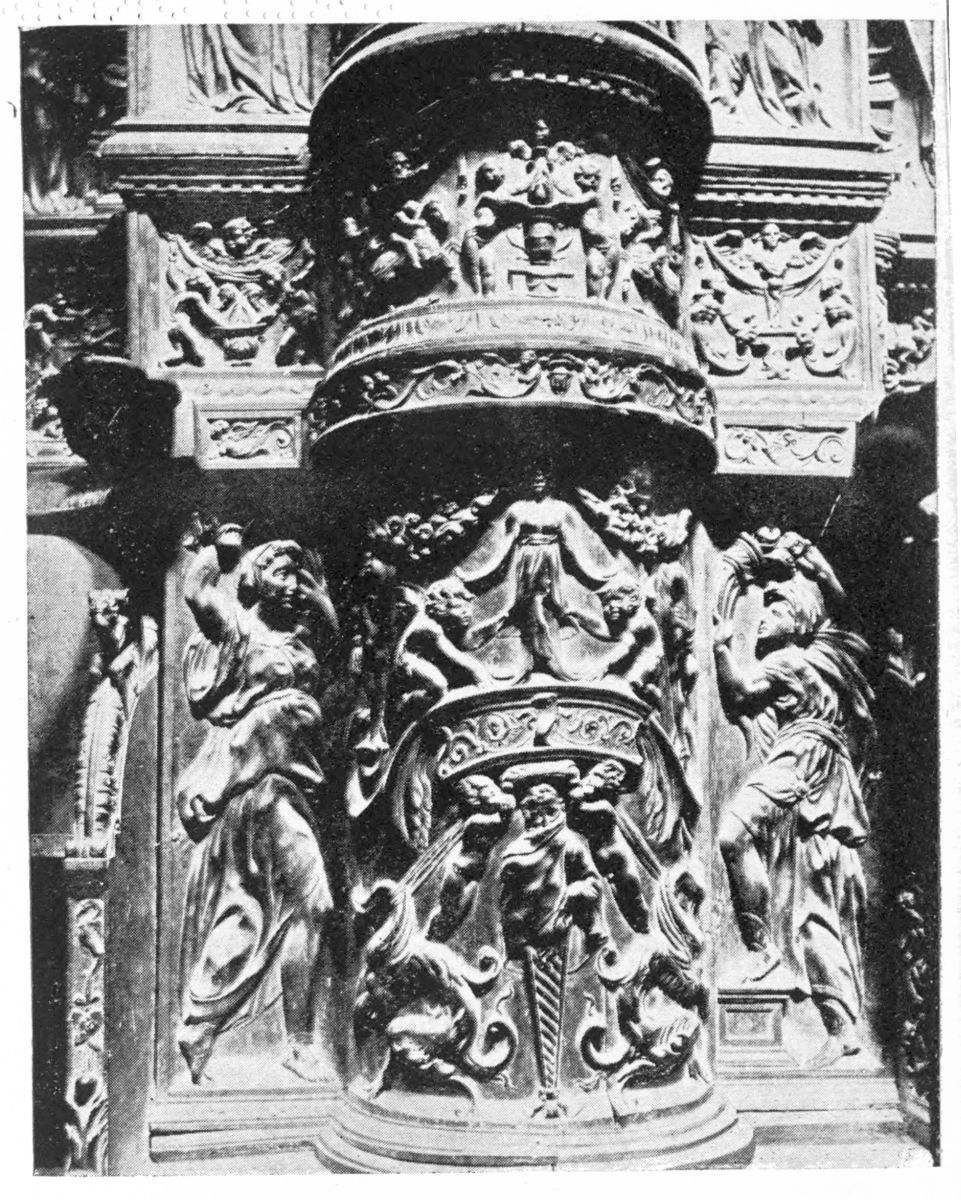
CATHEDRAL. DETAIL OF THE CHOIR
AVILA
Plate 239
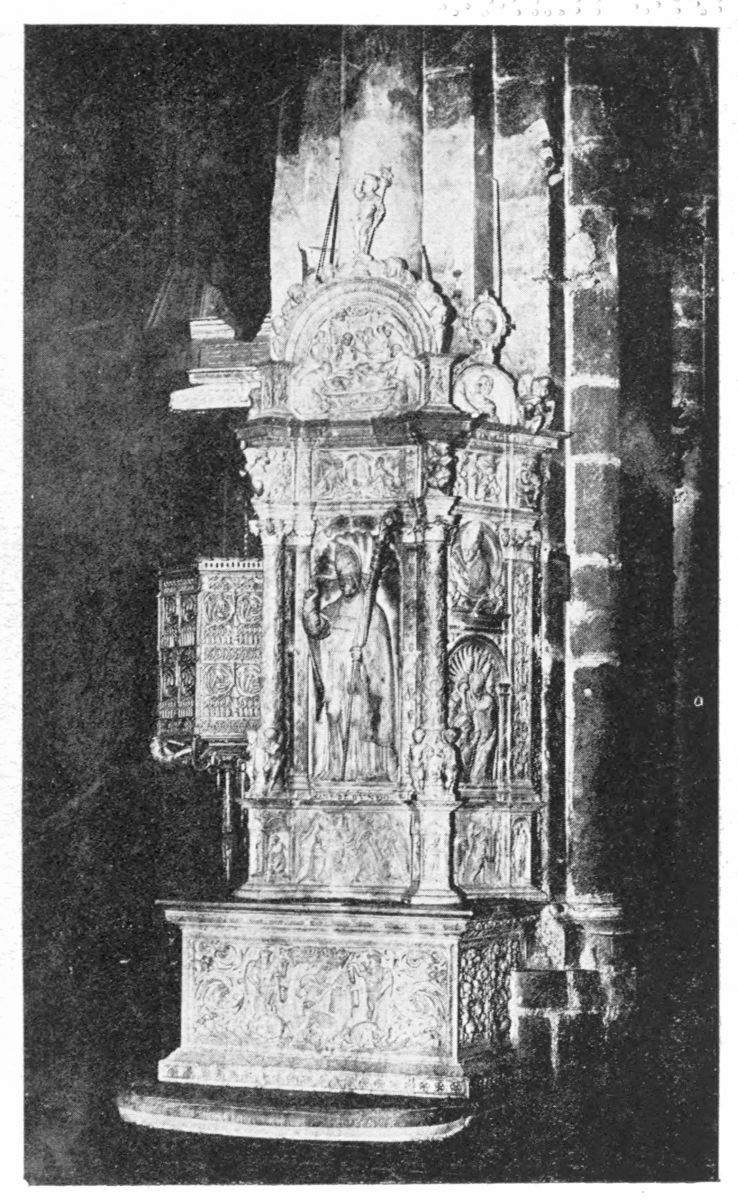
CATHEDRAL. ALTAR OF SAN SEGUNDO
AVILA
Plate 240
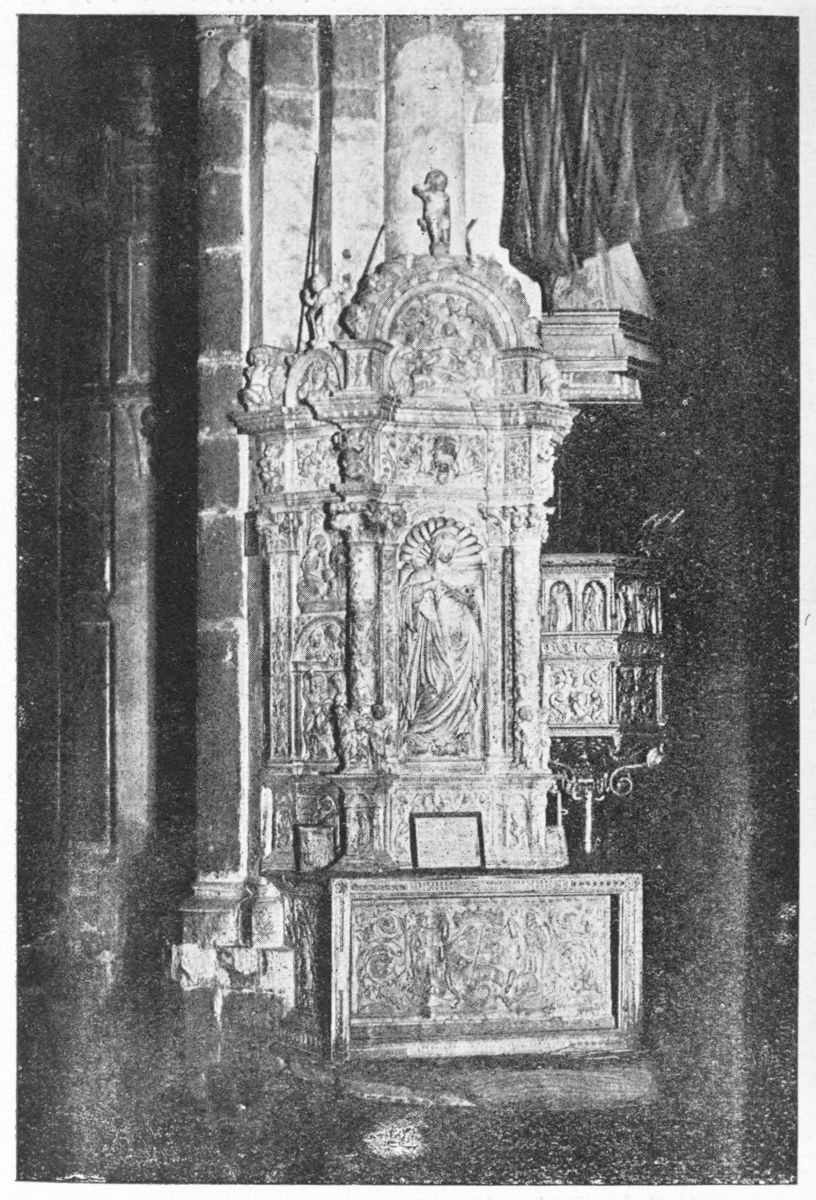
CATHEDRAL. ALTAR OF SANTA LUCIA
AVILA
Plate 241
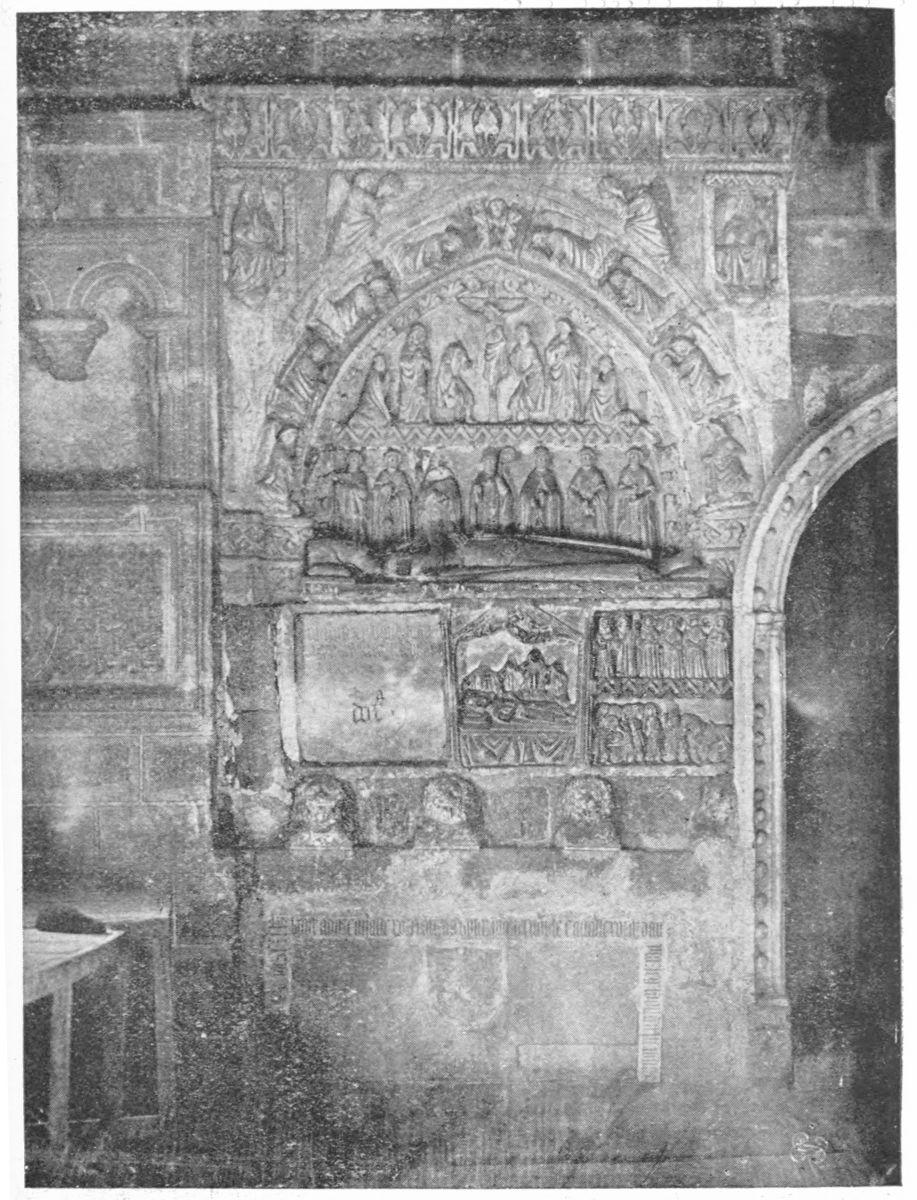
CATHEDRAL. SEPULCHRE OF DON JUAN D’AVILA
AVILA
Plate 242
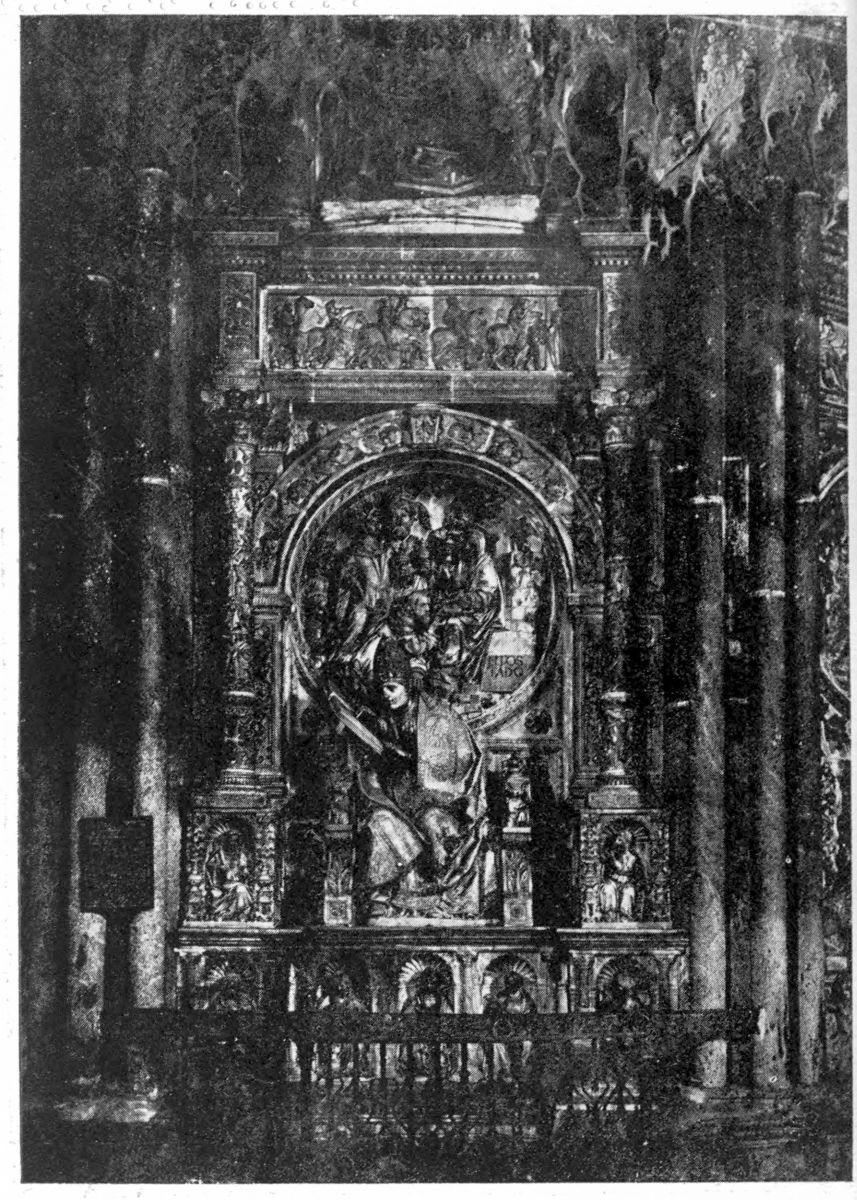
CATHEDRAL. TOMB OF EL TESTADO BISHOP OF AVILA IN 1449
AVILA
Plate 243
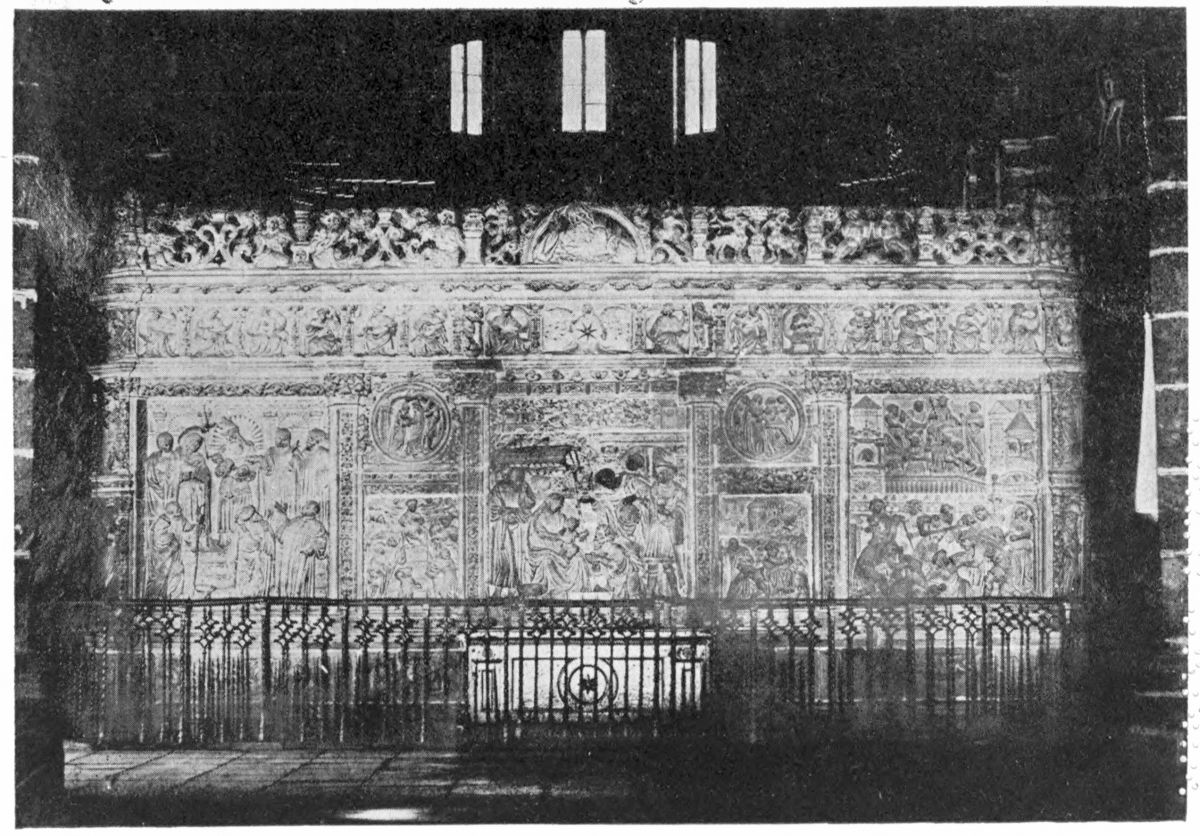
CATHEDRAL. ALTAR BEHIND THE CHOIR
AVILA
Plate 244
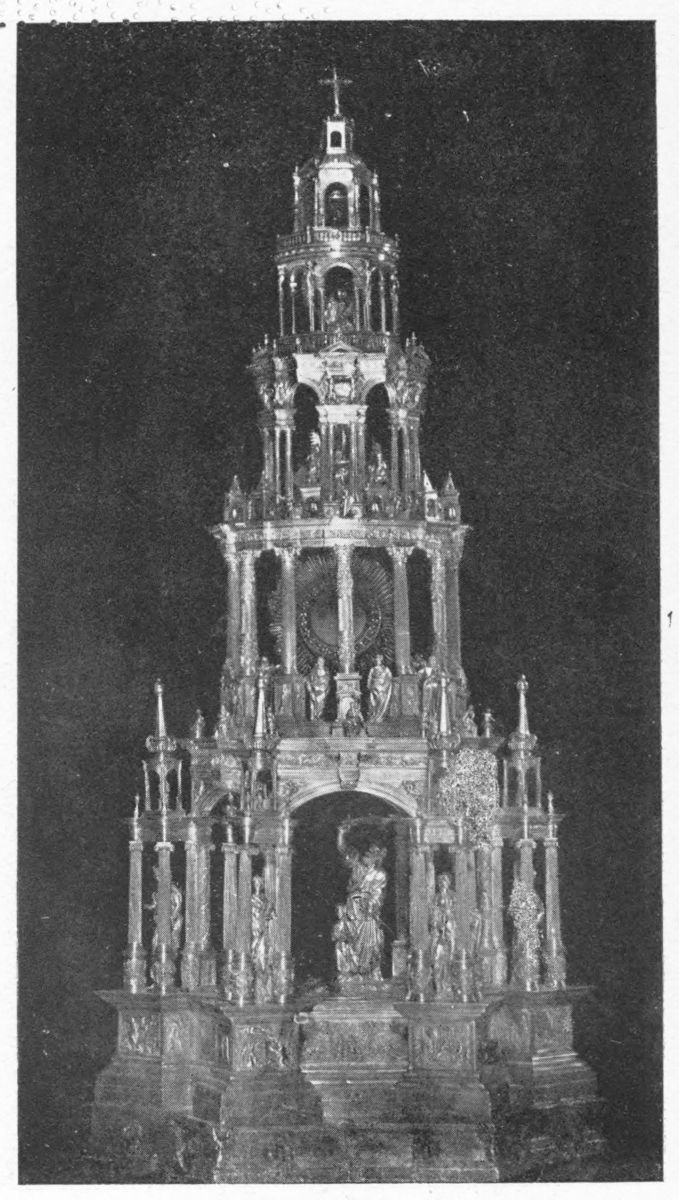
CATHEDRAL. SILVER MONSTRANCE OF JUAN DE ARFE. SIXTEENTH CENTURY
AVILA
Plate 245
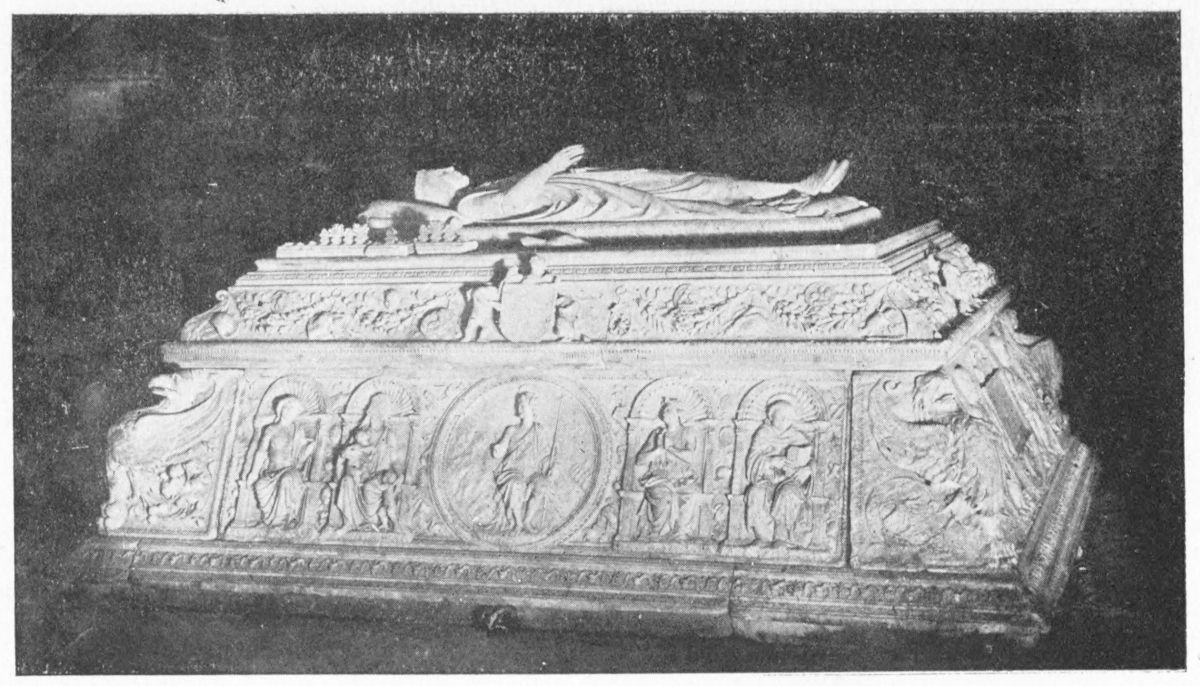
CONVENT OF SANTO TOMÁS SEPULCHRE OF THE INFANTE DON JUAN, SON OF
FERDINAND AND ISABELLA THE MASTERPIECE OF MICER DOMENICO OF FLORENCE
AVILA
Plate 246
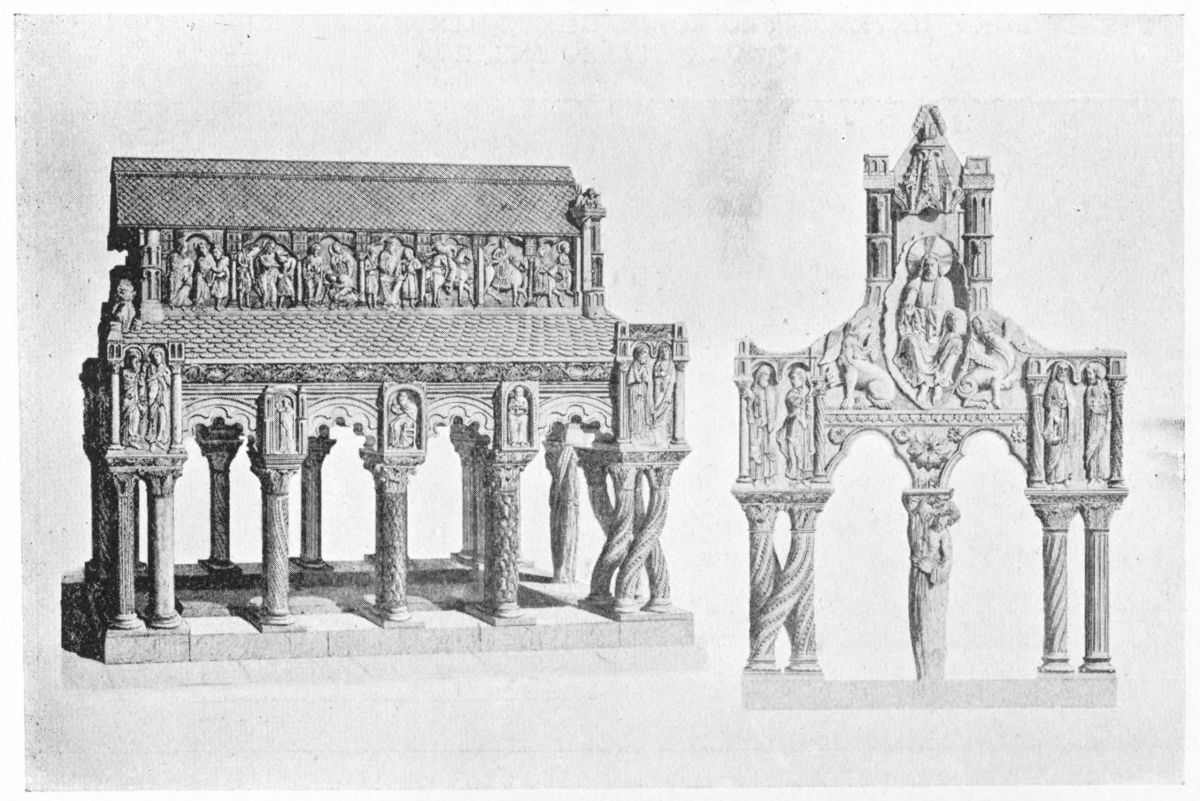
SEPULCHRE OF THE HOLY MARTYRS VICENTE, SABINA AND CRISTINA
AVILA
Plate 247
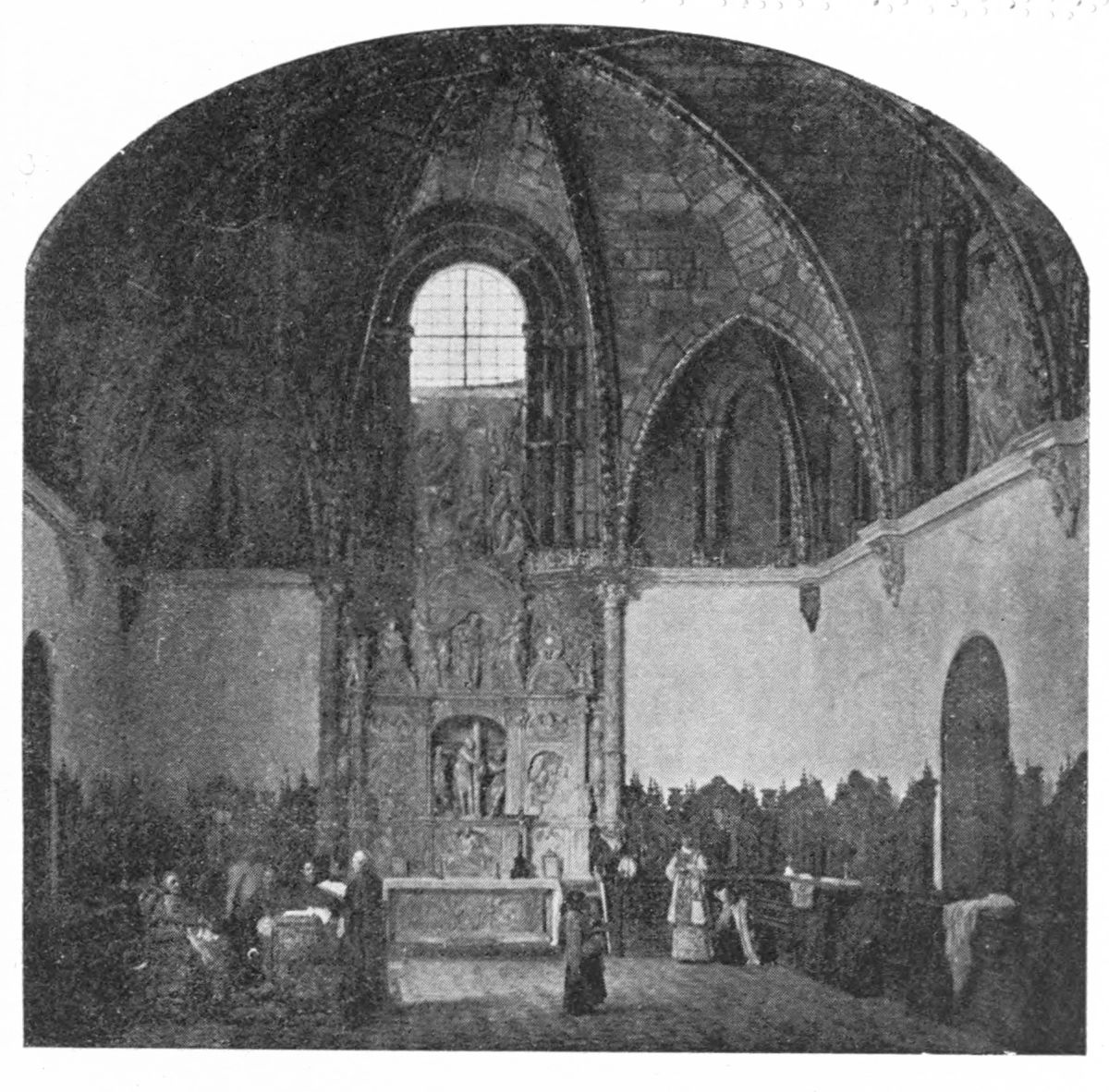
INTERIOR OF THE CHAPEL OF SAN BERNARDO BY P. GONZALVO
AVILA
Plate 248
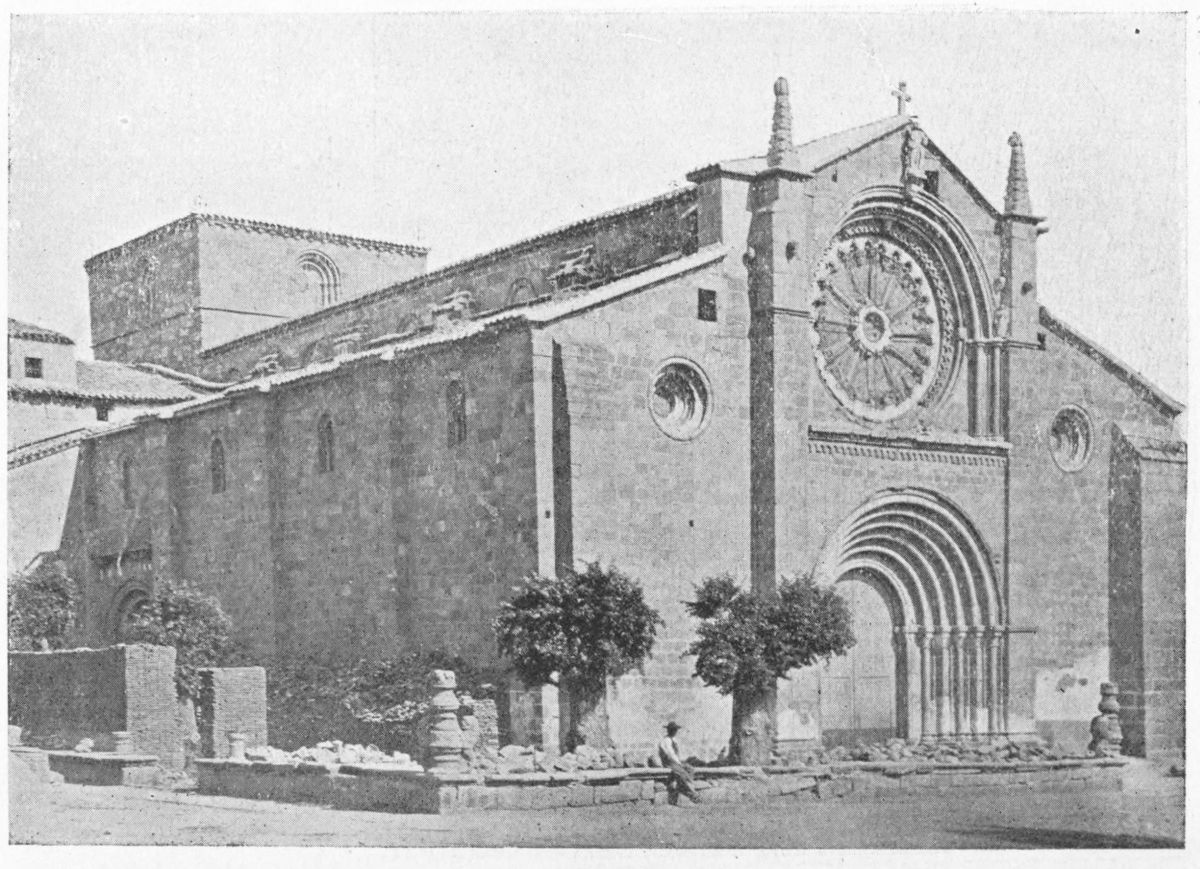
CHURCH OF ST. PETER
AVILA
Plate 249
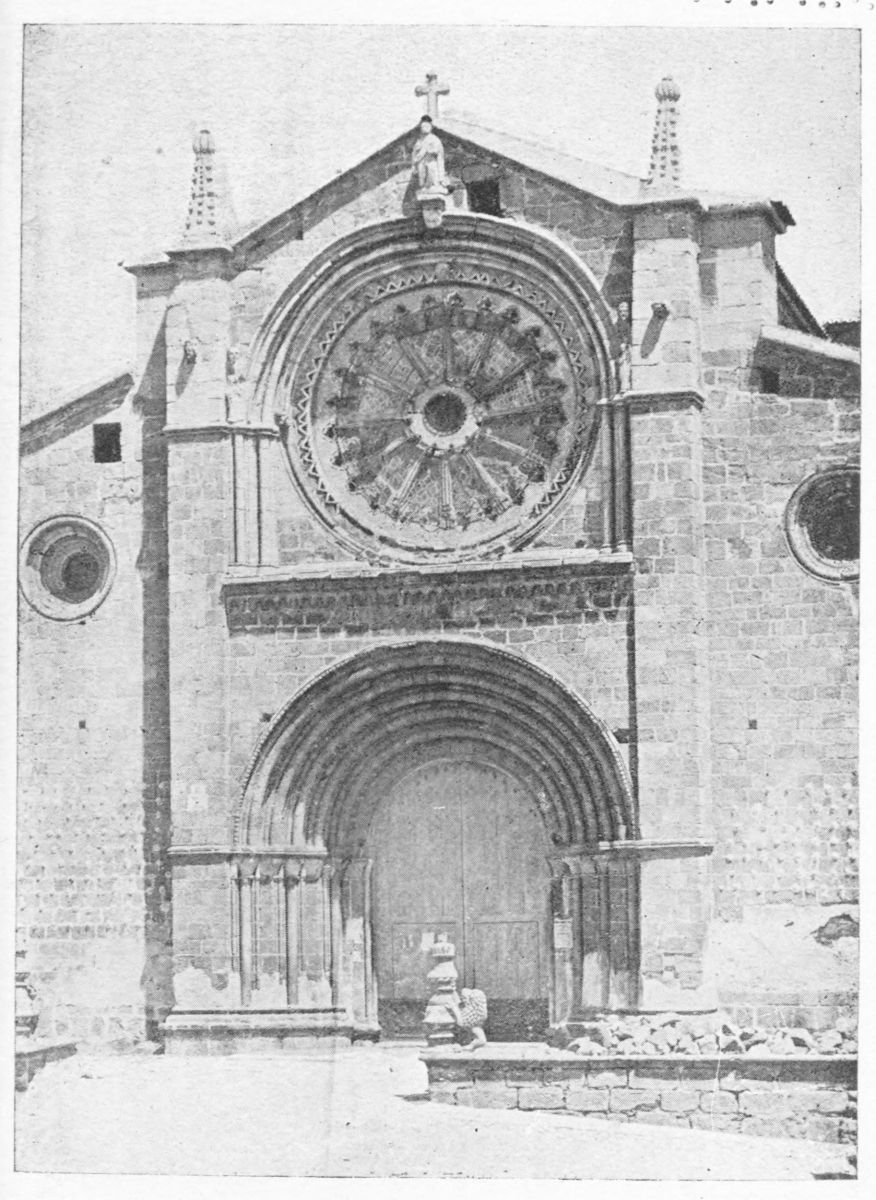
ENTRANCE TO THE CHURCH OF ST. PETER
AVILA
Plate 250
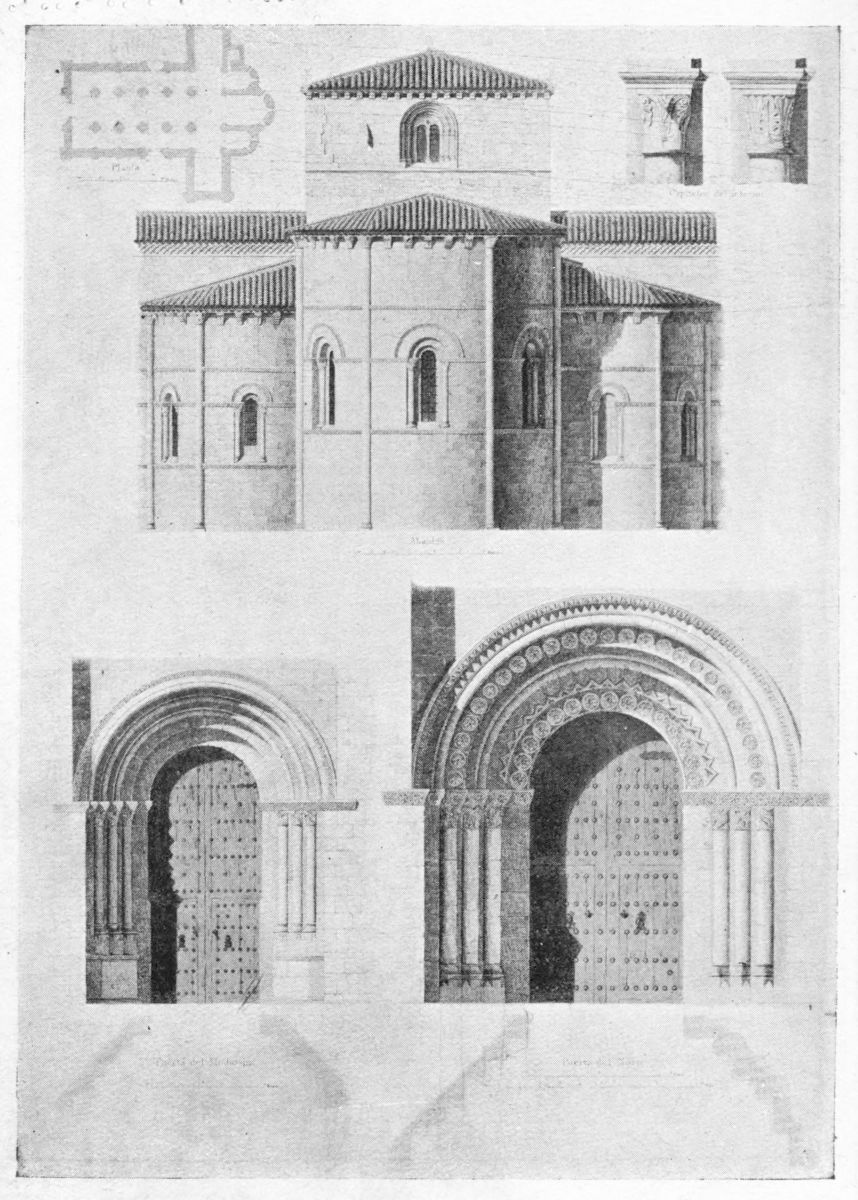
PAROCHIAL CHURCH OF ST. PETER
AVILA
Plate 251
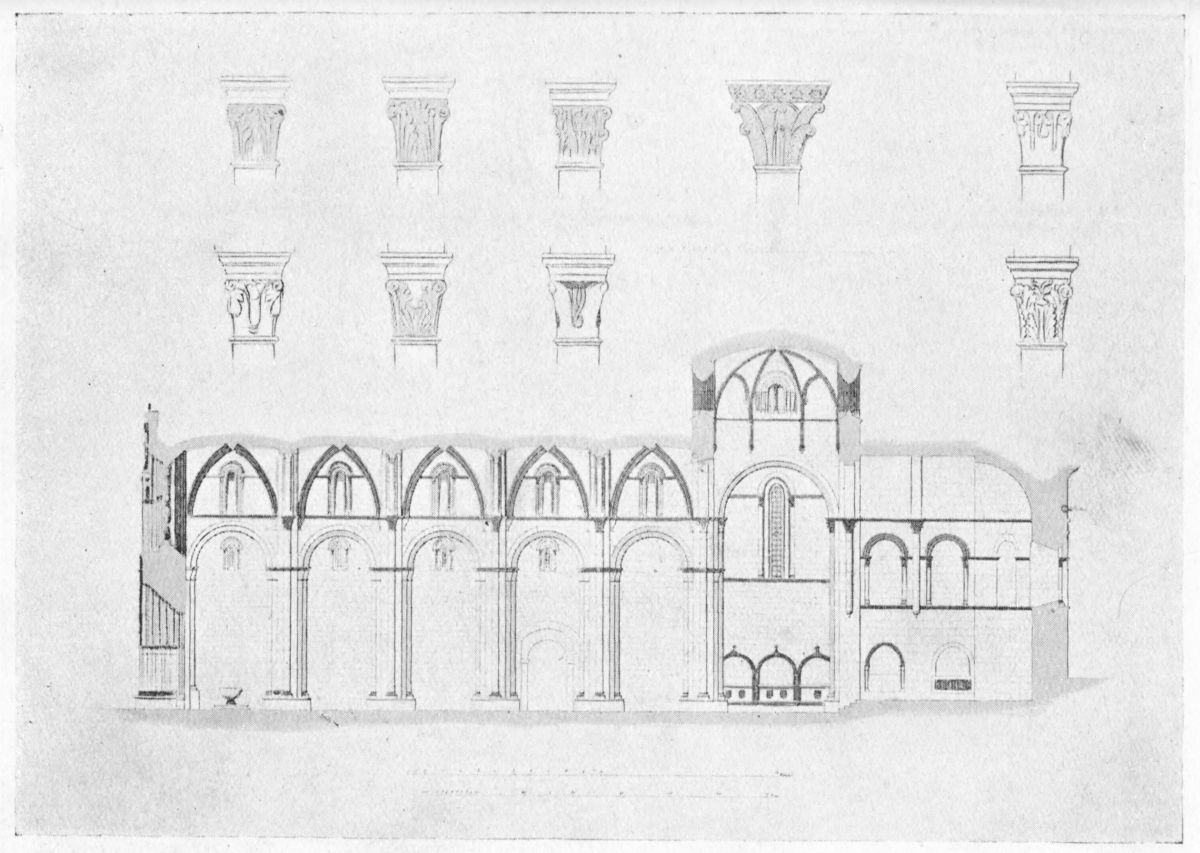
LONGITUDINAL SECTION AND DETAILS OF THE PARISH CHURCH OF ST. PETER.
AVILA
Plate 252
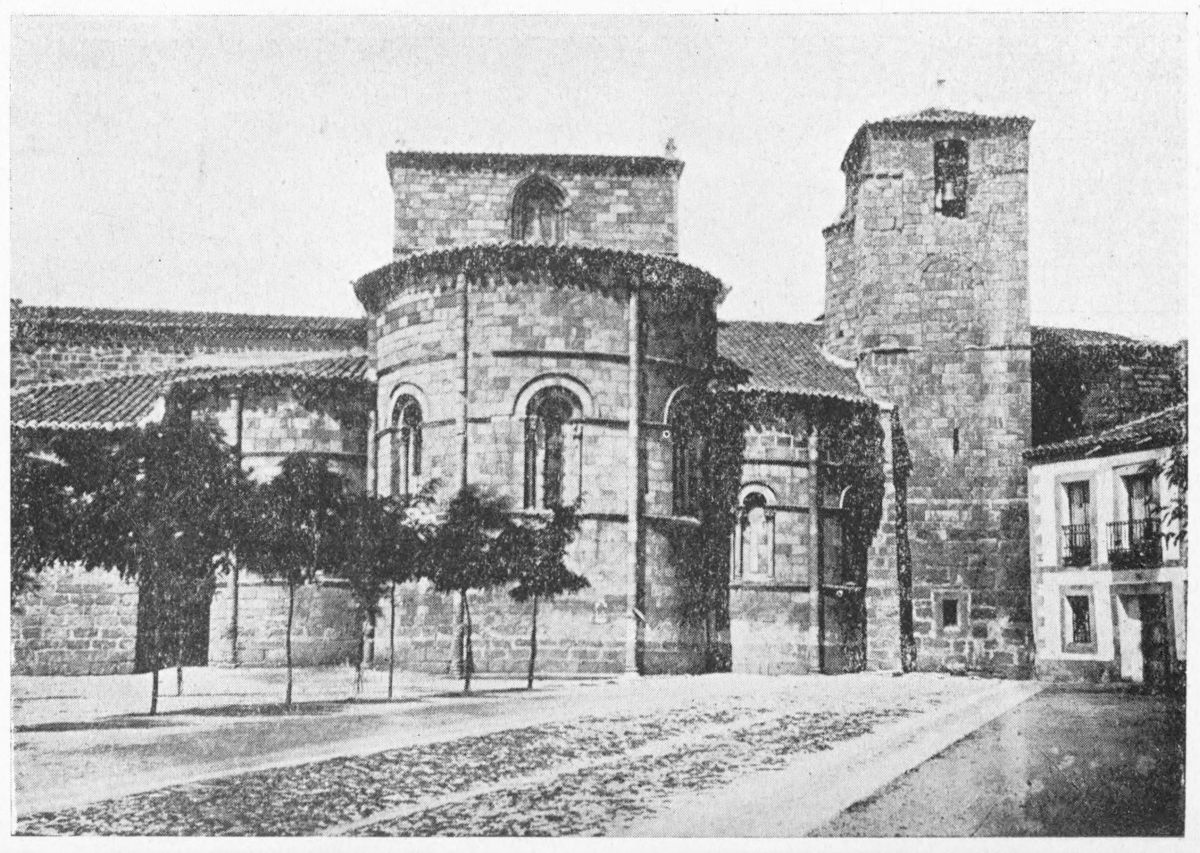
EXTERIOR OF THE CHURCH OF SAN VICENTE
AVILA
Plate 253
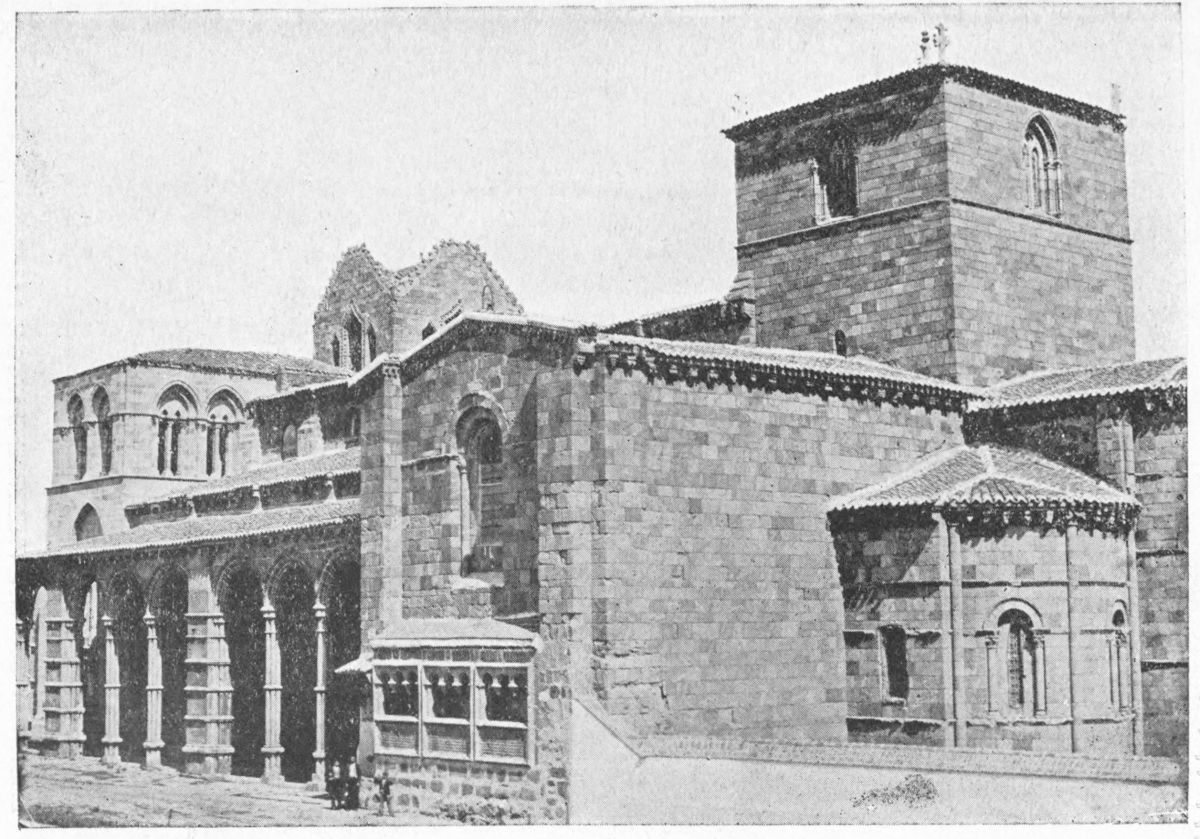
BASILICA OF SAN VICENTE BEFORE ITS RESTORATION
AVILA
Plate 254
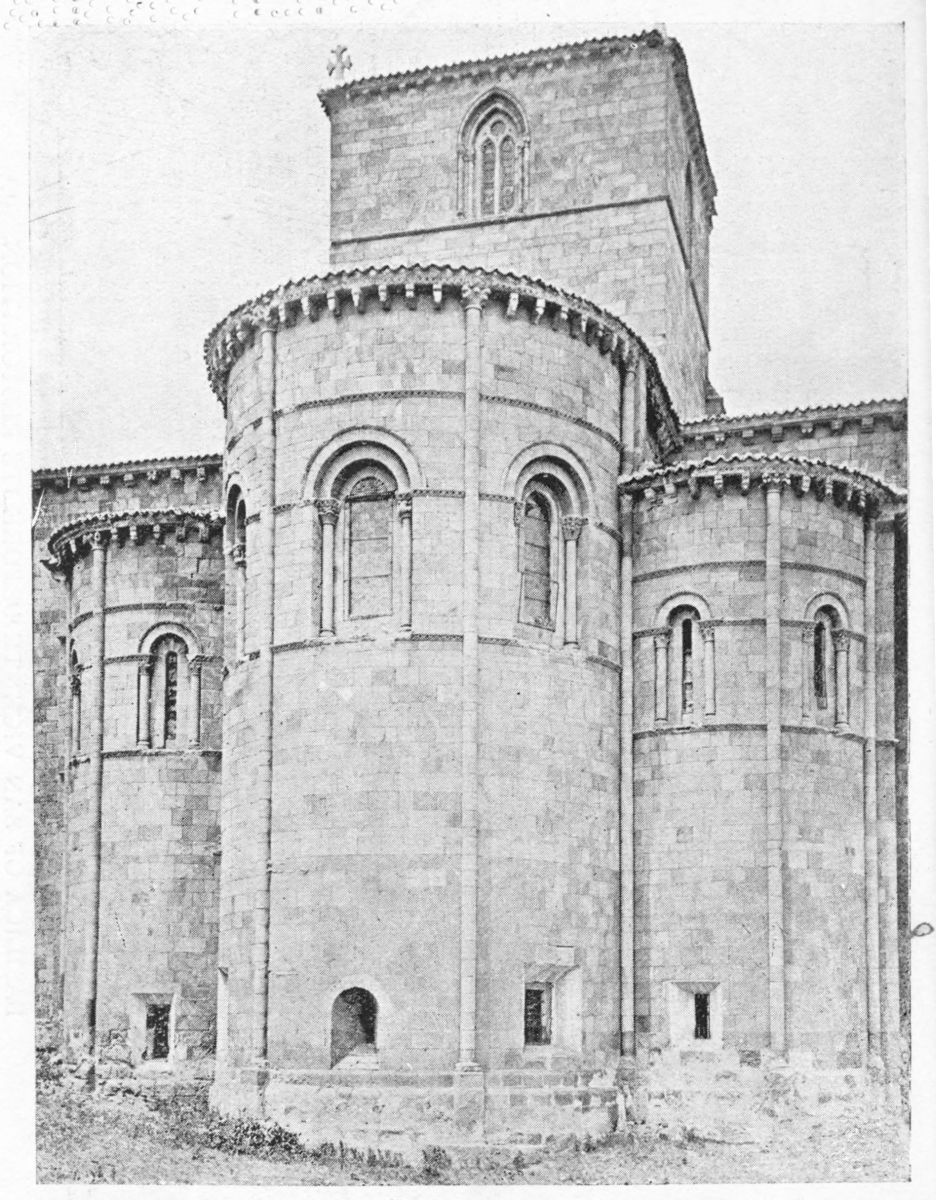
BASILICA OF SAN VICENTE BEFORE ITS RESTORATION
AVILA
Plate 255
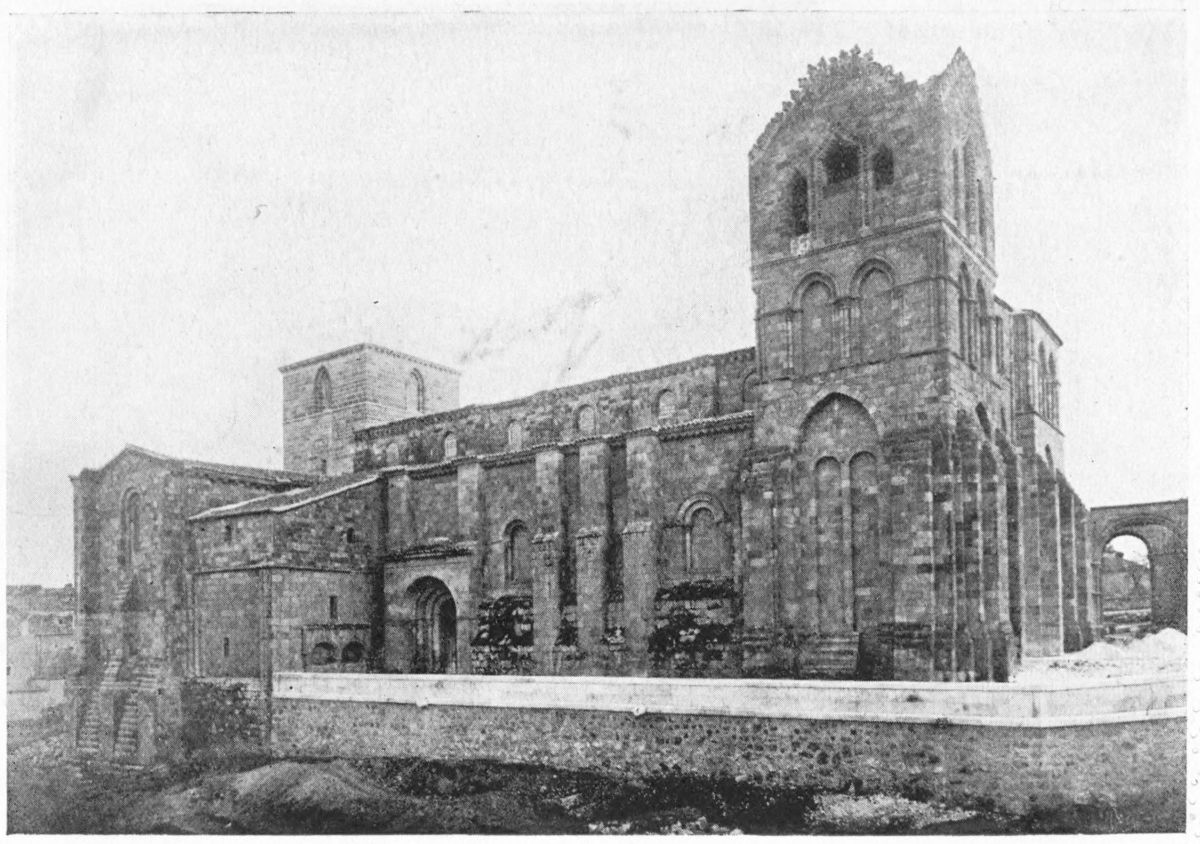
BASILICA OF SAN VICENTE. NORTH FAÇADE
AVILA
Plate 256
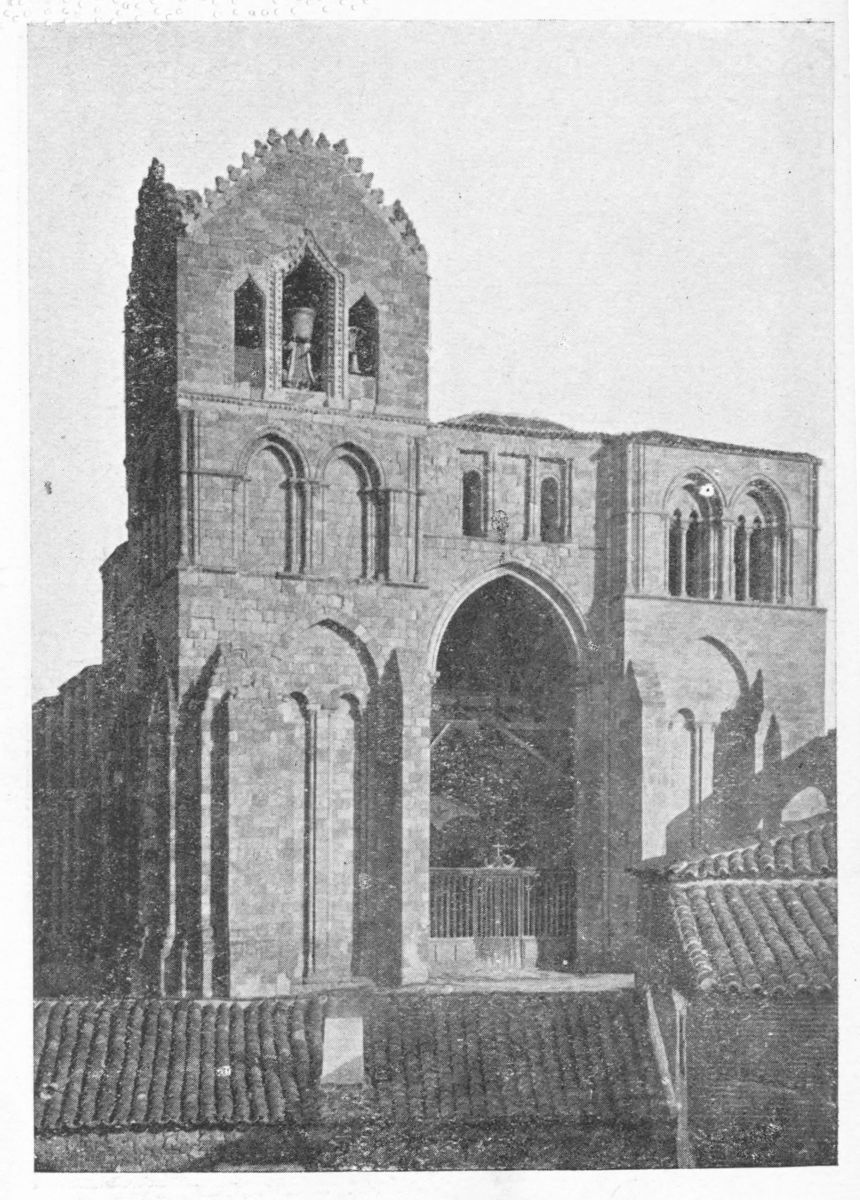
BASILICA OF SAN VICENTE. PRINCIPAL FAÇADE
AVILA
Plate 257
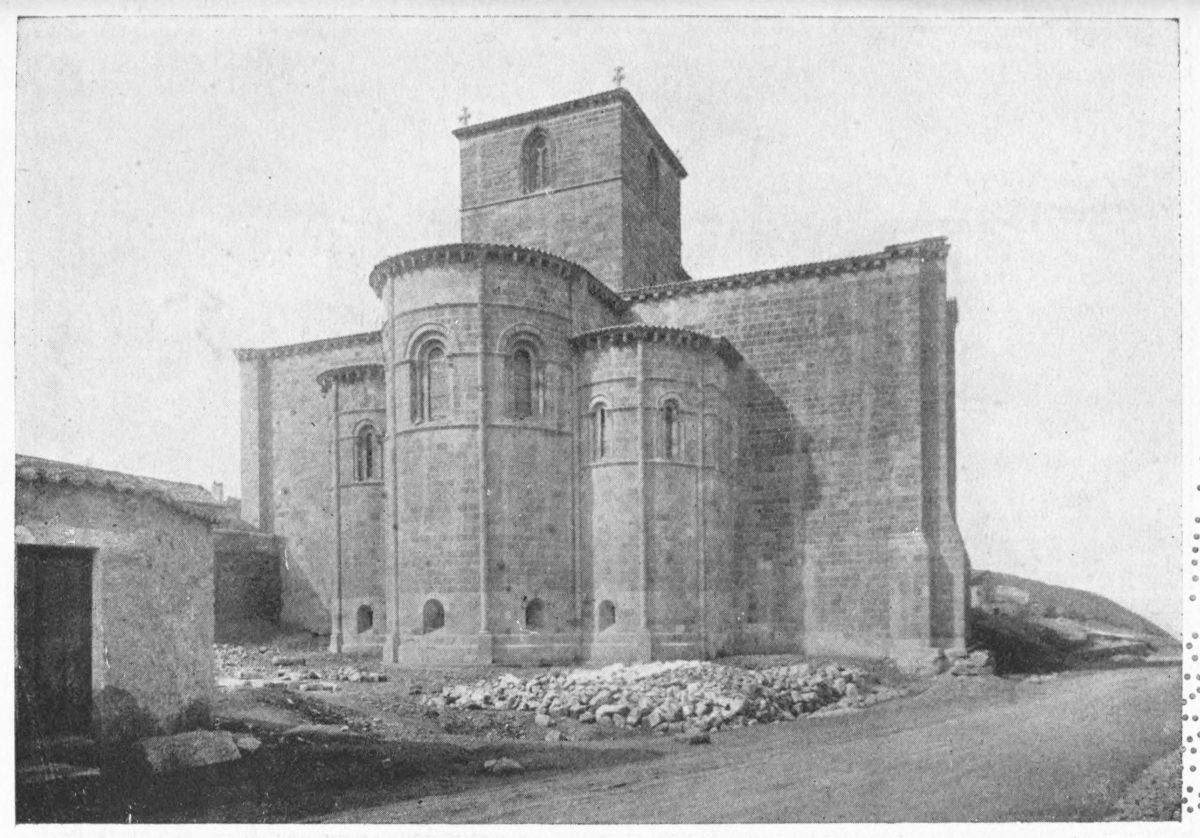
BASILICA OF SAN VICENTE. EASTERN FAÇADE, RESTORED
AVILA
Plate 258
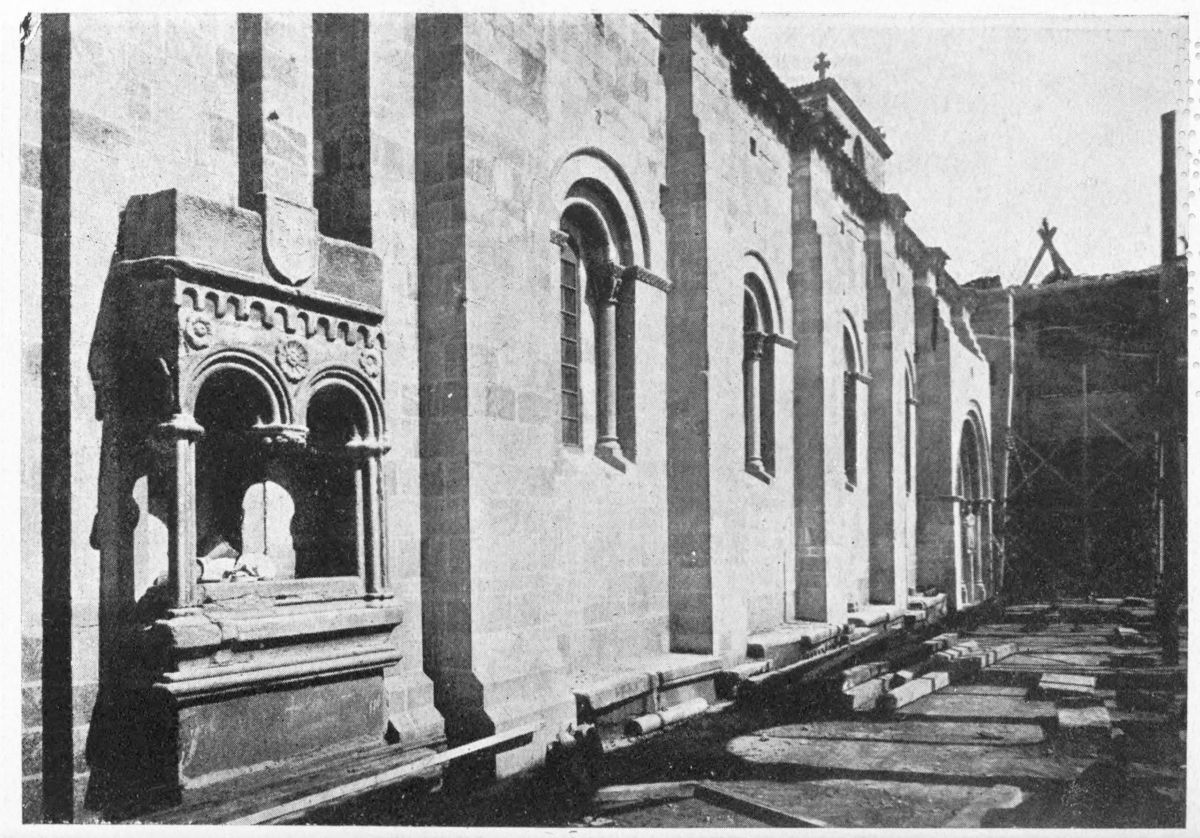
BASILICA OF SAN VICENTE. FAÇADE.
AVILA
Plate 259
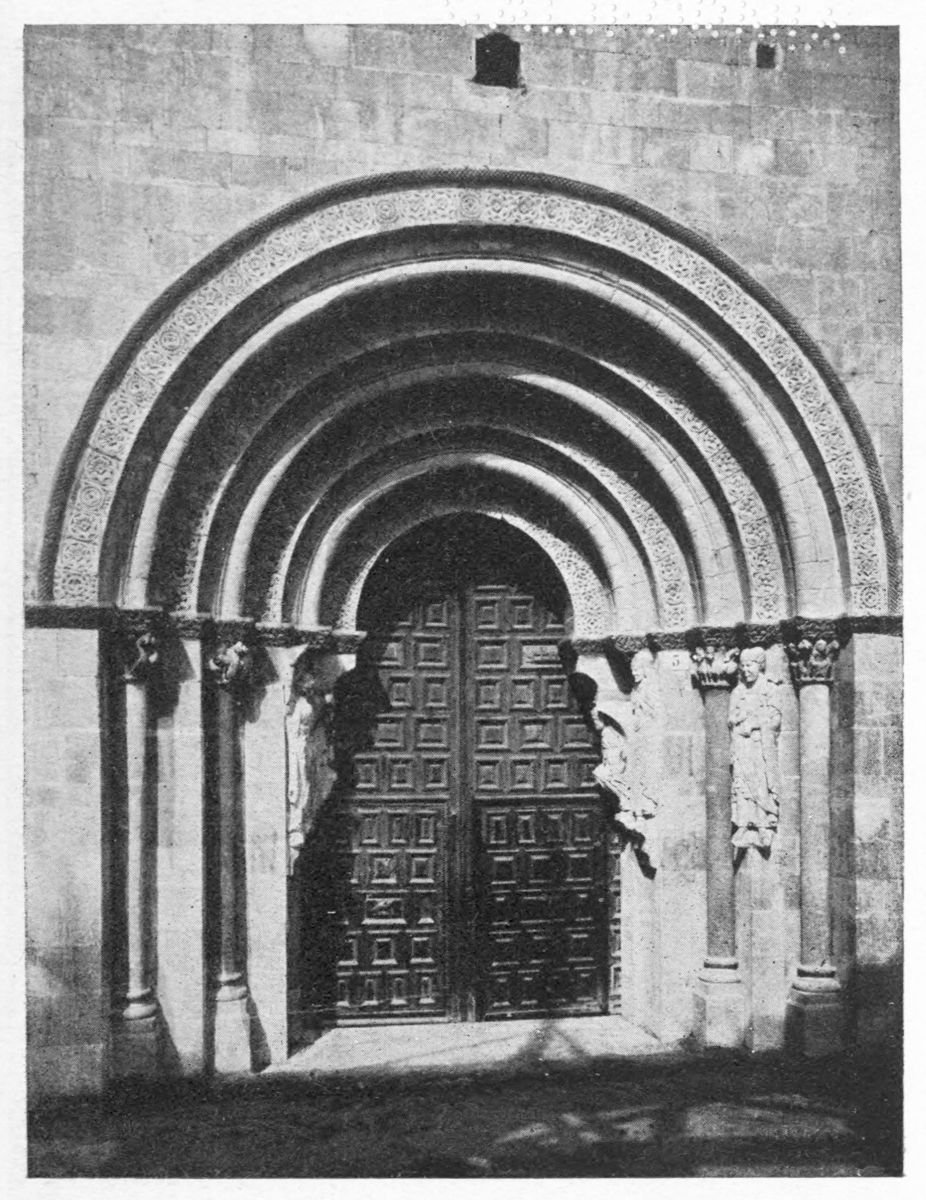
BASILICA OF SAN VICENTE. CENTRAL GATE, RESTORED
AVILA
Plate 260
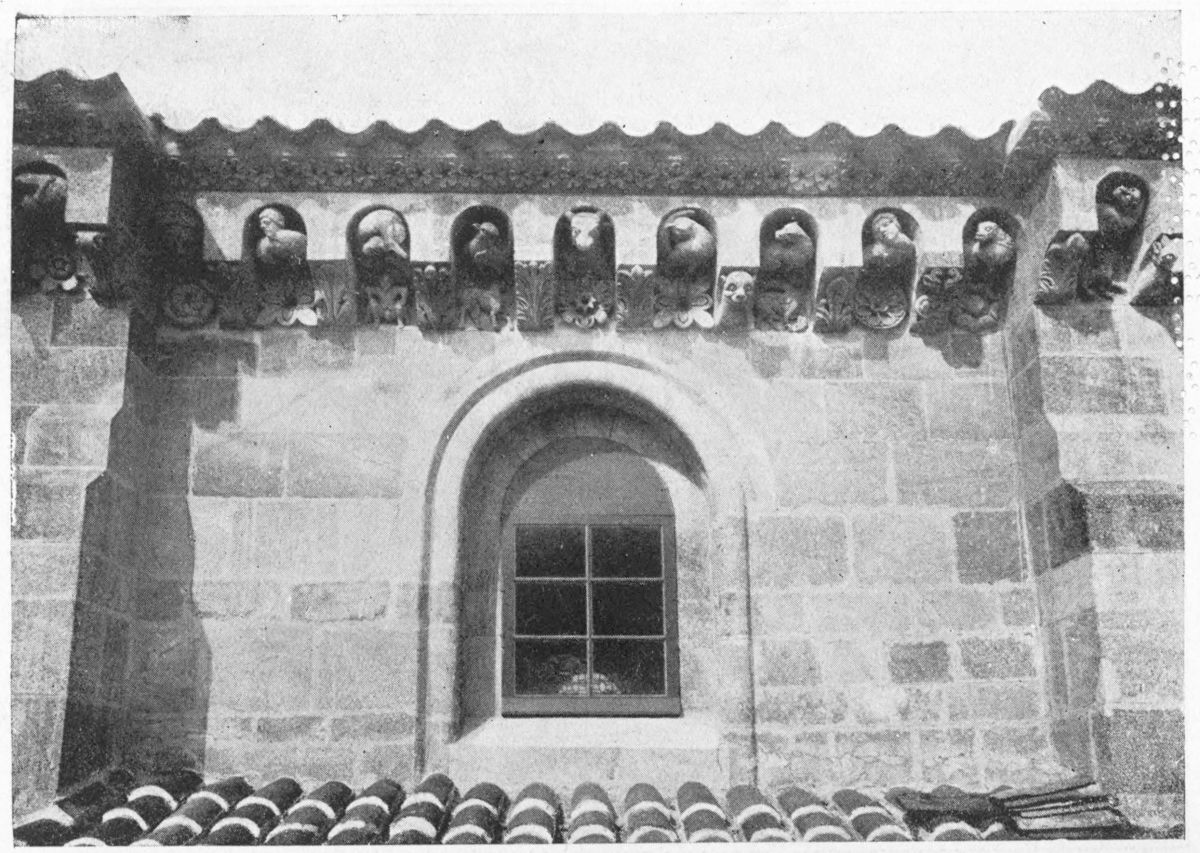
BASILICA OF SAN VICENTE. DETAIL OF THE MIDDLE CORNICE, RESTORED
AVILA
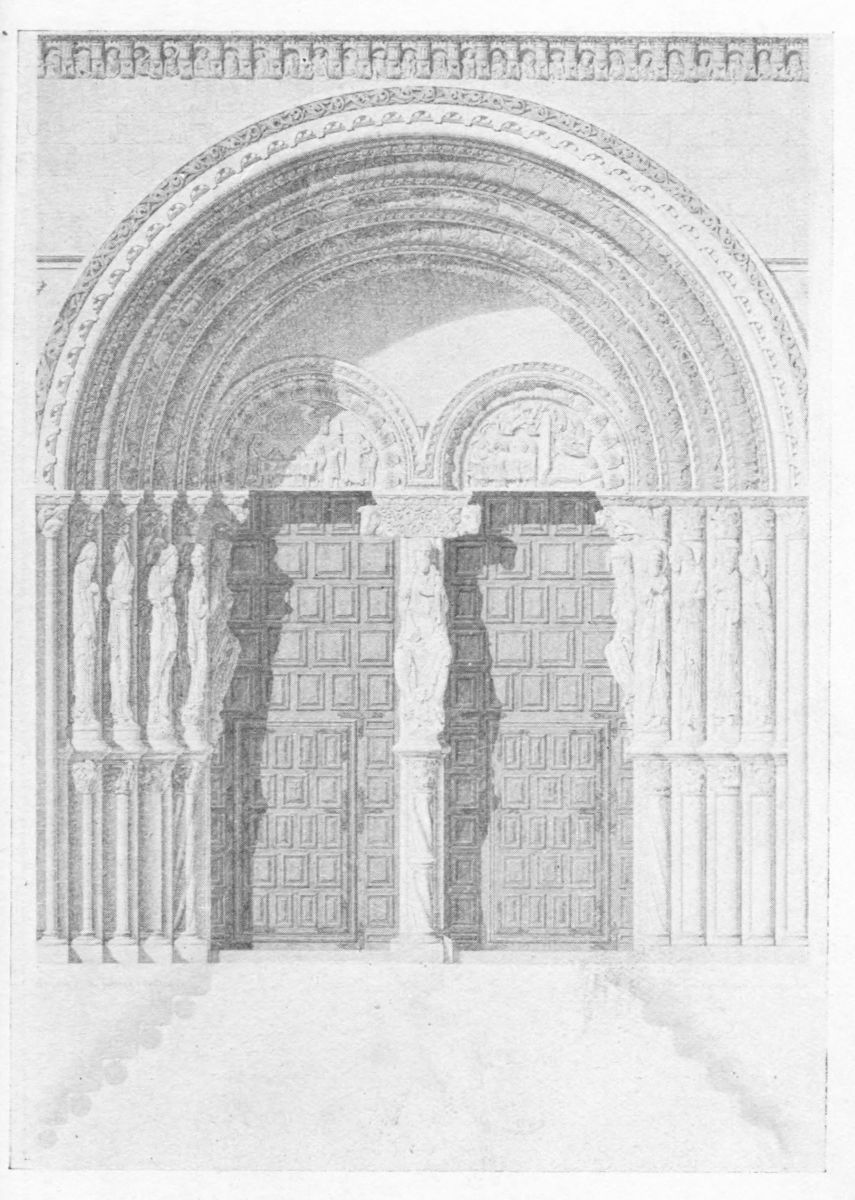
Plate 261
PORTAL OF THE BASILICA OF SAN VICENTE, SANTAS SABINA AND CRISTINA
AVILA
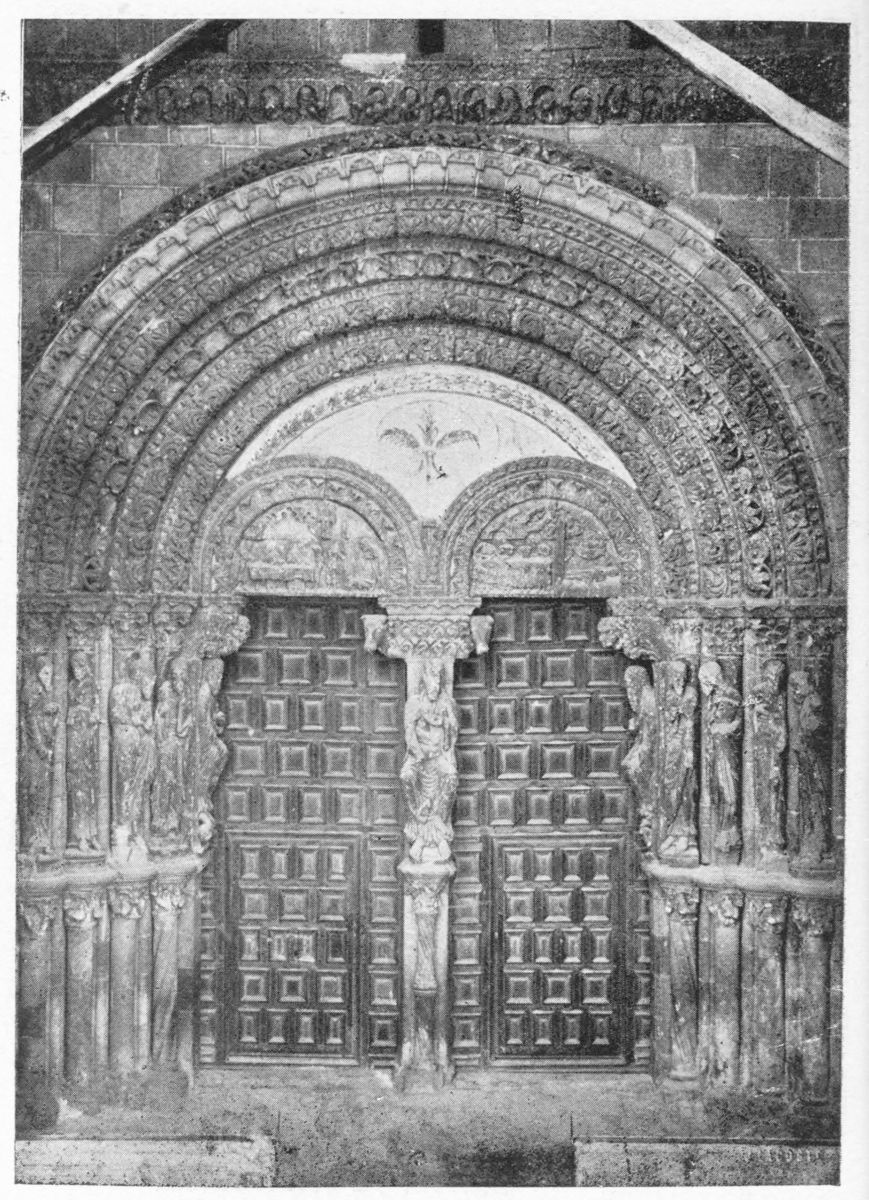
Plate 262
BASILICA OF SAN VICENTE. PRINCIPAL WEST ENTRANCE
AVILA
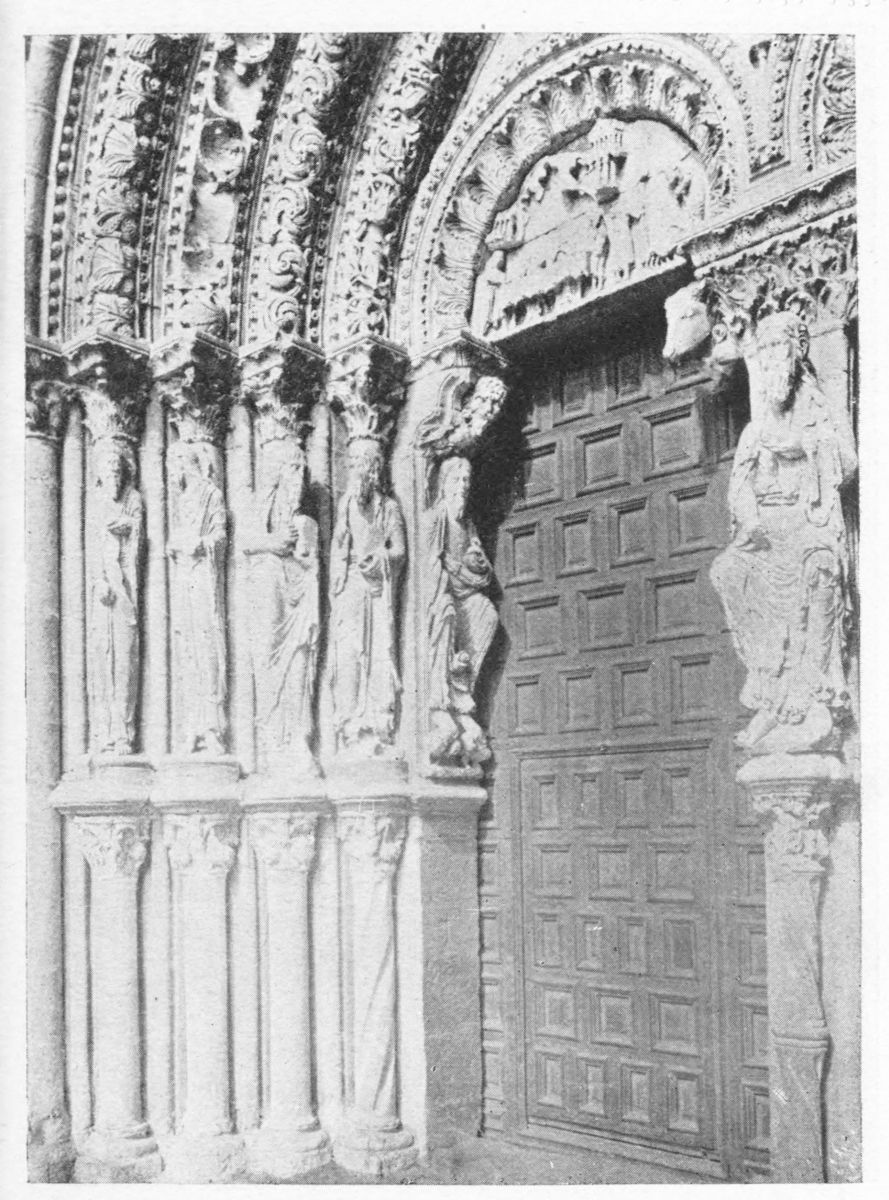
Plate 263
BASILICA OF SAN VICENTE. PRINCIPAL WEST ENTRANCE
AVILA
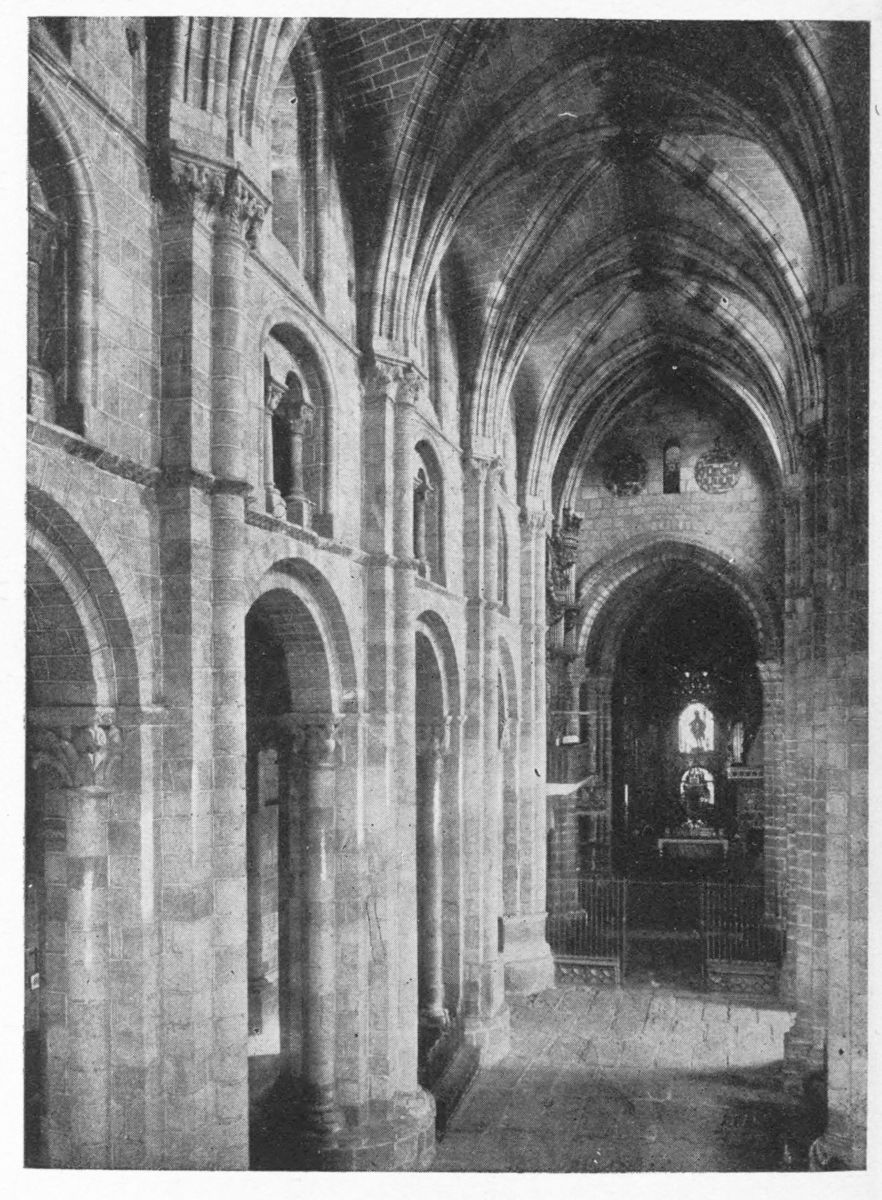
Plate 264
BASILICA OF SAN VICENTE. GENERAL VIEW OF THE INTERIOR
AVILA
Plate 265
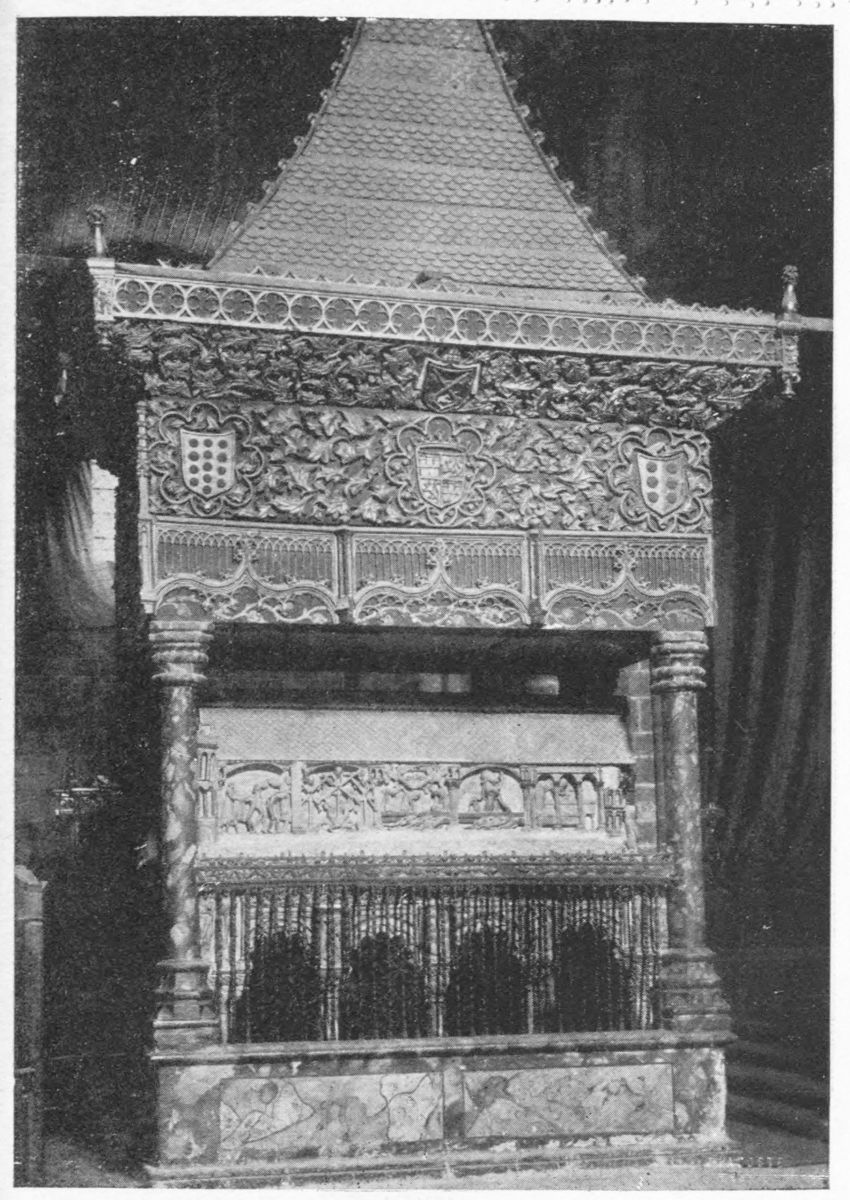
BASILICA OF SAN VICENTE. SEPULCHRE OF THE HOLY MARTYRS
AVILA
Plate 266
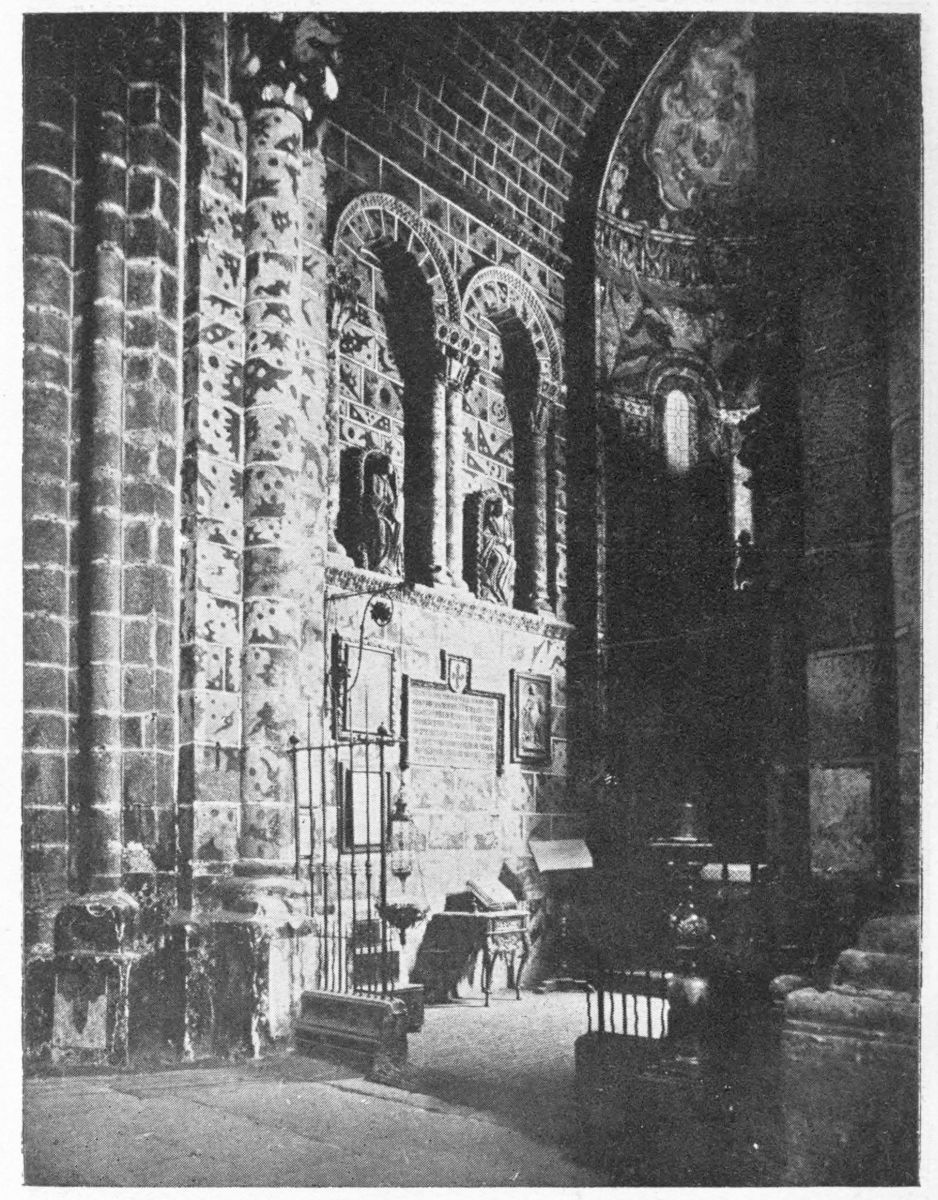
DETAILS OF THE INTERIOR OF THE BASILICA OF SAN VICENTE
AVILA
Plate 267
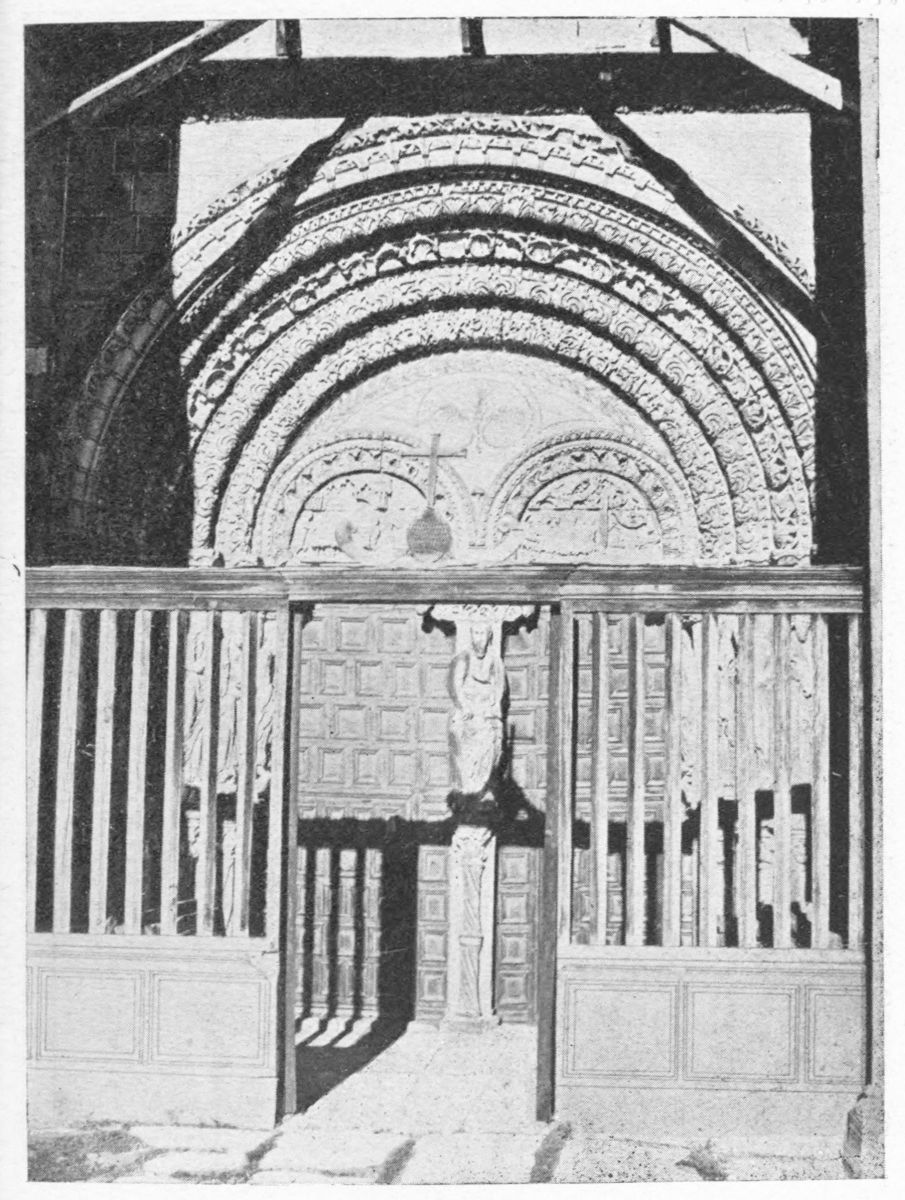
PORCH OF THE CHURCH OF SAN VICENTE
AVILA
Plate 268
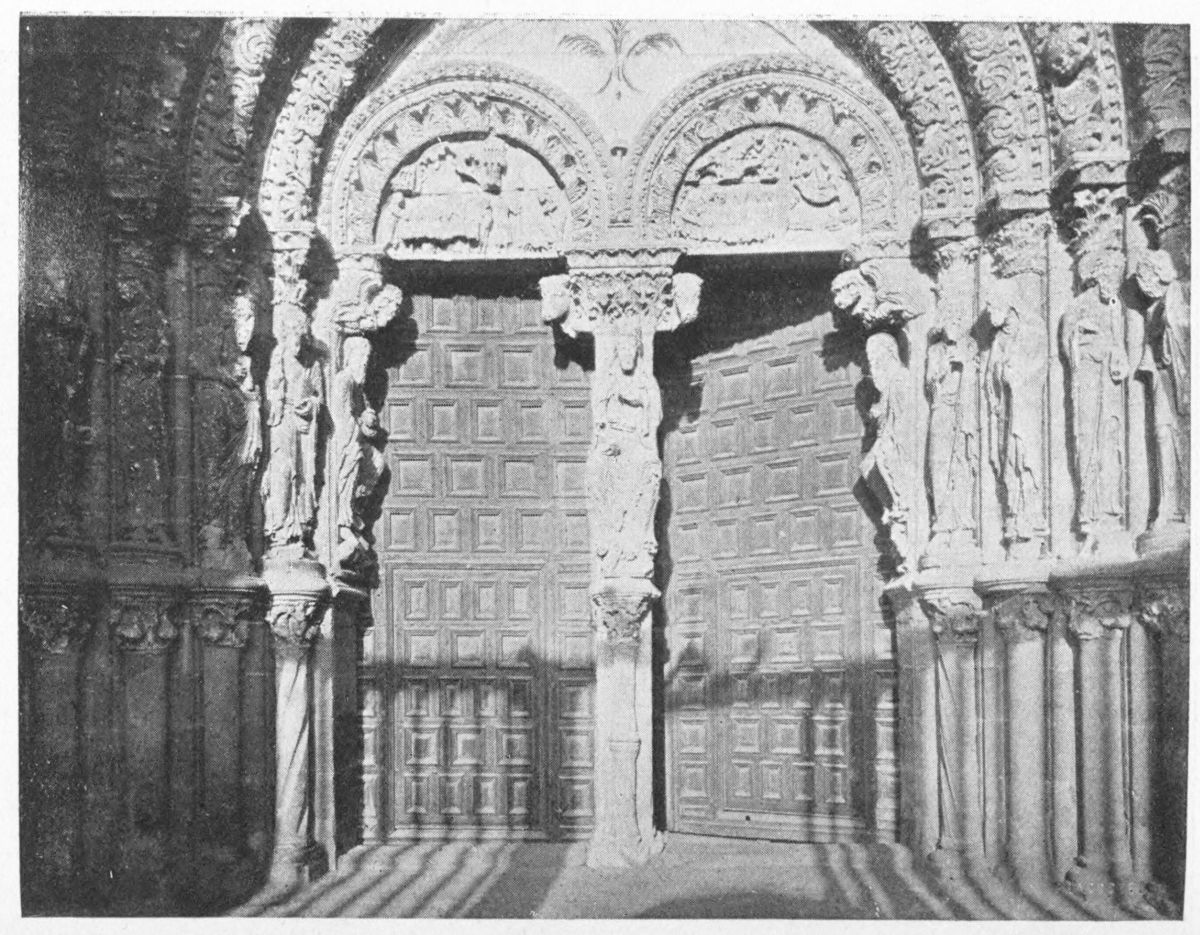
PORCH OF THE CHURCH OF SAN VICENTE. CENTRAL PART
AVILA
Plate 269
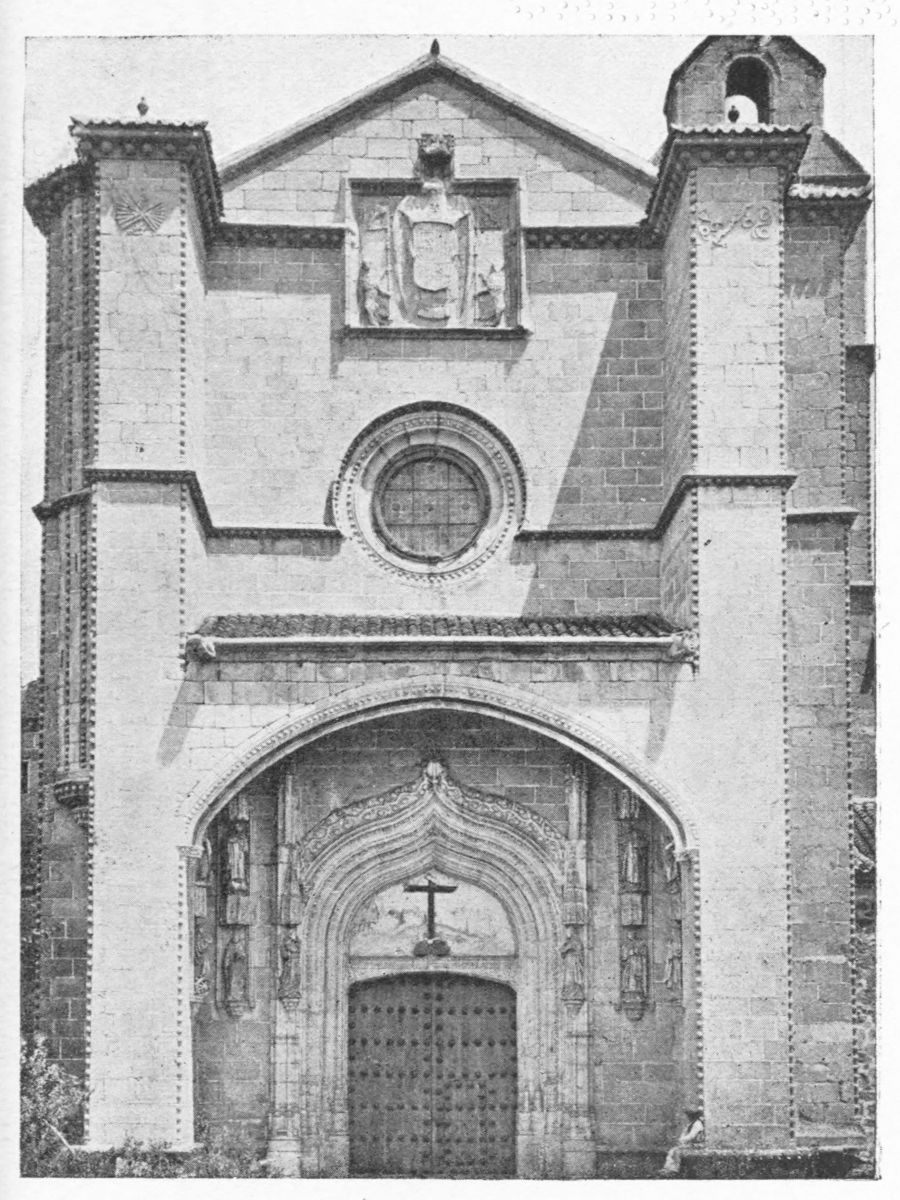
PORCH OF THE CONVENT OF SANTO TOMÁS
AVILA
Plate 270
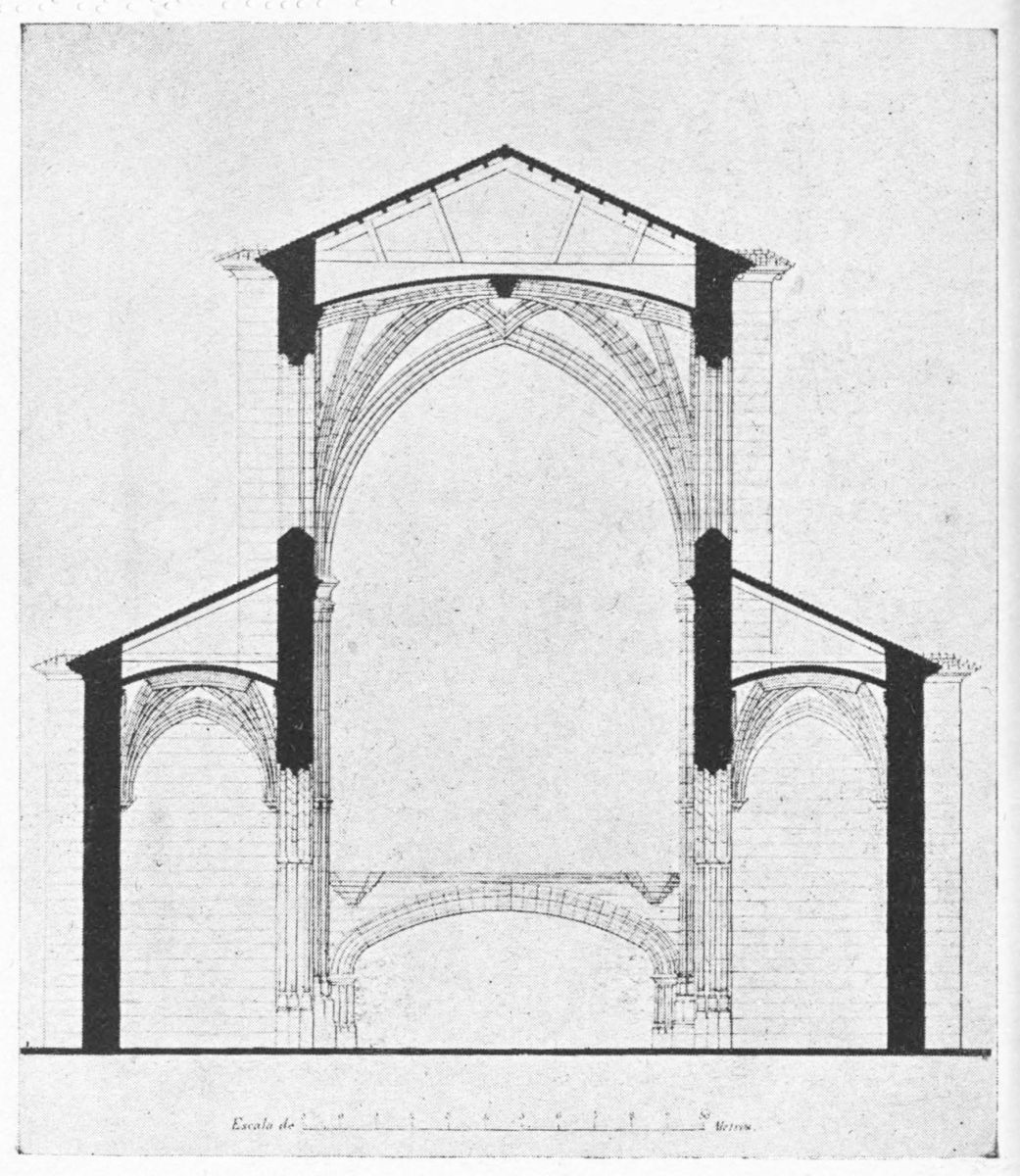
SECTION OF THE CONVENT OF SANTO TOMÁS
AVILA
Plate 271
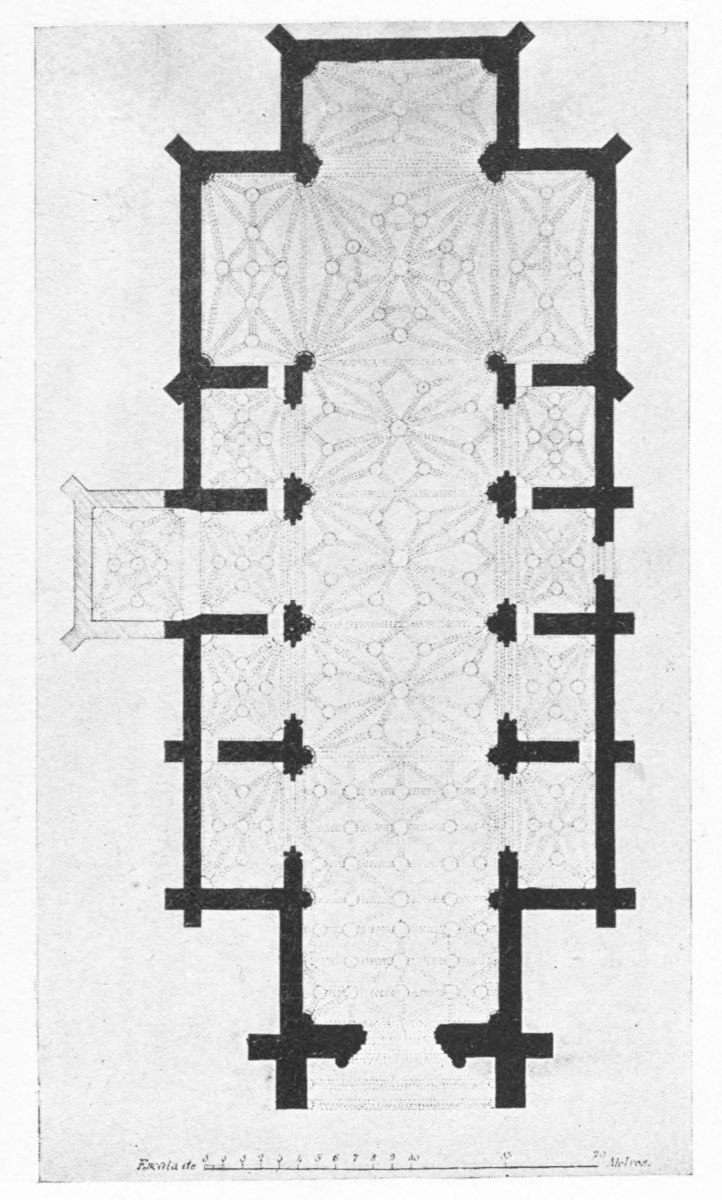
PLAN OF THE CONVENT OF SANTO TOMÁS
AVILA
Plate 272
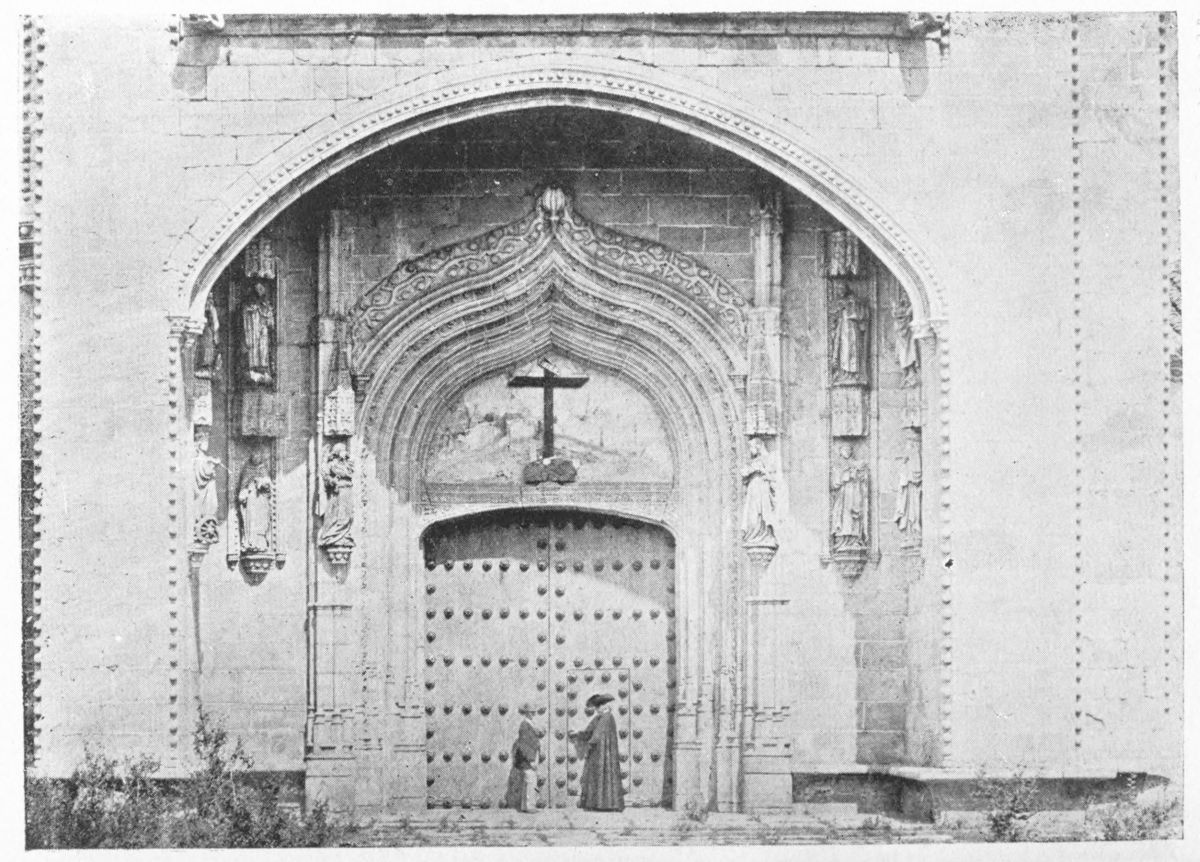
GATE OF THE CONVENT OF SANTO TOMÁS
AVILA
Plate 273
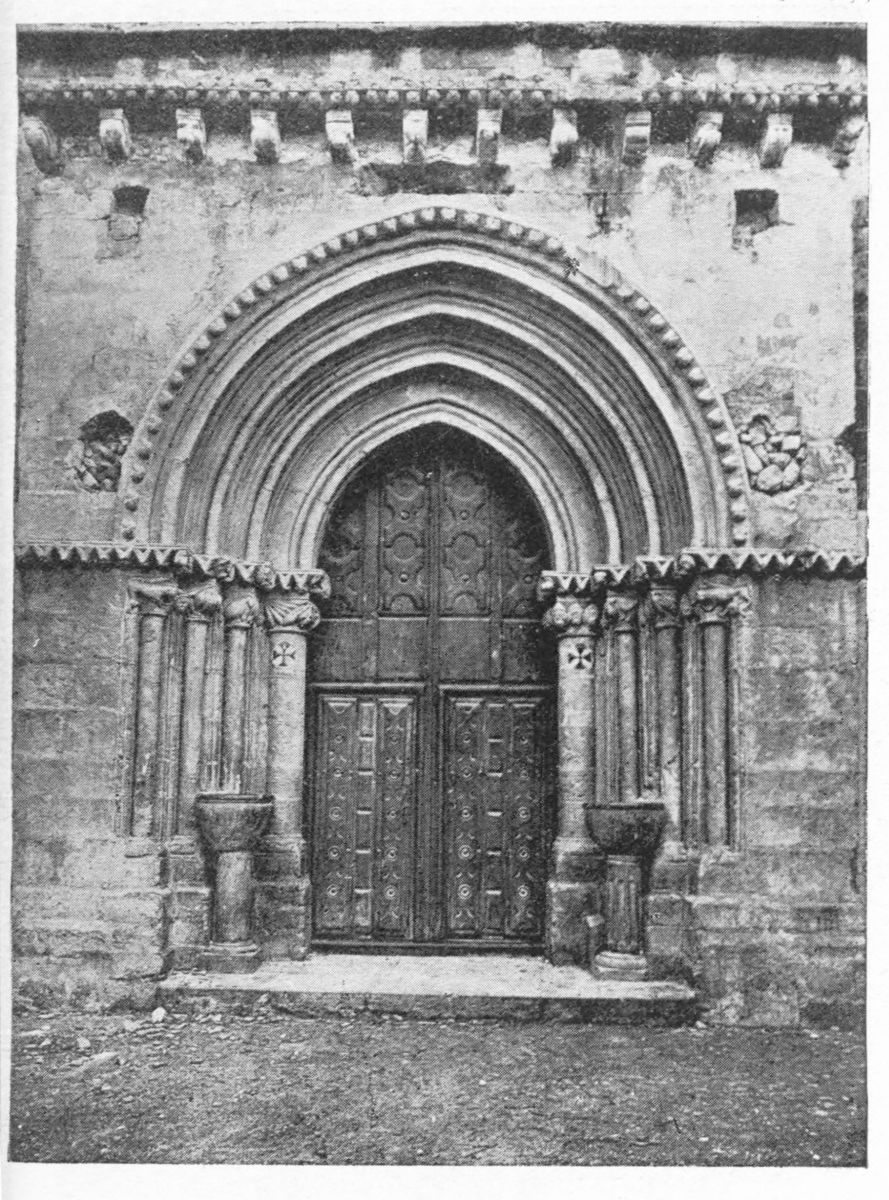
DOOR OF SANTO TOMÁS
AVILA
Plate 274
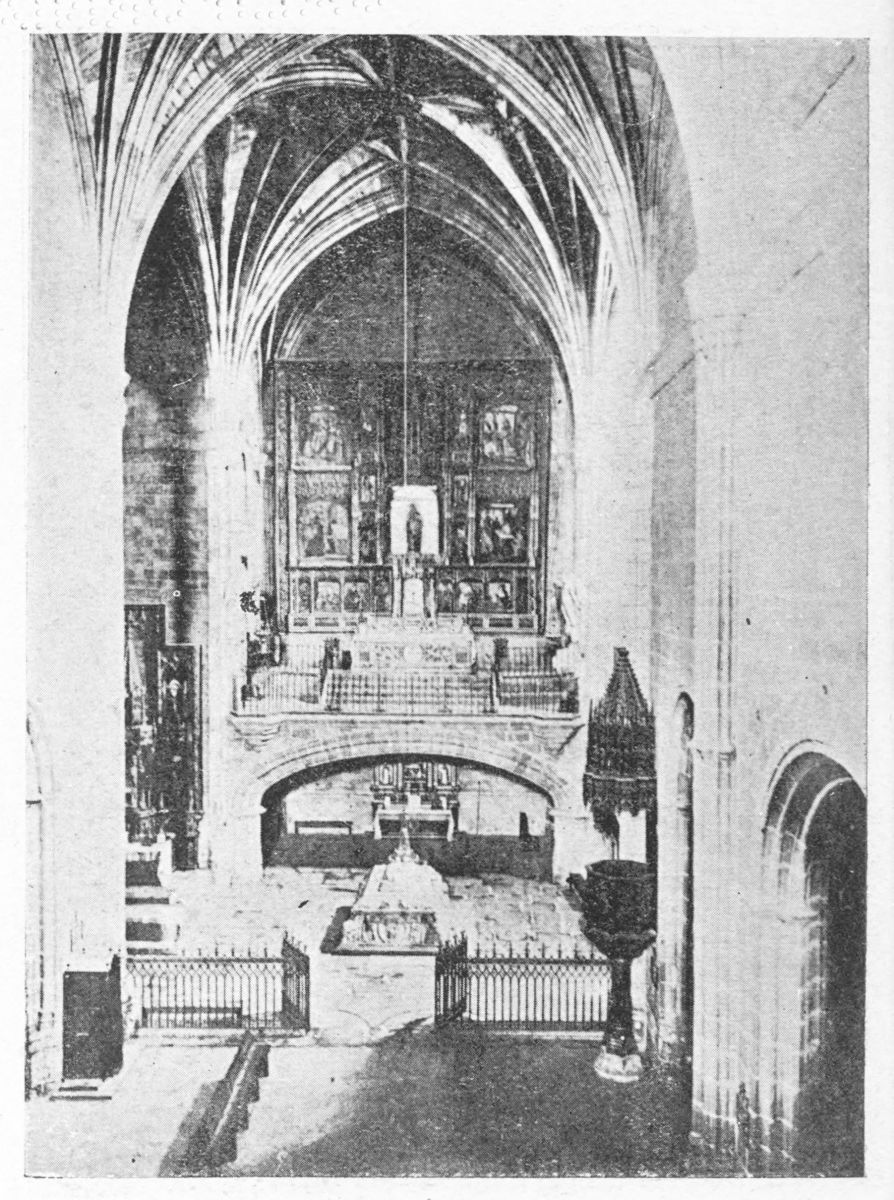
INTERIOR OF SANTO TOMÁS
AVILA
Plate 275
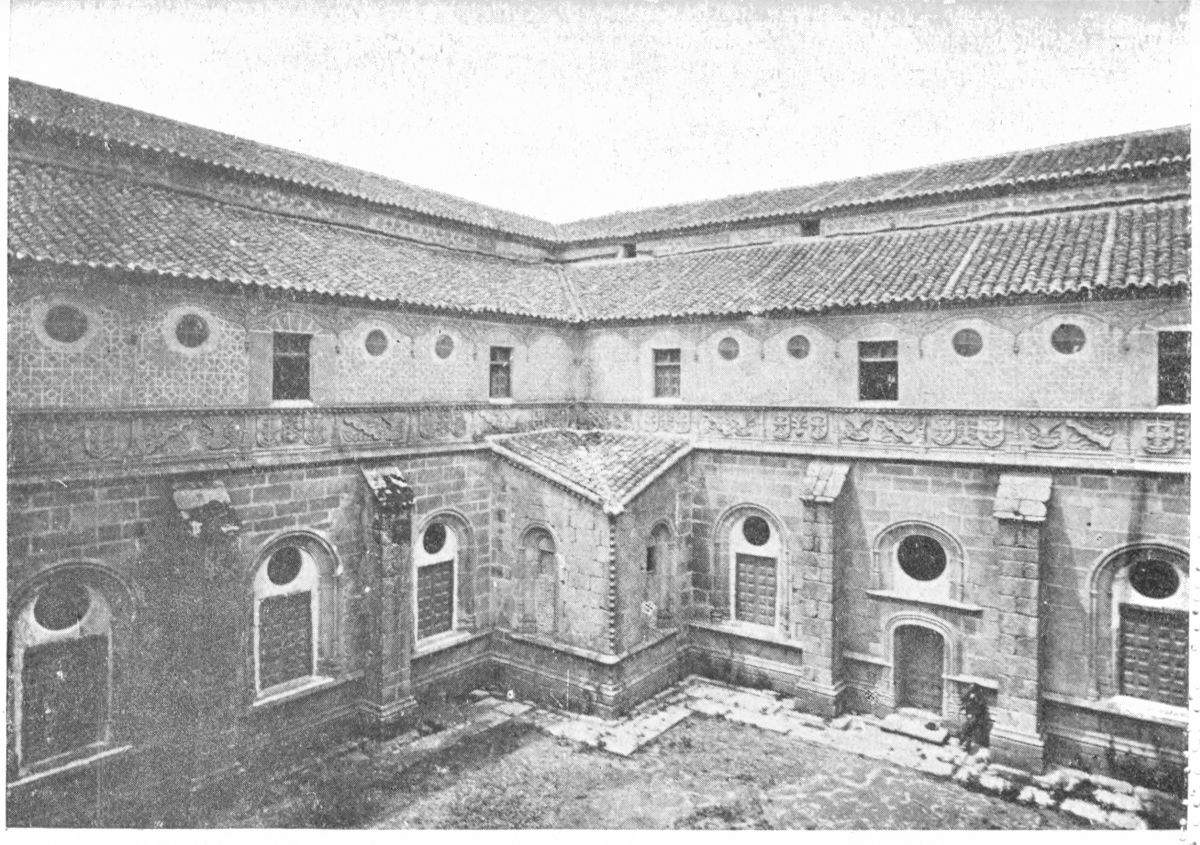
THE COURT OF SILENCE, IN THE CONVENT OF SANTO TOMÁS
AVILA
Plate 276
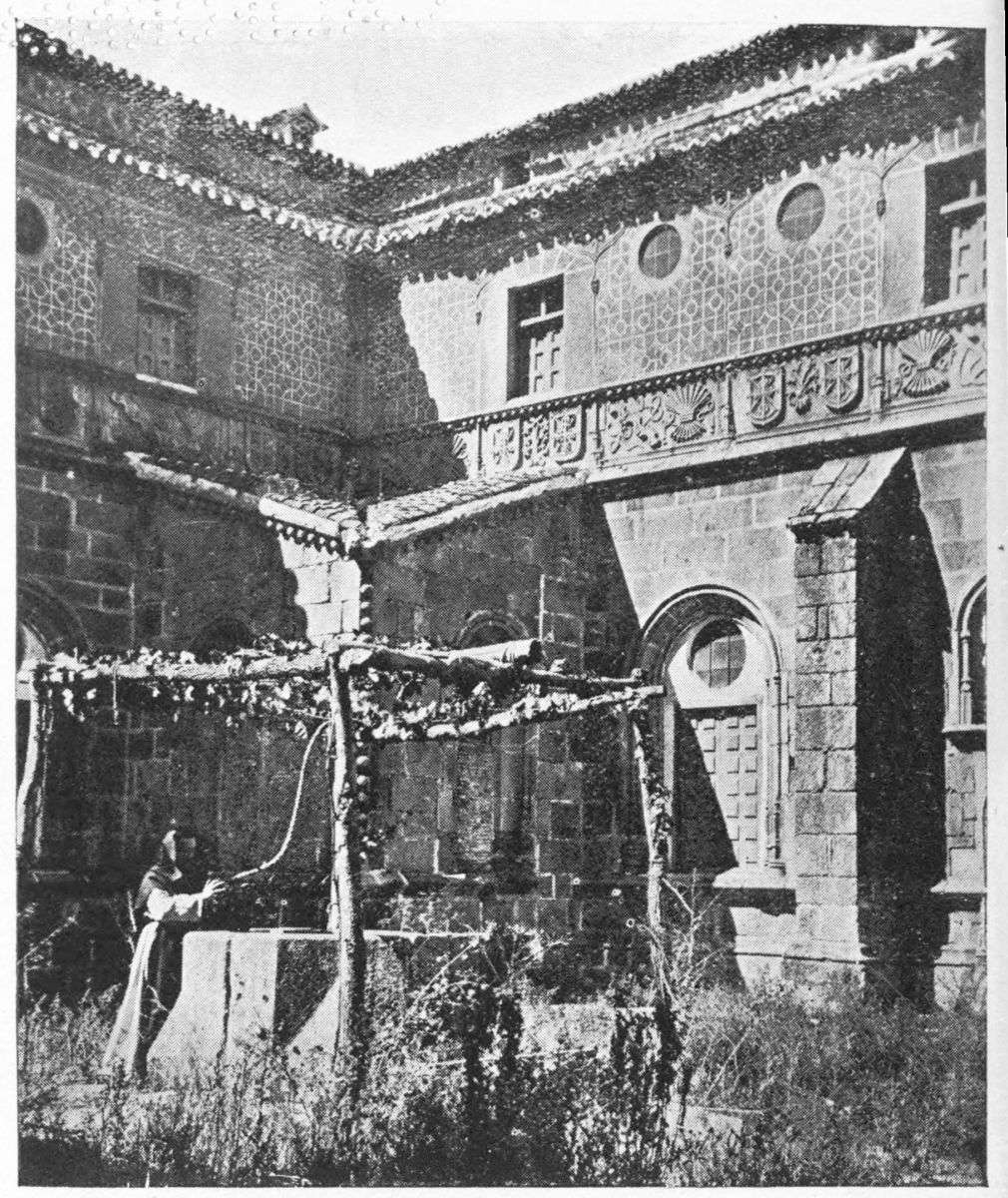
CONVENT OF SANTO TOMÁS. THE COURT OF SILENCE
AVILA
Plate 277
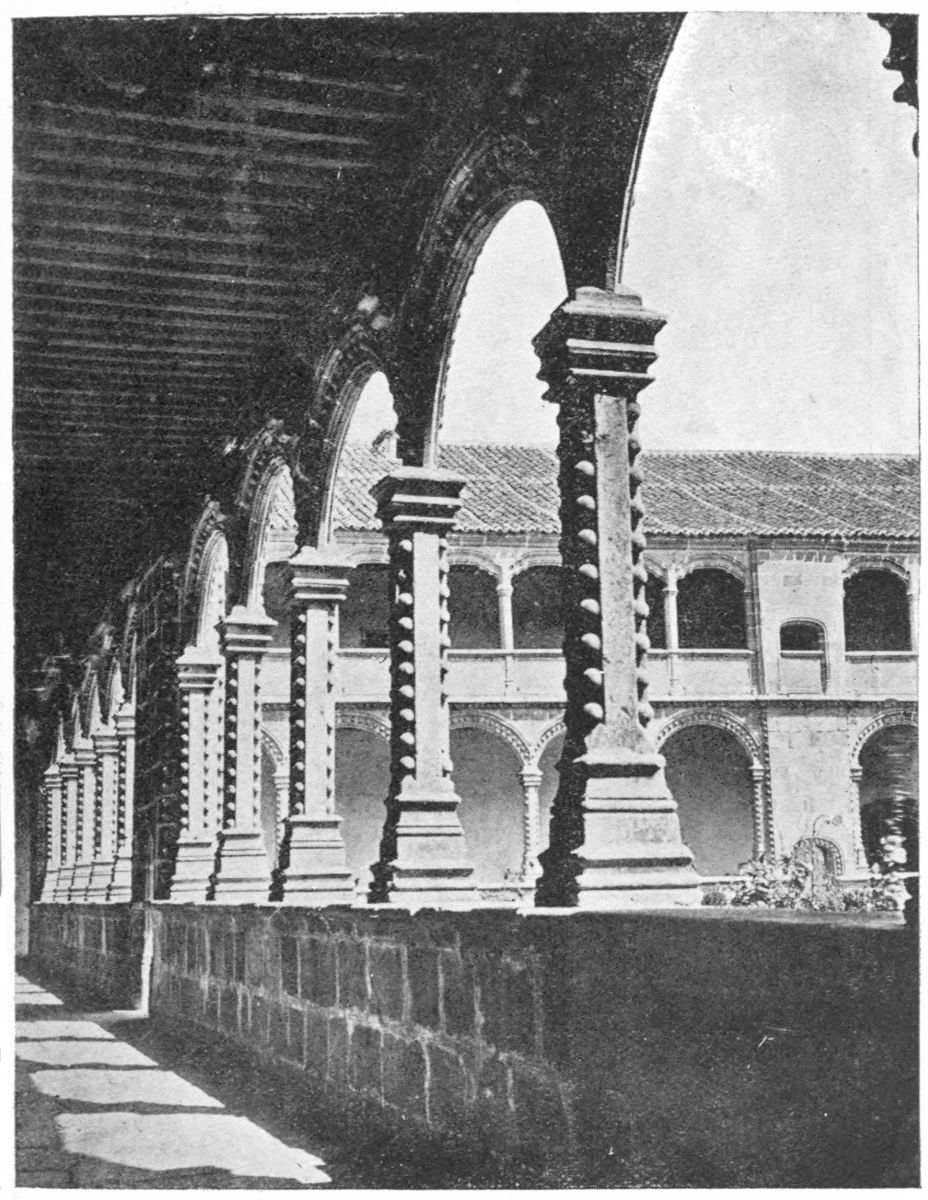
CONVENT OF SANTO TOMÁS. COURT OF THE KINGS
AVILA
Plate 278
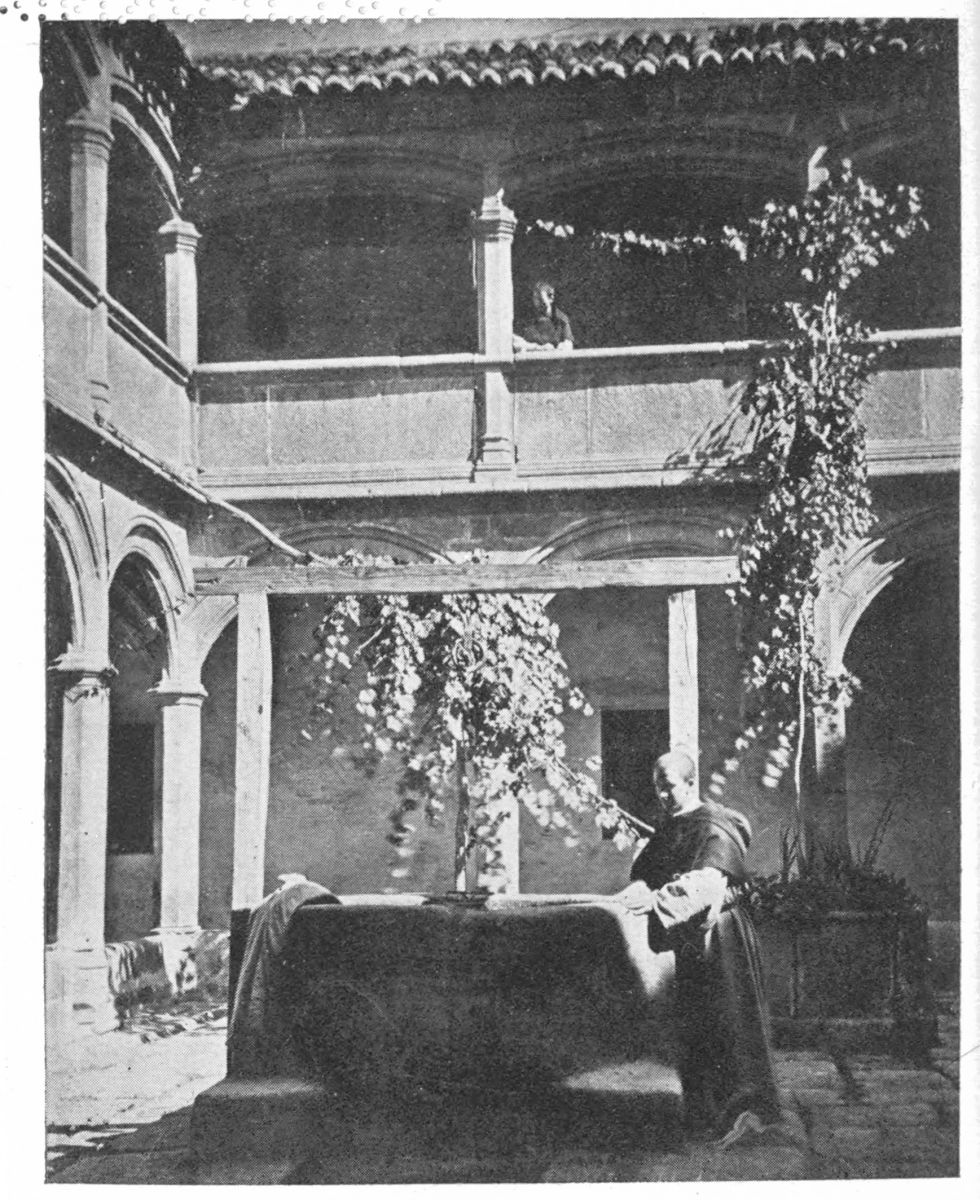
CONVENT OF SANTO TOMÁS. COURTYARD OF THE INFIRMARY
AVILA
Plate 279
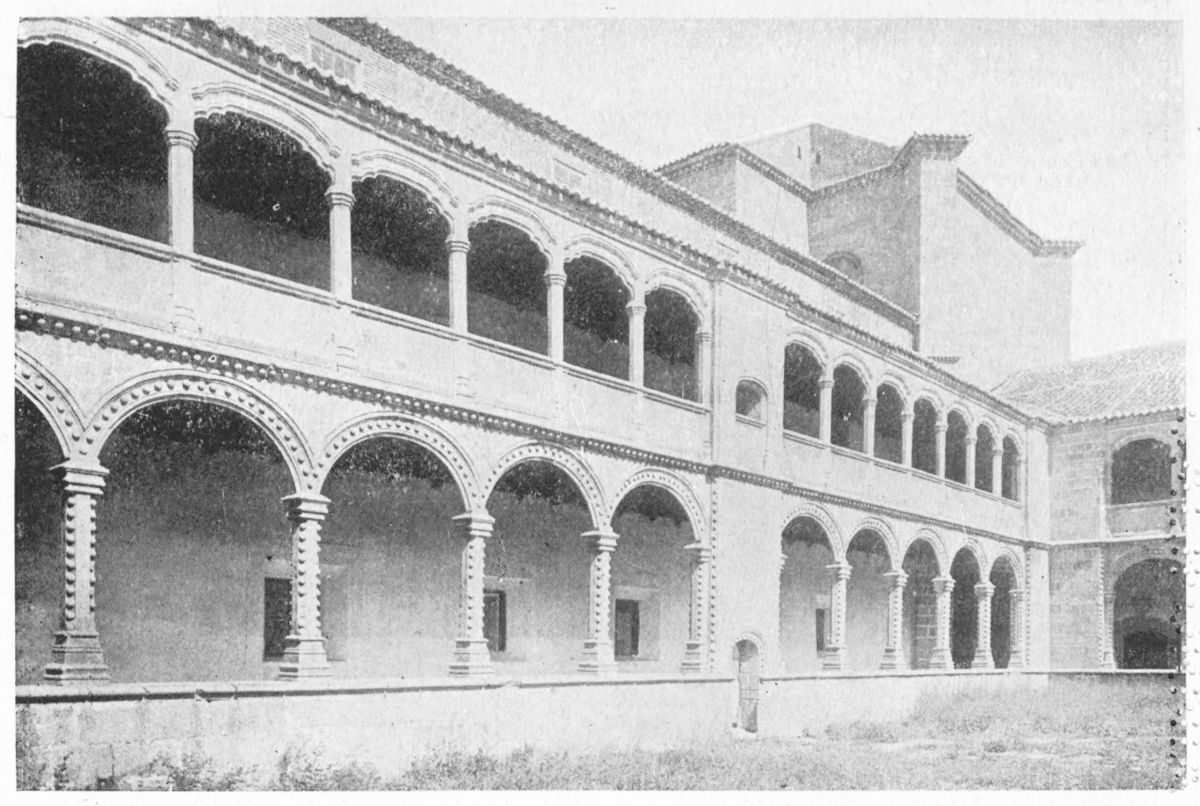
CLOISTERS OF SANTO TOMÁS
AVILA
Plate 280
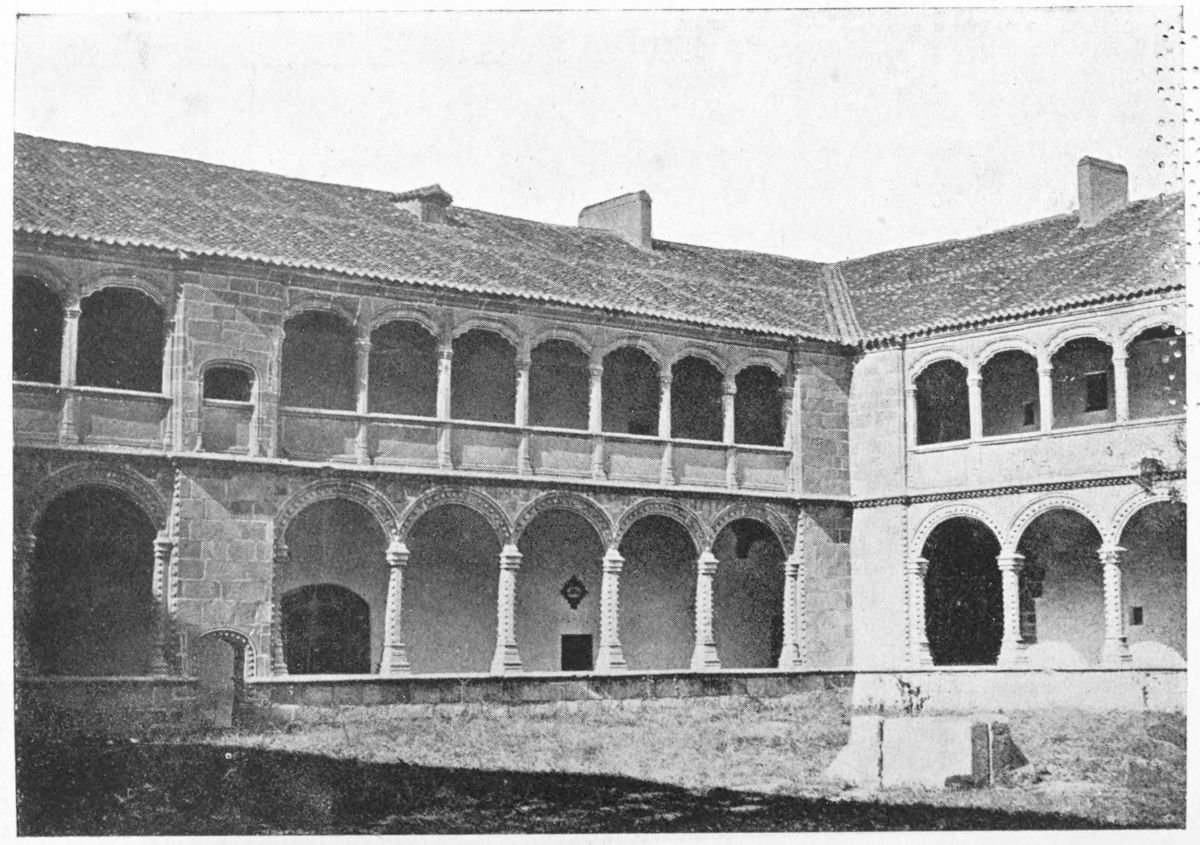
CLOISTERS OF THE CONVENT OF SANTO TOMÁS
AVILA
Plate 281
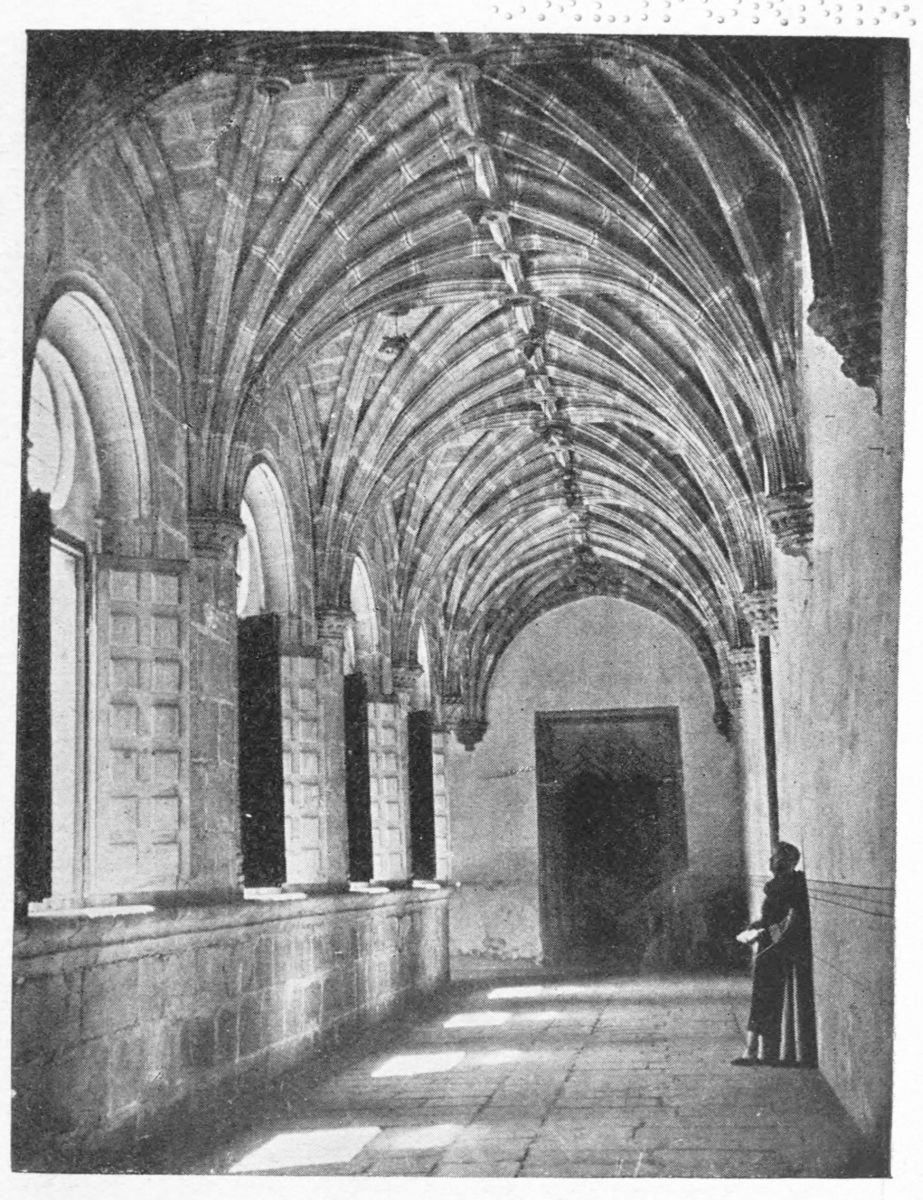
CLOISTERS OF THE CONVENT OF SANTO TOMÁS
AVILA
Plate 282
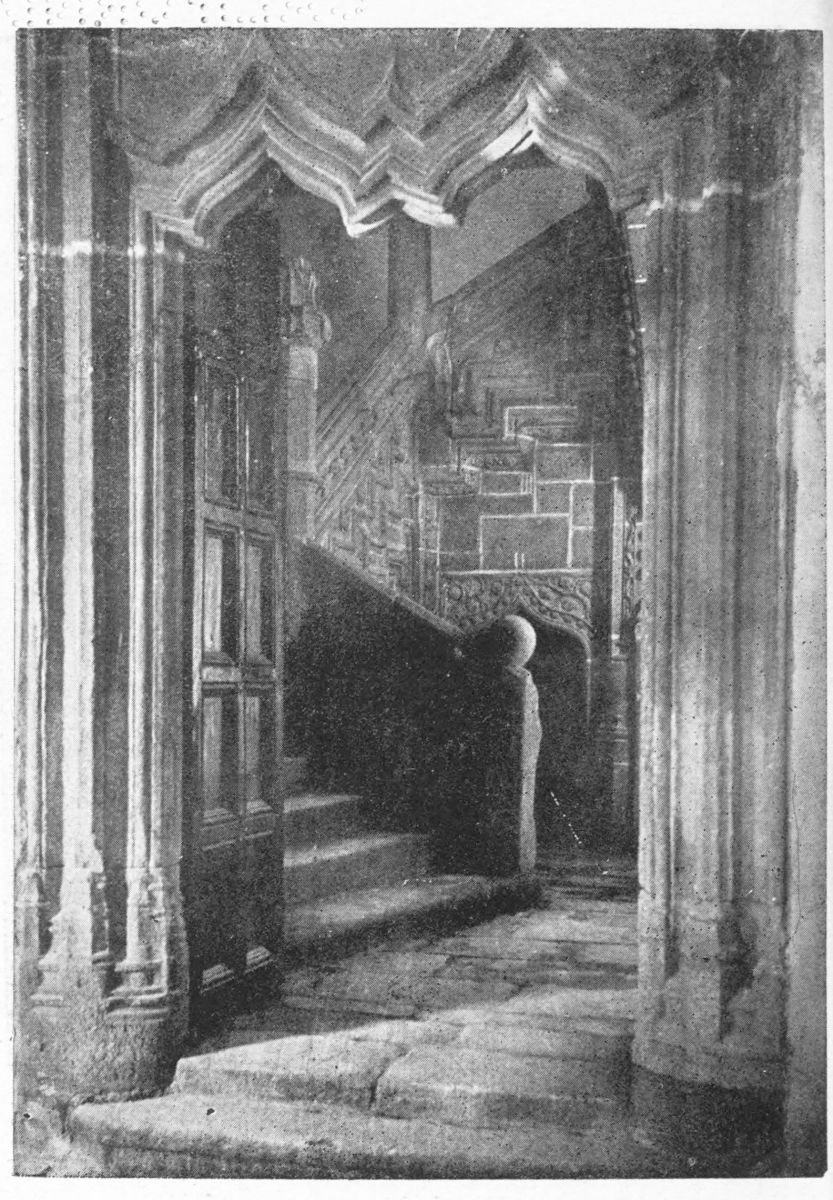
GATE OF THE CLOISTERS IN THE CONVENT OF SANTO TOMÁS
AVILA
Plate 283
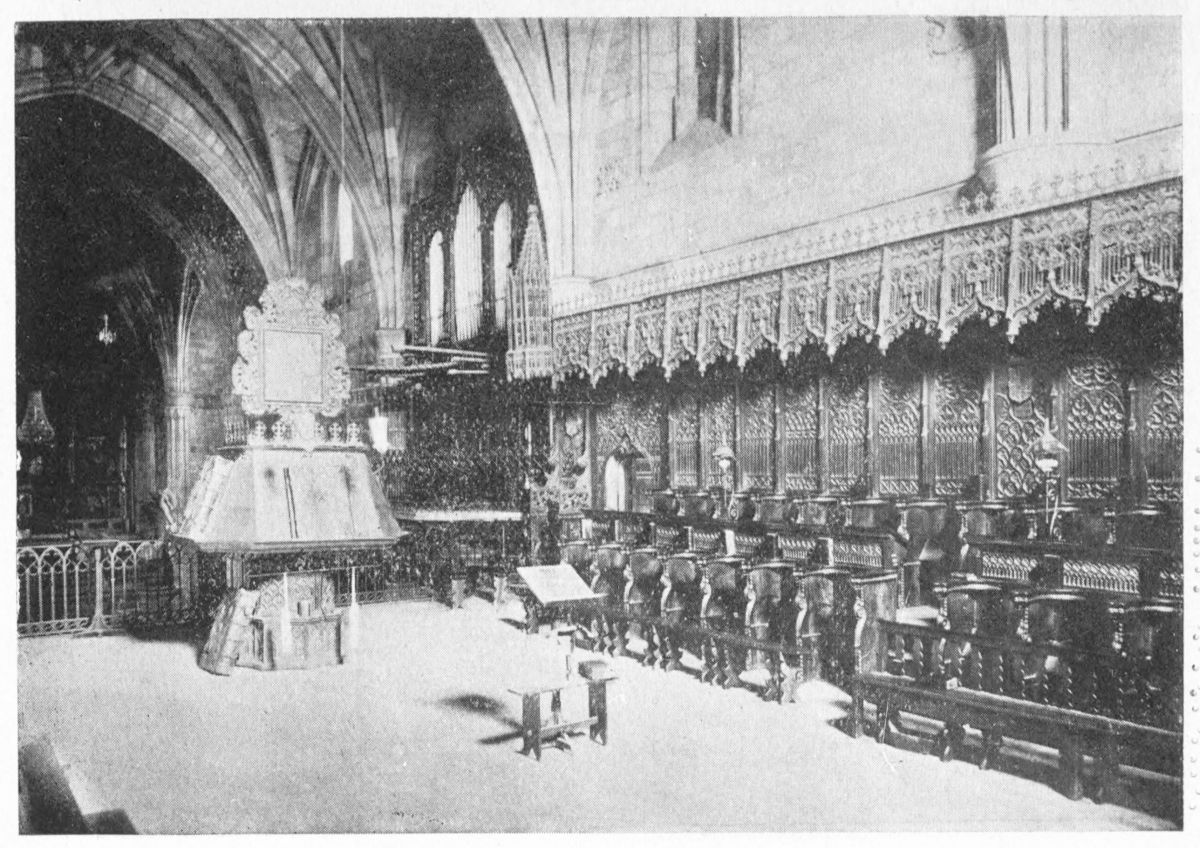
CHOIR OF THE CONVENT OF SANTO TOMÁS
AVILA
Plate 284
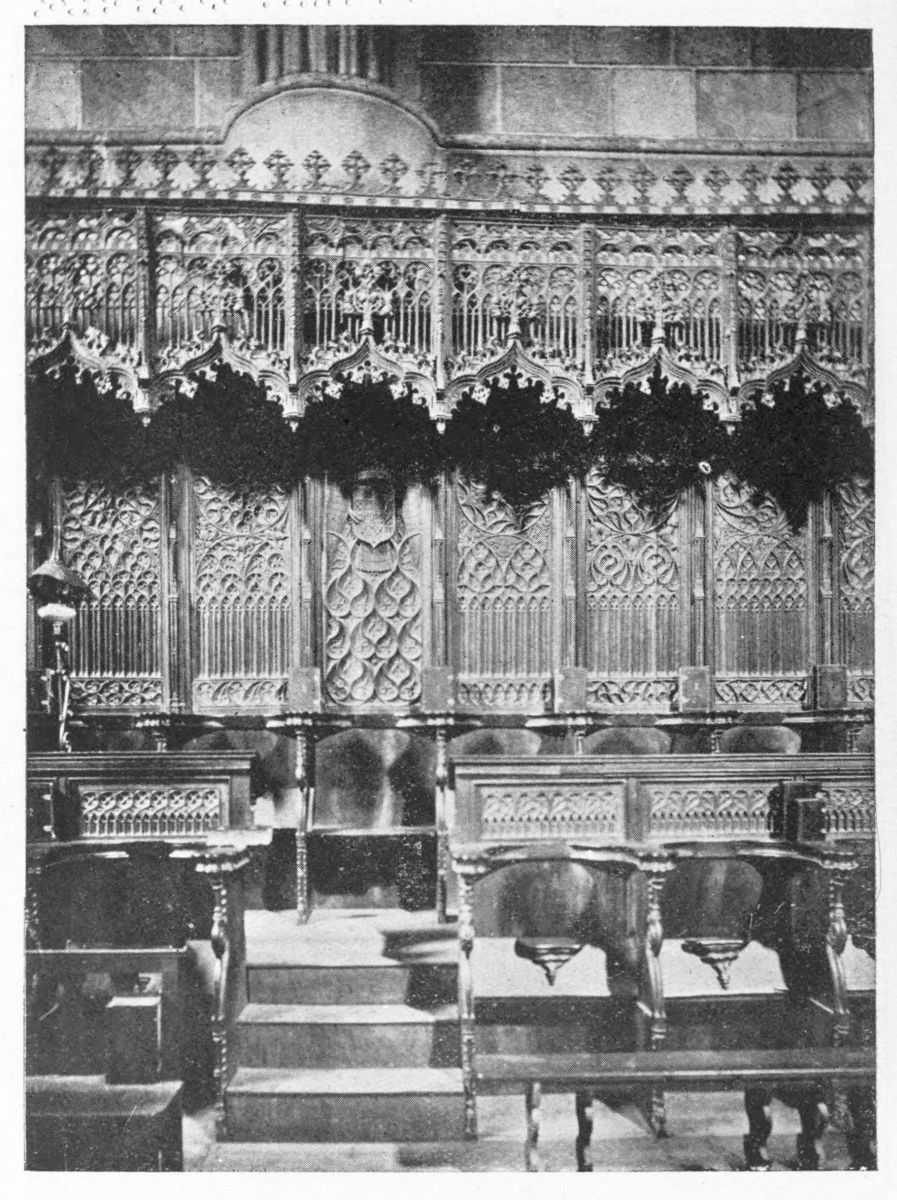
CONVENT OF SANTO TOMÁS. DETAIL OF THE CHOIR
AVILA
Plate 285
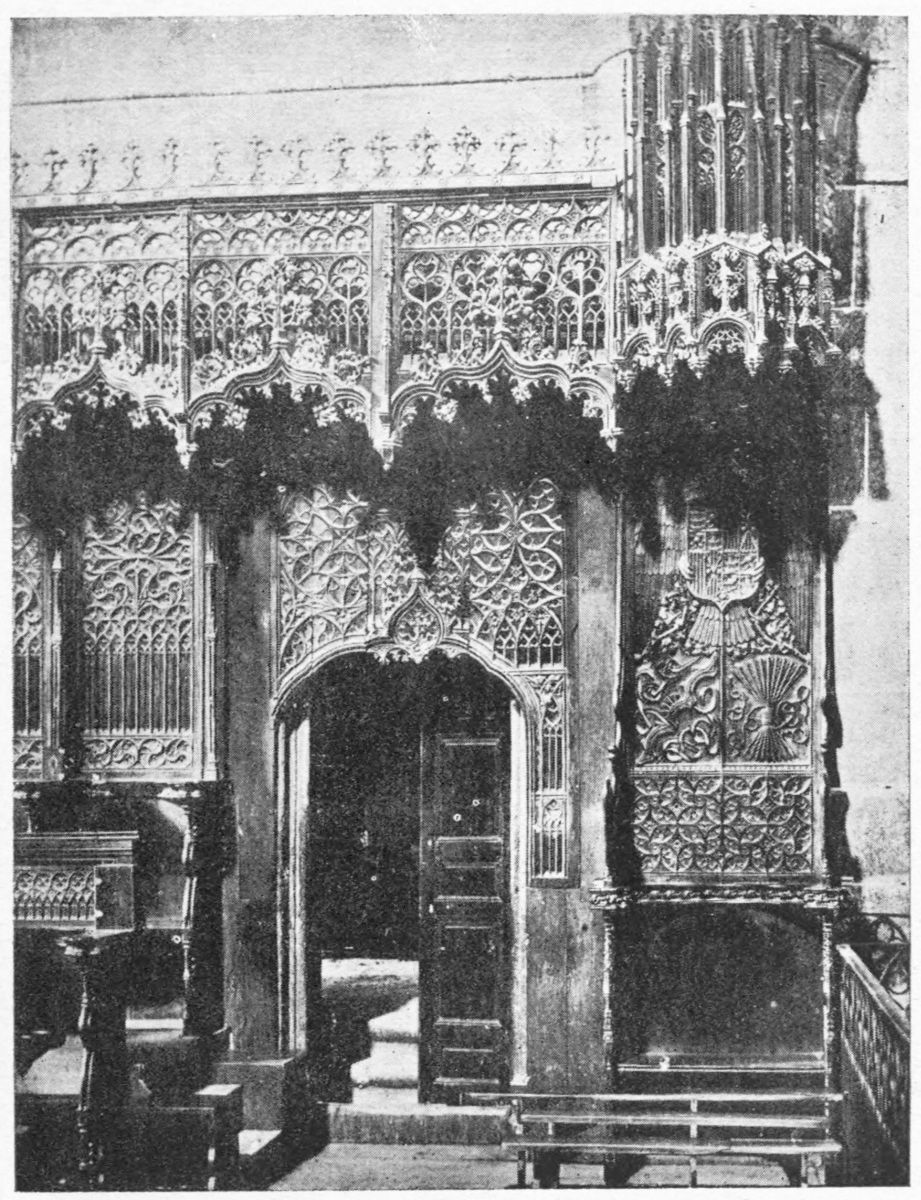
CHOIR STALLS IN THE CONVENT OF SANTO TOMÁS
AVILA
Plate 286
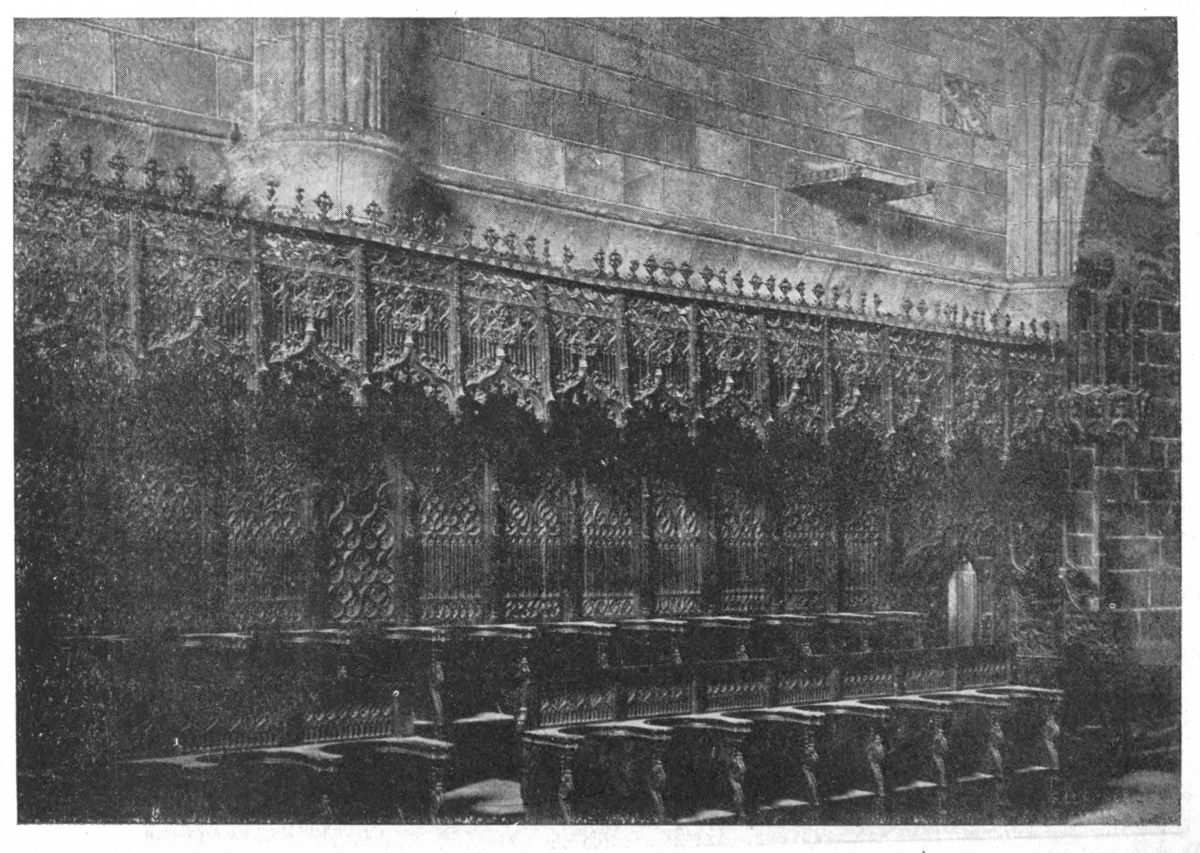
CHOIR STALLS IN THE CONVENT OF SANTO TOMÁS
AVILA
Plate 287
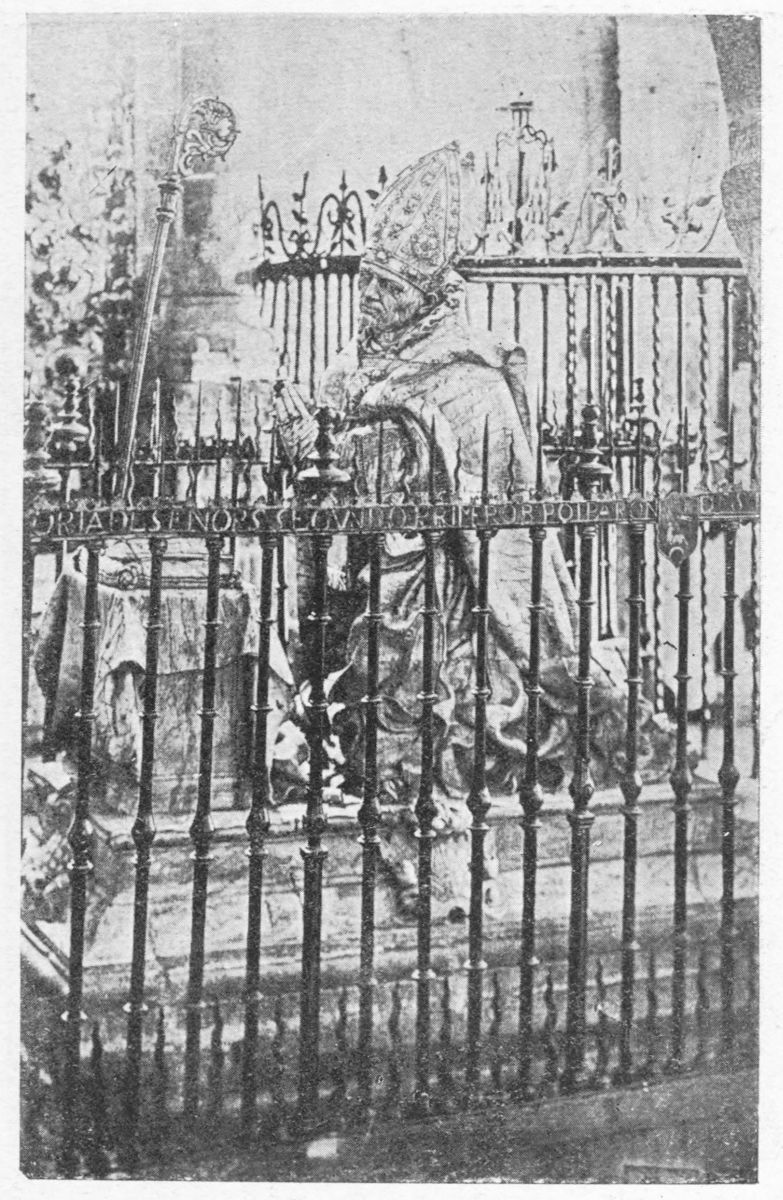
CHURCH OF SAN SEGUNDO. STATUE OF SAN SEGUNDO BY BERRUGUETE
AVILA
Plate 288
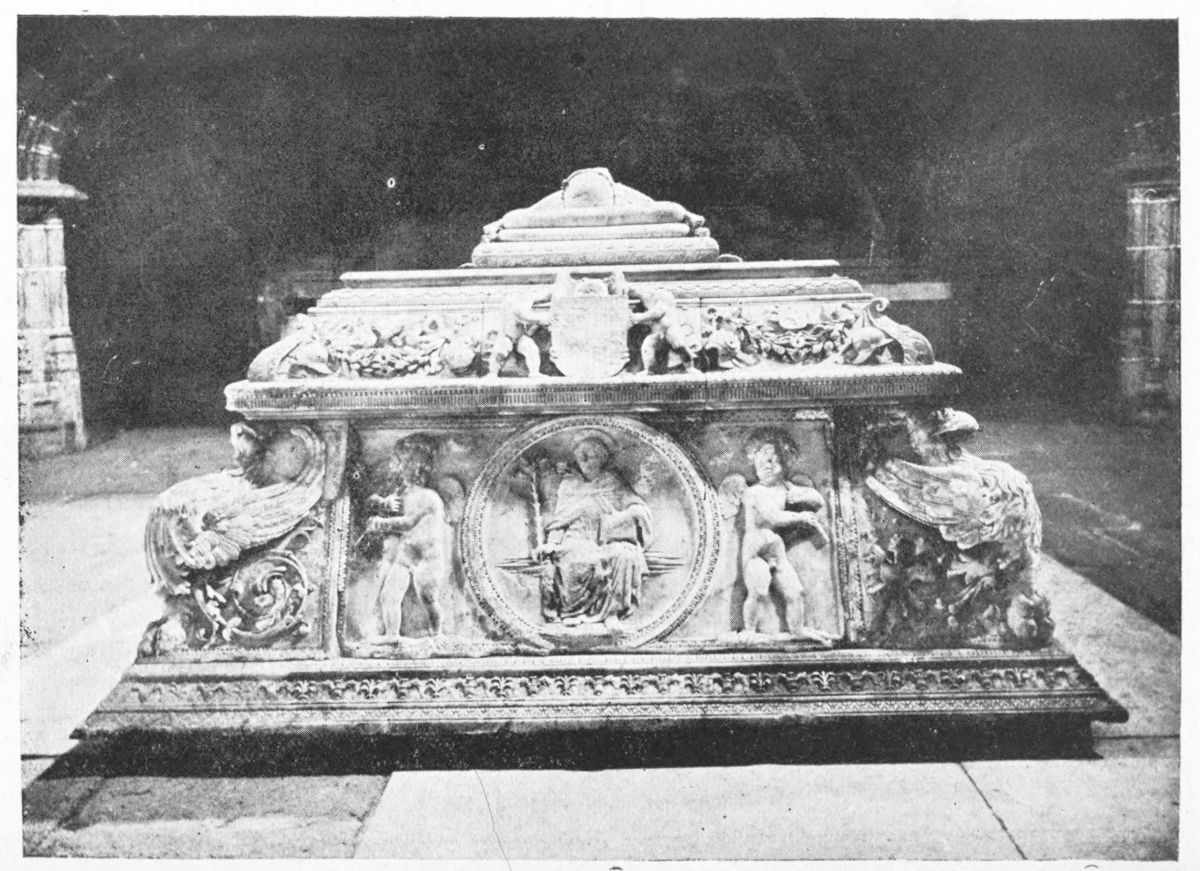
CHURCH OF SANTO TOMÁS. SEPULCHRE OF THE INFANTE JUAN, ONLY SON OF
FERDINAND AND ISABELLA. AVILA
Plate 289
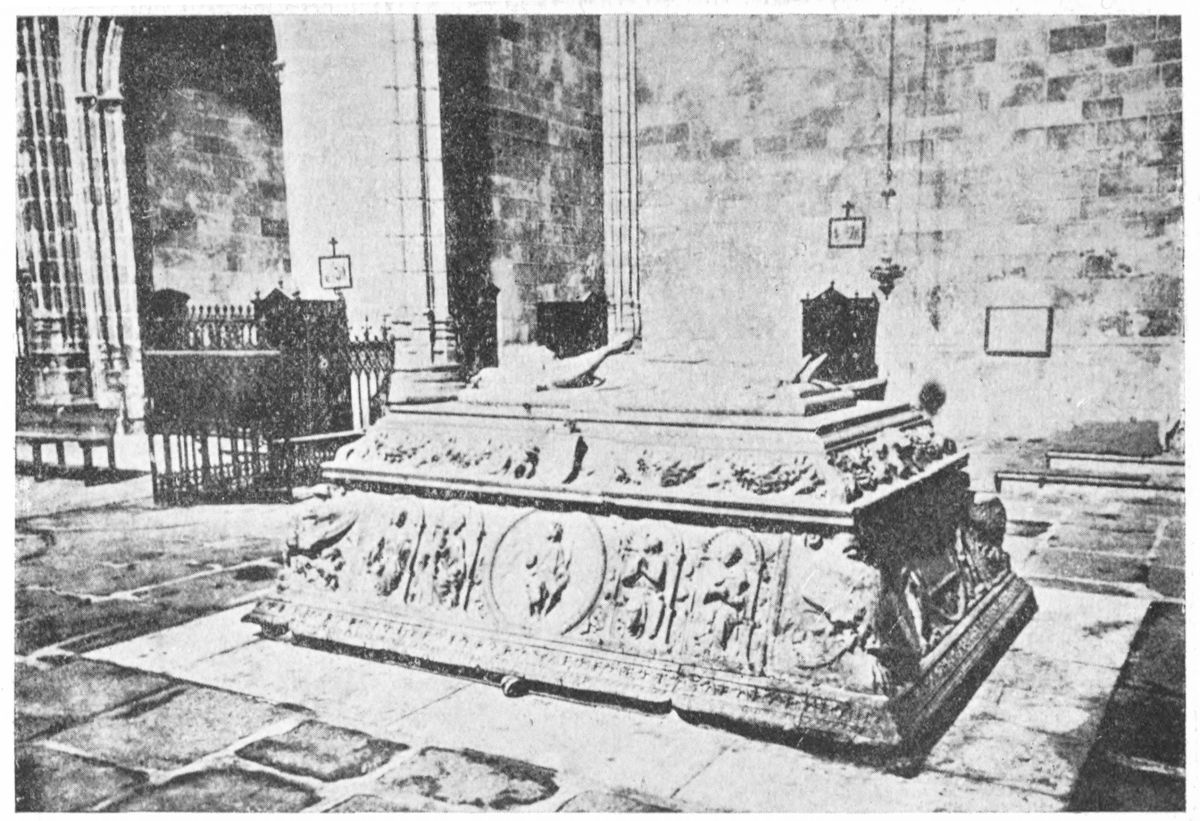
SANTO TOMÁS. SEPULCHRE OF PRINCE JUAN, ONLY SON OF FERDINAND AND
ISABELLA. AVILA
Plate 290
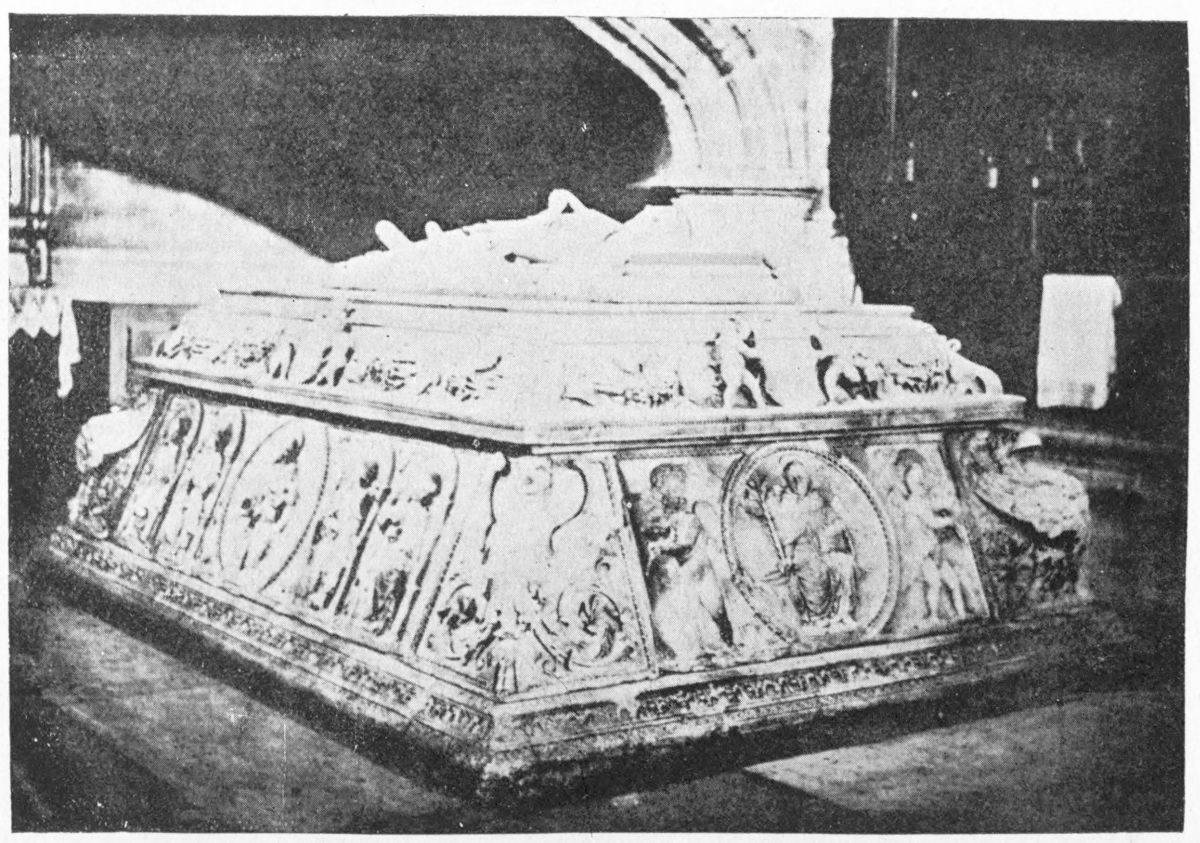
SANTO TOMÁS. SEPULCHRE OF PRINCE JUAN, ONLY SON OF FERDINAND AND
ISABELLA. AVILA
Plate 291
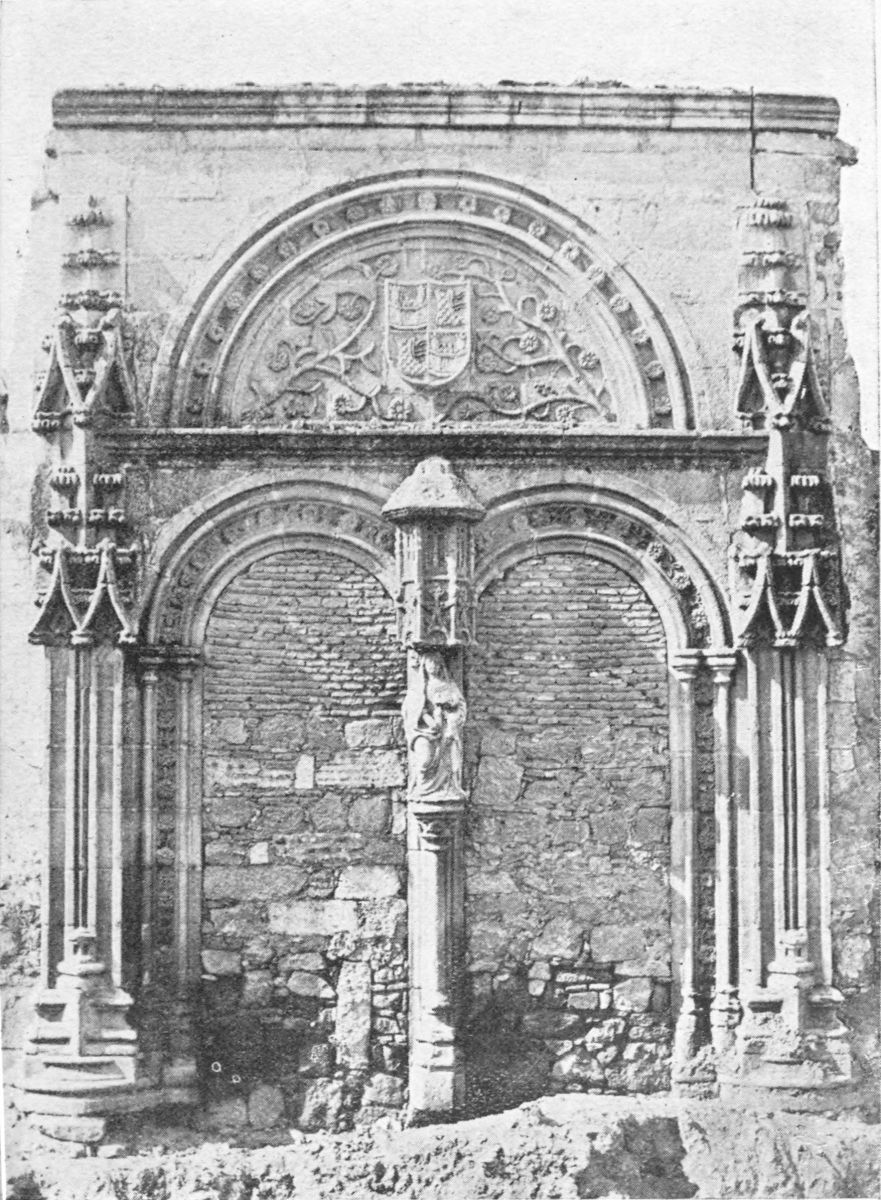
GOTHIC GATE IN RUINS
AVILA
Plate 292
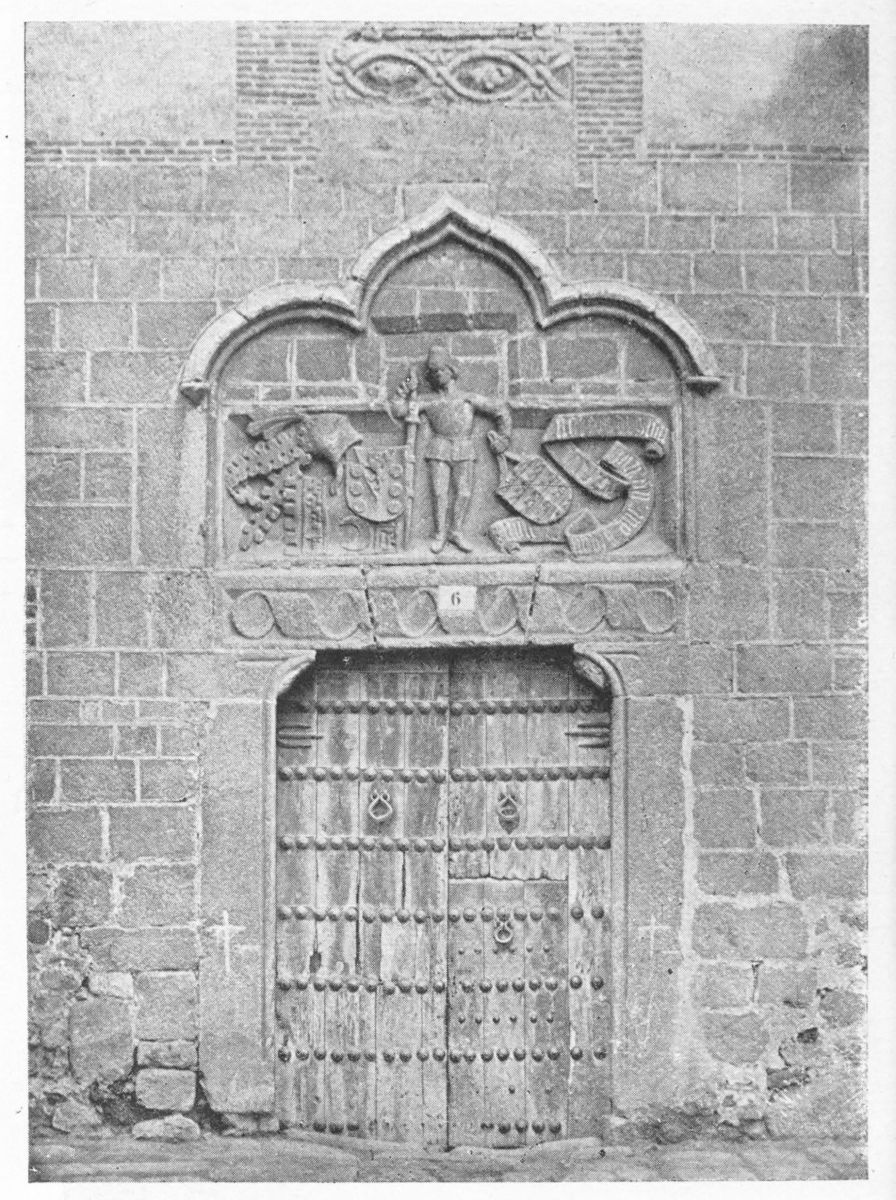
DOOR OF A PRIVATE HOUSE OPPOSITE THE CATHEDRAL
AVILA
Plate 293
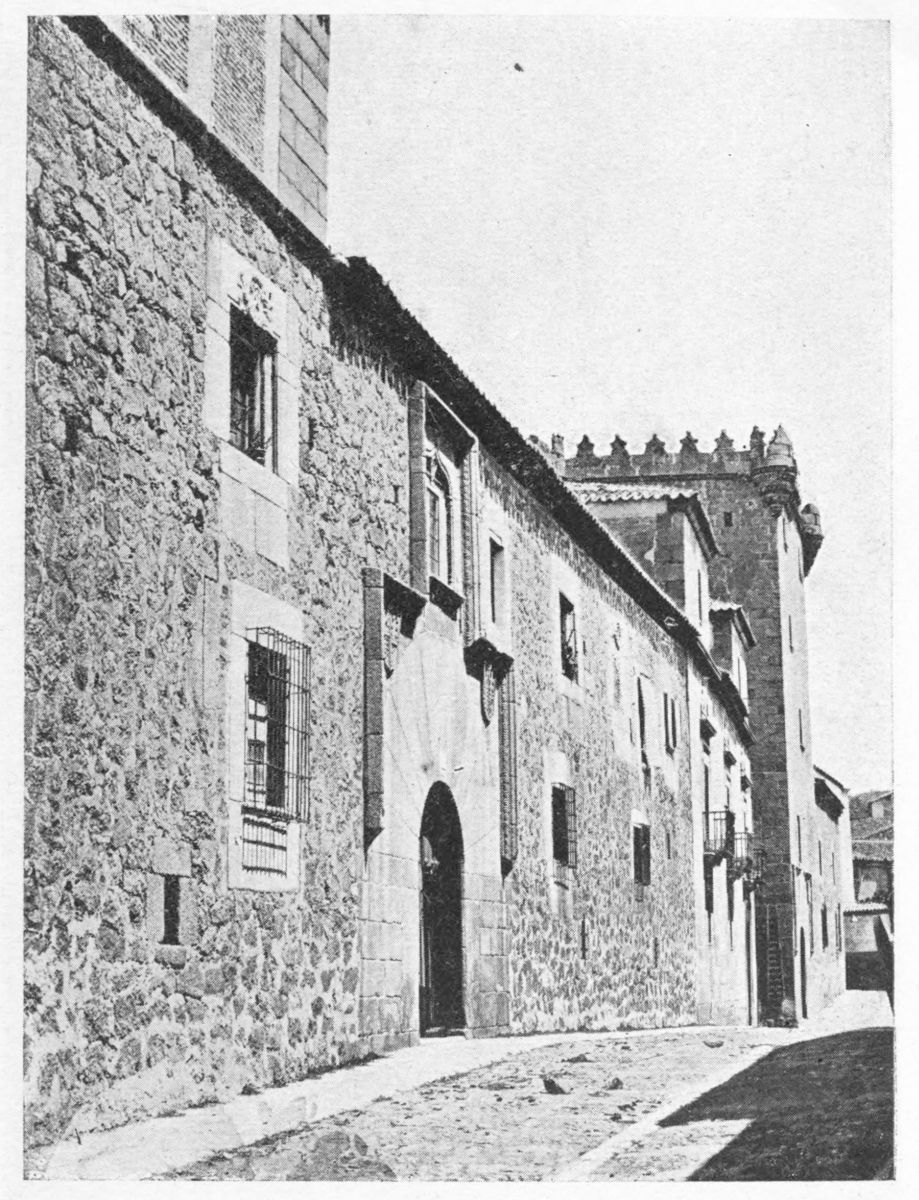
CALLE DE PEDRO D’AVILA
AVILA
Plate 294
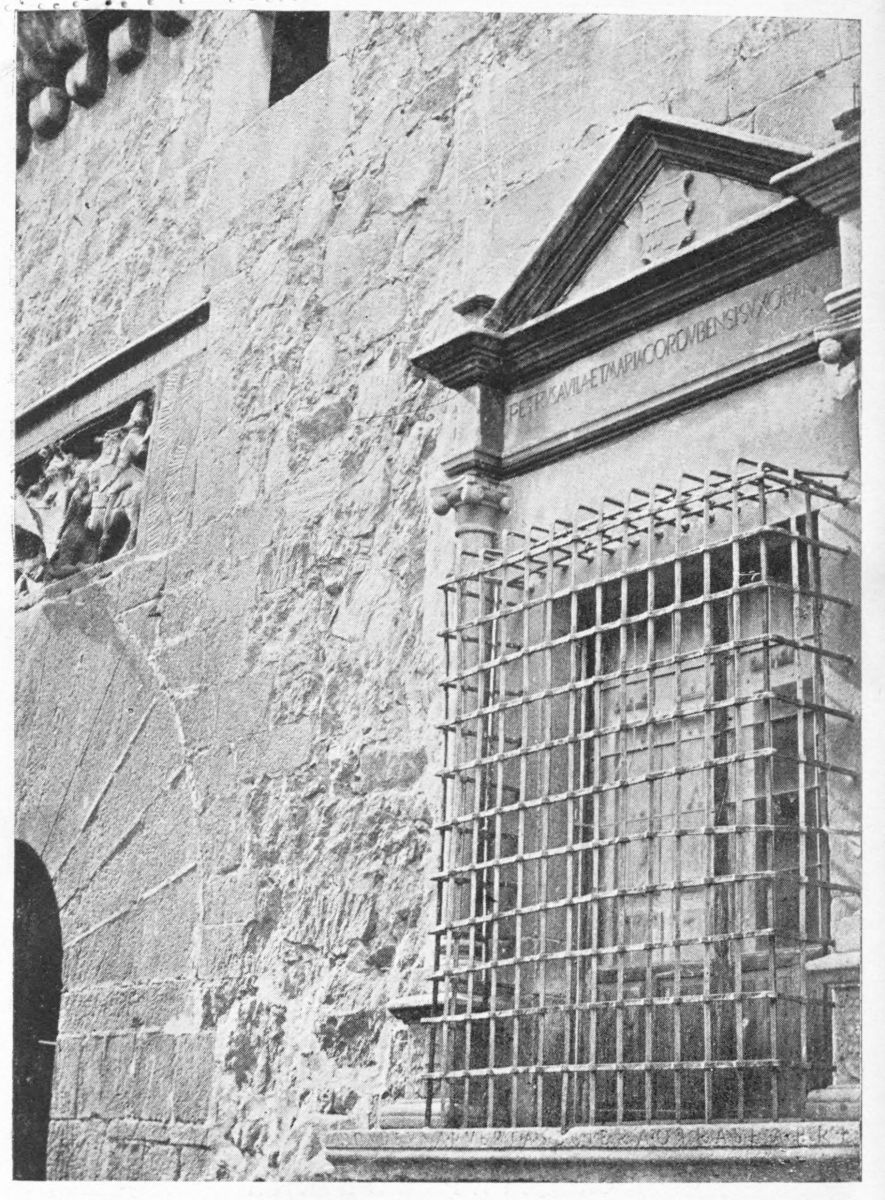
CELEBRATED WINDOW IN THE HOUSE OF PEDRO D’AVILA
AVILA
Plate 295
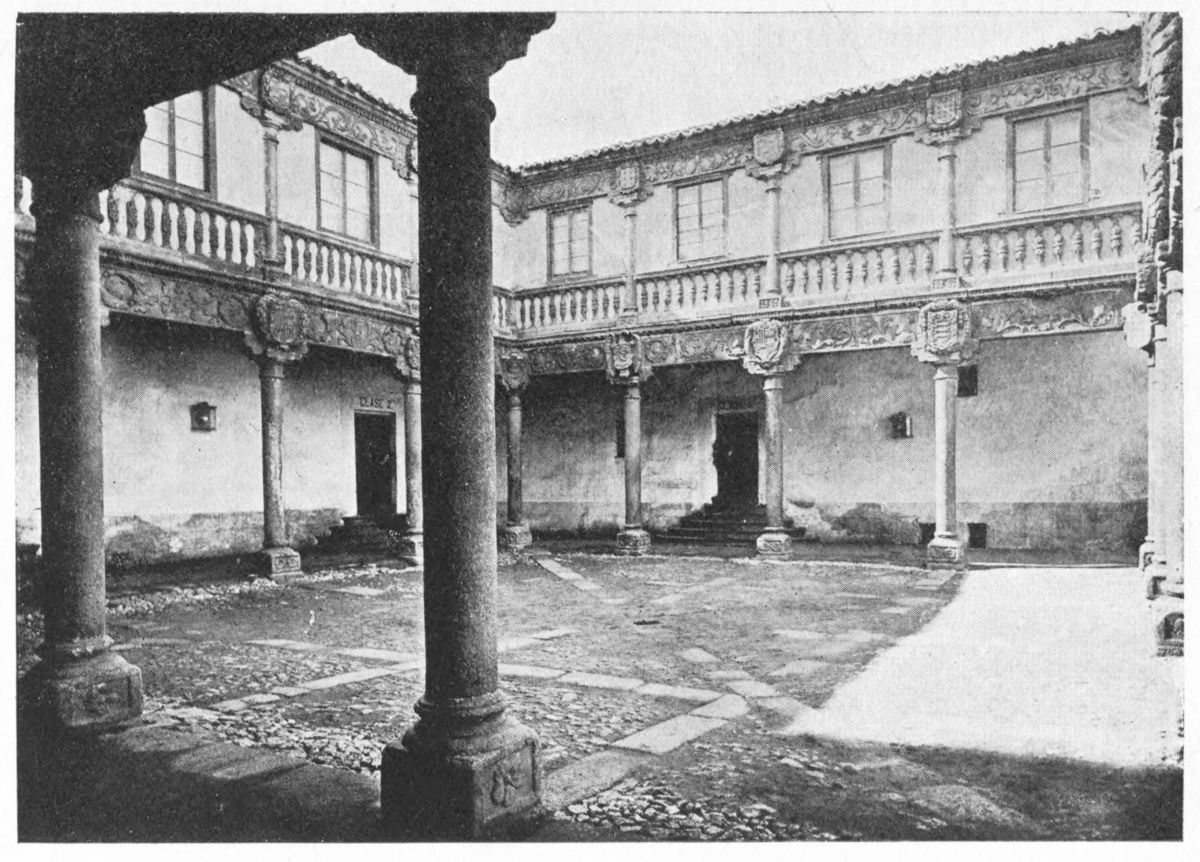
COURTYARD OF THE POLENTINOS’ PALACE
AVILA
Plate 296
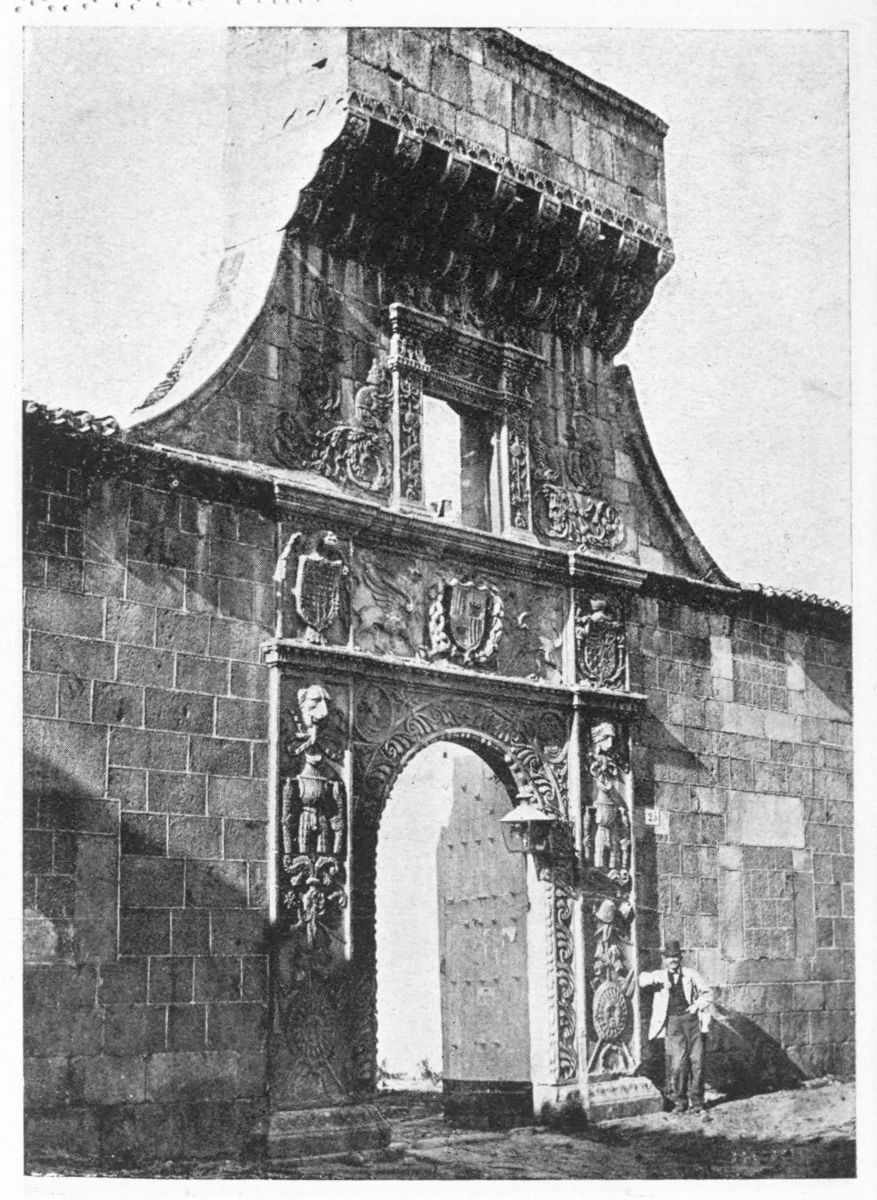
PORTICO OF THE POLENTINOS’ PALACE
AVILA
Plate 297
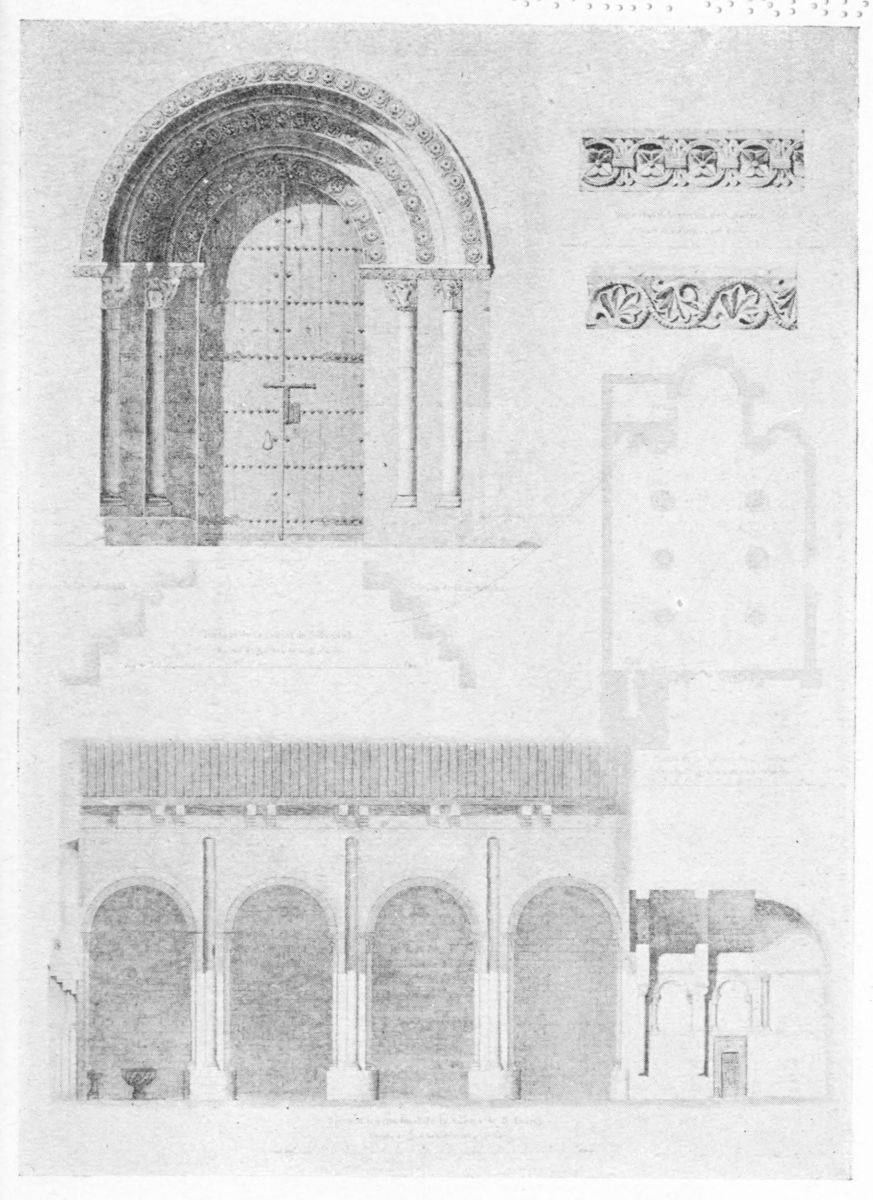
CHURCH OF SAN ANDRES AND SAN SEGUNDO
AVILA
Plate 298
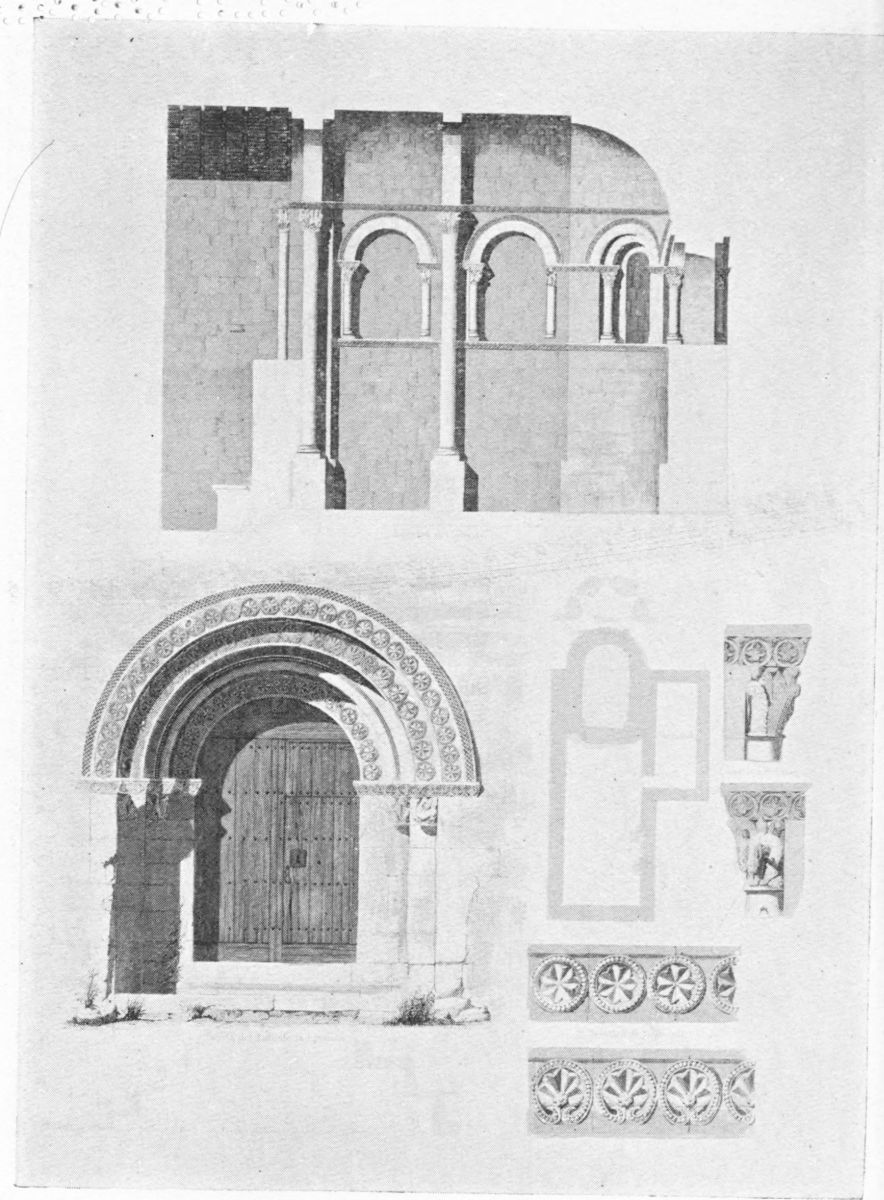
HERMITAGE OF SAN ISIDRO
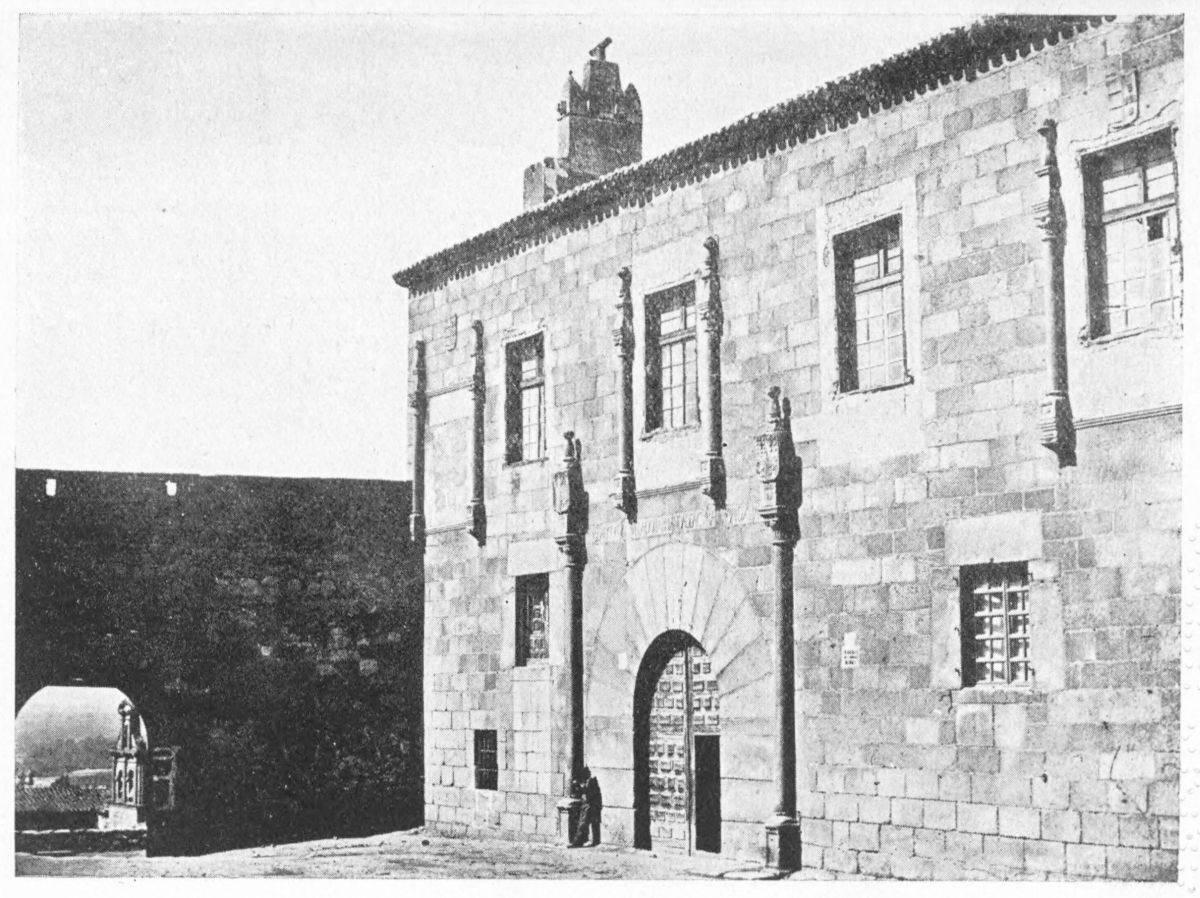
AVILA
Plate 299
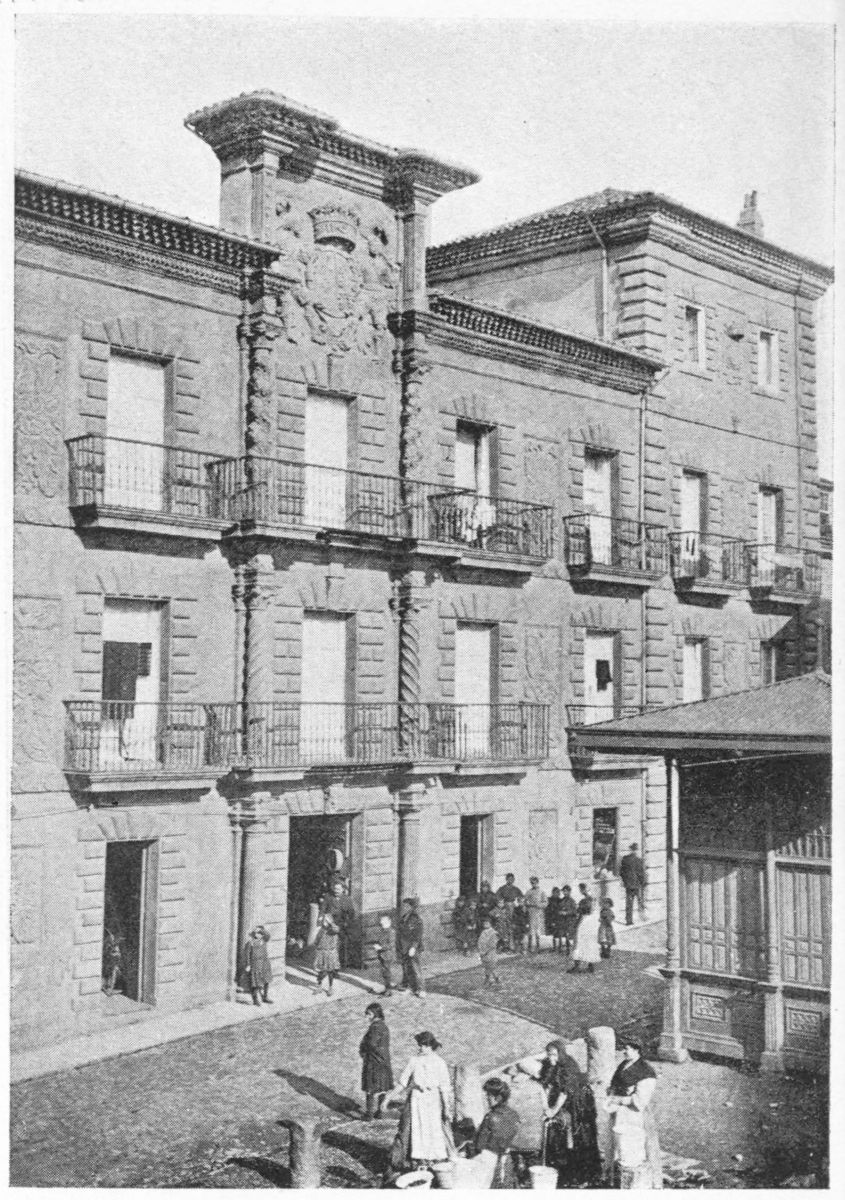
THE ACADEMY
AVILA
Plate 300
CAMPOSAGRADO PALACE
AVILA
Plate 301
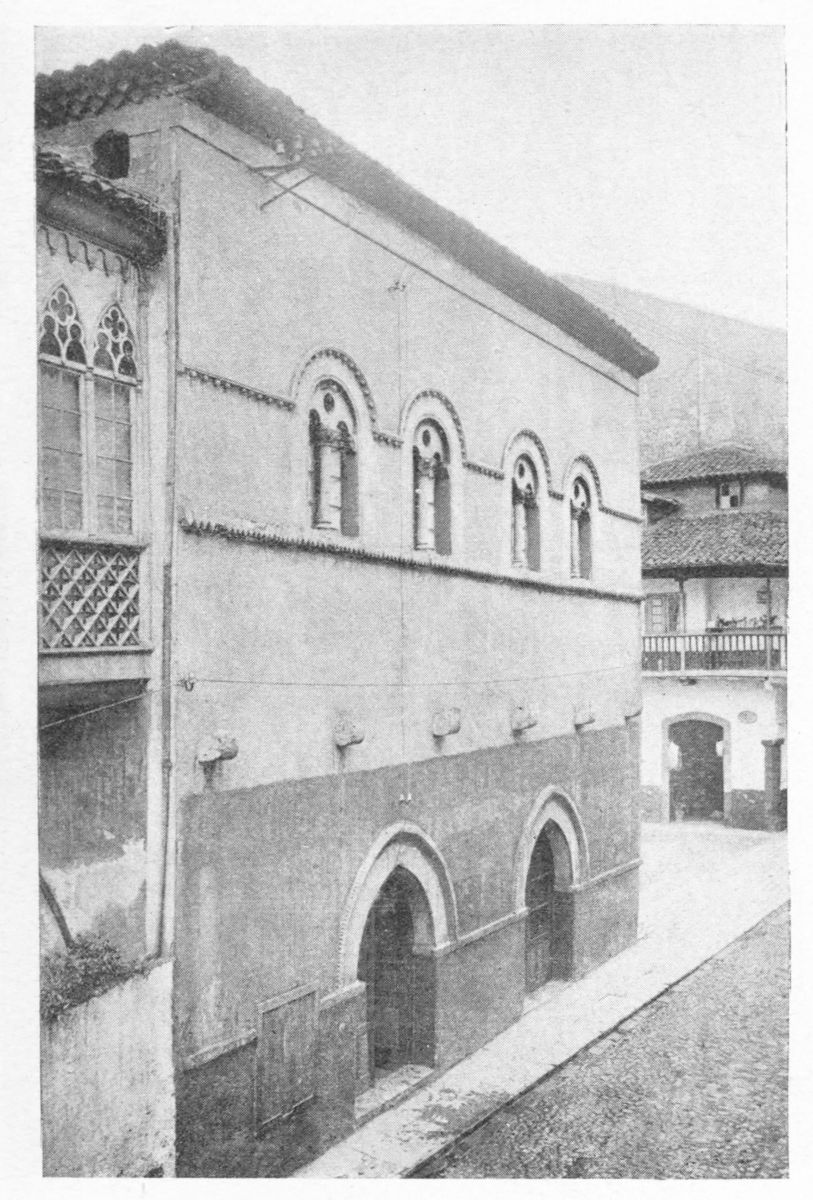
CASA DE LA BARAGAÑAS
AVILA
Plate 302
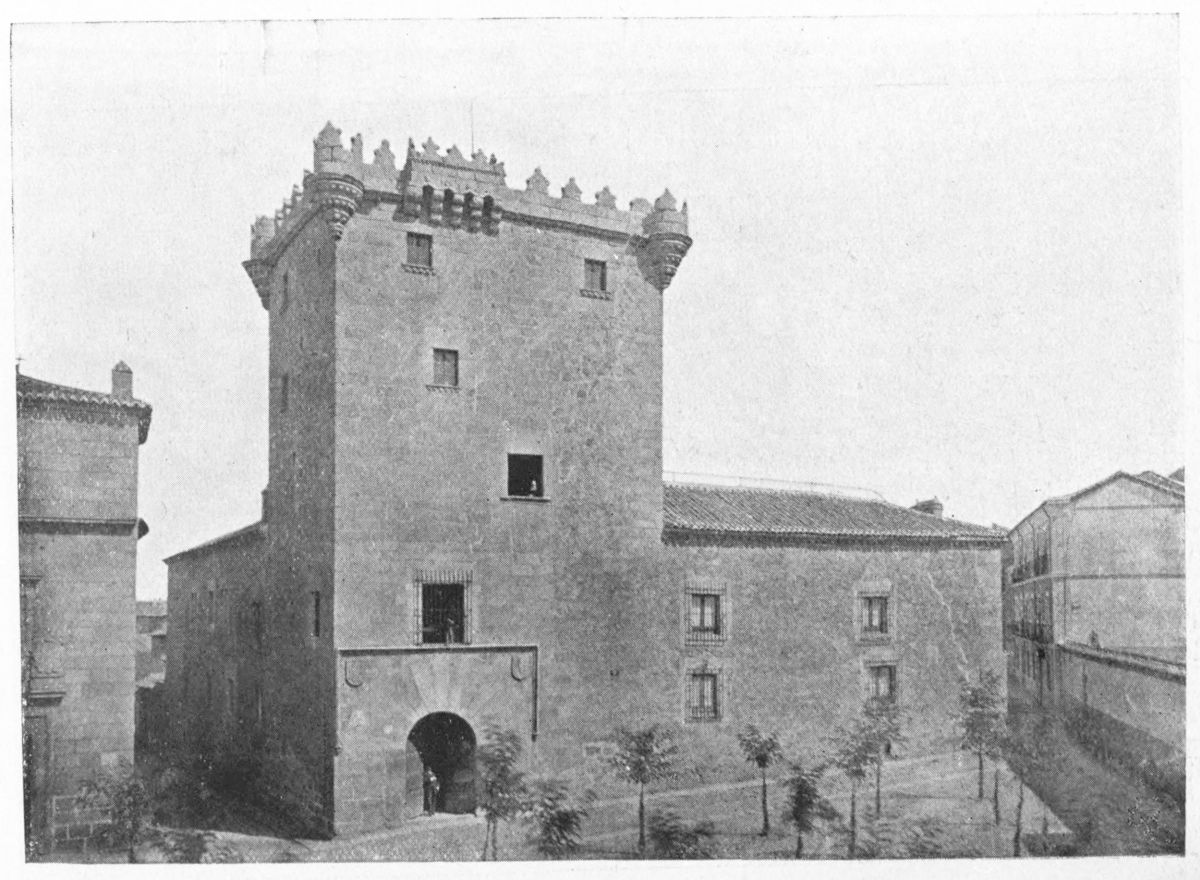
CASA DE LA TORRE
Plate 303
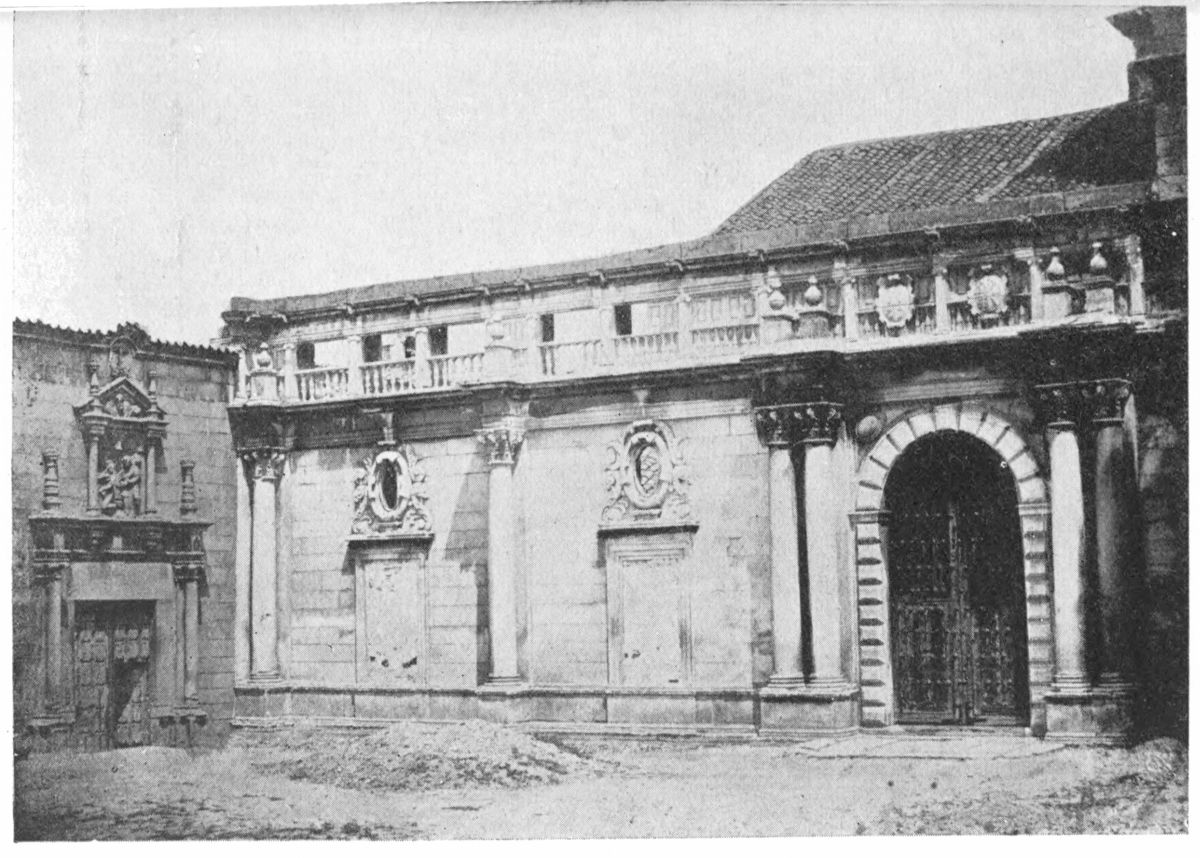
CHAPEL OF MOSEN RUBI
AVILA
Plate 304
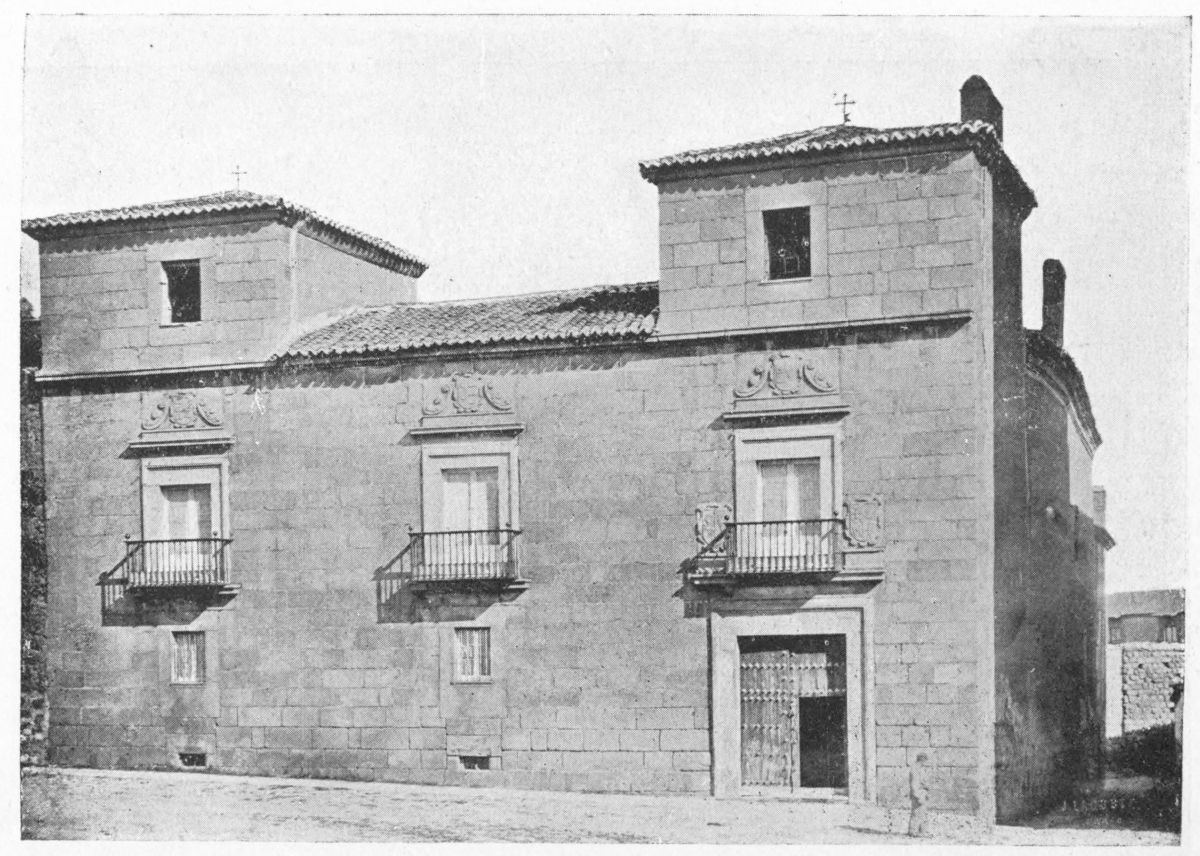
PALACE OF THE CONDE DE SUPERUNDA
AVILA
Plate 305
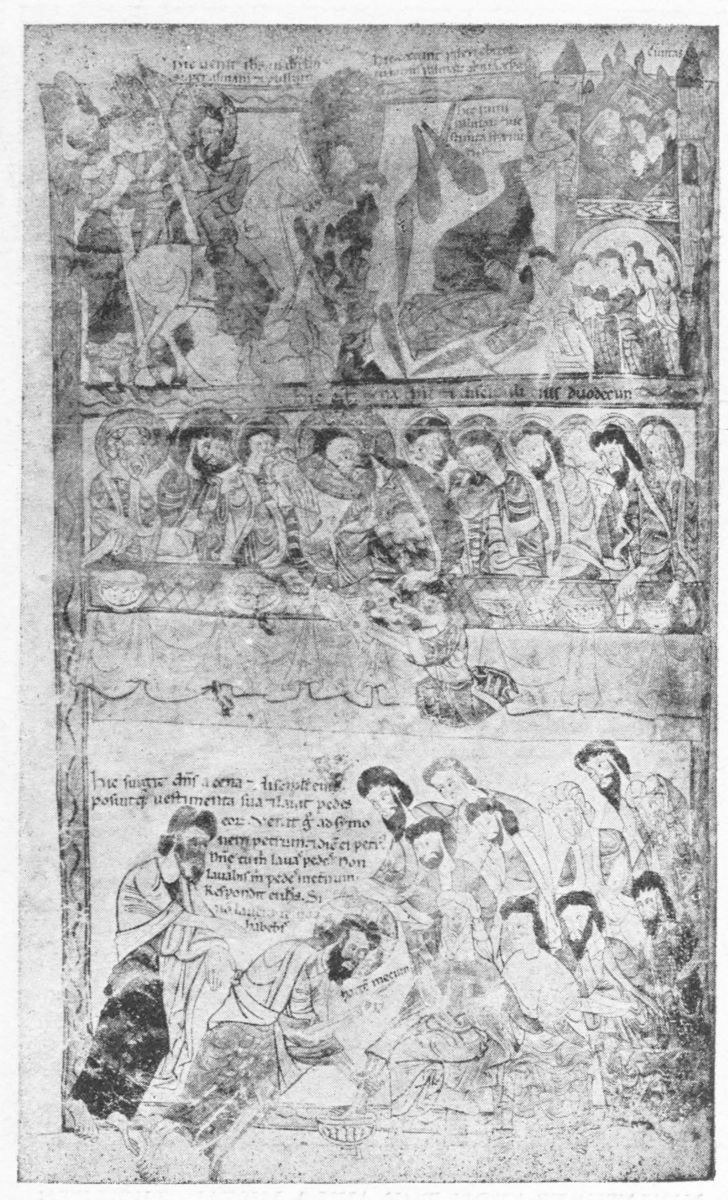
MINIATURES FROM THE AVILA MISSAL, TWELFTH CENTURY (NATIONAL LIBRARY)
Plate 306
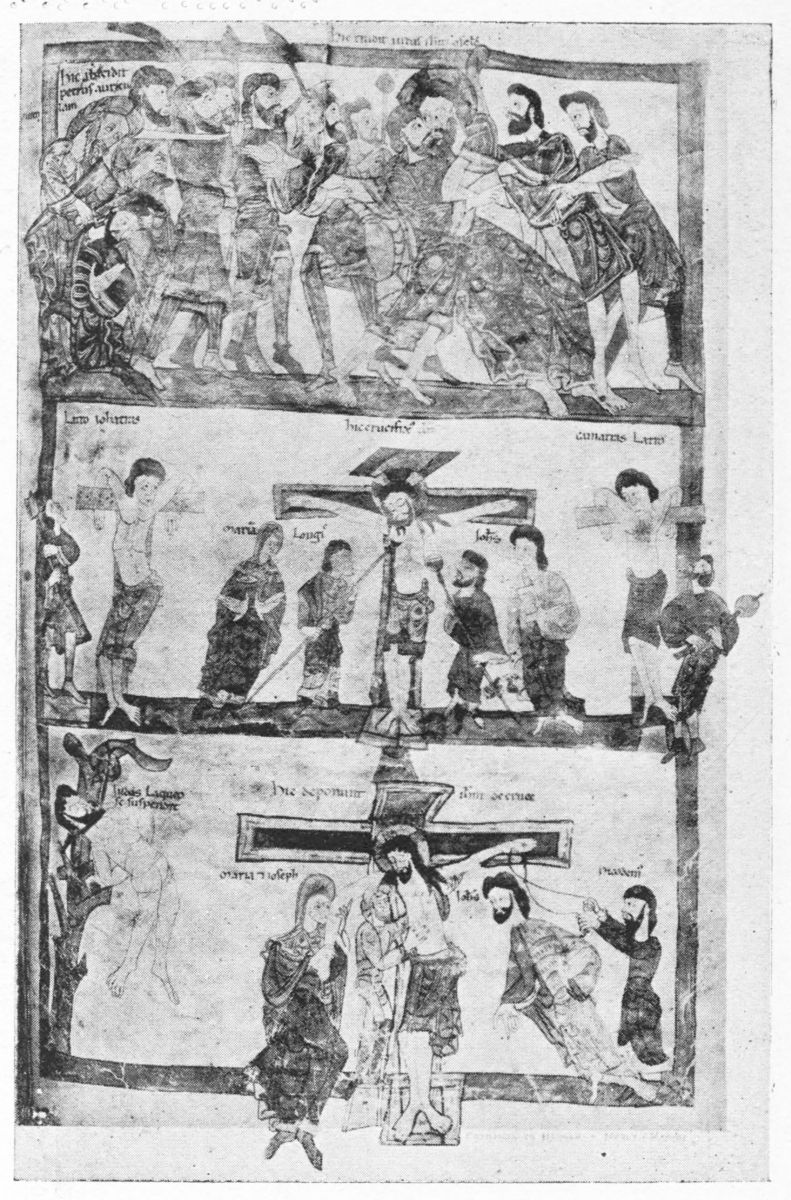
MINIATURES FROM THE AVILA MISSAL, TWELFTH CENTURY (NATIONAL LIBRARY)
Plate 307
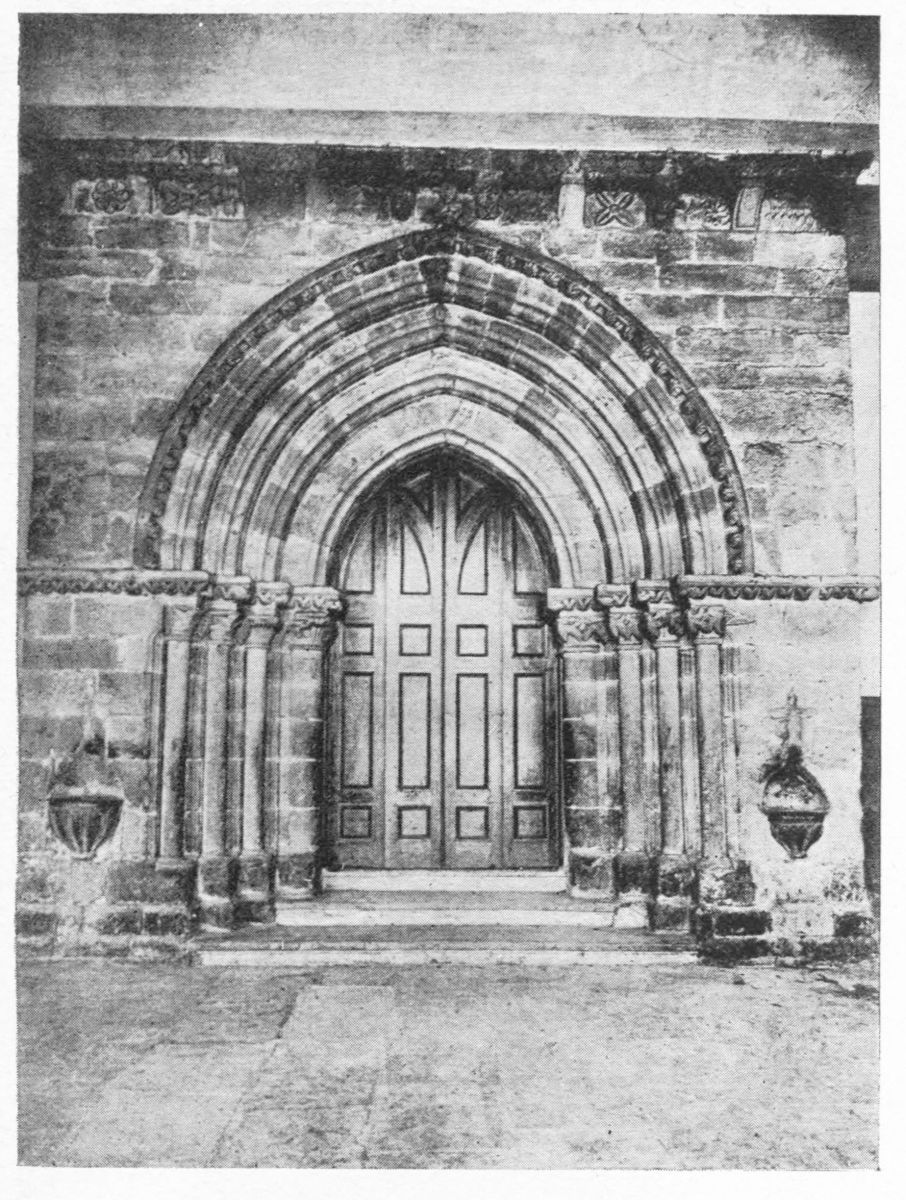
DOOR OF SAN FRANCISCO
AVILA
Plate 308
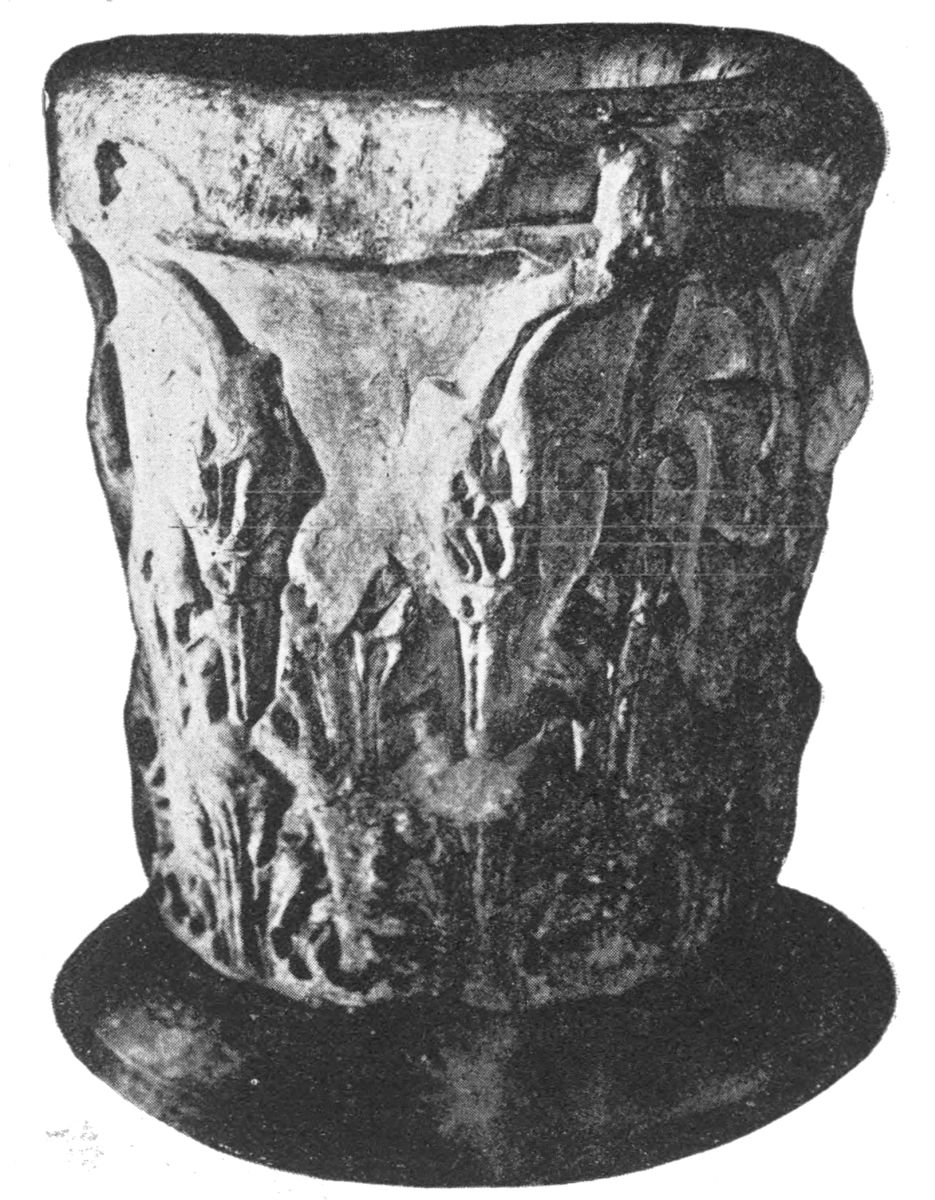
A ROMAN CAPITAL OF THE CHURCH OF SAN FRANCISCO
AVILA
Plate 309
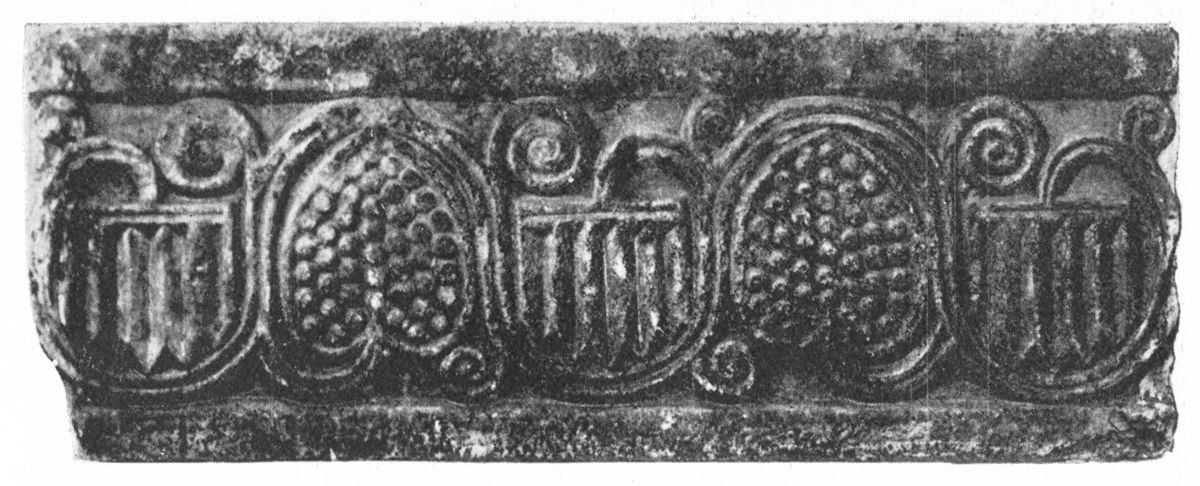
LATIN-BYZANTINE FRIEZE IN THE CHURCH OF SAN FRANCISCO
AVILA
Plate 310
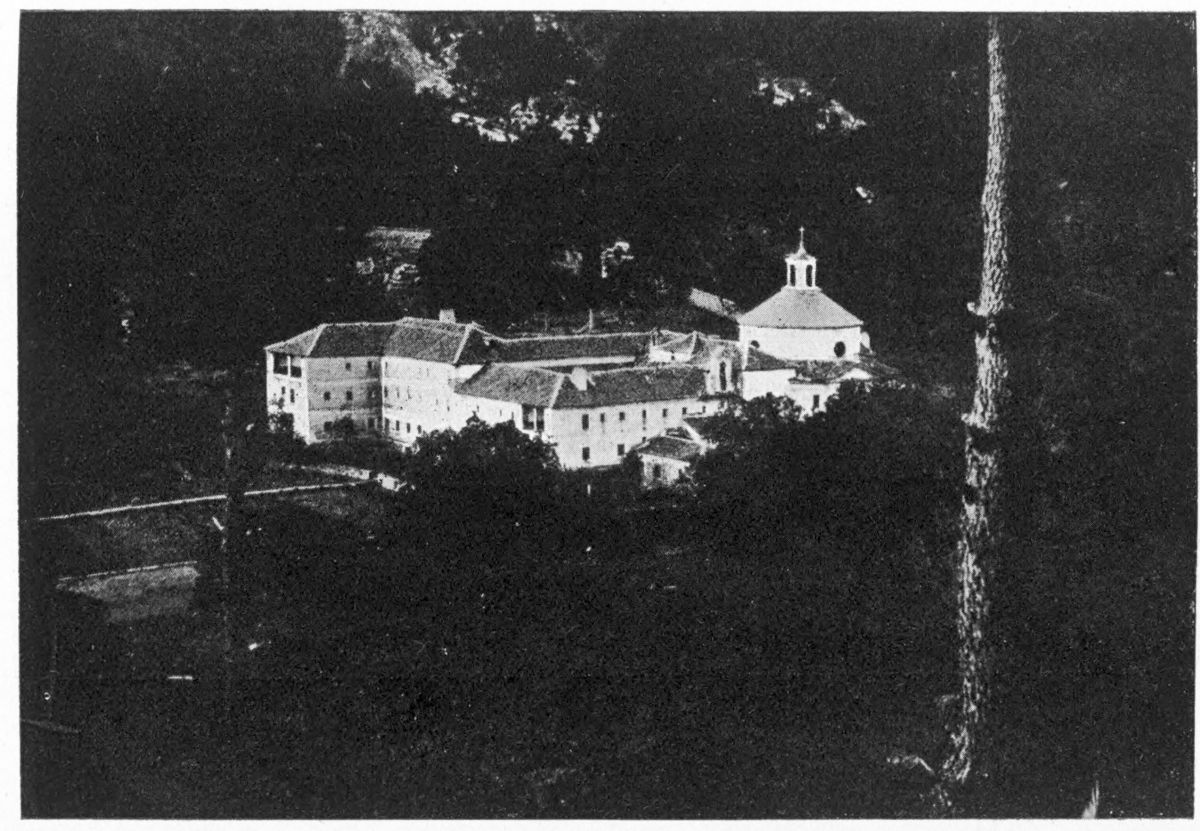
MONASTERY OF SAN PEDRO AT ARENAS
AVILA
Plate 311
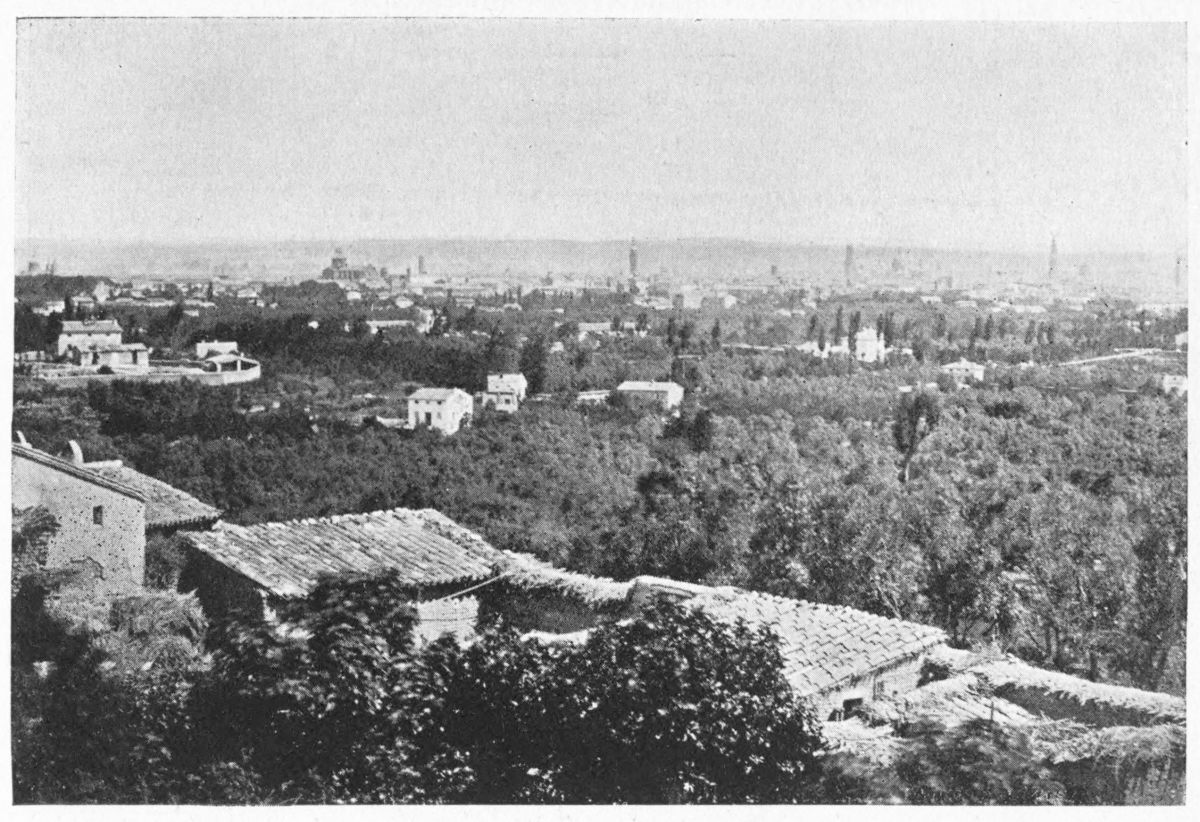
GENERAL VIEW FROM CABEZO-CORTADO
ZARAGOZA
Plate 312
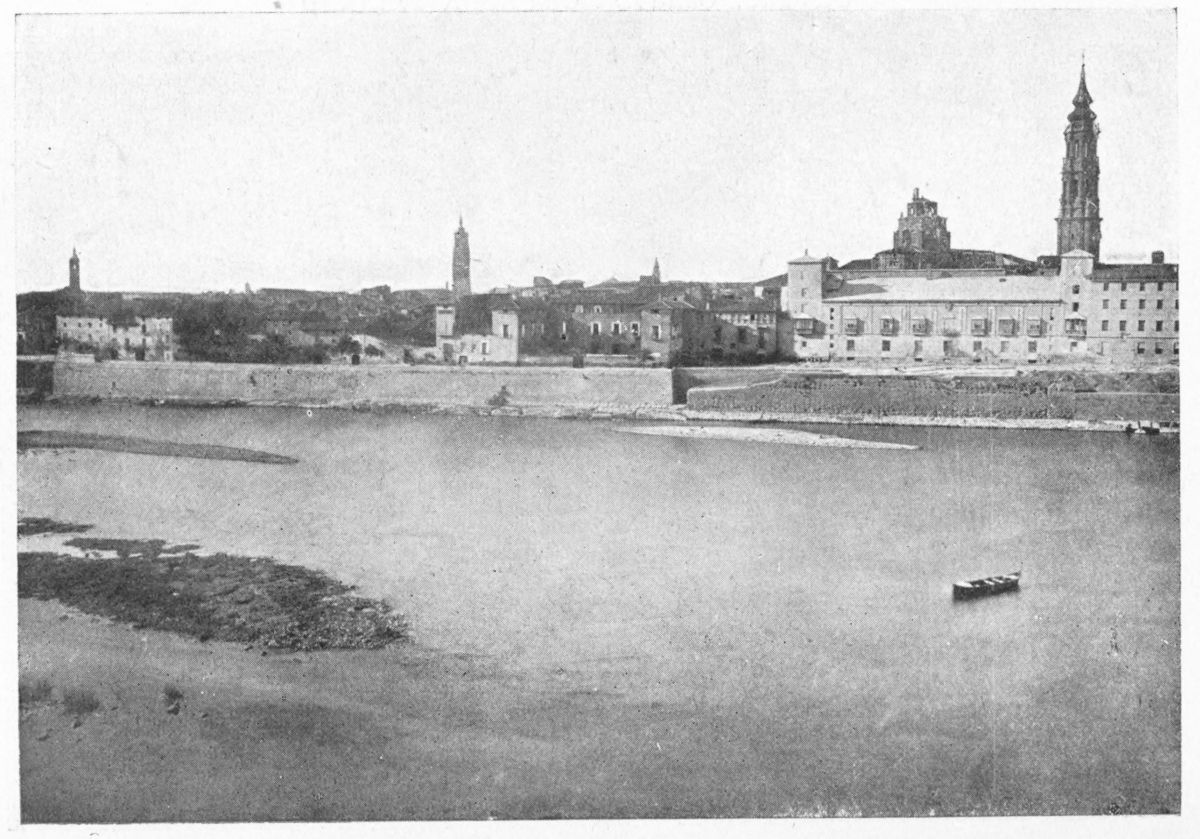
GENERAL VIEW FROM ALTABAS
ZARAGOZA
Plate 313
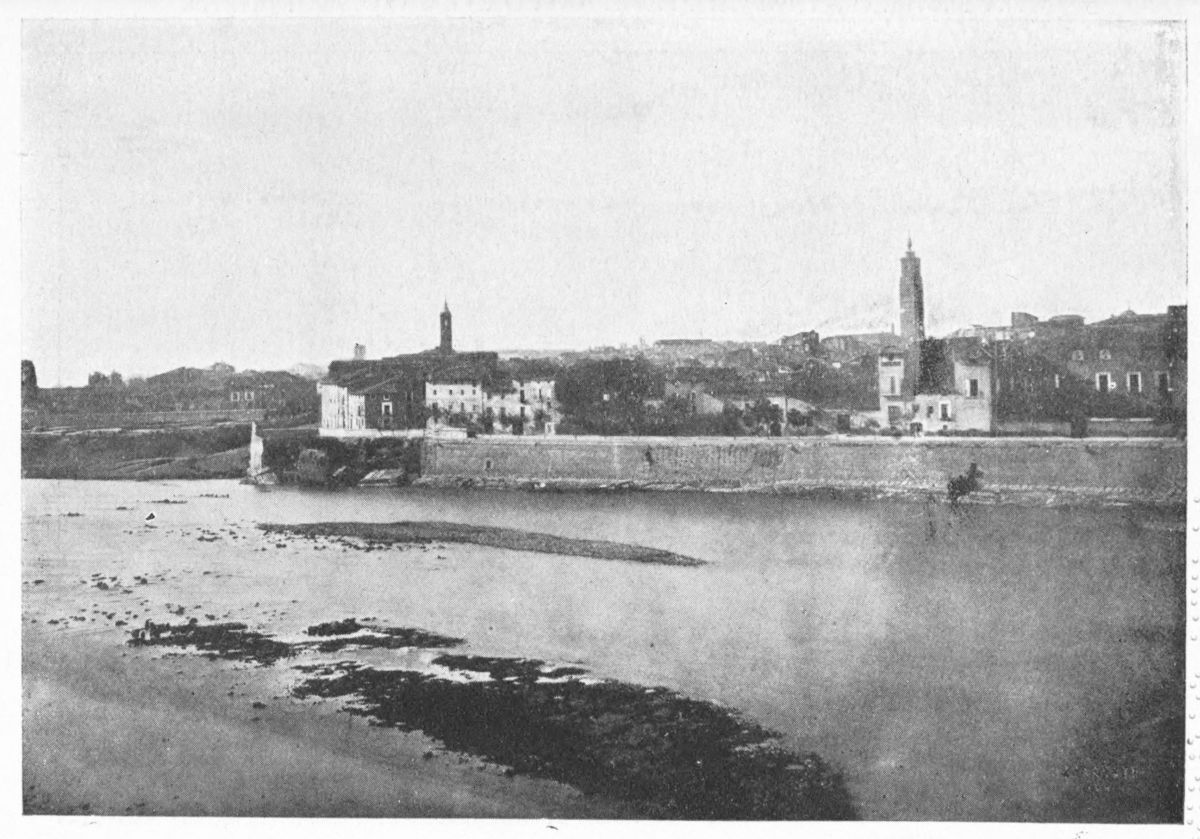
GENERAL VIEW FROM ALTABAS
ZARAGOZA
Plate 314
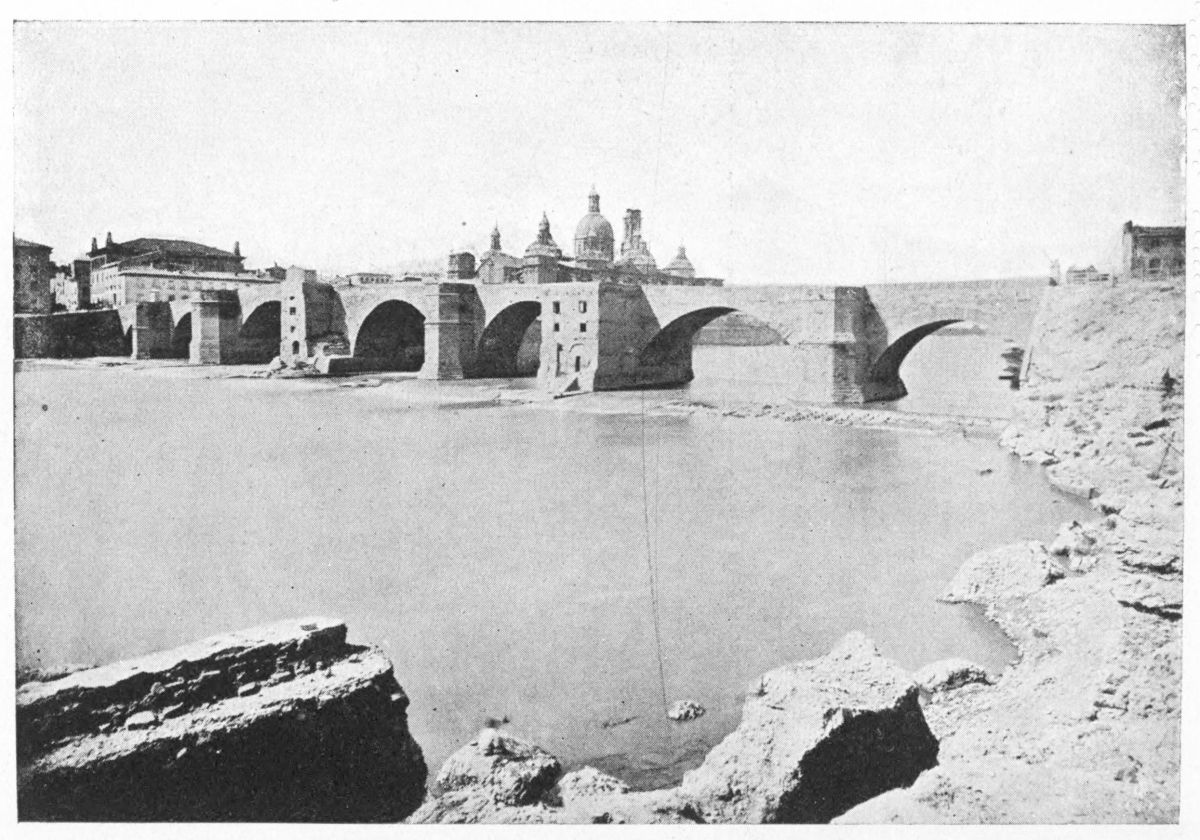
THE BRIDGE OVER THE EBRO, FROM THE RUINS OF SAN LAZARO
ZARAGOZA
Plate 315
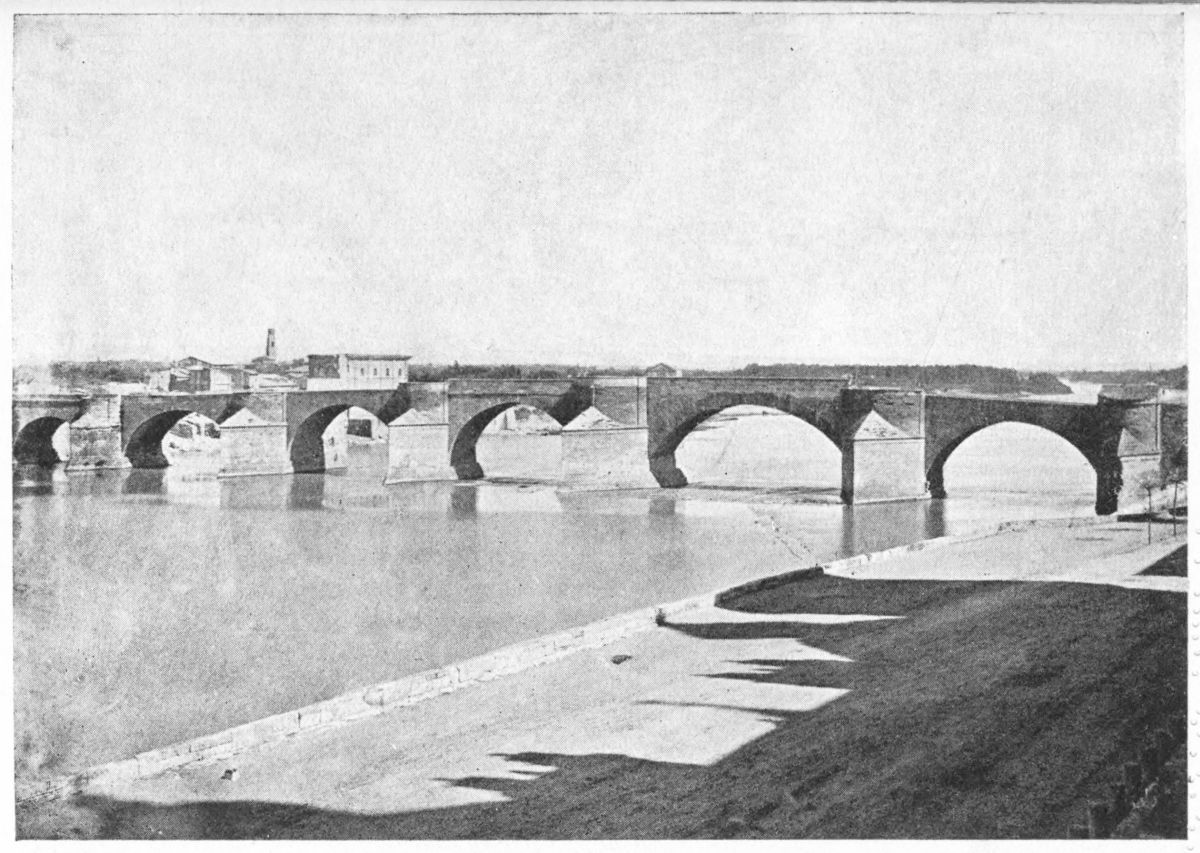
THE BRIDGE OVER THE EBRO, FROM EL PILAR
ZARAGOZA
Plate 316
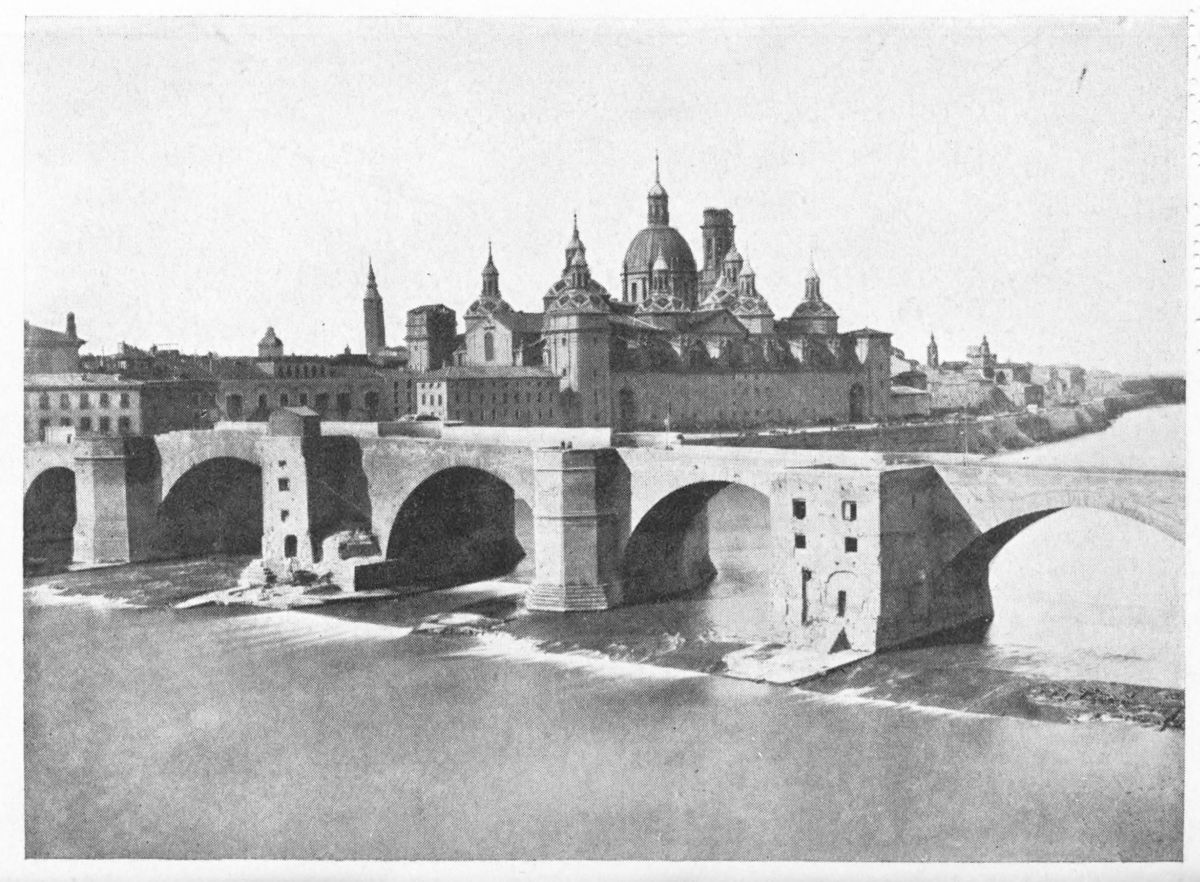
GENERAL VIEW OF ZARAGOZA
Plate 317
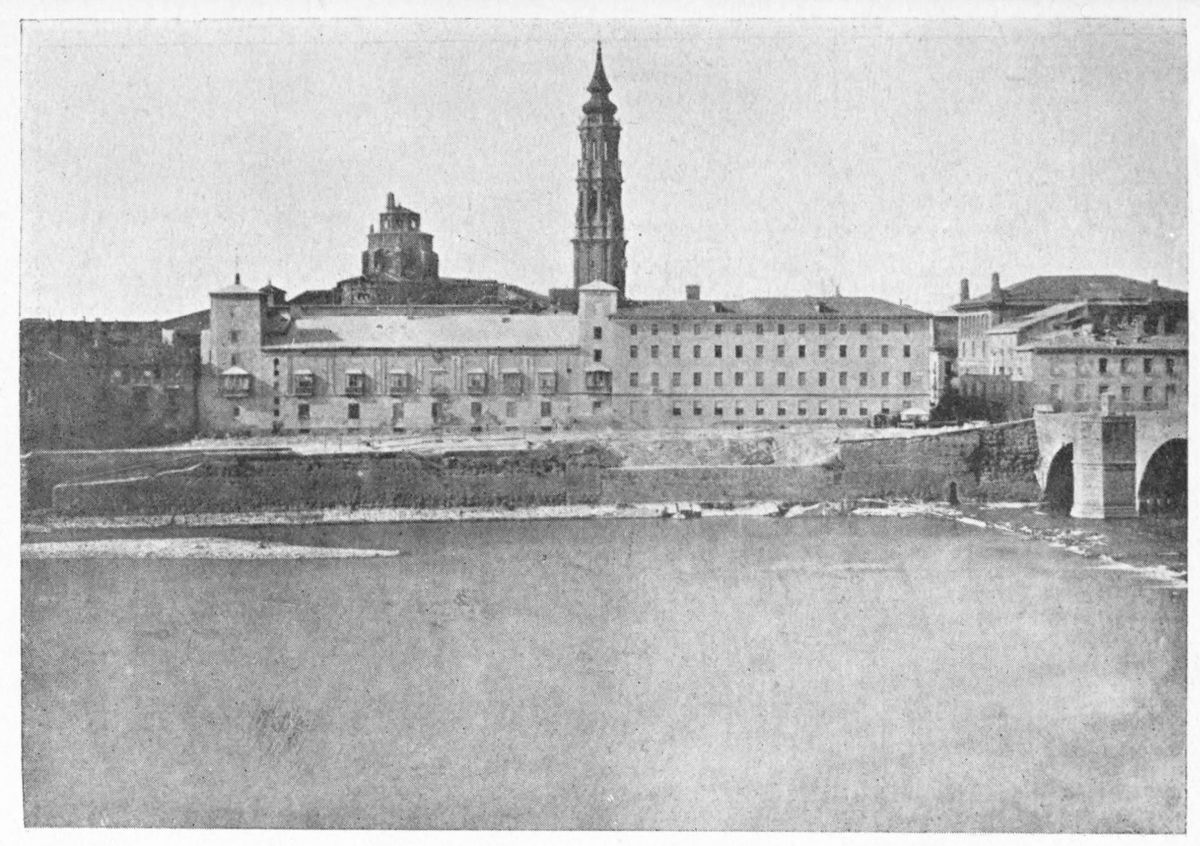
GENERAL VIEW OF ZARAGOZA
Plate 318
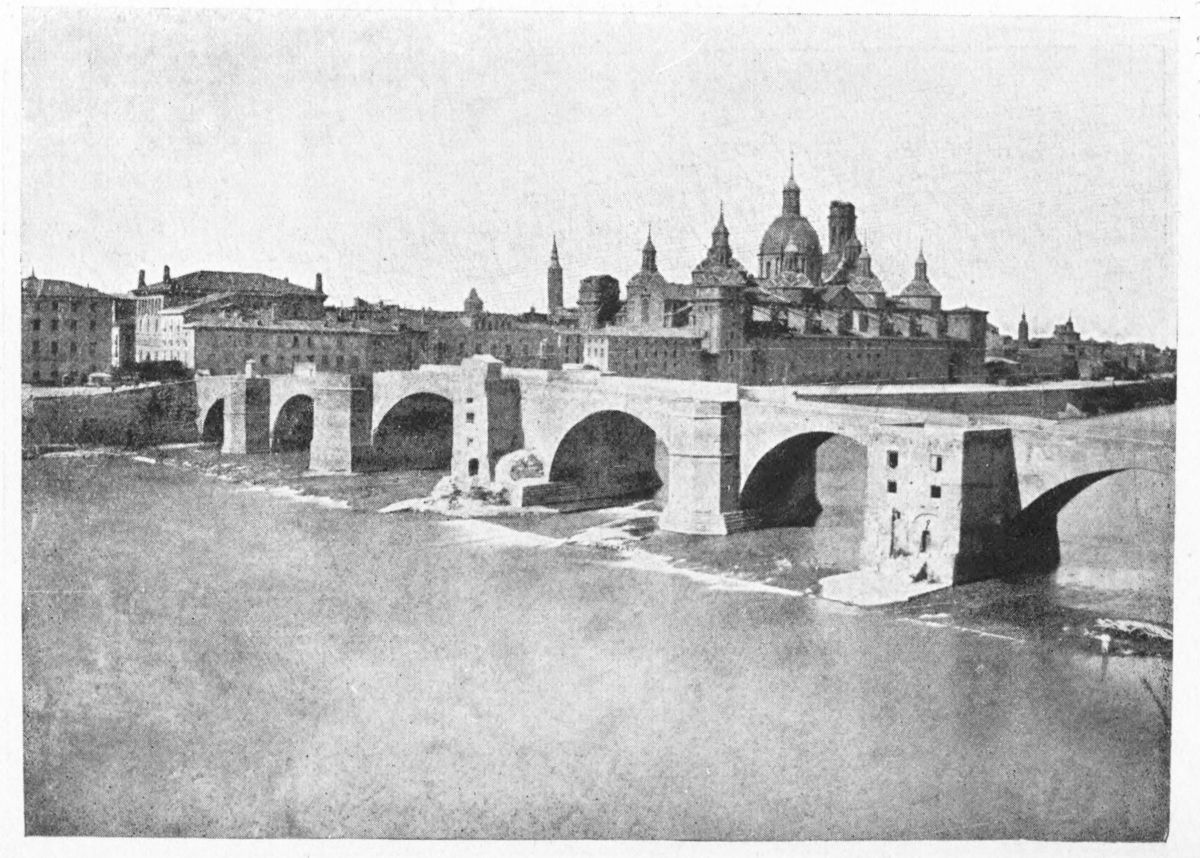
GENERAL VIEW OF ZARAGOZA
Plate 319
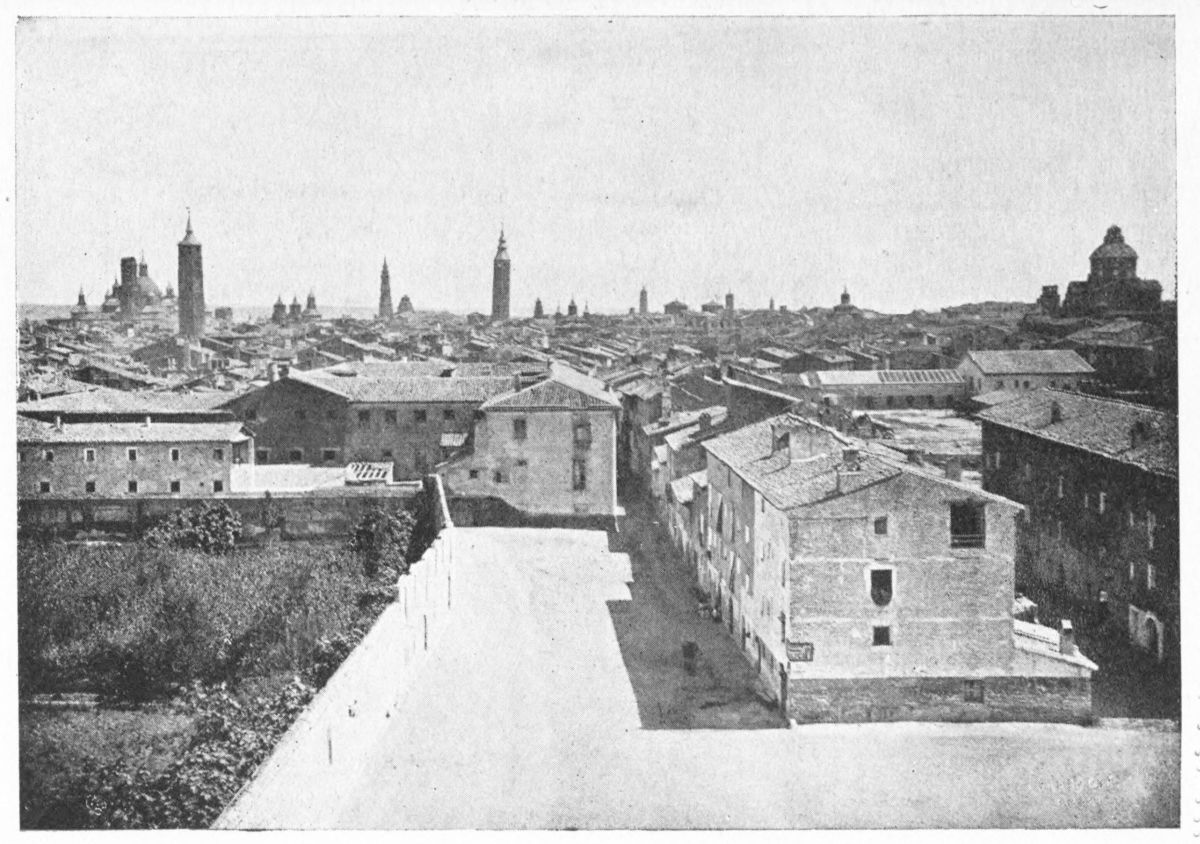
GENERAL VIEW FROM THE PORTILLA
ZARAGOZA
Plate 320
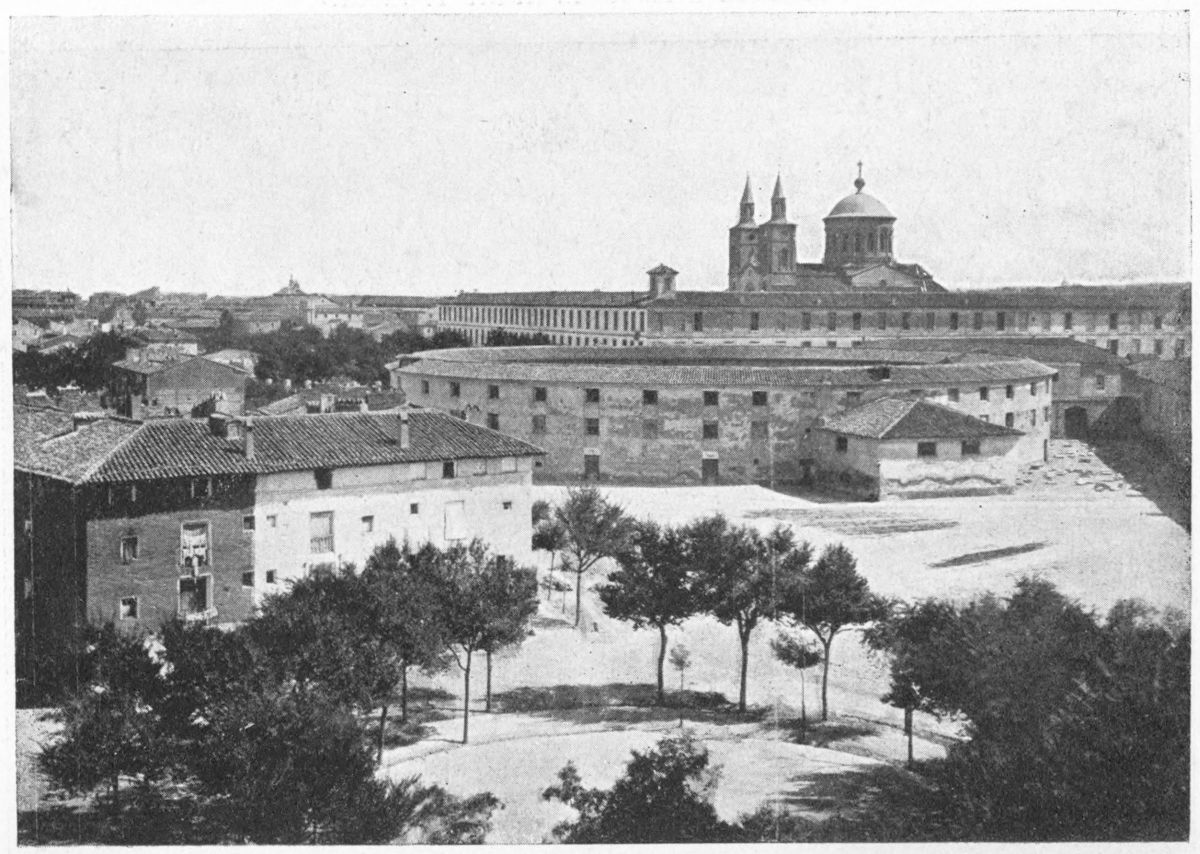
VIEW OF ZARAGOZA
Plate 321
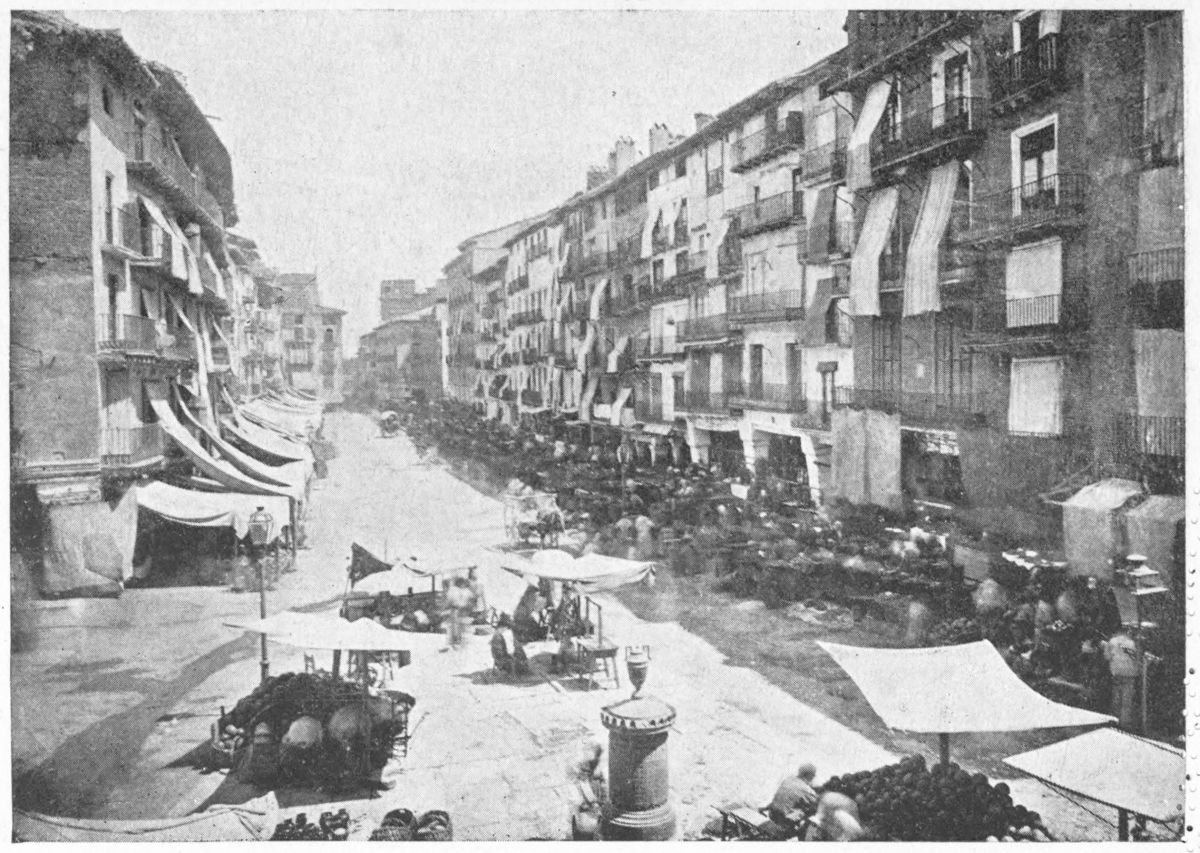
CALLE DEL MERCADO
ZARAGOZA
Plate 322
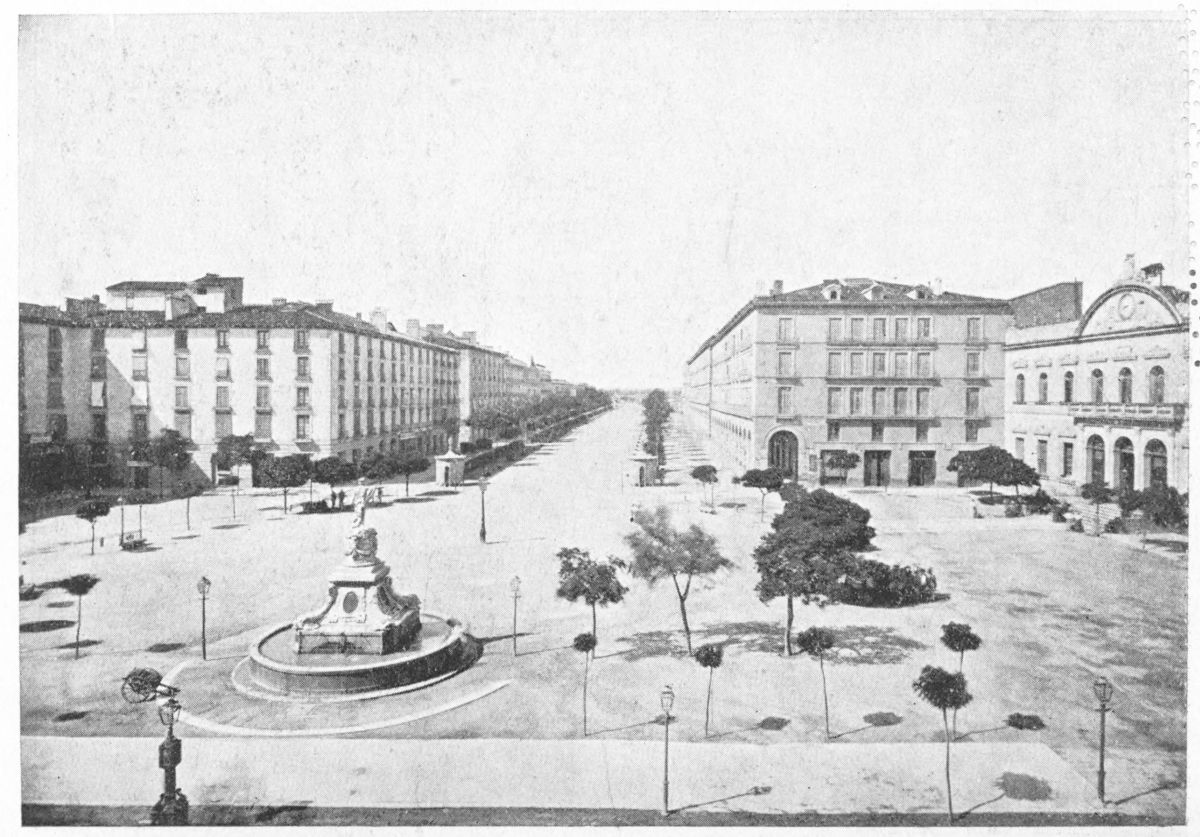
PASEO DE SANTA ENGRACIA
ZARAGOZA
Plate 323
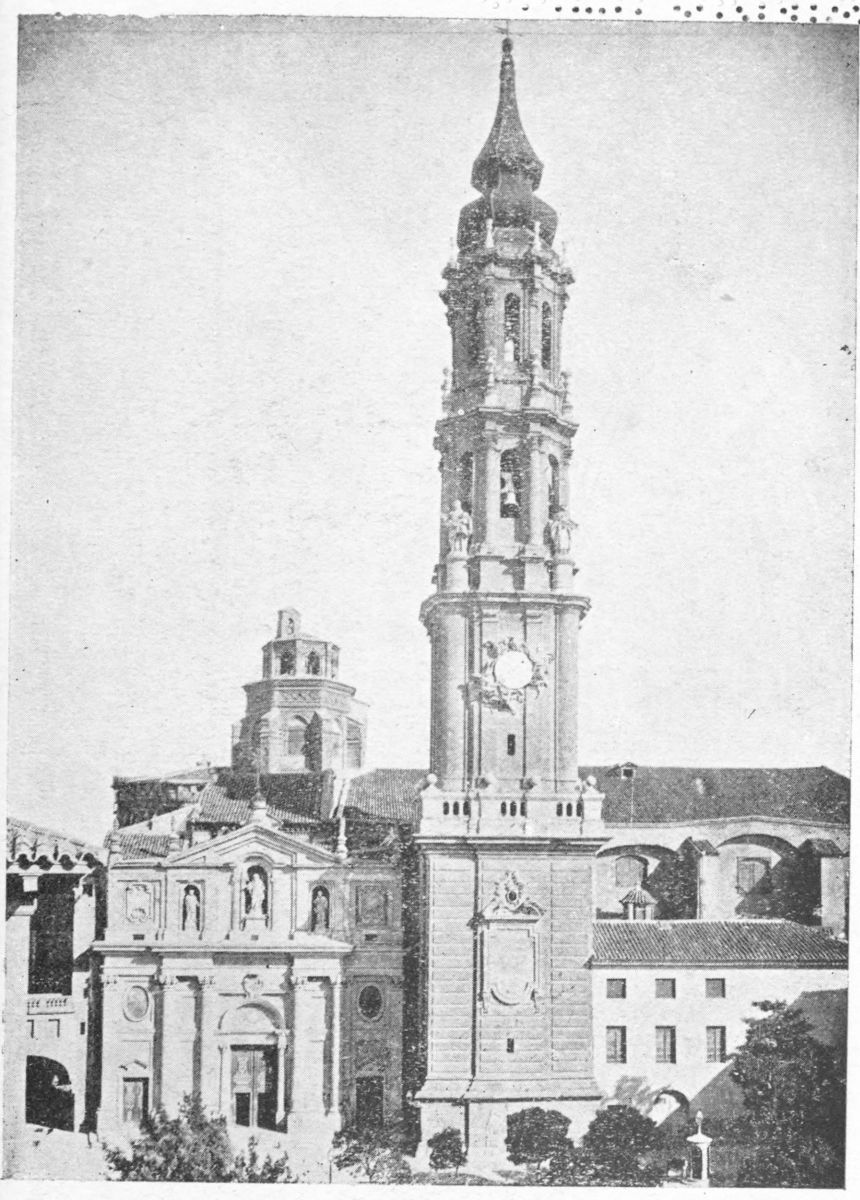
CATHEDRAL OF LA SEO
ZARAGOZA
Plate 324
CATHEDRAL OF LA SEO
ZARAGOZA
Plate 325
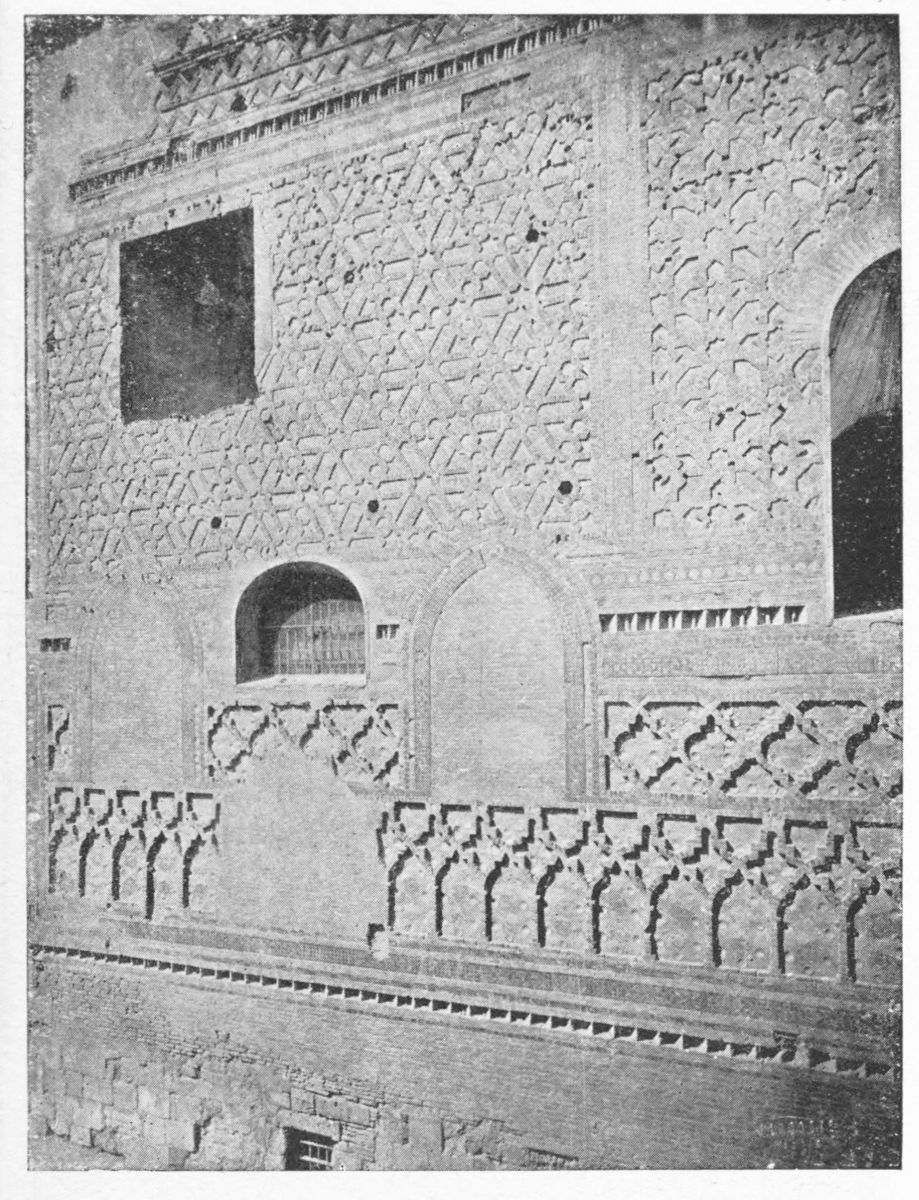
GLAZED TILES ON THE WALLS OF THE CATHEDRAL OF LA SEO
ZARAGOZA
Plate 326
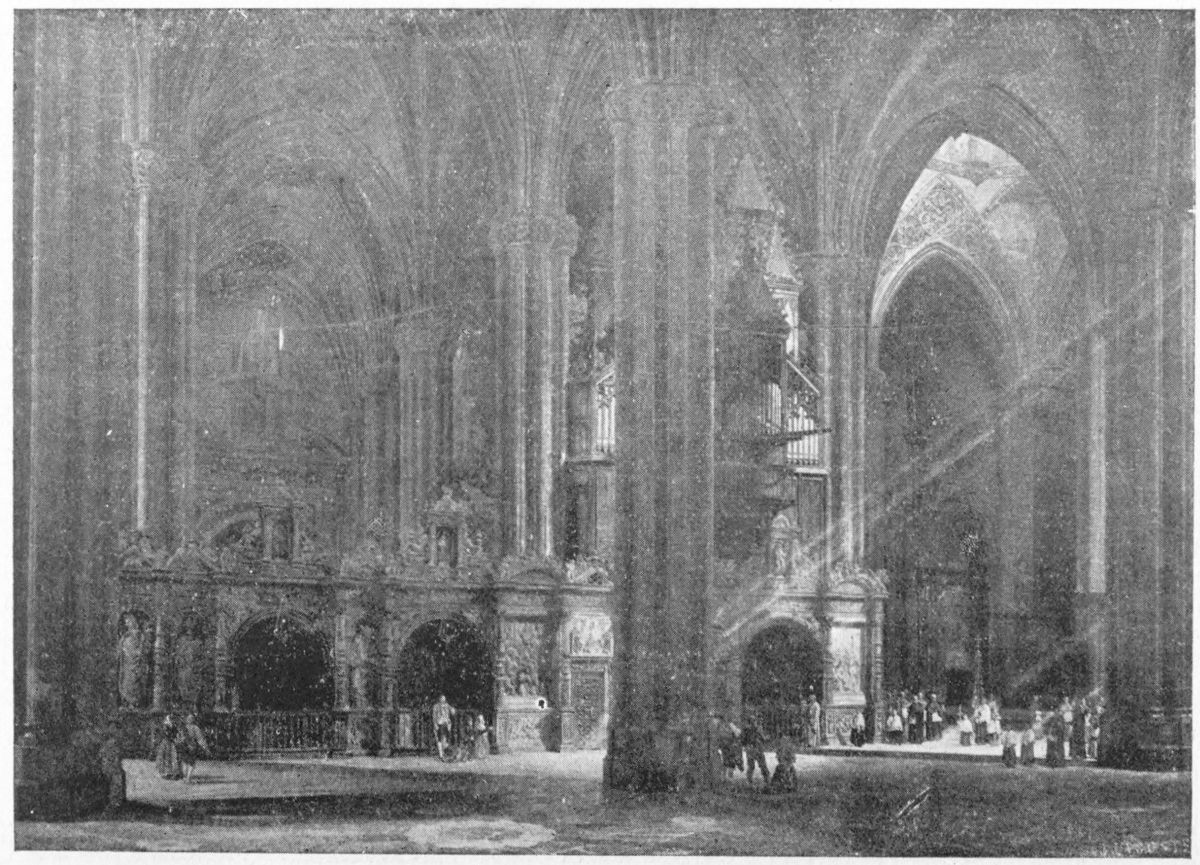
INTERIOR OF THE CATHEDRAL OF LA SEO, FROM A PAINTING BY R. GONZALVO
ZARAGOZA
Plate 327
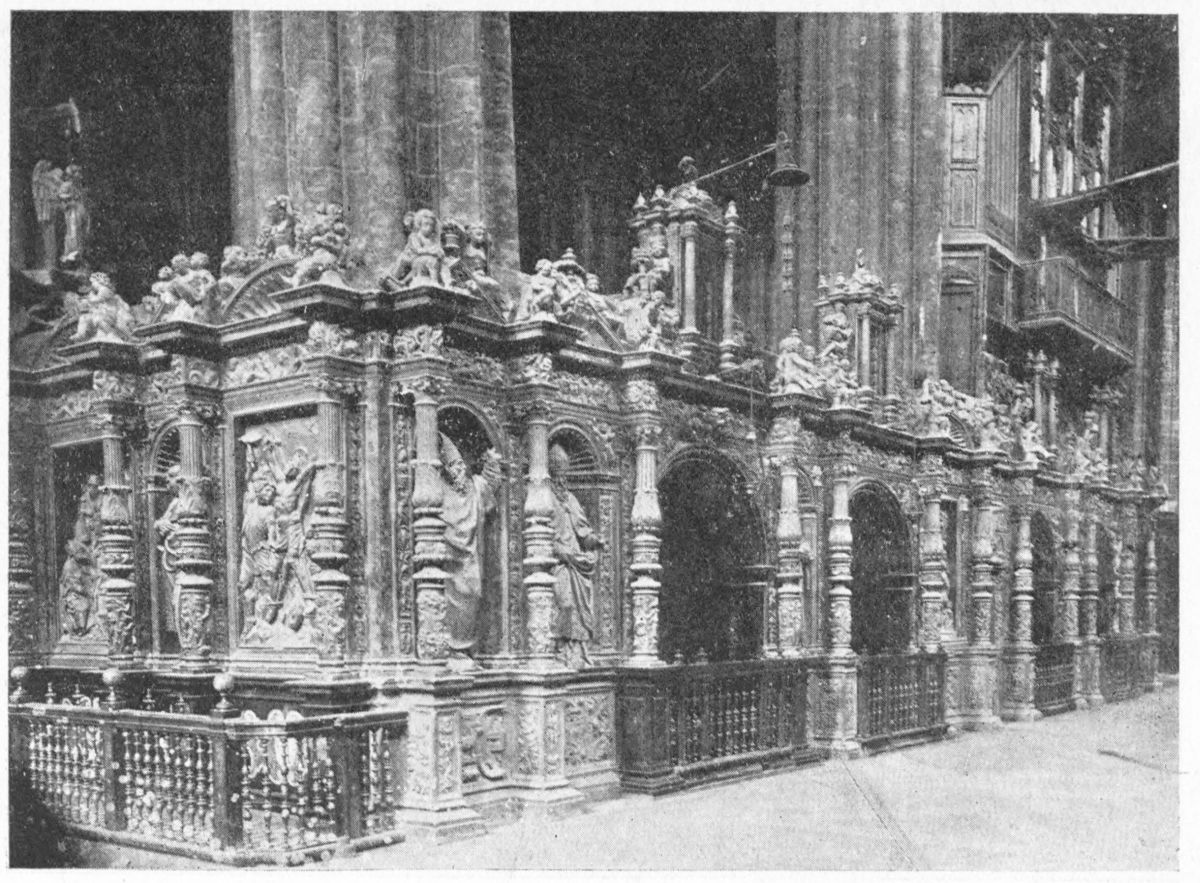
CATHEDRAL OF LA SEO. VIEW OF THE TRANSEPT
ZARAGOZA
Plate 328
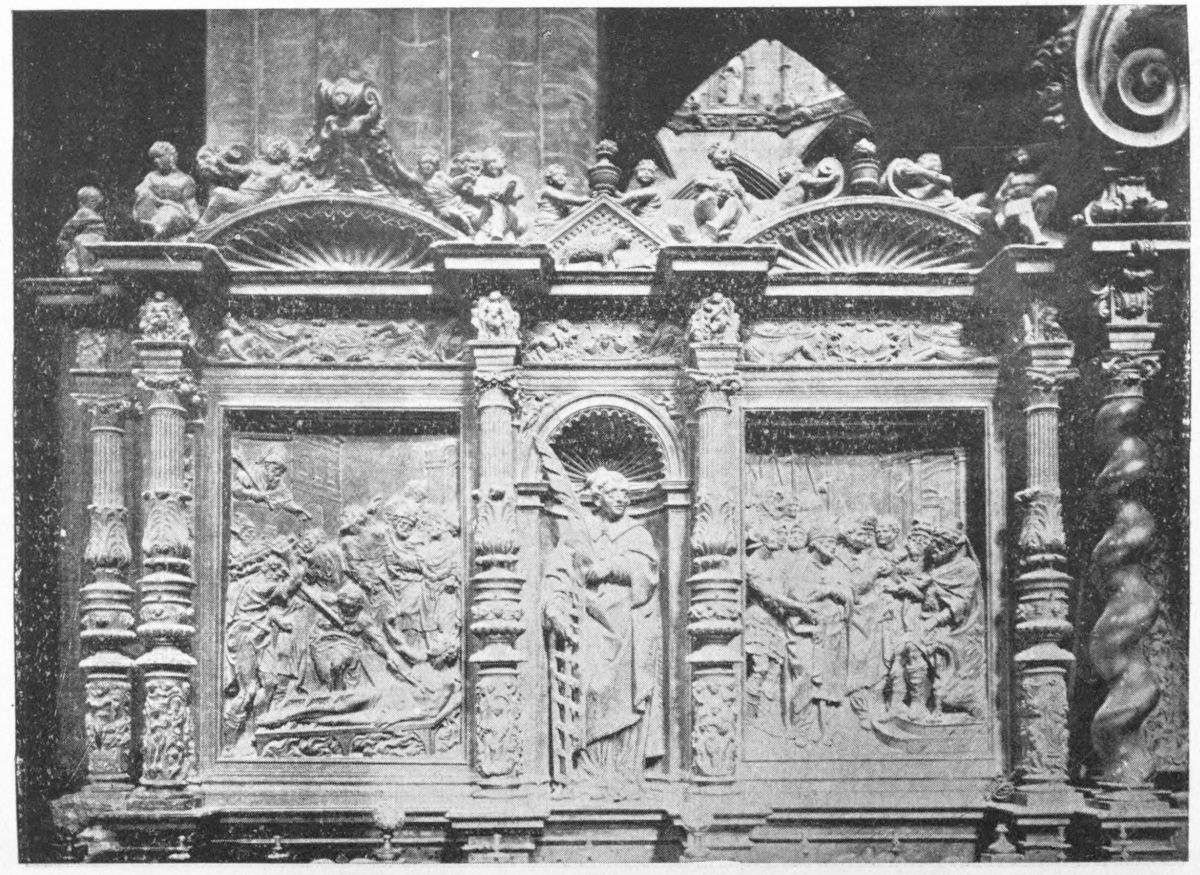
CATHEDRAL OF LA SEO. DETAIL OF TRANSEPT
ZARAGOZA
Plate 329
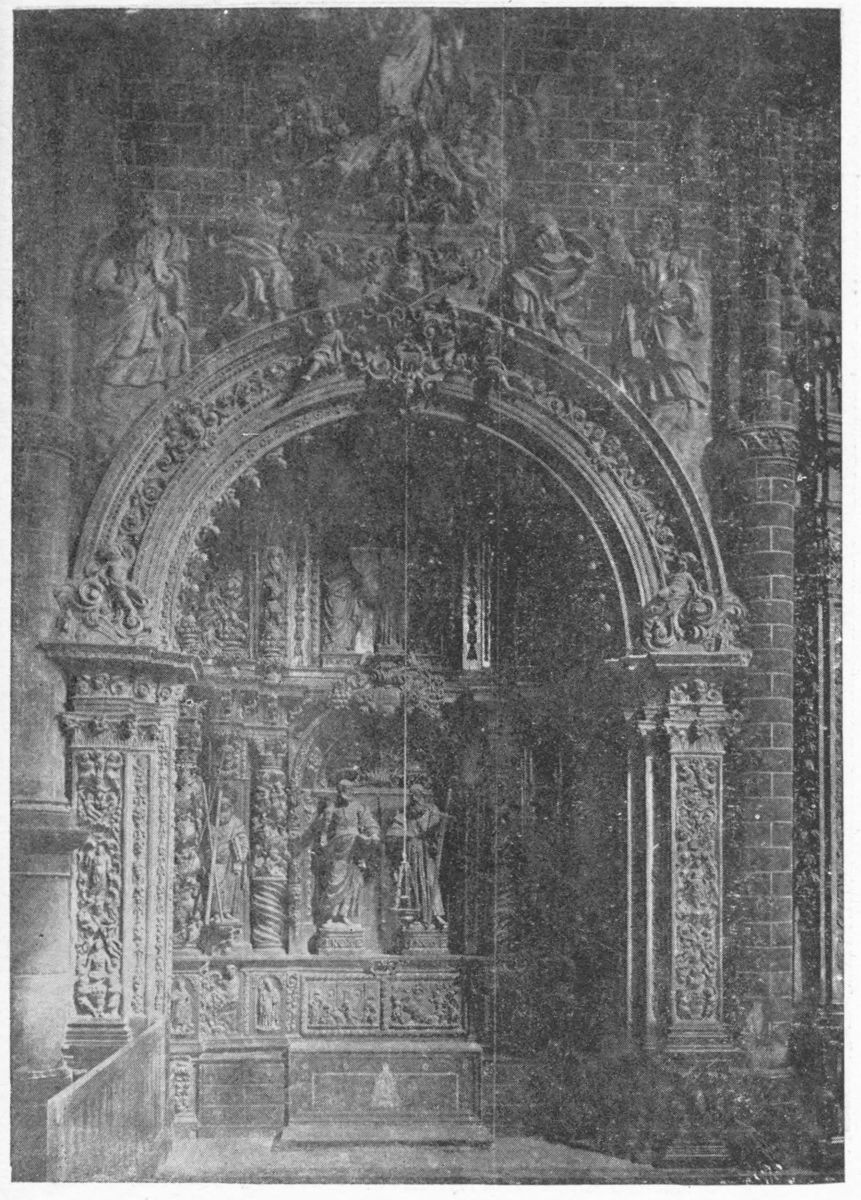
CHAPEL OF ST. JOHN IN THE CATHEDRAL OF LA SEO
ZARAGOZA
Plate 330
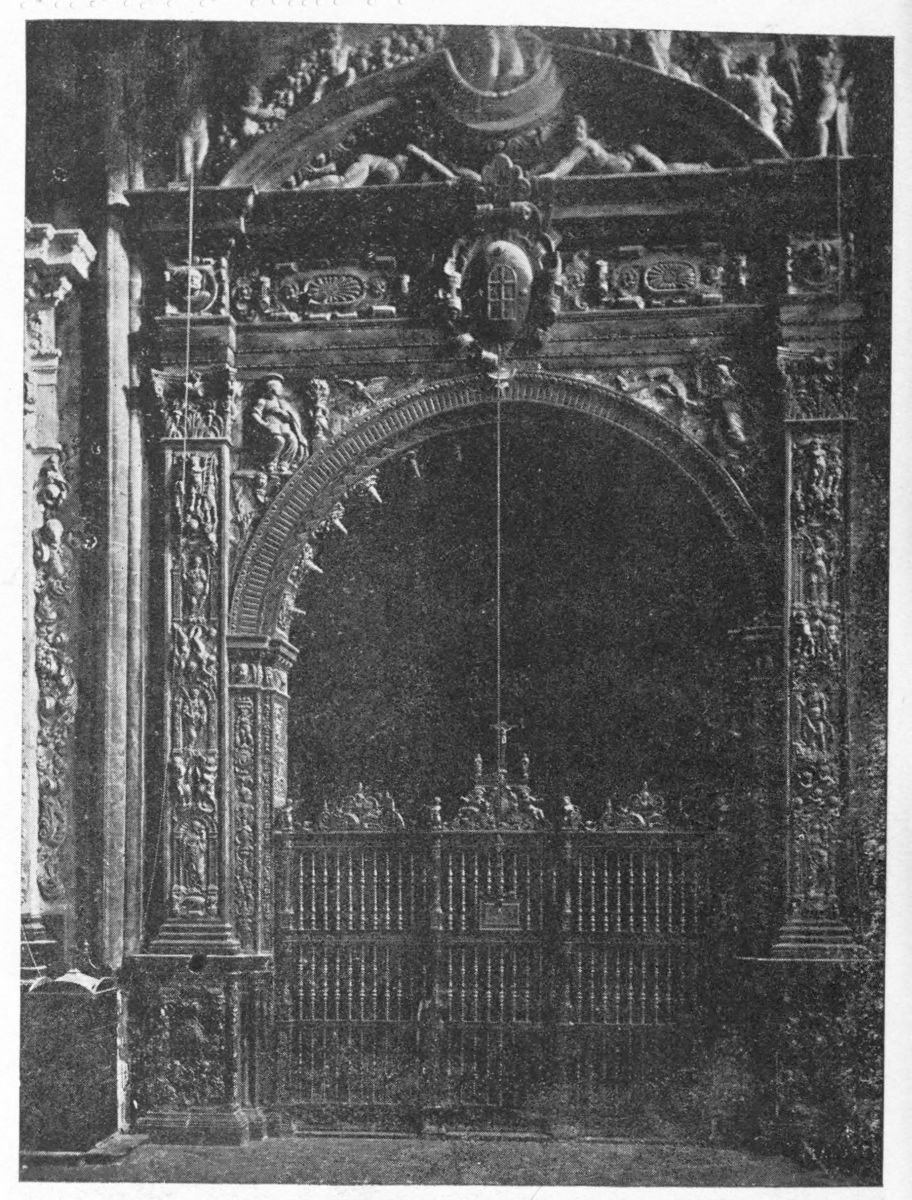
CHAPEL OF GABRIEL DE ZAPORTA IN THE CATHEDRAL OF LA SEO
ZARAGOZA
Plate 331
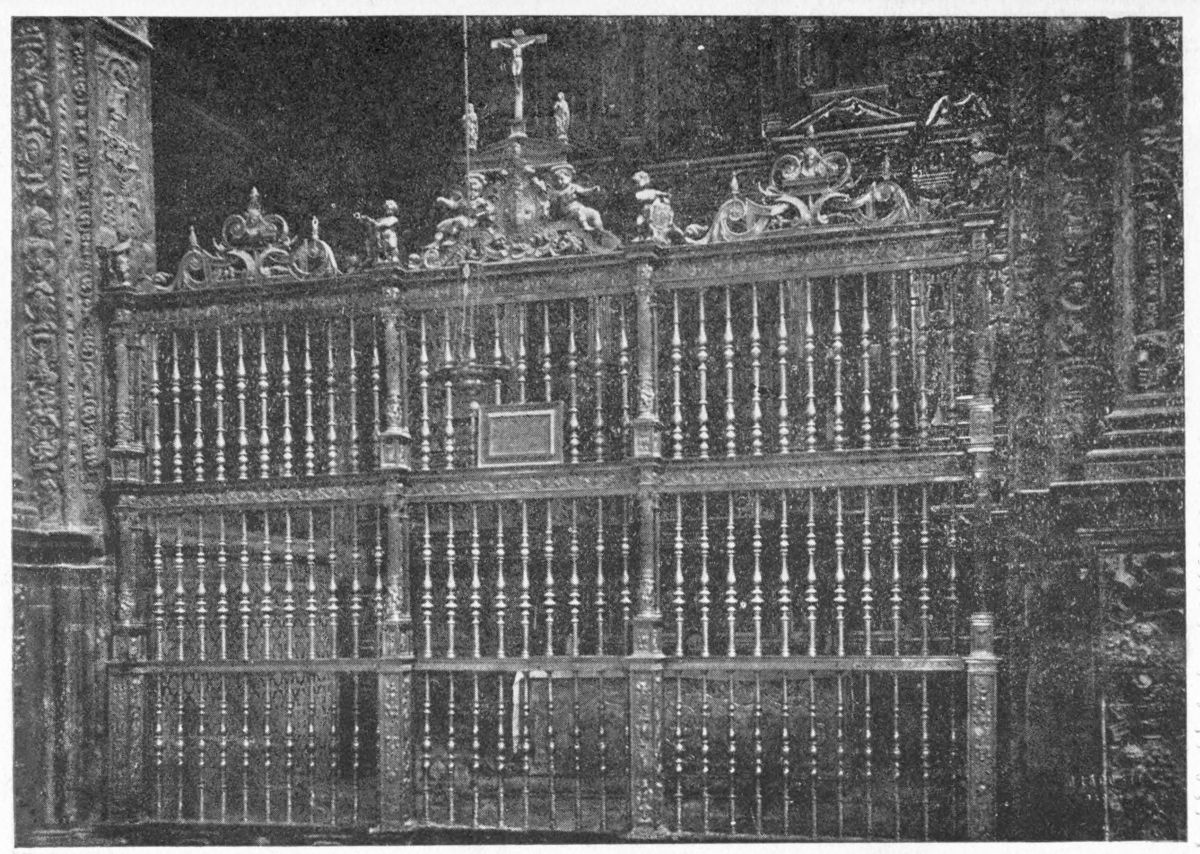
CATHEDRAL OF LA SEO. REJA BRONZE REPOUSSÉ BEFORE THE CHAPEL OF ZAPORTA.
ZARAGOZA
Plate 332
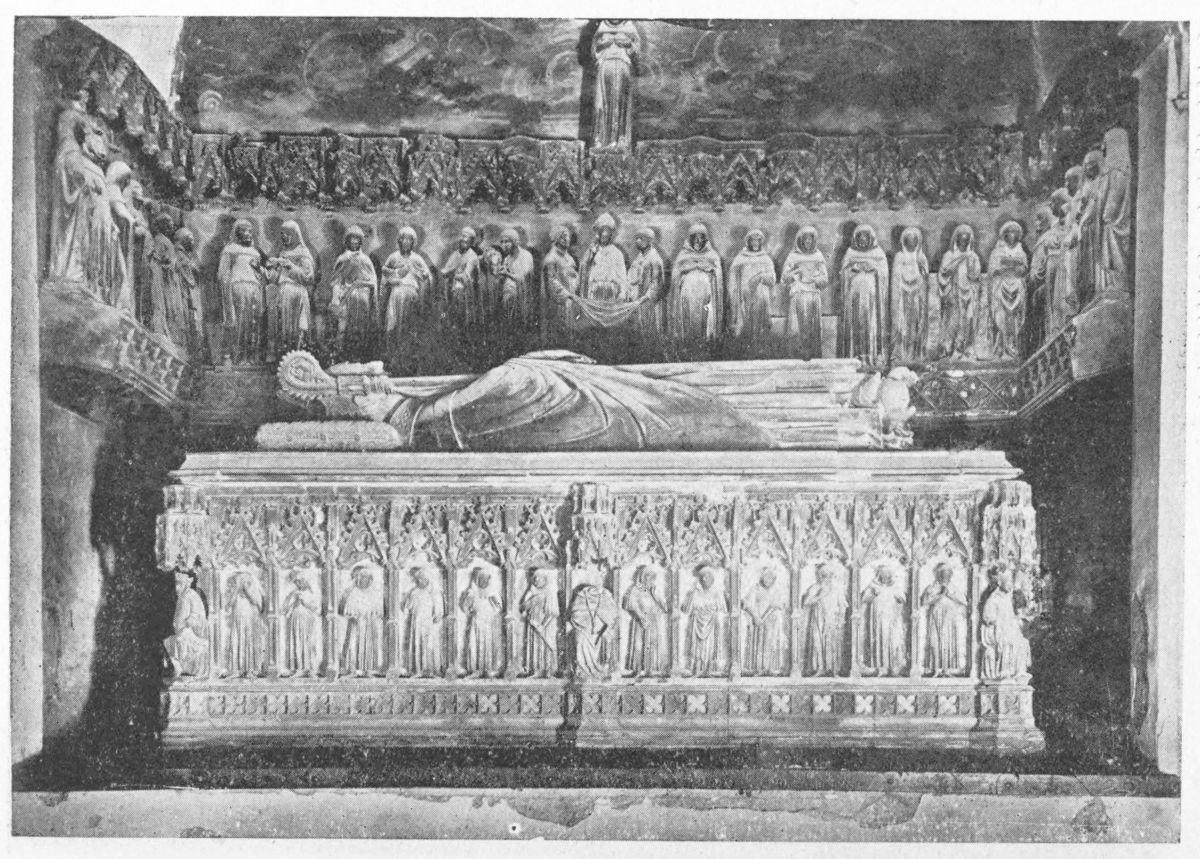
SEPULCHRE OF ARCHBISHOP DON LOPE DE LUNA IN THE CATHEDRAL OF LA SEO
ZARAGOZA
Plate 333
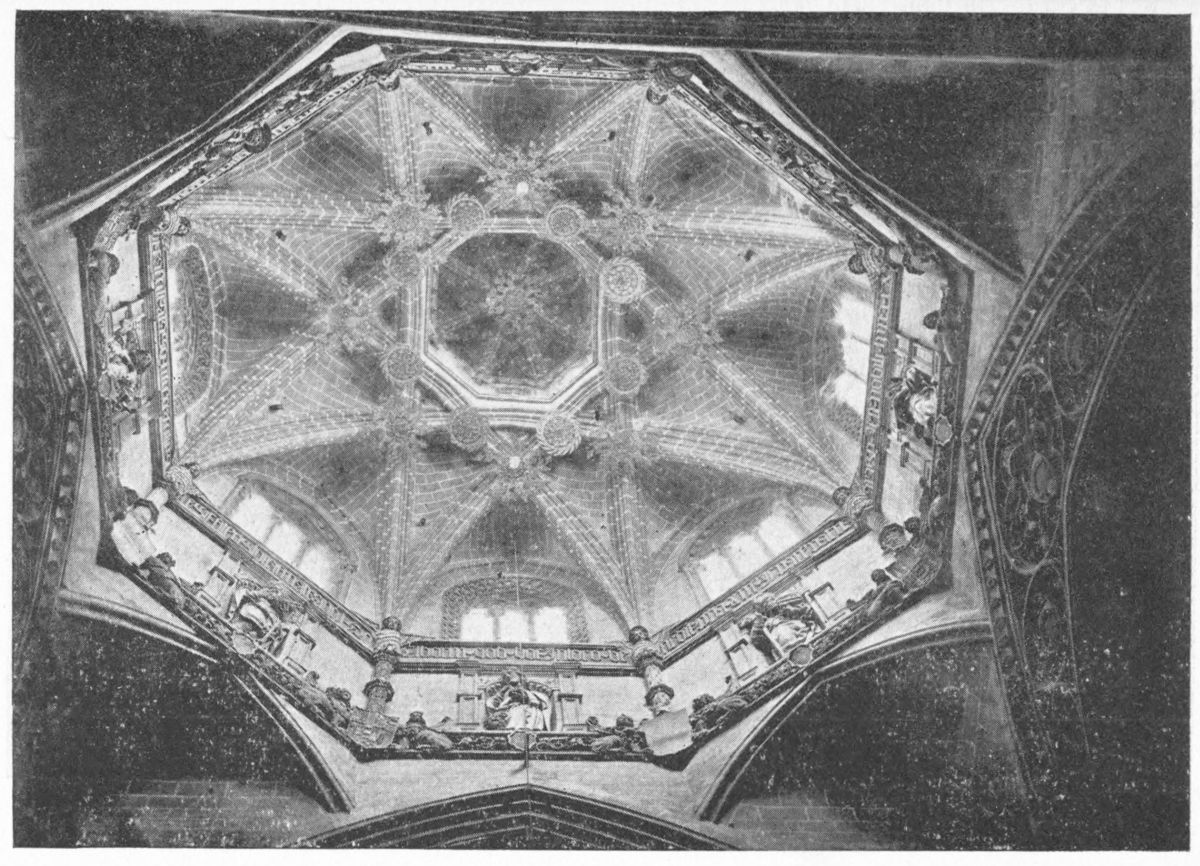
CENTRAL DOME OF THE CATHEDRAL OF LA SEO
ZARAGOZA
Plate 334
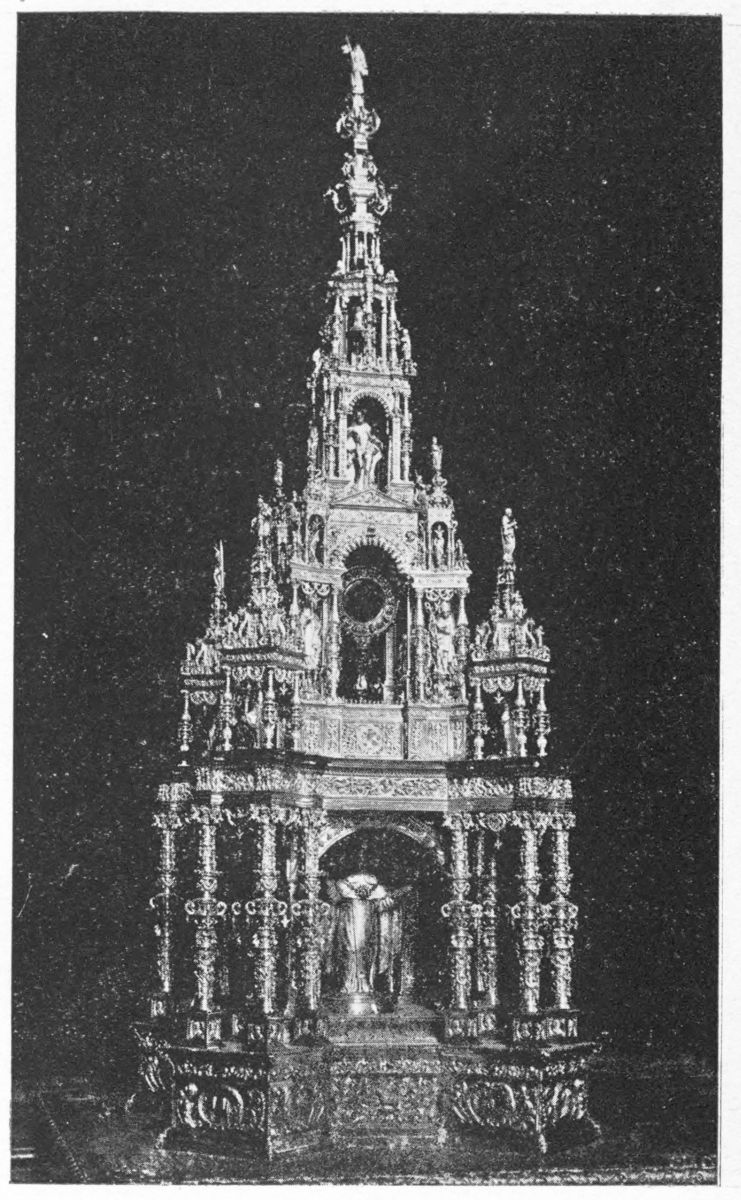
SILVER MONSTRANCE IN THE CATHEDRAL OF LA SEO, WEIGHT 200 KILOGRAMMES
ZARAGOZA
Plate 335
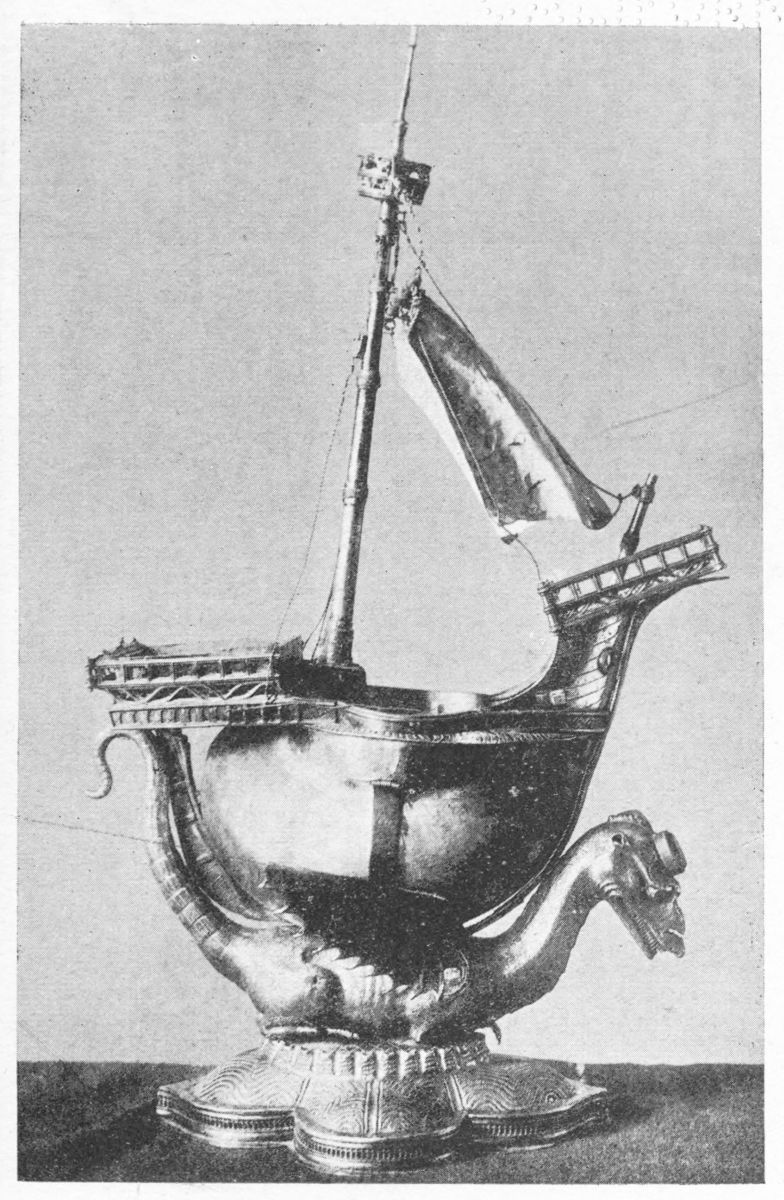
CENSER GIVEN TO THE CATHEDRAL OF LA SEO BY MOSÉN JUAN DE TORRELLAS AT
THE END OF THE FIFTEENTH CENTURY
ZARAGOZA
Plate 336
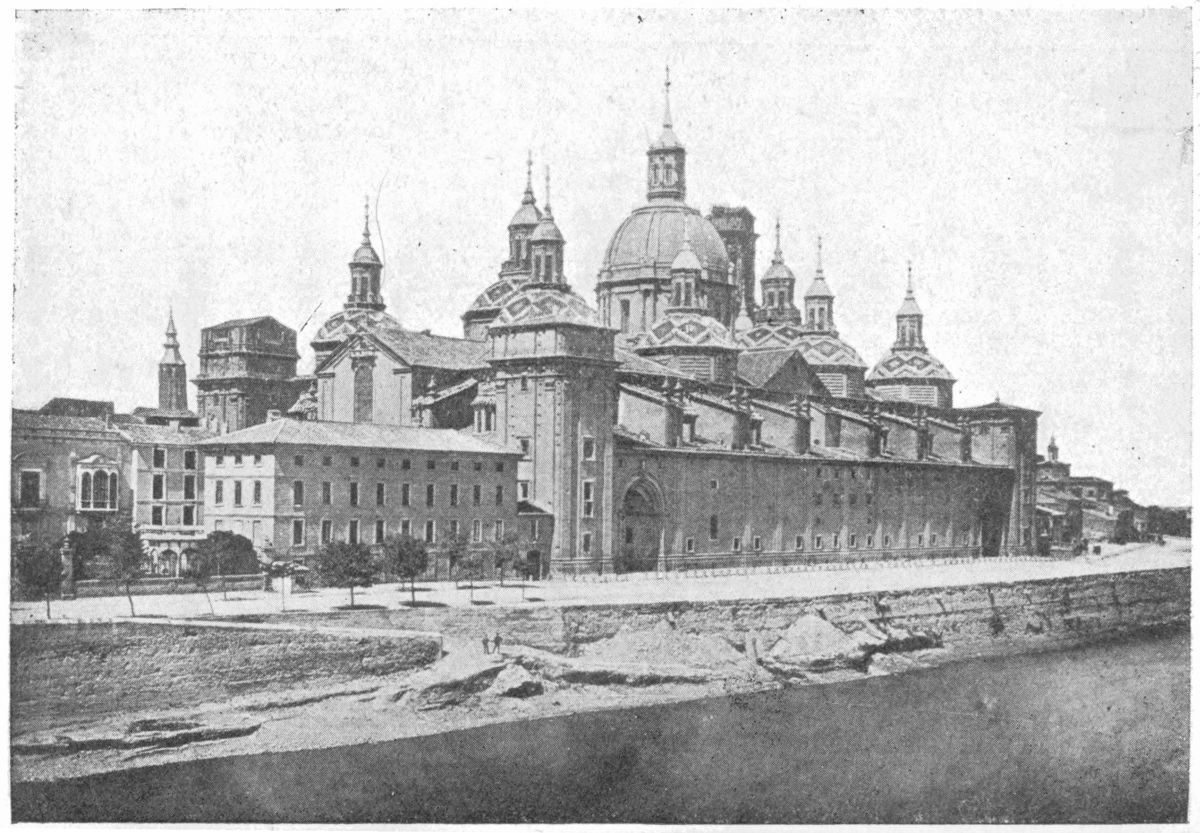
CATHEDRAL OF EL PILAR
ZARAGOZA
Plate 337
CATHEDRAL OF EL PILAR
ZARAGOZA
Plate 338
INTERIOR OF OUR LADY DEL PILAR
ZARAGOZA
Plate 339
VIEW OF THE SIDE-ALTAR IN OUR LADY DEL PILAR
ZARAGOZA
Plate 340
OUR LADY DEL PILAR. VIEW OF THE CHOIR
ZARAGOZA
Plate 341
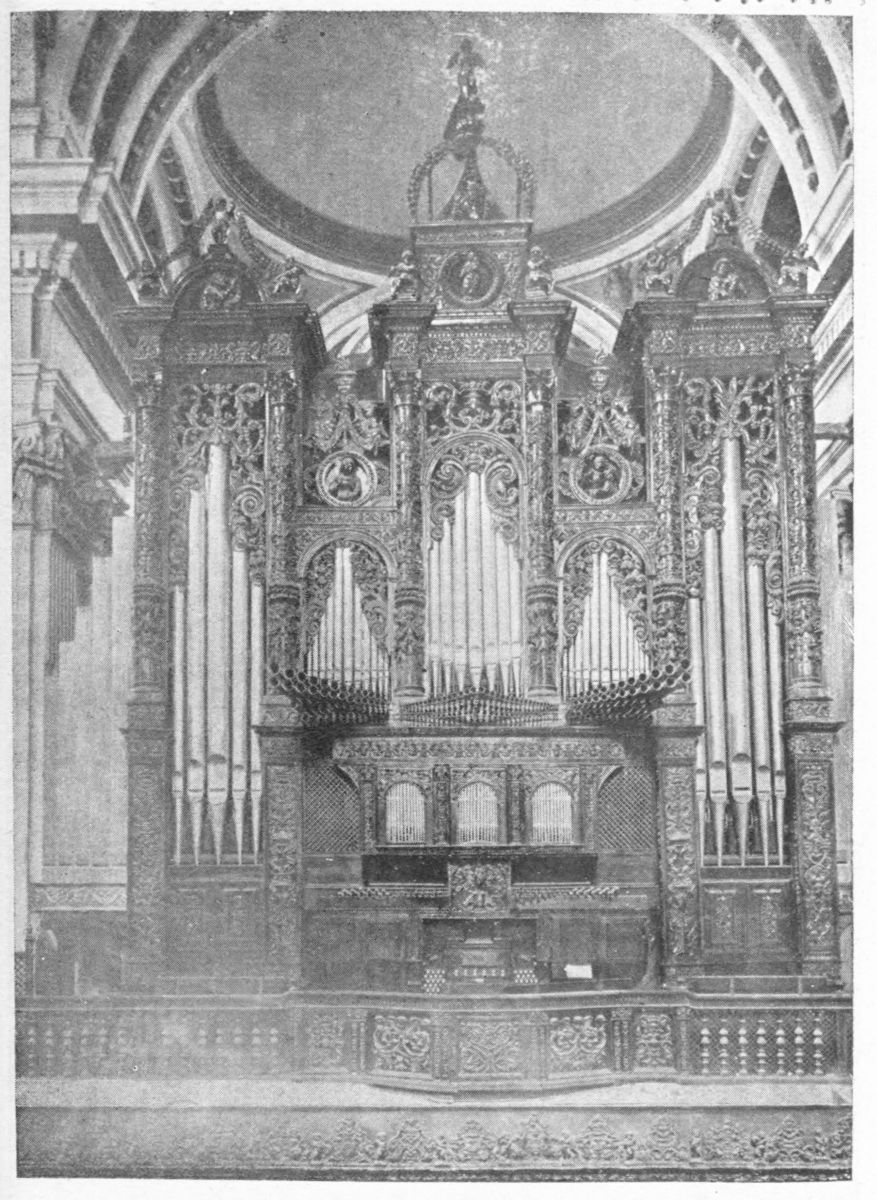
OUR LADY DEL PILAR. ORGAN IN THE CHOIR
ZARAGOZA
Plate 342
CHAPEL IN OUR LADY DEL PILAR
ZARAGOZA
Plate 343
HIGH ALTAR OF THE CATHEDRAL OF OUR LADY DEL PILAR
ZARAGOZA
Plate 344
PAINTINGS ON THE CUPOLA OF OUR LADY DEL PILAR
ZARAGOZA
Plate 345
CATHEDRAL OF OUR LADY DEL PILAR. CHOIR STALLS
ZARAGOZA
Plate 346
OUR LADY DEL PILAR. CHOIR STALLS
ZARAGOZA
Plate 347
CATHEDRAL OF OUR LADY DEL PILAR. CHOIR STALLS
ZARAGOZA
Plate 348
OUR LADY DEL PILAR, BY M. DE UNCETA
ZARAGOZA
Plate 349
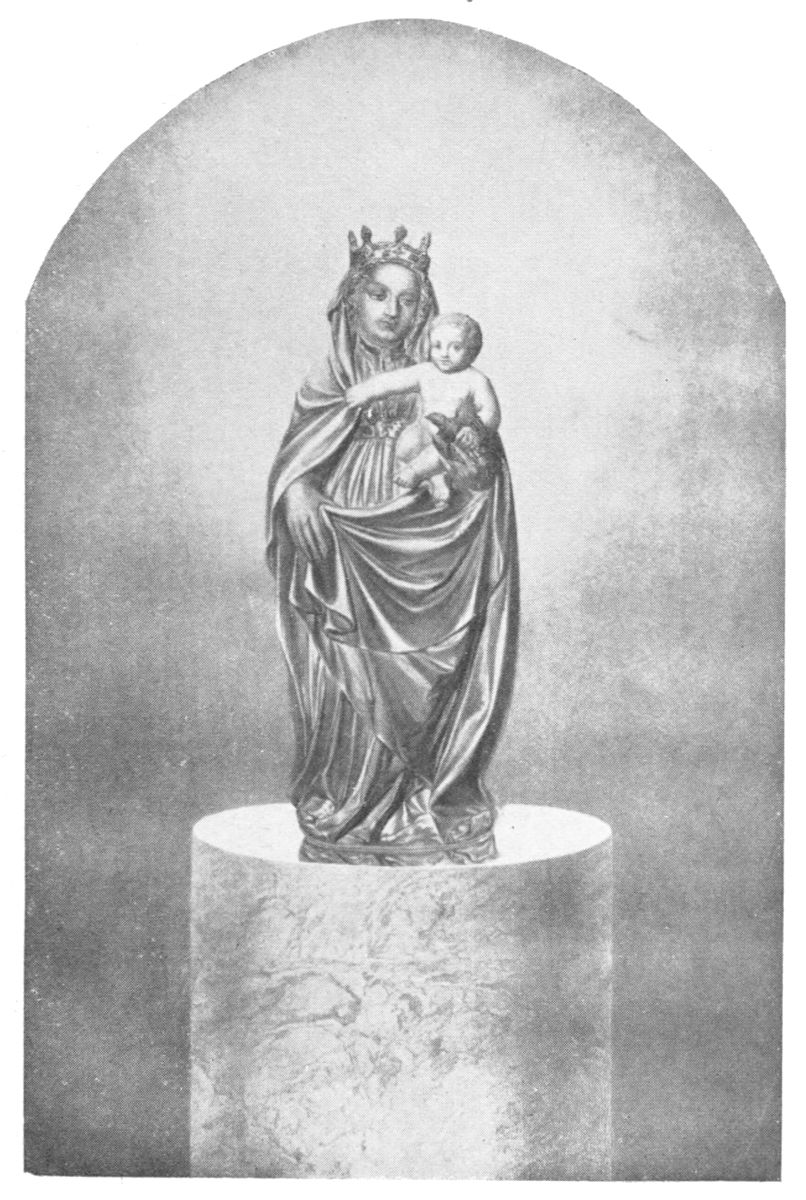
OUR LADY DEL PILAR
ZARAGOZA
Plate 350
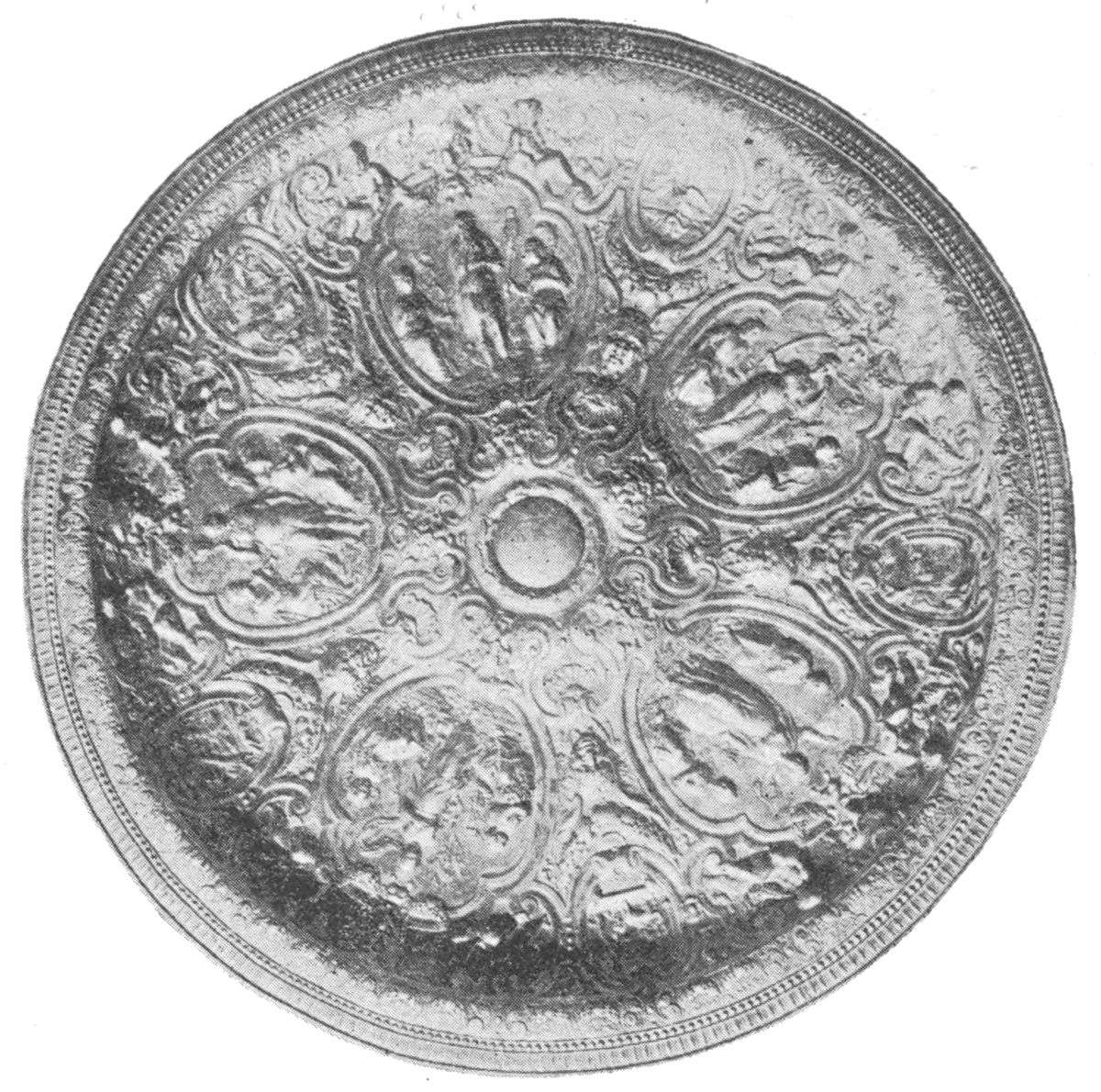
SILVER SALVER IN THE CATHEDRAL OF EL PILAR
SIXTEENTH CENTURY
ZARAGOZA
Plate 351
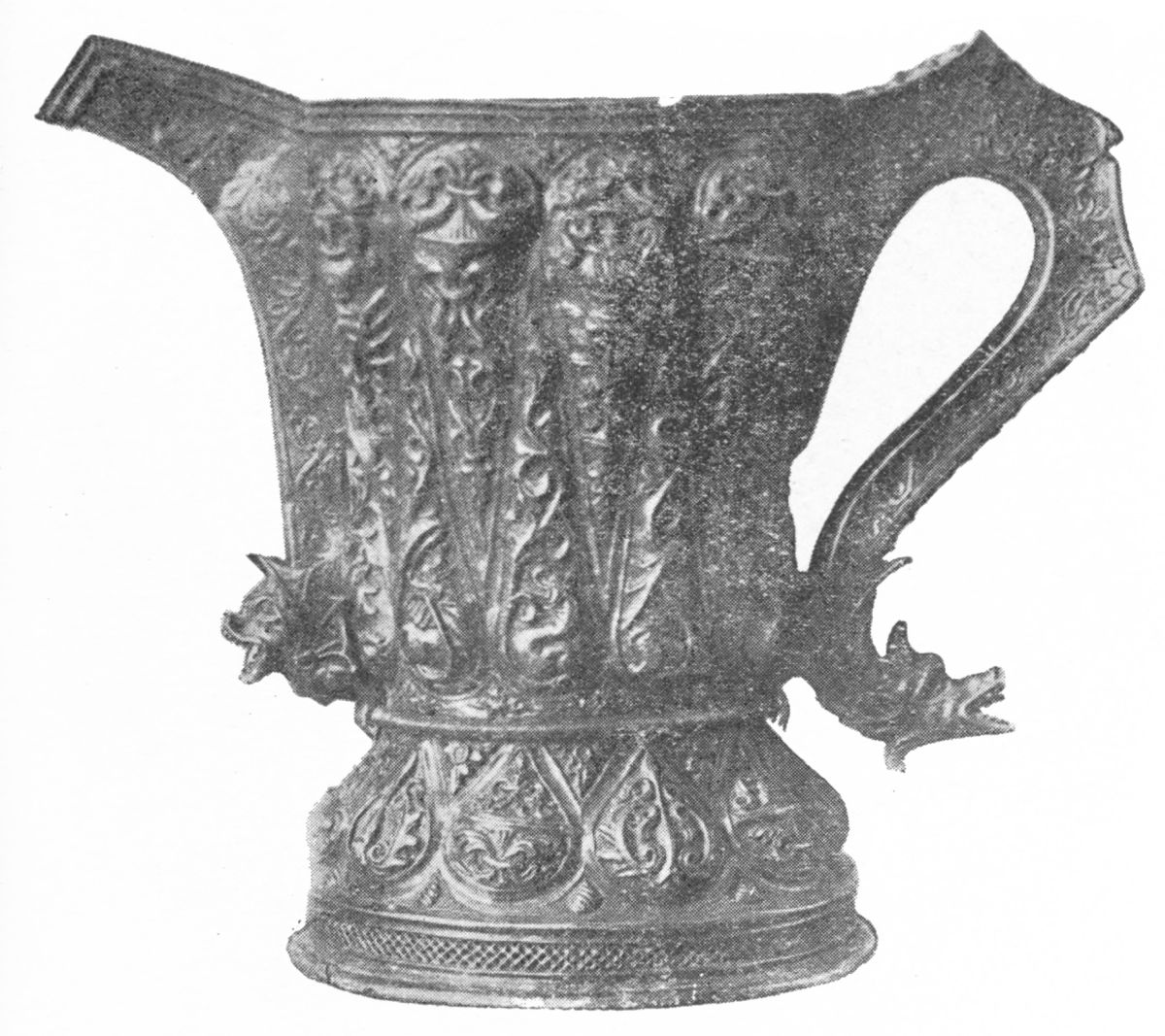
VASE IN THE CATHEDRAL OF EL PILAR
FIFTEENTH CENTURY
ZARAGOZA
Plate 352
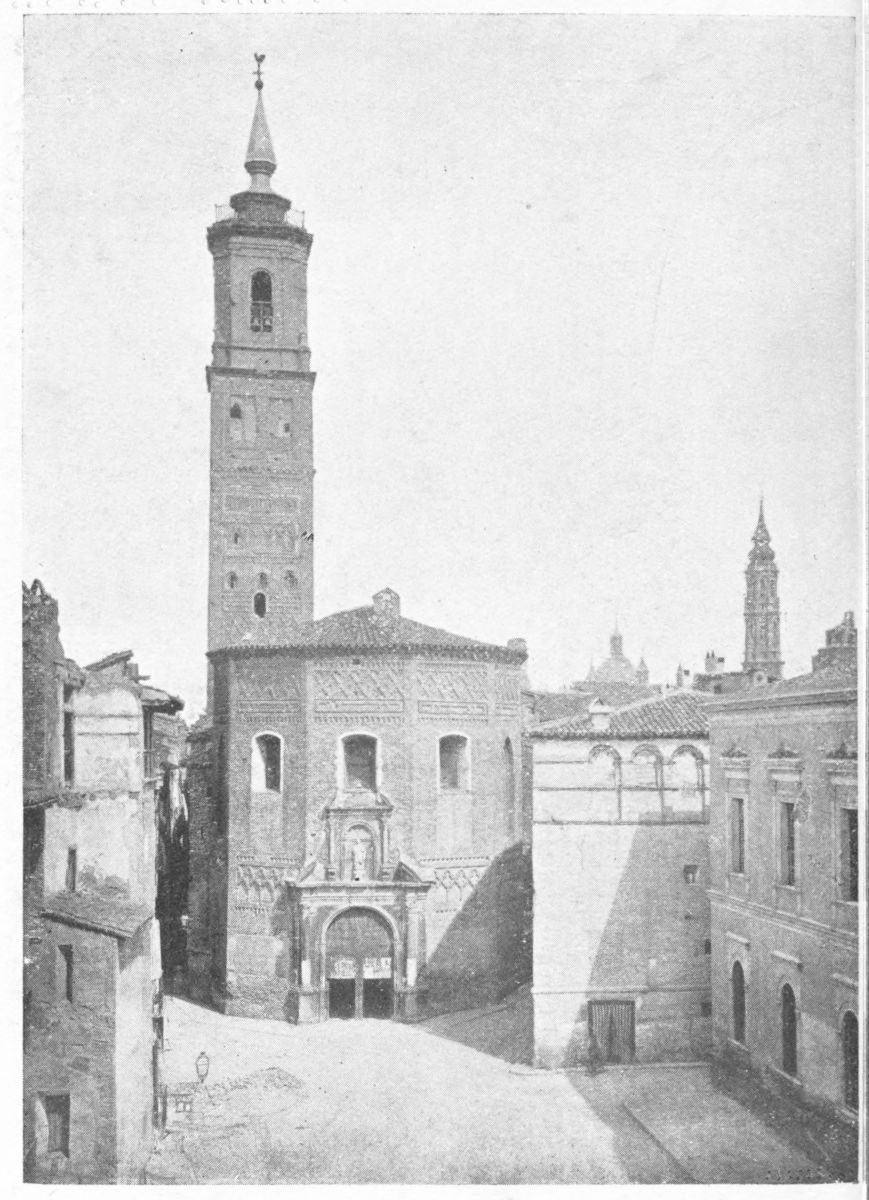
CHURCH OF THE MAGDALEN
ZARAGOZA
Plate 353
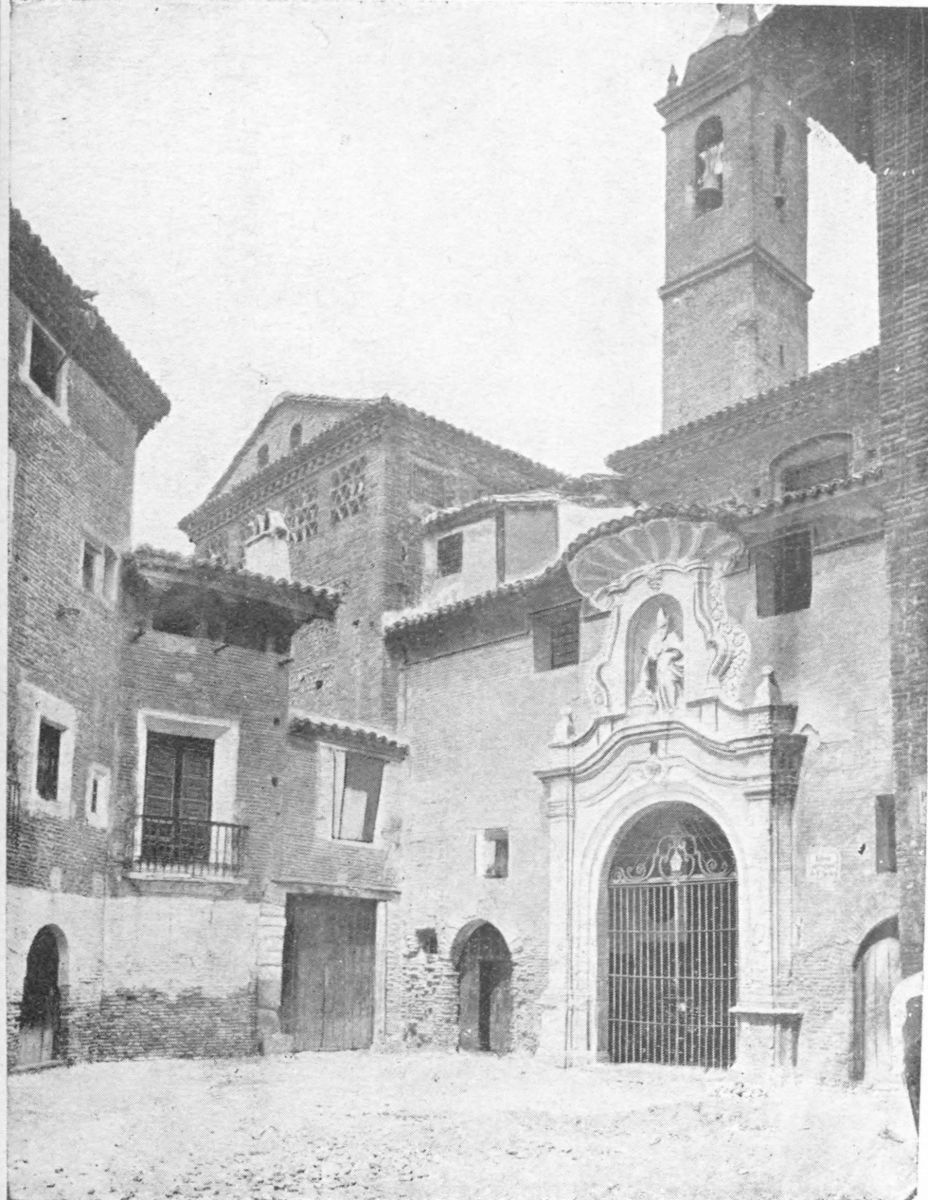
PLACE AND CHURCH OF ST. NICHOLAS
ZARAGOZA
Plate 354
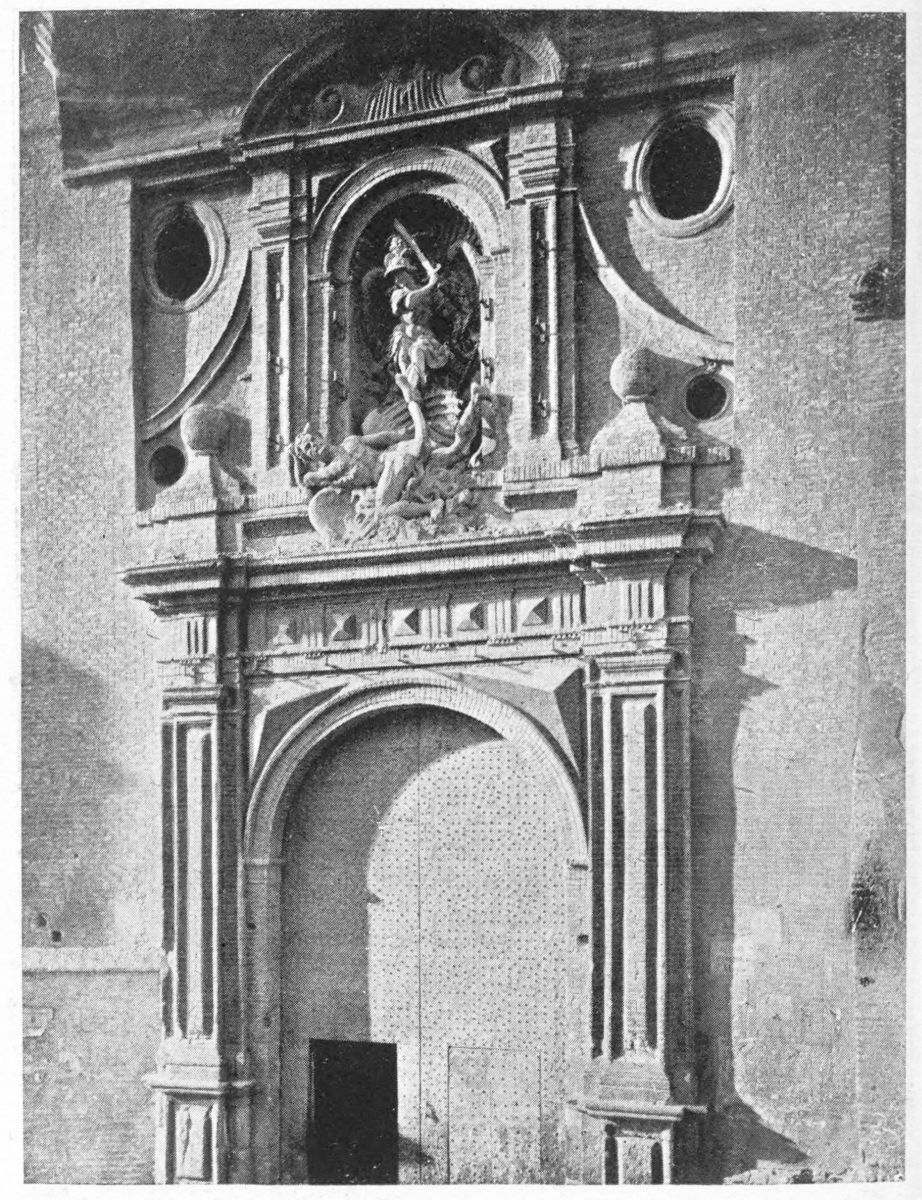
PORTAL OF THE CHURCH OF SAN MIGUEL
ZARAGOZA
Plate 355
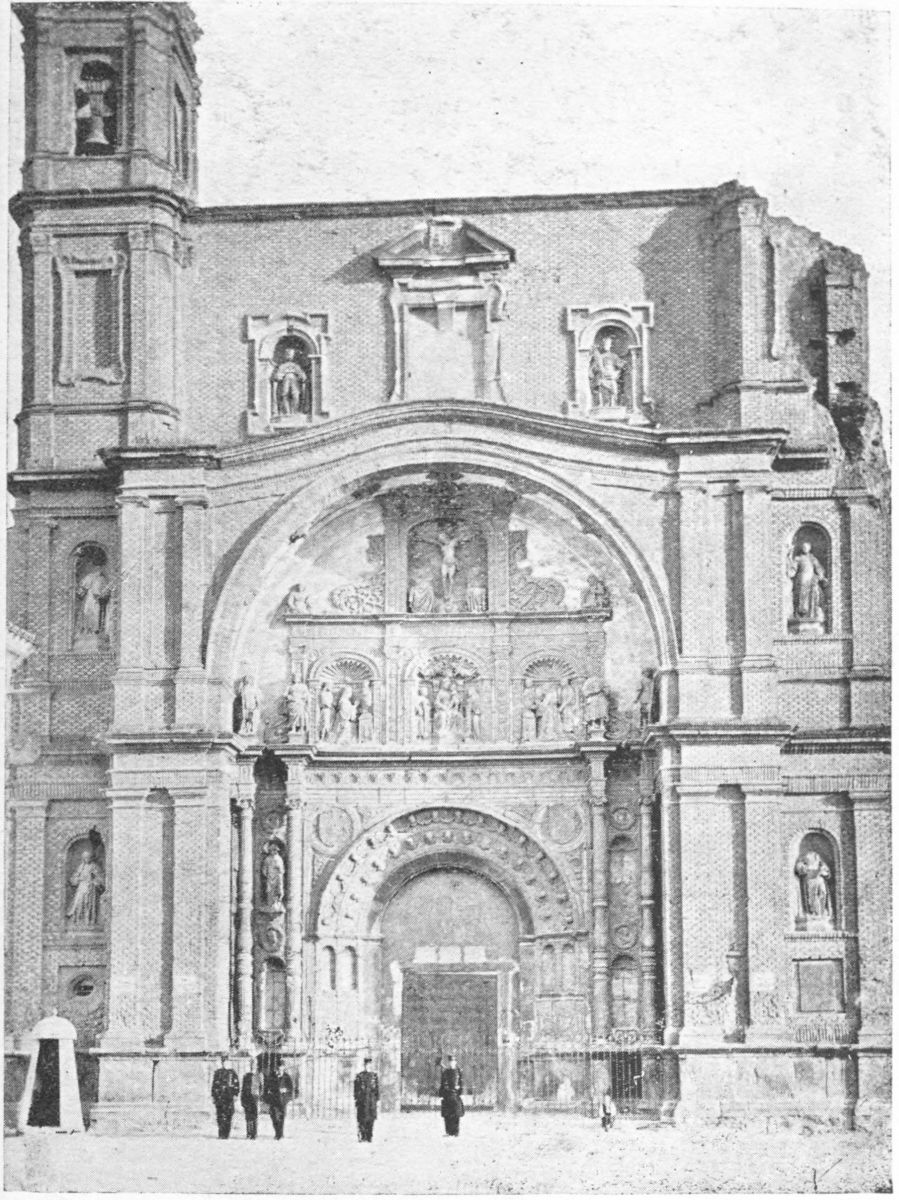
FAÇADE OF THE CHURCH OF SANTA ENGRACIA
ZARAGOZA
Plate 356
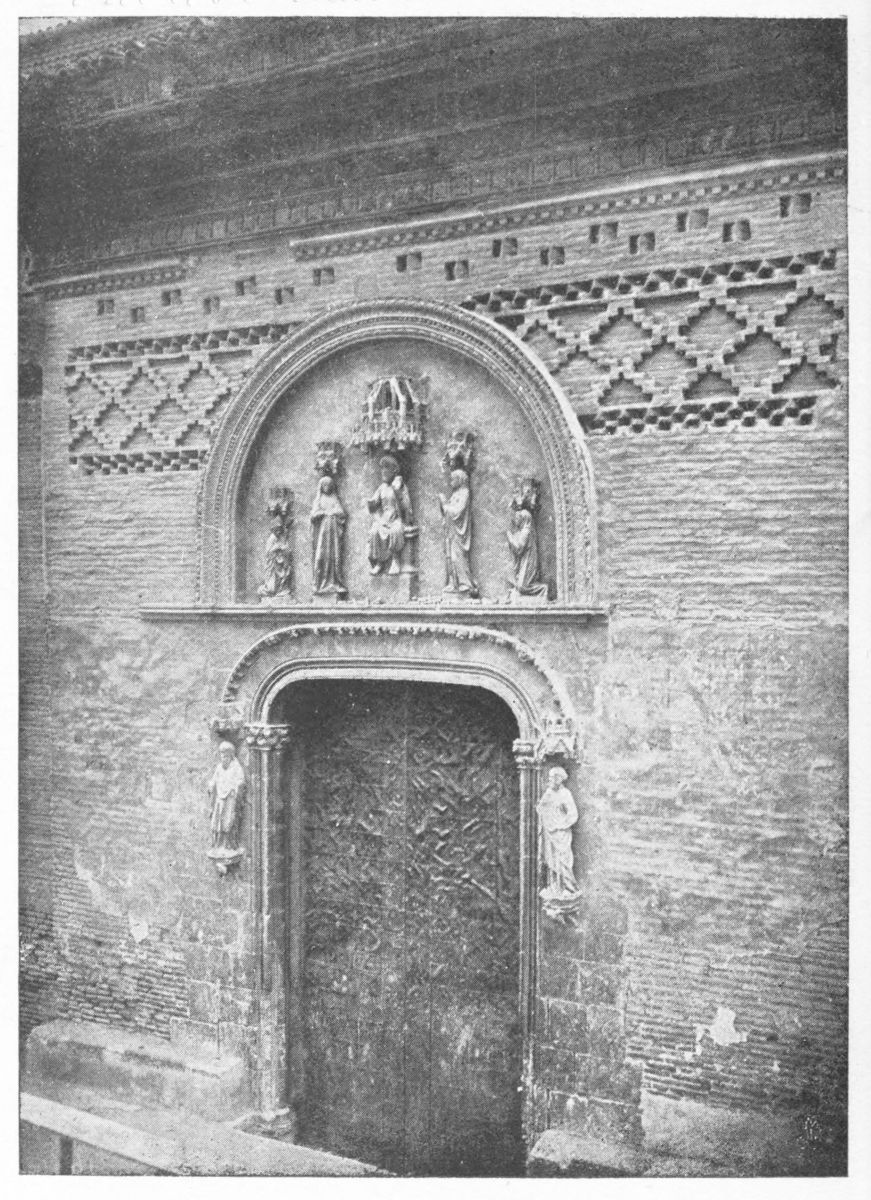
CHURCH OF ST. PAUL. PUERTA DEL CRISTO
ZARAGOZA
Plate 357
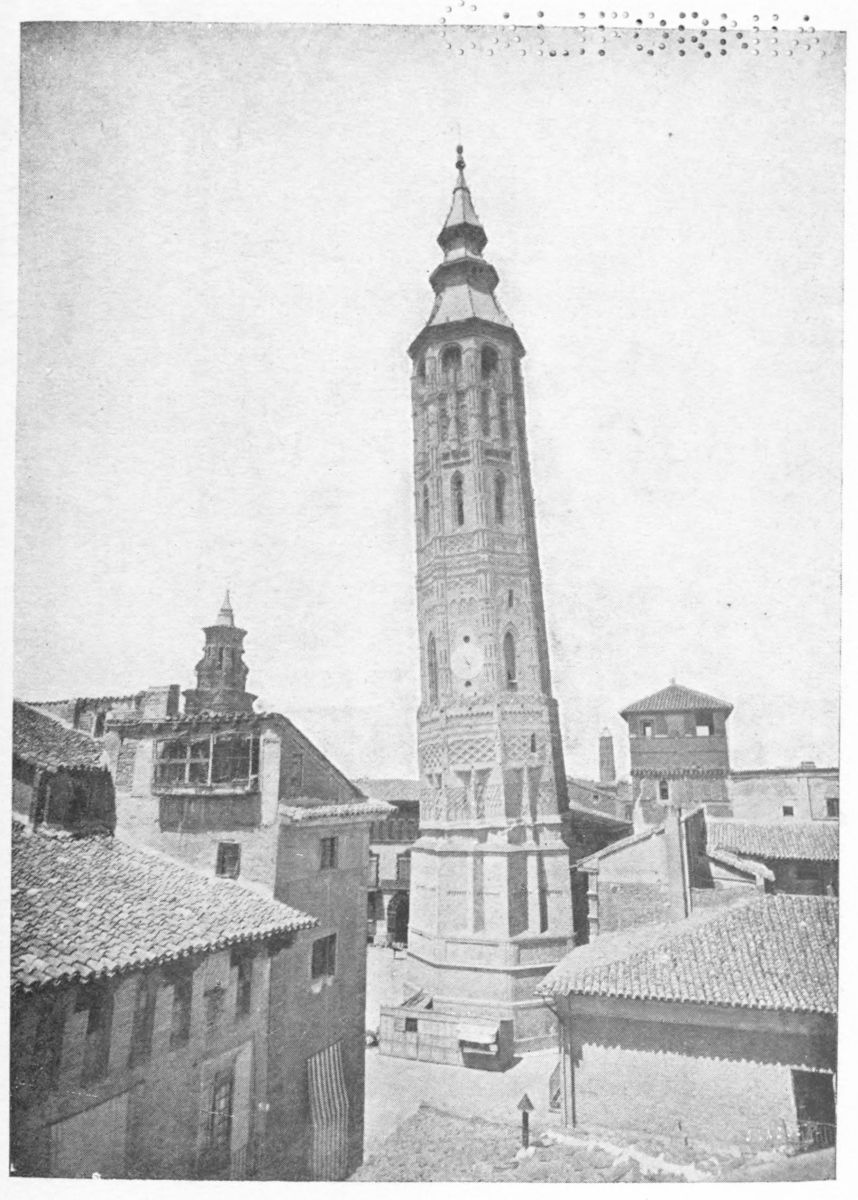
THE NEW OR LEANING TOWER
ZARAGOZA
Plate 358
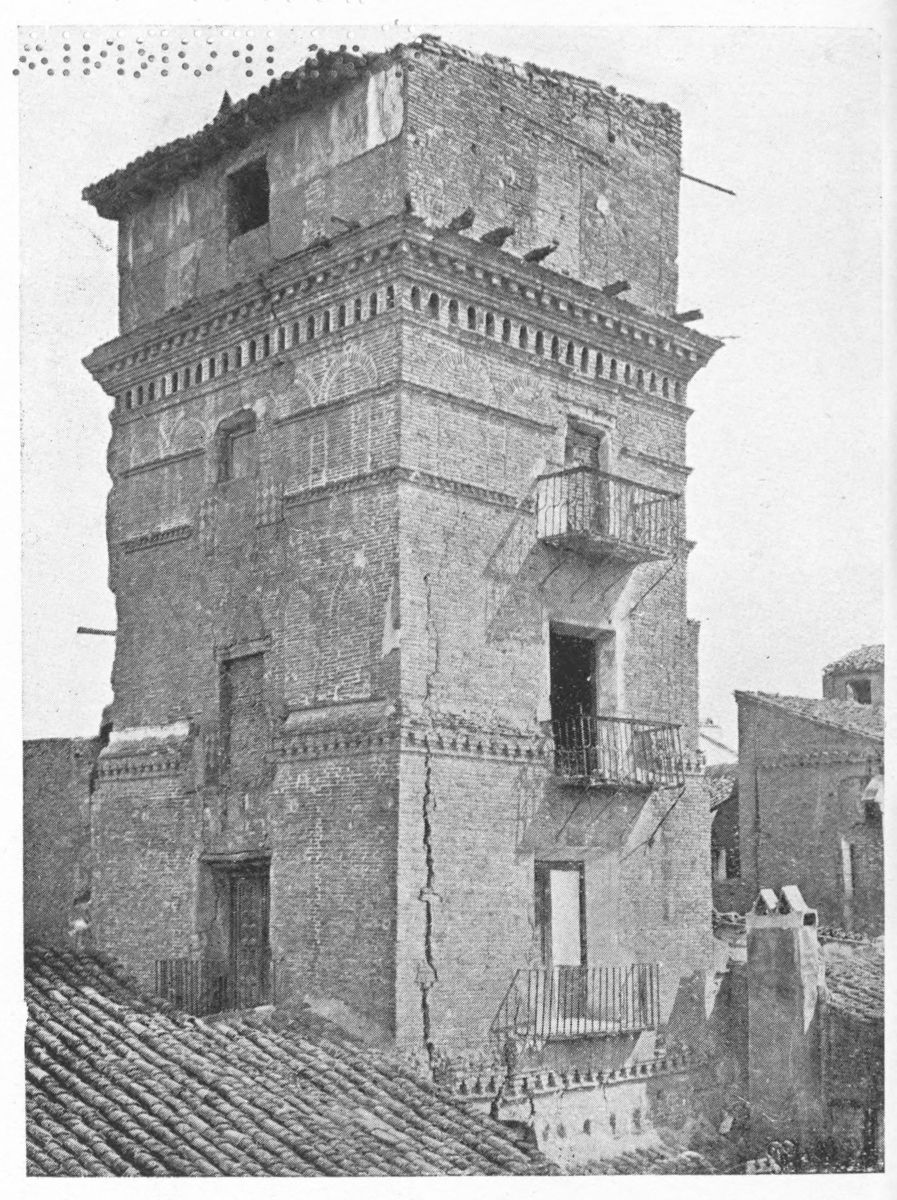
TOWER OF THE CALLE DE ANTONIO PEREZ
ZARAGOZA
Plate 359
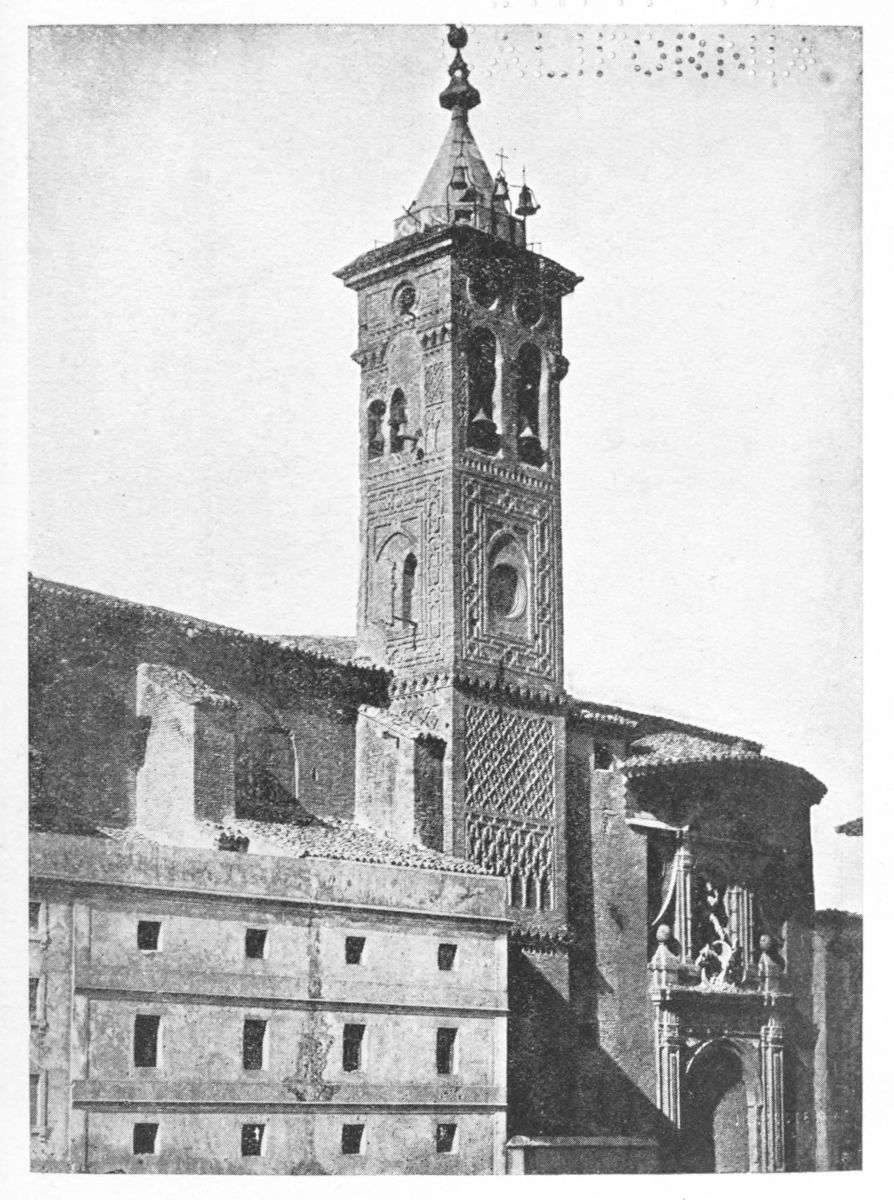
TOWER OF SAN MIGUEL
ZARAGOZA
Plate 360
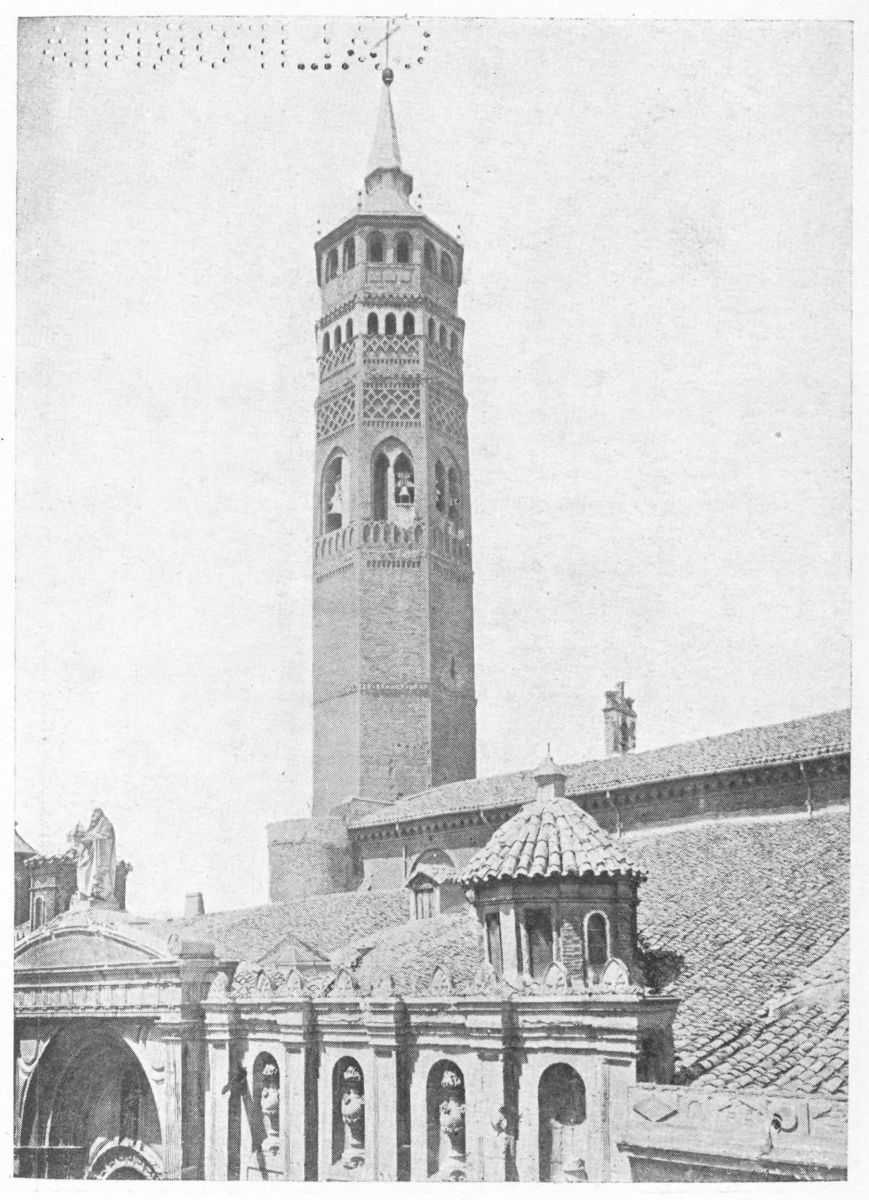
TOWER OF SAN PABLO
ZARAGOZA
Plate 361
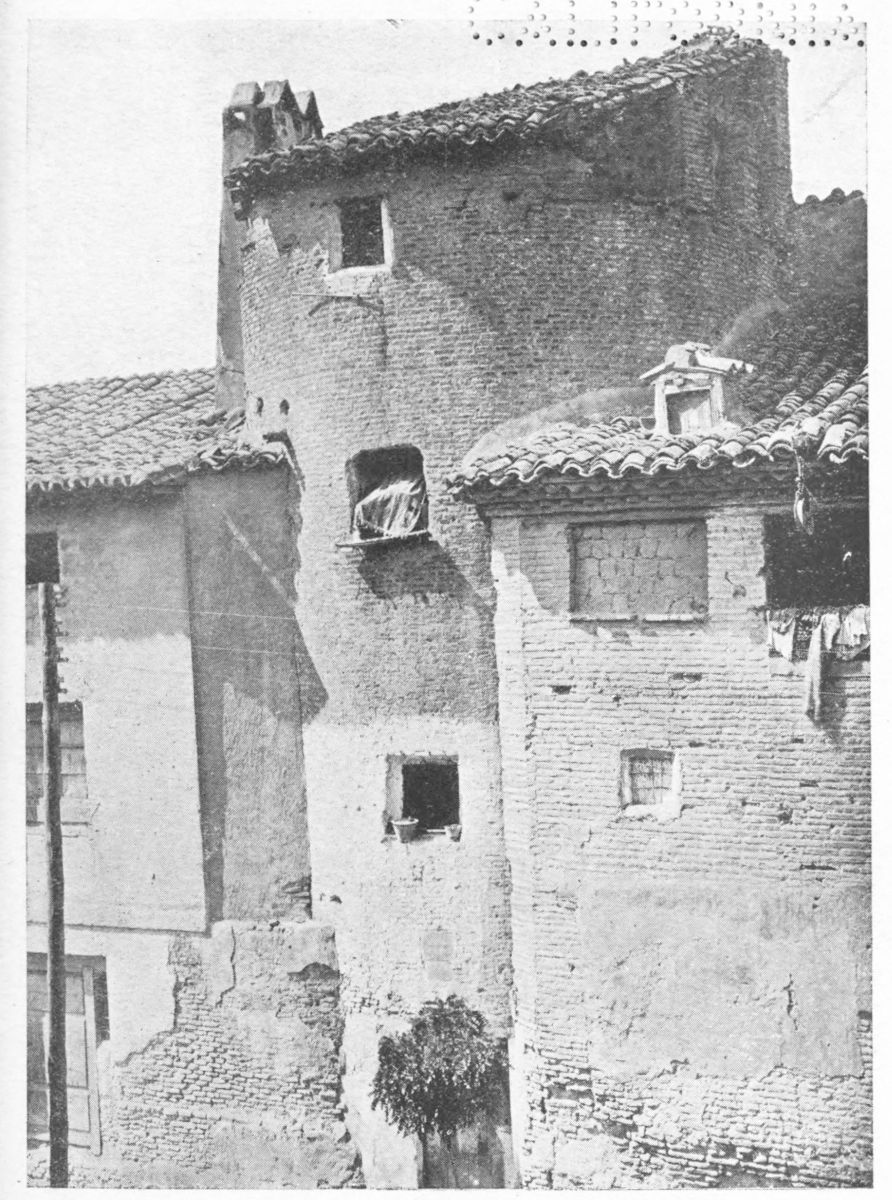
TOWER OF THE TROVADOR
ZARAGOZA
Plate 362
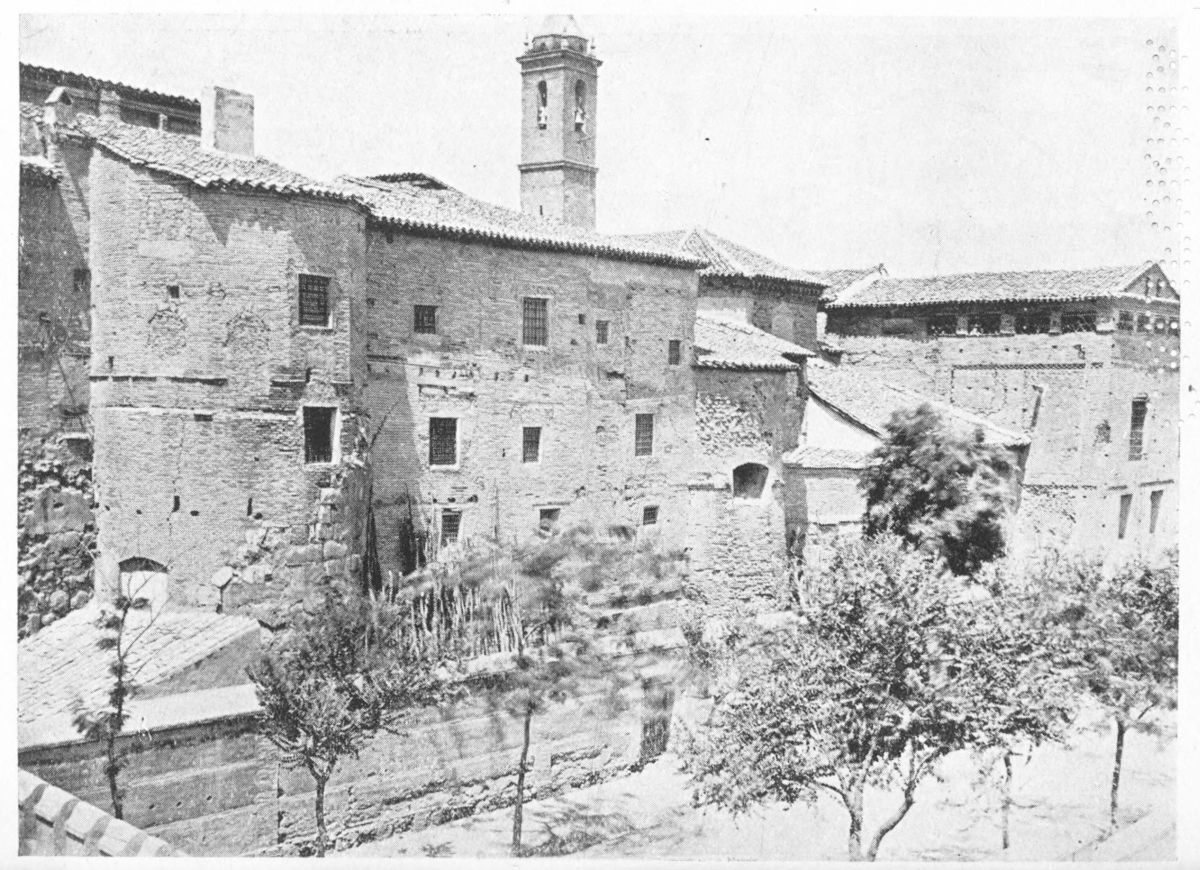
ANCIENT WALL AND BUILDINGS
ZARAGOZA
Plate 363
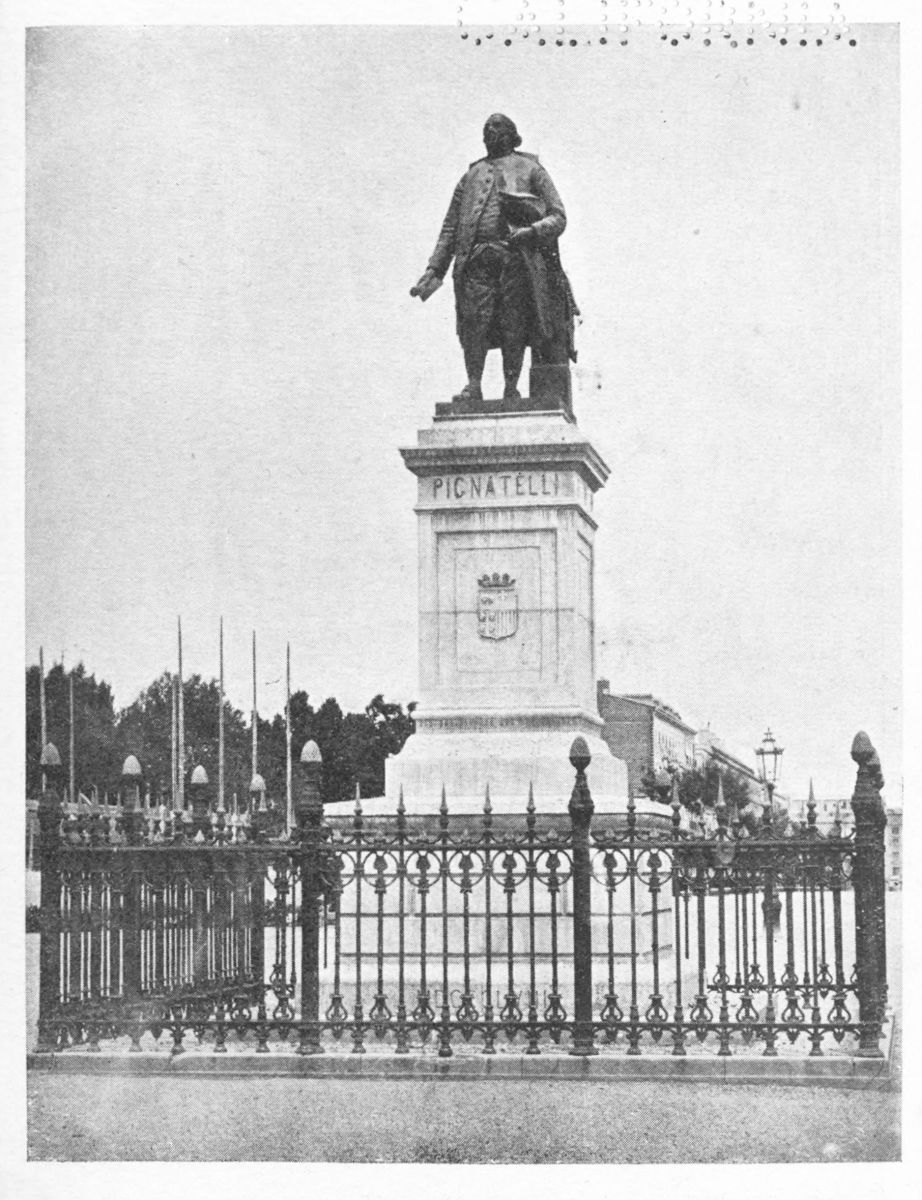
STATUE OF PIGNATELLI
ZARAGOZA
Plate 364
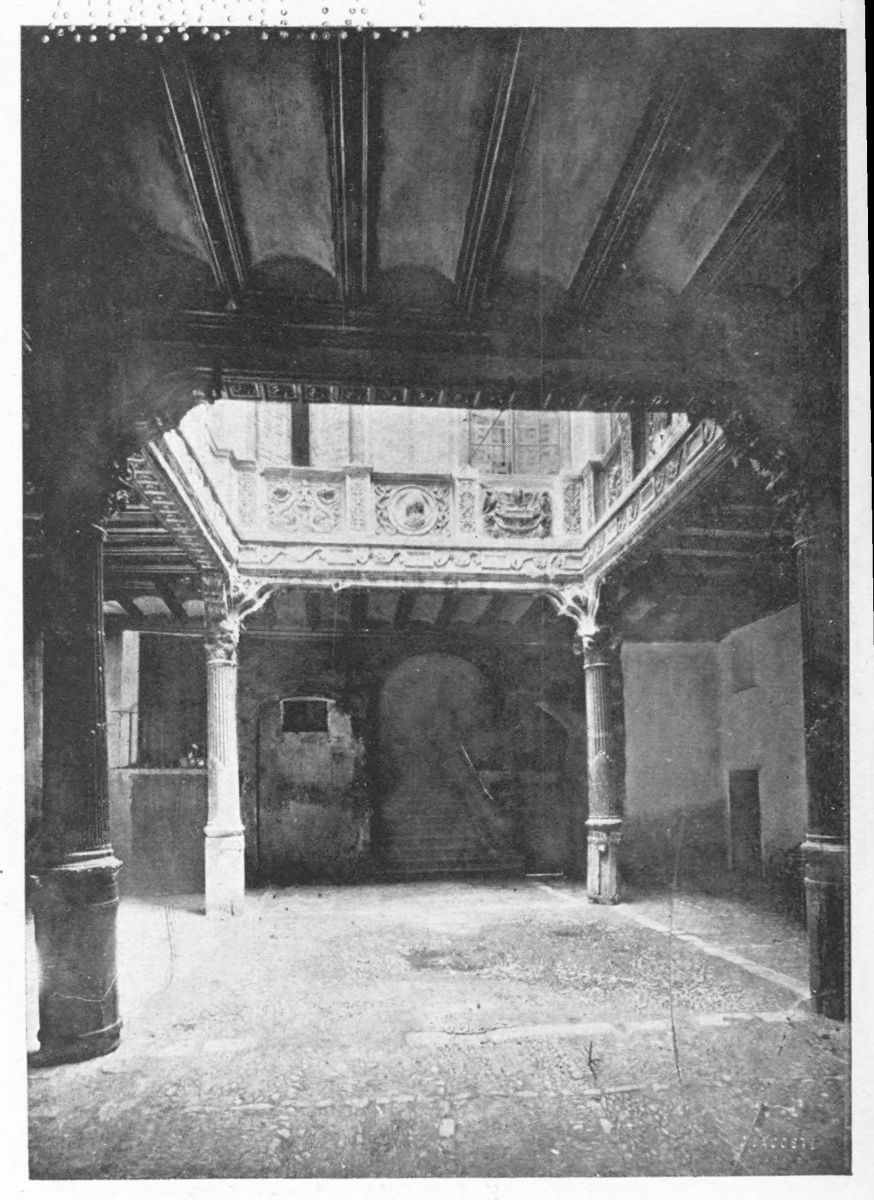
COURT-YARD IN THE HOUSE OF PARDO
ZARAGOZA
Plate 365
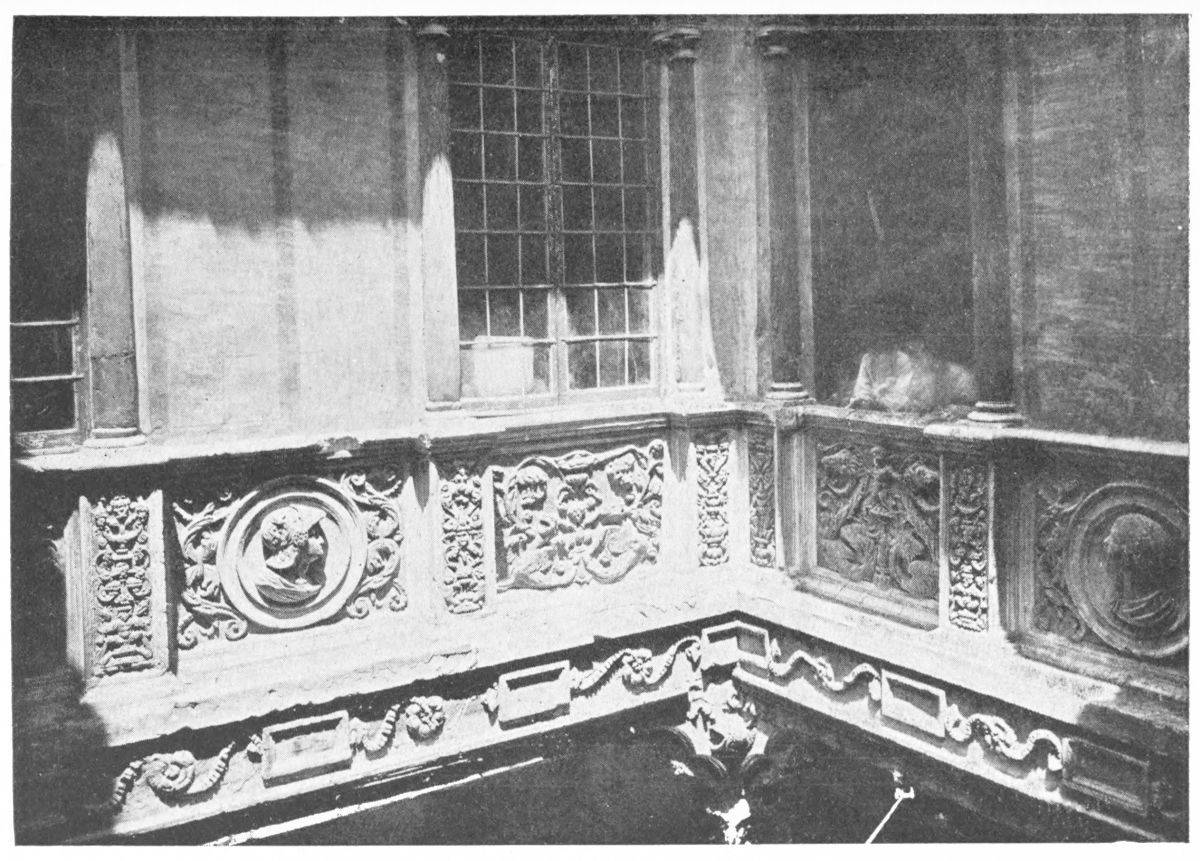
DETAIL OF THE COURT-YARD IN THE HOUSE OF PARDO
ZARAGOZA
Plate 366
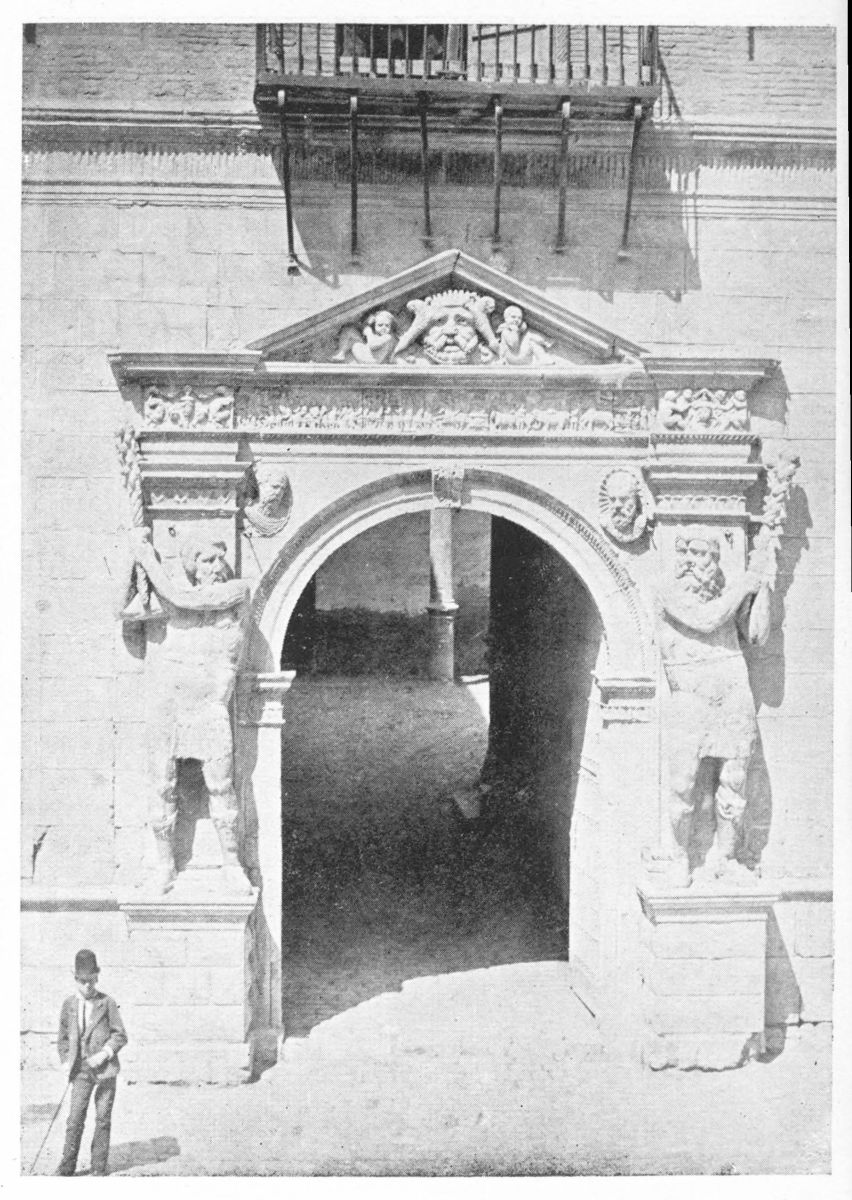
ENTRANCE TO THE AUDIENCIA PALACE
ZARAGOZA
Plate 367
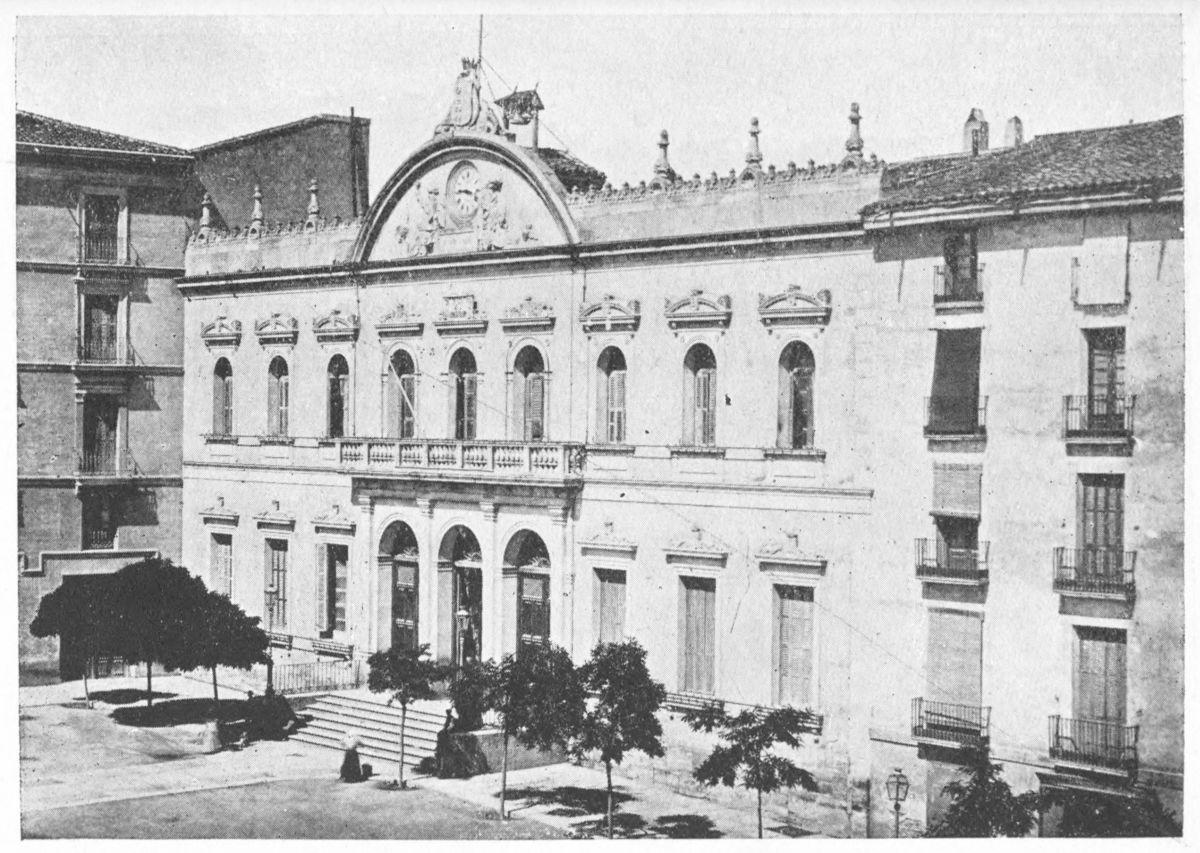
PALACE OF THE PROVINCIAL DEPUTATION
ZARAGOZA
Plate 368
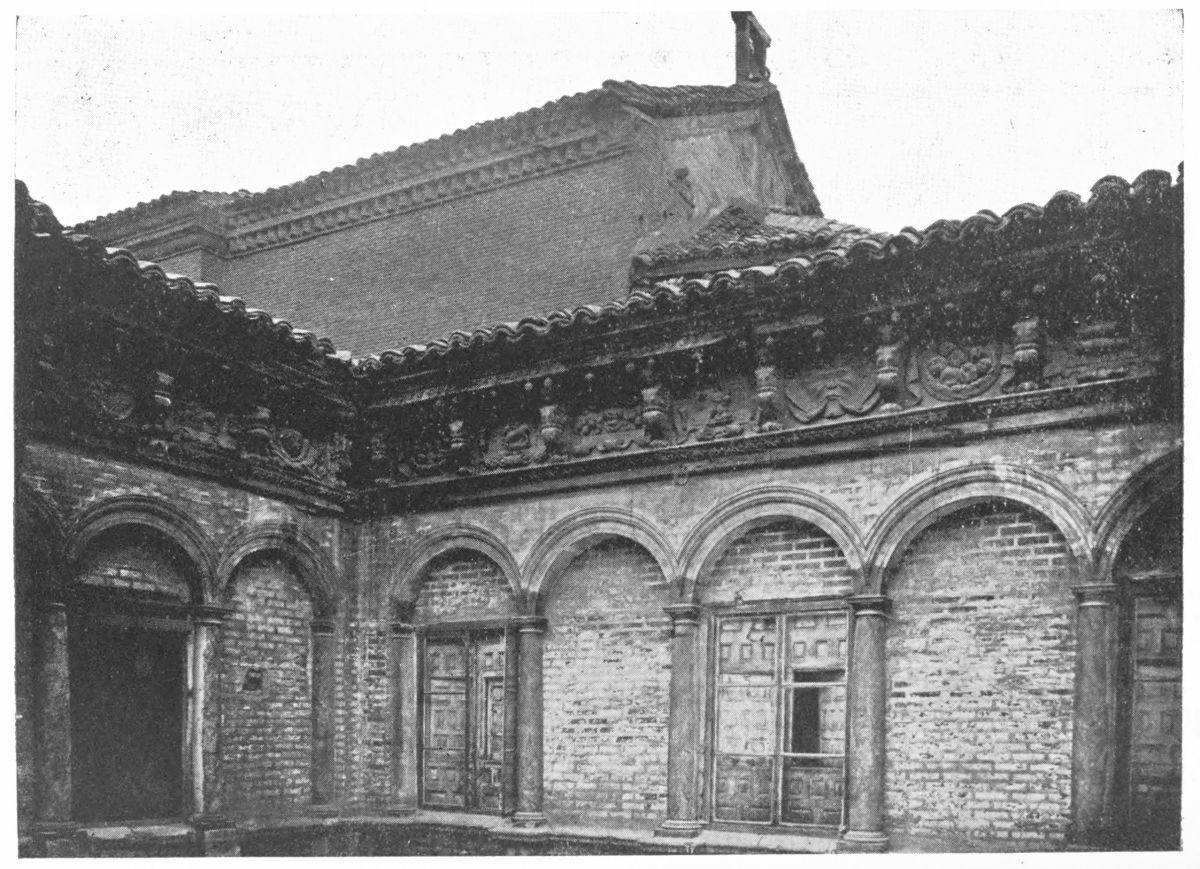
COURTYARD IN THE COUNT OF ARGILLO’S HOUSE
ZARAGOZA
Plate 369
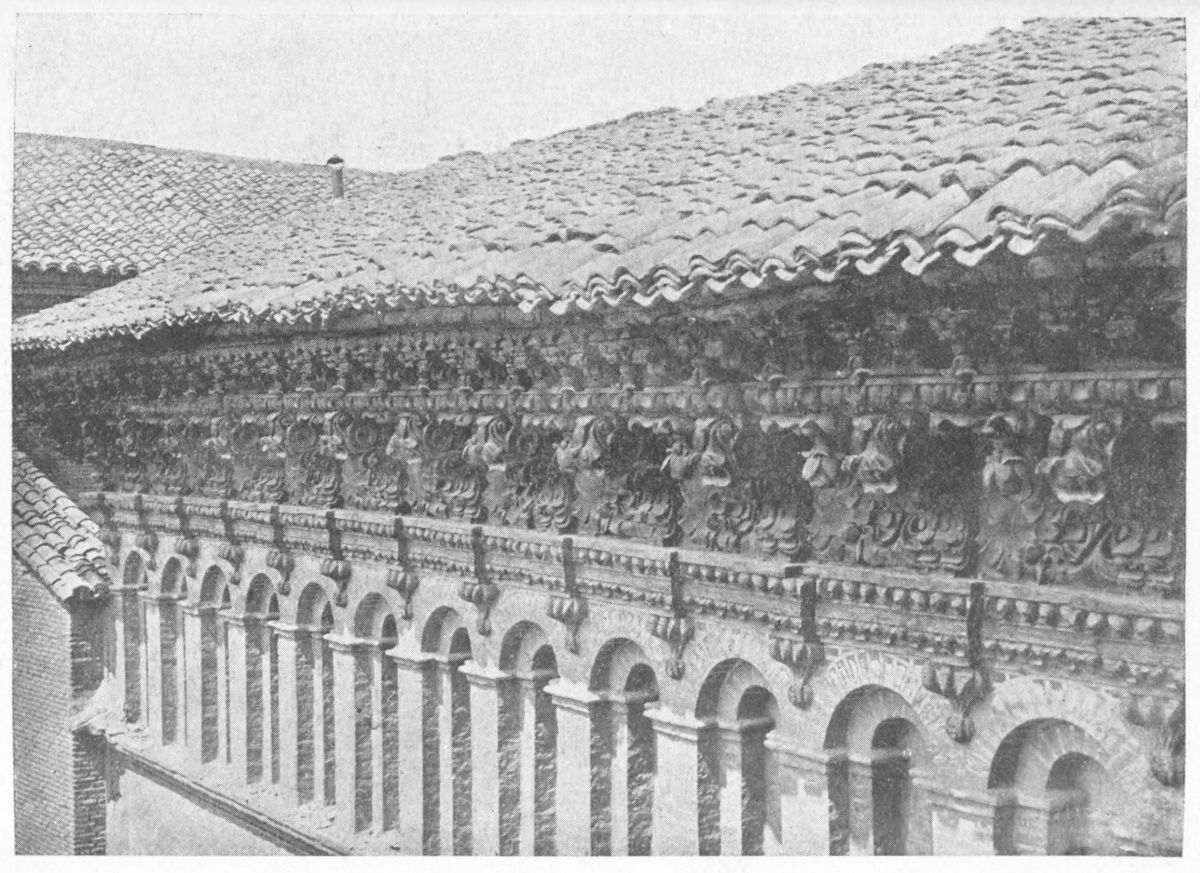
EAVES ON THE HOUSE OF THE CONDE DE ARGILLO
ZARAGOZA
Plate 370
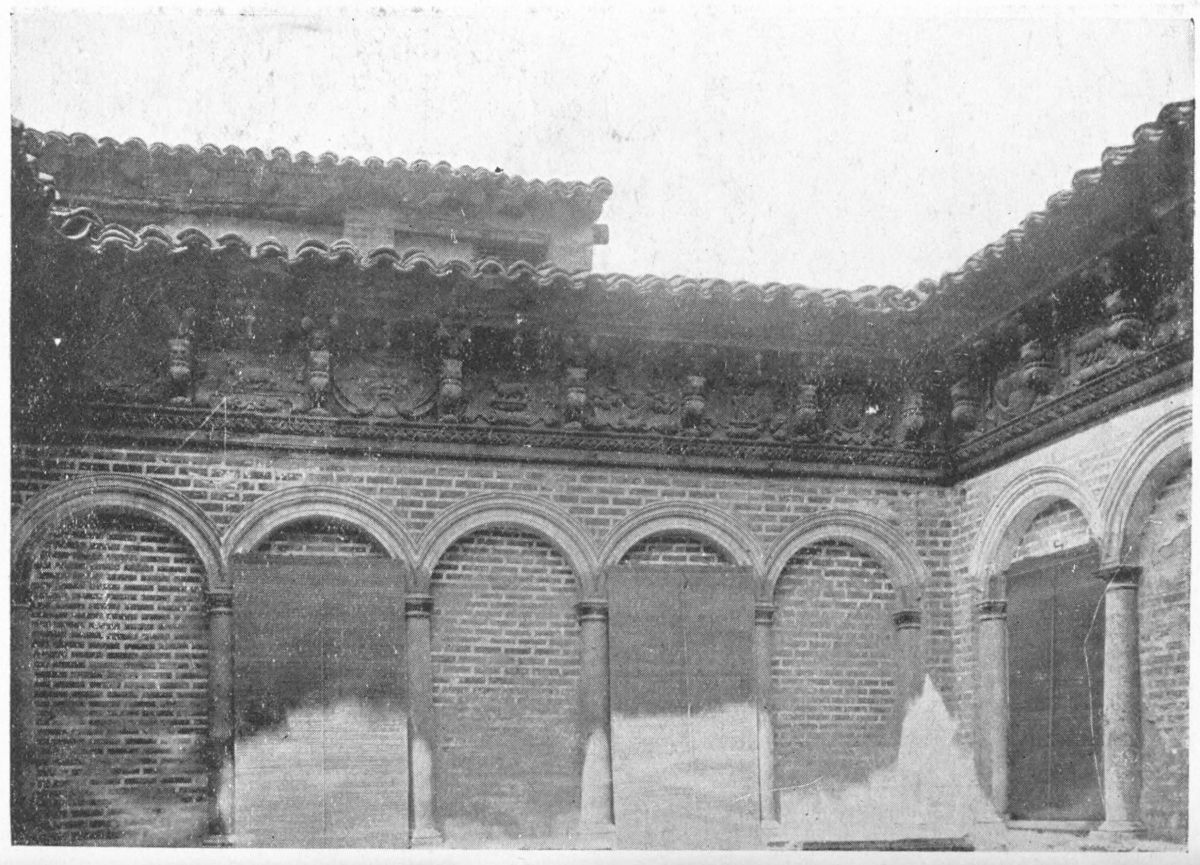
COURTYARD IN THE COUNT OF ARGILLO’S HOUSE
ZARAGOZA
Plate 371
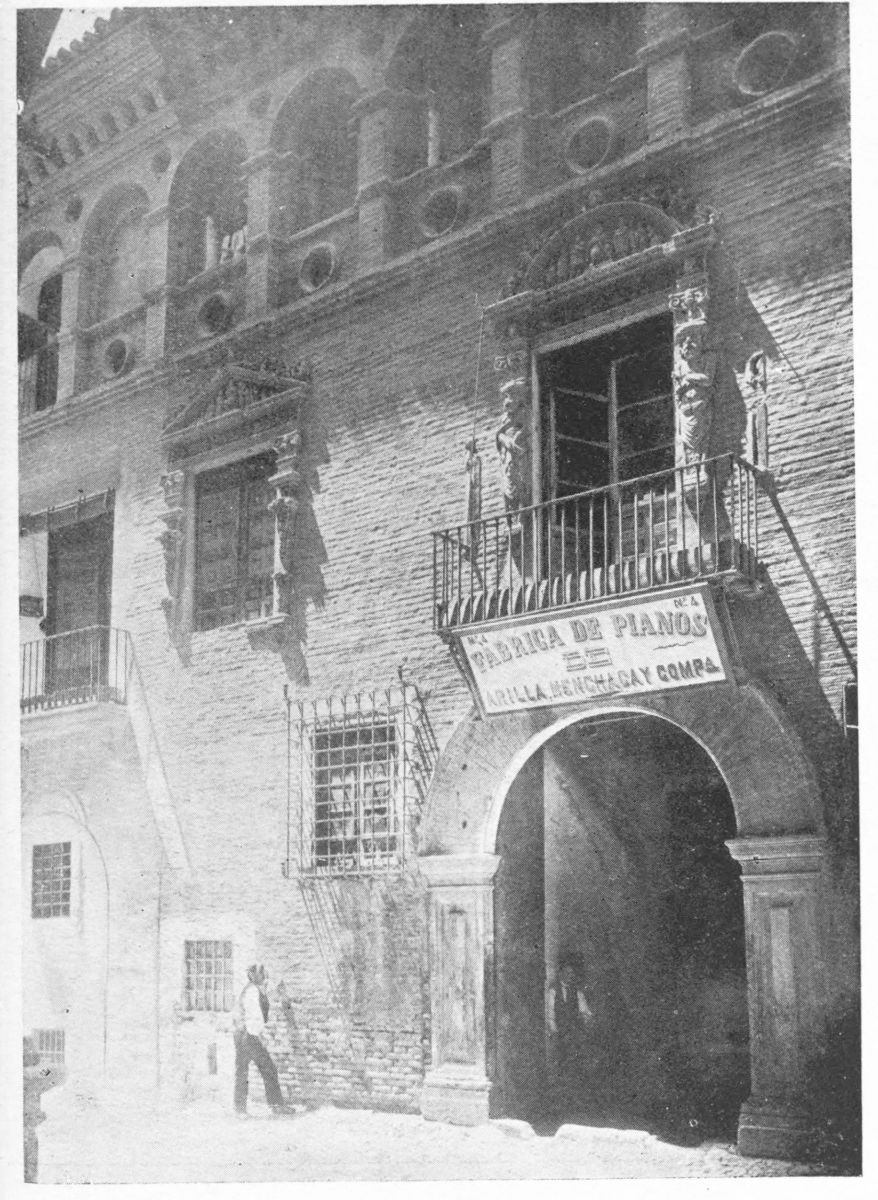
HOUSE IN THE PLAZA DE SAN CARLOS
ZARAGOZA
Plate 372
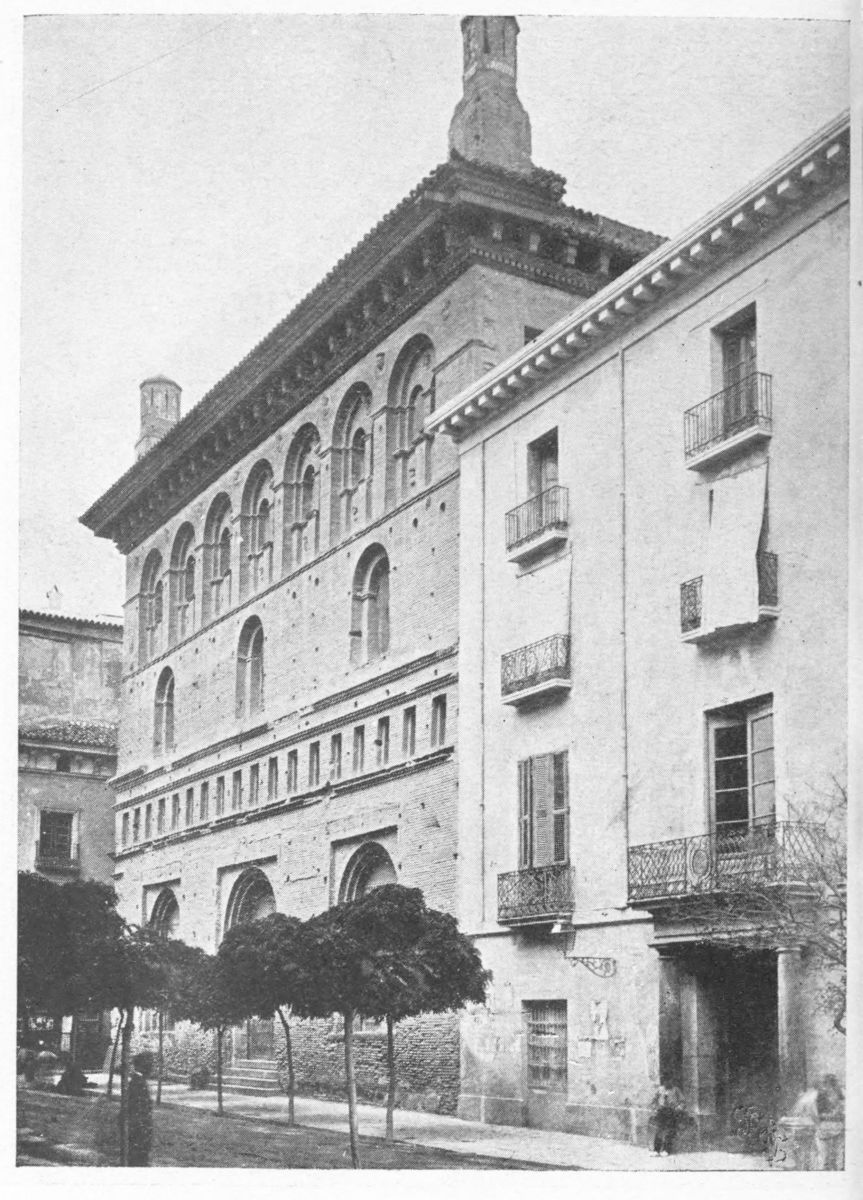
THE EXCHANGE
ZARAGOZA
Plate 373
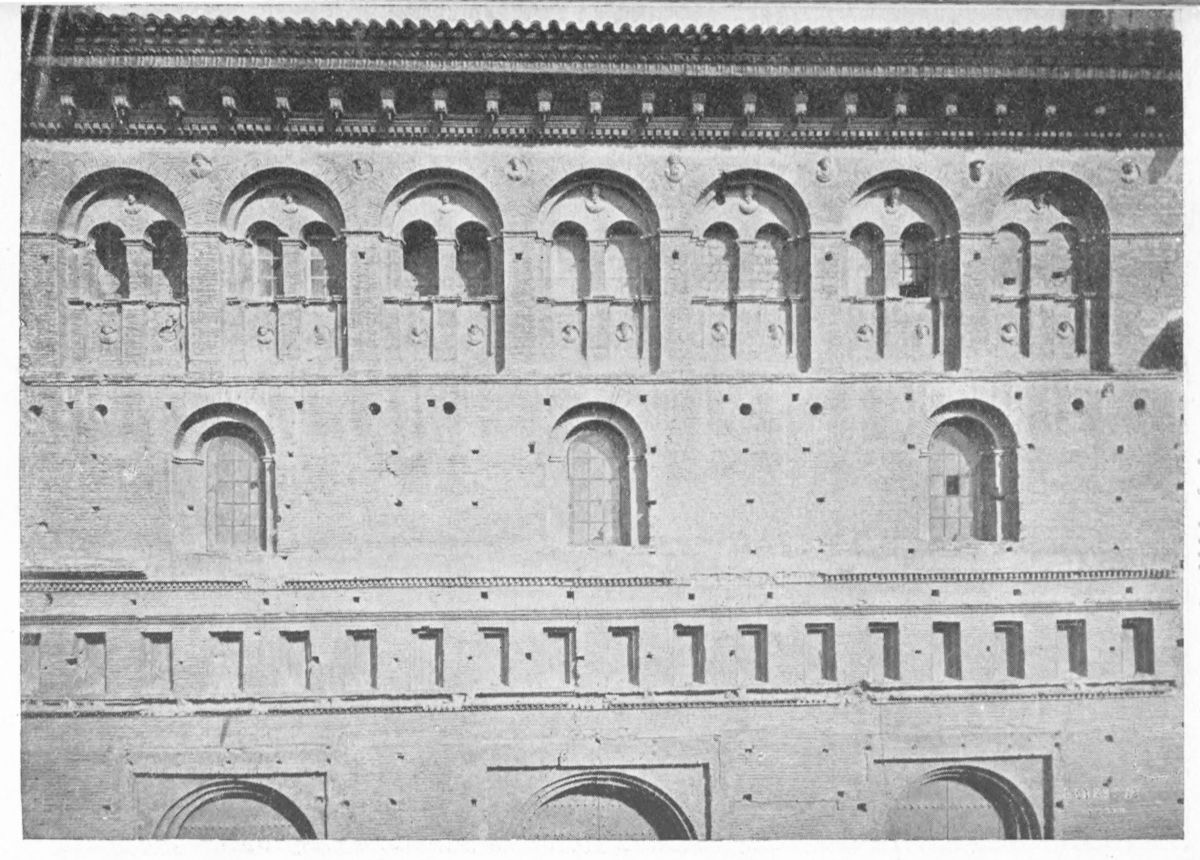
FAÇADE OF THE EXCHANGE
ZARAGOZA
Plate 374
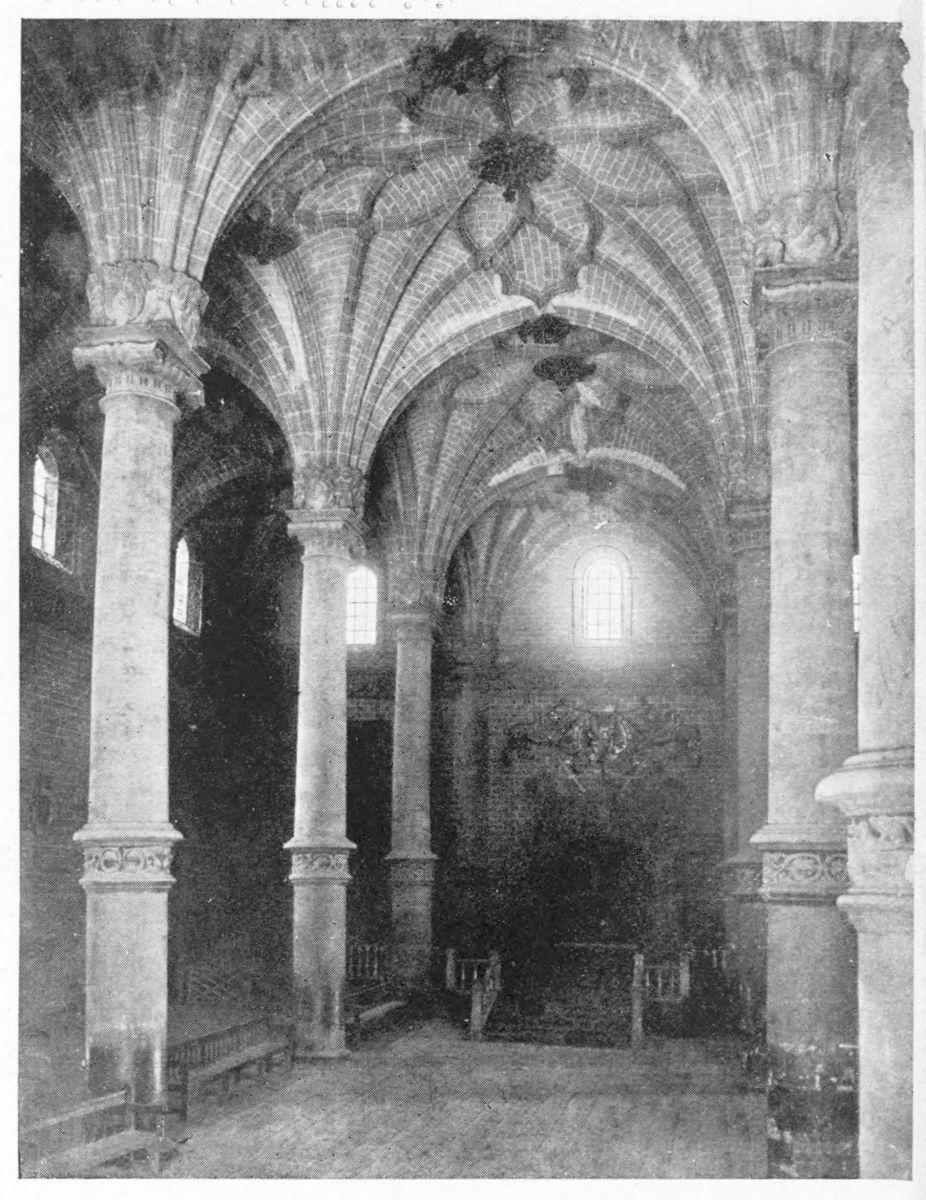
INTERIOR VIEW OF THE EXCHANGE
ZARAGOZA
Plate 375
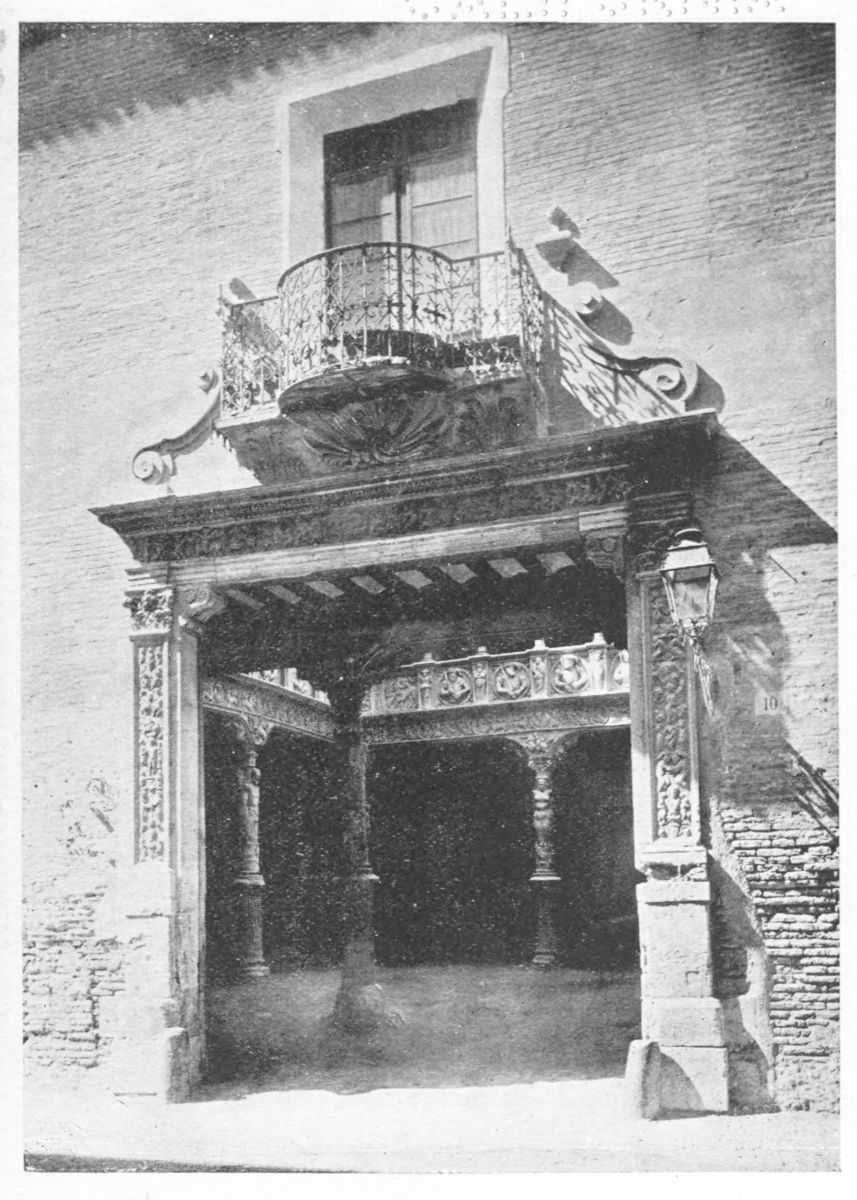
PORCH OF THE HOUSE OF ZAPORTA; OR, OF THE INFANTA
ZARAGOZA
Plate 376
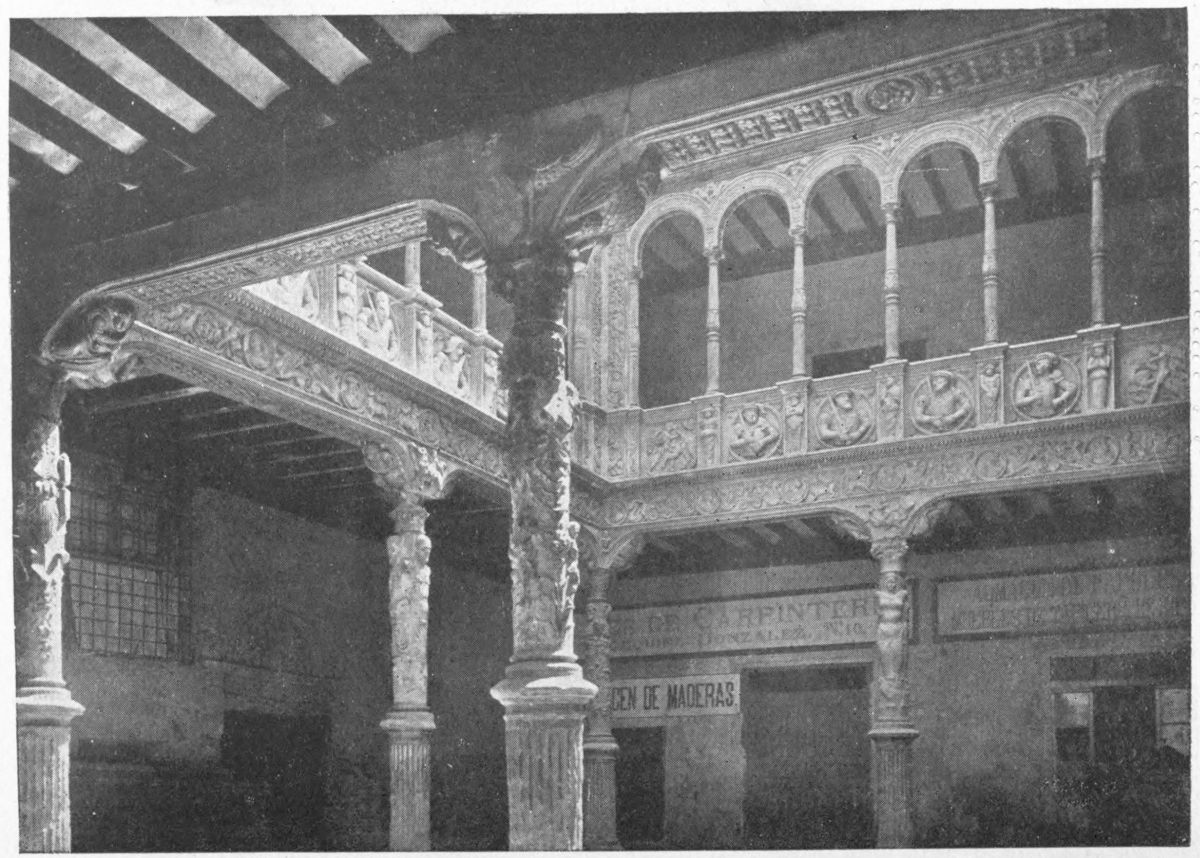
COURT-YARD OF THE HOUSE OF ZAPORTA; OR, OF THE INFANTA
ZARAGOZA
Plate 377
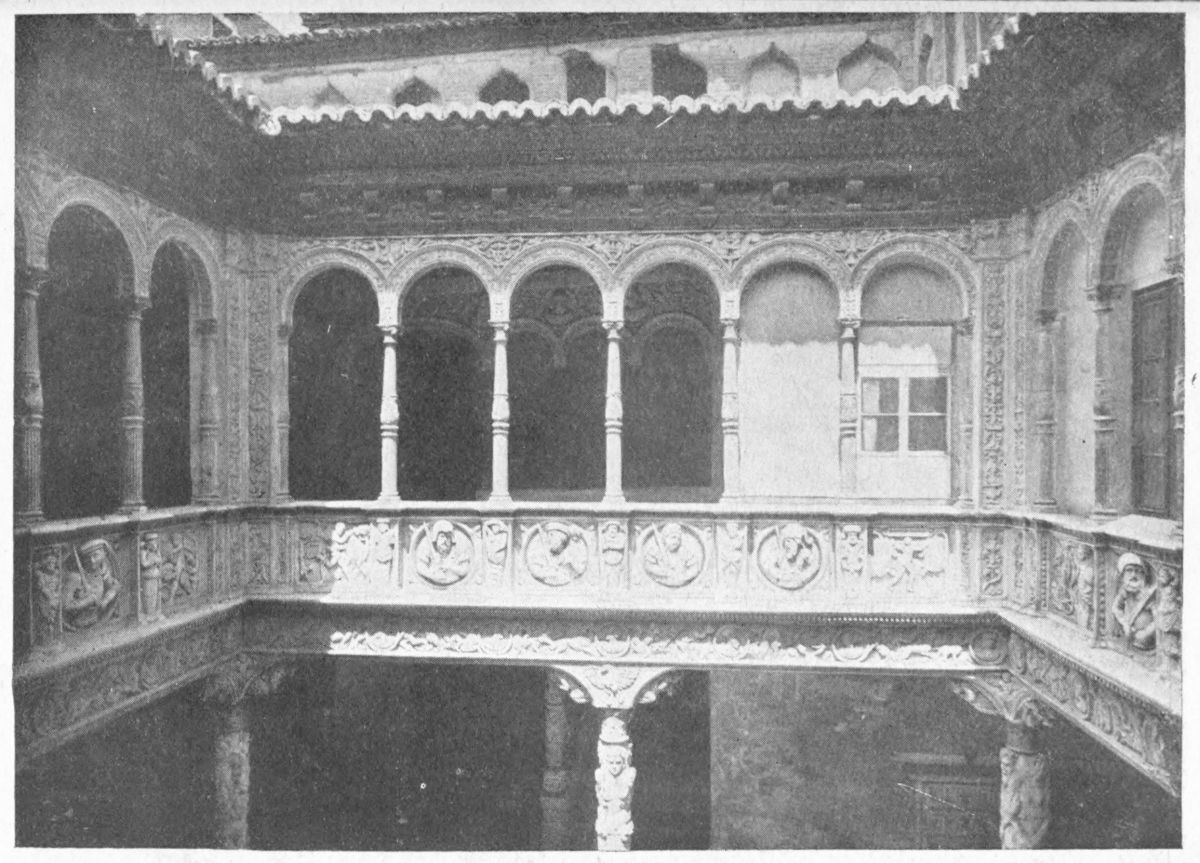
COURT-YARD OF THE HOUSE OF ZAPORTA; OR, OF THE INFANTA
ZARAGOZA
Plate 378
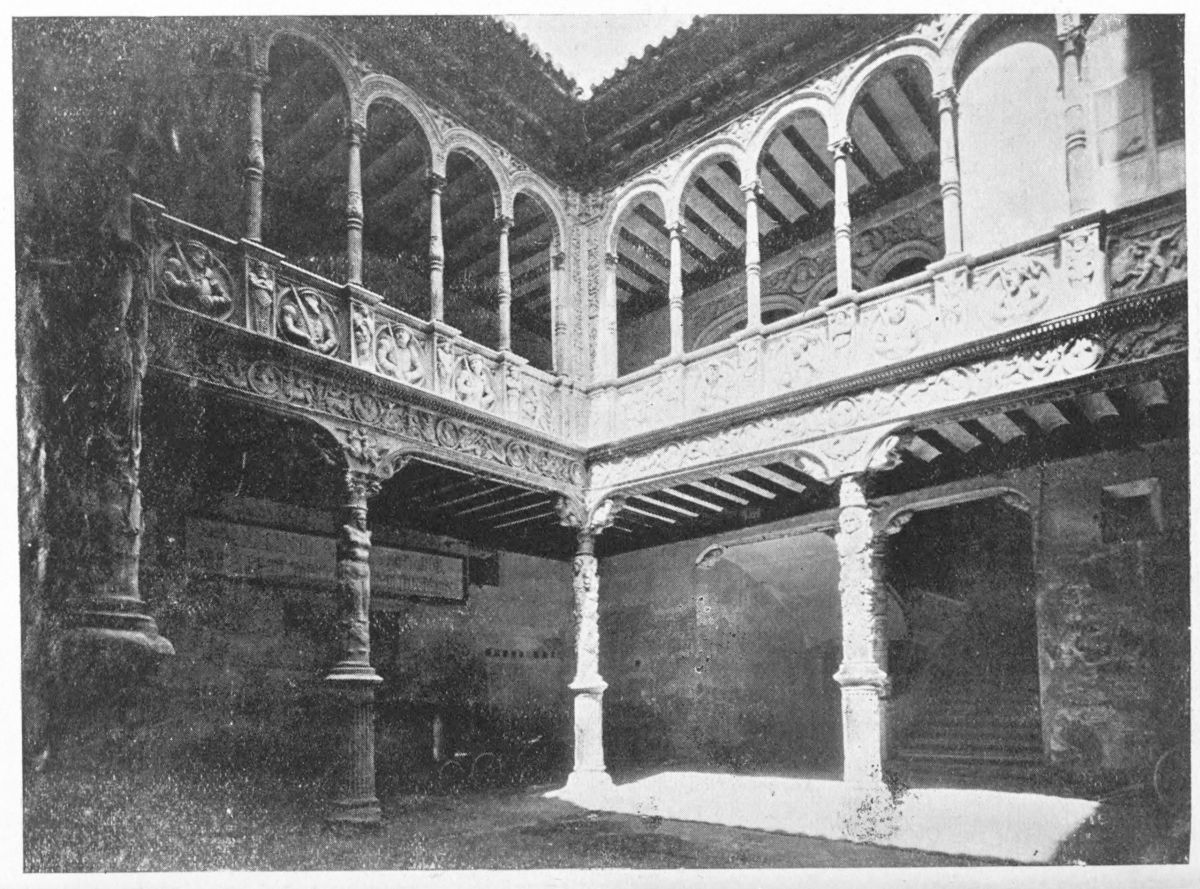
COURT-YARD OF THE HOUSE OF ZAPORTA
ZARAGOZA
Plate 379
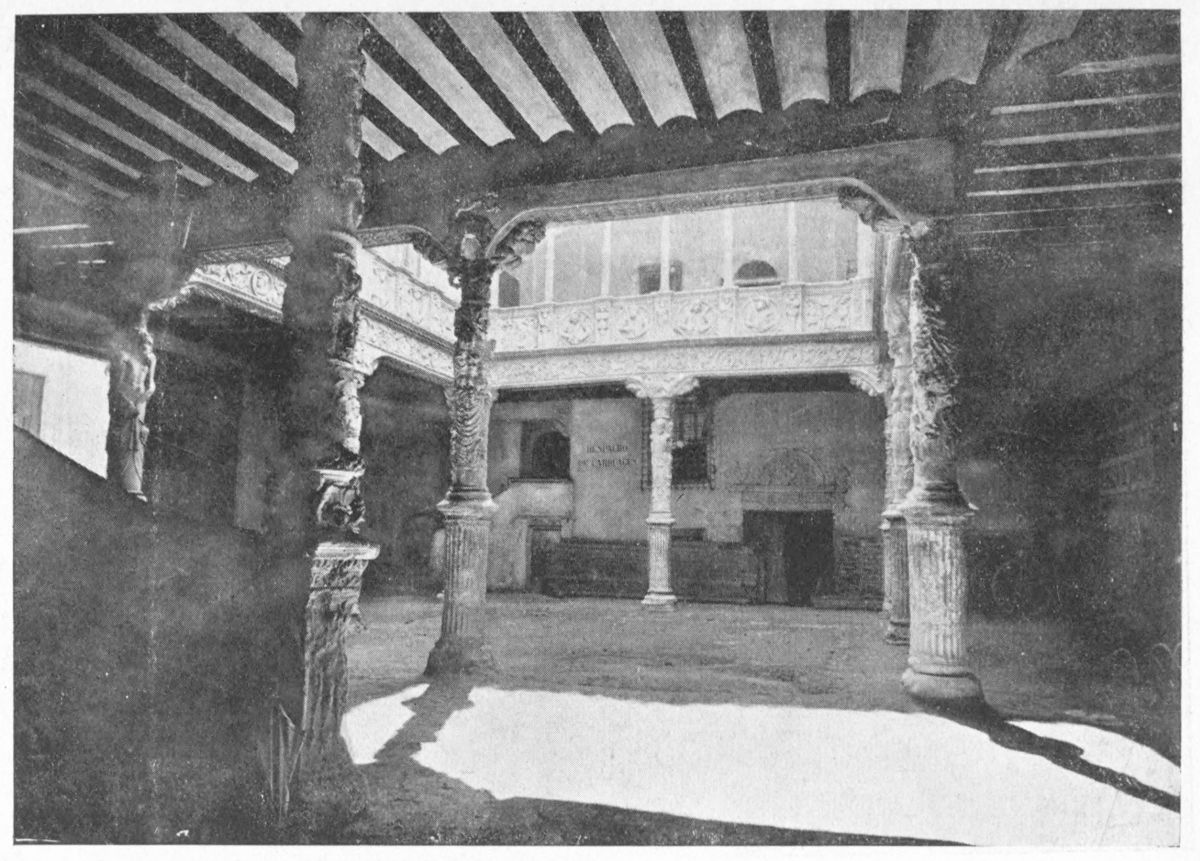
COURT-YARD IN THE HOUSE OF ZAPORTA; OR, OF THE INFANTA
ZARAGOZA
Plate 380
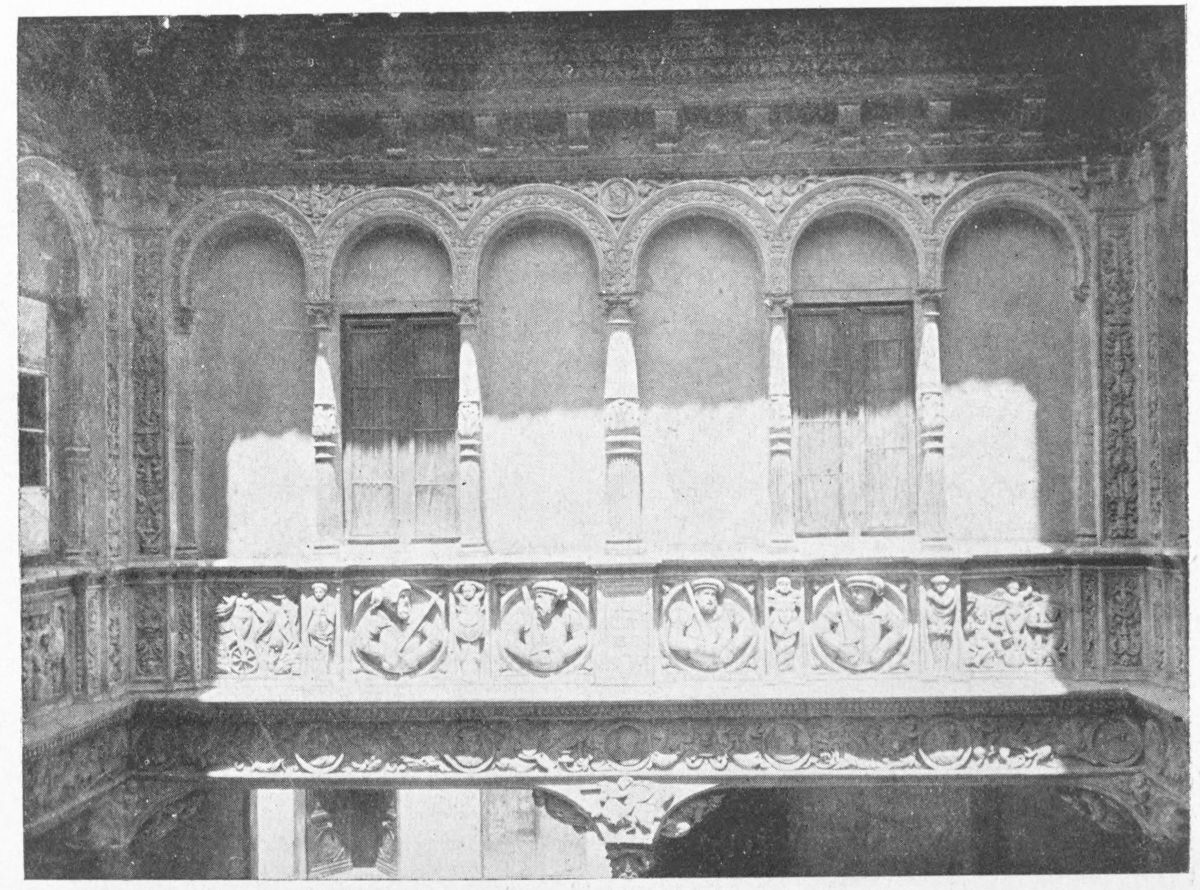
COURT-YARD OF THE HOUSE OF ZAPORTA; OR, OF THE INFANTA
ZARAGOZA
Plate 381
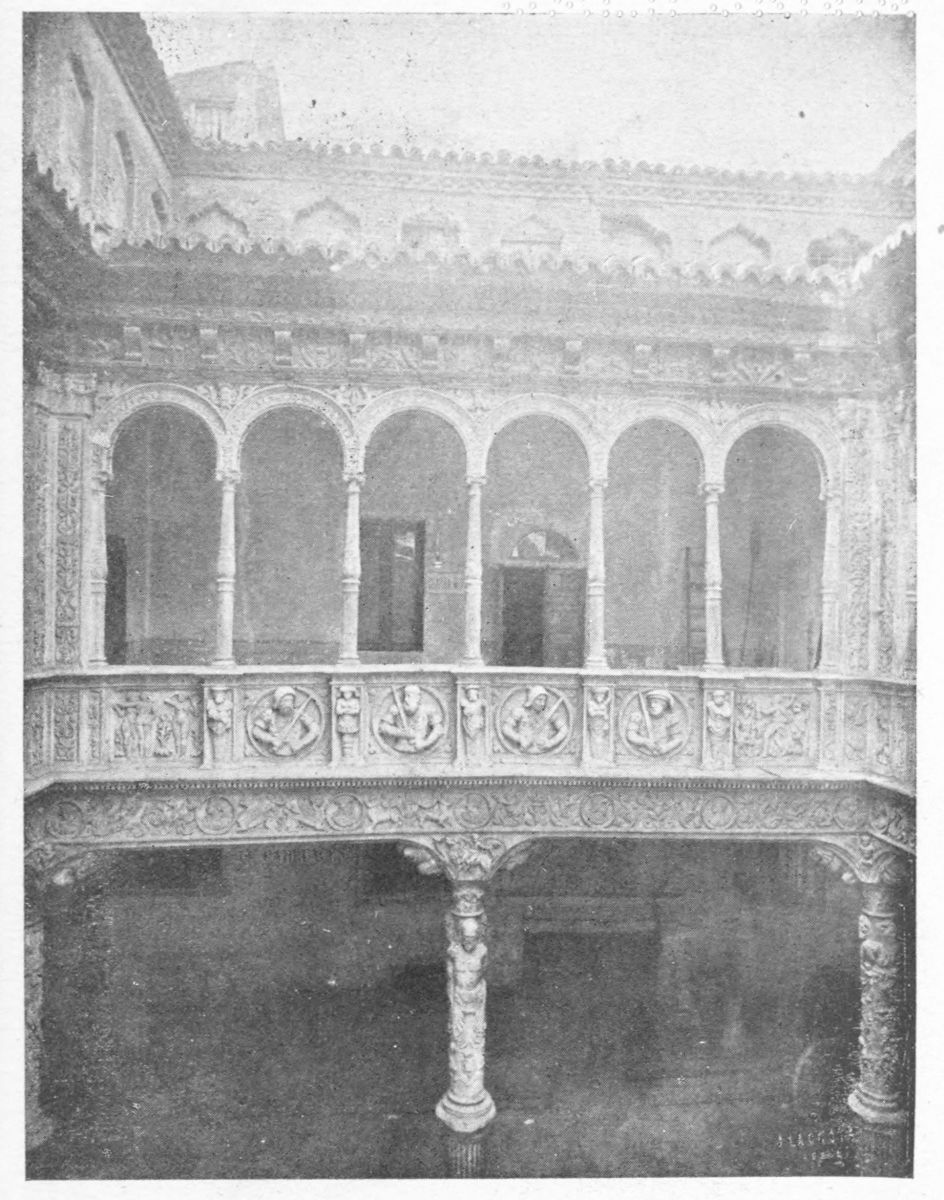
DETAIL OF THE COURT-YARD OF THE HOUSE OF ZAPORTA; OR, OF THE INFANTA
ZARAGOZA
Plate 382
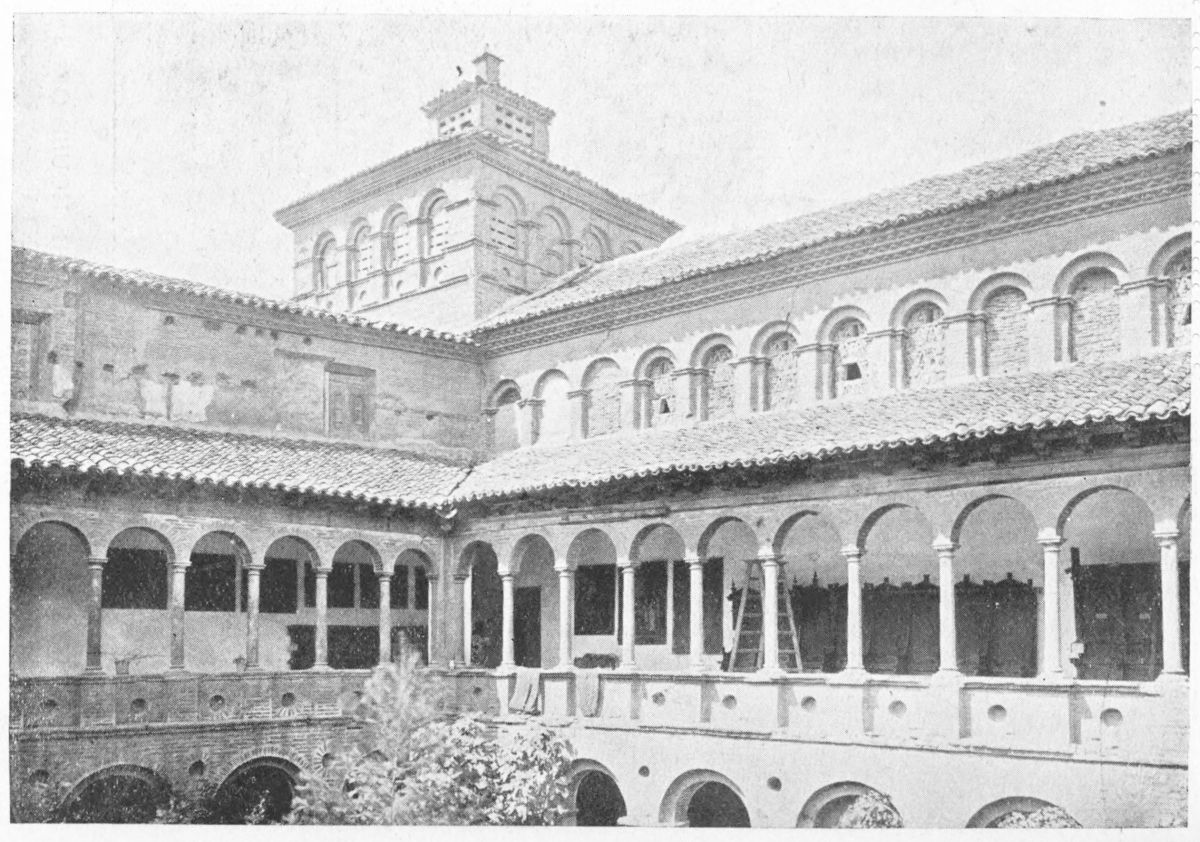
COURT OF THE PROVINCIAL MUSEUM
ZARAGOZA
Plate 383
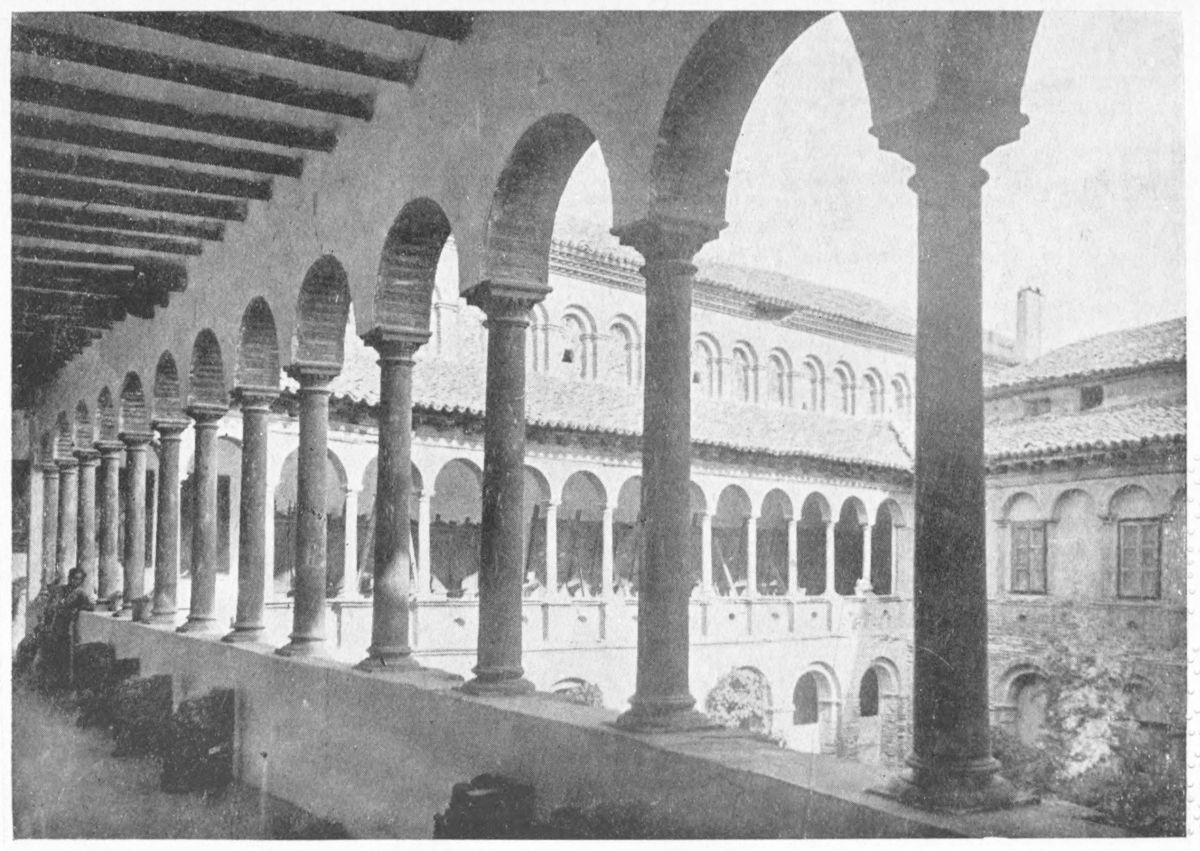
GALLERY IN THE PROVINCIAL MUSEUM
ZARAGOZA
Plate 384
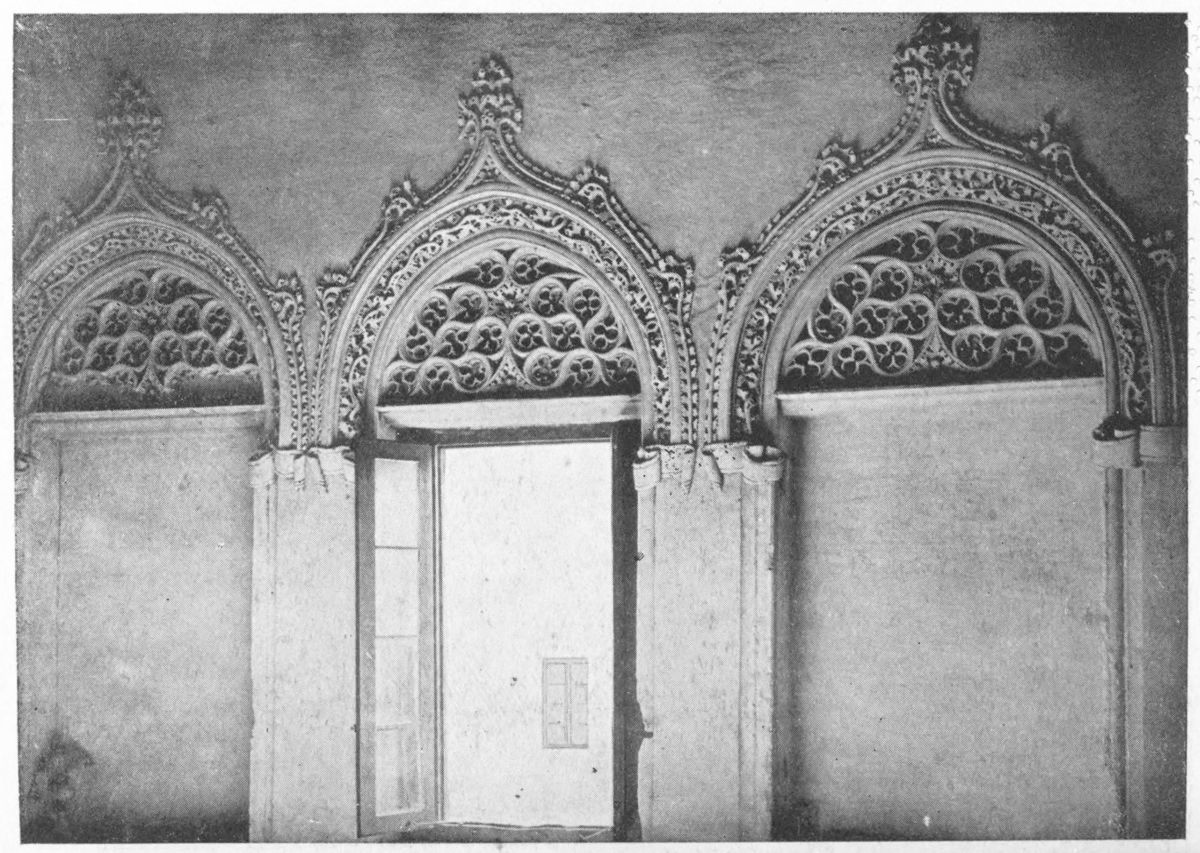
THE ALJAFERIA OR CITADEL. WINDOW OF THE MAIN STAIRCASE
ZARAGOZA
Plate 385
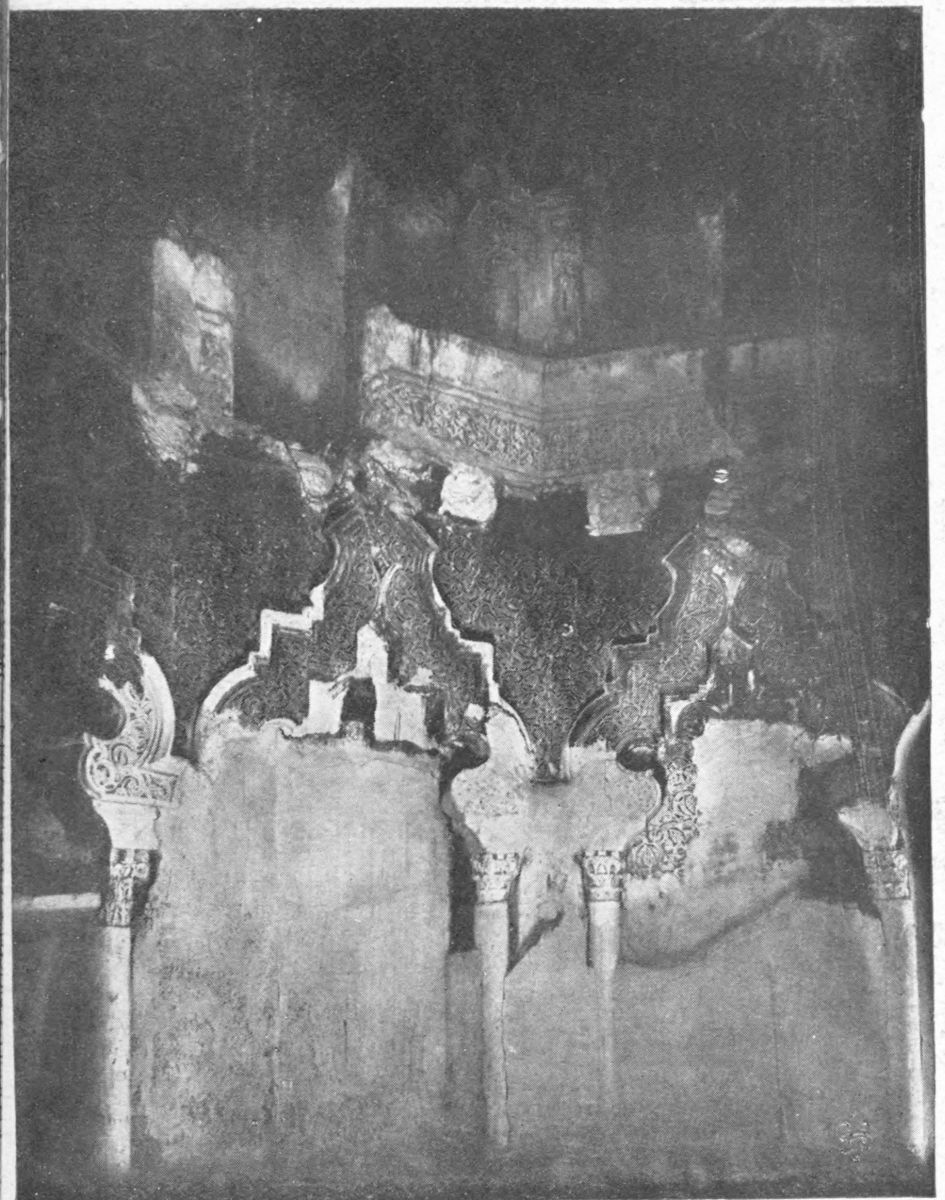
ALJAFERIA. INTERIOR OF THE (SO CALLED) MOSQUE
ZARAGOZA
Plate 386
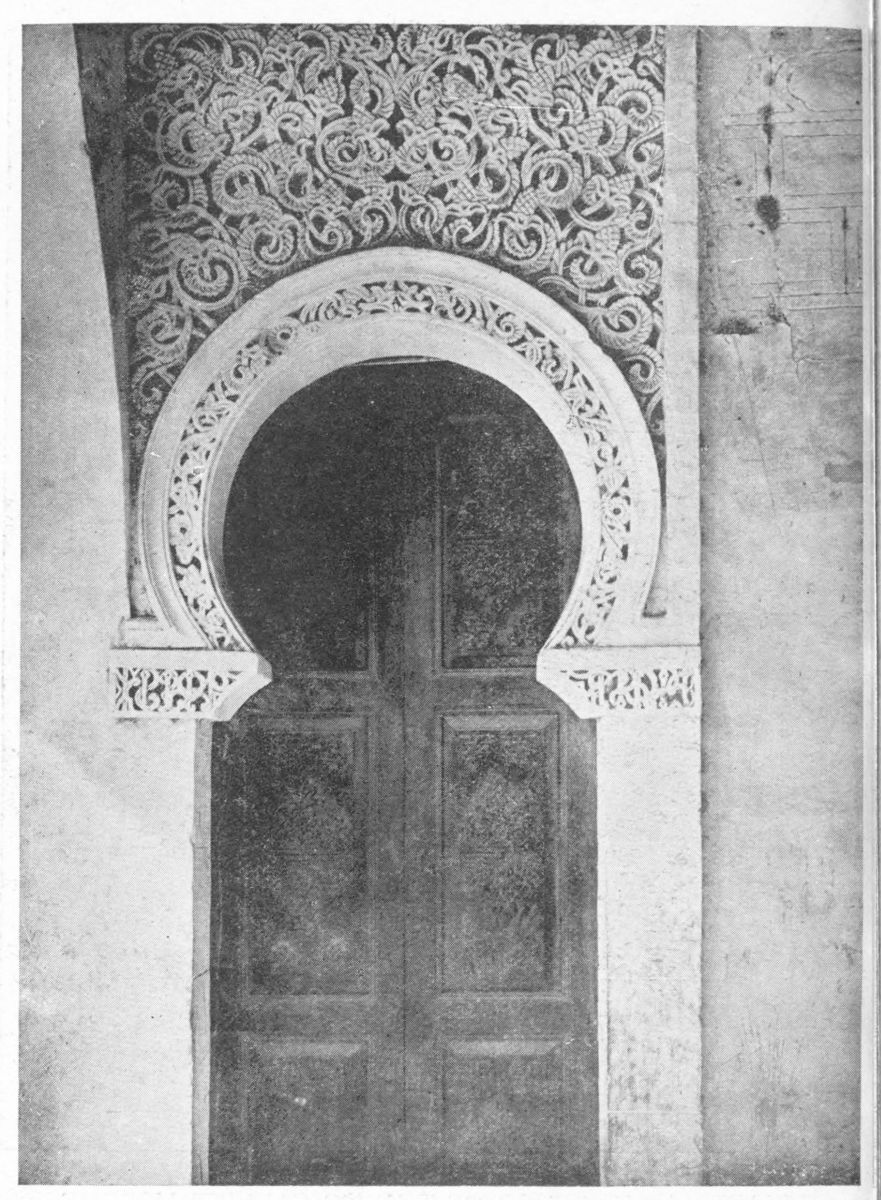
ALJAFERIA. ENTRANCE TO THE (SO CALLED) MOSQUE
ZARAGOZA
Plate 387
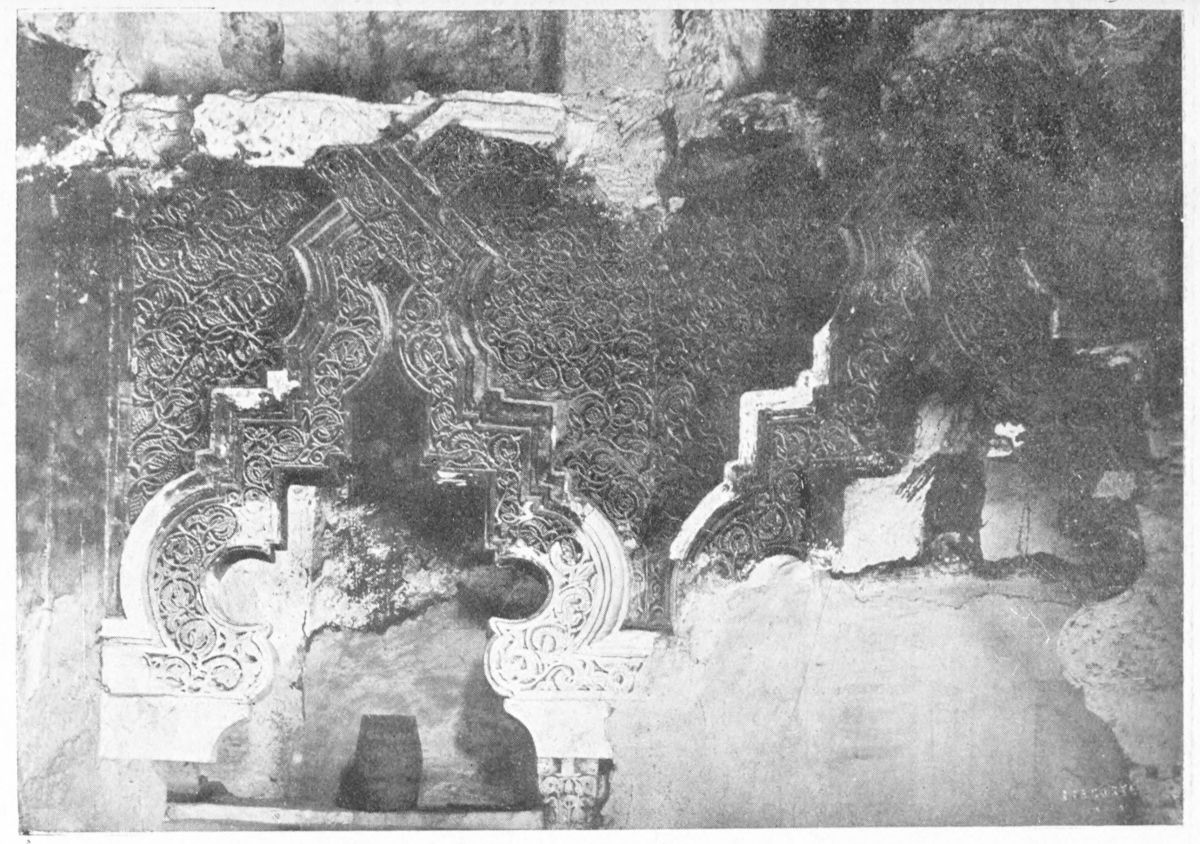
ALJAFERIA. INTERIOR OF THE (SO CALLED) MOSQUE
ZARAGOZA
Plate 388
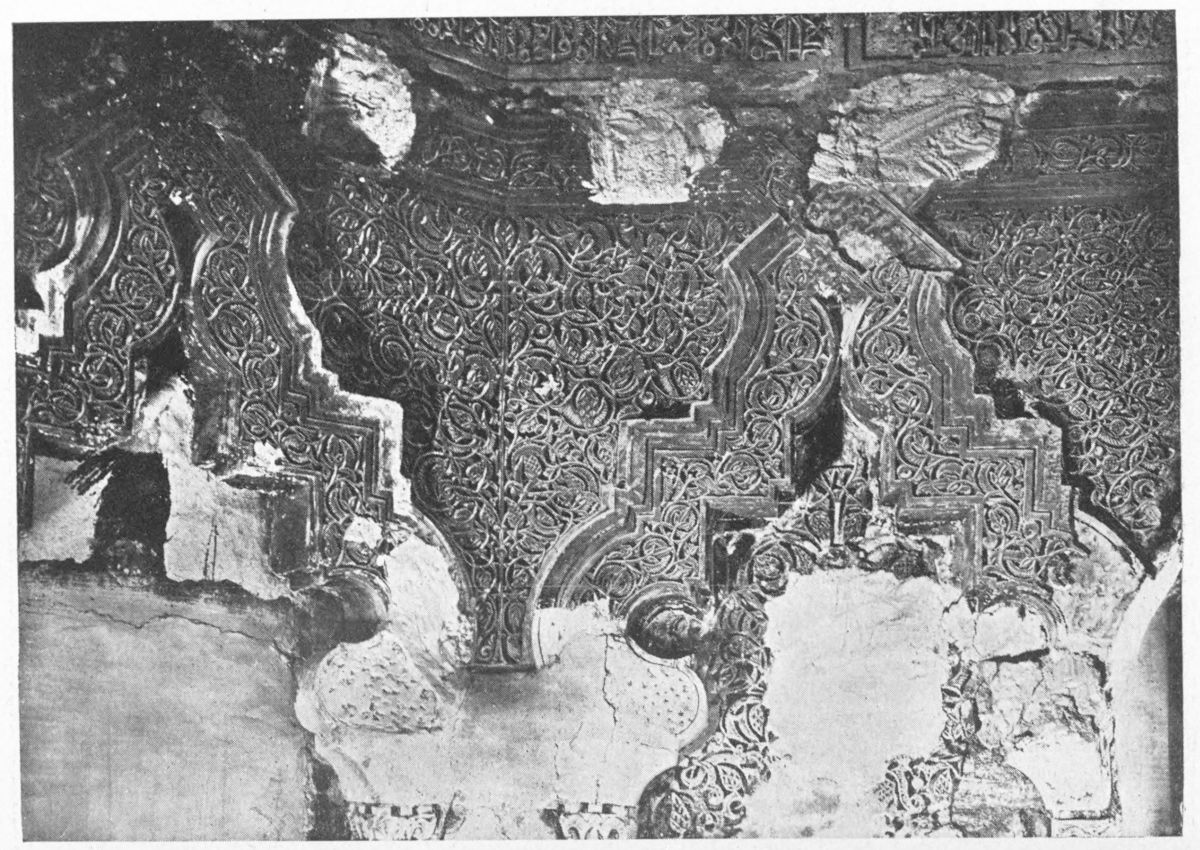
ALJAFERIA. DETAILS OF THE INTERIOR
ZARAGOZA
Plate 389
ALJAFERIA. DETAILS OF THE INTERIOR
ZARAGOZA
Plate 390
DETAILS OF THE ALJAFERIA
PROVINCIAL MUSEUM, ZARAGOZA
Plate 391
DETAIL OF THE ALJAFERIA
PROVINCIAL MUSEUM, ZARAGOZA
Plate 392
ST. ISABEL AND HER HUSBAND. TAPESTRY IN THE UNIVERSITY
ZARAGOZA
Plate 393
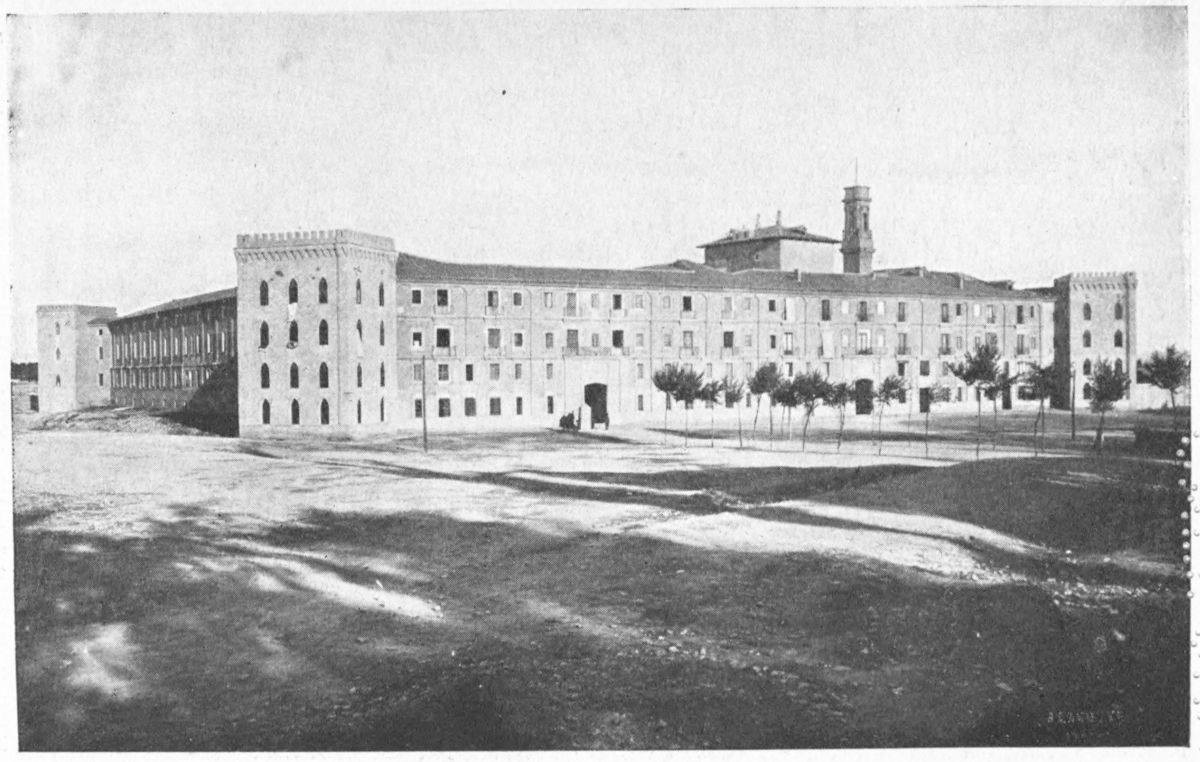
VIEW OF THE BARRACKS OF THE ALJAFERIA
ZARAGOZA
Plate 394
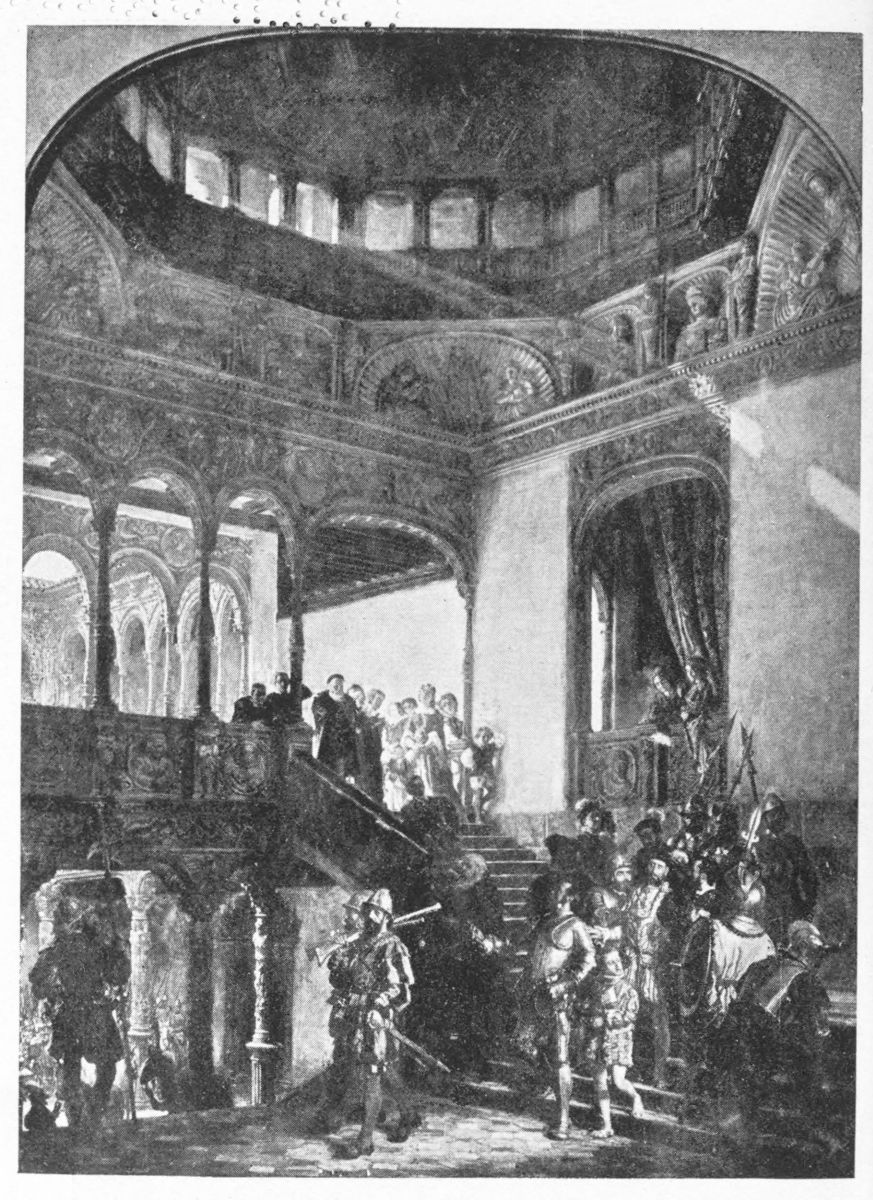
THE CASA DE LA INFANTA. “THE DEPARTURE FOR THE FIGHT” BY P. GONZALVO
PEREZ.
(No. 204 EXHIBITION OF 1871)
ZARAGOZA
Plate 395
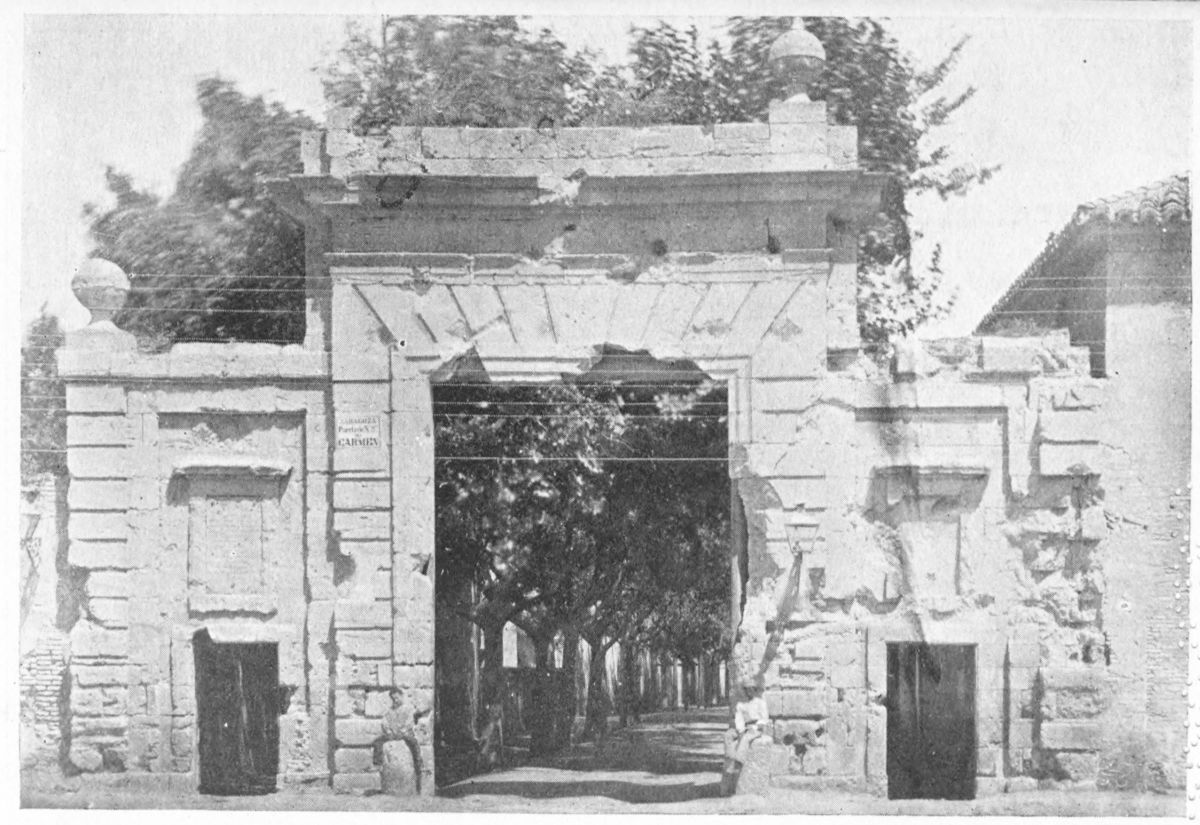
GATE OF OUR LADY DEL CARMEN, FAMOUS FOR THE DEFENCE MADE BY THE HEROINE
OF ZARAGOZA DURING THE SIEGE OF 1808. ZARAGOZA
Plate 396
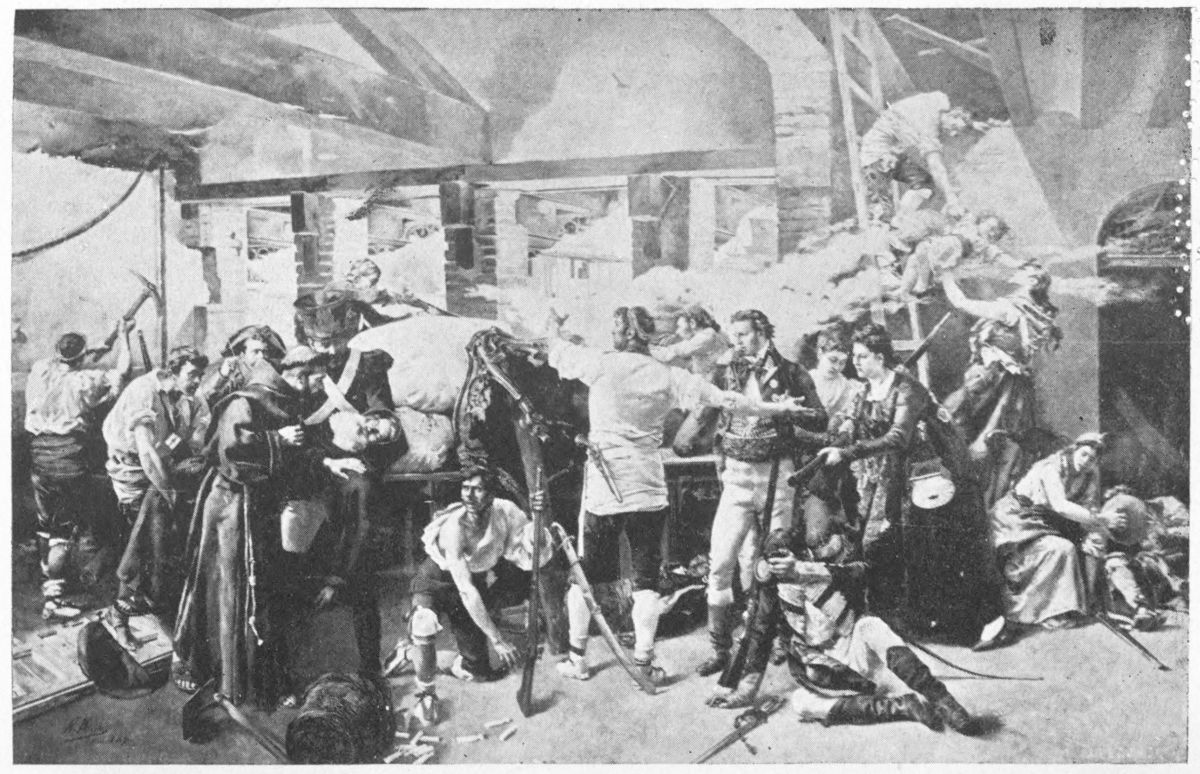
THE DEFENCE OF ZARAGOZA IN 1809, BY NICOLAS MEJIA
ZARAGOZA
Plate 397
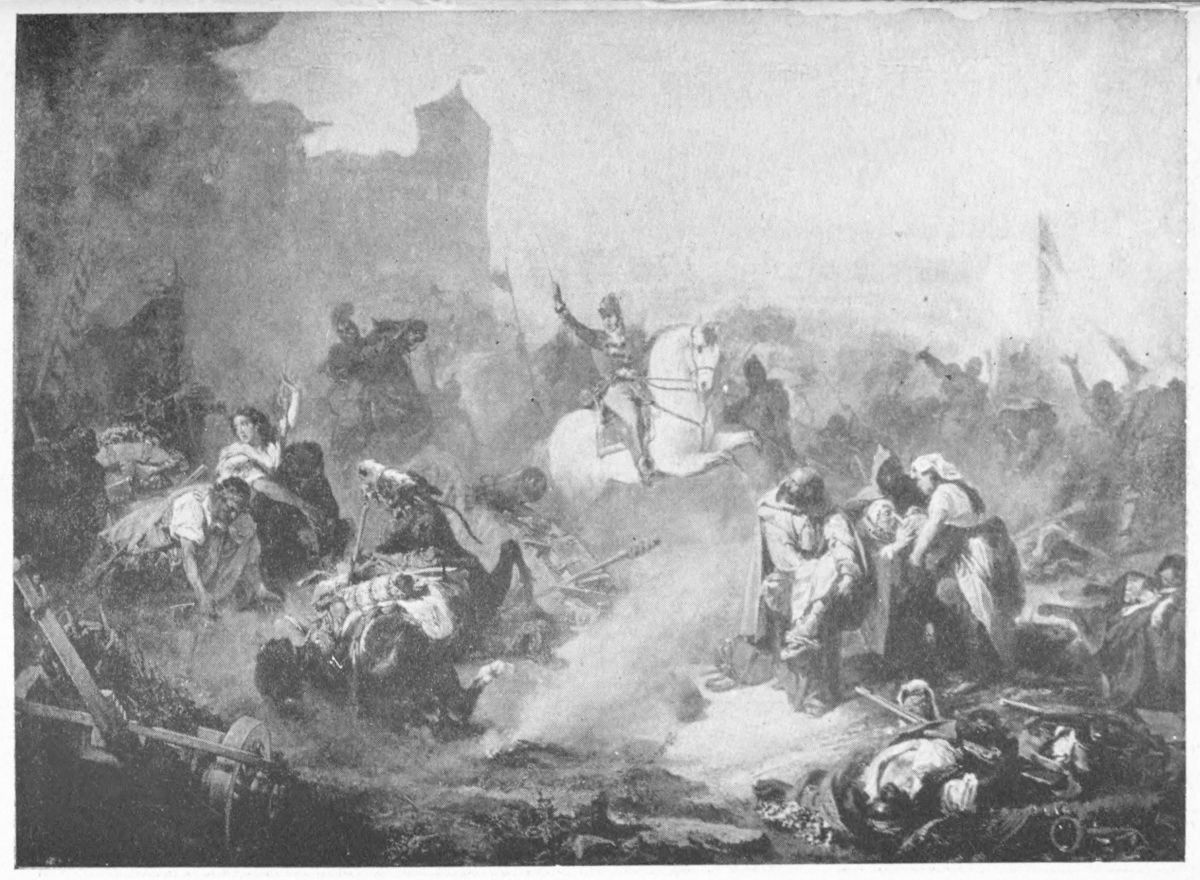
THE FIRST SIEGE OF ZARAGOZA. BY A. FERRANT Y FISCHERMANS
(No. 131, EXHIBITION OF 1871)
ZARAGOZA
Plate 398
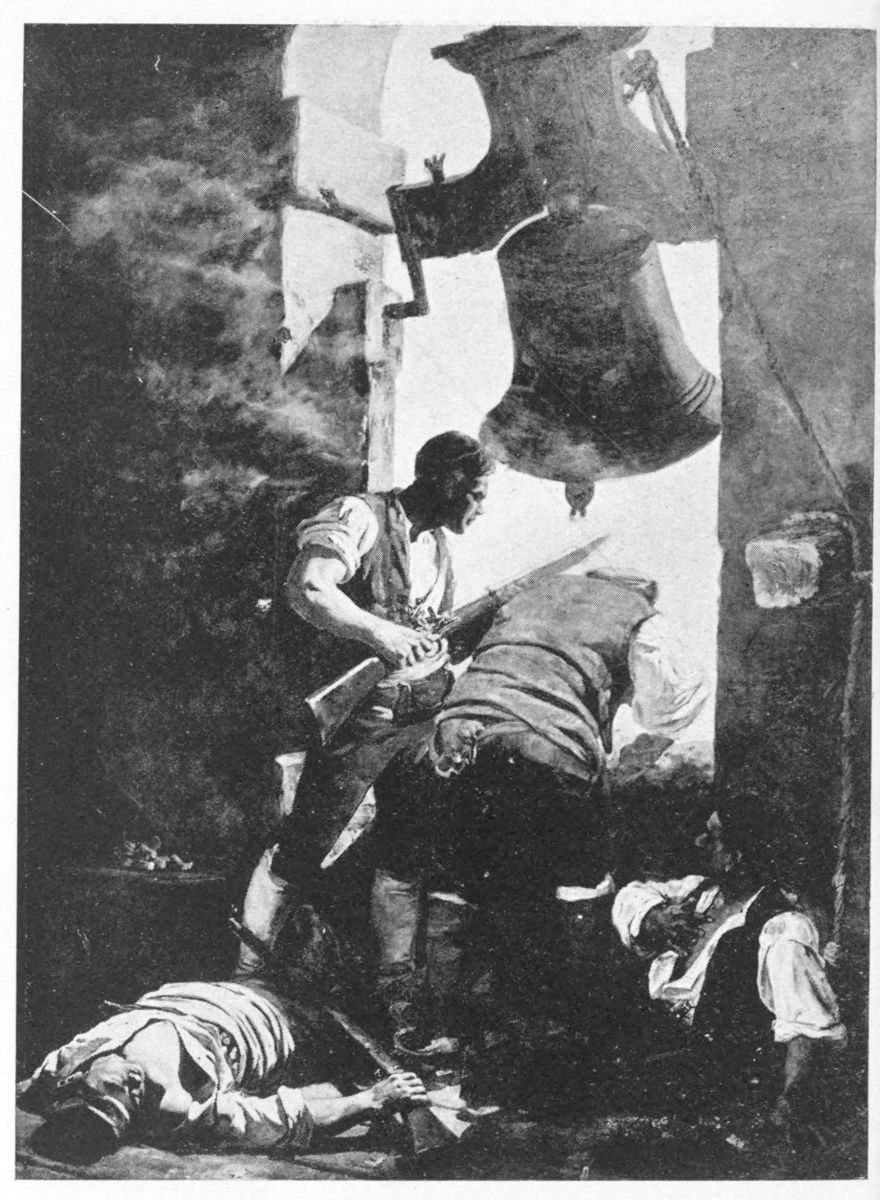
HEROIC DEFENCE OF THE TOWER OF ST. AUGUSTINE AT ZARAGOZA IN THE WAR OF
INDEPENDENCE BY C. ALVAREZ DUMONT
(NATIONAL EXHIBITION OF FINE ARTS, 1884)
Plate 399
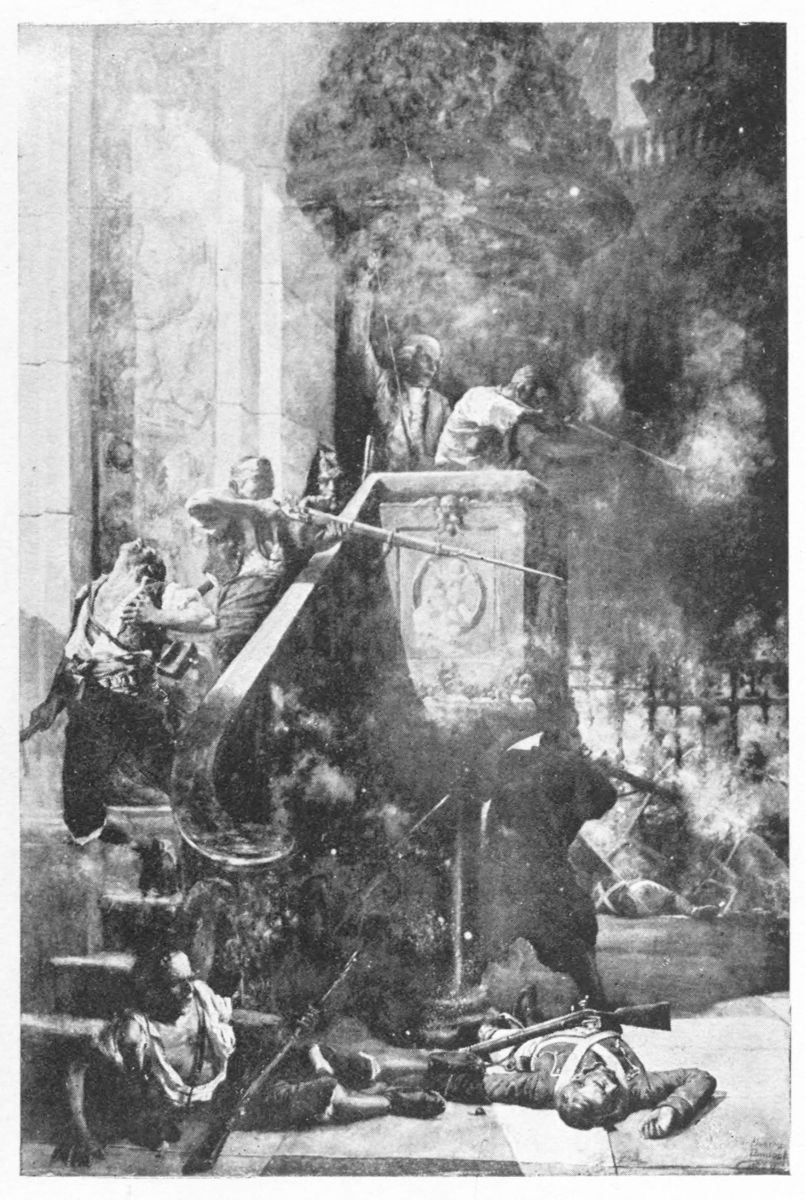
HEROIC COMBAT IN THE PULPIT OF THE CHURCH OF SAN AUGUSTIN AT ZARAGOZA IN
1809. BY C. ALVAREZ DUMONT
Plate 400
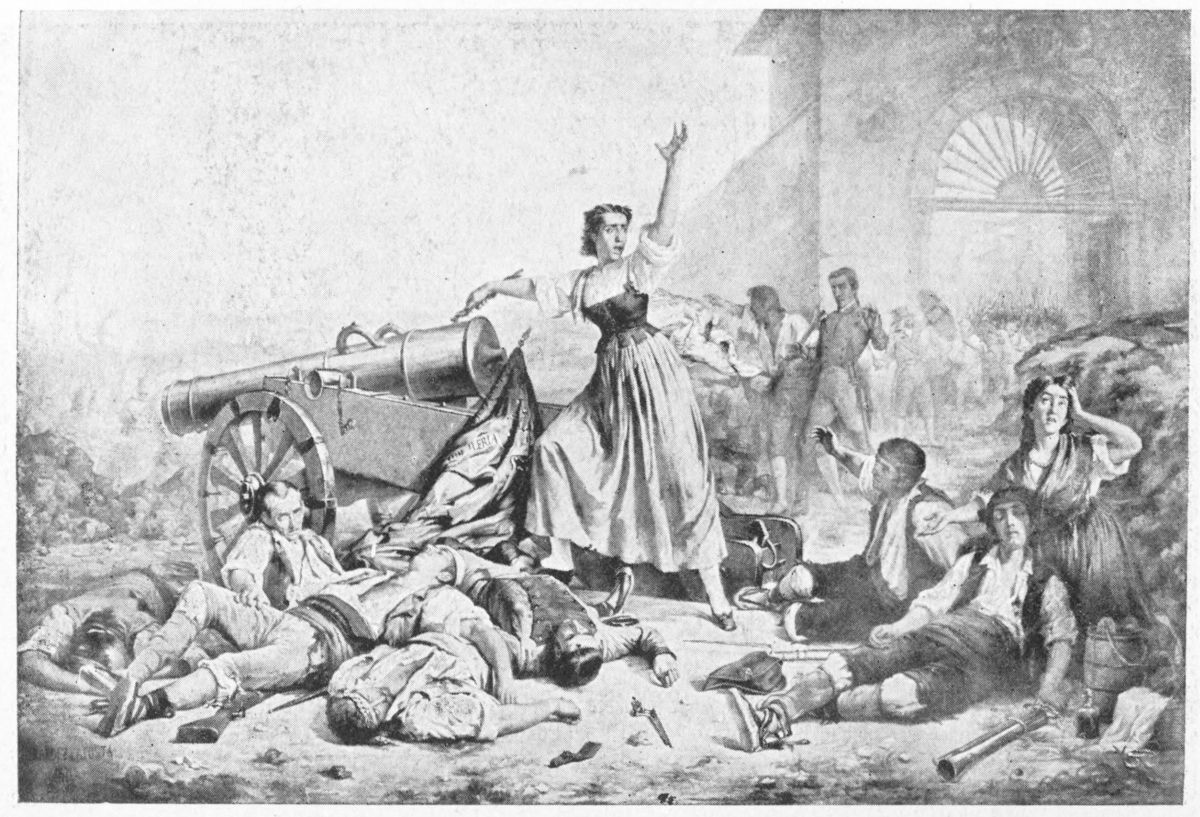
THE MAID OF ZARAGOZA. BY M. HIRALDEZ ACOSTA
No. 213 EXHIBITION OF 1871
Plate 401
THE MAID OF ZARAGOZA. BY NAVARRO Y CANIZARES
Plate 402
ARCH FROM THE ALJAFERIA PALACE AT ZARAGOZA, NOW IN THE ARCHÆOLOGICAL
MUSEUM
Plate 403
ARCH FROM THE ALJAFERIA PALACE AT ZARAGOZA. NOW IN THE ARCHÆOLOGICAL
MUSEUM
Plate 404
DETAIL OF “THE MOSQUE” OF THE ALJAFERIA
ZARAGOZA PROVINCIAL MUSEUM
Plate 405
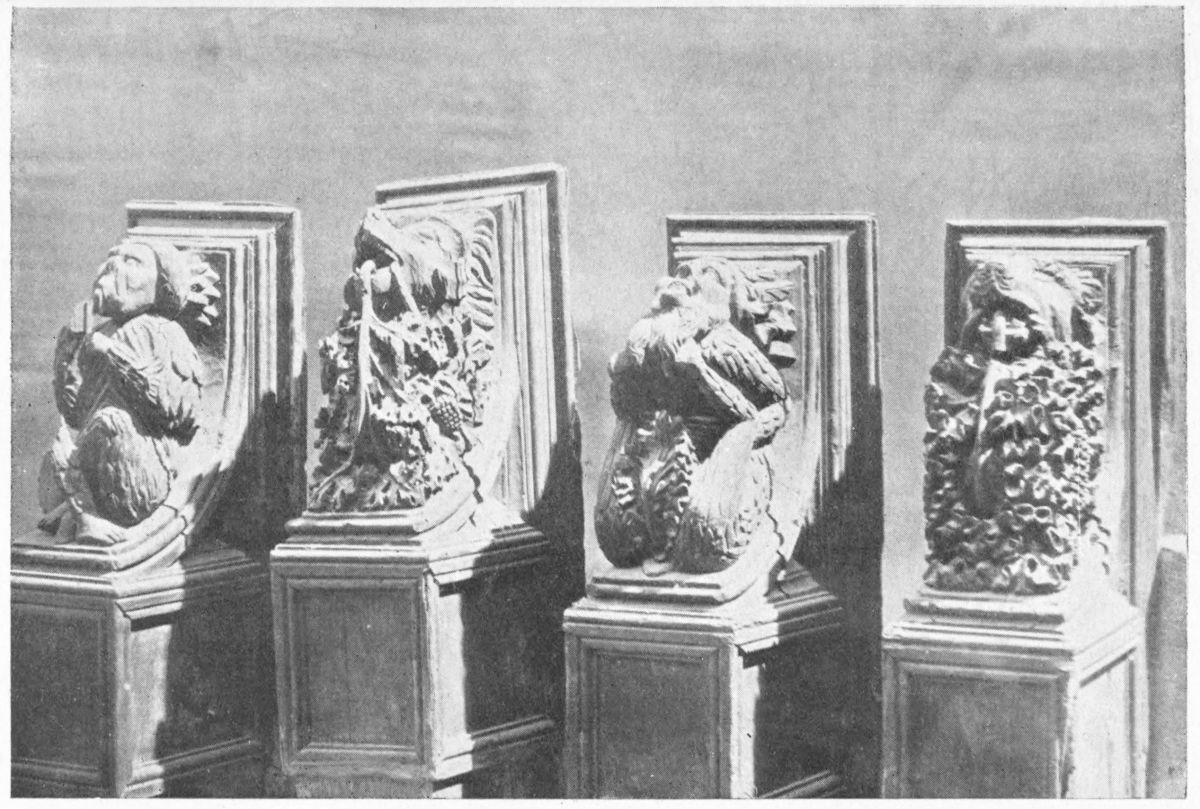
PROVINCIAL MUSEUM. CORBELS OF EAVES. GOTHIC STYLE, FROM THE OLD CUSTOM
HOUSE. ZARAGOZA
Plate 406
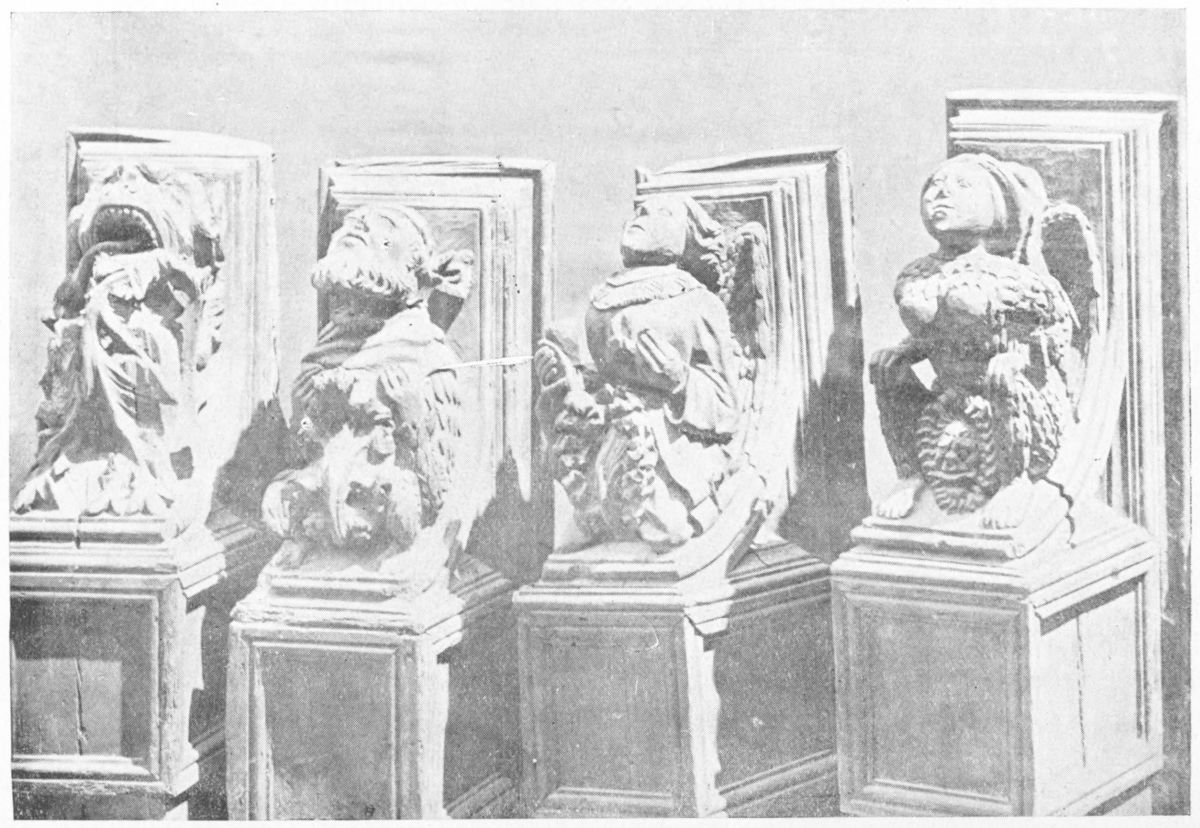
PROVINCIAL MUSEUM. CORBELS OF EAVES
ZARAGOZA
Plate 407
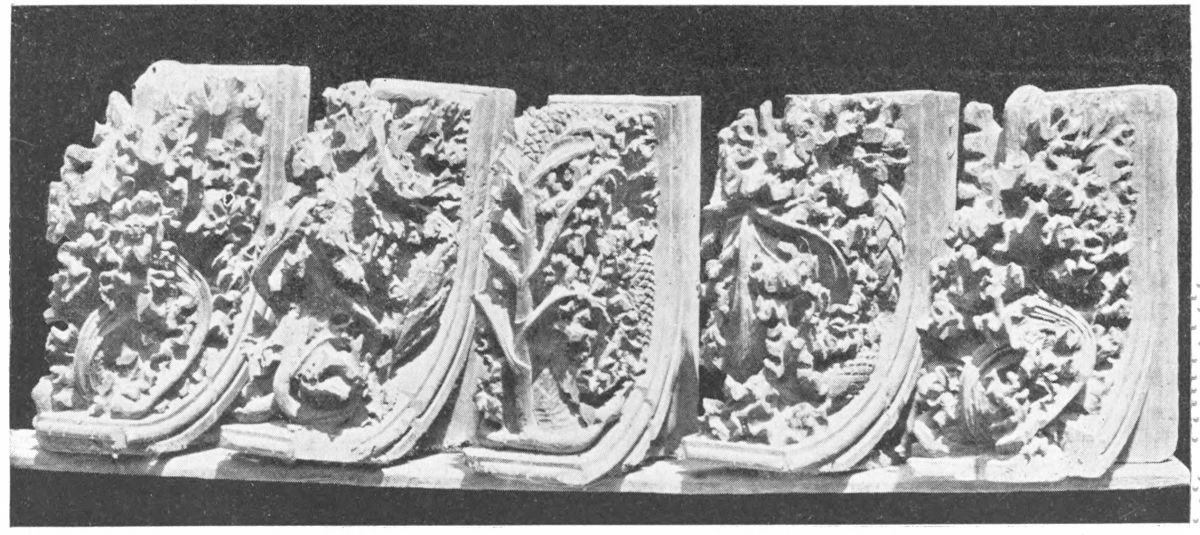
PROVINCIAL MUSEUM. CORBELS OF EAVES. GOTHIC STYLE
ZARAGOZA
Plate 408
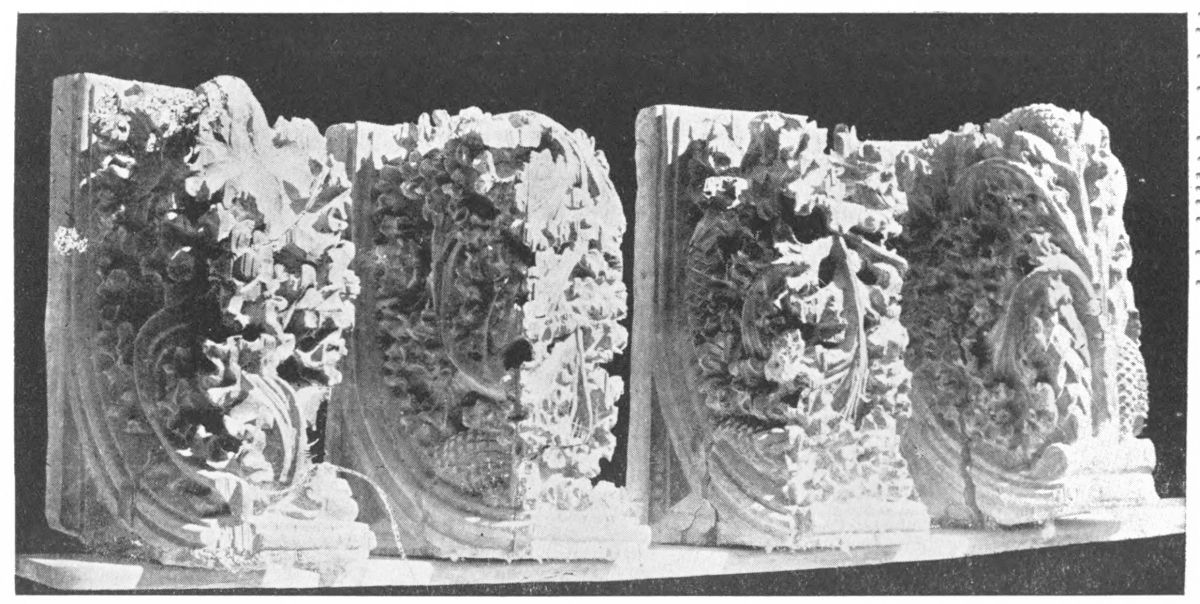
PROVINCIAL MUSEUM. CORBELS OF EAVES. POINTED STYLE
ZARAGOZA
Plate 409
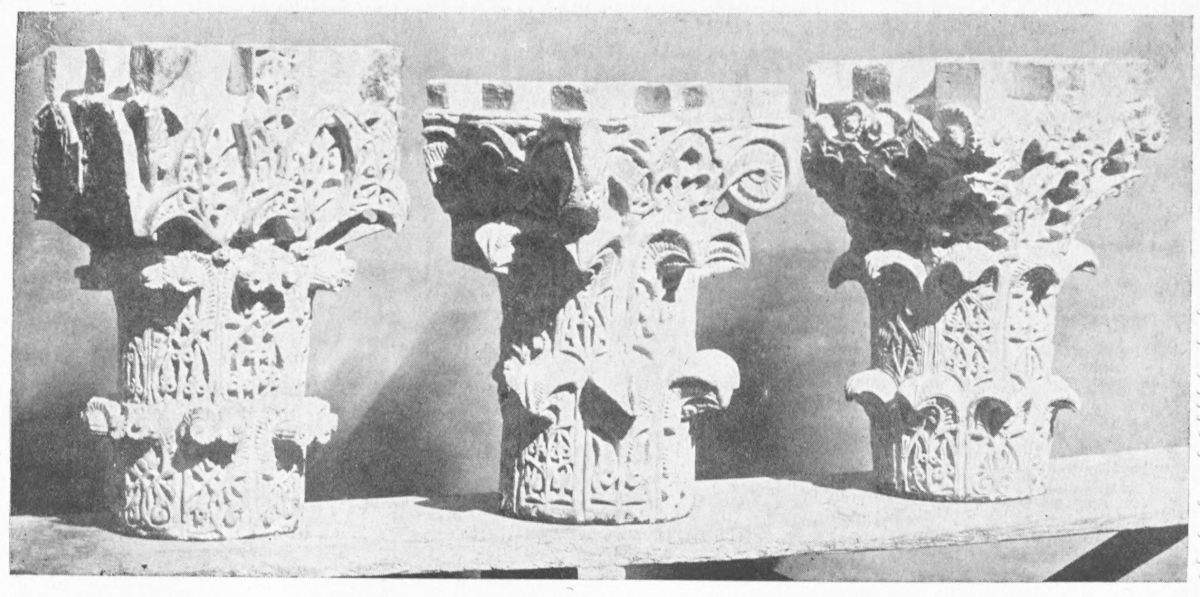
PROVINCIAL MUSEUM. ARAB CAPITALS OF THE ALJAFERIA CASTLE
ZARAGOZA
Plate 410
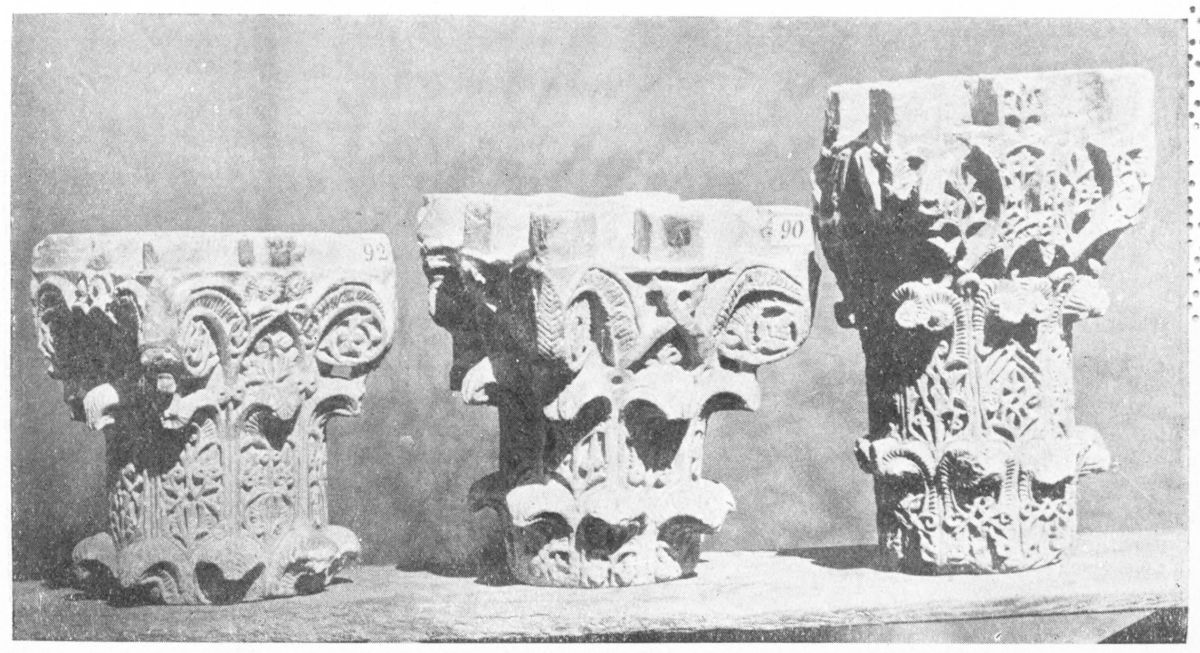
PROVINCIAL MUSEUM. ARAB CAPITALS FROM THE ALJAFERIA
ZARAGOZA
Plate 411
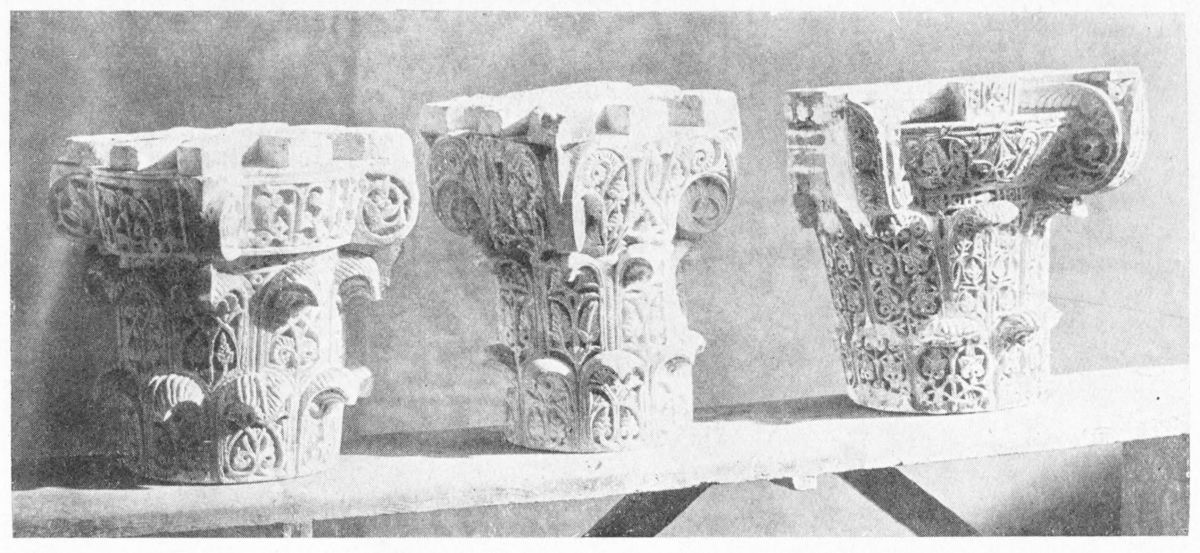
PROVINCIAL MUSEUM. ARAB CAPITALS FROM THE ALJAFERIA
ZARAGOZA
Plate 412
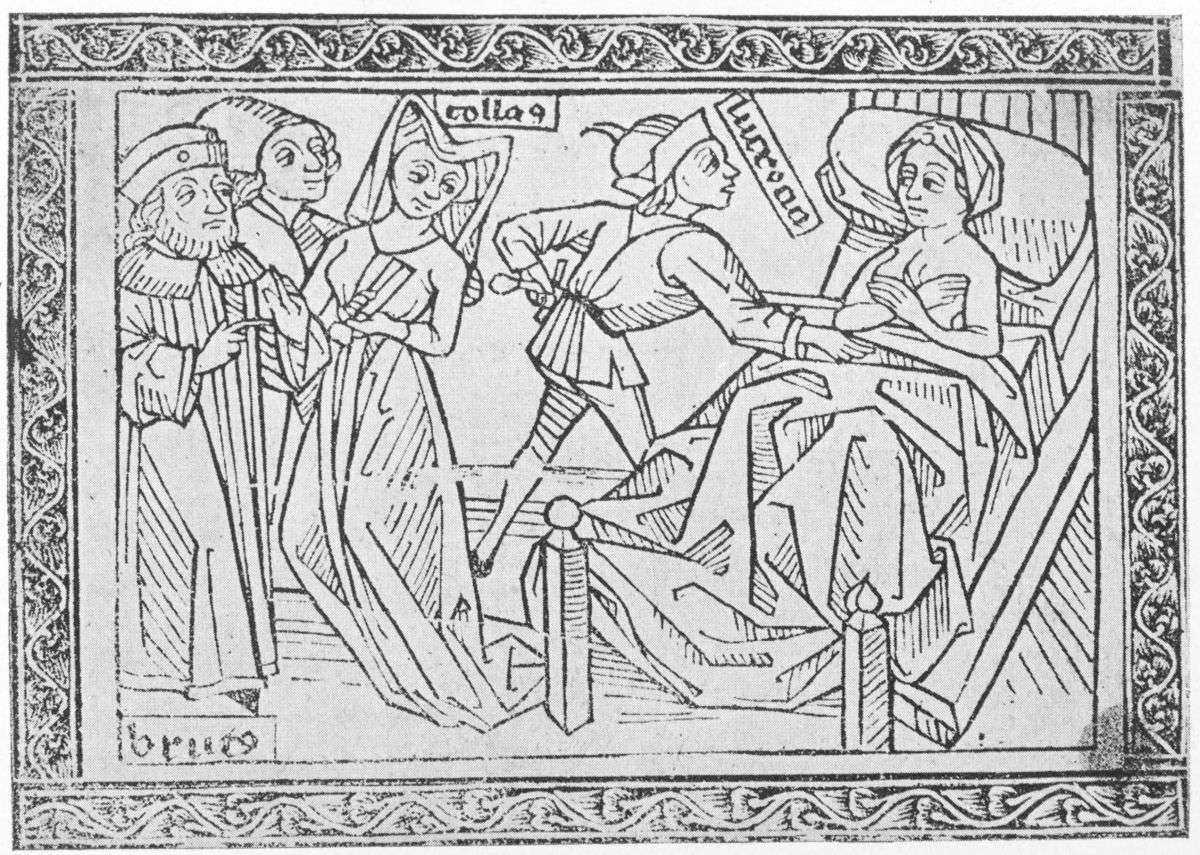
THE STORY OF LUCRETIA. A PLATE FROM THE WORK ENTITLED “MUJERES ILUSTRES”
(FAMOUS WOMEN) BY BOCCACCIO. PRINTED AT ZARAGOZA BY PABLO HURUS IN 1495
(NATIONAL LIBRARY)
Plate 413
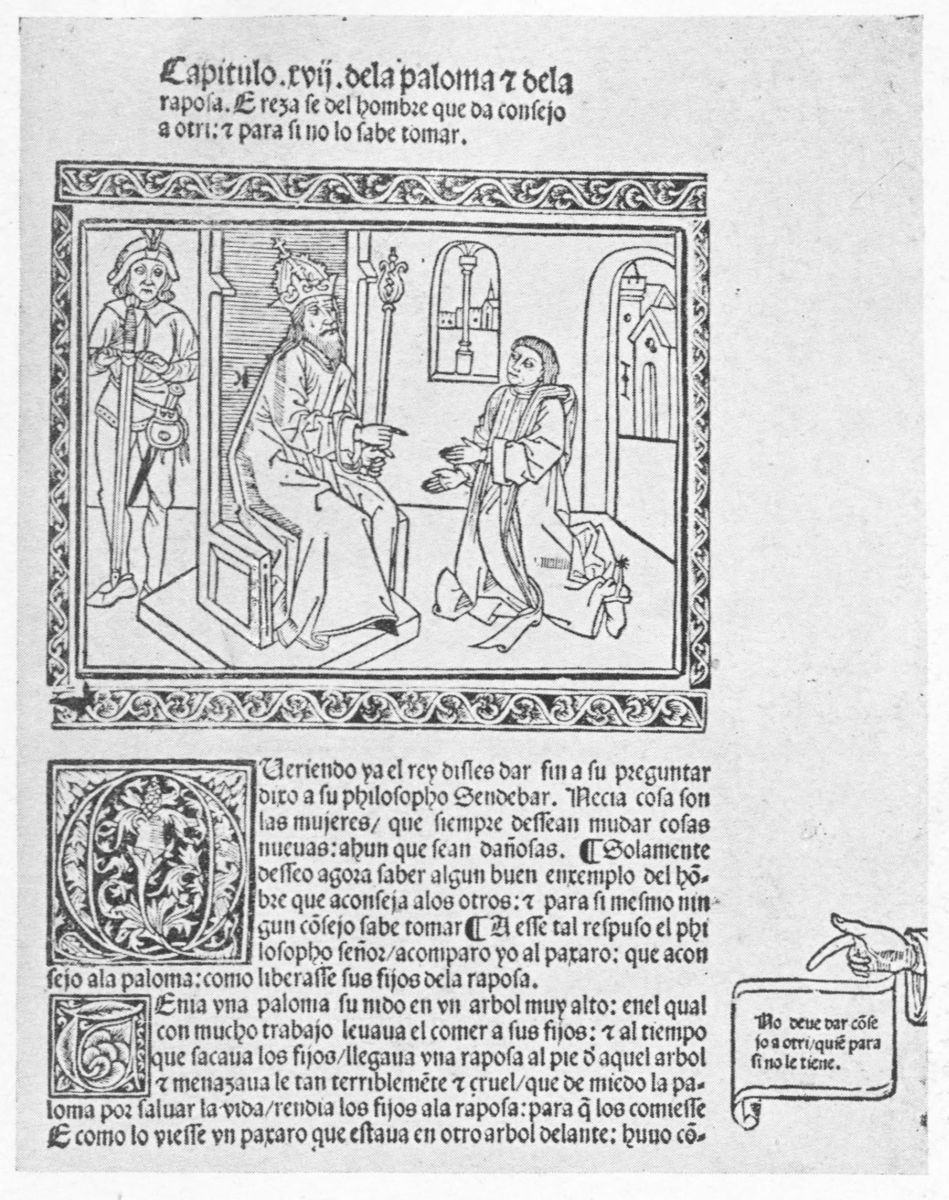
A PAGE FROM THE WORK ENTITLED “EXAMPLE AGAINST THE DECEPTION AND PERILS
OF THE WORLD” BY JUAN DE CAPUA. PRINTED IN ZARAGOZA BY PABLO HURUS IN
1493 (NATIONAL LIBRARY)
![[Image of the book's cover unavailable.]](images/cover.jpg)


