Did you ever get to a camp fire or
log-cabin stove at eleven o’clock
and know that there must be a
hearty meal by twelve? I have lots of
times. The only way to do, if one must
meet these emergencies on short notice, is to
have what I call “stock” on hand. In using
this word I do not mean soup stock, either.
What I mean is that there must be some
vegetables or cereals or other articles of food
at least partially prepared for eating.
I remember one summer when I was very
busy with my writing. I was chief cook and
bottle washer, besides being my own secretary,
and I had three members in my family
to look out for—a friend with a hearty appetite,
a big dog with a no less hearty appetite
and a rather greedy little Maine cat.
The question was how to carry on the work
which was properly my own and at the same
time attend to cooking and other household
work. I hit upon a plan which served excellently
with me. I do not recommend it to
any one else, especially to girls who will be
going into the woods for a vacation and will
have no duties except those connected with
their camp life. But this plan of mine demonstrated
to me once and for all that, even
if one is very busy, it is possible to have a
bountifully supplied table.
The first day I tried the experiment I
went into the kitchen at eleven o’clock.
Never had I been more tired of the everlasting
question of what to have to eat. It
seemed to me that there was never any other
question except that one, and I determined,
with considerable savage feeling, to escape
from it. At eleven o’clock I chopped my
own kindling, started my own fire, and began
twirling the saucepans, frying pans and
baking tins which I wanted to use. I was
set upon cooking up enough food to last for
three or four days, and I did. At two
o’clock not only was all the food cooked and
set away for future consumption, but also
we had eaten our dinner. In that time what
had I prepared? There was a big double
boiler full of corn meal. After this had been
thoroughly boiled in five times its bulk of
water and a large tablespoonful of salt, I
poured it out into baking tins and set it
away to cool. Various things can be done
with this stock; among others, once cool, it
slices beautifully, and is delicious fried in
butter or in bacon fat, and satisfying to the
hungriest camper. Also a large panful of
rice had been cooked. This had been set
aside to be used in croquettes, in rice puddings
and to be served plain with milk at
supper time. So much for the rice and the
corn meal. I had broken up in two-inch
pieces a large panful of macaroni. This was
boiled in salt water, part of it cooled and set
away for further use, some of it mixed with
a canful of tomato and stewed for our dinner
and the rest baked with tomato and
bread crumbs, to be heated up for another
day. On top of the stove, too, I had a mammoth
vegetable stew. In this stew were potatoes,
carrots, parsnips, cabbage, beets,
turnips, plenty of butter and plenty of salt.
The stew remained on the stove, carefully
covered, during the time that the fire was
lighted and was put on again the next day
to complete the cooking, for it takes long
boiling to make a really good stew. Inside
the oven were two big platefuls of apples
baking. These had been properly cored and
the centers filled with butter and sugar and
cinnamon; also two or three dozen potatoes
were baking in the oven, some of which
would serve for quick frying on another day.
In addition to the food mentioned, I set a
large two-quart bowl full of lemon jelly with
vegetable gelatin. It took me exactly fifteen
minutes to make this jelly and during that
time I was giving my attention to other
things besides. I made also a panful of
baking powder biscuits which, considering
the way they were hustled about, behaved
themselves in a most long-suffering and commendable
fashion, turning out to be good
biscuits after all.
Now, the import of all this is that, with
planning, a little practice and some hopping
about, a good deal of cooking and preparation
of food can be done in a short time.
Unnecessary “fussing” about the cooking is
not desirable in camp life. The simpler that
life can be made and kept the better. The
more we can get away from unwholesome
condiments, highly seasoned foods, too much
meat eating and coffee drinking, too many
sweets and pastries, the better. The girl
who goes into the woods with the idea of
having all the luxuries—many of them
wholly unnecessary and some of them undesirable—of
her home life, is no true “sport.”
The grand object for which we cook in camp
is a good appetite and that needs no sauce
and sweets.
What are some of the recipes a girl should
have with her for log-cabin cooking? In
the first place, we must take with us a good
recipe for bread-making. There are so many
I will give none. The best one to have is
the one used at home, but let me say here
that no flour so answers all dietetic needs in
the woods as entire wheat. Delicious baking
powder biscuits can be made from it as
well as bread. Also know how to boil a potato.
You think this is a matter of no importance?
It would surprise you then,
wouldn’t it, to know that there are some people
devoting all of their time teaching the
ignorant and the poor the art of boiling a
potato. You can boil all the good out of it
and make it almost worthless as food, as
well as untempting, or you can cook it properly,
making it everything it ought to be.
Know, too, how to clean a fish. Oh, dear,
you never could do that! It makes you
shiver to think of such a thing. Very well
then, camp is no place for you. Your
squeamishness which might seem attractive
some place else will only be silly there,
making you a dead weight about somebody
else’s neck. Does your brother Boy Scout
know how to clean a fish? Did you ever
know a real boy who did not know how to
clean a fish? Why not a real girl, then, perhaps
a Camp Fire Girl? Oh, but the cook—no,
you will be the cook in camp or the
assistant cook. Then get your brother to
show you how to cut off its head and to
scale it, if it is a scaly fish, how to slit it
open, taking out the entrails, how to wash
it thoroughly and dry it, how to dip it in
flour or meal and to drop it into the sizzling
frying pan, how to turn it and then finally
the moment when, crisp and brown, it should
be taken out and served. Know, too, how to
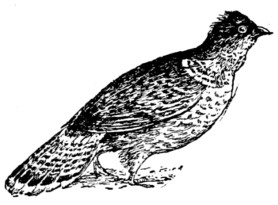
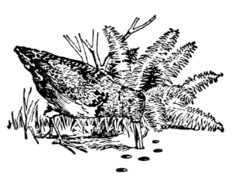
pluck and clean a partridge.[5] One day this
last summer I went up the cut behind my
camp, intent upon finding a partridge for
our supper. I hadn’t gone far before I
found one and with the second shot of my
rifle brought the poor fellow down. I took
him home to the cook whom I had with me
then, the daughter of a neighboring farmer.
I gave her the bird and told her to get him
ready for supper. She said she couldn’t;
she didn’t know how.
“Don’t know how?” I asked. “What do
you mean?”
She said that she did not know how to
pluck and clean a partridge.
“Well,” I replied, “you know how to
clean a chicken, don’t you?”
“Mercy me, no!” she objected, looking
pale and silly. “Mother always cleans the
chickens.”
Mother always cleans the chickens!
Mother does a good deal too much of the
things that are somewhat unpleasant in this
American home life of ours. This girl had
been perfectly willing that her mother
should do all the work which seemed to her
too disagreeable or unpleasant to do herself.
But I am glad to say, and her mother ought
to have been grateful to me, she helped in
dressing that partridge and I did not care a
tinker when, after it had been cooked, she
seemed to feel too badly to eat very much of
it. I wonder how her mother had felt after
all the hundreds of chickens she had killed,
plucked, cleaned and cooked for that very
girl of hers.
You must know, too, how to boil an egg,
and do not do as I saw that same incompetent
farmer’s daughter do—I suppose because
she had left almost everything to her
very competent mother—do not boil your
eggs in the tea kettle. The water in the
tea kettle should be kept as clean and fresh
as possible. There is no excuse for a dirty
tea kettle. We should be able in the woods,
too, to know how to scramble eggs, if one
has them, and to make omelets, and to boil
corn meal, and the best ways for cooking
rice and of baking fruits. Good apple pies,
too, if you can make pastry without too
much trouble, will not go amiss.
There are a few recipes which you must
get out of the home cook book, besides the
few which I will now give you. Baking powder
biscuits are not easy to make. Even
very good cooks sometimes do not have success
with them. Do not be discouraged if at
your first effort you should fail. Keep on
trying. You must learn, for I think it can
be said that baking powder biscuits constitute
the bread of the woods. I know farming
families in northern Maine who do not
know what it is to make raised bread. They
have nothing but baking powder or soda and
cream of tartar bread. Use one quart of
sifted flour, one teaspoonful of salt, three
rounding teaspoonfuls of baking powder,
one large tablespoonful of butter and enough
milk, evaporated or powdered milk, or fresh
if you have it, to make a soft dough. Mix
these things in the order in which they are
given, and when the dough is stiff enough to
be cut with the top of a baking powder can
or a biscuit cutter, sprinkle your bread and
also your rolling pin with flour and roll out
the dough. It will depend upon your oven
somewhat, but probably it will take you from
ten to fifteen minutes to bake these biscuits.
A recipe for corn meal cake, too, should
be in one’s camp kit. The simpler that recipe
the better. Some forms of corn bread
take so long to prepare that they are not
suitable for the woods. The one I shall give
you will prove practicable. You might take
one from your own home cook book, too, if
you wish. Mix the ingredients in the order
in which they are set down and bake them in
a moderately hot oven. If you haven’t anything
else to use, bread tins a third full will
serve. One cup of whole corn meal, a half
a teaspoonful of salt and a cup of sugar, a
whole cup of flour, three teaspoonfuls of
baking powder—these should be level—one
egg, one cup of milk and a tablespoonful of
melted butter.
Pancakes you must also know how to
make. One can’t very well get along in the
wilderness without some sort of griddle
cake, the simpler the better. Sour milk pancakes
are the best, particularly as it is not
necessary to use eggs if one has sour milk,
but that is not always feasible, as frequently
you will have to use evaporated milk. Mix
a pint of flour, a half a teaspoonful of salt,
a teaspoonful of soda, one pint of sour
milk, and two eggs thoroughly beaten. See
that your frying pan, for in camp you will
cook your cakes in the frying pan, has been
on the stove some time. Grease it thoroughly
with bacon fat or butter; never use
lard unless you have to. Cook the cakes
thoroughly. You will find turning your first
hot cakes something of an adventure.
There should also be among our log-cabin
recipes some directions for telling you how
to make at least two kinds of nourishing
soup without stock. Soup with stock in camp
life is not practicable. Pea or bean soups
are the most satisfying and satisfactory.
The peas or beans must be soaked in cold
water over night. Pea or bean soups take a
long time to make, so that it is not always
practicable to have them in camp. I will
give you a recipe for split pea soup. Take
with you, if you are likely to need it, also, a
recipe for black bean soup. After soaking
over night, pour the water off the split
peas and add to the cup of peas three pints
of cold water. Do not let the liquid catch
on the sides of the pan in which the peas are
simmering. When the peas are soft, rub
them through a strainer and put them on to
boil again, adding one tablespoonful of butter,
one of flour, one-half teaspoonful of
sugar and a teaspoonful of salt. You don’t
need pepper—better leave pepper at home
and if you get so that you don’t miss it in
camp, then you need never use it again. It
is wretched stuff, anyway, doing more to
harm the human stomach than almost any
other food poison in use.
Baked beans, too, make a prime dish for
camp life, partly, I suppose, because, like
corn meal and pea and bean soups, potatoes
and the heartier kinds of food, they are so
satisfying to the camper’s appetite. It isn’t
necessary to cook your beans with pork, substitute
some kind of nut butter, peanut butter
or almond butter, or plenty of fresh dairy
butter. The quart of pea beans should be
soaked in cold water over night. In the
morning these beans must be put into fresh
water and allowed to cook until they are soft
but not broken. Empty them into a colander
and then put them in the bean pot, or if
you haven’t a bean pot, a deep baking dish
will do. Put in a quarter of a cup of molasses
and a half cup of butter and pour a
little hot water over the beans. Keep them
all day long in an oven that is not too hot.
Don’t put any mustard in your beans; mustard
is as great an enemy to the human
stomach as pepper, and that is saying a good
deal.
Against a rainy day when you may wish to
amuse yourselves with additional dishes, or
a hungry day when you are cold and ravenous,
I will add a few more recipes. Corn
pone is good. This is just corn bread baked
on a heated stone propped up before the fire
till the surface is seared. Then cover with
hot ashes and let it bake in them for twenty
minutes. After that dust your cake and eat
it. I have told you how to make corn meal
mush. With butter and sugar (in case you
have no milk) it is excellent. What do you
say to some buckwheat cakes on a cold,
rainy night? If you say “yes,” all you have
to do is to mix the self-raising buckwheat
flour with a proper amount of water and
drop some good-sized spoonfuls into a hot,
greased frying-pan. The turning of hot
cakes is the next best fun to eating them.
Mash your boiled potatoes, season with butter
and salt and milk if you have it. After
that, call it mashed potato. It is good to eat
and keeps well for paté cakes or a scallop.
When hungry, fried potatoes can be eaten
with impunity by the most zealous dietarian.
Fried potatoes are naughty but nice. Mushrooms
are nice, too, but dangerous. If you
have a trained botanist or someone who has
always gathered mushrooms for eating, then
perhaps it will be safe to cook this bounty
the woods spread before you. If you must
have bacon you cannot get bacon that is too
good. Ferris bacon and hams are the finest
and most reliable cured pork in this country.
And since we are speaking of pork and therefore
of frying, let me give you one caution:
Never use the frying-pan when you can avoid
doing so. No amount of care can make fried
foods altogether wholesome. Even an out-of-door
life cannot altogether counteract the
bad effects of fried food. You can make
good broth from small diced bits of game or
whatever meat you have, when the meat is
tender, add vegetables and allow the whole
to boil for some time. Chowder, too, is a
standard dish for camp life. Take out the
bones from the fish and cut up fish into small
pieces. “Cover the bottom of the kettle with
layers in the following order: slices of pork,
sliced raw potatoes, chopped onions, fish,
hard biscuit soaked (or bread). Repeat this
(leaving out pork) until the pot is nearly
full. Season each layer. Cover barely with
water and cook an hour or so over a very
slow fire. When thick stir gently. Any
other ingredients that are at hand may be
added.” (Seneca’s “Canoe and Camp Cookery”
and Breck’s “Way of the Woods.”) A
white sauce for fish and other purposes will
be found useful. Melt tablespoonful of butter
in saucepan; stir in dessert-spoonful of
flour; add 1⁄2 teaspoonful salt; mix with a
cup of milk. Except for the ginger, gingerbread
is not a bad cake for the woods. One
cup of molasses, one cup of sugar, one teaspoonful
of ginger, one teaspoonful of soda,
one cup of hot water, flour enough to form a
medium batter, 1⁄2 cup melted butter, and a
little cinnamon will make it. You might
experiment with Chinese tea cakes made with
1⁄4 cup butter, one cup brown sugar, 1⁄8
teaspoonful
soda, one tablespoonful of cold
water, and one cup of flour. Shape this mixture
into small balls, and put on buttered
sheets and bake in a hot oven. Molasses
cookies are good and substantial, not a bad
thing to put in the duffle bag on a day’s
tramp. Use one cup of molasses, one teaspoonful
of ginger, one teaspoonful of soda,
two teaspoonfuls of warm water or milk, 1⁄2
cup of butter, enough flour to mix soft. Dissolve
the soda in milk. Roll dough one-third
of an inch thick and cut in small rounds.
Two well known candy recipes will add
to the pleasures of a rainy day and a
sweet tooth. Penuche: Two cups brown
sugar, 3⁄4 cup milk, butter size of a small nut,
pinch of salt, one teaspoonful of vanilla, 1⁄2
cup walnut meats. Boil the first four ingredients
until soft ball is formed when dropped
in water. Then add vanilla and nuts, and
beat until cool and creamy. Fudge: 2 cups
sugar, 3⁄4 cup milk, 3 tablespoonfuls cocoa, a
pinch of salt, butter size of small nut, 1⁄2 cup
walnut meats if desired. Cook same as
penuche.
Perhaps, in conclusion, I should advise
you to learn something about the boiling of
vegetables and tell you not to cut the top off
a beet unless you want to see it bleed, and
lose the better part of it. Put your beet in,
top and all. When cooked, it will be time
enough to cut it and pare it. Be sure if you
cook cabbage that it is cooked long enough,
and has become thoroughly tender. The
same is true with parsnips and carrots. If
you are in a hurry slice up your carrots or
parsnips or cabbage or potatoes and they
will cook more rapidly.
Be sure that your camp dietary has plenty
of stewed fruits in it. That will be so much
to the good in the camp health. A bottle of
olive oil also will prove a great resource; in
fact, a can of olive oil would be even more
practical and the oil is always capital food.
Although the most elaborate recipes are
given for making a mayonnaise dressing it
is really very simple to make, and once made
can be kept on hand as “stock.” I have
been making mayonnaise since I was a little
girl, and, as I cook something like the proverbial
darky, I do not know that I am able
to give you any hard and fast directions for
making the dressing. With me it is an affair
of impulse; I use either the white of an
egg or the whole egg, it does not make any
difference—the shell you will not find palatable—beating
it up thoroughly, gradually
adding the oil, putting in a little lemon juice
from time to time and plenty of salt. Cayenne
pepper is ordinarily used in mayonnaise,
but if the dressing is properly seasoned
with salt and lemon it needs neither
cayenne nor mustard. What it does need is
thorough and long beating, a cool place, and
a few minutes in which to harden after it is
made.
You will learn one thing in the woods
which perhaps will be a surprise. In that
life it is men who are the good cooks. Indeed,
it is surprising how much cleverness
men show in domestic ways when they are
left to their own devices and how helpless
they become as soon as a woman is around.
If you go astray any woodsman, any guide,
almost any “sport” can help you out in the
mysteries of cooking.