Footnote anchors are denoted by [number], and the footnotes have been
placed at the end of each chapter.
Contractions of “it” such as “t’ is” or “t’ was” are displayed with
a space, if that space is in the original text.
Contractions of “ed” such as obligd’ or receivd’ or receiv’d are
displayed as they are in the original text. Almost all have the
apostrophe after the d.
Other contractions are denoted by an arc over two characters in the
original text. These will display on this device, using Unicode
combining diacritical U+0361, as Com͡erce or protec͡on, for example.
A blank space (for a date to be inserted) has been replaced by an
underline ‘________’ (three occurrences).
Dates are given for the O.S. (Old Style or Julian) calendar, unless
noted as N.S. indicating the New Style or Gregorian calendar. A few
dates are shown as O.S. over N.S. in the original text, displayed in
this etext with /, for example, Feb. 24/March 6. A few dates are
shown as O.S.-N.S. for example June 20-30, 1676.
Obvious punctuation errors have been corrected after careful
comparison with other occurrences within the text and consultation
of external sources. All misspellings in the text, and inconsistent
or archaic usage, have been left unchanged.
The cover image was created by the transcriber
and is placed in the public domain.
UNDER THE TURK IN CONSTANTINOPLE
MACMILLAN AND CO., Limited
LONDON · BOMBAY · CALCUTTA · MADRAS
MELBOURNE
THE MACMILLAN COMPANY
NEW YORK · BOSTON · CHICAGO
DALLAS · SAN FRANCISC
THE MACMILLAN CO. OF CANADA, Ltd.
TORONTO
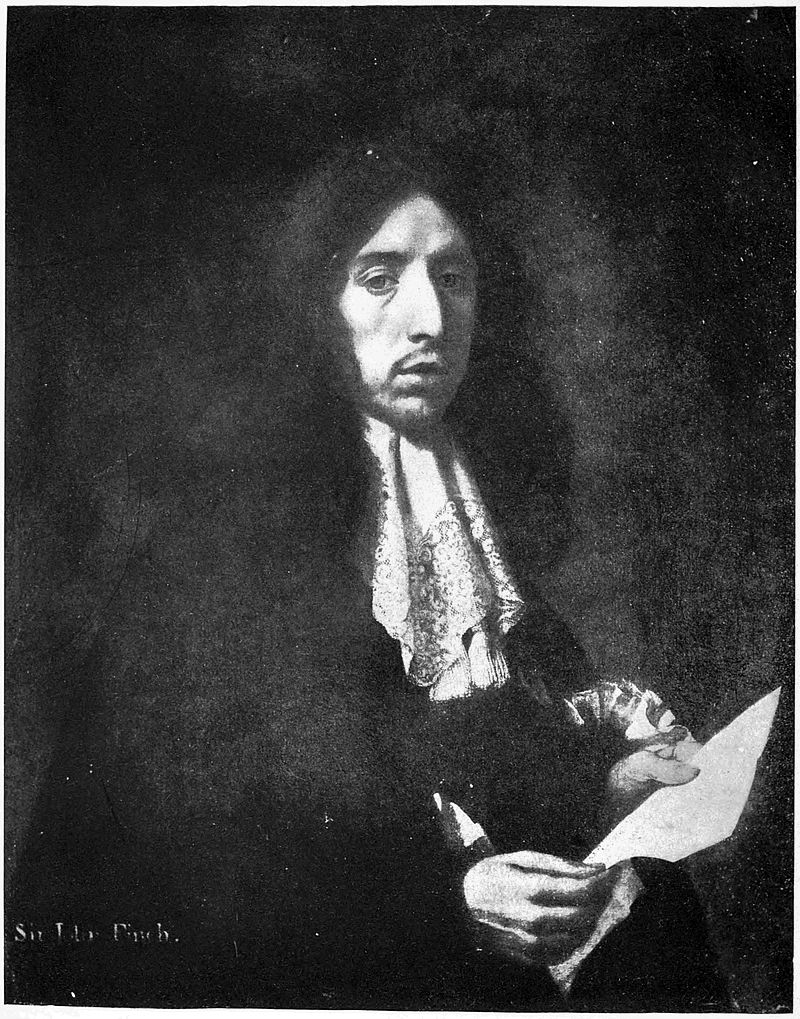
SIR JOHN FINCH.
From the Portrait by Carlo Dolci at Burley-on-the-Hill.
UNDER THE TURK IN
CONSTANTINOPLE
A RECORD OF
SIR JOHN FINCH’S EMBASSY
1674-1681
BY
G. F. ABBOTT
AUTHOR OF
“TURKEY IN TRANSITION,” “TURKEY, GREECE AND THE GREAT POWERS,” ETC.
WITH A FOREWORD BY
VISCOUNT BRYCE, O.M.
MACMILLAN AND CO., LIMITED
ST. MARTIN’S STREET, LONDON
1920
COPYRIGHT
FOREWORD
By LORD BRYCE
Whoever discovers a dark bypath of history and
opens it up by careful research renders a service to
scholars. If he has also the gift of presenting the
results of his investigation in a form agreeable to
the general reader who has a taste for novelties in
other books as well as in novels, he earns a double
meed of thanks. Mr. Abbott has not only had the
good fortune to find such a bypath and the acuteness
to note its interest, but is also the possessor of
a talent enabling him to make the best use of his
materials. To most Europeans and Americans, even
among the class which reads for instruction as well
as for pleasure, the annals of the Turkish Empire
had remained almost a blank from the triumphant
days of Solyman the Magnificent through the long
process of decay down to the time when Napoleon’s
campaign in Egypt and Syria and thereafter the
Greek War of Independence had drawn attention to
the long-forgotten Near Eastern countries. Just in
the middle of this period of two and a half centuries
several intelligent observers from England and France
visited Constantinople and described the singular
phenomena of a semi-civilised Empire which, despite
its internal corruption and weakness, was still strong
enough to threaten its neighbours, maintain a long
sea war against Venice and besiege Vienna. One of
these observers was Sir John Finch, a man of
learning and ability, who had begun his career by
studying medicine at the University of Padua, had
held the chair of anatomy in the University of Pisa,
and had for five years been King Charles II.’s Minister
at Florence. In 1672 he was named ambassador at
Constantinople, and accepted, somewhat reluctantly,
the post, yielding to the counsels of the influential
friends who had procured it for him. There he
remained till 1681, and his experiences in the discharge
of his functions there are recorded in this volume.
The letters on which it is based, and from which
many extracts are given, present a vivid picture
of what Turkish administration was, and of the
way in which the long-suffering representatives and
merchants of civilised countries had to adjust themselves
to it. Mr. Abbott’s book is not only a contribution
to history, but a narrative lively enough
and dramatic enough to be worth reading as a study
in human nature, and more particularly of that
Oriental human nature in which guile and folly, inconstancy
and obstinacy are so strangely combined.
PREFACE — FOOTNOTES:
The history of Anglo-Turkish relations as a whole
still remains to be written—a strange and not very
creditable fact, considering the part which the
Ottoman Empire has played in our commercial and
political career since the age of Queen Elizabeth.
This monograph deals only with a fraction of a vast
subject—the English Embassy to Turkey from 1674
to 1681, though for the sake of intelligibility it glances
at the years which preceded and followed that
septennium.
Critics, I hope, will not do my work the injustice
of thinking that it is not serious because, perhaps,
it is not very dull. A piece of historical narrative
is a sort of superior novel: it has its heroes and its
villains, its vicissitudes, its catastrophes: all of which
are eminently capable of administering amusement
even to the most seriously minded. Only the amusement
must be founded in truth; and the discovery
of truth requires painstaking industry. This condition
I have endeavoured to fulfil to the utmost of
my ability. Every bit of the story here related is
the result of careful research among original and,
for the most part, hitherto unexploited documents—chiefly
the Manuscripts preserved at the Public
Record Office (Foreign Archives, Turkey and Levant
Company) and the Coventry Papers in the possession
of the Marquis of Bath, by whose courtesy I was
able to make use of them.
It is impossible to convey the impression given
by seventeenth-century despatches in any words but
their own: nothing can be more striking to modern
eyes and ears than their language, their spelling,
their grammar and punctuation, or want of it. The
handwriting itself betrays not only the writer’s
normal character, but often the particular emotions
which swayed him at the moment of writing: as
we peruse those ancient sheets of paper—extraordinarily
fresh most of them, with sometimes the
sand still clinging to the dry ink—we see the person
who penned those lines, the very way in which he
held his quill. The same facts, extracted, paraphrased,
and printed, no longer arouse the same
sense of reality, nor grip the imagination in the
same way as they do when presented in their
native garb. I have attempted to reproduce something
of this effect by transcribing as frequently
and fully as it is convenient the original utterances
in all the individuality and quaintness which belong
to them.
In addition to this mass of manuscript, there
exists for the period a surprising amount of printed
material, some of which, though available for centuries,
has not yet been exhausted, and the rest was
but recently made public. It so happened that,
besides our Ambassador, there resided at the time
in Turkey three other Englishmen who left behind
them records of current events. They were our
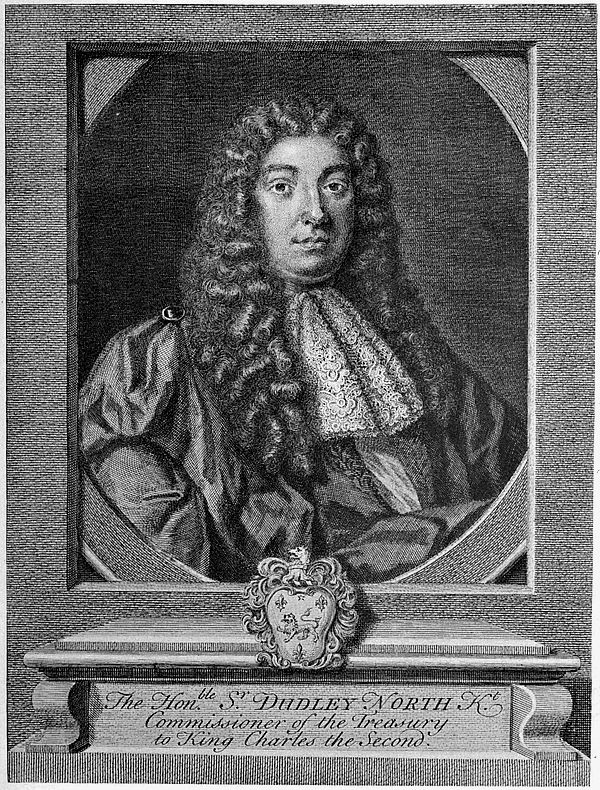
Consul at Smyrna, Paul Rycaut; our Treasurer at
Constantinople, Dudley North; and the Chaplain,
John Covel: all three men of leading and light in their
day. Their letters, memoirs, and journals, written
independently and from different angles of vision,
go a long way towards supplementing, confirming,
or correcting the Ambassador’s reports, as well as
the information handed down by several foreign
contemporaries.[1] For, by another rare coincidence,
the representative of France, Nointel, whose history
blends with that of Finch, also had round him a
number of Frenchmen busy writing. Joseph von
Hammer had access to some of these sources and
drew in some small measure upon them; but it
was left for a modern French writer to turn them to
full account in a book which I have consulted with
much pleasure and some profit.[2] Lastly, reference
should be made to two new works bearing on the
subject. Although both publications deal with
matters mostly outside the scope of this book, they
have furnished me with a number of suggestive
details.[3]
I may take this opportunity of mentioning that,
in my dates, unless otherwise stated, I follow the
Old Style, which still was the style of England, and,
in the seventeenth century, lagged behind the New
by ten days; but I reckon the year from the first
of January. All lengthy notes are relegated to an
Appendix, so that matters calculated to benefit the
seeker after solid instruction may not bore the reader
who seeks only entertainment.
The Memoirs of Paul Rycaut, Esq., London, 1679; The Present State
of the Ottoman Empire, by Sir Paul Ricaut, Sixth Edition, London,
1686; The Life of the Honourable Sir Dudley North, Knt., by the Honourable
Roger North, Esq., London, 1744; Extracts from the Diaries of Dr. John
Covel, 1670-1679 (in Early Voyages and Travels in the Levant), edited by
J. Theodore Bent, The Hakluyt Society, London, 1893; Some Account
of the Present Greek Church, by John Covel, D.D., Cambridge, 1722.
[2] Les Voyages du Marquis de Nointel (1670-1680), par Albert Vandal de
l’Académie Française, Paris, 1900.
[3] Report on the Manuscripts of Allen George Finch, Esq., of Burley-on-the-Hill,
edited by Mrs. Lomas for the Historical Manuscripts Commission,
vol. i., London, 1913; Finch and Baines, by Archibald Malloch, Cambridge,
1917.
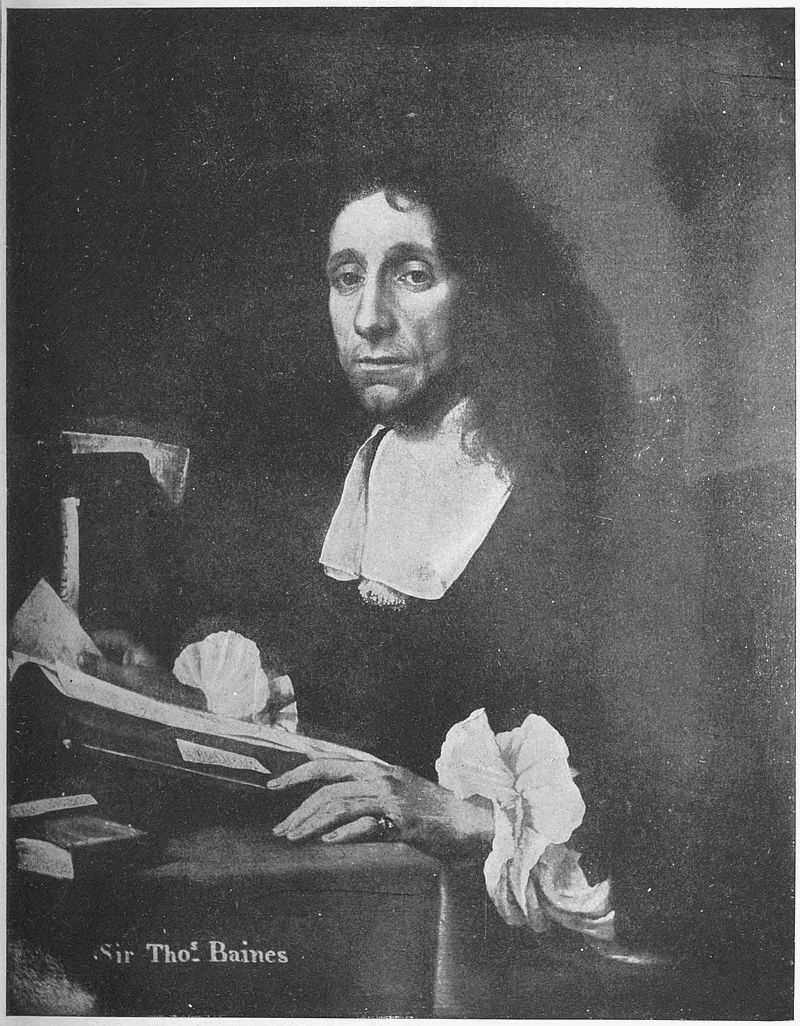
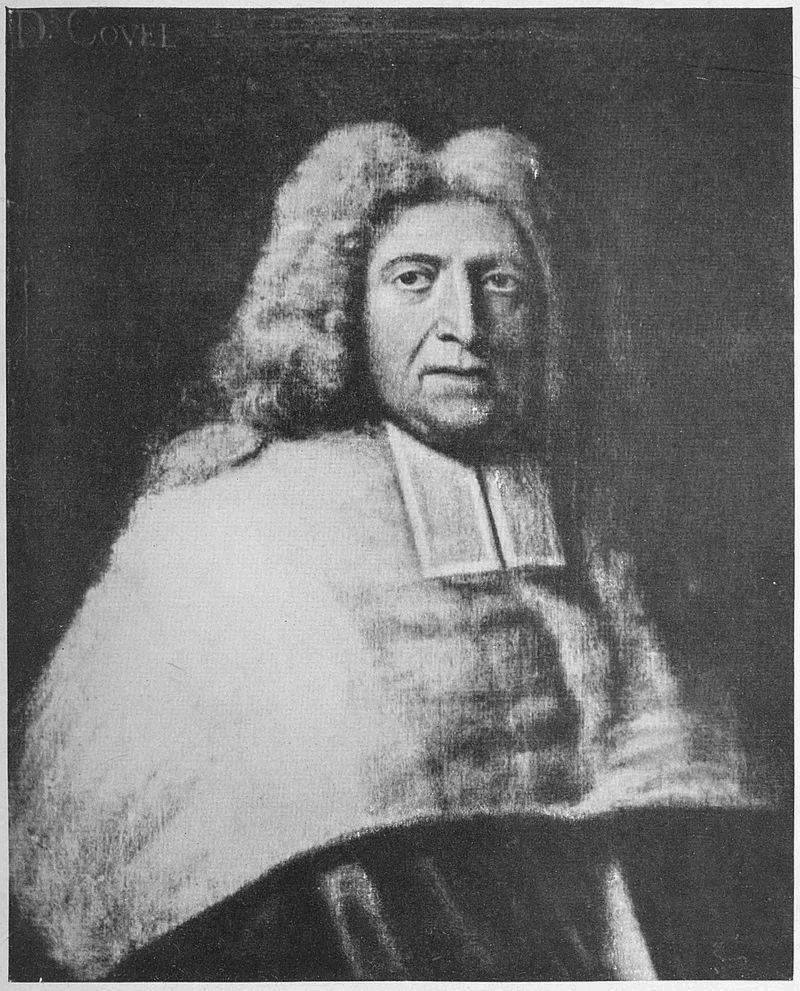
The portraits of Sir John Finch and Sir Thomas Baines are
supplied by the Cambridge University Press by permission
of Dr. Malloch and Mr. Wilfred Finch.
“Under the Turk in Constantinople.”
ILLUSTRATIONS
Sir John Finch. From the Portrait by Carlo Dolci at Burley-on-the-Hill
CHAPTER I A DIPLOMAT IN SPITE OF HIMSELF — FOOTNOTES:
It was apparently an invincible fatality that compelled
Sir John Finch to accept, in the month of November
1672, the appointment of English Ambassador to the
Porte, in place of Sir Daniel Harvey who had died
at his post some weeks before.
Finch sprang from a family which, under the
Stuarts, had attained to great eminence in the law
and in politics. His father, Sir Heneage Finch, had
been Recorder of the City of London and Speaker
of the House of Commons in the reign of Charles I.
During the same reign his father’s first cousin, Sir
John (afterwards Baron) Finch, had been Lord Chief
Justice of the Court of Common Pleas and Lord
Keeper of the Great Seal, as well as Speaker of the
House of Commons: in all these capacities he had
shown himself so ardent a Royalist that, in 1640,
he was impeached together with Lord Strafford
and Archbishop Laud, and barely saved his head by
flying to Holland. His elder brother, the eloquent
Sir Heneage Finch, whose pleadings, in the years
that immediately followed the Restoration, were the
delight of the Council Chamber and of Westminster
Hall,[4] after serving the Crown as Solicitor-General
and Attorney-General, was about to become Lord
Keeper of the Great Seal, and in due time Lord High
Chancellor of England and Earl of Nottingham. His
nephew (another Heneage Finch), “a celebrated orator
in Chancery practice,”[5] was Solicitor-General in
1679, and crowned a long and distinguished Parliamentary
career under Charles II. and James II. with
a Barony from Queen Anne and an Earldom from
George I.
Notwithstanding this remarkable family record,
Sir John had evinced no inclination for a public
career. After a brief residence at Balliol, he was
obliged, when Oxford became the headquarters of
the Royalist troops, to migrate to Christ’s College,
Cambridge, and thence, in 1651, he pursued his
studies at Padua, where he took a medical degree.
From that University, of which he was made Pro-Rector
and Syndic, he went, in 1659, to Pisa, to
occupy the Chair of Anatomy, having refused the post
of English Consul at Padua, ostensibly because it
meant getting drunk “at least forty times in the
year,” more probably because he did not wish to
compromise himself by accepting office under the
Usurper. Thus, while Cromwell ruled in England,
Finch led a severely private life in Italy, and at
the Restoration, like other Cavaliers, he came home
to reap the reward of his loyalty. Unlike most of
them, he was not disappointed. Honours of all
kinds awaited him. In 1661 he was elected an
Extraordinary Fellow of the College of Physicians
of London, was created M.D. by the University of
Cambridge, and was knighted by the King.[6]
Such was the position in which, at the age of thirty-five,
when one might think enough of a man’s zest
and freshness are left to give an edge to ambition,
Finch found himself. The embarrassments which
had overcast his earlier prospects were lifting; royal
favour seemed assured; the path to fortune lay
open before his feet; and there were his brother
Heneage and Lord Conway, the husband of his
theosophical sister,[7] who wished for nothing better
than to smooth it for him. But Finch was a singularly
unenterprising man. With a natural propensity to
solitude, increased by exile, and with a desultory
inclination to poetry and philosophy, he found the
boisterous Court of Charles little to his taste. After
a very short stay in England, he went back to
Tuscany and Anatomy (1663). His friends, amused
rather than annoyed at such perversity, did not
cease to conspire for his good, and, next year, they
prevailed on him to return and let them make his
fortune.
Not long afterwards (March 1665) Lord Arlington,
then Secretary of State, fulfilled a promise they had
extracted from him by appointing Sir John His
Majesty’s Minister at Florence. If there was any
foreign country which Finch liked, it was Italy:
he had, since he came to manhood, resided principally
there, had learned its language, and had made himself
thoroughly familiar with its manners and customs.
If there was any Italian State for which he felt a
preference, it was that of Tuscany, where he was
highly esteemed and beloved by the Great Duke,
his brother Prince Leopold, and every one whose love
and esteem were worth having. Yet Finch was not
happy. He complained that the dignity of his employment
far exceeded the emolument: he would gladly
have exchanged it for something better paid at home.
His friends agreed; but that ideal something could
not be found. The only alternative to Florence was
Constantinople. To that post the Finch family,
since the Restoration, seemed to have established a
sort of prescriptive right: Charles II.’s first representative
at the Porte, the Earl of Winchilsea (yet
another Heneage Finch), was Sir John’s first cousin,
and the second, Sir Daniel Harvey, his elder brother’s
near relative by marriage. Sir John could have
Constantinople for the asking. But Sir John cherished
a profound and, in the light of subsequent events,
one might well say, a prophetic aversion to Constantinople:
“Nay, though to be sent to Constantinople
were a charge of great gaine, yet I would not buy
that charge with the affliction so long a separation
would create mee,” he wrote to Lord Conway in 1667;
and again, a little later: “I doe perfectly abhorr
the thoughts of goeing to Constantinople.” He
would rather “undertake anything then to be
banished any longer from seeing your Lordship and
my sister.” But at the same time he admitted,
“any thing is better then my present condition, in
which I neither enjoy myselfe nor any thing else.”[8]
His friends sympathised and continued their efforts
on his behalf with indefatigable pertinacity.
There is still extant a letter in which Lord Conway
describes how, in 1668, he lingered in London after
the adjournment of Parliament on purpose to get
an opportunity of speaking to Lord Arlington about
him. The Secretary of State hesitated: to attach
to himself, partly by services and partly by hopes,
the greatest possible number of adherents was
Arlington’s constant aim; but what if Mr. Solicitor-General
should enlist his brother in the hostile camp
of the fallen Chancellor Clarendon? Conway overcame
these apprehensions by bringing about a personal
interview between the Secretary and the Solicitor,
who assured his Lordship that Sir John would be
his Lordship’s faithful retainer. Arlington, satisfied,
promised to recall Sir John from Florence and to
recommend him to the King for preferment in
connexion with foreign affairs. This arrangement
Conway thought much better than bargaining for
a reversion of some lucrative Court office—a boon
perhaps more tempting, but less certain. As to fitness,
he assured his brother-in-law that he would have no
competition to fear: “You will have the advantage
of coming into a Court where there is not one man of
ability.” The King, “destitute of counsel, is jealous
of all men that speak to him of business.” All that
was really needed was a good word from Lord Arlington,
“for though Lord Arlington labours with all
art imaginable not to be thought a Premier Minister,
yet he is either so, or a favourite, for he is the sole
guide that the King relies upon.”[9]
And so, after five years of eminently undistinguished
and discontented sojourn at Florence, Sir John
returned home, in August 1670, served for two years
on the “Councell for matters relating to Our Forreigne
Colonies and Plantations,” and then, the ideal office
still failing to present itself, he had, after all, to accept
the Embassy he abhorred.
He set out in May 1673. His frame of mind on
leaving England can be seen from the note by which
he bade Lord Conway farewell: “This is the third
time I have left my Native Soyl,” he wrote. “If
God Almighty make me so happy as to return once
more to your Lordship, I shall then thinke it is time
to fix at home and leave of (sic) all thoughts of
further wandering. But [if] my life by its period
abroad putts one to my Travell I beseech your Lordship
to believe that you have lost the most faythfull
and zealous servant the World yet was ever possessed
of....”[10]
This letter brings into relief the writer’s characteristic
attachment to home and dislike of separation
from dear relatives, heightened by a vague anxiety
not unnatural in the circumstances. A man who had
fretted for five years in Italy could not look forward
to an exile of at least six years in Turkey without
some alarm. Turkey was not then the accessible,
comparatively debarbarised country of our time:
the Grand Signor’s dominions were two and a half
centuries ago regarded as an obscure and distant
region of disease and death. Sir John, in leaving
England, felt like one stepping into the unknown:
melancholy filled his heart, and pious prayer seemed
the only refuge from despondency. Indeed, if he
could have foreseen what lay before him, it is a
question whether any earthly consideration could
have induced him to quit his “native soyl.” One of
the many dubious blessings granted by the gods to
men is the inability to see into the future.
Meanwhile Sir John knew that, short as it fell of
his aspirations, the Constantinople post had not a
few advantages. It was the only English mission
abroad that, under a King who had little money to
spare from his personal pleasures, rejoiced in the
rank of Embassy; it carried with it a salary of
10,000 dollars, or about £2500, a year, not to
mention perquisites of various kinds; and, be it
noted, this salary, not coming out of the reluctant
purse of a capricious and impecunious prince, but
out of the Treasury of a wealthy business corporation—the
Company of “Merchants of England Trading
into the Levant Seas”—entailed no heart-breaking
delays, no wearisome solicitations of friends at Court,
but could be depended upon with as much certainty
and regularity as any dividend from a sound investment:
all the more, because Finch’s kinsmen, the
Harveys, were leading members of that Company.
Distinctly, a diplomat might go farther and fare
worse. As to the duties of the post, Sir John was
well equipped. Apart from ceremonial functions, his
time at Florence had been taken up by questions
arising out of the English trade in the Mediterranean;
and both his correspondence from that place and a
report on commerce with Egypt which he had drawn
up lately[11] prove that he could do that sort of work
easily enough. Now, that was the sort of work he
would be called upon to do at Constantinople.
Owing its origin to the enterprise of merchants
and maintained entirely at their expense, the English
Embassy on the Bosphorus existed chiefly for their
benefit; the principal part of the Ambassador’s
mission being to promote trade and to protect those
engaged therein both against the Turks and against
each other. Politics, it is true, were not altogether
lost sight of. The Ottoman Empire, though past its
meridian, still weighed heavily in the “Balance of
Europe,” and the Grand Signor’s attitude was an
object of no small concern to the rival groups into
which Europe was divided. In the abstract, political
writers continued to echo, with unction, the admonitions
which the celebrated Imperial Ambassador
Busbequius had addressed to Christendom a hundred
years before. But since no means had yet been
devised “to unite our Interests and compose our
Dissensions,”[12] what were we to do? Obviously,
what everybody was doing. When occasion arose,
it was part, if only a subsidiary part, of an English
envoy’s business to intrigue for the good of his
country and try to defeat the intrigues of those
wicked foreign diplomats who intrigued for the good
of theirs. Thus, in the time of Queen Elizabeth,
her representatives had exploited Turkey’s hatred of
Spain to some purpose; and again during the Thirty
Years’ War the representative of Charles I. made
strenuous efforts, not of course to set on the “common
enemy of Christendom” against the Emperor directly—that,
as he recognised, would have been too great
a “scandal”—but to procure the Sultan’s indirect
support for the Prince of Transylvania who was
fighting the Emperor. During the earlier period of
Charles II.’s reign, too, Lord Winchilsea had exerted
himself to prevent the establishment of friendly
relations between Stambul and Madrid, and both
he and his successor Harvey had endeavoured to
bring about a cessation of hostilities between Stambul
and Venice. The former of these ambassadors, in
fact, was very eager to play a great political rôle,
urging that, as, with the acquisition of Tangier,
English sea-power and possessions were expanding
Eastwards, the English envoy should no longer
confine himself exclusively to mercantile affairs.[13]
But Charles had neither funds nor thoughts for such
ambitious schemes. So his representative at the
Porte had nothing more to do, as regards State
affairs, than “to be truly informed of all negotiations
and practices in that Court which may disturbe the
peace of Christendom in any part of it,”[14] and to
transmit his information to London: a passive rôle
which suited Sir John’s temperament admirably.
As his alter ego wrote to Lord Conway: “Your
Lordship will say your Brother here will have little
to doe in State Affayrs, which my Lord is very true
and so much the more is his quiett.”[15]
This was only one of several happy auspices under
which Sir John Finch entered upon his new employment.
As a rule, the diplomatic seat on the Bosphorus
bristled with thorny peculiarities—peculiarities that
had proved trying to most of his predecessors and
to some even fatal.
To begin with, our representatives at Constantinople,
unlike their colleagues at other capitals, had
not one master, but two: the Court from which they
held their commission and the Company from which
they drew their pay. It is proverbially difficult to
serve two masters to the satisfaction of both, and in
this case the difficulties of the servant were often
accentuated by differences between his employers.
With characteristic repugnance to clear definition,
our ancestors had left the question of appointment
open. There was neither fixed rule nor consistent
precedent to show with which of the two masters
lay the choice of servant. Hence a periodical feud
between the Court and the Company, each claiming
a right which the other was loth to concede. Under
James I. and Charles I. the Court had more than
once forced upon the Company its own nominees,
with disastrous results to all concerned. Sir John
Eyre, appointed in 1619 under pressure from the
Duke of Buckingham, after barely two years, which
he spent making himself obnoxious to the English
residents and contemptible to the Turkish Ministers,
had to be recalled in disgrace. Sir Sackville Crow,
similarly appointed in 1638, rivalled Eyre in incompetence,
surpassed him in iniquity, and was at last
brought home by force and cast into the Tower
(1648). At the outbreak of the Civil War, the Company,
having thrown in its lot with the Rebels,
obtained from Parliament a recognition of its claim
to elect and remove the Ambassador, and, much as
Cromwell would have liked to follow the example
of the Stuarts, he had found it expedient to acquiesce.
When the Commonwealth collapsed, the Levant
Merchants, who had joined in acclaiming the Restoration
as heartily as they had acclaimed the Rebellion,
got Charles II. to renew their Charter (April 2, 1661).
But submission to the Crown had become so much
the fashion that this Charter again left the question
of the Ambassador’s election open, thereby affording
zealots for the royal prerogative a chance of stirring
up discord.[16]
In practice, however, a new spirit seemed to
animate the rival authorities now. Both sides had
learned by suffering the wisdom of compromise.
Now the Merchants begged from the King, as an
act of grace proceeding solely from his goodness,
leave to offer for his Majesty’s approval such a
person as they esteemed most competent to manage
their affairs at Constantinople, thus loyally acknowledging
the King’s right; while the King, on his
part, graciously granted their request, thus waiving
the exercise of it. In this way the dignity of the
Crown was saved, and the interests of the Company
did not suffer. This sweet reasonableness breathes
through the petition by which, on Sir Daniel Harvey’s
death, the Levant Merchants approached the King
for a successor: “They have,” so runs the document,
“at a General Meeting of their Company, presumed
to fix upon the Hon. Sir John Finch, as one they
humbly desire may undertake that affaire, if your
Majestie will be graciously pleased to afford your
Royal assent; which they humbly beg, wholly
submitting the same to your Majestie’s pleasure.”[17]
The King, as was expected, readily assented; and
thus Sir John set out with the goodwill of both his
employers. He travelled across France and North
Italy to Leghorn, and there met the Centurion, a
frigate of 52 guns, which was to carry him to Turkey.
If we turn from those who sent the Ambassador
to those to whom he was sent, we shall see here also
Finch greatly favoured by circumstances. Most of
his predecessors had found themselves engaged in
a Sisyphean labour. For the wrongs to which the
English, like other Frank dwellers in the Grand
Signor’s dominions, were constantly exposed at the
hands of insolent and rapacious officials they could
only procure redress, if at all, by purchasing the
friendship of the Grand Vizir and of the two or
three other grandees who between them ruled the
Empire. But, such had long been the stability of
the Ottoman Government, none of those personages
remained in power for more than a few months—a
military mutiny, a popular upheaval, or a palace
intrigue was sure to hurl them down the moment
after they had reached the top; and our Ambassador
was obliged to seek new friends. This state of things
had come to an end. In 1656 Mohammed Kuprili
assumed the Grand Vizirate with a free hand to
purge the body politic of its corruptions, and he
performed the task by cutting off all the parts that
he could not cure: a dreadful remedy, but not more
dreadful than the condition of the patient demanded.
Turkey was so split up by factions that it could
not have survived, unless all rebellious spirits were
implacably extinguished. This great practitioner,
who alone had preserved the Empire from falling
into as many fragments as there were Pashaliks,
died in 1661 of old age, and was succeeded by his
son Ahmed—a fact which, being utterly unprecedented
in a country where the hereditary principle,
except in the royal family, was unknown, amazed
the Turks even more than the miracle of a Grand
Vizir maintaining himself in office for five whole
years and then dying peaceably in his bed.[18]
Ahmed Kuprili at first seemed to have inherited,
together with his father’s power, his father’s recipe.
The late Vizir’s dictatorship had raised up a multitude
of malcontents who imagined that his successor’s
youth offered them an opportunity for revenge:
“every hour he has a new game to play for his life,”
wrote our Ambassador.[19] But once rid of his enemies,
the son presented a pleasing antithesis to his father.
Mohammed had been an uncouth and illiterate
warrior who cared for no laws that stood between
him and his will, who valued no arguments that
conflicted with his preconceived notions, who even
in his dealings with foreign envoys employed methods
only one degree less savage than those he applied
to the treatment of domestic problems. Ahmed, on
the other hand, was the first Grand Vizir with a
political, instead of a martial, mind. He had been
bred to the study of the Law and had actually
practised as a judge in civil causes. By temperament
and education alike he was averse to violence. It
is true that he had already carried out two successful
campaigns and was now engaged in a third. But
to this he was impelled by necessity: the Ottoman
Empire, having arisen out of war and being constituted
for war, would perish in peace. Its rulers
could only avoid rebellion at home by providing
their turbulent subjects with constant and congenial
occupation abroad—a bleeding operation intended to
relieve the body politic of its “malignant humours”—and
it was particularly necessary for Ahmed, in
order to keep his place, to show that he could graft
the soldier on the lawyer. But he never became a
general. His successes were won in spite of his
strategy. In his war against the Emperor he was
defeated at St. Gothard (Aug. 1, N.S. 1664), yet
immediately after, profiting by the Emperor’s difficulties,
he secured a treaty (Peace of Vasvar, Aug. 10,
1664) as advantageous as if it had been the fruit of
victory. In Crete his military operations against
the Venetians (1666-69) were so clumsy that at one
moment he seriously meditated abandoning the siege
of Candia, “his ill success having given his enemies
hopes of supplanting him.”[20] Yet he obtained by
negotiation the surrender of a fortress which until
then had been deemed impregnable, and brought a
twenty-five years’ struggle to a glorious conclusion.
The Polish war which he was now conducting was
likewise a matter of diplomatic as much as of military
manœuvring. There can be no doubt that, if he
had the choice, Ahmed would never have striven to
get by force what might be got by subtler means.
To these traits, common among lawyers, he added
a genuine love of justice and a scrupulous integrity
rare among lawyers everywhere, and nowhere rarer
than in the East. Endowed with such qualities,
Ahmed proved himself one of the most moderate,
and, at the same time, one of the least pliant Ministers
that Turkey ever knew. Under his firm and equitable
administration the Ottoman Empire recovered some
of its prosperity, and, what is more pertinent to
note here, the Frank residents enjoyed a Sabbath
of rest. Tyranny, of course, could not be altogether
avoided. But, on the whole, the privileges conferred
upon them by their Capitulations were respected,
extortions (avanias) were seldom indulged in with
impunity, and the foreign merchants were treated
with unexampled forbearance.[21] Towards the English
the Grand Vizir was particularly well disposed, and
with good reason.
The main principle of Charles II.’s policy in foreign
as in domestic affairs was to avoid friction. Indolent,
unambitious, and a hater of everything likely to
disturb the even flow of his voluptuous existence, the
Merry Monarch would sooner have surrendered his
rights than have taken the trouble to defend them.
No prince ever stood less upon his dignity; perhaps
because no prince ever had less dignity to stand
upon. In the course of their protracted struggle for
the conquest of Candia, the Turks repeatedly pressed
English ships into their service. Cromwell had
opposed vigorously all encroachments of the sort;
but the representatives of Charles, after some feeble
and ineffectual protests, not only acquiesced tamely,
but bitterly blamed those captains who ventured
to resist; and, while the Grand Signor violated the
neutrality of England, the English Secretary of State
overwhelmed him with assurances that his Majesty
“does inviolably observe his peace with the Grand
Signior.”[22] Nor were these empty assurances. Individual
Englishmen might assist the Venetians in what
contemporary Christendom regarded as a holy war,
but, unlike the French, whose volunteers passed on
in a steady stream from Paris itself to reinforce the
garrison of Candia, they did so at their own risk
and peril without the least countenance from their
Government. Indeed, such crusaders were so few
and far between that Ahmed Kuprili commented on
the fact that he did not find “soe much as an English
seaman amongst his enemies att Candia.”[23]
To these general conditions which at the time
rendered our Embassy unusually comfortable for
any tenant of average tact, must be added an event
that secured for Sir John Finch’s person special consideration.
Soon after his appointment, an English ship, the
Mediterranean, on her passage from Tunis to Tripoli,
had been met by the redoubtable corsair Domenico
Franceschi—a Genoese by birth, but then domiciled
at Leghorn and holding a privateering commission
from the Great Duke of Tuscany. Normally an
English vessel had nothing to fear from a Tuscan
man-of-war; but the Mediterranean happened to
carry the retiring Pasha of Tunis, homeward bound
with his family and the spoils of his province, and,
as the Duke was at perpetual war with the Sultan,
Domenico could not well forgo such a chance of
serving his sovereign and enriching himself. The
Mediterranean managed, before the corsair could
come up with her, to set the Pasha with some of
his belongings ashore at Tripoli, but she was captured,
taken to Malta, and pillaged of the bulk of the
Pasha’s treasure, including his women. The incident
was serious: it was one of those incidents which
often strained Turkey’s relations with Western Powers
in those days; and with no Western Power more
often than with England. Not to dwell on remoter
instances,[24] only a year before some other Turkish
passengers on another English ship, the Lyon, whilst
sailing from Tunis to Smyrna, had been carried off
with their goods by the same pirate. At that time
Sir Daniel Harvey addressed to the home Government
an energetic protest against “the insolence and
piracy” of a person in the service of a friendly
prince, pointing out that his exploit endangered the
safety of the English colonies in Turkey, and, if not
taken notice of, might be an encouragement to him
and others to do likewise.[25] But nothing was done,
and the late Ambassador’s prediction had now come
true even beyond his anticipation. For in that case
the victims were Turks of very humble rank (a
cap-maker with his two servants, and two old men
who had just been redeemed at Malta, one after 48,
the other after 50 years’ captivity), and the booty
a trifle—3 chests of caps, 3 bales of blankets, and
3 boxes of botargoes.[26] This time the victim was a
high functionary of the Porte, and the loot enormous.
The Turks’ wrath was proportionate. They threatened
that, if the property was not restored, the loss should
be made good by the English residents; the Porte’s
position always being that a Frank nation was collectively
responsible for any Turkish passengers or goods
that fell into the hands of pirates whilst travelling
under that nation’s flag. Matters were not improved
by the fact that the Mediterranean had offered no
resistance, but was seen sailing away in the corsair’s
company with every appearance of being a willing
captive.
The directors of the Levant Company in London
were not slow to realise the gravity of the situation.
As soon as official reports from the Consuls at Leghorn
and Tripoli reached them, they petitioned the King
to write to the Great Duke and to demand complete
restitution of the Pasha’s property and reparation
for damages, with due punishment of “so notorious
an offender.”[27] The King hastened to indite an
epistle in that sense to the Duke,[28] and, at the same
time, instructed Sir John Finch, then on his way
out, to repair to Florence and make the necessary
representations to his Highness by word of mouth.
These instructions found Finch at Genoa; and he
applied himself to the task with energy, anxiety for
his own future in Turkey lending a spur to his concern
for the public good.
In order to simplify matters, he procured, before
leaving Genoa, the banishment of the corsair from
that State, and then proceeded to Leghorn. There
he found an Aga whom the Pasha of Tunis was
sending to England as his Procurator on that very
business. When he heard of Finch’s arrival, the Aga
thought to save himself the journey to London by
laying his case before him. Finch made the most
of this lucky encounter. Concealing from the Aga
his instructions, he gave the affair a totally different
turn. The Mediterranean, he argued, was not an
English ship. It is true that her Master, Captain
Chaplyn, was an Englishman; but he had changed
his religion, renounced his country, and, having for
ten years lived at Leghorn and married there, had
become a Tuscan subject, so that his Majesty of
England was no longer concerned in him. With
these “and other motives” (a delicate euphemism
for the motive vulgarly known as bribery), the
Ambassador prevailed on the Aga to give him a
declaration in writing, attested by public notaries,
that he had no claim upon Captain Chaplyn or any
other Englishman; only, as Finch was accredited
to the Porte, it would be taken very kindly of him
if he would assist a Pasha in distress, the more as
he lay under no obligation to do so. Having had
this document signed and sealed, the resourceful
diplomat approached the Duke in another way—the
way dictated by the facts of the case and his
instructions.
In that quarter also, Sir John’s efforts, thanks to
his long connection with the Tuscan Court, met with
success. At Florence itself he recovered 5000 dollars
in ready money and a portion of the stolen goods.
Then, armed with letters from the Duke, and accompanied
by the Aga and Captain Chaplyn, he went on
to Malta, where he managed, though not without
great difficulty, to obtain the restitution of 75 more
bales of goods and the redemption of seven captives,
among them the Pasha’s sister-in-law, whom the
Pasha afterwards made his wife. At Smyrna, where
the Ambassador, still accompanied by the Turkish
Aga and the English Captain, landed on the 1st of
January 1674, he caused the former to give him
before the Cadi of that place an official receipt for
all the recovered goods—30,000 dollars—and a full
discharge to Captain Chaplyn.[29]
We are told that the Turks expressed boundless
admiration at this action—an action without a parallel
in the annals of piracy: who had ever heard of
a corsair being made to disgorge? They applauded
the Ambassador’s skill and regarded his success as
a manifest proof of his sovereign’s influence over
foreign Governments. They were also impressed by
his luck—no small recommendation to a superstitious
people in an astrologically-minded age. Had not
his landing on Turkish soil synchronised with the
celebration of the holiest of Moslem feasts—the
Feast of the Bairam?[30] As to the English Factory,
its sixty members (merry young blades most of
them) manifested their joy at the sight of their
long-expected Ambassador after a fashion which
must have made it a little difficult for his Excellency
to maintain the reserve and gravity proper to
his exalted station.
From Smyrna Sir John continued his journey to
Constantinople, arriving there about the end of March;
and some two months after, in the absence of the
Grand Vizir, he had audience of the Vizir’s Kaimakam,
or Deputy. On this occasion the new Ambassador
gave the first evidence of that meticulous devotion
to forms which made up then an enormous, and
still makes up a very considerable, part of the complete
diplomat’s mentality. Before going to audience he
took care to find out how many kaftans, or robes of
honour, the Kaimakam meant to present him and his
suite with. “I was offerd’,” he says, “But 15: no
English Ambassadour ever having had more from the
Chimacam: But understanding the Venetian Bailo
had 17, I would abate nothing of what he had had.”
After a tug of several weeks, he wrested the two extra
vests from the Turk.
One or two other features of that ceremony remain
on record.
“I am,” said the envoy to the Kaimakam, “I am
come Ambassadour from Charles the Second, King
of England, Scottland, France and Ireland; sole
and Soveraigne Lord of all the seas that environ His
Kingdome: Lord and Soveraigne of Vast Territory’s
and Possessions in the East and West Indy’s: Defender
of the Christian Faith against all those that Worship
Idolls and Images, To the Most High and Mighty
Emperour Sultan Mahomet Ham, Cheif Lord and
Commander of the Mussulman Kingdome, Sole and
Supream Monarch of the Eastern Empire, To maintain
that Peace which has bin so usefull and that Commerce
which has bin so profitable to this Empire; For the
continuance and encrease whereof I promise you in
my station to contribute what I can; And I promise
to myselfe that you in yours will doe the like.”
Sir John had written this speech in Italian and
given it to his two chief Interpreters, with orders to
study it carefully beforehand, so that they might
not omit one word in interpreting what he should
say. The Interpreters having fulfilled their function,
some conversation ensued, in the middle of which
the Kaimakam, abruptly, “as if he had much reflected
on what his Lordship said,” asked whether the King
of England had any fortresses in the Indies. Finch
answered: “He had very many and not a few of those
Inexpugnable.” The Kaimakam did not carry his
cross-questioning any further. Presumably he understood
that the English were imbued, like other nations,
with a very sincere opinion of their own greatness.
Sir John reported this his début on the official
stage of Turkey to his patron with evident self-satisfaction.[31]
He had every reason to feel proud of
the past and confident of the future. He had shown
himself possessed of energy, finesse, firmness, and,
though innocent of any acquaintance with the habits
and prejudices of the Turks, he was already persona
gratissima with them. The flattering way in which
he had been received on his arrival in the Grand
Signor’s dominions gave him not only the hope, but
the certainty of a residence agreeable to himself and
profitable to his country. Clearly, the Turks had
been much maligned by common report. These
feelings are faithfully reflected in a letter which Sir
John’s alter ego penned to Lord Conway, while Sir
John himself was penning his report to Lord Arlington:
“Give me leave to turne to ... your Brother
my Lord Ambassadour’s condition under this
Embassy: He hath dealt with the crafty close
Genevese; with the wise and stayd Florentine; with
the untameable and rugged Maltese; with the faythlesse
Greek and false Jew; and lastly with the sober
and stubborne Turk,”—then, leaving the others to
rejoice in their respective epithets, the writer fixes
his penetrating eye upon the Turks: “Under correction
and with modesty I will say that I find them a
sober and ingenious people; sober they are because
they never drink wine, ingenious I call them from
the Bassa who came to visit my Lord at the galley,
so soon as he arrived at the port, for I seldom heard
in Europe a more dextrous, short, and courtly reply
then what the Bassa made to my Lord. I, over and
above, find an Ambassadour here to have, according
to their customes, as much respect as they have in
most places in Europe. Certainly there is a mutuall
and reciprocall jealousy betwixt the Court and foreign
publick Ministers, between which there is neither
religion nor custome of life, nor laws that beget any
confidence or publick tie, and to the captious it gives
many exceptions. But, setting these things apart,
as yett I can call nothing strange.” Thus wrote this
acute judge of national characters, after seeing only
one Turk for a few moments; thus he wrote, no
doubt with my Lord Ambassador’s concurrence, and
thus he thought. Yet even in the midst of his rosy
illusions, he had some dim, subconscious perception
of realities. For he adds: “But, my most noble
Lord, these are my first sentiments, perhaps when
I have stayed here longer, I may have as much reason
to reclaime against them as other men....”[32]
[4] Evelyn’s Diary, Oct. 27, 1664; Pepys’s Diary, May 3, 1664, April 21,
1669.
[6] Dictionary of National Biography; Malloch’s Finch and Baines.
[7] Anne, Viscountess Conway—a very learned lady and a very odd.
There is a notice of her in the Dict. of Nat. Biog., where her father’s name
is given wrongly as “Henry.”
[17] Register, 1668-1710, p. 22; S.P. Levant Company, 145.
[18] Winchilsea to Nicholas, March 4, 1660-61, Nov. 11-21, 1661, S.P.
Turkey, 17; Rycaut’s Memoirs, p. 68; J. von Hammer’s Histoire de
l’Empire Ottoman, vol. xi. p. 111. Winchilsea mentions only the “six
thousand Bashaws and great men,” whom Mohammed put to death “partly
by his own hands and by his commands.” Rycaut gives the total of the
Vizir’s victims as “thirty-six thousand persons.” Hammer, though he
does not consider this statement excessive, is content with an estimate of
“trente mille personnes,” or an average of 500 executions a month—figures
which, even if reduced by a nought, would still appear respectable.
[19] Winchilsea to Nicholas, May 20, 1662, S.P. Turkey, 17.
[22] For illustrations of this timorous attitude see Winchilsea to Nicholas,
March 4, 1660-61, Feb. 11, 1661-62; the Same to Arlington, March 26, 1668;
Rycaut to Arlington, July 18, 1668; Letters from Messrs. Thomas Dethick
& Co., Smyrna, Feb. 7, March 1, 1667-68; Harvey to Arlington, June 19,
1669, S.P. Turkey, 17 and 19.
[23] Harvey to Arlington, Aug. 18, 1669, S.P. Turkey, 19.
[25] Harvey to Arlington, Jan. 24, March 15, 1671-72, S.P. Turkey, 19.
[26] “A Relation of the Damage rec. by me, Thomas Parker, Master of the
Lyon pinke from a Corsair near the Island of Delos. Smyrna, 9 Dec. 1671,”
ibid.
[28]Ibid. pp. 40-41. This letter, written in Latin, is dated “ex pallatio
nostro Westmonasteriensi, Quarto die Augusti, Anno Doñi 1673, Regni
nostri 25o.”
[29] Sir John Finch’s own Narrative, Sept. 24, 1680, S.P. Turkey, 19.
[31] Finch to Arlington, May 25, 1674 (with Inclosure), Coventry Papers.
[32] Sir Thomas Baines to Conway, May 25, 1674, S.P. Turkey, 19. The
letter, though unsigned and unaddressed, carries within it conclusive proof
of its authorship and destination.
CHAPTER II SIR JOHN’S PROGRAMME — FOOTNOTES:
Sir John regarded his audience with the Kaimakam
as nothing more than a prologue: the real action had
yet to begin. His first business was “to make my
selfe an Ambassadour by delivering His Majesty’s
Credentials to the Gran Signor and His Letter to the
Gran Visir.”[33] But that could not be done at Constantinople.
For over a dozen years the seat of the
Ottoman Empire had been at Adrianople.
Mohammed IV. nourished an unconquerable detestation
of Constantinople. It was said that when
any of his Ministers ventured to urge upon him the
advisability of showing himself there, he used to
answer: “What shall I do in Stambul? Did not
Stambul cost my father his life? My predecessors,
were they not always the prisoners of rebels?
Rather than go back to Stambul, I would set fire to
it with my own hands.” True or apocryphal, these
words describe the position accurately. Constantinople
under the Sultans, like Rome under the Caesars,
was the home of an insolent militia and a turbulent
mob. The maladies which infected the Empire had
their breeding-ground in it. It supplied a centre
for all the intrigues and seditions which time and
again had brought Turkey within an inch of disruption.
Its revolutionary habits made it insecure. So the
reigning monarch, except for occasional visits reluctantly
undertaken and speedily terminated, kept away
from the ill-omened city. Love of sport conspired
with fear of death to drive the Grand Signor from
his capital. For never had Turkey known so great
a Nimrod. With other Sultans the chase had been
a recreation; with Mohammed IV. it was an obsession—a
monomania. “When He cannot range to Hunt,”
says Finch, “He is never well.”[34] Hence his nickname
of Avji, or the Hunter. The fatigues he underwent
in the indulgence of this consuming passion are
almost fabulous: in the height of summer as well as
in the depth of winter, he sallied forth two or three
hours before sunrise and spent the whole day dashing
up hill and down dale like one possessed by a thousand
restless demons. The courtiers whose privilege it
was to ride in the Sultan’s train looked back with
unfeigned regret to the soft vices of his father: what
were the amorous whims of Ibrahim compared with
the strenuous vagaries of Mohammed? But if he
spared his courtiers as little as he spared himself,
this sportsman spared his humbler subjects even less.
Wherever he hunted, the inhabitants of the district
were obliged either to provide beaters—sometimes as
many as 30,000—or to beat the woods themselves. In
the summer, they had, in addition, their crops ruined.
In the winter, numbers of these wretched peasants,
exposed to cold and hunger during several days and
nights, paid for their master’s pleasure with their
lives. So it came to pass that, while the titular
capital of the Empire, in the absence of the Grand
Signor’s luxurious Court, drooped like a flower in
the shade, the Imperial sun shone upon Adrianople:
the environs of that town affording exceptional
facilities for the pursuit of game—of all pursuits the
one this degenerate son of Osman loved the most
and understood the best.[35]
To Adrianople, therefore, Sir John would have
to betake himself. The journey was expensive, and
the Levant Company extremely close-fisted. But in
this juncture our Merchants could not stint the piper,
seeing that they called the tune. For the presentation
of his Credentials, though the first, was the least of
the motives that impelled Finch to the Sublime
Threshold.
It had been the ambition of every English Ambassador
up to that date to renew the Capitulations
originally granted to the English by Sultan Murad III.
in 1580,[36] with a view to obtaining a confirmation
and elucidation of old and the addition of new
privileges. During the reign of the present Sultan
the Capitulations had already been renewed twice,
by Sir Thomas Bendyshe and by Lord Winchilsea;
and Sir Daniel Harvey would have renewed them
for the third time, if death had not prevented him.
Sir John Finch was anxious to tread the path of
his predecessors and to go farther than they.
There were, in the first place, tariffs to be revised
and Customs-duties to be reduced, or defined to our
advantage. For instance, by a Hattisherif, or Imperial
decree, granted to Sir Sackville Crow, the Merchants
of Aleppo had to pay 3 per cent ad valorem on the
goods they imported—cloths, kerseys, cony skins,
tin, lead—as well as on the goods they exported—raw
linen, cotton yarn, galls, silk, rhubarb and
other drugs. This decree determined what was to
be called 3 per cent in terms of Turkish weights,
measures, and money, leaving no loop-hole for extortion.
But, resting as it did solely upon the Sultan’s
word, it was regarded as reversible at his pleasure.
Therefore, Sir John’s predecessors had laboured to
have it inserted in the Capitulations, but without
success, and the Hattisherif had gradually become
so antiquated that not only the local Customs
authorities refused to obey its provisions, but the
Grand Vizir himself refused to enforce them. Finch
wished to embody this decree in the Charter, so that
the English should henceforth have not only the
Grand Signor’s signature but also his oath, and
convert what was a mere concession to merchants
into a covenant between prince and prince.
Another Article coveted by the Ambassador aimed
at securing a similar definition for duties levied upon
our Factors at Smyrna and Constantinople. By the
Capitulations they were obliged to pay 3 per cent
on imports and exports. But differences had lately
arisen between them and the Customs authorities
concerning English cloth. The duty had been fixed
when the English imported only a kind of coarse
cloth called “Londras,” for which they were content
to pay ad valorem; but since they had begun to
import finer cloths they demurred, insisting that the
Customs authorities were not entitled to more than
the amount of duty established of old. The authorities,
on their part, to avoid what they considered an
attempt to cheat the Grand Signor, insisted that the
duty should be paid in kind. Sir John had so far
let the merchants compound with the authorities
underhand, in order that our case might not be
prejudiced by the judgment of inferior Courts; but
it was his intention to have the matter settled at
Adrianople: success on this point, he reckoned,
meant some 60,000 dollars a year saved; and
besides, it would enable the English to trade in cloth
of equal fineness with that of their Dutch competitors
on infinitely more advantageous terms—paying only
two where the Dutch paid six dollars per piece.
Next, there was in our Capitulations a clause by
which Englishmen engaged in litigation with natives
for a sum above 4000 aspers were entitled to bring
their case before the Divan. But this clause, being
limited to private individuals, did not protect the
English against the Grand Signor’s officials, whose
arbitrariness grew in proportion to their distance
from the “Fountain of Justice”; for they had it
in their power to squeeze the defendants by detaining
them and sequestering their ships and goods. The
Ambassador wished to deprive the local tyrants of
every temptation by introducing into the Capitulations
an Article which authorised the English Consul
on the spot to become surety for his countrymen.
Another abuse Finch sought to remedy was of a
converse nature. Native defendants used to evade
prosecution by putting in a claim not to be sued
except before the Divan, where the practice was for
the successful litigant to pay 10 per cent on the
debt recovered, instead of the 2 per cent with which
the provincial Cadis were nominally content. This
frightened Englishmen from suing in the best Court
of Justice, and gave the Cadis a chance of extorting
from them 6 or 8 per cent. It was the Ambassador’s
object to render such evasions and extortions impossible
by obtaining an Article which made the fees
uniform.
Further, Sir John wished to establish uniformity
in the anchorage charges imposed upon English
shipping, and to remove a chronic grievance by
exempting a ship which had paid anchorage at one
Turkish port from a like liability in another she might
call at in the course of her voyage.
Such were the most important innovations Sir
John contemplated. But the most piquant of all
referred to the contingency of English factors in
Turkey robbing their principals in England and
shielding themselves from English justice by becoming
Mohammedans—“turning Turks,” as the phrase
went. This interesting problem had arisen out of a
recent incident at Smyrna. In September 1673 a
young gentleman of good family and rigid religious
upbringing, one, too, who had a fair fortune of his
own, was tempted by the Evil One to commit a deed
that covered the English “Nation” in the Levant
with shame. Availing himself of his partner’s
absence, he appropriated a large quantity of goods
and gold belonging to several merchants at home.
Then he went before the Cadi and made a solemn
profession of Islam, so that he might shelter himself
under the Moslem Law, which admitted no Infidel’s
evidence against a True Believer. We possess a full
account of this scandalous affair from the pen of our
Consul at Smyrna, who tells how, after seven months’
unremitting pursuit, he managed to recover the best
part of the property and to reduce the culprit to
such distress that at last the wretch humbly begged
him to contrive his return to Christendom and
Christianity in the frigate which had brought Sir
John out.[37] As a safeguard against similar accidents,
the Ambassador proposed that the Porte should be
asked to allow in future Christian witnesses in such
cases.[38]
Over and above all these matters of business,
there was a point of honour to be struggled for—a
point by which Sir John set immense store. The
French enjoyed a privilege which the English had
for generations craved in vain: the King of France,
alone among Christian monarchs, was honoured by
the Turks with the title of Padishah, or Emperor;
the King of England was styled simply Kral, or King.
The representatives of Queen Elizabeth, it seems, not
caring much for titles, had acquiesced in that modest
designation, and the precedent once established, all
the efforts of later envoys had failed:[39] “So hard
a thing it is to unrivitt what Time has fixd’,” moralised
Sir John; but the hardness of the thing, instead of
damping, fanned his ardour. If he could only get
that high-sounding title for his sovereign, what a
feather would it be in his cap! He had already,
at his audience with the Kaimakam, taken the first
step towards that goal. He had commanded his
Interpreters most particularly not to forget, in
translating his speech, to render the word “King”
by “Padishah,” not “Kral”; and as they, aware
of the tenacity with which the Turks clung to established
customs, evinced some reluctance to attempt
an innovation, Sir John had agreed, when he uttered
the word “King,” to add “or Padishah,” thus
securing the Interpreters by his authority. That
was done accordingly, and “taken without any
exception.” But it was only the thin end of the
wedge. Sir John was resolved to prosecute “with
my utmost Vigour” the insertion of the title into
the new Capitulations;[40] and so to score off all the
ambassadors who went before and bequeath a legacy
of imperishable lustre to all those who should come
after him.
A comprehensive programme, excellent in conception;
but for its execution Sir John had to wait.
While the Grand Signor hunted, his Grand Vizir
was busy conducting hostilities with Poland and,
simultaneously, negotiations for peace. Sir John
was kept informed of these proceedings by the
Dutch Resident, who, with his wife, his children
and his Secretaries, followed the Ottoman camp,
having orders from his Government to watch the
march of events in concert with the Emperor’s
Resident. Holland and Germany were then at war
with France, which endeavoured to bring about an
agreement between Poland and Turkey and to induce
the latter Power to turn her arms against the Emperor.
England, on the other hand, had recently made peace
with Holland, and the Dutch Resident, before his
departure from Constantinople, had recommended
his “Nation” to Sir John’s protection. He now
wrote to him about the prospects of peace.
An envoy from the new King of Poland, John
Sobieski, was expected in the Grand Vizir’s camp
every moment; and in case of an agreement, it
was said that the Ottoman Army would join the
Polish in a common campaign against the Muscovite.
What inclined the Turks to an accommodation,
besides Sobieski’s conciliatory attitude, was the fear
of an attack from Persia. So Sir John’s informant
reported. “But, My Lord,” said Sir John, “notwithstanding
these fayr Intimations of Peace there can
be no certainty of it, For the Publique Prayers have
bin made these ten dayes over the Empire for the
Gran Signor, which begin not till He is out of His
own Territory’s, and must continue till victory or
Peace.... In the Interim it seems by the vast
Quantity of Slaves that dayly from the Black Sea
are sent hither, that the Turke meets with little
opposition.”[41]
In the interim, we, for our part, cannot do better
than take a look round at the place in which Sir
John lived, the people among whom he moved, and
the things that occupied his enforced leisure. Such
a description will make the subsequent narrative
more intelligible and instructive, without unduly
delaying the action; for, truth to tell, many months
had to elapse before there was any action worth
mention.
[33] Finch to Coventry, Sept. 9, 1675, Coventry Papers.
[34] Finch to Coventry, Jan. 11-21, 1674-75, Coventry Papers.
[35] See Winchilsea’s despatches, passim, S.P. Turkey, 17, 18, 19; Finch
Report; Rycaut’s Memoirs; Covel’s Diaries, p. 207.
[36] The Latin version of that Charter is preserved at the Public Record
Office, S.P. Turkey, 1. A copy of it, with an English rendering, will be
found in Hakluyt’s Navigations (Glasgow, 1904), vol. v. pp. 178-89.
[37] Rycaut’s Memoirs, p. 311. For an amusing example of the young
man’s Puritan scrupulosity see Covel’s Diaries, pp. 107-8.
[38] See “New Articles added to the Capitulations,” together with “The
Grounds and Advantages” thereof, by Sir John Finch, in the Coventry
Papers.
[39]E.g. Sir Thomas Glover to Salisbury, March 3, 1606-7; Winchilsea
to Nicholas, Nov. 11-21, 1661, S.P. Turkey, 5 and 17.
[40] Finch to Arlington, May 25, 1674; the Same to Coventry, Sept. 9,
1675, Coventry Papers.
[41] Finch to Arlington, July 27, S.N., 1674, Coventry Papers.
CHAPTER III LIFE IN CONSTANTINOPLE — FOOTNOTES:
To a man who had passed the better part of his life
in the elegant cities of Italy—cities like Florence,
famous for its neat streets and palaces of sculptured
stone—Constantinople assuredly was no paradise.
Its streets were narrow, crooked, and dirty. The
houses, built of timber and sun-dried brick, soon fell
into decay. Nor was there the least attempt to make
up in style what these ephemeral habitations wanted
in solidity. In the whole of the Ottoman capital
you would not have found one stately house. Western
visitors, impressed by this phenomenon, endeavoured
to account for it, each according to his lights. Some
saw in it a manifestation of Turkish other-worldliness;
making the Turk say to himself: “’Tis a sign of a
proud, lofty and aspiring mind, to covet sumptuous
houses, as if so frail a creature as man did promise
a kind of immortality and an everlasting habitation
to himself in this life, when alas! we are but as
pilgrims here. Therefore we ought to use our dwellings
as travellers do their inns, wherein if they are
secured from thieves, from cold, from heat, and
from rain, they seek not for any other conveniences.”[42]
But this pretty theory was refuted by the fact that
not only the Turks, but the Greeks, the Jews, and the
Armenians manifested the same studious avoidance
of any approach to architectural display. The true
explanation was much more prosaic: a fine dwelling
would have been a proof of wealth, and wealth, in
a country where all men were slaves except one,
was a dangerous thing. A trumped-up charge, on
the sworn testimony of two incredible witnesses, was
enough to bring about the ruin of the man who had the
misfortune to be rich. So, while the interior of an
Eastern home might teem with all the luxury that
vanity could prompt and money procure, outwardly
it presented to the onlooker a picture of abject
meanness.[43] The picture had its charm; but it was
a charm too subtle for ordinary seventeenth-century
eyes. Judged by contemporary aesthetic standards,
the metropolis of the Ottoman Empire was, as a
predecessor of Sir John’s had described it, “a sink
of men and sluttishness.”[44] Sir John must have
often wondered what his cousin Winchilsea could
have meant when in years gone by he had written
to him: “This city I hold much better worth seeing
then all Italy.”[45]
On the other hand, there were the magnificent
relics of Greco-Roman antiquity, brought into strong
relief by their paltry surroundings: towers and
arches, aqueducts and temples, that had defied the
havoc of the ages. For such antiquarian treasures
seventeenth-century Europeans had an eye, and they
lavished upon the past all the enthusiasm which the
Orient of their day failed to evoke in them. There
were also the public buildings added by the Turks—superb
mosques, vaulted baths, and bazaars resplendent
with the fabrics and redolent of the spices of the
East. Above all, there was the matchless beauty
of the situation—a natural privilege which rendered
the capital of the Sultans beyond comparison the
most wonderful city on the face of the earth; and of
all parts of that capital not the least advantageously
situated were the suburbs of Galata and Pera in
which the Franks had their residence, separated from
Stambul by the harbour of the Golden Horn.
Galata, the business quarter, occupying the lower
slopes of a hill, and Pera, where the Embassies stood,
the higher, formed an amphitheatre which commanded
a panoramic view of the circumjacent seas with all
their bays and islands. Down below gleamed the
Golden Horn: a scene of ceaseless animation:
merchant ships of all nations riding at anchor; light
caïcks flitting to and fro with the grace and the
swiftness of swallows; enormous, heavily gilded
galleys sailing in and out, some bound north for the
Black Sea, others south for the Aegean. From behind
this ever-moving panorama, the city of Stambul
surged up in all its majesty; a sierra of seven hills
broken by the massive domes and slender minarets
of innumerable mosques, it glittered in the sunlight
and moonlight of the East like a jewel in a silver
setting. The most precious gem in this regal jewel
was the Grand Signor’s Seraglio—a gorgeous assemblage
of palaces, mosques, baths, and kiosks scattered
amidst gardens and groves. It covered a walled
space four miles in circumference, with the Golden
Horn on one side, the Sea of Marmara on the other,
while round the third side, blue and limpid as the sky
itself, swept the rapid stream of the Bosphorus.
Across the Bosphorus, on the coast of Asia, rose the
bold promontory of Scutari, its slopes encrusted with
kiosks and grottos, thickets and hanging gardens,
its summit crowned with the domes and minarets of
a stately mosque. And close by, in striking contrast,
were seen the dark cypress-groves of Scutari—a
procession of mourners watching over a city of the
dead. In these congenially solemn groves the Turks
loved to sleep their last sleep, permitting the infidels
to plant their cemeteries with other trees, but reserving
the cypress jealously to themselves. Hither, to the
soil of Asia, whence he had come, the Turk loved to
return at the last, as if he considered himself a
stranger and a sojourner in Europe, as if he felt that
here alone his remains would not be disturbed by the
revengeful Giaour, when the day of reckoning dawned.
Amidst these exotic scenes, the witchery of which
no artist has yet found means to represent on canvas,
our countrymen dwelt in spacious and commodious,
if unpretentious, houses, with many servants and
slaves to minister to their wants. His rank naturally
imposed upon the Ambassador proportionate magnificence,
and before leaving England he had laid out no
less than £2500 on clothes and plate: he knew that
his foreign colleagues tried to outshine each other,
and he was resolved not to be eclipsed by any of them.[46]
The merchants also, though free from such onerous
obligations, lived on a scale which at the present day
would be pronounced extravagant. Every self-respecting
factor kept horses, dogs, and hawks;
dressed, drank, gambled—led in the East the existence
his contemporaries led at home: we are dealing with
English gentlemen of the Restoration, a period when
the excessive austerity of the Puritan regime had
yielded to a reaction of debauchery.[47] Only in the
East the opportunities for self-indulgence were more
ample.
No part of the globe has been so liberally blessed
with the things that enter into the mouth as the
Levant. Western residents and travellers grew
ecstatic at the abundance of good cheer they found
in Turkey and its amazing cheapness. For a halfpenny
it was possible to buy bread enough for three
meals; for little more than a halfpenny a robust
man might get as much mutton as he could consume;
a pheasant could be had for five pence, and a brace
of partridges for nine farthings.[48] The soil there yields
its fruits and the sea its fish in equal profusion and
variety; and a temperate climate imparts to everything
an exquisite flavour. Not less remarkable than
the abundance of food was the multiplicity of forms
under which it made its appearance on the table.
Greek, Turkish, and Italian Masters had combined
for centuries to bring the gentle Art of Levantine
cooking to a height of perfection that only the Archimageirus
of Zeus could have excelled. It is not hard
to understand the sentiments of mingled pleasure
and mystification with which these succulent dishes
were approached by people fresh from a land where
a sirloin of beef or a venison pasty represented the
utmost achievements of the kitchen, and where every
meal was haunted by the unsalted and unsanctified
presence of the tedious boiled potato. Turkey was,
indeed, a veritable Academy for any Englishman
who chose to devote himself seriously and single-mindedly
to the cultivation of his stomach.
As for drink—a mighty question!—at home few
Englishmen could afford to intoxicate themselves and
their guests properly with anything less coarse than
beer; in the Levant the choicest wines were common
beverages; and those Franks whose palates craved
greater variety supplemented their cellars with the
products of the West. Ambassadors were even privileged
to import 7000 measures of wine a year duty-free.
Sir John Finch, who loved the wines of Italy
dearly, but could not consume in his own household
more than 2000 measures, was thus able, by selling
the surplus, to have his annual supply for nothing.[49]
Things being so, Britons, on the whole, found life
in Turkey tolerable enough, and in a place like Constantinople
well worth living. To be sure, there were
frequent earthquakes and fires, which always caused
inconvenience, often grave trouble, sometimes severe
suffering. But the most vexatious affliction of all—Turkish
oppression—was least felt at Pera. In that
suburb Europeans tasted a snatch of liberty not to
be found elsewhere throughout the Ottoman Empire,
except at Smyrna. There hats and wigs might
show themselves abroad with little fear of being
struck off the wearer’s head. In each other’s houses
the merchants could indulge their sociable proclivities
without let or hindrance. Those among them
who had more room than they knew what to do with
harboured paying guests, and every now and again
there arrived from England a transient visitor whom
the residents entertained with hospitable prodigality;
for the English in the Levant had caught all the
geniality of the Levantine climate, and prided themselves
on nothing more than on their warmth towards
strangers.
When the summer heats and the Plague, which
visited every Turkish town with devastating regularity,
made Pera unendurable, the English “Nation”
resorted to Belgrade—a well-wooded and well-watered,
peaceful little village not more than ten
miles distant, open to the fresh and wholesome breezes
of the Black Sea. Here, in the company of other
Franks, they could dine and dance on the grass near
the rivulets and fountains as freely as in any country-place
in Europe. Here the ladies also, who at Constantinople
were obliged to efface themselves, more or
less, in conformity to Oriental notions of decorum,
joined in the amusements of the men. All this
served to alleviate the pains of exile for ordinary
Britons.
But alas! the best of these sources of happiness—the
happiness that comes from free and unrestrained
human intercourse—was sealed to seventeenth-century
ambassadors. The trammels of Etiquette lay upon
them heavily, and their method of living was calculated
to inspire respect, not to promote good fellowship.
Although they might receive any visitors
they liked, they visited only their colleagues, and those
rarely. When they issued from their houses, they did
so with all the pomp and circumstance of Eastern
satraps—attired in the most sumptuously uncomfortable
clothes, attended by numerous servants in
gaudy liveries, hampered by half-a-dozen led horses.
This state they affected, were it only to cross a narrow
street. For the rest, they never appeared in the
streets of Pera on common occasions, nor went over
to Stambul except on ceremonial occasions. With
such solemnity and mystery they surrounded themselves
in order to create among the Turks the impression
that an ambassador was a different being from
the common run of his countrymen—that he stood
in the scale of creation as far above them as the
Grand Signor stood above his own subjects. This
splendid isolation, whether impressive or not, was
very irksome. Men used to liberty and to living
in their own way could not easily submit to such
constraint, self-imposed though it was; and, indeed,
there were few among those arrogant Excellencies
who could afford to dispense with society, who could
find a sufficient fund of entertainment in their own
minds to make solitude pleasant.
Fortunate in this respect also, Sir John Finch
had under his own roof all the society he needed.
It consisted of one person—Sir Thomas Baines,
another Doctor of Medicine, some years his senior.
Finch had made Baines’s acquaintance at Christ’s
College, and from that moment the two had become
inseparable. Together at Cambridge, they went
together to Padua, where they read the same books
and took the same degrees. When Finch returned
to England in 1661, he saw to it that Baines shared
his good fortune. Both were elected Fellows of the
College of Physicians of London on the same day,
and together they were made Doctors of Medicine
at Cambridge. Finch’s devotion knew no bounds.
When he was appointed Minister at Florence, he
got his friend appointed physician to the Legation,
interested all his relatives in him, and, through the
influence of his brother-in-law, Lord Conway, procured
him the honour of Knighthood in 1672. After
living with Finch in Italy and England, Baines
followed him to Turkey in the character of a comrade
and confidant.
His life-long attachment to this College chum is
the one romantic episode in Sir John Finch’s history.
Without wife and children, he had concentrated all
his unused affections on this friend for whom he
entertained an admiration little short of idolatry, to
whom he communicated all his thoughts, and whose
advice he sought in all his difficulties. At Constantinople
it soon became a current jest that there
were two Excellencies, and the merchants humorously
distinguished between them, by referring to the one
as the Ambassador, and to the other as the Knight
or the Chevalier.[50] It must be owned that the sight
of that eternal pair of middle-aged physicians turned
diplomats, each wrapped up in the other and each
sufficient unto the other, had its comic as well as its
romantic side. They presented to our ribald factors
an object lesson in what the French call égoïsme
à deux—natural only in the case of married couples,
especially if they have not been married long.
Truly, it was, in Sir John’s own words, “a beautiful
and unbroken marriage of souls”—suave et
irruptum animorum connubium; and, like all unions
of the kind, it owed its strength to a happy meeting
of opposites. If we may judge from the correspondence
of the pair, their minds belonged to widely
different types. The letters of the younger man are,
on the whole, simple, straightforward, and spontaneous;
the writer every now and again proves
himself capable of a picturesque phrase, of a pithy
statement, of a sound, if not very profound, observation.
On the other hand, the elder man’s ponderous
and pedantic epistles are unreadable, often unintelligible;
his attempts at pleasantry painful; his
whole style that of a pompous pedagogue. Of the
talents which Sir John attributed to him no trace
is visible in these dissertations. It is impossible to
find in any of them a single remark on philosophy,
religion, or society which is not dreary commonplace.
And the same thing applies to the records of his
conversation: they reek of stale school-learning.
There can be no doubt that Finch, though no dazzling
genius, had the finer intellect of the two. But
intellect is not everything. As the portraits of the
two friends stand confronting each other, Finch’s
sensitive face with its weak mouth and melancholy
eyes contrasts very suggestively with Baines’s stronger
and coarser countenance: look at those lips still
shaped in a firm, superior, benignant smile—the smile
of one sure of his own wisdom and of his power of
guiding weaker mortals! It is easy to guess at a
glance to whom, in this “marriage of souls,” belonged
the masculine and to whom the feminine part.
SIR THOMAS BAINES.
From the Portrait by Carlo Dolci at Burley-on-the-Hill.
To face p. 42.
Further, Finch’s face reveals vanity, and Baines’s
letters a turn for flattery—gross and inflated beyond
even a seventeenth-century measure. Thomas,
clearly, had established over John an ascendancy
by accustoming him to lean upon his strength and
to feed upon his praises. There is also evidence to
show that Thomas was not the man to relax his
hold: to surrender or share a domination which
interest and sentiment alike made precious to him.
In 1661 Finch met in Warwickshire a young lady
who had the good fortune to please him. The moment
Baines got wind of this matrimonial project, he set
vigorously to work to defeat it. He used many
arguments of a prudential nature, but the one that
clinched the matter was this: Suppose you have
children, then you die, and she marries again, how
can you be sure that she will not dispose of her
estate to her second husband and his progeny?[51]
The logic of Thomas triumphed over what John
called his love, and he never again caused his friend
any uneasiness upon that score. Thenceforward his
whole life was annexed and welded to the life of
Baines in a degree which, perhaps, has no counterpart
in authentic history. As to Baines, he does not
seem to have ever loved anybody except Finch and
himself.
Needless to say, Sir Thomas did his best to solace
Sir John for the loneliness which is the penalty of
greatness. That he was a cheerful companion it
would be absurd to imagine: he was just as cheerful
as could be expected from one who often lay, as he
himself tells us, “under the torment of gout and
stone both in bladder and rheyns”[52]—common distempers
of the times. Not that Finch enjoyed wild
spirits either. Both were of a studious and sedentary
disposition, and their long residence in Italy had
confirmed their constitutional languor: so much so
that their friends in England had found the ways
of these “Italians,” as they nicknamed them, a little
hard to understand. As a consequence, they both
indulged rather freely in exercises of a theologico-philosophical
character and in the pleasures of the
table. For the rest, their recreations appear to have
been of a strictly conventual innocence. Let us
intrude for an instant upon their domestic privacy.
It is the beginning of summer, 1674, and Sir
Thomas is seated at his escritoire, writing to Lord
Conway. After enumerating “my Lord Ambassadour’s”
multitudinous achievements, he descends to
matters of a less exalted and more pleasing nature.
His very style loses much of its rhetorical affectation
as he writes:
“As to the House in itself, it affords no great
aspect to the eye without, but truly it is very convenient
within, and I think it gives great content
to my Lord, as I am sure it does to me. We both
taking a great delight to set in our chairs and see
the birds in the court lodge upon the cypress tree
with as much alacrity and security as the malefactors
fly into a church in Italy or a publick Minister’s
house, upon the foresight of which my Lord from
his first coming gave order to all his servants not
only [not] to shoot a gun at them, but not to throw
a stone: insomuch that at this time we have little
wrens which begin to learn to fly first from bough
to bough, then from tree to tree, then from tree to
the top of the house and so back again, and all
under safe protection.”[53]
It is a vividly realised picture, sympathetically
painted. We see, across the dead years, that long
since vanished courtyard at Pera, with its tall bird-haunted
cypress tree—and on the open gallery above,
behind its wood railing, two clean-shaven, middle-aged
English bachelors in full-bottomed wigs, seated
side by side, watching the young wrens try their
wings; while around them lay the splendour and
the havoc of the East: a world in which semi-tones
existed not—in which the dominant note was exaggeration—where
life was a singular, often a sinister,
mixture of brilliant light and deep gloom, and reality
partook alternately of the enchantments of a dream
and the horrors of a nightmare.
[48] Henry Blount’s Voyage into the Levant, in Pinkerton’s Collection, vol.
x. p. 263; Thevenot’s Travels into the Levant (Eng. Tr., 1687), Part I. pp.
27, 92; Malloch’s Finch and Baines, p. 58. More than two generations
later, the famous French renegade Comte de Bonneval could keep an establishment
including six wives and twenty horses at less than 20 sequins, or
£10, a month. See his Mémoires (Paris, 1806), vol. ii. p. 339.
CHAPTER IV THE MEN ABOUT THE AMBASSADOR — FOOTNOTES:
Not the least of the many features that differentiated
the Constantinople Embassy from all other embassies
was the institution of the Dragomans[54]—persons
through whom all transactions with the Porte were
carried on and upon whom therefore the Ambassador
had to depend for the most essential part of his work.
The Dragomans, in their dual capacity of Intelligencers
and Interpreters, had always been important
members of the Embassy staff. But their importance
had increased immeasurably since the Elizabethan
tradition of appointing ambassadors who had served
their apprenticeship as secretaries to their predecessors
had yielded to the practice of sending out
diplomats new to Turkey, her language, and her ways.
Cut off from direct contact with the country, the
Ambassador now relied almost entirely upon his
Dragomans’ reports. The Dragomans were his eyes
and his ears, as well as his mouth: they were, in fact,
absolute masters of business and of their employer.
The system laboured under the usual disadvantages
of dealing by proxy, and a good many more peculiar
to Turkey. As Intelligencers the Dragomans were
not all that might have been desired: their information
was often inaccurate, and sometimes, when
information failed, they, in order to keep up their
reputation for omniscience, had recourse to invention.
Our Ambassadors had already learnt from
experience to receive their news with extreme caution.[55]
Hardly more satisfactory were the Dragomans in
their character of Interpreters. Absurd as it may
sound, the persons who performed this most delicate
and confidential function were not subjects of the
sovereign they served, but of the Grand Signor:
natives of Pera, mostly of Italian extraction. This
rendered them very indifferent vehicles of the ambassadorial
mind. When the message with which
they were charged happened to be disagreeable to the
Porte, they manifested the strongest disinclination
to deliver it. Fear tied their tongues: they would
much rather risk their employer’s displeasure than
the brutal fury of an angry pasha. There was
nothing to wonder at in this: Dragomans had often
been drubbed, sometimes even hanged or impaled,
for doing their duty. So real was the danger and so
powerless was the Ambassador to protect his own
servants against the savagery of their liege lords
that even in his presence the Dragomans dared not
translate faithfully his words, if they were of a
nature to irritate his Turkish collocutor. At the
mere sound of such words, they were seized with
panic: their faces grew red and white by turns,
their foreheads were covered with beads of sweat,
their limbs trembled, their mouths went suddenly
dry—as if they already felt the stick on the soles
of their feet or the halter round their necks. It was
no unusual thing to see the Dragoman of a European
Ambassador, after stammering out an expurgated
version of the message, drop on his knees before the
Turkish Minister and burst into abject apologies for
his temerity. At times, ingenious interpreters gifted
with presence of mind were known to improvise
imaginary dialogues—to substitute speeches of their
own inspiration for those really made by the parties
on whose behalf they acted. The position was both
tragic and ludicrous; but no ambassador not utterly
devoid of reason and humanity could complain. He
himself, if he were in the Dragoman’s shoes, would
behave as the Dragoman behaved. Even as it was,
despite his non-subjection to the Grand Signor,
despite also the theoretical inviolability of his person,
a prudent ambassador shrank from irritating a Turkish
pasha: envoys of various Powers who had forgotten
to hold their tongues had been affronted, assaulted,
dragged down the stairs by the hair of their heads,
imprisoned in noisome dungeons. All things considered,
the wonder is not so much that the Dragomans
fulfilled their perilous task inadequately, as
that they dared undertake it at all.
Other inconveniences connected with the system
enhanced its inherent viciousness. The Dragomans
of the English Embassy were Roman Catholics, and
as all Roman Catholics in Turkey were protected
by the representatives of the Catholic Powers, they
were so much biassed in favour of their patrons that,
when the interests of England clashed with those
of a Catholic Power, the English Ambassador could
scarcely trust them. Again, the Dragomans were
often men with large families, and they were very
poorly paid. The temptation therefore to betray
their trust for money was hard to resist. Further,
motives of religious sympathy and cupidity apart,
there was the lure of vanity which frequently
impelled a Dragoman to babble out the secrets of
his employer in order to show his own importance.
As if to multiply the dangers of indiscretion, Dragomans
serving different ambassadors were often nearly
related to one another, or a Dragoman who served
one embassy at one time might later on transfer his
services to its rival. It was even possible for a
Dragoman of an embassy to become a Dragoman of
the Porte, or, while employed by the embassy, to
have a kinsman similarly employed at the Porte.
How secrecy and fidelity under such conditions
could ever be looked for it is not easy to understand.
The vices of the system were flagrant; but the
difficulty of finding a remedy was no less great. An
interpreter to do his duty satisfactorily had to be
both competent and courageous. But no interpreter,
under the Turkish rule, could possess both these
qualifications in the same degree. If he was a
foreigner, he could not have the necessary knowledge
of the Turkish language, customs, and character.
If he was a native, he could not have the necessary
courage. The French, whose Dragomans had suffered
most grievously from Turkish ferocity, were the only
European nation to attempt a solution of the problem.
Their great Minister Colbert had, a few years since,
initiated a reform by sending twelve young Frenchmen
to Smyrna, there to be taught in the Convent of
the Capuchins Turkish, Arabic, and Modern Greek,
and then be distributed among the French Consulates,
the ablest of them being destined for the service of
the Embassy. This departure secured to the Diplomatic
and Consular services of France in the Levant
a supply of interpreters who, though they might not
possess a native’s intimacy with Turkish ways, could
be trusted to carry out their instructions honestly
and boldly. The advantage gained by this change
was so patent, that the best-informed Englishmen
hastened to recommend its adoption;[56] and, in fact,
it was adopted by England—two hundred years
later.
Meanwhile, Sir John Finch had to work through
his Perote, Italian-speaking “Druggermen.” The
chief of them, Signor Giorgio Draperys, “knight of
Jerusalem, and of the most noble and ancient family
in this country,”[57] was a man well stricken in years.
He had served the English Embassy for half a century,
and had witnessed all its vicissitudes under six
different occupants. His long and varied experience
made Signor Giorgio invaluable to a novice: no
man had a more thorough acquaintance with the
rules of Turkish procedure or with the usages and
precedents that governed the mutual intercourse of
foreign envoys than this Patriarch of Pera. His
honesty was not above the normal. For instance,
a Prince of Moldavia, who owed his elevation to Lord
Winchilsea, presented the Dragoman with 6000
sheep for himself, and with 12,000 sheep—as well as
4000 crowns in cash, a ring worth 1000 crowns, and a
horse worth 300 crowns—for the Ambassador. There
is reason to believe that none of these tokens of
Moldavian gratitude ever reached His Excellency.[58]
Of the second Dragoman, Signor Antonio Perone, who
eventually succeeded Signor Giorgio, we shall hear
enough in the course of this story.
In addition, Sir John had an English Secretary,
a Mr. William Carpenter, of whom little more than
the name is known to us; and, besides, he was assisted
by the Levant Company’s Cancellier, an officer whose
business it was to draw up all legal documents and
to register them in the Embassy Cancellaria. This
office was at the time filled by Mr. Thomas Coke, a
man small in stature, but, it would seem, of great
ability and amiability.[59]
Three other Englishmen with whom business
brought Sir John into frequent contact were personages
sufficiently notable in themselves, and they play
sufficiently prominent parts in our story to deserve
special notice.
Paul Rycaut Esq. late Consul of Smyrna; Fellow of the Royall Societie.
From the Engraving by R. White after the Portrait by Sir Peter Lely.
To face p. 53.
At Smyrna he had met our distinguished Consul,
Mr. (afterwards Sir) Paul Rycaut, a graduate of
Cambridge, a Fellow of the Royal Society, and an
author of European reputation. As his name implies,
Rycaut was of foreign extraction—the son of a wealthy
banker of Brabant who, having settled in England
under James I. and ruined himself for Charles I.,
died leaving a large family all but destitute. It fell
to the lot of Paul to provide by his labours for most
of these victims of Loyalty. After six arduous years
at the Constantinople Embassy, as Secretary to Lord
Winchilsea—who found him “so modest, discreet,
able, temperate and faithfull” that he transferred
him from the steward’s table to his own and treated
him “more like a friend than a servant”[60]—he obtained
from the Levant Company the Consulate of Smyrna.
Important and lucrative as this post was, it was
hardly one of those that give tranquillity to an
ambitious heart or enjoyment to a cultivated mind.
While performing its duties with exemplary energy
and conscientiousness, Rycaut looked upon it as a
stepping-stone to higher things. In 1666, during
a long visit home on public business, he had brought
himself to the notice of the Court by his work on
The Present State of the Ottoman Empire—a book
which, running into many editions and translated
into French, Italian, German, and Polish, made the
author famous,[61] without, however, making him what
he wished to be. Lord Arlington testified to Rycaut’s
“good parts” and other good qualities,[62] but did
nothing for him. We may congratulate ourselves
that his promotion was postponed so long; to that
circumstance we are indebted for much valuable
information. But Rycaut had small cause to feel
pleased. The Smyrna Consulate cramped him like
a prison cell. His discontent is written as plain as
large print can make it in the Epistle Dedicatory
prefixed to the History of the Turkish Empire which
he published a few years later: “Ever since the
time of Your Majesties happy Restauration,” he
grumbles, “my Lot hath fallen to live and act within
the Dominions of the Turk.” The same feeling is not
less plain in the portrait (a fine engraving after Sir
Peter Lely) which adorns the volume. It shows
us a refined face that combines the irritability of a
scholar with the keenness of a place-hunter; an
emaciated face with eyes large, expressive and
aggressive, thin lips tightly pressed, and a chin of
remarkable pugnacity—the face of a man determined
to get on and very angry at Fortune’s slow pace.
It is said to resemble Molière’s. The resemblance
certainly does not extend to a sense of humour.
Perhaps it was this want (for assuredly it was not
want of push) that condemned a person of Rycaut’s
abilities and attainments to rust in the Consulate
of Smyrna, when his intellectual inferiors became
Secretaries of State in London. Charles II. had little
use for men who could not laugh.
Many were the prickly problems that Sir John
Finch and Mr. Paul Rycaut had to handle together
during the next few years; and on all occasions the
Ambassador found a most loyal and respectful
lieutenant in this highly accomplished and polished
Cavalier.
Of quite a different mould was the Rev. John
Covel, Chaplain to the Embassy and afterwards
Vice-Chancellor of Cambridge. Like Finch and Baines,
Covel hailed from Christ’s College. Like them, too,
he had studied Medicine in early life, but eventually
discovering an easier vocation, he threw physic
to the dogs, took holy orders, and got a Fellowship
at his College. To him also, as to the others, the
Restoration had come as a providential blessing:
witness the Latin prose and English verse wherein
he vented his feelings. The merits of his Latin
performance were such as might have been expected
from an erudite young don. Those of his English
effusion may be judged by the following sample:
The horrible winter’s gone,
And we enjoy a cheerful spring;
The kind approach of the Sun
Gives a new birth to every thing.
Among other things, it gave a new birth to the
songster’s prospects.
In 1670 an adventure beckoned the Rev. John
from afar, and his heart leapt to greet it. The Constantinople
chaplaincy had fallen vacant by the
retirement of the learned Dr. Thomas Smith (known
to history as “Rabbi” Smith). There was the
romance of the East with its new skies and seas and
lands; there were curious old creeds to be investigated,
a strange world of Turks, Greeks, Armenians, Jews,
Franks, with their various ways of life: by all means
let us go! He obtained the appointment from the
Levant Company, and from the King a dispensation
which enabled him to retain his Fellowship at the
same time. Thus, while drawing at Constantinople
a handsome salary and considerable perquisites for
the little he did, our lucky divine also received from
Cambridge, for doing nothing at all, “all and singular
the profits, dividends, stipends, emoluments, and
dues belonging to his Fellowship in as full and ample
manner to all intents and purposes as if he were
actually resident in the College.”[63]
It may be doubted whether a happier Englishman
ever trod the soil of the Grand Signor than the Rev.
John. He revelled in the rich colours and savours
of the Levant. The ceremonies of the Turkish Court
and the rites of the Greek Church were a perennial
fountain of interest to him, while the noisy wrangles
of theology touched a vibrant chord in his sympathetic
breast. Did Eastern Christians believe that the
bread and wine in the Eucharist turned into flesh
and blood, or did they believe that it remained bread
and wine? This riddle raged just then at Constantinople;
and the reverberations of the controversy,
expanding in wider and yet wider circles, reached
Rome, Paris, London, stirring up everywhere suitably
attuned minds to intense, passionate, and to us almost
incomprehensible virulence. The Rev. John plunged
into the transubstantial vortex with all the polemical
zest of a theologian and with a vague notion of writing
a big book about it one day. He discussed the holy and
unwholesome question with everybody—Orthodox,
Catholic, Protestant—he could lay hands on, always
ending at the point whence he started—the creed of
Christ’s College, Cambridge. Not less eagerly did
our Chaplain plunge into the ecclesiastical politics
than into the metaphysical polemics of the place.
The age-long feud between Greek and Latin was
then blended with the squabbles of rival Greek pretenders
to the Patriarchal throne of Constantinople:
Patriarchs arose and Patriarchs fell as Grand Vizirs
did formerly; anathematising their predecessors
cordially and being as cordially anathematised by
their successors, to the Rev. John’s indescribable
delight.[64] That was life, pardieu—the absorbing
interplay of warm human hearts and even warmer
human heads.
Though Covel devoted some attention to archaeology,
it was with a lack of interest which he is at no
pains to conceal. He could hardly express his scorn
for the “whiflers” who came out of England and
France and careered over the Ottoman Empire buying
or stealing classical antiques. The lore he really
loved was folklore: Greek legends, Turkish songs,
living superstitions. If we except manuscripts dealing
with early Heresies, for which he had a passion
(even the sanest of us are mad), the Rev. John only
collected curios that appealed to his sense of the
beautiful—if he came across them cheap. For the
same reason he had an appreciative eye for costumes,
jewels, carpets, and other articles of personal or
domestic adornment: they all served to make life
pleasant. On all these topics our Chaplain would
talk and scribble with unflagging volubility—“at
full gallop,” to use his own racy simile—repeating
himself, digressing, returning to the subject, straying
from it again, losing himself in a labyrinth of minute
irrelevancies. Fond of shooting and riding, a friend
of gay young men and no enemy to gay young women,
especially pretty ones, the Rev. John was immensely
popular with our factors, who found in him a
“papas”[65] after their own hearts.
To the Ambassador also the Rev. John was very
acceptable. Going everywhere, seeing everybody,
and hearing everything, the divine had much to
say that was useful for a diplomat to know, particularly
about Greek Patriarchs, Latin friars and their
quarrels; a subject, as we shall see hereafter, by no
means foreign to an English ambassador’s business
in those days. Precluded by his dignity from crossing
the water in person, Sir John could employ the Rev.
John as a channel of communication between Pera
and the Phanar. And the Rev. John, as one gathers
from his own voluminous writings, was versatile
enough to act as the friend of all contending parties
in turn, according to the exigencies of the political
vane, far too worldly-wise to let consistency interfere
with preferment. For Covel, though content with
the present, never forgot the future; he was not less
anxious to get on than Rycaut, only built on softer,
more supple and sinuous lines, he glided where the
other stumbled.[66] Altogether an astonishingly brisk,
jovial, garrulous parson of six-and-thirty this, full
of harmless little vanities, human levities, and healthy
little profanities.
But the most striking personality among the
English residents, and the one Sir John Finch had
most to do with, was the Treasurer of the Levant
Company at Constantinople, the Honourable (afterwards
Sir) Dudley North, younger son of Lord North,—a
handsome man of thirty-three, already eminent
and destined to be famous. In literary attainments
North fell far short of Rycaut and Covel, but in
natural intelligence, in initiative, in resource, in
tenacity, in self-command, in knowledge of the world,
and in the other qualities which conduce to success
in life, he was surpassed by no man of his time.
His career is one of the most deeply interesting
documents that have come down to us from
the seventeenth century; even episodes apparently
trifling in themselves become full of meaning when
viewed in connection with the general character of
the times.
Like all younger sons Dudley had to carve
his own way to independence. One of his brothers
went to the Bar,—ending as Lord Keeper of the
Great Seal in succession to Sir John Finch’s own
brother,—another went into the Church. Dudley
might have followed in the footsteps of either. But
the Bar required much reading, the Church imposed
many restraints. Dudley, not studious enough for
the one profession and too lively for the other, revealed
at an early age the calling for which Nature designed
him. At school, while proving himself a hopeless
dunce at book-work, he drove a most profitable
trade among the other boys, buying cheap and selling
dear. Manifestly commerce was his metier.
In seventeenth-century England no social cleavage
existed between the world of commerce and the
world of the Court. Since Feudalism had expired
in the Wars of the Roses, differences of birth had
ceased to divide the landed from the moneyed classes.
All the county families had their kinsmen in the
towns, and the ambition of many a nobleman’s
younger son was to become an alderman, to attain
which eminence he had to serve his apprenticeship
behind the counter and to work with his hands like
a menial. The snobbishness which again divides the
two worlds in our day did not set in until the latter
part of the eighteenth century. It is necessary to
emphasise this fact in order to correct an erroneous
impression promulgated by brilliant and superficial
historians.[67]
So young Dudley was forthwith placed in a London
“writing school” to acquire the arts of book-keeping
and penmanship. At that school he gave further
evidence of his financial genius by extricating himself
from the clutches of his creditors through the simple
device of presenting his noble parents with faked bills
of expenses—not crudely, as an amateur might, but
as a born artist would. The next step in our promising
youth’s fortunes was his being bound apprentice
to a Turkey Merchant. By this time Dudley, with
remarkable precocity, had sown his wild oats and
had made up his mind on the one thing needful.
As his master’s limited business left him ample
leisure, he employed it in helping his landlord, a
packer, at the packing-press, whereby he not only
eked out his slender allowance, but also acquired
experience which was to be of great value to him—the
skilful packing of cloth sent to Turkey being
one of the first mysteries of the trade a novice had
to master. His initiation over, North at the age of
eighteen was sent out to Smyrna as a factor. For
capital to trade with on his own account he had
only four hundred pounds advanced him by his
family, and he depended therefore chiefly on the
commissions from his master, supplemented by an
occasional order from some other Turkey Merchants
he had ingratiated himself with in London by officiously
doing odd jobs for them. These resources
were very meagre, and the standard of living in the
Smyrna Factory, as at the other Levant factories,
was very high. Nowhere did conviviality reach
greater heights.[68] With extraordinary strength of
mind young North refused to bow to fashion. He
lodged humbly, dressed plainly, fed simply, kept no
horses, dogs, or hawks, made in every way a virtue
of penury; his settled principle being to save abroad
that he might one day be able to spend at home.
From that principle neither the gibes of his fellows
nor the impulses of his own young blood ever swayed
him. Once the others pressed him very earnestly
to go a-hunting with them. The wise youth, not
to give offence, complied—but with characteristic
originality, instead of buying a horse he hired
an ass.
In this thrifty way, mindful of his high aim and
philosophically indifferent to public opinion, North
passed several years at Smyrna, working hard,
thinking hard, conciliating by his wit the young whom
his eccentricity would otherwise have alienated,
earning by his capacity the respect of the old, and
making his company sought after by “the top
merchants of the Factory.” His letters are full of
acute observations and mature reflections on all
matters that fell within his vision. His curiosity
was as voracious as Covel’s, but it did not feed on
the external aspect of things. North took nothing
for granted. He burnt with a desire to know the
cause and reason of everything—from an earthquake
to a fever, from the navigation of a ship or the
construction of a building to the government of an
empire. He was perpetually on the path of inquiry
and discovery, never allowing his faculties to rest
or rust. While engaged in the practice of commerce,
he brought his vigorous analytical mind to bear on
its underlying laws, striking out, in opposition to
the generally accepted views of his day, a theory
of trade which anticipated David Hume’s and Adam
Smith’s economic philosophy by nearly a hundred
years.
The chance for which North waited and prepared
came at last. There was a celebrated house of
English commission agents and merchants at Constantinople—the
house of Messrs. Hedges and Palmer.
Their business was very large, but through mismanagement
it had fallen into the utmost confusion.
North was invited to become a partner and set
things straight. He jumped at the invitation.
Through his doggedness, resourcefulness, and adroitness,
old debts were recovered, compounded for, or
written off, the book-keeping department was reorganised;
and order was evolved out of chaos.
As soon as Mr. Hedges saw the business fairly
under way he retired to England at the beginning of
1670, leaving him and Palmer to carry on by themselves.
Then the trouble began. Palmer was everything
that North was not. He lived in a great house
and at great expense. His table was loaded with
plenty, and guests were never absent from it. They
came at noon and spent the rest of the day helping
their host to empty his bottles. By the time North
had finished his work Palmer had finished his dinner.
North returned home very tired and found his partner
very drunk. After many unpleasant scenes, he took
a strong line. He wrote to all the correspondents
of the firm in Europe, explaining the reasons
which led him to break with his partner and
soliciting the continuance of their patronage to
himself. His reputation stood so high, and apparently
Palmer’s so low, that the principals did not
hesitate.
This may be described as our Factor’s first stride.
He was now captain of his own ship. Only, as
English merchants did not care to trust single agents
abroad, because on their deaths, or even in their
lives, there was always danger of embezzlement, he
thought fit to take into partnership his younger
brother Montagu, who, like himself, had been bred
a Turkey Merchant and then resided as factor at
Aleppo. Henceforward North’s career was one
continuous run of prosperity. He soon became the
chief English merchant in Constantinople, was elected
Treasurer by the Levant Company, and went on
amassing wealth at a great rate, deeming no enterprise
too high or too low for the end he had in view,
imparting to everything he did a touch of his own
original genius.
The ordinary Englishman in the polyglot Levant
was content to transact his business through interpreters.
North would have nothing to do with
vicarious communication. He acquired Italian, which
was the Lingua Franca of the Near East, the debased
Spanish spoken by the Jews of Turkey—descendants
of the refugees expelled by Ferdinand and Isabella—who
had made themselves indispensable as brokers
to Franks and Turks alike, and (a much rarer accomplishment)
the Turkish tongue. Moreover, he learnt
the laws of Turkey. In litigation before a Turkish
court he was his own pleader, as in conversation he
was his own interpreter. He did not, however, trust
implicitly to his own intimacy with the subtleties
of Ottoman Justice. He kept a tame Cadi to whose
advice he had recourse upon occasion. Further,
before a trial, he took care to make his case known
to the judge and to quicken the judge’s intelligence
with a present. When his case came on, if North
had no true witnesses to produce, he produced false
ones. Indeed, he preferred the latter kind on principle,
having found by experience that a false witness
was safer; for, if the judge had a mind to confuse
a witness, an honest man who did not know the
game could not so well wriggle through the net
of captious questions as a rogue versed in all its
rules.
The Honourable Dudley showed equal tact in his
other dealings with the Turks. Not the least remunerative
of his occupations was usury—lending money to
necessitous pashas at 20 or 30 per cent. Now, by
Turkish law all interest was illegal, and the debtor
could not be forced to pay a farthing on that score.
So a world of cunning and caution was needed, and
the wisest might suffer through inadvertence. To
avoid accidents, North combined hospitality with
business. He built and furnished a room where his
victims could loll on soft cushions, sip endless cups
of coffee and liquids stronger than coffee, smoke
endless tchibooks in safety (under Mohammed IV.
tobacco was rigorously forbidden), and be fleeced in
comfort. The host, it goes without saying, was not
fastidious about the morals of his guests. No narrow
prejudices of virtue ever hindered his familiarity
with all human beings that chance might fling in
his way. The sinner and the saint were equally
welcome, so long as there was anything to be got out
of them. Among his most intimate boon companions
and clients was a particularly unsavoury captain of
one of the Grand Signor’s galleys. North used to
lend him money and also to palm off upon him his
rotten cloths.
The fertility of North’s invention did not stop there.
His shrewd study of human nature had taught him
that men are influenced by externals far more than
by essentials. He endeavoured to make the Turks
feel at home with him by making himself outwardly
like one of them. Knowing their prejudice against
clean-shaven faces he grew a prodigious pair of
moustaches, such as the best of them had. He tried
to sit cross-legged, as they sat, and learnt to write
as they wrote, resting the paper on his left hand,
and making the lines slope from the left top corner
downwards. He taught himself to use parables,
apologues, and figures of speech, as they did, and to
swear as they swore. Of this last accomplishment
he was especially proud. He held that for purposes
of vituperation Turkish was more apt than any
other language, and he grew so accustomed to
its aptness that even when he returned home his
tongue would run into Turkish blasphemy of
itself. Let us add another external trait that
tended to make this infidel acceptable to true
believers, though it was a trait for which he was
indebted to nature rather than to self-culture. “It
seems,” says his biographer, “that after he found
his heart’s ease at Constantinople he began to
grow fat, which increased upon him, till, being
somewhat tall and well whiskered, he made a jolly
appearance, such as the Turks approve most of all
in a man.”
North’s pains to please had not been wasted. The
Turks whom he entertained at 30 per cent were
so delighted with this wonderful Giaour that they
pressed him to become really and wholly one of them
by abjuring his false religion. North always parried
these awkward blandishments with his usual adroitness.
He never argued on religion, or indeed on any
other subject, with the Turks. Nobody likes to be
contradicted, and the Turks were not accustomed to
bear dissent from a Giaour. Our Treasurer would not
lose profitable customers for any consideration. He
had not gone to Constantinople to quarrel but to
climb; and he had long since learnt that at Constantinople,
as elsewhere, climbing could only be
performed in the same posture as crawling. So
without attempting to argue, he laughed away the
suggestion of apostasy by saying, “My father wore a
hat and left that hat to me. I wear it because my
father left it, and”—clapping his hands on his head—“I
will wear it as long as I live!” He knew the
Turks well enough to know that he lost nothing in
their eyes by his attachment to the paternal hat.
For though keen on proselytising—always by temptation
and persuasion, hardly ever by constraint—they
had little respect for the proselyte.
By such means our Treasurer waxed not only
wealthy but also wise. The Turks, as a rule, were
too proud to converse familiarly with Christians,
thinking (perhaps not without reason) that few
Christians were worthy of their confidence. The result
was that the English and other Franks who lived
amongst them and dealt with them knew about as
much of Turkish life, of Turkish ways of thought,
of Turkish maxims of conduct, as an undesirable
alien dwelling in Whitechapel knows of English life.
Dudley North was the only Frank who, thanks to
his natural adaptability and flexibility, had contrived
to insinuate himself, more or less, into the spirit of
Turkey. On those occasions of convivial expansion,
while his guests sedulously swilled his liquids, North
not less sedulously pumped their minds. He picked
up every hint that dropped from their lips, hoarded
it in his retentive memory, connected it with other
hints, and, assisted by uncommonly quick powers of
deduction and induction, learnt a good deal more in
five minutes than the average European would in as
many months. Conscious of his unique position as
a first-hand authority on the Turks, he thought very
little of Rycaut as an expert in the religion, manners,
and politics of the Ottoman Empire. He described
his work as very shallow. Once he went over the
whole of it, and noted on the margin its errors. That
copy, with some other curiosities he had collected and
a Turkish dictionary he had compiled, was stolen
from him. He could never discover the thief, but he
thought that the things he had lost might perhaps
be found among the belongings of the Rev. John
Covel.
From this it would appear that the Consul and the
Chaplain had not an admirer in our Treasurer. Nor,
it may be presumed, had he in them fanatical
worshippers.
Such was the Honourable Dudley: independent,
self-reliant, holding in profound contempt the weaknesses,
stupidities, and conventionalities of his neighbours;
yet withal knowing how to use them for his
own ends; a man infinitely flexible of plan, but
fixed of purpose, and, happen what might, intent not
to play the dilettante in this world.[69]
[54] “Dragoman” is of course a clumsy transliteration of the Turkish,
or rather Arabic, Targuman, interpreter. Seventeenth-century Englishmen
gave to this word many forms, more or less fantastic and more or less remote
from the original (drichman, truckman, etc.), but it most commonly figures
as Druggerman (pl. Druggermen).
[55] See e.g. Harvey to Arlington, Dec. 4, 1670; April 30, July 19, 27,
1671, S.P. Turkey, 19. But the most eloquent testimonial to Dragoman
information is furnished by Harvey’s Secretary: “Here seldome happens
anything worthy remarke and when there does it is so uncertainly reported
to us by our Druggermen who are our only Intelligencers, that experience
makes us very incredulous; what wee heare one day is com̴only contradicted
the next, and shou’d I give you a dayly account of things according
to your desire, my busines wou’d bee almost every other Letter to disabuse
you in what I had writt to you before.”—Geo. Etherege to Joseph
Williamson; Endorsed: “R. 8 May, 1670,” ibid.
[56] Rycaut’s Present State, pp. 169-70. For examples of the terrorism
exercised by the Turks towards European envoys and their Dragomans,
see that work, pp. 155 foll., as well as the same author’s History of the Turkish
Empire, and his Memoirs, passim.
[57] Finch to Coventry, Jan. 6-16, 1675-76, Coventry Papers.
[59] “A man of singular parts, an excellent gentleman’s companion, capable
to undertake and go through with any business whatsoever.”—Lord Pagett
to the Right Hon. James Vernon, July 23, 1698, S.P. Turkey, 21.
[60] Winchilsea to Sir Heneage Finch, Jan. 11, 1662 [-3], Finch Report,
p. 233. How much the Ambassador owed to his Secretary is shown by a
comparison between his despatches and Rycaut’s Memoirs.
[61] Pepys, after the Great Fire, which burnt most of the first edition,
had to pay 55 shillings for a copy. It is true that this was one of the six
copies printed with coloured pictures, “whereof the King and Duke of
York and Duke of Monmouth, and Lord Arlington had four.”—Diary,
March 20, April 8, 1667.
[62] Arlington to Winchilsea, Oct. 13, 1666, Finch Report, p. 442.
[63] “Extracts from the Diaries of Dr. John Covel,” in Early Voyages and
Travels in the Levant, Introd. p. xxix. This essay can be safely recommended
only to experts capable of checking its innumerable ineptitudes.
[64] See such a scene in his Diaries, p. 145, where for the printed
date “Nov. 8th 1674” read “Nov. 8th 1671” (cp. his Account of the Greek
Church, Pref. p. xi).
[65] Greek for priest: so the English in the Levant styled their parsons
familiarly.
[66] Among the State Papers at the P.R.O. (Turkey, 19) there are several
letters from him to Lord Arlington and his secretary Joseph Williamson.
The one in which Covel congratulates this very mediocre gentleman (to
whom he was a perfect stranger) on his elevation to the post of Principal
Secretary of State, dated “Pera, Jan. 8th 1674-5,” breaks all the records of
adulation known even to that sycophantic age.
[69] My sketch of Dudley North is based on the Life of him by Roger North.
It is amusing to find the biographer, who idealised and idolised his brother,
holding him up as a pattern of truthfulness, probity, and honour, and at the
same time relating all the above facts, without the least suspicion of the
impression that some of them might convey to an unbiassed reader.
CHAPTER V STRENUA INERTIA — FOOTNOTES:
We must now return to Sir John Finch.
We left him in the middle of 1674 at Pera, and
there we still find him at the end of the year. In the
interval the Grand Vizir, after a successful summer’s
campaign, had returned to Adrianople and taken up
his winter pastime—negotiations for peace. French
emissaries and Hungarian malcontents fostered these
attempts with all their might in the hope of turning
the attention of the Turks against their Austrian
enemy. The Turks, Sir John understood, were
“heartily weary of this lean warr in so cold and
beggarly a country, having spent allready in it 13
Millions of Dollars,” but as the Poles were in precisely
the same mood, Ahmed Kuprili, like a good diplomat,
had no mind to come to terms in a hurry. Hostilities,
therefore, were to be continued, but in a languid
fashion, and to be pleasantly diversified with festivities.
The Sultan had decided to pass the next season in
mirth and jollity, celebrating the circumcision of his
son and the marriage of his daughter. Both these
interesting domestic events had been in contemplation
since 1669—when the boy was about six and the
girl not more than one year old; but circumstances
over which the happy father had no control had
caused their postponement. They were at last to
take place in the spring of 1675, “with all the magnificence
that at such a feast can be shown. The Records
of the Serraglio here being to this effect sent for to
Adrianople, it being 60 years since this publick
festivall has bin celebrated.” So Sir John reported,
adding, “My Audience I have designd’ to be at the
same time that I may see the Grandeur of this Empire
in all its glory; I imagine that I shall see a Great
Army, Great Quantity of Excellent Horses; Most
rich furniture and Livery’s as to Jewells and all
Pompe of Embroaderys.”[70]
It would have been better for Sir John, if he had
hastened to a Court whither business called him, and
where he was expected, instead of waiting for festivals
to which he had not been invited. But, at any rate,
in the months that were yet to elapse before he moved,
he found at Constantinople plenty of scope for his
diplomatic skill.
First of all, it was in these months that the thread
of Sir John Finch’s career became intertwined with
that of his French colleague, the extravagant, eccentric,
magnificent, and altogether picturesque Marquis de
Nointel, who aimed at notability and achieved notoriety.
He broke in upon Sir John’s life at this moment
like a flaming meteor, to illumine it or otherwise we
need not say: perhaps the story itself will show.
The connection was inevitable. By the Treaty signed
at Dover in May 1670, Charles, for a consideration
which he hoped would enable him to settle domestic
affairs to his own liking, had bound himself, in foreign
affairs, to the chariot of Louis. Thanks to this
covenant, the secular antagonism between the Governments
of England and France had ceased, and together
with it the friction between their representatives at
the Porte. This is not to say that English diplomacy
in Turkey had become entirely subservient to French
diplomacy. Sir John’s immediate predecessor Harvey,
as is made abundantly clear by his despatches, knew
perfectly well where to draw the line. During his
last two years at Constantinople (1671-1672) he had
lived on the most intimate terms with Nointel. Yet
not only he never did anything calculated to prejudice
the interests of his country, but showed the greatest
vigilance in checking every encroachment on the part
of his friend: watching his attempts to obtain from
the Porte privileges detrimental to English commerce
or prestige, preparing to counteract all such attempts,
if necessary, and reporting home the French Ambassador’s
failures with undisguised satisfaction.[71] In
the queer business of diplomacy co-operation on some
points does not preclude opposition on others, and the
closest friendship can flourish beside the bitterest
enmity. It is perhaps the only field of human
activity that presents such a constant combination
of incompatibles. It was part of Sir John’s duty to
continue this qualified cordiality.
Unfortunately, since his arrival, there had occurred
some incidents which, unless very tactfully handled,
threatened to jeopardise the success of his efforts.
Although the Courts of England and France were
at this time allies, the English and French nations
in the Levant continued to be as, without interruption,
they had always been, jealous rivals in trade
and everything else; and the intercourse between
them had not been improved by the character of
that alliance: the English felt irritated at the
humiliating position in which the policy of Charles
placed them, while the French felt proportionately
vain of the eminence they owed to the power of
Louis. In these circumstances every tiff was magnified
into a tempest, as must be the case whenever
the point at issue, however trivial in itself,
can be brought into any relation with national
pride. When men meet each other in a spirit of
discord, predisposed at every moment to give or
receive offence, how soon is difference converted into
hostility, hardened into hatred, exasperated into
rage. What folly and outrage may not be expected
to ensue! These psychological conditions rendered
the incidents Sir John had to deal with serious—even
alarming.
The first had occurred at the very moment of his
landing at Smyrna. A number of French merchants
had been sent by their Consul to greet him and to
grace his entry into the town. But the cavalcade
had scarcely moved when a lively dispute about
precedence broke out between the French and the
English Factors, and the former—hot-tempered and
not overbred Marseillese for the most part—in spite
of Consul Rycaut’s endeavours to appease them, left
the procession, hurling at the English words unfit
for polite ears. After this scene Sir John during his
sojourn at Smyrna received from the French “Nation”
none of those civilities to which the representative
of a Court in alliance with theirs was entitled, nor
any mark of respect from the French ships on his
departure, though all the other European vessels in
the harbour hoisted their flags and fired their guns
in his honour. Sir John was sorely vexed: he had
intended his advent to be an occasion for strengthening
Anglo-French relations, and it had been the
signal for fresh animosities. Doubtless he would
have offered an explanation to the French Ambassador
as soon as he reached Constantinople, but that
gentleman was at the time away on a tour through
the Levant—visiting the various centres of French
enterprise, commercial and religious, and spreading
the fame of France over the Orient. Thus the matter
remained pending, and meanwhile to the Smyrna
incident had been added another at Aleppo.
On June 22nd, 1674, three Majorca corsairs—part
of a squadron of 20 that was infesting the Syrian
coasts—entered the port of Scanderoon, where an
English man-of-war, the Sweepstakes, lay refitting
after a bad storm, and two French merchantmen
ready to sail for home. On the appearance of the
corsairs the French vessels besought the protection
of the English warship, the captain of which, though
in a sad plight himself—his topmast was down—promised
to protect them, on condition they took
no action until they saw him begin. In accordance
with this promise, when the pirate flagship came
within speaking distance, he hailed her and warned
her not to violate the peace. The pirate replied in
the affirmative, and then, passing under the stern of
the Sweepstakes, cast anchor between her and the
French vessels. The latter, panic-stricken, fired,
whereupon the Majorcans made short work of them.
The French of Aleppo furiously denounced the English
commander to the Turkish authorities as an accomplice
of the pirates, and, when they had cooled a little,
referred their grievance to M. de Nointel, who just
then was at Tripoli in Syria. The English Consul of
Aleppo stopped the mouth of the Turkish governor
with a bribe of 1500 dollars and wrote to the French
Ambassador the truth of the matter. But Nointel,
unconvinced, sent to Sir John the French version
of the affair, accusing the English commander of
treachery and collusion, and asking that Finch should
give a proof of his friendship and at the same time
furnish the King of England with the means of
restoring the honour of his flag by procuring the
punishment of one who, whether from interest or
from whatever other motive, had tarnished it in
such a cowardly manner.[72]
This “imbroyl” had cost the English Factory no
small trouble. Nevertheless, when presently M. de
Nointel came to Aleppo, our factors went out in a
body to meet him—a troop of young cavaliers whose
looks, mounts, and garments excited in the French
Ambassador’s entourage admiration and envy mingled
with astonishment. Why, these English traders were
cadets of good family—even “des fils de milords,”
making their own fortunes in a far-away land! But
M. de Nointel spurned them, for they had come
without their Consul, and therefore their homage
was not “dans les formes.”[73]
Evidently the noble Marquis was, to use the slang
of the times, “in a Huff”; and it was in no amiable
frame of mind that, on the 31st of December, the
very anniversary of Sir John’s arrival, he touched
at Smyrna on his return voyage.
Our Factory seized the opportunity to pay the
French back in kind: neglect for neglect, and slight
for slight. Twenty-four boats, carrying the French
Consul and all his compatriots—also the Consuls of
Venice, Genoa, and Messina, each in a boat flying
his national colours—met the man-of-war that bore
the noble Marquis in the middle of the bay; but of
the English Nation there was no sign or ensign.
Neither did the good ship Hunter that chanced to be
in port hang out her “Ancient” or fire a gun as
the French Ambassador passed by. We simply did
not know that “any such person was come.” The
French received exactly the treatment they had
meted out to us a year ago. “Onely our Consul
did more like a Gentleman then theirs.” That this
snub might not seem strange to the noble Marquis,
Mr. Rycaut sent him a letter in beautiful French,
explaining at length the weighty reasons of national
dignity which compelled us to abstain from paying
his Excellency the homage, etc. M. de Nointel
returned a verbal answer: he was sorry for that
misunderstanding, but he was none the less the
courtly Consul’s friend and servant. “Thus farr
things seemd’ to looke like reciprocations, and to
be layd asleep.” But Eris—the dread goddess of
strife—slept not. She lay awake revolving in her
heart how to set the “Nations” by the ears. And
behold: twenty-four hours after, at break of day,
discord broke forth afresh.
As dawn spread her saffron twilight over the Bay
of Smyrna, two French ships sailed in: they came
from Marseilles, bringing, among other things, many
letters for the English Factory. The Hunter did not
salute them. And M. de Nointel retaliated by detaining
the English letters. Let it be said at once that
this fresh neglect had nothing of human design in
it: it was a pure accident—solely the work of the
mischievous goddess aforesaid. The commander of
the Hunter, in Sir John’s own words, “having bin
merry over night, was not so early in the morning
fitted either for ceremony or buisenesse.” Mr. Rycaut,
after reprimanding him very severely, sent to the
French Consul his excuses, protesting that what
seemed a deliberate affront was really done without
order and was due entirely to the fact that Captain
Parker had passed the night ashore—folk at all
acquainted with the traditions of Smyrna did not
need to be told more. He begged that the letters
might be delivered. But our candid apology met
with a worse response than it deserved. The French
Consul, in a mighty passion and with much noise,
cried out that his Ambassador was highly offended
with Mr. Rycaut, that he regarded both him and his
Nation as enemies, and that his Excellency was
resolved not only to keep those letters, but also to
give orders at Marseilles to throw overboard all
English despatches that should be consigned to French
vessels.
This was surely hitting below the belt: this was
degrading a stately duel to the level of a sordid business
squabble. Not thus did Mr. Rycaut understand
the law of retaliation. He sent his passionate
colleague word that this was more than the English
in time of war did to their foes; but it mattered
not: every day the Smyrna factors expected English
ships which would bring them copies of their
letters, and also many letters for the French, which he
would deliver, notwithstanding the detention of ours.
But both this and several subsequent applications
remained fruitless: the English mail was kept from
the 2nd of January until the 8th of February, to the
great prejudice of the whole Levant Company and
to the scandalisation of all disinterested foreigners
who, looking upon letters as the life of trade, pronounced
the interception of them an act unfriendly
and all the more unpardonable since the Dutch, who
were actually at war with France, had their mail duly
delivered to them. Meanwhile Mr. Rycaut makes
another effort “to moderate,” as he says, “the heat
of contests, not knowing how farre they may proceed
nor in what point they may terminate.” Two
English ships, the William and John and the Bonaventure,
as they came into port, saluted, by order
of their Consul, the French man-of-war; but they
received no return of the compliment by express
order from the French Ambassador. So pass the
days; and one’s hopes of reconciliation are baulked;
and Eris goes on adding fuel to the flame....
The French then, as now, were governed by their
hearts more than by their heads. But, in the present
instance, they were not prompted wholly by wounded
amour propre. Their vindictiveness had its roots
somewhat deeper. Just before M. de Nointel’s arrival
at Smyrna a French manufacturer of spurious dollars
had been detected by an interpreter of the English
Embassy who had had a number of such coins foisted
upon him, and through Mr. Rycaut’s exertions had
been caught in the act and committed to the French
Consul’s prison, whence, however, he was soon after
released. In the same way, during the last year, two
or three other French coiners had been exposed and
allowed to escape, the French authorities, in order to
save the face of their Nation, smothering the crime
and spiriting away the criminals. The English,
however, whose business suffered by the circulation
of false money, considered it a vital interest to bring
the culprits to book, and Mr. Rycaut, despite the
rejection of his apologies, lodged a vigorous protest
with the French Ambassador against the release of that
offender. M. de Nointel, in a very short and very
sharp reply, characterised the Consul’s Memorial as
“ripiena di falsità”—“full of falsehood”—denouncing
the English factors as abettors of the forgeries,
and declaring that he would demand from their
Ambassador reparation for the “calumny.” This
scurrilous reply inflamed the whole English colony.
In a petition to Sir John Finch they indignantly
repudiated Nointel’s aspersion—“an accusation of
this nature, given under the handwriting of an
Ambassador,” they said, “carry’s force of beliefe
and weight and authority in it selfe”: what would
the Levant Company think of them: what would be
the impression upon their principals, “and perhaps
some of our Relations at home?” Therefore, they
concluded, “Wee most humbly beseech Your Excellency
to take this matter into your serious consideration,
that in some publick manner the ancient repute
of our Nation may be justify’d and maintaind’, and
that this occasion may be so improved by a strict
examination of this affayr as may wholely discover
and disappoint the farther progress of false coyners
by the punishment of whom others taking example
may be deterr’d.”[74]
Here was a pretty state of things for a diplomat
anxious to consolidate the Anglo-French alliance.
But diplomacy is nothing if not the application of
intelligence and tact to the management of international
susceptibilities. Sir John could not believe
that M. de Nointel would push matters so far as to
make accommodation impossible. Their correspondence
had hitherto been marked by a friendliness which
he hoped a personal interview would not diminish.
Certainly he intended to do all that in him lay to
preserve a good understanding with the impetuous
Frenchman. At the same time, he was not prepared
to sacrifice one jot of his dignity. “If He comes in
Person to make me a Visit as Ambassadours of long
Residence, are obligd’ to them that come after them;”
he wrote to the Secretary of State, “Our Intercourse
will not easily breake off; But if by the returning newly
from a long Journy, He hopes, or designs, to evade
that Act of respect due to my character; His Majesty’s
Honour will never permitt us to meet. But,” he added,
“the Prudence of His Excellency conversant with
buisenesse; will I presume never putt me upon that
necessity.”
A few days afterwards M. de Nointel arrived at
Constantinople,[75] and immediately Sir John sent his
Secretary to inform him of a fact with which the
Marquis was already perfectly well acquainted:
namely, that he had come here, whilst Nointel was
touring, as English Ambassador to the Porte, and to
congratulate him on his safe return to his accustomed
residence: so there could be no doubt which of the
two was the new-comer and entitled to the first
visit. Very politely Nointel, within half-an-hour,
sent his Secretary to tell Finch that it was that
Secretary’s fault that he had been forestalled, adding
that he desired very close relations with him. Finch
thanked the Marquis, assuring him that, on his own
part, nothing would be wanting to promote such
relations, “since that, there passing between both the
Kings our Masters a friendship of most entire confidence,
t’ would be scandalous in the face of the world
for their Ministers to admitt of a conversation that
had anything repugnant to intimacy.” Would the
noble Marquis take the hint? Desire for cordiality
battled with sense of dignity in Sir John’s bosom,
filling it with tremulous speculation: “When He has
made me a visit, as according to His obligation He is
bound, and His Secretary tells me He designs; I
shall then see upon what Basis our conversation is
like to be built. I have reason to believe, if once
wee meet, that all the past misunderstandings will
be rectifyd’ and redressd.” But would they meet?
Would the noble Marquis be reasonable enough to pay
the first visit?
For about a fortnight this question racked the
bosom of Sir John. During that fortnight the
Carnival ended and Lent began. M. de Nointel, a
good Catholic, sent to Sir John “for some white
Herrings.” Sir John gave his Excellency not only
herrings, but “all the sorts of our English salt fish”
that were to be found among our factors at Galata.
Not to be outdone in generosity, his Excellency “made
a return of a Doz: bottles of Vin de St Laurens and
a Barell of Cyprus Birds”—a veritable Trojan of a
Frenchman this: rare wines and birds for white
herrings. It augured well. Better still, at the end
of the fortnight M. de Nointel’s Chief Dragoman made
Sir John “a very large complement in his Name;
and the Visit is appointed at three of the clock this
afternoon.”
Sir John, you see, and from this you may gauge
his trepidation, rushed to his escritoire and picked up
his quill the moment the Dragoman was gone: he
could not wait until the visit was over to let the
Secretary of State know how it went off: he must
needs relieve his heart by pouring out what was in it:
“When I receive him, this being the first time wee
have seen each other, I shall give a fayr guesse how
affayrs are like to proceed between us.” It would all
depend on the Marquis’s manners and pretensions:
he would have measure for measure: neither more nor
less: “This, Sir, you may be assurd’ of, I shall not
part with the least puntiglio of the King’s Honour,
or the Publick Interest. And I am halfe perswaded
He will decline the trespassing against either, for I
hear that He is a Prudent, and Good Naturd’ Gentleman,
but how he comes to be misled by false informations
I know not.”
The momentous interview took place on the 24th
of February 1675. It lasted three hours—three
hours spent mostly “in Expostulations upon the
mutuall dissatisfactions receivd’ and given.” Item
was set against item, in the usual debit-and-credit
style, so that it might be ascertained on whose side
lay the balance of offence. And now it transpired
that, after all their neglects at his entrance into
Smyrna, our factors had inflicted upon M. de Nointel
an affront of a peculiarly exasperating nature. It
was this: one fine day, as the noble Marquis was
passing by the sea-shore, he espied on a gallery that
overlooked the sea three or four of those blades. Did
they salute him? Far from it: the moment they
saw him, they set their hats fast upon their heads,
lest peradventure the wind should blow them off
and the accident be construed into a salute, and then
sat still with their arms “a kimbow.” Stifling his
wrath, the Marquis tried a ruse, by ordering those of
his retinue who followed close behind him to salute
first, which was accordingly done; but it worked
nothing: the young Englishmen kept their original
posture, for all the world as if they were not aware
of his Excellency’s existence. What had Sir John
to set against this piece of cool effrontery? Sir
John rose to the occasion: “As to the unmannerly
young men; I could not but confesse That it was
high rudenesse”; but when he was at Smyrna he
passed, not once but several times, under the French
Consul’s gallery without his taking any notice of him:
“And this was done by a Magistrate in goverment
who should know and practise more Civility.” Having
thus beaten back the attack, Sir John proceeded
to carry the war into the enemy’s territory: “I told
Him He must now Give me Leave to Instance in
Two things which I had reason to beleive He could
not Parallel.” The first was the detention of the
English mail, the second the aspersion on the English
factors’ character. Nointel answered the first by
explaining that it was done upon the petition of the
French Captains whom the Hunter had omitted to
salute, but it was only a temporary delay: the letters
were delivered after his departure. As to his accusation
of our factors, he confessed that he had been provoked
to it by Mr. Rycaut’s assertion that the French
coiner had paid to one of Sir John’s interpreters
“35 false Dollars, which in Truth were but five.”
Enough has been said to show that in this combat
of wits, which was continued for three more hours on
Sir John’s return visit three days later, the French
Marquis found more than his match in the English
Knight. On this, as on other occasions of the same
kind, Finch proved, to the satisfaction of any impartial
critic, that he had inherited a sufficient share of his
family’s forensic talent. It is pleasant to hear that
the combat was conducted on both sides “with
patience, mutuall deference, and reciprocall respect.”
It ended as it ought. “I thought it most proper,”
says Sir John, “that they who had first divided us,
should make the first step towards the uniting us.
And therefore I propounded that the French Consul
meeting our Consul at Smyrna in the usuall walke of
the Cappuchin’s Garden; Should Be the First to
addresse Himselfe to our Consul Telling Him That
He had orders from His Ambassadour to endeavour
to begett a mutuall good understanding between
themselves and the reciprocall Nations; which passe
being made, our Consul is to reply That He has the
same orders from me.” The proposal, after some
hesitation, was accepted, and the incident closed, to
Sir John’s no small content with himself and with
his French colleague: “I cannot but say That the
character I formerly gave His Excellency is fully
made good by Him; of being a Gentleman of Great
Prudence and Civility.”[76]
No sooner was this bone of contention “buryd”
than another affair rose on our Ambassador. The
Barbary Corsairs—those redoubtable sea-wolves who
seemed to take a perverse pleasure in harassing the
friends of their suzerain—were once more at their
old game. For some time past English navigation
in the Mediterranean had enjoyed exceptional prosperity:
all sorts of foreign merchants, whose nations
were at war, choosing to convey their goods under
the flag of the only country that was at peace with
the whole world. By these voyages between Spanish,
Italian, and Turkish ports, our countrymen not only
reaped the benefit of the foreign freights, but besides
put out their money at “Cambio Marittimo”—that
is, on security of the merchandise they carried, at
20 and 25 per cent: an immense gain. But lately
the Tripolines disturbed this lucrative traffic by
seizing two of the vessels engaged in it. The English
Consul at Tripoli managed to free the ships, as well
as the English men and goods in them, but the
property of foreigners, which constituted the bulk
of the cargoes, could not be rescued: even as it was,
the liberation of the ships and crews had raised a
loud outcry against the Dey, whose subjects were
either pirates or such as got their livelihood from
them; and a revolt had barely been averted. In
the circumstances the Dey, even if he had the will,
lacked the power to restore the booty, claiming that
by her Treaty with England Tripoli had the right
to search English ships and to confiscate foreign
goods.
These outrages had dealt a severe blow at the
prestige of the English flag, and it was feared that
they might prove a cause of greater damage still,
if left unavenged: “unlesse His Majesty is pleasd
to resent this searching of His ships and taking out
Strangers Goods,” wrote Finch to the Secretary of
State, “T’ will be impossible to keep long Argiers
and Tunis from the same Trade and liberty; and
at last the Maltese and other Christian Corsari will
pretend to the same.” He went on to suggest that
the appearance of an English squadron in the Mediterranean
would have a salutary effect both as a
corrective and as a preventive.[77] As a fact, the
English Government had anticipated the suggestion;
and presently the Ambassador received from Smyrna
a letter enclosing a communication from Sir John
Narbrough to Mr. Consul Rycaut: the Admiral,
having been denied by the Dey satisfaction, had
commenced hostilities. This vigour, no doubt, redounded
to the glory of England; but at the same
time it created a delicate situation for her representative
at the Porte.
The Barbary States still were, at least in name,
parts of the Ottoman Empire. When their enormities
were brought to the notice of the Porte by European
ambassadors, the Grand Signor’s Ministers professed
themselves greatly shocked. But what would you?
they said. The Barbary people were rebels for whose
sins the Grand Signor could not be held responsible.
When the ambassador requested that, such being
the case, the Grand Signor should not consider himself
aggrieved if his master should take his own
vengeance and right his own wrongs, the Ministers
used to answer that it was only just that malefactors
should suffer and that those who inflicted injuries
on others should receive injuries themselves. But the
Grand Signor could not see with indifference his
vassal States attacked: the utmost he would permit
was reprisals on pirate ships afloat—an assault on
the towns ashore would be regarded as an act of
hostility against himself. Hence, every time an
English fleet came forth to punish the African rogues,
the English in Turkey trembled lest it should do
something that might draw the Sultan’s wrath down
upon them. Such was the situation created in 1661
by Sir John Lawson’s, and in 1669-71 by Sir Thomas
Allin’s and Sir Edward Spragge’s expeditions against
Algiers.[78] As Winchilsea and Harvey on those occasions,
so Finch now had to bestir himself to prevent
disagreeable developments. He began by transmitting
the news of the rupture with Tripoli to the
Grand Vizir, “that it might not be thought His
Majesty Our Master had broken with those Vile
People an Agreement subscribd’ by both Monarchs,
but according to the Tenour of the Articles.”[79]
And that was not all: troubles seldom come
single. The Pasha of Tunis, it now appeared, was
not satisfied with the 30,000 dollars the Ambassador
had recovered for him. He affirmed that this sum
represented only a fraction of his loss, and claimed
60,000 dollars more. As to Sir John’s settlement
with his Aga, the Pasha had already shown what he
thought of that transaction in an unmistakable
manner. The moment the Aga reached home he
received, in lieu of thanks, a merciless drubbing.
When he could walk, the wretched Procurator came
to Finch, told him how he had been treated, and
left with him the written dismissal he had from his
master, saying that the Pasha was a bad man, and
that document might be of use to the Ambassador
one day. Then he went away to Trebizond, where
he died. In the meantime the Pasha had obtained
a new post at the Porte, and now favoured Sir John
with a list of his alleged losses, sent through no less a
person than the Grand Vizir’s Kehayah or Steward.
How much this unexpected missive perturbed Sir
John may be judged by his own expression: “The
storm which I had thought had bin blown over, as
to the depredation of the Pashah of Tunis, is turnd’
upon me more violent then ever.”[80]
He did not think it politic, however, to betray his
agitation by taking direct notice of the claim. But
he immediately despatched to Adrianople his second
Dragoman, Signor Antonio Perone, under pretence
of finding lodgings for his Audience, with instructions
to own no other errand: only, after he had been
there four or five days to invent an excuse for waiting
upon the Kehayah and, in case that official made
no mention of the matter, to say nothing about it;
but if he broached the question, the Dragoman was
primed what to answer. Should the Kehayah prove
obstinate, the Dragoman was to address himself, in
the Ambassador’s name, to the Grand Vizir and
complain of the Tripoline outrages, thus meeting the
Pasha’s grievance with a counter-grievance. Even
if the Grand Vizir did not allude to the subject of
his own accord, Signor Antonio had orders, unless
he found him out of humour, to open it himself and
predispose him in Sir John’s favour. It was not
the weakness of his case that troubled our Ambassador:
he believed that in an argument he could more than
hold his own; what made him fear was the fact
that the Pasha had presented one half of his claim
to the Sultan, who just now wanted money badly
to defray the cost of the coming festivities: “in
order to which extraordinary expense He has imposd’
a great Taxe upon all those that have any charge
under Him throughout the Empire.”[81]
The inadvisability of further inaction thus borne
in upon our Ambassador from more quarters than
one, he hurried on his preparations for the trip to
Adrianople.
It was “a grand equipment,” and the task of
providing the thousand and one things needed for
it—tents, horses for saddle and carriage, hired
servants, and so forth—devolved on the Levant
Company’s Treasurer. The Ambassador was far
too great a man to concern himself about matters
of this sort. He serenely abandoned to Dudley
North all the drudgery, and, with the drudgery, all
the amusement and emolument. North enjoyed both.
The only matters connected with the expedition that
Sir John seems to have considered worthy of his
care were matters which gave rise to points of
honour—sundry acts of commission or omission, mere
pinholes, maybe, to the ordinary eye; significant
enough to one whose guiding maxim was, “Never
to part with the least Puntiglio of the King’s
Honour.”
Signor Antonio at Adrianople demanded a Command
for the Kaimakam of Constantinople to supply
the Ambassador with carts. The Command was
issued, but it was worded in a way which suggested
that the Porte had been annoyed by Sir John’s
delay in presenting his Credentials: the Kaimakam
was ordered to send the Ambassador to Audience.
Signor Antonio returned the document, saying that
his Excellency would never come on such terms:
why should he be sent, when he had offered to come?
The phrasing was altered accordingly. But when
the Command reached Constantinople, Sir John found
himself obliged to fight for the King’s honour on
another “puntiglio.” The Kaimakam allotted him
thirty carts, as he had done to his predecessor
(Harvey, it would seem from this as well as from
other instances, was not very sensitive on “puntiglios”—but
then he had not the advantage of
an Italian education). On being informed that the
French Ambassador, when he went to Adrianople,
had double that number, Sir John declared that he
“was an Ambassadour of no lesse King, and had
as good a Retinue,” consequently he required an
equal number of carts. The Kaimakam said it was
true that Nointel had been assigned sixty, but had
been content with fifty. Very well, was Sir John’s
rejoinder, “I would have the same assignment to
me and I would be content with fifty-five.”[82]
These points carried, Sir John could proceed to
his Audience with an easy mind.
[70] Finch to Coventry, Jan. 11-21, 1674-75, Coventry Papers.
[71] Harvey to Arlington, July 1, 1672. Cp. Rycaut to the Same, June 29,
1671, S.P. Turkey, 19.
[72] Nointel to Finch, A Tripoly le 12 Juillet 1674; Consul Gamaliel
Nightingale to the Same, Aleppo, July 10, 1674; Finch to Arlington, July
27, S.N., 1674, Coventry Papers.
[73] A. Vandal, Les Voyages du Marquis de Nointel, p. 155.
[74] Rycaut to Nointel (in French), Smirne ce 31 Décembre 1674; the Same
to the Same (in Italian) 8, 4-14 Jennaro, 1674-75, with Nointel’s reply (in
Italian); the Same to Joseph Williamson, March 8, 1674-75, S.P. Turkey,
19. Finch to Coventry, Feb. 1-11, 4-14; the Factory of Smyrna to Finch,
Jan. 19, 1674-75, Coventry Papers.
[75] The exact date of his Excellency’s arrival can scarcely be a matter of
deep concern to any man now living; yet, as an example of the discrepancies
which beset the path of the historical student, the following may be of some
interest: “The French Amb.: the Marquis de Nointell arrivd’ here the
13th at breake of day.” Finch to Coventry, Feb. 5-15; “His Excellcy:
arrivd’ here Saturday Febr. the 15-25.” Same to Same, Feb. 24-March 6;
“Le 20 février 1675, Nointel rentrait à Constantinople,” Vandal, p. 175.
[76] Finch to Coventry, Feb. 5-15, Feb. 24/March 6, March 1-11, 1674-75, Coventry
Papers.
[77] Finch to Coventry, Jan 11-21, 1674-75, enclosing letter from Consul
Nathaniel Bradley, dated Tripoli di Barbaria, Nov. 23, 1674, Coventry
Papers. Cp. Rycaut to Arlington, Smyrna, Nov. 21, 1674, S.P. Turkey, 19.
[78] Winchilsea to Nicholas, March 4, 1660-61; Aug. 20, Oct. 19, Nov. 11-21,
1661; Jan. 13, 1661-62; May 24, 1662; Harvey to Arlington, Aug. 18,
1669; Jan. 31, 1669-70; April 30, 1672, S.P. Turkey, 17 and 19.
[79] Finch to Narbrough, May 24: S V. 1675, Coventry Papers.
[80] Finch to Coventry, Feb. 24/March 6, 1674-75, Coventry Papers.
[81] Finch to Coventry, Feb. 24/March 6, 1674-75, Coventry Papers.
[82] Finch to Coventry, Sept. 9, 1675, Coventry Papers.
CHAPTER VI SIR JOHN GOES TO COURT — FOOTNOTES:
On Sunday, the 2nd of May 1675, after morning
prayers and a sermon by the Rev. John Covel, his
Excellency set out from Pera with a very great
retinue. Besides the Embassy staff and servants,
there were all the English merchants of Constantinople
and some of Smyrna with their own servants—altogether
one hundred and twenty horsemen,
fifty-five baggage-wagons, three led horses in rich
trappings, a gorgeous coach-and-six with postillions,
a coach-and-four for the Chief Dragoman, and a
double litter canopied with fine wrought cloth and
carried by four mules harnessed together two and
two: in that litter, attended by four muleteers and
preceded by two link-bearers, Sir John Finch and
Sir Thomas Baines lay in state.
It must have been a comely sight to watch these
English travellers on that spring day, two hundred
and fifty years ago, clatter over the wooden bridges
which spanned the streams at the head of the Golden
Horn, skirt the walls of Stambul, and enter upon
the highway to Adrianople. We will follow their
slow progress along that dusty road; for the details
of their journey are all on record, and one might do
sillier things than that.
Four hours through clouds of dust brought our
wayfarers, hot and hungry, to their first konak or
stage: Kuchuk Chekmejé—a township “about the
bignesse of Newmarket,” half Turkish, half Greek,
near the Sea of Marmara. There they halted for
the night. His Excellency with his suite was lodged
in a Moslem hostel—one of those pious foundations
which, by their statutes, were obliged to afford
travellers shelter and some food. As to bed, they
had to bring their own. The Ambassador and the
Knight, after supping on rice boiled with onions, fish,
and bread, had their travelling beds set up indoors
and slept in stuffy state. The Chaplain and two or
three other humble mortals, as the night was very
warm, slept on carpets in the cloisters that ran round
a fair-sized quadrangle with a fountain murmuring
in the middle—not unlike, thought the Rev. John,
a Cambridge College court. The Treasurer—there had
been little or no sleep for him that night; for here he
was surprised with a “jolly fever” (his own phrase),
got by over-harassing himself about the expedition.
For this reason next morning, when the journey was
resumed, the coach-and-six fell to his share. The
Ambassador and the Knight continued their progress
as before, leaning back in their canopied litter, so that,
though all the rest might sweat and swear at the sun,
the dust, and the flies, they were cool and collected,
free to doze or to survey the scenery at their ease.
The country traversed was, to speak in the language
of that time, “perfect champion ground”—a lovely
plain, here swelling to low mastoid hills, there sinking
into green valleys. But though the land appeared
naturally fertile, our wayfarers were struck by its
desolation. About the towns and villages they saw
good husbandry; but elsewhere they saw nothing
to remind them of man and his works. For many
miles the Rev. John could discover neither cornfield
nor vineyard, neither flock of sheep nor herd of cattle:
only a fair wilderness—an ideal place for beasts to lie
down in. It was easy to understand the Imperial
Hunter’s attachment to this plain.
On our pilgrims crept and on, at the rate of three
miles an hour and an average of six hours a day,
every evening halting at some township or village—Buyuk
Chekmejé, Selivria, Chorlu, Karistran, Lule-Burgas,
Eski-Baba, Hafsa—and always sending ahead
to each stage a caterer with two chaoushes to procure
them board and lodging by force: “else the people
would in most places not afford us anything.” Small
wonder. The Grand Signor’s subjects had long since
learned to shun travellers of quality as they shunned
other robbers. For such a traveller’s progress bore
a strong resemblance to a hostile invasion: his
Janissaries raided the villages, slaughtering all the
sheep and fowls they could lay hands on, with absolute
impartiality and, of course, with absolute impunity.
When provincial governors travelled to or from
their Pashaliks, it was even worse. The Pasha
drained the very vitals of the country he passed
through, sparing neither Turk, nor Christian, nor Jew;
and (in Turkey humour was seldom far from horror),
after cramming himself and his numerous retinue, he
levied upon his hosts what was called “teeth money”
(dishe parassi)—a tax for the use of his teeth, worn
in the process of devouring their substance.[83] The
peasants had recourse to all sorts of prophylactics
dictated by the instinct of self-preservation. Among
other things, they made their doors just big enough for
a man to creep in at, so that distinguished travellers
might, at least, not be able to use their houses as
stables.
So the English Ambassador journeyed on, extorting
the necessary provisions from the Greeks, for his
myrmidons knew better than to touch Turks on behalf
of a Giaour. All this was in strict accord with the
custom of the country. And so was this: wherever
his Excellency took up his lodging, as soon as it
began to grow dark the link-bearers would come and
plant their beacons before his door and intone a
sonorous prayer for the Grand Signor, the Ambassador
and all his company, naming every one: the Treasurer,
Secretary, Chaplain, Dragomans, and the rest, even
as was done to the Grand Vizir and all other grandees
on their journeys.
For eight days the long train of horses and carriages
and baggage-wagons straggles across the Thracian
plain in mediaeval caravan style: of all styles of
travel the most delightful as an experience, the most
refreshing as a memory.
At the last konak, Sir John sends for Signor Antonio
Perone, to make sure, before it is too late, that the
arrangements for his reception are correct; and
“taking an account,” he finds, to his immense satisfaction,
that the Dragoman has not only kept a
vigilant eye on “the King’s Honour,” but has
“exceeded any example.” And so he moves forward,
another day’s march, five and a half hours, say seventeen
miles, to the consummation of his journey. He
moves, rehearsing in his mind the ceremonial theatricalities
that lie ahead; and by and by, as a sort of
curtain-raiser, we have the first of them. When
within six miles of his destination, our Ambassador
is met by a party of Frenchmen and Dutchmen—residents
of Pera who were then at Adrianople sight-seeing;
mere private, unofficial folk, yet well-meaning,
and they help to swell our train. We move on,
and presently, in the early afternoon, the sight we
long for bursts into view: stately cupolas, slim white
minarets, brown tile-roofs amidst green leaves—a
dream of urban beauty completely realised.
About two miles from this magic city, at a spot
where a fine kiosk, or summer-house, stood beside a
sparkling fountain, a dozen grooms are waiting, with
a dozen of the Grand Signor’s horses—“all admirable
good ones, and set out as rich as possible”: bridles,
saddles, stirrups, and buttock-cloths aglow with
gold and silver; the animal destined for the Ambassador
himself glittering, in addition, with precious
stones and pearls “most gloriously.” My Lord,
quitting his litter, mounts this steed, the staff follow
suit, and the cavalcade moves on. They have not
gone far before they are met by a guard of honour
of sixty chaoushes under the command of the Chaoush-bashi,
who acts as Master of the Ceremonies, and the
Capiji-bashi, or Marshal of the Court. The two parties
exchange the usual compliments, then the guard of
honour faces about, and the procession enters the city.
It was a triumphal entry, attended with an éclat
that left nothing to be desired. The chaoushes, in
their tall white turbans of ceremony, marched first,
two abreast. After them rode the Chaoush-bashi and
Capiji-bashi in their gala uniforms: long sleeveless
cloaks of cloth of gold lined with rich furs. His
Excellency followed, with the French and Dutch
holiday-makers before him; then came the Englishmen,
with their servants behind them; then the
link-bearers with Sir Thomas Baines; then the
coach-and-six; then the Chief Dragoman’s coach-and-four;
the baggage-wagons bringing up the rear.
Janissaries flanked the narrow streets through which
the procession threaded its way. Everything was
marked by a splendour that did the Chaplain’s
ritualistic heart good, and wrung even from our
cynical Treasurer a grudging admission that the
Merchants had full value for their money. As to the
Ambassador, no sordid thought of cost, we may be
certain, sullied his soul, as he rode in, high-headed,
high-hearted, proud of his trappings, horses, chaoushes,
and what not, feeling that he was received with all
the honour and glory due to his character. In this
fashion our visitors reached the house allotted his
Excellency—and there, by one of those strokes of
grim humour in which (as has been said) the Turkish
genius delighted, the whole scene underwent a sudden
transformation.
“The house,” says the Rev. John, astonished into
a fit of most unclerical eloquence, “was the damn’dest,
confounded place that ever mortall man was put into:
it was a Jewes house, not half big enough to hold half
my Lord’s family—a mere nest of fleas and cimici
[bugs] and rats and mice, and stench, surrounded with
whole kennells of nasty, beastly Jewes.”[84]
In his wildest nightmares Sir John had never seen
himself living in a Ghetto. And this was no nightmare,
but hard, solid, filthy reality. A spasm of rage
came over him—rage at everybody, but more especially
at Signor Antonio Perone who had had two months
in which to provide for his honourable accommodation.
He swore at the miserable Dragoman as perhaps no
ambassador had ever sworn before. “He vowed,”
says our Treasurer, whose mischievous spirit had
been moved to impish glee, “he vowed with the most
execrable protestations never to be reconciled to him.”
He ordered him off to Constantinople in twenty-four
hours, else he would have him drubbed.[85] Apparently
Sir John knew not that the magnificent Marquis de
Nointel had been treated to precisely the same fragrant
surprise;[86] or if he did, the knowledge carried no
comfort.
Signor Antonio retired to his private lodging to
wait for the ambassadorial wrath to evaporate; and
three days later, by the mediation of Mr. Hyet, the
oldest English merchant, he received plenary absolution.
Meanwhile, after an unforgettable night in
that salubrious abode, Sir John had sent his Chief
Dragoman, the venerable Signor Giorgio Draperys,
to the Grand Vizir to beg for a better residence.
With gratifying celerity the Vizir turned a rich Jew
out of his home; and the Ambassador, accompanied
by his staff and the friend of his bosom, removed
thither, still keeping the other house for the servants.
Mr. North turned Signor Antonio out of his quarters
and made himself comfortable therein. The others
shifted as best they could, until little by little every
infidel dog found his kennel.
Quickly as these transmigrations were effected,
Sir John had had time, in the midst of them, to save
the King of England’s honour from some fresh perils
that menaced it. There were at Adrianople several
foreign diplomats: Count Kindsberg, the German
Emperor’s Resident; the Ambassador, as they called
him, of the little Republic of Ragusa; and M. de La
Croix, second secretary to the Ambassador of France.
Contrary to Sir John’s expectations, none of these,
save the Ragusan, had sent out to meet him on his
approach to the city. So, the instant he set foot to
earth, he “searchd’ into the Point Whether the
Emperors Resident was wont to send to meet the
Ambassadour of France,” and heard that “for certain,
yes.” Immediately after, one of the Resident’s
gentlemen came to tell Sir John that the Caesarean
Excellency desired to wait upon him. Sir John
answered that the house he was in “was so infamous”
that he could receive no one, but when in a convenient
lodging he would invite the Resident, “unlesse He,
as I was informd’, had sent to meet the French
Ambassadour, which He had not done to me.”
Similar overtures from the French diplomat met with
a similar rebuff. Count Kindsberg hastened to
explain that his Excellency was terribly misinformed:
“He never sent to meet the Ambassadour of France
in his life, but he had sent to meet me, had not the
Gran Signor at the same time sent for Him to
Audience; which I knew to be true, and amongst
other Reasons this was one that he would have sent
out to meet me, because my Lord of Winchelsea did
so to Count Lesley”—Walter Leslie, the Scottish
Ambassador Extraordinary from the Emperor to
Turkey, whose mission had created a great sensation
ten years before.[87] Mollified by these explanations,
Sir John intimated to the Resident that he “would
gladly receive His Favour in another House.” When
he moved to that new house, Count Kindsberg came;
Sir John returned his call two days after; and their
intercourse acquired a distinct flavour of familiarity
thenceforward. The Resident turned out to be “a
Civill understanding Gentleman. He invites me to
Dinner, and I Him, and frequently comes to visitt
me.”
Would that all “Publick Ministers” were equally
reasonable! “But Monsieur Le Croix (sic) Huffs
and gives out that He could not come to see me
being once refusd.” He had reported this affront
to his master and was waiting for instructions.
When these arrived, however, La Croix called to
apologise. He was, he said, “tender of His Master’s
Honour”—Nointel “had raisd’ Him from nothing,
and all he had was owing to Him.” The Frenchman’s
words and his tone appealed to Sir John’s magnanimity.
With a gracious air and a smiling look,
he told the penitent that “He did ill to take exceptions
at that at which Ministers of farr greater figure
took none, and so Wee friendly parted.”[88]
It was well for Finch that he established good
relations with these gentlemen: their society would
go a long way towards making his sojourn in that
environment bearable. The Greeks have a saying,
“Without fair as a doll, within foul as the plague.”
To this description Adrianople answered admirably.
Despite its Seraglio, its mosques, its baths and
bazaars, it was, in our Chaplain’s words, a “very
mean and beastly” city, and just now it was crowded
to overflowing by all sorts and conditions of strangers
drawn to the spot by the lure of profit or pleasure,
or by the Grand Signor’s commands. And of all
quarters of this dirty and congested city the most
dirty and congested was the Jewish quarter where
our pilgrims had their habitation: a slum that
offended every sense at every hour. At night rest
was impossible: a multitude of pests conspired to
murder sleep: rats, mice, bugs and fleas indoors;
outside, carts rumbling over the rough cobbles, and
legions of pariah dogs brawling in the moonlight.
During the day, as during the night, “the stink of
the Jewes did give us no small purgatory,” wails
the Rev. John. Even the sense of novelty could
not atone for the sense of discomfort and disgrace.
The only compensation for Sir John was the
promptitude with which the Grand Vizir granted
him an audience, in little more than a week after
his arrival (May 19). This smoothed somewhat the
Ambassador’s ruffled feathers and, moreover, induced
the consoling belief that his purgatory would, at all
events, not last long. Why should it, anyhow? Lord
Winchilsea had started for Adrianople on December
5th (1661); by January 13th he had the Capitulations
renewed with all the additions obtainable; and
by January 23rd he was back at Pera.
The audience, as all men conversant with such
matters assured Sir John, was “very courteous and
very honorable”—even the most captious eye could
detect no “puntiglio” to cavil at.
Like all state apartments in Turkey, the room
in which this function took place had for its main
feature a Soffah—part of the floor raised a foot or
so higher than the rest and furnished with cushions
and bolsters. When an ambassador was received
with great formality two chairs appeared on this
dais: one for him and the other for the Vizir; when
the audience was less formal, the Vizir sat cross-legged
on his cushions in the corner, and the ambassador
had a stool set for him upon the dais—a point
worth remembering. It was upon such a stool that
Sir John was now placed, while his suite stood close
behind him, on the common level of the floor. Round
about the room stood many chaoushes and other
attendants, motionless and mute. At the end of a
quarter of an hour, there was a loud “Whish!
whish!”—to impose silence, rather unnecessarily—and
the Grand Vizir entered.
He was a man of about forty, of medium height
and somewhat inclined to corpulence. He had a
small round face thinly fringed by a short black
beard, and a smooth erect forehead crowned, as far
as his turban permitted to see, by thick, close-cut
hair. His complexion was of a dark brown, and as
his cheeks were deeply pitted with small-pox the
general impression was hardly one of enchanting
beauty.[89] Walking with a slight limp and a slight
stoop—though young in years, Ahmed Kuprili was
already loaded with infirmities—he dropped down
upon the cushions and crossed his legs.
The Ambassador’s stool was moved nearer to the
Vizir, and, once seated again, his Excellency delivered
the royal letter,[90] saying that his Master commanded
him to do so and withal to give him a message by
word of mouth: namely, to solicit for his Majesty’s
subjects trading in the Grand Signor’s territories
protection in the enjoyment of all their privileges
and immunities, according to the Capitulations,
assuring him, on the other part, of his Majesty’s
desire, not only to confirm the good relations already
existing between the two Courts, but also to improve
them. He was told in reply that, as long as his
Master observed the laws of friendship with the
Grand Signor, the Grand Signor would reciprocate.
These mutual civilities were exchanged through the
Dragoman of the Porte, Dr. Mavrocordato, who stood
at the edge of the Soffah, in stereotyped phrases
which had suffered no variation since the foundation
of the Ottoman Empire.
At that point, the Ambassador and the Vizir
were treated to coffee, sherbet, and perfume; and
then Sir John and his gentlemen were clothed with
kaftans, or robes of honour—loose garments, shaped
like night-gowns and bespangled with large yellow
flowers, half-moons, and other decorative devices.
The material of which they were made varied according
to the rank of the recipient: cloth of gold or
silver, or silk with more or less of gold and silver
wrought in it. At most audiences such garments
were given to the visitors, in return for the many
valuable cloaks of cloth, silk, velvet, cloth of gold
and silver, which the visitors had to give at all
audiences: as the English of the period proverbially
said of the Turk: “if he gives you an egg, he will
expect at least a pullet for it.”[91]
While refreshments and investments were proceeding,
the Ambassador and the Vizir continued their
conversation. Sir John dwelt at some length on the
steadfast friendship the English nation had shown
towards Turkey for nearly a hundred years, laying
stress on the fact that during the protracted war
for the conquest of Candia, which the Vizir had
brought to a happy conclusion, not one Englishman
had appeared amongst the numerous Christian volunteers
who had assisted the Venetians. Ahmed replied
that it was true: he himself was witness to it.
Next Finch thanked him for so speedy an audience.
Ahmed said it was a time of mirth, great affairs
were laid aside for a while, so he had leisure. Finch
expressed the wish that it might always be a time
of mirth with him, and went on emitting many
other compliments, to which he got the briefest of
answers—or no answer at all.
Ahmed Kuprili was no great dealer in words.
Platitudes, especially when the speaker repeated
himself, as Sir John was prone to do, wearied him.
But he did not interrupt: he simply did not listen.
He sat in the corner of the Soffah, with his hands
glued to his knees, and his countenance fixed in a
sort of stony composure: hardly did a hair of his
beard stir to show that he breathed. He was somewhat
short-sighted, which caused him to knit his
brows and peer very intently when a stranger entered
his presence; but after that one searching look his
small eyes, having taken the visitor’s measure,
remained resolutely half-closed. Once, and only
once, when he said it was a time of mirth, his English
guests fancied they saw some shadow of a smile on
his lips: so faint that it was hardly perceptible.
Thus he sat, dark, remote, silent, and inscrutable,
looking at the verbose Frank through half-closed,
bored eyes. Such calm, such silence, such hauteur,
in any other man, would have been exasperating.
As practised by Ahmed Kuprili, they were simply
subduing. For even his quietude conveyed somehow
a suggestion of latent energy—of strength in reserve.
On the present occasion, however, we discern a little
relaxation from this glacial grandeur. “He look’t
very pleasantly,” says the Rev. John, “and as we
were inform’d, with an unusuall sweetnesse; though,
at best, I assure you, I thought he had Majesty
and State enough in his face all the time.”[92] Sir
John describes the Vizir as “in his discourse very
free and affable, oftentimes inclining his body towards
me, which I am told was not usuall.”[93]
These exceptional tokens of affability emboldened
the Ambassador, contrary to the rules and the plain
hints given him that this was no time for affairs,
to broach the question of Tripoli. As we know, he
had already notified to the Vizir the rupture. “Here,”
he says, “I renewd’ my complaints desiring him
over and above that the Gran Signors owne hand
being to that Treaty he would not onely approve
of the King my Master’s just vindicating the Right
of his Treaty by Arms, but also make his due resentment
upon their perfidiousness to his Imperiall
Majesty. Answer was made me that he would take
nothing ill of the Kings part in that affayr, but
that he would seek to remedy what they had offended
in, as to their owne score.”[94] Whereupon Ahmed rose
to his feet, and with a slight bow to the Ambassador
limped out of the room.
The visitors departed carrying away with them
a mental picture of an overpowering personality,
and sixteen kaftans, which they had the curious
taste to appraise. The Ambassador’s was valued at
25 or 30 dollars; those of the Treasurer, Secretary,
and Chief Dragoman at about 8 dollars apiece: the
Chaplain sold his for 6½ dollars.[95]
All this was most interesting, but it was not
business. The interview was an empty formality.
Nor could Finch hope for many direct business
dealings with the Vizir. It is true that Ahmed
Kuprili’s established monopoly of power saved an
ambassador a world of trouble. Often the Grand
Vizirs were mere ciphers, and the Palace usurped
all the functions of the Porte. At such times the
Grand Signor’s minions counted for a good deal
more than his Ministers. The ambassador, therefore,
was obliged to discover those minions and the
subterraneous channels which led to them, and,
while openly carrying on formal conversations with
the Vizir, to conduct real negotiations secretly with
the Kislar Aga, or Chief of the Black Eunuchs, and
other magnates of the Harem. Again, common Grand
Vizirs, even when they had no rival in the Harem,
had a master at home. They were generally governed
by some old friend, or perhaps a favourite slave,
through whose hands the great man’s most momentous
affairs passed, and who had such an ascendancy
over his mind that he could bring him to accept
any proposals he liked. To discover and propitiate
this omnipotent adviser was no easy matter. Ahmed
had simplified a foreign envoy’s task in this respect
also. He never had any favourites, or if he had, he
was never governed by them.
But still Turkey was Turkey. The Grand Vizir
did not quite correspond to a European Prime
Minister. Sir John spoke with awe of “this most
great and most important charge; the like to which
no age at no time under any Christian prince could
ever parallel, either as to grandeur or authority.”
In fact, Ahmed, though more accessible than many
of his predecessors and successors, being the Grand
Signor’s vicar, was only less unapproachable than his
master. The way to him lay through his Kehayah,
or Steward, and his Rais Effendi, or Chief Secretary.
With these officers all preliminary negotiations had
to be conducted.
Sir John, already initiated in the rudiments of
Turkish procedure, shaped his course accordingly.
In consultation with the leading English merchants,
he had the new Articles of the Capitulations drawn
up, translated into Turkish, and sent by his Dragomans
to the Kehayah that he might submit them to
the Vizir, after first taking the advice of the Rais
Effendi, who had been gained in advance. The
Kehayah had received the document very favourably
and promised his assistance. That was done as soon
as Finch had settled down at Adrianople. Since
then nothing more had been heard from the Porte.
The Ambassador thought the Pashas should not be
allowed to go to sleep. So he despatched his Dragomans,
soliciting an answer from those obliging
functionaries, but he was put off with the reply
that he must wait till the festivities were over.[96]
Alas, poor Ambassador! What maladroit demon
had inspired thee to select for business a time of
mirth?
[86] “Imaginez-vous la puanteur et la vilenie des Juifs causées par la
quantité de misérables familles qui logent ensemble, et vous jugerez qu’on
a besoin de bonnes cassolettes pour s’en préserver.”—Nointel à Lyonne, in
Vandal’s Nointel, p. 58.
[87] See Rycaut’s Memoirs, pp. 180-2, 188. Cp. Present State, Epistle
Dedicatory to Lord Arlington.
[88] Finch to Coventry, Sept. 9, 1675, Coventry Papers.
[89] Covel’s Diaries, p. 195; Rycaut’s Memoirs, p. 332. J. von Hammer’s
portrait of Ahmed Kuprili (Histoire de l’Empire ottoman, vol. xi. p. 434)
is singularly inaccurate.
Recking nothing of State affairs, the Turks, from
the highest to the lowest, rejoice as they have not
rejoiced for many a long year. The scene is the plain
outside the walls. There, in the part farthest from
the city, the Grand Signor, the Grand Vizir, the Mufti,
and all the great pashas have pitched their sumptuous
pavilions. Opposite, in the part towards the city,
stand poles and frames for the illuminations. The
space between lies open for the sports. Every day
about noon there is an entertainment of the craftsmen
and tradesmen, not only of Adrianople but also of
Constantinople, all of whom have been invited for
the sake of the presents they have to make. Each
guild comes out of the city in procession, with
some pageant representing its particular occupation,
and passes before the Sultan, who sits on a
lofty platform, upon a richly-wrought quilt, under
an awning of cloth of gold stretched between two
tall elms.
At this time the Hunter is in his prime: a lean,
long-visaged, sparsely-bearded man of thirty-five,
with a skin tanned to a shiny brown, a “beetled”
nose, and sparkling black eyes—not disagreeable to
look at, though generally accounted almost as ugly
as his son.[97] He sits with unsmiling gravity, and
about him stand eight or ten handsome youths
continually fanning him by turns. Day after day he
takes up that position to receive the offerings of his
subjects—according to rigidly fixed scale: from him
who has much, much being expected; and woe
betide him whose performance disappoints expectation!
Thus, the shoe-makers present shoes adorned
with precious stones; the bakers and butchers velvet
cushions and rich Persian stuffs; the jewellers a
garden with begemmed nightingales perched on silver
trees; the farriers horse-shoes of silver; and so on.
As Mr. North gazes upon this great idol of human
worship, to which so much gold is offered up every
day, his mind whirls: “What a world of riches
must be gathered from such a vast concourse of
people! I say no more....”[98]
The gifts delivered, all the givers retire to their
appointed places, where they are regaled liberally
with mountains of boiled rice and oceans of cold
water.
After the meal, those who have children of a suitable
age bring them to the Grand Signor, and he
bestows upon each some garments and a pension of
three aspers (about 2d.) a day for life—quite a competence
for a Turkish artisan of the period. In
addition, there is no dearth of Christian converts to
Islam appearing to be circumcised with the others.
SULTAN MAHOMET THE FOURTH, EMPEROR OF THE TURKS.
From an Engraving by F. H. van den Hove.
To face p. 106.
To the solemnities of the day succeed, after about
an hour’s respite, the jollities of the night. They
are ushered in by public prayers held just as the
dusk begins to overcast the plain. From every
minaret in the city and every pavilion in the encampment
outside, the muezzins lift their sonorous voices.
For a few minutes the message floats, with a strangely
touching sweetness, through the deepening twilight:
a chorus of aerial criers calling upon each other to
worship the Creator of all things. Suddenly the chants
die away; and then the whole multitude from the
Grand Signor to the meanest of his slaves, wherever
each happens to be, single or in groups, begin their
prostrations: kneeling, sitting back on their heels,
rising, bowing, kneeling again, and again, and again,
in perfect silence and with the regularity of a perfectly
drilled army on parade. Who, having once witnessed,
can ever forget the sight, so simple and so sublime?
Devotions ended, the music bands strike up:
trumpets, hautboys, great drums, little kettle-drums,
brass platters. At the signal, a broad glare is seen
to appear from the Grand Signor’s stables—a troop
of link-men march forth, with lighted grates in their
hands: onward they come chanting; and soon the
plain is ablaze with myriads of lamps arranged in
various patterns in the frames prepared for the purpose.
By their light the sports go on: wrestling-matches,
athletic feats, acrobatic performances, conjuring
tricks, puppet shows, dances of young men disguised
as women (like the ancient Romans, the Turks
believed that no man danced unless he was drunk or
mad), and theatrical exhibitions—farces amusing,
obscene, or insipid, according to the spectator’s point
of view. These pastimes go on with all alacrity
till about midnight, and conclude with a display of
fireworks, which does credit to the ingenuity of the
two renegades—a Venetian and a Dutchman—responsible
for them.
There are monstrous giants, many-headed and
stuffed with rockets, which burst out of their eyes,
nostrils, and ears, fly writhing and hissing up into the
night air, leaving a trail of sparks in their wake, and
then break into a rain of stars. There are artificial
trees with all manner of explosive fruit fastened to
their boughs. There are fountains gushing forth
jets of fire. There are hobby-horses which, taking
fire, run up and down and encounter one another
most bravely. There are hanging galleys most
dexterously contrived: each with a crew of two or
three men who manage the guns and fireworks on
board, and pull the vessels backwards and forwards
to imitate sea-fights against Christian corsairs. There
are huge castles of pasteboard: one of them, the
biggest of the lot, representing the Castle of Candia.
After an infinitude of rockets discharged from its
battlements, it catches fire at last and burns in a
most realistic manner, till the whole fabric collapses
in one vast heap of flames and smoke. Besides these
and countless other pyrotechnic devices, there is
one that thrills the spectators with more dread than
delight: iron tubes, much like the chambers of
petards, but far larger and longer, fixed into the
ground, which vomit up a continuous stream of fire
at least sixty feet high, with a roar that makes the
very earth tremble.
In this fashion the circumcision festival goes on
from May 11th till May 25th, with little variation, the
same things being done over and over again. It
culminates in a stupendous cavalcade in which all
the grandees with their guards take part and of
which the young Prince himself, blazing with jewels,
forms the central figure: “an ugly, il-favour’d, and
(I guesse) very ill-natured chit” of about twelve,
with a low forehead, a short flat nose embellished by
a little lump at the end, and ears the size of which
even his turban cannot hide.[99] He is mounted on a
splendid horse, smothered from head to tail under
precious metals and stones, led by two richly clad
officers of the Janissaries, one on each side, and fanned
by two others with large fans of bustards’ feathers.
The press is immense: men and women of every degree
throng the lanes through which the procession passes;
yet the order is perfect, and the silence almost
uncanny.
After an interval of two weeks begin the wedding
celebrations and continue from June 10th till June
25th: the same old sports, the same old dances, the
same old plays and pyrotechnic displays over again;
punctuated by similar processions to and from the
Seraglio, with drum-beating and pipe-blowing enough
to sing in one’s ears for a lifetime. First there is the
procession of the bridegroom’s presents to the bride—strings
of mules loaded with sweet-meats and sugar-works
made up in all sorts of fantastic shapes:
elephants, camels, lions—so fashioned that there is
no breach of the commandment which forbids Moslems
to counterfeit the likeness of any living thing; then
rows of men loaded with vests of silk, cloth, velvet,
and cloth of gold; then open baskets exhibiting
jewels worth half-a-million dollars. Next comes a
counter-procession of the bride’s dowry: including
a dozen coachfuls of female slaves and three dozen
black eunuchs. Lastly, the world beholds the carrying
of the bride to the bridegroom’s house. She is
conveyed hidden in a closely-latticed, gold-plated
coach drawn by six plentifully plumed and bejewelled
white horses, and escorted by troops of black eunuchs,
some of whom scatter handfuls of aspers among the
rabble. The pageant is headed by hundreds of slaves
carrying pyramidal candelabra as tall as the masts
of ships (Naculs)—perhaps emblems of phallic significance;
and it closes with scores of music-makers
perched upon camels, whose gruntings and gurglings
contribute a vocal note to the instrumental din.
Such, by all first-hand accounts, pruned and
trimmed into legibility, were these famous entertainments—a
medley of grandeur and grotesqueness
which could hardly have been matched outside
Turkey. Sir John had postponed his journey in
order to witness this grandeur. But, having received
no invitation (only envoys from tributary States had
that expensive honour) he felt compelled by his
dignity to hold aloof, and never saw anything. The
other Englishmen, however, were not so punctilious.
They mixed with the mob which, on foot or on horseback,
filled the plain and was kept in disorder by a
body of policemen armed with oil-smeared sheep-skins.
Wherever they saw the crowd pressing most,
they rushed to disperse it by laying about them with
their skins. To save their holiday garments from
greasy defilement, the crowd surged this way and that,
in terrible confusion, those on foot treading on each
other’s heels, those on horseback being flung by their
stampeding steeds one over another in a hundred
different directions. “There never was such a dance
of brave horses seen as at that place,” declares our
Treasurer; adding, with an engaging candour, “to
tell you the truth, I had small joy in this diversion;
and, however we endeavoured all that was possible to
procure horses that were temperate, yet I could not
help making one in the dance, and that not without
much hazard, which not a little retrench’d my enjoyments,
till I found out the way to leave my horse at a
good distance from me.”[100]
Our Chaplain had to pay much more dearly for
his insatiable curiosity: “My horse snorted and
trembled, so I suspected no good, yet I was resolved
to stay and see all. Just as the fireworkes began,
he and many other horses by ran mad and rising up
fell on his hams, then, trembling, on his side; [he]
fairly layd [me] along [the ground] and ran away as
if the Divel had drove him. I was getting up, but
seeing many, many mad Jades coming, I fell flat
on my face, and committed the event to God.” Thus
the Rev. John lay prostrate on the broad Thracian
plain that dreadful night, while crazy stallions with
cocked ears and flying manes dashed about, snorting,
squealing, thundering this way and that. The
reverend gentleman listened to the drumming of
their hoofs with a horror which his dislike of death
rendered agonising. His terror grew as the sound
of those irresponsible, irreverent hoofs drew nearer.
He heard the frantic animals as they went by, rocking,
leaping, plunging, slipping, recovering themselves
within the ever-narrowing circle of which he formed
the unhappy centre. Their iron shoes rang in his
ears—an odious knell. He could do nothing but
crouch, stupefied, against the Thracian plain. He
had just enough initiative left to pray to God that
He might save a future Master of Christ’s College,
Cambridge, from a premature demolition under infidel
hoofs. Never before, and never after, did the Rev.
John Covel feel so paralysed or so pious. But God
did not forsake him: “His name be ever praised!
for though I dare sware at least 100 horse and people
came over me, I got not the least harm imaginable
in the world.”[101]
After this miraculous escape, our Chaplain hastened
to attach himself to the Ambassador of Ragusa, “a
lusty, gallant fellow,” who, as the representative of a
tributary State, had the privilege of participating in
the celebrations and making presents. Under this
minor Excellency’s wing, he was able to go everywhere,
to stare at everybody, to pry into everything, to
glut himself on pomp, without the least danger. They
had always a Janissary or two who looked after them
and treated them to sherbet. Thus attended, they
strutted about as they liked, sat on quilts, and lolled
on cushions near the Grand Vizir’s own tent—nay,
several times the Rev. John found himself near to the
Grand Signor himself: once he actually stood within
five yards of his Majesty, all the time his Majesty
prayed! How eagerly he noted everything, how glibly
he gossiped afterwards to his companions, how keenly
he enjoyed their envy! And the friends at home—those
poor untravelled Fellows in Cambridge: think
of their wonder and awe as they perused his immense,
discursive epistles from Adrianople—messages from
fairyland, sent to reveal to them the existence of a
strange, wondrous world, beyond the humdrum of
their drab academic routine. The Rev. John could
hear himself quoted in every Combination Room
as one versed in all the secrets of the mysterious East.
Verily our Chaplain had much to praise God for.
How did the Turks view the intrusion of these
unbidden and inquisitive unbelievers? Covel speaks
with rapture of the “strange prodigious civility all
Franks found everywhere at these festivals.” The
Turks, he says, “took the greatest pride that we
should see and (at least seem to) admire everything.”
He gives examples from his own experience. He had
been taken twenty times to see the sights, while the
Turks themselves were being “huncht away.” He
had been many times “very, very near the G. Signor
himself (sometimes ½ an hour together, as long as
I pleased), with my hat and in my hair, both which
they hate as the Divel.” He had walked right
through the city, once or twice, “al alone,” in the
midst of great Moslem multitudes, and “never met
the least affront in the world, but rather extraordinary
kindnesse.”[102] No one who knows Covel’s writings
can doubt that he believed what he said. Only he
failed to make allowance for the privileged position
he occupied in Turkish eyes, first, as the guest of
their Ragusan guest, and, secondly, as a priest;
the Turks had unbounded respect for all religious
ministers quite irrespective of their creed. North’s
evidence, as always, is less uncritical. The Turks,
he tells us, incurious themselves, did not suffer
curiosity in others gladly, and were “apt to beat a
man that pretends to it. They look upon those
idlenesses and impertinences (as at best they account
them) with a sinister eye; and always suspect
mischief at the bottom, though they do not discern
it.”[103] In other words, strangers were tolerated as
long as they did not make themselves conspicuous.
Once our Treasurer had the misfortune to draw
attention to himself; and never forgot the result.
The occasion was an acrobatic performance of
extraordinary interest: a rope-dancer sliding down
from a lofty tower. North, for whom feats of skill
possessed a peculiar fascination, thought to time
him by his watch. As he stood counting the seconds,
the rope broke, and down came the dancer. He
heard the Turks around him asking one another how
the accident had happened; then he heard some
one say that he believed “that fellow,” pointing to
our Treasurer, was the cause of it: he had seen
him hold something in his hand and mutter over it.
North, well acquainted with the Turkish fear of
witchcraft, and also with the summary methods of
Turkish mobs, did not wait to hear more, but slank
away as fast as he could. That was the only way:
the Frank who did not like being beaten should
slink away from an excited Turkish crowd. With
many of our merchants this habit of slinking endured
after their return home: the sight of a mere church
beadle made them think of a Turkish chaoush.[104]
Modern tourists who fill their books with scornful
comments on the servile attitude of Greeks and
Armenians towards the Turk would do well to
remember their own ancestors.
While all this went on, what was Sir John doing?
It would argue a profound misconception of Sir
John’s character to suppose that, because he had
been told that no business could be transacted until
the feasts were over, he kept quiet. Much otherwise
was the fact. His Dragomans, at his behest, seized
every opportunity to come to speech with either the
Kehayah or the Rais Effendi and to worry these
worthies away from thoughts of mirth and sprightliness.
The Ambassador himself paid several visits to
the Kehayah in person. To quote his own words:
“I attempt all wayes I can thinke of, that since
I could not have Audience till the Feasts were done,
in the mean time my Capitulations may goe forward.”[105]
We will look into these activities and try to set
them forth as briefly as we can.
[97] Covel’s Diaries, p. 206; Rycaut’s Memoirs, p. 317. Cp. George
Etherege to Joseph Williamson, “R. 8 May. 1670,” S.P. Turkey, 19.
[98] Letter from Adrianople, in Life of Dudley North, p. 213.
[105] Finch to Coventry, Sept. 9, 1675, Coventry Papers.
CHAPTER VIII DIPLOMACY—HIGH AND OTHERWISE — FOOTNOTES:
Our Ambassador’s first interview with the Kehayah
had for its primary object a demand of the greatest
delicacy, though no way connected with English
interests in the Levant: a sort of “side-show”
springing out of Charles II.’s secret diplomacy and
directed from the inmost recesses of the Cabal.
Whether Finch knew the dark inwardness of the
policy he served can only be matter of conjecture:
his despatches are too guarded.[106] But certain it is
that he threw himself unflinchingly into measures
which he knew to be agreeable to his master and
his patron, Lord Arlington.
The custody of the Holy Sepulchre at Jerusalem
had for ages supplied an apple of discord between
Greek and Latin monks, who fought for the tomb
of the Prince of Peace with more rancour than
monarchs ever displayed in their struggles for temporal
gains. It was not the ownership of the holy
places, which belonged to the Grand Signor; it was
not even the exclusive occupation of them that the
unholy contest raged about. The whole feud was
for certain honorific privileges or tokens of pre-eminence,
such as the right to decorate a shrine,
to light the lamps, or to keep the keys of a church.
For these trifles both sects were prepared to spend
thousands in corrupting the pashas of the Divan
with whom the decision lay, and, besides, the Latin
friars in Palestine, though being Spaniards, they had
no ambassador of their own to assist them, enjoyed
the diplomatic support of France, of Germany, of
Venice, and of Poland. The Greeks would fain rely
on their wits and their dollars. So equipped, each
sect had alternately turned the other out. When
M. de Nointel came to Turkey in 1670, he found the
dispute in progress: it was one of the aims of his
mission to have it settled in favour of the Latins, and
on renewing the French Capitulations, in the summer
of 1673, he had, as he imagined, carried his point.
The Greeks, however, had at that time a powerful
champion in the First Dragoman of the Porte,
Panayoti Nicusi, commonly called by the diminutive
Panayotaki—an exceedingly clever and accomplished
Greek, who easily persuaded the Vizir of the impolicy
of taking the custody of the Holy Sepulchre from
subjects of the Grand Signor and giving it to the
protégés of foreign Powers—Powers which once
owned the Holy Land and hoped to own it again:
religious penetration being but the first step to
ultimate conquest. A Hattisherif was, accordingly,
handed to Panayoti, confirming the Greek claim.
But, as Germany and the other European Powers
whom Panayoti, before entering the service of the
Porte, had served in the capacity of interpreter, were
patrons of the Latins, and Panayoti did not wish
to appear as his former employers’ opponent, the
grant remained dormant until after his death, which
took place in October 1673. Once the Dragoman
safe in his grave, his countrymen produced the
document and asserted their rights. The feud had
reached its climax at Easter 1674, when M. de
Nointel was on the spot.
Greek and Latin friars were preparing to adorn
their respective portions of the marble shrine that
covered the Tomb, when, stimulated by the presence
of the French Ambassador, they fell out about the
use of a ladder. The quarrel soon grew into a free
fight which ended in the murder of one or two—some
said two or three—Greek Caloyers. Result,
in the French Ambassador’s own words, “un enfer
déchaîné”—hell let loose. The whole of the Greek
community, clergy and laity, men, women, and
children, rushed to the Cadi clamouring for help
against the Latin assassins; the Latins stoutly
denied the deed, affirming that the Caloyer or Caloyers
had died of old age. M. de Nointel, in a paroxysm
of diplomatico-religious frenzy, wrote to his King,
to the Pope, to the Queen of Spain, to all the Catholic
princes and potentates in Europe, denouncing the
Greeks as usurpers, calling for vengeance, begging
for money—much money wherewith to purchase the
favour of the pashas and foil the intrigues of the
schismatics.
All this, however, had failed to undo the dead
Panayoti’s work. Ahmed Kuprili never was the
man to be moved by any one, least of all by the
representative of a nation which, while calling itself
the ally of Turkey, openly aided Turkey’s enemies:
the Vizir had met thousands of Frenchmen fighting
against him both in Hungary and in Crete. Moreover,
as Sir John remarks, the murder of the Greek
or Greeks had “highly displeasd’ the Gran Visir.”
The Spanish Cordeliers of Jerusalem, reduced to their
own devices, sent to Adrianople Padre Canizares,
their Commissary at Constantinople, armed with
letters from the Bailo of Venice and good store of
gold of his own, to see what they could do at the
Porte. The Greeks, on their part, sent to Adrianople
the Patriarch of Jerusalem, Dositheos, armed with
the Sultan’s Hattisherif and good store of gold of
his own, to see that the Spaniards did nothing at
the Porte. Thus things stood on the eve of Sir John
Finch’s appearance on the scene: Greek and Latin
Christians wrangling for the possession of Christ’s
grave before a Moslem tribunal.[107]
Our Ambassador had followed the feud from Pera
with profound attention. England, looking upon
the Greeks as natural allies against the common
enemy—Popery—had, since the time of Elizabeth,
consistently supported them in all their quarrels
with the Latins. That Queen’s representative, Edward
Barton, lived on terms of affectionate intimacy with
the Patriarch Meletios. His successors, Henry Lello
and Sir Thomas Glover, likewise maintained the
closest friendship with the successors of Meletios.
After enduring unabated throughout the reign of
James I., this Anglo-Greek alliance had attained its
height in the time of Charles I., during the Patriarchate
of the renowned and unfortunate Cyril Lucaris, when
the Catholic intrigues against the Greek Church
reached their depth. Sir Thomas Roe and Sir Peter
Wych, all the years they were at Constantinople,
strove to save that prelate from the infamous plots
of the Jesuits and their patron the French Ambassador,
who, however, succeeded at length in compassing
his strangulation at the hands of the Turks.[108]
The first departure from this policy appears, strangely
enough, to have occurred during the Commonwealth.
When Lord Winchilsea arrived at Constantinople, in
1661, the Latin President of the Holy Sepulchre
appealed to him for his favour on the ground that
his antecessor, Sir Thomas Bendyshe, was a great
defender of the Catholics in Turkey against the
Greeks[109]—at a time when the Catholics in England
were treated as almost outside the Christian pale
and all heretics scattered over the Catholic world
regarded Cromwell as their protector! Such a paradox
might give food for interesting speculation indeed.[110]
What concerns us here is Winchilsea’s response to the
appeal: it forms a tolerably good example of the
edifying ways of diplomacy.
Among the King’s Instructions to Winchilsea there
is a clause bidding him “show all kindness and humanity
to those of the Greek Church,” and counteract,
by all the means in his power, the machinations of
her antagonists, “especially such Jesuits and Friars
as under religious pretences compass other ends.”[111]
This looks as if at the beginning of his reign Charles II.
meant to revert to the ancient tradition. Very soon,
however, his attitude changed. As everybody now
knows, though at the time the thing was a secret
known to very few, Charles, already a crypto-Catholic,
promised himself to establish papacy in England—to
re-unite his kingdom to the Church of Rome.
After the displacement of Secretary Nicholas (who,
like Clarendon, always opposed the King’s favour
for the Catholics) by Arlington, in 1662, the Romanist
tendencies of the English Court became more pronounced,
culminating in the Treaty of Dover which,
among other things, stipulated the subversion of
Protestantism in England. It was natural, therefore,
for a king who entertained such projects at home
to foment similar designs abroad; that his representatives
at Constantinople should promote in the
East the cause which their master promoted in the
West.
What verbal orders Winchilsea may have had it is
impossible to say; but it can be shown that, even
while pretending to exert himself on behalf of the
Greek Patriarchs of Constantinople and Jerusalem,
he earned the gratitude of their Latin rivals. After
the supersession of Nicholas, he dropped all pretence,
obtained His Majesty’s authority to disregard the
pro-Greek clause, and thenceforward made the protection
of the Roman Catholics an integral part of his
programme.[112] His successor, Harvey, went out to
Turkey with Instructions from which the awkward
clause was significantly omitted,[113] and this negative
evidence is supplemented by that Ambassador’s
confidential relations with the Marquis de Nointel
who had on his eager mind the “re-union” of the
Greek and Roman Churches under the aegis of Louis.
The Rev. John Covel, who assisted at many after-dinner
discussions between the two diplomats about
the doctrine of Transubstantiation and kindred
topics, makes it quite clear that in Harvey the
Catholic cause had found, at least, a benevolent
neutral.[114] In the more zealous and less discreet
Finch it was to find an active ally.
From his arrival in Turkey Sir John had shown
his bias. The Greek Patriarch of Constantinople who
had been deposed in 1674 would, in pursuance of the
old tradition, have fled to the English Embassy.
But Sir John refused him asylum.[115] In the quarrel
over the Holy Sepulchre, without hesitation or
examination, he adopted the Latin view and offered
Padre Canizares his assistance—an offer which the
monk declined, to the Ambassador’s intense annoyance:
“He thankes me, but desird’ not so much as
a letter from me. I keep this in Petto.” It was not
long before the Providence that watches over
aggrieved diplomats supplied Finch with a chance
of unburdening his “petto.” The Commissary of
the Cordeliers, by means either of the Bailo’s letter
or of his own gold, had contrived to obtain from the
Porte a suspension of the sentence which assigned
the custody of the Holy Sepulchre to the Greeks, and
a revision of the case; but in this new hearing the
Vizir upheld the Greek side, acting, as the Latin
Fathers said, rather the part of an advocate for the
Greeks than of a judge. The upshot was that the
former sentence was confirmed; and, though no order
for its execution had yet been issued, the Cordeliers
were in such a fright that Padre Canizares sent an
express to Jerusalem requiring them to remove out of
the holy places all the costly plate which had been
presented by several Christian princes, so that, if the
worst came to the worst, their rivals might find the
prize denuded. At the same time, two of them
came to Finch with an account of their parlous state.
This was Sir John’s opportunity: “I told them that
I was sorry as a Christian, that they had lost their
just Possessions, But as a Publick Minister I was not
the least concernd’ in it. P. Canizares having, though
I offerd’ him my Assistance at a time when He found
himselfe in so great danger, wholely declind’ all
application to me, as if the King of Englands Ambassadour
weighd’ nothing at this Court: and thus much
occasionally I causd’ to be signifyd’ to the Bailo of
Venice; and upon occasion shall doe the like to the
French Ambassadour.”[116]
The French Ambassador had already written to
Finch from Rama[117] on behalf of the Jerusalem Friars,
and on his return to Constantinople in February
1675, after adjusting his differences with Sir John,
he renewed his efforts to engage the Englishman’s
co-operation. With this object in view he paid
Finch a visit a little before the latter set out for
Adrianople, and urged him to befriend the Latin
Fathers near the Grand Vizir and Grand Signor,
vehemently complaining of the Greeks, whom he
described as “a company of Traditori, treacherous
false wretches.”[118] The Venetian Bailo also
approached our Ambassador on the same subject,
and our Ambassador was not a little flattered to find
himself, all of a sudden, the arbiter of Christendom.
It was, then, as a champion of Papacy that Sir
John came to Adrianople: an odd rôle for one who
had taken such pains to introduce himself to the
Turks as the envoy from a “Defender of the Christian
Faith against all those that worship Idolls and
Images.” Whether the incongruity struck the Turks,
we do not know. It certainly did not strike Sir
John. The Jerusalem Fathers hastened to wait
upon him, and “having excusd’ themselves and askd’
Pardon,” they “beseechd’ the King of Englands
Protection,” declaring that they were prepared to
spend for the purpose a sum of 15,000 dollars. Sir
John willingly acceded to their request and promised
to set about it straightway. What form was the
protection to take? Sir John tells us that the money
placed at his disposal was to be used “for the obtaining
a Hattesheriffe for the clear possession of the
Rights that were in dispute.” Dudley North asserts
that the Fathers proposed and the Ambassador
agreed to get an Article in their favour inserted into
our Capitulations, adding that they showed Sir
John the Article they desired ready-made both in
Italian and in Turkish; and North’s assertion is
inherently very probable. Lord Winchilsea in a letter
to the Latin Procurator of the Holy Land had long
ago stated that he found himself much hindered in
his efforts to act as a patron of the Jerusalem Fathers
by the fact that their protection was not mentioned
in the English Capitulations.[119] However that may
be, Sir John immediately procured a private interview
with the Kehayah, and asked him “whether there
was any hopes left for the Latin Fathers.” He was
told that the Grand Vizir had sent to Jerusalem to
inquire into the case, and “upon the sentence that
was given no execution would be issued forth till the
messenger was returnd’.” Thereupon the Ambassador
prayed “that the execution might not be given out,
untill I was heard what I had to say,”—intimating
that he was able to bring forward 15,000 arguments.
The Kehayah, in the kindest possible manner, agreed
that a case so well supported was entitled to respectful
consideration; and the Ambassador went away persuaded
that the difficulties of the question had been
greatly exaggerated: his only fear was lest some other
diplomat should steal a march upon him.[120]
Thus blithely did Sir John thrust his hand into that
hornets’ nest.
As was to be expected, the Greek Patriarch of
Jerusalem very soon got wind of this step. He had
already made the English Ambassador’s acquaintance
at Constantinople through the Rev. John, who,
being intimate with both sides, knew of the Latin
design to turn the Greeks out of the holy places
even before Sir John Finch’s arrival in Turkey, and
thought it in his heart an unjust design: they should
be kept in, for they were natives and in possession.
To the sympathetic Chaplain, therefore, Dositheos
now had recourse and through him obtained an
audience of our Ambassador.[121]
Simmering with excitement, his Holiness reminded
his Excellency of the protection the Greeks had always
had from the English nation, and desired that his
Excellency should continue it. Finch replied in
most courteous terms that his wish was to adjust the
controversy between them and the Latins: they
should abide by what was right and reasonable; and
he argued at great length in favour of the Latins.
The Patriarch went away highly dissatisfied.
A few days later, he wrote that he was not well
enough to wait on his Excellency in person again,
but asked that Mr. Covel might be sent to him, as he
had to say some things which could not be said in a
letter. When Covel went, Dositheos told him plainly
that he knew well the Ambassador had taken up the
Latins’ part for a sum of money, and that he meant
to write to the King of England and to the Archbishop
of Canterbury about it.
Whether these threats would have had any effect
upon Finch may be doubted. But, as luck would
have it, at this juncture letters reached him from home,
relating that the Catholic cause was in a bad way.
The Parliament which met on April 13th, 1675, had
drawn up a new Bill against Popery. In the circumstances,
his Excellency thought it expedient to modify
his enthusiasm for the Cordeliers, and began to declare
that he would not put their Article into the Capitulations,
but would endeavour to procure a Hattisherif
on their behalf. At this change of tone the Friars
were much troubled, and pressed him to fulfil his
original promise, offering more money; but they had
to be content with what Sir John now promised
them.[122] And even for that they would have to wait.
Sir John was meditating another descent upon
the Kehayah, when the latter sent for his Dragomans
and told them that the Grand Signor desired an
English ship to convey to Tunis an Aga on important
business: the old story of requisitioning over again!
The situation was one of those that Sir John loved
to deal with and to describe in detail: they called
for precisely the sort of qualities he possessed: he
felt that in such a situation he looked at his best.
Do not let us, then, withhold from him the pleasure
of telling how he acquitted himself:
“I make my Druggermen return with this answer,
That there could not be a thing more grievous to the
King my Masters subjects then to have their ships
employd’ in this manner, for our ships were not like
the French ships and other Nations, but ships that
carry’d great wealth, besides that the Captains were
bound by Charter Party not to goe out of their way
upon forfeiture of their estates, if not their lives;
That if I being at the Court could not be heard as to
the defence of this Right, what could I doe when I
was absent from the Court?”
The Kehayah replied that there were no ships in
the port of Smyrna ready to sail but the English, and
the Grand Signor’s need was urgent: he looked upon
Finch as the greatest friend to the Empire amongst
all Ambassadors, so that a denial would be taken very
unkindly, especially when he came to the Court to ask
favours and would grant none. Sir John realised that
it would never do to disoblige the Turks at a moment
when he needed their goodwill, by refusing what they
considered a very small thing—a thing to which they
had been used, and, for the rest, a thing which they
could take by force. But he thought to try a personal
appeal first, “and then, if I must, to doe it in as obliging
a manner as I could.” So he sent his Dragomans
back to tell the Kehayah that he would wait upon
him and bring his own answer.
“When I came to him I gave him leave to use all
his Arguments and all his pressures, which he did with
great earnestnesse, before I spake one word; but
thereby having a sense within my selfe that it could
not be avoided, before I answerd’ him one word, I
plucked out the letter of Command, which I had in
my pockett, prepared in case I found things irremediable,
which I wrote to the Consul of Smyrna for to
land the Aga at Tunis, which I deliverd’ him, and
told him, Sir, There is the Command, of which you
now being in possession you may well give me leave
to speak all the Arguments of prejudice that wee lye
under by this action, the end of which onely is to
make you sensible that you ought not to presse me
in this point at any other time. So I made him very
apprehensive of the inconveniences he brought us to,
and he promisd’ me to be very tender allway’s in it,
and this way of treating with him seemd’ to please
him very much.”
Did diplomat ever yield to pressure with a better
grace? And what shall we say of that dramatic
plucking out of the letter from his pocket: just
when the Kehayah least expected such a thing? It
was a great gesture. Then, again, think of the
originality of yielding first and arguing afterwards!
No wonder the Kehayah was delighted at “this way
of treating with him.”
But Sir John had not yet exhausted the possibilities
of the situation: “Being thus reducd’ to
order a ship to land him at Tunis, I bethought my
selfe how to make use of a bad markett, and so made
it my request to him that, finding in my last Audience
with the Gran Vizir that he did utterly disapprove
the actions of the Tripolines, promised me to endeavour
to remedy them, I offerd’ him amongst other
expedients this for one that the Gran Vizir would
be pleasd’ to write a letter of resentment to them
at Tripoli, and command them to make restitution
of what depredations were made upon His Majesty’s
subjects ships, which if they gave obedience to, I
would write to His Majesty’s V: Admirall Sir John
Narbrough, to prepare him for it, and that if the
Commission He had from His Majesty would permitt
Him to accept of it (which I had reason to beleive)
Peace would follow.”[123]
A promise was given that the Vizir would write
in that sense. Whether he did or not (nobody ever
saw the letter),[124] Sir John, taking much for granted,
wrote on his own account to Narbrough, how in
consequence of his representations “the Gran Signor
was this day pleasd’ to give by the Visir Azem His
severe Commands to the Dei of Tripoli and that
Goverment, to make you Restitution of whatsoever
was by the men of warr of that place taken out of
the ships of His Majesty’s subjects.” He added:
“the Gran Visir desird’ me to write to you,” (a bit
of diplomatic licence—nothing to speak of!) “that
having Restitution made you, the warr might cease.”
For such a consummation Sir John devoutly prayed,
not without good reason; but, of course, he did
not presume to dictate to the Admiral.
“Sir,” he goes on, “Persons in your command
are under Instructions from which you cannot
deviate: I can onely tell you, that His Majesty
having Restitution, has a dore opend’ with Honour
to goe out of a warr that will be of a certain expense
but of an uncertain issue, for I am not so great a
stranger to your worth, but that I know t’ will be
harder for you to find the Enemy then to beat Him:
In the Interim when Restitution is offerd, the Agreement
between the Crowns seems to enjoyn a Peace.
If so, your Prudence knows how to serve yourselfe
of this advice, and to endear the manner of doeing
what His Majesty’s Interest requires to be done
howsoever. But if you have orders of a different
nature, and of later injunction, then I know of, I
cannot who owe entire obedience to the King our
Masters Commands to the utmost Puntiglio, speake
any thing: Onely if your orders allow you to conclude
Peace upon Restitution, I think you will doe His
Majesty’s Honour right, and your owne Reputation
no wrong to renew the Peace; which if you doe, I
pray send me early notice of; and if you doe not,
the Reasons why, that in this great Empire I may
vindicate the friendship his Majesty owns with the
Gran Signor and secure the great estates of his subjects
the Levant Company.”[125]
These transactions illustrate sufficiently the graver
side of Sir John’s employment during the festive
season; what follows exhibits him in a lighter vein.
Our Ambassador knew that there is nothing people
like better than attentions: those little offices of
civility which, by flattering their pride, never fail to
conciliate their friendship or at least their good-will;
and he carried his attentions from the highest down
to the lowest with an assiduity which would have
done credit to Dudley North himself.
For instance, he had a large English mastiff which
had worsted bears of the greatest size and savagery
in single-fight. Aware of the Imperial Hunter’s
tastes, he hastened to send him this ferocious dog as
a present: “which,” the Rev. John tells us, “the
Grand Signor took mightily kindly.”[126] This courtesy,
let us hope, made the Avji more friendly towards
us than a more important service would have done.
His subordinates had to be wooed according to their
own particular weaknesses.
Among these, sad to relate, none was more prevalent
than a weakness for wine and spirits. The
Sultan, himself an habitual abstainer, had twice (in
1661 and 1670) forbidden the use of intoxicants:
the second time by a most drastic edict most drastically
enforced: taverns pulled down, butts broken in
pieces, wine spilt, and the making and selling of it
banned “upon no less penalty than hanging, or being
putt into the Gallies.”[127] Yet the cult of Bacchus
flourished more luxuriantly than ever. Legislation
had overreached itself. The abolition of the tax had
lowered the price of the article, so that those who
before could afford to drink only one bottle openly,
now drank two in secret. During Sir John’s stay
at Adrianople intoxication was common among Turks
of all classes, and particularly rampant in Court
circles. With the exception of the Grand Signor and
the Mufti, there was hardly a sober grandee. Our
Chaplain, whom nothing escaped, has much to say
about this phase of Turkish life also: “I have seen,”
he declares, “the Vizier himself mamur, that is, crop
sick severall times.” Alas! it was only too true.
Ahmed Kuprili, up to the end of the siege of Candia
(1669), had never tasted a drop of anything stronger
than sherbet. But on his return from that campaign
he stopped at the fair isle of Chios to refresh himself
from his toils. This holiday, the first he had ever
had, proved his undoing. For a whole fortnight he
refreshed himself among the mastic groves of Chios,
allowing no public affairs, however urgent, to interrupt
his potations. Ahmed was nothing if not
thorough. From that date he seemed anxious to
atone for his past temperance, and at such a rate
that, by 1675, his stomach could no longer keep
warm without the most fiery of liqueurs.[128]
It was with wine, therefore, that Sir John wooed
those whom his Dragomans worried. He sent
them, at short intervals, samples of his cellar, and
anxiously inquired how they were appreciated.
“My Florence wines,” he reports, “were not likd’ at
the Court, the wines I had out of the Pope’s State
well approved; but the sack that I brought with me
mightily admird’, and none esteemd’ to come near
it; so that I gave Him [the Vizir] all I had, save
onely one double Bottle I kept to drink His Majesty’s
Health for the day that I should receive my Capitulations.”[129]
This way of dealing with the Turks was so novel
that it excited comment among Sir John’s colleagues;
and one day Count Kindsberg, as the two were
“talking merrily together,” ventured to say “that
He understood I went on with this Court by fair
and Courtly mean’s, which was not others, nor His
practise.” Sir John readily answered, “that he
did well, and very possibly I might doe so to, he
immitating his Master who hath had allway’s Warr
with the Gran Signor and I mine who had allwayes
Peace.”[130]
In another matter, too, Sir John showed himself
surprisingly careless of his neighbours’ opinion.
There was at Adrianople a disreputable Italian
renegade, Count Bocareschi. The Ambassador shared
this highly undesirable acquaintance with—the Rev.
John Covel. Our Chaplain had known the Count
for years and cherished no illusions about him:
“this Bocareschi,” he told one of his Cambridge
correspondents, “was a very parasite as [ever]
lived: an excellent wit, and some little learning,
the Latin toung perfectly; but for his damned
traiterous perfidious tricks, was kick’t out of all
publick ministers’ companyes.”[131] Yet, though he
knew the Italian well for “a damned rogue” and
“a beast,” as he calls him elsewhere, he cultivated
him because the adventurer, being a Muteferrika,
or quartermaster, had access to many places which
the Rev. John itched to explore. From a like opportunism,
his Excellency now entertained the ignoble
Count at dinner nearly ever day. Diplomacy, like
Providence, is not very particular in its choice of
instruments. The proud Lord Ambassadour must
stoop to caress a Muteferrika; the representative
of a monarch who styled himself Defender of the
Faith must consort with a renegade.
Thus during the six weeks that the Festivities
lasted Sir John utilised every means he could think
of for making himself popular with everybody and
anybody who might be of use to him in his mission:
bakshishing and flattering the Turks up to the scratch.
His methods, scandalous though they might seem to
others, to him appeared successful. The officials who
received his fine wines gave him in return fair words:
the Capitulations, Sir John understood, had been
read over to the Grand Vizir several times: article
after article was considered and passed. Finally,
one day, as his Dragomans went by the house of
Hussein Aga, Director of Customs, or, as the English
of that day styled him, Chief Customer, that officer
called them up and told them that all the demands
his Excellency had put forward were granted; but
he wondered that they should think such boons were
to be had for nothing! Whereupon the Dragomans
went to the Rais Effendi, who corroborated the
Customer’s statement, adding that he had reason to
believe that the Kehayah’s sentiments were the same.
When this was reported to Sir John, he sent the
Dragomans to the Kehayah, promising him 1000
sequins (£500) for the Grand Vizir, 1000 dollars
(£250) for himself, and a similar sum for the Rais
Effendi.[132]
That Sir John was overjoyed at the near prospect
of his release it would be superfluous to state. There
is a satiety of all things, even of rats, mice, fleas,
bugs, Jew-stenches and Turkish festivities. How ill-advised
he had been to put off his journey till this
season! But now it is only a question of days—he
will soon have done now.
[106] Even in touching upon such an open secret as the Turkish Ministers’
susceptibility to the charm of dollars, Finch dares not speak out: “the
greatest arguments I cannot write to you without a Cipher, reflecting upon
great Persons,” he tells Coventry: Sept. 9, 1675.
[107] Finch to Coventry, Feb. 24/March 6, 1674-75, Sept. 9, 1675; Covel’s Greek
Church, Pref. pp. lii, liv; Rycaut’s Memoirs, pp. 315-7; Life of Dudley
North, pp. 104-5; Vandal’s Nointel, pp. 136, 141-2; Hammer, vol. xi.
pp. 362, 425.
[108] See the despatches of all those ambassadors in S.P. Turkey. A few
of them are in print: Sir Thomas Roe’s Negotiations (1621-28). The story
may be read, however, in Rycaut’s History and in Covel’s Greek Church.
[109] Father Bonaventura to Winchilsea, July 24, 1661, Finch Report,
p. 137.
[110] At the same time we find “the Eldest Son of the Church” supporting
in Germany and Hungary the Protestants he persecuted in France; yet
historians with a faculty for generalisation and idealisation tell us that the
struggle which rent Europe at that period was essentially a religious struggle!
[112] Winchilsea to Nicholas, Dec. 19, 1662, S.P. Turkey, 17. In contrast
with this, see numerous letters, beginning so early as April 1662, in the
Finch Report. The same volume (p. 297) contains the King’s permission
to the Ambassador to ignore his Instructions regarding the Greek Church;
it is dated, Dec. 23, 1663.
[113] See “Instructions for Our Trusty and Wellbeloved Servant Sir Daniell
Harvey, Knt., at Whitehall, Aug. 3, 68,” S.P. Turkey, 19. The clause
in question is also omitted from the Instructions to Finch. It reappears in
those to Lord Chandos, 1680—when the anti-Catholic agitation in England
was at its height.
[130] Finch to Coventry, Sept. 9, 1675. Rycaut, who always reflects the
conventional view, would have agreed with Kindsberg: “It is certainly
a good Maxime for an Ambassador in this Countrey, not to be over-studious
in procuring a familiar friendship with Turks,” Present State,
p. 170. This maxim arose from the belief that “a Turk is not capable
of real friendship towards a Christian.”
As soon as the Feasts ended (June 25th) the Ambassador
applied for his Audience—“and here,” he says,
“I find I was mistaken, that it was not the Feasts
that hinderd’ my Audience, but a Pay day to the
Souldiery.” The Turks commonly chose that day
for the reception of new ambassadors in order to
dazzle them with the sight of their strength and
wealth. But Sir John, who did not yet know all the
ins and outs of Ottoman etiquette, readily believed
what he was told—“that the Gran Signor had an
Intention to place the highest Respect upon me in
giving me audience on the pay day of his Janizarys.”[133]
This honour is promised him at once; but the
days pass, and it is still to come. Instead, other
things come—things enough to try the temper of
a saint. Just then—beginning of July—the Plague
breaks out in the overcrowded city of Adrianople;
and to the nuisance of interminable festivals now
succeed the horrors of interminable funerals. Hundreds
die every day. It is impossible to stir out of
doors without meeting a corpse. All slaves and poor
people, the moment they expire, are wrapped up in
some rag, thrust upon the back of a hamal, or porter,
and conveyed to their destination like bales of
cadaverous goods. What is worse, one knows that
there lies as much danger of contagion in touching
the clothes of the living as the bodies of the dead.
There is no protection against the foul disease except
in flight. Even the Turks, who are much less given
to panic than the Franks, fly in great numbers from
the town into the country. The Grand Signor himself,
good Mohammedan though he is, sets the example
of lack of faith by retiring to a palace which he has
built at Ak-bonar, some ten miles north of Adrianople,
leaving the Grand Vizir in the infected city to carry
on the business of government as usual. What is
left for mere infidels?
They retreat as fast as they can to Karagatch—a
Greek village about a mile and a half south-west
of Adrianople, on the river Arda. There the Ambassador
gets a house for himself, Sir Thomas Baines,
and their servants; the Chaplain, through the kind
offices of his brother-papas, the village priest, obtains
a tiny apartment in a cottage close by; and the others
lodge, one here, one there, wherever they can find
room—no easy matter in a small village for a company
of one hundred and twenty persons. For the Treasurer
alone there is no escape from the pestilent city.
Business compels him to be always there. “Care
was taken,” he says, “to find me constant employment,
and for the most part I went at the will and
pleasure of his Excellency.” North is a philosopher,
and takes health and sickness as he does light and
darkness or the vicissitudes of the seasons: as things
to which a wise man has to accommodate himself;
only taking care, whatever befalls him on this moonstruck
planet, not to lose his temper with it. Nevertheless,
though prudence holds his tongue, he cannot
help some sarcastic reflections on “the Italick caution
of the Ambassador and selfishness of the Knight,”
who thus shift almost the whole burden on to his
shoulders.[134]
Curiously enough, while showing so little regard
for the English Treasurer’s safety, Sir John invites
the Spanish friars to share his retreat with him—an
invitation which is, naturally, accepted with
gratitude and alacrity.[135] Let us hope that they repay
him by their saintly exhortations and example of
patience under affliction: there is call enough for
both from that day onward.
As the weeks go by, and the Plague, with the increasing
heat, grows fiercer, the Ambassador’s desire
to have his Audience and his Capitulations, and to
be gone, becomes acuter. His Dragomans are incessantly
at work, pressing the Kehayah for dispatch;
and, to add weight to their solicitations, Sir John
writes to that worthy, desiring to know if there is
any hitch in the business, declaring himself ready to
argue any point before the Grand Vizir against any
one, and asking whether he should make a direct
application to the Vizir. The Kehayah answers, with
his accustomed suavity, that his Excellency should
not fret: all is well. As soon as the Tefterdar, or
Lord Treasurer, can get ready the money for the pay
of the Janissaries, Sir John will have his heart’s desire.
There is nothing to be done but to let things take
their course.
At last the Grand Signor decides to return to the
Seraglio for the Audience. And, on the 27th of July,
an hour before dawn, two chaoushes arrive at Karagatch
to fetch his Excellency.
“Is my Lord ready?”
Ready for anything is my Lord—anything that
promises deliverance from purgatory. Dressed and
wigged and breakfastless, he and his companions
follow briskly the thrice-welcome messengers to the
head of a wooden bridge on the Arda, and there wait
till the rest of the chaoushes who compose the guard
of honour make their appearance. Then, crossing the
river, our pilgrims mount their horses and set off
through the dim twilight. About them the plain
lies veiled in pestiferous mists; overhead a few stars
still twinkle in the pale sky; the dew sparkles on the
bare sandy soil underfoot. In front, with its solemn
domes and slender minarets silhouetted against the
horizon, looms the city of Adrianople.
They enter, and ride up the crooked, deserted
streets, pitch-dark under the overhanging upper storeys
of the houses, the noise of the horses’ hoofs on the
rough cobbles rousing the inhabitants from their
feverish dreams. Sir John’s heart grows almost
merry within him at the thought that he is seeing
that mournful city of death for the last time.
At about half-past five they alight at the great
gate of the Seraglio. Our old friends, the Chaoush-bashi
and Capiji-bashi, reinforced by a new one, the
Peskeshji-bashi, or Chief Receiver of Gifts, come
forth and conduct the visitors across a vast court
lined with Janissaries to whose officers the Ambassador
bows as he goes on, prompted by the Peskeshji-bashi,
who walks before him with a long silver staff
in his hand. After traversing this court, they step
through a stone porch into the Divan: a small hall—not
more than eight or nine yards square—with a
bench running round the three sides, covered, as is
also the floor, with embroidered silk. This hall
serves many purposes: it is here that laws are enacted,
lawsuits decided, troops paid, and ambassadors made
fit to be introduced to the august presence of the
Grand Signor: it has no doors, but stands always
open for all the world to enter and seek justice.
The visitors look about them curiously: “The
Truth is, Right Honorable, it was a sight worthy of
any man’s seeing,” says Sir John, “but I have not
here any time to dilate upon it.” Fortunately the
Rev. John has and does. On one side of the bench
sits a Secretary of State designated Nishanji-bashi,
whose function it is to affix the Sultan’s cipher
(toughra) to Imperial decrees. On another sits the
Grand Vizir, with the two Cadileskers, or Supreme
Judges of Europe and Asia. On the third side sits
the Tefterdar. Over the Vizir’s head protrudes
something that every one present thinks of all the
time, though no one dares for a single moment gaze
at—a bow-window screened with gilded lattice-work,
through which, it is understood, the Grand
Signor watches the proceedings unseen.
Having made his obeisance to the Vizir and the
rest, the Ambassador is given a velvet stool to sit
on, and, after “a little discourse,” is conducted to
the bench on the Vizir’s right-hand side and placed
beneath the Nishanji-bashi, “which, as I am told,
was a Respect.” Next to him stands Dr. Mavrocordato,
the Dragoman of the Porte, and his own two
chief Dragomans. The other members of the suite
take their appointed places at the farther end of the
room: they may turn sideways to look out into the
court, but when one or two of them, in so doing,
venture to turn their backs to the Vizir, they are
sharply reprimanded.
Several hundred small leather bags, each containing
coin to the value of 500 dollars, are brought in
and piled in heaps of ten upon the floor. The Tefterdar
presents his accounts to the Vizir. He, after
kissing them, sends them to the Grand Signor by the
Peskeshji-bashi, and by him they are presently
returned to the Vizir, who receives them with another
kiss. Thereupon the bags are taken out to the
porch; the companies of the Janissaries are called
by the Peskeshji-bashi, one after another, and each
company comes running up to receive its quota.
When they are all paid off, their officers step into the
Divan and, kneeling down before the Vizir, lift the
corner of his cloak to their foreheads and lips; then,
retiring three or four paces backwards and sideways,
go out again; Ahmed Kuprili all the time sitting as
one who does not know what is going on.
This solemn tomfoolery over, there follows another
performance more cheering for the wearied and hungry
Englishmen. Ewers and basins are brought in, and
when the Vizir, Tefterdar, Nishanji-bashi, and the
Ambassador have washed their hands, three little
round tables are planted respectively in front of the
three grandees and covered with leather mats. Upon
these tables are laid flat loaves of bread like pancakes,
coarse wooden spoons, some saucers of capers, olives,
parsley, and pickled samphire, a little salt-cellar and
a little pepper-box. The Ambassador sits at the
Vizir’s table, having beside him only his chief Dragoman,
who “rendred us mutuall Intelligible to each
other.” He sits on a velvet stool, facing his host, who
is seated on the bench. Three similar stools are set
at the Nishanji-bashi’s table for our Treasurer, the
oldest merchant, Mr. Hyet, and Dr. Pickering of
Smyrna. Three more stools at the Tefterdar’s table
are occupied by the Ambassador’s Secretary, the
Cancellier, and the Chaplain. All these are “most
Civilly and Courteously entertaind’.” The rest of the
suite dine in the porch outside, some with the Rais
Effendi, some with the Chaoush-bashi, and are none
too gently treated by the Turkish attendants, who
shove them with their elbows and address to them
rude words. The two Cadileskers dine by themselves—too
strict observers of the Law to eat with infidels.
Thanks to our parson’s loquacious quill, supplemented
with a few touches from the Ambassador’s
pen, we are able to raise the ghost of that repast of
long ago from the limbo of dead dinners. It is a
banquet in the very best Turkish style. There are
roast chickens and roast pigeons piled one upon
another; kebobs, or bits of mutton, both roast and
boiled, skewered in alternate layers; gourds stuffed
with minced meat, and soups of several sorts, and puff
pastry pies, both plain and stuffed, and pillaf, and
dates, and pine kernels, and very, very many other
things, sweet or savoury, solid or sloppy—anything
from fifty to a hundred courses—served up in dishes
of a glazed metal (martaban) much heavier and costlier
than china, and whipped away with disconcerting
swiftness, to be scrambled for by the Janissaries in
the courtyard. The soups are eaten with the wooden
spoons; for the meats the banqueters have to use
the implements provided by Nature. At each table
the host begins by pinching the flesh with his finger
and thumb and inviting the guests to fall to; which
they do, nipping and tearing lustily with hands and
teeth. About half-way through this “horse-feast,” as
the Rev. John calls it, the Ambassador asks for something
to drink, and is given—a cup of water. As he
takes it, he catches the Grand Vizir’s eye fixed upon
his Dragoman with a quizzical smile, “knowing very
well that I usd’ to drink very Excellent Wines, for
He Himselfe had tasted of it.” But, at the other
tables, the diners have excellent lemon sherbet to
wash down the viands with; the host at each table
beginning with a hearty draught and then passing
the cup round. The Rev. John deeply regrets that
after this one round he sees that blessed cup no more.
Turkish banquets, as a rule, were funereal affairs.
But this one was enlivened by some “very free and
merry discourse” between the Ambassador and the
Vizir, the latter “often laughing out right, though
the Gran Signor stood in the window all the while to
look on us.”[136] It was over much sooner than the
hungry Englishmen would have liked or than might
have been expected from the number of courses; but
the waiters at each table kept such good time that all
ended, as they had begun, together: even in their
dinners the Turks forgot not their discipline.
After the necessary ablutions, the guests are led
by the Dragoman Mavrocordato out into the porch,
where they sit on a long bench and are vested with
kaftans. In this masquerade they wait for half an
hour, till the Vizir and the other Ministers come forth
on their way to the Grand Signor’s Audience Chamber.
Shortly afterwards the Ambassador is summoned to
proceed in the same direction, and he does so,
followed by his presents and accompanied by all
his gentlemen; but only six are allowed to enter—the
two Dragomans, the Treasurer, the oldest
merchant, the Cancellier, and the Secretary, who
carries the royal letter on his head. The Rev. John
is bitterly disappointed. Both the Ambassador and
the Knight had solemnly promised him before they
set out from Constantinople and all along that he
should infallibly be one of the persons admitted to
the presence—and he has been left out. ’Tis no
use for the Rev. John to assure us that he does not
mind a bit, because, forsooth, he has already seen
the Grand Signor again and again—that it is only
the furniture of the room he wishes to see. He does
mind, very, very much. But he consoles himself
with the reflection that he has not missed much that
was worth having.
The proceedings appear to have been marked by
rather more than the ceremonial violence customary
on such occasions: so much so that those who took
part in them could afterwards give only the vaguest
and most confused account of what had happened:
it looked as if the Avji wished to pay the giaours
back for bringing him into the plague-stricken city.
At the entrance they were each seized by two
capijis, one holding them under one arm, the other
under the other, and were dragged in. As soon as
ever they crossed the Sublime Threshold, their
conductors, laying their hands on their necks, forced
them to bow down till their foreheads touched the
floor: once-twice-thrice; and immediately afterwards
all, except the Ambassador, his Secretary,
and Chief Dragoman, were hustled out again in such
a manner that the Treasurer who came out first
swore that he saw practically nothing—only in a
general sort of way he had an impression of a very
large, dimly lighted room with in it something that
looked like a thing they call the Grand Signor. The
poor Cancellier, being a little man, was crushed quite
down at the door, and the oldest merchant nearly
tumbled over him as he lay sprawling over the Sublime
Threshold: so they saw even less than the Treasurer.
The Ambassador stayed in about four minutes
altogether: the Chaplain timed him by his pulse—a
method of measuring time which the Rev. John
had often practised at sea by a half-minute glass.
All his Excellency could tell of the interview was
this: the Grand Signor sat upon a sort of four-post
bed covered with a crimson counterpane embroidered
with pearls, and had by him “a Rich Cabinett or
Standish, sett all over with larg Diamonds to a great
Value.” The front of his cloak from the neck down
was also set with large diamonds and pearls. He
wore on his head a small plain turban with a little
feather fastened to it by a jewelled brooch, and
upon his face a most severe, terrible, stately scowl.
After the three compulsory prostrations, Sir John’s
Dragoman was ordered to read his Excellency’s
address—just twelve and a half lines given to him
beforehand in Italian: “wherein was all His Majesty’s
titles that I could thinke of, and the word Padesha
in, where there was occasion to putt it, at which my
Druggerman being a little startled when I gave Him
the Paper the day before I went in, I bad Him fear
nothing for I was to be by Him.”[137] But in spite of
the brevity of the speech, in spite of his rehearsal
of it, in spite of the Ambassador’s protecting vicinity,
poor old Signor Giorgio, what with the violent exercise
he had just undergone, what with the Grand Signor’s
scowl, was so flurried that he very nearly lost the
thread. That done, the Secretary handed the King’s
Letter to the Dragoman, who passed it on to the
Vizir, who laid it on the bolster at the Grand Signor’s
right hand, who cast a kind of scornful eye towards
it and said—nothing. Whereas, the Rev. John well
remembered, he had spoken to Finch’s predecessor
Harvey a great deal. Clearly, the Avji was sulking.
The Vizir spoke instead, saying, “All right,” and, without
more ado, Ambassador, Secretary, and Dragoman
were dragged out again.[138]
Pitiful to see the representative of a great Christian
Power crawling to the Ottoman throne in such a
manner—and glad to arrive there at all. The more
we gaze on the picture, the more pitiful it seems:
that free men should from interest adopt an attitude
to which slaves are compelled by fear! That is the
permanent fact we discover in this passing show;
and it is inevitable that we should discover it. As
long as our policy has an essentially illiberal aim—be
it dollars, be it domination—so long will our
posture be servile: to reach what lies low, you must
stoop. Such is the tragic moral of the picture; yet
there are many touches of comedy in it, too. A
picture well worth looking at, in more ways than one.
[138] Covel’s Diaries, pp. 257-67. See also Appendix X. For the King’s
Letter to the Sultan, see Appendix II.
CHAPTER X HOPES DEFERRED — FOOTNOTES:
Having duly “wiped the dust of the Sublime Threshold
with his face”—a Turkish figure of speech not
far removed from a literal statement of fact—Sir
John expected that the Capitulations would forthwith
be handed to him. There was not, in his mind,
the shadow of an excuse for putting him off longer.
But when he applied to the Kehayah, he found that,
instead of everything being settled, as he had been
led to believe, the Grand Vizir and his Ministers had
only just begun to study the Articles. Indeed, the
draft which he had sent in two and a half months
ago had been lost during the festal confusion, and,
after a long search (the Kehayah and the Rais Effendi
each saying that the other had it), was but lately
discovered in the hands of a page of the Grand
Vizir’s.[139] So all those messages about the Articles
being read over, considered, passed, etc. etc., had
been from beginning to end a tissue of poetic inventions!
The trick was gross, but not unusual. Nor,
fairly viewed, was it undeserved: the Turks had
begun by telling Sir John frankly that no business
could be transacted during the Feasts; as he went
on pestering them, they had no alternative but to
lie—politeness forbade any other course towards a
man whose wine they drank.
Although unspeakably disgusted, our Ambassador
would fain suppress his mortification: he was old
enough, and man of the world enough, to know that,
where one cannot strike, one must smile. But
never was smiling more difficult. The Plague from
Adrianople now travelled to Karagatch, and first
seized the daughter of our Chaplain’s landlady.
Up to that moment the English had dwelt there
as happily as might have been expected. In spite
of the Grand Signor’s edicts, the village was a
notorious resort for citizens in quest of liquid solace.
Every now and then the Aga of the Janissaries came
to see that the law was observed; but, as he made
at least 10,000 dollars a year by its breach, he gave
at least one hour’s notice of his raids. The greatest
purveyor of spirituous consolation in the locality
was Covel’s friend, the village priest, who used to
secure his stock by hiding it in the church. Englishmen
could not, of course, let themselves be outdone
by Turks and Greeks. It has always been the way
of our race to develop its greatest capacity in the
hour of sternest need. So they drank deeply to find
joy, more deeply still to drown fear: trying all the
while to appear outwardly unconcerned. The Rev.
John wrote home that he frequently went into
Adrianople, and had become so inured to funerals
that he minded no more meeting a dead man than
a dead calf. That may be; but when the little girl
with whom he had been prattling died, it was not so
pleasant.
In a few days the epidemic spread through the
whole village, and drove the Ambassador and his
party out into the fields, where they set up their
tents, and waited.
The Articles, once recovered from the Vizir’s page,
were studied by the pashas, revised by the Rais
Effendi, and brought to the Ambassador in what he
understood to be their final form. When they were
read over to him, Sir John heaved a sigh of relief:
this time there could be no doubt that his ordeal
was at an end. But alas! when they were shown to
the Grand Vizir, he caused some of them to be
straightway incorporated in the Capitulations, but
the financial clauses to be submitted to the Tefterdar
for his opinion, and the Article regarding Englishmen
turning Turks to be referred to the Mufti. So the
pudding that had for a moment appeared ready to
be served up, was once more in the pot.[140]
The situation might have been amusing, but for
the fact that Sir John did not think it so. Sir John
felt intensely unhappy, and when Sir John was
unhappy nobody connected with him could be happy.
How those wretched Dragomans must have blessed
him!
A fresh series of conferences ensues. First the
Dragomans are sent to the Tefterdar, who wishes to
know what do we want these new clauses for, and
why the Capitulations may not stand as they are.
They reply that the reason is very simple: we want
to be certain and not fall every day into disputes
with ignorant and impertinent Custom-House officials.
The Tefterdar smiles: That, he says, is not the true
reason: we intend to start importing a finer cloth
and want to pay no more duty than for the cheaper.
The Tefterdar has hit the mark with wonderful
accuracy; but the Dragomans repudiate the vile
insinuation. Then again, he goes on: that Aleppo
Hattisherif—why can it not remain as it has been
for so many years: why must it needs be put into
the Capitulations now? However, in the end, he
declares himself satisfied and promises to pass everything.[141]
But Sir John, whose soul has been stirred to most
dismal scepticism, cannot rest. “What troubled me
most,” he says, “was for the three Articles referrd’
to the Tefterdar which were of the greatest concern,
knowing that he was a Judicious, sower, severe man,
and in His apprehension very quick also.” What
harm might not this shrewd Turk work? Full of
misgivings, next morning the Ambassador goes once
more into Adrianople and seeks a personal interview
with the Kehayah. At this conference he surpasses
himself: “I muster up all the Arguments that I
could think of.” After listening to his Excellency’s
oration, the Kehayah, suave as ever, says: “Ambassadour,
all things by the Grace of God will be well,
for I will stand by you to the outmost, but send not
your Druggermen to the Tefterdar till I advise you
the hour.”[142] This speech brings sweet balm to the
soul of Sir John, who then proceeds to touch upon
the title, Padishah. He is very proud to have been
the first to give His Majesty this title before the
Grand Signor; but that was only planting the seed:
the fruit had yet to be plucked. He receives assurances
that, as the Kehayah thinks the claim just and
reasonable, he will move the Vizir again about it.
Further, our Ambassador mentions the question of
the Latin friars, and on this point also the Kehayah
is eager to oblige: only he needs a Petition (Arz)
for the Vizir. Sir John, who has the paper ready,
hands it to him, and departs recomforted.[143]
The Cordeliers had all this time been with Sir
John, filling his ears day and night with the tale of
their misfortunes, exaggerating them, and laying the
chief blame for them upon the French Ambassador.
They had received him at Jerusalem with all honour
imaginable and at great cost, expecting wonders from
his protection, and he had caused their ruin. The
object of these tirades obviously was to inspire Finch
with the desire to capture the position which Nointel
had forfeited; and Finch would very much like to
do so. But he was cautious. He defended Nointel,
telling the Friars that the noble Marquis certainly
did intend nobly, according to his power; but the
inexpedient murder of the Greek Caloyers, added to
Ahmed’s dislike of the French, had made the Grand
Vizir implacable. Of course, he would do all he
could for them. But the Ambassadors of France and
Venice were their official protectors. Therefore he
advised them to inform those Ambassadors that he
was disposed to protect them, but that he would be
more earnest in it if they who had orally solicited
his aid before he left Constantinople would repeat
their request in writing. The “good Fathers” did
as they were bidden; but the result was negative.
The Venetian replied that, for certain reasons, he
could not write to Sir John to undertake their protection,
and that he verily believed his undertaking it
would not be pleasing to the French Ambassador.
The French Ambassador did not reply at all. While
both diplomats wished to make use of the Englishman
as an auxiliary, neither wanted to be supplanted by
him. Sir John understood the position perfectly:
“if a Hattesheriffe had bin procurd’ by me in favour
of the Fathers it must have runn in the King my
Masters name, which the Fathers Protection being
in both their Capitulations had bin a slurr to them.”[144]
Nevertheless, he pursued his way, and after that most
satisfactory interview with the Kehayah he had great
hopes of success.
Meanwhile he thought it advisable, plague or no
plague, to go into Adrianople again and pay his
respects to the Mufti, upon whose decision depended
one at least of the new Articles. He found the
“Wisest of the Wise” sitting cross-legged, with a
coarse kind of linsey-woolsey blanket over his knees
and three or four books beside him: a swarthy,
good-natured elderly gentleman, who received the
Ambassador with the same ceremony as the Grand
Vizir. There was no conversation worth mention.
After some formal compliments, Sir John hurried
back to his rural retreat.[145]
There was another personage that Sir John would
have been well advised to cultivate even at some
personal risk: a certain Mustafa Pasha, the Grand
Vizir’s brother-in-law, who, having already acted as
Ahmed’s Deputy, was destined to rise at no distant
date to the highest post open to a Turkish subject.
But Sir John, whose energy was limited and whose
fear of the Plague was unlimited, contented himself
with sending to that pasha his Dragomans with a
present and an excuse. No doubt, he felt that by
calling on the Mufti he had done his part. It was now
Sir Thomas’s turn to do his. Had they not always
hunted in couples?
To the Knight’s lot fell a far more interesting figure—the
much-honoured and fawned-upon Sheikh Vani
Effendi, chief counsellor and preacher to the Grand
Signor: a holy man who knew how to retain the
Imperial favour by reassuring the Imperial conscience
on such points as giving to hunting and to the harem
what was meant for the Empire. Ahmed Kuprili
had wisely avoided making a rival of this redoubtable
saint by taking him as an ally. In personal appearance,
the two had nothing in common. What Ahmed
was like, we know. Vani, as painted by the Rev.
John, was a repulsive old hunch-back with shrivelled
flesh and one eye smaller than the other, as if it had
shrunk in the washing: an uglier saint could not
easily be imagined. Yet they shared a common
passion. Ahmed was animated by a statesman’s
love for political morality; Vani burned with a
fanatic’s zeal for religious purity. It is hard to
determine which of the two unclean things he hated
most: Moslem heretics or Christian infidels. But it
was amongst the latter that his fervour had found
its choicest victims. As far back as 1661 he had
announced that the decline of the Ottoman Empire
was due to the excessive liberty permitted to its
Christian subjects—the liberty to live amongst the
Turks and to sell wine to them. The fires and plagues
which afflicted Constantinople were likewise traced
to divine anger at such unseemly tolerance. It was
at his instigation that Imperial edicts were issued
forbidding the reconstruction of ruined churches and
the consumption of wine, and commanding all infidels
to clear out of the capital. While the Sultan
threatened wine-bibbers with death in this world,
the Sheikh promised them eternal damnation in the
next. Every Friday he fulminated in one mosque
or another, and the Grand Signor himself was an
assiduous listener to his sermons.
Nevertheless, one regrets to hear, Vani Effendi
imbibed in his closet vast quantities of the liquor he
cursed from the pulpit. It may be, of course, that,
like other saints, he issued some kind of a special
dispensation to himself in the matter. He certainly
held that indulgences which in an ordinary man would
be sinful were lawful to a saint. When one of his
disciples asked him how he reconciled the anathemas
he continually hurled against the use of gold and
silver, of silk and pearls, and against certain other
joys of the flesh, with his own marked predilection
for such things, he replied: “Worldly goods are not
evil in themselves; it is the manner they are got by
and used that decides the cases in which and the
persons to whom they may be permitted or forbidden.”
For the holy nothing is impure.[146]
Benighted unbelievers looked upon the Sheikh as
a ranting hypocrite—he reminded the English Cavaliers
in Turkey of the Puritan Pharisees they knew at
home. But among his own co-religionists Vani was
above scandal. He was “more than a Pope amongst
them,” says the Rev. John: nay, in a sense, “this
old coxcomb” was more than the Grand Signor
himself. For your Grand Signor could only put you
to death. But your saint could put you in a particularly
unpleasant corner of a particularly unpleasant
place, where people had garments of fire fitted unto
them, boiling water poured on their heads, and were
beaten with maces of iron for ever and ever. Or, on
the other hand, he could procure you an exceptionally
comfortable pavilion in Paradise, furnished with green
cushions and beautiful carpets, and couches of silk
and gold; and a garden planted with shady trees full
of all kinds of fruit growing close at hand; and rivers
of milk and honey flowing conveniently by; and troops
of fine black-eyed dancing girls with complexions like
rubies and pearls, to ensure domestic peace and
felicity. Either of these lots it was in Vani Effendi’s
power to bestow, and he made a very good thing of it
in the way of presents: a poor saint’s only recognised
source of revenue.
From all this it is easy to understand the Knight’s
anxiety to win over Vani Effendi.
One of Sir John’s Dragomans and the renegade
Count Bocareschi were sent to solicit an interview.
They returned with the answer that Sir Thomas would
be welcome. He went and acquitted himself after
a fashion which showed that he had not spent so many
years in diplomatic circles for nothing. With exquisite
tact he attacked the Sheikh on his weak side,
putting to him a number of questions in the tone of
one consumed with a violent thirst for illumination.
Did women and children have souls of the same size as
men’s? Could women go to heaven? What infidels
might be suffered to live amongst True Believers?
Had a good Christian a chance of salvation?
The Sheikh found some of these questions rather
embarrassing, and met them with evasions; but on
others he was as precise and positive as became one
who had direct access to the Creator’s inmost secrets.
He seemed very glad to parade his exclusive information,
and very pleased with the man who gave him
the opportunity. The crafty Knight followed up
his advantage by becoming confidential. He told the
Sheikh what kind of Christian he was: he would
rather die than worship images, pictures, crosses, or
the like abominations. He adored only one God, and
he believed that a Mohammedan who lived up to
his Law would undoubtedly be saved. For his
part, he would never hurt a hair of a Mohammedan’s
head on account of religious difference, but would
rather help and cherish him in every possible way.
On hearing this confession of faith, all the bystanders
(needless to say, the saint had taken care that there
should be a full house) cried out:
“Ey adam—a good man!”
Vani Effendi burst into tears, and said he had
never thought any Christian could come so near to
being a Mussulman. But—but there was no real perfection
except in Islam. Would not Sir Thomas——?
Sir Thomas shook his curls, sadly. He was now
over fifty-five years of age, he said; his bones were
hardened to their shapes, and so were his opinions;
it would be a difficult process, and one that would
require some time, to unrivet his mind.
Vani did not despair of completing the education
of so promising a pupil. He pressed him to come
again, guaranteeing him full security and freedom of
speech. The Knight went no more. If the way to
Mohammed’s Paradise lay through the plague-stricken
streets of Adrianople, he preferred to stay outside
it. But he continued the discussion through the
disreputable Count, until Vani (with better taste)
intimated that Bocareschi was not a fit channel for
divine truth, and desired the Knight, if he had any
more questions, to put them down in writing, and he
would answer in like manner. But the Knight had
had enough.[147] By that time the necessity which had
impelled him to brave the sickness and enter the lists
of Moslem theology appeared to be over, or nearly
over.
The Tefterdar, having made it quite clear that he
was not duped by our diplomacy, passed the clauses
submitted to him; and the Kehayah, having thus
redeemed his pledge, reminded Sir John’s Dragomans
of the bakshish they had promised. Sir John wasted
no time. He gives twice who gives quickly; besides,
the reminder was tantamount to an intimation that
his deliverance was now actually at hand. In the
plenitude of his gratitude, Sir John even proposed to
bestow some of the Levant Company’s gold upon the
Tefterdar, who had never asked for any. Then,
contrary to every expectation, new difficulties sprang
up; bringing with them fresh doubts and disquietudes.
When, on the appointed day, the Treasurer of the
Levant Company and the Dragomans came to the
Kehayah with the cash, that gentleman said he could
not touch it before he had spoken with the Vizir.
The Rais Effendi proved less coy. He very kindly
pocketed his present and showed the bearers the
Capitulations being drawn up fair. Fair they were,
indeed, so far as calligraphy went; but the Dragomans
noted that one Article—the Article about English
factors turning Turks—had, in the process of copying,
undergone a curious transmutation. In the draft
read to Sir John, though the evidence of Christian
witnesses was not granted, it had been conceded that
the proofs of embezzlement should be derived from
the Levant Company’s books and bills of lading:
wherewith his Excellency was well satisfied. This
concession had entirely vanished.[148] In Sir John’s
own phrase, “the Mufti castrats the Article as to
manner of Proofe,” or, “the Byshop had His foot in
it.” However, the point was not worth fighting for—English
factors were not likely to turn Turks every
day. The thing that made Sir John uneasy was the
Kehayah’s new-born repugnance to bribery. What
did it mean?
Sir John was not left in doubt long. When his
Dragomans went to the Kehayah for an answer to his
Petition on behalf of the Latin Fathers, they brought
back word that his Excellency would do well to give
up all thoughts of that matter. The Vizir was
inflexible: “He cannot deferr the Execution of the
sentence any longer; for the messenger being now
returnd’ from Jerusalem which He had employd’,
He was resolvd’ to issue out the Gran Signor’s Command
immediately in order to putt the sentence in
execution.” Sir John bore this blow with comparative
equanimity. He had at first been led to believe
that the sentence involved expulsion of the Cordeliers
from Jerusalem and confiscation of their convents.
But two months’ close intercourse with the “good
Fathers,” assisted perhaps by the wish to minimise
in his own eyes the magnitude of his failure, enabled
him to see things in their true proportions. “Now,
Sir,” he tells the Secretary of State, “you will wonder
that so great a noise should be made about so small
a thing, the sentence being onely this, That the
Latin Fathers who were in possession of the Luoghi
Santi at Jerusalem are to be lookd’ upon as living in
the Patriarchicall See of Jerusalem, and so under the
Patriarch: which jurisdiction is onely to be shown
in this, that when the Greek Easter and theirs fall
on the same day, the Ceremony’s of Palme Sunday
and Easter Day are to be performd’ first by the Greeks,
and the Latins are to pay a small recognition besides
in mony; Both which points the Latin Fathers look
upon as renouncing the Pope’s Supremacy; For the
rest they are to enjoy their convents and freedome
of Mass as formerly.”[149]
It was less easy for our Ambassador to bear another
disappointment. For months the Kehayah had
nourished his hopes about the title of Padishah; and
now he sent him word that this also was a thing that
the Grand Vizir would not hear of: “He was loath
that I above all should depart from this Court any
wayes discontented, but He could not with safety alter
the ancient style.”[150] Had mortal ever suffered such
vexing frustrations? Why did the Turks tease him
so—holding the cup to his lips only to snatch it away?
On the other hand, the copying out of the Capitulations
seems to be going on satisfactorily. The Dragomans
daily report progress; they are engrossed;
signed by the Rais Effendi; decorated with the
Imperial cipher by the Nishanji-bashi; and so on.
At last it is announced that they are in the hands
of the Grand Vizir, who only waits for an opportunity
to present them to the Grand Signor for signature.
That opportunity seems to the sorely tried Ambassador
very long in coming, and he thinks to accelerate
matters by ordering his Dragomans to inquire into
the Vizir’s pleasure concerning his bakshish. But
here also the unexpected happens: the Dragomans
are told that Ahmed Kuprili has never hitherto taken
anything from any ambassador and will not now:
what he did, he did purely for right and justice.[151]
It was an astounding statement for a Grand Vizir
to make, and the most astounding part of it was
that it was true. Ahmed had never soiled his hands.
His probity was notorious. Strange, that Sir John
alone should never have heard of this peculiarity.
At any rate, it now became evident to him that
the Vizir knew nothing of the demand made on his
behalf by his underlings. It was another of their
little tricks; and another lesson for Sir John in the
mysteries of Ottoman procedure. He does not seem
to have profited greatly by it. For he sends his
Dragomans again to press the Kehayah about the
title of Padishah. The Kehayah replies that he has
done all he could, but without effect. Yet, that
wily and oily one adds, the Ambassador need not
despair: so desirous is he to oblige the English, and
to spite the French, that he would gladly spend five
purses (or 2500 dollars) of his own money to get this
feather for the King of England. On whom was he
to spend that money? The matter rested entirely
with the Vizir, and the Vizir was proof against
corruption. Obvious as these reflections were, they
did not occur to Sir John. The Kehayah’s suave
message, and the gentle hint it conveyed, spur him
to fresh exertion: he immediately orders the Treasurer
and the Dragomans to renew to the Kehayah
their offer of bakshish, and moreover, since the Grand
Vizir has so courteously refused money, to tell his
Steward that the Ambassador has a copy of the
Atlas which the Dutch Resident some time before
had presented to the Grand Signor—a work in twelve
volumes which had pleased the Sultan so much that
he had commanded its instant translation into
Turkish.[152] If the Kehayah thinks this gift would be
acceptable, his Excellency will bring it to the Vizir
together with some superfine vests of cloth at his
final audience. The Kehayah undertakes to sound
the Vizir, and meanwhile graciously signifies his own
readiness to pocket the English gold without further
delay.
Even bribery, however, did not run in Turkey
smoothly. Early next morning the Treasurer and
Dragomans carried the moneybags to the Kehayah’s
house and waited for him to come out of the women’s
apartments. After waiting for some time in vain,
they were informed that he had taken horse at the
door of his harem and was riding away to the Vizir’s.
Swiftly they ran after him with the coin. He bade
them deliver it to his Hasnadar or Treasurer. Back
to the house they went and begged the Hasnadar
to relieve them of their burden. But the Hasnadar
absolutely refused to touch the money without a
formal order from his master. He had many times
suffered in such cases—the sum paid him proving
less than it ought to have been. So the Dragomans
went to the Vizir’s palace and spoke to the Kehayah
of this new difficulty. He was kind enough to write
two words on a scrap of paper, which removed the
Hasnadar’s scruples. The transaction was concluded
as if it had been payment of a debt: the Hasnadar
bending and testing the pieces of gold and counting
them twice over.[153]
By this time Sir John was fairly tired. Italian
diplomacy was simple, transparent, and child-like
beside this Ottoman maze with its supple turns and
sudden twists, its infinite ambiguities and bewildering
mutabilities. The game was much too elusive for
Sir John’s grasp: the moment you thought your
fish safe in the net, somehow it slipped through the
meshes; the moment a concession seemed crystallised,
it melted again. Nothing was ever fixed;
everything was fluid. Our metaphors are rather
perplexed; but so was Sir John’s mind: so would
be anybody’s mind after several months of promises
and refusals continually interchanging. He did not
know what to think. “I am sensible enough,” he
confesses, “that all buissenesse of moment is hardly
done; but here the perplexity of doeing affayrs is
still attended with more of difficulty and intrigue,
by having to doe with a people who neither in
language, custome, manners, or religion, have any
affinity with us.”[154] He longs to leave this baffling
scene of suave, slippery Kehayahs and be back in
his peaceful house at Pera—that scene of retirement
and wrens from which he set out—how long ago?
But hitherto his fortitude has not been tried beyond
easy endurance.
[146] See Winchilsea to Nicholas, May 20, 1662; Harvey to Williamson,
Sept. 5, 1670, S.P. Turkey, 17 and 19. Rycaut’s Memoirs, pp. 105, 154,
285; Hammer, vol. xi. pp. 163-4, 336.
The price had been paid. Yet the goods were not
forthcoming. The pashas were always about to act,
but never acted. And, in the meantime, the Plague
grew fiercer and fiercer. There was no escaping the
foul visitant: it pursued the fugitives even into
their privacy. Count Bocareschi came constantly to
dine with the Ambassador, and one day, as he sat
next to him at table, Sir John noticed that, contrary
to habit, he ate little. After looking at him he
remarked that his countenance was changed. The
Italian answered that he died daily of fear: he was
not yet Moslem enough to despise the Plague, but
his wife, a born believer, would not hear of moving:
however, whether she would or not, he had made
up his mind to move. Alas! it was too late—the
noble parasite had eaten his last free meal.[155]
All this was very depressing, and it was not all:
“The weather was excessive hot, and the air stagnated
in a manner, we being placed in a pan or flat:
so that it was plague enough merely to stay there....
The terrible heat of the sun reflected from a dry
barren sandy soil, and the fulsome foggy aire,
broyled us and choked us.”[156] So pass the sultry
dog-days in the most purgatorial manner; and the
whole month of August. And still nothing accomplished.
Under these conditions the poor Ambassador’s
patience and temper broke down utterly. For weeks
he had waited weary and dissatisfied with everything
and everybody: not knowing what to trust to after
so many disappointments, or where to lay the fault,
whether in the incapacity of his Dragomans or the
insufficiency of his own diplomacy. In this uncertain
and perplexed state, often abused and deceived by
the men who professed to be his friends, Sir John
had possessed his soul. He could possess it no longer.
One day his feelings burst through all restraint and
leapt from his lips. He railed against the Dragomans,
blaming them for all the delays and vowing that, if
in forty-eight hours he had no categorical answer as
to when his business should be done, or where it
had stuck, he would apply to the Grand Vizir through
Dr. Mavrocordato, or himself go to the Kehayah
without them. This explosion braced up Signor
Giorgio and Signor Antonio to fresh efforts, and
about three days after they brought Sir John word
that all was arranged: next Friday, please God, his
Excellency would have his farewell audience of the
Grand Vizir and receive from his hands the new
Capitulations as well as the Grand Signor’s and his
own answers to the King’s letters.[157]
A little psychological essay would not be out of
place here. The English of that day attributed the
Porte’s dilatoriness to sheer indolence intensified by
debauchery. They noted that, since Ahmed Kuprili
had espoused the bottle, State affairs had suffered
as much as his health, “soe that all business which
must pass the Vizir is done with great disadvantage
and after many delays.”[158] That was true; but
perhaps it was not the whole truth. In the first
place, we know that the Turks had been offended by
Sir John’s delay in coming to present his Credentials,
and we may surmise that they paid inertness for
inertness. This so far as the Vizir’s subordinates
are concerned. As to the Vizir himself, Ahmed may
have been above petty pique; but Ahmed, as the
Rev. John described him, as everybody who had
dealings with him said, was “a subtle cunning man.”[159]
All his actions and inactions were premeditated, all
his steps were measured, all his words were carefully
weighed. The whole of his life was nothing but a
part which he played with that consummate astuteness,
dissimulation, and suppleness of mind which
mark the born diplomat. He knew human nature,
and he had apparently gauged pretty accurately Sir
John’s nature. The Ambassador, the Vizir reasoned,
if he only made his sojourn long enough and disagreeable
enough, would get impatient to return to his
comfortable home at Pera, and would waive points
that he might otherwise have insisted upon. All he
had to do was to wear him out by a process of
procrastination. For the rest, Ahmed had tried
exactly the same system a few years before in the
same place on another highly-strung Frank, the
Marquis de Nointel, with complete success. That
he was no less successful now can easily be shown.
Just as things had reached that point, there
arrived from Smyrna an express courier with a letter
from Consul Rycaut. It was signed by all the English
merchants, who prayed his Excellency to protect
them against an administrative innovation that
threatened their interests and privileges. In different
circumstances, Sir John would have turned every
stone: as it was, he did not even acknowledge receipt
of the complaint.[160] The same lassitude and anxiety
to shake the dust of Adrianople from off his feet
were manifest in what follows.
On the Thursday before the Friday fixed for his
farewell audience, Signor Antonio Perone went to
the Kehayah to see if the appointment held. He
found that the appointment stood good, but that—the
Capitulations lacked the Grand Signor’s autograph
(Hattisherif). To his protest the Kehayah
blandly replied that, as the Venetians, the French,
and the Dutch were content to do without the
Imperial autograph, there was no need for it. The
Dragoman insisted; but all the answer he obtained
was, Olmaz—it could not be! Thereupon, without
going back to the Ambassador for instructions, he
ran straight to the Rais Effendi and besought his
help. The Rais Effendi also said, Olmaz: the Grand
Vizir had decided that there should be no Imperial
autograph—only the Imperial cipher. It was no use
pressing him: he knew the Vizir to be a man who
never changed his mind. Signor Antonio returned
to the Kehayah and implored him so earnestly that
at last he got him to write to the Vizir’s Muhurdar,
or Keeper of the privy seal, and ask him to approach
his master on the subject. But the Muhurdar also
declined to interfere. The Dragoman, at his wits’
end, ran and fetched the old Capitulations, as renewed
by Lord Winchilsea, and, laying them before the
Kehayah, showed him the Grand Signor’s handwriting
upon them: here is the precedent, he said,
and pointed out what an unreasonable thing it
was that the new Charter should want the force of
the old. In the end the Kehayah unbent so far as
to send a Memorial to the Grand Vizir, and by and
by informed Signor Antonio that the thing was as
good as done: “Give the Ambassador my salaams,”
he said, “and tell him that I hope to get everything
ready in a few days more: you may say three to
the Ambassador, but I doubt not that I shall have it
done in two.” Meanwhile, the audience, naturally,
was postponed.
The news was calculated to perturb a nature much
less combustible than Sir John’s. No language could
express his rage and despair. He was furious—furious
with the Kehayah and Rais Effendi for not
informing him of the hitch sooner, but at the eleventh
hour putting him off; even more furious with the
Dragoman for having insisted on the Hattisherif!
Rather than wait another day, Finch would have
gone without, thinking it enough that the other
Europeans had none, and forgetting how it must have
reflected on his diplomatic dexterity to lose an
advantage his predecessors had secured—and one,
too, “whereof,” says Dudley North, “we had
swaggered and gloried so much!” So efficacious was
Ahmed’s system for dealing with ambassadors.
Luckily, there was our Treasurer to prevent mischief.
In him both the Vizir and the Ambassador had found
their match. To Ahmed’s impassivity North opposed
his tireless perseverance, and to Sir John’s febrile
impatience his imperturbable phlegm. Often, disapproving
of his Excellency’s orders to the Dragomans,
he countermanded them behind his back, and
now he defeated his insane inclination to play into
Kuprili’s hand: all the time managing Finch’s pride
by an attitude of absolute submissiveness.[161] North
had a sense of humour.
“In two days,” had said the Kehayah. But many
more than two days pass, and the thing is not yet
done. The Dragomans are at their old trade of
soliciting for dispatch, prodded on by the Treasurer.
Sometimes they find the Kehayah arguing against
the necessity of having the Grand Signor’s autograph,
but he always ends by telling them that they will
have it. One day he says that the Capitulations are
in the hands of the Vizir’s Muhurdar, waiting to be
presented to the Grand Signor with several other
documents as soon as the signing-time should arrive.
Thereupon Sir John orders four vests to be sent to
the Muhurdar.
At length, the Turks having exhausted the possibilities
of delay, news comes that the Grand Signor
has signed the Capitulations and that his Excellency
should be ready to receive them from the Grand
Vizir’s hands on Wednesday, the 8th of September,
at three in the afternoon.
Of a truth, the long-promised will now be done!
Sir John, in his eagerness, went too soon and had
to wait in the Kehayah’s apartment till prayers were
over. Coffee and sherbet were served, while Dr.
Mavrocordato, like Finch a medical graduate of
Padua, entertained him with light talk about the
Plague—no topic could be more topical: in that very
apartment there were many sick Turks. After a
time Ambassador and suite were conducted into the
Vizir’s room. Ahmed’s face, especially about the
eyes, looked bloated. The guests understood that
the Vizir had had as much as he could carry the
night before. Yet he was in very good humour.
“He vested eleven of my Retinue, besides my selfe:
my Druggerman informing me that my Predecessor
had none at all, and that usually besides the Ambassadour
but one was vested who was thought to be
Him who was to carry the Gran Signor’s Letters to
the King. Thus the Vizir and I setting downe after
welcome given me, in the first place He gives me with
His owne Hands (which He did not to the French
Ambassadour) the Capitulations.”[162]
No bond could be more binding. It secures to the
English all their privileges “so long as Charles the
Second King of England (whose end may it terminate
in Happynesse) maintains good friendship and corrispondence
with Us,” and it concludes with a solemn
oath to this effect: “Wee swear and promise by Him
that has created the Heaven and the Earth and all
creatures: By that Creator, the One God, Wee do
promise, that nothing shall be done contrary to this
Imperiall Capitulation.” There follows the name of
the Sultan “in a knott of Great Letters”—and the
famous autograph: “Lett every thing be observd’
in conformity to this Our Imperiall Command, and
contrary to it lett nothing be done.” So much
concerning the form; as to substance, besides the
additional articles already familiar to the reader,
the Charter contains a surprise: “There passing good
corrispondence between Us and the King of England,
out of regard of this good friendship, Wee doe grant
that two ships lading of Figgs, Raisins, or Currants,
may be yearly exported for the use of His Majesty’s
kitchin.”[163]
Sir John rose up to receive the imposing document
and kissed it. How his fingers must have trembled
as they clutched at last that precious, never-to-be-enough-valued
parchment which had cost him so
many hours of unutterable anguish!
Next the Grand Vizir handed to the Ambassador
the Grand Signor’s Letters for his Majesty. Sir
John received them standing and likewise kissed
them. Then Ahmed gave him his own letter for his
Majesty, “which I onely carryd’ to my Breast, at
which He smild’.” This done, Sir John, in touching
and dignified language, thanked the Vizir for his
particularly tender care of our interests, adding that
he would see that it received a particularly grateful
acknowledgment from our King. Ahmed replied
“He knew there was great favour done in them
[the Capitulations], but all was owed justly to the
Friendship of the King your Master; for He was
esteemd’ here for one of the best friends amongst the
Christian Princes that the Emperour had.”
There ensued some conversation about international
affairs. It turned on the seizure of Prince William
of Furstenberg, a plenipotentiary at the Congress of
Cologne, by the Imperialists and the consequent
breakdown of the negotiations between France and
Germany. In reply to a question from the Vizir,
the Ambassador said this outrage made Peace very
difficult: the French king declared that the Prince
was under his protection and refused to treat before
his release; while the Emperor would not deliver him
until after a Treaty was concluded.
“That,” said Ahmed, “is easily adjusted: Lett
the Emperour take off His head, and then all
Questions about Him are ended.”
“This had better bin done the first day then now,”
replied Sir John, and went on to give another reason
why he thought the prospects of peace remote: “The
King of France had many of the Town’s and Fortresses
of the King of Spaines in Possession, which would
hardly be deliverd’, and particularly France could not
abandon nor Spayn quitt Messina.”
“This is something,” said Ahmed.
“But Sir,” came from Finch, “now I think better
of it, there is one way which if it is taken an adjustment
will questionlesse suddainly follow.”
“What is that?”
“Your Excellency’s goeing once more as a Generall
into Germany with a Powerfull Army.”
“At which the Gran Vizir laughd’ profusely; and
so Wee made a friendly Parture.”[164]
Jubilant at such issue of his labours—not quite
equal to the best he had hoped, yet far above the
worst that, in moments of despondency, he had feared—our
Ambassador returned to the camp outside
Karagatch; and drank his Majesty’s health in the
double bottle of sack he had saved up for the occasion.
Next morning he proceeded to draw up his report:
not a syllable had he yet written to the Secretary of
State from Adrianople, reserving all he had to say for
the end. The letter (eighteen pages) is as interesting
as it is long, and not the least interest of it lies in the
light it throws upon the writer. The honours he
received are accented, while only the faintest allusion
is made to the Jew’s house; Kuprili’s affability is
heavily underlined; the Grand Signor’s ungraciousness
is entirely suppressed; and the whole of the
ceremonial part of his mission is presented to the best
possible advantage. But it is when he comes to
business that Sir John shows how little free he was
from the weakness of glorifying his own achievements.
He speaks of the “Five Moneths and some dayes”
spent on this negotiation and dwells upon the difficulties
and dangers it entailed: “I was never under
a more tedious, troublesome, and more perplexd’
Negotiation in my life.” But it was worth it. Such
Capitulations had never been known: “Taking them
at the worst and lett the lowest estimate passe which
can be made of them, yett I think, with modesty I
may say, that they are farr the greatest Present that
ever was made to the Company since the first forming
of this Trade.”[165]
For this estimate Sir John had the authority of
the crafty Rais Effendi who affected wonder at his
phenomenal success, “saying he never knew the
like before,”—“that I went away with an honour
No Ambassadour had ever receivd’ in this Court,
which was the having every Article granted me that
I gave in writing”—this, while admitting that one
of the Articles had been so eviscerated as to be worthless.
Likewise as to the title of Padishah upon which
he had set his heart, that it proved unobtainable Sir
John could not deny; but he flattered himself that
“it was not wholely lost, for at another time it should
be brought again,”—so “the Kehayah assured me.”
Such was Sir John’s capacity for believing what he
wished. In the same way, if he realised how much he
owed to others, he was not the man to admit the
debt, even to himself. His self-esteem was of that
sensitive quality that the slightest wound to it had
to be carefully avoided. Not only in general terms
he attributes the whole of his success, under God
(whom he duly thanks), to his own resourcefulness,
energy, and resolution, but he specifically states that
it was he who carried the point of the Imperial autograph.[166]
Perhaps if the Treasurer’s account had not
come down to us, the Ambassador’s claims would
have been more convincing. But that he himself
was convinced that everything was due to him and
him alone can hardly be doubted. The Rais Effendi
had told him, “Two things, the first was that I came
into this Empire with a great stock of reputation in
having bin able to doe so much in Christendome for
the Bassà of Tunis; but that I had like to have
forfeited it all by staying so long before I came to
Audience: The Court being putt upon resolutions to
oppose my Instances for that Neglect; But in the
second place he told me my way of Treaty had
regaind them.”[167]
The “Bassà of Tunis”—yes, indeed, not the least
of the results of his trip to Adrianople that Sir John
congratulated himself upon was connected with that
gentleman. The Vizir was so far from countenancing
the Pasha’s pretensions, that he publicly thanked
Finch for the service he had done, and sent the Pasha
away to a Governorship in the uttermost confines of
Arabia. This curious affair was not really over.
Resentment had struck root so deeply in the bosom of
the Pasha of Tunis that afterwards it shot up and
flowered afresh, and grew into a noxious umbrage
which was to darken Sir John’s latter years. But
of this Sir John knew nothing at the time: he only
knew that he had triumphed.
Thus ended the most adventurous and most
important transaction Sir John Finch had ever been
engaged in. But his troubles had not yet ended.
Before he could get away, he had to take out Commands
to give effect to the new Articles, also to pay
farewell visits to the Kehayah and the Rais Effendi—to
thank those worthies for their help. In the
houses of both the Plague was more rife than at
the Vizir’s; but he “must run the Gantlett.” Fortunately,
“both did me the Civility to appoint me a
meeting in luogo terzo: the Kehaiah at an Appartment
of the Visir’s and the Rais Affendi at his Garden
House. A condiscension seldome practisd’ by any
Turkes, especially of so great a Figure.”
These “visits of congé” took place on September
16th. “The Kehaiah was very melancholy, having
that very morning buryed four out of his house, two
of which were his near kinswomen.” The Rais
Effendi felicitated Sir John on his release, saying
that there never had “bin in the memory of man
known such a Plague in Adrianople.” At one of these
calls, two men with running sores stood for a full
quarter of an hour within a yard of the Ambassador:
even the luogo terzo offered no security.[168]
The final departure for Constantinople was a hustling
and thoroughly undignified affair: all other considerations
yielding to that of self-preservation. Not
only the ceremonies but the very decencies of life were
sacrificed, without scruple or shame, on the altar of
the primitive goddess who knows no law. At her
behest all those acquired habits fell away from our
punctilious diplomat like so many borrowed plumes.
After his leave-takings, the Ambassador went back
to the tents, where thirty carts had already arrived to
load for the return journey; and there, within twenty-four
hours, five of his retinue were stricken with the
hideous pest. Sir John and Sir Thomas fled incontinently
to the village again, leaving the rest to shift for
themselves—and even leaving one of their Greek
servants unburied in the fields. The other Greek
and Armenian servants, utterly unable to appreciate
this knightly conduct, mutinied and were going up
to the Ambassador’s cottage in a threatening tumult,
when the invaluable Mr. North came to the rescue,
and quelled the riot. After this, Sir John would not
wait another minute. With the carts already provided
he set out, leaving his luggage to be sent after him,
and two of his Dragomans to receive the Commands
which had been promised.
But notwithstanding his haste, Sir John had not
yet seen the end of his woes. Just as he was starting,
one of his carters dropped dead beside his cart; and
before he reached the first station, news overtook
him that a servant of one of the Dragomans left
behind had fallen sick. His anxiety on account of
the long-suffering and indispensable Dragomans increased
as he went on, for though they had both given
him assurances to overtake him before the end of the
journey, he heard nothing from or of either of them
for weeks.[169]
All the way home our pilgrims felt miserable in
a transcendent degree. The road was full of the
disease and full of robbers. To escape the first peril,
they shunned the towns and camped in the open.
Every day they sent their tents before them to be
pitched at the next konak. When they arrived there,
they drew all the carts and coaches around them, made
a great fire, supped, and then lay down to rest, as
best they could, in their boots and clothes. But
though they themselves did not go into the towns,
most of their wagoners and servants did, so the
danger of infection was, in a measure, the same.
As to the other danger, not a day passed but they
heard of some fresh exploit of the gangs that scoured
the country-side. These stories had a most deplorable
effect upon their nerves. They dared not straggle
an inch from the road, and, the Rev. John says, “a
calf with a white face disheartened them all”;
observing thoughtfully, “if we had not had guards,
it would have been very easy cutting our throats.”[170]
In this dishevelled manner our friends journeyed
back the way they came, reaching their destination
on September 27th.
It was a very weary ambassador who returned to
Pera. But there was no rest for him yet. The
Plague raged at Constantinople as at Adrianople.
And that was not the worst. Two of his retinue, it
now appeared, had the disease all the way home
undiscovered. One of them, an Arab conductor of
his litter, died the day after his arrival. The other,
a young footman who always was about Finch and
Baines, fell sick two days later in the Embassy. “I
suspecting it might be the Plague, sent him out of
my House to be attended by Armenians that are
accustomd to it; and within two days the Boy dyed
of the Plague.” With wondrous agility both knights
fled to St. Demetrius Hill, which henceforth became
Sir John’s summer resort.[171]
Distressing as all this was, it might have been worse.
Lord Winchilsea had lost not only two servants, but
also his daughter, and fled from place to place—from
Pera to Yarlikioi, from Yarlikioi to Belgrade, from
Belgrade to Zacharlikioi—in “perplexity where
to find security unless in the providence of the
Almighty,”—he fled with a wife in hourly expectation
of a child, pursued by “this disconsolate disease.”
Sir John’s other predecessor and kinsman, Harvey,
on his way to Salonica had to carry in his own coach
a friend who had fallen sick of the Plague on the
road, “as longe as he was able to suffer the Journie,”
and “to leave him att last at a town,” in Macedonia,
where he died.[172]
[162] Finch to Coventry, Sept. 9, 1675; Life of Dudley North, p. 113; Covel’s
Diaries, pp. 272-3.
[163] “New Articles added to the Capitulations Renewed by Sr John Finch
Knt, and Deliver’d to His Excellcy by the Hands of the Gran Vizir In
Adrianople, September the 8-18th 1675,” Coventry Papers.
[164] Finch to Coventry, Sept. 9, 1675. The Rev. John mentions this
dialogue as taking place at the banquet of July 27. See Diaries, p. 263.
[165] Finch to Coventry, Sept. 9, 1675. Seeing that Sir John did not arrive
at Adrianople till May 10, it is a little hard to understand how he arrives
at his “Five Moneths and some dayes.” Dudley North also speaks of “our
tedious Attendance at Adrianople,” as having lasted “near five Months,”
Life, p. 113. No doubt, to them the time seemed longer than it was.
[172] Winchilsea “Intelligence,” Aug. 24 [1661]; Harvey to Arlington,
Jan. 31, 1669 [-70], S.P. Turkey, 17 and 19.
CHAPTER XII HALCYON DAYS — FOOTNOTES:
The Plague over, Sir John resumed his quiet life at
Pera; and for the space of a twelvemonth we find
him resting on his laurels and garnering the fruits
of his labour complacently.
He had, indeed, much cause for complacency.
Our Levant Trade flourished as never before, and
the Constantinople Factors were guilty of no exaggeration
when they told the Ambassador that it was
twice, if not thrice, bigger than the trade of all
other European nations put together. Sir John took
the keenest interest in this progress and foresaw
even greater development at the expense of our
rivals, if only we would sell on credit, as they did,
and if we could keep the privileges secured by the
new Capitulations in force. As to the first point, the
Ambassador’s exhortations fell on deaf ears. The
Levant Company had a rooted objection to the credit
system, being on the contrary persuaded that the
growth of their business was due to the prohibition of
“Trusting” which they had enacted a few years before.[173]
Nor did the home authorities sufficiently appreciate
the Ambassador’s services with regard to the
Capitulations. As so often happens, the giver and
the recipient differed widely about the value of the
gift. Indeed, the Levant Company’s attitude in this
matter was so ungracious and ungrateful that Sir
John, stung to the quick, wrote to the Secretary
of State: “Lett them make the Service as mean
as they please now they are in possession of it; were
the new Articles I obtaind, to be again procurd’, I
very well know at what rate they would be content
to purchase them. Neither in the estimate of their
advantage which I sent your Honour, did I write
any thing more, then what fell from the Merchants
mouths here, before I had obtaind them. But it
may be tis esteemd’ by some a good Method, to
depretiate that Merit, which being ownd’; would
become an obligation, and begett the incumbence of
an acknowledgment.”[174] Like others before him, and
after him, Sir John had to learn the lesson that
“He who serves a community must secure a reward
by his own means, or expect it from God.”[175]
Particularly hurt was our Ambassador by the
total lack of enthusiasm which both the Merchants
and the King showed on the Article of the figs.
The former made no haste to avail themselves of
the concession, and their indifference filled Sir John
with the fear lest the privilege should lapse through
disuse. The latter did not, as he expected, write
to the Grand Signor and Vizir to thank them for
the favour conferred upon his kitchen. After waiting
long and in vain, Sir John felt constrained to urge
his Majesty to rectify the omission, though late, “as
having tasted and bin pleasd’ with some of that
fruit.” It was clear that people at home did not
care a fig for Smyrna figs. They were wrong; for,
under the “two ships lading” figment, the English
were able as time went on to export vast quantities
of dried fruit from Smyrna—and housewives yet
unborn would have blessed the name of their benefactor,
if they knew it.[176]
However, happily for his peace of mind, it was
some time before Sir John heard of this ingratitude;
and meanwhile he did everything to ensure the
execution of the Articles he had obtained at the
cost of so much hardship and hazard. The task
presented some difficulties; for, though the Grand
Vizir granted the Commands which the Ambassador
asked readily enough, the local officials evinced the
strongest disinclination to part with any profit to
which they had been used. A test case was offered
by the Chief Customer of Constantinople, who, on
the arrival of the first English ship, detained five
bales of cloth—the duty in kind which he had been
in the habit of levying under the old Capitulations.
Finch immediately sent his Dragoman with the new
Capitulations and required Hussein Aga to restore
the goods at his peril. The Customer complied, but,
at the same time, got the Vizir’s Kehayah to write
to the Ambassador complaining that the English
merchants were trying to defraud the Grand Signor.
Sir John’s reply was that his good friend the Kehayah
was misinformed: the merchants were not to blame,
for they acted by his own order. To the Customer
also he declared that if any English merchants should
dare, directly or indirectly, pay for any cloth one
asper more than the sum specified in the new
Capitulations, he would imprison them, adding that
for what he did he had the Grand Signor’s oath
and hand, and if the Customer engaged in a dispute
on that point, either he or the Ambassador must
sink. This peremptory message made Hussein Aga
submit to the new dispensation. Sir John, however,
did not rest satisfied with his victory: to prevent
any “after claps,” he exacted from the Customer a
letter to the Kehayah formally acknowledging the
justice of our proceedings, and this letter he caused
to be registered by the Cadi as well as in his own
Cancellaria. The effect of his action appeared when,
on the arrival at Constantinople of two more ships,
the goods passed through the Custom-House without
the least controversy. At Aleppo he met with
similar opposition and overcame it with equal success.
And all this without any bakshish, except a few
judiciously distributed bottles of Canary, “which
the Grandees at Court baptize by the name of English
sherbett.” In the same way, every other question
relating to commerce was settled as it arose by
means of Imperial Commands, so that in a year’s
time the New Articles were firmly established over
the Empire.
Not a little of this success was due to the happy
termination of our Tripolitan enterprise, which “has
given great reputation and terrour to His Majesty’s
arms in this Court.” While Finch was negotiating
at Adrianople, Narbrough had been capturing or
destroying pirate galleys; and, on January 14th,
1676, the boats of his squadron had even forced their
way into the port of Tripoli and there burnt four
men-of-war. The upshot of these bold operations
was a Peace by which the Dey agreed to release all
English captives, to pay an indemnity, and to grant
a number of commercial privileges. The Ambassador
made the most of our triumph. As soon as he
received from the Admiral the terms of the Treaty,
he sent his Dragoman to inform the Kehayah, who
said that he believed the Grand Vizir’s letters had
helped to bring the Tripolines to reason. The Dragoman
was far too polite and prudent to contradict a
Turk, but he remarked that “the firing of their
men-of-warr in port had much of perswasion in it.”
“Wee know it, wee know it,” replied the Kehayah,
with a laugh.[177]
Other circumstances helped Finch to strengthen
his position at the Porte. In the spring of 1676
the Grand Signor, after ten years’ absence, surprised
Constantinople by appearing in its environs: a step
which was hailed as a sign that the sovereign’s distrust
of his capital had vanished, and that henceforth
he would refresh the eyes of its inhabitants with
his presence and fill their purses by his extravagance.
It is true that these expectations were not fulfilled.
Instead of taking up his abode in the Seraglio which
had been prepared for him, the Grand Signor
encamped outside the city “like an enemy,” and
only ventured to pay spasmodic visits to some of
its mosques. Nevertheless, the vicinity of his camp,
with all its pomp, created a welcome diversion for
the Franks as well as for the Turks. The Rev.
John Covel was once more in his element. With
a roving, inquisitive eye, he prowled about the
Imperial tents, comparing them with those he had
seen at Adrianople and taking stock of every detail.[178]
The Ambassador himself was not less excited. He
reports to the Secretary of State the various theories
current about the motives which had induced the
Sultan to come so near and those which prevented
him from coming any nearer; he describes his
movements; and he relates how adroitly he managed
to turn them to account. The Sultan often went by
water from place to place. Finch noted this, and
one day, “making inquisition when His Majesty
would passe,” he ordered the two English ships in
port to give him a salute; and that the performance
might be more impressive he ordered the guns to
be fired from the lower tier: so that they might
speak louder than those of two Algerine men-of-war
which were also then in port. His orders were carried
out to the letter. As the Grand Signor passed by
our ships, a fanfare from their trumpets entertained
him: when he was a little past them, they began
to fire: 31 guns from the Mary and Martha, and
21 from the Hunter. The Grand Signor stopped his
barge to receive the salute, and till it was quite done
rowed very slowly. The performance was repeated
on his return; “which was very kindly taken.”[179]
Presently, “by reason of dust in foule weather, dust
in fayr weather, and want of water,” the Grand
Signor pitched his camp in a new place—“just before
my house, and I sitt at dinner in the Prospect of
His own Tent and His Trayn about Him!”[180]
Then, suddenly, turning from the contemplation
of externals, our Ambassador penetrates for a moment
into the passions that seethed inside those stately
pavilions.
There lived in Stambul an unvenerable old Princess,
popularly known as Sultana “Sporca,” or “the
Dirty”—an epithet which she had earned by making
it her profession to bring up young girls for the
entertainment of the grandees. Among her troupe
of nymphs she had “a Circassian slave that was
extraordinaryly beautifull, and did dance, sing, and
tumble in the height of perfection after the Turkish
mode.” During the previous year the Grand Signor,
hearing of this prodigy, had sent for her. But the
old lady, unwilling to lose so lucrative a pupil, evaded
the Imperial command by alleging that she had
given the girl her freedom and therefore could not
dispose of her. Now, however, the truth came out.
One day, while the girl was exercising her arts for
the amusement of some pashas, she attracted the
attention of the Captain of the Grand Vizir’s Guard,
who gave her 300 sequins and sent 1000 more to
the Sultana on condition that she let the damsel
and her companions perform in his house. The
Sultana readily agreed to the bargain; but she
reckoned without her client. After the performance
the gallant Captain, while dismissing the other
members of the troupe, kept the handsome slave.
Next morning the Sultana petitioned the Grand
Signor, confessing her former deception. The
Grand Signor, enraged at his own disappointment,
ordered the Sultana to be banished, the damsel to
be annexed to his harem, and the Captain’s head
to be exposed in his camp: “So true is that of
Virgil:
His Christian colleagues this year afforded our
Ambassador as much food for self-satisfaction as
the Ottoman Court. There had lately arrived at
Constantinople two new Ministers: a Venetian
Ambassador and a Genoese Resident. The former,
Signor Morosini, who had already represented Venice
at Paris and Vienna, was “an experiencd’ and
dexterous” diplomat with whom one found it easy
to maintain “good corrispondence.” The latter,
Signor Spinola, “really acts such low and mean
things that he exposes the dignity of a Publique
Minister both to Turkes and Christians” and renders
friendly intercourse with him impossible.
On Spinola’s arrival, which occurred during our
absence at Adrianople, Finch had ordered the merchant
left in charge of the Embassy to compliment
him in his name. Yet when the Genoese sent his
Dragoman to Adrianople, he gave him no orders to
make any compliment to Finch. We magnanimously
passed this slight by, attributing it to “his want of
breeding and experience.” Some weeks later, finding
himself embroiled with his predecessor, Spinola
begged for our mediation—a request to which we
acceded, only to hear suddenly, not from Spinola himself
but from a third quarter, that a reconciliation
had been effected through the good offices of the
Bailo of Venice and the Resident of Holland. This
discourtesy also we put up with patiently. But at
last the Genoese did something we could not digest.
“The story is this. S: Spinola brought over with
Him a pittifull fellow under the name of a Merchant,
who sett up His onely Trade of Distilling strong
waters (a thing in the highest degree forbidden by
the Turkes). For secrecy He with Jewes that assisted
Him make their Destillation in an upper Room where
there was no chimney; This comes to the Notice of
the Community of Pera, amongst whom three of my
Druggermen are the chief; The Community reflecting
upon the last firing of Galata by destilling of strong
waters, Resolvd’ amongst themselves to goe to the
Laboratory and complain of the danger Apprehended.
My First Druggerman, being Prior or Chief Magistrate,
accompanyd’ with others went to the House, and
finding at the Door two Jew servants to this Distiller,
tells them that the Community if they did not leave
of (sic) their distilling of strong waters where there
was no chimney nor hearth, they would complain
to the Chimacam, who immediately would send those
Jewes to the Gally’s. Their Master comming home
the Jewes tell him what happend’, The small Merchant
Recurrs to his Resident, His Resident sends him to
me, He relates His story, I askd’ Him what He was,
He told me He was a Merchant that came over with
the Resident, I told Him that I usd’ not to receive
messages from Publick Ministers but by Druggermen
or their own Secretary’s, nor to other Informations
would I give any credence. However having taken
my Informations from my First Druggerman I sent
my Third Druggerman to the Resident, first to tell
him that either He knew not the Respect due to
Publick Ministers Here, or else that He was very
wanting in it towards me, in sending me a message
neither by his Secretary nor his Druggerman, That
the grounds of this complaint were so just, that must
in my own name renew the complaint against this
Destiller in order to the Preservation of my Merchants’
estates, as well as of my Druggermen’s Houses, That
what my First Druggerman had sayd’ was to the
Jewes and not to His Merchant and that they would
certainly goe into the Gally’s if the Destillator
continud’ His Trade there, That however he had
never enterd’ into the House, but sayd’ this to them
in the street. The Resident answerd’ That he knew
Signor Giorgio Drapery’s very well, and knew as well
that he was not within the House, For had he gon
in, he should have mett with Bastonate.
“Upon the return of this answer I sent him word,
That both with the Ambassadour of France and Bailo
of Venice, Persons of the same character with me, our
meanest servants were mutually treated with greater
respect then he showd’ to my First Druggerman,
Knight of Jerusalem, and of the most Noble and
Ancient family in this Country, and that therefore,
unlesse that the Resident did make Him some
Reparation or Satisfaction, I must be forcd’ to
resent it: wondring both at His Passion and Indiscretion
to say at the same time he knew him to be
my First Druggerman, he should tell the other
Druggerman the Jewes should have bastonadod’ him,
had he said those words within the House.”
Thereupon Signor Spinola’s Secretary came to beg
Sir John’s pardon, offering him all reparation in his
master’s name, “even submitting himselfe to be
bastonadod’.” Sir John, however, who felt that he
had been wounded in his most tender point, was
not yet satisfied: to appease him, it was necessary
that the atonement should be as public as the injury:
“the thing being Publick and making no passe to
Sigr Giorgio I told him, till he had sent some message
to him I could not admitt of any corrispondence.”
Accordingly he cut off all relations with the Resident
and declared to the Secretary of State that he would
continue “so to doe till I have farther satisfaction.”
The Secretary of State duly expressed his resentment
to the Genoese Minister in London. But in the
meantime Sir John had received Spinola’s submission
as he desired, in the form of “a passe toward the
personall satisfaction of my Druggerman done in
Publique before my servants, and then after four
moneths I returnd’ him his visit.”
Not very long afterwards our Ambassador found
himself involved in a difference with his French
colleague.
Sir John’s religious activities at Adrianople had
led to a little coolness between those hitherto firm
friends. In five months Nointel had not paid Finch
one visit, and now that he had to see him on a matter
of business (a dispute between the English and French
merchants of Aleppo referred to the adjudication
of their respective ambassadors), he pretended that
it was Finch’s turn to call. Hence a pretty quarrel.
Finch declared that he had made the last visit.
Nointel maintained that that visit was a return to
one he had made and insisted that Finch should
begin afresh. Finch protested that this was contrary
to the diplomatic practice of Pera, and “a most
dangerous point—to make two visits for one, it being
the note of distinction between Ambassadours and
Residents.” No doubt the noble Marquis’s amour-propre
would be gratified by such a recognition of
French superiority, but the honour of his Majesty
did not permit Sir John to afford him that gratification
on any account. Both by letters and by oral
messages he assured Nointel, blandly but firmly,
that, unless he made the first visit, all intercourse
between them would cease. “And certainly,” he
wrote to the Secretary of State, “I shall not give
way to him one hair, without the orders of the King
my Master.” Courteous as Sir John was, he could be
very obstinate where his King’s honour was at stake.
For three weeks both ambassadors remained
immovable; and then the Frenchman sent to
inform the Englishman that he desired to call on
him in the afternoon. But it so chanced that Finch
had just engaged himself for that very afternoon
to the Bailo of Venice. He was therefore forced to
beg Nointel to excuse him for that day. It was a
most unfortunate contretemps: Finch, on one hand,
feared that Nointel might think he had put a slight
upon him by feigning that engagement, and on the
other he suspected that perhaps Nointel had heard
of it and, knowing that it was impossible for him
to receive his visit that day, imagined that the
offering of it should serve for the having paid it and
oblige Sir John to make one in return. Tormented
by these doubts, he sent his own Dragoman to repeat
his explanations and excuses. Great was his relief
when Nointel appointed the day following for his
visit, which accordingly he performed; and the day
after Finch returned it. “So that all things were
reducd’ to the ancient friendship and cheerfullnesse.”[183]
We may picture the noble Marquis once more
adorning Sir John’s dinner-table. Nointel was a
great table-talker, and he had varied experiences
which he could narrate with all the vivacity of his
race. But the conversation at our Ambassador’s
board must have seemed to him painfully restrained
in its tone and restricted in its range of subject.
It turned persistently on religion, and was carried
on under the unexhilarating auspices of Sir Thomas
Baines. He was the conductor of the theological
concert, and there was a deferential manner in the
bearing of the host towards him which must have
stifled in the guest all sense of freedom. What
weighty dogmas Baines uttered, what profundities
of erudition he disclosed, how he answered the
arguments he provoked—all these things Finch noted
down with the reverence of a disciple and the vicarious
pride of a lover. In such an atmosphere thoughtless
loquacity was obviously out of place, memories
gained in wanton ways had to be kept under lock
and key: the only proper demeanour was that of a
prig or a prude. One day the Frenchman, who was
neither, stirred by Florentine wine or by the spirit
of mischief, kicked over the traces. After a discussion
concerning the Crucifixion, he wandered off into
some reminiscences of his early life in Paris. Sir
Thomas listened scandalised but self-possessed: of
the jarring sensations that ran along his spinal cord
there was no sign upon his austere countenance;
only when the raconteur had done, he leaned forward
and remarked:
“Che dirà il Crucifisso?”
The reproof brought the errant Marquis back to
his actual milieu and its proprieties. He was, Sir
John tells us, “struck dumbfounded and was filled
with astonishment at so unexpected a glosse, which
he sayd was a more efficacious sermon then he had
heard from the Capuchin Fryers.”[184] What he said
to himself we do not know.
From these trivialities, which enveloped his mind
like fine-spun cobwebs, Sir John was suddenly roused
by a very serious event: nothing less than the death
of the great Ahmed Kuprili.
At the approach of the autumnal equinox the
Grand Signor broke up his camp and began his
migration to Adrianople. The Vizir was then ill—so
ill that he refused Sir John’s request for a farewell
audience with these words: “If God pleasd’, wee
should meet in the Spring, but then he was not in
a state to receive my Visit.” Nevertheless, Ahmed
followed his master in a galley as far as Selivria,
where our Ambassador’s Dragoman, who had been
sent to obtain some Commands, saw him, on his
landing, carried by four persons to a litter, on which,
too weak to sit upright, he stretched himself at full
length. In this critical condition he went on another
day’s journey, and at that point, his strength failing
him, he had to be taken a mile off the road into a
private house. Mindful of the public interest to the
very last, he called his Kehayah and ordered him
to march with the army to Adrianople. The Kehayah,
with tears in his eyes, begged to be allowed to stay
and wait upon him, saying that no man could serve
him with so much care or so much affection. “No,”
replied Ahmed, “the Gran Signor’s Army ought not
to want a Head, and since I cannot, you must Head
them.”
The Grand Signor at the moment was, as usual,
hunting; but as soon as news of the Vizir’s state
reached him, he hastened to his bedside—a signal
proof of the sentiments which the master cherished
towards his illustrious servant. Sir John was deeply
impressed: “I must needs say,” he writes, “That
I have read of the Privacy’s of many Great Ministers
of State with their Prince, I have livd’ to be no
stranger to the story’s of the Modern one’s. But
Nothing in Christendome neither Card: Richlieu,
Card: Mazarin, or Don Louis de Haro, or any other
Christian favourite can parallell either the Power,
Influence, or Intimacy, That this Gran Visir had
with this Emperour.” Thus Ahmed lingered on till
the 24th of October, when he succumbed to a dropsy
inherited from his father but intensified by worries
of government, hardships of war, and excessive
indulgence in strong waters. He had ruled the
Ottoman Empire for fifteen years, and at the time
of his death he was not above forty-five.
His body was brought back to Constantinople in
a plain coach drawn by six horses and attended by
only half-a-dozen footmen. It was taken to a mosque
where the Kaimakam and other dignitaries awaited
it with the religious ministers, and was laid in the
same sepulchre as his father’s. No pomp distinguished
Ahmed’s funeral from that of an ordinary
pasha. But the mourning was universal. Moslems
and Christians, natives and aliens joined in paying
tribute to the virtues of the departed statesman, to
his moderation, his justice, his inflexible probity.
He was a pasha free from greed; he was an autocrat
who knew how to temper absolutism with gentleness:
a memorable, and in some respects a unique
exemplar of a beneficent despot. The English, in
particular, remembered with gratitude Ahmed’s
scrupulous observance of their Capitulations, and
his readiness to punish any official who violated them.
It was not probable that they would see his like again.
To Sir John Finch the death of Ahmed, “my
Great and Good friend,” came as a severe shock,
and it evoked from him a eulogy more eloquent
in its unaffected simplicity than any elaborate
panegyric: “Most certainly He was a Great Minister
of State, and Master of Great Resolutions; For
whatsoever He sett upon He allwayes went through.
He was undoubtedly Just; and the freest from
Corruption of any that ever held that charge, for
He was no lover of mony.” How was the event
likely to affect himself? This question, naturally,
mingled itself with Sir John’s sorrow: “I hope things
will not upon the change of the Ministers change
their Face too; But the Truth is In the Visir I lost
a True friend, and with Him all the Rest, For they
will be Turnd’ out of their severall charges, so that
I must begin my Interest anew.”[185]
Immediately on Ahmed’s death the Seal was
carried by his brother to the Grand Signor and,
according to general expectation, was conferred upon
Mustafa Pasha—commonly called Kara Mustafa, or
Black Mustafa, from the darkness of his complexion.
He was a man of fifty-three. Having begun as a
page in the household of old Mohammed Kuprili
and married his daughter, he had risen under that
Vizir to the position of Capiji-bashi. Ahmed had
made him Capitan Pasha, or Lord High Admiral,
and, on going to Candia, left him as his Deputy
with the Sultan. Mustafa had taken the utmost
advantage of this proximity to the sovereign, pandering
to all his passions and always accompanying him
in his hunting. He was just about to marry one
of the Grand Signor’s daughters—a damsel of six.
As soon as the appointment was announced, Sir
John hastened to find out all about Kara Mustafa’s
character and antecedents, so that he might from
the past form a forecast of the future. Information
was easy to obtain: a person who had for so many
years been the second grandee in the Empire had
naturally become an object of interested study to
every one that came into contact with the Court.
Had he access to the Foreign Office archives, Finch
would have found a terse summary of the new Vizir’s
character from the pen of Sir Daniel Harvey’s secretary:
“well spoken, subtill, corrupt, and a great
dissembler.”[186] As it was, he learnt that Kara Mustafa
was reputed “a Great Souldyer, and a Great Courtier;
and of a very Active Genious.” But these qualities
were marred by two very pronounced vices: avarice
and arrogance. The English merchants had suffered
from his cupidity, and all the foreign envoys from his
pride. These reports made Sir John uneasy: he
saw the outlines of trouble in the future: he had
a disquieting sense of uncertainty; but he hoped
that the example of his famous predecessor and the
responsibility of his present position might cure Kara
Mustafa of his propensities.
The new Grand Vizir began his career after a
fashion which justified Sir John’s best hopes. He
removed no Minister from his post, except the
Kehayah, a necessary measure, and he softened it
by making him Master of the Horse to the Sultan:
a place which, if less profitable, was not less honourable.
Neither did he put any man to death, except
a paymaster, and that was an act of justice rather
than of severity, for the official had been convicted
of paying out false money. In brief, Ahmed’s death
did not seem to have produced any change at the
Porte other than the change of the Vizir’s person.
Sir John felt reassured: much as he missed the
suave Kehayah, he was glad to know that he still
occupied a position of influence; and that, apart
from this alteration, he would not have “to begin
his Interest anew.” As late as the first of March
1677 he was able to write: “Both with the Court
it selfe and the Publick Ministers that reside Here,
things passe with me so peaceably that I am in a
perfect calme.” Indeed, the Government was so
“regular,” that, in the dearth of “occurrences of
remarque,” the Ambassador could scarcely find
“materialls enough to furnish a Dispatch.”[187]
For the fact is that Kara Mustafa was to be six
months a Grand Vizir before anything happened.
But what then happened was in itself a drama.
[175] Such was the mournful reflection of a contemporary merchant who,
after doing the “Nation” a great service at Constantinople, got not
“common thanks and scarce good looks” for his pains. See Life of
Dudley North, p. 102.
[176] Richard Pococke, who visited Smyrna in 1739, notes: “they export
a great quantity of raisins to England, under the pretence of a privilege
they have by our Capitulations of loading so many ships for the King’s
table.”—A Description of the East (London: 1745), Bk. II. ch. i.
[177] Finch to Coventry, May 4-14, Coventry Papers; the Same to Right
Hon. [Joseph Williamson], May 31: S.V. 1676, S.P. Turkey, 19.
[181] Finch to Coventry, Aug. 4-14, 1676. Cp. Covel’s Diaries, pp. 160-2;
Rycaut’s Memoirs, pp. 331-2.
[182] Finch to Coventry, Jan. 6 16, 1675-76; May 4-14; Aug. 4-14, 1676.
[183] Finch to Coventry, Aug. 4-14, enclosing Nointel to Finch (in French),
Aug. 11 and 13 (N.S.); Finch to Nointel (in Italian), Aug. 2-12 and 4-14.
The Same to the Same, Aug. 29/Sept. 8, 1676.
[185] Finch to Coventry, Oct. 26, S.V. 1676. Cp. Rycaut to John Field
“At Mr Secretary Coventry’s office att Whitehall,” Dec. 13, Coventry
Papers; Rycaut’s Memoirs, pp. 332-3.
[186] George Etherege to Joseph Williamson, letter endorsed “R. 8 May,
1670,” S.P. Turkey, 19. It is interesting to compare this verdict with
this: “One of the most refined witts, the most accomplished Courtier,
and a person of the greatest experience,” Rycaut to Field, loc. cit. Etherege
was a poet, Rycaut a historian; which of the two had a truer insight
time was to show.
[187] Finch to Coventry, Nov. 20-30, 1676; March 1-11, 1676-77. Cp.
Rycaut to Field, loc. cit., Rycaut’s Memoirs, pp. 334-5.
CHAPTER XIII THE STOOL OF REPENTANCE — FOOTNOTES:
Early in March 1677 Mohammed IV. returned to
Constantinople, followed three weeks later by his
Vizir; and behold, all of a sudden, the government
which hitherto had been a model of mildness took
on a face such as “the Oldest Man here never saw.”[188]
Of this metamorphosis the representatives of foreign
States became aware when they asked to be permitted
to offer the new Grand Vizir their felicitations.
Before this epoch Christian envoys had often been
subject to contumely, violence, and outrage at the
hands of the Grand Signor’s curious Ministers. But
no attempt had ever been made to treat them
systematically as pariahs. To Kara Mustafa—“an
embitterd’ enemy to all Christians,” as Sir John calls
him—belongs the credit of evolving out of those
desultory essays in truculence a regular system of
calculated indecency—a system which was to endure
for more than a hundred years, becoming, in course
of time, as established things do, respectable, consecrated,
all but decent. He it was who collected
every planless affront, threat of rage, artifice of greed—every
caprice of a decrepit despotism,—and wove
them all together into one net of humiliation out of
which only force could liberate its victims.
The process was inaugurated with the representative
of France, the excitable Marquis de Nointel,
who, eager for precedence, hastened to seek the first
audience, and after a month’s solicitations secured
an appointment. His Dragomans then, according to
custom, asked to have the number of kaftans which
were to be bestowed upon the Ambassador fixed;
but they were told that the Ambassador was to
expect none. This was only a slight prelude to what
was to follow: “where,” as Sir John sententiously
remarks, “the Preface speaks innovations, the body
of the discourse will have them at large.”
On arriving at the Porte on the appointed day
(Sunday, April 22nd), Nointel had to wait three
whole hours in the room of the Kehayah—a surly
Turk—without conversation or any other entertainment;
and when at last he was called in, he found
the narrow corridor that led to the Audience Chamber
crowded with chaoushes who jostled him most rudely.
Truth to tell, this rudeness, at all events, was not
premeditated. The poor chaoushes had come in the
turbans of ceremony worn on such occasions, but had
been ordered by the Vizir to go and exchange them
for their ordinary headgear: hence their hurry to
get back to their places before the Ambassador made
his entry. Nointel, however, whose nerves were
already on edge with the long waiting, saw in their
behaviour a fresh insult, and he elbowed his way
down the passage fiercely flinging the chaoushes to
right and left against the walls. In this temper he
entered the Audience Chamber, and there he observed
something at which his resentment reached the
height of exasperation: the stool destined for him
was not upon the Soffah, but on the floor below!
He ordered his Dragoman to set it where it should
be; one of the Vizir’s pages brought it down again.
Then the Ambassador, in a towering rage, seized the
stool with his own hand, carried it to the Soffah,
and sat upon it.
When this act was reported to the Vizir, who was
in an adjoining apartment, he sent for the Ambassador’s
Dragoman and commanded him to tell his
master that he must move his seat back where he
had found it. The trembling Dragoman delivered
the message and was bidden by the angry Ambassador
to hold his tongue. Next the Vizir sent his
own Dragoman, Dr. Mavrocordato, with whom Nointel
maintained the closest friendship. In vain did the
Greek try to soothe the enraged Frenchman, imploring
him to moderate his temper and yield gracefully to
the inevitable. Nothing could prevail over M. de
Nointel’s obstinacy: the pride of the wig was pitted
against the pride of the turban, and it must be
remembered that both wigs and turbans were then
at their zenith. In the end, Mavrocordato, finding
argument useless, changed his tone and said, in
Italian: “The Grand Vizir commands the chair to
be placed below.” Nointel replied: “The Grand
Vizir can command his chair: he cannot command
me.” At that moment the Chaoush-bashi burst into
the room, roaring, “Calder, calder—Take it away,
take it away!”—and before he knew what was
happening, Nointel found the stool snatched from
under him. In an access of fury, his Excellency
dashed out of the room, sword on shoulder, pushed
his way through the throng, and, ordering the presents
which he had brought to follow him, mounted his
horse and departed, exciting, as he boasted, by his
firmness, “the astonishment of the Turks and the
joy of the French.” Kara Mustafa alone remained
calm. His comment, when he heard that the Ambassador
was gone, was one word: “Gehennem” (Let
him go to Hell).[189]
One barbarous word, that can be shown to be
authentic, is worth volumes of descriptive writing.
Such was the beginning of the celebrated “Affaire
du Sofa”—a quarrel which drew the attention of
all Europe and nearly led to a rupture between
France and Turkey. The question arises: was
Nointel justified in resenting so violently Kara
Mustafa’s innovation? Here, more fitly perhaps
than afterwards, we may discuss this question, and
try to obtain that true perspective of things, without
which there can be no true understanding of our
story, nor any appreciation of the agitations and
mortifications which its chief character underwent
from that day onward for about eight months to
come.
Much ridicule has been poured by modern English
writers upon the vanity of seventeenth-century
French courtiers—a foible which made the most
insignificant trifles swell in their minds to matters
of the highest moment. What, indeed, could be
more puerile than for the representative of a great
monarch to quarrel with the head of the Government
to which he was accredited about the position
of a stool? But we, wise democrats of to-day,
ought not to be surprised that frivolous nobles of
the old régime displayed such childish folly and
petulance: these are the natural characteristics of
every monarchical régime, of every hereditary aristocracy,
melancholy features of a state of things which
has now happily passed away.
That the French nobility under Louis XIV. carried
punctiliousness to the length of absurdity is well
known to readers of contemporary French literature:
the memoirs and letters of the men and women who
composed the Court of Louis are full of serious, sometimes
dangerous, disputes arising out of the most
ludicrous points of etiquette, and narrated with a
becoming sense of their importance. Nowhere was
this triumph of Ceremonialism over common sense
more notable than in the rules that governed diplomatic
relations. But—a thing forgotten by modern
critics—the French Republic of our time is hardly
less tenacious of ceremonial forms in its international
relations than the French Monarchy was. Nay,
democratic America herself, as everybody acquainted
with her State Department will bear witness, sets
as much store by these trifles as any country of
aristocratic Europe. The truth is that, when nations
deal with one another, they have to stand on strict
ceremony: forms have been invented to prevent
friction; and States which wish to cultivate mutual
friendship are therefore extremely wary of departing
from established usages.
The extreme irritability of M. de Nointel may
have been relative to the nation—a great nation,
but a thin-skinned—to which he belonged. But its
cause, however contemptible it may appear to us,
to English diplomats of his time—men not wholly
devoid of understanding—did not appear so.
Sir John Finch was at dinner with some of the
merchants, when one of the Embassy Janissaries,
whom Nointel had borrowed from him for the solemn
function, returned home bringing the sensational news
that the French Ambassador, after four hours’ stay
at the Porte, had gone away without audience.
From all he had heard of Kara Mustafa Finch had
foreseen that many strange things would befall; and
for that reason, instead of competing with the Frenchman
for precedence, as his habit was, he had deliberately
let him have the first audience: much as the
polite fox in the fable let the elephant try first the
rickety plank that bridged a dangerous-looking stream.
Nevertheless, he was greatly startled by the news.
What had happened to Nointel might happen to
him. So, dismissing his guests, he set at once to
work to ascertain what had happened: there was
not a moment to lose; and indeed, before he had
completed his investigations, a messenger arrived
from the Porte. Finch easily guessed the purport
of his errand, and in order to gain time for further
information and reflection, he decided to have an
attack of diplomatic fever. To give his fiction verisimilitude,
he retired hastily to his bedroom and
received the messenger in his bed. The message was
as he expected: “The Grand Vizir desired that His
Excellency should come to audience on the following
morning.” Sir John answered from his couch that
it was a favour which he had sought for, but he was
sorry that his “indisposition of body” would not
permit him to accept it. He prayed the Grand Vizir
to excuse him.
Kara Mustafa had no difficulty in diagnosing the
“indisposition of body” which afflicted Sir John,
but dissembling his wisdom, he promptly ordered
that, since the Ambassador of England was indisposed,
the Bailo of Venice should take his place next
morning, and the Resident of Holland should come
in the afternoon. Both these diplomats were content
to receive their audiences on the Vizir’s terms, while
the Resident of Genoa sought for audience on those
same terms and could not obtain it. Such, then,
was the position of the Diplomatic Corps on the
Bosphorus in the spring of 1677: the French
Ambassador in open defiance of the Porte; the
Venetian Ambassador, the Dutch Resident, and the
Genoese Resident in open compliance with it; the
English Ambassador alone remained uncommitted,
“as lying under the Maschera of indisposition
of body.”
Sir John counted that by his clever strategy he
had at least gained this: that he had not set the
example of submission. Had he done so, the King
would have received complaints from all Christendom
that his envoy was the first to put on “the yoke
of this high-minded Visir” and by his example had
forced the other foreign Ministers to take up the
same yoke: ay, the meanest of them would have
said that, had he not established a precedent, they
would have scorned to submit. As it was, Sir John
had freed himself from any imputation, and left
the others to answer for their own pusillanimity.
“Neverthelesse,” he naïvely admits, “this Maschera
of a distemper at the first seen clearly through
both by Turk and Christian must not be wore
long.”
Seven days he considered enough to get well.
He spent this period of convalescence studying the
situation and deliberating what “prudent and wary
resolutions” it befitted him to take. Then he called
his Dragomans to him and asked them whether they
had ever known an English ambassador receive from
a Grand Vizir audience with his stool below the
Soffah? They answered with one voice No! such
a thing had never been known; and their memories
served them so readily that they went through eight
or nine Vizirates by name, as if they were repeating
a lesson they had by heart. Whereupon Sir John
bade them deliver to the Vizir a Memorial which he
had drawn up. In this document the Ambassador
informed Kara Mustafa that the King his master
was known to be equal to the greatest prince in
Christendom, but he was even more widely renowned
as surpassing all other princes in the sincerity and
constancy of his friendship towards the Sublime
Porte: his Majesty had at all times not only abstained
from sending succours to any of Turkey’s enemies,
but supplied her with whatsoever served for the
convenience of peace or the necessity of war. After
thus hinting at his claim to better treatment than
his French colleague, Sir John pointed out that not
only he himself in all his audiences of the deceased
Vizir had his seat upon the Soffah, but that, as far
as he could learn, there had never been an instance
of a Vizir denying an English ambassador such a
seat. Lastly, he declared that he was under rigorous
instructions from his King to preserve intact the
respect always rendered him in this Court; and his
master might justly shed his blood, if he should do
anything repugnant to his Majesty’s honour and
commands.[190]
When the Dragomans came to the passage in
which Finch, as his composition originally stood,
told the Vizir that he had about him servants of so
many years’ standing who knew what the practice
had been under so many Vizirs, they said that they
dared not deliver “such a Paper.”
“Why,” asked the Ambassador, “is this part not
true?”
“Yes,” they agreed, “but we dare not say it
is so.”
His Excellency had the inconceivable fatuity to
retort:
“Do I name you as the informers?”
“No,” was the obvious answer, “but the Vizir
must know it can be none but us.”
It is amazing to find Sir John, in his report to the
Secretary of State, while moralising on the terrors
of Turkish tyranny, also complaining of the “timidity
and cowardesse of Druggermen,” who refused to risk
hanging and impaling in order to please him. However,
in the end, finding it impossible to overcome
the Dragomans’ perverse regard for their lives, he
couched his Note in vaguer terms.
To this Note Sir John received no answer for three
days, and on the fourth he had one which he did
not know what to make of; it looked as if Kara
Mustafa had been rather annoyed by his Memorial,
though he did not tear it up. So next day he sent
his Dragomans to sound the Rais Effendi. This
Minister told them that he would be sorry to see an
ambassador who enjoyed so good credit at the Porte
forfeit it by opposing the Grand Vizir, who, if the
Ambassador came to audience, was ready to embrace
him. Encouraged by this message, Sir John wrote
to the Rais Effendi, thanking him for his friendship,
hinting at a more substantial reward for any good
offices he might do him with “the Most Excellent
Vizir,” and protesting his willingness to give his
Excellency every possible satisfaction. His one
passion was to maintain his ambassadorial character
with due decorum, to preserve the peace and commerce
according to the “Sacred and Sublime Capitulations,”
and to render to the Imperial Majesty of
the Grand Signor “all acts of obsequiousness and
reverence.” His heart being thus disposed, he hoped
that it would be clear “to the lucid understanding
of the Most Excellent Supream Visir” that a first-class
Ambassador from one of the greatest potentates
in Christendom ought not to be treated in parity with
a Resident of whatsoever prince, much less with the
Residents of inferior Republics. Therefore he trusted
that some expedient would be found to make a
distinction between the highest and the lowest sorts
of foreign Ministers; for he burned with a desire
to do reverence in person to the Most Excellent Vizir
Azem. Such was the tenor of his letter.[191] The Rais
Effendi read it but said nothing.
We may observe here that the distinction between
Ambassadors and Residents which meant so much to
European envoys did not exist for the Turks. Whenever
an Ambassador claimed precedence over a
Resident upon the ground of superior rank, they
used to say: “What, has he not a Commission?
have you more?” For all diplomatic agents they
had only one name, Elchi, and their attitude towards
them all was equally contemptuous.[192] This, however,
as we shall see in the sequel, did not prevent them
from exploiting a prejudice which they did not share.
Having made such advances as he deemed compatible
with his dignity to very little purpose, Sir
John resolved to wait and see what Kara Mustafa’s
next move would be. Meanwhile he ordered his
Dragomans to frequent the Porte as usual, so that
the other foreign Ministers might not think that he
had either given or taken offence—M. de Nointel
had withdrawn his Dragomans; but Sir John judged
himself “to be in no way, nor in no condition, in
his case.” How long the affair would last or how
it would end he had no idea. He wished he were
nearer home that he might have instructions from
the King for his guidance. As it was, he was obliged
to walk by his own lights, hoping that in all he had
done hitherto and in all that he should do hereafter,
if he did not deserve his Majesty’s approval, he might
at least obtain his pardon. Of one thing he asked
the Secretary of State to be sure: “I shall to the
uttmost of my possibility keep my selfe off from any
condescention.” “For if I should condescend and
the French Ambassadour afterwards gain the Point,
then for him to be receivd’ with a distinction of
Honour from the Ambassadour of the King my
Master would be an everlasting Blemish.” Of course,
if he capitulated, Sir John would do his best to hinder
his colleague from stealing a march upon him; but
“the best may not be good enough.” Then, again,
there was another thing to consider: suppose he
yielded to the Porte on this point, no man knew what
the Porte would exact next: all the present Ministers
were “sower, ante Christian Turk’s, and very Covetous”;
and of them all Kara Mustafa was the worst.
Sir John was unaffectedly afraid of Kara Mustafa;
“and what gives me to fear him the more,” he says,
“is that he is like allway’s to continue Visir; for
there was never no Visir yett that ever was the
tenth part, nay the twentyeth, so free or rather
profuse in his gifts to the Gran Signor as he is.”
Now, Kara Mustafa assuredly deserved all, or
nearly all, that Sir John said about him. But it
must not be supposed that, in this particular case,
he had not something to say for himself. His self-justification,
according to Sir John’s own report, was
this: Though it might be an undeniable truth that
no Vizir had ever received an ambassador but with
his stool upon the Soffah, yet he, whilst only a
Kaimakam, had never received any but with their
stools below the Soffah. It was thus that he had
received M. de Nointel himself, and, what troubled
Sir John most, it was thus that he had received
Sir John’s own predecessor Harvey. M. de Nointel
might argue that he had paid Kara Mustafa then
only a visit of courtesy, and that as Ahmed Kuprili,
the then Vizir, received him on the Soffah, he had
not thought it worth his while to make a fuss about
a subordinate pasha’s manners. This argument was
not open to Sir John, for when Harvey called on
Kara Mustafa, Ahmed Kuprili being away in Candia,
Kara Mustafa acted as his Deputy, nor was that
a mere courtesy call, but a solemn audience. Therefore,
Kara Mustafa reasoned, why should Sir John
object to paying him now, when he was a full-blown
Grand Vizir, the respect which his predecessor had
paid him without the least reluctance, when he was
but the Grand Vizir’s shadow?
An interesting point, but not worth dwelling upon.
Whether right was on Kara Mustafa’s side or not,
might certainly was; and he exercised it without
pity. Leaving Finch for the moment in suspense,
he turned his undivided attention to Nointel. After
tearing up a Memorial of the French Ambassador’s
and abusing the Dragoman who presented it, he confined
the noble Marquis in his house and threatened
to commit him to the Seven Towers—an old Byzantine
fortress which served the purposes of an Ottoman
Bastille.
M. de Nointel’s distress was indescribable. From
his King he could expect no support. For some time
past, owing to his consistent failures at the Porte,
he had been under a cloud at Versailles—a cloud
that not one ray of royal clemency or one livre from
the royal exchequer came to pierce. An attempt to
make both ends meet by fleecing French merchants
with the help of Turkish soldiers had deepened his
disgrace without relieving him permanently from
his financial difficulties. Day after day his debts
mounted; day after day his spirits sank. Creditors
clamoured for payment at his door, and not daring
to attack him directly as yet, attacked his secretaries.
Any day he might find himself in the Seven
Towers. At last, in despair, the miserable Marquis
sued for peace on the Grand Vizir’s terms, and only
procured it by agreeing to pay him an extraordinary
present of 3000 dollars—in household stuff and
plate, for of ready money he had none. In spite,
or perhaps because, of his abject surrender, the representative
of the great Louis was made to drink the
cup of humiliation to its bitterest dregs. Twice Kara
Mustafa summoned him to audience, and twice
he sent him away without audience; and when
the third time he did receive him, he declined
to partake of coffee and sherbet, or to be perfumed
with him, but let the Giaour have his refreshments
alone.[193]
Sir John had not been ignorant of Nointel’s overtures
to the Porte, nor was he unaware of the fact
that, after the Frenchman’s capitulation, his own
position would be much worse. Yet what could he
do? To forestall Nointel by submitting first would
have been too great a degradation, and would have
afforded the French Ambassador a warrantable excuse
for transferring the whole responsibility for his own
submission upon Finch’s shoulders. In this dilemma,
our Ambassador displayed his noted talent for
expedients. He ordered his Dragomans to tell the
Vizir’s Kehayah that he had received instructions
from the King of England to thank the Grand Signor
by the Vizir’s mouth for a favour (meaning the
Smyrna figs, though he did not say so), and that he
was ready at any time to wait upon his Excellency,
if the Grand Vizir would be pleased to receive him
“with any distinction from the lowest Minister of
the meanest Prince.” But in vain: Nointel’s pliancy
had stiffened Kara Mustafa’s back. So Sir John
acquiesced in his destiny, and again let the Frenchman
proceed first. The day after Nointel’s surrender,
he applied for audience without reservations or
conditions. He received a patronising reply, that his
“Motion was very good”; but the Vizir was so
taken up with the Polish Treaty that he could not
at present appoint a day. Several times, during the
next three months, Sir John repeated his “motion,”
and every time he met with the same evasive
answer.
For the first time since his strategic retreat to his
bedroom Sir John doubted the wisdom of that step.
Even now he did not regret the deed itself—that
was worthily done. Any other conduct would have
been inconsistent with punctilious care for the honour
of the King his master. Sir John tried to fortify
himself with these thoughts. But as week after week
came and went, and still there was no invitation to
audience, he could not but feel that a deed which is
right in principle may be pernicious in its consequences.
At length, beginning to grow seriously
anxious, he begged his very good friend Hussein Aga
to find out the real origin of these delays. The Chief
Customer sent back word that there was not the
least “disgusto” against him at Court: the Polish
Treaty really took up all the Vizir’s time, and he
would have his audience in due course and with due
honour—that was the whole truth of the matter
“upon his head.” This reassuring message allayed
Sir John’s anxiety, till—let Sir John himself speak—“till
an unpreventable accident disorderd’ and discomposd’
all things and incensd’ the Visir so much
that He satisfyd’ his passion upon me.”[194]
The accident deserves to be related at some
length; for, besides the effect it had upon our
Ambassador’s fortunes, it illustrates very vividly,
if not very pleasantly, the manners of the times
and the morals of the men involved.
An English merchant of Smyrna had lent to a
Venetian native of Candia, called Pizzamano, 3000
dollars, and received some goods as security. After
the merchant’s death, his partner, Mr. John Ashby,
who at the time of the deal was away, found this
pledge among the assets of the deceased, and also
found that, in the interval, Pizzamano had gone
bankrupt and was hiding from his creditors. Although
the term of the loan had not yet expired, Mr.
Ashby, fearing no trouble from a man who was
unable to show his face, proceeded to sell the goods
at the Consul’s gate, in the usual Frank fashion,
“by inch of candle.”[195] Besides being premature,
the proceeding was irregular in other respects.
Turkish law did not recognise a sale at the Consul’s
gate by inch of candle, but ordained that all auctions
should be held in the market-place, by leave of the
Cadi, and after three days’ public notice. Further,
it must be observed that Mr. Rycaut, in sanctioning
the sale, had exceeded his powers: an English
Consul’s jurisdiction was limited to persons of his
own nation, and he had no right to settle an affair
between an Englishman and a foreigner.
These grave irregularities gave Pizzamano a
chance, when he found that the sale of his goods
had yielded not only less than they were worth,
but even less than they had been pawned for, to
denounce the transaction and to claim compensation.
Armed with an authentic copy of the sale, which he
had procured from the Cancellaria of the English
Consulate, he went up to Constantinople; and there
this bankrupt who was regarded as utterly helpless,
by a singular piece of luck, found powerful friends
in Court. It was one of those odd coincidences that
seem to occur in order to show how much more
romantic life can be than the wildest fiction. The
Venetian, before setting up as a trader, had served
as a purser on a French pirate ship which Kara
Mustafa, whilst Capitan Pasha, had captured. Now
it so happened that among the captives was a French
cabin-boy who had found favour in Kara Mustafa’s
eyes, turned Turk, and become his Hasnadar or
Treasurer. For the sake of old times, the ex-cabin-boy
espoused the cause of the ex-purser heartily;
several influential Turks, creditors of Pizzamano’s,
joined the crew in hopes of being repaid out of the
loot; and thus supported, the Venetian appealed for
redress to the Vizir as a Candiote and therefore now
a subject of the Grand Signor.
The Vizir immediately sent a chaoush to fetch
Mr. Ashby up to Constantinople, without notifying
the Ambassador, who, according to the Capitulations,
should have been informed in order to lend the
defendant his assistance. This snub, however, did
not prevent Sir John from making Ashby’s quarrel
his own. Ashby had been exalted by the Smyrna
factors into a popular hero: great numbers of them
accompanied him to the capital, “with swords and
pistolls”—quite a guard of honour; and he arrived
bringing a petition to the Ambassador signed by the
Consul and forty members of the Factory, that the
expenses of the case should be defrayed out of public
funds. To this request Sir John demurred on purely
tactical grounds: “fearing that if I had declard’ my
sense at first, wee should starve our cause, I told
Ashby that it was time enough for my Answer when
the thing was brought to a period.” With this
reservation, which shows that a man can be at once
indiscreet and cautious, Sir John made the defendant
an object of his warmest solicitude: the merits of
the case seem to have had as little weight with him
as with the English colony in general.
At first everything went well. The Grand Vizir,
when the litigants appeared before him at the Divan,
treated Ashby and his supporters with the utmost
indulgence, looking upon them, “as my Druggerman
told me, with the same smiling countenance as when
he was Chimacham,” and even declining to take
notice of an aggravating circumstance brought forward
by the plaintiff—namely, that the English
factors who had accompanied Ashby to Constantinople
had tried on the way to rescue him by force
of arms and had actually come to blows with the
Turks at Magnesia. Ignoring this charge—which, in
itself, might have supplied material for very serious
trouble—Kara Mustafa referred the case for trial to
the Stamboli Effendi, or Chief Justice of Constantinople,
precisely as we desired. On the eve of the
trial an attempt was made to settle the dispute out
of court. Our friend Hussein Aga undertook the part
of arbiter and, after estimating the goods in question
by the advice of Turkish and Jewish merchants, he
condemned Ashby to pay the Venetian 1600 Lion
dollars. But as Ashby would not abide by the
arbitration, the matter went before the Judge.
And now, to all the other illegalities mentioned,
our countrymen added an offence of a truly shocking
nature. Ashby and his abettors, from the Ambassador
down, had by this time come to see that a
sale of pledged goods to which the owner’s consent
could not be proved was indefensible in Turkish
law. They, therefore, thought fit to deny the sale,
and to affirm that the goods were in esse—an attitude
to which they were prompted by the knowledge that
the goods could easily be got back from those who
had bought them. In vain did Pizzamano produce
his copy of the sale, signed and sealed by the English
Consul. Mr. Ashby, backed by the Ambassador’s
Dragoman and all the Englishmen present, stoutly
denied the authenticity of the document. Pizzamano
then produced two Turkish witnesses who had assisted
at the sale. But these witnesses, not being professional
rogues, found themselves unable to answer
some questions on matters of detail put to them
by the Judge, and the bad impression which their
inadequate replies produced was deepened by the
vehemence and apparent sincerity with which the
English persisted in affirming that the goods had not
been sold and would be restored on payment of the
debt. The Stamboli Effendi, confounded by this
mendacious unanimity, departed from the ordinary
Turkish maxim of considering the word of two True
Believers worth more than that of a crowd of Infidels,
and gave sentence that both litigants should return
to Smyrna, the one to receive his money and the
other his goods.
So far the English had been guilty only of a
crime which, as long as it remained undetected,
could not hurt them. From this point they began
to commit blunders which were to cost them dearly.
Sir John congratulated Mr. Ashby on his victory,
but at the same time, knowing its seamy side, strongly
advised him to come to an adjustment with the
Venetian, who offered to cry quits for 1000 dollars.
Ashby, however, would not think of sacrificing an
atom of his ill-gotten advantage. And that was not
all. Blinded by a false sense of security and by
cupidity, he did something that proved fatal. The
Grand Vizir’s complaisance and his reference of the
dispute to the Stamboli Effendi had been procured
in the usual way. At the very outset of this unfortunate
business, Sir John had got his friend Hussein
Aga to buy off Kara Mustafa’s Hasnadar by a bribe
of 500 dollars. This sum had been handed to Dudley
North and Mr. Hyet, who deposited it by Hussein’s
order in the Custom-House. Soon after obtaining his
verdict, Ashby met in the street a servant of Hussein
Aga’s who had charge of the 500 dollars, but did
not know what they were for. “My master,” he
said, “has not yet asked for that money. What am
I to do with it?” The merchant’s avarice got the
better of his prudence: “Give it back to me,” he
said, and carried the dollars away. A day or two
later Hussein Aga asked his servant for the money,
and on hearing what had happened, sent to Ashby
for it. Ashby refused to part with his dollars again.
Thereupon the Customer, already piqued by the
rejection of his arbitration, lost his temper completely.
“He stormd’ like a madman, and swore
he would be revengd’ of the whole Nation for this
affront.” The Hasnadar was not less enraged at this
breach of faith. And the two, seconded by all their
friends, revealed to the Grand Vizir the whole plot,
telling him how the English Ambassador had, through
his Dragoman, deceived the Stamboli Effendi about
the sale, and substantiating their damning statements
with documentary and other evidence. In great fury
Kara Mustafa summoned once more all parties concerned
to the Divan, and there and then, without
so much as waiting to hear one word in Ashby’s
defence, shouted to the Chaoush-bashi: “Take that
Giaour to prison, till he has satisfied Pizzamano.”
Let us now leave Mr. Ashby in his dungeon, with
an iron collar round his neck and iron manacles on
his hands, ruminating on the fruits of fraud aggravated
by folly, and see how this “accident” affected
his august protector.
The great Feast of the Bairam, at which it was
customary for all ambassadors to send presents to
the Grand Vizir, drawing near, Sir John’s Dragoman
went to the Porte to ask when he should bring his
“Bairamlik,” and, incidentally, to see if he could
not for once get access to Kara Mustafa, who, “beyond
all the example of his predecessours had not yett
sufferd’ any Publick Ministers Druggerman to speak
with him.” A fruitless endeavour! Kara Mustafa
is invisible, and his Kehayah coldly replies that there
is no need of a Bairamlik from you, since your
Ambassador has not yet paid his respects to the
Vizir. The Dragoman protests that his Excellency
has constantly pressed for audience and is ready to
come either that night or next morning. “No,”
answers the Kehayah; adding that perhaps the
Ambassador thought the Vizir would be content with
the ordinary first audience presents, but that was
a delusion—“vests would not doe the buisenesse.”
From the surly Kehayah our Dragoman goes to Dr.
Mavrocordato: they talk the matter over, and it is
agreed between them that we should give fifty vests
of a much larger size than the usual; but when
this agreement is propounded to the Vizir, he rejects
it scornfully.
Alarmed by these symptoms of ill-humour, Sir
John addressed to Kara Mustafa, through the
Kehayah, a conciliatory message: he was very sorry
to have incurred the Grand Vizir’s displeasure, and
begged to know precisely what would restore him
to his favour. He appealed to the Vizir’s equity
by pointing out that he had been obliged to act as
he had done by the exigencies of his position: “If
I was in the same conjuncture again I could doe no
lesse: in regard that if I had submitted to what the
Ambassadour of another Christian Monarch had
refusd’, the King my master might justly have cutt
off my head.” He ended by expressing the hope
that the Grand Vizir would not enjoin upon him
“any thing exorbitant or dishonourable,” but that
he would rather command his decapitation, “for
that I had rather submitt to the latter, then the
former.”
The message was delivered to Kara Mustafa
immediately after his noon prayers, and “he seemd’
to be very much surprisd’” by it—as well he might.
After passing a whole hour in profound meditation,
he said to his Kehayah: “Methinkes the Ambassadour
should not thinke much to send me four
thousand zecchins”—say, £2000. The Kehayah
added four hundred on his own account. As the
result of much haggling, the demand fell to 6000
dollars, or £1500, which included the usual presents,
amounting to 600 dollars.
This was Kara Mustafa’s prescription for Sir John’s
diplomatic fever. It plunged the patient into gloom.
What could he do? He could, no doubt, continue
staying in his house, even in his bed. But that
would have deprived the English of their protector
and delivered them up to the tender mercies of every
official robber in the Empire. There was already the
wretched Ashby groaning in his chains. There was
a claim on the Aleppo Factory for silk dues, and an
accusation of buying Turkish goods from Christian
pirates at Scanderoon. There was the charge, which
Kara Mustafa had brushed aside when in a good
temper, against the English factors of Smyrna of
attempting to rescue Ashby by main force: now that
Kara Mustafa was in an ugly mood that charge
might be brought on the tapis again. Sir John
considered these things, and also another thing that
concerned him more directly—the old pretensions of
the Pasha of Tunis, which, should a breach take
place, were not likely to remain dormant long. Even
as it was, Sir John had reasons to apprehend a
revival of that nasty affair. The Pasha, it is true,
was still in his distant province on the borders of
Arabia, “where,” Sir John says, “I pray God detayn
him”; but he had at Constantinople a Vekil or
Procurator in the person of—the Grand Vizir’s
Kehayah: an ominous connection. Lastly, Sir John
had to consider the feelings of the English merchants
about him. Their standard of values was the standard
of the counting-house, not of the Court. They thought
it worse than futile to resent affronts which we had
not the means of resisting. Where the Turks knew
that big words were empty bluster, where business
men could be hurt without hope of redress—the only
way to peace lay through bakshish.[196] The factors
with one voice urged Sir John to pay up.
There was not much time for hesitation. The
Vizir had presented his final demand in the form of
an ultimatum: the Ambassador should give a “categoricall
and positive answer,” Yes or No, not later
than the day following. Sir John said “Yes.” He
agreed to purchase his audience for 6000 Lion
dollars, ready money; and tried to persuade himself
that, all things considered, the price was not excessive:
he would save on the size of the vests—one
yard here, two there-so that “in time, though with
length,” we should get our money back! But
nothing could minimise the cost in self-respect. “I
never in my life enterd’ upon a Resolution more
unwillingly, nor more against my Genious,” complains
the poor diplomat, and we may well believe him.
No Englishman ever “sent to lie abroad for the
good of his country” had a keener sense of honour
(we use the term in its technical acceptation). As
we have seen, not once or even twice, the “point
of honour” was to him what his creed is to a monk,
what his flag is to a soldier, what her virtue is to a
maiden—and now he had parted with it.
At the same time, we may ask (certain that Sir
John will not mind our impertinence), was that
solution really as inevitable as it was unpalatable?
Was there no other way? On one hand, it is possible
to argue as our merchants argued, and to reinforce
the argument with such considerations as these:
although the Law of Nations which prescribes respect
for ambassadors—a law older than Homer—was not
unknown to the Turks, no law is binding upon men
unless it is backed by fear. This requisite was completely
absent in the relations between the Western
Powers and the Ottoman Empire. There were no
Turkish ambassadors resident in foreign capitals
upon whom to retaliate, and the Turks were at
liberty to act as they pleased without fear of reprisals.
For the rest, their brutality had been encouraged for
generations by impunity. A whole series of European
envoys had been treated by them in the most revolting
manner, and their sovereigns had submitted with
true Christian meekness. On the other hand, there
is on record a case which suggests the existence of a
more excellent way.
In the reign of James I., whilst the Elizabethan
spirit still lingered among us, the great English
ambassador Sir Thomas Roe, fired with indignation
at the contempt shown by the Sultan’s Ministers to
the representatives of Christian Europe, took a strong
line. He began by writing to the Grand Vizir that
he had orders from his King either to obtain the
respect due to English ambassadors or else to break
off relations. The Vizir promised reform, but forgot
to keep his promise. Roe did not waste any more
time, but threw the Capitulations at the Vizir’s feet,
and invited his colleagues to joint action. They all
met and set out for the Seraglio, determined to procure
from the Grand Signor either the Vizir’s head or
leave to withdraw their subjects and their goods out
of the country. It so happened that a superior power
intervened. On the way the procession was met
with the news that the Janissaries had risen, that
the Vizir had fled, and that orders had been issued
that he should be killed wherever found.[197]
Suppose Finch had taken a leaf out of Roe’s book?
Was it not a fact that the impotence of the European
envoys was essentially the result of their disunion?
Finch himself confesses that “had Wee all united,
the case had bin easily carryd’ against the Visir.”
But he excuses himself to himself for making no
attempt to unite them, partly on the ground that
the Turks had forestalled him by inviting the Venetian
and the Dutchman to audience the moment they got
his refusal: “so diligent were they in using this
pressure, least Wee Ministers should unite”; partly
on the ground that his colleagues neglected to profit
by his “indisposition of body”: they all knew it
was an artifice, why then did they not copy it, or
why did they not put off the Vizir by saying that the
priority of audience belonged to the Ambassador of
England? Thus by hastening to submit, they left
him no alternative. It was not his fault: it was the
fault of his colleagues, particularly of M. de Nointel:
“The French Ambassadour’s example and desertion
of me, together with the unadvisd’ deportment of
the Factory (for neither of them alone could have
done it),” compelled him to that ignominious surrender.
Thus Sir John bought his peace. He bought it
upon assurances that he would be reinstated in the
Grand Vizir’s good opinion, and have his audience
at once. But what with the celebrations of the
Bairam, the payment of the troops which began as
soon as the Feasts ended, and several other excuses
(whether real or pretended, Sir John could not say),
the audience was deferred from day to day. In the
meantime Mr. Ashby continued to groan in his
chains; which grew, as such things are apt to do,
heavier with every day that passed. The Ambassador,
having some grounds to believe that the Vizir did
not wish to see him till that disagreeable affair was
settled, exerted himself to this end, with the result
that the prisoner was first relieved of his collar
and wristlets, then had the 5000 dollars to which
he had been condemned reduced by one-fifth, and
at last, after about twenty days’ incarceration, was
set at liberty. Temporarily cured of his avarice,
Mr. Ashby, besides paying Pizzamano 4000 dollars,
also paid 500 to the Hasnadar, and, we may suppose,
resolved not to prevaricate again.
The last obstacle having been removed, our Ambassador
found the Porte open to him, and on the 12th
of December (nearly eight months since that memorable
Sunday when Nointel’s mishap had thrown him
into a diplomatic distemper—a truly fatal illness)
he had his audience. It went off without a hitch.[198]
Kara Mustafa, at close quarters, appeared somewhat
less terrible than Sir John had pictured him
at a distance; and, although he did not honour the
visitor with any vests, he accorded to him several
marks of (shall we say?) respect, which he had denied
to the other foreign Ministers. Instead of three
hours, he kept him waiting only a quarter of an hour;
he permitted all the members of his suite to enter
the Audience Chamber; he deigned to drink coffee
and sherbet with him; and (greatest condescension
of all!), while he had let no ambassador talk for more
than seven minutes, and then only about news, he
suffered Sir John to go on for over three-quarters of an
hour, and (“bating the first Ceremony of Congratulation,”
and a few words “of how things passd’ in
England”) all about solid business.
Sir John took full advantage of this unexpected
amiability. Very adroitly he began with the Smyrna
figs and currants: the King his master was infinitely
grateful for the favour conferred upon his kitchen;
but the benefit was mutual: the Grand Signor’s
subjects had already made 130 walled vineyards
where there was nothing but stones before, and, if
the Vizir was pleased to encourage the trade by
enlarging the concession, “gold would grow instead
of pebbles”—a million of dollars a year which we
now spent in Christendom for fruit would then most
probably come to Turkey. The topic was eminently
calculated to capture Kara Mustafa’s attention. He
asked with interest whether this concession was in
the Capitulations; and, on hearing that it was, he
said that it would be punctually observed together
with the rest of our privileges.
Following up this propitious opening, Finch
broached a number of kindred subjects, begging, among
other things, that in future no Englishman might be
dragged to the Divan by a chaoush for debt, until
after his creditors had applied to the Ambassador for
satisfaction. He implored the Grand Vizir to consider
that the calling of a merchant from his business
upon any frivolous or false claim often spelt ruin for
the merchant. The Grand Vizir replied that, so
long as the English merchants acted with sincerity,
they should be protected; but if they acted unjustly
and dishonourably, they must answer for their bad
actions like other men.
Impartial justice, however, was not quite what the
Ambassador wanted. He dwelt on the fact—a fact
which, he said, must be well known to “a great
captain in warr and a great Minister of State in
peace,” such as Kara Mustafa was—that the Porte
had never encountered at sea any English ships nor
on land any English troops operating against it:
a proof positive of the reality of the King’s friendship
for the Grand Signor. After all this, it must surely
be a subject of great joy to the enemies of the Porte,
and a great discouragement to its well-wishers, to see
no distinction made between friend and foe, but its
best friends treated, if anything, worse than “those
that exercise acts of hostility against it.” To this
tender appeal, with its covert hit at the French,
Kara Mustafa made a suitable answer: “He very
well knew our friendship and he had a very great
value for it.”
Towards the close of the interview Sir John
expressed a hope that he was now entirely in the
Grand Vizir’s good graces and that he might henceforth
count on his favour and protection, declaring,
upon the word of an Ambassador, that, unless assured
of it, he was so unwilling to see the ancient friendship
between England and Turkey grow cold on his
account, that he would immediately write and ask
the King his master to recall him and send some other
person who might be more acceptable to his Excellency.
“There is no occasion for any such thing,”
replied the Vizir, looking very kindly upon the Ambassador:
He had both esteem and kindness for him,
and the Ambassador would find it so in all his business.
Then Sir John, besides the presents which he had
delivered already, presented to Kara Mustafa “an
incomparable perspective glasse[199] of 4 feet made by
Campana, and a pockett one, also of Campana’s, and
one of ten feet made in England,” and took his leave
with a bow which the Grand Vizir was good enough
to return.
Such, in substance, is Sir John’s own version of
this historic interview. His feelings after it may be
described as a mixture of relief and doubt, in which
doubt predominated. “The misunderstandings between
the Visir and me have, like the breaking of a
Bone well sett, made our friendship the stronger,”
he reported to the Secretary of State; and immediately,
as if fearing the Nemesis which pursues boastfulness,
he hastened to add: “But who can promise
himself any thing in these times out of a certain
prospect, or who can say that any thing is well
done?”
Who, indeed! Turkey was no longer the Turkey
to which Sir John had come, in which he had dwelt
for three uneventful years so happily—the Turkey
“of the two famous Visirs, Kuperli the father and
Achmett his sonne; whose Justice, Detestation of
Avarice, and Accesse renderd’ their Administration
and all Buisenesse under it easy.” Gone was that
golden age, and all men who during that twenty
years’ interlude of righteousness had forgotten the
normal rigour of Turkish rule, protested that “the
Violence of this Goverment, as to Pride and Rapine
is beyond all Memory and example.” Only a man
like Dudley North saw that Kara Mustafa’s régime
was not a departure from, but a return to normality.
Finch, like the rest, stood aghast at a “barefacd’”
arbitrariness utterly new to his experience: “I would,”
he wrote, “all the Mutineers in England against their
too much happinesse were exild’ for two yeares onely
to be under this present Goverment!” and made
no attempt to conceal his apprehensions for the future;
“I shall count it a wonder, as well as a blessing,” he
says, “if I scape thus.”
Prophetic words!
[188] This quotation and those that follow (until further notice) are taken
from Finch’s despatch to Coventry, May 26, S.V. 1677, and the inclosed
“Account of what Relates to Publick Ministers and their affayrs”—an
astonishing document of fourteen closely written pages, Coventry Papers.
[189] Besides Finch’s “Account,” see his despatch of Nov. 29, S.V. 1677;
Rycaut’s Memoirs, p. 335; Vandal’s Nointel, p. 230; Life of Dudley North,
p. 74. If we are to believe the version of the incident transmitted by the
Imperial Resident Kindsberg, Nointel’s exit was still more dramatic: two
chaoushes flung him down from the Soffah, shouting to him, “Haide,
kalk giaour” (Off with you, infidel), Hammer, vol. xii. p. 8.
[190] Two copies of this Memorial, an Italian and an English one, both dated
April 28, 1677, accompany Finch’s despatch of May 26. For the instructions
to which he refers see Appendix I. Cl. 2.
[191] See copies of it, dated May 12-22, 1677, ibid.
[192] See Rycaut’s Present State, p. 166; Life of Dudley North, p. 114.
[193] Finch to Coventry, Nov. 29, S.V. 1677, Coventry Papers; Life of
Dudley North, p. 75; Vandal’s Nointel, pp. 231-2. This last version,
based on Nointel’s own despatches, suffers from excess of discretion.
[194] Finch to Coventry, Nov. 29, S.V. 1677. This monumental despatch
(22 pages), which the writer himself describes as “rather a History then a
Letter,” is my main authority for what follows.
[195] Dudley North (Life, p. 77) says that the time for repayment of the
debt had passed and that Ashby did not proceed to the sale until repeated
applications to the Venetian had made him despair of ever getting his
money back. A similar assertion appears in a thoroughly partisan “Narrative”
presented by the Levant Company to the King (Register, S.P. Levant
Company, 145). But this is flatly contradicted by Finch’s definite statement
that the sale was carried out “three moneths before the mony was due.”
The only palliation the Ambassador offers for an act which he condemns as
“unjustifiable” is that Ashby had obtained Pizzamano’s verbal consent
to the sale: a point which, in the absence of written evidence, could not be
proved. It need hardly be said that Sir John had no motive to represent
things as worse than they were, or that he was not prejudiced in favour of
the Venetian, whom he describes as “a Rogue declard’”—“a Merchant that
robbd’ all his Principles (sic) of Venice, and the Captain that brought him
thence, and is by order of that State to be hangd’ if they can gett him.”
[196] On this point see Life of Dudley North, p. 76.
[197] See Roe to Calvert, Feb. 9-19, July 1, 1622, Negotiations of Sir
Thomas Roe (London, 1740), pp. 18, 61-2.
[198] We have “a precise Account of it, and all the Circumstances that
attend it, without the least variation,” in Finch to Coventry, Dec. 15-25,
1677, Coventry Papers.
CHAPTER XIV KARA MUSTAFA AND THE ALEPPO DOLLARS — FOOTNOTES:
Sir John Finch, on second thoughts, did not hold
the Ashby “accident” entirely responsible for the
grievous dénouement at which we have assisted.
That bit of ill-luck, he believed, had but precipitated
a crisis which was bound to come anyway—any
spark will set fire to a train already laid. If the
Grand Vizir had not met with a ready-made pretext
for “satisfying his passion upon him,” he would have
manufactured one—perhaps even a worse one. For
such a belief Sir John had ample warrant. We know
how M. de Nointel had been made to purchase his
peace. Sir John, who always measured his own
fortunes and misfortunes by those of his French
colleague, and with whom the wish generally was
father to the thought, had by degrees convinced
himself that the price paid by the Marquis was much
higher than his own.[200] But, after all, Nointel had
provoked Kara Mustafa. The Bailo of Venice, though
he had tried to propitiate him by taking his seat
below the Soffah without demur, was immediately
afterwards forced by threats of imprisonment in
the Seven Towers to pay 45,000 dollars in settlement
of a claim which his predecessor had actually
settled four years before, under Ahmed Kuprili, for
1500 dollars. The Resident of Holland had been
driven out of his house, and was glad to take 2500
dollars for what had cost him 10,000. The Emperor’s
Resident was made to disburse daily large sums of
money on every idle plea that arose out of the chronic
disturbances on the Hungarian frontier. The Ambassadors
of Ragusa trembled under an “avania”
which menaced their Republic with ruin; Kara Mustafa
demanding no less than 1,600,000 dollars as compensation
for the Customs-duties which Ragusa had levied
on Turkish goods these forty years past, though in
so doing the Republic had only exercised a legal right.
Sir John ends his list of fellow-sufferers with a most
sympathetic account of the plight of the Genoese
Resident. How he spoke of Signor Spinola in bygone
days, we have already seen. Now he refers to
him as that “poor gentleman”; and, in truth, the
tribulations of this diplomat were such as to touch
a much harder heart than Sir John’s. Ever since his
arrival he had been begging for an audience; and
recently, on the very day before Kara Mustafa sent
his ultimatum to Finch, he had been haled to the
Porte by an Aga and a Chaoush, like a prisoner, and
after being detained there all day without seeing the
Vizir, was given the option to sign a promissory note
for 7500 dollars or pass the night in the Seven
Towers. “And what was his fault? They calld’
him Infidell, Dog, and Thief, because he durst keep
so long by him the Gran Signor’s presents the Republick
had sent. It being, they told him, his duty to
have sent the presents, though he himselfe was not
worthy to see the Gran Signor.” Spinola promised,
but, on failing to pay up at the appointed time, the
Vizir, to punish him for his unpunctuality, raised the
sum to 20,000 dollars and, for security, seized a
Genoese ship then in port. So prolific was Kara
Mustafa in pretexts for extortion. His subordinates
were not less ingenious:
“They have introducd’ a new Custome of giving
no Commands to any Publick Minister without
extravagant Demands: selling them as if they were
in a Markett at the highest of their value. The
French Ambassadour told me that finding himselfe
dayly aggrievd’ with this innovation, he went in
person to the Rais Affendi to expostulate the matter:
he told the Ambassadour he askd’ no presents; but
the Ambassadour sending the day following the very
same Druggerman who had heard and interpreted the
words, for some Commands, he had urgent occasion
of, the Rais Affendi plainly told him that, if he brought
no presents he should have no Commands. The
Holland Resident payd’ beforehand thrice as much as
ever yet he gave for a Command, and after a moneth
was past urging the expedition of those Commands,
he was told that they knew nothing of the matter,
and denyd’ the having receivd’ any presents, so he
was forcd’ to present again and has not yet his Commands
out. The Venetian Bailo after the payment
of his Avania, having gott a Nisanisheriffe for his
discharge, though the Visir sent his Command to the
Rais Affendi for it, he refusd’ to under-write it unlesse
the Bailo would give him 500 Dollars, though his
Fees were never above 30, or two vests, and he was so
insolent that he bid the Venetian Druggerman goe
and tell the Visir that he would not sett his hand
to it under that summe: so the Bailo thought himselfe
well usd’ when at last he gott him to take 300.
Thus is the Turkish Proverb verifyd’: Goverment
like Fish beginns to stink from the head.”[201]
Let it not be supposed that the Turks themselves
escaped Kara Mustafa’s far-reaching shears. His
appetite for money was both keen and catholic. He
collected it wheresoever he could find it, making no
invidious distinctions between True Believer and
Infidel, between native and alien. It was enough
that a man should have money to become at once an
object of the Grand Vizir’s special attention. Not
without reason did the Rais Effendi ask the Ragusan
Ambassadors, when they pleaded for mercy, to consider
“how many rich Musulmen the Visir had stript
to their shirts.” And again, when some despoilt
Beys heard the ambassadorial Dragomans murmur
at the Porte, they cried out: “You Giaours: how
can you wonder at being hardly dealt with, whenas
we Musulmen, who for many generations have spent
our blood in service of the Empire, are thus dealt
withall?”
Kara Mustafa, of course, was not tyrannical for
the mere pleasure of being so; he had to think of
his finances. No Grand Vizir was ever burdened
with heavier domestic obligations. He kept a harem
of more than fifteen hundred concubines with at
least as many slaves to serve them and half as many
eunuchs to guard them. His attendants, his horses,
his dogs, his hawks were counted by the thousand.
How could he meet all these pressing claims upon
him without cash? Besides, all the cash Kara
Mustafa collected did not flow into his own coffers:
he had to let considerable rivers of it pass into the
lap of the Grand Signor, who since Ahmed Kuprili’s
death had been growing more and more dissolute,
and squeezed his Vizir as hard as his Vizir squeezed
others. Further, like most great collectors of cash,
Kara Mustafa had a conscience; and conscience is an
expensive luxury. It made Kara Mustafa devote no
small part of his plunder to works of piety, charity,
and public utility: mosques, schools, baths, fountains,
bazaars.[202] Let us add that Kara Mustafa was as
ambitious as he was ravenous. He cherished grandiose
dreams of conquest. He saw in fancy the Ottoman
Empire spreading to the West as far as it had spread
in the East: swallowing up new kingdoms—fulfilling
its Imperialist destiny. Thus, the poor man could
not possibly dispense with rapacity—it was his one
resource for humbling his enemies and the enemies
of his country; for extending the dominion of Islam;
for procuring for himself glory and power in this
world and bliss in the next. He needed money: he
must have it from any hand, on any pretext, by any
means—except one. Sir John notes the exception:
“hitherto the Visir has showd’ no inclinations to
shed blood.” It is well to remember this virtue of
Kara Mustafa’s; for it is his only one.
From this exposition of Kara Mustafa’s methods
and motives it is evident that the case of Mr. Ashby
had only served him as an excuse. For all that, the
figure which we made in that case must have contributed
not a little to our disgrace. Indeed, a better case
could not well have been devised for extinguishing
in the Grand Vizir every spark of respect he
might have had for the English and their Ambassador.
As we know from his own despatches, Sir
John laboured under no illusions as to the merits of
Ashby’s cause; yet he did not hesitate to defend
in public—and by the most disreputable means—what
he condemned in private as unjustifiable. In
so doing, of course, he acted as any other ambassador
would have done. A diplomat everywhere is essentially
an advocate whose duty it is to make the
worse case seem the better. And in Turkey, perhaps
more than elsewhere, it has always been the tradition
of European representatives to shield their nationals
from punishment at all costs; imagining that thus
they saved their nation’s “honour”—a whimsical
conception not very closely related to honesty. What
was the use of Sir John telling the Vizir, as he did
at his audience, that he was “so great an enemy
of dishonesty and injustice that I should begg protection
for my merchants no further then they were
honest and just”? The Vizir, in listening to him,
must have only wondered at the Giaour’s effrontery.
And how could he, after that shameful exhibition,
ever believe an Englishman again? This is not a
mere inference of the present writer’s. The Treasurer
of the Levant Company, who participated in the
whole performance, had the candour, after it was
over, to acknowledge, without mincing words, that
the part he and the rest had played was “impudent,”
“base,” and such as “must needs make an ill impression
on the Vizier against our Nation, not easily to
be removed.”[203]
It was not long before the distrust thus sown in
Kara Mustafa’s mind bore fresh fruit.
To make this new Avania intelligible to the modern
reader it is necessary to say something first about
the fiscal chaos that reigned in seventeenth century
Turkey.
The only money coined by the Grand Signor’s
mint, and therefore the only money properly speaking
Turkish, was the asper—a very small piece of white
(Greek aspron) metal, once upon a time silver and
worth over 2 pence, now so much debased that it
was worth about 3 farthings, and so badly made
and so sadly clipped that it commanded very little
esteem even at that price. The coin most generally
current in the Empire was of foreign manufacture—Spanish
pieces of eight, Lion dollars of Holland,
the Rix dollars of Germany, the Quarts of Poland,
Venetian and Hungarian sequins, French scudes, and,
lately, French five-sous pieces of silver worth about
5 pence English and called by the Turks temeens,
by the Franks Luigini or Ottavi. These polyonymous
coins had experienced many vicissitudes, and our
tale is indissolubly intertwined with the history of
their rise and fall in the Ottoman Empire.
First introduced about 1660 by a French mariner,
they immediately acquired a great vogue among the
Turks. They were bright little things, most attractive
to the eye by their pretty stamp of fleurs-de-lys,
most agreeable to the touch, and altogether ideal
for small change. The mariner made a handsome
profit out of his adventure, bartering his five-sous
pieces at the rate of 8 to the dollar—getting,
that is, about 5 shillings for 3s. 4d. Tempted by his
success, the merchants of France began to import
temeens in enormous quantities, till the market was
glutted, and the dealers had to pass them at 10 to
the dollar. To make up for the decrease of profit,
they increased the alloy; of course, that could not
be effected in the Royal Mint of France: it was
effected by a French lady who had the privilege of
coining and who luckily bore in her coat-of-arms
three fleurs-de-lys. The fraud was not detected by
the Turks, and the temeen, debased, once more
became so profitable a commodity that others stepped
in to compete with the French in fraud: the Grand
Duchy of Tuscany, the Republic of Genoa, all the
petty Italian States that could by hook or by crook
put in fleurs-de-lys; and those who were not fortunate
enough to boast such flowers put in something else
that looked more or less like them—for example,
spread eagles so cunningly contrived as to need an
expert in heraldic natural history to tell the difference.
Never was the subtle East more grossly
outwitted by the West; and the swindlers had the
impudence to add ribaldry to injury by adorning
their bastard coin with such legends as “Voluit hanc
Asia mercem—That’s the stuff Asia wants,” or “De
procul pretium ejus—Don’t look at it too closely.”
Dutch, German, and English speculators joined in
the nefarious traffic, so that by 1668 it was estimated
that there was forty million dollars’ worth of this
debased currency in Turkey, and more was coming—whole
shiploads of it. Naturally, the more temeens
flowed in, the lower they sank in value (in 1668
they passed at Smyrna for 20 or 24 to the dollar);
and the lower they sank in value, the higher rose the
proportion of alloy. By gradual transmutations the
original silver of the coin became almost pure copper.
Rascals had the time of their lives. All men who
failed as merchants became bankers, flooding the
country with counterfeit silver and draining it of
all the gold and genuine silver that fell into their
hands.
Hitherto the Porte, engrossed by the Cretan War,
had made no effort to check the evil. But it was
thought that, the moment peace was signed, the first
thing taken in hand would be the regulation of the
currency. And if the Sultan’s Ministers were not
disposed to move of their own accord, there were
those whose interest it was to instigate them. English
merchants considered that the vast importation of
false money must at last redound to their serious
prejudice: the French and Italian importers, making
50 per cent profit on the temeens, were able to outbid
us in the Turkish market. Therefore, in 1668, the
Levant Company forbade under severe penalties its
Factors to receive this money, and, at its instance,
the King ordered Sir Daniel Harvey to call the
attention of the Grand Signor to “the mischiefs and
ill consequences of that abuse.” The Ambassador
was so successful as to get the Turkish Government
to forbid the circulation of the temeens by Proclamation:
“I have,” he reported, “spoyld I hope the
Trade of the French and Italians, with thare false
mony, every body refusing to take them.” But this
sudden and absolute denunciation of the most
common coin in the country spelt ruin for millions
of people, especially of the poorer classes, and the
distress was heightened when the tax-gatherers
refused to accept the temeen as legal tender, but
demanded Lion dollars or Seville and Mexico pieces
of eight, coins which had by now become almost
unobtainable. The upshot was drubbings and imprisonments
on one side, riots on the other: at
Brusa and Angora the outraged taxpayers rose in
rebellion, and some of the Grand Signor’s officers
fell victims to their wrath. However, from that hour
the temeen was irrevocably doomed; and fraudulence
had to seek a new field in the false dollar, which was
now pushed into the market with as much vigour
and as little scruple as its predecessor. Harvey lost
no time in obtaining samples and in lecturing the
Grand Vizir on the subject, with the result that, in
1671, a severe inquiry was instituted and several
officials who connived at the importation of these
products of Western Art smarted for it.[204]
Nevertheless, the traffic continued to flourish,
Lion dollars being manufactured even at Smyrna,
as we have seen from Mr. Rycaut’s dispute with the
French Consul at the end of 1674;[205] and the Levant
Company, fearing lest, in spite of its prohibitions,
some Englishmen should again engage in it, passed
an order that all specie arriving in Turkey on English
bottoms should be examined by the Ambassador and
Consuls, and none, save such as was of perfect alloy,
should be permitted to enter the country. Further,
to prove their good faith, the directors of the Company
ordered that the examination should be carried
out in the presence of Turkish officials. From this
well-intentioned measure were to spring some very
serious ills. The Turkish officials displayed the
liveliest reluctance to meddle in the matter. They
frankly regarded the whole business as a blind
designed to cover the importation of false money,
and were afraid of laying themselves open to the
charge of connivance. In fact, the more earnestly
the English invited the Turks to witness their probity,
the worse grew the Turks’ opinion of the English.
Their attitude, not unreasonable in men who had
had such experience of Western probity, might have
warned our Ambassador that he was skating on
exceedingly thin ice. But he did not heed the
warning. It was the Company’s order, and Sir
John, who had in a superlative degree the fault
that so often belongs to conscientious public servants—an
excess of zeal over discretion—was anxious not
only to carry out his instruction, but even to better
it. Not content with inviting the Customer, he
invited the Kaimakam himself to the inspection.
Nor did anything occur to demonstrate the injudiciousness
of these proceedings until the Ashby case.
At that inauspicious moment the Levant Company’s
“General” ships arrived at Aleppo carrying,
over and above their freight of cloth and other
English manufactures, 200,000 new Lion dollars.
The unusual quantity of the coin was in itself calculated
to engender doubts about its quality: never
before had so vast a sum of new money been imported
in a lump—30, 40, or 50 thousand dollars
had hitherto been the maximum. And as if the
quantity alone was not enough, “our back friends”
(Sir John’s expression), the Dutch and the French,
did all they could to confirm the Turks in their
scepticism by positively asserting that our dollars
were bad. However, the Pasha of Aleppo would
have let the consignment pass: 2000 or 2500
dollars was all that he needed to be fully persuaded
of our probity. But as our Consul, having already
been reprimanded by the Company for indulging
the Turks with bakshish, dared not gratify him
unless he was prepared to do so out of his own
pocket, the Pasha, in revenge, notified the Grand
Vizir that the English had imported so many thousands
of false dollars and asked for instructions.
Kara Mustafa caught fire at the news, and all
the foreign Ministers at Constantinople hastened to
blow the coals: the Dutch were angry with us,
because the coin was coin of Holland and by dealing
in it we, as it were, took the bread out of their
mouths; the French, because we had taken away
from them all their Turkey trade, and more particularly
because our Aleppo Factory had just erected
a Company to trade directly with Marseilles in those
very commodities which the French had until now
regarded as their exclusive monopoly. The Venetians
were dissatisfied because the influx of silver dollars
in such quantities hindered the advantageous vent
of their gold sequins. And all of them owed us a
grudge for exposing their fiscal frauds. Thus stimulated,
Kara Mustafa ordered the consignment to be
sequestered, and two dollars out of each bag to be sent
to him for trial.
The English at Constantinople heard of these
proceedings by accident a few days before Sir John’s
audience of reconciliation; and the Ambassador
seized that opportunity to discuss the matter with
the Grand Vizir, who told him plainly what he had
done, stating that, if the money proved good, it
would be restored to the owners, “for God forbid
that any man should loose an Asper”; but, if it
proved bad; it should all be confiscated. Sir John,
after assuring him that it was perfectly good, pleaded
that, in case some small part of it, “either by the
mistake of good men or malice of ill men,” turned
out bad, the error or knavery should not be visited
upon the innocent; let only that part of it be
confiscated. For the rest, he urged, all the English
factors were under an oath to receive no imported
money till it was inspected by the Turkish authorities,
and if the Inspectors approved it not, they were
obliged to send it away again; so, as there was no
clandestine importation, there could be no possibility
of fraud. Lastly, he added, if difficulties were
put in the way of good money, we who now imported
more than any other nation should be forced to give
up importing any at all. The Vizir, in answer to
this plea, merely said that, when the money came,
he would communicate further with the Ambassador.
Sir John, en attendant, could do nothing more than
pray, “God give me a just cause, and a just Judge!”
He was not kept long in suspense. On December
28th—a fortnight after his audience—the Aga
despatched to Aleppo returned bringing with him
1000 dollars as a sample, and within two hours of
his arrival the Ambassador was invited to assist at
the trial in the courtyard before the Divan. He
hurried to the scene, attended by his Dragomans,
the Treasurer of the Levant Company, and some of
the English merchants. There he found everything
ready, and all the principal Officers of State waiting:
the Tefterdar, the Kehayah, the Chaoush-bashi, the
Chief Customer, the Master of the Mint, the Dragoman
of the Porte, and several others; the Grand Vizir
himself watched the performance from a window—not
openly, but just “peeping out.”
Decorum was the order of the day. As soon as the
Ambassador appeared, a seat was brought for him,
and he sat down upon it for a moment to assert his
right; but, seeing that all those Ministers of State
stood, he rose too and sat no more—a courtesy which,
as he was afterwards informed, “was kindly taken by
them.” Meanwhile, the sample, in eight bags of 125
dollars each, was shown to him, sealed up as it had
left Aleppo with the Consul’s and Cadi’s seals; and
the test commenced. Two hundred and fifty dollars
were taken out. Young Dollars, fresh from your
Maker’s hands, what destiny awaits you? Are you
pure and innocent, or born in sin? All eyes are
fixed upon them, spell-bound with hope and fear.
They are melted down—refined—the silver that is
in them is carefully weighed.... But we must not
go into details. On the whole, the result seems
satisfactory, and our friends go away in high spirits.
The Dutch raise a mighty and malicious clamour:
your dollars are 7 per cent below the standard—we
know all about them. Were they not coined at
Kampen? Here is a “Placart” sent to our Resident
by the States, wherein you may read, and the Turks
may read, in a translation we have taken good care
to make for their edification, that “certain false
Lyon Dollars coynd’ at Campen this year were prohibited,
and that orders was given to enquire after
the Persons that coynd’ that false mony, whose punishment
was to be boyld’ in oyl.” Let the Grand Vizir
release them, if he pleases, no Dutchman will take
any of them. A studied revenge, Sir John believed,
for a like boycott by the English Factory of Smyrna,
which had banished all the Dutch new dollars out
of the country. Thus cry out the Hollanders, and
others, whom Sir John could name if High Diplomacy
did not forbid. Notwithstanding these ill-offices
of “our back friends,” the English persisted in their
optimism that night; then came the awakening.
Next morning Hussein Aga sent for Sir John’s
Dragoman and the Levant Company’s Treasurer, to
inform them by order that the Grand Vizir considered
their dollars bad and had determined to fetch the
whole lot from Aleppo, melt it down, and return them
the silver.... A very sore stroke—most stunning in
its unexpectedness. What they said to the Customer
we are not informed. But the Customer, after putting
them in a fright and enjoying their emotions, hinted
to them that the catastrophe might be averted—the
Vizir was not implacable: he could be mollified.
Kara Mustafa, without a doubt, felt much disappointed
by the result of the trial. He had made
sure that the money was defective, and had counted
on gobbling up the lot: otherwise he would hardly
have given himself the trouble of a public test. Hence
his need of consolation. The emollient suggested
was 12,500 dollars for the Vizir, and 2500 for his
Kehayah: in all, 15,000 dollars. Could we refuse
such a trifle to a lenient Judge in want of cash?
Sir John called a meeting of the Factory, at which
it was unanimously decided to give the Vizir his due
without delay: else the merchants calculated that
the loss would be nearly thrice as much—to say
nothing of the expense of getting the molten silver
out of Kara Mustafa’s grasp. Accordingly the Ambassador
sent to Hussein Aga word that “the least
mischiefe being the most eligible, Wee were resolvd’
to comply with the Visir. Upon which promise,
what doe you imagine they did?” They instituted
a second trial, conducted before the same high dignitaries,
with the same publicity, and palpably with a
view to finding a favourable verdict: so that the
release of the money might appear as the effect of
justice, not of bribery. Ten ancient Lion dollars—some
of them aged 106 years—were produced as a
pattern, and, after being melted down, came out
with a proportion of pure silver equal to or even
smaller than ours; which was not to be wondered at,
considering the attrition they had undergone in the
course of their long career. This done, the Judges
solemnly reported to the Grand Vizir that the new
money was quite as good as, if not indeed better than,
the old!
One might have thought that a termination of
their trials which fell so much short of the hopes of
their ill-wishers, would have been welcomed by our
countrymen with thankfulness. But, glad as they
were to have got off so cheaply, they imagined, in
the simplicity and cupidity of their souls, that they
might get off more cheaply still—thereby very nearly
spoiling the comedy. Mr. North and Sir John’s
Dragoman went to Hussein Aga and pleaded for a
remission, or at least an abatement, of the fine they
had agreed to pay. “What fault was committed,”
they asked, “since our Dollars had proved as good as
the old ones?” Not without humour, the Customer
replied, “As to fault, it was no small one in these
times to bring in 200,000 Dollars at a clap.” “But,”
they insisted, “they have been found as good as the
old ones.” This was too much even for the friendly
Hussein. He retorted angrily that they owed that
finding to the bakshish they had promised. However,
if they were not satisfied, he would cancel the bargain
and leave them to make a new one with the Grand
Vizir as well as they could.
The rebuke brought our friends to their senses.
Without another word they parted with their 15,000
dollars, besides 1000 which the Turks wanted for
the Aga who had fetched the sample; and, in return,
they got back what remained unmelted of the sample,
together with the melted silver. Here ended the
comedy—no, not quite. The Pasha of Aleppo, before
letting the treasure go out of his grip, squeezed the
merchants to the tune of 4000 dollars, “which,”
Mr. North wistfully observes, “was more than at first
would have done the business with him.”[206] It was
not the first, or the last, time our Turkey Merchants
went near to losing the ship for the sake of a ha’p’orth
of tar.
Sir John’s reflections upon this fresh experience of
Kara Mustafa’s cash-collecting mania are interesting.
That the Grand Vizir was right in subjecting every
importation of silver and gold to severe scrutiny he
would not deny: nor could we complain of measures
which we ourselves had instigated. “But,” with
characteristic imperception of the exquisite irony of
the situation, he thought “this is no reason why he
should begin with us who have allway’s bin innocent.”
Worse still, he mulcted us, the authors of the measure!
“Here you see the justice of this present Goverment.
It is impossible if the Visir once getts ready mony
into his power that he can make any pretence upon
whatsoever to lett it goe free without his share of it.
Neither is there any officer about him, that has not
the same tincture, but of a deeper dye.”
In the circumstances, the poor Ambassador sees
ahead of him nothing but “disasters from dormant
pretensions awakend or from unforeseen miscarriages.”
He sees himself “being further preyd’ upon by
Ravenous and Insatiable appetites upon dormant
or future pretences.” In the first category he places
“the reviving of the old Pretensions of the Bassà
of Tunis.” In the second, “the probability of a
warr with Argiers.” Admiral Narbrough, shortly
after his return from Tripoli, was ordered back to the
Mediterranean to chastise the Algerine pirates: “if
wee should chance to batter any thing upon Terra
firma, God knows what use this Visir would make of
it.” The prospect fills Sir John with a dismay that
has something of terror in it: “Capitulations being
now declard’ to be but contemptible things and like
a peice of wett parchment that may be stretchd’ any
way, renders this place to me very wearysome and
tedious, for it does me a great deal of hurt, both in
body and mind, to see your estates rent and torne
from you, and no help to be avaylable, neither prudence
nor language having any place, where all accesse
to the Visir is denyd’ not onely to the Druggermen
but to the Ambassadours themselves.” Thus he
wrote to the Levant Company, ending with a pious
“God give you and me patience for from Him alone
must come deliverance.” In his communications
to the Secretary of State he was even more piteously
emphatic: “It makes my condition of life here very
uneasy to me who have the care upon me of the
whole estate of His Majesty’s subjects in the Levant.”
And again, striking a more poignant note: “God
preserve us from unreasonable and inflexible men,”
he cries. “I beseech Almighty God to deliver me from
unreasonable and wilfull men; in the maintenance
of His Majesty’s honour and defence of the estates
and Interest of His subjects.”
It is evident from these utterances that, by the
end of 1677, Sir John Finch felt the burden too heavy
for his shoulders. But his contract with the Company
had yet some time to run, and besides he did not wish
to return home before his friends had found him some
other employment. His mentor Baines, to whom
as usual Finch delegated the task of string-pulling,
had already discussed the subject in a letter to Lord
Conway, in the course of which he said: “If your
Brother leaves this charge without being in possession
of a fayr and convenient post in England, I shall think
that He hath not a friend there, or at least very few,
and those of no influence.”[207] Pending the fruition
of these exertions on his behalf, Sir John could do
nothing but set his teeth and stick to his saddle like
a fearful rider.
[200] It is amusing to watch the process as mirrored in his reports. On
Nov. 29 Finch tells Coventry that his audience cost Nointel “near the same
with me,” which was not true. On Dec. 15 he emends this statement:
“I now judge His Expense to have bin much higher; for one Persian carpett
alone is valud’ to me by a Jew that serves the Visir, at three thousand five
hundred Dollars. This,” he adds, “I mention, not to advantage my Own
Condition, but to compassionate His.” Very likely!
[204] See Rycaut’s Memoirs, pp. 258-60; Life of Dudley North, pp. 79-80;
and the following State Papers: Intelligence for Lord Arlington, Constantinople,
Feb. 22, 1667-68; Unsigned Letter dated Smyrna, June 1, 1668;
The King’s Instructions to Harvey, Aug. 3, 1668; Inclosure in Winchilsea’s
despatch of April 4-14, 1669; Harvey’s despatches March 10, 15, 1668 [-69];
Jan. 31, 1670 [-71]; April 30, 1671. S.P. Turkey, 19.
[205] See above, p. 76. Cp. Instructions to Finch, Appendix I. Cl. 7.
[206] Life of Sir Dudley North, pp. 81-4; Finch to Coventry, Dec. 15-25,
1677; Jan. 19-29, 1678; the Same to the Levant Company, Jan. 19-29,
1678, Coventry Papers; Register, S.P. Levant Company, 145. Wherever
there is any slight discrepancy between North’s and Finch’s accounts of
this Avania, I have, for reasons which seem adequate to me, followed the
latter.
[207] Baines to Conway, June 1-11, 1677, S.P. Turkey, 19.
CHAPTER XV INTERLUDE — FOOTNOTES:
Despite his forebodings, Sir John during the year
1678 had no oppression to complain of.
Hussein Aga, whom our Ambassador considered,
in point of influence with the Grand Vizir, to be the
third man in the Empire, continued most friendly.
He swore by his head that he would make the Pasha
of Aleppo refund the sum he had extorted from our
Factory, and, in the event of a new importation of
specie by the English, he promised all possible favour.
The first of these pledges could not be taken seriously:
as a predecessor of Sir John’s had observed long ago,
“Restitution of money was never yet procured from
a Turk; his head more easily.”[208] But with regard to
the second, the Customer proved as good as his word.
A consignment of 30,000 dollars that reached Constantinople
was, thanks to him, brought off for
nothing; while a much larger sum (200,000 dollars)
was landed at Smyrna for a trifle—2180 dollars: “as
Times goe, no ill Bargain.” Nay, in another matter,
the Customer proved even better than his word:
though he threatened, in pursuance of his old policy,
to raise the duty upon the finer cloth we now imported,
“yet,” says our Ambassador, “I have brought Him
to Acquiesce with those very duty’s I had ascertaind
upon our Cloth by the New Capitulations I made;
to the grief of heart of them who have reason to envy
our Great and Vast Trade, because it Ruines Theirs.”
In truth, both French and Dutch had cause to gnash
their teeth. The rigour with which Hussein Aga
treated them seemed to keep pace with the favour
he showed to us: he made both pay for goods that
came from Smyrna to Constantinople the difference
between the duty levied at the former and the latter
port, while he ostentatiously let our goods, once taxed
at Smyrna, enter Constantinople scot free. This in
addition to the preferential tariff we enjoyed under
the New Capitulations. No wonder both the French
Ambassador and the Dutch Resident struggled by
might and money at the Porte to resist the intolerable
tyranny of the Custom House. But nothing availed.
They had “a hard head to deal with, and one whose
obstinacy is powerfully backd’ at Court.” All they
gained was Hussein Aga’s anger: irritated by these
attempts to undermine his position, the Customer
detained the French merchants’ cloth till they paid
up, and let that of the Dutch rot in the Custom-House.[209]
What Frenchmen and Dutchmen thought of
Hussein Aga’s partiality for the English may be
imagined. But it is to be noted that neither our
Ambassador’s despatches nor our Treasurer’s comments
contain any hint that the motives which
dictated the Customer’s attitude towards us were of
a mercenary nature. In the absence of evidence
to the contrary, we must assume that he spared us
because he liked us. Hussein and Dudley North
were fast friends: they often dined together at each
other’s houses, the Turk even partaking of the
Giaour’s pork and getting drunk on his wine like a
good Christian. From Finch, too, he had received
more than once samples of his cellar, as well as
other civilities.[210] That seems to have been the extent
of his obligations to us; and he repaid us with
interest.
Equally satisfactory was the attitude of some other
Turkish grandees. By the new Bostanji-bashi, to
whom Sir John paid a visit, he was received “with
all possible demonstrations of respect and kindnesse,”
while he was captivated by the affability of the new
Capitan Pasha—a personage who by his place was
the second man in the Empire, and by his intimacy
with the Grand Vizir certainly the first. At the
audience which he granted to the Ambassador he
was very polite, and they had “many pleasant
Reparty’s upon each other;” and what seemed
more significant, he honoured the visitor with six
vests. Now, as Kara Mustafa made a practice of
vesting no man, and as the Capitan Pasha was
Kara Mustafa’s prime favourite, Sir John could
not but think “that this was done by the Visir’s
Privity,” and drew therefrom the hope that maybe
Kara Mustafa at last “Malis nostris mitescere
discit.”
As regards the pretensions of the Pasha of Tunis
also Sir John’s fears went off like other forebodings;
and the emergency he apprehended from Narbrough’s
operations did not arise: the Admiral managed to
wage a successful war of reprisals against the Algerine
pirates—seizing their ships and blockading their ports—without
any infringement of the Sultan’s suzerain
rights.
“In short,” Finch sums up, “though wee cannot
bragg of our usage, yet wee may justly say wee have
fard’ better then any other Nation. For hitherto
though in the worst of Times, I have maintaind’ all
the Capitulations Inviolable.” He knew that he was
well off, and meant to continue so. He had had his
lesson. If his cherished Capitulations were attacked,
he would indeed defend them to the utmost of his
ability. But as to matters of etiquette, the King
having graciously granted him his “dispensation for
that complyance” on the point of the Soffah, he
registered a vow to “be caught no more in a Ceremoniall
Nett.”[211] Acquiescence, after all, has this
merit: it prevents noise and saves time.
In the absence of personal history, the Ambassador
gives us the history of others. Time was when Sir
John, as we have seen, could not find “materialls
enough to furnish a Dispatch.” Now it is “conveyances,
not matter” that he wants, in order to keep
abreast of the “variety’s of change and newes”
which crowd upon him. Whatever else Kara Mustafa
could not make, he could make things move; and,
under his rule, Turkey found herself transformed from
a placid lake into a foaming torrent. This transformation
is well depicted in our Ambassador’s despatches.
A rich chronicle, alive with events, domestic
and foreign, civil and military, supplying abundant
food for reflection to those who have accustomed
themselves to meditate on the characters of men
and the fortunes of nations. A thoroughly honest
chronicle too. Sir John scrupulously discriminates
between reliable intelligence and irresponsible rumour.
When dealing with first-hand information, he gives
us its sources; when not, his favourite expression,
“Tis said,” serves us as a warning that the writer
relates what he has heard, but cannot vouch for.
He is deeply conscious of the extreme difficulty of
getting at the truth of things in Turkey, and does
not by any means profess always to believe the
reports he transmits.[212] We have variant accounts
set forth with perfect candour, and statements
previously made corrected as the result of further
inquiry. Fond though he is of speculating on the
causes and consequences of events, our chronicler
takes care to keep surmise severely distinct from
certainty. He never pretends to do more than
present to the Secretary of State the most plausible
conjectures he can form, with the proviso, “Time
will make all things plain.”
Not the least interesting, or the least melancholy,
of these events is the conduct of Kara Mustafa—the
ruler of a mighty Empire—towards the representatives
of the little tributary Republic of Ragusa:
one of them, Signor Caboga, the “lusty, gallant
fellow” whom we saw in happier days disporting
himself at Adrianople with our gay Chaplain. The
Vizir had consented to treat for an adjustment upon
payment of a preliminary instalment of 200,000
dollars, and despatched an Aga to collect this sum,
threatening that, in case of refusal, he would order
the Pasha of Bosnia to seize the City and territory
of the Republic and make slaves of the inhabitants.
The messenger returned with the answer that the
Ragusans offered 100 purses (50,000 dollars) as a
ransom. This offer was rejected, and the Ambassadors
were summoned before the Divan, where they
were asked whether they would pay the sum demanded
or not. On their replying that they could not, Kara
Mustafa “calld’ them Doggs, Infidells, Hoggs, and
Atheists; commanding them to be carryd’ to prison.”
By and by one of their pretended creditors visited
them, and finding them sitting upon their beds, cried
out that this was not the way to pay their debts.
Signor Caboga was unwise enough to retort, “You
see us on our beds, but wee hope ere long to see you
impald’ upon stakes.” For this speech they were
removed, by order of the Vizir, “into a common and
filthy gaole.” While they lay in that “infamous
prison,” among the vilest criminals, two more envoys
arrived from Ragusa “to mitigate the implacable
mind of the Visir. But they no sooner came to
Silistria where the Gran Signor was, but they were
suddainly clapt in chaines and one of them dyd with
the insupportable weight of the chaines about his
neck.”[213]
Hardly less drastic was Kara Mustafa’s treatment
of the representative of a much greater State than
Ragusa. In the previous autumn the Palatine of
Kulm had come from Poland, with a magnificent
suite of at least three hundred persons, as Ambassador
Extraordinary, to conclude the long-drawn-out
negotiations for peace. On his arrival, Sir John had
showered upon the newcomer those tokens of friendship
which he had never known to fail of their effect:
“I presented him with five chests of Florence and
other choice Wines out of Christendome, amongst
which was one chest of the Pope’s Wine; which he
never drank of but that he first signd’ himselfe with
the crosse and rose up and was uncoverd!” But
Kara Mustafa nipped this friendship in its juicy bud.
For reasons which Sir John could not fathom, the
Vizir forbade all further intercourse with the Pole,
at the same time ordering our Ambassador to keep
the prohibition secret. This embargo placed Sir John
in a very awkward position: the world wondered
why he paid no visit to his colleague, and Sir John
had to dissemble until the Plague breaking out in the
Pole’s house afforded him a plausible excuse for holding
aloof.[214] But though he had no direct communication
with the Palatine, he kept himself informed
of all that passed between him and the Porte.
It is by no means our intention to recite the Iliad
of miseries, the humiliations, the terrors and utter
harrowing to despair, which the poor Palatine underwent
incessantly till the end of his mission. Let the
following extracts from Sir John’s despatches speak
for themselves.
Dec. 15-25, 1677.—“The Polish Ambassadour has
the Plague very hott in his house, 14 persons of
quality being dead out of it (for the Visir would
suffer none of the Nobility to depart), and two
particularly last night; and yet I found one Druggerman
who had the courage to goe to him and wish
him in my name a happy Christmas: He sent me
word that he intended to visit me before he left this
place; not knowing, good gentleman, the restraint
that I am under: tis hard really that in all this
danger the Visir will not permitt him to change his
house, calling the motion when it was made by him,
a Christian Panick fear.”
Jan. 19-29, 1677-78.—“The Polish Ambassadour
is here still and yet alive, though the Plague was very
hott in his house, he could not get leave to remove to
another, having no other answer but this, Let him
run his destiny.”
March 1-11, 1677-78.—“At last the Peace between
the Port and the Poles is concluded; which was
effected three dayes since but is not yet underwritten....
The Ambassadour was so long inflexible, but
he gott nothing by his standing out thus long but
bad words and worse Treatment, a great part of his
trayn being dead of the Plague by ill accommodation
when Infection was gott amongst them.” So if this
treatment, as seems probable, was the result of policy
rather than of mere cruelty, it proved efficacious.
“The Peace was patchd’ up by the Tartar Han or
Crim Tartar ... the Polish Ambassadour applying
himselfe to the Mediation of this Prince with such
Humility that though His Principality is so qualifyd’ ... He
kissd’ the very Hem of his Garment that
touchd’ the Ground.”
March 2-12, 1677-78.—“The Peace with Poland
is subscribd’ on both sides ... the Poles have
deliverd’ up not onely a great part of Ukrania,
two places there onely remaining to them, but what
is of worse consequence to them, they have
surrenderd’ all Podolia entirely, the richest province
they had.”
In return for these territorial sacrifices, the Ambassador
expected some religious concessions, among
them the restoration of our old friends, the Latin
Fathers, to the possession of the Holy Sepulchre.
The Poles set immense store by this point, “for their
wisedome tells them, that if the Restitution of the
Holy Sepulchre depends upon the Peace with that
Crowne, they shall be sure hereafter of the assistance
of all Christian Princes upon any new warr with the
Turk.” And in fact they had managed to insert an
Article to such effect in the Treaty. But it was not
for nothing that the Porte had for its chief Interpreter
a Greek. The Treaty had been drawn up in two
languages—Latin and Turkish. Now, in the Turkish
version, that Article, from possession and guardianship
of the Holy Sepulchre—the form under which
it figured in the Latin text—had been whittled down
to mere access to it: a privilege that the Latin
Fathers already enjoyed. The Ambassador demanded
that the Article should be interpreted according to
the Latin text; the Porte adhered to the letter of
the Turkish text. Hence several stormy conferences,
in the course of which the Grand Vizir’s Kehayah
and the Rais Effendi told the Pole that they would
give him war if he would not have peace on their
terms, called him a faithless Giaour who would fly
from what he had signed, and reviled him with such
violence that at length the poor Palatine, terrified
for his liberty, if not for his life, fairly gave in.
Immediately messengers were despatched to Jerusalem
to acquaint the Cordeliers “with to them most
dreadfull Newes.” What made the news exceptionally
dreadful was the sinister circumstance that, as
this year the Latin and Greek Easter fell on the same
day, the Greek Patriarch had an opportunity of
celebrating his victory with a Te Deum at which
they themselves, as well as all Eastern Christians,
would of necessity be present. Sir John, who
describes all these diplomatic manœuvres in detail,
could not have been very sorry to see another foiled
where he himself had striven in vain. So much at
least may be inferred from his sardonic comment
on the sole favour for the Faith his unhappy colleague
seemed likely to secure: “He shall have the honour
of rebuilding two churches that have bin burnt
down: so wee encrease our churches here though
the number of Christians decreases dayly; and the
Pastours are here equall in number allmost to their
sheep.”[215]
It should be mentioned that, apart from the other
forces that compelled the Palatine to an over-hasty
signature of Articles he did not fully understand,
there was the fear of an agreement between Turkey
and Russia, which appeared imminent. Yet the
envoy from Muscovy, whose advent at that critical
hour hastened the Polish surrender, had little reason
to feel pleased with the good turn he had unwittingly
done the Turks. He came from a Power which by
its military resources, its proximity to the Sultan’s
Persian enemies, and its influence over his Orthodox
subjects, inspired respect in the Turks. But he came
at a moment when respect was eclipsed by resentment.
In the preceding autumn, when peace with one
country had come in sight, Kara Mustafa had begun
provoking war with another. Turkish troops attacked
the Russian fort of Zechrin, were badly beaten, and
only escaped a total rout by a speedy retreat. The
news of this disaster had been the signal for an Ottoman
mobilisation on a colossal scale and accompanied
with commensurate squeezing. No class or creed
was spared: Moslems, Christians, and Jews, high
and low, laity and clergy, were all mulcted indiscriminately.
The Turkish ecclesiastics had to give up one-third
of their income. The feudal land magnates
had to renew their ancient conveyances at great
expense, under pain of forfeiting their fiefs. The
Prince of Moldavia was ordered to contribute 150
purses, and the Prince of Wallachia 300 purses, besides
enormous quantities of provisions. Throughout the
Empire old taxes were increased and new ones
imposed: “All which things,” says Sir John, “make
the people of the Country ready to hang themselves.”
The Janissaries alone were left untouched by Kara
Mustafa’s lash; for they alone could make a revolution.
Before the Muscovite envoy had crossed the
frontier the mobilised bodies had begun to move from
the various provinces to the place of rendezvous
three miles outside the capital, where the Grand
Signor and Grand Vizir joined them about the middle
of March, with more than the parade usual on such
occasions. It was an astonishing sight. It lasted
four days, and each day had its peculiar pageant.
Sir John was present at the most important parts
of the ceremony, and he sent to the Secretary of State
a minute description of what he saw.
On the first day the Grand Vizir’s retinue marched
out under the command of his Kehayah—over one
hundred pages clad in cloth of gold and coats of mail.
On the second day there was a solemn procession
of the Guilds—weavers, tailors, shoe-makers, bakers,
blacksmiths, and so forth, about 12,000 men in all—one-third
of whom would accompany the Army
on its campaign and minister to its wants. Some
of them rode past in glittering coats of mail with
long lances in their hands and swords at their sides,
while musketeers of the same trade marched on either
side of the mounted squadrons. In the middle of
each squadron there were representatives of each
Guild engaged in their peculiar craft either on foot
or perched on the backs of camels, according to the
exigencies of their occupation. In this fashion they
went on, fifty-three companies of warrior-workers,
with their kettle-drums, their great drums, their
trumpets and other instruments of barbaric music:
“So the Turkish Military Camp,” comments the
chronicler, “is nothing else but a civil camp being
furnishd’ with all the Arts of Peace in Time of Warr.”
The third day witnessed the exodus of the Janissary
Aga at the head of his Janissaries—about 20,000 of
the best Infantry in the whole world. And then,
on the fourth day, the Grand Signor in person made
his Alloy, as the Turks called this marching out in
state.
He went forth accompanied by his son, his son-in-law,
the Grand Vizir, the Vizirs of the Bench, the
Capitan Pasha, and all the other great pashas of the
Empire with their retinues “most proudly clad,
jackd’, and mounted.” Here was, indeed, the grandeur
of which Sir John had dreamed. He gazed on,
dumbfounded by the profusion of wealth that met
his eyes; the Sultan’s led horses were almost hidden
under embroideries of gold, thick-set with jewels
of fabulous value. Behind them came a camel on
the back of which was strapped a chest of beaten
gold, made in the form of a square tower, richly
encrusted with precious stones, and enclosing the
Alcoran. Immediately after rode the young Prince
on “as fine a Horse as Nature ever producd’”—bridle
and trappings aglow with diamonds. Last of
all came the Grand Signor himself, attired in a vest
lined with black fox fur worth ten thousand crowns,
and bestriding a steed the furniture of which was “all
over besett with Jewells of Immense Price”—“really
He appeard like an Emperour.” He was
followed by a numerous body of royal attendants
of all ranks and stalwart Spahis.
The procession closed with a caravan of camels,
some laden with the Imperial baggage, others carrying
the Treasure—“a Million and a halfe in Gold, and
as much more in Silver: every cammel carrying fifty
thousand Zecchins, or ten Purses of silver”—under
a guard of trusty Janissaries.
“I do not know,” says the Ambassador, “whether
what in the sight gave so much divertisement, can
afford any in the reading.” The actual description
of the pageant may not—descriptions seldom do.
But it is enlivened by notes which are certainly more
diverting than they could have been intended by the
writer. One of them reveals the diplomat’s keen
eye for points of etiquette; he observes that the
Vizir rode with the Sultan’s son-in-law on his left;
“which seems to me to evidence that the right hand is
amongst the Turkes the Place of Precedence; though
even in Turky tis generally thought otherwise.”
Another reveals his credulity: in the train of the
Sultan’s son-in-law Sir John saw, or imagined that
he saw, eight tamed tigers warmly clad, carried
behind eight horsemen: “of these I am informd’ the
Gran Signor makes use when He Hunts Hares and
other Animals; They having gott their prey, leap
again upon the Horses behind their Masters.” What
wag supplied His Excellency with this valuable information
must remain matter of conjecture—one
suspects the Honourable Dudley. A third note
reveals the Ambassador’s vanity. Speaking of the
Guilds, he says: “T was pretty to see the Respect
of the Blacksmiths towards me; for seeing me they
layd one of their companions upon His back; and
placing Boards upon His Belly they layd’ a Great
Stone upon them for an Anvill and putting a Red
Hott Iron upon the Stone, eight of them with their
Great Hammers fell to worke.” Another tribute of
respect paid to Sir John on the same occasion makes
a less severe demand on our faith: a large boat, like
a brigantine, armed with half-a-dozen small guns
was drawn along on sledges: when it passed by the
Ambassador, the commander stopped and fired all
the guns for a salute—“a thing,” his Excellency
adds modestly, “of no great moment, but that any
Civility is so when Turkes make a solemnity; and
especially No others having receivd the like.” For
all that, Sir John was very glad to see the backs of
Kara Mustafa and his satellites: “T’ is sayd that they
cannot returne hither this following winter. If so,
t’ is very good new’s for me, for from thence I hope
for some quiett and repose after the turmoyls and
vexations I and all others have bin under.”[216]
It was shortly after this exit that the envoy from
Muscovy arrived and met with a reception which
showed how little reasonable accommodation was to
the Grand Vizir’s taste. The first thing Kara Mustafa
did was to ask the envoy to hand over to him the
letters he had for the Grand Signor, and as the envoy
refused to deliver them into any but the Grand
Signor’s hands, he had recourse to a ruse. A day
was appointed as if for an Imperial Audience, and
the Russian set out holding up his letters before
his forehead, after the Muscovite manner. On the
way, the chaoushes who pretended to be conducting
him to the Sultan snatched the letters from him
and carried them to the Grand Vizir, who, on finding
that they contained expostulations for his hostile
designs and expressions of a desire for an amicable
settlement, informed the envoy that it was too late;
the army was ready for a campaign; only if, before it
crossed the frontier, Muscovy would give satisfaction
war could be averted; the price of peace being a
cession of the object under dispute. With this message
and without “any Testimony from the Port of the
least imaginable respect,” the envoy was dismissed.
And the march towards the Danube began.[217]
At this point Sir John ceases to be a mere spectator
of the international drama and becomes for a moment
an actor. For some time past a strong feeling of
opposition to Charles II.’s Francophile policy had
been growing up in England; and at last the King,
yielding to public opinion, made an attempt to curb
the power of Louis, who so far had carried everything
before him against the whole Continental Alliance.
France was asked to come to terms, and as she returned
an evasive answer England began preparations for
forcing her. News of the crisis had reached Turkey
early in March, and created a considerable flutter
in the diplomatic dovecote; but it was not until the
end of April that the consequences of an Anglo-French
conflict, should it arise, were brought home to
our Ambassador.
A drunken English sailor at Smyrna met some
Frenchmen in the street and, addressing them as
“French dogs,” cried out that he hoped ere long
to get one of their jackets and be “Allamode.”
The Frenchmen fell upon him and wounded him in
the head. Thereupon a body of about thirty English
seamen gathered together and rushed to the French
Consul’s house, breathing vengeance. The French
merchants hastened to the defence of their Consul,
and tried to repel the attack with stones and cudgels;
but with no success. The English, after breaking
all the windows, climbed up into the outer gallery,
drove the defenders into the inner rooms, and were
already beginning to pull down the house, when our
Consul, accompanied by Sir Richard Munden, who was
then in the Levant with H.M.S. St. David for the
protection of English trade, and the other Commanders
then in port, arrived upon the scene. The assailants
at first refused to obey; “one of them swearing a
desperate oath that He would not give over till He
had drunke the Bloud of a Frenchman.” But in
the end they were induced by threats of martial law
to abandon their sanguinary design.
This incident filled Sir John with alarm as to what
might have happened, “had these Mad fellows
executed their fury according to their Intentions
either in Murdring the Consul or pulling down His
house.” Even in normal times the mutual animosities
of the Franks exposed them to rapine on the part of
the Turks; in time of war, and under a government
like Kara Mustafa’s, such animosities might lead to
utter ruin; and the English, whose property in
Turkey was twenty times greater than that of the
French, would suffer in proportion: “where most
mony is, the most will be extorted even in a Parity of
Crime.” Prompted by these considerations, Sir John
took a step never before taken in Turkey: he invited
the French Ambassador to a frank and free discussion
of a situation which was disagreeable for the present
and might in the future prove extremely dangerous.
The result was as pleasing an example of sweet
reasonableness as is to be found in the whole domain
of Anglo-French diplomacy. The two ambassadors,
after recalling to each other’s mind what quarrels of
this nature had cost in the past (the Cancellarias of
both Embassies abounded with cases in point)—“when
sometimes one Nation, sometimes the other
sufferd’ highest under Avanias that arose from thence;
though in the Conclusion neither scapd’ without severe
payments,”—agreed, if war broke out between their
Governments in Europe, to continue living in Turkey
“with all the same Circumstances of Civility and
formality as also respects towards each other; as if
there was no Warr: That by our Example the
Factory’s under us might practise the same.” Further,
“considering that Example without Precept is little,
as Precept without Example is lesse,” they agreed to
send to their respective Consuls and Factories orders
couched in identical terms, requiring them to conform
unswervingly to the line of conduct pursued by the
Ambassadors themselves.[218]
So unprecedented an action, taken by the Ambassador
on his own initiative, needed justification;
and Sir John, in reporting it to Whitehall, explains
his motives at length, adding that, when all the
circumstances are weighed, he has reason to hope
that the King will be pleased to think that what he
has done is “for His Majesty’s Honour, and for the
Interest of His Subjects.” As a matter of fact,
there was every reason to believe (and both Finch
and Nointel must have known it) that Charles, in
his heart, had no desire to fall out with France;
and in due course Sir John received His Majesty’s
approval. But long before that approval reached
him all danger of war had blown over. The English
Parliament, while urging Charles to fight Louis,
refused him the means of doing so, for fear lest the
arms placed in his hands for the humiliation of
France should be turned against the liberties of
England. The only practical fruit of the agitation
was an interdiction of trade with our rival. And so
Louis, profiting by England’s neutrality, made a
peace (Treaty of Nimeguen, 1678) which put the
coping-stone on his power.
After this little ferment Sir John relapsed into
his rôle of chronicler. At the beginning of summer
a German Internuncio, Hoffmann, arrived from
Vienna, with a new Imperial Resident, Sattler.
Whereupon the old Resident, Kindsberg, broke up
his household, took leave of his colleagues, and set
out, with the newcomers, for the Vizir’s camp. But
they had scarcely gone three days when an express
command from Kara Mustafa obliged them to return
to Constantinople and stay there till further orders.
Kara Mustafa had his reasons for postponing an
interview: the Internuncio’s business was to renew the
truce between the Ottoman and the German Empires,
which was about to expire, and Kara Mustafa wanted
to see how the Polish Treaty was observed and how
the Russian campaign went, before he committed
himself to peace or war with Germany. The consequences
were ghastly for the Caesarean diplomats:
Sattler died of the plague, Hoffmann was seized with
an apoplexy which paralysed him, Kindsberg, after
losing his brother and a number of his attendants
through the plague, himself fell victim either to the
disease or to poison. The plague also carried off the
Venetian Bailo’s chief Dragoman and Treasurer. Sir
John, however, in his summer resort at St. Demetrius,
was safe from the terrible epidemic. As for that
other pest, he reckoned that, what with Muscovy
and Germany, the Vizir was certain to be away for
two years at least, and his reckonings seemed confirmed
by a reported resolution of the Grand Signor’s
to build a palace on the Danube—“a sign there’s
no quick Dispatch expected either with the Muscovite
or the Emperour. So that during the short remainder
of my Time, I have now a Probable prospect of
Quietnesse and a Calm, which I have not enjoyd
hitherto One Moment Since my Arrivall.” He
could now take a dispassionate, even an amused,
view of his past calamities and cap Latin verses
thereon with the Secretary of State, sending him,
in return for a line out of a Comedian, two out of
a Tragedian.[219]
But alas for the futility of human calculations!
In the very midst of his self-gratulation, Sir John
received the news “that Zechrin is taken by storm,
And that the Triumphant Visir will return hither this
winter. When that Lion comes, if successe don’t
make Him milder, the contrary of which is to be
feard, God direct me.”[220]
[208] Sir Peter Wyche to Lord Conway, Constantinople, July 26/Aug. 5, 1628,
S.P. Turkey, 14. The occasion for this apophthegm was supplied by
another predatory Pasha of Aleppo.
[209] Finch to Coventry, March 1-11, April 12-22, May 14-24, 1678,
Coventry Papers.
[211] Finch to Coventry, March 1-11, May 14-24, 1678.
[212] “I doe not find it easy to arrive to a true knowledge of them; For things
passe here under Great Taciturnity.”—Finch to Williamson, May 31, 1676,
S.P. Turkey, 19. “The New’s of this Court (which would to God Christendome
could imitate) is secrecy.”—The Same to Coventry, June 20-30, 1676;
“Things are so secretly transacted at this Court that there is no certainty
to be had.”—The Same to the Same, March 9-19, 1677-78, Coventry
Papers.
[213] Finch to Coventry, Jan. 19-29, March 1-11, 9-19, April 12-22, Sept.
2-12, 1678.
[218] The Same to the Same, May 14-24, 1678, and inclosures: Two Orders
from Finch to the English Consuls of Smyrna and Aleppo (in Italian), dated
April 20-30 and May 2-12; and two from Nointel to the French Consuls
of the same places (in French), dated May 1 and 9.
[219] The Same to the Same, June 20-30; Sept. 2-12, 1678.
Among the numerous devices for the collection of
cash to which the Grand Vizir had recourse before
setting out on the war path, were some that touched
foreign residents directly. Until his time all Franks
had been exempt, by virtue of their Capitulations,
from the Haratch, or poll-tax, levied upon non-Moslem
Turkish subjects. The immunity extended
to the Dragomans of the various European Embassies
and Consulates, as well as to other natives under
foreign protection. Every Ambassador received from
the Porte a number of Barats, or Patents, which,
though given to him for the benefit of his own
servants only, he was, by an abuse of privilege, in
the habit of selling to wealthy rayahs—Greeks,
Armenians, or Jews: so that the suburbs of Galata
and Pera had come to be peopled very largely by
privileged persons (Baratlis). For some years past
the Farmers of the Revenue had been drawing attention
to this state of things, and even overstating it,
in order to beat down the Farm; but their representations
had produced no effect until 1677, when by
order of Kara Mustafa an inquisitor was appointed
to ascertain the facts. This official came over, and
not being offered a bribe, as he expected and as one
who had come on a similar errand some time before
had received, executed his commission with exemplary
conscientiousness. The upshot was an edict limiting
foreign Ministers and Consuls to three Dragomans
and obliging them to obtain fresh Barats for them.
Moreover, the Grand Vizir ordained that every Frank
who was married to a country-born woman should
henceforth be deprived of the benefits of the Capitulations,
pay Haratch, and be treated in all respects as
a rayah.
As was natural, married Franks denounced the
measure bitterly: they had come to Turkey on the
understanding that they should live in it as free men,
and now by a stroke of Kara Mustafa’s pen they
were suddenly reduced to the position of slaves.
The outcry was loudest among the French and the
Dutch, upon whom the innovation fell most heavily:
some forty Frenchmen, including the chief merchants,
and three of the principal Dutch merchants had native
wives. But notwithstanding all that the French
Ambassador and the Dutch Resident could say or
do, and all the endeavours of private individuals,
and all their offers of money, not the least grace was
shown to them. The rich French merchants escaped
the consequences of the edict by purchasing titular
Consulships at Gallipoli, Athens, and so forth; but
their poorer compatriots were disfranchised. The
English had so far been very little affected. Sir
John had easily obtained the necessary Patents for
his Dragomans. Nor did the marriage disqualification
trouble them, as, with very few exceptions, our
colony consisted of gay bachelors.[221]
But now—soon after Kara Mustafa’s return to
Adrianople—there arose a case which was to cost
our countrymen dearly.
Mr. Samuel Pentlow, a wealthy English merchant
of Smyrna, who was married to a Greek lady, had
just died, leaving his widow and his children—a son
about three years of age and a daughter three or
four months old—to the care of his Assigns, Mr.
Gabriel Smith and our old acquaintance Mr. John
Ashby, with instructions that they should be sent
home to enjoy the lands and other possessions he
owned in England, together with his Smyrna estate,
which was commonly estimated at something between
two hundred thousand and half a million dollars:
fruit of thirty years’ labour in the Levant. In
obedience to the wishes of the deceased, the Assigns
took passage for his family in an English ship about
to sail from Smyrna. But the other residents, fearing,
in view of Kara Mustafa’s recent edict, that the
departure of the woman and children without official
permission might expose the colony to the Grand
Vizir’s attentions, protested to the Consul and the
Ambassador, who agreed that this business could
not safely be done in a clandestine manner. The
Assigns, therefore, entered into negotiations with the
Cadi. This gentleman was quite willing to wink;
but he demanded his reward in advance, while Messrs.
Smith and Ashby would not part with a single asper
until after the thing was done. Their caution offended
the sensitive Cadi, who, out of spite, hastened to inform
the Grand Vizir of the contemplated elopement.
Kara Mustafa so far had only had enough of
English gold to stimulate his appetite, not enough
to satisfy it: gratification but gave him ampler
zest. He only waited for an occasion to take another
and bigger bite. And here was the best of all imaginable
occasions. Without delay he passed the information
on to the Grand Signor, who, in his turn, consulted
the Mufti: What should be done to Turkish subjects
that attempted to fly the country? The oracle
responded that they deserved to have their property
confiscated: that was the Law. A decree was
accordingly issued, and despatched to Smyrna by an
Aga, who also had orders to bring Messrs. Smith and
Ashby to Adrianople that they might give an account
of the estate. This done, another messenger was
despatched to Constantinople with a letter from the
Grand Vizir for the Ambassador, notifying to him
the fact and asking him to send to Adrianople a
Dragoman to be present at the examination of the
Assigns: which, Sir John said, was very civil of the
Vizir; “but this civility was attended by a Sting
in the Tayl bidding me take care that in Smirna
nothing was acted contrary to this Command.”
The message upset Sir John very much. He did
not want to have any more trouble with the terrible
Vizir. Things had been going on so well—and now
this Sting in the Tayl! Sir John was angry—not
with Kara Mustafa, nor even with Messrs. Smith and
Ashby: strange to say, he was angry with the late
Mr. Pentlow. His thoughts of the deceased, when
he reported the case to the Secretary of State, became
winged words—his quill an arrow barbed and envenomed:
“He is the onely man since our Trade
into Turky that ever marryed Here, and was worth
any thing,” he wrote, and as he wrote, his wrath
grew into virulence: “How it [Pentlow’s estate]
was gott I know not, How he livd’ I know, He would
not afford Himselfe bread, but livd’ upon other
Merchants’ Tables; After the Birth of His Sonne the
first child, when the Mother was bigg of a second,
He dischargd’ a Pistoll unwares just behind her back
to make Her miscarry, That charges might not
encrease.”[222]
It would be idle to enter into a serious examination
of these scurrilous irrelevancies. That the Pentlow
fortune had not been built up wholly with clean hands,
may easily be credited (few great fortunes ever are);
and there is some evidence that the late merchant
had not been exceptionally careful about his methods.[223]
But what, in the name of common sense and common
decency, had the ethics of the deceased to do with
the case? The question at issue was one of law:
it all turned upon the interpretation of a clause in
the Capitulations, which ran as follows: “If any
Englishman shall come hither either to dwell or
traffique, whether he be married or unmarried, he
shall be free.” Hitherto this clause (which figured
in the Capitulations of all other nations also) had
been construed by everybody as including Europeans
married to native as well as to foreign women; and
the Turks had never questioned that construction,
until Kara Mustafa, the year before, had thought
fit to announce that “that Article was to be understood
onely of such who were marryd’ to those that
were not subjects of the Gran Signor.” Was he
justified in so doing? The Levant Company thought
not. In an account of this case presented to the
King, it emphatically maintained that the Turkish
contention that “Pentlow his wife and children were
subjects to the Grand Signor” was a breach of “the
Article wee have in Our Capitulations to the contrary.”[224]
On the other hand, the Company’s Treasurer
at Constantinople, after recording both interpretations,
refused to commit himself to a definite pronouncement,
though, on the whole, he thought that,
“in a case any thing dubious, it is shrewdly to be
feared that their [the Turks’] interpretation will
stand before ours.”[225] The Ambassador, however,
preferred the line of least resistance. Rather than
risk another conflict with the Grand Vizir, he accepted
without question his view of the matter. “Pentlow,”
he wrote, “by marrying a Greeke made Himselfe
a subject to the Gran Signor, as the Visir in
Pentlow’s life time had declard’; the Turkish Law
making them all so. But Pentlow having children
They without all dispute were by the Turkish Law
born subjects.”
Acting upon this trouble-saving view, Sir John
had tried to dissuade the Assigns from sending away
the widow and children, and when he perceived that
his remonstrances made no impression upon them,
he advised the Consul to keep out of the affair. But
he did not venture to issue a categorical prohibition,
lest he should be accused of betraying the Pentlow
estate into the hands of the Turks, “who,” it might
have been said, “had not otherwise taken notice of
their advantage.”[226] From this neutral attitude
nothing could induce Sir John to depart. However,
he sent his Dragoman with a letter to the Vizir, to
assist the Assigns—at least so he says; though,
according to another version, before the Grand
Vizir’s disturbing message had reached the Ambassador,
his Dragoman, Signor Antonio Perone, had
gone to Adrianople with Mr. North on some other
affairs, and to their surprise they found the Assigns
with the Chief Dragoman of the Smyrna Consulate
already there. Be that as it may, Messrs. Smith and
Ashby certainly did not profit by the presence of
those gentlemen; but, left to their own resources,
made a mess of the business.
To begin with, they declared that all the property
entrusted to them amounted to no more than 50,000
dollars. Kara Mustafa was not convinced; common
report credited the late merchant with ten times
that amount; and he already knew Mr. Ashby. He
therefore informed him and his co-administrator that,
unless they rendered a true account, they would
have their arms and legs broken, or at least be put
into the galleys. At the sound of these gruesome
threats, Messrs. Smith and Ashby raised the inventory
to 70,000 dollars: and that, they said, was all.
But the Turks still refused to believe them: the
whole truth or torture! At length the Assigns,
overcome by fear, agreed to deliver within two
months 90,000 dollars: 50,000 for the Grand Signor’s
Exchequer; 30,000 for the Grand Vizir; and 10,000
for his Kehayah. Then the Turks proceeded to give
a final turn to the screw—one of those humorous
little turns that marked every Turkish extortion:
Messrs. Smith and Ashby were made to promise the
Aga, who had escorted them from Smyrna and who
would escort them back and keep them in custody
until payment was completed, a present of 3500
dollars “for his pains and charges.”[227]
Kara Mustafa, too, had his little joke. After
finishing with the Assigns, he informed the Ambassador
that he had done him a friendly turn: he had
interceded with the Grand Signor on his behalf and
had prevailed upon his Majesty to pardon him—for
90,000 dollars—the crime of endeavouring to send
away the Grand Signor’s subjects: the Ambassador
must now take care that the money was paid within
the time agreed upon.
The humour of this message was lost upon Sir
John: “Two things here I cannot understand,” he
gravely told the Secretary of State, “First, How I
come to be taxd’ of an Action I expressely wrote
against to the Consul at Smirna many moneths
together, and made him disown it. Secondly, how
I come to be responsible for a summe of mony, for
the freeing of Private Persons and a Private Estate,
by virtue of an Agreement made without my Notice:
Suppose the Rack and Tortures had made them subscribe
10 Times that summe?” Was this what he
got after all his strenuous efforts not to enmesh himself
in the snares of that unspeakable Kehayah and
his master? Verily, the ways of the Turks were past
comprehension. “It seems they looke upon Publick
Ministers Here as Publick Hostages; and will have
the Prince to answer for the miscarriages of every one
of their subjects.”[228]
Meanwhile the subjects in question were beginning
to regret at leisure the bargain they had huddled
up in panic. On their way to Smyrna they paid
the Turks 10,000 dollars on account, and when they
got there they made some further payments. But
presently they perceived that they had not so many
assets of the deceased in their hands as they thought,
and what they had it was not easy to dispose of—who
dared buy goods that lay under Kara Mustafa’s
thumb? After selling all they could at such prices
as they could get, they still found themselves short
of the stipulated sum by 20,000 dollars. In their
perplexity they asked the Nation for a loan wherewith
to clear themselves. Both the Factory of
Smyrna and that of Constantinople unanimously
petitioned the Ambassador to advance the money
out of the Levant Company’s Treasury, in order to
avoid an “avania.” Kara Mustafa, they knew, would
stick at nothing. But the Ambassador refused to
interfere. He would do nothing to countenance the
Turkish pretension that the Public was in any way
responsible for the liabilities of individuals.
To crown the wretched Assigns’ embarrassment, the
Turks would not wait for the day of payment. They
demanded the balance at once, and, on being told
that the money was not available, they seized the
house in which the widow lived, broke open her late
husband’s warehouses, and put the goods they found
therein up for sale. But the plunder meeting with
few buyers at Smyrna, most of it was sent up to
Constantinople, and the remainder, as was natural in
the circumstances, fetched only a fraction of its real
value. When the Turks had counted the proceeds,
they declared that there was still a deficit of 15,000
dollars to be made good. Utterly demoralised by
this catastrophe, Messrs. Smith and Ashby abandoned
all thoughts of fulfilling their bargain, and fled
to the Ambassador for protection. His Lordship
answered that what they suffered was entirely their
own doing: he could not free them from an engagement
to which they had set their signatures; but he
would see what he could do to mitigate their distress
by obtaining for them, if possible, an extension of
the time limit. The Assigns declined such qualified
assistance, and declared that they washed their hands
of the whole business. So the Turks, who, on their
part, were determined not to remit one asper of
their bond, put them in prison.
This brought upon the stage Mrs. Pentlow. While
our men of the West were content with a rôle of
Oriental passivity, this lady of the East decided on
direct action.
In the springtime of the year (1679), when the
Imperial Court arrived at Constantinople, the widow,
taking one of her children, went up to the capital
with the intention, it was said, of making a personal
appeal to the Grand Signor. The Grand Signor’s
Ministers, alarmed, endeavoured, partly by fair and
partly by other means, to deter her. She persisted,
and at last got back her house and some money for
her expenses, and, as to the Assigns, the promise
that they should be released for 2000 dollars—a
concession which Kara Mustafa could well afford
to make, for the tin brought to Constantinople from
Pentlow’s warehouse, when sold, had yielded a large
sum above the estimate at which it had been taken,
almost making up the balance due.
Mrs. Pentlow returned to Smyrna thinking that
the Assigns would be pleased with her efforts. But
Messrs. Smith and Ashby were past being pleased
with anything. Though their liability had narrowed
down to a matter of only 2000 dollars, they refused
to pay. In vain did their friends urge them to be
sensible. They met all counsels with the angry
obstinacy of exasperated sheep: they would not
disburse another penny: they would rather lie in
prison till a new Ambassador came out, when, they
doubted not, justice would be done them. They had
been robbed, they cried, by the Kehayah and his
accomplices. The Grand Signor knew nothing of
it: it only required a competent ambassador to bring
their case to his notice, and all would be well. The
Turks, failing to bend, decided to break, their
obstinacy by throwing them into a dungeon. Our
merchants, however, had by this time lashed themselves
into furious recklessness: they resisted and
very nearly killed the officer who came to remove
them.
Things had reached this dangerous climax when
the Smyrna Factory stepped in to avert a tragedy.
By the instrumentality of the Chaplain there was
raised a fund for the prisoners’ redemption; and so
Mr. Ashby is out of it again, without bone broken—not,
we hope, without instruction from the adventure.
As for Mrs. Pentlow and her children, we shall hear of
them again in due time.
Sir John Finch, as usual, praised God that the
trouble was over, and took to himself credit for
keeping it off himself and the Consul of Smyrna and
for saving the Company 20,000 dollars by his non-interference.
Things, he believed, might have been
much worse but for his masterly inactivity: “so
high did the Sea’s run, which God be thanked, are
now brought to a Calm.” But how long would the
calm last?—“the being in Turky under this Goverment,”
he says, “is like the being in a ship, where
though Wee are this houre under a fair wind and
a serene skye, the Next hour may bring us a cloudy
Heaven, and a fierce Storm. And I protest to you,
it takes my whole thoughts to become a Good
Pilot.”[229]
[221] Life of Dudley North, pp. 84-5; Finch to the Levant Company, Jan.
19-29, 1677-78, Coventry Papers.
[223] See Calendar of State Papers, Domestic, 1672-73, p. 114: “Thomas
Bankes to the King. Petition for the needful order to Sir John Finch,
now going ambassador to Constantinople, to call to account Samuel Pentlow,
John Folio [Foley], and other merchants of Smyrna, to whom he sent a
large estate 13 years ago, which they enjoy at their pleasure, that they may
give satisfaction for the same.”
For about ten months—that is, till the summer of
1680—Sir John Finch had no further opportunity
of displaying his skill as a pilot. He was a mere
passenger in the diplomatic vessel, and he availed
himself of the privilege which belonged to his position
by diligently noting the behaviour of his fellow-passengers.
Sir John’s despatches have none of the
verve of M. de Nointel’s descriptions of life and
manners: he is never less entertaining than when
he means to be so. Yet casual notices—occurrences
mentioned as matters of course—sometimes creep in
to relieve the formality of the narrative. “This
Imperiall City,” he writes in June 1679, “is now
filld’ with the whole Court; and the Gran Signor
has filld’ all his Serraglio’s to the heigth of any former
Precedent, with the choice Virgin beauty’s of his
Empire, giving order for the providing of no lesse
then five hundred at one time.” The writer, however,
knows that this is not business: it has nothing to
do with those “negotiations and practices” which
it was his duty to keep an eye on. So he proceeds:
“In the midst of all these enjoyments, there wants not
the application of Christian Ministers in order either
to the making or preserving peace.” There follows a
record of these efforts for peace which, thanks to
Kara Mustafa’s statesmanship, were to end in a war
that brought the Ottoman Empire to the brink of
the abyss. Little did Kara Mustafa dream that,
in browbeating the representatives of Poland and
Russia, of the German Empire and the Venetian
Republic, he was digging his own grave. But that
was still in the future. Meanwhile the Grand Vizir
had all these Powers at, or rather under, his feet.
On the departure of the Palatine of Kulm, a Polish
Resident was left at Constantinople. Nevertheless,
King Sobieski now sent a special envoy charged to
inform the Porte that the Poles had renewed their
truce with the Muscovites for fifteen years longer.
Poland thought it necessary to give this notice, lest
the Turks should take umbrage: “Such is the awe
which that halfe conquerd’ Kingdome hath of this
Empire.”[230]
An envoy from Muscovy, at the same time, laboured
for peace under conditions which anywhere outside
Turkey would have been intolerable. Sixty Janissaries
kept strict watch over him to prevent all access
to his person; while Kara Mustafa sent the Capitan
Pasha to fortify the Black Sea. By this move the
Turks put “a Bridle into the Muscovites mouthes.”
For the rest, it seemed unlikely that they had any
desire to advance farther northwards, “their camels
and horses not being able to endure the rigour of
that climat.”[231]
The duped diplomat departed in disgust; but six
months after another came to treat with the Porte
and fared no better. Before admitting him to
audience, the Grand Vizir obtained a translation of
the letter he had brought: it was couched in the
usual style of the Tsars, who loved to fill their letters
with as high threats and as hyperbolical boasts and
titles as the Sultans. The Vizir, incensed by so
good an imitation of Turkish arrogance, when the
envoy appeared in the Audience Room, asked him
whether this was indeed his letter, and on the envoy
replying “Yes,” he dismissed him with a “Chick
Haslagiack—Be gone, you Rogue, you deserve to be
hangd’!” One would think, says Sir John, that this
“studyd’ affront” might give a stop to the negotiations.
But such was not the case: “the Visir
learnes dayly, that He looses nothing by the rough
treatment of forreign Ministers; as the Ambassadour
of Poland’s ill usage, as well as others have confirmd’
to him.”[232]
Take, for instance, that other great Empire, which,
calling itself (Heaven only knows why) “Holy” and
“Roman,” claimed to be the bulwark of the Christian
West.
The Emperor’s Internuncio Hoffmann, since the
previous summer when he arrived to renew the truce,
had been accorded only one business audience and
that was little to his satisfaction: a circumstance
from which it might, Sir John thought, justly be
suspected that the Grand Vizir meant to keep him
in suspense till he drew the army to the Danube,
and then suddenly to clap up a peace with the Muscovites
and turn his course upon Hungary. Other circumstances
pointed in the same direction. Before he could
obtain a second interview, Hoffmann died, and was
soon followed to the grave by his successor Terlingo.
A little earlier, as we have seen, Kindsberg and Sattler
had had their careers cut short by death. So that in
fifteen months the Emperor had lost four Ministers.
Sir John could not help regarding this mysterious
mortality as “a presage of a warr, but,” he adds,
“omens then worke upon me when they are accompanyd’
with naturall reasons, and a considerable
one is this, that the Turke cannot live without a
warr.”[233]
That Sir John, eminently a man of peace though he
was, prayed for war, is plain from the eagerness with
which he dwells on every symptom of a bellicose
intention, from the disappointment with which he
notes the absence of any bellicose preparations.
Hopeful and despondent by turns, he ends with the
sad admission, “Wee are like to have the Gran Signor’s
and Visir’s company here, much to the advantage of
our commerce but as much to the disquiett of all
Ministers here.”
Our Ambassador’s sentiments can easily be understood.
For at this time Kara Mustafa, who was
always most at ease when he was violent, appears
to have indulged his peculiar genius at the expense
of foreign Ministers a little too far.
We know already the “avania” brought against
the Bailo of Venice. Sir John had since learnt from
a person present at the inspection of the Venetian
Treasurer’s books after his death, that the sum
extorted was not, as he had been told, 45,000, but
85,000 dollars. Now a fresh claim for Customs-duties
lay upon the Signoria, and the Vizir threatened
that, if a bond for 20,000 dollars was not given him,
he would bring the case before the Divan and there
condemn the Bailo to more than double that amount
and shut him up in the Seven Towers till it was paid:
afterwards His Excellency might complain to the
Sultan, if he liked. Signor Morosini had no option
but to comply. Including the supplementary fleecing
by the Vizir’s Kehayah, Treasurer, and Rais Effendi,
Sir John reckoned that the operation would come
to 40,000 dollars. This treatment made so painful
an impression upon the Bailo that he told Finch that
he intended, on his return home, to advise the Senate
to break off relations with Turkey once for all rather
than “be thus eaten up by degrees.”[234]
A new Venetian Ambassador who arrived to
relieve the much-tried Morosini was treated like an
envoy from a vassal State. The Turks searched the
men-of-war that escorted him, and detained them
on the plea of having stolen slaves and killed them.
Several corpses found floating about the vessels lent
colour to the accusation, though the Venetians
protested that the corpses came from shipwrecks
in the Black Sea. Be that as it may, the affair
was finally settled for an amount which no man
knew: it was said that both the Vizir and the Bailo
wished to keep it private, for, if the Grand Signor
heard of it, he would want his share. And so at
length the new-comer had his audience. From the
Venetians themselves Sir John obtained a graphic
account of the function. The Commander of one
of the men-of-war told him that, just as he went
out of his boat, a ragged Turk stepped up to him
and, calling him “Giaour,” gave him a blow with
his fist in the nape of the neck, which for some time
deprived him of consciousness: and this was done
in the presence of the Turkish officers who conducted
the Ambassador. The Ambassador’s own son informed
Finch that his father sat at a great distance
from the Vizir, who, for all welcome, brusquely asked
him, “When do your ships depart?” though he
very well knew that he was the person who detained
them, and throughout the interview looked another
way.[235]
Likewise from the Genoese, whose trade with
Turkey, since the suppression of the traffic in false
coin, was worse than nothing, Kara Mustafa wrung
a large sum, though Sir John could not learn how
large nor upon what ground. This secrecy annoyed
our Ambassador sorely: “I much wonder,” he wrote,
“that men endeavour to smother their Avanias
whenas I proclaim mine rather by sound of Trumpett
not that I hope for Pity, but that our Great Trade
might be lesse envious.” However, thus much was
certain: Signor Spinola, unable to bear any more
bleeding, asked that he might be allowed to ship
off his Nation and quit the country; but he was
answered that, if he again repeated such an unmannerly
motion, he should be clapt into irons.
Spinola was presently superseded. But Genoa had
to pay fifteen purses before her old Resident was
permitted to go away, and as much more before
the new one could enter. And that, apparently, was
only the beginning of a fresh innovation. Kara
Mustafa’s Kehayah gave out that the Vizir intended
thenceforward to make every new Resident pay
25,000 dollars, and every new Ambassador double
that sum. Further, a high official of the Porte was
heard to say that the Vizir expected monthly presents
from all foreign Ministers, and that they who forgot
their duty should quickly be put in mind that the
Vizir was here.[236]
Evidently, success had not made Kara Mustafa
milder. The victor of Muscovy could afford to
despise Genoa, Venice, and every other Power. But
it was upon the tributary and vassal States that he
thought himself at liberty to vent the full measure
of his greed and ferocity. It was the Ragusans’
obvious interest not to multiply their hostages in
the Vizir’s hands. But they could not help themselves:
the annual tribute had to be paid. Two
new Ambassadors were accordingly sent with it, and
added to the number of prisoners. They were thrown
into the same “loathsome Dungeon” as the others.
“They have been beaten there, stript naked, and
threatned Torments.” All the appeals which the
Republic addressed to Italy for aid had remained
fruitless. “The Pope, who will be concernd’ for
Ancona if the Turkes take possession of Ragusi;
that City loosing all its Trade and the Casa Santa
it selfe being in danger; contributes not an Asper
to their relief; Hereticks it seems being in his judgment
more dangerous to the Romish Religion then
the Turk’s.” As to the Prince of Moldavia, our
Ambassador briefly informs us that he had “24 times
the Torment for non payment of mony agreed for.”[237]
In this way, to quote Sir John’s phrase, “the
Gran Visir thunders amongst us.” The phrase is
one of those that make a picture leap to the mind’s
eye: the picture of a monster, half-human, half-diabolic,
whose voice was thunder and whose gesture
lightning. This picture is, of course, over-drawn and
over-coloured. But there can be no doubt that it
is a faithful enough portrait of Kara Mustafa as he
appeared to the contemporary diplomats who had
the misfortune to come into contact with him. They
all speak of his cruelty, avarice, and cunning in
terms of unqualified abhorrence. They all describe
him as a creature whose soul was as black as his
face, whose heart held not one generous or merciful
sentiment, whose appetite for gold was as insatiable
as that of a ghoul for blood: a fiend incarnate.[238]
In truth (things have become sufficiently remote to
be visible in their true perspective) Kara Mustafa,
a miscreant of imposing magnitude as he was, was
not much more violent, grasping, and unprincipled
than the average Grand Vizir:[239] he was only more
consistent. His iniquities, historically viewed, are
but a memorable instance of the misery which it
was in the power of a Turkish Prime Minister to
inflict. But men who smarted under his lash could
not be expected to see current events in the proportions
in which, after the lapse of centuries, they
appear to the philosophic historian. “These things,”
says Finch, “will appear to others as they doe to
me my selfe incredible.” He consoles himself, however,
by reflecting that “Res nolunt male administrari—Things
mend themselves when they become insupportable.”
Sir John based his hopes of a “mending” on
France. A new French Ambassador, M. de Guilleragues,
had arrived in the autumn of 1679, with
instructions to demand redress for all the wrongs
which M. de Nointel had failed to prevent: restoration
of the Holy Sepulchre to the Latin Fathers;
exemption from the poll-tax for Frenchmen married
to country-born women; and, above all, restitution
of the Stool upon the Soffah. He was understood
to be a man of determination, and he had shown
the spirit in which he meant to approach the Porte
on his very arrival by refusing to salute the Seraglio
as he sailed into the Golden Horn, or to suffer his
men-of-war to be searched before they left. In the
treatment that awaited M. de Guilleragues the other
foreign Ministers would read their own fate. They
could not hope, as Finch said, to fare better than the
envoy of France, seeing that he possessed two great
advantages over everybody else: a large quantity
of new presents, and a number of French renegades
in high places about the Vizir. Would his advent
make the clouds grow lighter, the thunders roll away,
and the horizon at length clear up?
The Turks had let the French men-of-war depart
unsearched—carrying, it was said, seventy fugitive
slaves with them—and otherwise had given the
Frenchman a much more respectful reception than
the new Venetian and Genoese envoys. This was
a good omen; but nothing could be predicted with
certainty until M. de Guilleragues had his audience—that
would be the real test. Sir John awaited that
crucial event with keen interest: but the months
passed, and the audience did not take place. As far
as he could learn from the Ambassador’s own mouth,
as well as from other sources, M. de Guilleragues
was making no progress. Kara Mustafa had positively
refused to move the Stool: whereupon the
Ambassador had refused audience, averring that he
must wait for fresh orders from his King. “How
this matter will end,” Finch wrote on the 1st of
March 1680, “I know not.”
Meanwhile his friend and partner in many good
and evil days had left in the vessel that had brought
out his successor, making the third colleague gone
during the year. Ruined in pocket and reputation,
Nointel must still have been an object of envy to
Finch: he had, at all events, reached the end of
his martyrdom: he was gone home—to Christendom,
to civilisation, where Grand Vizirs raged not, nor
were gentlemen treated like galley-slaves. Another
person, even nearer to Finch, was also just gone:
the Honourable Dudley North. He went not ruined
in pocket and reputation like Nointel: far from it.
He went to enjoy at home, according to plan, the
wealth he had piled up abroad, while his brother
carried on the prosperous business at Constantinople.
North was the third English associate to vanish from
Sir John’s circle since the accession of Kara Mustafa.
Mr. Paul Rycaut, after seventeen years’ residence in
the East, had found himself suddenly “affected with
a passionate desire of seeing my owne country,” and
forthwith “signifyed as much to the Levant Company,
desiring them to send me their favourable dismission,
and to supply this office with another Consul.”[240]
He retired with the consent of his employers, who
expressed their high appreciation of his services.
The Rev. John Covel had also resigned his engagement
with the Levant Company and “left Stambul,
which, for many reasons, I may well liken to the
prison of my mother’s belly.”[241]
Lucky, indeed, were all those who could leave a
land in which life had become so hard. But Sir
John himself would not now be very long. His six
years’ contract had expired, and he had informed
the Levant Company that he cherished no wish to
renew it—nor, we may easily surmise from many
hints, was the Company reluctant to dispense with
his services. All that he waited for was the appointment
of a successor. As to another post, he had
put himself in the hands of his brother, the Lord
Chancellor, and would acquiesce in whatever was
done for him: any seat would be a seat of roses
after Stambul.[242]
The waiting was not now so irksome to Sir John
as it would have been a year or two ago. It is true
that in one of his despatches there occurs a passage
tinged with pessimism: “I must,” he wrote towards
the end of 1679, “committ all to the Protection of
the Almighty, and God direct me in these difficult
times in the carrying on His Majesty’s concerns in
the commerce of His subjects, which is at this time
greater then ever in this place, and by consequence
more envious and more exposd.”[243] But this was
only a passing mood. In the same despatch he
thanked God for not being “strooke” by Kara
Mustafa’s thunder; and some months later we even
detect in his tone an optimism to which he had
long been a stranger: “As to my condition here,
I must needs say, that I loose no ground as to the
Publick Interest, but advance”[244]—we seem to hear
again the complacent, self-satisfied Finch of the pre-Mustafa
period. And then, all of a sudden, we hear
him asking the Secretary of State to guess how he
is “tossd’” by “the present tempestuous Goverment
in Turky.”
[237] The Same to the Same, June 17-27, 1679. For details about the treatment
of the Princes of Moldavia and Wallachia see Hammer, vol xii. p. 41.
[238]Un diable incarné is the French Ambassador’s verdict, supported
by a great many counts which are absent from Sir John’s indictment.
See Vandal’s Nointel, pp. 225, foll.
[239] Let one example suffice for many. In 1620 Sir Thomas Roe tersely
described the Grand Vizir of his day as “the veriest villaine that ever
lived.” Negotiations, p. 61.
[240] Rycaut to Coventry, April 18, 1677, Coventry Papers. The Same
to Williamson, same date; the Same to the King (undated), S.P. Turkey,
19.
Whenever Sir John thought of his miscarriage over
the Soffah—and hardly a day passed without his
thinking of that melancholy event—he comforted
himself with the reflection that he was the last of
all the European Ministers to submit.[245] By holding
out longer than the others, he believed that he had
gained the respect of the Turks, including that of
Kara Mustafa.[246] Hence his comparative quiet amidst
the general turmoil. This, however, was but a fancy—one
of those pleasing fancies with which we all
try to minimise in our own eyes the importance of
a thing we are sorry or ashamed to have done. It
cannot be questioned that, last or first, by submitting
to the Grand Vizir’s caprice Sir John had lost
caste among the Turks. An ambassador who once
endured an affront at their hands patiently could not
expect the Turks to respect him ever afterwards. He
could only expect them to trespass further on his
patience; “for certainly,” as our sensible Rycaut
remarks, “Turks of all Nations in the World are
most apt to crush and trample on those that lie under
their feet.”[247]
Moreover, there were certain little foibles about
Sir John that did not tend to enhance his prestige in
Stambul. Such was his habit of speaking too much.
His interminable discourses, with their frequent
repetitions, were calculated to inspire a very poor
opinion of his understanding in a people which held
more obstinately than any other the superstition
that silence is golden. Such also was his habit of
going about in a sedan chair. He had brought out
with him two of these ornamental boxes, one for
himself and one for Sir Thomas Baines; and he used
to be carried to and fro, instead of riding on horseback.
This he did, according to Baines,[248] partly
because his country-house was not above half-a-mile
from his town residence, partly because his friend
was, by reason of his stone, unable to ride, and Finch
would not stir a yard without him; but chiefly, if the
truth must be told, because he was no horseman.
To ordinary Turks our Ambassador’s mode of locomotion
appeared a vile effeminacy unbecoming a man:
a man, they said, should ride a horse and not be
carried in a cradle like a baby.[249] To Kara Mustafa
it not only appeared unbecoming, which would have
simply excited the Grand Vizir’s derision, but it also
savoured of presumption, which aroused the Grand
Vizir’s wrath. Once he spoke of ordering his chaoushes
“to break that cage on his [Sir John’s] head.”[250]
In the circumstances, it is rather a wonder that our
Ambassador had managed to “maintain all the
Capitulations inviolable” so long. But it was not
in the nature of things that he should maintain them
much longer. All that Kara Mustafa waited for to
let loose the forces of his “tempestuous Goverment”
fully upon him was an occasion. It presented itself
in the summer of 1680, and from that date on there
was no more peace for our hapless pilot: nothing
but the roar of rushing winds, the awful sight of foam-crested
billows. We see him tossed about at the
mercy of the elements, now defiant, now despairing,
always anxious to do his very utmost for the ship confided
to him, with or without hope, till the very end.
The trouble once again originated at Smyrna. A
local Jew had pawned to a member of the English
Factory some goods—part merchandise and part
wearing apparel and jewels—which, as he was unable
to redeem them, were in time eaten up by interest.
By and by the Englishman went home, leaving his
affairs in the hands of two other merchants, his
Assigns; and the Jew, who in the interval had been
reduced to the verge of starvation, thinking that if
he made noise enough and put in a claim large enough,
he would be sure to get something, lodged with the
Cadi of Smyrna a complaint against them. An ill-founded
complaint perhaps; but we, at this distance
of time, have no means of judging. With whatever
mental reservations, we must needs tell the story as
it has come down to us.[251] Unsuccessful at Smyrna,
the Jew carried his grievance up to Constantinople
and threw himself at the Grand Vizir’s feet with horrid
cries, praying to be rescued from the claws of those
English harpies. Kara Mustafa was only too ready
to believe any charge brought against a Frank, and
never denied his sympathy to the oppressed if he
saw a chance of turning compassion into current coin.
So the two Englishmen were promptly summoned to
appear before the Divan.
Sir John, who had consistently protested against
these frequent summonings of English factors from
their business,[252] could do no less than lend them
such protection as the Capitulations afforded. The
defendants, knowing that the Jew relied entirely upon
witnesses, thought to cut the ground from under him
by appealing to an Article in the Capitulations which
provided that no evidence should be valid against
a Frank unless supported by a Hoggiet, or written
statement made in the presence of a Dragoman.
This Article had on many occasions proved useful in
inferior courts and even, several times, in the Grand
Vizir’s tribunal itself, when the Grand Vizir happened
to be favourably inclined to the defendants. But
at other times even the best Vizirs had declared that
the Article was intended only for inferior courts and
that the Vizir looked upon himself as being above
the Capitulations, were they never so precise.
To understand the position we must clear our
minds of the suggestion which the word “treaty”
naturally produces: it implies a totally false conception
of the relations between the parties. The
Capitulations were not “treaties” in the ordinary
meaning of the word. They were mere concessions
made by the Grand Signor, for the sake of his revenues,
to wretched Giaours in need of trade. As such they
depended for their duration on his pleasure, and for
their interpretation on the ingenuity or candour of
his Ministers. For that reason ambassadors who
knew their business—who knew, that is, the spirit
of their environment—urged the Capitulations as
seldom as possible, never entered into litigation on
their basis, if they could avoid it, and suffered a small
injury to pass unnoticed rather than bring it before
the supreme tribunal. The English, perfectly aware
of these conditions, never cited the Capitulations
except when they were assured beforehand that the
citation would be received favourably.
Sir John could not plead ignorance of these conditions.
Some four years before he had had an object
lesson on this very point. In 1676 the Genoese
Resident Spinola had tried to swindle a Greek out
of a sum of money, and on the matter being brought
up to the Divan, had tried to screen himself behind
that Article. Ahmed Kuprili was so angry to see a
privilege granted to foreigners for their protection
used by them for the spoliation of the Grand Signor’s
subjects that he not only forced Spinola to an adjustment
with the plaintiff, but shortly afterwards condemned
the Dutch Cancellier also to pay a debt on
the bare testimony of witnesses. Finch, considering
this procedure “a thing of pernicious consequence”
to all Franks, had done all he could to get the sentence
against the Dutchman reversed, but with little success.[253]
If such was the attitude of Ahmed Kuprili, what might
be expected from a Vizir who, in Finch’s own words,
declared Capitulations to be “like a peice of wett
parchment that may be stretchd’ any way”? Yet,
in the present case, forgetting his experience, Sir
John did a most reckless thing.
Although utterly lacking any assurance of a favourable
reception, though, in fact, having every reason
to anticipate the opposite, he caused the Capitulations
to be produced in Court. Whereupon the Grand
Vizir ordered them to be left with him, that he might
study that interesting article at leisure.
It was not long before the folly of his action became
manifest to our Ambassador. When he asked to
have the Charter back, he was told that the Grand
Vizir perceived in it many things which he supposed
had been obtained in former times by corruption,
without the Grand Signor’s knowledge: he intended
to show it to the Grand Signor and learn his pleasure
in the matter.
Sir John listened with blank dismay: “His
Majesty’s Capitulations thrice sworn to and subscribd’
by this present Gran Signor,” the Capitulations
which had cost him so much “care, paynes, and
hazard,” to say nothing of gold and silver and Florence
wines—in the hands of Kara Mustafa! And that,
too, “at a time when, besides the great estate wee had
allready in the country, wee had the accession of
300,000 Dollars in ready mony, and above three
millions of Dollars in effects by our Generall Ships
which arrivd’ in this conjuncture.”[254] It was a prospect
to shudder at. Something ought to be done,
and done quickly—before Kara Mustafa should work
some great mischief. But what? Before doing anything
we must find out what the Vizir’s aim is.
Overtures were made to the Vizir’s underlings—his
Jewish man of business acting as a go-between;
and it was found that his aim was—money. How
much? Fifteen thousand for the Capitulations, and
three thousand for the claim against the Smyrna
merchant: in all, 18,000 dollars. A big sum; but
not too big for the emergency. With all its limitations,
the Charter constituted the only safeguard of our
estates and persons. Even in the worst of times,
when the most cruel and covetous Ministers had
governed, we had always fled to that Charter, as to
a stronghold; and, though it had sometimes been
assaulted and shaken, yet it had never failed to
afford us some shelter. Without it we were lost.
That was the plain fact of the matter, and however
much it might be embroidered by diplomatic phraseology
it remained fundamental. Sir John had to
choose between a course which wounded his pride
and a course which imperilled the existence of the
English colony: he preferred the former. So the
sum was paid, and the Capitulations were restored by
the Grand Vizir “at a publick Court, in presence of all
the Bassàs.”[255]
This was a master-stroke of Kara Mustafa’s—it
threw into the shade the turpitude of any previous
Vizir. No Vizir had ever before thought of such a
thing. No Vizir had ever before ventured to flout the
dignity of the King of England in such a way, or to
put the Grand Signor’s faith up for sale. It was nothing
less than holding the whole English Nation, with its
Ambassador and its Consuls, to ransom: an achievement
without example.
Having discovered that a European nation could
be held to ransom, Kara Mustafa hastened to exploit
his discovery for all it was worth. After the English
came the turn of the Dutch; and in their case the
Vizir’s rapacity was aggravated by the brutality that
arose from the violence of his temper. A private
lawsuit here also supplied the occasion. M. de
Broesses, the principal Dutch merchant at Constantinople,
who besides was Secretary to the Minister of
Holland commissioned direct from the States and had
formerly been Resident at the Porte, sued a Greek for
a debt before the Divan. The Grand Vizir, after
listening to his claim, said that it appeared to be a
false demand. “Sir,” replied the Dutchman, “we
Franks use not to make false demands.” Taking
this as a reflection on the Turks, Kara Mustafa in an
access of fury, ordered him to be laid down and
drubbed in sight of the Divan. M. de Broesses had
184 blows upon his bare feet out of the 300 to which
he had been condemned, and was carried home in
a critical condition. “The poor man is in danger of
being crippled all his life, his feet since his recovery
being twice opend’,” wrote Finch at the time; but
it seems that he never really recovered, and his death,
which occurred soon after, was attributed to this
cruel punishment.[256]
Presently (August 13th) the Dutch Capitulations
were taken away, not by sleight of hand, as the
English had been, but by an express command from
the Vizir. Nor was it alleged as an excuse for their
detention that they contained anything contrary to
Moslem Law or detrimental to the Grand Signor’s
Exchequer. Kara Mustafa no longer thought it
necessary to cover his tyranny under an appearance
of law. When the Dutch Dragoman asked why they
were detained, the Vizir’s Kehayah bluntly answered:
“You infidel dog, do not you eat the Grand Signor’s
air, and will you contribute nothing to him?” The
Minister of Holland proceeded to negotiate through
the Vizir’s Jew, as Finch had done; and it was not
without some satisfaction that the latter heard from
the Jew that the ransom would be at least double
of what he himself had paid: “but as to this point,”
he comments, “wee have but a Jew’s word for it.”
He need not have been so sceptical. Kara Mustafa’s
dragon-appetite grew in eating. The Dutch Minister,
Justinus Collyer, unable to protect his people ashore,
endeavoured at least to save their property afloat,
and kept their General ships, which arrived at that
moment, outside the Castles of Smyrna, declaring
that he would not let them come in, until his Capitulations
were restored. But Kara Mustafa possessed
other means of persuasion. He threatened Collyer
with the Seven Towers and similar severities; and
Collyer, with the example of his Secretary before
him, had no need to be told that the Vizir threatened
not in vain. So, after holding out for nearly two
months, at last, anxious for peace and persuaded
that peace could be obtained only in one way, he
ordered the ships to come in; and immediately got
his Capitulations back on payment of 40,000 dollars.[257]
Such was Kara Mustafa’s fiscal system. So well
did this gifted statesman know how to levy tribute
on foreign envoys; and those envoys, instead of
joining forces against the common oppressor, invited
his depredations by their insane dissensions.
The imbecility of these diplomats and their pettiness
never showed in a worse light than at the present
conjuncture, the hour of extremest danger for all
of them. As our Ambassador played a prominent
part in this suicidal squabble he may be allowed to
give his own account of it:
“I read in Our printed Gazettes, That the Resident
of Holland here, complaining to His Masters that
the Ambassadours of France and Venice would not
return his visits, they thought fitt to change His
Title from Resident into that of Ambassadour.
Though my name is left out in the Print, yet there
was more reason perhaps to have inserted It then
that of the others.” He proceeds to demonstrate
that he amply deserved the fame which the newspapers
had so unaccountably refused him. “During
the Warr between France and the States, the Dutch
Resident made me constantly two visits for one, as
He did likewise to my Predecessours; and is the
style of all Residents towards Ambassadours in this
place: But no sooner was the Peace made with
France, but that the Dutch Resident gave me to
understand that He expected Visit for Visit. My
answer was, That the King my Master’s Ambassadour
was never a jot the lesse for the Peace, nor the
States Resident the greater: And so wee passd’
without visiting each other.” There followed a
similar estrangement between the Dutchman and
the representatives of France and Venice, so that,
when Collyer announced to them his promotion to
Ambassadorial rank, all three refused to acknowledge
him, alleging that it was neither honourable nor
safe for them to do so till the Porte had received
him as such; and some of them (Finch says it was
not he) had the meanness to inform the Porte of the
intrigue. Nothing could be more pleasing to Kara
Mustafa than discord among his victims. He hastened
to foment it by forbidding them to recognise the
Dutchman as Ambassador, and to turn it to account
in his characteristic fashion. When Collyer spoke
to him about his new Commission, the Vizir said,
“Where are then the Letters of Credence to me, and
the accustomed presents?” Collyer replied that
they were both on the way. “Well,” said the Vizir,
“when they arrive, we will talk further of the
matter,” and cut the audience short. The visitor
gone, he sent for the Register to find out what
presents he was supposed to be entitled to. He
found that Cornelius Haghen, who had originally
made the Dutch Capitulations, gave presents to the
value of one hundred and twenty thousand dollars;
and to fix this claim more firmly, the very same night
he despatched his Dragoman, Dr. Mavrocordato, to
take possession of Collyer’s Commission.[258]
Meanwhile the party in England which called for
closer relations with Holland had temporarily gained
the ascendant, and, in obedience to instructions from
home, Sir John would fain support her representative
now. But it was too late. The utmost he could do
was to send Collyer his compliments privately, and
to explain to him the reasons why he dared not do
more: by this time himself stood in a “Ticklish condition”
(such is his expression) with the Porte again.
“Ticklish,” indeed, was hardly the word for it. Had
Finch foreseen all that lay in front of him, he would
probably have described his condition as “Tragick.”
[245] “To my dayly comfort I was the last of all the Christian Ministers
that submitted.”—Finch to Coventry, March 1-11, 1679-80.
[246] “I am fully perswaded that in the Turkes’ judgment, nay, that of the
Visir himselfe, I am a gainer every way.”—The Same to the Same, Sept
2-12, 1678.
[248] Baines to Conway, June 1-11, 1677, S.P. Turkey, 19.
[249] Life of Dudley North, pp. 124-5. Oddly enough, Sir John himself tells
a similar anecdote at the expense of the Polish Ambassador: Finch to
Coventry, Nov. 29, S.V. 1677. If we could but see ourselves as we see others!
[251] Owing to a gap in the Ambassador’s correspondence and to the absence
from the scene of our candid Treasurer, much of what follows rests on the
authority of North’s second-hand reports (see Life of Dudley North, pp.
90-92) and of a Narrative which the Levant Company submitted to the
King (Register, S.P. Levant Company, 145), both sources in sad need of
critical scrutiny.
[252] A parallel case, between an Englishman and a Greek of Smyrna, had
just elicited such a protest. See Finch to Coventry, March 1-11, 1679-80.
[253] Finch to Coventry, Aug. 4-14, Aug. 29/Sept. 8, 1676.
[254] Finch to Sir Leoline Jenkins, Aug. 21-31, 1680, S.P. Turkey, 19.
[257] Finch to Jenkins, loc. cit.; the Same to Sunderland, Nov. 6-16,
1680, S.P. Turkey, 19.
[258] Finch to Jenkins, Aug. 21-31; the Same to Sunderland, Nov. 6-16.
CHAPTER XIX SIR JOHN’S “TICKLISH CONDITION” — FOOTNOTES:
Our Ambassador bad every right to expect that the
ransom he had paid down would be accepted by
Kara Mustafa as a price of immunity from persecution
for the remainder of his sojourn in Turkey.
But it was not to be. Kara Mustafa had in store
for him another tempest—a tempest beside which
all those he had outlived might seem as spells of
fine weather. It arose, by a singular irony, out of
the very event which had once filled him with so
much pride and so many hopes of a serene and prosperous
career at the Ottoman Court.
It will be remembered that the late Grand Vizir
had relieved Finch from the importunities of the Pasha
of Tunis by sending that worthy to a Governorship
in the utmost confines of Arabia—somewhere beyond
Egypt—near Ethiopia: nobody exactly knew where,
but everybody earnestly hoped that, wherever his
place of honourable exile was, he would never quit
it. Finch, as we know, had not forgotten him:
every now and again, in moments of depression,
thoughts of the Pasha forced themselves upon his
mind; and these apprehensions, once vague, had
become particularly vivid of late.
The thing which Sir John feared came to pass at
last.
Towards the end of June 1680 the Pasha returned
to Constantinople with his grievance, which, carefully
nursed in the tropical climate of his residence, had
grown to gigantic dimensions. In 1674 he had
simply desired that the Ambassador should procure
restitution of his remaining goods from the corsair.
Now he demands them from him. Moreover, now
he alleges his loss to be far greater than he had
represented it before, and, indeed, greater than it
could possibly be.
He began by applying to the Vizir’s Kehayah,
to the Rais Effendi, and to the Chaoush-bashi. Sir
John sent to them a Dragoman who set forth his
case, relating all that he had done for the Pasha
in Italy and Malta out of sheer courtesy. The
Ministers appeared fully convinced, and Finch
thought that the story had ended; but it was
only beginning. The plaintiff, disappointed with
the result of his first step, addressed himself directly
to the Vizir, who appointed the same three officers
to hear the Pasha and the Ambassador face to face,
and to report to him. Finch confronted the Pasha
accordingly; the plaintiff’s demands and his own
defence were heard, and, to all seeming, the case
went wholly as he wished: the Rais Effendi undertook
to obtain a favourable verdict from the Vizir
for a trifle of two purses, that is, a thousand dollars,
which sum was promised to be paid when sentence
had been issued. On receipt of the report, the Vizir,
as was anticipated, announced that he must take
cognisance of the cause himself, and summoned both
parties to appear before his tribunal.
Friday, September 3rd, Sir John goes to the
Divan, and finds the Grand Vizir seated on the
bench with the two Cadileskers, or Chief Justices
of Europe and Asia. All the great Ministers of the
Porte are also present. Kara Mustafa opens the
proceedings by bidding the Pasha produce the list
of his losses, and saying that, if the plaintiff can
prove his claim, he will find him a paymaster and
clap up the Ambassador in the Seven Towers. The
list is produced and read out: it amounts to 700
purses, or 350,000 dollars! The reading over, Finch
asks: “Who has taken all those goods?” “The
Corsair,” answers the Pasha. “He that has taken
them, let him restore them”—a good retort; but it
does not seem to please the Grand Vizir.
“Ambassador,” he breaks in sharply, “you and
all other ambassadors are sent hither by your respective
princes to answer for the lives and estates of
all Mussulmans all over the world that are endamaged
or suffer by your respective subjects, and you are
here a hostage to answer for all damage done by
Englishmen all over the world.”
Sir John, “knowing how subitaneous the Visir is
in all his motions and not judging it prudent to
provoke him at first,” would fain decline a direct
answer to that strange doctrine—strange, yet, from
the Turkish point of view, perfectly orthodox. But
as Kara Mustafa, with great heat, calls for an answer,
he replies:
“The Gran Signor is a Great Emperour and yet
He cannot secure His ships from Gran Cairo from
the Corsaros, nor His Caravans by land from the
Arabians, both being often robbed. Neither can my
Master secure His own subjects or the Gran Signor’s
from pirates; for none but God Almighty could
doe it.”
This soft answer turned away the Vizir’s wrath,
and the case went on.
Finch pleads that he is not in the least concerned
in the Pasha’s losses, seeing that the ship from which
his goods were taken was no English ship, and the
captain, a renegade of his country and religion settled
and married at Leghorn, was the Great Duke’s subject.
But even supposing, for the sake of argument,
that he were concerned? Here is the discharge by
which the Pasha’s own Procurator released Captain
Chaplyn and all Englishmen from any liability in
the matter.
How that discharge had been obtained we know
already; also the statement that the Mediterranean
was no English ship was less accurate than we could
have wished. But Sir John is here to defend a case,
not to speak the truth; and, it must be owned, he
defends it as one to the manner born. Unfortunately,
the Grand Vizir has no taste for dialectics.
A Turk had come to grief whilst travelling under the
English flag, and the English Nation was bound to
indemnify him: that is the sum and substance of
the whole matter, in accordance with the traditional
Turkish view[259]—a view to which, in the present
instance, the English Government appeared to lend
colour by recovering part of the Pasha’s property:
if part, why not the whole? Finch, too, by dwelling
on the point of the ship’s and captain’s nationality,
did he not implicitly admit the validity of that
view? Therefore, the Vizir, breaks into the argument
by ordering the Ambassador to write to his
King to cause full restitution of the Pasha’s goods.
Sir John answers that what His Majesty had already
done was done out of kindness and not from any
obligation; it would be useless to trouble His Majesty.
But Kara Mustafa insists with so much vehemence
that Sir John has to say, if His Excellency so commands,
he will write, though nothing can come of it,
as it is impossible to find what pirates and thieves
have stolen. The Vizir presses the matter no further,
and the case goes on.
The Pasha denies that the Aga in question was his
Procurator. Finch produces a document under the
Pasha’s own hand and seal, drawn up at Constantinople
before a Cadi, in which he recognised him as
such. This unexpected stroke disconcerts the Pasha,
but it does not disarm him. Changing his ground, he
denies that he has received any of the goods recovered
at Leghorn or Malta. Finch produces the receipt
which the Pasha had given to his Aga. Unabashed,
the Pasha changes his ground again and alleges that
the English Consul at Tunis had given him a Hoggiet,
guaranteeing the property laden on Captain Chaplyn’s
ship: but for that guarantee, he says, he would have
gone overland. Finch replies, First, that the Barbary
Coast is not under his jurisdiction and therefore the
Consul must answer for himself; Secondly, that,
even if the Consul were under him, an inferior could
not bind his superior, any more than any Pasha
in the Empire could bind the Grand Vizir; Lastly,
that he cannot believe that any Consul of His Majesty’s
would become surety. Therefore he asks to see the
Hoggiet. The Pasha says that it was taken from him
with the rest of his property. Finch retorts that a
document of such importance could easily have been
carried about him, and that, though he is not concerned
in the loss of his gold and jewels, yet it is probable he
has lost neither, since he had time to carry out of the
ship five boatloads of goods before the Corsair came
up with the Mediterranean, and men do not usually
leave gold and jewels to the last. This the Pasha
does not deny; but changes his ground once more
by denouncing the Captain. Finch replies that,
although he is not answerable for the Captain, yet
he had brought him along with him to answer for
himself: Captain Chaplyn had stayed at Smyrna
seven months, and the Pasha’s Procurator had given
him, before a Cadi, a certificate of good conduct.
At this point the Cadilesker who was to pronounce
judgment began to write down his verdict. But the
Vizir stopped him, saying that the case could not be
decided at one hearing. Finch “much misliked”
this; but, of course, he could do nothing. So the
case was adjourned.
In spite of that ominous move, the Ambassador left
the Court not without hopes: both the Cadileskers had
throughout declared for him, and the Vizir had distributed
his thunders pretty evenly between the
litigants. He was not, however, allowed to continue
in this hopeful state of mind long. Next day, the
Vizir’s Kehayah and Rais Effendi sent for his Dragoman
and told him that a very large sum was demanded
from the Ambassador: the Pasha, who governed
Tunis during an insurrection, had raised his great
fortune by plundering rebels and, in addition, had
given the whole of it to the Grand Signor: therefore,
the Vizir would expect a good deal to rid him of this
claim. Sir John’s answer was that “he could as a
gentleman thank his friends, but could not as an
Ambassador treat by way of contract for an asper.”
This brought a milder demand: 15 purses for the
Vizir and 7 for the other Ministers—altogether 11,000
dollars.
To those who made it, this demand no doubt
appeared moderate, considering the amount of the
claim involved; but our Ambassador thought it
monstrous, considering that the claim was nothing
but a false pretence. Besides, would compliance
really free him from further molestation? Sir John
did not believe it would. He knew the Turks too
well by now, and simply looked upon these overtures
as a new example of “their old way of inviting a
man to treat and then screwing him up to what they
please.” So he returned a categorical answer in
writing to the effect that he was in no way to blame;
he had not only a most just cause, but also a cause
full of merit; that this suit was directed against the
King his master, the merchants being not in the least
concerned in it, and that, consequently, he could not
treat for a single asper; but to those who should free
him from this injurious pretension, when the business
was done, he could and would show his gratitude.
“So,” he concluded, “remitting my selfe to the justice
of the Gran Visir, I implore the Divine Protection, and
shall acquiesce in His Holy Will, happen what will.”
In answer to this, the Kehayah sent Finch word that
he should repent his rejection of the proposed adjustment.[260]
That, indeed, was the opinion of the English
merchants, too. So far from not being in the least
concerned in the matter, they were terribly interested,
and warned the Ambassador that, if the Vizir’s mouth
was not stopped at once, they might have to pay
very heavily in the end. Some even reproached him
for driving the Company to a dangerous precipice.
But the Ambassador, having been censured by the
Company for his other adjustments, was this time
determined to stand firm at all hazards and let Kara
Mustafa do his worst.[261]
Some twenty-four days passed, and then the Vizir’s
Jew came to inform Sir John “with many threats
intermingled” of the resolution taken at the Porte—that
he should enter into negotiations for an
agreement. Sir John referred the emissary to his
former declaration, adding that, far from seeing any
reason to recede from it, he must confirm and ratify
it again, “and the rather because since the writing
I had receivd positive orders from England not to
enter into any contract”—he could not make one
step further: the Vizir “might doe what he pleasd.”
“Thus,” he reported on September 29th, “stands this
case, either victory or imprisonment of my person
is like to be the result of it.”[262]
It is impossible to contemplate without admiration
the intrepidity with which Finch faced the alternative
before him. Happen what might, he had decided to
hold out, and the only effect which the expostulations
of the English and the threats of the Turks produced
on his decision was to strengthen it. Courage, as we
have seen, was by no means a conspicuous feature of
Sir John’s character; yet on this occasion he displayed
all the steadfastness of a hardened fighter. He
would not let the Turks lure or intimidate him on to
ground which no Ambassador could consent to occupy
without grave detriment to the interests confided to
him. The question was vital “not onely in regard
of the Great Summe which under all the variety of
demands is at the lowest very high: but in regard
it is a Precedent of pernicious consequence to Our
Commerce, so long as this Visir livs.”[263]
Kara Mustafa’s choler at this calm defiance is not
inconceivable. It behoved him to teach the English,
as he had taught other Giaours, what they got by
defying his thunder. You refused all terms of peace?
You shall have war.
On October 1st the Ambassador was once more
summoned before the Grand Vizir’s tribunal—to
plead the same cause for the third and last time.
He went, accompanied by five of the leading English
merchants and his Dragomans. What his emotions
were as he went we know from his own mouth.
Victory or imprisonment, he had said, with a certain
glow of internal pride—like that of a resolute pilot
amid the piled tempests. But Sir John was not
either a hero or a martyr by nature: he was merely
a man with a sense of duty—which does not exclude
other senses. With perfect frankness he confesses
that “When I went to the Tryall, accompanyd’ onely
with five of the chief of the Factory, wee all, and our
Druggermen too, had apprehensions of imprisonment.”
The manner in which the proceedings were conducted
was not calculated to reassure the defendants.
The Pasha’s claim had in the interval risen to the
colossal figure of 1000 purses, that is, half-a-million
dollars: so much for this, so much for that. He
went on specifying the various items, until the Grand
Vizir himself ordered him to stop—he had heard
enough. Then turning to the Ambassador, he asked
for his answer. Sir John’s answer was the same as
before: a flat denial of responsibility, backed with
the familiar arguments. But how poor is the
eloquence of him who advocates a cause which we
disapprove: how inadmissible his statements, how
unconvincing his reasons! Kara Mustafa, who had
put on his most thunderous look for the occasion,
overruled everything that might be said for the
defence with such truculence, that “when wee saw
how prodigiously things were carry’d against us, wee
thought imprisonment unavoidable”—we already
saw ourselves in the cell of the condemned....
In this fearful emergency Sir John had an inspiration—one
of those inspirations that panic sometimes
begets. It occurred to him suddenly to beg for time
to write home for instructions. Contrary to his own
expectation, Kara Mustafa agreed to suspend proceedings
till the end of February—five months being
necessary for an interchange of communications
between Constantinople and London. This prompt
assent could easily be accounted for. In Turkey a
request for time was commonly understood to be
equivalent to a hint that the party had a mind to
come to terms.[264] Certainly so the Grand Vizir understood
it, though Sir John, far from suspecting the
construction put upon his words, congratulated himself
upon his strategy. “Had I not thus prevented
the pronouncing of sentence,” he wrote next morning,
“Wee had all not onely bin clapd’ up in prison, but
the estates also of the Levant Company had bin
violently seizd’ till I had complyd’ with the summe.”
It was not, to be sure, an acquittal, but it was the
next best thing—a respite. “Now I must say with
the Italian, chi da tempo, da vita. I should think that,
when the five moneths are expird’, it would not be hard
to get three moneths more, though I doe not say that
it is to be relyd’ upon for who knows this Visir.”
Thus checking his own elation, he went on to press
for his supersession. He had occupied that thorny
seat on the Bosphorus long enough; it was time that
somebody else had his turn. “I believe,” he told the
Secretary of State, “most men will be of opinion
that a new Ambassadour, accompanyd’ with particular
orders and fresh Letters from His Majesty relating
to this case, will, in so palpably a just cause, make
the false pretensions of the Bassà of Tunis wholely
vanish.”[265]
People at home entirely agreed that a new broom
was needed to clear up the mess in Stambul, and steps
had already been taken to provide one. After some
discussion on the advisability of sending out an
ambassador at all whilst Kara Mustafa raged in
Turkey, the Levant Merchants, at a Court held on
October 3rd, 1679, had decided to take the risk; six
months later they petitioned the King to order Sir
John Finch’s return, so that they might select a
successor; and, having obtained the King’s permission
so to do, they took a ballot on April 22nd,
1680.[266]
It is a very curious thing that, though the Constantinople
Embassy was a byword for difficulty
and even for danger in the diplomatic world, and
though few of its tenants had not, sooner or later,
begged for recall as for an inestimable boon, yet
there never were wanting keen candidates: the pay
and perquisites offered an irresistible attraction, and,
apparently, each would-be ambassador flattered himself
that Fortune would prove kinder to him than she
had done to his predecessors. No fewer than eight
individuals (some of whom ought to have known
better) were eager to step into Sir John’s tight shoes.
One of these was our friend Paul Rycaut. As soon
as the recall of Finch was decided upon, the ex-Consul,
encouraged by his former chief Lord Winchilsea
with assurances that “neither his person nor endeavours
towards this promotion would be displeasing
to his Majesty,” hastened to put in a claim with the
Crown, dwelling on his past services, his qualifications,
and “the knowne loyaltie of his family.” At the
same time he canvassed the Levant Company, which,
on his return home, had acknowledged its obligations
to him with a gratuity. Everything tended to make
Rycaut think that “he stood as faire in the nomination
as any person whatsoever.” But suddenly the
Earl of Berkeley, Governor of the Company, put an
end to Rycaut’s expectations by announcing that
the King did not wish that any one who had lived in
Turkey “under a lesse degree and qualitie then that
of an Ambassadour” should be chosen.[267]
Another aspirant was the Hon. Dudley North.
He also felt sure that, with all his experience of
Turkey, he would be able to do the nation better
service there than anyone else. But his aspirations
never got beyond the stage of aspirations. Before
leaving Constantinople he had sounded his brothers,
and they laughed him out of the project by telling
him that he knew “as little of London and interest
at Court here, as they did of Constantinople and the
Turkish Court there.”[268] This, in fact, was the one
fatal objection to North, as it was to Rycaut. Either
of these gentlemen would have made an ideal envoy
at the Porte: no contemporary Englishman could
be compared with either in all the essential qualifications
for the post. But neither stood the slightest
chance; for neither possessed the influence (or, as they
said in those days, the “interest”) without which
qualifications then, as now, were of little account.
The other six suitors were men of weight in Court
and commercial circles: Sir Thomas Thynne, Mr
Thomas Neale, Major Knatchbull, Sir Phi. Matthewes,
Sir Richard Deereham, and Lord Chandos. The last-named
candidate was particularly well furnished with
the qualifications that count. On one hand, he was
connected, though remotely, with the Earl of Berkeley,
Governor of the Company, and on the other, very
closely, with Sir Henry Barnard, an influential Turkey
Merchant whose daughter he had married. To these
merits Chandos had just added by taking his freedom
of the Company. Thus amply supported, he made
no secret of his hopes to get the appointment; and
the event showed that he was right. In the ballot
mentioned, he was chosen by 72 voices as against
the 55 given for Sir Thomas Thynne. There was
some little doubt whether the King would confirm
the choice, for Chandos was one of the “petitioning
lords”—that is, one of the band of politicians who
at that time of extreme party virulence were bitterly
hated by the Court and its adherents for ventilating
their views in the form of petitions addressed to the
Crown: a hate which they repaid with generous
interest, the nation being, in fact, divided into
“Petitioners” and their “Abhorrers,” epithets equivalent
to those of “Whig” and “Tory” that were
just coming into fashion. Although the King could
not punish these importunate patriots, he was not
obliged to show them any preference. But, in truth,
the very argument used to the disadvantage of
Chandos was a very strong one in his favour. Charles
at that particular moment had every reason to
conciliate the popular party. He therefore magnanimously
forgave Chandos his little indiscretion, and
before the end of the year 1680 the Letters which
accredited “Our Right Trusty and well belov’d
James Lord Chandos, Baron of Sudely and one of
the Peeres of this Our Kingdome of England” to
the Porte, were signed at Whitehall.[269]
Meanwhile Sir John at Constantinople had enough
to keep him busy. Two days had hardly elapsed
since the adjournment of the case, when he received
from Kara Mustafa’s Kehayah a request not to write
to his king, as the Pasha of Tunis would appear
against him no more—the Grand Vizir had freed
him wholly from that suit—wherefore he expected
a present commensurate with the service rendered.
This was, of course, the logical sequel to the grant
of time. Kara Mustafa in putting forward his demand
was simply asking, in perfect good faith, for the
fulfilment of what he imagined to be a tacit understanding.
Sir John, as we have seen, had neither
understood himself nor had he asked some more
experienced Englishman to enlighten him. So he
also in perfect good faith answered that, as to not
writing, he could not oblige the Vizir, having already
done so. As to his being wholly freed, he could not
think himself clear of the Pasha’s pretensions until
he had a formal sentence given in his favour, and a
copy of it delivered to him. Had that been done,
the Grand Vizir would not have found him wanting
in due acknowledgments, but, as things stood, he
was far from having any such security. Although
he had appealed to the Capitulations, and to the
Pasha’s own acquittances, he had been overruled on
every point; nay, indeed, he had not heard one
word in his favour except from the Cadilesker, who
had rejected the Pasha’s witnesses. In the circumstances,
he was “out of all capacity of answering
the Visir’s expectation.”
The Kehayah, shocked at the Giaour’s perfidy,
sent him word that he would make him, some way
or other, pay the sum demanded thrice over, and
drove his Dragomans out of the room with the
coarsest abuse, calling them “infidels” and “dogs.”
The wretched Interpreters fled in dread of being
drubbed. Sir John’s feelings on hearing of this—who
could paint them better than he?
In great amazement, the Ambassador sat down
to give an exhaustive account of what had happened
to both Secretaries of State at once, so that, if the
Earl of Sunderland should be too preoccupied, he
might at least secure the attention of Sir Leoline
Jenkins. To Sunderland he writes: “My Lord,
affayrs in this Court are incredible, indicible, nay
really inconceivable. What is true to-day, is not true
to-morrow. No promise is strong enough to bind.
No reasons, be they never so cogent, powerfull enough
to perswade. Impetuous passion, accompanyd’ with
avarice, over rules all Laws and Capitulations....”[270]
The letter to Jenkins is even more pregnant with
comments which depict the writer’s mental condition:
“This is the State of things. I pray Acquaint
his Majesty with it, that the Ambassadour here may
be sure not to want Positive Orders and Directions,
how to proceed by the end of February; that being
the uttmost Time limited by the Visir. Nay Truly,
The Violence of the Times here is such that I know
not whether they will have Patience with me till
the 150 dayes from the first of October are expired.
For it may justly be feard, That by the Turkish
Violence offerd’ to my Person, and to the Estates
of the Kings Subjects under my Protection here, that
I may be compelld’ to doe that, which is abhorrent
to the Trust reposd’ in me, and my own reason.
I have twice in Person appeard’ before this Visir
in Publick Divan, a thing that no Publick Minister
ever yet durst doe under this Visir, though His
Prince was attacqud’. In these Appearances I may
modestly say, I usd’ some resolution even when the
Visir expressd’ much anger: I gott from Him 150
dayes respite, which I believe He now repents to
have granted, thinking that all Ministers will from
this Precedent, make the like plea when any demands
are made upon them.”
He had written thus far when the Dragomans
whom he had sent to the Porte about the present,
given in accordance with the usual etiquette by
all ambassadors at the Bairam, returned and told
him that the Kehayah had said curtly, They had no
need of his presents. If a Turk’s demand for bakshish
was disturbing, his refusal of bakshish was terrifying.
It was an act which, as the poor Ambassador added
in his despatch, “every one that knows Turky, knows
how to interpret.” It meant the Seven Towers. At
the best that Ottoman Bastille was a miserable gaol,
and even robust ambassadors had been known to
contract in it mortal diseases. Sir John was anything
but robust. The possibility that at any moment he
might find himself shut up in that hideous prison—his
body wasting away with sickness and his soul
withering with hope of deliverance deferred—was
more than he could bear. He closed his despatch
with a heart-rending cry, which seems still to ring
in the reader’s ear across the gulf of the dead centuries:
“God Almighty protect me!”[271]
Shortly afterwards the Grand Signor left for
Adrianople, followed by the Grand Vizir and his
Kehayah, whose parting words to Sir John’s Dragoman
were: “Let your Ambassador vaunt that he
has outwitted us.” Outwitted them! when? how?
Incredible though it will sound, Sir John even now
has no inkling of the tragedy of cross-purposes in
which he has entangled himself: so utterly out of
touch, after seven years’ residence in Turkey, he
remains not only with the Turks and their ways,
but also with his own countrymen. Any factor at
Galata could have solved the riddle for him; his
Dragomans likewise. But Sir John is too aloof to
ask them for a solution, and they do not volunteer
one, because obviously they think that he has,
indeed, outwitted the Vizir. Thus, while the world
about him admires his astuteness, Sir John dolefully
wonders what the meaning of that cryptic utterance
may be. “I am apt to believe,” he repeats, “that
the Visir was surprisd’ in granting me 5 moneths
time; Upon second thoughts imagining that all
Ministers would, upon all demands, from this Precedent,
recurr to the same Expedient, which made the
Kehaiah tell my Druggerman when he parted, in
anger, Let your Ambassadour vaunt that he has
outwitted us.” The more he thinks it over, the
more probable does this explanation appear to Sir
John. But, however that may be, “these things
being thus, Wee are not to expect now (what I
insinuated in my first letter as possible) any prorogation
of time, but rigorous Proceeding. In the meantime
how they will deal with Me or the Merchants
by their forgery’s and Avanias, God know’s; for
the Visir I fear sayes within Himselfe Who has
resisted My Will? But at the best if His Majesty’s
Commands and Directions accompanyd’ with His
Letters to the Visir arrive not by the 27th of February
next, The Ambassadour here will be at a great
losse.”[272]
Sir John casts about for some means of conjuring
away the storm he sees hanging over his head. At
length an idea comes to him: those Bairam presents—true,
the Kehayah had rejected them once; but
what if we paid him the respect of sending them a
day’s journey after him, “accompanyd’ with the
addition of a rare pendulum, an excellent gold watch,
and a long Perspective glasse”? Surely, such an
act of humility could not fail to soften even an
unspeakable Kehayah’s heart. But alas! the
Kehayah is uncajoleable: he dismisses both the
olive branch and the dove that brought it with
contumely.
The days drag on, and the face of things remains
as black as ever. It is the beginning of November.
A month ago Sir John, buoyed up by his imaginary
respite, was proud to feel that he had “carry’d this
case so high”—that he had made good his bit of
resolution—that he was the one mortal who had
prevailed, if but for a short season, against the fiend
incarnate. But he does not feel at all proud now.
The disdainful silence of the Porte somehow cows
him more than the vehemence to which he had been
subjected before. He lives trembling at what this
silence may portend. Utterly mystified and profoundly
alarmed, he sends one of his Dragomans to
the friendly Hussein Aga “to penetrate into the
sense of the Court.” The Customer, being the last
man who took leave of the Kehayah, would probably
know what dark designs lay behind that cryptic
utterance. The Dragoman returned just as Sir John
finished his report. We have the result in a Postscript.
Before the emissary opened his mouth,
Hussein of his own accord said that he had twice
spoken to the Kehayah, telling him that the King
of England had suspended commerce with Turkey
(he had the news from the Hollanders) and that now
he might as well throw up his office and shut up the
Custom-House, as the English were the only people
who brought any considerable profit to it. That, he
said, had made the Kehayah pause, but had not
elicited one word. Next day, he added, he told the
Kislar Aga, or Chief of the Black Eunuchs, the same
thing. He concluded by sending Finch a message
to the effect that he did well to keep up his resolution,
for “things at last would end well.”[273]
The Customer’s information was correct: the
Levant Company had decided at a General Court
to suspend commerce with Constantinople and Smyrna
temporarily, in order to “take from before the Turks
those baits and occasion of temptations which the
vastness of our trade hath of late years administered.”
This resolution they submitted to the King and his
Privy Council, for approval, justifying it by a minute
account of “the many grievous oppressions” which
the English merchants and Ambassador “of late
years have sustained and at present labour under in
Turkey, by the corruption of the Vizir Azem and
other Turkish officers.”[274] It was a measure which
several times in the past, at periods of similar stress,
had been proposed as the only remedy for Turkish
greed. But it had never yet been tried, with the result
that the Turks, arguing that either the trade was
lucrative enough to bear any amount of squeezing
or that the English could not subsist without it
(in the words of a Cromwellian Consul, “that if they
should bore out our eyes to-day, yet we would return
to trade with them again to-morrow”), set no limit
to their rapacity.
It remained to be seen whether the remedy would
prove efficacious now. Certainly the impression which
the news of the strike had made on the Kehayah, “if
true,” was encouraging. Also the Customer’s friendly
message was comforting. These things revived Sir
John’s drooping spirits somewhat. But they did
not quite exorcise the anxiety that was gnawing at
his heart. At no time since the Grand Vizir first
declared war on him had the hope of peace seemed
more remote. The only consolation Sir John had
in his affliction was the knowledge that he was not
the only sufferer. All his colleagues were in the same
ticklish condition. The Dutch Minister’s difficulties
have been described. The Bailo of Venice, notwithstanding
the vast sums Kara Mustafa had already
wrung from him, was faced with a fresh claim on his
purse. The Resident of Genoa likewise groaned under
another “avania.” Only the French Ambassador
seemed exempt: though, after a full twelvemonth, he
still continued to refuse audience unless he had it on
the Soffah, nothing, “to all men’s astonishment,” had
happened to him: yet even his position was so precarious
that he bitterly repented having brought his
lady and his daughter, an only child, with him.[275]
Sir John noted the troubles of his neighbours with
all the fortitude with which we note other people’s
troubles; but, as the days went by, he was less able
to endure his own.
Thus matters stood till the end of November—when
the situation underwent a sudden change.
“God be praisd’ that I can once write your Lordship
Good Newes out of Turky: the Kehaiah of the Gran
Visir is cut off!”—with these words Sir John Finch
began his next despatch; and then went on to describe
“the occasion of the fall of this Tyrant and worst
of Men” as follows.
Whilst hunting in the Thracian plain, the Grand
Signor had learnt that at Constantinople, despite
his edicts against drunkenness, boza—a fermented
liquor made from millet-seed—was openly sold! In
a transport of prohibitionist frenzy, the Sultan ordered
all the boza-vessels to be smashed. Whereupon the
boza-sellers submitted to His Majesty a protest:
They had not only paid to the Vizir’s Kehayah 70
purses for their license, but also bound themselves
to pay a similar sum every six months; further, the
Kehayah had created a Head for their Guild and
vested him with one of the Grand Signor’s kaftans:
was it just, after such a solemn and costly recognition
of their trade, that they should have their vessels
smashed? When the Hunter heard this, his rage
knew no bounds. It was then for this—to enrich a
miserable Kehayah—that he had deprived himself of
the 400 purses per annum which the wine-tax yielded
him! Let his head fly off—and straightway the
Kehayah’s head flew off.
Truly a fine piece of work; no finer done in Turkey
for many a year; and the fruits of it manifold,
immediate and remote, tangible and otherwise. Take
this, for a beginning: “His Hoggera’s and Houses
Seald’ Up, and His whole Estate confiscated to the
Gran Signor. As yett they have onely opend’ one
Hoggera, where they found in ready mony 700 Purses,
and 500 Purses in rich Persian furniture: They goe
on dayly opening the rest, and at last They intend to
open His Mansion House. The expectation is of
finding No lesse then 3,000 Purses in all; from which
hopes if they fall or find any clancular Imbezzlements,
they have in hold His two Treasurers, Him of Adrianople,
and the other of this Place, who will be forcd’
by Torture to confesse all.” This is the sum-total:
three thousand purses (or a million and a half dollars)
amassed in three years! Lost in as few minutes!
No people in the world ever were more greedy of
wealth than Turkish pashas—or less certain of its
enjoyment. But on these aspects of the work—the
economic and the moral—Sir John is silent: he
feels, perchance, that little which is new can be said
of the one, and little which is helpful of the other.
Instead, he gives us a glimpse into the fiend incarnate’s
invisible world, which so long submissive had
thus suddenly risen in revolt. Let us, for Sir John’s
sake, and to illustrate the situation, quote:
“The Visir was extreamly Jealous of two Great Men
about the Gran Signor: Soliman, Kehaiah to the
former Visir and Master of the Horse at present to
the Gran Signor, was one; and the Kisler Aga, the
Black Eunuch, was the other. The former, the Visir
endeavourd’ to have removed by preferring Him
to great Bassalikes. Against the latter He had
workd’ so farr, that He had separated Him from the
Gran Signor and the Queen Regent in this present
removall of the Court, under pretence of giving Him
the Honour of conducting the Queen Mother to
Adrianople. But the Kisler Aga was not without a
true friend, the Gran Signor’s Secretary, who had
Confidence and Witt, and He took upon Him to
acquaint the Emperour, that there were dayly
Quarrells amongst His Women and that till the
Kisler Aga returnd’, things would never be in good
Order. Hereupon the Gran Signor gives order for
His returne and He came doubly armd’, First with
Presents to the Gran Signor of the value of Seventy
Purses to regain His favour; for which the Emperour
said to Him, Thou art now Twice My Sonne; then
in the Second Place, He caused Seven Men to
appear with an Arrs [Memorial] to the Gran Signor,
wherein was expressed’, That His Majesty having
deprived Himselfe of 400 Purses Per Annum, which
the Custome of Wines did yield Him, to the End that
the Mussulmen might not be drunk and kill each
other, that His Ministers had introducd’ and licensed
the publick Selling of Boza.” Hence that smashing
of boza-vessels and flying off of Kehayah-heads:
followed, in the orthodox Turkish course, by sealing
up of dollar-crammed hoggeras and houses: a
sequence as inevitable as any ever planned by a
Harem-bred brain.
Going deeper into this Oriental labyrinth of plots,
stratagems, and spoils, our Ambassador adds, though
as a thing “which I cannot averr for certain,” that
secret information of the Imperial rage had been
conveyed in advance to the Vizir by one of his
creatures, and that Kara Mustafa, to exonerate himself
and to prevent awkward revelations, hastened,
before the fatal command arrived, to give a striking
demonstration of his public spirit by cutting off his
Kehayah’s head and sending it to the Grand Signor.
Probable enough! Not the least use of the delegation
of powers in which the Ottoman polity delighted was
to provide a superior with a handy scape-goat—some
one upon whom, on emergency, he could shift the
responsibility and the odium. The Grand Signor
had such a convenient deputy in his Grand Vizir,
the Grand Vizir in his Kehayah, and so every other
grandee. For the rest, this was not the first time
Kara Mustafa had saved his own head by offering up
to justice that of another.[276] “But be it as it will,”—what
really concerns us—“Dead He is, and a great
Blow given by it to the Gran Visir; and many thinke
that now the Gran Signor hath once Tasted of Blood
that the Sword will not stop here: Nay further the
Gran Signor Himselfe hath placd’ a New Kehaiah
about the Visir who was an Officer of the last Visir
and had the reputation of a Man of great Integrity;
and when the Gran Signor conferrd’ the Charge upon
Him, He told Him, Look you to it that things of this
Nature doe not passe, else Your Head shall answer
for it as Your Predecessours has done. All Men from
this one Action expect a great change of Affayrs so
that what were judgd’ Impossibility’s before become
Now possibility’s, and possibility’s become Now
Probability’s in effecting any thing. The French
Ambassadour may Now at last in all likelyhood obtain
His Audience upon the Saffà, and Our Affayrs Now
give Us also a better prospect.” The age of thunder
has gone—the lightnings of Kara Mustafa are extinguished
for ever! Never, never more shall we tremble
at thoughts of the Seven Towers. The spirit of
servitude is dead: hail to Freedom, the nurse of manly
sentiment, of that sensibility to “puntiglios,” which
feels a slight like a wound. The King my Master’s
honour will once again become a reality, instead of a
mockery. All this, and much more of the same
exalted nature, we may credibly suppose, radiated
through Sir John’s mind, as he concluded: “I hope
Your Lordship will Every Day hear better Newes
and that My Successour will find as great a Calme as
I have done a Storm.”[277]
In all this one thing stands conspicuous—not by
its presence. The opposition to Kara Mustafa in the
Seraglio is led by our “good friend” the late Vizir’s
Kehayah, and by the Kislar Aga who, as we have
heard, had with that other good friend of ours, the
Customer, a pointed talk about our grievances on the
very eve of our great enemy’s fall. It is impossible
to avoid the surmise that our grievances and the
consequent peril to the Grand Signor’s revenue had
contributed something towards the Imperial fire
which consumed the Kehayah. Yet in vain do we
search our Ambassador’s reports for any hint that he
played the humblest part in bringing about the happy
conflagration; or for any indication that he tried
to feed it, once kindled by others. Some presents
to the “Queen Regent”—such as Elizabeth’s envoys
knew so well how to distribute—one imagines, would
not have come amiss. Sir John has here an excellent
opportunity of reaching the Grand Signor behind
the Grand Vizir’s back; and Sir John does not even
see, much less stretch forth to seize it! Not to do,
but to look on: commenting, chorus-like, upon the
wonderful ways of Providence, speculating upon the
benefits that may accrue to him from a situation
he has neither helped to create nor to consolidate—such
is his function in the drama of life. Does not
here, in this monumental inadequacy, properly lie the
source of the maltreatments and all the other “sinister
Accidents” that befell us ever since that thrice-unfortunate
strategic retreat to our bed?
However, in his prognostications, at least, Sir
John was not wholly wrong. The fall of his Kehayah
had a sobering effect upon Kara Mustafa. It revealed
to him the limits of his power and the existence
within the Seraglio of elements of danger hitherto
unsuspected. With such an example staring him in
the face, it was incumbent upon the Vizir to avoid
all actions likely to furnish those hostile elements
with handles against him: such, for instance, as the
persecution of foreign Ministers. The result was a
holiday for the Diplomatic Corps. Their Excellencies
took advantage of the relief so miraculously vouchsafed
them to renew their petty squabbles. Sir John
as usual was among the first in the fray. The quarrel
was with the representative of Holland: it was, of
course, about a point of honour. Let him relate it
himself: “According to the Custome sending my
Druggerman to wish Him a happy Christmasse (his
Christmasse falling Ten dayes before Ours) He
Detaind’ Him above half an houre in Expectation
of an Answer, and at last His Secretary came out
and askd’ my Druggerman what He came for, who
saying that He came to His Excellency from me to
wish Him Le buone Feste, the Secretary told Him
That His Master being now an Ambassadour could
not receive a Druggerman but expected My Secretary
and so sent Him away, My Druggerman with a smile
telling Him, that He just then came from performing
the same office to the Holland Ambassadour’s
Superiours, for indeed I had sent Him before to the
Ambassadour of Venice who receivd’ Him with
respect, and afterwards to the Ambassadour of
France who was not inferiour in his Civility’s. And
really, My Lord, it hath bin a custome near thirty
yeares for the Ambassadours to send reciprocally to
each other upon this Ceremony their Druggermen,
as my Druggermen under their hands have attested
to me.... The French Ambassadour is at irreconcilable
odds with him, for diverse other neglects He
hath receivd’ from this Holland Minister, and the
Venetian Ambassadour is no lesse sensible of the
disrespects placd’ upon Him. As for my own Part,
I found in few dayes some way of expressing my
resentment, for some Holland Merchants comming
to wish me a happy Christmasse, I bid my Secretary
thank them for their Civility, but withall to tell
them that my Character would not permitt me to
receive any that depended upon the Holland Ambassadour
S. Justinus Collyer, till he had made reparation
for the publick disrespect shown to my Character.
In short the Truth is My Lord, that when He was
Resident onely, He would make himselfe equall to
me in challenging Visit for Visit: And now He is
but half an Ambassadour He would make Himselfe
Superiour to Us all, in pretending that Wee must
send Him a Secretary; when Wee three are well
satisfyd’ with the sending of Our Druggermen to
each other.”[278]
In this ridiculous way Sir John Finch began the new
year—to such account he turned the calm Providence
had vouchsafed him. However, the calm continued,
and our Ambassador went on anticipating all manner
of blessings therefrom, even “it may be hopd’ that
My Lord Chandos is now also in some possibility
of procuring reparation for what is past.” Kara
Mustafa did nothing to discourage such anticipations.
Quite the contrary. Here is an instance. Early in
February, Sir John, understanding from the letters
which reached the merchants that Lord Chandos was
not likely to arrive, at soonest, before the middle
of March, and the time assigned by the Vizir in the
case of the Pasha of Tunis expiring at the end of
February, thought it necessary to despatch a Dragoman
to Adrianople with a letter for the Grand Vizir:
“acquainting Him that the King My Master, upon
the account of the many Sinister Accidents that
befell Me in this Charge, had namd’ a New Ambassadour
to succeed Me, who was like to come fully
instructed; Therefore I desird’ the Visir that there
might be no further proceeding in that Case till the
arrivall of my Successour. To which the Visir readily
assented, and that with some Ceremony also, patiently
hearing my Druggerman. It is the opinion of all
Men, that the fury of this Great Storm is blown over.
So great and suddain a change does the taking away
one Kehaiah’s Head make in this Vast Empire.”[279]
When, towards the end of March, the Court
returned to Constantinople, Kara Mustafa still lay
under this strange spell of uncongenial geniality.
Indeed, he was more genial than ever. Sir John
had another proof of his curious conversion: “For
all the Ministers here sending Him in their Presents
at His return, I was forcd’ to follow their Example,
having more need of Him then all the rest putt
together; which, though it was but a small one,
He receivd’ with great kindnesse, presenting my
Druggerman Ten Dollars, though never before He
had given Him a Penny.”[280] Dollars instead of a
drubbing: the Dragoman must have nearly fainted.
A change, indeed!
The subordinate officials, as always, took their
cue from their Chief. About a month later Sir
John wrote to the Levant Company:
“I receivd’ two messages at different times from
the Rais Affendi, both to this effect: That I might
rest quyett with a contented Heart, in regard that
the Bassà of Tunis should give Me No Trouble, He
having His beard in His Hand. A third passe was
also made to Me, which was, That the Rais Affendi
seeing My Druggerman, calld’ to Him and askd’
whether the Ambassadour of England had any
occasion of His service. Laying these things together
I sent My Druggerman with this message, That I
was extreamly obligd’ to Him for His Civilitys, and
that reciprocally I desird’ to know wherein I could
any way’s testify my respects to Him; And as to
that repeated message sent Me, that neither I nor
My Successour need to fear, He having the Bassà
of Tunis his beard in His Hand, I desird’ Him more
particularly to explain it to Me; I having still the
power in My Hand to gratify them that should doe
me right, and revenge My Cause, though I could,
not treat about it. Upon this I receivd’ the following
answer: That until the new Ambassadour was
arrivd’ at Smyrna, He could not unfold and open
Himselfe fully; but that in the very moment I sent
Him notice of my Successour’s arrivall there, that
He and I should adjust it here.
“What the meaning of this message was I did
not then understand, nor doe not as yett fully
comprehend. Most certain it is that they doe not
yett fully believe that I have a Successour upon the
way. Neverthelesse I made this return to Him: In
the first place, I thankd’ Him for the Civill offices
past in behalfe of My selfe and My Successour; and
that in case the same Powers rested in Me upon the
arrivall of my Successour which now I am invested
withall, that I should make use of His favour; but
not knowing whether His Majesty’s fresh Commands
may wholely devest me from power of acting, in
case they did I should pray His Excuse, and begg
from Him the same acts of kindnesse towards My
Successour.”[281]
But strong as was Sir John’s desire to believe in
the permanence of the change, it did not quite befool
him. Notwithstanding these promising appearances,
he knew too well that, until the harbour was reached,
there could be no sleep with safety. He therefore
kept a vigilant eye on the horizon, ready to note
every disquieting sign. Such signs became visible
before spring was far advanced. The Grand Signor
had been prevailed upon to send his Master of the
Horse, Kara Mustafa’s sworn enemy, away to Mecca—“to
see that place repayrd’.” From this and
several other circumstances our Ambassador deducts,
with such sensations as may be imagined, that the
Vizir, “after the last violent shock, beginns to take
firm root again.” In proportion as he regains confidence,
Kara Mustafa recovers his natural amiability.
Only, pending complete rehabilitation, he deems it
expedient to go slowly: where delay was necessary
Kara Mustafa could display the most indefatigable
patience. Sir John by this time has learnt to read
the Vizir pretty accurately. Personally he has
nothing to complain of; but his colleagues have.
In the past every indication of differential treatment
was for him a ground for exultation, for self-glorification.
He knows better now: “like a Bear that
hath bin freshly bated, I am left to some repose that
I might recover strength, whilst other Ministers are
brought upon the Theatre.” He proceeds to describe
the performance. His reports are coloured by prejudice;
but it may well be asked whether reporters
of any kind ever have described, or could ever have
been reasonably expected to describe, much more
than the ways in which facts impinge on their own
individual minds.
“As to the Holland Resident or Ambassadour,
for as yet I know not what to call Him, His Intrigues
upon the score of his new sought for Honour alwayes
encreasing, and his Titles alwayes diminishing; His
Condition is this. By the last conveyance He receivd’
Letters of Credence from the States His Masters to
the Visir owning Him for their Ambassadour; upon
which He demands Audience of the Visir, and Having
obtaind’ it, He carryd’ with Him the Presents of an
Ambassadour, viz. 20 Vests, and 2 gold watches.
The Visir receives his Presents and bids the Rais
Affendi or Chancellour take his Papers; but tells
Him that the G. Visir had no power of constituting
Ambassadours and that it was presumption in Him
to thinke He could, that the G. Signor must have
his Letters of Credence and Presents also, and that
He must give a Talkish or Memoriall to the Gran
Signor of this Proceeding of the Dutch Minister. So
He was dismissd’ without so much as receiving One
Vest, or being perfumd’ which is the characteristicall
distinction of the reception of an Ambassadour from
that of a Resident. The World knows what this
meanes, which is mony, and his Enemys say (for
I thinke He hath not one friend) that the Summe
will amount to 50,000 Dollars; but though mony
will be the conclusion of it, yet a farr lesse summe
will doe the buisenesse.” From the tone of this
lively narrative it is plain that Sir John had not
forgiven Collyer the disrespect he had placed upon
him at Christmas. On the contrary, he had since
had fresh causes for annoyance, some of which he
shared with the Dutchman’s other colleagues and
some were peculiar to himself. It appears that, at
the audience just mentioned, Collyer, before he sat
down, kissed the Vizir’s vest, and, moreover, instead
of giving the Vizir the usual appellation of Excellency,
he bestowed upon him the title of Highness. For
these concessions “all the Ambassadours vehemently
exclaim against Him”—“And I have particular
Reason to complain of Him for the Visir asking Him,
What Newes, He told Him that England was in
Civill Warrs and like to be ruind’; the Duke of
Yorke being retired into Scotland, whither His Most
Christian Majesty had ordred a Fleet in His assistance,
but that the States His Masters had ordred
60 sayl of Men of Warr to helpe the Protestants of
England against His Royall Highnesse and the
Roman Catholicks.”[282]
In view of these grievances, how could Sir John
sympathise with the Dutchman’s distress? No such
animosity clouds his account of the French Ambassador’s
predicament.
M. de Guilleragues, after defying the Grand Vizir
for eighteen months, had resolved to force a decision—as
he might have said, brusquer un dénouement.
Letters from his King had reached him for the Grand
Signor and the Grand Vizir. In these letters Louis
disavowed M. de Nointel’s surrender, demanded
audience for his Ambassador on the Soffah, declaring
that he would not be satisfied with less, and, in case
of refusal, requested leave for him to return home.
Guilleragues informed Kara Mustafa through his
Dragoman of the arrival of these letters and said
that, if the Vizir would not give him audience on the
Soffah, he would not present them in person, but
deliver them through his Secretary. The Vizir
answered that he could not grant the Soffah; and as
to the Secretary, he would not do the Grand Signor
and His Majesty of France the disrespect to receive
Royal letters by other hands than those of the
Ambassador. This passage of arms had taken place
in March, while Kara Mustafa’s position was still
shaken;[283] and Guilleragues was so confident of victory
that he put himself to the expense of rigging out his
attendants in new rich liveries, and made many of his
gentlemen provide costly clothes for the Audience.
But all his thrusts were skilfully parried by Kara
Mustafa, who now brought the duel to a halt by telling
Guilleragues that, “If he would have audience, he
must receive it as the other Ministers had done, or
be gone.”[284] There was a deadlock.
The whole of Constantinople, from both banks of
the Golden Horn, watched this queer combat for a
foot-high eminence with breathless interest: Stambul
gnashing its teeth at the Giaour’s unheard-of impudence;
Pera rejoicing, as openly as it dared, at his
prowess. For the Soffah was a symbol. To the
Turks it typified their superiority, to the Franks
their abasement. Therefore all Franks, irrespective
of nationality, saw in M. de Guilleragues their gallant
champion. Like a paladin of olden times he stood
forth as a defender of Christendom and its dignity
against the arrogant hosts of Islam. In fighting for
the Soffah, the Ambassador of France fought the
battle of Europe. The anxiety was universal; but
no one felt more anxious than Sir John Finch. To him
the recrudescence of Kara Mustafa’s obduracy was of
ill augury for his own affairs: “Methink’s,” he wrote
with reference to the Pasha of Tunis case, “the Visir
should be enclind’ to something of Temper in this
Concern.”[285]
In the midst of these melodramatic doings, news
came that Lord Chandos had reached Smyrna in the
Oxford. Immediately Finch sent a special messenger
to inform him of the Rais Effendi’s mysterious overtures
and to ask for guidance in the matter without
delay. “The noble Lord’s answer from thence was
that he was hastening all he could to communicate
to me His Majesty’s Commands and the Company’s
Instructions, adding that he feard’ our latitude was
not great on the submissive part.”[286] On receipt of
this reply, Sir John notified the Rais Effendi that his
successor was at Smyrna and that he hourly expected
him at Pera: the pulling of the Pasha’s beard would
have to be put off for a while. That and all other
operations henceforth passed out of his hands.
For the first time after many years Sir John felt
able to breathe. But patience to a man in a state of
suspense is difficult. He counted the days, the hours,
he consulted the weather prophets: it was the time
of year when the Etesian winds setting N.E. rendered
navigation in that corner of the Mediterranean exceedingly
slow. The ship, faced by a thousand snares
of sea and land, had to struggle along the Asia Minor
coast, continually tacking and taking careful soundings,
frequently casting and weighing anchor, and
casting it again—now before Mytilene, now before
Tenedos, until after a whole week’s voyage from
Smyrna it reached Gallipoli—there to meet the millrace
of the Dardanelles. So fierce was the current
in that season and, owing to the tortuous nature of
the channel, so dangerous, that ships had to wait at
the mouth of the Hellespont for the wind to change
before they could even enter the Straits. Sometimes
they had to wait so long that, it is said, in Byzantine
times, the corn which was transported from Egypt
to Constantinople rotted on board. Sir John could
not wait: “I long for dispatch, all delay being a
just ground (if any can be so) of impatience.”[287] The
moment he heard that the Oxford had arrived at
Gallipoli, he sent thither a brigantine with twenty
oars and four boats to expedite the last stage of
Lord Chandos’s journey. His Lordship, no less sensible
of the need of dispatch, promptly left the Oxford at
Gallipoli and with a few servants performed the last
125 miles in the brigantine, landing at Constantinople
incognito on Friday, July 22nd, “to my no
small joy.”[288]
Of course, Sir John could not get away at once.
The Pasha of Tunis’s beard had to be pulled first.
Until that operation was over, he was practically a
prisoner. But he relied on Lord Chandos to release
him from captivity.
The new Ambassador came armed with a double
set of Letters of Credence from the King, two
addressed to the Grand Signor and two to the Grand
Vizir: the one set was couched in milder, the other
in sterner terms; and his instructions were to present
the one or the other, as he should think most suitable
to the actual posture of affairs and most likely to
achieve the end in view—namely, security for the
present, guarantees for the future, and, if possible,
reparation for the past: all this had to be managed
with due regard to “the frowardness of the present
Ministers and the state of a fixed and Radicated
Tyranny.” Courage tempered by circumspection
was the word. But a postscript to his Instructions,
dictated by the Levant Company, empowered the
Ambassador, in case “the Vizier doth persist in his
great oppressions upon Our Subjects,” to acquaint
him (and the Grand Signor, too, if need be) that he
would only remain at the Porte until he should receive
final directions from home “how to dispose of Our
Subjects and their Trade for the future.”[289] This,
translated into plain language, amounted to a threat
of a rupture of relations.
Long has the Majesty of England suffered insult
and injury meekly. But now it would seem meekness
had reached its uttermost limit: an august Monarch,
a Most Honourable Privy Council—nay, a Company
of timorous traders itself—in their despair, had
taken to a new course: we were to make a solemn
final remonstrance and appeal for justice; failing
which, we were to fling down the wet and worthless
piece of parchment at the Grand Signor’s feet, and
depart shaking the dust of his dominions off ours—or,
perhaps, not to depart, but to stay on under
entirely new conditions: our ambassadors unaffronted,
our merchants going to market sure that they shall
come back unplundered? or, horrible thought! to
fall once more under the yoke, our remonstrances and
veiled menaces alike ending—in smoke?
[276] When Governor of Erzerum, he had by his oppression driven the
inhabitants to complain to the Sultan. Ahmed Kuprili shielded him as
a kinsman: so the fault was laid upon the Governor’s Kehayah, who
lost his head, while Kara Mustafa lost only his post. See Finch to
Coventry, inclosure in despatch of May 26, S.V. 1677, Coventry Papers.
[277] Finch to Sunderland, Dec. 3-13, 1680, S.P. Turkey, 19.
[281] Finch to the Levant Company, May 9-19, 1681.
[282] Finch to Jenkins, May 10-20. The law of retaliation may be pleaded
in extenuation of Collyer’s garrulity; and, at any rate, what he told the
Vizir was the common talk of Europe. The actual facts were as follows:
Just then the Duke of York had “obtained leave to retire to Scotland,
under pretence still of quieting the apprehensions of the English nation,
but in reality with a view of securing that Kingdom in his interests.”—Hume,
vol. viii. p. 118.
[289] “The Humble Addresse of the Company” “to the King’s most Excelent
Majestie and to the Lords of his most Honourable Privy Councill,”
dated Oct. 27, 1680, Register (S.P. Levant Company, 145), p. 81. The same
Register contains the Company’s and the King’s Instructions to Chandos,
the latter dated Dec. 29; the former Jan. 28 (pp. 82-95); copies of the
two sets of Credentials, dated Dec. 29 (pp. 95-101); also a supplementary
letter from Charles to the Sultan, dated Jan. 24, (pp. 103-4) dealing exclusively
with the Pasha of Tunis affair, and demanding “the said Pasha
and his false witnesses to be brought to condigne punishment.” In his
sterner Letter of Credence, Charles desires the Grand Signor “to make
enquiry” into, “besides many other insupportable greivances,” the taking
away “of those Imperiall Capitulations which are the onely security of
their Trade” and “to doe Justice upon all such as shall be found culpable
therein.”
CHAPTER XXI RELEASE — FOOTNOTES:
How Lord Chandos would have acquitted himself
of his delicate mission, had he been left to his own
resources, it is impossible to say. As it was, the
unaccountable Power which, for want of a better
term, we call “luck” seconded him beyond his own
or any one else’s most sanguine hopes. Just as he
arrived on the scene, the strain between France and
Turkey ripened to a crisis.
Besides her grievances against the pashas on the
Bosphorus, France had many scores to settle with the
pirates of Barbary. Louis had put up with their
depredations for eight years—so long, that is, as his
war against Holland, Denmark, Spain, and Germany
tied his hands. But the pacification of the West had
set him free for action in the East. The monarch
who had humbled all the Powers of Europe would
no longer brook humiliation at the hands of the petty
principalities of Africa. He decided to deal with
them summarily and, at the same time, with their
patron in Stambul: the combination, in truth, was
unavoidable, for the corsairs were permitted to prey
upon the French even in the ports—nay, in the
very towns—that lay directly under the Grand Signor’s
rule. Only a few months ago the French Consul at
Cyprus and a French merchant were carried out of
their houses during the night aboard a Tripoli man-of-war,
and after being soundly drubbed were forced to
ransom themselves. M. de Guilleragues could obtain
from the Grand Vizir no satisfaction for this outrage;
and the pirates improved the occasion by taking a
French ship worth 100,000 dollars as it sailed from
Smyrna.[290]
So the famous Admiral Duquesne was sent with
a squadron to scour the Mediterranean. His orders
were to seek and destroy the pirates wheresoever he
found them. After sweeping everything before him
farther west, Duquesne entered the Archipelago.
The Grand Signor’s Capitan Pasha met him with his
Fleet and asked what he came into these seas for.
The Frenchman quoted his orders. “Nay,” said
the Turk, “the Grand Signor will never allow the
Tripolines to be attacked in his own ports.” “We
shall see about that,” replied Duquesne, and made
for Chios, where four Tripoli men-of-war and four
petaches lay careening with their guns all ashore.
The Admiral sailed into the port (July 13, 1681) and,
without any ceremony, went for the disarmed pirates.
They fled into the Grand Signor’s Castle, which
fired two guns. Duquesne retorted with thirty, and
a message that, if the Grand Signor’s Castle protected
them, he would knock it down about the ears of
the Grand Signor’s garrison. The Turks, terrified,
desisted from further acts of hostility, turned the
Tripolines out, and sent word to the Admiral that
they would remain neutral. Duquesne then set to
work: in four hours, and at the expense of 8000
shots, he disabled the Tripoline vessels (how he
managed not to destroy them does not appear),
slaying about 300 of their crews and, incidentally,
doing some damage to the town. Some of his shots
battered down several buildings, among them a
minaret, and killed some of the inhabitants. Whereupon
loud uproar in Stambul: it was the greatest
affront the Ottoman Empire had ever received since
its foundation! Rumour added that Duquesne had
sailed to the Dardanelles, whence he had addressed,
through the Turkish commander of the Castles at the
Straits, a message to the Vizir demanding to know
how the French Ambassador would be treated as to
the Soffah and stating that he would shape his conduct
accordingly! Cause enough for uproar.
At the Porte all is confusion. Councils are held
in quick succession; orders are despatched to the
Capitan Pasha to put his Fleet in a place of safety;
couriers fly in different directions on secret errands.
Until their return, what steps Kara Mustafa will
take, no man can tell, he least of all.
Among the French residents all is consternation.
M. de Guilleragues, after repeated demands and
denials, had only a week before obtained leave for
his wife and daughter to depart on the plea of ill-health:
now, fearing lest the Porte should cancel the
permission, he hastens to send them away; but he
is not quick enough: the vessel has fallen down the
Sea of Marmara some leagues, the ladies are on the
very point of following in a boat, when a peremptory
command from the Vizir stops them and compels the
vessel to turn back. Simultaneously the Ambassador
is summoned to give an account of what was done at
Chios; but before he has set out, a countermand
comes, ordering him to hold himself ready for another
summons. While waiting for this summons, M. de
Guilleragues gives out that, when he appears before
the Vizir, he will not utter one word, unless he has his
seat on the Soffah: he will only hand to him the
King’s letters—which all these months still remain
undelivered—and, let him do his worst, Kara Mustafa
shall have no other answer. Very fine—but the
French merchants, in great alarm, apply to the various
foreign Ministers to save the best of their effects.
The English await developments with tense
interest: “Every day is like to produce great
matters,” writes Sir John, and the writing, much
larger and with wider spaces between the lines than
usual, illustrates his excitement. “The result of
these resolute orders of His Most Christian Majesty
can end in nothing mean.” France, he thinks, has
gone too far to draw back: she must either come to
an absolute breach with the Porte, or “make the
Proud Heads of this place to stoop”—in which case
all Christendom will reap the benefit: “If the Turk
once finds that things are not tamely putt up, transactions
here will be more easy, and I hope My Lord
Chandos will find the good effect of this passe.”[291]
The anticipation was abundantly verified. Chandos
made the most of this fortunate conjuncture. During
the weeks he remained incognito waiting for the
Oxford, he prepared the ground, and in his audience
with Kara Mustafa he delivered the sterner letter
from the King: the Vizir read it through most
carefully and bade the Ambassador welcome, without
any allusion to its contents. But it was obvious
that he had been deeply impressed; and the Ambassador
did not fail to strike while the iron was hot.
He struck so vigorously and skilfully that by the
5th of September he had obtained full satisfaction
on the two main points: The money extorted from
Finch for the Capitulations was refunded to the
Treasurer of the Levant Company by Kara Mustafa’s
Jew, who, to save the Grand Vizir’s face, pretended
that it came out of the dead Kehayah’s hoard. This
was a triumph of which Chandos might well be
proud—restitution of money had never yet been
procured from a Turk; and it was followed by
another, not less pleasant: in his own words, “the
false demand upon his Excellency for a prodigious
sum of money by the Pasha of Tunis is also for ever
damn’d by the most valid way in their Law we
could desire without parting with one asper.” And
even that was not all: “We are also now promised
several other Articles of considerable benefit to trade
in these parts and shall have them in our custody in
a few days.” On one point only the Ambassador
found the Vizir adamant and was forced by the
haste which the Company’s interests required not
to lose time in disputing it, but to accept his “parole
of honour that if any prince in the world ever had
the priviledge of the Suffra we should have it the
first”—a promise which the Vizir had no difficulty
in making, as he went on to add that “heaven should
be earth and earth heaven before any such thing
should be condescended to by them!”[292] That a
man, while parting with solid cash, should cling so
passionately to an empty form, is but another manifestation
of the mysterious workings of the official
mind. However, we were more than satisfied with
a liberality which would have been more meritorious,
but could not have been more welcome, had it been
voluntary.
At the same time Lord Chandos obtained leave
for Sir John to depart when he pleased. But alas!
the boon which a little while ago would have filled
Sir John with joy found him now unable to enjoy
anything. On the 22nd of August his friend Baines
had been seized with a malignant double tertian, of
which he was very certain that he would die, in
accordance with the method of Providence. “For,”
he told Finch, “God had under many diseases
preserved him so long as he could be any wayes
usefull or serviceable to me, but that now, returning
into England where my friends were all so well in
their severall posts, he could no longer be of any
use to me, and therefore God would putt a period
to that life which he onely wished for my sake.”
His comrade’s condition, reacting upon Finch’s
own system through the subtle laws of sympathy,
“cutt off the thread of all my worldly happinesse
and application to business,” so much so that he
himself fell ill of a tertian. Then, on September 5th,
the very day on which the leave to depart was
brought to him, Baines died: the friend from whom
during thirty-six years he had never been separated
for more than a week or two at a time—“the best
friend the world ever had, for prudence, learning,
integrity of life and affection”—was taken away
from him.
For this calamity Sir John’s mind ought to have
been prepared. About a year before, while he and
Sir Thomas were sitting in their gallery after supper,
there came upon the table a “loud knocking.” Such
was the first warning. The second was not less
significant. A few days before Sir Thomas’s illness
one of Sir John’s teeth dropped out of his head without
any pain whilst they dined together: “which,”
notes the ex-Professor of Anatomy, “seemes to
confirm the interpretation of those who make the
dreaming of the losse of a tooth to be the prediction
of the losse of a friend.”[293]
These reflections, however, came to poor Sir John
afterwards. At the moment he was not in a state
for coherent thought of any kind. The blow fell
upon him with all the stupefying force of an unforeseen
catastrophe: it prostrated him: his tertian
rose to a double continual tertian, which reduced
him to such weakness that he was given over by his
physician and all others. Thus he lay, forlorn,
desolate, broken in mind and body, for about a
fortnight. By September 22nd, however, he had
recovered sufficiently to indite a lengthy despatch,
in which, after touching upon his bereavement, he
gives the sequel of the French Admiral’s exploit.
So far the only outcome of the debates held at
the Porte had been an embargo imposed on French
ships and men throughout the Empire. The Turks
did not find themselves in a condition to express
greater resentment; for Duquesne’s squadron, small
as it was, was “more than doubly able to fight all
the force the Ottoman Empire is able to make appear
at sea. So that, contrary to the bilious and proud
procedure of this Court, they go on with Spanish
phlegm. The Porte are very sensible that France
can doe them all manner of mischief, both by its
power and its vicinity, and that they can take no
other but the small, pitifull revenge of exercising
their indignation upon the French Ambassadour and
as many of the King’s subjects as reside in the
Empire.” The Tripolines, left in the lurch, sued for
peace. But “Mons. de Quesne refusd’ to treat with
such a company of rascalls.” Some fruitless negotiations
between the Admiral and the Capitan Pasha
ensued. Then, Sir John adds three weeks later, a
courier from the Capitan Pasha came with the news
that the Admiral had blocked up his whole Fleet in
the port of Chios. On receipt of this fresh instance
of the Giaour’s temerity, “the heat of the Gran
Signor was such that he ordred the Gran Visir to
send for Mons. de Guilleragues and send him to the
Seven Towers. The Visir sent for the Ambassadour
using great threats towards him; but his Excellency
carry’d himselfe with great courage, not onely refusing
to sit below the Saffa, but being pressd’ to doe
it, kickd’ his stool down with his feet, and then
delivring the Letter from the King his master, which
for more than 8 moneths the Visir had refusd’ to
receive.” When Kara Mustafa urged reparation for
the affront and damage done to the Grand Signor’s
port of Chios, M. de Guilleragues retorted that the
King of France had received none for the affront
and damage done to his Consul and subjects at
Cyprus, concluding that, “it was as lawfull for the
King his Master to set upon his enemy’s in the Gran
Signor’s ports, as for them to attack the French.”
Thanks to his “dexterous and resolute prudence,”
the French Ambassador was only detained in custody
of the Chaoush-bashi for a while, and then, on signing
a paper to acquaint his Most Christian Majesty
with the Grand Signor’s desires, was released; and
it was thought now that in the agreement the point
of the Soffah would be included. “Certainly Mons.
de Guilleragues has shown himselfe in this a Great
Minister.”[294]
This is Sir John’s last official report from Pera.
While penning it, he was busy with his preparations
for leaving a spot to which he was now bound by
nothing save memories of suffering. Every hour he
passed in that house only accented his sense of
desolation. With Sir Thomas Baines all that had
made Turkey bearable had vanished. He was no
longer there to support him. The hapless bachelor,
physically and mentally worn out, and relieved of
all public concerns, had now nothing to do but brood
over his personal grief. He was like a shipwrecked
mariner stranded on an alien and hostile shore. His
one desire was to hasten home. It is much to his
credit that of all this inner misery the only hint we
have is contained in a paragraph of unwonted self-restraint:
“I with some impatience attend the
recovery of my health that I may be once freed from
the commands of a Goverment so irregular that
they are wholely irreconcilable to all methods of
reason and honour and return into my native soyl.”[295]
It was with the same wish, expressed in the same
words, that Sir John had left his “native soyl” in
1673. Eight years had passed—had he known what
lay at the end of it all, would he have had the
strength to persevere? And now, more than ever,
he languishes for home: the longing grows, as the
days go by. At last, in November 1681, he set sail
in the Oxford, carrying with him the body of his
friend embalmed. But he was destined to have one
more experience of Kara Mustafa’s “irregular goverment”
at Smyrna, where the Oxford put in that
she might take under her escort four English merchantmen
which lay there richly freighted. The convoy
was ready for its homeward voyage, when a command
from the Porte forbade it to sail. Why, oh why had
he not departed two months ago? Why had he
waited to recover: will accidents never cease to dog
his steps? Without sharing Sir John’s superstition,
no one that studies his life can help being struck by
the continuity of his bad luck: everything seems
to go wrong with him—not always through any
wrong calculation of his own; and when something
lucky happens, it is not he that reaps the gain and
the glory, but his successor.
The causes of this latest check were as follows:
The panic into which Duquesne’s feat had thrown
the Porte had subsided. The French admiral was
still cruising about the Levant coasts, but did nothing.
Kara Mustafa saw that he had little to fear from
France. Nor had he much to fear from England.
Scarcely had Lord Chandos received satisfaction for
past injuries, and he had not yet received the additional
privileges promised to him, when news reached
Constantinople that English ships laden with a vast
estate were on their way to Turkey. For this injudicious
precipitancy the Levant Company was not
to blame, but only some members of it, our old
friend Dudley North chief among them. For reasons
of his own he had from the first opposed the suspension
of trade, and now, by representing the scheme
to the King and the Privy Council, through his
brother the Lord Keeper, as a treacherous design
inspired by the Opposition with a view to hurting
the Royal Exchequer, he got the Government to force
the merchants to rescind all they had done.[296] The
result was such as might have been foreseen. Kara
Mustafa, concluding that the English were anxious
for trade at any price, decided to make them pay
for the blow they had dealt at his purse and his
pride. All that he needed was a specious pretext;
and he had not far to look for one.
The English by their Capitulations were obliged
to pay a 3 per cent export duty on silk. But the
Turks, to avoid fraud—an art in which foreigners
surpassed the natives—preferred to collect this duty
from the native seller, who charged it to the foreign
buyer and handed over to him together with the
goods the official receipt. Such had been the established
practice for over thirty years. Nevertheless,
the letter of the law remained unaltered; and it
was in this pure technicality that Kara Mustafa
found his pretext. Suddenly our merchants were
called upon to pay the duty on all silk they had
exported for five years past, a sum amounting to
over 100,000 dollars, and it was suspected that this
was only a beginning, the intention being to extort
ultimately the duty for the whole thirty years. On
their refusal to comply, the Customer of Smyrna
stopped the ships which the Oxford was to convoy.
Lord Chandos was summoned by the Grand Vizir
to the Divan and asked if his Nation ought not,
in accordance with their Capitulations, to pay a 3 per
cent duty. He replied in the affirmative. “But,”
said the Vizir, “do you?” Chandos naturally
answered that the duty was paid by the sellers on
account of the buyers. “Oh,” said Kara Mustafa,
“that shall not serve your turn. The sellers are the
Grand Signor’s subjects, and he may lay what he
pleases on them. What they paid was on their own
account, but you must pay for yourselves,” and,
without further argument, he gave a kind of sentence
against the English. The Ambassador protested, but
was told that, if he did not obey, he should be put
in irons, and was sent away to think about it. What
a clap of thunder to our merchants: their victory
turned suddenly into a ruinous disaster!
Chandos thought of nothing less than submitting;
but Finch, who itched to see the last of Turkey,
positively declared that he would not stay more than
a few days: if the matter was not settled quickly,
he would sail in the Oxford, leaving the four merchantmen
behind. Chandos considered what this would
mean: an indefinite detention of the ships, to the
great loss of freighters and owners, not to mention
the danger of confiscation. He therefore offered the
Vizir 25,000, 40,000, 55,000 dollars. But all these
offers were rejected. Thereupon the English had
recourse to “other means, wherein by a marvellous
Providence we succeeded.” This providential intervention
consisted of a bribe of 12 purses, or 6000
dollars, administered to the Smyrna authorities. It
acted like a charm: the vessels were suffered to slip
away, and Sir John was able to pursue his voyage
in peace.[297]
The shores of Turkey gradually merged in the
sea-mists. That harsh Eastern world lay hushed
behind him. Before him, ready to welcome the
exile, friendly Italy; and beyond, England, dear
relatives, and leisure, and rest.
On January 18th, 1682, we hear of the ex-Ambassador’s
arrival at Argostoli on the island of Cephalonia,
where he was treated by the Venetian Governor very
courteously.[298] On March 11th he was at Leghorn,
purchasing Italian pictures, statues, and wines. From
Marseilles he intended to travel overland to Calais
in a litter; but he changed his mind and continued
his journey by sea, visiting Seville on the way and
purchasing Spanish wines. By the time he reached
the Downs he had with him, besides some sixty
trunks, nineteen enormous chests of books, twenty-three
of Italian pictures and statues, fifteen of
Florence wine, a butt of Smyrna wine, and six of
Saragossa. From the Oxford he wrote to his nephew,
giving him minute directions about this baggage:
“I believe a barge will be most convenient as I can
put three or four trunks upon it which cannot well
be left for any other passage.” The chests of books
and pictures and statues “will require a hoy or
vessell that hath a dry hold to keepe them from rain
above and sea water below.” “If wine in bottles
pay no custome, I will have 50 dozen bought for me
with good corks.”[299]
That a man who had suffered such a bereavement
should have any thoughts left for pictures and statues;
that he should, to the sad cargo of his friend’s coffin,
be adding chests of wine and ordering corks, may to
the impercipient seem strange, and to the cynical
convey a suggestion of insincerity. But those
acquainted with the psychology of grief will understand.
In reality it was distraction from thought
which these thoughts brought him. Sir John sought
some antidote—he felt the need, which certain natures
under the stress of intolerable sorrow feel, of turning
to commonplace occupations, of busying himself
with trivial details, as the only means of reducing
the dreary melancholy which else would crush him
utterly.
His attempt was rewarded by a measure of success.
Although during the early part of the voyage he had
been so depressed that he made his will, in July he
landed on his “native soyl” in much better spirits
than he could have hoped “after so much weaknesse
and sicknesse and sorrow.” But the rally was only
temporary: the anxieties, the mortifications, the
apprehensions he had endured at Constantinople had
undermined his delicate constitution: the worm of
grief had gnawed too far into his heart for anything
to be remedial now; and after laying the remains of
Sir Thomas in the chapel of Christ’s College, Cambridge,
as if the last frail tie that held him to life had snapped,
Finch himself succumbed to an attack of pleurisy on
the 18th of November 1682.
His body was conveyed to Cambridge and buried,
as he had desired, beside his friend’s under the tomb
which is still visible: a marble monument, the
laboured elegance of which reflects the Italian tastes
of the age and of the men in whose joint memory it
stands. It is adorned with a Latin epitaph from the
pen of Henry More—the tutor who had first introduced
the two friends to each other. Thus years that
were far asunder were bound together, and the hand
which had started Sir John and Sir Thomas on their
common course rounded off its common end.
Beneath that stone the Ambassador whose doings
and sufferings we have witnessed sleeps quietly—the
sleep of clay and dust. Of all those agonies and
vanities: emotions once so real and vibrant—of that
personality so impulsive, so susceptible to flattery, so
prone to anger and fear—remains only a pale reflection
in the letters we have deciphered. Out of those fussy
despatches he who cares may still call up the phantom
of Sir John Finch: there, if anywhere, he still lives—a
soul infinitely pathetic.
For Sir John was nowise great; and such elements
of greatness as may have been in him were frustrated
by his one life-long attachment. From the time he
met Baines, Finch lost every chance of self-development
and self-realisation. Tied, heart and mind, to
that monotonous, masterful pedagogue, he never used
his own powers. The universe had contracted round
him to the narrow circle limited by that pedant’s
exiguous vision. How completely Baines kept the
world, its inhabitants, and its interests from Finch
may be seen from the fact that, after seven years’
residence, our Ambassador knew almost as little of
Turkey as on the day of his landing. During all those
years the realities about him took a second place in
his thoughts: the first place was filled by abstractions
according to Sir Thomas: on Sundays the twain
composed essays on Theology, and on week-days they
talked what Sir Thomas imagined to be Philosophy.
Life-long tutelage must have a debilitating, devitalising
effect; and it can hardly be questioned that the
benignant Baines exercised over his friend a most
malignant influence. Not intentionally, of course:
Baines, we are persuaded, meant well; but much of
the mischief done on this planet is done by people who
mean well.
It was a sound instinct that made Finch shy at
public life. As a diplomat he displayed all the faults
of one to whom zeal and judgment had not been given
in equal proportions. He was not born for diplomacy:
certainly not for Turkish diplomacy. In all those
oscillations of mood and fluctuations of the will which
he so naïvely betrayed when wrought up by his feelings,
we see a temperament very ill adapted to a profession
which requires above all things coolness and firmness.
That he failed at Constantinople cannot be disguised.
But, despite his foibles and his friend, he would have
done as well as any average ambassador, if he had had
no exceptional difficulties to contend with. So much
is clear from his history: as long as the sun shines
and the waters are smooth, we see him steering on,
happily enough; as soon as the tempest bursts, the
helm slips from his hold and he flounders on in thick
darkness, inward and outward—a fair-weather pilot,
like many another. To drop metaphor, the man—everything
reckoned—was essentially a victim of
circumstances: chief among them the death of
Ahmed Kuprili. Even more mediocre natures would
have succeeded under that Grand Vizir; under Kara
Mustafa only talents of the very first order could
have availed. And it is poignant to reflect what
a trifle would have turned Sir John’s failure into
a success: had he accepted the Turkish Embassy
when it was first offered to him, in 1668, his career
at Constantinople would have terminated before the
death of Ahmed—on such little ironies hang the
destinies of poor mortals.
The death of Sir John Finch forms so fitting an end
to the drama in which he bore a principal, if not a
leading, part that, in a work of the imagination, any
further addition would have been an artistic crime.
But in a book like the present the claims of artistic
fitness must yield to those of historic completeness.
After getting their ships out of the Vizir’s clutches,
the English endeavoured to come to an arrangement
with him on the basis of their original offer of 55,000
dollars, in which the sum paid at Smyrna should be
included; but they failed. Kara Mustafa, infuriated,
meant to have his revenge; and a few days later
he summoned the merchants to the Porte—the
merchants only, for his policy now was to treat the
matter as a quarrel between them and the Customer—a
purely commercial lawsuit in which neither the
King of England nor his representative had any
concern. But Lord Chandos would have none of
these fictitious distinctions. He assembled all the
merchants in the Embassy, and when the Chaoush
came to fetch them, he positively refused to let them
go without him. After a day’s parley, he carried
his point; and so, on Sunday morning, January
15th, 1682, Ambassador and merchants went together.
They were shown into the Kehayah’s room, where they
found, besides that officer, the Chaoush-bashi, the
Customer, and three or four other dignitaries. The
discussion soon degenerated into a violent altercation,
until the Kehayah, proceeding from words to deeds,
ordered a Chaoush to seize the two chief merchants,
Montagu North and Mr. Hyet. Chandos at once
interposed and, getting hold of them, declared that
he would go to prison in their place: he was there to
act as surety for the Nation under his protection.
“No, no,” said the Kehayah, “the King of England
and the Grand Signor are good friends, and you shall
be treated accordingly: this is a mere matter of trade,
in which the merchants are the only parties concerned,”—and
he asked his Lordship to sit down
and drink his coffee and sherbet! His Lordship
hung on to the prisoners, as the Chaoush dragged
them out—he hung on to them across the courtyard:
the Chaoush pushed him off, but he still hung on with
true bull-dog tenacity: so that the Chaoush had to
resort to a ruse: he carried the prisoners back into
the house, shut Lord Chandos out, and got them off
by a back-door.
Baulked, angered, thoroughly disgusted, the Ambassador
mounts his horse and returns home—to plan
such measures as the situation demands. That
afternoon he seals up all the English warehouses at
Constantinople and despatches to the Smyrna Factory
notice to provide against the worst. During the
following days he plies the Vizir with memorials,
messages, petitions for audience—“too tedious to
relate”; to all of which he receives but one answer:
the Vizir has given him an audience on his arrival, he
has also seen him since about the business in dispute,
and has heard all that could be said on that subject:
the Grand Signor will soon be back: His Excellency
will have an audience of him then, and an opportunity
of saying anything he has to say. An appeal to the
Mufti falls equally flat: the Mufti stands in too much
awe of Kara Mustafa. And meanwhile our merchants
remain in custody: for a month and a week they
keep in tolerable health, but on the thirty-ninth day
one of them sickens: he seizes the chance of a visit
from the Ambassador’s Dragoman to say in Turkish
that he will not die there—if he owes any man anything,
he is ready to pay; if he has committed any
crime, let his head fly. All he demands is justice:
since the Ambassador cannot free him, he has slaves
in his house, and he will send one of them to the
Grand Signor with a pot of fire on his head![300] This
threat, it was thought, reported to the Vizir by one
of his spies, produced, or contributed towards producing,
the desired effect. Soon afterwards Kara
Mustafa agreed to Chandos’s original proposal that,
for 55,000 dollars, he should condemn his own
sentence and absolve the English from all such claims,
past and future. The bargain struck, our prisoners,
after forty-two days’ confinement, were released, and
the Ambassador reported home:
“Thus are we restored to free commerce with
these unrightuous people once again, how long it
may continue is past my guess for never was there
a people more false and ficle in theyr words then I
have found thos here I have had to doe with ...
but I consider’d it the duty of a faithfull servant to
his master to avoid all is possible the necessity of
pushing disputes to such extremities as to bring a
war or great dishonor on his master and for this
reason in the first place and secondly in regard to
trade which would infallibly have receiv’d a deadly
blow had their violence byn a little more provok’d
for ’tis most certain that we have stuck many days
at the pit’s brink.... I had my ar’s ready to have
gone in person to the Visier and G: Signor but was
overcome and prevented by the merchants reasons
and intreaties and I hope all is for the best for there
is not one instance of any one’s having ever got any
good by wrangling with this Visier.”[301]
In adjusting this avania Lord Chandos had hoped,
as he tells us, to find “some faire quarter” in other
matters; but he soon found that “there is no peace
with the wicked.” When he applied for his Audience
of the Grand Signor, Kara Mustafa demanded an
extraordinary present—not, he explained, as a price
for the Audience, but as a recognition of the great
favour he had done us by letting us off the silk claim
on such easy terms. Chandos replied that all he had
parted with was to purchase the Vizir’s goodwill,
and he was willing to strain yet further to give him
satisfaction; only he entreated his patience till the
Audience was over, lest it should be said that he had
paid money for it: which, being an alteration of
the ancient practice between the Crowns, imported
much more than his head was worth. This reply, in
spite of its urbanity, set the Vizir in a mighty passion:
he doubled his demand, and, as the Ambassador
took no notice, he refused to let him deliver his
Credentials. Moreover, every time an Englishman
was sued before the Divan, Kara Mustafa condemned
him out of hand; and, in short, missed no chance
of showing his malice against us. Not that we enjoyed
the exclusive monopoly of his rancour. The Dutch
underwent a fresh fleecing on the same pretext as
the English—silk export duties—and were glad
enough to compound for 25,000 dollars; the Venetians
were forced to pay ten times that sum by way of
reparation for an affray between their own and some
Turkish subjects in Dalmatia—it was, in truth,
reparation for wrongs suffered rather than inflicted,
but that made no difference: the Bailo, finding reason
useless, had to employ “the rhetorick of chequins”—’twas
the only means “to make faire weather with
a Visier who is of a temper to doe anything for mony
and nothing without it.” When describing to the
Secretary of State how he and his colleagues fared at
the hands “of this greivous oppressor of all Christians,”
Chandos ventured to drop a hint that His
Majesty might, “if the intolerable tyranny of this
vile Minister receiv’s not a speedy check,” find “some
other way to make him sensible of His iust indignation”—some
way more “becoming His great wisedome
and high honor.” But what could poor, lazy Charles
do, where the haughty and energetic Louis was content
to eat humble pie by the plateful? It was, indeed,
the “submission,” as the Turks very correctly called
it, of the French Padishah that had raised Kara
Mustafa’s rapacious insolence to its present pitch.
This brings us to the conclusion of the Chios exploit
in which the Franco-Turkish quarrel had culminated.
Nothing more humiliating for Christendom, nothing
better calculated to inflate Ottoman arrogance,
could be imagined. The French Admiral, after
hovering aimlessly about the Dardanelles with his
squadron for nine months, sailed away leaving the
French Ambassador to pay for his feat. It was no
longer a question of exacting satisfaction for past
insults, but of averting imminent calamities: M. de
Guilleragues had to fight not for a stool, but for
safety. A three days’ struggle ensued—the French
gazettes of the time styled it an “audience.” The
first day, when the Ambassador was brought before
the Vizir, he spoke and acted with spirit; but Kara
Mustafa, unimpressed by what he knew to be empty
bluster, ordered him to be locked up. Three days’
confinement brought M. de Guilleragues to reason:
he signed a bond to pay within six months an
indemnity thinly veiled under the euphemism of a
“galantaria” emanating from his private pocket—“a
present of such value as became a Chivaliere.”
When the six months expired, the “present” was
duly tendered, but was rejected as falling short of
what became a Chevalier in distress to give or a
victorious Pasha to receive. After some kicking
against the pricks, the Ambassador submitted to a
valuation of his “galantaria” by experts appointed
by Kara Mustafa, with the result that he was
“screw’d up to 100 purses, that is, 50,000 Dollars.”
This was for the Grand Signor. “What he paid
the Visier himself and his inferior officers, by his
own confession, came to between 15,000 and 20,000
Dollars and most of this mony was taken up at 18
or 20, and some at 22 per cent.”
Thus the long-drawn-out duel between the wig
and the turban ended in a decisive victory for the
turban. It was not pleasant to witness “the barbarous
triumphing of the Turks over all Christians upon
this their success against the French, for the Turks
judge all things by the event and impute all that
hitts right to the great wisedome and conduct of
their Visier, for in this business they say (according
to their proverb) the Visier caught a hare with a cart,
and the French who are the loosers have nothing to
say, which is hard according to our English proverb.”
Nothing to say—they who a few months before
“made many high brags of great wonders they
resolv’d to doe.”[302]
But in ascribing their triumph to Kara Mustafa’s
genius the Turks paid him a tribute to which he was
not entitled. The causes of the French defeat lay
in Paris rather than in Stambul. Louis was a calculating
politician as well as an arrogant prince. His
arrogance prompted him to beard the Turks, his
policy forbade him to break with them. It was
essential for the success of his ambition in the West
that the German Empire should be engaged in the
East; and he did not hesitate to purchase the
co-operation of Kara Mustafa at any price. Kara
Mustafa, on his part, had long nourished the wish
to attack Austria, and he had a good opportunity
of doing so in the first two years of his Vizirate,
when the French harassed the Emperor on one
side and the Magyars on the other; but, with
characteristic acumen, he had chosen to go to a
profitless war with Russia and to postpone the
realisation of his favourite dream to a less convenient
moment. However, Louis thought, better
late than never.
In the meantime, while these machinations were
maturing, Kara Mustafa sharpened his sword.
Chandos heard of “nothing soe much as the drawing
togeather of great forces from all parts of this vast
Empire,”[303] and, though he prayed “God defend all
Christians from the violence of Turks,” he could
not help feeling that in a long-protracted war lay
his only hope of escaping further molestation. It
was therefore with profound relief that he saw the
Vizir make his stately exit from Constantinople:
“nor doe we dispair of God’s mercy either to convert
him from or confound him in his malice against us
before his returne.”
Of the two contingencies it was the more probable
that came to pass; and, if the English had good
reason to attribute the aggravation of their woes to
the Machiavellian policy of Louis, it was to that
same policy that they owed their final deliverance.
Kara Mustafa, in the spring of 1683, marched
north at the head of as numerous an army as ever
Grand Vizir led—the whole strength of the Ottoman
Empire was bent against Austria. With this host,
augmented, too, by Hungarian rebels, he crossed the
frontier, traversed Hungary performing miracles of
ferocity and perfidy, and, not finding in his way
either fortified towns or armies capable to arrest his
progress, penetrated to the very gates of Vienna
(July 14, N.S.). At the approach of the enemy the
Emperor Leopold fled with precipitation, leaving the
Duke of Lorraine with a small force to defend his
capital.
The unhappy citizens, isolated and abandoned by
their natural protector, presented to the world a
memorable example of courage and initiative. But
hunger and disease soon began to decimate them.
Of succour there was no sign. The beleaguered city
seemed doomed, and with it the whole of Central
Europe. Only a combination of chances could save
Vienna.
Such a combination was provided by Kara
Mustafa’s multiform imbecility. Eager to secure
the treasures of the Hapsburg capital for himself,
he declined to stimulate the ardour of his soldiers
with the promise of plunder and avoided a general
assault which could have reduced the town before
the arrival of relief, hoping to take it intact by
capitulation. Being as arrogant as he was greedy,
he disdained to keep himself informed of the movements
of the enemy, took no measures to prevent
their passage of the Danube, and allowed them to
concentrate close behind his camp without the
slightest opposition. At the very moment when
Vienna seemed ready to succumb, John Sobieski
joined the Imperial forces under the Duke of Lorraine
on the neighbouring heights.
Next day (Sept. 11, N.S.) this army of only 77,000
men descended to the plain like an irresistible
avalanche and beat Kara Mustafa’s host into confusion,
defeat, destruction. Some ten thousand
Turks remained dead on the field of battle. The
rest, including the Grand Vizir, fled leaving behind
them their guns, their tents, their archives, and all
their colours except the sacred standard of the
Prophet. Not the least notable item in the long list
of loot was the Grand Vizir’s pavilion: a miniature
palace surrounded by baths, gardens, and fountains:
which that night afforded a luxurious resting-place
to the happy King of Poland—the King whose
ambassadors Kara Mustafa had treated as we have
seen. And so in a few hours the cloud that had
hung over Central Europe for months melted away.
This rout, aggravated by some other disasters
which overtook shortly afterwards the demoralised
Ottoman army, exhausted the Grand Signor’s favour
for his Vizir. Kara Mustafa’s enemies at Court
fanned the Imperial wrath to a white heat, and an
Aga was sent to Belgrade, where the would-be
conqueror had retired, with orders to relieve him
of his head. The Aga arrived on December 25th
(N.S.) after sunset; and before sunrise he had fulfilled
his mission. Thus perished, in the height of his
pride, one of the most wicked Ministers, and one of
the weakest-minded, that ever tyrannised over a
country. His death was lamented only by those
few who had had no cause to regret his birth.
Kara Mustafa’s disappearance brought comparative
peace and contentment to foreign residents in
Turkey. Not long afterwards Lord Chandos had the
Audience from which he had been debarred for three
years, and after a prosperous career this shrewd
and sturdy Englishman retired, in 1687, with a full
purse.[304]
But for Kara Mustafa’s country there was neither
peace nor contentment. The discomfiture before
Vienna afforded a revelation of Turkey’s weakness
which tempted Russia and Venice to join Austria
and Poland in what they called a “Holy League.”
As we have seen, they all had many scores to settle
with the Porte. They settled them now with a
vengeance. From 1684 on to 1699 this struggle for
dominion and plunder raged under the name of
religion. The religious fervour of the Moslems was
not less holy than that of the Christians, but Allah
fought on the side of the majority. Misfortune
followed misfortune and loss came on the top of
loss. In 1687 the Turks thought to change their
luck by changing their Sultan. But to no purpose:
the cycle of their misfortunes went on unbroken.
Famine, fires, and insurrections at home heightened
the dismay caused by defeats abroad, until at last
the mighty Ottoman Empire, stripped of vast territories,
distracted, and utterly spent, had to seek the
mediation of the Maritime Powers—England and
Holland. Lord Pagett and Jakob Collyer, the successors
of the diplomats whom Kara Mustafa had
outraged so grievously, tried in 1699 to rescue what
was possible from the wreck Kara Mustafa had
wrought. (Peace of Carlowitz, Jan. 26.)
Not long after this remarkable instance of historic
retribution, one of Kara Mustafa’s victims reappeared
upon the stage. Mrs. Pentlow had, on his fall,
endeavoured to obtain reparation for the injury done
to her, and the new Grand Vizir, our old friend
Soliman, Ahmed Kuprili’s suave Kehayah, was very
willing to see both that and our other claims settled
out of his enemy’s estate. But the Grand Signor,
who had confiscated that estate, demanded due
proofs, which was demanding the impossible. Avanias
were always so conducted that hardly any one besides
the persons concerned knew the details: the Turks
concerned were Kara Mustafa’s creatures who, on
his death, were dispersed; the evidence of his Jew
and of our Dragomans was inadmissible against True
Believers; the only witness who could have helped
us was the Chief Customer; but Hussein Aga would
not, for prudential reasons, come forward.[305] So the
matter dropped, and Mrs. Pentlow went away to
England, where she married a member of the St.
John family, apparently resigned to her loss. But
she had not abandoned all hope, and in the autumn
of 1700, when our Ambassador was basking in the
sun of popularity, she arrived at Constantinople
with her daughter, now grown into a fine young
“Mrs. Susanna Pentlow,” and a letter from the Earl
of Jersey, Secretary of State, to Lord Pagett, requesting
him to use his influence for the recovery of the
Smyrna estate.
Lord Pagett enjoyed among the English in the
Levant the reputation of a diplomat who made “no
great figure at Court, contenting himself with being
feared by his own nation.”[306] And in this case he did
precisely as the unfortunate Sir John Finch would
have done. He indited a lengthy despatch in which
he gave five different reasons why he could do nothing.
The records of the Porte had been lost before Vienna,
and without them no claim would be considered.
The widow had no documents to prove her case. By
the Turkish law all debts for which no demand had
been made for fifteen years were invalid. The Vizir
then in power was the son of Kara Mustafa’s sister
who was still alive, and there was nobody in the
whole of the Ottoman Empire who respected the
memory of that “unfortunate great man” so much
or who showed a stronger devotion to his family.
Lastly, the Turkish Government had no money to
pay off its soldiers and sailors, all of whom were
clamouring for their long overdue stipends: “and
while pressing, clear, just debts can’t be got in, there’s
little hopes of recovering an old, doubtfull, litigious
pretence, pursued upon a very cold scent.”[307] His
Lordship therefore advised that the matter should
be allowed to rest till some favourable opportunity
turned up. Such an opportunity, to the best of the
present writer’s knowledge, has not yet turned up.
And so we may part for ever with Mrs. Pentlow, alias
Mrs. St. John, and direct our attention to some of
the other characters that have figured in our story—those
three distinguished Englishmen who, it is
hoped, did in Turkey enough to inspire the reader
with a wish to know what became of them afterwards.
The subsequent career of Paul Rycaut need not
detain us long. On missing the Constantinople
appointment, our late Consul entreated the King
to cast a gracious eye upon him, when any office
which His Majesty’s wisdom should judge most
agreeable to his talents and experience became
vacant; and in 1685 he obtained the post of Secretary
to the Earl of Clarendon who had recently been
made Lord Lieutenant of Ireland. At the same time
he was knighted and sworn of the Privy Council
and judge of the Admiralty in Ireland. In this
employment the ex-Consul earned his Chief’s commendations
for integrity and, among the Irish
Catholics, the character of an extortionate official.
Whichever of these two opinions was correct, Sir
Paul did not hold that office long. At the beginning
of 1688 he returned to England, and about the middle
of the following year he was transferred at last to a
sphere for which his linguistic attainments and his
diplomatic and commercial experience really fitted
him—that of English Resident in Hamburgh and
the Hanse Towns. He filled that position almost
till his death, which occurred in 1700, a few months
after his recall. As in Turkey, so in Europe, Rycaut
devoted much of his time to literary work, publishing
The Present State of the Greek and Armenian Churches
(1678); The History of the Turkish Empire from 1623
to 1677, including his Memoirs (1680); and some
translations from the Spanish and the Latin. Of
these productions the History was long considered
one of the best works of its kind in the English
language; and the Memoirs part of it, at least, can
still be read with profit and not without pleasure.
To turn to the Rev. John Covel. Thanks to his
trip to Adrianople, supplemented just before he left
Turkey by some swift excursions to Nicomedia,
Nicaea, and the islands of the Sea of Marmara, and
by a passing view of such classic spots as the homeward
bound ship touched at, our Chaplain returned
home with his fame as “a great Oriental traveller”
firmly established.[308] Soon afterwards he was made
Doctor of Divinity by royal warrant, instituted to
two sinecure rectories, and, in 1681, was appointed
Chaplain to the Princess of Orange at the Hague.
He was now forty-three. With his faculties unimpaired
and patronage from high quarters flowing in,
he seemed to have the ball fairly at his feet. For
about four years he flowered in the sun of princely
favour; and then, suddenly, the fair prospect became
overcast. Dr. Covel would never speak of the cause
which brought his residence at the Hague to an abrupt
close—it was, perhaps, the one subject on which he
ever succeeded in holding his tongue. But we know
it. Among the various and, doubtless, useful functions
a divine had to perform in the Orange household,
that of gossip and newsagent was not included. Dr.
Covel, however, unable to break himself of an old
habit, continued his investigations into other people’s
affairs with unabated ardour. To put it plainly, he
became one of the spies and tale-bearers who were
encouraged, if not actually employed, by King James
to make mischief between his daughter and his son-in-law.
A letter from the Chaplain giving the English
Ambassador an account of the way in which William
treated Mary was intercepted—and Dr. Covel had to
pack at three hours’ notice.
King James tried to console the dismissed cleric
with the Chancellorship of York during its vacancy
(Nov. 9, 1687); and the Mastership of Christ’s
College falling vacant, the Fellows, to avoid having
a certain Smithson thrust upon them by the King,
hastily chose (July 7, 1688) Dr. Covel: “a choice,”
it has been guessed, “they probably would not have
made, had they had more time.”[309] But the Rev.
John was not to be consoled for the loss of his place
in the princely sun. He denied the accusation,
denounced his accusers, did everything possible to
regain the Paradise Lost. But all in vain. That
William neither believed nor forgave him became
painfully obvious when, soon after the Revolution,
he visited Cambridge. That year (1689) Dr. Covel
was Vice-Chancellor of the University, and since he
could not avoid coming into personal contact with
the King he had offended as a Prince, he anxiously
inquired how His Majesty would be pleased to receive
him. The answer must have made him wince: His
Majesty could distinguish between Dr. Covel and the
Vice-Chancellor of the University. Curt, caustic
Majesty!
His garrulity had ruined Dr. Covel’s chances of
ecclesiastical preferment; but it did not stand in
the way of his academic career. He retained the
Mastership of Christ’s all his life, and spent much
of his leisure in transcribing, expanding, correcting,
and every way spoiling the notes he had made
at Constantinople: to the satisfaction of himself,
though not of others. No publisher could be found
courageous enough to undertake the publication of
these masses of immense discursiveness and laborious
irrelevance. It was only in our own time that a
learned society ventured to print a selection from them.
But Dr. Covel was not fortunate even in this tardy
and partial emergence. To the author’s minute
inaccuracies the editor has added a multitude of
absurdities of his own; the upshot being the most
bewildering bundle of blunders that ever issued from
the press of any country in the guise of a book.[310]
So much concerning Dr. Covel’s Travels. His
magnum opus on the Greek Church, after nearly fifty
years’ incubation, came out at last when it was least
wanted, in 1722—more than a generation after the
question with which it deals had lost its actuality.
It came out in folio, with a florid dedication to the
Duke of Chandos, son of our late Ambassador and at
the time Governor of the Levant Company: the
author hints that, had he been made a Bishop, he
would have had time to finish his book sooner. The
delay, indeed, had its advantages: non cito, hoc est,
non cito ac cursim agere; vel non temere et inconsulte.
Yet, despite fifty years’ revisions and manipulations,
he fears “some few things may yet appear Defective,
and others Confus’d and Indigested.” The fear is
well founded. Its diffused and confused style, and
still more its creator’s fundamental inability to take
an objective view of things, render this Account of
the Greek Church one of the best illustrations extant
of the aphorism mega biblion, mega kakon.
But, after all, it is not Dr. Covel the bad writer,
but John the good fellow we care most about. In
course of time he left off hoping for royal favours
and episcopal mitres, and settled down to a mechanical
routine of existence such as good dons lead. Whether
he knew it or not, Dr. Covel was happy; the jollity
which had made the Papas popular with the Factors
of Constantinople helped to make the Master popular
with the Fellows of Cambridge. This placid existence
lasted till December 19th, 1722, when the Rev.
John, in the 85th year of his age, went to join Finch
and Baines under the pavement of Christ’s College
chapel.
An inscription commemorates the virtues of Dr.
Covel. A good portrait of him, in his congregational
robes, preserves the features of his countenance. His
voluminous journals and letters, stored in the British
Museum, supply an ample and by far the most trustworthy
testimony to the traits of his mind and
character; they exhibit him as an amiable man rather
than one of a very superior understanding.
DR. JOHN COVEL.
From the Portrait by Valentine Ritz at Christ’s College, Cambridge.
To face p. 372.
Much more exciting were the fortunes of the
Honourable Dudley North. We saw him in Turkey
a shrewd merchant, keen and unscrupulous in his
pursuit of wealth. We find him in England a shrewd
politician, keen and, some said, remorseless in his
pursuit of power. He returned at a moment when the
feud between Whig and Tory—to give the factions
their new-fangled designations—was at its fiercest.
By that infamous fiction, the Popish Plot, the Whigs
had for a time driven the nation to madness and their
principal opponents to an ignominious death. The
public was just beginning to find out how it had been
duped, and the Tories, profiting by the reaction,
were getting ready to pay the Whigs back in their
own false coin; the same gang of spies, witnesses,
informers, and suborners who had hounded innocent
Tories to the gallows, were now employed to hound
innocent Whigs. North had come home a firm
believer in Titus Oates’s murderous myth. He was
undeceived—all the sooner because he was not slow
to perceive that his interest lay on the same side as
the truth: the Tory side. At the instance of his
brother, then Lord Chief Justice, he was called to
serve the King’s party as Sheriff of London and
Middlesex: an expensive office which conferred the
power of packing juries and securing convictions.
Dudley performed the services expected from him
with more energy than scruple. He considered it,
indeed, very unfortunate that so many trials for
high treason and executions should happen in his
year of office; but business is business.
In the midst of all this sanguinary work, he found
time to court a wealthy widow, Lady Gunning, and,
in spite of her father, to marry her. She loved him,
admired him, idolised him, and presided over the
splendid banquets he gave in his Basinghall Street
mansion. He returned her affection fully, and it was
partly that she might not remain, were it only in
name, separate from him, but become Lady North,
that he accepted the honour of knighthood which a
grateful Court bestowed upon him. Thus happy
both in his private and public affairs, Sir Dudley
climbed from height to height, becoming in quick
succession an Alderman, a Commissioner of the
Customs, a Commissioner of the Treasury, a Member
of Parliament, and the chief advocate for the Crown
in all questions of revenue that came before the
House of Commons. In this last capacity North
shone with a pure light.
Men who spend their lives in making money are
usually the least competent to understand the abstract
principles that govern the accumulation and distribution
of wealth. The distant views and ultimate
conclusions which make up the science of Political
Economy are beyond their vision. All the progress
achieved in that most important field of knowledge
has been achieved by philosophers, to whose discoveries
our merchants and manufacturers were the last to
be converted. North, by a most rare gift of nature,
combined in his mental constitution the contradictory
qualities of the practical trader and the speculative
thinker. Together with a large fortune, he had
brought from the Levant a large fund of original
deductions from his experience.[311] Withal, he possessed
a faculty of expressing himself, at once homely and
forcible, which arrested attention and carried conviction.
As a speaker on financial topics the Member
for Banbury had no rival.
How much higher a man of so many gifts and so few
scruples might have climbed must remain matter of
speculation. The Revolution of 1688 pulled the
ladder from under him. The day which witnessed
the victory of the Whigs was a day of reckoning for
the Tories. Forgetting the wrongs they had inflicted
and remembering only the injuries they had suffered,
the victors were grimly set on revenge. Parliamentary
Committees were appointed to inquire into the late
judicial proceedings, to punish all persons concerned
in them, and to indemnify the victims out of their
estates. Among the rest, Sir Dudley North had to
stand his trial. Great sport was expected from his
baiting. The galleries and benches of the House of
Commons were crowded with spectators; but they
got very little satisfaction. To all the questions put
to him as to the manner in which he had obtained
his Shrievalty and his conduct therein, North gave
fearless and, apparently, full and frank answers.
This was not well! After much whispering into the
Chairman’s ear, one of the members of the Committee
moved that the ex-Sheriff should be asked to name
the Aldermen who, as he pretended, had assisted at
his election. The Chairman nodded. That was Sir
Dudley’s supreme moment. He turned quietly round
and with his cane pointed to five Aldermen present,
who since the Revolution had gone over to the Whigs,
naming them one after another with deadly distinctness.
This was worse than ever! To prevent
further sensations, a cunning Parliamentarian stood
up hastily, and “Mr. Foley,” he said, addressing the
Chairman, “you had best have a care: you have an
honourable gentleman before you: that you do not
ask him, etc.” Having thus turned the tables upon
his prosecutors, the clever Dudley left the House with
colours flying, sped away by the very persons who had
dragged him there.
For a time he continued in the Commission of the
Customs. But, presently, that and his other offices
were taken from him; and Sir Dudley relapsed to his
original status of a Turkey Merchant. He went
back to the buying and selling of cloth with the
resignation of a philosopher and the spirit of a veteran
trader. But even there luck had at the last rounded
upon him. The War with France just begun (1689)
hit North as hard as it did most of the other merchants
of England trading into the Levant Seas. Their
trade was attacked by the enemy both in Turkey
and on the way to it. These calamities abated North’s
mettle and affected his health. He decided to give
up the perilous business and turn country gentleman—a
quiet rural life, he thought, would restore to him the
health of body and peace of mind of which the bustle
of the world had robbed him: he would beat his clothyard
into a ploughshare; he would raise crops with
as much pleasure as he had raised dollars or cut off
heads. Alas! even here his good fortune failed him.
After inspecting several great estates and offering
great prices for them in vain, he succeeded at last
in finding a home in Norfolk; the date was fixed for
him to go down to sign the agreement; but on the
day before, he was seized with the disease which killed
him. He died on the last day of 1691, at the comparatively
early age of fifty.
However his character may be appraised, Dudley
North will always be remembered as one of the outstanding
figures of his time: the most brilliant of
those seventeenth century merchant-adventurers who
were the founders of our national prosperity and
commercial pre-eminence.
So with all our actors off the stage, we may ring the
curtain down. La commedia è finita.
The Hon.ble S.rDudley North K.t
Commissioner of the Treasury to King Charles the Second.
From an Engraving by G. Vertue, 1743.
To face p. 376.
[300] As a rule, all petitions to the Sultan had to pass through the Vizir’s
hands; but in cases where the Vizir himself was involved a direct appeal
was possible through the above formality: which secured to the petitioner
access to the throne, but entailed, if his complaint proved false, loss of his
head. See Rycaut’s Present State, p. 84; Life of Dudley North, p. 100.
[301] Chandos to Jenkins, April 17-27, 1682; cp. Sir John Buckworth’s
“Narrative of the Distresses of our Turkey Merchants at C.P.,” Jan. 22,
1681-82, S.P. Turkey, 19.
[302] Chandos to Jenkins, Oct. 11, st. vet. 1682. The Turk catches the hare
with a cart still is a common proverb among the inhabitants of the Near
East. It conveys an appreciation of Turkish tactics: slow and blundering
in appearance, yet forming parts of a strategic plan, based on the principle
that the ultimate outcome of a struggle depends on which side can show
the greatest endurance and shall have most reserves when it comes to the
final tussle.
[304] “Few have made more of the place than he hath. He has doubtless
raised his estate considerably by it.”—Nathaniel Harley to Sir Edward
Harley, Aleppo, Oct. 29, 1687, Hist. MSS. Com. Thirteenth Report, Part
II. p. 242.
[310] It would be invidious to single out particular pearls, but one is too
precious to be passed over. Dr. Covel wrote in his Diary: “Just at two
o’clock Antonio called us to go to the Alloy.” Now, as the reader may
remember, “Alloy” was the name for the ceremonial march-out of the
Army. The editor, mistaking this Turkish word for the name of an English
ship, and then drawing upon his imagination, evolves a pretty myth:
“Dr. Covel and Sir John Finch, the ambassador, started together on the
Alloy, and the new Grand Vizier, Kara Mustapha, came to see them off,
and brought them large quantities of presents.” He goes on to describe
the voyage of the phantom vessel as far as Venice (pp. 282 foll.). The only
parallel instance of an editor’s mythopoeic faculty working upon a verbal
misapprehension known to me is to be found in the Rigveda.
[Ellis Papers at the British Museum: Add. MSS. 28937,
pp. 167-9.]
Instructions for our Trusty and wellbeloved Servant Sr
John Finch Knt going in Quality of our Ambr. to reside
at ye Court of ye Grand Seigr. Given at ye Court at Whitehall
the ________ 1672.
1. You shall embarque your self upon ye ship designed
to carry you, and dispose thereof according to ye instruc͡ons
of our most Dear Brother the Duke of York, our High Admll.
of England.
2. Being arriued at Constantinople you shall in ye first
place informe your self from Mr Newman Secretary to ye late
Ambr. Sr Daniel Haruy, and by him left in the care of our
affaires, and of our subjects in that Court, in what state
things now are, and by him and such others as are best able
to informe you, to instruct your self in the manner of making
your addresses with our credentialls to the Grand Seignior
and the Grand Vizier according to the accustomed stiles used
by those inuested with your character, remembering allways
not to suffer it to be prejudiced or uiolated in any circumstance
either by that Court, or any forreign Ministers residing
there.
3. In your Addresses to ye Grand Seigr. and Vizier you
shall expresse the Great Value wee haue for their persons,
and satisfac͡on in the obseruance of ye peace & good correspondence
these towards our Subjects in their Trade &
Com͡erce, wch is so beneficiall to those parts aboue any other
nac͡on, and particularly those made with Algiers, Tunis,
Tripoly, which wee desire they would continue to protect
& recom͡end, assuring them wee shall seuerely punish any of
our subjects, that shall in any degree uiolate the same; or
if in your passage, or upon the place you shall learne any
infringemts. haue been made on either side, you shall as
occasion shall furnish you with matter for it, frame excuses
or complaints.
4. In all ye time of yr Residence there you must be carefull
to maintain a good correspondence with all ye Ambrs. and
Agents of Christian Princes, especially those yt shall be in a
nearer degree of alliance and amity with us, But not forgetting
it euen towards those that are lesse so: to protect their
persons, and render your self usefull to them with all good
offices, employing effectually likewise towards the good of
all Christians in generall of what Degree, Quality, Sect, or
opinion so euer they be, giuing the preference therein still
to those of our own profession in Religion in procuring them
Justice & Fauour in all things.
5. You will learne best upon the place in what manner
you must proceed towards the protec͡on of all the priuiledges
and im͡unityes of our subjects of the Turky Company, for
whose good and Benefitt you are most especially to reside
there, by preseruing firme and inuiolable to them the Capitulac͡ons
that are allready in being with the Grand Seigr. and
by solliciting & procuring such further additionall ones, as
time and other circumstances may make usefull for them to
haue, so wee need not be particular in our Direc͡on to you
therein, assuring our self that you will not be wanting in
any thing to performe all good offices towards them to their
entire satisfac͡on.
6. You shall make it yr particular care & endeauour to
be truly informed of all negotiac͡ons & practises in yt Court
which may disturbe the peace of Christendom in any part
of it, and accordingly informe us thereof under the surest
and most speedy conueyance you can, by the hands of one
of our principall Secretaryes of State, with whom you usually
correspond, who will likewise take care on their parts, to
signify our pleasure & further Instruc͡ons to you upon all
Emergencyes, com͡unicating to you all such aduices from
hence as may be of use to you there.
7. And whereas frequent Representac͡ons haue been made
to us by the Turky Company and otherwise of the great
mischeifs occasioned in Trade by the permitting of false and
faulty monyes to be imported or passed in payment in Turky,
you shall take some fitt opportunity to insinuate to the Grand
Seigr. and Vizier the mischeifs and ill consequences of that
abuse, and shall in some publick way, such as you shall find
most fitt, disowne the same in Relac͡on to the English, and
in case any English Factor shall transgresse therein, either
in importing those monyes or colouring them, or in receiuing
them by consignac͡on from others, wee do, with the aduice
of our Priuy-Councell, hereby giue you sufficient power &
authority to punish such offenders.
APPENDIX II — FOOTNOTES:
[S.P. Turkey, 19, at the Public Record Office.]
ROUGH DRAFT
Charles the Second by the Grace of the most High God,
King of Great Brittaine, France & Ireland, Defender of the
Christian Faith &c. To the most High & Mighty Emperor
Sultan Mahomet Ham Chiefe Lord and Commander of the
Musulman Kingdome, sole and Supream Monarch of the
Easterne Empire, sendeth Greeting. Most High & Mighty
Emperor, Having received advice of the death of Sr Daniel
Harvey, Our late Ambassador in Your Court, and desiring
above all things to entertaine firme & inviolable on Our
part that Good Amity & Friendship which is between Us
& You, to the Mutuall benefit & advantage of both Our
Subjects in their Trade & Commerce, We have made choice
of Our Trusty & Wellbeloved Sr John Finch Knt a Principall
Gentleman of Our Court [lately Our Resident with Our
Cousin the Great Duke of Tuscany & Councellor to Us in][312]
Our Councell for matters relating to Our Forraigne Colonies
& Plantations, who is the Bearer of these Our Letters[313] to
reside at Your Port as Our Ambassador in the roome &
place of the said Sr Daniel Harvey, We pray you therefore
to receive & admitt him favourably to negotiate with You
as Our Ambassador, & to give entire beliefe & Credit to him
in whatsoever he shall at any time move, propose, or treate
in Our name for the mutuall good & welfare of Our Dominions
& People Our Friends and Allyes, the protection of Our
Merchants trading into Your Empire from all wrongs, oppressions
& violence in their persons or Estates, & in what else
may conduce to the strengthening & increase of that Amity,
Commerce & good Correspondence, wch hath been soe long
continued between our Crownes & Subjects And which We
on Our part are resolved to preserve most sacred & inviolable.
All whereof We have given Our said Ambassador charge more
particularly to assure you, Not doubting but he will find in
all things the same favour & good respect with You wch his
Predecessor the said Sr Daniel Harvey reported to Us to
have ever found from You & Your Ministers in all his negotiations,
For which We now acknowledge Our thankes, & shall
be ready to make on all occasions those returnes that may
expresse the particular esteeme, We have of yr Friendship
& Good Will & soe We committ You & Your affaires to the
Almighty.
Given at Our Court & Palace of Whitehall the ________
day of November in the Yeare of Our Lord God one thousand
six hundred seventy & two & of Our Reigne the four &
twentieth.
Charles the Second by the Grace of the most High God,
King of Great Brittaine, France & Ireland, Defender of the
Christian Faith &c. To the High & Excellent Lord the Vizier
Azem, sendeth Greeting.
High & Excellent Lord, Having received advice of the
death of Sr Daniel Harvey Our Ambassador with the Grand
Signior Your Lord & Master, & being desirous by all means
to provide for the improvement & encrease of that Amity
& Friendship wch We have hitherto soe happily entertained
with the Grand Signior to the mutuall profit & content of
both our subjects, We have made choice of this Bearer Our
Trusty & Wellbeloved servant Sr John Finch Kt a principall
Gentleman of Our Court & one of Our Councell for matters
relating to Our Forreigne Colonies & Plantations, as one who
by the Employments he hath held on Our part for many
yeares in Courts of severall Forreigne Princes, We have
judged more particularly qualified to succeed the said Sr
Daniel Harvey, to reside with the Grand Signior as Our
Ambassador, to negotiate on our part & soe doe & performe
those Offices on all occasions, by which the Amity & good
Friendship between us may be strengthened & confirmed,
& Our Subjects reciprocally reap the fruit thereof in their
Trade & Commerce, and therefore considering the eminent
place You justly hold in the favour, as well as the businesse,
of the Grand Signior your Lord & Master, & in regard of the
good affection you have alwayes expressed to Us & Our
affaires, of wch We shall ever retaine a very particular sense,
We have desired by this to recommend Our said servant to
your kindnesse, as one of whose discreet & respectfull carriage
towards your Master & your selfe We are very confident &
doe therefore pray you to receive him as your friend, to
believe him in what he shall at any time deliver to you in
Our name, & to be aiding to him in all occasions by your
authority and support, in what may concerne the preservation
of that Friendship & good correspondence that is between
Our Kingdomes & that Empire & wch We are resolved to
observe inviolably on our part, as We doubt not of the Justice
& good Disposition of the Grand Signior to doe at all times
on his. In wch We againe pray your best Offices, & soe leaving
Our said Ambassador in Your favour, We recommend You
to that of the Almighty.
Given at Our Court & Palace of Whitehall the ________
day of November in the yeare of Our Lord God one thousand
six hundred seventy & two & of Our Reigne the four &
twentieth.
Your affectionate Friend.
[312] This sentence is crossed out; the Great Duke being the Sultan’s
enemy, the fact that Sir John came from his Court would scarcely be a
recommendation!
[313] Here the following is added in the margin: “After haveing served Us
with good satisfac͡on several many yeares in severall Foreigne Negotiac͡ons.”
APPENDIX III — FOOTNOTE:
The Levant Company’s Charter of 1605, which established it
in perpetuity, superseding the earlier patents granted by
Elizabeth for a limited number of years, conferred on the
Merchants full power “to name, choose, and appoint at their
will and pleasure” Consuls or Vice-Consuls; but on the point
of the Ambassador it was silent, unless the Company’s right
to name him might be inferred from a clause which authorised
it “to assign, appoint, create, and ordain such and so many
officers and ministers,” both at home and abroad, as “shall
seem expedient for the doing and executing of the affairs
and business appertaining to the said Company.” At the same
time, the Merchants were authorised, “for the sustentation
of the necessary stipends and other charges,” to levy upon
all goods transported from England to the Levant or vice
versa, and upon every ship so employed, such sums of money,
“by way of Consulage or otherwise,” as “to them shall seem
requisite and convenient.” [The original is to be found in
S.P. Levant Company, 107, at the Public Record Office; for
a printed copy see M. Epstein’s Early History of the Levant
Company, London, 1908, Appendix I.]
The Parliamentary ordinance of 1643 accorded to the
Merchants explicitly “free choice and removal of all ministers
by them maintained at home and abroad, whether they be
dignified and called by the name of Ambassadors, Governors,
Deputies, Consuls, or otherwise,” and also recognised in
specific terms their right to levy import and export duties
on foreign merchandise carried under the English flag to
and from the Levant (“Strangers’ Consulage”), as well as
on English merchandise (“Native Consulage”). Thus the
Company obtained an official recognition of its claim to appoint
the Ambassador and an undisputed power over all the funds
by which the Embassy was maintained.
The new Charter of 1661, though not ratifying the Company’s
claim to appoint the Ambassador, sanctioned its hold
upon both kinds of Consulage. [See the Charter in S.P.
Levant Company, 108.] In other words, the Merchants
retained the material means of keeping, and therefore, by
implication, the right of appointing the Ambassador.
In 1668, when, upon the recall of Lord Winchilsea, the
question of a choice of Ambassador once more arose, Sir
Sackville Crow, still smarting from his grievances, presented
to Charles a vindictive Memorial in which he recapitulated the
old disputes and urged him to recover “one of the Supreme
Prerogatives of your Crowne, viz. the Election of the Ambassadours
for Turky,” by depriving the Company of the Consulage
which enabled it to maintain and, in consequence, to claim
the right of naming, the Ambassador. Otherwise, he said,
His Majesty’s envoys, by depending entirely on the Company
for their maintenance, would be the Merchants’ “stipendiaries
and vassalls, and obliged to serve theire Lustes and Pleasures
(good or badd) agaynst the Law or Crowne, whereof his late
Majestie had too sadde an experience and may justly caution
your Majestie to take care of and provide agaynst.”[314]
Nothing came of this instigation, and the anomalous
position of the Constantinople Embassy continued for ages a
source of intermittent friction.
[314] Narrative Levant Companies Proceedings with the Crowne And my
Petition to His Majesty thereon for Examination, in S.P. Turkey, 19.
Cp. Calendar of State Papers, Domestic Series, 1667-1668, pp. 226, 230.
APPENDIX IV — FOOTNOTE:
Ahmed Kuprili’s age is uncertain: “only thirty years of
age”—Lord Winchilsea to Secretary Nicholas, Nov. 11-21,
1661 [S.P. Turkey, 17]; “Not exceeding 32 years of Age”—Sir
Paul Rycaut, 1661 [Memoirs, p. 82]; “The Vizier, they
say, exceeds not the age of two and thirty yeares”—Geo.
Etherege[315] to Joseph Williamson, “R. 8 May 1670” [S.P.
Turkey, 19], which would make him at his accession only 24.
John Covel in 1675 writes: “He is, they say, 44 years old,
though, for my own part, I guesse him not above 40, if so
much” [Diaries, p. 195]. Covel’s guess would make Ahmed
at the time of his accession 26—an estimate which coincides
with Hammer’s statement: “Kœprilu Ahmed, alors âgé de
vingt-six ans” [Histoire de l’Empire Ottoman, vol xi. p. 113].
Concerning his merits contemporary English opinion is
unanimous. “He was one of the best Ministers that People
ever knew” [Life of Dudley North, p. 72]. “This great
Kupriogle was a Man of Honour ... and just” [Covel’s
Account of the Greek Church, Pref., p. lii.]. “He is prudent and
just, not to be corrupted by money, the general vice of this
country, nor inclined to cruelty as his father was” [George
Etherege, loc. cit.]. “Very prudent, honest ... not given
to blood as his father, not mercenary, an enemy to avanias
and false pretences ... just in his decrees” [Lord Winchilsea,
“Memorandums touching the Turkish Empire” (1669), in
Finch Report, p. 522]. Sir Paul Rycaut gives him the character
of “a prudent and Politick Person,” speaks of his
“gentleness and moderation,” and adds that “he was not a
Person who delighted in bloud, and in that respect of an
humour far different from the temper of his Father. He was
generous, and free from Avarice, a rare Vertue in a Turk!...
In the administration of Justice very punctual and severe”
[Memoirs, p. 333].
Equally unanimous is the evidence as regards his favour
to the English. “I shall apply myself to the Vizier and doubt
not to have all satisfaction from him, being assur’d of his good
will to us and aptness to favor us in all our reasonable demands”—Sir
Daniel Harvey to Lord Arlington, Jan. 31, 1669 [-70];
“Your Lordship may be assurd our merchants heer in Turkie
are soe farr from meeting with any obstruction in their affayrs,
that they have all the countenance and incouradgment the
publick ministers which reside in those places where we have
factories can give them and that not without some preference
to other nations”—the Same to the Same, April 30, 1671;
“As to the honour and privilege which our Nation enjoyeth
here, and security of our persons and estates under the Turkes,
it is beyond the example of former times”—Paul Rycaut,
Smyrna, July 26, 1675 [S.P. Turkey, 19]. Cp. “He was very
observant of the Capitulations between our King and the
Grand Signior, being ready to do Justice upon any corrupt
Minister who pertinaciously violated and transgressed them”
[Memoirs, p. 333]. “And whereas under the Government of
Kuperlee Ahmet Pasha ... our Merchants enjoyed great
security and freedome in the Trade....”—Charles II. to the
Grand Vizir, Whitehall, Dec. 28, 1680 [Register, 1668-1710,
pp. 99-100, S.P. Levant Company, 145].
[315] The celebrated Restoration dramatist. He had gone with Sir Daniel
Harvey to Turkey as his Secretary and, in the winter of 1669-70, accompanied
him to Salonica, where the Ambassador had his audience of the
Grand Signor. Of this, Sir George Etherege’s first step in the diplomatic
service, no mention is made in the article on him in the Dictionary of
National Biography. The one letter from him on Turkish affairs and
personalities preserved at the Public Record Office makes us wish for more:
a better informed or better written document does not exist in all the
Turkey State Papers.
APPENDIX V
Two such instances may be quoted as affording an instructive
parallel to the present case. In 1661 the Algerines complained
“That the ship the Goodwill, bound, with the persons and
goods of several Turkish passengers from Tunis to Smyrna,
meeting with some Maltese galleys, without any dispute or
contest, resigned them up all with their estates into the hands
of the Grand Signor’s enemies. That another ship, the Angel,
had done the like to the Venetian fleet and rather sought
excuses to cover the treachery than means to avoid the
enemy”—Lord Winchilsea to Secretary Nicholas, Adrianople,
Jan. 13, 1661-2 [S.P. Turkey, 17].
APPENDIX VI — FOOTNOTE:
The Instructions given by the Levant Company to every
new Ambassador and Consul contain a clause to this effect:
“If you shall find any of our Factors or others of the English
Nation to be notoriously addicted to Gaming, Drinking,
Whoreing, or any other licentious course of life, to the dishonour
of God, the scandal of our Religion and Nation, their
principalls’ damage, and the ill example of others, wee doe
straitly require and recommend to you to endeavour to reclaim
them by your good admonitions or, finding them incorrigible,
to give us speedy notice of such persons to the end some other
course may be taken with them.” [See Instructions to Sir
Daniel Harvey (1668); to Lord Chandos (1681); to Sir
William Trumbull (1687); to Sir William Hussey (1690);
to Lord Pagett (1693); to Sir Robert Sutton (1701); to Paul
Rycaut, Smyrna (1668); to Thomas Metcalfe, Aleppo (1687);
to George Brandon, Aleppo (1700); to William Sherrard,
Smyrna (1703); to William Pilkington, Aleppo (1708)—Register,
1668-1710, S.P. Levant Company, 145; Calendar of
State Papers, Domestic Series, 1667-8.] The repetition of this
injunction shows at once how necessary and how ineffective
it was.
Another means employed by the Company to combat
licentiousness deserves attention. Macaulay has grossly
exaggerated the scarcity of books during the 17th century.[316]
From John Evelyn’s letters, Pepys’s diary, and many other
contemporary sources, it is clear that England abounded both
in private and in public libraries: Norwich had one since
1608, Bristol since 1615, Leicester since 1632, Manchester
since 1653. As to the English in the Levant, that even there
books were not lacking for those who cared to make use of
them is proved by two documents before me. The first is
“A Catalogue of the Library belonging to the English Nation
at Aleppo, taken in the year of our Lord 1688”—seven folio
pages, giving the titles of 210 works. The other is “A
Catalogue of the Books in the Library belonging to the English
Nation at Smyrna. Taken in the year of our Lord 1702”—a
list of some 110 volumes. [Register, pp. 157-164, 301-304,
S.P. Levant Company, 145.] But these collections, apparently
formed under the inspiration of the chaplains and, one might
suspect, for their own benefit, consisted mostly of Theological,
Classical, Historical, and other ponderous tomes hardly calculated
to allure gay young sportsmen. With the exception
of “Lovelace his Poems, 8o Lond. 1649,” light literature is
represented in them by nothing lighter than “Bacon his
Essayes, 12o Lond. 1664,” and “Lock, of Understanding,
Lond. 1690.”
[316] Of that popular historian’s way of writing history one instance will
suffice. He cites Roger North’s Life of his brother John as evidence that
the booksellers’ shops in Little Britain were crowded by readers who could
not afford to purchase books (History of England, 4th ed. vol. i. p. 392).
In point of fact, what North says is that scholars went to Little Britain,
“a plentiful and perpetual Emporium of learned Authors,” as to a Market.
“This drew to the place a mighty Trade; the rather because the Shops were
spacious, and the learned gladly resorted to them, where they seldom
failed to meet with agreeable Conversation. And the Booksellers themselves
were knowing and conversible Men, with whom, for the sake of
bookish Knowledge, the greatest Wits were pleased to converse.” (Life
of the Hon. and Rev. Dr. John North, 1742, p. 241.) North’s whole intention
is to draw a picture of the abundance and diffusion of books at the time,
in contrast with the opposite state of things which, he asserts, prevailed
at a later period, when the bookselling trade had “contracted into the
Hands of two or three Persons,” with the result that bookshops diminished
in number, deteriorated in quality, and, as places of resort, were superseded
by the tavern or the coffee-house.
APPENDIX VII
When Macaulay, in his Third Chapter, depicted the English
squire of the 17th century as looking down upon those of his
neighbours who “were so unfortunate as to be the great
grandsons of aldermen,” he attributed to a past age prejudices
derived from his own. A little serious investigation might
have taught him better. The Earl of Danby, afterwards
Marquis of Caermarthen (1680) and Duke of Leeds (1694),
was the great grandson of an alderman—the clothworker Sir
Edward Osborne, one of the founders of the Levant Company.
The Norths, whose Lives he often quotes, emerged from obscurity
when the first North of whom we have any distinct knowledge
settled in London and became a merchant, sometime
before the end of the fifteenth century; his son rising to
the peerage about the middle of the next century. Sir John
Finch’s brother, the Earl of Nottingham, married the daughter
of Daniel Harvey (about 1650); his cousin, the Earl of Winchilsea,
the daughter of John Ayres (1681); and his successor
at the Constantinople Embassy, Lord Chandos, the daughter
of Sir Henry Barnard (about 1670)—all of them merchants
of London. Another London merchant, Sir Josiah Child, as
Macaulay himself notes, married his daughter to the eldest
son of the Duke of Beaufort (1683). Further illustrations
of the absence of any chasm between the two classes will
readily occur to any student of literary history. For instance,
the father of Sir Thomas Browne (who was born in London
in 1605), a merchant, sprang from a good Cheshire family;
the father of John Milton (who was born in London in 1608),
a scrivener, came of an ancient Oxfordshire stock; Edward
Gibbon was descended from a younger son of the Gibbons of
Kent, who, at the beginning of the seventeenth century, had
migrated to the City of London and become a clothworker. In
mentioning this fact, Gibbon very truly remarks that “our
most respectable families have not disdained the counting-house
or even the shop” (Memoirs of My Life and Writings,
1st ed., p. 5). Hume also, in speaking of the Commonwealth,
observes, “the prevalence of democratical principles engaged
the country gentlemen to bind their sons apprentices to
merchants” (History of England, chap. lxii.): he is only wrong
in the time he assigns to this social revolution—it was much
older than the Commonwealth, and was due to economic
causes rather than to political principles.
APPENDIX VIII — FOOTNOTES:
Of all the excesses of the age the most fashionable was excess
in drink. Smyrna was particularly famous for a kind of wine
which connoisseurs pronounced only inferior to Canary:[317] so
excellent, indeed, was this wine that a butt of it formed a
most acceptable present from an English Ambassador to a
Secretary of State.[318] The Franks made it in their own houses,
buying the grapes in the town. In the circumstances, it is
not surprising that inebriation nowhere attained greater
heights than at Smyrna. When ships from home came into
port, captains and merchants vied with each other in feats
of conviviality. Here is a picture of these jollifications drawn
by a competent and appreciative eye-witness: “Les marchands
vont quelquefois se divertir à bord des vaisseaux.... Ils y
viennent de bon matin et s’en retournent fort tard. Très souvent
les conviés ont besoin qu’on les mette dans leurs bateaux avec
des palans, de crainte que les pieds leur manquent en descendant
par les échelles. Cette précaution est sage et nécessaire après
ces sortes de longs festins où l’on a bu beaucoup, et, pour l’ordinaire,
beaucoup trop.... Quand les divertissements se font à
terre chez les marchands, et surtout chez les Anglois, on ne peut
rien ajouter à la magnificence des festins ni à la quantité de
vin qui s’y boit. Après qu’on a cassé tous les verres et les bouteilles,
on s’en prend aux miroirs et aux meubles. On casse et
on brise tout pour faire honneur à ceux à qui on boit et on pousse
quelquefois la débauche si loin que, ne trouvant plus rien à
casser, on fait allumer un grand feu et on y jette les chapeaux,
les perruques, et les habits, jusqu’aux chemises, après quoi ces
messieurs sont obligés de demeurer au lit jusqu’à ce qu’on leur
ait fait d’autres habits.”[319]
[317] Thevenot, Travels into the Levant, Part I. p. 92 (Eng. tr. 1687).
[318] Sir Daniel Harvey to Lord Arlington, Dec. 9, 1668; Jan. 31, 1670;
Paul Rycaut to the Same, June 29, 1671, S.P. Turkey, 19.
This outrageous specimen of oppressive impudence, like
other abuses, can be traced up to a very respectable origin—to
one of those feelings which do honour to human nature.
It is still the custom among the Turks, after a banquet, to
give the guests a present which, in the quaint language of
Oriental courtesy, they style dishe parassi—“teeth-money”—a
slight return for the trouble the guest gave himself in
partaking of their hospitality. But what was originally a
delicate token of respectful affection, under the tyrannical
circumstances of Ottoman rule, assumed the form of a degrading
and disgusting imposition.
In the same way, bakshish generally, if considered in its
origin, is only a very natural expression of love and respect.
Presents have always been and still are the proper tokens of
friendship among men the world over. But observances of
this kind have a knack of degenerating; and the Turk in
power soon learnt to exact presents as tribute, until the
institution became one of the greatest political evils that ever
afflicted a community: it would be no overstating the case
to say that the Ottoman Empire has died of bakshish.
APPENDIX X
SIR DANIEL HARVEY TO LORD ARLINGTON
[S.P. Turkey, 19]
(Extract)
Pera of Constantinople, Jan. 31, 1669 [-70].
I was received by ye Grand Segnior according to ye custome
of this Court, except in a condescention wch I am told this
Monarch does not accustome himself to, for after my Memorial
was read by my Druggerman, containing a congratulation
for his success in Candy & recom͡ending to his consideration
ye senceritie of my Master’s frendshipe by such instances as
ware proper to doe it, he asked me if I had anything more
to say by word of mouth, whareupon I pressd ye renuing ye
Capitulations, & ye adding some new Articles to explain &
fortify ye rest, wch ware often misinterpreted by inferior
ministers to ye prejiduce of my Masters subjects. he replied
ye Chimacham was his Deputie to whome he refer’d me, &
yt if any of his subjects did any thing contrary to ye Capitulations
wth ye King of England, he com͡anded him to cutt of
thare heads.
APPENDIX XI
SIR JOHN FINCH TO SECRETARY COVENTRY
[Coventry Papers]
(Extract)
Caragas near Adrianople, September the 9th, 1675.
This done, I thought no other difficulty could remain; but
when they were wrote out and the Gran Sigrs seale to them,
and I appointed to come to receive them from the Vizir,
asking whether the Gran Sigrs Hattesheriffe or Hand was to
them, I was answerd’ No. I said then, I could not receive
them: Here I send to the Rais Affendi who desires me to
desist for it was impossible to be done, for neither France,
Venice, nor Holland had a Hattesheriffe to their Capitulations
who were renewd’ since ours. Then I send to the Kehaiah
my good Friend the Capitulations renewd’ by my Lord of
Winchelsea, to which the Imperiall Hand was sett, with this
message by my Druggerman, that it was a point I could not
depart from, for the Capitulations would not onely be thought
by the King my Master to whome I was to send them to be
surreptitiously gott, but also it was the losse of my Head
to accept of lesse then what my Predecessors had gott:
Whereupon the Kehaiah immediately takes Pen and Ink, and
writes to the Vizir, who had an Answer immediately that it
should be done, but I attended a whole week before it was
effected, and three days more before the Vizir deliverd’ them.
APPENDIX XII
Sir John Chardin, writing from first-hand knowledge,
described our export trade with Turkey at that time as
amounting to between £500,000 and £600,000 a year (a
quarter of the total export trade of the kingdom), and estimated
the annual exportation of cloth, the staple commodity
of England, at about 20,000 pieces [Travels into Persia,
London, 1691, pp. 4-6]. These statements are corroborated
by an official Account which the Levant Company delivered
to the Lords Commissioners for Trade in 1703. We find
there the exports of cloth from 82,032 pieces (the total for
the six years 1666-1671) rising in the next six years (1672-1677)
to 120,451: the high-water mark of our Turkey trade
[Register, p. 308, S.P. Levant Company, 145]. Further
evidence that the embassy of Sir John Finch coincided with
our commercial zenith is supplied by a Petition from the
Levant Company against the Woollen Manufacture Encouragement
Bill of 1678. The Petitioners claim that they have
advanced the consumption of broad cloth in Turkey from
14,000 or 15,000 to 24,000 or 25,000 a year [House of Lords
Calendar, in Hist. MSS. Comm., Ninth Report, Part II.
P. 111.]
As to selling on credit, the Company’s attitude is illustrated
by the comment which accompanies the Account cited
above: “My Lords, By the foregoing particulars of our
exportations does plainly appear that the Trade hath been
considerably increased since the year 1672 when the Oath
against Trusting first took place.” Ambassadors and Consuls
were instructed to watch over the strict observance of that
oath [see the Company’s Instructions to Lord Chandos, Sir
William Trumbull, Sir William Hussey, Lord Pagett, Sir
Robert Sutton, to Thomas Metcalfe, Consul at Aleppo, to
George Brandon, also Consul at Aleppo, and to William
Sherrard, Consul at Smyrna, in the Register already cited].
It was found, however, that the Factors, in spite of their
oath, would “trust.” Whereupon, in 1701, the wise men in
London put their heads together to discover “what methods
were best to be used to prevent so ill a practice” [Instructions
to Sutton, Clause 7], and “made a new Oath against Trusting,
more full and comprehensive than the former, to be taken
by all our Factors in Turkey, which you are to see strictly
observed, with this limitation only: that our Factors may
sell on trust such goods of the growth and product of Turkey,
Persia, and India as are not proper to be sent to England,
upon their own account, being willing to make an experiment
of the effects which such an indulgence may produce” [Instructions
to Sherrard, Clause 5]. The text of this new Oath was
as follows. I reproduce a copy enclosed in a despatch from
Sir Robert Sutton to the Secretary of State, dated “Pera
of Constantinople, Nov. 30th, O.S. 1702” [S.P. Turkey, 21]:
“I A. B. do solemnly swear in the presence of Almighty
God and upon the holy Evangelist that I will not sell or
barter upon Trust, for my own or any English-man’s account,
any Cloth or other goods and commodities whatsoever, nor
suffer it to be done by any other person or persons for or under
me directly or indirectly.
And I do further swear that I will not deliver out of my
possession, nor suffer to be delivered directly or indirectly
any goods or commodities for my own or any English-man’s
account, before I have received full payment for the same
in mony, if such goods and commodities were sold for mony,
but if such goods and commodities were sold in barter against
goods I will not deliver the goods I so sell before I have
received the full value in the goods bartered for, and they
to be at my immediate disposal to all intents and purposes
as if I had bought and paid for them with mony.
And I do likewise further swear that I will not take in
payment or in pawn as security for any goods sold or bartered,
neither by myself or any other person directly or indirectly,
any Temesooks, Mery Tescarees, Beghlar Tescarees, Sebeb
Takrirs, Hojets, or any assignments or other writing or
writings of what nature soever of or from any person or
persons of what nation soever.
All which I will duely observe without any equivocation
or mental reservation so long as I shall remain in Turky,
unless the Levant Company shall sooner annul their order
in this behalfe.
So help me God.
At a General Court of the Levant Company held at
Pewterers’ Hall London the 24 October 1701.
Ordered that every person taking this Oath shall repeat
the words after him that administers it and the same shall
be entered in Cancellaria and subscribed by the respective
parties.”
APPENDIX XIII
That the Levant Company did not consider the result of Sir
John’s expedition to Adrianople at all commensurate with the
expenditure it had entailed may be seen from its Instructions
to subsequent ambassadors: not to go out of Constantinople
for the presentation of their Credentials, but to await there
the return of the Court, and to forbear renewing the Capitulations,
unless the juncture of affairs should happen to prove
so favourable that some new Articles for the security and
advancement of trade might be obtained; but, in any case,
not to entertain any thoughts of renewing them without first
consulting the Company [Register, 1668-1710, S.P. Levant
Company, 145].
APPENDIX XIV
To avoid similar complications, the Levant Company instructed
the Ambassadors: “Many Evils have ensued upon
the marriage of Englishmen with the Subjects of the Grand
Signor. We therefore pray your Lordship to discourage and
discountenance that practice, it being prejudiciall to themselves
as well as to the publique” [see Instructions to Chandos,
Trumbull, Hussey, Pagett, Sutton—Register, S.P. Levant
Company, 145]. But the practice continued. In 1758 the
Grand Vizir Raghib Pasha re-opened the whole question
by issuing an ordinance which forbade Franks to marry the
daughters of rayahs or to acquire real estate, and once more
the authorities at Galata were commanded to send in a list
of all Franks who were in the one or the other category
[Hammer, Histoire de l’Empire Ottoman, vol. xvi. p. 12]. But
still the practice went on, and in the end the Turks, whatever
they may have held in theory, acquiesced in our view that
the descendants of Frank fathers, no matter how remote,
did not become Ottoman subjects. Hence the so-called
Levantine families settled at Constantinople, Smyrna, Salonica,
and other trade centres in the Near East; forming ex-territorial
colonies the members of which, amenable to their own
laws, administered by their own magistrates, and subject
only to the jurisdiction, within certain limits, of their own
Governments, preserved their respective nationalities and their
civil and political rights, just as if they lived in the countries
of their origin. This régime, unique in modern Europe, though
common in antiquity, endured unchallenged down to the
Turkish Revolution of 1908.
APPENDIX XV — FOOTNOTE:
In 1687 James II. extorted from the embarrassments of the
Porte what Charles II. and his predecessors had failed to obtain
from its sense of justice. The occasion was curiously similar
to the present one. An Italian corsair, operating under a
commission from the King of Poland, robbed an English ship,
the Jerusalem, of some passengers and goods belonging to the
Pasha of Tripoli and carried them off to Malta. On the
petition of the Levant Company, King James instructed his
new Ambassador Sir William Trumbull, who was on the point
of sailing for Turkey, to call in at Malta, expostulate with the
Grand Master on the protection he gave to pirates preying
upon English vessels, obtain liberation of the captives and
restitution of the stolen goods, take both to Tripoli and hand
them over to their rightful owner. This was done, and King
James, in a letter to the Grand Vizir, after describing the
service rendered, proceeded “to declare our positive resolution
pursuant to the Capitulations in that behalfe that neither We
nor any of our subjects shall at any time answer for the persons
or estates of such subjects of your Imperial Master as shall
of their own accord embark themselves upon any of our
Merchants ships. But that all such persons as shall intrust
either themselves or their goods upon any English ship shall
bear their own hazard of corsairs and pyrats of what nature
soever and sustain all other accidents whereunto the sea
is lyable and from which they can only be protected by the
one omnipotent God. And to this which is in itself so
highly reasonable and agreeable to the rules of common justice,
We cannot doubt of your assent.”
As at the moment the Ottoman Empire was assailed by
four Powers from without and was convulsed by rebellions
from within, the Grand Vizir readily gave his assent: “In
conformity to the good accord of peace established with the
happy Port of the Empire who is the refuge of the world, it
is necessary and fit that the subjects on both parts should
be in safety one with the other; and if the subjects of these
Imperial Dominions shall enter voluntarily into the ships of
your Merchants and your Merchants shall give them a writing
any ways obliging themselves as security for said loss, or
damage, according to that writing which shall be given it
shall be obeyed and observed as to the security given for the
loss or damage. And if your Merchants are not in this manner
obliged nor give a writing of such import, the subjects of this
Empire entering voluntarily into the ships of the Merchants,
any loss or damage happening so to them, there shall be nothing
pretended from your Merchants nor your subjects on any
such pretexts. This rule ... We shall keep it an established
Rule....”[320]
But alas for promises given under compulsion! Notwithstanding
this solemn engagement, the Porte clung to its
favourite principle, and every English Ambassador had to
repeat, age after age, his nation’s disclaimer of corporate
responsibility. [See, for instance, the Credentials of Abraham
Stanyan (1717) and of James Porter (1746) in S.P. Turkey, 56.]
As to the Levant Company, it did what it could to avoid
trouble by instructing the Ambassadors either to forbid
English ships to carry Turks and their goods, under severe
penalties (such as making them pay double Consulage), or at
least to see that the necessary precaution was taken by a
writing given at the port of embarkation to secure the Company
from any damage, in accordance with the Grand Vizir’s
letter. [See the Company’s Instructions to Sir William Hussey
(1690), to Lord Pagett (1693), to Sir Robert Sutton (1701), in
the Register already cited.]
[320] For the documents (Levant Co.’s petition to Earl of Sunderland;
King James to Grand Vizir; Grand Vizir to King James), see Register,
pp. 132, 134, 151, in S.P. Levant Company, 145.
APPENDIX XVI
Dudley North’s genius is proved and his place in the history
of Political Economy established by an anonymous pamphlet
which he published shortly before his death under the title
Discourses upon Trade, principally directed to the cases of the
Interest, Coinage, Clipping and Encrease of Money. This great
little treatise, suppressed by the Government of William III.
in 1691, was reprinted, from one of the very few copies extant,
in 1856 by J. R. M’Culloch among his Early English Tracts
on Commerce. It embodies, briefly and boldly, a system the
originality and completeness of which may be judged from
the following abstract—a theory in essence similar to, in some
respects more consistent than, that enunciated by Adam
Smith generations later:
“The whole world, as to trade, is but one nation or people,
and therein nations are as persons. The loss of a trade with
one nation is not that only, separately considered, but so much
of the trade of the world rescinded and lost, for all is combined
together. There can be no trade unprofitable to the public;
for if any prove so, men leave it off: and, wherever the traders
thrive, the public of which they are a part thrive also. To force
men to deal in any prescribed manner, may profit such as
happen to serve them, but the public gains not, because it is
taking from one subject to give to another. No laws can set
prices in trade, the rates of which must and will make themselves.
But when such laws do happen to lay any hold, it
is so much impediment to trade, and therefore prejudicial.
Money is merchandize, whereof there may be a glut, as well as
a scarcity, and that even to an inconvenience. A people cannot
want money to serve the ordinary dealing, and more than
enough they will not have. No man will be the richer for the
making much money, nor any part of it, but as he buys it
for an equivalent price.... Exchange and ready money
are the same; nothing but carriage and re-carriage being
saved. Money exported in trade is an increase to the wealth
of the nation; but spent in war and payments abroad, is so
much impoverishment....” The tract ends with these
weighty words: “No people ever yet grew rich by policies:
but it is peace, industry, and freedom that bring trade and
wealth, and nothing else.”
The author describes his propositions as “paradoxes, no
less strange to most men than true in themselves.” Their
truth may still be a matter of controversy; their strangeness
at the time at which they appeared is unquestionable. They
were rank heresies against the dominant creed of the day.
According to the cardinal article of that creed—the “balance
of trade”—wealth consisted solely of money: whatever sent
the precious metals out of a country impoverished it: whatever
tended to swell the quantity of bullion in a country added
to its riches. Therefore, no trade with any country was
profitable, unless we exported to that country more value
in goods than we imported, receiving the difference in money,
which was considered the measure of our profit. North,
presumably, had his eyes opened to the fallacy of this mercantile
doctrine by the facts of our Levant trade. In the earlier
days our exports to Turkey fully paid for our imports, and in
those days English writers proudly contrasted our position
with that of other nations—the French, Dutch, Italians,
Germans—who paid a balance in cash. It did not occur
to them that those nations must have found it as profitable
to pay for what they got in gold and silver as we did in goods,
else they would not have done so: and if they got their
money’s worth for their money, which no doubt they did,
they were quite as well off as the English who, of course, got
no more than the worth of their manufactures. [See Munn’s
Discourse of Trade, 1621, in Geo. L. Craik’s History of British
Commerce, 1844, vol ii. pp. 19-20.] However, before North
left Turkey, our merchants had got into the habit of sending,
in addition to goods, large quantities of specie: in other words,
now the “balance of trade” was against us—and yet our
Levant trade never was more profitable! Here was a paradox
to set a sensible man thinking.
But few men can think. Acting upon the established
belief, English public opinion clamoured for the exclusion
from the Kingdom of the products of foreign countries,
particularly those of our traditional rival, France. In one
of these paroxysms of popular frenzy an entire prohibition of
French goods was proclaimed by Act of Parliament (1678).
On that occasion, indeed, national hatred and religious
excitement combined to invigorate and envenom the feelings
arising from commercial jealousy, for it was the time of the
ferment about the secret designs of France and Charles, out
of which sprang the wild delusion of the Popish Plot. But
the chief motive of that legislative measure was the prevailing
notion that the country was suffering enormous pecuniary
loss in consequence of our excessive importation of French
commodities. Dudley North’s comments on that notion are
refreshing: “trade is not distributed, as government, by
nations and kingdoms; but is one throughout the whole
world, as the main sea, which cannot be emptied or replenished
in one part, but the whole, more or less, will be affected. So
when a nation thinks, by rescinding the trade of any other
country, which was the case of our prohibiting all commerce
with France, they do not lop off that country, but so much
of their trade of the whole world as what that which was
prohibited bore in proportion with all the rest; and so it
recoiled a dead loss of so much general trade upon them.
And as to the pretending a loss by any commerce, the merchant
chooses in some respects to lose, if by that he acquires an
accommodation of a profitable trade in other respects.” [Life
of Francis North, Baron of Guilford, 1742, p. 168.] No wonder
such views were obnoxious to a Government bent blindly
on crushing France, as the Whig Government of 1691 was,
and it may be suspected that in choosing that moment for the
publication of his heresies North was actuated quite as much
by the wish to thwart the war policy of his opponents as
by the desire to promote the cause of Truth.
The Act of 1678 had been repealed in the beginning of
James II.’s reign, but immediately after the Revolution all
commerce with France was again barred. The boycott continued
through the two wars of 1689-97 and 1701-12, and the
attempt made by the Tories in 1713, when peace was restored
between England and France, to re-open the trade with the
latter country, failed: the merchants took the alarm, the Whig
politicians exploited that alarm, public opinion was roused,
and the Bill was lost. We have heard the same clamour
for breaking off all commercial relations with a rival nation
in our own day—over two hundred years after Dudley North
exposed the egregious folly of such a policy.
INDEX
Adrianople: Court at, 24, 26, 28, 68; Finch’s preparations for, 86-8; entry into, 93-4; quarters in, 94-5, 172; foreign diplomats in, 96-7; the city, 97; festivities in, 68-9, 105-113, 131; plague in, 136-7, 138, 139, 156, 163, 174; departure from, 175-6; Levant Company and Finch’s visit, App. XIII. 400
Ahmed Kuprili, Grand Vizir: character, 12-15, 103, 104, 160, 165, 191-3, 225, 354, App. IV. 385-386; siege of Candia, 14, 16, 132, 207; negotiations with Poland, 31, 68; and Pasha of Tunis, 85, 86, 173-4; finds quarters for Finch, 95; Finch’s audience with, 98-103; Charles II.’s letter to, App. II. 381-382; and Holy Sepulchre disputes, 117, 118-19, 123, 125, 158; and Tripoli corsairs, 129, 182; his intemperance, 132, 164, 165, 169; and Capitulations, 134, 147, 149, 158, 159, 160, 166, 169-71, 180; at Finch’s audience with Grand Signor, 140, 141, 142, 143, 146; and Vani Effendi, 153; letters to Charles II., 170; and Genoese Resident, 294; his death, 191, 192, 193; Kara Mustafa and, 325 (note)
Baines, Sir Thomas, 40-44, 353; on the Turks, 22-3; journey to Adrianople, 89, 90, 94; at Karagatch, 137, 175; and Vani Effendi, 153, 155-7; reproves Nointel, 190-91; pulls strings for Finch, 245; his sedan chair, 291; death, 344-5, 347; burial, 352
Charles II.: knights Finch, 2; Arlington and, 5; policy of, 9, 15, 359; and Levant Merchants, 10-11, App. III. 384; and Grand Duke of Tuscany, 18; and Rycaut, 53, 367-8; Treaty of Dover, 69, 71, 121; and Roman Catholics, 120-121; letter to Grand Vizir, 99, App. II. 381-2; letter to Grand Signor, 144, 145-6, App. II. 380-81; gift of figs to, 170, 179-180, 209, 223; and Turkish currency, 235; turns against Louis, 260, 263; appoints Finch’s successor, 311, 312, 313, 314, 329; suspends trade with Turkey, 319, 320; letters borne by Chandos, 337-8, 342; resumes trade, 348-9
Chios: Ahmed Kuprili at, 132; French bombard, 340-41, 346, 359
Constantinople: city described, 24-25, 33-6, 38-9, 44-5; Finch reaches, 20; Grand Signor’s dislike of, 24-6, 182; customs duties, 27; plague in, 24, 176-7; religious disputes in, 55-6, 57; Finch returns to, 176; Grand Signor at, 182-4, 196, 278
Constantinople Embassy: Finch’s aversion to, 4, 5; Finch accepts, 1, 5, 11; appointments to, App. III. 383-4; character of post, 7-11; chaplaincy, 54 (seeCovel); candidates for, 311-14
Covel, Rev. John: Constantinople chaplain, 53-7, 66, 89; journey to Adrianople, 90, 91; on Adrianople quarters, 91, 94, 97, 98; on Ahmed Kuprili, 102; during festivities, 111-13, 250; and religious controversy, 122, 125-6; on Turkish Court, 131, 132; and Bocareschi, 133; at Karagatch, 137, 148; at Grand Signor’s Audience, 142, 143, 144, 145; on Vani Effendi, 154; return to Constantinople, 176; in Grand Signor’s camp, 182-3; leaves Constantinople, 287-8; later career, 368-72
Finch, Sir John, Ambassador at Constantinople: family, 1-2, 4; early career, 2-3; knighted, 2; in Italy, 2, 3-5; appointed Ambassador to the Porte, 1, 5, 11; character of post, 7-11; his instructions, 9, App. I. 377-379; credentials, App. II. 380-382; the case of the Pasha of Tunis, 16-20, 85-6; landing at Smyrna, 19-20, 22, 71; arrival at Constantinople, 20; audience of the Kaimakam, 20-21, 30-31; the new Capitulations, 26-31; life in Constantinople, 36-41, 43-5; devotion to Baines, 40-44, 353; Dragomans, 50-51; colleagues and friends, 51-67; delays presenting credentials, 69, 88, 165, 173; Anglo-French difficulties, 69-77; relations with Nointel, 69, 78-82; the Tripoli corsairs, 83-5, 102, 129, 181-2; claims of the Pasha of Tunis, 85-6, 173-4, 244, 300; preparations for journey, 69, 86-8; journey to Adrianople, 89-93, App. XIII. 400; enters city, 93-4, 172; his quarters, 94-5, 97-8, 172; and other diplomats, 96-7; audience of Grand Vizir, 98-103; preparing the Capitulations, 104, 115, 134; at festivities, 110, 134; dispute between Greek and Latin Fathers, 116, 119, 122-6, 150-152, 158-9; requisitioning of English ship, 127-30; winning favour at Court, 131-4; Capitulations promised, 134, 138; audience of Grand Signor, 136, 139-46, 172; Capitulations delayed, 147-8, 149-53, 157-9; the bribery system, 159-162; further delays, 162-8; Capitulations signed and delivered, 168-73, 174, App. XI. 396; return to Constantinople, 175-6; Levant Company’s ingratitude, 178-80; Capitulations upheld, 180-81; Tripoli corsairs punished, 181-2; Grand Signor at Constantinople, 182-4; quarrel with Genoese Resident, 185-8; difference with Nointel, 188-190; death of Ahmed Kuprili, 191-3 Kara Mustafa, 194-5, 196-7, 207, 225-6; the Soffah affair, 198-201, 202, 203-5, 207-8, 249; diplomatic illness, 201-3, 210; negotiations for an audience, 203-5, 207-8, 209-10, 216-19; the Ashby case, 211-216, 218, 222, 227, 232; audience of Kara Mustafa, 222-5; on Kara Mustafa’s extortions, 227-30, 256; the Aleppo dollars case, 237-43; troubles to come, 244-245; friendly Turkish dignitaries, 246-9, 326, 330; on Kara Mustafa and Ambassadors, 250-255; Greek and Latin Fathers again, 254-5; description of the Alloy, 256-9; Anglo-French disagreement, 260-62; compact with Nointel, 262-3; on Vizir’s return, 264-5; the Pentlow case, 268-77; on Court affairs, 278-84; colleagues leave Turkey, 287-8; contract with Levant Company expires, 288; standing with Turks, 290-92; the Smyrna Jew’s case, 293-5; Kara Mustafa holds Capitulations for ransom, 295-6, 343; quarrels with Dutch Resident, 299-300, 327-9, 332-4; revival of case of Pasha of Tunis, 301, 302-10; Finch stands firm, 308-10; proceedings suspended, 310-11, 314, 329, 330-31, 335, 336, 337; his successor appointed, 311-14, 329; breach with Kara Mustafa, 314-20; on the Kehayah’s execution, 322-6, 327, 329; Kara Mustafa’s temporary friendliness, 330-31; awaiting Chandos, 335, 336, 337, 342; on trouble between France and Turkey, 342, 345-7; the Pasha of Tunis defeated, 343; death of Baines, 344-5, 347; departure from Turkey, 347-8, 350; the voyage home, 350-52; death and burial, 352
Harvey, Sir Daniel, 1, 4, 8, 17, 26, 177; and pirates, 17, 85; and Nointel, 70; and Catholics, 121-2; and false coin, 235, 236; Grand Signor and, 146, App. X. 395; Ahmed Kuprili and, App. IV. 386; Kara Mustafa and, 207
Kehayah, Ahmed Kuprili’s (Soliman), 86, 104; Finch interviews, 114, 115, 116, 125; and requisitioning of English ship, 127-8; and delayed Capitulations, 134, 138, 147, 150, 158, 166-7, 174; and title of Padishah, 150, 159, 160-161, 173; and customs dues, 180-181; and Tripoli corsairs, 182; and Ahmed’s death, 191; becomes Master of the Horse, 195, 323, 324, 331-2; Kara Mustafa and, 323, 324, 326, 331; sent to Mecca, 332; becomes Vizir, 365
Kehayah, Kara Mustafa’s, 197; refuses Finch’s Bairamlik, 216-217; and Aleppo dollars, 239, 241; and Polish Ambassador, 254; and Pentlow case, 272, 273, 276; threatens tax on Ambassadors, 283; and case of Pasha of Tunis, 218, 306, 307, 315, 316, 317-18, 319; executed, 320-25 his successor, 355, 356
Mohammed IV., Grand Signor, 24, 25, 105-6; and hunting, 25, 259; dislike of Constantinople, 24-6, 182; and Capitulations, 27, 166-8, 169; forbids tobacco, 63; at his festivities, 68-9, 87, 105-6; requisitions English ship, 127-8; prohibits intoxicants, 131, 148, 153, 322, 324; flees plague, 137; Finch’s audience with, 138, 140, 143-6; and Vani Effendi, 153-4; signature to Capitulations, 166-8, 169; letters to Charles II., 170; in Constantinople, 182-3; leaves Constantinople, 191; and death of Ahmed Kuprili, 192, 231; returns to Constantinople, 196; demands on Kara Mustafa, 231; in Silistria, 251; his Alloy, 257-258; fills Seraglio, 278; returns to Adrianople, 317, 318; executes Kehayah, 322-3, 324, 325; and Soliman, 331; Charles II.’s letters to, 337-8, App. II. 380-381; and corsairs, 84-5, 102, 244, 248-9, 303, 340; and Guilleragues, 346; reign ends, 365
Nointel, Marquis de, 69; and Smyrna disturbance, 72, 73; Rycaut and, 73-5, 77, 82; Finch’s interview with, 78-82; at Adrianople, 95; and religious disputes, 117, 118, 122, 123, 151, 152; Ahmed Kuprili and, 165; quarrel with Finch, and reconciliation, 188-91; Kara Mustafa and, 197-9, 200, 201, 207, 208-9, 227, 229; the Soffah question, 198-201, 206, 207, 208-9; Anglo-French compact with Finch, 262-3; leaves Turkey, 287
North, Hon. Dudley: early career, and character, 57-67; economic genius, 67, 373-4, App. XVI. 404-6; and journey to Adrianople, 87, 90, 94, 95; at festivities, 106, 110-11, 113-14; and religious disputes, 124; during plague, 137-8; at Grand Signor’s audience, 142, 144-5; and Capitulations negotiations, 157, 160, 161, 167-8; leaving Adrianople, 175; on Ashby case, 211, 232; and Kara Mustafa, 226; and Aleppo dollars, 239, 242, 243; Hussein Aga and, 248; in Adrianople, 272; leaves Turkey, 287; a candidate for Embassy, 312-13; resumes trade too soon, 348; political career, 372-5; trial, 374-5; pamphlet by, App. XVI. 404-6; back in Turkey trade, 375; farming, 375; death, 376
Winchilsea, Earl of, 4, 8-9; on Ahmed Kuprili, 13, App. IV. 386; on Constantinople, 34; Rycaut and, 52, 312; his Dragoman, 51; and Capitulations, 26, 98, 167; and pirates, 85, App. V. 387; and Jerusalem Fathers, 120, 121, 124-5; during plague, 177