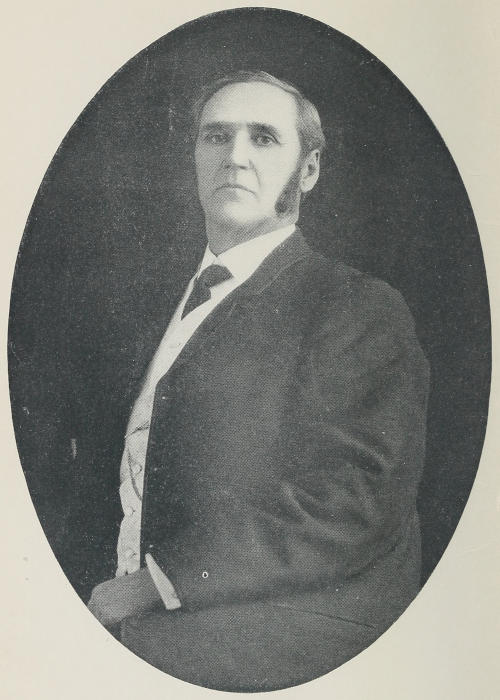
Preface
It was not my purpose, in the preparation of
this little volume, to make it an autobiography,
but rather a narration of incidents connected
with the twenty years of humble service which I
tried to render the United Brethren Church among
the mountains of West Virginia.
These incidents present an all-round view, in
outline, of the real life and labors of the itinerant
preacher, a third of a century ago, in an isolated
section, where the most simple and primitive customs
prevailed.
While some of the things related will doubtless
amuse the reader, others, I trust, will lead to
thoughtful reflection, and carry with them lessons
inspiring and helpful. The introduction should first
be carefully read by those who expect to be profited
by a perusal of the pages which follow. That
good may come to the church, and glory to our
Redeemer through this unpretentious publication is
the prayer of its
Author.
Kansas City, Mo., May 1, 1907.
I have examined the manuscript of “Twenty
Years on Horseback, or Itinerating in West
Virginia,” and cheerfully submit this note of commendation.
The author, Bishop W. M. Weekley, D.D., I
have known for more than thirty years. He entered
the ministry when young, with an undivided heart
and determined purpose. During the years he
served the Church in that State he traveled over
almost the entire territory of the West Virginia
Conference. The country then was extremely
primitive; but simple as the mode of life was at that
time, the field was an interesting, even an enjoyable
one for a minister who could endure hardness
as a good soldier of Christ. I am acquainted with
nearly all the sections of the State referred to, and
am therefore familiar with many of the places,
facts, and persons mentioned, and can assure the
reader that the author has given a faithful account
of these in his book. No statement is overdrawn
or warped for the sake of effect.
W. W. Rymer.
Columbus, Ohio, May 3, 1907.
An examination of the following pages caused
me to live my early life over again. Having
spent twenty-three years in the ministry within
the bounds of the West Virginia Conference, and
having been intimately associated with the author
of this volume during the most of that period, I
am very familiar with many of the places, persons,
and events mentioned, and can testify to the correctness
of the record he makes, and to the faithfulness
of the pictures drawn. This book will stir
the thoughts and rekindle the fire within the old
itinerants, and, as well, I trust, arouse the young to
larger activities in soul winning.
R. A. Hitt.
Chillicothe, Ohio, May 4, 1907.
The author of this book and myself were
boys together. We were born and reared
within four miles of each other, were converted in
the same church, and for years were members of
the same Sunday school and congregation. We
were licensed to preach on the same charge, and
spent the earlier years of our ministry in the same
conference together. In many instances we traveled
the same roads, preached in the same communities,
and mingled with the same people.
After having examined the contents of this
volume in manuscript form, I am sure it contains a
faithful description of the varied conditions which
made up the life and experiences of the United
Brethren itinerant minister of that time among the
hills and mountains of West Virginia.
A. Orr.
Circleville, Ohio, April 30, 1907.
Introduction
The past lives through the printed page. The
ages would be blank if books were not made recording
the events and achievements of men. No form
of history is more interesting and profitable than
that which recites the career of those who, obedient
to their divine commission, proclaimed to
fellowmen the sweet message of Christ’s redeeming
love. The completeness of their consecration,
their undaunted courage and persistency in the
face of many difficulties, and their marvelous success
evidence in them the presence of superhuman
power. It is the genius of Christianity to inspire
and develop the unselfish and heroic in men. The
splendid specimens of self-sacrifice and moral courage,
which adorn the pages of Christian literature,
charm the reader and inspire him to more Christlike
endeavor. These life-stories constitute a rich,
priceless legacy for present and future generations.
In this admirable volume, Bishop Weekley has
modestly removed the curtain from twenty years of
his own strenuous ministerial life spent in the
mountains and valleys of West Virginia, and given
the reader a conception of what it meant to lift
up the Christ and extend his kingdom in that
rugged region. The book is biographical in character,
but since “biography is the soul of history,”
it is history in reality. The scenes and events
which he presents suggest the character of the
work which others had to do in laying the foundations
of our Church in those sections.
It would be difficult to find more striking
examples of Christian altruism and heroism anywhere
in this country than the godly men who
preached the gospel among the mountains and in
the valleys of the Virginias in the early years of
our denominational history. These men embodied
those elements of character and graces of the Spirit
which are essential to success in Christian work
anywhere. Having heard the call of God, and having
felt the spell of the divine spirit, they yielded
themselves unreservedly to the gospel ministry.
They possessed strength of conviction, singleness
of aim, earnestness of purpose, and concentration
of effort. As a rule these pioneer preachers had
but one business—that of the King. They were
so absorbed in the saving of men and women, and
in extending the kingdom, that they gave but little
attention to present physical comforts and future
needs. Many of them were without property, and
when they sang,
“No foot of land do I possess,
No cottage in this wilderness,”
there was a literalness about it which would have
dismayed men of less faith and consecration. Without
seeking to enrich themselves in material things
they labored earnestly to bring the spiritual riches
of heaven to the hearts and homes of others.
They were busy men—men of action. They
omitted no opportunities to do good. Intervals of
rest were few and far between. The modern minister’s
vacation was to them unknown. They met
their “appointments” with surprising regularity.
Neither storm, nor distance, nor weariness thwarted
their plans. Their announcements were always
made conditionally—“no preventing providence”—but
they never calculated for providence to prevent
them being on hand at the appointed place
and hour. The strain of toil was constant, but
their iron resolution, and the work itself, proved
a strong tonic. The success of one service was
inspiration for the next. Visiting from house to
house, exhorting the people to faithful Christian
living, distributing religious literature, and preaching
week days as well as Sundays made their lives
full of heavy tasks, all of which were performed
with happy hearts. They possessed the glowing
and tireless zeal of the preaching friars of the
Middle Ages, and with many of them the clear
flame of their zeal was undimmed until the fire
was turned to ashes.
They were men of thought as well as action.
Their preparation was made in the college of
experience, in which they proved themselves apt
students. They studied few books and only the
best. They cultivated and practised the perilous
art of reading on horseback. They pored over
books and papers in humble homes by flickering
candle or pine-knot light long after the family
had retired. It is remarkable what extended
knowledge of the English Scriptures, methods of
sermonizing, oratorical style and forceful delivery
these men acquired. They knew well, and by
that surest form of knowledge—the knowledge
born of verified experience—all they proclaimed
in message to the people. There was freshness
of thought, aptness of illustration, and forcefulness
of expression that was native to them. The
majestic forms of nature in the regions where they
toiled inspired in them the sublimest thoughts of
God and his eternal truth. The marvelous results
of the sermons of such men as Markwood, Glossbrenner,
Bachtel, Warner, Nelson, Graham, Howe,
Hott, and others proved them great preachers in
the highest and truest sense.
They were men of tact as well as thought, and
adjusted themselves to the conditions. They
preached wherever the people would assemble—in
leafy grove, by the river bank, in the humble
home, in the log schoolhouse, in the village hall,
in the vacant storeroom, and in the unpretentious
church-house. They did not always have the exhilarating
and inspirational effect of great crowds, but
they preached “in demonstration of the Spirit,”
kindling the deepest emotions in their hearers,
often arousing them to tremendous intensity and
causing waves of overpowering feeling to sweep
over them. Saints shouted the praises of God
and penitents pleaded for mercy. These heralds
of the Cross employed none of the familiar devices
of modern times for securing crowds and reaching
results. There were no specially-prepared and
widely-scattered handbills, no local advertising
committees, no daily newspapers with flashing
headlines and portraits, no great choral or orchestral
attractions. What made these fallible men
so forceful and successful in winning others? The
explanation lies in the fact of their spiritual enduement.
They wrought in the name of Christ and
under the influence of the Holy Spirit.
In no portion of our Zion have ministers made
stronger and more lasting impression upon the people.
Whenever present in a home they were the
guests of honor. Their strong personalities and
noble traits of character, as well as their calling
itself, won for them the esteem of old and young.
Parents named their children after them, and
exhorted their sons to find in them their models
for manhood. In thus honoring these noblemen of
God they exalted the work of the ministry in the
minds of the young, and prepared the way for
the Lord to call them into his service. This may
account, at least in part, for the great number who
have gone into the ministry from these mountain
districts.
Let no one fancy that somber shadows rested
continually upon the pathway of these ministers.
There was a joyous side to their ministerial life.
When together as a class, or among their parishioners,
their stories and jokes were abundant,
spontaneous, and of the purest type. When they
met at institutes, camp-meetings, and conferences
they enjoyed one round of good cheer and solid
comfort. Their services of song drowned all dull
cares. Their lives had shadows, but they refreshed
themselves in the rifts and glorious sunbursts.
The people to whom these men of God proclaimed
the gospel were not, as a rule, rich in
material things, but they possessed great hearts, in
which love and kindness flowed as pure and
refreshing as the streams of water that rippled
down the mountain side.
We rejoice that Bishop Weekley has given to the
Church this book. Many aged ministers, who once
toiled in the Virginias, will live over again the
scenes of their lives as they read these pages.
Young men will be stimulated to more earnest
endeavor as they learn of the hardships and complete
consecration of God’s servants in pioneer
days. No one will weary in reading this excellent
volume. The good Bishop has written in harmony
with an established sentiment in book-making—“it
is the chief of all perfections in books to be
plain and brief.”
W. O. Fries.
Dayton, Ohio.
CHAPTER I.
The Virginias have turned out more United
Brethren preachers, perhaps, than any other
section of the same size between the oceans.
These pulpiteers have ranged in the scale of
ability and efficiency from A to Z. Some
achieved distinction in one way and another;
others, though faithful and useful, were little
known beyond their conference borders. Nor
have all remained among the mountains. Dozens
and scores of them have gone out into other
parts of the Church. At this writing they are
to be found in no less than nineteen different
conferences, and, as a class, they are not excelled
by any in devotion to the Church, in unremitting
toil, and in spiritual fervor and downright
enthusiasm. Some—many who spent
their lives in building up the Zion of their
choice among the Virginia hills, have gone to
glory. Among these heroes I may mention J.
Markwood, J. J. Glossbrenner, Z. Warner, J.
Bachtel, J. W. Perry, J. W. Howe, S. J.
Graham, I. K. Statton, and J. W. Hott. Other
names, perhaps not so illustrious, but just as
worthy, are to be found in God’s unerring
record. The historian will never tell all about
them. Their labors, sacrifices, and sufferings
will never be portrayed by any human tongue,
no matter how eloquent, or by any pen, however
versatile and fruitful it may be. Footsore
and weary, dust covered and battle scarred, they
reached the end of their pilgrimage and heard
heaven’s “well done.” What a blessed legacy
they bequeathed to their sons and daughters in
the gospel!
“Old Virginia” was, in part, the field chosen
by Otterbein himself, and by his devout colaborers.
This was more than a hundred years
ago. In 1858 the Parkersburg, now West Virginia
Conference, was organized out of that
part of the mother conference lying west of
the Alleghanies—a territory three hundred
miles long, roughly speaking, by two hundred
in width. In its physical aspects the country
is exceedingly rough, and difficult of travel.
But the people, though mostly rural in their
customs and mode of living, and many of
them poor, so far as this world’s goods are concerned,
are warm hearted, genial, and hospitable.
When a preacher goes to fill an appointment
among “mountaineers,” he is not troubled
with the thought that perhaps nobody will offer
him lodging, or willingly share with him the
bounties of his table. I have found things
different in other parts of the country.
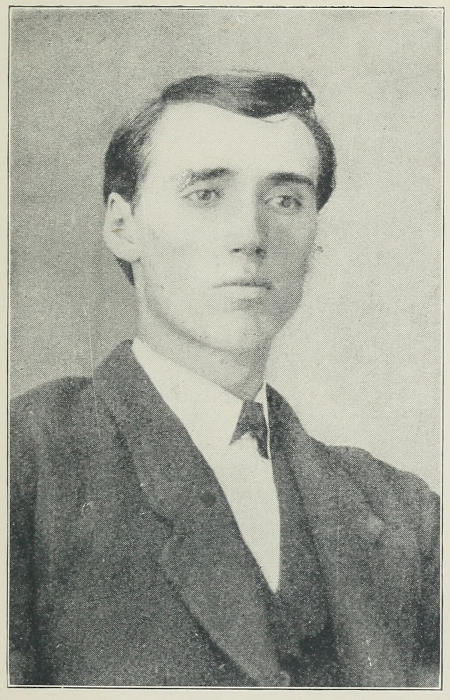
W. M. WEEKLEY, Twenty Years of Age
Traveling Circuit
The new conference was organized at Centerville,
in Tyler County, by Bishop Glossbrenner,
in the month of March. Only a few ministers
were present, but they were brave and good,
ready to do, and, if need be, to die for their
Lord. Five miles from this historic place the
writer was born on the eighteenth day of September,
1851.
My parents, though poor, were honest and
honorable, and toiled unceasingly to provide
for and rear in respectability their ten children,
of whom I was the oldest.
The neighborhood was far above the average
in its religious life and moral worth. A man
under the influence of liquor was seldom seen,
and a profane word was hardly ever heard.
The United Brethren Church was by far the
leading denomination in all that country. The
old log church in which we all worshiped
stood on father’s farm, and our home was the
stopping-place not only of preachers, but of
many others who attended divine service. At
times our house was so crowded that mother
was compelled to make beds on the floor for the
family, and not unfrequently for others as well.
But to her it was a great joy to perform such a
ministry for the gospel’s sake. Her loving
hands could always provide for others, no matter
who they were, or how many. For the
third of a century father was the Sunday-school
superintendent in the neighborhood, and, for a
longer period, teacher of the juvenile class.
Thus he saw little children pass up into other
and older classes, and finally to manhood and
womanhood, when by and by their children
came in and were given a place in “Uncle
Dan’s” class.
At the age of fourteen I was born the second
time, and united with the Church. The occasion
was a great revival held by Rev. S. J.
Graham, of precious memory. Seeing my oldest
sister, Sarah, bow at the altar, greatly
moved my young heart. A few moments later I
observed father coming back toward the door,
and thinking perhaps he was wanting to speak
to me on the subject of religion, I immediately
left the house. My state of mind became awful.
The next evening I saw mother pressing her
way toward me through the standing crowd.
I knew what it meant, and sat down with the
hope of concealing myself from her; but how
vain the effort! What child ever hid himself
away from a mother’s love? Putting her hand
on my head, she said, “William, won’t you be a
Christian?” I made no reply, but said to myself,
“I can’t stand this; I must do something.”
How her appeal, plaintive and tender, made me
weep! It was really the first time she had ever
come to me with such directness and warmth of
heart. To this very moment I can feel the
touch of her hand and hear her loving appeal.
The next day I talked with other boys who were
with me in school, and asked them to accompany
me to the “mourner’s bench,” which they did.
At that time the class, though in the country,
numbered one hundred and seventy souls. Three
months later, I was appointed one of its stewards,
and with this office came my first experience
in raising money for the Church.
The next year I was elected assistant class-leader,
and though young and inexperienced, I
rendered the very best service I possibly could.
My educational advantages up to this time
had been only such as the common schools
afforded, with the addition of a close application
to study at the home fireside, aided by the
historic “pine torch” and “tallow candle.”
From the day of my conversion I could not
escape the thought of preaching. The duty of
being a Christian was never set before me more
forcibly and clearly than was the duty of preaching;
but I hesitated. My ignorance, and lack
of fitness otherwise for such a high calling, appeared
as insurmountable barriers. I could not
understand why God should pass by others, better
in heart and far more capable, and choose
me. So the struggle went on. In the mean
time I began to read such books as I could secure.
The Bible, “Smith’s Bible Dictionary,”
and “Dick’s Works,” constituted my library.
The last named was rather heavy for a lad only
in his teens, but I rather enjoyed such studies.
The first book I ever purchased was “Religious
Emblems,” which proved exceedingly helpful to
my young life.
When seventeen I preached my first sermon,
or, perhaps I should say, made my first public
effort. It was in an old log church on Little
Flint Run, in Doddridge County. Brother
Christopher Davis, a local preacher, was holding
a meeting, and at the close of the morning
services announced that I would preach at night.
What a day that was to me! How I tried to
think and pray! When I reached the church I
found it full, with many standing in the aisle
about the door. I felt so unprepared—so utterly
helpless—that I immediately retired to a
secret place, where I again besought the Lord
for help. Returning, I started in with the preliminaries,
but was badly scared. No man can
describe his feelings under such circumstances.
Many a preacher who scans these pages will
appreciate my situation. I spent a good part of
the first fifteen minutes mopping my face. I
seemed to be in a sweat-box; but by the time I
reached my sermon, or whatever it might be
called, the embarrassment was all gone. I still
remember the text: “And I will bring you into
the land concerning the which I did swear to
give it to Abraham, to Isaac, and to Jacob; and
I will give it you for an heritage. I am the
Lord.” It was immense; but the most of young
preachers begin just that way. At this distance
from the occasion, I do not recall anything I
said, and am glad I cannot. However, there was
one redeeming feature about the effort, and that
was its brevity. In twenty minutes I had told
all I knew, and perhaps more. I have never
been able to understand why the people listened
so patiently. They really seemed to be interested,
but why, or in what, I have never known.
I have not tried that text since, and I do not
think I ever shall. It is too profound to even
think of as the basis of a discourse to common
people.
Dr. J. L. Hensley, when pastor of Middle
Island Circuit, early in the sixties, had a somewhat
singular experience in this same log
church. While preaching one Sabbath morning
in midsummer from the text, “The seed of the
woman shall bruise the serpent’s head,” the people
at his left suddenly became excited, and
looking around quickly for the cause, he observed
a snake, about two feet long, crawling in
a crevice of the wall near the pulpit. Reaching
for his hickory cane, which he always carried,
he dealt the wily creature a blow which brought
it tumbling to the floor, remarking at the same
time, “The seed of the woman shall bruise the
serpent’s head.” Thus in the midst of his discourse
he was furnished an illustration which
made a profound impression upon his hearers,
and aided greatly in bringing the truth home to
their hearts.
The presiding elder, Rev. S. J. Graham, my
spiritual father, by authority of a quarterly
conference held at the Long Run appointment,
October 23, 1869, gave me a permit to exercise
in public for three months. Shortly after this I
was prostrated with lung fever, which soon developed
the most alarming aspects. Though the
ailment was outgeneraled, the process of recovery
was slow. In fact, one of my lungs was so
impaired that consumption was feared. A noted
physician, after carefully diagnosing my case,
frankly told me that nothing could be done for
my lung; but I did not believe a word he told
me. I had decided that I would make preaching
my life work, and believed that God would
give me a chance to try it. It might be noted
here that ten years later this same doctor was
in his grave, while I was a better specimen of
physical manhood than he ever was.
“Commit thy way unto the Lord; trust also
in him, and he shall bring it to pass.” What
will he bring to pass? The right thing, and in
the right way. Such has been my observation
and experience in all the years that have come
and gone since the hand of affliction was so
keenly felt.
December 25, 1869, I was granted quarterly
conference license in a regular way, and attended
the annual conference which met in
Hartford City, Mason County, the following
March. Much of the time while there I was not
able to walk from my stopping-place to the
church, though not a half dozen blocks distant.
Some of the brethren feared that I would not
live to get back home again. But I wanted a
circuit. With that end in view I had gone to
conference, and no amount of persuasion could
turn me aside from the one great purpose that
had taken complete possession of my soul. I
was entering the work with a full knowledge of
what it meant. I had heard the brethren talk
of their privations and abundant labors, and, as
well, of their victories and joy of heart. The
report of the year then closing was most suggestive.
The eighteen fields of the conference
contained one hundred and sixty-seven preaching
places, and had paid twenty-four men a little
less than $140 each upon an average, not
counting outside gifts. West Columbia Circuit
paid its two pastors, Revs. W. B. Hodge and I.
M. Underwood, $400. The next highest was
$339.19, and was paid the brace of pastors who
served the Glenville charge—Revs. W. W.
Knipple and Elias Barnard. The other sixteen
pastorates ranged from $267.15 down to $35,
the last named amount having been received by
Rev. J. W. Boggess, on Hessville Mission. The
Parkersburg District paid Elder Graham
$227.87, while West Columbia District only
reached $152.85 for its superintendent, Rev.
J. W. Perry. To the support of each of the
districts, however, the parent missionary board
added $100.
When the Stationing Committee reported, my
name was read out as the junior preacher for
Philippi Circuit, with Rev. A. L. Moore, pastor
in charge. This appointment was given, as more
than one assured me in later years, simply to
satisfy my mind. No one expected me to go to
it. As the field already had a man, my failure
to reach it would make no difference in any
way.
Returning home I told father what had been
done, and that I must have the necessary outfit
for a circuit-rider; namely, a horse, a saddle
and bridle, and a pair of saddle-bags. No matter
what else a man had, or did not have, in those
days, these things were essential to efficiency
among the mountains of West Virginia.
At once I began preparations for leaving
home. Mother was thoughtful enough to make
me a pair of leggings which buttoned up at the
sides and reached above the knees. No one article
made with hands was ever more valuable to
a Virginia itinerant than leggings.
Philippi Circuit was seventy-five miles distant
among the mountains, and would require,
owing to the bad roads, two and a half days of
hard travel on horseback to reach it. At the
appointed time, April 11, 1870, early in the
morning, I rode out of the old lane and up the
hillside. All I had of earthly possessions was
in my saddle-bags. One end contained my
library, (Bible, Hymn-book, “Smith’s Bible
Dictionary,” “Binney’s Theological Compend,”
“Religious Emblems,” and one volume of “Watson’s
Institutes,”) while in the other was stored
my wardrobe, scant and plain. When far up on
the side of the hill I looked back and saw
mother standing on the porch. She had not
ceased to watch me from the moment I started.
Tears unbidden filled my eyes, and with these
came an appreciation of our home that I had
never experienced before. The home had been
humble, to be sure, but it was Christian. We
had a family altar, from which the sweet incense
of prayer ascended daily to God. I could
truthfully say:
“Jesus, I my cross have taken,
All to leave and follow thee.”
A mile distant I joined, by a prearranged
plan, Rev. G. W. Weekley, my uncle, and Rev.
Isaac Davis, both of whom were also en route
to their distant fields of toil.
At the end of the second day we reached
Glady Fork, on Lewis Circuit, where my uncle
lived. How weary after so long a ride! At that
time my health was still so precarious, and my
strength so limited, that I could not walk a
hundred yards up grade without resting. To
dismount from my horse, open and close a gate,
and then get back into the saddle, exhausted me.
Remaining over a few days with my uncle, I
tried to preach on Sunday morning, but found
myself exhausted at the end of twenty-four
minutes. In a few days, however, I was sufficiently
rested from my long ride to journey on
to my own circuit, where I soon found the
preacher in charge, and plans were discussed for
the year’s work. This was historic ground. It
was an old United Brethren field, having been
traveled by Statton, Stickley, Warner, Hensley,
and others, in the late fifties and early sixties,
when it included twenty or more preaching-places,
spread over portions of several counties.
CHAPTER II.
Philippi Circuit contained at this time
the following appointments: Romines Mills,
Gnatty Creek, Peck’s Run, Indian Fork,
Mt. Hebron, Green Brier, and Zeb’s Creek.
Later I added two more—one on Big Run, and
the other on Brushy Fort, at the home of
“Mother” Simons. Two of the preaching places
lay “beyond” the Middle Fork River—a rolling,
dashing stream, fresh from the mountains, and
at times dangerous to cross. It was so clear that
a silver piece the size of a quarter could be seen
at a depth of several feet. The first time I
attempted to ford it I put my life in jeopardy.
Because the bottom could be seen distinctly, I
imagined it was not deep, but after a few paces
I was in mid-side to my horse, and going deeper
every step. Perceiving the danger I was in, I
tried to turn my horse about, and did so only
after the greatest effort, owing to the almost irresistible
current which was gradually bearing
horse and rider downward. Going to a house
near by I made some inquiry about the stream,
and was told that if I had gone ten feet farther
I should have been swept away by the swift
running waters. How grateful I was to God for
the deliverance. During the following winter
my life was endangered by floating ice at the
same crossing-place. Brother Moore about the
same time, perhaps a little later, seeing he could
not ford the stream, decided to lead his horse
across the ice at a point below the regular crossing,
where there was but little current; but
when twenty feet from the shore toward which
he was headed, the ice gave way, and the faithful
animal went under. Having hold of the
bridle rein, however, he managed to keep his
head above the water until a passage way was
broken through to dry land.
One instinctively shudders as he recalls the
dangers which at times thrust themselves suddenly
across the pathway of the early preachers
of the Virginia and Parkersburg conferences
when the fields were so large and travel so excessive.
Brother Moore informed me, as we
looked over the charge, that I would have to take
the “outsiders” for my support, as the circuit
only paid $300, and he could not get along on
less and pay rent. It struck me that he was
about right, so I readily agreed to his proposition.
Then what? Well, at each preaching
place I found a “sinner” who agreed to serve as
my steward, and these men did well, everything
considered. For the year I received $97, including
an overcoat and several pairs of yarn
socks.
At one of the appointments an unfortunate
episode occurred over my salary. The steward
one day stepped over the line, and got after
some of the church-members for money. He
very well knew they were abundantly able to
help, but they flatly refused. This so upset him,
so I was told, that he expressed his opinion of
them in language far more vigorous than polite.
It is a joy, however, to note in this connection
that some of these stewards soon became Christians,
and active helpers in the Church.
Out of the pittance I received, possibly all, or
more than I was worth, I added to my little
library, which could easily be put in one end of
my saddle-bags when I left home, the following
books: “Bible Not of Man,” “Conversation of
Jesus,” “Jesus on the Holy Mount,” “Pilgrim’s
Progress,” “Dying Thoughts,” “Bible Text
Book,” “Jacobus on John,” “God’s Word Written,”
“Paley’s Theology,” “Our Lord’s Parables,”
“Webster’s Dictionary,” “Bible True,”
“Rock of Our Salvation,” “Companion to the
Bible,” “Dictionary of the Bible,” “Credo,”
“Rise and Progress of Religion in the Soul,”
and “Hand of God in History.” This, of course,
was not a lavish purchase of books, but it did
pretty well for one with a cash income of not
more than $75.
We had some good revivals that year.
Ninety-nine were received into church fellowship,
while many more were converted. At Indian
Fork we held meeting in a little log cabin,
about twenty feet square, with a great fire-place
in one side. It is surprising to see how many
people can be crowded into so small a place when
they are anxious to attend a revival. Night
after night for weeks this little room was packed
like a sardine case. But the outcome was glorious.
Some of the best citizens of the community
were reached and won to Christ.
After a few services were held, and it was
seen how insufficient the little room was to accommodate
the many who wanted to come, we
put on foot the project of building a church, and
immediately set about the work. The plan was
so unique that the whole neighborhood became
interested. Some felled trees; others “scored
and hewed” the logs; those who had teams volunteered
to haul them, while others still made
shingles, or helped with the foundation; “for
the people had a mind to work.” Before the
meetings closed the house was up and ready for
use—an edifice which served as a place of worship
for many years.
The people all over the circuit were kind and
forbearing, and greatly encouraged me by waiting
on my ministry, and hearing what little I
had to say. I visited all classes of persons, rich
and poor, and had all kinds of experiences. In
some homes I enjoyed the hospitality offered; in
others it was not so highly enjoyed, but keenly
appreciated. At one of the preaching points a
certain brother insisted upon my going home
with him for dinner after the morning service,
which I consented to do. It was a rainy day.
He lived in a cabin of one room on the hillside.
On either side of the dwelling was a shed. Under
one of these he kept his corn; under the other,
where we entered the house, the hogs slept and
the chickens roosted. His only piece of regular
furniture was a chair. As to where and when
he got it I did not inquire. Long poles reaching
across the room and fastened to the walls, with a
forked stick under them in the center, constituted
a kind of double bedstead. When I entered
the door I observed a large “feather tick”
piled upon these poles. Finally, something
moved under it, and then a boy of ten or twelve
summers, almost suffocated, crawled out and
made for the door. His purpose, no doubt, was
to hide from the preacher when he saw him
coming, but finding he could not get his breath,
decided to retreat to another place of concealment
where there was more fresh air. I did not
eat much dinner. I told “mine host” that I was
not hungry, and, in fact, was not. They had
only a broken skillet in which to bake bread, fry
meat, and “make gravy.” As soon as possible I
excused myself, and started for my next appointment.
Indeed, I was glad I had another
one that day.
Many other amusing incidents occurred during
the year. These always find a place in the
itinerant’s life, and it is well, perhaps, that they
do, as they offset in a measure his somber experiences.
I am frank to confess that it is easy for
me to see the funny side of a happening, if it
has one, and to enjoy a joke though it be on
myself.
In the early days of the West Virginia
Conference, what was known as the “plug hat”
was much in evidence among preachers. Such
“headwear” was a distinguishing mark, hence
no circuit-rider with proper self-respect, or
wishing to give tone to his calling, could afford
to don anything else. Being young, and somewhat
ambitious to hold up the ministerial
standard, at least in appearance, I determined
to secure one as soon as I could get a few dollars
ahead. However, the way opened for the gratification
of my wish sooner than I had expected.
Brother Moses Simons had one he didn’t care
to wear, so I bantered him for a trade. It was
in first-class condition, but entirely too large
for me. Even after putting a roll of paper
around under the lining, it came down nearly to
my ears. What was I to do? I must have a
high-topped hat, but was not able to purchase a
new one. At last I decided to wear it, if my
ears did occasionally protest against its close
proximity to them. It distinguished me from
common people for the next two years, and so
answered well its purpose.
One day as I was riding up a little creek between
two high hills I passed a group of urchins
who evidently were unused to preachers. They
watched me in utter silence till I had passed
them a few yards, when one of them piped out,
“Lord, what a hat.” No doubt they had an interesting
story to relate to their parents when
they returned to their humble cabin home.
Not long after this I met a gentleman, so-called,
in the road, and bade him the time of
day, as was my custom. He returned the salutation
with, “How are you, hat?” and passed
on without another word. To me this was exceedingly
offensive, for I was sure there was
something in and under the hat, and any such
remark was an uncalled-for reflection upon my
dignity and the high calling I represented. I
did not know the man, and to the best of my
knowledge have never seen him since, but to
this day, though removed from the event more
than a third of a century, I harbor the thought
that if I ever do run across him I shall demand
some sort of reparation for the insult.
The annual conference met in Pennsboro,
Bishop Weaver presiding. During the year I
had improved much in health, owing to my
horseback exercise and the great amount of
singing I did, which doubtless had much to do
with the development of lung muscle.
At conference I went before the committee
on applicants with eight others, five of whom
were referred back to their respective quarterly
conferences for further preparation. For some
reason the examination was unusually critical.
One question propounded to each was, “Do you
seek admission into the conference simply to
vote for a presiding elder?” There was some
doubt in my case on a doctrinal point, according
to the report of the chairman, Rev. W.
Slaughter, an erratic old brother. He said the
boy was all right, except “a little foggy on depravity.”
Possibly I was, for I didn’t think
much of that portion of our creed. However,
I see more in it, and of it, after all these years,
than I did then. In the light of my observations
and experiences with men, I am not inclined
to deny the doctrine.
I was appointed by this conference to Lewis
Circuit, an old, run down field, embracing parts
of three counties. Rev. Isaac Davis was sent
along as a helper “in the Lord.” We had grown
up together in the same neighborhood, and were
members of the same congregation. He was a
young man of sterling moral qualities, and
proved himself a loyal and valuable coworker.
After spending a few days with our parents
and friends, we started, early in April, for the
scene of toil to which we had been assigned for
the year. From the day we left home we ceased
not to pray that the Lord of the harvest would
give us at least one hundred souls as trophies of
his grace, and to that end we labored constantly.
We found the following regular appointments:
Glady Fork, Hinkleville, Union Hill,
Little Skin Creek, White Oak, Waterloo, Indian
Camp, Walkersville, Braxton, and Centerville.
Soon we added two more, namely, Bear Run
and Laurel Run. The charge agreed to pay us
$210, but fell a little short, reaching only $170.
Of this I received $90, and Brother Davis the
remaining $80. The assessment for missions
was $25, and about $10 for other purposes,
which we regarded as a pretty high tax for
benevolences. Yet the entire amount was raised
after a most vigorous and thorough canvass of
all the appointments. As I now remember, no
one gave more than twenty-five cents.
Our protracted meetings lasted more than
six months, and resulted in the reception of one
hundred and one persons into church fellowship.
While in the revival at Hinkleville, a great shout
occurred one night over the conversion of some
far-famed sinners, during which the floor of
the church gave way and went down some two
feet. Before dismissing the people, I announced
that we would meet and make repairs the next
day. At the appointed time it seemed that
nearly all the men and boys in the country
round about were on hand, ready to render what
service they could in repairing the house of the
Lord.
This was a revival of far-reaching influence.
The country for miles around was thoroughly
stirred. One of the leading men became interested
one night, and decided upon a new life.
As he approached the church the next day he
heard us singing what was then a very popular
song—“Will the Angels Come?” The words
and melody fairly charmed him, and kindled
new hope in a life that had been given over to
sin. As he opened the church door, the key of
faith opened his heart’s door to the Savior, and
he rushed down the aisle to tell us of his wonderful
experience. It was all victory that morning.
The conversion of such a man profoundly
affected the people, and led to many more decisions
for Christ.
During this meeting my colleague arose one
evening to preach. As he had the test, with book,
chapter, and verse all by heart, he did not open
his Bible, but began by saying, “You will find
my text in Revelation, third chapter, and twentieth
verse.” Just then an apple fell through a
hole in his coat-pocket on to the floor. As he
stooped to pick it up, another fell out. Returning
them to his pocket, he again started—“Revelation,
third chapter and twentieth verse,”
when suddenly the two restless apples dropped
out again. After picking them up, he started
in the third time, “You will find my text
in,”—but all was gone. He couldn’t even
think of Revelation. The audience was at
the point of roaring, so in the midst of his confusion
he turned to me and said, “Brother
Weekley, what is my text? I don’t know what
nor where it is.” I answered, “Behold, I stand
at the door and knock.” “Yes, yes,” he said, “I
remember it now,” and proceeded with his discourse,
but did not recover that evening from
the knock-out blow he had received.
Preaching through such a long revival campaign
was no easy thing, when I had only a few
sermons in stock, and these were all “home
made.” I think the material in them was all
right, but the mechanical construction was not
according to any particular rule. I endeavored
to give my hearers plenty to eat, but I did not
understand how to serve the food in courses. It
was like putting a lot of hominy, and pork, and
cabbage, and beans into the same dish, and saying
to the people, “Here it is; help yourselves.”
But as a few sermons could not be made to last
indefinitely, I was compelled to apply myself to
study, no little of which was done on horseback.
Every itinerant in West Virginia at that
time had to do the same thing. While this
method of study was not the most desirable, it
nevertheless had its redeeming features. Ofttimes,
after riding a dozen or fifteen miles over
rough, hilly roads, I would alight, hitch my
horse, and while the weary animal was resting,
mount a log near by and practice to my heart’s
content the sermon I was preparing for my next
appointment. Again and again did I make the
welkin ring as I preached to an audience of
great trees about me. Does this appear amusing
to the reader? Do you doubt that such experiences
ever occurred? If so, ask some of the
earlier preachers of the conference who are yet
living if they ever did such a thing while circuit-riding
among the mountains.
Did we ever feel lonesome as we traversed the
forests or climbed the hills? Not for a moment.
It was an inspiring place to be. The birds sing
so sweetly there. The gurgling, murmuring
streamlets are ever musical as they steal their
way along through gulches, over their rocky
beds. The scenery is sublime. Nature’s book
stands wide open, and abounds with richest lessons
and illustrations. No wonder Glossbrenner
and Markwood, Warner and Howe, with a host
of others, could preach! The very mountains
amid which they were born and reared conspired
to make them lofty characters, and
majestic in their pulpit efforts. While Union
Biblical Seminary, and our colleges generally,
are grand, helpful schools, let it not be forgotten
that “Brush College” is not without its advantages,
and should be given due credit for
the inspiration and rugged manliness it imparts
to its students.
My home this year was with Brother James
Hull, on the headwaters of French Creek, fully
forty miles from the nearest railroad station.
Mother Hull was one of God’s noble women.
She professed sanctification, and lived it every
day. I can never forget her helpfulness to me,
a mere child in years and service. I must see
her in heaven.
If I returned home after each Sabbath’s
work, it required one hundred and fifty miles
travel to make one round of the circuit. My associate
also had a good home on another part of
the charge; but unfortunately for him, and for
some others as well, his zeal led him into
trouble. Brother Mike Boyles, with whom he
stayed, was a good, true man, and was ever delighted
to have a preacher with him. One Sunday
he went to see a friend a few miles distant,
and innocently carried home on his horse a
large, nice, well-matured pumpkin. His purpose,
no doubt, was to prepare a special dish
for his guest; but his preacher was not pleased
with such an infraction of the Sabbath law. A
short while after this he discoursed in the
neighborhood church on the text, “I stand in
doubt of you.” Among other things, he said he
stood in doubt of a church-member who would
go visiting on Sunday and carry “pumpkins”
home with him. Brother Boyles very naturally
made the application a personal one, and ever
afterward refused to be reconciled.
During the year I married two couples. One
of the men was a horse buyer, and was considered
“away up” financially. Of course I expected
no insignificant sum for my services; it
ought to have been ten dollars or more; but let
the reader imagine, if he can, my disappointment,
if not disgust, when he handed me forty
cents in “shinplasters.” By “shinplasters” I
mean a certain kind of currency which circulated
during our civil strife in the early sixties,
in the form of five, ten, twenty-five and fifty
cent certificates.
Speaking of this wedding recalls the fact that
it was on this circuit, while visiting my uncle
the year before, that I married my first couple.
I remember, too, that I approached the occasion
with great trepidation. It was an awful task.
But the eventful hour finally came. The parsonage,
so called, where the nuptials were to be
celebrated, was a log cabin of one room. The
kitchen, which stood several feet from the main
building, was the only place offered in which to
arrange the toilet. At last I stood before the
young couple and began the ceremony, which I
had committed to memory. Yes, I had it sure,
as I thought. I had gone over it twenty times
or more. In practising for the occasion I had
joined trees and fence stakes, and I know not
what all, together; but at the very moment
when I needed it, and couldn’t get along without
it, the whole thing suddenly left me. There
I was. After an extended pause and a most
harrowing silence I rallied, and began by saying,
“We are gathered together.” Just then
my voice failed me; it seemed impossible to
make a noise, even. I fairly gasped for breath,
for that was the one thing I seemed to need
most. At last the effort was renewed. How I
got through I never knew. I seemed to be in a
mysterious realm, where the unknowable becomes
more incomprehensible, and when all the
past and future seem to unite in the present.
Finally I wound up what seemed to be long-drawn
out affair, and pronounced the innocent
couple man and wife. I am glad they always
considered themselves married. I have but little
recollection of what I did or said during the
ordeal. In fact, I do not care to know, since I
am so far away from the occasion. Yes, that
was my first wedding.
The year was not without its material enterprises,
for we completed the churches at Glady
Fork and Waterloo, repaired one at Indian
Camp, and started a new one at Laurel Run.
Some of these stand yet as moral and religious
centers, and, at times, through the intervening
years, have been the scenes of great spiritual
awakenings.
Conference was held at New Haven, in
Mason County, with Bishop D. Edwards in the
chair. While our report was thought to be
fairly good, I asked for a change, believing that
I could do better work on another field. The
favor was granted, and Hessville Mission assigned
me as my third charge.
At the close of this year there were thirty-one
ministers employed in the conference, whose
aggregate salary was $4,551.77, or an average
of $147 each. The three presiding elders received,
all told, $843.83. These figures indicate
something of the sacrifices made by the
men who gave themselves to the early work of
building up the Church in the Virginias.
Greater heroism of the apostolic type was never
displayed by any of the sons of Otterbein, nor
can any part of the country show greater
achievements for the work done.
CHAPTER III.
Hessville Mission embraced portions of
Harrison and Marion counties, and was made
up of the following preaching places: Quaker
Fork, Glade Fork, Indian Run, Big Run, Little
Bingamon, Ballard School-house, Salt Lick,
Plumb Run, and Paw-paw. In all this territory
we did not own a single church edifice. By fall
I had added Dent’s Run, Bee Gum, and
Glover’s Gap, making twelve appointments in
all. At the last named place I held a revival
in a union church. The meeting was good, and
telling most favorably upon some of the best
families of the town, when an unknown miscreant
at an early morning hour applied the
torch and reduced the building to ashes. All I
lost in the conflagration was my Bible and
hymn-book. Moving into a schoolhouse near by,
the meeting was continued, and a class organized.
By the middle of the winter there had
been sixty-five accessions, but from that on till
spring I had to lay by on account of measles.
At Little Bingamon we had a great meeting.
The entire community was deeply stirred.
“Aunt Susan” Martin was my main helper and
standby. While devout in life, and strong in
faith, she had a blunt, honest way of saying
things which often amused the people. At this
meeting two of her children made a start. One
was a son of some fifteen winters. He literally
wore himself out by his night and day pleadings
at the altar, and became so hoarse that he could
scarcely talk. His mother was greatly agitated
over his condition, and grew exceedingly anxious
to see the intense struggle terminated. One
evening she bowed at the altar with him that
she might, through instruction, show him a better
way. She did not believe that bodily exercise
could be made to avail anything in seeking
salvation. Finally, for a moment, she lost her
patience, and said, “Now, if you don’t quit this
kind of praying you will kill yourself. Stop it,
I tell you, or I’ll box your ears good. The Lord
isn’t deaf, that you should ‘holler’ so loud.”
Then turning to her husband who, at the time,
was a professed moralist, though faithful in
attending and supporting the church services,
she said: “George, you ought to be ashamed of
yourself. Not a word have you for this poor
child. Now come and talk to him. To stand
and look on is no way to do.”
The dear sister was right, not only in thinking
that the father ought to help the son, but in
protesting against unnecessary physical demonstrations
in seeking religion. It is not the
loud praying or constant pleading that saves
men, but faith in the world’s Redeemer. Rev.
H. R. Hess, one of the leading ministers
in the West Virginia Conference, was soundly
converted and received into the church during
this meeting.
What a good home I had while on this
charge! Brother Daniel Mason, a father in
Israel, whose life was as pure as a sunbeam,
took me to his home and heart, and treated me
very much as the Shunammite did Elisha. He
built me a little room on his porch, and put
therein a bed, bookcase, table, and candlestick.
The worth of such a place to a young minister is
next to incalculable. Twice a day he read the
Word and prayed. He was on good terms with
his Lord, and talked to him with the greatest assurance.
Some of the sweetest memories of my
earlier ministry cluster about this Christian
home. The fruition of the upper and better life
he now enjoys as the reward of his faith, service,
and devotion while here below.
The circuit agreed to pay me $100, and kept
its contract. The first quarter I received $14.81,
the second, $18.35; the third, $17.75; and the
last $49.05. The conference added $50, which
pushed my support up to $150. With this salary,
much above the average for a single man, I
could afford to pay $21.50 for a new suit of
clothes, and $4 for a new “two-story” silk hat.
On my way to conference a few days were
spent with friends in the home neighborhood.
Rev. E. Lorenz, father of the music writer, was
living and preaching in Parkersburg at this
time. He had organized a German congregation,
and held services in the lecture-room of
our English church. The Committee on Entertainment
sent me to stay with him during the
conference session which was held in the city.
Thoughts of that superlatively Christian home
linger with me to this day. I shall never forget
how parents and children bowed together in
prayer, morning and evening, and how each took
part in the devotions. Too much emphasis cannot
be placed upon the importance of prayer
in the home. Nothing else, on the human side,
so anchors the family and builds up character.
The fact that the fire has died out on so many
domestic altars is, itself, proof that family religion
does not receive the attention it once did.
At this conference I was permitted to pass
the second and third years’ course of reading,
which put me in the class to be ordained. I
can never blot from memory the prayer offered
by the lamented Doctor Warner at the ordination
service. He seemed to pour out his very
soul in petition to God for the young men being
set apart to the work of the ministry. I wept
like a child while he thus prayed, and anew
pledged to Jesus and the Church the service of
my life.
Grafton at this time was constituted a mission
station, and made my field for the coming
year. The town then (1873) had a population
of about three thousand souls, and was located
mainly on a steep hillside. In fact, it stands
about the same way yet, though containing several
thousand more people. We had no church-house,
and no organization, though there were
a few members scattered through the place.
Seventy-five dollars were appropriated by the
conference toward my support. A preaching-place
called “Old Sandy,” some twelve miles
distant, was also given me. Here we had a
gracious revival. I later took up two more
points—Maple Run and Glade Run—and organized
a class at each. At the close of the
year these country classes were formed into a
separate charge, and became self-supporting.
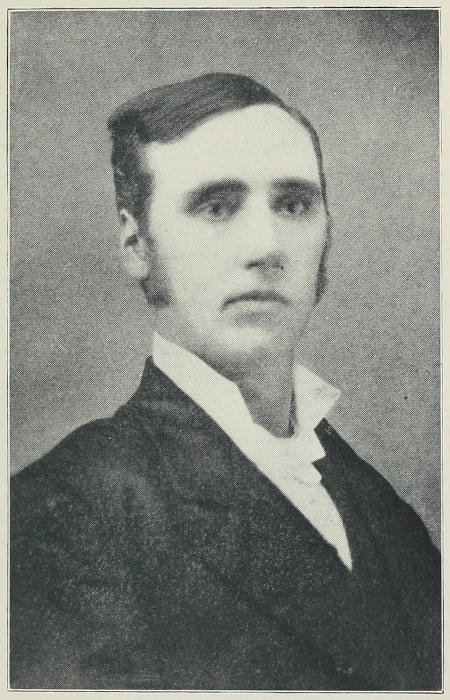
W. M. WEEKLEY, Thirty Years of Age
Presiding Elder
At Grafton the work progressed slowly, and
with some difficulty for a time. A friend gave
us, free of charge, the use of a church-house
which, by some means, had fallen into his hands.
The first thing was to organize a Sabbath
school, which started off well. When certain
church partisans saw the outlook, they offered
to take part in the school, and adroitly got possession
of the offices. When I discovered the
real situation, I determined to bring the matter
of control to an issue, and did. I deliberately
stated that I had been sent there to organize a
United Brethren Church and Sabbath school,
and proposed to carry out my instructions. I
was pleased to have teachers and other helpers
from sister denominations join in the work, I
added, but the school would be reported to my
conference. The result is easily imagined. Our
friends, so-called, suddenly dropped out, and
from that day to this the identity of the school
has never been questioned.
The seventy-five dollars appropriated by the
conference was about all I received, and twenty-five
dollars of that went in a lump to the centennial
fund. If a kind family had not taken
me in, free of cost, I could not have remained
the year through. For the second year the support
given was about the same. The third year
there were two of us to support, hence a special
effort had to be made to increase the pay. Three
hundred and twelve dollars was the amount actually
received, eighty dollars of which was paid
on rent; but we lived well; no such thing as
want seemed to be within a thousand leagues of
our humble home. We were thankful for cheap
furniture and home-made carpet. Yea, more,
we were happy. God’s ravens carried us our
daily portion.
In the early spring of 1875, we began the
erection of a chapel which cost, lot and all,
$2,800. But a part of it had to be built the
second time. Just as the frame was up and
ready for roof and siding, a storm passing that
way piled it in a promiscuous heap. This occurred
on the seventeenth of July. Immediately,
however, the work of reconstruction was
undertaken, and the edifice was completed in
early fall, and dedicated by Doctor Warner.
Such experiences try a young man’s nerve and
purpose, but invariably prove a blessing when
the difficulties accompanying them are overcome.
That year I took up an appointment at the
Poe School-house, two miles out of town, and
organized a class. In those days the preacher
was expected to look around for new openings,
no matter where he was or how large his field;
there is no other way to expand. My criticism
of many of our young preachers to-day is that
they do not try to enlarge their work. They
seem never to look beyond the nest into which
the conference settles them. They will live on
half salary, and whine about it all year, rather
than get out and look up additional territory.
Under fair conditions, the young man who is
devout and active can secure a good living on
any field. Faith and purpose and push will
win every time. The year closed with fifty-three
members, and ninety-five in the Sunday
school.
The conference again convened in Parkersburg,
with David Edwards this time as bishop—the
last session he ever presided over.
At this period the battle in the Church over
the secrecy question was waxing warm. West
Virginia had lined up on the liberal side. The
bishop, being pronouncedly “anti” in his views,
determined to enforce the rules of the Church
in the matter of admitting applicants into the
conference. A brother who appeared for license
was known to belong to some fraternal
order, so the good bishop held him up. This
brought on a crisis. All was excitement. Some
things, it was clear, would have to be settled
then and there, and they were. Doctor Warner
arose, in the midst of the flurry, and demanded
that the young brother be sent to the appropriate
committee, which he said was thoroughly
competent to deal with the question. The
bishop was on his feet also with the fire of
determination fairly flashing in his eyes. However,
when he fully realized that, with an exception
or two, the entire body was against him,
he gracefully yielded, thus happily bringing the
unfortunate conflict to a close. By morning,
matters had again assumed a normal condition,
and the bishop kindly requested that all reference
to the controversy be expunged from the
records.
Notwithstanding Bishop Edwards’ somewhat
radical position on the secrecy question, he was
greatly loved by all our brethren, and by none
was his death more sincerely mourned. On
Sunday he preached on Elijah’s translation; a
few days thereafter he was himself translated.
From Grafton I was sent to New Haven circuit,
in Mason County, one hundred and sixty
miles west. To get there I was compelled to
borrow twenty-five dollars. Dr. J. L. Hensley
kindly entertained us until a house could be
found; for as yet there was not a parsonage in
the conference. This was considered one of the
best fields we had. The first year it paid me
four hundred and sixteen dollars, and the next,
four hundred and twenty-seven dollars, with a
few presents in the shape of vegetables, groceries,
and the like. Of course, I paid rent out
of this—thirty-six dollars one year, and fifty
the other. I had only four appointments—New
Haven, Bachtel, Union, and Vernon, and these
were close together. During the two years, one
hundred and thirty were received into the
Church.
The next conference was held at Bachtel,
which gave me my first experience in caring
for such a body. Bishop Weaver presided and
preached the word mightily on Sunday. He had
been popular even since his first visit to that
section, in 1870. By request of Hon. George
W. Murdock, a wealthy business man in Hartford
City, three miles west, he went down there
and preached in our church on Sunday evening.
Mr. Murdock was an ardent admirer of the
bishop. Six years before he had entertained
him in his home, and was charmed by him
as a preacher and conversationalist. After
spending the first hour with him, he slipped
into the kitchen and said: “Wife, he is the most
wonderful man I ever met. Do come in and
hear him talk.” The old gentleman never forgot
the bishop’s sermon on Sunday. For weeks
afterward he would talk about it in his store,
and elsewhere, sometimes in tears, nearly always
ending with the observation, “He is a
wonderful man.” It might not be out of place
to note here that the good bishop more than once
shared the benefactions of his wealthy friend.
During my second year on this charge, a
peculiar and most trying experience came to
our home. A great revival was going on at
the Union appointment. The altar was nightly
crowded with earnest seekers, some of whom
belonged to the best families in the community.
Early one morning a young man came hurriedly
to the place where I was stopping, and calling
me out, said, “Mr. Weekley, I have been sent
to tell you that your babe is dead.” Hastening
home I found the faithful mother watching at
the side of the withered flower, and anxiously
awaiting my coming. How loving the ministry
of friends had been; nor did their tender interest
abate a whit until the little lifeless form was
put away to sleep in the cemetery on the hillside,
in the family lot of Dr. Hensley.
The reader may be anxious to know what I
did under the circumstances. There was but one
thing to do, that was to seek the guiding hand
of duty. Our little one was gone. Just as the
thoughtful florist takes his tender plants into
their winter quarters before the frost appears,
or the chilling winds sweep the plains, so a wise,
loving, merciful Father had plucked up the
little vine which had rooted itself so thoroughly
and deeply in our hearts, and transplanted it
in his own heavenly garden. Yes, Charley was
safe; so I returned to my meeting with a tender
spirit, and the work continued with great
power.
More than one preacher who reads this incident
will recall the time, or times, when he, too,
passed under the cloud, and walked amid the
shadows. Again and again I have been made to
feel that some people do not sympathize with
the minister and his wife, as they do with others,
when the death angel tarries and lays his
withering hand upon a young life. Somehow
they seem to think that the cup, when administered
to the preacher’s family, is not so bitter—that
the thorn does not pierce so deeply. But
I know better, and so do a thousand others. It
is said of Dr. Daniel Curry, a great man in
Methodism in his day, that he was so grieved
over the death of his little boy that after returning
home from the cemetery he went into the
back yard, and observing his little tracks in the
sand, got down on his hands and knees and
kissed them. Words cannot express my sympathy
for the faithful pastor and his family,
and my admiration of that faith, devotion, and
heroism which in so many instances are necessary
to keep them in the work.
Mason County was one of the first fields occupied
by the ministers who crossed the Alleghanies
westward. Among these were G. W.
Statton, J. Bachtel, and Moses Michael. However,
prior to this, preaching had been kept up
on the Virginia side by pastors of the Scioto
Conference. The main one was Jonas Frownfelter,
whose name deserves a place alongside
the heroes enumerated in the eleventh chapter
of Hebrews. On one occasion, when the Ohio
River was out of its banks, and too dangerous
for the ferryman to venture across, he plunged
in a little below the town of Syracuse, swam his
horse across, and came out at Hartford City, a
half mile below, singing like a conqueror:
“From every stormy wind that blows,
From every swelling tide of woes,
There is a calm, a sure retreat,” etc.
All honor to those who put their sweat, and
tears, and blood into the foundations of the conference,
thus enabling others to build safely and
successfully.
Early in the fifties a paper known as the
Virginia Telescope, was started in West Columbia,
ostensibly in the interest of the whole
Church, but later developments proved that the
object was to organize a Southern United Brethren
Church, making the slavery question the
basis of the separation. When the presiding
elder, G. W. Statton, became aware of its purpose,
he threw his official influence against its
continuance, and succeeded, by the aid of others,
in eliminating it as a disturbing factor.
The reader will pardon me for taking up
these early historical threads, woven long before
my day as an itinerant, but I have done so with
the view to preserving in permanent form interesting
facts not generally known, and nowhere
written into the history of the Church.
CHAPTER IV.
In March of 1878, the conference assembled
in Grafton, with Bishop J. J. Glossbrenner as
its presiding officer. At this session the brethren
greatly surprised me by electing me one of the
presiding elders. No thought of such a thing
had ever entered my mind. I could not see the
propriety of putting a young man, not yet
twenty-seven, over men of age, ability, and experience,
hence it was with no little diffidence that
I accepted the West Columbia District, in the
bounds of which I had already worked two
years. The district contained only eleven
charges, but these were widely scattered, embracing
all or parts of Cabell, Mason, Jackson,
Wood, Putnam, Kanawha, and Roane counties,
and were as follows: Milton, Point Pleasant,
Cross Creek, Thirteen, Jackson, Red House,
Fair Plain, Sandy, New Haven, Wood, and
Hartford City. Later, Walton was added.
The salary assessed the district was $425; out
of this I had to pay traveling expenses, provide
a house to live in, and pay a hired girl. Under
such conditions I could afford a house of only
three rooms. I never believed in a preacher, or
any one else, for that matter, living beyond his
income. Debt is an awful devil for the itinerant
to contend with, and should be avoided at all
hazard. In all the years of my ministry I have
never left a pastoral charge or district owing
any one thereon a nickel. If a man is fit to be a
preacher, debt will distract his mind and put a
thorn in his pillow; it cannot be otherwise with
a sensitive nature. God save our young men
from the habit and curse of debt-making.
No little of my travel, while on the district,
was by boat on the Ohio and Big Kanawha
rivers. Only one of my fields was touched by a
railroad, and that was sixty miles from where I
lived. My custom was to go by boat to the point
nearest the place of the quarterly meeting, and
then walk the remaining distance, whether it be
five or twenty-five miles. Often I might have
secured conveyance for the asking, but I felt
that it was humiliating to be always annoying
somebody for favors, nor have I changed an iota
in all these years in this regard. If a preacher
wants to make himself a nuisance among his
parishioners, he can easily do so by constantly
making demands upon them which look to his
own comfort and that of his family. Many a
time I walked from twelve to fifteen miles in a
day, held quarterly conference, and preached
twice. Occasionally the distance would stretch
out to twenty miles. I did not mind the labor
so much as I did the suffering from sore feet;
walking in the hot sun or over frozen roads,
hour after hour, often caused them to blister and
bleed. In these experiences I was not alone;
many others, some of whom yet live, suffered
the same or kindred hardships.
In February of 1879 I was called home to my
father’s. After a day or two I tried to return,
but upon reaching Parkersburg found the river
so frozen and clogged with ice that the boats
could not run. It was Thursday afternoon. My
quarterly was at Oakhill, fully forty miles distant,
the next Saturday at two o’clock. The
roads were badly frozen and almost impassable.
When I saw the situation I determined to make
the trip overland as best I could; if I could
not find assistance along the way, I would walk
it. Leaving the city at four o’clock, I traveled
on till darkness overtook me, when I turned
aside and knocked at the door of a humble cabin
and asked for lodging, which was cheerfully
granted; but I had made only a few miles. In
addition to the rough roads, I was burdened
with a good-sized grip and overcoat. The next
morning at daydawn I resumed my journey.
Once during the day I rode two or three miles
in somebody’s sled, but beyond this I got no
help. Long after the dinner hour I secured a
cold lunch, which the reader may be assured
was relished by a tired, hungry man. An hour
before sundown I reached Sandyville, where a
warm supper was enjoyed at a little hotel. Still
I was fifteen miles away from the point for
which I was aiming, and felt that I could go no
farther without help; but a kind friend generously
agreed to loan me his horse to ride as
far as Ripley, seat of justice for Jackson
County, from which place the mail-carrier was
to lead it back the next day; but the poor animal
was shoeless, and went crippling along at a
snail’s gait over the rough ground.
Two miles distant I had to cross Sandy
Creek, and found it partly frozen over. It was
too dark to discern the danger of fording the
stream. After repeated efforts, I succeeded in
getting the horse on to the ice, but as quick as a
flash it fell broadside, pitching me—I never
knew where nor just how far; but the horse beat
me up, turned its head homeward, and disappeared
in the darkness. What did I do? Well,
what almost anybody else would have done
under like circumstances. I took the back track
and returned to the village where the animal
belonged, and found that it had returned in
good order. The next morning my feet were so
sore that I could not wear my shoes, but was
fortunate in securing a pair of arctics in which
to travel the rest of the journey. By noon Ripley
was reached, where conveyance was secured
which enabled me to make the place of meeting
and call the conference on schedule time.
Some one may suggest that I was foolish for
making such an effort to reach the quarterly
when nothing apparently unusual was at stake;
maybe I was, but such was my way of doing. I
always believed that a preacher ought to fill his
engagements promptly unless providentially
hindered, and then he ought to be fair enough
not to blame providence with too much; but few
days are ever too cold and stormy, or nights too
dark to keep a man from his appointments if he
is anxious to preach the word and minister to
his people. I here record the fact, with feelings
of satisfaction and pride, that in more than a
third of a century I have not disappointed a
dozen congregations. As I see it, a preacher
succeeds in his work just as business or other
professional men succeed in their respective
callings. He must bestir himself, and permit no
obstacle to get between him and duty; any
other policy means failure. At it everywhere
and all the time, and keeping everybody else at
work, are the only ways to win for the Church
and maintain a good conscience before God.
Conference met in Hartford City. The chart
showed that a good year had been enjoyed, 1,354
new members being reported. Of this number,
535 were credited to West Columbia District.
The second year on the district was like unto
the first—full of toil, responsibility, and peril
betimes.
As an indication of what was required of a
presiding elder in order to aid his pastors and
keep the work of the district well in hand, I relate
the following experience: A rainy winter
morning found me on Milton Circuit—the last
charge in the southwestern part of the conference.
I had an appointment that evening at
Cross Creek, thirty-five miles east. The mud in
some places was knee deep to my horse, but on
and on I traveled, over hills and along meandering
streams, sometimes walking myself up and
down steep places in order to relieve my weary
horse. At last, when it was nearly dark, I halted
on the bank of the great Kanawha, opposite
the town of Buffalo. But how was I to get across
the threatening stream? The ice lay piled in
great heaps on either shore; the man who
tended the ferry hesitated to come after me
when I called to him, but he was given to
understand that in some way I must be gotten
over. Finally he agreed to make the attempt,
and after hard rowing, landed me on the opposite
side but below the regular coming-out place,
and where the ice was badly gorged. Then the
real difficulty of the venture was apparent. We
had to get the horse up over the great blocks of
ice that lay at the water’s edge, and it was to
two of us an exciting time; no one can describe
it on paper. Holding on to the animal, pulling
my best at the bridle-rein all the while, the ferryman
pushing with all his might, we finally
scrambled over the ice and through narrow passageways
until a place of safety was reached.
How thankful I felt when it was all over, and
how I loved that horse! Doctor Warner used
to tell how his faithful horse once swam an
angry stream, and that after the shore had been
reached in safety he dismounted, put his arms
around the neck of his deliverer, kissed his lips,
and wept for joy. Itinerating in the early days
of the West Virginia Conference meant all this,
and sometimes much more.
When I got to the church, two miles farther
on, I found the congregation waiting and ready
to join in the service. It might be stated, in this
connection, that in those days the coming of the
“elder” was an extraordinary event, and seldom
failed to bring out the entire community.
The following evening I had an engagement
to preach at Mount Moriah, still farther east
some thirty miles. It rained the day through.
A part of the journey I followed a single trail,
popularly known as a “hog path.” Such a route
relieved me somewhat from the mud, but, being
in the woods, I could not carry an umbrella over
me, hence had to take the rain as it came; but
I must not disappoint the people. They had my
word for it that I would be there, and the promise
must be sacredly kept. It was a little after
dark when I caught a glimpse of the lights in
the old log church; but, hold! I suddenly found
myself up against another serious difficulty—Parchment
Creek was out of its banks. There
seemed no show for getting over except to
plunge in and swim my horse. I hesitated;
already wet and cold, I was loath to make the
attempt. I would have to carry my saddle-bags
on my shoulder if I saved my Bible, hymn-book,
and sermons; the water would come to my
waist, to say the least. Then another trouble
appeared; it was too dark to see the road or
landing-place on the opposite side, and I might
drift below it with the current and not get out
at all. While thus cogitating, I heard some
boys talking on the other side as they were going
to church. Calling to them, I said, “Boys, can’t
you in some way help me over the creek?”
“Who are you?” was the reply. “I’m the
preacher,” I answered, “and want to get to the
church.” After a short consultation among
themselves, one of them shouted back, “All
right; we’ll bring the skiff after you.” Soon I
heard them push out from the shore, and in a
few moments they landed near me. “Now,”
said one, “you get in here with Bill, and I’ll
swim your hoss over,” and in less time than it
takes to pen the happenings, he was in the
saddle on his knees and starting for the water.
Did he get over safely? Yes, indeed; he entered
the stream above the usual place of going
in, hence the horse swam, not against the current,
but at an angle with it. In every way possible
I thanked those boys for their kindness to
me, for they had certainly kept me from putting
my life in peril. If they are still living and
should happen to glance over these pages, they
will readily recall the event.
The church was nearly full of people, and I
certainly enjoyed preaching to them. The great
Father had been graciously with me to guide my
ways and to protect my life. How glad I will
be if, on the morning of the eternal to-morrow,
I shall find that the service that evening helped
some soul heavenward!
Rev. W. W. Rymer, over thirty years ago,
nearly lost his life in this same region on
account of high waters. His horse either could
not or would not swim, but plunged furiously
when beyond his depth. The heroic itinerant
stayed in the saddle as long as he could, but was
finally dislodged and went down. In the midst
of it all he retained his presence of mind and
aimed for the nearest shore, which was not far
away. Being unable to swim, he crawled on the
bottom a part of the way, and at last found himself
where he could stand with his head above
the water. The horse, fortunately, came out on
the same side. Commenting on the incident,
Mr. Rymer says: “After my deliverance, it was
clear to me that I had been near death’s door,
and also near heaven. Two thoughts followed;
one was: ‘If I had not escaped, I would now
be in glory,’ and I confess I felt good over the
reflection. The other was: ‘No, it is better
that I got out, for if I had drowned, my parents
would have had great sorrow.’ I took it all to
mean that my work was not yet done, and soon
experienced great peace of mind. Almost
thirty-one years have come and gone since then,
but the ruling purpose of my heart all the while
has been to preach Jesus. Before thirty-one
years more have rolled around, I shall have gone
through death’s river—yes, through to the other
side, where I shall see my Lord face to face.”
Let the reader be assured that there is a profound
satisfaction in looking back to those times
of trial and suffering, of battle and victory,
when the ways of Providence were so plain, and
when an unspeakable jay crowned the years of
toil and service.
After another ride of twelve miles from
Mount Moriah, I reached my home in Cottageville,
near the Ohio River. How inexpressibly
delightful to be at home again with wife and
little ones! What a heavenly place home is
when love and sunshine await the itinerant’s
coming! While he ministers to them, they also
minister tenderly to him; such mutual love
and helpfulness is to be found nowhere else.
My support for the year consisted of $427.83
in salary and $22.41 in presents. Fifty dollars
of this went for house rent, and fully as much
more for traveling expenses. Beside these outlays,
we kept hired help in the home all the
time.
Buckhannon, Upshur Country, was the seat
of the next session of the conference. The noble
Bishop Glossbrenner was with us in the fullness
of the Spirit, and charmed us with the warmth
and sweetness of his gospel messages. As recording
secretary, I edited a little “daily,”
which gave the proceedings of the conference.
This was the first and last attempt of the kind.
Such an arrangement is nice, to be sure, and
sounds well when we talk about it, but it always
costs more than it is worth. The town papers
are usually willing and anxious to report the
work.
During the session a most amusing incident
took place. A colored brother by the name of
Waldo came to me at the noon hour on Thursday,
and asked me to marry him that evening at
eight o’clock. I said, “Waldo, I cannot grant
your request. We have an evening session of
conference, and I must be there. However, if
you will put it off till nine o’clock, I will be on
hand.” But to such an arrangement he would
not agree. The long-looked-for moment could
not be delayed. Eight o’clock was the hour
about which clustered the sweetest anticipations
of his life. The goal toward which he had
striven must be reached and won on schedule
time. So, with a twinkle of the eye, characteristic
of the negro, he exclaimed: “Good Lawd!
the thing’s gone too fah now; no putting it
off.” Of course I had to arrange for another
secretary under circumstances so vitally essential
to the brother’s happiness and welfare. The
reason why he chose me to perform the ceremony,
he said, was because I had converted him
eight years before.
CHAPTER V.
The third year on the district brought the
usual routine of duties and hardships. By the
help of Brother John Dodds, who gave me fifty
dollars, I was enabled to purchase a horse and
buggy, paying $125 for the entire outfit. This
arrangement relieved me of much walking. The
horses and mules occasionally used during the
previous years were borrowed or hired. My
muleback riding, however, was suddenly broken
off by a rather painful incident which occurred
one night. Striking a bit of good road, I
spurred the animal into a gallop, but something
happened; its forelegs seemed to give way, and
it turned a complete somersault. With my arms
extended, I went on, like a flying-machine, several
feet before I struck the ground. The fall
nearly killed me. I rolled about in agony for
a while before I thought of the mule, but when
I was able to get up I observed the treacherous
beast leisurely eating grass in the fence corner
near by, as if nothing had happened. I never
liked a mule after that, and, to the best of my
knowledge, have not been on one since.
I never thought it out of place to have a little
innocent fun once in a while. “Laugh and
grow fat,” is an old adage which has more in it
than some people suppose. A long, wry face is
a poor sign of piety. To assume a look of
seriousness, as though religion were made up of
clouds and shadows and disappointments, is a
false representation of the Christian life. If
any person on earth has a right to be cheerful
and to smile all over his face, it is the one who
honestly endeavors to serve God, and has his
eyes throneward all the while. Yes—
“A little nonsense now and then
Is relished by the wisest men.”
Certainly, then, there is nothing wrong in those
not so wise enjoying it.
One blustery March day, after a long, irksome
ride over the hills, I was passing a farm-house
where two young lads were chopping wood.
Here is an opportunity, I thought, to have a
little sport; so, reining in my horse, I called,
“Say, boys, can you tell me how far it is to
where I want to go?” In an instant one of them
replied, “Yes, sir; three lengths of a fool; get
off and measure.” It was no time to talk back,
or to interpose objections to such rudeness with
a presiding elder. I had gotten myself into the
difficulty, so had to get out as gracefully as possible.
Bidding them the time of day, I passed
on, descanting in an undertone upon the subject
of depravity, and wondering what was to become
of the rising generation. Since then I have
deemed it wise to approach the average boy
somewhat cautiously, as one never knows when
or in what direction his gun will go off.
About this time, and perhaps in connection
with this trip, I had an amusing experience
with a brother who appeared before the quarterly
conference for license to preach. When
asked to state his views on depravity, he frankly
admitted that he did not fully understand the
doctrine, but said he believed that man was
“teetotally deprived.” Before the examination
was over the conference was clear in its judgment
that it could not afford to credential a man
who was deprived of common sense.
During the year it was my privilege and
pleasure to convey the greetings of my conference
first to the West Virginia Conference of
the Methodist Episcopal Church, and then to
the Baptist Association of the State. Both were
large, influential bodies, and received with
marked cordiality the messenger sent by the
United Brethren.
While our people of the conference were
loyal, and believed in a robust, aggressive denominationalism,
they were free from that narrow,
bigoted sectarianism which is so unlike the
religion we profess. They were cordial and
generous in their treatment of others, and always
ready to grasp the hand of fellowship, no
matter by whom extended. They believed in
union, and do yet. As far back as 1870, the
following was spread upon the conference minutes:
“Whereas, The tendency of the times is
toward a more intimate union among the
various religious denominations of the country;
and, whereas, negotiations are now going on between
the Evangelical Association and the
United Brethren in Christ, looking toward their
union; therefore,
“Resolved, That we, as a conference, entertain
the idea of such a union most favorably,
and hope that it can be effected on terms alike
honorable to both denominations.”
Bishop Glossbrenner again presided at the
next session of conference, which convened in
Parkersburg. The aggregate salary reported by
my district for pastoral support was $2,036,
and for the presiding elder, $411.21. The
thirty-four pastors in the entire conference
received, all told, $6,535, or an average each
of $192. Think of it, ye who scan these lines!
Men of God working twelve months for a pittance;
men of brains and character, of devotion
and heroism; think, too, of their families!
The wife and mother at home continually,
with but few social, or other advantages; the
little ones barefooted the year ’round, and sometimes
far removed from school and church—all
that the husband and father might preach,
and win sinners to the Cross. Glorious record,
this! the dear Lord has it in his book.
Does some one ask how our men died? Like
conquerors. Awhile before conference William
H. Diddle, my predecessor on the district, and
a comrade in toil, was called to the heavenly
home. The end was beautiful, and found his
soul in rapture. When far out in the river
he shouted back, “Do not be excited. If this is
death, I am not afraid to die.” His life had
been as pure as a sunbeam. His unselfishness
was a marvel to many. He literally gave himself
for the good of others, and thus became
one with his divine Christ, both in sacrifice
and service. As he entered the gates I think
Jesus said: “Stand back, Gabriel; stand back,
Michael; stand back, all ye angelic hosts, and
make room for one who must be next only to
myself.” What a change from a poor, three-hundred-dollar
circuit!
For the fourth time I was sent back to the
district, but I returned with the feeling that
this must be the last year. In my report to
conference I had asked to be relieved from
district work, but the brethren did not see fit
to grant the request.
I am, and always have been opposed to long
terms of office. The duties entailed by positions
of trust usually are such as to interfere
with systematic study. This is the main reason
why many officials narrow down in their
pulpit work to a few sermons. They do not
have time to prepare new discourses. Then
there is a tendency among those who hold office,
whether in the annual conference or general
Church, to develope a spirit of bossism, which is
incompatible with United Brethrenism. Perhaps
the men in office are not so much at fault
as is the system which keeps them there. They
somehow get the notion that they must have a
finger in everything, and that nothing can be
done exactly right without them. There may
be, and are notable exceptions, of course, but
they are few and widely separated.
Having been elected to the General Conference,
with Z. Warner and E. Harper as associates,
I attended the meeting of that body which
occurred in Lisbon, Iowa, the following May.
This was all new to me, but the conference
was hardly so interesting as were the vast
prairies of Illinois and Iowa, and the marvelous
products of the great farms to be seen on
every hand. In feeding our horses and cattle
in West Virginia, we almost invariably allotted
to each just so many ears of corn. Even
the swine we expected to butcher were given a
daily allowance; but in Iowa I was surprised
to see chickens, hogs, cattle, and everything
else given free access to the compile. But such
is their way of doing out West. The rich soil
is transmuted into corn, the corn into pork and
beef, and these into gold, which has developed
on the material side a wonderful country.
During each of the four years I spent on
the district, we held a ministerial institute.
This portable school of the prophets was suggested
by Rev. E. Harper, now a presiding
elder in North Nebraska, as far back as 1875.
A whole week at a time would be spent in hearing
recitations and lectures, and the work was
most thorough. Our studies embraced Old and
New Testament history, systematic theology,
Christian ethics, homiletics, church history,
mental and moral philosophy, English grammar,
the English Bible, etc. Some of the textbooks
used were gone through again and again
in the course of a few years. We used charts,
maps, the blackboard—in fact, everything that
would aid in the study of the Word, quicken
a desire for knowledge, and increase the preacher’s
efficiency in the pulpit. Dr. Warner was
at first our main preceptor; and what a teacher
he was! thorough, clear, and enthusiastic;
he knew what he wanted to say, and how to say
it. He was mighty in the Scriptures; and as a
pulpiteer and platform speaker had no equal
in his conference, and perhaps nowhere else
in the Church. Later, others took part in the
work of instruction, which greatly pleased him,
relieving him of much of the burden assumed
in the outset.
A resolution was adopted to the effect that
any preacher who wilfully absented himself
from these gatherings, designed especially for
his mental and moral improvement, should be
left without work until all others had been employed.
This policy was drastic, to be sure,
but in the end it proved a blessing to our ministry.
Much of the clerical material we had
on hand was exceedingly raw, but genuine, nevertheless,
and susceptible of being wrought into
a highly-finished and useful product. One young
brother affirmed, publicly, that the crucifixion
occurred seventy years before the flood; another,
in preaching on Daniel in the lion’s
den, said he didn’t know how he got to Babylon
unless he had been shipwrecked. Both of these
were good men, and one of them proved very
successful as an itinerant. Cases of such dense
ignorance were rare, of course, but to such
brethren the institute was of incalculable value,
as history, geography, chronology, and other
features of biblical study were made a specially.
But let no one be deceived into thinking that all,
or a majority were illiterates. Far from it
Some were giants in the pulpit, and were heard
with gladness by the multitudes. One after
another, other conferences took up the institute
idea, until it prevails to-day in one form or another
in nearly all the conferences, and no doubt
will remain a permanent fixture in the methods
of the Church. The plan is a good one, and commends
itself especially to young men who are
striving for self-improvement in the pulpit, and
along lines of practical work. However, before
the institute should come the college and
seminary. At a time like the present, when
money is abundant, and the beneficiary aid of
the church may be drawn upon, every one looking
toward the ministry should seek and secure
the help proffered by these great institutions.
The character and mission of any denomination
depend upon the type of its preachers. The
United Brethren Church is no exception to this
rule.
Grafton was the seat of the next conference,
Bishop J. Dickson directing its business. The
year had been fairly successful in various ways,
but the salaries remained exceedingly low.
Over the conference they average $202.88.
My own was $433.18, with the addition
of $74.50 in presents. Of the thirty-seven
charges reported, only two paid as much as
$400; five paid from $300 to $350; eleven
from $200 to $300; while all the rest fell below
$200. But the brethren were ready and willing
to try it again. The secretary says at the close
of the proceedings: “The unanimity among the
preachers and delegates, and the deep solicitude
manifested by all for the prosperity of the conference,
made the entire session remarkably
pleasant.” Referring to the Sabbath evening
service, he adds: “At the close a number of the
ministers made brief remarks relative to their
past hardships, and bespoke the prayers of the
conference for success during the coming year.
This part of the service was deeply affecting.”
Yes, I remember the occasion well. Dr. Landis,
of the Seminary, was present, and wept with the
rest of us, as he listened to the story of more
than one who was willing to “endure hardness
as a good soldier of Jesus Christ.”
The following will indicate the courageous
attitude of the conference on questions of moral
reform:
“Whereas, the use of tobacco is expensive,
filthy, unnecessary, and, therefore, an evil, and,
“Whereas, it is especially unbecoming for
ministers of the gospel to surrender to an
acquired appetite, defile the body, the temple
of the Holy Ghost, and thus, by example,
encourage the young to do likewise; and,
“Whereas, this evil cannot be remedied so
long as ministers freely and openly indulge in
it, therefore,
“Resolved, 1. That from this time forward
no person be granted license to preach by this
Annual Conference who persists in the use of
tobacco.
“Resolved, 2. That all licentiates who indulge
this habit be required to give it up before
taking upon themselves the vows of ordination.”
The significance of this action will be more
fully appreciated when it is understood that
West Virginia is a tobacco-producing States
and that its use, in one form or another, is
pretty general among the people. A report on
temperance, which mercilessly arraigned the
liquor traffic, and its political abetters, was also
adopted. Here is a sentence or two from it:
“Believing as we do that prohibition is both
humane and holy, we can have no sympathy for
a policy, or a Christianity that ignores it at
the ballot-box.” Men who were willing to work
for a pittance, which meant that they and their
families were to go scantily fed, and half
clothed, all for the sake of redeeming their
native State, could not be expected to condone
the offenses of the liquor dealer, or to have
decent respect for those who did.
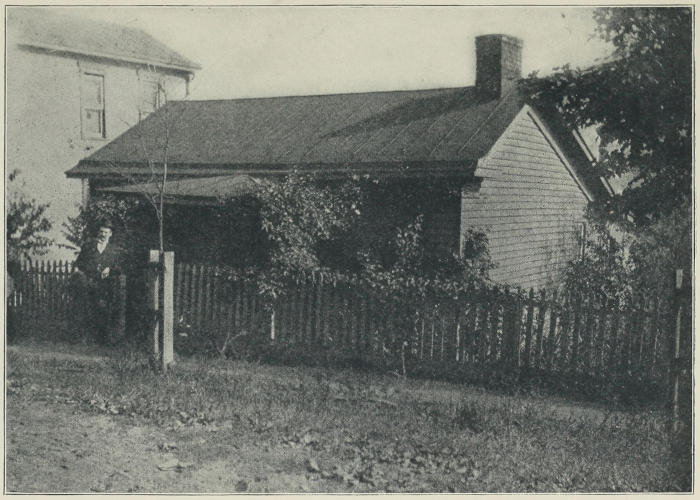
House Where the Bishop First Went to Housekeeping and Where His
First Child Was Born, Grafton, W. Va.
The next two years were spent in Parkersburg.
During the first we had a blessed revival
which continued several weeks; in all, more than
seventy joined the Church. But during the
second year the work was hindered by circumstances
beyond human control. A great sorrow
came to our home. By degrees the shadows
deepened, until the mother of my three children
bade us a final adieu, and pushed out into the
unseen. God pity and help the itinerant to
whom such an experience comes! But my own
mother, now of such precious memory, was
ready to take the little ones, and to bestow upon
them that wealth of care and love which never
fails to enrich the life.
The next year was given to the financial management
of the West Virginia Normal and
Classical Academy, located at Buckhannon.
While the school did excellent work for a few
years, it eventually went down for want of material
support. In view of the losses and disappointments
and alienations caused by its
failure, I am not sure that the conference did a
wise thing in starting it. Little colleges have
their advantages, I grant, but trying to operate
one at every crossroads on faith and enthusiasm,
is too much of a good thing.
By consent of the conference I agreed to give
a few months to the business management and
associate editorship of the West Virginia Freeman,
the State prohibition organ. During this
period I made a partial canvass of the State in
the interest of a prohibition amendment then
pending. It would require a whole chapter to
tell of my experiences with the old political
partisans, some of whom fairly went into
spasms at the very mention of prohibition. Our
presidential candidate, John P. St. John, had
defeated James G. Blaine, so the Republicans
affirmed; hence they were ready to vote against
anything, or anybody, the angel Gabriel not
excepted, who believed on any point as St. John
did. Many of these were Christians, so-called,
and some of them members of my own Church.
I knew them well; and be it said to their everlasting
shame, that they went against the
amendment, just as did every whiskyite in the
State.
Under our system of government the ballot
has in it a moral element, and therefore will
meet us at the bar of final reckoning. It not
only has to do with our political, industrial,
and educational affairs, but with the church
and family as well. What show will a man
have at the last day whose ballot has constantly
belied his profession as a Christian? I have
never been able to understand how he could
enthrone his Lord in the affairs of state by
voting a ticket perfectly satisfactory to the
drunkard-maker. It remains for an allwise
God to determine what disposition shall be
made of these vicious ballots when the judgment
day comes. Personally, I have no respect
for, or confidence in any United Brethren or
member of any other church who, knowingly,
votes for a man for any office who is opposed to
my Christ and the cause for which he stands.
Being ever ready to “speak my piece” against
the saloon and its allies, I was constantly stirring
up a “hornet’s nest” over the business.
When I spoke against it, whether in public or
private, I never hesitated to pay my respects
to the machine politician, since I regarded him
and rum as closely related. As the result, some
of the newspapers and office-seekers got after
me with a vengeance. This I confess was to
my liking, since I felt sure I was making at
least some kind of impression upon them. Then
it gave me a chance to answer their criticisms,
and puncture their fallacies. The following
extract from one of my replies may be of interest
to the reader. The principle laid down will
always hold good:
“All at once the saloonist and politician are
becoming greatly concerned over the question
of ‘pure and undefiled religion’; and well they
may, for if religion is effectually taken into
politics they will as certainly go out. This
they fully understand, hence yell themselves
hoarse in trying to divert attention when the
pulpit begins to let the light in upon their devilish
business. While a man is a minister of
the gospel, he is also a citizen in common with
other men. The fact that he pays taxes, lives
under, and is subject to the laws of our commonwealth,
makes him such. Then most assuredly
he has the same right as other men to
be heard upon great political issues that affect
the well-being of his country. If not, why not?
Touching all moral and political affairs which
have to do with the home, the individual, and
the general good of the community, the pulpit
has ever stood at the front, and so it ever will,
unless it sells out to the saloon.
“The truth is, under a government like ours,
presumably Christian, all political questions
have a moral phase, and to a greater or less
extent involve the question of religion. In
other words, every question in politics touches
at some point the work of the pulpit, therefore
it is right and proper for the minister to discuss
before his people, prudently, of course, the
moral bearings of all these issues. There is
nothing that the liquor ring, and old-line politicians
would rather do than to stifle the utterances
of the pulpit, for well they know that the
molding of sentiment, and the training of the
moral forces by which the eternal God proposes
to overthrow and dash in pieces their strength,
must there begin.”
In May of this year, 1885, I attended my
second General Conference, which met at Fostoria,
Ohio, in company with Z. Warner, E.
Harper, and S. J. Graham. The occasion was
an historic one. Radicalism was given a black
eye; the forces of the Church were realigned,
and the clouds which had so long hung over
our Zion were pierced by the sunlight of a new
day.
CHAPTER VI.
The time of holding the annual conference
having been changed from spring to fall, the
next session was held at the Simmons’ chapel, in
Lewis County. I was again made presiding
elder, stationed on Parkersburg District, and
soon moved to Pennsboro, where my headquarters
remained for the next four years. My
diocese extended from Parkersburg to Irondale,
a distance, east and west, of one hundred and
sixteen miles, and from the Ohio River on the
north far interior to the south. The fields embraced
were Parkersburg Station, Parkersburg
Circuit, Volcano, Pennsboro, Troy, Middle Island,
Littles Mills, Grafton, Irondale, Hessville,
Tanner, Sylvan Mills, and Smithton.
A vast amount of hard work, I soon discovered,
would be necessary to make anything like
a commendable showing in a territory so large
and difficult to cultivate. The first duty with
me was to care for my preachers. It was my
notion then, and my views have not changed in
all these years, that if a presiding elder wants
his men to do good work he must, first of all,
do his best for them financially. If the salary
was insufficient, and it nearly always was, as
I have shown many times over, it had to be
supplemented in one way or another. If the
stewards were worthless, I asked them to resign.
If they did not know how to collect, I went
along and instructed them as best I could. In
some cases we would canvass the entire neighborhood
with a two-horse team and wagon, and
gather up flour, corn, potatoes, chickens, meat,
eggs, sorghum, butter—in a word, anything and
everything that could be used at the parsonage,
or exchanged for groceries. When nothing better
could be done, I would load up my own horse
with flour and meat and lead him to the preacher’s
home with his precious cargo of provisions.
Then what a good time we would have! Some
who are yet at work in the conference were
helped in this way. I also found it profitable
to have the people on each field, if at all possible,
make the pastor a present of a new suit
of clothes each year. The plan is usually a
popular one, and in most cases can be worked,
if placed in the hands of the right persons. It
is the equivalent of just so much extra cash
to the preacher. But with some it may be a
query as to how I managed the indifferent
pastor. Sometimes one way, and sometimes
another. Every presiding elder, I suppose, has
his own methods. My plan was first to aid and
encourage him all I possibly could. I tried to
prove to him, in a substantial way, that I was
his friend, and wanted to help him make his
work a success. If, after all this, he persisted
in being a failure, I frankly told him he would
have to drop out. Such a step requires courage,
I know, but it must be taken once in a while.
No railroad company or any other business concern
would think of employing inefficient,
untrustworthy men; such a policy would be
suicidal; nor can an elder afford to supply his
fields with those who are utterly devoid of fitness
for a work so high and responsible.
A man may be a “good fellow” in many
respects, and promise to support his elder if
continued in active service, but these things
should have no weight in the matter of appointments.
The welfare of the church should always
be considered before that of the individual.
If either must go down, let it be the
preacher. Why put him in a position to chill,
discourage, and perhaps wreck a whole charge?
Nor should a man be employed if inefficient by
reason of age or poor health. The fact that a
minister was once successful is no reason for
continuing him indefinitely in the pastorate. A
record of usefulness, I know, is a crown of
glory to any old, worn-out toiler, but with such
glory he ought to be satisfied. I have always
hoped, and still do, that I may have sense and
grace enough to retire of my own accord before
my conference is compelled to put me on the
shelf. The church, however, should provide a
comfortable living for her servants when they
can no longer remain at the front. They deserve
such recognition, and to withhold it is to
sin against them and the God whose they are,
and whom they have served.
With reference to the presiding elder, or
superintendent, I will further say that he is
the most useful and important man we have if
he does his duty faithfully; otherwise he is the
biggest bore in the church. He is not a success
if he does mere routine work and nothing more.
He must reach out. He must be larger than his
district, yet strive all the while to make it as
big as himself. He must keep things going. If
resourceful, he will always find a way to inspire
and profit his men, if there is anything in them
to respond to his efforts. If he is not a general, he
is not fit for the place. He must go panoplied
with helmet and breast-plate, shield and sword,
ready to fight, preach, or die, on a moment’s
notice. How the church and pastor are to be
pitied when compelled to suffer three or four official
visits during the year from an old, dry stick,
destitute of sympathy and enthusiasm.
The year was not without its incidents, both
serious and amusing. During one of my quarterlies
held in the Big Fishing Creek region a
fight occurred among some of the toughs as they
went from church on Saturday evening. In
an article to the county paper I took occasion
to criticise, rather sharply, such behavior, and
emphasized the fact that the officers of law
ought to do their duty in all such cases. In
fact, the derelict officials were as severely arraigned
as were the offending pugilists.
Three months later I was in that section
again; after the Sabbath morning services, at
Mt. Olive, I went to Laurel, some miles away,
to fill an evening appointment. After riding
quite a distance along a high ridge, which overlooks
all the country around it, I turned down a
little ravine which lead to Laurelrun; but suddenly
my cogitations were interrupted by a big,
burly sixfooter, who knew of my coming and
was waiting for me. Stepping in front of my
horse, he blurted out, “Are you the feller what
wrote that piece in the paper about me?” I replied
that I did not know who he was, or
what “piece” he referred to. “I’m one of them
fighters you wrote about in the Star,” he said,
“but what you writ wasn’t true, so I thought I
would wait for you here.” In the meantime we
were both moving slowly down the hill, and he
was at my side. If ever I did hard, double-quick
thinking, it was then. I knew what he
was there for, and a general mix-up seemed
inevitable. I at once decided on a policy. I
would talk him out of any evil intent he might
have, if it were possible to do so; if not, and
nothing else would suffice, I would get off my
horse and stay with him just as many rounds
as I could, with the hope that somebody might
come along and help me out, if help was needed.
I began to explain how and where I got my
information, and how I felt over such unbecoming
conduct on the way from divine worship. At
this point he interjected the remark that my
informant was a liar, using adjectives and
expletives which would not look well in print.
But I kept on with my speech, using all the
eloquence and fervor at my command. I expatiated
on the sacredness of worship, and portrayed
in the most vivid colors possible the
beauty and praiseworthiness of the young man
who honors the gospel, and loves and lives in
peace with all men. Though there was blood
in his eye at the start, I soon observed that I
was gaining on him. By and by he began to
sanction what I said. It was clear that I had
his attention, so I kept on talking something
good to him until he finally stopped me as
abruptly as when we first met, saying, “Wal, I
guess I’le go back. I kinder thought I’d like
to ax you about it. Good-by.” What a feeling
of relief came to me as the fellow disappeared.
A scrap, and possibly something worse, had
been avoided. I at once decided, however, that
the country editor thereafter would have to look
elsewhere for information when such brawls
occurred. Such a narrow escape from—I did
not know what—convinced me that at least in
that particular locality the work of a newspaper
correspondent was incompatible with that of a
presiding elder.
It was on one of my visits to this same field
that I made some of our own dear people very
cross over a little verse, purely original, which
I wrote on the blackboard. Nearly everybody
used tobacco in some form. Many of the women
were snuff dippers, and smoked the pipe,
while nearly all the men either chewed or
smoked, or did both. The stanza ran thus:
Who can chew the dirty stuff,
In the sacred place of prayer?
Who can smoke or rub snuff,
And feel that God is there?
Years afterward, I was told that some were
still talking about that bit of poetry.
The district paid a salary of $496.53 to the
elder. Out of this he paid for house rent and
car fare, $110. The thirty-seven pastors of the
conference received an average of $140 each.
The highest salary, $480, was received by Rev.
R. A. Hitt, on Parkersburg Station, $100 of
which was put into rent. The good Lord only
knows how he managed to keep his family in
respectability, entertain his many visitors, and
meet other legitimate expenses, on the pittance
of $380. And the same query may be raised
in the case of nearly all his colaborers; but
they somehow succeeded in making ends meet.
As one of them expressed it, “When my wife
scrapes the bottom of the flour barrel, God always
takes notice.” “This is the victory that
overcometh the world, even our faith.” In
addition to the aggregate salary received, the
“presents” amounted to $1,276.28, or about
$34, upon an average, to each pastor. The net
increase in the membership of the conference
was 564, an excellent showing. But the most
vexing problem was financial. Times were
hard, money scarce, and the people generally
poor. Yet we believed and wrought in expectation
of larger things. Thank God, they are
coming.
Pennsboro was the seat of the next conference
session. Bishop Weaver presided. Perhaps
the most striking event of the occasion was the
presence of Dr. Lewis Davis, of Union Biblical
Seminary. It was his first appearance among
us. Probably the wide difference between
his views and those of the conference on the
secrecy question had kept him from making
an earlier visit; but his presence was highly
appreciated by us all, and in turn he greatly
enjoyed the courtesies accorded him by the
brethren. As I bade him good-by at the train,
he said, “Didn’t we have a glorious time? I
am glad I came. Wish I had come long ago.”
The second year on the district was more
trying and laborious than the first. The preacher
placed in charge of Volcano Circuit resigned
before the holidays, and not being able to secure
a suitable supply, I decided to keep up the work
myself in connection with the duties of the
district. The nearest point was ten miles from
my home, and the farthest twenty-five; this
gave me seven preaching-places; namely, Zion,
Volcano, St. Paul, Long Run, Big Run,
Harmony Grove, and Freeport. I could give
the charge only an occasional Sabbath, hence
was compelled to do my preaching and visiting
among the people on week days. I held three
revivals, preached eighty-three sermons, and
collected all the conference benevolences; for
this extra service I received $150. Serving as
pastor and presiding elder both, kept me from
home nearly all the time. It was no uncommon
thing to reach home late at night, and then
leave early the next morning; but to work
was a pleasure and joy; I did not mind the
loss of sleep. There was not enough terror in
the storm, or “warring elements,” to prevent
the filling of my engagements. No day was too
cold, or night too dark to travel, if, by so doing
something could be done toward lifting up the
district. I hope there is no egotism in what I
here say. There is none. I simply state the
facts. I lay no claim to superior devotion over
my brethren who worked at my side, and were
loyal to the core. No others but brave, true
men can succeed among the mountains, or anywhere
else for that matter; but in some places
more faith and courage and sacrifice are necessary
than in others.
How I pitied my family. They were alone
almost constantly year in and year out. Under
such circumstances it was impossible for me to
know my children well, or for them to know
their father. This statement may be a revelation
to many. If any are in doubt as to its
correctness, let them ask the opinion of those
who have done district work for years at a time.
I never left home without first commending
my loved ones to the care of the sleepless Eye;
nor did I at any time while absent forget them
in my devotions.
Too much cannot be said for the faithful
wife of the itinerant. But alas! her worth, I
fear, is not appreciated by the church as it
deserves to be. People watch and criticise her,
to be sure, as they do but few other women, but
as a rule she is not accorded a very large place
in the achievements of her husband. Indeed,
I sometimes fear the minister himself does not
realize her true relation to his success in soul-winning.
God only knows her anxiety and
heart-yearnings as she struggles with the problems
of the home in the absence of her husband.
What a care the children are to her! But she
toils on, as best she can with the means, sometimes
sadly limited, at her command.
The fact is, many a successful preacher to-day
would be out of the work but for his
devoted wife. When ready to quit, and turn
aside to some other occupation more lucrative,
she put her womanly heart up against his, and
urged him on to duty.
Said one of these noble helpers: “Husband,
I know we are poor. Our carpets are old and
faded, and our furniture is scant and plain. I
know our dear children are barefooted, and can’t
go to school; but I want you to keep on preaching.”
With a faith unfaltering, and a courage
invincible, she was willing to stay in the field—ready
to serve, ready to sacrifice, ready to die,
and, thank God, ready for heaven.
Her interest in her husband, God’s servant,
knows no abatement. Day and night she is
before the throne in his behalf; and are not her
petitions heard? If not, whose will be? We
must not deceive ourselves. She has a divinely-appointed
place in the work of redemption, and
one of tremendous significance—a helper in
soul-saving. Her reward is sure. As she stands
by her husband’s side on coronation morning,
she, too, will hear heaven’s “well done” for the
loyal, royal part she has taken, and the service
she has rendered in the “ministry of reconciliation.”
In the earlier days of the conference, district
work was exceedingly laborious, because of the
vast mountainous territory to be traversed. If
some of the circuits embraced from ten to
twenty appointments, extending over portions
of three or four counties, it is evident that
the presiding elder had his hands full in superintending
twelve or fifteen of these fields. The
journeys on horseback were long and fatiguing;
it was no uncommon thing to change horses
at the end of a twenty-five mile ride through
the mud, or over the frozen roads. In the
midst of one of these long trips, Dr. Warner
once stopped a few minutes in Pennsboro, at
the home of Mrs. Caroline Sigler, one of God’s
jewels, and after putting his tired animal away,
mounted a fresh one and started on toward his
appointment, eating a piece of cold corn-bread.
As the good woman looked after him she could
not keep the tears back. She knew something
of the hardships which had fallen to his lot;
yet those hardships were borne with a martyr’s
courage for the sake of the Church he loved,
and in which he died.
On a certain Friday morning I was to leave
for my second quarterly on Littles Mills
charge, a circuit with which the reader is already
familiar because of the happenings I
have related in connection with it. The distance
was some thirty-five miles. The day
brought with it a fearful snow-storm, which
seemed to make it unwise for me to attempt
the trip on horseback; but I meant to hold
the meeting. Wife and children said, “Don’t
go this time.” Others interjected: “You are
foolish. Nobody will expect you.” But they
were mistaken. The people did look for me.
Taking the train in the evening I went to Parkersburg,
forty miles, and the next day to New
Martinsville, fifty-seven miles, and then walked
sixteen miles, partly Saturday evening, and the
balance of the way the next morning, arriving
in time for the 10:30 services. I was glad I
went The pastor needed me, and anxiously
awaited my coming. I should never have felt
right over the matter if I had disappointed
him.
CHAPTER VII.
In the days of which I write, a quarterly
meeting was a great event, and to many it was
a rare privilege to see and hear the “elder.”
During the summer and fall, especially, the
attendance in many instances would be immense.
Not unfrequently the women and children
present would more than fill the house,
which made it necessary to seek a “shady
bower,” if one could be found. If convenient,
the seats were removed from the church and
used in the grove, but often this could not be
done. More than once I have backed up against
a tree, or mounted a log, and preached to a
crowd scattered over a quarter acre of ground.
On one of these occasions a young girl, of
fifteen summers, perhaps, but large for her age,
went to a house nearby and got a bucket of fresh
water, and bringing it to me in the midst of my
discourse, asked me if I would have a drink.
I paused long enough to accept the courtesy,
and, after thanking her for her thoughtfulness
and kindness, continued my talk. Such an infraction
of the rules governing divine worship
to-day in many sections would greatly amuse
the people, no doubt, and perhaps greatly annoy
the preacher; but it was seldom noticed
by speaker or congregation a third of a century
ago among the mountains. When there was
no grove near, or the atmosphere was too chilly,
or the ground too damp to hold out-door services,
we were sometimes sorely defeated by the crowds
that came. I here give in full an article which I
furnished the Telescope on the peculiar provocations
of the elder:
“To be a presiding elder in the Parkersburg
Conference means to travel over a large territory,
and to do a vast amount of hard work
on small pay; but all this is nothing compared
with some other things that we have to endure.
It is no uncommon thing in this country for
a presiding elder to make a failure in the pulpit
because of some circumstance, or a combination
of circumstances over which he can have but
little or no control.
“Many of the houses in which we worship are
by far too small to accommodate the congregations
that generally gather on quarterly meeting
occasion. Indeed, many of our meetings are
held in schoolhouses, only intended to seat fifty
or seventy-five scholars. Now put two hundred
persons, or more, into such a space, standing
the most of them around the wall, and in the
aisles, and then distribute from fifty to one hundred
around the house on the outside, each striving
to get his head in at a window, and any one,
though he be unused to such things, can see the
difficulty of preaching under such circumstances.
If the people listen with interest they
must be comfortably situated.
“In many country districts away from the
railroad, the time kept by the people varies so
materially that it is next to impossible to get
them together at the same hour. No two clocks
agree, hence the people begin to assemble at ten
o’clock in the morning and keep on assembling
till noon. At the appointed hour the elder announces
the first hymn, and then leads in
prayer. During these opening exercises, perhaps
twenty-five persons have come upon the
ground, and as soon as the amen is heard they
make a rush for seats.
“Another hymn is sung, and still they come.
The text is finally announced, but what of it?
The people keep on coming. The middle of the
sermon, by and by, is reached, and the preacher
is still annoyed; not for three minutes at any
time has he had an open field. Only one more
proposition to discuss; it is the most important
one. His strength has been reserved mainly for
it; but just as he begins to lay it open, having
secured the attention of the audience, the door
creaks and in come a half dozen women. A general
stir follows. The seats are all full; something
must be done, so a half dozen men get up
and surrender their places. Still the people
come. The preacher is on the home stretch, but
is badly disheartened. He has preached to the
people, to be sure, but a good part of the time
to the backs of their heads. Not half of those
present when he began can tell what his text is.
Indeed, he is so confused sometimes that he
hardly knows himself what it is. He has just
one more illustration to give. He hopes to make
it tell, and is succeeding well. The audience for
a moment is silent as death; but of a sudden
the door opens again and a few more try to enter.
In an instant every eye is turned, and the
thread of thought is dropped, and the preacher
sits down disgusted and dissatisfied.
“Of course it is not always this way, but
frequently such is the case. On such occasions
the people go home no wiser than when they
came. Having been to meetin’ is the only pleasing
thought enjoyed.
“Too many dogs go to church. I am not
much of a friend to the canine race at home,
much less at church. Dogs piously inclined are
the meanest dogs in existence. If they would
go under the house or even under the benches
in the house, it would not matter so much, but
they will not do that. They walk up and down
the aisle, and dare even to enter the pulpit where
the presiding elder is. All this attracts attention,
and detracts from the sermon. Once in
a while a dog fight occurs during service, and
two or three men have to interfere to adjust
the difficulty. If the elder intimates that the
congregation or neighborhood is a little too
doggish to suit him, somebody gets mad and
calls him a ‘stuck up’ sort of a man. ‘Beware
of dogs,’ said Paul. Many a good sermon has
been spoiled by them. In West Virginia, especially,
they are disturbing elements. I would
favor a war of extermination.
“But things are much better with us now
than they were twenty-five years ago. We have
larger and better houses of worship, and fewer
dogs in proportion to population. We expect
a great improvement in the next quarter of a
century.”
It was not an uncommon thing to see a
glorious revival start at the quarterly meeting.
The love-feast, which almost invariably occurred
on Sunday morning before the sermon,
was usually an occasion of deep interest. How
the old veterans would talk! How eloquent
some of them were in their simplicity! How
they relished such spiritual feasts! for such
they were; and no wonder they were enjoyed
by some, for they had traveled, maybe on foot,
twenty miles or more to get there. To such the
day was a veritable Pentecost. Sometimes in
the midst of the sermon or sacramental service,
“hallelujahs” would be heard. Yes, once in a
while the people shouted, and nobody objected
to the noise or excitement. I am no prophet,
but will risk the statement that when the church
gets so far along that no more hosannah’s are
heard, it will be about time to reconstruct
things and start anew.
A red-hot testimony-meeting in many of our
city churches, on the quarterly communion
occasion, would make the recurrence of the day
and the coming of the elder an event of greater
significance than it seems to be at present.
Such a service would doubtless lubricate the
machinery of the church, and make the work go
better. The present plan of enlarging districts
has its commendatory features, to be sure, and in
some respects it works well, yet the old régime,
which made it possible for the elder to be present
at all the quarterlies, had its advantages.
A word here respecting the genuine hospitality
of the people might not be out of place;
this, however, is characteristic of Southerners.
The presiding elder was not compelled to put
up with the pastor all the time because nobody
else wanted or invited him; far from it. A
half dozen or more at a time would claim him
as their guest. Instead of wondering where he
would or could go, he was puzzled to know
which of the many invitations to accept. How
it embarrasses a man to be in a neighborhood
where no one seems to want him. Or, if entertainment
is proffered he may be further embarrassed
by a question mark at the end of the
invitation, “Well, are you going with me?” or,
“If you’ve no place else to go, come with us.”
I have been chilled many, many times since
leaving the mountain State by just such half-hearted
treatment.
Nor were the presiding elder’s official duties
performed without an occasional break caused
by a wag or ignoramus. Rev. G. W. Weekley
was traveling a circuit in Gilmer County with
Rev. E. Harper as his elder. At a certain meeting
the latter was presiding with his usual grace
and dignity while the pastor, being a stickler
for law, was making the Discipline the rule of
his business conduct. A young man was before
them for license to preach. He seemed to be
all right, and had made a favorable impression
upon his pastor. “You will please state before
the chair and conference,” said the pastor to
the applicant, “what your reasons are for desiring
permission to preach the gospel.” In an
instant the young brother was on his feet. The
question was easy, he thought, and so his answer
was clear-cut. “Well,” he said, “I always had
a desire to see the country, and I thought that
being a preacher would give me a chance to do
so.”
Then it was that the elder wilted and the
preacher collapsed, and the quarterly conference
looked blank, while the dear young brother
felt himself the hero of the occasion.
We met at the Bethel church in Mason
County, in September of 1887, to make reports
and to review the work of another year. Bishop
Kephart was with us for the first, and Dr.
Warner for the last time. To show our appreciation
of Dr. Warner, the conference gave him
a purse containing $25.00 in silver. My district
paid, in salary and presents, $526.20, out
of which $153 was expended for rent and car
fare; 3,720 miles had been traveled by rail,
941 on horseback, and 415 on foot. The
average salary in the conference was a fraction
over $200. Including “presents,” which were
considerable in some cases, only one charge,
Parkersburg Station, went above $500. One
other, Pennsboro, reached $400; eight got above
$300, while seventeen paid less than $200 each.
The financial report generally was much better
than that of the previous year. The aggregate
increase in ministerial support on Parkersburg
District was $600. Slowly but surely we were
pushing ahead and making progress, but at a
cost known only to those who were on the field.
The third year on the district was similar
to the preceding one, fraught with toil and
responsibilities, but not without its spicery,
which often did much to enliven the routine
work required. One of the first things I did
was to secure a horse and buggy. By using the
carriage when the roads would admit of it I
relieved myself of a good deal of horseback
riding. During the winter and early spring
no sort of vehicle could be used because of the
bad, and sometimes dangerous condition of the
public thoroughfares. Nor is the situation in
this respect very much different at present from
what it was forty years ago. Great changes
have been wrought in other regards, but the
roads, for the most part, remain the same, and
will so continue through the centuries to come.
I had a somewhat provoking experience, once
upon a time, as I journeyed with my uncle from
Troy to West Union, a distance of twenty-five
miles. As the roads were exceedingly muddy
I was concerned more than usual about a new
suit I was wearing, having pinned the skirts
of my clerical coat around my waist in order
to keep them clean. We finally struck a place
where the thin mud was half knee-deep to the
horses. Midway in this mud-hole was a good-sized
rock, but not being visible, my steed
stumbled over it onto his knees, running his
nose into the mud up to the eyes. When he
went down I went over his head, and into the
puddle face foremost. Fearing that the animal
would get on me, I suddenly rolled over and
then bounded to my feet. What a picture I
presented! I am sure I was no subject for
artist or poet. My sleeves were full of mud and
water to the elbows, my hat and umbrella both
were submerged, and, to add to my chagrin,
when I looked up at my uncle, from whom I had
a right to expect at least a little sympathy, he
was lying over on his horse’s neck laughing his
best. Going to a stream nearby, I took off my
coat and plunged it into the water many times
over, much like washing and wringing a bed
quilt, until the worst of the mud was off. But
such an experience was a mere incident with a
mountaineer. When my clothes got dry and
the mud was brushed off they seemed to be all
right, and I went on with my work just as
though the awful mix-up had not occurred.
During the year a great sorrow came to the
conference. On the 24th of January the news
was flashed over the wires that Doctor Warner
was dead. In the next week’s Telescope “Delta”
referred to the sad event as follows:
“The announcement of Dr. Warner’s death
has cast a deep sadness over the conference. No
other conference can feel his loss as we feel it.
In a peculiar sense he was ours. No man ever
had the hold upon our preachers that he had.
We can scarcely realize that he has gone from
us to return no more. He may have made mistakes
in some things, like other men, but he was
a good man. That his soul during his last
earthly hours should he ‘wonderfully filled
with the peace of God,’ is just what we might
have expected. For thirty years he endured the
hardships of a West Virginia itinerant, sometimes
traveling day and night, and making the
greatest sacrifices to build up the church he
loved. Naught but devotion to God’s cause
ever led him to do so much for it. But his work
now is done. Perhaps we should not grieve over
his departure, but we cannot help doing so.
The entire conference weeps. Said a brother,
‘Why didn’t the Lord take me, and spare
Brother Warner?’ This expression serves to
show how keenly his loss is felt.”
Bishop N. Castle held the next conference at
New Haven. During the session I received a
telegram that I had been nominated by the prohibitionists
of the fourth district for Congress,
a compliment which I appreciated all the more
because the honor came unsought. Yes, I was
a prohibitionist, and am yet, and expect to
remain one until something better claims my
support. The four hundred votes cast for the
ticket in the district represented a thoughtful,
moral, courageous element of which I have always
been proud. Only such people, as a rule,
vote the prohibition ticket. As I entered upon
the fourth year of district work I determined
it should be my last, at least for a while. I
had been kept away from my books already too
long, and consciously realized that, while I
might be gaining a little some ways, I was losing
in others. The church cannot find its highest
ideals in men who live wholly outside their
libraries. It is study—familiarity with the
thoughts and methods of others—that broadens
a preacher. The map studied by many of us
is too small, and needs to be enlarged so as to
extend the vision. If we would see and know
things, we must look and search after them.
The man is exceedingly unfortunate who, having
eyes, refuses to see, and having intelligence,
neglects the acquisition of knowledge. My
advice to the young man at the threshold of the
ministry is, “Buy good books and read them;
study your discourses thoroughly and with an
eye to somebody’s salvation, and then give the
people the very best that God has put in you.”
This was a good year for the district. As it
was to be the last, I determined to make the
best record possible for my successor, to duplicate
or excel. To succeed meant to go all the
time. Distance, bad weather, dangerous roads,
swollen streams, or any other circumstances
were seldom allowed to get in the way. When
Lincoln was asked if he thought the war would
close during his administration, he replied, “I
don’t know, sir, I don’t know.” “What, then,
is your purpose?” was further asked, to which
the characteristic answer was given, “Peg
away, sir, peg away.” It is this, everlasting
“pegging away”—forcing one’s way through
difficulties, and surmounting obstacles—that
wins, not only in West Virginia, but everywhere
else.
Buxton wrote: “The longer I live the more
deeply I am convinced that that which makes
the difference between one man and another—between
the weak and powerful, the great and
insignificant—is energy, invincible determination,
a purpose once formed, and then victory
or death.” I quote Buxton’s words because
they are gold, and have in them the ring of
triumph.
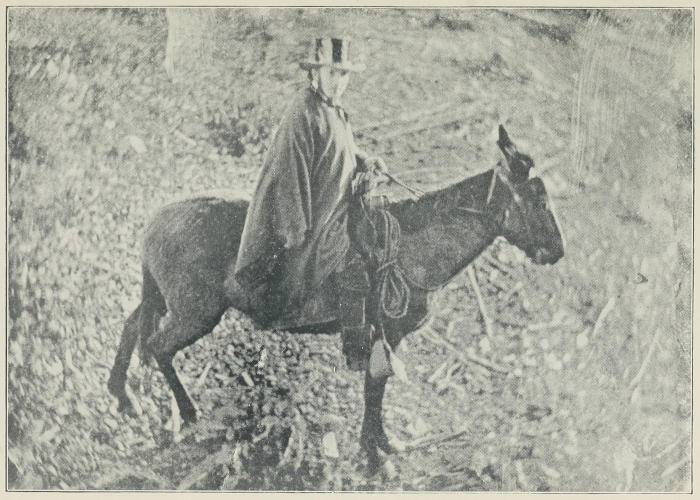
TRAVELING A DISTRICT
The year brought its usual harvest of incidents—some
serious, others laughable and
amusing. It is well to have a streak of fun
occasionally flash across our pathway to enliven
a journey, or some task to which we have set
our hands.
One bleak Monday morning in December I
was riding along a high ridge in Wetzel County
on my way home from a quarterly just held
in that region. To my right a few rods I
observed a young man husking corn. He was
evidently working his best to keep warm, and,
of course, not in a very good condition to be
fooled with by a stranger; but I thought I
must say something, and run the risk of an
explosion. Reining up my horse and getting
his attention, I called to him, “Go it; that’s
the way I got my start.” “Yes,” he said,
with lightning speed, “and a thunderin’ start
you got,” and then made the fodder rattle so
that if I had replied he could not have heard
me. To be honest, I had not the disposition to
talk back, for nothing suggested itself at the
moment as an appropriate response; but for
the next mile I laughed over the episode and
considered myself fortunate that nothing more
serious had happened.
I might add that not far from this place
Rev. S. J. Graham, years before, suddenly
found himself in a kind of menagerie one frosty
morning. In those days laymen would frequently
make long trips with the preacher or
elder; spending several days from home. They
thought less about business and more about the
church than some do at present. On the
occasion referred to, Brother N. Kuykendoll
was with the elder. One night they lodged with
a friend in his little log cabin of one room. Of
course they were well treated and given the best
the humble home could afford. Their host
arose early next morning and built a fire in
an old-fashioned fire-place, which admitted of
a “back log” and “fore sticks” before the
“kindling” was put in. Soon the shanty was
warm. The lay brother awoke first, and, glancing
about the room, said to his bed-fellow in
a low tone: “Brother Graham, get up; the millennium
has come.” The preacher raised himself
on his elbow and looked, and sure enough
there was a strange mixture of animals lying
on the hearth before the fire—a pet lamb, a pet
pig, a huge dog, and two or three cats. Years
afterward I heard these brethren talk and laugh
over the experience with as much zest as if it
had occurred only the week before.
To indicate something of the work done this
year, and that had to be done to carry out the
program of a presiding elder, I here insert a
few pages of a brief diary which I kept:
January 1, I wrote: “I now begin a new
year. God help me. My time, strength, soul—all
must be given to the work of the church.
With my family I took dinner with Brother
C. R. Brown, a precious man.”
2.—“Worked on a sermon on coveteousness.
Got ‘Sweet Sicily’ and read it.”
3.—“Voted for town corporation officers.
Wrote a number of letters. Brother Poling
came in the evening, and spent the night with
me.”
4.—“Worked hard on my sermon on coveteousness.”
5.—“Went to Parkersburg in the forenoon,
and held business meeting at night. All was
pleasant. Lodged with Pastor Martin.”
6.—“Preached from 1 Cor. 13:12 in the
morning. Good meeting. Audience melted to
tears. Attended Sabbath school at 2:30 p. m.,
conducted the quarterly experience meeting at
six, and preached again at 7:30. House full of
people.”
7.—“Returned home on early train. With
wife went to hear Methodist preacher at night.”
8.—“At home, studying and answering correspondence.”
10.—“Went to Parkersburg again. Dined
with Brother J. H. Spence. Assisted in meeting
at night.”
11.—“With the pastor visited eleven families.
Large crowd at evening service.”
12.—“Went to Red Hill, six miles distant,
and held quarterly at 2:00 p. m. Preached in
the evening.”
13.—“Preached at 10:30 a. m. from Titus
2:9. Good feeling. Large sacramental service.
Shout in the camp. Pastor Devol leaped for
joy. Preached again at night.”
14.—“Came to the city and returned home.
All well.”
15.—“In study all day. Attended M. E.
Church at night. An interesting revival in
progress.”
16.—“At home preparing for dedication.”
18.—“Left home on early train, and reached
Buckhannon at 4:00 p. m. Went to Mt. Washington,
eight miles in the country, and preached
at night on the ‘Prodigal Son.’ Thirteen
seekers at the altar and four more asked prayers.
Lodged with Brother Reese.”
19.—“Rode fourteen miles to ‘Uncle Jimmy’
Hull’s for dinner, and then went to Union Hill
where I preached at night. Met Elder Graham.”
20.—“Rained hard. Congregation small.
Raised $85. At night tried it again. Good
feeling. Secured $68.50 more and dedicated
church. Opposition from another church.”
21.—“Rode sixteen miles to Buckhannon
through a fearful snow-storm. Went to Weston
on train and rode seven miles in the country.”
23.—“Returned home. Found all well.”
I now turn to the March record because it
has to do with one of the sad things which not
unfrequently comes to the itinerant.
15.—“I started at noon for Troy Circuit,
reached Auburn late in the evening.”
16.—“Visited Father Williams and wife.
The latter has been in bed three years. Read
the Word and prayed with them. Both got
happy. Sung a hymn or two for them. Held
quarterly at 2 p. m., and preached on ‘Stephen,
the First Martyr.’ A good time.”
17.—“Sunday. Held prayer-meeting at 10
a. m., and preached at 11. Large communion.
Big shout in the camp. Collection $20. Talked
again at night. One of the best quarterlies I
ever held.”
I pause here. On Monday evening Father
Perry came, and preached for us. After returning
from church he turned to me and tenderly
said, “Now, Brother Weekley, I have a little
news for you. As I came through your town
this noon I was told that your youngest child
was critically ill. The doctor regards her case
as dangerous. I would have told you sooner,
but I knew it would so trouble you that you
could not enjoy the service. I knew also that
you would not dare start home in the night,
and thus endanger your life. So I waited. Now
leave her with God; get what rest you can, and
then be off by daylight in the morning.” But I
got no rest. It was a long, long night of tossing
and anxious waiting. At day dawn I started.
The muddy roads were frozen over, but not
sufficiently to bear up my horse. A part of
the time I walked. It seemed I could make no
headway at all, and didn’t make much in some
places. When within two miles of home, I
called at a farm-house and inquired if they
had heard from my family, and they told me
they had not. This brought me relief, for I
was sure they would have heard the news if the
child were dead. At 1 p. m. I landed safely and
found, sure enough, that a blessed Providence
had kept the black-winged angel from our home.
How such harrowing experiences try the very
soul of the over-worked, half-paid, care-worn
man of God, who must spend all his time and
strength away from home in some obscure field!
They test the material that enters into his composition.
To put the Cross and sinful souls
before one’s own family requires great faith—faith
in the Redeemer, faith in his church, and
faith in the winning, victorious power of the
gospel; and this is what every itinerant in
West Virginia had to have.
To indicate the nature and work of our
preachers’ institute. I return to my diary and
give the items of a few days.
July 9.—“At home preparing for institute
which meets to-morrow.”
10.—“Went to Smithton, and took charge of
institute. Rev. H. T. Athey assisted some.
Lessons were in Old Testament history and
homiletics. Revs. H. T. Athey, H. R. Hess,
R. M. Hite, G. A. Davis, J. P. Piggott, and W.
H. Albert were present.”
11.—“Met at 8 a. m. Recitations. Hess
gave a talk on the ‘Apocalypse.’ Davis preached
at 7 p. m. Good sermon.”
12.—“Recitations as usual. Davis made an
address on ‘Prayer.’ Good. Hite read a paper
on ‘Fore-ordination.’ Discussed. Piggott
preached well at night.”
13.—“Recitations as usual. I read a paper
on ‘Divorce and Adultery.’ Also presented a
diagram of Solomon’s Temple. Hess preached.
Good meeting.”
14.—“Sunday. I preached at 11 a. m. Large
crowd in grove. Good liberty, and good attention.
Athey preached at 3:00 p. m., and did
well. Returned home.”
The records of a few days immediately following
may also be of interest.
24.—“Drove with my family to father’s,
fifteen miles distant.”
25.—“Started for Hessville quarterly. Drove
thirty-seven miles to Father Mason’s.”
26.—“Drove to Bee Gum Station fifteen miles
further east. Good meeting in afternoon.
Preached at night.”
27.—“Sunday. Discoursed at 10:30 a. m.
on ‘The New Testament Church.’ Preached
again at three o’clock on ‘Benevolence and Honesty.’
Led song service. Drove fifteen miles
back to Brother Mason’s.”
28.—“Left at 6 a. m. and drove thirty-seven
miles to father’s.”
But it is needless to further reproduce here
the jottings made long years ago. The brief
memorandum given is but a fair index to the
activities of the entire twelve months, or, I
might say, to the forty-eight months spent on
the district.
CHAPTER VIII.
Buckhannon was again the seat of conference,
and was in charge of Bishop Weaver.
This was his last visit to West Virginia. My
district reported about 600 conversions and
accessions to the church. The average salary
for the pastors of the conference was $230.
After paying house rent and car fare, I had
$365.79 left for the support of a family of five,
and with which to purchase books, papers, and
stationery; but I did not complain; it was
more than the average circuit-rider was getting.
On this little sum we seemed to live fairly well,
and imagined ourselves as respectable as anybody
in the town.
In looking over my report, I see at its close
the following significant statement: “Now,
brethren, suffer a word more. I kindly and
earnestly request that you relieve me from district
work. Eight years out of the past eleven
have been given to this kind of service. While
I certainly appreciate what you have done for
me, I must say that I am tired of the place, and
am anxious that some one else take it. All there
is in it, whether money, distinction, responsibility,
or hard work, I cheerfully surrender to
some one else, with the earnest wish that he may
prove more efficient than I have been, and that
under his labors enlarged blessings may come
to the district.”
This was my last year as a presiding elder
in the dear old conference.
It is now many years since I was transferred
to another field, but almost daily my thoughts
go back to my native home, and to the twenty
years of unceasing toil given to the building up
of the church in that mountainous region. Indeed,
I could scarcely get away. It was no easy
matter to sever the relations of a life-time. In
looking over my brief record of daily happenings
I find that July 16, 1889, while pastor at
Buckhannon I wrote:
“Received a letter to-day from Rev. C.
Wendle, urging me to come to Rock River Conference.
Bishop Kephart also writes in like
manner. Do not know what to do, but must do
right. Lord help me.” October 3, I expressed
my thoughts and feelings as follows:
“At home trying to pack our goods. What
a task it is! Is God in this? I do hope so. It
is so hard to leave West Virginia. These hills
and valleys all seem sacred to me.”
The last time I visited my parents before
removing West, I was deeply affected to see
how frail they seemed, and thus referred to it:
“Parents are getting old. How they are bending
beneath the weight of years! Alas, how
short life is! Twenty years ago when I left
home father had no gray hairs. Now his head
is white as wool. Mother! what a faithful
soul! How self-sacrificing! Anything to help
her children and make herself a blessing to
others. Heaven is anxious to get such an angel.
May earth keep her yet a long while.”
These excerpts from my diary indicate that
it cost me something—a heart-struggle, at least,
to turn my back upon scenes and associations
which were as sacred as life itself. But in making
the change I felt I was following the leadings
of Providence, and that all would be well
in the end.
The fellowship of the brethren I left behind
was sweet. Those who looked on were compelled
to say, “Behold, how good and how pleasant
it is for brethren to dwell together in
unity.” There was as little jealousy and self-seeking
and rivalry in the conference as I ever
found anywhere. We all were poor, and could
sing like the old Methodist pioneer on his four
weeks’ circuit:
“No foot of land do I possess,
No cottage in the wilderness;
A poor wayfaring man,
I lodge awhile in tents below;
Or gladly wander to and fro,
Till I my Canaan gain.
“Nothing on earth I call my own;
A stranger to the world unknown,
I all their goods despise;
I trample on their whole delight,
And seek a country out of sight,
A country in the skies.
“There is my house and portion fair;
My treasure and my heart are there,
And my abiding home;
For me my elder brethren stay,
And angels beckon me away,
And Jesus bids me come.”
There was another verse we all cherished,
and often sung it, as it seemed so appropriate:
“A tent or a cottage, why should I care?
They’re building a palace for me over there;
Though exiled from home, yet still I may sing,
‘All glory to God, I’m the child of a King.’”
In all my travels throughout the Church I
have never found any conference that could
sing as the West Virginians did. Diddle, Harper,
Graham, Orr, Hitt, Holden, and Wood
were among the earlier men. Later their places
were taken by Cunningham, Piggott, Sallaz,
Slaughter, Carder, and Robinson. But it is
hardly fair to name a few. All could sing; and
so they can to-day.
Singing was an inspiring feature of every
conference gathering. It made the air electric,
and caused high voltage pressure. We would
sing on the train, on the boat, at the hotel—everywhere.
On our way from conference, in
1879, we all stopped at a hotel in Weston for
dinner. As usual, the singers were lined up in
a little while, and fairly shook the old inn with
some of their latest and freshest selections. Before
we quit, the town was thoroughly stirred
up. People left their business places and came
to listen. Women and children stood in the
doors of their homes, or looked out at the windows,
and wondered what it all meant. Two
young men, some blocks away, heard the singing
and started on a run for the hotel. As they
passed some parties one of them was heard to
say, “I’ll bet five hundred dollars they are
Brethren preachers.”
Professor Diddle, assisted by others, published
the West Virginia Lute in 1868, which had a
tremendous sale, both among our people and
those of other churches. Then Baltzell’s music,
probably Golden Songs, came next among our
own publications. This was also a popular
book, and one of great merit. While it contained
many imperfections, it was nevertheless
thoroughly “orthodox” from our view-point.
The author was not a scientific music writer.
He did not grind his songs out at the organ in
a mechanical way, but manufactured them in
his heart. Such music always takes. There is
something about it that gets hold of the soul
and stirs its deepest emotions. I do not understand
what that something is, but it is there,
all the same.
It was a very common remark among the people
of other churches: “If you want to hear
singing, get a lot of Brethren preachers
together.” We had no organs or pianos in any
of the churches, with skilled performers to lead
the audience. To aid in getting the “pitch,”
a “tunningfork,” or horn was used—a clever
little device which every leader carried. But
few of the brethren, however, understood the
grammar of music. They had had no special
training—but no difference; they could sing
anyhow. They were not poets, but had the
poetic touch. I have heard these men of God
again and again sing until the audience was
fairly entranced, and until the fire of joy was
kindled to a flame in their own hearts. They
were rivals of Israel’s shepherd king, and
wrought things more marvelous than he,
through the melodies they sang.
While their music was not classical, it seldom
failed to strike fire. The people liked it, and
were charmed, encouraged, and, in a thousand
instances, saved by it. Mr. Alexander, the
great revival singer, has the right view of
things. He writes: “Musicians often say to me,
‘Why do you not use classical music, above the
style of gospel songs?’ I reply, ‘When you can
show me similar effects following such high-class
music in moving the hearts of men and
women, I will use it fast enough. Until then
I shall keep to gospel songs, which have a wonderful
way of reaching everybody, because they
touch the soul.”
Volume, fervor, soul, enthusiasm, is what we
want in all our church music. Away, forever,
with that operatic nonsense which the artistic
would introduce into our present-day religious
services.
What glorious revivals were promoted. Like
cyclones they seemed, at times, to lay everything
low in their course. How sinners wept
and repented! How saints shouted aloud for
joy! “Wild fire!” does some one suggest?
May be it was; but it achieved wonderful
results. The present ministry of the conference,
with a great majority of the true and tried
laymen who constitute the very backbone of the
church, were converted in just such meetings;
and it is quite likely that the leading ministers
and laymen of every other conference in our
Zion were converted under like circumstances.
Call it “wild fire” if you will, but I would like
to see a good deal more of it.
A revival that arouses a whole community
and brings fifty or a hundred, or perhaps two
hundred into the kingdom, some of whom
become prominent preachers of the word, while
others become very pillars in the church, is not
to be ignored or decried by those who are too
slow and formal and dull to create a stir. Better
have a little “wild fire” than no fire at all.
Personally, I believe in excitement. Nothing
worth thinking about is ever accomplished in
its absence. We cannot relish food, or enjoy
sleep, until first excited by hunger or fatigue.
Why should not the church manifest as much
zeal and enthusiasm in her work as political
parties or commercial clubs do in theirs? I am
tired of that contemptible sentiment which
stands ready, everywhere, and all the time, to
denounce everything that has to do with the
emotions. Religion, I readily grant, does not
consist of noise and bluster. It means vastly
more than that. Nor does it consist in sitting
around like so many lifeless knots on a log.
We are told that it is the lightning and not
thunder that kills. True enough, but lightning
in the absence of thunder is harmless. Lightning
makes the thunder.
In our work but little was said about the new
theology, or higher criticism. Watson and Ralston
in their theologies, and Smith and Clark
and Lange and Barnes in their expositions, seldom
referred to the new-fangled theories which
confuse and chill and curse some of the churches
to-day. We all believed that Moses wrote the
Pentateuch, and Paul the Epistle to the Hebrews;
and personally I have never had any reason
for changing my views. It had never occurred
to us to put Job and Jonah on the fictitious list.
We actually believed and preached that they
lived and wrought, one in the land of Uz, and
the other in Nineveh, after escaping from the
whale’s belly. We tried to tell of the awfulness
of sin, as well as the joys of religion. We
believed in a heaven, and would often talk and
sing and preach about it until we felt ourselves
within its very suburbs. When Jesus said,
“And these shall go away into everlasting punishment,”
we supposed he meant it, and no one
attempted to put an artificial bottom in the
“bottomless pit.” We divided our time pretty
well between Sinai and Zion. The decalogue
and beatitudes were included, ofttimes, in
the framework of the same sermon. We knew
there were some inaccuracies in the authorized
version, but nothing sufficiently serious to affect
the fundamentals of Christianity. We were
justified, as we thought, in preaching the whole
Bible, as it was commonly understood and interpreted,
because in doing so we were blessed
and sinners were saved.
The “mourners’ bench” was always a part of
the program in our revival work. While no one
insisted that a man must be saved at the bench,
if saved at all, we believed, nevertheless, that
coming forward and bowing at the altar was a
good way of confessing sin, and of plighting
fidelity to Jesus Christ. I would not serve as
pastor of a people who objected to the use of an
altar. If some of the unsaved wanted to seek
their Lord elsewhere, and in some other way,
I should not object; but I should insist upon
it that those who wanted to come forward for
prayers should have the privilege of doing so.
It is refreshing to see how simple and direct
Dr. Torry, “Billy” Sunday, and “Gipsey”
Smith are in their methods, and the wonderful
results that follow. They do not mince matters.
They go to the people with a burning message
from the Throne, and deliver it, no matter what
anybody may think or say about it. With
sledge-hammer blows they drive it home to the
hearts of their hearers, that no man can be
saved until he confesses his sins and his Savior.
They follow, largely, the old line of revival
work—and succeed.
The preacher who cannot build a fire in his
church is a failure. In no other way can he
attract attention. The church of God has been
used to fire from the beginning. Moses got a
good warming-up before the burning bush on
Horeb; so did Elijah, and others, on Carmel.
The disciples were not ready to preach or the
church to work until a burning Pentecost came,
and fire-flakes fell from heaven upon them. We
need great revivals, and can have them, if we
are willing to pay the price.
One serious hindrance to the work is the fact
that too many profess to have found a “new
way.” They council moderation, and would have
us go about the business with that cold, mathematical
precision which the astronomer employs
in measuring the heavens. As the result,
many of our revival efforts turn out to be very
moderate affairs. They are self-constituted
appointees to shut off steam and put down the
breaks, and they succeed. What we need is
more steam; that is, purpose, push, and power.
And I rejoice in the thought that the thing for
which we have waited and prayed is at hand.
The semi-skepticism and indifference which
have so handicapped the work of evangelism in
the last twenty-five years, are giving place to
larger activities and simpler methods. We are
facing the morning light. The reaction and readjustment
will bring in a new era of moral and
spiritual triumphs in soul-winning.
The church at large knows but little about the
excessive labors and sacrifices of the earlier
ministry in West Virginia. My heart still
weeps as I think of what some of the brethren
endured. But, brave souls they were, they did
it because they loved the church and her Christ.
Only three or four remain who were in the
conference when I joined thirty-seven years
ago. Four others—Revs. E. Harper, I. M.
Underwood, A. Orr, and Dr. J. L. Hensley—have
located in other conferences, but the great
majority have gone to heaven. From hillside
and mountain-top they ascended to a place of
honor by their Lord, to live in the white light
of the throne forever.
“Oh, how sweet it will be in that beautiful land,
So free from all sorrow and pain;
With songs on our lips and with harps in our hands,
To meet one another again.”
Does any one inquire to know the real secret
of their power? It is not easily explained.
They had intellectual girth, but this was only
incidental to their success. Their surroundings
were inspiring, their spirits exuberant, their
physical endurance tremendous, their zeal unflagging,
but the secret lay deeper; these were
only tributary. It seems to me that the one
quality which exalted them, and gave them the
mastery over men was reality. They were
genuine. God counted them among his captains,
and they were loyal to the last. Duty
and destiny were to them overwhelming suggestions.
In them were wrapped up the present
and the eternal hereafter.
I can still hear Brother Graham singing as he
rode through storm and heat, carrying aloft
the banners of the church:
“Above the waves of earthly strife;
Above the ills and cares of life;
Where all is peaceful, bright and fair,
My home is there, my home is there.”
Chevaliers, divine!
“Their burning zeal no langour knew,
For Christ, his cause, his tempted few;
At home, abroad, where’er their lot,
Their much-loved theme they ne’er forgot.”
“One soweth and another reapeth,” is the
divine law. The foundations of the church
among the Virginia hills and mountains were
laid amid self-givings, known only to Him who
gave to his servants their marching orders, and
who accompanied them every foot of the way.
A better day has come to the conference. The
fields of labor have been greatly reduced in size,
pastoral support has been improved, educational
advantages have been increased, which means
so much to the itinerant’s family, and in other
respects conditions made many-fold better.
The present membership is 15,000 divided
among sixty circuits and stations. Two hundred
and six church edifices, worth $243,869,
are reported, and thirty-eight parsonages valued
at $31,939.
The territory embraces four districts. While
the number of presiding elders might be diminished,
it would not be wise to try the experiment
of giving one superintendent charge of the
whole conference. The country is too rough,
the distances too great, and the public facilities
for travel too meager for one man to do it all.
The average salary paid the pastors in 1906
was $379.45, including house rent and special
gifts. Three of the charges went to between
$800 and $900; one paid from $600 to $650,
and eight others over $500 each. The presiding
elders averaged $563.97. For all purposes
$50,589.49 was collected. These figures show
that in spite of the adverse circumstances with
which we have had to battle for the last half
century, real progress has been made. But more
ought to be done in the next fifteen years than
has been accomplished in the last fifty.
Some portions of the State are becoming
immensely wealthy through the oil and mining
industries. Our people are sharing in the general
prosperity, and many of them are growing
rich. The commercial possibilities of the State
are great and promising as its hidden treasures
are brought to the surface, and put on the
world’s market. The work of the present ministry
is to broaden the benefactions of our membership
by teaching them the true meaning of
Christian stewardship and the obligations
which it imposes. In proportion as this is done,
salaries will be increased more and more, the
offerings to the various benevolent societies multiplied,
and larger sums provided for Otterbein
University and Union Biblical Seminary.
There is quite a stretch of time between the
penning of these lines and the day I started for
my first circuit. Thirty-seven years is a good
while. My experiences have been numerous and
varied. The way at times has been rough, the
tasks difficult, and the responsibilities great, but,
after all, if I had my life to live over I should
spend it in the gospel ministry, and start again
in West Virginia.