START FOR ITALY--THE CHOLERA--TEN DAYS IN QUARANTINE
ON LAKE MAGGIORE--A HEROIC KING--WE ARE PRESENTED
TO QUEEN MARGARET--AMERICAN ARTISTS IN ROME--THE
ROYAL BALLS--RECEPTIONS AND PARTIES--MEET MANY
PEOPLE OF NOTE--THE HILLS OF ROME--MINISTER ASTOR
AND HIS HOME--HUGH CONWAY--IBSEN--MARION CRAWFORD--ONE
OF THE BONAPARTES--KEAT’S ROOM--THE
CARDINALS--ISCHIA DESTROYED--CHRISTMAS IN ROME--LETTER
FROM GENERAL SHERMAN--HIS VIEWS OF ROME--CLEVELAND’S
ELECTION--FRANZ LISZT AGAIN.
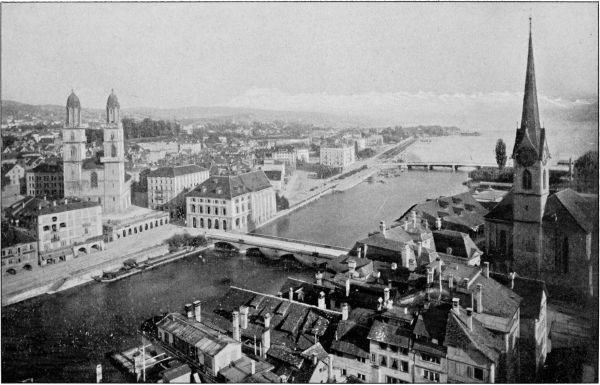
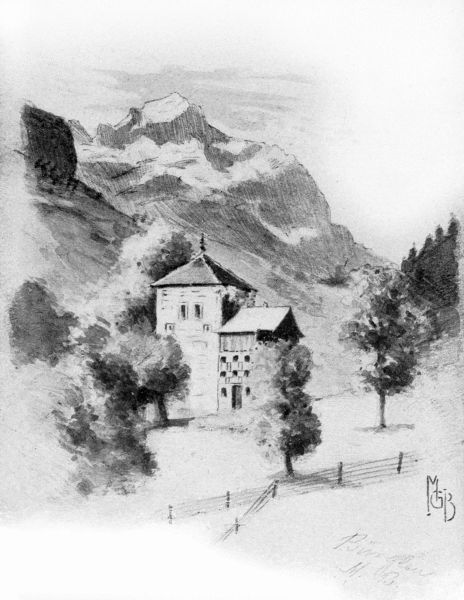
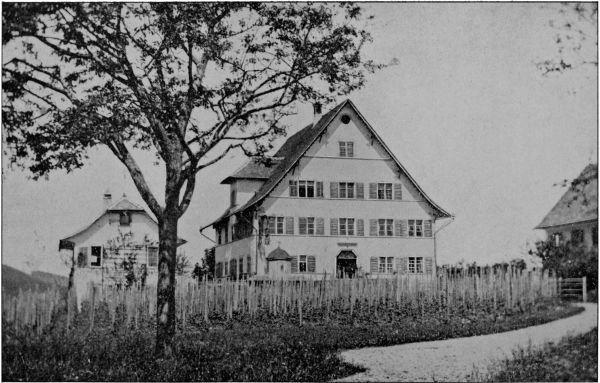
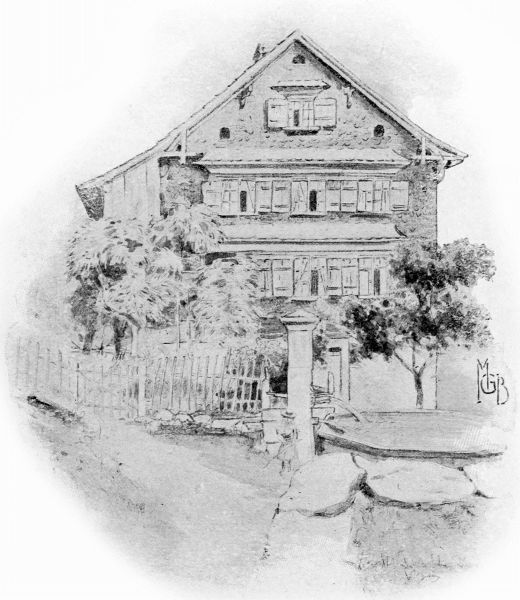
August 4.--Sunday evening I walked from Bocken to
Zurich to take the train for my new post at Rome. Walked
along the Albis hills above the lake, ten miles. It was a
delightful summer evening and the view of mountains and
lake seemed finer than ever before. I could not help stopping
many times to turn round and drink in the glorious
scene, possibly for the last time. It was the only time
I ever shed tears on leaving a scene of beauty. Besides I
was leaving Switzerland, where I had had fifteen happy
years.
It was a dangerous time to go to Italy. The cholera
was raging in Spezia not less than in Marseilles and Toulon.
Many Italians were flying home from the scourge-stricken
districts, and at the last moment I learned that a
quarantine had been established on the Italian frontier.
I hoped, however, to get through at a little village on
Lake Maggiore. To my surprise all the lake region was
filled with guards and I was soon arrested and cooped up
with a thousand others at an old sawmill by the lake.
For ten long days I walked alone up and down the
upper floor of that big sawmill, every hour expecting the
cholera to break out among the crowd of refugees down
in the yard. Once a day a guard was sent to conduct me
down to the lake, where I could go in and swim. What
a treat that was for me! The guard stood on the shore
with fixed bayonet, watching that I did not swim out too
far and get away. Mrs. Terry, our good American friend,
happened to be spending the summer in the mountains
near by. She heard of me and, like a good Samaritan,
brought me grapes and other delicacies. We could only
stand and talk to each other at a distance with the line of
guards between us.
One morning I received a great big document, it looked
like a college diploma, saying that I had finished with the
quarantine and could proceed on my way.
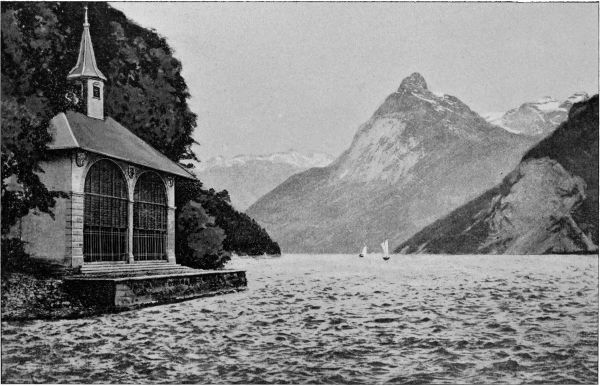
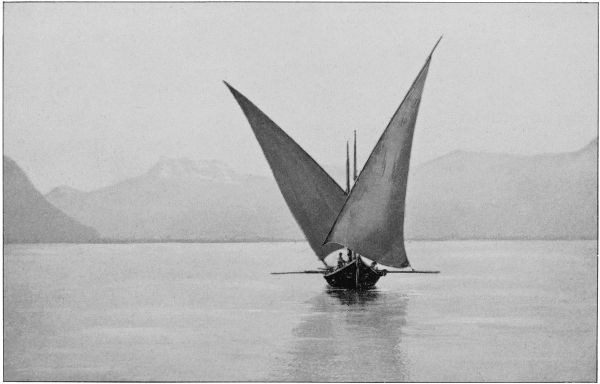
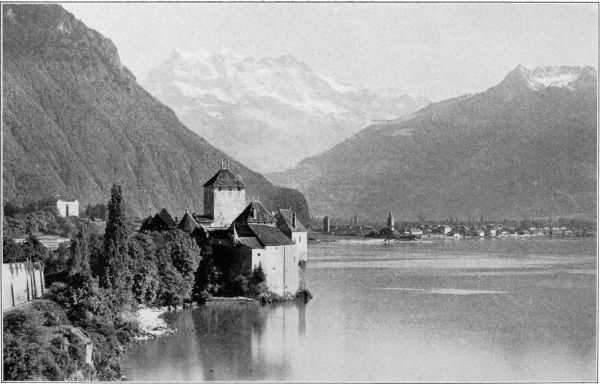
In the early morning twilight I crossed beautiful Lake
Maggiore in a row boat, and like a bird let loose from its
cage flew away to Rome.
Once on a time when my wife and I had been in Rome
visiting, a lady friend said to us just as we were about
leaving: “Come first with me to the fountain of Trevi,
throw a penny into the water, and you will return to Rome.”
We went one beautiful moonlight night and tossed our
coins into the fountain. And now, sure enough, here I was
again in the Eternal City.
The officials of the consulate met me at the train. I
went through another terrible fumigation for the cholera,
and was soon settled down to live in Italy. The office was
at once moved to Palazzo Mariani, 30 Via Venti Settembre,
and there later we made our home, when it was safe for my
family to follow me.
My friends, Congressman Lacey and wife, who seemed
to be about the only strangers in Rome, also met me. We
stopped at the great, big, empty “Hotel di Roma.” We
had it all to ourselves, and we had much amusement with
the waiter, who understood none of our lingo, nor we his,
further than the word “ancora” (more). The little mugs
of milk he brought us for our figs, were but spoonfuls, so
we constantly cried “ancora!” He smiled, and the mugs
came almost by the dozen. I was no little surprised to see
on my bill a long list of repeated charges, sometimes written
out, sometimes dotted down, for half a yard. It was
the word “ancora,” at a half a franc apiece.
The Laceys left Rome, after taking one long, last look
at me at the station, for they believed they were leaving
me there to die of the cholera.
Rome was as silent as a grave that summer. Everybody
seemed seized with a panic, and fled to the sea or the mountains.
I was indeed lonesome, and with just half of an
attack of cholera would have probably succumbed. I saw
little but closed shop windows, silent streets, and men going
about the alleys and corners scattering lime and disinfectants.
Everybody I knew or met carried a bottle of
“cholera cure” in his coat pocket for there was danger
any moment of tumbling over in the street. Away from the
office I scarcely met a soul I could talk with. Suddenly
I bethought myself of my friend Frank Simmons, the
sculptor, and was at once ensconced with him in the rooms
above his studio. When not busy at the consulate I could
spend my time watching him turn his live models into
clay and marble, and in the beautiful summer nights we
sat up in his rooms and talked of art, and America, till
midnight.
Mr. Hooker, the banker, (what American that ever went
to Rome in the last twenty-five years did not know him?)
invited Mr. Simmons and myself to supper. He lived in the
palace once owned by Madame Bonaparte, the mother of
Napoleon. Here she died. The chambers were still filled
with paintings and sculpture and other souvenirs of the
Napoleon family. That night Mr. Hooker, Mr. Simmons
and myself sat till towards the morning round the little
table in the very room where Napoleon’s mother spent her
evenings thinking of her eight children, seven of whom
were kings.
In a few weeks, the scare over, the people commenced returning.
Then the cholera broke out in Italy sure enough.
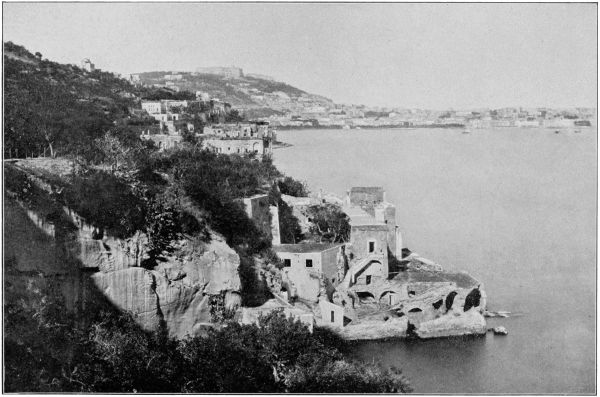
It was at Naples now, and with horrible fatality.
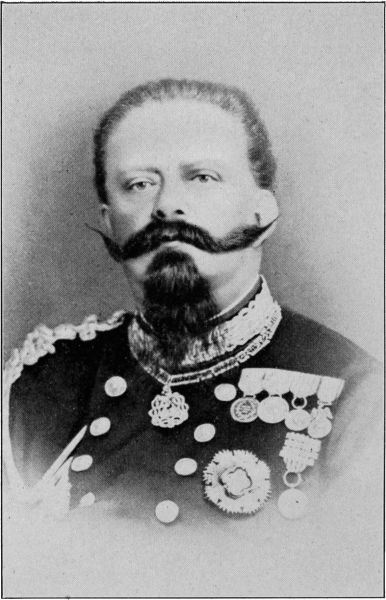
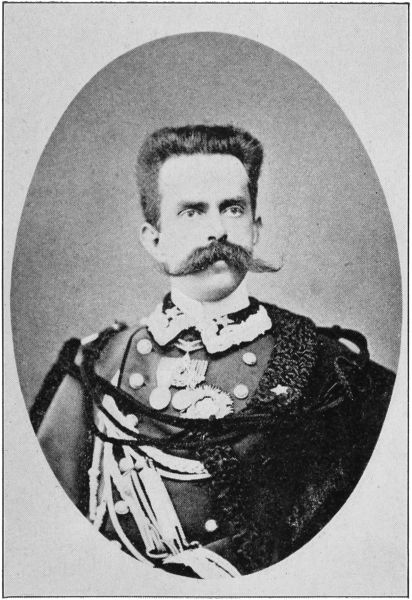
The brave King Humbert took train and went there to
help and to encourage the afflicted. He went into the hospitals
everywhere, took the sick by the hand, and possibly
helped many a dying one to take courage and live. He
took his own provisions with him, even drinking water,
from Rome, and whenever he went among the sick he
smoked constantly. His staff complained he was leading
them all to death, but they had to follow into dens and
holes and hospitals more dangerous than a battle field.
September.--My family have come, and now we are all
living at the Consulate, Via Venti Settembre 30.
The King came back to Rome from cholera-stricken Naples
a day or two ago. He has become the greatest hero in
Italy. I never saw such a reception. The main streets of
Rome were packed solid with human beings, trying to touch
the King’s extended hand, his horses, the wheels of the
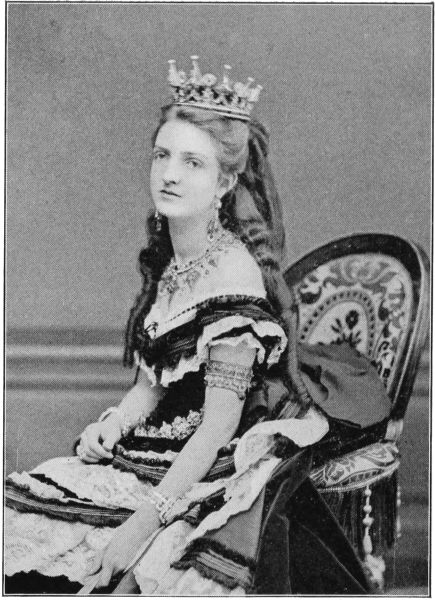
carriage. The beautiful Queen Margaret sat at his side
smiling and bowing right and left. The young Crown
Prince sat on the front seat. I did not know a King could
be loved so by his people. But this King was a hero.
The Van Marters had asked me to view the procession
from their balcony on the Via Nazionale. They had hung
out American flags. The King saw the colors, took off his
hat and profoundly greeted them as he passed.
I never saw a President receive half the ovation that this
King did, riding through Rome with his Queen and son,
and without any escort or signs of royalty whatever. The
vast crowd were simply mad with pride, enthusiasm and love
for their King and Queen Margaret.
October.--It is easy enough to get acquainted in Rome,
at least for an official; besides, there are many of one’s countrymen
living here, and parties and receptions are the order
of the day and night through the entire social season. The
members of the consular and diplomatic corps we soon
met, and then there are so many American artists here
worth knowing whose studios are open to all lovers of the
beautiful. We made immediately the acquaintance of U. S.
Minister and Mrs. W. W. Astor at their home in the
Rospigliosi palace. There we met many interesting people.
Mrs. Astor is a young and very beautiful woman, and
very charming in her manners. They have two pretty children.
Mr. W. Waldorf Astor, though a multi-millionaire,
personally leads a simple life in Rome. He is a close student.
Every bright morning sees him riding with an antiquarian
among the outskirts and ruins of the city. He is
an acknowledged authority in kindred matters and his
papers on the discoveries in Yucatan and elsewhere, read
before one of the learned societies here, attracted attention.
He is not playing ambassador as an amusement. His
legation business is as closely attended to as if he were a
poor, hard-working clerk in need of a salary. There is
no ostentation about him personally. Officially, he attends
to it that the social position of the United States Minister
is what it should be.
One night at a dinner party he was relating the incident
of a Union soldier who had donned a gray uniform once
and entered the Rebel army at Atlanta. He had read a
description of this soldier’s experiences and hairbreadth
escapes in the Atlantic Monthly, and had been extraordinarily
impressed. The soldier’s name, as he remembered it,
was the same as my own. Could we be related? I astonished
him by saying that I was more than related, that I
was the soldier myself, and the article in the Atlantic was
my own. Mr. Astor grasped my hand, saying he had
thought of that soldier’s action a hundred times. My narrative
had made Mr. Astor a friend. He rarely introduced
me to a friend after that without adding: “He is
the man who went into Atlanta.”
The palace where Mr. Astor lives is the same that our
Minister Marsh occupied when I was here some years ago.
It is built on the ruins of the Baths of Constantine.
I have looked everywhere trying to find the “hills” of
Rome, but almost in vain. They can barely be located, and
are not half as defined as the hills of Boston.
*****
Yesterday I went to look at the apartment where the
consulate used to be by the Spanish stairway. The consul’s
little back room is where the Poet Keats died. I could think
I saw him lying there waiting for beautiful death to come,
and I seemed to hear him say to his friend Severn: “I
already feel the flowers growing over me.” And I saw
Severn too, forgetting his easel, to sweep and cook and wait
and watch all the nights alone, till the beautiful soul of
Keats should take its flight. The room is a poorly lighted
common little bedroom where the poet died, but it will be
visited many a day in memory of one who lived, not
between brick walls, but in high imaginations. We also
went to the poet’s simple grave, as we had often done before,
and looked at the green sod above one who
Had loved her with a love that was his doom.
It was the love for Fannie Brawn and not the bitter pens
of the Quarterlies, that killed John Keats after all. Severn
found that out only six short years ago, when the love letters
from Keats to Fannie Brawn were placed in the now old
man’s hands.
December 28.--Spite of bad weather we are having some
wonderful sunsets lately, and strangers in Rome linger long
on the Spanish stairway to enjoy a scene they have so often
heard of--a sunset by the Tiber.
Last night Madame Bompiani invited us to tea with her.
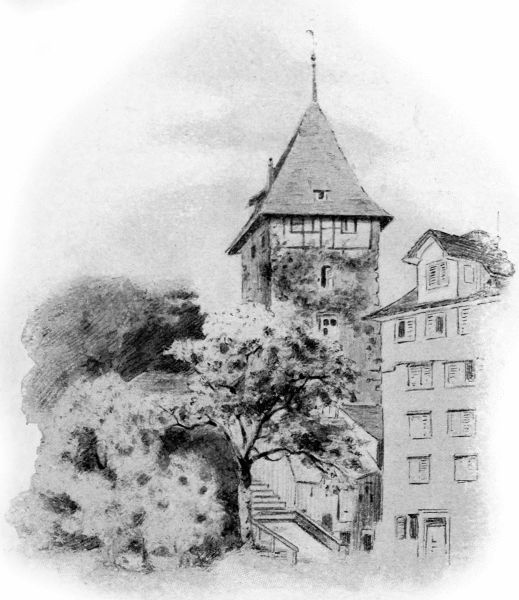
She lives at the Hilda’s tower palace, celebrated by Hawthorne,
in the “Marble Faun.” Her husband is a well-known
Roman lawyer, and she herself writes interesting letters to
the Chicago Interior. We learned much about things in
Rome direct from him, and after the supper we were taken
up to the tower.
One of the guests was Madame Guyani, a sister of the
hostess. She was a fine conversationalist and interested us
much. Only a few months ago she was a sufferer in the
terrible earthquake at Ischia. She is still lame as a result of
the experiences of that fearful night. She told us all about
the earthquake. The night of the disaster she wandered
or crept about the fields till morning. The parts of the island
which were nothing short of an earthly paradise in the evening
were only piles of ruins and dead people in the morning.
It was as if Eden had been struck by a thunderbolt, only
here there was a happy, unsuspecting people to be suddenly
hurled out of existence.
Sunday.--Instead of going to church I stay in Mr. Franklin
Simmons’ studio and watch him making a bust of
Marion Crawford, the novelist. He has a good subject,
for Marion Crawford is a large, handsome man with a fine
figure and a genial face. There was a joking dialogue going
on as to whether it is the great novelist now sitting to the
sculptor Simmons or the great sculptor Simmons doing the
face of a novelist, each modestly insisting the other only
had claims on immortality. I liked Crawford and his genial
ways. I had just finished reading his “Roman Singer.”
Frank Simmons seems to me to be the best sculptor in
Rome, though he is not yet the most celebrated. He does
not seem to try to seek fame; but lets it seek him, which
it is doing. Marion Crawford, too, I know, regarded Simmons
as the best sculptor living, and some day he will make
him the hero of a great novel.
Italy is called the land of art and yet curiously there are
few great Italian artists. Its galleries sometimes seem to
me like opened coffins, where one beholds among the bones
the jewel work of some dead age. I feel here much as I felt
in Berlin when looking on the golden necklaces of Helen of
Troy, dug up by Schliemann. All the fine paintings and
marbles here in Rome seem like the ruins, relics of another
time. Foreign artists by the hundred, live and work here
for the inspiration they get from the fragments of the past.
They taste the wine made good with age and mix some of it
in the bottles of new wine of their own making. There are
more imitators in Rome than anywhere else in the world.
*****
The duties of the consulate here are nothing compared
with Zurich or with any other commercial consulate. The
office is often full of callers, but their errands are visits of
courtesy or to have passports issued and the like. The
trade of Rome with America is insignificant.
There are two regular consular clerks here, burdened
with nothing to do. The laws provide for some thirteen of
these “regulars” in the consular service, who hold their
places for life. They are rarely promoted, and grow gray
doing little. One good, hired clerk whose staying in depends
on his zeal and fitness and not on his self-importance,
is worth a dozen of them. They should be made responsible
to somebody. The salary of the Consul General does not pay
his expenses in Rome.
Palazzo Mariani, where we live, is a very magnificent
structure outside, with great white marble stairways within,
leading from floor to floor. But it is cold as a sepulcher.
No stoves and no fire-places save one little niche in the wall,
where a few burning fagots scarcely change the temperature.
At night we come home (very late, as parties only begin
at nine or so), and go to bed in a big cold bedroom with
a brick floor. Our so-called cook stove is a little iron box
heated with charcoal, in a kitchen about five feet square,
but Antoinette seems to know how to broil a kid on it
every day.
Our drawing-room is heated (?) by the fagots in the
niche in the wall; but even this is too warm for our Italian
friends, who, when they call, apologize and go and sit in
the back end of the room as far from the so-called fire as
possible.
We have our furniture here from Switzerland, and to
us that is a comfort. Occasionally a couple of priests come
into our house without asking and walk about through all
the rooms, sprinkling holy water on the beds as is a custom
here. On going out, they indicate their willingness for a
fee, which is not surprising in a land where feeing is universal.
Like most modern houses in Rome, our big palace is built
on top of a series of old arches that once supported the
houses of ancient Rome. From our cellar we can prowl
around unknown distances through these mysterious chambers.
The water for the house is still conducted from the Alban
hills in one of the old Roman aqueducts. It is a queer combination,
this old and new in Rome.
*****
Mr. Astor had written me that last night my wife and I
were to be presented at court. At ten we were climbing
the magnificent stairs of the Quirinal palace to be presented
to Queen Margaret. Gorgeously uniformed sentinels stood
on the stairway left and right. We were shortly escorted
to one of the great drawing-rooms of the palace, where we
found other ladies and gentlemen also waiting to be presented.
In a little while we were all directed to stand in
line around the walls of the drawing-room. A dead silence
ensued, and then the Queen of Italy entered at our right,
escorted by the Marchesa Villa Marina, who had in her
hand a list of all of our names. A few moments before she
had passed along the line whispering to each of us and confirming
the correctness of her list. Queen Margaret turned
to her left as she passed in and very graciously greeted a
young Italian lady, whom she seemed to know personally.
She extended her hand to the young lady, who, greatly
honored, blushed and looked very pretty. This was the
only instance where the Queen gave her hand that evening.
As she started along the line toward us she halted before
each one. The Marchesa promptly made the presentation,
when the Queen bowed very sweetly and made some remarks.
I noticed that in each case she spoke the language
of the lady or gentleman presented. I could hear her speaking
German, Italian, French. Certainly she cannot speak
English, I meditated, but in a moment our turn came. Our
names were pronounced, and the Queen commenced in very
agreeable English. Her manner was extremely winning,
kind and simple. She “knew we would like Rome,” she
said. “Everybody did, and she hoped our stay would be
long and very happy.” She wore an elegant gown, cut extremely
low, revealing a fine form. Around her neck was
the famous pearl necklace, to which the King adds a string
of pearls every birthday. She carried an enormous white
fan of ostrich plumes which she constantly waved while
she talked with us. She looked the queen, and I thought
more German than Italian. Her whole bearing was graciousness.
Her smile seemed as sincere as beautiful, and no one
but would call her a happy, beautiful woman.
The presentation over, we will now be entitled to invitations
to the palace balls and other public functions. There
is an American lady here at court whom we knew in Switzerland.
It is the Countess Ginotti, formerly Miss Kinney, of
Washington. Her husband is a court official and is entrusted
with important duties.
Last night we went to our second court ball at the Quirinal.
A week following our presentation we had had the
customary invitation to the first. We go at ten at night,
ascend the same brilliantly lighted stairway as at the
presentation, and even more gorgeously uniformed sentinels
line the way on left and right.
The dress is prescribed; gentlemen in evening attire of
course--there is nothing else a man can do but dress himself
in mourning and call it festive; but so many ladies, in their
elegant, light gowns and extremely low bodices, with swan
white necks and shining diamonds, made a lovely scene.
We shortly found ourselves seated among five hundred other
guests in a brilliant ballroom of the palace. A raised dais
and a royal chair stood at the end in front of us. There was
a little gossip with each other, a little wondering at the
gorgeous gowns, when suddenly the music from a lofty
gallery proclaimed the coming of the court. Instantly,
side doors unfolded, and King Humbert with Queen Margaret
on his arm, marched toward the raised platform, followed
by the court officials and all the Ambassadors in Rome
in gala attire. We all rise, the ladies courtesying and the
men bowing, as the King gracefully swings Queen Margaret
into her seat and takes his place, standing beside her
chair. There is some more bowing and smiling and courtesying.
The music changes for the dance and the guests look
on while the Queen and the Ambassadors and their wives
dance the royal cotillon. The Ambassador of Germany,
the head of the diplomatic corps, dances with Queen Margaret.
It is all very lovely, though some of us guests feel we
could beat the dancing all to pieces. In a few moments the
Queen is back on the dais talking with the ladies privileged
to surround her. The music has changed and some of the
five hundred present are swinging in the waltz.
All has been simple and beautiful. Such a ball might
take place in the extremest republic in the world. Some
formality, some etiquette, there must be everywhere. While
the others dance, the Queen and the King talk with the
ladies, with the Ministers, and the Ambassadors. I was
close to the King at different times in the evening. He was
as unpretending as any other gentleman in the room. He
seemed to have a bad cough, and his great eyes sometimes
glanced around in a strange way. His mustache is almost
as big and bristling as was his father’s, Victor Emmanuel.
He has a kindly, earnest look, and Italy has in him a patriotic
King. At midnight everybody repaired to little marble
tables in an adjoining room, where most expensive refreshments
were served. Every one seemed to have a
bottle of champagne to himself. I never saw such a flowing
of wines, yet all managed to keep sober. The ball souvenirs
presented to every guest were all made in Paris and of
every conceivable and lovely design.
*****
We are not far from the “Porta Pia,” and often go out
walking or driving on the Campagna. Much of this barren
land was a graveyard once, and splendid broken marble
tombs still stretch away for miles. One can guess at the
enormous wealth of the old city by walking for hours among
the fallen columns and broken tombs of the rich out here on
the Campagna. It is as if a wilderness of marble trees had
at some past time been torn down by a whirlwind, and
only the debris left behind.
The most impressive scene about Rome is the great
aqueducts by moonlight, as they stretch across this waste of
the Campagna. They are one hundred feet high and built
on immense arches. One gets an idea of what the population
of Rome must have been, on reflecting that at one time
there were twenty-four of these canals through the air for
carrying water into the city, and that fifty million cubic
feet of water a day flowed into Rome through them. I
was surprised to learn that hundreds of miles, too, of these
aqueducts were built under ground. A tunnel a few thousand
feet long we regard as a wonder at home, but some of
these aqueducts were thirty-six miles at a stretch, under
ground.
The Campagna was honeycombed in all directions by these
strange canals, and the miles of arches above ground to-day
impress one more than does the Coliseum.
However desolate the Campagna to-day, in the olden
time it must have been a wonder with its catacombs and
canals under ground and its magnificent tombs, pillars and
aqueducts above ground.
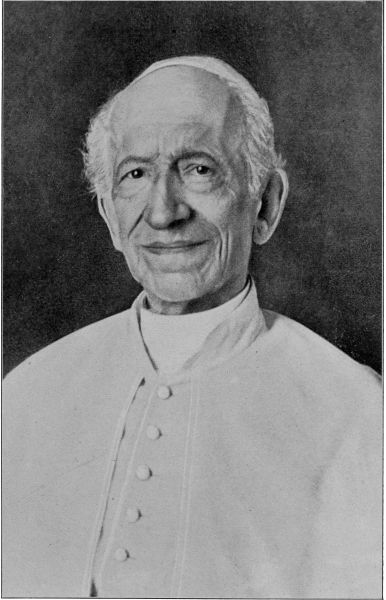
Evenings when the weather is fine we see the Cardinals
with their cassocks and hats of flaming red, taking the air.
They drive over from the Vatican in closed carriages and
when once on the Campagna get out and walk about.
Next to the Cardinals, these Campagna shepherds are
picturesque and interesting. They wear leather leggings,
sheepskin jackets, goatskin breeches with the long hair
outside, a red sash and a rakish hat. They look very much
like stage villains, which they are not. When they ride
into town, two or three on the same donkey, they make
a remarkable figure; but a very miserable one, when the
one behind is seen jabbing the donkey with an awl to make
him go faster with his load of vagabonds.
January, 1885.--Christmas Day we went to see the magnificent
ceremonies in the church called the Santa Maria
Maggiore. Its forest of vast marble columns was wrapped
in hangings of crimson and gold. The priests, bishops, cardinals
and other dignitaries wore the most gorgeous regalia
of the church.
At the height of the ceremony a part of the Holy Manger
in a crystal chest was borne up and down the aisles, among
the kneeling, praying multitudes. Whatever the history of
this relic, I think it was regarded that day by every one present
as very sacred. I never saw a multitude so impressed
with one thought. To many present, death itself could not,
I think, have caused deeper emotion.
Great church ceremonies are all the time going on in
Rome, and as there are more than three hundred church
buildings, one can go to a different place every day in the
year. Not at the Sistine Chapel alone, with its “Last Judgment”
scenes, its moving music and officiating Pope, need
one be interested; in dozens of churches great things are
always going on.
*****
A few evenings ago we were invited to a party at the
Danish consul’s. Met a number of interesting people, but
the lion of the evening was Ibsen, the great dramatic writer.
He is a little short man with a big head, a great shock of
white hair, and twinkling eyes. I talked with him some in
English. Famous as his dramas are, I knew little about
them, and our few minutes’ talk was on indifferent subjects,
not worth remembering or jotting down; only he talked like
a very genial, open-hearted man.
The next day there was an afternoon reception at our
own home, and among our guests was Hugh Conway, the
author of “Called Back.” He went with me to a little
corner in the dining-room, where we had a chat about his
famous story, his own past, and his future hopes. He had
been an auctioneer in England, and on trying his hand at
stories was astonished to find himself suddenly famous. He
was simple, kind and communicative as a child. Shortly
his wife joined us, agreeable as himself, and they were
promising much to themselves from another season, which
they intended spending in Rome. And we were going to be
friends. He told me of their children in England. We
emptied a glass to the children’s health, and the next day
they started for Nice. He took a cold on the way, and a
little later came the sad news that the lovable man was dead.
Almost every day, afternoon or evening, we go to receptions.
Half the Americans living here give them, to say
nothing of those given by the English, French and other
foreign residents whom one happens to know. One meets
a sprinkling of Italians at all of them, but this is by no
means Roman society. That is something that few foreigners
know very much about. The receptions are all about
alike, though differing in interest of course, according to
the personality of the entertainers. People come to them
and stand up and gossip a little; some pretty girls pour tea,
and occasionally there is a song by some visiting celebrity.
Getting a “celebrity” to be at one’s receptions and parties,
by the way, is a part of a society woman’s bounden duty
in Rome. What lions have we not met at these delightful
afternoon and evening affairs--Liszt, Crawford, Ibsen,
Rogers, Fargus, Bonaparte, Houghton, the Trollopes, Wallace,
and how many others less great. One meets most
of them just long enough for a cup of tea together, or a
glass of wine, a hand shake, a few words, and then “au
revoir.” Yet the memory of it all remains.
Rome is always full of great people and they all seem
to like to be lionized. Then there are the distinguished artists
of many countries who live here by the hundred, and
who honor the hostess and sometimes themselves, by dropping
in at these receptions for a stand-up cup of tea and
a general hand shake.
We have attended three, four, even half a dozen receptions
the same day. If ever I go into business in Rome it
will be to sell tea to people who give receptions. A man
of war could float in the tea poured out here by pretty girls
every afternoon.
Some of the artists also, like Ezekiel, the sculptor, give
unique little receptions in their picturesque studios. These
are almost the best of all.
*****
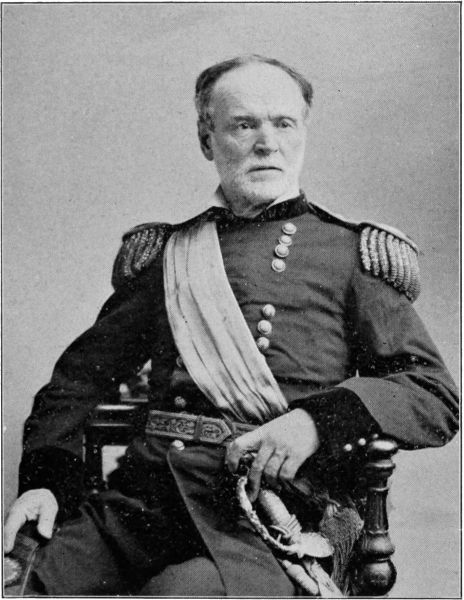
Had an interesting letter from General Sherman yesterday.
“St. Louis, Mo., Nov. 14, 1884.
“Dear Byers:--I was very glad to receive your letter
of October 28, from Rome, telling us that you are now fairly
established in the Eternal City. Somehow that renowned
city did not make the impression on me that its fame warranted,
but I was told that it grew upon every man who
dwelt there long enough. I hope you will experience that
result, and realize not only contentment, but gather much
material for future literary work, because I fear your
diplomatic career is drawing to a close. It now seems almost
certain that all the little petty causes of discontent and opposition
inside the Republican party have united with the
Democrats and elected Cleveland President. When installed
next spring he will be a stronger man that he has credit for,
if he can resist the pressure sure to be brought on him, and
consulships will be in great demand, for distance lends enchantment,
and exaggerates the value of such offices. I
have no fear of violence, and believe that Cleveland will
not allow the solid South to dictate to him. If he does, and
the old Rebels show the cloven foot, the reaction four years
hence will be overwhelming.
“We are all very well in St. Louis, and the autumn has
been beautiful, crops good and bountiful, general business
dull by reason of apprehended change of tariff, but the
country growing steadily all the time. My daughter Rachel
is in Maine on a visit to the Blaines, at this critical period.
Mrs. Sherman is at Philadelphia on a short visit to our
daughter Elly, so that the family here is small. I expect to
make a short visit to New York and Washington about
Christmas, with which exception I propose to remain quiet.
Time, with me, glides along smoothly and I am amply convinced
that I was wise in retiring just when I did. I don’t
believe the Democrats will materially hurt the army, but
they will make Sheridan’s place uncomfortable. I visited
Des Moines in September and found it a prosperous, fine
city. I should suppose you might make it your home, devote
your time to literature, and give general supervision to your
farm. I’m afraid, however, that you have been so long
abroad that it will be hard to break yourself and family into
the habits of Iowa farmers. Give to Mrs. Byers and son
the assurance of our best love.
“Your friend,
W. T. Sherman.”
The other night we were at a private musicale, next door
to one of the hotels. Some girls, and a certain princess,
played and sang extremely well. In the midst of the evening
the door opened and who should walk in? It was Franz
Liszt. He was in his slippers just as he had been in his
room next door. He had heard the music and had just
dropped in. Quite a little emotion was created among us all,
when after standing and listening a little bit, he went
straight over to the young girl at the piano and put a
rousing kiss on her forehead. She blushed, and was
stamped for immortality. To her last hour she will remember
that approving kiss of the master.
After the musicale I was presented and was glad he remembered
me so well from Zurich. He recalled a kissing
scene that I had witnessed there as well, and laughed heartily
about it.
But Liszt is getting old. He has had his day of great
life. What genius and a great deal of work can do for a
man in this world anyway! Liszt, with his genius, worked
too at the piano like a galley slave, years before any soul
applauded.
*****
Yesterday, one of the Bonapartes came to the office on
some business. It was Napoleon Charles. He owns the villa
Bonaparte and is a rich man, for his villa grounds are to be
sold off at great prices for the new Rome rapidly building.
I observed him closely because I had been told that his is
the real Bonaparte face. He is taller than was the First
Consul. His family name is still a power in Rome. It interested
me to see one who is closely connected with the
Great Napoleon. He wrote me a pretty French note of
thanks, and that is pasted in among my autograph letters
from interesting people.