It is not my intention to attempt to discuss the equipment of
Tutankhamen’s tomb. Readers of the daily papers and the illustrated
weeklies will already be aware of the vast quantity of furniture and
of the fact that even those who were already familiar with the superb
design and workmanship displayed in the objects from such tombs as
those of Thothmes IV, Yuaa and Tuaa, and Akhenaton were amazed at
the new revelation of Egyptian craftsmanship revealed in scores of
the things found in Tutankhamen’s tomb, the throne, a superb work
of art, the no less wonderful chariots, chairs, couches, statues,
sandals, textiles and jewellery, and above all the impressive canopy
or shrine. Archæologists familiar with all the marvels of Egyptian
art, now treasured in the museums scattered throughout the world, have
exhausted their vocabularies of wonder and admiration in attempting to
depict the splendours of Tutankhamen’s
tomb. The outstanding feature
of the discovery is, in fact, the recovery of so vast a collection of
superb works of art and the new revelation it affords of the dazzling
brilliance of Egyptian civilization thirty centuries ago.
But in this book I am concerned more especially with the cultural
significance of the funerary equipment.
In the first place the objects found in the tomb belong to two distinct
categories, those which were used by the deceased when alive, and
others specially made for funerary purposes. This distinction seems to
be brought out most clearly in the comparison of the chariots in the
vestibule and in the burial chamber respectively.
I do not propose to enter into any further discussion of the contents
of the wonderful shrine or canopy which is to be investigated next
winter, nor to attempt to anticipate the result of the examination of
the so-called “canopic” chest, which is said to be a unique example of
the sculptor’s art. The experience gained in investigating the contents
of such chests in other tombs gives one confidence in assuming that
the heart of Tutankhamen will not be found in it, as so many writers
imagine,
but that its four compartments will contain respectively the
liver, lungs, stomach and intestines of Tutankhamen, his “heart and
reins” being left in his body.
From the cultural point of view the most interesting articles of
furniture found in Tutankhamen’s tomb are the three lofty couches
fashioned in grotesque shapes to represent conventionalized animals,
cow, lion, and hippopotamus respectively. Although such couches are
thoroughly Egyptian in design and are familiar in pictures from Egypt
and the Soudan, they have never been seen before. They are worth
discussing in some detail, because they express the concreteness and
naïvety of Egyptian belief mentioned in the last chapter in a way that
brings home to us the essential distinction of the religion of the
ancient dwellers in the Nile Valley.
The problem of getting to heaven after death was approached by
the Egyptian theologian as though it were essentially a physical
proposition. How was the dweller upon earth to reach the world in
the sky? What vehicle could he employ to reach the celestial realms?
Speaking recently of Christian Englishmen in the twentieth century,
Dean Inge is reported to have said that “a topographical heaven, so
impossible scientifically, was so difficult to dispense with as an
aid to the imagination.” But to the ancient Egyptian belief in such a
topographical heaven was a cardinal article of faith, and the geography
of the Elysian fields and the details of the path leading to it were
mapped out with all the meticulous precision of a modern guide-book.
The dead man was often provided with a chart to find his way along the
path that teemed with difficulties and dangers.
But although there were scores of different devices for securing a safe
transit to the celestial regions, there was one vehicle which from the
very beginning of Egyptian history enjoyed a special reputation as
the appropriate means of protecting the dead and conferring life and
immortality upon him by conveying him to the other world. The Celestial
Cow Hathor not only conferred life upon mortals by giving them birth:
she also sustained them throughout life by giving them the divine milk,
and at death she conveyed them to the sky.
In the famous inscription upon the walls of the tomb of Seti I, to
certain passages of which I referred in the last chapter, there is a
remarkable story of the function of the Divine Cow Hathor or Nut as a
means of
raising the dead king to the sky to reach the home of the
gods. After being rejuvenated by the goddess the king became oppressed
with the boredom of life upon earth amongst his tiresome subjects,
who had shown their disloyalty to him by referring to his old age and
failing powers. So he decided to leave the earth and proceed to the
sky. Hence he mounted upon the back of the cow and got to heaven, where
he assumed his godhead by becoming identified with the sun.
This function of the cow in acting as a vehicle to convey the mummy to
its celestial home is one which was repeatedly depicted in the ancient
Egyptian monuments. But the cow’s solicitude for the welfare of the
dead was frequently shown in other ways. A favourite motif for the
Egyptian sculptor was the representation of the Divine Cow, Hathor,
protecting the dead king or permitting him to obtain an elixir of life
by drinking milk from her udder. In his book Egyptian Art (1913) the
late Sir Gaston Maspero devotes to this subject a whole chapter (XI)
illustrated with six beautiful photographic plates of such cow-statues
ranging from the time of Amenhotep II (1440 b.c.) to more
than a thousand years later. But we know that the protective
function
of the Cow Hathor was portrayed in other ways as early as the time
of the Pyramid-builders (for example, the beautiful slate statuettes
found by Professor Reisner in the Pyramid Temple of Mykerinus of the
fourth dynasty, about 2800 b.c.), and the still earlier
representation of her upon the slate palette of King Narmer of the
first dynasty, about 3400 b.c. For several reasons this
palette is a historical document of unique importance. Engraved upon it
is the earliest example of
writing that has come down from antiquity:
but it is of interest in connexion with the discussion in this chapter.
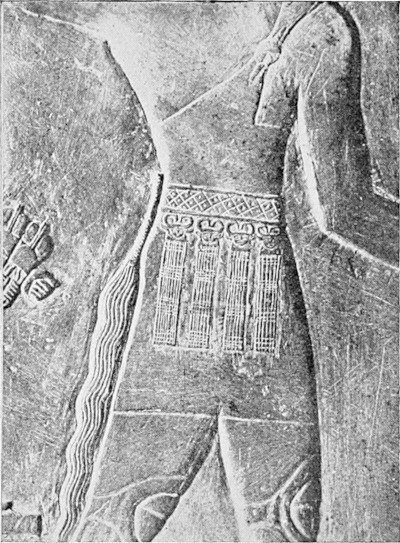
For at the upper corners of the palette the cow-headed Hathor is
depicted and as a further protection the king wears upon his belt four
cows’ heads (Fig. 18) in place of the cowrie amulets of more primitive
peoples.
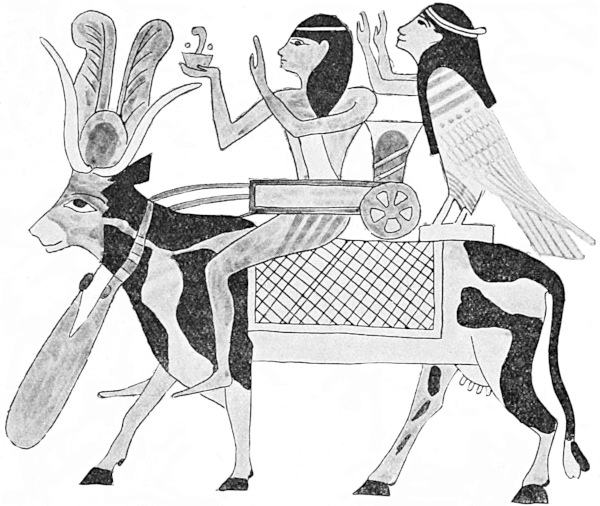
Fig. 17.—Cow carrying a dead man to heaven.
The Celestial Cow, Hathor, was a divinity of the dead, for she was the
Giver of Life who was supposed to be able to prolong existence beyond
the grave, and as she was also identified
with the sky she became the
appropriate vehicle to convey the dead to the celestial regions where
the sun-god dwelt.
Fig. 18. Narmer’s belt with four Hathor cows’
heads, circa 3400 b.c.
The most bizarre objects found in the vestibule of Tutankhamen’s tomb
are the three ceremonial couches, one representing the Celestial Cow,
Hathor, the second the same goddess in her lioness form, or more
probably her son and representative Horus in the form of a lion, and
the third Tauert, the hippopotamus goddess, who was the divine midwife.
In the numerous accounts of these remarkable monstrosities that have
appeared, I have not seen any attempt to explain their significance.
Although such grotesque examples of mortuary furniture have never been
seen before, the bas-reliefs upon the walls of tombs in Egypt and
Ethiopia, and the pictures illustrating the Book of the Dead inscribed
on papyri, have made us familiar with them. Moreover, the chapters of
the Book of the Dead relating to “the raising of the funeral bed” leave
no doubt as to the ritual significance of these couches.
The sides of the Hathor couch are grotesque models of the Divine Cow,
the earliest of the Great Mothers who were believed to have bestowed
life and prosperity on mankind. It
may seem strange that the artists
of Tutankhamen’s time should have perpetrated such a monstrosity as
this Hathor couch. When religious motives impelled the designers to
fashion a piece of furniture in imitation of so uncouchlike a creature
as a cow, the artist was set a task which was almost impossible of
realization unless he sacrificed his artistic ideals. There can be
no doubt that in this case he escaped the dilemma by repressing his
æsthetic feelings and abandoning himself whole-heartedly to the task of
devising a model which was almost wholly religious in conception.
To understand why the cow, of all creatures, should have been selected
for this purpose, we must remember the relentless logic and persistency
that inspired all the preparations of the tomb and its furniture.
The mummification of the body and the elaborate arrangements for
protecting it and ministering to its wants were due to the belief
that the continuance of the deceased’s existence had been secured by
these preparations. But to make doubly certain, no device that would
contribute to the attainment of this aim was neglected. Inscriptions
were made on the walls of the tomb, on the sarcophagus and coffins,
and on papyri to ensure the identification of the deceased king with
Osiris, so that he might be made to share the god’s fate. A figure
of Osiris was made, as I have explained elsewhere (p. 61), out of
the sacred barley, every grain of which was regarded as a model of
the life-giving Great Mother, and as such a supply of vital essence
to maintain the deceased’s existence. From time to time dramatic
ceremonies were held at the tomb (or in the temple associated with it
in far-off Thebes) to reanimate the dead and help him to persist.
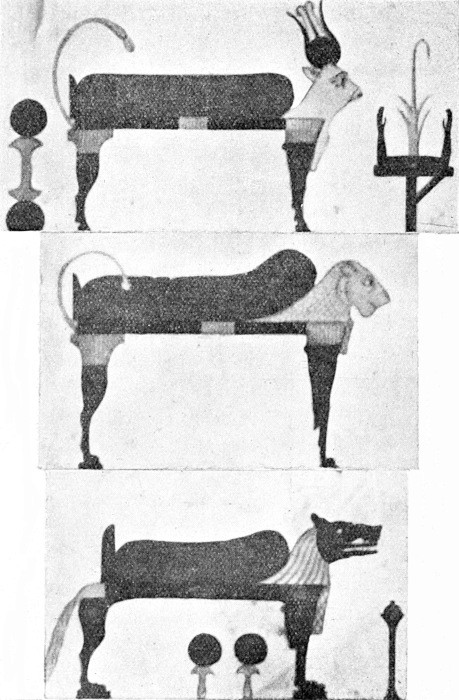
Fig. 19.—Pictures of three couches represented
on the walls of the tomb of Seti I, from Belzoni’s sketches.
For, once the ancient Egyptians had persuaded themselves that they
could work out their own salvation, and that the kingdom of heaven
could be attained by certain physical and magical procedures, they
spared no pains to pursue this train of thought and action with
tiresome persistence to the most surprising ends.
The Great Mother was originally nothing more than the personification
of an amulet, like a cowrie shell or a grain of barley, that was
supposed to be able to exert the essentially maternal function of
life-giving. Then, when cattle were domesticated and mankind discovered
for the first time that cow’s milk could be used for feeding human
children, people were profoundly impressed with this
revelation of
the cow’s kinship with the human family. They regarded her as the
foster-mother, and then as the actual mother of mankind, and identified
her with the Great Mother Hathor, whose earliest form was (even sixty
centuries ago) that of a Divine Cow. But if the Great Mother was at one
and the same time a cowrie, a grain of barley, and a cow, she was also
identified with the moon, which in a very special sense was supposed to
control the life-giving powers of womenkind.
Hence the belief developed that if the Great Giver of Life and
Immortality was both a cow and the moon, she was the appropriate
vehicle to convey the dead king to the celestial realms in the sky.
And so, as the nursery rhyme puts it, “the cow jumped over the moon.”
That the cow represented in the couch is a symbol of the sky is shown
by the stars on the under surface of the body. The height of the
couches also was an additional indication of their identification with
the sky. In all periods of Egyptian history painters and writers were
fond of depicting this episode of the conveyance of the dead king to
heaven on the cow’s back. This incident is shown and explained in the
inscriptions on the walls of Seti I’s tomb, to which I have already
referred
(p. 95). But in later times it became common to represent
the Divine Cow (or its lioness surrogate) conveying the dead man or
his actual mummy to the sky, and in pictures of funerals to find the
mummy borne on just such couches as have actually been found in the
tomb of Tutankhamen. The object of the cow-shaped couch was to ensure
by magical means this translation of the deceased to heaven. The story
of the Destruction of Mankind gives the Egyptian’s own interpretation
of the incident. The influence of this Egyptian conception of animal
“vehicles” for gods spread far and wide throughout the world in
ancient times, for if such a creature could convey the dead king to
the celestial regions and confer upon him the means of attaining
immortality, which was the distinctive attribute of divinity, such an
animal vehicle was an appropriate symbol and pictorial determinative
of a god. The identification of the Great Mother with the cow was the
beginning of the social system known as totemism.
The explanation of the lioness form of the Great Mother is also given
in the inscription in Seti I’s tomb. When the goddess was called upon
to rejuvenate the ageing king, the
only elixir of life known in her
pharmacopœia was human blood. Hence, she was driven to the necessity
of slaying a human being, and her murderous action was compared to
that of a man-slaying lioness, with which she was identified. But as
the lioness was a particularly appropriate form to symbolize the Great
Mother’s ability to protect the mummy from the perils that lurked
in the pathway to the other world, it became an even more favourite
form of the funerary vehicle than the gentle cow. At any rate, in the
pictures of funerary couches the lioness form is much commoner than the
cow-form. The same grotesque form of the lion has survived in modern
heraldry.
But other ideas found expression in the lion-symbolism. For example,
on some of the beautiful pieces of furniture found in Tutankhamen’s
tomb the king himself is represented as a human-headed lion trampling
on his foes, and many of his predecessors before him, Thothmes IV for
example, were similarly represented. Even as far back as the time of
the Pyramids was not Mykerinus (2800 b.c.) represented as a
human-headed lion in the gigantic Sphinx at the Giza Pyramids?
This representation of the king as a lion,
which typifies his
identification with Horus, is inspired by another chain of ideas.
Although at the time of Tutankhamen, and in fact throughout the whole
history of Egypt in dynastic times the sun-god was dominant in Egypt
and Horus himself was a sun-god, the rôle that he took as the guardian
of the dead was inspired by the more ancient Osirian faith. It was the
living king Horus who was responsible for tending the dead king Osiris;
and it was believed that the continued existence of the god (the dead
king Osiris) was wholly dependent upon the services rendered by Horus.
Thus it was Horus who performed the divine function of conferring
immortality upon Osiris, and also upon the dead king Tutankhamen, who
was identified with Osiris. Presumably the act of being borne upon the
lion-couch was symbolically equivalent to being put into the care of
Horus, not the Horus represented upon the furniture in the tomb, the
lion-avatar of Tutankhamen who tramples his enemies under foot, but the
son of Osiris, who holds out the promise of conferring upon the dead
king the boons that he is credited with having given to Osiris—eternal
life and protection. The confusion between these two aspects of Horus
is brought out very clearly
in a very interesting picture recently
discovered by Professor George A. Reisner (and reproduced in The
Illustrated London News, 10th February 1923, p. 204), engraven upon
a monument in the Soudan several centuries later than the time of
Tutankhamen. The lion-couch is represented supporting the mummy of King
Ergamenes, whose head is portrayed in the form of the falcon of Horus.
Above the mummy is the star-spangled sky, below which is seen the
sun’s disc emitting five streams of life-giving emanations to the dead
king. In the Book of the Dead Chapter LXXVIII is called that “whereby
one assumeth the form of the Sacred Falcon” and the deceased is
represented as saying “I display myself as the Sacred Falcon whom Horus
hath invested with his soul for taking possession of his inheritance
from Osiris” (Renouf). The possibility suggests itself whether the
lion-couch was intended to symbolize, as the cow-couch unquestionably
was, the transference of the dead king to the sky to be united with
the sun and identified with the solar deity Re. If so, perhaps the
five streams of V-shaped emanations pointing to the disc were meant to
represent the sun drawing the mummy, the dead Horus, to the sky.
In his monograph of the Tomb of Amenemhēt Dr Alan Gardiner
reproduces a text (Plate XXX A) including a pictorial arrangement
of hieroglyphs in the form of stars above the mummy borne on the
lion-couch, which he translates as a statement that the dead man
“wishes to be placed among the stars in the firmament” (p. 119).
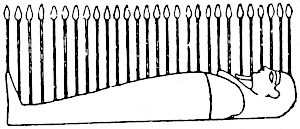
The same design occurs in the pictures illustrating the Book of the
Dead. The funerary couch is usually represented in the lion-form, the
cow- and hippopotamus-varieties being much less frequently adopted.
In the pictures of funerals it is not uncommon to see the mummy borne
upon a lion-shaped couch placed within the funerary canopy or shrine
(as in the first of the pictures from the Book of the Dead, Fig. 20).
Good examples are given by Dr Alan Gardiner and Mrs de Garis Davies in
The Tomb of Amenemhēt (1915), Plates XII and XXIV, of the reign of
Thothmes III, a century before Tutankhamen. No doubt this is due partly
to the significance attached to the conception of Horus as the guardian
of Osiris, but also possibly to the idea that Horus fought the enemies
of Re and was the best protector of the deified dead.
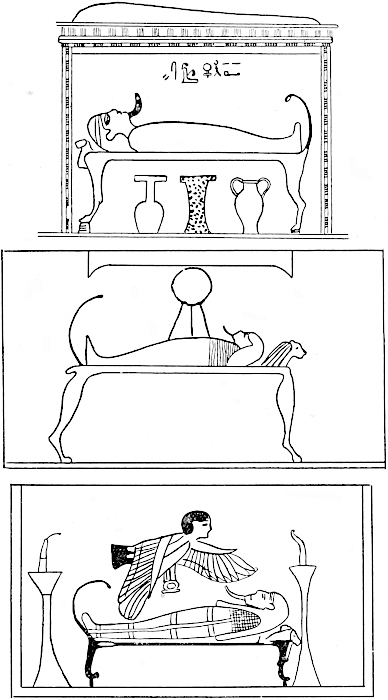
Fig. 20.—Three vignettes from different papyri of the
Book of the Dead, representing the lion-couch bearing the mummy
within its canopy, a mummy lying on its funerary couch with three
solar emanations coming down from the sky, and a third where the
bird-soul is bringing to the mummy the symbol of eternity.
But underlying the whole of the lion-symbolism are two fundamental
ideas which gave meaning to it. In the very ancient story of the
Destruction of Mankind, which in a relatively modern and much
distorted form was inscribed upon the walls of the tombs of several
of Tutankhamen’s successors, the goddess Hathor (the Divine Cow) is
reported to have made a human sacrifice in order to obtain the blood
wherewith to rejuvenate the senile king (in the story Re, the king
upon earth who had not yet been elevated on the cow’s back to the
sky to become the sun-god). Hence she acquired the reputation as a
slayer of men and was identified with a lioness, and called Sekhmet,
the Destroyer. Thus the lioness and the cow were both forms assumed
by the Great Mother Hathor. But in the development of the myth of the
Destruction of Mankind the god Horus takes the place of his mother
Hathor, and the bull and the lion take the place formerly occupied by
the cow and the lioness. In the case of the funerary couches the Cow of
Hathor is found alongside the lion of Horus, but occasionally one finds
in late tombs the mummy represented as being conveyed to the celestial
realms by a bull instead of the more usual cow. A good
example of this
is to be seen in the Museum of the Society of Antiquaries in Edinburgh.
The third couch is modelled in the form of a grotesque caricature of a
hippopotamus, Tauert, another representative of the Great Mother Hathor.
But her special duty was to act as a midwife at the births of gods
and kings. In pictures she is often associated with the Hathor Cow at
the door of the tomb in the Mountain of the West; and presumably her
function was to preside at the rebirth of the dead king by which a new
lease of life beyond the grave was conferred upon him.
If it seems far-fetched to regard the hippopotamus couch as symbolizing
rebirth, it should not be overlooked that in the so-called “Birth
Terrace” of the temple at Deir el Bahari[3] lion-headed couches are
represented in the birth scene of Queen Hatshepsut. As I have pointed
out already all three animals, cow, lioness, and female hippopotamus,
represent primarily different forms of the same goddess Hathor.
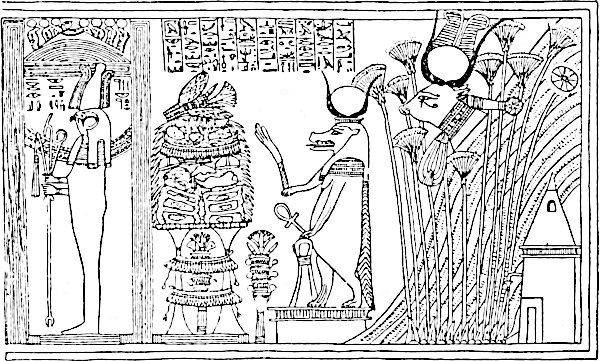
Fig. 21.—Scene from The Book of the Dead (Papyrus of
Ani) in which the three givers of divinity are seen, the cow at
the entrance to the tomb, the hippopotamus with her, and Horus on
guard.
The Egyptian custom of making these grotesque animal-shaped couches
to symbolize
the transference of the dead to the celestial regions
and the conferring of immortality and deification upon them exerted
far-reaching and manifold effects as it was diffused abroad among other
peoples. I shall mention three examples of these diverse influences.
The belief implied in such symbolism that a king borne by such an
animal vehicle was transformed into a god led to the use of such
designs in the representations of gods. Hence it became common in Syria
and Mesopotamia, in Greece and India, and far away in outlying parts
of the world
where the influence of these civilizations played some
part, directly or indirectly, to find gods and goddesses represented on
animal vehicles, such as the bull or cow, the lion or lioness, or some
fantastic composite monster, dragon or makara. The whole conception
of animal vehicles, which plays such a large part in the religious
symbolism of India, Eastern Asia and Central America, is a purely
Egyptian fancy that finds such grotesque expression in Tutankhamen’s
funerary couches, no less than
in the borrowed symbolism that was
spread abroad from Egypt to Asia and America.
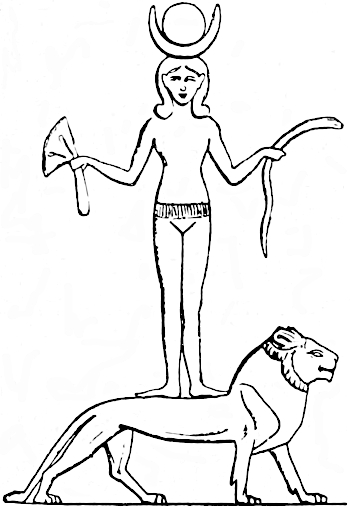
Fig. 22.—The goddess Astarte borne on her lioness,
symbolizing the attainment of immortality, which was the
distinctive attribute of a deity.
Another expression of the essential meaning of these couches was the
belief that the placing of the corpse or mummy on a raised stage
was magically efficacious in transferring the deceased to the sky-world.
The use of such raised platforms is practised over a very wide
geographical area, and for the reasons given in my pamphlet The
Migrations of Early Culture (1915). There can be no doubt that it
gives expression to the same belief as the lofty and uncouth funerary
beds in Tutankhamen’s tomb have forced upon our attention.
Another wave of diffusion of culture is represented in the adoption by
European furniture-makers of the Egyptian method of designing legs for
chairs, beds and couches. In Egypt itself such a practice can be traced
back to the first dynasty 3400 or more b.c. But the lion paws
were adopted in Europe as a design for legs of chairs, etc. almost as
soon as the Egyptian craft of carpentering and joinery was introduced.
Long after the Queen Anne period Chippendale introduced the Chinese
variant, the dragon’s feet grasping the moon-pearl symbol. But as I
explained in The Evolution of the Dragon (1919) the
dragon is really
a blending of Horus’s falcon (eagle) and lion into one composite beast.
Thus the study of these couches has revealed the development in Egypt
of a very peculiar but distinctive series of symbolic expressions, each
of which is so arbitrary and unexpected that one is able to recognize
it and refer it to its true source, in whatever part of the world and
at whatever historical period it manifests itself. Hence we are able
to use the evidence provided by these three distinct aspects of one
essential idea to demonstrate different waves of cultural diffusion
which spread from Egypt throughout the world both in ancient and modern
times.