“They shall measure to their cities round about.”—Deuteronomy xxi. 2.
IN the year 1896 an Act of Parliament was passed which, it is no
exaggeration to say, revolutionised tramway locomotion, and was destined
to produce consequences undreamt of by the promoters of the measure.
Under the Tramways Act of 1870, Municipal Corporations had been
exercising their powers of buying up existing tramways, working them in
the interests of the ratepayers, and of generally entering into the
business of providing a cheap and efficient means of traversing the area
within their boundaries. They used the new Light Railways Act of 1896
occasionally, but only for the promotion (by two or more combined local
authorities) of certain lines running through several districts.
Prior to 1870, tramways, like railways and canals, had to be promoted by
special Bills, and the Tramways Act of that year was intended to
facilitate their construction, and to cheapen and simplify the method of
obtaining parliamentary powers, either by Bill or by the alternative of
an application to the Board of Trade for a Provisional Order authorising
the construction of the tramway, the said Order being subsequently
confirmed by an Act of Parliament introduced by the Board.
The Act of 1870 provided that no tram line should be sanctioned without
the consent of the district local authority, and that the local
authority might buy up the undertaking at the end of twenty-one years at
its then value—practically only the worth of the rolling-stock and
plant, without any allowance for the goodwill of a going concern.
In either case (that of a private Bill in Parliament or a Board of Trade
Provisional Order), if a tramway was planned to run through two or more
districts, the consent of the local authorities having jurisdiction over
two-thirds of the length of the line was sufficient. But this condition
gave the local authorities owning just over a third of the route, power
to veto the whole scheme.
Under the same Act, land, otherwise than by mutual agreement, could not
be acquired by tramway promoters.
Up to 1896, electric tramway schemes had remained in abeyance, but
though the Light Railways Act removed many obstacles to their increase,
and made electric traction commercially possible, it did not bestow
perfect liberty of action. But the fresh legislation on the subject,
anticipated during this year’s session of Parliament, will doubtless
result in such amendment of the Act as will abolish all ground of
complaint on the part of the advocates of the industry.
At the time the 1896 measure became law, hardly any Tramway Company in
Great Britain, whether horse-drawn or steam-propelled, paid its way,
except in a few large centres. The companies knew that the time was
drawing near when they could be bought out by corporations; so they had
no inducement to make expensive reforms; and only by charging high
fares, and by avoiding every possible form of capital-expenditure,
could they keep their heads above water. Their undertakings, one and
all, sank into a state of inefficiency, and a strong public feeling
arose in favour of their being reformed, and worked with improved cars
and at popular tariffs by local authorities. So, one by one, these
bodies absorbed the private companies, placed new rolling-stock on the
lines, and adopted electrical traction, to the advantage of the public,
and in one notable instance—that of Glasgow—it is claimed, at great
pecuniary benefit to the ratepayers also.
Throughout the British Isles these municipal tramway undertakings now
flourish and increase in number. Take a map, and we shall see that the
coast line from the North Foreland to Plymouth is dotted with towns
provided with electric trams, while inland, Camborne, a Cornish
tin-mining centre, marks their western English limit. Then round Land’s
End along the Bristol Channel it is the same. South and North Wales show
a blank until Llandudno is reached. Then up-to-date towns provided with
electric traction thicken on the Lancashire coast as far as Fleetwood.
In the Isle of Man there are no fewer than four electric tramways.
Except at Glasgow and district, the west of Scotland is bare of any kind
of tram, and continues so round the North Cape and the East Coast until
we come to Aberdeen, Dundee, and Kirkcaldy. Next are clusters reaching
from North Shields to Middlesbrough. After this, electric trams are to
be found at Hull, Great Grimsby, and Yarmouth.
Inland are three great centres—Liverpool, Manchester, and
Birmingham—around which “electrified” towns gather thickly. Isolated
Guernsey and the Isle of Wight each possess an electric tram, the
latter being on Ryde pier.
In Ireland there is a wide stretch of country, empty and desolate from
an electric tramway point of view, i.e. from the Giant’s Causeway to
Cork, except at Newry, Dundalk, Lurgan, and Dublin. By far the greater
number of these British and Irish tramways are on the overhead trolley
system.
The 1896 Act provided for the establishment of a Light Railways
Commission of three members, whose special work was to facilitate the
construction and working of tramways or light railways in Great Britain
and Ireland, the Commissioners being appointed by the Board of Trade.
Application for a Light Railway Order may be made for a county, borough,
or district council by any individual, corporation, or company, or
jointly by councils, individuals, corporations, or companies.
Applications have to be referred to the Commissioners in the first
instance, and, if approved of, are placed before the Board of Trade for
confirmation. Provision is made by the Act for the purchase of land
under certain conditions specified in the Lands Clauses Act. Provision
is also made for enabling local authorities to acquire any undertaking
whose route passes through their district, the time and terms of
purchase being arranged by agreement between the promoters and the
municipalities, the terms of sale, usually thirty-five years’ purchase,
being settled on the basis of a fair market value of the line in full
work, but with no allowance for compulsory acquisition.
Local authorities, landowners, and adjacent railway companies have the
right to object to proposed lines. The local authorities, however,
possess no power of veto, but generally the Commissioners refuse
applications from promoters if their schemes are strongly protested
against by the municipalities concerned.
To what extent this Act has been taken advantage of may be judged by the
fact that last year no fewer than forty-seven municipalities were stated
to have disbursed, or to have decided to disburse, eleven millions
sterling in their electric tramways. In several instances the
municipality owns the tramways and leases them on certain conditions to
large companies or syndicates, a kind of compromise between absolute
urban control and unrestricted private enterprise.
How it works in the provinces can be understood by taking as examples
four of the largest cities in Great Britain, viz., Glasgow, Liverpool,
Manchester, and Birmingham.
Glasgow, with a population of some seven hundred thousand, possesses the
most successful and lucrative system of municipal tramways in the world,
the working for the year ending May, 1902, on a capital expenditure of
nearly two millions, showing a gross revenue of £614,413, with a gross
balance of £200,371; and so large was the reserve fund in consequence,
that it was applied to the writing off of all expenditure on the old
horse-traction plant and equipment, so that the capital account included
only the expenditure relating to the new (electrical) system of
locomotion. In the language of the bookmakers, the city of Glasgow’s
tramways stood, financially, on velvet. In 1894 the Corporation began
the service of tramways (heretofore leased by it to a private company)
with everything new—buildings, horses, and cars—their policy being a
very frequent service at low fares. Not satisfied with horses, they
soon began to search about for some better method of traction, and in
1899 resolved to substitute electricity on the overhead trolley system,
and accordingly the change was effected; new lines were from time to
time constructed, until at the present moment Glasgow possesses,
including leased lines, 140 miles of single track and nearly six hundred
double and single-deck cars.
Unlike the somewhat haphazard fashion of London, the Glasgow tramway
lines have been planned in a skilful manner and on a definite system, to
give means of transit from the north and south and east and west of the
city. It is divided into five separate and independent areas, each
supplied with current from its own sub-station, but these areas can be
interconnected if necessary.
On a convenient side of the Clyde, with ample facilities for obtaining
coal and water, is the main generating station, built with a steel
framing clothed with Glasgow plastic clay, two great chimney-shafts, 263
feet high, towering above it. In this fine building is contained a
mighty specimen of what is called the three-phase distribution of
electrical energy, the system being to create the power at one centre
and distribute it over a wide area; that is, electricity is produced in
the form of three-phase alternating current at a pressure of 6,500
volts, and sent on to five outlying sub-stations, where it is
transformed to a potential of 310 volts, and then converted from
alternating into continuous current at 500 volts, for working the cars.
The total capacity of the main station is:—
Three-phase plant, 10,000 kilowatts.
Direct-current plant, 1,200 kilowatts.
The engines used to produce this are of 16,000 h.p. capacity, while each
of the generators is of the great weight of ninety tons, almost the
largest in existence for traction work.
Altogether, the tramway enterprise of Glasgow is in its magnitude and
its good management almost unique. The size of its power-house will be
surpassed by that which supplies the Electrified Metropolitan District
Railway; but the wise and economical arrangement of its traffic can
hardly be beaten, and is a model to other large cities and towns
contemplating the adoption of electric tramway traction.
On a large scale are the Liverpool Corporation Tramways, the total
mileage being 127 of single track, the rolling-stock 451 cars, and the
capital a little over a million.
When the Corporation acquired the Liverpool United Tramways and Omnibus
Company’s undertaking, in 1897, they at once decided to use electricity
on the overhead trolley system, instead of horses. Singularly graceful
centre and bracket poles with arched arms and scroll-work were adopted
in the wide thoroughfares, and in the narrow streets the overhead
conductor-wire was upheld by rosettes attached to buildings on each
side.
The new cars are remarkably fine and comfortable, and include the
Continental single-deck, with a side entrance, and the double-deck,
about 27 feet long, with doors at the ends, and with three large,
well-curtained plate-glass windows on each side. A special kind of
staircase is fitted to these double-deckers to enable people, the aged
and infirm in particular, to descend in safety even when the cars are in
motion. They are also fitted with useful revolving route-indicators,
which, being illuminated, light up the upper deck as well. No one can
grumble at the fares charged, which are at the rate of one penny per
stage of two miles. That these tramways are a great boon is shown by the
enormous number of passengers—nearly 100,000,000—carried last year.
At Pumpfields, near the Exchange and Waterloo Goods Stations, and at
Lister, near Newsham Park, are the power stations, each housing plant of
15,000 horse-power (up to 7,500 kilowatt capacity). The energy is
distributed to sub-stations, and thence to the cars at the safe orthodox
pressure of 500 volts.
The Liverpool tramway routes necessitate many twistings and turnings.
The junction of lines at the intersection of the London Road and Lime
Street is a sight worth seeing, there being at that place special
trackwork with sixteen points.
Manchester—fifth largest city in the empire—has a wide district to
serve, as the Corporation works certain tramways in such districts as
Stockport, Heaton-Norris, etc. Thus its track consists of 150 miles of
single line, and its rolling-stock of 600 cars, worked on the overhead
trolley system.
These cars are of three sizes, and carry respectively 67, 43, and 20
passengers, the smallest cars being single-deck. The larger ones have
six nicely-draped plate-glass windows on each side, and the upholstery,
fittings, and lighting are excellent.
The estimated capital expenditure is the same as at Glasgow, two
millions sterling. A speciality of the Manchester Tramways undertaking
is its splendid car depôt, the site covering three acres, two and a
half of which is roofed over. The façade to Boyle Street is 700 feet
long, and reminds one of some large and picturesque public school, a
tramway-car depôt being the last thing one would take it to be. It is
claimed to be the largest car-shed area in Europe, and the covered-in
portion is the most extensive in the world. In this and three other
similar sheds and a few smaller ones elsewhere all the cars are stabled.
Formerly they were concentrated in one place.
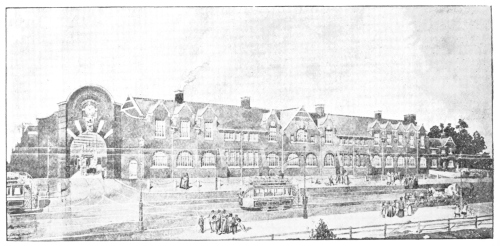
FIG. 19. FAÇADE OF QUEEN’S ROAD CAR-SHED, MANCHESTER
CORPORATION TRAMWAYS
By permission of the Manchester Corporation Tramways.
The cars are of the British Thomson-Houston Company type,
double-motored, and are fine examples of elegance and solidity combined,
and fitted with all the latest improvements for the comfort of
travellers.
Birmingham, as regards tramways, stands in a peculiar position. Its city
area is restricted; it has only short lengths of tram lines, and these
require to be linked up with outlying districts. The lines were leased
to the City of Birmingham Tramways Company, but whether the Corporation
will or will not take them over now, has not yet been decided. However,
by a majority of fourteen votes it has sanctioned the substitution of
electricity on the overhead method, and this is being proceeded with;
and when the transformation is complete Birmingham and district will
have an electric tramway system of nearly a hundred and ten miles. Its
tramways have always been popular, and at a charge of a penny for a
three-mile ride—a record for cheapness—56,000 passengers made use of
them on Mafeking Day, no small proportion of a city of 522,182
inhabitants!
Before quitting the subject of tramways, it will be interesting to note
the fares charged in different parts of the world. In London they begin
at a halfpenny. On the Continent they vary; for example, in Berlin the
fare is 1¼d. for two miles, and a halfpenny for each additional mile;
in Paris it is 3d. inside, with transfer ticket, and 1½d. on the
platforms, or outside the car; in St. Petersburg 1¼d. and 1½d. is
the fare; in Stockholm it is the curious sum of 1⅜d.; in Florence it
is 1d. from the suburbs to the city, and 1½d. across the city; in
Cape Town it is 3d. for three miles; and in Canada the fare averages
2½d., and 5d. after midnight.
The memorable question once put to the House of Commons, “What is a
pound?” to this day has not met with a strictly accurate reply. The same
may be said of the frequent inquiry, “What constitutes a Light Railway?”
Under the Act of 1896 a Tube should officially be described as a Light
Railway. So should a Shallow Underground, an Urban Tramway, and a Rural
Tramway. So, too, should a Brighton Beach Line, or any short train
running along a pier. So also should any railway line for the carrying
of minerals, worked by heavy sixty-ton locomotives, and hauling five or
six hundred tons of ore at a time! Reductio ad absurdum.
The originators of the Act did not define what a Light Railway really
is, but they evidently had in their minds, inter alia, that railways,
unrestricted by Board of Trade regulations as to fencing, sidings,
gradients, and permanent stations, should be permitted to run along the
high roads, acting as feeders to the existing lines, to the benefit of
the small towns, villages, and farms near which they passed. Thus a
pleasing vision unfolded itself of revived agricultural prosperity, of
handy little trams peacefully steaming along the highways, stopping,
when hailed, at some convenient corner, where the farmers’ waggons would
be in waiting with produce to be taken away to market in exchange for
goods delivered to them.
It was a promising idea, for the cost of construction per mile would
necessarily bear no comparison with that of ordinary heavy railways. But
in this form Light Railways were not developed. Agriculturists abandoned
the hope of any immediate relief, and it came to be recognised that the
Act meant a development, not of goods, but of passenger traffic, and
that, so far as extra-urban districts were concerned, Light Railways
meant Tramways, just as they did in town or city.
It may be asked, “Do not local railways answer all requirements of the
ever-increasing population and already congested districts? Whereabouts
are these country tramways that we hear so much about? and in what
respects are they so useful and necessary?”
For goods the network of local railways covering the country is no
doubt fairly sufficient, and eventually, when well-organised services of
electric-motor waggons aid in feeding them with merchandise collected
and delivered at the very doors of consignor and consignee, they will
fully answer their purpose; but for linking together city, town,
village, and hamlet in the interests of workingmen—in many districts
the chief customers—they are almost useless. For this class, wishing to
get about quickly—going to and from their daily toil, paying visits to
their sporting pals, attending dog shows, football matches, etc., taking
their wives and children shopping, and on holidays going some distance
afield—a local railway, even if close by, is of little use, with its
rigid time-table, its fixed stopping-places, its high fares, and its
general formality. What they wanted, and what, until the introduction of
electric traction, they waited patiently for, was a service of
comfortable cars, that would pass their houses every few minutes, and
would take them long stages for, at the utmost, a twopenny fare.
To meet this want, in various parts of rural England, more especially in
Staffordshire, horse and steam tramways were tried, but the latter
method, from mechanical reasons, proved to be a failure. The rails
weighed but 45 lbs. to the yard; they were set in iron chairs and laid
on wooden sleepers, and the engines were of the locomotive vertical
boiler type. Soon it was found that the weight of the water damaged the
locomotive, and the incessant vibration and pounding shook the track so
much as to necessitate constant renewal, and the expenditure became so
great that many private Steam Tram Companies either wound up, were
reconstructed, or were taken over by the local authorities.
Unattractive was the appearance of these old-style tramcars—great
cumbersome, top-heavy, two-storied structures, drawn by what looked like
a big iron box with a black funnel poking through its lid. They were
dirty, they smelt, the service was irregular and slow, and the fares
were too high.
Studying an up-to-date map of Great Britain, one is struck by the fact
that in the distribution of cities, towns, and villages it resembles the
stellar system, with London as the governing central body, while lesser
planets, each surrounded by groups of satellites (not very bright ones,
it is true), varying in size and importance, represent subordinate star
centres. These have grown, and still grow bigger and bigger, the suburbs
of a large town reaching out farther and farther until they touch the
outskirts of the next town, so that in some districts an overgrowth of
houses and factories covers many a square mile.
In the quiet old days that are gone, a working-man, particularly if a
weaver, could labour far away in the country in some miniature workshop
or in his own little room at home. But for years past he has been
compelled to trudge backwards and forwards to some big factory or mill,
where steam-power was concentrated, and run upon so economical a
principle, that outside of it the individual workman had no chance of
gaining even the barest livelihood. With the advent of steam the
villages in certain parts of England were abandoned for the town, where
clusters of great workshops had sprung up. A new order of things arose,
and operatives, if they could, lived within the town boundaries. But as
rates, taxes, and rent increased, they concentrated in outlying hamlets,
within walking
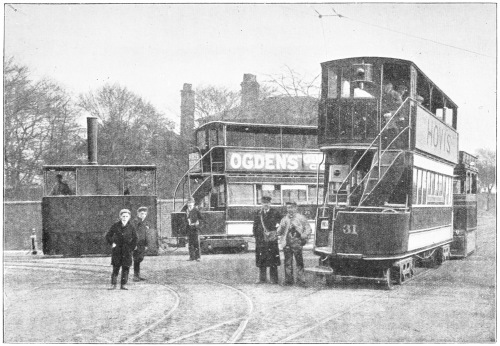
FIG. 20. VIEW NEAR DUDLEY STATION, SOUTH STAFFORDSHIRE,
SHOWING A STEAM TRAM-CAR
By permission of the Manual of Electrical Undertakings, Ltd.,
London
distance of their work. Thus these hamlets gradually became townlets,
and eventually towns, which in their turn developed into centres of
industries—lesser lights revolving round the greater.
All over the kingdom manufacturing industries have a natural tendency to
settle down in particular localities favoured by the proximity of the
raw material, and by railway or water facilities. Thus Dundee, Aberdeen,
and the North of Ireland are associated with linen and strong textiles;
the Eastern counties and Lincolnshire with agriculture; Warwickshire and
Yorkshire with machinery; Burton-on-Trent with beer; Coventry and
Nottingham with cycles; and so on. Any intelligent schoolboy could reel
off a list of such towns and their products.
Swansea, with its great works for smelting copper and tin ore—the
former brought from South Australia, Chili, and Cornwall; the latter
from the Straits Settlements and Cornwall—and its manufactories of tin
plates, bolts, and zinc goods, is the centre for neighbouring towns
associated with its industries, such as Porth, Pontypridd, and Penarth,
which, together with the Mumbles, are partially linked together by
tramways.
Glasgow, where shipbuilding, armour-plate rolling, and locomotive
constructing flourish, has around it the towns of Gourock, Greenock,
Rothesay, Coatbridge, and Bridge of Allan, all more or less commercially
interested in the great northern city.
Newcastle-on-Tyne and Sunderland, headquarters of England’s
shipbuilding, are surrounded by places connected with or engaged in
kindred industries, as Tynemouth, Stockton, the Hartlepools, Gateshead,
Jarrow, and North and South Shields—the last four practically suburbs
of Newcastle—a fine field for electric tramways.
Then in Yorkshire we have such centres of the linen and woollen
interests as Leeds, Bradford, Huddersfield, Halifax, etc., begirt with
townlets which are in process of being interconnected; and further
south, in South Lancashire, Burnley, Oldham, Ashton, Blackburn, Preston,
Rochdale, Bolton, Manchester, and Liverpool, together with endless
smaller places—every one of them engaged in our gigantic cotton
trade—cover large thickly populated areas, supplied with tramway means
of intercommunication.
A remarkable instance of the localisation of special industries, and of
a city begirt with good-sized towns, is to be found in the South
Staffordshire Black Country, its central sun being the city of
Birmingham. While in the Potteries are a number of small towns almost
touching one another—star clusters, destined maybe eventually to
coalesce into a single planet of the first magnitude. Here humanity
swarms.
Alighting from a train at any wayside station in the South or West of
England, if one walks along the main road, and avoids the villages, one
may go for miles without meeting a soul. The Londoner, whose nerves have
been unstrung and jarred by incessant contact and friction with his
fellow-citizens for months at a stretch, has only to journey a few
miles, say to Chertsey, Ewell, Epsom, or anywhere in Herts or Surrey,
and in a few moments he finds a peaceful solitude not likely to be
disturbed save by passing cycles or motor-cars. But in the Midlands, and
for that matter anywhere in the North, it is different. There the bulk
of Britain’s population is concentrated. One cannot go for a stroll
without coming across individuals of all ages, who, although accustomed
to see many people, stare at every stranger after a fashion unknown in
the home counties, as if he or she were a wanderer from another planet.
And should it be a child whose curiosity is thus aroused, he will
probably follow the stranger for miles, gaping at nothing!
In the past, the manners and customs of the Black Country folk were
decidedly rough, based on the principle of a blow first and an
explanation afterwards. But this little trait has, under the modern
influence of inter-communication with the outer world, been
considerably modified. They work hard and “play” hard, and are given to
week-end excursions and an annual “outing” to Blackpool, Southport,
Lytham, or other favourite seaside resort. They earn good wages and, if
steady, quickly save money and live in comfortable houses of their own;
but if otherwise, their “good pay” only accelerates the wretchedness of
their surroundings. Lavish with their cash, they are hospitable in the
extreme; great consumers of plain beef and mutton, sweets and kickshaws
they relegate to the women and children; but they no longer—as was
affirmed of puddlers and miners during the boom of many years ago—drink
champagne and feed their bull-pups on loin-chops and rump-steak. They
are keen on dogs, pigeons, and singing-birds. Dog-fights are a thing of
the past, of course, but it is whispered that suspiciously high-bred
gamecocks are still to be seen sub-rosa throughout the district!
Altogether they are not half as black as they are painted; neither is
the aspect of their country, though except in the neighbourhood of
Birmingham it can hardly be called picturesque. They represent the
sturdy old Midland English, independent and brusque, whose confidence
once gained will not be betrayed.
Here, then, in the country called “Black,” is a concentration of
industrial centres, each possessing great natural wealth of coal and
iron, and turning out in enormous quantities cutlery, anvils, bolts,
buttons, ironwork of all kinds, guns, hinges, locomotives, nails, pens,
pins, rails, rifles, screws, tin and zinc-lined goods, tools, tubes,
etc.
In its eighty-square-mile area, between Wolverhampton and the
headquarters of “Chamberlainism” on the one side, and Stourbridge and
Walsall on the other, dwell over a million people, distributed among
some twenty-one towns ranging in size and population from Quarry Bank
(8,000 inhabitants) to Wolverhampton (94,000), and including such
familiar places as Handsworth (38,000), Stourbridge (17,000), Tipton
(33,000), Wednesbury (29,000), and West Bromwich (68,000), all busily
engaged in the industries before mentioned.
Such in a few words is the Black Country district, which the adjoining
Potteries closely resembles. A more promising field for tramway
enterprise could hardly exist. No wonder that George Francis Train in
1860 selected North Staffordshire for one of his earliest, though
unsuccessful, ventures—a two-mile tramway from Hartley to Burslem, in
the very heart of the Potteries.
Subsequently tramway companies came on the scene, with horses and steam
traction, and—in one instance—with electricity. There were five
distinct enterprises: the South Staffordshire Tramways Company, the
Birmingham and Midland Tramways Company, the Dudley and Wolverhampton
Tramways Company, the Wolverhampton Tramways Company, and the Dudley,
Stourbridge, and District Electric Traction Company (a short line of
about four miles).
Not only were these lines entirely separated and disconnected, involving
tedious changing of cars, but two of the five were actually of different
gauge from the rest, making through communication impossible. It was no
system, merely a conglomeration of disjecta membra. The tramway
condition of the district became thoroughly unsatisfactory, utterly
inadequate to the needs of the travelling public. Matters gradually went
from bad to worse, and a financial Lord Kitchener was urgently needed to
remodel everything.
He appeared in the form of a powerful organisation, the British Electric
Traction Company, with a share capital of £4,000,000, which entered into
negotiations with the various companies and with the local authorities
controlling no fewer than twenty-two districts, into which the Black
Country area is divided. The proposition was to combine all the Black
Country tramways into one great system to be worked by electricity in
the most up-to-date manner, to give frequent service, to ensure rapid
and comfortable communication between all parts, to straighten things
out well, and to adopt this motto, “One management, one method, one
gauge,” provided the local authorities would for some years suspend
their rights under the Acts of 1870 and 1896 to buy the tramways for
practically the worth of old iron.
Some of the local authorities thought well of it. Others did not,
contending that they, and not the Company, ought to undertake the
reform; while the rest saddled their adherence to the scheme with such
impossible conditions, that the negotiations dragged wearily on, and it
was some time before the great scheme was finally carried through at the
cost of much trouble with the local authorities in the matter of routes
selected for the requisite extensions. In one instance the line,
instead
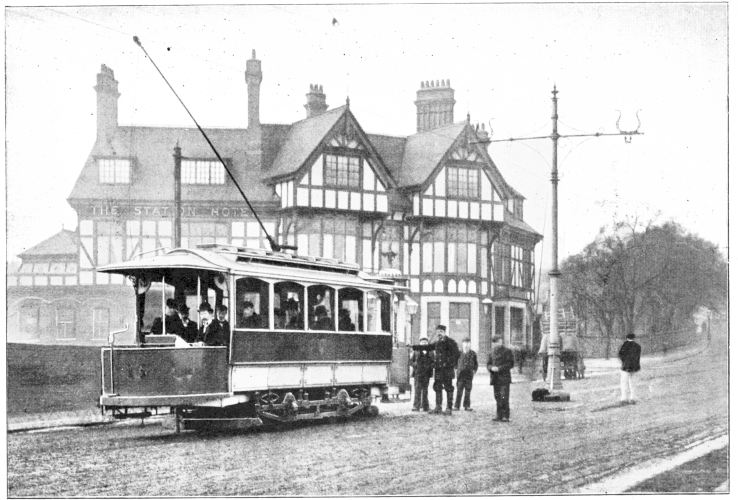
FIG. 21. VIEW AT CASTLE HILL, DUDLEY, SOUTH
STAFFORDSHIRE. SHOWING AN ELECTRIC TRAM-CAR
By permission of the Manual of Electrical Undertakings, Ltd.,
London.
of being carried in the natural way direct to the urban boundaries of a
large town, was compelled by the authorities of the area involved to
turn off at an angle and to gain access to the town in an utterly
roundabout fashion, much as if in London, one was obliged in approaching
St. Paul’s by Ludgate Hill to deflect up the Old Bailey, and to reach
the cathedral by way of Newgate Street.
One thing only is still wanted to make this Light Railway scheme
(typical of other similar ones) perfect, and this is that its cars
should have running powers right into Birmingham and other large towns,
and it is to be hoped that before this book is published they will be
granted. Travellers do not want to change cars when they arrive at the
municipal boundary. They want to move from one centre of population to
the other, to get in at the Birmingham starting-point, and to get out in
the centre of Walsall, West Bromwich, or Wolverhampton, as the case may
be, or even to go without changing as far as Kinver, on the edge of the
Black Country, a favourite holiday resort hitherto inaccessible to the
manufacturing population.
In the North Staffordshire Potteries the British Electric Traction
Company has pursued the same policy as in the Black Country with
excellent result, as may be judged by the number of passengers in 1901.
In the Potteries and the Black Country many millions made use of the
tramways, the system throughout being that of the overhead trolley, and
the combined length of track about 75 miles.
The whole question of local authority in its relation to rural tramways
needs settling on a sound common-sense
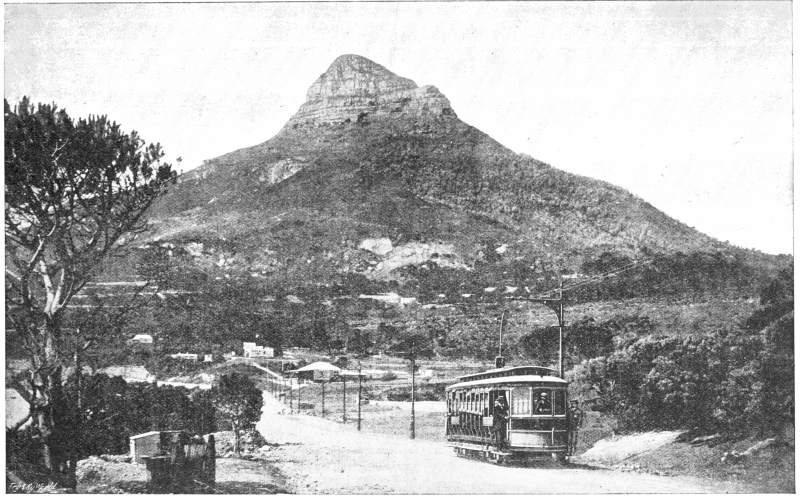
FIG. 22. CAMPS BAY, CAPE TOWN, AND SEAPOINT TRAMWAYS
By Permission of Dick Kerr & Co., London.
basis, making the requirements of travellers the dominating object to
the exclusion of petty differences and local aspirations and
jealousy.[7]
If Great Britain is to be networked with these handy means of transport,
and the interspaces of town and village bridged over with cobweb lines
of trams, an Act of Parliament should settle a universal gauge, and on
equitable terms provide for free running powers, whether in town or
country, and encourage an interchange of traffic.
It is constantly urged that it is better for cities and great towns to
create tramway lines of their own, and work them within their own
boundaries, and that the task of dealing with the rural interspaces
should be left to the small towns and areas, and not to private
enterprise. The opponents of this principle argue that one great
objection to municipal trams is that they are compelled to work within
artificial local boundaries, and that there are grave drawbacks to
municipal trading in any form. As to the interspaces, to work them by
themselves would never pay, and any interspaced tramway system would be
almost useless without intimate connection with urban centres as
feeders, which is only obtainable by the uniform control afforded under
joint stock enterprise. Besides—say the objectors to municipal or rural
council control—if private working is the most economical way of
running tramways in interspaces, it should be still more economical in
towns.
Surely, therefore, there would be no hardship in restricting the
development of urban and rural tramways to local authorities wielding
power over areas of a certain size and importance, and the loss to small
communities of the power of objection or veto to large schemes ought not
to be felt by them. They and the landowners should take warning from the
history of railways, and encourage in every way the introduction and
extension of tramways, which in remote districts would vastly relieve
the tedium of existence, enabling labourers and others to temporarily
exchange some dull little village for the comparatively lively market
town at a nominal cost. Whereas, in many instances, instead of welcoming
this herald of a brighter and less monotonous life, too often is
repeated the scene immortalised in Punch some years ago. A brickfield:
“Bill, who’s that chap?” “Do’ant know. A stranger, I should think.”
“Then heave ’arf a brick at his ’ed.”
Capitalists should be encouraged to embark in tramway enterprises that
are bound to be beneficial to everybody, and in which they would be
entitled to a fair return of interest; for truly the labourer is worthy
of his reward.