INTRODUCTORY.
In preparing this hand-book, the object will be to give
in plain and comprehensive language, as briefly as possible
and with little discussion, a few general rules, which if
even approximately observed, can but lead to success in the
treatment of all non-malignant rectal diseases commonly
known, and for which the general practitioner will not infrequently
be called upon for relief.
Hemorrhoids, being by far the most common among this
class of ailments, and the greatest bone of contention regarding
the best manner of effecting a radical cure, will take
precedence in our consideration, and receive the attention
that their importance and dignity justly merits.
It is an indisputable fact that until within the past few
years, an operation for the radical cure of hemorrhoids was
considered so formidable an undertaking, that their treatment,
outside of palliative measures, was almost entirely
eschewed by the general practitioner.
“No fact is better known to the profession,” says Dr. S.
S. Turner, U. S. Army, “than that nearly all men, doctors
not excepted, will suffer more than the pain and inconvenience
of a thousand operations, rather than undergo an operation
for removal by any of the methods in vogue. The fame
of some specialists who are distant enough to ‘lend enchantment
to the view,’ will generally induce people of large means
when life has become something of a burden, to place themselves
under their care and take what they offer.”
“But unfortunately, piles are by no means limited to
people of large means. The greater number of sufferers
must take what the general practitioner can give and will
not take the cutting and crushing operations until compelled
by dire necessity, and are only too glad of a less heroic alternative
which offers them hope of relief. For this body of
sufferers, the operation by carbolic acid injection offers a
means of relief to which they will readily submit. In a sufficient
number and variety of cases to justify me in having
an opinion upon the question of its merits, I have never met
with anything which I have regretted.”
With these stubborn and uncompromising facts confronting
us on the one hand, and a full appreciation of the superiority,
the simplicity, the safety and certainty of the operation
by carbolic acid injection on the other, the writer has no alternative
other than to espouse, and proclaim his honest conviction
and hearty support in favor of the latter method of
cure; and essays to point out in this little publication, in a
plain, comprehensive and a practical way, what has been acquired
by personal observations and experiences, and all in
all, believed to be the best manner of applying this truly
scientific and greatly superior method. A method, the discovery
of which, I feel prepared to say, marks an epoch
in the history of medicine, unrivaled in advancement by the
treatment of any other disease or class of diseases to which
the human family is subject.
“There is no organ that is so prone to become diseased
as the rectum. There is no class of cases so little understood
and treated as rectal diseases. There are no diseases so annoying
and painful, and at the same time producing such
dire results on the general system, directly and reflexly, as
rectal diseases. For years Rectal Surgery has been principally
in the hands of itinerants, whose remorseless greed for
money has caused them to treat for revenue only, and to
play the vampire on all that fall into their clutches. It is
high time for the general practitioner to gather up all the
information possible, in order to be able to treat all patients
suffering from rectal disease, and thereby drive the itinerants
back to their previous occupation of tilling the soil.”—(Yount.)
Nowhere in medical lore do we find suitable instructions
whereby the beginner may knowingly and intelligently engage
in a rectal examination—what to expect, where and
how to find it, and how to pursue each succeeding step in
applying the treatment. Writers either presume too much
on the part of those who have not had experiences, or, are
so habituated to the use of general anæsthesia in accomplishing
the objects sought, that milder means have been seriously
neglected. Finding many, otherwise well informed
practitioners, at a great disadvantage in this respect, was a
leading incentive to the hurried preparation of the following
few pages.
HEMORRHOIDS. — EXAMINATION. — DIAGNOSIS. — TREATMENT. — FORMULA. — NEEDLE AND SYRINGE.
The division of piles into internal and external, is naturally
suggested by their observation and study, and clearly
defined by designating all hemorrhoidal tumors originating
above and within the grasp of the external sphincter as internal,
while those situated external to or outside of the external
sphincter, when the latter muscle is closed and the
bowel not protruded, are external.
It matters not what form of tumor presents itself for treatment,
whether of the capillary variety, distinguishable in
being of small size, flat or sessile, made up of the terminable
branches of the arteries, the beginning of the veins and the
capillaries which join them, punctated, granular surface
with thin covering and likely to bleed on the least provocation,
or the arterial hemorrhoid with the arteries and veins
freely anastomosing, larger, and presenting the glazed appearance
of a very ripe strawberry, liable to inflammation,
erosion, prolapse and hemorrhage; or the venous hemorrhoid,
hard or soft, not very sensitive, blue and sluggish,
which Kelsey says may result from the other two varieties
or arise de novo and bleed per saltum; or any form of external
hemorrhoid, cutaneous tag or like redundant tissue,
they are all treated alike and with like good results, by the
operation of injection and the use of the preparation herein
recommended.
After obtaining something of a history of the case, you
will have ascertained whether or not there is an inordinate
protrusion at stool, its nature and if it has to be replaced.
In the latter event the patient is directed to go to the closet
or use a commode and make an effort to strain out the
bowel. If not successful, use an injection of warm water,
or select a time immediately after the usual hour for evacuation,
which, if it occurs early in the day, may be deferred
by the will power of the patient to a later hour.
This will bring to view any and all large hemorrhoids located
on the upper margin of the internal sphincter, as well
as those situated between the sphincters, their being caught
in the grasp and button-holed like by the external muscle.
Should the prolapse not be sufficiently great or the piles
sufficiently large to be thus caught and held out for inspection,
let the patient lie on either side, with knees well drawn
up, and instructed to strain down and extrude the parts as
much as possible, assisting by gently pulling down and
everting the mucous membrane at the verge of the anus
with the thumbs. It is always better to precede by an injection
of warm water, which may not only unload the rectum
and give the patient greater confidence in the effort to
extrude the parts, but washes away the mucous and retained
feces in and about the sphincters. When the examination
has been carried to this point and no satisfactory
cause found to explain the trouble complained of, the finger
and speculum will be required to complete the diagnosis.
The finger is of little use in diagnosing soft hemorrhoids
that form on the upper margin of the internal sphincter and
lay back in the rectal pouch; being hindered by the pressure
of the muscles and a like feel imparted by the bowel.
Bear in mind that you need not look for hemorrhoids
higher up than the upper margin of the internal sphincter,
a distance of not more than an inch from the verge of the
anus, and if of any appreciable size, will always show at
stool. Where to look, what to look for, and how to find it,
is a question that often confronts the beginner, and it will
not be out of place here to firmly impress the following
rule: See all that can be seen and treat all that can be
treated without the aid of a speculum.
There is not much probability of confounding hemorrhoidal
tumors with any other abnormality in the vicinity
of the rectum. The different varieties of internal hemorrhoids,
a description of which is given on page 7, may confuse,
but as stated before, no discrimination is necessary in
applying the treatment for the purpose of effecting a radical
cure, the one great object to be attained. Where several
distinct tumors exist, they are usually arranged in rows on
either side, not up and down, but antero-posteriorly, with
the long diameter of each tumor at its base, parallel to the
antero-posterior diameter, or, if the muscles were dilated,
to the circumference of the rectum.
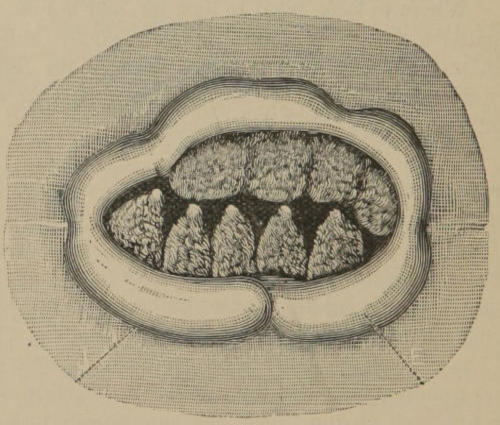
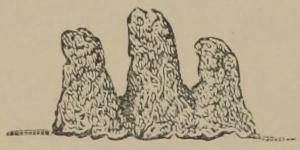
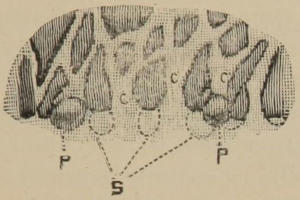
If situated on the upper margin of the internal sphincter
there may be several isolated tumors thus arranged on one
side, while they may have all coalesced, or originally have
formed into one continuous hemorrhoidal mass on the opposite
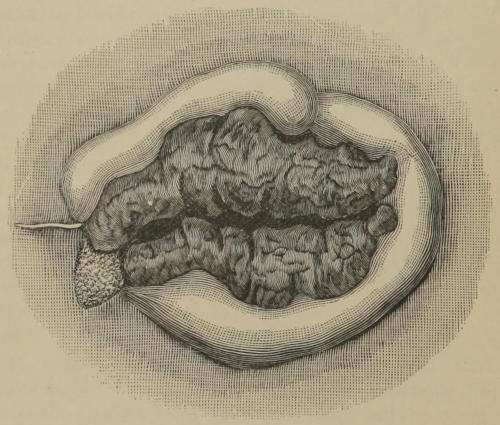
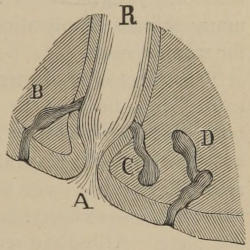
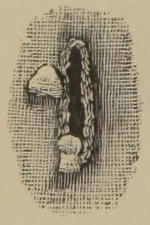
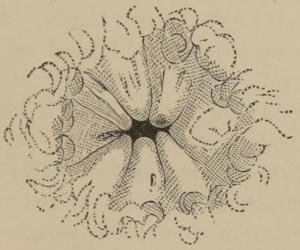
side, Fig. 1. Or there may be one continuous hemorrhoidal
mass on either side, separated only by an anterior
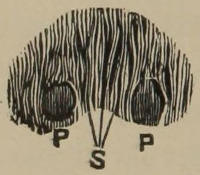
and posterior commissure, Fig. 2. In some instances when
the bowel is prolapsed and constricted by the external muscle,
the branches of the middle hemorrhoidal veins that anastomose
and encircle the upper part of the internal sphincter,
may be so dilated and distended as to present an unsightly
appearance, reminding the anatomist of the circle of
Willis; at the same time a few capillary or sessile tumors
may be seen studded around at different points.
There can be no mistake in discriminating between a
large hemorrhoid and the bowel, but to distinguish a small,
blanched hemorrhoid, located on the upper margin of the
internal sphincter from an irritated and saggened portion of
the bowel, when looking through a speculum, is more difficult.
The bowel presents a more smooth and continuous
surface, while the hemorrhoid is more uneven and irregular,
and bleeds freely when scratched. Sometimes a victim of
piles will call and speak of his piles having come down and
are hanging out. On inspection a large fold of mucous
membrane will be seen protruding on one side, which has
been mistaken by physicians for a hemorrhoid, but the tumor
will be found immediately above and possibly on the
opposite side.
From polypi hemorrhoids may be distinguished by their
spongy like texture, easy to bleed when scratched, more
painful, history, shape, manner of arrangement, etc. Polypi
are considered as a hypertrophy of the normal elements
of the mucous membrane and the sub-mucous connective
tissue. If originating from the former they are soft, if from
the latter hard and fibrous, are often pediculated or club-shaped,
sometimes grow rapidly, not painful unless within
the grasp of the sphincter, may arise entirely above the
sphincters, and are rarely of a glandular, villous or bleeding
surface. Should a mistake be made and a polypus thoroughly
injected, the result would be nothing more than a
permanent removal of the offending growth.
The external hemorrhoid does not elicit the thought or
command the dignity of his neighbor, the internal pile, but
usually makes himself known more forcibly in his incipient
stage of formation, caused by the rupture of a venule of the
inferior hemorrhoidal vein, allowing extravasation and infiltration,
which may lead on to inflammation and suppuration,
or the clot absorb and result in an external cutaneous
tag, subject to œdema, itching, induration, etc. On pulling
down the mucous membrane at the verge of the anus, sometimes
a slight fullness or bulbous-like expansion of an exposed
part of a superficial vein will be seen, which should
not be mistaken by the novice for an incipient hemorrhoid.
It is quite common for those afflicted with piles to call for
treatment while suffering from an attack, sometimes called
the hemorrhoidal state. This is not a favorable time to operate.
Reduce all local congestion and inflammation first,
by palliative measures, such as hot water douches, injections
into the rectum of equal parts of Fl. Ext. Hamamelis
and Pinus Canadensis (dark) in a little water, or water and
glycerine if the latter is not repelled by an irritated bowel.
At the same time open up the portal circulation by the use
of equal parts of sulphur and cream of tartar, a teaspoonful
in syrup or mixed with sugar, once or twice a day for a few
days, or any other suitable means to put the bowel and piles
at rest. Often patients will know what will relieve them of
this condition better than the physician, as what relieves
one will sometimes aggravate another.
In all cases of large growths, whether the patient is in a
comparative state of ease or not, a similar preparatory treatment
before operation will shrinken the tumors and lessen
the tendency to local congestion and pain. Sulphur should
not be taken within two or three days of operation since it
continues its action about that length of time after dosage;
but the bowels should be sufficiently evacuated previously
to enable them to be held for four days afterwards, by any
agreeable cathartic, or by flushing of the colon. This will be
unnecessary in the treatment of small growths.
The same course should be pursued to expose the tumors
for operation, as was named under the head of examination.
In some instances, where the tumors are not very large but
exceedingly irritable (arterial), it might be quite difficult,
even though the bowel be partially prolapsed, to expose
them sufficiently for a good operation. In such event, paint
the protrusion with a 5 per cent. solution of cocaine and allow
the patient to sit, for a few moments, over a vessel containing
a small quantity of steaming hot water. This will
engorge the tumors, relax and materially aid in handling the
parts.
As a precautionary measure in all operations by injection,
to prevent the medicine from extending too deeply into the
tissue of the gut by gravity, or the overflow from running
down on the outside of the pile and over the bowel, let the
patient lie on the side opposite to the tumor to be treated,
so that the preparation will gravitate to the apex rather
than its base of attachment.
Smear vaseline on the opposite side of the bowel and anus
and over any piles that may show on that side, which, as
the patient is now placed, are on the lower or under side
and will catch any and all waste and overflow of medicine.
As a further protection pack or hold absorbent cotton underneath
the tumor being operated upon. If the tumor be
small and partially obscured, the end of the finger may be
held back of it to act as a counterforce while introducing
the needle; or a double, slide tenaculum may be used to pull
and hold it down for the same purpose, being careful not to
remove the tenaculum when once applied until after the
operation, as the least prick or scratch of a hemorrhoid will
cause a free flow of blood and greatly hinder the sight when
it is desirable to watch the action of the injection compound.
Should any portion of the injection compound fall on the
muco-cutaneous surface, unless the latter be heavily coated
with vaseline, or protected with cotton, it will excoriate and
probably cause a great deal more pain and soreness than
the operation itself. In operating through a speculum
such risk is avoided by the sides and floor of the instrument,
which afford a protection to the surrounding parts;
that is, if the precaution regarding position when operating
is duly observed, to wit: always operate with the tumor
pendent, or with its attachment on the upper side.
Make a glycerite of tannin in the proportion of 4 drachms
(Squibb’s) tannic acid to 1 oz. (Price’s) glycerine. When
the solution is complete, add 2 drachms each of (Squibb’s)
salicylic acid and borax, putting in the salicylic acid first;
stir over lamp, using a glass rod and porcelain dish, until
dissolved, being careful not to burn. If any dirt or sediment
be seen it had better be strained now through a piece
of wet cheese cloth, while yet hot, into a two-ounce vial.
Select a No. 1 grade of carbolic acid, say Calvert’s, and
barely liquify it by distilled water. Pour ½ ounce of the
liquified carbolic acid in a clean graduate, and add ½ ounce
of the glycerite of the salicylate of borax and tannin, previously
made. Do not be sparing in giving the carbolic
acid full measurement, if not a little in excess.
When the combination is effected with the acid, a floculent
precipitate will occur, which should all clear up within
two or three days, otherwise something will be found wrong
either in the purity of the chemicals used or the manner of
effecting the combination.
Too much importance cannot be attached to the purity
of the ingredients entering into this preparation, as anything
unnecessarily irritating should be scrupulously avoided.
I have tried synthetic carbolic acid and found the
odor of tar decidedly stronger, and believe it much more
acrid and irritating than the commoner preparations.
Neither can I see that anything is gained in using vegetable
glycerine.
Inject from 3 to 30 minims, or more, according to the
size of the tumor. There is no rule to regulate the quantity
by count. The object is to inject a sufficient quantity to
permeate the entire substance of the tumor, its texture
being much more spongy than the surrounding tissue, and
not extend beyond its base of attachment.
Here is where many make a mistake in the injection of
hemorrhoids. Some are prone to use too much, even
though the solutions be weak, and apply it too deeply,
reaching to and destroying the muscular coat of the bowel,
causing prolonged pain, deep sloughing, etc. While
others use too little, which may act as a foreign body or
local irritant, producing a central slough and a slow breaking
down of the disturbed growth.
A tumor, properly injected, cannot inflame, because
there is nothing to inflame, the circulation is stopped and
thus it is as effectually strangulated as by a ligature, with the
advantages of the immediate local anæsthetic, antiphlogistic,
auterant and antiseptic properties of carbolic acid.
The base of attachment heals, while the dead tissue, which
is rendered non-inflammatory and antiseptic, disintegrates
and is thrown off between the third and fourth day, a process
that fortifies against secondary hemorrhage.
There is a medium ground to be taken, in regard to the
quantity as well as the strength of carbolic acid to be used,
with a little room for variation on either side; yet there
must, in point of reasoning and fact, be a limit somewhere.
If a little more should be used than is necessary to permeate
the entire substance of the tumor, the result will not
be disastrous, but may excite a little more local disturbance
and pain. On the other hand, if a little less be used,
the operation will be equally as effective and is probably the
better side to err upon, provided the discrimination be not
carried too far.
A similar dilemma confronts us respecting the strength.
After trying the weaker solutions and watching their effects,
I have concluded that the solution should contain not
less than fifty per cent. of carbolic acid, combined with the
glycerine of the salicylate of borax and tannin,[1] the latter
in such proportions as to produce an immediate astringent
effect. Tannic acid not only keeps the carbolic acid within
limits by its non-irritating astringent effect, but of itself
combines with a certain portion of the albumen of the blood
and other tissue, forming an insoluble albumenoid. The
salicylic acid and borax, original with Dr. Q. A. Shuford, of
Tyler, Texas, gives the preparation more consistency and
seems to lessen the irritative properties of the carbolic acid.
A weak, thin, watery solution, aside from doing poor
work, is much more liable to diffuse itself and be carried
into the circulation like a hypodermic of morphia, than a
solution sufficiently strong to act as a cauterant, destroying
the tissue, forming a compact and an insoluble coagulum
and strangulating the circulation at once.
A solution, weak or strong, when deposited to any depth
beneath the surface, with live tissue and the circulation
passing on all around it, will of necessity excite pain, inflammation
and a slough, the same as a splinter in the flesh.
The properties of carbolic acid being non-inflammatory in
their nature, will often, where a small quantity is used
diluted, produce an adhesive inflammation, an induration
and a contraction in a tumor, by destroying the capillaries
where applied.
It is always desirable, when operating on external hemorrhoids,
to see that quite a goodly portion of the cutaneous
surface, especially at the summit, is effected by the preparation
applied inside the capsule; otherwise it will become
inflamed in order to let out the interior coagulum, which
I have often seen come out on the third day intact, and in
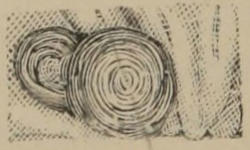
one unbroken cystic-looking mass, Fig. 5. The same rule
obtains regarding internal hemorrhoids, having thick, unyielding
coats.
Puncture the tumor at the most accessible point, preferably
with the needle, nearly parallel with, or at an acute
angle to its base, carrying the point of the needle to about
the center of the tumor, if it be globe shaped, or equi-distant
from base to apex, if it be elongated, with the face or opening
of the needle toward the apex. Be sure the needle is
inserted beyond the proximal end of its opening, which is
not always observable in treating small growths; but may
be tested by forcing the piston of the syringe a little, and if
the end is not sufficiently buried the medicine will show
around it on the outside.
Inject the first few drops the same as you would a hypodermic
of morphia, then slowly, drop by drop, watching its
action by change of color on the surface of the pile. This
change of color on the surface is quite marked with hemorrhoids
of delicate covering, less so with those possessed of
more tough and fibrous coats. Hold the needle in position
a moment and if the quantity injected does not appear sufficient,
turn the nut on the piston with which you have previously
gauged approximately the quantity to be injected,
back a few rounds and throw in more. Puncture large
elongated tumors in two, three, or four places. The compound
diffuses itself slowly and no doubt extends some
farther than is always apparent at the time of operation.
Withdraw the needle carefully; it may be necessary to force
out a few drops of the preparation at the point of entrance,
for the purpose of sealing up the puncture to prevent the
escape of blood and medicine together, which, however,
never amounts to much. If, after withdrawing the needle,
some of the injection fluid runs out, unmixed with blood,
take it up with absorbent cotton, since it indicates that the
quantity at that particular part is superfluous. Now dry
the surface of the tumor or tumors with absorbent cotton,
smear with vaseline and return within the bowel.
A tumor properly injected immediately becomes hard.
There are septa or compartments in elongated growths
which do not permit the medicine to pass through readily,
and if a soft section is noticed, it has not been penetrated,
although will doubtless break down with the general mass.
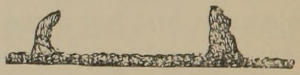
I have seen a liberal injection into the middle one of three
tumors connected and arranged in a row, so cut into those
on either side that a single reddened column like appeared
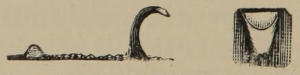
afterwards on the extreme outside, (Figs. 6 and 7).
Large hemorrhoids must not be exposed too long after injection,
since there is always more or less swelling produced
around the tumor by the stoppage of circulation and the
presence of a foreign body. Return the side not operated
upon first, then the other, and if the tumor has considerable
length, let it go in endwise. The patient can often return
the protrusion with least pain.
A little practice will enable any one to see the simplicity
of the entire procedure. If you should make a mistake
when operating through a speculum, and land the whole
charge into a fold or saggened portion of the bowel do not
be alarmed, as it will only be a little more painful and
longer in healing. Injection into internal hemorrhoids is
not painful to any degree, therefore if the patient complains
much you might suspect that you are invading the tissue of
the bowel. With some, the injection into external hemorrhoids
is quite painful at the first contact of medicine, but immediately
thereafter subsides. Where the tumor is very
sensitive, external or internal, precede by a hypodermic of
from three to five minims of a five per cent. solution of
cocaine. Introduce the needle point barely underneath the
covering of the growth and force out one drop. This will
anæsthetize enough to allow further penetration, when
another drop can be thrown in. By this time you can approach
the interior to a sufficient depth to inject from three
to five drops more, and anæsthesia will be immediate and
complete. There need be no fears from cocaine absorption,
since the carbolic acid compound will catch and hold the
cocaine all within the body of the tumor before it can be absorbed
and enter the general circulation.
From one to two hours after operation, the carbolic acid
looses its local anæsthetic effect and what I have called the
after pain commences, caused by the presence of a foreign
body acting on the peripheral nerve at a point where the
line of demarkation forms. This pain varies in intensity
with the sensibility of the patient and surface of attachment
of the tumor or tumors. Some will not complain at all,
saying the discomfort is not as great as the suffering from
an attack of piles; while others will make considerable
fuss, requiring an opium and belladonna suppository:
| ℞ |
Opii Pulv. Optim. |
gr. xii |
|
Ext. Bellad. |
gr. iv |
|
Ol. Theobrom. |
ʒ iii |
| M. et Ft. Sup. No. xii. |
The pain does not usually continue longer than from
twelve to fourteen hours, unless aggravated by undue exercise,
or other similar causes, being replaced by a feeling
of soreness, which is sometimes reflected down the limb or
up to the bladder.
The treatment after the operation should be markedly
palliative: hot water sponge compresses, hot water sitz-baths,
and hot poultices are great as long as pain
and soreness are complained of, together with opium
suppositories, pro re nata. If the extent of the operation
requires constipation of the bowels, enemas should be dispensed
with until after the expiration of four days. Then
hot slippery elm water, flaxseed tea, or corn starch as prepared
for stiffening clothes, may be used, as well as a
soothing suppository:
| ℞ |
Bism. Subnit. |
|
|
|
Iodoformi |
ā ā |
ʒ i |
|
Opii Pulv. |
|
gr. v-x |
|
Ext. Bellad. |
|
gr. v |
|
Ol. Eucalypti |
|
gtt. vi |
|
Ol. Theobrom. |
|
ʒ iiss |
|
Ol. Olivæ |
|
gtt. x |
| M. et Ft. Sup. No. xii. |
The oil of eucalyptus will almost completely disguise the odor of
iodoform.
In old people who lack sufficient vitality to quickly heal
a broken surface, coat with bismuth, bismuth and oxide of
zinc ointment, oxide of zinc powder, reduced resin cerate,
eucalyptol, etc.
Eucalyptol is a sovereign remedy to stimulate healthy
granulatious, after a broken surface has lost its freshness
or acquired some age, in the proportion of ½ dr. to 1 oz.
oxide of zinc ointment, containing a small quantity of
stramonium or opium and belladonna. Or, ½ dr. to 1 oz.
vaseline with 1 dr. oxide of zinc.
Anything that excites and keeps up pain is hurtful.
Severe, continuous and prolonged pain is an indication that
the changes are not going on in a satisfactory manner. It
should always be subdued as much as possible. Suppositories
containing glycerine, castor oil, or anything productive
of much pain, should be wholly discarded.
Temporary sympathetic paralysis of the bladder, or
spasmodic stricture of the urethra may occur, being relieved
by hip baths or the catheter; the latter is very seldom required.
Enjoin as little straining as possible. Many of the
worst cases, in otherwise healthy people, will speak of holding
the bowels as being the greatest difficulty encountered
during the entire course of treatment. A little flatus will
sometimes produce an annoying titilation of the muscles.
It has been suggested that a small tube be introduced
at such times for relief.
A certain amount of moisture begins to exude the second
day after operation, particularly noticeable from external
hemorrhoids, and a peculiar smell when the coagulum is
thrown off. This should not be interpreted as suppuration.
It would not be reasonable to suppose that all cases will
behave alike. The local and constitutional disturbance will,
of course, depend upon the size or surface of attachment of
the tumor or tumors and the nervous and physical condition
of the patient. It is best to require patients to lay up for a
few days after operation on large hemorrhoids, or when
more than one of small size are taken, even though they do
not complain.
In people enjoying average health, with internal hemorrhoids
located on both sides, take one side at a time, making
two operations of the treatment. In a case like Figure
1, not an uncommon form, it will be better to operate on all
the five smaller tumors first, while they are exposed and
kept out by the aid of the large one on the opposite side.
Should the large growth be taken first, it may be impossible
for the patient to hold down the bowel sufficiently
afterwards to operate on any one of the five small fellows,
and a speculum will be called into use; this will prolong
the treatment, as few will submit to the operation on and
the manipulation of all five tumors through the slot of a
speculum at one sitting. Small isolated piles can be treated
singly, and the patients allowed to go about their business.
It is these bad cases, where the patient knows the importance,
prepares and lays up for treatment, that we should
make as short work of as possible; those who have been
great sufferers, and possibly the operation on one small tumor
would so arouse the others that the suffering would be
as much, if not more, than if all had been treated at the
same time. Not unfrequently the piles on the opposite side,
and left for a second operation, will set up the howl and
cause more pain and suffering than the side treated; especially
may you look for such alarm if you allow any of the
injection compound to fall on their unprotected surface. A
patient once observingly remarked that it must be a peculiar
kind of medicine that caused pain when brought in contact
with the outside of a pile, but none when applied to the
interior.
As regards pain, it might be briefly stated that little can
be done in the vicinity of the rectum, it matters not what
strength of carbolic acid is used, or plan of treatment adopted,
without causing more or less discomfort in all cases,
amounting to actual pain and suffering for a brief period in
others. Not at the time of operation, for that in itself is
practically painless, but during the process of cure.
This cannot be wondered at, when considering the extreme
sensibility of the parts and amount of tissue involved and
actually removed by a radical operation. Yet it is no greater
in the majority of instances and not as much in extremely
irritable piles, as that caused by the periodical squirting in of
a few drops of carbolic acid and water, extending over a
period of weeks, and even months, that is neither safe, certain,
or otherwise satisfactory; and often brings discredit
upon a process which, if properly understood and rationally
applied, has no approach to comparison in any other method
of cure.
Some physicians fear to use anything stronger than a little
carbolized water and glycerine, lest they produce carbolic
acid poison, embolism or a slough. This is a mistake,
the dangers they seek to avoid are coupled with such uncertain
and illogical practice.
Dr. E. H. Dorland, Chicago, Ill., says: “When a compact
coagulum is formed, and the muscular layer of the
bowel is not touched by the styptic it is impossible to do
harm, all the learned theory to the contrary, notwithstanding.
A weak solution forms little globules in a tumor, and
we can imagine one so small as to be carried into the circulation.”
To effect a radical cure, it is desirable to get rid of the
tumor bodily, not by shrinking or contraction into a hard
knot, or by inflammatory destruction, but by a separation
of the spongy and vascular growth from the normal tissue
of the body, the same as if dissected off root and branch.
This is obtained by putting a sufficient quantity of the preparation
recommended just where you want it, and such results
will invariably follow. I have seen internal hemorrhoids,
about the third day after operation, become so friable
that they could be crumbled off similar to a piece of cheese.
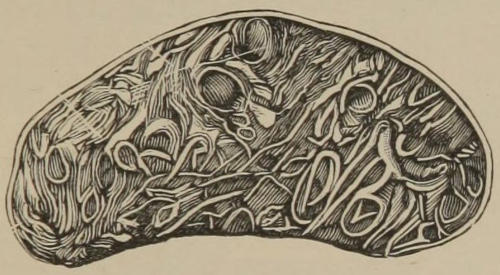
The preparation can be relied upon to extend just as far as
you put it and no farther, and will remove as much of the
tissue as permeated. It will extend farther, and permeate
more readily the structure of a pile than the sound tissue,
because the former is much more spongy and cellular, allowing
the preparation to be easily forced and diffused throughout
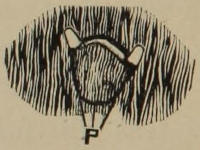
its integrity (Fig. 8). A pile, properly injected, should
appear the next day after operation perfectly dead, as if
boiled or cooked, and of a leaden color.
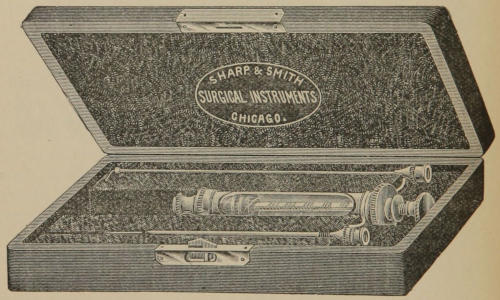
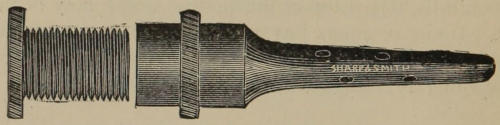
A gold or platinum pointed needle should be used, fitted
with a screw to gauge the depth of insertion, and of sufficient
caliber to allow the preparation to pass through freely.
There are several makes admirably adapted to this purpose,
Fig. 9. A common hypodermic would be utterly useless.
A common glass barrel, metal bound, hypodermic syringe
is all that is needed. It should be provided with side handles.
Draw the medicine into the syringe before screwing
on the needle, force out the air and gauge the nut on the
piston for about as many minims as thought will be required.
When a syringe is not kept in constant use the piston
will dry out and stick to the barrel. This is remedied by
setting the nut on the piston when laying the syringe away,
so that the piston will not quite go to the bottom of the
barrel. When it is desired to use the syringe, screw back
the nut, say sixteenth of an inch, and take up the syringe
with thumb on the piston handle and finger on the cap at
the other end, and press together, thus freeing the piston.
A heavy, open face watch glass with a center facet is a
good receptacle for the injection compound before drawing
it up in the syringe.
ACCIDENTS — MARGINAL SWELLING AND ABSCESSES. — SECONDARY HEMORRHAGE. — CARBOLIC ACID POISON AND EMBOLUS. — SLOUGHING. — RESUMÉ.
Marginal swellings and abscesses, appearing the third or
fourth day after operation, are produced by excessive irritation.
I have never seen them occur except when the patient
disobeyed instructions and exercised inordinately. One
instance, in a case of long standing, where the piles occupied
both sides of the rectum between the sphincters, I
operated on both sides and injected every tumor at one sitting,
enjoining rest and quiet. He afterwards rode a long
distance and walked a half mile, which caused an unusual
amount of pain and soreness; not content with this he took
a dose of castor oil, when a very painful marginal swelling
occurred. Being a strong man up to this time he had used
no palliative measures whatever, and only then informed
me of his suffering. Hot water and a sponge soon eased
the pain and a superficial abscess developed; it was slit up
and a good recovery followed.
According to my observation and belief, piles situated
just above the verge and in proximity to the network or
plexus of nerves surrounding the anus, are more prone to
cause a marginal swelling than others, particularly if improperly
or two deeply injected, and an irritating quality of
carbolic acid be used. It might also be stated that pain
varies in intensity as it approaches the verge, one of the
most acutely sensitive surfaces of the body. A small
sensitive pile not larger than a salmon egg, situated within the
grasp of the external sphincter, will keep up a titilation and
contraction of the muscle sufficient to disturb and put ill at
ease the entire animal economy.
A swelling or lump which often appears immediately
after injection of piles of any considerable size just above
the verge, is of no consequence and will subside within a
few days. A similar swelling sometimes results from a
severe attack of internal hemorrhoids, which some speak of
as the developing of an external pile, but I do not see that
such formations are anything more than marginal swellings,
caused by the irritation above.
About the time the tumor is thrown off, between the third
and fourth day, and sometimes later, before the healing
surface becomes strong, or should the portal circulation
become obstructed and the hemorrhoidal vessels congested,
secondary hemorrhage may rarely occur. It is easily controlled
by the use of Monsel’s Salt, to which a little morphia
should be added, carried in a small piece of wet absorbent
cotton, and held on the ruptured vessel by the end of the
finger until the hemorrhage ceases. A few minutes will
usually suffice. Knowing where you operated will be a
guide to the place of application. The injection of a strong
solution of tannic acid will be sufficient in mild cases. I
have never known a secondary hemorrhage, following carbolic
acid injection, amount to anything more than an easily
controlled venous hemorrhage. Am inclined to think
secondary hemorrhage is most likely to occur when a pile
breaks down from a partial injection, leaving the vessels
unprotected in places, or from an injection too deeply into
the substance of the bowel; yet, I have seen all these
conditions time and again without the least tendency to
hemorrhage.
With a fifty per cent. solution of carbolic acid and the
combination given, carbolic acid poison and embolus are
entirely out of the question. The only danger of embolus
lies in the too sparing use of a weak solution of carbolic
acid, injected slowly into the unobstructed calibre of a
coursing vein. While a strong solution quickly and
generously applied would destroy the tissue and obliterate
the vessel as effectually as the hot iron.
The extensive sloughing that I have heard of so much
I have never experienced, and am not able to conceive of
such an occurrence, except it be in a very low state of vitality;
but can imagine how a pile would slough if a few drops
of carbolic acid were deposited in the center, or deeply into
its base, leaving the apex and greater portion of the growth
with a free circulation. A weak solution taking effect
in the interstices of the most tender part of a hemorrhoid,
but not sufficiently strong to attack the more fibrous portion,
would doubtless result in inflammation and slough. A
pile with a thin delicate covering and internal structure can
be cured by an injection of water, while those of a more
tough and fibrous character would only be exasperated by
such annoying treatment and behave in a bad manner.
In looking over the comments of Kelsey, Andrews and
others regarding the injection of hemorrhoids, it appears
quite evident that they have not given the subject scientific
study. It would seem that representative men and authorities,
after a knowledge of the brilliant results following the
treatment in many cases, attended by accidents in others,
would seek to know and try to obviate the cause or causes
of these unexplained irregularities.
They never improved upon the method in its primitive
and undeveloped state, but seemed willing to magnify and
enlarge upon all the accidents and complications arising from
and following the indiscriminate use of all sorts of injection
compounds, in the hands of the ignorant and inexperienced,
and in diverse and unfavorable conditions for treatment.
How about the old methods? Only a few months since
my attention was attracted to a gentleman of prominence,
in middle life, strong body and good habit, who had been
operated upon for the removal of piles by ligature. He was
seven months in recovering, during which time two fistulas
developed. I do not mention this case as an isolated one,
because we all know that excessive and prolonged pain,
causing in some instances lock-jaw and death, retention of
urine, sloughing and stricture by contraction of tissue,
abscess, fissure, fistula, intractable ulceration, hemorrhage,
immediate or secondary, great and lasting prostration and
slow recoveries, saying nothing about the dangers of
anæsthesia etc., are not uncommon when the old methods
are practiced.
About the time that Kelsey, after having deposited five
drops of a carbolic acid solution in the center of a large
tumor, observed it looking dark, angry and inflamed from
the intrusion of a foreign substance, would have been a
fitting moment for a full dose of carbolic acid, of suitable
strength and in sufficient quantity to pervade the entire
structure and form a compact coagulum; strangulating the
circulation, cauterizing the tissue and thereby checking the
inflammatory action at once; then followed up by the liberal
application of hot water and a sponge.
The method that I adopt and recommend for the removal
of piles, not only does the work neater and cleaner than the
more heroic measures in vogue, but robs the patient of the
terrors of etherization, as well as the dreaded consequences
incumbent upon and more or less inseparable from operations
of violence, in a peculiarly organized and sensitive
locality; and, as Dr. E. F. Hoyt, of New York, says: “There
is not a hemorrhoidal case possible but what can be obliterated
by this means; and I am at a loss to explain why so
many cling to methods that carry so much havoc and suffering.
If every college in the land would have this subject demonstrated
by men of experience and learning, all other means
would soon lose recognition.”
I shall not take up time and space in enumerating cases
but will briefly mention three of quite recent date, and of
more than common interest on account of some of the associated
history given.
Manuel L., aged 39, capitalist, had arranged his business
affairs and prepared for the possible results of a ligature
operation. All being in readiness, he was placed on the
operating table by a prominent surgeon, who, upon examination,
found the hemorrhoids to look so formidable in appearance
that he refused to proceed further, stating that the
operation might prove fatal.
On his first visit to me, he was asked to use the commode
and strain out the piles, which presented to view a large,
continuous hemorrhoidal mass encircling nearly one-half
the bowel on one side, with five distinct and typical tumors
on the other, similar to Fig. 1. He was directed to lie on
the operating chair with the large growth oil the upper
side, and about 30 minims of the carbolic acid preparation
was injected in three different places in the mass, the
protrusion returned and the bowels constipated for four
days; after which the bowels were moved by an enema of
slippery elm water, when not a vestige of the growth could
be seen, and no pain.
He put his hand back to push in the bowel, as he had
been accustomed for the past eight years, and found it gone;
whereupon he said if this had occurred in the day of miracles,
he would think me Jesus Christ. One operation is all
that is required for the remaining five tumors, and both
piles and prolapsus are cured by two operations. In fact,
the smaller tumors should have been taken first, when the
opportunity to get at them was much better.
The only inconvenience suffered was from an effort to
hold the bowels, and the after-pain, which lasted about 14
hours, but was not severe; during which time an opium
suppository was introduced every two or three hours. He
stated that he was just getting over an attack of La Grippe
and had been purged pretty freely, consequently did not
evacuate the bowels previous to operation, but advised a
liquid diet for the first three days.
George P., aged 37, druggist, had a continuous hemorrhoidal
mass occupying both sides of the bowel when protruded,
being separated only by an anterior and a posterior
commissure. Glaring fibrous bands seemed to bind down
the enlargements in places, presenting anything but an inviting
case. He also had an arterial hemorrhoid attached
just above the verge, constantly hanging out and exciting
the external sphincter; looked like and was about as large
as a medium sized strawberry, irritable and eroded.
The history of the case and the extreme ungainly appearance
of the protrusion induced me to have it photographed.
It is approximately represented in Fig. 2, but
does not show the fibrous bands. The patient was placed
on the side opposite the larger mass, which was injected at
four different points. The bowels were constipated for four
days by the occasional introduction of an opium suppository
and then moved by enema, when the man shed tears
of joy on having no pain at stool and finding no protrusion
on that side. The next operation took the other side, together
with the strawberry, and the case discharged, cured
of piles and prolapsus.
Both of these gentlemen had been told time and again
that the carbolic treatment was ineffectual and dangerous.
One ex-army surgeon and college professor said he would
not attempt any of the heroic operations in the second case,
as there was too much tissue involved; that he would only
agree to treat it by making local applications twice a week.
And further, he would not promise any results inside of ten
months, asking twenty dollars per month. He would not
swerve from his opinion, and could not say that a permanent
cure would then be effected.
Mrs. Jane D., nearly 80, afflicted many years, had consulted
fifteen different physicians, all of whom refused anything
more than temporary relief because of extreme age;
having always been considered delicate, with cataract now
forming in both eyes. Would be satisfied if she could live
not more than two years after a cure.
The tumors were “old bronzed veterans,” tough and unyielding.
One side was taken at each operation and although
confined to the bed mostly for the first seven or
eight days after operation, could get out and in at any time
without assistance. Had no constitutional disturbance,
never missed a meal and was able to get up and down stairs
inside of eight days unattended.
The dead piles embraced in the coagula were much longer
in separating from the bowel, and base of attachment
longer in healing than in the average case. Hot water
sponge compresses were used frequently, together with
opium suppositories for the first 24 hours, then occasionally
for the next three days; after which hot water irrigation
and iodoform suppositories. Later bismuth, eucalyptol and
oxide of zinc ointment. An occasional dose of sulphur and
pot. bitart. was given and the bowels moved by flushing of
the colon; which was resorted to but twice.
In this case the edges of the thickened, calloused mucous
membrane of the bowel where it joined the hemorrhoids,
appeared to be so cartilaginous in places, that I expected
hard ridges would be left; but they all disappeared and
softened down by the use of eucalyptol, buckthorn and stramonium
ointment. At one point a small polypus sprang
up, which withered from the injection of a few drops of pure
carbolic acid, like a tender sprout, after being frozen,
under a scorching sun.
The lady could not repress her feelings of emotion, in expressing
gratitude for the services rendered, but gave way
and freely cried. Although in rather poor circumstances,
she did not think a charge of fifty dollars sufficient and
afterwards returned, saying that she felt that she would not
die happy unless I was better paid, and insisted upon my
taking another “twenty.”
Do not operate during an attack of piles.
Operate with the tumor, or tumors, on the upper side.
Handle the parts with extreme gentleness and deliberation.
See all that can be seen and treat all that can be treated
without the aid of a speculum.
Protect the under parts from excoriation by waste and
overflow of medicine.
Evacuate the bowels previously and constipate for four
days after operation on large growths, or when several small
tumors are taken at one time.
Hot water sponge compresses, early, often and continuously,
are indispensable and unequaled for the relief of a
pain, swelling and soreness. To be effective it should be
applied as hot as can be borne.
Wait until the soreness disappears before performing a
second operation. This will require from one to two weeks,
according to the extent of the first operation and the
physical condition of the patient.
Take great pains and care to perform a neat operation.
A certain amount of ingenuity and tact are required, which,
unfortunately, all do not possess. If a bungling job be
made, the bowel punctured, a pile injected on one side only
and the surfaces excoriated, do not attribute an unnecessary
amount of pain and suffering to the preparation used or the
method employed.
As a general alterative and curative agent in many diseases,
and particularly to relieve and prevent hemorrhoidal
congestion in rectal troubles, sulphur in small doses, persisted
in for some time, probably has no equal. The most
convenient form for administration is a palatable tablet
(Wyeth & Co.), containing 2½ grains, or 5 grains with 1
grain of cream of tartar. Reference to the learned articles
on the physiological and therapeutical uses of sulphur, by
Dr. John V. Shoemaker, published in the Dietetic Gazette,
Sir Alfred B. Garrod in the Lancet, and in Ringer’s hand-book
of therapeutics, will be amply repaid.
RECTAL EXAMINATION.
The first step to be taken in making an examination of
the rectum, where disease of this organ is present or suspected,
will be to obtain a history of the case as given by
the patient, supplemented by questions naturally suggested.
This will furnish an idea of what might be looked for, but
the patient’s interpretation will often be found quite erroneous
and misleading.
Should there be an undue protrusion at stool, pursue the
same course recommended for the examination of internal
hemorrhoids. If protrusion be absent, direct the patient to
lie on the side with knees drawn up, separate the buttocks
and inspect the anus; or, in other words, all that presents
to view externally at the terminal orifice of the rectum.
Now draw down and evert the mucous membrane at the
verge with the thumbs, asking the patient at the same time
to extrude the parts as much as possible. This will enable
you to see all there is half an inch or more above the entrance.
Next, anoint the finger, pass in gently and examine all
the surface limited by the sphincters, a distance upwards of
not over an inch, being careful lest you be deceived by the
mobility of the tissue, when introducing the finger, and a
small marginal growth be carried up and appear as one of
internal origin.
Any one familiar with vaginal examinations can detect a
rough or a broken mucous membrane, an indurated spot or
prominence as soon as touched. Next, feel above the internal
sphincter, keeping
in mind the anatomy
of the parts, turn
the finger slowly, posteriorly
you can hook
it behind the muscle.
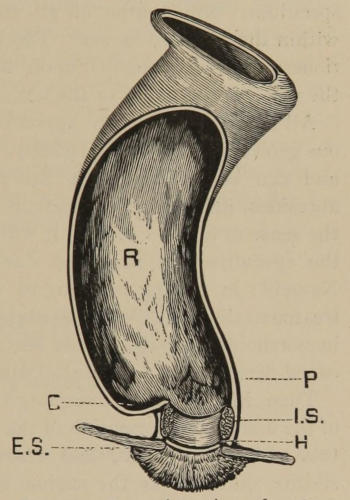
Here is situated the
bottom or floor of the
rectum which forms a
cul-de-sac (Fig. 11).
By asking the patient
to strain down moderately,
its surface will be
thrown up against the
end of the finger and in
this manner properly
explored.
A digital examination
reveals, in the normal
state, a soft, velvety,
unbroken mucous
membrane, the parts
pliable and yielding, with no reflex excitability of the sphincters.
The position and sensibility of the uterus should be
noted in the female, and size of the prostate gland in the male
of advanced years.
The first three or three and a half inches of the rectum
can be brought within reach of the finger. Explorations
farther up will require a rectal sound and a long tubular
speculum. Nine-tenths of all rectal ailments are found
within the first two inches. Therefore, few general practitioners
will ever be called upon to treat anything beyond
the reach of the finger or the scope of a common speculum.
All hemorrhoids of any appreciable size, or other tumorous
growths in the same vicinity, will show at defecation
and can be treated while the parts are extruded. All
abrasions, ulcerations, indurations, etc, are discoverable by
the sense of touch. Hence, it will be seen that the uses of
the speculum are narrowed down to a few in number.
Namely: in that of bringing to view for observation and
treatment diseased surfaces previously located; small, soft
hemorrhoids and other minor affections which may have escaped
detection by a careful digital examination.
Then, in view of the foregoing facts, and in consideration
of the anatomical formation of the parts, being a collapsable
tube, highly sensitive and extremely difficult of accessibility,
quite unlike the vaginal canal, which is closed at
one end, more capacious and dilatable, and designed by nature
to be approached from the exterior, a speculum should
be so constructed as to not only be easy of introduction and
withdrawal, but to exclude all the surface except a limited
portion, and permit the greatest amount of available light
possible to fall on the exposed part shown in situ.
The greatest barrier to the successful use of a speculum
is the unruly external sphincter and the excessive mobility
of the mucous and muco-cutaneous surfaces. The upper
margin of the external sphincter terminates beneath the
junction or the skin with the mucous membrane, which
place also marks the beginning of the internal sphincter
and its junction with the external muscle by a more dense
connective tissue, sometimes appearing as a white line at
the muco-cutaneous junction called the white line of Hilton.
According to Dr. Andrews, Hilton has demonstrated that
the locality where the two muscles join by the intervention
of this fibrous ring forming the anal verge, the junction of
the skin and mucous membrane, and the exit of the branches
of the pudic nerve, is identical.
The internal sphincter is a collection of the circular fibres
of the muscular coat of the bowel, about five-eighths of an
inch in width, and constitutes in reality the terminus of the
gut. For the external sphincter is a thin band of distinct
and separate muscular fibres, elliptical in shape, between
three and four inches from its anterior to its posterior extremity,
and expands out around the margin of the anus like
the flaring end of a trumpet; with its superficial layer in close
relation to the skin which it draws down in radiating folds.
With this understanding of the anatomical relations, it
will be seen that the external muscle contributes so slightly
to the length of the canal, that it might be considered wholly
on the outside, where it guards closely the entrance, and is
nowise concerned in an examination with a speculum except
as a feature of incumbrance.
To correct an erroneous idea that there is any considerable
depression or space intervening between the muscles,
we mean, when we say between the sphincters, the distance
bounded by the fibrous ring uniting the two muscles below,
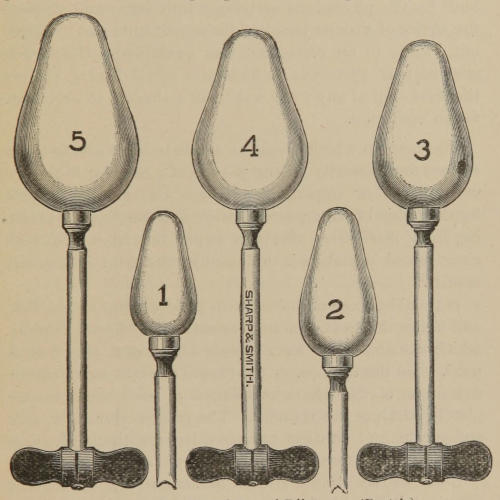
and the upper portion of the internal muscle above. More
simplified, we mean all the surface included between the
upper margin of the internal sphincter and its junction with
the external muscle at the anal verge.
All examinations with a speculum should be preceded by
an enema of warm water to wash away the mucous and retained
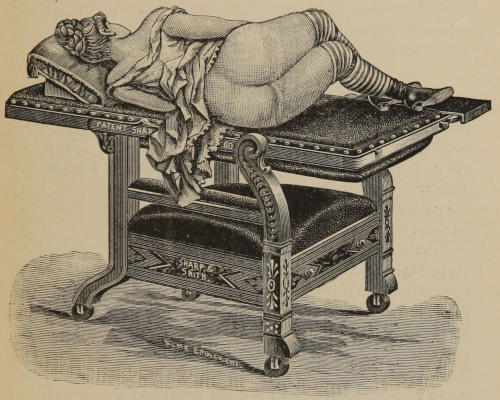
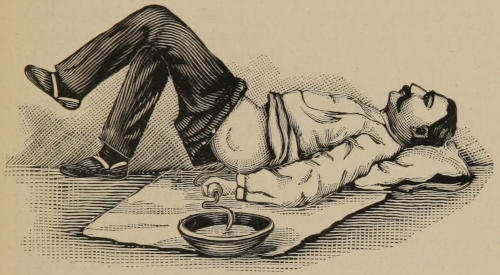
feces in and about the sphincters. Let the patient
lie on either side, turning partially on the chest, with knees
drawn up, the one uppermost more firmly flexed on the abdomen,
and hips so elevated that the speculum, when introduced
points or inclines downward, and admits of strong
natural light to fall in parallel rays to its axis.
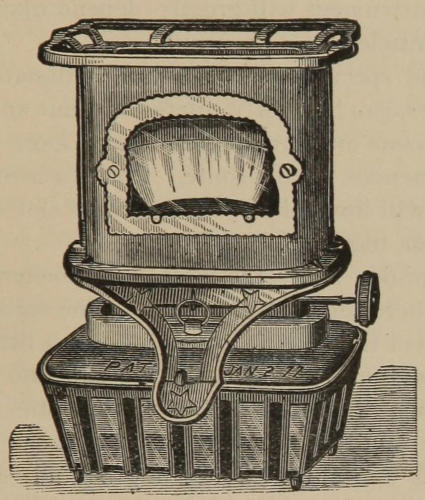
Warm the speculum by dry heat over a single blast kerosene
stove, where gas is not convenient. A suitable kerosene
stove is an indispensible adjunct to an office for heating
instruments, water, etc., causing no smell and leaving no
deposit of sut on the bottom of vessels as done by gas or alcohol.
Use white vaseline as a lubricant; everything that
tends to whiteness helps the sight. The vaseline may be
squeezed from a tin-foil tube, and the finger not soiled in
preparing the speculum for insertion.
To prevent the loose tissue from rolling up and being
pushed in with the speculum, the patient may assist by
holding the upper buttock away, while the physician introduces
the instrument with one hand and retracts the opposite
buttock with the other.
Introduce slowly, giving time for the muscles to relax,
bearing in mind that all movements about the rectum and
anus must be extremely easy and gentle. The proximal
end of the slot must be carried and kept above the external
sphincter during the entire course of the examination. It
matters not what kind of a speculum is being used, the
value of the instrument will greatly depend upon its power
to hold this muscle out of the way.
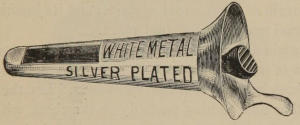
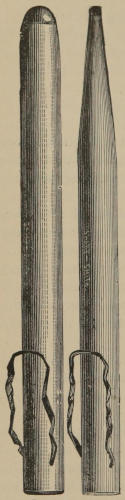
A closed end speculum, with a proportionate slot and
smooth corners, can be slowly rotated without any difficulty
where the mucous membrane is not very loose and baggy
and no prominences in the route. But if a hemorrhoid be
in the way it will immediately drop in the slot and further
progress is thus impeded.
When examining above the internal sphincter, especially
posteriorly, where the bottom or floor of the rectum forms a
cul-de-sac, direct the patient to strain down a little; this effort
will throw the mucous membrane out into the speculum,
at the same time spreads out and smooths its surface.
In looking through a speculum this cul-de-sac of the rectum
sometimes appears as a vacancy behind the internal
sphincter, and has been mistaken and treated as an ulcer
cavity. It often contains a liberal supply of mucous.
FISTULA.
Fistula in the recto anal region so far exceeds that in any
other locality, that its overwhelming predominence here almost
entitles it to the exclusive right of the term; while, to
those who have given this part of the physical organism
special study, the word itself, calls to mind a local condition
of disease that is anything but an easy one to manage.
In point of frequency fistula is next akin to hemorrhoids,
but a much less desirable complaint to treat. Allingham
states that the number of cases occurring in hospital practice
is greater. That two-thirds of all the cases operated
upon of the in patients at St. Mark’s Hospital, London, were
fistula. The most frequent cause assigned being abscess. A
failure of the abscess to heal, leaving a sinus or sinuses, is
explained by the presence of loose areolar tissue and fat, excessive
mobility of the parts by the action of the sphincters,
respiration, coughing and sneezing, and a strumous diathesis.
In consequence of an occasional failure of the muscles to
regain their power after division by the knife, elastic ligature
or galvano-cautery wire in the treatment of fistula, leaving
the subject in a pitiable state of incontinence of feces,
which has resulted in several well authenticated cases in
suicide, new and rational methods have been devised for the
relief of this very troublesome and unpleasant affection.
Kelsey says: “A permanent incontinence of feces is always
considered by the patient a very poor exchange for
fistula, which was causing comparatively little suffering and
annoyance.”
The fact that such a deplorable condition does sometimes
follow complete section of the sphincters, and that we
have no means of knowing previously when it may or may
not occur, I submit the question to all thinking, conscientious
and painstaking physicians: Should we not seek the
adoption of any efficient means of treatment, whereby such
risk is wholly avoided?
About the first of March, 1890, Daniel Mc., aged 35, who
a few months before had been operated upon by a reputable
surgeon for a simple, uncomplicated fistula, sought my acquaintance,
exhibited his condition and related his experiences.
The fistula originated from a small abscess, with its internal
opening between the sphincters, the external scarcely
an inch outside the anus, and was not of long standing. The
operation consisted in a division of the external muscle with
the greater portion of the internal; he was put on a liquid
diet, bowels confined for fifteen days and kept in a recumbent
posture.
The incision was slow in healing, between three and four
months; his health, which was formerly good, has been
greatly impaired ever since the operation. The external
sphincter has lost its power altogether and the internal muscle
greatly weakened, which necessitate the wearing of a
clout whenever the bowels become a trifle loose, and he lives
in constant fear of soiling himself by allowing the escapement
of the least quantity of flatus. The time lost, the
money expended, and the unfortunate condition in which he
finds himself eight months after the operation, have so thoroughly
embittered him against the cutting process, that he
spares no pains and loses no opportunity to influence every
one with whom he comes in contact, against all such heroic
and uncertain measures.
For the purpose of obviating these very unsatisfactory and
highly objectionable results, we have a choice of any one, or
all of three different methods,
viz: treatment by injection, treatment
with the fistulatome, and
treatment by the galvano-cautery
as practiced by Dr. Shotwell;
who, fully appreciating the dangers
of muscular section, has hit
upon a plan both new and commendable.
The sub-cutaneous, or sub-mucous
fistula can be cocainized
and slit up with a pair of scissors, and the tract cleansed
and cauterized with a solution of carbolic acid, a comparatively
trivial affair; but the external blind, the internal
blind, the complete, the complete with diverticula etc., are
varieties which call forth a decidedly greater amount of ingenuity
and thought in bringing them to a successful issue.
The treatment by injection, sometimes classified as a “non-operative
method,” has been so successful in the hands of
many, that it is stoutly affirmed that any case curable by
the usual heroic methods is equally curable by this method.
Different preparations have been used, chief of all being carbolic
acid, ranging in strength from 50 per cent. up.
In adopting the carbolic acid treatment, probably the
better way after preparing the sinus, will be to use a 95 per
cent. the first time and subsequently a 50 per cent. solution;
protecting the parts from excoriation by any suitable unguent
and absorbent cotton. Hot water compresses to relieve pain
and reduce swelling. Iodoform, Eucalyptol, etc., in the
interim. Judgment will be required in not making too
many irritant applications and granulation thus hindered
for want of rest.
The object is to destroy the pyogenic membrane by the
cauterizing effects of the acid and get up a granulating carbolic
acid sore. It may be necessary to evacuate the bowels
and constipate for several days to give the muscles rest, or
resort in extreme cases to divulsion. The sinus must have
constant, free external drainage until the healing process is
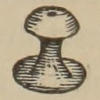
complete. Allingham recommends the introduction of the
small end of a bone collar button to keep the orifice open,
with a hole drilled through its centre for drainage.
As a preliminary step the external orifice should be dilated
with a laminaria tent or other appropriate means. The
fistulous tract explored with a common probe and thoroughly
cleansed with hot water introduced through a flexible
silver canula; which is also used for the injection of a 5 or
10 per cent. solution of cocaine to obtund the sensibility.
Concerning the carbolic acid treatment Allingham says:
“Since the publication of my last edition I have cured many
patients by dilitation of the sphincters and the use of
the bone stud and carbolic acid. One practical point
I would mention. The further the external aperture
is from the sphincter the more likelihood is there that
the sinus will heal. This is shown as well in the cases of spontaneous
cure as in my own successes. You must always enjoin
rest after a strong application, and watch that not too
much inflammation be set up.”
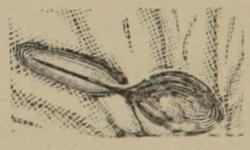
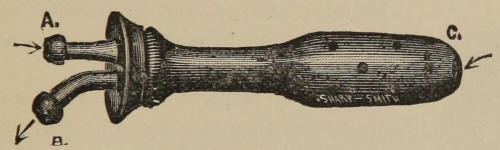
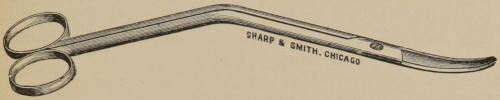
The fistulatome shown in fig. 16, is a contrivance which
is perhaps destined to take the lead in the treatment of fistula
generally. It is so constructed that the fine cutting
blades close on themselves, while the instrument, which is
probe pointed, is being introduced, but immediately open
on withdrawal, and thus catch up and cut through the fistulous
membrane.
Who the inventor of this clever device is, I have been unable
to ascertain, having seen it claimed by three different
physicians, one of whom speaks of curing 76 per cent. of
all cases treated by one operation. That is by drawing the
fistulatome through the tract once. Cases of long standing
require that the instrument should be turned at right angles
and drawn through the second time and possibly repeated
later on, or a tenotome employed to scarify any remaining
indolent sinus.
It will be readily seen, however, that a fistula with a side
pocket, branch or diverticulum, would hardly be reached by
this method; although the blades are so formed that they
draw the membrane of a dilatable pouch to them from the
sides. In such cases a little ingenuity would be required in
finding these diverticula, for the purpose of scarifying them
with a tenotome.
The preparation of the sinus and the after-treatment are the
same as already mentioned. Also evacuation of the bowels
and constipation by the use of an opium suppository, even
to the dilitation of the sphincters, if thought necessary to
bring about a cure. In rare instances, where divulsion has
been practiced and while yet under the influence of anæsthesia,
it might be advisable to lay open the cavity by cutting
from the sphincters, pockets traced, scarified and partitions
divided.
In relation to treatment, Andrews says: “The truth is,
that anal fistulæ have a natural tendency to recovery, and
are held back from it mainly by two things.
1. “The unfavorable effect of the undrained septic fluids
within the sac.
2. “The tightness of the external opening, which prevents
free drainage, and keeps the sac distended with this
putrid pus.
“It is demonstrated by Dr. Mathews on the one hand and
by the experiments of quacks on the other, that by controlling
these two conditions, many cases will heal spontaneously.
It follows that among the thousands of patients subjected
to cutting operations by surgeons for this disease,
there are many who might be cured by much milder means.”
Shotwell’s operation consists in straitening out of the fistulous
tract with a steel probe, having an eye at its distal
end, which is carried entirely within the bowel whether the
fistula is complete or not. He next pierces the solid structure
about three-eighths of an inch farther from the anus
with a lance-pointed probe also having an eye near its end,
parallel with the first probe, until its end is seen penetrating
the bowel a little beyond.
The eyes of the probes are then threaded with the opposite
ends of a No. 24 platinum wire about ten inches in
length, and both probes withdrawn, leaving the wire in situ
forming a loop; both ends are now secured to an electrode,
the current turned on and the loop drawn through the partition.
Little, if any, dressing is required, but the bowels
must be kept locked up for at least a week. This of course
involves the use of general anæsthesia.
A word to the beginner, in the prevention and detection
of fistula. Since abscess is the most prolific source, proper
attention to the abscess by poulticing, early lancing, the
sinus washed with hot, heavily carbolized water, allowed
free drainage, the bowels evacuated, constipated and the
muscles put at rest for a few days, will doubtless be successful
in forestalling its almost certain fistulous sequence.
Dr. Hoyt strongly recommends divulsion of the sphincters,
immediately after opening the abscess, as an unfailing
remedy in preventing fistula.
Annoyance by itching, a slight discharge and soreness at
times in a circumscribed spot, with previous history of abscess,
might be considered a sure sign of fistula. But the
patient may give the same symptoms with no knowledge of
previous abscess, or other cause pointing to the formation of
a fistula. Yet, on inspection, a small opening with pouty
lips, or a closed cicatricial depression not much larger than
a pin-head, will be found. This is the external ring or
opening of a fistula, and if closed, may resist the introduction
of a probe sufficiently to create the belief that no sinus
exists.
ULCER, STRICTURE, ETC. — FISSURE, OR IRRITABLE ULCER.
A solution of continuity, varying from a slight abrasion
of the mucous membrane to a marked degree of destruction
of tissue, comes within the scope and meaning of rectal
ulcer.
A deep-seated, non malignant type of rectal ulceration,
complicated with stricture, fistula, etc., is not so very common,
and seldom met with outside of hospital practice.
The less serious and more simple varieties, such as may
be productive of considerable systematic disturbance through
reflex excitability, without attracting much, if any attention
locally, are the forms most frequently seen by the general
practitioner.
With few exceptions, rectal ulcer is insidious in its nature;
in some instances passing on to the stage of stricture,
which alone may be the first symptom to cause alarm, as
the following recent case will illustrate.
Mr. C⸺, aged thirty-three, married, applied for the
treatment of hemorrhoids. He stated that the only inconvenience
suffered was from constipation. That the piles
did not come out and were never very sore but he had
seen a little bloody mucous at times and had a constant desire
to go to stool. A free evacuation
and relief being obtained only after the
feces were made liquid by the injection
of warm water.
On the introduction of the finger I
found about one-inch and a half from
the anus, an annular stricture which
almost entirely occluded the bowel, with
ulceration and gummata below. More
close inquiry elicited the fact that the
stools were not much larger in circumference
than a lead pencil. He had noticed
the trouble not more than two
months before. There was a previous
history of chancroid at the age of 19, with
no constitutional symptoms.
It is claimed that organic stricture
does occur without previous ulceration
by interstitial deposit and thickening,
and ulceration follow. But this must be
considered exceptional. The ulcerative
process usually precedes, and through
efforts at repair, cicatricial bands are
thrown out, producing a narrowing and
contraction of the canal, either in places
or throughout the circumference of the
bowel.
Electrolysis may be tried for the relief of stricture before
resorting to the usual methods of breaking up by forced
dilitation. If divulsion be decided upon it should be complete
at one operation. Should the fibrous bands be strong
and unyielding, nicking the edges with a probe pointed bistoury
is advantageous.
On account of severe hemorrhage and other untoward
symptoms likely to follow a complete division of the stricture,
the galvano-cautery is decidedly preferable to the common
proctotomy knife. A duplicature of the peritoneum coming
down to within about three and a half inches of the anus anteriorly,
should not be lost sight of in operations on the rectum. The
persistent use of bougies will be necessary for a long time
after divulsion.
Stricture is mostly of syphilitic origin. Of the seventy
cases, tabulated by Allingham, ten of the number were
found in men and sixty in women, showing a great predominence
in the latter; and none were more than three and a half inches
above the rectal orifice.
It is not an easy matter to diagnose between the advanced
stages of non-malignant rectal ulcer and cancer. Both may
be accompanied by tender, condylomatous growths or flaps
of skin outside the anus, bathed with an ichorous fluid.
The characteristic, unremitting pain of cancer may be absent
in its formative stage, and in this respect insidious in its approach,
the same as the non-malignant ulcer.
Allingham speaks of a very rare species of rectal ulcer,
which he terms rodent or lupoid, that is superficial, does
not implicate the surrounding parts, devoid of hard edges or
surface, very painful and only cured by complete extirpation.
I have intentionally omitted the early symptoms and
course of rectal ulcer for the purpose of giving audience to
Dr. A. C. Hall, who, in a communication to a medical
journal, writes the following lucid description:
“Rectal ulcer is a more common disease than is generally
supposed. Unfortunately the symptoms are generally obscure,
and the patient suffers but very little, if any pain,
and consequently consults his physician for some of the reflex
symptoms, rather than for the initial disease itself; and
very often these reflex symptoms are vainly treated till the
patient and physician are both thoroughly disgusted and
disheartened. There is one maxim which every physician
should always bear in mind, and that is, always suspect rectal
ulcer in every case of protracted or chronic diarrhœa. I have
reports from eighty-six pension surgeons, in which they estimate
that they have examined two thousand cases, where
chronic diarrhœa was the alleged cause of disability in applicants
for pensions. Of these two thousand cases of
chronic diarrhœa, eighty-seven per cent. had rectal ulcers,
and fully ninety per cent. of those who claimed chronic diarrhœa
as their disability and who had no ulceration were rejected,
because their proofs of the disease, aside from the
ulceration were too meagre. Thus the strongest and most
prominent symptom of rectal ulcer is chronic diarrhœa.
“The diarrhœa is generally more troublesome in the morning.
The patient often on arising feels an urgent desire to
go to stool. This act is often very unsatisfactory, for he
passes very little feces and a great deal of wind. Occasionally
these small stools are covered with a jelly-like, or white
of an egg substance, or the motion may be only a jelly-like
mucous, with no feces. There is generally more or less tenesmus,
or a disagreeable feeling, as if the rectum was imperfectly
evacuated. Sometimes the patient will be compelled
to go out two or three times before breakfast, and he may in
the later attempts to have a stool, pass lumpy or scybalous
feces, covered with mucous, and often streaked with blood.
There sometimes exists, as a symptom of rectal ulcer, a desire
to go to stool when cold drinks are taken. But generally
the diarrhœa and tenesmus subside soon after breakfast,
and the patient has no more trouble until the next morning.
A great many, or I might say a majority of those suffering
from rectal ulcer consult the physician for some symptom
or other that suggests anything else but the rectum, but by
close questioning, and following up the symptoms, one can
soon tell whether they are reflex or otherwise.
“In cases of rectal ulcer of long standing, there is always
more or less cachexia, or peculiar waxy, sallow, unhealthy
complexion, which sometimes alone points significantly
towards the disease.
“There is often more or less enlargement of the liver and
spleen, especially the spleen.
“In advanced cases, the diarrhœa comes on at night as well
as morning, and defecation is accompanied with pain and
griping. Another almost characteristic sign of rectal ulceration,
is alternating diarrhœa and constipation. The bowels
remain constipated for a considerable while, then diarrhœa
supervenes, and is accompanied by severe and excruciating
colicky pains, and often nausea. Persons subject to chronic
diarrhœa always dread to take a physic to relieve a temporarily
constipated state, for it will almost invariably put
them to bed.
“In extreme cases, infiltration and thickening of the sub-mucous
and muscular coats supervene, as a result of nature’s
effort to repair the lost tissue. This thickening may be so
extensive as to threaten and actually produce stricture. It
will often convert the rectum into a passive tube, through
which feces and fluids trickle, the patient having little or no
control over the sphincters.
“The passage of hardened feces and the pressure of internal
hemorrhoids and polypi are the most common causes of rectal
ulceration. The lodgment of foreign bodies, such as
fish bones, cherry stones and plum seeds that have been
swallowed, and which act as irritants and produce ulceration.
“In women the pressure of the fœtal head on the rectum
during childbirth is a frequent cause of ulceration, likewise
the pressure of a misplaced uterus.
“On examination, by means of a speculum, the ulceration
will be found about an inch or an inch and a half from the
anus, generally on the posterior wall, but often on the anterior
wall.
“When the ulcer is on the anterior wall, there is more or
less irritability of the bladder, and seminal emissions or impotency.
The ulcer itself may be round, oval or elongated,
radiating or following the columns of Morgagni. The ulcer
may present ragged, interrupted elevated edges, or they
may be sharp cut and regular, as though cut with a sharp
punch. The edges are sometimes hard and gristly, or may
be soft and with no elevation above the surrounding tissues.
The surface of the ulcer is often clean, and healthy looking
granulations may be seen, or the ulcerated surface may be
loosely covered with a greyish, grumous scum, that is offensive,
and decidedly unhealthy for the patient. Underneath
this scum there is often found an ulcerated spot, that is apparently
lifeless, and will require much attention, locally
and constitutionally, to prevent its rapid extension. In this
form of rectal ulcer there is always more or less marked
cachexia. It is the indolent ulcer, occasioned by the gradual
breaking down of the tissues, that produces the grave
constitutional disturbances and death. It is the small,
round, or oval ulcer, with elevated, hardened edges, that
produces the many and various reflex nervous symptoms,
which are misleading and troublesome.”
In all cases of rectal ulcer of any considerable gravity,
absolute rest, both of the parts and the body, is to be maintained.
Hot water irrigations and a complete destruction of
the diseased surface by carbolic acid, are the first things to
be thought of, together with a liquid diet.
Convert the ulcer into a carbolic acid sore and use an
iodoform suppository. In fact the treatment is very similar
to that recommended as an after treatment in a bad case of
hemorrhoids, with such variations as the ingenuity will suggest.
Bismuth, oxide of zinc, eucalyptus, mercury, resin
cerates, etc.
Have found no use for iodine, nitrate of silver or acid
preparation of iron, which corrode and destroy instruments
in the treatment of rectal diseases.
Of all the diseases of the rectum, considering the apparent
insignificance of the lesion, this heads the list as a pain producer.
Fissure has characteristics peculiar to itself and I
do not think, as is claimed, that its location, just above the
muco-cutaneous junction or Hilton’s line, where the nerve
supply is the greatest, explains these characteristics; neither
do I think it of traumatic origin.
No other ulcer, wound or abrasion in the
same locality produces the pain that identifies
a fissure.
It might be compared to a rhagade or chap
in the web between the toes or fingers. In its
recent state it presents the appearance of a
longitudinal tear of from three to five-eighths
of an inch in length, looking raw and bloody,
with ragged and somewhat everted edges; and
may be complicated with polypi (Fig. 20), or
a hemorrhoid occupy its base, called the “sentinel” pile.
It is aroused from its slumbers by a mechanical disturbance
of the slightest nature, hence the name irritable. The
act of defecation being followed by a dull, sickening, sometimes
lancinating pain lasting three hours or more, incapacitating
the subject from labor. The mere introduction of
the finger may produce a deathly pallor and possibly syncope.
Ask the patient to extrude the parts, then gently pull
down the mucous membrane and apply a ten per cent. solution
of cocaine to the tract with a camel’s hair brush or silver
canula attached to a hypodermic syringe; carrying the
solution fully to the top of the fissure, which may be out of
sight. If any unguent has been used about the fissure it
should be subjected to a hot water irrigation before using
the cocaine, as cocaine will not take effect on a greasy surface.
When the tract is sufficiently anæsthetized to introduce a
speculum, apply on the end of a probe wrapped with cotton,
95 per cent. carbolic acid, and prescribe the following ointment
for daily use:
| ℞ |
Acidi Salicyl. |
ʒ ss |
|
Vaselini |
℥ ss |
| M. |
If unsuccessful after making two or three thorough applications
of carbolic acid, inject into and beneath the bed of
the fissure, in a sufficient number of places to encompass its
length, possibly two, a few drops of the hemorrhoidal compound;
and produce a slough. The object is to destroy the
original ulcer and convert it into some other form that will
heal. I have never seen a resulting sore from carbolic acid
that was slow to heal.
A physician who had been a great sufferer from the effects
of a fissure informed me that he had been etherized twice
and the sphincters thoroughly stretched, and had submitted
to incision three times, all of which had proved fruitless,
and was finally permanently cured by the use of salicylic
acid and vaseline.
PROLAPSUS RECTI.
A prolapse of all the coats of the rectum, amounting in
some instances to complete invagination, is of such rare
form, occurring mostly during infancy, that it might be
considered practically out of the list of rectal ailments.
Prolapse of the mucous coat of the bowel is not an uncommon
affection, and is a frequent complication of internal
hemorrhoids. When the hemorrhoids are cured the prolapsus
usually disappears.
It is natural for the mucous membrane at the lower end of
the rectum, by its loose attachment to the muscular coat
through the cellular layer, to roll down and become somewhat
everted during the act of defecation. It is only when
this condition becomes excessive and the protrusion so great
that it does not return of its own accord, that it is called
prolapsus of the first degree and treatment required.
Should it occur independently or persist after the removal
of piles, a cure may be easily effected by the injection of
from eight to ten minims of a ten per cent. solution of carbolic
acid, beneath the mucous membrane in the cellular
structure, at points where it is desirable to take up a fold.
The needle may be introduced in a line with the axis of the
rectum, varying from one-fourth, one-half of an inch or
more from the muco-cutaneous junction, and even as high
up as the upper margin of the internal sphincter.
This can be done while the membrane is prolapsed, or
through the slot of a speculum. The latter is preferable on
account of the sides of the slot limiting the distribution of
the medicine. Anything that will excite an adhesive inflammation
or a change in the cellular coat will have a similar
effect.
The following preparation is effective:
| ℞ |
Acidi Salicyl. |
|
|
|
Sod. Bibor. |
ā ā |
ʒ i |
|
Glycerinæ |
|
℥ i |
| M. |
Take six drachms of this preparation and add carbolic
acid 40 minims.
If it be desirable to remove a thickened fold or bunch-like
appearance of the mucous membrane, inject the same as you
would piles, using the hemorrhoidal compound. It will
slough off neatly and heal readily. It is peculiar of the injection
of internal piles or of the same strength of medicine
into or beneath the mucous membrane, that it tightens and
takes up a slack of the membrane permanently, without apparent
lessening of the calibre of the gut. It is also peculiar
of the treatment and cure of internal hemorrhoids by injection,
that no cicatrix, cicatricial tissue or contraction results,
unless the operation has been extensive, involving both
sides, and an active inflammation has been excited by extraneous
causes.
RECTAL POCKETS AND PAPILLÆ.
Concerning the frequency of the diseased conditions to
which the names rectal pockets and papillæ are applied,
and their being such prolific sources of mischief as claimed
by those who first caught up the craze and exaggerated the
facts, a few brief comments may not be out of place.
That there are such morbid changes, and that they are
more or less hurtful through reflex excitability can not be
successfully disproved. That their appearance suggests the
titles they have received is also undeniable. And the fact
of their having been brought to notice in an irregular way,
does not militate in the least against the existence of such
affections, or the fitness of the terms used to designate them.
If it be true, as stated by enthusiasts on the subject of
rectal pockets and papillæ, that they are frequently found
in old, deep-seated, chronic diseases, where the presence of
rectal trouble is never suspected by any local signs, we
have, then, a sufficient reason to account for their having
escaped the notice of specialists.
Andrews makes a labored effort, and with apparent success,
to show that the so-called “pockets and papillæ” are
normal structures. That the pockets are the sacculi Hornei
(Fig. 22), which are little depressions situated just above
and intimately connected with the verge of the anus, caused
by the reticulated arrangement of bands of muscular and
connective tissue, beneath a delicate mucous membrane and
deepened by the corrugating action of the sphincter ani.
That the papillæ are little dot-like prominences frequently
found between the lower ends of the sacculi Hornei, and when
somewhat enlarged resemble in appearance the carunculœ
myrtiformes of the vagina. That these little papillæ, with
their adjacent “pockets,” constitute the so-called “pockets
and papillæ” of the itinerant.
I have seen just what Dr. Andrews very correctly describes,
and will say, after carefully reading his explanation,
I am fully convinced that he never saw what is meant by
the discoverer of rectal pockets and papillæ. And further
beg to say that the doctor must concede that there are
others, who are not itinerants, capable of identifying a diseased
surface when they see it, and pointing out its place of
location.
It will be seen by a reference to the appended clipping,
that Andrews has been making his microscopical dissections
nearly an inch below where true rectal pockets are found.
And I can conscientiously attest that true papillæ bear no
resemblance, in the least, to his papillæ or carunculœ myrtiformes
at the anal verge.
Rectal pockets are doubtless a duplicature of the mucous
membrane, forming cul-de-sacs with their mouths looking
upwards. They are removed through a speculum by raising
the outer wall with a blunt hook and excised with a pair
of scissors, or slit through their center with a knife, and carbolic
acid applied to the remaining flaps.
Papillæ may be seen in three different forms. One, a
white, flat or sessile process, resembling the half of a split
pea, but not quite so large. Another, a small, white, rather
stiff projection on either side of a large pocket. The other,
a slender, perfectly flexible, worm-like vegetation, possessed
of a white or transparent top, Figs. 23 and 24. They appear
to spring out of the mucous membrane similar to a polypus,
and can be snipped off at their base with little loss of blood
and trifling pain.
“The usual location of pockets and papillæ is at a point
about an inch from the anus, at the upper margin of the internal
sphincter, where the large distended pouch of the
middle portion of the rectum is abruptly puckered down to
the narrow limits of its last inch.
“These pockets are curious formations, and have received
very little attention from writers upon rectal disease, and
they have been almost entirely overlooked by anatomists, as
well as pathologists. Whether they belong to the anatomy
or not, I am unable to state with any certainty, but I know
for certain, however, that they are not always present. I
know also that they can almost always be found in cases of
old, deep-seated, chronic diseases, and that the removal of
these pockets in this class of cases is followed by the most
happy results.
“When these pockets are present, they always occasion a
spasmodic contraction of the sphincter ani, a condition
which is most frequently observed in those cases that are
developing some deep seated constitutional disease. Their
removal in this class of cases is invariably attended by more
or less improvement of the patient’s general condition and
circulation.
“In form and character these pockets may be long and narrow
channels, and ulcerated at the bottoms; short (cul-de-sacs)
or broad mouthed and pointed at the bottom. These
pockets create a great amount of irritation to the nervous
system. No matter what shape, condition or location they
may be in, by reflex irritation they produce a long train of
nervous symptoms that cannot be remedied until they (the
pockets) are removed.
“Papillæ are conical processes of mucous membrane, of
variable size, shape and location. They have no relationship
with rectal pockets, for they very frequently exist independently
of them.
“I look upon these conditions as being the most mischievous
of rectal disorders, because they always occasion a tonic
spasm of the internal sphincter, and this alone makes excessive
demands upon the powers of the sympathetic nerve.
They are common in all forms of chronic disease. I know
of no reason why these conditions, which I have described
should have been so long overlooked, and their importance
have remained unappreciated.
“Unless it be that their presence is unattended by local
symptoms, and hence they have failed to attract the attention
of either patient or the physician. But in view of the
fact that they occur in so many chronic conditions, and the
additional fact that marked benefit almost invariably follows
their removal, I insist upon it that no obstinate case of
chronic disease has been properly examined until their presence
or absence has been ascertained. The most happy and
the most marvelous results that I have ever seen in the practice
of medicine and surgery have followed the removal of
pockets and papillæ, and in thus bringing them to your notice,
I do so in the confident belief that a proper appreciation
of their importance on your part will add materially to
your resources in battling with disease, and in helping those
who apply to you for relief.” (Pratt.)
PRURITIS ANI.
Excluding all discoverable local causes whereby the presence
of this obstinate affection may be explained, such as
piles, ulcer, fistula, oxyuris vermicularis, eczema marginatum,
etc., and take the disease unalloyed, or as it may exist
in a state pure and simple, and assure a patient thus afflicted
that he can be quickly and permanently cured, would
not only be presuming too much, but would be stepping
beyond the legitimate bounds of all past recorded experiences.
To furnish something of an idea to those who are not
already familiar with this seemingly trivial yet rebellious
complaint, I here quote the language of Dr. Hoyt, who
uses words somewhat extravagantly in the beginning but
palliates his feelings down later on with lotio niger.
“With what anguish its unhappy victims battle through
innumerable sleepless nights fighting this demon of so-called
local epilepsy, with its long array of itching, burning, exuding,
corroding, exhausting, and blaspheming characteristics,
as though they had been brewed by the chemistry of
hell. The whole organization becomes a chaotic discord,
the disposition is cruelly warped, the countenance shows a
sad picture of living woe, the carriage is nearly lost to all
laws of equilibrium, and the complete being merges into a
throbbing phantom of despair, trembling upon the very
threshold of idolized suicide.
“Of course I speak of the most aggravated cases, instances
that seldom occur within the experiences of general practitioners.
Wherefore then these phenomena? What is the
mighty influence that yields so much distress, as all these
objective symptoms are but an appearance outflowered by
some subtle and specific force. The meager literature upon
this subject hobbles upon the crutches of hypothetical inferences,
telling you perhaps it is capillary congestion or
chronic proctitis, or neurotic hyperæsthesia or eczema, or
malaria, suggesting a panoramic array of remedial agencies
all unsatisfactory, thereby confessing to a sad condition of
helpless empiricism.
“My comprehension of this subject compels me to endorse
the parasitic theory, though it may excite your disapproval,
and perhaps your ridicule, yet it can be easily verified by
directing your management towards the destruction of the
parasite, when all symptoms will disappear. Mercury is
quoted as nearly a specific for the annihilation of these
marauders, and the very best method of administration is
by using Lotio Niger.
“Thrice daily the patient should relax, the respiration of
the cutaneous surface by the free application of hot water,
just as hot as it can be comfortably endured. Then immediately
afterwards while the skin is made absorbent by the
action of the liquid heat, it should be saturated with this
medicine in the most thorough manner. Within three days
time the itching will be reduced fifty per cent., but the
complete result is attained only after a continued use of
from four to eight weeks.
“In many cases there will remain points or patches where
the agent does not seem to act, and to these I usually apply
the regular unguentum hydrargyri. Avoid all soaps and
ointments except as above stated, thereby preventing the
obstruction to absorption of the remedy as it has to enter
the pores of the skin in order to act upon these energetic
enemies that hold their victims under such a terrible bondage.”
It is characteristic of pruritis for the paroxysms of itching
to come on mostly after the patient gets warm in bed,
at which time the annoyance may be further increased by
a moisture or exudation about the anus.
In longstanding cases the skin becomes thickened, horny
in texture, and loses its pigment and elasticity. Sometimes
portions of the radiating folds will become so hypertrophied
and elongated, from the effects of gouging and scratching,
that they look like and are sometimes called external piles,
which in reality are nothing of the sort, but properly speaking
would come within the range and meaning of non-syphilitic
condylomata.
I have successfully removed these formations by the same
process adopted for the cure of piles. They go through
similar changes after injection and open up a cavity surrounded
by a ragged, thick, calloused skin, which, after
first being cocainized, can be trimmed off with a pair of
scissors. If there are several large tabs I do not operate
on all at one sitting.
In the treatment of pruritis ani, a thorough search for a
local cause and its removal will find a lasting reward in the
results obtained.
Of the obscure local causes, perhaps animal and vegetable
parasites are the most difficult to find. The injection
of a decoction of quassia bark or lime water and carbolic
acid, will be efficacious in dislodging the oxyuris vermicularis,
which may or may not be seen, like small pieces of
white thread lodged between the anal folds.
For the vegetable parasites, tricophyton, etc., (microscopical)
sulphurous acid ranging from 50 per cent. up is an
old tried remedy. Immoderate eating, drinking coffee, and
smoking excites the itching with some. Whenever it be
decided that no local or constitutional disease can be found
as an assignable cause, and that it is purely neurotic in
character, we commence to grope in the darkness for remedies.
What relieves one will not another; and what relieves
for a time will lose its effects altogether.
Hot water compresses, a little short of scalding, are good
for relief and a good intercurrent remedy. Among the remedies
highly recommended are linseed oil, thuja occidentalis,
carbolic acid, citrine ointment, oil of cade, oxide of
zinc, compound tincture of green soap, black wash, and galvanism.
The anode is placed over the perineum and base
of scrotum and the cathode against the anus or within the
grasp of the sphincters. Claimed to be a specific. Nerve
stretching by divulsion of sphincter muscles is also recommended.
Formulæ:
| ℞ |
Ung. Citrini |
ʒ ii |
|
Balsam. Peru |
ʒ iss |
|
Acid. Carbol. |
gr. xx |
|
Sulphuris |
ʒ iii |
|
Cerat. Simp. vel Lanolini |
℥ i |
| M. |
| ℞ |
Hyd. Chlor. Mit. |
℈ iv |
|
Adipis |
℥ i |
| M. Said to be specific for pruritis ani or vulvæ. |
| ℞ |
Hyd. Chlor. Mit. |
ʒ i |
|
Balsam. Peru |
ʒ iss |
|
Acid. Carbol. |
gr. xx |
|
Lanolini |
℥ i |
| M. et sig. Apply after hot sponging. |
| ℞ |
Ol. Cadini |
ʒ i |
|
Acid. Salicyl. |
gr. xv |
|
Ung. Zinci Oxidi q. s. ft. |
℥ i |
| M. |
| ℞ |
Saponi viridis |
} |
ā ā |
℥ i |
|
Ol. Cadini |
} |
|
Alcohol. |
} |
| M. (Kelsey). |
| ℞ |
Liq. Carbon. Detergentis (Wright’s). |
|
Glycerinæ |
ā ā |
|
℥ i |
|
Zinci Oxidi |
} |
ā ā |
℥ ss |
|
Calamini Prep. |
} |
|
Sulphuris Precip. |
} |
|
Aquæ Puræ |
|
|
℥ vi |
| M. (Allingham). |
DIVULSION.
Forced dilitation as a means of relief and cure for certain
forms of rectal trouble, although a much abused and somewhat
barbarous practice, has positive and undoubted merits.
It is only justified, however, in peculiar and isolated cases.
The wholesale stretching of the sphincter ani muscles as
a “cure all” is certainly to be deprecated as unscientific,
illogical, and without the advantages or benefits claimed
for it by rattling and noisy fanatics. Divulsion injudiciously
employed may be followed by a long and tedious
recovery, complicated with very undesirable sequelæ and
thereby excites much adverse criticism.
The case of a lady recently came under my observation,
who, although in average health, complained a little as
many women do, and thought she was troubled with hemorrhoids.
Through the advice of her physician, a college
professor, she submitted to the operation of stretching on
general principles. Irritability of the rectum followed, with
soreness and continued pain. Finally two large sympathetic
buboes developed, which suppurated, and were slow
in healing. This happened a little over a year ago, I am
reliably informed, and she has not yet fully recovered.
A number of cases have come to my notice where stretching
was practiced for the cure of piles, imaginary spasmodic
stricture, etc., without the least benefit, except, possibly,
that accruing to the physician.
A young married man, foreman of a printing-office, complained
at times of slight pain in the region of the liver.
His physician, an editor of a medical journal, made an examination
of the rectum with a speculum, and informed him
that it would be necessary, to preserve his health, to undergo
the operation of stretching the sphincters.
The day was appointed and hour set for the operation,
which, fortunately for the young man, was “nipped in the
bud” by the physicians arriving a little late; and through
the advice of a friend he seized the opportunity and “skipped
out,” came to my office, and was examined. His bowels
were regular, there was no history of rectal disease, and not
the least sign of any; nor was there a shadow of an excuse
for an operation.
The cases in which divulsion seems to be of greatest benefit
are found mostly among women of a peculiar high nervous
tension or organization, where the muscles become
hypertrophied from repeated spasm, and constipation resulting
from ineffectual efforts to expel the feces. In such
cases forced dilitation is followed by the most satisfactory
results.
It should be accomplished with patient lying on the side,
and under the most profound anæsthesia. Rectal dilators,
which distribute the force evenly all around, may first be
used, then the thumbs, or the thumb of right hand and index
finger of the left, or two fingers of each hand, to completely
paralyze the muscles. The process should be slow
and gentle, and caution exercised lest the tissue give way
from the application of undue force.
Local causes should always be sought, and excluded if
practical, before heroic measures are adopted for the relief
of spasmodic sphincter. There are instances where tightness
of the sphincters exist, superinducing constipation, etc.,
not traceable to any appreciable cause. These cases may
be relieved without the aid of general anæsthesia, by graduated
dilators or rectal bougies, accomplishing little at a
time, daily or tri-weekly.
When constipation depends upon inertia, or a lack of expulsive
power of the rectum, I think moderate dilitation
advisable and decidedly beneficial.
FLUSHING THE COLON.
I have always been loath to admit the value of a thing
which did not come from an authoritative source. A little
retrospective medicine, however, is sufficient to teach any
of us that many important discoveries have been made without
the free-will and full consent of “acknowledged authorities;”
and that it is not positively necessary for progressive
physicians to first obtain their permission before being allowed
to think and act for themselves.
Flushing the colon is a discovery of intrinsic worth,
brought to notice in an irregular way, and has its place as
a remedial agent with which every physician should become
familiar. If you doubt its efficacy, and want a free evacuation
of the bowels without taking physic, lie on the back
and inject into the rectum slowly with a bulb-syringe one-half
gallon or more of hot water, and you will get it inside
of fifteen minutes.
I do not see that Dr. A. W. Hall, who claims in his
health pamphlet to be the father of the process, and whose
name bears the titles of Ph.D. and LL.D., and consequently
deserving of the respect of an educated man, makes out a
clear case in defense of his “New Hygienic Treatment” as a
life-giving principle, either in health or disease.
His argument is certainly unphysiological, and we are
left to infer that nature has been derelict in the construction
of man, which he has been instrumental in supplementing.
If he were to confine himself to disease alone,
his reasoning would appear more plausible; but he claims
that people enjoying good health, with no physical ailment
whatever, should wash out the colon.
No doubt Dr. Hall has been greatly benefited by flushings
of the colon, as also have many others, which offers
some apology for the enthusiasm and interest he manifests
in the “new revelation;” but we shall be compelled to look
to others for the pathological conditions in which it will be
found of greatest service.
Respecting the colon itself, there are two very diverse
conditions, with their concomitant symptoms, in which
flushing will be found of great benefit. The one a diseased
condition of the mucous membrane, of a chronic dysenteric
or an ulcerative character. The other, a sluggishness or
torpidity of the bowel belonging to a constipated habit.
The most easy, simple and efficient manner of practicing
the flushings, according to my experience, is by assuming
the position shown in the cut. A piece of oil-cloth, rubber-cloth,
or a newspaper may be used to protect the carpet.
One or both feet are allowed to rest on the floor, and the
hips can be raised by the slightest exertion for a few moments,
any time it is desirable to hold and hasten the water
down the incline.
Beginners should use a common bulb syringe, with water
rather hot, varying in quantity as they become accustomed
to the process, from a quart to a gallon or more, and a
bulb-full squeezed out slowly, with intervals between, giving
it time to pass out of the rectum into the colon. On regaining
the erect posture, if the rectum be loaded with
feces or distended with water, the desire to expel its contents
may be irresistible, especially if air has passed through
the syringe; although a little practice will enable any one
to exert great control over his or herself in this respect.
Dr. F. H. Etheridge (Trans. Chicago Med. Soc.) gives
a number of cases of impacted colon, where daily flushings,
extending over a period of from one to three months in
each case, were followed by the most grateful results. This,
too, after the persistent use of drugs had almost hopelessly
failed to even afford temporary relief.
Without segregating the cases, some of the diseased conditions
mentioned in connection with his patients were dyspepsia,
characterized by anorexia, acid and bitter eructations,
bad taste in the mouth, gaseous distention, gastric
weight and pain. Also cephalalgia, chills, vertigo, chloasmic
spots, muddy sclerotics and complexion, insomnia, ennui,
eczema, psoriasis, dysuria, etc.
He says: “Daily movements of the bowels are no sort of
a sign that the colon is not impacted; in fact, the worst
cases of costiveness that we ever see are those in which daily
movements of the bowels occur. The diagnosis of fecal
accumulations is facilitated by inquiring as to the color of
the daily discharges. A black or a very dark green color
almost always indicates that the feces are ancient. Prompt
discharge of food refuse is indicated by more or less yellow
color. It would be interesting to inquire why fresh feces
are yellow and ancient feces are dark.
“Absorption of the feces from the colon leads to a great
many different symptoms; amongst others, anæmia, with
its results, sallow or yellow complexion, with its chloasmic
spots, furred tongue, foul breath, and muddy sclerotics.
Such patients have digestive fermentations to torment them,
resulting in flatulent distention, which encroaches on the
cavity of the chest, which in excessive cases may cause short
and rapid breathing, irregular heart action, disturbed circulation
in the brain, with vertigo and headache. An over-distended
cæcum, or sigmoid flexure, from pressure, may
produce dropsy, numbness or cramps in the right or left
lower extremity.
“I have often questioned whether chloasmic spots were
not due to fecal absorption. These spots are pigmentary
matter deposited under the skin. It is a physiological fact
that all pigments originate in the liver. In a condition of
health their abnormal deposit we never see. It is only when
the patient is not well, in some way, that these spots are
noticed. They are infinitely more common in women than
in men. It is easy to see that their sedentary life is more
apt to lead in them to the filling of the colon. Absorption
from the colon produces a poisoned blood, which in turn
deranges every organ of the body, among others the liver.
It is possible that the action of light, as in photographs,
contributes in some way to precipitate the deposits of these
chloasmic spots, because we see them chiefly upon the parts
of the body exposed to light....
“The use of a long rectal tube is unnecessary. The patient
should be placed in a genu-pectoral position, the shoulders
thus being lower than the hips. The water will be made
to descend while anatomically ascending the intestines.
Patients can be made to receive from one to six pints of water
in this position without the slightest trouble. One of
the effects of the water is to distend the colon, and in that
way pressing away the walls of the loculi from the accumulations
that fall into the current of water and are passed
out while the water is leaving the intestine. The patient
will oftentimes complain of severe tormina, checking the
current of water for a few seconds, and will be followed by
complete relief. The presence of such a strange foreign
body in the intestine as hot water in many cases excites
prodigious peristaltic activity, thus producing the tormina.
Plain hot water is all that is necessary to use; the water
should be hot; cold water, or tepid water, will not do. It
will produce great suffering. One patient took the flushings
for a fortnight, returning vowed she would never use
any more because they produced such terrific cramps.
Upon inquiry it was found that she was using tepid water.
The subsequent use of hot water by her was never followed
by a cramp. Upon many patients this large amount of water
acts as a vigorous diuretic. Where patients suffer as well
from renal insufficiency, I am in the habit of telling them to
use a pint or a pint and a half of hot water after the flushing
has passed away, and to lie upon the back with hips
elevated for half an hour. Thus retaining the water, it will
act as a powerful diuretic. Some patients can administer
this flushing with greatest ease, while others will develop a
most phenomenal awkwardness. I am in the habit of telling
patients to kneel in the bath-tub, who are at all awkward
about using these flushings.”
REFLEXES.
The lower end of the rectum is richly supplied with both
sensory and sympathetic nerves. The sensory greatly predominating
at the verge, making it one of the most acutely
sensitive surfaces of the body. In ascending upwards the
sensory gradually give place to the sympathetic, until little
sensibility is imparted by the touch three inches from the
entrance in a normal condition.
This accounts for the hidden cause of so many reflexes,
having their seat of origin from lesions an inch or more
above the anus, where the sensibility is not always sufficiently
great to attract attention.
It has been claimed that obscure rectal disorders may so
undermine the nervous system by reflex irritation, allowing
the inroad of general systemic disease, that many die yearly
from this as the primary cause, without ever knowing the
source and origin of the fatal malady.
That migratory pain, headaches, dyspepsia, sleeplessness,
palpitations, sexual weakness, nervousness, despondency,
irritability, and a general breaking down of the system,
may all be caused by a small ulcer or other irritation of the
rectum, which has passed unnoticed by either physician or
patient.
Nearly every physician is familiar with the white ring
around the mouth extending up the sides of the nose, produced
by the presence of pin worms in the rectum, or a
fatal lock-jaw caused by a broken off needle or rusty nail in
the foot. Such illustrations alone, are sufficient to demonstrate
conclusively the power of this dynamical disturbance
called reflex action.
While there is doubtless unwarrantable exaggeration
concerning rectal reflexes by some, there are many unpardonable
oversights by others. A case was reported in the
Medical Record where all preparations were made to operate
for organic stricture of the urethra, which, perchance,
proved to be a reflex from a small rectal fissure. When the
fissure was cured the spasm ceased. A case of roaring in
the right ear was relieved by the cure of a fistula, says Dr.
Rorick, who also speaks of two other similar cases.
A very remarkable case occurred in my own practice,
where the right testicle had been enlarged to the ordinary
size of a well developed case of orchitis for some years, and
had resisted all manner of treatment, completely disappeared
after the removal of hemorrhoids. The case of hemorrhoids,
which was one of the worst I ever saw, is represented
in Fig. 2.
Another case was that of a merchant, who suffered frequently
from a sensation of drawing and weight in the
back of the head and neck. When these attacks came on,
his memory became so badly impaired that he was rendered
unfit for the transaction of business. He noticed during
the attacks that there was a feeling of heaviness in the rectum,
swelling and tightness of the sphincters, and a lack of
expulsive power at stool.
Examination revealed several pockets and papillæ of the
variety shown in Fig. 23, which was taken from this case.
Have not been apprised of any return of the trouble since
an operation for the removal of these abnormalities.
As evidence that physicians should be a little more vigilant
in the observation and study of rectal reflexes, the
case of a very talented and influential lady of this State
might be appropriately instanced. Her general health had
been greatly impaired for a long time, with unexplained
and repeated outbursts of sickness. Several prominent
physicians were consulted, to whom she called attention to
a little uneasiness, at times, in the rectum with an irritable
bladder. They all examined the rectum, in their way, and
ridiculed the idea of local disease, but went on treating the
reflex symptoms, with nothing more than temporary relief.
The successes of a local specialist in the treatment of
hemorrhoids by the Brinkerhoff system, whose ignorance
of anatomy was such that he denominated the sphincters
“dispenser” muscles, induced her to pay him a visit. He
found a well defined superficial rectal ulcer, and exhibited
it to one of the previously named doubting physicians. The
ulcer was quickly healed and the lady restored to health.
She became so enthused over the result, that she took
up the study of rectal diseases for the benefit of others, as
a missionary, so to speak; and it is needless to say that the
physicians who failed to detect the cause of her trouble did
not reap any of the emoluments of her labors, but there
were several irregular practitioners who were ready listeners,
took in some handsome fees as a reward. Her motto,
true to a grateful nature, was to “praise the bridge that
carries you over.”