TRAVELS IN THE INTERIOR DISTRICTS OF AFRIC A: PERFORMED UNDER THE DIRECTION AND PATRONAGE OF THE AFRICAN ASSOCIATIO N , IN THE YEARS 1795, 1796, AND 1797.
Large-size versions of illustrations are
available by clicking on them.
WITH AN APPENDIX, CONTAINING
GEOGRAPHICAL ILLUSTRATIONS OF AFRICA By MAJOR RENNELL.
egens Libyæ deserta
peragro. Virg.
LONDON:
PRINTED BY W. BULMER
AND CO. FOR THE AUTHOR;
AND SOLD BY G. AND W. NICOL, BOOKSELLERS TO HIS MAJESTY,
PALL-MALL. 1799.
TO
THE NOBLEMEN AND GENTLEMEN, ASSOCIATED FOR THE PURPOSE OF
EXPLORING THE INTERIOR REGIONS OF AFRICA, THIS JOURNAL OF TRAVELS
ON THAT CONTINENT, PERFORMED UNDER THEIR
PATRONAGE, IS, WITH ALL HUMILITY,
INSCRIBED, BY THEIR
FAITHFUL
AND OBLIGED HUMBLE SERVANT,
April 10th, 1799.
MUNGO PARK.
PREFAC E.
The following Journal,
drawn up from original minutes and notices made at the proper
moment and preserved with great difficulty, is now offered to the
Public by the direction of my noble and honourable employers, the
Members of the African Association. I regret that it is so little
commensurate to the patronage I have received. As a composition, it
has nothing to recommend it, but truth. It is a plain,
unvarnished tale; without pretensions of any kind, except that it
claims to enlarge, in some degree, the circle of African geography.
For this purpose, my services were offered, and accepted by the
Association; and, I trust, I have not laboured altogether in vain.
The work, however, must speak for itself; and I should not have
thought any preliminary observations necessary, if I did not
consider myself called upon, both by justice and gratitude, to
offer those which follow.
Immediately after my return from Africa, the acting Committee of
the Association,[1] taking notice of the time it would require to prepare an
account in detail, as it now appears; and being desirous of
gratifying, as speedily as possible, the curiosity which many of
the Members were pleased to express concerning my discoveries,
determined that an epitome, or abridgment of my travels, should be
forthwith prepared from such materials and oral communications as I
could furnish, and printed for the use of the Association; and
also, that an engraved Map of my route should accompany it. A
memoir, thus supplied and improved, was accordingly drawn up in two
parts, by Members of the Association, and distributed among the
Society: the first part consisting of a narrative, in abstract, of
my travels, by Bryan Edwards, Esq.; the second, of Geographical
Illustrations of my progress, by Major James Rennell, F.R.S. Major
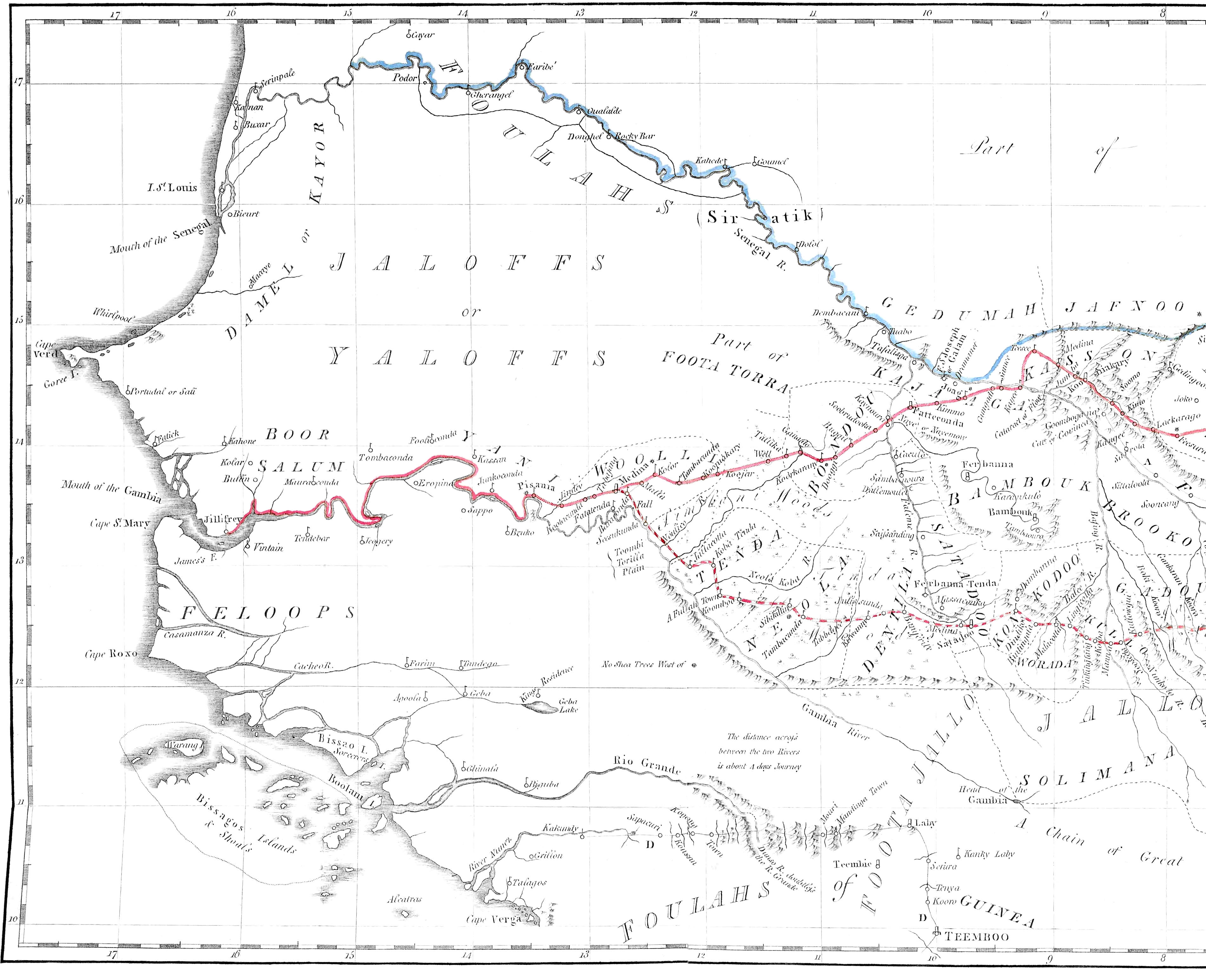
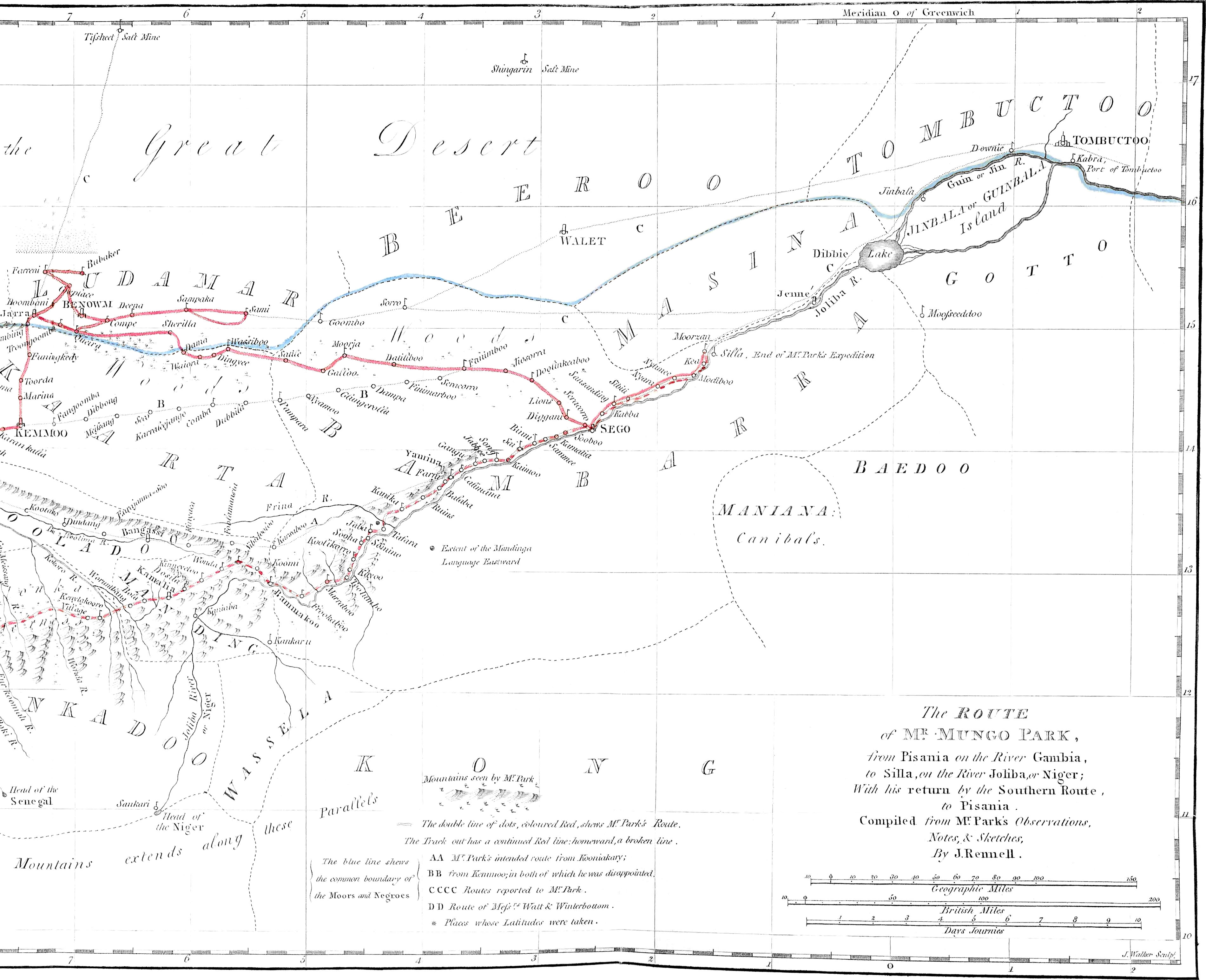
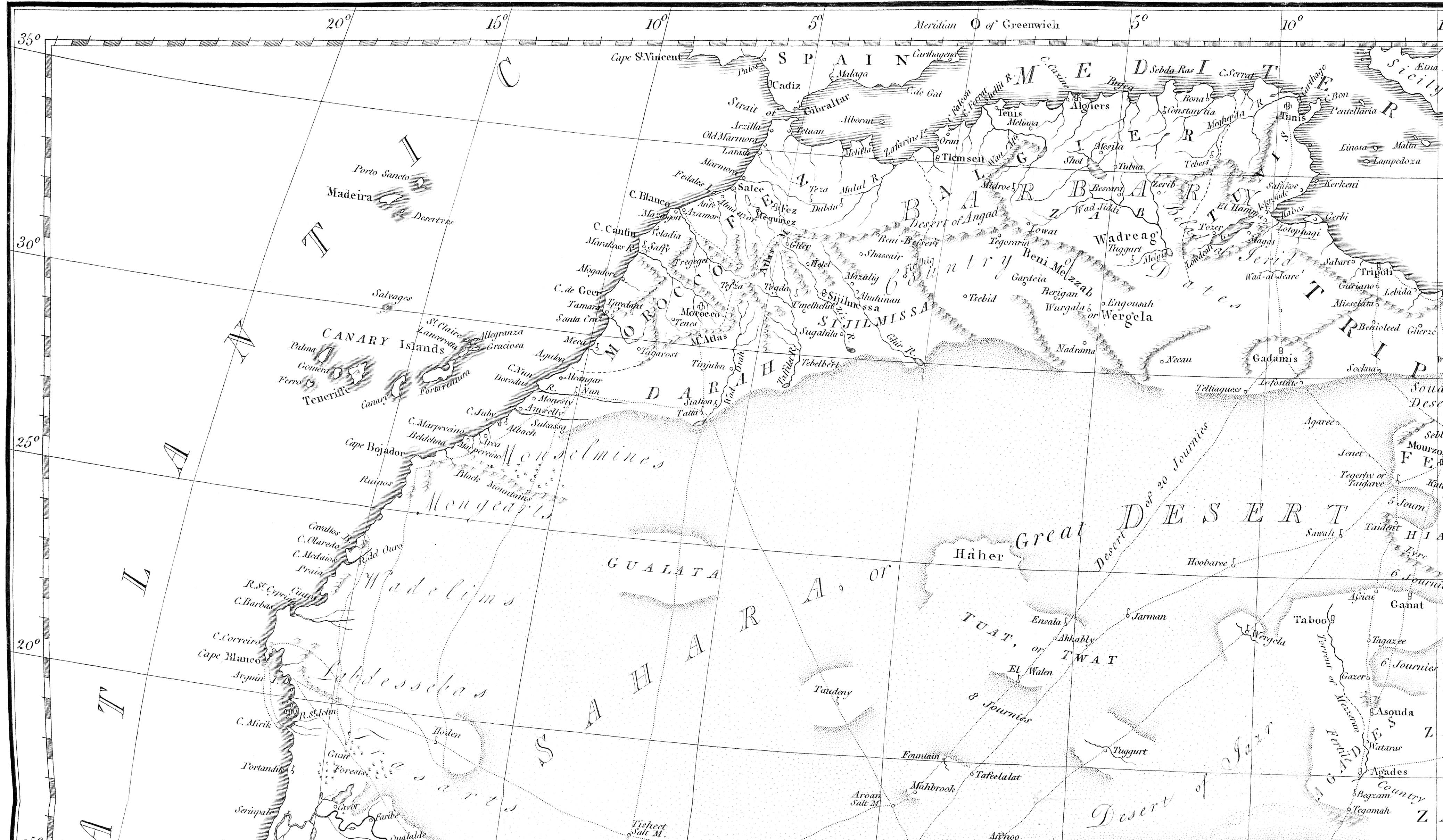
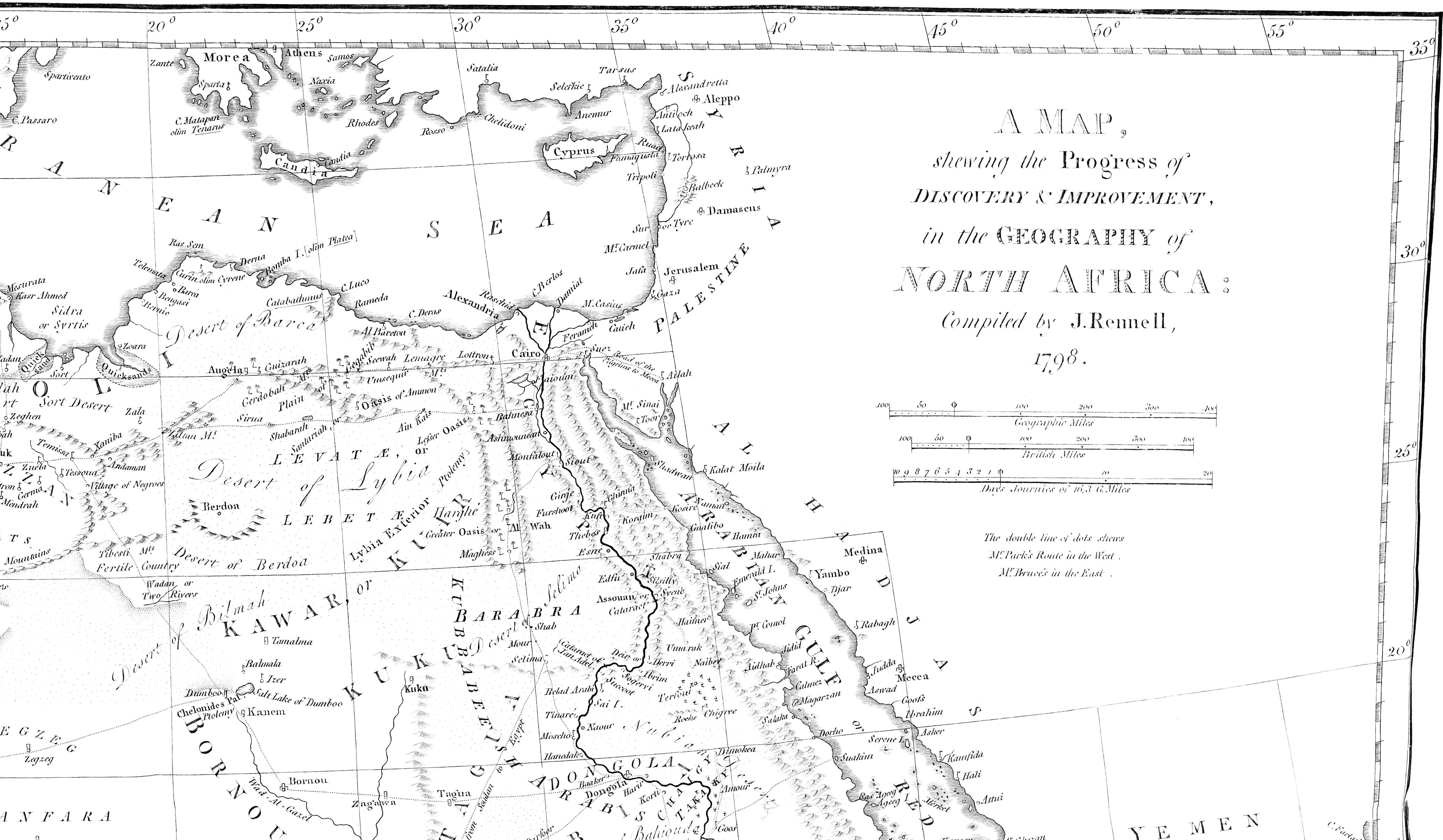
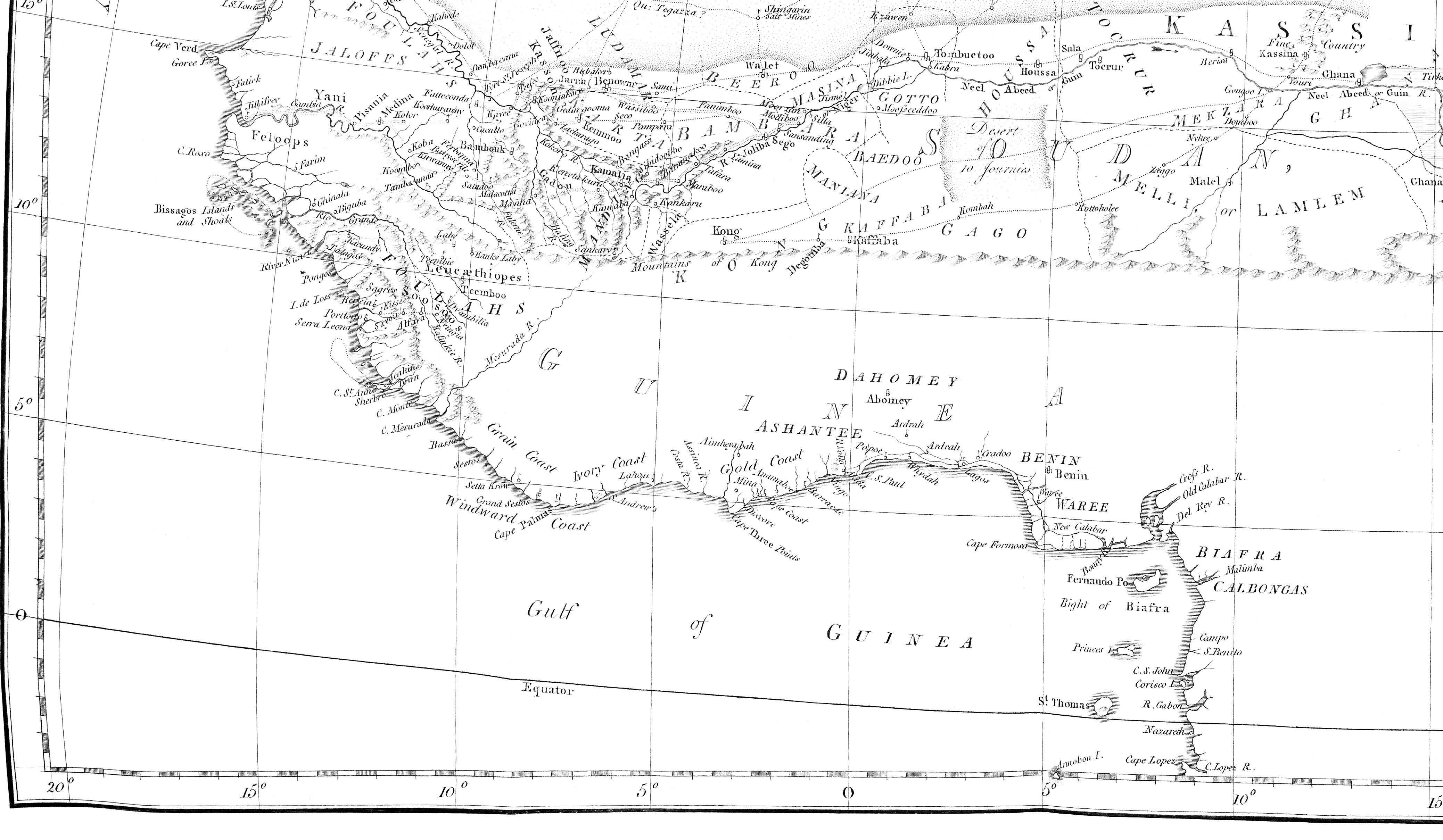
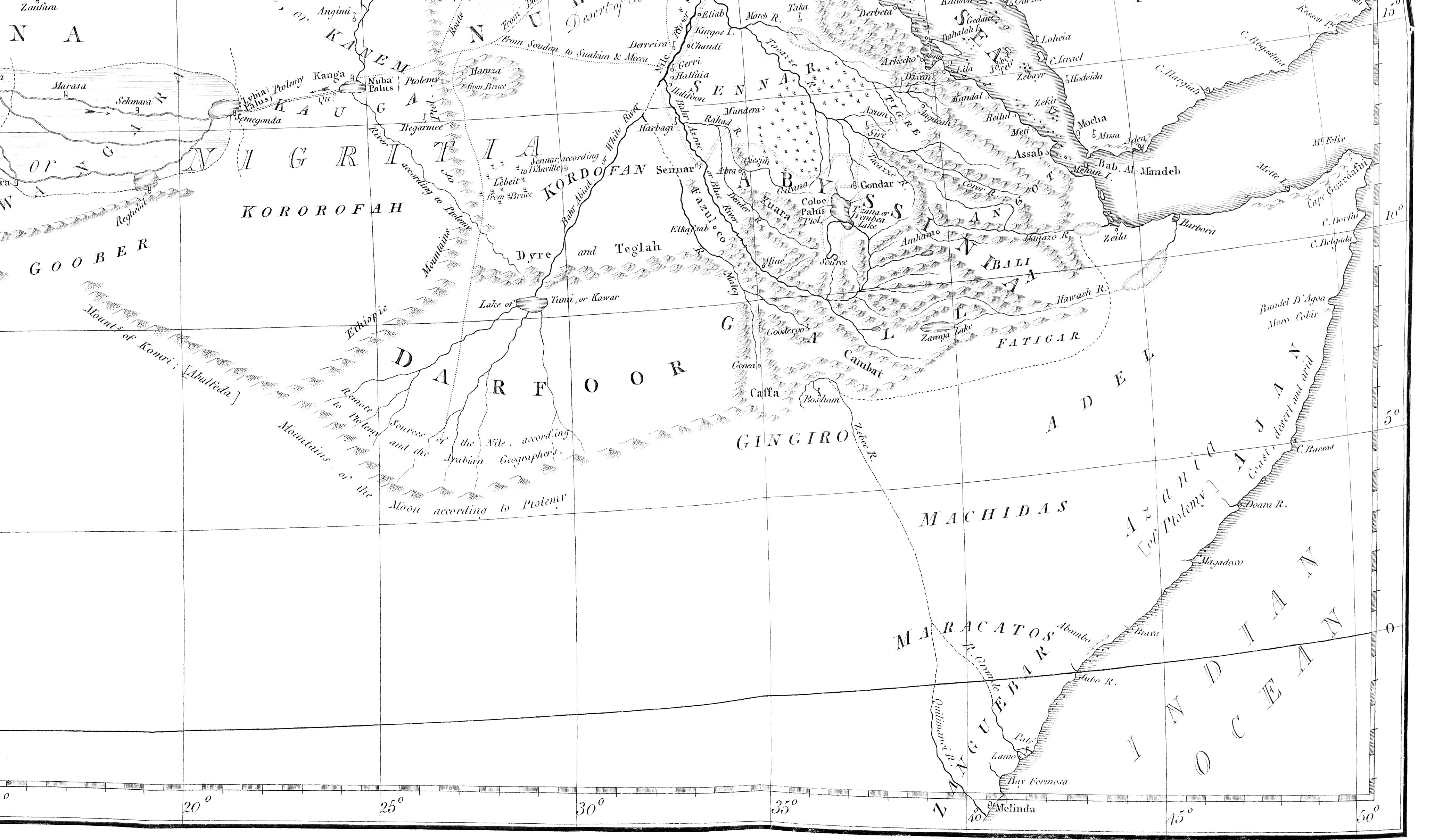
Rennell was pleased also to add, not only a Map of my route,
constructed in conformity to my own observations and sketches (when
freed from those errors, which the Major’s superior knowledge, and
distinguished accuracy in geographical researches, enabled him to
discover and correct), but also a General Map, shewing the progress
of discovery, and improvement in the Geography of North Africa;
together with a Chart of the lines of magnetic variation, in the seas
around that immense continent.
Availing myself therefore, on the present occasion, of
assistance like this, it is impossible that I can present myself
before the Public, without expressing how deeply and gratefully
sensible I am of the honour and advantage which I derive from the
labours of those Gentlemen; for Mr. Edwards has kindly permitted me
to incorporate, as occasion offered, the whole of his narrative
into different parts of my work; and Major Rennell, with equal good
will, allows me not only to embellish and elucidate my Travels,
with the Maps beforementioned, but also to subjoin his Geographical
Illustrations entire.
Thus aided and encouraged, I should deliver this volume to the
world, with that confidence of a favourable reception, which no
merits of my own could authorize me to claim; were I not
apprehensive that expectations have been formed, by some of my
subscribers, of discoveries to be unfolded, which I have not made,
and of wonders to be related, of which I am utterly ignorant. There
is danger that those who feel a disappointment of this nature,
finding less to astonish and amuse in my book, than they had
promised to themselves beforehand, will not even allow me the
little merit which I really possess. Painful as this circumstance
may prove to my feelings, I shall console myself under it, if the
distinguished persons, under whose auspices I entered on my mission, shall allow that I
have executed the duties of it to their satisfaction; and that they
consider the Journal which I have now the honour to present to
them, to be, what I have endeavoured to make it, an honest and
faithful report of my proceedings and observations in their
service, from the outset of my journey to its termination.
M. P.
[1]This Committee consists of the following
Noblemen and Gentlemen; Earl of Moira, Lord Bishop of Landaff,
Right Hon. Sir Joseph Banks, President of the Royal Society; Andrew
Stewart, Esq. F.R.S. and Bryan Edwards, Esq. F.R.S. Concerning the
original institution of the Society itself, and the progress of
discovery, previous to my expedition, the fullest information has
already been given in the various publications which the Society
have caused to be made.
The Author’s Motives for undertaking
the Voyage — his Instructions and Departure — arrives at Jillifree,
on the Gambia River — proceeds to Vintain. — Some Account of the
Feloops. — Proceeds up the River for Jonkakonda — arrives at Dr.
Laidley’s. — Some Account of Pisania, and the British Factory
established at that Place. — The Author’s Employment during his
Stay at Pisania — his Sickness and Recovery — the Country described
— prepares to set out for the Interior.
Description of the Feloops, the
Jaloffs, the Foulahs, and Mandingoes. — Some Account of the Trade
between the Nations of Europe and the Natives of Africa by the Way
of the Gambia, and between the Native Inhabitants of the Coast and
the Nations of the interior Countries — their Mode of selling and
buying, &c.
The Author sets out from Pisania —
his Attendants — reaches Jindey. — Story related by a Mandingo
Negro. — Proceeds to Medina, the Capital of Woolli. — Interview
with the King. — Saphies or Charms. — Proceeds to Kolor. —
Description of Mumbo Jumbo — arrives at Koojar — wrestling Match. —
Crosses the Wilderness, and arrives at Tallika, in the Kingdom of
Bondou.
Some Account of the Inhabitants of
Tallika. — The Author proceeds for Fatteconda — Incidents on the
Road. — Crosses the Neriko, arrives at Koorkarany — reaches
the River Falemé —
Fishery on that River — proceeds along its Bank to Naye or Nayemow
— crosses the Falemé and arrives at Fatteconda. — Has an Interview
with Almami, the Sovereign of Bondou. — Description of the King’s
Dwelling — has a second Interview with the King, who begs the
Author’s Coat. — Author visits the King’s Wives — is permitted to
depart on friendly Terms. — Journey by Night — arrives at Joag. —
Some Account of Bondou and its Inhabitants the Foulahs.
Account of Kajaaga. — Serawoollies —
their Manners and Language. — Account of Joag. — The Author is ill
treated, and robbed of half of his Effects, by Order of Batcheri,
the King. — Charity of a female Slave. — The Author is visited by
Demba Sego, Nephew of the King of Kasson, who offers to conduct him
in safety to that Kingdom. — Offer accepted. — The Author and his
Protector, with a numerous Retinue, set out and reach Samee, on the
Banks of the Senegal. — Proceed to Kayee, and crossing the Senegal,
arrive in the Kingdom of Kasson.
Arrival at Teesee. — Interview with
Tiggity Sego, the King’s Brother — the Author’s detention at Teesee
— some Account of that Place and its Inhabitants — incidents which
occurred there. — Rapacious Conduct of Tiggity Sego towards the
Author on his Departure. — Sets out for Kooniakary, the Capital of
the Kingdom. — Incidents on the Road, and Arrival at
Kooniakary.
The Author admitted to an Audience of
the King of Kasson, whom he finds well disposed towards him. —
Incidents during the Author’s Stay at Kooniakary. — Departs thence
for Kemmoo, the Capital of Kaarta. — Is received with great
Kindness by the King of Kaarta, who dissuades him from prosecuting
his Journey, on Account of approaching Hostilities with the King of
Bambarra. — The Author determines, notwithstanding, to proceed; and
the usual Routes being obstructed, takes the Path to Ludamar, a
Moorish Kingdom. — Is accommodated by the King with a Guide to
Jarra, the frontier Town of the Moorish Territories;
and sets out for
that Place, accompanied by three of the King’s Sons, and 200
Horsemen.
Journey from Kemmoo to Funingkedy. —
Some Account of the Lotus. — A Youth murdered by the Moors —
interesting Scene at his Death. — Author passes through Simbing. —
Some Particulars concerning Major Houghton. — Author reaches Jarra
— Situation of the surrounding States at the Period of his Arrival
there, and a brief Account of the War between Kaarta and
Bambarra.
Some Account of Jarra, and the
Moorish Inhabitants. — The Author applies for, and obtains
Permission from Ali, the Moorish Chief or Sovereign of Ludamar, to
pass through his Territories. — Departs from Jarra, and arrives at
Deena — ill treated by the Moors. — Proceeds to Sampaka — finds a
Negro who makes Gunpowder. — Continues his Journey to Samee, where
he is seized by some Moors who are sent for that Purpose by Ali —
is conveyed a Prisoner to the Moorish Camp at Benowm, on the
Borders of the Great Desert.
Various Occurrences during the
Author’s Confinement at Benowm — is visited by some Moorish Ladies.
— A Funeral and Wedding. — The Author receives an extraordinary
Present from the Bride. — Other Circumstances illustrative of the
Moorish Character and Manners.
Occurrences at the Camp continued. —
Information collected by the Author, concerning Houssa and
Tombuctoo; and the situation of the latter. — The Route described
from Morocco to Benowm. — The Author’s Distress from Hunger. — Ali
removes his Camp to the Northward. — The Author is carried Prisoner
to the new Encampment, and is presented to Queen Fatima. — Great
Distress from the Want of Water.
Containing some further miscellaneous
Reflections on the Moorish Character, and Manners. — Observations
concerning the Great Desert, its Animals, wild and domestic,
&c. &c.
Ali departs for Jarra, and the Author
allowed to follow him thither. — The Author’s faithful Servant,
Demba, is seized by Ali’s Order, and sent back into Slavery. — Ali
returns to his Camp, and permits the Author to remain at Jarra,
who, thenceforward, meditates his Escape. — Daisy, King of Kaarta,
approaching with his Army towards Jarra, the Inhabitants quit the
town, and the Author accompanies them in their Flight. — A Party of
Moors overtake him at Queira. — He gets away from them at Daybreak:
— is again pursued by another Party, and robbed; but finally
effects his Escape.
The Author feels great Joy at his
Deliverance, and proceeds through the Wilderness, E.S.E.; but finds
his Situation very deplorable. — Suffers greatly from Thirst, and
faints on the Sand: — recovers, and makes another Effort to push
forward. Is providentially relieved by a Fall of Rain. — Arrives at
a Foulah Village, where he is refused Relief by the Dooty; but
obtains Food from a poor Woman. — Continues his Journey through the
Wilderness, and the next Day lights on another Foulah Village,
where he is hospitably received by one of the Shepherds. — Arrives
on the third Day at a Negro Town called Wawra, tributary to the
King of Bambarra.
The Author proceeds to Wassiboo — is
joined by some fugitive Kaartans, who accompany him in his Route
through Bambarra. — Discovers the Niger. — Some Account of Sego,
the Capital of Bambarra. — Mansong, the King, refuses to see the
Author, but sends him a Present. — Great Hospitality of a Negro
Woman.
Departure from Sego, and Arrival at
Kabba. — Description of the Shea, or vegetable Butter Tree. — The
Author and his Guide arrive at Sansanding. Behaviour of the Moors
at that Place. — The Author pursues his Journey to the Eastward. —
Incidents on the Road. — Arrives at Modiboo, and proceeds for Kea;
but obliged to leave his Horse by the Way. — Embarks at Kea in a
Fisherman’s Canoe for Moorzan; is conveyed from thence across the
Niger to Silla. — Determines to proceed no further Eastward. — Some
Account of the further Course of the Niger, and the Towns in its
Vicinage, towards the East.
The Author returns Westward — arrives
at Modiboo, and recovers his Horse — finds great Difficulty in
travelling, in consequence of the Rains, and the overflowing of the
River; — is informed that the King of Bambarra had sent Persons to
apprehend him: — avoids Sego, and prosecutes his Journey along the
Banks of the Niger. — Incidents on the Road. — Cruelties attendant
on African Wars. — The Author crosses the River Frina, and arrives
at Taffara.
Inhospitable Reception at Taffara. —
A Negro Funeral at Sooha. — The Author continues his Route through
several Villages along the Banks of the Niger, until he comes to
Koolikorro. — Supports himself by writing Saphies —
reaches Maraboo — loses the Road; and after many Difficulties
arrives at Bammakoo. — Takes the Road for Sibidooloo — meets with
great Kindness at a Village called Kooma; — is afterwards robbed,
stripped, and plundered by Banditti. — The Author’s Resource and
Consolation under exquisite Distress. — He arrives in Safety at
Sibidooloo.
Government of Manding. — The Author’s
Reception by the Mansa, or chief Man of Sibidooloo, who takes
Measures for the Recovery of his Horse and Effects. — The Author removes to Wanda; —
great Scarcity, and its afflicting Consequences. — The Author
recovers his Horse and Clothes — presents his Horse to the Mansa;
and prosecutes his Journey to Kamalia — some Account of that Town.
— The Author’s kind Reception by Karfa Taura, a Slatee, who
proposes to go to the Gambia in the next dry Season, with a Caravan
of Slaves — The Author’s Sickness, and Determination to remain and
accompany Karfa.
Of the Climate and Seasons. — Winds.
— Vegetable Productions. — Population. — General Observations on
the Character and Disposition of the Mandingoes; and a summary
Account of their Manners and Habits of Life, their Marriages,
&c.
The Account of the Mandingoes
continued. — Their Notions in respect of the Planetary Bodies, and
the Figure of the Earth. — Their religious Opinions, and Belief in
a Future State. — Their Diseases and Methods of Treatment. — Their
Funeral Ceremonies, Amusements, Occupations, Diet, Arts,
Manufactures, &c.
Of Gold-dust, and the Manner in which
it is collected. — Process of Washing it. — Its Value in Africa. —
Of Ivory. — Surprise of the Negroes at the Eagerness of the
Europeans for this Commodity. — Scattered Teeth frequently picked
up in the Woods. — Mode of Hunting the Elephant. — Some Reflections
on the unimproved State of the Country, &c.
Transactions at Kamalia resumed. —
Arabic MSS. in Use among the Mahomedan Negroes. — Reflections concerning the
Conversion and Education of the Negro Children. — Return of the
Author’s Benefactor, Karfa. — Further Account of the Purchase and
Treatment of Slaves. — Fast of Rhamadan how observed by the
Negroes. — Author’s anxiety for the Day of Departure. — The Caravan
sets out — Account of it on its Departure, and Proceedings on the
Road, until its Arrival at Kinytakooro.
The Coffle crosses the Jallonka
Wilderness. — Miserable Fate of one of the female Slaves; — arrives
at Sooseeta; — proceeds to Manna. — Some Account of the Jalonkas. —
Crosses the main Stream of the Senegal. — Bridge of a singular
Construction. — Arrives at Malacotta. — Remarkable Conduct of the
King of the Jaloffs.
The Caravan proceeds to Konkodoo, and
crosses the Falemé River. — Its arrival at Baniserile, Kirwani, and
Tambacunda. — Incidents on the Road. A matrimonial Case. — Specimen
of the Shea Tree. — The Caravan proceeds through many Towns and
Villages, and arrives at length on the Banks of Gambia. — passes
through Medina, the Capital of Woolli, and finally stops at Jindey.
— The Author, accompanied by Karfa, proceeds to Pisania. — Various
Occurrences previous to his Departure from Africa, — takes his
Passage in an American Ship. — Short Account of his Voyage to Great
Britain by the Way of the West Indies.
Concerning the Ideas entertained by
the Ancient Geographers, as well as the Moderns, down to the Times
of Delisle and D’Anville, respecting the Course of the River
Niger.
Construction of the New Map of North
Africa. — New Arrangement of the Course of the Nile — Its distant
Fountain yet unexplored by Europeans. — A central Position in
Africa, determined. — Edrisi’s Line of Distance, consistent. —
Errors of Leo.
Observations on the physical
and political Geography of North Africa — Naturally
divisible into three Parts — Productive in Gold — Boundary of the
Moors and Negroes — the Foulahs, the Leucæthiopes
of the Ancients.
p. lxxxii
The followingAfrican Words, recurring very frequently in the
course of the Narrative, it is thought necessary to prefix an
Explanation of them for the Reader’s convenience.
Mansa. A king or chief governor.
Alkaid. The head magistrate of a town or province,
whose office is commonly hereditary.
Dooty. Another name for the chief magistrate of a town
or province: this word is used only in the interior countries.
Palaver. A court of justice; a public meeting of any
kind.
Bushreen. A mussulman.
Kafir. A Pagan native; an unbeliever.
Sonakee. Another term for an unconverted native; it
signifies one who drinks strong liquors, and is used by way of
reproach.
Slatees. Free black merchants, who trade chiefly in
slaves.
Coffle or Caffila. A caravan of slaves, or a
company of people travelling with any kind of merchandize.
Bar. Nominal money; a single bar is equal in value to
two shillings sterling, or thereabouts.
Minkalli. A quantity of gold, nearly equal in value to
ten shillings sterling.
Kowries. Small shells, which pass for money in the
Interior.
Korree. A watering-place, where shepherds keep their
cattle.
Bentang. A sort of stage, erected in every town,
answering the purpose of a town hall.
Baloon.
A room in which strangers are commonly lodged.
Soofroo. A skin for containing water.
Saphie. An amulet or charm.
Kouskous. A dish prepared from boiled corn.
Shea-toulou. Vegetable butter.
Calabash. A species of gourd, of which the Negroes
make bowls and dishes.
Paddle. A sort of hoe used in husbandry.
ERRAT A.
Page 13, line 9, after the word of,
insert the.
—— 18, the third line from the bottom, for
Mandigoes, read Mandingoes. This error occurs in
some other places.
—— 20, line 6, after the word as,
insert counsel.
—— 30, line 8, dele and.
—— 47, line 14, after expression,
insert even.
—— 60, line 14, after Prophet dele
the period.
—— 91, third line from the bottom, after
difficulty, insert and.
—— 136, line 4, dele there.
—— 261, third line from the bottom, for
is, read was.
The Mandingo language being merely oral, it
sometimes unavoidably happened to the Author, in reducing African
terms to writing, to express the same word differently, in
different parts of his journal. Thus, on revising his papers, he
found Jillifree and Jillifrey used
indiscriminately for the name of the same town; and in like manner
Kinyeto and Kenneyetoo; Cancaba and
Kancaba; Tambacunda and Tombaconda; and
some others. As this was not observed until many of the sheets were
printed, some of these instances of inattention will be found in
the ensuing work, which it is hoped the good-natured reader will
excuse. In cases of doubt, the Map of the Author’s route is
generally to be considered as the best authority; and to that also
he refers for the course and distance of each day’s progress.
The Route ofMr. Mungo
Park, from Pisania on the River Gambia, to Silla, on the River Joliba, or
Niger; With his return by the Southern Route, to Pisania.
Compiled from Mr. Park’s
Observations,
Notes, & Sketches,
By J. Rennell.
Published according to Act of Parliament by
James Rennell 5.April 1798.
The Author’s Motives for undertaking the Voyage
— his Instructions and Departure — arrives at Jillifree, on the
Gambia River — proceeds to Vintain. — Some Account of the Feloops.
— Proceeds up the River for Jonkakonda — arrives at Dr. Laidley’s.
— Some Account of Pisania, and the British Factory established at
that Place. — The Author’s Employment during his Stay at Pisania —
his Sickness and Recovery — the Country described — prepares to set
out for the Interior.
Soon after my return from
the East Indies in 1793, having learnt that the Noblemen and
Gentlemen, associated for the purpose of prosecuting Discoveries in
the Interior of Africa, were desirous of engaging a person to
explore that continent, by the way of the Gambia river, I took
occasion, through means of the President of the Royal Society, to
whom I had the honour to be known, of offering myself for that
service. I had been informed, that a gentleman of the name of
Houghton, a Captain in
the army, and formerly Fort-Major at Goree, had already sailed to
the Gambia, under the direction of the Association, and that there
was reason to apprehend he had fallen a sacrifice to the climate,
or perished in some contest with the natives; but this
intelligence, instead of deterring me from my purpose, animated me
to persist in the offer of my services with the greater solicitude.
I had a passionate desire to examine into the productions of a
country so little known; and to become experimentally acquainted
with the modes of life, and character of the natives. I knew that I
was able to bear fatigue; and I relied on my youth, and the
strength of my constitution, to preserve me from the effects of the
climate. The salary which the Committee allowed was sufficiently
large, and I made no stipulation for future reward. If I should
perish in my journey, I was willing that my hopes and expectations
should perish with me; and if I should succeed in rendering the
geography of Africa more familiar to my countrymen, and in opening
to their ambition and industry new sources of wealth, and new
channels of commerce, I knew that I was in the hands of men of
honour, who would not fail to bestow that remuneration which my
successful services should appear to them to merit. The Committee
of the Association, having made such inquiries as they thought
necessary, declared themselves satisfied with the qualifications
that I possessed, and accepted me for the service; and with that
liberality which on all occasions distinguishes their conduct, gave
me every encouragement which it was in their power to grant, or
which I could with propriety ask.
It was at first
proposed that I should accompany Mr. James Willis, who was then
recently appointed Consul at Senegambia, and whose countenance in
that capacity it was thought might have served and protected me;
but Government afterwards rescinded his appointment, and I lost
that advantage. The kindness of the Committee, however, supplied
all that was necessary. Being favoured by the Secretary of the
Association, the late Henry Beaufoy, Esq. with a recommendation to
Dr. John Laidley (a gentleman who had resided many years at an
English factory on the banks of the Gambia), and furnished with a
letter of credit on him for £200, I took my passage in the brig
Endeavour, a small vessel trading to the Gambia for bees-wax and
ivory, commanded by Captain Richard Wyatt, and I became impatient
for my departure.
My instructions were very plain and concise. I was directed, on
my arrival in Africa, “to pass on to the river Niger, either by the
way of Bambouk, or by such other route as should be found most
convenient. That I should ascertain the course, and, if possible,
the rise and termination of that river. That I should use my utmost
exertions to visit the principal towns or cities in its
neighbourhood, particularly Tombuctoo and Houssa; and that I should
be afterwards at liberty to return to Europe, either by the way of
the Gambia, or by such other route, as, under all the then existing
circumstances of my situation and prospects, should appear to me to
be most advisable.”
We sailed from Portsmouth on the 22d day of May, 1795. On the
4th of June, we saw the mountains over Mogadore, on the coast of
Africa; and on the 21st of the same month, after a pleasant voyage of thirty days, we
anchored at Jillifree, a town on the northern bank of the river
Gambia, opposite to James’s Island, where the English had formerly
a small fort.
The kingdom of Barra, in which the town of Jillifree is
situated, produces great plenty of the necessaries of life; but the
chief trade of the inhabitants is in salt; which commodity they
carry up the river in canoes as high as Barraconda, and bring down
in return Indian corn, cotton cloths, elephants’ teeth, small
quantities of gold dust, &c. The number of canoes and people
constantly employed in this trade, make the King of Barra more
formidable to Europeans than any other chieftain on the river; and
this circumstance probably encouraged him to establish those
exorbitant duties, which traders of all nations are obliged to pay
at entry, amounting to nearly £20. on every vessel, great and
small. These duties, or customs, are generally collected in person
by the Alkaid, or Governor of Jillifree, and he is attended on
these occasions by a numerous train of dependants, among whom are
found many who, by their frequent intercourse with the English,
have acquired a smattering of our language; but they are commonly
very noisy, and very troublesome; begging for every thing they
fancy with such earnestness and importunity, that traders, in order
to get quit of them, are frequently obliged to grant their
requests.
On the 23d we departed from Jillifree, and proceeded to Vintain,
a town situated about two miles up a creek on the southern side of
the river. This place is much resorted to by Europeans, on account
of the great quantities of bees-wax which are brought hither for
sale: the wax is collected in the woods by the Feloops, a wild and unsociable race of
people; their country, which is of considerable extent, abounds in
rice; and the natives supply the traders, both on the Gambia, and
Cassamansa rivers, with that article, and also with goats and
poultry, on very reasonable terms. The honey which they collect is
chiefly used by themselves in making a strong intoxicating liquor,
much the same as the mead which is produced from honey in Great
Britain.
In their traffic with Europeans, the Feloops generally employ a
factor, or agent, of the Mandingo nation, who speaks a little
English, and is acquainted with the trade of the river. This broker
makes the bargain; and, with the connivance of the European,
receives a certain part only of the payment; which he gives to his
employer as the whole; the remainder (which is very truly called
the cheating money) he receives when the Feloop is gone,
and appropriates to himself, as a reward for his trouble.
The language of the Feloops is appropriate and peculiar; and as
their trade is chiefly conducted, as hath been observed, by
Mandingoes, the Europeans have no inducement to learn it. The
numerals are as follow:
One
Enory.
Two
Sickaba, or Cookaba.
Three
Sisajee.
Four
Sibakeer.
Five
Footuck.
Six
Footuck-Enory.
Seven
Footuck-Cookaba.
Eight
Footuck-Sisajee.
Nine
Footuck-Sibakeer.
Ten
Sibankonyen.
On the 26th we left Vintain, and continued our course up the
river, anchoring whenever the tide failed us, and frequently towing
the vessel with the boat. The river is deep and muddy; the banks
are covered with impenetrable thickets of mangrove; and the whole
of the adjacent country appears to be flat and swampy.
The Gambia abounds with fish, some species of which are
excellent food; but none of them that I recollect are known in
Europe. At the entrance from the sea, sharks are found in great
abundance; and, higher up, alligators, and the hippopotamus (or
river horse) are very numerous. The latter might with more
propriety be called the river-elephant, being of an enormous and
unwieldy bulk, and his teeth furnish good ivory. This animal is
amphibious, with short and thick legs, and cloven hoofs; it feeds
on grass, and such shrubs as the banks of the river afford, boughs
of trees, &c. seldom venturing far from the water, in which it
seeks refuge on hearing the approach of man. I have seen many, and
always found them of a timid and inoffensive disposition.
In six days after leaving Vintain, we reached Jonkakonda, a
place of considerable trade, where our vessel was to take in part
of her lading. The next morning, the several European traders came
from their different factories to receive their letters, and learn
the nature and amount of the cargo; and the Captain, dispatched a messenger to Dr.
Laidley to inform him of my arrival. He came to Jonkakonda the
morning following, when I delivered him Mr. Beaufoy’s letter, and
he gave me a kind invitation to spend my time at his house until an
opportunity should offer of prosecuting my journey. This invitation
was too acceptable to be refused, and being furnished by the Doctor
with a horse and guide, I set out from Jonkakonda at daybreak on
the 5th of July, and at eleven o’clock arrived at Pisania, where I
was accommodated with a room, and other conveniences in the
Doctor’s house.
Pisania is a small village in the King of Yany’s dominions,
established by British subjects as a factory for trade, and
inhabited solely by them and their black servants. It is situated
on the banks of the Gambia, sixteen miles above Jonkakonda. The
white residents, at the time of my arrival there, consisted only of
Dr. Laidley, and two gentlemen who were brothers, of the name of
Ainsley; but their domestics were numerous. They enjoyed perfect
security under the king’s protection, and being highly esteemed and
respected by the natives at large, wanted no accommodation or
comfort which the country could supply; and the greatest part of
the trade in slaves, ivory, and gold, was in their hands.
Being now settled for some time at my ease, my first object was
to learn the Mandingo tongue, being the language in almost general
use throughout this part of Africa; and without which I was fully
convinced that I never could acquire an extensive knowledge of the
country or its inhabitants. In this pursuit I was greatly assisted
by Dr. Laidley, who, by a long residence in the country, and constant intercourse with
the natives, had made himself completely master of it. Next to the
language, my great object was to collect information concerning the
countries I intended to visit. On this occasion I was referred to
certain traders called Slatees. These are free black merchants, of
great consideration in this part of Africa, who come down from the
interior countries, chiefly with enslaved Negroes for sale; but I
soon discovered that very little dependance could be placed on the
accounts which they gave; for they contradicted each other in the
most important particulars, and all of them seemed extremely
unwilling that I should prosecute my journey. These circumstances
increased my anxiety to ascertain the truth from my own personal
observations.
In researches of this kind, and in observing the manners and
customs of the natives, in a country so little known to the nations
of Europe, and furnished with so many striking and uncommon objects
of nature, my time passed not unpleasantly; and I began to flatter
myself that I had escaped the fever, or seasoning, to which
Europeans, on their first arrival in hot climates, are generally
subject. But, on the 31st of July, I imprudently exposed myself to
the night dew, in observing an eclipse of the moon, with a view to
determine the longitude of the place: the next day I found myself
attacked with a smart fever and delirium; and such an illness
followed, as confined me to the house during the greatest part of
August. My recovery was very slow: but I embraced every short
interval of convalescence to walk out, and make myself acquainted
with the productions of the country. In one of those excursions,
having rambled farther
than usual, in a hot day, I brought on a return of my fever, and on
the 10th of September I was again confined to my bed. The fever,
however, was not so violent as before; and in the course of three
weeks I was able, when the weather would permit, to renew my
botanical excursions; and when it rained, I amused myself with
drawing plants, &c. in my chamber. The care and attention of
Dr. Laidley contributed greatly to alleviate my sufferings; his
company and conversation beguiled the tedious hours during that
gloomy season, when the rain falls in torrents; when suffocating
heats oppress by day, and when the night is spent by the terrified
traveller in listening to the croaking of frogs, (of which the
numbers are beyond imagination,) the shrill cry of the jackall, and
the deep howling of the hyæna; a dismal concert, interrupted only
by the roar of such tremendous thunder as no person can form a
conception of but those who have heard it.
The country itself being an immense level, and very generally
covered with woods, presents a tiresome and gloomy uniformity to
the eye; but although nature has denied to the inhabitants the
beauties of romantic landscapes, she has bestowed on them, with a
liberal hand, the more important blessings of fertility and
abundance. A little attention to cultivation procures a sufficiency
of corn; the fields afford a rich pasturage for cattle; and the
natives are plentifully supplied with excellent fish, both from the
Gambia river and the Walli creek.
The grains which are chiefly cultivated are Indian corn, (zea
mays); two kinds of holcus spicatus, called by the
natives soono and sanio; holcus niger, and
holcus bicolor; the former of which they have named bassi woolima, and
the latter bassiqui. These, together with rice, are raised
in considerable quantities; besides which, the inhabitants, in the
vicinity of the towns and villages, have gardens which produce
onions, calavances, yams, cassavi, ground-nuts, pompions, gourds,
water melons, and some other esculent plants.
I observed likewise, near the towns, small patches of cotton and
indigo. The former of these articles supplies them with clothing,
and with the latter they dye their cloth of an excellent blue
colour, in a manner that will hereafter be described.
In preparing their corn for food, the natives use a large wooden
mortar called a paloon, in which they bruise the seed
until it parts with the outer covering, or husk, which is then
separated from the clean corn, by exposing it to the wind; nearly
in the same manner as wheat is cleared from the chaff in England.
The corn thus freed from the husk, is returned to the mortar, and
beaten into meal; which is dressed variously in different
countries; but the most common preparation of it among the nations
of the Gambia, is a sort of pudding, which they call
kouskous. It is made by first moistening the flour with
water, and then stirring and shaking it about in a large calabash,
or gourd, till it adheres together in small granules, resembling
sago. It is then put into an earthen pot, whose bottom is
perforated with a number of small holes; and this pot being placed
upon another, the two vessels are luted together, either with a
paste of meal and water, or with cows’ dung, and placed upon the
fire. In the lower vessel is commonly some animal food and water,
the steam or vapour of which ascends through the perforations in
the bottom of the
upper vessel, and softens and prepares the kouskous, which
is very much esteemed throughout all the countries that I visited.
I am informed, that the same manner of preparing flour, is very
generally used on the Barbary coast, and that the dish so prepared,
is there called by the same name. It is therefore probable, that
the Negroes borrowed the practice from the Moors.
For gratifying a taste for variety, another sort of pudding,
called nealing, is sometimes prepared from the meal of
corn; and they have also adopted two or three different modes of
dressing their rice. Of vegetable food, therefore, the natives have
no want; and although the common class of people are but sparingly
supplied with animal food, yet this article is not wholly withheld
from them.
Their domestic animals are nearly the same as in Europe. Swine
are found in the woods, but their flesh is not esteemed: probably
the marked abhorrence in which this animal is held by the votaries
of Mahomet, has spread itself among the Pagans. Poultry of all
kinds (the turkey excepted) is every where to be had. The Guinea
fowl and red partridge, abound in the fields; and the woods furnish
a small species of antelope, of which the venison is highly and
deservedly prized.
Of the other wild animals in the Mandingo countries, the most
common are the hyæna, the panther, and the elephant. Considering
the use that is made of the latter in the East Indies, it may be
thought extraordinary, that the natives of Africa have not, in any
part of this immense continent, acquired the skill of taming this
powerful and docile creature, and applying his strength and faculties to the service of
man. When I told some of the natives that this was actually done in
the countries of the East, my auditors laughed me to scorn, and
exclaimed, Tobaubo fonnio! (a white man’s lie.) The
Negroes frequently find means to destroy the elephant by fire arms;
they hunt it principally for the sake of the teeth, which they
transfer in barter to those who sell them again to the Europeans.
The flesh they eat, and consider it as a great delicacy.
The usual beast of burthen in all the Negro territories, is the
ass. The application of animal labour to the purposes of
agriculture, is no where adopted; the plough, therefore, is wholly
unknown. The chief implement used in husbandry is the hoe, which
varies in form in different districts; and the labour is
universally performed by slaves.
On the 6th of October the waters of the Gambia were at the
greatest height, being fifteen feet above the high-water mark of
the tide; after which they began to subside; at first slowly, but
afterwards very rapidly; sometimes sinking more than a foot in
twenty-four hours: by the beginning of November the river had sunk
to its former level, and the tide ebbed and flowed as usual. When
the river had subsided, and the atmosphere grew dry, I recovered
apace, and began to think of my departure; for this is reckoned the
most proper season for travelling: the natives had completed their
harvest, and provisions were every where cheap and plentiful.
Dr. Laidley was at this time employed in a trading voyage at
Jonkakonda. I wrote to him to desire that he would use his interest
with the slatees, or slave merchants, to procure me the company and protection of the
first coffle (or caravan,) that might leave Gambia for the
interior country; and in the mean time I requested him to purchase
for me a horse, and two asses. A few days afterwards the Doctor
returned to Pisania, and informed me that a coffle would certainly
go for the interior, in the course of the dry season; but that as
many of the merchants belonging to it had not yet completed their
assortment of goods, he could not say at what time they would set
out.
As the characters and dispositions of the slatees, and people
that composed the caravan, were entirely unknown to me, and as they
seemed rather averse to my purpose, and unwilling to enter into any
positive engagements on my account; and the time of their departure
being withal very uncertain, I resolved, on further deliberation,
to avail myself of the dry season, and proceed without them.
Dr. Laidley approved my determination, and promised me every
assistance in his power, to enable me to prosecute my journey with
comfort and safety.
This resolution having been formed, I made preparations
accordingly. And now, being about to take leave of my hospitable
friend, (whose kindness and solicitude continued to the moment of
my departure,[2]) and to quit, for many months, the countries
bordering on the Gambia, it seems proper, before I proceed with my
narrative, that I should, in this place, give some account of the
several Negro nations which inhabit the banks of this celebrated river; and the
commercial intercourse that subsists between them, and such of the
nations of Europe as find their advantage in trading to this part
of Africa. The observations which have occurred to me on both these
subjects, will be found in the following Chapter.
[2]Dr. Laidley, to my infinite regret, has since
paid the debt of nature. He left Africa in the latter end of 1797,
intending to return to Great Britain by way of the West Indies; and
died soon after his arrival at Barbadoes.
CHAPTER II.
Description of the Feloops, the Jaloffs, the
Foulahs, and Mandingoes. — Some Account of the Trade between the
Nations of Europe and the Natives of Africa by the way of the
Gambia, and between the native Inhabitants of the Coast and the
Nations of the interior Countries — their Mode of selling and
buying, &c.
The natives of the
countries bordering on the Gambia, though distributed into a great
many distinct governments, may, I think, be divided into four great
classes; the Feloops, the Jaloffs, the Foulahs, and the Mandingoes.
Among all these nations, the religion of Mahomet has made, and
continues to make, considerable progress; but, in most of them, the
body of the people, both free and enslaved, persevere in
maintaining the blind but harmless superstitions of their
ancestors, and are called by the Mahomedans kafirs, or
infidels.
Of the Feloops, I have little to add to what has been observed
concerning them in the former Chapter. They are of a gloomy
disposition, and are supposed never to forgive an injury. They are
even said to transmit their quarrels as deadly feuds to their
posterity; insomuch that a son considers it as incumbent on him,
from a just sense of filial obligation, to become the avenger of
his deceased father’s wrongs. If a man loses his life in one of
those sudden quarrels, which perpetually occur at their
feasts, when the
whole party is intoxicated with mead, his son, or the eldest of his
sons (if he has more than one), endeavours to procure his father’s
sandals, which he wears once a year, on the anniversary of
his father’s death, until a fit opportunity offers of revenging his
fate, when the object of his resentment seldom escapes his pursuit.
This fierce and unrelenting disposition is, however,
counterbalanced by many good qualities: they display the utmost
gratitude and affection towards their benefactors; and the fidelity
with which they preserve whatever is intrusted to them is
remarkable. During the present war they have, more than once, taken
up arms to defend our merchant vessels from French privateers; and
English property, of considerable value, has frequently been left
at Vintain, for a long time, entirely under the care of the
Feloops; who have uniformly manifested on such occasions the
strictest honesty and punctuality. How greatly is it to be wished,
that the minds of a people so determined and faithful, could be
softened and civilized, by the mild and benevolent spirit of
Christianity!
The Jaloffs (or Yaloffs) are an active, powerful, and warlike
race, inhabiting great part of that tract which lies between the
river Senegal, and the Mandingo States on the Gambia; yet they
differ from the Mandingoes, not only in language, but likewise in
complexion and features. The noses of the Jaloffs are not so much
depressed, nor the lips so protuberant, as among the generality of
Africans; and although their skin is of the deepest black, they are
considered by the white traders, as the most sightly Negroes in
this part of the Continent.
They are divided into several independent states or
kingdoms; which are
frequently at war either with their neighbours, or with each other.
In their manners, superstitions, and government, however, they have
a greater resemblance to the Mandingoes (of whom I shall presently
speak) than to any other nation; but excel them in the manufacture
of cotton cloth; spinning the wool to a finer thread, weaving it in
a broader loom, and dying it of a better colour.
Their language is said to be copious and significant; and is
often learnt by Europeans trading to Senegal. I cannot say much of
it from my own knowledge; but have preserved their numerals, which
are these:
One
Wean.
Two
Yar.
Three
Yat.
Four
Yanet.
Five
Judom.
Six
Judom wean.
Seven
Judom Yar.
Eight
Judom Yat.
Nine
Judom Yanet.
Ten
Fook.
Eleven
Fook aug wean, &c
The Foulahs (or Pholeys), such of them at least as reside near
the Gambia, are chiefly of a tawny complexion, with soft silky
hair, and pleasing features. They are much attached to a pastoral
life, and have introduced themselves into all the kingdoms on the
windward coast, as herdsmen and husbandmen, paying a tribute to the sovereign of the
country for the lands which they hold. Not having many
opportunities however, during my residence at Pisania, of improving
my acquaintance with these people, I defer entering at large into
their character, until a fitter occasion occurs, which will present
itself when I come to Bondou.
The Mandingoes, of whom it remains to speak, constitute in
truth, the bulk of the inhabitants in all those districts of Africa
which I visited; and their language, with a few exceptions, is
universally understood, and very generally spoken, in that part of
the continent. Their numerals are these:[3]
One
Killin.
Two
Foola.
Three
Sabba.
Four
Nani.
Five
Loolo.
Six
Woro.
Seven
Oronglo.
Eight
Sie.
Nine
Conunta.
Ten
Tang.
Eleven
Tan ning killin, &c.
They are called Mandingoes, I conceive, as having originally
migrated from the interior state of Manding, of which some account
will hereafter be given; but, contrary to the present constitution of their parent
country, which is republican, it appeared to me that the government
in all the Mandingo states, near the Gambia, is monarchical. The
power of the sovereign is, however, by no means unlimited. In all
affairs of importance, the king calls an assembly of the principal
men, or elders, by whose councils he is directed, and without whose
advice he can neither declare war, nor conclude peace.
In every considerable town there is a chief magistrate, called
the Alkaid, whose office is hereditary, and whose business
it is to preserve order, to levy duties on travellers, and to
preside at all conferences in the exercise of local jurisdiction
and the administration of justice. These courts are composed of the
elders of the town (of free condition), and are termed
palavers; and their proceedings are conducted in the open
air with sufficient solemnity. Both sides of a question are freely
canvassed, witnesses are publicly examined, and the decisions which
follow generally meet with the approbation of the surrounding
audience.
As the Negroes have no written language of their own, the
general rule of decision is an appeal to ancient custom;
but since the system of Mahomet has made so great progress among
them, the converts to that faith have gradually introduced, with
the religious tenets, many of the civil institutions of the
Prophet; and where the Koran is not found sufficiently explicit,
recourse is had to a commentary called Al Sharra,
containing, as I was told, a complete exposition or digest of the
Mahomedan laws, both civil and criminal, properly arranged and
illustrated.
This frequency of
appeal to written laws, with which the Pagan natives are
necessarily unacquainted, has given rise in their palavers to (what
I little expected to find in Africa) professional advocates, or
expounders of the law, who are allowed to appear and to plead for
plaintiff or defendant, much in the same manner as counsel in the
law courts of Great Britain. They are Mahomedan Negroes who have
made, or affect to have made, the laws of the Prophet their
peculiar study; and if I may judge from their harangues, which I
frequently attended, I believe that in the forensic qualifications
of procrastination and cavil, and the arts of confounding and
perplexing a cause, they are not always surpassed by the ablest
pleaders in Europe. While I was at Pisania a cause was heard which
furnished the Mahomedan lawyers with an admirable opportunity of
displaying their professional dexterity. The case was this: an ass
belonging to a Serawoolli Negro (a native of an interior country
near the river Senegal) had broke into a field of corn belonging to
one of the Mandingo inhabitants, and destroyed great part of it.
The Mandingo having caught the animal in his field, immediately
drew his knife and cut its throat. The Serawoolli thereupon called
a palaver (or in European terms, brought an
action) to recover damages for the loss of his beast, on which
he set a high value. The defendant confessed he had killed the ass,
but pleaded a set off, insisting that the loss he had
sustained by the ravage in his corn, was equal to the sum demanded
for the animal. To ascertain this fact was the point at issue, and
the learned advocates contrived to puzzle the cause in such a
manner, that after a hearing of three days, the court broke up without coming to any
determination upon it; and a second palaver was, I suppose, thought
necessary.
The Mandingoes, generally speaking, are of a mild, sociable, and
obliging disposition. The men are commonly above the middle size,
well shaped, strong, and capable of enduring great labour; the
women are good-natured, sprightly and agreeable. The dress of both
sexes is composed of cotton cloth, of their own manufacture; that
of the men is a loose frock, not unlike a surplice, with drawers
which reach half way down the leg; and they wear sandals on their
feet, and white cotton caps on their heads. The women’s dress
consists of two pieces of cloth, each of which is about six feet
long, and three broad; one of these they wrap round the waist,
which hanging down to the ancles answers the purpose of a
petticoat: the other is thrown negligently over the bosom and
shoulders.
This account of their clothing is indeed nearly applicable to
the natives of all the different countries in this part of Africa;
a peculiar national mode is observable only in the head dresses of
the women.
Thus, in the countries of the Gambia, the females wear a sort of
bandage, which they call Jalla. It is a narrow stripe of
cotton cloth, wrapped many times round, immediately over the
forehead. In Bondou the head is encircled with strings of white
beads, and a small plate of gold is worn in the middle of the
forehead. In Kasson, the ladies decorate their heads in a very
tasteful and elegant manner, with white sea-shells. In Kaarta and
Ludamar, the women raise their hair to a great height by the
addition of a pad (as the ladies did formerly in Great Britain) which they decorate
with a species of coral, brought from the Red sea by pilgrims
returning from Mecca, and sold at a great price.
In the construction of their dwelling houses the Mandingoes also
conform to the general practice of the African nations on this part
of the continent, contenting themselves with small and incommodious
hovels. A circular mud wall about four feet high, upon which is
placed a conical roof, composed of the bamboo cane, and thatched
with grass, forms alike the palace of the king, and the hovel of
the slave. Their household furniture is equally simple. A hurdle of
canes placed upon upright stakes, about two feet from the ground,
upon which is spread a mat or bullock’s hide, answers the purpose
of a bed: a water jar, some earthen pots for dressing their food, a
few wooden bowls and calabashes, and one or two low stools, compose
the rest.
As every man of free condition has a plurality of wives, it is
found necessary (to prevent, I suppose, matrimonial disputes) that
each of the ladies should be accommodated with a hut to herself;
and all the huts belonging to the same family are surrounded by a
fence, constructed of bamboo canes, split and formed into a sort of
wicker-work. The whole inclosure is called a sirk, or
surk. A number of these inclosures, with narrow passages
between them, form what is called a town; but the huts are
generally placed without any regularity, according to the caprice
of the owner. The only rule that seems to be attended to, is
placing the door towards the south-west, in order to admit the sea
breeze.
In each town is a large stage called the bentang, which
answers the purpose
of a public hall or town-house; it is composed of interwoven canes,
and is generally sheltered from the sun by being erected in the
shade of some large tree. It is here that all public affairs are
transacted and trials conducted; and here the lazy and indolent
meet to smoke their pipes and hear the news of the day. In most of
the towns the Mahomedans have also a missura, or mosque,
in which they assemble and offer up their daily prayers, according
to the rules of the Koran.
In the account which I have thus given of the natives, the
reader must bear in mind, that my observations apply chiefly to
persons of free condition, who constitute, I suppose, not
more than one-fourth part of the inhabitants at large; the other
three-fourths are in a state of hopeless and hereditary slavery;
and are employed in cultivating the land, in the care of cattle,
and in servile offices of all kinds, much in the same manner as the
slaves in the West Indies. I was told, however, that the Mandingo
master can neither deprive his slave of life, nor sell him to a
stranger, without first calling a palaver on his conduct; or, in
other words, bringing him to a public trial: but this degree of
protection is extended only to the native or domestic slave.
Captives taken in war, and those unfortunate victims who are
condemned to slavery for crimes or insolvency, and, in short, all
those unhappy people who are brought down from the interior
countries for sale, have no security whatever, but may be treated
and disposed of in all respects as the owner thinks proper. It
sometimes happens, indeed, when no ships are on the Coast, that a
humane and considerate master, incorporates his purchased slaves
among his domestics; and their offspring at least, if not the parents,
become entitled to all the privileges of the native class.
The preceding remarks, concerning the several nations that
inhabit the banks of the Gambia, are all that I recollect as
necessary to be made in this place, at the outset of my journey.
With regard to the Mandingoes, however, many particulars are yet to
be related; some of which are necessarily interwoven into the
narrative of my progress, and others will be given in a summary, at
the end of my work; together with all such observations as I have
collected on the country and climate, which I could not with
propriety insert in the regular detail of occurrences. What remains
of the present Chapter will therefore relate solely to the trade
which the nations of Christendom have found means to establish with
the natives of Africa, by the channel of the Gambia; and the inland
traffic which has arisen, in consequence of it, between the
inhabitants of the Coast, and the nations of the interior
countries.
The earliest European establishment on this celebrated river was
a factory of the Portugueze; and to this must be ascribed the
introduction of the numerous words of that language which are still
in use among the Negroes. The Dutch, French, and English,
afterwards successively possessed themselves of settlements on the
Coast; but the trade of the Gambia became, and continued for many
years, a sort of monopoly in the hands of the English. In the
travels of Francis Moore, is preserved an account of the Royal
African Company’s establishments in this river, in the year 1730;
at which time James’s factory alone consisted of a governor, deputy
governor, and two other principal officers; eight factors, thirteen writers,
twenty inferior attendants and tradesmen; a company of soldiers,
and thirty-two Negro servants, besides sloops, shallops, and boats,
with their crews; and there were no less than eight subordinate
factories in other parts of the river.
The trade with Europe, by being afterwards laid open, was almost
annihilated; the share which the subjects of England at this time
hold in it, supports not more than two or three annual ships; and I
am informed that the gross value of British exports is under
£20,000. The French and Danes still maintain a small share, and the
Americans have lately sent a few vessels to the Gambia by way of
experiment.
The commodities exported to the Gambia from Europe consist
chiefly of fire-arms and ammunition, iron ware, spirituous liquors,
tobacco, cotton caps, a small quantity of broad cloth, and a few
articles of the manufacture of Manchester; a small assortment of
India goods, with some glass beads, amber, and other trifles: for
which are taken in exchange slaves, gold-dust, ivory, bees-wax, and
hides. Slaves are the chief article, but the whole number which at
this time are annually exported from the Gambia by all nations, is
supposed to be under one thousand.
Most of these unfortunate victims are brought to the Coast in
periodical caravans; many of them from very remote inland
countries; for the language which they speak is not understood by
the inhabitants of the maritime districts. In a subsequent part of
my work I shall give the best information I have been able to
collect concerning the manner in which they are
obtained. On their
arrival at the Coast, if no immediate opportunity offers of selling
them to advantage, they are distributed among the neighbouring
villages, until a slave ship arrives, or until they can be sold to
black traders, who sometimes purchase on speculation. In the
meanwhile, the poor wretches are kept constantly fettered, two and
two of them being chained together, and employed in the labours of
the field: and I am sorry to add, are very scantily fed, as well as
harshly treated. The price of a slave varies according to the
number of purchasers from Europe, and the arrival of caravans from
the interior; but in general I reckon, that a young and healthy
male, from 16 to 25 years of age, may be estimated on the spot from
£18. to £20. sterling.
The Negro slave merchants, as I have observed in the former
Chapter; are called Slatees; who, besides slaves, and the
merchandize which they bring for sale to the whites, supply the
inhabitants of the maritime districts with native iron, sweet
smelling gums and frankincense, and a commodity called
Shea-toulou, which, literally translated, signifies
tree-butter. This commodity is extracted, by means of
boiling water, from the kernel of a nut, as will be more
particularly described hereafter: it has the consistence and
appearance of butter; and is in truth an admirable substitute for
it. It forms an important article in the food of the natives, and
serves also for every domestic purpose in which oil would otherwise
be used. The demand for it is therefore very great.
In payment of these articles, the maritime states supply the
interior countries with salt, a scarce and valuable
commodity, as I
frequently and painfully experienced in the course of my journey.
Considerable quantities of this article, however, are also supplied
to the inland natives by the Moors; who obtain it from the
salt-pits in the Great Desart, and receive in return corn, cotton
cloth, and slaves.
In thus bartering one commodity for another, many inconveniences
must necessarily have arisen at first from the want of coined
money, or some other visible and determinate medium, to settle the
balance, or difference of value, between different articles; to
remedy which, the natives of the interior make use of small shells
called kowries, as will be shewn hereafter. On the Coast,
the inhabitants have adopted a practice which I believe is peculiar
to themselves.
In their early intercourse with Europeans, the article that
attracted most notice was iron. Its utility, in forming the
instruments of war and husbandry, made it preferable to all others;
and iron soon became the measure by which the value of all other
commodities was ascertained. Thus a certain quantity of goods of
whatever denomination, appearing to be equal in value to a bar of
iron, constituted, in the traders phraseology, a bar of that
particular merchandize. Twenty leaves of tobacco, for instance,
were considered as a bar of tobacco; and a gallon of
spirits (or rather half spirits and half water), as a bar
of rum; a bar of one commodity being reckoned equal in value to a
bar of another commodity.
As, however, it must unavoidably happen, that according to the
plenty or scarcity of goods at market in proportion to the demand,
the relative value would be subject to continual
fluctuation, greater
precision has been found necessary; and at this time, the current
value of a single bar of any kind is fixed by the whites at two
shillings sterling. Thus a slave, whose price is £15. is said to be
worth 150 bars.
In transactions of this nature, it is obvious that the white
trader has infinitely the advantage over the African, whom,
therefore, it is difficult to satisfy; for, conscious of his own
ignorance, he naturally becomes exceedingly suspicious and
wavering; and indeed so very unsettled and jealous are the Negroes
in their dealings with the whites, that a bargain is never
considered by the European as concluded, until the purchase money
is paid, and the party has taken leave.
Having now brought together such general observations on the
country, and its inhabitants, as occurred to me during my residence
in the vicinage of the Gambia, I shall detain the reader no longer
with introductory matter, but proceed, in the next Chapter, to a
regular detail of the incidents which happened, and the reflections
which arose in my mind, in the course of my painful and perilous
journey, from its commencement, until my return to the Gambia.
[3]In the Travels of Francis Moore the reader
will find a pretty copious vocabulary of the Mandingo language,
which in general is correct.
CHAPTER III.
The Author sets out from Pisania — his
Attendants — reaches Jindey. — Story related by a Mandingo Negro. —
Proceeds to Medina, the capital of Woolli. — Interview with the
King. — Saphies or Charms. — Proceeds to Kolor. — Description of
Mumbo Jumbo — arrives at Koojar — wrestling Match. — Crosses the
Wilderness, and arrives at Tallika, in the Kingdom of Bondou.
On the 2d of December,
1795, I took my departure from the hospitable mansion of Dr.
Laidley. I was fortunately provided with a Negro servant, who spoke
both the English and Mandingo tongues. His name was
Johnson. He was a native of this part of Africa; and
having in his youth been conveyed to Jamaica as a slave, he had
been made free, and taken to England by his master, where he had
resided many years; and at length found his way back to his native
country. As he was known to Dr. Laidley, the Doctor recommended him
to me, and I hired him as my interpreter, at the rate of ten bars
monthly, to be paid to himself, and five bars a month to be paid to
his wife, during his absence. Dr. Laidley furthermore provided me
with a Negro boy of his own, named Demba; a sprightly
youth, who, besides Mandingo, spoke the language of the
Serawoollies, an inland people (of whom mention will hereafter be made), residing on
the banks of the Senegal; and to induce him to behave well, the
Doctor promised him his freedom on his return, in case I should
report favourably of his fidelity and services. I was furnished
with a horse for myself, (a small, but very hardy and spirited
beast, which cost me to the value of £7. 10s.) and two
asses for my interpreter and servant. My baggage was light,
consisting chiefly of provisions for two days; a small assortment
of beads, amber, and tobacco, for the purchase of a fresh supply,
as I proceeded: a few changes of linen, and other necessary
apparel, an umbrella, a pocket sextant, a magnetic compass, and a
thermometer; together with two fowling pieces, two pair of pistols,
and some other small articles.
A free man (a Bushreen or Mahomedan), named Madiboo, who was
travelling to the kingdom of Bambara, and two Slatees, or slave
merchants of the Serawoolli nation, and of the same sect, who were
going to Bondou, offered their services as far as they intended
respectively to proceed; as did likewise a Negro named Tami, (also
a Mahomedan,) a native of Kasson, who had been employed some years
by Dr. Laidley as a blacksmith, and was returning to his native
country with the savings of his labours. All these men travelled on
foot, driving their asses before them.
Thus I had no less than six attendants, all of whom had been
taught to regard me with great respect; and to consider that their
safe return hereafter, to the countries on the Gambia, would depend
on my preservation.
Dr. Laidley himself, and Messrs. Ainsley, with a number
of their domestics,
kindly determined to accompany me the two first days; and, I
believe, they secretly thought they should never see me
afterwards.
We reached Jindey the same day, having crossed the Walli creek,
a branch of the Gambia, and rested at the house of a black woman,
who had formerly been the chere amie of a white trader
named Hewett; and who, in consequence thereof, was called, by way
of distinction, Seniora. In the evening we walked out to
see an adjoining village, belonging to a Slatee named Jemaffoo
Mamadoo, the richest of all the Gambia traders. We found him at
home; and he thought so highly of the honour done him by this
visit, that he presented us with a fine bullock, which was
immediately killed, and part of it dressed for our evening’s
repast.
The Negroes do not go to supper till late; and in order to amuse
ourselves while our beef was preparing, a Mandingo was desired to
relate some diverting stories; in listening to which, and smoking
tobacco, we spent three hours. These stories bear some resemblance
to those in the Arabian Nights Entertainments; but, in general, are
of a more ludicrous cast. I shall here abridge one of them for the
reader’s amusement.
“Many years ago (said the relator), the people of Doomasansa (a
town on the Gambia), were much annoyed by a lion, that came every
night, and took away some of their cattle. By continuing his
depredations, the people were at length so much enraged, that a
party of them resolved to go and hunt the monster. They accordingly
proceeded in search of the common enemy, who they found concealed
in a thicket; and immediately firing at him, were lucky enough to wound him
in such a manner, that, in springing from the thicket towards the
people, he fell down among the grass, and was unable to rise. The
animal, however, manifested such appearance of vigour, that nobody
cared to approach him singly; and a consultation was held,
concerning the properest means of taking him alive; a circumstance,
it was said, which, while it furnished undeniable proof of their
prowess, would turn out to great advantage, it being resolved to
convey him to the Coast, and sell him to the Europeans. While some
persons proposed one plan, and some another, an old man offered a
scheme. This was, to strip the roof of a house of its thatch, and
to carry the bamboo frame (the pieces of which are well secured
together by thongs), and throw it over the lion. If, in approaching
him, he should attempt to spring upon them, they had nothing to do
but to let down the roof upon themselves, and fire at the lion
through the rafters.
“This proposition was approved and adopted. The thatch was taken
from the roof of a hut, and the lion-hunters, supporting the
fabric, marched courageously to the field of battle; each person
carrying a gun in one hand, and bearing his share of the roof on
the opposite shoulder. In this manner they approached the enemy:
but the beast had by this time recovered his strength; and such was
the fierceness of his countenance, that the hunters, instead of
proceeding any further, thought it prudent to provide for their own
safety, by covering themselves with the roof. Unfortunately, the
lion was too nimble for them; for, making a spring while the roof
was setting down, both the beast and his pursuers were caught in the
same cage, and the lion devoured them at his leisure, to the great
astonishment and mortification of the people of Doomasansa; at
which place it is dangerous even at this day to tell the story; for
it is become the subject of laughter and derision, in the
neighbouring countries, and nothing will enrage an inhabitant of
that town so much as desiring him to catch a lion alive.”
About one o’clock in the afternoon of the 3d of December, I took
my leave of Dr. Laidley and Messrs. Ainsley, and rode slowly into
the woods. I had now before me a boundless forest, and a country,
the inhabitants of which were strangers to civilized life, and to
most of whom a white man was the object of curiosity or plunder. I
reflected that I had parted from the last European I might probably
behold, and perhaps quitted for ever the comforts of Christian
society. Thoughts like these would necessarily cast a gloom over
the mind, and I rode musing along for about three miles, when I was
awakened from my reverie by a body of people, who came running up
and stopped the asses, giving me to understand that I must go with
them to Peckaba, to present myself to the King of Walli, or pay
customs to them. I endeavoured to make them comprehend that the
object of my journey not being traffic, I ought not to be subjected
to a tax like the Slatees, and other merchants, who travel for
gain; but I reasoned to no purpose. They said it was usual for
travellers of all descriptions to make a present to the King of
Walli, and without doing so I could not be permitted to proceed. As
they were more numerous than my attendants, and withal very noisy,
I thought it prudent to comply with their demand, and having presented them
with four bars of tobacco, for the king’s use, I was permitted to
continue my journey, and at sunset reached a village near
Kootacunda, where we rested for the night.
In the morning of December 4th, I passed Kootacunda, the last
town of Walli, and stopped about an hour at a small adjoining
village to pay customs to an officer of the King of Woolli; we
rested the ensuing night at a village called Tabajang; and at noon
the next day (December 5th) we reached Medina, the capital of the
King of Woolli’s dominions.
The kingdom of Woolli is bounded by Walli on the west, by the
Gambia on the south, by the small river Walli on the north-west; by
Bondou on the north-east; and on the east, by the Simbani
wilderness.
The country every where rises into gentle acclivities, which are
generally covered with extensive woods, and the towns are situated
in the intermediate valleys. Each town is surrounded by a tract of
cultivated land, the produce of which, I presume, is found
sufficient to supply the wants of the inhabitants; for the soil
appeared to me to be every where fertile, except near the tops of
the ridges, where the red iron stone and stunted shrubs
sufficiently marked the boundaries between fertility and
barrenness. The chief productions are cotton, tobacco, and esculent
vegetables; all which are raised in the valleys, the rising grounds
being appropriated to different sorts of corn.
The inhabitants are Mandingoes; and, like most of the Mandingo
nations, are divided into two great sects, the Mahomedans, who are
called Bushreens, and the Pagans who are called
indiscriminately
Kafirs (unbelievers) and Sonakies (i.e.
men who drink strong liquors.) The Pagan natives are by far the
most numerous, and the government of the country is in their hands;
for though the most respectable among the Bushreens are frequently
consulted in affairs of importance, yet they are never permitted to
take any share in the executive government, which rests solely in
the hands of the Mansa, or sovereign, and great officers
of the state. Of these, the first in point of rank is the
presumptive heir of the crown, who is called the Farbanna;
next to him are the Alkaids, or provincial governors, who
are more frequently called Keamos. Then follow the two
grand divisions of freemen and slaves[4]; of
the former, the Slatees, so frequently mentioned in the preceding
pages, are considered as the principal: but in all classes, great
respect is paid to the authority of aged men.
On the death of the reigning monarch, his eldest son (if he has
attained the age of manhood) succeeds to the regal authority. If
there is no son, or if the son is under the age of discretion, a
meeting of the great men is held, and the late monarch’s nearest
relation (commonly his brother), is called to the government, not
as regent, or guardian to the infant son, but in full right, and to
the exclusion of the minor. The charges of the government are
defrayed by occasional tributes from the people, and by duties on
goods transported across the country. Travellers, on going from the
Gambia towards the interior, pay customs in European merchandize.
On returning, they pay in iron and shea-toulou: these
taxes are paid at every town.
Medina[5] the
capital of the kingdom, at which I was now arrived, is a place of
considerable extent; and may contain from eight hundred to one
thousand houses. It is fortified in the common African manner, by a
surrounding high wall built of clay, and an outward fence of
pointed stakes and prickly bushes; but the walls are neglected, and
the outward fence has suffered considerably from the active hands
of busy housewives, who pluck up the stakes for firewood. I
obtained a lodging at one of the king’s near relations, who
apprized me, that at my introduction to the king, I must not
presume to shake hands with him. It was not usual, he
said, to allow this liberty to strangers. Thus instructed, I went
in the afternoon to pay my respects to the sovereign; and ask
permission to pass through his territories to Bondou. The king’s
name was Jatta. He was the same venerable old man of whom
so favourable an account was transmitted by Major Houghton. I found
him seated upon a mat before the door of his hut: a number of men
and women were arranged on each side, who were singing and clapping
their hands. I saluted him respectfully, and informed him of the
purport of my visit. The king graciously replied, that he not only
gave me leave to pass through his country, but would offer up his
prayers for my safety. On this, one of my attendants, seemingly in
return for the king’s condescension, began to sing, or rather to
roar, an Arabic song; at every pause of which, the king himself,
and all the people present, struck their hands against their
foreheads, and
exclaimed, with devout and affecting solemnity, Amen,
amen![6] The king told me furthermore, that I should have
a guide the day following, who would conduct me safely to the
frontier of his kingdom. I then took my leave, and in the evening
sent the king an order upon Dr. Laidley for three gallons of rum,
and received in return great store of provisions.
Dec. 6th, early in the morning, I went to the king a second
time, to learn if the guide was ready. I found his majesty sitting
upon a bullock’s hide, warming himself before a large fire; for the
Africans are sensible of the smallest variation in the temperature
of the air, and frequently complain of cold when a European is
oppressed with heat. He received me with a benevolent countenance,
and tenderly entreated me to desist from my purpose of travelling
into the interior; telling me, that Major Houghton had been killed
in his route, and that if I followed his footsteps, I should
probably meet with his fate. He said that I must not judge of the
people of the eastern country by those of Woolli: that the latter
were acquainted with white men, and respected them, whereas the
people of the east had never seen a white man, and would certainly
destroy me. I thanked the king for his affectionate solicitude, but
told him that I had considered the matter, and was determined,
notwithstanding all dangers, to proceed. The king shook
his head, but
desisted from further persuasion; and told me the guide should be
ready in the afternoon.
About two o’clock, the guide appearing, I went and took my last
farewell of the good old king, and in three hours reached Konjour,
a small village, where we determined to rest for the night. Here I
purchased a fine sheep for some beads, and my Serawoolli attendants
killed it with all the ceremonies prescribed by their religion:
part of it was dressed for supper; after which a dispute arose
between one of the Serawoolli Negroes and Johnson, my interpreter,
about the sheep’s horns. The former claimed the horns as his
perquisite, for having acted the part of our butcher, and Johnson
contested the claim. I settled the matter by giving a horn to each
of them. This trifling incident is mentioned as introductory to
what follows: for it appeared on inquiry that these horns were
highly valued, as being easily convertible into portable sheaths,
or cases, for containing and keeping secure certain charms or
amulets called saphies, which the Negroes constantly wear
about them. These saphies are prayers, or rather sentences, from
the Koran, which the Mahomedan priests write on scraps of paper,
and sell to the simple natives, who consider them to possess very
extraordinary virtues. Some of the Negroes wear them to guard
themselves against the bite of snakes or alligators; and on this
occasion the saphie is commonly inclosed in a snake’s or
alligator’s skin, and tied round the ancle. Others have recourse to
them in time of war, to protect their persons against hostile
weapons; but the common use to which these amulets are applied, is
to prevent or cure bodily diseases; to preserve from hunger and
thirst, and generally
to conciliate the favour of superior powers under all the
circumstances and occurrences of life.[7]
In this case, it is impossible not to admire the wonderful
contagion of superstition; for, notwithstanding that the majority
of the Negroes are Pagans, and absolutely reject the doctrines of
Mahomet, I did not meet with a man, whether a Bushreen or Kafir,
who was not fully persuaded of the powerful efficacy of these
amulets. The truth is, that all the natives of this part of Africa
consider the art of writing as bordering on magic; and it is not in
the doctrines of the Prophet, but in the arts of the magician, that
their confidence is placed. It will hereafter be seen that I was
myself lucky enough, in circumstances of distress, to turn the
popular credulity in this respect to good account.
On the 7th I departed from Konjour, and slept at a village
called Malla (or Mallaing); and on the 8th about noon I arrived at
Kolor, a considerable town; near the entrance into which I
observed, hanging upon a tree, a sort of masquerade habit, made of
the bark of trees, which I was told on inquiry belonged to
Mumbo Jumbo. This is a strange bugbear,
common to all the Mandingo towns, and much employed by the Pagan
natives in keeping their women in subjection; for as the Kafirs are
not restricted in the number of their wives, every one marries as
many as he can conveniently maintain; and as it frequently happens
that the ladies disagree among themselves, family quarrels sometime rise to such a
height, that the authority of the husband can no longer preserve
peace in his household. In such cases, the interposition of Mumbo
Jumbo is called in, and is always decisive.
This strange minister of justice (who is supposed to be either
the husband himself, or some person instructed by him), disguised
in the dress that has been mentioned, and armed with the rod of
public authority, announces his coming (whenever his services are
required) by loud and dismal screams in the woods near the town. He
begins the pantomime at the approach of night; and as soon as it is
dark, he enters the town, and proceeds to the Bentang, at which all
the inhabitants immediately assemble.
It may easily be supposed that this exhibition is not much
relished by the women; for as the person in disguise is entirely
unknown to them, every married female suspects that the visit may
possibly be intended for herself; but they dare not refuse to
appear when they are summoned; and the ceremony commences with
songs and dances, which continue till midnight, about which time
Mumbo fixes on the offender. This unfortunate victim being
thereupon immediately seized, is stripped naked, tied to a post,
and severely scourged with Mumbo’s rod, amidst the shouts and
derision of the whole assembly; and it is remarkable, that the rest
of the women are the loudest in their exclamations on this occasion
against their unhappy sister. Daylight puts an end to this indecent
and unmanly revel.
December 9th. As there was no water to be procured on the road,
we travelled with great expedition until we reached Tambacunda, and departing from
thence early the next morning, the 10th; we reached in the evening
Kooniakary, a town of nearly the same magnitude as Kolor. About
noon on the 11th we arrived at Koojar, the frontier town of Woolli,
towards Bondou, from which it is separated by an intervening
Wilderness of two days’ journey.
The guide appointed by the King of Woolli being now to return, I
presented him with some amber for his trouble: and having been
informed that it was not possible at all times to procure water in
the Wilderness, I made inquiry for men who would serve both as
guides and water-bearers during my journey across it. Three
Negroes, elephant hunters, offered their services for these
purposes, which I accepted, and paid them 3 bars each in advance,
and the day being far spent, I determined to pass the night in my
present quarters.
The inhabitants of Koojar, though not wholly unaccustomed to the
sight of Europeans (most of them having occasionally visited the
countries on the Gambia) beheld me with a mixture of curiosity and
reverence, and in the evening invited me to see a
neobering, or wrestling match, at the Bentang. This is an
exhibition very common in all the Mandingo countries. The
spectators arranged themselves in a circle, leaving the
intermediate space for the wrestlers, who were strong active young
men, full of emulation, and accustomed I suppose from their infancy
to this sort of exertion. Being stripped of their clothing, except
a short pair of drawers, and having their skin anointed with oil,
or shea butter, the combatants approached each other on
all fours, parrying with, and occasionally extending a
hand for some time,
till at length one of them sprang forward, and caught his rival by
the knee. Great dexterity and judgment were now displayed; but the
contest was decided by superior strength; and I think that few
Europeans would have been able to cope with the conqueror. It must
not be unobserved, that the combatants were animated by the music
of a drum, by which their actions were in some measure
regulated.
The wrestling was succeeded by a dance, in which many performers
assisted, all of whom were provided with little bells, which were
fastened to their legs and arms; and here too the drum regulated
their motions. It was beaten with a crooked stick, which the
drummer held in his right hand, occasionally using his left to
deaden the sound, and thus vary the music. The drum is likewise
applied on these occasions to keep order among the spectators, by
imitating the sound of certain Mandingo sentences: for example,
when the wrestling match is about to begin, the drummer strikes
what is understood to signify ali bæ si,—sit all down;
upon which the spectators immediately seat themselves; and when the
combatants are to begin, he strikes amuta amuta,—take
hold, take hold.
In the course of the evening I was presented, by way of
refreshment, with a liquor which tasted so much like the
strong-beer of my native country (and very good beer too), as to
induce me to inquire into its composition; and I learnt, with some
degree of surprise, that it was actually made from corn which had
been previously malted, much in the same manner as barley is malted
in Great Britain: a root yielding a grateful bitter,
was used in lieu of
hops, the name of which I have forgot; but the corn which yields
the wort, is the holcus spicatus of botanists.
Early in the morning (the 12th) I found that one of the elephant
hunters had absconded with the money he had received from me in
part of wages; and in order to prevent the other two from following
his example, I made them instantly fill their calabashes (or
gourds) with water, and as the sun rose I entered the Wilderness
that separates the kingdoms of Woolli and Bondou.
We had not travelled more than a mile before my attendants
insisted on stopping, that they might prepare a saphie, or charm,
to insure us a safe journey. This was done by muttering a few
sentences, and spitting upon a stone, which was thrown before us on
the road. The same ceremony was repeated three times, after which
the Negroes proceeded with the greatest confidence; every one being
firmly persuaded that the stone (like the scape goat) had carried
with it every thing that could induce superior powers to visit us
with misfortune.
We continued our journey without stopping any more until noon,
when we came to a large tree, called by the natives Neema
Taba. It had a very singular appearance, being decorated with
innumerable rags or scraps of cloth, which persons travelling
across the Wilderness had, at different times, tied to the
branches; probably, at first, to inform the traveller that water
was to be found near it; but the custom has been so greatly
sanctioned by time, that nobody now presumes to pass without
hanging up something. I followed the example, and suspended a
handsome piece of cloth on one of the boughs, and being told that either a well,
or pool of water, was at no great distance, I ordered the Negroes
to unload the asses, that we might give them corn, and regale
ourselves with the provisions we had brought. In the mean time, I
sent one of the elephant hunters to look for the well, intending,
if water was to be obtained, to rest here for the night. A pool was
found, but the water was thick and muddy, and the Negro discovered
near it the remains of a fire recently extinguished, and the
fragments of provisions, which afforded a proof that it had been
lately visited, either by travellers or banditti. The fears of my
attendants supposed the latter; and believing that robbers lurked
near us, I was persuaded to change my resolution of resting here
all night, and proceed to another watering place, which I was
assured we might reach early in the evening.
We departed accordingly, but it was eight o’clock at night
before we came to the watering place; and being now sufficiently
fatigued with so long a day’s journey, we kindled a large fire, and
lay down, surrounded by our cattle, on the bare ground, more than a
gun-shot from any bush; the Negroes agreeing to keep watch by turns
to prevent surprise.
I knew not indeed that any danger was justly to be dreaded, but
the Negroes were unaccountably apprehensive of banditti, during the
whole of the journey. As soon therefore as daylight appeared, we
filled our soofros (skins) and calabashes at the pool, and
set out for Tallika, the first town in Bondou, which we reached
about eleven o’clock in the forenoon (the 13th of December). I
cannot, however, take leave of Woolli, without observing that I was
every where well received by the natives; and that the fatigues of the day were
generally alleviated by a hearty welcome at night; and although the
African mode of living was at first unpleasant to me, yet I found,
at length, that custom surmounted trifling inconveniences, and made
every thing palatable and easy.
[4]The term which signifies a man of free
condition is Horea, that of a slave, Jong.
[5]Medina in the Arabic signifies a city; the
name is not uncommon among the Negroes, and has probably been
borrowed from the Mahomedans.
[6]It may seem from hence that the king was a
Mahomedan; but I was assured to the contrary. He joined in prayer
on this occasion probably from the mere dictates of his benevolent
mind; considering perhaps that prayers to the Almighty, offered up
with true devotion and sincerity, were equally acceptable, whether
from Bushreen or Pagan.
[7]I believe that similar charms or amulets,
under the names of domini, grigri,
fetich, &c. &c. are common in all parts of
Africa.
CHAPTER IV.
Some Account of the Inhabitants of Tallika. —
The Author proceeds for Fatteconda — Incidents on the Road. —
Crosses the Neriko, arrives at Koorkarany — reaches the River
Falemé — Fishery on that River — proceeds along its Bank to Naye or
Nayemow — crosses the Falemé and arrives at Fatteconda. — Has an
Interview with Almami, the Sovereign of Bondou. — Description of
the King’s Dwelling — has a second Interview with the King, who
begs the Author’s Coat. — Author visits the King’s Wives — is
permitted to depart on friendly Terms. — Journey by Night — arrives
at Joag. — Some Account of Bondou and its Inhabitants the
Foulahs.
Tallika, the frontier town
of Bondou towards Woolli, is inhabited chiefly by Foulahs of the
Mahomedan religion, who live in considerable affluence, partly by
furnishing provisions to the coffles, or caravans, that
pass through the town, and partly by the sale of ivory, obtained by
hunting elephants; in which employment the young men are generally
very successful. Here, an officer belonging to the King of Bondou
constantly resides, whose business it is to give timely information
of the arrival of the caravans; which are taxed according to the
number of loaded asses that arrive at Tallika.
I took up my residence at this officer’s house, and agreed with
him to accompany me to Fatteconda, the residence of the king; for which he was to
receive five bars; and before my departure I wrote a few lines to
Dr. Laidley, and gave my letter to the master of a caravan bound
for the Gambia. This caravan consisted of five asses loaded with
ivory. The large teeth are conveyed in nets, two on each side of
the ass; the small ones are wrapped up in skins, and secured with
ropes.
December 14th. We left Tallika, and rode on very peaceably for
about two miles, when a violent quarrel arose between two of my
fellow-travellers, one of whom was the blacksmith, in the course of
which they bestowed some opprobrious terms upon each other; and it
is worthy of remark, that an African will sooner forgive a blow,
than a term of reproach applied to his ancestors: “Strike me, but
do not curse my mother,” is a common expression even among the
slaves. This sort of abuse, therefore, so enraged one of the
disputants that he drew his cutlass upon the blacksmith, and would
certainly have ended the dispute in a very serious manner, if the
others had not laid hold of him; and wrested the cutlass from him.
I was obliged to interfere, and put an end to this disagreeable
business, by desiring the blacksmith to be silent, and telling the
other, who I thought was in the wrong, that if he attempted in
future to draw his cutlass, or molest any of my attendants, I
should look upon him as a robber, and shoot him without further
ceremony. This threat had the desired effect, and we marched
sullenly along till the afternoon, when we arrived at a number of
small villages scattered over an open and fertile plain; at one of
these called Ganado we took up our residence for the night: here an
exchange of presents and a good supper terminated all animosities
among my attendants;
and the night was far advanced before any of us thought of going to
sleep. We were amused by an itinerant singing man,[8] who
told a number of diverting stories, and played some sweet airs, by
blowing his breath upon a bowstring, and striking it at the same
time with a stick.
December 15th. At daybreak my fellow-travellers, the
Serawoollies, took leave of me, with many prayers for my safety.
About a mile from Ganado, we crossed a considerable branch of the
Gambia, called Neriko. The banks were steep, and covered with
mimosas; and I observed in the mud a number of large
muscles, but the natives do not eat them. About noon, the sun being
exceedingly hot, we rested two hours in the shade of a tree, and
purchased some milk and pounded corn from some Foulah herdsmen, and
at sunset reached a town called Koorkarany, where the blacksmith
had some relations; and here we rested two days.
Koorkarany is a Mahomedan town, surrounded by a high wall, and
is provided with a mosque. Here I was shewn a number of Arabic
manuscripts, particularly a copy of the book before mentioned
called Al Shara. The Maraboo, or priest, in whose
possession it was, read and explained to me in Mandingo, many of
the most remarkable passages; and in return I shewed him
Richardson’s Arabic grammar, which he very much admired.
On the evening of the second day (Dec. 17th) we
departed from
Koorkarany. We were joined by a young man who was travelling to
Fatteconda for salt; and as night set in we reached Dooggi, a small
village about three miles from Koorkarany.
Provisions were here so cheap that I purchased a bullock for six
small stones of amber; for I found my company increase or diminish
according to the good fare they met with.
Dec. 18th. Early in the morning we departed from Dooggi, and
being joined by a number of Foulahs and other people, made a
formidable appearance; and were under no apprehension of being
plundered in the woods. About eleven o’clock one of the asses
proving very refractory, the Negroes took a curious method to make
him tractable. They cut a forked stick, and putting the forked part
into the ass’s mouth, like the bit of a bridle, tied the two
smaller parts together above his head, leaving the lower part of
the stick of sufficient length to strike against the ground, if the
ass should attempt to put his head down. After this, the ass walked
along quietly, and gravely enough, taking care, after some
practice, to hold his head sufficiently high to prevent the stones
or roots of trees from striking against the end of the stick, which
experience had taught him would give a severe shock to his teeth.
This contrivance produced a ludicrous appearance, but my
fellow-travellers told me it was constantly adopted by the Slatees,
and always proved effectual.
In the evening we arrived at a few scattered villages,
surrounded with extensive cultivation; at one of which, called
Buggil, we passed the night in a miserable hut, having no
other bed than a
bundle of corn stalks, and no provisions but what we brought with
us. The wells here are dug with great ingenuity, and are very deep.
I measured one of the bucket ropes, and found the depth of the well
to be 28 fathoms.
Dec. 19th. We departed from Buggil, and travelled along a dry,
stony height, covered with mimosas, till mid-day; when the
land sloped towards the east, and we descended into a deep valley,
in which I observed abundance of whin-stone, and white quartz.
Pursuing our course to the eastward, along this valley, in the bed
of an exhausted river course, we came to a large village, where we
intended to lodge. We found many of the natives, dressed in a thin
French gauze, which they called Byqui; this being a light
airy dress, and well calculated to display the shape of their
persons, is much esteemed by the ladies. The manners of these
females, however, did not correspond with their dress; for they
were rude and troublesome in the highest degree; they surrounded me
in numbers, begging for amber, beads, &c.; and were so vehement
in their solicitations, that I found it impossible to resist them.
They tore my cloak, cut the buttons from my boy’s clothes, and were
proceeding to other outrages, when I mounted my horse and rode off,
followed for half a mile by a body of these harpies.
In the evening we reached Soobrudooka, and as my company was
numerous, (being fourteen) I purchased a sheep, and abundance of
corn for supper; after which we lay down by the bundles, and passed
an uncomfortable night in a heavy dew.
Dec. 20th. We departed from Soobrudooka, and at two o’clock
reached a large village situated on the banks of the
Falemé river, which
is here rapid and rocky. The natives were employed in fishing in
various ways. The large fish were taken in long baskets made of
split cane, and placed in a strong current, which was created by
walls of stone built across the stream, certain open places being
left, through which the water rushed with great force. Some of
these baskets were more than 20 feet long, and when once the fish
had entered one of them, the force of the stream prevented it from
returning. The small fish were taken in great numbers in hand-nets,
which the natives weave of cotton, and use with great dexterity.
The fish last mentioned are about the size of sprats, and are
prepared for sale in different ways; the most common is by pounding
them entire as they come from the stream, in a wooden mortar, and
exposing them to dry in the sun, in large lumps, like sugar loaves.
It may be supposed that the smell is not very agreeable; but in the
Moorish countries to the north of the Senegal, where fish is
scarcely known, this preparation is esteemed as a luxury, and sold
to considerable advantage. The manner of using it by the natives
is, by dissolving a piece of this black loaf in boiling water, and
mixing it with their kouskous.
I thought it very singular, at this season of the year, to find
the banks of the Falemé every where covered with large and
beautiful fields of corn; but on examination I found it was not the
same species of grain as is commonly cultivated on the Gambia; it
is called by the natives Manio; and grows in the dry
season, is very prolific, and is reaped in the month of January. It
is the same which, from the depending position of the ear, is
called by botanical writers holcus cernuus.
On returning to
the village, after an excursion to the river side, to inspect the
fishery, an old Moorish shereeff came to bestow his blessing upon
me, and beg some paper to write saphies upon. This man had seen
Major Houghton in the kingdom of Kaarta, and told me that he died
in the country of the Moors. I gave him a few sheets of paper, and
he levied a similar tribute from the blacksmith; for it is
customary for young Mussulmen to make presents to the old ones, in
order to obtain their blessing, which is pronounced in Arabic, and
received with great humility.
About three in the afternoon we continued our course along the
bank of the river, to the northward, till eight o’clock, when we
reached Nayemow; here the hospitable master of the town received us
kindly, and presented us with a bullock. In return, I gave him some
amber and beads.
Dec. 21st. In the morning, having agreed for a canoe to carry
over my bundles, I crossed the river, which came up to my knees, as
I sat on my horse; but the water is so clear, that from the high
bank, the bottom is visible all the way over.
About noon we entered Fatteconda, the capital of Bondou; and in
a little time received an invitation to the house of a respectable
Slatee: for as there are no public houses in Africa, it is
customary for strangers to stand at the Bentang, or some other
place of public resort, till they are invited to a lodging by some
of the inhabitants. We accepted the offer; and in an hour
afterwards, a person came and told me that he was sent on purpose
to conduct me to the king, who was very desirous of seeing me
immediately, if I was not too much fatigued.
I took my
interpreter with me, and followed the messenger till we got quite
out of the town, and crossed some corn fields; when suspecting some
trick I stopped, and asked the guide whither he was going. Upon
which he pointed to a man sitting under a tree at some little
distance; and told me that the king frequently gave audience in
that retired manner, in order to avoid a crowd of people; and that
nobody but myself and my interpreter must approach him. When I
advanced, the king desired me to come and sit by him upon the mat;
and after hearing my story, on which he made no observation, he
asked if I wished to purchase any slaves, or gold: being answered
in the negative, he seemed rather surprised; but desired me to come
to him in the evening, and he would give me some provisions.
This monarch was called Almami; a Moorish name, though I was
told that he was not a Mahomedan, but a Kafir, or Pagan. I had
heard that he had acted towards Major Houghton with great
unkindness, and caused him to be plundered. His behaviour,
therefore, towards myself at this interview, though much more civil
than I expected, was far from freeing me from uneasiness. I still
apprehended some double dealing; and as I was now entirely in his
power, I thought it best to smooth the way by a present;
accordingly I took with me in the evening, one cannister of
gunpowder, some amber, tobacco, and my umbrella; and as I
considered that my bundles would inevitably be searched, I
concealed some few articles in the roof of the hut where I lodged,
and I put on my new blue coat, in order to preserve it.
All the houses
belonging to the king and his family are surrounded by a lofty mud
wall, which converts the whole into a kind of citadel. The interior
is subdivided into different courts. At the first place of entrance
I observed a man standing with a musket on his shoulder; and I
found the way to the presence very intricate, leading through many
passages, with centinels placed at the different doors. When we
came to the entrance of the court in which the king resides, both
my guide and interpreter, according to custom, took off their
sandals; and the former pronounced the king’s name aloud, repeating
it till he was answered from within. We found the monarch sitting
upon a mat, and two attendants with him. I repeated what I had
before told him concerning the object of my journey, and my reasons
for passing through his country. He seemed, however, but half
satisfied. The notion of travelling for curiosity, was quite new to
him. He thought it impossible, he said, that any man in his senses
would undertake so dangerous a journey, merely to look at the
country, and its inhabitants: however, when I offered to shew him
the contents of my portmanteau, and every thing belonging to me, he
was convinced; and it was evident that his suspicion had arisen
from a belief, that every white man must of necessity be a trader.
When I had delivered my presents, he seemed well pleased, and was
particularly delighted with the umbrella, which he repeatedly
furled and unfurled, to the great admiration of himself and his two
attendants; who could not for some time comprehend the use of this
wonderful machine. After this I was about to take my leave, when
the king, desiring me to stop a while, began a long preamble in
favour of the whites;
extolling their immense wealth, and good dispositions. He next
proceeded to an eulogium on my blue coat, of which the yellow
buttons seemed particularly to catch his fancy; and he concluded by
entreating me to present him with it; assuring me, for my
consolation under the loss of it, that he would wear it on all
public occasions, and inform every one who saw it, of my great
liberality towards him. The request of an African prince, in his
own dominions, particularly when made to a stranger, comes little
short of a command. It is only a way of obtaining by gentle means,
what he can, if he pleases, take by force; and as it was against my
interest to offend him by a refusal, I very quietly took off my
coat, the only good one in my possession, and laid it at his
feet.
In return for my compliance, he presented me with great plenty
of provisions, and desired to see me again in the morning. I
accordingly attended, and found him sitting upon his bed. He told
me he was sick, and wished to have a little blood taken from him;
but I had no sooner tied up his arm, and displayed the lancet, than
his courage failed; and he begged me to postpone the operation till
the afternoon, as he felt himself, he said, much better than he had
been, and thanked me kindly for my readiness to serve him. He then
observed, that his women were very desirous to see me, and
requested that I would favour them with a visit. An attendant was
ordered to conduct me; and I had no sooner entered the court
appropriated to the ladies, than the whole seraglio surrounded me;
some begging for physic, some for amber; and all of them desirous
of trying that great African specific, blood-letting. They
were 10 or 12 in
number, most of them young and handsome, and wearing on their heads
ornaments of gold, and beads of amber.
They rallied me with a good deal of gaiety on different
subjects; particularly upon the whiteness of my skin, and the
prominency of my nose. They insisted that both were artificial. The
first, they said, was produced when I was an infant, by dipping me
in milk; and they insisted that my nose had been pinched every day,
till it had acquired its present unsightly and unnatural
conformation. On my part, without disputing my own deformity, I
paid them many compliments on African beauty. I praised the glossy
jet of their skins, and the lovely depression of their noses; but
they said that flattery, or (as they emphatically termed it)
honey-mouth, was not esteemed in Bondou. In return,
however, for my company or my compliments (to which, by the way,
they seemed not so insensible as they affected to be), they
presented me with a jar of honey and some fish, which were sent to
my lodging; and I was desired to come again to the king a little
before sunset.
I carried with me some beads and writing paper, it being usual
to present some small offering on taking leave: in return for
which, the king gave me five drachms of gold; observing, that it
was but a trifle, and given out of pure friendship; but would be of
use to me in travelling, for the purchase of provisions. He
seconded this act of kindness by one still greater; politely
telling me, that though it was customary to examine the baggage of
every traveller passing through his country, yet, in the present
instance, he would dispense with that ceremony; adding, I was at
liberty to depart when I pleased.
Accordingly, on
the morning of the 23d, we left Fatteconda, and about eleven
o’clock came to a small village, where we determined to stop for
the rest of the day.
In the afternoon my fellow-travellers informed me, that as this
was the boundary between Bondou and Kajaaga, and dangerous for
travellers, it would be necessary to continue our journey by night,
until we should reach a more hospitable part of the country. I
agreed to the proposal, and hired two people for guides through the
woods; and as soon as the people of the village were gone to sleep
(the moon shining bright) we set out. The stillness of the air, the
howling of the wild beasts, and the deep solitude of the forest,
made the scene solemn and impressive. Not a word was uttered by any
of us, but in a whisper; all were attentive, and every one anxious
to shew his sagacity, by pointing out to me the wolves and hyænas
as they glided, like shadows, from one thicket to another. Towards
morning, we arrived at a village called Kimmoo, where our guides
awakened one of their acquaintances, and we stopped to give the
asses some corn, and roast a few ground-nuts for ourselves. At
daylight we resumed our journey, and in the afternoon arrived at
Joag in the kingdom of Kajaaga.
Being now in a country, and among a people, differing in many
respects from those that have as yet fallen under our observation,
I shall, before I proceed further, give some account of Bondou (the
territory we have left), and its inhabitants, the Foulahs, the
description of whom I purposely reserved for this part of my
work.
Bondou is bounded on the east by Bambouk; on the
south-east, and
south, by Tenda, and the Simbani Wilderness; on the south-west by
Woolli; on the west, by Foota Torra; and on the north, by
Kajaaga.
The country, like that of Woolli, is very generally covered with
woods, but the land is more elevated, and towards the Falemé river,
rises into considerable hills. In native fertility the soil is not
surpassed, I believe, by any part of Africa.
From the central situation of Bondou, between the Gambia and
Senegal rivers, it is become a place of great resort, both for the
Slatees, who generally pass through it, in going from the coast to
the interior countries; and for occasional traders, who frequently
come hither from the inland countries, to purchase salt.
These different branches of commerce are conducted principally
by Mandingoes and Serawoollies, who have settled in the country.
These merchants likewise carry on a considerable trade with
Gedumah, and other Moorish countries, bartering corn and blue
cotton clothes for salt; which they again barter in Dentila and
other districts for iron, shea-butter, and small quantities of
gold-dust. They likewise sell a variety of sweet smelling gums
packed up in small bags, containing each about a pound. These gums,
being thrown on hot embers, produce a very pleasant odour, and are
used by the Mandingoes for perfuming their huts and clothes.
The customs, or duties on travellers, are very heavy; in almost
every town an ass load pays a bar of European merchandize, and at
Fatteconda, the residence of the king, one Indian baft, or a
musket, and six bottles of gunpowder, are exacted as the common tribute. By means of
these duties, the King of Bondou is well supplied with arms and
ammunition; a circumstance which makes him formidable to the
neighbouring states.
The inhabitants differ in their complexions and national manners
from the Mandingoes and Serawoollies, with whom they are frequently
at war. Some years ago the King of Bondou crossed the Falemé river
with a numerous army, and after a short and bloody campaign totally
defeated the forces of Samboo King of Bambouk, who was obliged to
sue for peace, and surrender to him all the towns along the eastern
bank of the Falemé.
The Foulahs in general (as has been observed in a former
Chapter) are of a tawny complexion, with small features, and soft
silky hair; next to the Mandingoes they are undoubtedly the most
considerable of all the nations in this part of Africa. Their
original country is said to be Fooladoo (which signifies the
country of the Foulahs); but they possess at present many other
kingdoms at a great distance from each other: their complexion,
however, is not exactly the same in the different districts; in
Bondou, and the other kingdoms which are situated in the vicinity
of the Moorish territories, they are of a more yellow complexion
than in the southern states.
The Foulahs of Bondou are naturally of a mild and gentle
disposition, but the uncharitable maxims of the Koran has made them
less hospitable to strangers, and more reserved in their behaviour
than the Mandingoes. They evidently consider all the Negro natives
as their inferiors; and when talking of different nations, always
rank themselves among the white people.
Their government
differs from that of the Mandingoes chiefly in this, that they are
more immediately under the influence of the Mahomedan laws; for all
the chief men (the king excepted) and a large majority of the
inhabitants of Bondou, are Mussulmen, and the authority and laws of
the Prophet, are every where looked upon as sacred and decisive. In
the exercise of their faith, however, they are not very intolerant
towards such of their countrymen as still retain their ancient
superstitions. Religious persecution is not known among them, nor
is it necessary; for the system of Mahomet is made to extend itself
by means abundantly more efficacious. By establishing small schools
in the different towns, where many of the Pagan as well as
Mahomedan children are taught to read the Koran, and instructed in
the tenets of the Prophet, the Mahomedan priests fix a bias on the
minds, and form the character of their young disciples, which no
accidents of life can ever afterwards remove or alter. Many of
these little schools I visited in my progress through the country,
and observed with pleasure the great docility and submissive
deportment of the children, and heartily wished they had had better
instructors, and a purer religion.
With the Mahomedan faith is also introduced the Arabic language,
with which most of the Foulahs have a slight acquaintance. Their
native tongue abounds very much in liquids, but there is something
unpleasant in the manner of pronouncing it. A stranger on hearing
the common conversation of two Foulahs, would imagine that they
were scolding each other. Their numerals are these:—
One
Go.
Two
Deeddee.
Three
Tettee.
Four
Nee.
Five
Jouee.
Six
Jego.
Seven
Jedeeddee.
Eight
Je Tettee.
Nine
Je Nee.
Ten
Sappo.
The industry of the Foulahs, in the occupations of pasturage and
agriculture, is every where remarkable. Even on the banks of the
Gambia, the greater part of the corn is raised by them; and their
herds and flocks are more numerous and in better condition than
those of the Mandingoes; but in Bondou they are opulent in a high
degree, and enjoy all the necessaries of life in the greatest
profusion. They display great skill in the management of their
cattle, making them extremely gentle by kindness and familiarity.
On the approach of night, they are collected from the woods, and
secured in folds, called korrees, which are constructed in the
neighbourhood of the different villages. In the middle of each
korree is erected a small hut, wherein one or two of the herdsmen
keep watch during the night, to prevent the cattle from being
stolen, and to keep up the fires which are kindled round the korree
to frighten away the wild beasts.
The cattle are milked in the mornings and evenings: the milk is
excellent; but the quantity obtained from any one cow is by no means so great as in
Europe. The Foulahs use the milk chiefly as an article of diet, and
that, not until it is quite sour. The cream which it affords is
very thick, and is converted into butter by stirring it violently
in a large calabash. This butter, when melted over a gentle fire,
and freed from impurities, is preserved in small earthen pots, and
forms a part in most of their dishes; it serves likewise to anoint
their heads, and is bestowed very liberally on their faces and
arms.
But although milk is plentiful, it is somewhat remarkable that
the Foulahs, and indeed all the inhabitants of this part of Africa,
are totally unacquainted with the art of making cheese. A firm
attachment to the customs of their ancestors, makes them view with
an eye of prejudice every thing that looks like innovation. The
heat of the climate, and the great scarcity of salt, are held forth
as unanswerable objections; and the whole process appears to them
too long and troublesome, to be attended with any solid
advantage.
Besides the cattle, which constitute the chief wealth of the
Foulahs, they possess some excellent horses, the breed of which
seems to be a mixture of the Arabian with the original African.
[8]These are a sort of travelling bards and
musicians, who sing extempore songs in praise of those who employ
them. A fuller account of them will be given hereafter.
CHAPTER V.
Account of Kajaaga. — Serawoollies — their
Manners and Language. — Account of Joag. — The Author is ill
treated, and robbed of half of his Effects, by Order of Batcheri,
the King. — Charity of a female Slave. — The Author is visited by
Demba Sego, Nephew of the King of Kasson, who offers to conduct him
in safety to that Kingdom. — Offer accepted. — The Author and his
Protector, with a numerous Retinue, set out and reach Samee, on the
Banks of the Senegal. — Proceed to Kayee, and crossing the Senegal,
arrive in the Kingdom of Kasson.
The kingdom of Kajaaga, in
which I was now arrived, is called by the French, Gallam; but the
name that I have adopted is universally used by the natives. This
country is bounded on the south-east and south by Bambouk; on the
west by Bondou and Foota Torra; and on the north by the river
Senegal.
The air and climate are, I believe, more pure and salubrious
than at any of the settlements towards the Coast; the face of the
country is every where interspersed with a pleasing variety of
hills and vallies; and the windings of the Senegal river, which
descends from the rocky hills of the interior, make the scenery on
its banks very picturesque and beautiful.
The inhabitants are called Serawoollies, or (as the French write
it) Seracolets. Their complexion is a jet black: they are
not to be distinguished in this respect from the Jaloffs.
The government is
monarchical; and the regal authority, from what I experienced of
it, seems to be sufficiently formidable. The people themselves,
however, complain of no oppression; and seemed all very anxious to
support the king, in a contest he was going to enter into with the
sovereign of Kasson. The Serawoollies are habitually a trading
people; they formerly carried on a great commerce with the French,
in gold and slaves, and still maintain some traffic in slaves with
the British factories on the Gambia. They are reckoned tolerably
fair and just in their dealings, but are indefatigable in their
exertions to acquire wealth, and they derive considerable profits
by the sale of salt, and cotton cloth, in distant countries. When a
Serawoolli merchant returns home from a trading expedition, the
neighbours immediately assemble to congratulate him upon his
arrival. On these occasions the traveller displays his wealth and
liberality, by making a few presents to his friends; but if he has
been unsuccessful, his levee is soon over; and every one looks upon
him as a man of no understanding, who could perform a long journey,
and (as they express it) bring back nothing but the hair upon
his head.
Their language abounds much in gutturals, and is not so
harmonious as that spoken by the Foulahs: it is, however, well
worth acquiring by those who travel through this part of the
African continent; it being very generally understood in the
kingdoms of Kasson, Kaarta, Ludamar, and the northern parts of
Bambara. In all these countries the Serawoollies are the chief
traders. Their numerals are,
One
Bani.
Two
Fillo.
Three
Sicco.
Four
Narrato.
Five
Karrago.
Six
Toomo.
Seven
Nero.
Eight
Sego.
Nine
Kabbo.
Ten
Tamo.
Twenty
Tamo di fillo.
We arrived at Joag, the frontier town of this kingdom on the
24th of December; and took up our residence at the house of the
chief man, who is here no longer known by the title of
Alkaid, but is called the Dooty. He was a rigid
Mahomedan, but distinguished for his hospitality. This town may be
supposed, on a gross computation, to contain two thousand
inhabitants. It is surrounded by a high wall, in which are a number
of port holes, for musquetry to fire through, in case of an attack.
Every man’s possession is likewise surrounded by a wall; the whole
forming so many distinct citadels; and amongst a people
unacquainted with the use of artillery, these walls answer all the
purposes of stronger fortifications. To the westward of the town is
a small river, on the banks of which the natives raise great plenty
of tobacco and onions.
The same evening Madiboo the Bushreen, who had accompanied me
from Pisania, went to pay a visit to his father and mother, who dwelt at a
neighbouring town called Dramanet. He was joined by my other
attendant the blacksmith; and as soon as it was dark, I was invited
to see the sports of the inhabitants, it being their custom on the
arrival of strangers, to welcome them by diversions of different
kinds. I found a great crowd surrounding a party who were dancing,
by the light of some large fires, to the music of four drums, which
were beat with great exactness and uniformity. The dances, however,
consisted more in wanton gestures, than in muscular exertion or
graceful attitudes. The ladies vied with each other in displaying
the most voluptuous movements imaginable.
December 25th. About two o’clock in the morning a number of
horsemen came into the town, and having awakened my landlord,
talked to him for some time in the Serawoolli tongue; after which
they dismounted, and came to the Bentang on which I had made my
bed. One of them thinking that I was asleep, attempted to steal the
musket that lay by me on the mat; but finding that he could not
effect his purpose undiscovered, he desisted; and the strangers sat
down by me till daylight.
I could now easily perceive, by the countenance of my
interpreter, Johnson, that something very unpleasant was in
agitation. I was likewise surprised to see Madiboo and the
blacksmith so soon returned. On inquiring the reason, Madiboo
informed me that as they were dancing at Dramanet, ten horsemen
belonging to Batcheri, king of the country, with his second son at
their head, had arrived there, inquiring if the white man had
passed; and on being told that I was at Joag, they rode off without stopping.
Madiboo added, that on hearing this, he and the blacksmith hastened
back to give me notice of their coming. Whilst I was listening to
this narrative, the ten horsemen mentioned by Madiboo arrived; and
coming to the Bentang, dismounted and seated themselves with those
who had come before, the whole being about twenty in number,
forming a circle round me, and each man holding his musket in his
hand. I took this opportunity to observe to my landlord, that as I
did not understand the Serawoolli tongue, I hoped, whatever the men
had to say, they would speak in Mandingo. To this they agreed, and
a short man, loaded with a remarkable number of saphies, opened the
business in a very long harangue, informing me that I had entered
the king’s town without having first paid the duties, or giving any
present to the king, and that, according to the laws of the
country, my people, cattle, and baggage were forfeited. He added,
that they had received orders from the king to conduct me to
Maana,[9] the place of his residence; and if I refused to
come with them, their orders were to bring me by force; upon his
saying which, all of them rose up and asked me if I was ready. It
would have been equally vain and imprudent in me to have resisted
or irritated such a body of men; I therefore affected to comply
with their commands, and begged them only to stop a little until I
had given my horse a feed of corn, and settled matters with my
landlord. The poor blacksmith, who was a native of Kasson,
mistook this feigned
compliance for a real intention, and taking me away from the
company, told me, that he had always behaved towards me as if I had
been his father and master; and he hoped I would not entirely ruin
him, by going to Maana; adding, that as there was every reason to
believe a war would soon take place between Kasson and Kajaaga, he
should not only lose his little property, the savings of four
years’ industry, but should certainly be detained and sold as a
slave, unless his friends had an opportunity of paying two slaves
for his redemption. I saw this reasoning in its full force, and
determined to do my utmost to preserve the blacksmith from so
dreadful a fate. I therefore told the king’s son that I was ready
to go with him, upon condition that the blacksmith, who was an
inhabitant of a distant kingdom, and entirely unconnected with me,
should be allowed to stay at Joag, till my return; to this they all
objected, and insisted that as we had all acted contrary to the
laws, we were all equally answerable for our conduct.
I now took my landlord aside, and giving him a small present of
gunpowder, asked his advice in so critical a situation: he was
decidedly of opinion that I ought not to go to the king: he was
fully convinced, he said, that if the king should discover any
thing valuable in my possession, he would not be over scrupulous
about the means of obtaining it. This made me the more solicitous
to conciliate matters with the king’s people; and I began by
observing, that what I had done did not proceed from any want of
respect towards the king, nor from any wish to violate his laws,
but wholly from my own inexperience and ignorance, being a
stranger, totally unacquainted with the laws and customs of their country; I had
indeed entered the king’s frontier, without knowing that I was to
pay the duties beforehand, but I was ready to pay them now: which I
thought was all they could reasonably demand. I then tendered them,
as a present to the king, the five drams of gold which the King of
Bondou had given me; this they accepted, but insisted on examining
my baggage, which I opposed in vain. The bundles were opened; but
the men were much disappointed in not finding in them so much gold
and amber as they expected: they made up the deficiency, however,
by taking whatever things they fancied; and after wrangling and
debating with me till sunset, they departed; having first robbed me
of half my goods. These proceedings dispirited my people, and our
fortitude was not strengthened by a very indifferent supper, after
a long fast. Madiboo begged me to turn back; Johnson laughed at the
thoughts of proceeding without money, and the blacksmith was afraid
to be seen, or even to speak, lest any one should discover him to
be a native of Kasson. In this disposition, we passed the night by
the side of a dim fire, and our situation the next day was very
perplexing: it was impossible to procure provisions without money,
and I knew that if I produced any beads or amber, the king would
immediately hear of it, and I should probably lose the few effects
I had concealed. We therefore resolved to combat hunger for the
day; and wait some favourable opportunity of purchasing or begging
provisions.
Towards evening, as I was sitting upon the Bentang, chewing
straws, an old female slave, passing by with a basket upon her head, asked me if I
had got my dinner. As I thought she only laughed at me, I gave
her no answer; but my boy, who was sitting close by, answered for
me; and told her, that the King’s people had robbed me of all my
money. On hearing this, the good old woman, with a look of
unaffected benevolence, immediately took the basket from her head,
and shewing me that it contained ground-nuts, asked me if I could
eat them; being answered in the affirmative, she presented me with
a few handfuls, and walked away, before I had time to thank her for
this seasonable supply. This trifling circumstance gave me peculiar
satisfaction. I reflected with pleasure on the conduct of this poor
untutored slave, who, without examining into my character or
circumstances, listened implicitly to the dictates of her own
heart. Experience had taught her that hunger was painful, and her
own distresses made her commiserate those of others.
The old woman had scarcely left me, when I received information
that a nephew of Demba Sego Jalla, the Mandingo King of Kasson, was
coming to pay me a visit. He had been sent on an embassy to
Batcheri, King of Kajaaga, to endeavour to settle the disputes
which had arisen between his uncle and the latter; but after
debating the matter four days without success, he was now on his
return; and hearing that a white man was at Joag, in his way to
Kasson, curiosity brought him to see me. I represented to him my
situation and distresses; when he frankly offered me his
protection, and said he would be my guide to Kasson (provided I
would set out the next morning), and be answerable for my safety. I
readily and gratefully accepted his offer; and was ready, with my
attendants, by daylight on the morning of the 27th of December.
My protector, whose name was Demba Sego, probably after his
uncle, had a numerous retinue. Our company at leaving Joag,
consisted of thirty persons and six loaded asses; and we rode on
cheerfully enough for some hours, without any remarkable
occurrence, until we came to a species of tree, for which my
interpreter, Johnson, had made frequent inquiry. On finding it, he
desired us to stop; and producing a white chicken, which he had
purchased at Joag for the purpose, he tied it by the leg to one of
the branches, and then told us we might now safely proceed, for
that our journey would be prosperous. This circumstance is
mentioned merely to illustrate the disposition of the Negroes, and
to shew the power of superstition over their minds; for although
this man had resided seven years in England, it was evident that he
still retained the prejudices and notions he had imbibed in his
youth. He meant this ceremony, he told me, as an offering, or
sacrifice, to the spirits of the woods; who were, he said, a
powerful race of beings of a white colour, with long flowing hair.
I laughed at his folly, but could not condemn the piety of his
motives.
At noon we had reached Gungadi, a large town, where we stopped
about an hour, until some of the asses that had fallen behind came
up. Here I observed a number of date trees, and a mosque built of
clay, with six turrets, on the pinnacles of which were placed six
ostrich eggs. A little before sunset we arrived at the town of
Samee, on the banks of the Senegal, which is here a beautiful, but
shallow river, moving slowly over a bed of sand and gravel. The banks are high,
and covered with verdure; the country is open and cultivated; and
the rocky hills of Felow and Bambouk, add much to the beauty of the
landscape.
December 28. We departed from Samee, and arrived in the
afternoon at Kayee, a large village, part of which is situated on
the north, and part on the south side of the river. A little above
this place is a considerable cataract, where the river flows over a
ledge of whin-stone rock, with great force: below this, the river
is remarkably black and deep; and here it was proposed to make our
cattle swim over. After hollooing, and firing some muskets, the
people on the Kasson side observed us, and brought over a canoe to
carry our baggage. I did not, however, think it possible to get the
cattle down the bank, which is here more than forty feet above the
water; but the Negroes seized the horses, and launched them one at
a time, down a sort of trench or gully, that was almost
perpendicular, and seemed to have been worn smooth by this sort of
use. After the terrified cattle had been plunged in this manner to
the waters edge, every man got down as well as he could. The
ferryman then taking hold of the most steady of the horses by a
rope, led him into the water, and paddled the canoe a little from
the brink; upon which a general attack commenced upon the other
horses, who finding themselves pelted and kicked on all sides,
unanimously plunged into the river, and followed their companion. A
few boys swam in after them; and by laving water upon them when
they attempted to return, urged them onwards; and we had the
satisfaction, in about fifteen minutes, to see them all safe on the other side. It
was a matter of greater difficulty to manage the asses: their
natural stubbornness of disposition made them endure a great deal
of pelting and shoving before they would venture into the water;
and when they had reached the middle of the stream, four of them
turned back, in spite of every exertion to get them forwards. Two
hours were spent in getting the whole of them over; an hour more
was employed in transporting the baggage; and it was near sunset
before the canoe returned, when Demba Sego and myself embarked in
this dangerous passage-boat, which the least motion was like to
overset. The king’s nephew thought this a proper time to have a
peep into a tin box of mine, that stood in the fore part of the
canoe; and in stretching out his hand for it, he unfortunately
destroyed the equilibrium, and overset the canoe. Luckily we were
not far advanced, and got back to the shore without much
difficulty; from whence, after wringing the water from our clothes,
we took a fresh departure, and were soon afterwards safely landed
in Kasson.
[9]Maana is within a short distance of the ruins
of Fort St. Joseph, on the Senegal river, formerly a French
factory.
CHAPTER VI.
Arrival at Teesee. — Interview with Tiggity
Sego, the King’s Brother — the Author’s Detention at Teesee — some
Account of that Place and its Inhabitants — Incidents which
occurred there. — Rapacious Conduct of Tiggity Sego toward the
Author on his Departure. — Sets out for Kooniakary, the Capital of
the Kingdom. — Incidents on the Road, and Arrival at
Kooniakary.
We no sooner found
ourselves safe in Kasson, than Demba Sego told me that we were now
in his uncle’s dominions, and he hoped I would consider, being now
out of danger, the obligation I owed to him, and make him a
suitable return for the trouble he had taken on my account by a
handsome present. This, as he knew how much had been pilfered from
me at Joag, was rather an unexpected proposition; and I began to
fear that I had not much improved my condition by crossing the
water, but as it would have been folly to complain, I made no
observation upon his conduct, and gave him seven bars of amber, and
some tobacco; with which he seemed to be content.
After a long day’s journey, in the course of which I observed a
number of large loose nodules of white granite, we arrived at
Teesee on the evening of Dec. 29th, and were accommodated in Demba
Sego’s hut. The next morning he introduced me to his father Tiggity
Sego, brother to the King of Kasson, chief of Teesee. The old man viewed me with great
earnestness, having never, he said, beheld but one white man
before, whom by his description I immediately knew to be Major
Houghton. I related to him, in answer to his inquiries, the motives
that induced me to explore the country. But he seemed to doubt the
truth of what I asserted; thinking, I believe, that I secretly
meditated some project which I was afraid to avow. He told me, it
would be necessary I should go to Kooniakary, the residence of the
king, to pay my respects to that prince; but desired me to come to
him again before I left Teesee.
In the afternoon one of his slaves eloped; and a general alarm
being given, every person that had a horse rode into the woods, in
the hopes of apprehending him; and Demba Sego begged the use of my
horse for the same purpose. I readily consented; and in about an
hour they all returned with the slave, who was severely flogged,
and afterwards put in irons. On the day following (Dec. 31.) Demba
Sego was ordered to go with twenty horsemen to a town in Gedumah,
to adjust some dispute with the Moors, a party of whom were
supposed to have stolen three horses from Teesee. Demba begged, a
second time, the use of my horse; adding, that the sight of my
bridle and saddle would give him consequence among the Moors. This
request also I readily granted, and he promised to return at the
end of three days. During his absence I amused myself with walking
about the town, and conversing with the natives, who attended me
every where with great kindness and curiosity, and supplied me with
milk, eggs, and what other provisions I wanted, on very easy
terms.
Teesee is a large
unwalled town, having no security against the attack of an enemy,
except a sort of citadel, in which Tiggity and his family
constantly reside. This town, according to the report of the
natives, was formerly inhabited only by a few Foulah shepherds, who
lived in considerable affluence by means of the excellent meadows
in the neighbourhood, in which they reared great herds of cattle.
But their prosperity attracting the envy of some Mandingoes, the
latter drove out the shepherds, and took possession of their
lands.
The present inhabitants, though they possess both cattle and
corn in abundance, are not over nice in articles of diet; rats,
moles, squirrels, snakes, locusts, &c. are eaten without
scruple by the highest and lowest. My people were one evening
invited to a feast given by some of the townsmen, where, after
making a hearty meal of what they thought fish and kouskous, one of
them found a piece of hard skin in the dish, and brought it along
with him, to shew me what sort of fish they had been eating. On
examining the skin, I found they had been feasting on a large
snake. Another custom still more extraordinary, is that no woman is
allowed to eat an egg. This prohibition, whether arising
from ancient superstition, or from the craftiness of some old
Bushreen who loved eggs himself, is rigidly adhered to, and nothing
will more affront a woman of Teesee than to offer her an egg. The
custom is the more singular, as the men eat eggs without scruple in
the presence of their wives, and I never observed the same
prohibition in any other of the Mandingo countries.
The third day after his son’s departure, Tiggity Sego held
a palaver on a very
extraordinary occasion, which I attended; and the debates on both
sides of the question displayed much ingenuity. The case was this.
A young man, a Kafir, of considerable affluence, who had recently
married a young and handsome wife, applied to a very devout
Bushreen, or Mussulman priest, of his acquaintance, to procure him
saphies for his protection during the approaching war. The Bushreen
complied with the request; and in order, as he pretended, to render
the saphies more efficacious, enjoined the young man to avoid any
nuptial intercourse with his bride for the space of six weeks.
Severe as the injunction was, the Kafir strictly obeyed; and
without telling his wife the real cause, absented himself from her
company. In the mean time it began to be whispered at Teesee, that
the Bushreen, who always performed his evening devotions at the
door of the Kafir’s hut, was more intimate with the young wife than
he ought to be. At first, the good husband was unwilling to suspect
the honour of his sanctified friend, and one whole month elapsed
before any jealousy rose in his mind; but hearing the charge
repeated, he at last interrogated his wife on the subject, who
frankly confessed that the Bushreen had seduced her. Hereupon the
Kafir put her into confinement, and called a palaver upon the
Bushreen’s conduct. The fact was clearly proved against him; and he
was sentenced to be sold into slavery, or to find two slaves for
his redemption, according to the pleasure of the complainant. The
injured husband, however, was unwilling to proceed against his
friend to such extremity, and desired rather to have him publicly
flogged before Tiggity Sego’s gate. This was agreed to, and the sentence was
immediately executed. The culprit was tied by the hands to a strong
stake; and a long black rod being brought forth, the executioner,
after flourishing it round his head for some time, applied it with
such force and dexterity to the Bushreen’s back, as to make him
roar until the woods resounded with his screams. The surrounding
multitude, by their hooting and laughing, manifested how much they
enjoyed the punishment of this old gallant; and it is worthy of
remark, that the number of stripes was precisely the same as are
enjoined by the Mosaic law, forty, save one.
As there appeared great probability that Teesee, from its being
a frontier town, would be much exposed during the war to the
predatory excursions of the Moors of Gadumah, Tiggity Sego had,
before my arrival, sent round to the neighbouring villages, to beg
or to purchase as much provisions as would afford subsistence to
the inhabitants for one whole year, independently of the crop on
the ground, which the Moors might destroy. This project was well
received by the country people, and they fixed a day on which to
bring all the provisions they could spare to Teesee, and as my
horse was not yet returned, I went, in the afternoon of January
4th, 1796, to meet the escort with the provisions.
It was composed of about 400 men, marching in good order, with
corn and ground nuts in large calabashes upon their heads. They
were preceded by a strong guard of bowmen, and followed by eight
musicians or singing men. As soon as they approached the town, the
latter began a song, every verse of which was answered by the
company, and succeeded by a few strokes on the large drums. In this manner
they proceeded, amidst the acclamations of the populace, till they
reached the house of Tiggity Sego, where the loads were deposited;
and in the evening they all assembled under the Bentang tree, and
spent the night in dancing and merriment. Many of these strangers
remained at Teesee for three days, during which time I was
constantly attended by as many of them as could conveniently see
me; one party giving way to another, as soon as curiosity was
gratified.
On the 5th of January an embassy of ten people belonging to
Almami Abdulkader, King of Foota Torra, a country to the west of
Bondou, arrived at Teesee; and desiring Tiggity Sego to call an
assembly of the inhabitants, announced publicly their king’s
determination, to this effect: “That unless all the people of
Kasson would embrace the Mahomedan religion, and evince their
conversion by saying eleven public prayers, he (the King of Foota
Torra) could not possibly stand neuter in the present contest, but
would certainly join his arms to those of Kajaaga.” A message of
this nature, from so powerful a prince, could not fail to create
great alarm; and the inhabitants of Teesee, after a long
consultation, agreed to conform to his good pleasure, humiliating
as it was to them. Accordingly, one and all publicly offered up
eleven prayers, which were considered a sufficient testimony of
their having renounced Paganism, and embraced the doctrines of the
Prophet.
It was the 8th of January before Demba Sego returned with my
horse; and being quite wearied out with the delay, I
went immediately to
inform his father, that I should set out for Kooniakary early the
next day. The old man made many frivolous objections; and at length
gave me to understand, that I must not think of departing, without
first paying him the same duties he was entitled to receive from
all travellers; besides which, he expected, he said, some
acknowledgment for his kindness towards me. Accordingly, on the
morning of the 9th, my friend Demba, with a number of people, came
to me, and said that they were sent by Tiggity Sego for my present,
and wished to see what goods I had appropriated for that purpose. I
knew that resistance was hopeless, and complaint unavailing; and
being in some measure prepared, by the intimation I had received
the night before, I quietly offered him seven bars of amber, and
five of tobacco. After surveying these articles for some time very
coolly, Demba laid them down, and told me, this was not a present
for a man of Tiggity Sego’s consequence, who had it in his power to
take whatever he pleased from me. He added, that if I did not
consent to make him a larger offering, he would carry all my
baggage to his father, and let him choose for himself. I had no
time for reply; for Demba and his attendants immediately began to
open my bundles, and spread the different articles upon the floor,
where they underwent a more strict examination than they had done
at Joag. Every thing that pleased them, they took without scruple;
and amongst other things, Demba seized the tin box, which had so
much attracted his attention in crossing the river. Upon collecting
the scattered remains of my little fortune after these people had
left me, I found that, as at Joag, I had been plundered of half, so here, without even
the shadow of accusation, I was deprived of half the remainder. The
blacksmith himself, though a native of Kasson, had also been
compelled to open his bundles, and take an oath that the different
articles they contained were his own exclusive property. There was,
however, no remedy; and having been under some obligation to Demba
Sego for his attention towards me in the journey from Joag, I did
not reproach him for his rapacity, but determined to quit Teesee at
all events the next morning. In the meanwhile, in order to raise
the drooping spirits of my attendants, I purchased a fat sheep, and
had it dressed for our dinner.
Early in the morning of January 10th, therefore, I left Teesee,
and about mid-day ascended a ridge, from whence we had a distant
view of the hills round Kooniakary. In the evening we reached a
small village where we slept, and departing from thence the next
morning, crossed in a few hours a narrow but deep stream called
Krieko, a branch of the Senegal. About two miles farther to the
eastward, we passed a large town called Madina; and at two o’clock
came in sight of Jumbo, the blacksmith’s native town, from whence
he had been absent more than four years. Soon after this his
brother, who had by some means been apprized of his coming, came
out to meet him, accompanied by a singing man: he brought a horse
for the blacksmith, that he might enter his native town in a
dignified manner; and he desired each of us to put a good charge of
powder into our guns. The singing man now led the way, followed by
the two brothers; and we were presently joined by a number of people from the
town, all of whom demonstrated great joy at seeing their old
acquaintance the blacksmith, by the most extravagant jumping and
singing. On entering the town, the singing man began an extempore
song in praise of the blacksmith, extolling his courage in having
overcome so many difficulties; and concluding with a strict
injunction to his friends to dress him plenty of victuals.
When we arrived at the blacksmith’s place of residence, we
dismounted and fired our muskets. The meeting between him and his
relations was very tender; for these rude children of nature, free
from restraint, display their emotions in the strongest and most
expressive manner. Amidst these transports, the blacksmith’s aged
mother was led forth, leaning upon a staff. Every one made way for
her; and she stretched out her hand to bid her son welcome. Being
totally blind, she stroked his hands, arms, and face, with great
care, and seemed highly delighted that her latter days were blessed
by his return, and that her ears once more heard the music of his
voice. From this interview I was fully convinced, that whatever
difference there is between the Negro and European in the
conformation of the nose and the colour of the skin, there is none
in the genuine sympathies and characteristic feelings of our common
nature.
During the tumult of these congratulations, I had seated myself
apart, by the side of one of the huts, being unwilling to interrupt
the flow of filial and parental tenderness; and the attention of
the company was so entirely taken up with the blacksmith, that I
believe none of his friends had observed me. When all the people present had seated
themselves, the blacksmith was desired by his father to give them
some account of his adventures; and silence being commanded, he
began; and after repeatedly thanking God for the success that had
attended him, related every material occurrence that had happened
to him from his leaving Kasson to his arrival at the Gambia; his
employment and success in those parts; and the dangers he had
escaped in returning to his native country. In the latter part of
his narration, he had frequently occasion to mention me; and after
many strong expressions concerning my kindness to him, he pointed
to the place where I sat, and exclaimed, affille ibi
siring, “see him sitting there.” In a moment all eyes were
turned upon me; I appeared like a being dropped from the clouds;
every one was surprised that they had not observed me before; and a
few women and children expressed great uneasiness at being so near
a man of such an uncommon appearance. By degrees, however, their
apprehensions subsided; and when the blacksmith assured them that I
was perfectly inoffensive, and would hurt nobody, some of them
ventured so far as to examine the texture of my clothes; but many
of them were still very suspicious; and when by accident I happened
to move myself, or look at the young children, their mothers would
scamper off with them with the greatest precipitation. In a few
hours, however, they all became reconciled to me.
With these worthy people I spent the remainder of that, and the
whole of the ensuing day, in feasting and merriment; and the
blacksmith declared he would not quit me during my stay at Kooniakary, for which place
we set out early on the morning of the 14th of January, and arrived
about the middle of the day at Soolo, a small village three miles
to the south of it.
As this place was somewhat out of the direct road, it is
necessary to observe, that I went thither to visit a Slatee, or
Gambia trader, of great note and reputation, named Salim Daucari.
He was well known to Dr. Laidley, who had trusted him with effects
to the value of five slaves, and had given me an order for the
whole of the debt. We luckily found him at home, and he received me
with great kindness and attention.
It is remarkable, however, that the King of Kasson was, by some
means, immediately apprized of my motions; for I had been at Soolo
but a few hours, before Sambo Sego, his second son, came thither
with a party of horse, to inquire what had prevented me from
proceeding to Kooniakary, and waiting immediately upon the king,
who, he said, was impatient to see me. Salim Daucari made my
apology, and promised to accompany me to Kooniakary the same
evening: we accordingly departed from Soolo at sunset, and in about
an hour entered Kooniakary. But as the king had gone to sleep, we
deferred the interview till next morning, and slept at the hut of
Sambo Sego.
My interview with the king, and the incidents which occurred to
me in the kingdoms of Kasson and Kaarta, will be the subject of the
ensuing Chapter.
CHAPTER VII.
The Author admitted to an Audience of the King
of Kasson, whom he finds well disposed towards him. — Incidents
during the Author’s stay at Kooniakary. — Departs thence for
Kemmoo, the Capital of Kaarta. — Is received with great kindness by
the King of Kaarta, who dissuades him from prosecuting his Journey,
on Account of approaching Hostilities with the King of Bambarra. —
The Author determines, notwithstanding, to proceed; and the usual
Routes being obstructed, takes the Path to Ludamar, a Moorish
Kingdom. — Is accommodated by the King with a Guide to Jarra, the
frontier Town of the Moorish Territories; and sets out for that
Place, accompanied by Three of the King’s Sons, and 200
Horsemen.
About eight o’clock in the
morning of January 15, 1796, we went to an audience of the king
(Demba Sego Jalla); but the crowd of people to see me was so great,
that I could scarcely get admittance. A passage being at length
obtained, I made my bow to the monarch, whom we found sitting upon
a mat, in a large hut: he appeared to be a man of about sixty years
of age: his success in war, and the mildness of his behaviour in
time of peace, had much endeared him to all his subjects. He
surveyed me with great attention; and when Salim Daucari explained
to him the object of my journey, and my reasons for passing through his country, the
good old king appeared not only perfectly satisfied, but promised
me every assistance in his power. He informed me that he had seen
Major Houghton, and presented him with a white horse; but that
after crossing the kingdom of Kaarta, he had lost his life among
the Moors; in what manner he could not inform me. When this
audience was ended we returned to our lodging, and I made up a
small present for the king, out of the few effects that were left
me; for I had not yet received any thing from Salim Daucari. This
present, though inconsiderable in itself, was well received by the
king, who sent me in return a large white bullock. The sight of
this animal quite delighted my attendants; not so much on account
of its bulk, as from its being of a white colour; which is
considered as a particular mark of favour. But although the king
himself was well disposed towards me, and readily granted me
permission to pass through his territories, I soon discovered that
very great and unexpected obstacles were likely to impede my
progress. Besides the war which was on the point of breaking out
between Kasson and Kajaaga, I was told that the next kingdom of
Kaarta, through which my route lay, was involved in the issue; and
was furthermore threatened with hostilities on the part of
Bambarra. The king himself informed me of these circumstances; and
advised me to stay in the neighbourhood of Kooniakary, till such
time as he could procure proper information respecting Bambarra,
which he expected to do in the course of four or five days, as he
had already, he said, sent four messengers into Kaarta for that
purpose. I readily submitted to this proposal, and went to Soolo,
to stay there till
the return of one of those messengers. This afforded me a
favourable opportunity of receiving what money Salim Daucari could
spare me on Dr. Laidley’s account. I succeeded in receiving the
value of three slaves, chiefly in gold dust; and being anxious to
proceed as quickly as possible, I begged Daucari to use his
interest with the king to allow me a guide by the way of Fooladoo,
as I was informed that the war had already commenced between the
Kings of Bambarra and Kaarta. Daucari accordingly set out for
Kooniakary on the morning of the 20th, and the same evening
returned with the king’s answer, which was to this purpose; that
the king had, many years ago, made an agreement with Daisey, King
of Kaarta, to send all merchants and travellers through his
dominions; but that if I wished to take the route through Fooladoo,
I had his permission so to do; though he could not, consistently
with his agreement, lend me a guide. Having felt the want of regal
protection in a former part of my journey, I was unwilling to
hazard a repetition of the hardships I had then experienced,
especially as the money I had received was probably the last supply
that I should obtain; I therefore determined to wait for the return
of the messengers from Kaarta.
In the interim, it began to be whispered abroad that I had
received plenty of gold from Salim Daucari; and on the morning of
the 23d, Sambo Sego paid me a visit with a party of horsemen. He
insisted upon knowing the exact amount of the money I had obtained;
declaring, that whatever the sum was, one half of it must go to the
king; besides which, he intimated that he expected a handsome
present for himself, as being the king’s son; and for his attendants, as being
the king’s relations. The reader will easily perceive, that if all
these demands had been satisfied, I should not have been
overburthened with money; but though it was very mortifying to me
to comply with the demands of injustice, and so arbitrary an
exaction, yet, thinking it was highly dangerous to make a foolish
resistance, and irritate the lion when within the reach of his paw,
I prepared to submit; and if Salim Daucari had not interposed, all
my endeavours to mitigate this oppressive claim would have been of
no avail. Salim at last prevailed upon Sambo to accept sixteen bars
of European merchandize, and some powder and ball, as a complete
payment of every demand that could be made upon me in the kingdom
of Kasson.
January 26th, in the forenoon, I went to the top of a high hill
to the southward of Soolo, where I had a most enchanting prospect
of the country. The number of towns and villages, and the extensive
cultivation around them, surpassed every thing I had yet seen in
Africa. A gross calculation may be formed of the number of
inhabitants in this delightful plain, by considering, that the King
of Kasson can raise four thousand fighting men by the sound of his
war drum. In traversing the rocky eminences of this hill, which are
almost destitute of vegetation, I observed a number of large holes
in the crevices and fissures of the rocks, where the wolves and
hyenas take refuge during the day. Some of these animals paid us a
visit on the evening of the 27th; their approach was discovered by
the dogs of the village; and on this occasion it is remarkable,
that the dogs did not bark, but howl in the most dismal manner.
The inhabitants of
the village no sooner heard them than, knowing the cause, they
armed themselves; and providing bunches of dry grass, went in a
body to the inclosure in the middle of the village where the cattle
were kept. Here they lighted the bunches of grass, and, waving them
to and fro, ran hooping and hallooing towards the hills. This
manœuvre had the desired effect of frightening the wolves away from
the village; but on examination, we found that they had killed five
of the cattle, and torn and wounded many others.
February 1st. The messengers arrived from Kaarta, and brought
intelligence that the war had not yet commenced between Bambarra
and Kaarta, and that I might probably pass through Kaarta before
the Bambarra army invaded that country.
Feb. 3d. Early in the morning, two guides on horseback came from
Kooniakary to conduct me to the frontiers of Kaarta. I accordingly
took leave of Salim Daucari, and parted for the last time from my
fellow-traveller the blacksmith, whose kind solicitude for my
welfare had been so conspicuous; and about ten o’clock departed
from Soolo. We travelled this day through a rocky and hilly
country, along the banks of the river Krieko, and at sunset came to
the village of Soomoo, where we slept.
Feb. 4th. We departed from Soomoo, and continued our route along
the banks of the Krieko, which are every where well cultivated, and
swarm with inhabitants. At this time they were increased by the
number of people that had flown thither from Kaarta, on account of
the Bambarra war. In the afternoon we reached Kimo, a large
village, the residence of Madi Konko, governor of the hilly country of
Kasson, which is called Sorroma. From hence the guides appointed by
the King of Kasson returned, to join in the expedition against
Kajaaga; and I waited until the 6th, before I could prevail on Madi
Konko to appoint me a guide to Kaarta.
Feb. 7th. Departing from Kimo, with Madi Konko’s son as a guide,
we continued our course along the banks of the Krieko until the
afternoon, when we arrived at Kangee, a considerable town. The
Krieko is here but a small rivulet; this beautiful stream takes its
rise a little to the eastward of this town, and descends with a
rapid and noisy current until it reaches the bottom of the high
hill called Tappa, where it becomes more placid, and winds gently
through the lovely plains of Kooniakary; after which, having
received an additional branch from the north, it is lost in the
Senegal, somewhere near the Falls of Felow.
Feb. 8th. This day we travelled over a rough stony country, and
having passed Seimpo and a number of other villages, arrived in the
afternoon at Lackarago, a small village, which stands upon the
ridge of hills that separates the kingdoms of Kasson and Kaarta. In
the course of the day we passed many hundreds of people flying from
Kaarta, with their families and effects.
Feb. 9th. Early in the morning, we departed from Lackarago, and
a little to the eastward came to the brow of a hill, from whence we
had an extensive view of the country. Towards the south-east were
perceived some very distant hills, which our guide told us were the
mountains of Fooladoo. We travelled with great difficulty down a stony
and abrupt precipice, and continued our way in the bed of a dry
river course; where the trees, meeting over head, made the place
dark and cool. In a little time we reached the bottom of this
romantic glen, and about ten o’clock emerged from between two rocky
hills, and found ourselves on the level and sandy plains of Kaarta.
At noon we arrived at a Korree, or watering-place, where, for a few
strings of beads, I purchased as much milk and corn-meal as we
could eat; indeed provisions are here so cheap, and the shepherds
live in such affluence, that they seldom ask any return for what
refreshments a traveller receives from them. From this Korree, we
reached Feesurah at sunset, where we took up our lodging for the
night.
Feb. 10th. We continued at Feesurah all this day, to have a few
clothes washed, and learn more exactly the situation of affairs
before we ventured towards the capital.
Feb. 11th. Our landlord, taking advantage of the unsettled state
of the country, demanded so extravagant a sum for our lodging, that
suspecting he wished for an opportunity to quarrel with us, I
refused to submit to his exorbitant demand; but my attendants were
so much frightened at the reports of approaching war, that they
refused to proceed any farther, unless I could settle matters with
him, and induce him to accompany us to Kemmoo, for our protection
on the road. This I accomplished with some difficulty and by a
present of a blanket, which I had brought with me to sleep in, and
for which our landlord had conceived a very great liking, matters
were at length
amicably adjusted, and he mounted his horse and led the way. He was
one of those Negroes who, together with the ceremonial part of the
Mahomedan religion, retain all their ancient superstitions, and
even drink strong liquors. They are called Johars, or Jowers, and
in this kingdom form a very numerous and powerful tribe. We had no
sooner got into a dark and lonely part of the first wood, than he
made a sign for us to stop, and taking hold of a hollow piece of
bamboo, that hung as an amulet round his neck, whistled very loud,
three times. I confess I was somewhat startled, thinking it was a
signal for some of his companions to come and attack us; but he
assured me that it was done merely with a view to ascertain what
success we were likely to meet with on our present journey. He then
dismounted, laid his spear across the road, and having said a
number of short prayers, concluded with three loud whistles; after
which he listened for some time, as if in expectation of an answer,
and receiving none, told us we might proceed without fear, for
there was no danger. About noon we passed a number of large
villages quite deserted, the inhabitants having fled into Kasson to
avoid the horrors of war. We reached Karankalla at sunset; this
formerly was a large town, but having been plundered by the
Bambarrans about four years ago, nearly one half of it is still in
ruins.
Feb. 12th. At daylight, we departed from Karankalla, and as it
was but a short day’s journey to Kemmoo, we travelled slower than
usual, and amused ourselves by collecting such eatable fruits as
grew near the road side. In this pursuit I had wandered a little from my people, and
being uncertain whether they were before or behind me, I hastened
to a rising ground to look about me. As I was proceeding towards
this eminence, two Negro horsemen, armed with muskets, came
galloping from among the bushes: on seeing them I made a full stop;
the horsemen did the same, and all three of us seemed equally
surprised and confounded at this interview. As I approached them
their fears increased, and one of them, after casting upon me a
look of horror, rode off at full speed; the other, in a panic of
fear, put his hand over his eyes, and continued muttering prayers
until his horse, seemingly without the rider’s knowledge, conveyed
him slowly after his companion. About a mile to the westward, they
fell in with my attendants, to whom they related a frightful story:
it seems their fears had dressed me in the flowing robes of a
tremendous spirit, and one of them affirmed, that when I made my
appearance, a cold blast of wind came pouring down upon him from
the sky like so much cold water. About noon we saw at a distance
the capital of Kaarta, situated in the middle of an open plain, the
country for two miles round being cleared of wood, by the great
consumption of that article for building and fuel, and we entered
the town about two o’clock in the afternoon.
We proceeded, without stopping, to the court before the King’s
residence; but I was so completely surrounded by the gazing
multitude, that I did not attempt to dismount, but sent in the
landlord and Madi Konko’s son, to acquaint the king of my arrival.
In a little time they returned, accompanied by a messenger from the
king, signifying that he would see me in the evening; and
in the mean time, the
messenger had orders to procure me a lodging, and see that the
crowd did not molest me. He conducted me into a court, at the door
of which he stationed a man, with a stick in his hand, to keep off
the mob, and then shewed me a large hut, in which I was to lodge. I
had scarcely seated myself in this spacious apartment, when the mob
entered; it was found impossible to keep them out, and I was
surrounded by as many as the hut could contain. When the first
party, however, had seen me, and asked a few questions, they
retired, to make room for another company; and in this manner the
hut was filled and emptied thirteen different times.
A little before sunset, the king sent to inform me that he was
at leisure, and wished to see me. I followed the messenger through
a number of courts surrounded with high walls, where I observed
plenty of dry grass bundled up like hay, to fodder the horses, in
case the town should be invested. On entering the court in which
the king was sitting, I was astonished at the number of his
attendants, and at the good order that seemed to prevail among
them: they were all seated; the fighting men on the king’s right
hand, and the women and children on the left, leaving a space
between them for my passage. The king, whose name was Daisy
Koorabarri, was not to be distinguished from his subjects by any
superiority in point of dress; a bank of earth, about two feet
high, upon which was spread a leopard’s skin, constituted the only
mark of royal dignity. When I had seated myself upon the ground
before him, and related the various circumstances that had induced
me to pass through his country, and my reasons for soliciting his protection, he
appeared perfectly satisfied; but said it was not in his power at
present to afford me much assistance; for that all sort of
communication between Kaarta and Bambarra had been interrupted for
some time past; and as Mansong, the King of Bambarra, with his
army, had entered Fooladoo in his way to Kaarta, there was but
little hope of my reaching Bambarra by any of the usual routes,
inasmuch as, coming from an enemy’s country, I should certainly be
plundered, or taken for a spy. If his country had been at peace, he
said, I might have remained with him until a more favourable
opportunity offered; but, as matters stood at present, he did not
wish me to continue in Kaarta, for fear some accident should befal
me, in which case my countrymen might say that he had murdered a
white man. He would therefore advise me to return into Kasson, and
remain there until the war should terminate, which would probably
happen in the course of three or four months; after which, if he
was alive, he said, he would be glad to see me, and if he was dead,
his sons would take care of me.
This advice was certainly well meant on the part of the king;
and perhaps I was to blame in not following it; but I reflected
that the hot months were approaching, and I dreaded the thoughts of
spending the rainy season in the interior of Africa. These
considerations, and the aversion I felt at the idea of returning
without having made a greater progress in discovery, made me
determine to go forwards; and though the king could not give me a
guide to Bambarra, I begged that he would allow a man to accompany
me as near the frontiers of his kingdom as was consistent with safety. Finding that I
was determined to proceed, the king told me that one route still
remained, but that, he said, was by no means free from danger;
which was to go from Kaarta into the Moorish kingdom of Ludamar,
from whence I might pass, by a circuitous route, into Bambarra. If
I wished to follow this route, he would appoint people to conduct
me to Jarra, the frontier town of Ludamar. He then inquired very
particularly how I had been treated since I had left the Gambia,
and asked in a jocular way how many slaves I expected to carry home
with me on my return. He was about to proceed, when a man mounted
on a fine Moorish horse, which was covered with sweat and foam,
entered the court, and signifying that he had something of
importance to communicate, the king immediately took up his
sandals, which is the signal to strangers to retire. I accordingly
took leave, but desired my boy to stay about the place, in order to
learn something of the intelligence that this messenger had
brought. In about an hour the boy returned, and informed me that
the Bambarra army had left Fooladoo, and was on its march towards
Kaarta; that the man I had seen, who had brought this intelligence,
was one of the scouts or watchmen employed by the king, each of
whom has his particular station (commonly on some rising ground)
from whence he has the best view of the country, and watches the
motions of the enemy.
In the evening the king sent me a fine sheep; which was very
acceptable, as none of us had tasted victuals during the day.
Whilst we were employed in dressing supper, evening prayers were
announced; not by the call of the priest, as usual, but by beating on drums, and
blowing through large elephants’ teeth, hollowed out in such a
manner as to resemble bugle horns; the sound is melodious, and, in
my opinion, comes nearer to the human voice than any other
artificial sound. As the main body of Daisy’s army was, at this
juncture, at Kemmoo, the mosques were very much crowded; and I
observed that the disciples of Mahomet composed nearly one half of
the army of Kaarta.
Feb. 13th. At daylight I sent my horse-pistols and holsters as a
present to the king, and being very desirous to get away from a
place which was likely soon to become the seat of war, I begged the
messenger to inform the king that I wished to depart from Kemmoo as
soon as he should find it convenient to appoint me a guide. In
about an hour the king sent his messenger to thank me for the
present, and eight horsemen to conduct me to Jarra. They told me
that the king wished me to proceed to Jarra with all possible
expedition, that they might return before any thing decisive should
happen between the armies of Bambarra and Kaarta; we accordingly
departed forthwith from Kemmoo, accompanied by three of Daisy’s
sons, and about two hundred horsemen, who kindly undertook to see
me a little way on my journey.
CHAPTER VIII.
Journey from Kemmoo to Funingkedy. — Some
Account of the Lotus. — A Youth murdered by the Moors — interesting
Scene at his Death. — Author passes through Simbing. — Some
Particulars concerning Major Houghton. — Author reaches Jarra —
Situation of the surrounding States at the Period of his Arrival
there, and a brief Account of the War between Kaarta and
Bambarra.
On the evening of the day
of our departure from Kemmoo, (the king’s eldest son and great part
of the horsemen having returned) we reached a village called
Marina, where we slept. During the night some thieves broke into
the hut where I had deposited my baggage, and having cut open one
of my bundles, stole a quantity of beads, part of my clothes, and
some amber and gold, which happened to be in one of the pockets. I
complained to my protectors, but without effect. The next day (Feb.
14,) was far advanced before we departed from Marina, and we
travelled slowly, on account of the excessive heat, until four
o’clock in the afternoon, when two Negroes were observed sitting
among some thorny bushes at a little distance from the road. The
king’s people, taking it for granted that they were runaway slaves,
cocked their muskets, and rode at full speed in different
directions through the bushes, in order to surround them, and prevent their escaping.
The Negroes, however, waited with great composure until we came
within bowshot of them, when each of them took from his quiver a
handful of arrows, and putting two between his teeth and one in his
bow, waved to us with his hand to keep at a distance; upon which
one of the king’s people called out to the strangers to give some
account of themselves. They said that “they were natives of Toorda,
a neighbouring village, and had come to that place to gather
tomberongs.” These are small farinaceous berries, of a
yellow colour and delicious taste, which I knew to be the fruit of
the rhamnus lotus of Linnæus. The Negroes shewed us two
large baskets full, which they had collected in the course of the
day. These berries are much esteemed by the natives, who convert
them into a sort of bread, by exposing them for some days to the
sun, and afterwards pounding them gently in a wooden mortar, until
the farinaceous part of the berry is separated from the stone. This
meal is then mixed with a little water, and formed into cakes;
which, when dried in the sun, resemble in colour and flavour the
sweetest gingerbread. The stones are afterwards put into a vessel
of water, and shaken about so as to separate the meal which may
still adhere to them: this communicates a sweet and agreeable taste
to the water, and with the addition of a little pounded millet,
forms a pleasant gruel called fondi, which is the common
breakfast in many parts of Ludamar, during the months of February
and March. The fruit is collected by spreading a cloth upon the
ground, and beating the branches with a stick.
The lotus is very common in all the kingdoms which I
visited; but is
found in the greatest plenty on the sandy soil of Kaarta, Ludamar,
and the northern parts of Bambarra, where it is one of the most
common shrubs of the country. I had observed the same species at
Gambia, and had an opportunity to make a drawing of a branch in
flower, of which an engraving is given. The leaves of the desert
shrub are, however, much smaller; and more resembling, in that
particular, those represented in the engraving given by
Desfontaines, in the Mémoires de l’Académie Royale des Sciences,
1788, p. 443.
As this shrub is found in Tunis, and also in the Negro kingdoms,
and as it furnishes the natives of the latter with a food
resembling bread, and also with a sweet liquor, which is much
relished by them, there can be little doubt of its being the lotus
mentioned by Pliny, as the food of the Lybian Lotophagi. An army
may very well have been fed with the bread I have tasted, made of
the meal of the fruit, as is said by Pliny to have been done in
Lybia; and as the taste of the bread is sweet and agreeable, it is
not likely that the soldiers would complain of it.
We arrived in the evening at the village of Toorda; when all the
rest of the king’s people turned back except two, who remained with
me as guides to Jarra.
Feb. 15th. I departed from Toorda, and about two o’clock came to
a considerable town called Funingkedy. As we approached the town
the inhabitants were much alarmed; for, as one of my guides wore a
turban, they mistook us for some Moorish banditti. This
misapprehension was soon cleared up, and we were well received by a
Gambia Slatee, who resides at this town, and at whose house we
lodged.
Rhamnus Lotus.
M. Park delt.
Mc.Kenzie
sculpt.
Published as the Act directs, by George Nicol
Pall Mall, January 1.1799.
Feb. 16th. We
were informed that a number of people would go from this town to
Jarra on the day following; and as the road was much infested by
the Moors, we resolved to stay and accompany the travellers. In the
meantime we were told, that a few days before our arrival, most of
the Bushreens and people of property in Funingkedy had gone to
Jarra, to consult about removing their families and effects to that
town, for fear of the approaching war; and that the Moors, in their
absence, had stolen some of their cattle.
About two o’clock, as I was lying asleep upon a bullock’s hide
behind the door of the hut, I was awakened by the screams of women,
and a general clamour and confusion among the inhabitants. At first
I suspected that the Bambarrans had actually entered the town; but
observing my boy upon the top of one of the huts, I called to him
to know what was the matter. He informed me that the Moors were
come a second time to steal the cattle, and that they were now
close to the town. I mounted the roof of the hut, and observed a
large herd of bullocks coming towards the town, followed by five
Moors on horseback, who drove the cattle forward with their
muskets. When they had reached the wells, which are close to the
town, the Moors selected from the herd sixteen of the finest
beasts, and drove them off at full gallop. During this transaction,
the townspeople, to the number of five hundred, stood collected
close to the walls of the town; and when the Moors drove the cattle
away, though they passed within pistol-shot of them, the
inhabitants scarcely made a shew of resistance. I only saw four
muskets fired, which, being loaded with gunpowder of
the Negroes’ own
manufacture, did no execution. Shortly after this I observed a
number of people supporting a young man upon horseback, and
conducting him slowly towards the town. This was one of the
herdsmen, who, attempting to throw his spear, had been wounded by a
shot from one of the Moors. His mother walked on before, quite
frantic with grief, clapping her hands, and enumerating the good
qualities of her son. Ee maffo fonio, (he never told a
lie) said the disconsolate mother, as her wounded son was carried
in at the gate—Ee maffo fonio abada (he never told a lie;
no, never.) When they had conveyed him to his hut, and laid him
upon a mat, all the spectators joined in lamenting his fate, by
screaming and howling in the most piteous manner.
After their grief had subsided a little, I was desired to
examine the wound. I found that the ball had passed quite through
his leg, having fractured both bones a little below the knee: the
poor boy was faint from the loss of blood, and his situation withal
so very precarious, that I could not console his relations with any
great hopes of his recovery. However, to give him a possible
chance, I observed to them that it was necessary to cut off his leg
above the knee; this proposal made every one start with horror:
they had never heard of such a method of cure, and would by no
means give their consent to it; indeed they evidently considered me
as a sort of cannibal for proposing so cruel and unheard of an
operation, which in their opinion would be attended with more pain
and danger than the wound itself. The patient was therefore
committed to the care of some old Bushreens, who endeavoured to
secure him a passage into Paradise, by whispering in his ear
some Arabic sentences, and desiring him to repeat them. After many
unsuccessful attempts, the poor Heathen at last pronounced, la
illah el allah, Mahamet rasowl allahi,[10]
and the disciples of the Prophet assured his mother that her son
had given sufficient evidence of his faith, and would be happy in a
future state. He died the same evening.
Feb. 17th. My guides informed me, that in order to avoid the
Moorish banditti, it was necessary to travel in the night; we
accordingly departed from Funingkedy in the afternoon, accompanied
by about thirty people, carrying their effects with them into
Ludamar, for fear of the war. We travelled with great silence and
expedition until midnight, when we stopped in a sort of inclosure,
near a small village; but the thermometer being so low as 68°, none
of the Negroes could sleep on account of the cold.
At daybreak on the 18th, we resumed our journey, and at eight
o’clock passed Simbing, the frontier village of Ludamar,
situated in a narrow pass between two rocky hills, and surrounded
with a high wall. From this village Major Houghton (being deserted
by his Negro servants, who refused to follow him into the Moorish
country) wrote his last letter with a pencil to Dr. Laidley. This
brave but unfortunate man, having surmounted many difficulties, had
taken a northerly direction, and endeavoured to pass through the
kingdom of Ludamar, where I afterwards learned the following
particulars concerning his melancholy fate. On his arrival at Jarra, he got
acquainted with certain Moorish merchants who were travelling to
Tisheet (a place near the salt pits in the great Desert, ten days’
journey to the northward) to purchase salt; and the Major, at the
expence of a musket and some tobacco, engaged them to convey him
thither. It is impossible to form any other opinion on this
determination, than that the Moors intentionally deceived him,
either with regard to the route that he wished to pursue, or the
state of the intermediate country between Jarra and Tombuctoo.
Their intention probably was to rob and leave him in the Desert. At
the end of two days he suspected their treachery, and insisted on
returning to Jarra. Finding him persist in this determination, the
Moors robbed him of every thing he possessed, and went off with
their camels; the poor Major being thus deserted, returned on foot
to a watering place in possession of the Moors, called Tarra. He
had been some days without food, and the unfeeling Moors refusing
to give him any, he sunk at last under his distresses. Whether he
actually perished of hunger, or was murdered outright by the savage
Mahomedans, is not certainly known; his body was dragged into the
woods, and I was shewn at a distance, the spot where his remains
were left to perish.
About four miles to the north of Simbing, we came to a small
stream of water, where we observed a number of wild horses: they
were all of one colour, and galloped away from us at an easy rate,
frequently stopping and looking back. The Negroes hunt them for
food, and their flesh is much esteemed.
About noon we arrived at Jarra, a large town situated at
the bottom of some
rocky hills. But before I proceed to describe the place itself, and
relate the various occurrences which befel me there, it will not be
improper to give my readers a brief recital of the origin of the
war which induced me to take this route; an unfortunate
determination, the immediate cause of all the misfortunes and
calamities which afterward befel me. The recital which I propose to
give in this place, will prevent interruptions hereafter.
This war, which desolated Kaarta soon after I had left that
kingdom, and spread terror into many of the neighbouring states,
arose in the following manner. A few bullocks belonging to a
frontier village of Bambarra having been stolen by a party of
Moors, were sold to the Dooty, or chief man, of a town in Kaarta.
The villagers claimed their cattle, and being refused satisfaction,
complained of the Dooty to their sovereign, Mansong, King of
Bambarra, who probably beheld with an eye of jealousy the growing
prosperity of Kaarta, and availed himself of this incident to
declare hostilities against that kingdom.
With this view he sent a messenger and a party of horsemen to
Daisy King of Kaarta, to inform him that the King of Bambarra, with
nine thousand men, would visit Kemmoo in the course of the dry
season; and to desire that he (Daisy) would direct his slaves to
sweep the houses, and have every thing ready for their
accommodation. The messenger concluded this insulting notification
by presenting the king with a pair of iron sandals; at the
same time adding, that “until such time as Daisy had worn out these
sandals in his flight, he should never be secure from the arrows of
Bambarra.”
Daisy, having
consulted with his chief men about the best means of repelling so
formidable an enemy, returned an answer of defiance, and made a
Bushreen write in Arabic, upon a piece of thin board, a sort of
proclamation, which was suspended to a tree in the public square;
and a number of aged men were sent to different places to explain
it to the common people. This proclamation called upon all the
friends of Daisy to join him immediately; but to such as had no
arms, or were afraid to enter into the war, permission was given to
retire into any of the neighbouring kingdoms; and it was added,
that provided they observed a strict neutrality, they should always
be welcome to return to their former habitations; if, however, they
took any active part against Kaarta, they had then “broken the key
of their huts, and could never afterwards enter the door.” Such was
the expression.
This proclamation was very generally applauded: but many of the
Kaartans, and amongst others the powerful tribes of Jower and
Kakaroo, availing themselves of the indulgent clause, retired from
Daisy’s dominions, and took refuge in Ludamar and Kasson. By means
of these desertions, Daisy’s army was not so numerous as might have
been expected; and when I was at Kemmoo, the whole number of
effective men, according to report, did not exceed four thousand;
but they were men of spirit and enterprize, and could be depended
on.
On the 22d of February (four days after my arrival at Jarra),
Mansong, with his army, advanced towards Kemmoo; and Daisy, without
hazarding a battle, retired to Joko, a town to the north-west of
Kemmoo, where he remained three days, and then took refuge in a strong town called
Gedingooma, situated in the hilly country, and surrounded with high
walls of stone. When Daisy departed from Joko, his sons refused to
follow him, alledging that “the singing-men would publish their
disgrace, as soon as it should be known that Daisy and his family
had fled from Joko without firing a gun.” They were therefore left
behind with a number of horsemen to defend Joko; but, after many
skirmishes, they were totally defeated, and one of Daisy’s sons
taken prisoner; the remainder fled to Gedingooma, which Daisy had
stored with provisions, and where he determined to make his final
stand.
Mansong, finding that Daisy was determined to avoid a pitched
battle, placed a strong force at Joko to watch his motions, and
separating the remainder of his army into small detachments,
ordered them to over-run the country, and seize upon the
inhabitants, before they had time to escape. These orders were
executed with such promptitude, that in a few days the whole
kingdom of Kaarta became a scene of desolation. Most of the poor
inhabitants of the different towns and villages, being surprised in
the night, fell an easy prey; and their corn, and every thing which
could be useful to Daisy, was burnt and destroyed. During these
transactions, Daisy was employed in fortifying Gedingooma: this
town is built in a narrow pass between two high hills, having only
two gates, one towards Kaarta, and the other towards Jaffnoo; the
gate towards Kaarta, was defended by Daisy in person; and that
towards Jaffnoo was committed to the charge of his sons. When the
army of Bambarra approached the town, they made some attempts to storm it; but were
always driven back with great loss; and Mansong, finding Daisy more
formidable than he expected, resolved to cut off his supplies, and
starve him into submission. He accordingly sent all the prisoners
he had taken, into Bambarra; and having collected a considerable
quantity of provisions, remained with his army two whole months in
the vicinity of Gedingooma, without doing any thing decisive.
During this time he was much harassed by sallies from the besieged;
and his stock of provisions being nearly exhausted, he sent to Ali,
the Moorish King of Ludamar, for two hundred horsemen, to enable
him to make an attack upon the north gate of the town, and give the
Bambarrans an opportunity of storming the place. Ali, though he had
made an agreement with Mansong at the commencement of the war, to
afford him assistance, now refused to fulfil his engagement; which
so enraged Mansong, that he marched part of his army to Funingkedy,
with a view to surprise the camp of Benowm; but the Moors having
received intelligence of his design, fled to the northward; and
Mansong, without attempting any thing farther, returned to Sego.
This happened while I was myself in captivity in Ali’s camp, as
will hereafter be seen.
As the King of Kaarta had now got quit of his most formidable
antagonist, it might have been hoped that peace would have been
restored to his dominions; but an extraordinary incident involved
him, immediately afterward, in hostilities with Kasson; the king of
which country dying about that time, the succession was disputed by
his two sons. The younger (Sambo Sego, my old acquaintance)
prevailed; and drove his brother from the country. He fled to Gedingooma;
and being pursued thither, Daisy, who had lived in constant
friendship with both the brothers, refused to deliver him up; at
the same time declaring that he would not support his claim, nor
any way interfere in the quarrel. Sambo Sego, elated with success,
and proud of the homage that was paid him as sovereign of Kasson,
was much displeased with Daisy’s conduct, and joined with some
disaffected fugitive Kaartans in a plundering expedition against
him. Daisy, who little expected such a visit, had sent a number of
people to Joko, to plant corn, and collect together such cattle as
they might find straying in the woods, in order to supply his army.
All these people fell into the hands of Sambo Sego, who carried
them to Kooniakary, and afterwards sent them in caravans, to be
sold to the French at Fort Louis, on the river Senegal.
This attack was soon retaliated; for Daisy, who was now in
distress for want of provisions, thought he was justified in
supplying himself from the plunder of Kasson. He accordingly took
with him eight hundred of his best men, and marching secretly
through the woods, surprised, in the night, three large villages
near Kooniakary, in which many of his traitorous subjects, who were
in Sambo’s expedition, had taken up their residence; all these, and
indeed all the able men that fell into Daisy’s hands, were
immediately put to death.
After this expedition, Daisy began to indulge the hopes of
peace; many of his discontented subjects had returned to their
allegiance, and were repairing the towns which had been desolated
by the war; the rainy season was approaching; and every thing wore a favourable
appearance, when he was suddenly attacked from a different
quarter.
The Jowers, Kakaroos, and some other Kaartans, who had deserted
from him at the commencement of the war, and had shewn a decided
preference to Mansong and his army during the whole campaign, were
now afraid or ashamed to ask forgiveness of Daisy, and being very
powerful in themselves, joined together to make war upon him. They
solicited the Moors to assist them in their rebellion (as will
appear hereafter) and having collected a considerable army, they
plundered a large village belonging to Daisy, and carried off a
number of prisoners.
Daisy immediately prepared to revenge this insult; but the
Jowers, and indeed almost all the Negro inhabitants of Ludamar,
deserted their towns and fled to the eastward; and the rainy season
put an end to the war of Kaarta, which had enriched a few
individuals, but destroyed the happiness of thousands.
Such was the state of affairs among the nations in the
neighbourhood of Jarra, soon after the period of my arrival there.
I shall now proceed, after giving some description of that place,
with the detail of events as they occurred.
[10]There is but one god, and Mahomet is his
Prophet.
CHAPTER IX.
Some Account of Jarra, and the Moorish
Inhabitants. — The Author applies for, and obtains Permission from
Ali, the Moorish Chief or Sovereign, of Ludamar, to pass through
his Territories. — Departs from Jarra, and arrives at Deena — ill
treated by the Moors. — Proceeds to Sampaka — finds a Negro who
makes Gunpowder. — Continues his Journey to Samee, where he is
seized by some Moors who are sent for that Purpose by Ali — is
conveyed a Prisoner to the Moorish Camp at Benowm, on the Borders
of the Great Desert.
The town of Jarra is of
considerable extent: the houses are built of clay and stone
intermixed; the clay answering the purpose of mortar. It is
situated in the Moorish kingdom of Ludamar; but the major part of
the inhabitants are Negroes, from the borders of the southern
states, who prefer a precarious protection under the Moors, which
they purchase by a tribute, rather than continue exposed to their
predatory hostilities. The tribute they pay is considerable; and
they manifest towards their Moorish superiors the most unlimited
obedience and submission, and are treated by them with the utmost
indignity and contempt. The Moors of this, and the other states
adjoining the country of the Negroes, resemble in their persons the
Mulattoes of the West Indies to so great a degree, as not easily
to be distinguished
from them; and in truth, the present generation seem to be a mixed
race between the Moors (properly so called) of the North, and the
Negroes of the South; possessing many of the worst qualities of
both nations.
Of the origin of these Moorish tribes, as distinguished from the
inhabitants of Barbary, from whom they are divided by the Great
Desert, nothing farther seems to be known than what is related by
John Leo, the African; whose account may be abridged as
follows:
Before the Arabian Conquest, about the middle of the seventh
century, all the inhabitants of Africa, whether they were descended
from Numidians, Phœnicians, Carthaginians, Romans, Vandals, or
Goths, were comprehended under the general name of Mauri,
or Moors. All these nations were converted to the religion of
Mahomet, during the Arabian empire under the Kaliphs. About this
time many of the Numidian tribes, who led a wandering life in the
Desert, and supported themselves upon the produce of their cattle,
retired southward across the Great Desert, to avoid the fury of the
Arabians; and by one of those tribes, says Leo, (that of Zanhaga)
were discovered and conquered the Negro nations on the Niger. By
the Niger, is here undoubtedly meant the river of Senegal, which in
the Mandingo language is called Bafing, or the Black
River.
To what extent these people are now spread over the African
continent, it is difficult to ascertain. There is reason to
believe, that their dominion stretches from West to East, in a
narrow line or belt, from the mouth of the Senegal (on the northern
side of that river) to the confines of Abyssinia. They are a
subtle and
treacherous race of people; and take every opportunity of cheating
and plundering the credulous and unsuspecting Negroes. But their
manners and general habits of life will be best explained, as
incidents occur in the course of my narrative.
On my arrival at Jarra, I obtained a lodging at the house of
Daman Jumma, a Gambia Slatee. This man had formerly borrowed goods
from Dr. Laidley, who had given me an order for the money, to the
amount of six slaves; and though the debt was of five years
standing, he readily acknowledged it, and promised me what money he
could raise. He was afraid, he said, in his present situation, he
could not pay more than two slaves’ value. He gave me his
assistance however in exchanging my beads and amber for gold, which
was a more portable article, and more easily concealed from the
Moors.
The difficulties we had already encountered, the unsettled state
of the country, and, above all, the savage and overbearing
deportment of the Moors, had so completely frightened my
attendants, that they declared they would rather relinquish every
claim to reward, than proceed one step farther to the eastward.
Indeed the danger they incurred of being seized by the Moors, and
sold into slavery, became every day more apparent; and I could not
condemn their apprehensions. In this situation, deserted by my
attendants, and reflecting that my retreat was cut off by the war
behind me, and that a Moorish country of ten days’ journey lay
before me, I applied to Daman to obtain permission from Ali, the
chief or sovereign of Ludamar, that I might pass through his
country unmolested, into Bambarra; and I hired one of Daman’s
slaves to accompany me thither, as soon as such permission should be obtained.
A messenger was dispatched to Ali, who at this time was encamped
near Benowm; and as a present was necessary, in order to insure
success, I sent him five garments of cotton cloth, which I
purchased of Daman, for one of my fowling-pieces. Fourteen days
elapsed in settling this affair; but, on the evening of the 26th of
February, one of Ali’s slaves arrived with directions, as he
pretended, to conduct me in safety, as far as Goomba; and told me I
was to pay him one garment of blue cotton cloth for his attendance.
My faithful boy observing that I was about to proceed without him,
resolved to accompany me; and told me, that though he wished me to
turn back, he never had entertained any serious thoughts of
deserting me, but had been advised to it by Johnson, with a view to
induce me to return immediately for Gambia.
Feb. 27th. I delivered most of my papers to Johnson, to convey
them to Gambia as soon as possible, reserving a duplicate for
myself, in case of accidents. I likewise left in Daman’s possession
a bundle of clothes, and other things that were not absolutely
necessary; for I wished to diminish my baggage as much as possible,
that the Moors might have fewer inducements to plunder us.
Things being thus adjusted, we departed from Jarra in the
forenoon, and slept at Troomgoomba, a small walled village,
inhabited by a mixture of Negroes and Moors. On the day following
(Feb. 28th) we reached Quira; and on the 29th, after a toilsome
journey over a sandy country, we came to Compe, a watering place
belonging to the Moors; from whence on the morning following, we
proceeded to Deena, a large town, and, like Jarra, built of stone and clay.
The Moors are here in greater proportion to the Negroes than at
Jarra. They assembled round the hut of the Negro where I lodged,
and treated me with the greatest insolence: they hissed, shouted,
and abused me; they even spit in my face, with a view to irritate
me, and afford them a pretext for seizing my baggage. But, finding
such insults had not the desired effect, they had recourse to the
final and decisive argument, that I was a Christian, and of course
that my property was lawful plunder to the followers of Mahomet.
They accordingly opened my bundles, and robbed me of every thing
they fancied. My attendants finding that every body could rob me
with impunity, insisted on returning to Jarra.
The day following (March 2d) I endeavoured, by all the means in
my power, to prevail upon my people to go on; but they still
continued obstinate; and having reason to fear some further insult
from the fanatic Moors, I resolved to proceed alone. Accordingly
the next morning, about two o’clock I departed from Deena. It was
moonlight; but the roaring of the wild beasts made it necessary to
proceed with caution.
When I had reached a piece of rising ground about half a mile
from the town, I heard somebody halloo, and looking back, saw my
faithful boy running after me. He informed me, that Ali’s man had
gone back to Benowm, and that Daman’s Negro was about to depart for
Jarra; but he said he had no doubt, if I would stop a little, that
he could persuade the latter to accompany us. I waited accordingly,
and in about an hour the boy returned with the Negro; and we
continued travelling over a sandy country, covered with asclepias
gigantica, until mid-day, when we came to a number of deserted
huts; and seeing some appearances of water at a little distance, I
sent the boy to fill a soofroo; but as he was examining the place
for water, the roaring of a lion, that was probably on the same
pursuit, induced the frightened boy to return in haste, and we
submitted patiently to the disappointment. In the afternoon we
reached a town inhabited chiefly by Foulahs, called
Samaming-koos.
Next morning (March 4th) we set out for Sampaka; which place we
reached about two o’clock. On the road we observed immense
quantities of locusts: the trees were quite black with them. These
insects devour every vegetable that comes in their way, and in a
short time completely strip a tree of its leaves. The noise of
their excrement falling upon the leaves and withered grass, very
much resembles a shower of rain. When a tree is shaken or struck,
it is astonishing to see what a cloud of them will fly off. In
their flight they yield to the current of the wind, which at this
season of the year is always from the N.E. Should the wind shift,
it is difficult to conceive where they could collect food, as the
whole of their course was marked with desolation.
Sampaka is a large town, and when the Moors and Bambarrans were
at war, was thrice attacked by the former; but they were driven off
with great loss, though the King of Bambarra was afterwards obliged
to give up this, and all the other towns as far as Goomba, in order
to obtain a peace. Here I lodged at the house of a Negro who
practised the art of making gunpowder. He shewed me a bag of nitre,
very white, but the
crystals were much smaller than common. They procure it in
considerable quantities from the ponds which are filled in the
rainy season, and to which the cattle resort for coolness during
the heat of the day. When the water is evaporated, a white
efflorescence is observed on the mud, which the natives collect and
purify in such a manner as to answer their purpose. The Moors
supply them with sulphur from the Mediterranean; and the process is
completed by pounding the different articles together in a wooden
mortar. The grains are very unequal, and the sound of its explosion
is by no means so sharp as that produced by European gunpowder.
March 5th. We departed from Sampaka at daylight. About noon we
stopped a little at a village called Dangali; and in the evening
arrived at Dalli. We saw upon the road two large herds of camels
feeding. When the Moors turn their camels to feed, they tie up one
of their fore legs, to prevent their straying. This happened to be
a feast day at Dalli, and the people were dancing before the
Dooti’s house. But when they were informed that a white man was
come into the town, they left off dancing, and came to the place
where I lodged, walking in regular order, two and two, with the
music before them. They play upon a sort of flute; but instead of
blowing into a hole in the side, they blow obliquely over the end,
which is half shut by a thin piece of wood: they govern the holes
on the side with their fingers, and play some simple and very
plaintive airs. They continued to dance and sing until midnight:
during which time I was surrounded by so great a crowd, as made it
necessary for me to satisfy their curiosity, by sitting still.
March 6th. We
stopt here this morning, because some of the townspeople, who were
going for Goomba on the day following, wished to accompany us; but
in order to avoid the crowd of people which usually assembled in
the evening, we went to a Negro village to the east of Dalli,
called Samee, where we were kindly received by the hospitable
Dooti, who on this occasion killed two fine sheep, and invited his
friends to come and feast with him.
March 7th. Our landlord was so proud of the honour of
entertaining a white man, that he insisted on my staying with him
and his friends until the cool of the evening, when he said he
would conduct me to the next village. As I was now within two days’
journey of Goomba, I had no apprehensions from the Moors, and
readily accepted the invitation. I spent the forenoon very
pleasantly with these poor Negroes: their company was the more
acceptable, as the gentleness of their manners presented a striking
contrast to the rudeness and barbarity of the Moors. They enlivened
their conversation by drinking a fermented liquor made from corn;
the same sort of beer that I have described in a former chapter;
and better I never tasted in Great Britain.
In the midst of this harmless festivity, I flattered myself that
all danger from the Moors was over. Fancy had already placed me on
the banks of the Niger, and presented to my imagination a thousand
delightful scenes in my future progress, when a party of Moors
unexpectedly entered the hut, and dispelled the golden dream. They
came, they said, by Ali’s orders, to convey me to his camp at
Benowm. If I went peaceably, they told me, I had nothing to fear; but if I
refused, they had orders to bring me by force. I was struck dumb by
surprise and terror, which the Moors observing, endeavoured to calm
my apprehensions, by repeating the assurance that I had nothing to
fear. Their visit, they added, was occasioned by the curiosity of
Ali’s wife, Fatima, who had heard so much about
Christians, that she was very anxious to see one: as soon as her
curiosity should be satisfied, they had no doubt, they said, that
Ali would give me a handsome present, and send a person to conduct
me to Bambarra. Finding entreaty and resistance equally fruitless,
I prepared to follow the messengers, and took leave of my landlord
and his company with great reluctance. Accompanied by my faithful
boy (for Daman’s slave made his escape on seeing the Moors), we
reached Dalli in the evening; where we were strictly watched by the
Moors during the night.
March 8th. We were conducted by a circuitous path through the
woods to Dangali, where we slept.
March 9th. We continued our journey, and in the afternoon
arrived at Sampaka. On the road we saw a party of Moors, well
armed, who told us that they were hunting for a runaway slave; but
the townspeople informed us, that a party of Moors had attempted to
steal some cattle from the town in the morning, but were repulsed;
and, on their describing the persons, we were satisfied that they
were the same banditti that we had seen in the woods.
Next morning (March 10th) we set out for Samaning Koos. On the
road we overtook a woman and two boys, with an ass: she informed us
that she was going for Bambarra, but had been stopped on the road by a party of Moors,
who had taken most of her clothes, and some gold from her; and that
she would be under the necessity of returning to Deena till the
fast moon was over. The same evening the new moon was seen, which
ushered in the month Rhamadan. Large fires were made in different
parts of the town, and a greater quantity of victuals than usual
dressed upon the occasion.
March 11th. By daylight the Moors were in readiness; but as I
had suffered much from thirst on the road, I made my boy fill a
soofroo of water for my own use; for the Moors assured me that they
should not taste either meat or drink until sunset. However, I
found that the excessive heat of the sun, and the dust we raised in
travelling, overcame their scruples, and made my soofroo a very
useful part of our baggage. On our arrival at Deena, I went to pay
my respects to one of Ali’s sons. I found him sitting in a low hut,
with five or six more of his companions, washing their hands and
feet, and frequently taking water into their mouths, gargling, and
spitting it out again. I was no sooner seated, than he handed me a
double-barreled gun, and told me to dye the stock of a blue colour,
and repair one of the locks. I found great difficulty in persuading
him that I knew nothing about the matter. However, says he, if you
cannot repair the gun, you shall give me some knives and scissars
immediately; and when my boy, who acted as interpreter, assured him
that I had no such articles, he hastily snatched up a musket that
stood by him, cocked it, and putting the muzzle close to the boy’s
ear, would certainly have shot him dead upon the spot, had not the
Moors wrested the
musket from him, and made signs for us to retreat. The boy, being
terrified at this treatment, attempted to make his escape in the
night; but was prevented by the vigilance of the Moors, who guarded
us with strict attention; and at night always went to sleep by the
door of the hut, in such a situation that it was almost impossible
to pass, without stepping upon them.
March 12. We departed from Deena towards Benowm, and about nine
o’clock came to a Korree, whence the Moors were preparing to depart
to the southward, on account of the scarcity of water; here we
filled our soofroo, and continued our journey over a hot sandy
country, covered with small stunted shrubs, until about one
o’clock, when the heat of the sun obliged us to stop. But our water
being expended, we could not prudently remain longer than a few
minutes to collect a little gum, which is an excellent succedaneum
for water; as it keeps the mouth moist, and allays, for a time, the
pain in the throat.
About five o’clock we came in sight of Benowm, the residence of
Ali. It presented to the eye a great number of dirty looking tents,
scattered, without order, over a large space of ground; and among
the tents appeared large herds of camels, cattle, and goats. We
reached the skirts of this camp, a little before sunset, and, with
much entreaty, procured a little water. My arrival was no sooner
observed, than the people who drew water at the wells threw down
their buckets; those in the tents mounted their horses; and men,
women, and children, came running or galloping towards me. I soon
found myself surrounded by such a crowd, that I could scarcely
move; one pulled my
clothes, another took off my hat, a third stopped me to examine my
waistcoat buttons, and a fourth called out, la illa el allah
Mahamet rasowl allahi,[11] and signified, in a
threatening manner, that I must repeat those words. We reached at
length the king’s tent, where we found a great number of people,
men and women, assembled. Ali was sitting upon a black leather
cushion, clipping a few hairs from his upper lip; a female
attendant holding up a looking glass before him. He appeared to be
an old man, of the Arab cast, with a long white beard; and he had a
sullen and indignant aspect. He surveyed me with attention, and
inquired of the Moors if I could speak Arabic: being answered in
the negative, he appeared much surprised, and continued silent. The
surrounding attendants, and especially the ladies, were abundantly
more inquisitive: they asked a thousand questions; inspected every
part of my apparel, searched my pockets, and obliged me to unbutton
my waistcoat, and display the whiteness of my skin: they even
counted my toes and fingers, as if they doubted whether I was in
truth a human being. In a little time the priest announced evening
prayers; but before the people departed, the Moor who had acted as
interpreter, informed me that Ali was about to present me with
something to eat; and looking round, I observed some boys bringing
a wild hog, which they tied to one of the tent strings, and Ali
made signs to me to kill and dress it for supper. Though I was very
hungry, I did not think it prudent to eat any part of an animal so
much detested by the Moors, and therefore told him that I never eat
such food. They then untied the hog, in hopes that it would run
immediately at me; for they believe that a great enmity subsists
between hogs and Christians; but in this they were disappointed;
for the animal no sooner regained his liberty, than he began to
attack indiscriminately every person that came in his way, and at
last took shelter under the couch upon which the King was sitting.
The assembly being thus dissolved, I was conducted to the tent of
Ali’s chief slave, but was not permitted to enter, nor allowed to
touch any thing belonging to it. I requested something to eat, and
a little boiled corn, with salt and water, was at length sent me in
a wooden bowl; and a mat was spread upon the sand before the tent,
on which I passed the night, surrounded by the curious
multitude.
J. C. Barrow delt. from a
Sketch from M. Park.
J. Mills sculpt.
A VIEW of ALI’S TENT at the CAMP of BENOWM.
Published as the Act directs, by George Nicol,
Pall Mall, January the 1st.1799.
At sunrise, Ali, with a few attendants, came on horseback to
visit me, and signified that he had provided a hut for me, where I
would be sheltered from the sun. I was accordingly conducted
thither, and found the hut comparatively cool and pleasant. It was
constructed of corn stalks set up on end, in the form of a square,
with a flat roof of the same materials, supported by forked sticks;
to one of which was tied the wild hog before mentioned. This animal
had certainly been placed there by Ali’s order, out of derision to
a Christian; and I found it a very disagreeable inmate, as it drew
together a number of boys, who amused themselves by beating it with
sticks, until they had so irritated the hog that it ran and bit at
every person within its reach.
I was no sooner seated in this my new habitation, than the Moors
assembled in crowds to behold me; but I found it rather a troublesome levee, for I was
obliged to take off one of my stockings, and show them my foot, and
even to take off my jacket and waistcoat, to show them how my
clothes were put on and off; they were much delighted with the
curious contrivance of buttons. All this was to be repeated to
every succeeding visitor; for such as had already seen these
wonders, insisted on their friends seeing the same; and in this
manner I was employed, dressing and undressing, buttoning and
unbuttoning, from noon to night. About eight o’clock, Ali sent me
for supper, some kouskous and salt and water, which was very
acceptable, being the only victuals I had tasted since morning.
I observed that, in the night, the Moors kept regular watch, and
frequently looked into the hut, to see if I was asleep, and if it
was quite dark, they would light a wisp of grass. About two o’clock
in the morning, a Moor entered the hut, probably with a view to
steal something, or perhaps to murder me; and groping about, he
laid his hand upon my shoulder. As night visitors were at best but
suspicious characters, I sprang up the moment he laid his hand upon
me; and the Moor, in his haste to get off, stumbled over my boy,
and fell with his face upon the wild hog, which returned the attack
by biting the Moor’s arm. The screams of this man alarmed the
people in the King’s tent, who immediately conjectured that I had
made my escape, and a number of them mounted their horses, and
prepared to pursue me. I observed upon this occasion that Ali did
not sleep in his own tent, but came galloping upon a white horse
from a small tent at a considerable distance; indeed, the
tyrannical and cruel behaviour of this man made him so jealous of
every person around
him, that even his own slaves and domestics knew not where he
slept. When the Moors had explained to him the cause of this
outcry, they all went away, and I was permitted to sleep quietly
until morning.
March 13th. With the returning day commenced the same round of
insult and irritation: the boys assembled to beat the hog, and the
men and women to plague the Christian. It is impossible for me to
describe the behaviour of a people who study mischief as a science,
and exult in the miseries and misfortunes of their
fellow-creatures. It is sufficient to observe, that the rudeness,
ferocity, and fanaticism, which distinguish the Moors from the rest
of mankind, found here a proper subject whereon to exercise their
propensities. I was a stranger, I was
unprotected, and I was a Christian; each of these
circumstances is sufficient to drive every spark of humanity from
the heart of a Moor; but when all of them, as in my case, were
combined in the same person, and a suspicion prevailed withal, that
I had come as a spy into the country, the reader will
easily imagine that, in such a situation, I had every thing to
fear. Anxious, however, to conciliate favour, and, if possible, to
afford the Moors no pretence for ill treating me, I readily
complied with every command, and patiently bore every insult; but
never did any period of my life pass away so heavily: from sunrise
to sunset, was I obliged to suffer, with an unruffled countenance,
the insults of the rudest savages on earth.
Various Occurrences during the Author’s
Confinement at Benowm — is visited by some Moorish Ladies. — A
Funeral and Wedding. — The Author receives an extraordinary Present
from the Bride. — Other Circumstances illustrative of the Moorish
Character and Manners.
The Moors, though very
indolent themselves, are rigid taskmasters, and keep every person
under them in full employment. My boy Demba was sent to the woods
to collect withered grass for Ali’s horses; and after a variety of
projects concerning myself, they at last found out an employment
for me: this was no other than the respectable office of
barber. I was to make my first exhibition in this capacity
in the royal presence, and to be honoured with the task of shaving
the head of the young prince of Ludamar. I accordingly seated
myself upon the sand, and the boy, with some hesitation, sat down
beside me. A small razor, about three inches long, was put into my
hand, and I was ordered to proceed; but whether from my own want of
skill, or the improper shape of the instrument, I unfortunately
made a slight incision in the boy’s head, at the very commencement
of the operation; and the King observing the awkward manner in
which I held the razor, concluded that his son’s head was in very improper
hands, and ordered me to resign the razor, and walk out of the
tent. This I considered as a very fortunate circumstance; for I had
laid it down as a rule, to make myself as useless and insignificant
as possible, as the only means of recovering my liberty.
March 18. Four Moors arrived from Jarra with Johnson my
interpreter, having seized him before he had received any
intimation of my confinement; and bringing with them a bundle of
clothes that I had left at Daman Jumma’s house, for my use in case
I should return by the way of Jarra. Johnson was led into Ali’s
tent and examined; the bundle was opened, and I was sent for, to
explain the use of the different articles. I was happy, however, to
find that Johnson had committed my papers to the charge of one of
Daman’s wives. When I had satisfied Ali’s curiosity respecting the
different articles of apparel, the bundle was again tied up, and
put into a large cow-skin bag, that stood in a corner of the tent.
The same evening Ali sent three of his people to inform me, that
there were many thieves in the neighbourhood, and that to prevent
the rest of my things from being stolen, it was necessary to convey
them all into his tent. My clothes, instruments, and every thing
that belonged to me, were accordingly carried away; and though the
heat and dust made clean linen very necessary and refreshing, I
could not procure a single shirt out of the small stock I had
brought along with me. Ali was however disappointed, by not finding
among my effects the quantity of gold and amber that he expected;
but to make sure of every thing, he sent the same people, on the
morning following, to examine whether I had any thing concealed
about my person.
They, with their usual rudeness, searched every part of my apparel,
and stripped me of all my gold, amber, my watch, and one of my
pocket compasses; I had fortunately, in the night, buried the other
compass in the sand; and this, with the clothes I had on, was all
that the tyranny of Ali had now left me.
The gold and amber were highly gratifying to Moorish avarice,
but the pocket compass soon became an object of superstitious
curiosity. Ali was very desirous to be informed, why that small
piece of iron, the needle, always pointed to the Great Desert; and
I found myself somewhat puzzled to answer the question. To have
pleaded my ignorance, would have created a suspicion that I wished
to conceal the real truth from him; I therefore told him, that my
mother resided far beyond the sands of Zaharra, and that whilst she
was alive the piece of iron would always point that way, and serve
as a guide to conduct me to her, and that if she was dead it would
point to her grave. Ali now looked at the compass with redoubled
amazement; turned it round and round repeatedly; but observing that
it always pointed the same way, he took it up with great caution
and returned it to me, manifesting that he thought there was
something of magic in it, and that he was afraid of keeping so
dangerous an instrument in his possession.
March 20th. This morning a council of chief men was held in
Ali’s tent respecting me: their decisions, though they were all
unfavourable to me, were differently related by different persons.
Some said that they intended to put me to death; others that I was
only to lose my right hand; but the most probable account was that
which I received from Ali’s own son, a boy about nine years of age, who came to
me in the evening, and, with much concern, informed me that his
uncle had persuaded his father to put out my eyes, which they said
resembled those of a cat, and that all the Bushreens had approved
of this measure. His father however, he said, would not put the
sentence into execution until Fatima the queen, who was at present
in the north, had seen me.
March 21st. Anxious to know my destiny, I went to the king early
in the morning; and as a number of Bushreens were assembled, I
thought this a favourable opportunity of discovering their
intentions. I therefore began by begging his permission to return
to Jarra; which was flatly refused: his wife, he said, had not yet
seen me, and I must stay until she came to Benowm, after which I
should be at liberty to depart; and that my horse, which had been
taken away from me the day after I arrived, should be again
restored to me. Unsatisfactory as this answer was, I was forced to
appear pleased; and as there was little hopes of making my escape,
at this season of the year, on account of the excessive heat, and
the total want of water in the woods, I resolved to wait patiently
until the rains had set in, or until some more favourable
opportunity should present itself;—but hope deferred maketh the
heart sick. This tedious procrastination from day to day, and
the thoughts of travelling through the Negro kingdoms in the rainy
season, which was now fast approaching, made me very melancholy;
and having passed a restless night, I found myself attacked, in the
morning, by a smart fever. I had wrapped myself close up in my
cloak, with a view to induce perspiration, and was asleep when a
party of Moors entered the hut, and with their usual rudeness
pulled the cloak from me. I made signs to them that I was sick, and
wished much to sleep; but I solicited in vain: my distress was
matter of sport to them, and they endeavoured to heighten it, by
every means in their power. This studied and degrading insolence,
to which I was constantly exposed, was one of the bitterest
ingredients in the cup of captivity; and often made life itself a
burthen to me. In those distressing moments I have frequently
envied the situation of the slave; who, amidst all his calamities,
could still possess the enjoyment of his own thoughts; a happiness
to which I had, for some time, been a stranger. Wearied out with
such continual insults, and perhaps a little peevish from the
fever, I trembled lest my passion might unawares overleap the
bounds of prudence, and spur me to some sudden act of resentment,
when death must be the inevitable consequence. In this perplexity,
I left my hut, and walked to some shady trees at a little distance
from the camp, where I lay down. But even here, persecution
followed me; and solitude was thought too great an indulgence for a
distressed Christian. Ali’s son, with a number of horsemen, came
galloping to the place, and ordered me to rise and follow them. I
begged they would allow me to remain where I was, if it was only
for a few hours; but they paid little attention to what I said; and
after a few threatening words, one of them pulled out a pistol from
a leather bag, that was fastened to the pummel of his saddle, and
presenting it towards me, snapped it twice. He did this with so
much indifference, that I really doubted whether the pistol was
loaded; he cocked it a third time, and was striking the flint with
a piece of steel, when I begged them to desist, and returned with them to
the camp. When we entered Ali’s tent, we found him much out of
humour. He called for the Moor’s pistol, and amused himself for
some time with opening and shutting the pan; at length, taking up
his powder horn, he fresh primed it; and turning round to me with a
menacing look, said something in Arabic, which I did not
understand. I desired my boy, who was sitting before the tent, to
inquire what offence I had committed; when I was informed that
having gone out of the camp without Ali’s permission, they
suspected that I had some design of making my escape; and that, in
future, if I was seen without the skirts of the camp, orders had
been given that I should be shot by the first person that observed
me.
In the afternoon the horizon, to the eastward, was thick and
hazy, and the Moors prognosticated a sand wind; which accordingly
commenced on the morning following, and lasted, with slight
intermissions, for two days. The force of the wind was not in
itself very great: it was what a seaman would have denominated a
stiff breeze; but the quantity of sand and dust carried
before it, was such as to darken the whole atmosphere. It swept
along from east to west, in a thick and constant stream, and the
air was at times so dark and full of sand, that it was difficult to
discern the neighbouring tents. As the Moors always dress their
victuals in the open air, this sand fell in great plenty amongst
the kouskous: it readily adhered to the skin, when moistened by
perspiration, and formed a cheap and universal hair powder. The
Moors wrap a cloth round their face, to prevent them from inhaling
the sand, and always turn their backs to the wind when they look up, to
prevent the sand falling into their eyes.
About this time, all the women of the camp had their feet, and
the ends of their fingers, stained of a dark saffron colour. I
could never ascertain whether this was done from motives of
religion, or by way of ornament. The curiosity of the Moorish
ladies had been very troublesome to me ever since my arrival at
Benowm; and on the evening of the 25th (whether from the
instigation of others, or impelled by their own ungovernable
curiosity, or merely out of frolic, I cannot affirm) a party of
them came into my hut, and gave me plainly to understand that the
object of their visit was to ascertain, by actual inspection,
whether the rite of circumcision extended to the Nazarenes,
(Christians,) as well as to the followers of Mahomet. The reader
will easily judge of my surprise at this unexpected declaration;
and in order to avoid the proposed scrutiny, I thought it best to
treat the business jocularly. I observed to them, that it was not
customary in my country to give ocular demonstration in such cases,
before so many beautiful women; but that if all of them would
retire, except the young lady to whom I pointed, (selecting the
youngest and handsomest), I would satisfy her curiosity. The ladies
enjoyed the jest; and went away laughing heartily; and the young
damsel herself to whom I had given the preference, (though she did
not avail herself of the privilege of inspection), seemed no way
displeased at the compliment; for she soon afterwards sent me some
meal and milk for my supper.
March 28th. This morning a large herd of cattle
arrived from the
eastward; and one of the drivers, to whom Ali had lent my horse,
came into my hut with the leg of an antelope as a present, and told
me that my horse was standing before Ali’s tent. In a little time
Ali sent one of his slaves to inform me, that, in the afternoon, I
must be in readiness to ride out with him, as he intended to shew
me to some of his women.
About four o’clock, Ali, with six of his courtiers, came riding
to my hut, and told me to follow them. I readily complied. But here
a new difficulty occurred: the Moors, accustomed to a loose and
easy dress, could not reconcile themselves to the appearance of my
nankeen breeches, which they said were not only inelegant,
but, on account of their tightness, very indecent; and as this was
a visit to ladies, Ali ordered my boy to bring out the loose cloak
which I had always worn since my arrival at Benowm, and told me to
wrap it close round me. We visited the tents of four different
ladies, at every one of which I was presented with a bowl of milk
and water. All these ladies were remarkably corpulent, which is
considered here as the highest mark of beauty. They were very
inquisitive, and examined my hair and skin with great attention;
but affected to consider me as a sort of inferior being to
themselves, and would knit their brows, and seem to shudder, when
they looked at the whiteness of my skin. In the course of this
evening’s excursion, my dress and appearance afforded infinite
mirth to the company, who galloped round me as if they were baiting
a wild animal; twirling their muskets round their heads, and exhibiting various
feats of activity and horsemanship, seemingly to display their
superior prowess over a miserable captive.
The Moors are certainly very good horsemen. They ride without
fear; their saddles, being high before and behind, afford them a
very secure seat; and if they chance to fall, the whole country is
so soft and sandy, that they are very seldom hurt. Their greatest
pride, and one of their principal amusements, is to put the horse
to his full speed, and then stop him with a sudden jerk, so as
frequently to bring him down upon his haunches. Ali always rode
upon a milk-white horse, with its tail dyed red. He never walked,
unless when he went to say his prayers; and even in the night, two
or three horses were always kept ready saddled, at a little
distance from his own tent. The Moors set a very high value upon
their horses; for it is by their superior fleetness that they are
enabled to make so many predatory excursions into the Negro
countries. They feed them three or four times a day, and generally
give them a large quantity of sweet milk in the evening, which the
horses appear to relish very much.
April 3d. This forenoon a child, which had been some time
sickly, died in the next tent; and the mother and relations
immediately began the death howl. They were joined by a number of
female visitors, who came on purpose to assist at this melancholy
concert. I had no opportunity of seeing the burial, which is
generally performed secretly, in the dusk of the evening, and
frequently at only a few yards distance from the tent. Over the grave, they
plant one particular shrub; and no stranger is allowed to pluck a
leaf, or even to touch it; so great a veneration have they for the
dead.
April 7th. About four o’clock in the afternoon, a whirlwind
passed through the camp, with such violence that it overturned
three tents, and blew down one side of my hut. These whirlwinds
come from the Great Desert, and, at this season of the year, are so
common, that I have seen five or six of them at one time. They
carry up quantities of sand to an amazing height, which resemble,
at a distance, so many moving pillars of smoke.
The scorching heat of the sun, upon a dry and sandy country,
makes the air insufferably hot. Ali having robbed me of my
thermometer, I had no means of forming a comparative judgment; but
in the middle of the day, when the beams of the vertical sun are
seconded by the scorching wind from the Desert, the ground is
frequently heated to such a degree, as not to be borne by the naked
foot; even the Negro slaves, will not run from one tent to another,
without their sandals. At this time of the day, the Moors lie
stretched at length in their tents, either asleep, or unwilling to
move; and I have often felt the wind so hot, that I could not hold
my hand in the current of air which came through the crevices of my
hut, without feeling sensible pain.
April 8th. This day the wind blew from the south-west, and in
the night there was a heavy shower of rain, accompanied with
thunder and lightning.
April 10th. In the evening the Tabala, or large drum,
was beat, to
announce a wedding, which was held at one of the neighbouring
tents. A great number of people of both sexes assembled, but
without that mirth and hilarity which take place at a Negro
wedding: here there was neither singing, nor dancing; nor any other
amusement that I could perceive. A woman was beating the drum, and
the other women joining at times, like a chorus, by setting up a
shrill scream; and at the same time, moving their tongues from one
side of the mouth to the other, with great celerity. I was soon
tired, and had returned into my hut, where I was sitting almost
asleep, when an old woman entered, with a wooden bowl in her hand,
and signified that she had brought me a present from the bride.
Before I could recover from the surprise which this message
created, the woman discharged the contents of the bowl full in my
face. Finding that it was the same sort of holy water, with which,
among the Hottentots, a priest is said to sprinkle a new married
couple, I began to suspect that the old lady was actuated by
mischief, or malice; but she gave me seriously to understand, that
it was a nuptial benediction from the bride’s own person; and
which, on such occasions, is always received by the young unmarried
Moors as a mark of distinguished favour. This being the case, I
wiped my face, and sent my acknowledgments to the lady. The wedding
drum continued to beat, and the women to sing, or rather whistle,
all night. About nine in the morning, the bride was brought in
state from her mother’s tent, attended by a number of women, who
carried her tent, (a present from the husband) some bearing up the
poles, others holding by the strings; and in this manner they
marched, whistling as formerly, until they came to the place appointed for
her residence, where they pitched the tent. The husband followed,
with a number of men leading four bullocks, which they tied to the
tent strings; and having killed another, and distributed the beef
among the people, the ceremony was concluded.
CHAPTER XI.
Occurrences at the Camp continued. —
Information collected by the Author, concerning Houssa and
Tombuctoo; and the Situation of the latter. — The Route described
from Morocco to Benowm. — The Author’s Distress from Hunger. — Ali
removes his Camp to the Northward. — The Author is carried Prisoner
to the new Encampment, and is presented to Queen Fatima. — Great
Distress from the Want of Water.
One whole month had now
elapsed since I was led into captivity; during which time, each
returning day brought me fresh distresses. I watched the lingering
course of the sun with anxiety, and blessed his evening beams as
they shed a yellow lustre along the sandy floor of my hut; for it
was then that my oppressors left me, and allowed me to pass the
sultry night in solitude and reflection.
About midnight, a bowl of kouskous with some salt and water was
brought for me and my two attendants; this was our common fare, and
it was all that was allowed us, to allay the cravings of hunger,
and support nature for the whole of the following day: for it is to
be observed, that this was the Mahomedan Lent; and as the Moors
keep the fast with a religious strictness, they thought it proper
to compel me, though a Christian, to a similar observance. Time,
however, somewhat reconciled me to my situation: I found that I could bear hunger
and thirst better than I expected; and at length, I endeavoured to
beguile the tedious hours, by learning to write Arabic. The people
who came to see me, soon made me acquainted with the characters;
and I discovered, that by engaging their attention in this way,
they were not so troublesome as otherwise they would have been:
indeed, when I observed any person whose countenance I thought bore
malice towards me, I made it a rule to ask him, either to write in
the sand himself, or to decipher what I had already written; and
the pride of shewing his superior attainments, generally induced
him to comply with my request.
April 14th. As Queen Fatima had not yet arrived, Ali proposed to
go to the north, and bring her back with him; but as the place was
two days’ journey from Benowm, it was necessary to have some
refreshment on the road; and Ali, suspicious of those about him,
was so afraid of being poisoned, that he never eat any thing but
what was dressed under his own immediate inspection. A fine bullock
was therefore killed, and the flesh being cut up into thin slices,
was dried in the sun; and this, with two bags of dry kouskous,
formed his travelling provisions.
Previous to his departure, the black people of the town of
Benowm came, according to their annual custom, to shew their arms,
and bring their stipulated tribute of corn and cloth. They were but
badly armed; twenty-two with muskets, forty or fifty with bows and
arrows; and nearly the same number of men and boys, with spears
only: they arranged themselves before the tent, where they waited
until their arms were examined, and some little disputes
settled.
About midnight
on the 16th, Ali departed quietly from Benowm, accompanied by a few
attendants. He was expected to return in the course of nine or ten
days.
April 18th. Two days after the departure of Ali, a Shereef
arrived with salt, and some other articles, from Walet, the capital
of the kingdom of Biroo. As there was no tent appropriated for him,
he took up his abode in the same hut with me. He seemed to be a
well informed man, and his acquaintance both with the Arabic and
Bambarra tongues, enabled him to travel, with ease and safety,
through a number of kingdoms; for though his place of residence was
Walet, he had visited Houssa, and had lived some years at
Tombuctoo. Upon my inquiring so particularly about the distance,
from Walet to Tombuctoo, he asked me if I intended to travel that
way; and being answered in the affirmative, he shook his head, and
said, it would not do; for that Christians were looked
upon there as the devil’s children, and enemies to the Prophet.
From him I learned the following particulars; that Houssa was the
largest town he had ever seen: that Walet was larger than
Tombuctoo; but being remote from the Niger, and its trade
consisting chiefly of salt, it was not so much resorted to by
strangers: that between Benowm and Walet was ten days’ journey; but
the road did not lead through any remarkable towns, and travellers
supported themselves by purchasing milk from the Arabs, who keep
their herds by the watering-places: two of the days’ journies, was
over a sandy country, without water. From Walet to Tombuctoo, was
eleven days more; but water was more plentiful, and the journey was
usually performed upon bullocks. He said there were many Jews at Tombuctoo, but
they all spoke Arabic, and used the same prayers as the Moors. He
frequently pointed his hand to the south-east quarter, or rather
the east by south; observing, that Tombuctoo was situated in that
direction; and though I made him repeat this information, again and
again, I never found him to vary more than half a point, which was
to the southward.
April 24th. This morning Shereef Sidi Mahomed Moora Abdalla, a
native of Morocco, arrived with five bullocks loaded with salt. He
had formerly resided some months at Gibraltar, where he had picked
up as much English, as enabled him to make himself understood. He
informed me, that he had been five months in coming from Santa
Cruz; but that great part of the time had been spent in trading.
When I requested him to enumerate the days employed in travelling
from Morocco to Benowm, he gave them as follows:—to Swera, three
days; to Agadier, three; to Jiniken, ten; to Wadenoon, four; to
Lakeneig, five; to Zeeriwin-zeriman, five; to Tisheet, ten; to
Benowm, ten; in all fifty days: but travellers usually rest a long
while at Jiniken and Tisheet; at the latter of which places they
dig the rock salt, which is so great an article of commerce with
the Negroes.
In conversing with these Shereefs, and the different strangers
that resorted to the camp, I passed my time with rather less
uneasiness than formerly. On the other hand, as the dressing of my
victuals was now left entirely to the care of Ali’s slaves, over
whom I had not the smallest control, I found myself but ill
supplied, worse even than in the fast month: for two
successive nights,
they neglected to send us our accustomed meal, and though my boy
went to a small Negro town near the camp, and begged with great
diligence from hut to hut, he could only procure a few handfuls of
ground nuts, which he readily shared with me. Hunger, at first, is
certainly a very painful sensation; but when it has continued for
some time, this pain is succeeded by languor and debility; in which
case, a draught of water, by keeping the stomach distended, will
greatly exhilarate the spirits, and remove for a short time every
sort of uneasiness. Johnson and Demba were very much dejected. They
lay stretched upon the sand, in a sort of torpid slumber; and even
when the kouskous arrived, I found some difficulty in awakening
them. I felt no inclination to sleep, but was affected with a deep
convulsive respiration, like constant sighing; and, what alarmed me
still more, a dimness of sight, and a tendency to faint when I
attempted to sit up. These symptoms did not go off until some time
after I had received nourishment.
We had been for some days in daily expectation of Ali’s return
from Saheel (or the north country) with his wife Fatima. In the
meanwhile Mansong, King of Bambarra, as I have related in Chapter VIII, had sent to Ali for a party of horse to
assist in storming Gedingooma. With this demand Ali had not only
refused to comply, but had treated the messengers with great
haughtiness and contempt; upon which Mansong gave up all thoughts
of taking the town, and prepared to chastize Ali for his
contumacy.
Things were in this situation when, on the 29th of April, a
messenger arrived at Benowm with the disagreeable
intelligence that
the Bambarra army was approaching the frontiers of Ludamar. This
threw the whole country into confusion; and in the afternoon Ali’s
son with about twenty horsemen arrived at Benowm. He ordered all
the cattle to be driven away immediately, all the tents to be
struck, and the people to hold themselves in readiness to depart at
daylight the next morning.
April 30th. At daybreak the whole camp was in motion. The
baggage was carried upon bullocks, the two tent poles being placed
one on each side, and the different wooden articles of the tent
distributed in like manner; the tent cloth was thrown over all, and
upon this was commonly placed one or two women; for the Moorish
women are very bad walkers. The king’s favourite concubines rode
upon camels, with a saddle of a particular construction, and a
canopy to shelter them from the sun. We proceeded to the northward
until noon, when the king’s son ordered the whole company, except
two tents, to enter a thick low wood, which was upon our right. I
was sent along with the two tents, and arrived in the evening at a
Negro town called Farani: here we pitched the tents in an open
place, at no great distance from the town.
The hurry and confusion which attended this decampment,
prevented the slaves from dressing the usual quantity of victuals;
and lest their dry provisions should be exhausted before they
reached their place of destination, (for as yet none but Ali and
the chief men knew whither we were going,) they thought proper to
make me observe this day as a day of fasting.
May 1st. As I had some reason to suspect that this day was also
to be considered as a fast, I went in the morning to
the Negro town of
Farani, and begged some provisions from the Dooti, who readily
supplied my wants, and desired me to come to his house every day
during my stay in the neighbourhood. These hospitable people are
looked upon by the Moors as an abject race of slaves, and are
treated accordingly. Two of Ali’s household slaves, a man and a
woman, who had come along with the two tents, went this morning to
water the cattle from the town wells, at which there began to be a
great scarcity. When the Negro women observed the cattle
approaching, they took up their pitchers and ran with all possible
haste towards the town, but before they could enter the gate, they
were stopped by the slaves, who compelled them to bring back the
water they had drawn for their own families, and empty it into the
troughs for the cattle. When this was exhausted, they were ordered
to draw water until such time as the cattle had all drank; and the
woman slave actually broke two wooden bowls over the heads of the
black girls, because they were somewhat dilatory in obeying her
commands.
May 3d. We departed from the vicinity of Farani, and after a
circuitous route through the woods, arrived at Ali’s camp in the
afternoon. This encampment was larger than that of Benowm, and was
situated in the middle of a thick wood about two miles distant from
a Negro town, called Bubaker. I immediately waited upon Ali, in
order to pay my respects to Queen Fatima, who had come with him
from Saheel. He seemed much pleased with my coming; shook hands
with me, and informed his wife that I was the Christian. She was a
woman of the Arab cast, with long black hair, and remarkably
corpulent. She
appeared at first rather shocked at the thought of having a
Christian so near her: but when I had (by means of a Negro boy, who
spoke the Mandingo and Arabic tongues) answered a great many
questions, which her curiosity suggested, respecting the country of
the Christians, she seemed more at ease, and presented me with a
bowl of milk; which I considered as a very favourable omen.
The heat was now almost insufferable; all nature seemed sinking
under it. The distant country presented to the eye a dreary expanse
of sand, with a few stunted trees and prickly bushes, in the shade
of which the hungry cattle licked up the withered grass, while the
camels and goats picked off the scanty foliage. The scarcity of
water was greater here than at Benowm. Day and night the wells were
crowded with cattle, lowing and fighting with each other to come at
the trough: excessive thirst made many of them furious; others,
being too weak to contend for the water, endeavoured to quench
their thirst by devouring the black mud from the gutters near the
wells; which they did with great avidity, though it was commonly
fatal to them.
This great scarcity of water was felt severely by all the people
of the camp, and by none more than myself; for though Ali allowed
me a skin for containing water, and Fatima, once or twice, gave me
a small supply, when I was in distress, yet such was the barbarous
disposition of the Moors at the wells, that, when my boy attempted
to fill the skin, he commonly received a sound drubbing for his
presumption. Every one was astonished that the slave of a Christian
should attempt to draw water from wells which had been dug by the
followers of the Prophet. This treatment, at length, so frightened
the boy, that I believe he would sooner have perished with thirst,
than attempted again to fill the skin; he therefore contented
himself with begging water from the Negro slaves that attended the
camp; and I followed his example; but with very indifferent
success; for though I let no opportunity slip, and was very urgent
in my solicitations, both to the Moors and Negroes, I was but ill
supplied, and frequently passed the night in the situation of
Tantalus. No sooner had I shut my eyes, than fancy would
convey me to the streams and rivers of my native land: there, as I
wandered along the verdant brink, I surveyed the clear stream with
transport, and hastened to swallow the delightful draught;—but
alas! disappointment awakened me; and I found myself a lonely
captive, perishing of thirst amidst the wilds of Africa!
One night, having solicited in vain for water at the camp, and
being quite feverish, I resolved to try my fortune at the wells,
which were about half a mile distant from the camp. Accordingly, I
set out about midnight, and, being guided by the lowing of the
cattle, soon arrived at the place; where I found the Moors very
busy drawing water. I requested permission to drink, but was driven
away, with outrageous abuse. Passing, however, from one well to
another, I came at last to one where there was only an old man and
two boys. I made the same request to this man, and he immediately
drew me up a bucket of water; but, as I was about to take hold of
it, he recollected that I was a Christian, and fearing that his
bucket might be polluted by my lips, he dashed the water into the trough, and told me
to drink from thence. Though this trough was none of the largest,
and three cows were already drinking in it, I resolved to come in
for my share; and kneeling down, thrust my head between two of the
cows, and drank with great pleasure, until the water was nearly
exhausted; and the cows began to contend with each other for the
last mouthful.
In adventures of this nature, I passed the sultry month of May,
during which no material change took place in my situation. Ali
still considered me as a lawful prisoner; and Fatima, though she
allowed me a larger quantity of victuals than I had been accustomed
to receive at Benowm, had as yet said nothing on the subject of my
release. In the meantime, the frequent changes of the wind, the
gathering clouds, and distant lightning, with other appearances of
approaching rain, indicated that the wet season was at hand; when
the Moors annually evacuate the country of the Negroes, and return
to the skirts of the Great Desert. This made me consider that my
fate was drawing towards a crisis, and I resolved to wait for the
event without any seeming uneasiness: but circumstances occurred
which produced a change in my favour, more suddenly than I had
foreseen, or had reason to expect. The case was this: the fugitive
Kaartans, who had taken refuge in Ludamar, as I have related in
Chapter VIII. finding that the Moors were about
to leave them, and dreading the resentment of their own sovereign,
whom they had so basely deserted, offered to treat with Ali, for
two hundred Moorish horsemen, to co-operate with them in an effort
to expel Daisy from Gedingooma; for until Daisy should be vanquished, or humbled,
they considered that they could neither return to their native
towns, nor live in security in any of the neighbouring kingdoms.
With a view to extort money from these people, by means of this
treaty, Ali dispatched his son to Jarra, and prepared to follow him
in the course of a few days. This was an opportunity of too great
consequence to me, to be neglected. I immediately applied to Fatima
(who, I found, had the chief direction in all affairs of state),
and begged her interest with Ali, to give me permission to
accompany him to Jarra. This request, after some hesitation, was
favourably received. Fatima looked kindly on me, and, I believe,
was at length moved with compassion towards me. My bundles were
brought from the large cow-skin bag that stood in the corner of
Ali’s tent, and I was ordered to explain the use of the different
articles, and shew the method of putting on the boots, stockings,
&c.; with all which I cheerfully complied, and was told that,
in the course of a few days, I should be at liberty to depart.
Believing, therefore, that I should certainly find the means of
escaping from Jarra, if I should once get thither; I now freely
indulged the pleasing hope that my captivity would soon terminate;
and happily not having been disappointed in this idea, I shall
pause, in this place, to collect and bring into one point of view,
such observations on the Moorish character, and country, as I had
no fair opportunity of introducing into the preceding
narrative.
CHAPTER XII.
Containing some further miscellaneous
Reflections on the Moorish Character, and Manners. — Observations
concerning the Great Desert, its Animals, wild and domestic,
&c. &c.
The Moors of this part of
Africa, are divided into many separate tribes; of which the most
formidable, according to what was reported to me, are those of
Trasart and Il Braken, which inhabit the northern bank of the
Senegal river. The tribes of Gedumah, Jafnoo, and Ludamar, though
not so numerous as the former, are nevertheless very powerful and
warlike; and are each governed by a chief, or king, who exercises
absolute jurisdiction over his own horde, without acknowledging
allegiance to a common sovereign. In time of peace, the employment
of the people is pasturage. The Moors, indeed, subsist chiefly on
the flesh of their cattle; and are always in the extreme of either
gluttony or abstinence. In consequence of the frequent and severe
fasts which their religion enjoins, and the toilsome journies,
which they sometimes undertake across the Desert, they are enabled
to bear both hunger and thirst, with surprising fortitude, but
whenever opportunities occur of satisfying their appetite, they
generally devour more at one meal, than would serve an European for
three. They pay but little attention to agriculture; purchasing
their corn, cotton-cloth, and other necessaries, from the Negroes, in
exchange for salt, which they dig from the pits in the Great
Desert.
The natural barrenness of the country is such, that it furnishes
but few materials for manufacture. The Moors, however, contrive to
weave a strong cloth, with which they cover their tents: the thread
is spun by their women, from the hair of goats; and they prepare
the hides of their cattle, so as to furnish saddles, bridles,
pouches, and other articles of leather. They are likewise
sufficiently skilful, to convert the native iron, which they
procure from the Negroes, into spears and knives, and also into
pots for boiling their food; but their sabres and other weapons, as
well as their fire-arms and ammunition, they purchase from the
Europeans, in exchange for the Negro slaves which they obtain in
their predatory excursions. Their chief commerce of this kind is
with the French traders, on the Senegal river.
The Moors are rigid Mahomedans, and possess, with the bigotry
and superstition, all the intolerance, of their sect. They have no
mosques at Benowm, but perform their devotions in a sort of open
shed, or inclosure made of mats. The priest is, at the same time,
schoolmaster to the juniors. His pupils assemble every evening
before his tent; where, by the light of a large fire, made of
brush-wood and cows’ dung, they are taught a few sentences from the
Koran, and are initiated into the principles of their creed. Their
alphabet differs but little from that in Richardson’s Arabic
Grammar. They always write with the vowel points. Their priests
even affect to know something of foreign literature. The priest of
Benowm assured me,
that he could read the writings of the Christians: he shewed me a
number of barbarous characters, which he asserted were the Roman
alphabet; and he produced another specimen, equally unintelligible,
which he declared to be the Kallam il Indi, or Persian.
His library consisted of nine volumes in quarto; most of them, I
believe, were books of religion; for the name of Mahomet appeared,
in red letters, in almost every page of each. His scholars wrote
their lessons upon thin boards; paper being too expensive for
general use. The boys were diligent enough, and appeared to possess
a considerable share of emulation; carrying their boards slung over
their shoulders, when about their common employments. When a boy
has committed to memory a few of their prayers, and can read and
write certain parts of the Koran, he is reckoned sufficiently
instructed; and, with this slender stock of learning, commences his
career of life. Proud of his acquirements, he surveys with contempt
the unlettered Negro; and embraces every opportunity of displaying
his superiority over such of his countrymen, as are not
distinguished by the same accomplishments.
The education of the girls is neglected altogether: mental
accomplishments are but little attended to by the women; nor is the
want of them considered by the men, as a defect in the female
character. They are regarded, I believe, as an inferior species of
animals; and seem to be brought up for no other purpose, than that
of administering to the sensual pleasures of their imperious
masters. Voluptuousness is, therefore, considered as their chief
accomplishment, and slavish submission as their indispensable
duty.
The Moors have
singular ideas of feminine perfection. The gracefulness of figure
and motion, and a countenance enlivened by expression, are by no
means essential points in their standard: with them, corpulence and
beauty appear to be terms nearly synonymous. A woman, of even
moderate pretensions, must be one who cannot walk without a slave
under each arm, to support her; and a perfect beauty is a load for
a camel. In consequence of this prevalent taste for unwieldiness of
bulk, the Moorish ladies take great pains to acquire it early in
life; and for this purpose, many of the young girls are compelled,
by their mothers, to devour a great quantity of kouskous, and drink
a large bowl of camels’ milk every morning. It is of no importance,
whether the girl has an appetite or not; the kouskous and milk must
be swallowed; and obedience is frequently enforced by blows. I have
seen a poor girl sit crying, with the bowl at her lips, for more
than an hour; and her mother, with a stick in her hand, watching
her all the while, and using the stick without mercy, whenever she
observed that her daughter was not swallowing. This singular
practice, instead of producing indigestion and disease, soon covers
the young lady with that degree of plumpness, which, in the eye of
a Moor, is perfection itself.
As the Moors purchase all their clothing from the Negroes, the
women are forced to be very economical in the article of dress. In
general, they content themselves with a broad piece of cotton
cloth, which is wrapped round the middle, and hangs down like a
petticoat, almost to the ground: to the upper part of this, are
sewed two square pieces, one before, and the other behind, which are fastened
together over the shoulders. The head-dress, is commonly a bandage
of cotton cloth, with some parts of it broader than others, which
serve to conceal the face when they walk in the sun; frequently,
however, when they go abroad, they veil themselves from head to
foot.
The employment of the women varies, according to their degrees
of opulence. Queen Fatima, and a few others of high rank, like the
great ladies in some parts of Europe, pass their time chiefly in
conversing with their visitors, performing their devotions; or
admiring their charms in a looking-glass. The women of inferior
class, employ themselves in different domestic duties. They are
very vain, and talkative; and when any thing puts them out of
humour, they commonly vent their anger upon their female slaves,
over whom they rule with severe and despotic authority; which leads
me to observe, that the condition of these poor captives is
deplorably wretched. At daybreak, they are compelled to fetch water
from the wells, in large skins, called girbas; and as soon
as they have brought water enough to serve the family for the day,
as well as the horses (for the Moors seldom give their horses the
trouble of going to the wells), they are then employed in pounding
the corn, and dressing the victuals. This being always done in the
open air, the slaves are exposed to the combined heat of the sun,
the sand, and the fire. In the intervals, it is their business to
sweep the tent, churn the milk, and perform other domestic offices.
With all this they are badly fed, and oftentimes cruelly
punished.
The men’s dress, among the Moors of Ludamar, differs
but little from
that of the Negroes (which has been already described,) except that
they have all adopted that characteristic of the Mahomedan sect,
the turban; which is here universally made of white cotton
cloth. Such of the Moors as have long beards, display them with a
mixture of pride and satisfaction, as denoting an Arab ancestry. Of
this number was Ali himself; but among the generality of the
people, the hair is short and bushy, and universally black. And
here I may be permitted to observe, that if any one circumstance
excited among them favourable thoughts towards my own person, it
was my beard; which was now grown to an enormous length, and was
always beheld with approbation or envy. I believe in my conscience,
they thought it too good a beard for a Christian.
The only diseases which I observed to prevail among the Moors,
were the intermittent fever, and dysentery: for the cure of which,
nostrums are sometimes administered by their old women; but, in
general, nature is left to her own operations. Mention was made to
me of the small-pox, as being sometimes very destructive; but it
had not, to my knowledge, made its appearance in Ludamar, while I
was in captivity. That it prevails, however, among some tribes of
the Moors, and that it is frequently conveyed by them to the
Negroes in the southern states, I was assured, on the authority of
Dr. Laidley; who also informed me, that the Negroes on the Gambia
practise inoculation.
The administration of criminal justice, as far as I had
opportunities of observing, was prompt and decisive. For, although
civil rights were but little regarded in Ludamar, it was
necessary, when
crimes were committed, that examples should sometimes be made. On
such occasions, the offender was brought before Ali, who
pronounced, of his sole authority, what judgment he thought proper.
But I understood that capital punishment was seldom or never
inflicted, except on the Negroes.
Although the wealth of the Moors consists chiefly in their
numerous herds of cattle; yet, as the pastoral life does not afford
full employment, the majority of the people are perfectly idle, and
spend the day in trifling conversation about their horses, or in
laying schemes of depredation on the Negro villages.
The usual place of rendezvous for the indolent, is the King’s
tent; where great liberty of speech seems to be exercised by the
company towards each other; while in speaking of their chief, they
express but one opinion. In praise of their sovereign, they are
unanimous. Songs are composed in his honour, which the company
frequently sing in concert; but they are so loaded with gross
adulation, that no man but a Moorish despot, could hear them
without blushing. The king is distinguished by the fineness of his
dress; which is composed of blue cotton cloth, brought from
Tombuctoo, or white linen or muslin from Morocco. He has likewise a
larger tent than any other person, with a white cloth over it: but,
in his usual intercourse with his subjects, all distinctions of
rank are frequently forgotten. He sometimes eats out of the same
bowl with his camel driver, and reposes himself, during the heat of
the day, upon the same bed. The expences of his government and
household are defrayed by a tax upon his Negro subjects, which is
paid by every householder, either in corn, cloth, or gold dust; a
tax upon the different Moorish Korrees, or watering-places, which
is commonly levied in cattle; and a tax upon all merchandize which
passes through the kingdom, and is generally collected in kind. But
a considerable part of the king’s revenue arises from the plunder
of individuals. The Negro inhabitants of Ludamar, and the
travelling merchants, are afraid of appearing rich; for Ali, who
has spies stationed in the different towns, to give him information
concerning the wealth of his subjects, frequently invents some
frivolous plea for seizing their property, and reducing the opulent
to a level with their fellow citizens.
Of the number of Ali’s Moorish subjects, I had no means of
forming a correct estimate. The military strength of Ludamar
consists in cavalry. They are well mounted, and appear to be very
expert in skirmishing and attacking by surprise. Every soldier
furnishes his own horse, and finds his accoutrements, consisting of
a large sabre, a double barrelled gun, a small red leather bag for
holding his balls, and a powder horn slung over the shoulder. He
has no pay, nor any remuneration but what arises from plunder. This
body is not very numerous; for when Ali made war upon Bambarra, I
was informed that his whole force did not exceed two thousand
cavalry. They constitute, however, by what I could learn, but a
very small proportion of his Moorish subjects. The horses are very
beautiful, and so highly esteemed, that the Negro princes will
sometimes give from twelve to fourteen slaves for one horse.
Ludamar has for its northern boundary, the Great Desert of
Sahara. From the best inquiries I could make, this vast ocean of
sand, which occupies so large a space in Northern
Africa, may be
pronounced almost destitute of inhabitants; except where the scanty
vegetation which appears in certain spots, affords pasturage for
the flocks of a few miserable Arabs, who wander from one well to
another. In other places, where the supply of water and pasturage
is more abundant, small parties of the Moors have taken up their
residence. Here they live, in independent poverty, secure from the
tyrannical government of Barbary. But the greater part of the
Desert, being totally destitute of water, is seldom visited by any
human being; unless where the trading caravans trace out their
toilsome and dangerous route across it. In some parts of this
extensive waste, the ground is covered with low stunted shrubs,
which serve as landmarks for the caravans, and furnish the camels
with a scanty forage. In other parts, the disconsolate wanderer,
wherever he turns, sees nothing around him but a vast interminable
expanse of sand and sky; a gloomy and barren void, where the eye
finds no particular object to rest upon, and the mind is filled
with painful apprehensions of perishing with thirst. “Surrounded by
this dreary solitude, the traveller sees the dead bodies of birds,
that the violence of the wind has brought from happier regions;
and, as he ruminates on the fearful length of his remaining
passage, listens with horror to the voice of the driving blast; the
only sound that interrupts the awful repose of the Desert.”[12]
The few wild animals which inhabit these melancholy regions, are
the antelope and the ostrich; their swiftness of foot enabling them to reach the
distant watering-places. On the skirts of the Desert, where water
is more plentiful, are found lions, panthers, elephants, and wild
boars.
Of domestic animals, the only one that can endure the fatigue of
crossing the Desert, is the camel. By the particular conformation
of the stomach, he is enabled to carry a supply of water sufficient
for ten or twelve days; his broad and yielding foot, is well
adapted for a sandy country; and by a singular motion of his upper
lip, he picks the smallest leaves from the thorny shrubs of the
Desert as he passes along. The camel is, therefore, the only beast
of burden employed by the trading caravans, which traverse the
Desert in different directions, from Barbary to Nigritia. As this
useful and docile creature has been sufficiently described by
systematical writers, it is unnecessary for me to enlarge upon his
properties. I shall only add, that his flesh, though to my own
taste dry and unsavoury, is preferred by the Moors to any other;
and that the milk of the female is in universal esteem, and is
indeed sweet, pleasant, and nutritive.
I have observed that the Moors, in their complexion, resemble
the Mulattoes of the West Indies; but they have something
unpleasant in their aspect, which the Mulattoes have not. I fancied
that I discovered in the features of most of them, a disposition
towards cruelty, and low cunning; and I could never contemplate
their physiognomy, without feeling sensible uneasiness. From the
staring wildness of their eyes, a stranger would immediately set
them down as a nation of lunatics. The treachery and malevolence of
their character, are manifested in their plundering excursions against the
Negro villages. Oftentimes, without the smallest provocation, and
sometimes, under the fairest professions of friendship, they will
suddenly seize upon the Negroes’ cattle, and even on the
inhabitants themselves. The Negroes very seldom retaliate. The
enterprizing boldness of the Moors, their knowledge of the country,
and, above all, the superior fleetness of their horses, make them
such formidable enemies, that the petty Negro states which border
upon the Desert, are in continual terror while the Moorish tribes
are in the vicinity, and are too much awed to think of
resistance.
Like the roving Arabs, the Moors frequently remove from one
place to another; according to the season of the year, or the
convenience of pasturage. In the month of February, when the heat
of the sun scorches up every sort of vegetation in the Desert, they
strike their tents, and approach the Negro country to the south;
where they reside until the rains commence, in the month of July.
At this time, having purchased corn, and other necessaries from the
Negroes, in exchange for salt, they again depart to the northward,
and continue in the Desert until the rains are over, and that part
of the country becomes burnt up and barren.
This wandering and restless way of life, while it inures them to
hardships, strengthens, at the same time, the bonds of their little
society, and creates in them an aversion towards strangers, which
is almost insurmountable. Cut off from all intercourse with
civilized nations, and boasting an advantage over the Negroes, by
possessing, though in a very limited degree, the knowledge of letters, they are
at once the vainest and proudest, and, perhaps, the most bigotted,
ferocious, and intolerant of all the nations on the earth:
combining in their character, the blind superstition of the Negro,
with the savage cruelty and treachery of the Arab.
It is probable that many of them had never beheld a white man,
before my arrival at Benowm: but they had all been taught to regard
the Christian name with inconceivable abhorrence, and to consider
it nearly as lawful to murder a European, as it would be to kill a
dog. The melancholy fate of Major Houghton, and the treatment I
experienced during my confinement among them, will, I trust, serve
as a warning to future travellers to avoid this inhospitable
district.
The reader may probably have expected from me a more detailed
and copious account of the manners, customs, superstitions, and
prejudices, of this secluded and singular people; but it must not
be forgotten, that the wretchedness of my situation among them,
afforded me but few opportunities of collecting information. Some
particulars, however, might be added in this place; but being
equally applicable to the Negroes to the southward, they will
appear in a subsequent page.
[12]Proceedings of the African Association, Part
I.
CHAPTER XIII.
Ali departs for Jarra, and the Author allowed
to follow him thither. — The Author’s faithful Servant, Demba,
seized by Ali’s Order, and sent back into Slavery. — Ali returns to
his Camp, and permits the Author to remain at Jarra, who,
thenceforward, meditates his Escape. — Daisy, King of Kaarta,
approaching with his Army towards Jarra, the Inhabitants quit the
Town, and the Author accompanies them in their Flight. — A Party of
Moors overtake him at Queira. — He gets away from them at Daybreak:
— is again pursued by another Party, and robbed; but finally
effects his Escape.
Having, as hath been
related, obtained permission to accompany Ali to Jarra, I took
leave of Queen Fatima, who with much grace and civility, returned
me part of my apparel; and the evening before my departure, my
horse, with the saddle and bridle, were sent me by Ali’s order.
Early on the morning of the 26th of May, I departed from the
camp of Bubaker, accompanied by my two attendants, Johnson and
Demba, and a number of Moors on horseback; Ali, with about fifty
horsemen, having gone privately from the camp during the night. We
stopped about noon at Farani, and were there joined by twelve Moors riding upon
camels, and with them we proceeded to a watering-place in the
woods, where we overtook Ali and his fifty horsemen. They were
lodged in some low shepherds’ tents near the wells. As the company
was numerous, the tents could scarcely accommodate us all; and I
was ordered to sleep in the open space, in the centre of the tents,
where every one might observe my motions. During the night, there
was much lightning from the north-east; and about daybreak a very
heavy sand-wind commenced, which continued with great violence
until four in the afternoon. The quantity of sand which passed to
the westward in the course of this day, must have been prodigiously
great. At times it was impossible to look up; and the cattle were
so tormented by the particles lodging in their ears and eyes, that
they ran about like mad creatures, and I was in continual danger of
being trampled to death by them.
May 28th. Early in the morning the Moors saddled their horses,
and Ali’s chief slave ordered me to get in readiness. In a little
time the same messenger returned, and taking my boy by the
shoulder, told him in the Mandingo language, that “Ali was to be
his master in future;” and then turning to me, “the business is
settled at last (said he); the boy, and every thing but your horse,
goes back to Bubaker; but you may take the old fool (meaning
Johnson the interpreter) with you to Jarra.” I made him no answer;
but being shocked beyond description at the idea of losing the poor
boy, I hastened to Ali, who was at breakfast before his tent,
surrounded by many of his courtiers. I told him (perhaps in rather
too passionate a strain,) that whatever imprudence I had been guilty of,
in coming into his country, I thought I had already been
sufficiently punished for it, by being so long detained; and then
plundered of all my little property; which, however, gave me no
uneasiness, when compared with what he had just now done to me. I
observed, that the boy which he had now seized upon, was not a
slave, and had been accused of no offence: he was indeed one of my
attendants; and his faithful services in that station, had procured
him his freedom: his fidelity and attachment had made him follow me
into my present situation; and as he looked up to me for
protection, I could not see him deprived of his liberty, without
remonstrating against such an act, as the height of cruelty and
injustice. Ali made no reply, but with a haughty air and malignant
smile, told his interpreter, that if I did not mount my horse
immediately, he would send me back likewise. There is something in
the frown of a tyrant which rouzes the most secret emotions of the
heart: I could not suppress my feelings; and for once entertained
an indignant wish to rid the world of such a monster.
Poor Demba was not less affected than myself; he had formed a
strong attachment towards me, and had a cheerfulness of
disposition, which often beguiled the tedious hours of captivity:
he was likewise a proficient in the Bambarra tongue, and promised
on that account to be of great utility to me in future. But it was
in vain to expect any thing favourable to humanity, from people who
are strangers to its dictates. So having shaken hands with this
unfortunate boy, and blended my tears with his, assuring him,
however, that I would do my utmost to redeem him, I saw him led off by
three of Ali’s slaves, towards the camp at Bubaker.
When the Moors had mounted their horses, I was ordered to follow
them; and after a toilsome journey through the woods, in a very
sultry day, we arrived in the afternoon at a walled village, called
Doombani; where we remained two days, waiting for the arrival of
some horsemen from the northward.
On the 1st of June, we departed from Doombani towards Jarra. Our
company now amounted to two hundred men, all on horseback; for the
Moors never use infantry in their wars. They appeared capable of
enduring great fatigue; but from their total want of discipline,
our journey to Jarra was more like a fox-chase, than the march of
an army.
At Jarra, I took up my lodging at the house of my old
acquaintance, Daman Jumma; and informed him of every thing that had
befallen me. I particularly requested him to use his interest with
Ali, to redeem my boy, and promised him a bill upon Dr. Laidley,
for the value of two slaves, the moment he brought him to Jarra.
Daman very readily undertook to negotiate the business; but found
that Ali considered the boy as my principal interpreter, and was
unwilling to part with him, lest he should fall a second time into
my hands; and be instrumental in conducting me to Bambarra. Ali
therefore put off the matter from day to day; but withal told
Daman, that if he wished to purchase the boy for himself, he should
have him thereafter, at the common price of a slave; which Daman
agreed to pay for him, whenever Ali should send him to Jarra.
The chief object
of Ali, in this journey to Jarra, as I have already related, was to
procure money from such of the Kaartans, as had taken refuge in his
country. Some of these had solicited his protection, to avoid the
horrors of war; but by far the greatest number of them were
dissatisfied men, who wished the ruin of their own sovereign. These
people no sooner heard that the Bambarran army had returned to Sego
without subduing Daisy, as was generally expected, than they
resolved to make a sudden attack themselves upon him, before he
could recruit his forces, which were now known to be much
diminished by a bloody campaign, and in great want of provisions.
With this view, they solicited the Moors to join them, and offered
to hire of Ali two hundred horsemen; which Ali, with the warmest
professions of friendship, agreed to furnish, upon condition that
they should previously supply him with four hundred head of cattle,
two hundred garments of blue cloth, and a considerable quantity of
beads and ornaments. The raising this impost, somewhat perplexed
them; and in order to procure the cattle, they persuaded the king
to demand one-half the stipulated number from the people of Jarra;
promising to replace them in a short time. Ali agreed to this
proposal, and the same evening (June 2d) the drum was sent through
the town; and the crier announced, that if any person suffered his
cattle to go into the woods, the next morning, before the king had
chosen his quota of them, his house should be plundered, and his
slaves taken from him. The people dared not disobey the
proclamation; and next morning about two hundred of their best
cattle were selected, and delivered to the Moors: the full complement was made
up afterwards, by means equally unjust and arbitrary.
June 8th. In the afternoon, Ali sent his chief slave to inform
me, that he was about to return to Bubaker; but as he would only
stay there a few days, to keep the approaching festival (Banna
Salee), and then return to Jarra, I had permission to remain
with Daman until his return. This was joyful news to me; but I had
experienced so many disappointments, that I was unwilling to
indulge the hope of its being true, until Johnson came and told me
that Ali, with part of the horsemen, were actually gone from the
town, and that the rest were to follow him in the morning.
June 9th. Early in the morning, the remainder of the Moors
departed from the town. They had, during their stay, committed many
acts of robbery; and this morning, with the most unparalleled
audacity, they seized upon three girls, who were bringing water
from the wells, and carried them away into slavery.
The anniversary of Banna Salee, at Jarra, very well
deserved to be called a festival. The slaves were all finely clad
on this occasion, and the householders vied with each other in
providing large quantities of victuals, which they distributed to
all their neighbours, with the greatest profusion: hunger was
literally banished from the town; man, woman, and child, bond and
free, all had as much as they could eat.
June 12th. Two people, dreadfully wounded, were discovered at a
watering-place, in the woods; one of them had just breathed his
last, but the other was brought alive to Jarra. On recovering a little, he
informed the people, that he had fled through the woods from
Kasson; that Daisy had made war upon Sambo, the king of that
country; had surprised three of his towns, and put all the
inhabitants to the sword. He enumerated by name, many of the
friends of the Jarra people, who had been murdered in Kasson. This
intelligence made the death-howl universal in Jarra, for the space
of two days.
This piece of bad news, was followed by another, not less
distressing. A number of runaway slaves, arrived from Kaarta on the
14th, and reported that Daisy, having received information
concerning the intended attack upon him, was about to visit Jarra.
This made the Negroes call upon Ali for the two hundred horsemen,
which he was to furnish them, according to engagement. But Ali paid
very little attention to their remonstrances; and at last plainly
told them, that his cavalry were otherwise employed. The Negroes,
thus deserted by the Moors, and fully apprized that the king of
Kaarta would shew them as little clemency, as he had shewn the
inhabitants of Kasson, resolved to collect all their forces, and
hazard a battle before the king, who was now in great distress for
want of provisions, should become too powerful for them. They
therefore assembled about eight hundred effective men in the whole;
and with these they entered Kaarta, on the evening of the 18th of
June.
June 19th. This morning the wind shifted to the south-west; and
about two o’clock in the afternoon, we had a heavy tornado, or
thunder squall, accompanied with rain, which greatly
revived the face of
nature, and gave a pleasant coolness to the air. This was the first
rain that had fallen for many months.
As every attempt to redeem my boy had hitherto been
unsuccessful, and in all probability would continue to prove so,
whilst I remained in the country; I found that it was necessary for
me to come to some determination concerning my own safety, before
the rains should be fully set in; for my landlord, seeing no
likelihood of being paid for his trouble, began to wish me away;
and Johnson, my interpreter, refusing to proceed, my situation
became very perplexing. If I continued where I was, I foresaw that
I must soon fall a victim to the barbarity of the Moors; and yet if
I went forward singly, it was evident that I must sustain great
difficulties, both from the want of means to purchase the
necessaries of life, and of an interpreter to make myself
understood. On the other hand, to return to England without
accomplishing the object of my mission, was worse than either. I
therefore determined to avail myself of the first opportunity of
escaping, and to proceed directly for Bambarra, as soon as the
rains had set in for a few days, so as to afford me the certainty
of finding water in the woods.
Such was my situation, when, on the evening of the 24th of June,
I was startled by the report of some muskets close to the town, and
inquiring the reason, was informed that the Jarra army had returned
from fighting Daisy, and that this firing was by way of rejoicing.
However, when the chief men of the town had assembled, and heard a
full detail of the expedition, they were by no means relieved from
their uneasiness on Daisy’s account. The deceitful Moors having
drawn back from the
confederacy, after being hired by the Negroes, greatly dispirited
the insurgents; who, instead of finding Daisy with a few friends
concealed in the strong fortress of Gedingooma, had found him at a
town near Joka, in the open country, surrounded by so numerous an
army, that every attempt to attack him was at once given up; and
the confederates only thought of enriching themselves, by the
plunder of the small towns in the neighbourhood. They accordingly
fell upon two of Daisy’s towns, and carried off the whole of the
inhabitants; but lest intelligence of this might reach Daisy, and
induce him to cut off their retreat, they returned through the
woods by night, bringing with them the slaves and cattle which they
had captured.
June 26th. This afternoon, a spy from Kaarta, brought the
alarming intelligence, that Daisy had taken Simbing in the morning,
and would be in Jarra some time in the course of the ensuing day. A
number of people were immediately stationed on the tops of the
rocks, and in the different passages leading into the town, to give
early intelligence of Daisy’s motions; and the women set about
making the necessary preparations for quitting the town as soon as
possible. They continued beating corn, and packing up different
articles, during the night; and early in the morning, nearly one
half of the townspeople took the road for Bambarra, by the way of
Deena.
Their departure was very affecting: the women and children
crying; the men sullen and dejected; and all of them looking back
with regret on their native town; and on the wells and rocks,
beyond which their ambition had never tempted them to stray, and where they had laid
all their plans of future happiness; all of which they were now
forced to abandon, and to seek shelter among strangers.
June 27th. About eleven o’clock in the forenoon, we were alarmed
by the centinels, who brought information that Daisy was on his
march towards Jarra, and that the confederate army had fled before
him without firing a gun. The terror of the townspeople on this
occasion is not easily to be described.—Indeed, the screams of the
women and children, and the great hurry and confusion that every
where prevailed, made me suspect that the Kaartans had already
entered the town; and although I had every reason to be pleased
with Daisy’s behaviour to me, when I was at Kemmoo, I had no wish
to expose myself to the mercy of his army, who might, in the
general confusion, mistake me for a Moor. I therefore mounted my
horse, and taking a large bag of corn before me, rode slowly along
with the townspeople, until we reached the foot of a rocky hill,
where I dismounted, and drove my horse up before me. When I had
reached the summit, I sat down, and having a full view of the town,
and the neighbouring country, could not help lamenting the
situation of the poor inhabitants, who were thronging after me,
driving their sheep, cows, goats, &c. and carrying a scanty
portion of provisions, and a few clothes. There was a great noise
and crying every where upon the road; for many aged people and
children were unable to walk, and these, with the sick, were
obliged to be carried, otherwise they must have been left to
certain destruction.
About five o’clock we arrived at a small farm, belonging to
the Jarra people,
called Kadeeja; and here I found Daman and Johnson employed in
filling large bags of corn, to be carried upon bullocks, to serve
as provisions for Daman’s family on the road.
June 28th. At daybreak, we departed from Kadeeja; and, having
passed Troongoomba, without stopping, arrived in the afternoon at
Queira. I remained here two days, in order to recruit my horse,
which the Moors had reduced to a perfect Rosinante, and to wait for
the arrival of some Mandingo Negroes, who were going for Bambarra
in the course of a few days.
On the afternoon of the 1st of July, as I was tending my horse
in the fields, Ali’s chief slave and four Moors arrived at Queira,
and took up their lodging at the Dooty’s house. My interpreter,
Johnson, who suspected the nature of this visit, sent two boys to
overhear their conversation; from which he learnt that they were
sent to convey me back to Bubaker. The same evening, two of the
Moors came privately to look at my horse, and one of them proposed
taking it to the Dooty’s hut, but the other observed that such a
precaution was unnecessary, as I could never escape upon such an
animal. They then inquired where I slept, and returned to their
companions.
All this was like a stroke of thunder to me, for I dreaded
nothing so much as confinement again among the Moors; from whose
barbarity I had nothing but death to expect. I therefore determined
to set off immediately for Bambarra; a measure which I thought
offered almost the only chance of saving my life, and gaining the
object of my mission. I communicated the design to Johnson, who,
altho’ he applauded my resolution, was so far from shewing any
inclination to accompany me, that he solemnly protested, he would rather forfeit his
wages, than go any farther. He told me that Daman had agreed to
give him half the price of a slave for his service, to assist in
conducting a coffle of slaves to Gambia, and that he was determined
to embrace the opportunity of returning to his wife and family.
Having no hopes therefore of persuading him to accompany me, I
resolved to proceed by myself. About midnight I got my clothes in
readiness, which consisted of two shirts, two pair of trowsers, two
pocket-handkerchiefs, an upper and under waistcoat, a hat, and a
pair of half boots; these, with a cloak, constituted my whole
wardrobe. And I had not one single bead, nor any other article of
value in my possession, to purchase victuals for myself, or corn
for my horse.
About daybreak, Johnson, who had been listening to the Moors all
night, came and whispered to me that they were asleep. The awful
crisis was now arrived, when I was again either to taste the
blessing of freedom, or languish out my days in captivity. A cold
sweat moistened my forehead, as I thought on the dreadful
alternative, and reflected, that, one way or the other, my fate
must be decided in the course of the ensuing day. But to
deliberate, was to lose the only chance of escaping. So, taking up
my bundle, I stepped gently over the Negroes, who were sleeping in
the open air, and having mounted my horse, I bade Johnson farewell,
desiring him to take particular care of the papers I had entrusted
him with, and inform my friends in Gambia that he had left me in
good health, on my way to Bambarra.
I proceeded with great caution; surveying each bush,
and frequently
listening and looking behind me for the Moorish horsemen, until I
was about a mile from the town, when I was surprised to find myself
in the neighbourhood of a Korree, belonging to the Moors. The
shepherds followed me for about a mile, hooting and throwing stones
after me; and when I was out of their reach, and had begun to
indulge the pleasing hopes of escaping, I was again greatly alarmed
to hear somebody holla behind me; and looking back, I saw three
Moors on horseback, coming after me at full speed; hooping and
brandishing their double-barrelled guns. I knew it was in vain to
think of escaping, and therefore turned back and met them: when two
of them caught hold of my bridle, one on each side, and the third,
presenting his musket, told me I must go back to Ali. When the
human mind has for some time been fluctuating between hope and
despair, tortured with anxiety, and hurried from one extreme to
another, it affords a sort of gloomy relief to know the worst that
can possibly happen: such was my situation. An indifference about
life, and all its enjoyments, had completely benumbed my faculties,
and I rode back with the Moors with apparent unconcern. But a
change took place much sooner than I had any reason to expect. In
passing through some thick bushes, one of the Moors ordered me to
untie my bundle, and shew them the contents. Having examined the
different articles, they found nothing worth taking except my
cloak, which they considered as a very valuable acquisition, and
one of them pulling it from me, wrapped it about himself. This
cloak had been of great use to me; it served to cover me from the
rains in the day,
and to protect me from the musketoes in the night; I therefore
earnestly begged him to return it, and followed him some little way
to obtain it; but without paying any attention to my request, he
and one of his companions rode off with their prize. When I
attempted to follow them, the third, who had remained with me,
struck my horse over the head, and presenting his musket, told me I
should proceed no further. I now perceived that these men had not
been sent by any authority to apprehend me, but had pursued me
solely in the view to rob and plunder me. Turning my horse’s head
therefore once more towards the east, and observing the Moor follow
the track of his confederates, I congratulated myself on having
escaped with my life, though in great distress, from such a horde
of barbarians.
I was no sooner out of sight of the Moor, than I struck into the
woods, to prevent being pursued, and kept pushing on, with all
possible speed, until I found myself near some high rocks, which I
remembered to have seen in my former route from Queira to Deena;
and directing my course a little to the northward, I fortunately
fell in with the path.
CHAPTER XIV.
The Author feels great Joy at his Deliverance,
and proceeds through the Wilderness, E.S.E.; but finds his
Situation very deplorable. — Suffers greatly from Thirst, and
faints on the Sand: — recovers, and makes another Effort to push
forward. — Is providentially relieved by a Fall of Rain. — Arrives
at a Foulah Village, where he is refused Relief by the Dooty; but
obtains Food from a poor Woman. — Continues his Journey through the
Wilderness, and the next Day lights on another Foulah Village,
where he is hospitably received by one of the Shepherds. — Arrives
on the third Day at a Negro Town called Wawra, tributary to the
King of Bambarra.
It is impossible to
describe the joy that arose in my mind, when I looked around and
concluded that I was out of danger. I felt like one recovered from
sickness; I breathed freer; I found unusual lightness in my limbs;
even the Desert looked pleasant; and I dreaded nothing so much as
falling in with some wandering parties of Moors, who might convey
me back to the land of thieves and murderers, from which I had just
escaped.
I soon became sensible, however, that my situation was very
deplorable; for I had no means of procuring food, nor prospect of
finding water. About ten o’clock, perceiving a herd of goats
feeding close to the road, I took a circuitous route to
avoid being seen;
and continued travelling through the Wilderness, directing my
course, by compass, nearly east-south-east, in order to reach, as
soon as possible, some town or village of the kingdom of
Bambarra.
A little after noon, when the burning heat of the sun was
reflected with double violence from the hot sand, and the distant
ridges of the hills, seen through the ascending vapour, seemed to
wave and fluctuate like the unsettled sea, I became faint with
thirst, and climbed a tree in hopes of seeing distant smoke, or
some other appearance of a human habitation; but in vain: nothing
appeared all around but thick underwood, and hillocks of white
sand.
About four o’clock, I came suddenly upon a large herd of goats,
and pulling my horse into a bush, I watched to observe if the
keepers were Moors or Negroes. In a little time I perceived two
Moorish boys, and with some difficulty persuaded them to approach
me. They informed me that the herd belonged to Ali, and that they
were going to Deena, where the water was more plentiful, and where
they intended to stay, until the rain had filled the pools in the
Desert. They shewed me their empty water-skins, and told me that
they had seen no water in the woods. This account afforded me but
little consolation; however, it was in vain to repine, and I pushed
on as fast as possible, in hopes of reaching some watering-place in
the course of the night. My thirst was by this time become
insufferable; my mouth was parched and inflamed; a sudden dimness
would frequently come over my eyes, with other symptoms of
fainting; and my horse being very much fatigued, I began seriously
to apprehend that I
should perish of thirst. To relieve the burning pain in my mouth
and throat, I chewed the leaves of different shrubs, but found them
all bitter, and of no service to me.
A little before sunset, having reached the top of a gentle
rising, I climbed a high tree, from the topmost branches of which I
cast a melancholy look over the barren Wilderness, but without
discovering the most distant trace of a human dwelling. The same
dismal uniformity of shrubs and sand every where presented itself,
and the horizon was as level and uninterrupted as that of the
sea.
Descending from the tree, I found my horse devouring the stubble
and brushwood with great avidity; and as I was now too faint to
attempt walking, and my horse too much fatigued to carry me, I
thought it but an act of humanity, and perhaps the last I should
ever have it in my power to perform, to take off his bridle and let
him shift for himself; in doing which I was suddenly affected with
sickness and giddiness; and falling upon the sand, felt as if the
hour of death was fast approaching. “Here then, thought I, after a
short but ineffectual struggle, terminate all my hopes of being
useful in my day and generation: here must the short span of my
life come to an end.”—I cast (as I believed) a last look on the
surrounding scene, and whilst I reflected on the awful change that
was about to take place, this world with its enjoyments seemed to
vanish from my recollection. Nature, however, at length resumed its
functions; and on recovering my senses, I found myself stretched
upon the sand, with the bridle still in my hand, and the sun just
sinking behind the trees. I now summoned all my resolution, and
determined to make another effort to prolong my existence. And as
the evening was somewhat cool, I resolved to travel as far as my
limbs would carry me, in hopes of reaching (my only resource) a
watering-place. With this view, I put the bridle on my horse, and
driving him before me, went slowly along for about an hour, when I
perceived some lightning from the north-east; a most delightful
sight; for it promised rain. The darkness and lightning increased
very rapidly; and in less than an hour I heard the wind roaring
among the bushes. I had already opened my mouth to receive the
refreshing drops which I expected; but I was instantly covered with
a cloud of sand, driven with such force by the wind as to give a
very disagreeable sensation to my face and arms; and I was obliged
to mount my horse, and stop under a bush, to prevent being
suffocated. The sand continued to fly in amazing quantities for
near an hour, after which I again set forward, and travelled with
difficulty, until ten o’clock. About this time I was agreeably
surprised by some very vivid flashes of lightning, followed by a
few heavy drops of rain. In a little time the sand ceased to fly,
and I alighted, and spread out all my clean clothes to collect the
rain, which at length I saw would certainly fall. For more than an
hour it rained plentifully, and I quenched my thirst, by wringing
and sucking my clothes.
There being no moon, it was remarkably dark, so that I was
obliged to lead my horse, and direct my way by the compass, which
the lightning enabled me to observe. In this manner I travelled,
with tolerable expedition, until past midnight; when, the lightning becoming more
distant, I was under the necessity of groping along, to the no
small danger of my hands and eyes. About two o’clock my horse
started at something, and looking round, I was not a little
surprised to see a light at a short distance among the trees, and
supposing it to be a town, I groped along the sand in hopes of
finding corn-stalks, cotton, or other appearances of cultivation,
but found none. As I approached, I perceived a number of other
lights in different places, and began to suspect that I had fallen
upon a party of Moors. However, in my present situation, I was
resolved to see who they were, if I could do it with safety. I
accordingly led my horse cautiously towards the light, and heard by
the lowing of the cattle, and the clamorous tongues of the
herdsmen, that it was a watering-place, and most likely belonged to
the Moors. Delightful as the sound of the human voice was to me, I
resolved once more to strike into the woods, and rather run the
risk of perishing of hunger, than trust myself again in their
hands; but being still thirsty, and dreading the approach of the
burning day, I thought it prudent to search for the wells, which I
expected to find at no great distance. In this pursuit, I
inadvertently approached so near to one of the tents, as to be
perceived by a woman, who immediately screamed out. Two people came
running to her assistance from some of the neighbouring tents, and
passed so very near to me, that I thought I was discovered; and
hastened again into the woods.
About a mile from this place, I heard a loud and confused noise
somewhere to the right of my course, and in a short time was happy
to find it was the croaking of frogs, which was
heavenly music to
my ears. I followed the sound, and at daybreak arrived at some
shallow muddy pools, so full of frogs, that it was difficult to
discern the water. The noise they made frightened my horse, and I
was obliged to keep them quiet, by beating the water with a branch
until he had drank. Having here quenched my thirst, I ascended a
tree, and the morning being calm, I soon perceived the smoke of the
watering-place which I had passed in the night; and observed
another pillar of smoke east-south-east, distant 12 or 14 miles.
Towards this I directed my route, and reached the cultivated ground
a little before eleven o’clock; where seeing a number of Negroes at
work planting corn, I inquired the name of the town; and was
informed that it was a Foulah village, belonging to Ali, called
Shrilla. I had now some doubts about entering it; but my horse
being very much fatigued, and the day growing hot, not to mention
the pangs of hunger which began to assail me, I resolved to
venture; and accordingly rode up to the Dooty’s house, where I was
unfortunately denied admittance, and could not obtain even a
handful of corn, either for myself or horse. Turning from this
inhospitable door, I rode slowly out of the town, and perceiving
some low scattered huts without the walls, I directed my route
towards them; knowing that in Africa, as well as in Europe,
hospitality does not always prefer the highest dwellings. At the
door of one of these huts, an old motherly-looking woman sat,
spinning cotton; I made signs to her that I was hungry, and
inquired if she had any victuals with her in the hut. She
immediately laid down her distaff, and desired me, in Arabic, to
come in. When I had seated myself upon the floor, she set
before me a dish of
kouskous, that had been left the preceding night, of which I made a
tolerable meal; and in return for this kindness I gave her one of
my pocket-handkerchiefs; begging at the same time, a little corn
for my horse, which she readily brought me.
Overcome with joy at so unexpected a deliverance, I lifted up my
eyes to heaven, and whilst my heart swelled with gratitude, I
returned thanks to that gracious and bountiful Being, whose power
had supported me under so many dangers, and had now spread for me a
table in the Wilderness.
Whilst my horse was feeding, the people began to assemble, and
one of them whispered something to my hostess, which very much
excited her surprise. Though I was not well acquainted with the
Foulah language, I soon discovered that some of the men wished to
apprehend and carry me back to Ali; in hopes, I suppose, of
receiving a reward. I therefore tied up the corn; and lest any one
should suspect I had ran away from the Moors, I took a northerly
direction, and went cheerfully along, driving my horse before me,
followed by all the boys and girls of the town. When I had
travelled about two miles, and got quit of all my troublesome
attendants, I struck again into the woods, and took shelter under a
large tree; where I found it necessary to rest myself; a bundle of
twigs serving me for a bed, and my saddle for a pillow.
I was awakened about two o’clock by three Foulahs, who, taking
me for a Moor, pointed to the sun, and told me it was time to pray.
Without entering into conversation with them, I saddled my horse and continued my
journey. I travelled over a level, but more fertile country, than I
had seen for some time, until sunset, when, coming to a path that
took a southerly direction, I followed it until midnight, at which
time I arrived at a small pool of rain-water, and the wood being
open, I determined to rest by it for the night. Having given my
horse the remainder of the corn, I made my bed as formerly: but the
musketoes and flies from the pool prevented sleep for some time,
and I was twice disturbed in the night by wild beasts, which came
very near, and whose howlings kept the horse in continual
terror.
July 4th. At daybreak I pursued my course through the woods as
formerly: saw numbers of antelopes, wild hogs, and ostriches; but
the soil was more hilly, and not so fertile as I had found it the
preceding day. About eleven o’clock I ascended an eminence, where I
climbed a tree, and discovered at about eight miles distance, an
open part of the country, with several red spots, which I concluded
were cultivated land; and directing my course that way, came to the
precincts of a watering-place, about one o’clock. From the
appearance of the place, I judged it to belong to the Foulahs, and
was hopeful that I should meet a better reception than I had
experienced at Shrilla. In this I was not deceived; for one of the
shepherds invited me to come into his tent, and partake of some
dates. This was one of those low Foulah tents in which there is
room just sufficient to sit upright, and in which the family, the
furniture, &c. seem huddled together like so many articles in a
chest. When I had crept upon my hands and knees into this humble
habitation, I found that it contained a woman and three children; who,
together with the shepherd and myself, completely occupied the
floor. A dish of boiled corn and dates was produced, and the master
of the family, as is customary in this part of the country, first
tasted it himself, and then desired me to follow his example.
Whilst I was eating, the children kept their eyes fixed upon me;
and no sooner did the shepherd pronounce the word
Nazarani, than they began to cry, and their mother crept
slowly towards the door, out of which she sprang like a greyhound,
and was instantly followed by her children. So frightened were they
at the very name of a Christian, that no entreaties could induce
them to approach the tent. Here I purchased some corn for my horse
in exchange for some brass buttons; and having thanked the shepherd
for his hospitality, struck again into the woods. At sunset, I came
to a road that took the direction for Bambarra, and resolved to
follow it for the night; but about eight o’clock, hearing some
people coming from the southward, I thought it prudent to hide
myself among some thick bushes near the road. As these thickets are
generally full of wild beasts, I found my situation rather
unpleasant; sitting in the dark, holding my horse by the nose, with
both hands, to prevent him from neighing, and equally afraid of the
natives without, and the wild beasts within. My fears, however,
were soon dissipated; for the people, after looking round the
thicket, and perceiving nothing, went away; and I hastened to the
more open parts of the wood, where I pursued my journey E.S.E,
until past midnight; when the joyful cry of frogs induced me once
more to deviate a little from my route, in order to quench my
thirst. Having
accomplished this, from a large pool of rain water, I sought for an
open place, with a single tree in the midst, under which I made my
bed for the night. I was disturbed by some wolves towards morning,
which induced me to set forward a little before day; and having
passed a small village called Wassalita, I came about ten o’clock
(July 5th,) to a Negro town called Wawra, which properly belongs to
Kaarta, but was at this time tributary to Mansong, King of
Bambarra.
CHAPTER XV.
The Author proceeds to Wassiboo — is joined by
some fugitive Kaartans, who accompany him in his Route through
Bambarra. — Discovers the Niger. — Some Account of Sego, the
Capital of Bambarra. — Mansong, the King, refuses to see the
Author, but sends him a Present. — Great Hospitality of a Negro
Woman.
Wawra is a small town
surrounded with high walls, and inhabited by a mixture of
Mandingoes and Foulahs. The inhabitants employ themselves chiefly
in cultivating corn, which they exchange with the Moors for salt.
Here, being in security from the Moors, and very much fatigued, I
resolved to rest myself; and meeting with a hearty welcome from the
Dooty, whose name was Flancharee, I laid myself down upon a
bullock’s hide, and slept soundly for about two hours. The
curiosity of the people would not allow me to sleep any longer.
They had seen my saddle and bridle, and were assembled in great
number to learn who I was, and whence I came. Some were of opinion
that I was an Arab: others insisted that I was some Moorish Sultan;
and they continued to debate the matter with such warmth, that the
noise awoke me. The Dooty (who had formerly been at Gambia) at last
interposed in my behalf, and assured them that I was certainly a white
man; but he was convinced, from my appearance, that I was a very
poor one.
In the course of the day, several women, hearing that I was
going to Sego, came and begged me to inquire of Mansong, the king,
what was become of their children. One woman, in particular, told
me that her son’s name was Mamadee; that he was no Heathen, but
prayed to God morning and evening, and had been taken from her
about three years ago, by Mansong’s army; since which she had never
heard of him. She said, she often dreamed about him; and begged me,
if I should see him, either in Bambarra, or in my own country, to
tell him, that his mother and sister were still alive. In the
afternoon, the Dooty examined the contents of the leather bag, in
which I had packed up my clothes; but finding nothing that was
worth taking, he returned it, and told me to depart in the
morning.
July 6th. It rained very much in the night, and at daylight I
departed, in company with a Negro, who was going to a town called
Dingyee for corn; but we had not proceeded above a mile, before the
ass upon which he rode kicked him off, and he returned, leaving me
to prosecute the journey by myself.
I reached Dingyee about noon; but the Dooty and most of the
inhabitants had gone into the fields to cultivate corn. An old
Foulah, observing me wandering about the town, desired me to come
to his hut, where I was well entertained; and the Dooty, when he
returned, sent me some victuals for myself, and corn for my
horse.
July 7th. In the morning, when I was about to depart, my
landlord, with a great deal of diffidence, begged me to give
him a lock of my
hair. He had been told, he said, that white men’s hair made a
saphie, that would give to the possessor all the knowledge of white
men. I had never before heard of so simple a mode of education, but
instantly complied with the request; and my landlord’s thirst for
learning was such, that, with cutting and pulling, he cropped one
side of my head pretty closely; and would have done the same with
the other, had I not signified my disapprobation, by putting on my
hat, and assuring him, that I wished to reserve some of this
precious merchandize for a future occasion.
I reached a small town called Wassiboo, about twelve o’clock,
where I was obliged to stop until an opportunity should offer of
procuring a guide to Satilé, which is distant a very long day’s
journey, through woods without any beaten path. I accordingly took
up my residence at the Dooty’s house, where I staid four days;
during which time I amused myself by going to the fields with the
family to plant corn. Cultivation is carried on here on a very
extensive scale; and, as the natives themselves express it, “hunger
is never known.” In cultivating the soil, the men and women work
together. They use a large sharp paddle, much superior to the
paddle used in Gambia; but they are obliged, for fear of the Moors,
to carry their arms with them to the field. The master, with the
handle of his spear, marks the field into regular plats, one of
which is assigned to every three slaves.
On the evening of the 11th, eight of the fugitive Kaartans
arrived at Wassiboo. They had found it impossible to live under the
tyrannical government of the Moors, and were now going
to transfer their
allegiance to the King of Bambarra. They offered to take me along
with them as far as Satilé; and I accepted the offer.
July 12th. At daybreak we set out, and travelled with uncommon
expedition until sunset: we stopped only twice in the course of the
day; once at a watering-place in the woods, and another time at the
ruins of a town, formerly belonging to Daisy, called
Illa-Compe (the corn town). When we arrived in the
neighbourhood of Satilé, the people who were employed in the corn
fields, seeing so many horsemen, took us for a party of Moors, and
ran screaming away from us. The whole town was instantly alarmed,
and the slaves were seen, in every direction, driving the cattle
and horses towards the town. It was in vain that one of our company
galloped up to undeceive them: it only frightened them the more;
and when we arrived at the town, we found the gates shut, and the
people all under arms. After a long parley, we were permitted to
enter; and, as there was every appearance of a heavy tornado, the
Dooty allowed us to sleep in his baloon, and gave us each a
bullock’s hide for a bed.
July 13th. Early in the morning we again set forward. The roads
were wet and slippery, but the country was very beautiful,
abounding with rivulets, which were increased by the rain into
rapid streams. About ten o’clock, we came to the ruins of a
village, which had been destroyed by war about six months before;
and in order to prevent any town from being built there in future,
the large Bentang tree, under which the natives spent the day, had been burnt down;
the wells filled up; and every thing that could make the spot
desirable completely destroyed.
About noon, my horse was so much fatigued that I could not keep
up with my companions; I therefore dismounted, and desired them to
ride on, telling them, that I would follow as soon as my horse had
rested a little. But I found them unwilling to leave me: the lions,
they said, were very numerous in those parts, and though they might
not so readily attack a body of people, they would soon find out an
individual: it was therefore agreed, that one of the company should
stay with me, to assist in driving my horse, while the others
passed on to Galloo, to procure lodgings, and collect grass for the
horses before night. Accompanied by this worthy Negro, I drove my
horse before me until about four o’clock, when we came in sight of
Galloo; a considerable town, standing in a fertile and beautiful
valley, surrounded with high rocks.
As my companions had thoughts of settling in this neighbourhood,
they had a fine sheep given them by the Dooty; and I was fortunate
enough to procure plenty of corn for my horse. Here they blow upon
elephants’ teeth when they announce evening prayers, in the same
manner as at Kemmoo.
Early next morning, (July 14th,) having first returned many
thanks to our landlord for his hospitality, while my
fellow-travellers offered up their prayers that he might never
want, we set forward; and about three o’clock arrived at Moorja; a
large town, famous for its trade in salt, which the Moors bring
here in great quantities, to exchange for corn and
cotton-cloth. As
most of the people here are Mahomedans, it is not allowed to the
Kafirs to drink beer, which they call Neo-dollo (corn
spirit,) except in certain houses. In one of these I saw about
twenty people sitting round large vessels of this beer, with the
greatest conviviality; many of them in a state of intoxication. As
corn is plentiful, the inhabitants are very liberal to strangers: I
believe we had as much corn and milk sent us by different people,
as would have been sufficient for three times our number; and
though we remained here two days, we experienced no diminution of
their hospitality.
On the morning of the 16th, we again set forward, accompanied by
a coffle of fourteen asses, loaded with salt, bound for Sansanding.
The road was particularly romantic, between two rocky hills; but
the Moors sometimes lie in wait here to plunder strangers. As soon
as we had reached the open country, the master of the salt coffle
thanked us for having staid with him so long, and now desired us to
ride on. The sun was almost set before we reached Datliboo. In the
evening we had a most tremendous tornado. The house in which we
lodged, being flat roofed, admitted the rain in streams; the floor
was soon ankle deep, the fire extinguished, and we were left to
pass the night upon some bundles of fire wood, that happened to lie
in a corner.
July 17th. We departed from Datliboo; and about ten o’clock
passed a large coffle returning from Sego, with corn paddles, mats,
and other household utensils. At five o’clock we came to a large
village, where we intended to pass the night; but the Dooty would
not receive us. When we departed from this place, my horse was so much fatigued
that I was under the necessity of driving him, and it was dark
before we reached Fanimboo, a small village; the Dooty of which no
sooner heard that I was a white man, than he brought out three old
muskets, and was much disappointed when he was told that I could
not repair them.
July 18th. We continued our journey; but, owing to a light
supper the preceding night, we felt ourselves rather hungry this
morning, and endeavoured to procure some corn at a village; but
without success. The towns were now more numerous, and the land
that is not employed in cultivation affords excellent pasturage for
large herds of cattle; but, owing to the great concourse of people
daily going to and returning from Sego, the inhabitants are less
hospitable to strangers.
My horse becoming weaker and weaker every day, was now of very
little service to me: I was obliged to drive him before me for the
greater part of the day; and did not reach Geosorro until eight
o’clock in the evening. I found my companions wrangling with the
Dooty, who had absolutely refused to give or sell them any
provisions; and as none of us had tasted victuals for the last
twenty-four hours, we were by no means disposed to fast another
day, if we could help it. But finding our entreaties without
effect, and being very much fatigued, I fell asleep, from which I
was awakened, about midnight, with the joyful information
“kinne-nata” (the victuals is come.) This made the
remainder of the night pass away pleasantly; and at daybreak, July
19th, we resumed our journey, proposing to stop at a village called
Doolinkeaboo, for the night following. My fellow-travellers,
having better horses than myself, soon left me; and I was walking
barefoot, driving my horse, when I was met by a coffle of slaves,
about seventy in number, coming from Sego. They were tied together
by their necks with thongs of a bullock’s hide, twisted like a
rope; seven slaves upon a thong; and a man with a musket between
every seven. Many of the slaves were ill conditioned, and a great
number of them women. In the rear came Sidi Mahomed’s servant, whom
I remembered to have seen at the camp of Benowm: he presently knew
me, and told me that these slaves were going to Morocco, by the way
of Ludamar, and the Great Desert.
In the afternoon, as I approached Doolinkeaboo, I met about
twenty Moors on horseback, the owners of the slaves I had seen in
the morning; they were well armed with muskets, and were very
inquisitive concerning me, but not so rude as their countrymen
generally are. From them I learned that Sidi Mahomed was not at
Sego, but had gone to Cancaba for gold-dust.
When I arrived at Doolinkeaboo, I was informed that my
fellow-travellers had gone on; but my horse was so much fatigued
that I could not possibly proceed after them. The Dooty of the
town, at my request, gave me a draught of water, which is generally
looked upon as an earnest of greater hospitality; and I had no
doubt of making up for the toils of the day, by a good supper and a
sound sleep: unfortunately, I had neither one nor the other. The
night was rainy and tempestuous, and the Dooty limited his
hospitality to the draught of water.
July 20th. In
the morning, I endeavoured, both by entreaties and threats, to
procure some victuals from the Dooty, but in vain. I even begged
some corn from one of his female slaves, as she was washing it at
the well, and had the mortification to be refused. However, when
the Dooty was gone to the fields, his wife sent me a handful of
meal, which I mixed with water, and drank for breakfast. About
eight o’clock, I departed from Doolinkeaboo, and at noon stopped a
few minutes at a large Korree; where I had some milk given me by
the Foulahs. And hearing that two Negroes were going from thence to
Sego, I was happy to have their company, and we set out
immediately. About four o’clock, we stopped at a small village,
where one of the Negroes met with an acquaintance, who invited us
to a sort of public entertainment, which was conducted with more
than common propriety. A dish, made of sour milk and meal, called
Sinkatoo, and beer made from their corn, was distributed
with great liberality; and the women were admitted into the
society; a circumstance I had never before observed in Africa.
There was no compulsion; every one was at liberty to drink as he
pleased: they nodded to each other when about to drink, and on
setting down the calabash, commonly said berka, (thank
you). Both men and women, appeared to be somewhat intoxicated, but
they were far from being quarrelsome.
Departing from thence, we passed several large villages, where I
was constantly taken for a Moor, and became the subject of much
merriment to the Bambarrans; who, seeing me drive my horse before
me, laughed heartily at my appearance.—He has been at Mecca, says
one; you may see that by his clothes: another asked me if my horse was
sick; a third wished to purchase it, &c.; so that I believe the
very slaves were ashamed to be seen in my company. Just before it
was dark, we took up our lodging for the night at a small village,
where I procured some victuals for myself, and some corn for my
horse, at the moderate price of a button; and was told that I
should see the Niger (which the Negroes call Joliba, or the
great water), early the next day. The lions are here very
numerous: the gates are shut a little after sunset, and nobody
allowed to go out. The thoughts of seeing the Niger in the morning,
and the troublesome buzzing of musketoes, prevented me from
shutting my eyes during the night; and I had saddled my horse, and
was in readiness before daylight; but, on account of the wild
beasts, we were obliged to wait until the people were stirring, and
the gates opened. This happened to be a market-day at Sego, and the
roads were every where filled with people, carrying different
articles to sell. We passed four large villages, and at eight
o’clock saw the smoke over Sego.
As we approached the town, I was fortunate enough to overtake
the fugitive Kaartans, to whose kindness I had been so much
indebted in my journey through Bambarra. They readily agreed to
introduce me to the king; and we rode together through some marshy
ground, where, as I was anxiously looking around for the river, one
of them called out, geo affilli, (see the water); and
looking forwards, I saw with infinite pleasure the great object of
my mission; the long sought for, majestic Niger, glittering to the
morning sun, as broad as the Thames at Westminster, and flowing
slowly to the eastward. I hastened to the brink, and, having drank
of the water, lifted up my fervent thanks in prayer, to the Great
Ruler of all things, for having thus far crowned my endeavours with
success.
The circumstance of the Niger’s flowing towards the east, and
its collateral points, did not, however, excite my surprise; for
although I had left Europe in great hesitation on this subject, and
rather believed that it ran in the contrary direction, I had made
such frequent inquiries during my progress, concerning this river;
and received from Negroes of different nations, such clear and
decisive assurances that its general course was towards the
rising sun, as scarce left any doubt on my mind; and more
especially as I knew that Major Houghton, had collected similar
information, in the same manner.
Sego, the capital of Bambarra, at which I had now arrived,
consists, properly speaking, of four distinct towns; two on the
northern bank of the Niger, called Sego Korro, and Sego Boo; and
two on the southern bank, called Sego Soo Korro, and Sego See
Korro. They are all surrounded with high mud-walls; the houses are
built of clay, of a square form, with flat roofs; some of them have
two stories, and many of them are whitewashed. Besides these
buildings, Moorish mosques are seen in every quarter; and the
streets, though narrow, are broad enough for every useful purpose,
in a country where wheel carriages are entirely unknown. From the
best inquiries I could make, I have reason to believe that Sego
contains altogether about thirty thousand inhabitants. The King of
Bambarra constantly resides at Sego See Korro; he
employs a great
many slaves in conveying people over the river, and the money they
receive (though the fare is only ten Kowrie shells for each
individual) furnishes a considerable revenue to the king, in the
course of a year. The canoes are of a singular construction, each
of them being formed of the trunks of two large trees, rendered
concave, and joined together, not side by side, but end ways; the
junction being exactly across the middle of the canoe: they are
therefore very long and disproportionably narrow, and have neither
decks nor masts; they are, however, very roomy; for I observed in
one of them four horses, and several people, crossing over the
river. When we arrived at this ferry, we found a great number
waiting for a passage; they looked at me with silent wonder, and I
distinguished, with concern, many Moors among them. There were
three different places of embarkation, and the ferrymen were very
diligent and expeditious; but, from the crowd of people, I could
not immediately obtain a passage; and sat down upon the bank of the
river, to wait for a more favourable opportunity. The view of this
extensive city; the numerous canoes upon the river; the crowded
population, and the cultivated state of the surrounding country,
formed altogether a prospect of civilization and magnificence,
which I little expected to find in the bosom of Africa.
I waited more than two hours, without having an opportunity of
crossing the river; during which time the people who had crossed,
carried information to Mansong the King, that a white man was
waiting for a passage, and was coming to see him. He immediately
sent over one of his chief men, who informed me that the king could not
possibly see me, until he knew what had brought me into his
country; and that I must not presume to cross the river without the
king’s permission. He therefore advised me to lodge at a distant
village, to which he pointed, for the night; and said that in the
morning he would give me further instructions how to conduct
myself. This was very discouraging. However, as there was no
remedy, I set off for the village; where I found, to my great
mortification, that no person would admit me into his house. I was
regarded with astonishment and fear, and was obliged to sit all day
without victuals, in the shade of a tree; and the night threatened
to be very uncomfortable, for the wind rose, and there was great
appearance of a heavy rain; and the wild beasts are so very
numerous in the neighbourhood, that I should have been under the
necessity of climbing up the tree, and resting amongst the
branches. About sunset, however, as I was preparing to pass the
night in this manner, and had turned my horse loose, that he might
graze at liberty, a woman, returning from the labours of the field,
stopped to observe me, and perceiving that I was weary and
dejected, inquired into my situation, which I briefly explained to
her; whereupon, with looks of great compassion, she took up my
saddle and bridle, and told me to follow her. Having conducted me
into her hut, she lighted up a lamp, spread a mat on the floor, and
told me I might remain there for the night. Finding that I was very
hungry, she said she would procure me something to eat. She
accordingly went out, and returned in a short time with a very fine
fish; which, having caused to be half broiled upon some embers, she gave me for
supper. The rites of hospitality being thus performed towards a
stranger in distress; my worthy benefactress (pointing to the mat,
and telling me I might sleep there without apprehension) called to
the female part of her family, who had stood gazing on me all the
while in fixed astonishment, to resume their task of spinning
cotton; in which they continued to employ themselves great part of
the night. They lightened their labour by songs, one of which was
composed extempore; for I was myself the subject of it. It was sung
by one of the young women, the rest joining in a sort of chorus.
The air was sweet and plaintive, and the words, literally
translated, were these.—“The winds roared, and the rains fell.—The
poor white man, faint and weary, came and sat under our tree.—He
has no mother to bring him milk; no wife to grind his corn.
Chorus. Let us pity the white man; no mother has he,
&c. &c.” Trifling as this recital may appear to the reader,
to a person in my situation, the circumstance was affecting in the
highest degree. I was oppressed by such unexpected kindness; and
sleep fled from my eyes. In the morning I presented my
compassionate landlady with two of the four brass buttons which
remained on my waistcoat; the only recompence I could make her.
July 21st. I continued in the village all this day, in
conversation with the natives, who came in crowds to see me; but
was rather uneasy towards evening, to find that no message had
arrived from the king; the more so, as the people began to whisper,
that Mansong had received some very unfavourable accounts of me,
from the Moors and Slatees residing at Sego; who it seems were exceedingly suspicious
concerning the motives of my journey. I learnt that many
consultations had been held with the king, concerning my reception
and disposal; and some of the villagers frankly told me, that I had
many enemies, and must expect no favour.
July 22d. About eleven o’clock, a messenger arrived from the
king; but he gave me very little satisfaction. He inquired
particularly if I had brought any present; and seemed much
disappointed when he was told that I had been robbed of every thing
by the Moors. When I proposed to go along with him, he told me to
stop until the afternoon, when the king would send for me.
July 23d. In the afternoon, another messenger arrived from
Mansong, with a bag in his hands. He told me, it was the king’s
pleasure that I should depart forthwith from the vicinage of Sego;
but that Mansong, wishing to relieve a white man in distress, had
sent me five thousand Kowries,[13] to enable me to purchase
provisions in the course of my journey: the messenger added, that
if my intentions were really to proceed to Jenné, he had orders to
accompany me as a guide to Sansanding. I was at first puzzled to
account for this behaviour of the king; but, from the conversation
I had with the guide, I had afterward reason to believe, that Mansong would
willingly have admitted me into his presence at Sego; but was
apprehensive he might not be able to protect me, against the blind
and inveterate malice of the Moorish inhabitants. His conduct,
therefore, was at once prudent and liberal. The circumstances under
which I made my appearance at Sego, were undoubtedly such as might
create in the mind of the king, a well warranted suspicion that I
wished to conceal the true object of my journey. He argued,
probably, as my guide argued; who, when he was told, that I had
come from a great distance, and through many dangers, to behold the
Joliba river, naturally inquired, if there were no rivers in my own
country, and whether one river was not like another.
Notwithstanding this, and in spite of the jealous machinations of
the Moors, this benevolent prince thought it sufficient, that a
white man was found in his dominions, in a condition of extreme
wretchedness; and that no other plea was necessary to entitle the
sufferer to his bounty.
[13]Mention has already been made of these
little shells, (p. 27) which pass current as
money, in many parts of the East-Indies, as well as Africa. In
Bambarra, and the adjacent countries, where the necessaries of life
are very cheap, one hundred of them would commonly purchase a day’s
provisions for myself, and corn for my horse. I reckoned about two
hundred and fifty Kowries, equal to one shilling.
CHAPTER XVI.
Departure from Sego, and Arrival at Kabba. —
Description of the Shea, or vegetable Butter Tree. — The Author and
his Guide arrive at Sansanding. Behaviour of the Moors at that
Place. — The Author pursues his Journey to the Eastward. —
Incidents on the Road. — Arrives at Modiboo, and proceeds for Kea;
but obliged to leave his Horse by the Way. — Embarks at Kea in a
Fisherman’s Canoe for Moorzan; is conveyed from thence across the
Niger to Silla. — Determines to proceed no further Eastward. — Some
Account of the further Course of the Niger, and the Towns in its
Vicinage, towards the East.
Being, in the manner that
has been related, compelled to leave Sego, I was conducted the same
evening to a village about seven miles to the eastward, with some
of the inhabitants of which my guide was acquainted, and by whom we
were well received.[14] He was very friendly and communicative,
and spoke highly of the hospitality of his countrymen; but withal
told me, that if Jenné was the place of my destination, which he
seemed to have hitherto doubted, I had undertaken an
enterprize of
greater danger than probably I was apprized of; for, although the
town of Jenné was, nominally, a part of the King of Bambarra’s
dominions, it was in fact, he said, a city of the Moors; the
leading part of the inhabitants being Bushreens, and even the
governor himself, though appointed by Mansong, of the same sect.
Thus was I in danger of falling a second time into the hands of men
who would consider it not only justifiable, but meritorious, to
destroy me; and this reflection was aggravated by the circumstance
that the danger increased, as I advanced in my journey; for I
learned that the places beyond Jenné were under the Moorish
influence, in a still greater degree than Jenné itself; and
Tombuctoo, the great object of my search, altogether in possession
of that savage and merciless people, who allow no Christian to live
there. But I had now advanced too far to think of returning to the
westward, on such vague and uncertain information, and determined
to proceed; and being accompanied by the guide, I departed from the
village on the morning of the 24th. About eight o’clock, we passed
a large town called Kabba, situated in the midst of a beautiful and
highly cultivated country; bearing a greater resemblance to the
centre of England, than to what I should have supposed had been the
middle of Africa. The people were every where employed in
collecting the fruit of the Shea trees, from which they prepare the
vegetable butter, mentioned in former parts of this work. These
trees grow in great abundance all over this part of Bambarra. They
are not planted by the natives, but are found growing naturally in
the woods; and, in clearing wood land for cultivation, every tree
is cut down but the
Shea. The tree itself, very much resembles the American oak; and
the fruit, from the kernel of which, being first dried in the sun,
the butter is prepared, by boiling the kernel in water, has
somewhat the appearance of a Spanish olive. The kernel is enveloped
in a sweet pulp, under a thin green rind; and the butter produced
from it, besides the advantage of its keeping the whole year
without salt; is whiter, firmer, and, to my palate, of a richer
flavour, than the best butter I ever tasted made from cows’ milk.
The growth and preparation of this commodity, seem to be among the
first objects of African industry in this and the neighbouring
states; and it constitutes a main article of their inland
commerce.
We passed, in the course of the day, a great many villages,
inhabited chiefly by fishermen; and in the evening about five
o’clock arrived at Sansanding; a very large town, containing, as I
was told, from eight to ten thousand inhabitants. This place is
much resorted to by the Moors, who bring salt from Beeroo, and
beads and coral from the Mediterranean, to exchange here for
gold-dust, and cotton-cloth. This cloth they sell to great
advantage in Beeroo, and other Moorish countries, where, on account
of the want of rain, no cotton is cultivated.
I desired my guide to conduct me to the house in which we were
to lodge, by the most private way possible. We accordingly rode
along between the town and the river, passing by a creek or
harbour, in which I observed twenty large canoes, most of them
fully loaded, and covered with mats, to prevent the rain from
injuring the goods. As we proceeded, three other canoes arrived,
two with passengers, and one with goods. I was happy to find, that all the Negro
inhabitants took me for a Moor; under which character I should
probably have passed unmolested, had not a Moor, who was sitting by
the river side, discovered the mistake, and setting up a loud
exclamation, brought together a number of his countrymen.
When I arrived at the house of Counti Mamadi, the Dooty of the
town, I was surrounded with hundreds of people, speaking a variety
of different dialects, all equally unintelligible to me. At length,
by the assistance of my guide, who acted as interpreter, I
understood that one of the spectators pretended to have seen me at
one place, and another at some other place; and a Moorish woman,
absolutely swore that she had kept my house three years at Gallam,
on the river Senegal. It was plain that they mistook me for some
other person; and I desired two of the most confident, to point
towards the place where they had seen me. They pointed due south;
hence I think it probable that they came from Cape Coast, where
they might have seen many white men. Their language was different
from any I had yet heard. The Moors now assembled in great number;
with their usual arrogance, compelling the Negroes to stand at a
distance. They immediately began to question me concerning my
religion; but finding that I was not master of the Arabic, they
sent for two men, whom they call Ilhuidi (Jews), in hopes
that they might be able to converse with me. These Jews, in dress
and appearance, very much resemble the Arabs; but though they so
far conform to the religion of Mahomet, as to recite, in public,
prayers from the Koran; they are but little respected
by the Negroes; and
even the Moors themselves allowed, that though I was a Christian, I
was a better man than a Jew. They, however, insisted that, like the
Jews, I must conform so far as to repeat the Mahomedan prayers; and
when I attempted to wave the subject, by telling them that I could
not speak Arabic, one of them, a Shereef from Tuat, in the Great
Desert, started up and swore by the Prophet, that if I refused to
go to the mosque, he would be one that would assist in carrying me
thither. And there is no doubt but this threat would have been
immediately executed, had not my landlord interposed in my behalf.
He told them, that I was the king’s stranger, and he could not see
me ill treated, whilst I was under his protection. He therefore
advised them to let me alone for the night; assuring them, that, in
the morning, I should be sent about my business. This somewhat
appeased their clamour; but they compelled me to ascend a high
seat, by the door of the mosque, in order that every body might see
me; for the people had assembled in such numbers as to be quite
ungovernable; climbing upon the houses, and squeezing each other,
like the spectators at an execution. Upon this seat I remained
until sunset, when I was conducted into a neat little hut, with a
small court before it; the door of which Counti Mamadi shut, to
prevent any person from disturbing me. But this precaution could
not exclude the Moors. They climbed over the top of the mud-wall,
and came in crowds into the court, in order, they said, to see me
perform my evening devotions, and eat eggs. The former of
these ceremonies, I did not think proper to comply with; but I told them I had no
objection to eat eggs, provided they would bring me eggs to eat. My
landlord immediately brought me seven hen’s eggs, and was much
surprised to find that I could not eat them raw; for it seems to be
a prevalent opinion among the inhabitants of the interior, that
Europeans subsist almost entirely on this diet. When I had
succeeded, in persuading my landlord that this opinion was without
foundation, and that I would gladly partake of any victuals which
he might think proper to send me; he ordered a sheep to be killed,
and part of it to be dressed for my supper. About midnight, when
the Moors had left me, he paid me a visit, and with much
earnestness, desired me to write him a saphie. “If a Moor’s saphie
is good, (said this hospitable old man), a white man’s must needs
be better.” I readily furnished him with one, possessed of all the
virtues I could concentrate; for it contained the Lord’s prayer.
The pen with which it was written was made of a reed; a little
charcoal and gum-water made very tolerable ink, and a thin board
answered the purpose of paper.
July 25th. Early in the morning, before the Moors were
assembled, I departed from Sansanding, and slept the ensuing night
at a small town called Sibili; from whence, on the day following, I
reached Nyara, a large town at some distance from the river, where
I halted the 27th, to have my clothes washed, and recruit my horse.
The Dooty there has a very commodious house, flat roofed, and two
stories high. He shewed me some gunpowder of his own manufacturing:
and pointed out as
a great curiosity, a little brown monkey, that was tied to a stake
by the door, telling me that it came from a far distant country,
called Kong.
July 28th. I departed from Nyara, and reached Nyamee about noon.
This town is inhabited chiefly by Foulahs, from the kingdom of
Masina. The Dooty (I know not why), would not receive me, but
civilly sent his son on horseback, to conduct me to Modiboo; which
he assured me was at no great distance.
We rode nearly in a direct line, through the woods; but in
general went forwards with great circumspection. I observed that my
guide frequently stopped, and looked under the bushes. On inquiring
the reason of this caution, he told me that lions were very
numerous in that part of the country, and frequently attacked
people travelling through the woods. While he was speaking, my
horse started, and looking round, I observed a large animal of the
camelopard kind, standing at a little distance. The neck and fore
legs were very long; the head was furnished with two short black
horns, turning backwards; the tail, which reached down to the ham
joint, had a tuft of hair at the end. The animal was of a mouse
colour; and it trotted away from us in a very sluggish manner;
moving its head from side to side, to see if we were pursuing it.
Shortly after this, as we were crossing a large open plain, where
there were a few scattered bushes, my guide, who was a little way
before me, wheeled his horse round in a moment, calling out
something in the Foulah language, which I did not understand. I
inquired in Mandingo what he meant; Wara billi billi,
a very large lion,
said he; and made signs for me to ride away. But my horse was too
much fatigued: so we rode slowly past the bush, from which the
animal had given us the alarm. Not seeing any thing myself,
however, I thought my guide had been mistaken, when the Foulah
suddenly put his hand to his mouth, exclaiming, Soubah an
allahi, (God preserve us!) and to my great surprise, I then
perceived a large red lion, at a short distance from the bush, with
his head couched between his fore paws. I expected he would
instantly spring upon me, and instinctively pulled my feet from my
stirrups, to throw myself on the ground, that my horse might become
the victim, rather than myself. But it is probable the lion was not
hungry; for he quietly suffered us to pass, though we were fairly
within his reach. My eyes were so riveted upon this sovereign of
the beasts, that I found it impossible to remove them, until we
were at a considerable distance. We now took a circuitous route,
through some swampy ground, to avoid any more of these disagreeable
rencounters. At sunset we arrived at Modiboo; a delightful village
on the banks of the Niger, commanding a view of the river for many
miles, both to the east and west. The small green islands (the
peaceful retreat of some industrious Foulahs, whose cattle are here
secure from the depredations of wild beasts), and the majestic
breadth of the river, which is here much larger than at Sego,
render the situation one of the most enchanting in the world. Here
are caught great plenty of fish, by means of long cotton nets,
which the natives make themselves; and use nearly in the same
manner as nets are used in Europe. I observed the head of a crocodile lying upon one
of the houses, which they told me had been killed by the shepherds,
in a swamp near the town. These animals are not uncommon in the
Niger; but I believe they are not oftentimes found dangerous. They
are of little account to the traveller, when compared with the
amazing swarms of musketoes, which rise from the swamps and creeks,
in such numbers as to harass even the most torpid of the natives;
and as my clothes were now almost worn to rags, I was but ill
prepared to resist their attacks. I usually passed the night,
without shutting my eyes, walking backwards and forwards, fanning
myself with my hat; their stings raised numerous blisters on my
legs and arms; which, together with the want of rest, made me very
feverish and uneasy.
July 29th. Early in the morning, my landlord observing that I
was sickly, hurried me away; sending a servant with me as a guide
to Kea. But though I was little able to walk, my horse was still
less able to carry me; and about six miles to the east of Modiboo,
in crossing some rough clayey ground, he fell; and the united
strength of the guide and myself, could not place him again upon
his legs. I sat down for some time, beside this worn-out associate
of my adventures; but finding him still unable to rise, I took off
the saddle and bridle, and placed a quantity of grass before him. I
surveyed the poor animal, as he lay panting on the ground, with
sympathetic emotion; for I could not suppress the sad apprehension,
that I should myself, in a short time, lie down and perish in the
same manner, of fatigue and hunger. With this foreboding, I left my
poor horse; and with great reluctance followed my guide on foot, along the bank
of the river, until about noon; when we reached Kea, which I found
to be nothing more than a small fishing village. The Dooty, a surly
old man, who was sitting by the gate, received me very coolly; and
when I informed him of my situation, and begged his protection,
told me, with great indifference, that he paid very little
attention to fine speeches, and that I should not enter his house.
My guide remonstrated in my favour, but to no purpose; for the
Dooty remained inflexible in his determination. I knew not where to
rest my wearied limbs, but was happily relieved by a fishing canoe
belonging to Silla, which was at that moment coming down the river.
The Dooty waved to the fisherman to come near, and desired him to
take charge of me as far as Moorzan. The fisherman, after some
hesitation, consented to carry me; and I embarked in the canoe, in
company with the fisherman, his wife, and a boy. The Negro, who had
conducted me from Modiboo, now left me; I requested him to look to
my horse on his return, and take care of him if he was still alive,
which he promised to do.
Departing from Kea, we proceeded about a mile down the river,
when the fisherman paddled the canoe to the bank, and desired me to
jump out. Having tied the canoe to a stake, he stripped off his
clothes, and dived for such a length of time, that I thought he had
actually drowned himself, and was surprised to see his wife behave
with so much indifference upon the occasion; but my fears were over
when he raised up his head astern of the canoe, and called for a
rope. With this rope he dived a second time; and then got into the
canoe, and ordered
the boy to assist him in pulling. At length, they brought up a
large basket, about ten feet in diameter, containing two fine fish,
which the fisherman (after returning the basket into the water),
immediately carried ashore, and hid in the grass. We then went a
little farther down, and took up another basket, in which was one
fish. The fisherman now left us, to carry his prizes to some
neighbouring market; and the woman and boy proceeded with me in the
canoe, down the river.
About four o’clock, we arrived at Moorzan, a fishing town on the
northern bank; from whence I was conveyed across the river to
Silla, a large town; where I remained until it was quite dark,
under a tree, surrounded by hundreds of people. But their language
was very different from the other parts of Bambarra; and I was
informed that, in my progress eastward, the Bambarra tongue was but
little understood, and that when I reached Jenné, I should find
that the majority of the inhabitants spoke a different language,
called Jenné Kummo by the Negroes; and Kalam
Soudan, by the Moors.
With a great deal of entreaty, the Dooty allowed me to come into
his baloon, to avoid the rain; but the place was very damp, and I
had a smart paroxysm of fever, during the night. Worn down by
sickness, exhausted with hunger and fatigue; half naked, and
without any article of value, by which I might procure provisions,
clothes, or lodging; I began to reflect seriously on my situation.
I was now convinced, by painful experience, that the obstacles to
my further progress were insurmountable. The tropical rains were
already set in,
with all their violence; the rice grounds and swamps, were every
where overflowed; and, in a few days more, travelling of every
kind, unless by water, would be completely obstructed. The Kowries
which remained of the King of Bambarra’s present, were not
sufficient to enable me to hire a canoe for any great distance; and
I had but little hopes of subsisting by charity, in a country where
the Moors have such influence. But above all, I perceived that I
was advancing, more and more, within the power of those merciless
fanatics; and from my reception both at Sego and Sansanding, I was
apprehensive that, in attempting to reach even Jenné (unless under
the protection of some man of consequence amongst them, which I had
no means of obtaining), I should sacrifice my life to no purpose;
for my discoveries would perish with me. The prospect either way
was gloomy. In returning to the Gambia, a journey on foot of many
hundred miles, presented itself to my contemplation, through
regions and countries unknown. Nevertheless, this seemed to be the
only alternative; for I saw inevitable destruction in attempting to
proceed to the eastward. With this conviction on my mind, I hope my
readers will acknowledge, that I did right in going no farther. I
had made every effort to execute my mission in its fullest extent,
which prudence could justify. Had there been the most distant
prospect of a successful termination, neither the unavoidable
hardships of the journey, nor the dangers of a second captivity,
should have forced me to desist. This, however, necessity compelled
me to do; and whatever may be the opinion of my general readers on
this point, it affords me inexpressible satisfaction, that my honourable employers
have been pleased, since my return, to express their full
approbation of my conduct.
Having thus brought my mind, after much doubt and perplexity, to
a determination to return westward; I thought it incumbent on me,
before I left Silla, to collect from the Moorish and Negro traders,
all the information I could, concerning the further course of the
Niger eastward; and the situation and extent of the kingdoms in its
vicinage; and the following few notices I received from such
various quarters, as induce me to think they are authentic.
Two short days’ journey to the eastward of Silla, is the town of
Jenné, which is situated on a small island in the river; and is
said to contain a greater number of inhabitants than Sego itself,
or any other town in Bambarra. At the distance of two days more,
the river spreads into a considerable lake, called Dibbie
(or the dark lake), concerning the extent of which, all the
information I could obtain was, that in crossing it, from west to
east, the canoes lose sight of land one whole day. From this lake,
the water issues in many different streams, which terminate in two
large branches, one whereof flows towards the north-east, and the
other to the east; but these branches join at Kabra, which is one
day’s journey to the southward of Tombuctoo, and is the port or
shipping-place of that city. The tract of land which the two
streams encircle, is called Jinbala, and is inhabited by Negroes;
and the whole distance, by land, from Jenné to Tombuctoo, is twelve
days’ journey.
From Kabra, at
the distance of eleven days’ journey, down the stream, the river
passes to the southward of Houssa, which is two days’ journey
distant from the river. Of the further progress of this great
river, and its final exit, all the natives with whom I conversed,
seem to be entirely ignorant. Their commercial pursuits seldom
induce them to travel further than the cities of Tombuctoo and
Houssa; and as the sole object of those journies is the acquirement
of wealth, they pay but little attention to the course of rivers,
or the geography of countries. It is, however, highly probable that
the Niger affords a safe and easy communication between very remote
nations. All my informants agreed, that many of the Negro merchants
who arrive at Tombuctoo and Houssa, from the eastward, speak a
different language from that of Bambarra, or any other kingdom with
which they are acquainted. But even these merchants, it would seem,
are ignorant of the termination of the river, for such of them as
can speak Arabic, describe the amazing length of its course in very
general terms; saying only, that they believe it runs to the
world’s end.
The names of many kingdoms to the eastward of Houssa, are
familiar to the inhabitants of Bambarra. I was shewn quivers and
arrows of very curious workmanship, which I was informed came from
the kingdom of Kassina.
On the northern bank of the Niger, at a short distance from
Silla, is the kingdom of Masina, which is inhabited by Foulahs.
They employ themselves there, as in other places, chiefly in
pasturage, and pay an annual tribute to the King of Bambarra, for
the lands which they occupy.
To the
north-east of Masina, is situated the kingdom of Tombuctoo, the
great object of European research; the capital of this kingdom
being one of the principal marts for that extensive commerce which
the Moors carry on with the Negroes. The hopes of acquiring wealth
in this pursuit, and zeal for propagating their religion, have
filled this extensive city with Moors and Mahomedan converts; the
king himself, and all the chief officers of state are Moors; and
they are said to be more severe and intolerant in their principles
than any other of the Moorish tribes in this part of Africa. I was
informed by a venerable old Negro, that when he first visited
Tombuctoo, he took up his lodging at a sort of public inn, the
landlord of which, when he conducted him into his hut, spread a mat
on the floor, and laid a rope upon it; saying “if you are a
Mussulman, you are my friend, sit down; but if you are a Kafir, you
are my slave; and with this rope, I will lead you to market.” The
present King of Tombuctoo is named Abu Abrahima; he is
reported to possess immense riches. His wives and concubines are
said to be clothed in silk, and the chief officers of state live in
considerable splendour. The whole expence of his government is
defrayed, as I was told, by a tax upon merchandize, which is
collected at the gates of the city.
The city of Houssa, (the capital of a large kingdom of the same
name, situated to the eastward of Tombuctoo,) is another great mart
for Moorish commerce. I conversed with many merchants who had
visited that city; and they all agreed that it is larger, and more
populous, than Tombuctoo. The trade, police, and government, are
nearly the same in both; but in Houssa, the Negroes are in greater
proportion to the Moors, and have some share in the government.
Concerning the small kingdom of Jinbala, I was not able to
collect much information. The soil is said to be remarkably
fertile, and the whole country so full of creeks and swamps, that
the Moors have hitherto been baffled in every attempt to subdue it.
The inhabitants are Negroes, and some of them are said to live in
considerable affluence, particularly those near the capital; which
is a resting-place for such merchants as transport goods from
Tombuctoo to the western parts of Africa.
To the southward of Jinbala, is situated the Negro kingdom of
Gotto, which is said to be of great extent. It was formerly divided
into a number of petty states, which were governed by their own
chiefs; but their private quarrels invited invasion from the
neighbouring kingdoms. At length a politic chief, of the name of
Moossee, had address enough to make them unite in hostilities
against Bambarra; and on this occasion he was unanimously chosen
general; the different chiefs consenting for a time to act under
his command. Moossee immediately dispatched a fleet of canoes,
loaded with provisions, from the banks of the lake Dibbie up the
Niger, towards Jenné, and with the whole of his army pushed
forwards into Bambarra. He arrived on the bank of the Niger
opposite to Jenné, before the townspeople had the smallest
intimation of his approach; his fleet of canoes joined him the same
day, and having landed the provisions, he embarked part of his
army, and in the night took Jenné by storm. This event so terrified
the King of
Bambarra, that he sent messengers to sue for peace, and in order to
obtain it, consented to deliver to Moossee a certain number of
slaves every year; and return every thing that had been taken from
the inhabitants of Gotto. Moossee, thus triumphant, returned to
Gotto, where he was declared king, and the capital of the country
is called by his name.
On the west of Gotto, is the kingdom of Baedoo, which was
conquered by the present King of Bambarra about seven years ago,
and has continued tributary to him ever since.
West of Baedoo, is Maniana; the inhabitants of which, according
to the best information I was able to collect, are cruel and
ferocious; carrying their resentment towards their enemies, so far
as never to give quarter; and even to indulge themselves with
unnatural and disgusting banquets of human flesh.
I am well aware that the accounts which the Negroes give of
their enemies, ought to be received with great caution; but I heard
the same account in so many different kingdoms, and from such
variety of people, whose veracity I had no occasion to suspect,
that I am disposed to allow it some degree of credit. The
inhabitants of Bambarra, in the course of a long and bloody war,
must have had frequent opportunities of satisfying themselves as to
the fact: and if the report had been entirely without foundation, I
cannot conceive why the term Ma dummulo, (man eaters),
should be applied exclusively to the inhabitants of Maniana.
[14]I should have before observed, that I found
the language of Bambarra, a sort of corrupted Mandingo. After a
little practice, I understood, and spoke it without difficulty.
CHAPTER XVII.
The Author returns Westward — arrives at
Modiboo, and recovers his Horse — finds great Difficulty in
travelling, in consequence of the Rains, and the overflowing of the
River; — is informed that the King of Bambarra had sent Persons to
apprehend him: — avoids Sego, and prosecutes his Journey along the
Banks of the Niger. — Incidents on the Road. — Cruelties attendant
on African Wars. — The Author crosses the River Frina, and arrives
at Taffara.
Having, for the reasons
assigned in the last Chapter, determined to proceed no farther
eastward than Silla, I acquainted the Dooty with my intention of
returning to Sego, proposing to travel along the southern side of
the river; but he informed me, that, from the number of creeks and
swamps on that side, it was impossible to travel by any other route
than along the northern bank; and even that route, he said, would
soon be impassable, on account of the overflowing of the river.
However, as he commended my determination to return westward, he
agreed to speak to some one of the fishermen to carry me over to
Moorzan. I accordingly stepped into a canoe about eight o’clock in
the morning of July 30th, and in about an hour was landed at
Moorzan. At this place I hired a canoe for sixty Kowries, and in
the afternoon arrived at Kea; where, for forty Kowries more, the Dooty permitted me
to sleep in the same hut with one of his slaves. This poor Negro,
perceiving that I was sickly, and that my clothes were very ragged,
humanely lent me a large cloth to cover me for the night.
July 31st. The Dooty’s brother being going to Modiboo, I
embraced the opportunity of accompanying him thither, there being
no beaten road. He promised to carry my saddle, which I had left at
Kea when my horse fell down in the woods, as I now proposed to
present it to the King of Bambarra.
We departed from Kea at eight o’clock, and about a mile to the
westward observed, on the bank of the river, a great number of
earthen jars, piled up together. They were very neatly formed, but
not glazed; and were evidently of that sort of pottery which is
manufactured at Downie (a town to the west of Tombuctoo), and sold
to great advantage in different parts of Bambarra. As we approached
towards the jars, my companion plucked up a large handful of
herbage, and threw it upon them; making signs for me to do the
same, which I did. He then, with great seriousness, told me that
these jars belonged to some supernatural power; that they were
found in their present situation about two years ago; and as no
person had claimed them, every traveller as he passed them, from
respect to the invisible proprietor, threw some grass, or the
branch of a tree, upon the heap, to defend the jars from the
rain.
Thus conversing, we travelled in the most friendly manner until,
unfortunately, we perceived the footsteps of a lion, quite fresh in
the mud, near the river side. My companion now proceeded with great
circumspection; and at last, coming to some thick underwood, he insisted that I
should walk before him. I endeavoured to excuse myself, by alleging
that I did not know the road; but he obstinately persisted; and
after a few high words and menacing looks, threw down the saddle
and went away. This very much disconcerted me; but as I had given
up all hopes of obtaining a horse, I could not think of encumbering
myself with the saddle; and taking off the stirrups and girths, I
threw the saddle into the river. The Negro no sooner saw me throw
the saddle into the water, than he came running from among the
bushes where he had concealed himself, jumped into the river, and
by help of his spear brought out the saddle, and ran away with it.
I continued my course along the bank; but as the wood was
remarkably thick, and I had reason to believe that a lion was at no
great distance, I became much alarmed, and took a long circuit
through the bushes to avoid him.
About four in the afternoon I reached Modiboo, where I found my
saddle. The guide, who had got there before me, being afraid that I
should inform the king of his conduct, had brought the saddle with
him in a canoe.
While I was conversing with the Dooty, and remonstrating against
the guide for having left me in such a situation, I heard a horse
neigh in one of the huts; and the Dooty inquired, with a smile, if
I knew who was speaking to me? He explained himself, by telling me
that my horse was still alive, and somewhat recovered from his
fatigue; but he insisted that I should take him along with me;
adding, that he had once kept a Moor’s horse for four months, and
when the horse had recovered and got into good condition, the Moor returned and
claimed it, and refused to give him any reward for his trouble.
August 1st. I departed from Modiboo, driving my horse before me;
and in the afternoon reached Nyamee, where I remained three days;
during which time it rained without intermission, and with such
violence, that no person could venture out of doors.
Aug. 5th. I departed from Nyamee; but the country was so
deluged, that I was frequently in danger of losing the road, and
had to wade across the savannahs for miles together, knee deep in
water. Even the corn ground, which is the driest land in the
country, was so completely flooded, that my horse twice stuck fast
in the mud, and was not got out without the greatest
difficulty.
In the evening of the same day, I arrived at Nyara, where I was
well received by the Dooty; and as the 6th was rainy, I did not
depart until the morning of the 7th; but the water had swelled to
such a height, that in many places the road was scarcely passable;
and though I waded breast deep across the swamps, I could only
reach a small village called Nemaboo, where, however, for an
hundred Kowries, I procured from some Foulahs, plenty of corn for
my horse, and milk for myself.
Aug. 8th. The difficulties I had experienced the day before,
made me anxious to engage a fellow-traveller; particularly as I was
assured, that, in the course of a few days, the country would be so
completely overflowed, as to render the road utterly impassable;
but though I offered two hundred Kowries for a guide, nobody would
accompany me. However, on the morning following, (August 9th,) a Moor and his
wife, riding upon two bullocks, and bound for Sego with salt,
passed the village, and agreed to take me along with them; but I
found them of little service; for they were wholly unacquainted
with the road, and being accustomed to a sandy soil, were very bad
travellers. Instead of wading before the bullocks, to feel if the
ground was solid, the woman boldly entered the first swamp, riding
upon the top of the load; but when she had proceeded about two
hundred yards, the bullock sunk into a hole, and threw both the
load and herself among the reeds. The frightened husband stood for
some time seemingly petrified with horror, and suffered his wife to
be almost drowned before he went to her assistance.
About sunset we reached Sibity; but the Dooty received me very
coolly: and when I solicited for a guide to Sansanding, he told me
his people were otherwise employed. I was shewn into a damp old
hut, where I passed a very uncomfortable night; for when the walls
of the huts are softened by the rain, they frequently become too
weak to support the weight of the roof. I heard three huts fall
during the night, and was apprehensive that the hut I lodged in
would be the fourth. In the morning, as I went to pull some grass
for my horse, I counted fourteen huts which had fallen in this
manner, since the commencement of the rainy season.
It continued to rain with great violence all the 10th; and as
the Dooty refused to give me any provisions, I purchased some corn,
which I divided with my horse.
Aug. 11th. The Dooty compelled me to depart from the town, and I
set out for Sansanding, without any great hopes of faring better there than I had
done at Sibity; for I learned, from people who came to visit me,
that a report prevailed, and was universally believed, that I had
come to Bambarra as a spy; and as Mansong had not admitted me into
his presence, the Dooties of the different towns were at liberty to
treat me in what manner they pleased. From repeatedly hearing the
same story, I had no doubt of the truth of it; but as there was no
alternative, I determined to proceed, and a little before sunset I
arrived at Sansanding. My reception was what I expected. Counti
Mamadi, who had been so kind to me formerly, scarcely gave me
welcome. Every one wished to shun me; and my landlord sent a person
to inform me, that a very unfavourable report was received from
Sego concerning me, and that he wished me to depart early in the
morning. About ten o’clock at night Counti Mamadi himself came
privately to me, and informed me, that Mansong had dispatched a
canoe to Jenné to bring me back; and he was afraid I should find
great difficulty in going to the west country. He advised me,
therefore, to depart from Sansanding before daybreak; and cautioned
me against stopping at Diggani, or any town near Sego.
Aug. 12th. I departed from Sansanding, and reached Kabba in the
afternoon. As I approached the town, I was surprised to see several
people assembled at the gate; one of whom, as I advanced, came
running towards me, and taking my horse by the bridle, led me round
the walls of the town; and then pointing to the west, told me to go
along, or it would fare worse with me. It was in vain that I
represented the danger of being benighted in the woods, exposed to
the inclemency of the weather, and the fury of wild beasts. “Go
along,” was all the answer; and a number of people coming up, and
urging me in the same manner, with great earnestness, I suspected
that some of the king’s messengers, who were sent in search of me,
were in the town; and that these Negroes, from mere kindness,
conducted me past it, with a view to facilitate my escape. I
accordingly took the road for Sego, with the uncomfortable prospect
of passing the night on the branches of a tree. After travelling
about three miles, I came to a small village near the road. The
Dooty was splitting sticks by the gate; but I found I could have no
admittance; and when I attempted to enter, he jumped up, and with
the stick he held in his hand threatened to strike me off the
horse, if I presumed to advance another step.
At a little distance from this village (and farther from the
road), is another small one. I conjectured, that being rather out
of the common route, the inhabitants might have fewer objections to
give me house room for the night; and having crossed some corn
fields, I sat down under a tree by the well. Two or three women
came to draw water; and one of them perceiving I was a stranger,
inquired whither I was going. I told her I was going for Sego, but
being benighted on the road, I wished to stay at the village until
morning; and begged she would acquaint the Dooty with my situation.
In a little time the Dooty sent for me, and permitted me to sleep
in a large baloon, in one corner of which was constructed a kiln
for drying the fruit of the Shea trees: it contained about half a
cartload of fruit, under which was kept up a clear wood fire. I
was informed, that
in three days the fruit would be ready for pounding and boiling;
and that the butter thus manufactured, is preferable to that which
is prepared from fruit dried in the sun; especially in the rainy
season; when the process by insolation is always tedious, and
oftentimes ineffectual.
Aug. 13. About ten o’clock I reached a small village within half
a mile of Sego, where I endeavoured, but in vain, to procure some
provisions. Every one seemed anxious to avoid me; and I could
plainly perceive, by the looks and behaviour of the inhabitants,
that some very unfavourable accounts had been circulated concerning
me. I was again informed, that Mansong had sent people to apprehend
me; and the Dooty’s son told me I had no time to lose, if I wished
to get safe out of Bambarra. I now fully saw the danger of my
situation, and determined to avoid Sego altogether. I accordingly
mounted my horse, and taking the road for Diggani, travelled as
fast as I could, until I was out of sight of the villagers, when I
struck to the westward, through high grass and swampy ground. About
noon, I stopped under a tree, to consider what course to take; for
I had now no doubt that the Moors and Slatees had misinformed the
king respecting the object of my mission, and that people were
absolutely in search of me, to convey me a prisoner to Sego.
Sometimes I had thoughts of swimming my horse across the Niger, and
going to the southward, for Cape Coast; but reflecting that I had
ten days to travel before I should reach Kong, and afterward an
extensive country to traverse, inhabited by various nations, with
whose language and manners I was totally unacquainted, I
relinquished this scheme, and judged, that I should better answer the purpose of my
mission, by proceeding to the westward along the Niger,
endeavouring to ascertain how far the river was navigable in that
direction. Having resolved upon this course, I proceeded
accordingly; and a little before sunset arrived at a Foulah village
called Sooboo, where, for two hundred Kowries, I procured lodging
for the night.
Aug. 14th. I continued my course along the bank of the river,
through a populous and well cultivated country. I passed a walled
town called Kamalia,[15] without stopping; and at noon rode
through a large town called Samee, where there happened to be a
market, and a number of people assembled in an open place in the
middle of the town, selling cattle, cloth, corn, &c. I rode
through the midst of them without being much observed; every one
taking me for a Moor. In the afternoon I arrived at a small village
called Binni, where I agreed with the Dooty’s son, for one hundred
Kowries, to allow me to stay for the night; but when the Dooty
returned, he insisted that I should instantly leave the place; and
if his wife and son had not interceded for me, I must have
complied.
Aug. 15th. About nine o’clock I passed a large town called Sai,
which very much excited my curiosity. It is completely surrounded
by two very deep trenches, at about two hundred yards distant from
the walls. On the top of the trenches are a number of square
towers; and the whole has the appearance of a regular
fortification. Inquiring into the origin of this extraordinary
entrenchment, I learned from two of the townspeople the following particulars;
which, if true, furnish a mournful picture of the enormities of
African wars. About fifteen years ago, when the present King of
Bambarra’s father desolated Maniana, the Dooty of Sai had two sons
slain in battle, fighting in the king’s cause. He had a third son
living; and when the king demanded a further reinforcement of men,
and this youth among the rest, the Dooty refused to send him. This
conduct so enraged the king, that when he returned from Maniana,
about the beginning of the rainy season, and found the Dooty
protected by the inhabitants, he sat down before Sai, with his
army, and surrounded the town with the trenches I had now seen.
After a siege of two months, the townspeople became involved in all
the horrors of famine; and whilst the king’s army were feasting, in
their trenches, they saw with pleasure, the miserable inhabitants
of Sai devour the leaves and bark of the Bentang tree that stood in
the middle of the town. Finding, however, that the besieged would
sooner perish than surrender, the king had recourse to treachery.
He promised, that if they would open the gates, no person should be
put to death, nor suffer any injury, but the Dooty alone. The poor
old man determined to sacrifice himself, for the sake of his
fellow-citizens, and immediately walked over to the king’s army,
where he was put to death. His son, in attempting to escape, was
caught and massacred in the trenches; and the rest of the
townspeople were carried away captives, and sold as slaves to the
different Negro traders.
About noon I came to the village of Kaimoo, situated upon the
bank of the river; and as the corn I had purchased at
Sibili, was
exhausted, I endeavoured to purchase a fresh supply; but was
informed that corn was become very scarce all over the country; and
though I offered fifty Kowries for a small quantity, no person
would sell me any. As I was about to depart, however, one of the
villagers (who probably mistook me for some Moorish shereef)
brought me some as a present; only desiring me in return, to bestow
my blessing upon him; which I did in plain English, and he received
it with a thousand acknowledgments. Of this present I made my
dinner; and it was the third successive day that I had subsisted
entirely upon raw corn.
In the evening I arrived at a small village called Song, the
surly inhabitants of which would not receive me, nor so much as
permit me to enter the gate; but as lions were very numerous in
this neighbourhood, and I had frequently, in the course of the day,
observed the impression of their feet on the road, I resolved to
stay in the vicinity of the village. Having collected some grass
for my horse, I accordingly lay down under a tree by the gate.
About ten o’clock I heard the hollow roar of a lion at no great
distance, and attempted to open the gate; but the people from
within told me, that no person must attempt to enter the gate
without the Dooty’s permission. I begged them to inform the Dooty
that a lion was approaching the village, and I hoped he would allow
me to come within the gate. I waited for an answer to this message
with great anxiety; for the lion kept prouling round the village,
and once advanced so very near me, that I heard him rustling among
the grass, and climbed the tree for safety. About
midnight the Dooty
with some of his people, opened the gate, and desired me to come
in. They were convinced, they said, that I was not a Moor; for no
Moor ever waited any time at the gate of a village, without cursing
the inhabitants.
Aug. 16th. About ten o’clock I passed a considerable town, with
a mosque, called Jabbee. Here the country begins to rise into
hills, and I could see the summits of high mountains to the
westward. I had very disagreeable travelling all this day, on
account of the swampiness of the roads; for the river was now risen
to such a height, as to overflow great part of the flat land on
both sides; and from the muddiness of the water, it was difficult
to discern its depth. In crossing one of these swamps, a little to
the westward of a town called Gangu, my horse being up to the belly
in water, slipt suddenly into a deep pit, and was almost drowned
before he could disengage his feet from the stiff clay at the
bottom. Indeed, both the horse and his rider were so completely
covered with mud, that in passing the village of Callimana, the
people compared us to two dirty elephants. About noon I stopped at
a small village near Yamina, where I purchased some corn, and dried
my papers and clothes.
The town of Yamina, at a distance, has a very fine appearance.
It covers nearly the same extent of ground as Sansanding; but
having been plundered by Daisy, King of Kaarta, about four years
ago, it has not yet resumed its former prosperity; nearly one half
of the town being nothing but a heap of ruins: however, it is still
a considerable place, and is so much frequented by the Moors, that
I did not think it safe to lodge in it; but, in order to satisfy myself
respecting its population and extent, I resolved to ride through
it; in doing which I observed a great many Moors sitting upon the
Bentangs, and other places of public resort. Every body looked at
me with astonishment; but as I rode briskly along, they had no time
to ask questions.
I arrived in the evening at Farra, a walled village; where,
without much difficulty, I procured a lodging for the night.
Aug. 17th. Early in the morning I pursued my journey, and at
eight o’clock passed a considerable town called Balaba; after which
the road quits the plain, and stretches along the side of the hill.
I passed in the course of this day, the ruins of three towns; the
inhabitants of which were all carried away by Daisy, King of
Kaarta, on the same day that he took and plundered Yamina. Near one
of these ruins I climbed a tamarind tree, but found the fruit quite
green and sour; and the prospect of the country was by no means
inviting; for the high grass and bushes seemed completely to
obstruct the road, and the low lands were all so flooded by the
river, that the Niger had the appearance of an extensive lake. In
the evening I arrived at Kanika, where the Dooty, who was sitting
upon an elephant’s hide at the gate, received me kindly; and gave
me for supper, some milk and meal; which I considered (as to a
person in my situation it really was) a very great luxury.
Aug. 18th. By mistake, I took the wrong road, and did not
discover my error until I had travelled near four miles; when
coming to an eminence, I observed the Niger considerably to the
left. Directing my course towards it, I travelled through long grass and bushes,
with great difficulty, until two o’clock in the afternoon; when I
came to a comparatively small, but very rapid river; which I took
at first for a creek, or one of the streams of the Niger. However,
after I had examined it with more attention, I was convinced that
it was a distinct river; and as the road evidently crossed it (for
I could see the pathway on the opposite side), I sat down upon the
bank, in hopes that some traveller might arrive, who would give me
the necessary information concerning the fording place; for the
banks were so covered with reeds and bushes, that it would have
been almost impossible to land on the other side, except at the
pathway; which, on account of the rapidity of the stream, it seemed
very difficult to reach. No traveller, however, arriving, and there
being a great appearance of rain, I examined the grass and bushes,
for some way up the bank, and determined upon entering the river
considerably above the pathway, in order to reach the other side
before the stream had swept me too far down. With this view I
fastened my clothes upon the saddle, and was standing up to the
neck in water, pulling my horse by the bridle to make him follow
me, when a man came accidentally to the place, and seeing me in the
water, called to me with great vehemence to come out. The
alligators, he said, would devour both me and my horse, if we
attempted to swim over. When I had got out, the stranger, who had
never before seen a European, seemed wonderfully surprised. He
twice put his hand to his mouth, exclaiming in a low tone of voice,
“God preserve me! who is this?” but when he heard me speak
the Bambarra
tongue, and found that I was going the same way as himself, he
promised to assist me in crossing the river; the name of which he
told me was Frina. He then went a little way along the bank, and
called to some person, who answered from the other side. In a short
time, a canoe with two boys, came paddling from among the reeds:
these boys agreed for fifty Kowries, to transport me and my horse
over the river, which was effected without much difficulty; and I
arrived in the evening at Taffara, a walled town; and soon
discovered that the language of the natives was improved, from the
corrupted dialect of Bambarra, to the pure Mandingo.
[15]There is another town of this name,
hereafter to be mentioned.
CHAPTER XVIII.
Inhospitable Reception at Taffara. — A Negro
Funeral at Sooha. — The Author continues his Route through several
Villages along the Banks of the Niger, until he comes to
Koolikorro. — Supports himself by writing Saphies —
reaches Maraboo — loses the Road; and after many Difficulties
arrives at Bammakoo. — Takes the Road for Sibidooloo — meets with
great Kindness at a Village called Kooma; — is afterwards robbed,
stripped, and plundered by Banditti. — The Author’s Resource and
Consolation under exquisite Distress. — He arrives in Safety at
Sibidooloo.
On my arrival at Taffara, I
inquired for the Dooty, but was informed that he had died a few
days before my arrival, and that there was, at that moment, a
meeting of the chief men for electing another; there being some
dispute about the succession. It was probably owing to this
unsettled state of the town, that I experienced such a want of
hospitality in it; for though I informed the inhabitants that I
should only remain with them for one night, and assured them that
Mansong had given me some Kowries to pay for my lodging, yet no
person invited me to come in; and I was forced to sit alone, under
the Bentang tree, exposed to the rain and wind of a tornado, which
lasted with great violence until midnight. At this time the
stranger, who had assisted me in crossing the river, paid me
a visit, and
observing that I had not found a lodging, invited me to take part
of his supper, which he had brought to the door of his hut; for,
being a guest himself, he could not, without his landlord’s
consent, invite me to come in. After this, I slept upon some wet
grass in the corner of a court. My horse fared still worse than
myself; the corn I had purchased being all expended, and I could
not procure a supply.
Aug. 20. I passed the town of Jaba, and stopped a few minutes at
a village called Somino, where I begged and obtained some coarse
food, which the natives prepare from the husks of corn, and call
Boo. About two o’clock I came to the village of Sooha, and
endeavoured to purchase some corn from the Dooty, who was sitting
by the gate; but without success. I then requested a little food by
way of charity, but was told he had none to spare. Whilst I was
examining the countenance of this inhospitable old man, and
endeavouring to find out the cause of the sullen discontent, which
was visible in his eye, he called to a slave who was working in the
corn-field at a little distance, and ordered him to bring his
paddle along with him. The Dooty then told him to dig a hole in the
ground; pointing to a spot at no great distance. The slave, with
his paddle, began to dig a pit in the earth; and the Dooty, who
appeared to be a man of a very fretful disposition, kept muttering
and talking to himself until the pit was almost finished, when he
repeatedly pronounced the words dankatoo (good for
nothing); jankra lemen (a real plague); which expressions
I thought could be applied to nobody but myself; and as the pit had
very much the appearance of a grave, I thought it prudent
to mount my horse,
and was about to decamp, when the slave, who had before gone into
the village, to my surprise, returned with the corpse of a boy
about nine or ten years of age, quite naked. The Negro carried the
body by a leg and an arm, and threw it into the pit with a savage
indifference, which I had never before seen. As he covered the body
with earth, the Dooty often expressed himself, naphula
attiniata (money lost); whence I concluded that the boy had
been one of his slaves.
Departing from this shocking scene, I travelled by the side of
the river until sunset, when I came to Koolikorro; a considerable
town, and a great market for salt. Here I took up my lodging at the
house of a Bambarran, who had formerly been the slave of a Moor,
and in that character had travelled to Aroan, Towdinni, and many
other places in the Great Desert; but turning Mussulman, and his
master dying at Jenné, he obtained his freedom, and settled at this
place, where he carries on a considerable trade in salt,
cotton-cloth, &c. His knowledge of the world had not lessened
that superstitious confidence in saphies and charms, which he had
imbibed in his earlier years; for when he heard that I was a
Christian, he immediately thought of procuring a saphie; and for
this purpose brought out his walha, or writing board;
assuring me, that he would dress me a supper of rice, if I would
write him a saphie to protect him from wicked men. The proposal was
of too great consequence to me to be refused; I therefore wrote the
board full, from top to bottom, on both sides; and my landlord, to
be certain of having the whole force of the charm, washed the
writing from the board into a calabash with a little water, and
having said a few
prayers over it, drank this powerful draught; after which, lest a
single word should escape, he licked the board until it was quite
dry. A saphie writer was a man of too great consequence to be long
concealed: the important information was carried to the Dooty, who
sent his son with half a sheet of writing-paper, desiring me to
write him a naphula saphie (a charm to procure wealth). He
brought me, as a present, some meal and milk; and when I had
finished the saphie, and read it to him with an audible voice, he
seemed highly satisfied with his bargain, and promised to bring me
in the morning some milk for my breakfast. When I had finished my
supper of rice and salt, I laid myself down upon a bullock’s hide,
and slept very quietly until morning; this being the first good
meal and refreshing sleep that I had enjoyed for a long time.
Aug. 21st. At daybreak I departed from Koolikorro, and about
noon passed the villages of Kayoo and Toolumbo. In the afternoon I
arrived at Marraboo; a large town, and, like Koolikorro, famous for
its trade in salt. I was conducted to the house of a Kaartan, of
the tribe of Jower, by whom I was well received. This man had
acquired a considerable property in the slave trade; and from his
hospitality to strangers, was called, by way of pre-eminence,
Jatee (the landlord); and his house was a sort of public
inn for all travellers. Those who had money were well lodged, for
they always made him some return for his kindness; but those who
had nothing to give, were content to accept whatever he thought
proper; and as I could not rank myself among the monied men, I was
happy to take up my lodging in the same hut with seven poor fellows
who had come from
Kancaba in a canoe. But our landlord sent us some victuals.
Aug. 22d. One of the landlord’s servants went with me a little
way from the town, to shew me what road to take; but, whether from
ignorance or design I know not, he directed me wrong; and I did not
discover my mistake until the day was far advanced; when, coming to
a deep creek, I had some thoughts of turning back; but as, by that
means, I foresaw that I could not possibly reach Bammakoo before
night, I resolved to cross it; and leading my horse close to the
brink, I went behind him, and pushed him headlong into the water;
and then taking the bridle in my teeth, swam over to the other
side. This was the third creek I had crossed in this manner, since
I had left Sego; but having secured my notes and memorandums in the
crown of my hat, I received little or no inconvenience from such
adventures. The rain and heavy dew kept my clothes constantly wet;
and the roads being very deep, and full of mud, such a washing was
sometimes pleasant, and oftentimes necessary. I continued
travelling, through high grass, without any beaten road, and about
noon came to the river; the banks of which are here very rocky, and
the force and roar of the water were very great. The King of
Bambarra’s canoes, however, frequently pass these rapids, by
keeping close to the bank; persons being stationed on the shore
with ropes fastened to the canoe, while others push it forward with
long poles. At this time, however, it would, I think, have been a
matter of great difficulty for any European boat to have crossed
the stream. About four o’clock in the afternoon, having altered my
course from the river towards the mountains, I came to a small pathway, which led to
a village called Frookaboo, where I slept.
Aug. 23d. Early in the morning I set out for Bammakoo, at which
place I arrived about five o’clock in the afternoon. I had heard
Bammakoo much talked of as a great market for salt, and I felt
rather disappointed to find it only a middling town, not quite so
large as Marraboo: however, the smallness of its size, is more than
compensated by the richness of its inhabitants; for when the Moors
bring their salt through Kaarta or Bambarra, they constantly rest a
few days at this place; and the Negro merchants here, who are well
acquainted with the value of salt in different kingdoms, frequently
purchase by wholesale, and retail it to great advantage. Here I
lodged at the house of a Sera-Woolli Negro, and was visited by a
number of Moors. They spoke very good Mandingo, and were more civil
to me than their countrymen had been. One of them had travelled to
Rio Grande, and spoke very highly of the Christians. He sent me in
the evening some boiled rice and milk. I now endeavoured to procure
information concerning my route to the westward, from a slave
merchant who had resided some years on the Gambia. He gave me some
imperfect account of the distance, and enumerated the names of a
great many places that lay in the way; but withal told me, that the
road was impassable at this season of the year: he was even afraid,
he said, that I should find great difficulty in proceeding any
farther; as the road crossed the Joliba at a town about half a
day’s journey to the westward of Bammakoo; and there being no
canoes at that place large enough to receive my horse, I could not
possibly get him
over for some months to come. This was an obstruction of a very
serious nature; but as I had no money to maintain myself even for a
few days, I resolved to push on, and if I could not convey my horse
across the river, to abandon him, and swim over myself. In thoughts
of this nature I passed the night, and in the morning consulted
with my landlord, how I should surmount the present difficulty. He
informed me that one road still remained, which was indeed very
rocky, and scarcely passable for horses; but that if I had a proper
guide over the hills to a town called Sibidooloo, he had no doubt,
but with patience and caution, I might travel forwards through
Manding. I immediately applied to the Dooty, and was informed that
a Jilli kea (singing man) was about to depart for
Sibidooloo, and would shew me the road over the hills. With this
man, who undertook to be my conductor, I travelled up a rocky glen
about two miles, when we came to a small village; and here my
musical fellow-traveller found out that he had brought me the wrong
road. He told me that the horse-road lay on the other side of the
hill, and throwing his drum upon his back, mounted up the rocks,
where indeed no horse could follow him, leaving me to admire his
agility, and trace out a road for myself. As I found it impossible
to proceed, I rode back to the level ground, and directing my
course to the eastward, came about noon to another glen, and
discovered a path on which I observed the marks of horses’ feet:
following this path, I came in a short time to some shepherds’
huts, where I was informed that I was in the right road, but that I
could not possibly reach Sibidooloo before night. Soon after this I gained the summit
of a hill, from whence I had an extensive view of the country.
Towards the south-east, appeared some very distant mountains, which
I had formerly seen from an eminence near Marraboo, where the
people informed me, that these mountains were situated in a large
and powerful kingdom called Kong; the sovereign of which could
raise a much greater army than the King of Bambarra. Upon this
height the soil is shallow; the rocks are iron-stone and schistus,
with detached pieces of white quartz.
A little before sunset, I descended on the north-west side of
this ridge of hills, and as I was looking about for a convenient
tree, under which to pass the night (for I had no hopes of reaching
any town), I descended into a delightful valley, and soon
afterwards arrived at a romantic village called Kooma. This village
is surrounded by a high wall, and is the sole property of a
Mandingo merchant, who fled hither with his family, during a former
war. The adjacent fields yield him plenty of corn, his cattle roam
at large in the valley, and the rocky hills secure him from the
depredations of war. In this obscure retreat he is seldom visited
by strangers, but whenever this happens he makes the weary
traveller welcome. I soon found myself surrounded by a circle of
the harmless villagers. They asked a thousand questions about my
country; and, in return for my information, brought corn and milk
for myself, and grass for my horse; kindled a fire in the hut where
I was to sleep, and appeared very anxious to serve me.
Aug. 25th. I departed from Kooma, accompanied by two shepherds,
who were going towards Sibidooloo. The road was very steep and rocky, and as
my horse had hurt his feet much in coming from Bammakoo, he
travelled slowly and with great difficulty; for in many places the
ascent was so sharp, and the declivities so great, that if he had
made one false step, he must inevitably have been dashed to pieces.
The shepherds being anxious to proceed, gave themselves little
trouble about me or my horse, and kept walking on at a considerable
distance. It was about eleven o’clock, as I stopped to drink a
little water at a rivulet (my companions being near a quarter of a
mile before me), that I heard some people calling to each other,
and presently a loud screaming, as from a person in great distress.
I immediately conjectured that a lion had taken one of the
shepherds, and mounted my horse to have a better view of what had
happened. The noise, however, ceased; and I rode slowly towards the
place from whence I thought it had proceeded, calling out; but
without receiving any answer. In a little time, however, I
perceived one of the shepherds lying among the long grass near the
road; and though I could see no blood upon him, I concluded he was
dead. But when I came close to him, he whispered to me to stop;
telling me that a party of armed men had seized upon his companion,
and shot two arrows at himself, as he was making his escape. I
stopped to consider what course to take, and looking round, saw at
a little distance a man sitting upon the stump of a tree: I
distinguished also the heads of six or seven more, sitting among
the grass, with muskets in their hands. I had now no hopes of
escaping, and therefore determined to ride forward towards them. As
I approached them, I was in hopes they were elephant
hunters; and by way
of opening the conversation, inquired if they had shot any thing;
but without returning an answer, one of them ordered me to
dismount; and then, as if recollecting himself, waved with his hand
for me to proceed. I accordingly rode past, and had with some
difficulty crossed a deep rivulet, when I heard somebody holloa;
and looking behind, saw those I had taken for elephant hunters,
running after me, and calling out to me to turn back. I stopped
until they were all come up; when they informed me, that the King
of the Foulahs had sent them on purpose to bring me, my horse, and
every thing that belonged to me, to Fooladoo; and that therefore I
must turn back, and go along with them. Without hesitating a
moment, I turned round and followed them, and we travelled together
near a quarter of a mile, without exchanging a word; when coming to
a dark place in the wood, one of them said, in the Mandingo
language, “this place will do;” and immediately snatched my hat
from my head. Though I was by no means free of apprehension, yet I
resolved to shew as few signs of fear as possible, and therefore
told them, that unless my hat was returned to me, I should proceed
no further. But before I had time to receive an answer, another
drew his knife, and seizing upon a metal button which remained upon
my waistcoat, cut it off, and put it into his pocket. Their
intentions were now obvious; and I thought that the easier they
were permitted to rob me of every thing, the less I had to fear. I
therefore allowed them to search my pockets without resistance, and
examine every part of my apparel, which they did with the most
scrupulous exactness. But observing that I had one waistcoat under
another, they
insisted that I should cast them both off; and at last, to make
sure work, they stripped me quite naked. Even my half boots (though
the sole of one of them was tied on to my foot with a broken
bridle-rein), were minutely inspected. Whilst they were examining
the plunder, I begged them, with great earnestness, to return my
pocket compass; but when I pointed it out to them, as it was lying
on the ground, one of the banditti, thinking I was about to take it
up, cocked his musket and swore that he would lay me dead upon the
spot, if I presumed to put my hand upon it. After this, some of
them went away with my horse, and the remainder stood considering
whether they should leave me quite naked, or allow me something to
shelter me from the sun. Humanity at last prevailed: they returned
me the worst of the two shirts, and a pair of trowsers; and, as
they went away, one of them threw back my hat, in the crown of
which I kept my memorandums; and this was probably the reason they
did not wish to keep it. After they were gone, I sat for some time,
looking around me with amazement and terror. Which ever way I
turned, nothing appeared but danger and difficulty. I saw myself in
the midst of a vast wilderness, in the depth of the rainy season;
naked and alone; surrounded by savage animals, and men still more
savage. I was five hundred miles from the nearest European
settlement. All these circumstances crowded at once on my
recollection; and I confess that my spirits began to fail me. I
considered my fate as certain, and that I had no alternative, but
to lie down and perish. The influence of religion, however, aided
and supported me. I reflected that no human prudence or foresight, could possibly
have averted my present sufferings. I was indeed a stranger in a
strange land, yet I was still under the protecting eye of that
Providence who has condescended to call himself the stranger’s
friend. At this moment, painful as my reflections were, the
extraordinary beauty of a small moss, in fructification,
irresistibly caught my eye. I mention this to shew from what
trifling circumstances the mind will sometimes derive consolation;
for though the whole plant was not larger than the top of one of my
fingers, I could not contemplate the delicate conformation of its
roots, leaves, and capsula, without admiration. Can that Being
(thought I), who planted, watered, and brought to perfection, in
this obscure part of the world, a thing which appears of so small
importance, look with unconcern upon the situation and sufferings
of creatures formed after his own image?—surely not! Reflections
like these, would not allow me to despair. I started up, and
disregarding both hunger and fatigue, travelled forwards, assured
that relief was at hand; and I was not disappointed. In a short
time I came to a small village, at the entrance of which I overtook
the two shepherds who had come with me from Kooma. They were much
surprised to see me; for they said, they never doubted that the
Foulahs, when they had robbed, had murdered me. Departing from this
village, we travelled over several rocky ridges, and at sunset,
arrived at Sibidooloo; the frontier town of the kingdom of
Manding.
CHAPTER XIX.
Government of Manding. — The Author’s Reception
by the Mansa, or chief Man of Sibidooloo, who takes Measures for
the Recovery of his Horse and Effects. — The Author removes to
Wanda; — great Scarcity, and its afflicting Consequences. — The
Author recovers his Horse and Clothes — presents his Horse to the
Mansa; and prosecutes his Journey to Kamalia — some Account of that
Town. — The Author’s kind Reception by Karfa Taura, a Slatee, who
proposes to go to the Gambia in the next dry Season, with a Caravan
of Slaves. — The Author’s Sickness, and Determination to remain and
accompany Karfa.
The town of Sibidooloo is
situated in a fertile valley, surrounded with high rocky hills. It
is scarcely accessible for horses, and during the frequent wars
between the Bambarrans, Foulahs, and Mandingoes, has never once
been plundered by an enemy. When I entered the town, the people
gathered round me, and followed me into the baloon; where I was
presented to the Dooty or chief man, who is here called Mansa,
which usually signifies king. Nevertheless, it appeared to me that
the government of Manding was a sort of republic, or rather an
oligarchy; every town having a particular Mansa, and the chief
power of the state, in the last resort, being lodged in the assembly of the whole
body. I related to the Mansa, the circumstances of my having been
robbed of my horse and apparel; and my story was confirmed by the
two shepherds. He continued smoking his pipe all the time I was
speaking; but I had no sooner finished, than taking his pipe from
his mouth, and tossing up the sleeve of his cloak with an indignant
air, “sit down (said he), you shall have every thing restored to
you; I have sworn it:”—and then turning to an attendant, “give the
white man (said he) a draught of water; and with the first light of
the morning, go over the hills, and inform the Dooty of Bammakoo,
that a poor white man, the King of Bambarra’s stranger, has been
robbed by the King of Fooladoo’s people.”
I little expected, in my forlorn condition, to meet with a man
who could thus feel for my sufferings. I heartily thanked the Mansa
for his kindness, and accepted his invitation to remain with him
until the return of the messenger. I was conducted into a hut, and
had some victuals sent me; but the crowd of people which assembled
to see me, all of whom commiserated my misfortunes, and vented
imprecations against the Foulahs, prevented me from sleeping until
past midnight. Two days I remained without hearing any intelligence
of my horse or clothes; and as there was at this time a great
scarcity of provisions, approaching even to famine, all over this
part of the country, I was unwilling to trespass any farther on the
Mansa’s generosity, and begged permission to depart to the next
village. Finding me very anxious to proceed, he told me that I
might go as far as a town called Wonda, where he hoped I would remain a few days,
until I heard some account of my horse, &c.
I departed accordingly on the next morning of the 28th, and
stopped at some small villages for refreshment. I was presented at
one of them with a dish which I had never before seen. It was
composed of the blossoms or antheræ of the maize, stewed
in milk and water. It is eaten only in time of great scarcity. On
the 30th, about noon, I arrived at Wonda; a small town with a
mosque, and surrounded by a high wall. The Mansa, who was a
Mahomedan, acted in two capacities; as chief magistrate of the
town, and schoolmaster to the children. He kept his school in an
open shed, where I was desired to take up my lodging, until some
account should arrive from Sibidooloo, concerning my horse and
clothes; for though the horse was of little use to me, yet the few
clothes were essential. The little raiment upon me could neither
protect me from the sun by day, nor the dews and musketoes by
night: indeed, my shirt was not only worn thin, like a piece of
muslin, but withal was so very dirty, that I was happy to embrace
an opportunity of washing it; which having done, and spread it upon
a bush, I sat down naked, in the shade, until it was dry.
Ever since the commencement of the rainy season, my health had
been greatly on the decline. I had often been affected with slight
paroxysms of fever; and from the time of leaving Bammakoo, the
symptoms had considerably increased. As I was sitting in the manner
described, the fever returned with such violence, that it very much
alarmed me: the more so, as I had no medicine to stop its progress, nor any
hope of obtaining that care and attention which my situation
required.
I remained at Wonda nine days; during which time I experienced
the regular return of the fever every day. And though I endeavoured
as much as possible to conceal my distress from my landlord, and
frequently lay down the whole day, out of his sight, in a field of
corn; conscious how burthensome I was to him and his family, in a
time of such great scarcity; yet I found that he was apprized of my
situation; and one morning, as I feigned to be asleep by the fire,
he observed to his wife, that they were likely to find me a very
troublesome and chargeable guest; for that, in my present sickly
state, they should be obliged, for the sake of their good name, to
maintain me until I recovered, or died.
The scarcity of provisions was certainly felt at this time most
severely by the poor people, as the following circumstance most
painfully convinced me. Every evening, during my stay, I observed
five or six women come to the Mansa’s house, and receive each of
them a certain quantity of corn. As I knew how valuable this
article was at this juncture, I inquired of the Mansa, whether he
maintained these poor women from pure bounty, or expected a return
when the harvest should be gathered in. “Observe that boy said he,
(pointing to a fine child, about five years of age); “his mother
has sold him to me, for forty days’ provision for herself, and the
rest of her family. I have bought another boy in the same manner.”
Good God, thought I, what must a mother suffer, before she sells
her own child! I
could not get this melancholy subject out of my mind, and the next
night, when the women returned for their allowance, I desired the
boy to point out to me his mother, which he did. She was much
emaciated, but had nothing cruel or savage in her countenance; and
when she had received her corn, she came and talked to her son,
with as much cheerfulness as if he had still been under her
care.
Sept. 6th. Two people arrived from Sibidooloo, bringing with
them my horse and clothes; but I found that my pocket compass was
broken to pieces. This was a great loss, which I could not
repair.
Sept. 7th. As my horse was grazing near the brink of a well, the
ground gave way, and he fell in. The well was about ten feet
diameter, and so very deep, that when I saw my horse snorting in
the water, I thought it was impossible to save him. The inhabitants
of the village, however, immediately assembled, and having tied
together a number of withes,[16] they lowered a man down
into the well, who fastened those withes round the body of the
horse; and the people, having first drawn up the man, took hold of
the withes, and to my surprise pulled the horse out with the
greatest facility. The poor animal was now reduced to a mere
skeleton, and the roads were scarcely passable, being either very
rocky, or else full of mud and water; I therefore found it
impracticable to travel with him any farther, and was happy to
leave him in the hands of one who I thought would take care of him.
I accordingly presented him to my landlord; and desired him to
send my saddle and
bridle, as a present, to the Mansa of Sibidooloo; being the only
return I could make him, for having taken so much trouble in
procuring my horse and clothes.
I now thought it necessary, sick as I was, to take leave of my
hospitable landlord. On the morning of Sept. 8th, when I was about
to depart, he presented me with his spear, as a token of
remembrance, and a leather bag to contain my clothes. Having
converted my half boots into sandals, I travelled with more ease,
and slept that night at a village called Ballanti. On the 9th, I
reached Nemacoo; but the Mansa of the village thought fit to make
me sup upon the camelion’s dish. By way of apology, however, he
assured me the next morning, that the scarcity of corn was such,
that he could not possibly allow me any. I could not accuse him of
unkindness, as all the people actually appeared to be starving.
Sept. 10th. It rained hard all day, and the people kept
themselves in their huts. In the afternoon, I was visited by a
Negro, named Modi Lemina Taura, a great trader, who, suspecting my
distress, brought me some victuals; and promised to conduct me to
his own house at Kinyeto the day following.
Sept. 11th. I departed from Nemacoo, and arrived at Kinyeto in
the evening; but having hurt my ankle in the way, it swelled and
inflamed so much that I could neither walk, nor set my foot to the
ground, the next day, without great pain. My landlord observing
this, kindly invited me to stop with him a few days; and I
accordingly remained at his house until the 14th; by which time I
felt much relieved, and could walk with the help of a staff. I now
set out, thanking my landlord for his great care and attention; and being
accompanied by a young man, who was travelling the same way, I
proceeded for Jerijang, a beautiful and well cultivated district,
the Mansa of which is reckoned the most powerful chief of any in
Manding.
On the 15th, I reached Dosita, a large town, where I stayed one
day on account of the rain; but I continued very sickly, and was
slightly delirious in the night. On the 17th, I set out for Mansia,
a considerable town, where small quantities of gold are collected.
The road led over a high rocky hill, and my strength and spirits
were so much exhausted, that before I could reach the top of the
hill, I was forced to lie down three times, being very faint and
sickly. I reached Mansia in the afternoon. The Mansa of this town
had the character of being very inhospitable; he, however, sent me
a little corn for my supper, but demanded something in return: and
when I assured him that I had nothing of value in my possession, he
told me (as if in jest), that my white skin should not defend me,
if I told him lies. He then shewed me the hut wherein I was to
sleep; but took away my spear, saying that it should be returned to
me in the morning. This trifling circumstance, when joined to the
character I had heard of the man, made me rather suspicious of him;
and I privately desired one of the inhabitants of the place, who
had a bow and quiver, to sleep in the same hut with me. About
midnight, I heard somebody approach the door, and observing the
moonlight strike suddenly into the hut, I started up, and saw a man
stepping cautiously over the threshold. I immediately
snatched up the
Negro’s bow and quiver, the rattling of which made the man
withdraw: and my companion looking out, assured me that it was the
Mansa himself, and advised me to keep awake until the morning. I
closed the door, and placed a large piece of wood behind it; and
was wondering at this unexpected visit, when somebody pressed so
hard against the door, that the Negro could scarcely keep it shut.
But when I called to him to open the door, the intruder ran off, as
before.
Sept. 16th. As soon as it was light, the Negro, at my request,
went to the Mansa’s house and brought away my spear. He told me
that the Mansa was asleep, and lest this inhospitable chief should
devise means to detain me, he advised me to set out before he was
awake; which I immediately did; and about two o’clock reached
Kamalia, a small town, the appearance of which is represented in
the annexed Plate, situated at the bottom of some
rocky hills, where the inhabitants collect gold in considerable
quantities. The Bushreens here live apart from the Kafirs, and have
built their huts in a scattered manner, at a short distance from
the town. They have a place set apart for performing their
devotions in, to which they give the name of missura, or
mosque; but it is in fact nothing more than a square piece of
ground made level, and surrounded with the trunks of trees, having
a small projection towards the east, where the Marraboo, or priest,
stands, when he calls the people to prayers. Mosques of this
construction are very common among the converted Negroes; but
having neither walls nor roof, they can only be used in fine
weather. When it rains, the Bushreens perform their devotions in
their huts.
J. C. Barrow del. from a sketch by M.
Park.
W. C. Wilson sculpt.
A View of Kamalia.
Publish’d Jany. 1.1799. by G. Nicol,
Pall Mall.
On my arrival at
Kamalia, I was conducted to the house of a Bushreen named Karfa
Taura, the brother of him to whose hospitality I was indebted at
Kinyeto. He was collecting a coffle of slaves, with a view to sell
them to the Europeans on the Gambia, as soon as the rains should be
over. I found him sitting in his baloon, surrounded by several
Slatees, who proposed to join the coffle. He was reading to them
from an Arabic book; and inquired, with a smile, if I understood
it? Being answered in the negative, he desired one of the Slatees
to fetch the little curious book, which had been brought from the
west country. On opening this small volume, I was surprised, and
delighted, to find it our Book of Common Prayer; and Karfa
expressed great joy to hear that I could read it: for some of the
Slatees, who had seen the Europeans upon the Coast, observing the
colour of my skin (which was now become very yellow from sickness),
my long beard, ragged clothes, and extreme poverty; were unwilling
to admit that I was a white man, and told Karfa, that they
suspected I was some Arab in disguise. Karfa, however, perceiving
that I could read this book, had no doubt concerning me; and kindly
promised me every assistance in his power. At the same time he
informed me, that it was impossible to cross the Jallonka
wilderness for many months yet to come, as no less than eight rapid
rivers, he said, lay in the way. He added, that he intended to set
out himself for Gambia as soon as the rivers were fordable, and the
grass burnt; and advised me to stay and accompany him. He remarked,
that when a caravan of the natives could not travel through the
country, it was idle for a single white man to attempt it. I readily admitted that such
an attempt was an act of rashness, but I assured him that I had now
no alternative; for having no money to support myself, I must
either beg my subsistence, by travelling from place to place, or
perish for want. Karfa now looked at me with great earnestness, and
inquired if I could eat the common victuals of the country;
assuring me he had never before seen a white man. He added, that if
I would remain with him until the rains were over, he would give me
plenty of victuals in the meantime, and a hut to sleep in; and that
after he had conducted me in safety to the Gambia, I might then
make him what return I thought proper. I asked him, if the value of
one prime slave would satisfy him. He answered in the affirmative;
and immediately ordered one of the huts to be swept for my
accommodation. Thus was I delivered, by the friendly care of this
benevolent Negro, from a situation truly deplorable. Distress and
famine pressed hard upon me; I had, before me, the gloomy wilds of
Jallonkadoo, where the traveller sees no habitation for five
successive days. I had observed at a distance, the rapid course of
the river Kokoro. I had almost marked out the place, where I was
doomed, I thought, to perish, when this friendly Negro stretched
out his hospitable hand for my relief.
In the hut which was appropriated for me, I was provided with a
mat to sleep on, an earthen jar for holding water, and a small
calabash to drink out of; and Karfa sent me from his own dwelling,
two meals a day; and ordered his slaves to supply me with fire-wood
and water. But I found that neither the kindness of Karfa, nor any
sort of accommodation could put a stop to the fever which weakened me, and which
became every day more alarming. I endeavoured as much as possible
to conceal my distress; but on the third day after my arrival, as I
was going with Karfa to visit some of his friends, I found myself
so faint that I could scarcely walk, and before we reached the
place, I staggered, and fell into a pit from which the clay had
been taken to build one of the huts. Karfa endeavoured to console
me with the hopes of a speedy recovery; assuring me, that if I
would not walk out in the wet, I should soon be well. I determined
to follow his advice, and confine myself to my hut; but was still
tormented with the fever, and my health continued to be in a very
precarious state, for five ensuing weeks. Sometimes I could crawl
out of the hut, and sit a few hours in the open air; at other times
I was unable to rise, and passed the lingering hours in a very
gloomy and solitary manner. I was seldom visited by any person
except my benevolent landlord, who came daily to inquire after my
health. When the rains became less frequent, and the country began
to grow dry, the fever left me; but in so debilitated a condition,
that I could scarcely stand upright, and it was with great
difficulty that I could carry my mat to the shade of a tamarind
tree, at a short distance, to enjoy the refreshing smell of the
corn-fields, and delight my eyes with a prospect of the country. I
had the pleasure, at length, to find myself in a state of
convalescence; towards which, the benevolent and simple manners of
the Negroes, and the perusal of Karfa’s little volume, greatly
contributed.
In the meantime, many of the Slatees who resided at
Kamalia, having
spent all their money, and become in a great measure dependent upon
Karfa’s hospitality, beheld me with an eye of envy, and invented
many ridiculous and trifling stories to lessen me in Karfa’s
esteem. And in the beginning of December, a Sera-Woolli Slatee,
with five slaves, arrived from Sego: this man too, spread a number
of malicious reports concerning me; but Karfa paid no attention to
them, and continued to shew me the same kindness as formerly. As I
was one day conversing with the slaves which this Slatee had
brought, one of them begged me to give him some victuals. I told
him I was a stranger, and had none to give. He replied, “I gave
you victuals when you was hungry.—Have you forgot the man
who brought you milk at Karrankalla? But (added he, with a sigh)
the irons were not then upon my legs!” I immediately
recollected him, and begged some ground-nuts from Karfa to give
him, as a return for his former kindness. He told me that he had
been taken by the Bambarrans, the day after the battle at Joka, and
sent to Sego; where he had been purchased by his present master,
who was carrying him down to Kajaaga. Three more of these slaves
were from Kaarta, and one from Wassela, all of them prisoners of
war. They stopped four days at Kamalia, and were then taken to
Bala, where they remained until the river Kokoro was fordable, and
the grass burnt.
In the beginning of December, Karfa proposed to complete his
purchase of slaves; and for this purpose, collected all the debts
which were owing to him in his own country. And on the 19th, being
accompanied by three Slatees, he departed for Kancaba, a large town on the banks of
the Niger; and a great slave-market. Most of the slaves, who are
sold at Kancaba, come from Bambarra; for Mansong, to avoid the
expence and danger of keeping all his prisoners at Sego, commonly
sends them in small parties, to be sold at the different trading
towns; and as Kancaba is much resorted to by merchants, it is
always well supplied with slaves, which are sent thither up the
Niger in canoes. When Karfa departed from Kamalia, he proposed to
return in the course of a month; and during his absence I was left
to the care of a good old Bushreen, who acted as schoolmaster to
the young people of Kamalia.
Being now left alone, and at leisure to indulge my own
reflections; it was an opportunity not to be neglected of
augmenting and extending the observations I had already made, on
the climate and productions of the country; and of acquiring a more
perfect knowledge of the natives, than it was possible for me to
obtain, in the course of a transient and perilous journey through
the country. I endeavoured likewise to collect all the information
I could, concerning those important branches of African commerce,
the trade for gold, ivory, and slaves. Such was my employment,
during the remainder of my stay at Kamalia; and I shall now proceed
to lay before my readers the result of my researches and inquiries;
avoiding, as far as I can, a repetition of those circumstances and
observations, which were related, as occasion arose, in the
narrative of my journey.
[16]From a plant called kabba, that
climbs like a vine upon the trees.
CHAPTER XX.
Of the Climate and Seasons. — Winds. —
Vegetable Productions. — Population. — General Observations on the
Character and Disposition of the Mandingoes; and a summary Account
of their Manners and Habits of Life, their Marriages, &c.
The whole of my route, both
in going and returning, having been confined to a tract of country
bounded nearly by the 12th and 15th parallels of latitude, the
reader must imagine that I found the climate in most places
extremely hot; but no where did I feel the heat so intense and
oppressive as in the camp at Benowm, of which mention has been made
in a former place. In some parts, where the country ascends into
hills, the air is at all times comparatively cool; yet none of the
districts which I traversed, could properly be called mountainous.
About the middle of June, the hot and sultry atmosphere is agitated
by violent gusts of wind, (called tornadoes) accompanied
with thunder and rain. These usher in what is denominated the
rainy season; which continues until the month of November.
During this time, the diurnal rains are very heavy; and the
prevailing winds are from the south-west. The termination of the
rainy season, is likewise attended with violent tornadoes; after
which the wind shifts to the north-east, and continues to blow from
that quarter, during the rest of the year.
When the wind
sets in from the north-east, it produces a wonderful change in the
face of the country. The grass soon becomes dry and withered; the
rivers subside very rapidly, and many of the trees shed their
leaves. About this period is commonly felt the harmattan,
a dry and parching wind, blowing from the north-east, and
accompanied by a thick smoky haze; through which the sun appears of
a dull red colour. This wind, in passing over the great desert of
Sahara, acquires a very strong attraction for humidity, and parches
up every thing exposed to its current. It is, however, reckoned
very salutary, particularly to Europeans, who generally recover
their health during its continuance. I experienced immediate relief
from sickness, both at Dr. Laidley’s, and at Kamalia, during the
harmattan. Indeed, the air during the rainy season is so loaded
with moisture, that clothes, shoes, trunks, and every thing that is
not close to the fire, become damp and mouldy; and the inhabitants
may be said to live in a sort of vapour bath: but this dry wind
braces up the solids, which were before relaxed, gives a cheerful
flow of spirits, and is even pleasant to respiration. Its ill
effects are, that it produces chaps in the lips, and afflicts many
of the natives with sore eyes.
Whenever the grass is sufficiently dry, the Negroes set it on
fire; but in Ludamar, and other Moorish countries, this practice is
not allowed; for it is upon the withered stubble that the Moors
feed their cattle, until the return of the rains. The burning the
grass in Manding exhibits a scene of terrific grandeur. In the
middle of the night, I could see the plains and mountains, as far
as my eye could reach, variegated with lines of fire; and the light reflected on
the sky, made the heavens appear in a blaze. In the day time,
pillars of smoke were seen in every direction; while the birds of
prey were observed hovering round the conflagration, and pouncing
down upon the snakes, lizards, and other reptiles, which attempted
to escape from the flames. This annual burning is soon followed by
a fresh and sweet verdure, and the country is thereby rendered more
healthful and pleasant.
Of the most remarkable and important of the vegetable
productions, mention has already been made; and they are nearly the
same in all the districts through which I passed. It is observable,
however, that although many species of the edible roots, which grow
in the West-India Islands, are found in Africa, yet I never saw, in
any part of my journey, either the sugar-cane, the coffee, or the
cacao tree; nor could I learn, on inquiry, that they were known to
the natives. The pineapple, and the thousand other delicious
fruits, which the industry of civilized man (improving the bounties
of nature), has brought to so great perfection in the tropical
climates of America, are here equally unknown. I observed, indeed,
a few orange and banana trees, near the mouth of the Gambia; but
whether they were indigenous, or were formerly planted there by
some of the white traders, I could not positively learn. I suspect,
that they were originally introduced by the Portuguese.
Concerning property in the soil; it appeared to me that the
lands in native woods, were considered as belonging to the king, or
(where the government was not monarchical) to the state. When any individual of
free condition, had the means of cultivating more land than he
actually possessed, he applied to the chief man of the district,
who allowed him an extension of territory, on condition of
forfeiture if the lands were not brought into cultivation by a
given period. The condition being fulfilled, the soil became vested
in the possessor; and, for aught that appeared to me, descended to
his heirs.
The population, however, considering the extent and fertility of
the soil, and the ease with which lands are obtained, is not very
great, in the countries which I visited. I found many extensive and
beautiful districts, entirely destitute of inhabitants; and in
general, the borders of the different kingdoms, were either very
thinly peopled, or entirely deserted. Many places are likewise
unfavourable to population, from being unhealthful. The swampy
banks of the Gambia, the Senegal, and other rivers towards the
Coast, are of this description. Perhaps, it is on this account
chiefly, that the interior countries abound more with inhabitants,
than the maritime districts; for all the Negro nations that fell
under my observation, though divided into a number of petty
independent states, subsist chiefly by the same means, live nearly
in the same temperature, and possess a wonderful similarity of
disposition. The Mandingoes, in particular, are a very gentle race;
cheerful in their dispositions, inquisitive, credulous, simple, and
fond of flattery. Perhaps, the most prominent defect in their
character, is that insurmountable propensity, which the reader must
have observed to prevail in all classes of them, to steal from me
the few effects I was possessed of. For this part of their conduct, no complete
justification can be offered, because theft is a crime in their own
estimation; and it must be observed, that they are not habitually
and generally guilty of it towards each other. This, however, is an
important circumstance in mitigation; and, before we pronounce them
a more depraved people than any other, it were well to consider
whether the lower order of people in any part of Europe, would have
acted, under similar circumstances, with greater honesty towards a
stranger, than the Negroes acted towards me. It must not be
forgotten, that the laws of the country afforded me no protection;
that every one was at liberty to rob me with impunity; and finally,
that some part of my effects were of as great value, in the
estimation of the Negroes, as pearls and diamonds would have been
in the eyes of a European. Let us suppose, a black merchant of
Hindostan to have found his way into the centre of England, with a
box of jewels at his back; and that the laws of the kingdom
afforded him no security; in such a case, the wonder would be, not
that the stranger was robbed of any part of his riches, but that
any part was left for a second depredator. Such, on sober
reflection, is the judgment I have formed concerning the pilfering
disposition of the Mandingo Negroes towards myself. Notwithstanding
I was so great a sufferer by it, I do not consider that their
natural sense of justice was perverted or extinguished: it was
overpowered only, for the moment, by the strength of a temptation
which it required no common virtue to resist.
On the other hand, as some counterbalance to this depravity in
their nature, allowing it to be such, it is impossible for
me to forget the
disinterested charity, and tender solicitude, with which many of
these poor heathens (from the sovereign of Sego, to the poor women
who received me at different times into their cottages, when I was
perishing of hunger) sympathized with me in my sufferings; relieved
my distresses; and contributed to my safety. This acknowledgment,
however, is perhaps more particularly due to the female part of the
nation. Among the men, as the reader must have seen, my reception,
though generally kind, was sometimes otherwise. It varied according
to the various tempers of those to whom I made application. The
hardness of avarice in some, and the blindness of bigotry in
others, had closed up the avenues to compassion: but I do not
recollect a single instance of hard-heartedness towards me in the
women. In all my wanderings and wretchedness, I found them
uniformly kind and compassionate; and I can truly say, as my
predecessor Mr. Ledyard, has eloquently said before me; “To a
woman, I never addressed myself in the language of decency and
friendship, without receiving a decent and friendly answer. If I
was hungry, or thirsty, wet, or sick, they did not hesitate, like
the men, to perform a generous action. In so free, and so kind a
manner did they contribute to my relief; that if I was dry, I drank
the sweetest draught, and if hungry, I eat the coarsest morsel with
a double relish.”
It is surely reasonable to suppose, that the soft and amiable
sympathy of nature, which was thus spontaneously manifested towards
me, in my distress, is displayed by these poor people, as occasion
requires, much more strongly towards persons of their own nation and
neighbourhood, and especially when the objects of their compassion
are endeared to them by the ties of consanguinity. Accordingly, the
maternal affection (neither suppressed by the restraints, nor
diverted by the solicitudes of civilized life) is every where
conspicuous among them; and creates a correspondent return of
tenderness in the child. An illustration of this has been given in
p. 47. “Strike me,” said my attendant, “but
do not curse my mother.” The same sentiment I found universally to
prevail, and observed in all parts of Africa, that the greatest
affront which could be offered to a Negro, was to reflect on her
who gave him birth.
It is not strange, that this sense of filial duty and affection
among the Negroes, should be less ardent towards the father than
the mother. The system of polygamy, while it weakens the father’s
attachment, by dividing it among the children of different wives,
concentrates all the mother’s jealous tenderness to one point, the
protection of her own offspring. I perceived with great
satisfaction too, that the maternal solicitude extended not only to
the growth and security of the person, but also, in a certain
degree, to the improvement of the mind of the infant; for one of
the first lessons, in which the Mandingo women instruct their
children, is the practice of truth. The reader will
probably recollect the case of the unhappy mother, whose son was
murdered by the Moorish banditti, at Funingkedy, p. 102.—Her only consolation, in her uttermost
distress, was the reflection that the poor boy, in the course of
his blameless life, had never told a lie. Such testimony,
from a fond mother, on such an occasion, must have operated
powerfully on the
youthful part of the surrounding spectators. It was at once a
tribute of praise to the deceased, and a lesson to the living.
The Negro women suckle their children, until they are able to
walk of themselves. Three years nursing is not uncommon; and during
this period the husband devotes his whole attention to his other
wives. To this practice it is owing, I presume, that the family of
each wife is seldom very numerous. Few women have more than five or
six children. As soon as an infant is able to walk, it is permitted
to run about with great freedom. The mother is not over solicitous
to preserve it from slight falls, and other trifling accidents. A
little practice soon enables a child to take care of itself, and
experience acts the part of a nurse. As they advance in life, the
girls are taught to spin cotton, and to beat corn, and are
instructed in other domestic duties; and the boys are employed in
the labours of the field. Both sexes, whether Bushreens or Kafirs,
on attaining the age of puberty, are circumcised. This painful
operation is not considered by the Kafirs, so much in the light of
a religious ceremony, as a matter of convenience and utility. They
have, indeed, a superstitious notion that it contributes to render
the marriage state prolific. The operation is performed upon
several young people at the same time; all of whom are exempted
from every sort of labour, for two months afterwards. During this
period, they form a society called Solimana. They visit
the towns and villages in the neighbourhood, where they dance and
sing, and are well treated by the inhabitants. I had frequently, in
the course of my journey, observed parties of this description, but they were all
males. I had, however, an opportunity of seeing a female
Solimana, at Kamalia.
In the course of this celebration, it frequently happens that
some of the young women get married. If a man takes a fancy to any
one of them, it is not considered as absolutely necessary, that he
should make an overture to the girl herself. The first object is to
agree with the parents, concerning the recompence to be given them,
for the loss of the company and services of their daughter. The
value of two slaves is a common price, unless the girl is thought
very handsome; in which case, the parents will raise their demand
very considerably. If the lover is rich enough, and willing to give
the sum demanded, he then communicates his wishes to the damsel;
but her consent is by no means necessary to the match; for if the
parents agree to it, and eat a few kolla-nuts, which are
presented by the suitor as an earnest of the bargain, the young
lady must either have the man of their choice, or continue
unmarried, for she cannot afterwards be given to another. If the
parents should attempt it, the lover is then authorized, by the
laws of the country, to seize upon the girl as his slave. When the
day for celebrating the nuptials is fixed on, a select number of
people are invited to be present at the wedding: a bullock or goat
is killed, and great plenty of victuals dressed for the occasion.
As soon as it is dark, the bride is conducted into a hut, where a
company of matrons assist in arranging the wedding dress, which is
always white cotton, and is put on in such a manner as to conceal
the bride from head to foot. Thus arrayed, she is seated upon a
mat, in the middle of the floor, and the old women place
themselves in a
circle round her. They then give her a series of instructions, and
point out, with great propriety, what ought to be her future
conduct in life. This scene of instruction, however, is frequently
interrupted by girls, who amuse the company with songs and dances,
which are rather more remarkable for their gaiety than delicacy.
While the bride remains within the hut with the women, the
bridegroom devotes his attention to the guests of both sexes, who
assemble without doors, and by distributing among them small
presents of kolla-nuts, and seeing that every one partakes of the
good cheer which is provided, he contributes much to the general
hilarity of the evening. When supper is ended, the company spend
the remainder of the night in singing and dancing, and seldom
separate until daybreak. About midnight, the bride is privately
conducted by the women into the hut which is to be her future
residence; and the bridegroom, upon a signal given, retires from
his company. The new married couple, however, are always disturbed
towards morning by the women, who assemble to inspect the nuptial
sheet, (according to the manners of the ancient Hebrews, as
recorded in Scripture,) and dance round it. This ceremony is
thought indispensably necessary; nor is the marriage considered as
valid without it.
The Negroes, as hath been frequently observed, whether Mahomedan
or Pagan, allow a plurality of wives. The Mahomedans alone, are by
their religion confined to four; and as the husband commonly pays a
great price for each, he requires from all of them the utmost
deference and submission, and treats them more like hired servants,
than companions. They have, however, the management of domestic
affairs, and each in rotation is mistress of the household, and has
the care of dressing the victuals, overlooking the female slaves,
&c. But though the African husbands are possessed of great
authority over their wives, I did not observe, that in general they
treat them with cruelty; neither did I perceive that mean jealousy
in their dispositions, which is so prevalent among the Moors. They
permit their wives to partake of all public diversions, and this
indulgence is seldom abused; for though the Negro women are very
cheerful and frank in their behaviour, they are by no means given
to intrigue: I believe that instances of conjugal infidelity are
not common. When the wives quarrel among themselves, a circumstance
which, from the nature of their situation, must frequently happen,
the husband decides between them; and sometimes finds it necessary
to administer a little corporal chastisement, before tranquillity
can be restored. But if any one of the ladies complains to the
chief of the town, that her husband has unjustly punished her, and
shewn an undue partiality to some other of his wives, the affair is
brought to a public trial. In these palavers, however,
which are conducted chiefly by married men, I was informed that the
complaint of the wife, is not always considered in a very serious
light; and the complainant herself, is sometimes convicted of
strife and contention, and left without remedy. If she murmurs at
the decision of the court, the magic rod of Mumbo Jumbo
soon puts an end to the business.
The children of the Mandingoes are not always named after their
relations; but frequently in consequence of some
remarkable
occurrence. Thus, my landlord at Kamalia, was called
Karfa, a word signifying to replace; because he
was born shortly after the death of one of his brothers. Other
names are descriptive of good or bad qualities; as Modi,
“a good man;” Fadibba, “father of the town,” &c.:
indeed, the very names of their towns have something descriptive in
them; as Sibidooloo, “the town of ciboa trees;”
Kenneyetoo, “victuals here;” Dosita, “lift your
spoon.” Others appear to be given by way of reproach, as
Bammakoo, “wash a crocodile;” Karrankalla, “no
cup to drink from, &c.” A child is named, when it is seven or
eight days old. The ceremony commences by shaving the infant’s
head; and a dish called Dega, made of pounded corn and
sour milk, is prepared for the guests. If the parents are rich, a
sheep or a goat is commonly added. This feast is called Ding
koon lee, “the child’s head shaving.” During my stay at
Kamalia, I was present at four different feasts of this kind, and
the ceremony was the same in each, whether the child belonged to a
Bushreen or a Kafir. The schoolmaster, who officiated as priest on
those occasions, and who is necessarily a Bushreen, first said a
long prayer over the dega; during which every person
present took hold of the brim of the calabash with his right hand.
After this, the schoolmaster took the child in his arms, and said a
second prayer; in which he repeatedly solicited the blessing of God
upon the child, and upon all the company. When this prayer was
ended, he whispered a few sentences in the child’s, ear, and spit
three times in its face; after which he pronounced its name aloud,
and returned the infant to the mother. This part of the ceremony being ended, the
father of the child divided the dega into a number of
balls, one of which he distributed to every person present. And
inquiry was then made, if any person in the town was dangerously
sick, it being usual, in such cases, to send the party a large
portion of the dega; which is thought to possess great
medical virtues.
Among the Negroes every individual, besides his own proper name,
has likewise a kontong, or surname, to denote the family
or clan to which he belongs. Some of these families are very
numerous and powerful. It is impossible to enumerate the various
kontongs which are found in different parts of the
country; though the knowledge of many of them is of great service
to the traveller; for as every Negro plumes himself upon the
importance, or the antiquity of his clan, he is much flattered when
he is addressed by his kontong.
Salutations, among the Negroes to each other, when they meet,
are always observed; but those in most general use among the
Kafirs, are Abbe haeretto,—E ning
seni,—Anawari, &c. all of which have nearly the
same meaning, and signify, are you well, or to that
effect. There are likewise salutations which are used at different
times of the day, as E ning somo, good morning, &c.
The general answer to all salutations, is to repeat the
kontong of the person who salutes, or else to repeat the
salutation itself, first pronouncing the word marhaba, my
friend.
CHAPTER XXI.
The Account of the Mandingoes continued. —
Their Notions in respect of the Planetary Bodies, and the Figure of
the Earth. — Their religious Opinions, and Belief in a Future
State. — Their Diseases and Methods of Treatment. — Their Funeral
Ceremonies, Amusements, Occupations, Diet, Arts, Manufactures, &
c.
The Mandingoes, and I
believe the Negroes in general, have no artificial method of
dividing time. They calculate the years by the number of rainy
seasons. They portion the year into moons, and reckon
the days by so many suns. The day, they divide into
morning, mid-day, and evening; and further subdivide it, when
necessary, by pointing to the sun’s place in the Heavens. I
frequently inquired of some of them, what became of the sun during
the night, and whether we should see the same sun, or a different
one, in the morning: but I found that they considered the question
as very childish. The subject appeared to them, as placed beyond
the reach of human investigation: they had never indulged a
conjecture, nor formed any hypothesis about the matter. The moon,
by varying her form, has more attracted their attention. On the
first appearance of the new moon, which they look upon to be
newly created, the
Pagan natives, as well as Mahomedans, say a short prayer; and this
seems to be the only visible adoration which the Kafirs offer up to
the Supreme Being. This prayer is pronounced in a whisper; the
party holding up his hands before his face: its purport (as I have
been assured by many different people) is to return thanks to God
for his kindness through the existence of the past moon, and to
solicit a continuation of his favour during that of the new one. At
the conclusion, they spit upon their hands, and rub them over their
faces. This seems to be nearly the same ceremony, which prevailed
among the Heathens in the days of Job.[17]
Great attention, however, is paid to the changes of this
luminary, in its monthly course; and it is thought very unlucky to
begin a journey, or any other work of consequence, in the last
quarter. An eclipse, whether of the sun or moon, is supposed to be
effected by witchcraft. The stars are very little regarded; and the
whole study of astronomy appears to them as a useless pursuit, and
attended to by such persons only as deal in magic.
Their notions of geography, are equally puerile. They imagine
that the world is an extended plain, the termination of which no
eye has discovered; it being, they say, overhung with clouds and
darkness. They describe the sea as a large river of salt water, on
the farther shore of which is situated a country called Tobaubo
doo; “the land of the white people.” At a distance from
Tobaubo doo, they describe another country, which they allege is inhabited by
cannibals of gigantic size, called Koomi. This country
they call Jong sang doo “the land where the slaves are
sold.” But of all countries in the world their own appears to them
as the best, and their own people as the happiest; and they pity
the fate of other nations, who have been placed by Providence in
less fertile and less fortunate districts.
Some of the religious opinions of the Negroes, though blended
with the weakest credulity and superstition, are not unworthy
attention. I have conversed with all ranks and conditions, upon the
subject of their faith, and can pronounce, without the smallest
shadow of doubt, that the belief of one God, and of a future state
of reward and punishment, is entire and universal among them. It is
remarkable, however, that, except on the appearance of a new moon,
as before related, the Pagan natives do not think it necessary to
offer up prayers and supplications to the Almighty. They represent
the Deity, indeed, as the creator and preserver of all things; but
in general they consider him as a Being so remote, and of so
exalted a nature, that it is idle to imagine the feeble
supplications of wretched mortals can reverse the decrees, and
change the purposes of unerring Wisdom. If they are asked, for what
reason then do they offer up a prayer on the appearance of the new
moon; the answer is, that custom has made it necessary: they do it,
because their fathers did it before them. Such is the blindness of
unassisted nature! The concerns of this world, they believe, are
committed by the Almighty to the superintendance and direction of
subordinate spirits, over whom they suppose that certain magical ceremonies have
great influence. A white fowl, suspended to the branch of a
particular tree; a snake’s head, or a few handfuls of fruit, are
offerings which ignorance and superstition frequently present, to
deprecate the wrath, or to conciliate the favour, of these tutelary
agents. But it is not often that the Negroes make their religious
opinions the subject of conversation: when interrogated, in
particular, concerning their ideas of a future state, they express
themselves with great reverence, but endeavour to shorten the
discussion by observing—mo o mo inta allo, “no man knows
any thing about it.” They are content, they say, to follow the
precepts and examples of their forefathers, through the various
vicissitudes of life; and when this world presents no objects of
enjoyment or of comfort, they seem to look with anxiety towards
another, which they believe will be better suited to their natures;
but concerning which they are far from indulging vain and delusive
conjectures.
The Mandingoes seldom attain extreme old age. At forty, most of
them become gray haired, and covered with wrinkles; and but few of
them survive the age of fifty-five, or sixty. They calculate the
years of their lives, as I have already observed, by the number of
rainy seasons (there being but one such in the year); and
distinguish each year by a particular name, founded on some
remarkable occurrence which happened in that year. Thus they say
the year of the Farbanna war; the year of the Kaarta
war; the year on which Gadou was plundered, &c.
&c.; and I have no doubt that the year 1796, will in many
places be distinguished by the name of Tobaubo tambi sang,
“the year the white man passed;” as such an occurrence would naturally form an epoch
in their traditional history.
But, notwithstanding that longevity is uncommon among them, it
appeared to me that their diseases are but few in number. Their
simple diet, and active way of life, preserve them from many of
those disorders, which embitter the days of luxury and idleness.
Fevers and fluxes are the most common, and the most fatal. For
these, they generally apply saphies to different parts of the body,
and perform a great many other superstitious ceremonies; some of
which are, indeed, well calculated to inspire the patient with the
hope of recovery, and divert his mind from brooding over his own
danger. But I have sometimes observed among them, a more systematic
mode of treatment. On the first attack of a fever, when the patient
complains of cold, he is frequently placed in a sort of vapour
bath: this is done by spreading branches of the nauclea
orientalis upon hot wood embers, and laying the patient upon
them, wrapped up in a large cotton cloth. Water is then sprinkled
upon the branches, which descending to the hot embers, soon covers
the patient with a cloud of vapour, in which he is allowed to
remain until the embers are almost extinguished. This practice
commonly produces a profuse perspiration, and wonderfully relieves
the sufferer.
For the dysentery, they use the bark of different trees reduced
to powder, and mixed with the patient’s food; but this practice is
in general very unsuccessful.
The other diseases which prevail among the Negroes, are the
yaws; the elephantiasis; and a leprosy
of the very worst kind. This last mentioned complaint appears, at
the beginning, in scurfy spots upon different parts of the body;
which finally settle upon the hands or feet, where the skin becomes
withered, and cracks in many places. At length, the ends of the
fingers swell and ulcerate; the discharge is acrid and fetid; the
nails drop off, and the bones of the fingers become carious, and
separate at the joints. In this manner the disease continues to
spread, frequently until the patient loses all his fingers and
toes. Even the hands and feet are sometimes destroyed by this
inveterate malady, to which the Negroes give the name of balla
jou, “incurable.”
The Guinea worm is likewise very common in certain
places, especially at the commencement of the rainy season. The
Negroes attribute this disease, which has been described by many
writers, to bad water; and allege that the people who drink from
wells, are more subject to it than those who drink from streams. To
the same cause, they attribute the swelling of the glands of the
neck (goitres), which are very common in some parts of Bambarra. I
observed also, in the interior countries, a few instances of simple
gonorrhœa; but never the confirmed lues. On the whole, it appeared
to me that the Negroes are better surgeons than physicians. I found
them very successful in their management of fractures and
dislocations, and their splints and bandages are simple, and easily
removed. The patient is laid upon a soft mat, and the fractured
limb is frequently bathed with cold water. All abscesses they open
with the actual cautery; and the dressings are composed of either
soft leaves, Shea butter, or cows’ dung, as the case seems, in their judgment,
to require. Towards the Coast, where a supply of European lancets
can be procured, they sometimes perform phlebotomy; and in cases of
local inflammation, a curious sort of cupping is practised. This
operation is performed by making incisions in the part, and
applying to it a bullock’s horn, with a small hole in the end. The
operator then takes a piece of bees-wax in his mouth, and putting
his lips to the hole, extracts the air from the horn; and by a
dexterous use of his tongue, stops up the hole with the wax. This
method is found to answer the purpose, and in general produces a
plentiful discharge.
When a person of consequence dies, the relations and neighbours
meet together, and manifest their sorrow by loud and dismal
howlings. A bullock or goat is killed for such persons as come to
assist at the funeral; which generally takes place in the evening
of the same day on which the party died. The Negroes have no
appropriate burial places, and frequently dig the grave in the
floor of the deceased’s hut, or in the shade of a favourite tree.
The body is dressed in white cotton, and wrapped up in a mat. It is
carried to the grave, in the dusk of the evening, by the relations.
If the grave is without the walls of the town, a number of prickly
bushes are laid upon it, to prevent the wolves from digging up the
body; but I never observed that any stone was placed over the
grave, as a monument or memorial.
Hitherto I have considered the Negroes chiefly in a moral light;
and confined myself to the most prominent features in their mental
character: their domestic amusements, occupations, and diet; their arts and
manufactures, with some other subordinate objects, are now to be
noticed.
Of their music and dances, some account has incidentally been
given in different parts of my Journal. On the first of these
heads, I have now to add a list of their musical instruments, the
principal of which are,—the koonting, a sort of guitar
with three strings;—the korro, a large harp, with eighteen
strings;—the simbing, a small harp, with seven strings;—
the balafou, an instrument composed of twenty pieces of
hard wood of different lengths, with the shells of gourds hung
underneath, to increase the sound;—the tangtang, a drum,
open at the lower end; and lastly, the tabala, a large
drum, commonly used to spread an alarm through the country. Besides
these, they make use of small flutes, bowstrings, elephants’ teeth,
and bells; and at all their dances and concerts, clapping of
hands appears to constitute a necessary part of the
chorus.
With the love of music is naturally connected a taste for
poetry; and, fortunately for the poets of Africa, they are in a
great measure exempted from that neglect and indigence, which in
more polished countries commonly attend the votaries of the Muses.
They consist of two classes; the most numerous are the singing
men, called Jilli kea, mentioned in a former part of
my narrative. One or more of these may be found in every town. They
sing extempore songs, in honour of their chief men, or any other
persons who are willing to give “solid pudding for empty praise.”
But a nobler part of their office is to recite the historical
events of their country: hence, in war, they accompany the soldiers
to the field; in order, by reciting the great actions of their ancestors, to
awaken in them a spirit of glorious emulation. The other class, are
devotees of the Mahomedan faith, who travel about the country,
singing devout hymns, and performing religious ceremonies, to
conciliate the favour of the Almighty; either in averting calamity,
or insuring success to any enterprize. Both descriptions of these
itinerant bards are much employed and respected by the people, and
very liberal contributions are made for them.
The usual diet of the Negroes is somewhat different in different
districts; in general, the people of free condition breakfast about
daybreak, upon gruel made of meal and water, with a little of the
fruit of the tamarind to give it an acid taste. About two o’clock
in the afternoon, a sort of hasty pudding, with a little Shea
butter, is the common meal; but the supper constitutes the
principal repast, and is seldom ready before midnight. This
consists almost universally of kouskous, with a small portion of
animal food, or Shea butter, mixed with it. In eating, the Kafirs,
as well as Mahomedans, use the right hand only.
The beverage of the Pagan Negroes, are beer and mead; of each of
which they frequently drink to excess. The Mahomedan converts drink
nothing but water. The natives of all descriptions take snuff and
smoke tobacco; their pipes are made of wood, with an earthen bowl
of curious workmanship. But in the interior countries, the greatest
of all luxuries is salt. It would appear strange to an European, to
see a child suck a piece of rock-salt, as if it were sugar. This,
however, I have frequently seen; although, in the inland parts, the
poorer class of
inhabitants are so very rarely indulged with this precious article,
that to say a man eats salt with his victuals, is the same
as saying, he is a rich man. I have myself suffered great
inconvenience from the scarcity of this article. The long use of
vegetable food, creates so painful a longing for salt, that no
words can sufficiently describe it.
The Negroes in general, and the Mandingoes in particular, are
considered by the whites on the Coast as an indolent and inactive
people; I think, without reason. The nature of the climate is,
indeed, unfavourable to great exertion; but surely a people cannot
justly be denominated habitually indolent, whose wants are
supplied, not by the spontaneous productions of nature, but by
their own exertions. Few people work harder, when occasion
requires, than the Mandingoes; but not having many opportunities of
turning to advantage, the superfluous produce of their labour, they
are content with cultivating as much ground only, as is necessary
for their own support. The labours of the field give them pretty
full employment during the rains; and in the dry season, the people
who live in the vicinity of large rivers, employ themselves chiefly
in fishing. The fish are taken in wicker baskets, or with small
cotton nets; and are preserved by being first dried in the sun, and
afterwards rubbed with Shea butter, to prevent them from
contracting fresh moisture. Others of the natives employ themselves
in hunting. Their weapons are bows and arrows; but the arrows in
common use are not poisoned.[18] They are very dexterous marksmen, and
will hit a lizard on a tree, or any other small object, at an
amazing distance. They likewise kill Guinea-fowls, partridges, and
pigeons, but never on the wing. While the men are occupied in these
pursuits, the women are very diligent in manufacturing
cotton-cloth. They prepare the cotton for spinning, by laying it in
small quantities at a time, upon a smooth stone, or piece of wood,
and rolling the seeds out with a thick iron spindle; and they spin
it with the distaff. The thread is not fine, but well twisted, and
makes a very durable cloth. A woman with common diligence, will
spin from six to nine garments of this cloth in one year; which,
according to its fineness, will sell for a minkalli and a half, or
two minkallies each.[19] The weaving is performed by the men. The
loom is made exactly upon the same principle as that of Europe; but
so small and narrow, that the web is seldom more than four inches
broad. The shuttle is of the common construction; but as the thread
is coarse, the chamber is somewhat larger than the European.
The women die this cloth of a rich and lasting blue colour, by
the following simple process: the leaves of the indigo when fresh
gathered, are pounded in a wooden mortar, and mixed in a large
earthen jar, with a strong ley of wood ashes;
chamber-ley is
sometimes added. The cloth is steeped in this mixture, and allowed
to remain until it has acquired the proper shade. In Kaarta and
Ludamar, where the indigo is not plentiful, they collect the
leaves, and dry them in the sun; and when they wish to use them,
they reduce a sufficient quantity to powder, and mix it with the
ley as before mentioned. Either way, the colour is very beautiful,
with a fine purple gloss; and equal, in my opinion, to the best
Indian or European blue. This cloth is cut into various pieces, and
sewed into garments, with needles of the natives’ own making.
As the arts of weaving, dying, sewing, &c. may easily be
acquired, those who exercise them are not considered in Africa as
following any particular profession; for almost every slave can
weave, and every boy can sew. The only artists which are distinctly
acknowledged as such by the Negroes, and who value themselves on
exercising appropriate and peculiar trades, are the manufacturers
of leather and of iron. The first of these, are
called Karrankea (or as the word is sometimes pronounced
Gaungay). They are to be found in almost every town, and
they frequently travel through the country in the exercise of their
calling. They tan and dress leather with very great expedition, by
steeping the hide first in a mixture of wood-ashes and water, until
it parts with the hair; and afterwards by using the pounded leaves
of a tree called goo, as an astringent. They are at great
pains to render the hide as soft and pliant as possible, by rubbing
it frequently between their hands, and beating it upon a stone. The
hides of bullocks are converted chiefly into sandals, and therefore
require less care in dressing than the skins of sheep and goats, which are
used for covering quivers and saphies, and in making sheaths for
swords and knives, belts, pockets, and a variety of ornaments.
These skins are commonly dyed of a red or yellow colour; the red,
by means of millet stalks reduced to powder; and the yellow, by the
root of a plant, the name of which I have forgotten.
The manufacturers in iron are not so numerous as the
Karrankeas; but they appear to have studied their business
with equal diligence. The Negroes on the Coast being cheaply
supplied with iron from the European traders, never attempt the
manufacturing of this article themselves; but in the inland parts,
the natives smelt this useful metal in such quantities, as not only
to supply themselves from it with all necessary weapons and
instruments, but even to make it an article of commerce with some
of the neighbouring states. During my stay at Kamalia, there was a
smelting furnace at a short distance from the hut where I lodged,
and the owner and his workmen made no secret about the manner of
conducting the operation; and readily allowed me to examine the
furnace, and assist them in breaking the iron-stone. The furnace
was a circular tower of clay, about ten feet high, and three feet
in diameter; surrounded in two places with withes, to prevent the
clay from cracking and falling to pieces by the violence of the
heat. Round the lower part, on a level with the ground (but not so
low as the bottom of the furnace, which was somewhat concave), were
made seven openings, into every one of which were placed three
tubes of clay, and the openings again plastered up in such a manner
that no air could enter the furnace, but through the tubes; by the
opening and shutting of which they regulated the fire. These tubes
were formed by plastering a mixture of clay and grass round a
smooth roller of wood, which as soon as the clay began to harden
was withdrawn, and the tube left to dry in the sun. The iron-stone
which I saw was very heavy, of a dull red colour, with greyish
specks; it was broken into pieces about the size of a hen’s egg. A
bundle of dry wood was first put into the furnace, and covered with
a considerable quantity of charcoal, which was brought, ready
burnt, from the woods. Over this was laid a stratum of iron-stone,
and then another of charcoal, and so on, until the furnace was
quite full. The fire was applied through one of the tubes, and
blown for some time with bellows made of goats’ skins. The
operation went on very slowly at first, and it was some hours
before the flame appeared above the furnace; but after this, it
burnt with great violence all the first night; and the people who
attended put in at times more charcoal. On the day following the
fire was not so fierce, and on the second night, some of the tubes
were withdrawn, and the air allowed to have freer access to the
furnace; but the heat was still very great, and a bluish flame rose
some feet above the top of the furnace. On the third day from the
commencement of the operation, all the tubes were taken out, the
ends of many of them being vitrified with the heat; but the metal
was not removed until some days afterwards, when the whole was
perfectly cool. Part of the furnace was then taken down, and the
iron appeared in the form of a large irregular mass, with pieces of
charcoal adhering to it. It was sonorous; and when any portion was broken off,
the fracture exhibited a granulated appearance, like broken steel.
The owner informed me that many parts of this cake were useless,
but still there was good iron enough to repay him for his trouble.
This iron, or rather steel, is formed into various instruments, by
being repeatedly heated in a forge, the heat of which is urged by a
pair of double bellows, of a very simple construction, being made
of two goats’ skins; the tubes from which unite, before they enter
the forge, and supply a constant and very regular blast. The
hammer, forceps, and anvil, are all very simple, and the
workmanship (particularly in the formation of knives and spears) is
not destitute of merit. The iron, indeed, is hard and brittle; and
requires much labour before it can be made to answer the
purpose.
Most of the African blacksmiths are acquainted also with the
method of smelting gold, in which process they use an alkaline
salt, obtained from a ley of burnt corn-stalks evaporated to
dryness. They likewise draw the gold into wire, and form it into a
variety of ornaments, some of which are executed with a great deal
of taste and ingenuity.
Such is the chief information I obtained, concerning the present
state of arts and manufactures in those regions of Africa which I
explored in my journey. I might add, though it is scarce worthy
observation, that in Bambarra and Kaarta, the natives make very
beautiful baskets, hats, and other articles, both for use and
ornament, from rushes, which they stain of different
colours; and they contrive also to cover their calabashes with
interwoven cane, dyed in the same manner.
In all the
laborious occupations above described, the master and his slaves
work together, without any distinction of superiority. Hired
servants, by which I mean persons of free condition, voluntarily
working for pay, are unknown in Africa; and this observation
naturally leads me to consider the condition of the slaves, and the
various means by which they are reduced to so miserable a state of
servitude. This unfortunate class are found, I believe, in all
parts of this extensive country, and constitute a considerable
branch of commerce, with the states on the Mediterranean, as well
as with the nations of Europe.
[18]Poisoned arrows are used chiefly in war. The
poison, which is said to be very deadly, is prepared from a shrub
called koona, (a species of echites) which is very
common in the woods. The leaves of this shrub, when boiled with a
small quantity of water, yield a thick black juice, into which the
Negroes dip a cotton thread; this thread they fasten round the iron
of the arrow, in such a manner that it is almost impossible to
extract the arrow, when it has sunk beyond the barbs, without
leaving the iron point, and the poisoned thread, in the wound.
[19]A minkalli is a quantity of gold, nearly
equal in value to ten shillings sterling.
CHAPTER XXII.
Observations concerning the State and Sources
of Slavery in Africa.
A state of subordination,
and certain inequalities of rank and condition, are inevitable in
every stage of civil society; but when this subordination is
carried to so great a length, that the persons and services of one
part of the community are entirely at the disposal of another part,
it may then be denominated a state of slavery; and in this
condition of life, a great body of the Negro inhabitants of Africa
have continued from the most early period of their history; with
this aggravation, that their children are born to no other
inheritance.
The slaves in Africa, I suppose, are nearly in the proportion of
three to one to the freemen. They claim no reward for their
services, except food and clothing; and are treated with kindness,
or severity, according to the good or bad disposition of their
masters. Custom, however, has established certain rules with regard
to the treatment of slaves, which it is thought dishonourable to
violate. Thus, the domestic slaves, or such as are born in a man’s
own house, are treated with more lenity than those which are
purchased with money. The authority of the master over the domestic
slave, as I have elsewhere observed, extends only to reasonable
correction; for the master cannot sell his domestic, without having
first brought him to a public trial, before the chief men of the
place[20] But these restrictions on the power of the
master, extend not to the case of prisoners taken in war, nor to
that of slaves purchased with money. All these unfortunate beings
are considered as strangers and foreigners, who have no right to
the protection of the law, and may be treated with severity, or
sold to a stranger, according to the pleasure of their owners.
There are, indeed, regular markets, where slaves of this
description are bought and sold; and the value of a slave in the
eye of an African purchaser, increases in proportion to his
distance from his native kingdom: for when slaves are only a few
days’ journey from the place of their nativity, they frequently
effect their escape; but when one or more kingdoms intervene,
escape being more difficult, they are more readily reconciled to
their situation. On this account, the unhappy slave is frequently
transferred from one dealer to another, until he has lost all hopes
of returning to his native kingdom. The slaves which are purchased
by the Europeans on the Coast, are chiefly of this description; a
few of them are collected in the petty wars, hereafter to be
described, which take place near the Coast; but by far the greater
number are brought down in large caravans from the inland countries, of which many
are unknown, even by name, to the Europeans. The slaves which are
thus brought from the interior, may be divided into two distinct
classes; first, such as were slaves from their birth,
having been born of enslaved mothers; secondly, such as
were born free, but who afterwards, by whatever means, became
slaves. Those of the first description, are by far the most
numerous; for prisoners taken in war (at least such as are taken in
open and declared war, when one kingdom avows hostilities against
another) are generally of this description. The comparatively small
proportion of free people, to the enslaved, throughout Africa, has
already been noticed; and it must be observed, that men of free
condition, have many advantages over the slaves, even in war time.
They are in general better armed, and well mounted; and can either
fight or escape, with some hopes of success; but the slaves, who
have only their spears and bows, and of whom great numbers are
loaded with baggage, become an easy prey. Thus, when Mansong, King
of Bambarra, made war upon Kaarta (as I have related in a former
Chapter), he took in one day nine hundred prisoners, of which
number not more than seventy were free men. This account I received
from Daman Jumma, who had thirty slaves at Kemmoo, all of whom were
made prisoners by Mansong. Again, when a freeman is taken prisoner,
his friends will sometimes ransom him, by giving two slaves in
exchange; but when a slave is taken, he has no hopes of such
redemption. To these disadvantages, it is to be added, that the
Slatees, who purchase slaves in the interior countries, and carry
them down to the Coast for sale, constantly prefer such as have been in that
condition of life from their infancy, well knowing that these have
been accustomed to hunger and fatigue, and are better able to
sustain the hardships of a long and painful journey, than free men;
and on their reaching the Coast, if no opportunity offers of
selling them to advantage, they can easily be made to maintain
themselves by their labour; neither are they so apt to attempt
making their escape, as those who have once tasted the blessings of
freedom.
Slaves of the second description, generally become such by one
or other of the following causes, 1. Captivity. 2.
Famine. 3. Insolvency. 4. Crimes. A
freeman may, by the established customs of Africa, become a slave,
by being taken in war. War, is of all others, the most productive
source, and was probably the origin, of slavery; for when one
nation had taken from another, a greater number of captives than
could be exchanged on equal terms, it is natural to suppose that
the conquerors, finding it inconvenient to maintain their
prisoners, would compel them to labour; at first, perhaps, only for
their own support; but afterwards to support their masters. Be this
as it may, it is a known fact, that prisoners of war in Africa, are
the slaves of the conquerors; and when the weak or unsuccessful
warrior, begs for mercy beneath the uplifted spear of his opponent,
he gives up at the same time his claim to liberty; and purchases
his life at the expence of his freedom.
In a country, divided into a thousand petty states, mostly
independent and jealous of each other; where every freeman is
accustomed to arms, and fond of military achievements; where the
youth who has practised the bow and spear from his infancy, longs for nothing so much
as an opportunity to display his valour, it is natural to imagine
that wars frequently originate from very frivolous provocation.
When one nation is more powerful than another, a pretext is seldom
wanting for commencing hostilities. Thus the war between Kajaaga
and Kasson was occasioned by the detention of a fugitive slave;
that between Bambarra and Kaarta by the loss of a few cattle. Other
cases of the same nature perpetually occur, in which the folly or
mad ambition of their princes, and the zeal of their religious
enthusiasts, give full employment to the scythe of desolation.
The wars of Africa are of two kinds, which are distinguished by
different appellations: that species which bears the greatest
resemblance to our European contests, is denominated
killi, a word signifying “to call out,” because such wars
are openly avowed, and previously declared. Wars of this
description in Africa, commonly terminate, however, in the course
of a single campaign. A battle is fought; the vanquished seldom
think of rallying again; the whole inhabitants become panic struck;
and the conquerors have only to bind the slaves, and carry off
their plunder and their victims. Such of the prisoners as, through
age or infirmity, are unable to endure fatigue, or are found unfit
for sale, are considered as useless; and I have no doubt are
frequently put to death. The same fate commonly awaits a chief, or
any other person who has taken a very distinguished part in the
war. And here it may be observed that, notwithstanding this
exterminating system, it is surprising to behold how soon an
African town is rebuilt and repeopled. The circumstance arises probably from this;
that their pitched battles are few; the weakest know their own
situation, and seek safety in flight. When their country has been
desolated, and their ruined towns and villages deserted by the
enemy, such of the inhabitants as have escaped the sword,
and the chain, generally return, though with cautious
steps, to the place of their nativity; for it seems to be the
universal wish of mankind, to spend the evening of their days where
they passed their infancy. The poor Negro feels this desire in its
full force. To him, no water is sweet but what is drawn from his
own well; and no tree has so cool and pleasant a shade as the
tabba tree[21] of his native village. When war compels
him to abandon the delightful spot in which he first drew his
breath, and seek for safety in some other kingdom, his time is
spent in talking about the country of his ancestors; and no sooner
is peace restored than he turns his back upon the land of
strangers, rebuilds with haste his fallen walls, and exults to see
the smoke ascend from his native village.
The other species of African warfare, is distinguished by the
appellation of tegria, “plundering or stealing.” It arises
from a sort of hereditary feud, which the inhabitants of one nation
or district bear towards another. No immediate cause of hostility
is assigned, or notice of attack given; but the inhabitants of
each, watch every opportunity to plunder and distress the objects
of their animosity by predatory excursions. These, are very common,
particularly about the beginning of the dry season, when the labour of the harvest
is over and provisions are plentiful. Schemes of vengeance are then
meditated. The chief man surveys the number and activity of his
vassals, as they brandish their spears at festivals; and elated
with his own importance, turns his whole thoughts towards revenging
some depredation or insult, which either he or his ancestors may
have received from a neighbouring state.
Wars of this description are generally conducted with great
secrecy. A few resolute individuals, headed by some person of
enterprise and courage, march quietly through the woods, surprize
in the night some unprotected village, and carry off the
inhabitants and their effects, before their neighbours can come to
their assistance. One morning, during my stay at Kamalia, we were
all much alarmed by a party of this kind. The king of Fooladoo’s
son, with five hundred horsemen, passed secretly through the woods,
a little to the southward of Kamalia, and on the morning following,
plundered three towns belonging to Madigai, a powerful chief in
Jallonkadoo.
The success of this expedition encouraged the governor of
Bangassi, a town in Fooladoo, to make a second inroad upon another
part of the same country. Having assembled about two hundred of his
people, he passed the river Kokoro in the night, and carried off a
great number of prisoners. Several of the inhabitants who had
escaped these attacks, were afterwards seized by the Mandingoes, as
they wandered about in the woods, or concealed themselves in the
glens and strong places of the mountains.
These plundering excursions, always produce speedy
retaliation; and
when large parties cannot be collected for this purpose, a few
friends will combine together, and advance into the enemy’s
country, with a view to plunder, or carry off the inhabitants. A
single individual has been known to take his bow and quiver, and
proceed in like manner. Such an attempt is doubtless in him an act
of rashness; but when it is considered that, in one of these
predatory wars, he has probably been deprived of his child or his
nearest relation, his situation will rather call for pity than
censure. The poor sufferer, urged on by the feelings of domestic or
paternal attachment, and the ardour of revenge, conceals himself
among the bushes, until some young or unarmed person passes by. He
then, tyger-like, springs upon his prey; drags his victim into the
thicket, and in the night carries him off as a slave.
When a Negro has, by means like these, once fallen into the
hands of his enemies, he is either retained as the slave of his
conqueror, or bartered into a distant kingdom; for an African, when
he has once subdued his enemy, will seldom give him an opportunity
of lifting up his hand against him at a future period. A conqueror
commonly disposes of his captives according to the rank which they
held in their native kingdom. Such of the domestic slaves as appear
to be of a mild disposition, and particularly the young women, are
retained as his own slaves. Others that display marks of
discontent, are disposed of in a distant country; and such of the
freemen or slaves, as have taken an active part in the war, are
either sold to the Slatees, or put to death. War, therefore, is
certainly the most general, and most productive source of slavery;
and the desolations
of war often (but not always) produce the second cause of slavery,
famine; in which case a freeman becomes a slave, to avoid
a greater calamity.
Perhaps, by a philosophic and reflecting mind, death itself
would scarcely be considered as a greater calamity than slavery;
but the poor Negro, when fainting with hunger, thinks like
Esau of old; “behold I am at the point
to die, and what profit shall this birthright do to me?” There
are many instances of free men voluntarily surrendering up their
liberty to save their lives. During a great scarcity which lasted
for three years, in the countries of the Gambia, great numbers of
people became slaves in this manner. Dr. Laidley assured me that,
at that time, many free men came and begged, with great
earnestness, to be put upon his slave-chain, to save them
from perishing of hunger. Large families are very often exposed to
absolute want; and as the parents have almost unlimited authority
over their children, it frequently happens, in all parts of Africa,
that some of the latter are sold to purchase provisions for the
rest of the family. When I was at Jarra, Daman Jumma pointed out to
me three young slaves which he had purchased in this manner. I have
already related another instance which I saw at Wonda; and I was
informed that in Fooladoo, at that time, it was a very common
practice.
The third cause of slavery, is insolvency. Of all the
offences (if insolvency may be so called), to which the laws of
Africa have affixed the punishment of slavery, this is the most
common. A Negro trader commonly contracts debts on some mercantile
speculation, either from his neighbours, to purchase such
articles as will
sell to advantage in a distant market, or from the European traders
on the Coast; payment to be made in a given time. In both cases,
the situation of the adventurer is exactly the same. If he
succeeds, he may secure an independency. If he is unsuccessful, his
person and services are at the disposal of another; for in Africa,
not only the effects of the insolvent, but even the insolvent
himself, is sold to satisfy the lawful demands of his
creditors.[22]
The fourth cause above enumerated, is the commission of
crimes, on which the laws of the country affix slavery as a
punishment. In Africa, the only offences of this class, are
murder, adultery, and witchcraft; and I am happy to say, that they
did not appear to me to be common. In cases of murder, I was
informed, that the nearest relation of the deceased had it in his
power, after conviction, either to kill the offender with his own
hand, or sell him into slavery. When adultery occurs, it is
generally left to the option of the person injured, either to sell
the culprit, or accept such a ransom for him, as he may
think equivalent to
the injury he has sustained. By witchcraft, is meant pretended
magic, by which the lives or healths of persons are affected: in
other words, it is the administering of poison. No trial for this
offence, however, came under my observation while I was in Africa;
and I therefore suppose that the crime, and its punishment, occur
but very seldom.
When a free man has become a slave by any one of the causes
before mentioned, he generally continues so for life, and his
children (if they are born of an enslaved mother) are brought up in
the same state of servitude. There are however a few instances of
slaves obtaining their freedom, and sometimes even with the consent
of their masters; as by performing some singular piece of service,
or by going to battle, and bringing home two slaves as a ransome;
but the common way of regaining freedom is by escape, and when
slaves have once set their minds on running away, they often
succeed. Some of them will wait for years before an opportunity
presents itself, and during that period shew no signs of
discontent. In general, it may be remarked, that slaves who come
from a hilly country, and have been much accustomed to hunting and
travel, are more apt to attempt their escape, than such as are born
in a flat country, and have been employed in cultivating the
land.
Such are the general outlines of that system of slavery which
prevails in Africa; and it is evident, from its nature and extent,
that it is a system of no modern date. It probably had its origin
in the remote ages of antiquity, before the Mahomedans explored a
path across the Desert. How far it is maintained and supported by
the slave traffic, which, for two hundred years, the nations of Europe have carried
on with the natives of the Coast, it is neither within my province,
nor in my power, to explain. If my sentiments should be required
concerning the effect which a discontinuance of that commerce would
produce on the manners of the natives, I should have no hesitation
in observing, that, in the present unenlightened state of their
minds, my opinion is, the effect would neither be so extensive or
beneficial, as many wise and worthy persons fondly expect.
[20]In time of famine, the master is permitted
to sell one or more of his domestics, to purchase provisions for
his family; and in case of the master’s insolvency, the domestic
slaves are sometimes seized upon by the creditors; and if the
master cannot redeem them, they are liable to be sold for payment
of his debts. These are the only cases that I recollect, in which
the domestic slaves are liable to be sold, without any misconduct
or demerit of their own.
[21]This is a large spreading tree (a species of
sterculia) under which the Bentang is commonly placed.
[22]When a Negro takes up goods on credit from
any of the Europeans on the Coast, and does not make payment at the
time appointed, the European is authorized, by the laws of the
country, to seize upon the debtor himself, if he can find him; or
it he cannot be found, on any person of his family; or, in the last
resort, on any native of the same kingdom. The person thus
seized on, is detained while his friends are sent in quest of the
debtor. When he is found, a meeting is called of the chief people
of the place, and the debtor is compelled to ransom his friend by
fulfilling his engagements. If he is unable to do this, his person
is immediately secured and sent down to the Coast, and the other
released. If the debtor cannot be found, the person seized on is
obliged to pay double the amount of the debt, or is himself sold
into slavery. I was given to understand, however, that this part of
the law is seldom enforced.
CHAPTER XXIII.
Of Gold-dust, and the Manner in which it is
collected. — Process of Washing it. — Its Value in Africa. — Of
Ivory. — Surprise of the Negroes at the Eagerness of the Europeans
for this Commodity. — Scattered Teeth frequently picked up in the
Woods. — Mode of Hunting the Elephant. — Some Reflections on the
unimproved State of the Country, &c.
Those valuable commodities,
gold and ivory (the next objects of our inquiry) have probably been
found in Africa from the first ages of the world. They are reckoned
among its most important productions in the earliest records of its
history.
It has been observed, that gold is seldom or never discovered,
except in mountainous and barren countries:
Nature, it is said, thus making amends in one way, for her
penuriousness in the other. This, however, is not wholly true. Gold
is found in considerable quantities throughout every part of
Manding; a country which is indeed hilly, but cannot properly be
called mountainous, much less barren. It is also
found in great plenty in Jallonkadoo (particularly about Boori),
another hilly, but by no means an infertile country. It is
remarkable, that in the place last mentioned (Boori), which is
situated about four days’ journey to the south-west of Kamalia, the
salt market is often supplied, at the same time, with rock-salt
from the Great
Desert, and sea-salt from the Rio Grande; the price of each, at
this distance from its source, being nearly the same; and the
dealers in each, whether Moors from the north, or Negroes from the
west, are invited thither by the same motives, that of bartering
their salt for gold.
The gold of Manding, so far as I could learn, is never found in
any matrix or vein, but always in small grains, nearly in a pure
state, from the size of a pin’s head, to that of a pea; scattered
through a large body of sand or clay; and in this state, it is
called by the Mandingoes sanoo munko, “gold powder.” It
is, however, extremely probable, by what I could learn of the
situation of the ground, that, most of it has originally been
washed down by repeated torrents from the neighbouring hills. The
manner in which it is collected, is nearly as follows:
About the beginning of December, when the harvest is over, and
the streams and torrents have greatly subsided, the Mansa, or chief
of the town, appoints a day to begin sanoo koo, “gold
washing;” and the women are sure to have themselves in readiness by
the time appointed. A paddle, or spade, for digging up the sand,
two or three calabashes for washing it in, and a few quills for
containing the gold dust, are all the implements necessary for the
purpose. On the morning of their departure, a bullock is killed for
the first day’s entertainment, and a number of prayers and charms
are used to ensure success; for a failure on that day, is thought a
bad omen. The Mansa of Kamalia, with fourteen of his people, were I
remember so much disappointed in their first day’s
washing, that very
few of them had resolution to persevere; and the few that did, had
but very indifferent success; which indeed, is not much to be
wondered at; for instead of opening some untried place, they
continued to dig and wash in the same spot where they had dug and
washed for years; and where, of course, but few large grains could
be left.
The washing the sands of the streams, is by far the easiest way
of obtaining the gold-dust; but in most places the sands have been
so narrowly searched before, that unless the stream takes some new
course, the gold is found but in small quantities. While some of
the party are busied in washing the sands, others employ themselves
farther up the torrent, where the rapidity of the stream has
carried away all the clay, sand, &c. and left nothing but small
pebbles. The search among these is a very troublesome task. I have
seen women who have had the skin worn off the tops of their fingers
in this employment. Sometimes, however, they are rewarded by
finding pieces of gold, which they call sanoo birro, “gold
stones,” that amply repay them for their trouble. A woman and her
daughter, inhabitants of Kamalia, found in one day two pieces of
this kind; one of five drachms, and the other of three drachms
weight. But the most certain and profitable mode of washing, is
practised in the height of the dry season, by digging a deep pit,
like a draw-well, near some hill which has previously been
discovered to contain gold. The pit is dug with small spades or
corn paddles, and the earth is drawn up in large calabashes. As the
Negroes dig through the different strata of clay or sand, a
calabash or two of each is washed, by way of experiment; and in this manner the
labourers proceed, until they come to a stratum containing gold; or
until they are obstructed by rocks, or inundated by water. In
general, when they come to a stratum of fine reddish sand, with
small black specks therein, they find gold, in some proportion or
other, and send up large calabashes full of the sand, for the women
to wash; for though the pit is dug by the men, the gold is always
washed by the women, who are accustomed from their infancy to a
similar operation, in separating the husks of corn from the
meal.
As I never descended into any one of these pits, I cannot say in
what manner they are worked under ground. Indeed, the situation in
which I was placed, made it necessary for me to be cautious not to
incur the suspicion of the natives, by examining too far into the
riches of their country; but the manner of separating the gold from
the sand, is very simple, and is frequently performed by the women
in the middle of the town; for when the searchers return from the
valleys in the evening, they commonly bring with them each a
calabash or two of sand, to be washed by such of the females as
remain at home. The operation is simply as follows.
A portion of sand or clay (for the gold is sometimes found in a
brown coloured clay), is put into a large calabash, and mixed with
a sufficient quantity of water. The woman, whose office it is, then
shakes the calabash in such a manner, as to mix the sand and water
together, and give the whole a rotatory motion; at first gently,
but afterwards more quick, until a small portion of sand and water,
at every revolution, flies over the brim of the calabash. The sand thus
separated, is only the coarsest particles mixed with a little muddy
water. After the operation has been continued for some time, the
sand is allowed to subside, and the water poured off; a portion of
coarse sand which is now uppermost in the calabash, is removed by
the hand, and fresh water being added, the operation is repeated
until the water comes off almost pure. The woman now takes a second
calabash, and shakes the sand and water gently from the one to the
other, reserving that portion of sand which is next the bottom of
the calabash, and which is most likely to contain the gold. This
small quantity is mixed with some pure water, and being moved about
in the calabash, is carefully examined. If a few particles of gold
are picked out, the contents of the other calabash are examined in
the same manner; but, in general, the party is well contented, if
she can obtain three or four grains from the contents of both
calabashes. Some women, however, by long practice, become so well
acquainted with the nature of the sand, and the mode of washing it,
that they will collect gold, where others cannot find a single
particle. The gold dust is kept in quills, stopt up with cotton;
and the washers are fond of displaying a number of these quills in
their hair. Generally speaking, if a person uses common diligence,
in a proper soil, it is supposed that as much gold may be collected
by him in the course of the dry season, as is equal to the value of
two slaves.
Thus simple is the process by which the Negroes obtain gold in
Manding; and it is evident, from this account, that the country
contains a considerable portion of this precious metal; for many of
the smaller particles must necessarily escape the
observation of the
naked eye; and as the natives generally search the sands of streams
at a considerable distance from the hills, and consequently far
removed from the mines where the gold was originally produced, the
labourers are sometimes but ill paid for their trouble. Minute
particles only, of this heavy metal, can be carried by the current
to any considerable distance; the larger must remain deposited near
the original source from whence they came. Were the gold-bearing
streams to be traced to their fountains; and the hills from whence
they spring, properly examined, the sand in which the gold is there
deposited would, no doubt, be found to contain particles of a much
larger size;[23] and even the small grains might be collected to
considerable advantage by the use of quicksilver, and other
improvements, with which the natives are at present
unacquainted.
Part of this gold is converted into ornaments for the women,
but, in general, these ornaments are more to be admired for their
weight, than their workmanship. They are massy and inconvenient,
particularly the ear-rings, which are commonly so heavy as to pull
down and lacerate the lobe of the ear; to avoid which they are
supported by a thong of red leather, which passes over the crown of
the head from one ear to the other. The necklace displays greater
fancy; and the proper arrangement of the different beads and
plates of gold, is the great criterion of taste and elegance. When
a lady of consequence is in full dress, her gold ornaments may be
worth altogether, from fifty to eighty pounds sterling.
A small quantity of gold is likewise employed by the Slatees, in
defraying the expences of their journies to and from the Coast; but
by far the greater proportion is annually carried away by the Moors
in exchange for salt, and other merchandize. During my stay at
Kamalia, the gold collected by the different traders at that place,
for salt alone, was nearly equal to one hundred and ninety-eight
pounds sterling; and as Kamalia is but a small town, and not much
resorted to by the trading Moors, this quantity must have borne a
very small proportion to the gold collected at Kancaba, Kankaree,
and some other large towns. The value of salt in this part of
Africa is very great. One slab, about two feet and a half in
length, fourteen inches in breadth, and two inches in thickness,
will sometimes sell for about two pounds ten shillings sterling,
and from one pound fifteen shillings, to two pounds, may be
considered as the common price. Four of these slabs are considered
as a load for an ass, and six for a bullock. The value of European
merchandize in Manding varies very much, according to the supply
from the Coast, or the dread of war in the country; but the return
for such articles is commonly made in slaves. The price of a prime
slave when I was at Kamalia, was from nine to
twelve minkallies, and European commodities had then
nearly the following value:
18
gun flints,
⎫
⎪
⎬
⎪
⎭
one minkalli.
48
leaves of tobacco,
20
charges of gunpowder,
A cutlass,
A musket, from three to four minkallies.
The produce of the country, and the different
necessaries of life, when exchanged for gold, sold as follows:
Common provisions for one day, the weight of one
teelee-kissi (a black bean, six of which make the weight
of one minkalli;)—a chicken, one teelee-kissi—a sheep three
teelee-kissi—a bullock one minkalli—a horse from ten to seventeen
minkallies.
The Negroes weigh the gold in small balances, which they always
carry about them. They make no difference in point of value,
between gold dust and wrought gold. In bartering one article for
another, the person who receives the gold, always weighs it with
his own teelee-kissi. These beans are sometimes fraudulently soaked
in Shea-butter, to make them heavy; and I once saw a pebble ground
exactly into the form of one of them; but such practices are not
very common.
Having now related the substance of what occurs to my
recollection concerning the African mode of obtaining gold from the
earth, and its value in barter, I proceed to the next article, of
which I proposed to treat, namely, ivory.
Nothing creates a greater surprise among the Negroes on the sea
coast, than the eagerness displayed by the European traders to
procure elephants’ teeth; it being exceedingly difficult to make
them comprehend to what use it is applied. Although they are shewn
knives with ivory hafts, combs, and toys of the same material, and are convinced
that the ivory thus manufactured, was originally parts of a tooth,
they are not satisfied. They suspect that this commodity is more
frequently converted in Europe, to purposes of far greater
importance; the true nature of which is studiously concealed from
them, lest the price of ivory should be enhanced. They cannot, they
say, easily persuade themselves, that ships would be built, and
voyages undertaken, to procure an article, which had no other value
than that of furnishing handles to knives, &c. when pieces of
wood would answer the purpose equally well.
Elephants are very numerous in the interior of Africa, but they
appear to be a distinct species from those found in Asia.
Blumenbach, in his figures of objects of natural history, has given
good drawings of a grinder of each; and the variation is evident.
M. Cuvier also has given, in the Magazin Encyclopedique, a
clear account of the difference between them. As I never examined
the Asiatic elephant, I have chosen rather to refer to those
writers, than advance this as an opinion of my own. It has been
said, that the African elephant is of a less docile nature than the
Asiatic, and incapable of being tamed. The Negroes certainly do not
at present tame them; but when we consider that the Carthaginians
had always tame elephants in their armies, and actually transported
some of them to Italy in the course of the Punic wars; it seems
more likely that they should have possessed the art of taming their
own elephants, than have submitted to the expence of bringing such
vast animals from Asia. Perhaps, the barbarous practice of hunting
the African elephants for the sake of their teeth, has
rendered them more
untractable and savage, than they were found to be in former
times.
The greater part of the ivory which is sold on the Gambia, and
Senegal rivers, is brought from the interior country. The lands
towards the Coast are too swampy, and too much intersected with
creeks and rivers, for so bulky an animal as the elephant to travel
through, without being discovered; and when once the natives
discern the marks of his feet in the earth, the whole village is up
in arms. The thoughts of feasting on his flesh, making sandals of
his hide, and selling the teeth to the Europeans, inspire every one
with courage; and the animal seldom escapes from his pursuers; but
in the plains of Bambarra and Kaarta, and the extensive wilds of
Jallonkadoo, the elephants are very numerous; and, from the great
scarcity of gunpowder in those districts, they are less annoyed by
the natives.
Scattered teeth are frequently picked up in the woods, and
travellers are very diligent in looking for them. It is a common
practice with the elephant, to thrust his teeth under the roots of
such shrubs and bushes as grow in the more dry and elevated parts
of the country, where the soil is shallow. These bushes he easily
overturns, and feeds on the roots, which are, in general, more
tender and juicy than the hard woody branches, or the foliage; but
when the teeth are partly decayed by age, and the roots more firmly
fixed, the great exertions of the animal, in this practice,
frequently causes them to break short. At Kamalia I saw two teeth;
one, a very large one; which were found in the woods, and which
were evidently broken off in this manner. Indeed it is difficult
otherwise to account for such a large proportion of broken ivory,
as is daily offered for sale, at the different factories; for when
the elephant is killed in hunting, unless he dashes himself over a
precipice, the teeth are always extracted entire.
There are certain seasons of the year when the elephants collect
into large herds, and traverse the country in quest of food or
water; and as all that part of the country to the north of the
Niger, is destitute of rivers, whenever the pools in the woods are
dried up, the elephants approach towards the banks of that river.
Here, they continue until the commencement of the rainy season, in
the months of June or July; and during this time they are much
hunted by such of the Bambarrans as have gunpowder to spare. The
elephant hunters seldom go out singly: a party of four or five join
together; and having each furnished himself with powder and ball,
and a quantity of corn-meal in a leather bag, sufficient for five
or six days provision, they enter the most unfrequented parts of
the wood, and examine with great care every thing that can lead to
the discovery of the elephants. In this pursuit, notwithstanding
the bulk of the animal, very great nicety of observation is
required. The broken branches, the scattered dung of the animal,
and the marks of his feet, are carefully inspected; and many of the
hunters have, by long experience and attentive observation, become
so expert in their search, that as soon as they observe the
footmarks of an elephant, they will tell almost to a certainty at
what time it passed, and at what distance it will be found.
When they discover a herd of elephants, they follow them
at a distance,
until they perceive some one stray from the rest, and come into
such a situation as to be fired at, with advantage. The hunters
then approach with great caution, creeping amongst the long grass,
until they have got near enough to be sure of their aim. They then
discharge all their pieces at once, and throw themselves on their
faces among the grass. The wounded elephant immediately applies his
trunk to the different wounds, but being unable to extract the
balls, and seeing nobody near him, becomes quite furious, and runs
about amongst the bushes, until by fatigue and loss of blood he has
exhausted himself, and affords the hunters an opportunity of firing
a second time at him, by which he is generally brought to the
ground.
The skin is now taken off, and extended on the ground with pegs,
to dry; and such parts of the flesh as are most esteemed, are cut
up into thin slices, and dried in the sun, to serve for provisions
on some future occasion. The teeth are struck out with a light
hatchet, which the hunters always carry along with them; not only
for that purpose, but also to enable them to cut down such trees as
contain honey; for though they carry with them only five or six
days provisions, they will remain in the woods for months, if they
are successful; and support themselves upon the flesh of such
elephants as they kill, and wild honey.
The ivory thus collected, is seldom brought down to the Coast by
the hunters themselves. They dispose of it to the itinerant
merchants, who come annually from the Coast with arms and
ammunition, to purchase this valuable commodity. Some of these merchants will
collect ivory in the course of one season, sufficient to load four
or five asses. A great quantity of ivory is likewise brought from
the interior, by the slave coffles; there are, however, some
Slatees, of the Mahomedan persuasion, who, from motives of
religion, will not deal in ivory; nor eat of the flesh of the
elephant, unless it has been killed with a spear.
The quantity of ivory collected in this part of Africa, is not
so great, nor are the teeth in general so large as in the countries
nearer the Line: few of them weigh more than eighty, or one hundred
pounds; and, upon an average, a bar of European merchandise may be
reckoned as the price of a pound of ivory.
I have now, I trust, in this and the preceding Chapters,
explained with sufficient minuteness, the nature and extent of the
commercial connection which at present prevails, and has long
subsisted, between the Negro natives of those parts of Africa which
I visited, and the nations of Europe; and it appears, that slaves,
gold, and ivory, together with the few articles enumerated in the
beginning of my work, viz. bees-wax and honey, hides,
gums, and dye woods, constitute the whole catalogue of exportable
commodities. Other productions, however, have been incidentally
noticed as the growth of Africa; such as grain of different kinds,
tobacco, indigo, cotton-wool, and perhaps a few others; but of all
these (which can only be obtained by cultivation and labour), the
natives raise sufficient only for their own immediate expenditure;
nor, under the present system of their laws, manners, trade and
government, can any thing farther be expected from them. It cannot,
however, admit of a
doubt, that all the rich and valuable productions, both of the East
and West Indies, might easily be naturalized, and brought to the
utmost perfection, in the tropical parts of this immense continent.
Nothing is wanting to this end, but example, to enlighten the minds
of the natives; and instruction, to enable them to direct their
industry to proper objects. It was not possible for me to behold
the wonderful fertility of the soil, the vast herds of cattle,
proper both for labour and food, and a variety of other
circumstances favourable to colonization and agriculture; and
reflect, withal, on the means which presented themselves of a vast
inland navigation, without lamenting that a country, so abundantly
gifted and favoured by nature, should remain in its present savage
and neglected state. Much more did I lament, that a people of
manners and dispositions so gentle and benevolent, should either be
left as they now are, immersed in the gross and uncomfortable
blindness of pagan superstition, or permitted to become converts to
a system of bigotry and fanaticism; which, without enlightening the
mind, often debases the heart. On this subject many observations
might be made; but the reader will probably think that I have
already digressed too largely; and I now, therefore, return to my
situation at Kamalia.
[23]I am informed that the gold mine, as it is
called, in Wicklow, in Ireland, which was discovered in the year
1795, is near the top, and upon the steep slope, of a mountain.
Here, pieces of gold of several ounces weight were frequently
found. What would have been gold-dust two miles below, was here
golden gravel; that is, each grain was like a small pebble in size,
and one piece was found which weighed near twenty-two ounces
troy.
CHAPTER XXIV.
Transactions at Kamalia resumed. — Arabic MSS.
in Use among the Mahomedan Negroes. — Reflections concerning the
Conversion and Education of the Negro Children. — Return of the
Author’s Benefactor,Karfa. —
Further Account of the Purchase and Treatment of Slaves. — Fast
of Rhamadan, how observed by the Negroes. — Author’s anxiety for
the Day of Departure. — The Caravan sets out — Account of it on its
Departure, and Proceedings on the Road, until its arrival at
Kinytakooro.
The schoolmaster, to whose
care I was entrusted during the absence of Karfa, was a man of a
mild disposition, and gentle manners; his name was Fankooma; and
although he himself adhered strictly to the religion of Mahomet, he
was by no means intolerant in his principles towards others who
differed from him. He spent much of his time in reading; and
teaching appeared to be his pleasure, as well as employment. His
school consisted of seventeen boys, most of whom were sons of
Kafirs; and two girls, one of whom was Karfa’s own daughter. The
girls received their instructions in the day time, but the boys
always had their lessons by the light of a large fire before
daybreak, and again late in the evening; for being considered,
during their scholarship, as the domestic slaves of the
master, they were
employed in planting corn, bringing fire-wood, and in other servile
offices, through the day.
Exclusive of the Koran, and a book or two of commentaries
thereon, the schoolmaster possessed a variety of manuscripts, which
had partly been purchased from the trading Moors, and partly
borrowed from Bushreens in the neighbourhood, and copied with great
care. Other MSS. had been produced to me at different places in the
course of my journey; and on recounting those I had before seen,
and those which were now shewn to me, and interrogating the
schoolmaster on the subject, I discovered that the Negroes are in
possession (among others), of an Arabic version of the Pentateuch
of Moses, which they call Taureta la Moosa. This is so
highly esteemed, that it is often sold for the value of one prime
slave. They have likewise a version of the Psalms of David
(Zabora Dawidi); and, lastly, the book of Isaiah, which
they call Lingeeli la Isa, and it is in very high esteem.
I suspect, indeed, that in all these copies, there are
interpolations of some of the peculiar tenets of Mahomet, for I
could distinguish in many passages the name of the Prophet. It is
possible, however, that this circumstance might otherwise have been
accounted for, if my knowledge of the Arabic had been more
extensive. By means of those books, many of the converted Negroes
have acquired an acquaintance with some of the remarkable events
recorded in the Old Testament. The account of our first parents;
the death of Abel; the deluge; the lives of Abraham, Isaac, and
Jacob; the story of Joseph and his brethren; the history of Moses,
David, Solomon, &c. All these have been related to me in the
Mandingo language,
with tolerable exactness, by different people; and my surprise was
not greater on hearing these accounts from the lips of the Negroes,
than theirs, on finding that I was already acquainted with them;
for although the Negroes in general have a very great idea of the
wealth and power of the Europeans, I am afraid that the Mahomedan
converts among them, think but very lightly of our superior
attainments in religious knowledge. The white traders in the
maritime districts, take no pains to counteract this unhappy
prejudice; always performing their own devotions in secret, and
seldom condescending to converse with the Negroes in a friendly and
instructive manner. To me, therefore, it was not so much the
subject of wonder, as matter of regret, to observe, that while the
superstition of Mahomet has, in this manner, scattered a few faint
beams of learning among these poor people, the precious light of
Christianity is altogether excluded. I could not but lament, that
although the Coast of Africa has now been known and frequented by
the Europeans for more than two hundred years, yet the Negroes
still remain entire strangers to the doctrines of our holy
religion. We are anxious to draw from obscurity the opinions and
records of antiquity, the beauties of Arabian and Asiatic
literature, &c.; but while our libraries are thus stored with
the learning of various countries, we distribute with a
parsimonious hand, the blessings of religious truth, to the
benighted nations of the earth. The natives of Asia derive but
little advantage in this respect from an intercourse with us; and
even the poor Africans, whom we affect to consider as barbarians,
look upon us, I fear, as little better than a race of formidable but
ignorant heathens. When I produced Richardson’s Arabic grammar to
some Slatees on the Gambia, they were astonished to think that any
European should understand, and write, the sacred language of their
religion. At first, they suspected that it might have been written
by some of the slaves carried from the Coast; but, on a closer
examination, they were satisfied that no Bushreen could write such
beautiful Arabic; and one of them offered to give me an ass, and
sixteen bars of goods, if I would part with the book. Perhaps, a
short and easy introduction to Christianity, such as is found in
some of the catechisms for children, elegantly printed in Arabic,
and distributed on different parts of the Coast, might have a
wonderful effect. The expence would be but trifling; curiosity
would induce many to read it; and the evident superiority which it
would possess over their present manuscripts, both in point of
elegance and cheapness, might at last obtain it a place among the
school books of Africa.
The reflections which I have thus ventured to submit to my
readers on this important subject, naturally suggested themselves
to my mind, on perceiving the encouragement which was thus given to
learning, (such as it is,) in many parts of Africa. I have
observed, that the pupils at Kamalia were most of them the children
of Pagans; their parents, therefore, could have had no predilection
for the doctrines of Mahomet. Their aim was their children’s
improvement; and if a more enlightened system had presented itself,
it would probably have been preferred. The children, too, wanted
not a spirit of emulation; which it is the aim of the tutor to
encourage. When any one of them has read through the Koran, and performed a
certain number of public prayers, a feast is prepared by the
schoolmaster, and the scholar undergoes an examination, or (in
European terms,) takes out his degree. I attended at three
different inaugurations of this sort, and heard with pleasure, the
distinct and intelligent answers which the scholars frequently gave
to the Bushreens, who assembled on those occasions, and acted as
examiners. When the Bushreens had satisfied themselves respecting
the learning and abilities of the scholar, the last page of the
Koran was put into his hand, and he was desired to read it aloud:
after the boy had finished this lesson, he pressed the paper
against his forehead, and pronounced the word Amen; upon
which all the Bushreens rose, and shaking him cordially by the
hand, bestowed upon him the title of Bushreen.
When a scholar has undergone this examination, his parents are
informed that he has completed his education, and that it is
incumbent on them to redeem their son, by giving to the
schoolmaster a slave, or the price of a slave, in exchange; which
is always done, if the parents can afford to do it; if not, the boy
remains the domestic slave of the schoolmaster until he can, by his
own industry, collect goods sufficient to ransome himself.
About a week after the departure of Karfa, three Moors arrived
at Kamalia with a considerable quantity of salt, and other
merchandize, which they had obtained on credit, from a merchant of
Fezzan, who had lately arrived at Kancaba. Their engagement was to
pay him his price when the goods were sold, which they expected
would be in the course of a month. Being rigid Bushreens, they were accommodated
with two of Karfa’s huts, and sold their goods to very great
advantage.
On the 24th of January, Karfa returned to Kamalia with a number
of people, and thirteen prime slaves which he had purchased. He
likewise brought with him a young girl whom he had married at
Kancaba, as his fourth wife, and had given her parents three prime
slaves for her. She was kindly received at the door of the baloon
by Karfa’s other wives, who conducted their new acquaintance and
co-partner into one of the best huts, which they had caused to be
swept and white-washed, on purpose to receive her.[24]
My clothes were by this time become so very ragged, that I was
almost ashamed to appear out of doors; but Karfa, on the day after
his arrival, generously presented me with such a garment and
trowsers, as are commonly worn in the country.
The slaves which Karfa had brought with him were all of them
prisoners of war; they had been taken by the Bambarran army in the
kingdoms of Wassela and Kaarta, and carried to Sego, where some of
them had remained three years in irons. From Sego they were sent,
in company with a number of other captives, up the Niger in two
large canoes, and offered for sale at Yamina, Bammakoo, and
Kancaba; at which places the greater number of the captives were
bartered for gold-dust, and the remainder sent forward to
Kankaree.
Eleven of them confessed to me that they had been slaves from
their infancy; but the other two refused to give any
account of their
former condition. They were all very inquisitive; but they viewed
me at first with looks of horror, and repeatedly asked if my
countrymen were cannibals. They were very desirous to know what
became of the slaves after they had crossed the salt water. I told
them, that they were employed in cultivating the land; but they
would not believe me; and one of them putting his hand upon the
ground, said with great simplicity, “have you really got such
ground as this, to set your feet upon?” A deeply rooted idea, that
the whites purchase Negroes for the purpose of devouring them, or
of selling them to others, that they may be devoured hereafter,
naturally makes the slaves contemplate a journey towards the Coast
with great terror; insomuch that the Slatees are forced to keep
them constantly in irons, and watch them very closely, to prevent
their escape. They are commonly secured, by putting the right leg
of one, and the left of another, into the same pair of fetters. By
supporting the fetters with a string, they can walk, though very
slowly. Every four slaves are likewise fastened together by the
necks, with a strong rope of twisted thongs; and in the night, an
additional pair of fetters is put on their hands, and sometimes a
light iron chain passed round their necks.
Such of them as evince marks of discontent, are secured in a
different manner. A thick billet of wood is cut about three feet
long, and a smooth notch being made upon one side of it, the ankle
of the slave is bolted to the smooth part by means of a strong iron
staple, one prong of which passes on each side of the ankle. All
these fetters and bolts are made from native iron; in the present
case they were put on by the blacksmith as soon as the slaves arrived from Kancaba,
and were not taken off until the morning on which the coffle
departed for Gambia.
In other respects, the treatment of the slaves during their stay
at Kamalia, was far from being harsh or cruel. They were led out in
their fetters, every morning, to the shade of the tamarind tree,
where they were encouraged to play at games of hazard, and sing
diverting songs, to keep up their spirits; for though some of them
sustained the hardships of their situation with amazing fortitude,
the greater part were very much dejected, and would sit all day in
a sort of sullen melancholy, with their eyes fixed upon the ground.
In the evening, their irons were examined, and their hand fetters
put on; after which they were conducted into two large huts, where
they were guarded during the night by Karfa’s domestic slaves. But
notwithstanding all this, about a week after their arrival, one of
the slaves had the address to procure a small knife, with which he
opened the rings of his fetters, cut the rope, and made his escape:
more of them would probably have got off, had they assisted each
other; but the slave no sooner found himself at liberty, than he
refused to stop, and assist in breaking the chain which was
fastened round the necks of his companions.
As all the Slatees and slaves belonging to the coffle were now
assembled, either at Kamalia, or at some of the neighbouring
villages, it might have been expected that we should have set out
immediately for Gambia; but though the day of our departure was
frequently fixed, it was always found expedient to change it. Some
of the people had not prepared their dry provisions; others had gone to
visit their relations, or collect some trifling debts; and, last of
all, it was necessary to consult whether the day would be a lucky
one. On account of one of these, or other such causes, our
departure was put off, day after day, until the month of February
was far advanced; after which all the Slatees agreed to remain in
their present quarters, until the fast moon was over. And
here I may remark, that loss of time, is an object of no great
importance in the eyes of a Negro. If he has any thing of
consequence to perform, it is a matter of indifference to him
whether he does it to-day or to-morrow, or a month or two hence: so
long as he can spend the present moment with any degree of comfort,
he gives himself very little concern about the future.
The fast of Rhamadan was observed with great strictness, by all
the Bushreens; but, instead of compelling me to follow their
example, as the Moors did on a similar occasion, Karfa frankly told
me that I was at liberty to pursue my own inclination. In order,
however, to manifest a respect for their religious opinions, I
voluntarily fasted three days, which was thought sufficient to
screen me from the reproachful epithet of Kafir. During the fast,
all the Slatees belonging to the coffle assembled every morning in
Karfa’s house, where the schoolmaster read to them some religious
lessons, from a large folio volume, the author of which was an
Arab, of the name of Sheiffa. In the evening, such of the
women as had embraced Mahomedanism assembled, and said their
prayers publicly at the Misura. They were all dressed in white, and
went through the different prostrations, prescribed by their
religion, with becoming solemnity. Indeed, during the whole fast of Rhamadan, the
Negroes behaved themselves with the greatest meekness and humility;
forming a striking contrast to the savage intolerance and brutal
bigotry, which at this period characterize the Moors.
When the fast month was almost at an end, the Bushreens
assembled at the Misura, to watch for the appearance of the new
moon; but the evening being rather cloudy, they were for some time
disappointed, and a number of them had gone home with a resolution
to fast another day, when on a sudden this delightful object showed
her sharp horns from behind a cloud, and was welcomed with the
clapping of hands, beating of drums, firing muskets, and other
marks of rejoicing. As this moon is reckoned extremely lucky, Karfa
gave orders that all the people belonging to the coffle should
immediately pack up their dry provisions, and hold themselves in
readiness; and on the 16th of April, the Slatees held a
consultation, and fixed on the 19th of the same month, as the day
on which the coffle should depart from Kamalia. This resolution
freed me from much uneasiness; for our departure had already been
so long deferred, that I was apprehensive it might still be put off
until the commencement of the rainy season; and although Karfa
behaved towards me with the greatest kindness, I found my situation
very unpleasant. The Slatees were unfriendly to me; and the trading
Moors, who were at this time at Kamalia, continued to plot mischief
against me, from the first day of their arrival. Under these
circumstances, I reflected, that my life in a great measure
depended on the good opinion of an individual, who was daily
hearing malicious stories concerning the Europeans; and I could hardly expect
that he would always judge with impartiality between me and his
countrymen. Time had, indeed, reconciled me, in some degree, to
their mode of life; and a smoky hut, or a scanty supper, gave me no
great uneasiness; but I became at last wearied out with a constant
state of alarm and anxiety, and felt a painful longing for the
manifold blessings of civilized society.
On the morning of the 17th, a circumstance occurred, which
wrought a considerable change in my favour. The three trading
Moors, who had lodged under Karfa’s protection, ever since their
arrival at Kamalia, and had gained the esteem of all the Bushreens,
by an appearance of great sanctity, suddenly packed up their
effects, and, without once thanking Karfa for his kindness towards
them, marched over the hills to Bala. Every one was astonished at
this unexpected removal; but the affair was cleared up in the
evening, by the arrival of the Fezzan merchant from Kancaba
(mentioned in p. 317); who assured Karfa,
that these Moors had borrowed all their salt and goods from him,
and had sent for him to come to Kamalia, and receive payment. When
he was told that they had fled to the westward, he wiped a tear
from each eye with the sleeve of his cloak, and exclaimed, “these
shirrukas (robbers) are Mahomedans, but they are not men;
they have robbed me of two hundred minkallies.” From this merchant,
I received information of the capture of our Mediterranean convoy
by the French, in October 1795.
April 19th. The long wished-for day of our departure was at
length arrived; and the Slatees having taken the irons from their
slaves, assembled with them at the door of Karfa’s
house, where the
bundles were all tied up, and every one had his load assigned him.
The coffle, on its departure from Kamalia, consisted of
twenty-seven slaves for sale, the property of Karfa and four other
Slatees; but we were afterwards joined by five at Maraboo, and
three at Bala; making in all thirty-five slaves. The free men were
fourteen in number, but most of them had one or two wives, and some
domestic slaves; and the schoolmaster, who was now upon his return
for Woradoo, the place of his nativity, took with him eight of his
scholars; so that the number of free people and domestic slaves
amounted to thirty-eight, and the whole amount of the coffle was
seventy-three. Among the free men were six Jillakeas (singing men),
whose musical talents were frequently exerted either to divert our
fatigue, or obtain us a welcome from strangers. When we departed
from Kamalia, we were followed for about half a mile, by most of
the inhabitants of the town, some of them crying, and others
shaking hands with their relations, who were now about to leave
them; and when we had gained a piece of rising ground, from which
we had a view of Kamalia, all the people belonging to the coffle
were ordered to sit down in one place, with their faces towards the
west, and the townspeople were desired to sit down in another
place, with their faces towards Kamalia. In this situation, the
schoolmaster, with two of the principal Slatees, having taken their
places between the two parties, pronounced a long and solemn
prayer; after which they walked three times round the coffle,
making an impression in the ground with the ends of their spears,
and muttering something by way of charm. When this ceremony was
ended, all the people belonging to the coffle sprang up, and without taking
a formal farewell of their friends, set forwards. As many of the
slaves had remained for years in irons, the sudden exertion of
walking quick, with heavy loads upon their heads, occasioned
spasmodic contractions of their legs; and we had not proceeded
above a mile, before it was found necessary to take two of them
from the rope, and allow them to walk more slowly until we reached
Maraboo, a walled village, where some people were waiting to join
the coffle. Here we stopt about two hours, to allow the strangers
time to pack up their provisions, and then continued our route to
Bala, which town we reached about four in the afternoon. The
inhabitants of Bala, at this season of the year, subsist chiefly on
fish, which they take in great plenty from the streams in the
neighbourhood. We remained here until the afternoon of the next
day, the 20th, when we proceeded to Worumbang, the frontier village
of Manding towards Jallonkadoo. As we proposed shortly to enter the
Jallonka Wilderness, the people of this village furnished us with
great plenty of provisions; and on the morning of the 21st, we
entered the woods to the westward of Worumbang. After having
travelled some little way, a consultation was held, whether we
should continue our route through the Wilderness, or save one day’s
provisions by going to Kinytakooro, a town in Jallonkadoo. After
debating the matter for some time, it was agreed that we should
take the road for Kinytakooro; but as that town was a long day’s
journey distant, it was necessary to take some refreshment.
Accordingly every person opened his provision bag, and brought a
handfull or two of meal, to the place where Karfa and
the Slatees were
sitting. When every one had brought his quota, and the whole was
properly arranged in small gourd shells, the schoolmaster offered
up a short prayer; the substance of which was, that God and the
holy Prophet might preserve us from robbers and all bad people,
that our provisions might never fail us, nor our limbs become
fatigued. This ceremony being ended, every one partook of the meal,
and drank a little water; after which we set forward (rather
running than walking), until we came to the river Kokoro, a branch
of the Senegal, where we halted about ten minutes. The banks of
this river are very high; and from the grass and brushwood which
had been left by the stream, it was evident that at this place, the
water had risen more than twenty feet perpendicular, during the
rainy season. At this time it was only a small stream, such as
would turn a mill, swarming with fish; and on account of the number
of crocodiles, and the danger of being carried past the ford by the
force of the stream in the rainy season, it is called
Kokoro (dangerous). From this place we continued to travel
with the greatest expedition, and in the afternoon crossed two
small branches of the Kokoro. About sunset we came in sight of
Kinytakooro, a considerable town, nearly square, situated in the
middle of a large and well cultivated plain: before we entered the
town we halted, until the people who had fallen behind came up.
During this day’s travel, two slaves, a woman and a girl belonging
to a Slatee of Bala, were so much fatigued that they could not keep
up with the coffle; they were severely whipped, and dragged along
until about three o’clock in the afternoon, when they were both affected with
vomiting, by which it was discovered that they had eaten
clay. This practice is by no means uncommon amongst the
Negroes; but whether it arises from a vitiated appetite, or from a
settled intention to destroy themselves, I cannot affirm. They were
permitted to lie down in the woods, and three people remained with
them until they had rested themselves; but they did not arrive at
the town until past midnight; and were then so much exhausted, that
the Slatee gave up all thoughts of taking them across the woods in
their present condition, and determined to return with them to
Bala, and wait for another opportunity.
As this was the first town beyond the limits of Manding, greater
etiquette than usual was observed. Every person was ordered to keep
in his proper station, and we marched towards the town, in a sort
of procession, nearly as follows. In front, five or six singing
men, all of them belonging to the coffle; these were followed by
the other free people; then came the slaves fastened in the usual
way by a rope round their necks, four of them to a rope, and a man
with a spear between each four; after them came the domestic
slaves, and in the rear the women of free condition, wives of the
Slatees, &c. In this manner we proceeded, until we came within
a hundred yards of the gate; when the singing men began a loud
song, well calculated to flatter the vanity of the inhabitants, by
extolling their known hospitality to strangers, and their
particular friendship for the Mandingoes. When we entered the town
we proceeded to the Bentang, where the people gathered round us to
hear our dentegi (history); this was related publicly by two of the singing
men: they enumerated every little circumstance which had happened
to the coffle; beginning with the events of the present day, and
relating every thing, in a backward series, until they reached
Kamalia. When this history was ended, the master of the town gave
them a small present; and all the people of the coffle, both free
and enslaved, were invited, by some person or other, and
accommodated with lodging and provisions for the night.
[24]The Negroes white-wash their huts with a
mixture of bone-ashes and water, to which is commonly added a
little gum.
CHAPTER XXV.
The Coffle crosses the Jallonka Wilderness. —
Miserable Fate of one of the female Slaves; — arrives at Sooseeta;
— proceeds to Manna. — Some Account of the Jalonkas. — Crosses the
main Stream of the Senegal. — Bridge of a singular Construction. —
Arrives at Malacotta. — Remarkable Conduct of the King of the
Jaloffs.
We continued at Kenytakooro
until noon of the 22d of April, when we removed to a village about
seven miles to the westward; the inhabitants of which being
apprehensive of hostilities from the Foulahs of Fooladoo, were at
this time employed in constructing small temporary huts among the
rocks, on the side of a high hill close to the village. The
situation was almost impregnable, being every where surrounded with
high precipices, except on the eastern side, where the natives had
left a pathway sufficient to allow one person at a time to ascend.
Upon the brow of the hill, immediately over this path, I observed
several heaps of large loose stones, which the people told me were
intended to be thrown down upon the Foulahs, if they should attempt
the hill.
At daybreak, on the 23d, we departed from this village, and
entered the Jallonka Wilderness. We passed, in the course of the
morning, the ruins of two small towns, which had lately been burnt
by the Foulahs. The fire must have been very intense; for I
observed that the walls of many of the huts were slightly vitrified, and
appeared at a distance as if covered with a red varnish. About ten
o’clock we came to the river Wonda, which is somewhat larger than
the river Kokoro; but the stream was at this time rather muddy,
which Karfa assured me was occasioned by amazing shoals of fish.
They were indeed seen in all directions, and in such abundance,
that I fancied the water itself tasted and smelt fishy. As soon as
we had crossed the river, Karfa gave orders that all the people of
the coffle should in future keep close together, and travel in
their proper station: the guides and young men were accordingly
placed in the van, the women and slaves in the centre, and the free
men in the rear. In this order, we travelled with uncommon
expedition, through a woody, but beautiful country, interspersed
with a pleasing variety of hill and dale, and abounding with
partridges, guinea-fowls, and deer, until sunset; when we arrived
at a most romantic stream called Co-meissang. My arms and neck
having been exposed to the sun during the whole day, and irritated
by the rubbing of my dress in walking, were now very much inflamed
and covered with blisters; and I was happy to embrace the
opportunity, while the coffle rested on the bank of this river, to
bathe myself in the stream. This practice, together with the cool
of the evening, much diminished the inflammation. About three miles
to the westward of the Co-meissang we halted in a thick wood, and
kindled our fires for the night. We were all, by this time, very
much fatigued; having, as I judged, travelled this day thirty
miles; but no person was heard to complain. Whilst supper was
preparing, Karfa made one of the slaves break some branches from
the trees for my bed. When we had finished our supper of
kouskous, moistened with some boiling water, and put the slaves in
irons, we all lay down to sleep; but we were frequently disturbed
in the night by the howling of wild beasts; and we found the small
brown ants very troublesome.
April 24th. Before daybreak the Bushreens said their morning
prayers, and most of the free people drank a little
moening (a sort of gruel), part of which was likewise
given to such of the slaves as appeared least able to sustain the
fatigues of the day. One of Karfa’s female slaves was very sulky,
and when some gruel was offered to her, she refused to drink it. As
soon as day dawned we set out, and travelled the whole morning over
a wild and rocky country, by which my feet were much bruised; and I
was sadly apprehensive that I should not be able to keep up with
the coffle during the day; but I was, in a great measure, relieved
from this anxiety, when I observed that others were more exhausted
than myself. In particular, the woman slave, who had refused
victuals in the morning, began now to lag behind, and complain
dreadfully of pains in her legs. Her load was taken from her, and
given to another slave, and she was ordered to keep in the front of
the coffle. About eleven o’clock, as we were resting by a small
rivulet, some of the people discovered a hive of bees in a hollow
tree, and they were proceeding to obtain the honey, when the
largest swarm I ever beheld, flew out, and attacking the people of
the coffle, made us fly in all directions. I took the alarm first,
and I believe was the only person who escaped with impunity. When
our enemies thought fit to desist from pursuing us, and every
person was employed
in picking out the stings he had received, it was discovered that
the poor woman abovementioned, whose name was Nealee, was not come
up; and as many of the slaves in their retreat had left their
bundles behind them, it became necessary for some persons to
return, and bring them. In order to do this with safety, fire was
set to the grass, a considerable way to the eastward of the hive,
and the wind driving the fire furiously along, the party pushed
through the smoke, and recovered the bundles. They likewise brought
with them poor Nealee, whom they found lying by the rivulet. She
was very much exhausted, and had crept to the stream, in hopes to
defend herself from the bees by throwing water over her body; but
this proved ineffectual; for she was stung in the most dreadful
manner.
When the Slatees had picked out the stings as far as they could,
she was washed with water, and then rubbed with bruised leaves; but
the wretched woman obstinately refused to proceed any farther;
declaring, that she would rather die than walk another step. As
entreaties and threats were used in vain, the whip was at length
applied; and after bearing patiently a few strokes, she started up,
and walked with tolerable expedition for four or five hours longer,
when she made an attempt to run away from the coffle, but was so
very weak, that she fell down in the grass. Though she was unable
to rise, the whip was a second time applied, but without effect;
upon which Karfa desired two of the Slatees to place her upon the
ass which carried our dry provisions; but she could not sit erect;
and the ass being very refractory, it was found impossible to carry
her forward in that
manner. The Slatees however were unwilling to abandon her, the
day’s journey being nearly ended: they therefore made a sort of
litter of bamboo canes, upon which she was placed, and tied on it
with slips of bark: this litter was carried upon the heads of two
slaves, one walking before the other, and they were followed by two
others, who relieved them occasionally. In this manner the woman
was carried forward until it was dark, when we reached a stream of
water, at the foot of a high hill called Gankaran-Kooro; and here
we stopt for the night, and set about preparing our supper. As we
had only eat one handful of meal since the preceding night, and
travelled all day in a hot sun, many of the slaves, who had loads
upon their heads, were very much fatigued; and some of them
snapt their fingers, which among the Negroes is a sure
sign of desperation. The Slatees immediately put them all in irons;
and such of them as had evinced signs of great despondency, were
kept apart from the rest, and had their hands tied. In the morning
they were found greatly recovered.
April 25th. At daybreak poor Nealee was awakened; but her limbs
were now become so stiff and painful, that she could neither walk
nor stand; she was therefore lifted, like a corpse, upon the back
of the ass; and the Slatees endeavoured to secure her in that
situation, by fastening her hands together under the ass’s neck,
and her feet under the belly, with long slips of bark; but the ass
was so very unruly, that no sort of treatment could induce him to
proceed with his load; and as Nealee made no exertion to prevent
herself from falling, she was quickly thrown off, and had one of
her legs much bruised. Every attempt to carry her forward being thus found
ineffectual, the general cry of the coffle was, kang-tegi,
kang-tegi, “cut her throat, cut her throat;” an operation I
did not wish to see performed, and therefore marched onwards with
the foremost of the coffle. I had not walked above a mile, when one
of Karfa’s domestic slaves came up to me, with poor Nealee’s
garment upon the end of his bow, and exclaimed Nealee
affilita (Nealee is lost). I asked him whether the Slatees had
given him the garment, as a reward for cutting her throat; he
replied, that Karfa and the schoolmaster would not consent to that
measure, but had left her on the road; where undoubtedly she soon
perished, and was probably devoured by wild beasts.
The sad fate of this wretched woman, notwithstanding the outcry
beforementioned, made a strong impression on the minds of the whole
coffle, and the schoolmaster fasted the whole of the ensuing day,
in consequence of it. We proceeded in deep silence, and soon
afterward crossed the river Furkoomah, which was about as large as
the river Wonda. We now travelled with great expedition, every one
being apprehensive he might otherwise meet with the fate of poor
Nealee. It was however with great difficulty that I could keep up,
although I threw away my spear, and every thing that could in the
least obstruct me. About noon we saw a large herd of elephants, but
they suffered us to pass unmolested, and in the evening we halted
near a thicket of bamboo, but found no water; so that we were
forced to proceed four miles farther, to a small stream, where we
stopt for the night. We had marched this day, as I judged, about
twenty-six miles.
April 26th. This
morning two of the schoolmaster’s pupils complained much of pains
in their legs, and one of the slaves walked lame, the soles of his
feet being very much blistered and inflamed; we proceeded,
notwithstanding, and about eleven o’clock began to ascend a rocky
hill called Boki-Kooro, and it was past two in the afternoon before
we reached the level ground on the other side. This was the most
rocky road we had yet encountered, and it hurt our feet much. In a
short time we arrived at a pretty large river called Boki, which we
forded: it ran smooth and clear, over a bed of whinstone. About a
mile to the westward of the river, we came to a road which leads to
the north-east towards Gadou, and seeing the marks of many horses’
feet upon the soft sand, the Slatees conjectured that a party of
plunderers had lately rode that way, to fall upon some town of
Gadou; and lest they should discover, upon their return, that we
had passed, and attempt to pursue us by the marks of our feet, the
coffle was ordered to disperse, and travel in a loose manner
through the high grass and bushes. A little before it was dark,
having crossed the ridge of hills to the westward of the river
Boki, we came to a well called cullong qui (white sand
well), and here we rested for the night.
April 27th. We departed from the well early in the morning, and
walked on, with the greatest alacrity, in hopes of reaching a town
before night. The road, during the forenoon, led through extensive
thickets of dry bamboos. About two o’clock we came to a stream
called Nunkolo, where we were each of us regaled with a handful of
meal, which, according to a superstitious custom, was not to be
eaten until it was first moistened with water from this stream.
About four o’clock we reached Sooseeta, a small Jallonka village,
situated in the district of Kullo, which comprehends all that tract
of country lying along the banks of the Black river, or main branch
of the Senegal. These were the first human habitations we had seen,
since we left the village to the westward of Kenytakooro; having
travelled in the course of the last five days, upwards of one
hundred miles. Here, after a great deal of entreaty, we were
provided with huts to sleep in; but the master of the village
plainly told us that he could not give us any provisions, as there
had lately been a great scarcity in this part of the country. He
assured us, that before they had gathered in their present crops,
the whole inhabitants of Kullo had been for twenty-nine days
without tasting corn; during which time, they supported themselves
entirely upon the yellow powder which is found in the pods of the
nitta, so called by the natives, a species of mimosa; and
upon the seeds of the bamboo cane, which, when properly pounded and
dressed, taste very much like rice. As our dry provisions were not
yet exhausted, a considerable quantity of kouskous was dressed for
supper, and many of the villagers were invited to take part of the
repast; but they made a very bad return for this kindness; for in
the night they seized upon one of the schoolmaster’s boys, who had
fallen asleep under the Bentang tree, and carried him away. The boy
fortunately awoke before he was far from the village, and setting
up a loud scream, the man who carried him, put his hand upon his
mouth, and run with him into the woods; but afterward understanding
that he belonged to the schoolmaster, whose place of residence is
only three day’s journey distant, he thought, I suppose, that he
could not retain
him as a slave, without the schoolmaster’s knowledge; and therefore
stripped off the boy’s clothes, and permitted him to return.
April 28th. Early in the morning we departed from Sooseeta, and
about ten o’clock, came to an unwalled town called Manna; the
inhabitants of which were employed in collecting the fruit of the
nitta trees, which are very numerous in this neighbourhood. The
pods are long and narrow, and contain a few black seeds enveloped
in the fine mealy powder before mentioned; the meal itself is of a
bright yellow colour, resembling the flour of sulphur, and has a
sweet mucilaginous taste: when eaten by itself it is clammy, but
when mixed with milk or water, it constitutes a very pleasant and
nourishing article of diet.
The language of the people of Manna, is the same that is spoken
all over that extensive and hilly country called Jallonkadoo. Some
of the words have a great affinity to the Mandingo, but the natives
themselves consider it as a distinct language: their numerals are
these,
One
Kidding.
Two
Fidding.
Three
Sarra.
Four
Nani.
Five
Soolo.
Six
Seni.
Seven
Soolo ma fidding.
Eight
Soolo ma sarra.
Nine
Soolo ma nani.
Ten
Nuff.
The
Jallonkas, like the Mandingoes, are governed by a number of petty
chiefs, who are, in a great measure, independent of each other:
they have no common sovereign, and the chiefs are seldom upon such
terms of friendship as to assist each other, even in war time. The
chief of Manna, with a number of his people, accompanied us to the
banks of the Bafing, or Black river (a principal branch of the
Senegal) which we crossed upon a bridge of bamboos, of a very
singular construction; some idea of which may be formed from the
annexed engraving. The river at this place is
smooth and deep, and has very little current. Two tall trees, when
tied together by the tops, are sufficiently long to reach from one
side to the other; the roots resting upon the rocks, and the tops
floating in the water. When a few trees have been placed in this
direction, they are covered with dry bamboos, so as to form a
floating bridge, with a sloping gangway at each end, where the
trees rest upon the rocks. This bridge is carried away every year
by the swelling of the river in the rainy season, and is constantly
rebuilt by the inhabitants of Manna, who, on that account, expect a
small tribute from every passenger.
J. C. Barrow del. from a sketch by M.
Park.
Engraved by W. C. Wilson.
A View of a Bridge over the Ba-fing or Black
River.
Publish’d Jany. 1.1799. by G. Nicol,
Pall Mall.
In the afternoon we passed several villages, at none of which
could we procure a lodging; and in the twilight we received
information that two hundred Jallonkas had assembled near a town
called Melo, with a view to plunder the coffle. This induced us to
alter our course, and we travelled with great secresy until
midnight, when we approached a town called Koba. Before we entered
the town, the names of all the people belonging to the coffle were
called over, and a freeman and three slaves were found to be missing. Every
person immediately concluded that the slaves had murdered the
freeman, and made their escape. It was therefore agreed that six
people should go back as far as the last village, and endeavour to
find his body, or collect some information concerning the slaves.
In the meantime the coffle was ordered to lie concealed in a cotton
field near a large nitta tree, and nobody to speak, except in a
whisper. It was towards morning before the six men returned, having
heard nothing of the man or the slaves. As none of us had tasted
victuals for the last twenty-four hours, it was agreed that we
should go into Koba, and endeavour to procure some provisions. We
accordingly entered the town before it was quite day, and Karfa
purchased from the chief man, for three strings of beads, a
considerable quantity of ground nuts, which we roasted and eat for
breakfast: we were afterwards provided with huts, and rested here
for the day.
About eleven o’clock, to our great joy and surprise, the freeman
and slaves, who had parted from the coffle the preceding night,
entered the town. One of the slaves, it seems, had hurt his foot,
and the night being very dark, they soon lost sight of the coffle.
The freeman, as soon as he found himself alone with the slaves, was
aware of his own danger, and insisted on putting them in irons. The
slaves were at first rather unwilling to submit, but when he
threatened to stab them one by one with his spear, they made no
further resistance; and he remained with them among the bushes
until morning, when he let them out of irons, and came to the town
in hopes of hearing which route the coffle had taken. The
information that we
received concerning the Jallonkas, who intended to rob the coffle,
was this day confirmed, and we were forced to remain here until the
afternoon of the 30th; when Karfa hired a number of people to
protect us, and we proceeded to a village called Tinkingtang.
Departing from this village on the day following, we crossed a high
ridge of mountains to the west of the Black river, and travelled
over a rough stony country until sunset, when we arrived at
Lingicotta, a small village in the district of Woradoo. Here we
shook out the last handful of meal from our dry provision bags;
this being the second day (since we crossed the Black river) that
we had travelled from morning until night, without tasting one
morsel of food.
May 2d. We departed from Lingicotta; but the slaves being very
much fatigued, we halted for the night at a village about nine
miles to the westward, and procured some provisions through the
interest of the schoolmaster; who now sent forward a messenger to
Malacotta, his native town, to inform his friends of his arrival in
the country, and to desire them to provide the necessary quantity
of victuals to entertain the coffle for two or three days.
May 3d. We set out for Malacotta, and about noon arrived at a
village, near a considerable stream of water which flows to the
westward; here we determined to stop for the return of the
messenger which had been sent to Malacotta the day before; and as
the natives assured me there were no crocodiles in this stream, I
went and bathed myself. Very few people here can swim; for they
came in numbers to dissuade me from venturing into a pool, where
they said the water would come over my head. About two o’clock the
messenger returned from Malacotta; and the schoolmaster’s elder
brother being impatient to see him, came along with the messenger
to meet him at this village. The interview between the two
brothers, who had not seen each other for nine years, was very
natural and affecting. They fell upon each other’s neck, and it was
sometime before either of them could speak. At length, when the
schoolmaster had a little recovered himself, he took his brother by
the hand, and turning round, “This is the man” (said he, pointing
to Karfa) “who has been my father in Manding; I would have pointed
him out sooner to you, but my heart was too full.”
We reached Malacotta in the evening, where we were well
received. This is an unwalled town; the huts for the most part are
made of split cane, twisted into a sort of wicker-work, and
plastered over with mud. Here we remained three days, and were each
day presented with a bullock from the schoolmaster; we were
likewise well entertained by the townspeople, who appear to be very
active and industrious. They make very good soap, by boiling ground
nuts in water, and then adding a ley of wood ashes. They likewise
manufacture excellent iron, which they carry to Bondou to barter
for salt. A party of the townspeople had lately returned from a
trading expedition of this kind, and brought information concerning
a war between Almami Abdulkader, King of Foota Torra, and Damel,
King of the Jaloffs. The events of this war soon became a favourite
subject with the singing men, and the common topic of conversation
in all the kingdoms bordering upon the Senegal and Gambia; and as the account is
somewhat singular, I shall here abridge it, for the reader’s
information. The King of Foota Torra, inflamed with a zeal for
propagating his religion, had sent an embassy to Damel, similar to
that which he had sent to Kasson, as related in page 79. The ambassador, on the present occasion,
was accompanied by two of the principal Bushreens, who carried each
a large knife, fixed on the top of a long pole. As soon as he had
procured admission into the presence of Damel, and announced the
pleasure of his sovereign, he ordered the Bushreens to present the
emblems of his mission. The two knives were accordingly laid before
Damel, and the ambassador explained himself as follows: “With this
knife, (said he) Abdulkader will condescend to shave the head of
Damel, if Damel will embrace the Mahomedan faith; and with this
other knife, Abdulkader will cut the throat of Damel, if Damel
refuses to embrace it:—take your choice.” Damel coolly told the
ambassador that he had no choice to make: he neither chose to have
his head shaved, nor his throat cut; and with this answer the
ambassador was civilly dismissed. Abdulkader took his measures
accordingly, and with a powerful army invaded Damel’s country. The
inhabitants of the towns and villages filled up their wells,
destroyed their provisions, carried off their effects, and
abandoned their dwellings, as he approached. By this means he was
led on from place to place, until he had advanced three day’s
journey into the country of the Jaloffs. He had, indeed, met with
no opposition; but his army had suffered so much from the scarcity
of water, that several of his men had died by the way. This induced him to direct
his march towards a watering place in the woods, where his men,
having quenched their thirst, and being overcome with fatigue, lay
down carelessly to sleep among the bushes. In this situation they
were attacked by Damel before daybreak, and compleatly routed. Many
of them were trampled to death as they lay asleep, by the Jaloff
horses; others were killed in attempting to make their escape; and
a still greater number were taken prisoners. Among the latter, was
Abdulkader himself. This ambitious, or rather frantic prince, who,
but a month before, had sent the threatening message to Damel, was
now himself led into his presence as a miserable captive. The
behaviour of Damel, on this occasion, is never mentioned by the
singing men, but in terms of the highest approbation; and it was,
indeed, so extraordinary, in an African prince, that the reader may
find it difficult to give credit to the recital. When his royal
prisoner was brought before him in irons, and thrown upon the
ground, the magnanimous Damel, instead of setting his foot upon his
neck, and stabbing him with his spear, according to custom in such
cases, addressed him as follows. “Abdulkader, answer me this
question. If the chance of war had placed me in your situation, and
you in mine, how would you have treated me?” “I would have thrust
my spear into your heart;” returned Abdulkader with great firmness,
“and I know that a similar fate awaits me.” “Not so, (said Damel)
my spear is indeed red with the blood of your subjects killed in
battle, and I could now give it a deeper stain, by dipping it in
your own; but this would not build up my towns, nor bring to life
the thousands who
fell in the woods. I will not therefore kill you in cold blood, but
I will retain you as my slave, until I perceive that your presence
in your own kingdom will be no longer dangerous to your neighbours;
and then I will consider of the proper way of disposing of you.”
Abdulkader was accordingly retained, and worked as a slave, for
three months; at the end of which period, Damel listened to the
solicitations of the inhabitants of Foota Torra, and restored to
them their king. Strange as this story may appear, I have no doubt
of the truth of it; it was told me at Malacotta by the Negroes; it
was afterwards related to me by the Europeans on the Gambia; by
some of the French at Goree; and confirmed by nine slaves, who were
taken prisoners along with Abdulkader, by the watering place in the
woods, and carried in the same ship with me to the West Indies.
CHAPTER XXVI.
The Caravan proceeds to Konkodoo, and crosses
the Falemé River. — Its Arrival at Baniserile, Kirwani, and
Tambacunda. — Incidents on the Road. — A matrimonial Case. —
Specimen of the Shea Tree. — The Caravan proceeds through many
Towns and Villages, and arrives at length on the Banks of the
Gambia, — passes through Medina, the Capital of Woolli, and finally
stops at Jindey. — The Author, accompanied by Karfa, proceeds to
Pisania. — Various Occurrences previous to his Departure from
Africa, — takes his Passage in an American Ship. — Short Account of
his Voyage to Great Britain by the Way of the West Indies.
On the 7th of May, we
departed from Malacotta, and having crossed the Ba lee,
“Honey river,” a branch of the Senegal, we arrived in the evening
at a walled town called Bintingala; where we rested two days. From
thence, in one day more, we proceeded to Dindikoo, a small town
situated at the bottom of a high ridge of hills, from which this
district is named Konkodoo, “the hilly country.” These
hills are very productive of gold. I was shewn a small quantity of
this metal, which had been lately collected: the grains were about
the usual size, but much flatter than those of Manding, and
were found in white
quartz, which had been broken to pieces by hammers. At this town I
met with a Negro, whose hair and skin were of a dull white colour.
He was of that sort which are called in the Spanish West Indies
Albinos, or white Negroes. The skin is cadaverous and
unsightly, and the natives considered this complexion (I believe
truly) as the effect of disease.
May 11th. At daybreak we departed from Dindikoo, and after a
toilsome day’s travel, arrived in the evening at Satadoo, the
capital of a district of the same name. This town was formerly of
considerable extent; but many families had left it in consequence
of the predatory incursions of the Foulahs of Foota Jalla, who made
it a practice to come secretly through the woods, and carry off
people from the corn-fields, and even from the wells near the town.
In the afternoon of the 12th, we crossed the Falemé river, the same
which I had formerly crossed at Bondou in my journey eastward. This
river, at this season of the year, is easily forded at this place,
the stream being only about two feet deep. The water is very pure,
and flows rapidly over a bed of sand and gravel. We lodged for the
night at a small village called Medina, the sole property of a
Mandingo merchant, who, by a long intercourse with Europeans, has
been induced to adopt some of their customs. His victuals were
served up in pewter dishes, and even his houses were built after
the fashion of the English houses on the Gambia.
May 13th. In the morning, as we were preparing to depart, a
coffle of slaves belonging to some Serawoolli traders, crossed the
river, and agreed to proceed with us to Baniserile, the
capital of Dentila;
a very long day’s journey from this place. We accordingly set out
together, and travelled with great expedition, through the woods,
until noon; when one of the Serawoolli slaves dropt the load from
his head, for which he was smartly whipped. The load was replaced;
but he had not proceeded above a mile before he let it fall a
second time, for which he received the same punishment. After this
he travelled in great pain until about two o’clock, when we stopt
to breathe a little, by a pool of water, the day being remarkably
hot. The poor slave was now so completely exhausted that his master
was obliged to release him from the rope, for he lay motionless on
the ground. A Serawoolli therefore undertook to remain with him,
and endeavour to bring him to the town during the cool of the
night: in the meanwhile we continued our route, and after a very
hard day’s travel, arrived at Baniserile late in the evening.
One of our Slatees was a native of this place, from which he had
been absent three years. This man invited me to go with him to his
house; at the gate of which his friends met him, with many
expressions of joy; shaking hands with him, embracing him, and
singing and dancing before him. As soon as he had seated himself
upon a mat, by the threshold of his door, a young woman (his
intended bride) brought a little water in a calabash, and kneeling
down before him, desired him to wash his hands: when he had done
this, the girl with a tear of joy sparkling in her eyes, drank the
water; this being considered as the greatest proof she could
possibly give him of her fidelity and attachment. About eight
o’clock the same evening, the Serawoolli, who had been left in the woods to take care
of the fatigued slave, returned and told us that he was dead: the
general opinion, however, was that he himself had killed him, or
left him to perish on the road; for the Serawoollies are said to be
infinitely more cruel in their treatment of slaves than the
Mandingoes. We remained at Baniserile two days, in order to
purchase native iron, Shea-butter, and some other articles for sale
on the Gambia; and here the Slatee who had invited me to his house,
and who possessed three slaves, part of the coffle, having obtained
information that the price on the Coast was very low, determined to
separate from us, and remain, with his slaves, where he was, until
an opportunity should offer of disposing of them to advantage;
giving us to understand that he should complete his nuptials, with
the young woman before mentioned, in the meantime.
May 16th. We departed from Baniserile, and travelled through
thick woods until noon, when we saw at a distance, the town of
Julifunda, but did not approach it; as we proposed to rest for the
night at a large town called Kirwani, which we reached about four
o’clock in the afternoon. This town stands in a valley, and the
country, for more than a mile round it, is cleared of wood, and
well cultivated. The inhabitants appear to be very active and
industrious, and seem to have carried the system of agriculture to
some degree of perfection; for they collect the dung of their
cattle into large heaps during the dry season, for the purpose of
manuring their land with it at the proper time. I saw nothing like
this in any other part of Africa. Near the town are several
smelting furnaces, from which the natives obtain very good iron.
They afterwards hammer the metal into small bars, about a foot in
length and two inches in breadth, one of which bars is sufficient
to make two Mandingo corn paddles. On the morning after our
arrival, we were visited by a Slatee of this place, who informed
Karfa that among some slaves he had lately purchased, was a native
of Foota Jalla; and as that country was at no great distance, he
could not safely employ him in the labours of the field, lest he
should effect his escape. The Slatee was therefore desirous of
exchanging this slave for one of Karfa’s, and offered some cloth
and Shea-butter, to induce Karfa to comply with the proposal, which
was accepted. The Slatee thereupon sent a boy to order the slave in
question to bring him a few ground nuts. The poor creature soon
afterwards entered the court in which we were sitting, having no
suspicion of what was negotiating, until the master caused the gate
to be shut, and told him to sit down. The slave now saw his danger,
and perceiving the gate to be shut upon him, threw down the nuts
and jumped over the fence. He was immediately pursued and overtaken
by the Slatees, who brought him back, and secured him in irons,
after which one of Karfa’s slaves was released and delivered in
exchange. The unfortunate captive was at first very much dejected,
but in the course of a few days his melancholy gradually subsided;
and he became at length as cheerful as any of his companions.
Departing from Kirwani on the morning of the 20th, we entered
the Tenda Wilderness of two days’ journey. The woods were very
thick, and the country shelved towards the south-west. About ten o’clock we met a
coffle of twenty-six people, and seven loaded asses returning from
the Gambia. Most of the men were armed with muskets, and had broad
belts of scarlet cloth over their shoulders, and European hats upon
their heads. They informed us that there was very little demand for
slaves on the Coast, as no vessel had arrived for some months past.
On hearing this, the Serawoollies, who had travelled with us from
the Falemé river, separated themselves and their slaves from the
coffle. They had not, they said, the means of maintaining their
slaves in Gambia, until a vessel should arrive; and were unwilling
to sell them to disadvantage: they therefore departed to the
northward for Kajaaga. We continued our route through the
Wilderness, and travelled all day through a rugged country, covered
with extensive thickets of bamboo. At sunset, to our great joy, we
arrived at a pool of water near a large Tabba tree, whence the
place is called Tabba-gee, and here we rested a few hours. The
water at this season of the year is by no means plentiful in these
woods; and as the days were insufferably hot, Karfa proposed to
travel in the night. Accordingly, about eleven o’clock, the slaves
were taken out of their irons, and the people of the coffle
received orders to keep close together; as well to prevent the
slaves from attempting to escape, as on account of the wild beasts.
We travelled with great alacrity until daybreak, when it was
discovered that a free woman had parted from the coffle in the
night: her name was called until the woods resounded; but no answer
being given, we conjectured that she had either mistaken the road,
or that a lion had seized her unperceived. At length it was agreed
that four people should go back a few miles to a small rivulet,
where some of the coffle had stopt to drink, as we passed it in the
night; and that the coffle should wait for their return. The sun
was about an hour high before the people came back with the woman,
whom they found lying fast asleep by the stream. We now resumed our
journey, and about eleven o’clock reached a walled town called
Tambacunda, where we were well received. Here we remained four
days, on account of a palaver which was held on the
following occasion: Modi Lemina, one of the Slatees belonging to
the coffle, had formerly married a woman of this town, who had
borne him two children; he afterwards went to Manding, and remained
there eight years, without sending any account of himself, during
all that time, to his deserted wife; who, seeing no prospect of his
return, at the end of three years had married another man, to whom
she had likewise borne two children. Lemina now claimed his wife;
but the second husband refused to deliver her up; insisting that by
the laws of Africa, when a man has been three years absent from his
wife, without giving her notice of his being alive, the woman is at
liberty to marry again. After all the circumstances had been fully
investigated in an assembly of the chief men, it was determined
that the wife should make her choice, and be at liberty either to
return to the first husband, or continue with the second, as she
alone should think proper. Favourable as this determination was to
the lady, she found it a difficult matter to make up her mind, and
requested time for consideration: but I think I could
perceive that
first love would carry the day. Lemina was indeed somewhat
older than his rival, but he was also much richer. What weight this
circumstance had in the scale of his wife’s affections, I pretend
not to say.
On the morning of the 26th, as we departed from Tambacunda,
Karfa observed to me, that there were no Shea trees farther to the
westward than this town. I had collected and brought with me from
Manding the leaves and flowers of this tree; but they were so
greatly bruised on the road that I thought it best to gather
another specimen at this place; and accordingly collected that from
which the annexed engraving is taken. The
appearance of the fruit evidently places the Shea tree in the
natural order of sapotæ, and it has some resemblance to the
madhuca tree, described by Lieutenant Charles Hamilton, in
the Asiatic Researches, Vol. I. p. 300. About one o’clock, we
reached Sibikillin, a walled village, but the inhabitants having
the character of inhospitality towards strangers, and of being much
addicted to theft, we did not think proper to enter the gate. We
rested a short time under a tree, and then continued our route
until it was dark, when we halted for the night by a small stream
running towards the Gambia. Next day the road led over a wild and
rocky country, every where rising into hills, and abounding with
monkeys and wild beasts. In the rivulets among the hills, we found
great plenty of fish. This was a very hard day’s journey, and it
was not until sunset, that we reached the village of Koomboo, near
to which are the ruins of a large town formerly destroyed by war.
The inhabitants of Koomboo, like those of Sibikillin, have so bad a reputation, that
strangers seldom lodge in the village; we accordingly rested for
the night in the fields, where we erected temporary huts for our
protection, there being great appearance of rain.
Shea or the Butter Tree.
Mackenzie sculp.
Published as the Act directs, January 1.1799.
by George Nicol, Pall Mall.
May 28th. We departed from Koomboo, and slept at a Foulah town
about seven miles to the westward; from which on the day following,
having crossed a considerable branch of the Gambia, called Neola
Koba, we reached a well inhabited part of the country. Here are
several towns within sight of each other, collectively called
Tenda, but each is distinguished also by its particular name. We
lodged at one of them called Koba Tenda, where we remained the day
following, in order to procure provisions for our support in
crossing the Simbani woods. On the 30th we reached Jallacotta; a
considerable town, but much infested by Foulah banditti, who come
through the woods from Bondou, and steal every thing they can lay
their hands on. A few days before our arrival, they had stolen
twenty head of cattle, and on the day following made a second
attempt; but were beaten off, and one of them taken prisoner. Here,
one of the slaves belonging to the coffle, who had travelled with
great difficulty for the last three days, was found unable to
proceed any farther: his master (a singing man) proposed therefore
to exchange him for a young slave girl, belonging to one of the
townspeople. The poor girl was ignorant of her fate, until the
bundles were all tied up in the morning, and the coffle ready to
depart; when, coming with some other young women to see the coffle
set out, her master took her by the hand, and delivered her to the
singing man. Never was a face of serenity more suddenly changed into one of the
deepest distress: the terror she manifested on having the load put
upon her head, and the rope fastened round her neck, and the sorrow
with which she bade adieu to her companions, were truly affecting.
About nine o’clock, we crossed a large plain covered with
ciboa trees (a species of palm), and came to the river
Nerico, a branch of the Gambia. This was but a small river at this
time, but in the rainy season it is often dangerous to travellers.
As soon as we had crossed this river, the singing men began to
vociferate a particular song, expressive of their joy at having got
safe into the west country, or, as they expressed it, the land
of the setting sun. The country was found to be very level,
and the soil a mixture of clay and sand. In the afternoon it rained
hard, and we had recourse to the common Negro umbrella, a large
ciboa leaf, which, being placed upon the head, completely defends
the whole body from the rain. We lodged for the night under the
shade of a large tabba tree, near the ruins of a village. On the
morning following, we crossed a stream called Noulico, and about
two o’clock, to my infinite joy, I saw myself once more on the
banks of the Gambia, which at this place being deep and smooth, is
navigable; but the people told me that a little lower down, the
stream is so shallow that the coffles frequently cross it on foot.
On the south side of the river opposite to this place, is a large
plain of clayey ground, called Toombi Toorila. It is a sort of
morass, in which people are frequently lost, it being more than a
day’s journey across it. In the afternoon we met a man and two
women, with bundles of cotton cloth upon their heads. They were
going, they said,
for Dentila, to purchase iron, there being a great scarcity of that
article on the Gambia. A little before it was dark, we arrived at a
village in the kingdom of Woolli, called Seesukunda. Near this
village there are great plenty of nitta trees, and the slaves in
passing along had collected large bunches of the fruit; but such
was the superstition of the inhabitants, that they would not permit
any of the fruit to be brought into the village. They had been
told, they said, that some catastrophe would happen to the place,
when people lived upon nittas, and neglected to cultivate corn.
June 2d. We departed from Seesukunda, and passed a number of
villages, at none of which was the coffle permitted to stop,
although we were all very much fatigued: it was four o’clock in the
afternoon before we reached Baraconda, where we rested one day.
Departing from Baraconda on the morning of the 4th, we reached in a
few hours Medina, the Capital of the King of Woolli’s dominions,
from whom the reader may recollect I received an hospitable
reception in the beginning of December, 1795, in my journey
eastward.[25] I immediately inquired concerning the health of
my good old benefactor, and learnt with great concern that he was
dangerously ill. As Karfa would not allow the coffle to stop, I
could not present my respects to the king in person; but I sent him
word, by the officer to whom we paid customs, that his prayers for
my safety had not been unavailing. We continued our route until
sunset, when we lodged at a small village a little to the westward
of Kootakunda, and on the day following arrived at
Jindey; where,
eighteen months before, I had parted from my friend Dr. Laidley; an
interval, during which I had not beheld the face of a Christian nor
once heard the delightful sound of my native language.
Being now arrived within a short distance of Pisania, from
whence my journey originally commenced, and learning that my friend
Karfa was not likely to meet with an immediate opportunity of
selling his slaves on the Gambia; it occurred to me to suggest to
him, that he would find it for his interest to leave them at
Jindey, until a market should offer. Karfa agreed with me in this
opinion; and hired, from the chief man of the town, huts for their
accommodation, and a piece of land on which to employ them, in
raising corn, and other provisions for their maintenance. With
regard to himself, he declared that he would not quit me until my
departure from Africa. We set out accordingly, Karfa, myself, and
one of the Foulahs belonging to the coffle, early on the morning of
the 9th; but although I was now approaching the end of my tedious
and toilsome journey; and expected, in another day, to meet with
countrymen and friends, I could not part, for the last time, with
my unfortunate fellow-travellers, doomed, as I knew most of them to
be, to a life of captivity and slavery in a foreign land, without
great emotion. During a wearisome peregrination of more than five
hundred British miles, exposed to the burning rays of a tropical
sun, these poor slaves, amidst their own infinitely greater
sufferings, would commiserate mine; and frequently, of their own
accord, bring water to quench my thirst, and at night collect
branches and leaves to prepare me a bed in the Wilderness. We parted with reciprocal
expressions of regret and benediction. My good wishes and prayers
were all I could bestow upon them; and it afforded me some
consolation to be told, that they were sensible I had no more to
give.
My anxiety to get forward admitting of no delay on the road, we
reached Tendacunda in the evening, and were hospitably received at
the house of an aged black female called Seniora Camilla, a person
who had resided many years at the English factory, and spoke our
language. I was known to her before I had left the Gambia, at the
outset of my journey; but my dress and figure were now so different
from the usual appearance of an European, that she was very
excusable in mistaking me for a Moor. When I told her my name and
country, she surveyed me with great astonishment, and seemed
unwilling to give credit to the testimony of her senses. She
assured me that none of the traders on the Gambia, ever expected to
see me again; having been informed long ago, that the Moors of
Ludamar had murdered me, as they had murdered Major Houghton. I
inquired for my two attendants, Johnson and Demba, and learnt, with
great sorrow, that neither of them was returned. Karfa, who had
never before heard people converse in English, listened to us with
great attention. Every thing he saw seemed wonderful. The furniture
of the house, the chairs, &c. and particularly beds with
curtains, were objects of his great admiration; and he asked me a
thousand questions concerning the utility and necessity of
different articles; to some of which I found it difficult to give
satisfactory answers.
On the morning of the 10th, Mr. Robert Ainsley,
having learnt that
I was at Tendacunda, came to meet me, and politely offered me the
use of his horse. He informed me that Dr. Laidley had removed all
his property to a place called Kaye, a little farther down the
river, and that he was then gone to Doomasansa with his vessel, to
purchase rice; but would return in a day or two. He therefore
invited me to stay with him at Pisania, until the Doctor’s return.
I accepted the invitation, and being accompanied by my friend
Karfa, reached Pisania about ten o’clock. Mr. Ainsley’s schooner
was lying at anchor before the place. This was the most surprising
object which Karfa had yet seen. He could not easily comprehend the
use of the masts, sails, and rigging; nor did he conceive that it
was possible, by any sort of contrivance, to make so large a body
move forwards by the common force of the wind. The manner of
fastening together the different planks which composed the vessel,
and filling up the seams so as to exclude the water, was perfectly
new to him; and I found that the schooner with her cable and
anchor, kept Karfa in deep meditation the greater part of the
day.
About noon on the 12th, Dr. Laidley returned from Doomasansa,
and received me with great joy and satisfaction, as one risen from
the dead. Finding that the wearing apparel which I had left under
his care was not sold or sent to England, I lost no time in
resuming the English dress; and disrobing my chin of its venerable
incumbrance. Karfa surveyed me in my British apparel with great
delight; but regretted exceedingly that I had taken off my beard;
the loss of which, he said, had converted me from a man into a boy.
Doctor Laidley readily undertook to discharge all the pecuniary
engagements which I had entered into since my departure from the
Gambia, and took my draft upon the Association for the amount. My
agreement with Karfa (as I have already related), was to pay him
the value of one prime slave; for which I had given him my bill
upon Dr. Laidley, before we departed from Kamalia: for, in case of
my death on the road, I was unwilling that my benefactor should be
a loser. But this good creature had continued to manifest towards
me so much kindness, that I thought I made him but an inadequate
recompence, when I told him that he was now to receive double the
sum I had originally promised; and Dr. Laidley assured him that he
was ready to deliver the goods to that amount, whenever he thought
proper to send for them. Karfa was overpowered by this unexpected
token of my gratitude, and still more so, when he heard that I
intended to send a handsome present to the good old schoolmaster,
Fankooma, at Malacotta. He promised to carry up the goods along
with his own, and Dr. Laidley assured him, that he would exert
himself in assisting him to dispose of his slaves to the best
advantage, the moment a slave vessel should arrive. These, and
other instances of attention and kindness shewn him by Dr. Laidley,
were not lost upon Karfa. He would often say to me, “my journey has
indeed been prosperous!” But, observing the improved state of our
manufactures, and our manifest superiority in the arts of civilized
life, he would sometimes appear pensive, and exclaim with an
involuntary sigh, fato fing inta feng, “black men are
nothing.” At other times, he would ask me with great seriousness, what could possibly
have induced me, who was no trader, to think of exploring so
miserable a country as Africa? He meant by this to signify that,
after what I must have witnessed in my own country, nothing in
Africa could in his opinion deserve a moment’s attention. I have
preserved these little traits of character in this worthy Negro,
not only from regard to the man, but also because they appear to me
to demonstrate that he possessed a mind above his
condition: and to such of my readers as love to contemplate
human nature in all its varieties, and to trace its progress from
rudeness to refinement, I hope the account I have given of this
poor African will not be unacceptable.
No European vessel had arrived at Gambia for many months
previous to my return from the interior; and as the rainy season
was now setting in, I persuaded Karfa to return to his people at
Jindey. He parted with me on the 14th with great tenderness; but as
I had little hopes of being able to quit Africa for the remainder
of the year, I told him, as the fact was, that I expected to see
him again before my departure. In this, however, I was luckily
disappointed; and my narrative now hastens to its conclusion; for
on the 15th, the ship Charles-Town, an American vessel, commanded
by Mr. Charles Harris, entered the river. She came for slaves,
intending to touch at Goree to fill up; and to proceed from thence
to South Carolina. As the European merchants on the Gambia, had at
this time a great many slaves on hand, they agreed with the Captain
to purchase the whole of his cargo, consisting chiefly of rum and
tobacco, and deliver him slaves to the amount, in the course of two
days. This afforded
me such an opportunity of returning (though by a circuitous route)
to my native country, as I thought was not to be neglected. I
therefore immediately engaged my passage in this vessel for
America; and having taken leave of Dr. Laidley, to whose kindness I
was so largely indebted, and my other friends on the river, I
embarked at Kaye on the 17th day of June.
Our passage down the river was tedious and fatiguing; and the
weather was so hot, moist, and unhealthy, that before our arrival
at Goree, four of the seamen, the surgeon, and three of the slaves
had died of fevers. At Goree we were detained for want of
provisions, until the beginning of October.
The number of slaves received on board this vessel, both on the
Gambia, and at Goree, was one hundred and thirty; of whom about
twenty-five had been, I suppose, of free condition in Africa; as
most of those, being Bushreens, could write a little Arabic. Nine
of them had become captives in the religious war between Abdulkader
and Damel, mentioned in the latter part of the preceding Chapter.
Two of the others had seen me as I passed through Bondou, and many
of them had heard of me in the interior countries. My conversation
with them, in their native language, gave them great comfort; and
as the surgeon was dead, I consented to act in a medical capacity
in his room for the remainder of the voyage. They had in truth need
of every consolation in my power to bestow; not that I observed any
wanton acts of cruelty practised either by the master, or the
seamen, towards them; but the mode of confining and securing
Negroes in the American slave ships, (owing chiefly to
the weakness of
their crews,) being abundantly more rigid and severe than in
British vessels employed in the same traffic, made these poor
creatures to suffer greatly, and a general sickness prevailed
amongst them. Besides the three who died on the Gambia, and six or
eight while we remained at Goree, eleven perished at sea, and many
of the survivors were reduced to a very weak and emaciated
condition.
In the midst of these distresses, the vessel, after having been
three weeks at sea, became so extremely leaky, as to require
constant exertion at the pumps. It was found necessary, therefore,
to take some of the ablest of the Negro men out of irons, and
employ them in this labour; in which they were often worked beyond
their strength. This produced a complication of miseries not easily
to be described. We were, however, relieved much sooner than I
expected; for the leak continuing to gain upon us, notwithstanding
our utmost exertions to clear the vessel, the seamen insisted on
bearing away for the West Indies, as affording the only chance of
saving our lives. Accordingly, after some objections on the part of
the master, we directed our course for Antigua, and fortunately
made that island in about thirty-five days after our departure from
Goree. Yet even at this juncture we narrowly escaped destruction;
for on approaching the north-west side of the island, we struck on
the Diamond Rock, and got into St. John’s harbour with great
difficulty. The vessel was afterwards condemned as unfit for sea,
and the slaves, as I have heard, were ordered to be sold for the
benefit of the owners.
At this island I remained ten days; when the
Chesterfield
Packet, homeward bound from the Leeward Islands, touching at St.
John’s for the Antigua mail, I took my passage in that vessel. We
sailed on the 24th of November; and, after a short but tempestuous
voyage, arrived at Falmouth on the 22d of December: from whence I
immediately set out for London; having been absent from England two
years and seven months.
Beer, dolo; (the same for strong liquor of any
kind.)
Before, neata; (“within sight.”)
Behind, kofi.
Belly, konno.
Big, awarata.
Bind or tie,
aseeti.
Bird, cono.
Bite, v. keeng.
Black, fing.
Blood, jollie.
Blue, fingma; (blackish.)
Boil, v. fagee.
Bone, cooloo.
Book, kittāba.
Borrow, la.
Bottom, joo.
Bow, kalla.
Boy, kea ding; (literally, “male
child”.)
Brave, fattee.
Bread, munko.
Break, v. affāra; (the same word signifies “to kill”
or “to destroy.”)
Breasts, sonjoo.
Bring, insambo.
Brother, ba-ding-kea; (literally “mother’s
male child.”)
Burn, v. agēni.
Buy (or sell), saun.
Call, v. akilli.
Carry, asāmbo.
Cat, neancon.
Catch, v. amuta.
Chest or coffer, koonio.
Child, ding; (if very young, dingding)
Cloth, fauno.
Cold, ninno.
Come, na.
Coming abenāli.
Completely, betiki.
Cook, v. tabbee.
Corn, neo.
Country, doo.
Cow, nessee moosa.
Crowd, n. setima.
Cry, v. akumbo.
Cunning, n. a. kissee.
Cut, v. tegi.
Danger, torro.
Dark, dibbie.
Daughter, ding moosa; (literally “female
child.”)
Day, teelee.
Dead, asāta.
Deep, adoonta.
Desist, attoo.
Dew, combi.
Die, v. sa.
Dirt, no.
Disease, jankra.
Dispute, degama.
Dog, woola.
Door, da; (this is a word of very extensive use, being
applied to whatever opens and shuts.)
Down, ad. dooma.
Dream, v. sibota.
Dream, n. s. sibo.
Drink, v. ameen.
Dry, (arid) ajāta.
Ear, toola.
Earth, (soil) banko.
Earth, (globe) banko kang.
East, teelee bo; (“sunrise.”)
Eat, adummo.
Elephant, samma.
Empty, fing tigee; (“nothing here.”)
Enough, keyento.
Entertain, (a guest) fanda.
Expert, cumering; (“active, clever, &c.”)
Eye, nea.
Face, (the same as for the eye.)
Fall, v. bui.
Far off, jangfata.
Fast, v. soong.
Fat, keng.
Father, fa.
Fear, v. seelan.
Feather, tee; (it signifies also hair and
wool.)
Female, moosa.
Fever, candea.
Few, do.
Fight v. akilli.
Fill, afundi.
Finger, boulla konding.
Fire, deemba.
Fish, yeo.
Flesh, sooboo.
Food, kinnee.
Fool, fooring.
Foot, sing; (signifies also “the leg.”)
Forget, neānata.
Free, horea.
Fresh, kinde (signifies also, healthy).
Friend, barrio.
Fruit, eree ding; (“child of the tree.”)
Full, affāta.
Give, insong.
Glad, lāta.
Go, v. ta.
God, alla.
Gold, sanoo.
Good, bettie.
Great, baa.
Grass, bing.
Gray, aqueta.
Guard, v. tenkoong.
Half, tella.
Handsome, aniniāta.
Hang up, deng.
Hate, v. akoong.
He, etti.
Head, koon.
Hear, moi.
Heart, jusu.
Heaven, santo; (the Mahomedan Negroes commonly say,
il jinna.)
Heavy, acooliata.
Hell, johaniba.
Hen, soosee moosa.
Herb, jambo.
Here,
jang.
Hide, n. goolo.
Hill, konko.
Hog, lea.
Hole, dinka.
Honey, lee.
Horn, bini.
Horse, soo.
Hot, candiāta.
House, boong.
Hungry, konkola.
I, inta.
Idle, nare.
Increase, aboonia.
Industrious, sayāta.
Interpret, konno sor; (literally, to pierce the
belly.)
Iron, nega.
Island, jouio.
Jump, v. soun.
Kill, affāra.
King, mansa.
Knife, mooro.
Know, alla.
Lamp, fitina.
Laugh, v. jilli.
Lend, infoo.
Lie (down), v. la jang.
Lie (falsity) fonio.
Lift, achicka.
Lightning, sanfata.
Lion, jatta; (in the interior countries,
wara.)
Little, miessa.
Long, jang.
Look, v. affille.
Lose, afeele.
Lost, affeeleeta.
Love, v. konie.
Make, v. dada.
Male, kea.
Man (homo) mo.
Man (vir) fato.
Many, sitimata.
Market, loe.
Master, marree.
Mat, basso.
Meet, v. beng.
Middle, taima.
Milk, nunno.
Milk, v. beetee.
Mine, pr. talem.
Money, naphula; (it signifies also
merchandize, or any effects of value.)
Month, korro; (the same word signifies the
moon.)
Morning, somo.
Mother, ba.
Mouth, da.
Narrative, dentigi.
Name, atto.
Near (nigh),
mun jang; (not far.)
Neck, kang.
Never, abada.
Night, sooton.
No, inta; (literally, is not.)
Noon, teelee kooniata; (literally, the sun over
head.)
North, saheel.
Nose, noong.
Now, seng.
Oil, toulou.
Obtain, sutto.
Old, accottata.
Only, kinsing.
Open, v. yelli.
Out of, banta.
Pain, deeming.
Paper, coitoo.
Pass, v. tambi.
Past, atambita; (gone by.)
Pay, v. jo.
Pen, kalla.
People, molo.
Pierce, sor.
Pity, v. dimi.
Pleasure, di.
Pleasant, adiāta.
Plenty, asiāta.
Poor, doiāta.
Present (gift), boonia.
Promise, v. moindee.
Proud, telingabalia; (literally, strait
bodied.)
Pull, asabba.
Push, āneury.
Put down, alondi.
Quarrel, quiāta.
Quick, catăba.
Quiet, dea.
Quiver, n. s. toong.
Rain, sangee; (literally, water from
above.)
Rat, nīnee.
Read, akarra.
Red, woolima.
Release, affering; (untie.)
Rest, lo.
Restore, serrat.
Return, v. n. ascita.
Ripe, mota.
Rise, v. wooli.
River, ba; (the same as for mother.)
Road, seelo.
Rob, boitāca.
Rock, kooro.
Rope, julie.
Rotten, accorata.
Row, v. ajah.
Run, boorie.
Sad, doi.
Safe, torro inteege; (literally, no
danger.)
Salt,
ko.
Sand, kini kini.
Sandals, samata.
Say, affo.
Sea, babagee.
Seat, serong.
See, eāgee.
Send, kee.
Separate, atulla.
Shake, jiggi jiggi.
Shame, māla.
Shew, aita.
Ship, caloon.
Short, sutta.
Shut, tou.
Sick, mun kinde.
Side, carra.
Silent, dering.
Silver, cody.
Sing, jilli; (the same to dance.)
Sister, ba ding moosa; (mother’s female child.)
Sit, see.
Sky, sang.
Slave, jong.
Sleep, v. sinoo.
Smell, v. soomboola.
Smoke, seisee.
Snake, sau.
Something, fenke.
Son, ding kea; (male child.)
Soon, sang sang; (now now.)
Sour, accoomiata.
South, boulla ba; (literally, the right
hand.)
Speak, akummo.
Spear, tamba.
Spin, v. a. worondi.
Spoon, dosa.
Star, lolo.
Steal, soonia.
Stink, v. n. kassa.
Stone, birro
Stop, munia.
Stranger, leuntōng.
Strike, abooti.
Sun, teelee.
Swear, kolli.
Sweet, teemiāta.
Swell, foonoo.
Swim, noo.
Sword, fong.
Tail, finnio.
Thief, soon.
Thin, feata; (slender.)
Think, meira.
Thirst, mindo.
Thread, bori.
Throw, fy.
Thunder, sangfata. (In contradistinction to lightning,
it is Kallam Alla (Arab.) “the voice of God.”)
Tie, v. asseetee.
To-day, bee.
To-morrow, sinny.
Tongue,
ning.
Touch, v. ma.
Town, kunda.
Trade, v. feeree.
Tree, eree.
True, tonia.
Trust, v. la.
Turn, aelima.
Understand, moi.
Until, hāning.
Walk, tāma.
War, killi.
Wash, v. coo.
Water, gee.
Weary, umbatata.
Weep, akussi.
Weigh, simang.
Well, n. a. awa.
Well, n. s. cullong.
West, teelee gee.
Wet, sinunta.
What, mun.
Where, minto.
White, qui.
Who, jema.
Why, munkang.
Wind, n. funnio.
Wolf, soolo.
Woman, moosa.
Wilderness, woolla.
Yes, awa.
Yesterday, koona.
You, eeta, when simply pronounced; when joined to any
other word, it is ee.
Young, juna.
The followingQuestionsandAnswersmay be useful in the West Indies.
Do you understand Mandingo?
ee Mandingo kummo moi?
I understand it,
ya moi.
I do not understand you,
ma moi.
Come hither,
nā nā re.
Is your Father or Mother living?
ee fā, ou ee bā abeegee?
—— alive,
abeegee.
—— dead,
asāta.
Have you any brothers or sisters?
ee bā ding abeegee?
Where are
they?
biminto?
Are they in Africa?
abbe fato fing doo?
Are they on board the ship?
abbe Tobaubo Caloon o konno?
Point them out
aitanna.
What is the matter with you?
mun bela?
Are you in health?
ko ee kinde?
I am sick.
mun kinde.
Shew me your tongue.
ee ning aitanna.
Give me your hand.
ee boulla adima.
Are you hungry?
konkolabinna?
I am hungry.
konkolabinna.
Are you thirsty?
mindolabinna?
I am thirsty.
the same word repeated.
I am not hungry.
konko inteegee.
I am not thirsty.
mindo inteegee.
Does your head ach?
ee koon bideemina?
It does ach.
bideemina.
It does not ach.
intadeeming.
Does your stomach pain you?
ee konno bideemina?
Do you sleep well?
ko ee sinoo betiki?
Are you feverish?
acandeata?
Do not be afraid.
kanna seelan.
There is no danger.
torro inteegee.
Drink this medicine.
ning borri ameen.
It will do you good.
aee kissi.
APPENDI X. — CHAPTER I. — CHAPTER II. — CHAPTER III. — CHAPTER IV. — CHAPTER V. — Remarks on the Positions of the Salt Mines in the Great Desert. — CHAPTER VI. — 1. Respecting the Continuity of its Waters. — 2. The Direction of the Course of the Niger. — 3. Concerning the Termination of the Niger. — CHAPTER VII.
GEOGRAPHICAL
ILLUSTRATIONS OF MR. PARK’S
JOURNEY. BY MAJOR
RENNELL.
A Map, shewing the Progress of Discovery & Improvement, in theGeographyof North
Africa:
Compiled by J. Rennell. 1798.
J. Walker Sculp.
Published according to Act of Parliament by
James Rennell May 25th. 1798.
Concerning the Ideas entertained by the Ancient
Geographers, as well as the Moderns, down to the Times of Delisle
and D’Anville, respecting the Course of the River Niger.
The late journey of Mr.
Park, into the interior of Western Africa, has brought to our knowledge more
important facts respecting its Geography (both moral and
physical), than have been collected by any former
traveller. By pointing out to us the positions of the sources of
the great rivers Senegal, Gambia, and Niger,[26]
we are instructed where to look for the elevated parts of the
country; and even for the most elevated point in the
western quarter of Africa, by the place from whence the Niger and
Gambia turn in opposite directions to the east and west. We are
taught, moreover, the common boundary of the desert and fruitful
parts of the country, and of the Moors
and Negroes; which latter is the more interesting, as it
may be termed a boundary in moral geography; from the
opposite qualities of mind, as well as of body, of the Moors and
Negroes: for that physical geography gives rise to habits, which
often determine national character, must be allowed by every
person, who is a diligent observer of mankind.
It must be acknowledged, that the absolute extent of Mr. Park’s
progress in Africa, compared with the amazing size of that
continent, appears but small, although it be nearly 1100 British
miles in a direct line, reckoned from its western extremity, Cape
Verd. But considered in itself, it is no inconsiderable line of
travel; being more extensive than the usual southern tour of
Europe.
But moreover, it affords a triumph to the learned, in that it
confirms some points of fact, both of geography and natural
history, which have appeared in ancient authors, but to which our
own want of knowledge has denied credit. I allude more particularly
to the course of the Niger, and the history of
the Lotophagi. That the Greeks and Romans, who had formed
great establishments in Africa, and the latter in particular, who
had penetrated to the Niger[27] should have had better
opportunities of knowing the interior part of the country, than we,
who live at a distance from it, and possess only a few scattered
factories near the sea coast, is not to be wondered at: but the
proof of such facts should teach us to be less hasty in decrying
the authority of ancient authors; since the fault may arise from a
want of comprehension on our parts, or from an assumption of false
principles on theirs.
Few geographical facts have been more questioned in modern
times, than the course of the great inland river of Africa,
generally understood by the name of Niger;
some describing it to run to the west, others to the
east; but of these opinions, I believe the former has been
espoused by the most numerous party, by far.[28]
Although Mr. Park’s authority, founded on ocular demonstration,
sets this question for ever at rest, by determining the
course of the river
to be from west to east, as Major Houghton’s
information had previously induced a belief of, yet it may not be
amiss to trace the history of the opinions, concerning the course
of this celebrated river, from the earliest date of profane
history.
Herodotus,[29]
more than twenty-two centuries ago, describes, from the information
of the Africans, a great river of Africa, far removed to the south
of the Great Desert, and abounding with crocodiles. That it flowed
from west to east, dividing Africa, in
like manner as the Danube does Europe. That the people
from the borders of the Mediterranean, who made the discovery, were
carried to a great city on the banks of the river in question; and
that the people of this quarter were black; that is, much
blacker than their visitors. Our author, indeed, took this river to
be the remote branch of the Egyptian Nile, and reasons on the
circumstance, accordingly: but even this argument serves to express
in a more forcible manner, the supposed direction of its
course.
Pliny also believed that the
Nile came from the west; but he is far from identifying it
with the Niger, which he describes as a distinct river.
But we have at least his negative opinion respecting its western
course; for he speaks of the Bambotus river as running
into the Western ocean; meaning to express by it either the Gambia
or Senegal river, and not the Niger.[30]
Ptolemy is positive in describing the
Niger as a separate stream from the Senegal and Gambia, which two
rivers are designed by him under the names of Daradus and
Stachir; and they are by no means ill expressed; falling
into the sea on different sides of the Arsinarium
promontory, or Cape Verd.[31] The Niger of Ptolemy is
made to extend from west to east, over half the breadth of Africa,
between the Atlantic ocean, and the course of the Nile.
These may suffice for the ancient authorities, which in very
early times fixed the course of the Niger in the systems of
geography, to be from west to east. Who it was that first
led the way, in the opposite opinion, I know not; but we find
Edrisi, in the twelfth century, not only
conducting the Nile of the Negroes, or Niger,
westward, and into the Atlantic, but also
deriving
it from the Egyptian Nile; which is diametrically opposite
to the opinion of Herodotus.
Such an opinion marks the very imperfect state of his knowledge
of African geography; and should induce a degree of caution in
receiving other opinions of the same author, where they rest
absolutely on his own authority. It is very probable that the
waters which collect on the west of Nubia, may
run to the west, and be lost in lakes: and it is possible,
though very improbable, that a branch of the Nile may take the same
course: but fortified by the present state of our knowledge, we may
certainly pronounce the general scope of the intelligence
communicated by Edrisi, respecting the course of the Niger, to be
erroneous.
I conceive, however, that his error may easily be accounted for,
in this way. He was probably told, that the waters on the west of
Nubia, &c. ran to the westward. He also knew that a great river
(the Senegal) discharged itself into the Atlantic, nearly in the
same parallel; and moreover, that a great river, whose line of
direction lay between the east and west, and
between Nubia and the just mentioned embouchure, watered a
very extensive tract, in the midland part of Africa. Now, what so
natural (admitting the fact of the western waters from Nubia, and
which I trust, I shall go near to prove in the sequel) as to
suppose, when he had found a head, and a tail of
a great river, together with a long extent of course of a river
between them, that they were parts of each other? It must also be
taken into the account, that he supposed the continent of Africa to
be about 1000 miles narrower than it really is, in the line between
Nubia and the mouth of the Senegal.
Abulfeda followed Edrisi in the same
opinion, respecting the Niger; which he calls a twin river
with that of Egypt. He also calls it the Nile of Gana.
Abulfeda also knew, and has described, the general form of the
continent of Africa: and, of course knew that it was surrounded by
the sea.[32] But his descriptions are limited to the north
and north-east parts. He wrote in the fourteenth century.
It was Edrisi, probably, who influenced and determined the
opinions of the moderns, respecting this question. An author, long
supposed to be of the same region with that which he
describes,[33] and who had entered more into the
detail of the African geography, than any other, would,
according to the usual mode of decision, on such pretensions, be
preferred to those who went before him, and had treated the subject
in a more general way. Mankind had no criterion by which to judge
of the truth.
Since then the Arabian geographer, who had written the most
extensively on the subject, had conducted the Niger into the
Atlantic, we cannot wonder that the early Portuguese discoverers,
who doubtless learnt from the Arabian authors the particulars of
African geography, should adopt the same idea; and that they should
regard the Senegal river as the Niger; as we find
it, in the histories of their discoveries in the fifteenth century.
The Portuguese, who at this period took the lead, in matters of
navigation and discovery, might well be expected to set the
fashion, in what related to African geography. So that in despite
of Ptolemy, and of the ancients in general, the great inland river
of Africa was described to run to the west; and
to form the head of the Senegal river. Nay more, it was at last
supposed to be the parent stock of all the great
western rivers of Africa.
Sanuto, whose Geography of Africa, is dated 1588, describes one
branch of the Niger to be the Rio Grande, the other the
river of Sestos; regarding the Senegal as a different
river.
M. Delisle’s map of Africa (1707) gives
the Niger a direct course through Africa, from Bornou, in
the east, and terminating in the river of Senegal on the west. But
in his maps of 1722 and 1727, this was corrected: the source of the
Senegal was placed at a shallow lake named Maberia,
between the 14th and 15th degrees of longitude east of Cape Verd;
and in latitude 12°; whilst the river of Tombuctoo, named Guien, was described to issue
from another lake, in the same neighbourhood, and to flow
towards Bornou, where it terminated in a third lake.
The cause of this change, may be easily traced, in the
intelligence collected by the French traders and settlers in
Gallam:[34] the substance of
which is to
be found in Labat’s collection, published in 1728; although the
detail differs in some points. He says, Vol. ii. p. 161, et
seq. that the Mandinga merchants
report that the Niger (by which he always means the Senegal river)
springs from the lake Maberia, whose situation could not be
ascertained. That the Gambia river was a branch of the Niger;
separating from it at Baracota (a position also unknown) and that
it passed through a marshy lake, in its way to Baraconda;
where the English and Portuguese had settlements. That the Niger,
at a point below Baracota, sent forth another branch, namely the
Falemé river; which encompassed the country of
Bambouk, and afterwards joined the Niger in the
country of Gallam. And finally, that the same Niger, by
its separation into two branches, formed a very considerable island
above Kasson. It may be remarked, that a belief of these
circumstances, manifests a gross state of ignorance respecting the
interior of the country; since such derivations from rivers, are
found only in alluvial tracts: and it happens, that
scarcely any levels vary more than those, through which the rivers
in question pass; as will appear in the sequel.
They likewise report (p. 163) that on the east of the lake
Maberia lies the kingdom of Guinbala; within which, is the
river of Guien, which passes near the city of Tombuctoo.
Again (Vol. iii. p. 361 to 364) it is said that Tombuctoo is not
situated on the bank of the Niger, but at about 6 leagues inland
from it: and that in passing to it, from Gallam (which is reported
to be a journey of thirty-two days only), they go through Timbi,
five journies short of Tombuctoo; where they leave the bank of the
river, to avoid too great a detour.
Labat does not state in positive terms that the Niger or river
of Senegal affords a continuous navigation, from the falls of
Govinea (above Gallam) to Tombuctoo: but that he believed it, is
strongly implied, by what appears afterwards, in p. 367, 368; that
is, a project of a trade to Tombuctoo; “by keeping an establishment
of vessels above the falls; which vessels might ascend the Niger to
a point opposite to Tombuctoo, thereby saving the great expence and
fatigue of a land journey.”
Here then, we trace the idea of the lake of Maberia, the
supposed head of the Niger; and the river of Tombuctoo, under the
name of Guien; and moreover, (although these are not
expressly said to communicate) a continued navigation from Gallam
to Tombuctoo. But it must surely have struck those on the spot, to
inquire whether any boats ever descended from Tombuctoo to the
falls of Govinea?
It is certain that Delisle, (as well as D’Anville, whose general
ideas are much the same, in this particular[35])
regards the river Guien, as having no communication with the lake
Maberia, but makes it flow from a different lake, at no great
distance to the northward: so that these geographers so far
understood the matter right; and denied the practicability of a
continuous navigation to Tombuctoo: but then, they erred very
greatly in placing the head of the Senegal, either so remotely, or
in the eastern quarter; since it rises in the south-east.
We must regard the geography of M. D’Anville, as the most
perfect of all, previous to the inquiries made by the African Association. The researches made under the
direction of this Association, have already established on record,
from the reports of Major Houghton, and of Mr. Magra, although in a
vague way, the general position of the sources of the Joliba, or
Niger, in or near the country of Manding; as well as its easterly
or north-easterly course, towards Tombuctoo; the position of
Bammakoo, situated near the highest navigable point of its course;
of Sego, and Jenné, along its banks; the separation of its waters,
into two channels, in the quarter of Tombuctoo; together with a
vague idea of the position of that city itself. It will be shewn,
in the sequel, that Mr. Park’s observations do not contradict, but
establish these positions; drawing them out of the obscurity in
which, by the very nature of the information, they were necessarily
involved; and fixing, in some degree of just relative position and
proportion, those particulars which before remained at large,
considered in a geographical sense.
Concerning the errors of former geographers, they are more
easily detected
than the causes of them. They must, however, be ascribed,
partly to the ignorance of the African merchants; but, in all
probability, in a much greater part, to the want of understanding
each other’s language; a defect that has led to many errors, that
are oftentimes charged to the account of wilful falsehood, or, at
least, to an indifference to the cause of truth.
I can easily conceive that the caravan merchants, in passing
from Tombuctoo to Gallam (or the contrary), might have deceived
themselves into a belief, that the principal rivers which they
had either crossed or skirted in their way, might communicate with
each other: for it appears clearly, by Mr. Park’s observations,
that the eastern branch of the Senegal, and the western branch of
the Joliba, approach very near to each other, in the early part of
their courses; so that, during the whole journey, the merchants
might never be farther distant from a river to the
southward of them, than a few journies.
As to the story, so long credited, of the Niger being the parent
river, from whence all the western rivers were derived, we may
remark, that ignorance, in every country through which large rivers
take their course, is very ready to derive them all from
one source; and that source very probably, a
lake. Within our own times, the Burrampooter and
Ava rivers were thus described in the maps. Pliny reports,
that the Euphrates and Tigris are united in Armenia, by the medium
of a lake:[36] and Edrisi, as we have seen, derived the Nile
and Niger, from one and the same lake.[37]
It will appear that the lake Maberia, taken by D’Anville and
Delisle for the head of the Senegal river, or that which runs to
the west, is meant for no other than the lake of
Dibbie, formed by the river Joliba, or that which runs to
the east, and which Mr. Park’s inquiries have brought to
our knowledge. Again, we recognize the river Guien, or Guin, of
Labat, of
D’Anville, and of Delisle, in the northern branch of the same
Joliba, issuing out of the lake Dibbie; and which, together with
the southern branch from the same lake, forms an island, reported
to be 90 or 100 miles in length, named Jinbala by Mr. Park. There
is a town on the side of the northern branch, also named Jinbala;
but whether the island may take its name from this town, or from
the river, whose proper name, from about this point, seems
to be Guin, or Jin, I know not. M. D’Anville has
described, in this position, the country of Guinbala, subject to
Tonka Quata: the same who is said by Labat to be sovereign of the
country which contains the lake of Maberia, and the river of
Guien.[38]
Here, then, we have an explication of the error of those, who,
from the supposed information of the Mandinga merchants, supposed
the lake Maberia (answering to the Dibbie of Park), to form the
source of the Senegal river; and who took the river of Guin, or
Jinbala, for a distinct river, instead of a branch, issuing from
that lake. The Mandingas might very truly have informed the French
settlers, that the lake Maberia, and the rivers Joliba and Guin
would convey them to Tombuctoo; but did they say also, that the
river of Senegal would convey them to the lake Maberia? The French
merchants, perhaps, taking for granted that the navigation was
continuous, might never inquire whether their informants were
speaking of one or of two rivers: and the others
might at the same time be speaking of two distinct rivers,
and be ignorant of the prepossessions of their inquirers!
It may be added, that, whether from the difficulties that grew
out of the subject, when the geographical documents came to be
analyzed, or whether it was from actual information, both Delisle
and D’Anville describe two lakes, near each other; one at
the supposed head of the Senegal river, the other at that of the
Tombuctoo river. I think it most probable, that it was occasioned
by the want of their being made to comprehend, that the waters ran
eastward to, and not westward from the lake
Maberia; so that when they were told that the Tombuctoo river
issued from a lake, they concluded it must be a different one
from that at the head of the Senegal. Certain it is, however, that
these geographers believed, that the waters ran to the
west, from this lake.
I have now brought to a conclusion, what was meant to be said on
the subject of the descriptions, and mistakes, of former
geographers; in the course of which it may be observed, that a
period of twenty-two centuries has brought matters round again to
the same point. And having thus cleared the ground, I next proceed
to the more important part of the subject, the proper discoveries
of Mr. Park.
[26]I here use the word Niger, as being the best understood by Europeans; but
the proper name of this river in the country seems to be
Guin or Jin. (Hartmann’s Edrisi, p. 32. 48. 51.)
At the same time, it is more commonly designed by the term
Joliba, meaning the Great Water,
or great river. In like manner, the Ganges
has two names, Padda, the proper name; Gonga, the
great river.
The Moors and Arabs call it Neel Abeed,
the River of Slaves; but they have also a name to express
the great water, that is, Neel Kibbeer.
Neel appears to be employed in Africa, as Gonga
in India, to express any great river.
By Niger, the ancients meant merely to express the
River of the Black People, or Ethiopians. The term was
Roman: for the Greeks believed it to be the head, or a branch, of
the Egyptian Nile.
[28]M. J. Lalande, almost at the moment of Mr.
Park’s investigation, has determined its course to be to the west;
notwithstanding the forcible reasoning of his countryman D’Anville.
(Mémoire sur l’Intérieur de l’Afrique.) Mr. Bruce was of the same
opinion. Vol. iii. p. 720. 724.
[34]Gallam is one of the names of the country in
which Fort St. Joseph is situated; and is often applied to the
settlement itself.
[35]D’Anville differs from Delisle in extending
very greatly, the distance between Gallam and Tombuctoo; and by
representing the Maberia lake, as one source alone, and that the
least distant, of those of the river Senegal.
Concerning the Geographical Discoveries of Mr.
Park.
Since the scope and design
of Mr. Park’s routes have been already set forth in the beginning
of the present work, it would be useless to say more on that head;
and as the particular map of his progress will explain the relative
circumstances of the Geography, nothing more will be necessary,
than to call the attention of the reader to such particulars as may
not readily occur to him on inspection of the Map; or which, from their nature, cannot well be
inserted in it.
The discoveries of this gentleman (as has been said before),
give a new face to the physical geography of
Western Africa. They prove, by the courses of the great
rivers, and from other notices, that a belt of mountains, which
extends from west to east, occupies the parallels between 10 and 11
degrees of north latitude, and at least between the 2d and 10th
degrees of west longitude (from Greenwich). This belt, moreover,
other authorities extend some degrees still farther to the west and
south, in different branches, and apparently of less height. One of
these, follows the upper part of the Gambia river; another the Rio
Grande, to a low point of its course; and a third appears to shut
up the western coast of Guinea.[39] Accordingly, this chain
approaches much nearer to the equatorial parts of Africa, than was
before supposed; and thus we are enabled to understand fully what
Abulfeda[40] meant, when he said, that after the continent
of Africa has extended southward[41] from the Strait of
Gibraltar, to the neighbourhood of the Equator, it turns to the east,
passing at the back of the mountains of Komri, which give
rise to the Nile.[42] The mountains in question,
then, ought to be those intended by Abulfeda; who by the name
Komri, evidently meant to express the Mountains
of the Moon; from which Ptolemy derives the remote source
of the Nile.[43] As Abulfeda supposed the source of the Nile to
be very far to the south or south-west (in which I agree generally
with him), this chain may be supposed to pass onward from the
abovementioned quarter, to the east, and south of
east, shutting up Abyssinia on the south. This, at least,
seems the only way in which we can fairly understand Abulfeda; in
confirmation of whose description, a part of the ridge has
been actually found by Mr. Park.[44] According to Leo (p. 249),
the country of Melli is bordered on the south by
mountains; and these must be nearly in the same parallel with the
mountains of Kong, seen by Mr. Park.
Mr. Beaufoy was informed that the
countries on the south and south-west of the Niger, lying opposite
to, and to the westward of, Kassina, were also mountainous
and woody. In particular in the line between Kassina and
Assentai, the country is said to be formed of a succession of
hills, with woods of vast extent, and some mountains of a
stupendous height.[45]
As the source of the Nile is confessedly very far to the south
of the parallel
of 10 degrees north, this chain of mountains, admitting it to
continue its general easterly course, must bend to the southward,
after it passes Kong and Melli, in order to pass above the
sources of the Nile; the principal of which I conceive to be
situated in the country of Darfoor.
The highest part of the portion of this chain, pointed out by
Mr. Park’s discoveries, is situated between the 5th and 9th degrees
of west longitude; for within this space are situated the sources
of the Gambia, which run to the west-north-west; of the Senegal,
running to the north-west; and of the Joliba (or Niger) to the
east-north-east.[46] There is, however, a general slope of the
country, extending to a great distance northward, formed by a
gradation of summits of lesser mountains and hills, as is shewn by
the early part of the courses of the rivers; in particular, that of
the Niger, which appears to run near 100 miles on a northerly
course, before it turns finally to the eastward.
A large portion of the tract bordering on the northern foot of
the mountains, from whence the branches of the Senegal river issue,
is covered with thick forests. Mr. Park’s track on his return lay
through these woods; one part of which is named the Jallonka
Wilderness, in which no habitations were seen during five days
of forced marching. The hardships endured, even by the
free men of this caravan, almost exceed belief.[47]
The head of the principal branch of the Senegal river is about
80 geographical miles to the west of that of the Joliba; and the
head of the Gambia, is again, about 100 west of the Senegal. The
branches of the latter are very numerous, and intersect the country
for about 200 miles from east to west, in the line of the caravan
route: and it was this circumstance that detained Mr. Park, during
a great part of the periodical rainy season, in Manding; a state of
things, perhaps little expected, in a country regarded
here, as the most thirsty on the globe.[48]
We may conclude that similar circumstances take place, with
respect to the Joliba; only that as its course is such as to
intercept all the streams that descend from the Kong mountains on
the south, whilst Mr. Park’s travels along it, were confined to the
northern bank, he had no opportunity of knowing it, any farther
than by seeing various openings on that side; and by being told
that he could not possibly make his way there. No doubt,
it receives some large streams also, when its course diverges far
enough from the mountains as to allow the waters room to
collect.
At the lowest point to which Mr. Park traced it, and which
(although about 420 British miles in direct distance from its
source) could only be reckoned the early part of its course, it was
a very considerable body of water; the largest, he says, that he
had seen (in Africa,) and it abounded with crocodiles. The rainy
season was but just begun; and the river might have been forded at
Sego, where its bed expands to a vast breadth. Still, however, we
must not estimate the bulk of the Niger, that Niger which
was in the contemplation of Pliny and the Romans, by the measure of
its bulk at Sego, and Silla.[49] If we suppose it to be the
same river which passes by Kassina (and we know of no other), which
place is 700 miles, or more, to the eastward of Silla, it would
doubtless receive by the way great additional supplies of water,
and be at least a much deeper river than where Mr. Park saw it. And
here it may not be amiss to remark, for the use of those
who are not
conversant with the subject, that rivers make the greatest display
of their waters, in proportion to their bulk, at a moderate
distance from their sources; and are often wider above,
than below.[50]
There can be no doubt but that the Joliba, is a noble
stream; and the prince of the western rivers of Africa, as
the Nile of the eastern: but the African rivers,
however, rank lower than those of Asia and America.
Mr. Park judged that the Senegal river below the falls of
F’low, or Félou (as Labat writes it), was about
the bulk of the Tweed at Melross, in summer. This
was indeed, in the dry season; but as the river does not begin to
swell periodically till many months after that, Mr. Park, did not
of course see it, at its lowest pitch. And yet this was the
assemblage of all the principal branches of the river, save the
Falemé, which was itself about three feet deep at the same
season. But the Senegal is even fordable in some places
below the conflux of the Falemé, according to Labat:[51]
for the Moors cross it in the dry season, and commit depredations
on some of the lands to the south. However, almost the whole of the
towns and villages are placed on the south side, with a view of
being in security for the longest possible term.
The Senegal river then, is by no means a very capital stream,
except in the rainy season; when, like all the
other tropical rivers, its bed is filled, and very commonly will
not contain the additional waters. Mr. Park observed by the mark of
the highest point of swelling of the river Kokoro (or
eastern branch of the Senegal), that it had been twenty feet higher
than when he crossed it, in the line of the southern route. The
main branch of this river, the Ba-fing, or Black
River, was not fordable, and was crossed over a temporary bridge of
a very singular construction. Alligators, or crocodiles are found
in all these branches, at the height at which Mr. Park passed
them.
The Falemé river has also a remote source, and drains a great
extent of country.
Concerning the Gambia Mr. Park had fewer notices. It is
remarkable that the position pointed out to him for the source of
this river, agrees very nearly with that found in Dr. Wadstrom’s
map; from notices collected from another quarter. This is very
satisfactory. I learn also from Dr. Afzelius that the distance
across, between the approximating parts of the courses of the
Gambia and Rio Grande, is four journies.
Mr. Park crossed in his way, six different streams that fall
into the Gambia from the north-east. Amongst these the principal
one is the Nerico, which flows from the quarter of Bondou; and is
reckoned the eastern boundary of a tract which the Africans of this
region style the Country of the West, expressed by that of
the setting sun. This tract is on a lower level than that
to the east; is flat, and the soil composed of clay and sand. It
appears that the whole tract through which Mr. Park
returned is covered with wood, cleared only in certain
inhabited spots (Numidian fashion): of which, the great
tract, named the Jallonka Wilderness, is composed of primeval
forests.[52]
The Bambara and Kaarta countries are also exceedingly woody, but
less so than the other tract; and the woods are of an inferior
growth.
According to the ideas collected from Mr. Park’s observations,
the general
levels of the countries, near the sources of the great rivers are
thus distributed:
Between the countries of Bondou and Neola on the west, Bambara
and Kaarta on the east, the country forms a very elevated level,
falling rapidly to the eastward; but only by
degrees, to the westward: and narrowing in breadth, from 330
miles in the south (in the line between Bambara and Neola) to the
narrow space of 60 or 70 in the north, between Kaarta and Kajaaga;
and probably diminishing to nothing, as it advances into the
Great Desert; thus forming a great triangular space, whose
vertex is on the north of the little kingdom of Kasson. This vast
upland tract is divided into other degrees of level, of which the
highest comprizes the eastern and largest part of the whole. The
eastern boundary of this particular level, is, of course, that of
the upper level, generally, in the part where it overlooks Kaarta
and Bambara: and its termination, in the opposite quarter, is at a
great descent, west of the principal branch of the Senegal
river, in Woradoo; from which place, the edge of it may be
conceived to run northward, to join another descent of the
same kind, which forms the falls of Govinea, over which
the great body of the Senegal river is precipitated, from this
upper level, to the intermediate one.
The upper level contains the political divisions of Manding,
Jallonkadu, Fooladu, Kasson, Gadou, and some other smaller states.
And the second, or intermediate level, contains Bambouk, Konkadoo,
Satadoo, Dentila, and some others; and is bounded on the
south-west, by the great slope of country at Kirwanney, where the
waters first begin to flow towards the west. On the north-west it
is bounded by the great descent which forms the second or
lower fall of the Senegal river, named F’low. This fall is
about 30 miles below Govinea, 48 above Fort St. Joseph: and here
the river being arrived at the lowest level of the country,
continues navigable with little interruption to the sea.[53]
The Falemé river of course, must run on a far lower level than the
other heads of the Senegal river.
The Gambia has a small impediment to its navigation at
Baraconda, in the country of Woolli; but although this is usually
termed a fall, Mr. Park was informed that it did not impede
the passage of canoes: so that it ought more properly to be termed
a rapide, according to the American phrase; that
is to say, a slope, down which the water runs, with more
than ordinary rapidity, but which does not, however, totally impede
the passage of canoes, or small boats.
The Joliba (Niger) descends from the high level of Manding, into
Bambara, on the eastward, with a rapid and furious course, at
Bammakoo, about 150 miles below its source; after which it glides
smoothly along, and affords an uninterrupted navigation to Houssa,
and probably by Kassina to Wangarah; by the two first of which
places, a very large and navigable stream does certainly pass,
under the same name as is applied by the Arabs and Moors to the
Joliba, that is, Neel Abeed, or River of Slaves: a name that marks
the idea of the people of the country through which it flows, in
the minds of those people.
Mr. Watt was informed, when at Teembo, the capital of
the Foulah kingdom, in 1794, that in the
way from thence to Tombuctoo, (concerning which his inquiries were
pointed) a part of the road, lay along the side of a Great
Water, to which they came in about thirty days from Teembo.
There can be no question but that the Great Water was the
Joliba river; whose very name, as we have said, in the
Manding language literally imports the same meaning: or more
properly, the Great River. Some have concluded that the
Foulahs intended by it a great inland sea; but this is
highly improbable, although there are, no doubt, such in other
quarters of Africa, which serve as receptacles for those rivers
which do not reach the sea. But, in the present case, the distance
itself points to the Joliba; for, a month’s journey from Teembo,
would reach beyond Yamina, but fall short of Sego: and we are told
from the same authority, that in order to go to Tombuctoo, they
pass through the countries of Beliah, Bowriah, Manda, Sego, &c.
Beliah, we know not the situation of, but may conceive it to lie on
the north-east, or east-north-east of Teembo; because Mr. Park
points out Bowriah, under the name of Boori, adjacent to Manding,
which is obviously recognized in the Manda of Mr. Watt: and Sego,
there can be no doubt about. What is farther said concerning the
great breadth of the water, may either apply to the lake
Dibbie, or may be African hyperbole. The sense appears clear
enough.
I have extracted in a note, the intelligence concerning the
Great Water: and also that, concerning the Nyalas. Mr.
Park has also heard of the Nyalas, or Gaungays,
but is clearly of opinion that the interpreter of Mr. Watt, either
misunderstood the story, or was himself misinformed.[54]
[41]Abulfeda in effect, literally meant
southward; for, like Ptolemy, and Strabo, he had no idea
that the coast of Africa projected to the westward, beyond
the Straits, but rather supposed it to trend to the
eastward of south.
[42]When the above is considered, we can
understand that Abulfeda supposed the bays of Benin and St. Thomas
to be 11 or 12 degrees more to the east, than they really
are; and he might well suppose that “the sea came in at the back of
the mountains that gave rise to the Nile.”
That the Nile of Egypt, and not the Niger, is
meant, we learn in another place in the same author, where he
speaks of the Egyptian Nile, and traces it to Egypt.
Prolegomena, article Rivers.
[43]Komri, or rather Kummeree,
is the Arabic term for lunar; and is the adjective of
Kummer, the moon. [Mr. Hastings.]
[44]The mountains of Kong were seen by Mr. Park;
but no other part of the chain.
[45]African Association, 1790, and 1791, quarto
ed. p. 117. 123; octavo, 176. 186. Also quarto, 174; octavo,
260.
As two editions of this work are in the hands of the public, I
have referred to both throughout this work; distinguishing them
respectively by Q and O.
[46]The Rio Grande has its source very far to
the south of this chain; first running to the north, till it
touches the foot of this very ridge of mountains, by which it is
turned to the west. [Vide Mr. Watt’s Plan and Journal.]
[47]The caravan in question was composed chiefly
of slaves going from Manding to the ports of the Gambia.
[48]There is in Africa, a rainy season; and also
a periodical change of wind, as in the same latitudes in India: in
effect, a Monsoon.
[49]It may be conceived that the Romans, who,
according to Pliny, (lib. v. 4.), held the dominion of the
countries as far as the Niger, penetrated to it by the route of
Gadamis, Fezzan, Taboo, and Kassina, as the most direct, and
convenient one, from the Mediterranean. There are very clear proofs
of the conquest of the three former by Balbus. (Pliny, lib. v. 5.)
It was known to Pliny that the Niger swelled periodically like the
Nile, and at the same season; which we have also in proof from
Major Houghton’s Report; and from Mr. Park’s
Observations. Pliny says, moreover, that its productions
were the same with those of the Nile. (Lib. v. c. 8.)
[50]In the Proceedings of the African
Association, (Q p. 122; O. 183, et seq.) the river of
Kassina is described to run to the west, and to pass
on to Tombuctoo; where it is said to be named Gnewa;
possibly intended for Joliba, for the n and l are
more commonly interchanged than the m and
n.[a] It will very probably turn out that there is an
error in the above statement, and that it runs from W to E in the
country of Kassina as well as at Tombuctoo. It would seem also to
be a larger river in the east, than in the west;
a presumption in favour of an easterly course. But perhaps, the
best argument is, that it certainly runs from Tombuctoo to
the east. It must then either be one and the same river,
or there must be a receptacle common to both, lying between
Tombuctoo and Kassina! and we have not heard of any such. Much more
will be said concerning this subject, in the latter part of the
Memoir.
[a]Abderachman Aga calls it Gülbi; (or Julbee).
Hartmann’s Edrisi, quarto ed. p. 22.
It is incumbent on me to acknowledge the obligations I owe to M.
Hartmann, for his arrangement of the matter of Edrisi’s Africa; and
for his invaluable Elucidations, and Notes.
[51]See Labat, Vol. ii. p. 172, where the
impediments to the navigation are described. They do not appear to
arise from differences in the general level, but to a ledge of
rocks.
[52]Thomson seems to have understood this, when
he says,
beneath
primeval trees, that cast
Their ample shade o’er Niger’s yellow stream.
Summer, v. 705.
[53]Labat, Vol. ii. p. 172. See his description
of the navigation.
[54]“I had a good deal of conversation with some
men of a particular tribe of Mandingas called Nyalas.
These are great travellers, and much respected by all the nations
of Africa. It is from this nation that all the
Gaungays or workers in leather, come; and they are
likewise employed as the speakers on all embassies: as they are not
only good orators, but are so far privileged, that no one, not even
kings, can take offence at any thing they say. Any one who travels
with them, is sure of being protected; and, to use their own terms,
they can pass between contending armies, who will defer the battle
till they have passed. I inquired about Tombuctoo,” &c.—One of
them said, that “about a month’s journey beyond Teembo, we should
come to a large Water, which our eyes would not be able to
reach across; but which to the taste was sweet and good; that we
should then coast along, touching at different towns for
refreshment; but that there was one country inhabited by bad
people, who would rob and murder us, if they could; where we should
not stop, but keep far out, at a distance from the shore;” &c.
They engaged to carry him thither for the price of four
slaves. [Watt’s Journal, MS. p. 181.]
Construction of the Geography of Mr. Park’s
Expedition into Africa.
I next proceed to the
detail of Mr. Park’s geographical materials. Should it be objected
that I have been too diffuse and particular, in this part, I can
only say, that since the information itself could not, from its
nature be correct, it became the more necessary to investigate it
closely, and also to place, not only the result but the
detail of the investigation, together with the
original documents themselves, in the form of notes, in
the hands of the public, that the true grounds of the construction,
might be known. For whether it may happen, that no further lights
should ever be obtained, concerning the subject; or whether some
other traveller, more fortunate (for he cannot possess
more zeal, enterprize, temper, or firmness) should complete Mr.
Park’s work; in either case, the original documents, as well as the
mode of working them up, should be recorded; in the
former, that we may know how to appreciate them;
in the latter, how best to improve them. The
successor of Mr. Park, cannot have too extensive a knowledge of the
detail of his predecessor’s work; in order that he may know what
parts require correction; and how to avoid delays, from a useless
attention to objects, that are already attained.
Two new Maps have been constructed for the occasion. The
one contains the Progress of
Discovery and Improvement in various parts of North Africa;
the other, the Geography of Mr. Park’s
Expedition, as well as the result of his particular
inquiries in the same quarter; on a more extended scale. The
present remarks and discussions refer particularly to the
latter.
In the construction of this map, it is first required to state
those points, on which Mr. Park’s outset depends; as also
those which affect the position of Fort St. Joseph, near to which
he passed; as they differ from the maps in present use. And, as
some positions in the journey of Mess. Watt and Winterbottom, serve
very much to aid the improvement of the geography, it will be
proper to speak of them also.
Cape Verd, and Fort St. Louis, at the mouth of the Senegal
river, are placed according to the observations and results of M.
Fleurieu.[55]
Jillifrey, on the Gambia river is, from the mean of the
longitudes set forth by D’Anville, D’Apres, and Woodville, and
which do not differ amongst themselves, more than 4½ minutes.[56]
The detail of the coasts, as well as the lower parts of the
rivers between Cape Verd, and Cape Verga, are also from the charts
of M. Woodville. That part between Cape Verd and latitude 18°, is
adjusted to M. Fleurieu’s result of longitude, whilst the
particulars are from D’Anville and Woodville.
The course of the Rio Grande from the sea to the break
near the river Dunso, is from Dr. Wadstrom’s map. The Dunso river,
crossed by Mr. Watt, appears evidently to be a continuation of the
same river; several branches of which flow from the south-east. And
the high tract of mountainous land beyond it, is no doubt a branch
of the great ridge above commemorated, under the name of Komri, in
the work of Abulfeda.
The route of Mr. Watt is described from a sketch communicated by
the late Mr. Beaufoy,[57]
in which the scale appears, on a reference to the original journal,
to be intended for British miles. I have regarded
them
accordingly; whence Laby and Teembo are placed much nearer to the
coast, than Dr. Wadstrom’s map represents: for it appears by the
Journal, that Kissey, at the head of the river of the same name, is
no more than eight journies from Teembo. Nor has the map more than
120 geographic miles between them, admitting the scale to be
British miles, as I have concluded.[58]
The nearest point in Mr. Park’s route falls at 112 G. miles to
the northward of the extreme point of Mr. Watt’s; and the river
Gambia lay nearly midway between them. Thus, the map of Mr. Watt
forms a most useful point of comparison; and adds confirmation to
the report of the natives, respecting the course of the Gambia; for
Mr. Park was told, that it was crossed in the way from the
Falemé river, to Foota Jallo, of which Teembo is the capital.
Pisania, on the Gambia (called also Kuttijar Factory), the place
of Mr. Park’s outset[59] is stated by D’Anville to be 170 G. miles
above Jillifrey, by the difference of longitude; but by M.
Woodville’s map, no more than 156; which answers better to the
statement of the land journey; for Mr. Park was told that it was no
more than 6½ journies of a messenger.[60]
Pisania
then, is placed in longitude 13° 28′, according to this result; and
in latitude 13° 35′ north, according to Mr. Park’s observation, by
sextant.
The causes of the apparent wanderings of Mr. Park
having been explained in the former part of this work, it will be
no farther necessary to trace his course, than merely to explain
the connection of the different parts of the data for the
general construction.
Since the scale of the Map is fixed by the computed distances
arising on the intervals of time employed in Mr. Park’s route, it
is possible that some readers may be startled at the idea of
following such an apparently vague authority. Those, however, who
have been much in the habit of observing their rate of travelling,
will be easily convinced that distances may be
approximated; and those in particular who have been much accustomed
to travel in countries, where time regulates the
distance; or who have been in habits of working up
geographical materials of this kind, will be the most easily
convinced. It will of course be understood, that calculations of
this kind can only be received from persons of judgment and
experience: and also, that when opportunities of checking them,
occur, they are always resorted to; after which, of course, no
alternative remains, but to adopt the corrected distance.
In the present case, the rate of travelling of
camels,[61] does not apply; as Mr. Park’s journey outwards
was made on horseback, and his return chiefly on foot. Nor are
camels, indeed, in use in that line of route. The checks to be
employed, are the number of journies reported by the travelling
merchants, from different points of Mr. Park’s route to Sego and
Tombuctoo; and also those from the quarters of Morocco, Tunis, and
Fezzan, to Tombuctoo; using as a scale, the rate arising on the
route between Fezzan and Egypt, Morocco and Jarra, as the best
known lines of distance. These, altogether, furnish such kind
of authority as will, I trust, lead to a satisfactory conclusion;
as the general coincidence is certainly very striking.
My mode of procedure has been, to calculate, in the first
instance, Mr.
Park’s bearings and distances, and then to correct the bearings by
his observed latitudes, as far as these extend: and beyond that, I
have taken his bearing by compass, and allowed the supposed
quantity of variation.
The result of these calculations, together with the addition of
his line of distance from Sego to Tombuctoo, was then compared with
the popular report of the distance between the several stations of
Woolli, Fort St. Joseph, Bambouk, and Tombuctoo. It was found that
these reports did not materially differ from the aggregate distance
given by Mr. Park; although they fell short of it; a difference
which might naturally have been expected, and which I have ventured
to alter. The difference, however, does not exceed twenty-four
geographic miles; a mere trifle in African geography. The position
of Tombuctoo, so obtained, differs only half a degree in latitude,
and still less in longitude, from that arising from the
intersection of the lines of distance from Morocco on the NW, and
Fezzan on the NE: of which a particular account will be given in
the sequel.
A great part of Mr. Park’s geographical memorandums are totally
lost: but fortunately his bearings by compass during a great part
of the way, are preserved. In other parts, he has preserved only
the calculation of latitude and longitude, arising from them;
which, however, of course furnish the means of obtaining the
bearings, if necessary. As he omitted to take observations to
determine the quantity of the variation of the compass, after he
lost the means of correcting his course by observations of
latitude, which was at Jarra, about midway in his route:[62]
it becomes a question of some importance, what quantity to allow on
those long lines of distance between Jarra and Silla; Silla and
Manding.
It appears on inquiry, that the quantity of variation is no more
known, any where within the continent of Africa,
than within that of New Holland. And it happens moreover,
that the lines of equal quantities of variation, do not
run across Africa with that degree of regularity and parallelism,
which takes place over great part of the Atlantic and Indian oceans
(at least this is what appears clearly to my judgment): so that it
became necessary to inquire, what quantity prevails in the
surrounding seas; and what the general direction, as well as the
particular nature, and tendency, of the curves,
of the lines of equal quantities?
The variation lines on the globe have occupied a good deal of my
attention at different periods of my life, and therefore the
application of such new observations as the assiduity and kindness
of my friends had procured for me on this occasion, was less
difficult, than if the subject had been new to me. A dissertation
on the subject, would be out of place here; and therefore I shall
only give the result of my inquiries, in abstract; after premising,
that the theoretical part belonging to the interior of Africa, is
founded on a supposed continuation of those lines of equal
quantities, whose tendency has been already ascertained,
in the surrounding seas. I am perfectly aware, that some may regard
the assumption as too great: but they will no doubt admit, at the
same time, that it is difficult to conceive a more probable
arrangement: and what is much more to the purpose, is, that if we
are compelled to abandon the system, in the gross, the quantity of
variation in the line of Mr. Park’s travels, cannot be greatly
different from what we have assumed. For, whether the line of 18°
in the south Atlantic, be a continuation of that in the
north Atlantic, or of that in the Indian sea,
much the same result will follow: only that in the former case, the
quantity will be somewhat greater.
Chart of the Lines of Magnetic Variation, in the Seas around Africa.
Published by James Rennell May 18th.
1798.
It would appear, that between the East Indies and South America,
Europe and South Africa, there are four distinct sets of
what may be termed concentric curves of variation lines,
on the globe, and whose highest points of convexity are opposed to
each other, within the great body of Northern Africa. The
accompanying sketch will best explain it.[63]
It would appear moreover, that from the place of opposition of
these curves, in Africa, where the quantity of variation is 18°,
it decreases with great rapidity, and finally to nothing,
in going eastwards to India, or
south-westward to south America: and that from
the same point, it increases, in going NNW,
towards Ireland, or to the opposite quarter,
towards the coast of Caffraria. But the change is not in
any proportion so rapid in the increase, in going
north or south, as in the decrease, in
going east or west. Such are the outlines of this
system; by which, if a person was to set out from Cape Verd, or
Cape Blanco, to traverse Africa from WSW to ENE, to Upper or Lower
Egypt, he would find at setting out, from 15½ to 16½ degrees of
westerly variation, which would increase to 18° about the centre of
the continent, and afterwards decrease to a less quantity than at
his setting out. Mr. Park’s travels being comprized between Cape
Verd and the centre of Africa, will therefore be in the quarter
that has from 16 to 18 degrees; and the part more particularly,
where, from the want of observations of latitude, we must depend on
his compass bearings, nearer 18° than 17°.[64]
I shall now proceed to the detail of Mr. Park’s materials.
Leaving Pisania, Mr. Park proceeded eastward to Medina,[65]
the capital
of Woolli; and thence to the ENE, through the countries of Bondou,
Kajaaga, and Kasson; the two latter of which are separated by the
river of Senegal.
In his way, he took observations of latitude at Kolor,
Koorkoorany, and Joag, on this side the river: by which means we
are enabled to correct the parallels. The distance at
present is left as it stands in the Journal, with a view
of correcting it afterwards. The result of these bearings and
distances (the particulars of which appear below),[66]
places Joag at 247 miles east of Pisania; and the latitude, by two
different observations, was found to be 14° 25′.[67]
At Joag Mr. Park was informed that Dramanet, which is about
2½ miles to the
eastward of Fort St. Joseph, was 10 miles to the
westward of him. That fort is said to be in 14° 34′, or 9
min. north of Joag; so that it ought to lie to the north-west,
rather than to the west: and accordingly, there is found, in the
map in Labat,[68] a place named Gacouva, no doubt meant for Joag,
on the SE of St. Joseph; and in point of distance answering to it.
Other places in the same map of Labat, are also recognized in the
route of Mr. Park; so that the connection between it and the French
settlement on the Senegal, is very clearly made out; which is a
circumstance of some importance in this geography.
It will appear that the reckoning kept by Mr. Park gave
89 min. difference of latitude between Pisania and Joag, whilst the
observation gave 50 only. About 9 minutes may be placed to the
account of excess of distance, and 30 will then remain, on
the whole distance of 253 geographic miles. In other words, the
dead reckoning, corrected by allowing 17 degrees of
westerly variation, gave a course of E 20°½ N; which, however, by
the observations of latitude, is shewn to be E 11°¼ N (or E by N)
making a difference of 9¼ degrees. But this I regard as coming very
near, considering the circumstances under which the reckoning was
kept.
From Joag we accompany Mr. Park to Kooniakarry and Jarra. The
reckoning between the two first gives about 23¼ min. difference of
latitude, 55 of easting.[69] And hence the latitude of
Kooniakarry will be 14° 48′ by account; but the observation taken
at Jumbo, in its neighbourhood, giving only 14° 34′, the account is
14 to the north; equal to about a point and quarter in bearing. The
same mode of correction has been applied here, as in the former
part of the route; that is, the whole distance has been
(for the present) allowed; with the difference of latitude by
observation; and hence Kooniakarry will fall 59½ geographic miles
to the east of Joag.
The route from Kooniakarry to Jarra[70]
may be divided into two parts; first, to Feesurah, a place of
observation, south-eastward; and secondly, to Jarra,
north-eastward.
The account to Feesurah agrees very nearly with the bearings and
distance. The latitude by observation was 14° 5′, and the easting
from Kooniakarry, corrected, 47 miles. Then, to Jarra, the account
also agrees very nearly; the latitude was 15° 5′, that is, just one
degree north of Feesurah; and the easting from thence 33 miles.
The aggregate of easting, between Joag and Jarra, is then 139½
miles.[71]
It may be observed, that throughout this journey, generally, the
reckoning
has been to the northward of the observations; and that, by about
ten degrees on the whole traverse, when 17
degrees of variation have been allowed. It will hardly be supposed
that the difference arises from allowing too much variation by
ten degrees; but it is singular, that the error should, in
all cases but one, lie the same way. I do not by any means
regard the error as considerable, circumstances considered:[72]
nor is it of any consequence in the parts where the observations of
latitude serve to correct it: as between Pisania and Jarra.
Mr. Park was plundered of his sextant at Jarra, which accident
of course put an end to his observations of latitude; and thus,
unfortunately, left the remaining half (very nearly) of
his geography in a state of uncertainty, as to parallel. This
point, therefore, must be regarded as the most advanced
geographical station, that rests on any certain basis of
parallel. However, the remaining part of the route will not appear
to be much out, when it is seen how nearly the bearing of Sego, as
determined by Mr. Park, agreed with the line of direction pointed
out from Jarra.
It is, no doubt, a favourable circumstance, that the instrument
was not lost at an earlier period, and before the commencement of
the intricate route between the pass of the Senegal river and
Jarra; to which may be added, the advantage of a known
parallel, from whence to set off the very important bearing of
Tombuctoo. In effect, the bearing was pointed out from Benowm, but
this place being nearly east from Jarra, and the bearing in
question E ½ N, no error of any magnitude can be looked for.
Jarra (called also Yarra), has already appeared in the Maps
drawn for the Association, and was originally taken from M.
Delisle’s Map; but was neglected, or overlooked, by M. D’Anville.
In the former Map it was placed somewhat more to the west, and in a
higher parallel by about ¼ of a degree.
Between Jarra and Wassiboo, Mr. Park’s reckoning, as it appears
wrought up in his table of day’s works, gives 41 min. diff. of
latitude N, and 1° 31′ diff. longitude E; which
reduced to departure, in miles, is 89, and produces a course of E
26° S. But he allowed no variation after he left Jarra:
and as I allow 17°, the course must be taken at E 9° S, distance
96½ geographic miles. From this arises a diff. lat. of 16′ only;
departure 95: and, hence, Wassiboo should be in latitude 14° 49′,
and 95 east of Jarra.[73]
Mr. Park was so lucky as to preserve his original
bearings,[74] between Wassiboo, and Diggani (a place
about 15′ short of Sego); and these alone, out of all that
were taken during the route. These give a course of E 27°½ S, 174
geographical miles; so that when 17° of variation are allowed, the
true course will be E 10½ S; the diff. lat. 31,7; departure 171,1;
whence Diggani should be in lat. 14° 17′, and 266,1 east of
Jarra.
Between Diggani and Sego (returning again to the table of
latitude and longitude), Mr. Park’s account gives E 43 S 15′; or
corrected E 26 S, which gives diff. lat. 6,6; departure 13,5: so
that Sego, the capital town of Bambara, falls, by this account, in
lat. 14° 10′ 30″ and 279,6 east of Jarra.[75]
In this position, it bears E 10½ S from Jarra, distant 284
geographical miles. It is important to mention, that whilst at
Jarra, the bearing of Sego was pointed out to Mr. Park by compass,
ESE, or E 22°½ S. His route made it E 27°½ S, or 5° more to the
south. This difference, so trifling in a distance of about 330 of
our miles, on a straight line (in other words, the distance from
London to Edinburgh), is not worth investigating. If we could
suppose the report of the natives to be true, it would place Sego
nearly 25 minutes more to the north. For my own part, I do not
believe that any person, from mere judgment, unassisted by
geographical records, and so far removed as to be out of the
hearing of cannon, and of the view of conflagrations (two
circumstances that aid the most in fixing the line of direction
between distant places), could ever come nearer than
several degrees of the bearing of two places that are 330
British miles asunder.[76]
Having at length reached the banks of the long sought
for river Niger (or Joliba), near which the city of Tombuctoo stands, Mr.
Park proceeded along it several days’ journey, towards the city in
question, on a course E 15½ N by compass, but corrected E 32½ N 70
G. miles; which giving a diff. lat. of 37½, departure 59, places
Silla, the extreme point of his expedition, in latitude 14° 48′;
and longitude by reckoning 0° 59′ west of Greenwich; but, as will be
hereafter shewn, when corrected, 1° 24′ west. Here, then,
terminates his journey eastward, at a point somewhat more than 16
degrees east of Cape Verd, and precisely in the same parallel. The
line of distance arising from this difference of longitude is about
941 G. miles, or 1090 British, within the western extremity of
Africa; a point which, although short by 200 miles of the desired
station, Tombuctoo, the attainment of which would unquestionably
have been attended with great eclat, was yet far beyond
what any other European, whose travels have been communicated to
the European world, had ever reached.[77]
[55]That is, Cape Verd in latitude 14° 48′,
longitude 17° 34′ west of Greenwich: St. Louis in latitude 16° 5′
(by D’Anville), longitude 16° 8′ by Fleurieu.
[57]The public cannot but recollect the
obligations due to this gentleman, on the score of his persevering
industry, and laudable zeal, in the work of extending our knowledge
of the interior parts of Africa. Accordingly his loss to society,
in this department, is likely to be felt for some time, if not for
ever: the researches in Africa being a path of his own choosing; a
path which, more than any other person, he had contributed to open,
and to render smooth; and in which he seemed destined to
succeed!
[58]Dr. Afzelius supposes that the town of
Kissey may be, in direct distance, about 36 geographical miles to
the north-east by east of Serra Leona. Hence, Teembo should be no
more than 156 from Serra Leona. On the general map it is 170. I
have adhered to the bearing lines on Mr. Watt’s map; but think it
probable that Teembo, and the whole route may be more to the
south.
[59]This is the residence of Dr. Laidley, a gentleman to whom Mr. Park and the Association are
under great obligations. He received Mr. Park into his house, and
treated him more like a child of the family than a stranger. He
cured Mr. Park of a serious illness, which confined him for many
weeks: and when Mr. Park was disappointed of the goods necessary
for his expences, which were to have been sent out with Consul
Willis, the Doctor supplied him with every possible necessary, he
had occasion for; taking his bills upon the Association for the
amount.
[60]A journey of an ordinary traveller may be
taken at about 17 geographical miles in direct distance; that of
messengers in India, is equal to about 25, or 100 English miles by
the road, in three days.
[62]The places of observation are marked on the
Map by asterisks.
[63]This sketch is not pretended to be minutely
accurate; it being morally impossible to procure recent
observations in every part, from the rapid change that takes place
in the quantity of the variation, in one and the same spot.
However, the observations that determine the course of the lines in
the Atlantic (and which are marked on the sketch) are from
observations so late as 1793. The same is to be said of those in
the western quarter of the Mediterranean; and those beyond the Cape
of Good Hope, to longitude 30° east, are of the year 1789.
It is obvious that a critical knowledge of the quantity
of the variation in any particular place, and at a given time, is
of less importance to the present question, than that of the
bearing of the lines of equal quantities, at any
recent period: and this object is, I think, tolerably well
obtained, by the materials before me. Any change that may have
taken place since 1793, is in favour of a greater quantity of
variation, within the limits of Mr. Park’s travels.
In the Atlantic, the increase appears to be about a degree in
seven years. In the Indian ocean, less: and in the Red Sea, there
seems to have been little alteration between 1762, and 1776.
The lines, as far as they are founded on authority, are
continuous; but broken in the parts
assumed.
[64]It is in proof of the existence of this
quantity of variation, that, on closing Mr. Park’s route at Woolli,
there appeared to be only a small deficiency of distance on the
Map, when 17° variation were allowed. Had the quantity allowed been
less, this ought not to have happened, as Jarra is placed according
to its latitude.
[65]Major Houghton’s point of outset in 1791 was
Medina. His route falls into that of Mr. Park at several points,
and finally branches off from it about 30 miles short of the Falemé
river, which the Major crossed at Calcullo, near 20 miles higher up
than Naye, where Mr. Park crossed it.
On these bearings 17°
westerly variation were allowed. The diff. lat. was then 89;
departure easterly 237. But the diff. lat. by obs. being only 50,
the course should be E. 11¼ N. instead of E. 20½, as before; and
the departure 247. But I have finally corrected the easting, by
reducing it 24 miles, or to 223.
Jindey
Kootacunda
5
13
E
⎫
⎪
⎪
⎪
⎬
⎪
⎪
⎪
⎭
Woolli
Tabajang
2½
6
E ½ N
Medina
5¼
15
ditto
Konjour
3
8
E ½ S
Mallaing
2
6
E by S
Kolor
5
12
ENE
13° 49′
Tambacunda
5¼
14
SE by E
Kooniakarry
5
13
E by N
Koojar
3
9
E ½ N
At a well
13
34
E by N
Woods
Tallica
4
10
E
⎫
⎪
⎪
⎪
⎬
⎪
⎪
⎪
⎭
Bondou
Ganada
4
10
E ½ N
Koorkoorany
4½
12
ESE
13° 53′
Dooggi
1
3
E by N
Buggil
4½
14
E ½ N
Soobroodka
7
18
E by N
Naye
7
16
ENE
Fattyacunda
3¼
7
ditto
Kimmoo
4½
12
ditto
14° 25′
Joag
6
16
E by N
Kajaaga
[67]According to this result, Joag would be in
longitude 9° 12′, and Fort St. Joseph in 9° 21′; which is about 38
min. more easterly than M. D’Anville’s Map of the Senegal allows:
of which more in the sequel.
[70]The register of the bearings and distance
between Kooniakarry and Jarra, being lost or mislaid, Mr. Park gave
them from memory only; but the observations of latitude at two
places within that space, were preserved, as well as the latitude
by account at two other places.
Long. of Jarra, by Mr. Park’s
original calculation
6
48
[72]Mr. Carmichael came within 6 or 7 degrees in
the bearing between Aleppo and Bussorah, on a distance of 720
British miles. But the advantages were prodigiously in his favour;
the road being straight, the country open, and the camel walking an
equable pace. (See Phil. Trans. for 1791.)
[a]On working these bearings over again, it
appeared that Mr. Park had made a mistake; and thence inferred a
wrong position for Diggani, Sego, &c. in his table of latitudes
and longitudes. I mention this, to shew that he has acted fairly,
in exposing his whole process; and even his errors.
[75]This being equal to 4° 47′ difference of
longitude, Sego, by Mr. Park’s reckoning, would lie in 2° 1′ west
of Greenwich.
[76]The informant might possibly be influenced
by the bearing of that portion of the road
nearest to him, which is more easterly than the
part towards Sego.
[77]It may not be known to the generality of
readers, that, in the former part of this century, Tombuctoo was as
much the object of geographical research amongst the French, as it
has been of late with the English. D’Anville was particularly
anxious about it, as may be seen in the Mem. of the Academy of
Inscrip. Vol. xxvi. p. 73.
The Construction of the Geography
continued.
At Silla, Mr. Park was
informed that Tombuctoo was yet fourteen journies of the caravan
distant from him; and these he has calculated at 200 G. miles only,
in a direct line from Silla; as it appears that a bend in the
course of the river, prevents a direct line of route towards it. As
to the bearing, he unfortunately could not, as at Jarra, obtain a
consistent account of it. The natives always pointed along the
general course of the river; although, as it may be supposed,
it occasionally deviated to the right and left. It has been seen,
in the bearing of Sego, how nearly it was given by judgment; but
then the two cases differ very widely. The route is entirely by
land, from Jarra to Sego, by which the
idea of the general line of direction is better preserved, than
when broken into so many small parts, by a river
navigation, the more ordinary mode of communication (as it
appears) between Silla and Tombuctoo. There were, no doubt, people,
could Mr. Park have been able to meet with them, who having made
the journey by land, could have furnished him with better
information: but the reader, who already knows under what
suspicious circumstances Mr. Park travelled in this quarter, will
easily conceive that he was precluded from any communication with
those, who alone could have given the information: that
is, the Moorish merchants, and their dependants.
The bearing of Tombuctoo from Benowm, was pointed out to Mr.
Park, by a merchant of some consideration, who had resided at
Walet, and had visited both Tombuctoo and Houssa. But the
exceeding great distance of Tombuctoo and Benowm, (it
being nearly twice the distance of Sego from Jarra), will not admit
such a degree of confidence in the report, as to allow it to
supersede all other authorities, however it may
aid the task of approximating the position.
But, notwithstanding, it will appear, that on the whole, it
coincides most wonderfully with the other data.
The bearing in question, pointed out at different times, was
commonly E by S, by compass: and Mr. Park never found his informant
vary more than half a point, which was to the southward; or E by S
½ S. But the idea left on his mind, was E by S; which, allowing 17
degrees variation, is about east half north; or more correctly, E
5¾ N. And hence, admitting the distance of 200 G. miles between
Silla and Tombuctoo, which supposes a space of about 500 such miles
between Benowm and Tombuctoo, this latter would fall at about 50
minutes of latitude northward from Benowm (whose parallel is the
same with that of Jarra, 15° 5′), and consequently in 15° 55′. The
obliquity of the intermediate meridians, might increase
the parallel some minutes, and we may call it roundly 16°.
Such then was the received opinion at Benowm, concerning the
parallel of Tombuctoo: for, it will appear, that the
distance on the Rhumb, which determines the difference of
latitude, cannot be taken lower, than has been stated.
If the general course of the Joliba, after its escape
from the mountains, may be admitted to have any weight in the
determination of the question (since Mr. Park says, that they
always pointed along it, to express the line of direction,
in which Tombuctoo lay), this will point to a higher parallel, by
about half a degree, than the bearing from Benowm; that is to 16½
degrees. And, it may be remarked, that the difference between these
results falls yet short of what would have arisen on an error of 5
degrees in the bearing; such as was experienced in that of Sego
from Jarra.
Mr. Park was informed whilst at Benowm, that Walet, the capital
of Beeroo, was ten journies distant, and this latter eleven
journies short of Tombuctoo. According to Mr. Park’s information,
Walet stands at about 240 G. miles, to the eastward of Benowm;
(which would require no less than 24 such miles per day, and
appears out of rule, unless meant for journies of
couriers, which is possible enough.) But what is most to
our point, is, that by the information he received, concerning the
position of Walet, it appears to lie from Benowm, in the same line
of direction which points to Tombuctoo, when
placed in 16½. Now, as Walet lies in the shortest route from Benowm
to Tombuctoo, one might infer, of course, that it lies also the
nearest to the line of direction towards Tombuctoo, of any
of the places pointed out: and, I confess, I am strongly inclined
to adopt the highest parallel, on this very account.
These alone, are the authorities for the position of Tombuctoo,
derived from Mr. Park’s observations and inquiries; and which
differ, as we have seen, no more than half a degree in the
parallel: that is, from 16°, to 16°½. The reader may recollect,
that these are very far indeed to the southward of those assigned
to it, by M. D’Anville and myself, in former publications; as we
mistook its position so far, as to place it between 19°, and
20°.
Before I proceed to state the authorities for its position,
derived from the northern stations, it will be proper to compare
the calculation of distance made by Mr. Park, with the reports of
merchants and travellers; in order finally to deduce the longitude
of Tombuctoo from the west; and afford a fair ground of comparison,
between the authorities from the opposite quarters.
It has appeared that Sego, according to Mr. Park’s
calculation, falls in latitude 14° 10′, longitude 2° 1′ west
of Greenwich: and accordingly, the direct distance between it and
Medina, the capital of Woolli, will be by this account 618 G.
miles. Now, the merchants reckon 36 journies between them. The
daily rate between Fezzan and Egypt having come out by construction
16,3[78] per day, on 53 days, and about 16¼ between
Morocco and Jarra, on 50 days, I may venture to assume the highest
of the two rates on 36 days; and this gives about 587, or only 31
short of Mr. Park’s result.
Again, between Fort St. Joseph and Tombuctoo, M. D’Anville (Mem.
Insc. Vol. xxvi. p. 73.) allows 240 French leagues. These are rated
at 2,64 G. miles, or 23¾ to a degree, on his scale; consequently
there results a distance of 634 G. miles. M. Lalande (Afrique, p.
23.) allows 250 leagues, which give about 660 miles. Ben Ali went
from St. Joseph to Tombuctoo, by way of Tisheet and Aroan, in
forty-eight days. The detour may be taken at eight days
more than the direct road (for Mr. Park furnishes the positions of
Tisheet and Aroan very satisfactorily), whence 40 remain, which at
16,3, produce 652 miles.
Lastly, although the following be a very vague kind of
computation, it may not altogether be useless. Major Houghton’s
guide undertook to carry him to Tombuctoo, from Ferbanna in
Bambouk, and to return again in ninety days. Ferbanna is much about
the same distance, as St. Joseph, from Tombuctoo. Perhaps no more
than ten days can well be allowed for rest and refreshment, and
then forty days will be the length of the journey.
The mean of the three first reports, is about 649: and on the
Map, the space between St. Joseph and Tombuctoo, according to Mr.
Park’s result, is 667, or 18 more.
There is then, a difference of 31 only, on the accounts between
Woolli and Sego: 18, between St. Joseph and Tombuctoo; both
pointing to an excess, on the part of our traveller. I am however
far from offering these results, on the ground of inducing a belief
that such small differences can be ascertained by
such coarse materials; but rather to shew that in the
general scope of the authorities, there was more of coincidence,
than of disagreement, if the circumstances are rightly
appreciated.
As it appears, however, that Mr. Park and Major Houghton formed
different estimates of the distance between Medina and the river
Falemé; and that the former exceeds by about 36 miles; and
moreover, that on Mr. Park’s return by the southern route, he found
by the number and scale of his journies, that he had allowed too
great an extent to the space between the rivers Falemé and Gambia;
I say, it clearly appears that an excess may be admitted in this
part. It may be added, that, according to the report of the African
travellers, at Pisania, concerning the arrangement of the journies,
there is an excess on the west of Kasson; whilst the space on the
east of it, agrees pretty well. Or, strictly speaking, perhaps the
space is a little under-rated on the east, and much
over-rated on the west. If the mean of the differences between
Pisania and Tombuctoo, Fort St. Joseph and Tombuctoo, 31, and 18,
that is, 24 miles be taken off, the result will be satisfactory; as
it agrees pretty well with the excess found in the southern route,
on Mr. Park’s return.
This naturally
leads me to the discussion of the position of Fort St. Joseph, as a
point connecting the upper and lower part of the Senegal river: or
in other words, the routes of the French, below, with
those of the English, in the interior of the country.
The French report concerning this position also points to an
excess of distance from the westward; even more than that arising
from the difference between Mr. Park’s reckoning and the reports of
the merchants; for it amounts to about 37 miles.
Could it be ascertained that a measured survey of the Senegal
river, to the height of Fort St. Joseph, had been taken, as Labat
says (Vol. ii. p. 157.) was actually done, by the order of the
Sieur Brüe, this would settle the matter at once. But
cursory surveys have so often been called actual
and measured ones, that one must be in possession of
better authority, before the survey of the Senegal river can be
relied on, as an absolute measure of distance. Nor is there, in the
list of places in the Con. de Temps, any intimation of the
longitude of St. Joseph by triangles, or measurement. Here follows
a statement of the means used in fixing the position of this
place.
M. D’Anville, in his map of the Senegal and Gambia rivers (1751)
places St. Joseph 7° 44′ east of Ferro, which being in 17° 37′ west
of Greenwich, Fort St. Joseph should be in 9° 53′. This is 32′ to
the west of the position arising on Mr. Park’s route; which gives
9° 21′. But M. D’Anville supposes a difference of longitude of 6°
9′ 15″ only, between Fort St. Louis, at the mouth of the Senegal
river, and Fort St. Joseph: and as I have followed M. Fleurieu’s
ideas in placing St. Louis in 16° 8′ longitude, St. Joseph of
course falls in 9° 59′, rejecting the seconds; making a difference
of 37 G. miles, or 38 min. from Mr. Park; that is, 13 miles more
than the mean of the differences between the authorities for the
position of Tombuctoo.[79]
It is
obvious, that as neither St. Louis nor Jillifrey, are exactly
determined, in respect of Cape Verd, or of each other, it would be
idle to attempt a critical adjustment of them; and therefore I have
adopted the position arising from Mr. Park’s route, corrected by 24
miles, or 25 min. of longitude, more to the west; so that Fort St.
Joseph stands in the map in lon. 9° 46′, lat. 14° 34′.
In consequence of this correction, all the eastern positions,
Joag, Jarra, Sego, &c. must of course recede 25
minutes to the westward of the arrangement heretofore made, on the
construction of Mr. Park’s geographical materials. Hence I
place
I now proceed to state the reports of the distance to Tombuctoo,
from the NW, N, and NE.
From Tatta[81] on the southern frontier of Morocco, 9½
journies to the SSE of the capital, (equal to 157 G. miles) the
distance is 50 journies of the caravan, according to Mr. Matra.
From Mourzouk, the capital of Fezzan, (taken to be in latitude
27° 48′ and longitude 15° 3′ east, or directly south of Mesurata),
64 journies, according to the report of Ben Ali. And from Tunis, 77
journies, through Kabes and Gadamis, according to Mr. Magrah.
On the route between Mourzouk and Cairo, as well as between
Morocco and Jarra, it has been already stated (p. xxxviii), that 16,3 and 16,25 were the
mean rates: and the former was accordingly adopted between Woolli
and Sego. At the same rate, the 50 days from Tatta, give 815 G.
miles, and the 59½ from Morocco, 970. The 64 from Mourzouk give
1043; and the 77 from Tunis, 1255.
Now the
above assumed position of Tombuctoo, falls exactly at the given
distance from Morocco through Tatta; and 18 short of that from
Fezzan (Mourzouk); but 61 beyond that from Tunis. The coincidence
therefore of the three lines of distance from the Gambia, from
Morocco and Fezzan, may be regarded as complete, since, in using
the same rate nearly across the whole continent of Africa, from
Cape Verd to Egypt, a difference of 18 miles only, arises. And
hence, the public mind may well be satisfied at present respecting
this important position. Whichsoever of the two determinations may
be right, is of little consequence: but I hold it to be more
prudent to adhere to that line which is the result of computation
in detail, and corrected as above, than to the long lines given in
the aggregate, and in which there is more risk of error. And thus I
close the subject of the position of Tombuctoo; placing it in
latitude 16° 30′, longitude 1° 33′ east of Greenwich.
Something, however, is proper to be said, concerning the rate of
travelling adopted on the present occasion, as it differs
materially from that allowed on long lines of distance, in the
Proceedings of the Association, in 1790. I there allowed 16½ for a
single day, but, diminished the rate according to the
length of the lines of distance. It would appear that the
proportion of diminution allowed, although proper enough in
countries, where obstacles interpose to change the line of
direction, is not applicable to that part of Africa, where the
great Deserts are crossed in so straight a line, as hardly to
increase the simple winding, arising on each day’s course,
in any considerable degree; and that even the simple
winding is less than elsewhere. And hence 16¼, or more, arises on
the camel routes, on long lines of distance, across the Desert; and
on the pilgrims’ routes, where it appears the camels travel with
light burthens. It was through misconception of this rate, that I
placed Tombuctoo, so far to the north. I am ignorant of the cause
of M. D’Anville’s error.
The particulars of the geography between Silla and Tombuctoo,
are copied exactly from Mr. Park’s map; and require but little
elucidation. Jinné, a large town, is two short journies below
Silla: and Tombuctoo, twelve still lower down. It would appear that
all the journies were conceived to be short, as Mr. Park
allows only 200 G. miles for the aggregate of the 14.
Two days below Jinné, the Joliba expands itself into a
considerable lake, already mentioned by the name of Dibbie; from
whence the river again issues in a number of streams. These unite
at a lower point, and then form two large branches, which
separating widely from each other, form an island near 100 miles in
length, whose name being Ginbala, or Jinbala, we recognize in it,
the Guinbala country of M. D’Anville; as in the northern branch of
the river that bounds it, the river of Guin, mistaken by him for
the original head of the Tombuctoo river (or Niger); as he also
mistook the lake of Dibbie for that of the Senegal river. Such were
the errors in the African geography, to the date of the
African Association: one of which errors
conducted the Senegal river through 500 miles of the space
which is, in reality, occupied by the Niger.
The position of Houssa will be adjusted in the map of
Africa.
The important station of Tombuctoo, being adjusted, together
with the positions dependent on it, I proceed with Mr. Park, on his
return by the south, to his original point of outset in the west:
taking it up at Sego, by which he passed in his way.
Along this line, an account of the bearings by compass was kept,
as well as circumstances would permit, until the instrument was
rendered useless, by robbers, near Sibidooloo. This was, however,
the most important part of the route, as it lay along the side of
the Joliba, the knowledge of whose course is, by this means,
prolonged to about 350 British miles. Mr. Park moreover committed
to paper, a tracing of its general windings; and obtained notices
respecting the place of its source, during his long residence at
Kamaliah, in the country of Manding, (commonly called
Mandinga.)
Kamaliah is about 40 G. miles SW of Sibidooloo;[82]
and to this place Mr. Park contrived to extend his line of bearings
from Sego. He also learnt, that Jarra lay ten journies to the
north-westward of Kamaliah; which agrees satisfactorily to the
result from Sego, as it leaves 154 G. miles, for the ten journies; and
Kamaliah itself falls in lat. 12° 46′; 227½ from Sego, in a
direction of W 21 S; corrected by the allowance of 17°
variation.
The town of Bammako, where the Joliba first becomes navigable
(or perhaps to which point it is navigable upwards, in a continuous
course from Tombuctoo), lies about fifty miles short of
Kamaliah.[83] It is reckoned by the natives, ten journies
only from Sego.[84]
At Kamaliah the source of the Joliba (or Niger), was pointed out
to Mr. Park, at a bearing of south, a very little west, seven
journies distant; and for these, he allows 108 G. miles. The name
of the place is Sankary, and seems meant by the Songo of D’Anville;
which, however, he supposed to be at the source of the Gambia
river, in the kingdom of Mandinga. Such were the crude ideas
heretofore entertained of this geography.
Here it may be proper to mention, that Mr. Park, whilst at
Kooniakarry, in Kasson, in his way out, meditated a route to the
south-eastward, through Kasson, Fooladoo, and Manding; which route
was to have brought him to the Joliba in twenty days. The place on
the Joliba is not mentioned: possibly it might be Yamina. This
route, however, he was not permitted to take. Had he pursued it,
his personal sufferings might probably have been less; but our
knowledge of the geography would probably have been less, also.
It has been mentioned, that the space between Jarra and
Kamaliah, is checked by the report of the road distance between
them. It is proper also to state, as a further proof of the
consistency of the respective positions of Jarra and Kong, that the
distance across, agrees generally with the report of the Shereef
Imhammed, who says, that Yarba, (meant for Yarra, or Jarra,) is
eighteen to twenty days journey to the NW of Gonjah, meaning Kong.
(Proc. Af. Assoc. chap. xii.) Mr. Park was told that Kong, was ten journies to
the southward, or SSW of Sego; and he saw a part of the great ridge
of blue mountains of Kong, as he coasted the Niger
westward. These notices agree well with the Shereef’s report.
Between Kamaliah and Woolli, there is yet a greater degree of
uncertainty respecting the data for the geographical
construction; for in this long line of near 400 geographical miles,
the line of direction is collected from the places of the sun and
stars; the compass being useless, whilst the traveller was in
motion. Besides, the rapidity of the march, and the height of the
woods, were unfavourable to any attempts of that kind, had bodily
fatigue and hunger, left him either the inclination or the ability:
for, in effect, it was one long forced march through the Jallonka
Wilderness, under the terrors of famine, or being left behind to
perish, by wild beasts.
Under such circumstances, it was full as much as could
reasonably be expected, to obtain some general idea of the line of
direction, on which he travelled; together with the proportional
lengths of the several intervals, by keeping an account of the
time; leaving the absolute scale to be determined by the
extent of the space. In this, he succeeded so well, that the middle
part of the line, when produced to the capital of Woolli, appears
to be no more than half a point out of the bearing; as is shewn by
Labat’s map of Bambouk (Vol. iv. p. 92), in which the course of the
river of Falemé, which Mr. Park crossed in his way home, as well as
out, is described; and affords much assistance in adjusting his
position on that river, on his return.
It is first necessary to state, that M. D’Anville, in his map of
Senegal, &c. (1751) has totally disregarded the scale of
Labat’s map, as well as most of the bearings in it; having
preferred to it some other authority; perhaps some tracing of the
two rivers. M. D’Anville allows no more than thirty-seven
geographical miles between the two passes Naye and Kayee on the
Falemé and Senegal rivers; when Mr. Park allows sixty-two. Now
Labat’s scale agrees with the latter: for he allows 28¾ French
leagues for this interval, equal to 2,16 geographical miles per
league, according to Mr. Park’s calculation. The leagues were
therefore probably of road measure: as a league in direct distance
appears to be equal to 2,64. Hence M. D’Anville, seems to have
misconceived the matter; and has applied the same erroneous scale
to the course
of the Falemé river, upwards; which he has shortened by about
twenty-six geographical miles; carrying that part no higher than to
latitude 13°, which by the original (or rather the proportioned)
scale, should be extended to 12° 34′.
This Map of Labat, then, gives the position of Ferbanna on the
Falemé river;[85] as also the southern boundaries of Bondou and
Bambouk, with other particulars. Mr. Park, when at the pass of the
Falemé river, between Satadoo and Medina,[86]
obtained some general notices concerning his position, in respect
of the above points. For he learnt that Ferbanna (Tenda) lay at
some distance lower down the river: that Bondou (by the account of
a fellow-traveller who was on his way thither) lay six journies to
the northward; and he learnt also the general position of Bambouk.
To this may be added, that he kept on his right hand (to the N),
and even touched the foot of it at Dindikoo, a ridge of mountains,
answering to that which, in Labat’s map, crosses the Falemé
above Ferbanna; and which is also found precisely at the
corresponding point, with Dindikoo. Moreover, it preserves in
Labat, the same distance from the southern boundary of Bambouk, as
that seen by Park. And finally, it appears, by the description of
the southern route pointed out by the King of Bambouk (see Mem.
1793, p. 11.), that Mr. Park passed to the southward of
Ferbanna, and yet not far from it. For the king’s road
from Ferbanna (Tenda) led eastward, through Concoudou (the Konkodoo
of Park, a province) as also through Silloumana, Gangaran, Gadou,
and Manding. Now there is every reasonable proof that (bating
Ferbanna) this is the very route by which Mr. Park returned. His
route went through Gangaran (Gankaran), on the one hand, Konkodoo
on the other. Sillou-Mana is very probably intended for
Kullo-Manna,[87] a famous pass over the Black
River,
or main stream of the Senegal, where a bridge of a very singular
construction is thrown across occasionally, for the use of the
caravans. It is unlikely that bridges should occur at two
places in the southern route, and more particularly as the one at
Manna is placed there, because the steep rocky banks, and narrow
channel of the river, are peculiarly adapted to that kind of
bridge.
It may therefore be concluded, that from Konkodoo, the king’s
road, instead of turning to the SW to Satadoo, leads straight on to
the westward to Ferbanna, and thence into the Woolli road, either
at Baneserile or Kirwanny; being a branch, only, of the great
southern road, leading directly across the mountains; whilst the
other makes a bend to the south, to avoid them; which bend,
according to Mr. Park’s description of his route, is so much like
that in Labat’s map above Ferbanna, that I cannot help suspecting
the Dambanna of Labat to be meant for the Dindikoo of Mr. Park. I
return to the construction of the route.
Ferbanna, in Labat, is placed 33 leagues on a bearing of S 11° E
from Cacullo, another pass on the same river Falemé, in latitude
13° 54′, by Major Houghton’s observation: and which is about 20
miles south of Naye, where Mr. Park crossed it in his way out. The
33 leagues according to the proportional scale furnished
by Mr. Park’s route (2,16 each) give 71¼ G. miles for the distance
of Ferbanna from Cacullo: or latitude 12° 46′. From this point,
Labat describes the course of the river 24 miles higher up, in a SE
by E direction. About this place, we may suppose that Mr. Park
crossed the Falemé on his return; since it agrees with the
circumstances of the mountains, the bend of the road above
described, and the distance of Bambouk and Bondou; to which may be
added, the general accordance of the bearing from Manding. Medina,
a village, stood on the west bank of the Falemé, at the pass; and
Satadoo, the capital of the province, at two miles to the eastward
of it. It is certain that neither Satadoo, nor Konkodoo, appear in
Labat’s map. In that, Macanna is the name of the country bordering
on the south of Bambouk; but Mr. Park calls it Konkodoo, which
means the country of mountains; and appears very
characteristic. (These mountains extend through Bambouk and Kasson,
and are productive in gold.) Again, Combregoudou in Labat, occupies
the places of Satadoo and Dentila in Mr. Park’s
descriptions: and we must therefore conclude,
that either these countries have more than one name, or have
changed their names in the course of the century.
On the whole, it cannot well be doubted that the adjustment of
the southern route, to the northern, in this place, is tolerably
exact; and it is indeed a matter of the first importance to the
geography. One circumstance is very much in its favour: at Kirwanny
on this route Mr. Park was told, that the course of the Gambia
river lay three journies southward, or one journey within the
boundary of Foota-Jallo: and Dr. Afzelius was informed, that the
same river runs at the distance of four journies from the mountains
which skirt the Rio Grande on the north-east. These notices accord
perfectly with the relative positions of Kirwanny, and the course
of the Rio Grande, which are about 112 G. miles asunder, on the
construction.
This adjustment, moreover, goes as well to the proportioning of
the longitudinal distance, on the line between Kamaliah and Woolli,
by means of the course of the river Falemé, extended from a known
point in the northern route.
On Mr. Park’s original map, I find 201 G. miles on that portion
of the southern line, east of the Falemé river; 181 on the west:
whilst the respective intervals on my construction, are 211, and
185. But Mr. Park observed, that there was a greater portion of
distance to be travelled through, on his return, than he had
expected. His reckoning was, according to the sea phrase, ahead
of the ship: which was, no doubt, occasioned by his omitting
to take the variation of the compass into the account, after he had
lost his sextant at Jarra.
It appears on the examination of his journal, that between the
river Falemé and Baraconda, in Woolli (a few miles short of
Medina), they employed nine whole days, and part of a tenth; a
great part of which journey lay through the wildernesses of Tenda
and Simbani. Six of the days are remarked to be either
long or very long: and one in particular was a
very hard day’s work. Allowing six miles for the fraction
of the day, the nine whole ones require 19 G. miles of direct
distance, each: and as the road diverged considerably from the
direct line (to the southward, falling in with the Gambia
pretty high up) they may be taken somewhat higher. The
five forced
marches through the Jallonka wilderness are also calculated at 19
each, direct: and which may produce 25 road miles: I should
conceive those through the Tenda and Simbani wildernesses to be
equal to 26, at a medium; and some of them more than 30.[88]
Thus I have brought the grand outline of Mr. Park’s Geography to
a conclusion; and cannot do otherwise than sympathize with him in
his feelings, when he arrived at “the hospitable door of
Dr. Laidley,” at Pisania, after an absence
of eighteen months, unheard of, during the whole time; whether
enjoying the triumphs of exploring new paths; whether pining in
hopeless captivity, amongst the barbarous Moors of Jarra; or
fostered by the kind hands of Mandinga Negroes.
It remains that something should be said regarding the
connection of Mr. Park’s Geography with that of Labat, between the
rivers Senegal and Falemé; as well as concerning the positions of
the falls of the Senegal river.
Labat’s scale has already been adjusted to Mr. Park’s, in
p. xlv, where 2,16 G. miles were found
equivalent to one of Labat’s leagues, in direct distance.
Kayee, the pass on the Senegal river, where Mr. Park crossed it,
is given at 16⅔ leagues above Fort St. Joseph, in Labat’s Map,
(Vol. iv. p. 92.) and the falls of F’low (Felou in Labat), 5½ still
higher up. Kayee may therefore be taken at 36 miles, and F’low 48,
above St. Joseph; the bearing a point or more to the
southward of east.
F’low is the lower fall, (below which the river
continues navigable generally, to the sea,) and Govinea, the
upper fall. The distance between them is very differently
represented, by different persons; but I believe, is from 12 to 14
leagues, perhaps 30 G. miles, direct. It is true that Labat
says, in more than
one place,[89] that they are 40 leagues asunder; but as his
Map (in Vol. iv. p. 92.) has less than 12 leagues; and as M. P. D.
also says (p. 78.) 12 leagues: and as, moreover, the King of
Kasson’s residence is said to be midway between the two
falls; and that residence appearing to be Kooniakarry, a place
visited by Mr. Park; and which is no more than about 22′ from the
lower fall, and at 13′ distant from the north bank of the river; it
cannot well be otherwise than that the two falls are within 30 G.
miles of each other. And hence it may be concluded, that
quatorze and not quarante, was in the original
manuscript.
The distance between Kooniakarry and the Senegal river, 13
miles, points to a WNW course, or thereabouts, of the river between
the falls; not much different from its general course, lower down.
But as the Ba-fing, or principal arm of this river, must run almost
directly to the north, from the place where Mr. Park crossed it, in
Jallonkadoo, it is highly probable, that the two great branches
unite at no great distance above the upper fall; for the same ridge
of mountains that occasions the fall, may, perhaps, occasion a
junction of the different streams above it.
These falls are said by Labat to be from 30 to 40
toises perpendicular; or 180 to 240 French feet. We must
recollect that P. Hinnepen states the fall of Niagara at 600 feet,
which subsequent accounts have reduced to 150.[90]
The reader will, however, find very curious descriptions of these
falls, and of the river itself, in Labat, Vol. ii. p. 156, 160.
[79]It is proper to remark that M. D’Anville
took the longitude of Cape Verd 18½ min. more to the east, in
respect of Ferro, than M. Fleurieu: and Fort St. Louis, more to the
west in respect to Cape Verd, by 10¼ min.
M. D’Anville moreover, allows no more than 3° 2′ 30″ diff. lon.
between Pisania and Fort St. Joseph, which by the corrected
distance of Mr. Park, is no less than 3° 42′.
[81]For further particulars respecting Tatta,
see Afr. Assoc. Q.; p. 225: and O. 333.
[82]It lies nearly midway between the Joliba and
Senegal rivers.
[83]Bammako, by Mr. Park’s original bearings,
lies from Sego W 8° S, 178 G. miles: and Kamaliah W 7°½ N, 51½.
These are corrected to W 25° S, and W 9°½ S.
[84]Perhaps the long journies of the slave
caravans, such as Mr. Park experienced, to the westward of this
place.
[85]Not the Ferbanna of Bambouk, at which Major
Houghton resided; but Ferbanna Tenda, through which the King of
Bambouk described the southern route of the Slatees to lead, from
Woolli to Manding. (See Mem. Af. Assoc. 1793; p. 11.)
[86]There are several places of this name. The
one in question lies to the south of Bambouk.
[87]Kullo is a province of Jallankadoo,
occupying both banks of the Ba-fing, or Black River; and Manna the
name of the town. [Park.]
[88]Mr. Park seems to reckon 18 G. miles, in a
direct distance, a long journey: and 16 to 17 seems to have been
his ordinary rate, when left to himself. This is also the ordinary
rate of travelling, with those who perform journies on foot, or
with loaded beasts.
[90]See Ellicott’s Letter in Europ. Mag. Vol.
xxiv.
Construction of the New Map of North
Africa.[91] — New Arrangement of the Course of the Nile —
Its distant Fountains yet unexplored by Europeans. — A central
Position in Africa, determined. — Edrisi’s Line of Distance,
consistent. — Errors of Leo.
In order that the reader
may be enabled to judge of the improved state of the new map of
North Africa, I shall set before him a list
of the
authorities, together with an outline of the construction. To enter
into a detail of both, would require a volume: I shall therefore
barely specify the authorities for the sea coasts, and for
such parts of the interior as have been aforetimes described by
geographers; and confine the detail to modern discoveries,
and to such parts, as those discoveries have helped to improve: and
more especially to the points which determine the courses of the
Niger and Nile.
The western and southern coasts, from the Strait of Gibraltar to
the Equator, have been newly constructed for the present purpose.
M. Fleurieu’s authorities have been followed in respect of Cape
Verd, Cape Blanco, and the Canary Islands. The coasts of Morocco
and Fez, rest on the authority of Don Tofino’s charts, in the
Spanish atlas: and between Morocco and Cape Blanco, various
authorities have been admitted, in the different parts: as it
appeared to me, that M. Fleurieu had not rightly conceived the
position of Cape Bajador.
The coasts on the south and east of Cape Verd, are drawn in
conformity to the ideas of Captain Price. This gentleman, in the
Royal Charlotte East India ship in 1793, had an opportunity of
adjusting the longitudes of some important points; which longitudes
Mr. Dalrymple applied to the correction of the existing charts of
the coast, and with his accustomed liberality and zeal for the
improvement of science, permitted me to avail myself of the use of
these corrections, previous to his own publication of them, in a
different form. It is to the same invaluable Journal of Capt.
Price, that I am indebted for some of the most important notices
respecting the variation of the compass, along the coast of Guinea,
&c.; and without which notices, the approximation of the
quantity of variation in the interior of Africa, could not have
been accomplished. (See above, page
xxvi.)
The result is, that the coast of Guinea has several degrees
more of extent from east to west; and that the
breadth of South Africa at the Equator, is less, than M.
D’Anville had supposed.
No alteration has been made in the coasts within the
Mediterranean, save in the form and position of the Gulf of
Alexandretta, and the adjacent coasts.
The Red Sea, or Arabian Gulf, as well as the whole
course of the Nile, have been re-constructed for the
present purpose. For the former, a great collection of new
materials has been furnished by Mr. Dalrymple. This includes a new
chart of the whole Gulf by Captain White, made in 1795: but I have
not followed either that or any other single
authority throughout: but have made such alterations as
appeared to be warranted, on an examination and comparison of the
different materials.
The upper part of the Gulf, between Suez and Yambo, is however,
preserved entire, as Capt. White drew it.
The position of the Gulf, is thus adjusted:
Capt. White, by two observations of eclipses of Jupiter’s first
satellite, found the longitude of Suez to be 30° 28′ 30″ east of
Greenwich: and a mean of 76 lunar observations differed less than a
minute from the former.
The difference of longitude between Suez and Mocha, near the
entrance of the Gulf, is, by the mean of five different accounts,
11° 4′, which added to 32° 28′ gives 43° 32′ for the longitude of
Mocha: and which is nearly a mean between the different results, by
timekeepers. But until a greater number of celestial observations
are taken at the mouth of the Gulf, its position cannot be deemed
exact.
Cape Guardafui, is placed by timekeeper observations,
in 51° 12′ longitude: 11° 43′ of latitude.
The adjustment of the lower part of the course of the Nile, to
the shores of the Red Sea, differs very much from M. D’Anville’s
map. He supposed that the Nile, in its course from the lower
Cataract (near Syene) to Cairo, gradually approached towards the
Arabian Gulf: but late observations shew that it runs nearly
parallel to it, throughout that extent, which is about 7 degrees of
latitude. Hence the distance across, between the port of Kosire and
Ghinna, on the Nile, is much less than M. D’Anville supposed; he
having allowed about 110 G. miles, although 90 is about the
truth.[92]
It may be proper to state, that the line between Kosire and
Ghinna is by no means the shortest, that can be drawn
between the Nile and the Red Sea, because it runs obliquely
between them. The distance appears to be no greater than 72 miles
on an ENE course, from Ghinna to the nearest part of the coast.
Cairo, by the mean of several accounts, is about 59 G. miles to
the west of Suez, equal to 1° 8′ of longitude.[93]
So that Cairo should stand in 31° 20′. The Con. de Temps has
31° 29′; but it is probable that Suez is the best determined of the
two places.
Mr. Bruce had observations of longitude at Kosire and Syene (or
Assuan). The first he gives at 34° 4′: and Capt. White at 34° 3′.
But as Capt. White gives its latitude at 26° 18′, whilst Mr. Bruce
found it only 26° 8′, we may suppose that the former did not
approach the coast near enough to discriminate particulars. Mr.
Bruce’s parallel intersects the coast in Capt. White’s chart, in
lon. 34° 8′: and I have adopted that for the place of Kosire. Capt.
White may perhaps have mistaken the old for new
Kosire.
Syene is given at 33° 30′ by Mr. Bruce, making 2° 10′ east from
Cairo; whereas M. D’Anville has no more than 41 minutes of easting.
Hence arises a difference of 12 degrees in the bearing: M.
D’Anville’s being about N 9 W; Bruce’s N 21 W: or nearly parallel
to the shore of the Red Sea.
The longitude of Sennar is 33° 30′ 30″ according to Mr. Bruce.
In this particular is found the widest difference between D’Anville
and Bruce; the former placing it no less than 3° 50′ more to the
west; that is, D’Anville has it, 1° 41′ west of Cairo,
Bruce 2° 9′ east of it.
In effect, then, the general course of the Nile below Sennar
lies to the west of north, instead of the contrary, as
described in the imperfect materials offered to M. D’Anville. For
we cannot doubt the general truth of Mr. Bruce’s
geographical positions, although we may not be inclined to allow
them every point of accuracy. In the observation of longitude at
Kosire, we have seen that he comes very near to Capt. White: and
his longitude of Cairo, is more exact, or more in harmony with
Capt. White’s observations at Suez, than the longitude recorded in
the Con. de Temps. We have moreover another observation of
longitude taken by Mr. Bruce at the eastern source of the Nile, 36°
55′ 30″, (lat. 10° 59′), from whence one route leads eastward to
the shore of the Red Sea at Masua, another westward to Sennar.
Admitting his observations to be ever so coarsely made, these
routes must have afforded so considerable a check, to the distance
between Masua and Sennar, as to have precluded any very great
error, in a difference of longitude of about six degrees only; so that
there is little question but that M. D’Anville’s statement is
wrong.
From Sennar, Mr. Bruce has a new and interesting route,
northward to Syene. Dongola lay wide to the west of this route; and
he has not informed us on what authority it is placed in his map.
Still, however, the change in the position of the Nile, must carry
Dongola to the eastward with it, of course; and in Bruce’s map it
is found at 1° 18′ diff. long. to the east of D’Anville’s;[94]
equal to 73 G. miles. The latitude of Dongola is also ½ a degree to
the south of the parallel assigned by D’Anville, that is, 19½
instead of 20°. With respect to that of Sennar, D’Anville was
right.
In describing the western head of the Nile (and which has no
existence in Mr. Bruce’s map), it may be thought that I have
advanced into the regions of conjecture; but I trust that I have
not gone beyond the limits implied by the authorities. To enter
into a detail of these, together with the deductions and
combinations arising from them, would occupy too much room here;
especially as they are designed for another place. It may be
sufficient to state, that the branch in question, called the
White River, or Abiad,[95]
is admitted by Mr. Bruce himself, to be a more bulky
stream than the Abyssinian branch. That M. Maillet was told, that
it holds a course which is distant from 12 to 20 journies from the
eastern branch. That Ledyard was told at Cairo, by certain persons
from Darfoor, that the Nile has its fountains in their
country situated 55 journies to the westward of Sennar:[96]
and whose frontier province, Kordofan, is placed
by Bruce, adjoining to the west of the country of Sennar. And
finally, that Ptolemy, Edrisi, and Abulfeda, all place the head of
the Nile in a quarter far remote from Abyssinia. Ptolemy, in
particular, has described the eastern source, in such a way, as
that it cannot be taken for any other than the Abyssinian branch
(i.e. Bruce’s Nile); and yet he at the same time describes a larger,
and more distant, source, to proceed from the SW; answering to the
White River. His Coloe lake, is clearly the Tzana
of Bruce: and may possibly have been meant to express
Galla, the name of the southern division of
Abyssinia.[97]
Having completed this part of the subject, I proceed to the
inland positions in the western and central parts of the
continent.
M. D’Anville has been followed in the geography of Barbary and
Morocco, with the exception of an adjustment of the interior of the
latter, to the coasts; which are drawn from the charts in the atlas
of Don Tofino, in which the capes of Cantin, Geer, &c. are
placed more to the east, in respect of the strait, than in
D’Anville.
The lower parts of the Senegal, Gambia, and Rio Grande, are from
M. D’Anville’s, and Dr. Wadstrom’s maps.
Of Mr. Park’s route and discoveries, it is needless to say more,
than that the particular map which contains them, has been copied
into this; forming a most important member of it.
The routes and positions formerly introduced from materials
collected by the African Association, in the northern part of the
continent, are revised and reconstructed; perhaps with more effect,
as our knowledge and experience of the subject increases.
Fezzan is placed, as before, due south from Mesurata: its
capital Mourzouk, being 17½ journies of the caravan, distant.
Edrisi affords a slight check to the bearing, as well as
to the distance, by means of Wadan, which lies nearly midway, and
is five journies west of Sort, a known position on the coast: and
also eight journies of his scale from Zuela, a known position in
Fezzan,[98]
A
description of the caravan routes from Tripoly, to Mourzouk, Egypt,
and the Niger, will be found in the Proceedings of the Association,
published in 1790, and 1791 (chapters x. and xii.)
The point on which the central and eastern
positions depend, is Ghinny; or
Ghana, (as Edrisi and Abulfeda call it) a
city, and capital of a kingdom situated nearly midway between the
Indian Sea and the Atlantic, on the E and W; and between the
Mediterranean and the Ethiopic Seas, on the N and S. Fortunately,
this point, on which so many others depend, can be satisfactorily
approximated: though by this, I do not mean to any degree of
nicety, where an extent of 70 degrees, nearly, is in question.
According to Edrisi, Ghana lies 37 journies from Germa,
through Agadez, or Agadost. Germa, an ancient and ruined city of
Fezzan, lies to the ESE of Mourzouk, about four journies.[99]
The position of Germa therefore will be about lat. 27° 25′: lon.
16° 20′ E. Agadez in 25 of Edrisi’s journies from Germa,[100] and is said to bear S by W, or SSW from the
capital of Fezzan.[101] Again, Agadez is given at 48 caravan
journies from Gadamis, which latter is 24 such journies in a
southerly direction from Tunis.[102] The road to Agadez makes
a considerable angle, by passing through Tegerhy, situated 80 miles
only, to the SW or WSW of Mourzouk:[103] and hence the direct distance of 48 journies
must undergo some diminution. The result places Agadez S by W ¼ W
from Mourzouk, 479 G. miles distant; which only exceeds by six
miles the distance arising on the 25 journies from Germa: and its
position will be at a few minutes above the parallel of 20 degrees,
and a little more than half a degree of longitude west of Tripoly.
The position receives some further check, from the circumstance of
Tegerhy being midway between Kabes and Agadez.[104]
Ghana is 12 days of Edrisi’s scale to the southward of Agadez,
or about 229 G. miles.[105] It appears that Ghana
lies somewhat to the east of the line which passes through Agadez from
Germa; whence some little deduction should be made from the
aggregate distance of 37 days, or 705 miles; and I have therefore
taken 700 as the general line of distance from Germa to Ghana.
Mr. Matra was told, at Morocco, that Ghinny (Ghana of Edrisi)
was 40 journies from Kabra, the port of Tombuctoo, along the bank
of the Niger. These, taken at the caravan rate between Fezzan and
Egypt; Morocco and Jarra; &c. that is at 16,3 per day, produce
652 G. miles. The intersection of this line with that from Germa,
places Ghana in lat. 16° 10′, lon. 13° 2′ E of Greenwich; in which
position it stands at 760 miles from the city of Benin, on the
coast of Guinea.[106]
De Barros says, that when the Portugueze first explored the
Coast of Guinea (about 1469) the king of Benin held his
kingdom of the king of Ogane, as his superior lord; and
that ambassadors were sent accordingly, to obtain a confirmation of
his authority. The distance of Ogane (doubtless meant for Ghana)
from Benin, was stated to be 250 leagues of Portugal; which being
of 18 to a degree, are equal to about 833 G. miles. And if from
these we deduct ½ for the inflections of the road, there remain 740
for the direct line; which, as the reader will perceive, is very
near the former result. Thus the determination of this important
point, appears satisfactory.[107]
Before I speak further concerning Ghana and Melli, with a view
to identify them with the same countries mentioned by Leo, it will
be proper to close the line of distance eastward to
Nubia.
Between Ghana on the west, and Dongola on the east,[108] the interval on the map is about 1118 G. miles, in an E
by N direction, nearly. Edrisi gives a chain of distance between
them: and although we cannot ascertain the exact bearing
of the several parts, yet enough is known, to enable us to
approximate the general bent of it; which is to the
south; and the degree of curvature seems to be such, as to
increase the distance 50 or 60 miles; say 55, and then the line of
Edrisi may be taken at 1173 G. miles.[109] Now as he reckons 66 journies, each will be no
more than 17¾: and his usual standard is 19, or 1¼ more. This
difference may easily arise on some of the longer portions of the
line; which, although given in the aggregate, may be broken into
several parts, and each of them inflected from the other in some
degree. Such, for instance, may be the case of the line of 30 days
between Dongola and Kauga; although the bearing of it, on the
whole, is SW by W, or WSW. Therefore the interval of space between
Ghana and
Dongola seems to be satisfactorily filled up. Or, if we take the
whole number of computed journies between Pisania on the Gambia
river, and Dongola on the Nile, at 158; of which 92 are between
Pisania and Ghana, 66 between the latter and Dongola; there will be
on the former, according to our construction, a ratio of about 16,6
G. miles per day, on the direct line; and 16,9 on the latter.
To the northward of this line, and in the quarter
towards Nubia, are situated the countries or kingdoms of
Bornou (or Kanem) Tagua, Kuku, Kuar, and Zagawa: and in the quarter
towards Ghana, are Zanfara, and Zegzeg. Most of them are
mentioned, as well by Leo, as by Edrisi.
There is a route to the capital of Bornou given in the
Proceedings of the Association, 1790-91, by which it is placed at
about SE ½ S from Mourzouk, distant 660 G. miles; whence it falls
on the map exactly in the same parallel with Dongola, and at 524
miles to the west of it: so that the country of Bornou occupies the
middle space between Nubia and Ghana; Fezzan and Sennar.[110] There is little doubt that Bornou is the Kanem
of Edrisi, said to border on Nubia. Angimi (or Gimi) in particular,
one of its cities, is said to be near Nubia, on the east.[111] There is a city of the name of Kanem, in the
way from Fezzan to the capital of Bornou, as we learn not only from
Mr. Beaufoy’s MSS. but from a note in Hartmann:[112] but this cannot be the capital of Kanem,
intended by Edrisi; because neither the bearings nor the distances
to it, from Dongola and Nubia agree; and also, because the bearing
and distance from Dongola do agree exactly to the capital
pointed out, by Mr. Beaufoy: and which Edrisi names Matthan, or
Matsan. This capital he places at 31 days journey to the west of
Nubia, whose position, however, is too uncertain to reckon upon:
but Abulfeda says that Zagua, or Zagara, is 20 journies
west from Dongola;[113] and Matthan, according
to Edrisi, is eight journies from Zagua, (p. 15). It has already
been noticed that the capital of Bornou falls in the same
parallel with
Dongola; and here we learn that Zagua, is also in the same parallel
with it; consequently, the whole 28 journies from Dongola, may be
taken on the same westerly bearing; and the result will
be, a distance of 534 miles; differing only 10 from the interval on
the map. Consequently, the Matthan of Edrisi may be taken for the
capital of Bornou, pointed out by the above authority.
The countries of Zagua (or Zagara) and Tagua, fill up the space
between the kingdom of Bornou and Nubia. The former appears to be a
small province, perhaps a dependency of Bornou. The situation of
its capital is inferred above, to be eight journies to the east of
that of Bornou.
Tagua lies between Zagua and Dongola, and its capital at 13
journies from Matthan, (p. 15). Northward it extends to the tract
of Al Wahat, the western province of Upper Egypt. Thus,
its position cannot be mistaken.
The country of Kuku (this must not be mistaken for Kauga) lies
to the NW of Tagua; NE of Bornou; and joins on the NE to Al Wahat.
This is an extensive country, bordering on the Desert of Libya, and
partakes of its nature. Its capital of the same name is situated at
20 journies to the north of Kauga. It is also 14 to the
eastward of Tamalma, which is itself 12 to the
northward of Matthan. Hence Kuku may be approximated, in
position. (Edrisi, page 13, et seq.)
A river runs from N to S by Kuku, and is received into a lake at
a great distance from Kuku; perhaps the lake of Kauga: and the
river itself may form a part of that, said to run near
Angimi,[114] of which more in the sequel.
Kuar, or Kawar, lies to the northward of Kuku and of Bornou; and
extends eastward to Al Wahat. It is bounded on the north by that
extensive Desert which separates Egypt from Fezzan; and which
contains the wandering tribe of Lebeta or
Levata; as also various Oases, or fertile
islands; amongst the rest, those of Augela, Berdoa, Seewah, and
that which contained the temple of Jupiter
Ammon. This Desert I regard as the proper Desert of
Libya: and it may be a question whether the
tribe of Lebeta, although now found in the interior of the
country, may not have originally inhabited the sea coast; and that
the Greeks denominated Africa from them.[115] This was the part of Africa the nearest, and
first colonized by the Greeks; and it is a known fact, that the
Adyrmachidæ and Nasamones, who, in the days of
Herodotus, inhabited the coasts, were at a succeeding
period, found in the inland parts about Ammon and
Augela.
The capital of Kuar is by Edrisi placed adjacent to Fezzan; but
there is either some mistake in this, or I do not comprehend the
matter rightly. (Ed. p. 39, 40.) Tamalma, a city of Kuar, is only
12 days from Matthan (p. 14.), so that the Desert of Bilma, or
Bulma, must lie between it and Fezzan. Mederam Isa, another of its
cities, is said to be only two days from Zuela, or Zawila, a city
of Fezzan: and Izer, a third city, is placed in the same
neighbourhood, and near a large lake. Either then, these cities
belong to Fezzan, and are by mistake classed as belonging to Kuar;
or they really belong, as well as Tamalma, (of which there
is no doubt) to Kuar. I am inclined to the latter opinion,
for the following reasons. In the catalogue of places, in Fezzan
(in Af. Assoc.) there is no mention either of Izer, Isa, Bulmala,
or of a lake near the former. But there is a remarkable salt lake
near Dumboo, on the northern frontier of Bornou, which from its
relative position to Tamalma, may well be the one intended by
Edrisi: especially as Bulmala, (p. 40.) which may be meant for
Bulma, occurs in the same neighbourhood. The salt lakes of Dumboo
are said to be situated in the Desert of Bilma;[116] which Desert appears to be a prolongation of
the Libyan Desert to the SW.
Zanfara is
said by Labat, to be 50 journies from Tombuctoo.[117] Leo places it between Wangara and Zegzeg;
which latter, by the same authority, being to the SE of Cano (or
Ganat) Zanfara must necessarily border on the NE of Ghana; having
Bornou on the east, Agadez and Kassina (which we formerly
erroneously spelt Cashnah) on the west. Here it may be
proper to observe, that in the present political division of
Africa, Kassina comprizes generally the provinces between Fezzan
and the Niger; and that Zanfara is its eastern boundary. Of course
Ghana, which in the 15th century was paramount in the centre of
Africa, is now become a province of Kassina.
To the south of the line between Ghana and Nubia, very
few particulars are known to Europeans. The knowledge of Edrisi,
was limited to this line itself: and the only country known to him
on the south of the Niger, was Melli, which he calls
Lamlem. Nor did the knowledge of Leo, extend beyond the
countries contiguous to the south bank of the Niger; nor to any
country west of Tombuctoo; although by mistake, he places Ghana and
Melli, there. This may serve to shew, that the people on the north
side of the Niger, have very little communication with those, who
live beyond the great belt of mountains, which runs across Africa,
at about the 10th degree.
Nor did the inquiries of Mr. Beaufoy produce any thing more than
the names of certain of the adjacent countries; the only
one of which that can be placed, is Begarmee
(perhaps the Begama of Edrisi) said to be 20 journies to the SE of
Bornou, and separated from it by several small deserts.[118] It seems to be the country intended by the
Gorham of D’Anville.
Kororofa and Guber are said in Mr. Beaufoy’s MSS. to lie to the
west of Begarmee; the latter bordering on Wangara. Neither of
these, can well be in a lower parallel than 11° or 12 degrees. But
Darfoor, a country of considerable extent and population,
and apparently the farthest removed of any that has a communication
with Egypt, is pointed out to our notice by Mr. Ledyard, as has
been already shewn.[119]
In the
present limited state of our knowledge respecting the interior of
Africa, it would be mis-spending time to attempt to follow Leo, in
his detail of provinces and nations, in the parts remote from the
immediate scene of our discoveries; or of the routes communicated
to the Association. But it is of the utmost importance to the
argument respecting the course of the Niger, that
I should clear up some of his errors regarding the positions of
Ghana (his Ginea) and Melli.
Leo says, p. 248, 249, that the merchants of his
country (I conceive he means Barbary) call the country in question,
Gheneoa; that its proper inhabitants call it Genni: but the
Portugueze, and other Europeans, Ginea.[120] He says that it is situated to the
west of Tombuctoo, that is between Tombuctoo and
Gualata:[121] that it has an extent of several hundred miles
along the Niger, even to the place where it discharges
itself into the sea. Again, says he, the kingdom of Melli
borders on Ginea, southward; and on the west, are
vast forests, which extend to the sea. And finally, he places the
kingdom of Gago to the east of Melli.
Now nothing is more certain, than that the space on the west of
Tombuctoo and Gago, is occupied by nations, very different from
those of Ginea (by which Ghana is to be understood) and Melli: as
also that the space assigned by Leo, to Ginea, is a remarkably
dry, sandy, country; being either adjacent to, or forming
a part of the Sahara: whereas Ginea is described by him to be a
tract, which, during the inundations of the Niger, in July, August,
and September, is inclosed like an island.
It is however not improbable, that Leo, who it appears had
visited Tombuctoo (but who certainly never saw the Niger, which is
about 12 miles beyond it), might confound the city of Jenné, which
is situated in a small island in the Niger, and to the west of
Tombuctoo, with the kingdom of Ghana (his Ginea), on the east: but
as to Melli, that is quite out of the question, in respect of any
mistake of the like kind; and could only be placed on the west of
Gago, in order that it might preserve its southerly position in
respect of Ginea. Thus one mistake seems to have produced the
other.
The
position of Ghana (or Ginny according to Mr. Matra), at 40 journies
to the eastward of Tombuctoo, has been already detailed, in
page lix. And this is, no doubt, the
Ginea intended by those, from whom Leo collected his information
respecting the country itself, whose geography he has so much erred
in.
The kingdom of Melli had been reported to Cadamosta, when he
made inquiries concerning the interior of Africa, about the year
1455. He was told that Tombuctoo, (whose general position was not
ill described to him, at about 60 journies inland from
Arguin,[122]) was supplied with mineral salt from
Tegazza, 40 journies to the westward. That the same salt mine
supplied Melli, 30 journies beyond Tombuctoo, the salt passing
through the latter place.[123] (We must here suppose
that the capital of Melli, called by the same name as the
country, is meant as the term of this journey). Hence we should
naturally look for Melli on the eastward of Tombuctoo, as
will presently appear, and not on the SW, as is expressed in
Astley.[124] No doubt, SE was meant: for Edrisi has a city
of the name of Malel, at 10 journies to the south of
Berissa,[125] and 12 from the city of Ghana: and this
position actually falls at 30 journies to the ESE of Tombuctoo;
agreeing to the distance reported by Cadamosta.
But Edrisi does not call the country Melli, but
Lamlem. However, it can be no other than the Melli of Leo,
and Cadamosta: for Edrisi says (p. 8 and 11), that it is situated
to the south of Ghana and Berissa, and has on the east the country
of Wangara (Vancara), which agrees to the tract in which Malel is
situated. Hartmann supposes, (p. 39,) with great appearance of
truth, that Lamlem is a transposition of Melli: and I have met with
similar instances in the translation of Arabic words and numbers.
Thus Leo’s ideas were evidently wrong, respecting the situations of
Ghana and Melli; which lie to the eastward of Tombuctoo,
although he places them to the west. The place of Melli is occupied,
in his description, by Guber (which Mr. Beaufoy learnt, was to the
south of Wangara); whilst that of Ghana remains unoccupied; unless
we suppose it to be included in the empire of Tombuctoo, which is
implied (p. 254), when he speaks of Wangara (Guangara) as being
troubled on the west by the King of Tombuctoo, and on the
east by him of Bornou: and as he also speaks of Tombuctoo
as the largest empire in Nigritia, (p. 4.)
In the position of Wangara,[126] he is right; for it lies
between Zanfara, and Bornou: but he seems not to have known that it
was intersected by the Niger, and formed of its alluvions, as
Edrisi points out to us.[127] But Leo learnt one
important particular as a merchant, that the southern
quarter of it, produced gold, in abundance. As I shall
have occasion to speak more fully of this country, when the
course of the Niger comes under consideration, it will be
unnecessary to say more of it, in this place.
Kassina is removed by Leo, from the banks of the Niger, its
proper situation, far inland, to the east of Cano, or Ganat,[128] (p. 253.) This is another proof of his writing
from hearsay. Kassina is not heard of, in Edrisi; it no doubt was
included in Ghana, at that day.
Leo is silent respecting Tokrur or Tekrur. This appears to have
been the metropolis of the great central empire of Africa, in the
time of Edrisi and Abulfeda; and must have existed in later times;
as the Tukorol, to whose prince the Portugueze sent an ambassador
about the year 1493, may be taken for the same place. It may,
however, have been swallowed up in the empire of Tombuctoo, which
was founded after the time of Edrisi, and before the date of Leo’s
writing. But as the city of Tombuctoo gave name to the empire, so
might Tokrur; and this latter may have fallen so much to decay, as
to be little known in the present times: and this may account for
Mr. Park’s not being able to learn any tidings of it. And finally,
as Leo had not heard of Houssa, we may conclude that it is a city
of a yet later date; and which may possibly have
superseded Tokrur. Such a fluctuation of names, serves as much to
confound geographers in the political division of Africa, as the
various opinions of those who have written on the physical
geography, do, respecting the relative position of places, and the
courses of its rivers.
Edrisi understood that all the salt consumed in the kingdoms of
Nigritia (particularly along the course of the Niger), was brought
from Ulil, situated at 16 journies to the westward of
Sala, and erroneously supposed by him to be an island, situated in
the ocean, near the mouth of the Niger.[129] But by the situation, one would
suppose that the salt mines of Aroan, 10 journies to the
NNW of Tombuctoo, and in the road to Morocco, were meant; and from
whence Tombuctoo is at present supplied. It is not easy to guess
how an inland salt mine should have been mistaken for an island, in
the ocean: but it is certain that both Edrisi and Abulfeda,
supposed the Niger to discharge itself into the sea, near the
meridian of Tombuctoo. Ibn Al Wardi[130] speaks of Oulili, as the principal
city of Soudan (or Nigritia), situated on the sea
coast, and having extensive salt works, from which salt was
carried to the other states of Nigritia.
Mr. Park mentions the city of Walet, capital of Beeroo,
which may perhaps be the Oulili intended by Ibn Al
Wardi;[131] but it has no salt pits; for the inhabitants
fetch salt from Shingarin, six journies to the northward of
it:[132] and Walet is more than 24 journies from Sala,
instead of 16, as stated by Edrisi.
Cadamosta and Leo, in the third and fourth centuries after
Edrisi,[133] say, that the people of Tombuctoo had their
salt from Tegazza, 40 journies to the westward of that city; and that
the salt was carried so far to the east as Melli, which is opposite
to Kassina. By Tegazza, Tisheet,[134] the salt mine of Jarra seems to have been
meant; but is far short of 40 journies from Tombuctoo. Now, if in
the 12th century, salt was procurable so near to Tombuctoo as
Aroan, or Shingarin (the salt pits of Walet), why should they have
fetched it from a place 30 or 40 days distant, in the 15th and
16th? This requires explanation: for Edrisi states very
particularly that salt was carried from Ulil in boats
along the Niger, and distributed amongst the nations on its banks,
from Sala to Kauga![135]
Mr. Beaufoy, quoted as above, says,[136] that there is a salt lake, or lakes,
in Bornou; from whence Agadez, Kassina, and certain states on the
south of the Niger, are supplied. This at least implies that there
are no salt mines in the Desert, in the quarter
east of Tombuctoo.
Table of the principal latitudes and longitudes
in the Map.
In the map.
By M. Fleurieu.
Con. de
Temps.
Bruce.
Latitude.
Longitude.
Longitude.
*
Cadiz
36°
21′
N
6°
19′
W
6°
19′
C. Spartel
35
48
5
57
6
2
5
54
C. Cantin
32
33
9
15
9
11
C. de Geer
30
28
9
54
10
31
9
53
C. Bajador
26
20
14
17
14
49
14
28
*
I. Ferro
27
51
17
37
17
37
C. Blanco
20
47
16
58
16
58
*
C. Verd
14
48
17
34
17
35
†
C. Palmas
4
30
7
41
†
I. St. Thomas
0
18
N
6
37
E
Tunis
36
44
10
20
Tripoly
32
54
13
15
13
20
Mourzouk
27
48
15
3
*
Suez
30
2
32
28
Cairo
30
3
31
20
31
29
Koseir
26
8
34
8
*31 4
Sennar
13
35
33
30
30″
Source of the Nile in
Abyssinia
10
59
36
55
*36 55
†
C. Guardafui
11
43
51
12
Syene
24
—
33
30
*33 30
* The longitudes thus marked, are from celestial observation,
either at the place, or in the vicinage.
† From timekeepers: the two first by Capt. Price, the latter by
Capt. Richardson.
[92]Mr. Bruce reckoned 44½ hours of the caravan
(with camels) between Kosire and Kuft (that is Coptos), near
Ghinna: Mr. Irwin 46 from Kosire to Banute, situated at the Nile,
at five hours above Ghinna. The camel’s rate is 2½ British miles by
the road: consequently less than two G. miles in direct
distance.
M. Savary had much the same idea of the distance; for he reckons
it 33 French leagues. (Vol. ii. letter 2.) But his map has 70 G.
miles only: Pocock’s 90.
Mr. Irwin reckons the bearing WNW from Kosire to Ghinna;
doubtless by compass. The variation might be 13 to 14 degrees;
whence Ghinna would bear W 9° N from Kosire: Banute, which is
stated to be about five hours to the south of Ghinna, will
therefore by this account bear 1°½ N of W from Kosire. Mr. Irwin
was certainly very near the mark; though a little too much
northerly. It appears that Banute is in lat. 25° 47′ 30″ in
D’Anville, and is 8 min. N of Negada; at which place, Mr. Bruce
observed the latitude to be 25° 53′ 30″. Consequently D’Anville is
14 min. too far south in this part. Apply this to Banute, and we
have 26° 1′ 30″. Kosire lies in 26° 8′, and Banute is then to the
south of it, in reality, by several minutes. At Syene, Mr. Bruce’s
latitude is 11 min. north of D’Anville’s. Not to go into extremes,
I have taken Banute at 5 min. S of Kosire, Ghinna 3 min. N of it;
or 26° 11′. D’Anville places Ghinna in 26° 1′. It was of importance
that these parallels of the places should be adjusted.
M. Niebuhr reckoned between Suez and the
Lake of the Pilgrims, situated at 6,9 G. miles E 38 N from
Cairo,
28h
40m
M. Volney,
29
—
Dr. Pocock,
29
15
mean
28
58
Add from the Lake to Cairo, as it is
usually reckoned,
3
—
or say 32 hours
31
58
But as there are (besides the just mentioned 3
hours, in a direction of about 40° from the general line of
direction) 3¼ hours more between Suez and Ajerud, at much the same
angle, a considerable reduction of the direct distance must take
place, probably about 1¾ hour: whence there remains 30¼. And as Dr.
Shaw states the general report of the distance to be 30 hours, it
may be conceived that this is the actual distance, by the
shortest route, which leaves the Lake and Ajerud to the
north. And for these, 59 G. miles direct may be allowed. M.
D’Anville allowed 60.
[94]That is, M. D. places it 36 min.
west of Cairo: Mr. B. 42 min. east of it.
[95]This must not be confounded with the
Neel Abeed, the name applied by the Arabs, to the
Niger.
[96]See Mr. Ledyard’s communications in African
Association, for 1790,-91. He says 55 journies, or four or
five hundred miles. There must, of course, be an error, either in
the number of the journies, or of the miles.
[97]Mr. Bruce has fallen into an error, which
may mislead those who do not attend to his map. He says, Vol. iii.
p. 720, that “the ground declines southward, from the parallel of
five degrees north:” but in the map at the end of Vol. v. the
waters, as we have just said, begin to flow southward, from the
latitude of 8° north. I believe, with him, that farther to the
west, the southern slope may not begin short of the 5th degree of
latitude.
[98]The day’s journey of Edrisi is taken at 18
Arabic miles, or about 19 G. in direct distance. Strictly speaking,
it should be 19,06, as 56⅔ Arabic miles are equal to a degree.
[106]By some oversight, Ghana is placed in the
map, too far to the east, by 8 minutes of longitude.
[107]I cannot learn with any degree of
certainty, from whence the name Guinea,
applied to the SW coast of Africa, is derived. Some have supposed
it to be from the capital or country of the superior monarch, in
the interior of the continent; but it is certain that the same name
is applied by Sanuto (in 1588) to the coast between the river
Gambia and Cape Mesurada. But Sanuto may have taken the idea from
Leo, who was in an error with respect to the matter of Guinea, at
large.
[108]Placed as above on the authority of Mr.
Bruce.
[109]The chain of bearings and distances is thus
ascertained: Edrisi allows 66 journies between Ghana and Dongola:
of which 36 are between Ghana and Kauga; 30 between the latter and
Dongola (Damokla of Edrisi). Of the thirty six, eighteen are
clearly shewn to point eastward; partly by direct
information, partly by the context. For Kauga is said to be 10
journies to the east of Semegonda: (Ed. p. 13.) and
between the latter and Sekmara, 8 journies, is about E by S and W
by N; as we learn from the triangle formed by the points of
Sekmara, Semegonda, and Reghebil; the latter place being six days
southward from the former, and nine from Semegonda. And
lastly, the 18 journies between Ghana and Sekmara, are checked by
the bearing and distance between Reghebil and
Ghanara; and the distance between Ghanara and
Ghana—(See the map). For Reghebil is said (Edrisi, p. 12.) to lie
11 journies to the east of Ghanara, whilst the latter is
also 11 journies from Ghana. The context shews, that if
Sekmara is 18 journies from Ghana, and Reghebil 6 days
south from Sekmara, whilst Ghanara preserves the relative
position above described, that Sekmara must lie to the
eastward of Ghana.
Kauga ought unquestionably to lie to the southward of Dongola,
by 2½ or 3 degrees. For it is 20 journies to the southward of Kuku,
which is itself about the parallel of Tamalma, which is 12 journies
from Matthan, the capital of Bornou; northward. And this
Matthan, as will be shewn presently, lies in the same parallel with
Dongola. Thus, I may assume, without any great hazard, an
easterly bearing between Ghana and Kauga; E 25 N between Kauga and
Dongola.
For the authorities for the above particulars, see Edrisi, pages
10, 11, 12, 13. It would be almost endless to note each separate
authority.
[110]The capital of Bornou falls in lat. 24°
32′, lon. 22° 57′. The empire is said to be very extensive; and its
sovereign more powerful than the Emperor of Morocco: Af. Assoc.
1790, Q. p. 152; O. p. 229.
[114]Angimi is a city eight days journey from
Matthan, six from Zagua; and towards Nubia and the Niger;
consequently to the SE of Matthan; and apparently, not far
to the northward of Kauga. Edrisi, p. 14.
[115]Mr. Park mentions a wandering tribe named
Libey, whom he had seen in his travels. He compares them,
in respect of their habits and modes of life, to
gipsies.
[116]Mr. Park mentions a wandering tribe named
Libey, whom he had seen in his travels. He compares them,
in respect of their habits and modes of life, to gipsies.
f From the borders of these lakes, Kassina and other countries are
supplied with salt, by the people of Agadez, who annually employ
1000 camels in this commerce. Af. Assoc. 1790, Q. p. 157. 167; and
O. p. 236. 251.
[118]African Association, 1790; Q. p. 155; O. p.
234.
[119]African Association. See Ledyard’s
Communications, in Af. Assoc. 1790, 1791.
[120]Abulfeda, Edrisi, and Ibn Al Wardi call it
Ghana, and Ganah.
[121]Gualata is described by Leo to be situated
500 miles from Tombuctoo towards Nun.
[122]He was told that Hoden or Whaden, was 70
leagues east of Arguin, and Tegazza six journies from Hoden.
Tombuctoo was 40 days from thence. Astley, Vol. i. p. 20, and 577,
578.
[123]Astley, Vol. i. p. 578. Some Remarks on the
Salt Mines are added, at the end of this Chapter.
[128]It lies to the SSW of Agadez. Af. Ass. Q.
p. 221; O. p. 326. M. D’Anville mistook the Cano of Leo
(p. 253.) situated at 500 miles from the Niger, for Ghana.
But the Ganat of our map, in the road from Fezzan to
Agadez, must be meant.
[136]African Association, 1790; Q. p. 157, 167;
and O. p. 236, 251.
The Subject continued — Course of the River
Niger, at large — has no Communication with the Nile — Ptolemy’s
Description of it consistent.
The course of the
Niger (or Joliba) as we have seen, is
established, by ocular demonstration, as far as Silla; and
may, I conceive, be admitted, as far as Houssa,
about 400 miles farther to the east, on the foundation of the
information collected by Mr. Park; since it agrees with the ideas
communicated to Mr. Beaufoy, by an intelligent Moorish merchant,
who had navigated the river: and as it agrees no less with the
report of Mr. Magrah, obtained from Moorish merchants at Tunis; and
of Major Houghton from Bambouk. Thus, the first 700 G. miles of its
course are fromWesttoEast; or rather from WSW to ENE. There
remains then, a space of more than double that distance,
between Houssa and the nearest part of the Egyptian Nile, near
Dongola: and yet more, to the known parts of the White river, or
Abiad, the SW branch of the Nile.
I shall divide the matter respecting the course of this river,
into three heads. 1. Respecting the continuity of its waters, from
Houssa on the west, to Wangara on the east; without regard to the
direction of the stream. 2. Respecting the positive direction of
the stream. And, 3, concerning its termination.
Edrisi gives the most positive information concerning the course
of the Niger, or Nile of the Negroes, from east to west; deriving
it from the same lake through which the Egyptian Nile passes; and
describing it to terminate at 16 journies west of Sala (that is, a
little to the west of the position occupied by Tombuctoo); and near
the supposed island of Ulil before mentioned.[137] He thus cuts off about 1000 miles of the
breadth of Africa. This was an error common to all the
ancient geographers, as well as to those of Arabia: for Ptolemy
places the mouth of the Senegal river only two degrees more to the
west, than Edrisi does that of the Niger.
Abulfeda believed, with Edrisi, that the Niger had a common
source with the Nile, and ran westward.[138]
It is certain, that these opinions furnish no
proofs of continuity of course: but it may be supposed
that there was some foundation for them; especially as Edrisi says,
that salt was carried upon the Niger in boats from the island of
Ulil, and distributed to the people on its banks, from Sala to
Wangara, and Kauga.[139]
Mr. Matra was told[140] that from Kabra, the
port of Tombuctoo, “people sometimes travelled along the
river the space of 40 days, to Ginny (Ghana) a large city;”
&c.
The Moorish merchant, with whom Mr. Beaufoy conversed, and whom
he speaks of as a clear and intelligent man, says, “That the
country of Guinea or Ginny, is on the same river
with Houssa.” (Mr. Beaufoy’s MSS.)
Edrisi, besides mentioning the cities of Sala, Tokrur, Berissa,
Ghana, and Ghanara, all of which he says are situated on the Niger,
remarks that the country of Wangara, to which Ghanara
belongs, is surrounded by that river,[141] as it would appear by means of a subdivision
of its waters; for Gatterer says, that Ghanara, one of its cities,
stands on the western arm of the Guin,[142] by which name he mentions the Niger; of which
more presently. Now, as Wangara extends, according to Edrisi, 300
Arabic miles along the river,[143] this extent, together with the distance of
Wangara from Ghana, eight journies,[144] or 152 miles, makes up 496 G. miles of the
course of this river, eastward from Ghana; which being itself 500
miles east of Houssa, there will be 969 miles in direct
distance, traced eastward of Houssa: or on the whole, as Houssa is
700 miles below the source, about 1670 G. miles of water-course from the head
of the Niger, above Manding, to the eastern extremity of
Wangara!
In addition to these authorities, I may state from Leo, that the
people of Tombuctoo convey their merchandize in boats (or rather
canoes) to Ginea, by the Niger: and that at Kabra they
embark for Melli, also. But it is proper to be noticed, that he
says (p. 249), that this communication with Ginea takes place in
the rainy season only (July, August, September), which
would imply a deficiency of water for navigation, at other
seasons.[145] Leo, however, certainly never saw the Niger,
although he seems to report himself an eye-witness of many
particulars relating to it. His intelligence is therefore often to
be suspected; though it has probably happened, that being regarded
as an original author, instead of a compiler, he has given weight
to the systems of Edrisi and Abulfeda, respecting the course of the
Niger.
Gatterer, as I have hinted before, calls the Niger, Guin, as
well at Tokrur and Ghana, as at Wangara.[146] Now we learn from Mr. Park, that the northern
branch of the Niger, above Tombuctoo, passes by the town of
Jinbala, and collect also from Labat, that it is named the
river of Guin: and here we have the same name extended
even to Wangara; a presumptive proof of the prolongation of the
same river!
Edrisi speaks of the same Niger, or Nile of the Negroes,[147] also, at Kauga, 10 journies to the east of
Wangara; from which we collect that he must have supposed, that
this emanation of the Egyptian Nile (as he supposed it to
be) first ran to the north, and then turned to the west, through
Nigritia. And if any consequence can be deduced from his account of
the conveyance of salt, along the Niger to Kauga, where the
catalogue of places supplied, ends, we should conclude that he
supposed the navigable part of the river, ended at
Kauga.
Although there can be no question that a river named
Nile (or rather Neel), passes through the quarter
of Kauga, Angimi, &c. since Edrisi, Abulfeda, and Leo, speak of it,
yet it would be advancing too far within the region of conjecture,
in this place, to attempt to decide whether it has any
communication with the western waters. I shall therefore reserve
this discussion till the last; that it may not be allowed to have
any weight in the decision of the great question concerning the
continuity and direction of the Niger. Having therefore, as I
conceive, established the fact of a continuation of the
waters from Manding to Wangara, I shall next proceed to inquire
into the authorities for the direction of the stream.
Ocular demonstration has shewn, that its course is to the
eastward, as far as Silla: and no reasonable doubt can be
entertained that it continues the same course to Houssa, 400 miles
farther to the eastward, even if the information communicated to
Mr. Park, could be doubted. For the Moorish merchant before quoted,
told Mr. Beaufoy, that he had himself descended the
Joliba, from Kabra to Houssa, although he had forgot the exact
number of days employed in the navigation; and whether it was 8 or
10 days, (Mr. Park was told 11). But one circumstance dwelt on his
mind; which was, that “by the favour of a brisk wind, they returned
to Kabra, against the stream, in as short an interval as
they went down.” (This is no new fact to those who are accustomed
to inland navigations, even of the natural kind.)
The same Moor added, “that from Houssa, going still with the
stream, boats went to Jinnee[148] and Ghinea; near the
latter of which was the sea, into which the Neel
(or Niger) discharged itself.” That this Ghinea lies to the
eastward of Houssa and Tombuctoo, has been already shewn; and that
at the distance of 40 land journies.
Edrisi says that the navigation from Ghana to Tirka (which
latter is in the way to Wangara, admitted by the same authority to
lie to the east of Ghana[149]) is with the stream of
the Niger:[150] and if this be true, it ought unquestionably
to have the same direction all the way from Houssa.
To these notices, of which the most full and positive, is that
of an intelligent person who had visited the spot; are to be
opposed the reports of Edrisi and Abulfeda, who wrote at a
distance, and from the information of others. As to Leo, although
his declaration is in favour of the two Arabian
geographers, yet his authority loses all its weight, by his saying
that the river runs to the west, by Tombuctoo; a fact
which, I presume, no one will be hardy enough to contend for. And
it will be found, that his descriptions do most completely
do away his declaration: so that his testimony is turned
against himself by the very context. For after saying that it runs
towards the kingdoms of Ginea and Melli, he says also that
they lie to the west, in respect of Tombuctoo. Now the
contrary has already been made apparent, in page lxv,et seq.; so that in fact,
Leo’s descriptions go rather to prove, that the course of the Niger
is to the east, than to the west. But after all,
his descriptions are the result of hearsay, rather than of
observation: and it is plain, that his idea of the course of the
Niger, was regulated by the supposed situation of the countries it
ran through. Nor had he in his mind the Coast of Guinea, according
to our acceptation of the term, when he spoke of the country of
Ginea: for in his description of Nigritia he says, that the
sea on the south, was unknown[151] to him. Thus the testimonies appear to be
clearly in favour of an easterly course of the Niger from
Houssa to Wangara. I next proceed to the question respecting its
termination.
Mr. Beaufoy’s Moor farther says, that “below Ghinea, is
the sea, into which the river of Tombuctoo disembogues
itself.” This may therefore be considered as the prevailing
idea at Houssa and Tombuctoo, at which places he had resided,
altogether, about 12 years. By the word sea, it is well
known, the Arabs mean to express a lake also; (and even sometimes a
river.) Edrisi and others describe large lakes in Ghana and
Wangara.[152] And when Leo says that the Niger falls into
the sea which borders on Ginea, it is
not improbable that the lakes of Ghana and Wangara are meant; and
that he was under the same mistake here, in supposing
Ginea to be in the neighbourhood of the sea, as in what relates to
the position of Ginea itself. In other words, that hearing from the
natives, that the Niger expanded itself into lakes below
Ghana (or Ginea), he supposed the western ocean to be meant.
For it appears (p. 2.) that he had heard, that the Niger
had its source in the mountains on the west, and running
thence to the east, expanded itself finally into a vast
lake: but misled by the supposed situation of Ginea and Melli, he
disregarded the information.
He also describes Ginea to be a country annually overflowed by
the waters of the Niger, but omits to say the same of Wangara, to
which the description more particularly applies. It may be, that as
Wangara in more early times formed a part of the empire of Ghana
(or Ginea), his ideas might have been collected from some history
of those times. I therefore consider his description of Ginea (p.
248), to include both Ghana and Wangara.
Edrisi describes three large fresh water lakes in
Wangara, and one in Ghana.[153] The description of
Wangara appears to be that of an alluvial country,
environed and intersected by the branches of the Niger, and
annually overflowed in August. Perhaps August was the time of the
highest flood: for Leo says that Ginea (apply this to Wangara,
also) is overflowed in July, August, and September; which is indeed
the season of swelling of the rivers of the tropical regions,
generally.[154]
From this description may be inferred the very low
level of the countries of Ghana and Wangara; which level or
hollow forms a receptacle for the surplus waters of the Niger,
collected during the rainy season:[155] and whose permanent
lakes, apparently form receptacles for its waters, during the dry
season also. The country of Wangara alone, is said by Edrisi and
Ibn Al Wardi to have an extent of 300 miles by 150 (i.e.
Arabic miles, of 56⅔ to a degree); and Edrisi’s statement of the
distances through it, proves that its length lies in the same
direction with the course of the Niger; that is, from west
to east[156] Now I have no kind of difficulty in
supposing that any river may be evaporated, provided it is
spread out to a sufficient extent of surface: and it may be that
the level, or hollow, of Wangara and part of Ghana, may present an
extent of surface sufficient to produce this effect.[157] And hence these countries must be regarded as
the sink of North Africa, at all seasons. No doubt the
inhabitants are amply repaid by the fertility produced by the
deposition of the waters: but besides this, in the southern quarter
of Wangara, they collect an incredible quantity of gold sand, after
the waters are gone off, which is carefully sought after, as soon
as the rivers regain their beds.[158]
It may be proper to observe, that, according to the estimation
which we ought to make, of the quantity of water collected into the
Niger, it ought not to bear a proportion to that, collected into
the great tropical rivers of Asia; since it receives no branches,
but on one side. Of course, it does not drain so great a
surface of country, as those which receive them on both sides.
Moreover it drains only the tract situated to leeward of
the great chain of mountains, which opposes the main body of the
clouds; so that more water is discharged by the south, by the
rivers of the Coast of Guinea, than by the inland rivers;
or by those of Senegal and Gambia.
Ben
Ali reported to Mr. Beaufoy, that “it was believed, that the
Tombuctoo river terminated in a lake in the
Desert.”
On the whole, it can scarcely be doubted that the Joliba or
Niger terminates in lakes, in the eastern quarter of Africa; and
those lakes seem to be situated in Wangara and Ghana. That it does
not form the upper part of the Egyptian Nile, may be
collected from two circumstances: first, the great
difference of level that must necessarily exist,
between the Niger and the Nile, admitting that the Niger reached
the country of Abyssinia. For by that time, it would have run at
least 2300 G. miles, in a direct line; and near 2000, after it had
descended to the level of Sahara, or Great
Desert. And the Nile, at the point where the White River (which,
alone can be taken for the Niger, if the idea of a junction be
admitted) falls in, has more than a thousand such miles to run,
before it reaches the sea; and has moreover two or more
cataracts to descend, in its way. Besides, Abyssinia is
positively a very elevated tract. Mr. Bruce, (Vol. iii. p.
642.) inferred from his barometer, that the level of the source of
the Nile, in Gojam, was more than two miles above the
level of the sea: and this is repeated in pages 652, and 712; where
he says “fully” two miles.
Again, in p. 719, he says, that the flat country of
Sennar is more than a mile lower than the high country of
Abyssinia, from whence (says he) the Nile runs with “little
descent” into Egypt. Hence, the country of Sennar, and the
mouth of the White River, of course, may be reckoned about a
mile, above the level of the sea. It may however be asked, how
this agrees with the idea of an easy descent?[159]
The second circumstance is, that the Niger throughout the tract
of Nigritia, in common with all the rivers of that region, swells
with the periodical rains, and is at its highest pitch,
when the Nile is under the like circumstances in Egypt. Now,
considering how long a time it would require, for the waters of
Nigritia to reach Egypt, the effect ought surely to be,
that
instead of what happens, at present, the Nile ought to be kept up
to nearly its highest pitch, a very long time after the
Niger.
Nor can I believe with P. Sicard and M. D’Anville, that the
waters of Kauga and Bornou communicate with the river of Egypt. P.
Sicard, it appears, had learnt from a native of Bornou,
that the river which passed the capital of his country,
communicated with the Nile, during the time of the
inundation, by the medium of the Bahr Azrac, or Blue
River.[160] M. D’Anville supposed this Nile to be
meant for the river of Egypt; and the communication to be effected
by the medium of the lake of Kauga; and that it flowed into the
White River opposite Sennar. But the space of several hundred
miles, which intervenes between this lake and the White River, is
very unfavourable to such an opinion; even if the levels
could be supposed to allow it. I rather conceive, that Sicard, not
aware of the extensive application of the term Neel, or
Nile (which in Africa seems to mean any great river),
concluded that the river of Egypt alone, could be intended;
whereas, I have no doubt but that the river which passes near Kauga
and Angimi, was meant: (no matter whether it joins the Niger, or
otherwise;) for Edrisi says, that Angimi, in Kanem, situated near
the borders of Nubia, is only three journies from the Nile
(implied to be that of the Negroes, that is, the
Niger).[161] But Angimi must be more than 20 journies
to the westward of Dongola, situated on the Egyptian Nile; for
Zagua is 20 journies from Dongola to the west,[162] and Angimi 6 from Zagua,[163] in a direction, which at least,
increases the distance. Besides, a river of the name of
Nile, or Neel, passes by Kauga,[164] which is 30 days to the south-westward of
Dongola: and apparently about six from Angimi. Doubtless, this is
the Nile intended by the informant of P. Sicard; and can have no
relation to the Egyptian Nile, otherwise than in name.
But in
the notices respecting the western course of a river, or
rivers, from the confines of Nubia, Bornou, &c. I think I
perceive abundant reason for belief, that such a course of waters
does really exist; although perhaps, not exactly in the mode
described.[165] There are notices of a considerable river in
Bornou (or Kanem) called the Wad-al-Gazel, or River of the
Antelopes, said to join the Nile during the time of the
inundations:[166] of another at Kuku, more to the north, said to
take its course southward, to the Nile.[167] Also, of a Nile near Angimi and
Kauga, before spoken of. And finally, Edrisi[168] says, that a branch of the Egyptian Nile,
issuing from the great lake at Tumi, in the south, forms the head
of the Niger, or Nile of the Negroes.[169]
Here it is well worth remarking, that Ptolemy describes a branch
springing from the SE about the parallel of 10°, and amongst the
Nubi, which branch flows into the Gir, a river
distinct from the Niger, and appearing to answer to the river of
Bornou, &c. This accords exactly with Edrisi’s idea; only that
it does not flow from the same lake as the Nile,
separated from it only by a mountain. But M. D’Anville, in my idea,
interprets very fairly the scope of the intelligence furnished by
Edrisi, by supposing that the sources of the two rivers
(or the courses of them) were separated only by a
ridge of mountains.[170]
Leo says, that the head of the Niger is within 120 miles of the
country of Bornou, and in the Desert of Seu:[171] but these notices must be regarded as
extremely vague.
Certain it is, that if the eastern waters of
Nigritia do not run into the Nile (of which, in our idea, there
does not appear a shadow of probability) they must either be
evaporated in lakes, or lost in sands. The lake of Kauga offers
itself in a position very convenient for the purpose, and a river
taken by Edrisi for the Niger, is actually said to pass near it. It
has also been shewn, that in the idea of Edrisi, the Kauga lake
communicated with the western waters: but whether this is
true, or otherwise, it is not possible to decide.
I do not pretend to follow Ptolemy in his description of the
rivers in the interior of Africa, with that precision which M.
D’Anville has attempted: but this circumstance is clear
enough, that he describes them to terminate, as well as to
begin, within the continent. The same is to be
said of Agathemerus.
It is apparent, that Ptolemy has carried the head of the Niger
seven degrees too far to the north, and about four, or
more, too far to the west: as also that his
inland positions in Africa, as well along the Niger, as at
a distance from it, are yet more to the west of the truth.
But notwithstanding this geographical error, he proves that he knew
many facts relating to the descriptive part of the subject. For
instance, he places the source of the Niger, at the mountains of
Mandrus, and amongst the nation of the Mandori.
It has been seen, that the Joliba rises in the country adjacent to
Manding. He marks also a large adjunct to the Niger, from amongst
the Maurali, in the south, answering to the river from
Malel (or Melli) in Edrisi. To these may be added another
particular of agreement. The Caphas mountains of Ptolemy
seem meant for those of Kaffaba, a country 9 or 10
journies to the eastward of Kong; 18 short of Assentai (or
Ashantee) near the Coast of Guinea.[172] But I have a doubt where to place Ptolemy’s
metropolis of Nigritia, in modern geography. His ideas, however,
corroborate in the strongest manner, the present system of
geography.
Amongst the eastern waters, the Gir of Ptolemy, seems
to be recognized in the river of Bornou, and its adjuncts: the
Niger, in that of Tombuctoo and Wangara. The Panagra of
the same geographer answers to Wangara; and his Libya
Palus, which forms the termination of the
Niger,
eastward, seems to be meant, either for the largest of the lakes,
or for the lakes of that country (of which there are several),
collectively. It is no impeachment of this opinion, that
the Libya Palus is placed so far to the west as the
meridian of Carthage, whilst the lakes of Wangara appear to be in
that of Cyrene: for Ptolemy carries the river Gir, and the capital
of the country which represents Bornou, into the centre of Africa;
by which he has shortened the course of the Niger, in the
same proportion as he had extended that of the Gir, or
Wad-al-Gazel. Modern geographers, to the time of D’Anville, were
guilty of the same kind of error: Ghana is about 6° too far west,
in Delisle’s map.
It may be best to omit any farther remarks on Ptolemy, at
present, and to wait the result of future discoveries. In the mean
time, those who are curious to read M. D’Anville’s Memoir on the
subject of “the Rivers in the interior of Africa,” will find it in
the Mém. Acad. Inscrip. Vol. xxvi.
[145]If this report of Leo has any
particular meaning, and as the river in question carries a
great body of water at all seasons, one must suppose that there are
falls or rapids, in the river, when in its low
state. Time may discover.
[155]And that probably, not only for the western
waters, alone, but for the eastern also.
[156]Refer to Edrisi, p. 12, and 13; and to
page lx above.
[157]There are many instances of this kind. In
particular the Hindmend, or Heermund, a very
considerable river of Sigistan, terminates in the lake of
Zurrah (Aria Palus). The lake is about 100 miles long, and
20 broad, at the widest part; and is said to be fresh. The
country it flows through, has all the characteristics of the
alluvial tracts, at the mouths of great rivers; as Egypt, Bengal,
&c. and is environed by mountains. This was the celebrated
tract which is said to have formed the appanage of
Rustum; and whose inhabitants, from the relief they
afforded to Cyrus, were named
Euergetæ by Alexander.
[159]Mr. Bruce mentions eight cataracts of the
Nile; of which, two only are below Sennar. (Vol.
iii. p. 644, et seq.) M. D’Anville marks three
within the same space. The principal cataracts are those formed by
the abrupt descent from the upper level of Gojam, to the
intermediate one of Sennar; one of them being 280 feet.
(See page 647.)
[160]Mém. Acad. Inscrip. Vol. xxvi. p. 67.
Azrac, or blue, is a term applied to certain
rivers, by the Arabs, as Melas, or black, by the
Greeks. It is applied in Abyssinia to the eastern branch of the
Nile, seemingly in contradistinction to the Bahr Abiad, or
White River; whose waters are muddy, whilst those
of the other are remarkably clear.
[169]It appears that a report of the same kind
was communicated to Mr. Beaufoy; namely, that a branch of the
Egyptian Nile runs into the Desert of Bilma. (Af.
Assoc. Q. p. 138: O. p. 209.) There does not, however, appear to be
any foundation for believing that the Nile sends forth any branch
above Egypt. All the notices of this kind may with more
probability, be referred to a communication with the waters of
Kauga.
Observations on the physical and
political Geography of North Africa — Naturally divisible into
three Parts — Productive in Gold — Boundary of the Moors and
Negroes — the Foulahs, the Leucæthiopes of the
Ancients.
To our view, North Africa
appears to be composed of three distinct parts or members. The
first and smallest is a fertile region
along the Mediterranean, lying opposite to Spain, France, and Italy
(commonly distinguished by the name of Barbary); and which, could
we suppose the western bason of the Mediterranean to have once been
dry land, (bating a lake or recipient for the surrounding
rivers), might be regarded as a part of Europe; as possessing much
more of the European, than the African character.
The second part is what may be deemed
the body of North Africa, comprized between the Red Sea,
and Cape Verd, on the east and west; and having the Great Desert
(or Sahara) and its members, on the north; the Ethiopic
ocean, and South Africa, on the opposite side. The prominent
feature of this immense region, is a vast belt of elevated
land, of great breadth, often swelling into lofty mountains,
and running generally from west to east, about the tenth degree of
latitude. Its western extremity seems to be C. Verd; the mountains
of Abyssinia, the eastern. To the north, its ramifications are
neither numerous, nor extensive, if we except the elevated tract
which turns the Nile to the northward, beyond Abyssinia. Towards
the south, no particulars are known, save that a multitude of
rivers, some of them very large, descend from that side, and join
the Atlantic and Ethiopic seas, from the Rio Grande on the west, to
Cape Lopez on the east; proving incontestably that by far the
greatest proportion of rain water falls on that side, during the
periodical season of the SW winds; which corresponds in all its
circumstances with the same monsoon in India.[173]
To the north of this belt, with the exception of the Egyptian
Nile, the waters conform generally to the direction of the high
land; passing at no great distance (comparatively) from its base,
to the right and left: as if the surface of the Sahara had a
general dip to the southward.[174] These rivers, moreover,
receive all their supplies from the south; no streams of any bulk
being collected in the Desert.
In order to produce this effect, there must necessarily be a
vast hollow in the interior of Africa, between the high land of
Nubia on the east, and Manding on the west; and of which the
mountains and Desert form the other two sides. Nor is this state of
things unexampled in the other continents. In Asia, the
hollow, to whose waters the Caspian and Aral serve as
recipients, is no less extensive than the one just mentioned;
reckoning from the sources of the Wolga to those of the Oxus;
(which latter has ever communicated with the Caspian, either
throughout the year, or during a part of it:) the difference is,
that in Asia, a greater portion of the hollow is filled up with
water, than in Africa.
The third part is of course, the Great
Desert (or Sahara), and its members; consisting of the lesser
deserts of Bornou, Bilma, Barca, Sort, &c. This may be
considered as an ocean of sand,[175] presenting a surface equal in extent to about
one half of Europe, and having its gulfs, and bays; as
also its islands, fertile in groves and pastures, and in many
instances containing a great population, subject to order and
regular government. The great body, or western
division of this ocean, comprized between
Fezzan and the Atlantic, is no less than 50 caravan journies
across, from north to south; or from 750 to 800 G. miles; and
double that extent, in length: without doubt the largest desert in
the world. This division contains but a scanty portion of islands
(or oases) and those also of small extent: but the eastern division
has many; and some of them very large. Fezzan, Gadamis, Taboo,
Ghanat, Agadez, Augela, Berdoa, are amongst the principal ones:
besides which, there are a vast number of small ones. In effect,
this is the part of Africa alluded to by Strabo,[176] when he says from Cneius Piso, that
Africa may be compared to a leopard’s skin. I conceive the reason
why the oases are more common here, than in the west, is, that the
stratum of sand is shallower, from its
surface, to that of the earth which it covers. In other words, that
the water contained in that earth, is nearer to the surface; as in
most of the oases it springs up spontaneously.[177] Can any part of the cause be assigned to the
prevalent easterly winds, which, by driving the finer particles of
sand to leeward, may have heaped it up to a higher level in the
Sahara, than elsewhere?[178]
The springs, no doubt, have produced the oases
themselves, by enabling useful vegetables to flourish, and
consequently population to be established. That the Desert has a dip
towards the east, as well as the south, seems to be proved by the
course of the Niger, also. Moreover, the highest points of North
Africa, that is to say, the mountains of Mandinga and Atlas, are
situated very far to the west.
The Desert, for the most part, abounds with salt. But we hear of
salt mines only, in the part contiguous to Nigritia, from
whence salt is drawn for the use of those countries, as well as of
the Moorish states adjoining; there being no salt in the Negro
countries south of the Niger.[179] There are salt
lakes also, in the eastern part of the Desert.
The great ridge of mountains, and its branches, are very
productive in gold; but more particularly in the quarters
opposite to Manding and Bambouk on the west, and Wangara, on the
east. It may perhaps admit of a doubt, whether the gold is brought
down at the present time, by the numerous fountains that form the
heads of the Niger and Senegal rivers; or whether it has been
deposited in the lower parts of their beds, at an earlier period of
the world; and that the search, instead of being facilitated by the
periodical floods, is, on the contrary, only to be pursued with
effect, when the waters are low.
Tombuctoo is reckoned the mart of the Mandinga gold, from whence
it is distributed over the northern quarters of Africa, by the
merchants of Tunis, Tripoly, Fezzan, and Morocco; all of whom
resort to Tombuctoo. Most of it, no doubt, afterwards finds its way
into Europe. It may be remarked, also, that the Gold Coast
of Guinea (so called, doubtless, from its being the place of
traffic for gold dust), is situated nearly opposite to Manding: but
whether the gold brought thither, has been washed out of the
mountains, by the northern or southern streams, I
know not: it may be by both; for a part of the gold of Wangara is
brought for sale to the southern coast.[180] Degombah, another country, said
to be very productive in gold,[181] must, by its situation,
lie directly opposite to the Gold Coast: for it lies immediately to
the east of Kong (the Gonjah of Mr. Beaufoy, and the Conche of
D’Anville).[182] The people of Fezzan trade to Kong.
The triangular hilly tract above commemorated, (p. xix.) which projects northward from the
highest part of the belt, and contains Manding, Bambouk, &c. is
also abundant in gold; particularly in the quarter towards Bambouk,
where it is found in mines; and that chiefly in the middle
level.[183] (See also, p.
xix.)
Wangara appears to have been, in its time, nearly as rich as
Manding in this metal. The Arabs name it Belad al Tebr, or
the country of gold.[184] Edrisi, Ibn al Wardi,
and Leo, bear testimony to its riches. They say that the gold is
found in the sands, after the periodical inundation of the
Niger
(which is general over the country) is abated.[185] Leo, alone,[186] says, that the gold is
found in the southern quarter of the kingdom; which
appears very probable, as the mountains lie on that side: so that
it may be concluded, that the gold sand has not been brought there
by the Niger, but by smaller rivers that descend immediately from
those mountains. That a part of Wangara is bounded by mountains, we
learn from Edrisi: for the lake on which Reghebil stands, has
mountains hanging over its southern shore.[187]
It is supposed that most of the countries bordering on these
mountains, share in the riches contained within them, by means of
the rivulets.[188] But considering how amazingly productive
in gold, the streams of this region are, it is wonderful that Pliny
should not mention the Niger amongst the rivers that roll down
golden sands: for although he speaks of the Tagus and others, in
different quarters, no African river is mentioned.[189] And yet Herodotus knew that the Carthaginians
bartered their goods for gold, with the Africans on the sea coast,
beyond the Pillars of Hercules: which was contrived without the
parties seeing each other.[190]
The common boundary of the Moors and
Negroes, in Africa, forms a striking
feature, as well in the moral, as the political and physical,
geography of this continent. The Moors, descendants of Arabs,
intermixed with the various colonists of Africa, from the earliest
to the latest times, overspread the habitable parts of the Desert,
and the oases within it: and have pushed their conquests and
establishments southward; pressing on the Negro aborigines, who
have in several instances retired to the southward of the great
rivers; but in others, preserve their footing on the side towards
the
Desert; according to the strength, or openness of the situation. It
is probable, however, that the Negroes, who are an agricultural
people, never possessed any considerable portion of the
Desert, which is so much better suited to the pastoral life of the
Moors. It appears as if matters had not undergone much change in
this respect, since the days of Herodotus; who fixes the boundary
of the Libyans and Ethiopians, in other words, of the Moors and Negroes, near the
borders of the Niger; and he apparently pointed to the quarter in
which Kassina or Ghana are now situated.[191]
The Negroes in the western quarter of the continent, are of two
distinct races, of which the least numerous are named Foulahs, or Foolahs. These,
although they partake much of the Negro form and complexion, have
neither their jetty colour, thick lips, or
crisped hair. They have also a language distinct from the
Mandinga, which is the prevailing one, in this quarter.
The original country of the Foulahs is said to be a tract of no
great extent along the eastern branch of the Senegal river;
situated between Manding and Kasson; Bambouk and Kaarta: and which
bears the name of Foola-doo, or the country
of the Foulahs. But whether this be really the case, or whether
they might not have come from the country within Serra Leona
(called also the Foulah country), may be a question; of
which, more in the sequel. The Foulahs occupy, at least as
sovereigns, several provinces or kingdoms, interspersed throughout
the tract, comprehended between the mountainous border of the
country of Serra Leona, on the west, and that of Tombuctoo, on the
east; as also, a large tract on the lower part of the Senegal
river: and these provinces are insulated from each other in a very
remarkable manner. Their religion is Mahomedanism, but with a great
mixture of Paganism; and with less intolerance than is practiced by
the Moors.
The principal of the Foulah States, is that within Serra Leona;
and of which Teemboo is the capital. The next, in order, appears to
be that bordering on the south of the Senegal river, and on the
Jaloffs: and which is properly named Siratik. Others of less note,
are Bondou, with Foota-Torra, adjacent to it, lying between the
rivers Gambia and Falemé; Foola-doo, and Brooko, along the upper
part of the Senegal river; Wassela, beyond the upper part of the
Niger; and Massina, lower down on the same river, and joining to
Tombuctoo on the west.
The Moors have in very few instances, established themselves on
the south of the great rivers. They have advanced farthest
to the south in the western quarter of Africa; so that the
common boundary of the two races, passes, in respect of the
parallels on the globe, with a considerable degree of obliquity, to
the north, in its way from the river Senegal towards Nubia, and the
Nile.[192] Mr. Park arranges the Moorish States which
form the frontier towards Nigritia, together with the
Negro states opposed to them, on the south, in the line of his
progress, in the following order:
The small Moorish state of Gedumah, situated on the north bank
of the Senegal river, and the last that touches on it,[193] is opposed to the small Negro kingdom of
Kajaaga, on the south. This latter occupies the extremity of the
navigable course of the Senegal, terminated in this place, by the
cataract of F’low.
From this point, the Negro and Foulah states occupy
both banks of the Senegal river, to its source: and beyond
that, both banks of the Niger (or Joliba) likewise, to the
lake Dibbie, situated beyond the term of Mr. Park’s expedition.
This space is divided, unequally, between Kasson, a hilly strong
country, but of small extent; and which has the Moors of Jaffnoo on
the north: Kaarta, a considerable state, which has Ludamar for its
opposite (a country held by Ali, a Moorish prince, who is loaded
with infamy, on the score of maltreatment of the only two
Europeans, who appear to have entered his country, in latter
times): Bambara, of still more consideration, which has on the
north, the Moorish kingdom of Beeroo, and Massina, a Foulah
state.
Here Mr. Park’s personal knowledge ends; but he learnt that
Tombuctoo and Houssa, which succeed in order, to Massina, and
occupy both sides of the Niger, are Moorish states, though
with the greatest proportion of Negro subjects: so that the river
may be considered as the boundary of the two races in this
quarter.[194]
Of the countries between Houssa and Kassina we are ignorant. The
Desert seems to approach very near the river (Niger) in that
quarter, whence a Moorish population may be inferred. South of the
river, we hear of Kaffaba, Gago, and other Negro countries; but
without any distinct notices of position; and beyond these,
Melli.
Kassina and Bornou, two great empires on the north of the river,
appear to divide the largest portion of the remaining space, to the
borders of Nubia; and extend a great way to the north; this region
being composed of Desert and habitable country, intermixed; but
perhaps, containing the largest proportion of the latter. In both
these empires, the sovereigns are Mahomedans, but the bulk of their
subjects are said to adhere to their ancient worship; that is to
say, the lower orders are, almost universally, Negroes.[195]
From what has appeared, perhaps the boundary of Nigritia, as it
respects the Negro population, may be expressed generally, and with
a few exceptions, as follows: beginning from the west, the extent
upwards of the navigable course of the Senegal river,
generally—thence, a line drawn to Silla; from Silla to Tombuctoo,
Houssa, and Berissa, along the river Niger; and thence through
Asouda, Kanem, and Kuku, to Dongola, on the Nile.
Leo,[196] enumerates 12 states, or kingdoms of Nigritia:
but amongst these, he includes Gualata, a tract only 300 miles S of
the river Nun: as also, Cano (Ganat), adjacent to Fezzan; and
Nubia. Kassina, Bornou, and Tombuctoo, are included, of
course.[197]
The kingdom
of the Foulahs before mentioned, situated between the upper part of
the Gambia river, and the coast of Serra Leona, and along the Rio
Grande, has also a Mahomedan sovereign, but the bulk of the people
appear to be of the ancient religion. It has been already said,
that although they are a black people, they are less black than the
Negroes, generally, and have neither crisped hair, nor thick lips:
as also that they have a language distinct from the Mandinga. From
these circumstances, added to that of situation, they appear
clearly to be the Leucæthiopes of Ptolemy and Pliny. The
former places them in the situation occupied by the Foulahs; that
is, in the parallel of 9 degrees north; having to the north, the
mountains of Ryssadius, which separate the courses of the
Stachir and Nia rivers (Gambia and Rio Grande),
and which therefore answer to the continuation of the great belt of
high land, in our geography; in which there is, moreover, another
point of agreement, the Caphas of Ptolemy, being the
Caffaba of the map.[198]
Ptolemy, by the name, evidently meant to describe a people
less black than the generality of the Ethiopians;
and hence it may be gathered, that this nation had been traded
with, and that some notices respecting it, had been communicated to
him. It may also be remarked, that the navigation of Hanno, terminated on this coast; probably at Sherbro’
river, or sound. And as this was also the term of the knowledge of
Ptolemy, it may be justly suspected that this part of the coast was
described from Carthaginian materials.[199]
Those who have perused the Journal of Messrs. Watt and
Winterbottom, through the Foulah country, in 1794, and recollect
how flattering a picture they give of the urbanity and hospitality
of the Foulahs, will be gratified on finding that this nation was
known and distinguished from the rest of the Ethiopians, at a
remote period of antiquity.[200]
The
contrast between the Moorish and Negro characters, is as great, as
that between the nature of their respective countries; or between
their form and complexion. The Moors appear to possess the vices of
the Arabs, without their virtues; and to avail themselves of an
intolerant religion, to oppress strangers: whilst the Negroes, and
especially the Mandingas, unable to comprehend a doctrine, that
substitutes opinion or belief, for the social duties, are content
to remain in their humble state of ignorance. The hospitality shewn
by these good people to Mr. Park, a destitute and forlorn stranger,
raises them very high in the scale of humanity: and I know of no
fitter title to confer on them, than that of the Hindoos of Africa: at the same
time, by no means intending to degrade the Mahomedans of India, by a
comparison with the African Moors.
THE END.
[173]A ridge stretches to the south, through the
middle of South Africa, and forms an impenetrable barrier between
the two coasts. M. Correa de Serra informs
me, that the Portugueze in Congo and Angola, have never been able
to penetrate to the coast of the Indian ocean.
Mr. Bruce learnt (Vol. iii. p. 668.) that a high chain of
mountains from 6° runs southward through the middle of Africa. He
supposes the gold of Sofala to be drawn from these mountains. (p.
669.)
[174]Circumstances have shewn, that it declines
to the eastward also.
[175]“A wild expanse of lifeless sand and sky!”
Thomson.
[177]Water is found at the depth of a few feet,
in Fezzan (Afr. Assoc. Q. p. 96: O. p. 146). The same is said by
Pliny, concerning this quarter of Africa; lib. v. c. 5. But farther
to the NW, on the edge of the Desert, and in the country of Wadreag
in particular (Shaw, p. 135.), wells are dug to an amazing depth,
and water mixed with fine sand, springs up suddenly, and sometimes
fatally to the workmen. The Doctor tells us, that the people call
this abyss of sand and water, “the sea below ground.” Exactly the
same state of things exists in the country round London, where the
sand has in several cases nearly filled up the wells. (See Phil.
Trans. for 1797.) The famous well lately dug by Earl Spencer (at Wimbledon), of more than 560 feet in
depth, has several hundred feet of sand in it.
[178]Ships that have sailed at a great distance
from the African coast, opposite to C. Blanco and C. Bojador, have
had their rigging filled with fine sand, when the wind blew strong
off shore. The accumulation of the Bissago shoals may have
been partly owing to this cause also. They occupy the position
where a great eddy of the general southerly current takes place,
between C. Verd and Sherbro’.
[179]This quality of the African Desert was
familiarly known to Herodotus (Melpom. c. 181, et seq.) He
knew also that there was salt in abundance in the northern
parts. But as it would appear that the inhabitants in that quarter
can furnish themselves with salt of a better quality from the sea,
the mines are not wrought.
[180]Some writers have said, that there are gold
mines in the neighbourhood of Mina, on the Gold Coast;
others, that the gold is rolled down by the rivers to that
neighbourhood. Both may be true.
It is difficult to conceive any other adequate cause, than the
exchange of the gold of the inland countries, for the introduction
of so vast a quantity of kowry shells, which are carried
from Europe to the Coast of Guinea, and pass for small money in the
countries along the Niger, from Bambara to Kassina, both
inclusive.
I am informed from authority, that about 100 tons of kowries are
annually shipped from England alone, to Guinea. These are
originally imported from the Maldive islands into Bengal; and from
Bengal into England. In Bengal, 2400, more or less, are equal to a
shilling: and yet notwithstanding the incredible smallness of the
denomination, some article in the market may be purchased for a
single kowry. But in the inland parts of Africa, they are about ten
times as dear; varying from 220 to 280. Mr. Beaufoy was told that
in Kassina, they were at the rate of about 250: and Mr. Park
reports, that they are about the same price at Sego: but
cheaper at Tombuctoo, which is about the centre
of the kowry country; dearer towards Manding, which is the
western extremity of it. Hence they are probably carried in the
first instance to Tombuctoo, the gold market: and thence
distributed to the east and west. Their circulation seems to be
confined between Bornou and Manding. In Bournou they have a coinage
of base metal.
Dr. Shaw (p. 302) speaks of the same mode of traffic, at
present, between the Moors and Negroes: whence the place of traffic
ought to be very far removed from the Mediterranean. There is a
similar story related by Cadamosta of the exchange of salt for
gold, in Melli; and by Dr. Wadstrom on the windward coast of
Guinea.
[192]The common boundary of the Moors and
Negroes, in the map of Mr. Park’s route, is
described by a blue line.
[193]The Moors appear to be masters of the
northern bank of the Senegal through the greatest part of its
navigable course: the Foulahs of the southern bank.
[194]The Emperor of Morocco is said to have
held, at one period, the sovereignty of some of the countries on
the northern banks of the Senegal and Niger rivers. Labat, Vol.
iii. p. 339, speaks of incursions made by his troops.
[197]The Arabs and Moors, call Nigritia by the general name of Soudan. By Belad Soudan, or the country of
Soudan, Abulfeda includes all the known part of Africa, south of
the Great Desert, and Egypt. With him, Soudan is the southern
quarter of the globe. D’Herbelot also allows it a wide range.
Affnoo is another term for Nigritia, in use amongst the
natives themselves. (See also Proceedings Af. Assoc. Q. p. 164: O.
p. 246.)
[198]The Soluentii of Ptolemy may also
be meant for the Solimani of Mr. Park.
[199]And it may also have been the scene of the
traffic mentioned in page lxxxvii;
as Dr. Wadstrom speaks of such a custom in this quarter, at the
present day.
[200]Pliny (lib. v. c. 8.) also speaks of the
Leucæthiopes, but seems to place them on this
side of Nigritia. May it not be, that certain tribes of
Foulahs were then established, as at present, along the Senegal
river!
POSTSCRIP T.
The incident of the Negro
Song, related in the 15th Chapter of this work (p. 198), having been communicated to a Lady, who is
not more distinguished for her rank, than for her beauty and
accomplishments; she was pleased to think so highly of this simple
and unpremeditated effusion, as to make a version of it with her
own pen; and cause it to be set to music by an eminent Composer.
With this elegant production, in both parts of which the plaintive
simplicity of the original is preserved and improved, the Author
thinks himself highly honoured in being permitted to adorn his
book; and he laments only that he had not an opportunity of
inserting it in its proper place in the body of the work.
A NEGRO SONG, FROM MR. PARK’S TRAVEL S.
I.
The loud wind
roar’d, the rain fell fast;
The White Man yielded to the blast:
He sat him down, beneath our tree;
For weary, sad, and faint was he;
And ah, no wife, or mother’s care,
For him, the milk or corn prepare:
CHORUS.
The White Man, shall our pity
share;
Alas, no wife or mother’s care,
For him, the milk or corn
prepare.
II.
The storm is o’er; the tempest
past;
And Mercy’s voice has hush’d the
blast.
The wind is heard in whispers low;
The White Man, far away must go;—
But ever in his heart will bear
Remembrance of the Negro’s care.
CHORUS.
Go, White Man, go;—but with thee
bear
The Negro’s wish, the Negro’s
prayer;
Remembrance of the Negro’s care.
Song
from Mr. Park’s Travels The Words by the Dutchess of Devonshire. The Music by G. G. Ferrari.
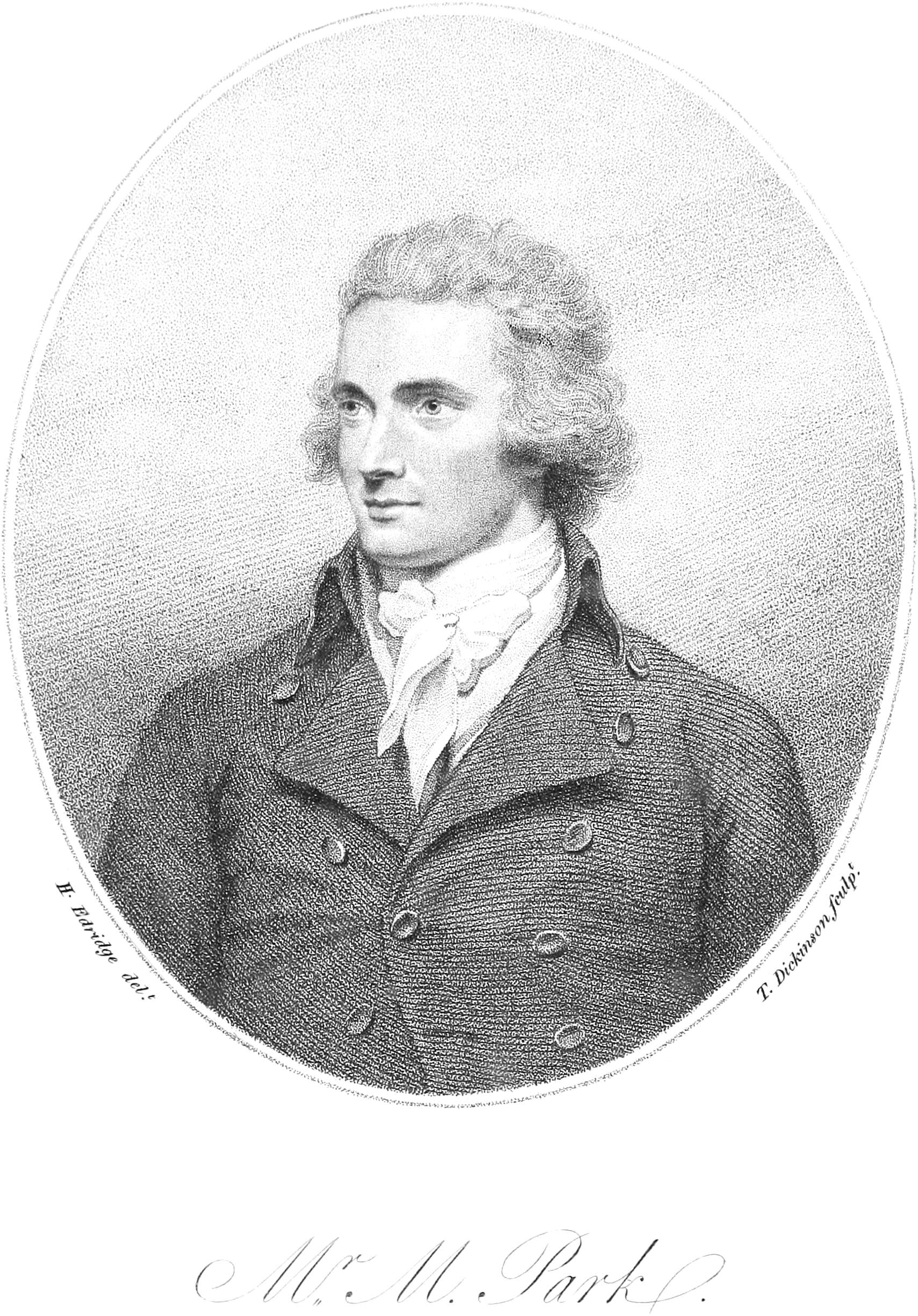
![[Symbol]](https://openoldbooks.sgp1.digitaloceanspaces.com/books/travels-in-the-interior-districts-of-africa/images/isym1.jpg) The Mandingo language being merely oral, it
sometimes unavoidably happened to the Author, in reducing African
terms to writing, to express the same word differently, in
different parts of his journal. Thus, on revising his papers, he
found Jillifree and Jillifrey used
indiscriminately for the name of the same town; and in like manner
Kinyeto and Kenneyetoo; Cancaba and
Kancaba; Tambacunda and Tombaconda; and
some others. As this was not observed until many of the sheets were
printed, some of these instances of inattention will be found in
the ensuing work, which it is hoped the good-natured reader will
excuse. In cases of doubt, the Map of the Author’s route is
generally to be considered as the best authority; and to that also
he refers for the course and distance of each day’s progress.
The Mandingo language being merely oral, it
sometimes unavoidably happened to the Author, in reducing African
terms to writing, to express the same word differently, in
different parts of his journal. Thus, on revising his papers, he
found Jillifree and Jillifrey used
indiscriminately for the name of the same town; and in like manner
Kinyeto and Kenneyetoo; Cancaba and
Kancaba; Tambacunda and Tombaconda; and
some others. As this was not observed until many of the sheets were
printed, some of these instances of inattention will be found in
the ensuing work, which it is hoped the good-natured reader will
excuse. In cases of doubt, the Map of the Author’s route is
generally to be considered as the best authority; and to that also
he refers for the course and distance of each day’s progress.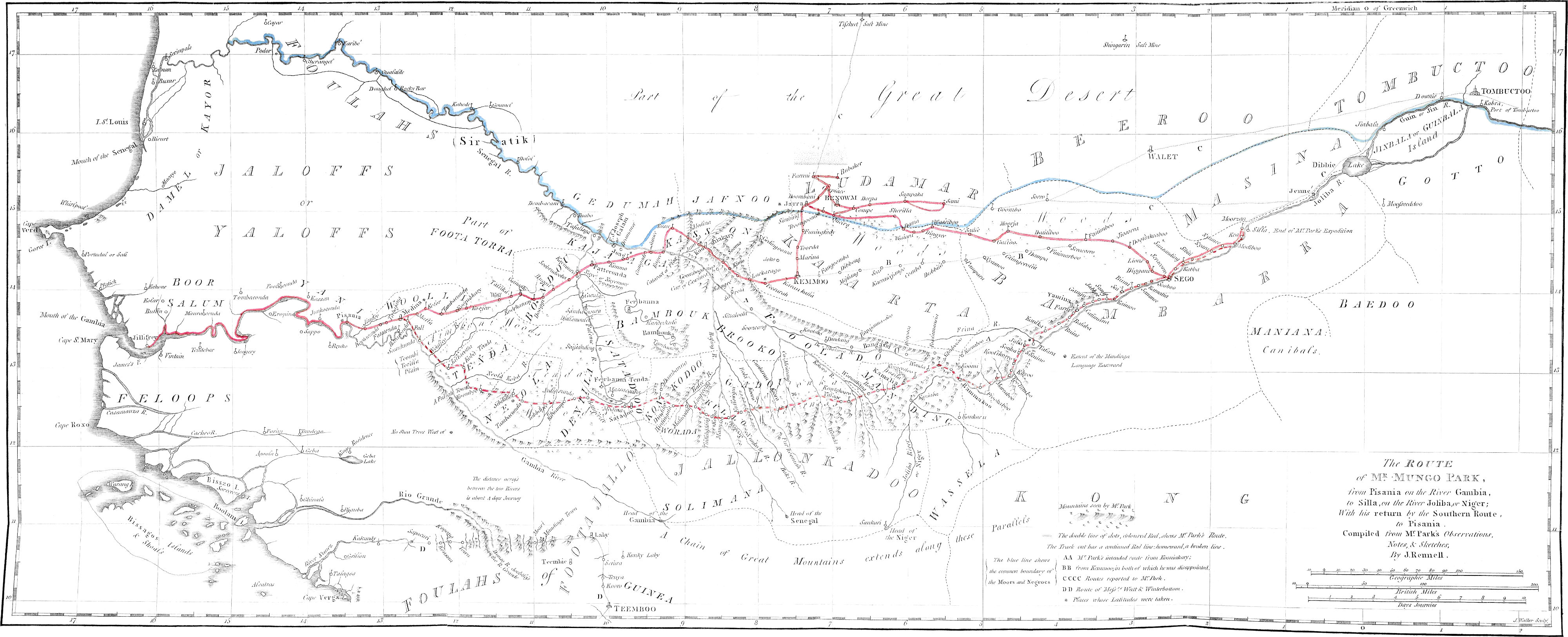
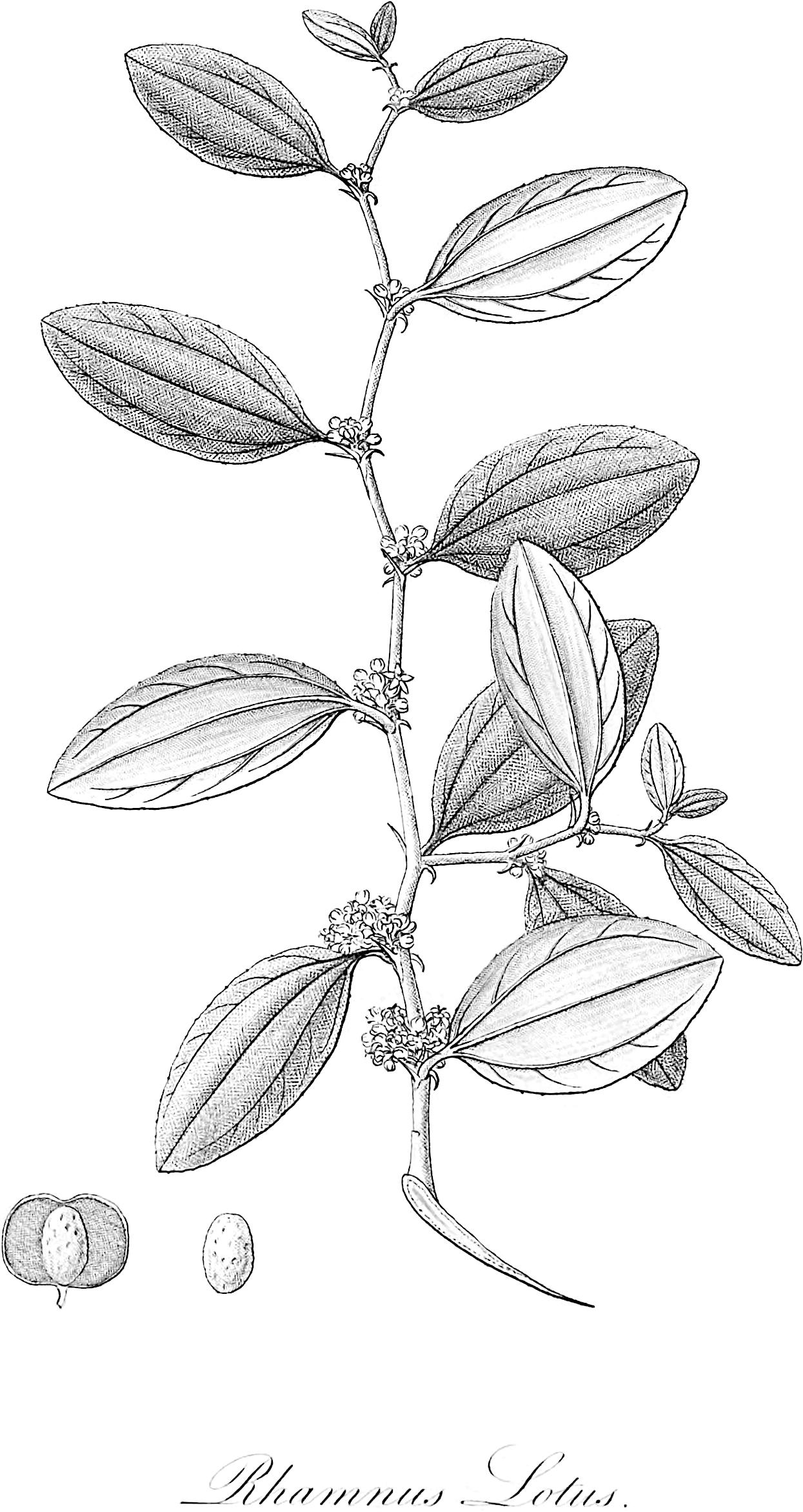
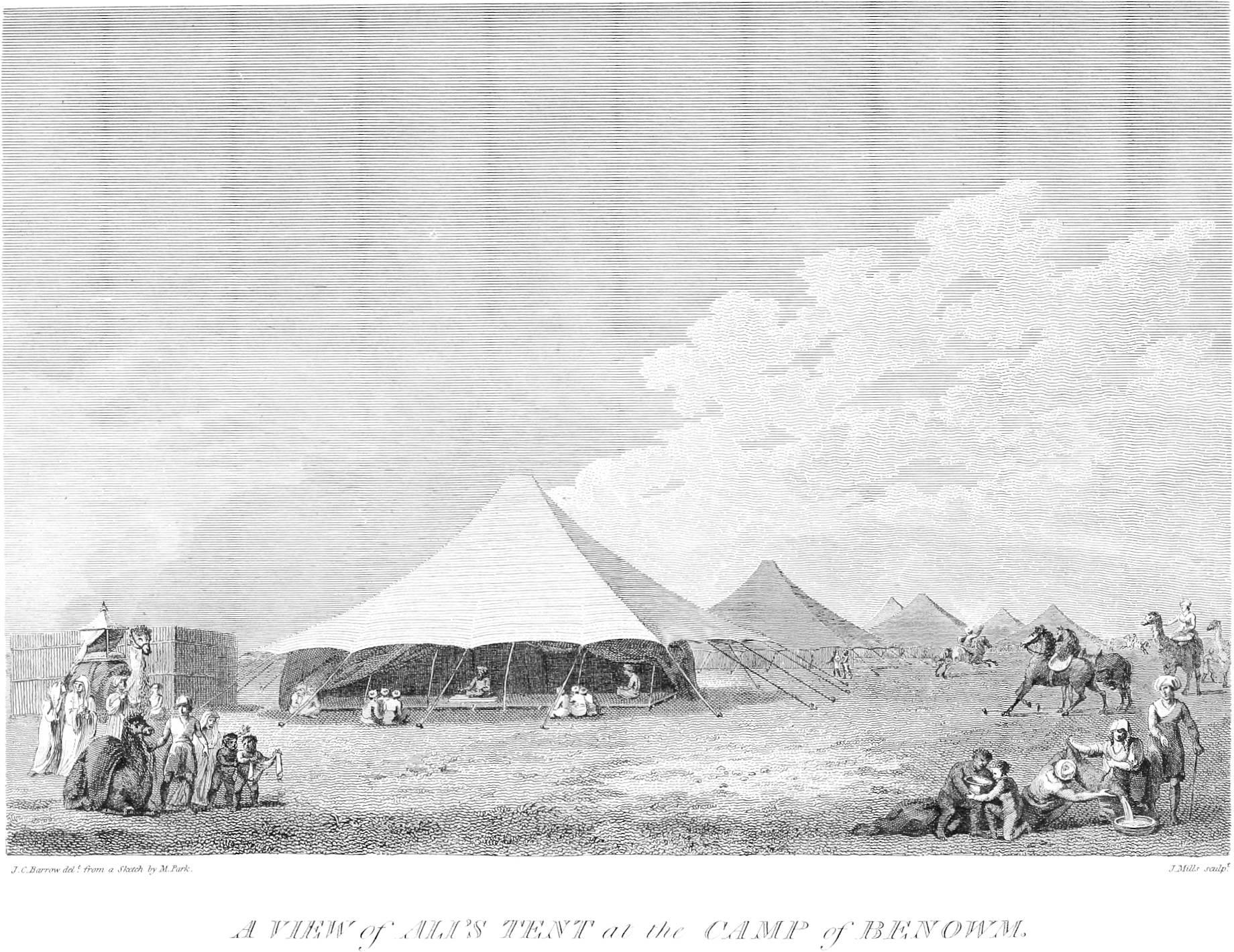
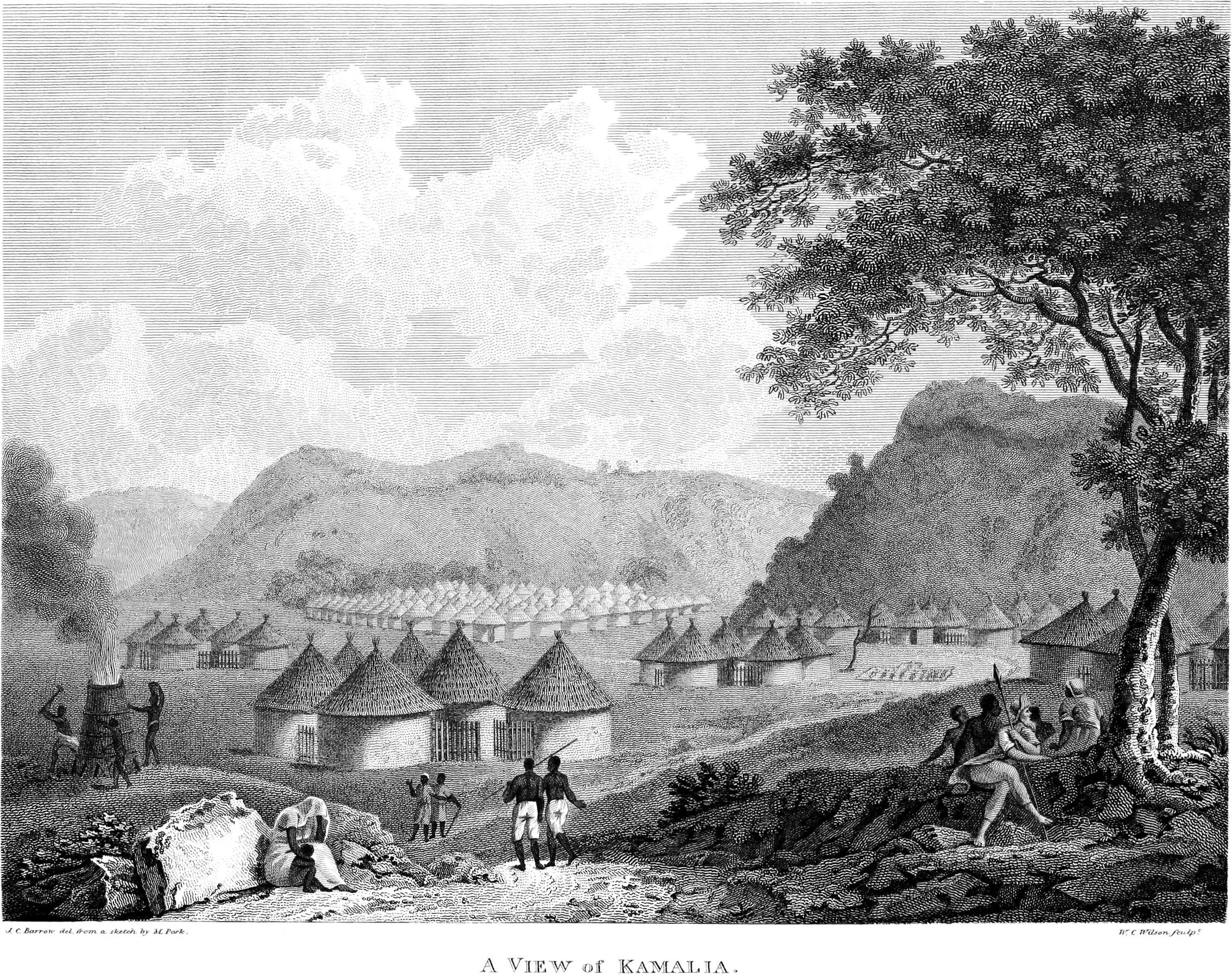
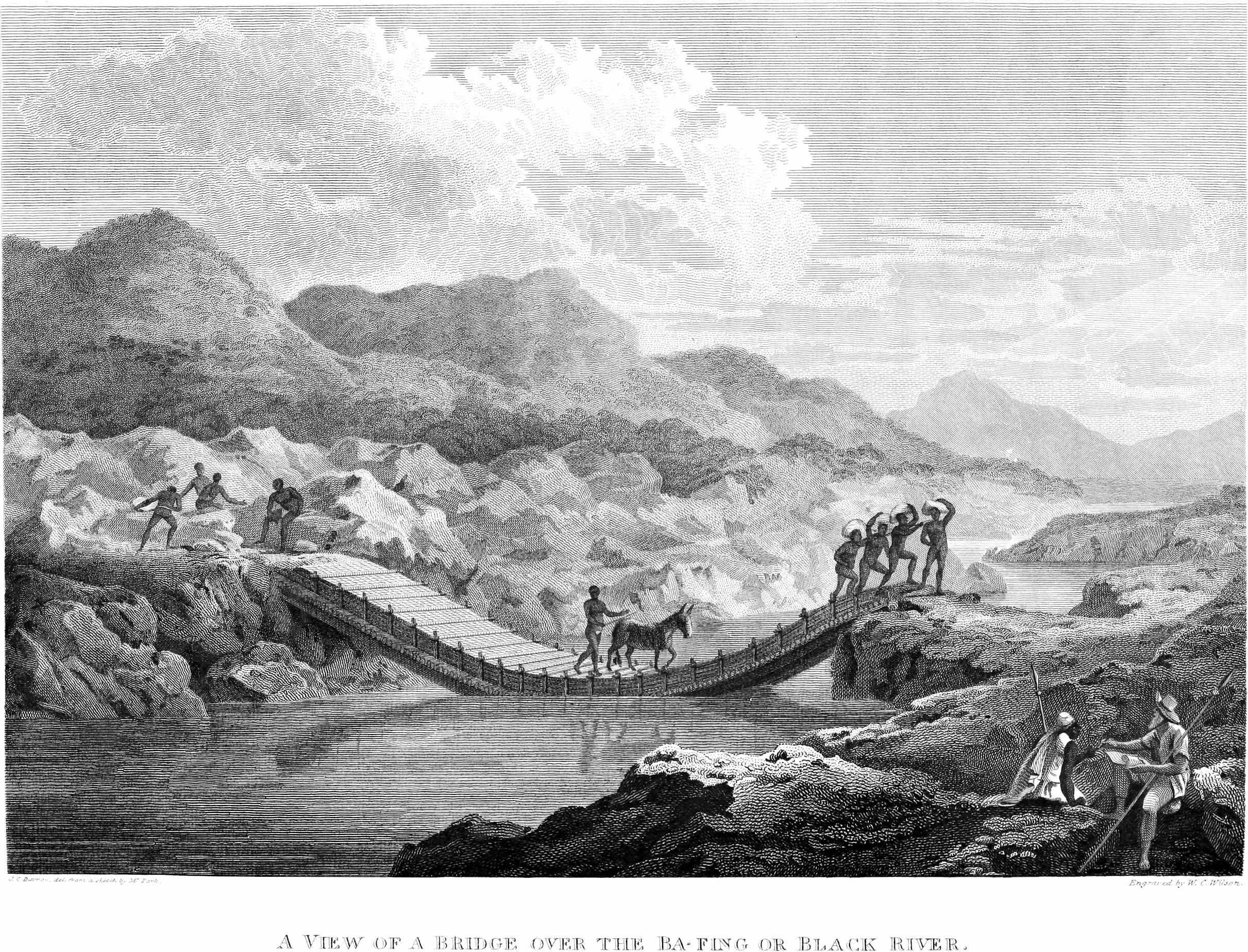
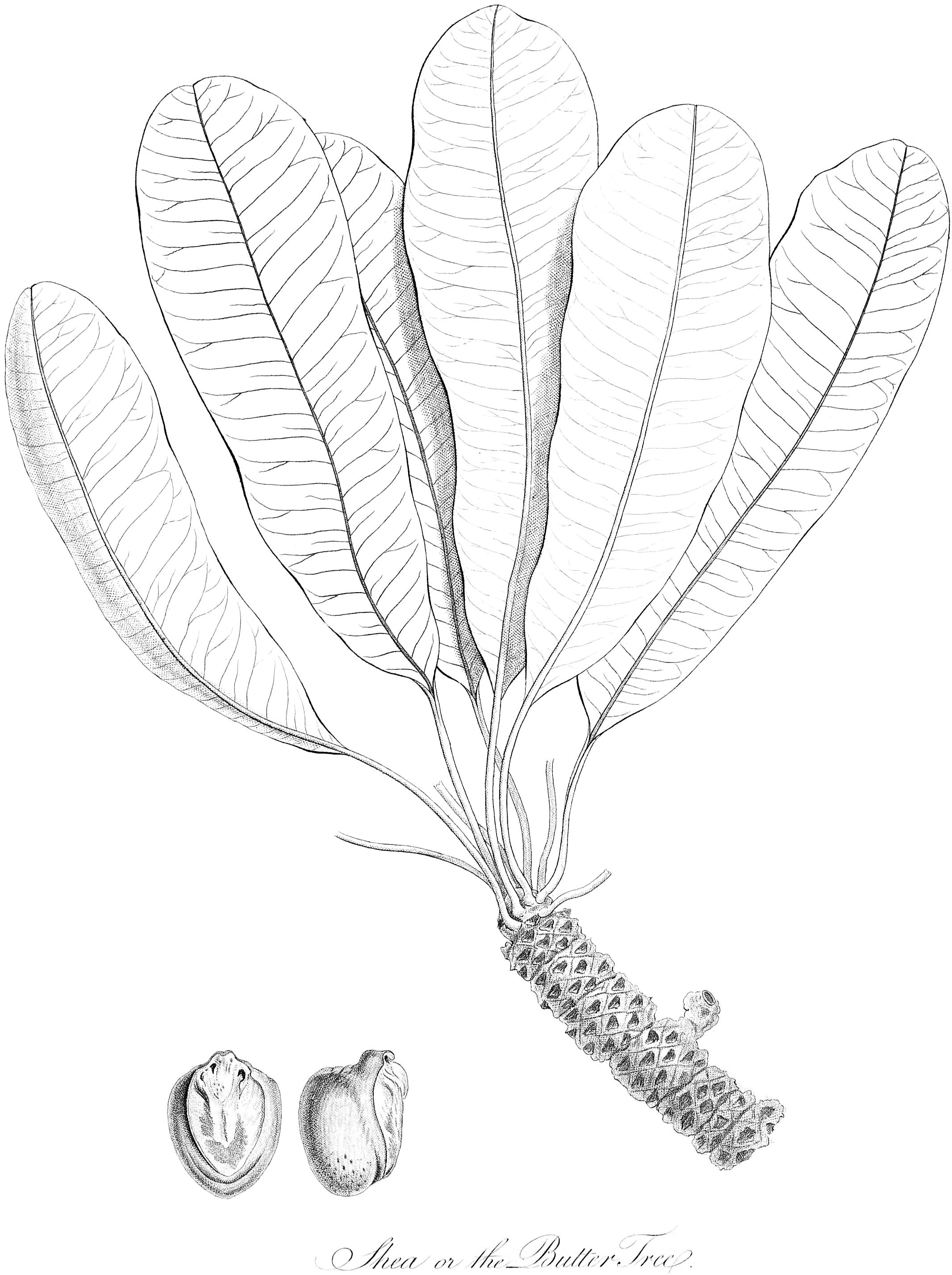
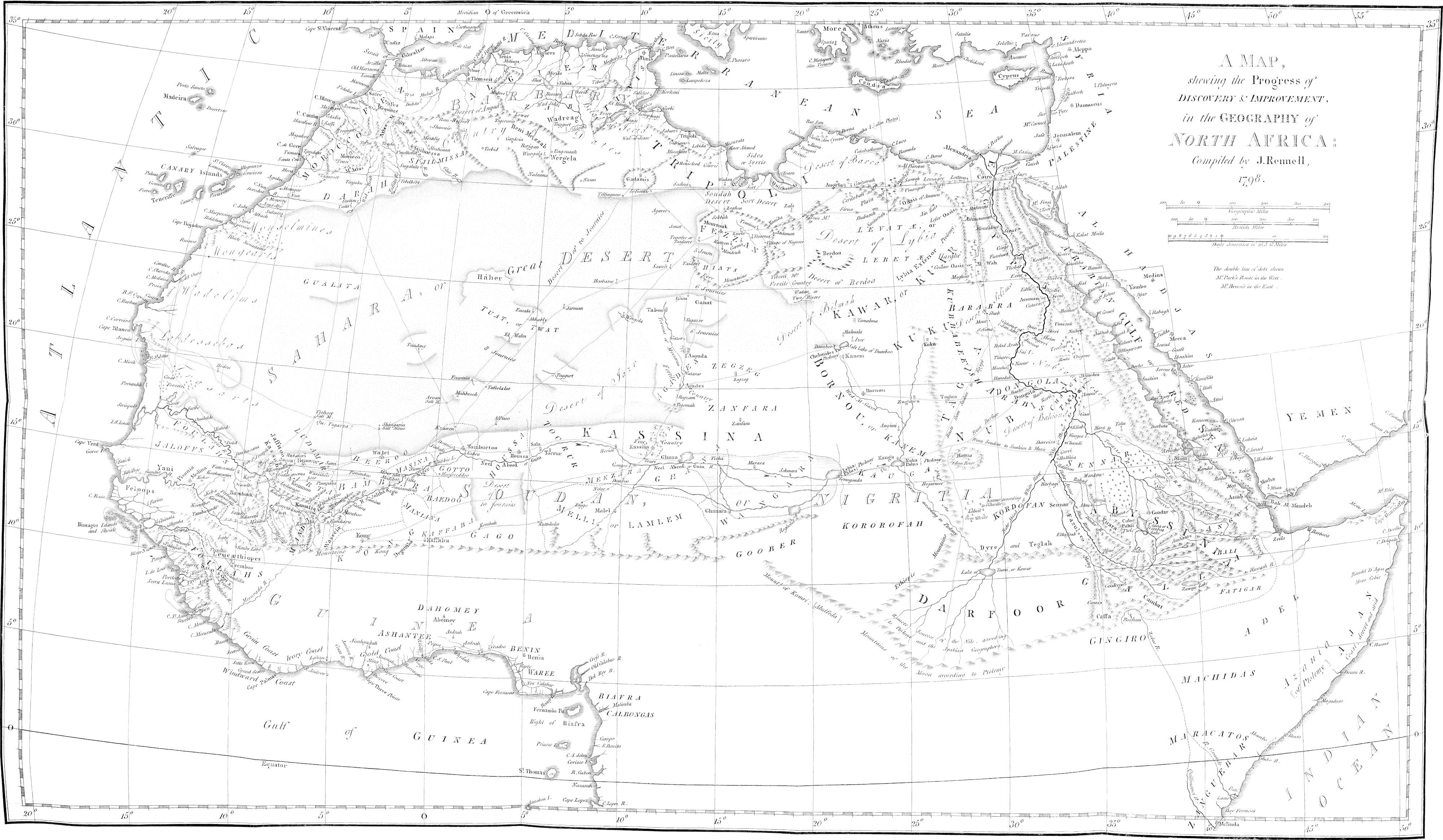
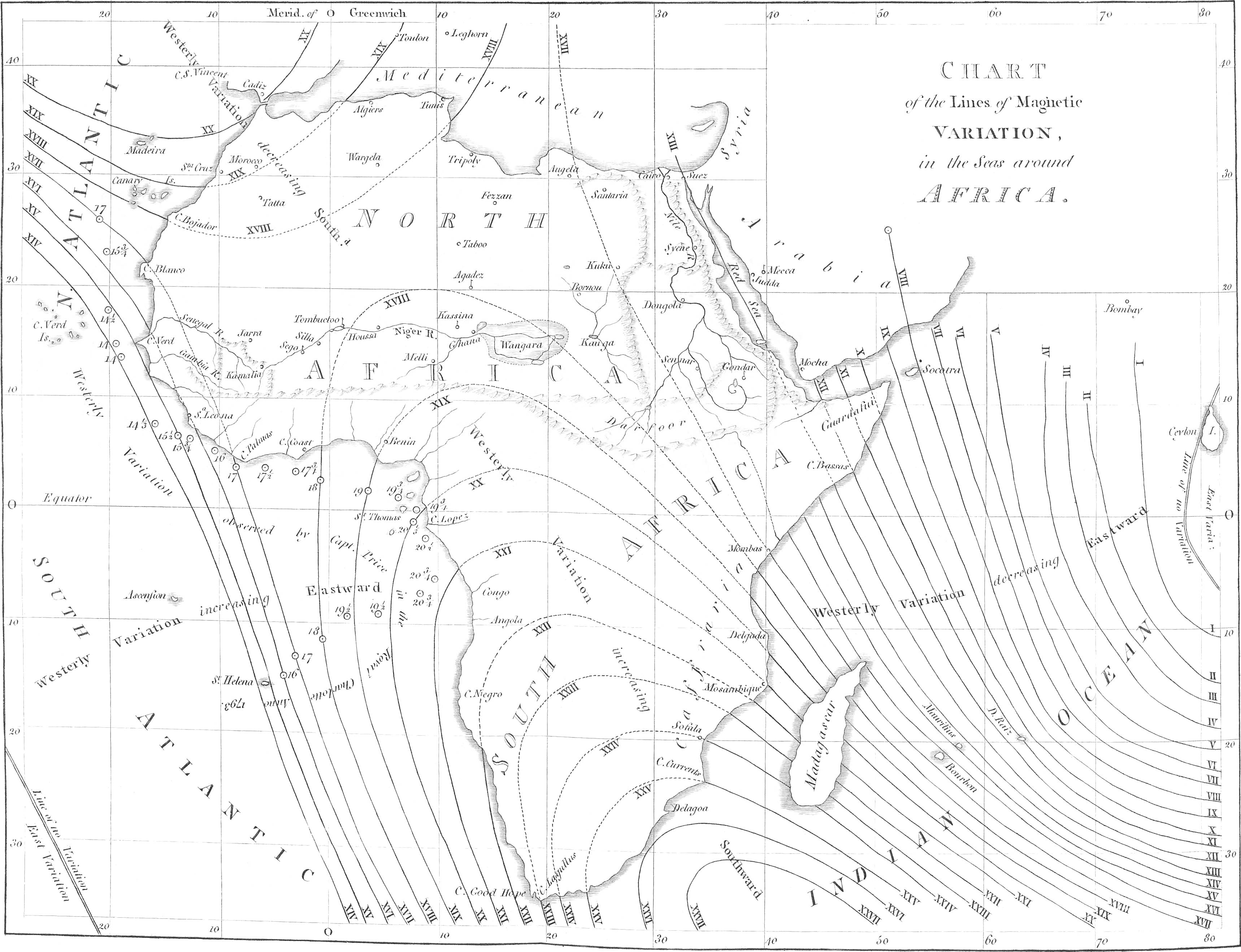

![[Music sheet]](https://openoldbooks.sgp1.digitaloceanspaces.com/books/travels-in-the-interior-districts-of-africa/images/music1.jpg)