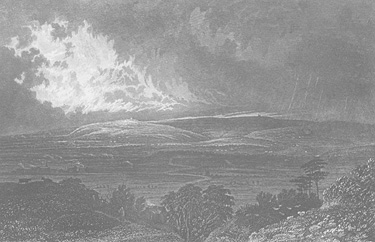
OR, THE ROSICRUCIANS.
A LEGEND OF THE NORTH.
PART THE FIRST.
In the wild and mountainous region of East Lancashire, at the foot of
the long line of hills called Blackstonedge, and not far from the town
of Rochdale, stood one of those old grim-looking mansions, the abode
of our Saxon ancestors; a quiet, sheltered nest, where ages and
generations had alike passed by. The wave of time had produced no
change; the name and the inheritance were the same, and seemingly
destined to continue unaltered by the mutations, the common lot of all
that man labours to perpetuate. This state of things existed at the
date of our story; now, alas! the race of its former possessors is
extinct, their name only remains a relic of things that were—their
former mansion standing,[20] as if in mockery, amidst the hum of
wheels, and in melancholy contrast with the toil and animation of this
manufacturing, money-getting district.
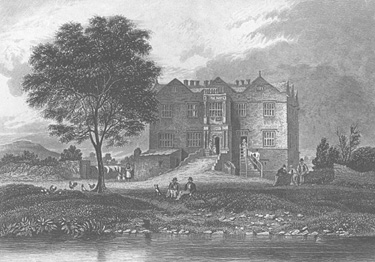
Buckley Hall, to which we allude, is still an object of interest to
the antiquary and the lover of romance, telling of days that are for
ever departed, when the lords of these paternal acres were the
occupants, not impoverishers, of the soil from unrecorded
ages—constituting a tribe, a race of sturdy yeomanry attached to
their country and to the lands on which they dwelt. But they are nigh
extinct—other habits and other pursuits have prevailed. Profuse
hospitality and rude benevolence have given place to habits of
business as they are called, and to a more calculating and
enterprising disposition. The most ancient families have become
absorbed or overwhelmed by the mighty progress of this new element,
this outpouring of wealth as from some unseen source; and in many
instances their names only are recognised in these old and rickety
mansions, now the habitation of the mechanic and the plebeian.
Many of these dwellings remain—a melancholy contrast to the trim
erections, the symbols of a new race, along with new habits and forms
of existence, sufficiently testifying to the folly and the vain
expectations of those who toil and labour hard for a long lease with
posterity.
This mansion, like the rest of our ancestral dwellings of the better
sort, was built of wood, on a stone basement. The outside structure
curiously vandyked in a zigzag fashion with wooden partitions, the
interstices were filled with wicker-work, plastered with well-tempered
clay, to which chopped straw imparted additional tenacity. When newly
embellished, looking like the pattern, black and white, of some
discreet magpie perched on the wooden pinnacles terminating each
gable, or hopping saucily about the porch—that never-failing adjunct
to these homely dwellings. Here, on a well-scoured bench, the master
of the house would sit in converse with his family or his guests,
enjoying the fresh and cheering breeze, without being fully exposed to
its effects. The porch was universally adopted as a protection to the
large flagged hall called the "house-part," which otherwise might have
been seriously incommoded by the inclement atmosphere of these bleak
districts. On one side of the hall, containing the great fireplace,
was the "guest parlour." Here the best bed was usually fixed; and
here, too, all great "occasions" took place. Births, christenings,
burials—all emanated from, or were accomplished in, this family
chamber. Every member was there transmitted from the cradle to the
grave. The low wide oaken stairs, to the first bending of which an
active individual might have leaped without any such superfluous
media. The naked gallery, with its little quaint doors on each side,
hatched in the usual fashion, this opening into the store-room, that
into the servants' lodging, another into the closet where the choicest
confections were kept. Opposite were the bed-chambers, and at the
extremity of the gallery a ladder generally pointed the way to a loft,
where, amongst heaps of winter stores, dried roots, and other
vegetables, probably reposed one or two of the male servants on a
straw mattress, well fortified from cold by an enormous quilt.
Our description will apply with little variation to all. We love
these deserted mansion-houses that speak of the olden time, its good
cheer and its rude but pleasant intercourse; times and seasons that
are for ever gone, though we crave pardon for indulging in what may
perhaps find little favour in the eyes of this generation, whose hopes
and desires are to the future, who say the past is but the childhood
of our existence: it is gone, and shall not return. But there are yet
some who love to linger on the remnants, the ruins of a former state,
who look at these time-honoured relics but as links that bring them
into closer communion with bygone ages, and would fain live in the
twilight of other years rather than the meridian splendour of the
present. But we must not be seduced any further by these reflections;
our present business concerns the legend whose strange title stands at
the head of this article.
In one of the upper chambers at Buckley Hall before named, and not
long ago, was an iron ring fixed to a strong staple in the wall; and
to this ring a fearful story is still attached. The legend, as it is
often told, is one of those wild improbable fictions, based on facts
distorted and embellished to suit the taste of the listener or the
fancy of the narrator. It will be our task to make out from these
imaginative materials a narrative divested as much as possible of the
marvellous, but at the same time retaining so much as will interest
and excite the reader and lover of legendary lore.
It was in one of those genial, mellow, autumnal evenings—so dear to
all who can feel their influence, and so rare a luxury to the
inhabitants of this weeping climate—when all living things wear the
hue and warmth of the glowing atmosphere in which they are enveloped,
that two lovers were sauntering by the rivulet, a "wimpling burn"
that, rising among the bare and barren moorlands of this uncultivated
region, runs past Buckley Hall into the valley of the Roch.
It was near the close of the sixteenth century, in the days of good
Queen Bess, yet their apparel was somewhat homely even for this era of
stuffed doublets and trunk-hose. Such unseemly fashions had hardly
travelled into these secluded districts; and the plain, stout, woollen
jacket of their forefathers, and the ruffs, tippets, stays, and
stomachers of their grandmothers, formed the ordinary wear of the
belles and beaux of the province. Fardingales, or hooped petticoats,
we are happy to say, for the sake of our heroine, were unknown.
"Be of good cheer," said the lover; "there be troubles enow, believe
me, without building them up out of our own silly fears—like boys
with their snow hobgoblins, terrible enough in the twilight of fancy,
but a gleam of sunshine will melt and dissipate them. Thou art sad
to-night without reason. Imaginary fears are the worst to cope withal;
having nor shape nor substance, we cannot combat with them. 'Tis hard,
indeed, fighting with shadows."
"I cannot smile to-night, Gervase; there's a mountain here—a
foreboding of some deadly sort. I might as soon lift 'Robin Hood's
Bed' yonder as remove it."
"No more of this, my dearest Grace; at least not now. Let us enjoy
this bright and sunny landscape. How sharply cut are those crags
yonder on the sky. Blackstonedge looks almost within a stride, or at
least a good stone's-throw. Thou knowest the old legend of Robin Hood;
how that he made yonder rocks his dormitory, and by way of amusement
pitched or quoited huge stones at a mark on the hill just above us,
being some four or five miles from his station. It is still visible
along with several stones lying near, and which are evidently from the
same rock as that on which it is said he slept."
"I've heard such silly tales often. Nurse had many of these old
stories wherewith to beguile us o' winter nights. She used to tell,
too, about Eleanor Byron, who loved a fay or elf, and went to meet him
at the fairies' chapel away yonder where the Spodden gushes through
its rocky cleft,—'tis a fearful story,—and how she was delivered
from the spell. I sometimes think on't till my very flesh creeps, and
I could almost fancy that such an invisible thing is about me."
With such converse did they beguile their evening walk, ever and anon
making the subject bend to the burden of their own sweet ditty of
mutual unchanging love!
Grace Ashton was the only daughter of a wealthy yeoman, one of the
gentry of that district, residing at Clegg Hall, a mile or two
distant. Its dark low gables and quiet smoke might easily be
distinguished from where they stood. It was said that the Cleggs, its
original owners, had been beggared and dispossessed by vexatious and
fraudulent lawsuits; and the Ashtons had achieved their purpose by
dishonesty and chicane. However this might be, busy rumour gave
currency and credit to the tale, though probably it had none other
foundation than the idle and malevolent gossip of the envious and the
unthinking.
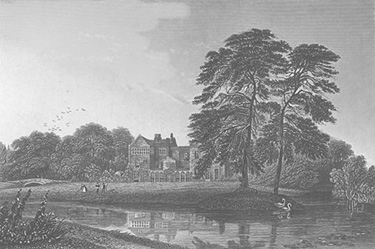
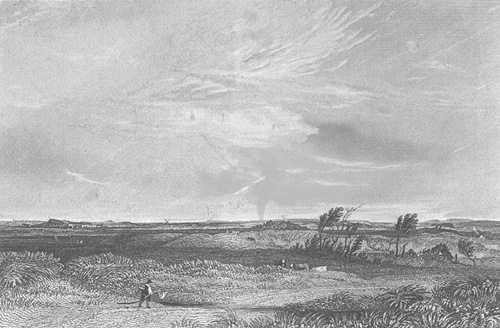
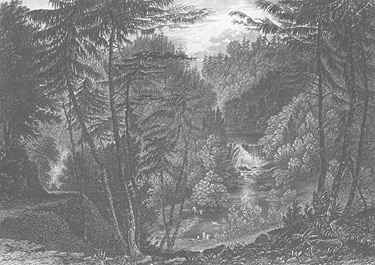
"THE THRUTCH," NEAR ROCHDALE.
"Drawn by G. Pickering."
"Engraved by Edwd Finden."
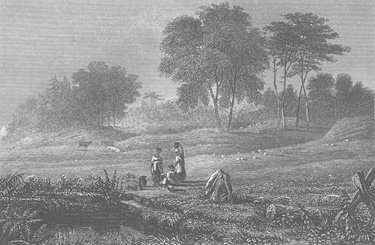
They had toiled up a narrow pathway on the right of a woody ravine,
where the stream had evidently formed itself a passage through the
loose strata in its course. The brook was heard, though hidden by the
tangled underwood, and they stopped to listen. Soothing but melancholy
was the sound. Even the birds seemed to chirp there in a sad and
pensive twitter, not unnoticed by the lovers, though each kept the
gloomy and fanciful apprehensions untold.
Soon they gained the summit of a round heathery knoll, whence an
extensive prospect rewarded their ascent. The squat, square tower of
Rochdale Church might be seen above the dark trees nestling under its
grey walls. The town was almost hidden by a glowing canopy of smoke
gleaming in the bright sunset—towards the north the bare bleak hills,
undulating in sterile loneliness, and associating only with images of
barrenness and desolation. Easterly, a long, level burst of light
swept across meadow, wood, and pasture; green slopes dotted with
bright homesteads, to the very base apparently of, though at some
distance from, Blackstonedge, now of the deepest, the most intense
blue. Such a daring contrast of colour gave a force and depth to the
landscape, which, had it been portrayed, would, to critical eyes
perhaps, have outraged the modesty of Nature.
The sky was already growing cold and grey above the ridge opposed to
the burning brightness of the western horizon, and Grace Ashton
pointed out the beautiful but fleeting hues of the landscape around
them. Her companion, however, was engrossed by another object. Before
them was an eminence marking the horizon to the north-west, though not
more than a good bowshot from where they stood. Between this and
their present standing was a little grassy hollow, through which the
brook we have described trickled rather than ran, amidst moss and
rushes, rendering the ground swampy and unsafe. On this hill stood
"Robin Hood's coit-stones;" and on the largest, called the
"marking-stone," a wild-looking and haggard figure was crouched. Her
garments, worn and tattered, were of a dingy red; and her cap, or
coiffure as it was then called, was of the same colour. Her head was
bent forward beyond the knee, as though she were listening towards
the ground, or was expecting the approach of the individuals who now
came suddenly, and to themselves unexpectedly, in view. Her figure, in
the glow of that rich autumnal sky, looked of the deepest crimson, and
of a bloody and portentous aspect.
"What strange apparition is yonder," said Gervase Buckley, "on the
hill-top there before us? Beshrew me, Grace, but it hath an evil and a
rancorous look."
But Grace, along with a short scream of surprise, betrayed, too, her
recognition of the object, and clung with such evident terror to her
companion that he turned from the object of his inquiries to gaze on
his mistress.
"What!" said he, "hath yonder unknown such power? Methinks it hath
moved thee strangely. Speak, Grace; can that hideous appearance in any
way be linked with our destiny?"
"I am ignorant as thou. But its coming, as I have heard, always
forebodes disaster to our house. Hast not heard of a Red Woman that
sometimes haunts this neighbourhood? I never saw her until now, but
I've heard strange and fearful stories of her appearing some years
ago, and blighting the corn, poisoning the cattle, with many other
diabolical witcheries. She is best known by the name of 'Mother
Red-Cap.'"
"I've heard of this same witch in my boyhood. But what should we fear?
She is flesh and blood like ourselves; and, in spite of the prevailing
belief, I could never suppose power would be granted to some,
generally the most wicked and the most worthless, which from the rest
of mankind is capriciously withholden."
"Hush, Gervase; thou knowest not how far the arch-enemy of mankind may
be permitted to afflict bodily our guilty race. I could tell thee such
tales of yonder creature as would stagger even the most stubborn of
unbelievers."
"I will speak to her, nevertheless. Tarry here, I prithee, Grace. It
were best I should go alone."
"Oh, do not—do not! None have sight of her, as I've heard, but
mischief follows. What disaster, then, may we not expect from her evil
tongue? I shudder at the anticipation. Stay here. I will not be left;
and I cannot cross this dangerous swamp."
Buckley was, however, bent on the adventure. His natural curiosity,
inflamed by forbidden longing after the occult and the mysterious, to
which he was too prone, even though sceptical as to their existence,
rendered him proof against his mistress' entreaties.
Probably from situation, or rather, it might be, the distance was
judged greater than in reality it proved, but the form before them
looked preternaturally enlarged, and as she raised her head her arms
were flung out high above it like withered and wasted branches on each
side. Trembling in every limb, Grace clung to her lover, and it was
after long persuasion that she suffered him to lift her over the
morass, and was dragged unwillingly up the hill. As though she were
the victim of some terrible fascination, her eyes were constantly
riveted on the object. A raven wheeled round them, every moment
narrowing the circle of its flight, and the malicious bird looked
eager for mischief.
As they approached nearer to the summit, this ill-omened thing, after
having brushed so close that they felt the very breath from its wings,
alighted beside the Red Woman, who hardly seemed to notice, though
well aware of their proximity.
They paused when several paces distant, and she rose up suddenly,
extending both arms, apparently to warn them from a nearer approach.
Her skinny lips, rapidly moving to and fro, and her dark withered,
bony, and cadaverous features, gave her more the appearance of a
living mummy or a resurrection from the charnel-house than aught
instinct with the common attributes of humanity.
Buckley was for a moment daunted. The form was so unlike anything he
had ever seen. He was almost persuaded of the possibility that it
might be some animated corpse doomed to wander forth either for
punishment or expiation. Her lips still moved. A wild glassy eye was
fixed upon them, and as she yet stood with extended arms, Gervase,
almost wrought to desperation, cried out—
"Who art thou? Thy business here?"
A hollow sound, hardly like the tones of a human voice, answered in a
slow and solemn adjuration—
"Beware, rash fools! None approach the Red Woman but to their
undoing."
"I know no hindrance to my free course in this domain. By whose
authority am I forbidden?" said he, taking courage.
"Away—mine errand is not to thee unless provoked."
"Unto whom is thy message?"
"To thy leman—thy ladye-love, whom thou wilt cherish to thine hurt.
Leave her, ay, though both hearts break in the separation."
"I will not."
"Then be partaker of the wrath that is just ready to burst upon her
doomed house."
"I told thee," said Grace, "she is the herald of misfortune! What woe
does she denounce? What cruel judgment hast thou invoked upon our
race?" cried she to this grim messenger of evil.
"Evil will—evil must! I will cling to ye till your last sustenance be
dried up, and your inheritance be taken from ye."
"Her fate be mine," said Buckley, indignantly. "Her good or evil
fortune I will share."
"Be it so. Thou hast made thy choice, and henceforth thou canst not
complain."
She stretched out her two hands, one towards Clegg Hall, the abode of
the maiden, and the other towards Buckley, her lover's paternal roof,
from which a blue curl of smoke was just visible over the rising
grounds beneath them.
"A doom and a curse to each," she muttered. "Your names shall depart,
and your lands to the alien and the stranger. Your honours shall be
trodden in the dust, and your hearths laid waste, and your habitations
forsaken."
In this fearful strain she continued until Buckley cried out—
"Cease thy mumbling, witch. I'll have thee dealt with in such wise thy
tongue shall find another use."
Turning upon him a look of scorn, she seemed to grow fiercer in her
maledictions.
"Proud minion," she cried, "thou shall die childless and a beggar!"
The cunning raven flapped his great heavy wings and seemed to croak an
assent. He then hopped on his mistress' shoulder, and apparently
whispered in her ear.
"Sayest thou so?" said the witch. "Then give it to me, Ralph."
The bird held out his beak, and out popped a plain gold ring.
"Give this to thy mother, Dame Buckley. Say 'tis long since they
parted company; and ask if she knows or remembers aught of the Red
Woman. Away!"
She threw the ring towards them. Both stooped to pick it up. They
examined it curiously for a short space.
"'Tis a wedding-ring," said Buckley, "but not to wed bride of mine.
Where was this"——
He stopped short in his inquiry, for lifting up his eyes he found the
donor was gone!
Neither of them saw the least trace of her departure. The stone
whereon she sat was again vacant. All was silent, undisturbed, save
the night breeze that came sighing over the hill, moaning and
whistling through the withered bent and rushes at their feet.
The shadows of evening were now creeping softly around them, and the
valley below was already wrapped in mist. The air felt very chill.
They shuddered, but it was in silence. This fearful vision, for such
it now appeared to have been, filled them with unspeakable dread.
Gervase yet held the ring in his hand. He would have thrown it from
him, but Grace Ashton forbade.
"Do her bidding in this matter," said she. "Give it thy mother, and
ask counsel of the sage and the discreet. There is some fearful
mystery—some evil impending, or my apprehensions are strangely
misled."
They returned, but he was more disturbed than he cared to acknowledge.
He felt as though some spell had been cast upon him, and cowed his
hitherto undaunted spirit.
They again wound down beside the rivulet into the meadows below, where
the mist alone pointed out the course of the stream. The bat and the
beetle crossed their path. Evil things only were abroad. All they saw
and felt seemed to be ominous of the future. As they passed through a
little wicket to the hall-porch, Nicholas Buckley the father met them.
"Why, how now, loiterers? The cushat and the curlew have left the
hill, and yet ye are abroad. 'Tis time the maiden were at home and
looking after the household."
"We've been hindered, good sir. We will just get speech of our dame,
and then away home with the gentle Grace. Half-an-hour's good speeding
will see her safe."
"Ay—belike," said the old man. "Lovers and loiterers make mickle
haste to part. Our dame is with the maids and the milkpans i' the
dairy."
The elder Buckley was a hale hearty yeoman, of a ruddy and cheerful
countenance. A few wrinkles were puckered below the eyes; the rest of
his face was sleek and comfortably disposed. A beard, once thick and
glossy, was grown grey and thin, curling up short and stunted round
his portly chin. Two bright twinkling eyes gave note of a stirring and
restless temper—too sanguine, maybe, for success in the great and
busy world, and not fitted either by education or disposition for its
suspicions or its frauds. Yet he had the reputation of a clever
merchant. Rochdale, even at that early period, was a well-known mart
for the buyers and sellers of woollen stuffs and friezes. Many of the
most wealthy merchants, too, indulged in foreign speculations and
adventures, and amongst these the name of Nicholas Buckley was not the
least conspicuous.
They passed on to the dairy, where Dame Eleanor scolded the maids and
skimmed the cream at the same moment, by way of economy in time.
"What look ye for here?" was her first inquiry, for truly her temper
was of a hasty and searching nature; somewhat prone, as well, to
cavilling and dispute, requiring much of her husband's placidity to
furnish oil for the turbulent waters of her disposition.
"Thou wert better at thy father's desk than idling after thine
unthrifty pleasures: to-morrow, maybe, sauntering among the hills with
hound and horn, beating up with all the rabble in the parish."
"Nay, mother, chide not: I was never made for merchandise and
barter—the price of fleeces in Tod Lane, and the broad ells at
Manchester market."
"And why not?" said the dame, sharply; "haven't I been the prop and
stay of the house? Haven't I made bargains and ventures when thou hast
been idling in hall and bower with love-ditties and ladies' purfles?"
She was now moved to sudden choler, and Gervase did not dare to thwart
her further—letting the passion spend itself by its own efforts, as
he knew it were vain to check its torrent.
Now Dame Eleanor Buckley was of a sharp and florid
countenance—short-necked and broad-shouldered, her nose and chin
almost hiding a pair of thin severe lips, the two prominences being
close neighbours, especially in anger. In truth she guided, or rather
managed, the whole circle of affairs; aiding and counselling the
speculations of her husband, who had happily been content with the
produce and profit of his paternal acres, had not his helpmate, who
inherited this mercantile spirit from her family, urged her partner to
such unwonted lust and craving for gain.
A huge bundle of keys hung at her girdle, which, when more than
usually excited, did make a most discordant jingle to the tune that
was a-going. Indeed, the height and violence of her passion might be
pretty well guessed at by this index to its strength.
When the storm had in some degree subsided, Gervase held up the ring.
"What's that, silly one? A wedding-ring!"
She grew almost pale with wrath. "How darest thou?—thee!—a ring!—to
wed ere thou hast a home for thy pretty one. Ye may go beg, for here
ye shall not tarry. Go to the next buckle-beggar! A pretty wedding
truly! When thou hast learned how to keep her honestly 'twill be time
enough to wed. But thou hast not earned a doit to put beside her
dower, and all our ready moneys, and more, be in trade; though, for
the matter o' that, the pulling would be no great business either. But
I tell thee again, thy father shall not portion an idler like thyself
and pinch his trade. Marry, 'tis enough to do, what with grievous sums
lost in shipwrecks, and the time we have now to wait our returns from
o'er sea."
She went on at this rate for a considerable space, pausing at last,
more for lack of breath than subject-matter of discourse.
"Mother," said he, when fairly run down; "'tis not a purchase—'tis a
gift."
"By some one sillier than thyself, I warrant."
"I know not for that; I had it from a stranger."
"Stranger still," she replied sharply, chuckling at her own conceit.
"Look at it, mother. Know you such a one?"
The dame eyed it with no favour, but she turned it over with a curious
look, at the same time lifting her eyes now and then towards the
ceiling, as some train of recollection was awakening in her mind.
"Where gat ye this?" said Dame Eleanor, in a subdued but still
querulous tone.
"On the hill-top yonder."
"Treasure-trove belongs to Sir John Byron.[21] The lord of the manor
claims all from the finders."
"It was a gift."
"Humph. Hast met gold-finders on the hills, or demons or genii that
guard hidden treasure?"
"We've seen the Red Woman!"
Had a sudden thunder-clap burst over them, she could not have been
more startled. She stood speechless, and seemingly incapable of reply.
Holding the ring in one hand, her eyes were intently fixed upon it.
"What is it that troubles you?" said Gervase. "Yon strange woman bade
me give you the ring, and ask if so be that you remembered her."
The dame looked up, her quick and saucy petulance exchanged for a
subdued and melancholy air.
"Remember thee! thou foul witch? ay long, long years have passed; I
thought thy persecutions at an end; thy prediction was nigh forgotten.
It was my wedding-ring, Gervase!"
"More marvellous still."
"Peace, and I'll tell thee. Grace Ashton, come forward. I know thine
ears are itching for the news. Well, well, it was when thou wast but a
boy, Gervase, and I remember an evening just like this. I was standing
by the draw-well yonder, looking, I now bethink me, at the dovecot,
where I suspected thieves; and in a humour somewhat of the sharpest, I
trow. By-and-by comes, what I thought, an impudent beggar-woman for an
alms. Her dress was red and tattered, with a high red cap to match. I
chided her it might be somewhat harshly, and I shall not soon forget
the malicious look she put on. 'I ask not, I need not thy benison,'
she said; 'I would have befriended thee, but I now curse thee
altogether:' and stretching out her shrivelled arm, dry and bare, she
shook it, threatening me with vengeance. Suddenly, or ere I was aware,
she seized my left hand, drew off my wedding-ring; breathing upon it
and mumbling a spell, she held it as though for me to take back, but
with such a fiendish look of delight that I hesitated. All on a sudden
I remembered to have heard my grandmother say that should a witch or
warlock get your wedding-ring, and have time to mutter over it a
certain charm, so long as that ring is above ground so long misery
and misfortune do afflict the owner. Lucky it was I knew of this, for
instead of replacing it I threw it into the well, being the nearest
hiding-place. And happy for me and thee it was so near; for, would you
believe, though hardly a minute's space in my hand, the black heifer
died, the red cow cast her calf, and a large venture of merchandise
was wrecked in a fearful gale off the gulf. I had no sooner thrown it
into the well than the witch looked more diabolical than ever. 'It
will come again, dame,' said she, 'and then look to it;' and with this
threat she departed. But what am I doing? If it be the ring, which I
doubt not, I've had it o'er long in my keeping. Even now disaster may
be a-brewing; and is there not a richly-freighted ship on its passage
with silks and spices? I'll put it out of her reach this time anyhow.
No! I'll hide it where never a witch in Christendom shall poke it
out."
Dame Eleanor went to the little burn below. Stooping, she scooped a
hole in the gravel under water; there she laid the ring, and covered
it over with stones.
"Thou'rt always after some of thy megrims, dame," said the elder
Buckley, who had been watching her from the porch. "Some spell or
counter-charm, I'se warrant."
With a look of great contempt for the incredulity of her spouse, she
replied—
"Ay, goodman, sit there and scoff your fill. If't hadn't been for my
care and endeavours you had been penniless ere now. But so it is, I
may slave night and day, I reckon. The whole roof-tree, as a body may
say, is on my shoulders, and what thanks? More hisses than thanks,
more knocks than fair words."
Never so well pleased as when opportunity was afforded for grumbling,
the dame addressed herself again to her evening avocations.
Pondering deeply what should be the issue of these things, Gervase set
out with Grace Ashton to her house at Clegg Hall, a good mile distant.
Evening had closed in—a chill wind blew from the hills. The west had
lost its splendour, but a pure transparent brightness filled its
place, across which the dark wavy outline of the high moorlands rested
in deep unvarying shadow. In these bright depths a still brighter star
hung, pure and of a diamond-like lustre, the precursor, the herald of
a blazing host just rising into view.
As they walked on, it may well be supposed that the strange
occurrences of the last few hours were the engrossing theme of their
discourse.
"My mother is a little too superstitious, I am aware," said Gervase;
"but what I have witnessed to-night has rendered me something more
credulous on this head than aforetime."
"I don't half like this neighbourhood," said his companion, looking
round. "It hath an ill name, and I could almost fancy the Red Woman
again, just yonder in our path."
She looked wistfully; it was only the mist creeping lazily on with the
stream.
They were now ascending the hill towards Beil or Belfield, where the
Knights Templars had formerly an establishment. Not a vestage now
remains, though at that period a ruinous tower covered with ivy, a
gateway, and an arch, existed as relics of their former grandeur.
"Here lived the Lady Eleanor Byron," said Grace, pointing to the old
hall close by, and as though an unpleasant recollection had crossed
her. She shuddered as they passed by the grim archway beneath the
tower. Whether it was fancy or reality she knew not, but as she looked
curiously through its ivied tracery she thought the Red Woman was
peering out maliciously upon them. She shrank aside, and pointed to
the spot; but there was nothing visible save the dark and crumbling
ruins, from which their steps were echoed with a dull and sullen
sound.
The night wind sighed round the grey battlements, and from its hidden
recesses came moans and whispers—at least so it seemed to their
heated imaginations.
"Let us hasten hence," said Grace; "I like not this lonely spot. There
was always a fear and a mystery about it. The tale of the invisible
sylphid and Eleanor Byron's elfish lover haunts me whenever I pass by,
and I feel as though something was near, observing and influencing
every movement and every thought."
"Come, come, adone I pray. Let not fear o'ermaster reason, else we
shall see bogles in every bush."
Above the gateway, in the little square tower now pulled down, was a
loophole, nearly concealed by climbing shrubs, which rendered it easy
for a person within to look out without being observed. As they passed
a low humming din was heard. Then a rude ditty trolled from some not
unskilful performer. The lovers stayed to listen, when a dark figure
issued out of the gateway singing—
"The bat haunts the tower,
And the redbreast the bower,
And the merry little sparrow by the chimney hops,
Good e'en, hoots master owl,
To-whoo, to-whoo, his troll,
Sing heigho, swing the can with"——
"What, thee, Tim! Is that thy stupid face?" said Gervase, breaking in
upon his ditty, and right glad to be delivered from supernatural
fears, though the object of them proved only this strolling minstrel.
"Thou might as well kill us outright as frighten us to death."
He that stood before them was one of those wandering musicians that
haunt fairs and merry-makings, wakes, and such like pastimes; playing
the fiddle and jewtrump too at weddings and alehouses; in short, any
sort of idleness never came amiss to these representatives of the old
Troubadours. A tight oval cap covered his shaggy poll; he was clad in
a coarse doublet or jerkin slashed in the fashion of the time, while
his nether integuments were fastened in the primitive mode by a wooden
skewer. He could conjure too, and play antics to set the folks agape;
but as to his honesty, it was of that dubious sort that few cared to
have it in trust. He was apt at these alehouse ditties—many of them
his own invention. He knew all the choicest ballads too, so that his
vocation was much akin to the jogleurs or jongleurs of more
ancient times, when Richard of the Lion's Heart and other renowned
monarchs disdained not "the gentle craft of poesie."
Wherever was a feast, let it be a wedding or a funeral, Tim, like the
harpies of old, scented the meat, and some of his many vocations were
generally in request.
This important functionary now stood whistling and singing by turns
with the most admired unconcern.
"What's thy business here?" cried Gervase, approaching him.
"The maid was fair, and the maid was coy,
But the lover left, and the maid said 'Why?'
Sing O the green willow!"
"Answerest thou me with thy trumpery ditties? I'll have thee put i'
the stocks, sirrah."
"Oh, ha' mercy, master! there's naught amiss 'at I know. I'm but
takin' roost here wi' the owls an' jackdaws a bit, maybe for want o'
better lyin'."
"It were hard to have a better knack at lying than thou hast already.
Hast gotten the weather into thy lodgings? When didst flit to thy new
quarters?"
"Th' hay-mow at Clegg is ower savoured wi' the new crop, an' I want
fresh air for my studies."
"Now art thou lying"——
"Like a lover to his sweetheart," said Tim, interrupting him, and
finishing the sentence.
"Peace, knave! There's some mischief i' the wind. Thou'rt after no
good, I trow."
"What te dickons do I ail here? Is't aught 'at a man can lift off but
stone wa's an' ivy-boughs? Marry, my little poke man ha' summut else
to thrive on nor these."
"There's been great outcry about poultry an' other farmyard
appendances amissing of late, besides eggs and such like dainties enow
to furnish pancakes and fritters for the whole parish. Hast gotten
company in thy den above there?"
"Jacks an' ouzles, if ye like, Master Gervase. Clim' up, clim' up,
lad, an there'll be a prial on us. Ha, ha! What! our little sweetheart
there would liefer t' be gangin.' Weel, weel, 'tis natural, as a body
may say—
"One is good, and two is good,
But three's no company."
"Answer me quick, thou rogue. Is there any other but thyself yonder
above?"
"When I'm there I'm not here, an' when I'm here"——
"Sirrah, I'll flog the wind out o' thy worthless carcase. Hast any
pilfering companions about thee? I do smell a savoury
refection—victuals are cooking, or my nose belies its office."
"Fair speech, friend, wins a quiet answer; a soft word and a smooth
tongue all the world over. What for mayn't I sup as well as my
betters?"
"As well?—better belike. There's no such savour in our hall at
eventide, nor in the best kitchen in the parish."
"It's not my fau't, is't?"
"By'r lady, there's somebody in the chamber there. I saw the leaves
fluttering from the loophole. Villain, who bears thee company?"
"Daft, daft. What fool would turn into roost wi' me? Clean gone crazy,
sure as I'm livin'."
"Nay, nay, there's some plot here—some mischief hatching. I'll see,
or"——
He was just going to make the attempt; but Tim withstood him, and in a
peremptory manner barred the way.
"How! am I barred by thee, and to my face?"
"It's no business o' thine, Master Gervase. What's hatching there
concerns not thee. Keep back, I say, or"——
"Ha! Thou jingle-pated rascal, stand off, or I'll wring thy neck round
as I would a Jackdaw."
"Do not, do not, Gervase!" said Grace Ashton, fearful of some unlucky
strife. "Let us begone. We are too late already, and 'tis no business
of ours."
"What! and be o'erfoughten by this scurvy lack-wit. Once more, who is
there above?"
"An' what if I shouldn't tell thee?"
"I'll baste thy carcase to a mummy; I'll make thee tender for the
hounds."
"Another word to that, master, an' it's a bargain."
"Let me pass."
"Not without my company."
He whistled, and in a moment Gervase felt himself pinioned from
behind. Looking round, he saw two stout fellows with their faces
covered; and any other possibility of recognition was impracticable in
the heavy twilight.
"Who's i' t' stocks now?" cried the malicious rogue, laughing.
"Unhand me, or ye'll rue that ever ye wrought this outrage."
"Nay, nay, that were a pretty stave, when we've gotten the bird, to
open the trap," said Tim.
Gervase immediately saw that another party had seized Grace Ashton. He
raved and stamped until his maledictions were put an end to by an
effectual gag, and he did not doubt but she had suffered the same
treatment, for a short sharp scream only was heard. Being immediately
blindfolded, he could only surmise that her usage was of a similar
nature.
He was so stupefied with surprise that for a short period he was
hardly sensible to their further proceedings. When able to reflect, he
found himself pinioned, and in a sitting posture. A damp chill was on
his forehead. He had been dragged downwards, and, from the motion,
steps were the medium of descent. A door or two had been raised or
opened, a narrow passage previously traversed, and a short time only
elapsed from the cool freshness of the evening air to the damp and
stifling atmosphere that he now breathed. What could be the cause of
his seizure he was quite incompetent to guess. He could not recollect
that he had either pique or grudge on his hands; and what should be
the result he only bewildered and wearied himself by striving to
anticipate.
It was surely a dream. He heard a voice of ravishing sweetness; such
pure and silvery tones, that aught earthly could have produced it was
out of the question; it was like the swell of some Æolian lyre—words,
too, modifying and enhancing that liquid harmony. It was a hymn, but
in a foreign tongue. He soon recognised the evening hymn to the
Virgin—
"Mater amata, intemerata,
ora, ora, pro nobis."
So sweetly did the music melt into his soul, that he quite forgot his
thrall, and every sense was attuned to the melody. When the sound
ceased he made an effort to get free. He loosened his hands, and
immediately tore off the bandage from his eyes. A few seconds elapsed,
when he saw a light streaming through a crevice. Looking through, he
saw a taper burning before a little shrine, where two females in white
raiment, closely veiled, were kneeling.
The celebration of such rites, at that time strictly prohibited,
sufficiently accounted for their concealment, and plainly intimated
that the parties were not of the Reformed faith.
By the light which penetrated his cell from this source he saw it was
furnished with a stone bench, and a narrow flight of steps in one
corner communicated with a trap-door above.
The old mansion at Belfield, contiguous to these ruins, once belonging
to the Knights of St John, had been for some years untenanted, and, as
often happens to the lot of deserted houses, strange noises, sights,
and other manifestations of ghostly occupants were heard and seen by
passers-by, rendering it a neighbourhood not overliked by those who
had business that way after nightfall.
Gervase Buckley was pretty well assured that he had been conveyed into
some concealed subterranean chamber, but for what purpose he could not
comprehend. He was not easily intimidated; and though in a somewhat
sorry plight, he now felt little apprehension on the score of
supernatural visitations: but his seizure did not hold out an
immunity as regards corporeal disturbers. He had not long to indulge
these premonitory reflections ere a door was opened. A figure,
completely enveloped in a black cloak, on which a red cross was
conspicuously emblazoned, stood before him. He carried a torch, and
Gervase saw a short naked sword glittering in his belt.
"Follow me," said the intruder; and, without further parley, pointed
to where another door was concealed in the pavement. This being
opened, Gervase beheld, not without serious apprehension, a flight of
steps evidently communicating with a lower dungeon. His conductor
pointed to the descent, and it would have been useless folly to
disobey. A damp and almost suffocating odour prevailed, as though from
some long-pent-up atmosphere, which did not give the prisoner any
increasing relish or affection for the enterprise. He looked at his
conductor, whose face and person were yet covered. Had he been a
familiar of the Holy Inquisition, he could not have been more careful
of concealment. Gervase looked now and then with a wistful glance
towards his companion's weapon. Being himself unarmed, it would have
been madness to attempt escape. He merely inquired in his descent—
"Whence this outrage? I am unarmed, defenceless." But there was no
reply. The guide, with an inclination of the head, pointed with his
torch to the gulf his victim was about to enter. There was little use
in disputation where the opposite party had so decided an advantage,
and he thought it best to abide the issue without further impediment.
He accordingly descended a few steps. His conductor fastened the door
overhead, and they soon arrived at the bottom, at a low arched
passage, where his guide dashed his flambeau against the wall, and it
was immediately extinguished.
Gervase was left once more in doubt and darkness. There was little
space for explanation. He felt himself seized by an invisible hand,
hurried unresistingly on, till, without any preparation, a blaze of
light burst upon him.
It was for a moment too overpowering to enable him to distinguish
objects with any certainty. Soon, however, he saw a tolerably spacious
vault or crypt, supported by massy pillars. He had often heard there
existed many unexplored subterranean passages reaching to an
incredible distance, made originally by the Knights Templars for their
private use. One of these, it was said, extended even to the chantry
just then dissolved at Milnrow, more than a mile distant. Many
strange stories he had been told of these warrior monks. But centuries
had elapsed since their suppression. For a moment he almost believed
they were permitted to reappear, doomed at stated periods to re-enact
their unhallowed orgies, their cruelties, and their crimes. The
chamber was lighted by three or four torches, their lurid unsteady
life giving an ever-varying character to the surrounding objects.
Opposite the entrance was a stone bench, occupied by several figures
attired in a similar manner to his conductor. An individual in the
centre wore in addition a belt covered by some cabalistic devices. The
scene was sufficiently inexplicable, and not at all elucidated by the
following interrogation:—
"Thou hast been cited to our tribunal," said the chief inquisitor.
"I know ye not," said Gervase, with great firmness, though hardly
aware of the position he occupied.
"Why hast thou not obeyed our summons?"
"I have not heard of any such; nor in good sooth should I have been
careful to obey had your mandate been delivered."
"Croix Rouge," said the interrogator, "has this delinquent been
cited?"
The person he addressed arose, bowed, and presented a written answer.
"I have here," continued the chief, "sufficient proof that our summons
hath been conveyed to thee, and that hitherto thine answer hath been
contumaciously withheld. What sayest thou?"
"I have yet to learn, firstly," said Gervase, with more indignation
than prudence, "by what authority you would compel me to appear; and
secondly, how and in what form such mandate had been sent?"
"Bethink thee, is our answer to the last: the first will be manifested
in due time. We might indeed leave thee ignorant as to what we
require, but pity for thy youth and inexperience forbids. Clegg Hall
is, thou knowest, along with the estate, now unlawfully holden by the
Ashtons."
"I know that sundry Popish recusants, plotting the overthrow of our
most gracious Queen, do say that other and more legitimate rights are
in abeyance only; but the present owners are too well fortified to be
dispossessed by hearsay."
"In the porch at Clegg thou wast accosted not long ago by a mendicant
who solicited an alms."
"Probably so."
"Did he not hold out to thee the sign of the Rosy Cross, the token of
our all-powerful fraternity of Rosicrucians?"
"I do remember such a signal; and furthermore, I drove him forth as an
impostor and a pretender to forbidden arts."
"He showed thee the sign, and bade thee follow?"
"He did."
"And why was our summons disobeyed?"
"Because I have yet to learn what authority you possess either for my
summons or detention."
"The brotherhood of the Red Cross are not disobeyed with impunity."
"I have heard of such a fraternity—as well too that they be idle
cheats and lying impostors."
"We challenge not belief without sufficient testimony to the truth of
our mission. In pity to man's infirmity this indulgence is permitted.
We unfold the hidden operations, the very arcana of Nature, whom we
unclothe as it were to her very nakedness. Our doctrines thereby carry
credence even to the most impious and unbelieving. Ere we command thy
submission, it is permitted to behold some manifestation of our power.
By means derived from the hidden essences of Nature, the first
principles which renovate and govern all things, the very elements of
which they consist, we arrive at the incorporeal essence called
spirit, holding converse with it undebased, uninfluenced by the
intervention of matter. Thus we converse in spirit with those that be
absent, even though they were a thousand leagues apart."
"And what has this jargon to do with my being despatched hither?"
"Listen, and reply not; the purport will be vouchsafed to thee anon.
We can compel the spirits even of the absent to come at our bidding by
subtle spells that none have power to disobey. We too can renew and
invigorate life, and by the universal solvent bring about the
renovation of all things—renovation and decay being the two
antagonist principles, as light and darkness. As we can make darkness
light, and light darkness at our pleasure, so can we from decay bring
forth life, and the contrary. Seest thou this dead body?"
A black curtain he had not hitherto observed was thrown aside, and he
beheld the features of Grace Ashton, or he was strangely deceived. She
was lying on a little couch, death visibly imprinted on her collapsed
and sunken features.
"Murderers! I will have ye dealt with for this outrage." Maddened
almost to frenzy, he would have rushed towards her, but he was firmly
holden by a power superior to his own.
"She is now in the first region of departed spirits," said the chief.
"We have power to compel answer to our interrogatories. Listen,
perverse mortal. We are well assured that a vast treasure is concealed
hereabouts, hidden by the Knights of St John. 'Tis beyond our
unassisted power to discover. We have asked counsel of one whom we
dare not disobey, and she it is hath commanded that we cite thee and
Grace Ashton to the tribunal of the Rosy Cross. This corporeal
substance now before us, by reason of its intimate union with the
spirit, purged from the dross of mortality, will answer any question
that may be propounded, and will utter many strange and infallible
prophecies. It will solve doubtful questions, and discourse of things
past, present, and to come, seeing that she is now in spirit where all
knowledge is perfect, and hath her eyes and understanding cleared from
the gross film of our corruption. But as spirit only hath power over
those of its own nature by the law of universal sympathy, so she
answers but to those by whom she is bidden that are of the same
temperament and affinity, which is shown by your affiance and love
towards each other."
The prisoner heard this mystic harangue with a vacant and fixed
expression, as though his mind were wandering, and he hardly
understood the profundity of the discourse. Every feeling was absorbed
in the conviction that some horrid incantation had for ever deprived
him of his beloved. Then he fancied some imposition had been practised
upon him. Being prevented from a closer examination, at length he felt
some relief in the idea that the form he beheld might possibly be a
counterfeit. He knew not what to say, and the speaker apparently
waited his reply. Finding he was still silent, the former continued
after a brief space:—
"Our questions to this purport must necessarily be propounded by thee.
Art thou prepared?"
"Say on," said Gervase, determined to try the issue, however repugnant
to his thoughts.
Two of them now arose and stood at each end of the couch. The superior
first made the sign of the cross. He then drew a book from his girdle,
and read therein a Latin exorcism against the intrusion of evil
spirits into the body, commanding those only of a heavenly and benign
influence to attend. He lighted a taper compounded of many strange
ingredients emitting a fragrant odour, and as the smoke curled heavily
about him, flickering and indistinct, he looked like some necromancer
about to perform his diabolical rites.
The occupant of that miserable couch lay still as death.
"The first question," cried out the chief; and he looked towards the
prisoner, who was now suffered to approach within a few paces of the
bed.
"Is there treasure in this place?"
Gervase tried to repeat the question, but his tongue clave to his
mouth. For the first time probably in his life he felt the sensation
of horrible, undefined, uncontrollable fear—that fear of the unknown
and supernatural, that shrinking from spiritual intercourse even with
those we have loved best. It seemed as though he were in communion
with the invisible world—that awful, incomprehensible state of
existence; and with beings whose power and essence are yet unknown,
armed, in imagination, with attributes of terror and of vengeance.
With a desperate effort, however, he repeated the question.
Breathless, and with intense agony, he awaited the response. It came!
A voice, not from the lips of the recumbent victim, but as though it
were some inward afflatus, hollow and sepulchral. The lips did not
move, but the following reply was given:—
"There is."
Even the guilty confederates started back in alarm at the success of
their own experiment. All was, however, still—silent as before.
Taking courage, the next question was put in like manner.
"In what direction?"
"Under the main pillar of the south-eastern corner of the vault."
After another pause, the following questions were asked:—
"How may we obtain the treasure sought?"
"By diligence and perseverance."
"At what time?"
"When the moon hath trine to Mercury in the house of Saturn."
"Is it guarded?"
"It is."
"By whom?"
"By a power that shall crush you unless propitiated."
"Show us in what manner."
"I may not; my lips are sealed. That power is superior to mine; the
rest is hidden from me."
The treasure-seekers were silent, as though disappointed at this
unexpected reply. Another attempt was, however, made.
"Shall we prosper in our undertaking?"
"My time is nigh spent. I beseech you that I may depart, for I am in
great torment."
"Thou shall not, until thou answer."
"Beware!"
But this admonition was from another source, and in a different
direction. The obscurity and smoke from the torches made it impossible
to judge with any certainty whence the interruption proceeded.
Gervase started and turned round. It might be fancy, but he was
confident the features of the Red Woman were present to his
apprehension. Horrors were accumulating. Even the united brotherhood
seemed to tremble as though in the presence of some being of whom they
stood in awe. They awaited her approach in silence.
"Fool! Did I not warn thee to do my bidding only? And thou art
hankering again, pampering thy cruel lust for gold. How darest thou
question the maiden for this intent? Hence, and thank thy stars thou
art not even now sent howling to thy doom!"
This terrible and mysterious woman came forward in great anger, and
the Rosicrucian brotherhood were thereby in great alarm. "The maid is
mine—begone!" said she, pointing the way.
Like slaves under their master's frown, they crouched before this
fearful personification of their unhallowed and forbidden practices,
and departed.
"Gervase Buckley," she cried, "thou art betrothed to the heiress of
yon wide possessions."
"I am," said he, roused either to courage or desperation, even in the
presence of a being whose power he felt conscious was not derived from
one common source with his own.
"Dost thou confirm thy troth?"
"I do; in life and in death she is mine."
"Pledge thyself, body and soul, to her."
"I am hers whilst I live, body and soul. Nothing but death shall part
us."
"On thy soul's hope thou wilt fulfil this pledge!"
"I will." Gervase looked wistfully towards his beloved. The inanimate
form was yet pale and still; but a vague hope possessed him that the
witch would again quicken her.
"'Tis enough. But it must be sealed with blood!"
He felt her clammy hand on his arm, and a sharp pain as though from a
puncture. He quickly withdrew it, and a blood-drop fell on the floor.
"Thou art mine—for ever!"
A loud yell rang through the vaults, and Gervase felt as though the
doom of the lost spirits were his—that a whole troop of fiery demons
had assailed him, and that he was borne away to the pit of torment.
Happily his recollection forsook him, and he became unconscious of
future suffering.
PART THE SECOND.
Morning rose bright and ruddy above the hills. The elder Buckley was
up and stirring betimes. Agreeably to his usual practice, he had
retired early to bed, leaving the household cares and duties to his
helpmate. He was sitting in the porch when his dame, with a disturbed
and portentous aspect, accosted him:—
"I know not what hath come to the lad."
"Gervase—what of him?" said Nicholas, carelessly.
"He came home very late yesternight. But he did not speak, and he
looked so wan and woe-begone that I verily thought he had seen a ghost
or some uncanny thing yonder on his road home. I've just now been to
rouse him, but he will not answer. Prithee go and get speech of him,
good or bad. I think i' my heart the lad's bewitched."
Nicholas Buckley was a man of few words, especially in the presence of
his helpmate, so he merely groaned out an incredulous wonder, and went
off as he was bidden. He saw Gervase evidently under the influence of
some stupefying spell. His eyes were open, but he noticed neither the
question nor the person who accosted him. There was something so
horrible and mysterious in his whole appearance that the good man felt
alarmed, and went back to his dame with all possible expedition. What
could have happened? They guessed, and made a thousand odd surmises,
improbable enough the greater part, but all merging in the prevailing
bugbear of the day—witchcraft, which was resorted to as a
satisfactory explanation under every possible difficulty. Had his
malady any connection with the unexpected appearance of the Red Woman
and the ring? It was safe buried, however, and that was a comfort. But
after all, her thoughts always involuntarily recurred to this
unpleasant subject. She could not shake off her suspicions, and there
was little use in attempting further measures unless she could fight
the Evil One with his own weapons. To this end, she began to cast
about for some cunning wizard who might countervail the plots of this
malicious witch.
Now at this period, Dr Dee, celebrated for his extraordinary
revelations respecting the world of spirits, had been promoted by
Queen Elizabeth (a firm believer in astrology and other recondite
pursuits) to the wardenship of the Collegiate Church at Manchester.
His fame had spread far and wide. He had not long been returned from
his mission to the Emperor Rodolph at Prague, and his intercourse with
invisible things was as firmly believed as the common occurrences of
the day, and as well authenticated.
The character of Dee has both been underrated and misunderstood. By
most, if not all, he has been looked upon merely as a visionary and an
enthusiast—credulous and ambitious, without the power, though he had
sufficient will, to compass the most mischievous designs. But under
these outward weaknesses and superstitions, tinctured and modified by
the prevailing belief in supernatural interferences, there was a bold
and vigorous mind, frustrated, it is true, by circumstances which he
could not control. Dee aimed at the entire change and subjugation of
affairs, ecclesiastical and political, to the dominion of an unseen
power—a theocracy or millennium—himself the sole medium of
communication, the high priest and lawgiver. To this end he sought the
alliance and support of foreign potentates; and his diary, published
by Casaubon, the original of which is in the British Museum, is a
remarkable and curious detail of the intrigues resorted to for this
purpose. His mission to the Emperor Rodolph, offering him the sceptre
of universal dominion, is told with great minuteness; and there is
little doubt that Elizabeth herself did not disdain to converse and
consult with him on this extraordinary project. Her visits to his
house at Mortlake are well known. He had been consulted as to a
favourable day for her coronation, and received many splendid
promises of preferment that were never realised. At length,
disappointed and hopeless as to the success of his once daring
expectations, he settled down to the only piece of preferment within
his reach—to wit, the wardenship of the Collegiate Church of
Manchester, where he arrived with his family in the beginning of
February 1596. His advice and assistance were much resorted to, and
particularly in cases of supposed witchcraft and demoniacal
possession—articles of unshaken belief at that period with all but
speculatists and optimists, the Sadducees of their day and generation.
His chief colleague throughout his former revelations had been one
Edward Kelly, born at Worcester, where he practised as an apothecary.
In his diary Dee says they were brought together by the ministration
of the angel Uriel. He was called Kelly the Seer. This faculty of
"seeing" by means of a magic crystal not being possessed by the
Doctor, he was obliged to have recourse to Kelly, who had, or
pretended to have, this rare faculty. Afterwards, however, he found
out that Kelly had deceived him; those spirits which ministered at his
bidding not being messengers from the Deity, as he once supposed, but
lying spirits sent to deceive and to betray.
Kelly was an undoubted impostor, though evidently himself a believer
in magic and the black art. Addicted to diabolical and mischievous
practices, he was a fearful ensample of those deluders given up to
their own inventions to believe the very lies wherewith they attempted
to deceive.
He was a great treasure-hunter and invoker of demons, and it is said
would not scruple to have recourse to the most disgusting brutalities
for the gratification of his avarice and debauchery. In Weaver's
Funereal Monuments, it is recorded that Kelly, in company with one
Paul Waring, went to the churchyard of Walton-le-Dale, near Preston,
where a person was interred at that time supposed to have hidden a
large sum of money, and who had died without disclosing the secret.
They entered precisely at midnight, the grave having been pointed out
to them the preceding day. They dug down to the coffin, opened it, and
exorcised the spirit of the deceased, until the body rose from the
grave and stood upright before them. Having satisfied their inquiries,
it is said that many strange predictions were uttered concerning
divers persons in the neighbourhood, which were literally and
remarkably fulfilled.
At the date of our legend Kelly had been parted from the Doctor for a
considerable time. The Doctor having found out his proneness to these
evil courses, Kelly bore no good-will to his former patron and
associate.
We have not space, or it would be an interesting inquiry, as connected
with the superstitions of our ancestors, to trace the character and
career of these individuals—men once famous amongst their
contemporaries, forming part of the history of those times, and
exerting a permanent influence immediately on the national character,
and remotely on that of a future and indefinite period.
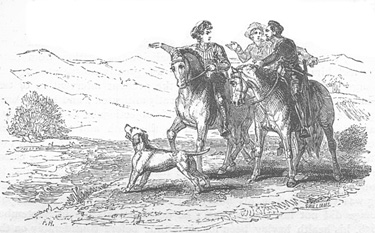
Dame Eleanor Buckley was morally certain, firstly, that her son was
witched; and secondly, that no time should be lost in procuring
relief. Nicholas therefore took horse for Manchester that very
forenoon, with the intention of consulting the learned Doctor
above-named on his son's malady. Ere he left, however, there came
tidings that Grace Ashton had not returned home, and was supposed to
have tarried at Buckley for the night.
Trembling at this unexpected news, the dame once more applied to her
son. He was still wide awake on the couch, in the same position, and
apparently unconscious of her presence. In great anxiety she conjured
him to say if he knew what had befallen Grace Ashton.
"She is dead!" was his reply, in a voice strangely altered from his
usual careless and happy tone. Nothing further, however, could be
drawn from him, but shortly after there came one with additional
tidings.
"Inquiry has been set on foot," said the messenger, "and Tim, well
known at wakes and merry-makings, doth come forward with evidence
which justifies a suspicion that is abroad—to wit, that she has met
death by some unfair dealing; and further, he scruples not to throw
out dark and mysterious hints that implicate your son as being privy
to her disappearance."
At this unlooked-for intelligence the mother's fortitude gave way.
Tribulation and anguish had indeed set in upon them like a flood. The
ring, so unaccountably brought back by the Red Woman, was beyond doubt
the cause of all their misfortunes—its reappearance, as she
anticipated, being the harbinger of misery. What should be the next
arrow from her quiver she trembled to forebode. But in the midst of
this fever of doubt and apprehension one hope sustained her, and that
was the result of her husband's mission to Dr Dee, who would doubtless
find out the nature of the spell, and relieve them from its curse.
Let us follow the traveller to Dee's lodgings in the Deanery, where at
that time this renowned astrologer was located. Nicholas Buckley found
him sitting in a small dismal-looking study, where he was introduced
with little show either of formality or hesitation. The Doctor was now
old, and his sharp, keen, grey eyes had suffered greatly by reason of
rheum and much study. Pale, but of a pleasant countenance, his manner,
if not so grave and sedate as became one of his deep and learned
research, yet displaying a vigour and vivacity the sure intimation of
that quenchless ardour, the usual concomitant of all who are destined
to eminence, or to any conspicuous part in the age on which they are
thrown;—not idle worthless weeds on the strand of time, but landmarks
or beacons in the ocean of life, to warn or to direct.
He was short in stature, and somewhat thin. A rusty black velvet cap,
without ornament, surmounted his forehead, from which a few straggling
grey hairs crept forth, rivalling his pale, thoughtful brow in
whiteness.
He sat in a curiously embossed chair, with a brown-black leathern
cushion, beside an oaken table or tressel, groaning under the weight
of many ponderous volumes of all hues and subjects. Divers and occult
were the tractates there displayed, and unintelligible save to the
initiated. Alchemy was just then his favourite research, and he was
vainly endeavouring to master the jargon under which its worthlessness
and folly were concealed.
Nicholas Buckley related his mishap, and, as far as he was able, the
circumstances connected with it. The Doctor then erected a horoscope
for the hour. After consulting this, he said—
"I will undertake for thee, if so be that my poor abilities, hitherto
sorely neglected, and I may say despised, can bring thee any succour.
Indeed the land groans by reason of the sin of witchcraft—a noisome
plague now infesting this afflicted realm, and a grievous scandal to
the members and ministers of our Reformed Church. The ring is of a
surety bewitched, and by one more powerful and wicked than thou canst
possibly imagine. I tell thee plainly, that unless the charm be
broken, the recovery of the young man were vain—nay, in all
likelihood, thine own ruin will be the result."
The merchant groaned audibly at this doleful news. He thought upon his
merchandise and his adventures o'er sea—his treasures and his
argosies, committed to the tender mercies of the deep; and he
recounted them in brief.
"Cannot these be rescued from such disaster?" inquired he dolefully.
"I know not yet," was the reply. "Saturn, that hath his location here,
governing these expected treasures, now beholds the seventh house of
the figure I have just erected with a quartile aspect. They be evil
tokens, but as regards this same Mother Red-Cap or the Red Woman, who
hath doubtless brought you into grievous trouble, I know her. Nay,
look not incredulous. How, it is not needful to inquire. Suffice it
that she hath great power, through from a different source from mine.
She is of the Rosicrucian order, one of the sisters, of which there
are five throughout Europe and Asia. They have intercourse with
spirits, communicating too with each other, though at never so great a
distance, by means of this mystical agency. She hath been here, ay,
even in the very place where thou sittest."
The visitor started from his chair.
"And I am not ignorant of her devices. She is of a papistical breed;
and the recusant priests, if I mistake not, are at the working of some
diabolical plot; it may be against the life and government of our
gracious Queen! They would employ the devil himself, if need were, to
compass their intent. She hath travelled much, and doubtless hath
learned marvellous secrets from the Moors and Arabian doctors. It is,
however, little to the purpose at present that we continue this
discourse. What more properly concerns thee is how to get rid of this
grievous visitation, which, unless removed, will of a surety fall out
to thine undoing. By prayer and fasting much may be accomplished,
together with the use of all lawful means for thy release."
"Alas!" said Buckley, "I fear me there is little hope of a favourable
issue, and I may not be delivered from this wicked one!"
"Be of good heart; we will set to work presently, and, if it be
possible, counterplot this cunning witch. But to this end it is
needful that I visit the young man, peradventure we may gather tidings
of her. I know not any impediment to my journey this very day. Ay!
even so," said he, poring over some unimaginable diagrams. "Good!
there is a marvellous proper aspect for our enterprise thirty minutes
after midnight. Thou hast doubtless taken horse with thy servant
hither. I will take his place and bear thee company."
The Doctor was soon equipped for travel, much to the comfort of the
afflicted applicant, who was like to have taken his departure with a
sorry heart, and in great disquietude. On their arrival at Buckley,
Dee would needs see the patient instantly. No change had taken place
since morning, and he still refused any sustenance that might be
offered. The Doctor examined him narrowly, but refrained from
pronouncing on his case.
It was now evening. The sun shot a languid and fitful ray athwart the
vapours gathering to receive him, and its light shone on the full
couch of the invalid. The astrologer was sitting apart, in profound
meditation. Dame Eleanor suddenly roused him.
"He has just asked for the Red Woman," said she, "and I heard him
bemoaning himself, saying that he is betrothed to her, and that she
will come ere long to claim his pledge. Hark, he mutters again!"
Dee immediately went to the bedside.
"I did not kill her," said the victim, shuddering. He dashed the cold
sweat from his forehead with some violence. He then started up. "Is
she come?" said he in a low, hollow voice, and he sat up in the
attitude of intense expectation. "Not yet, not yet," he uttered with
great rapidity, and sank down again as though exhausted.
A stormy and lowering sky now gathered above the sun's track, and the
chamber suddenly grew dark. The inmates looked as though expecting
some terrific, some visible manifestation of their tormentor. Dee
looked out through the window. There was nothing worthy of remark,
save an angry heap of clouds, rolling and twisting together—the sure
forerunner of a tempest.
"The whole country is astir," said Dame Eleanor. "They are seeking for
the body of Grace Ashton in pits and secret places. Woe is me that I
should live to see the day;—the poor lad there is loaden with curses,
and fearful threatenings are uttered against us. We are verily in
jeopardy of our lives."
Hereat she fell a-weeping, and truly it was piteous to behold.
"We must first get an answer from him," said the Doctor, "ere measures
can be devised for his recovery."
"'Tis said there will be a warrant for his apprehension on the
morrow," said the elder Buckley.
"There is some terrible perplexing mystery, if not knavery, in this
matter," said Dee; "and I have been thinking—nay, I more than
suspect—that rascal Kelly hath a hand in it. He is ever hankering
after forbidden arts, and many have fallen the innocent victims to his
diabolical intrigues. He hath become a great adept of late, too, as I
am told, in this Rosicrucian philosophy; and if we have here a clue to
our labyrinth, depend on it we'll get to the end speedily. To spite
and frustrate that juggling cheat I will spare neither pains nor
study; though of a surety we only use lawful and appointed means.
Prayers and exorcisms must be resorted to, and help craved from a
higher source than theirs."
At length the forms and usages generally resorted to on such occasions
were entered upon. Loud and fervent were the responses, continuing
even to a late hour, but without producing any change.
The wind, hitherto rushing only in short fierce gusts through the
valley, now gathered in loud heavy lunges against the corner of the
house, almost extinguishing the solitary light on the table near to
which Dee sat; the casements rattled, and the whole fabric shook as
they passed by. At length there came a lull, fearful in its very
silence, as though the elements were gathering strength for one mighty
onslaught. On it came like an overwhelming surge, and for a moment
threatened them with immediate destruction. Dust, pebbles, and dead
branches were flung on the window, as though bursting through, to the
great terror of the inmates. Again it drew back, and there was
stillness so immediate, it was even more appalling than the loudest
assaults of the tempest. The household, too, were silent. Even Dee was
evidently disturbed, and as though in expectation of some
extraordinary occurrence.
A sharp quick tapping was heart at the casement.
"What is that?" was the general inquiry. Gervase evidently heard it
too, and was apparently listening.
Dee arose. He went slowly towards the window, as if carefully
scrutinising what might present itself. He put his face nearly close
to the glass, and manifestly beheld some object which caused him to
draw back. His forehead became puckered by intense emotion, either
from surprise or alarm. He put one finger on his brow, as though
taking counsel from his own thoughts, deliberating for a moment what
course to pursue. At length, much to the astonishment of his
companions, he opened the latch of the casement, when, with a dismal
croak, a raven came hopping in. With outstretched wings he jumped down
on the floor, and would have gone direct to the bed, but the Doctor
caught him, and by main force held him back.
Fluttering and screaming, the bird made every effort to escape, but
not before Dee was aware of a label tied round his neck. This he
quickly detached; after which the winged messenger flew back through
the open window, either having finished his errand, or not liking his
entertainment. Dee opened the billet—a bit of parchment—and out
dropped the ring! In the envelope was a mystical scroll, encompassed
with magic emblems, wherein was written the following doggerel, either
in blood or coloured so as to represent it:—
"By this ring a charm is wound,
Rolling darkly round and round,
Ne'er beginning—ending never;
Woe betide this house for ever!
Thou art mine through life—in death
I'll receive thy latest breath.
Plighted is thy vow to me,
Mine thy doom, thy destiny,
Sealed with blood; this endless token,
Like the spell, shall ne'er be broken."
Alarm was but too legible on the Doctor's brow. He was evidently taken
by surprise. He read it aloud, while fearful groans responded from the
victim.
"'Tis a case of grievous perplexity," said he, "and I am sore
distraught. If he have sworn his very soul to her, as this rhyme doth
seem to intimate, I am miserably afflicted for his case. Doubtless
'tis some snare which hath unwillingly been thrown about him.
Nevertheless, I will diligently and warily address myself to the task,
and Heaven grant us a safe deliverance. Yet I freely own there is both
danger and extremity in the attempt. She will doubtless appear and
claim the fulfilment of his pledge. But I must cope with her alone;
none else may witness the conflict. It is not the first time that I
have battled with the powers of darkness."
"But what motive hath she for this persecution? it is not surely out
of sheer malice," said the dame, weeping.
"Belike not," replied Dee thoughtfully. "It doth savour of those
incantations whereof I oft read in diverse tractates, whereby she
expects to gain advantage or deliverance if she sacrifice another
victim to the demon whereunto she hath sold herself. Indeed, we hear
of some whose tenure of life can only be renewed by the yearly
substitution of another; and it is to this possible danger that our
feeble efforts must be directed. But I trust in aid stronger than the
united hosts of the Prince of Darkness. This very night, I doubt not,
will come the final struggle."
The wind was now still, but ever and anon bursts of hail hurtled on
the window. Thunder growled in the distance, waxing louder and louder,
until its roar might have appalled the stoutest heart.
With many anxious wishes and admonitions the distressed parents left
the Doctor to himself.
He took from his pocket an hour-glass, a Bible, and a Latin
translation from the Arabic, being a treatise on witches, genii,
demons, and the like, together with their symbols, method of
invocation, and many other subjects equally useful. Intent on his
studies, he hardly looked aside save for the purpose of turning the
glass, when he immediately became absorbed as before.
Now and then he cast a glance towards the bed. His patient lay
perfectly quiet, but the Doctor fancied he was listening.
About midnight he heard a groan; he shut his book, and, looking aside,
beheld the terrible eye and aspect of the Red Woman glaring fiercely
upon him. She had in all likelihood been concealed somewhere within
hearing; for a closet-door, on one side of the chamber, stood open as
though she had just issued from it.
With great presence of mind he adjured her that she should declare her
errand.
"I am here on my master's business; mine errand concerns not thee,"
was the reply. Her terrible eyes glanced, as she spoke, towards the
bed where the unfortunate Gervase Buckley lay writhing as though in
torment.
"By what compact or agreement is he thine, foul sorceress? Knowest
thou not that there are bounds beyond which ye cannot prevail?"
"He hath sworn—the compact is sealed with blood, and must be
fulfilled. I am here to claim mine own; and it is at thy peril thou
prevent me."
"I fear thee not, but am prepared to withstand thee and all thy
works."
"Beware! There's a black drop in thine own cup," said she. "Thou
thyself hast sought counsel by forbidden arts, and I can crush thee in
a moment."
Dee looked as though vanquished on the sudden. He was not altogether
clear from this charge, having, though at Kelly's instigation, been
led somewhat farther than was advisable into practices which in his
heart he condemned. He, however, now felt convinced that Kelly had
some hand in the business, knowing, too, that he would associate with
the most wicked and abandoned, if so be that he might compass his
greedy and unhallowed desire.
"Depart whilst thou may," she continued. "I warn thee. Yonder
inheritance is mine, though the silly damsel they have lost be the
reputed heir. Aforetime I have told thee. Wronged of our rights, I
have sold myself—ay, body and soul—for revenge! By unjust
persecutions we have been proscribed, those of the true faith have
been forced to fly, and even our lands and our patrimony given to yon
graceless heretics."
"But why persecute this unoffending house?—they have not done thee
wrong."
"It is commanded—the doom must be fulfilled. One condition only was
appointed. A hard task, to wit—but what cannot power and ingenuity
compass?—'When one shall pledge himself thine and for ever, then the
inheritance thou seekest is thine also, which none shall take from
thee. But he too must be rendered up to me.' This was the doom! 'Tis
fulfilled. He hath pledged himself body and soul, and that ring, if
need be, is witness to his troth."
"Is Grace Ashton living or dead?" inquired Dee, with a firm and
penetrating glance.
"When he hath surrendered to his pledge it shall be told thee."
"Wicked sorceress," said the Doctor, rising in great anger, "he shall
not be thy victim; thine arts shall be countervailed. The powers of
darkness are not, in the end, permitted to prevail, though for a time
their devices seem to prosper. Listen, and answer me truly, or I will
compel thee in such wise that thou darest not disobey. Was there none
other condition to thy bond?"
The weird woman here broke forth into a laugh so wild and scornful
that the arch-fiend himself could hardly have surpassed it in malice.
"Fret not thyself," she said, "and I will tell thee. Know, then, I am
scathless from all harm until that feeble ring shall be able to bind
me; none other bonds may prevail."
"This ring bind thee?"
"Even so; and as a blade of grass I could rend it! Judge, then, of my
safety. Fire, air, and water—all the elements—cannot have the power
to hurt me; I hold a charmed life. The price is paid!"
Dee looked curiously round the little thin ring which he held, and
indeed it were hopeless to suppose so frail a fetter could restrain
her.
"Thou hast told me the truth?"
"I have—on my hope of prospering in this pursuit of our patrimony."
"And what is thy purpose with the lad?"
"I have need of him. He is my hostage to him whom I serve."
"Thou wilt not take him by force!"
"I will not. He will follow whithersoever I lead. He has neither will
nor power to disobey."
"Grant a little space, I prithee. 'Tis a doleful doom for one so
young."
"To-morrow my time hath expired. Either he or I must be surrendered
to"——Here she pointed downwards.
"Agreed. To-morrow at this hour. We will be prepared."
The witch unwillingly departed as she came. The closet-door was shut
as with a violent gust of wind, after which Dee sat pondering deeply
on the matter, but unable to come to any satisfactory conclusion. He
never suspected for one moment what in this evil and matter-of-fact
generation would have occurred even to the most credulous—to wit,
that either insanity or fanaticism, aided by fortuitous events, if we
may so speak, was the cause of this delusion, at least to the unhappy
woman now the object of Dee's most abstruse speculations. His
thoughts, however, would often recur to his quondam associate, Kelly,
and, if in the neighbourhood, which he suspected, an interview with
him might possibly be of use, and afford some clue to guide their
proceedings.
Committing himself to a short repose, he determined to make diligent
search for this mischievous individual—having comforted in some
measure the unhappy couple below stairs, who were in a state of great
apprehension lest their son had already fallen a victim, and were
ready to give up all for lost.
Early on the ensuing day the Doctor bent his steps towards Clegg Hall,
whence the old family of that name had been dispossessed, and from
whom that mysterious individual, the Red Woman, claimed descent.
The air was fresh and bracing after the night's tempest. Traces of
its fury, however, were plainly visible. Huge trees had been swept
down, as though some giant hand had crushed them. Rising the hill
towards Belfield, he stayed a moment to look round him. There was
something in the loneliness and desertion of the spot that was
congenial to his thoughts. The rooks cawed round their ancient
inheritance, but all was ruin and disorder. His curiosity was excited;
he had sufficient local knowledge to remember it was once an
establishment of the Knights of St John some centuries before, and he
remembered too, that according to vulgar tradition, great riches were
buried somewhere in the vaults. A thought struck him that it was not
an unlikely spot for the operations of Master Kelly. Impressed with
this idea, a notion was soon engendered that his errand need not carry
him farther. He drew near to the ivied archway beneath the tower. The
mavis whistled for its mate, and the sparrow chirped amongst the
foliage. All else was silent and apparently deserted. He entered the
gateway. Inside, on the right hand, was a narrow flight of steps, and,
impelled by curiosity, he clambered, though with some difficulty, into
a dilapidated chamber above. Here the loopholes were covered with ivy,
but it was unroofed, and the floor was strewn with rubbish, the
accumulation of ages. Through a narrow breach at one corner he saw
what had once been a concealed passage, evidently piercing the immense
thickness of the walls, and leading probably to some secret chambers
not ordinarily in use. He now heard voices below, and taking advantage
thereby, crept into the passage, probably expecting to gather some
news by listening to the visitors if they approached. Two of these
ascended the broken steps, and every word was audible from his place
of concealment. He instantly recognised the voice of Kelly. The other
was a stranger.
"Ah, ah! old Mother Red-Cap, I tell thee, says we can never get the
treasure. By this good spade, and a willing arm to wit, the gold is
mine ere two hours older," said Kelly.
"I am terribly afeard o' these same boggarts," replied his companion.
"T'owd an—'ll come sure enough among us, sure as my name's Tim, some
time or another."
"Never fear, nunkey; thee knows what a lump I've promised thee; an' as
for the old one, trust me for that; I can lay him in the Red Sea at
any time. Haven't I and that old silly Doctor, who pretends, forsooth,
to have conscience qualms when there's aught to be gotten, though as
fond o' the stuff as any of us—haven't we, I say, by conjurations
and fumigations, raised and laid a whole legion o' them? Why, man, I'm
as well acquainted with the kingdom of Beelzebub, and his ministers to
boot, as I am with my own."
"Don't make sich an ugly talk about 'em, prithee, good sir. I thought
I heard some'at there i' the passage, an' I think i' my heart I darna
face 'em again for a' th' gowd i' th' monk's cellar."
"Tush, fool! If we get hold on 't now it shall be ours, and none o'
the rest of our brethren o' the Red Cross need share, thee knows. But
thou be'st but newly dubbed an' hardly initiated yet in our sublime
mysteries. Nevertheless, I will be indifferent honest too, and for thy
great services to us and to our cause I do promise thee a largess when
it comes to our fingers—that is to say, one-fifth to thee, and
one-fifth to me; the other three shares do go to the general
treasure-house of the community, of which I take half."
"A goodly portion, marry—but I'd liefer 't not gang ony farther."
"Villain! thou art bent on treachery; if thou draw back I'll ha' thee
hanged or otherwise punished for what thou hast done. Remember, knave,
thou art in my power."
The guilty victim groaned piteously, but he was irretrievably
entangled. The toils had been spread by a master-hand. He saw the gulf
to which he was hurried, but could not extricate himself.
"Yonder women, plague take 'em," said Tim; "what's up now? I know this
owd witch who's sold hersel' to—to—Blackface I'm afeard, is th'
owner o' many a good rood o' land hereabout, an' t'owd Ha' too, wi'
its 'purtenances. But she's brought fro' Spain or Italy, as I be
tou'd, a main lot o' these same priest gear; an' they're lurkin'
hereabout like, loike rabbits in a warren, till she can get rid o'
these Ashtons. Mony a year long past I've seen her prowling about, but
she never could get her ends greadly till now."
"By my help she shall," said Kelly; "it's a bargain between us. She's
brought her grandchildren too, who left England in their youth, being
educated in a convent o'er seas. They're just ready to drop into
possession."
"But poor Grace Ashton; she's gi'en me mony a dish of hot porritch an'
bannocks. She shauna be hurt if I can help it."
"Fool!—the wench must be provided for. Look thee—if she get away,
she'll spoil all. When dead, young Buckley must be charged with the
murder."
"Weel, weel; but I'll ha' nought more to do wi 't. E'en tak' your own
fling—I'll wash my hands on't altogether, an' so"——
"I want help, thou chicken-faced varlet—come, budge—to thy work; we
may have helpers to the booty, if time be lost."
"Mercy on us!" said Tim, in great dolour, "I wish I had ne'er had
aught to do wi' treasure-hunting an' sich-like occupation. If ever I
get rid of this job, if I don't stick to my old trade, hang me up to
dry."
"Hold thy peace, carrion! and remember, should a whisper even escape
thee, I will have thee hanged in good earnest."
"Ay, ay; just like Satan 'ticing to iniquity, an' then, biggest rogue
al'ays turns retriever."
"None o' thy pretences: thou hast as liquorish a longing after the
gold as any miser in the parish, and when the broad pieces and the
silver nobles jingle in thy fob, thoul't forget thy qualms, and thank
me into the bargain. Now to work. Let me see, what did the sleeping
beauty say? Humph—'Under the main pillar at the south-east corner.'
Good. Nay, man, don't light up yet. Let us get fairly underground
first, for fear of accidents."
To the great alarm of Dr Dee, who heard every word, these two worthies
came straight towards the opening. He drew on one side at a venture.
Luckily it proved the right one; they proceeded up the passage in the
opposite direction. He heard them groping at the further end. A
trap-door was evidently raised, and he was pretty well convinced they
had found the way to the vaults; probably it had been blocked up for
ages until recently, and in all likelihood Tim had pointed it out, as
well as the notion that treasure was concealed somewhere in these
labyrinths.
How to make this discovery in some way subservient to his mission was
the next consideration; and with a firm conviction, generally the
forerunner of success, he determined to employ some bold stratagem for
their detection. They were now fairly in the trap, and he hoped to
make sure of the vermin. For this end he cautiously felt his way to
the opposite extremity of the passage, where he found the floor
emitted a hollow sound. This was assuredly the entrance; but he tried
in vain—it resisted every effort. Here, however, he determined to
keep watch and seize them if possible on their egress, trusting to his
good fortune or his courage for help in any emergency that might
ensue. At times he laid his ear to the ground, but nothing was
audible as to their operations below. This convinced him they were at
a considerable distance from the entry, but he felt assured that ere
long they must emerge from their den, when, taken by surprise, he
should have little difficulty in securing the first that came forth,
keeping fast the door until he had made sure of his captive.
He watched patiently for some time, when all on a sudden he heard a
rumbling subterraneous noise, and he plainly felt the ground tremble
under his feet. A loud shriek was heard below, and presently footsteps
approaching the entrance. He had scarcely time to draw aside ere the
door was burst open, and some one rushed forth. The Doctor seized him
by the throat, and ere he had recovered from his consternation,
dragged him out of the passage.
"Villain! what is it ye are plotting here about? Confess, or I'll have
thee dealt with after thy deserts."
"Oh!—I'll—tell—all—I will"—sobbed out the delinquent, gasping
with terror. Tim, for it was none other, fell on his knees crying for
mercy. "Whoever thou art," continued he, "come and help—help for one
that's fa'n under a heavy calamity. Bad though he be, we maunna let
him perish for lack o' lookin' after."
"Hast got a light, knave?"
"I'll run an' fetch one."
"Nay, nay; we part not company until better acquainted. Is there not a
candle below?"
"Alas! 'tis put out—and—oh! I'd forgotten; here's t' match-box i' my
pocket."
He drew forth the requisite materials, and they were soon equipped,
exploring the concealed chambers we have before described. With
difficulty they now found their way, by reason of the dust arising
from the recent catastrophe. Dee followed cautiously on, keeping a
wary eye on his leader lest some deceit or stratagem should be
intended.
They now approached a heap of ruins almost choking the entrance to the
larger vault. He thought groans issued from beneath.
"He's not dead yet," said Tim. "Here, here, good sir; help me to shift
this stone first."
They set to work in good earnest, and, with no little difficulty and
delay, at length succeeded in releasing the unfortunate
treasure-hunter. Eager to possess the supposed riches, they had
incautiously undermined one of the main supports of the roof, and
Kelly was buried under the ruins. Fortunately he lay in the hollow he
had made, otherwise nothing but a miracle could have saved him from
immediate death. He was terribly bruised, nevertheless, and presented
a pitiable spectacle. Bleeding and sore wounded, he was hardly
sensible as they bore him out into the fresh air. Apparently unable to
move, they laid him on the ground until help could be obtained. In a
while he recovered.
"Thou art verily incorrigible," said the Doctor to his former
associate. "Where is the maiden ye have so cruelly conveyed away?"
But Kelly was dogged, and would not answer.
"I have heard and know all," continued Dee; "so that, unless thou wilt
confess, assuredly I will have thee lodged in the next jail on
accusation of the murder. Thy diabolical practices will sooner or
later bring thee to punishment."
"Promise not to molest me," said Kelly, who feared nothing but the
strong arm of the law, so utterly was he given over to a reprobate
mind, even to commit iniquity with greediness.
"What! and let thee forth to compass other and maybe more heinous
mischief! I promise nothing, save that thou be prevented from such
pursuits. Thou hast entered into covenant with the woman whom it is
our purpose in due time to deliver up to the secular arm. You think to
compass your mutual ends by this compact; but be assured your schemes
shall be frustrated, and that speedily."
At this Kelly again fell into a sulky mood, maimed and helpless though
he was; and revenge, dark and deadly, distorted his visage.
Tim here stepped forward.
"I do repent me of this iniquity, an' if ever I'm catched meddling wi'
sich tickle gear again, I'll gie ye leave to hang me up without judge
or jury."
"The best proof of repentance is restitution," said the Doctor.
"Knowest thou aught of the maiden?"
"I'll find her, if ye can keep that noisome wizard frae hurting me. He
swears that if I tell, e'en by nods, winks, or otherwise, he'll send
me to —— in a whirlwind."
"I will give thee my pledge, not a hair of thy head shall be damaged."
"He has the key in his pocket."
"What of that?"
"It's the key to the old house door yonder, an' she's either there or
but lately fetched away."
The Doctor proceeded, though not without opposition, to the search.
The key was soon produced, and accompanied by the repentant
ballad-monger, he approached the mansion, which, as we have before
noticed, was near at hand, apparently untenanted.
"Yonder knave, I think, cannot escape," said Dee.
"No, no," said his conductor, "unless some'at fetches him; he's too
well hampered for that. His legs are aw smashed wi' that downfa'."
They entered a little court almost choked up with leaves and long
grass. The door was unlocked, and a desolate scene presented itself.
The hall was covered with damp and mildew—all was rotting in ruin and
decay. Tim led the way up-stairs. The same appearances were still
manifest. The dark shadow of death seemed to brood there—an
interminable silence. They entered a small closet, nearly dark; and
here, on a miserable pallet, lay the form of Grace Ashton, now, alas!
pale and haggard. She seemed altogether unconscious of their presence.
The horrible events of the preceding night had brought on mental as
well as bodily disease. It was the practice of these treasure-seekers
either to raise up a dead body for the desired information, or to
throw the living into such a state of mental hallucination that they
should answer dark and difficult questions whilst in that condition.
It not unfrequently happened, however, that the unfortunate victims to
these horrid rites either lost their lives or their reason during the
experiment.
We will not pursue the recital in the present case: suffice it to say,
that Grace Ashton was immediately removed and placed under the care of
her friends; the Doctor went back to Kelly for further disclosures,
but what was his surprise to find that by some means or another he had
escaped. He now lost no time in returning to Buckley, communicating
the painful, though in some degree welcome, intelligence that Grace
Ashton had been rescued from her persecutors.
It was now time to adopt measures for their reception of the witch,
who would doubtless not fail in her appointment.
Dee was yet in doubt as to the issue, and he thought it needful to
acquaint them with the only method by which the spell could be broken.
How it were possible that the ring should ever bind her was a mystery
that at present he could not solve. Dame Eleanor listened very
attentively, then sharply replied—
"I have heard o' this charm aforetime, or——By'r lady, but I have
it!"
She almost capered for joy.
We will not, however, anticipate the result, but entreat our readers
to suspend their guesses, and again accompany us to the chamber where
lay the heir of Buckley, still grievously tormented.
Midnight again approached. Dee was sitting at the table, apparently in
deep study. He had examined the closet, and found it communicated by
another passage to an outer door; and it was through this that the Red
Woman had contrived to enter without being observed. The learned
Doctor was evidently awaiting her approach with no little anxiety.
Once or twice he fancied some one tapped at the casement, but it was
only the wind rushing by in stormy gusts, increasing in strength and
frequency as the time drew nigh.
Hark! was not that a distant shriek? It might be the creaking of the
boughs and the old yew-tree by the door, thought Dee; and again, in a
while, he relapsed into a profound reverie. Another! He heard the
jarring of rusty hinges; a heavy step; and—the Red Woman stood beside
him; but with such a malevolent aspect that he was somewhat startled
and uneasy at her presence.
"I am beguiled of my prey!—mocked—thwarted. But beware, old man; thy
meddling may prove dangerous. I will possess the inheritance, though
every earthly power withstood me! That boy is mine. He hath sworn
it—sealed it with his heart's blood—and I demand the pledge." The
victim groaned. "Hearest thou that response? 'Tis an assent. He is
mine in spite of your stratagems."
This was probably but the raving of a disordered intellect, but Dee
was too deeply imbued with the superstitions of the age to suppose for
a moment that it was not a case of undisguised witchcraft, or that
this wicked hag was not invested with sufficient power to execute
whatever either anger or caprice might suggest.
"What is thy will with the wretched victim thou hast ensnared?" he
inquired.
"I have told thee."
"Thou wilt not convey him away bodily to his tormentors?"
"Unless they have a victim the inheritance may not be mine." She said
this with such a fiendish malice that made even the exorcist tremble.
His presence of mind, however, did not forsake him.
"The ring—I remember—there was a condition in the bond. In all such
compacts there is ever a loophole for escape."
"None that thou canst creep through," she said, with a look of scorn.
"It is not permitted that the children of men be tempted above
measure."
"When that ring shall have strength to bind me, and not till then. All
other bonds I rend asunder. Even adamant were as flaming tow."
"Here is a ring of stout iron," said Dee, pointing to an iron ring
fixed by a stout staple in the wall. "I think it would try thy boasted
strength."
"I could break it as the feeble reed."
The Doctor shook his head incredulously.
"Try me. Thou shall find it no empty boast."
She seemed proud that her words should be put to the test; and even
proposed that her arms should be pinioned, and her body fastened with
stout cords to the iron ring which had been prepared for this purpose.
"Thou shalt soon find which is the strongest," said she, exultingly.
"I have broken bonds ere now to which these are but as a thread."
She looked confident of success, and surveyed the whole proceeding
with a look of unutterable scorn.
"Now do thy worst, thou wicked one," said Dee, when he had finished.
But lo! a shriek that might have wakened the dead. She was unable to
extricate herself, being held in spite of the most desperate efforts
to escape. With a loud yell she cried out—
"Thou hast played me false, demon!"
"'Tis not thy demon," said Dee; "it is I that have circumvented thee.
In that iron ring is concealed the charmed one, wrought out by a
cunning smith to this intent—to wit, the deliverance of a persecuted
house."
The Red Woman now appeared shorn of her strength. Her charms and her
delusions were dispelled. She sank into the condition of a hopeless,
wretched maniac, and was for some time closely confined to this
chamber.
Buckley, recovering soon after, was united to Grace Ashton, who, it is
confidently asserted, and perhaps believed, was restored to immediate
health when the charm was broken.