Tomato pulp is the fleshy portion of the tomato separated from
skins, cores and seeds by means of a fine mesh screen and suitably
concentrated by evaporation.
During recent years great improvements have been made in the
manufacture of tomato pulp and in the quality and appearance of the
product. The care exercised in the selection of the raw material and
in all steps of the manufacture of tomato pulp has been greatly increased.
This is equally true of pulp marketed in small cans to be
used as soup stock in private homes and of the pulp sold in larger
containers for the manufacture of soup and ketchup. The large
buyers of pulp have determined the grade or quality which gives them
the best results in the manufacture of other products and the degree
of concentration which they can use most economically. It is now
customary, therefore, for large sales of pulp to be made on specifications,
and it is impracticable to comply with such specifications without
carefully controlling the manufacture of the product. The raw
material must be so selected and the manufacturing operations so
controlled that the color and flavor of the finished product is conserved.
This is discussed briefly on page 7.
If he desires to sell under specification, the manufacturer must
comply with his contract with respect to specific gravity, and he cannot
greatly exceed the specific gravity specified without substantial
sacrifice in cost of manufacture. It is therefore economical to determine
the specific gravity of the product as accurately as practicable
(see p. 51) and also to adopt methods of manufacture that will
control as closely as possible the specific gravity of the finished
product.
Beginning on page 33, methods are given for the determination
of specific gravity under various conditions of manufacture and sale,
and on page 50 is given the method for the determination of specific
gravity of the cyclone juice or partly concentrated pulp which this
laboratory has suggested as an aid to determining the volume to which
the product should be evaporated to secure the desired specific gravity.
This method has been used by a number of pulp manufacturers
and found to be relatively convenient and practicable. It might be
used to better advantage and to considerably greater profit if more
help were employed—and some times more competent help—in determining
specific gravity and controlling the point at which evaporation
should stop.
The importance and economy of accuracy in the determination of
specific gravity is not fully appreciated by all, though some of the
larger manufacturers are now giving much attention to that subject.
This matter is discussed on page 50.
There is included in the bulletin beginning on page 13 a detailed
description of the Howard method for the microscopic examination
of tomato products, and following that a detailed statement of the
chemical and physical methods employed in this laboratory for their
examination. Such methods are only of value to those trained in
laboratory work. They are included here because the laboratory receives
many requests for these methods from chemists employed by
manufacturers of pulp. Men who are employed only for the tomato
season find special need for such information.
Our correspondence brings many inquiries regarding the percentage
of solids in pulp of different specific gravities, and also regarding
the relative values of pulp of different specific gravities. In
Table 10 (p. 59) there is given in parallel columns the specific
gravities of pulp of different degrees of concentration and corresponding
percentage of solids, and it is a simple matter to calculate
the volume which the same pulp would make if concentrated to any
other specific gravity. This calculation is explained on page 54—in
discussing the point at which to stop evaporation to secure pulp of
any desired specific gravity.
This bulletin supersedes Bulletins 3 and 7, and also contains material
which has appeared in several trade-paper articles prepared in
this laboratory. These articles are extensively quoted and some of
them are printed almost in full. Dr. F. F. Fitzgerald was the co-author
of most of these publications and did much of the work on
which they were based. He is therefore entitled to a substantial
share of the credit for the material in this bulletin.
The manufacture of tomato pulp requires careful supervision from
beginning to end. The raw product must be carefully selected, and
all possible steps should be taken to induce growers to discard rotting
tomatoes in the field and to expedite the movement of the raw
product from field to factory. Tomatoes must be carefully washed
and sorted. It is only practicable to accomplish the latter by means
of some type of sorting belt. Sorters should not attempt to trim.
Their full attention should be given to the tomatoes passing by them.
The sorter may place the tomatoes requiring trimming in a separate
receptacle in order that they may be carried to a table not provided
with a moving belt and handled by special trimmers. Conveyors,
receptacles and machines must be constructed and installed with a
view to convenience in cleaning. Care must be taken to expedite the
manufacture of the product in every way possible in order to give no
opportunity for bacterial growth during the process of manufacture.
The brief comments given above are offered by way of reminder.
This important subject is not further discussed because it has been
adequately treated by Mr. B. J. Howard of the U. S. Bureau of
Chemistry in bulletins which are readily available. These bulletins
are designated as Bulletins 569 and 581, respectively, of the United
States Department of Agriculture. They may be secured by requesting
them of the Superintendent of Documents, Government Printing
Office, this city, and enclosing five cents in coin for each copy desired.
All manufacturers of tomato pulp will do well to study these bulletins
and have them studied by their responsible employees.
There is a growing tendency to give increased attention to the
quality of tomato pulp. The tomatoes should be ripe and well
colored. Green tomatoes or tomatoes with green portions not only
do not have the requisite amount of red coloring matter but they contain
material which masks and dulls the color of fully ripe tomatoes.
There is a difference of opinion among successful manufacturers of
pulp regarding the relative color of pulp manufactured after hot or
cold cycloning. Some maintain that a better color is obtained by
cycloning hot. Others, apparently equally skilled and able to manufacture
an equally good product, maintain the reverse. Much depends
on the control of the cyclone—the setting of the paddles and
the speed at which they are operated.
The evaporation should be as rapid as possible. The operation of
the kettles in such a way that the pulp burns on the kettles or on the
coils damages the flavor of the product and impairs its color. The
pulp should be cooled promptly after processing, or if that is not
practicable should be stacked loosely so that the cans will have ample
ventilation until they are entirely cooled.
Pulp packed in five-gallon cans is rarely processed. It should,
however, be filled into the cans at a temperature of at least 180° F.
It is best to give pulp in No. 10 and smaller size cans a short process
in boiling water. With pulp filled at 180° F., ten or fifteen minutes is
a sufficient cook. Pulp filled at lower temperatures or which is
allowed to partially cool before processing requires a longer process.
In order to protect the color it is best to water cool No. 10 cans
of pulp after processing. Pulp in cans of any size should not be
stacked solid while it is still hot. The metal of the can has a bleaching
action on the pulp and this is greatly increased if the pulp is
stacked hot or stored in a hot warehouse. If stacked while excessively
hot, stack-burning may occur with consequent darkening of the pulp.
As indicated above, there is a considerable difference of opinion
among successful manufacturers of pulp regarding the details of
manufacture necessary to secure the best results. It is probable that
different conditions call for different methods of operation. At any
rate, all successful manufacturers are agreed that the color of the
pulp is an important index to its quality and greatly influences its
commercial value. The flavor of pulp is also an important criterion
and is considered by many buyers in forming an estimate of the value
of pulp. A scorched taste or a flat flavor show that the manufacture
of the pulp was not adequately controlled and impairs the commercial
value of the product.
Color and flavor commonly go together. The same manufacturing
methods which yield a product of high color are likely to give a
product of superior flavor.
It was formerly customary, and is still the practice of some manufacturers
of tomato pulp, to discard a portion of the juice of the
tomatoes. Some manufacturers, especially in the preparation of pulp
from tomato trimmings, allow the trimmings to pass over a colander
and thus separate the free juice, which is discarded. Others allow the
product of the cyclone to stand for a time in tanks and then discard
the clear juice which settles in the bottom of the tanks. Both practices
are wasteful and have generally been discontinued. Some still
adhere to one or both, however, and it was thought best to make the
matter the subject of study.
Some discard the juice because of the belief that it consists of
nothing but water and is valueless. Some are of the impression that
the juice separated from the trimming stock before straining takes on
a brown color during evaporation which would interfere with the red
color desired in the finished product, if allowed to go into the pulp.
Some recognize the value of the juice, but believe that the expense of
its evaporation would not be warranted by the increased quantity of
pulp. Some have not measured the juice discarded and greatly underestimate
its volume.
With the view of determining the approximate value of the material
discarded in this manner, a batch of material, fresh from the cyclone,
was divided into two portions, one of which was immediately concentrated
to form a pulp, and the other was allowed to stand about 20
minutes when a clear liquor had separated at the bottom. This clear
liquor was then removed and the remainder evaporated until the
desired consistency was obtained.
Samples of the finished pulps, of the raw product from which each
was prepared and of the clear liquor, separated from the second one,
were preserved by sealing in cans and processing. These samples
were numbered as follows:
-
702—Product from the trough under the second cyclone, or finisher.
- 703—Clear liquor, which separated at the bottom of the tank, after a
portion of 702 was allowed to stand. This formed about one-fourth
of the entire product of the tank.
- 704—Drained residue from 703.
- 705—Finished pulp obtained by concentrating 704.
- 706—Finished pulp obtained by concentrating 702.
These samples were examined with the results given below.
Table 1.—Composition of Pulp and of the Liquor Separated from It
| Sample Number |
Total Solids | Insoluble Solids |
Ash | Sugar (as Invert) |
Acid(as Citric) | Undetermined
Organic
Matter |
| | Per Cent |
Per Cent | Per Cent |
Per Cent | Per Cent |
Per Cent |
| 702 | 4.38 |
0.40 | 0.34 | 2.27 |
0.29 | 0.87 |
| 703 | 3.84 |
0.10 | 0.38 |
2.32 | 0.29 |
0.75 |
| 704 | 4.47 |
0.50 | 0.38 |
2.31 | 0.31 |
0.77 |
| 705 | 9.17 |
1.83 | 0.78 |
4.07 | 0.51 |
1.87 |
| 706 | 7.85 |
0.98 | 0.69 |
3.51 | 0.46 |
2.04 |
The two products (705 and 706) were evaporated under exactly
the same conditions and to what appeared to the operator to be the
same consistency. After cooling, however, it was apparent that while
the body of the two finished products was apparently equal, the consistency
of No. 706 was superior to No. 705 in that the former was
smooth and creamy, whereas the latter had a somewhat irregular,
lumpy appearance. This difference was doubtless due to the greater
content of soluble solids in No. 706. The color of the two samples
was identical.
A mixture of one part of No. 703 and three parts of No. 704 when
evaporated in the laboratory to the same consistency was identical in
every way with No. 706.
From the composition as stated in Table 1 it is apparent that the
flavor and food value of the clear juice, which is sometimes discarded
(represented in No. 703), are practically identical with the unconcentrated
pulp as it passes through the cyclone. In fact, the only
difference between the two appears to be about one-half per cent of
insoluble matter. When the product is allowed to separate, it seems
probable that this insoluble material as it rises in the mass has a
tendency to act like a filter and carry up with it a large proportion
of the bacteria and moulds present.
The scale on which the work was done did not permit of sufficiently
accurate measurement of the finished pulp to warrant the calculation
of the loss in quantity caused by discarding the juice. From the composition
of the pulps and of the raw material, however, it is apparent
that this loss is practically proportional to the percentage of juice
discarded.
It is apparent, therefore, that the evaporation of the material just
as it passes through the finisher will yield a product of the same color,
of better consistency, in considerably greater quantity, and at practically
the same proportionate expense of concentration as the evaporation
of the residue after discarding the juice in accordance with
the custom mentioned above.
The results obtained by the examination of 33 samples of whole
tomato pulp are given in Table 2. The concentration of the samples
varies from unconcentrated pulp as it runs from the cyclone to pulps
of very heavy consistency. This table contains the data from which
Tables 4 and 5 were calculated, although during the season a partial
analysis was made of a large number of other samples, and the data
secured therefrom were in all respects confirmatory of the relations
calculated from Table 2.
In addition to the data obtained by the various determinations,
Table 2 gives the relation between the results of the determinations
for each individual sample. For instance, the ratio of pulp solids to
filtrate solids (pulp solids divided by filtrate solids) varies in the different
samples from 1.091 to 1.154, and, with the exception of two
samples, it varies from 1.100 to 1.145. The average of the 33 samples
was 1.12. The relation of insoluble solids to total solids (expressed
as per cent of insoluble solids in total solids) is shown in Table 2.
Considering the variations in the methods employed by different
manufacturers in the preparation of tomato pulp, the per cent of
insoluble solids in the total solids as shown by this column is closer
than we might expect, varying in most of the samples from 11 to 14
per cent.
The per cent of sugar in the soluble solids, as shown by Table 2,
varies in most of the samples from 50 to 55 per cent. This figure
cannot be expected to be constant in different localities and in different
years.
The acid, estimated as citric, constitutes in most of the samples
from 9 to 10 per cent of the soluble solids.
Of especial interest is the refractive constant of the filtered liquor,
shown in the last column of Table 2. The refractive constant of the
various samples is much more uniform than might be expected from
a product of this nature.
Table 2 is chiefly interesting as affording the data from which
Tables 4 and 5 were calculated. The uniformity of the relations
shown in Table 5 is such that it is usually possible from one determination
on the filtrate and the determination of solids in the pulp
by drying to distinguish pulp made from whole tomatoes from that
made from trimming stock. For instance, if the specific gravity or
index of refraction of a filtrate prepared from a pulp of unknown
origin, and the per cent of solids in the pulp by drying, do not agree
approximately with the relation between these determinations as
shown in Table 5, it may be assumed that the sample was not prepared
from whole tomatoes, or that some other substance, such as salt,
has been added. Moreover, trimming stock pulp rarely conforms to
the relations found in whole tomato pulp. For instance, the insoluble
solids are usually higher and the acid lower in trimming stock pulp.
In Table 3 are given the results of the examination of 21 typical
samples of trimming stock pulp prepared at different plants and in
different localities. This table is of especial interest in showing that
the relations between the results of the various analytical determinations
differ from those of whole tomato pulps as given in Table 5.
For instance, in No. 1470 the immersion refractometer reading is
45.90, and the per cent of solids is 9.54, whereas, according to Table 5,
the per cent of solids in the pulp corresponding to an index of refraction
of 45.90 should be 8.57. The specific gravity of the pulp is
1.0373, which, according to Table 5, should correspond to 8.98 instead
of 9.54. Of course it cannot be said definitely that a pulp which on
examination is found to conform to all the relations shown in Table 5
is necessarily whole tomato pulp. It is entirely possible for an occasional
sample of trimming stock pulp to conform to all the relations
shown in that table; moreover, the extent to which different samples
of trimming stock pulp will vary from the relations shown in Table 5
differs with the manner of preparation. For instance, if a portion
of the juice is discarded in the manufacture of trimming stock pulp,
as is still the practice of some manufacturers, the variation from
whole tomato pulp will be greater than otherwise and the variation
will increase with the amount of juice discarded.
These methods may also be applied to the examination of raw tomatoes
and canned tomatoes. In applying the relations given below to
the results obtained by the examination of tomato pulp or canned
tomatoes, it is assumed that no substance such as sugar or salt has
been added. If salt is found to be present in excess of the amount
normal to tomatoes (from 0.05 to 0.1 per cent), it is necessary to
determine the amount and make correction therefor before applying
the relations given below.
In examining raw tomatoes, care must be taken to secure a representative
sample of the juice. This cannot be done by applying pressure
directly, as the juice of the seed receptacles is of different composition
from that of the fleshy part of the tomato. It is necessary,
therefore, to crush the sample and thoroughly cook it in a flask surrounded
by boiling water and connected with a reflux condenser.
The laboratory of the National Canners’ Association is frequently
asked to examine samples of tomato products to determine whether
or not they comply with the Government requirements. In examining
these samples we use the Government method (the Howard
method), but do not participate in the discussions regarding its merits
and shortcomings.
It is our experience that skilled analysts can check themselves and
each other with reasonable accuracy, and it is our duty to tell the manufacturer
whether his product is legal. Should the Bureau of Chemistry
adopt some other method as preferable to the Howard method,
it would be our duty to use the new method and continue to serve the
industry by telling the manufacturer whether samples submitted by
him would pass the Government tests.
With a full understanding of our attitude in this matter many
manufacturers of tomato products send samples from time to time
for examination. It is made plain in every instance that the results
obtained by the examination of a particular sample refer only to the
batch from which that sample was taken and may give no indication
of the character of any other batch.
Some manufacturers of tomato products use the Howard method
as a check on their factory control. For this purpose it is not satisfactory
to have samples examined in a laboratory located at a distance
from the factory. Even if several samples are examined from a
day’s run, they probably do not represent all the pulp manufactured
on that day. It sometimes happens that one wagonload of tomatoes
is almost entirely free of rotting material, whereas the succeeding
load contains a considerable amount. Even with inefficient sorting,
the pulp made from the first load will show a low microscopic count
whereas, unless sorting is exceptionally good, the pulp made from
the second load may show a high count. Thus one batch may readily
comply with the requirements of the Bureau of Chemistry and the
next batch may be outside of those limits. Because of this fact this
laboratory recommends that manufacturers of tomato pulp do not
rely upon the microscopic results of a single sample. The only way
in which the product may be absolutely controlled by means of the
microscopic count is to examine a sample from each batch—that is,
from each kettleful or tankful that is evaporated. This is manifestly
impossible. It would require several analysts for one plant.
Moreover, it is entirely unnecessary.
It has been found that much better results can be secured by having
an analyst in the plant to examine samples from time to time.
Then, whenever the microscopic count becomes excessive, he can
locate the trouble and see that it is corrected.
Manufacturers who desire frequent analyses of their products,
therefore, should employ an analyst and arrange to have him instructed
in a laboratory conversant with the Howard method as used
by the Government. The laboratory of the National Canners’ Association
makes it a practice to give the necessary instruction in this
method to analysts employed by members of the association. These
analysts should be carefully selected. Other things being equal, better
results should be expected of a college graduate or at least one
who has had college training in biology and chemistry. It has been
repeatedly demonstrated, however, that a carefully selected man or
woman with common school education can learn the method and use
it with sufficient accuracy for factory control. The person selected
for this work should have good powers of observation and a positive
character.
This laboratory has heretofore advised that manufacturers of
tomato pulp should not give too much attention to the microscopic
count of their product. We have maintained that the expense would
be better placed on the sorting belt; that if the sorting and trimming
were adequately done, the plant maintained in a sanitary condition
and the product manufactured as rapidly as possible, a low microscopic
count would be assured. This we still maintain is true. So
many cases have come to our attention, however, in which canners
have not succeeded in maintaining the degree of sorting necessary
with a product of this kind that we have grown to feel that the presence
of an analyst working continuously in a plant is an additional
safeguard.
The conditions attending the canning of tomatoes are widely different
from those attending the manufacture of tomato pulp. The
ordinary rot is almost always apparent from the outside of the
tomatoes[3] and is removed by the peelers when preparing tomatoes
for canning. Practically none of it, therefore, finds its way into the
can. With pulp it is quite different. Any rot which is not removed
by sorting and trimming goes into the cyclone and passes into the
pulp. With trimming stock pulp, the condition is obviously much
worse than with whole tomato pulp. One hundred pounds of tomatoes
will yield not far from 85 pounds of cyclone juice. If only
trimming stock is made into pulp, however, nearly half the tomatoes
are used for canning and the remainder (50 or 55 pounds of trimming
stock) will only make something like 35 or 40 pounds of cyclone
juice. Yet, since the rot is almost entirely on the outside of the
tomatoes, this 35 or 40 pounds made from the trimming stock contains
the same amount of molds as the 85 pounds manufactured from
the whole tomatoes. The mold count of the trimming stock pulp,
therefore, is much higher than that of whole tomato pulp made from
the same raw product.
The Bureau of Chemistry condemns tomato pulp whose microscopic
examination gives results as high as the following figures:
| Molds |
66 per cent of fields. |
| Bacteria |
100 million per cubic centimeter. |
| Yeasts and spores |
125 per 1/60 cubic millimeter. |
These figures, of course, apply to the Howard method as employed
by the Bureau of Chemistry. The method is entirely arbitrary and
results agreeing with those obtained by the Bureau of Chemistry can
be obtained only by using this method substantially as it is used by
the bureau. An examination of the pulp, therefore, by an analyst
who is not thoroughly conversant with this method as it is employed
by the Bureau of Chemistry not only is useless but may actually
afford a manufacturer a false sense of security which will be greatly
to his disadvantage.
Microscopic Equipment Required
The apparatus employed by the Bureau of Chemistry includes
apochromatic objectives and compensating oculars. In 1914 it became
impossible to obtain these accessories[4] because of the European
war and equivalent apparatus of American manufacture was found
to give the same results. Both of these forms of apparatus are
recognized in the official Howard method which is given below.
This laboratory made a careful study of the accessories available in
order to determine what could best be used. It was found that very
satisfactory results could be obtained by employing a 10X Huyghenian
ocular and a 4 mm. achromatic objective (working distance 0.6
mm.) and a 16 mm. achromatic objective. These accessories require
a careful adjustment of light, but with proper use enable an analyst
to secure satisfactory results. It is found that the best results are
obtained with a rather dark field.
The apparatus necessary for the Howard method, including the
accessories mentioned above, may be obtained of two American manufacturers,
the Bausch & Lomb Optical Company, of Rochester, N. Y.,
and the Spencer Lens Company, of Buffalo, N. Y.
There is given below a full list of the optical apparatus required,
including catalog numbers of the two manufacturers, as far as numbers
have been assigned by them to the various items. In addition to
the apparatus given in this list, the analyst should have a 50 c. c.
graduated cylinder for measuring and diluting samples. This may
be obtained of any dealer in chemical apparatus and at many drug
stores. When ordering the optical apparatus the full description as
given below should be included.
Optical Apparatus for the Howard Method
| Quantity desired |
Item |
Bausch & Lomb |
Spencer |
| 1 |
Microscope without oculars, objectives or other accessories |
FF |
44 |
| 1 |
Abbe condenser with two iris diaphragms (lower and upper) |
1740 |
300 |
| 1 |
Double nosepiece |
1844 |
450 |
| 1 |
16 mm. achromatic objective |
1021 |
108 |
| 1 |
4 mm. achromatic objective with working distance of 0.6 mm. |
1029 |
116 |
| 1 |
8 mm. achromatic objective with working distance of 1.6 mm. |
1027 |
112 |
| 1 |
10X Huyghenian ocular |
1104 |
142 |
| 1 |
Mechanical stage |
2116 |
485 |
| 1 |
Substage lamp with Daylite glass |
1774 |
385-B |
| 1 |
Blood counting chamber (Haemacytometer with ruling
of Thoma, Neubauer, Jappert, Brewer or Turk) |
3550 |
1472 |
| 6 |
Cover glasses for same, 20×21 mm., 0.4 thick |
3595 |
1460 |
| 1 |
Howard’s mold counting chamber (with ¾ inch inner disk) for same |
3566 |
Special |
| 6 |
Cover glasses for same 33 mm. square, 0.6 mm. thick |
3598 |
Special |
| 2 |
Cases for counting chambers |
3580 |
1505 |
All analysts undertaking the Howard method should secure copies
of the two bulletins of the United States Department of Agriculture
written by Mr. B. J. Howard—Bulletin 569 on Sanitary Control of
Tomato Canning Factories and Bulletin 581, Microscopic Studies on
Tomato Products. These bulletins may be obtained from the Superintendent
of Documents, Government Printing Office, Washington,
D. C., on payment of five cents each in coin.
The details of the method as given below are reprinted from the
Methods of Analysis of the Official Agricultural Chemists as
amended in 1921.
Apparatus
(a) Compound microscope.—Equipped with apochromatic objectives and
compensating oculars, giving magnifications of approximately 90, 180, and 500
diameters. These magnifications can be obtained by the use of 16 and 8 mm.
Zeiss apochromatic objectives with X6 and X18 Zeiss compensating oculars,
or their equivalents, such as the Spencer 16 and 8 mm. apochromatic objectives[5]
with Spencer X10 and X20 compensating oculars, the draw-tube of the microscope
being adjusted as directed below.
(b) Thoma-Zeiss blood counting cell.[6a]
(c) Howard mold counting cell.—Constructed like a blood-counting cell but
with the inner disk (which need not be ruled) about 19 mm. in diameter.[6b]
Molds.—Tentative
Clean the special Howard cell so that Newton’s rings are produced between
the slide and the cover-glass. Remove the cover and place, by means of a
knife blade or scalpel, a small drop of the sample upon the central disk;
spread the drop evenly over the disk and cover with the cover-glass so as to
give an even spread to the material. It is of the utmost importance that the
drop be mixed thoroughly and spread evenly; otherwise the insoluble matter,
and consequently the molds, are most abundant at the center of the drop.
Squeezing out of the more liquid portions around the margin must be avoided.
In a satisfactory mount Newton’s rings should be apparent when finally mounted
and none of the liquid should be drawn across the moat and under the cover-glass.
Place the slide under the microscope and examine with a magnification of
about 90 diameters and with such adjustment that each field of view covers
1.5 sq. mm. This area is of vital importance and may be obtained by adjusting
the draw-tube in such a way that the diameter of the field becomes
1.382 mm. as determined by measurement with a stage micrometer.[7] A 16 mm.
Zeiss apochromatic objective with a Zeiss X6 compensating ocular or a Spencer
16 mm. apochromatic objective with a Spencer X10 compensating ocular, or their
equivalents, shall be used to obtain this magnification. Under these conditions
the amount of liquid examined is .15 cmm. per field. Observe each field as to
the presence or absence of mold filaments and note the result as positive or
negative. Examine at least 50 fields, prepared from two or more mounts. No
field should be considered positive unless the aggregate length of the filaments
present exceeds approximately one-sixth of the diameter of the field. Calculate
the proportion of positive fields from the results of the examination of
all the observed fields and report as percentage of fields containing mold filaments.
Yeasts and Spores.—Tentative
Fill a graduated cylinder with water to the 20 cc. mark, and then add the
sample till the level of the mixture reaches the 30 cc. mark. Close the
graduate, or pour the contents into an Erlenmeyer flask, and shake the mixture
vigorously for 15 to 20 seconds. To facilitate thorough mixing the mixture
should not fill more than three-fourths of the container in which the
shaking is performed. For tomato sauce or pastes, or products running very
high in the number of organisms, or of heavy consistency, 80 cc. of water
should be used with 10 cc. or 10 grams of the sample. In the case of exceptionally
thick or dry pastes, it may be necessary to make an even greater
dilution.
Pour the mixture into a beaker. Thoroughly clean the Thoma-Zeiss counting
cell so as to give good Newton’s rings. Stir thoroughly the contents of
the beaker with a scalpel or knife blade, and then, after allowing to stand 3 to
5 seconds, remove a small drop and place upon the central disk of the Thoma-Zeiss
counting cell and cover immediately with the cover-glass, observing the
same precautions in mounting the sample as given under 28.[8] Allow the slide
to stand not less than 10 minutes before beginning to make the count. Make
the count with a magnification of about 180 diameters to obtain which the
following combination, or their equivalents, should be employed: 8 mm. Zeiss
apochromatic objective with X6 Zeiss compensating ocular, or an 8 mm.
Spencer apochromatic objective with X10 Spencer compensating ocular with
draw-tube not extended.
Count the number of yeasts and spores[9] on one-half of the ruled squares on
the disk (this amounts to counting the number in 8 of the blocks, each of
which contains 25 of the small ruled squares). The total number thus obtained
equals the number of organisms in 1/60,000 cc. if a dilution of 1 part
of the sample with 2 parts of water is used. If a dilution of 1 part of the
sample with 8 parts of water is used the number must be multiplied by 3. In
making the counts, the analyst should avoid counting an organism twice when
it rests on a boundary line between two adjacent squares.
Bacteria.—Tentative
Estimate the number of rod-shaped bacteria from the mounted sample used
in 29[10] (yeasts and spores), but before examination allow the sample to stand
not less than 15 minutes after mounting. Employ a magnification of about 500,
which may be obtained by the use of an 8 mm. Zeiss apochromatic objective
with X18 Zeiss compensating ocular with draw-tube not extended, or an 8 mm.
Spencer apochromatic objective with X20 Spencer compensating ocular and a
tube length of 190, or their equivalents.[11]
Count and record the number of bacteria having a length greater than one
and one-half times their width in an area consisting of five of the small size
squares. Count five such areas, preferably one from near each corner of the
ruled portion of the slide and one from near the center. Determine the total
number of the rod-shaped bacteria per area in the five areas and multiply by
480,000. This gives the number of this type of bacteria per cc. If a dilution
of 1 part of the sample with 8 parts of water instead of 1 part of the sample
with 2 parts of water is used in making up the sample, then the total count
obtained as above must be multiplied by 1,440,000. Omit the micrococcus type
of bacteria in making the count. Thus far it has proved impracticable to
count the micrococci present, as they are likely to be confused with other
bodies frequently present in such products.
1. BY THE EXAMINATION OF THE PULP
The total solids in tomato pulp may be determined by drying in
vacuo at 70° C.; by drying at atmospheric pressure at the temperature
of boiling water; by calculation from the specific gravity of the
pulp; or from the per cent of solids, specific gravity or index of
refraction of the filtrate. The solids obtained by different methods
on 31 samples of pulp are given in Table 4.
(a) By drying.—By drying either in vacuo or at atmospheric
pressure, it is our experience that after the sample has reached
apparent dryness, four hours’ drying gives complete results. From
2 to 4 grams should be taken for the determination, and enough
water added to distribute the sample uniformly over the bottom
of a flat-bottomed dish at least 2.5 inches in diameter.
The solids as determined by drying in vacuo at 70° C. are about
108.5 per cent of the result obtained by drying at the temperature
of boiling water at atmospheric pressure. This figure is the average
of the results obtained by the examination of 20 samples of pulp,
in all of which the per cent of solids obtained by drying in vacuo
agree quite closely with the per cent obtained by drying at atmospheric
pressure multiplied by 1.085. In 15 of the 20 samples examined, the
difference did not exceed 0.10 per cent, and in only one case did it
exceed 0.20 per cent. The results obtained by the subsequent examination
of a considerable number of other samples confirm this
relation.
(b) By calculation from the specific gravity of the pulp.—There
is a very exact relation between the specific gravity of pulp (determined
by the method given above) and the per cent of total solids
as determined by drying. The solids corresponding to pulps of various
specific gravities are given in Table 5, or may be obtained from the
following formula which is derived from the same table:
Per cent Solids = 228 (sp. gr. of pulp - 1.000) + 19.1 (sp. gr. of pulp - 1.015).
2. BY THE EXAMINATION OF THE FILTRATE
If a sample of pulp of considerable size be thrown on a folded
filter, a filtrate is obtained whose composition has a definite relation
to that of the whole pulp.
(a) By drying.—The per cent of solids in the filtrate may be
determined by drying in vacuo at 70° C, or under atmospheric
pressure at the temperature of boiling water.
As in the case of the drying of pulp, a constant relation is found
to exist between the per cent of solids in the filtered liquor as determined
by drying in vacuo at 70° C., and the per cent of solids as
determined by drying at atmospheric pressure at the temperature of
boiling water. The per cent of solids in the filtrate obtained by drying
at atmospheric pressure, multiplied by 1.125, gives the per cent
of solids obtained by drying in vacuo. This relation is shown in
detail in Table 5.
Table 2.—Composition of Whole Tomato Pulps
| Sample No. |
Composition of pulps |
| Sp. gr. at 20° C. |
Total solids(a) |
Insoluble solids |
|
|
_Per cent_ |
_Per cent_ |
| 1290 |
1.0252 |
5.94 |
0.66 |
| 1291 |
1.0273 |
6.54 |
0.78 |
| 1292 |
1.0234 |
5.50 |
0.80 |
| 1293 |
1.0293 |
7.02 |
0.74 |
| 1294 |
1.0272 |
6.48 |
0.69 |
| | | | |
| 1295 |
1.0361 |
8.67 |
0.95 |
| 1296 |
1.0380 |
9.00 |
1.06 |
| 1297 |
1.0465 |
11.20 |
1.19 |
| 1299 |
1.0417 |
10.07 |
1.23 |
| 1300 |
1.0322 |
7.70 |
0.93 |
| | | | |
| 1301 |
1.0312 |
7.36 |
0.91 |
| 1302 |
1.0310 |
7.45 |
0.91 |
| 1303 |
1.0340 |
8.17 |
0.91 |
| 1304 |
1.0292 |
6.88 |
0.88 |
| 1305 |
1.0371 |
9.03 |
1.19 |
| | | | |
| 1306 |
1.0370 |
8.95 |
0.98 |
| 1307(b) |
1.0328 |
7.86 |
1.01 |
| 1481 |
1.0449 |
10.82 |
... |
| 1482 |
1.0444 |
10.83 |
... |
| 1483 |
1.0464 |
11.21 |
... |
| | | | |
| 1484 |
1.0423 |
10.27 |
... |
| 1485 |
1.0347 |
8.55 |
... |
| 1477(c) |
1.0610 |
13.86 |
... |
| 1479 |
1.0411 |
10.00 |
1.21 |
| 1486 |
1.0169 |
4.34 |
0.62 |
| | | | |
| 1491 |
1.0198 |
4.97 |
0.63 |
| 1496 |
1.0341 |
8.27 |
1.15 |
| 1515 |
1.0352 |
8.56 |
1.15 |
| 1529 |
1.0209 |
5.11 |
0.89 |
| | | | |
| 1530 |
1.0252 |
6.21 |
0.98 |
| 1531 |
1.0291 |
7.17 |
1.08 |
| 1224(c) |
1.0486 |
11.22 |
0.91 |
| 1325 |
1.0327 |
7.86 |
0.93 |
Table 2.—Composition of Whole Tomato Pulps Contd.
| Sample No. |
Filtrate from pulps |
| Sp. gr. at 20° C. |
Solids(a) |
Sugar(d) |
Acid as citric |
Immersion
refractometer 17.5° C. |
|
|
_Per cent_ |
_Per cent_ |
_Per cent_ |
|
| 1290 |
1.0233 |
5.24 |
2.41 |
0.58 |
36.24 |
| 1291 |
1.0252 |
5.71 |
3.10 |
0.53 |
37.80 |
| 1292 |
1.0211 |
4.88 |
2.48 |
0.49 |
34.51 |
| 1293 |
1.0276 |
6.28 |
3.35 |
0.61 |
40.04 |
| 1294 |
1.0256 |
5.82 |
3.20 |
0.55 |
38.27 |
| | | | | | |
| 1295 |
1.0340 |
7.69 |
4.36 |
0.67 |
46.03 |
| 1296 |
... |
8.05 |
4.47 |
0.66 |
46.86 |
| 1297 |
1.0446 |
10.27 |
5.61 |
0.89 |
56.70 |
| 1299 |
1.0394 |
9.09 |
4.96 |
0.81 |
51.75 |
| 1300 |
1.0304 |
6.88 |
3.55 |
0.67 |
42.84 |
| | | | | | |
| 1301 |
... |
6.68 |
3.27 |
0.69 |
41.56 |
| 1302 |
1.0293 |
6.61 |
3.43 |
0.64 |
41.76 |
| 1303 |
1.0323 |
7.29 |
3.77 |
0.71 |
44.65 |
| 1304 |
1.0274 |
6.20 |
3.03 |
0.64 |
39.74 |
| 1305 |
... |
7.98 |
4.14 |
0.82 |
47.30 |
| | | | | | |
| 1306 |
... |
8.01 |
4.71 |
0.69 |
47.60 |
| 1307(b) |
1.0308 |
6.97 |
3.79 |
0.66 |
43.15 |
| 1481 |
1.0421 |
9.64 |
5.15 |
0.99 |
54.20 |
| 1482 |
1.0422 |
9.86 |
5.62 |
0.94 |
54.75 |
| 1483 |
1.0441 |
10.19 |
5.67 |
0.98 |
56.45 |
| | | | | | |
| 1484 |
1.0396 |
9.23 |
5.42 |
0.81 |
52.10 |
| 1485 |
1.0332 |
7.73 |
4.35 |
0.72 |
45.85 |
| 1477(c) |
1.0579 |
12.75 |
6.55 |
0.97 |
67.15 |
| 1479 |
1.0386 |
8.96 |
... |
... |
51.57 |
| 1486 |
1.0158 |
3.76 |
... |
... |
... |
| | | | | | |
| 1491 |
1.0188 |
4.40 |
... |
... |
32.67 |
| 1496 |
1.0318 |
7.31 |
... |
... |
44.86 |
| 1515 |
1.0331 |
7.61 |
... |
... |
46.20 |
| 1529 |
1.0195 |
4.54 |
... |
... |
32.96 |
| | | | | | |
| 1530 |
1.0231 |
5.42 |
... |
... |
36.31 |
| 1531 |
1.0273 |
6.27 |
... |
... |
40.09 |
| 1224(c) |
1.0468 |
10.33 |
... |
... |
57.62 |
| 1325 |
... |
6.99 |
... |
... |
43.80 |
Table 2.—Composition of Whole Tomato Pulps Contd.
| Sample No. |
Ratio of pulp solids to filtrate solids |
Insoluble solids in total solids |
Solids of filtrate |
Refractive constant of filtered liquor(f) |
| Sugar(d) |
Acid |
Ratio sugar to acid |
|
|
_Per cent_ |
_Per cent_ |
_Per cent_ |
|
|
| 1290 |
1.133 |
11.1 |
46.0 |
11.1 |
4.1 |
0.20556 |
| 1291 |
1.145 |
11.9 |
54.3 |
9.4 |
5.8 |
0.20550 |
| 1292 |
1.127 |
14.6 |
50.8 |
10.1 |
5.0 |
0.20564 |
| 1293 |
1.118 |
10.5 |
53.4 |
9.7 |
5.5 |
0.20548 |
| 1294 |
1.113 |
10.6 |
55.0 |
9.5 |
5.8 |
0.20525 |
| 1295 |
1.127 |
11.0 |
56.8 |
8.7 |
6.5 |
0.20534 |
| | | | | | | |
| 1296 |
1.117 |
11.8 |
55.5 |
8.2 |
6.8 |
... |
| 1297 |
1.091 |
10.6 |
54.6 |
8.9 |
6.3 |
0.20544 |
| 1299 |
1.108 |
12.2 |
54.6 |
8.9 |
6.1 |
0.20550 |
| 1300 |
1.119 |
12.1 |
51.6 |
9.7 |
5.3 |
0.20546 |
| | | | | | | |
| 1301 |
1.102 |
12.4 |
48.9 |
10.3 |
4.8 |
... |
| 1302 |
1.127 |
12.2 |
51.9 |
9.7 |
5.4 |
0.20551 |
| 1303 |
1.120 |
11.1 |
51.7 |
9.7 |
5.3 |
0.20549 |
| 1304 |
1.110 |
12.8 |
48.9 |
10.4 |
4.7 |
0.20546 |
| 1305 |
1.132 |
13.2 |
51.9 |
10.3 |
5.0 |
... |
| | | | | | | |
| 1306 |
1.117 |
11.0 |
58.8 |
8.7 |
6.8 |
... |
| 1307(b) |
1.126 |
12.9 |
54.4 |
9.5 |
5.7 |
0.20544 |
| 1481 |
1.123 |
... |
53.4 |
10.3 |
5.2 |
0.20545 |
| 1482 |
1.100 |
... |
57.0 |
9.6 |
6.0 |
0.20554 |
| 1483 |
1.100 |
... |
55.6 |
9.6 |
5.8 |
0.20550 |
| | | | | | | |
| 1484 |
1.114 |
... |
58.7 |
8.8 |
6.7 |
0.20544 |
| 1485 |
1.106 |
... |
56.3 |
9.3 |
6.0 |
0.20529 |
| 1477(c) |
1.111(e) |
... |
51.4 |
7.7 |
6.7 |
... |
| 1479 |
1.116 |
9.8 |
... |
... |
... |
0.20554 |
| 1486 |
1.154 |
14.3 |
... |
... |
... |
... |
| | | | | | | |
| 1491 |
1.128 |
12.7 |
... |
... |
... |
0.20565 |
| 1496 |
1.131 |
13.9 |
... |
... |
... |
0.20554 |
| 1515 |
1.125 |
13.5 |
... |
... |
... |
0.20556 |
| 1529 |
1.125 |
17.4 |
... |
... |
... |
0.20556 |
| | | | | | | |
| 1530 |
1.145 |
15.8 |
... |
... |
... |
0.20553 |
| 1531 |
1.143 |
15.1 |
... |
... |
... |
0.20547 |
| 1224(c) |
1.124(e) |
11.8 |
... |
... |
... |
... |
| 1325 |
1.123 |
... |
... |
... |
... |
... |
(a) Determined by drying in vacuo at 70°C.
(b) Composite of 1290 to 1306, inclusive.
(c) This sample contained salt.
(d) Expressed as invert.
(e) Salt-free ratio.
(f) Calculated by formula of Lorentz-Lorenz, (n2 - 1)/(n2 + 2)2.
Note.—All specific gravities in this bulletin are on a 20°C/20°C basis.
Table 3.—Composition of Trimming Stock Pulps
| Sample No. |
Composition of pulps |
| Specific gravity at 20° C. |
Total solids(a) |
Insoluble solids |
|
|
_Per cent_ |
_Per cent_ |
| 1470 |
1.0373 |
9.54 |
... |
| 1471 |
1.0385 |
9.40 |
... |
| 1470-1 |
1.0349 |
8.56 |
... |
| 1470-2 |
1.0316 |
7.88 |
... |
| 1470-3 |
1.0284 |
7.00 |
... |
| | | | |
| 1470-4 |
1.0258 |
6.62 |
... |
| 1471-1 |
1.0334 |
8.12 |
... |
| 1471-2 |
1.0258 |
6.41 |
... |
| 1471-3 |
1.0229 |
7.48 |
... |
| 1471-4 |
1.0191 |
4.74 |
... |
| | | | |
| 1572 |
1.0424 |
10.28 |
... |
| 1573 |
1.0392 |
9.53 |
1.22 |
| 1574 |
1.0427 |
10.29 |
1.17 |
| 1575 |
1.0386 |
9.73 |
1.29 |
| 1662(b) |
1.0204 |
4.85 |
0.18 |
| | | | |
| 1664(c) |
1.0577 |
13.20 |
0.62 |
| 1665 |
1.0331 |
7.74 |
1.10 |
| 701 |
1.0200 |
4.89 |
0.72 |
| 703(d) |
1.0180 |
4.24 |
0.10 |
| 705 |
1.0388 |
9.85 |
1.83 |
| 706 |
1.0333 |
8.35 |
0.98 |
Table 3.—Composition of Trimming Stock Pulps Contd.
| Sample No. |
Composition of liquor obtained by filtering pulps |
| Specific gravity at 20° C. |
Solids(a) |
Sugar(e) |
Acid as citric |
Immersion
refractometer at 17.5° C. |
|
|
_Per cent_ |
_Per cent_ |
_Per cent_ |
|
| 1470 |
1.0337 |
7.68 |
4.11 |
0.58 |
45.90 |
| 1471 |
1.0334 |
7.62 |
4.05 |
0.59 |
45.75 |
| 1470-1 |
1.0302 |
7.11 |
... |
... |
42.87 |
| 1470-2 |
1.0279 |
6.55 |
... |
... |
40.75 |
| 1470-3 |
... |
5.83 |
... |
... |
37.80 |
| | | | | | |
| 1470-4 |
1.0232 |
5.53 |
... |
... |
36.40 |
| 1471-1 |
1.0288 |
6.86 |
... |
... |
41.60 |
| 1471-2 |
1.0227 |
5.41 |
... |
... |
36.10 |
| 1471-3 |
1.0275 |
6.14 |
... |
... |
39.25 |
| 1471-4 |
1.0168 |
3.94 |
... |
... |
30.35 |
| | | | | | |
| 1572 |
1.0400 |
9.28 |
... |
... |
52.47 |
| 1573 |
1.0369 |
8.53 |
... |
... |
49.33 |
| 1574 |
1.0401 |
9.29 |
... |
... |
52.40 |
| 1575 |
1.0369 |
8.28 |
... |
... |
49.37 |
| 1662(b) |
1.0201 |
4.65 |
... |
... |
33.27 |
| | | | | | |
| 1664(c) |
1.0566 |
12.70 |
... |
... |
66.92 |
| 1665 |
1.0304 |
6.89 |
... |
... |
42.65 |
| 701 |
1.0184 |
4.29 |
2.35 |
0.30 |
32.09 |
| 703(d) |
1.0178 |
4.15 |
2.32 |
0.29 |
32.09 |
| 705 |
1.0359 |
8.08 |
4.07 |
0.51 |
47.85 |
| 706 |
... |
7.29 |
3.51 |
0.46 |
44.69 |
Table 3.—Composition of Trimming Stock Pulps Contd.
| Sample No. |
Ratio of
pulp
solids to
filtrate
solids |
Insoluble
solids
in total
solids |
Sugar
in
solids
of
liquor |
Acid in
solids
of
liquor |
Ratio
of acid
to
sugar |
|
|
_Per cent_ |
_Per cent_ |
_Per cent_ |
|
| 1470 |
1.241 |
... |
53.5 |
7.6 |
7.0 |
| 1471 |
1.233 |
... |
53.2 |
7.7 |
6.9 |
| 1470-1 |
1.203 |
... |
... |
... |
... |
| 1470-2 |
1.203 |
... |
... |
... |
... |
| 1470-3 |
1.201 |
... |
... |
... |
... |
| 1470-4 |
1.197 |
... |
... |
... |
... |
| | | | | | |
| 1471-1 |
1.184 |
... |
... |
... |
... |
| 1471-2 |
1.184 |
... |
... |
... |
... |
| 1471-3 |
1.218 |
... |
... |
... |
... |
| 1471-4 |
1.203 |
... |
... |
... |
... |
| | | | | | |
| 1572 |
1.109 |
... |
... |
... |
... |
| 1573 |
1.117 |
12.8 |
... |
... |
... |
| 1574 |
1.109 |
11.4 |
... |
... |
... |
| 1575 |
1.175 |
13.3 |
... |
... |
... |
| 1662(b) |
1.042 |
3.7 |
... |
... |
... |
| | | | | | |
| 1664(c) |
1.040 |
4.7 |
... |
... |
... |
| 1665 |
1.123 |
14.3 |
... |
... |
... |
| 701 |
1.140 |
14.7 |
54.8 |
7.0 |
7.8 |
| 703(d) |
1.022 |
2.4 |
55.9 |
7.0 |
8.0 |
| 705 |
1.220 |
18.6 |
50.4 |
6.2 |
8.0 |
| 706 |
1.145 |
11.7 |
48.3 |
6.3 |
7.6 |
(a) Determined by drying in vacuo at 70° C.
(b) Unconcentrated tomato juice from peeling table.
(c) No. 1662 concentrated.
(d) Clear liquor separated from unconcentrated pulp on standing.
(e) Expressed as invert.
Table 4.—Comparison of Methods for the Determination and Calculation of
Solids in Whole Tomato Pulp
| Sample No. |
Solids in liquor from filtered pulp |
By drying
_in vacuo_
at
70° C. |
Calculated from-- |
Immersion
refractometer
reading |
Specific
gravity(1) |
Specific
gravity(2) |
|
_Per cent_ |
_Per cent_ |
_Per cent_ |
_Per cent_ |
| 1290 |
5.24 |
5.31 |
5.35 |
5.35 |
| 1291 |
5.71 |
5.67 |
5.78 |
5.80 |
| 1292 |
4.88 |
4.87 |
4.85 |
4.85 |
| 1293 |
6.28 |
6.21 |
6.33 |
6.35 |
| 1294 |
5.82 |
5.79 |
5.87 |
5.89 |
| | | | | |
| 1295 |
7.69 |
7.67 |
7.82 |
7.82 |
| 1296 |
8.05 |
7.88 |
... |
... |
| 1297 |
10.27 |
10.27 |
10.25 |
10.26 |
| 1299 |
9.09 |
9.06 |
9.05 |
9.06 |
| 1300 |
6.88 |
6.91 |
6.98 |
6.99 |
| | | | | |
| 1301 |
6.68 |
6.59 |
... |
... |
| 1302 |
6.61 |
6.64 |
6.73 |
6.74 |
| 1303 |
7.29 |
7.34 |
7.42 |
7.43 |
| 1304 |
6.20 |
6.16 |
6.30 |
6.30 |
| 1305 |
7.98 |
7.98 |
... |
... |
| | | | | |
| 1306 |
8.01 |
8.05 |
... |
... |
| 1307 |
6.97 |
6.96 |
7.08 |
7.08 |
| 1481 |
9.64 |
9.67 |
9.68 |
9.68 |
| 1482 |
9.86 |
9.81 |
9.70 |
9.71 |
| 1483 |
10.19 |
10.21 |
10.15 |
10.14 |
| | | | | |
| 1484 |
9.23 |
9.15 |
9.10 |
9.11 |
| 1485 |
7.73 |
7.64 |
7.63 |
7.64 |
| 1479 |
8.96 |
9.03 |
8.87 |
8.88 |
| 1486 |
3.76 |
... |
3.62 |
3.63 |
| 1491 |
4.40 |
4.44 |
4.30 |
4.32 |
| | | | | |
| 1496 |
7.31 |
7.39 |
7.30 |
7.31 |
| 1515 |
7.61 |
7.70 |
7.60 |
7.61 |
| 1529 |
4.54 |
4.52 |
4.47 |
4.49 |
| 1530 |
5.42 |
5.32 |
5.30 |
5.31 |
| 1531 |
6.27 |
6.25 |
6.27 |
6.28 |
| 1325 |
6.99 |
7.13 |
... |
... |
Table 4.—Comparison of Methods for the Determination and Calculation of
Solids in Whole Tomato Pulp Contd.
| Sample No. |
Solids in whole pulp |
By drying
_in vacuo_
at
70° C. |
Calculated
from
immersion
refractometer
reading |
Calculated from specific
gravity of-- |
| Filtered
liquor[3] |
Whole
pulp |
Filtered
liquor[4) |
|
_Per cent_ |
_Per cent_ |
_Per cent_ |
_Per cent_ |
_Per cent_ |
| 1290 |
5.94 |
5.95 |
6.00 |
5.97 |
5.99 |
| 1291 |
6.54 |
6.36 |
6.48 |
6.47 |
6.50 |
| 1292 |
5.50 |
5.47 |
5.44 |
5.52 |
5.43 |
| 1293 |
7.02 |
6.96 |
7.10 |
6.98 |
7.11 |
| 1294 |
6.48 |
6.49 |
6.58 |
6.45 |
6.60 |
| 1295 |
8.67 |
8.59 |
8.77 |
8.63 |
8.76 |
| | | | | | |
| 1296 |
9.00 |
8.83 |
... |
9.11 |
... |
| 1297 |
11.20 |
11.50 |
11.47 |
11.20 |
11.49 |
| 1299 |
10.07 |
10.15 |
10.14 |
10.02 |
10.15 |
| 1300 |
7.70 |
7.75 |
7.82 |
7.68 |
7.83 |
| | | | | | |
| 1301 |
7.36 |
7.38 |
... |
7.43 |
... |
| 1302 |
7.45 |
7.44 |
7.54 |
7.40 |
7.55 |
| 1303 |
8.17 |
8.23 |
8.33 |
8.12 |
8.32 |
| 1304 |
6.88 |
6.90 |
7.06 |
6.95 |
7.06 |
| 1305 |
9.03 |
8.94 |
... |
8.88 |
... |
| | | | | | |
| 1306 |
8.95 |
9.02 |
... |
8.86 |
... |
| 1307 |
7.86 |
7.81 |
7.93 |
7.83 |
7.93 |
| 1481 |
10.82 |
10.83 |
10.84 |
10.80 |
10.84 |
| 1482 |
10.83 |
10.98 |
10.86 |
10.70 |
10.88 |
| 1483 |
11.21 |
11.43 |
11.36 |
11.17 |
11.36 |
| | | | | | |
| 1484 |
10.27 |
10.25 |
10.19 |
10.17 |
10.20 |
| 1485 |
8.55 |
8.56 |
8.55 |
8.30 |
8.56 |
| 1479 |
10.00 |
10.10 |
9.94 |
9.88 |
9.85 |
| 1486 |
4.34 |
... |
4.05 |
3.90 |
4.07 |
| 1491 |
4.97 |
4.97 |
4.82 |
4.62 |
4.84 |
| | | | | | |
| 1496 |
8.27 |
8.28 |
8.18 |
8.15 |
8.29 |
| 1515 |
8.56 |
8.63 |
8.52 |
8.40 |
8.52 |
| 1529 |
5.11 |
5.06 |
5.01 |
4.90 |
5.03 |
| 1530 |
6.21 |
5.97 |
5.94 |
5.97 |
5.95 |
| 1531 |
7.17 |
7.01 |
7.04 |
6.92 |
7.03 |
| 1325 |
7.86 |
7.99 |
... |
7.81 |
... |
(1) From formula on page 30.
(2) The solution factor of O’Sullivan (J. Chem. Soc., 1876, p. 129) was employed with slight
modification. The formula employed was 1000(d - 1000) / 4.35 = per cent solids. In this formula
d = specific gravity of solution at 20° C.
(3) From formula on page 31.
(4) For these figures the formula of footnote 2 was employed and the results multiplied by 1.12
Table 5.—Tomato Pulp and Filtered Liquor
| Whole pulp |
Filtrate from pulp |
| Solids by drying |
Specific
gravity
at 20° C. |
Solids by drying |
Immersion
refract-
ometer
reading
at
17.5° C. |
Specific
gravity
at
20° C. |
_In vacuo_
at 70° C. |
At
atmospheric
pressure
100° C. |
_In vacuo_
at 70° C. |
At
atmospheric
pressure
100° C. |
| _Per cent_ | _Per cent_ | |
_Per cent_ | _Per cent_ | | |
| 3.42 |
3.15 |
1.0150 |
3.05 |
2.71 |
26.9 |
1.0133 |
| 3.47 |
3.20 |
1.0152 |
3.10 |
2.75 |
27.1 |
1.0136 |
| 3.53 |
3.25 |
1.0155 |
3.15 |
2.80 |
27.3 |
1.0138 |
| 3.58 |
3.30 |
1.0157 |
3.20 |
2.85 |
27.5 |
1.0140 |
| 3.64 |
3.35 |
1.0159 |
3.25 |
2.89 |
27.7 |
1.0142 |
| | |
| | | |
| 3.70 |
3.41 |
1.0161 |
3.30 |
2.93 |
27.9 |
1.0144 |
| 3.76 |
3.46 |
1.0163 |
3.35 |
2.97 |
28.1 |
1.0146 |
| 3.81 |
3.51 |
1.0166 |
3.40 |
3.02 |
28.3 |
1.0149 |
| 3.87 |
3.56 |
1.0168 |
3.45 |
3.07 |
28.6 |
1.0151 |
| 3.92 |
3.61 |
1.0170 |
3.50 |
3.11 |
28.8 |
1.0153 |
| | |
| | | |
| 3.98 |
3.67 |
1.0172 |
3.55 |
3.15 |
29.0 |
1.0155 |
| 4.03 |
3.72 |
1.0174 |
3.60 |
3.20 |
29.2 |
1.0157 |
| 4.09 |
3.77 |
1.0177 |
3.65 |
3.24 |
29.4 |
1.0160 |
| 4.15 |
3.82 |
1.0179 |
3.70 |
3.28 |
29.6 |
1.0162 |
| 4.20 |
3.87 |
1.0181 |
3.75 |
3.33 |
29.8 |
1.0164 |
| | |
| | | |
| 4.26 |
3.93 |
1.0183 |
3.80 |
3.38 |
30.0 |
1.0166 |
| 4.31 |
3.98 |
1.0185 |
3.85 |
3.42 |
30.3 |
1.0168 |
| 4.37 |
4.03 |
1.0188 |
3.90 |
3.46 |
30.5 |
1.0170 |
| 4.43 |
4.08 |
1.0190 |
3.95 |
3.51 |
30.7 |
1.0173 |
| 4.48 |
4.13 |
1.0192 |
4.00 |
3.55 |
30.9 |
1.0175 |
| | |
| | | |
| 4 54 |
4.18 |
1.0194 |
4.05 |
3.60 |
31.1 |
1.0177 |
| 4.59 |
4.23 |
1.0197 |
4.10 |
3.64 |
31.3 |
1.0179 |
| 4.65 |
4.28 |
1.0199 |
4.15 |
3.69 |
31.5 |
1.0181 |
| 4.71 |
4.33 |
1.0201 |
4.20 |
3.73 |
31.7 |
1.0183 |
| 4.76 |
4.38 |
1.0203 |
4.25 |
3.78 |
31.9 |
1.0185 |
| | |
| | | |
| 4.82 |
4.44 |
1.0205 |
4.30 |
3.82 |
32.1 |
1.0188 |
| 4.87 |
4.49 |
1.0208 |
4.35 |
3.86 |
32.3 |
1.0190 |
| 4.93 |
4.54 |
1.0210 |
4.40 |
3.91 |
32.5 |
1.0192 |
| 4.99 |
4.59 |
1.0212 |
4.45 |
3.95 |
32.7 |
1.0194 |
| 5.04 |
4.64 |
1.0215 |
4.50 |
4.00 |
32.9 |
1.0196 |
Table 5.—Tomato Pulp and Filtered Liquor—Continued
| Whole pulp |
Filtrate from pulp |
| Solids by drying |
Specific
gravity
at 20° C. |
Solids by drying |
Immersion
refract-
ometer
reading
at
17.5° C. |
Specific
gravity
at
20° C. |
_In vacuo_
at 70° C. |
At
atmospheric
pressure
100° C. |
_In vacuo_
at 70° C. |
At
atmospheric
pressure
100° C. |
| _Per cent_ | _Per cent_ | |
_Per cent_ | _Per cent_ | | |
| 5.10 |
4.70 |
1.0217 |
4.55 |
4.04 |
33.1 |
1.0198 |
| 5.16 |
4.75 |
1.0219 |
4.60 |
4.09 |
33.3 |
1.0200 |
| 5.21 |
4.80 |
1.0222 |
4.65 |
4.13 |
33.6 |
1.0203 |
| 5.27 |
4.85 |
1.0224 |
4.70 |
4.18 |
33.8 |
1.0205 |
| 5.33 |
4.90 |
1.0226 |
4.75 |
4.22 |
34.0 |
1.0207 |
| | |
| | | |
| 5.38 |
4.96 |
1.0228 |
4.80 |
4.26 |
34.2 |
1.0209 |
| 5.44 |
5.01 |
1.0230 |
4.85 |
4.31 |
34.4 |
1.0211 |
| 5.49 |
5.06 |
1.0233 |
4.90 |
4.36 |
34.6 |
1.0213 |
| 5.55 |
5.11 |
1.0235 |
4.95 |
4.40 |
34.8 |
1.0216 |
| 5.60 |
5.16 |
1.0237 |
5.00 |
4.44 |
35.0 |
1.0218 |
| | |
| | | |
| 5.66 |
5.21 |
1.0240 |
5.05 |
4.49 |
35.2 |
1.0220 |
| 5.72 |
5.26 |
1.0242 |
5.10 |
4.53 |
35.4 |
1.0223 |
| 5.77 |
5.31 |
1.0244 |
5.15 |
4.58 |
35.6 |
1.0225 |
| 5.83 |
5.36 |
1.0247 |
5.20 |
4.62 |
35.8 |
1.0227 |
| 5.88 |
5.41 |
1.0249 |
5.25 |
4.66 |
36.0 |
1.0229 |
| | |
| | | |
| 5.94 |
5.47 |
1.0251 |
5.30 |
4.71 |
36.2 |
1.0231 |
| 6.00 |
5.52 |
1.0253 |
5.35 |
4.75 |
36.4 |
1.1333 |
| 6.05 |
5.57 |
1.0256 |
5.40 |
4.80 |
36.6 |
1.0235 |
| 6.11 |
5.62 |
1.0258 |
5.45 |
4.84 |
36.8 |
1.0238 |
| 6.16 |
5.67 |
1.0260 |
5.50 |
4.89 |
37.1 |
1.0240 |
| | |
| | | |
| 6.22 |
5.73 |
1.0263 |
5.55 |
4.93 |
37.3 |
1.0242 |
| 6.28 |
5.78 |
1.0265 |
5.60 |
4.98 |
37.5 |
1.0244 |
| 6.33 |
5.83 |
1.0267 |
5.65 |
5.02 |
37.7 |
1.0246 |
| 6.39 |
5.88 |
1.0270 |
5.70 |
5.06 |
37.9 |
1.0249 |
| 6.45 |
5.93 |
1.0272 |
5.75 |
5.11 |
38.1 |
1.0251 |
| | |
| | | |
| 6.50 |
5.99 |
1.0274 |
5.80 |
5.15 |
38.3 |
1.0253 |
| 6.56 |
6.04 |
1.0276 |
5.85 |
5.20 |
38.5 |
1.0255 |
| 6.61 |
6.09 |
1.0279 |
5.90 |
5.24 |
38.7 |
1.0257 |
| 6.67 |
6.14 |
1.0281 |
5.95 |
5.29 |
38.9 |
1.0259 |
| 6.72 |
6.19 |
1.0283 |
6.00 |
5.33 |
39.1 |
1.0261 |
Table 5.—Tomato Pulp and Filtered Liquor—Continued
| Whole pulp |
Filtrate from pulp |
| Solids by drying |
Specific
gravity
at 20° C. |
Solids by drying |
Immersion
refract-
ometer
reading
at
17.5° C. |
Specific
gravity
at
20° C. |
_In vacuo_
at 70° C. |
At
atmospheric
pressure
100° C. |
_In vacuo_
at 70° C. |
At
atmospheric
pressure
100° C. |
| _Per cent_ | _Per cent_ | |
_Per cent_ | _Per cent_ | | |
| 6.78 |
6.24 |
1.0285 |
6.05 |
5.38 |
39.3 |
1.0263 |
| 6.84 |
6.29 |
1.0288 |
6.10 |
5.42 |
39.5 |
1.0266 |
| 6.89 |
6.35 |
1.0290 |
6.15 |
5.46 |
39.7 |
1.0268 |
| 6.95 |
6.41 |
1.0292 |
6.20 |
5.51 |
39.9 |
1.0270 |
| 7.01 |
6.46 |
1.0294 |
6.25 |
5.56 |
40.1 |
1.0272 |
| | |
| | | |
| 7.06 |
6.51 |
1.0297 |
6.30 |
5.60 |
40.3 |
1.0274 |
| 7.12 |
6.56 |
1.0299 |
6.35 |
5.64 |
40.6 |
1.0277 |
| 7.17 |
6.61 |
1.0301 |
6.40 |
5.69 |
40.8 |
1.0279 |
| 7.23 |
6.66 |
1.0304 |
6.45 |
5.73 |
41.0 |
1.0281 |
| 7.28 |
6.71 |
1.0306 |
6.50 |
5.78 |
41.2 |
1.0283 |
| | |
| | | |
| 7.34 |
6.76 |
1.0308 |
6.55 |
5.82 |
41.4 |
1.0285 |
| 7.40 |
6.82 |
1.0310 |
6.60 |
5.86 |
41.6 |
1.0287 |
| 7.45 |
6.87 |
1.0313 |
6.65 |
5.91 |
41.8 |
1.0290 |
| 7.51 |
6.92 |
1.0315 |
6.70 |
5.95 |
42.0 |
1.0292 |
| 7.56 |
6.97 |
1.0317 |
6.75 |
6.00 |
42.2 |
1.0294 |
| | |
| | | |
| 7.62 |
7.02 |
1.0320 |
6.80 |
6.04 |
42.4 |
1.0296 |
| 7.68 |
7.08 |
1.0322 |
6.85 |
6.09 |
42.6 |
1.0298 |
| 7.74 |
7.13 |
1.0324 |
6.90 |
6.14 |
42.8 |
1.0300 |
| 7.79 |
7.18 |
1.0326 |
6.95 |
6.18 |
43.1 |
1.0303 |
| 7.85 |
7.23 |
1.0329 |
7.00 |
6.22 |
43.3 |
1.0305 |
| | |
| | | |
| 7.90 |
7.28 |
1.0331 |
7.05 |
6.26 |
43.5 |
1.0307 |
| 7.96 |
7.33 |
1.0333 |
7.10 |
6.31 |
43.7 |
1.0309 |
| 8.02 |
7.38 |
1.0336 |
7.15 |
6.36 |
43.9 |
1.0311 |
| 8.07 |
7.43 |
1.0338 |
7.20 |
6.40 |
44.1 |
1.0313 |
| 8.12 |
7.48 |
1.0340 |
7.25 |
6.44 |
44.3 |
1.0315 |
| | |
| | | |
| 8.18 |
7.54 |
1.0342 |
7.30 |
6.48 |
44.5 |
1.0318 |
| 8.24 |
7.59 |
1.0345 |
7.35 |
6.53 |
44.7 |
1.0320 |
| 8.30 |
7.64 |
1.0347 |
7.40 |
6.58 |
44.9 |
1.0322 |
| 8.35 |
7.69 |
1.0349 |
7.45 |
6.62 |
45.1 |
1.0324 |
| 8.40 |
7.74 |
1.0352 |
7.50 |
6.66 |
45.3 |
1.0326 |
Table 5.—Tomato Pulp and Filtered Liquor—Continued
| Whole pulp |
Filtrate from pulp |
| Solids by drying |
Specific
gravity
at 20° C. |
Solids by drying |
Immersion
refract-
ometer
reading
at
17.5° C. |
Specific
gravity
at
20° C. |
_In vacuo_
at 70° C. |
At
atmospheric
pressure
100° C. |
_In vacuo_
at 70° C. |
At
atmospheric
pressure
100° C. |
| _Per cent_ | _Per cent_ | |
_Per cent_ | _Per cent_ | | |
| 8.46 |
7.79 |
1.0354 |
7.55 |
6.71 |
45.5 |
1.0328 |
| 8.52 |
7.84 |
1.0356 |
7.60 |
6.76 |
45.7 |
1.0331 |
| 8.57 |
7.89 |
1.0358 |
7.65 |
6.80 |
45.9 |
1.0333 |
| 8.63 |
7.95 |
1.0361 |
7.70 |
6.84 |
46.2 |
1.0335 |
| 8.68 |
8.00 |
1.0363 |
7.75 |
6.89 |
46.4 |
1.0337 |
| | |
| | | |
| 8.74 |
8.05 |
1.0365 |
7.80 |
6.93 |
46.6 |
1.0339 |
| 8.80 |
8.11 |
1.0367 |
7.85 |
6.98 |
46.8 |
1.0341 |
| 8.86 |
8.16 |
1.0370 |
7.90 |
7.02 |
47.0 |
1.0344 |
| 8.91 |
8.21 |
1.0372 |
7.95 |
7.07 |
47.2 |
1.0346 |
| 8.96 |
8.26 |
1.0374 |
8.00 |
7.11 |
47.4 |
1.0348 |
| | |
| | | |
| 9.02 |
8.31 |
1.0377 |
8.05 |
7.16 |
47.6 |
1.0350 |
| 9.08 |
8.36 |
1.0379 |
8.10 |
7.20 |
47.8 |
1.0352 |
| 9.14 |
8.41 |
1.0381 |
8.15 |
7.24 |
48.0 |
1.0354 |
| 9.19 |
8.46 |
1.0383 |
8.20 |
7.28 |
48.2 |
1.0357 |
| 9.25 |
8.51 |
1.0386 |
8.25 |
7.33 |
48.4 |
1.0359 |
| | |
| | | |
| 9.30 |
8.57 |
1.0388 |
8.30 |
7.38 |
48.6 |
1.0361 |
| 9.36 |
8.62 |
1.0390 |
8.35 |
7.42 |
48.8 |
1.0363 |
| 9.42 |
8.67 |
1.0393 |
8.40 |
7.46 |
49.0 |
1.0366 |
| 9.47 |
8.72 |
1.0395 |
8.45 |
7.51 |
49.2 |
1.0368 |
| 9.53 |
8.77 |
1.0397 |
8.50 |
7.55 |
49.4 |
1.0370 |
| | |
| | | |
| 9.58 |
8.83 |
1.0400 |
8.55 |
7.60 |
49.6 |
1.0372 |
| 9.64 |
8.88 |
1.0402 |
8.60 |
7.64 |
49.8 |
1.0374 |
| 9.70 |
8.93 |
1.0404 |
8.65 |
7.68 |
50.0 |
1.0376 |
| 9.75 |
8.98 |
1.0406 |
8.70 |
7.73 |
50.2 |
1.0379 |
| 9.80 |
9.03 |
1.0408 |
8.75 |
7.78 |
50.4 |
1.0381 |
| | |
| | | |
| 9.86 |
9.09 |
1.0410 |
8.80 |
7.82 |
50.7 |
1.0383 |
| 9.92 |
9.14 |
1.0413 |
8.85 |
7.86 |
50.9 |
1.0385 |
| 9.97 |
9.19 |
1.0415 |
8.90 |
7.91 |
51.1 |
1.0387 |
| 10.02 |
9.24 |
1.0417 |
8.95 |
7.95 |
51.3 |
1.0389 |
| 10.08 |
9.29 |
1.0419 |
9.00 |
8.00 |
51.5 |
1.0392 |
Table 5.—Tomato Pulp and Filtered Liquor—Continued
| Whole pulp |
Filtrate from pulp |
| Solids by drying |
Specific
gravity
at 20° C. |
Solids by drying |
Immersion
refract-
ometer
reading
at
17.5° C. |
Specific
gravity
at
20° C. |
_In vacuo_
at 70° C. |
At
atmospheric
pressure
100° C. |
_In vacuo_
at 70° C. |
At
atmospheric
pressure
100° C. |
| _Per cent_ | _Per cent_ | |
_Per cent_ | _Per cent_ | | |
| 10.14 |
9.35 |
1.0421 |
9.05 |
8.05 |
51.7 |
1.0394 |
| 10.19 |
9.40 |
1.0424 |
9.10 |
8.09 |
51.9 |
1.0396 |
| 10.25 |
9.45 |
1.0426 |
9.15 |
8.13 |
52.1 |
1.0398 |
| 10.30 |
9.50 |
1.0428 |
9.20 |
8.18 |
52.3 |
1.0400 |
| 10.35 |
9.55 |
1.0430 |
9.25 |
8.22 |
52.5 |
1.0402 |
| | |
| | | |
| 10.41 |
9.60 |
1.0433 |
9.30 |
8.27 |
52.7 |
1.0404 |
| 10.47 |
9.65 |
1.0435 |
9.35 |
8.31 |
52.9 |
1.0406 |
| 10.52 |
9.70 |
1.0437 |
9.40 |
8.35 |
53.1 |
1.0409 |
| 10.58 |
9.75 |
1.0440 |
9.45 |
8.40 |
53.3 |
1.0411 |
| 10.64 |
9.80 |
1.0442 |
9.50 |
8.45 |
53.5 |
1.0413 |
| | |
| | | |
| 10.70 |
9.86 |
1.0444 |
9.55 |
8.49 |
53.7 |
1.0415 |
| 10.75 |
9.91 |
1.0447 |
9.60 |
8.53 |
53.9 |
1.0417 |
| 10.80 |
9.96 |
1.0449 |
9.65 |
8.58 |
54.1 |
1.0419 |
| 10.86 |
10.01 |
1.0451 |
9.70 |
8.62 |
54.3 |
1.0422 |
| 10.91 |
10.06 |
1.0453 |
9.75 |
8.67 |
54.5 |
1.0424 |
| | |
| | | |
| 10.97 |
10.11 |
1.0456 |
9.80 |
8.71 |
54.7 |
1.0426 |
| 11.02 |
10.16 |
1.0458 |
9.85 |
8.75 |
55.0 |
1.0428 |
| 11.08 |
10.21 |
1.0461 |
9.90 |
8.80 |
55.2 |
1.0430 |
| 11.14 |
10.26 |
1.0463 |
9.95 |
8.85 |
55.4 |
1.0433 |
| 11.20 |
10.31 |
1.0465 |
10.00 |
8.89 |
55.6 |
1.0435 |
| | |
| | | |
| 11.25 |
10.37 |
1.0467 |
10.05 |
8.93 |
55.8 |
1.0437 |
| 11.30 |
10.42 |
1.0469 |
10.10 |
8.98 |
56.0 |
1.0439 |
| 11.36 |
10.47 |
1.0472 |
10.15 |
9.02 |
56.2 |
1.0441 |
| 11.41 |
10.52 |
1.0474 |
10.20 |
9.07 |
56.4 |
1.0444 |
| 11.47 |
10.57 |
1.0476 |
10.25 |
9.11 |
56.6 |
1.0446 |
| | |
| | | |
| 11.53 |
10.63 |
1.0478 |
10.30 |
9.15 |
56.8 |
1.0448 |
| 11.59 |
10.68 |
1.0481 |
10.35 |
9.20 |
57.0 |
1.0450 |
| 11.64 |
10.73 |
1.0483 |
10.40 |
9.25 |
57.2 |
1.0452 |
| 11.70 |
10.78 |
1.0485 |
10.45 |
9.29 |
57.4 |
1.0454 |
| 11.75 |
10.83 |
1.0487 |
10.50 |
9.33 |
57.6 |
1.0457 |
Table 5.—Tomato Pulp and Filtered Liquor—Continued
| Whole pulp |
Filtrate from pulp |
| Solids by drying |
Specific
gravity
at 20° C. |
Solids by drying |
Immersion
refract-
ometer
reading
at
17.5° C. |
Specific
gravity
at
20° C. |
_In vacuo_
at 70° C. |
At
atmospheric
pressure
100° C. |
_In vacuo_
at 70° C. |
At
atmospheric
pressure
100° C. |
| _Per cent_ | _Per cent_ | |
_Per cent_ | _Per cent_ | | |
| 11.81 |
10.89 |
1.0490 |
10.55 |
9.38 |
57.8 |
1.0459 |
| 11.87 |
10.94 |
1.0492 |
10.60 |
9.42 |
58.0 |
1.0461 |
| 11.93 |
10.99 |
1.0494 |
10.65 |
9.47 |
58.2 |
1.0463 |
| 11.99 |
11.04 |
1.0496 |
10.70 |
9.51 |
58.4 |
1.0465 |
| 12.05 |
11.09 |
1.0499 |
10.75 |
9.55 |
58.6 |
1.0467 |
| | |
| | | |
| 12.10 |
11.15 |
1.0501 |
10.80 |
9.60 |
58.8 |
1.0469 |
| 12.15 |
11.20 |
1.0503 |
10.85 |
9.65 |
59.0 |
1.0471 |
| 12.21 |
11.25 |
1.0505 |
10.90 |
9.70 |
59.2 |
1.047 |
| 12.26 |
11.30 |
1.0508 |
10.95 |
9.74 |
59.4 |
1.0476 |
| 12.32 |
11.35 |
1.0510 |
11.00 |
9.78 |
59.6 |
1.0478 |
| | |
| | | |
| 12.37 |
11.40 |
1.0512 |
11.05 |
9.82 |
59.9 |
1.0480 |
| 12.43 |
11.45 |
1.0515 |
11.10 |
9.87 |
60.1 |
1.0482 |
| 12.49 |
11.50 |
1.0517 |
11.15 |
9.92 |
60.3 |
1.0484 |
| 12.55 |
11.55 |
1.0519 |
11.20 |
9.96 |
60.5 |
1.0487 |
| 12.60 |
11.60 |
1.0522 |
11.25 |
10.00 |
60.7 |
1.0489 |
| | |
| | | |
| 12.65 |
11.66 |
1.0524 |
11.30 |
10.04 |
60.9 |
1.0491 |
| 12.71 |
11.71 |
1.0526 |
11.35 |
10.09 |
61.1 |
1.0493 |
| 12.77 |
11.76 |
1.0528 |
11.40 |
10.13 |
61.3 |
1.0495 |
| 12.83 |
11.81 |
1.0531 |
11.45 |
10.18 |
61.5 |
1.0498 |
| 12.88 |
11.86 |
1.0533 |
11.50 |
10.22 |
61.7 |
1.0500 |
| | |
| | | |
| 12.94 |
11.92 |
1.0535 |
11.55 |
10.27 |
61.9 |
1.0502 |
| 12.99 |
11.97 |
1.0538 |
11.60 |
10.31 |
62.1 |
1.0504 |
| 13.05 |
12.02 |
1.0540 |
11.65 |
10.35 |
62.3 |
1.0506 |
| 13.10 |
12.07 |
1.0542 |
11.70 |
10.40 |
62.5 |
1.0508 |
| 13.16 |
12.12 |
1.0544 |
11.75 |
10.45 |
62.7 |
1.0511 |
| | |
| | | |
| 13.22 |
12.18 |
1.0547 |
11.80 |
10.49 |
62.9 |
1.0513 |
| 13.27 |
12.23 |
1.0549 |
11.85 |
10.53 |
63.1 |
1.0515 |
| 13.32 |
12.28 |
1.0551 |
11.90 |
10.58 |
63.3 |
1.0517 |
| 13.38 |
12.33 |
1.0554 |
11.95 |
10.63 |
63.5 |
1.0519 |
| 13.44 |
12.38 |
1.0556 |
12.00 |
10.67 |
63.7 |
1.0521 |
Table 5.—Tomato Pulp and Filtered Liquor—Continued
| Whole pulp |
Filtrate from pulp |
| Solids by drying |
Specific
gravity
at 20° C. |
Solids by drying |
Immersion
refract-
ometer
reading
at
17.5° C. |
Specific
gravity
at
20° C. |
_In vacuo_
at 70° C. |
At
atmospheric
pressure
100° C. |
_In vacuo_
at 70° C. |
At
atmospheric
pressure
100° C. |
| _Per cent_ | _Per cent_ | |
_Per cent_ | _Per cent_ | | |
| 13.50 |
12.44 |
1.0558 |
12.05 |
10.71 |
64.0 |
1.0523 |
| 13.55 |
12.49 |
1.0560 |
12.10 |
10.75 |
64.2 |
1.0525 |
| 13.60 |
12.54 |
1.0562 |
12.15 |
10.80 |
64.4 |
1.0527 |
| 13.66 |
12.59 |
1.0565 |
12.20 |
10.84 |
64.6 |
1.0529 |
| 13.72 |
12.64 |
1.0567 |
12.25 |
10.89 |
64.8 |
1.0531 |
| | |
| | | |
| 13.78 |
12.70 |
1.0569 |
12.30 |
10.94 |
65.0 |
1.0533 |
| 13.83 |
12.75 |
1.0572 |
12.35 |
10.98 |
65.2 |
1.0535 |
| 13.89 |
12.80 |
1.0574 |
12.40 |
11.02 |
65.4 |
1.0537 |
| 13.95 |
12.85 |
1.0576 |
12.45 |
11.07 |
65.6 |
1.0539 |
| 14.01 |
12.90 |
1.0579 |
12.50 |
11.11 |
65.8 |
1.0541 |
The per cent of solids in the filtered liquor obtained by drying
in vacuo, multiplied by 1.12, gives the per cent of solids in the original
pulp obtained by drying in vacuo. This relationship is shown in
Table 2, in the column headed “Ratio of pulp solids to filtrate
solids,” and also in Table 5.
Of the 33 samples shown in Table 2, the result obtained by multiplying
the per cent of solids in the filtrate (obtained by drying in
vacuo) by the factor 1.12 is very nearly identical with the per cent
of solids in the pulp (obtained by drying in vacuo). In 22 of the 33
samples the difference between these two figures is less than 0.1 per
cent. In 17 samples it is less than 0.06 per cent, and in 13 samples
it is less than 0.05 per cent. In only two samples does it exceed
0.17 per cent.
(b) By calculation from the specific gravity of the filtrate.—The
specific gravity of the filtered liquor may be determined by means of
an ordinary pycnometer. From the specific gravity at 20° C., the
per cent of solids in the filtrate as determined by drying in vacuo
at 70° C. may be obtained from Table 5. It may also be calculated
by the following formula, which was derived from the same table:
Per cent Solids in Filtrate = 230 (sp. gr. of filtrate - 1.000).
The per cent of solids in the pulp may also be ascertained from the
specific gravity of the filtrate at 20° C., from Table 5. The same
results may be obtained from the following formula, which was
derived from Table 4:
Per cent Solids in Pulp = 257.5 (sp. gr. of filtrate at 20° C. - 1.000).
It is of interest to note that the table suggested by Windisch for
the determination of extract in wine (Bureau of Chemistry, U. S.
Dept. Agri., Bull. 107, revised, Table V) may be employed to determine
solids in tomato pulp from the specific gravity of the filtered
liquor from the same. If the specific gravity of the liquor be determined
at 20° C., the figures in the adjoining column, under “Extract,”
correspond very closely to the per cent of total solids in the original
pulp. A still closer agreement is obtained if the figure 0.05 be
deducted from the percentage of extract given in the table.
(c) By calculation from the index of refraction of the filtrate.—The
index of refraction of the liquor obtained by filtering tomato
pulp may be determined by means of either the Zeiss-Abbé refractometer,
or the immersion refractometer at the temperature of 17.5°
C. The latter is preferable as it permits of much greater accuracy.
The corresponding percentage of solids in the filtrate and the percentage
of solids in the pulp from which it is prepared may be
ascertained from the index of refraction by Table 5. The per cent
of solids in the filtrate may also be calculated from the scale reading
of the immersion refractometer at 17.5° C. by the following formula,
which is derived from Table 5:
Per cent Solids in Filtrate = 0.258 (scale reading - 15) - 0.0165 (scale reading - 26.4).
If the index of refraction has been determined by means of an
Abbé refractometer, the per cent of solids in the filtrate may be
calculated by the following formula:
Per cent Solids in Filtrate =
666(nD - 1.3332) - 20.7(nD - 1.3376).
The per cent of total solids in tomato pulp may also be ascertained
from the index of refraction of the liquor prepared by filtering the
pulp as shown in Table 5; or it may be calculated from the immersion
refractometer reading by the following formula, which is derived
from Table 5:
Per cent Solids in Pulp = 0.289(scale reading of filtrate - 15) - 0.0185(scale reading - 26.4).
If the index of refraction of the filtrate has been determined by
means of an Abbé refractometer, the per cent of solids in the pulp
may be calculated by the following formula:
Per cent Solids in Pulp =
748(nD - 1.3332) - 25.5(nD - 1.3376).
It is of interest to note that the relation between the index of
refraction of the liquor obtained by filtering tomato pulp and the per
cent of solids in that liquid is very similar to the relation between the
index of refraction and dissolved solids in beer and wine extract, as
shown in the table prepared by Wagner.[12]
In the formula given above, as well as in Table 5, it is assumed
that salt is absent. If it be desired to calculate the percentage of
solids in a sample containing salt from the index of refraction of the
filtrate, it is necessary first to determine the amount of salt present
and make correction therefor (see p. 34). For this purpose the
table of Wagner[13] may be employed. The correction of the immersion
refractometer reading amounts to 0.45 for each tenth per cent of salt
present.
This correction is necessary if the percentage of solids be determined
by drying, or calculated from specific gravity.
Transfer 20 grams of the pulp to an eight-ounce nursing bottle, nearly filled
with hot water, mix by shaking, and centrifuge until the insoluble matter is
collected in a cake in the bottom of the bottle. Transfer the supernatant
liquor onto a double, tared filter paper covering the bottom of a Büchner
funnel, using suction to facilitate filtration.
Again fill the nursing bottle with hot water, stir the cake of insoluble solids
so that it is thoroughly mixed with the water, centrifuge, and decant the supernatant
liquor on the filter. Repeat the centrifuging and the filtration of the
supernatant liquor once more, and then finally transfer the insoluble solids to
the filter paper and thoroughly wash with hot water. Dry the paper and
insoluble solids, and weigh. The insoluble solids are quite hydroscopic and
the weight must be taken quickly.
The sugar of tomatoes is probably always present as invert sugar.
If cane sugar is ever present in the raw product it is doubtless
inverted during the concentration of pulp. The per cent of sugar
given in Tables 2 and 3 was determined by the method of Munson
and Walker.[14]
Accurate results cannot be obtained by the titration of tomato
products in the presence of the insoluble solids. If it be desired to
determine the acidity in the entire sample of tomatoes or tomato pulp
rather than in the expressed juice, the insoluble solids should first
be removed by the method given in the determination of insoluble
solids or by filtration through filter paper. The per cent of acid
given in Tables 2 and 3 was obtained by titrating the liquor obtained
by filtering the pulp. In products of this nature, the addition of an
alkali causes a brownish color which has a tendency to obscure the
end point shown by the indicator. To obviate this, the sample should
be diluted to at least 200 cc. and a larger amount of indicator employed
than is necessary with a clear solution. The following details
are suggested.
Dilute 20 grams of the filtrate under examination with over 200 cc. of
water. Add at ½ cc. of phenolphthalein solution (prepared by dissolving
1 gram of phenolphthalein in 100 cc. of 95 per cent alcohol) and titrate
with sodium hydroxide until the end point is obtained. Add 1 cc. of tenth-normal
hydrochloric acid, heat the solution quickly to boiling and boil one
minute to expel carbon dioxide. Cool the solution quickly to about room
temperature, and then add tenth-normal sodium hydroxide until the end point
is obtained. The volume of hydrochloric acid added must, of course, be taken
into consideration in the final result. The filtrate may also be titrated direct
with tenth-normal sodium hydroxide solution with satisfactory results.
This laboratory has been using the following rapid method which
gives results agreeing closely with results obtained by the analysis
of the ash:
Weigh out 20 grams of pulp, dilute in a volumetric flask to 200 cc., filter
and titrate an aliquot portion with standard silver nitrate solution, using potassium
chromate as indicator. The acidity of tomato pulp is not sufficient to
interfere with this determination.
The specific gravity of tomato pulp is used as one criterion for
establishing the value of pulp that is offered for sale and is also used
in connection with the manufacture of pulp to determine the point at
which evaporation should be stopped.
In the former case there is ample time for making the examination,
and conditions may be established which permit a reasonable degree
of accuracy in the work.
In the determination of the specific gravity of hot pulp during
the process of its evaporation speed is essential, and the conditions
of a manufacturing plant do not always permit a high degree of
accuracy. It becomes necessary, therefore, to consider what methods
may give the highest degree of accuracy obtainable under the conditions
of the work and at the same time afford quick results.
Tomato pulp, owing to its high viscosity, retains a large quantity
of air bubbles which increase the volume of the pulp and hence interfere
with the accuracy of the determination of specific gravity. In
working with cold pulp this air may be eliminated by whirling in a
centrifuge. With hot pulp that operation is impossible, and the
specific gravity must be determined in the presence of the air bubbles
mentioned. Moreover, in working with cold pulp the temperature
can be more accurately controlled, and the error caused by variation
in temperature can be corrected. With hot pulp these conditions
cannot be obtained nearly so well. The determination of specific
gravity of hot pulp is therefore only roughly approximate at best.
Where time permits it is strongly advisable to cool the pulp under
conditions that prevent evaporation before determining specific
gravity.
The importance of accuracy in the determination of specific gravity
in tomato pulp is discussed on page 50.
Methods are given below for the determination of specific gravity
in both hot and cold pulp.
When salt has been added, the amount should be determined and
a correction applied by deducting .007 from the specific gravity for
each per cent of salt present.
(a) COLD PULP AFTER CENTRIFUGING TO ELIMINATE AIR BUBBLES
This method may be employed for pulp of any degree of concentration
or for unconcentrated cyclone juice. A specific gravity flask
such as is shown in Figure 1 is used together with a “2-bottle” Babcock
milk tester (the centrifuge referred to below). The flask
may be obtained of Eimer & Amend, Third Avenue, 18th to 19th
Streets, New York City, or of Emil Greiner & Co., 55 Fulton
Street, New York City, and in ordering it should be designated as
“specific gravity flask for tomato pulp of Pyrex glass with a capacity
of about 125 cc.” The “2-bottle” Babcock milk tester may be obtained
of any dairy supply house. It may also be obtained of any
dealer in chemical apparatus by designating it as E. & A. No. 1833.
The specific gravity flask may be calibrated as follows:
Obtain the weight of the flask after thoroughly cleaning and drying,
fill to overflowing with water (preferably boiled and cooled distilled
water) and remove the excess water from the mouth of the flask
by means of a straight edge. Wipe dry and weigh immediately. If
the flask full of water is weighed at any other temperature than 20°
C. (68° F.) a correction must be made to obtain the weight at that
temperature. These corrections are as follows:
| Temperature |
Correction to be added
with flasks having
a
volume of— |
| Fahrenheit | Centigrade |
125 cc. | 400 cc. |
| | Grams |
Grams |
| 69 |
20.6 |
.02 |
.05 |
| 70 |
21.1 |
.03 |
.09 |
| 71 |
21.7 |
.05 |
.14 |
| 72 |
22.2 |
.06 |
.20 |
| 73 |
22.8 |
.08 |
.25 |
| | | |
| 74 |
23.3 |
.09 |
.30 |
| 75 |
23.9 |
.11 |
.35 |
| 76 |
24.4 |
.13 |
.41 |
| 77 |
25.0 |
.15 |
.47 |
| 78 |
25.6 |
.17 |
.53 |
| | | |
| 79 |
26.1 |
.18 |
.59 |
| 80 |
26.7 |
.20 |
.65 |
| 81 |
27.2 |
.22 |
.71 |
| 82 |
27.8 |
.24 |
.77 |
| | | |
| 83 |
28.3 |
.26 |
.83 |
| 84 |
28.9 |
.28 |
.89 |
| 85 |
29.4 |
.30 |
.96 |
| 86 |
30.0 |
.32 |
1.02 |
If it is desired to use somewhat larger samples and thus secure
correspondingly more accurate results, a similar flask, but made somewhat
larger (capacity approximately 400 cc.), may be employed.
Such a flask, with a diameter of a little over 3 inches, is illustrated in
Figure 2. This larger flask will not fit into the Babcock tester, and
when it is used a special head for the Babcock tester must be made.
Such a head is illustrated in Figure 3, and can be made by any good
tinner.
The larger flask shown in Figure 2 holds a heavier weight than the
Babcock machine is intended to carry, and the advisability of its use is
perhaps questionable. In any case, whatever size flask is used, it is
important to build a guard around the centrifuge in order to protect
the operator when the apparatus gives way, as it eventually will.
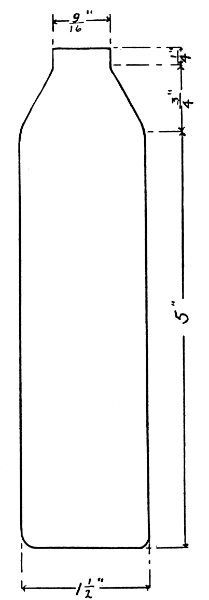
Fig. 1. Small Specific
Gravity Flask.
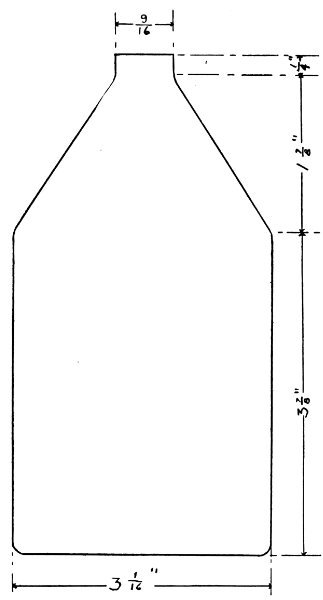
Fig. 2. Large Specific Gravity Flask.
Dimensions given are outside measurements. Thickness
of walls is about 3/64 in.
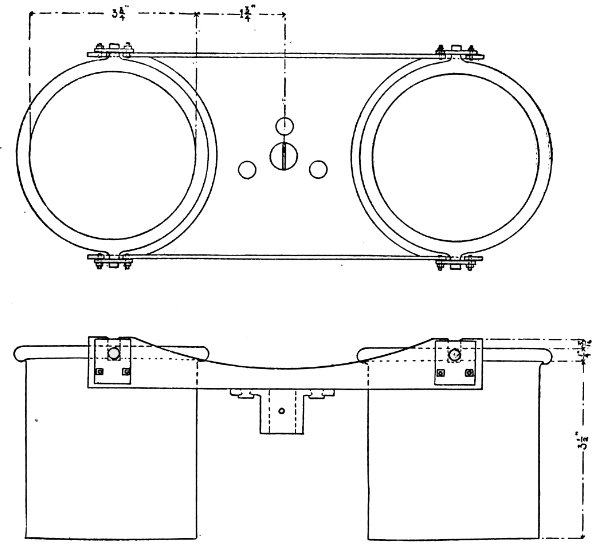
Fig. 3. Special Head and Flask Receptacles for Babcock Milk Tester.
The details of the method of determining specific gravity by the use
of this apparatus are as follows:
Fill the flask shown in Figure 1 with the sample of pulp and place in the
centrifuge (the Babcock milk tester mentioned above). Place a suitable counterpoise[16]
in the other receptacle of the centrifuge. Whirl for from one-half
to one minute at a speed of about 1,000 revolutions per minute, that is with
the handle turning about 100 revolutions per minute. Because of the air
bubbles removed by whirling, the surface of the pulp will now be considerably
below the top of the flask. Fill the flask and whirl in the centrifuge again.
Repeat this filling and whirling until the flask is practically full of pulp after
whirling. Ordinarily two or three separate whirlings are sufficient. Then add
a few more drops of pulp so that the pulp comes above the top of the flask,
and strike off flush with the top of the flask with a straight edge. Wash the
outside of the flask, wipe dry, and weigh. Then read the specific gravity of
the pulp from a table prepared, giving the weight of the flask full of pulp
and the specific gravity of the pulp in parallel columns, or calculate the specific
gravity as described below.
While the weight is being taken a thermometer may be placed in the
pulp remaining in the can or dipper from which the flask was filled. If the
temperature varies from 68° F. the specific gravity may be corrected by Table
8. In order to use this method the temperature of the pulp should not be
below 50° F., or above 86° F.; otherwise, it should be warmed or cooled, as
described above.
The method is accurate, simple, easily operated and fairly rapid.
To calculate the specific gravity from the weights obtained, the weight
of the clean, dry flask and of the water it contains at 68° F. are necessary.
The weight of the clean, dry flask is then subtracted from the
weight of the flask full of pulp to obtain the net weight of the pulp.
This divided by the weight of the water the flask will contain at
68° F., gives the specific gravity.
A table can be constructed readily for each flask, which will give
in parallel columns the weight of the flask full of pulp and the corresponding
specific gravity. This greatly simplifies the determination,
as it eliminates all calculation. When such a table is employed a balance
giving actual weights is practically as convenient as one reading
specific gravity directly. It has the very important advantage that
the balance, weights, and flask may be tested from time to time.
In preparing such a table it is convenient first to draw a curve representing
specific gravities of the pulp and corresponding weights of
the flask full of pulp of various degrees of specific gravity. The
table may then be constructed from the curve.
For instance, let us suppose that the flask weighs 56.00 grams and
that when full of water at 68° F. (20° C.) it weighs 176.63 grams.
The water contained at the temperature mentioned then weighs
(176.63 - 56.00) 120.63 grams. Now the specific gravity of the pulp
is its weight compared with the weight of an equal volume of water.
Having the figures given above we can easily calculate the weight of
the flask filled with pulp of any desired specific gravity. We may
therefore calculate the weight of the flask plus pulp of two different
specific gravities; mark those points on a sheet of coordinate paper
with specific gravity of the pulp entered at the bottom and the weight
of flask plus pulp at the side, and a straight line drawn through the
two points mentioned gives us the weight of the flask when filled with
pulp of any specific gravity.
For instance, if the flask mentioned above be filled with a pulp of
the specific gravity of 1.03, the weight of the pulp is (120.63 × 1.03)
124.25 grams. This added to the weight of the flask (56.00 grams)
gives us 180.25 grams. Similarly, if the flask be filled with pulp of
1.04 specific gravity the weight of the contents at 68° F. will be
(120.63 × 1.04) 125.46 grams. This added to the weight of the
flask (56.00 grams) gives 181.46 grams as the weight of flask plus
pulp. Now if a sheet of coordinate paper be prepared with specific
gravities entered at the bottom and weight of flask plus pulp at the
side, these points may be entered. This is done in Figure 4 and the
two points mentioned are each indicated by a circle and are connected
by a straight line. A table may be constructed from this line, giving
the weights of flask plus pulp in one column and the corresponding
specific gravity in another.
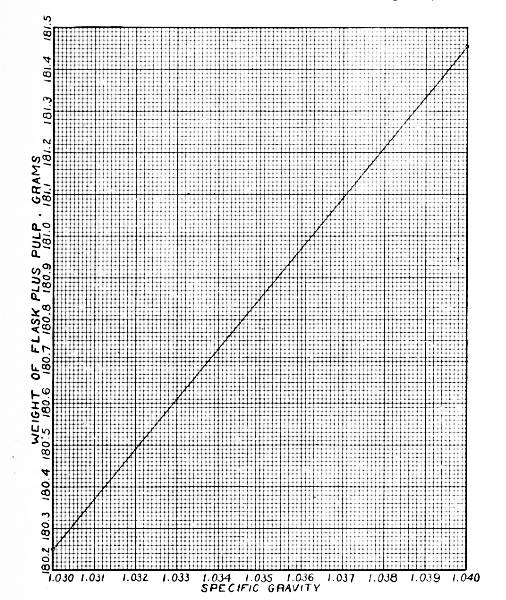
Fig. 4. Weight and Specific Gravity of Tomato Pulp.
As an illustration of this there are given below a series of figures
illustrating the beginning of the table that could be constructed from
Figure 4. If a large sheet of coordinate paper be taken the line
shown in Figure 4 may be extended so that a table may be constructed
for pulp of all concentrations.
Weight of
flask
and
pulp |
Specific
gravity |
| 180.25 |
1.0300 |
| 180.31 |
1.0305 |
| 180.37 |
1.0310 |
| 180.43 |
1.0315 |
| 180.49 |
1.0320 |
| 180.55 |
1.0325 |
| 180.61 |
1.0330 |
| 180.67 |
1.0335 |
The highest degree of accuracy can be secured by filling the flask
and making the weighing at exactly 68° F. This is obviously not
practicable under factory conditions, however, and satisfactory results
can be secured by taking the temperature of the pulp at the time of
weighing and correcting for temperature by the use of Table 8. This
table gives the correction to be added to the specific gravity when
the pulp is taken at temperatures between 68° and 86° F., and the
correction to be deducted from the specific gravity for temperatures,
between 55° and 68° F. As a matter of principle, correction factors
should be avoided as far as practicable, and the smaller the correction
factor the more accurate the results will be. This table will be
found especially useful in determining the specific gravity of the
partly concentrated pulp, as is directed on page 50.
As stated above, in determining specific gravity by this method it
is advisable that the reading be made to the second place of decimals.
For this purpose an assay pulp balance is suggested. An assay pulp
balance carrying a maximum load of 300 grams is listed by dealers in
chemical apparatus at $52.50. This balance may be obtained from
dealers in chemical apparatus by designating it as “Assay pulp balance
E. & A. No. 292, capacity 300 grams.” The same balance, more
heavily built, and preferable for that reason, carrying a maximum
capacity of 600 grams, is listed at $63.
A satisfactory set of weights, suitable for weighing a cup similar
to that shown in Figure 1, may be obtained from any dealer in chemical
apparatus by designating it as E. & A. No. 516, “Metric brass
weights in wooden box, 200 grams to 1 centigram.” This is listed
at $5.50.
For convenience, all of the apparatus necessary for using this
method of determining specific gravity is listed below. With the
exception of the specific gravity flask this apparatus may be purchased
of any dealer in chemical supplies. The specific gravity flasks have
not heretofore been available except through this laboratory, which
purchased a considerable quantity of them and supplied them to manufacturers
of pulp as long as this supply lasted. At the urgent request
of the writer, Eimer & Amend and Emil Greiner & Co., both
of New York City, have finally stocked this item and stand ready to
supply it to those wishing to secure it.
- Specific gravity flask for tomato pulp, of Pyrex glass, 1½ × 6¼ inches
(outside measurements), capacity about 125 cc.
- Two-bottle Babcock milk tester, with 2 brass holders, E. & A. No. 1883.
- Assay pulp balance, maximum load 300 grams, E. & A. No. 292.
- Metric brass weights in wooden box, 200 grams to 1 centigram, E. & A.
No. 516.
- Chemical thermometer, 50 to 212° F.
[17]
(b) COLD PULP WITHOUT CENTRIFUGING
A method frequently employed for determining the specific gravity
of cold pulp is to fill the cup by pouring, strike off with a straight
edge, wash the outside, dry and weigh. As ordinarily practiced, this
determination is attended by considerable error. If the balance is arranged
for reading specific gravity directly, weights should be at hand
for determining the accuracy of the balance and the weight of the
flask, and both should be checked from time to time. The pulp on
being poured into the flask or cup carries with it air bubbles to such
an extent as to materially reduce the weight. Attempts to remove
these air bubbles without the use of a centrifuge have not been successful.
This is shown in Table 7, in the column headed “Pouring
cold and whirling by hand.” The figures given in this column were
obtained by weighing the sample after it had been whirled vigorously
in the cup shown in Fig. 5 until air bubbles appeared to be eliminated.
From 50 to 175 revolutions were given the cup in each of the determinations
whose results are shown in this column. Even then it will
be noted by comparison with Column 1 that the results are low. As
the method is ordinarily practiced in the plant, without any attempt
to remove the air bubbles by whirling, the results obtained are likely
to be less accurate than those shown in the column just mentioned.
(c) SPECIFIC GRAVITY OF HOT PULP
Many manufacturers of tomato pulp control the concentration of
their product by determining specific gravity when the evaporation
is almost completed. They therefore desire the results at the earliest
possible moment, and there is no attempt to cool the sample before
determining specific gravity, although in that way much more accurate
results could be obtained.
When necessary to use this method the hot pulp is poured into the
specific gravity flask (Fig. 1 or Fig. 2) by means of a dipper until the
flask overflows. The top is then “struck off” with a straight edge
and the flask placed in a shallow basin of water and the pulp carefully
washed from the outside. The temperature of the pulp remaining
in the dipper is then determined by means of a chemical thermometer.
The flask is then dried with a towel, which operation is greatly
facilitated by the heat of the pulp. The cooling of the contents of
the flask causes contraction, so that after washing the flask is not
entirely full. This should be disregarded, as it is desired to determine
the weight of the amount of pulp that filled the flask originally.
As soon as the outside of the flask is clean and dry the flask and contents
are weighed.
The apparent specific gravity of the hot pulp is ascertained from
the special table prepared for the flask according to the directions
given on page 38, and the correction figure for the temperature of
the pulp obtained from Table 6 is added. For example, this method
when applied to a certain sample of hot pulp (without centrifuging)
indicated a specific gravity of 0.9874. The temperature of the pulp
was found to be 201° F. In Table 6 we find that the correction .0457
is equivalent to 201° F. Adding this to the apparent specific gravity
given above, we have 0.9874 × 0.457 or 1.033 which is as nearly as
we can determine from the hot pulp the specific gravity that would
have been determined by examining the same sample after cooling
by method (a). More accurate results can be obtained by working
with larger specific gravity flasks. For instance, the specific gravity
cup shown in Figure 5 may be made of copper, and may readily be
made larger than the glass flasks shown in Figures 1 and 2. All
metal flasks will gradually change in weight, owing to the solution
of metal by the hot tomato pulp, and their weight should therefore
be checked from time to time.
Table 6.—Corrections for Specific Gravity of Hot Pulp
| Temp. °F. | Correction |
| |
| 190 |
.0401 |
| 191 |
.0406 |
| 192 |
.0411 |
| 193 |
.0416 |
| |
| 194 |
.0421 |
| 195 |
.0426 |
| 196 |
.0431 |
| 197 |
.0436 |
| |
| 198 |
.0441 |
| 199 |
.0447 |
| 200 |
.0452 |
| 201 |
.0457 |
| |
| 202 |
.0462 |
| 203 |
.0466 |
| 204 |
.0472 |
| 205 |
.0477 |
| |
| 206 |
.0482 |
| 207 |
.0487 |
| 208 |
.0492 |
| 209 |
.0498 |
| |
| 210 |
.0504 |
| 211 |
.0510 |
| 212 |
.0515 |
With a materially larger cup or flask (which should be of metal)
a heavier balance and heavier weights should be used than suggested
on page 40. In using a specific gravity cup similar to that shown
in Figure 5 but holding about 1,000 grams of pulp an assay pulp
balance with a capacity of 1,500 can be employed, or owing to the
increased accuracy of the larger sample a less accurate and cheaper
scale such as the “Howard trip scale,” or better a box scale such as
is listed as E. & A. 338, may be employed. In working with a cup
of this size a set of weights ranging from 1000 grams to 1 centigram
is necessary.
The determination of specific gravity in hot pulp is attended by
considerable error. Even if the flask or cup be carried directly to the
kettle, and filled as quickly as possible, the pulp is materially cooled
in transferring, and by the time the surface is “struck off” sufficient
contraction may occur to increase the weight of the contents of the
flask and cause material error.
When a pail of hot pulp is carried to another room or building for
the determination of specific gravity, the error caused by cooling
may be increased. Again, notwithstanding the fact that the pulp is
hot, enough air bubbles become incorporated into it in pouring into
the cup to make a considerable difference in the weight. These two
errors counter balance each other to some extent, but it is impossible
to control the manipulation with sufficient uniformity to secure satisfactory
results.
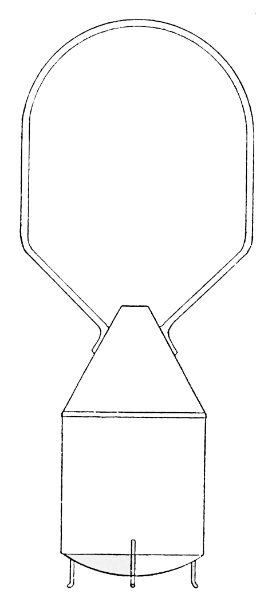
Fig. 5. Specific Gravity Cup for Hot Pulp.
The figures obtained in the second column of Table 7 (under the
heading “Pouring at boiling temperature”) show the error of this
method with carefully calibrated apparatus and working under the
best conditions. By comparison with the first column, it will be noted
that the results are always low, and that the difference between individual
determinations is so great that a correction factor cannot be
established. It should be borne in mind that these results were
obtained by chemists. When the method is employed even by careful
operators in the plant, still greater discrepancies may be expected.
Table 7.—Comparison of Different Methods of Determining Specific Gravity
[18]
| Sample
Number |
Specific gravity by different methods of filling cup or flask. |
Centrifuging
at 68°F. |
Pouring cold
and whirling
by hand |
Pouring at
boiling
temperature |
Dipping at
boiling
temperature |
| 1477 |
1.0610 |
... |
1.0464 |
... |
| Do |
1.0610 |
... |
1.0449 |
... |
| Do |
... |
... |
1.0600 |
... |
| 1484 |
1.0423 |
1.0330 |
1.0380 |
... |
| 1485 |
1.0347 |
... |
1.0336 |
... |
| 1483 |
1.0464 |
1.0437 |
1.042 |
... |
| Do |
... |
1.0420 |
1.0446 |
... |
| Do |
... |
1.0430 |
... |
... |
| Do |
... |
1.0442 |
... |
... |
| 1482 |
1.0441 |
1.0416 |
1.0360 |
... |
| Do |
1.0444 |
1.0419 |
1.0410 |
... |
| Do |
1.0447 |
1.0424 |
1.0413 |
... |
| 1481 |
1.0449 |
1.0410 |
1.040 |
... |
| Do |
1.0449 |
1.0410 |
1.041 |
... |
| Do |
... |
1.0418 |
1.0397 |
... |
| 1480 |
... |
1.0430 |
1.036 |
... |
| Do |
... |
1.0420 |
1.040 |
... |
| Do |
... |
1.0429 |
1.044 |
... |
| Do |
... |
... |
1.0407 |
... |
| 1496 |
1.0340 |
1.0330 |
... |
... |
| Do |
1.0341 |
1.0326 |
... |
... |
| Do |
... |
1.0326 |
... |
... |
| Do |
... |
1.0346 |
... |
1.0299 |
| Do |
... |
1.0341 |
... |
1.0303 |
| Do |
... |
1.0341 |
... |
1.0343 |
| Do |
... |
... |
... |
1.033 |
| 1515 |
1.0351 |
... |
... |
1.036 |
| Do |
1.0352 |
... |
... |
1.035 |
| 1519 |
1.0380 |
... |
... |
1.0377 |
| Do |
... |
... |
... |
1.0383 |
| Do |
... |
... |
... |
1.0329 |
| Do |
... |
... |
... |
1.0350 |
| 1521 |
1.0440 |
... |
1.0410 |
1.0439 |
| Do |
... |
... |
1.0439 |
1.0448 |
| 1522 |
1.0500 |
... |
1.0428 |
1.0493 |
| Do |
... |
... |
1.0455 |
1.0508 |
| 1524 |
1.0519 |
... |
... |
1.0504 [46] |
| 1524 |
... |
... |
... |
1.0529 |
| Do |
... |
... |
... |
1.0510 |
| 1526 |
1.0519 |
... |
1.0472 |
1.0529 |
| Do |
... |
... |
1.0463 |
1.0525 |
| 1528 |
1.0519 |
... |
1.0509 |
1.0514 |
| Do |
... |
... |
1.0485 |
1.0514 |
| 1530 |
1.0252 |
... |
1.0281 |
1.0260 |
| Do |
... |
... |
... |
1.0264 |
| Do |
... |
... |
... |
1.0269 |
| 1531 |
1.0291 |
... |
1.0312 |
1.0294 |
| Do |
... |
... |
... |
1.0311 |
| Do |
... |
... |
... |
1.0313 |
It was thought that better results might be secured by modifying
the construction of a cup in such a manner as to permit it to be filled
by dipping below the surface of the pulp in the kettle. A bail made
of 3/16-inch wire was, therefore, soldered to the opposite side of the
cup (see Fig. 5). By means of the bail the cup was lowered into
the kettle. After it was filled with the pulp the attempt was made
to remove air bubbles by repeatedly giving the bail a quick twist or
circular motion with a sudden stop. The cup was then brought
quickly to the surface of the kettle and “struck off” with a straight
edge, the outside of the cup and bail washed quickly with water, dried,
and the cup and contents weighed.
In using this method the steam is turned off, and as soon as the
foam subsides the cup is sunk well below the surface of the pulp.
At this time the heat in various portions of the kettle is of course
uniform, by reason of the thorough mixture caused by the vigorous
boiling. Owing to the large mass of rather viscous material, and
the heat of the kettle itself, the contents of the kettle cool slowly,
and even after 10 minutes the temperature does not decrease more
than 1° F., except at the very surface of the pulp. As a result of
several observations, it was found that a thermometer bulb held 3
inches below the surface of the pulp showed a lowering of temperature
of not more than 1° F. in 10 minutes and a lowering of only
0.5° F. in from 5 to 7 minutes.
The bail employed was about 6½ inches wide and 8 inches long.
There was some difficulty, owing to the pulp spattering on the hands
of the operator because of the air escaping from the cup. This
might be diminished by the use of a longer bail, or by wearing suitable
gloves. When evaporating tanks are used it will probably be necessary
to attach the bail to a stick or support of some kind. In addition
to permitting this method of filling, the bail has the additional
advantage that the cup full of pulp may be handled for washing and
conveying to the balance much more conveniently and with less
danger of spilling than with the handle on the side of the cup. Again,
the bail does not heat when the cup is filled with hot pulp, and for
that reason is easier to handle.
(d) HYDROMETER METHOD
Hydrometers are of little value in determining the specific gravity
of tomato pulp. With cold pulp they cannot be used at all. With
hot pulp a relatively slender hydrometer comes to rest and readings
can be taken with more or less accuracy. The value of the reading is
relative to the specific gravity of the pulp and varies with the shape
of the hydrometer and with the character of the pulp. It is necessary
therefore to obtain the relation between the reading of the
hydrometer in the hot pulp and the specific gravity (obtained by an
accurate method) of the same pulp cooled without evaporation.
In the hands of a careful operator some manufacturers have found
hydrometers (used with hot pulp) helpful in making pulp of uniform
specific gravity.
The hydrometer gives much more accurate results with the filtrate
of pulp. As shown on page 31, there is a direct relation between the
specific gravity of tomato pulp and of the liquor obtained by filtering
or straining the same, so that when the specific gravity of the latter
is known that of the former may be ascertained readily by means of
a table. This method is peculiarly applicable to the examination of
cyclone juice and light pulp from which the insoluble solids may be
removed quickly by straining through a cloth, and it therefore
affords the most rapid method that is available to the average factory
for determining the specific gravity of cyclone juice.
In Table 8 are given a series of corrections making it possible to
use this method at any temperature between 50 and 80° Fahrenheit.
The more closely the readings are taken to 68° F. the more accurate
the results. Moreover, when it is attempted to strain the insoluble
solids from hot pulp or cyclone juice, considerable evaporation occurs,
causing concentration of the product and producing an error in the
results. When hot pulp is handled, therefore, it must be strained as
quickly as possible, and more accurate results may be obtained if the
pulp is cooled quickly before straining. This may be done by
placing in a large can and stirring vigorously while the can stands in
ice water, or shaking under water in a large flask.
There are several forms of hydrometer which may be used for
determining the specific gravity of the filtrate. The ordinary specific
gravity hydrometer is the most logical form to use, since it gives
the specific gravity directly. Unfortunately, specific gravity hydrometers
with the particular marking required for this work are not a
stock article, and would, therefore, have to be made to order. For
this reason they would be difficult to obtain and not easily replaced
if broken.
The Brix hydrometer appears to solve the difficulty. This hydrometer
has no direct relation to specific gravity, but Brix readings can,
of course, be converted to the specific gravity readings by a table
arranged in parallel columns. Table 9 gives the specific gravity of
tomato pulp and the corresponding Brix reading of the filtrate. The
Brix hydrometer gives directly the per cent of sugar in a solution of
cane sugar, one degree Brix being equivalent to one per cent sugar
at the temperature for which the hydrometer was calibrated. This
fact and the ordinary purpose for which the instrument is manufactured
are of no interest to us in this connection, however. The
Brix hydrometer of the range desired for the examination of cyclone
juice and pulp is a stock article and can be secured readily.
The instrument can be used with the same accuracy as the specific
gravity hydrometer, and the results obtained by it, after correcting
for temperature by Table 8, are converted into terms of specific
gravity by means of Table 9. The determination of the specific
gravity of pulp by means of the hydrometer reading of the filtrate
obtained from the pulp has several advantages over the ordinary
method of weighing a measured quantity of the pulp. When applied
to pulp manufactured from whole tomatoes, the method is reasonably
accurate. It is also very rapid and the equipment required is inexpensive.
This method is especially applicable to the examination of
pulp manufactured from whole tomatoes. It is less applicable to
trimming stock pulp, although even with that product the method
will be of value, especially for the examination of cyclone juice for
the purpose of controlling concentration. With pulp manufactured
from trimming stock, the relation of the specific gravity of the pulp
to the specific gravity of the filtrate obtained from it will vary according
to the nature of the raw material used and also according to the
method of manufacture. It seems probable, therefore, that after a
manufacturer has determined this relation as applied to his own
product, he may be able to use this method with reasonable accuracy
even in connection with trimming stock pulp.
The method is adapted especially to the examination of cold pulp
or cyclone juice.
The following apparatus is used in this method:
- 1 Brix hydrometer, graduated at 20.0° C., with a range of 1–10°,
graduated in 1/10°.
- 1 Cylinder of heavy glass, lipped, height 12 inches, diameter 2 inches.
- 1 Chemical thermometer, graduated in Fahrenheit system up to 212° F.
Since this apparatus is likely to be broken, it is well for each plant
that contemplates using the method to equip itself with at least two
of each item mentioned above.
The Brix hydrometer mentioned above is suggested because it is
a stock article handled by all dealers in chemical apparatus and can
be secured quickly. It has the disadvantage that it is relatively large,
and in order to use it the filtrate must be prepared in much larger
quantity than would be required by a smaller hydrometer. By
placing orders well in advance with dealers in chemical apparatus
special hydrometers may be made with a bulb about one-half inch
in diameter and with a total length of five or six inches. Such
hydrometers could be used with a cylinder as small as one inch in
diameter. They would require much less liquor than is necessary
for the Brix hydrometer and therefore would enable the analyst to
obtain results much more quickly. In securing such hydrometers it
would be well to order several at a time, since it would require several
weeks to replace any that may be broken.
The details of the method are as follows:
Place a piece of cotton cloth of about the texture of ordinary glass toweling
over a clean, dry container 10 or 12 inches in diameter or over a No. 10 can.
Pour on the cloth a suitable amount of the pulp or cyclone juice to be examined,
pick the cloth up by the corners and squeeze gently to separate the greater part
of the insoluble solids. The strained liquid left in the vessel will be more or
less turbid, according to the pressure exerted in squeezing. The amount of
insoluble material producing this turbidity, however, is not usually sufficient to
interfere with the examination of the product by means of a hydrometer. If,
however, it is necessary to exert considerable pressure to get the amount of
filtrate desired and the turbidity is therefore considerable it will be necessary
to pass the liquor through a second filter, which, of course, may be done quickly.
Transfer this strained liquid, which for the sake of convenience we will
designate as “filtrate,” to the 2-inch cylinder described above, and lower the
Brix hydrometer into it until the hydrometer floats. When the hydrometer,
becomes stationary, the reading on the stem is taken. In reading the hydrometer
it will be noted that, owing to the meniscus, the liquid immediately at
the stem rises one or two divisions above the general surface. The reading at
the lowest point of the surface is desired. In reading the stem, therefore,
allowance for the meniscus should be made and a reading recorded one or two
divisions on the scale below the extreme height of the meniscus on the stem.
The reading so obtained is recorded as the Brix hydrometer reading of the
filtrate.
After determining the Brix reading of the filtrate from the tomato pulp,
the corresponding specific gravity of the pulp may be obtained from Table 9.
The result obtained by the method should be corrected to the temperature of
68° F., according to Table 8. If it is desired to use the reading of the filtrate
from cyclone juice for the purpose of controlling the evaporation of tomato
pulp, suitable directions are given below under “Evaporation to Specific
Gravity Desired.”
The description of the tables given in the following page is intended
for those operators who desire to take the trouble to obtain
the specific gravity of raw product. Where, as is often the case,
the pulp is sold under definite specifications for specific gravity, the
care necessary to make these observations with a considerable degree
of accuracy will be found to be an economy.
If a product be shipped that is materially below the specific gravity
stipulated, the manufacturer will of course be docked and the loss will
be considerable. On the other hand, the specific gravity should not
be materially above the specifications. The buyer, who is usually a
manufacturer of ketchup, desires the pulp of the specific gravity
stipulated, and a higher degree of concentration is therefore not a
mark of superiority in pulp intended for that purpose. Moreover,
material increase in concentration above the specifications of the purchaser
causes considerable loss by reason of reduced volume. For
instance, 100 gallons of pulp with a specific gravity of 1.036 are
equivalent to 103 gallons of a pulp with a specific gravity of 1.035.
Again, 100 gallons of pulp with a specific gravity of 1.040 are
equivalent to 114.7 gallons of pulp with a specific gravity of 1.035.
When these figures are considered with reference to the entire
output of the season, it is apparent that the determination of the
specific gravity of the final product is of considerable importance, and
will warrant care and, if necessary, the employment of a man who
is competent to do the work accurately.
This is well illustrated by an experience of one of the large pulp
makers, who was selling pulp under specification of 1.035 specific
gravity. Owing partly to an error in his specific gravity apparatus,
he was actually turning out pulp of a specific gravity varying from
1.040 to 1.050. In other words, each 100 cases of pulp he delivered
were equivalent to from 115 to 126 cases of pulp of 1.035 specific
gravity. While this manufacturer was using the greater part of the
pulp himself, he had contracted to sell a considerable amount of it,
and all that was supplied before the error was noticed was sold at a
loss, whereas after the error was discovered he supplied pulp well
above the specifications of the buyer at a substantial profit. Even
then his profit was not what it should have been. His output would
have been 10 per cent greater than it was if the specific gravity of
his product had just complied with his specifications.
Another manufacturer who sold his pulp under the specification of
1.035 specific gravity, received a complaint from one of the largest
buyers of pulp in the country that the specific gravity was low. The
manufacturer then examined samples, which he had retained in his
possession, of the various runs, using the method described on page
41, under the head of “Specific gravity of cold pulp without centrifuging.”
Seventeen samples in all were examined, and he obtained an
average specific gravity of 1.0276. The purchaser had reported a
specific gravity of 1.0315–.0039 higher than that obtained by the
maker. The manufacturer then brought duplicate samples to this
laboratory and the specific gravity was determined in all of them by
the method described on page 34, “After centrifuging to eliminate air
bubbles.”
While this work was being done the manufacturer himself desired
to check the mechanical centrifuge, and attempted to remove the air
bubbles from the same samples by swinging the specific gravity cups
by hand. He made a special effort to remove the air bubbles in this
way, devoting nearly a day to the examination of the 17 samples.
Notwithstanding his unusual care, his average specific gravity was
1.0318, while the centrifuge method gave 1.0328. It will be noted
that the specific gravity as determined by the centrifuge method was
.0013 higher than that obtained by the purchaser, though the latter
used a more accurate method than has ordinarily been employed in
this determination. This difference has ordinarily been regarded in
the industry as insignificant. It is apparent that it is not negligible,
however, when we consider that the difference in yield involved
amounts to over 4.5 gallons in 100 gallons of pulp.
It is true that all these results are lower than the specifications for
which this particular pulp was sold, but the incident illustrates the
importance of an accurate determination of specific gravity.
Manufacturers of tomato pulp have considerable difficulty in securing
a product of uniform concentration and in determining at what
point to stop evaporation. Some manufacturers turn off the steam
when it is believed that the concentration has gone far enough and
make a hasty determination of specific gravity. If it is found the
concentration is not as great as is desired, heating is resumed for
a time and the specific gravity again determined. Others make but
one determination of specific gravity when it is believed that the desired
concentration has been reached, and if it is found to be underconcentrated,
continue the evaporation for a length of time which experience
has indicated to be necessary. Neither of these methods of
operating is satisfactory. They involve a great deal of work and the
concentration of the product obtained is not sufficiently uniform.
Moreover, the determination of specific gravity of hot pulp is very inaccurate
(see p. 44).
A method of employing a gauge stick is believed to be simpler and
more practicable.
Some manufacturers who desire to work with the simplest possible
methods, even at the sacrifice of a high degree of control over the
concentration of their products, measure the volume of cyclone juice
introduced into the evaporating tank; and when it is believed that the
concentration is sufficient, measure the depth of the evaporated product
in the tank, the steam being momentarily turned off for that
purpose and the measurement being taken after the foam subsides.
This method was outlined in detail in a trade paper article published
from this laboratory in 1918. The method is somewhat inaccurate,
because it is based on the measurement of cyclone juice as it flows
from the cyclone and which therefore contains a large amount of air.
This air materially increases the volume of the pulp and consequently
the amount of finished pulp calculated from the volume of cyclone
juice containing this air is greater than can actually be obtained.
Some manufacturers of pulp have found the method practicable,
however, by making a correction based on factory experience on the
amount of pulp which the method indicates should result from the
evaporation of each bath. This method also calls for the use of
measuring tanks, which many manufacturers do not have and do not
care to provide. The method is therefore not repeated here, but the
laboratory has a number of reprints of the trade paper article which
are available to any who desire more detailed information regarding
the matter.
The following method has been found more accurate and more convenient
than the one mentioned above. It has the special advantage
that it is based on the examination of the cyclone juice after the juice
has been heated to a sufficient extent to “break” the foam.
In using this method, the manner in which the cyclone juice is
prepared is immaterial. The tomatoes may be broken by steam or
mechanical breaker and may be cycloned hot or cold. The steam may
be turned into the coils as soon as they are covered and the cyclone
juice may run into the evaporating tank until the tank is filled.
Finally, when the last of the cyclone juice is added and the contents
of the tank are boiling vigorously, the steam is momentarily
turned off. The volume is then determined by means of a gauge
stick and a sample is withdrawn, filtered and the specific gravity or
degrees Brix determined as described on page 50. The extent to
which evaporation must be continued to secure pulp of the desired
specific gravity is determined by Table 9.
This table gives in the first four columns the specific gravity of
the partially concentrated pulp taken from the evaporating tank, the
per cent of solids of the same, the specific gravity of the filtrate and
the Brix reading of the filtrate. In order to use the tables, it is only
necessary to make use of one of these columns.
This method of operation can be simplified and more accurate results
obtained by equipping each evaporating tank with a one-inch
gage glass extending the full height of the tank. The gage glass
should be open at the top and connected with the bottom of the tank
by a pipe equipped with a valve. Before the tank is filled with
cyclone juice the valve is turned off and the gage glass filled with
water. Steam is turned on as soon as the pipes are covered and
the foam is “broken” quickly without trouble that was experienced
in heating the tank filled with cool pulp. The heat is continued while
the tank is filled to the desired height with the pulp. The steam is
then momentarily turned off and the valve at the top of the gage
glass opened to permit the water in the gage glass to equalize in
height with the partly concentrated pulp within the tank. The height
of water in the gage glass is read by a scale attached, the sample of
the pulp taken for examination and the steam again turned on.
There is ample time to determine the specific gravity of the sample
of partly concentrated pulp and from its volume as obtained by the
gage glass to calculate the volume to which the pulp should be
evaporated to secure the desired specific gravity in the finished product.
The specific gravity of the sample may be taken by any of the
methods described in the chapter on “Determination of specific gravity.”
More accurate results can be obtained by pouring the sample
of pulp as soon as it is taken into a large loosely stoppered flask and
holding the flask with constant agitation in a tub of ice water until it
is brought to about the temperature of the room.
Having determined the volume (when heated to the boiling point)
of a batch of cyclone juice or of pulp at any stage of its manufacture
and its specific gravity (at 68° F.), each of the last five columns of
the table gives a factor by which the volume of the partially evaporated
pulp may be multiplied to determine the volume of pulp of
the specific gravity given at the top of the column. Since both measurements
are taken at the boiling point the question of temperature
need not be considered.
Table 8.—Corrections for Specific Gravity and Brix[19] Readings at Different
Temperatures to 68 Degrees F. (20 Degrees C.)
Corrections to be subtracted from specific gravity or degrees Brix.
| Temperature |
Corrections |
| Deg. F. | Deg. C. |
Sp. Gr. | Brix. |
| 50 |
10.0 |
.0017 |
.38 |
| 51 |
10.6 |
.0016 |
.36 |
| 52 |
11.1 |
.0016 |
.35 |
| 53 |
11.7 |
.0015 |
.33 |
| 54 |
12.2 |
.0014 |
.31 |
| | | |
| 55 |
12.8 |
.0014 |
.30 |
| 56 |
13.3 |
.0013 |
.28 |
| 57 |
13.9 |
.0012 |
.26 |
| 58 |
14.4 |
.0011 |
.24 |
| | | |
| 59 |
15.0 |
.0010 |
.22 |
| 60 |
15.6 |
.0009 |
.20 |
| 61 |
16.1 |
.0009 |
.18 |
| 62 |
16.7 |
.0008 |
.16 |
| 63 |
17.2 |
.0007 |
.13 |
| | | |
| 64 |
17.8 |
.0006 |
.11 |
| 65 |
18.3 |
.0004 |
.08 |
| 66 |
18.9 |
.0003 |
.05 |
| 67 |
19.4 |
.0002 |
.03 |
Corrections to be added to specific gravity or degrees Brix.
| Temperature |
Corrections |
| Deg. F. | Deg. C. |
Sp. Gr. | Brix. |
| 69 |
20.6 |
.0002 |
.03 |
| 70 |
21.1 |
.0003 |
.05 |
| 71 |
21.7 |
.0004 |
.08 |
| 72 |
22.2 |
.0006 |
.11 |
| 73 |
22.8 |
.0007 |
.15 |
| | | |
| 74 |
23.3 |
.0009 |
.18 |
| 75 |
23.9 |
.0011 |
.21 |
| 76 |
24.4 |
.0012 |
.24 |
| 77 |
25.0 |
.0013 |
.28 |
| 78 |
25.6 |
.0015 |
.32 |
| | | |
| 79 |
26.1 |
.0017 |
.35 |
| 80 |
26.7 |
.0018 |
.39 |
| 81 |
27.2 |
.0019 |
.42 |
| 82 |
27.8 |
.0021 |
.46 |
| 83 |
28.3 |
.0023 |
.49 |
| | | |
| 84 |
28.9 |
.0024 |
.54 |
| 85 |
29.4 |
.0026 |
.58 |
| 86 |
30.0 |
.0027 |
.62 |
| 87 |
30.6 |
.0029 |
.66 |
| 88 |
31.1 |
.0031 |
.70 |
Table 9.—Equivalent Volumes of Pulp of Different Degrees of Concentration
| Tomato pulp |
Filtrate
from pulp |
Factor by which to multiply volume of
pulp of given specific gravity to
ascertain volume of pulp with
equivalent solid content and with
specific gravity of |
| Specific
gravity
at
68° F. |
Per
cent
solids |
Specific
gravity
at
68° F. |
Degrees
Brix
at
68° F. |
1.030 |
1.035 |
1.040 |
1.045 |
1.050 |
| 1.0125 |
2.79 |
1.0108 |
2.78 |
.384 |
.326 |
.283 |
.249 |
.223 |
| 1.0130 |
2.92 |
1.0113 |
2.89 |
.402 |
.342 |
.296 |
.261 |
.234 |
| 1.0135 |
3.05 |
1.0118 |
3.02 |
.420 |
.357 |
.310 |
.273 |
.244 |
| 1.0140 |
3.17 |
1.0123 |
3.14 |
.437 |
.372 |
.323 |
.285 |
.255 |
| 1.0145 |
3.30 |
1.0128 |
3.27 |
.455 |
.388 |
.336 |
.297 |
.265 |
| | | |
| | | | |
| 1.0150 |
3.42 |
1.0133 |
3.40 |
.472 |
.401 |
.348 |
.306 |
.274 |
| 1.0155 |
3.54 |
1.0138 |
3.51 |
.489 |
.416 |
.361 |
.318 |
.284 |
| 1.0160 |
3.67 |
1.0143 |
3.65 |
.507 |
.431 |
.374 |
.329 |
.294 |
| 1.0165 |
3.79 |
1.0148 |
3.77 |
.524 |
.445 |
.387 |
.341 |
.304 |
| 1.0170 |
3.92 |
1.0153 |
3.90 |
.542 |
.460 |
.400 |
.352 |
.315 |
| | | |
| | | | |
| 1.0175 |
4.05 |
1.0158 |
4.03 |
.560 |
.476 |
.413 |
.364 |
.325 |
| 1.0180 |
4.18 |
1.0163 |
4.15 |
.579 |
.491 |
.426 |
.375 |
.335 |
| 1.0185 |
4.30 |
1.0168 |
4.28 |
.596 |
.506 |
.440 |
.387 |
.346 |
| 1.0190 |
4.43 |
1.0173 |
4.40 |
.614 |
.521 |
.452 |
.399 |
.356 |
| 1.0195 |
4.56 |
1.0178 |
4.53 |
.632 |
.537 |
.466 |
.410 |
.367 |
| | | |
| | | | |
| 1.0200 |
4.68 |
1.0182 |
4.63 |
.649 |
.551 |
.478 |
.421 |
.377 |
| 1.0205 |
4.81 |
1.0188 |
4.77 |
.667 |
.566 |
.491 |
.433 |
.387 |
| 1.0210 |
4.93 |
1.0192 |
4.87 |
.684 |
.581 |
.504 |
.444 |
.398 |
| 1.0215 |
5.05 |
1.0196 |
4.97 |
.701 |
.596 |
.517 |
.456 |
.407 |
| 1.0220 |
5.17 |
1.0201 |
5.10 |
.718 |
.610 |
.529 |
.467 |
.417 |
| | | |
| | | | |
| 1.0225 |
5.30 |
1.0206 |
5.22 |
.737 |
.625 |
.543 |
.479 |
.428 |
| 1.0230 |
5.43 |
1.0211 |
5.35 |
.755 |
.641 |
.556 |
.490 |
.438 |
| 1.0235 |
5.55 |
1.0216 |
5.47 |
.772 |
.656 |
.569 |
.502 |
.448 |
| 1.0240 |
5.67 |
1.0220 |
5.57 |
.789 |
.671 |
.582 |
.513 |
.459 |
| 1.0245 |
5.80 |
1.0226 |
5.72 |
.808 |
.686 |
.595 |
.525 |
.469 |
| | | |
| | | | |
| 1.0250 |
5.92 |
1.0230 |
5.82 |
.825 |
.701 |
.608 |
.536 |
.479 |
| 1.0255 |
6.04 |
1.0235 |
5.94 |
.842 |
.715 |
.620 |
.547 |
.489 |
| 1.0260 |
6.16 |
1.0240 |
6.07 |
.859 |
.729 |
.633 |
.558 |
.499 |
| 1.0265 |
6.28 |
1.0244 |
6.17 |
.876 |
.744 |
.646 |
.569 |
.509 |
| 1.0270 |
6.40 |
1.0249 |
6.29 |
.894 |
.759 |
.658 |
.580 |
.519 |
| | | |
| | | | |
| 1.0275 |
6.53 |
1.0254 |
6.43 |
.912 |
.775 |
.672 |
.592 |
.529 |
| 1.0280 |
6.65 |
1.0258 |
6.53 |
.930 |
.789 |
.685 |
.604 |
.539 |
| 1.0285 |
6.77 |
1.0263 |
6.65 |
.947 |
.804 |
.697 |
.615 |
.549 |
| 1.0290 |
6.90 |
1.0268 |
6.78 |
.965 |
.819 |
.711 |
.626 |
.560 |
| 1.0295 |
7.02 |
1.0273 |
6.90 |
.983 |
.834 |
.724 |
.638 |
.570 |
| | | |
| | | | |
| 1.0300 |
7.14 |
1.0278 |
7.03 |
1.000 |
.849 |
.737 |
.649 |
.580 |
| 1.0305 |
7.26 |
1.0282 |
7.13 |
1.017 |
.864 |
.749 |
.660 |
.590 |
| 1.0310 |
7.38 |
1.0287 |
7.23 |
1.035 |
.878 |
.762 |
.672 |
.600 |
| 1.0315 |
7.50 |
1.0292 |
7.35 |
1.052 |
.893 |
.775 |
.683 |
.610 |
| 1.0320 |
7.63 |
1.0296 |
7.45 |
1.071 |
.908 |
.788 |
.695 |
.621 |
| | | |
| | | | |
| 1.0325 |
7.75 |
1.0301 |
7.58 |
1.088 |
.924 |
.802 |
.706 |
.631 |
| 1.0330 |
7.88 |
1.0306 |
7.70 |
1.107 |
.939 |
.815 |
.718 |
.642 |
| 1.0335 |
8.00 |
1.0310 |
7.80 |
1.124 |
.954 |
.828 |
.730 |
.652 |
| 1.0340 |
8.12 |
1.0315 |
7.93 |
1.142 |
.970 |
.842 |
.742 |
.663 |
| 1.0345 |
8.25 |
1.0320 |
8.05 |
1.160 |
.985 |
.855 |
.753 |
.673 |
| | | |
| | | | |
| 1.0350 |
8.37 |
1.0325 |
8.16 |
1.178 |
1.000 |
.868 |
.765 |
.684 |
| 1.0355 |
8.50 |
1.0330 |
8.27 |
1.197 |
1.016 |
.882 |
.777 |
.695 |
| 1.0360 |
8.62 |
1.0334 |
8.37 |
1.214 |
1.031 |
.895 |
.788 |
.705 |
| 1.0365 |
8.74 |
1.0339 |
8.50 |
1.232 |
1.046 |
.907 |
.800 |
.715 |
| 1.0370 |
8.86 |
1.0344 |
8.63 |
1.249 |
1.061 |
.920 |
.811 |
.725 |
| | | |
| | | | |
| 1.0375 |
8.98 |
1.0349 |
8.75 |
1.267 |
1.076 |
.933 |
.823 |
.735 |
| 1.0380 |
9.10 |
1.0353 |
8.85 |
1.284 |
1.091 |
.947 |
.834 |
.746 |
| 1.0385 |
9.23 |
1.0358 |
8.97 |
1.303 |
1.106 |
.960 |
.846 |
.756 |
| 1.0390 |
9.35 |
1.0363 |
9.07 |
1.321 |
1.122 |
.974 |
.858 |
.767 |
| 1.0395 |
9.48 |
1.0368 |
9.20 |
1.340 |
1.138 |
.987 |
.870 |
.778 |
| | | |
| | | | |
| 1.0400 |
9.60 |
1.0372 |
9.30 |
1.358 |
1.153 |
1.000 |
.881 |
.788 |
| 1.0405 |
9.73 |
1.0378 |
9.45 |
1.377 |
1.168 |
1.014 |
.893 |
.799 |
| 1.0410 |
9.85 |
1.0383 |
9.57 |
1.394 |
1.184 |
1.027 |
.905 |
.809 |
| 1.0415 |
9.97 |
1.0387 |
9.67 |
1.412 |
1.199 |
1.041 |
.917 |
.820 |
| 1.0420 |
10.10 |
1.0393 |
9.80 |
1.431 |
1.215 |
1.054 |
.929 |
.830 |
| | | |
| | | | |
| 1.0425 |
10.22 |
1.0397 |
9.90 |
1.449 |
1.230 |
1.067 |
.941 |
.841 |
| 1.0430 |
10.35 |
1.0402 |
10.03 |
1.468 |
1.246 |
1.081 |
.953 |
.851 |
| 1.0435 |
10.47 |
1.0406 |
10.13 |
1.486 |
1.261 |
1.094 |
.964 |
.862 |
| 1.0440 |
10.60 |
1.0411 |
10.25 |
1.505 |
1.277 |
1.108 |
.976 |
.873 |
| 1.0445 |
10.72 |
1.0416 |
10.36 |
1.523 |
1.293 |
1.122 |
.988 |
.884 |
| | | |
| | | | |
| 1.0450 |
10.84 |
1.0420 |
10.45 |
1.540 |
1.308 |
1.135 |
1.000 |
.894 |
| 1.0455 |
10.96 |
1.0425 |
10.57 |
1.558 |
1.322 |
1.148 |
1.012 |
.904 |
| 1.0460 |
11.08 |
1.0429 |
10.67 |
1.576 |
1.338 |
1.161 |
1.023 |
.915 |
| 1.0465 |
11.20 |
1.0435 |
10.83 |
1.594 |
1.353 |
1.174 |
1.035 |
.925 |
| 1.0470 |
11.33 |
1.0440 |
10.93 |
1.613 |
1.369 |
1.188 |
1.047 |
.936 |
| | | |
| | | | |
| 1.0475 |
11.45 |
1.0445 |
11.05 |
1.631 |
1.384 |
1.201 |
1.059 |
.946 |
| 1.0480 |
11.57 |
1.0449 |
11.15 |
1.649 |
1.400 |
1.215 |
1.071 |
.957 |
| 1.0485 |
11.70 |
1.0454 |
11.27 |
1.668 |
1.416 |
1.229 |
1.083 |
.968 |
| 1.0490 |
11.82 |
1.0459 |
11.40 |
1.686 |
1.432 |
1.243 |
1.095 |
.979 |
| 1.0495 |
11.95 |
1.0465 |
11.53 |
1.705 |
1.449 |
1.256 |
1.107 |
.990 |
| | | |
| | | | |
| 1.0500 |
12.07 |
1.0468 |
11.60 |
1.724 |
1.464 |
1.270 |
1.119 |
1.00 |
| 1.0505 |
12.20 |
1.0474 |
11.75 |
1.743 |
1.479 |
1.284 |
1.131 |
1.01 |
| 1.0510 |
12.32 |
1.0478 |
11.84 |
1.761 |
1.495 |
1.298 |
1.144 |
1.02 |
| 1.0515 |
12.45 |
1.0482 |
11.93 |
1.780 |
1.511 |
1.311 |
1.156 |
1.03 |
| 1.0520 |
12.57 |
1.0488 |
12.07 |
1.797 |
1.526 |
1.325 |
1.167 |
1.04 |
| | | |
| | | | |
| 1.0525 |
12.69 |
1.0492 |
12.17 |
1.816 |
1.542 |
1.338 |
1.179 |
1.05 |
| 1.0530 |
12.81 |
1.0497 |
12.30 |
1.834 |
1.557 |
1.351 |
1.191 |
1.06 |
| 1.0535 |
12.93 |
1.0502 |
12.40 |
1.852 |
1.572 |
1.364 |
1.203 |
1.07 |
| 1.0540 |
13.05 |
1.0506 |
12.50 |
1.870 |
1.588 |
1.378 |
1.215 |
1.08 |
| 1.0545 |
13.18 |
1.0512 |
12.65 |
1.890 |
1.604 |
1.392 |
1.227 |
1.09 |
| | | |
| | | | |
| 1.0550 |
13.30 |
1.0516 |
12.74 |
1.908 |
1.620 |
1.405 |
1.239 |
1.10 |
| 1.0555 |
13.42 |
1.0520 |
12.83 |
1.926 |
1.635 |
1.419 |
1.250 |
1.11 |
| 1.0560 |
13.55 |
1.0525 |
12.95 |
1.945 |
1.651 |
1.433 |
1.263 |
1.12 |
| 1.0565 |
13.67 |
1.0529 |
13.05 |
1.964 |
1.667 |
1.447 |
1.275 |
1.14 |
| 1.0570 |
13.80 |
1.0534 |
13.16 |
1.983 |
1.684 |
1.461 |
1.288 |
1.15 |
Table 10.—Specific Gravity and
Solids of Tomato Pulp[20]
Specific
gravity
at 68° F. |
Per cent solids
in vacuo
at 70° C. |
| 1.0145 |
3.30 |
| 1.0150 |
3.42 |
| 1.0155 |
3.55 |
| 1.0160 |
3.67 |
| 1.0165 |
3.80 |
| |
| 1.0170 |
3.92 |
| 1.0175 |
4.05 |
| 1.0180 |
4.18 |
| 1.0185 |
4.30 |
| 1.0190 |
4.43 |
| |
| 1.0195 |
4.56 |
| 1.0200 |
4.68 |
| 1.0205 |
4.81 |
| 1.0210 |
4.93 |
| 1.0215 |
5.05 |
| |
| 1.0220 |
5.17 |
| 1.0225 |
5.30 |
| 1.0230 |
5.43 |
| 1.0235 |
5.55 |
| 1.0240 |
5.67 |
| |
| 1.0245 |
5.80 |
| 1.0250 |
5.92 |
| 1.0255 |
6.04 |
| 1.0260 |
6.16 |
| 1.0265 |
6.28 |
| |
| 1.0270 |
6.40 |
| 1.0275 |
6.53 |
| 1.0280 |
6.65 |
| 1.0285 |
6.77 |
| 1.0290 |
6.90 |
| |
| 1.0295 |
7.02 |
| 1.0300 |
7.14 |
| 1.0305 |
7.26 |
| 1.0310 |
7.38 |
| 1.0315 |
7.50 |
| |
| 1.0320 |
7.63 |
| 1.0325 |
7.75 |
| 1.0330 |
7.88 |
| 1.0335 |
8.00 |
| 1.0340 |
8.12 |
| |
| 1.0345 |
8.25 |
| 1.0350 |
8.37 |
| 1.0355 |
8.50 |
| 1.0360 |
8.62 |
| 1.0365 |
8.74 |
| |
| 1.0370 |
8.86 |
| 1.0375 |
8.98 |
| 1.0380 |
9.10 |
| 1.0385 |
9.23 |
| 1.0390 |
9.35 |
| |
| 1.0395 |
9.48 |
| 1.0400 |
9.60 |
| 1.0405 |
9.73 |
| 1.0410 |
9.85 |
| 1.0415 |
9.97 |
| |
| 1.0420 |
10.10 |
| 1.0425 |
10.22 |
| 1.0430 |
10.35 |
| 1.0435 |
10.47 |
| 1.0440 |
10.60 |
| |
| 1.0445 |
10.72 |
| 1.0450 |
10.84 |
| 1.0455 |
10.96 |
| 1.0460 |
11.08 |
| 1.0465 |
11.20 |
| |
| 1.0470 |
11.33 |
| 1.0475 |
11.45 |
| 1.0480 |
11.57 |
| 1.0485 |
11.70 |
| 1.0490 |
11.82 |
| |
| 1.0495 |
11.95 |
| 1.0500 |
12.07 |
| 1.0505 |
12.20 |
| 1.0510 |
12.32 |
| 1.0515 |
12.45 |
| |
| 1.0520 |
12.57 |
| 1.0525 |
12.69 |
| 1.0530 |
12.81 |
| 1.0535 |
12.93 |
| 1.0540 |
13.05 |
| |
| 1.0545 |
13.18 |
| 1.0550 |
13.30 |
| 1.0555 |
13.42 |
| 1.0560 |
13.55 |
| 1.0565 |
13.67 |
| |
| 1.0570 |
13.80 |
| 1.0575 |
13.92 |
| 1.0580 |
14.05 |
| 1.0585 |
14.17 |
| 1.0590 |
14.29 |
| |
| 1.0595 |
14.42 |
| 1.0600 |
14.54 |
| 1.0605 |
14.67 |
| 1.0610 |
14.79 |
| 1.0620 |
15.03 |
| |
| 1.0630 |
15.27 |
| 1.0640 |
15.52 |
| 1.0650 |
15.77 |
| 1.0660 |
16.02 |
| 1.0670 |
16.27 |
| |
| 1.0680 |
16.52 |
| 1.0690 |
16.77 |
| 1.0700 |
17.02 |
| 1.0710 |
17.27 |
| 1.0720 |
17.51 |
| |
| 1.0730 |
17.76 |
| 1.0740 |
18.00 |
| 1.0750 |
18.25 |
| 1.0760 |
18.50 |
| 1.0770 |
18.75 |
| |
| 1.0780 |
18.99 |
| 1.0790 |
19.24 |
| 1.0800 |
19.48 |
| 1.0810 |
19.72 |
| 1.0820 |
19.97 |
| |
| 1.0830 |
20.22 |
| 1.0840 |
20.47 |
| 1.0850 |
20.72 |
| 1.0860 |
20.96 |
| 1.0870 |
21.21 |
| |
| 1.0880 |
21.46 |
| 1.0890 |
21.70 |
| 1.0900 |
21.95 |
| 1.0910 |
22.20 |
| 1.0920 |
22.45 |
| |
| 1.0930 |
22.70 |
| 1.0940 |
22.94 |
| 1.0950 |
23.18 |
| 1.0960 |
23.43 |
| 1.0970 |
23.68 |
| |
| 1.0980 |
23.93 |
| 1.0990 |
24.18 |
| 1.1000 |
24.43 |
| 1.1010 |
24.67 |
| 1.1020 |
24.92 |
| |
| 1.1030 |
25.18 |
| 1.1040 |
25.42 |
| 1.1050 |
25.67 |
| 1.1060 |
25.91 |
| 1.1070 |
26.16 |
Illustration: Suppose that when the cyclone juice is all added to
the tank the contents of which are vigorously boiling so that they are
doubtless of uniform composition, the volume is found by the gauge
stick to be 815 gallons. A sample of this partially evaporated pulp is
withdrawn and filtered and the filtrate is found to have a Brix reading
of 6.90. Let us suppose that the product is to be evaporated to a pulp
having a specific gravity of 1.035 and the operator desires to know at
what point to turn off the steam. By referring to Table 9 in the
column headed by the figure 1.035, we find opposite the Brix reading
6.90 the factor .834. Multiplying the volume of the pulp (815 gallons)
by this factor, we obtain 680 gallons. It follows, therefore, that the
steam should be turned off when the evaporation has reached such a
point that the gauge stick shows the volume of pulp to be 680 gallons.
Table 9 may be used in the same way for calculating the volume
of any pulp, hot or cold, of any specified specific gravity equivalent to
a certain volume of pulp of any other stated specific gravity when
held at the same temperature. For instance, the illustration given
above serves equally well to illustrate how the relative value of two
finished pulps of different specific gravities may be calculated. It
also shows directly the relative value (based on tomato solids alone)
of the same volume of two pulps of different gravity.
Illustration: Suppose a shipment contains 1,000 cases of No. 10
cans of pulp thought to have a specific gravity of 1.040 but found on
examination to have a specific gravity of 1.0365. What is the value of
the pulp in comparison with pulp of specific gravity of 1.040? Turning
in Table 9 to the figure 1.0365 in the left-hand column we follow
the horizontal line containing that figure to the column headed by
specific gravity 1.040. Here we find that .907 is the factor by which
to multiply the volume of pulp of a specific gravity 1.0365 to obtain
the equivalent volume of pulp of specific gravity 1.040. The answer to
our question therefore is 1000 × .907 = 907. In other words pulp of a
gravity of 1.0365 judged by the tomato solids it contains, has 90.7 per
cent of the value of pulp of the gravity of 1.040.
Table 9 is based on the results obtained from a series of samples
of whole tomato pulp and cyclone juice varying in specific gravity from 1.02
to 1.05. The table was extended by calculation to give corresponding values
for more dilute cyclone juices and more concentrated products. The lower
portion of the table has been repeatedly confirmed by results obtained in the
examination of cyclone juice and pulp, but the figures in the higher portion
of the table are based on calculation from lower concentrations.
This table is only applicable to pulp to which no other substance, such as
salt, has been added. Salt if present to the extent of more than 0.25 per cent
can be recognized by the taste. The amount of salt, when any has been
added, may be determined by the method given on page 33 and the specific
gravity corrected by subtracting from the apparent specific gravity 0.007 for
each per cent of salt present. This gives the specific gravity of the salt-free
pulp and the corresponding per cent of solids may be obtained from Table 9.