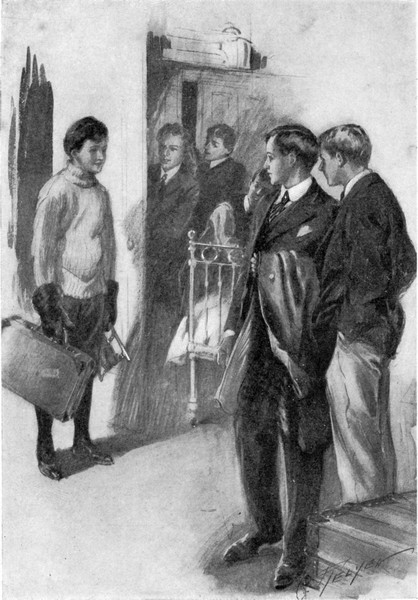
Dick Somes, or “The Brand,” as Chub insisted
on calling him, was a success from
the start. The circumstances attending his arrival
at Ferry Hill enveloped him in a mantle of romance,
while to have thrown over Hammond in
favor of the rival school at once endeared him to
his new friends. Besides this, however, it was
hard to resist his personality. As Chub said one
day in awed tones: “He’s just about as homely as
a mud fence, only somehow you forget all about
it.” And you did. You remembered only that his
look was frank and kindly, his voice wonderfully
pleasant, and his laughter infectious. Before he
had been at Ferry Hill a week he knew every one
of his forty-two companions to speak to, and could
call each one by his name without a mistake. The
younger boys tagged after him whenever they
might, and the older ones were frankly eager to be
with him. He could talk interestingly on a hundred
subjects, and could be as breezy as a Kansas
cyclone or as staid and proper as young Cullum,
of the Second Middle, who, on his arrival from
Boston the year before, had been promptly dubbed
“Culture” Cullum.
Born in Ohio, Dick had moved west with his
parents at the age of six years. Then had followed
sojourns in a sod house in Nebraska, in a
log cabin in Montana, in an adobe shack in Colorado,
and in a real carpenter-built house in a Nevada
mining town. After that the fortunes of the
Someses had mended rapidly until, when Dick was
twelve, the family was living comfortably in one
of the finest residences of Helena. For two years
Dick attended school uninterruptedly, something
he had not done before. Then came his mother’s
death and two years of hotel life at home and
abroad for him and his father. So, of course, Dick
had seen a good deal of the world for a boy of his
age, had a keen sense of humor, plenty of imagination,
and could rattle off stories that made his
audience sit with wide eyes and open mouths. Dick
never spoke of wealth, but the impression prevailed
generally that his father was remarkably
well off, and the fact that Dick had his own check-book
and could draw money from a New York
trust company whenever he wanted to naturally
did much to strengthen that impression.
Harry took much credit to herself for Dick’s
capture, and displayed at all times a strong proprietary
interest in him. For his part Dick liked
Harry immensely and endured her tyranny with unfailing
good humor. At Madame Lambert’s School,
in Silver Cove, Harry became quite a heroine, and
the story of how she had induced a Hammond boy
to come to Ferry Hill was in constant demand for
a fortnight after school began again.
Naturally enough, Dick’s closest friends were
Chub and Roy—and, of course, Harry; and I
might include Sid Welch. Sid was fifteen and a
confirmed hero-worshiper. Last year he had
transferred his allegiance from Horace Burlen to
Roy, and now appearances indicated that he was
about to transfer it again to Dick. Dick was very
kind to him, as he was to every one, but Sid’s
youthfulness prevented him from any save occasional
companionship with the three older boys.
To be sure, Dick was only sixteen himself, but he
seemed older than either Chub or Roy. He had
barely managed to convince Doctor Emery of his
right to enter the Second Senior class, and was
working very hard to stay there.
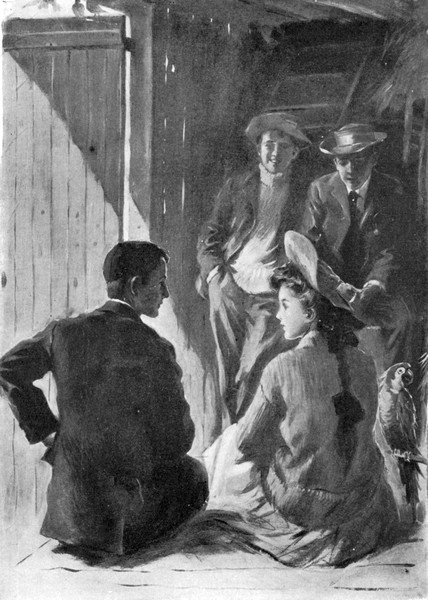
One morning, a week or so after the beginning
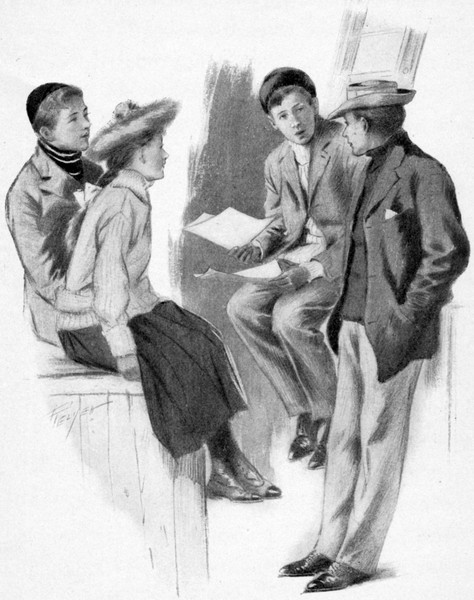
of the new term, Dick, Roy, Chub, and Harry were
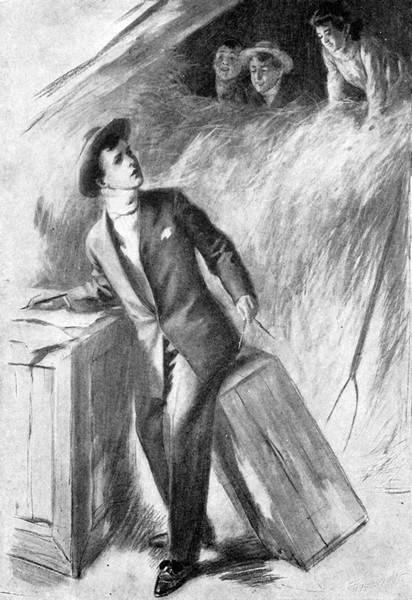
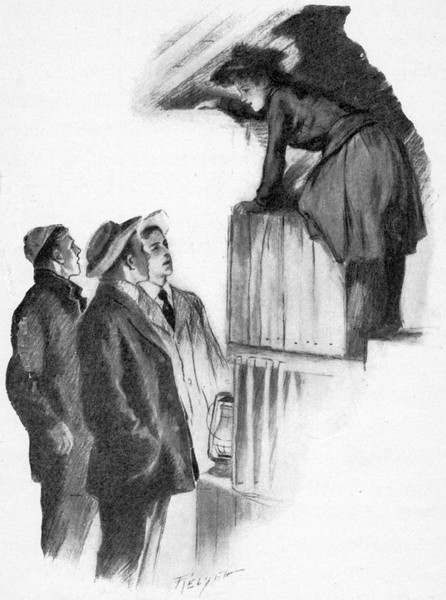
seated, the two former on the grain chest and the
two latter on an empty box, in the barn. The big
doors were wide open and the morning sunlight
fell across the dusty floor in a long path of gold.
The cold had moderated and that day the water
was dripping from the eaves, and the snow was
sliding with sudden excited rustlings from the
roofs of the barn and sheds. Beyond the sunlight
the floor faded into the twilight of the building
wherein the forms of farm wagons and machinery
were dimly discerned. From close at hand, to be
exact, from tiers of boxes and home-made cages
ranged along one side of the barn, came strange
sounds; squeaks, soft murmurs, little rustling
noises, excited chatters, and now and then a plaintive
me-ow. The sounds came from the inhabitants
of Harry’s menagerie, as Roy had nicknamed
the collection of pets. Overhead was the soft cooing
of pigeons, and outside in the warm sunlight
many of them were wheeling through the air and
strutting about the yard. Dick had just been formally
introduced to the inhabitants of the boxes;
to Lady Grey and her two furry, purry kittens, to
Angel and others of his family—white, pink-eyed
rabbits these—, to Teety, the squirrel, to Pete and
Repeat and Threepete, black rabbits all, to Snip,
the fox terrier, to numerous excitable white mice,
and, last but not least, to Methuselah.
Methuselah was the parrot, a preternaturally
solemn and dignified bird as long as he refrained
from conversation. When he spoke he betrayed
himself as the jeering old fraud that he was. Just
at present he was seated on Harry’s arm, his head
on one side, and one glittering eye closed. Closing
one eye gave him a very wise look, and I fancy he
knew it. At Harry’s feet lay Snip, stretched out
in the sunshine, and at a little distance Spot, an
Angora cat and the black sheep of the family, sat
hunched into a round ball of furriness and
watched proceedings with pessimistic gaze.
“When does the first hockey game come, Roy?”
asked Chub.
“A week from Saturday, with Cedar Grove. By
the way, Dick, can you play hockey?”
“No, what’s it like?”
“Haven’t you ever seen a game?”
“Don’t think so. It’s a sort of shinny on the
ice, isn’t it?”
“Something like that,” answered Roy. “You
ought to learn. Harry says you’re a dandy
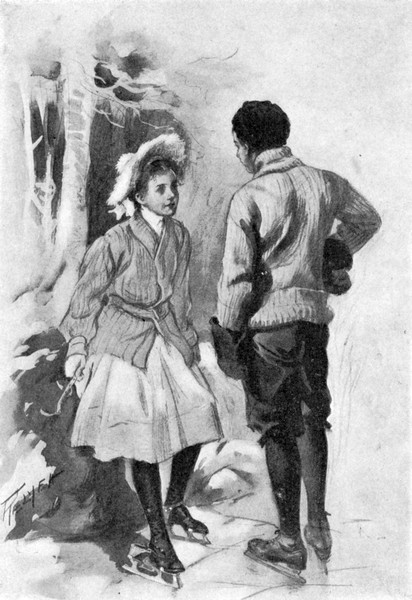
skater, and that’s half the battle.”
“Oh, I never could play games,” said Dick.
“I’ve tried to catch a base-ball, but I never could
do it.”
“You come out for practice in a month or so,”
said Chub, “and I’ll bet you can learn how. Will
you?”
“If you like. Do both you fellows play?”
“Yes, Roy plays first base and I play second.”
“Chub is captain,” added Harry.
“And where do you play?” asked Dick, turning
to her.
“They won’t let me play,” answered Harry disgustedly.
“I can play just as well as Sid Welch,
though!”
“Oh, come now, Harry,” laughed Chub, “Sid
played a pretty good game last year.”
“So could I if you’d let me. I can catch any ball
you can throw, Chub Eaton, and you know it!”
“Of course you can,” said Chub soothingly.
“I’ll put you behind the bat this year, Harry.”
“How far behind?” asked Roy. “Back of the
fence?” Harry made a face at him.
“I wouldn’t think of playing if you bar Harry
out,” said Dick gravely. “Harry rescued me from
a life of idleness at Hammond, and brought me
over here where I’m buzzing my brain out trying
to keep up with my class, and I’m naturally awfully
grateful to her. If you don’t let her play
you can’t have my invaluable services, Chub.”
“Look here, how about foot-ball?” demanded
Roy.
“Me?” asked Dick. “I don’t know the first
thing about it. The only game I can play is
chess.”
“But you ought to do something with those
muscles of yours,” insisted Roy. “Did you ever
do any rowing?”
“Never even saw a race,” was the cheerful
reply. “Oh, I’m no athlete, me. The only thing
I can do is ride and fish and shoot and throw a
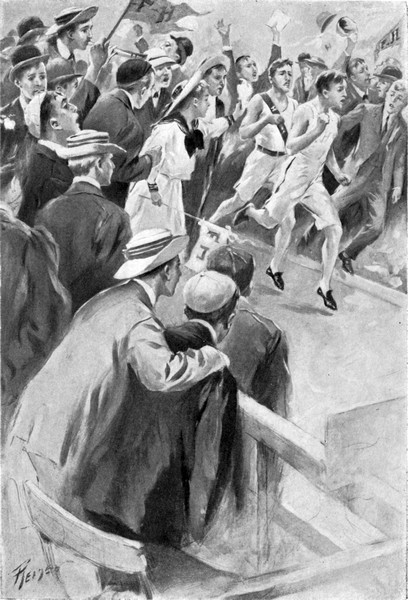
rope and—and run a little.”
“Run?”
“Yes, on my feet, you know. Don’t you ever
run hereabout?”
“Yes,” laughed Chub, “we run bases.”
“I couldn’t do that, I guess; a mile’s about my
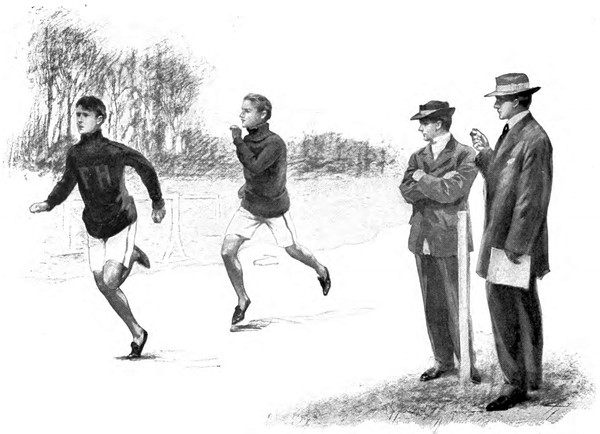
measure. Don’t you have foot races here?”
“No, we don’t do anything in that line. Hammond
has a track team, but we haven’t. You
should have stayed where you were put, if you
want to be a runner.”
“What’s the matter with getting up one of
those things here?” asked Dick. “One of those
track teams? You’ve got a track, haven’t
you?”
“Yes, but it’s not much good. We only use it
for exercise,” said Roy.
“Couldn’t it be fixed up?”
“I don’t believe the Doctor would do it,” answered
Roy. “You see, it would cost a lot, and
I know there isn’t much money to spend.”
“Why? Doesn’t the school make money?”
asked Dick.
“Oh, yes, but not very much; does it, Harry?”
“Sometimes it doesn’t make anything; it
loses,” replied Harry cheerfully. “Then I wear
my old dresses in the summer, and we stay here at
Ferry Hill; only sometimes I have to go and visit
Aunt Harriet Beverly, which is much worse than
staying at home.”
“Must be a leak somewhere,” said Dick. “Why,
with forty-three boys at four hundred dollars a
year, I don’t see why the Doctor doesn’t make
slathers of coin.”
“He used to,” said Harry; “but everything
costs so much more nowadays, you see. Papa says
that if we had accommodations for twenty more
boys the school would make money.”
“What kind of accommodations?” asked Dick.
“Why, places to sleep and eat,” answered
Harry.
“But if he’s losing money now with forty boys
I should think he’d lose half as much again with
sixty,” said Chub.
“Didn’t you ever hear the saying that it costs
as much to feed three persons as it does two?”
laughed Dick.
“Papa means,” explained Harry, “that the expenses
wouldn’t be much larger than they are
now. It would take more food, of course, and—and
things like that, but there wouldn’t have to be
any more teachers, because papa and Mr. Cobb
and Mr. Buckman could teach sixty boys just as
well as forty.”
“I see,” said Chub. “But—could he get twenty
more boys? The school isn’t quite full now, you
know.”
“He could if he advertised in the magazines and
papers,” said Harry. “He never has advertised
because he says it wouldn’t pay to do it unless he
could take lots more boys.”
“Well, I like the school as it is,” said Chub. “I
think there is just enough of a crowd here now.
If it was much bigger we wouldn’t hang together
the way we do and we wouldn’t have half so good
a time.”
“Yes, but I’d like the Doctor to make something,”
said Roy. “I’d like Harry to have new
dresses in the summer and not have to visit her
Aunt Harriet,” he continued with a laugh. “Besides,
if the school was making plenty of money
we could have a new boat-house, and an addition
to the grand stand and things like that, probably.”
“And a new running track,” added Dick. “I’m
in favor of enlarging the school!”
“Objection withdrawn,” said Chub. “Go ahead
and do it.”
“Then, too,” said Roy, who had apparently
been considering the matter quite seriously,
“we’d have a larger number of fellows to pick our
teams from. If we’ve been able to win from Hammond
in most everything in the long run with only
half as many fellows as she has, what could we do
to her if we had three fourths as many?”
“Third class in algebra!” murmured Chub.
“Mr. Somes may answer.”
“Not prepared,” said Dick promptly.
“But it’s so,” cried Harry. “Why, we could—we
could simply lambaste them!”
“Good for you, Harry!” laughed Chub.
“Yes, it is so,” pursued Roy earnestly.
“That’s why Hammond can have a track team
and we can’t. She has nearly ninety fellows this
year to our forty-three. That means that she’s
got two chances to our one.”
“Oh, piffle!” scoffed Chub. “Why doesn’t she
lick us then? We’ve beaten her three times out
of four at foot-ball, and we’re away ahead in
base-ball victories, and in rowing. No, sir, the
reason we’ve been able to lick her is just because
we have so few fellows that we all stick together
and work for the school, and when we get a lot
more here it will be different and there’ll be
cliques and things like that, and half the school
won’t speak to the other half.”
“That isn’t so at Hammond, I guess,” objected
Dick. “From what little I learned of the place
the fellows stick together pretty well.”
“Besides, twenty more wouldn’t make much
difference,” added Roy. “What you say might be
so if we had two or three hundred, like some of the
big schools; but not with sixty. I cast my vote
with Dick; let’s enlarge.”
“Yes, indeed,” cried Harry, “let’s! How’ll
we do it?”
“Well, don’t let me interfere,” said Chub good-naturedly.
“I’ll just sit here and keep still while
you do it. But don’t be long, because I’ve got a
lesson in just ten minutes.”
“Why, there’s only one way to do it,” said Dick
promptly. “We must have a new dormitory.”
“Oh, is that it?” asked Chub. “I’ll see if I
can find one for you.” He began to peer around
on the floor. “I suppose one slightly used
wouldn’t do?”
“You dry up and blow away,” said Roy.
“We’re talking business.”
“And if you want to come in on the ground
floor,” said Dick, “now’s your chance. If you
wait you’ll have to pay a big price to join the
Society.”
“What’s it called? The Society of Hopeless
Idiots?”
“No, sir; it’s called the Ferry Hill Improvement
Society,” replied Dick. “And its objects
are to obtain a new dormitory, increased attendance,
a new running track and a track team.”
“Is that all?” jeered Chub. “It sounds so easy
I guess I’ll have to come in. You may put me
down for president.”
“We’ll put you down for janitor, that’s what
we’ll put you down for,” said Roy scathingly.
“Dick shall be president.”
“I decline,” said Dick. “I nominate Miss
Harry Emery, Esquire.”
“No, Roy must be president,” answered Harry,
“and I’ll be secretary and treasurer, because I
have more time than you fellows. And Dick must
be vice-president, and Chub—”
“I’ll be referee.”
“No, you’ll be second vice-president.”
“All right,” answered Chub cheerfully.
“That’s me. I’m the one who attends banquets
and does the jollying. You folks do the work.”
“Look here,” said Roy soberly. “Are you fellows
in fun or do you—do you really intend to go
into this?”
Chub grinned and Harry looked doubtful. Dick,
however, answered promptly.
“No, sir, there’s no fun about it!” he declared.
“We’re going to do it. Work on the new dormitory
begins as soon as school closes in June. Why
not? What’s a dormitory, anyhow? Thirty thousand
will build it, I guess; and if we can’t scrape
up that much before June we don’t deserve it!”
“I’ll bet you anything he believes it!” said
Chub in awed tones.
“Of course I believe it,” said Dick stoutly.
“We’ll send letters to the graduates asking for
subscriptions, and we’ll get the fellows in school
interested and make them contribute. I’ll start
the ball rolling myself with fifty dollars.”
“Gee!” said Chub. “I can’t give much more
than fifty cents, I guess.”
“You’ll give five dollars, anyhow,” declared
Dick. “No subscriptions received for less than
five.”
“I’ll give five!” cried Harry eagerly. “I’ve
got almost that much in my bank.”
“Good! Fifty and fifteen are—”
“Is,” corrected Chub.
“Am—sixty-five,” said Dick. “That’s a good
starter.”
“Sure!” laughed Roy. “We only need twenty-nine
thousand nine hundred and thirty-five
more!”
“Oh, maybe it won’t take thirty thousand,” said
Dick cheerfully. “I only guessed at it. We’ll
find out about that the first thing.”
“Well, there’s no harm in trying,” said Roy.
“And it’ll be good fun whether anything comes
of it or not. But I vote that Chub be made president
because I’m going to be too busy during the
next two months to attend properly to the duties
of the office. You see, hockey doesn’t leave much
time for other things.”
“Not me, though,” Chub protested. “I never
was president of anything, and don’t know what
you do. Besides, I’m going to be pretty busy myself
in another six weeks. Base-ball candidates
are coming out early this year. Dick’s the man
for president; he started the trouble and the subscriptions.
All in favor—”
“I’d just as lief serve as president,” said Dick,
“only I may be busy myself pretty soon.”
“What at?” asked Chub.
“Forming that track team. I’m going to be
captain of it, you know. Roy’s captain of the
hockey team and you’re captain of the nine, and
I’ve got to be captain of something, myself.”
“Do you really mean that you’re going to try
and get up a team?” asked Roy.
“Yes, and I want you fellows to help me. Will
you?”
“Sure,” cried Chub. “It’s a good scheme,
Dick. I’ll wager there are lots of fellows here
who will be pleased purple to join.”
“Will you?”
“Me? Why, I can’t do anything.”
“How do you know? I dare say you can run bases,
and if you can do that maybe you can sprint. And
Roy ought to make a good distance runner. You
say he was in the Cross Country last fall.”
“I’ll join,” said Roy. “I don’t suppose I can
do anything, but I’m willing to try.”
“Same here,” said Chub. “And while we’re
about it, let’s start a few other things. We
haven’t got a croquet club, nor a sewing circle,
you know.”
“And if we started those, Harry could join,”
laughed Dick.
“I should think you might let me join the track
team,” said Harry. “I can run as fast as anything,
Dick!”
“As secretary of the F. H. I. S.,” replied Dick,
“you will have no time for trivial affairs, Harry.
You’ve let yourself in for a lot of hard work, if
you only knew it. Now, I propose—”
“I propose,” exclaimed Chub, jumping up,
“that I go to my recitation. When’s the next
meeting?”
“The secretary will issue a call for it,” answered
Dick.
“Seems to me,” suggested Roy, “that the name
ought to be the Ferry Hill School Improvement
Society; people might think we were trying to improve
the Hill.”
“Settle it to suit yourselves,” cried Chub, making
a dash for the door. “I’m off.”
Methuselah, who had been dozing for some time,
awoke startled, and broke into angry remonstrances.
“Well, I never did!” he screeched
hoarsely. “Can’t you be quiet? Stop your swearing!
Stop your swearing! Stop your swearing!”
And the first meeting of the small but very
select Ferry Hill School Improvement Society
broke up in confusion.