BY
Albert F. Calvert and C. Gasquoine Hartley
Domeniko Theotokopuli,[A] known to us to-day as El Greco, was the first
great painter of Spain, and in his strange and fascinating art, the
Spanish School compels for the first time the attention of the world.
And El Greco was not Spanish. He was born in Crete, it would seem about
the year 1548, and died at Toledo in 1614. Learning his art in Venice,
in his early manner he is a pure Venetian, owing much to the work of the
Bassani, and more to the inspiration of Tintoretto, but in Toledo he
became Spanish and himself, developing there a manner in which the
special temper of the race finds an expression passionate enough, not
equalled again, indeed, until the advent of Goya.
There will always be some men imaginative, entirely personal, who, like
El Greco, seek to express themselves, and in so doing, quite unwittingly
probably, express the life of their age. Having the
interpretative—creative would perhaps be the truer word—genius, their
work becomes, as it were, a mirror, which reflects not the man alone,
but the circumstances that have formed his life. For, after all, what
the artist does is to use up what he has seen.
This is why El Greco seems to chronicle for us our impressions of
Toledo, and of Spain.
Surely no other painter has lived in a city in such strong agreement
with his spirit. Think of the place—wind-swept, heat-dried,
extraordinarily austere, yet flushed with colour, ochre-red shading to
unusual greens; heaped upon its rocky throne above the yellow flowing
Tagus, its rugged silhouette straight cut against a sky hard and clear
as enamel; and, beyond, the sierra like a great brown sea in which it
all stands as an island starting from the waves. A suggestion of
strenuousness seems to linger everywhere, a spirit, personal and keen,
cruel almost as the sword-blades the city fashions. The very buildings,
placed upon the crags beneath the great hulk of the Alcazar, repeat this
impression, they rise in sharp upward and downward lines like an
arrangement of swords, and make their appeal by the strange strength of
their aspect. The streets are a tortuous net of steep-rising
passage-ways. A city strongly itself that has suffered no change,
fantastic as a city seen in a dream.
Yes, to those who know Toledo, the impression of the character of the
city upon El Greco will bring no surprise. His art corresponds perfectly
with its setting. Everywhere his work is around you, for El Greco is one
of those painters who has but a single home. He built churches and other
buildings—the classic façade of the Ayuntamiento, for instance, was
modelled on his design; he carved statues, he painted pictures, there
are canvases of his in the museum, in the cathedral, and in many of the
churches. And in all this mass of work, it is the living force behind it
that is the first impression that you gain; a kind of driving power that
fascinates you, just as Toledo fascinates you, by reason of its power.
El Greco was a painter able to create—that is the secret of it all.
And, be it remembered, the artist does not find his matter straight from
the springs of his brain, what he is able to see he sets down, and that
is all. His art is great in exact measure as it is able to transfer this
vision from him to us. In this way El Greco, to whom vision seems to
have been the whole of life, does in his pictures transfer to us the
entire impression of Toledo, so that it is difficult to speak of his art
without making Toledo the refrain.
And as we wait with his pictures and note, after the first surprise has
left us, the qualities of the work, throughout they confirm this. The
very form of his composition is moulded upon Toledo. Just as its
buildings cluster around the Alcazar, almost as bees swarming about
their queen, so he groups everything around a central figure. Never,
after he came to Toledo, did El Greco use Italian backgrounds. And in
his long, lithe figures, so fantastic in their hard outlines, sometimes
we catch that suggestion of the sword that haunts Toledo. Then when we
come to more tangible things, we find to-day El Greco’s models in the
dark peasants of Toledo. Nowhere else can we quite believe in the
reality of those coldly fervent, self-absorbed, ecstatic men, who greet
us with such fascination from his canvases, their lean, long profiles
suggesting again that aspect of a sword.
Then, El Greco’s colour was drawn from the landscape around him. And
colour, if we may credit the truth of the conversation recounted by
Pacheco, was to him the one quality in painting, form, drawing, all
else, being of secondary significance. This, too, was learnt in Toledo,
where colour has an allurement—illusive and insistent. Toledo it was
showed him the existence of cold tones, and the fascination of its greys
and livid greens led him to anticipate modern colour, at a time when
every one else was painting warm tonalities. In the Convent of San Juan
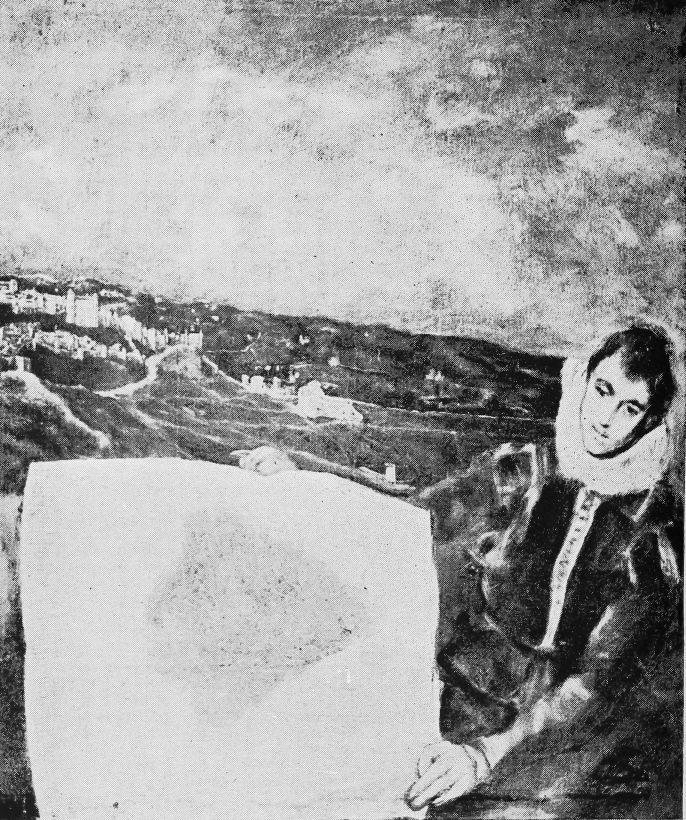
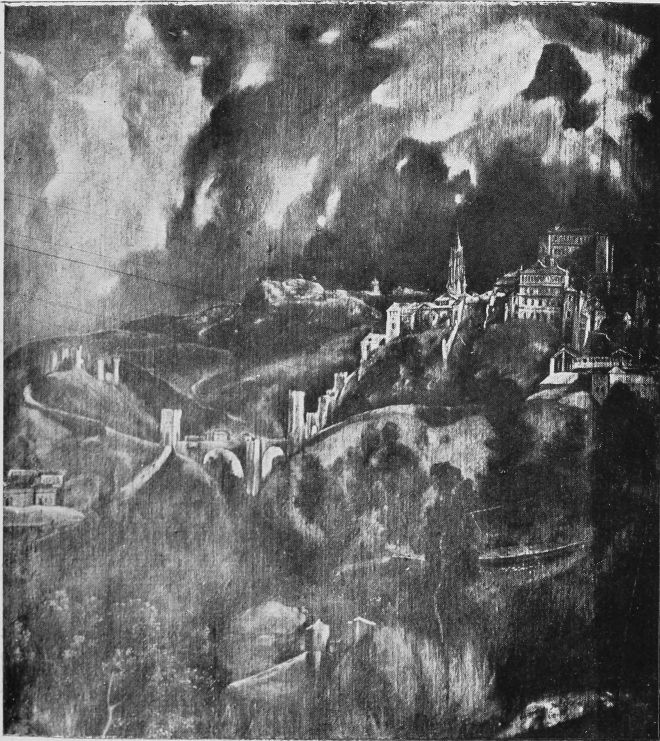
de los Reyes, now the Museo Provincial, is that ‘Bird’s-Eye View of
Toledo,’ the picture in which we have a portrait of George Manuel
Theotokopuli, El Greco’s son. At first you will be astonished, it is the
strangest landscape in the world. But wait with the picture—always the
danger with El Greco is that you will not linger enough. The painter who
sees for himself must be studied, not dismissed as he who but sets down
the common vision of things. And El Greco does give us the real Toledo
in this fantastic landscape. Do you doubt this? Then go when night falls
upon the city to some such vantage-point as the Puerta del Cambón, where
beneath the dome of the evening sky you will see Toledo, heaped roof
against roof, tower against tower. You will forget the strangeness of
the picture’s statement, as you come to see that it is just this effect
that El Greco has caught. Now you will recognise the reality of those
bluish whites, those tones of green that surprised you, and, in
gladness, you will yield to the truth, the beauty—are not the two the
same?—of the painter’s vision, and avow how much he has taught you to
see.
Always El Greco’s pictures leave an impression of their own upon the
spectator; and this is the test of vital work. It is personality that
counts in art. Whether he paints the visible truth of outward things, as
in his portraits—that wonderful series in the Prado, for instance, in
which he startles us with his revelation of his model—or pure fancies
of the mind, as ‘The Vision of Philip II.,’ in the Escorial, a picture
that would seem to have no conscious reference to things seen, one feels
that he had something definite to express. And although his style at
first may have been formed largely on that of the great Venetian
painters, of Tintoretto especially—a “sort of shorthand of the
Venetian,” Mr. Ricketts calls it—in all his pictures there is but one
personality—that of himself. At the back of his art was a force of
passionate character—unbalanced? Yes! capricious and arbitrary; a
tyrannical need that compelled expression. But in spite of his singular
conventions and, from a theorist’s point of view, the strangeness and
exaggeration of his qualities, he does convey his meaning, splendidly
effective, if not the best. And because of this intensity of vision we
have those pictures of exaggerated statement that give credit to the
fable of the painter’s madness, such as the ‘St. John the Baptist,’ in
the Hospital San Juan Bautista, a picture which many have found ugly,
while the few see in its new conception a striving for personal
utterance, and find many things in its suggestion.
El Greco stumbled in his methods maybe, never in his purpose, which was,
it would seem to us, the significance of movement. All his strange
skill, the power of his imagination, his new knowledge of colour and
light, are used in this service, to bring home to us the vision of
movement that everywhere he saw. Even in his portraits it is this that
holds us. There is something more in them than the outward likeness;
there is a power of reaching to and showing us the unquiet spirit
within. He makes his portraits live and speak. This quality is present
in all his work. Every picture is built up by its effect; and this
effect is movement—life. By concentrating on a particular passage, by a
contempt for detail and peddling accuracy, he directs our minds to this
principal thing. His interest, as it were, compels ours; he realises his
vision and makes us share in his imagination.
But it may be said that in many of these pictures the effect is forced;
in the ‘St. Maurice,’ the rejected altar-piece of the Escorial, for
instance, in the ‘Baptism of Christ’ and the ‘Descent of the Holy
Spirit,’ in the Prado, and in many pictures in Toledo, easily
recognised, in which realities are replaced by a series of conventions.
It is not necessary to wait to particularise examples. Certainly one
does not see in the pictures of other painters those greens, those ashen
whites and crimsons, those livid blacks; El Greco’s use of colour is
unusual and his own. Light is not used as he uses it, as a quantity for
emotional appeal; those faces, so elongated or contracted, and with such
extravagant expressions, those figures with hard anatomical outlines, do
not correspond with life as we see it. Yes, this is true. But look
longer at these pictures.... Well, would it be possible to gain their
effects without the defects? If things are forced out of harmony it
is for the sake of “telling strongly.” All this search for expression is
done quite consciously. El Greco throughout was strong enough to be true
to himself and to his imagination. He knew that no system of art is
final, that the achievements of artists are, in truth, the stones
wherewith the Temple of Art is built. Imagination does not see
commonplaces. And we recall the statement of Blake—he, too, a painter
of visions of the mind: “He who does not imagine in stronger and better
lineaments, and in stronger and better light, than his perishing mortal
eye can see, does not imagine at all.”
El Greco might have said these words.
And the man? There is a portrait Domeniko Theotokopuli has left of
himself now in the Museum of Seville. In it we see the long, striking
profile, with its large, strong nose, restless eyes and straight mouth,
cruel slightly, framed by the great white ruff that forms such fitting
setting to the fine head. The forehead is high, the dark hair scant upon
the temples. We may read in the face, and still more in the perfectly
shaped hands—the left holds a square palette upon which are the five
primary colours, white, black, yellow-ochre, vermilion, and lake, the
colours he used most frequently—the fastidiousness of the artist, the
instinct for beauty; we may read a peculiar suggestion of mysticism and
ardour; self-assertion, too, and impatience—both wait in those long,
nervous fingers. It is a face of genius, but of a kind restless,
unbalanced, decadent perhaps. And we understand the driving energy that
burned to fever, so that at times the balance was lost between the
painter’s aim and the result, and we realise that the work of such a man
must be introspective, experimental, neurotic.
We know nothing almost of El Greco’s life, and if external happenings
were all, the most original painter of Spain would remain an unexplained
personality. His very name is uncertain, and contemporary writers,
disregarding the Theotokopuli, speak of him as Domeniko Greco. We do not
know the year in which he was born, for the information given by
Palomino in “El Museo” must certainly be questioned, no register of his
birth as yet having been found among the Cretan archives, or in the
parochial books of the Greek colony in Venice, the city in which it
seems certain that he lived—a pupil, we may well think, of Tintoretto,
rather than of Titian; and this in spite of the letter of his friend
and compatriot the miniature-painter, Clovio,[B] in which Clovio speaks
of the young Greek painter’s skill, tells of his coming to Rome, and,
after commending him to the patronage of the Cardinal Nepote Farnese,
refers to his having learnt his art from the greatest Venetian. But the
testimony of his work gives more truth than this statement; his early
pictures, their authorship so long unknown, again and again have been
attributed to Tintoretto, to Bassano, to Veronese even, never to Titian.
That El Greco was a Cretan we know by his signature, always in Greek, on
many pictures, Λομήνικος Θεοτοκόπουλος Κρήσεποίει—the ‘San Maurice,’
in the Escorial, is one. And again, when called, in 1582, by the
Tribunal of the Inquisition to act as interpreter in the case of a
Cretan accused of being a Morisco, he describes himself as “Domeniko
Theotokopuli, native of Candia, painter, resident in Toledo,” as we
learn from a document discovered by Señor Cossio, to whose research, and
to that of Señor Foradada and of Señor de Beruete, we owe the few
discovered facts of El Greco’s life.
We know that Domeniko Greco came to Toledo some time before 1577, and in
that year he was at work in the convent of Santo Domingo el Antigua,
where the Church was built and its statues carved by him, and where he
painted the screens of the fine retablo; that further, he would seem
never to have left Toledo; that he married there, and had a son, George
Manuel, who was architect and sculptor to the cathedral from 1628 to his
death in 1631, and also a daughter, whose portrait figures in several
pictures—in ‘Christ Despoiled of his Vestments,’ in the cathedral, for
one; that he died in Toledo, and was buried in Santo Domingo el Antigua
on April 7, 1614[C]
—and that is about all. We have record of much
work—Toledo still has more than fifty Grecos—and there were pictures
painted for the small town of Illescas, and also for Madrid. We read of
two lawsuits, one undertaken to compel the Cathedral Chapter to pay in
full for the ‘Expolio,’[D] the second to vindicate the painter’s right
to sell his pictures without paying the tax levied upon merchandise.
These lawsuits, his pictures, with their dates and signatures, certain
contracts and receipts, are the few facts to be reported.
It would seem that this strange, self-contained life wished to be
silent; for it is perhaps not too fanciful to read this meaning into
that answer given by El Greco when asked, in connection with the writ
served on him for the ‘Expolio,’ whether he had been brought to Toledo
to paint the retablo of Santo Domingo: “I am neither bound to say why I
came to this city nor to answer the other questions put to me.” Here we
gain hints of certain very real traits of character.
And, if the facts of his life are meagre enough, we can find suggestions
of this same temper, silent, yet passionate, in that visit of Pacheco to
the Toledan painter when he was old, in 1611, of which we have spoken
before. Pacheco tells us that El Greco was a student of many things, a
writer on art, a great philosopher given to witty sayings, a sculptor
and architect as well as a painter. He writes of much work that he saw,
and speaks in particular of a cupboard in which were models in clay of
each picture El Greco had finished. The two painters talked on many
subjects, of colour and its supreme quality in painting, of Michael
Angelo and his failure as a colourist. But in all the account of
Pacheco, always so minutely laborious, it is significant to note in one
sentence the impression he formed of Domeniko Greco: “He was in all
things as singular as in his painting.”
Nor will it do to overlook the testimony of Giuseppe Martinez, whose
“Practical Letters on the Art of Painting,” though not printed until
1866, were written a century before. He too speaks of Domeniko Greco as
of extravagant disposition, and in proof recounts that he engaged
musicians to play to him that he might “enjoy an additional luxury
during meals.” The prudent Aragonese condemns this “too much
ostentation,” but we capture again some fresh clues and hints of this
strangely effective personality—a fanatic of life, a fanatic of
painting.
But we have not settled the account of genius when we have called it
unusual, fanatic, or decadent. It is the solution of the dull that
genius is extravagant consciously. El Greco can have had no desire, no
power, to repeat the easy, the commonplace. If strange, exaggerated
even, his art is without a trace of affectation. When he painted a
vision he felt it natural to symbolise his idea in the way that he did.
In colour, in form, he painted only what his imagination saw, gaining in
colour fresh harmonies for himself, and a new suggestion of movement in
his imaginative compositions, to which our imagination must find answer.
El Greco understood all nature as a Living Presence; his art was a
series of experiments to express this. And every one must be struck with
the peculiar development of this special personality in his art from
stage to stage—stages that with sufficient accuracy may be divided into
three periods.
The first is the pupil’s search for truth; the Venetian stage, in which
we find a consciousness of tradition, showing itself in the
still-fettered design, in the attitudes of the figures, in the use of
warm colour, in a flowing quality in the paint, and, especially perhaps,
in the landscape backgrounds, so Venetian with palaces and marble-paved
piazzas; yet mingled with all this tradition is an emphatic personality,
an ardour of expression, very difficult to define, seen in such early
pictures as ‘The Blind Man,’ in the Parma Gallery, or ‘The Cardinal,’ in
the National Gallery, both painted before 1577. Over the whole Venetian
period the influence of Tintoretto is obvious; while the portraits of
these years recall in their method the work of the Bassani; and of the
pre-Spanish pictures, as, for instance, the ‘Cleansing of the
Temple,’[E] now in the possession of the Countess of Yarborough, and the
replica of the same subject on a small scale, in the Cook collection at
Richmond, Surrey, a picture of real beauty that testifies to El Greco’s
skill in miniature—these, and many other works, were thought until
quite recently to be the work of the Venetians, the first being
attributed to Paul Veronese, the latter to Tintoretto, and this in spite
of their marked character.
And the Venetian influence remained in the first years in Toledo. It is
seen in the beautiful Virgin in the early ‘Assumption,’ painted for the
central altar-screen of Santo Domingo el Antigua, but now in the
Prado.[F] But the chief work of this period is the ‘Christ Despoiled of
His Vestments,’ still in the sacristy of the cathedral in Toledo, for
which it was painted in 1577. Here, perhaps, in the fine simplicity of
the grouping, in the dignity of the inspired head of the Saviour, in the
rich and strong colour and in the vivid light and shade, we have the
best results of all El Greco learnt in Venice. But even in this
beautiful picture we see the development, or rather the co-existence, of
his two styles: on the one hand carefully and thoroughly worked-out
qualities, a balanced art remembered from Venice, but with it all a
power that was his own, that seized the elements in the picture and gave
them life—his life. And again, we have in the excessive height of the
Christ, in the hands of many of the figures in this picture and in the
‘Assumption,’ first hints of the special conventions with which the name
of El Greco is certainly most associated.
We come to the second stage, in which the painter, forgetting tradition,
seeks to set down his vision in his own way; it is the period of
experiment, as we see it first in the ‘St. Maurice,’[G] painted in 1581,
that strange picture, rejected, as we may so well believe, by Philip
II., who, misunderstanding, as many have done since, the intensity of
feeling that animates the work, attributed its exaggerated expression to
madness. Here, and in other pictures of this time, in the seizing
‘Vision of Philip II.’ and in the ‘St. John the Baptist’ in particular,
we have splendid examples of imaginative work. Maybe the details are
impossible, perhaps absurd—many have found them so—but for others the
inspiration of the painter triumphs, and the longer they gaze at these
visions the more they are impelled. For, be it remembered, the idea
should be the starting-point in all imaginative pictures, and should
control both the design and its treatment, and these Greco’s are
splendid in this respect. Whether the imagination is exaggerated and
perverted in wilful experiment, whether from an uncertain technical
equipment, or whether it is, as we would think, the natural and true
expression of intense dramatic vision, it is not easy to say. Who shall
decide whether to call these mad pictures or visions that breathe the
sublime? That is a question hard to answer in much of El Greco’s
characteristic work. Perhaps the truth is that we dislike too readily
what we do not easily understand. El Greco goes back to first principles
and speaks in symbols with which we are not familiar. Those spectres of
human kind that surprise us in so many of his pictures in Toledo, in
those in the Prado, as well as in these two in the Escorial, do not
suggest life as we see it; but they are inspired—they do convey his
meaning. This painter’s method is a real enigma; he essayed surprising
effects by separating colour into its original values; he used light as
a means of emotional appeal, giving us sometimes most delicate
harmonies, sometimes discordant contrasts. Domeniko Greco had to teach
his world to see what he saw, and in this way he came, it may seem to
some, to over-emphasise what to him was truth.
And his third stage was a fevered expression of his imaginative vision.
We have entered a new world of extraordinary restlessness, the
restlessness that must exist when spirit struggles from the bonds of the
flesh. Toledo, the ardent arid city, burnt fiercely in El Greco’s blood,
and, more and more, he seems to have felt that it was not enough to
record facts; to have cared less to give æsthetic pleasure; but that the
object of his art should be to clothe abstract ideas with life. It is
something of all this that we find in his later pictures. In each there
is emphasis—or, if you like, exaggeration—of statement; in the
‘Coronation of the Virgin’ in San José, for instance, a picture that in
a strange, left-handed way carries us forward to the picture by
Velazquez[H] on the same subject. The exaggeration is equally visible in
the ‘Assumption’ in San Vicente, more beautiful, and the most
interesting of these rare visions, a picture in which we have
movement—the very sensation of a figure passing through the air as we
have, perhaps, in no other picture. It is even stronger in the group of
pictures in Madrid, the ‘Baptism,’ the ‘Descent of the Holy Spirit,’ the
‘Resurrection,’ and the ‘Christ Dead in the Arms of God’; it meets us
again in the ‘St. Joseph with the Child Jesus,’ and in the ‘Virgin and
Child with Saints Justa and Gertrude,’[I] both in San José, the church
that is the museum of so much of the master’s work—pictures all similar
in their intense sentiment; while emphasis burns to a white flame of
ardent expression in the famed ‘St. John the Baptist,’ the wonderful
picture of which we have spoken already. It is there, too, in the
‘Christ Crucified,’ one in the Prado, one in San Nicolas, surely the
most terrible realisation possible of that scene of sacrifice, in which
the agony of spirit so outweighs the agony of the flesh, and sky and
earth seem to take their share in the struggle.
It is impossible to translate the effect of these animated religious
pictures into words. El Greco was not content to embody the old myths in
fresh forms, but he gave fresh forms to the ideas that are, as it were,
the soul of each myth—that which lives when the form of the stories
change. Even in his pictures with few figures, such for instance, as the
‘Mary and Jesus,’ in San Vicente, the ‘St. Francis,’ of which there are
four replicas in Toledo, or that earlier picture, a beautiful rendering
of a difficult theme, ‘La Veronica,’ one of the series painted for the
Santo Domingo el Antigua in 1575-76, we have this exaggeration. Then,
sometimes, exaggeration, which in each picture, after all, only
emphasises the idea, disappears altogether, and we are given figures of
singular beauty, as the ‘San Martin,’ in San José, or the really fine
Madonnas—dark, oval-faced angels that surprise us at times with a
beauty of type we hardly expect from El Greco. But, as a rule, in the
pictures of this period, roughly marked by the painting of that
experimental picture the ‘St. Maurice,’ there is this intensity of
expression; and especially we find a new, and often strange, use of
colour; colour, as well as form, being used as a means of dramatic
statement, with a result that to many is exaggeration. For El Greco
learnt first, perhaps, from the Venetians, and afterwards certainly in
Toledo, many new possibilities of colour—that it has a quality that
speaks, and further that the appeal of a picture depends first of all on
the tone of its colour. It is for this reason he used colour as a means
of emotional appeal; it was another quality by which to convey his idea
to the world. For El Greco held truly that the province of art is to
interpret, not to imitate. Every development of his art seems to have
come from his own mind, hardly at all from the work of other painters;
from the first he was true to his ideals. And always his pictures seem
to be more the work of his soul than of his hand; which, in other words,
is to say that he was greater as an artist than as a painter.
Domeniko Greco, like so many of the painters of Spain, was great in
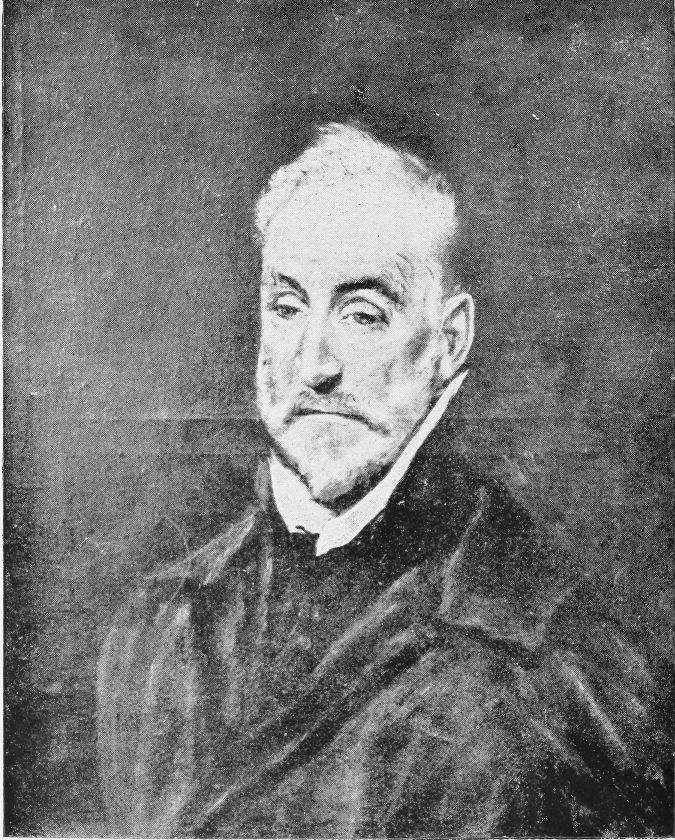
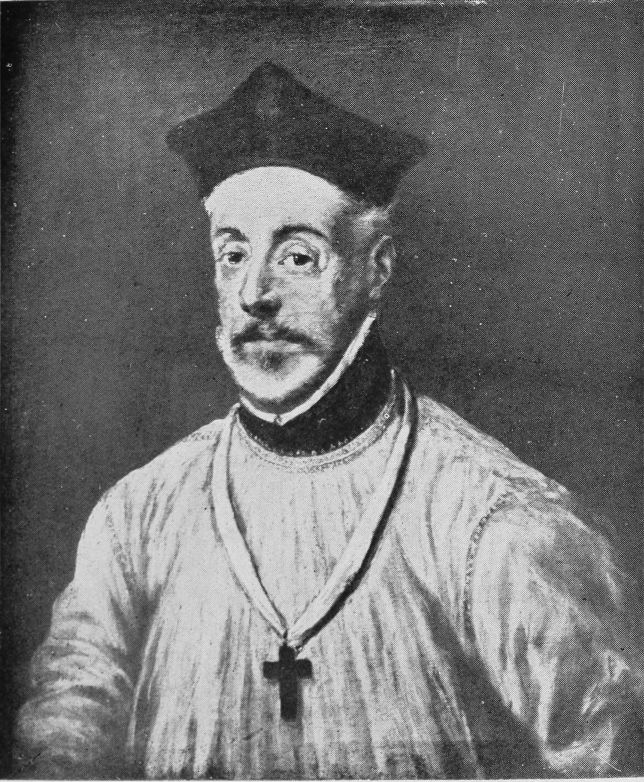
portraiture; and some of his portraits, such as those of Antonio
Covarrubias and of Juan de Alava, in the Museo de San Juan de Los Reyes,
that of Cardinal Tavera, in the Hospital de Afuera, the whole series in
the Prado, and many others not possible to name, are as fine portraits
as have ever been done in the world. In his earliest portraits even, in
that of Julio Clovio, in the Museum of Naples, or that of ‘A Student,’ a
portrait, it well may be, of the young painter himself, we have the
qualities of his later work; always it is the spirit of his model that
he seeks.
And this inward interpretation of life is seen, too, in that picture
which is accounted rightly the most interesting, though not perhaps the
most typical, of his work, ‘The Burial of Gonzalo Ruiz, Count of Orgaz,’
still in the Church of Santo Tomé, where it was painted in 1584. Look at
this gallery of living portraits, all the life of Toledo—the life of
Spain—is reflected back from those ardent faces. In St. Augustine,
splendid in ecclesiastical robes, is the magnificent opulence of the
Catholic Church; in the livid face of the dead count, in the cowled monk
and two priests is the fervid piety of a people who have felt themselves
in mystical communion with God; in the young, warm beauty of St. Stephen
and the lovely acolyte is the full joy and rich colour of Spain; and
lastly, in the long line of mourners who stand behind the group of the
principal figures, and where the painter’s own nervous face is the sixth
portrait counting from the right side, you have types unchanged in
Castile to-day. And how individual is the rendering of the upper section
of the picture in which Christ awaits in the heavens the spirit of the
dead saint. Yes, this picture is one of the greatest pictures in Spain;
it is always interesting.
Plate 1
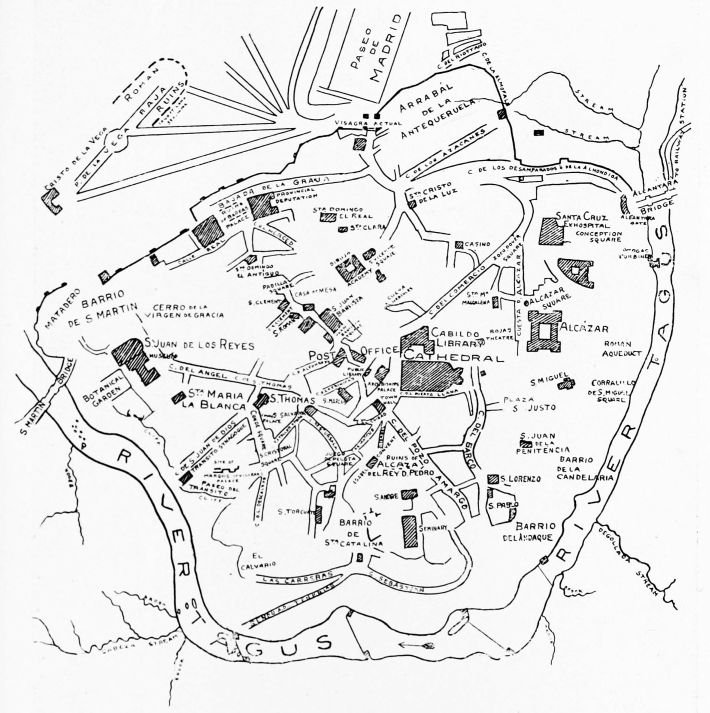
TOLEDO
Specially drawn for The Spanish Series
Plate 2
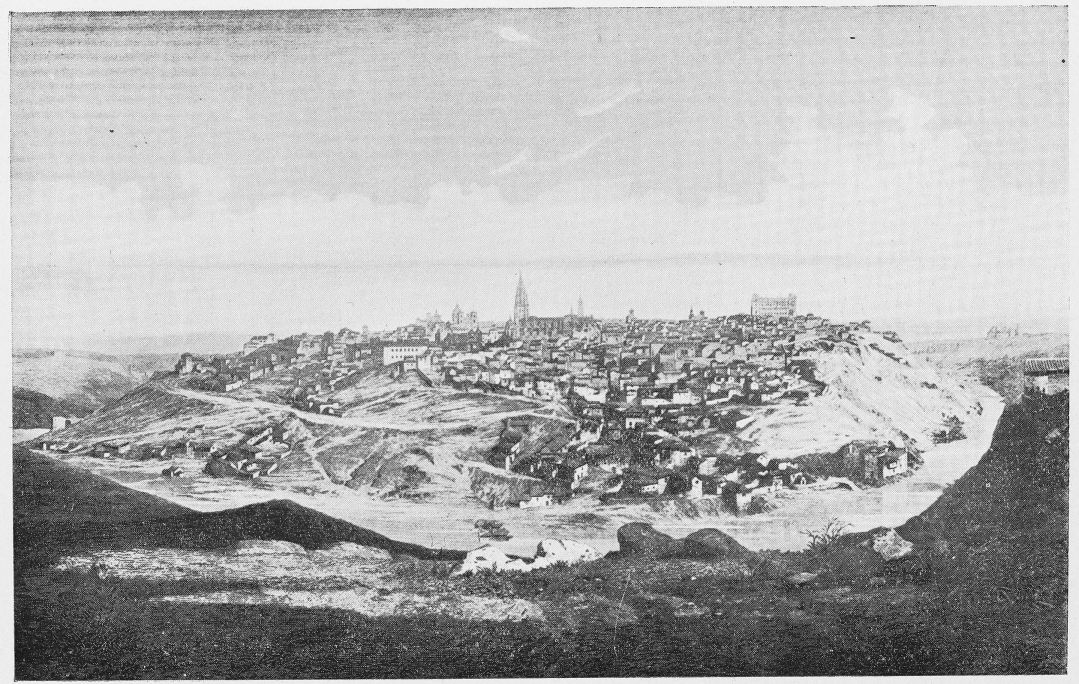
GENERAL VIEW OF TOLEDO FROM THE SOUTH-EAST
Plate 3
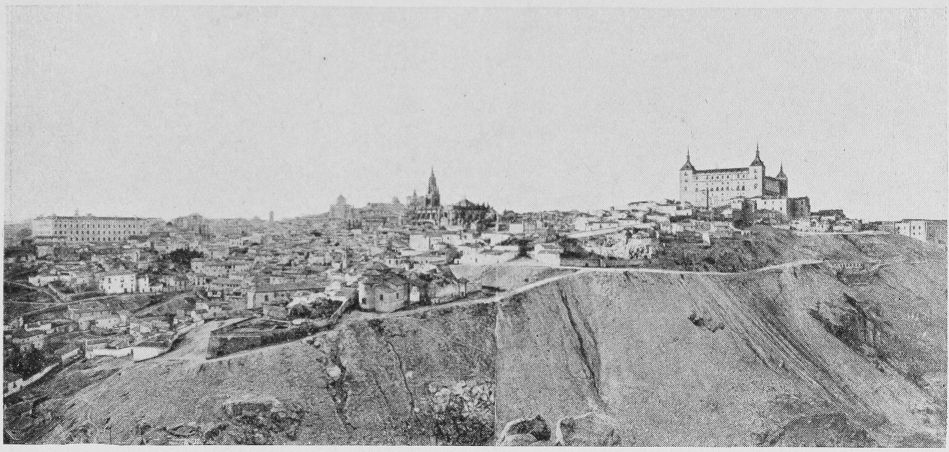
VIEW OF TOLEDO FROM THE SOUTH-EAST
Plate 4
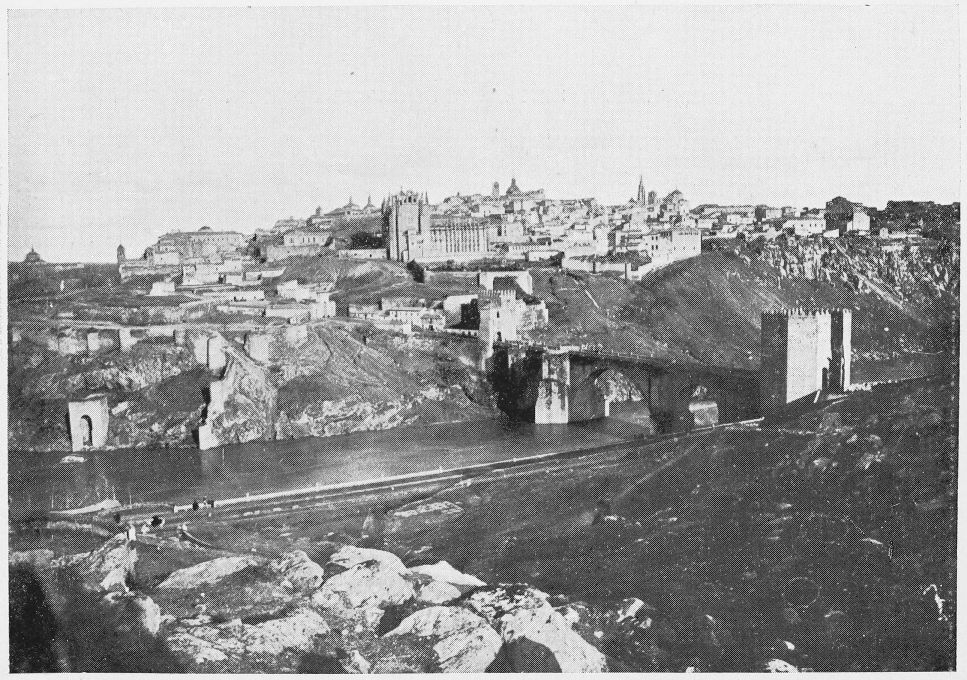
GENERAL VIEW OF TOLEDO
Plate 5
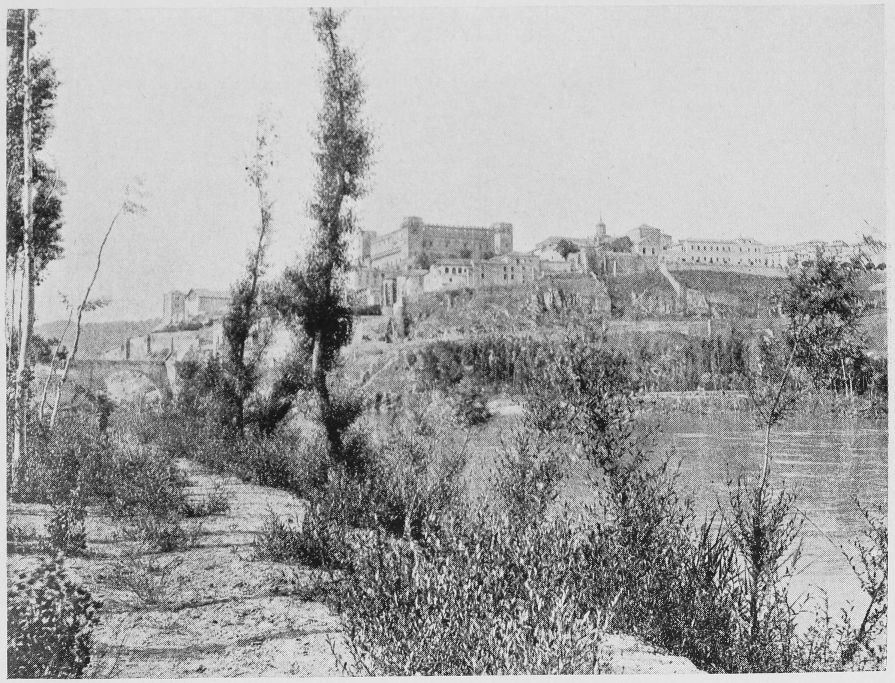
VIEW OF TOLEDO FROM THE CAMPO DEL REY
Plate 6
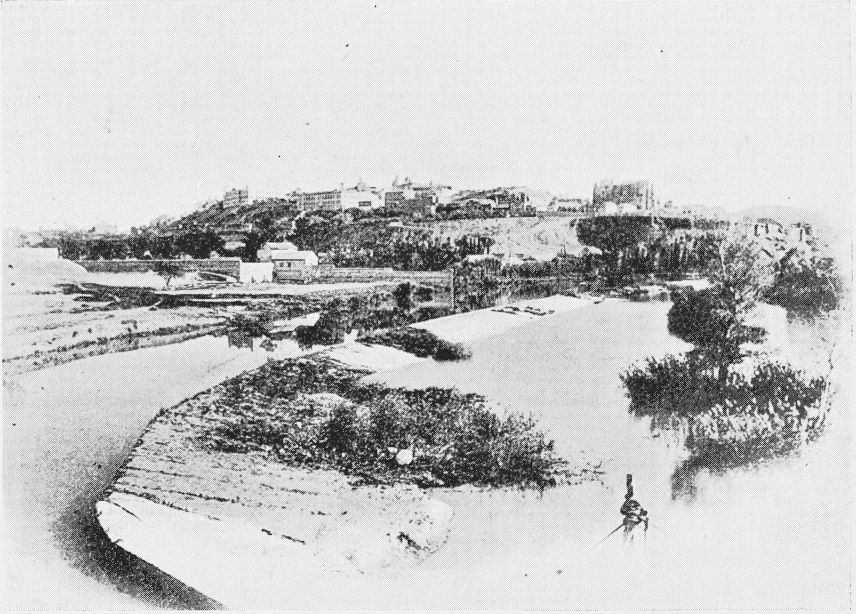
GENERAL VIEW OF TOLEDO
Plate 7
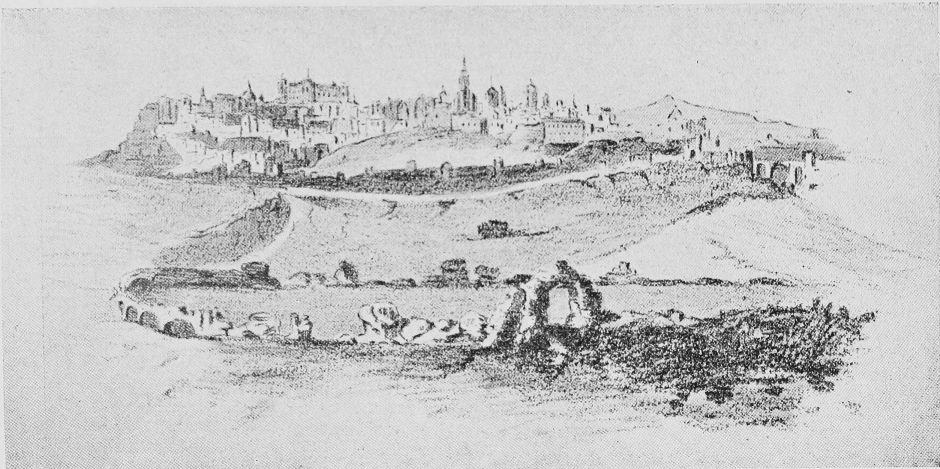
STATE OF THE RUINS OF THE CIRCO MAXIMO IN THE YEAR 1848, ACCORDING TO
THE “ALBUM ARTISTICO”
Plate 8
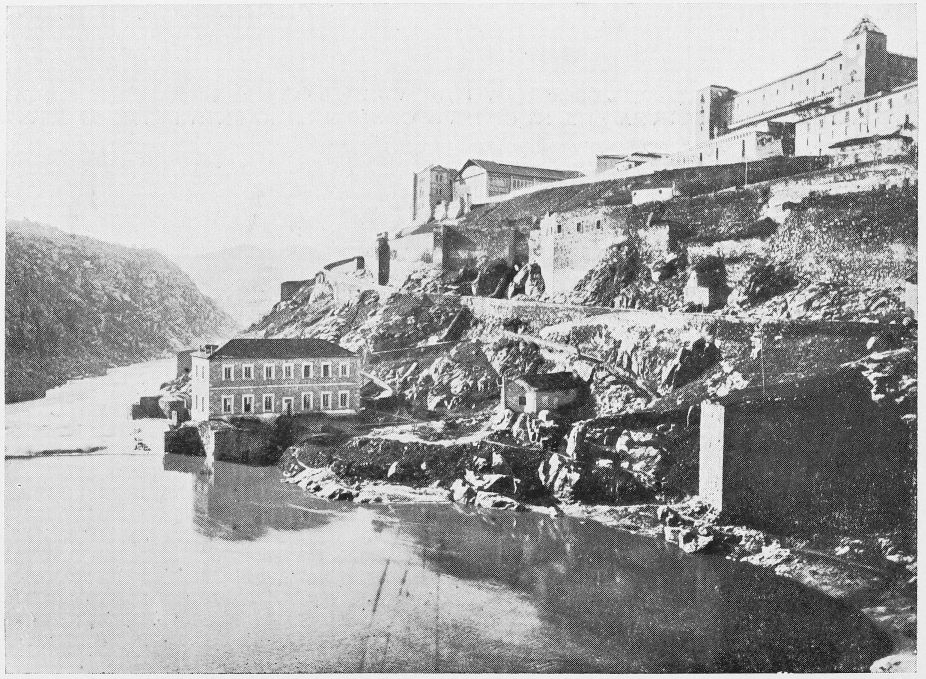
THE RIVER TAGUS
Plate 9
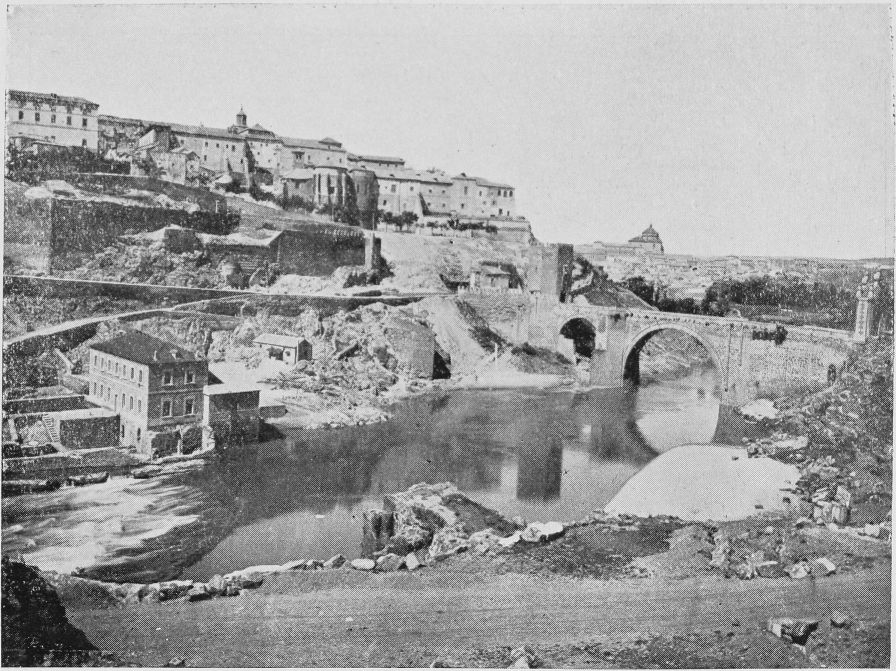
ALCANTARA BRIDGE
Plate 10
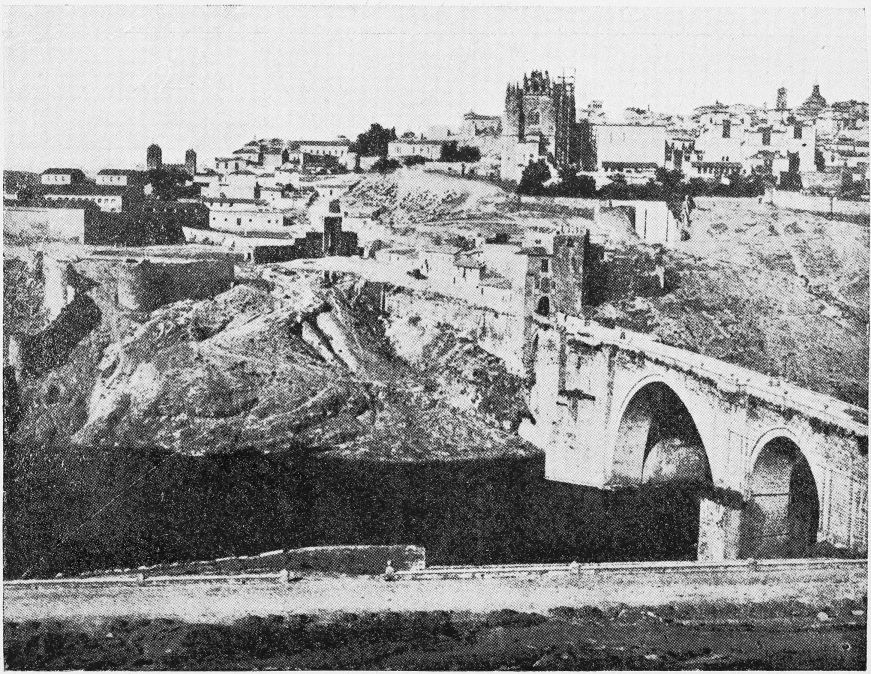
PERSPECTIVE OF ST. MARTIN’S BRIDGE AND THE DIRECTION OF THE FORTIFIED
LINES
Plate 11
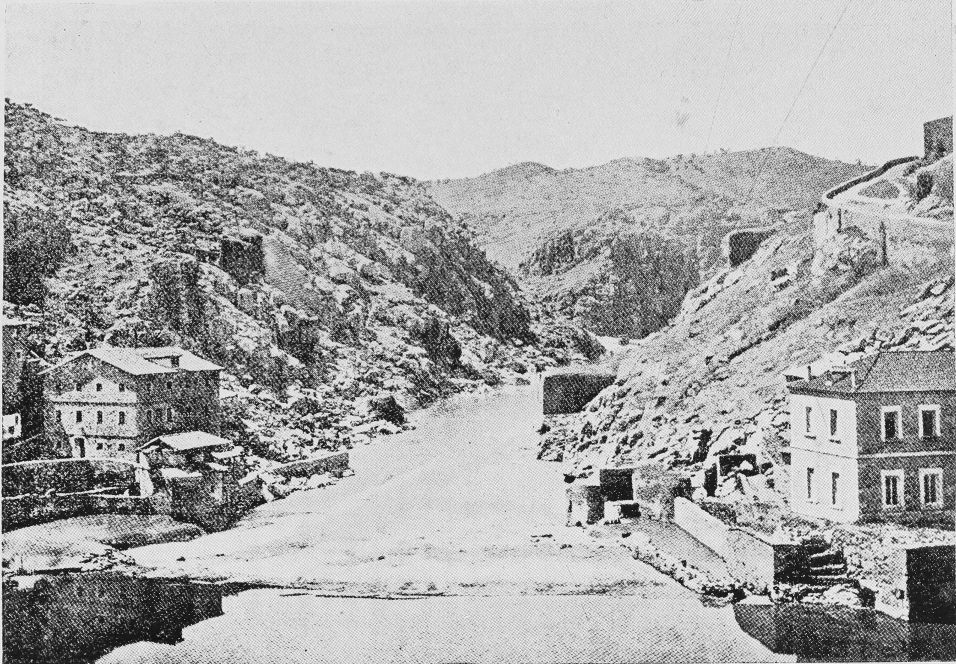
PERSPECTIVE VIEW OF THE SITE OF THE AQUEDUCT
Plate 12
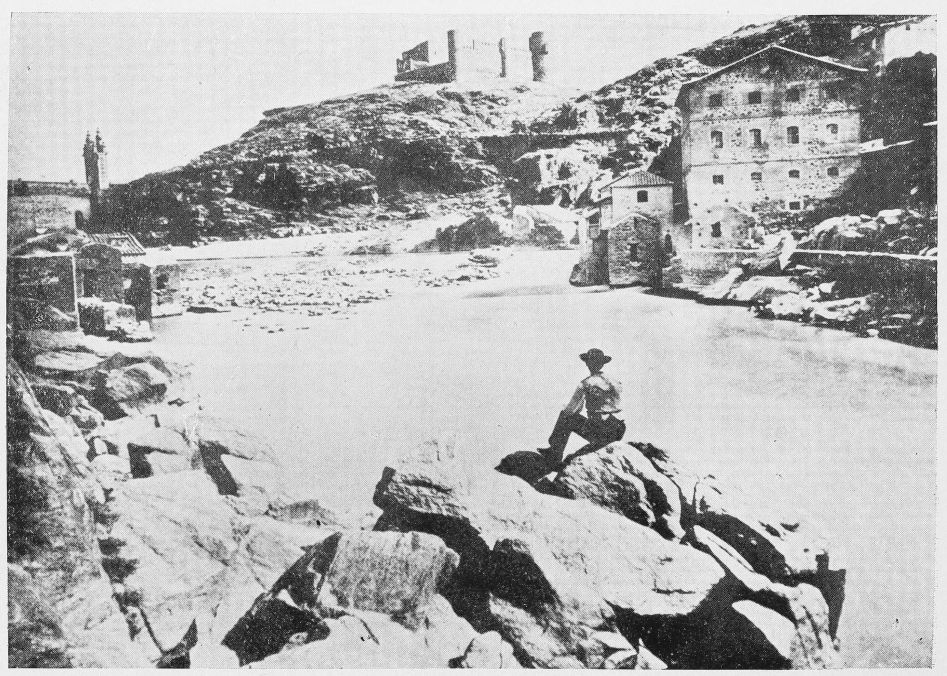
ENVIRONS OF TOLEDO
Plate 13
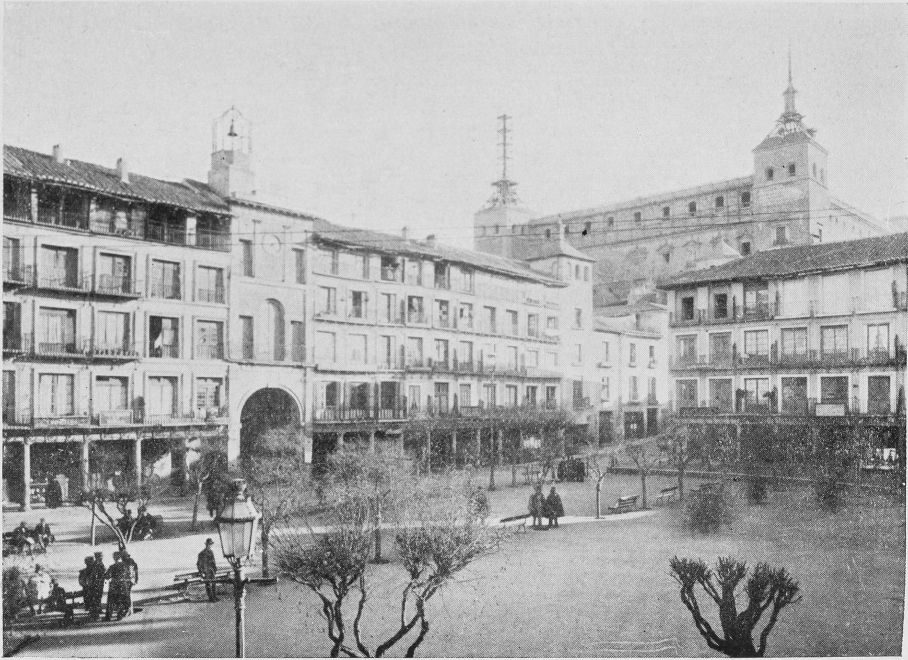
PLAZA DE ZOCODOVER
Plate 14
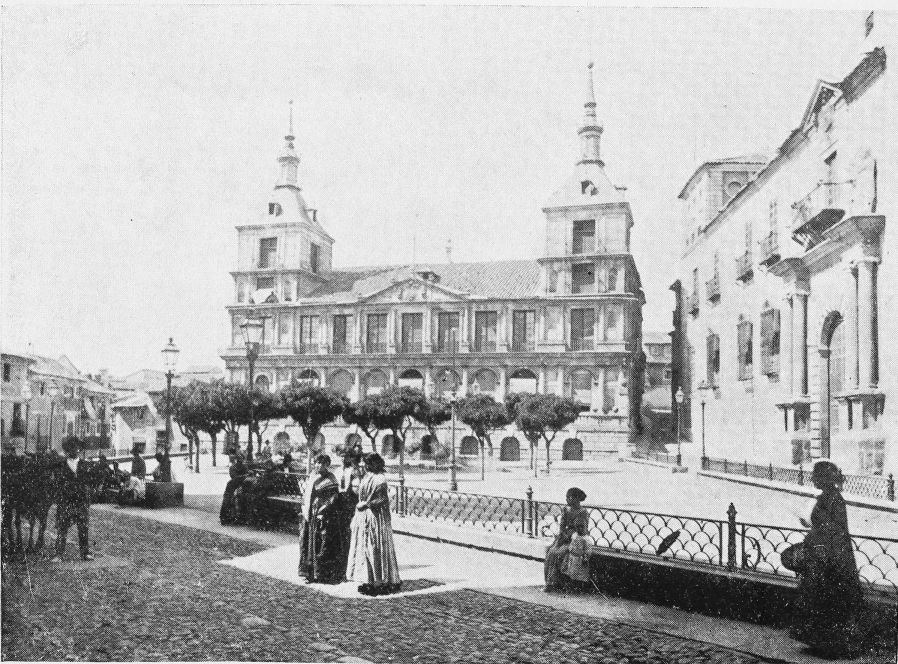
THE TOWN HALL
Plate 15
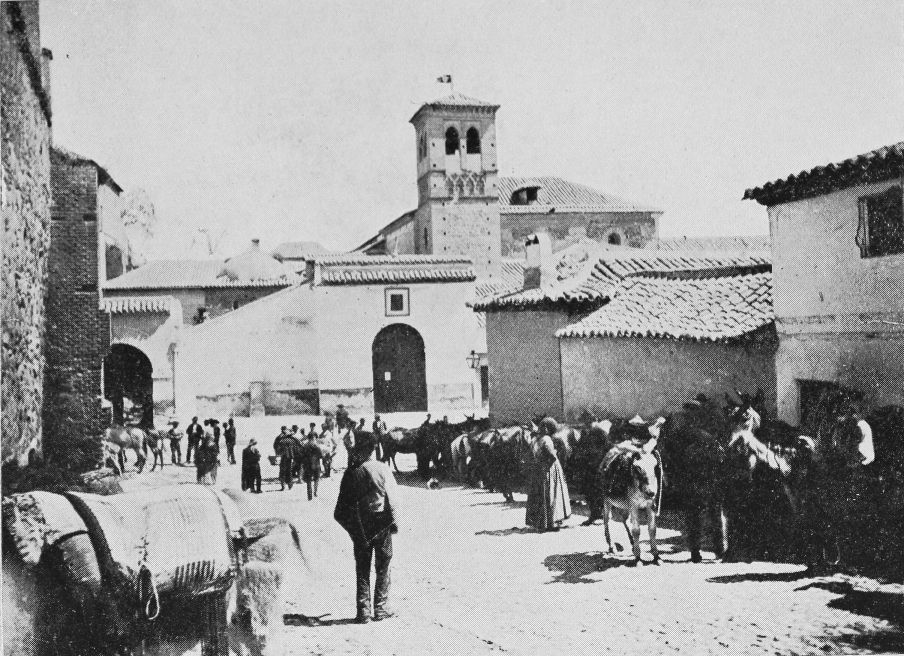
THE MARKET-PLACE
Plate 16
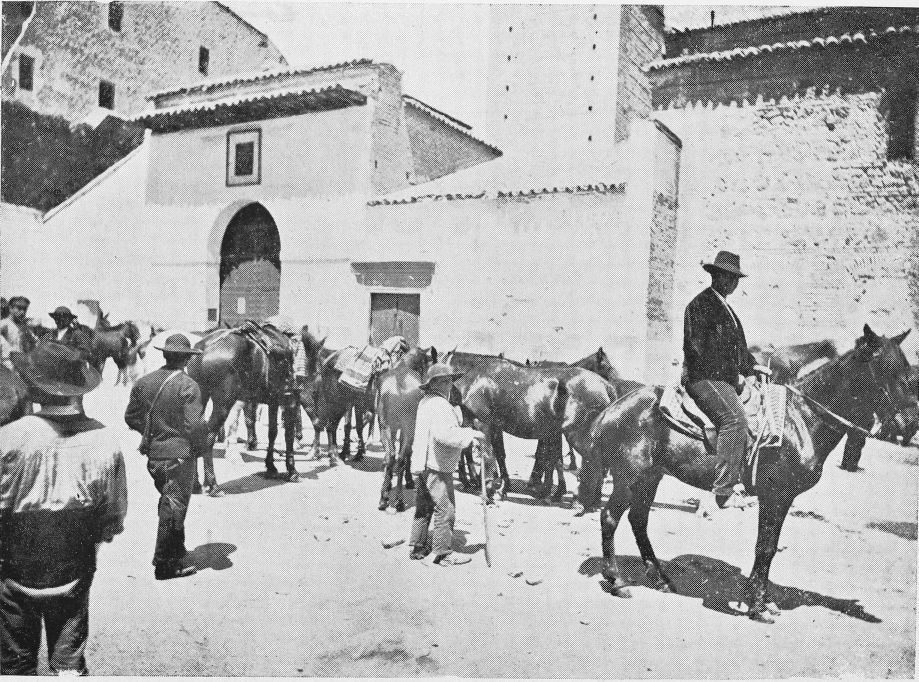
THE MARKET-PLACE
Plate 17
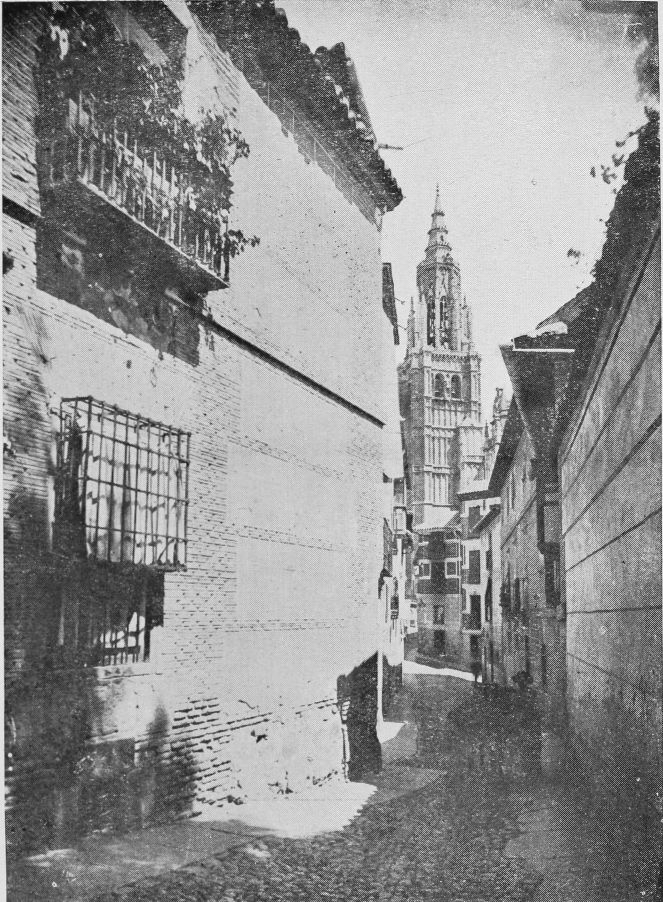
A STREET IN TOLEDO
Plate 18
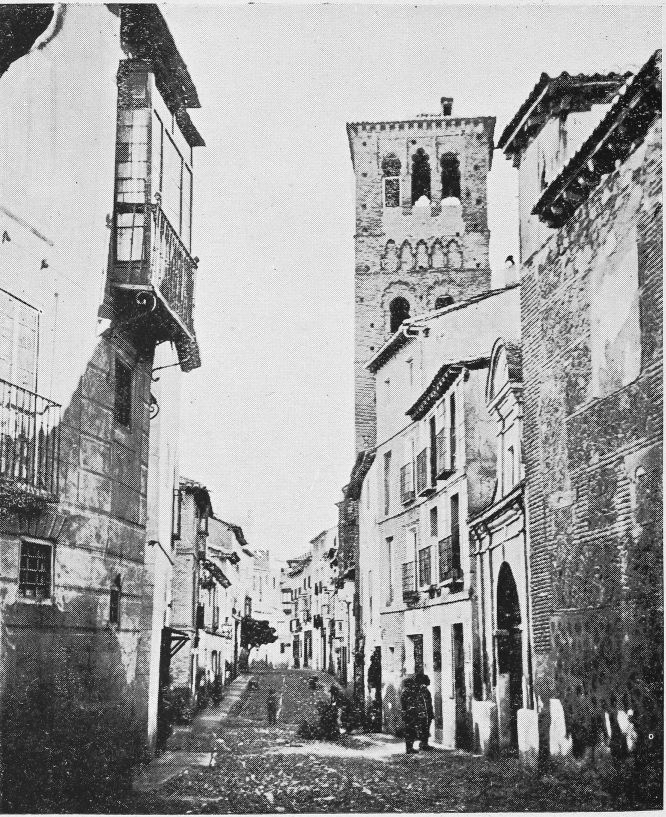
A STREET IN TOLEDO
Plate 19
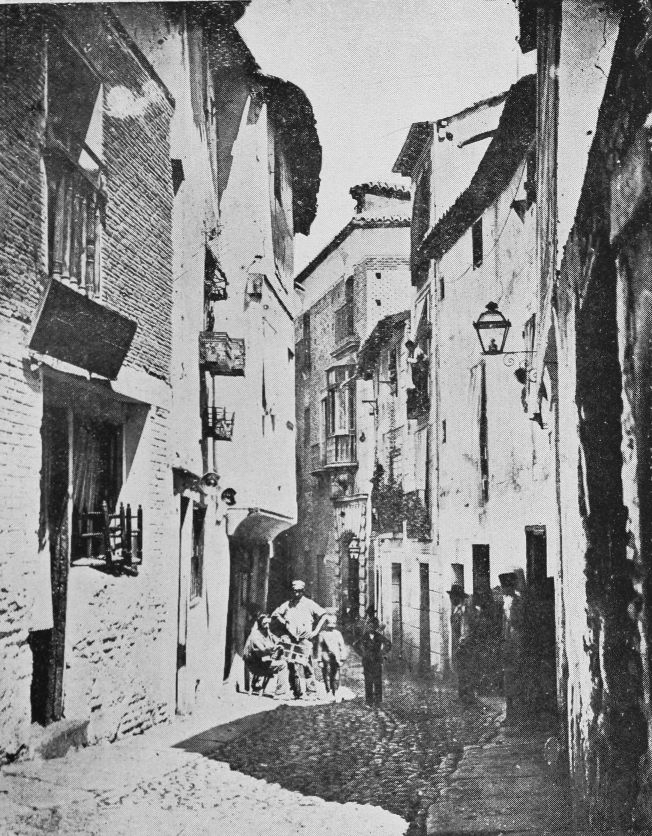
A STREET IN TOLEDO
Plate 20
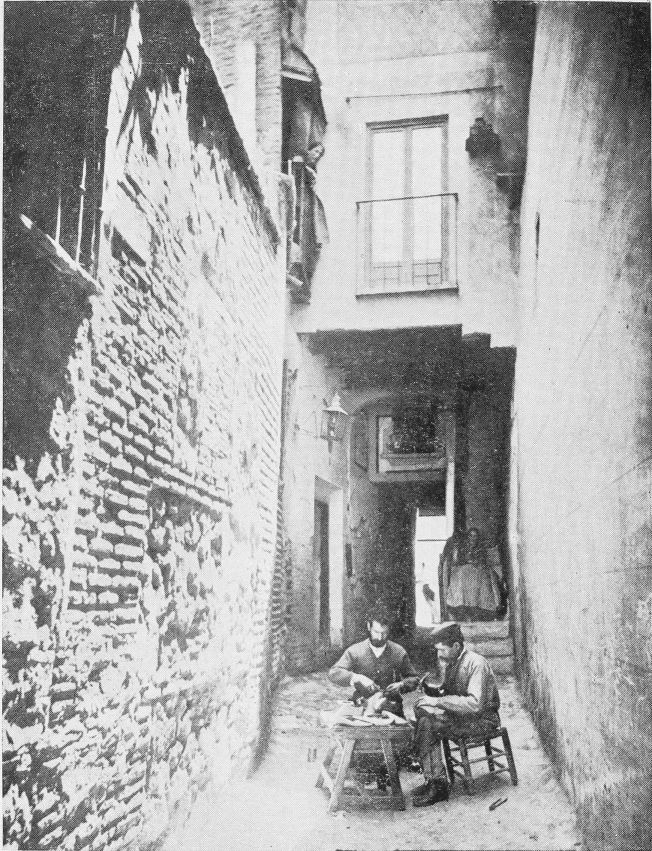
A STREET IN TOLEDO
Plate 21
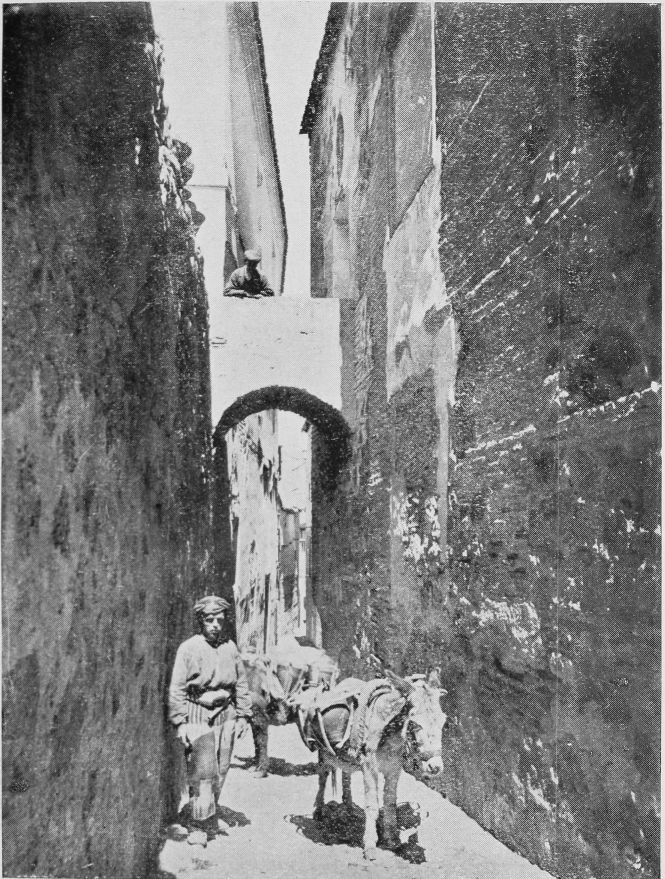
A STREET IN TOLEDO
Plate 22
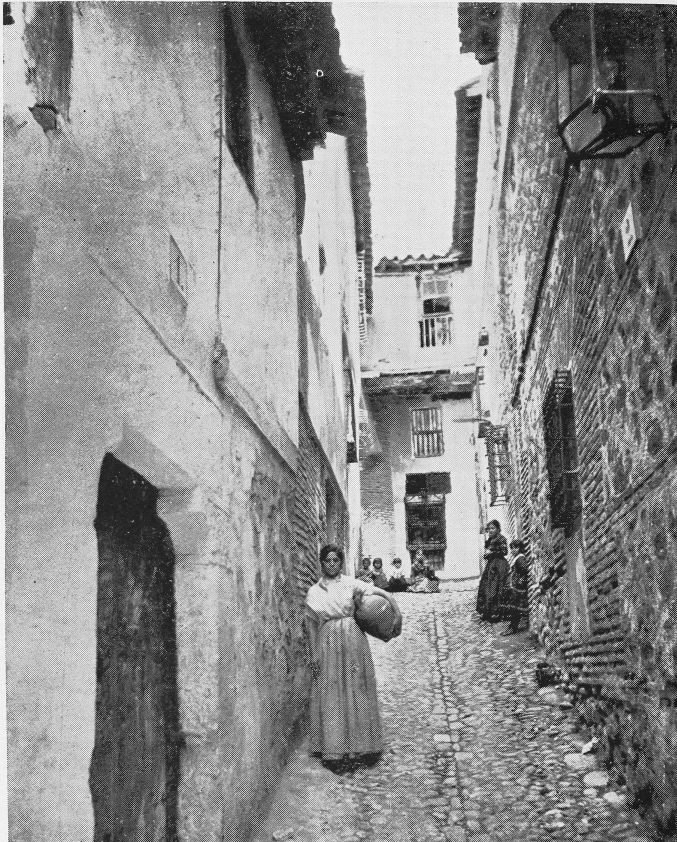
A STREET IN TOLEDO
Plate 23
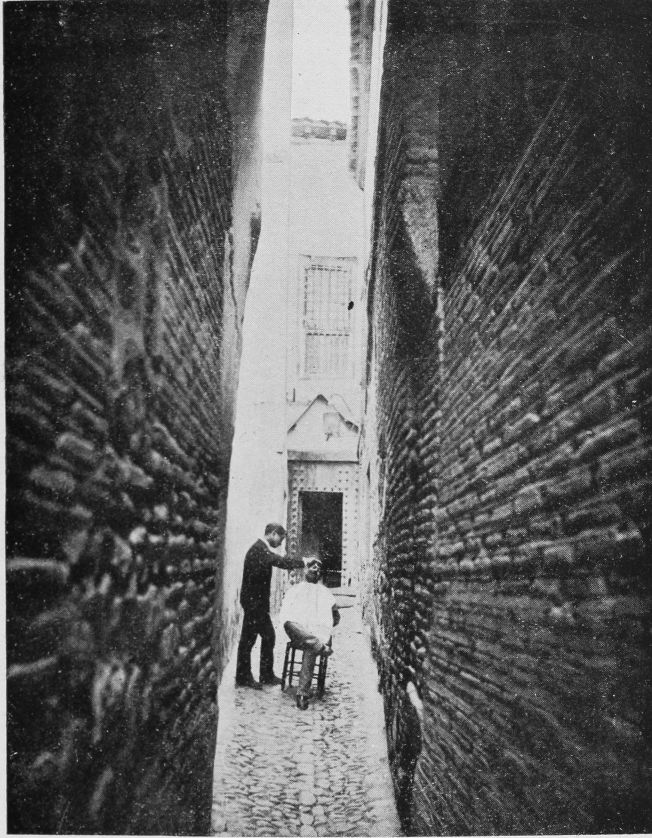
A STREET IN TOLEDO
Plate 24
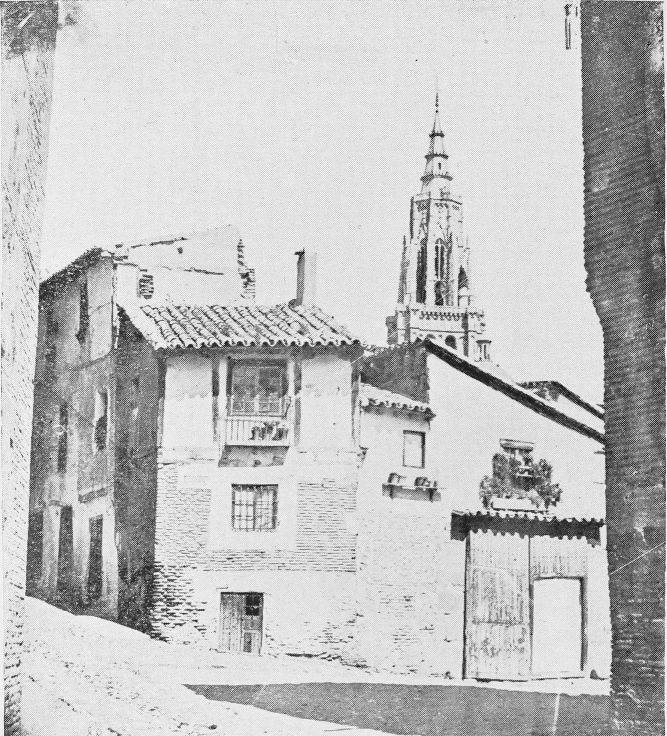
A STREET IN TOLEDO
Plate 25
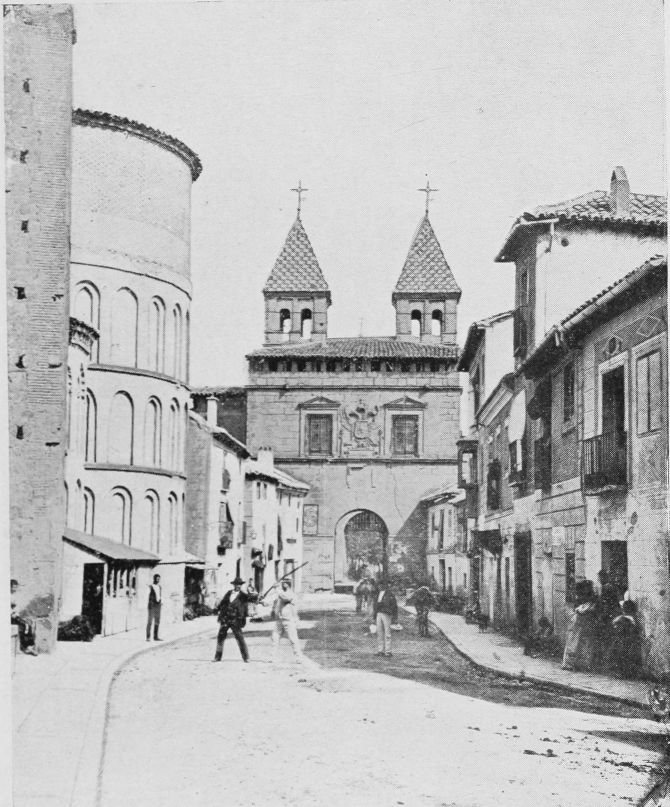
VISAGRA GATE
Plate 26
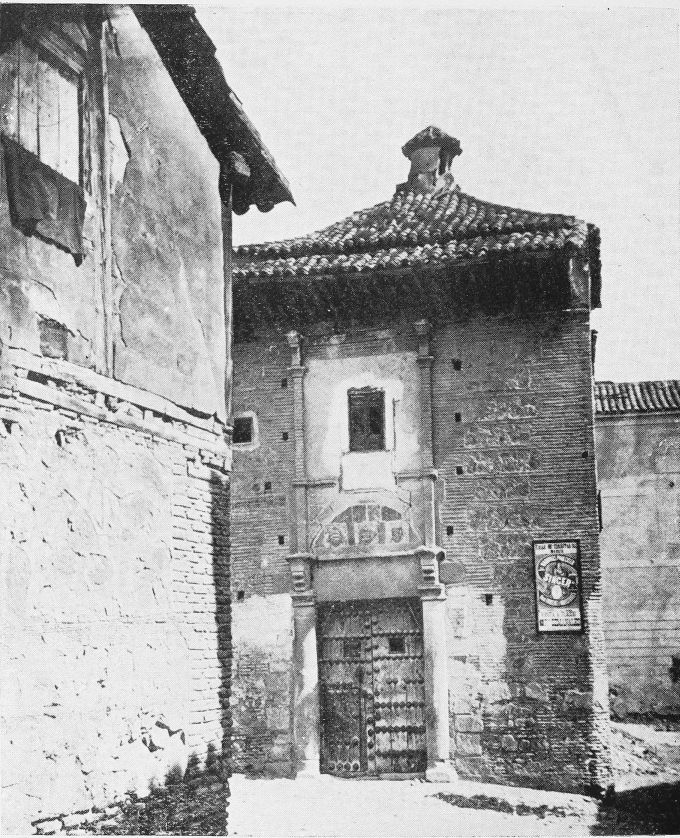
A STREET IN TOLEDO
Plate 27
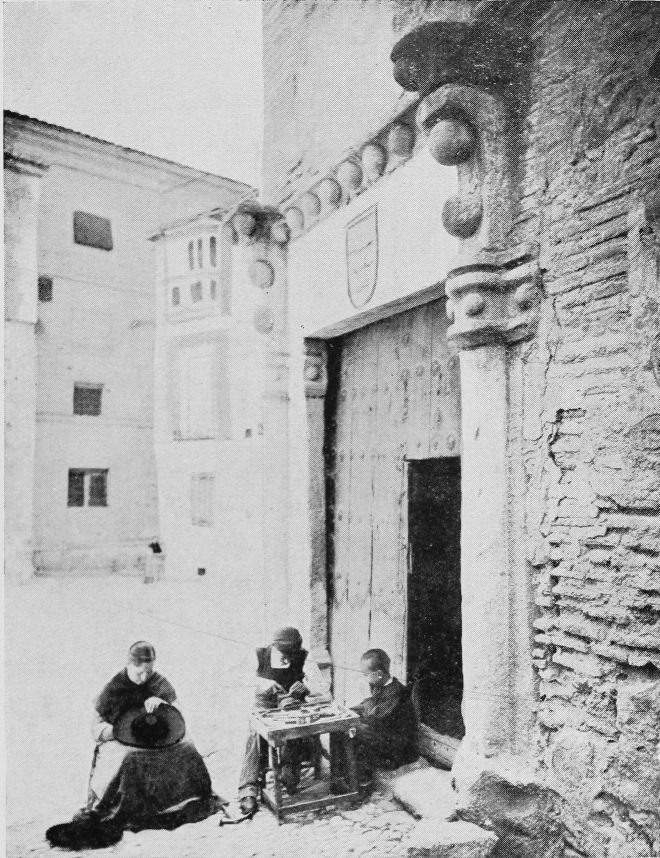
A STREET IN TOLEDO
Plate 28
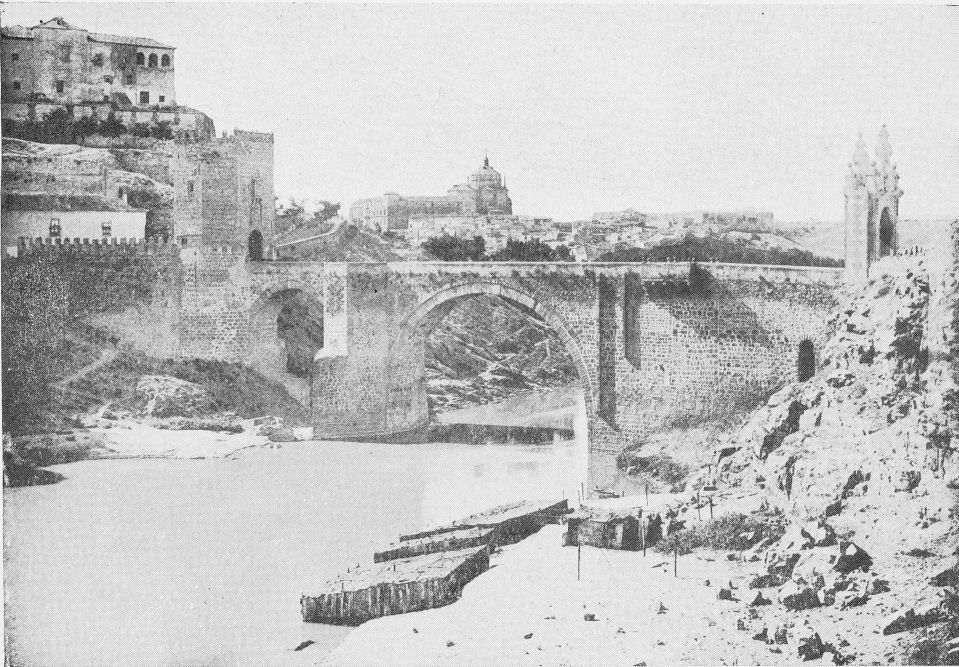
BRIDGE OF ALCANTARA
Plate 29
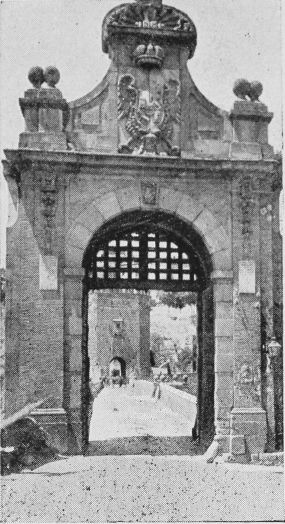
ALCANTARA GATE
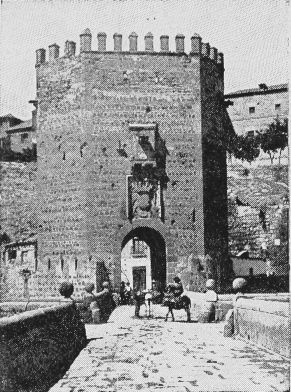
ALCANTARA PORTAL AND BRIDGE
Plate 30
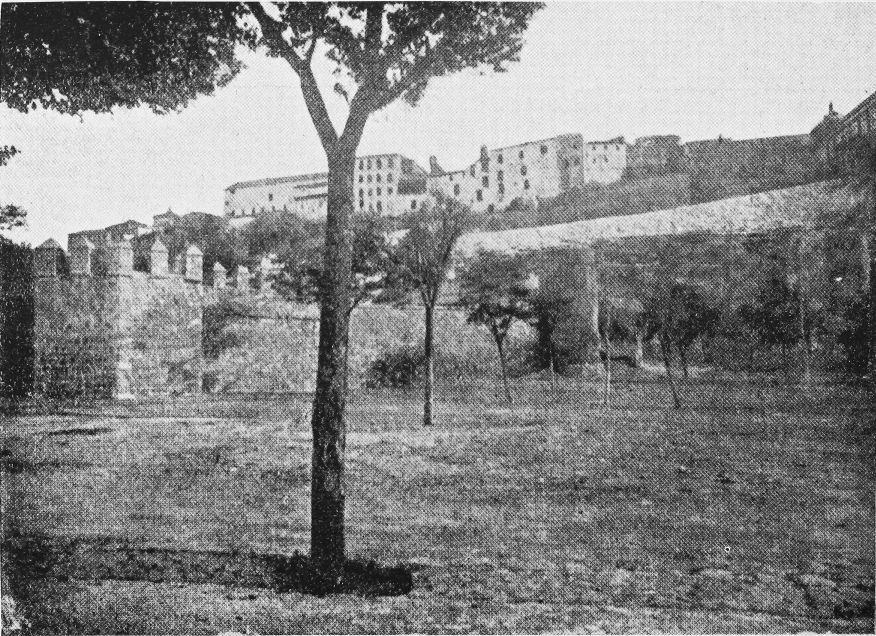
EXTERIOR OF THE NORTHERN CITY WALLS
Plate 31
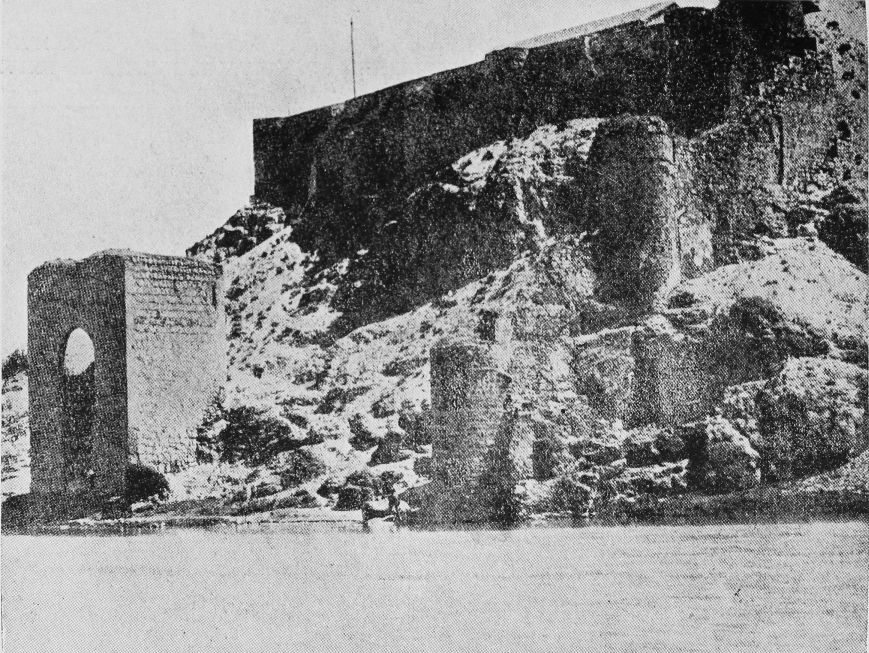
FORTIFICATIONS OF THE OLD BRIDGE OF BOATS, REPLACED BY THE BRIDGE OF ST.
MARTIN
Plate 32
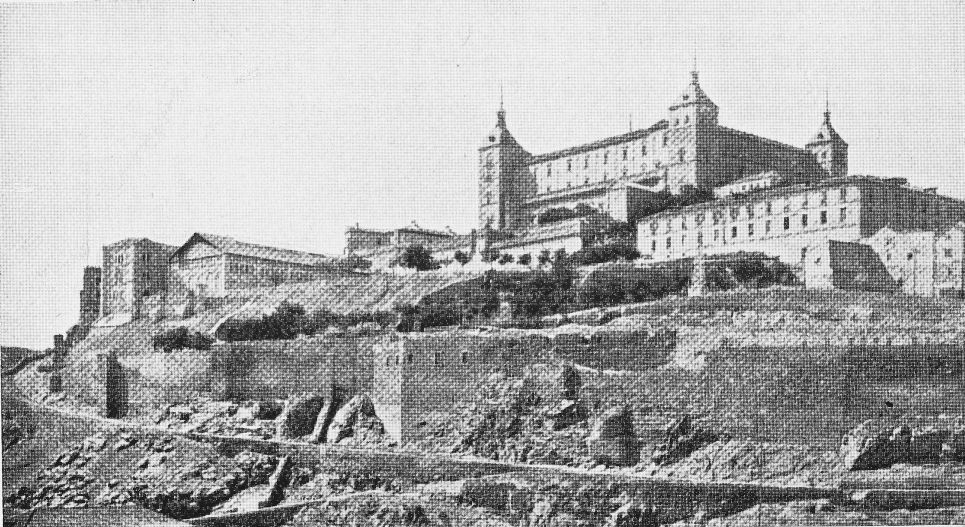
REMAINS OF THE CITY WALLS OF “AL-HIZÉM,” FROM THE GATE OF THE DOCE
CANTOS TO THE “PLAZA DE ARMAS” OF THE BRIDGE OF ALCANTARA
Plate 33
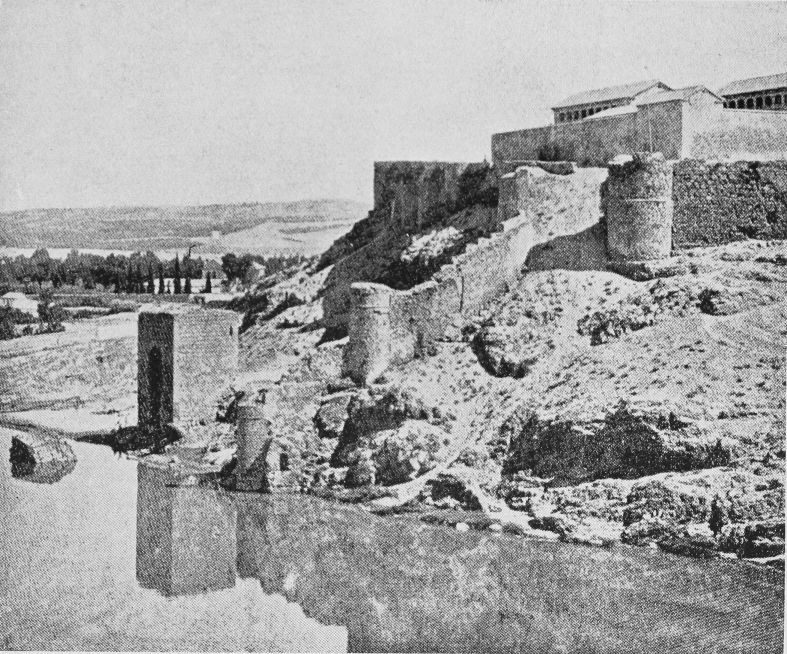
REMAINS OF THE CITY WALLS, SOUTH-WEST, REBUILT AT THE TIME OF THE
RECONQUEST
Plate 34
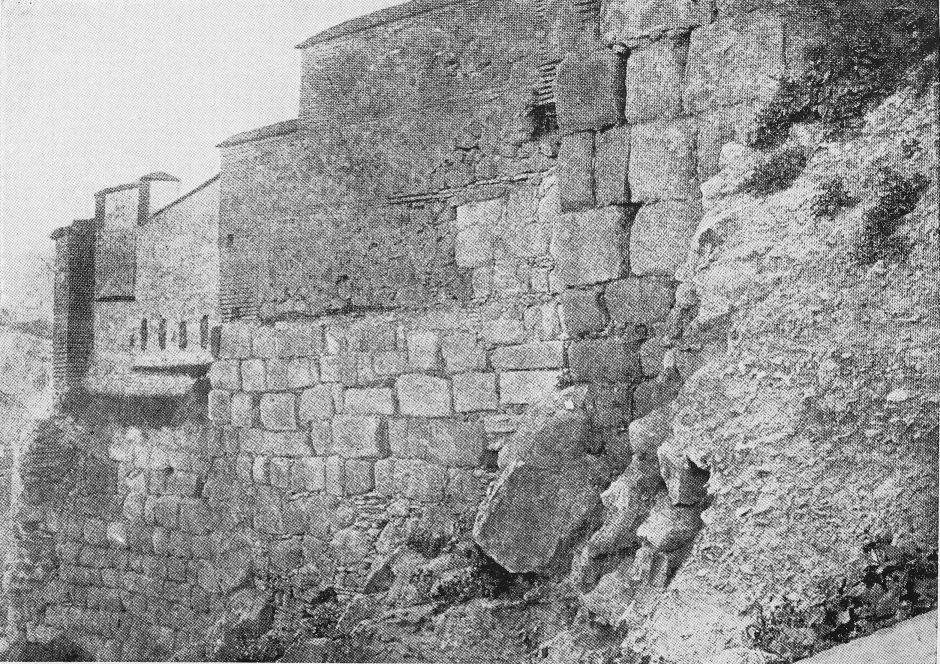
REMAINS OF THE ROMAN RAMPARTS OF THE FIRST ENCLOSURE OF THE CITY
Plate 35
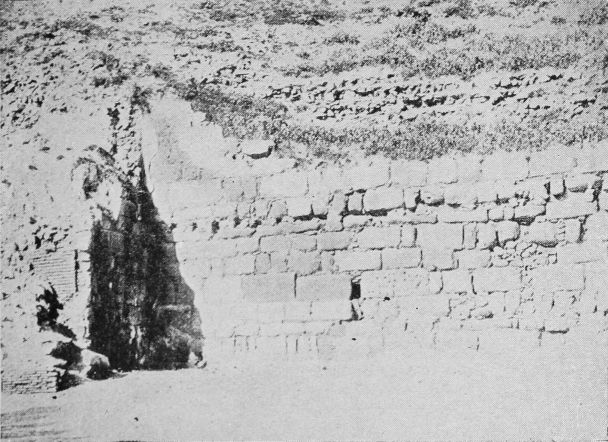
REMAINS OF THE ROMAN RAMPART OF THE FIRST ENCLOSURE OF THE CITY. (PLAZA
DE ARMAS DEL PUENTE DE ALCANTARA)
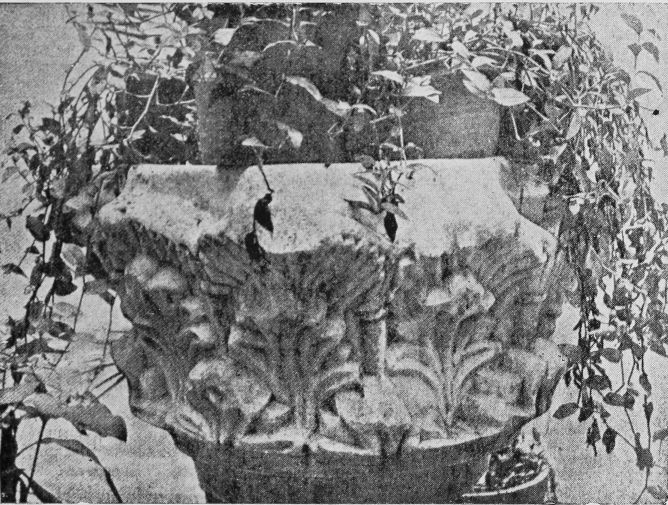
VISIGOTH CAPITAL TRANSFORMED INTO A FOUNTAIN BASIN. (No. 9 CALLEJON DE
LA LAMPARILLA)
Plate 36
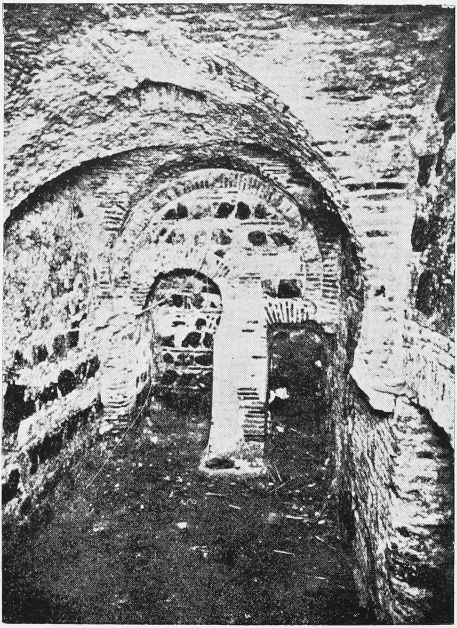
PRINCIPAL ENTRANCE TO THE HOUSE OF THE BATHS OF ABEN-YA-YIX BAJADA AL
COLEGIO DEL INFANTES
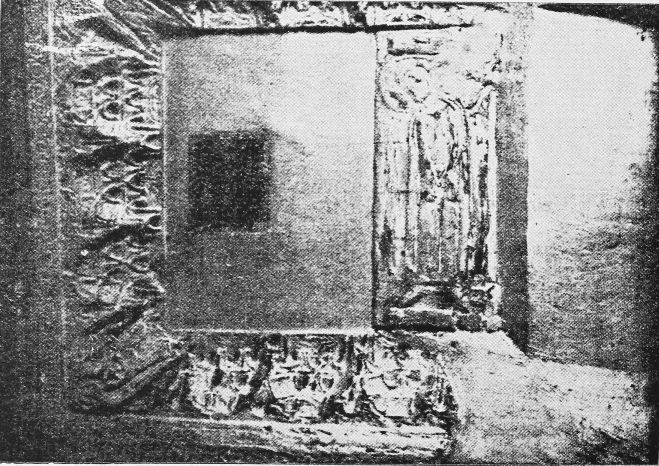
SEPULCHRAL ARCH OF THE INFANTE DON FERNANDO PEREZ IN THE BELEN CHAPEL IN
THE CONVENT OF THE COMENDADORA DE SANTIAGO
Plate 37
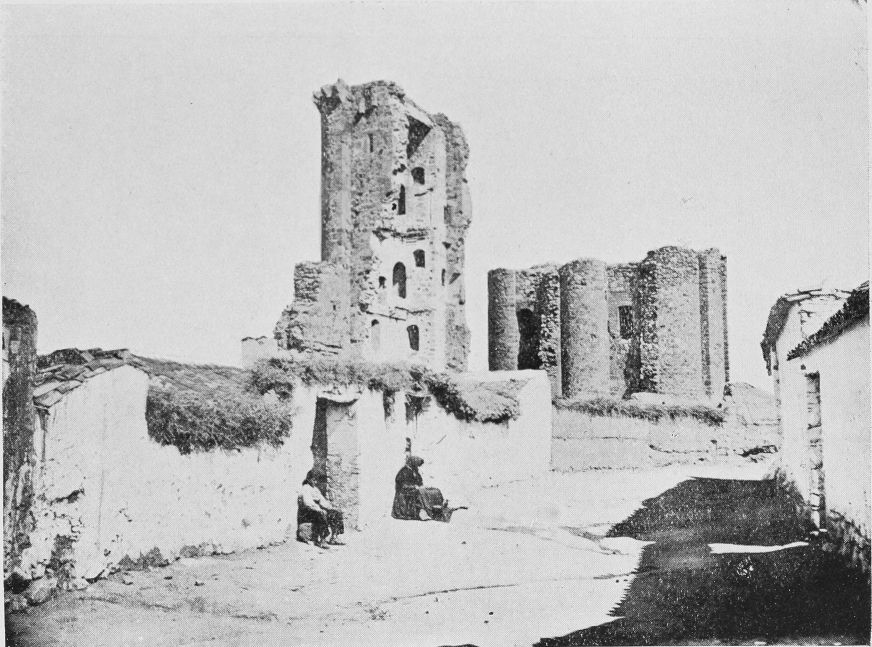
RUINS OF POLAN CASTLE. FOURTEENTH CENTURY
Plate 38
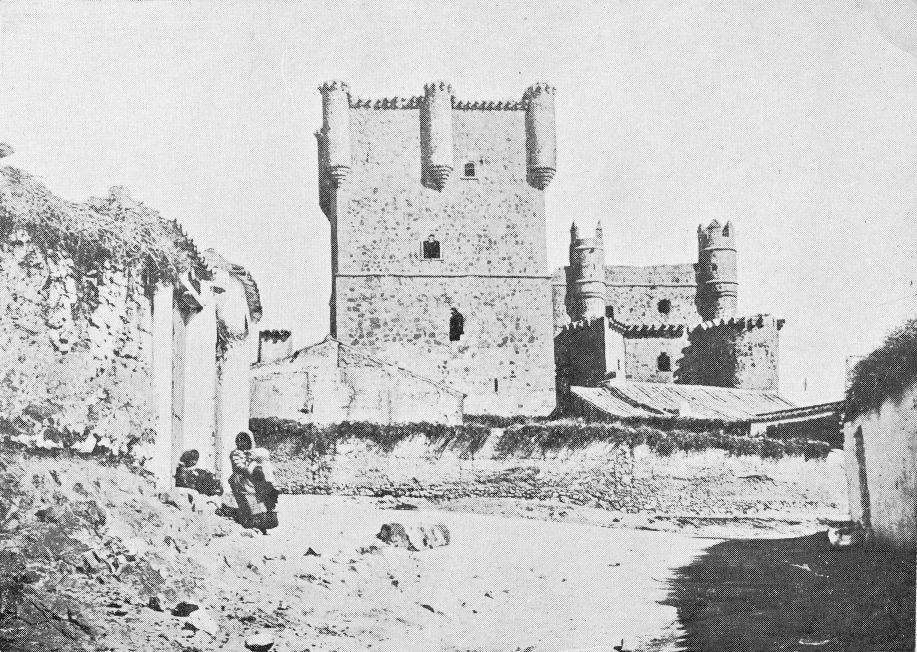
GUADAMAR CASTLE
Plate 39
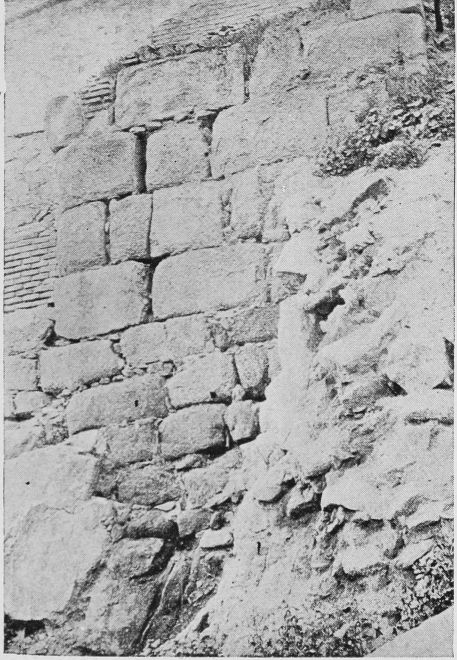
REMAINS OF THE ROMAN RAMPARTS OF THE FIRST ENCLOSURE OF THE CITY
Plate 40
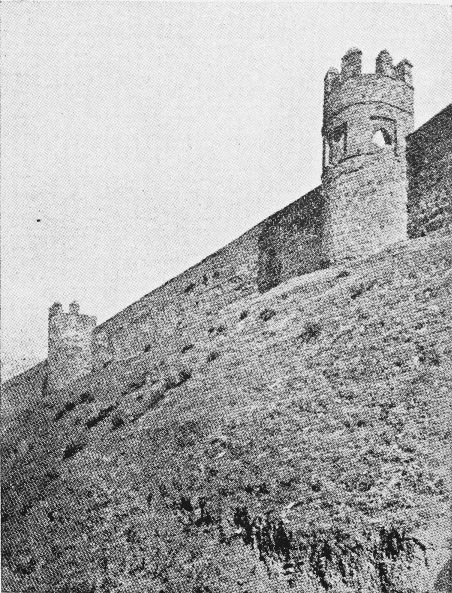
THE EXTERIOR WALLS
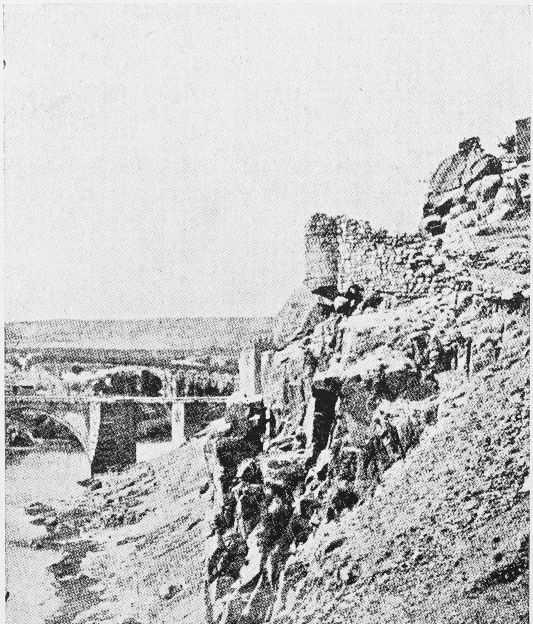
REMAINS OF THE FORTIFICATIONS IN THE JEWISH SUBURB
Plate 41
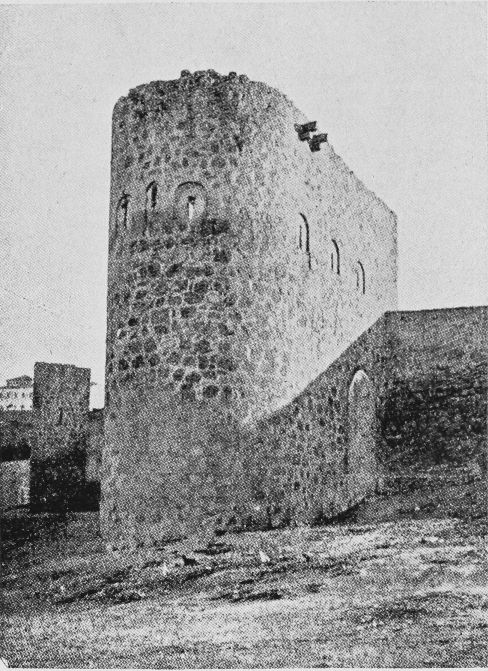
GATE OF THE “ALMOFALA” (BIB-AL-MOJADHA) REBUILT IN THE FOURTEENTH
CENTURY
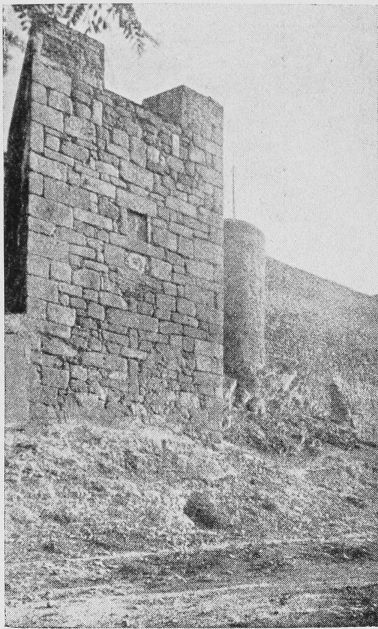
“THE ABBOT’S TOWER” IN THE NORTHERN WALLS
Plate 42
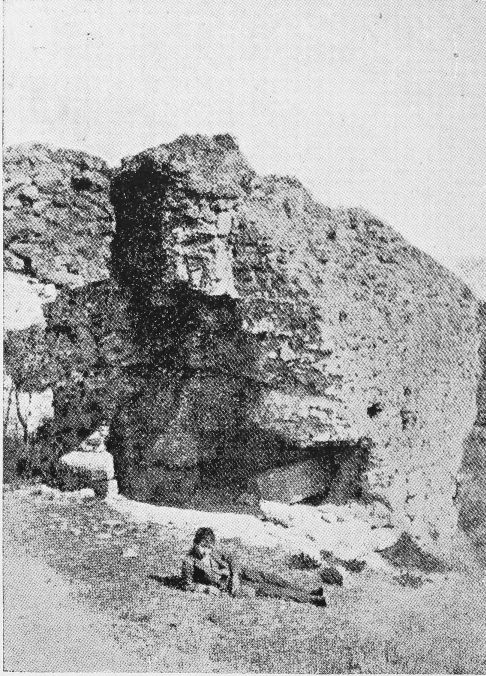
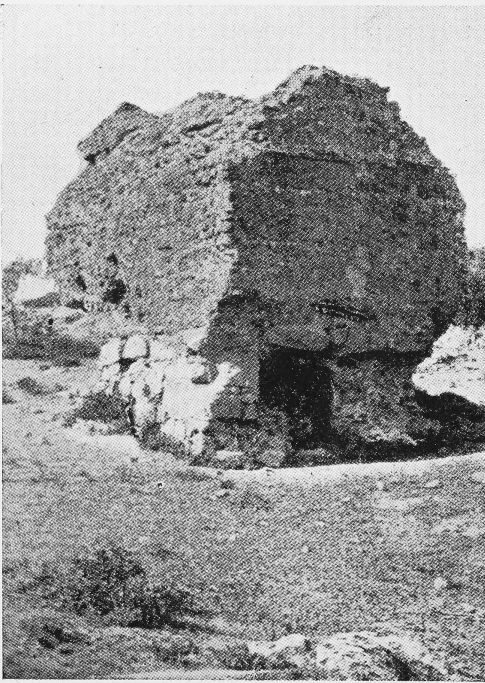
RUINS OF THE AQUARIA TOWER, COMMONLY CALLED “HORNO DEL VIDRIO”
Plate 43
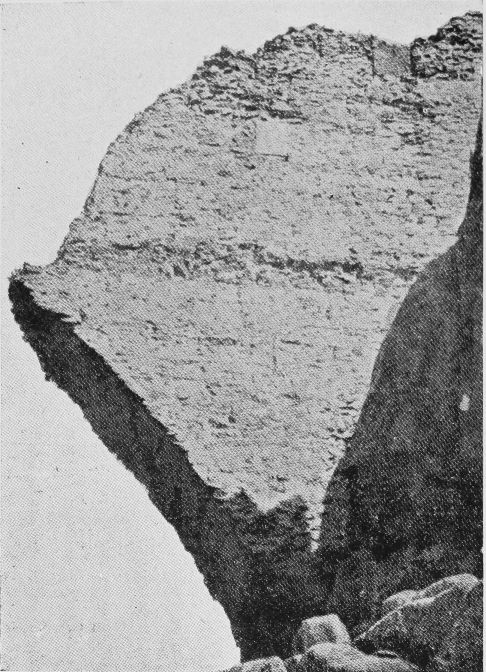
REMAINS OF THE AQUEDUCT (LEFT BANK OF THE RIVER)
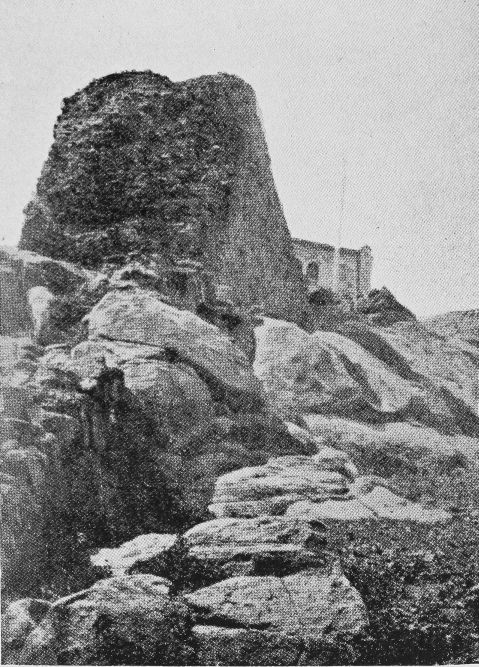
REMAINS OF THE AQUEDUCT (RIGHT BANK OF THE RIVER)
Plate 44
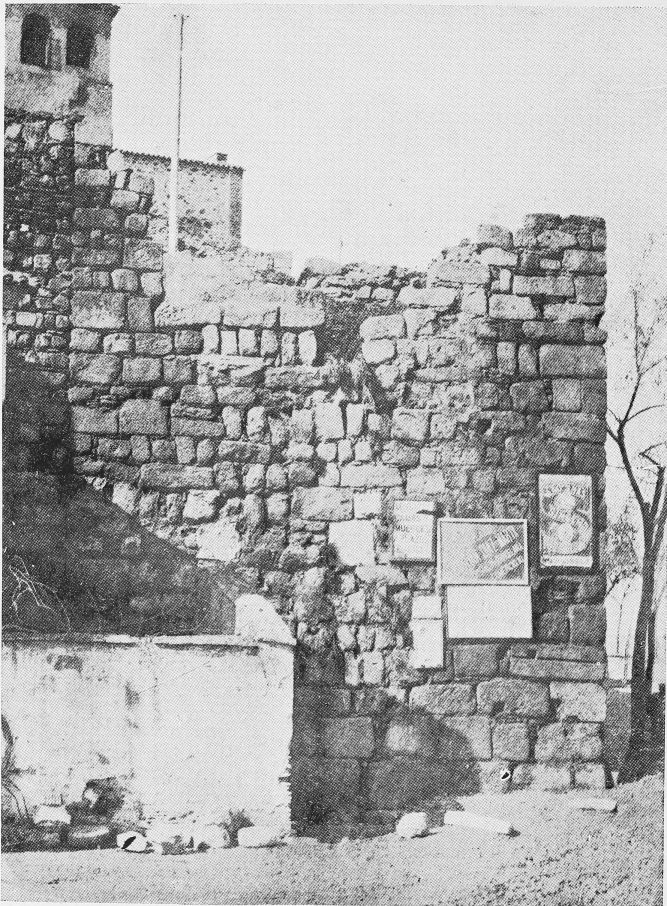
REMAINS OF THE ROMAN CONSTRUCTION IN THE TOWER OF THE PLAZA DE ARMAS OF
THE BRIDGE OF ALCANTARA
Plate 45
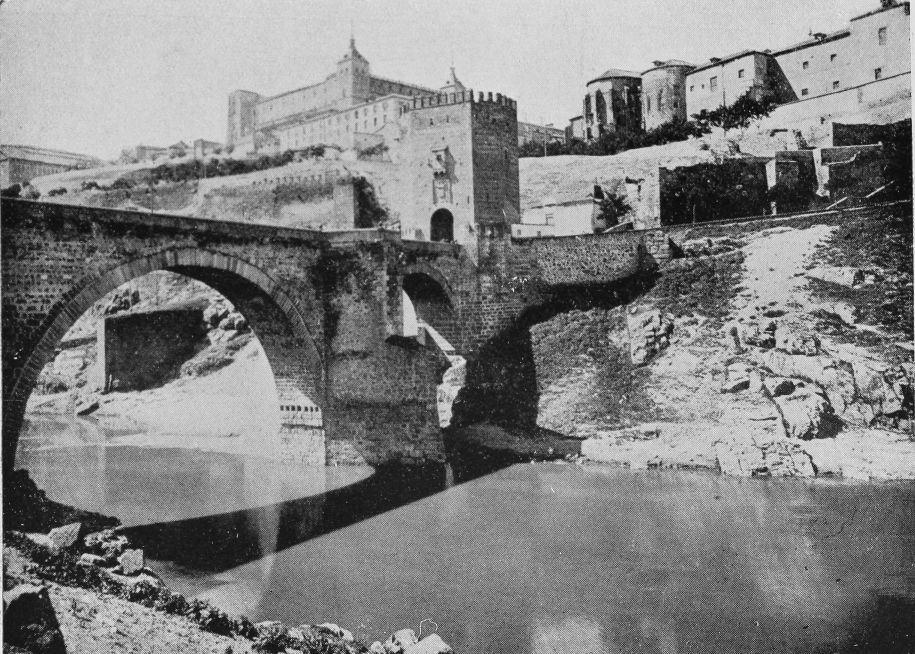
BRIDGE OF ALCANTARA
Plate 46
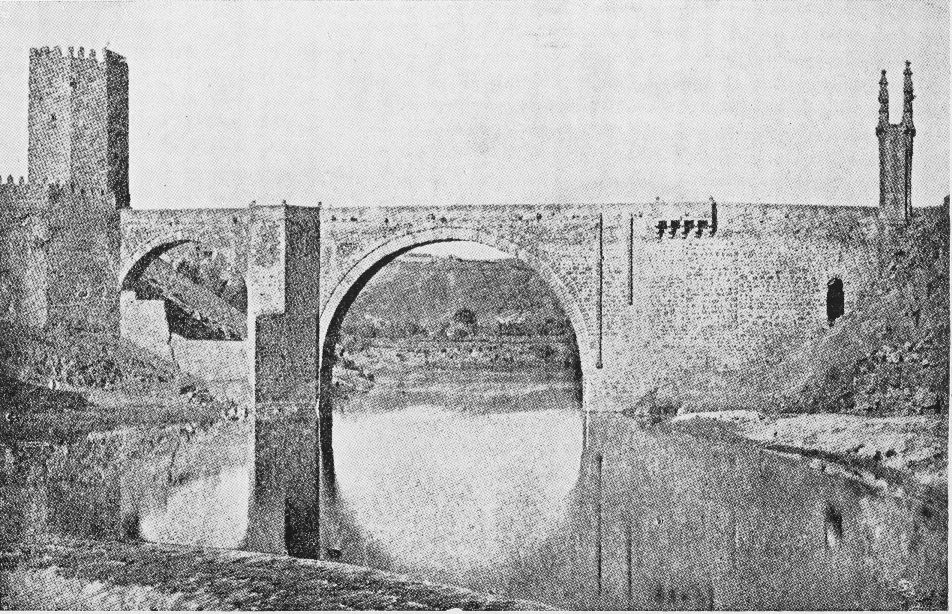
EAST SIDE OF THE BRIDGE OF ALCANTARA
Plate 47
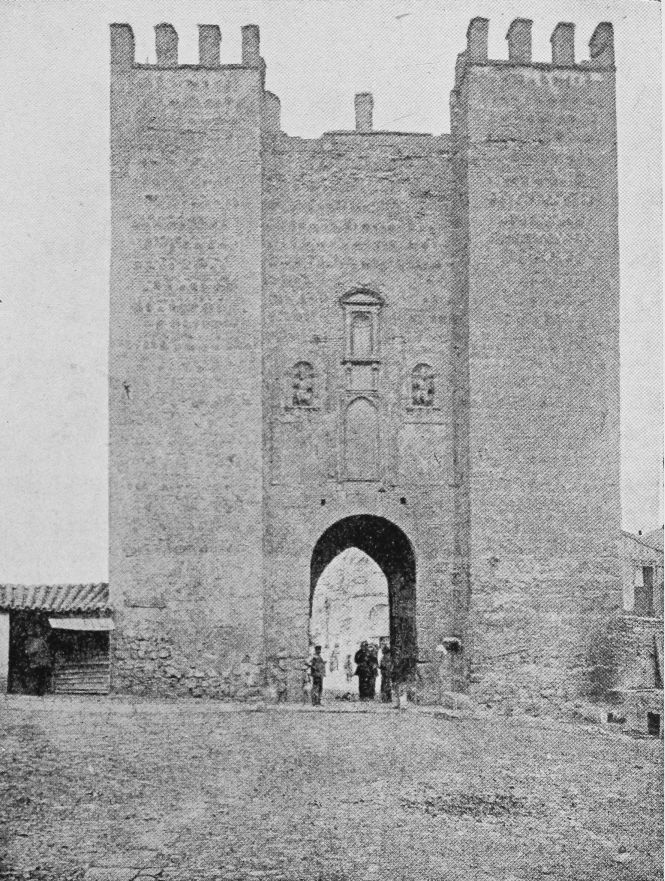
POSTERIOR FAÇADE OF THE DEFENSIVE TOWER OF THE BRIDGE OF ALCANTARA
Plate 48
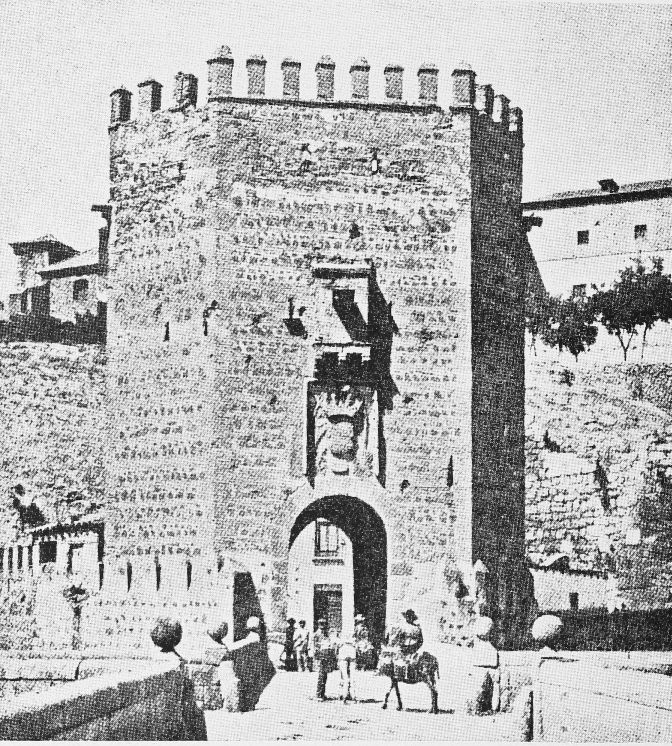
DEFENSIVE TOWER OF THE BRIDGE OF ALCANTARA. ANTERIOR FAÇADE
Plate 49
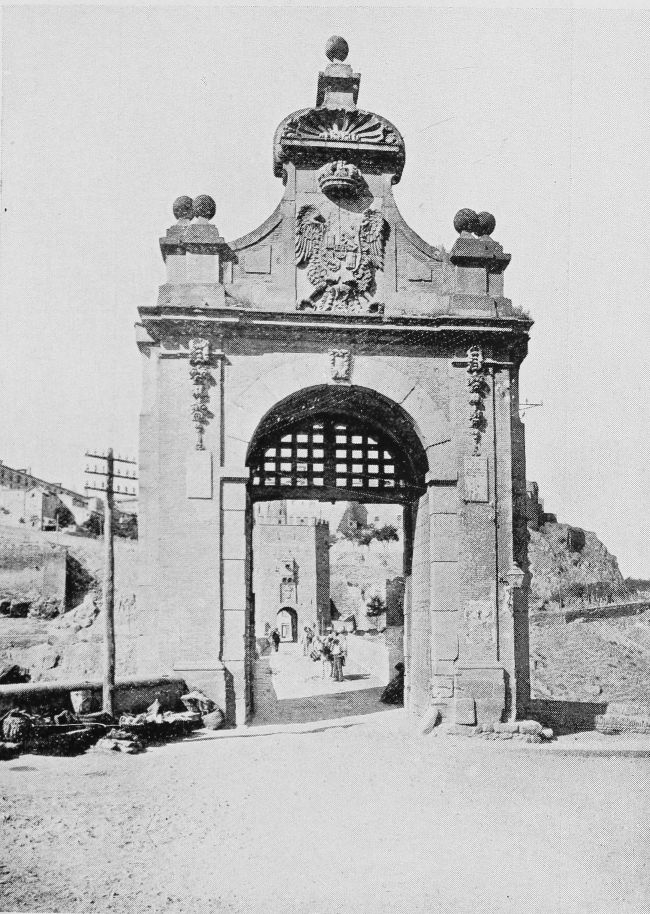
ALCANTARA GATE
Plate 50
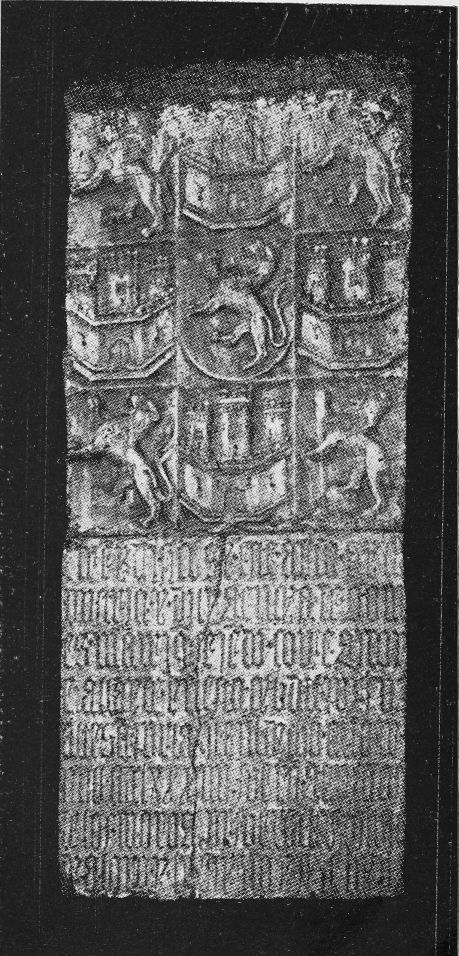
COMMEMORATIVE INSCRIPTION IN THE AVENUE OF THE DEFENSIVE TOWER OF THE
BRIDGE OF ALCANTARA
Plate 51
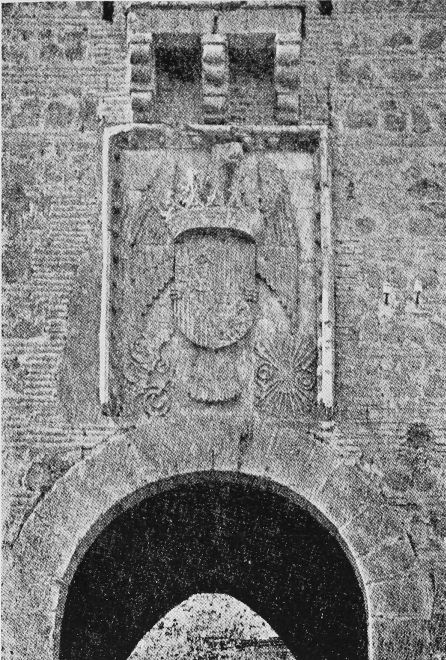
COAT OF ARMS OF THE CATHOLIC SOVEREIGNS IN FRONT OF THE DEFENSIVE TOWER
OF THE BRIDGE OF ALCANTARA
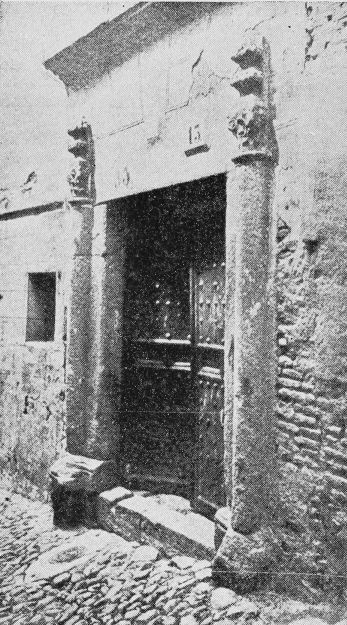
“THE KHALIF’S CAPITALS” AT No. 13 CALLE DEL COLISEO
Plate 52
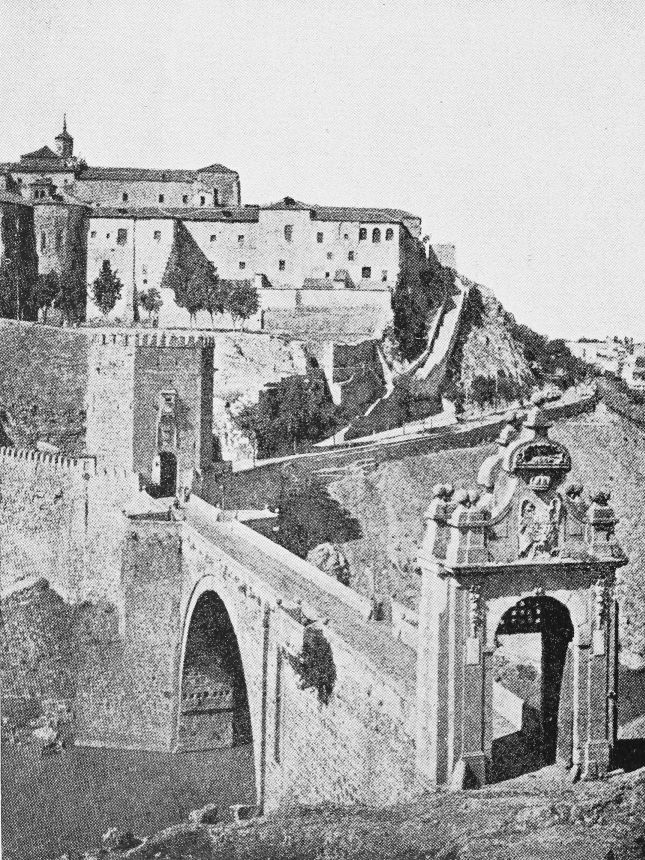
PERSPECTIVE OF THE BRIDGE OF ALCANTARA
Plate 53
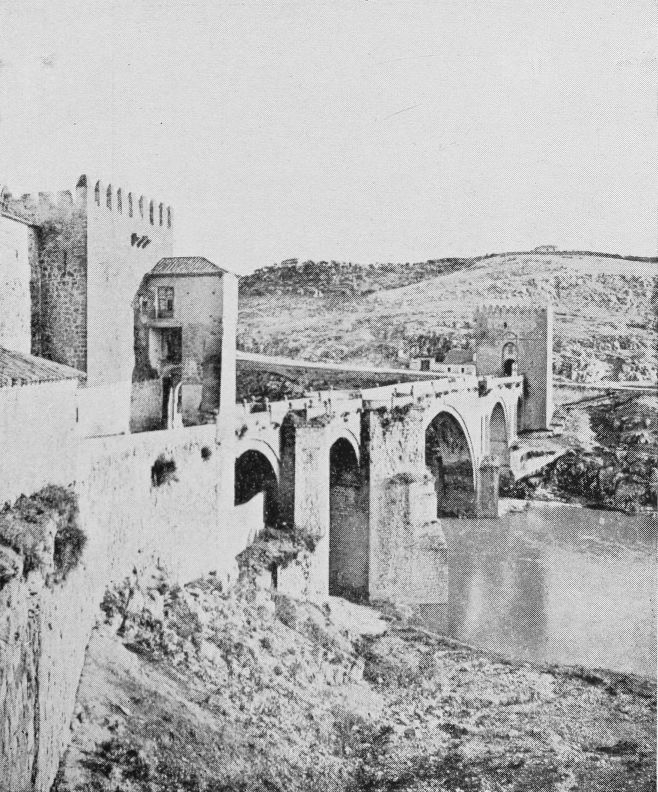
ST. MARTIN’S BRIDGE
Plate 54
ST. MARTIN’S BRIDGE
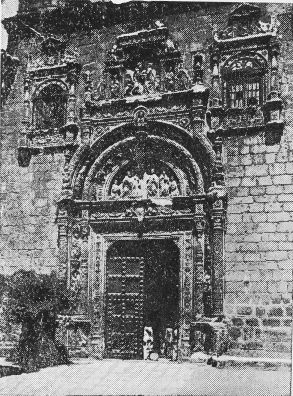
FAÇADE OF SANTA CRUZ
Plate 55
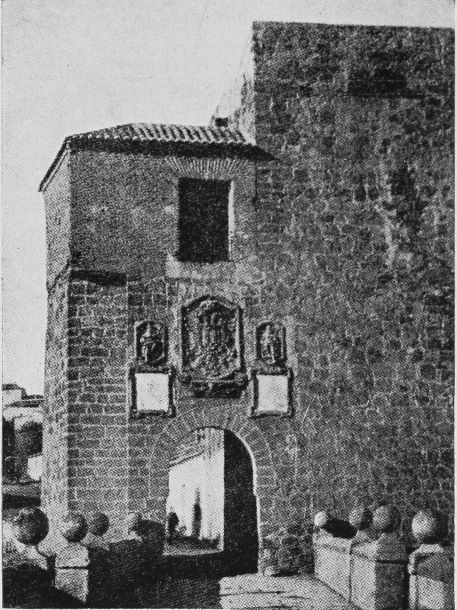
DEFENSIVE TOWERS AT THE ENTRANCE OF ST. MARTIN’S BRIDGE AND THE TOWN
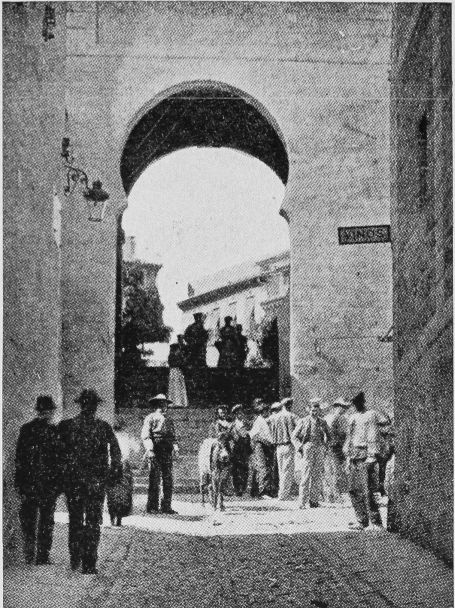
RESTORED POSTERIOR FAÇADE OF THE ARCH DE LA SANGRE
Plate 56
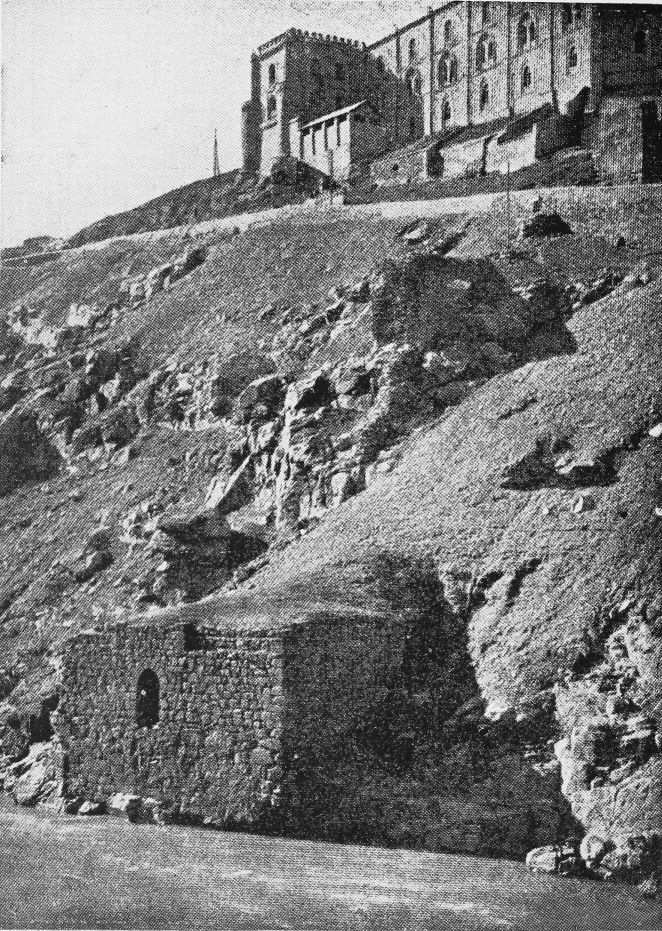
REMAINS OF THE AQUEDUCT (RIGHT BANK)
Plate 57
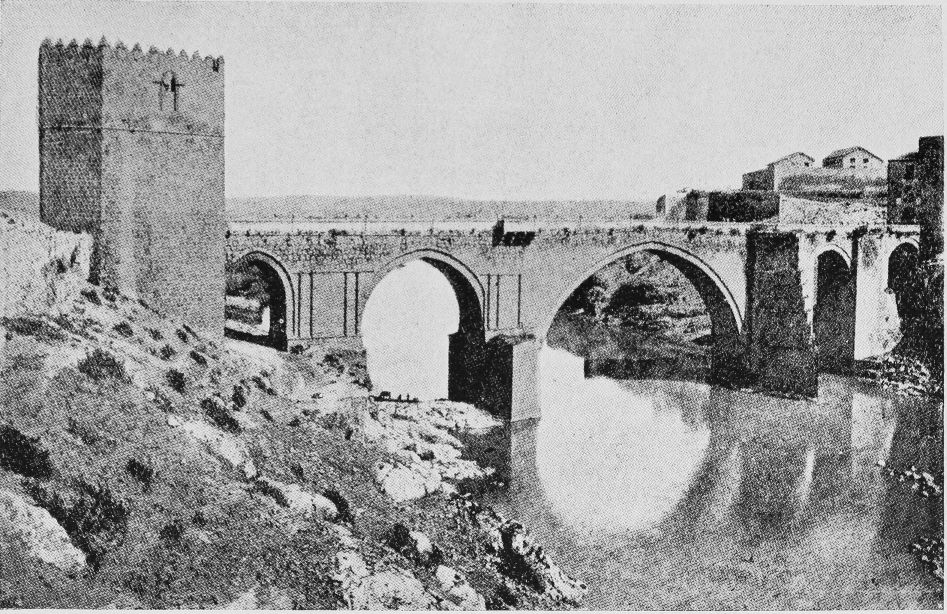
EAST SIDE OF ST. MARTIN’S BRIDGE
Plate 58
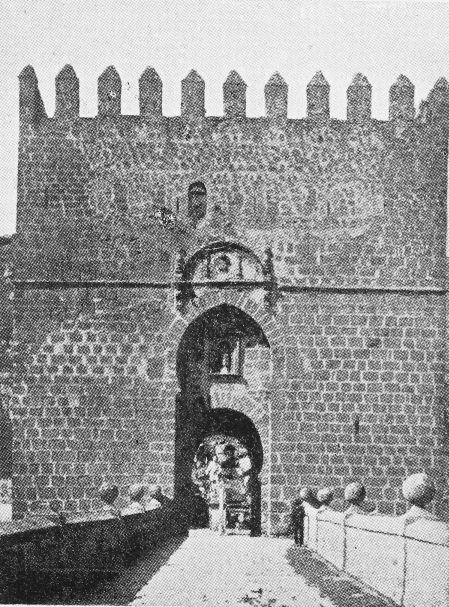
DEFENSIVE TOWER OF ST. MARTIN’S BRIDGE. FAÇADE SEEN FROM THE BRIDGE
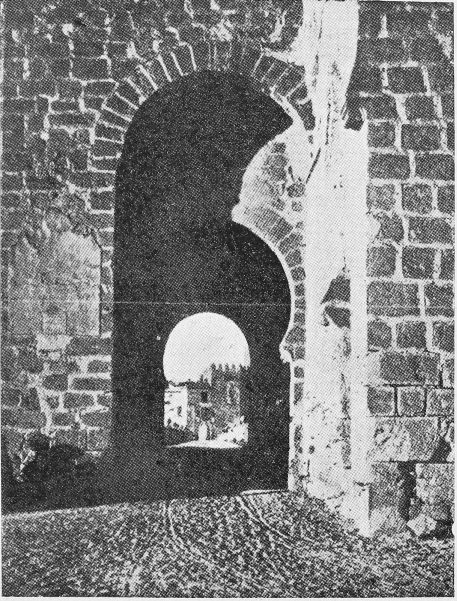
DEFENSIVE TOWER OF ST. MARTIN’S BRIDGE. FAÇADE SEEN FROM THE HIGHWAY
Plate 59
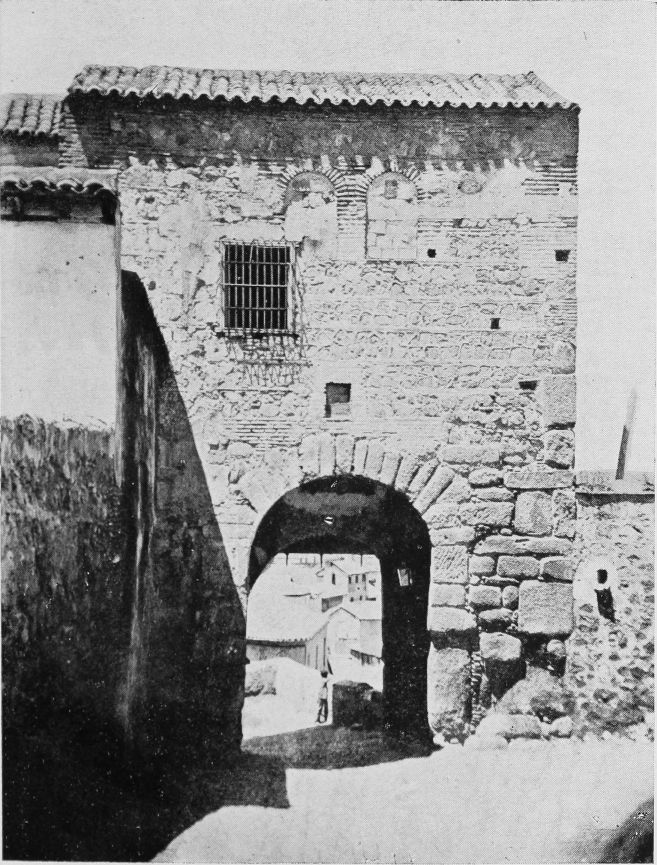
MALBARDÓN GATE. ELEVENTH CENTURY
Plate 60
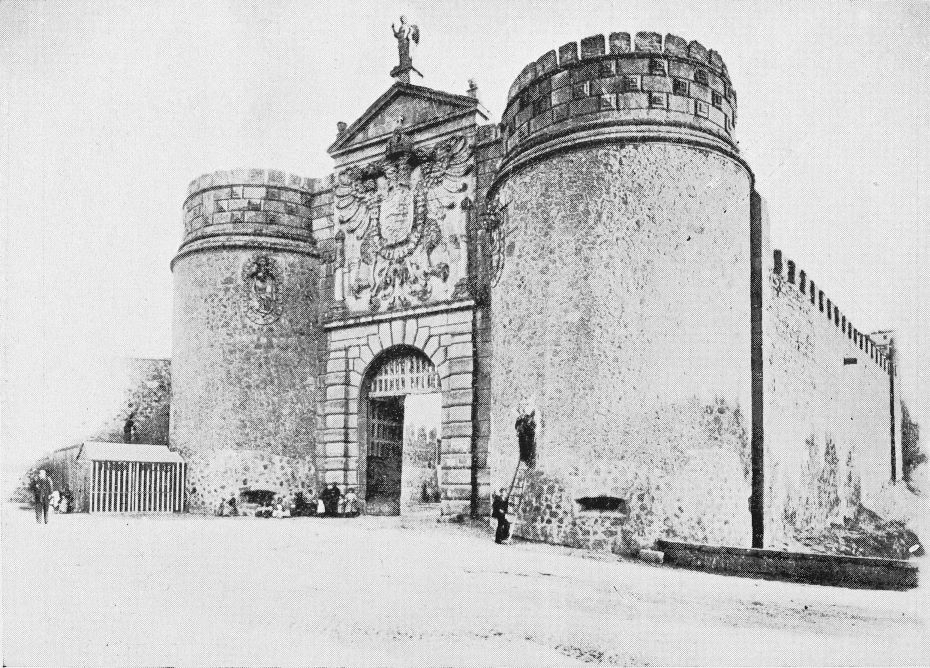
VISAGRA GATE
Plate 61
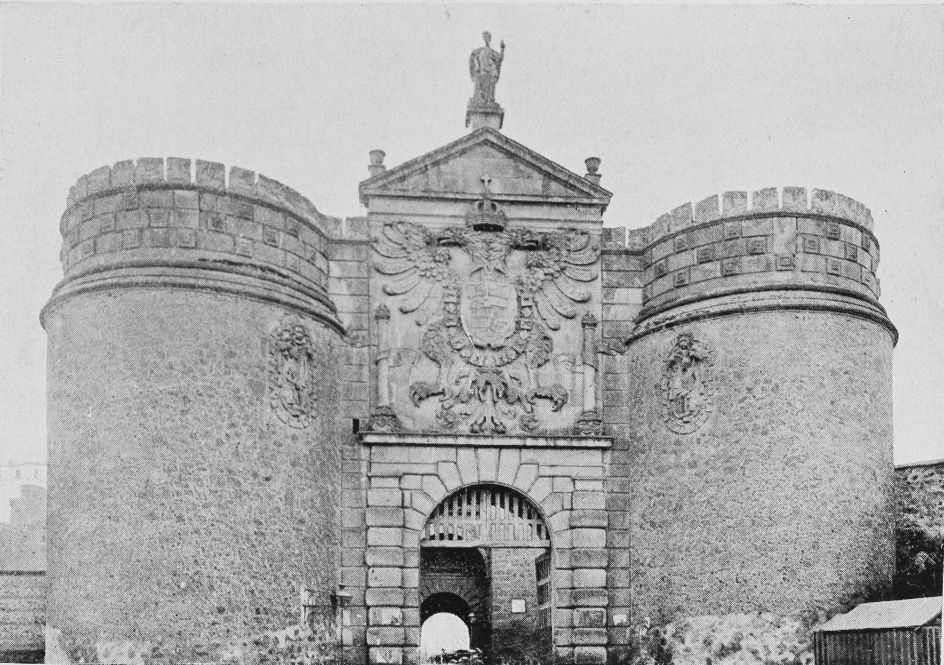
UPPER PART OF THE VISAGRA GATE. BUILT IN 1550
Plate 62
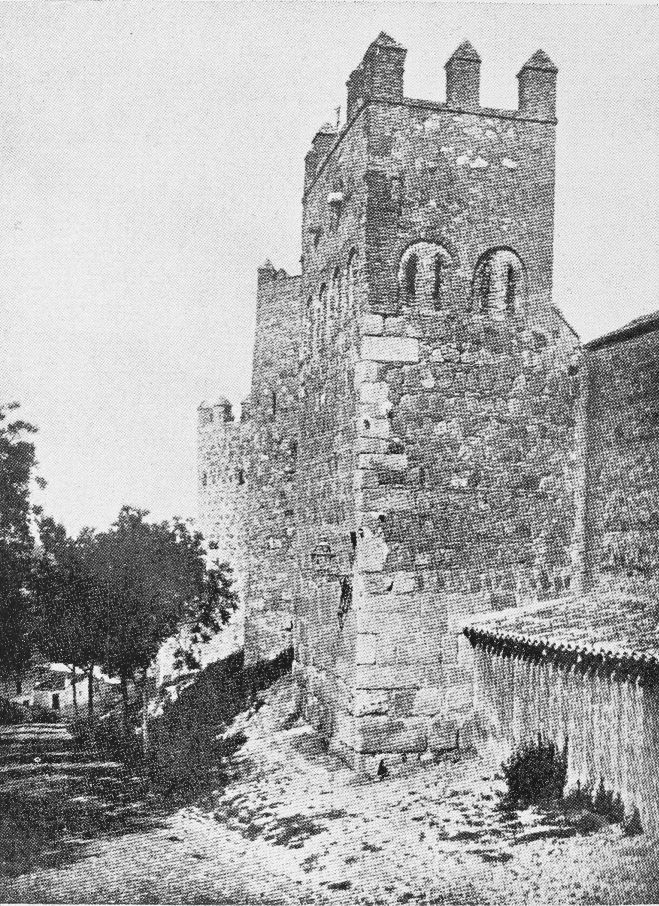
TOWER IN THE CITY WALLS OF “THE SUBURB OF SAN ISIDORO,” NEAR THE NEW
BRIDGE OF VISAGRA
Plate 63
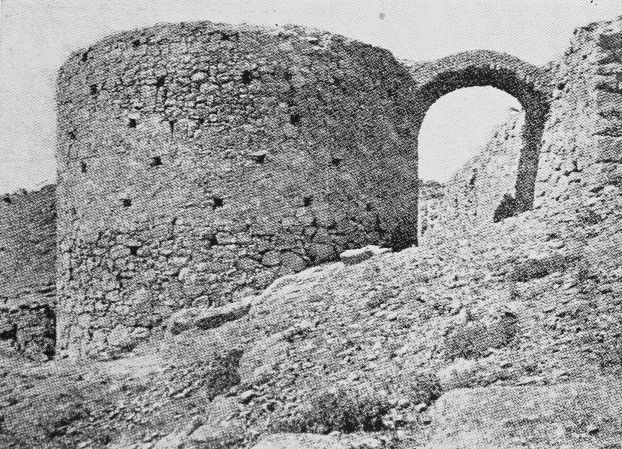
HYDRAULIC MACHINE AND REMAINS OF THE WALLS IN THE QUARTER OF THE
CURTIDORES, NEAR THE RIVER
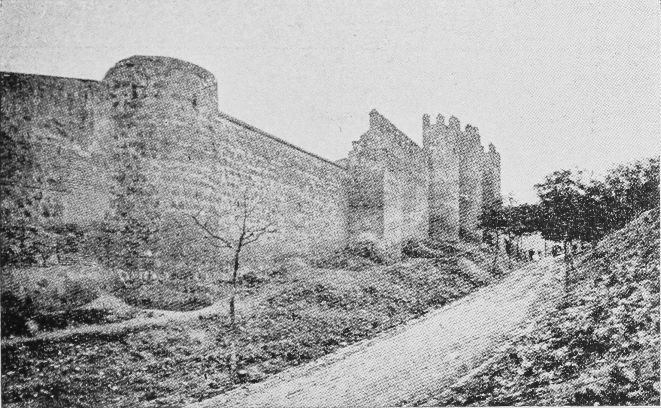
WALLS OF THE SUBURB OF SAN ISIDORO
Plate 64
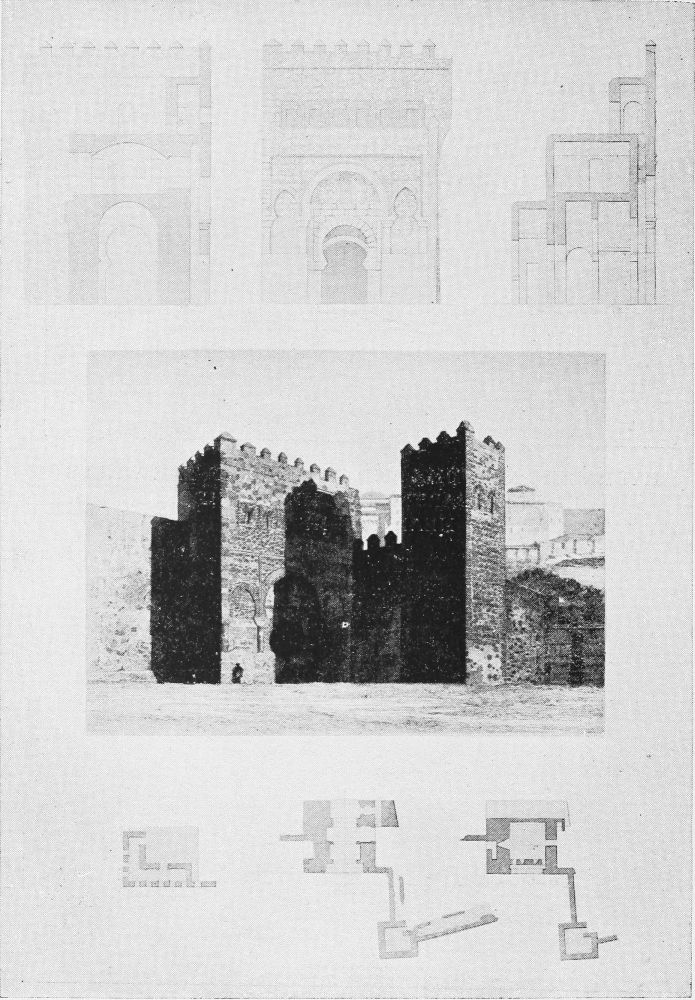
ANCIENT GATE OF VISAGRA
Plate 65
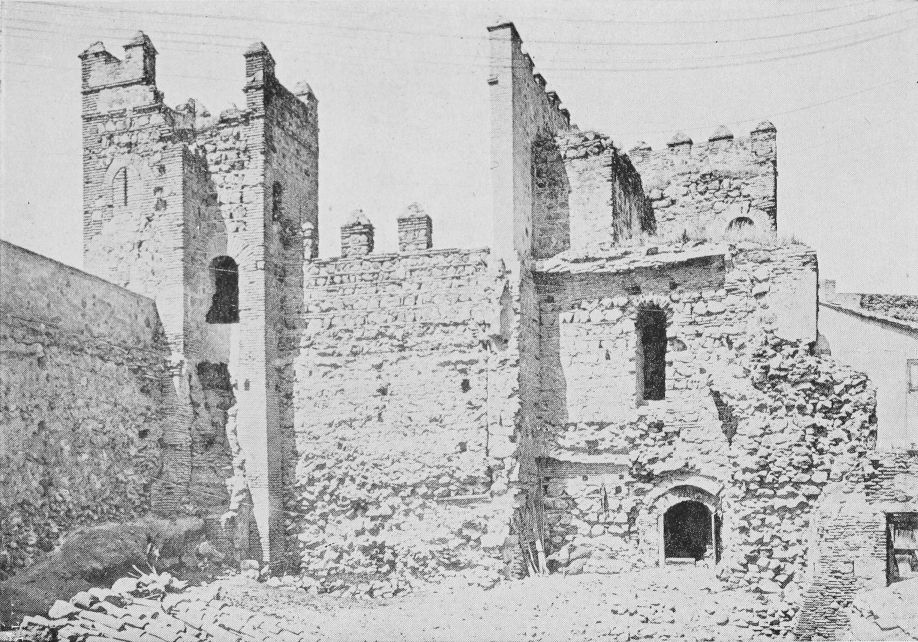
ANCIENT GATE OF VISAGRA. THE SIDE WHICH JOINS THE WALL AND THE SIDE
DEFENSIVE TOWER
Plate 66
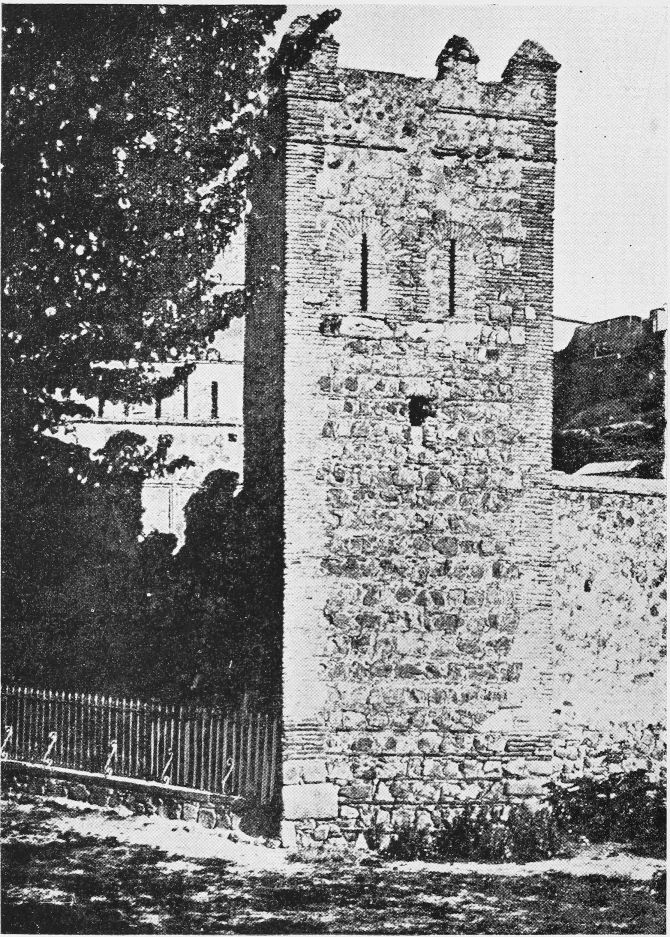
ANCIENT GATE OF VISAGRA. DEFENSIVE AND SIDE TOWER
Plate 67
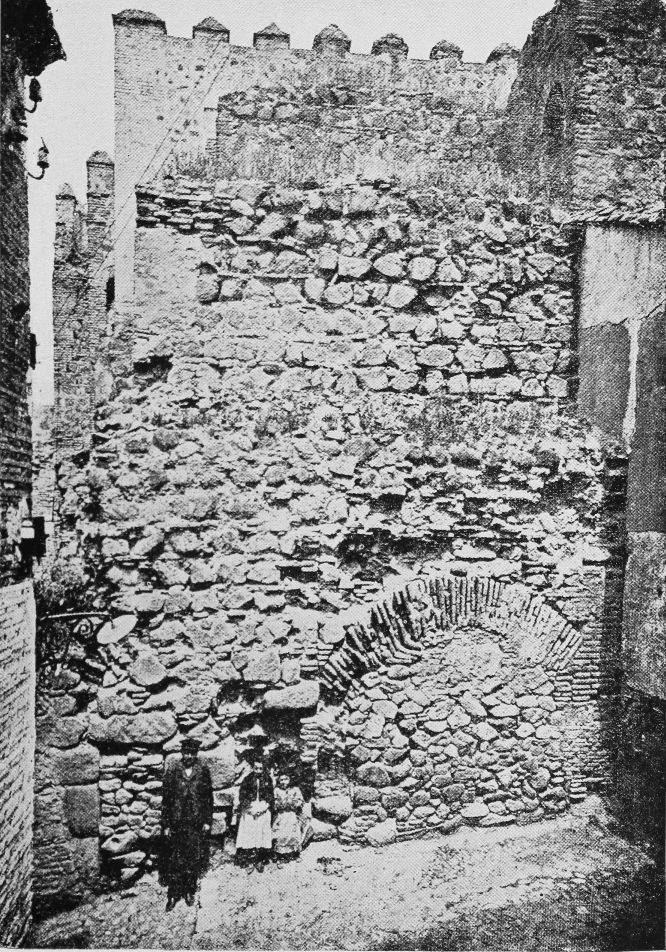
ANCIENT GATE OF VISAGRA. REMAINS OF THE EASTERN FAÇADE
Plate 68
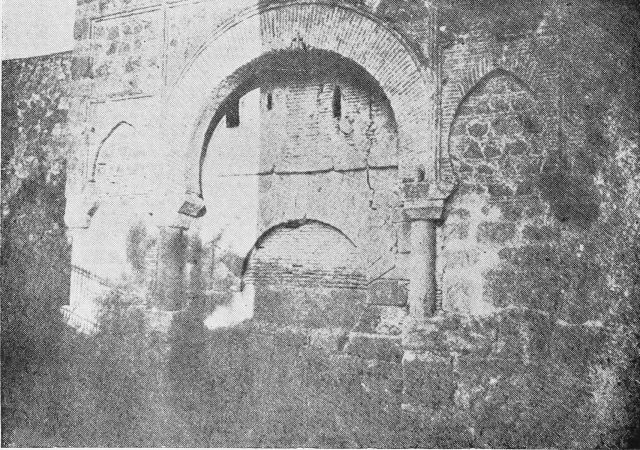
DETAIL OF THE PRINCIPAL FAÇADE OF THE OLD GATE OF VISAGRA
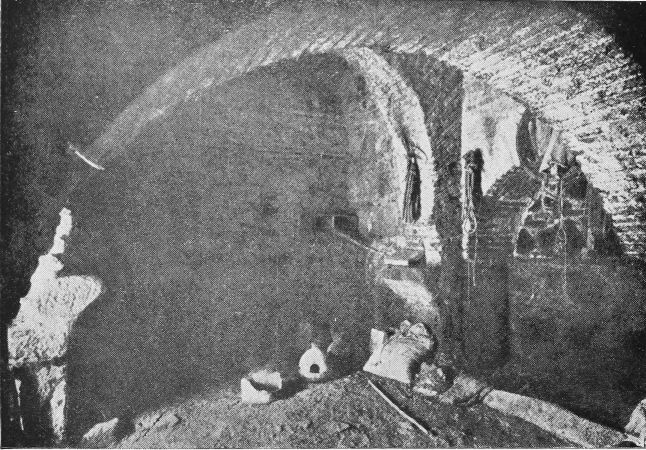
INTERIOR OF THE OLD GATE OF VISAGRA
Plate 69
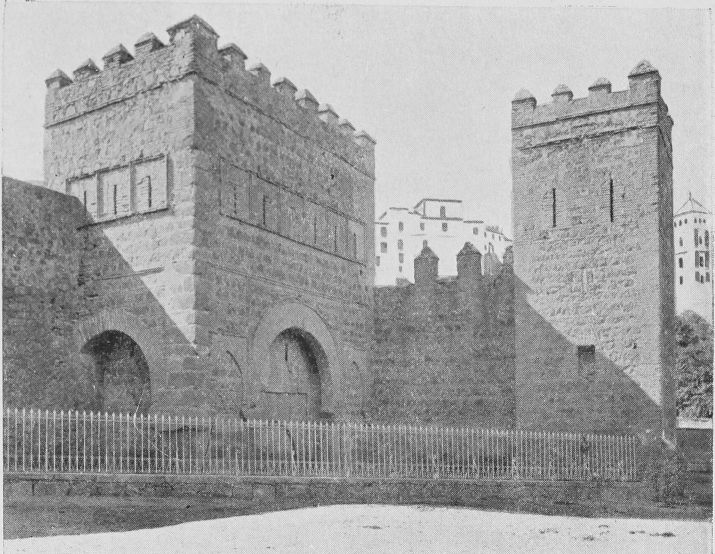
ANCIENT GATE OF VISAGRA
Plate 70
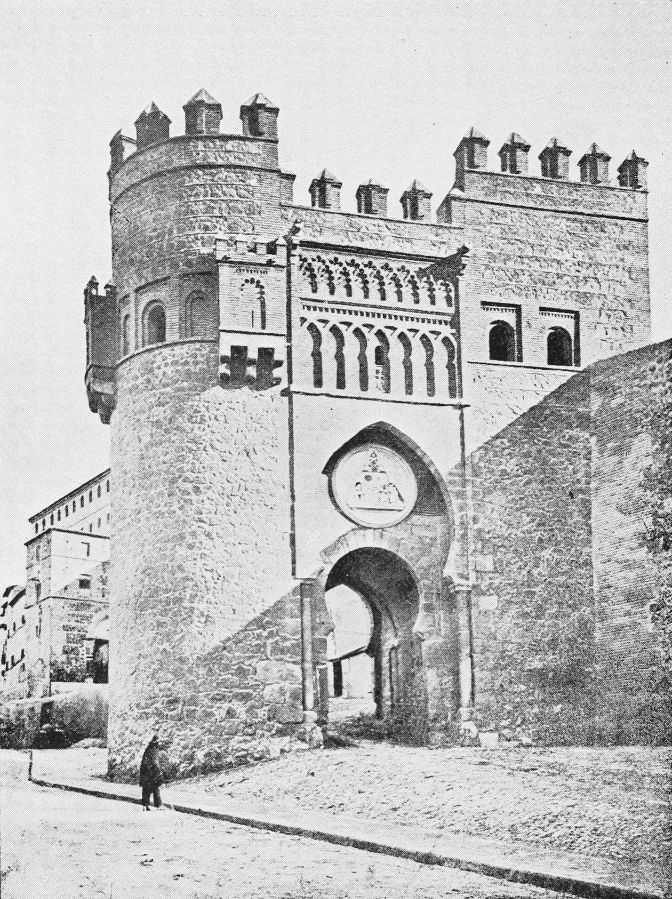
THE TOWER CALLED “PUERTA BAJA DE LA HERRERIA,” NOW “GATE OF THE SUN”
Plate 71
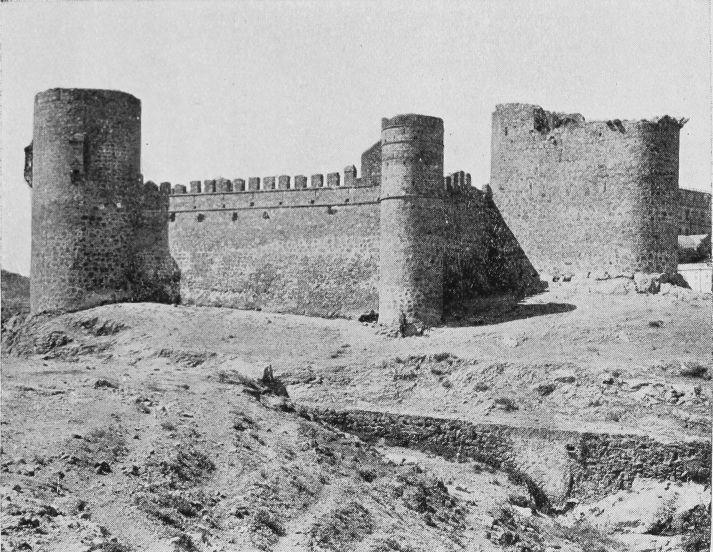
CASTLE OF SAN SERVANDO
Plate 72
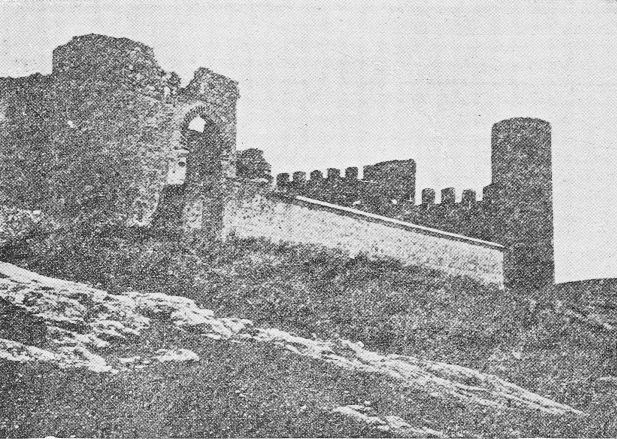
CASTLE OF SAN SERVANDO. ANCIENT ENTRANCE IN THE WEST FAÇADE
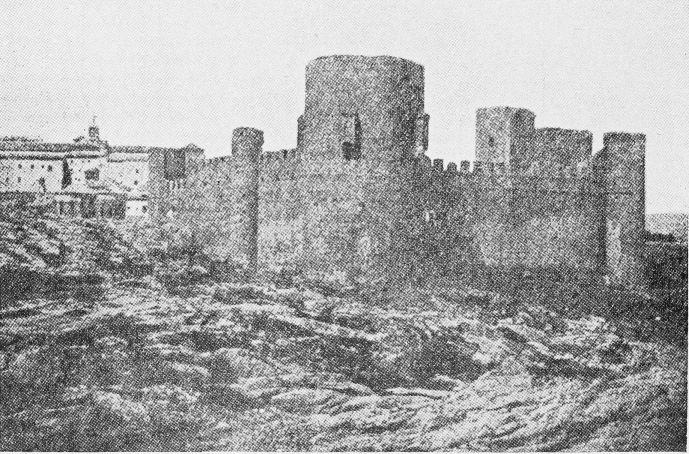
CASTLE OF SAN SERVANDO. SOUTH-EAST ANGLE
Plate 73
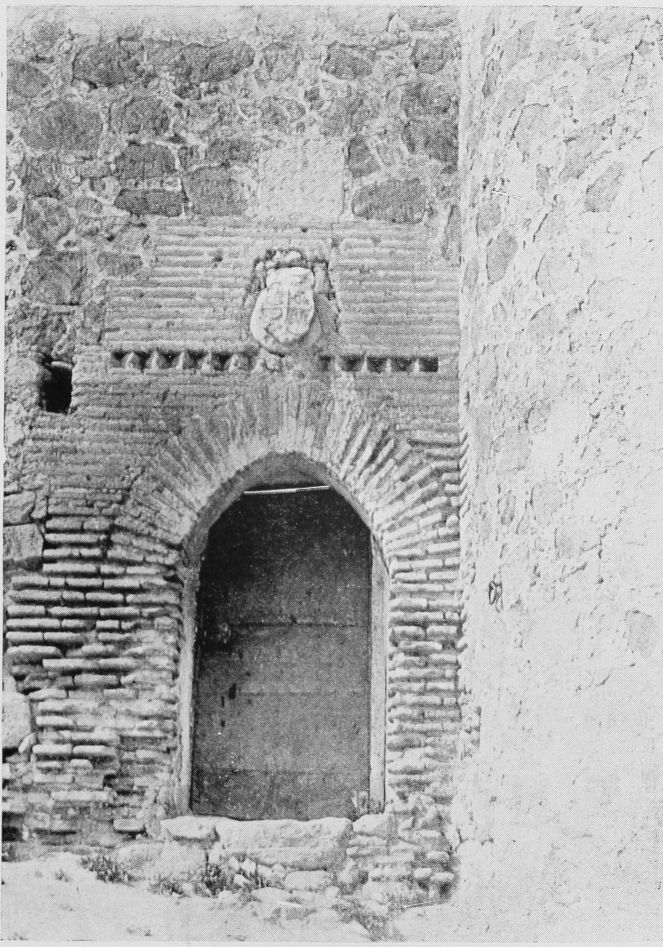
DOOR OF THE CASTLE IN SAN SERVANDO
Plate 74
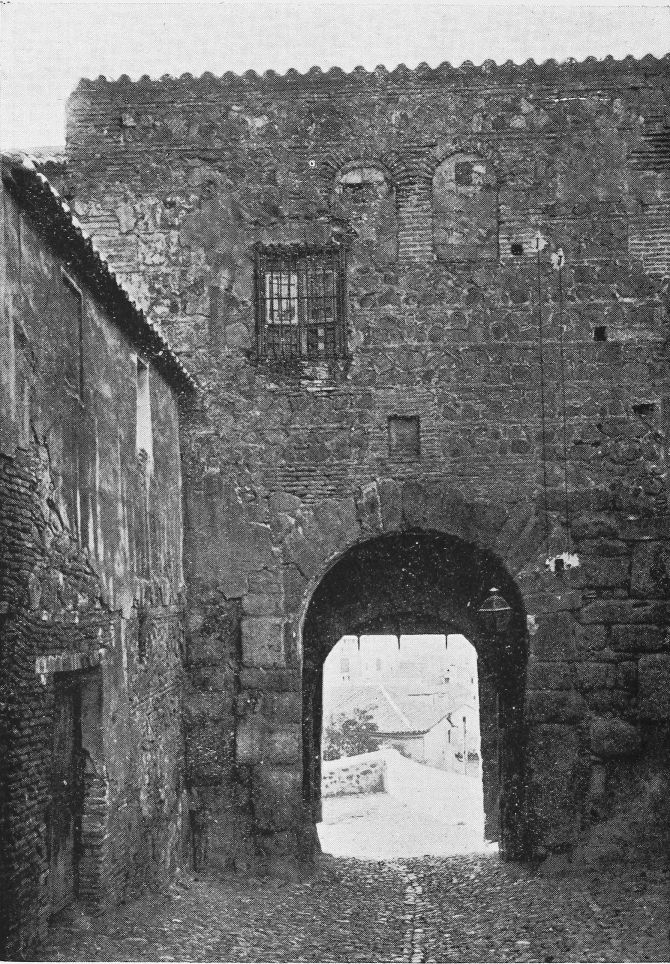
GATE OF VALMADRON
Plate 75
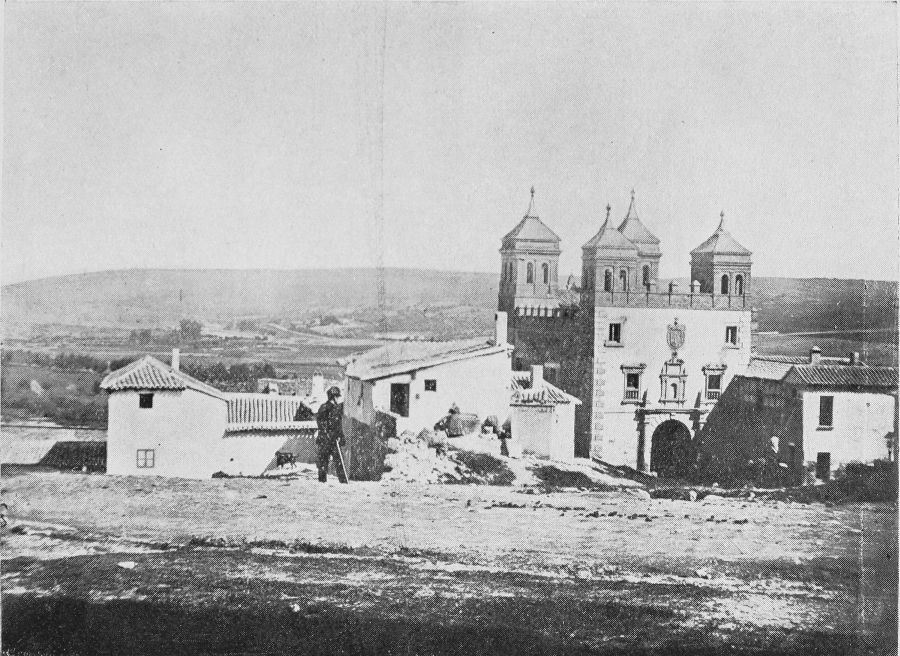
GATE OF CAMBRÓN
Plate 76
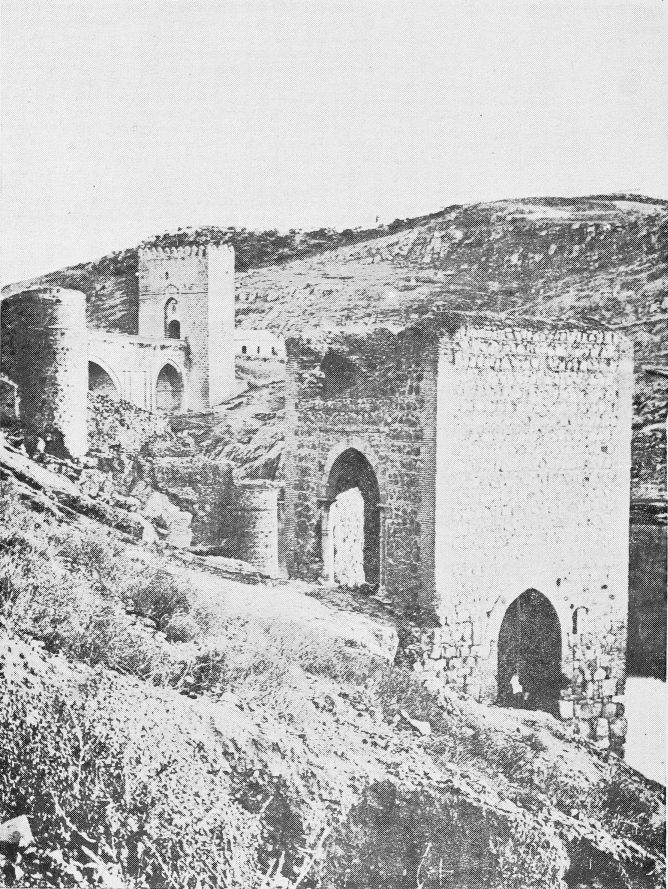
BAÑO DE LA CAVA
Plate 77
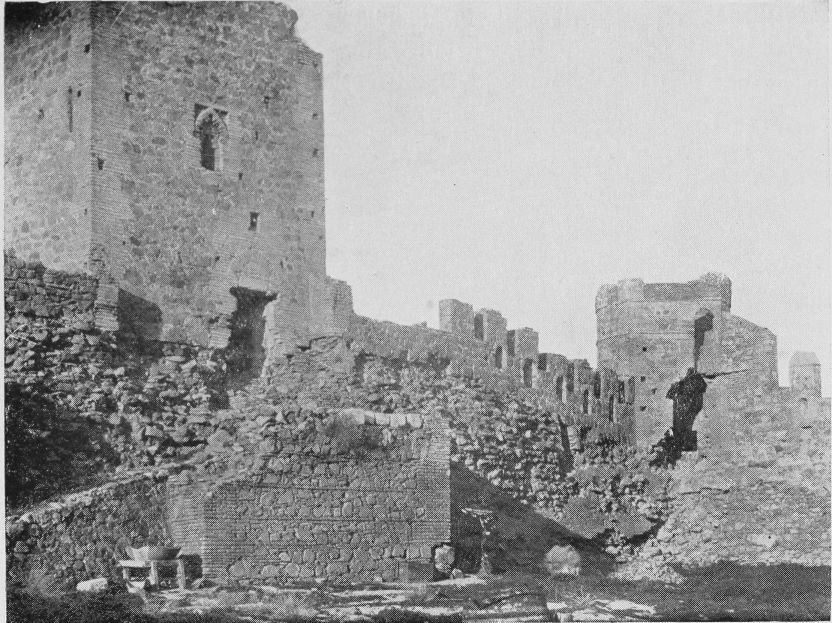
ENTRANCE TO CAVA BATHS
Plate 78
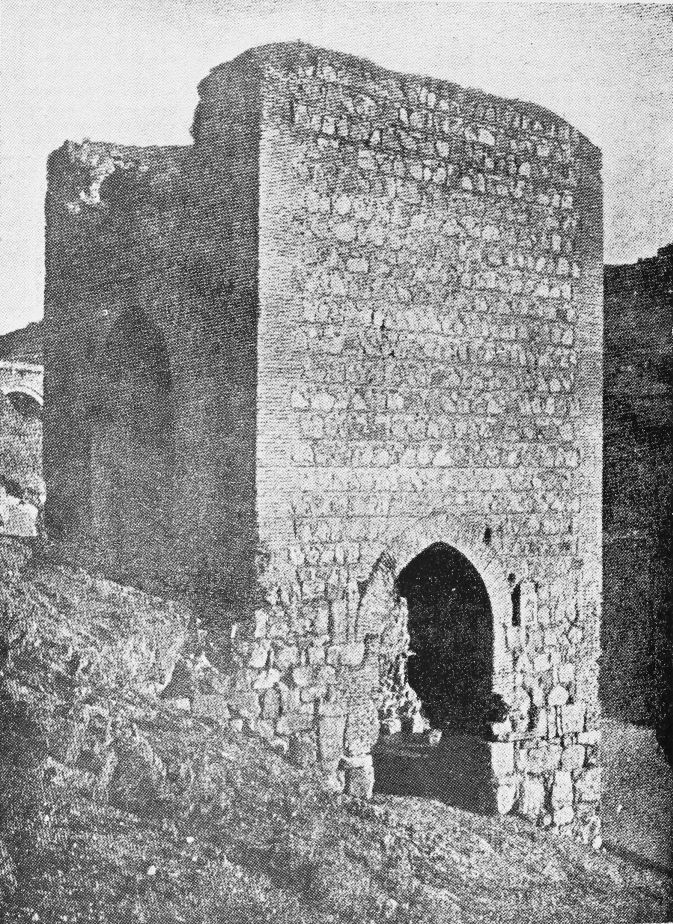
RUINS OF THE TOWER OF THE OLD BRIDGE OF BOATS, CALLED “BAÑO DE LA
CAVA”
Plate 79
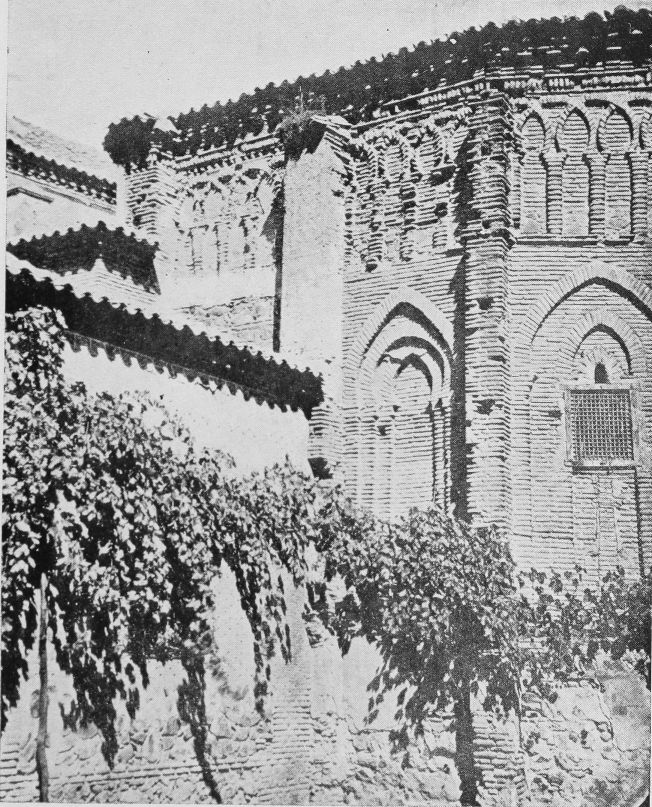
DETAILS OF THE CONVENT OF SANTA FE.
ELEVENTH CENTURY
Plate 80
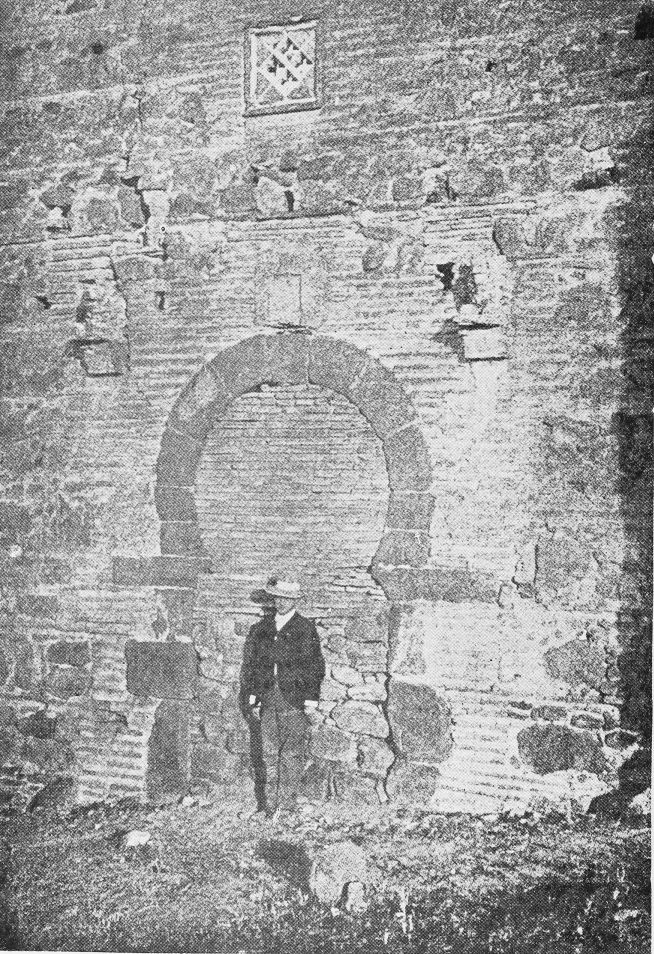
WEST PORTAL IN THE OLD HERMITAGE, NOW THE INN OF SANTA ANA, ON THE SISLA
ROAD
Plate 81
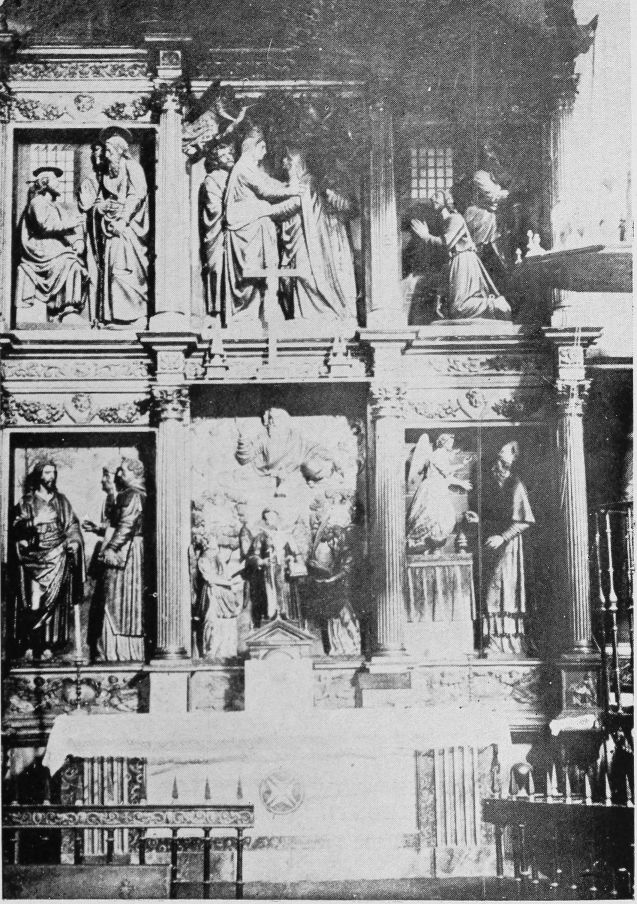
ALTAR-PIECE OF SAN JUSTO
Plate 82
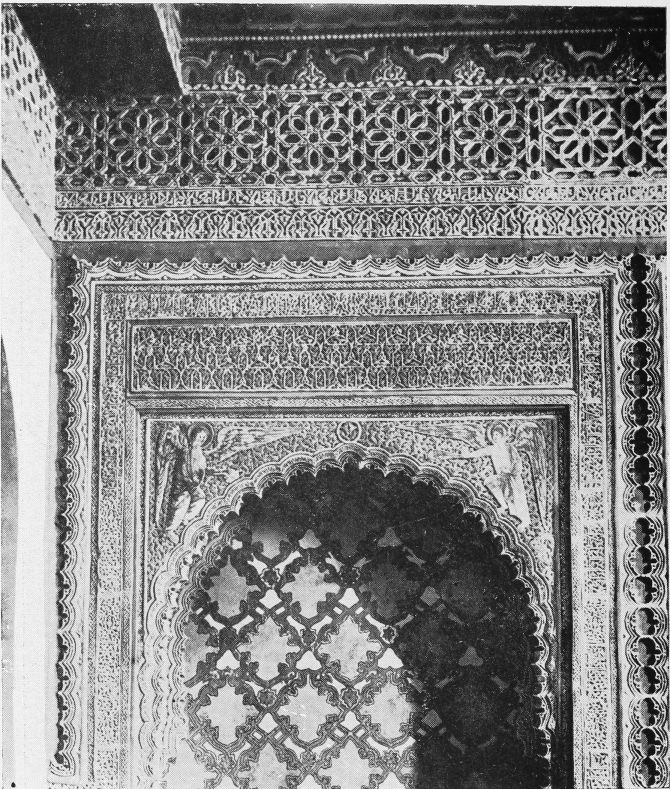
DETAIL OF THE CHURCH OF SAN JUSTO.
FIFTEENTH CENTURY
Plate 83
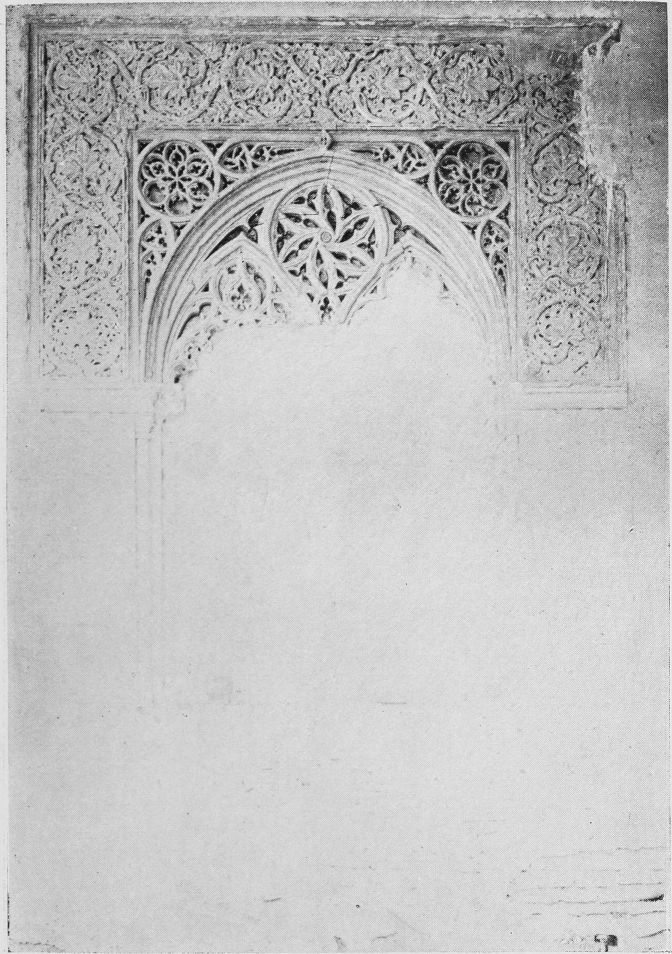
DETAIL OF THE CHAPEL OF SANTOS JUSTO AND PASTOR
Plate 84
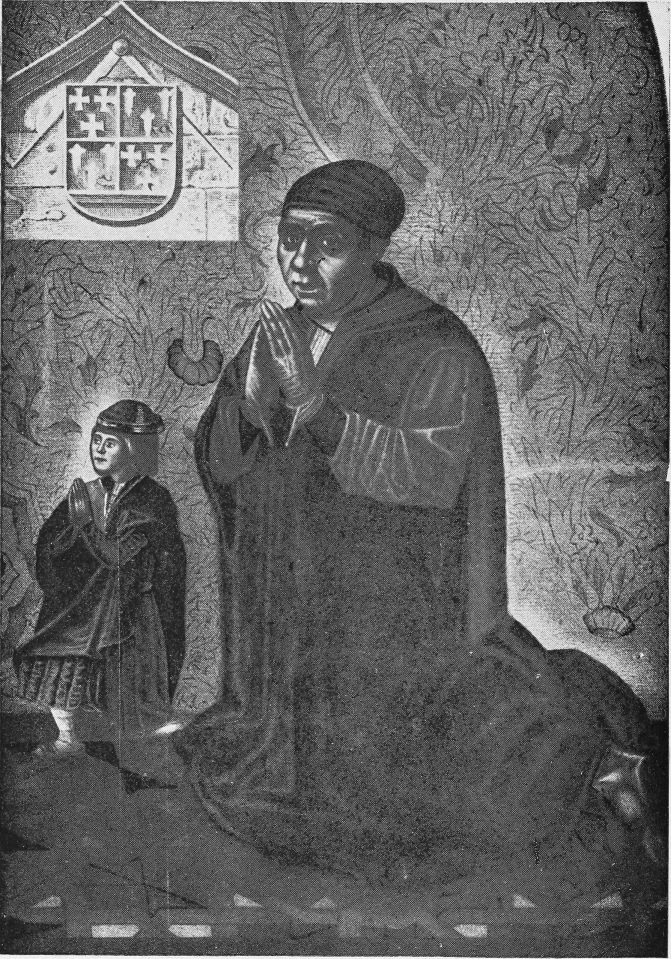
EFFIGIES OF JUAN GUAS, ARCHITECT OF SAN JUAN DE LOS REYES, AND OF HIS
SON. CHAPEL OF CHRIST AT THE COLUMN, IN THE PARISH CHURCH OF SAN JUSTO
Plate 85
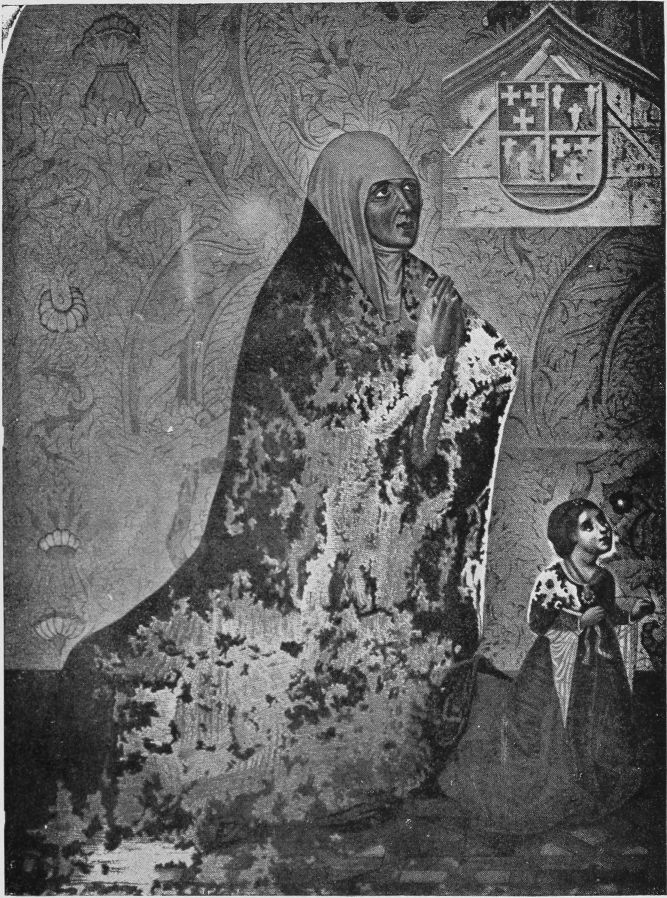
EFFIGIES OF MARI ALVARES, WIFE OF JUAN GUAS, AND OF HER DAUGHTER. CHAPEL
OF CHRIST AT THE COLUMN, IN THE PARISH CHURCH OF SAN JUSTO
Plate 86
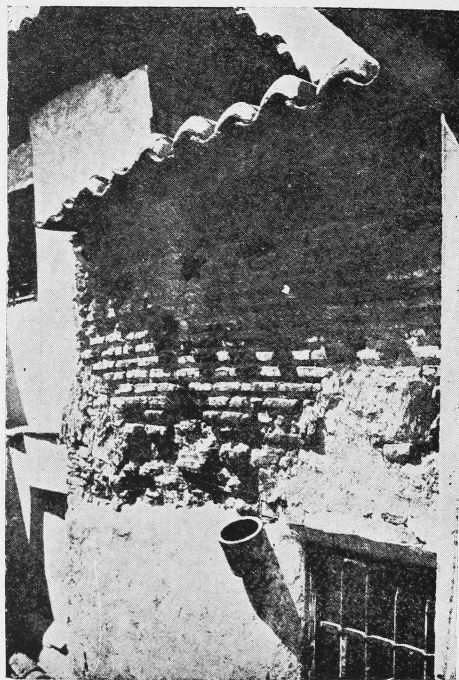
MOSQUE OF THE TORNERIAS. EXTERIOR OF THE SOUTH FAÇADE, SOUTH-WEST
ANGLE
Plate 87
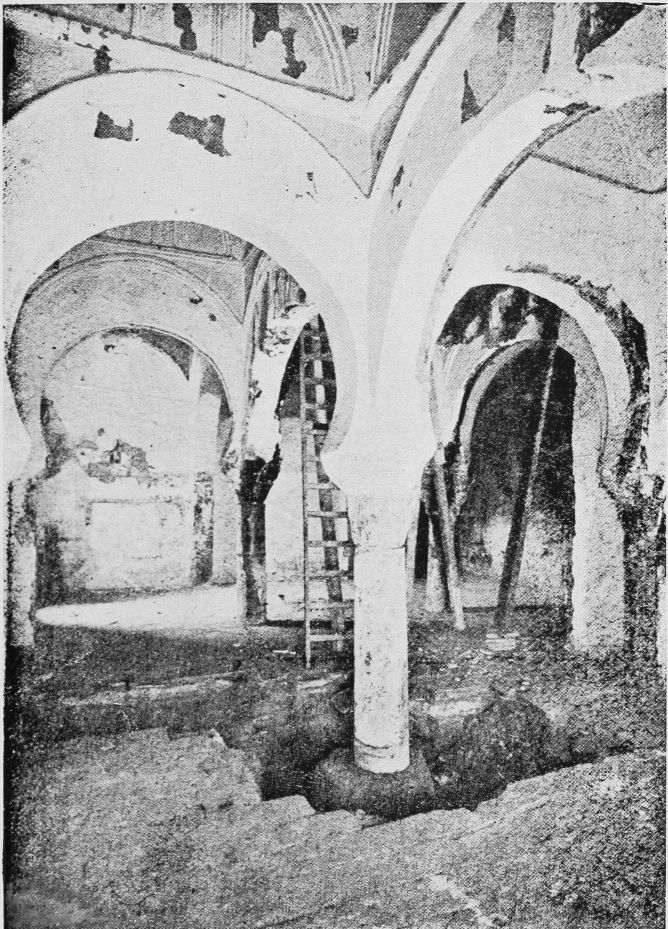
INTERIOR OF THE MOSQUE DE LAS TORNERIAS
Plate 88
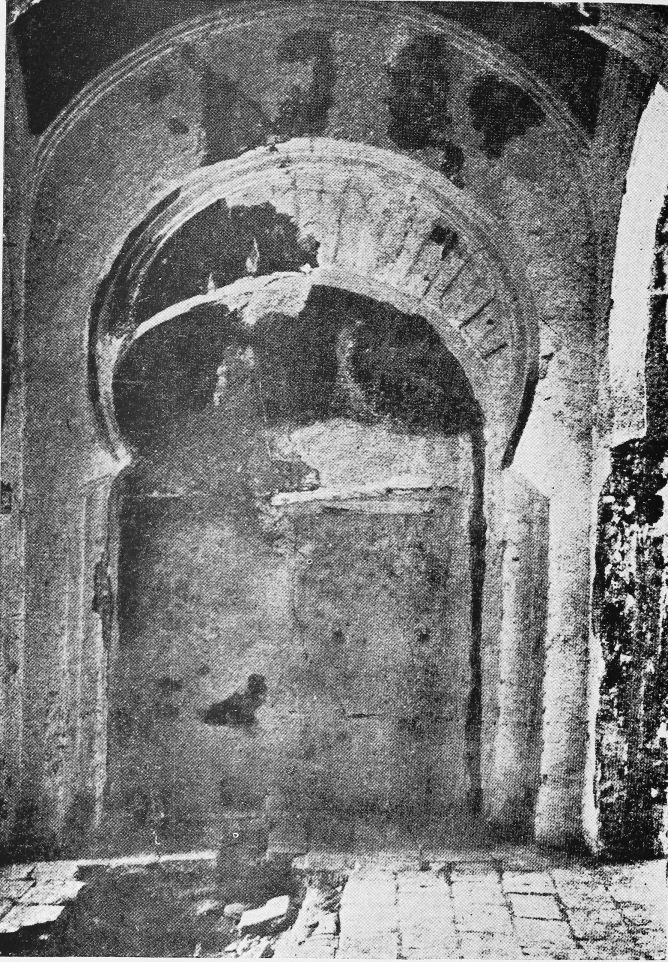
ARCH OF THE “KIBLÁH” IN THE MOSQUE DE LAS TORNERIAS
Plate 89
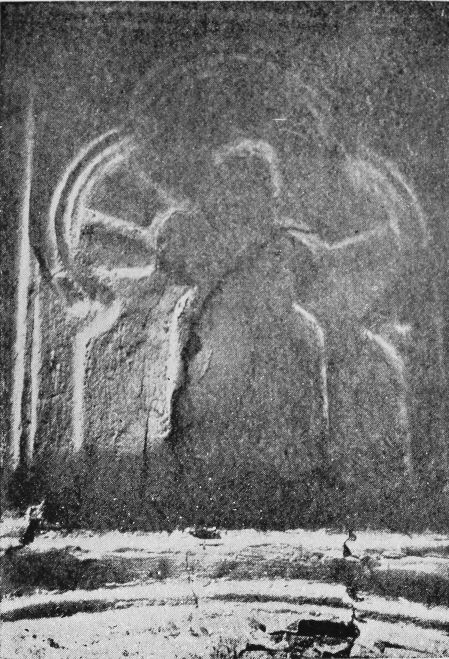
MOSQUE OF THE TORNERIAS. TREFOIL ARCHED WINDOW
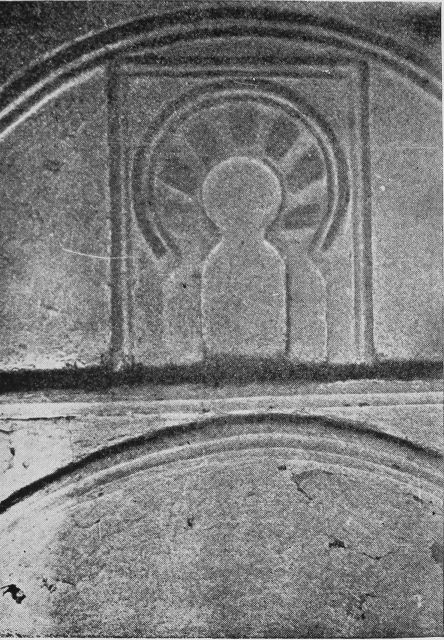
MOSQUE OF THE TORNERIAS. HORSE-SHOE WINDOW
Plate 90
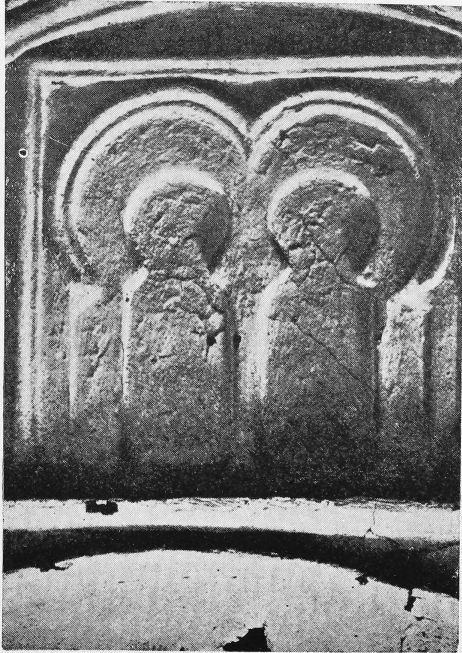
MOSQUE OF THE TORNERIAS. ARCHED WINDOW
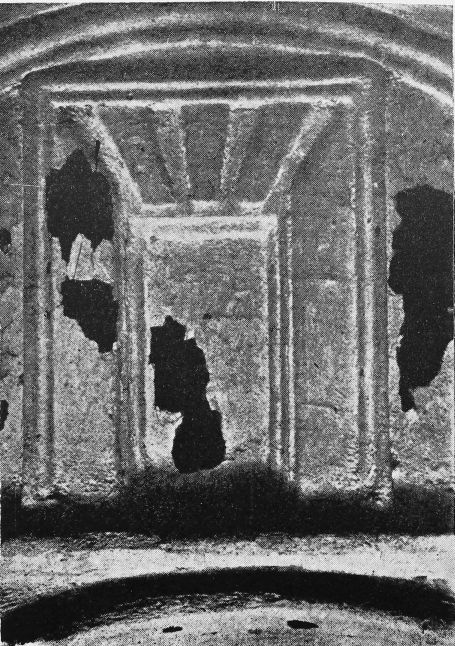
MOSQUE OF THE TORNERIAS. RECTANGULAR WINDOW
Plate 91
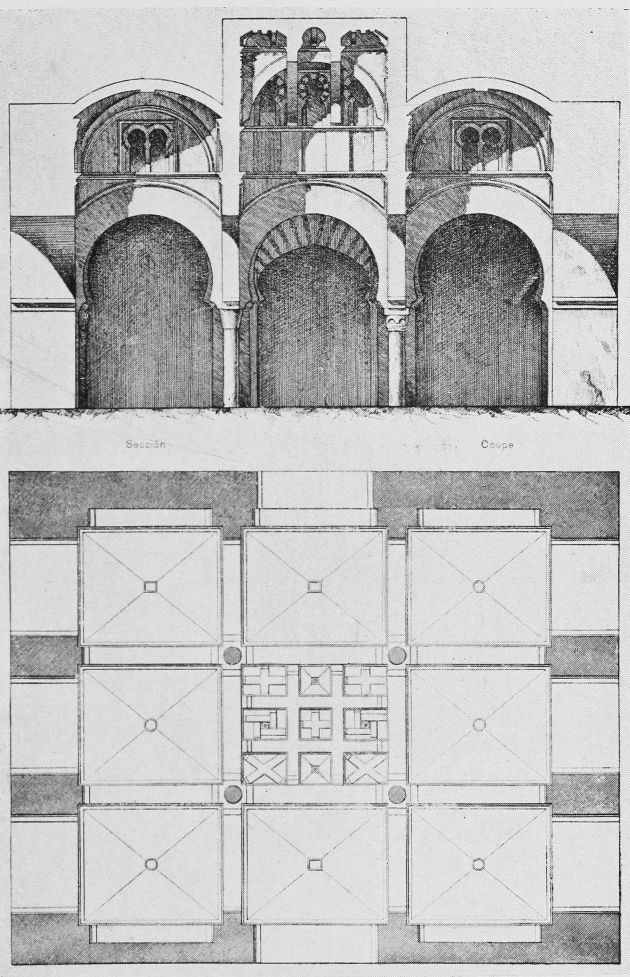
MOSQUE DE LAS TORNERIAS
Plate 92
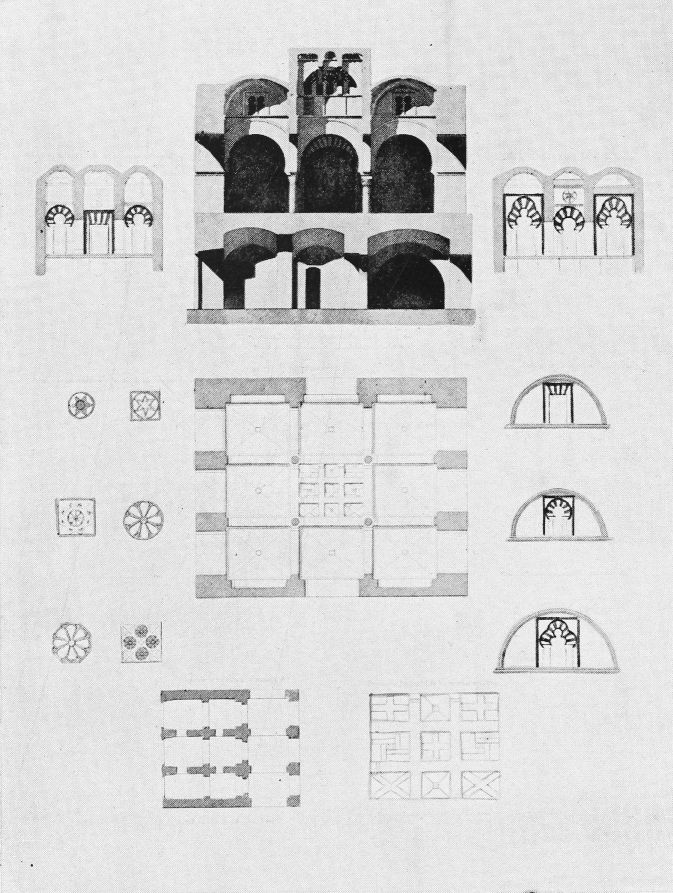
MOSQUE OF THE TORNERIAS, BUILT OVER ROMAN REMAINS
Plate 93
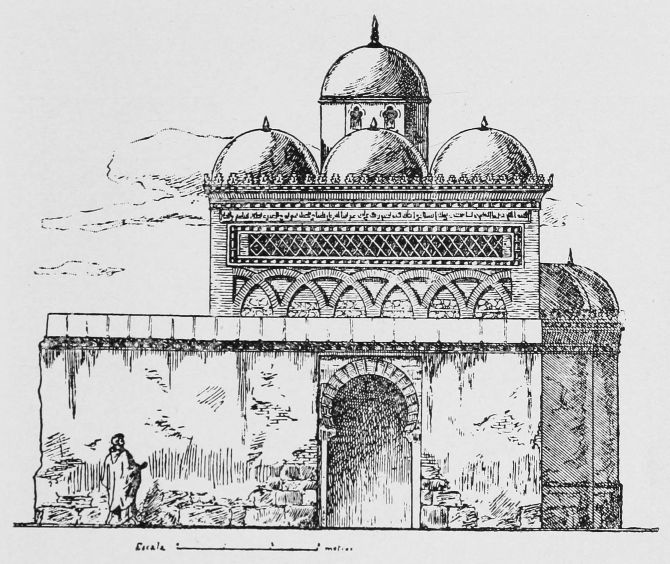
SUPPOSED ELEVATION OF THE MOSQUE OF BIB-AL-MARDÓM
Plate 94
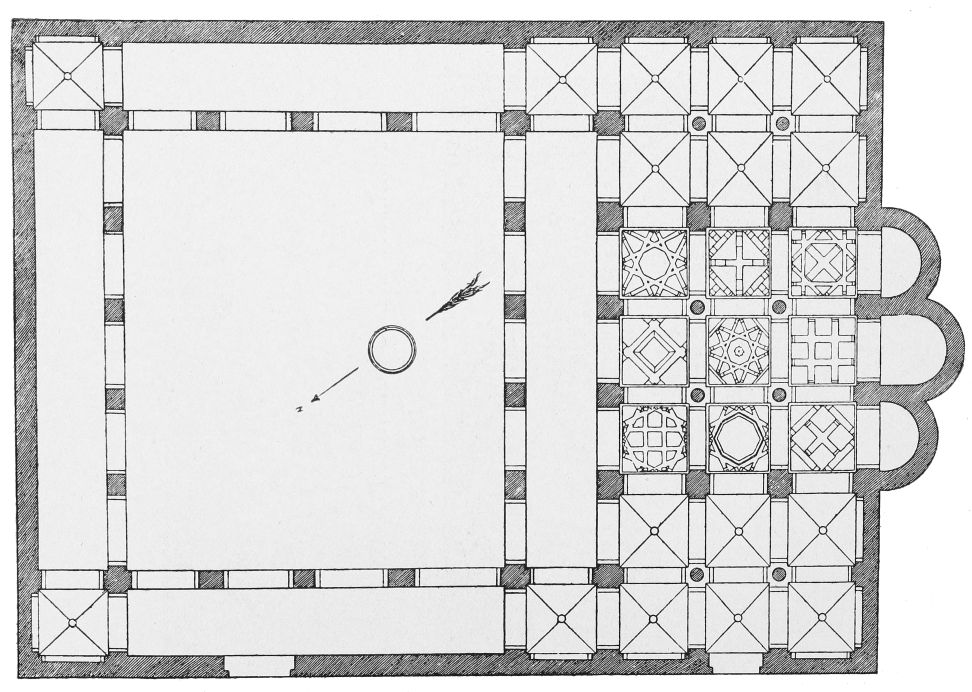
SUPPOSED PLAN OF THE MOSQUE OF BIB-AL-MARDÓM
Plate 95
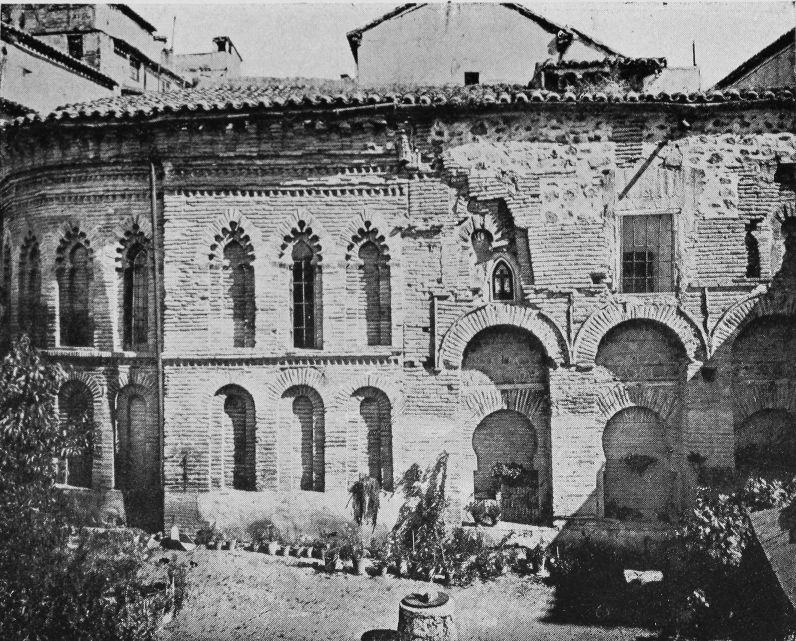
ACTUAL SITUATION OF THE NORTH-EAST FAÇADE OF THE ANCIENT MOSQUE OF
BIB-AL-MARDÓM, A TRANSEPT AND MUDEJAR APSIS OF THE HERMITAGE OF SANTO
CRISTO DE LA LUZ
Plate 96
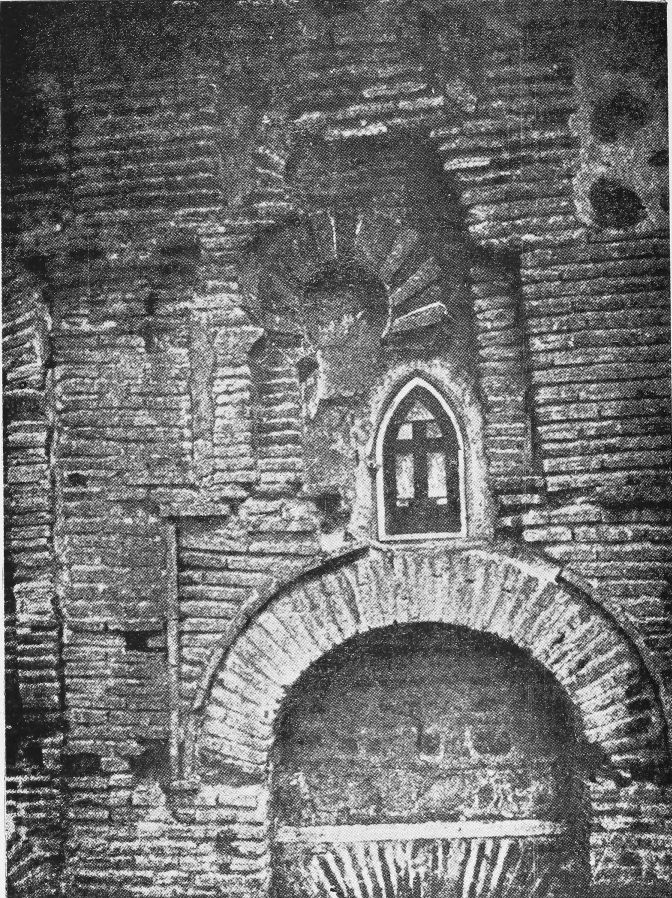
THE MOSQUE OF BIB-AL-MARDÓM, HORSE-SHOE ARCH AND REMAINS OF THE DADO AND
LITTLE ARCHES AND WINDOWS IN THE NORTH-EAST FAÇADE (RIGHT SIDE)
Plate 97
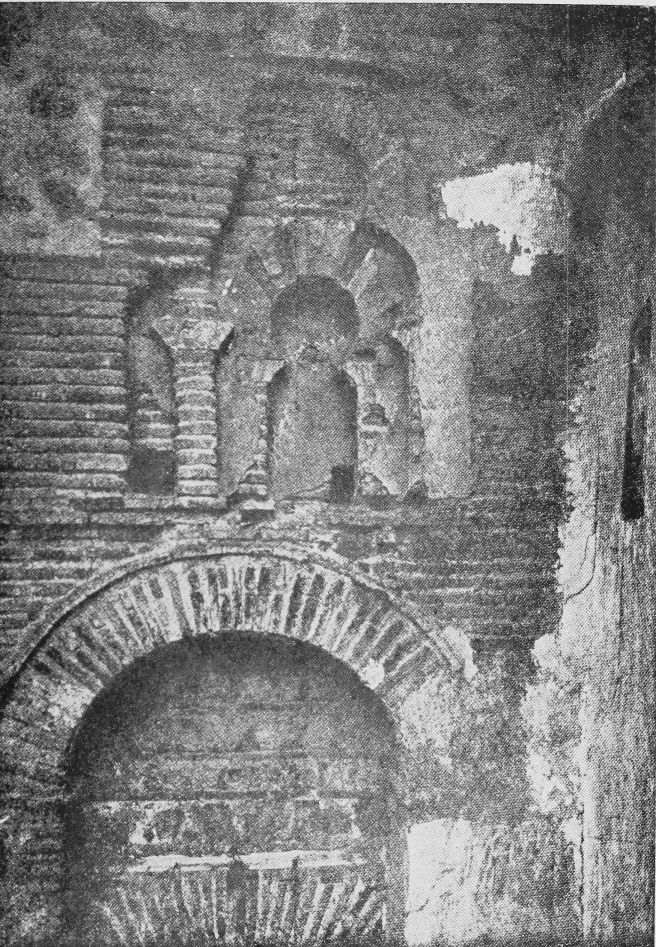
THE MOSQUE OF BIB-AL-MARDÓM, HORSE-SHOE ARCH AND REMAINS OF THE DADO OF
LITTLE ARCHES AND WINDOWS IN THE NORTH-EAST FAÇADE (LEFT SIDE)
Plate 98
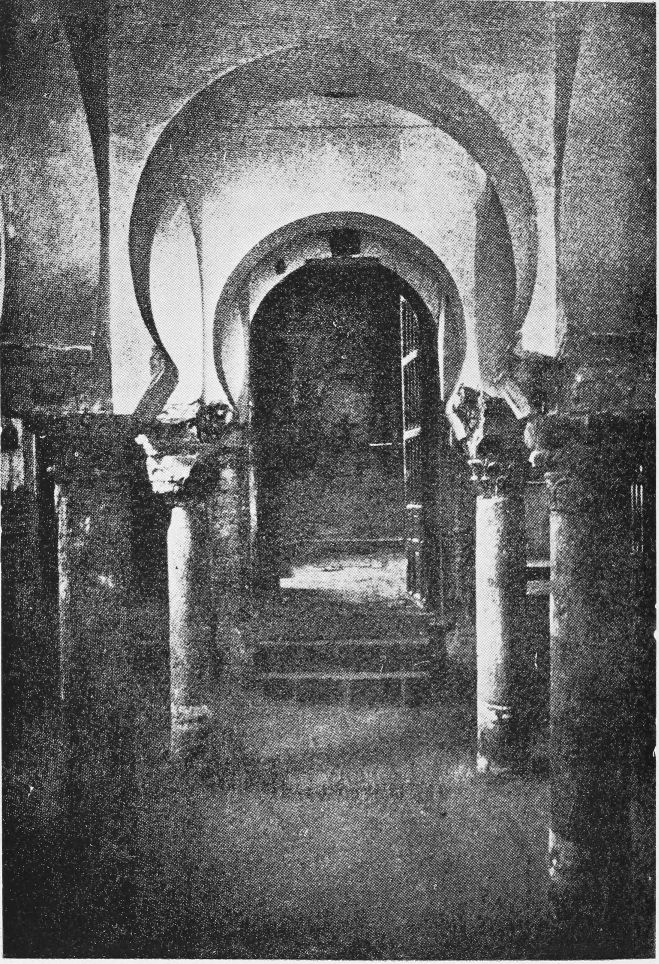
PRINCIPAL NAVE IN THE MOSQUE OF BIB-AL-MARDÓM
Plate 99
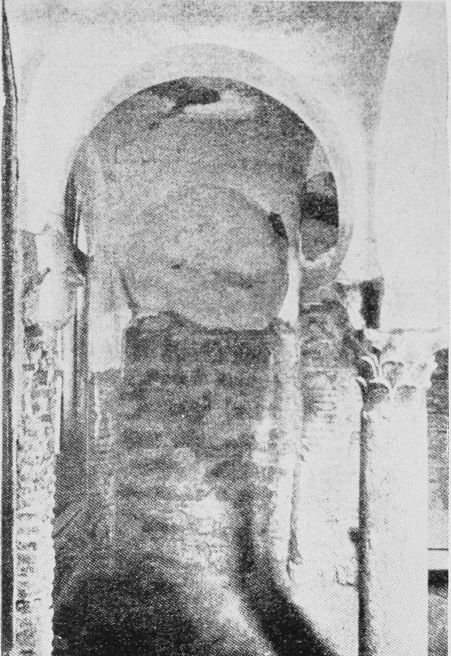
ARCH IN THE SOUTHERN INTERIOR OF THE MOSQUE OF BIB-AL-MARDÓM
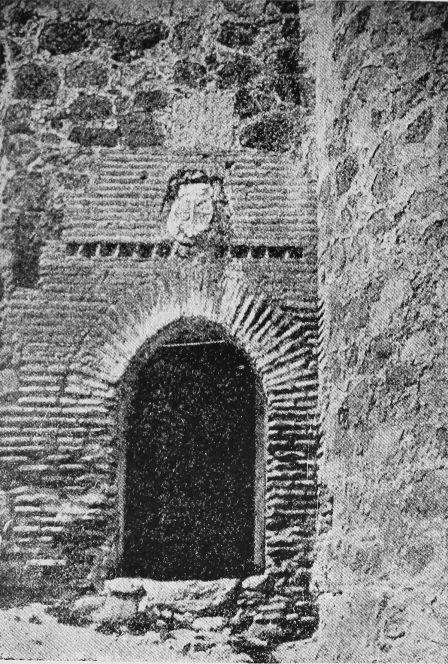
ACTUAL ENTRANCE TO THE CASTLE
Plate 100
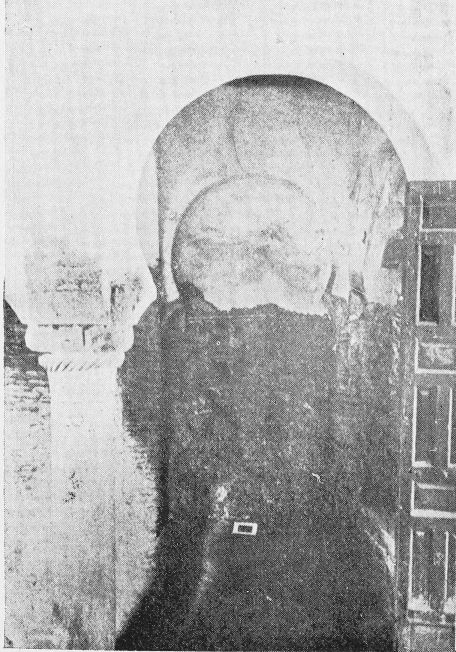
MOSQUE OF BIB-AL-MARDÓM. ARCH IN THE INTERIOR WALL, SOUTH-WEST ANGLE
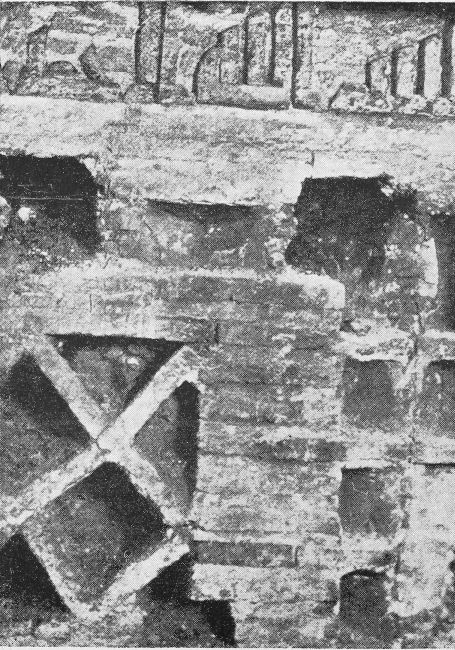
DETAIL OF THE NORTH-WEST FAÇADE OF THE MOSQUE OF BIB-AL-MARDÓM
Plate 101
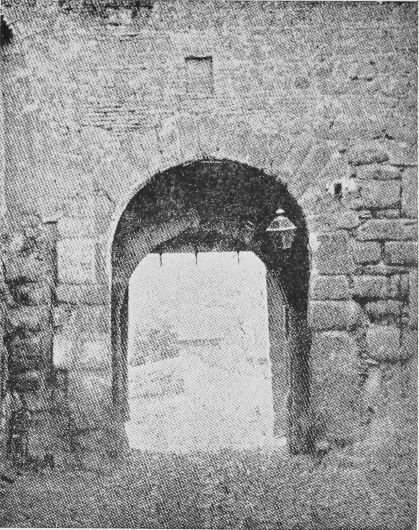
BIB-AL-MARDÓM. “ARCH OF THE CROSS”
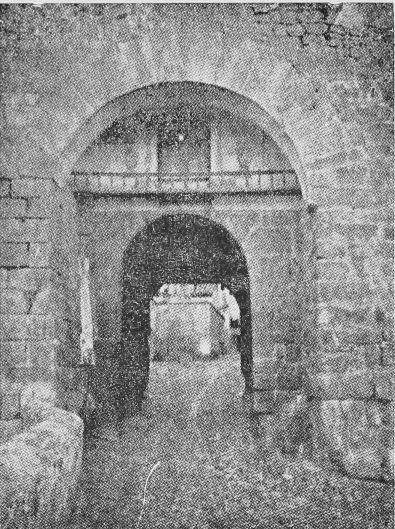
INTERIOR FAÇADE
EXTERIOR FAÇADE
Plate 102
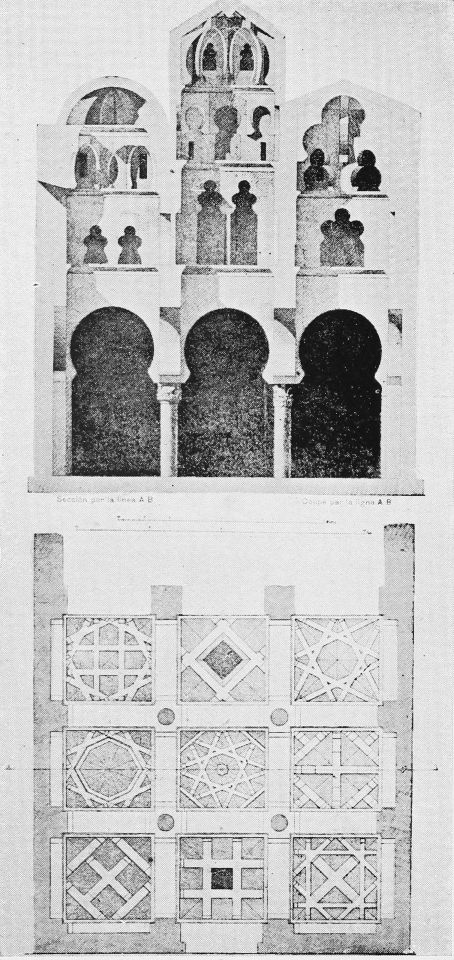
MOSQUE OF BIB-AL-MARDÓM
Plate 103
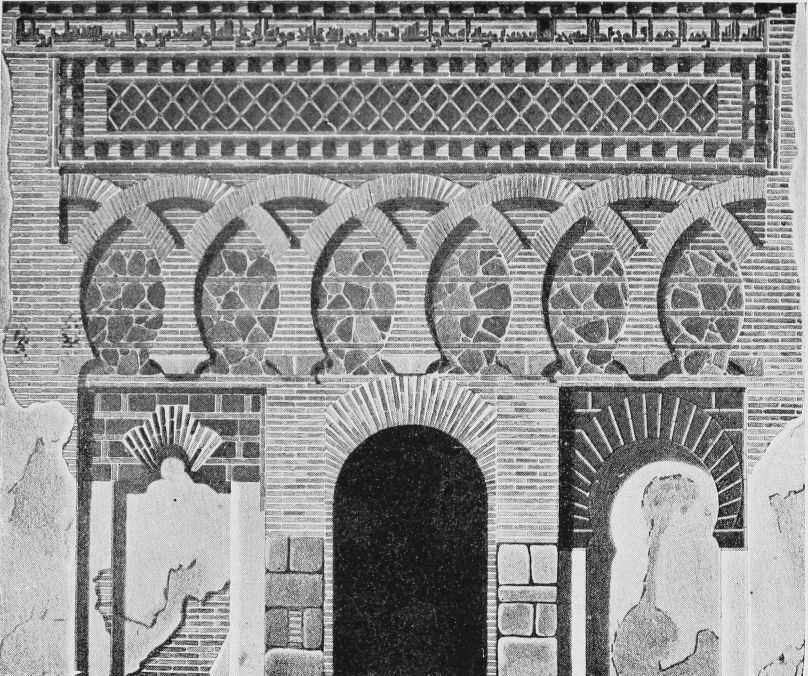
NORTH-WEST FAÇADE OF THE MOSQUE OF BIB-AL-MARDÓM (HERMITAGE OF SANTO
CRISTO DE LA LUZ), DISCOVERED IN FEBRUARY 1899
Plate 104
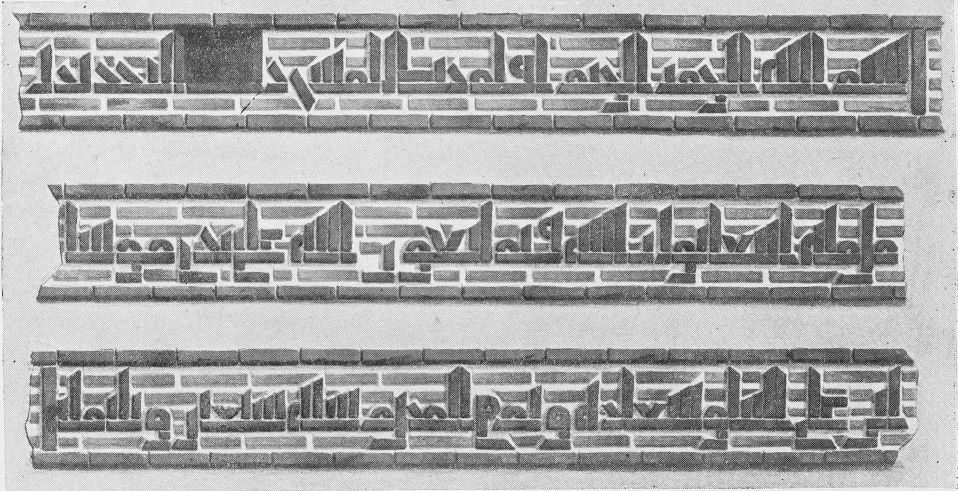
THE EPIGRAPHIC MEDALLION ON THE NORTH-WEST FAÇADE OF THE MOSQUE OF
BIB-AL-MARDÓM (HERMITAGE OF SANTO CRISTO DE LA LUZ), REBUILT IN THE YEAR
370 AFTER THE HEGIRA (A.D. 980)
Plate 105
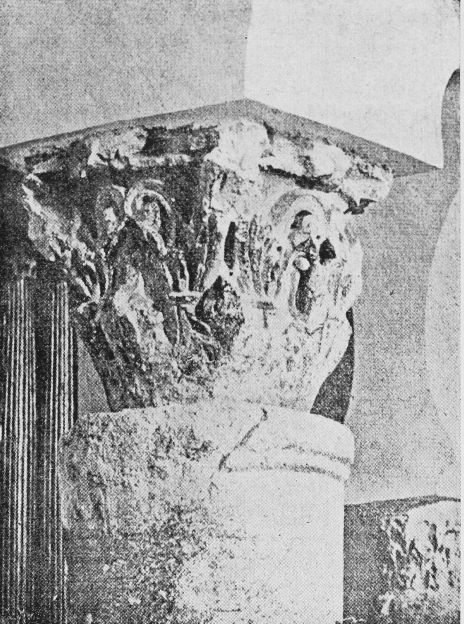
VISIGOTH CAPITAL IN THE OLD MOORISH PARISH CHURCH OF SAN SEBASTIAN
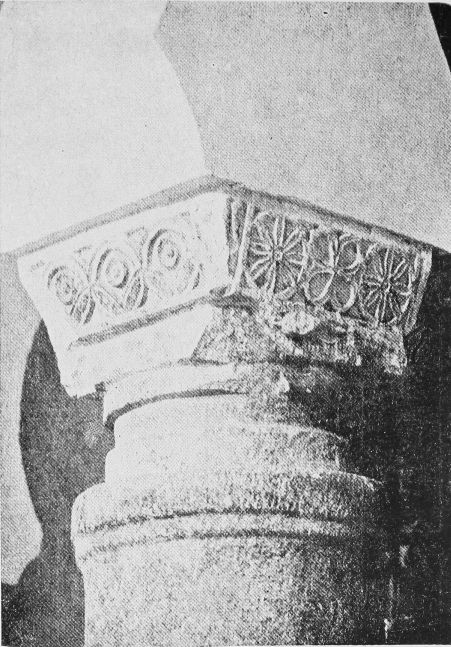
VISIGOTH BASE WHICH SERVES AS A CAPITAL IN THE OLD MOORISH PARISH CHURCH
OF SAN SEBASTIAN
Plate 106
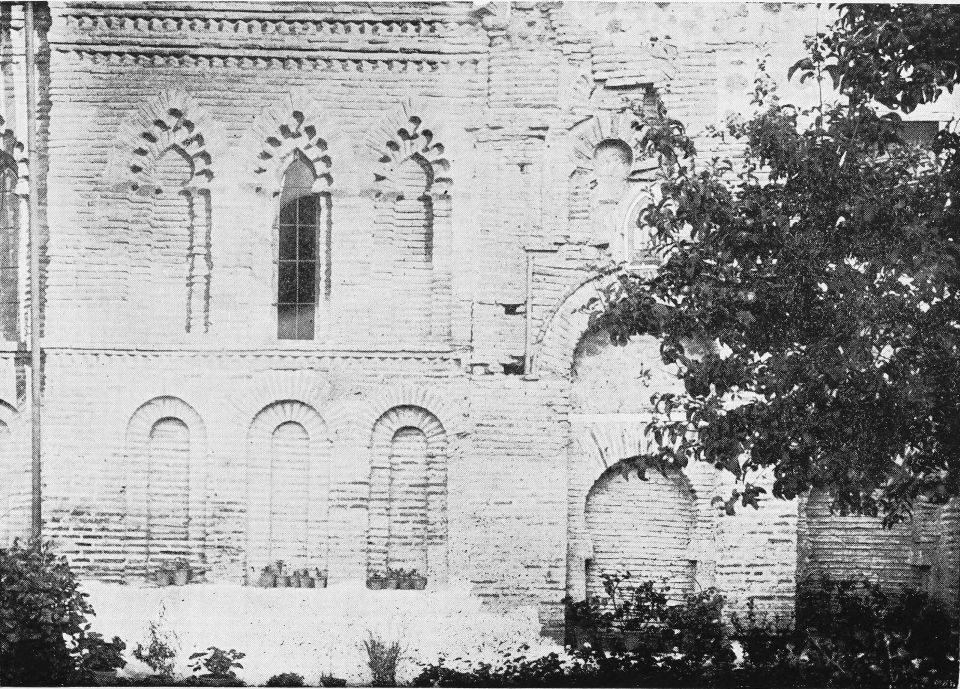
SANTO CRISTO DE LA LUZ
Plate 107
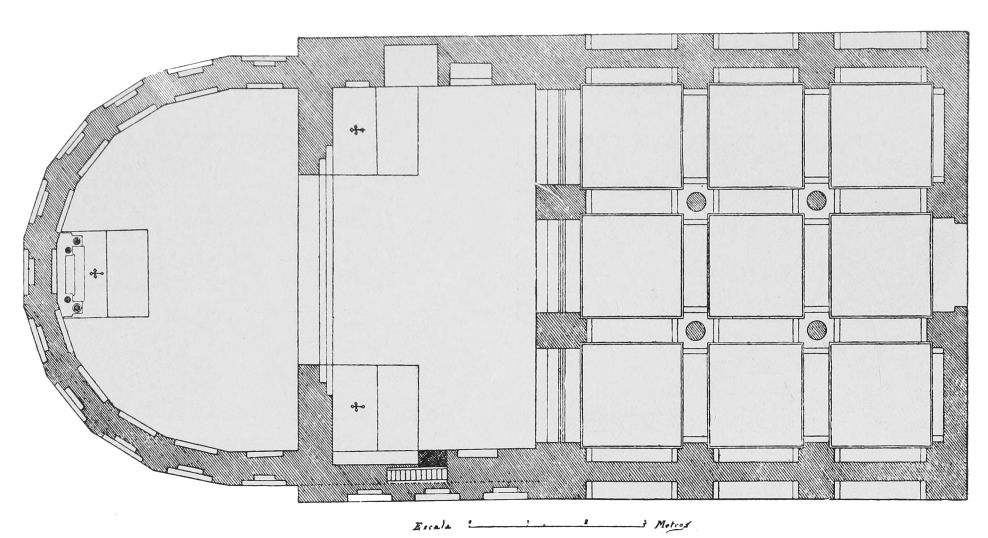
THE HERMITAGE OF SANTO CRISTO DE LA LUZ
Plate 108
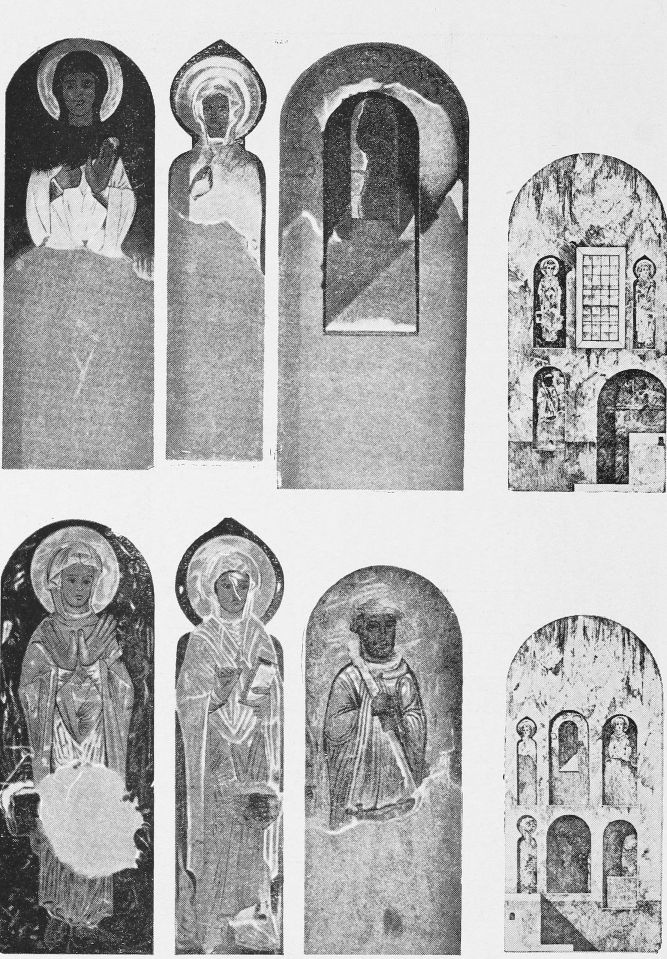
WALL-PAINTINGS OF SANTO CRISTO DE LA LUZ
Plate 109
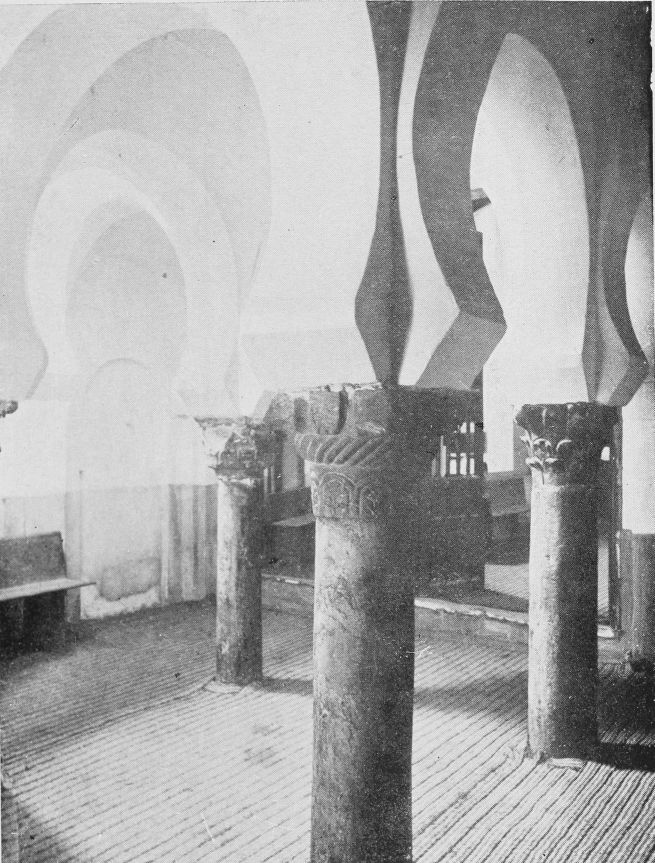
CHURCH OF SANTO CRISTO DE LA LUZ
Plate 110
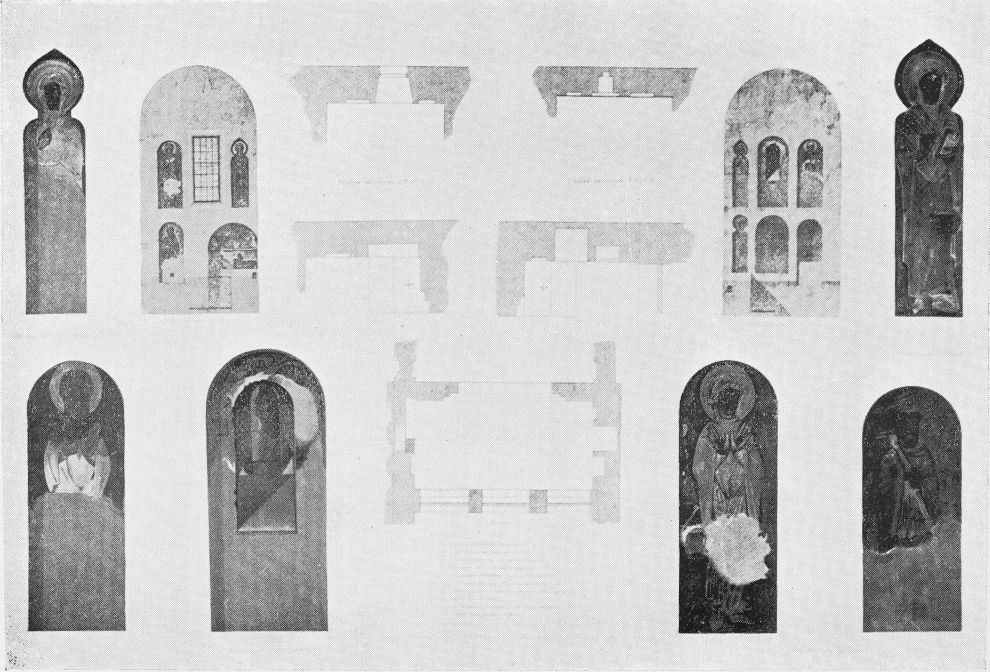
WALL-PAINTINGS OF SANTO CRISTO DE LA LUZ
Plate 111
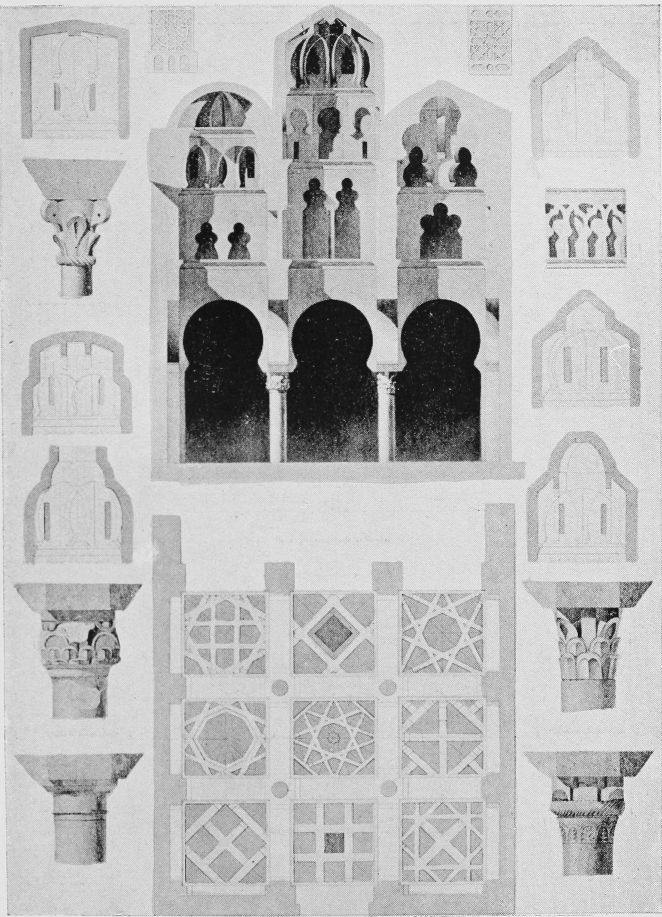
ANCIENT MOSQUE, NOW THE HERMITAGE OF SANTO CRISTO DE LA LUZ
Plate 112
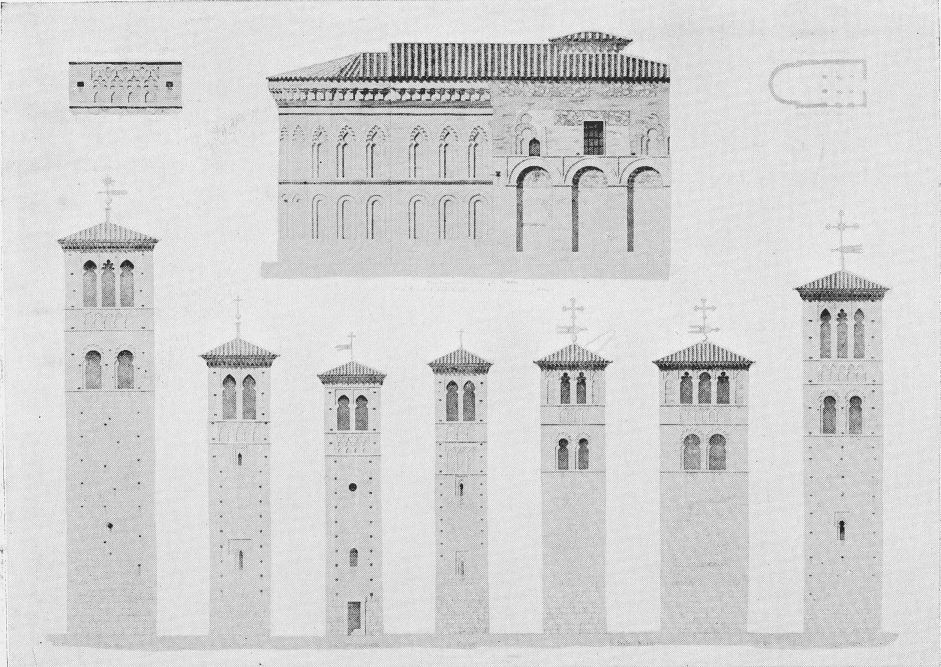
EXTERIOR OF THE HERMITAGE OF SANTO CRISTO DE LA LUZ, AND TOWERS OF
VARIOUS CHURCHES
Plate 113
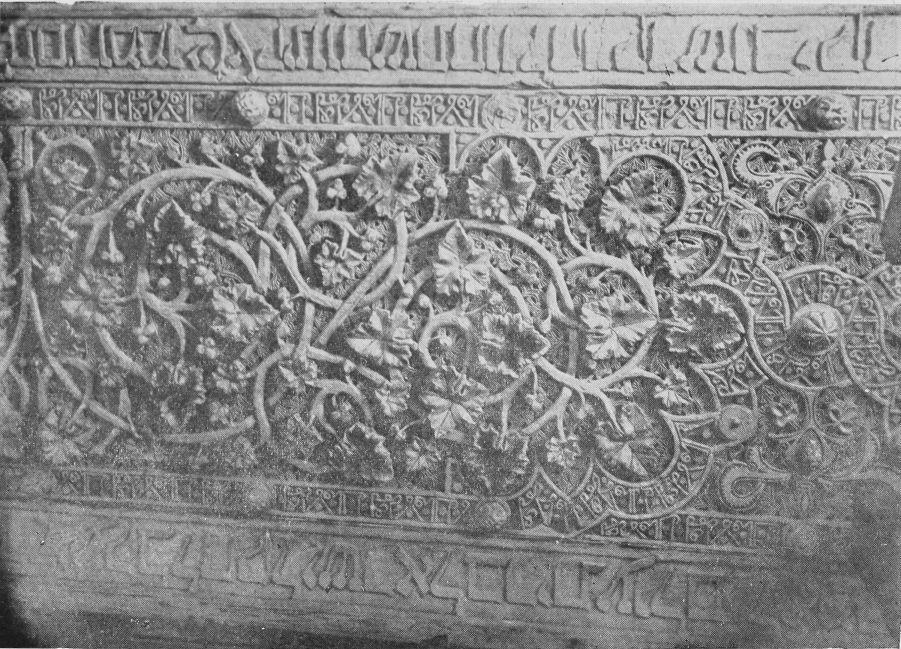
DETAIL OF THE TRANSITO (SYNAGOGUE), BUILT IN 1360 AT THE EXPENSE OF
SAMUEL LEVI
Plate 114
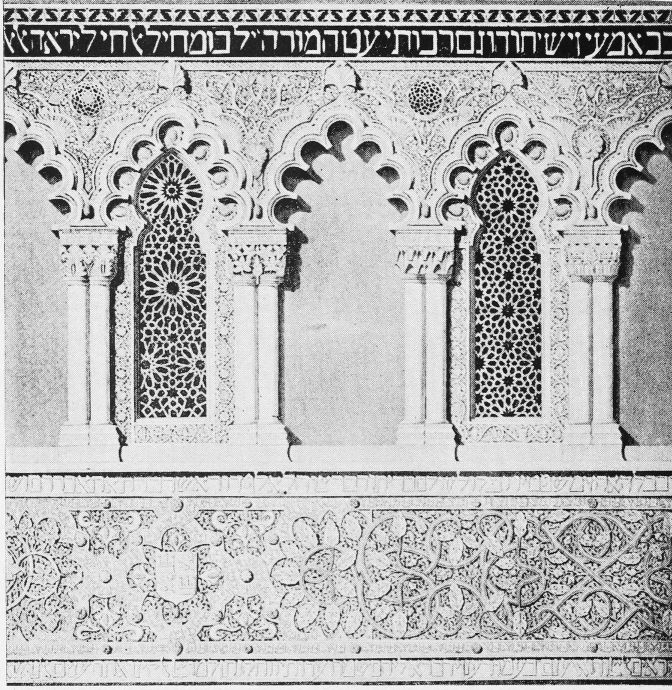
DETAILS OF THE INTERIOR DECORATION OF THE CHURCH OF THE TRANSITO
(ANCIENT SYNAGOGUE)
Plate 115
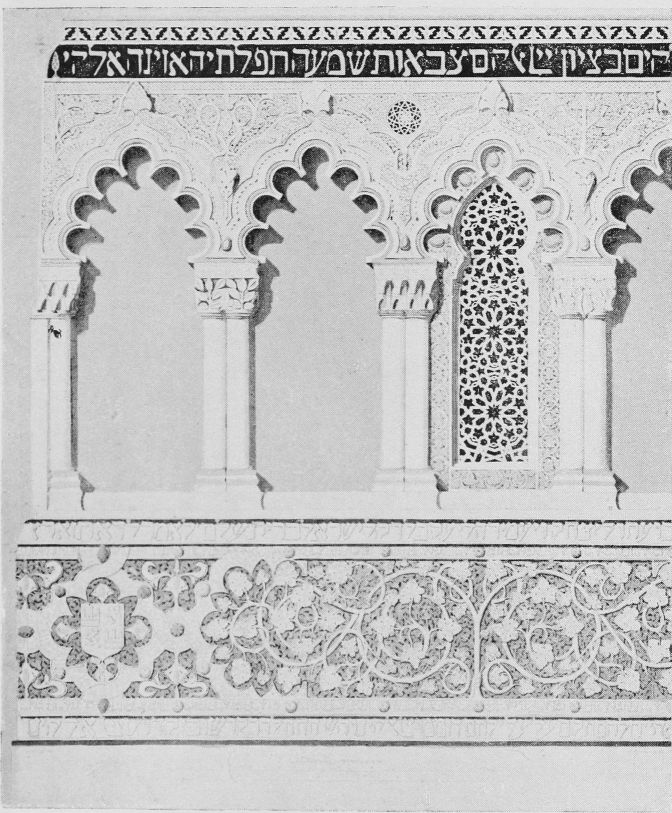
DETAILS OF THE INTERIOR DECORATION OE THE CHURCH OF THE TRANSITO
(ANCIENT SYNAGOGUE)
Plate 116
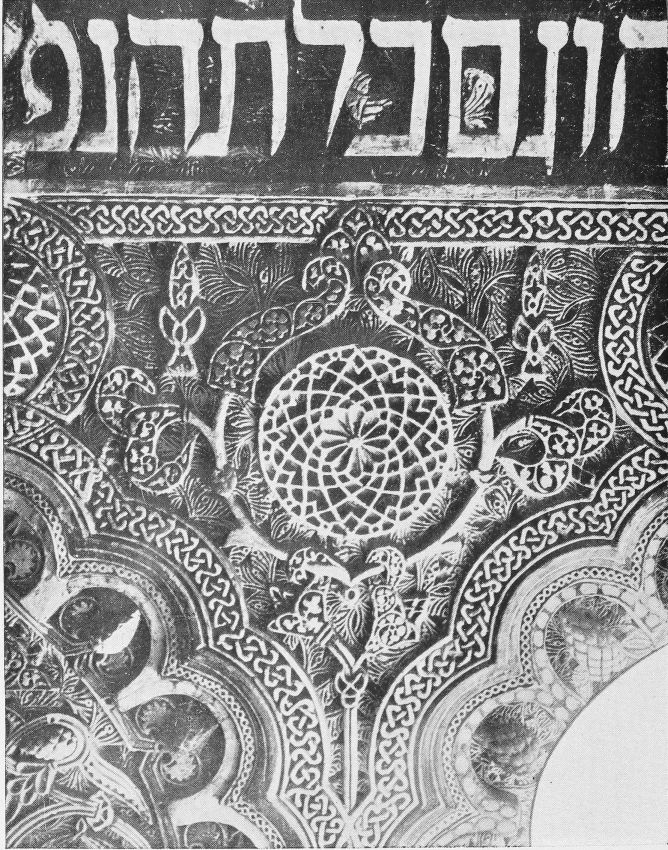
DETAILS OF THE TRANSITO (SYNAGOGUE)
Plate 117
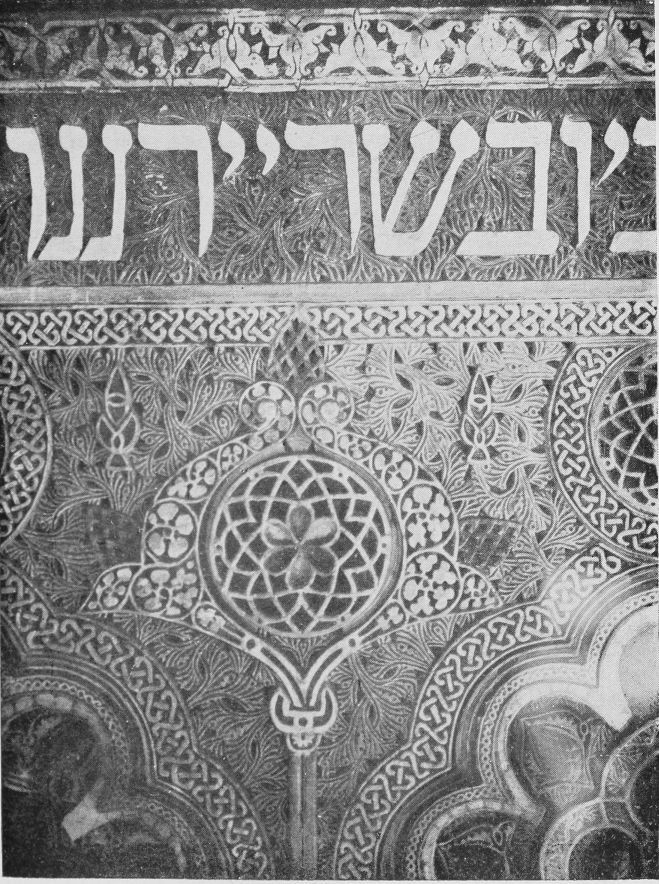
DETAILS OF THE TRANSITO (SYNAGOGUE)
Plate 118
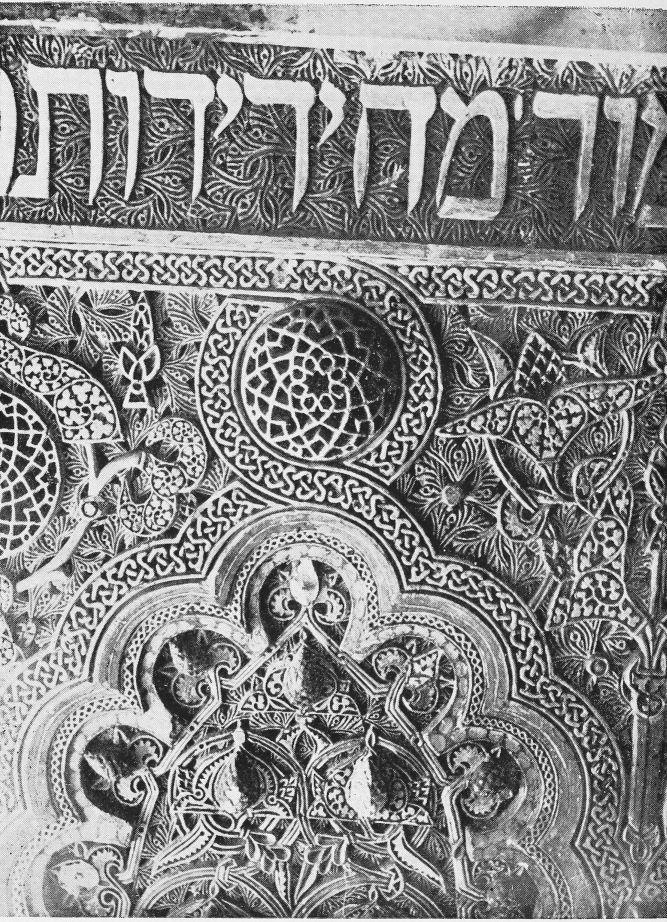
DETAILS OF THE TRANSITO (SYNAGOGUE)
Plate 119
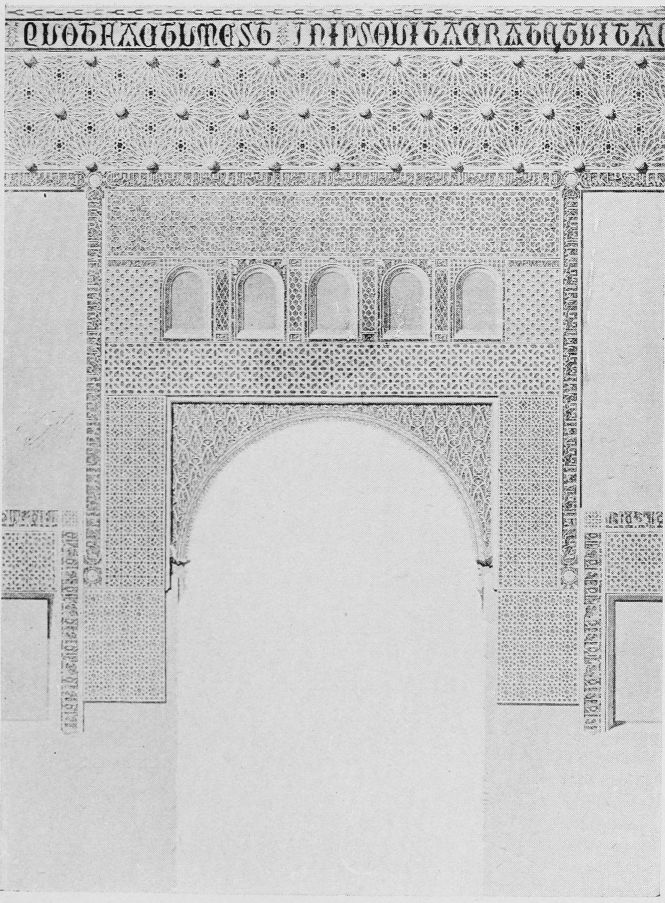
ENTRANCE ARCH IN THE BUILDING CALLED TALLER DEL MORO
Plate 120
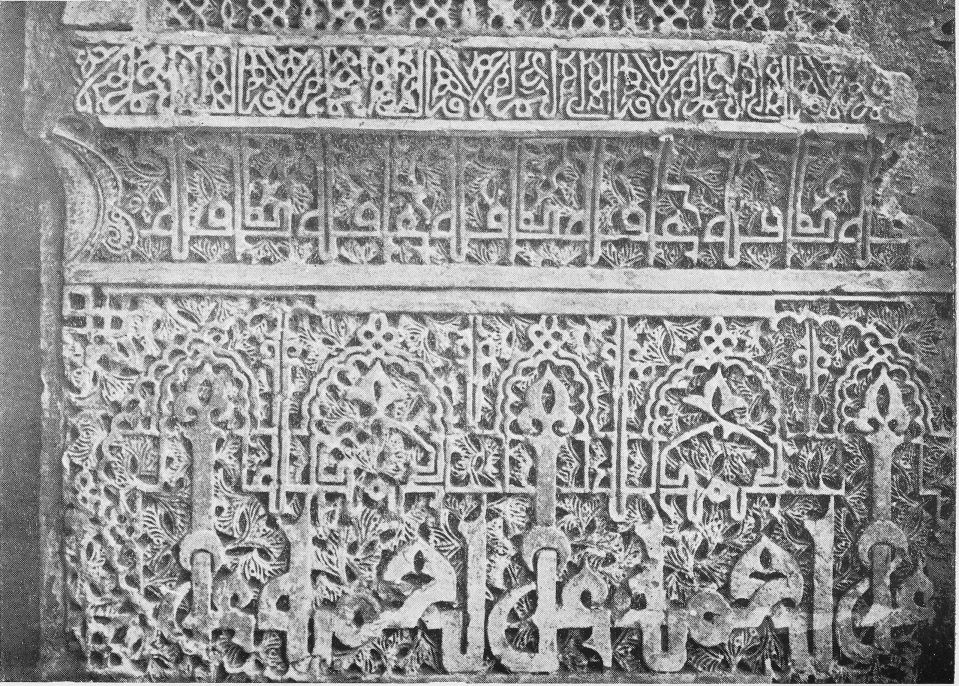
DETAIL OF DECORATION IN THE MOORISH WORKSHOP
Plate 121
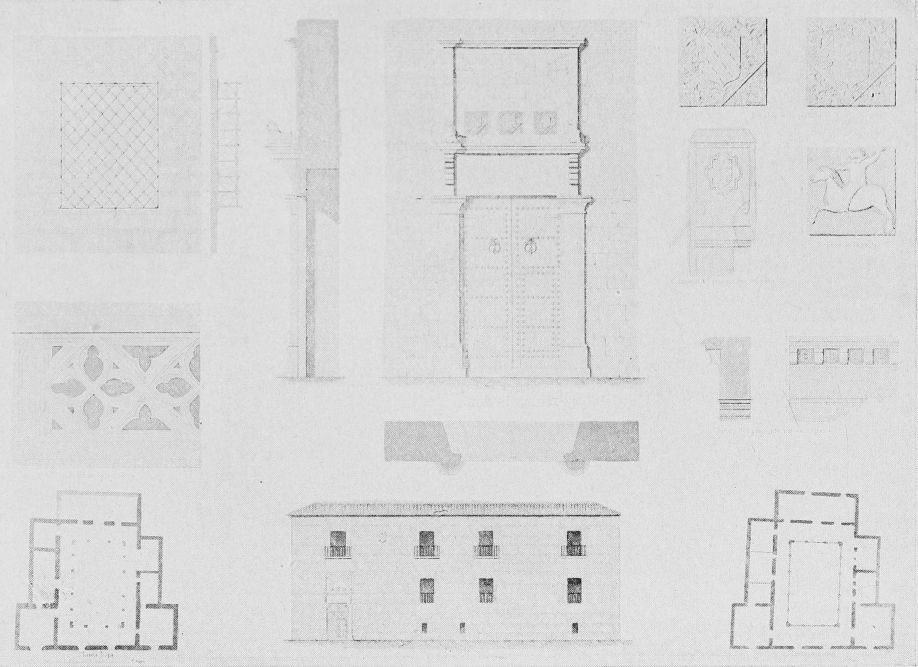
DETAILS OF THE PALACE OF THE AYALAS
Plate 122
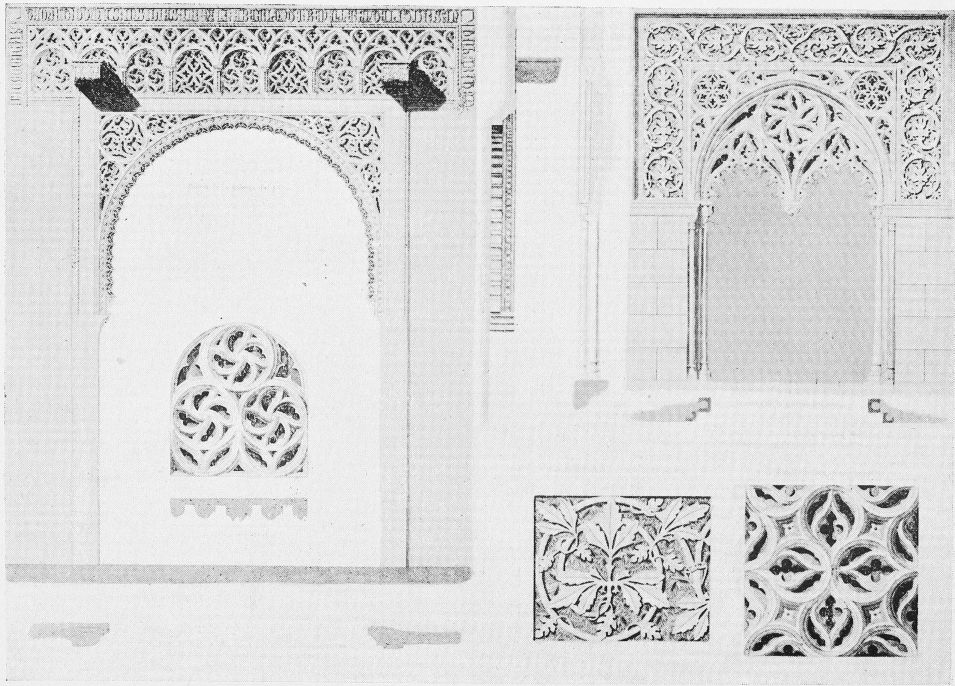
DETAILS OF THE PALACE OF THE AYALAS
Plate 123
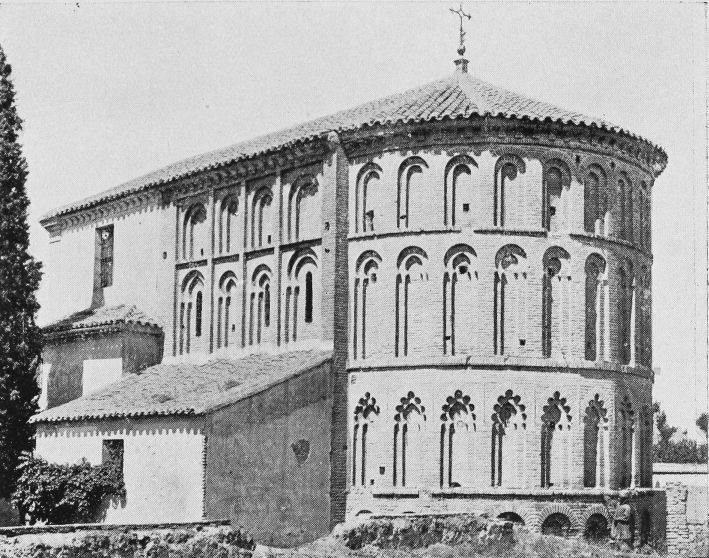
EXTERIOR OF THE CHAPEL OF SANTO CRISTO DE LA VEGA
Plate 124
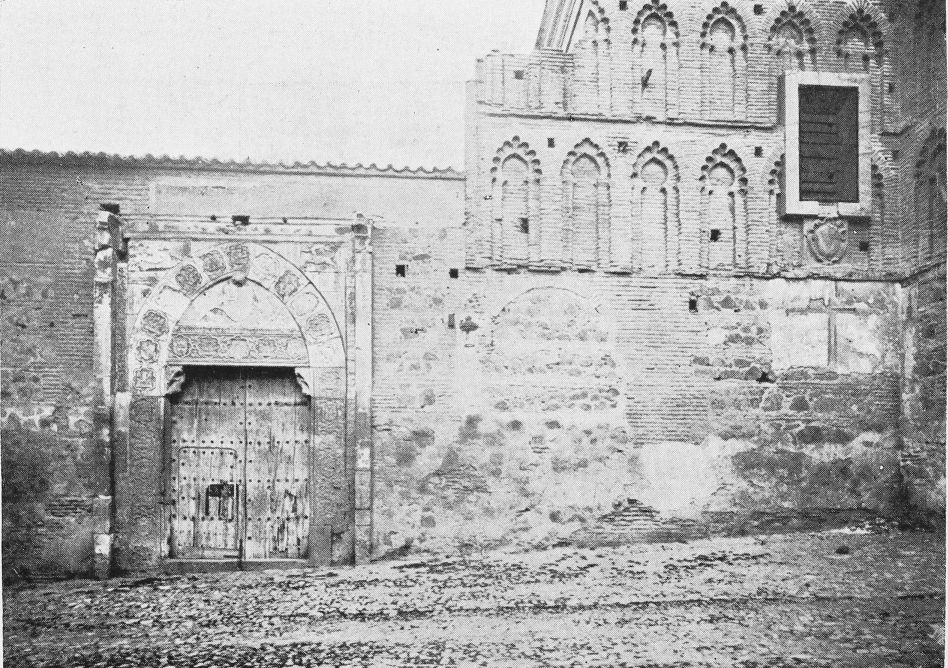
DOOR AND EXTERIOR OF SANTA MARIA LA BLANCA
Plate 125
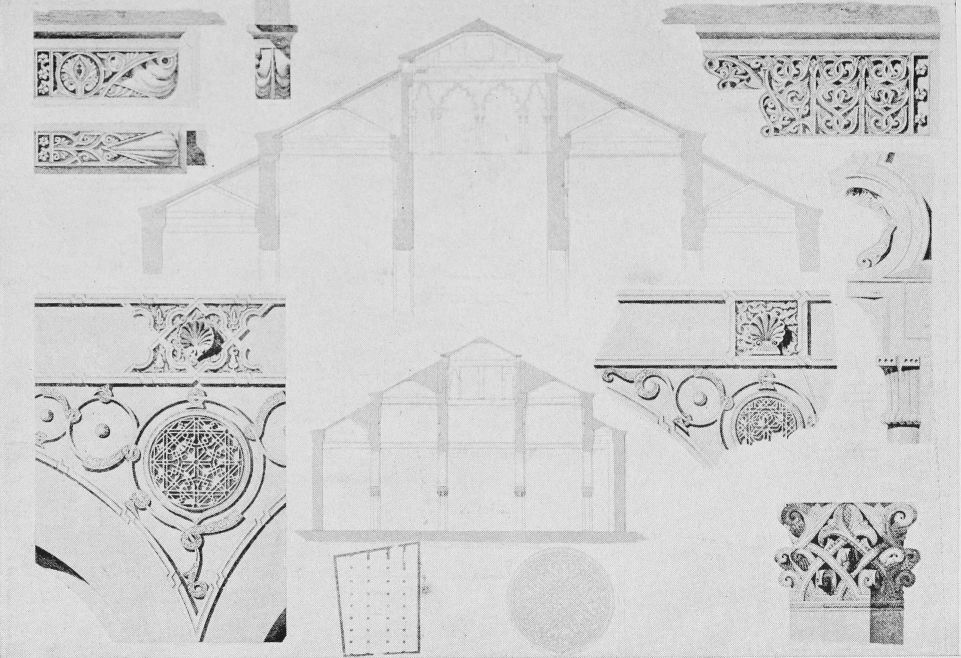
SECTIONS AND DETAILS OF THE ANCIENT SYNAGOGUE, NOW THE CHURCH OF SANTA
MARIA LA BLANCA
Plate 126
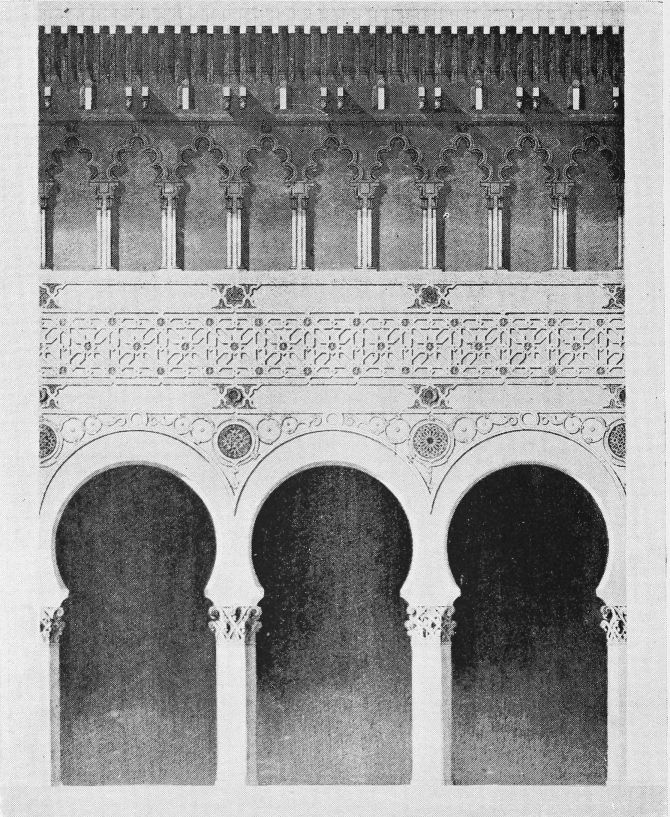
PART OF THE LONGITUDINAL SECTION OF THE ANCIENT SYNAGOGUE, NOW THE
CHURCH OF SANTA MARIA LA BLANCA
Plate 127
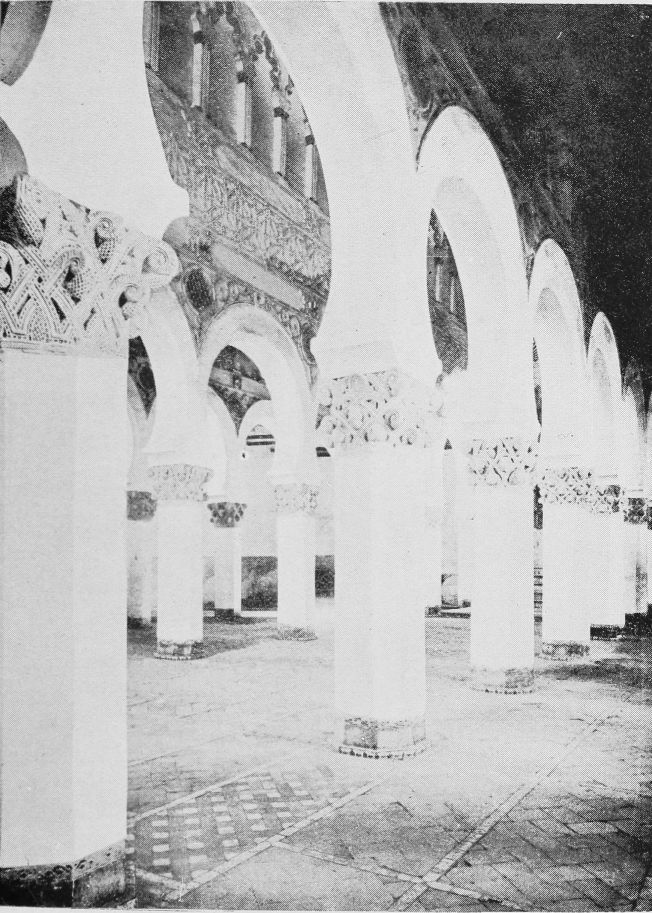
INTERIOR OF SANTA MARIA LA BLANCA
Plate 128
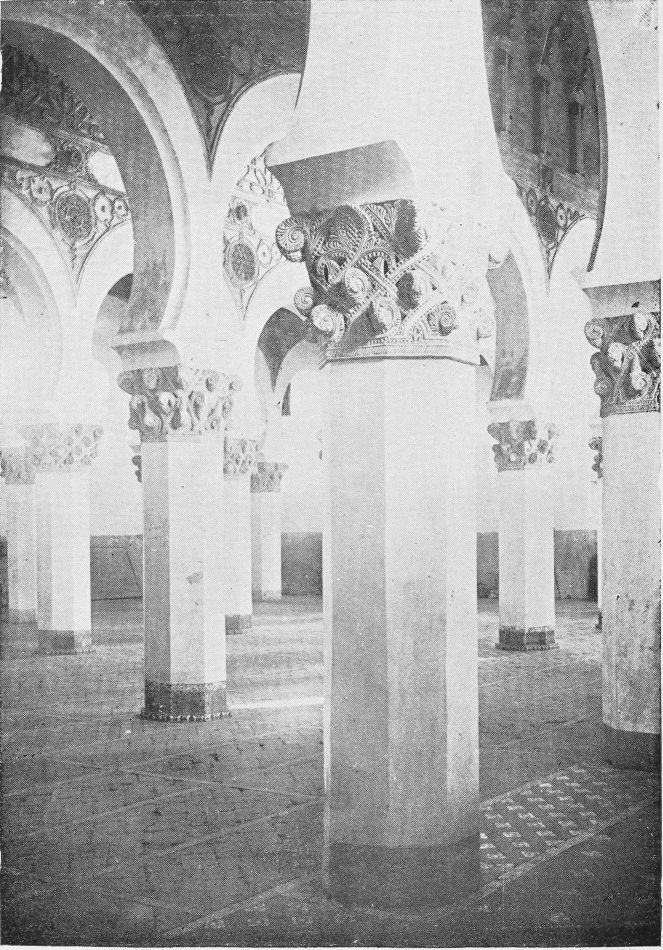
INTERIOR OF SANTA MARIA LA BLANCA
Plate 129
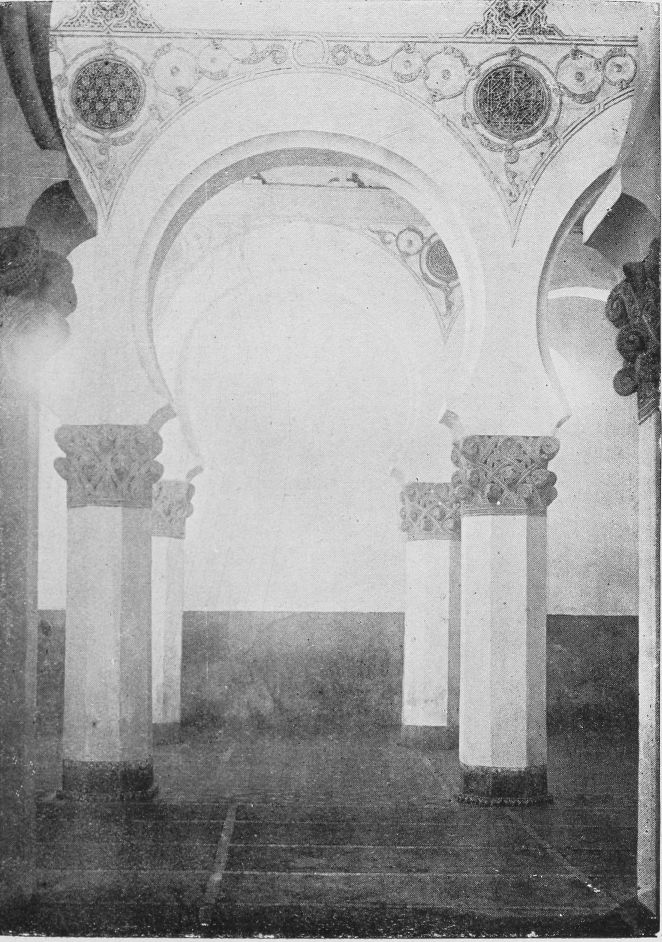
INTERIOR OF SANTA MARIA LA BLANCA
Plate 130
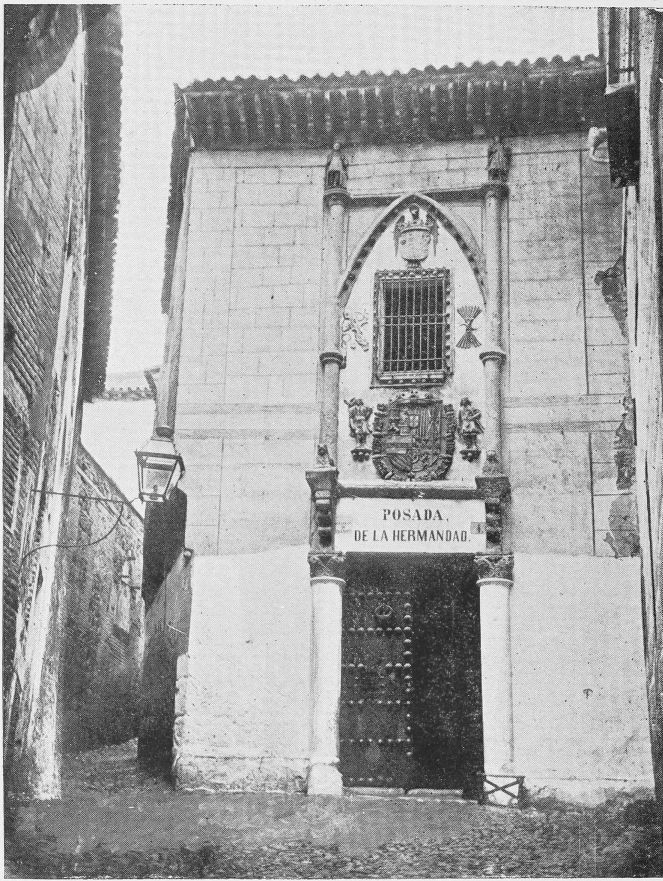
CÁRCEL DE SANTA HERMANDAD
Plate 131
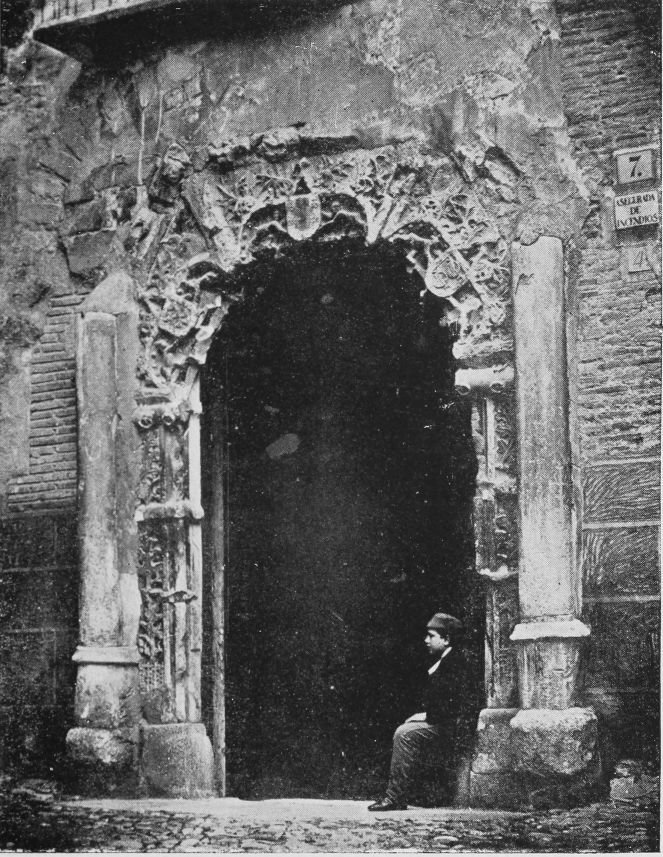
A GOTHIC DOORWAY
Plate 132
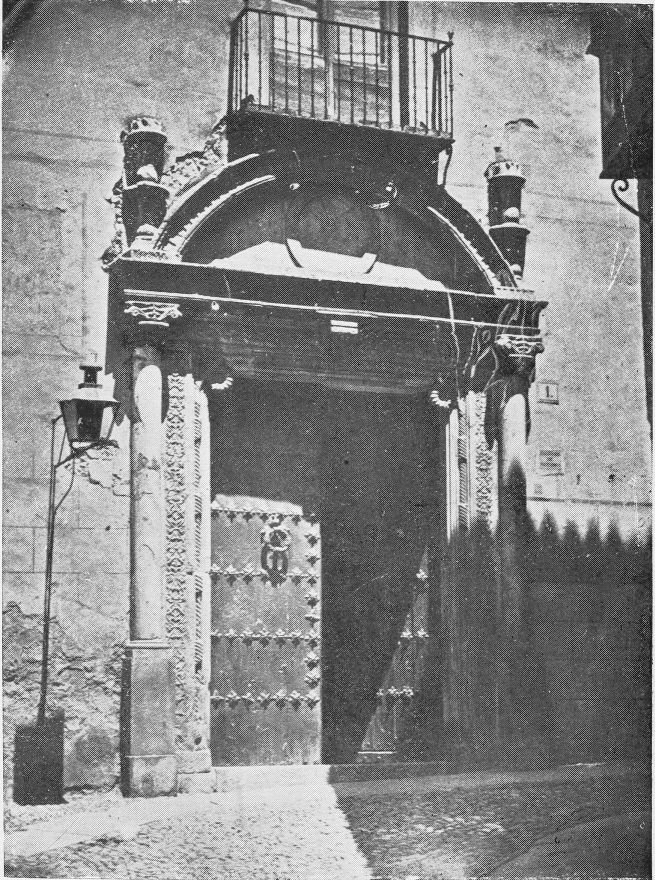
A DOORWAY
Plate 133
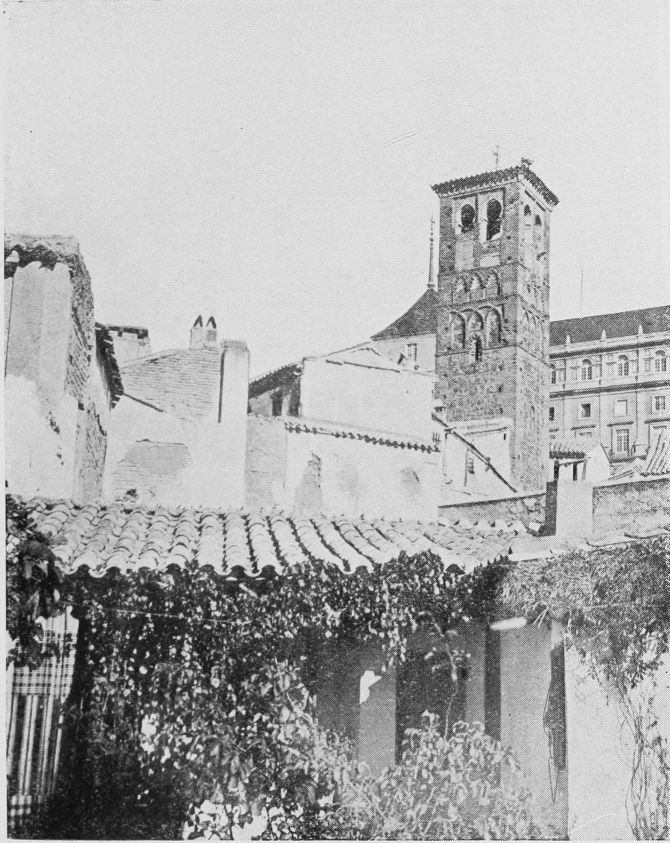
ST. MICHAEL’S TOWER. FOURTEENTH CENTURY
Plate 134
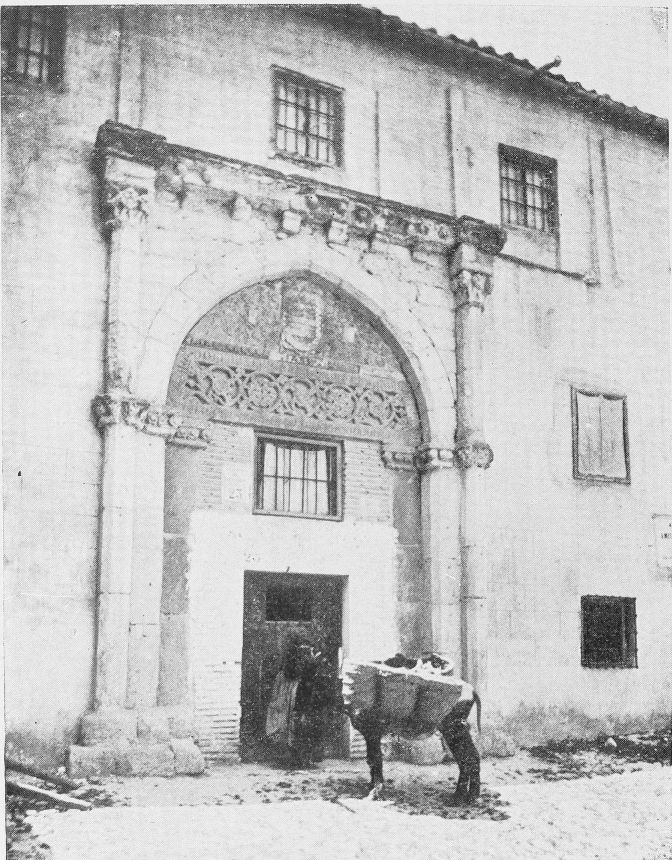
HOUSE OF THE TOLEDOS
Plate 135
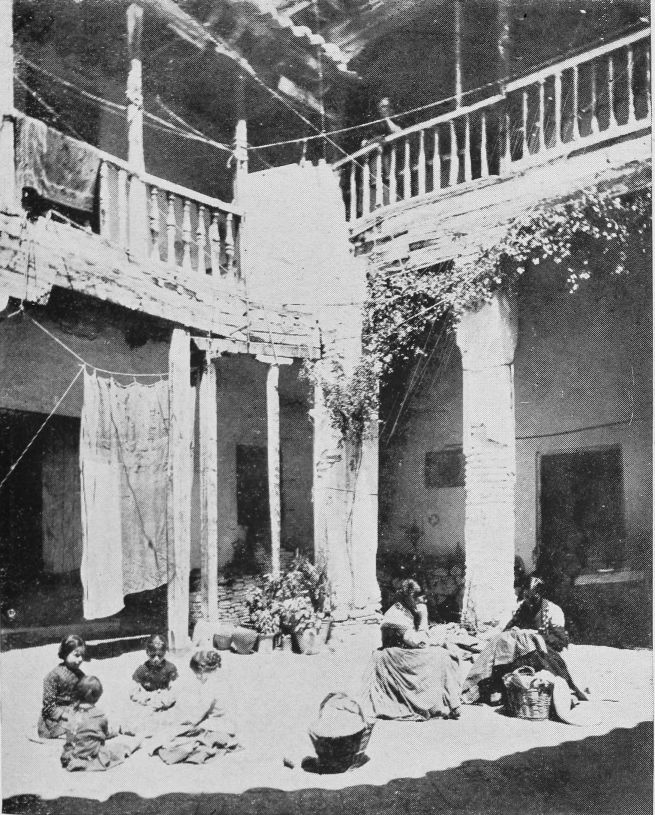
DETAILS OF A COURTYARD
Plate 136
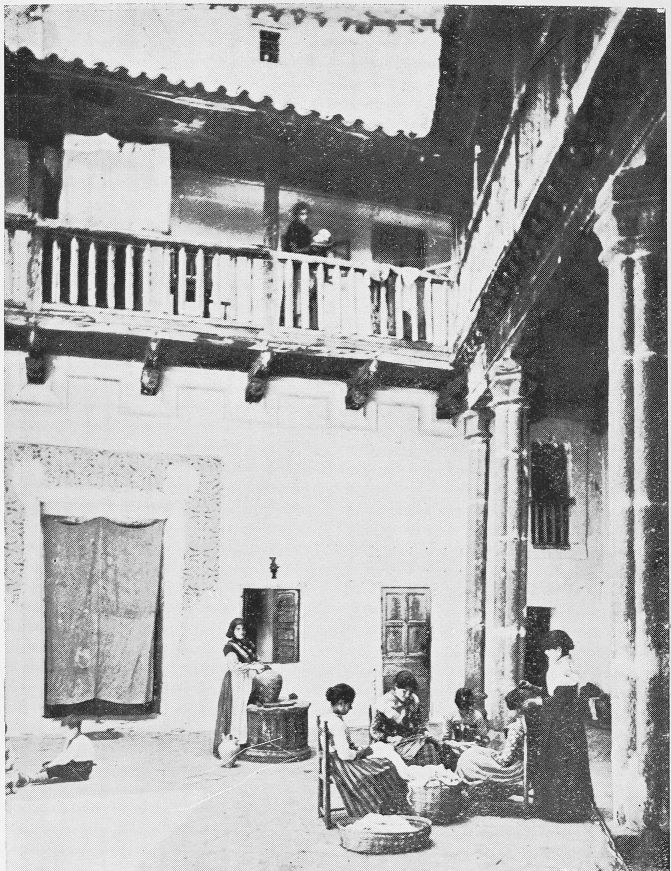
DETAILS OF A COURTYARD
Plate 137
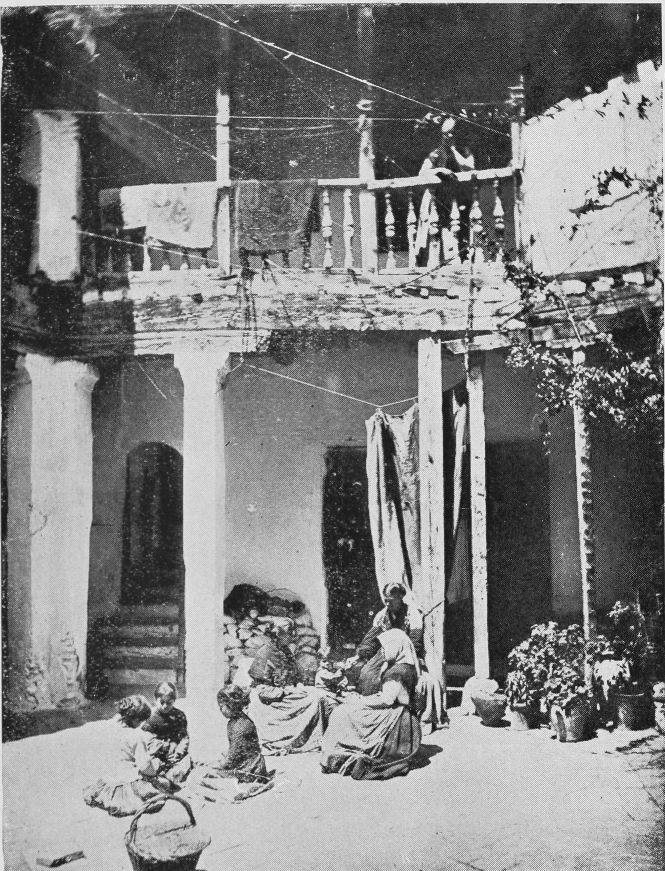
DETAILS OF A COURTYARD
Plate 138
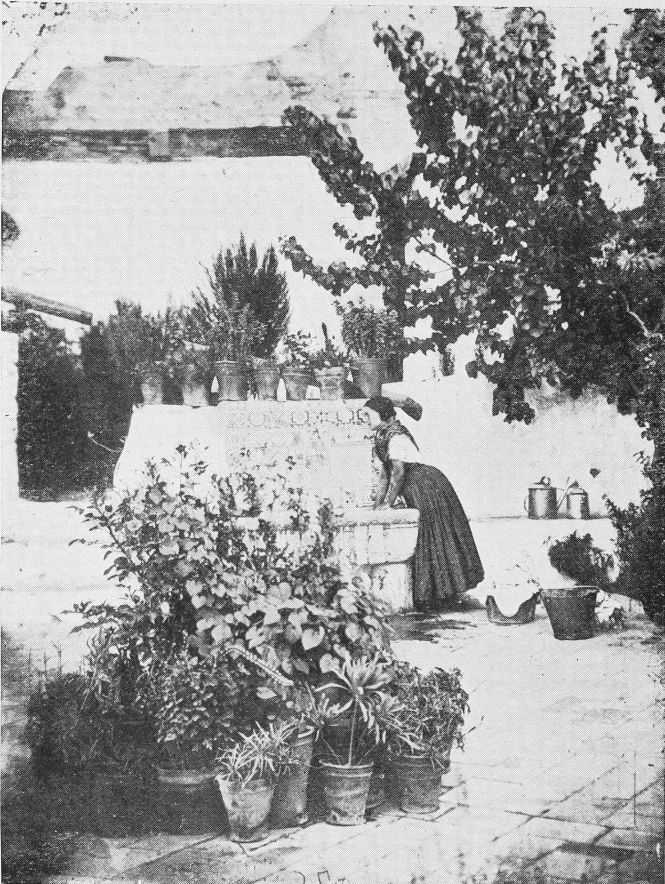
DETAILS OF A COURTYARD
Plate 139
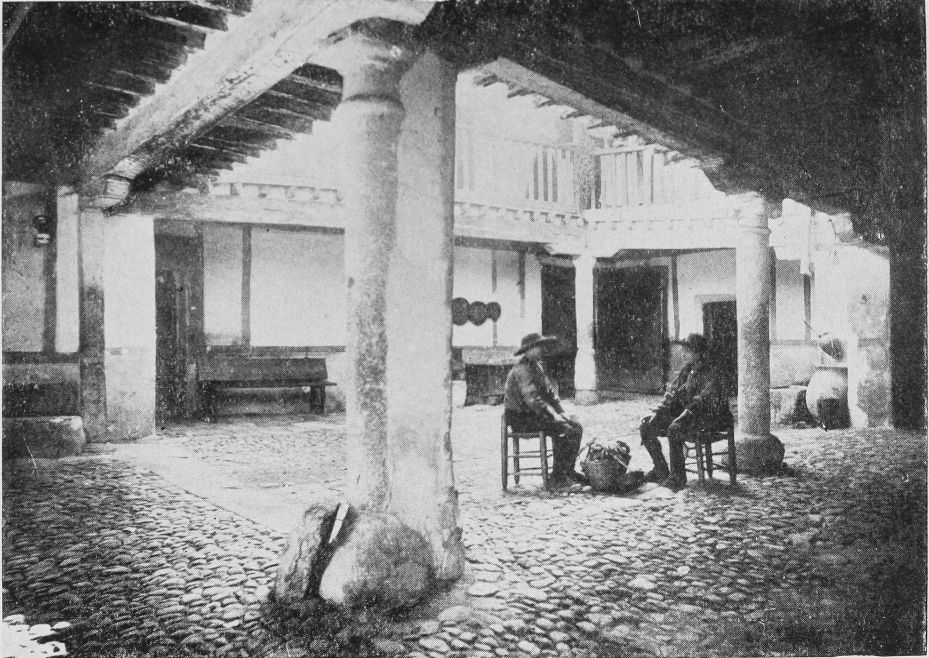
DETAILS OF A COURTYARD
Plate 140
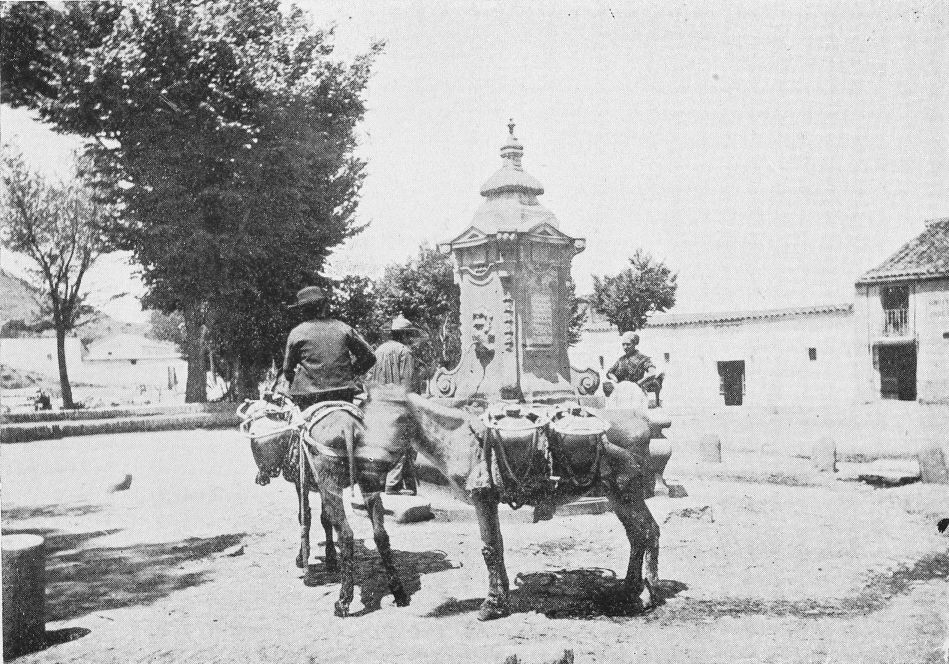
THE FOUNTAIN OF CALERAHIGO
Plate 141
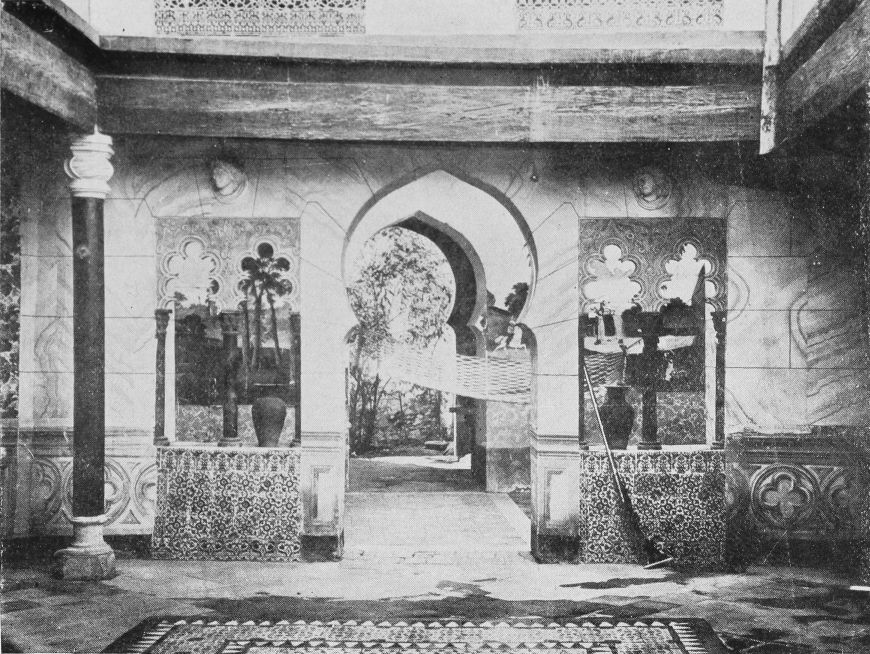
ARAB DETAILS
Plate 142
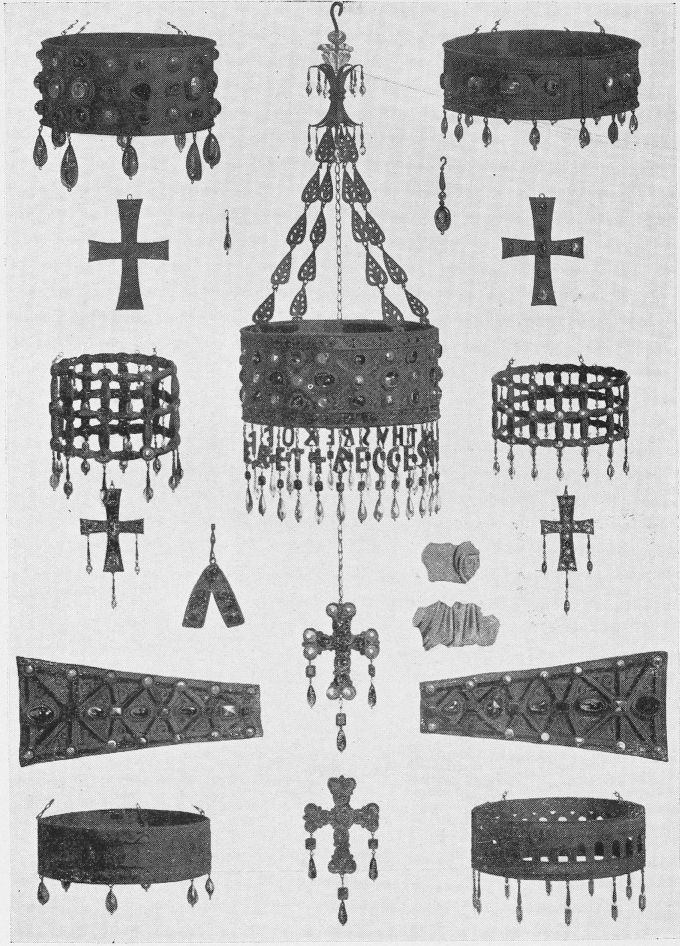
VISIGOTH CROWNS AND CROSSES OF GUARRAZAR
Plate 143
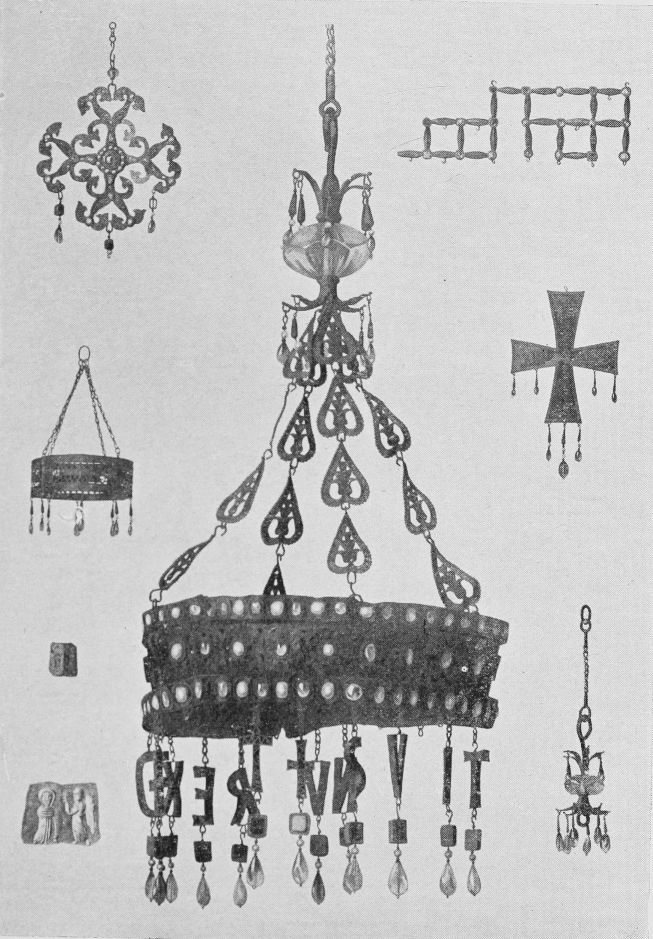
VISIGOTH CROWNS AND CROSSES OF GUARRAZAR
Plate 144
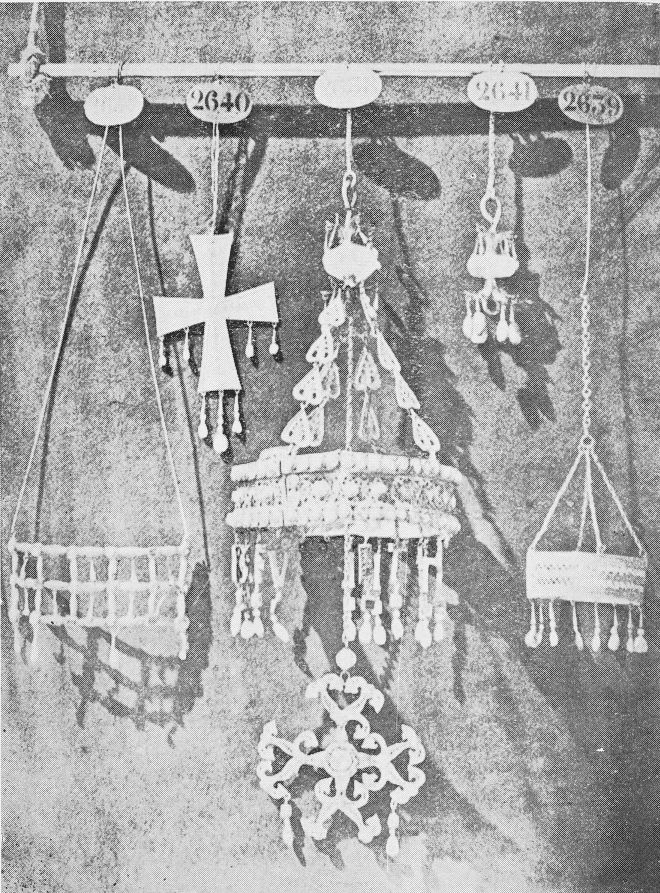
VISIGOTH CROWNS AND CROSSES FOUND AT TOLEDO AND NOW IN THE ROYAL ARMOURY
AT MADRID
Plate 145
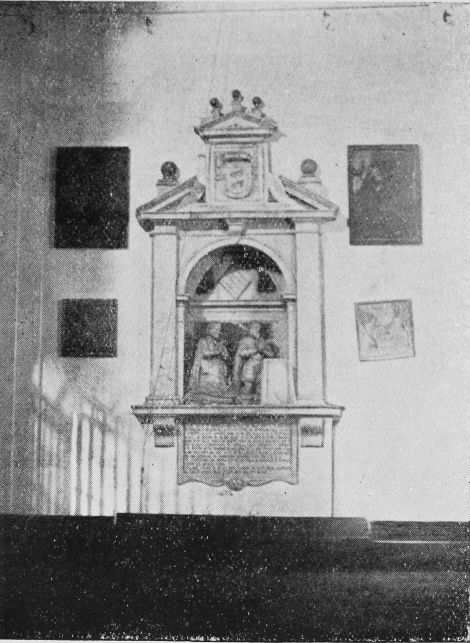
SAN PEDRO MARTIN
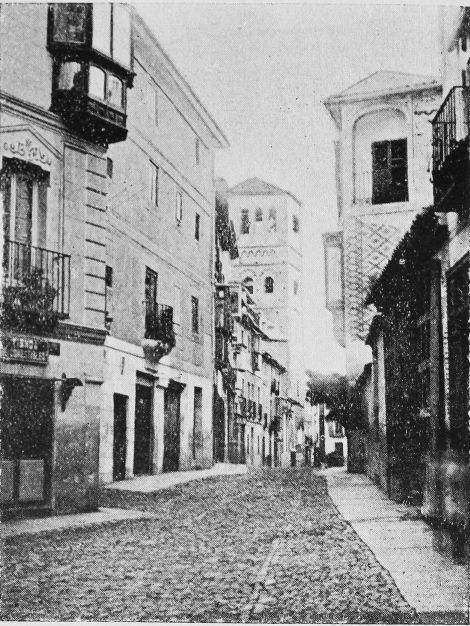
CALLE DE SANTO TOMÉ
Plate 146
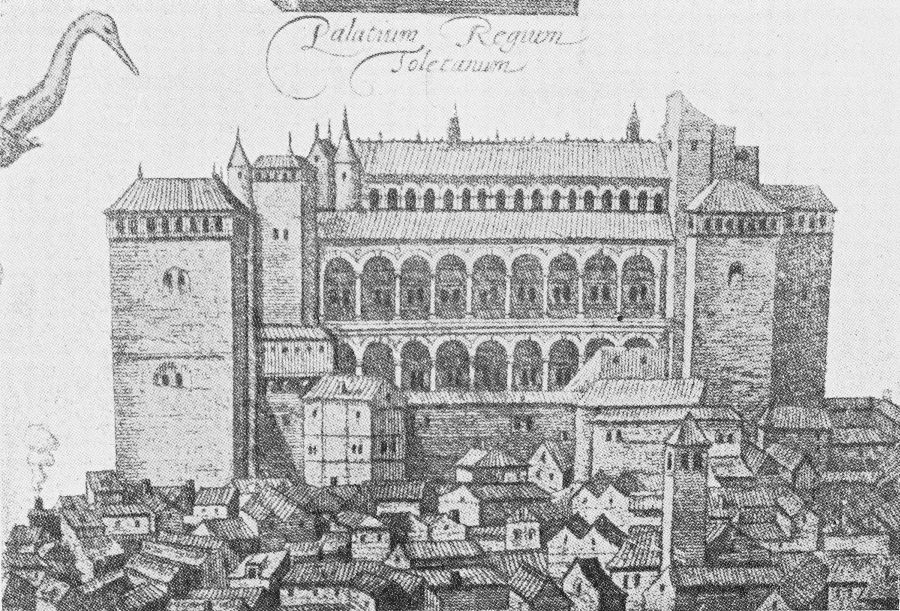
ALCAZAR ROYAL PALACE. REPRODUCTION OF THE ENGRAVING MADE IN 1566 FOR
BRAUN’S “CIVITATES ORBI TERRARUM”
Plate 147
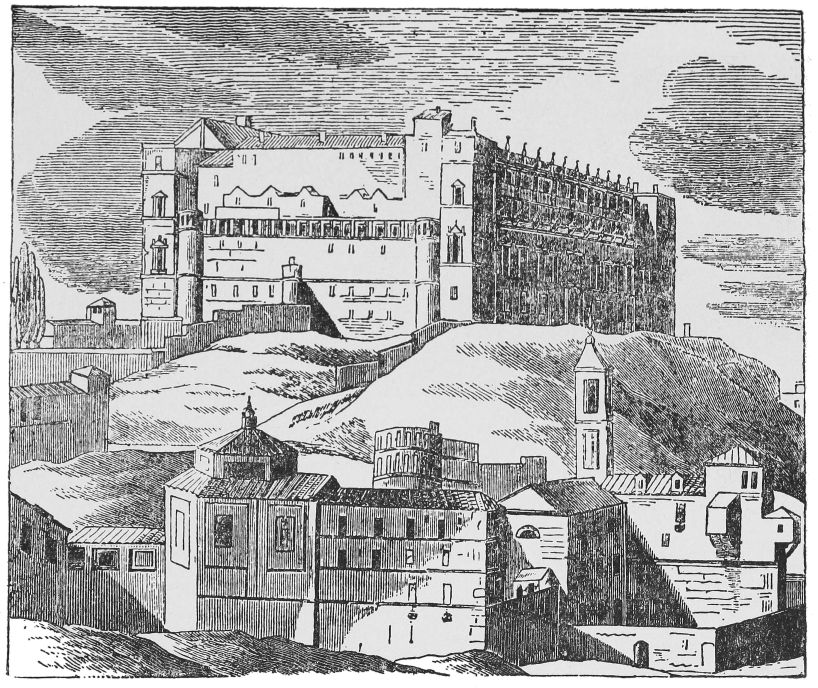
PERSPECTIVE OF THE ALCAZAR IN 1845. EAST AND NORTH FAÇADES. REPRODUCTION
OF AN ENGRAVING IN THE WORK “TOLEDO PINTORESCA”
Plate 148
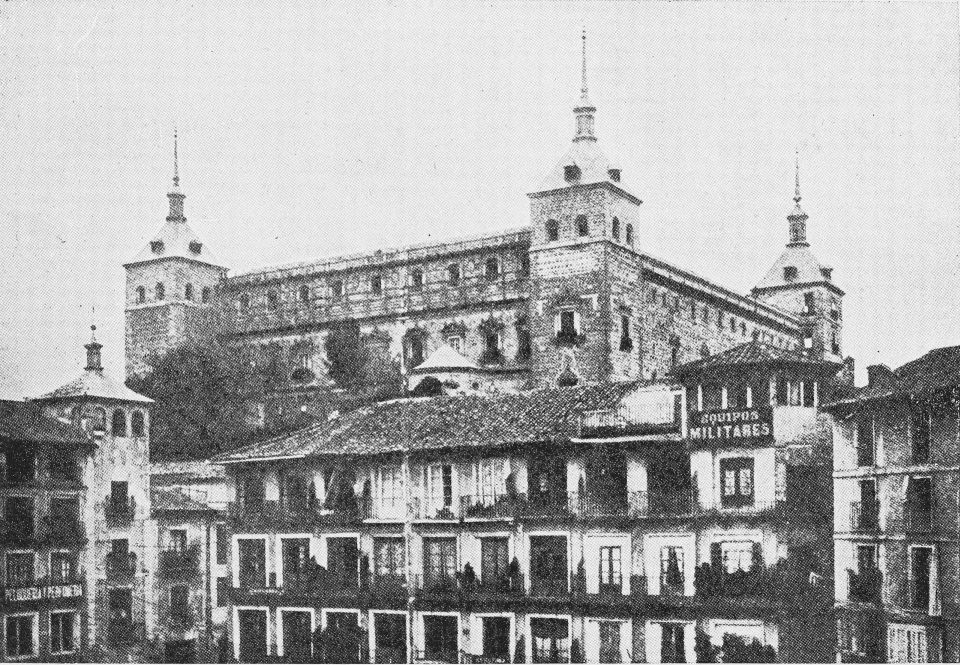
THE ALCAZAR. TAKEN FROM THE PLAZA DE ZOCODOVER
Plate 149
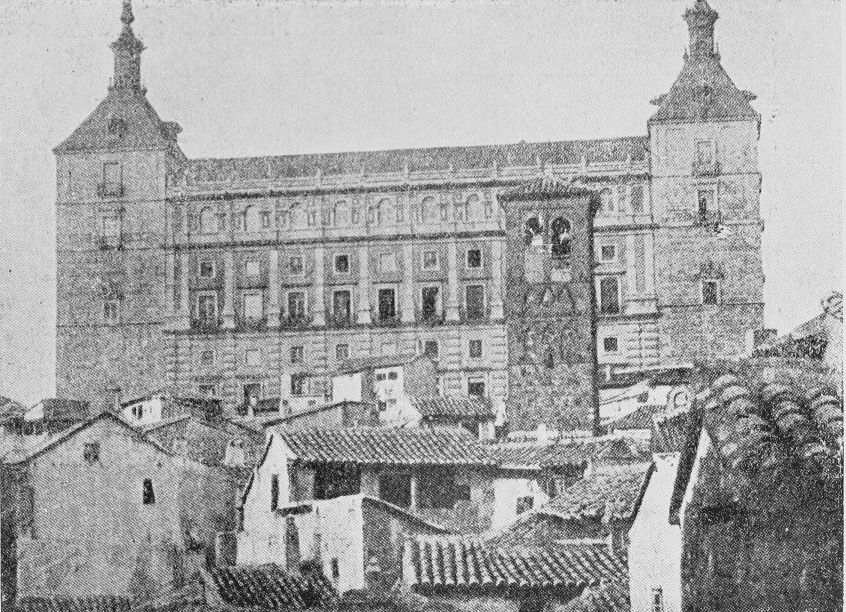
SOUTH FAÇADE OF THE ALCAZAR
Plate 150
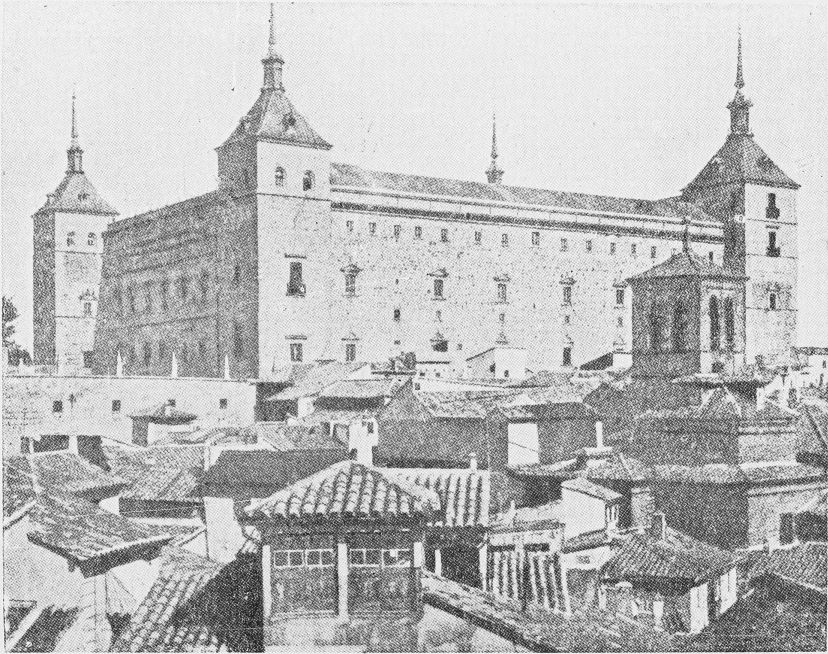
THE ALCAZAR. WEST FAÇADE AFTER THE LATEST RESTORATION
Plate 151
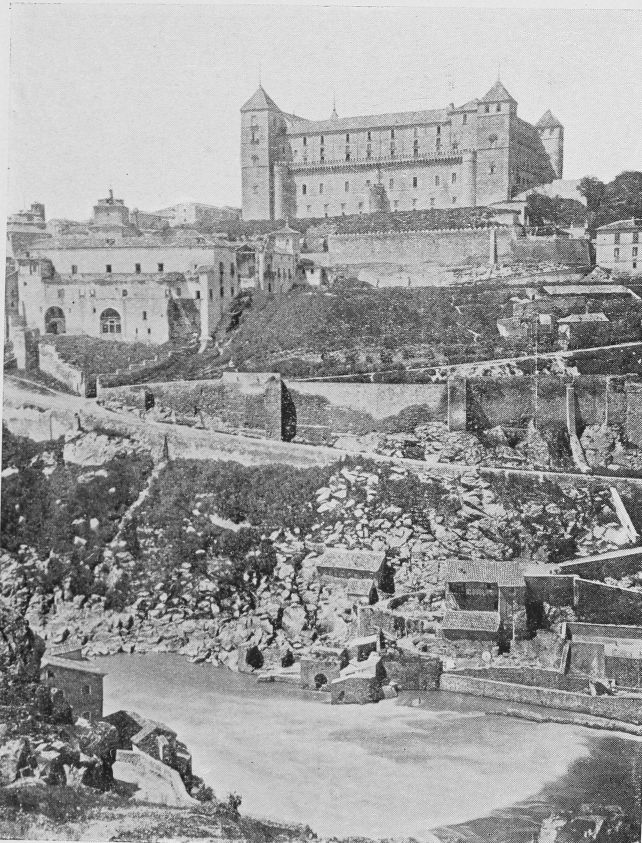
THE ALCAZAR
Plate 152
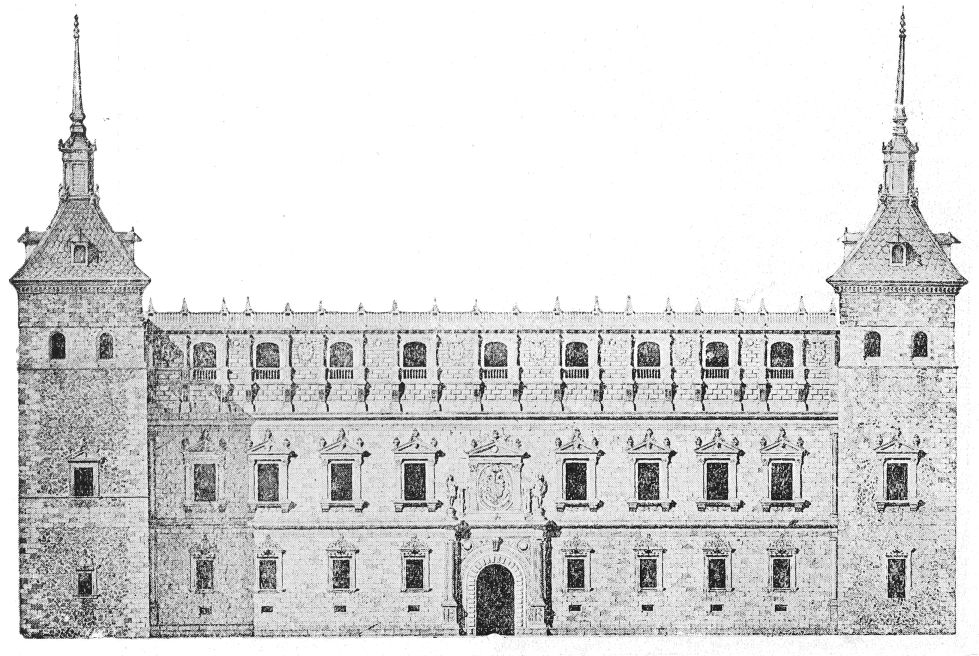
ALCAZAR. PRINCIPAL FAÇADE ON THE NORTH
Plate 153
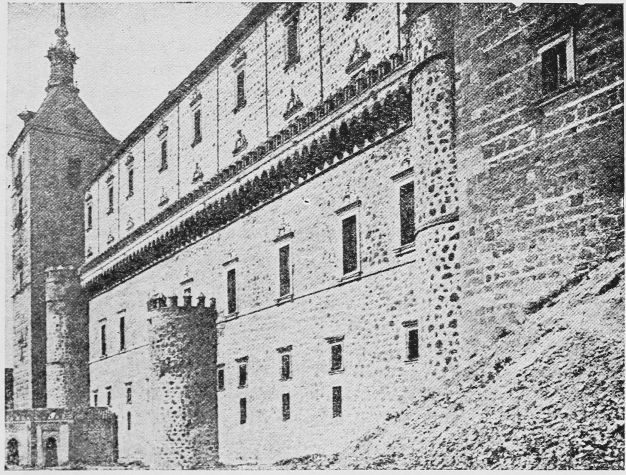
THE ALCAZAR. EAST FAÇADE, AFTER THE LATEST RESTORATION
Plate 154
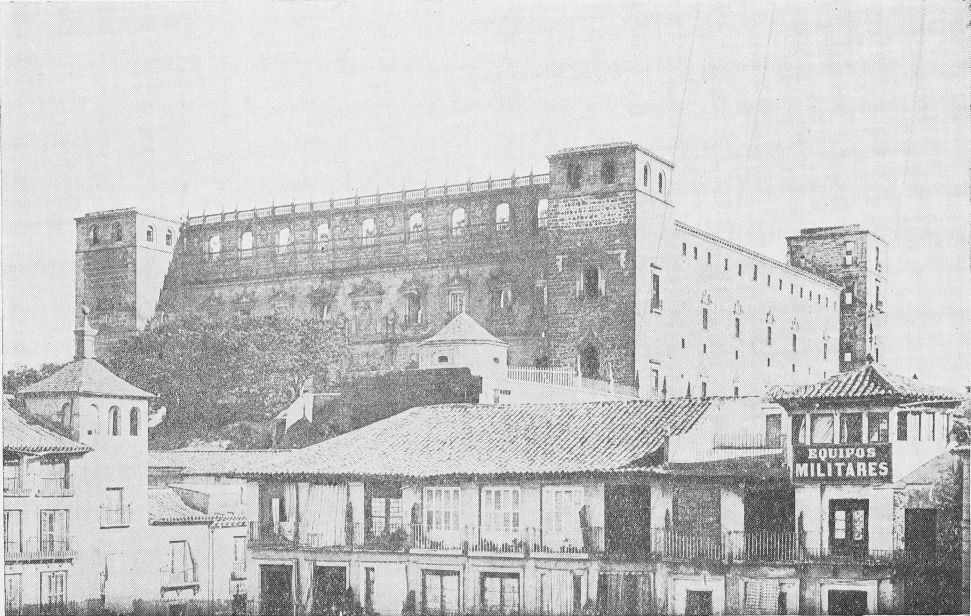
GENERAL VIEW OF THE ALCAZAR
Plate 155
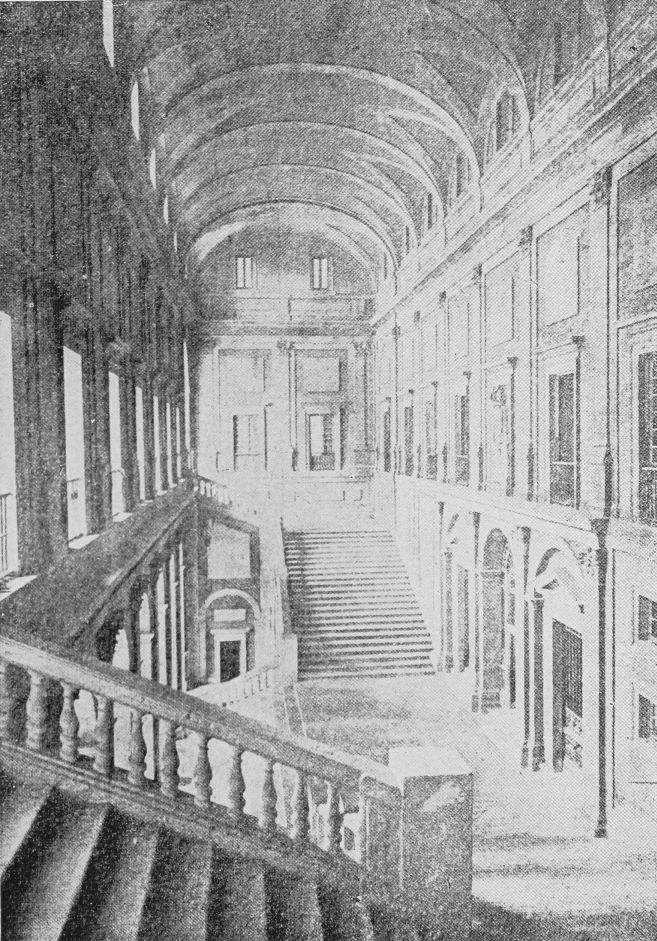
THE ALCAZAR. THE PRINCIPAL STAIRCASE
Plate 156
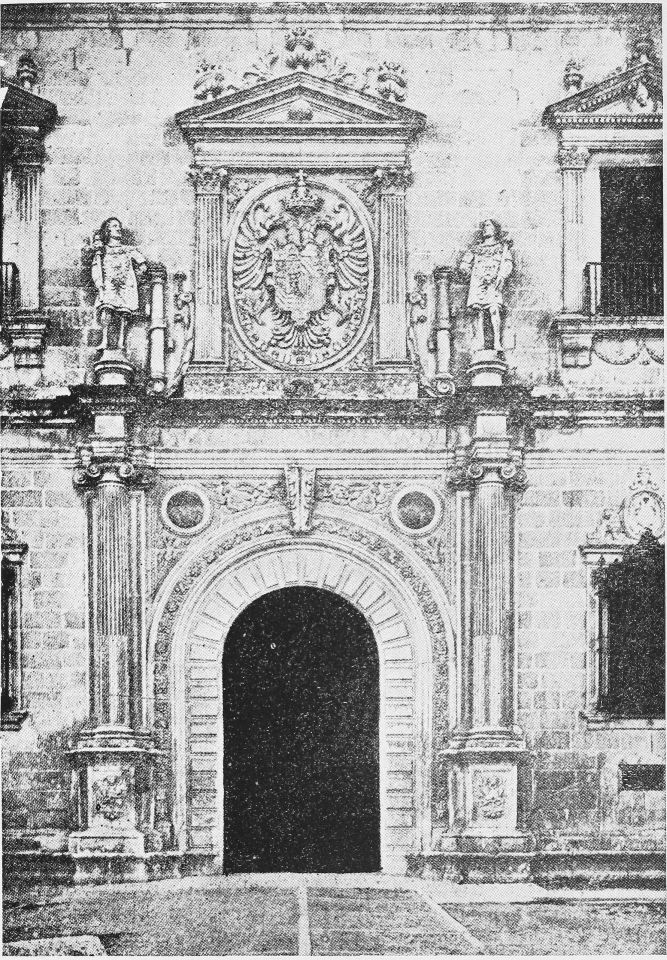
THE ALCAZAR. PRINCIPAL NORTH PORTAL
Plate 157
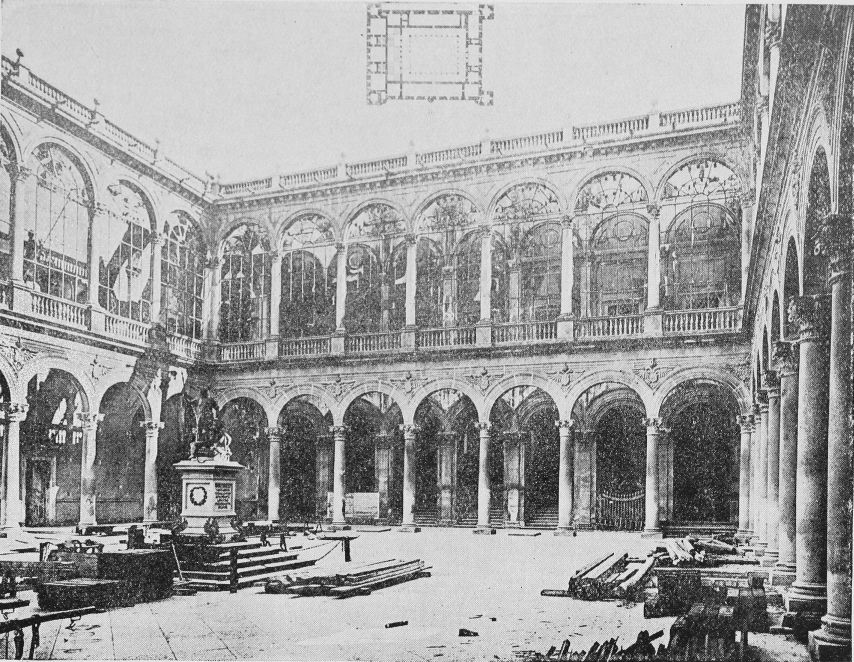
THE ALCAZAR. COURT AND PLAN
Plate 158
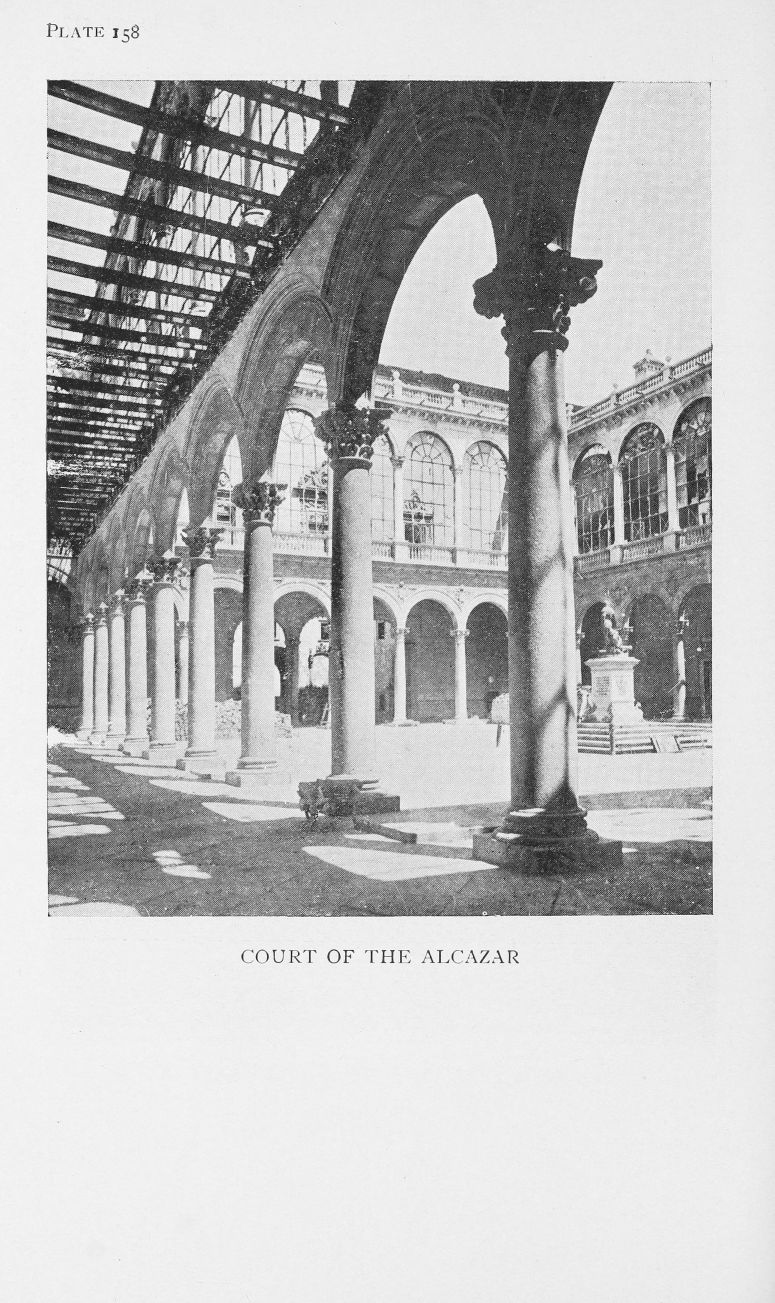
COURT OF THE ALCAZAR
Plate 159
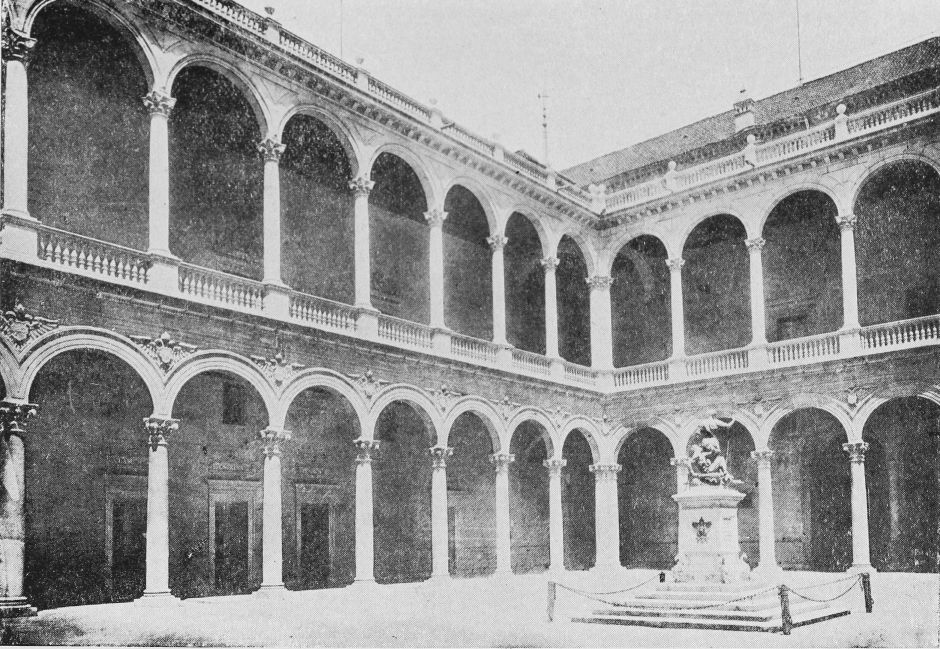
COURT IN THE ALCAZAR. AFTER THE LATEST RESTORATION
Plate 160
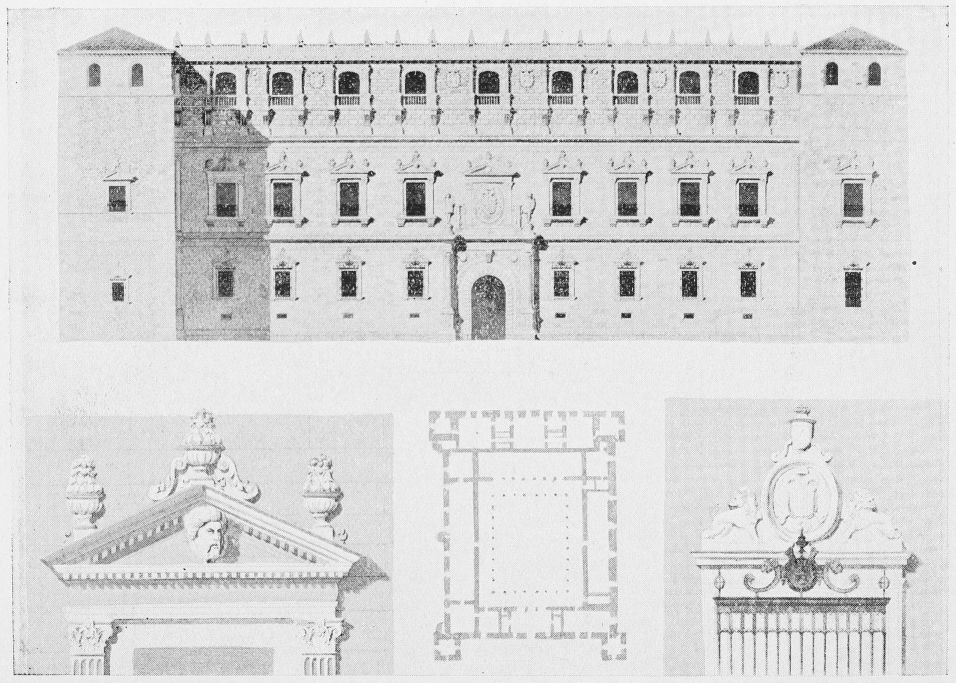
THE ALCAZAR. PLAN AND DETAILS. NORTH FAÇADE
Plate 161
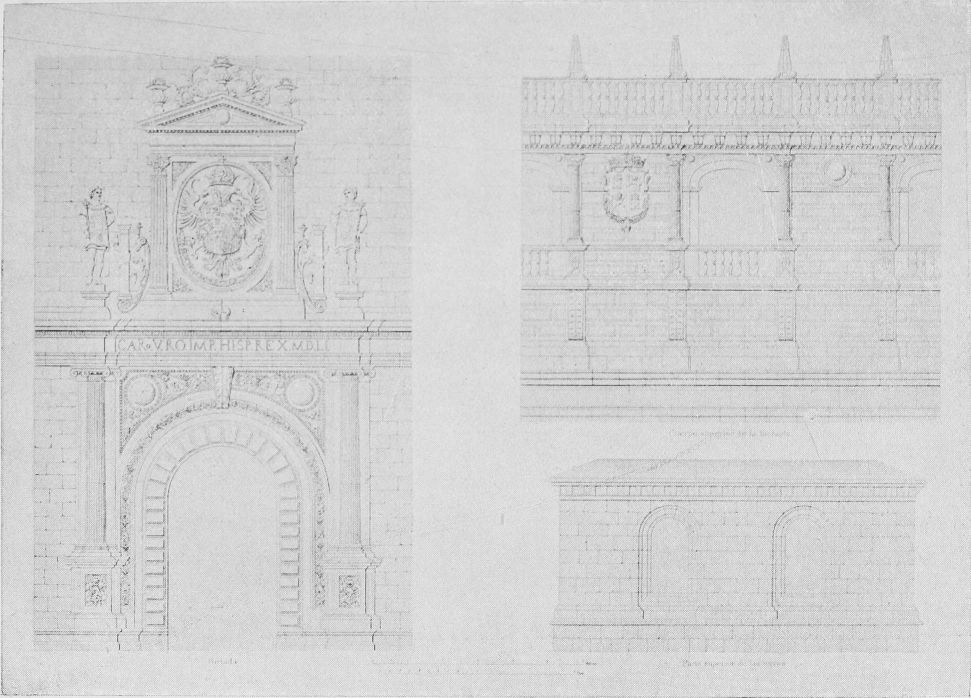
DETAILS OF THE NORTH FAÇADE OF THE ALCAZAR
Plate 162
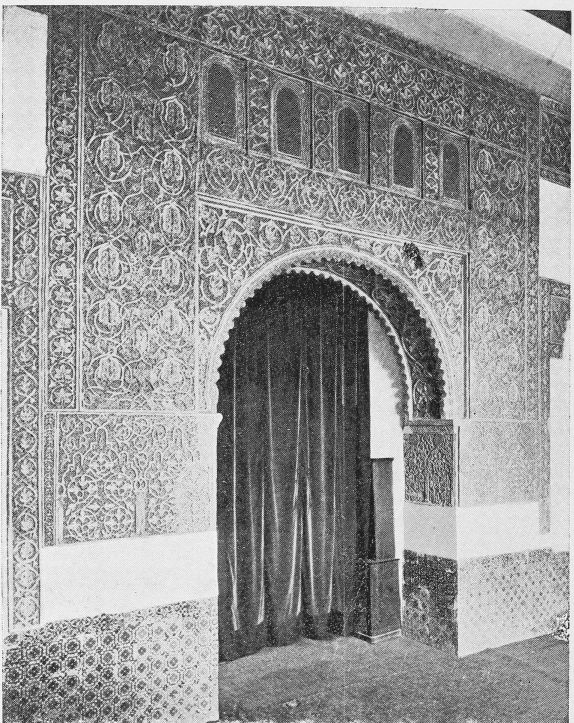
DOOR OF THE HALL OF THE HOUSE OF MESA
Plate 163
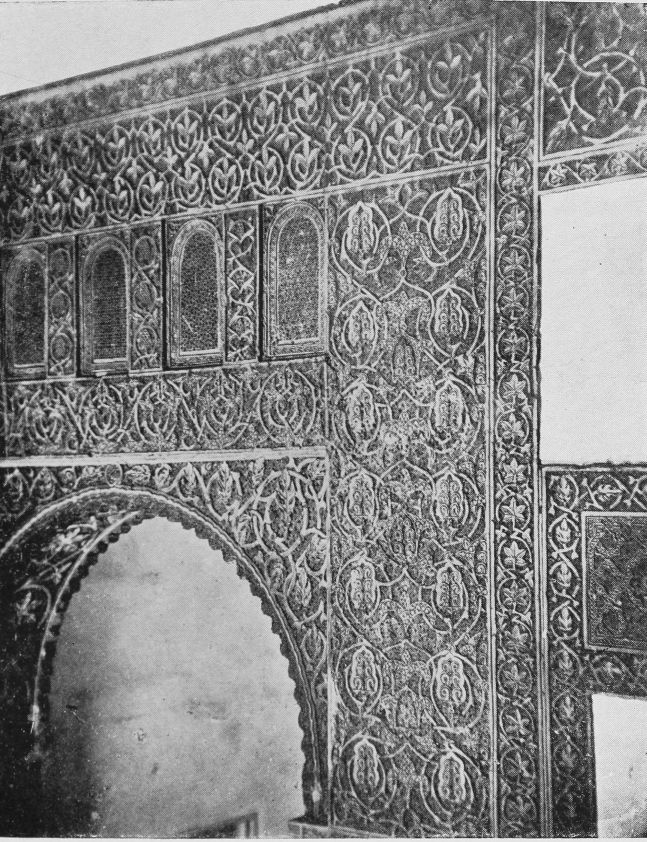
DETAILS OF THE HOUSE OF MESA
Plate 164
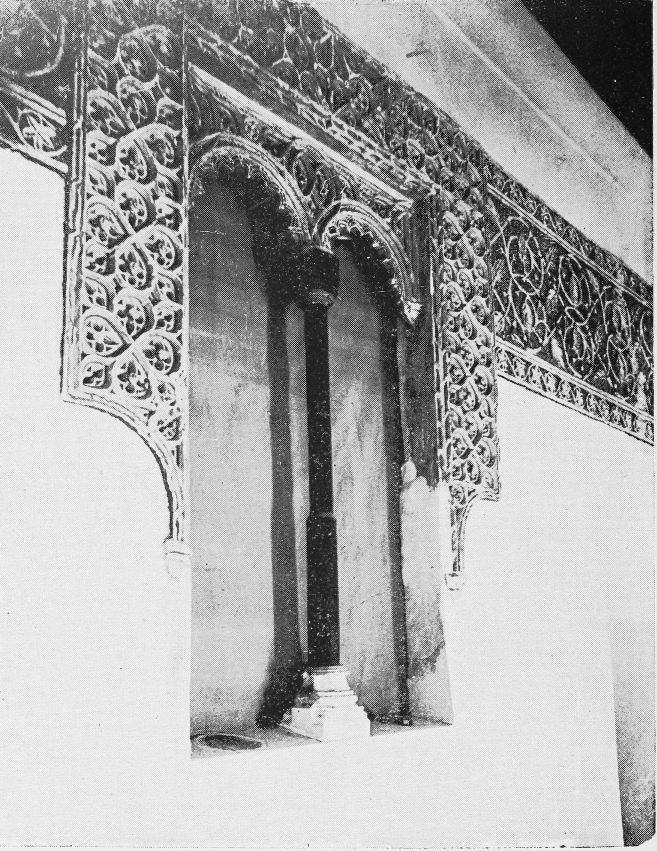
DETAILS OF THE HOUSE OF MESA
Plate 165
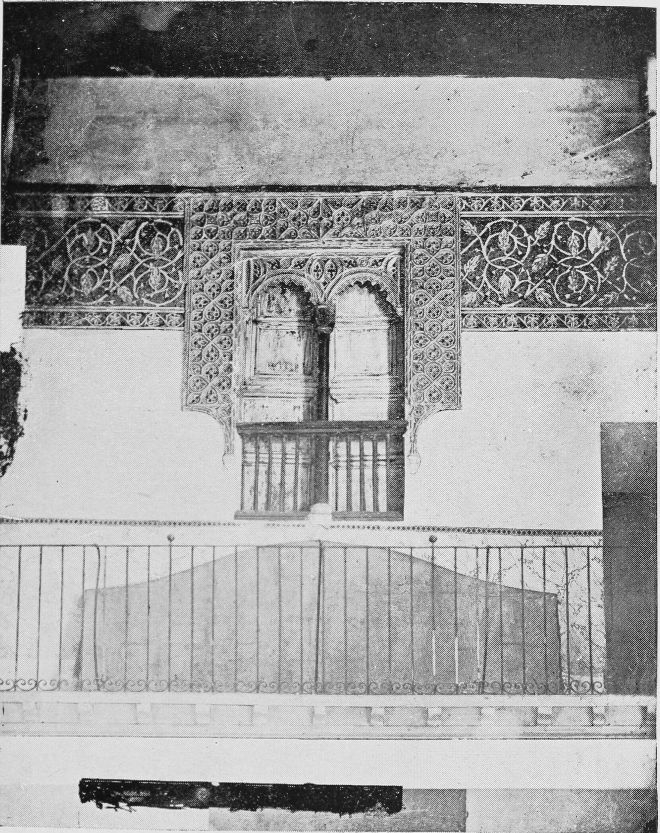
DETAILS OF THE HOUSE OF MESA
Plate 166
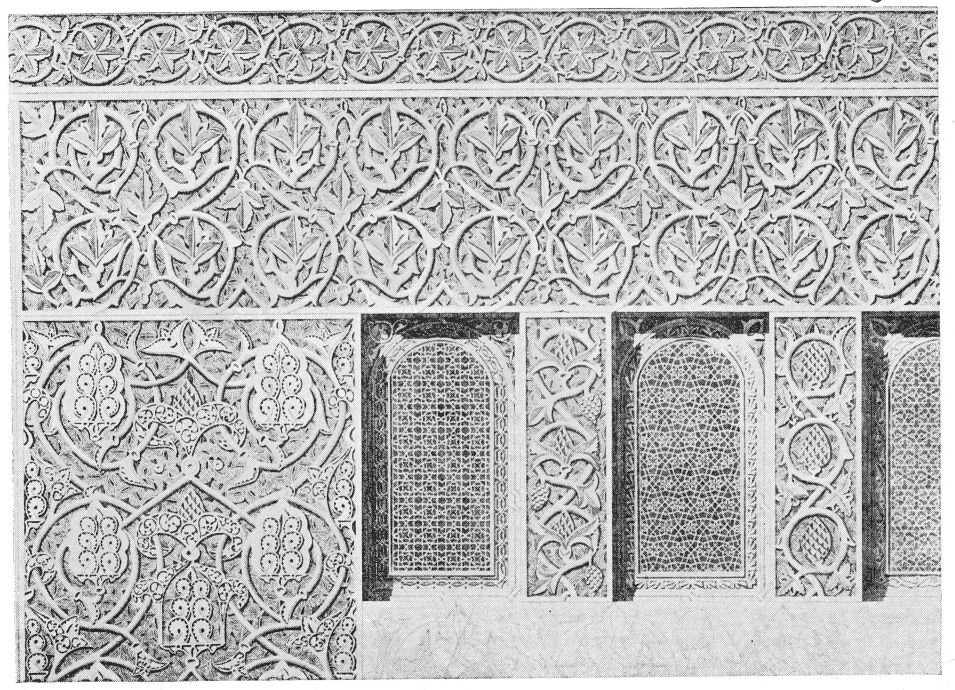
DETAILS OF THE HALL OF THE HOUSE OF MESA
Plate 167
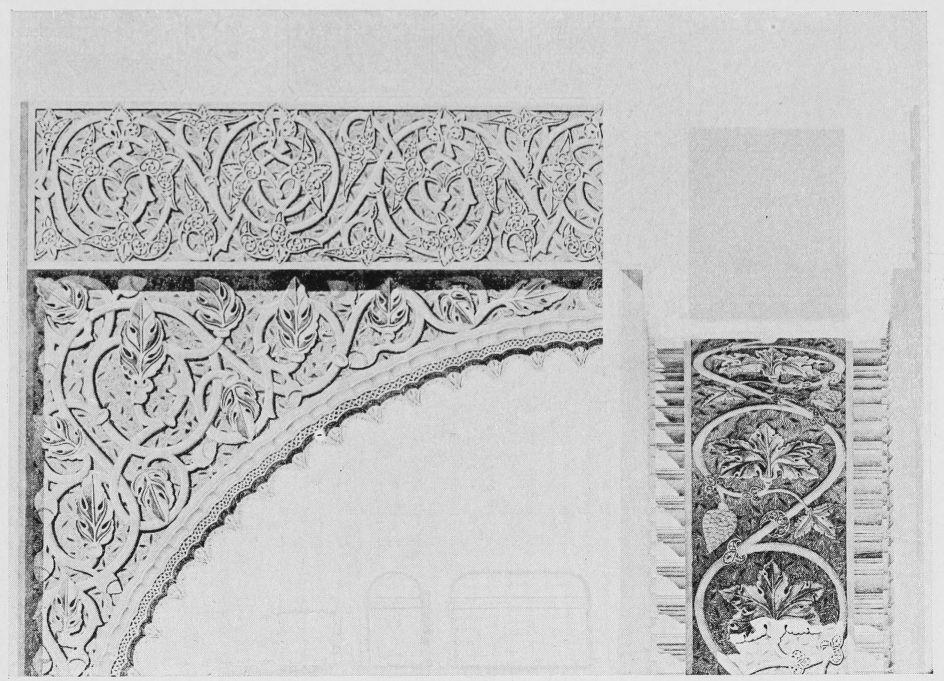
DETAILS OF THE HALL OF THE HOUSE OF MESA
Plate 168
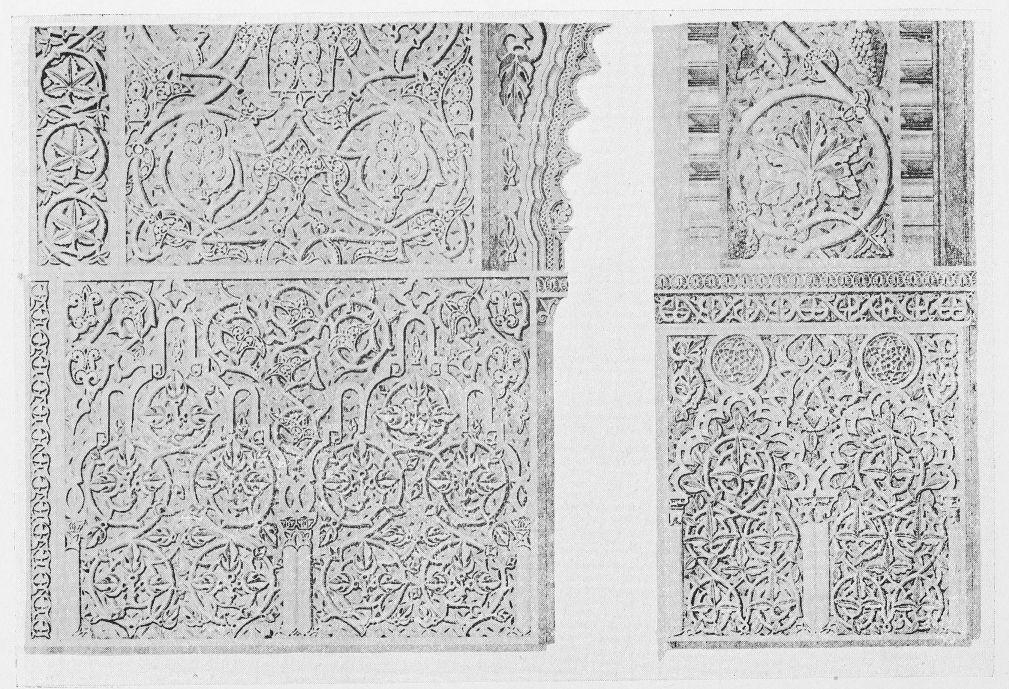
DETAILS OF THE HALL OF THE HOUSE OF MESA
Plate 169
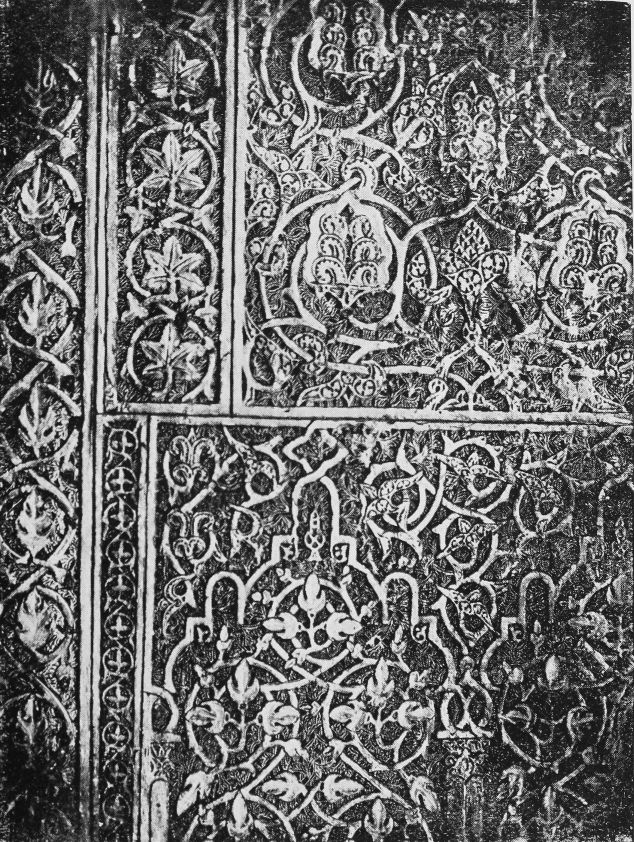
DETAILS OF THE HOUSE OF MESA
Plate 170
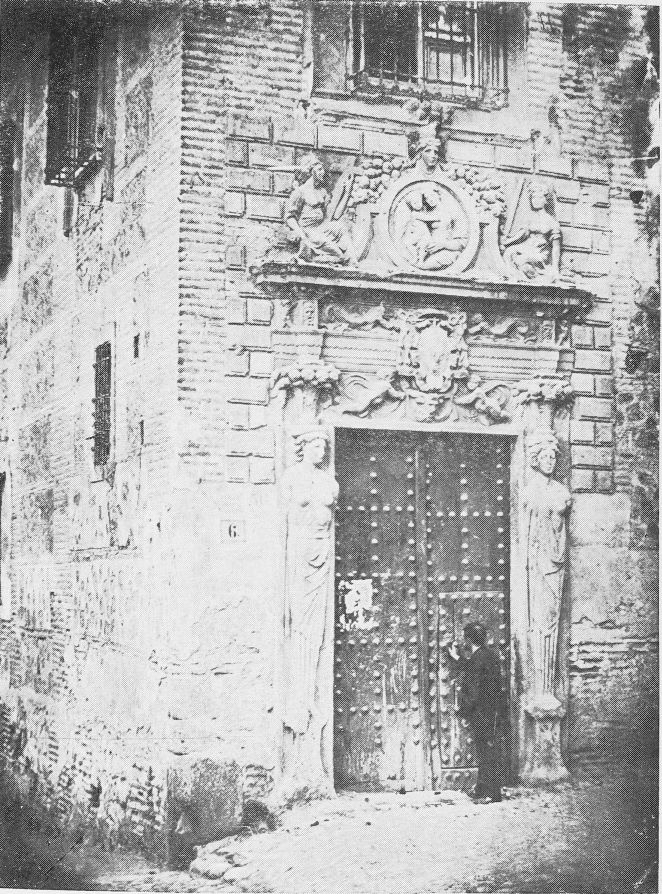
DOORWAY OF THE COLLEGE OF THE INFANTES. SIXTEENTH CENTURY
Plate 171
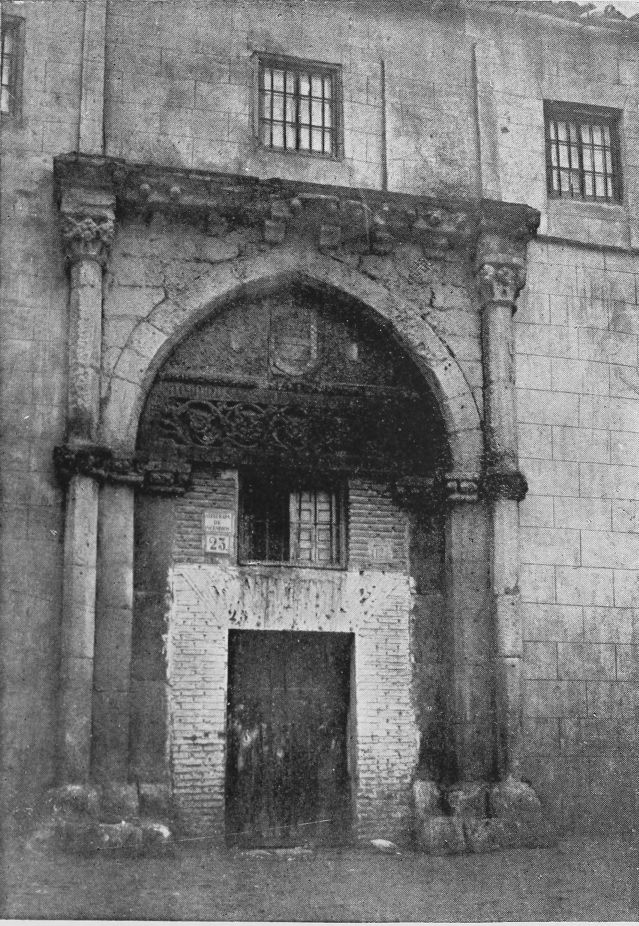
DOORWAY OF THE PALACE OF THE MARTINEZ
Plate 172
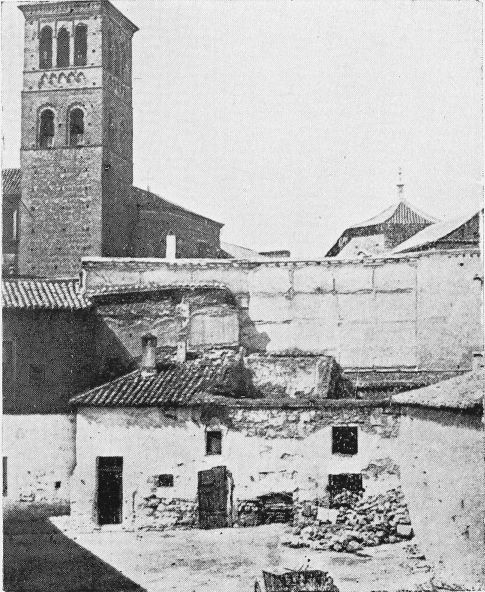
ROMAN TOWER OF SAN JUAN DE LOS REYES
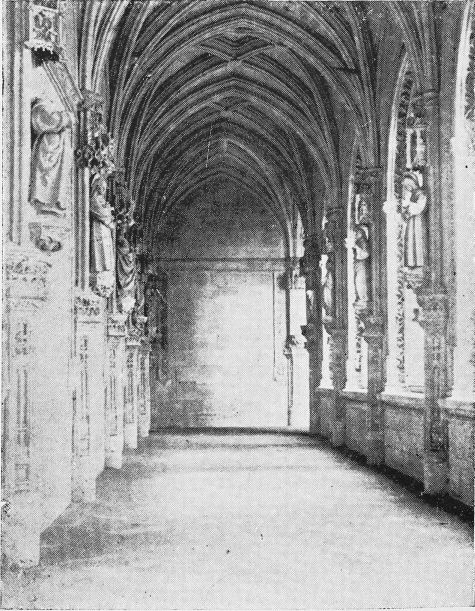
CLOISTERS OF SAN JUAN DE LOS REYES
Plate 173
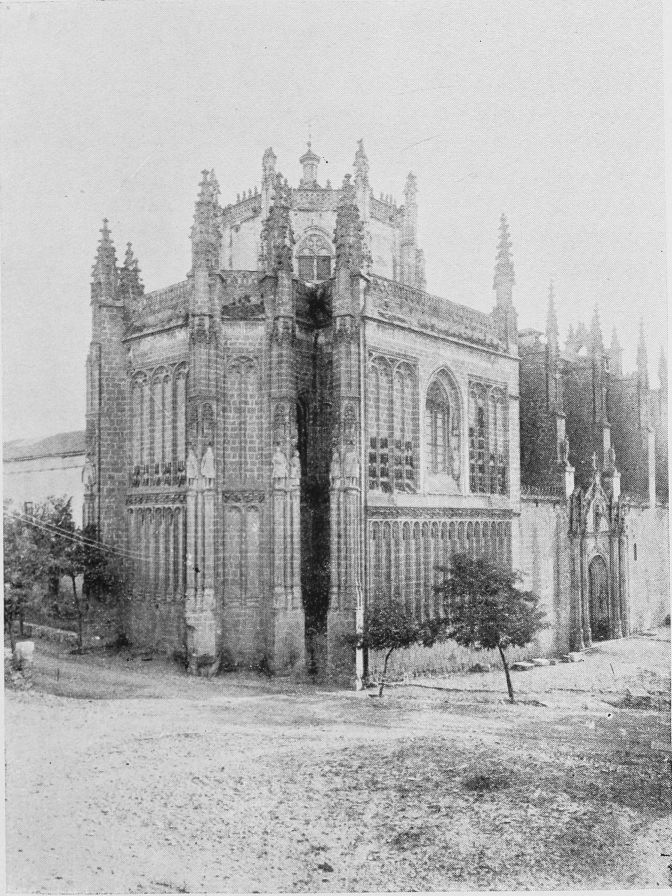
EXTERIOR OF SAN JUAN DE LOS REYES
Plate 174
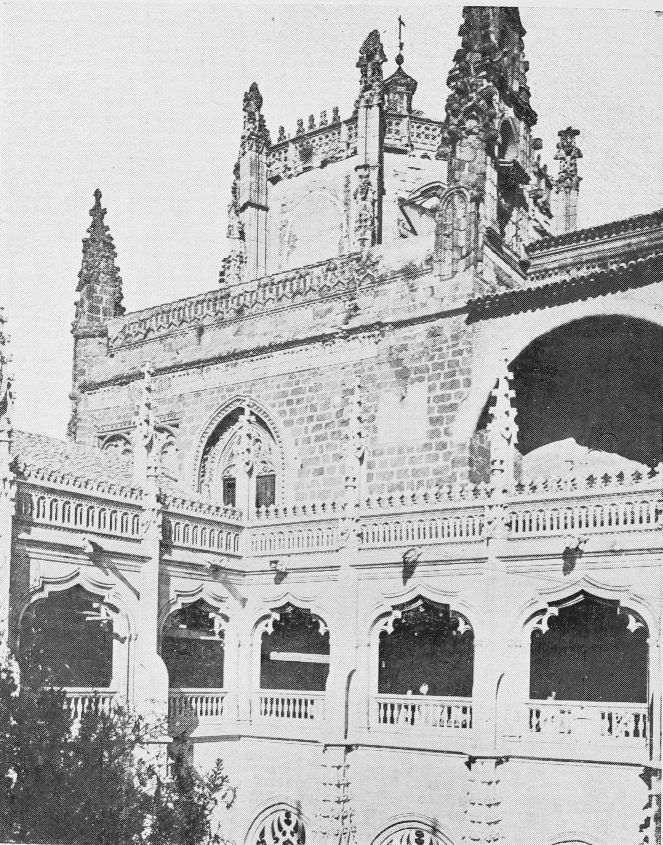
SAN JUAN DE LOS REYES
Plate 175
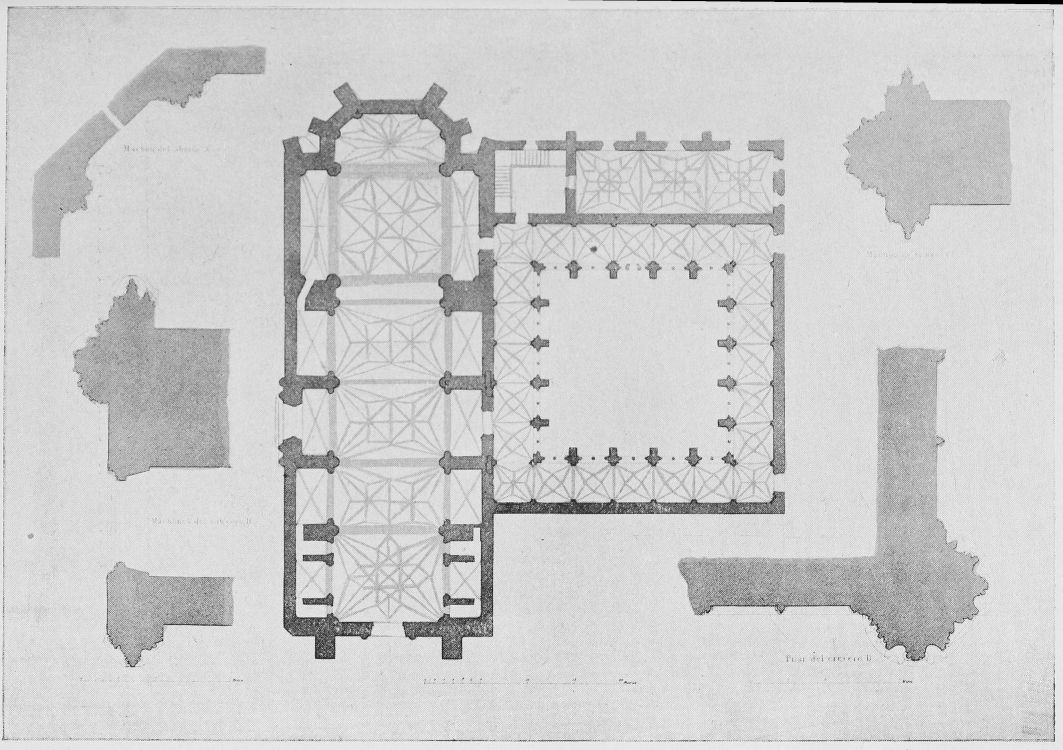
PLAN OF THE CHURCH AND PROCESSIONAL CLOISTER OF SAN JUAN DE LOS REYES
Plate 176
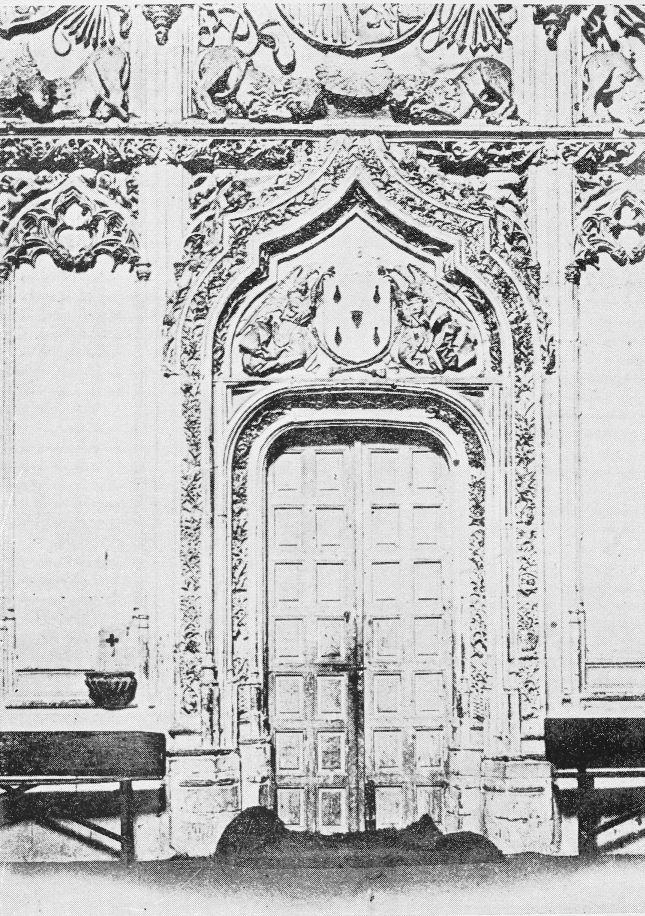
DOORWAY IN SAN JUAN DE LOS REYES
Plate 177
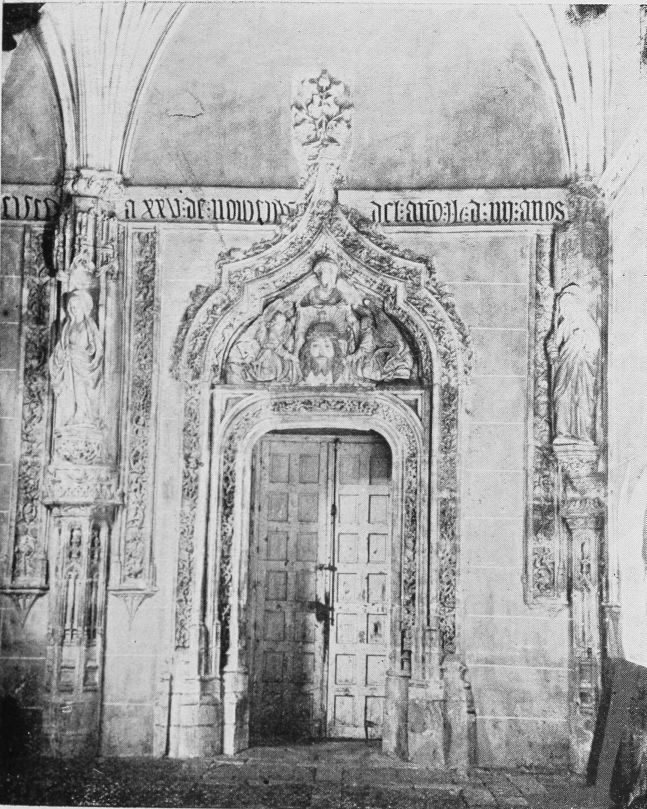
GOTHIC DOORWAY IN SAN JUAN DE LOS REYES
Plate 178
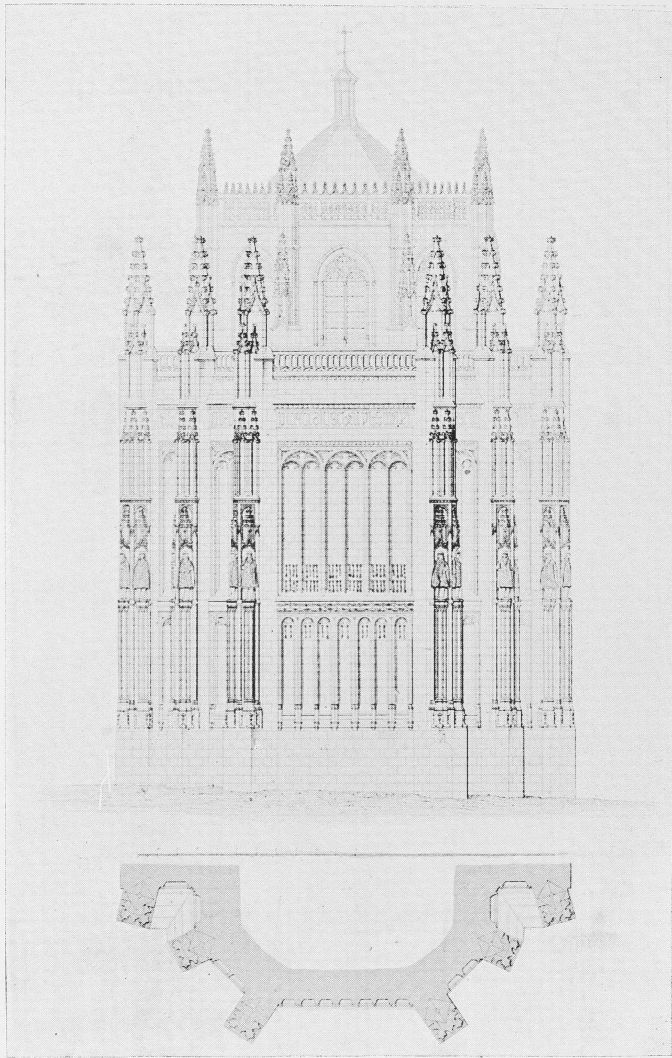
EXTERIOR OF THE ARCH OF SAN JUAN DE LOS REYES
Plate 179
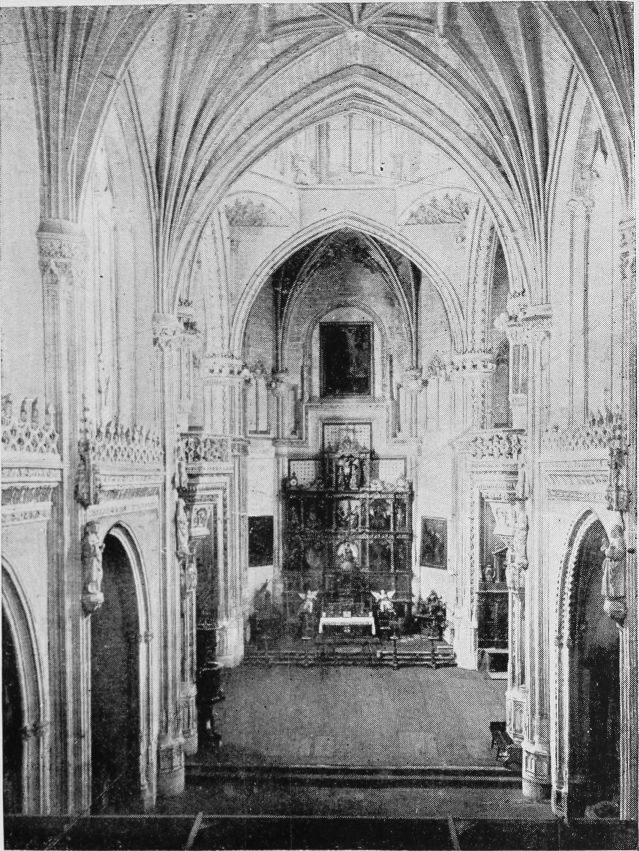
INTERIOR OF SAN JUAN DE LOS REYES
Plate 180
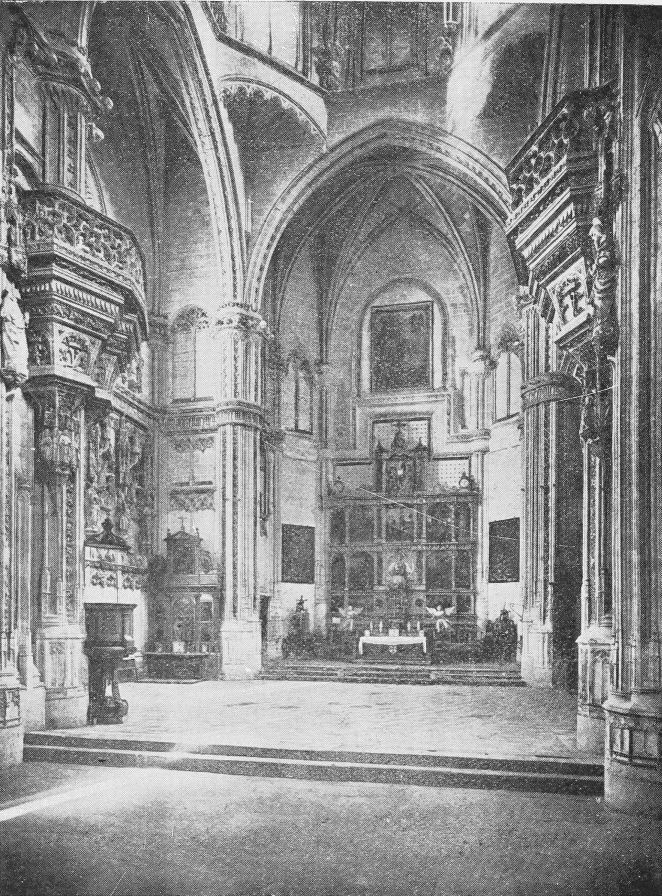
INTERIOR OF SAN JUAN DE LOS REYES
Plate 181
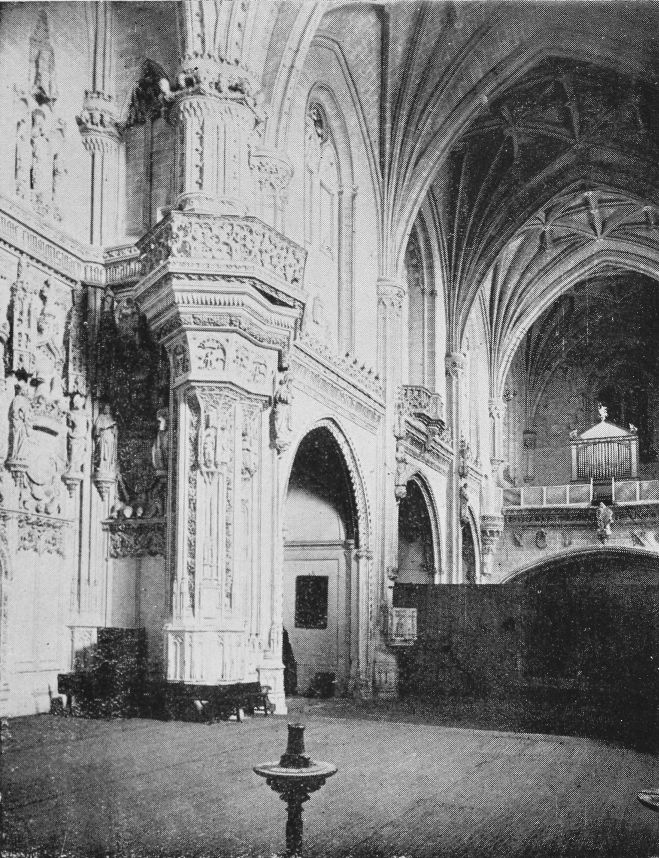
INTERIOR OF SAN JUAN DE LOS REYES
Plate 182
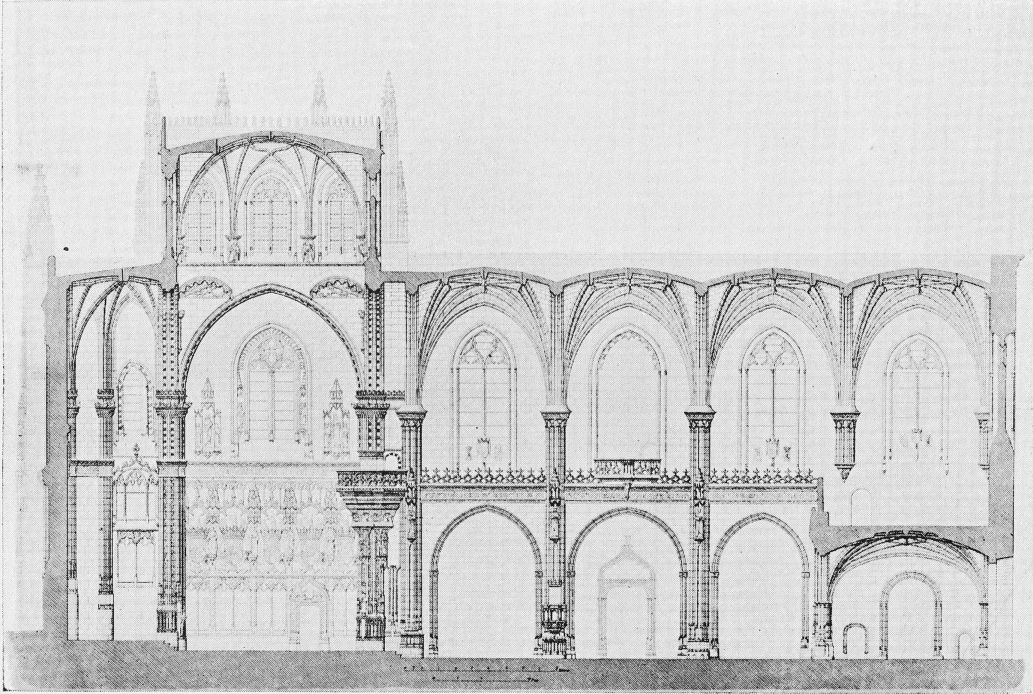
LONGITUDINAL SECTION OF THE CHURCH OF SAN JUAN DE LOS REYES
Plate 183
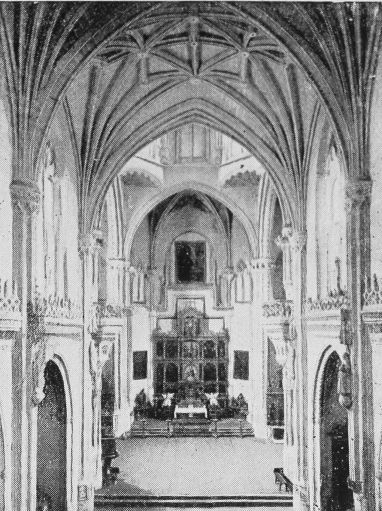
INTERIOR, SAN JUAN DE LOS REYES
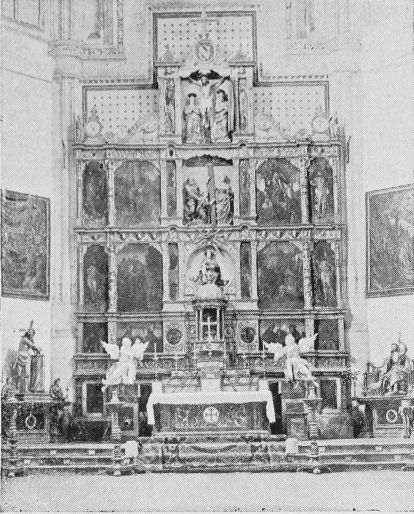
RETABLO, SAN JUAN DE LOS REYES
Plate 184
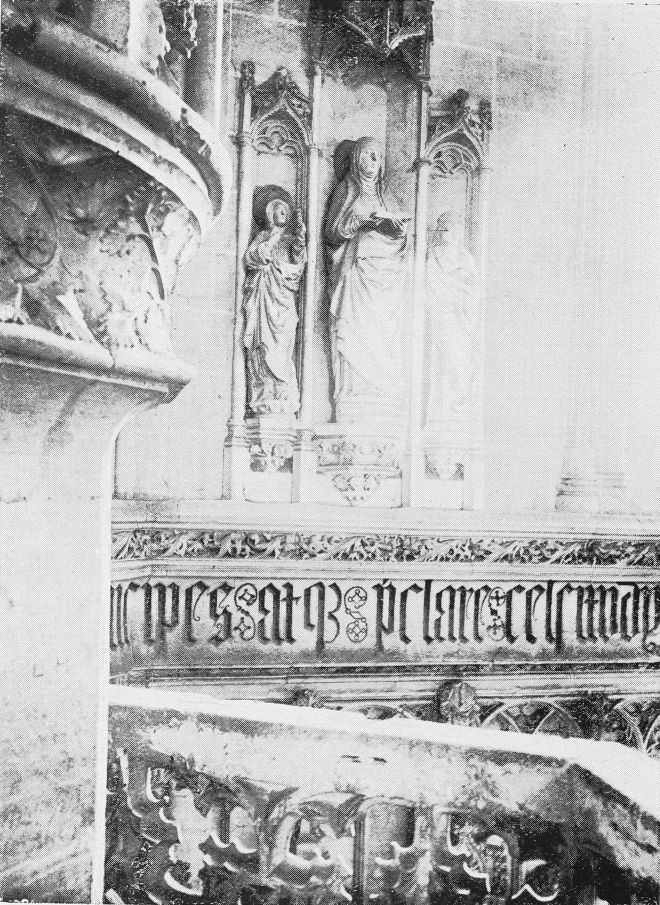
GALLERY IN SAN JUAN DE LOS REYES
Plate 185
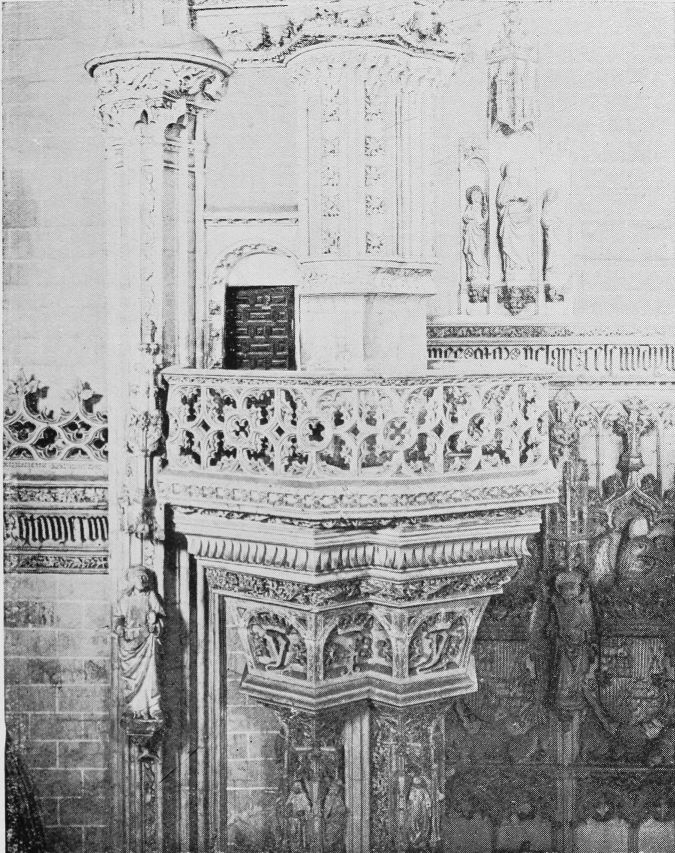
GALLERY IN SAN JUAN DE LOS REYES
Plate 186
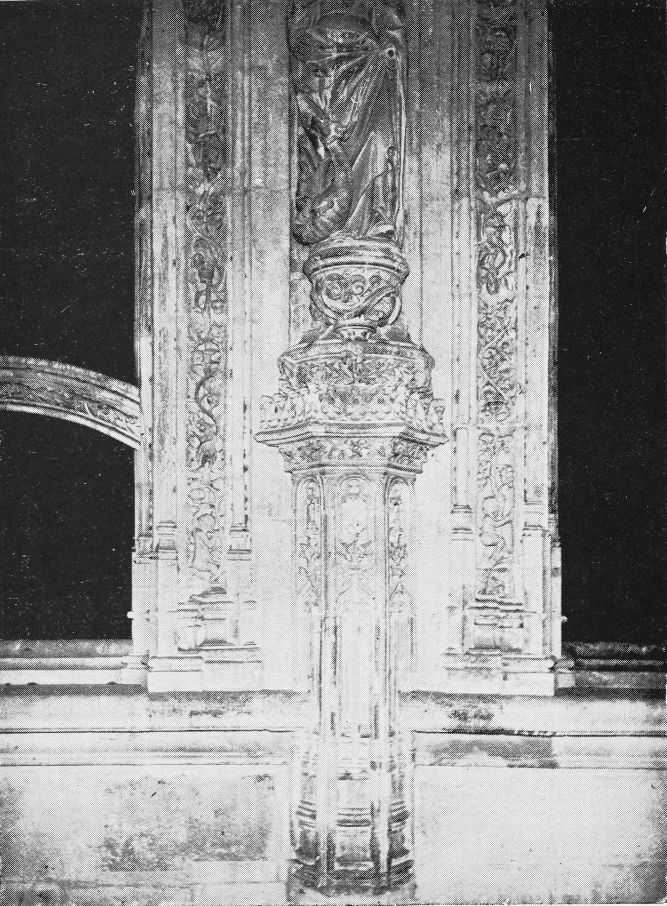
DETAILS OF SAN JUAN DE LOS REYES
Plate 187
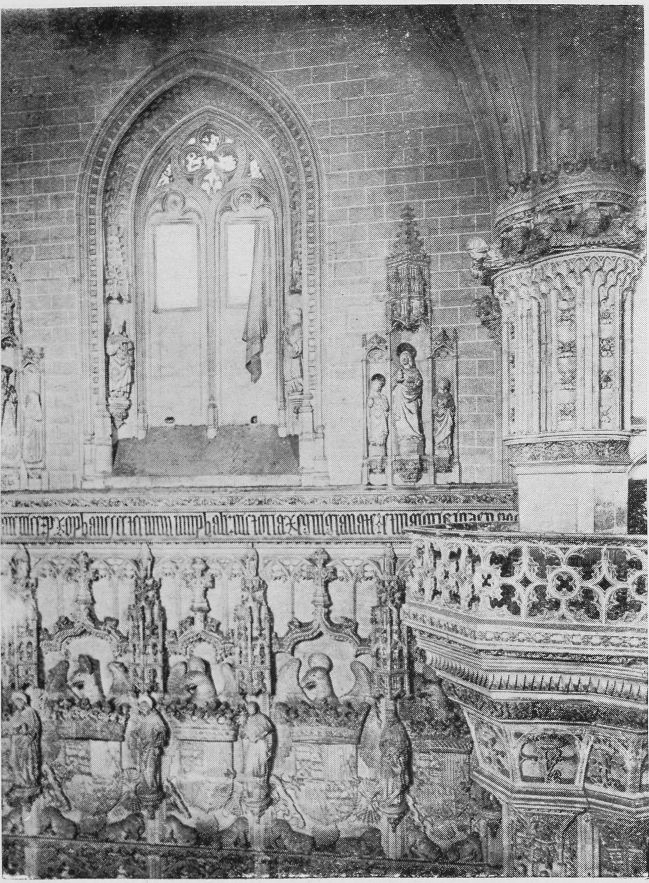
DETAILS OF GALLERY IN SAN JUAN DE LOS REYES
Plate 188
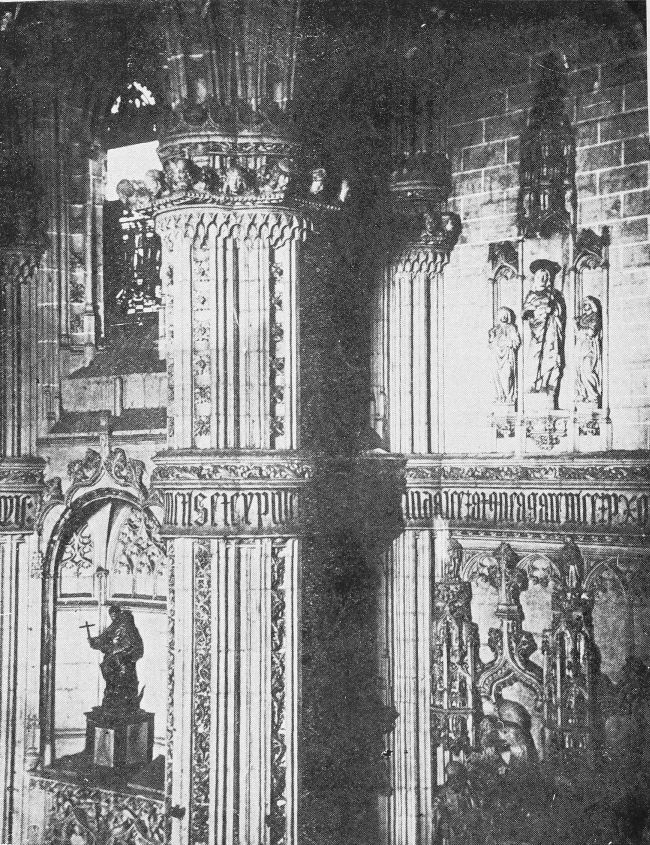
DETAILS OF SAN JUAN DE LOS REYES
Plate 189
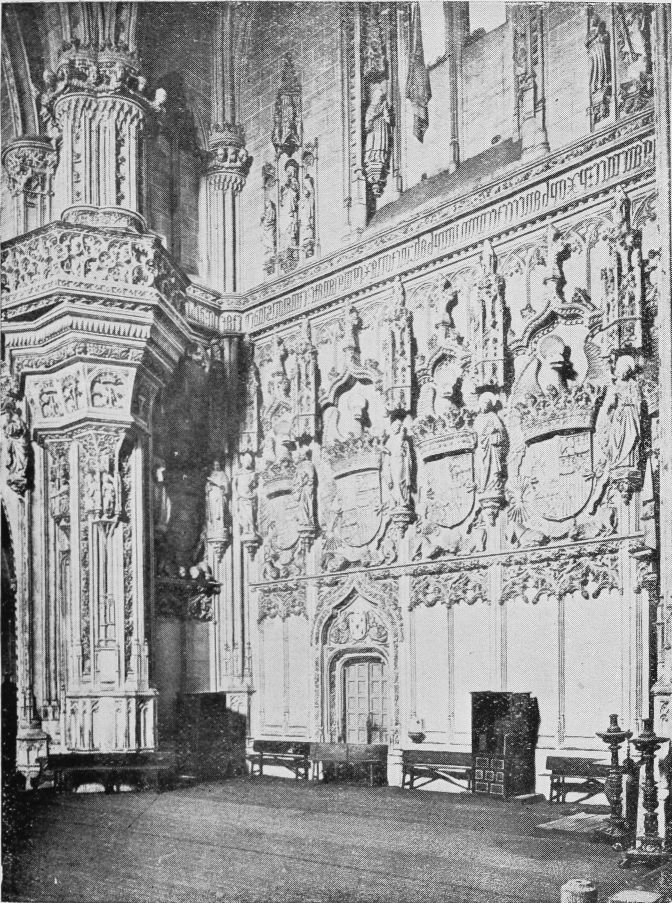
SAN JUAN DE LOS REYES. WALL IN THE PRESBYTERY
Plate 190
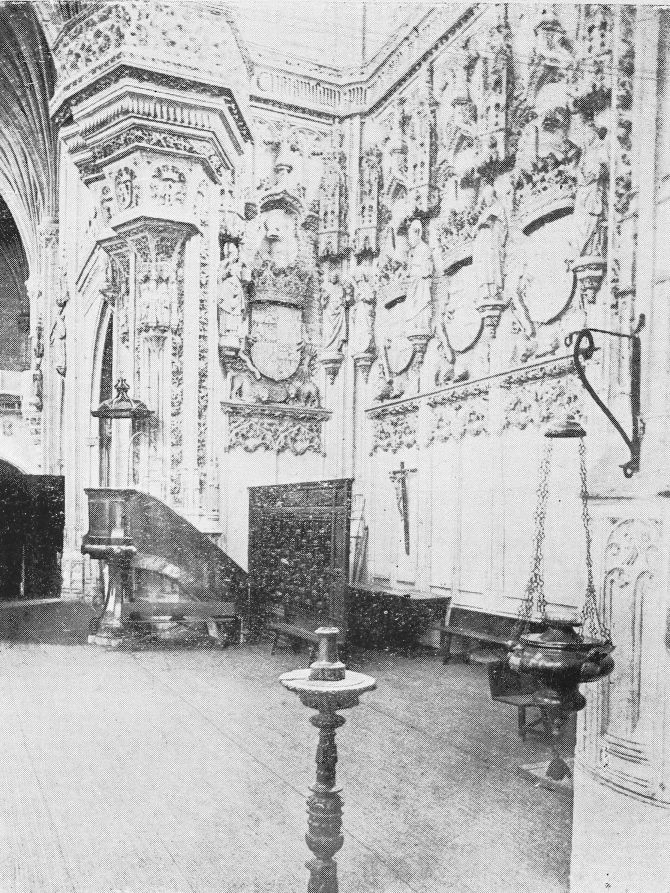
INTERIOR OF SAN JUAN DE LOS REYES
Plate 191
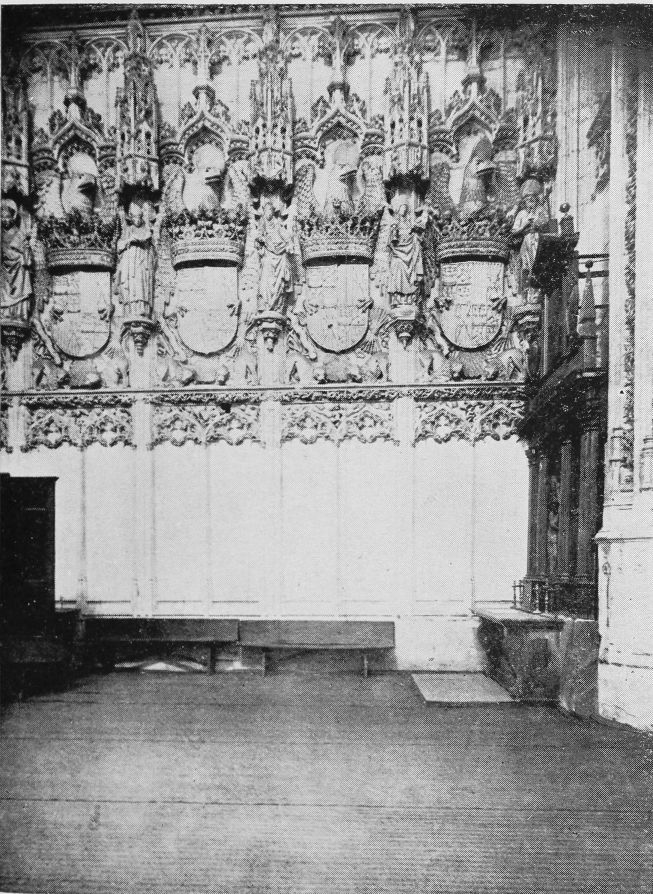
INTERIOR OF SAN JUAN DE LOS REYES
Plate 192
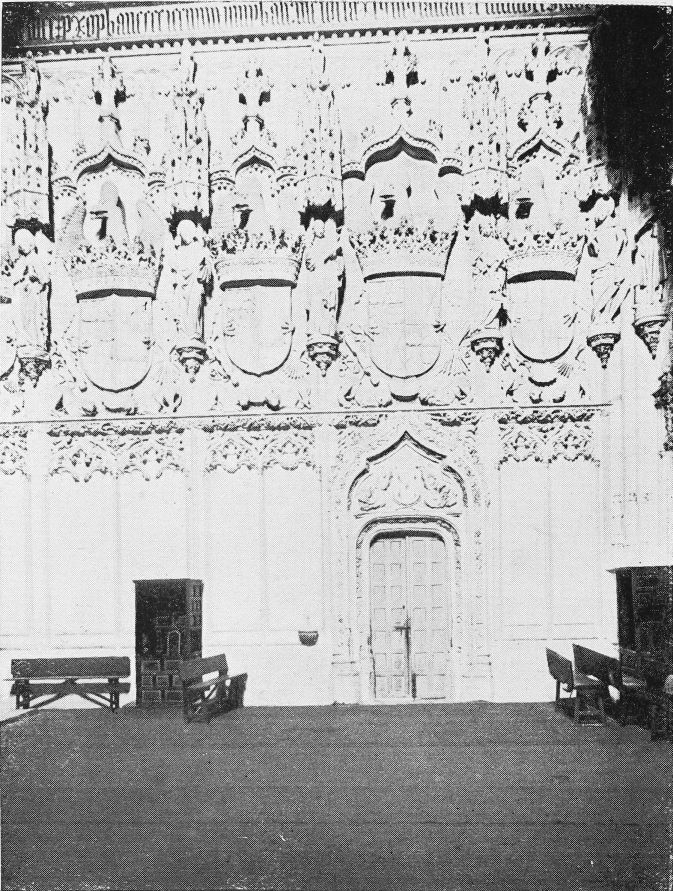
INTERIOR OF SAN JUAN DE LOS REYES
Plate 193
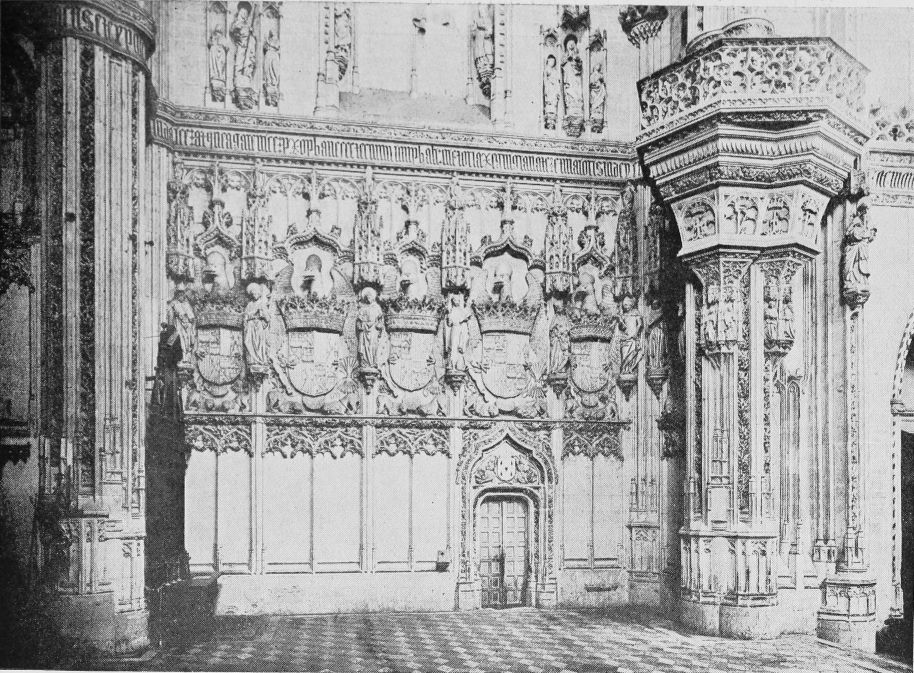
SAN JUAN DE LOS REYES. DECORATION IN THE TRANSVERSE NAVE
Plate 194
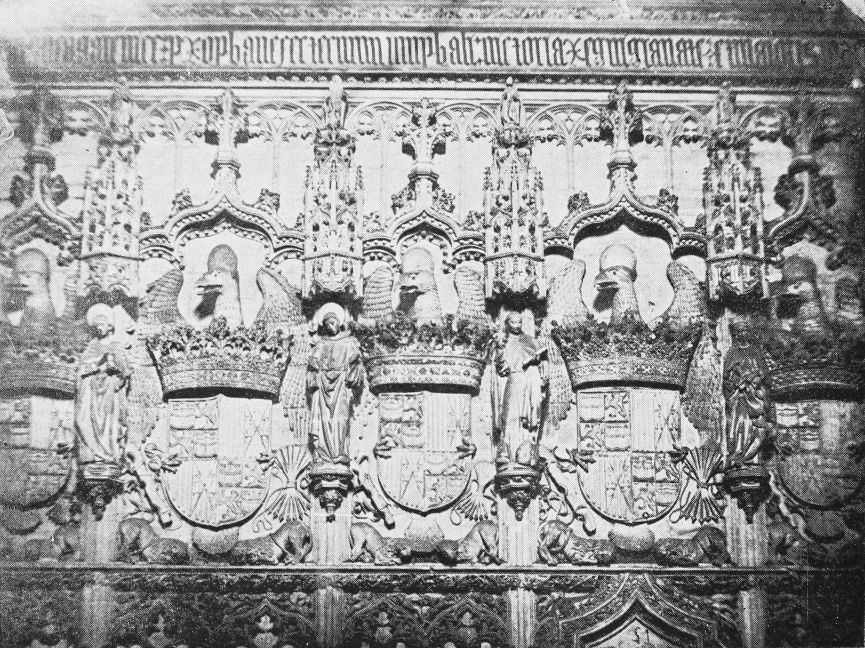
SAN JUAN DE LOS REYES. DETAILS OF THE ARMS OF ISABELLA THE CATHOLIC
Plate 195
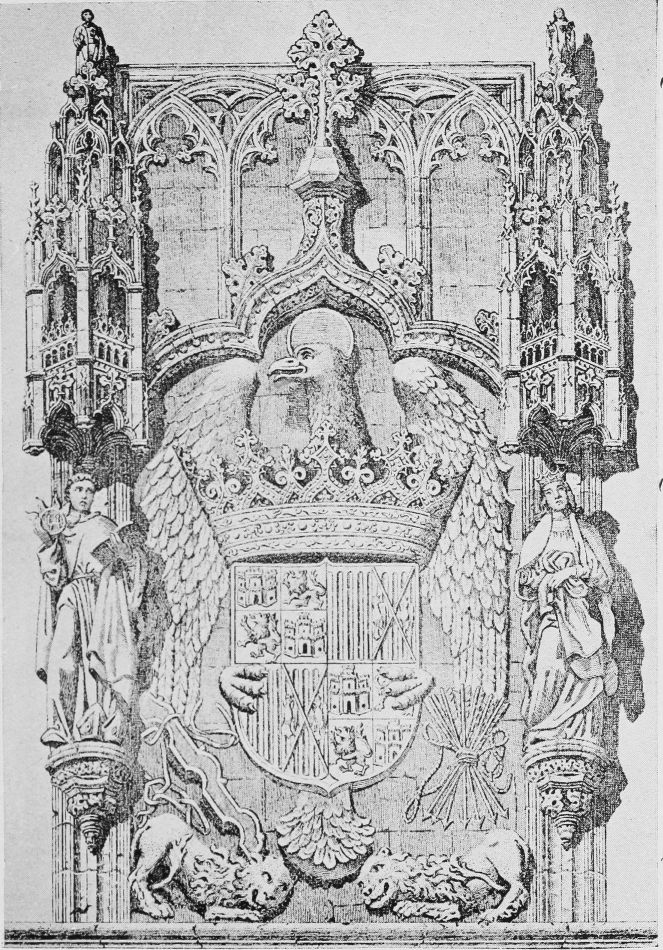
DETAILS OF THE TRANSEPT OF THE CHURCH OF SAN JUAN DE LOS REYES
Plate 196
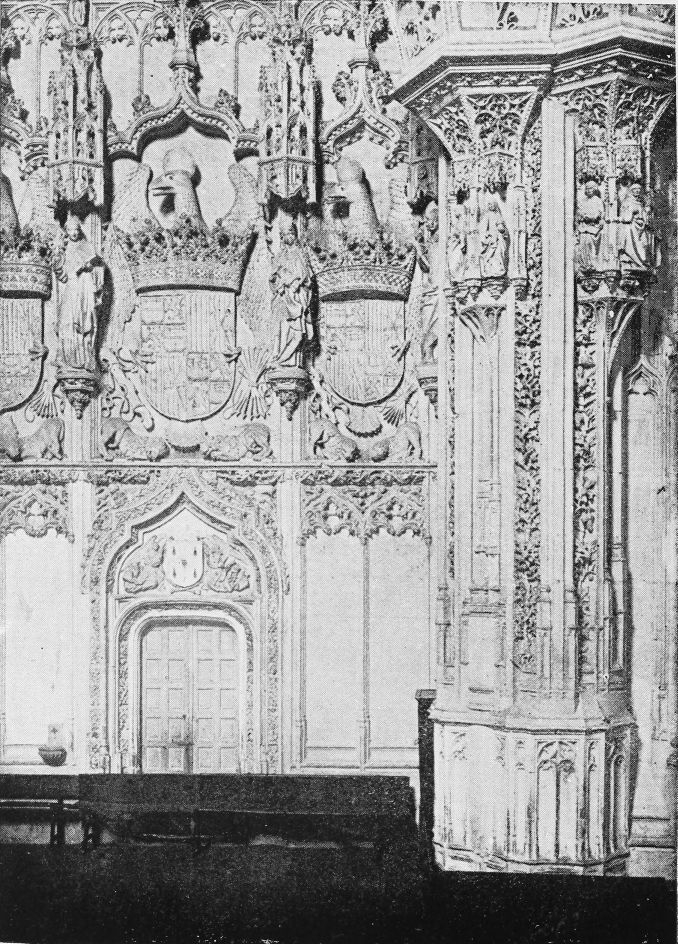
SAN JUAN DE LOS REYES. INTERIOR
Plate 197
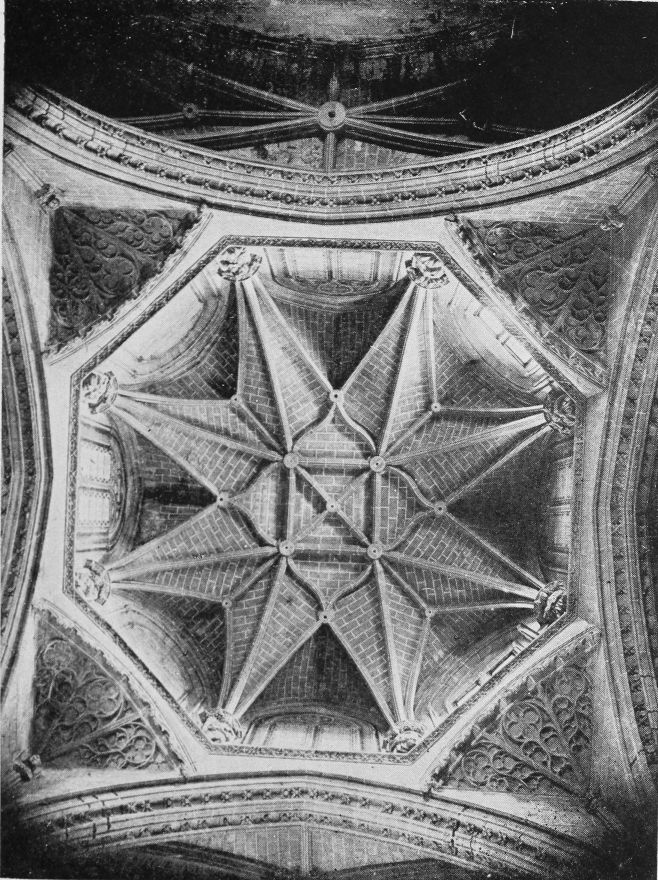
A DOME IN SAN JUAN DE LOS REYES
Plate 198
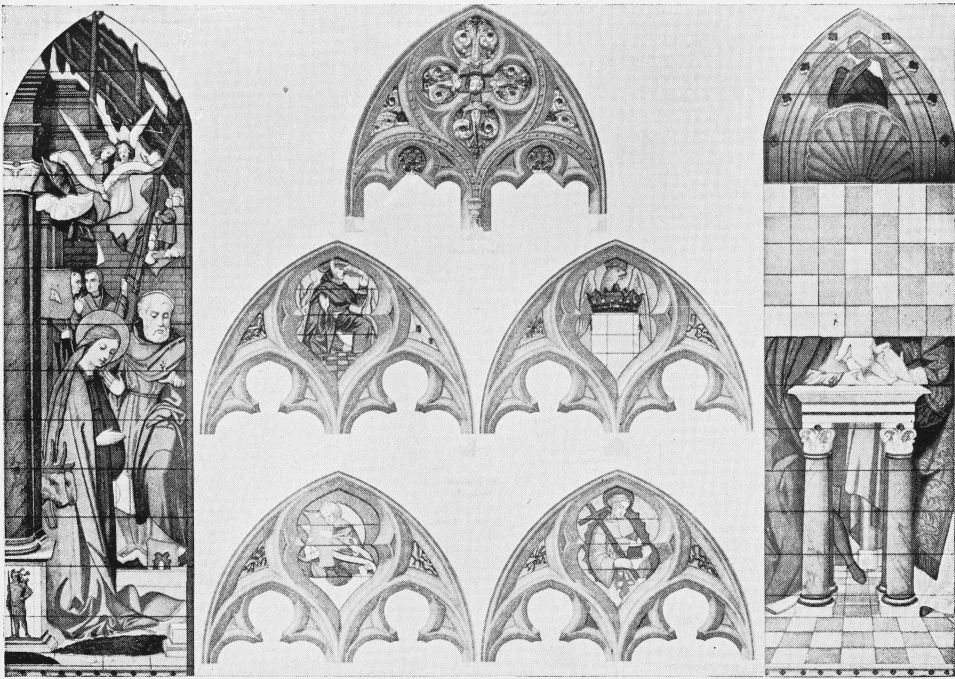
REMAINS OF WINDOWS OF SAN JUAN DE LOS REYES
Plate 199
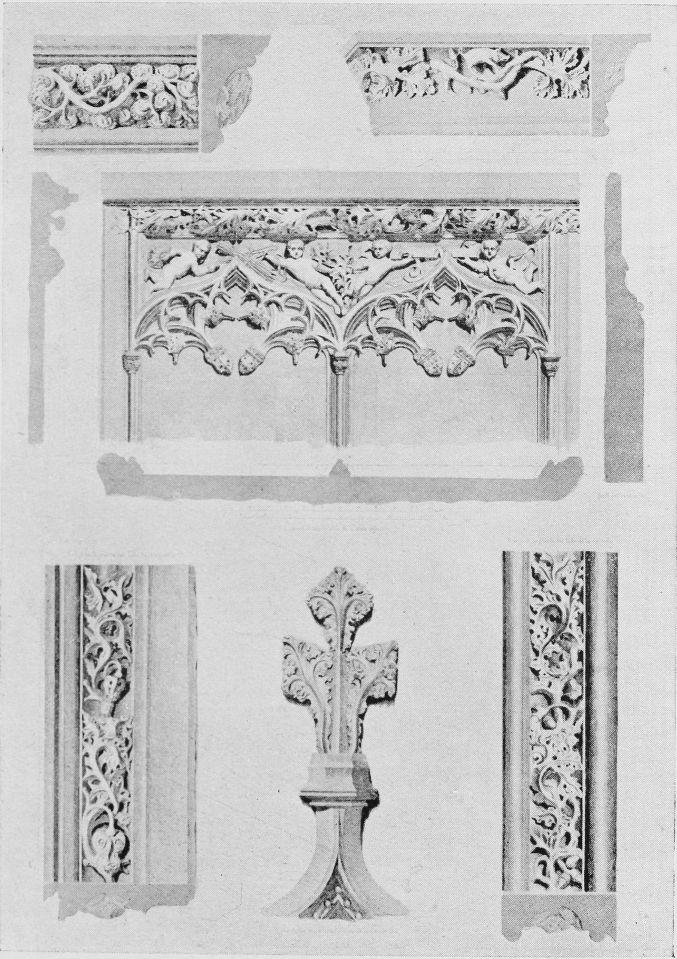
DETAILS OF THE CROSS-AISLE IN THE CHURCH OF SAN JUAN DE LOS REYES
Plate 200
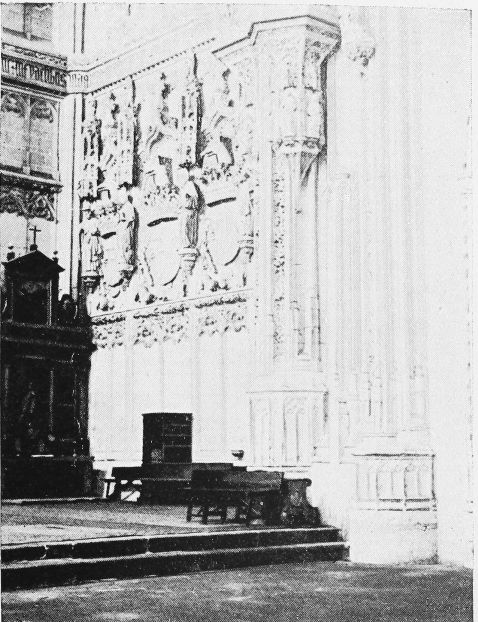
ALTAR OF SAN JUAN DE LOS REYES
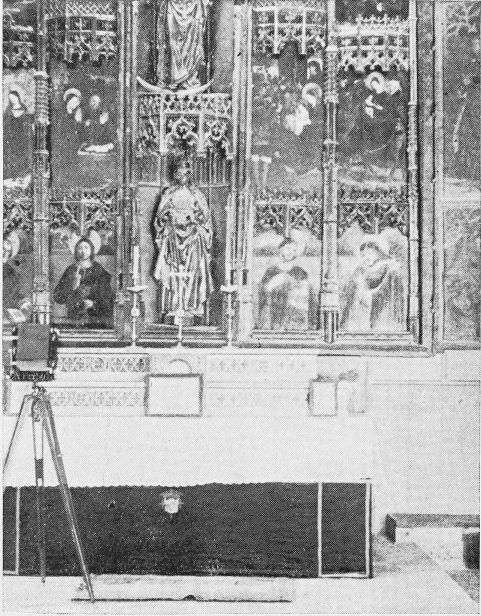
ALTAR OF SAN JUAN DE LOS REYES
Plate 201
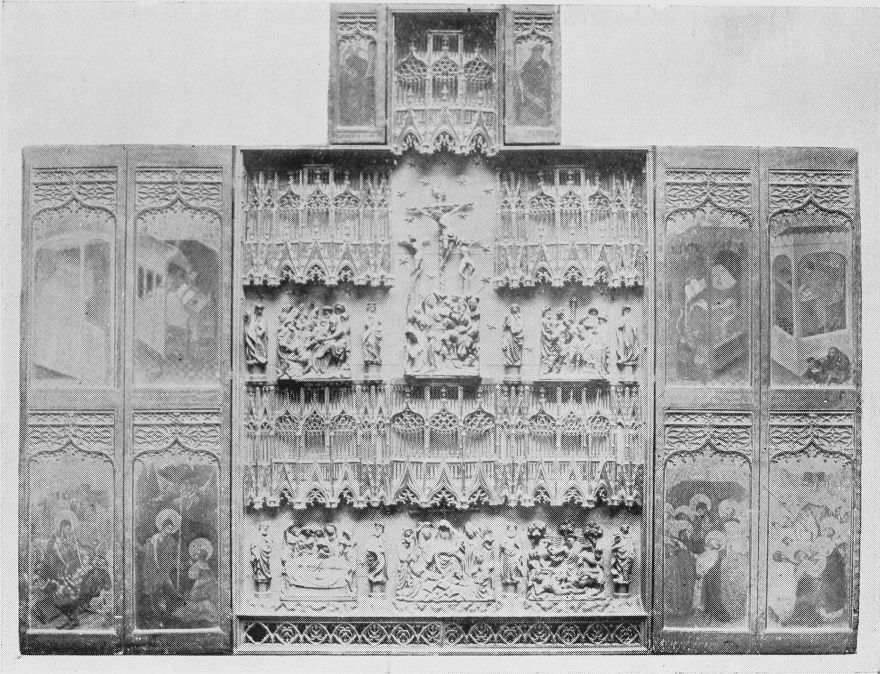
DETAILS OF THE ALTAR-PIECE IN SAN JUAN DE LOS REYES
Plate 202
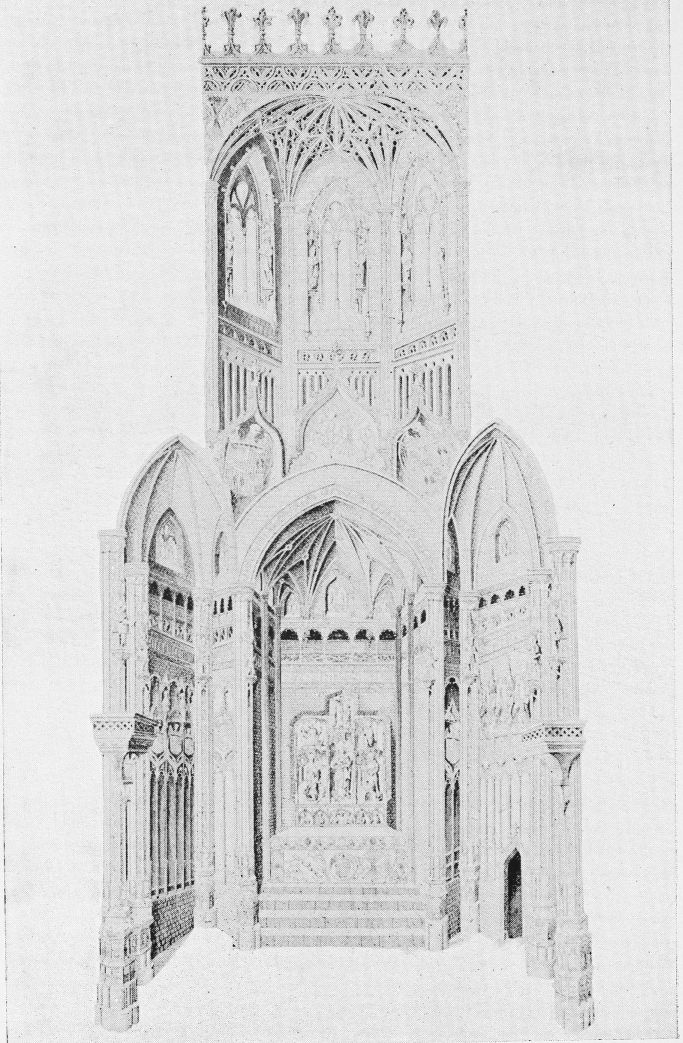
COPY OF THE ORIGINAL DRAWING OF THE ARCH AND CROSS-AISLE OF SAN JUAN DE
LOS REYES
Plate 203
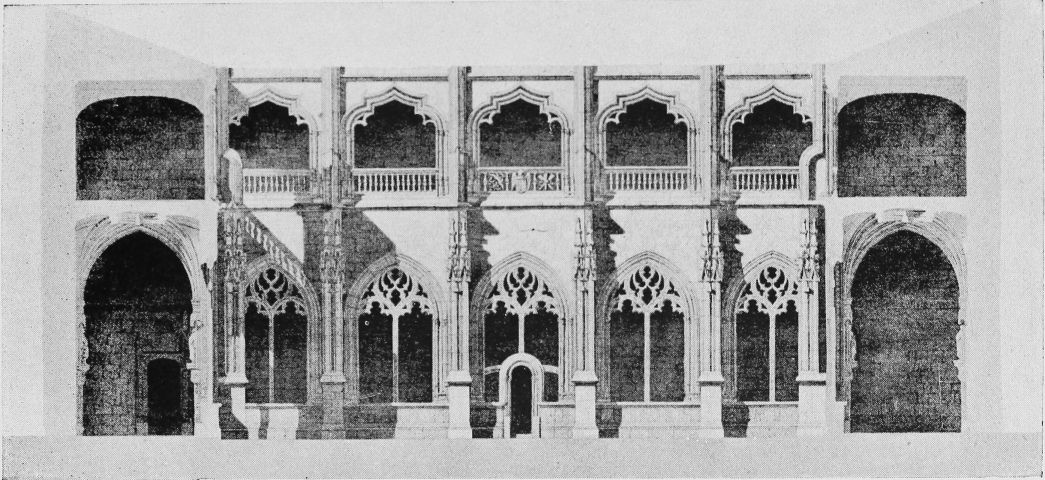
LONGITUDINAL SECTION OF THE CLOISTER OF SAN JUAN DE LOS REYES
Plate 204
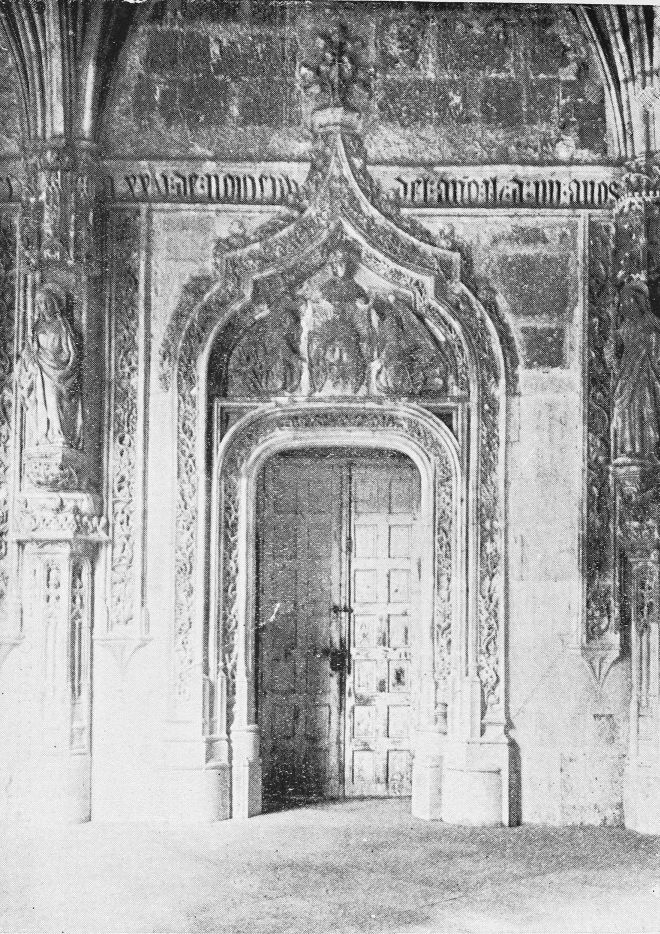
CLOISTERS OF SAN JUAN DE LOS REYES
Plate 205
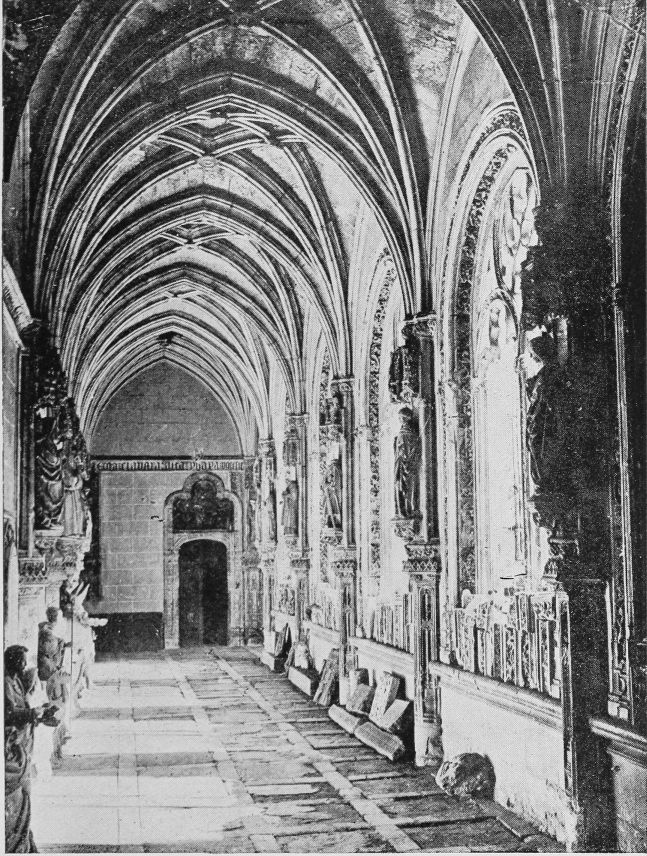
SAN JUAN DE LOS REYES. THE CLOISTERS
Plate 206
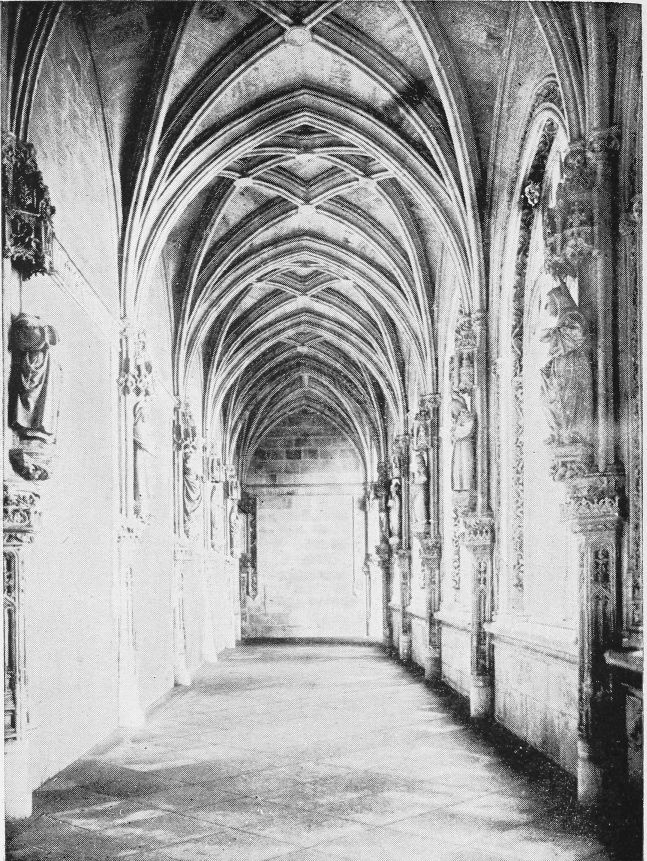
CLOISTERS OF SAN JUAN DE LOS REYES
Plate 207
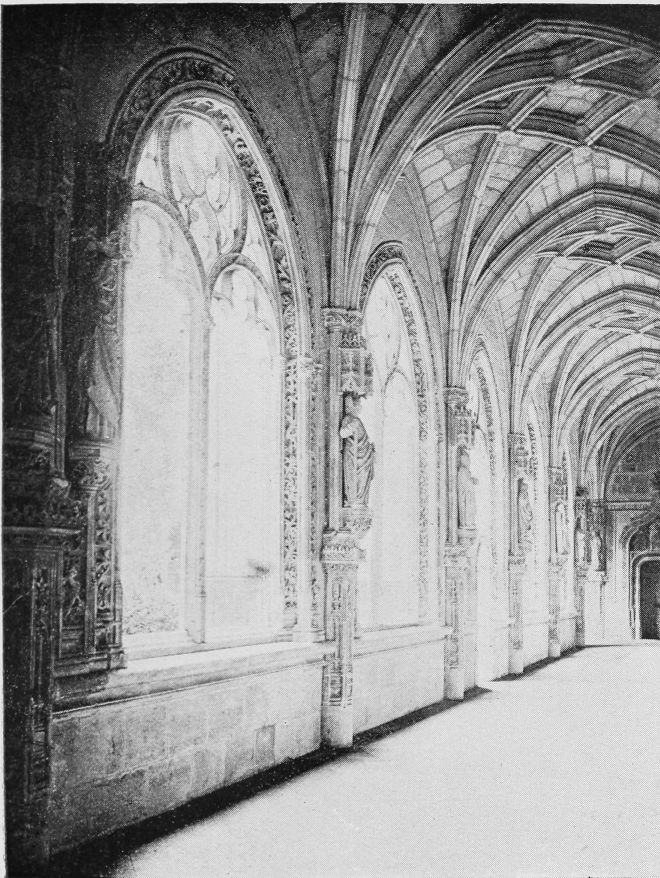
CLOISTERS OF SAN JUAN DE LOS REYES
Plate 208
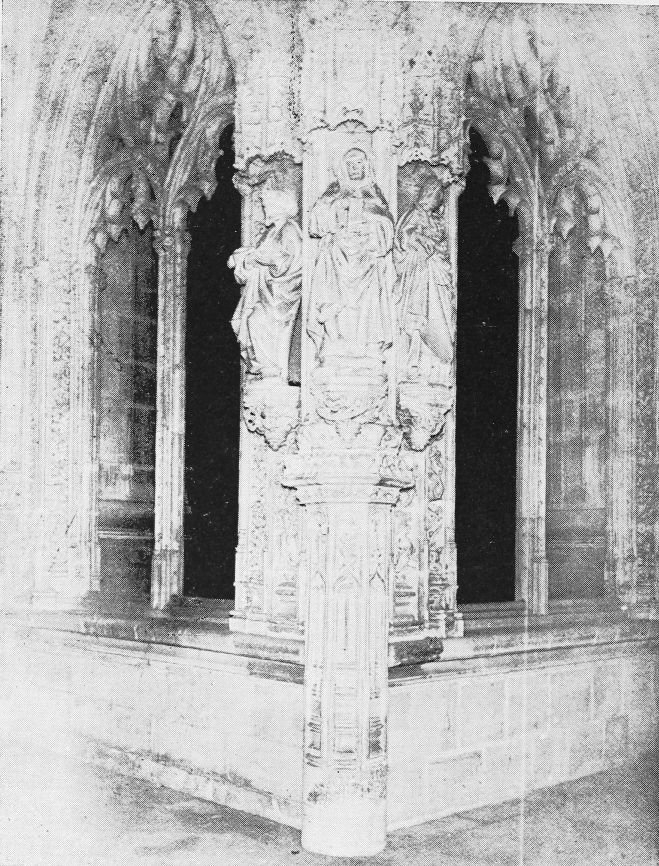
DETAILS OF THE CLOISTERS OF SAN JUAN DE LOS REYES
Plate 209
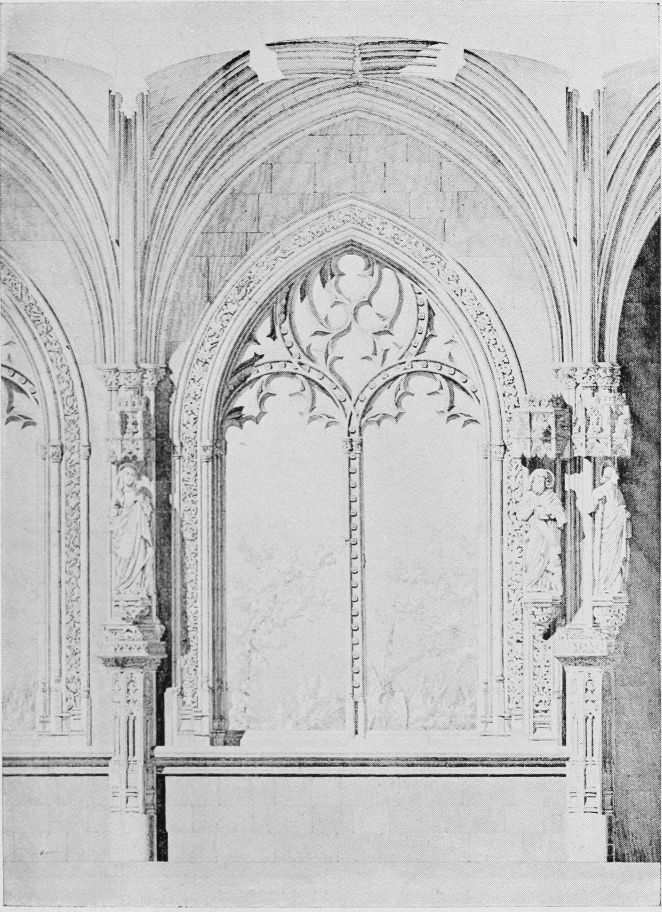
COMPARTMENT OF THE CLOISTERS OF SAN JUAN DE LOS REYES
Plate 210
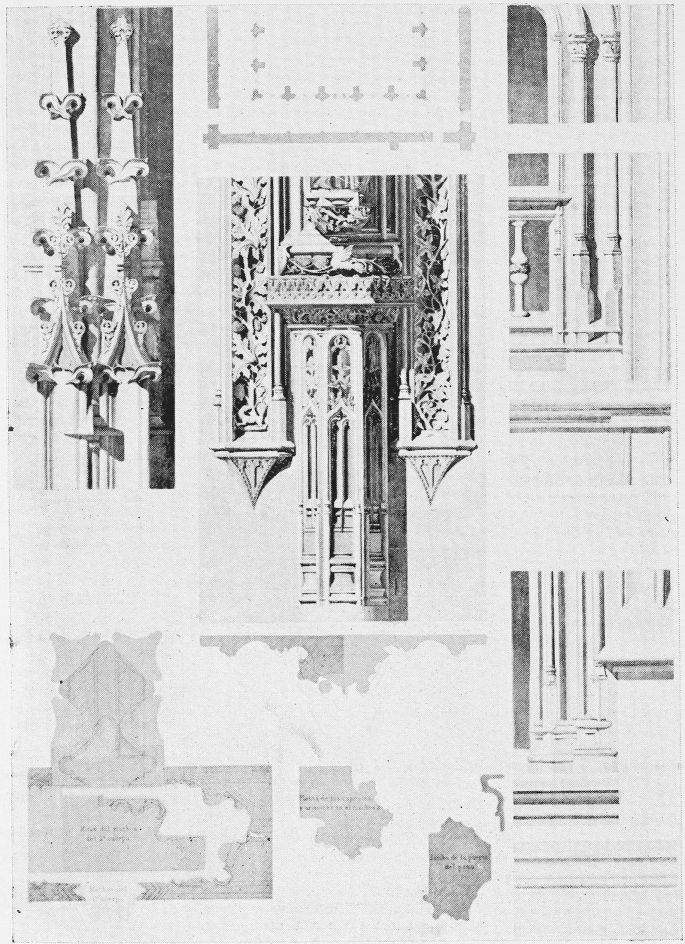
SAN JUAN DE LOS REYES. DETAILS OF THE CLOISTERS
Plate 211
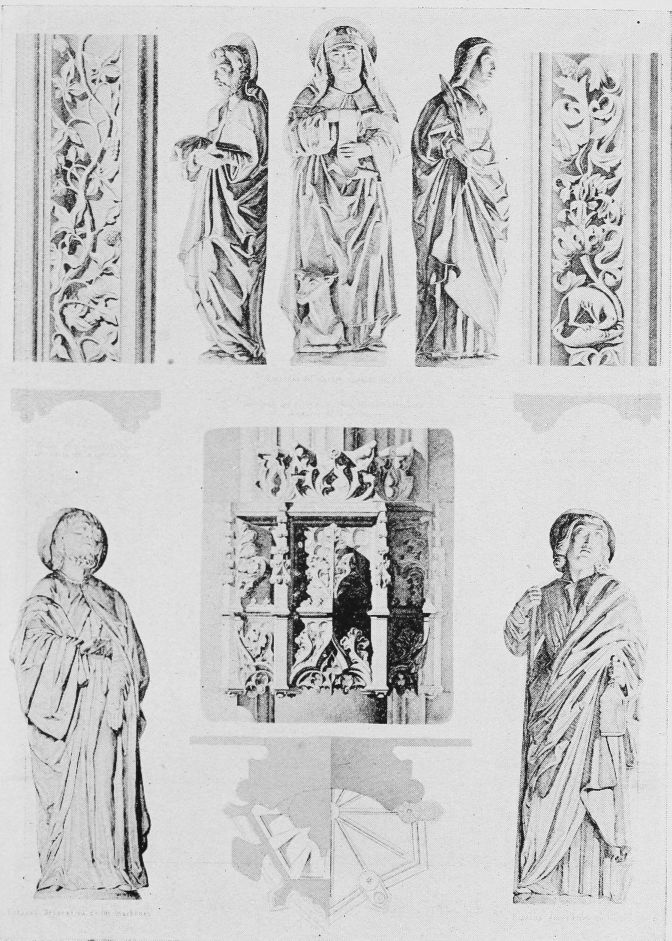
DETAILS OF THE CLOISTERS OF SAN JUAN DE LOS REYES
Plate 212
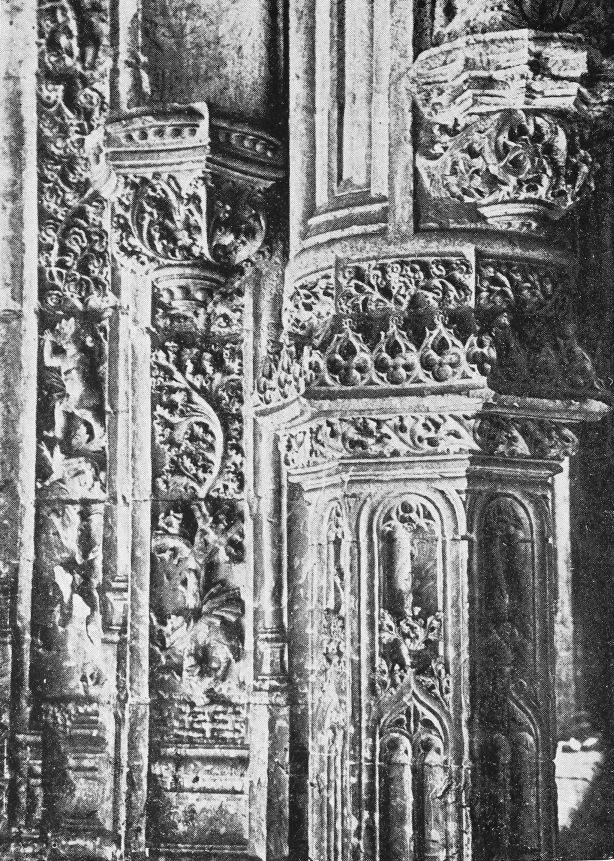
SAN JUAN DE LOS REYES. DETAILS OF THE CLOISTERS
Plate 213
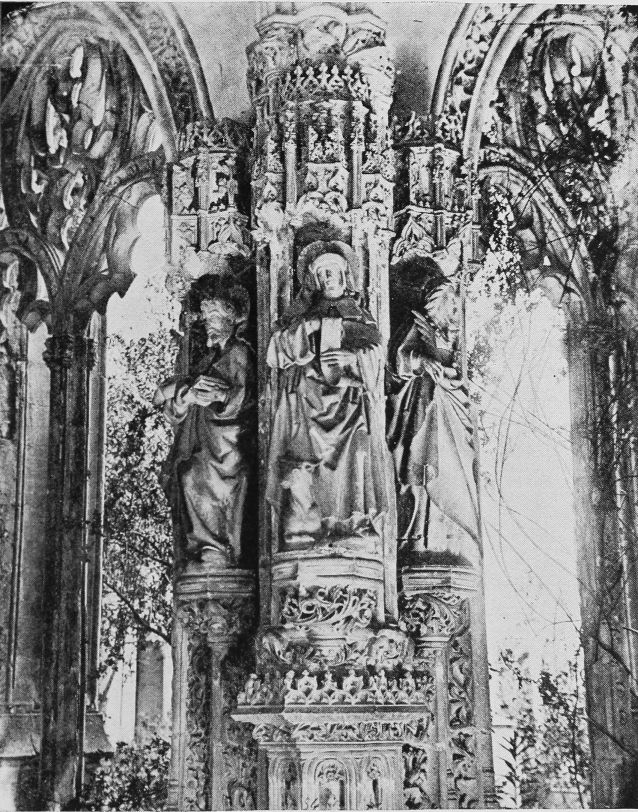
SAN JUAN DE LOS REYES. DETAILS OF THE CLOISTERS
Plate 214
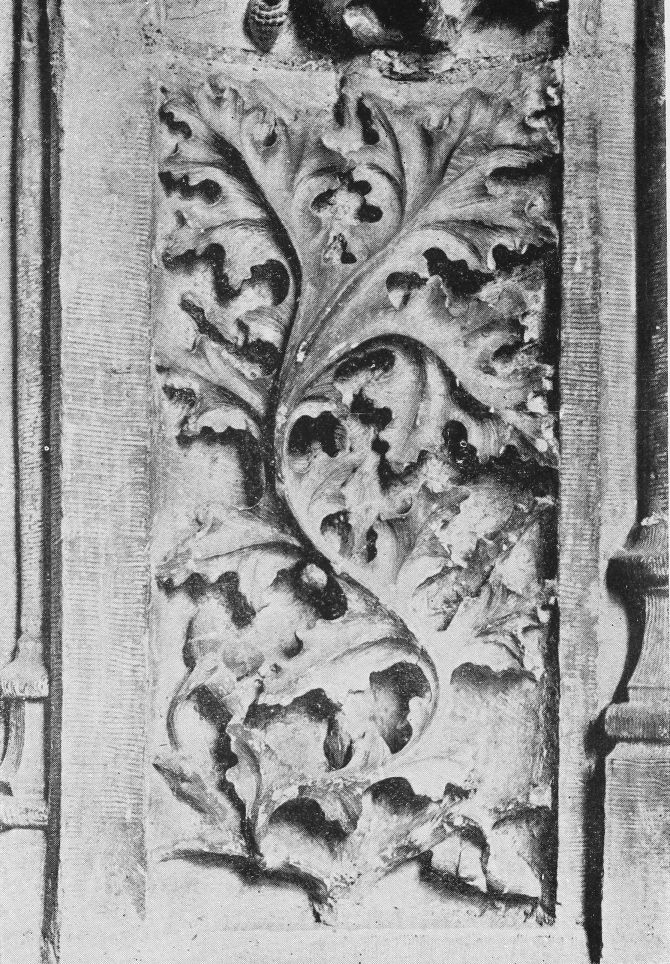
SAN JUAN DE LOS REYES. DETAILS OF THE CLOISTERS
Plate 215
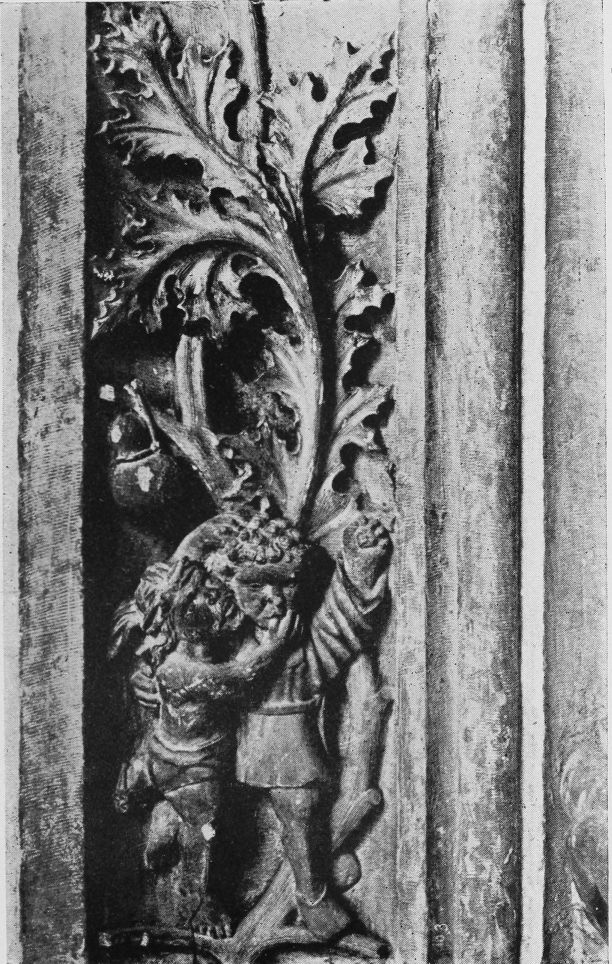
SAN JUAN DE LOS REYES. DETAILS OF THE CLOISTERS
Plate 216
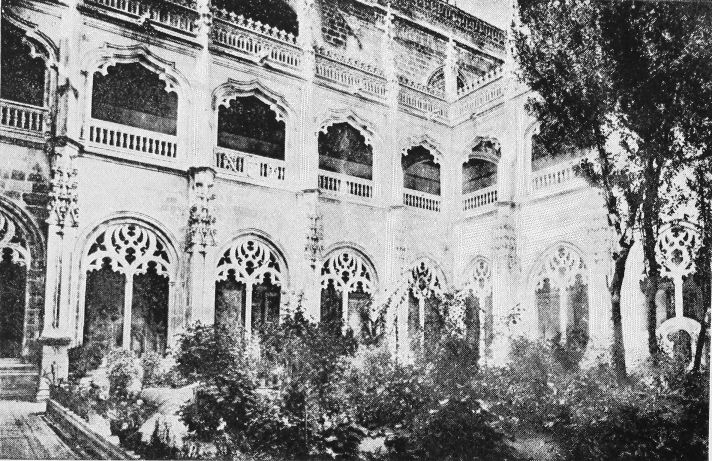
CHURCH OF SAN JUAN DE LOS REYES. COURTYARD
Plate 217
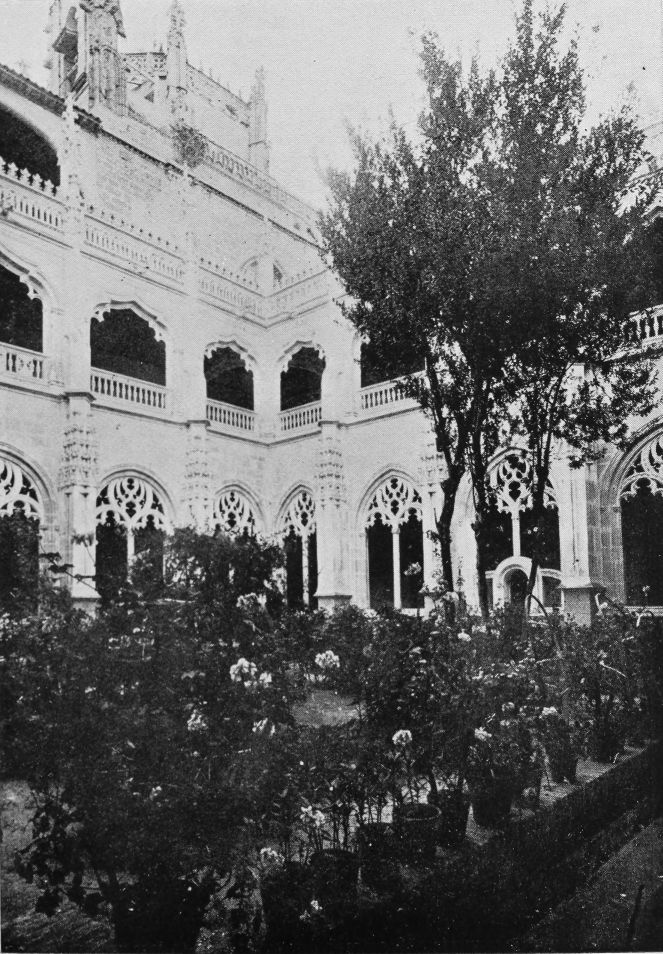
COURT IN SAN JUAN DE LOS REYES
Plate 218
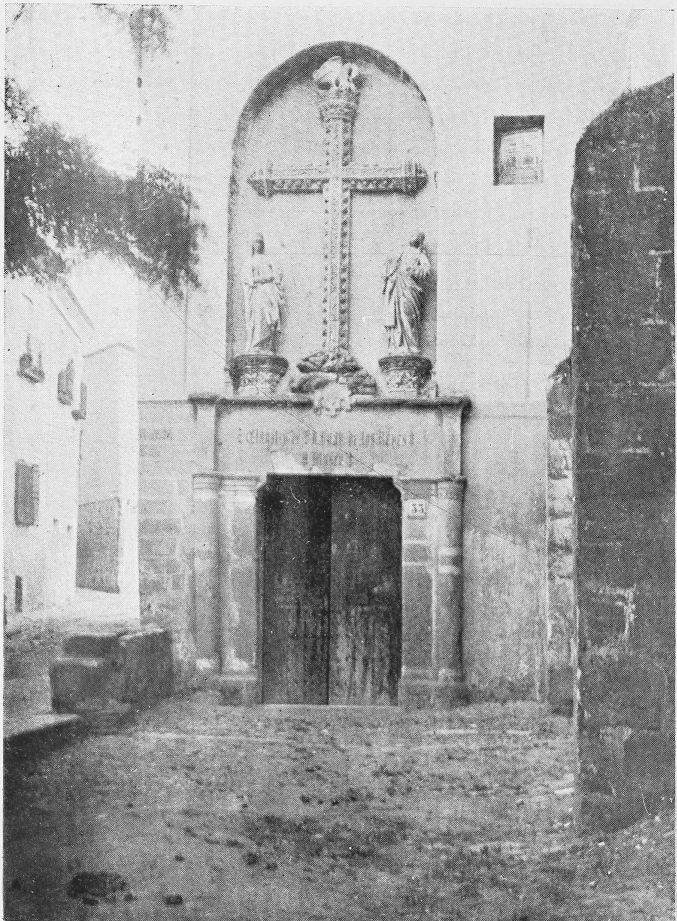
DOORWAY OF THE MUSEUM OF SAN JUAN DE LOS REYES
Plate 219
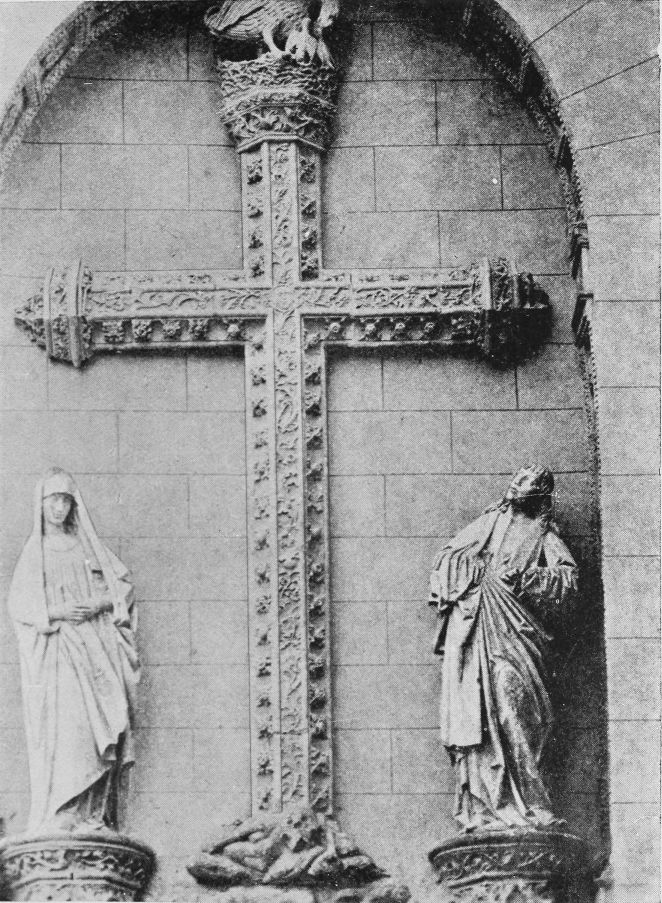
SAN JUAN DE LOS REYES. DETAILS ABOVE DOOR OF MUSEUM
Plate 220
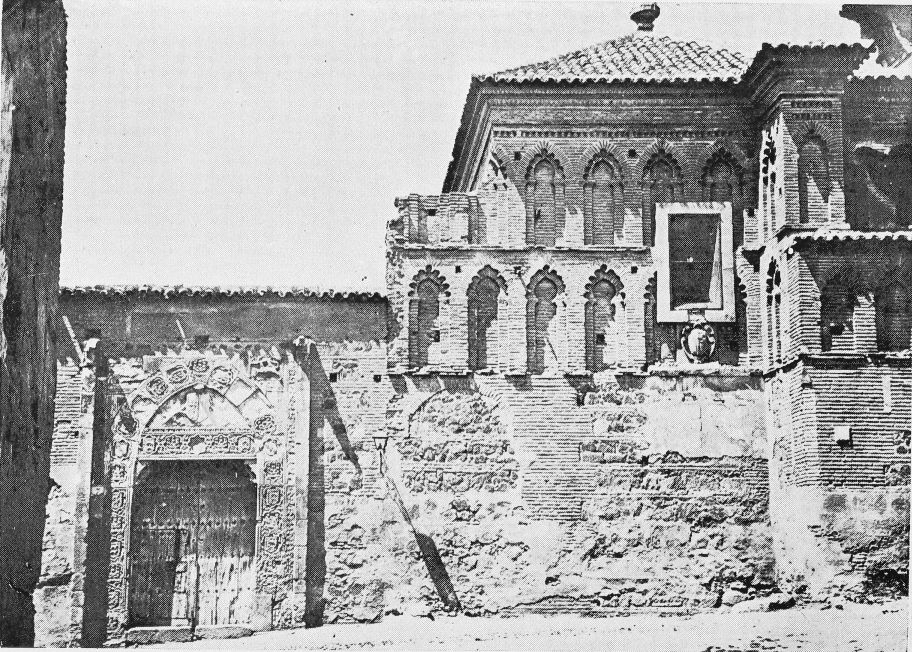
PALACE OF DON PEDRO THE CRUEL
Plate 221
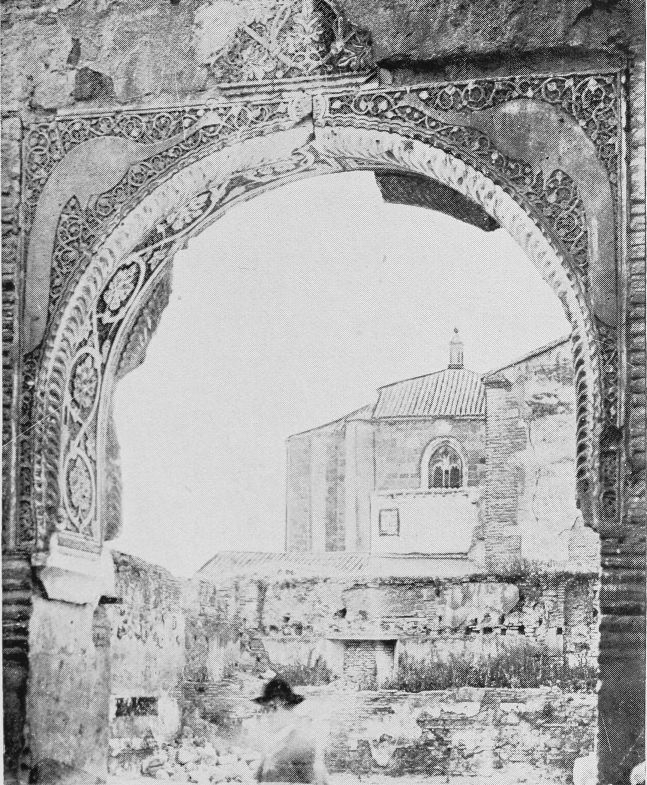
DETAILS OF THE PALACE OF DON PEDRO THE CRUEL
Plate 222
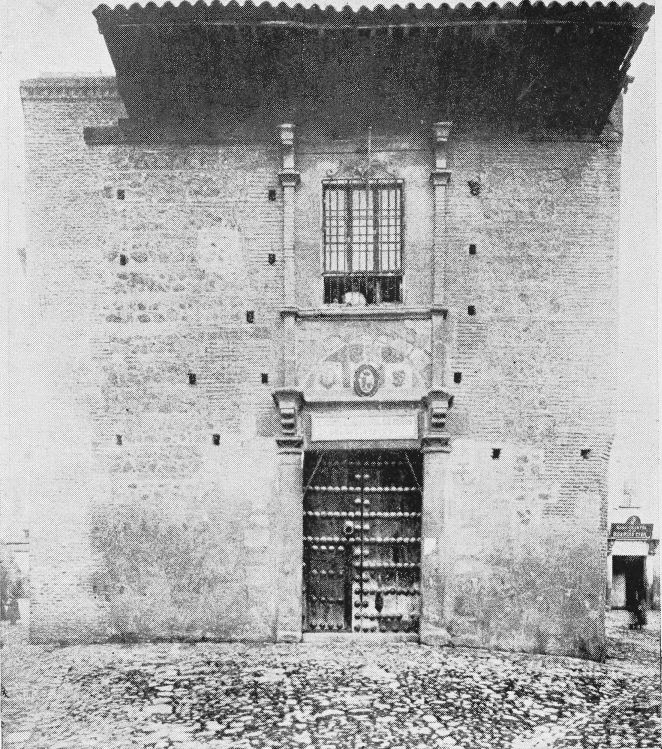
FAÇADE OF THE PALACE OF DON PEDRO THE CRUEL
Plate 223
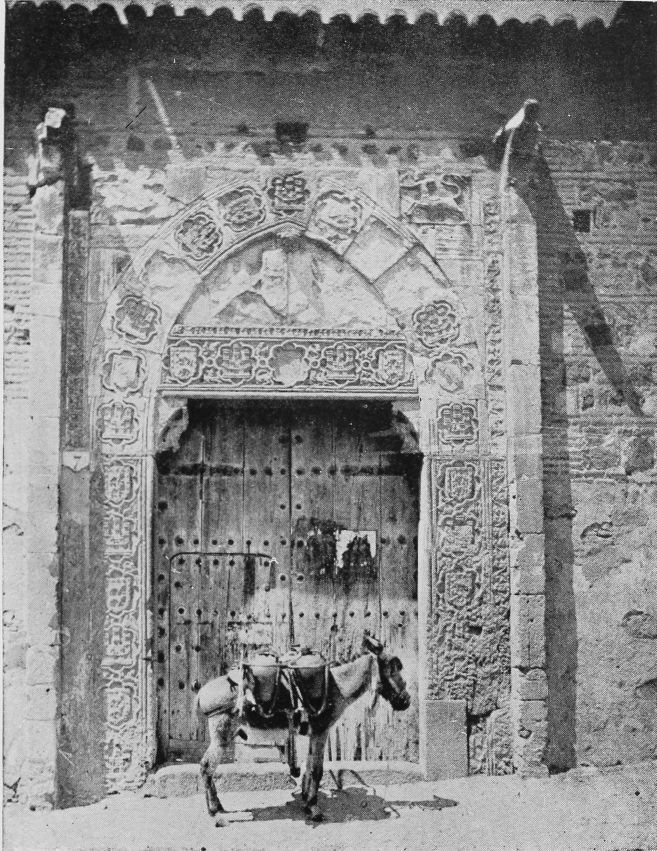
DOORWAY OF THE PALACE OF DON PEDRO THE CRUEL
Plate 224
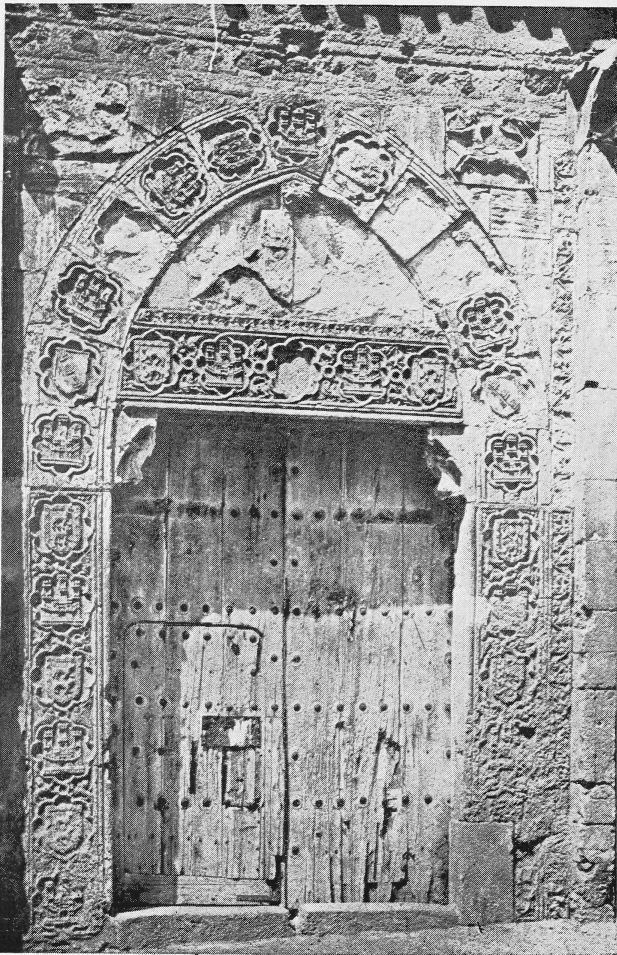
DOORWAY OF THE PALACE OF DON PEDRO THE CRUEL
Plate 225
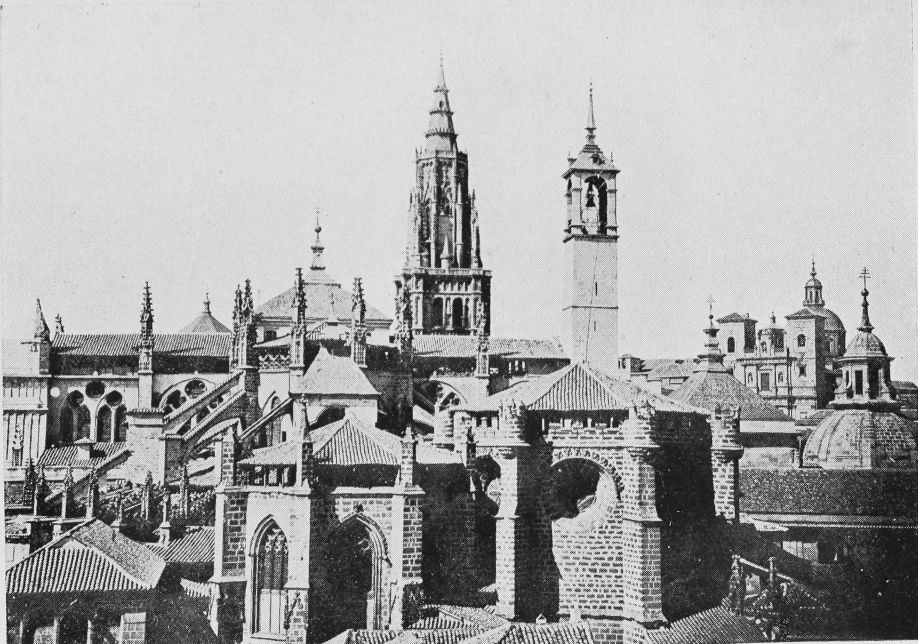
THE CATHEDRAL
Plate 226
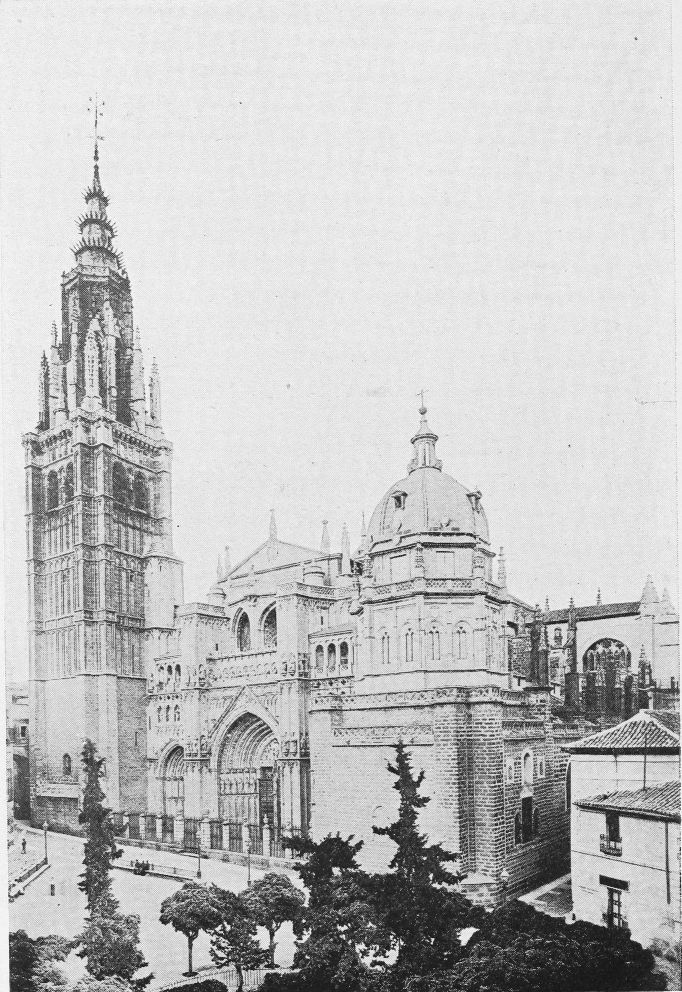
GENERAL VIEW OF THE CATHEDRAL
Plate 227
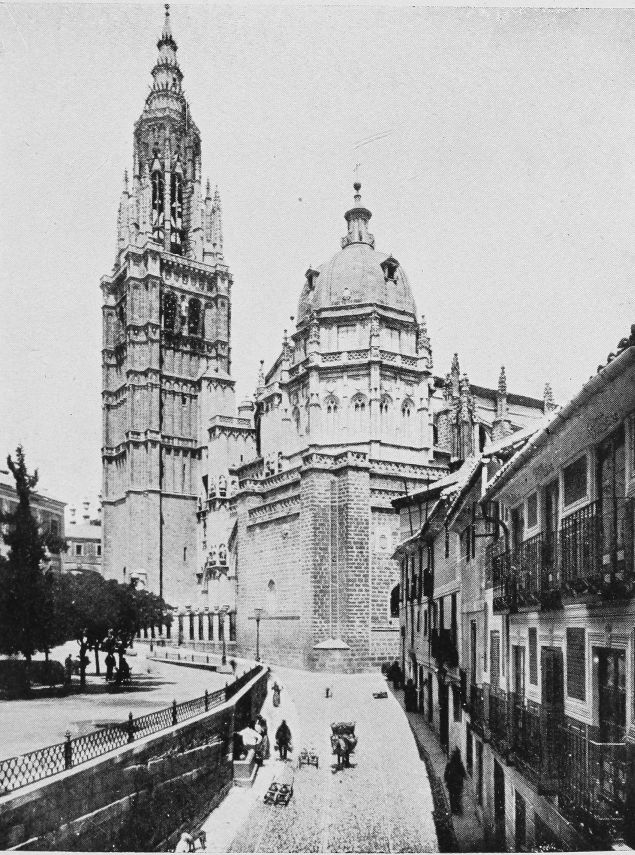
THE CATHEDRAL
Plate 228
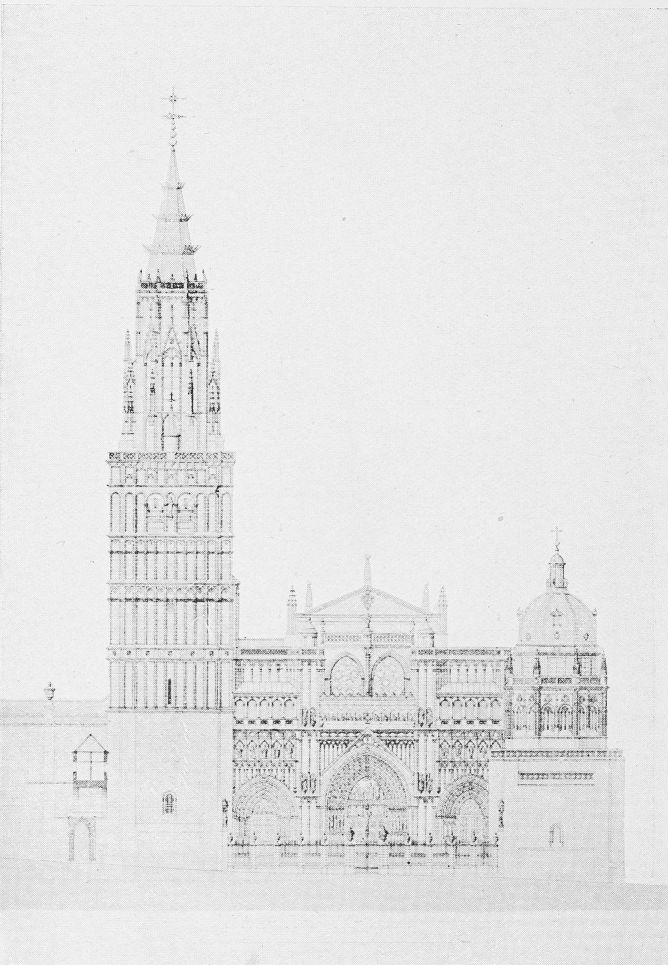
SECTION OF THE CATHEDRAL
Plate 229
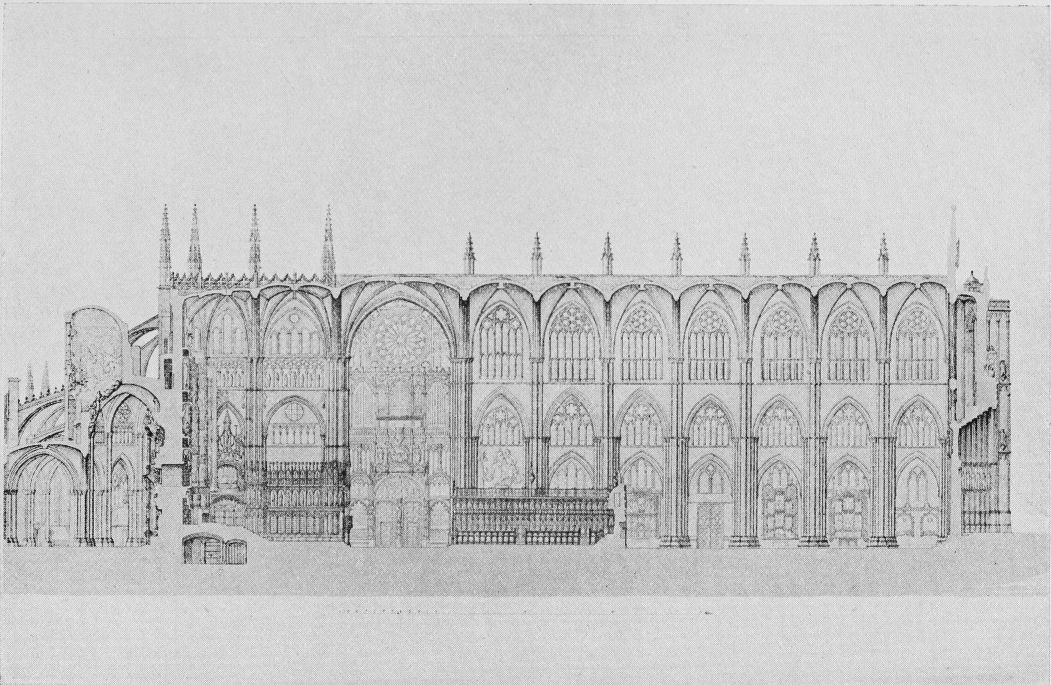
LONGITUDINAL SECTION OF THE CATHEDRAL
Plate 230
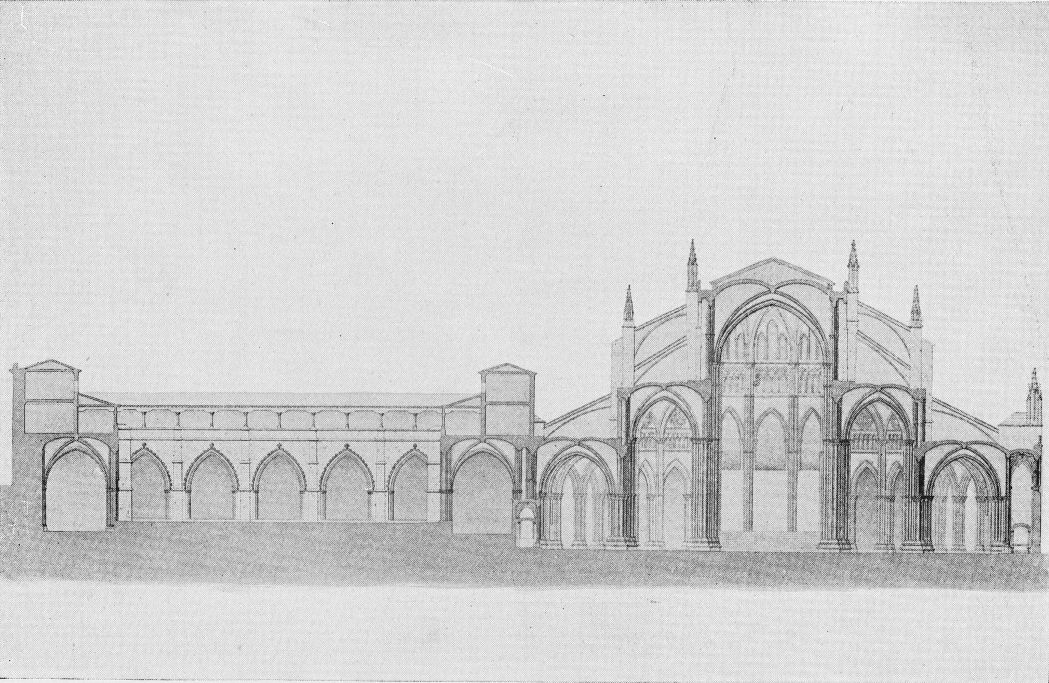
TRANSVERSE SECTION OF THE CATHEDRAL
Plate 231
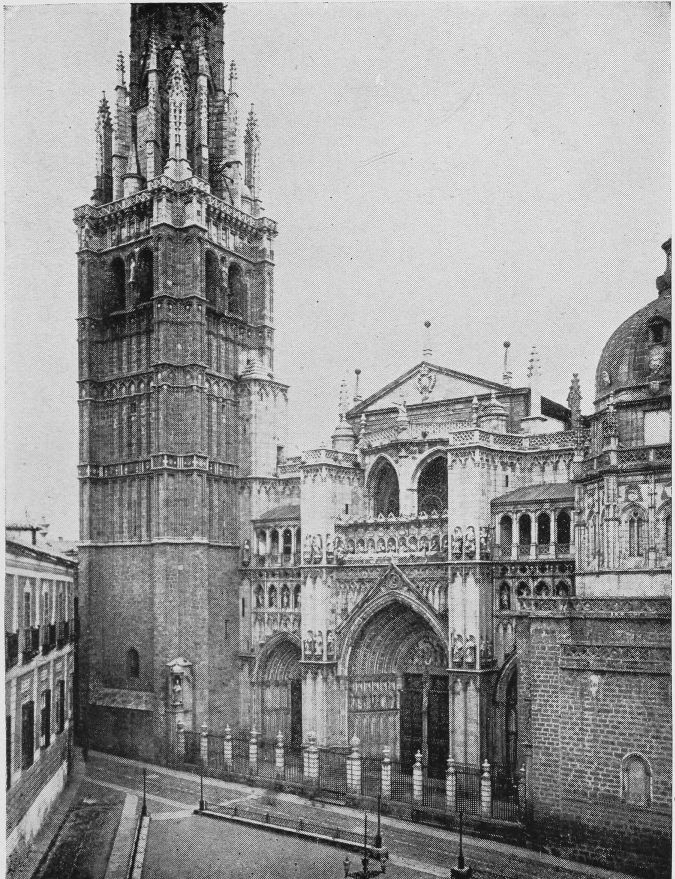
PRINCIPAL FAÇADE OF THE CATHEDRAL AND TOWER
Plate 232
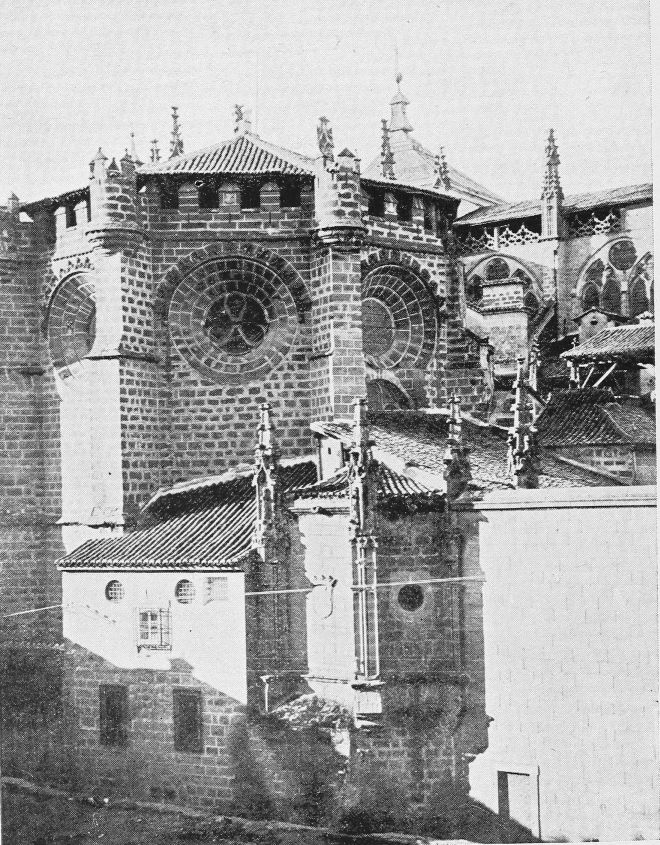
THE CATHEDRAL. DETAIL OF THE EXTERIOR
Plate 233
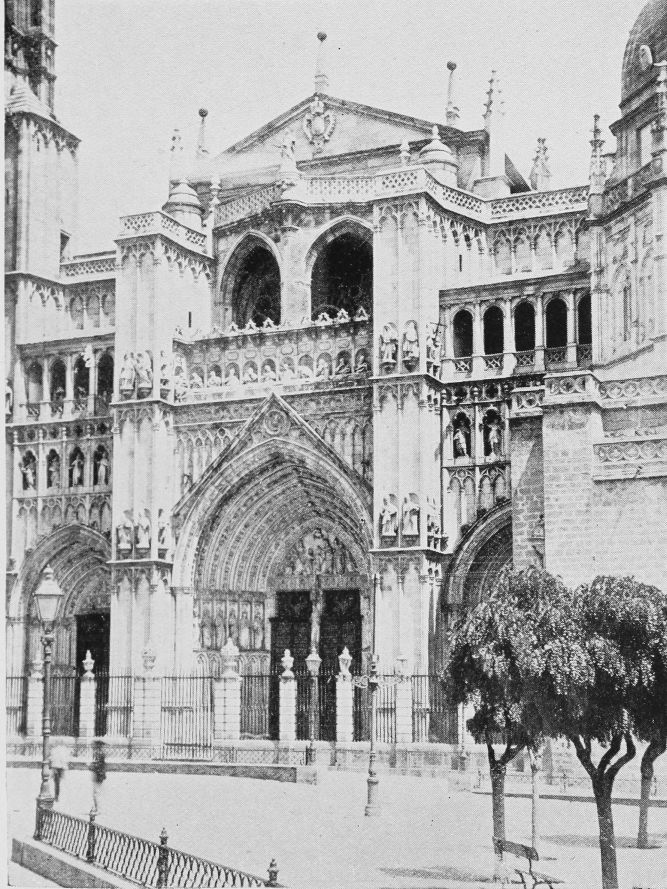
THE CATHEDRAL. PORTAL OF THE PRINCIPAL FAÇADE
Plate 234
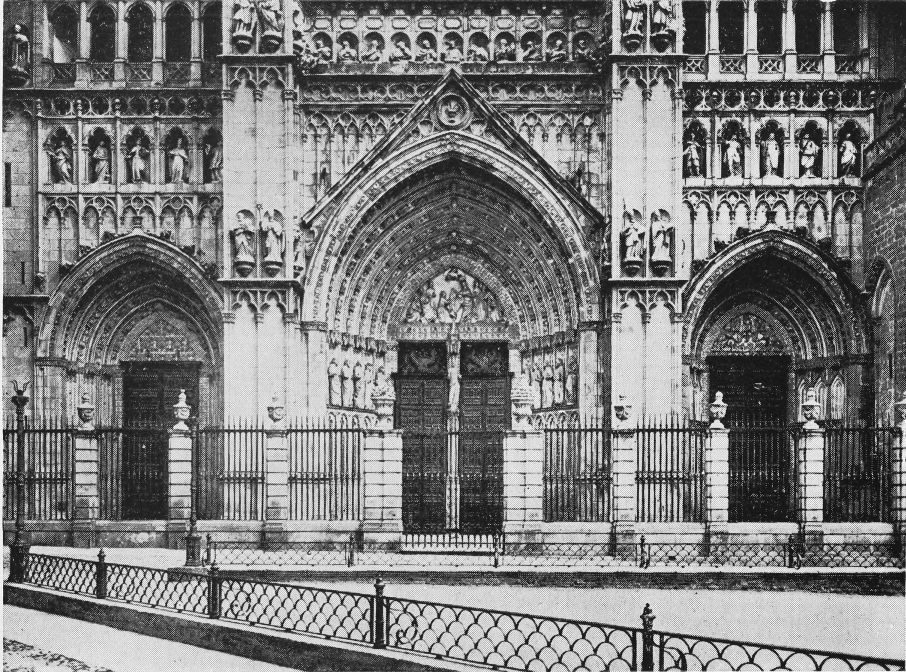
THE CATHEDRAL. PRINCIPAL GATE
Plate 235
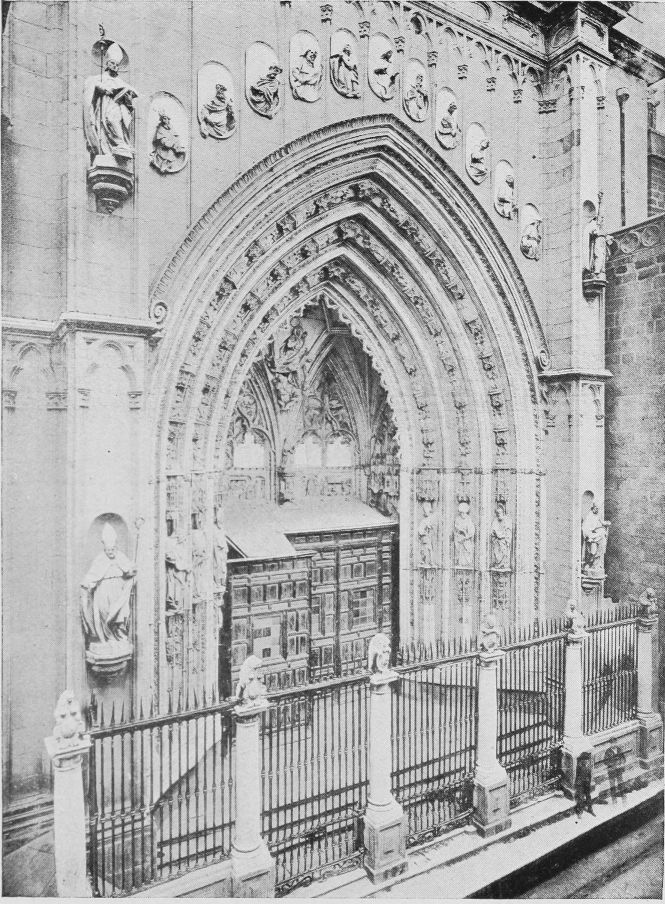
THE CATHEDRAL. THE GATE OF THE LIONS
Plate 236
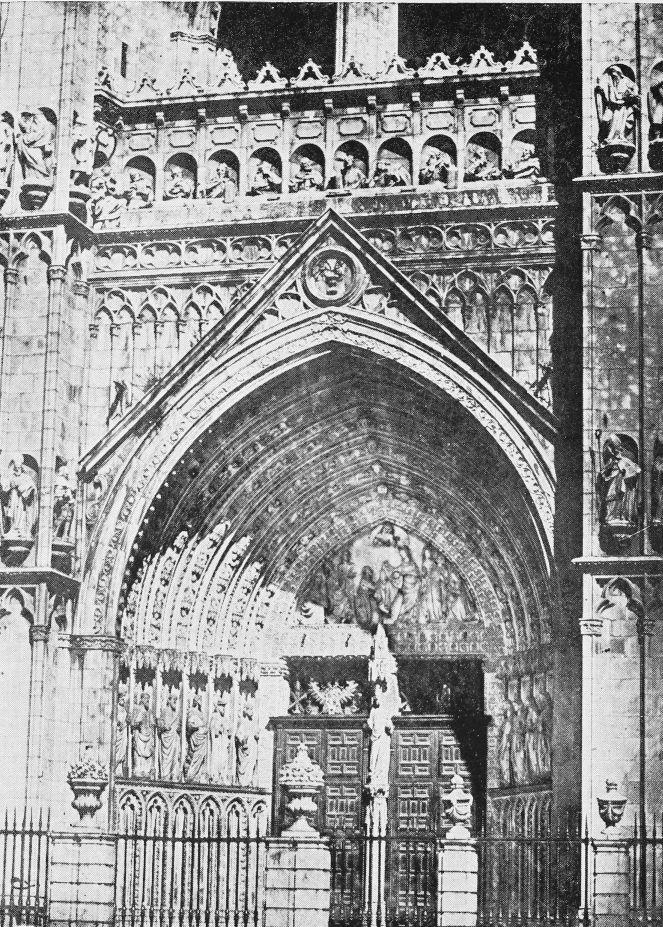
THE CATHEDRAL. PORCH OF THE PRINCIPAL FAÇADE
Plate 237
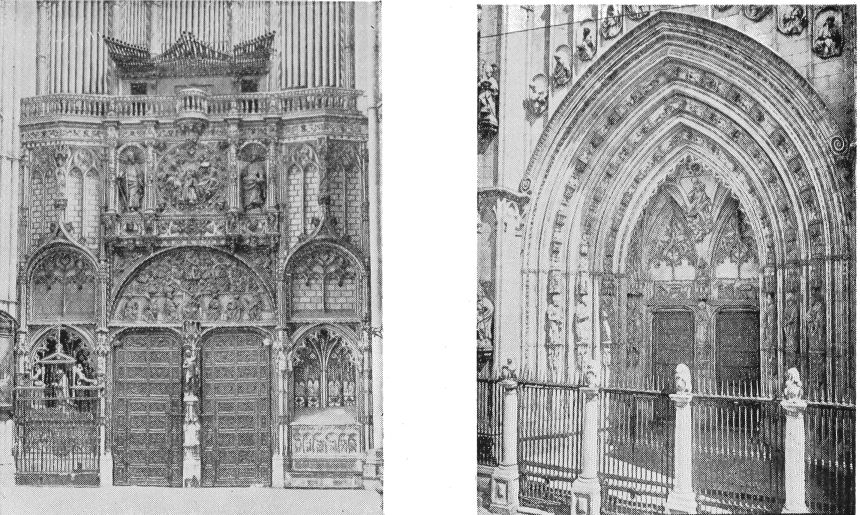
THE CATHEDRAL
THE LION DOOR
THE LION DOOR
Plate 238
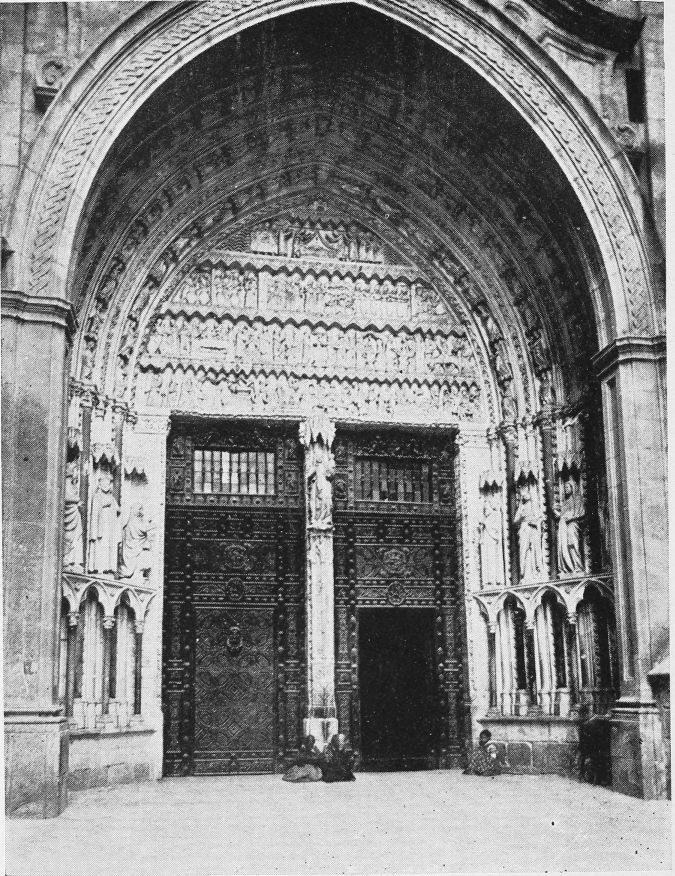
DOOR OF THE CATHEDRAL
Plate 239
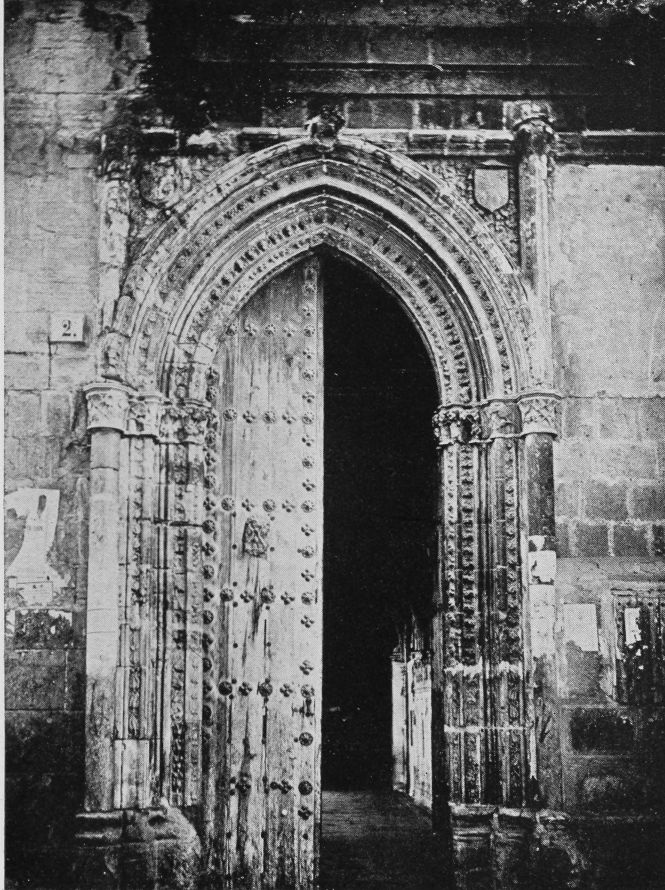
THE CATHEDRAL. DOOR OF THE LOST CHILD
Plate 240
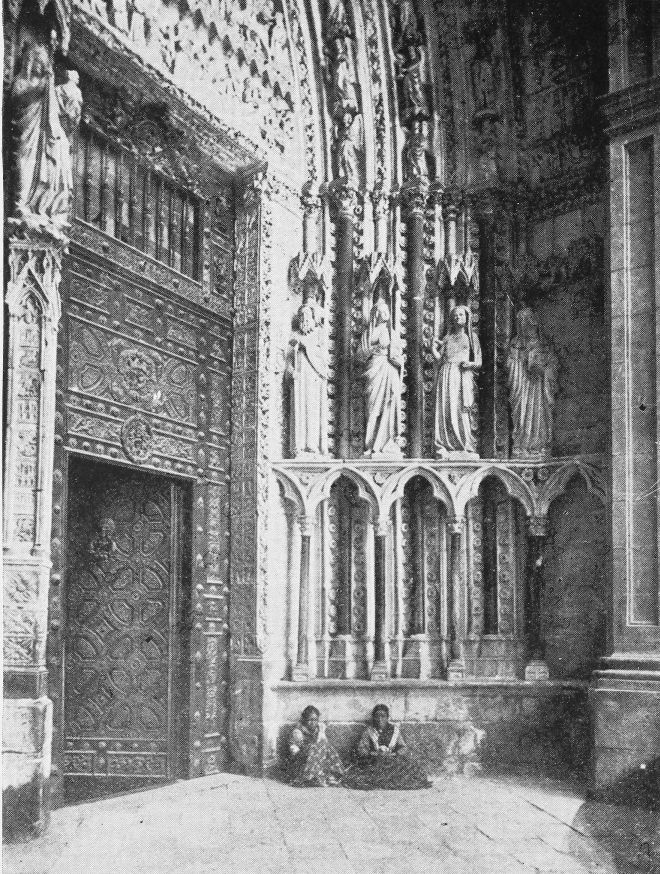
THE CATHEDRAL. DETAILS OF THE PUERTA DE LA FERIA
Plate 241
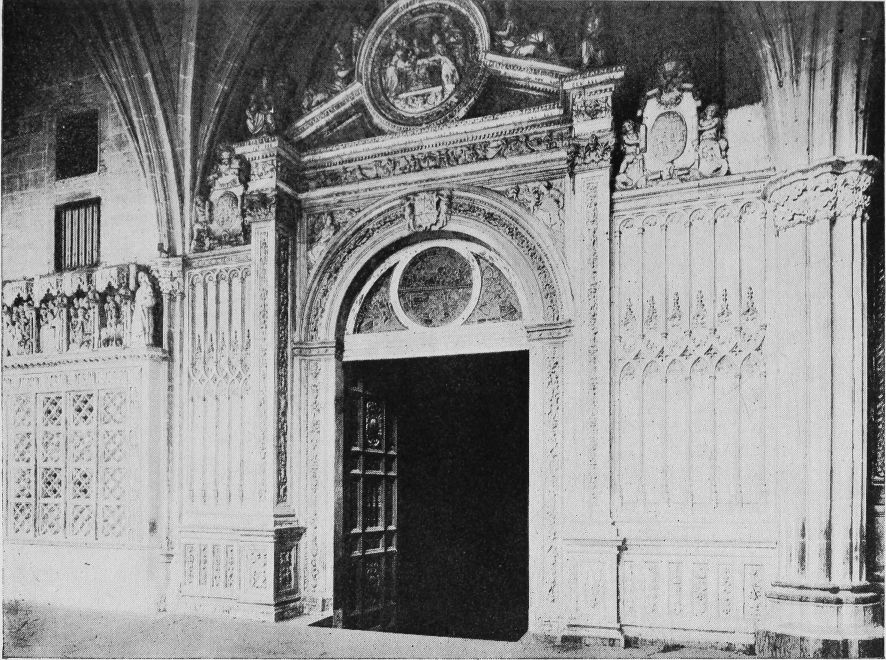
CATHEDRAL. GATE OF THE CONCEPTION
Plate 242
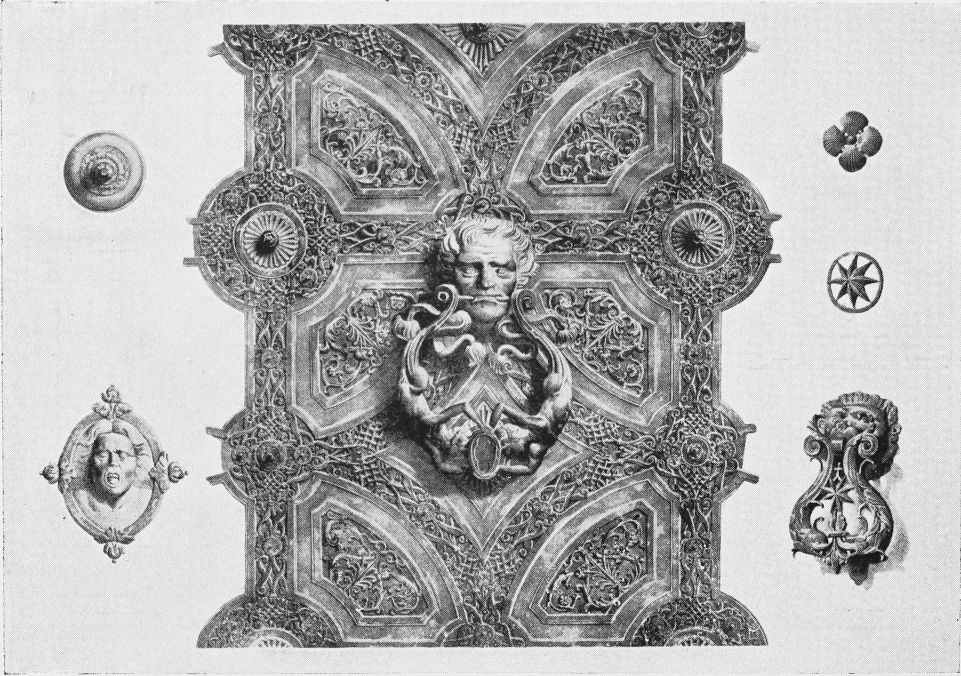
THE CATHEDRAL. ORNAMENTAL DETAILS OF THE GATES
Plate 243
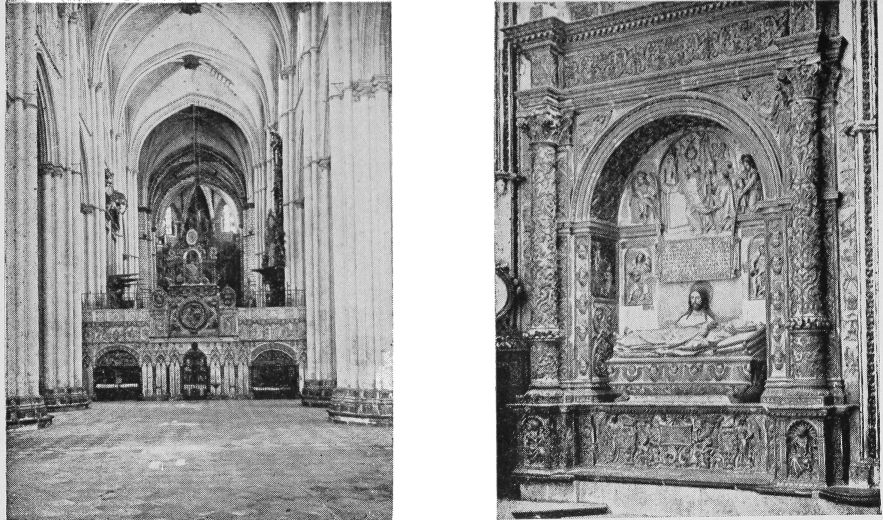
THE CATHEDRAL
CENTRAL NAVE
TOMB OF ALONSO DE CARRILLO
Plate 244
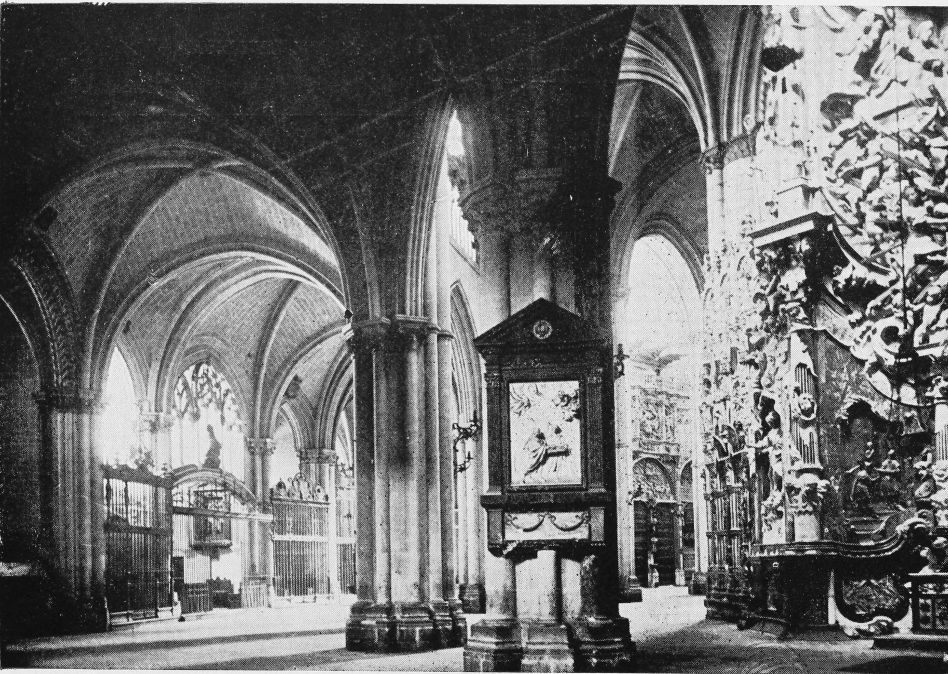
THE CATHEDRAL. GENERAL VIEW OF THE INTERIOR
Plate 245
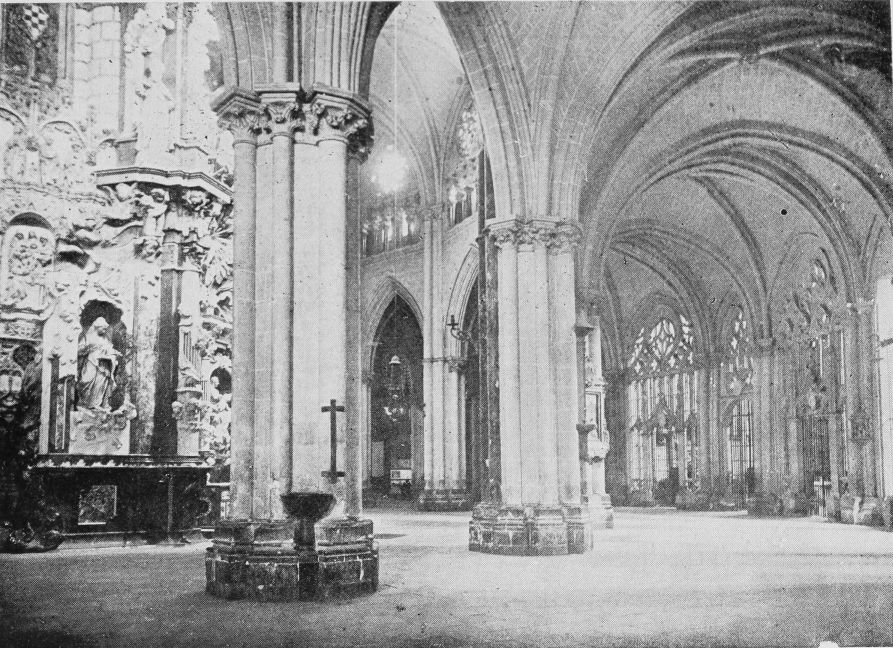
THE CATHEDRAL. GENERAL VIEW OF THE INTERIOR
Plate 246
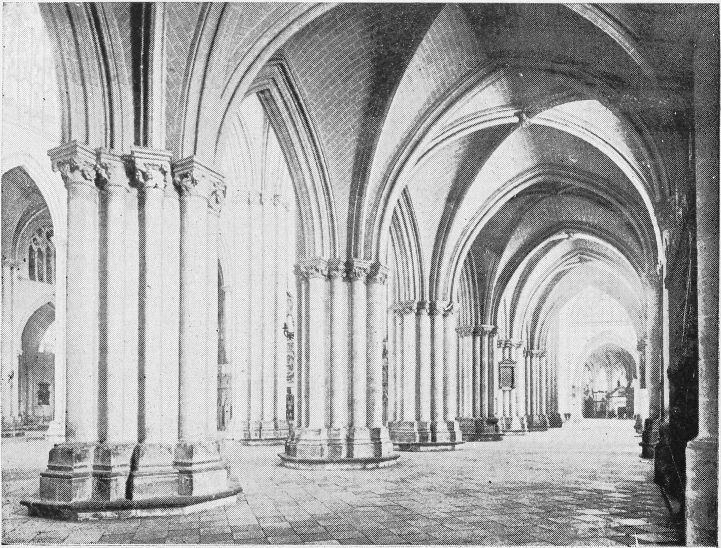
THE CATHEDRAL. INTERIOR
Plate 247
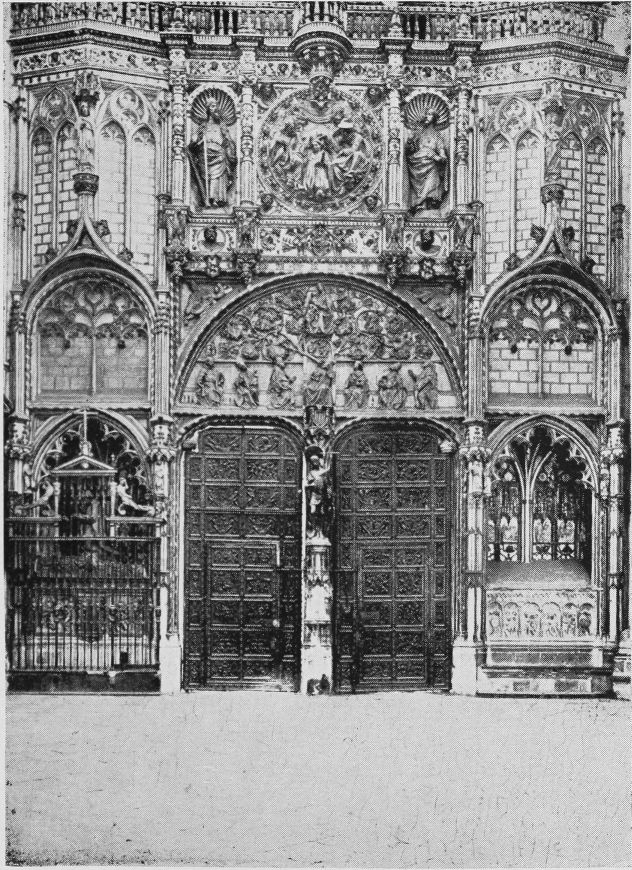
THE CATHEDRAL. INTERIOR
Plate 248
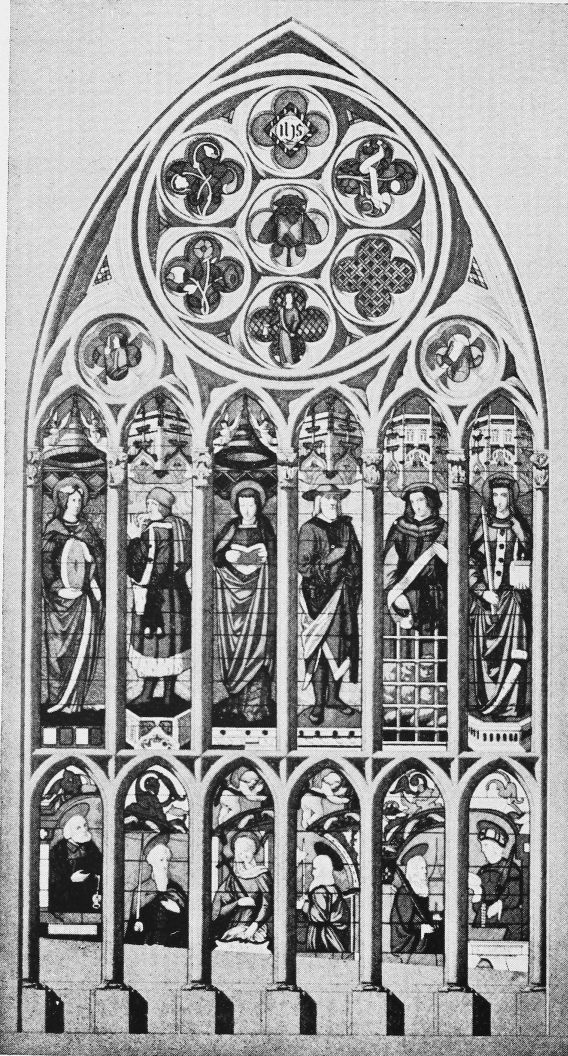
WINDOWS IN THE PRINCIPAL NAVE OF THE CATHEDRAL
Plate 249
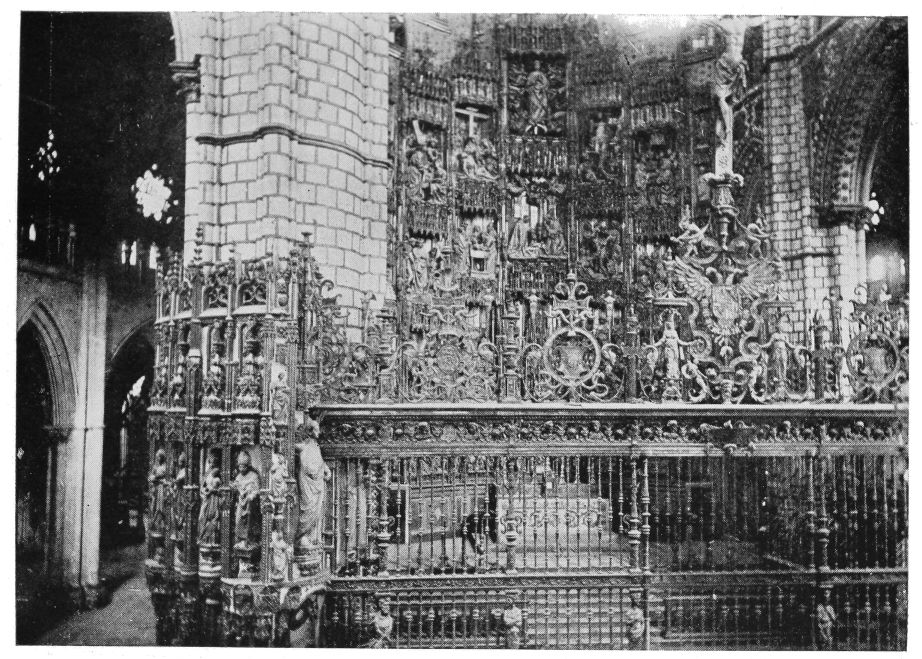
THE CATHEDRAL. GRATING OF THE PRINCIPAL CHAPEL. SIXTEENTH CENTURY
Plate 250
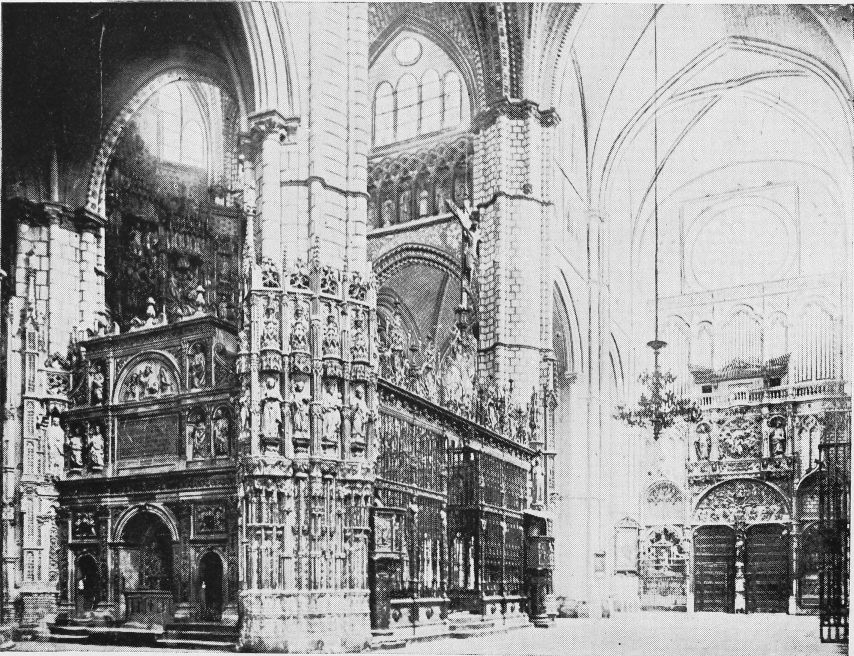
THE CATHEDRAL. EXTERIOR OF THE PRINCIPAL CHAPEL
Plate 251
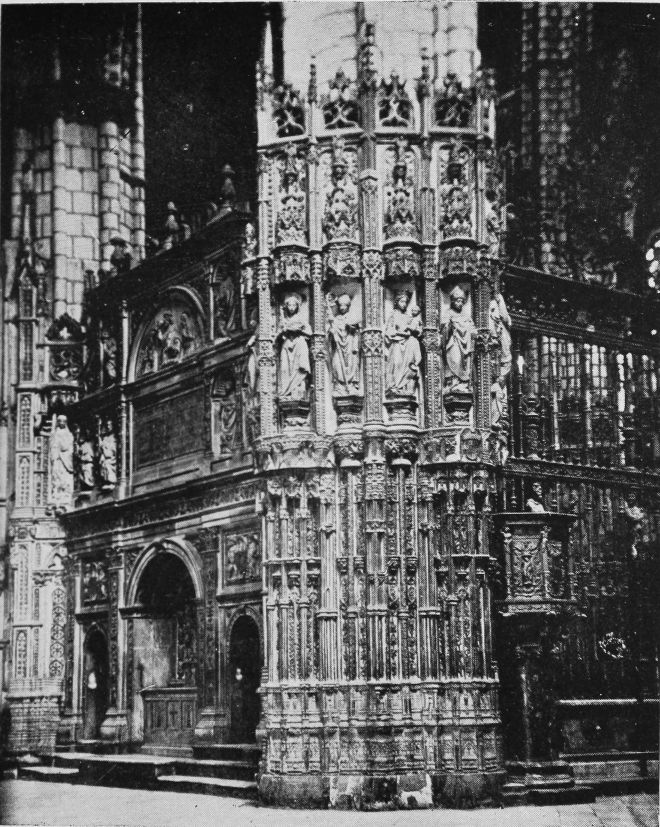
THE CATHEDRAL. EXTERIOR OF THE PRINCIPAL CHAPEL
Plate 252
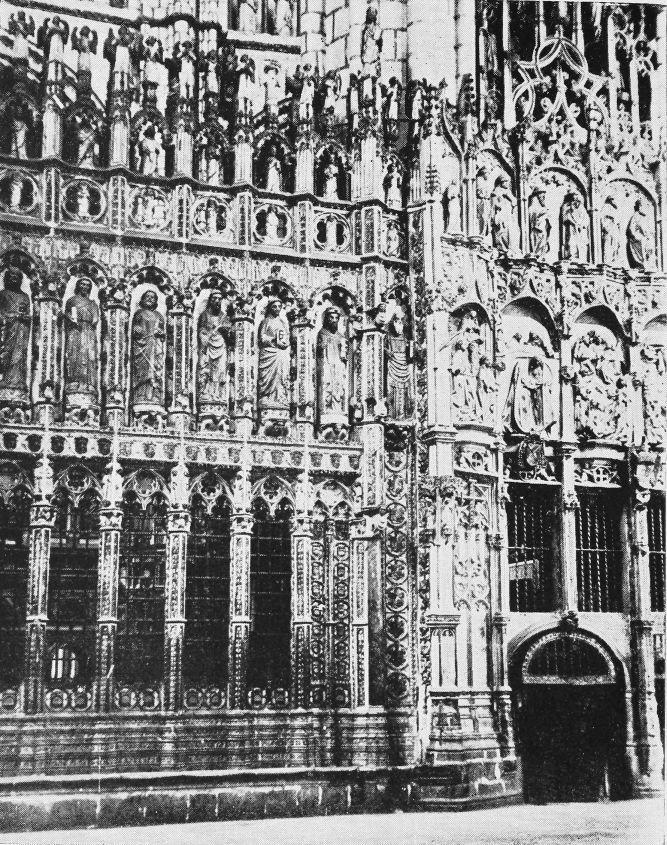
THE CATHEDRAL. EXTERIOR OF THE PRINCIPAL CHAPEL
Plate 253
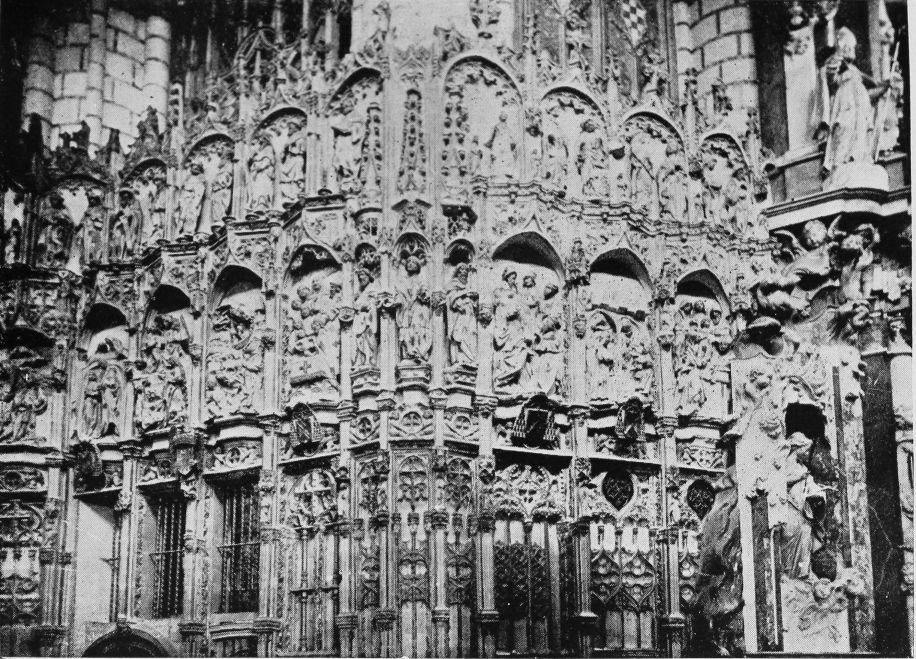
THE CATHEDRAL. DETAILS OF THE PRINCIPAL CHAPEL
Plate 254
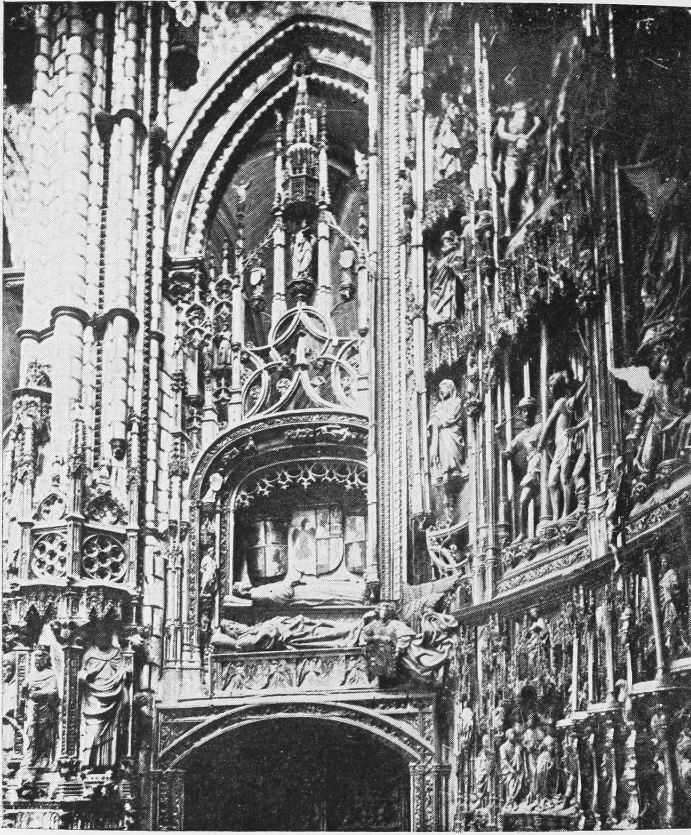
THE CATHEDRAL. DETAILS OF THE PRINCIPAL CHAPEL
Plate 255
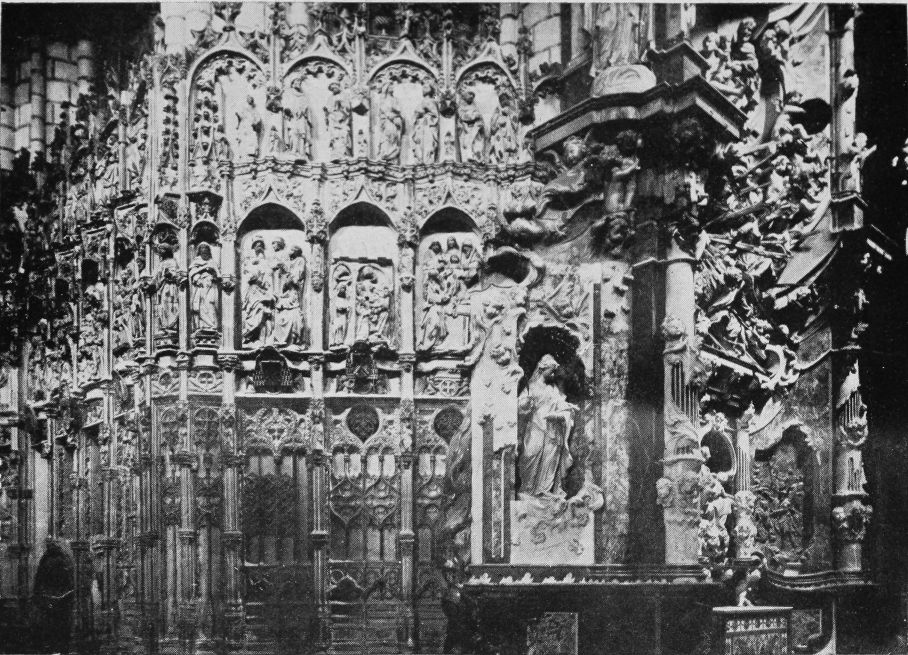
THE CATHEDRAL. EXTERIOR OF THE PRINCIPAL CHAPEL
Plate 256
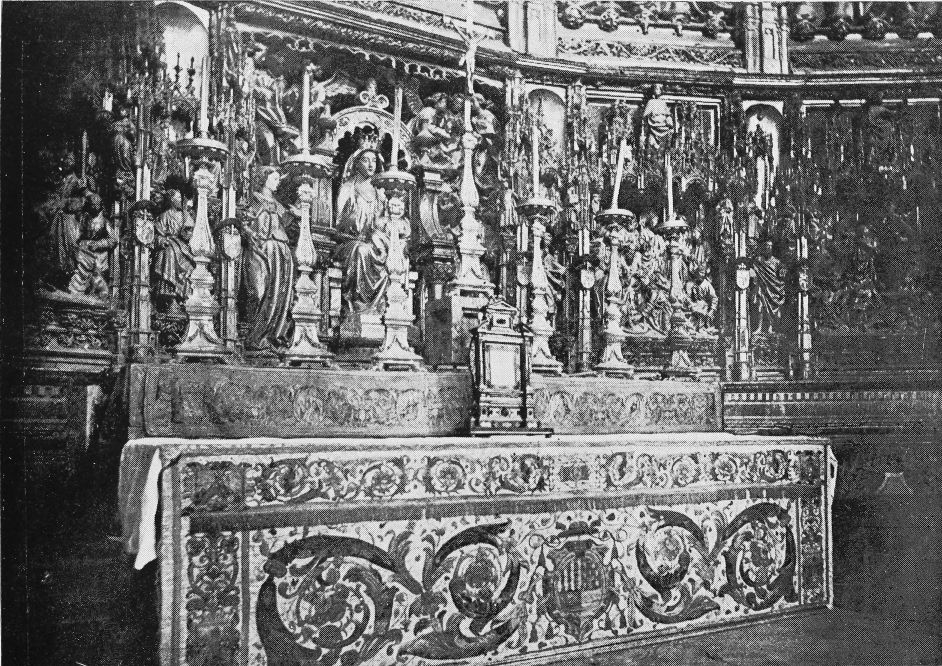
THE CATHEDRAL. DETAILS OF THE PRINCIPAL CHAPEL
Plate 257
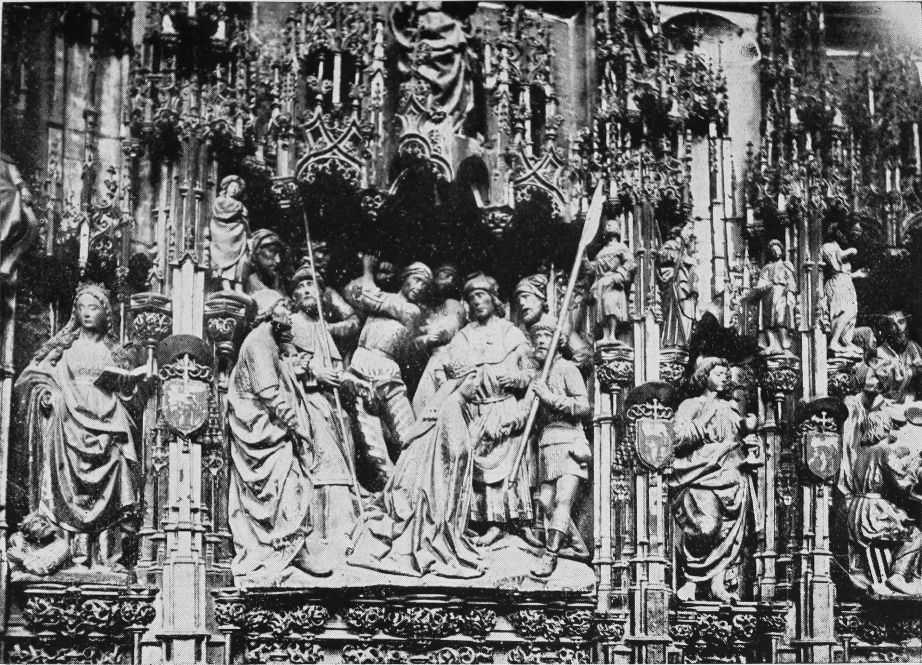
THE CATHEDRAL. DETAILS OF THE PRINCIPAL CHAPEL
Plate 258
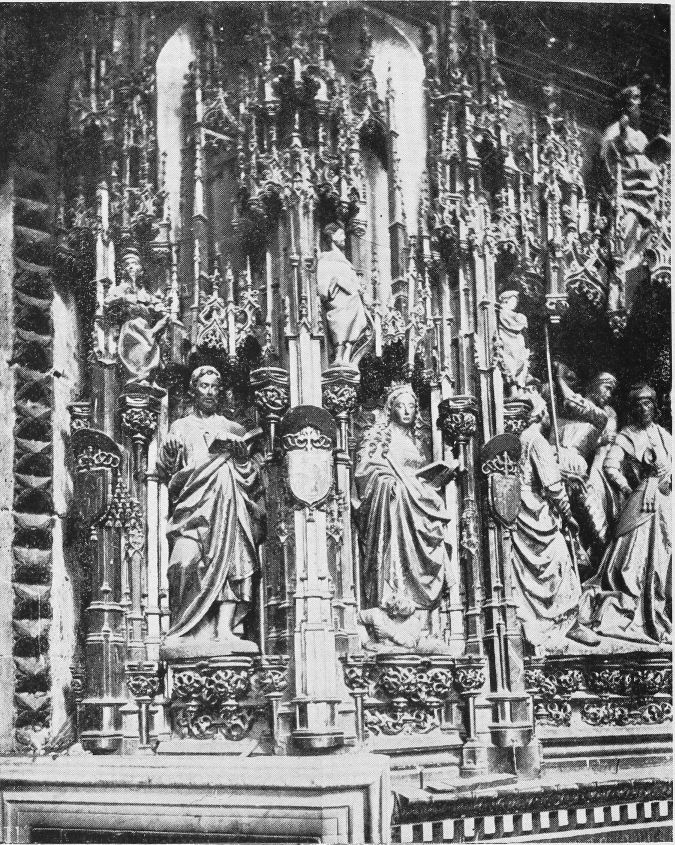
THE CATHEDRAL. ALTAR-PIECE OF THE PRINCIPAL CHAPEL
Plate 259
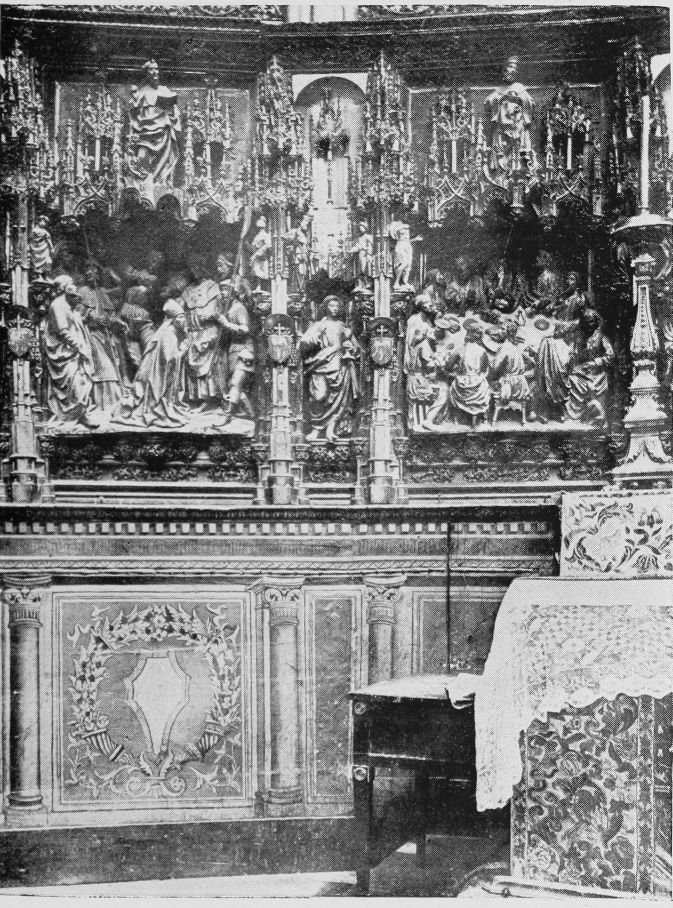
THE CATHEDRAL. DETAIL OF THE ALTAR-PIECE OF THE PRINCIPAL CHAPEL
Plate 260
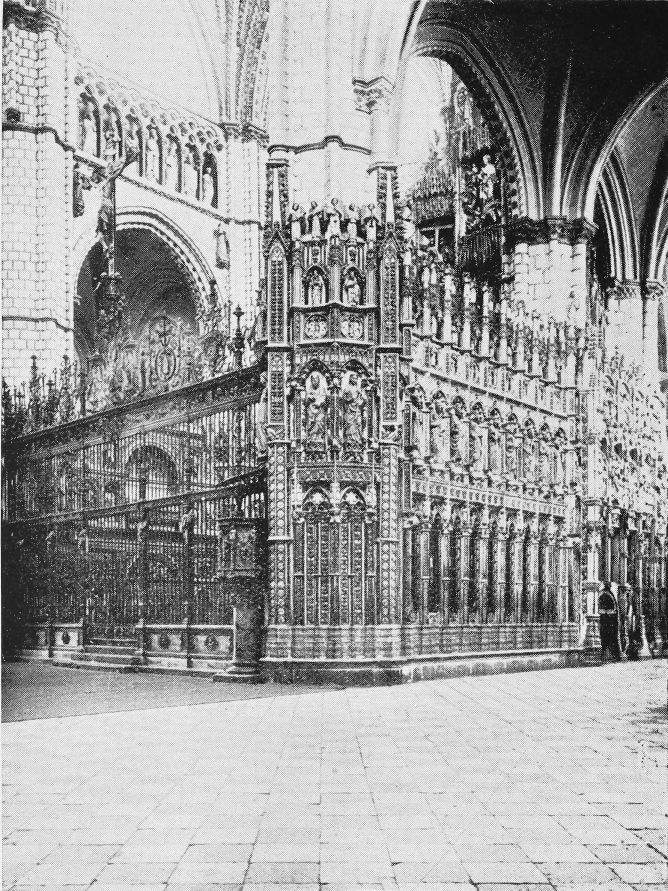
THE CATHEDRAL. EXTERIOR OF THE HIGH ALTAR
Plate 261
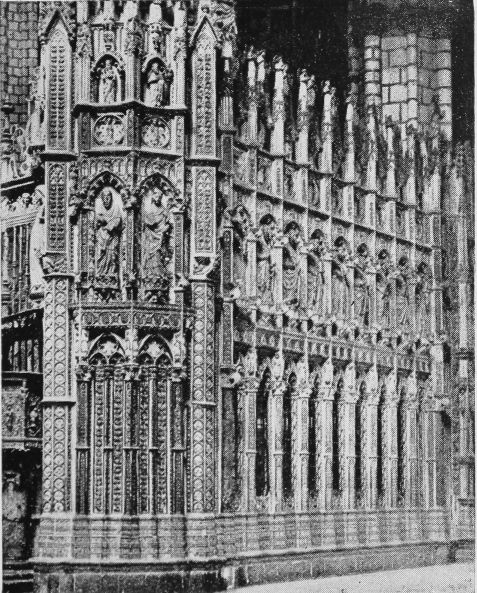
THE CATHEDRAL. EXTERIOR OF THE HIGH ALTAR
Plate 262
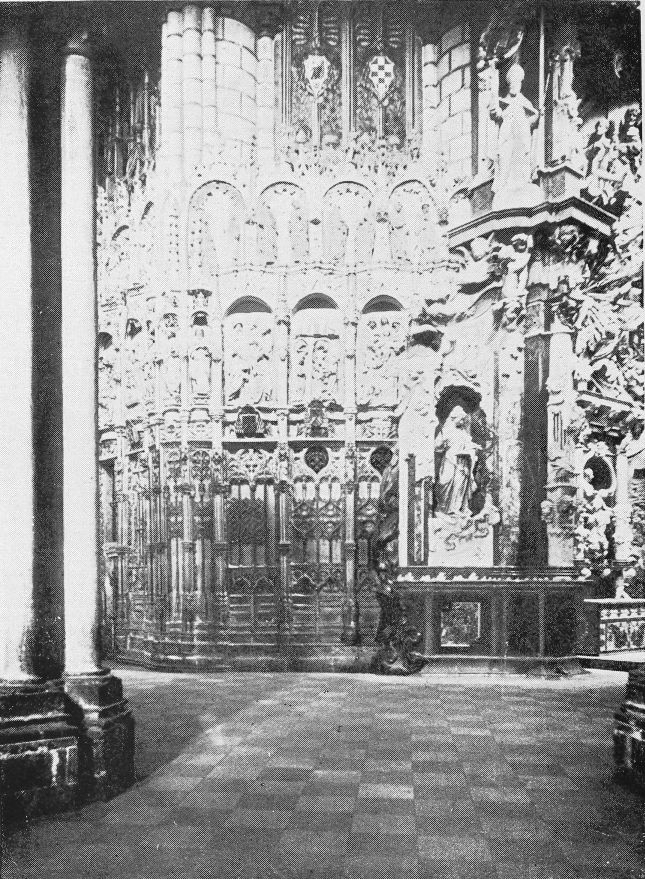
THE CATHEDRAL. EXTERIOR OF THE HIGH ALTAR
Plate 263
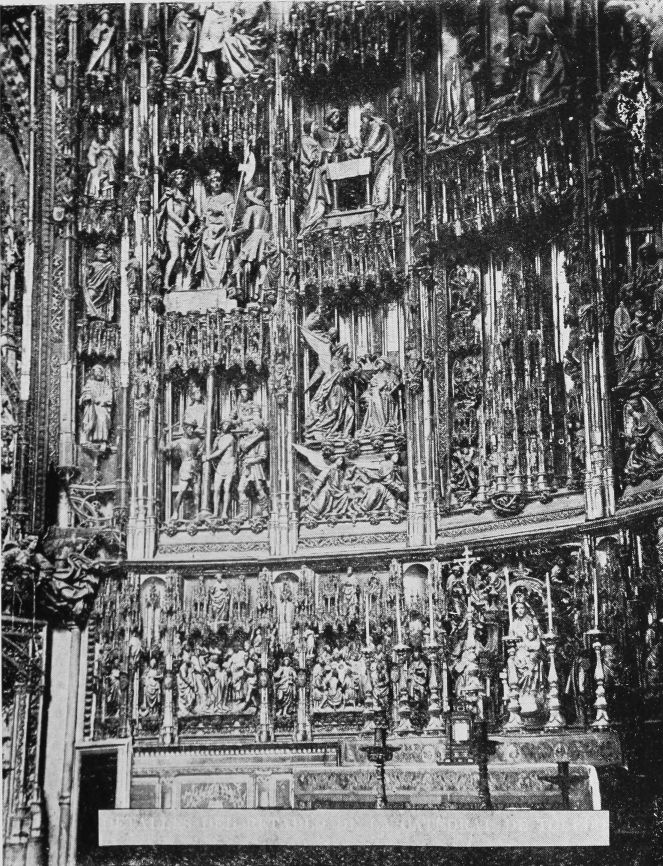
THE CATHEDRAL. DETAILS OF THE ALTAR-PIECE
Plate 264
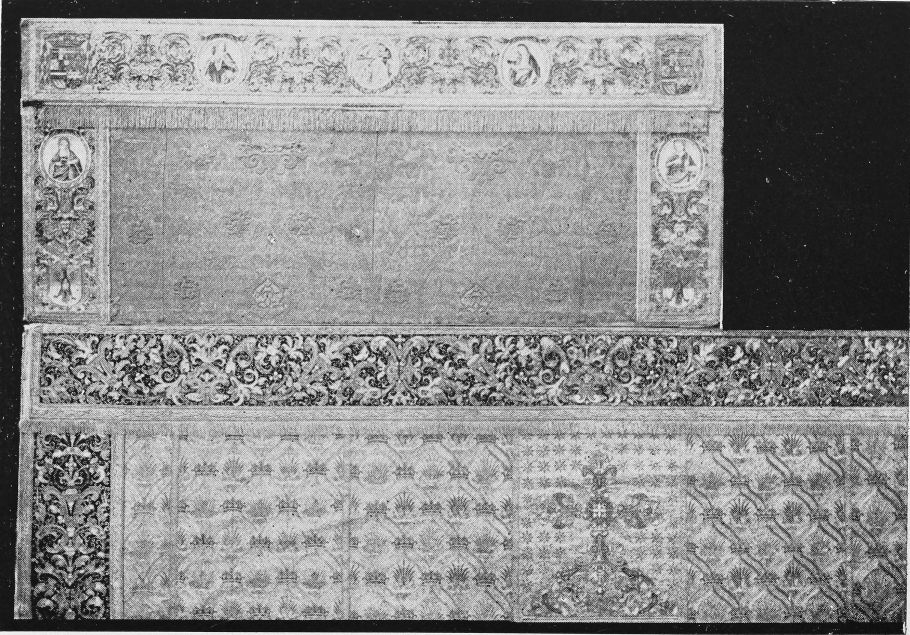
THE CATHEDRAL. FRONTAL OF THE HIGH ALTAR. FIFTEENTH CENTURY
Plate 265
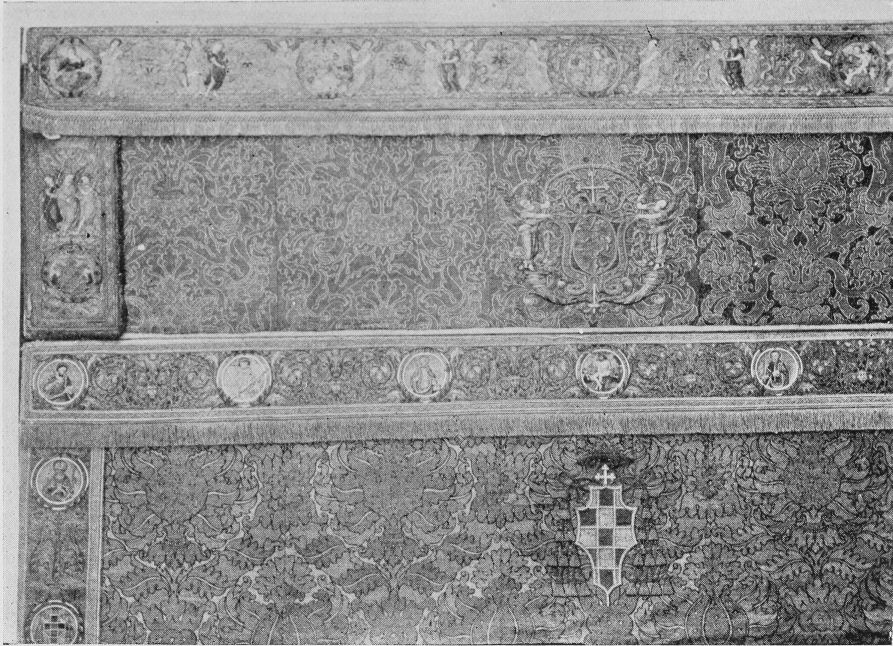
THE CATHEDRAL. FRONTAL OF THE HIGH ALTAR. FIFTEENTH CENTURY
Plate 266
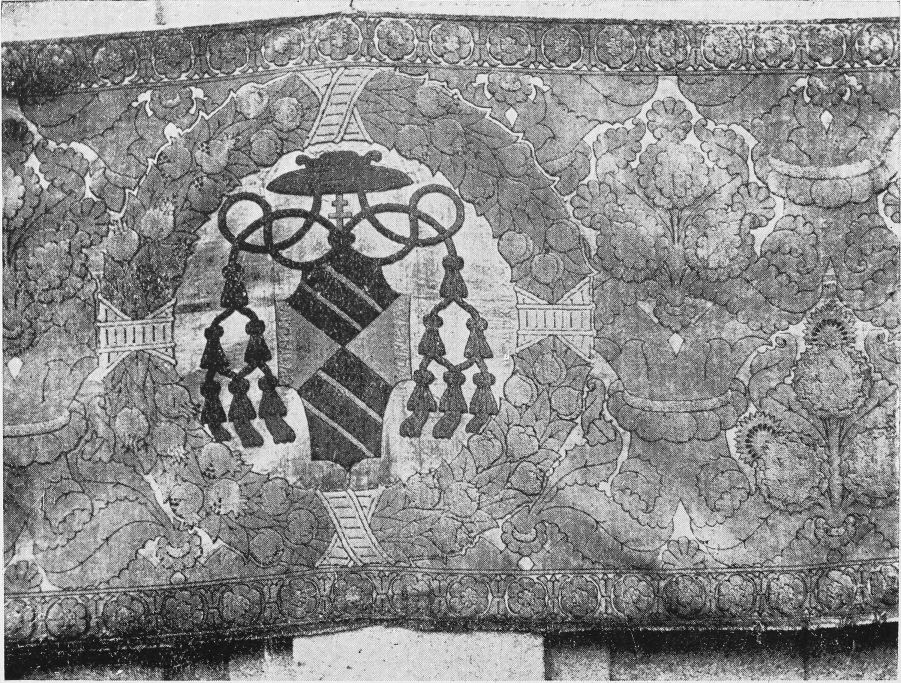
THE CATHEDRAL. DETAIL OF THE FRONTAL OF THE HIGH ALTAR
Plate 267
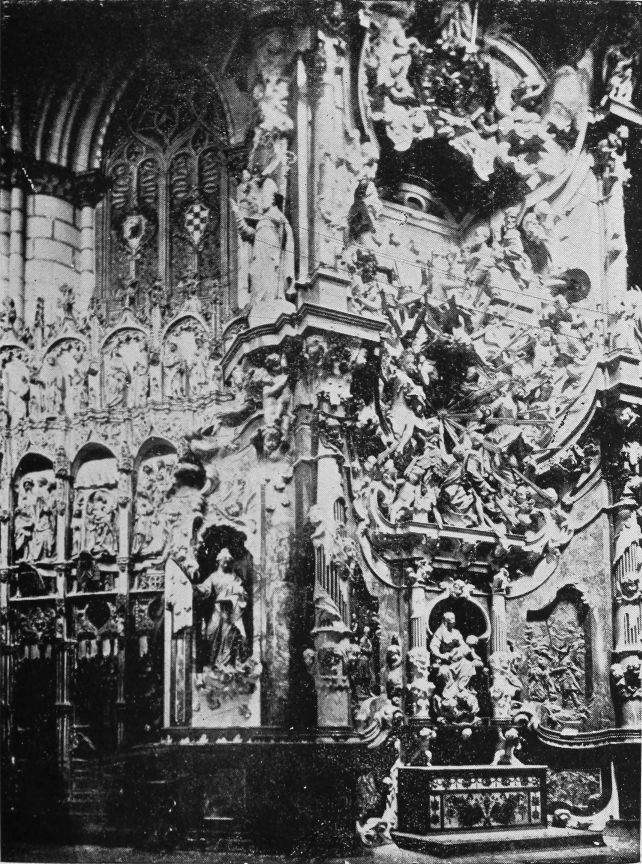
THE CATHEDRAL. EXTERIOR OF THE PRINCIPAL CHAPEL
Plate 268
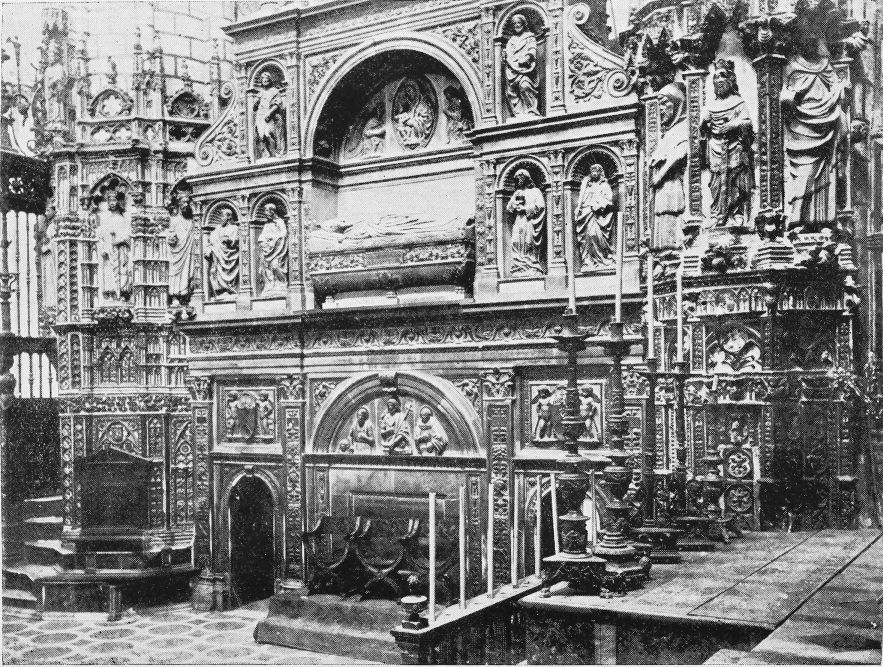
THE CATHEDRAL. SEPULCHRE OF CARDINAL MENDOZA IN THE PRINCIPAL CHAPEL
Plate 269
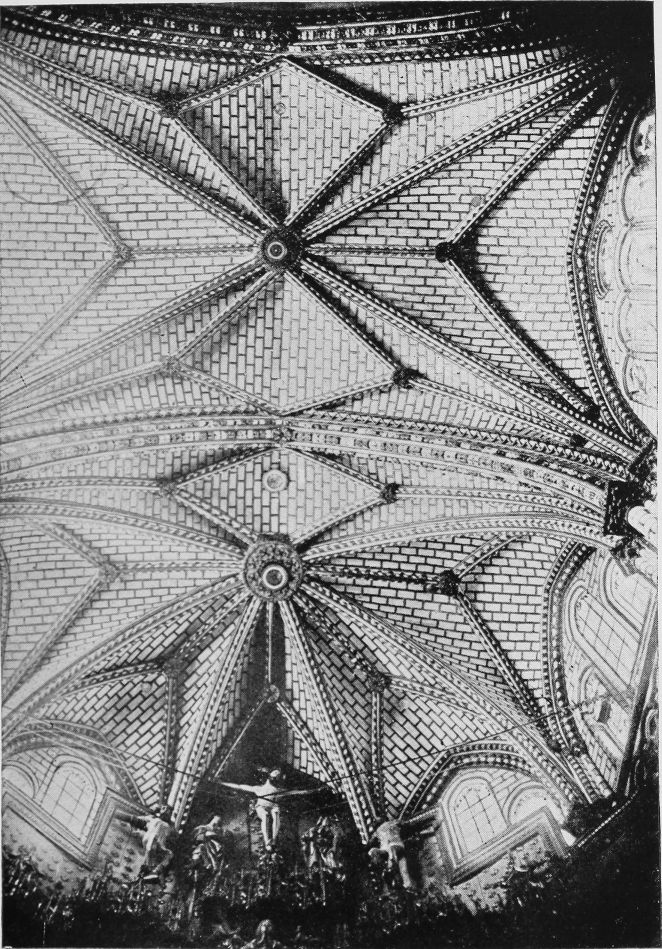
THE CATHEDRAL. DOME OF THE PRINCIPAL CHAPEL
Plate 270
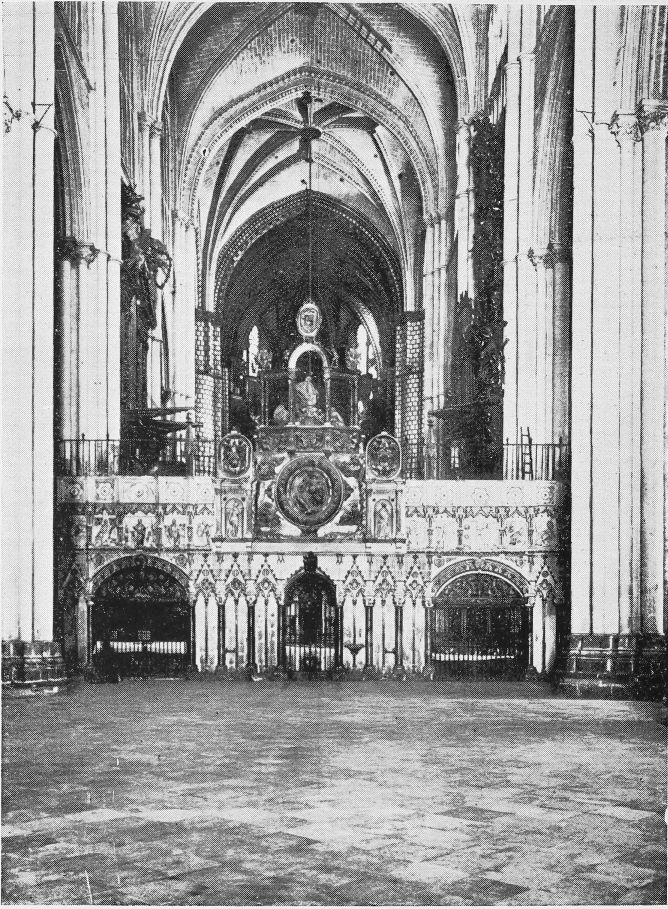
THE CATHEDRAL. EXTERIOR OF THE CHOIR
Plate 271
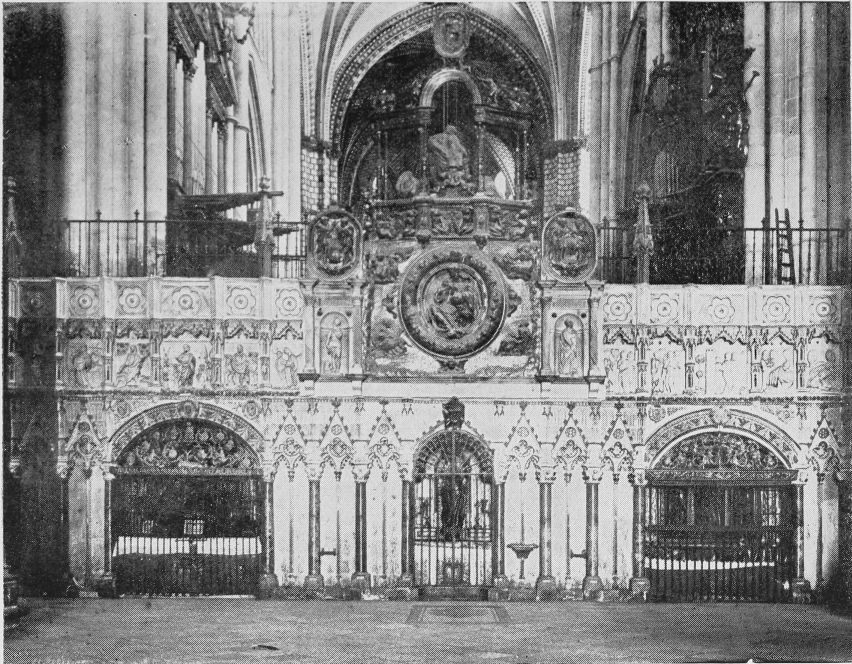
THE CATHEDRAL. EXTERIOR OF THE CHOIR
Plate 272
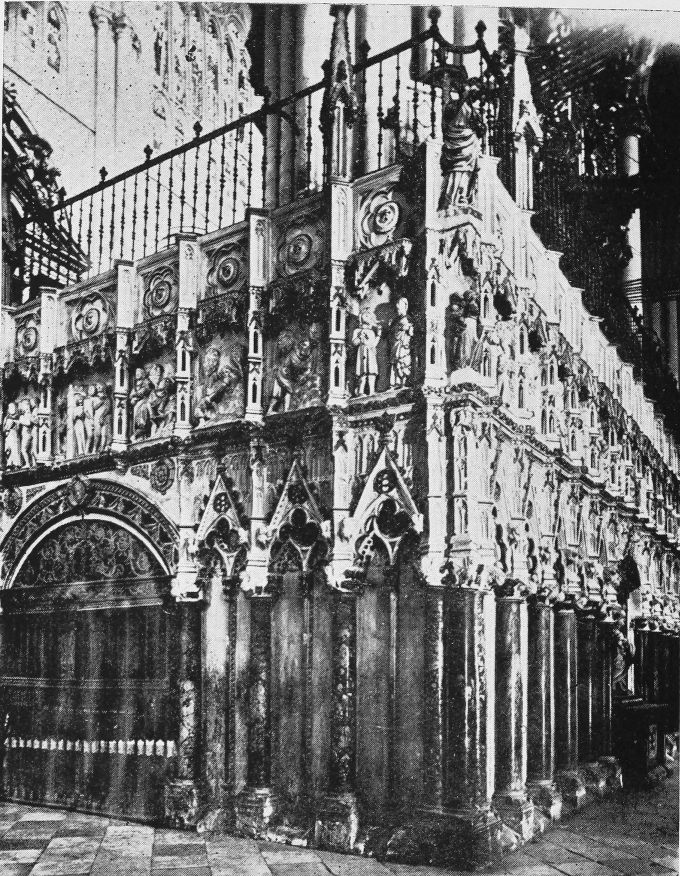
THE CATHEDRAL. DETAILS OF THE EXTERIOR OF THE CHOIR
Plate 273
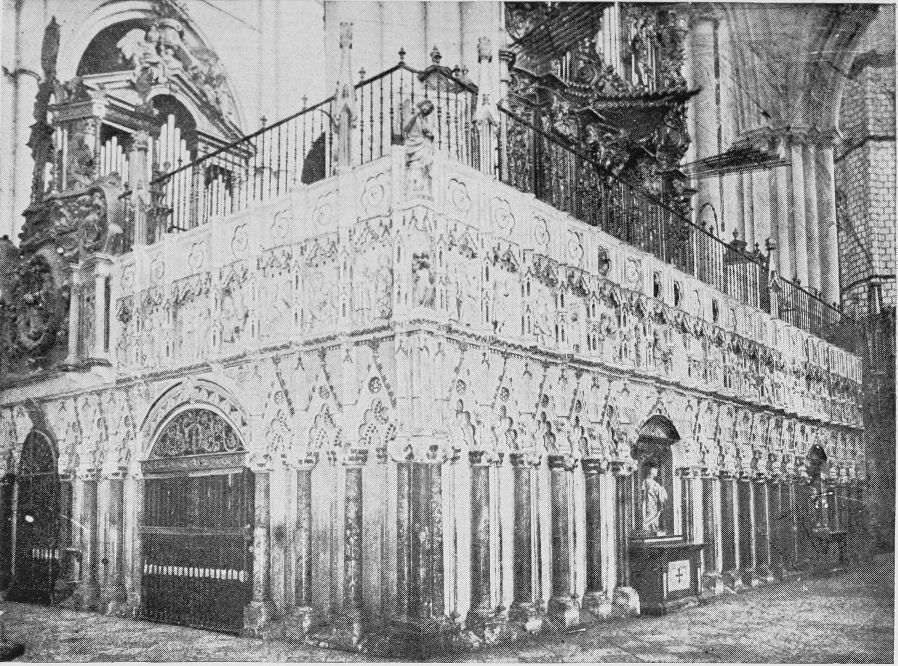
THE CATHEDRAL. EXTERIOR OF THE CHOIR
Plate 274
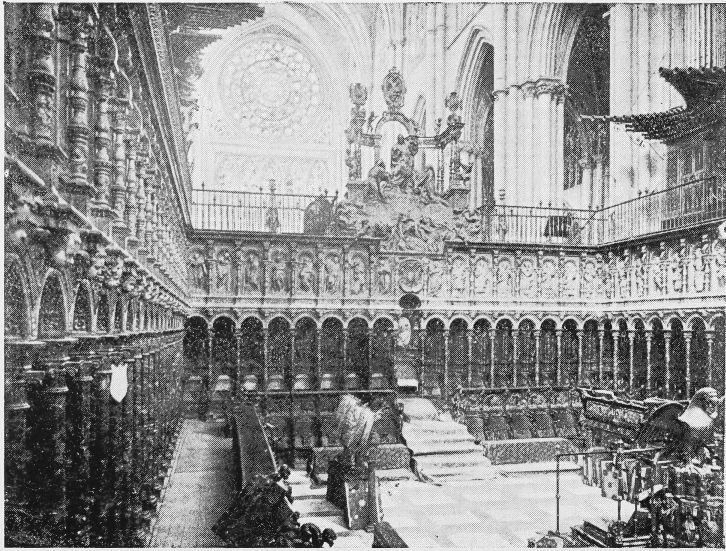
THE CATHEDRAL. CHOIR STALLS
Plate 275
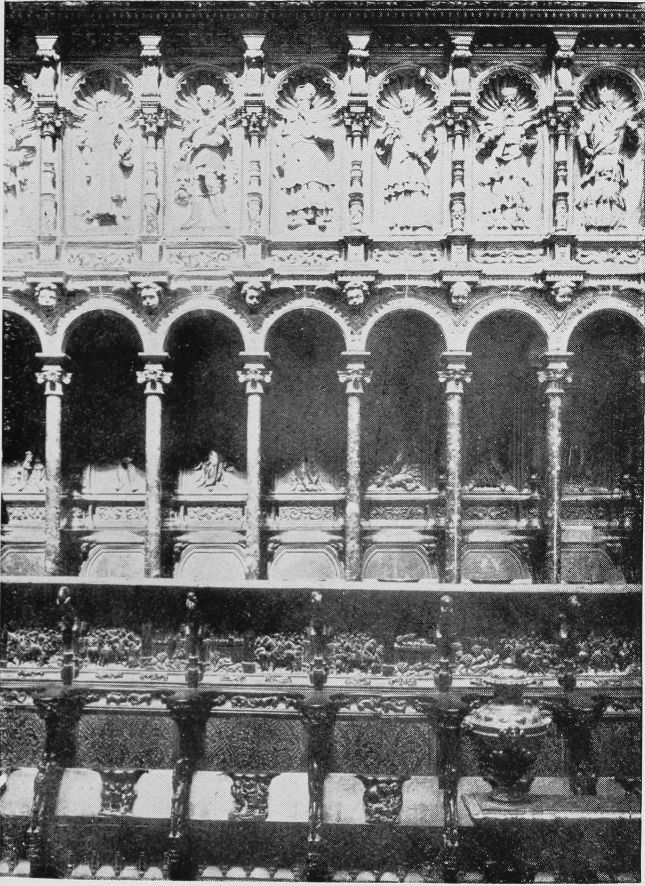
THE CATHEDRAL. CHOIR STALLS
Plate 276
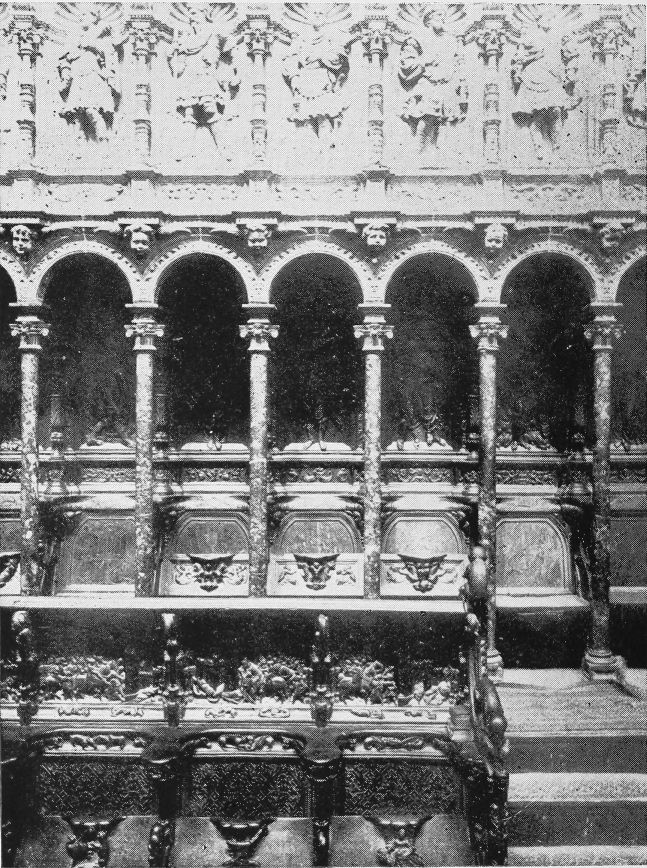
THE CATHEDRAL. CHOIR STALLS
Plate 277
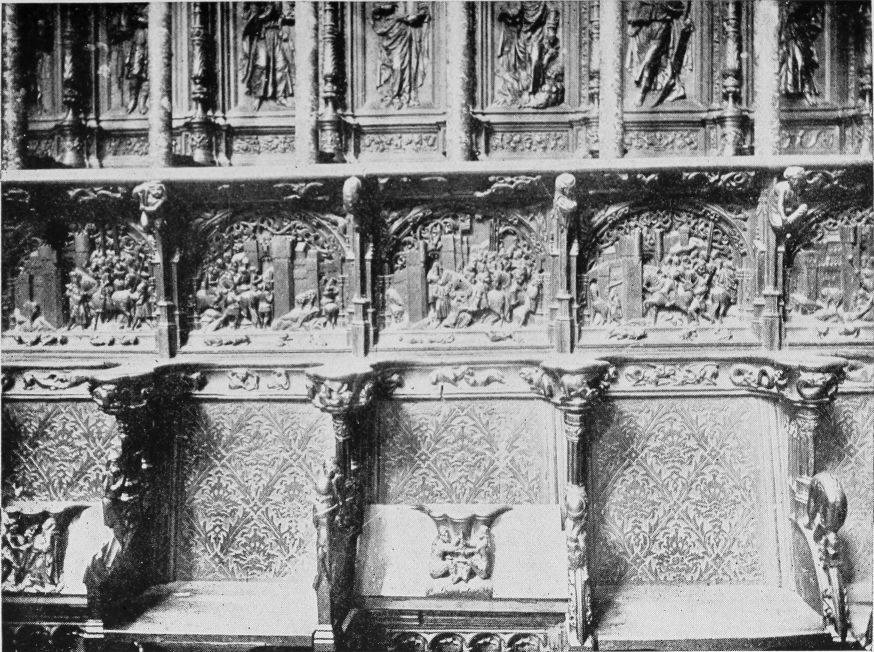
THE CATHEDRAL. DETAILS OF THE CHOIR STALLS, REPRESENTING THE RE-CONQUEST
OF GRANADA BY FERDINAND AND ISABELLA
Plate 278
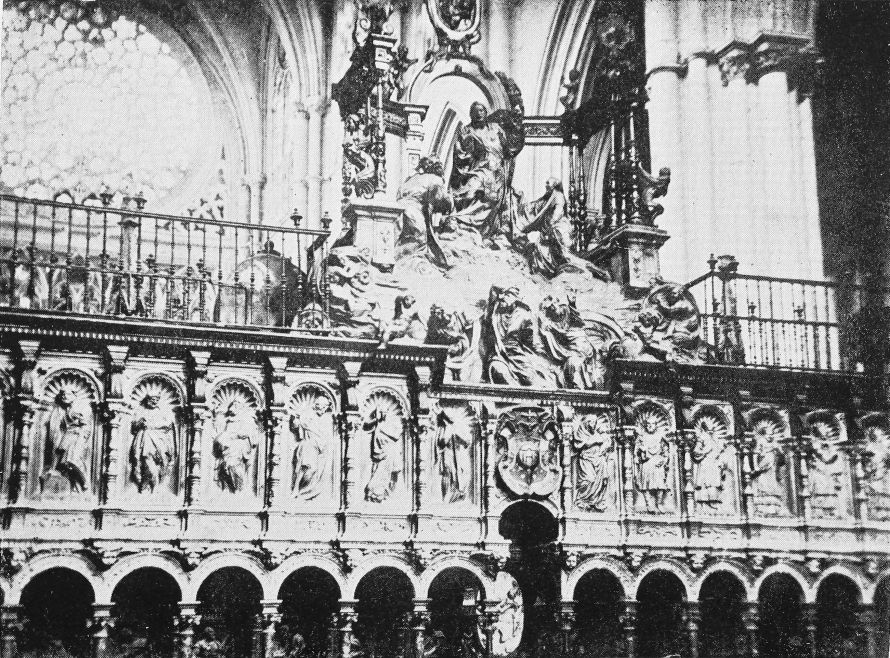
THE CATHEDRAL. INTERIOR OF THE CHOIR
Plate 279
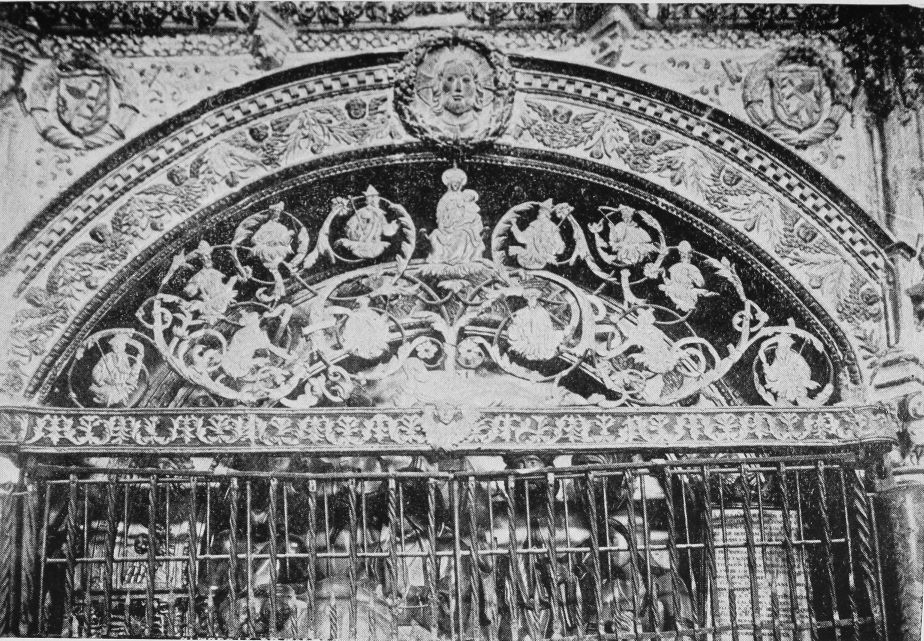
THE CATHEDRAL. DETAILS OF THE CHOIR
Plate 280
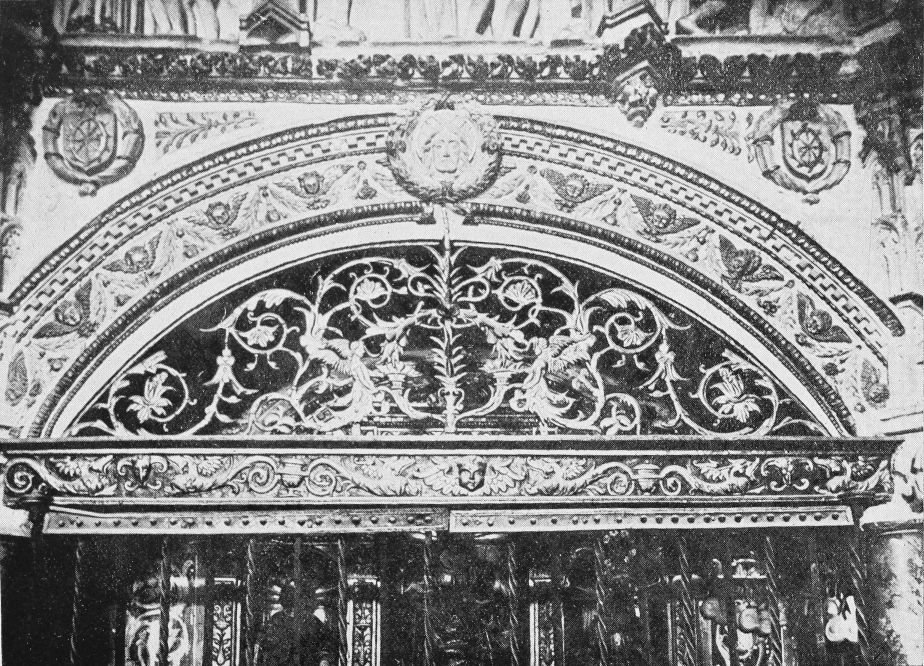
THE CATHEDRAL. DETAILS OF THE CHOIR
Plate 281
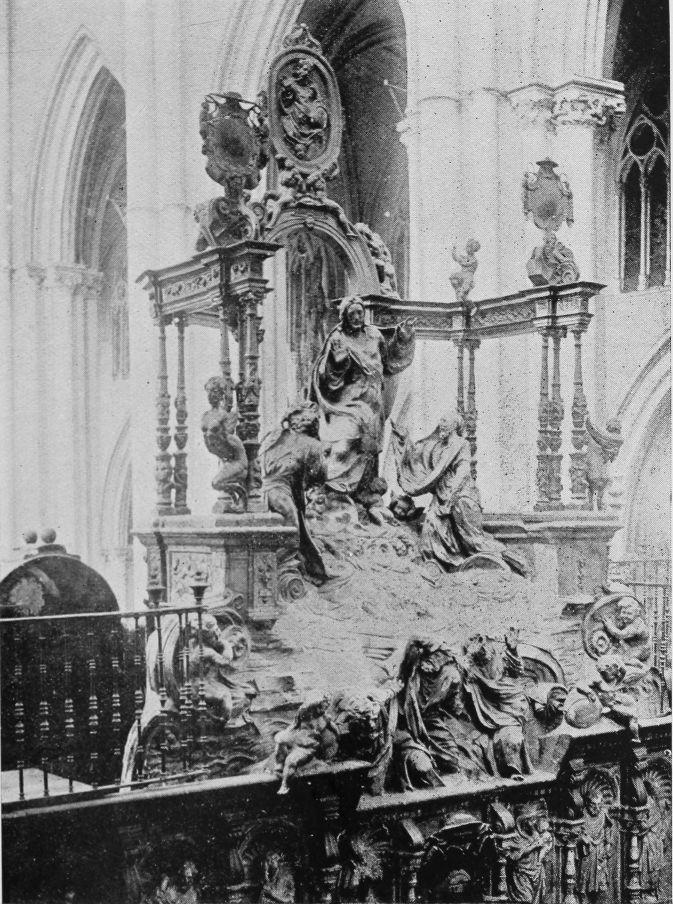
THE CATHEDRAL. THE ARCHBISHOP’S THRONE, REPRESENTING THE
TRANSFIGURATION. BY BERRUGUETE
Plate 282
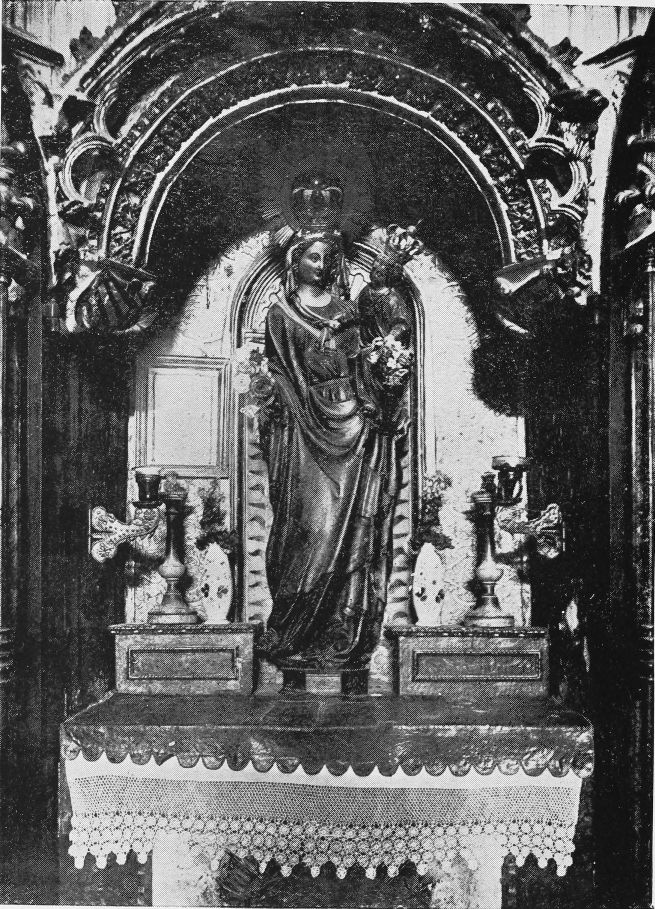
THE CATHEDRAL. VIRGIN OF THE LANEROS
Plate 283
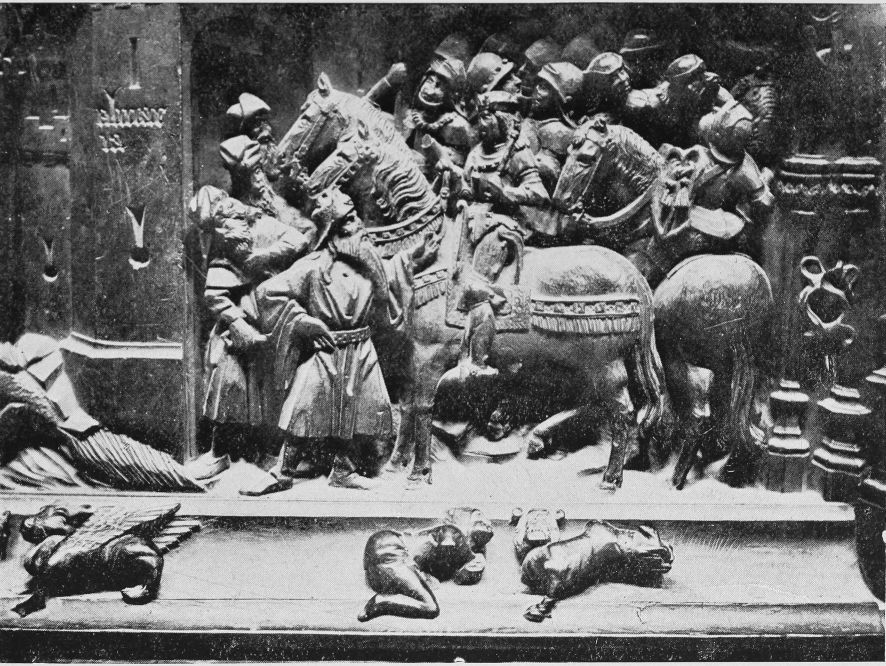
THE CATHEDRAL. DETAIL OF THE CHOIR STALLS. RE-CONQUEST OF GRANADA BY
FERDINAND AND ISABELLA
Plate 284
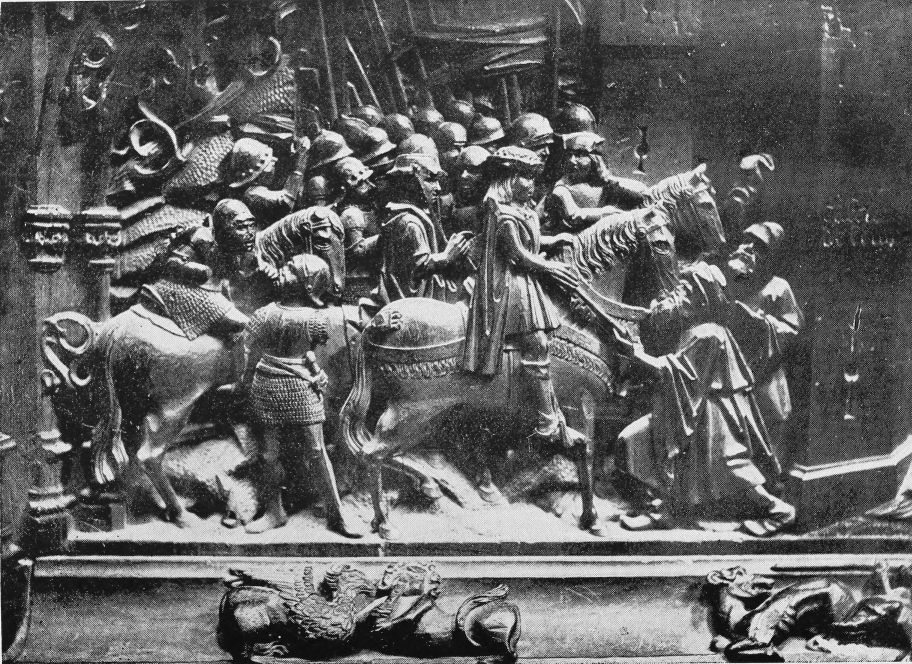
THE CATHEDRAL. DETAIL OF THE CHOIR STALLS. RE-CONQUEST OF GRANADA BY
FERDINAND AND ISABELLA
Plate 285
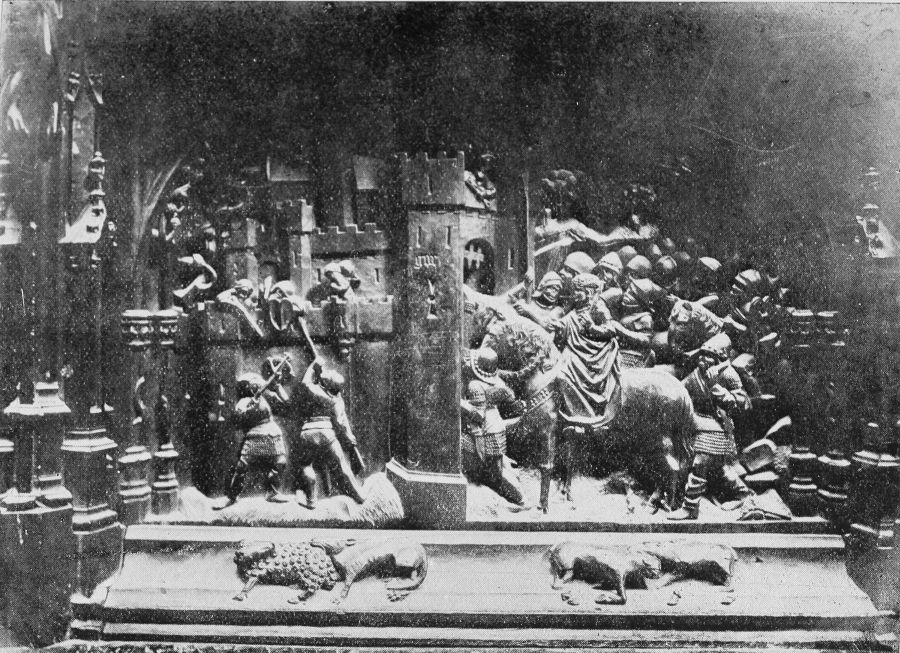
THE CATHEDRAL. DETAIL OF THE CHOIR STALLS. RE-CONQUEST OF GRANADA BY
FERDINAND AND ISABELLA
Plate 286
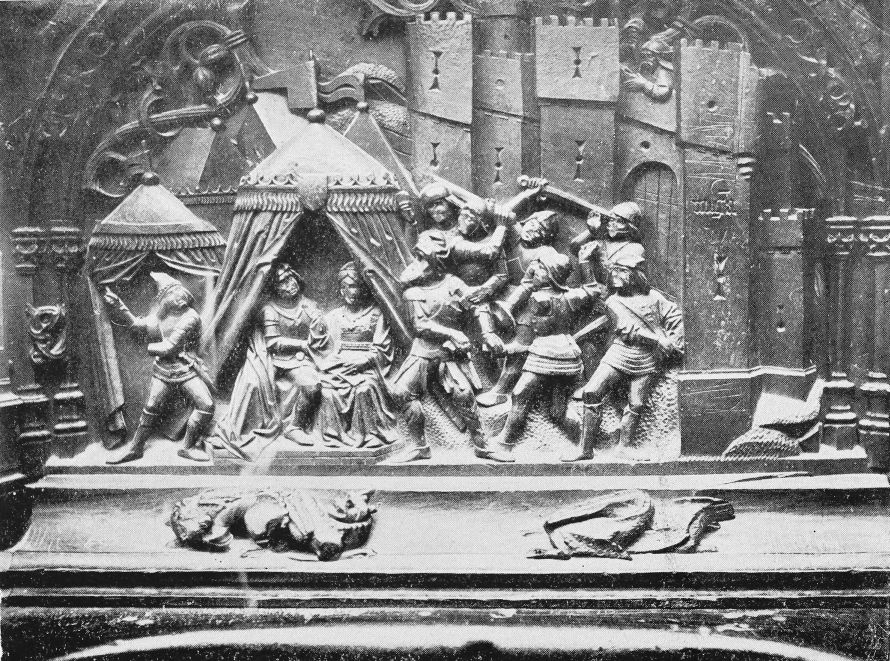
THE CATHEDRAL. DETAIL OF THE CHOIR STALLS. RE-CONQUEST OF GRANADA BY
FERDINAND AND ISABELLA
Plate 287
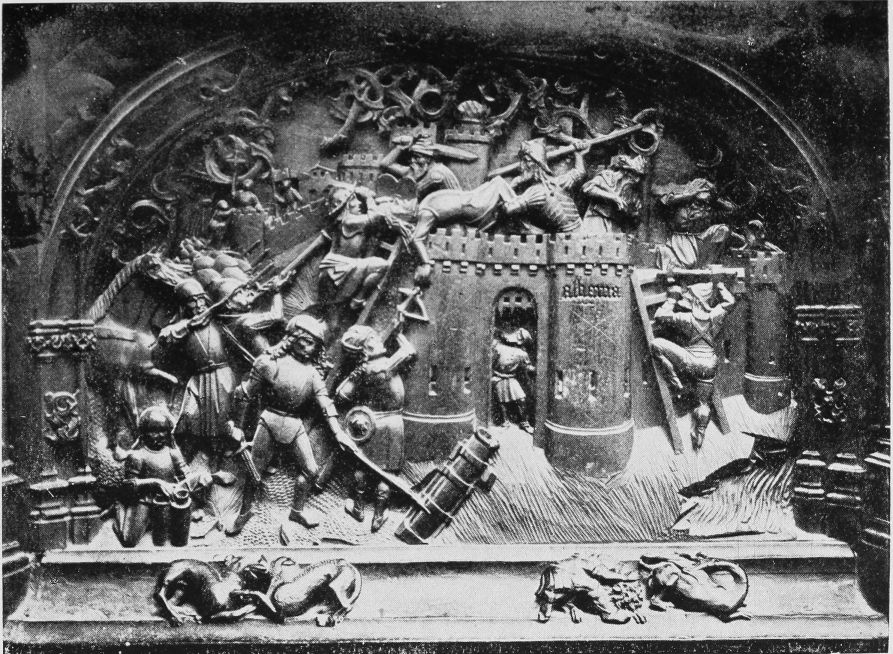
THE CATHEDRAL. DETAIL OF CHOIR STALLS. THE CAPTURE OF ALHAMA BY
FERDINAND AND ISABELLA, 1482. RE-CONQUEST OF GRANADA
Plate 288
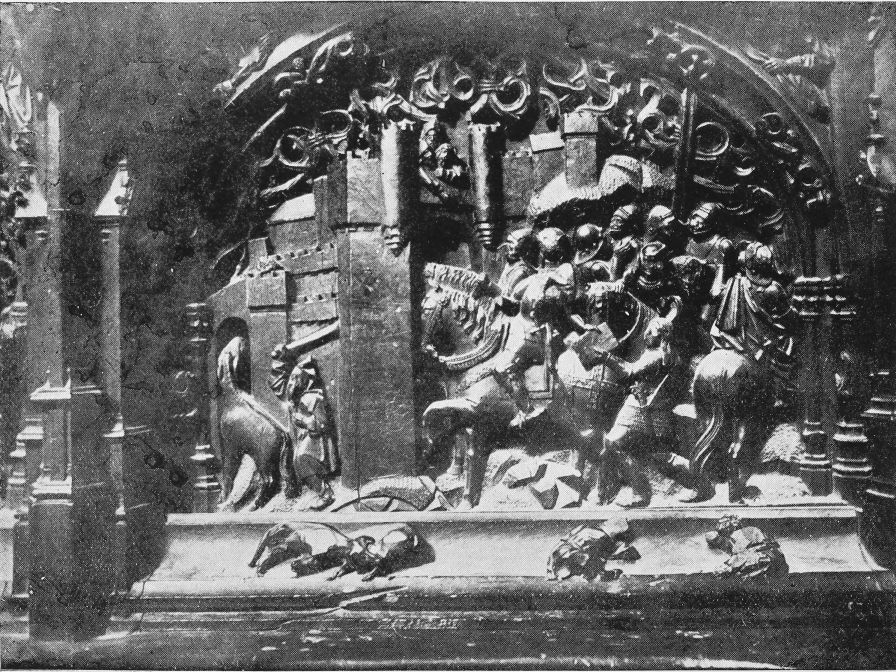
THE CATHEDRAL. DETAIL OF THE CHOIR STALLS. RE-CONQUEST OF GRANADA BY
FERDINAND AND ISABELLA
Plate 289
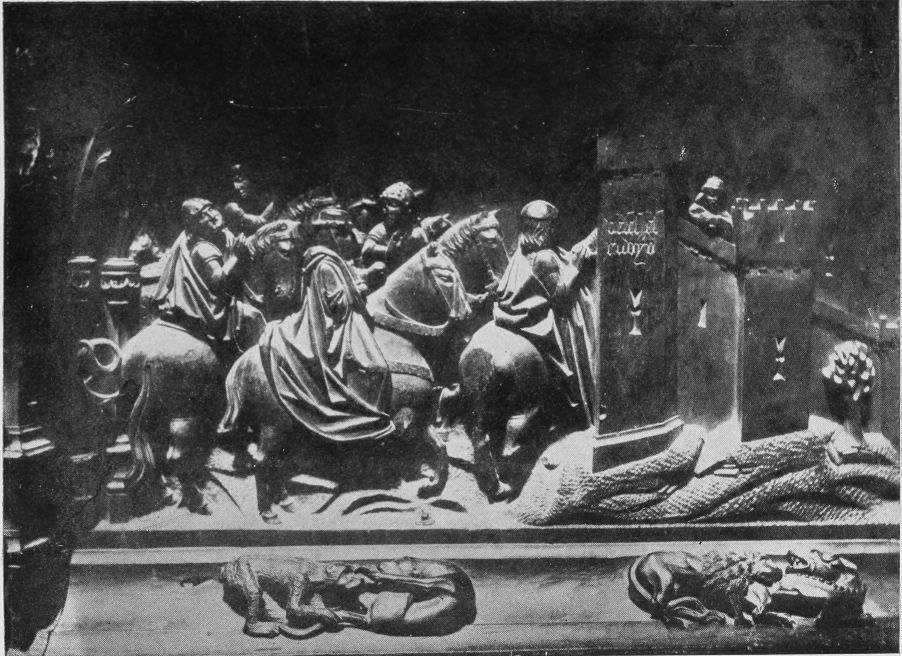
THE CATHEDRAL. DETAIL OF THE CHOIR STALLS. RE-CONQUEST OF GRANADA BY
FERDINAND AND ISABELLA
Plate 290
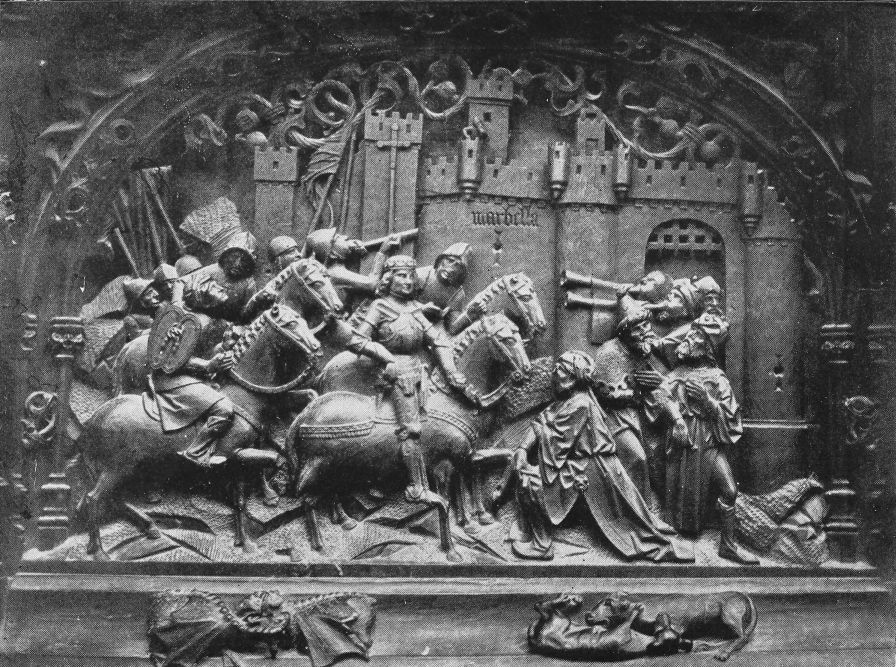
THE CATHEDRAL. DETAIL OF THE CHOIR STALLS. RE-CONQUEST OF GRANADA BY
FERDINAND AND ISABELLA
Plate 291
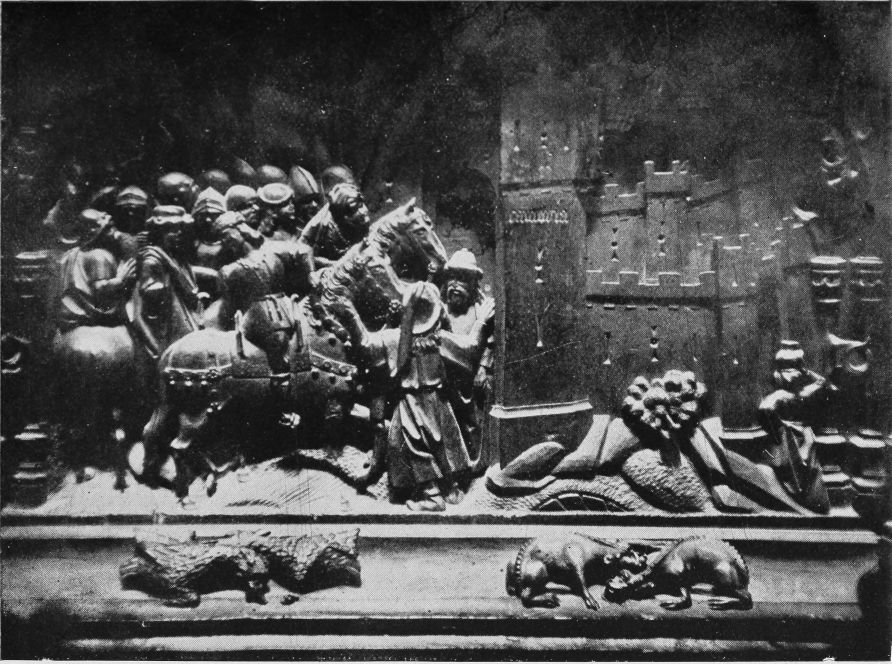
THE CATHEDRAL. DETAIL OF THE CHOIR STALLS. RE-CONQUEST OF GRANADA BY
FERDINAND AND ISABELLA
Plate 292
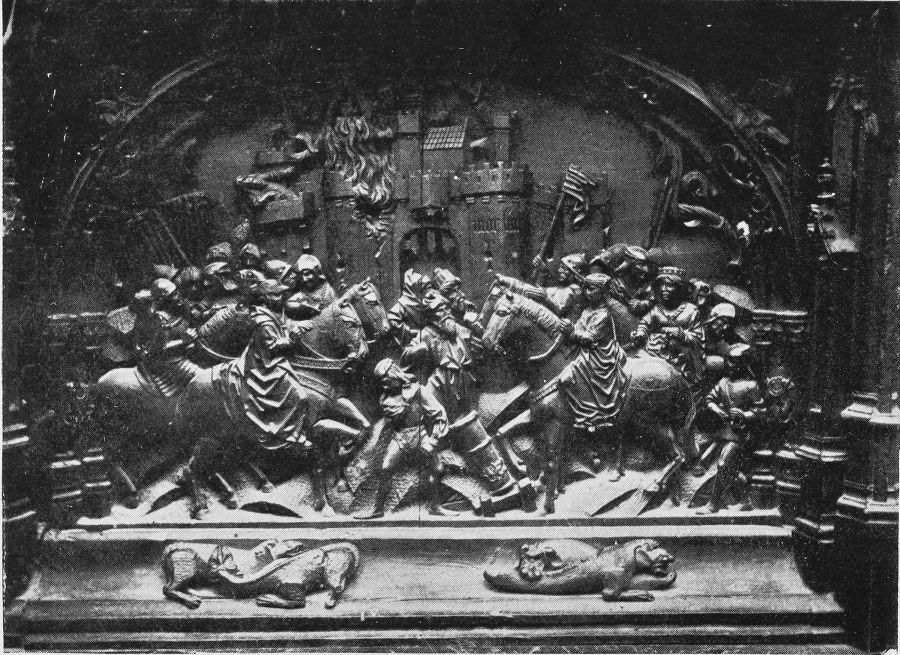
THE CATHEDRAL. DETAIL OF THE CHOIR STALLS. RE-CONQUEST OF GRANADA BY
FERDINAND AND ISABELLA
Plate 293
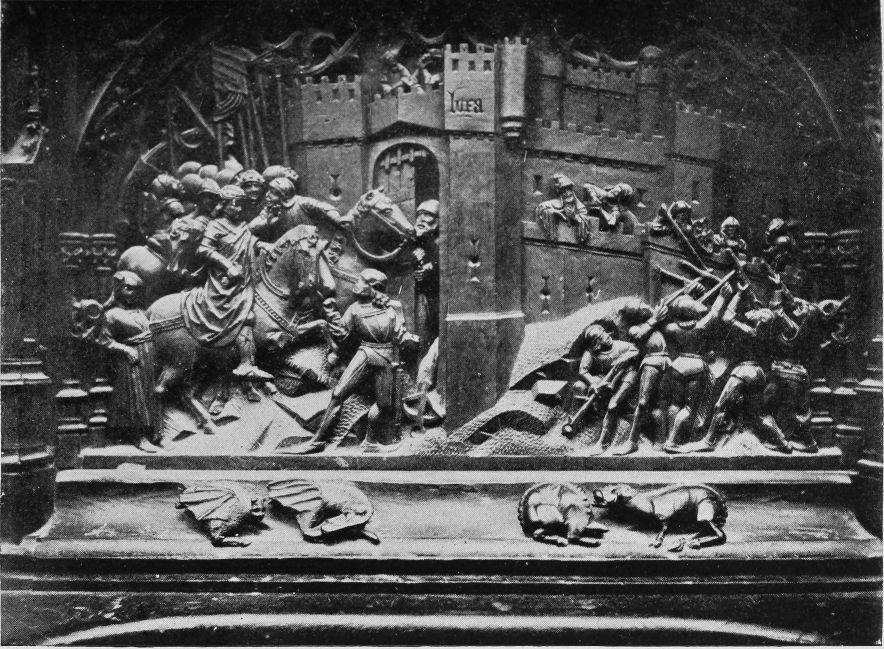
THE CATHEDRAL. DETAIL OF THE CHOIR STALLS. RE-CONQUEST OF GRANADA BY
FERDINAND AND ISABELLA
Plate 294
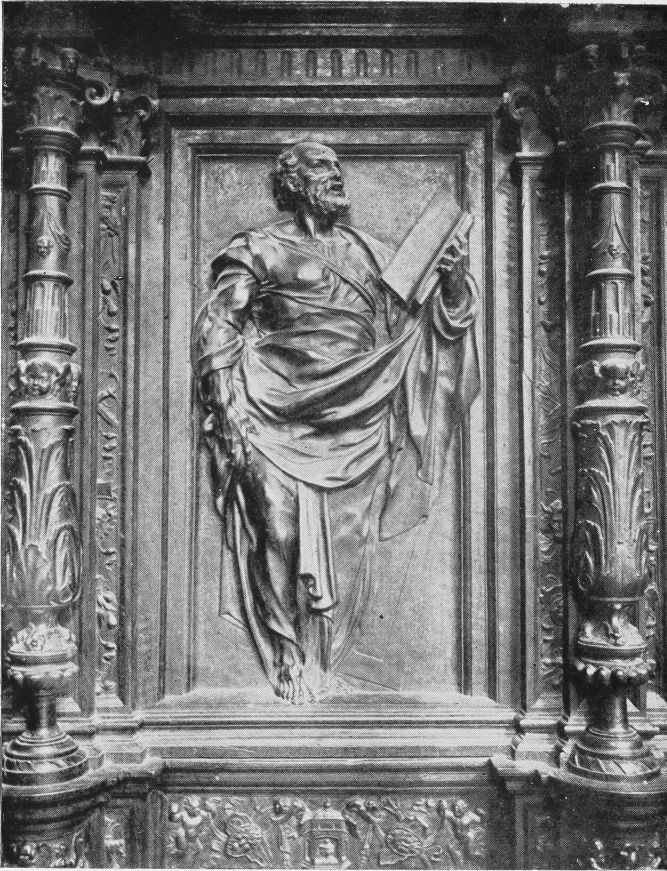
THE CATHEDRAL. UPPER PART OF THE CHOIR STALLS, CARVED BY BERRUGUETE AND
BORGOÑA. SIXTEENTH CENTURY
Plate 295
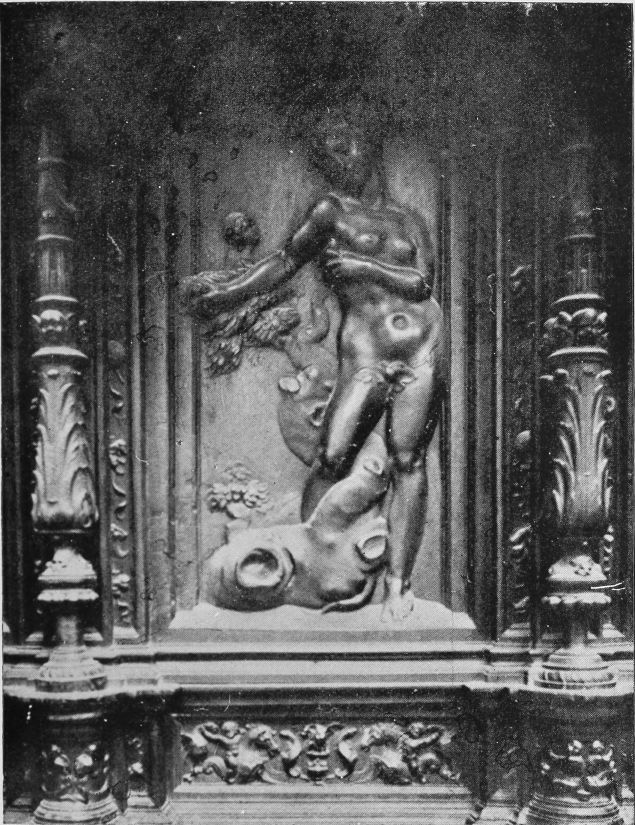
THE CATHEDRAL. UPPER PART OF THE CHOIR STALLS, CARVED BY BERRUGUETE AND
BORGOÑA. SIXTEENTH CENTURY
Plate 296
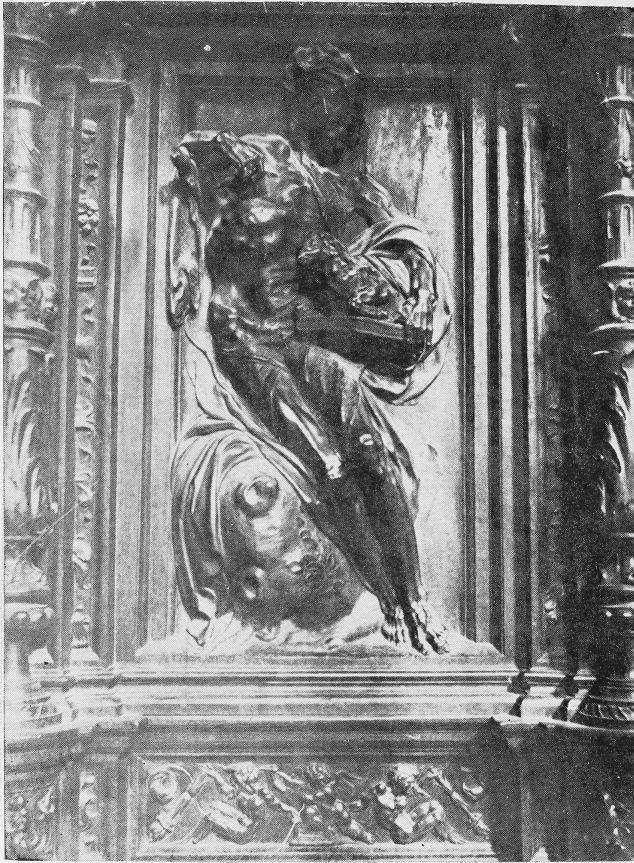
THE CATHEDRAL. UPPER PART OF THE CHOIR STALLS, CARVED BY BERRUGUETE AND
BORGOÑA. SIXTEENTH CENTURY
Plate 297
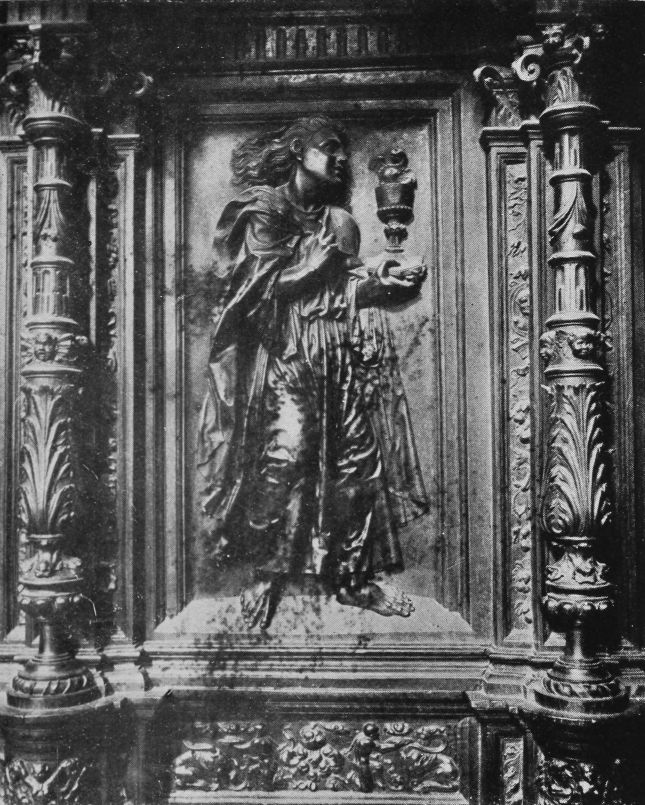
THE CATHEDRAL. UPPER PART OF THE CHOIR STALLS, CARVED BY BERRUGUETE AND
BORGOÑA. SIXTEENTH CENTURY
Plate 298
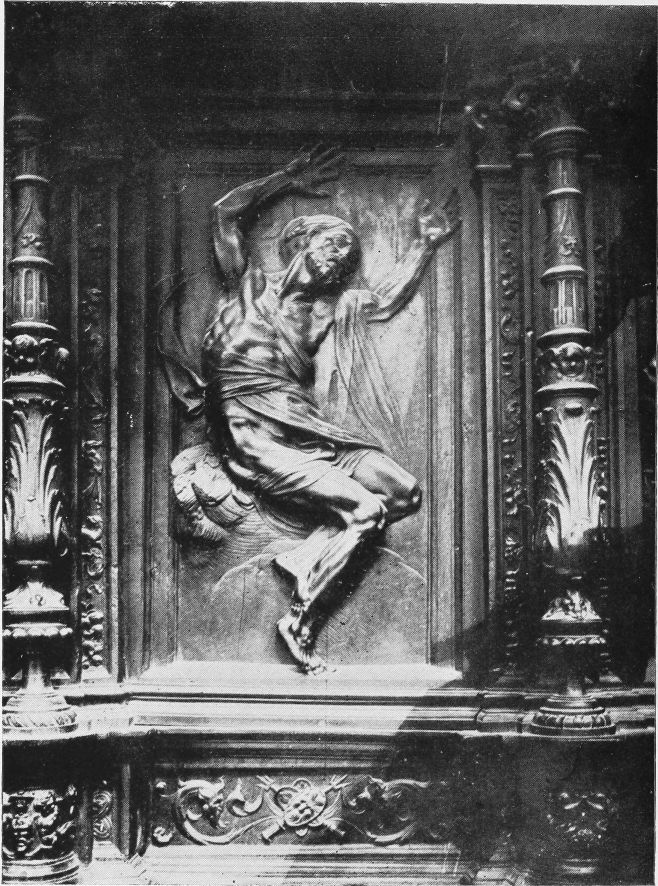
THE CATHEDRAL. UPPER PART OF THE CHOIR STALLS, CARVED BY BERRUGUETE AND
BORGOÑA. SIXTEENTH CENTURY
Plate 299
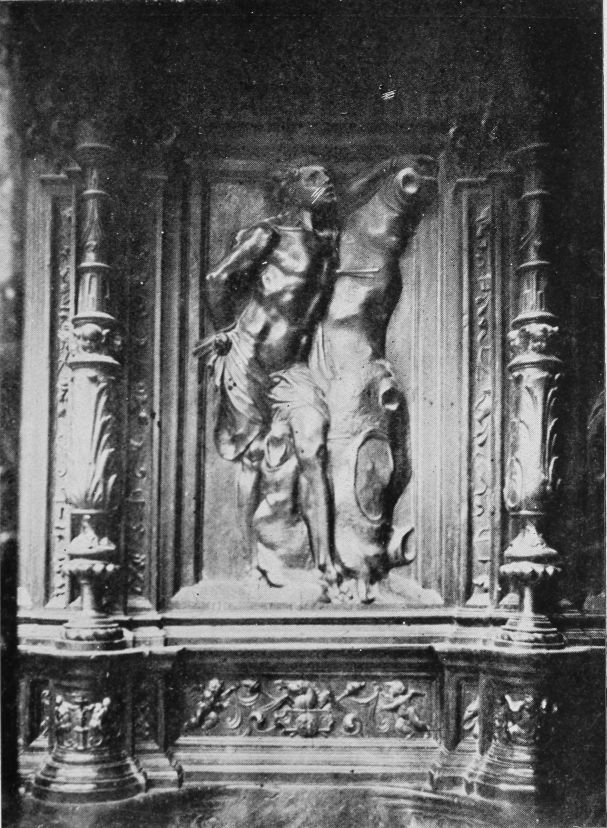
THE CATHEDRAL. UPPER PART OF THE CHOIR STALLS, CARVED BY BERRUGUETE AND
BORGOÑA. SIXTEENTH CENTURY
Plate 300
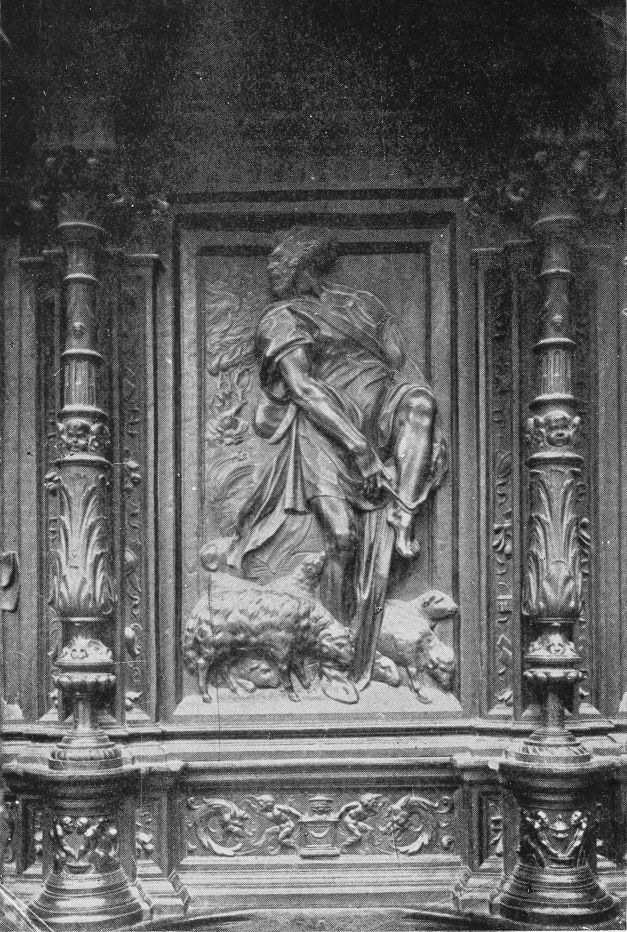
THE CATHEDRAL. UPPER PART OF THE CHOIR STALLS, CARVED BY BERRUGUETE AND
BORGOÑA. SIXTEENTH CENTURY
Plate 301
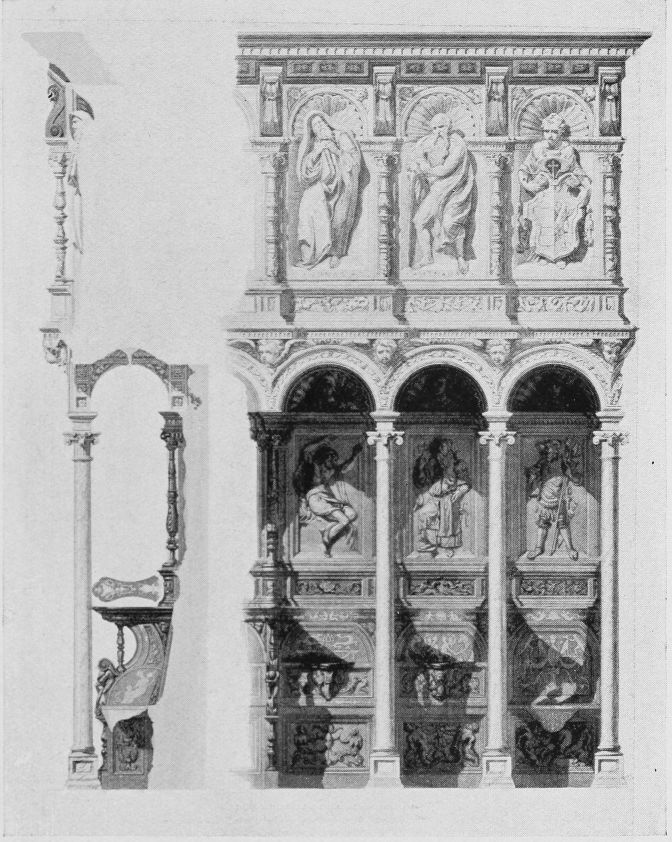
THE CATHEDRAL. MASONRY IN THE CHOIR
Plate 302
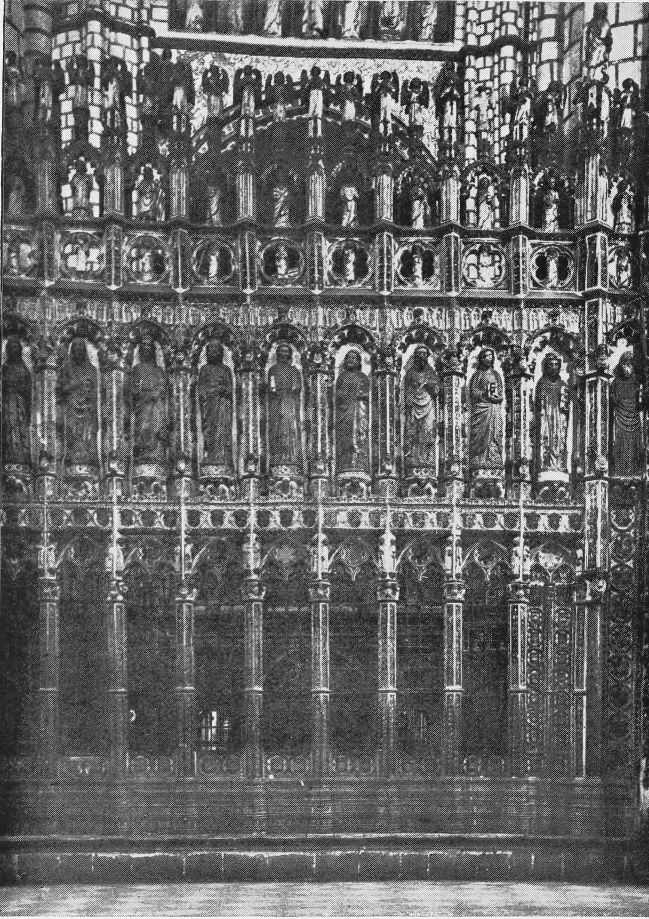
THE CATHEDRAL. EXTERIOR OF THE PRESBYTERY
Plate 303
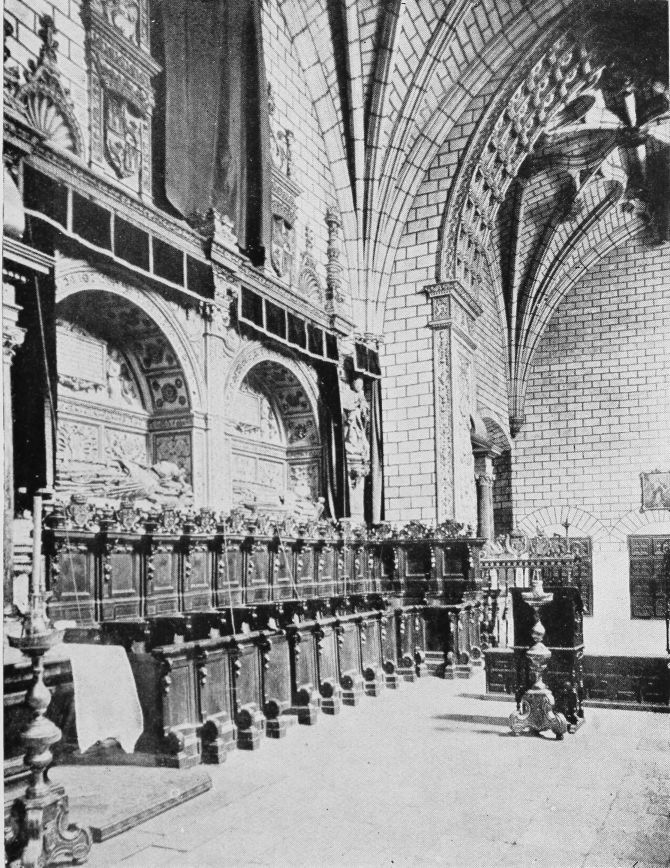
THE CATHEDRAL. INTERIOR OF THE CHAPEL OF THE NEW KINGS WITH THE
SEPULCHRES OF DON HENRY THE BASTARD AND HIS WIFE
Plate 304
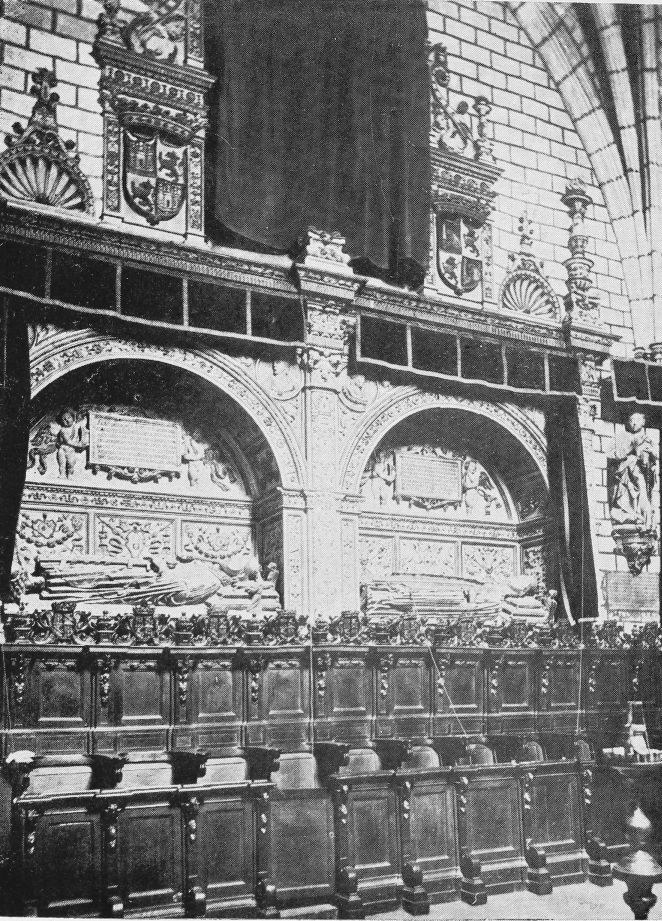
THE CATHEDRAL. SEPULCHRES OF DON HENRY THE BASTARD AND HIS WIFE IN THE
CHAPEL OF THE NEW KINGS
Plate 305
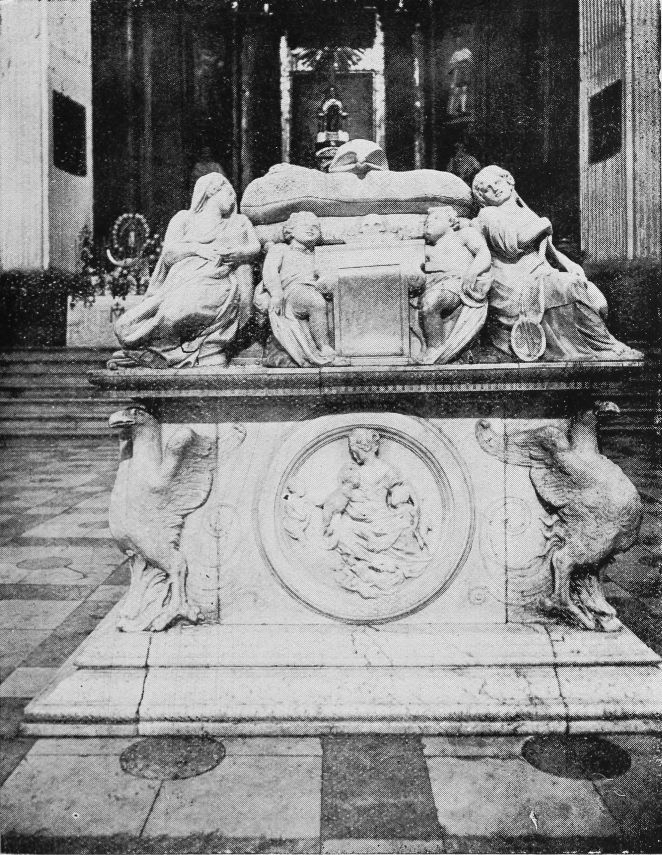
THE CATHEDRAL. SEPULCHRE OF CARDINAL TAVERA IN THE CHAPEL OF THE NEW
KINGS
Plate 306
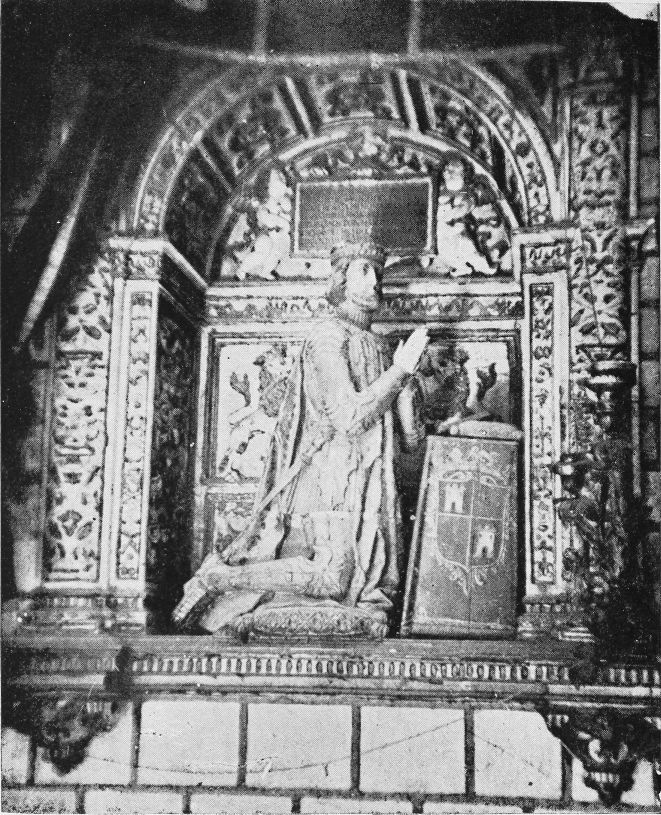
THE CATHEDRAL. SEPULCHRE OF DON JUAN I. IN THE CHAPEL OF THE NEW KINGS
Plate 307
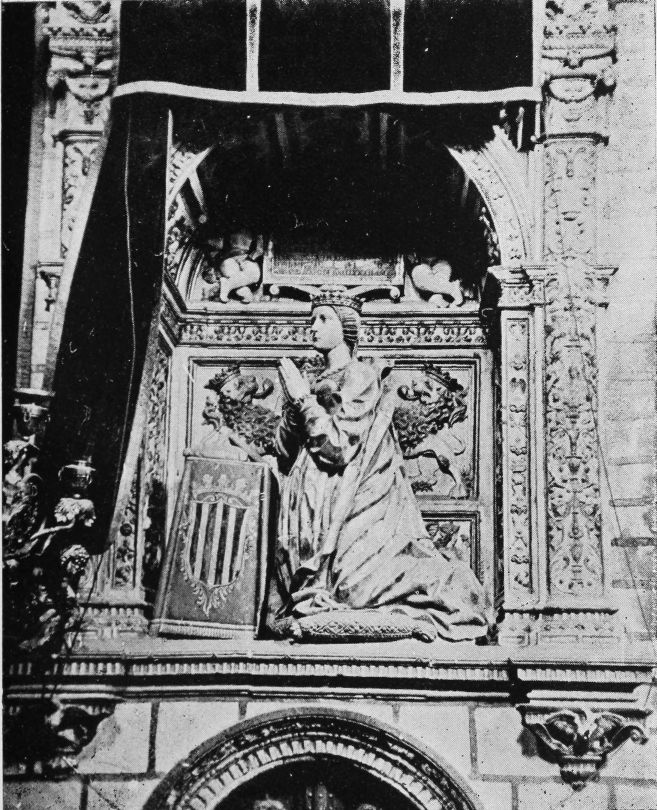
THE CATHEDRAL. SEPULCHRE OF DOÑA LEONOR, WIFE OF DON JUAN I., IN THE
CHAPEL OF THE NEW KINGS
Plate 308
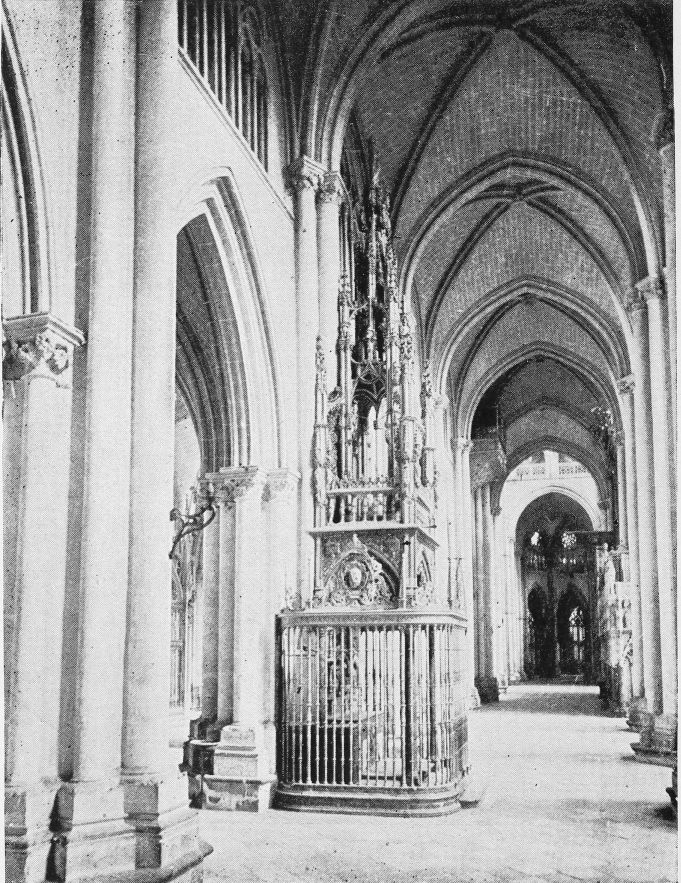
THE CATHEDRAL. CHAPEL OF THE DESCENT OF THE VIRGIN
Plate 309
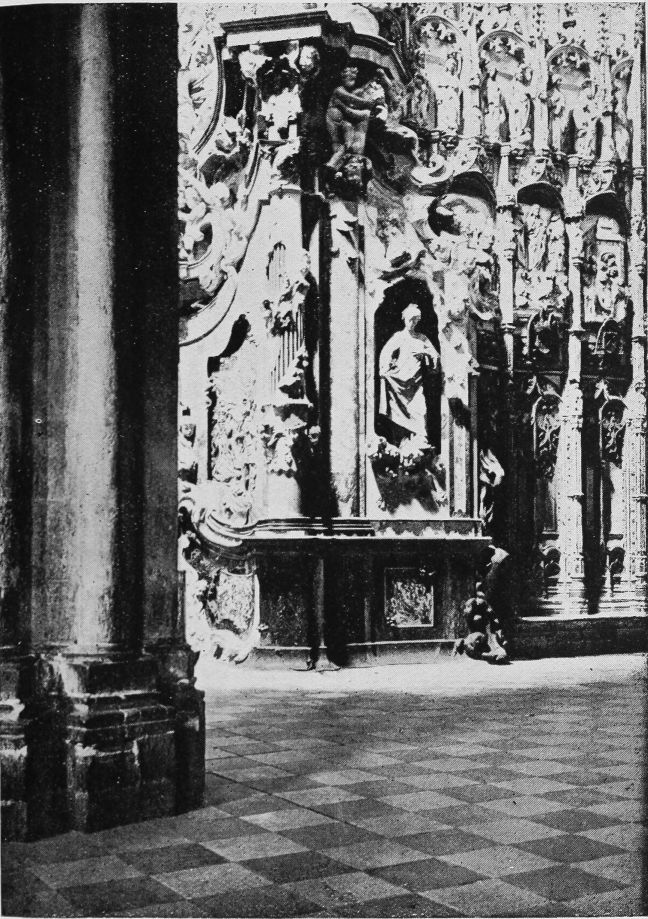
THE CATHEDRAL. MUZARABIC CHAPEL
Plate 310
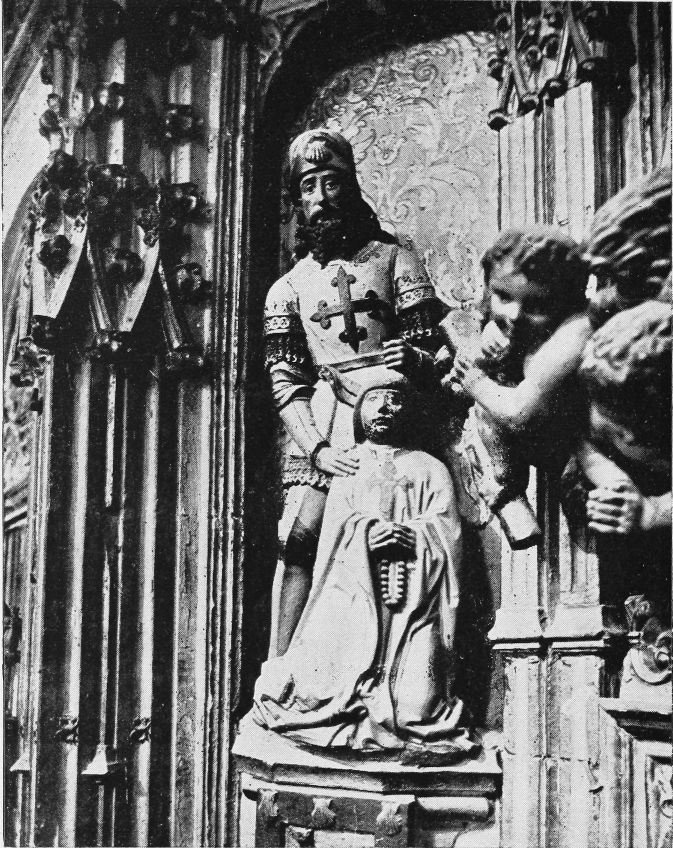
THE CATHEDRAL. DETAILS OF THE CHAPEL OF THE VIRGEN DE LA ANTIGUA
Plate 311
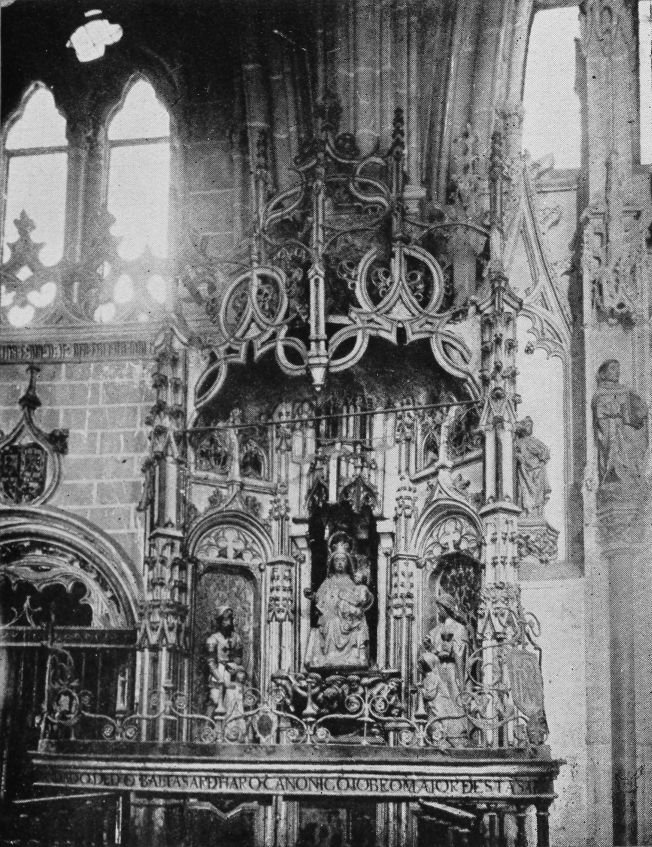
THE CATHEDRAL. CHAPEL OF THE VIRGEN DE LA ANTIGUA. FOURTEENTH CENTURY
Plate 312
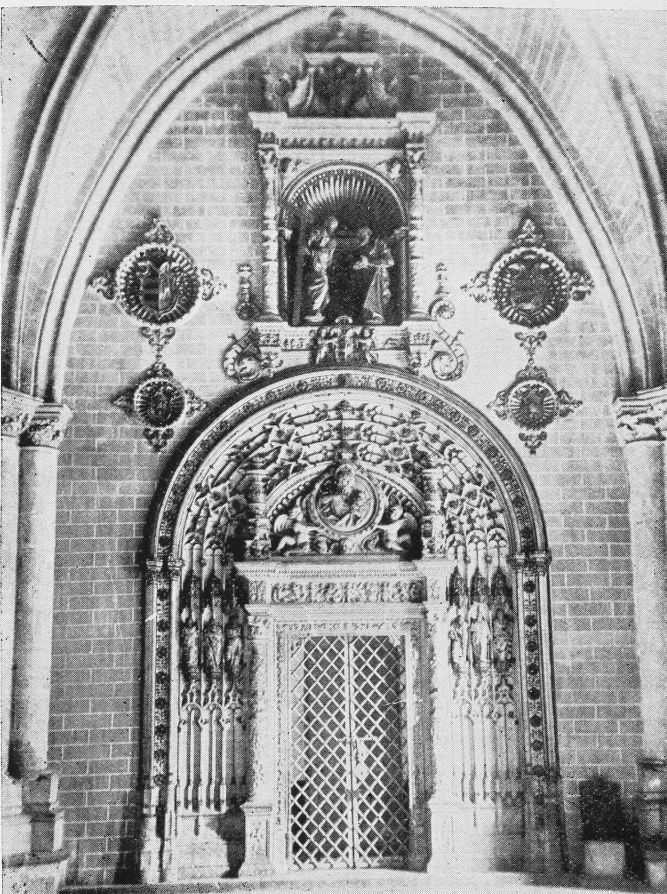
THE CATHEDRAL. DOORWAY OF THE CHAPEL OF THE CANONS
Plate 313
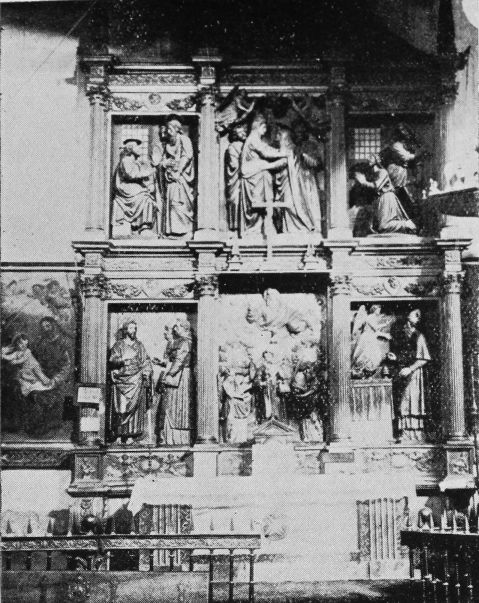
ALTAR-PIECE OF SANTA ISABEL
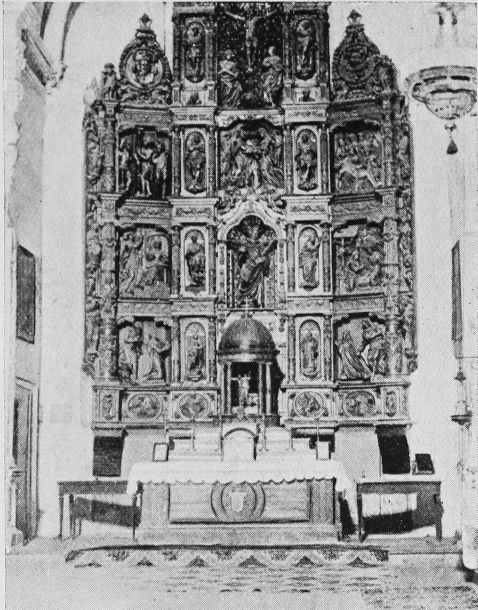
ALTAR-PIECE OF SANTA CATALINA
Plate 314
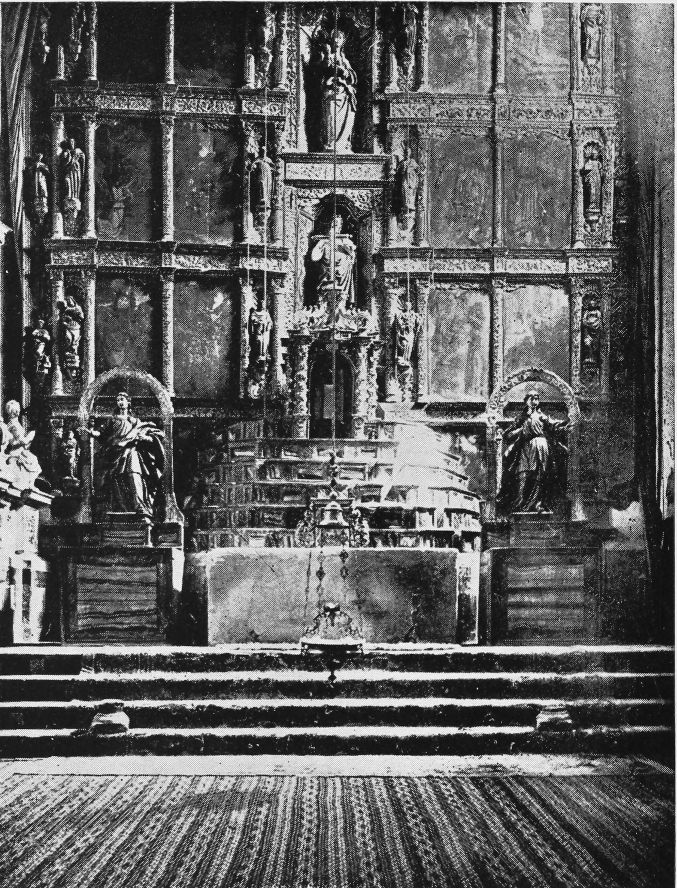
ALTAR-PIECE OF SANTA CATALINA
Plate 315
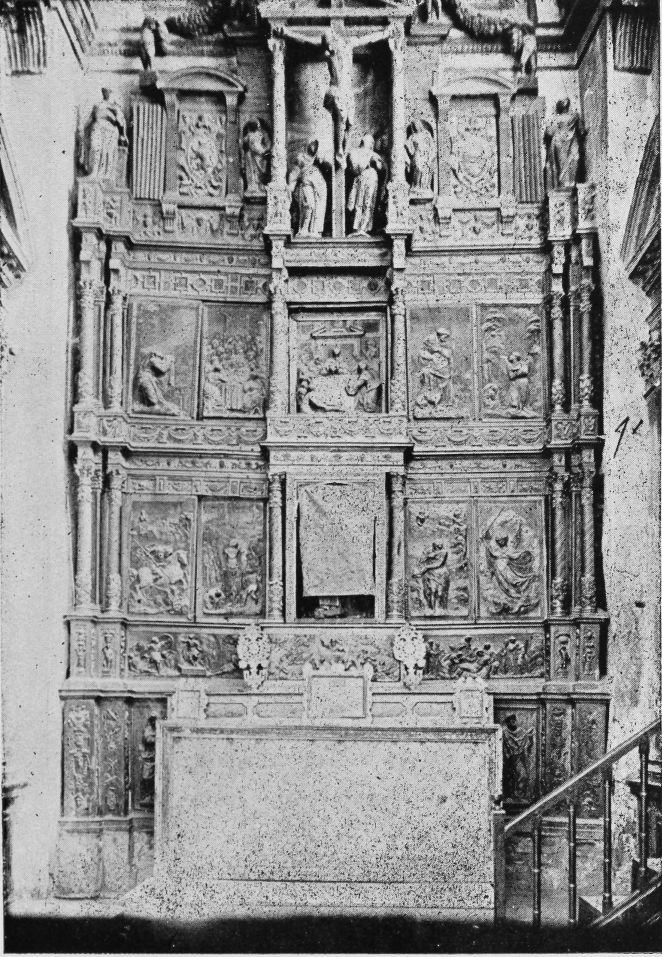
ALTAR-PIECE OF SANTA CATALINA
Plate 316
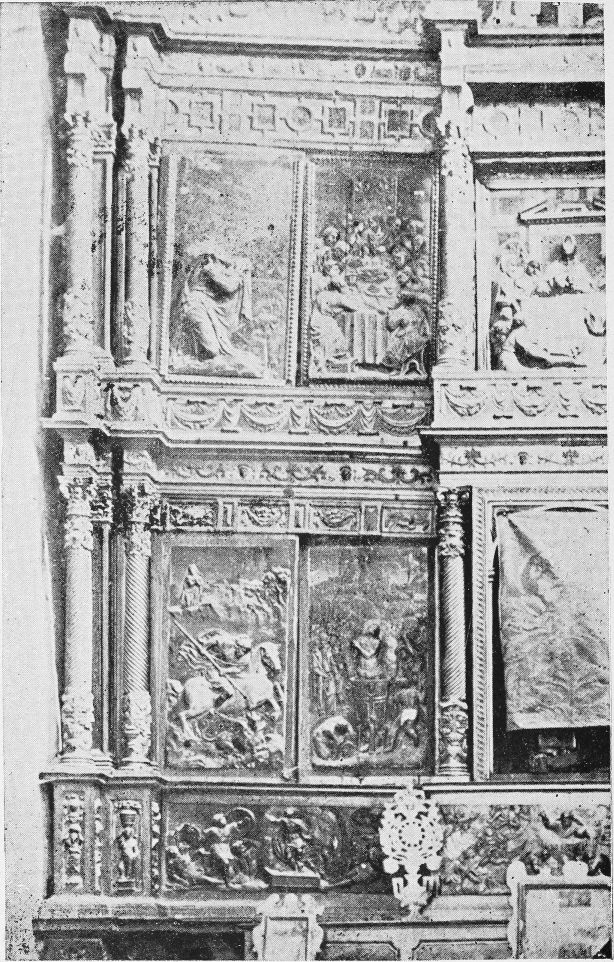
ALTAR-PIECE OF SANTA CATALINA
Plate 317
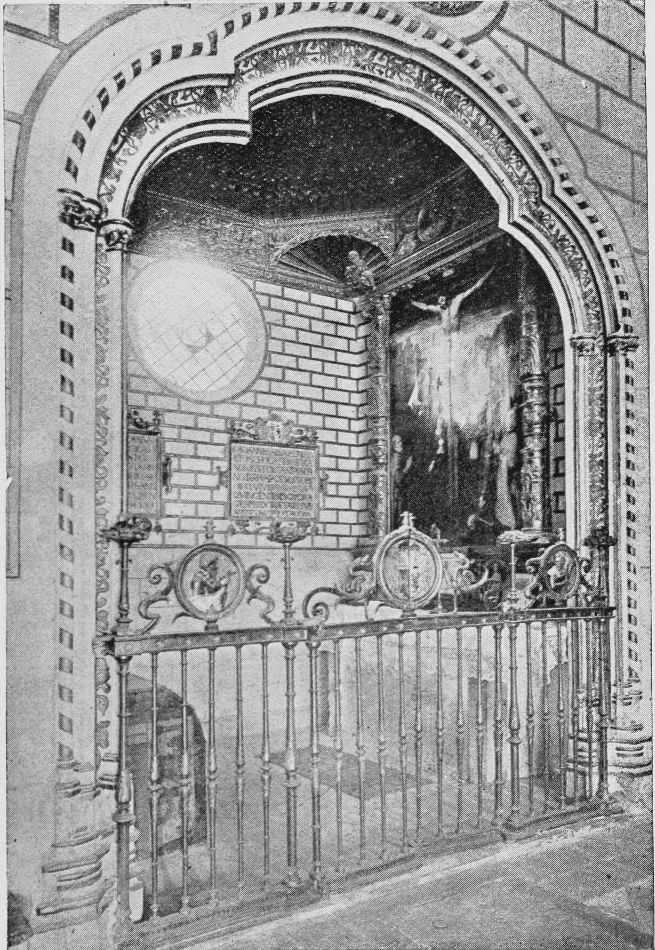
CHAPEL OF SANTA CATALINA. FOUNDED BY THE COUNTS OF CEDILLO
Plate 318
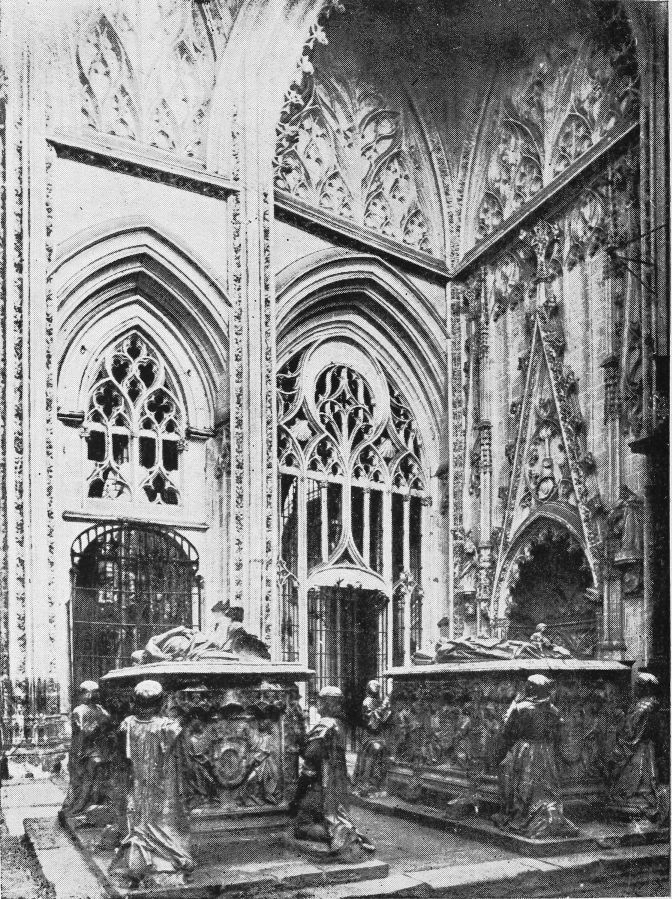
THE CATHEDRAL. CHAPEL OF SANTIAGO, CONTAINING THE SEPULCHRES OF DON
ALVARO DE LUNA AND THAT OF HIS WIFE DOÑA JUANA. FIFTEENTH CENTURY
Plate 319
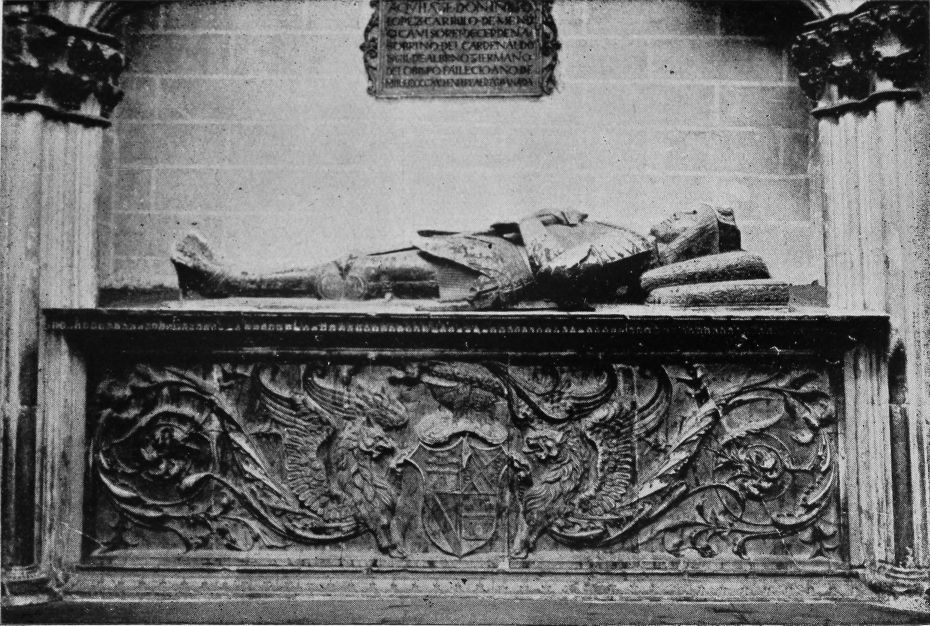
THE CATHEDRAL. SEPULCHRE OF DON JUAN DE ZEREZUELA IN THE CHAPEL OF
SANTIAGO. FIFTEENTH CENTURY
Plate 320
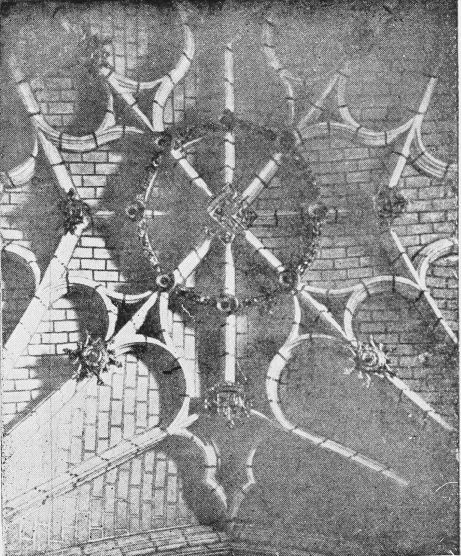
CUPOLA OF THE CHAPEL “DE LOS REYES NUEVOS” IN THE CATHEDRAL
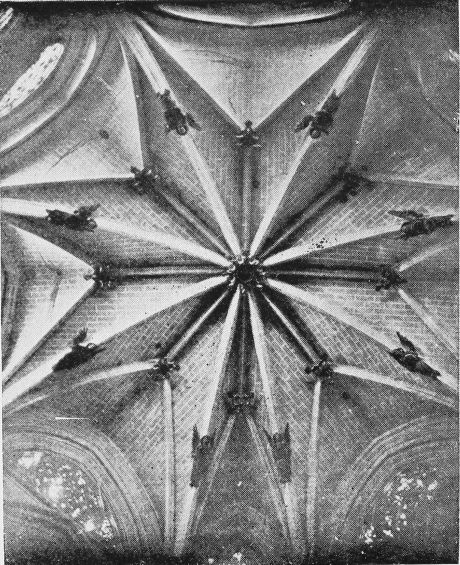
CUPOLA OF THE “CAPILLA DE SANTIAGO,” CALLED “DE DON ALVARO DE LUNA” IN
THE CATHEDRAL
Plate 321
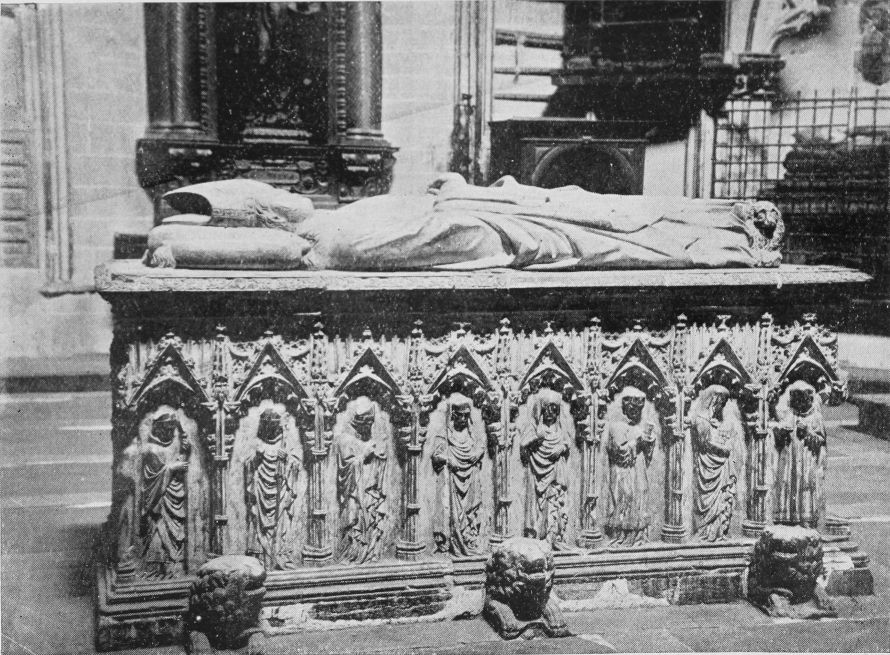
THE CATHEDRAL. SEPULCHRE OF DON GIL CARRILLO DE ALBORNOZ IN THE CHAPEL
OF SAN ILDEFONSO
Plate 322
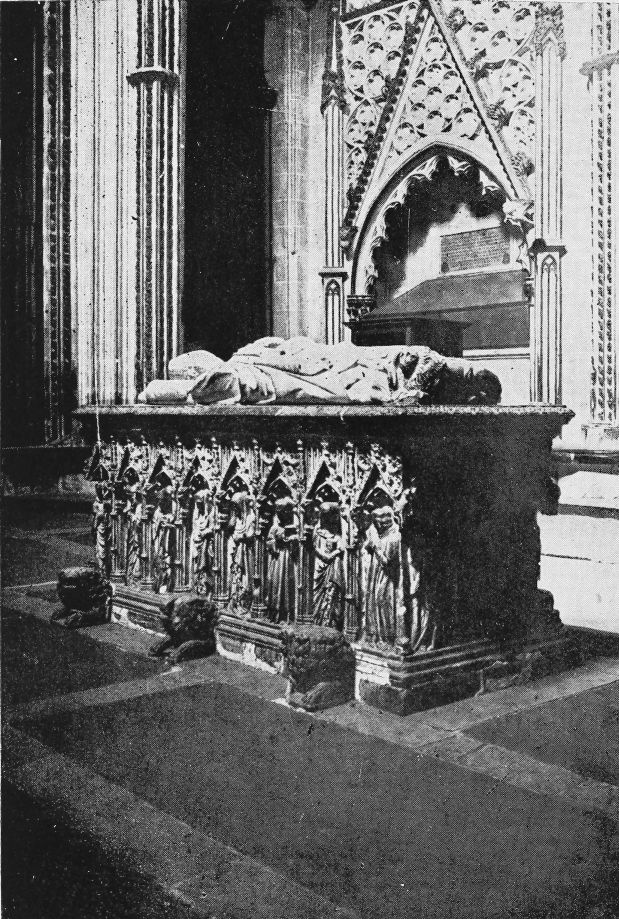
THE CATHEDRAL. SEPULCHRE OF GIL DE ALBORNOZ IN THE CHAPEL OF SAN
ILDEFONSO
Plate 323
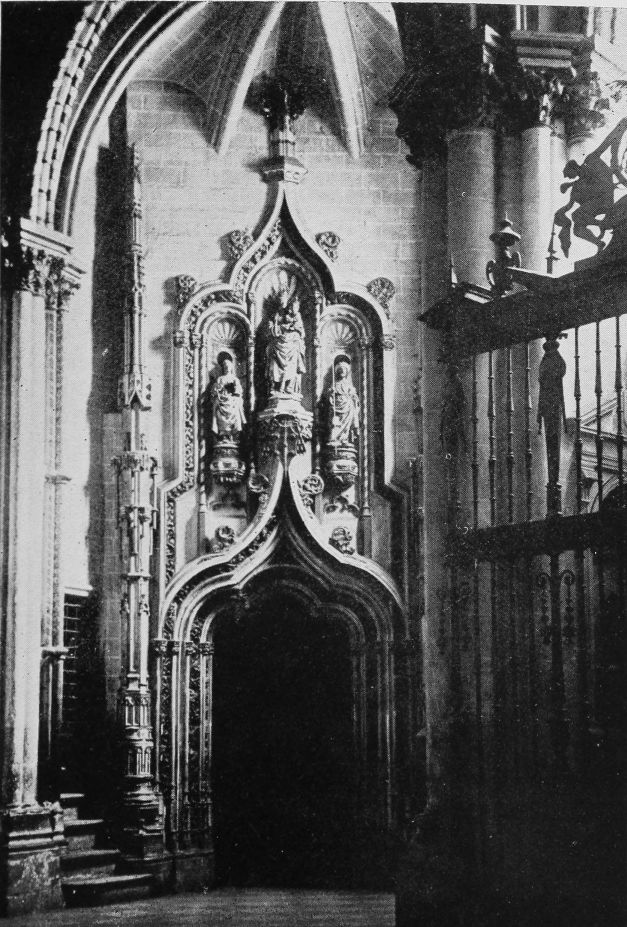
THE CATHEDRAL. ENTRANCE TO THE CHAPTER ROOM. SIXTEENTH CENTURY
Plate 324
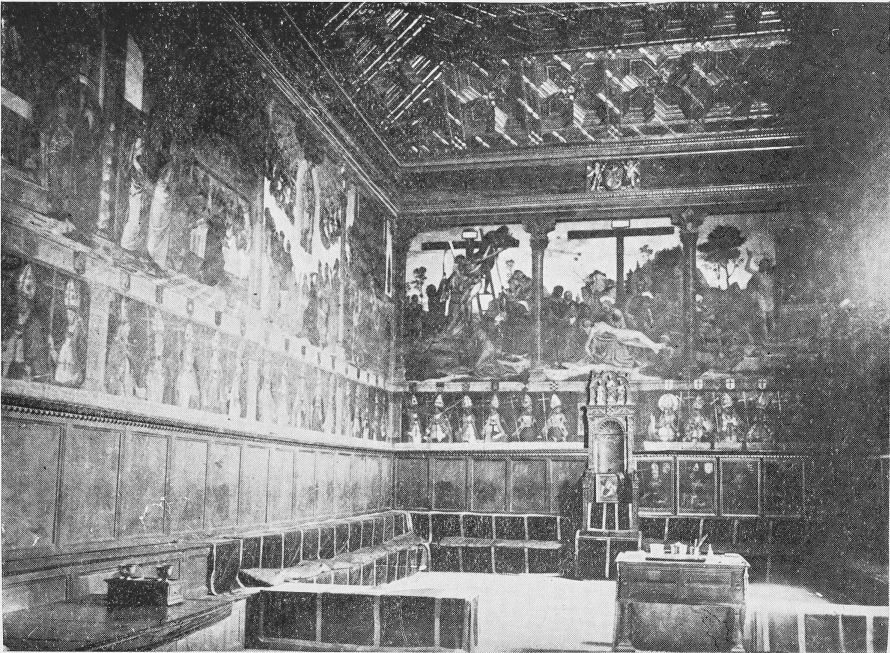
THE CATHEDRAL. CHAPTER ROOM
Plate 325
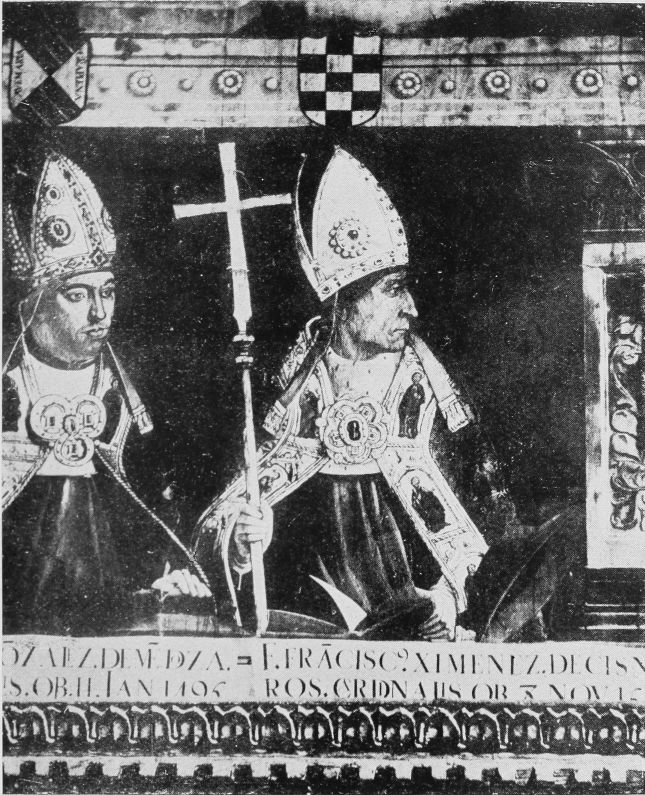
THE CATHEDRAL. VARIOUS PORTRAITS OF CARDINALS
Plate 326
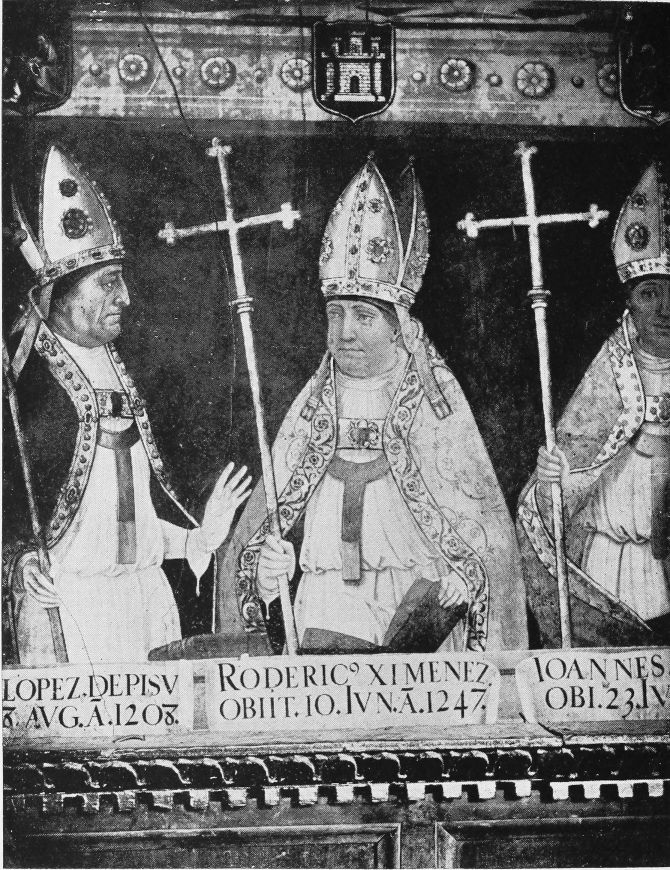
THE CATHEDRAL. VARIOUS PORTRAITS OF CARDINALS
Plate 327
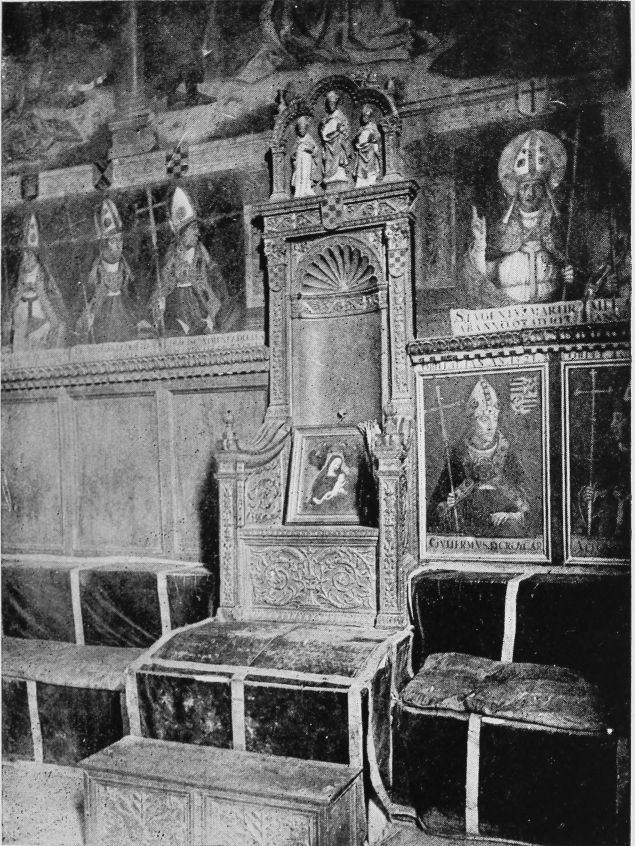
THE CATHEDRAL. DETAILS IN THE CHAPTER ROOM
Plate 328
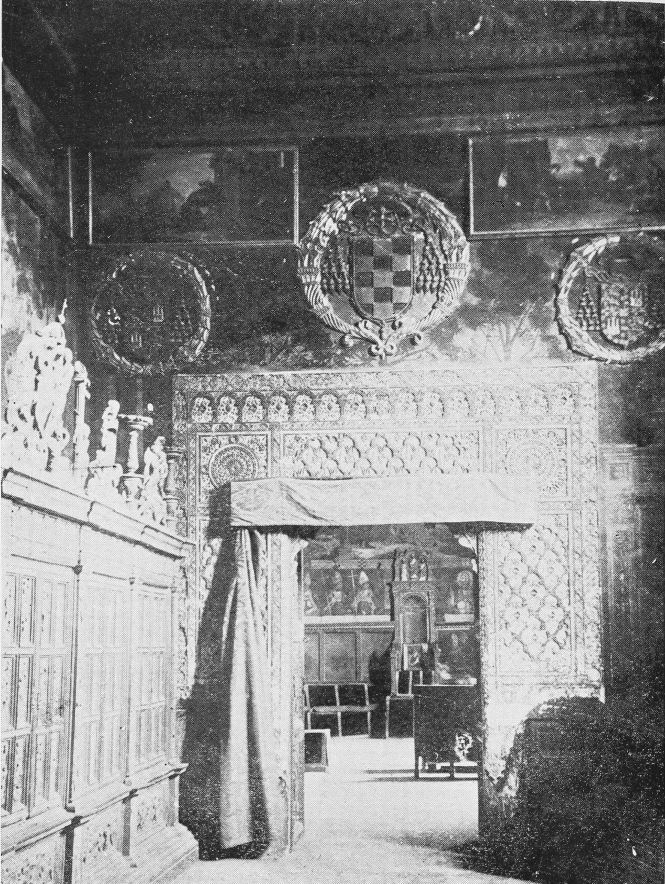
THE CATHEDRAL. CHAPTER ROOM
Plate 329
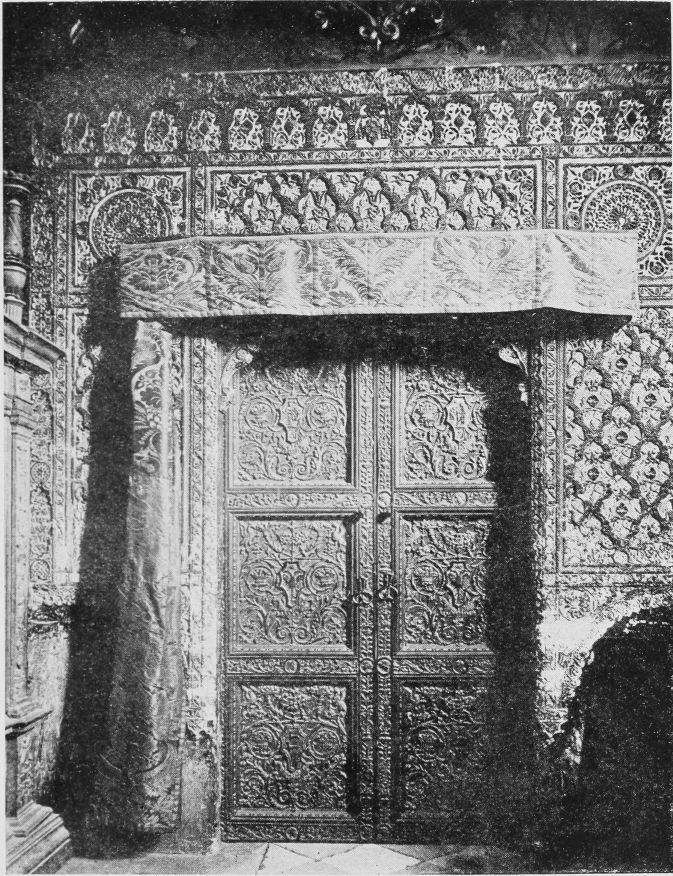
THE CATHEDRAL. DOORWAY OF THE CHAPTER ROOM
Plate 330
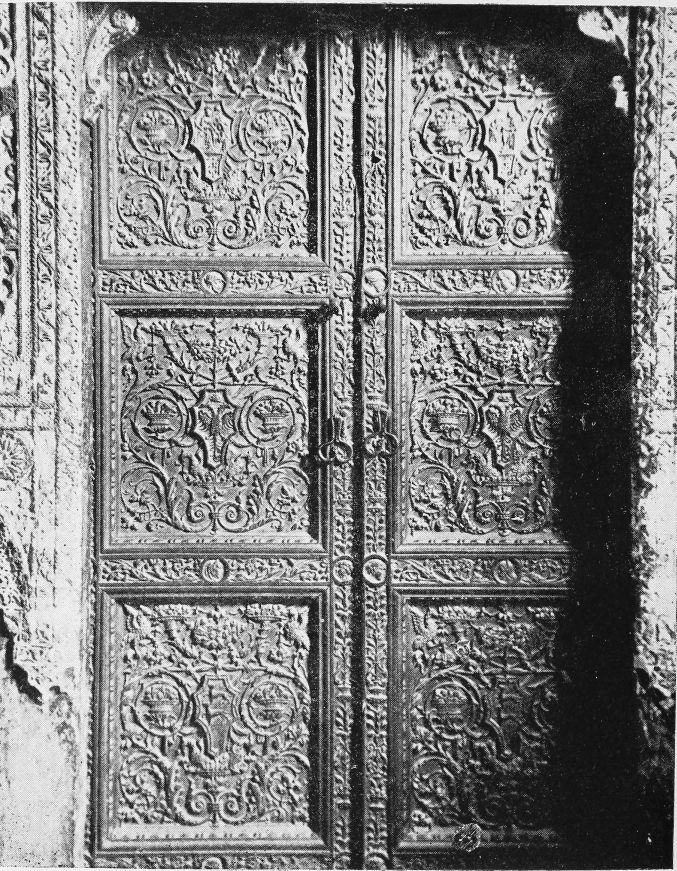
THE CATHEDRAL. DETAIL OF A DOORWAY IN THE CHAPTER ROOM
Plate 331
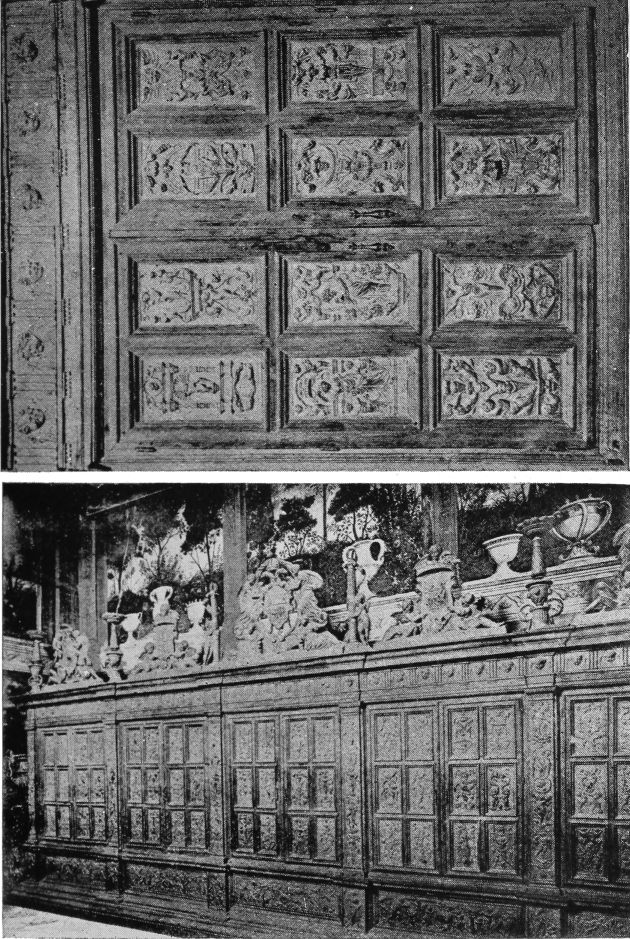
THE CATHEDRAL. CUPBOARD MADE BY GREGORIO PARDO (1549-1551), FOR THE
ANTECHAMBER OF THE CHAPTER HOUSE
Plate 332
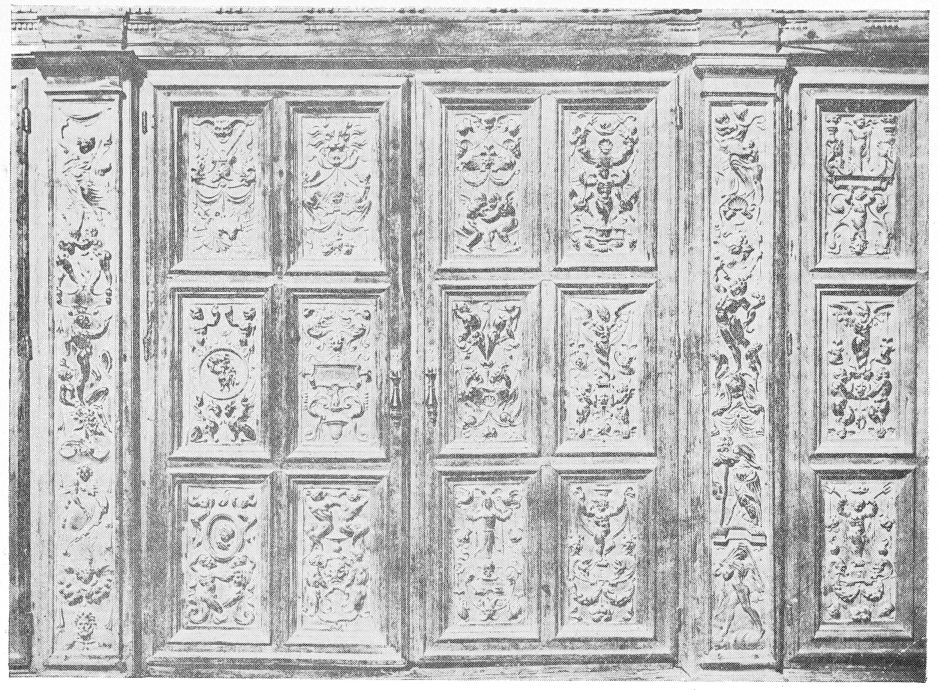
CUPBOARD IN THE CATHEDRAL
Plate 333
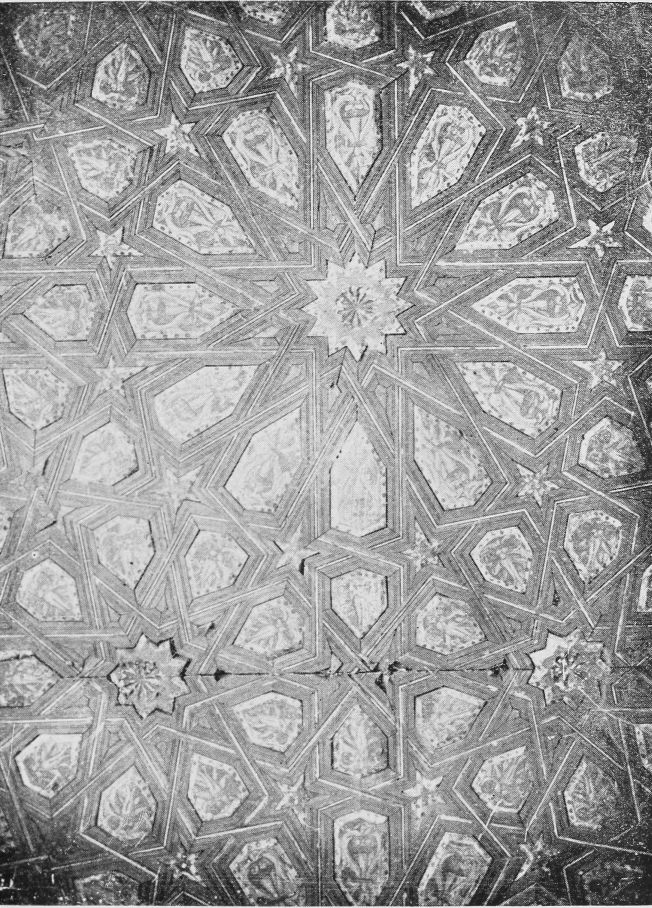
THE CATHEDRAL. A RICH AND GOSSAMER CARVED CEILING IN THE CHAPTER HALL
SIXTEENTH CENTURY
Plate 334
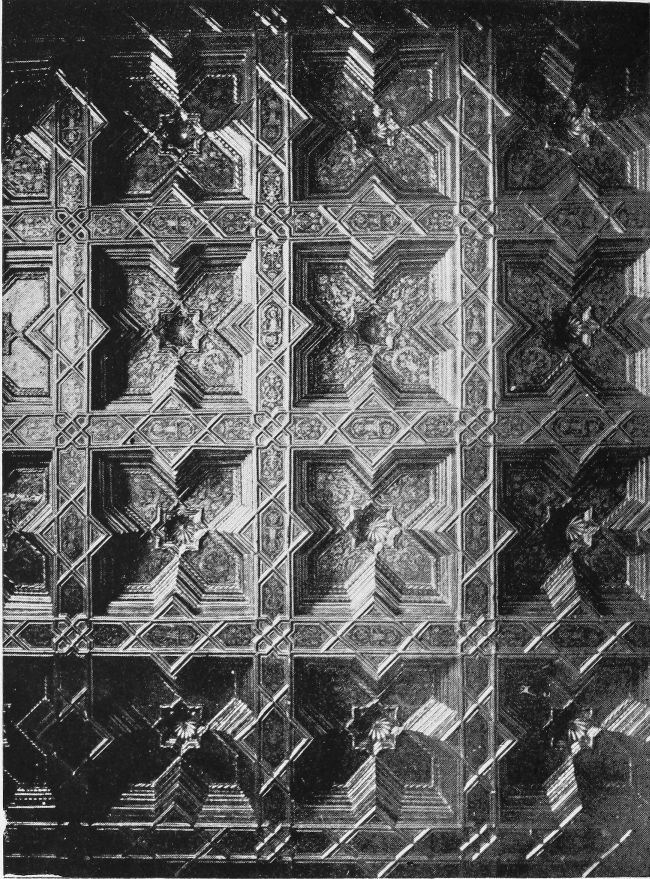
THE CATHEDRAL. CEILING IN THE CHAPTER HALL
Plate 335
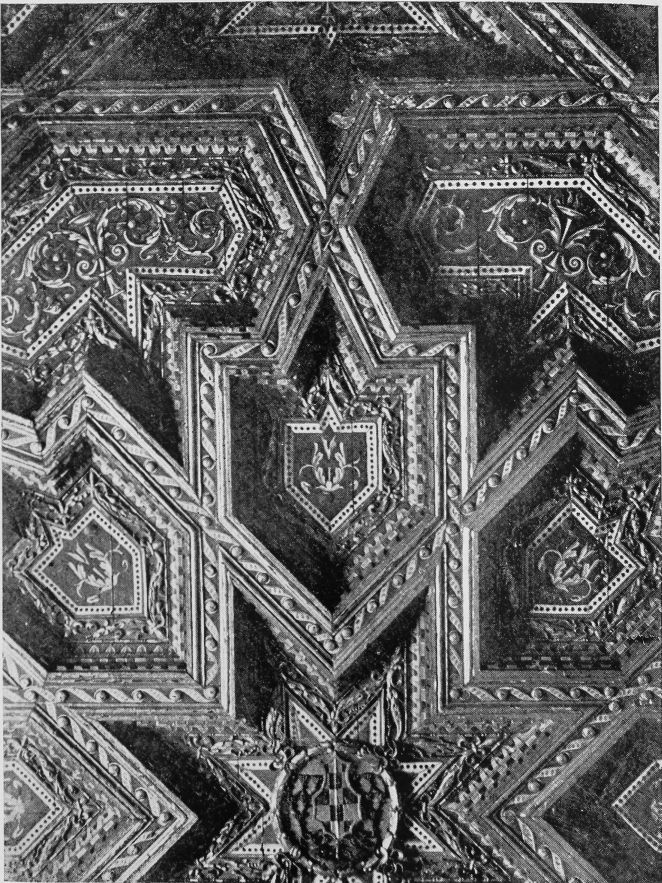
THE CATHEDRAL. A CEILING IN THE ANTE-ROOM
Plate 336
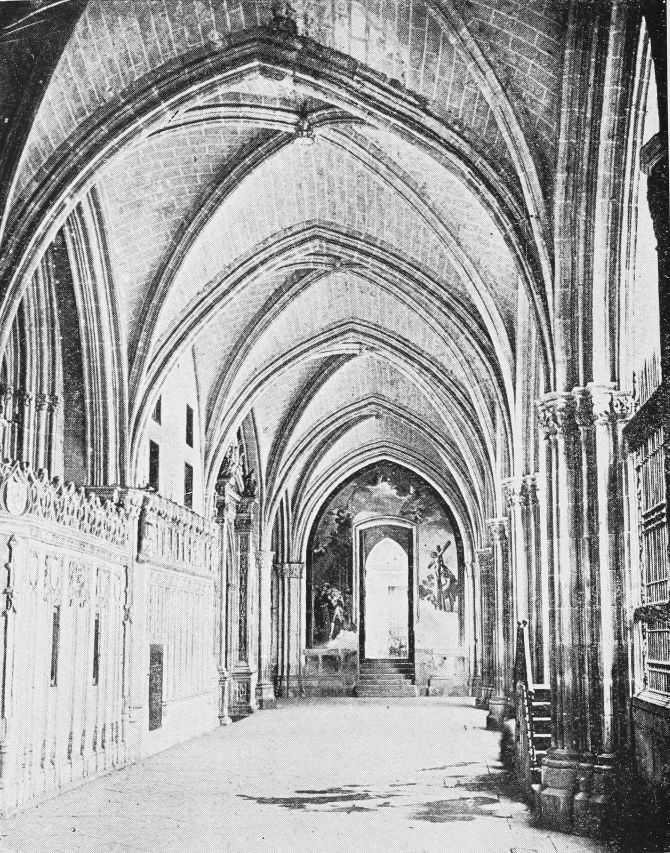
THE CATHEDRAL CLOISTERS
Plate 337
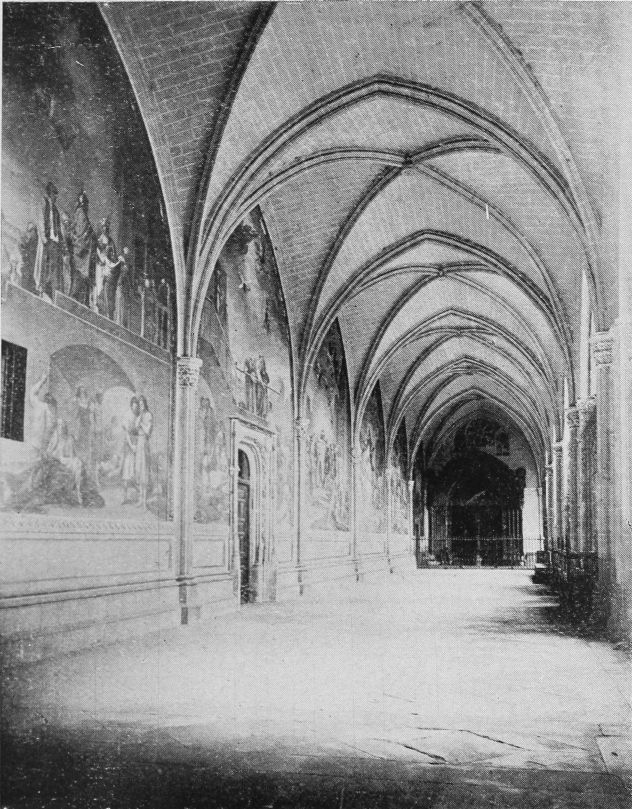
THE CATHEDRAL CLOISTERS
Plate 338
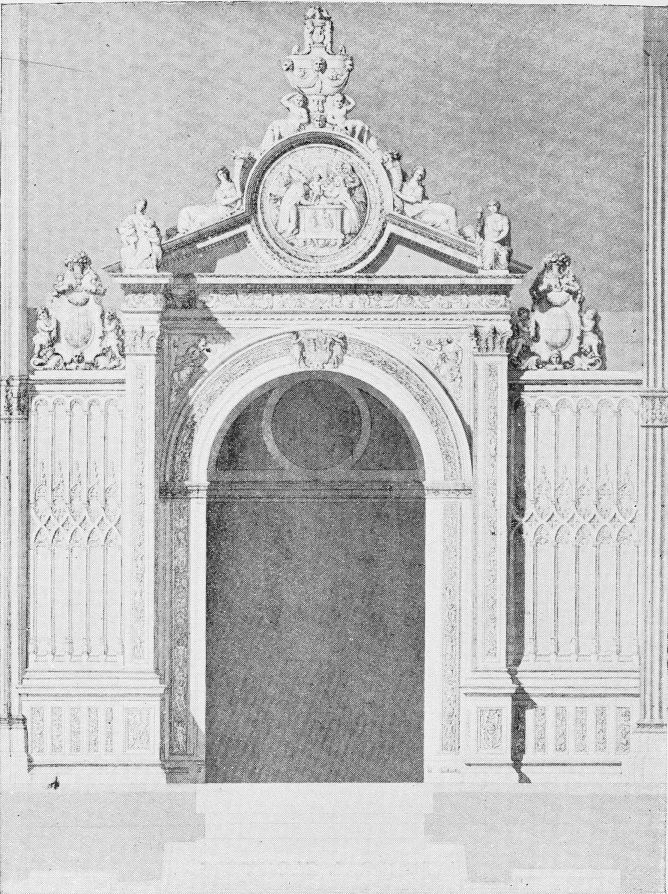
PRESENTATION PORTAL IN THE CLOISTER OF THE CATHEDRAL
Plate 339
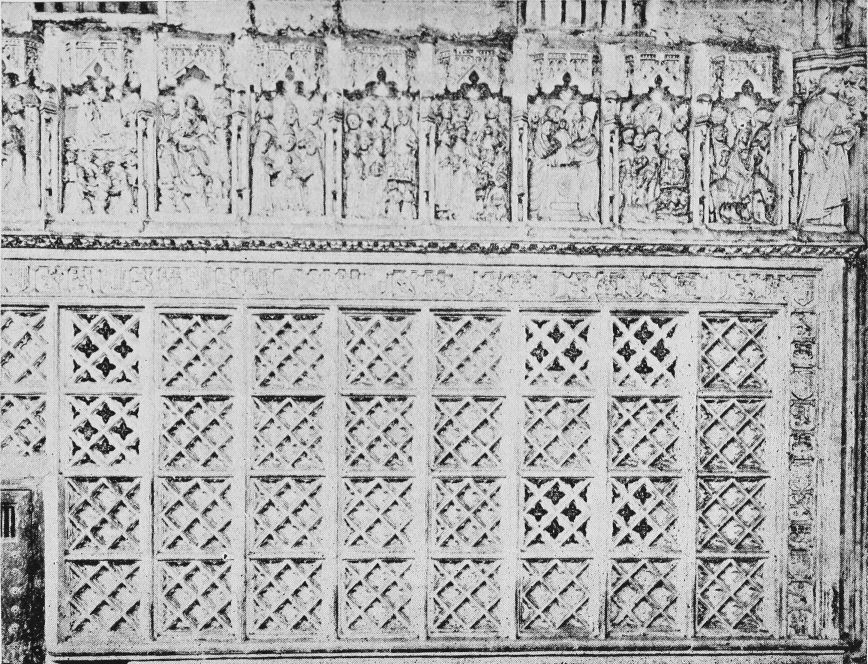
EXTERIOR, BY THE CLOISTERS OF THE CHAPEL, OF THE PLACE OF SEPULTURE
BUILT BY HENRY II. FOR HIS TOMB
Plate 340
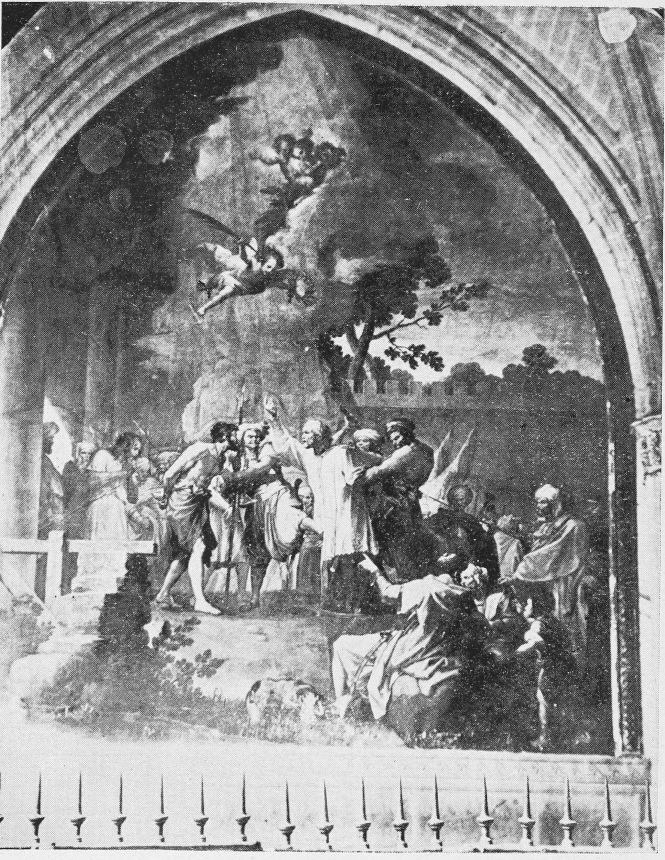
THE CATHEDRAL. PICTURE BY BAYEU IN THE CLOISTERS
Plate 341
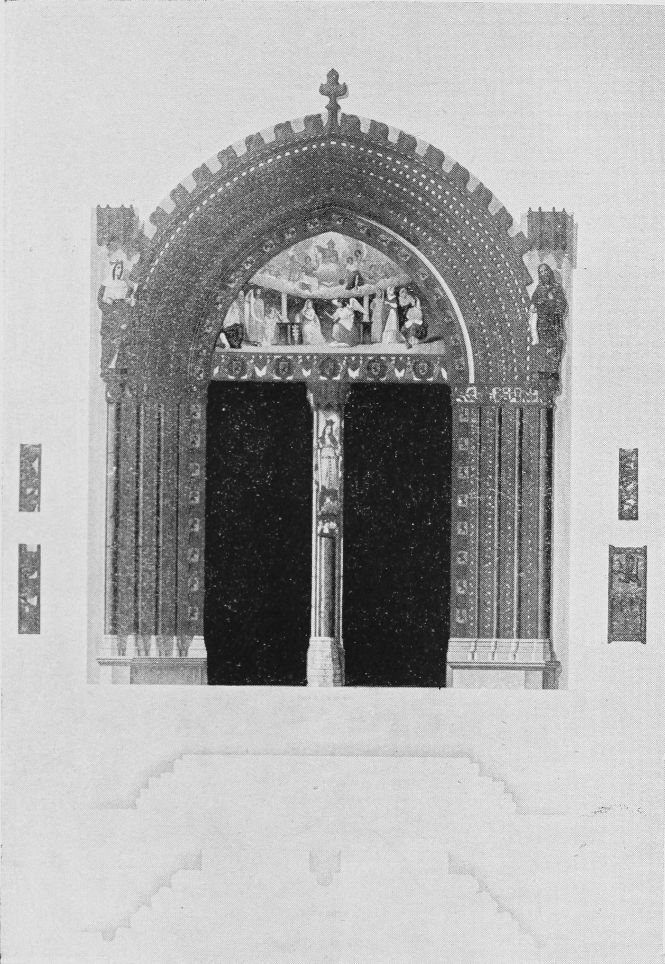
PORTAL OF ST. CATHARINE IN THE CLOISTER OF THE CATHEDRAL
Plate 342
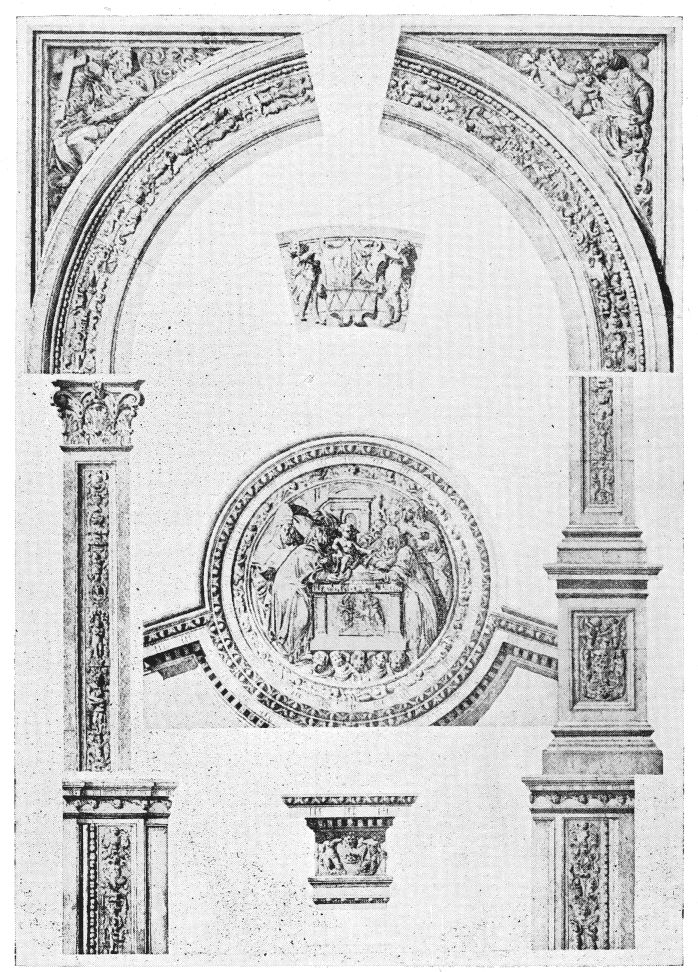
THE CATHEDRAL. DETAILS OF THE GATE OF THE PRESENTATION IN THE CLOISTER
Plate 343
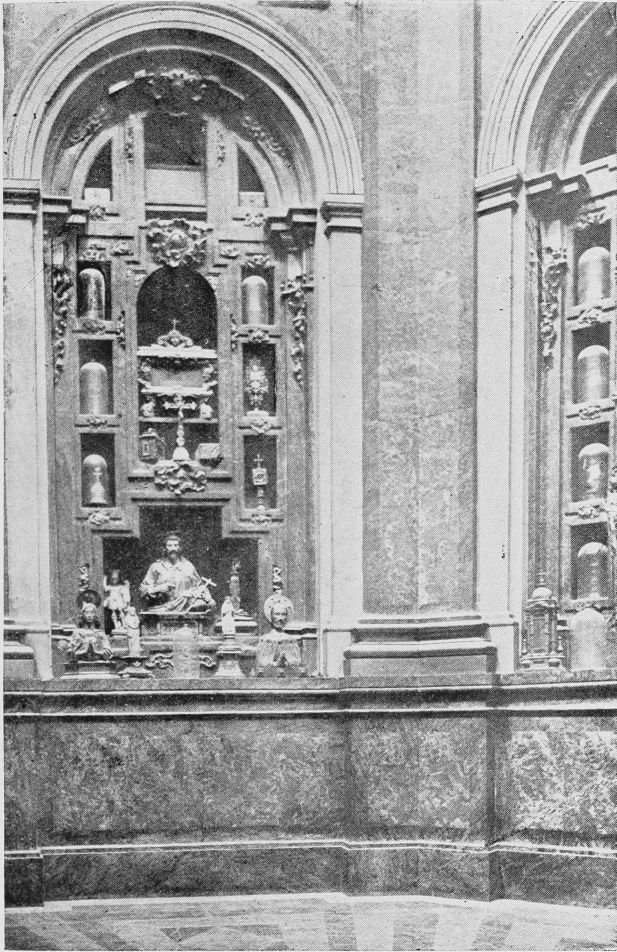
THE CATHEDRAL. RELIQUARY OF SAN SEBASTIAN IN THE OCTAVO
Plate 344
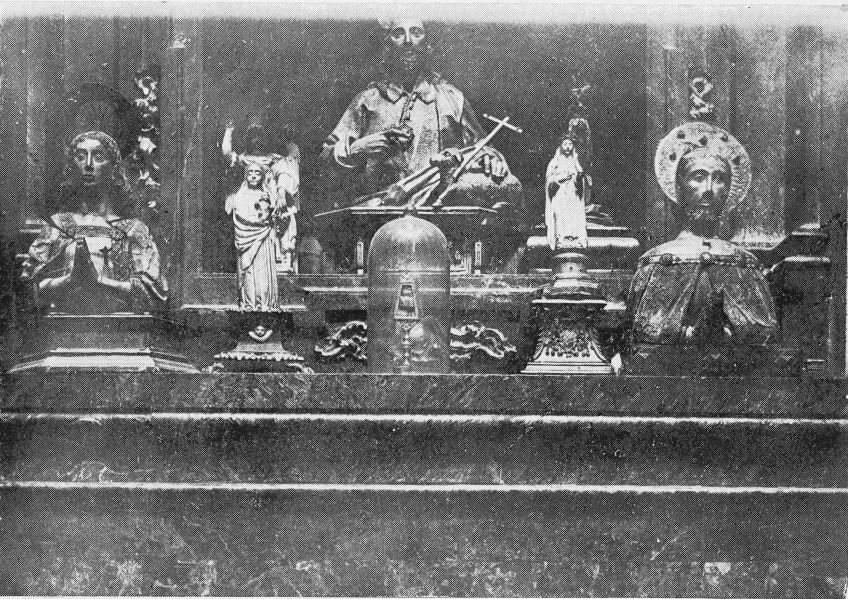
THE CATHEDRAL. DETAIL OF THE RELIQUARY OF SAN SEBASTIAN IN THE OCTAVO
Plate 345
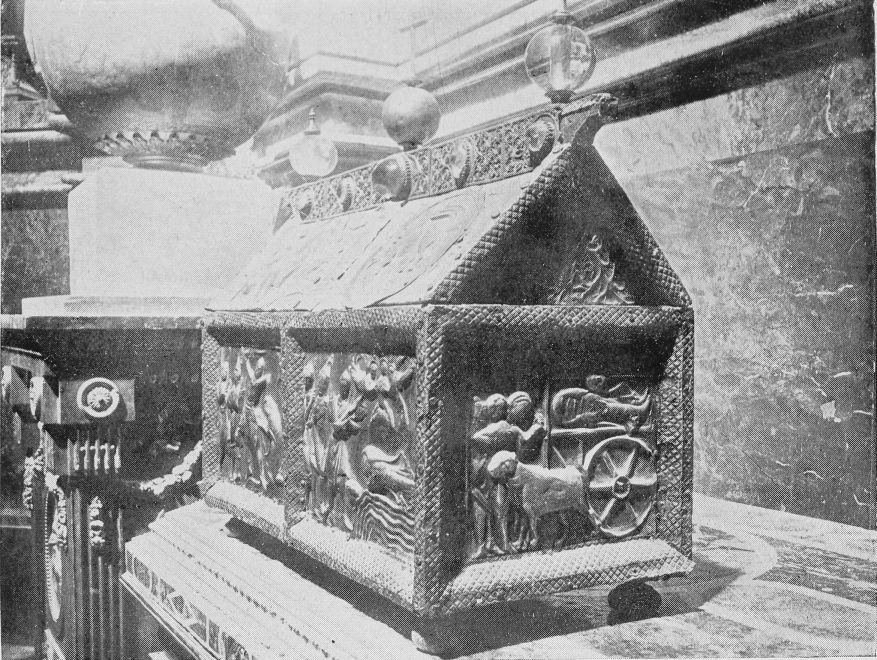
THE CATHEDRAL. A BYZANTINE RELIQUARY
Plate 346
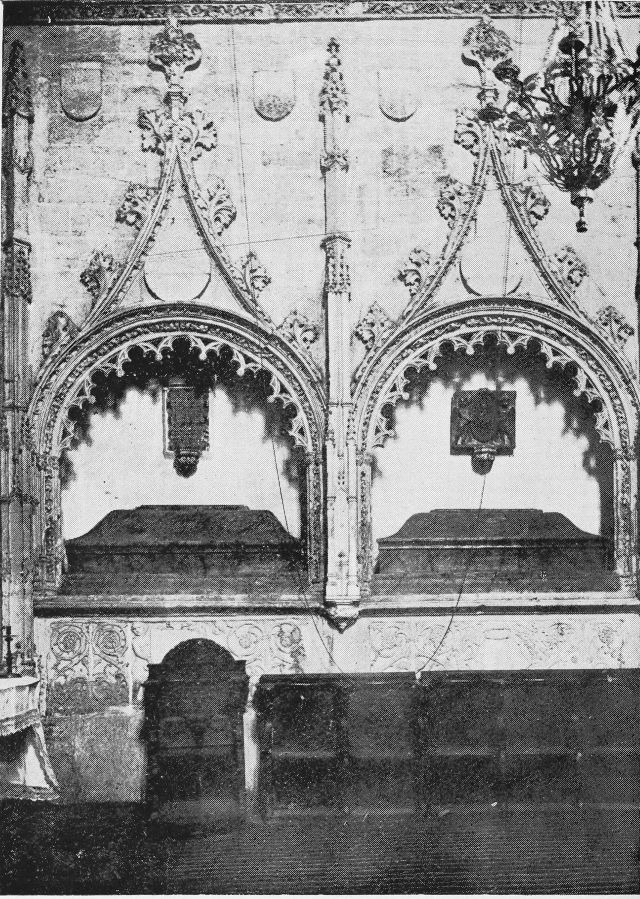
SEPULCHRES IN THE CATHEDRAL
Plate 347
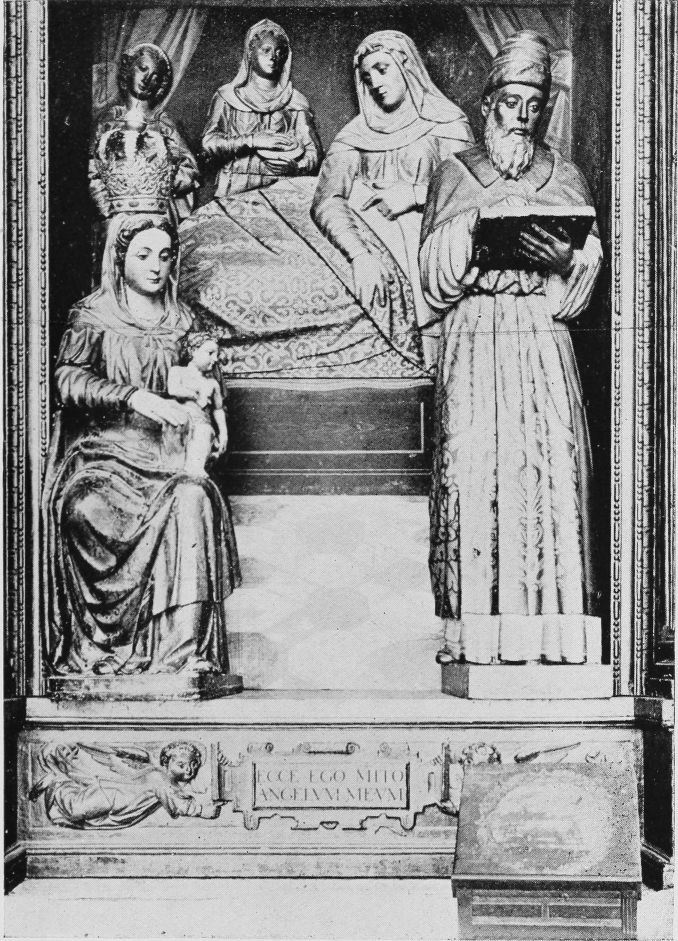
SCULPTURE IN THE CATHEDRAL
Plate 348
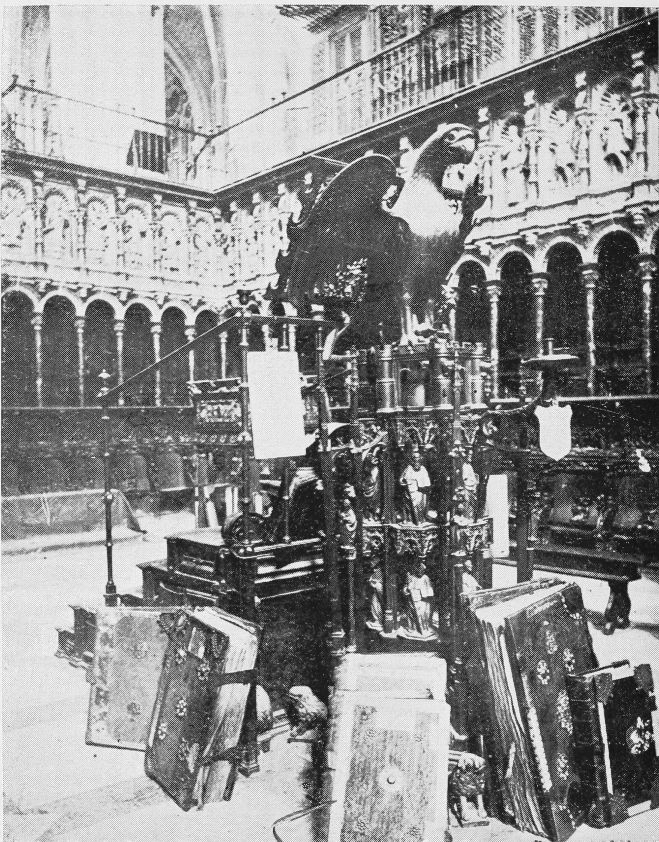
THE CATHEDRAL. BRONZE LECTERN AND BOOKS OF HOLY OFFICE
Plate 349
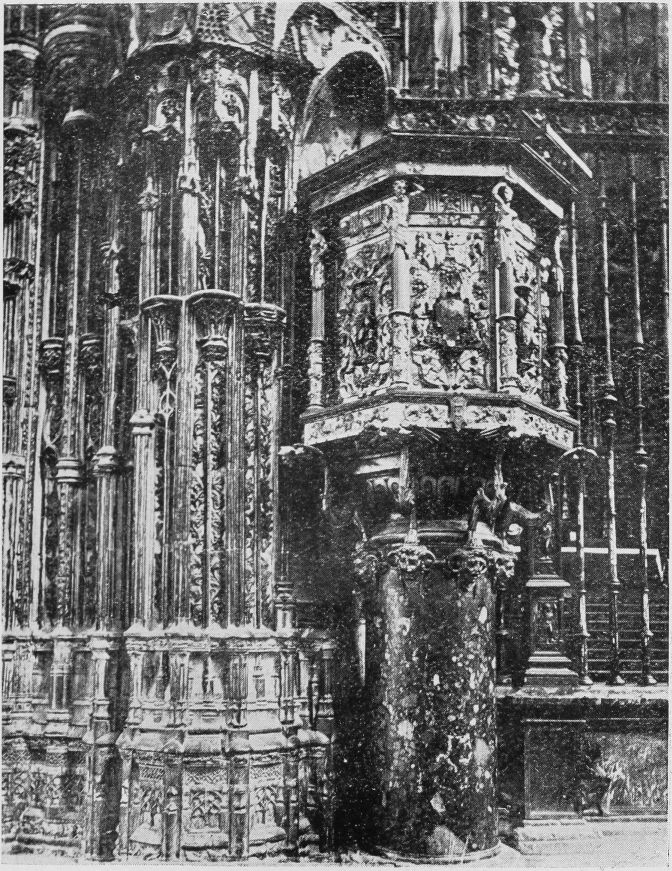
THE CATHEDRAL. A BRONZE PULPIT
Plate 350
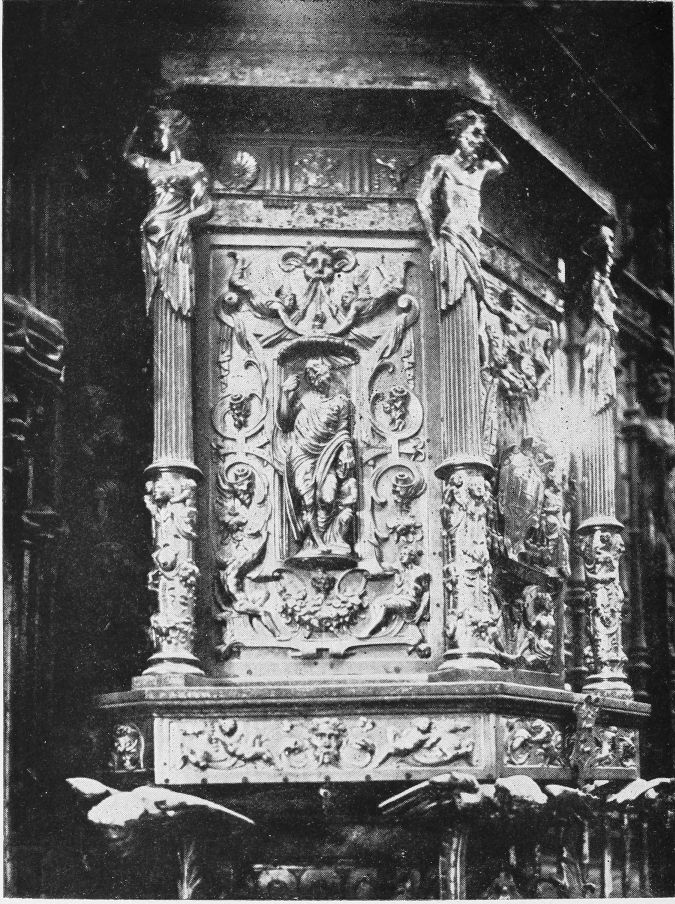
THE CATHEDRAL. DETAIL OF A PULPIT
Plate 351
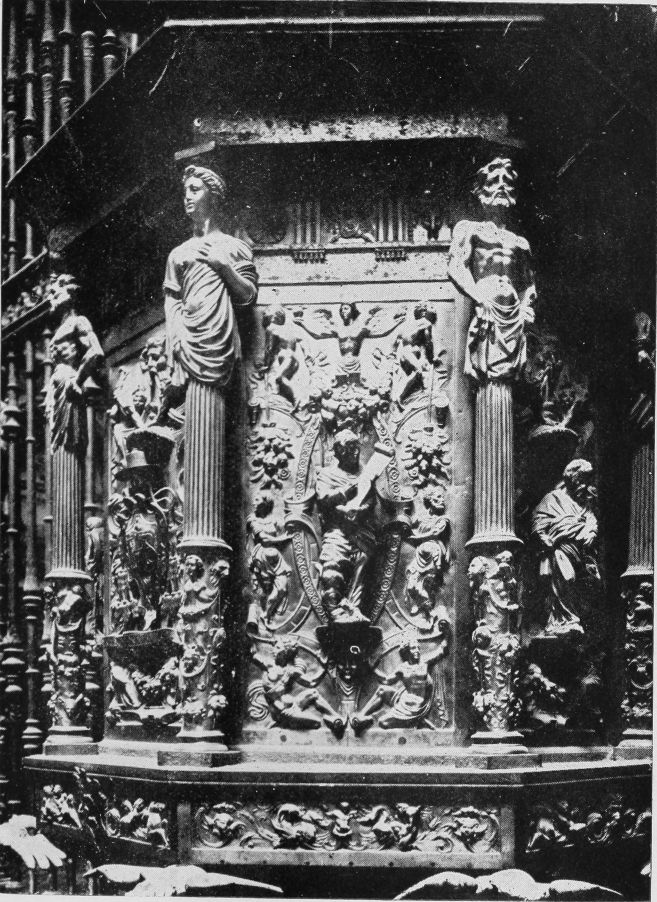
PULPIT IN THE CATHEDRAL
Plate 352
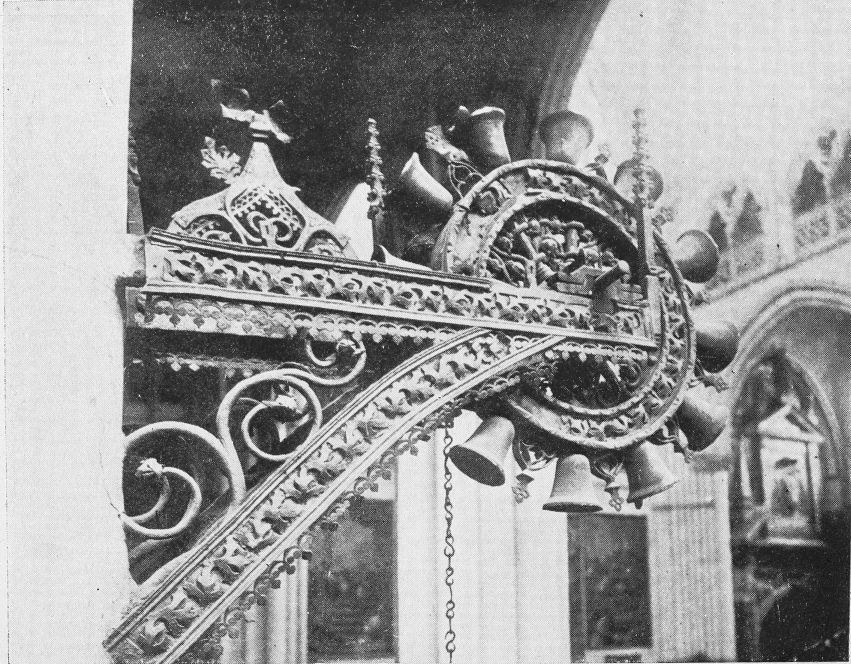
CATHEDRAL BELLS WHICH RING WHEN THE HOST IS ELEVATED
Plate 353
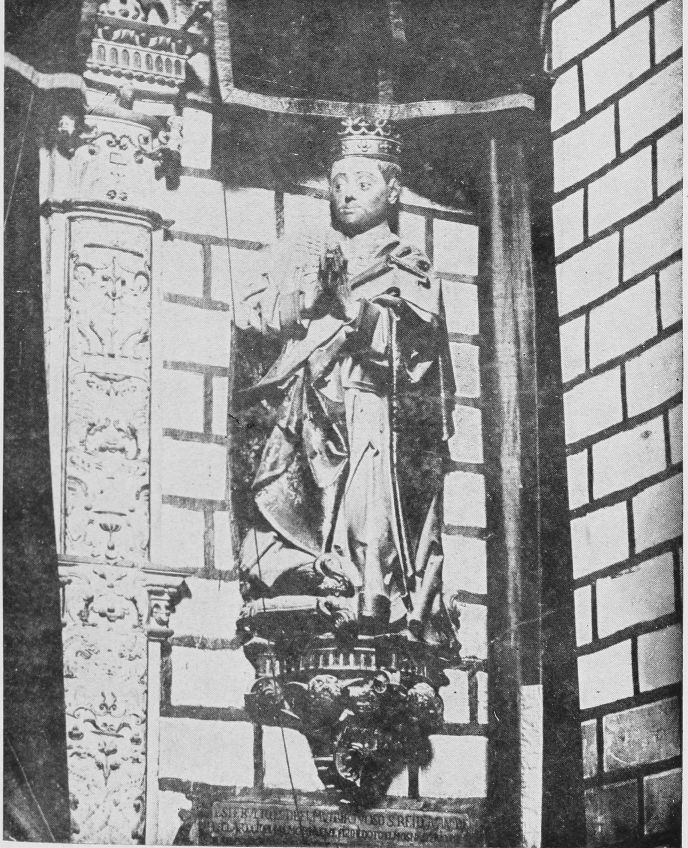
THE CATHEDRAL. STATUE OF DON JUAN II. FIFTEENTH CENTURY
Plate 354
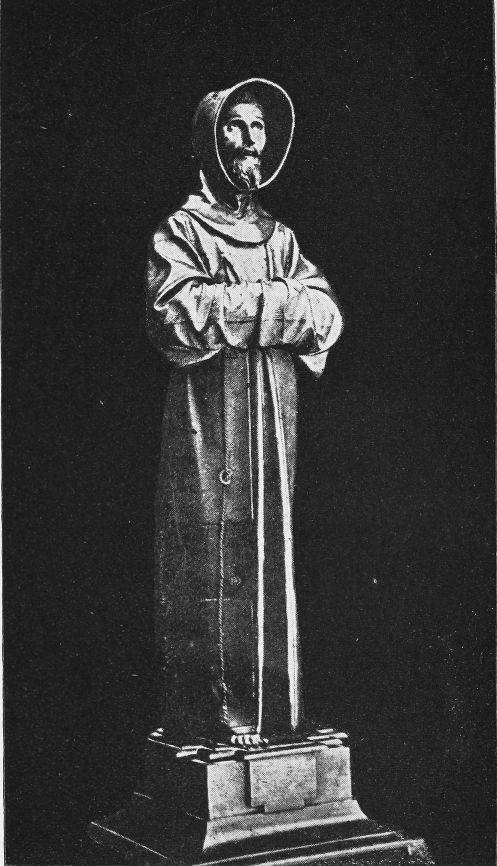
THE CATHEDRAL. ST. FRANCIS OF ASSISI
Plate 355
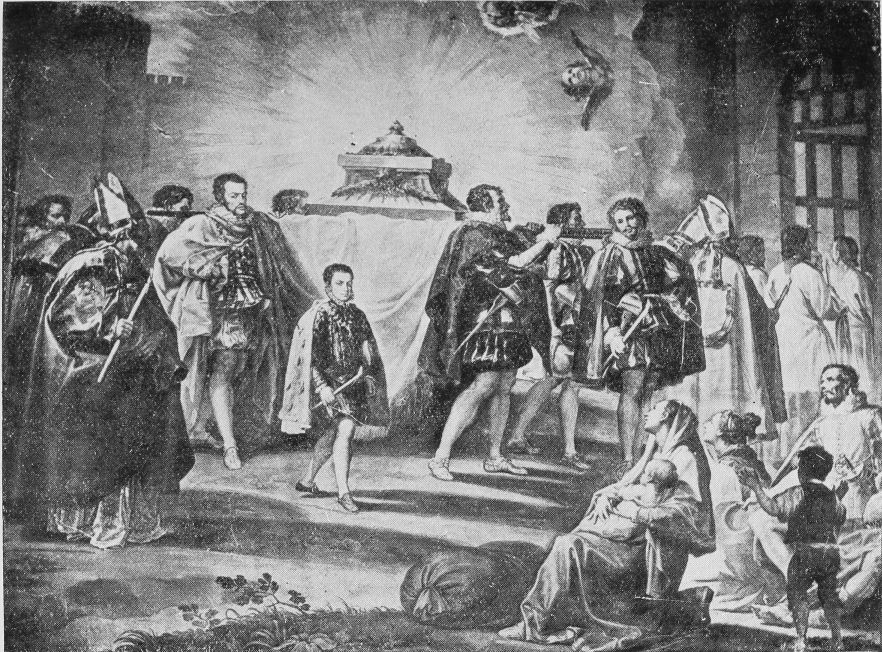
THE CATHEDRAL. A PICTURE BY BAYEU
Plate 356
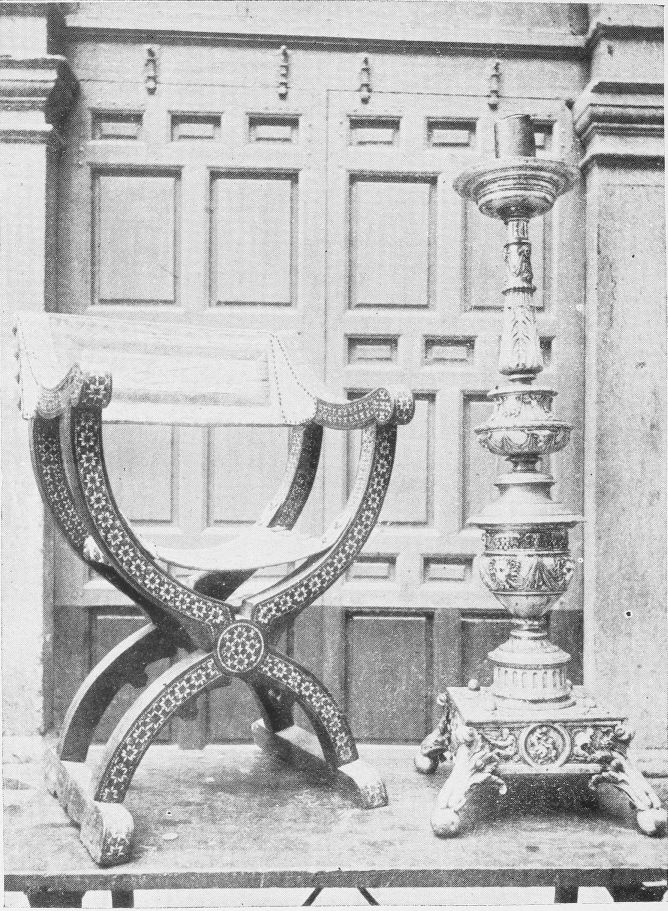
DETAILS IN THE CATHEDRAL
Plate 357
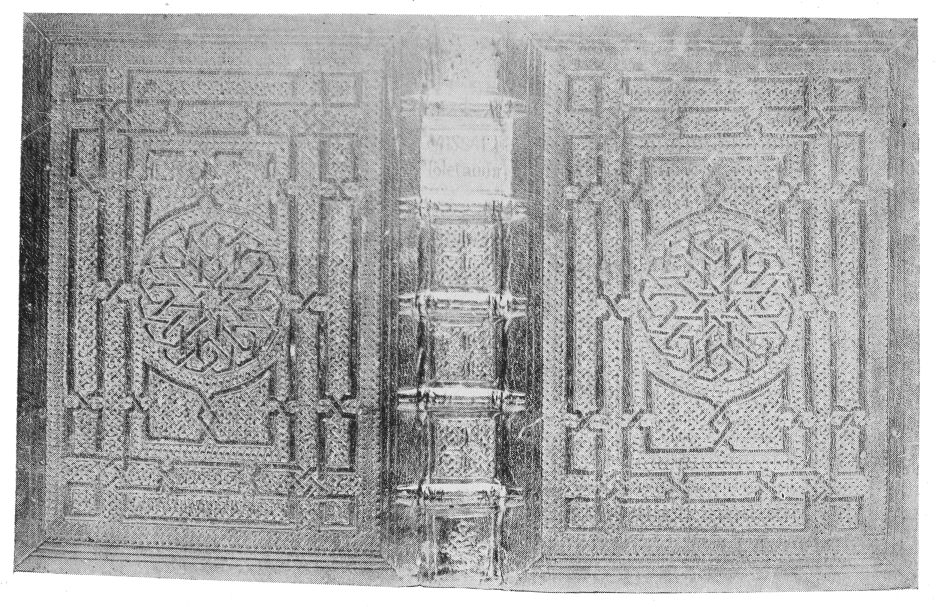
THE CATHEDRAL. COVER OF A MISSAL
Plate 358
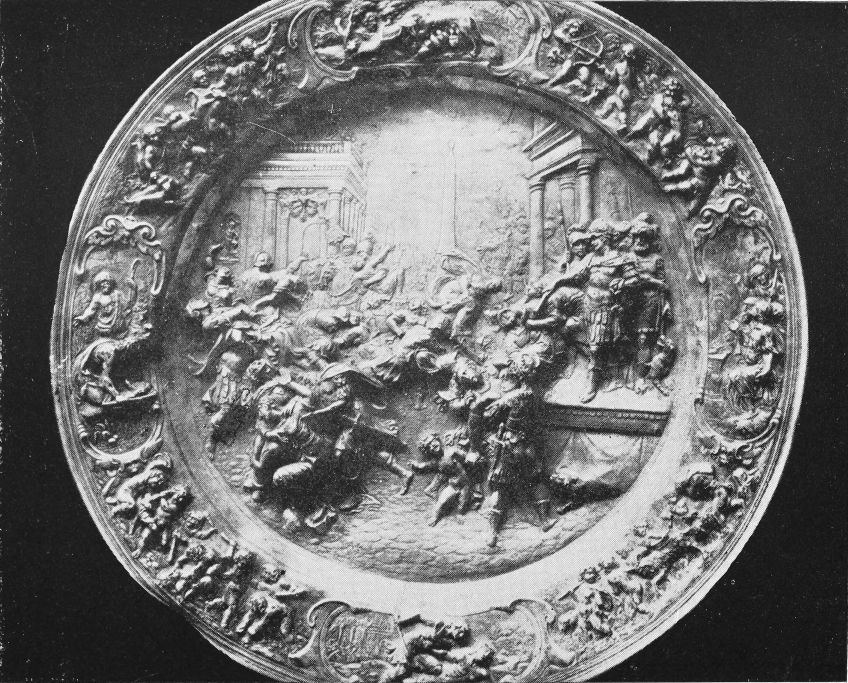
THE CATHEDRAL. SILVER SALVER, “THE ABDUCTION OF THE SABINE WOMEN” BY
BENVENUTO CELLINI
Plate 359
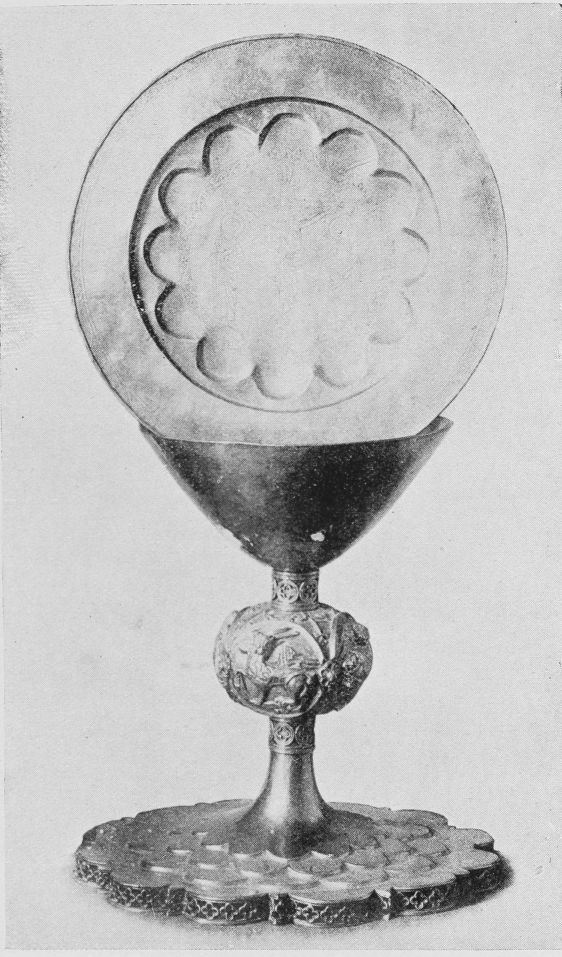
THE CATHEDRAL. CHALICE AND PATEN
Plate 360
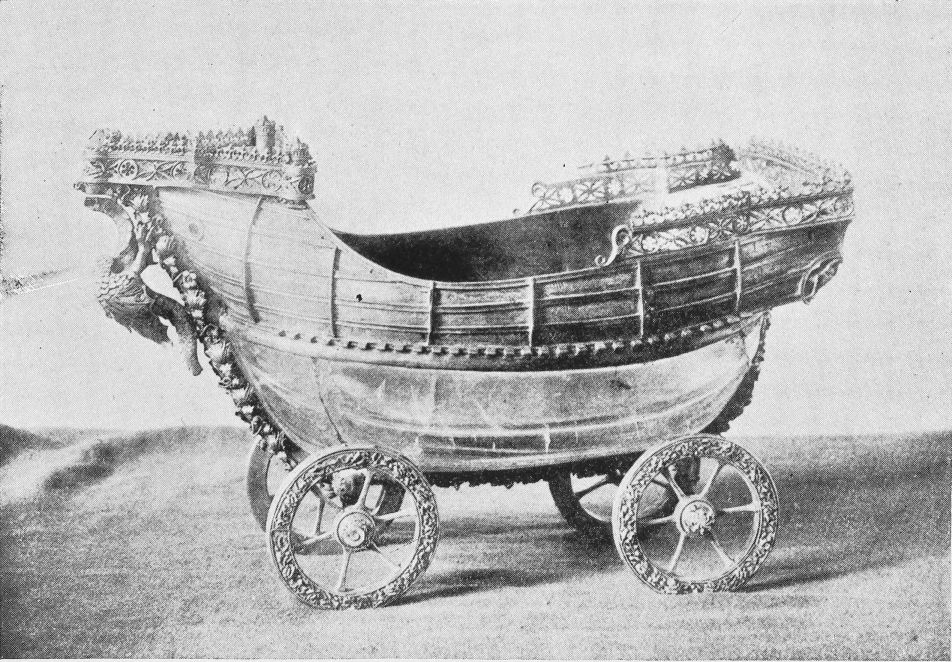
THE CATHEDRAL. A SHIP THAT BELONGED TO QUEEN JUANA LA LOCA
Plate 361
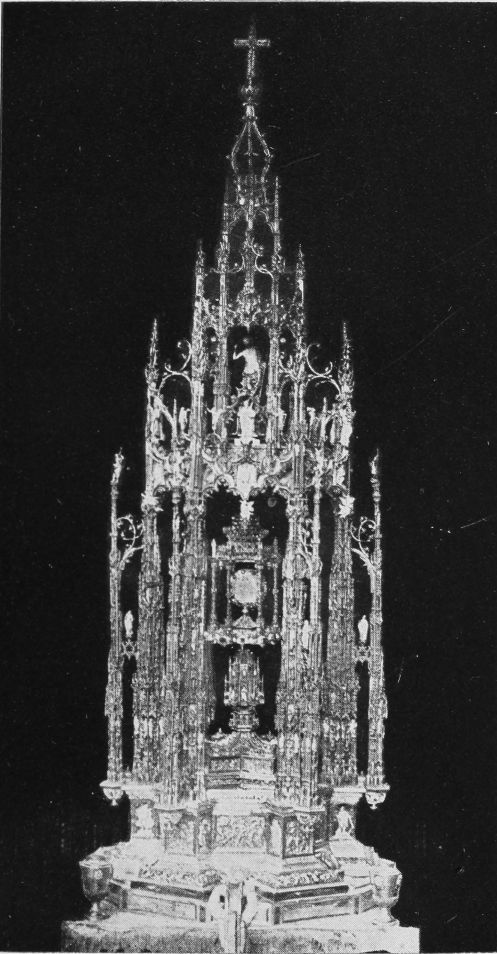
MONSTRANCE IN THE CATHEDRAL
Plate 362
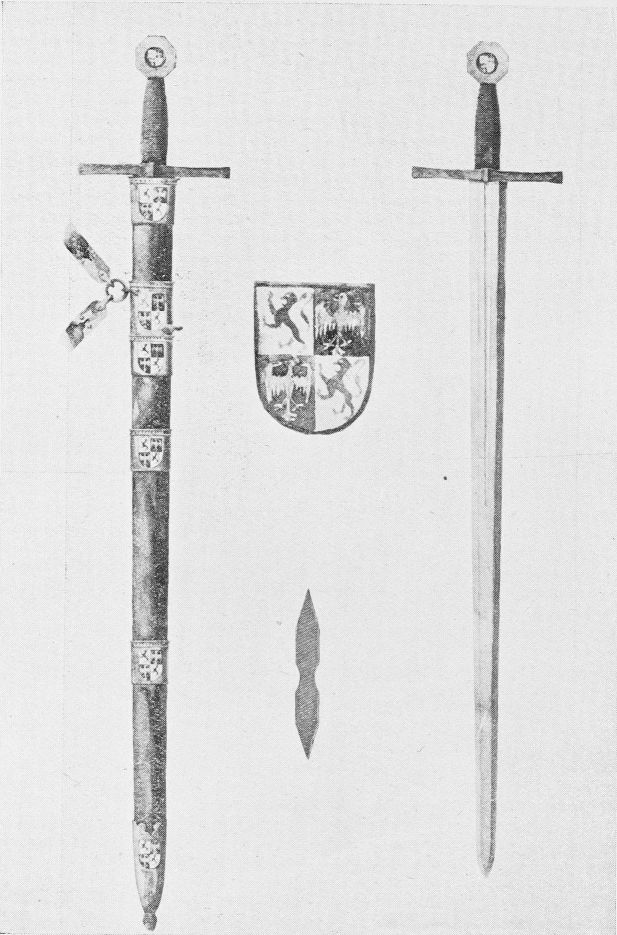
THE CATHEDRAL. SWORD OF ALFONSO VI.
Plate 363
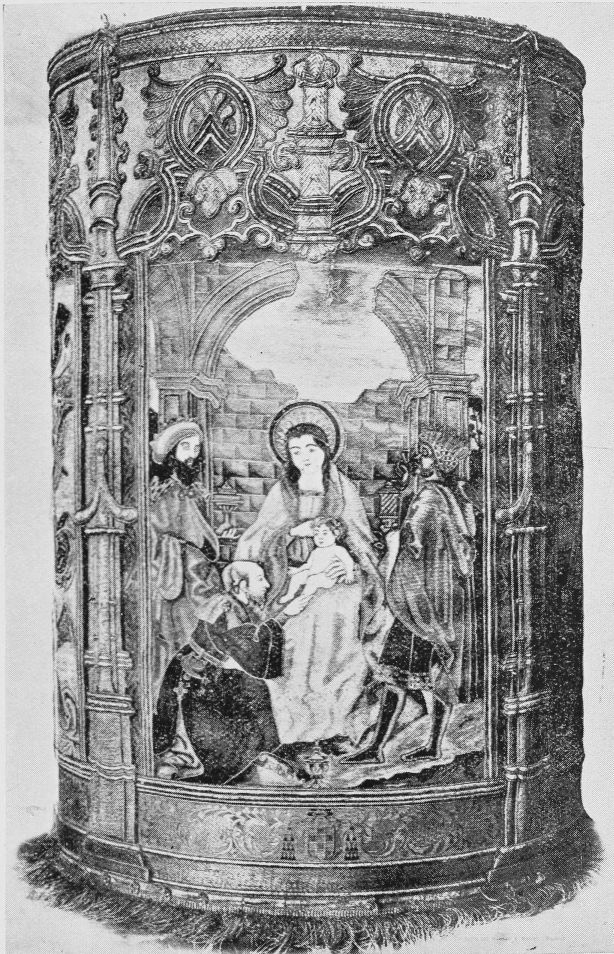
THE CATHEDRAL. THE ADORATION OF THE KINGS (SILK)
Plate 364
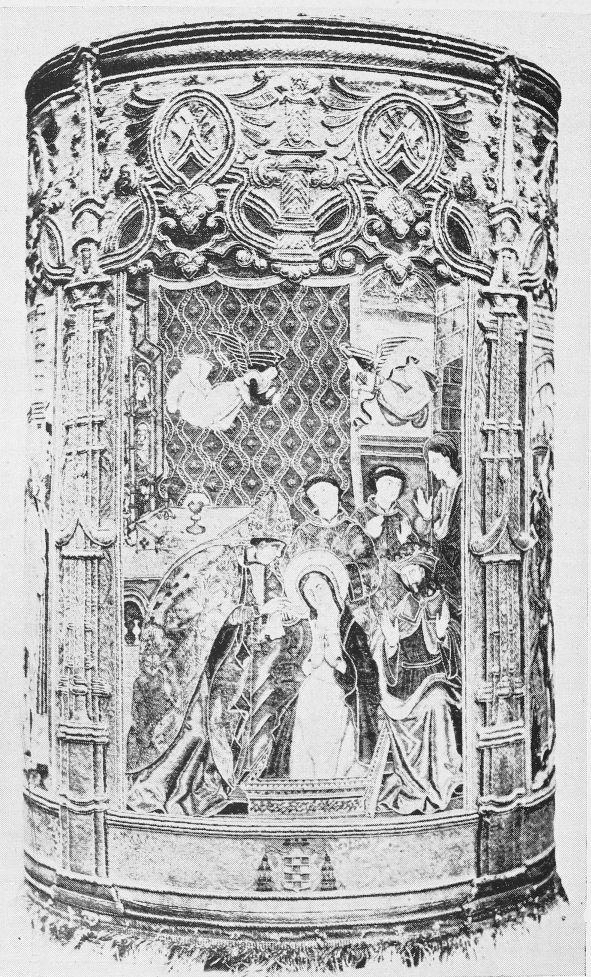
THE CATHEDRAL. THE VEIL OF SANTA LEOCADIA (SILK)
Plate 365
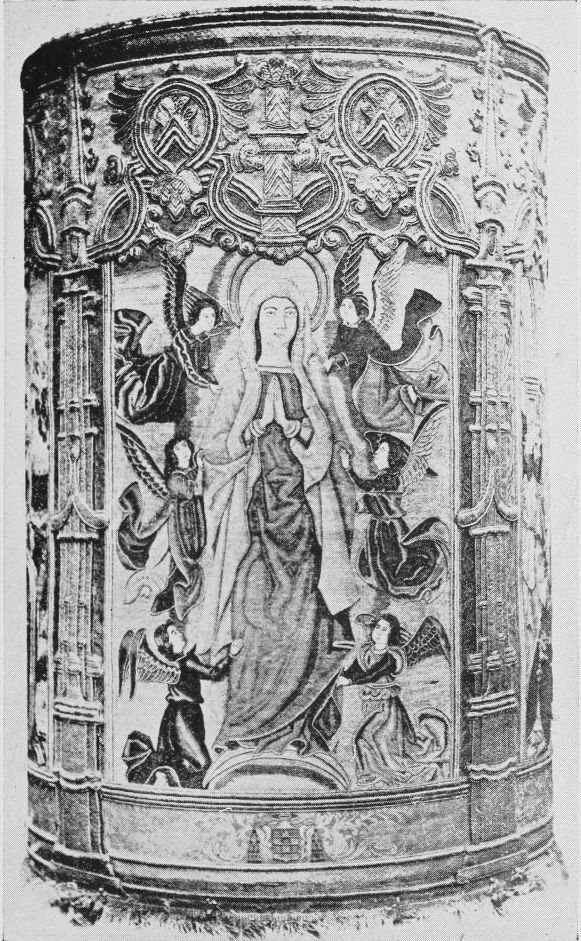
THE CATHEDRAL. THE ASSUMPTION (SILK)
Plate 366
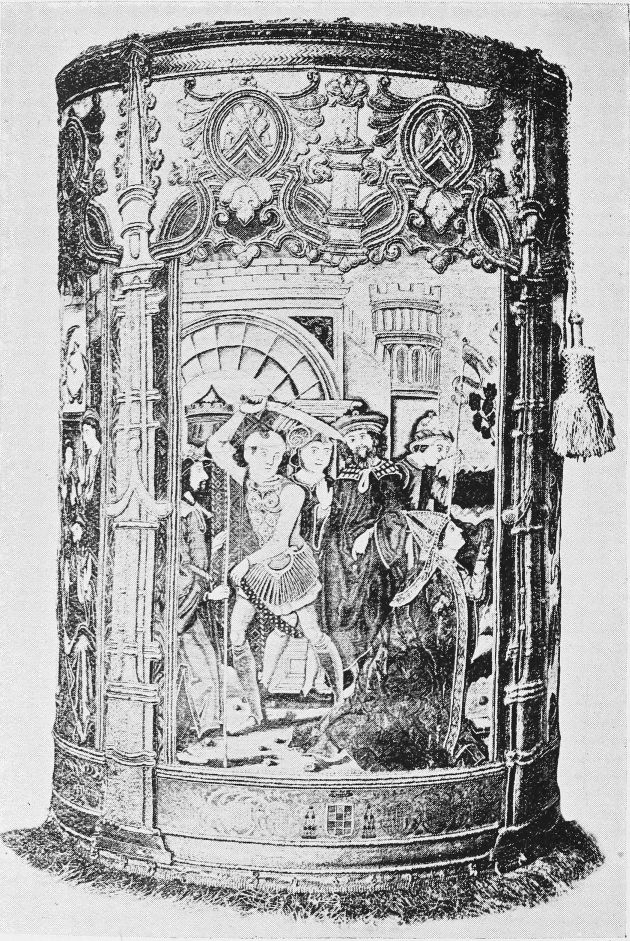
THE CATHEDRAL. THE BEHEADING OF SAN EUGENIO (SILK)
Plate 367
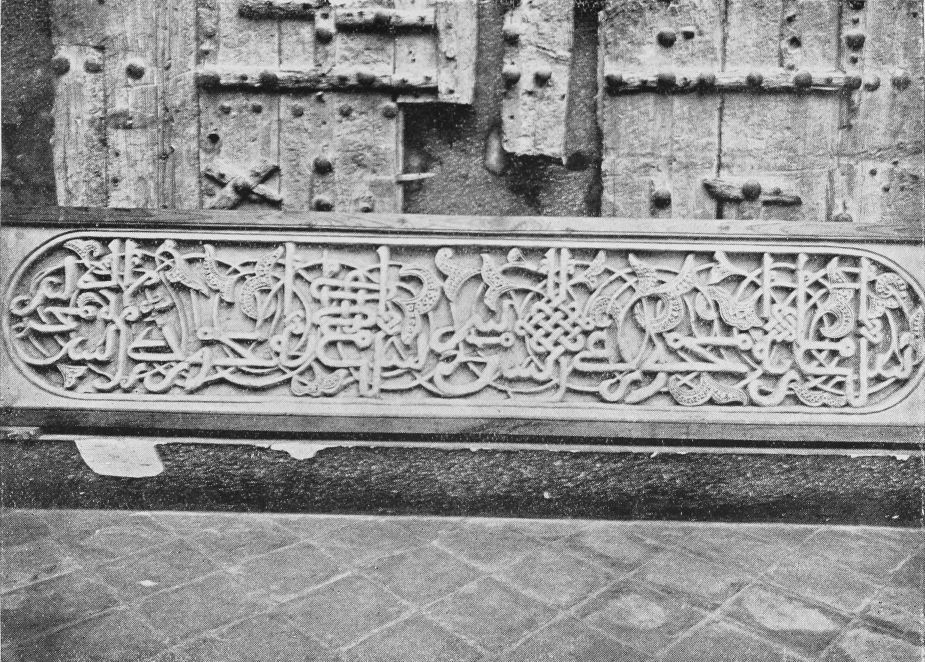
KUFIC ENTABLATURE IN THE CATHEDRAL
Plate 368
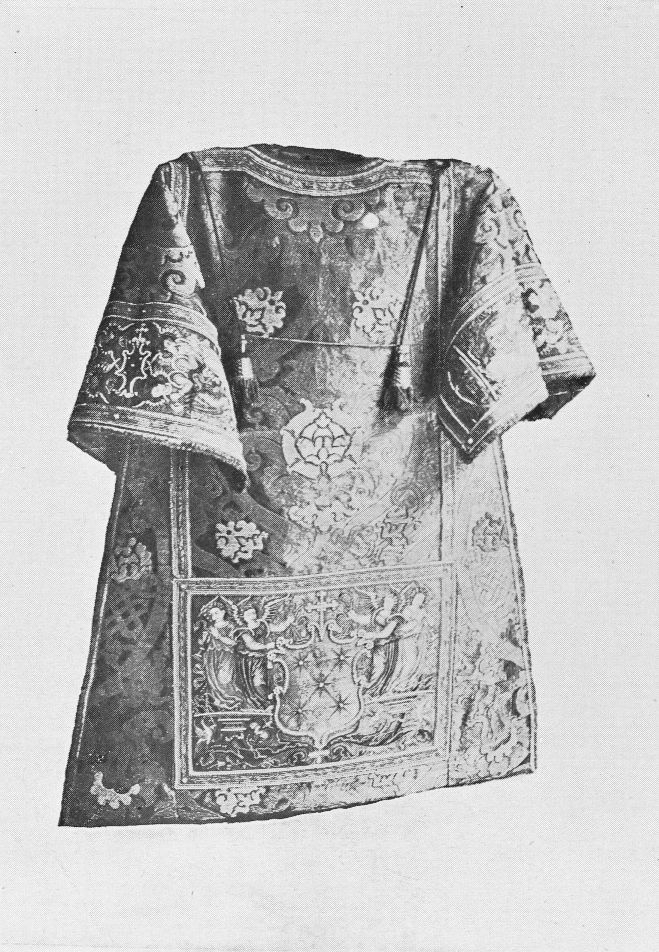
THE CATHEDRAL. A DALMATIC EMBROIDERED IN GOLD AND SILK. SIXTEENTH
CENTURY
Plate 369
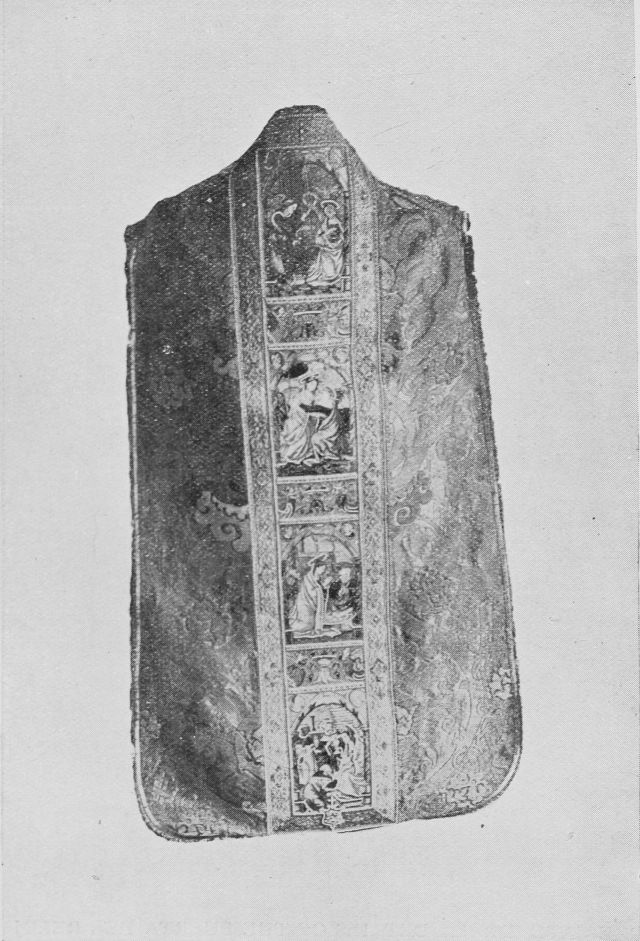
THE CATHEDRAL. A CHASUBLE EMBROIDERED IN GOLD AND SILK. SIXTEENTH
CENTURY
Plate 370
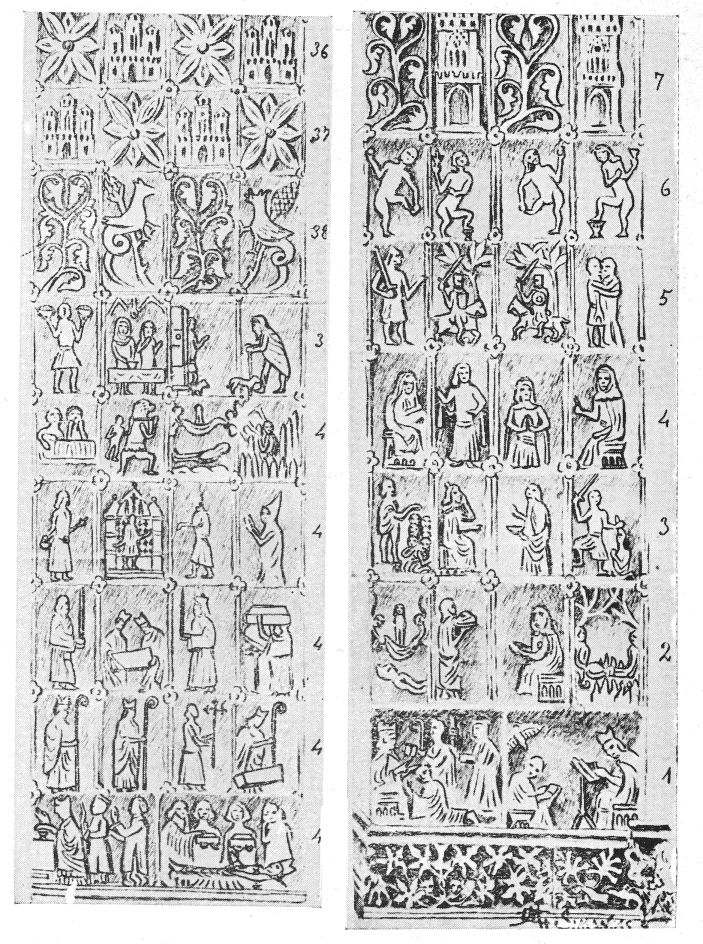
THE CATHEDRAL. DETAILS OF THE PUERTA DEL RELOJ
Plate 371
THE CATHEDRAL. DETAILS OF THE PUERTA DEL RELOJ
Plate 372
THE CATHEDRAL. DETAILS OF THE PUERTA DEL RELOJ
Plate 373
THE CATHEDRAL. DETAILS OF THE PUERTA DEL RELOJ
Plate 374
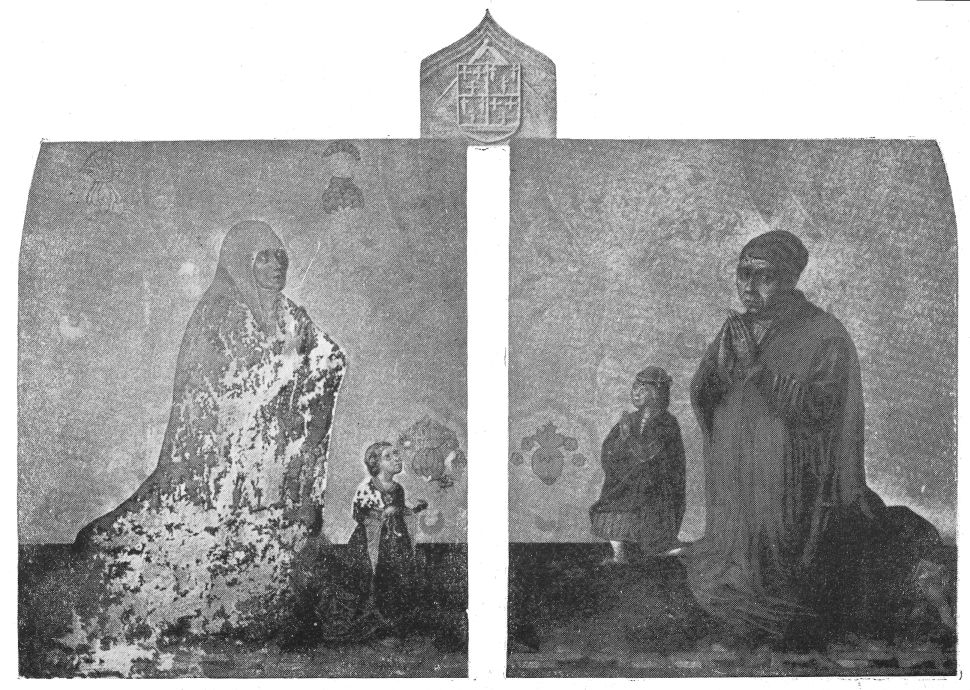
EFFIGIES OF JUAN GUAS (ARCHITECT OF SAN JUAN DE LOS REYES), HIS WIFE,
AND CHILDREN
Plate 375
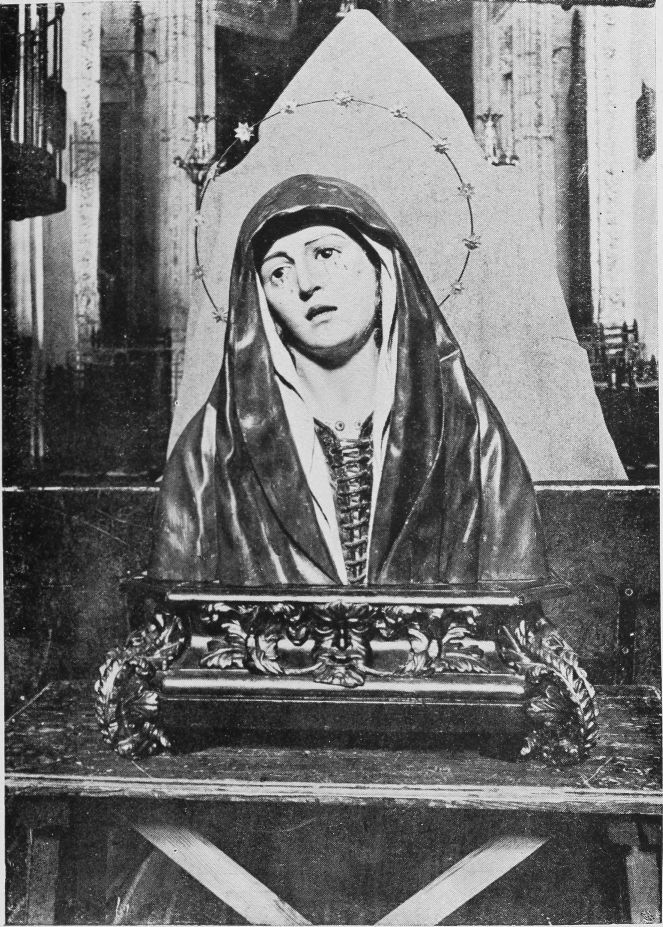
SCULPTURE IN SAN ANDRES
Plate 376
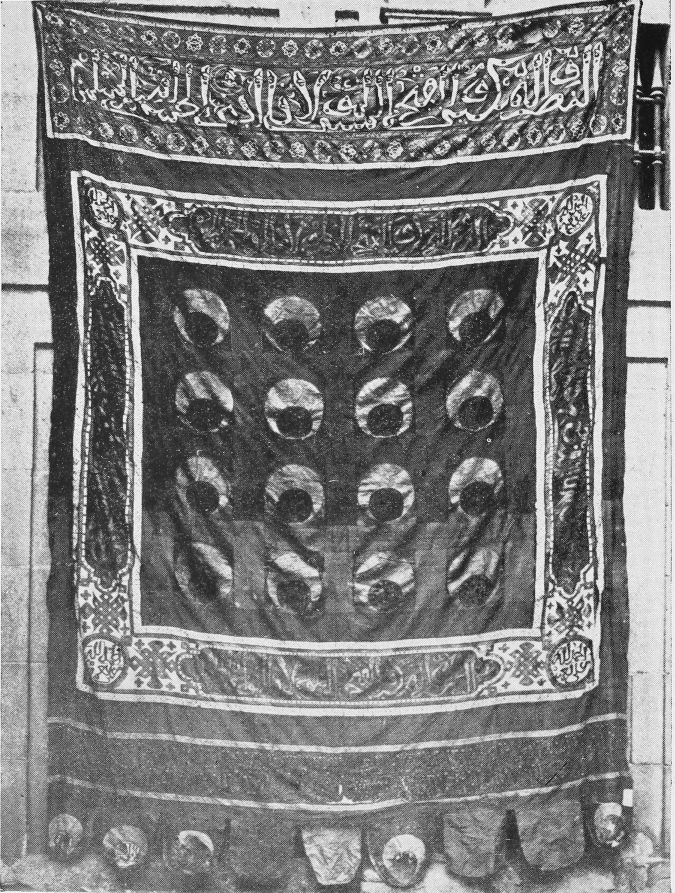
BANNER OF THE SALADO
Plate 377
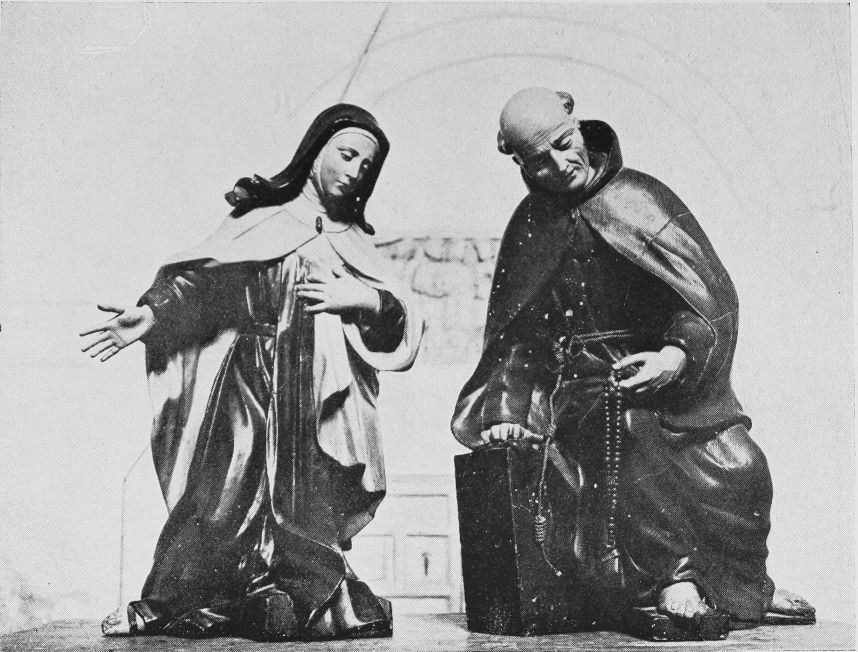
ST. PETER NATANO AND ST. THERESA SCULPTURED IN WOOD
Plate 378
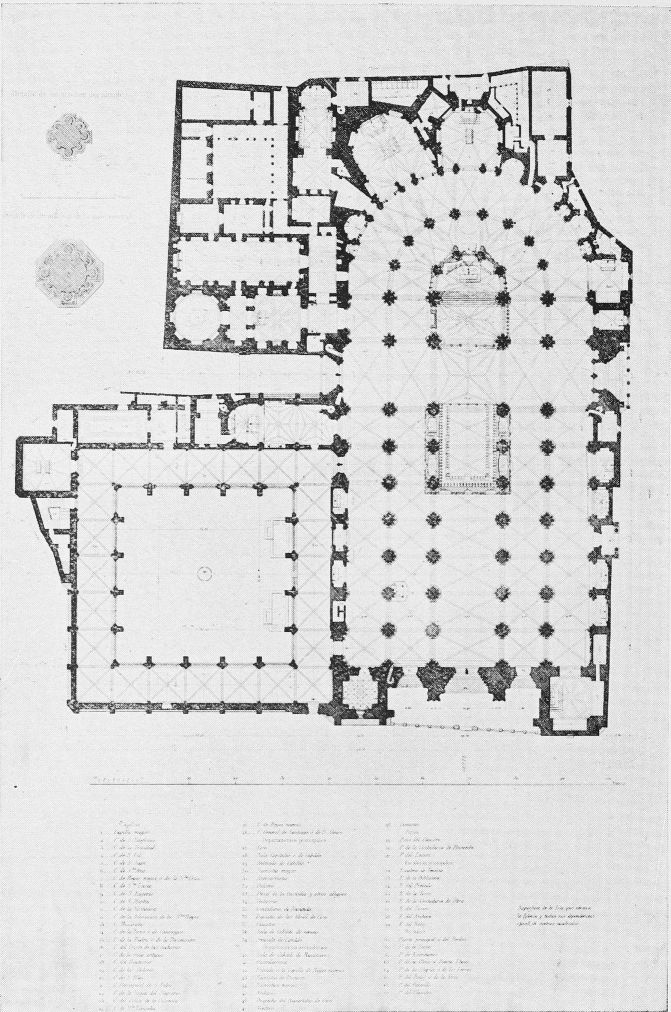
PLAN OF THE SANTA IGLESIA PRIMADA
Plate 379
SANTA ISABEL. SIDE ALTAR-PIECE
Plate 380
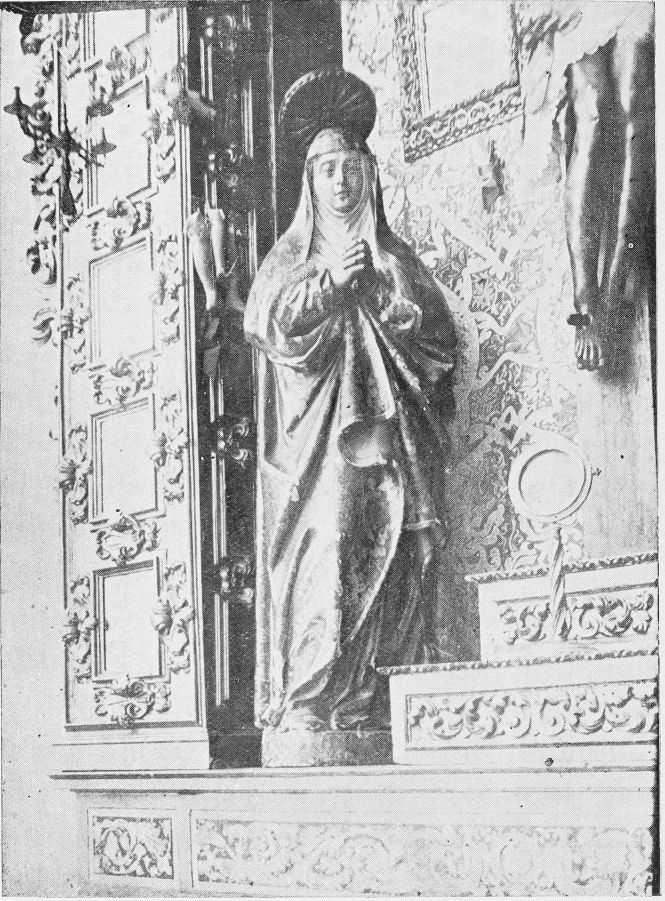
SANTA ISABEL. DETAIL OF AN ALTAR-PIECE
Plate 381
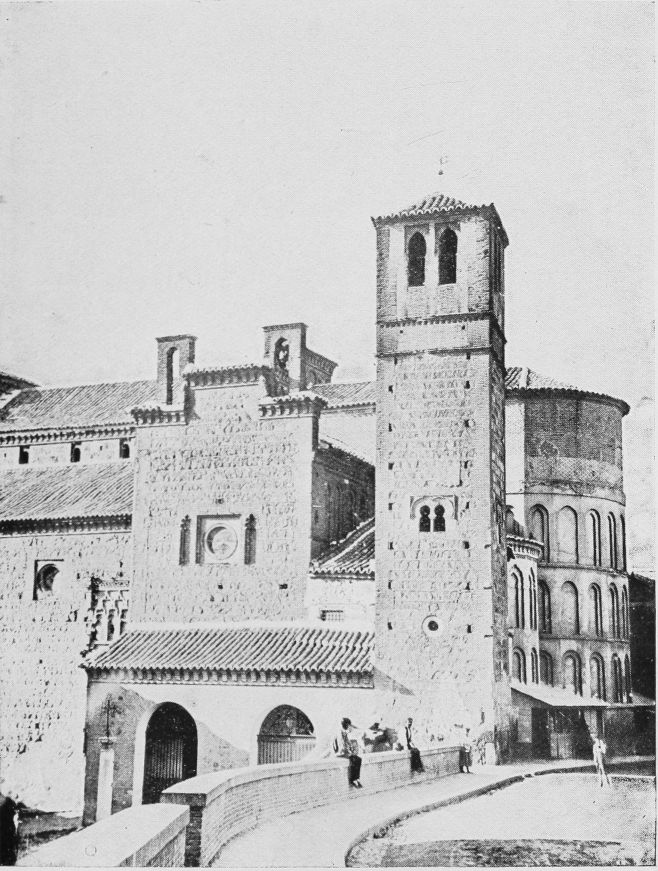
PARISH CHURCH OF SANTIAGO
Plate 382
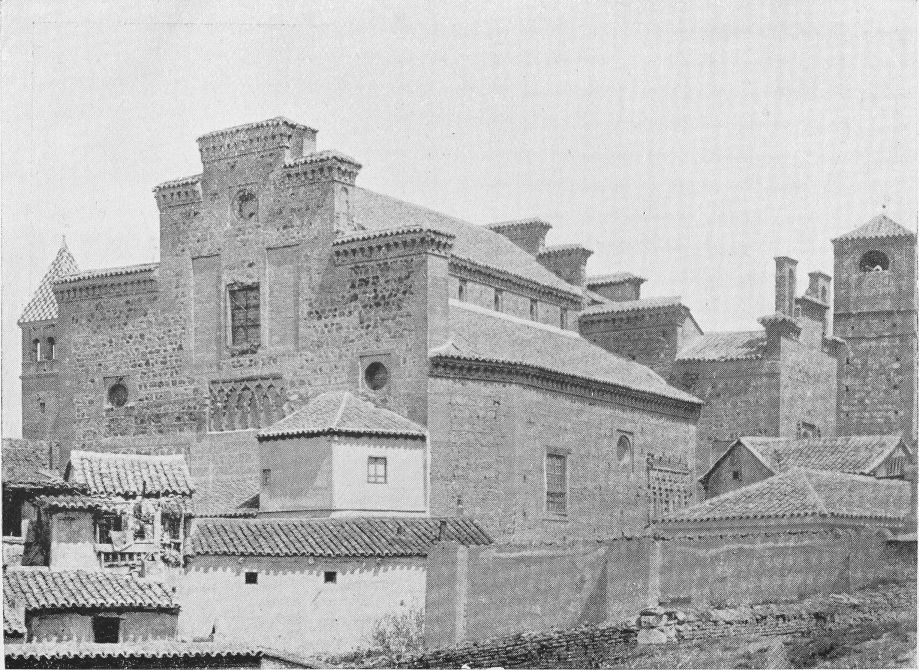
EXTERIOR OF SANTIAGO DEL ARRABAL. THIRTEENTH CENTURY
Plate 383
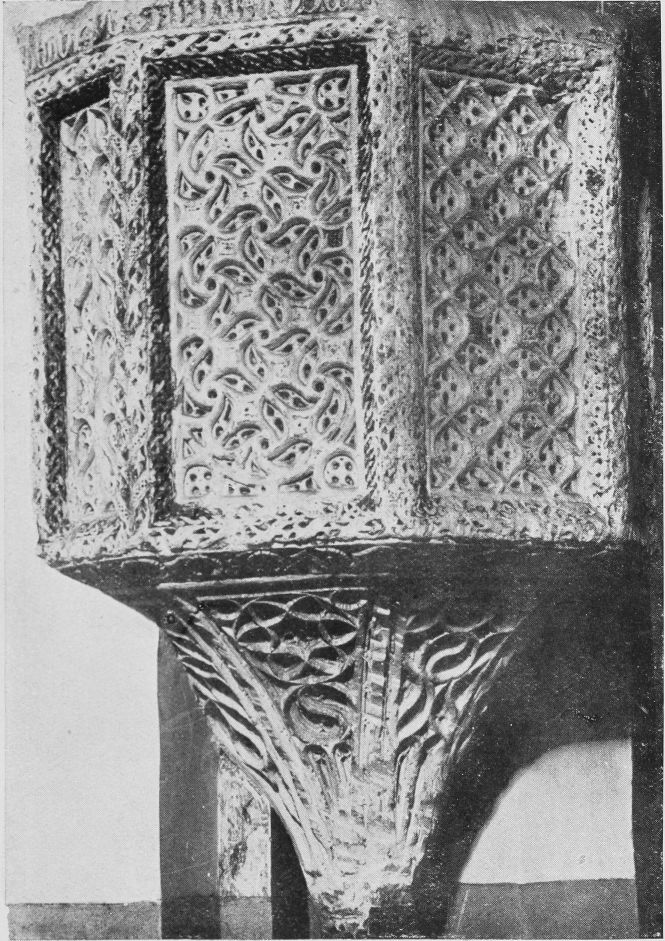
PULPIT IN THE CHURCH OF SANTIAGO DEL ARRABAL, FROM WHICH SAN VICENTE DE
FERRER PREACHED AGAINST THE JEWS
Plate 384
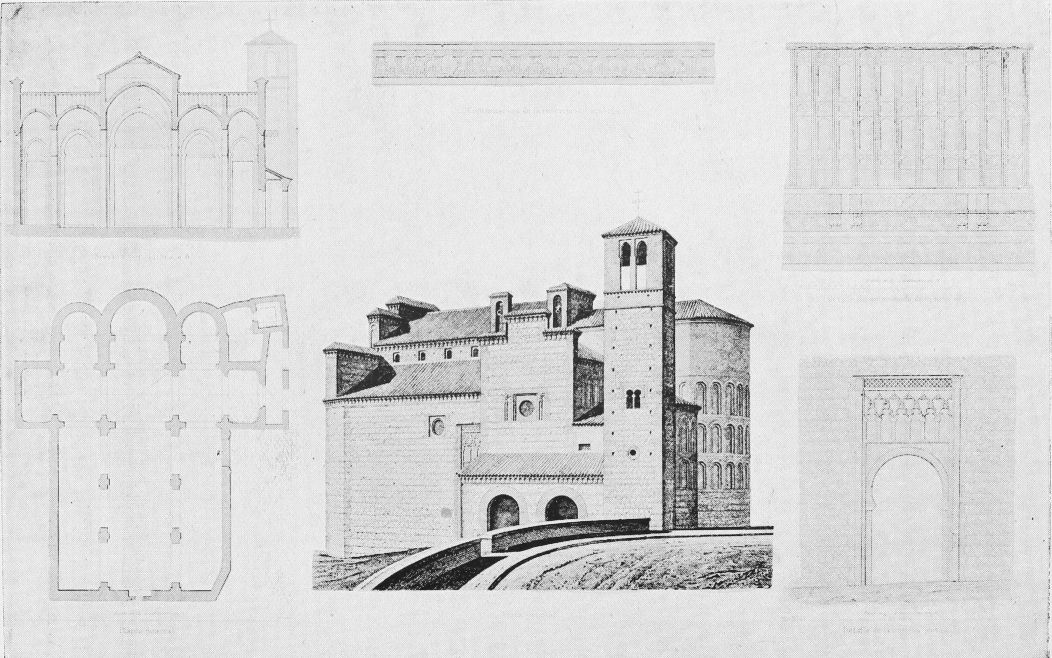
PAROCHIAL CHURCH OF SANTIAGO DEL ARRABAL
Plate 385
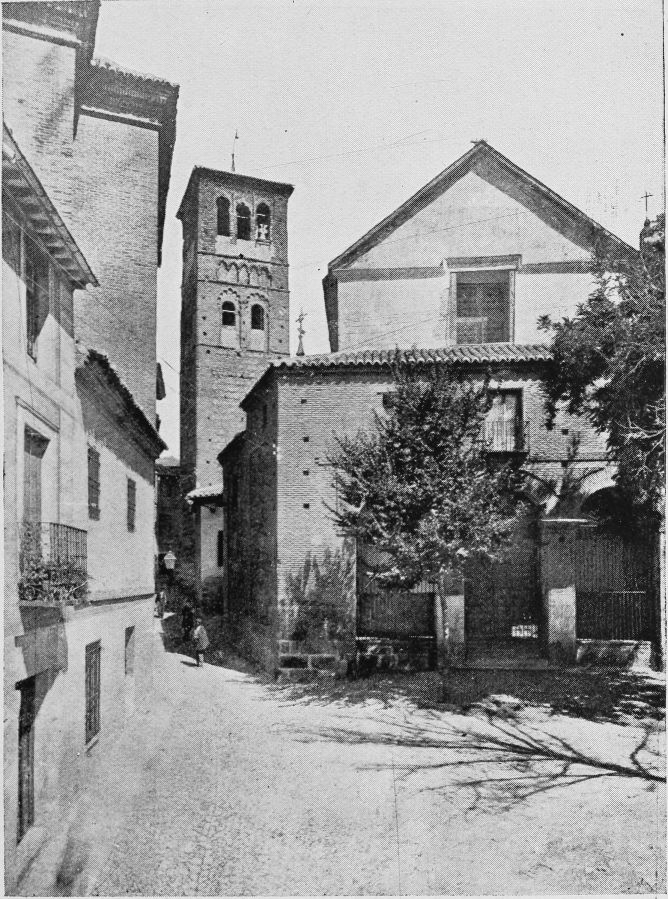
CHURCH OF SAN TOMÉ
Plate 386
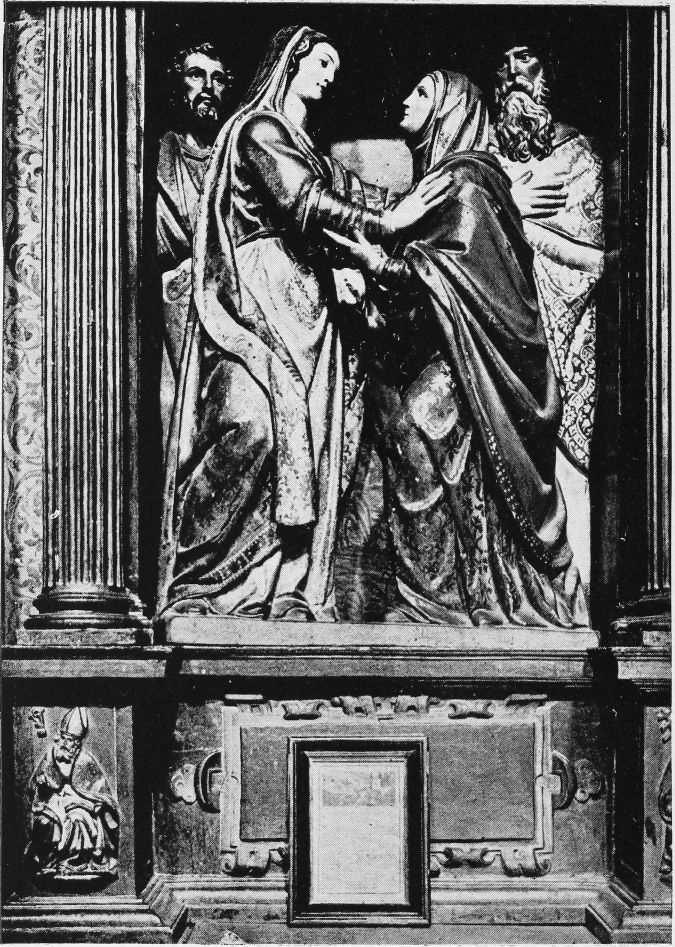
DETAIL OF AN ALTAR-PIECE IN THE CHURCH OF THE TRINITY
Plate 387
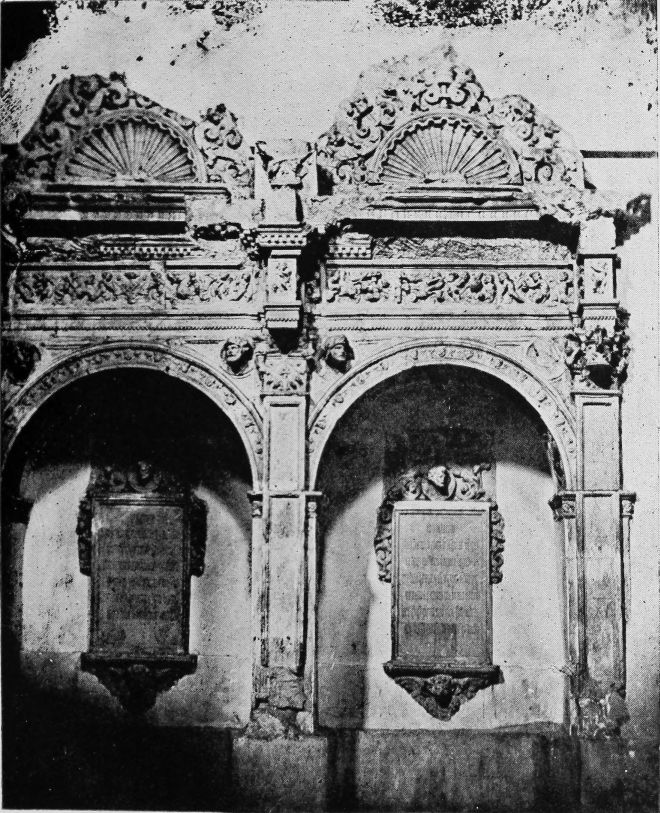
SEPULCHRES IN THE CHURCH OF ST. PETER THE MARTYR
Plate 388
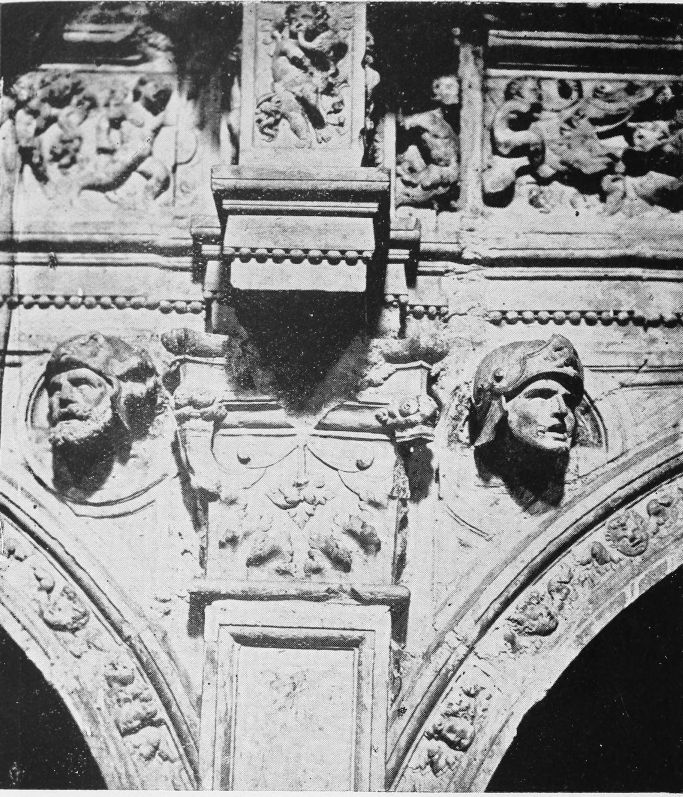
DETAILS OF A SEPULCHRE IN THE CHURCH OF ST. PETER THE MARTYR
Plate 389
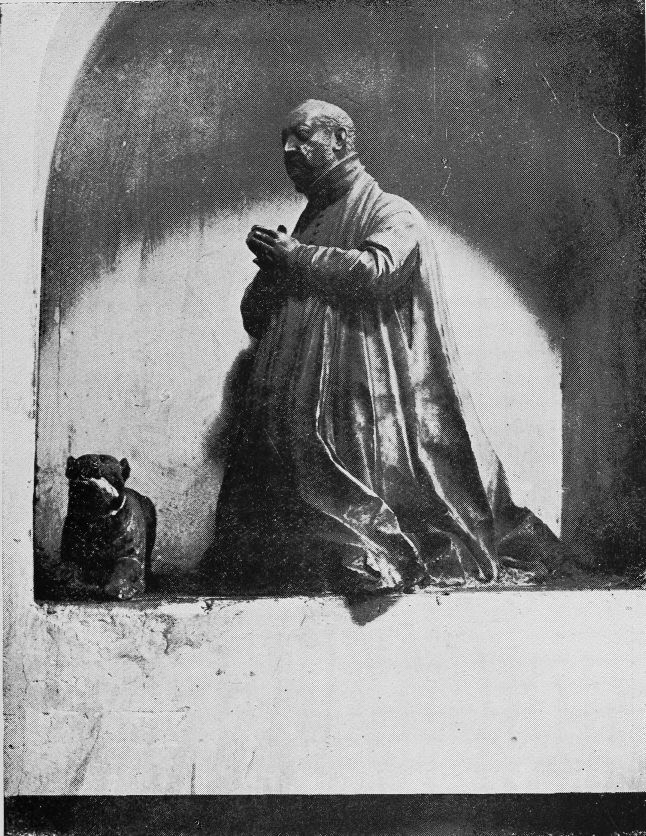
CHURCH OF ST. PETER THE MARTYR. STATUE OF A KNEELING CANON
Plate 390
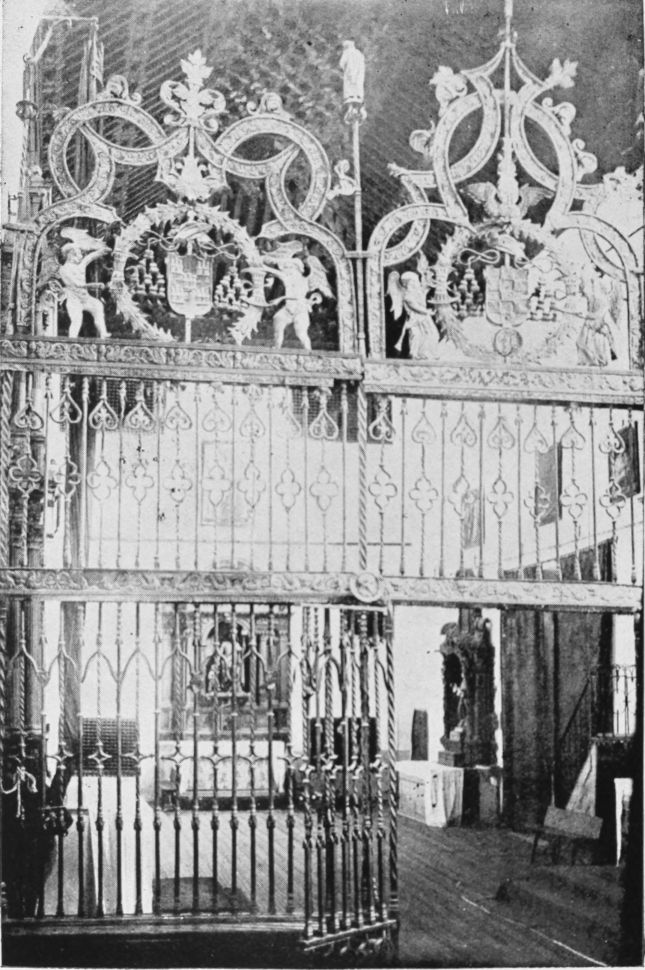
CHAPEL IN SAN JUAN DE LA PENITENCIA
Plate 391
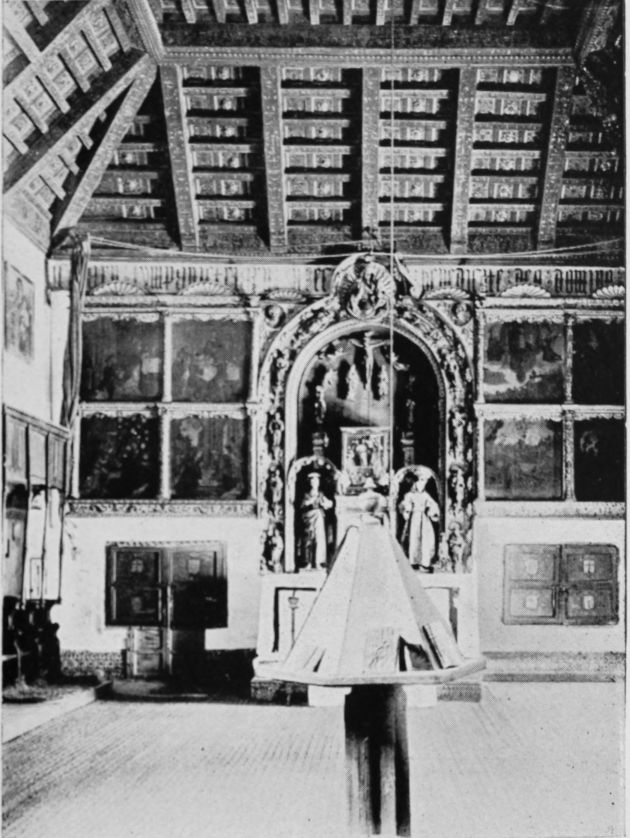
CHAPEL IN SAN JUAN DE LA PENITENCIA
Plate 392
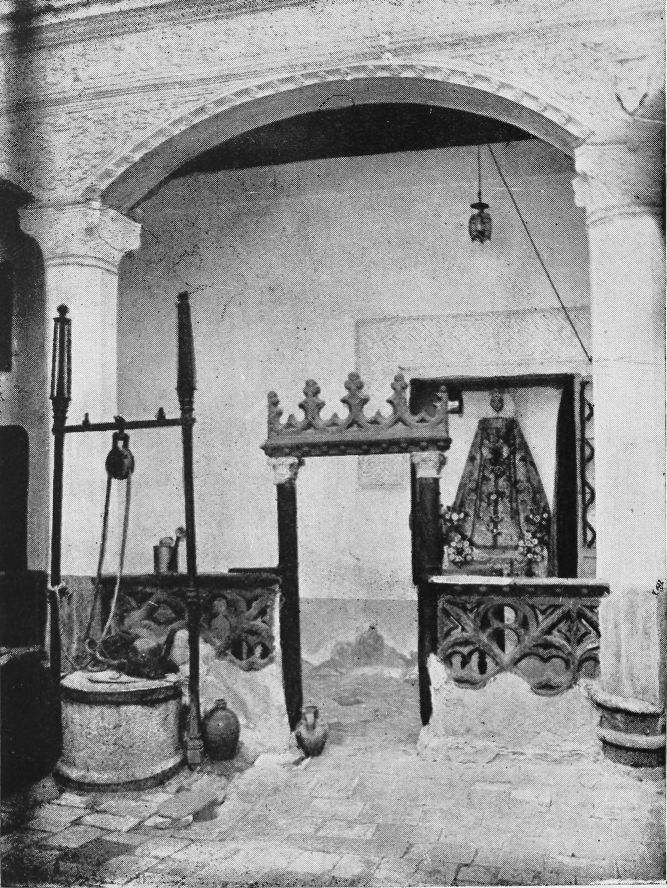
DETAILS OF SAN JUAN DE LA PENITENCIA
Plate 393
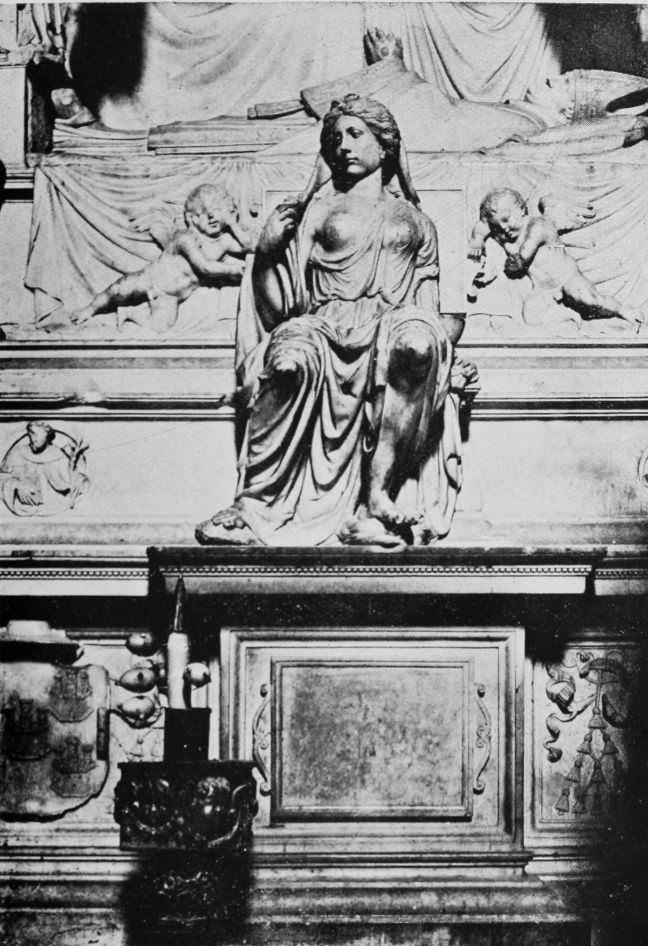
SEPULCHRE IN SAN JUAN DE LA PENITENCIA
Plate 394
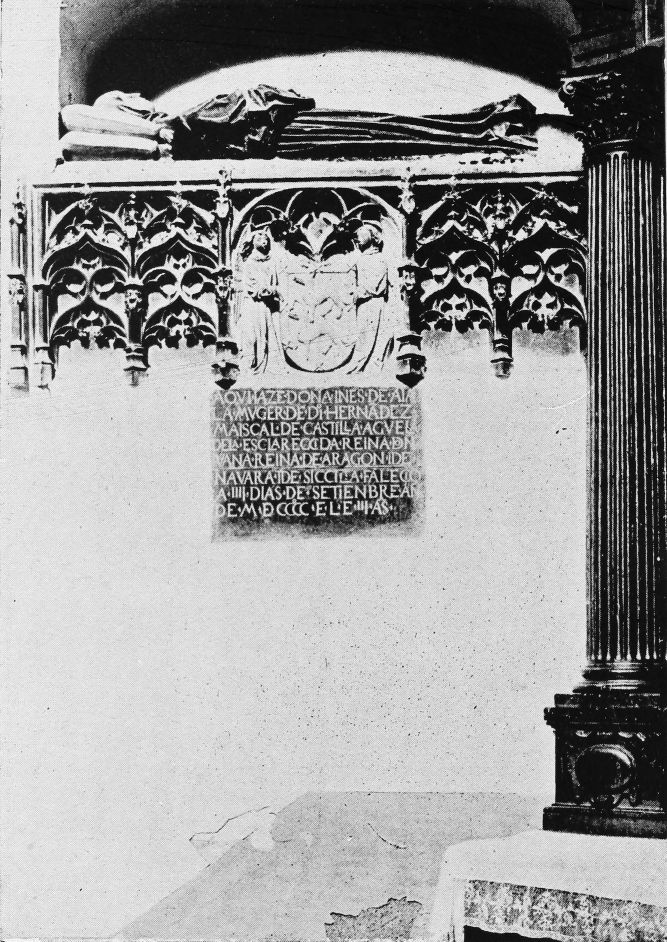
SEPULCHRE IN SAN JUAN DE LA PENITENCIA
Plate 395
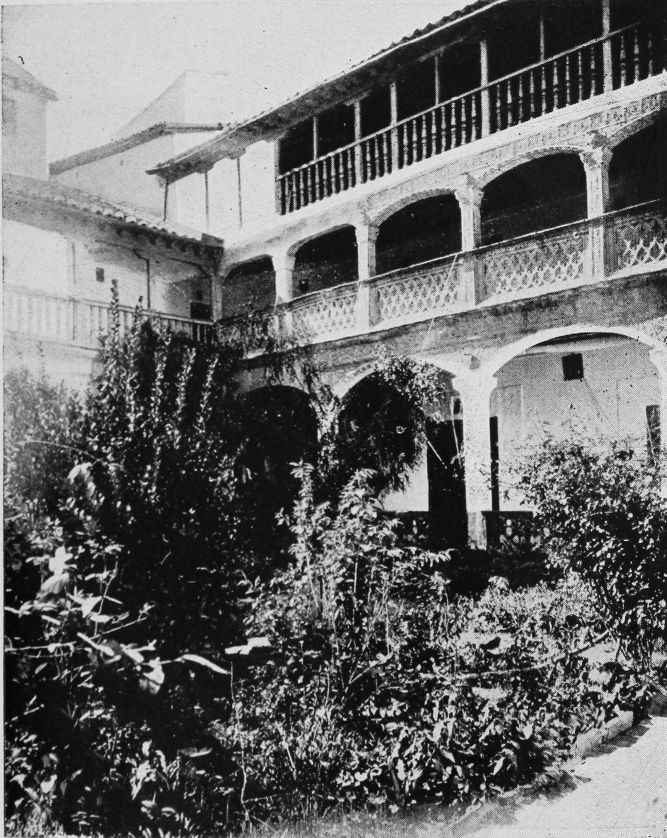
DETAIL OF THE CONVENT OF SAN JUAN DE LA PENITENCIA
Plate 396
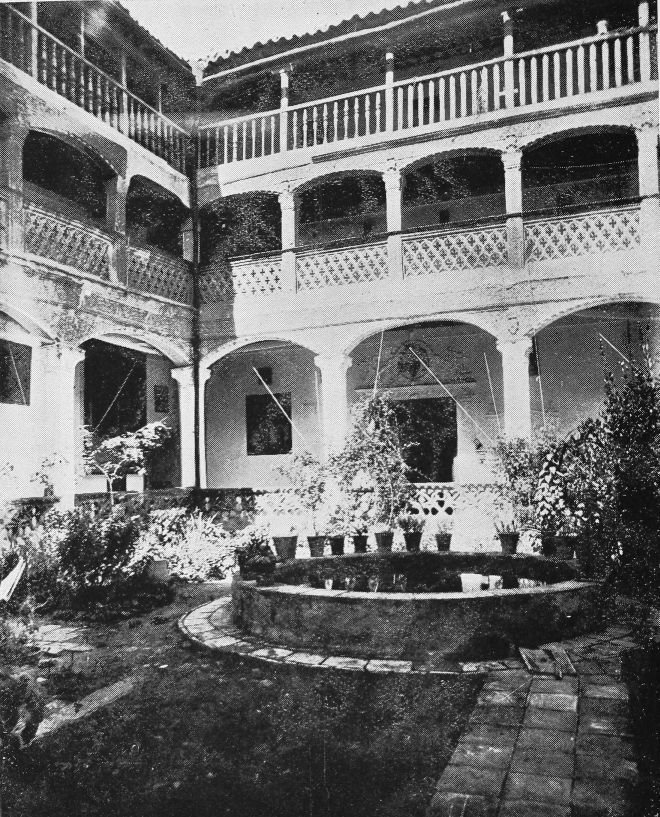
DETAILS OF THE CONVENT OF SAN JUAN DE LA PENITENCIA
Plate 397
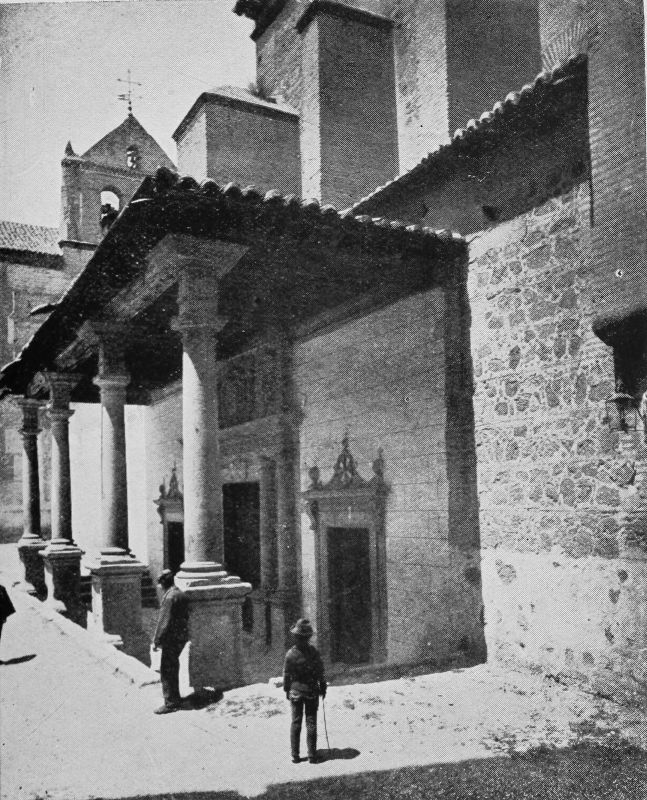
CONVENT OF SANTO DOMINGO
Plate 398
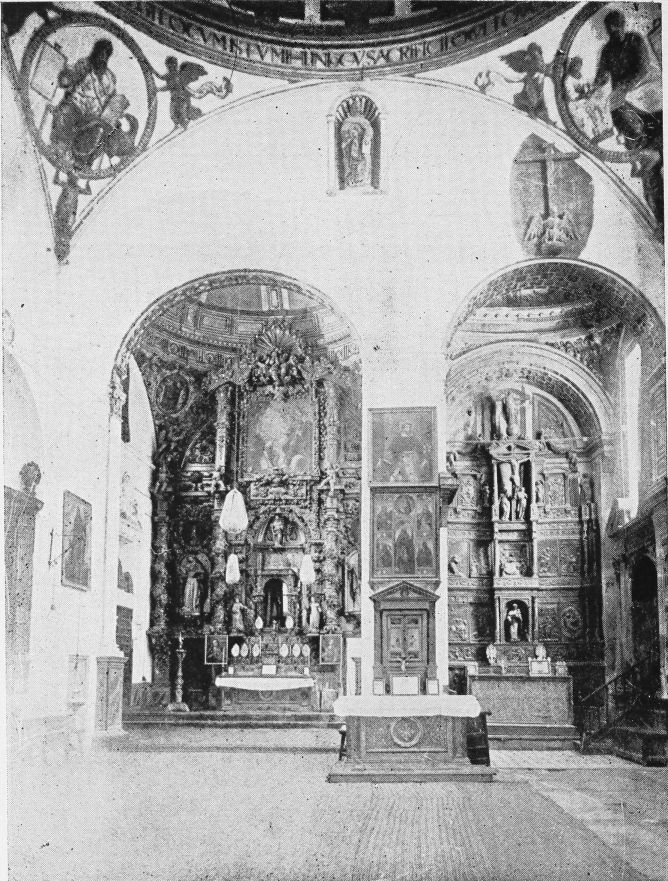
CONVENT OF SANTO DOMINGO
Plate 399
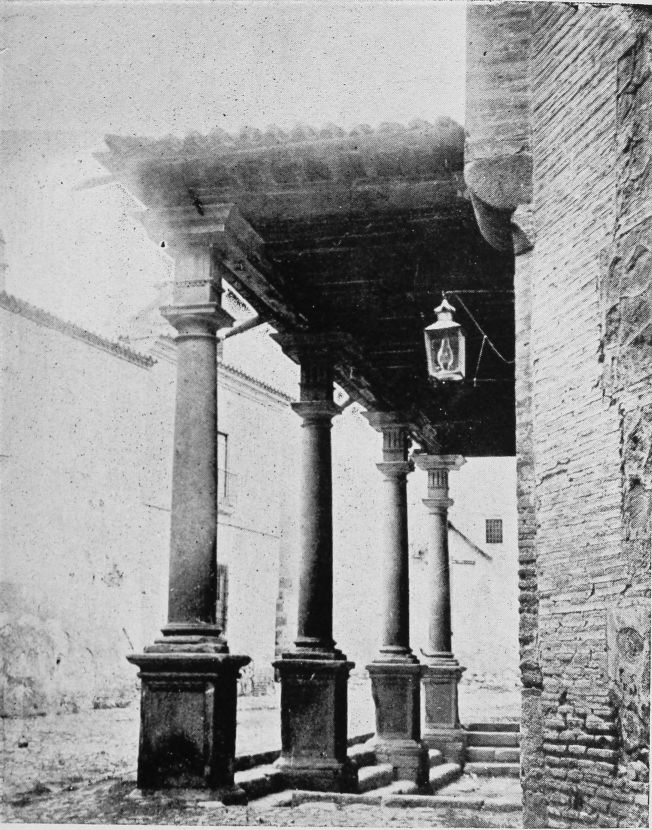
CONVENT OF SANTO DOMINGO
Plate 400
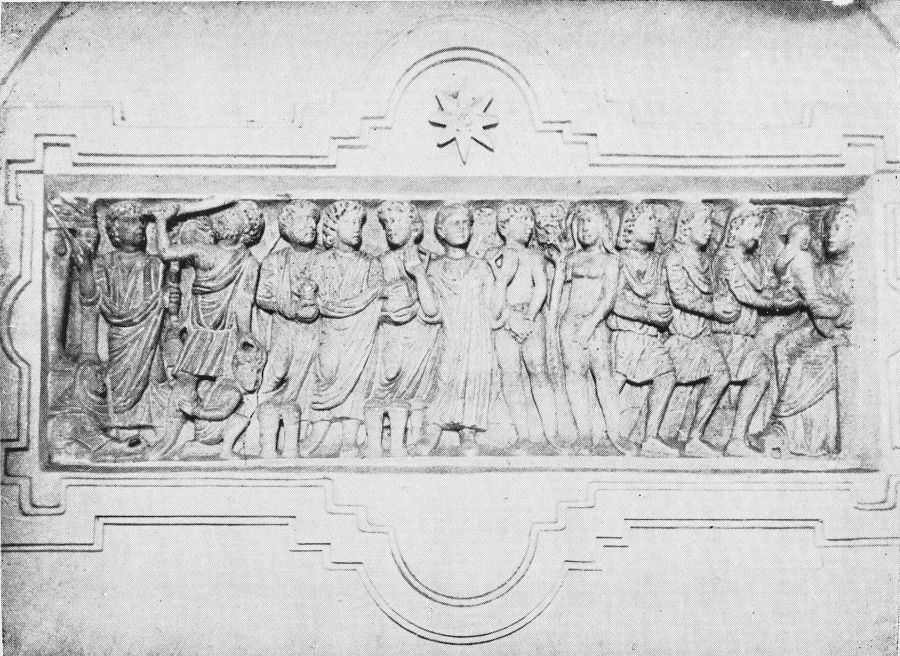
ANCIENT SEPULCHRE IN THE CONVENT OF SANTO DOMINGO
Plate 401
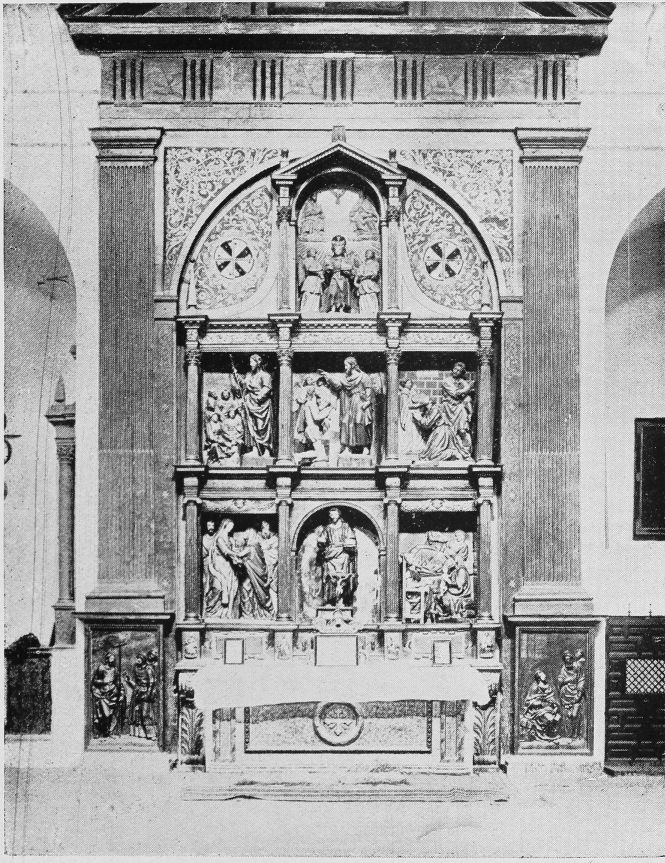
SANTO DOMINGO EL REAL, PRINCIPAL ALTAR-PIECE
Plate 402
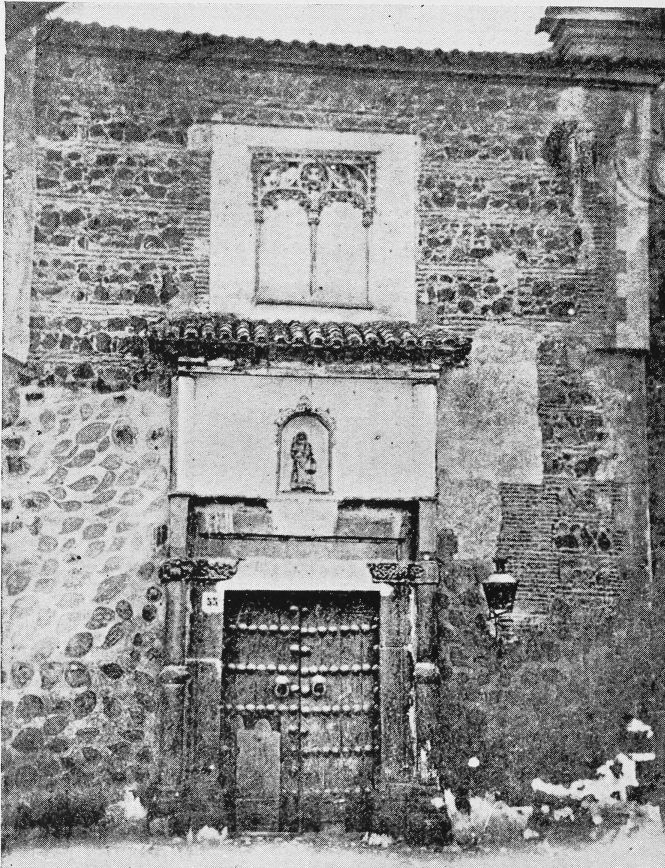
DOORWAY OF THE CONVENT OF SAN ANTONIO
Plate 403
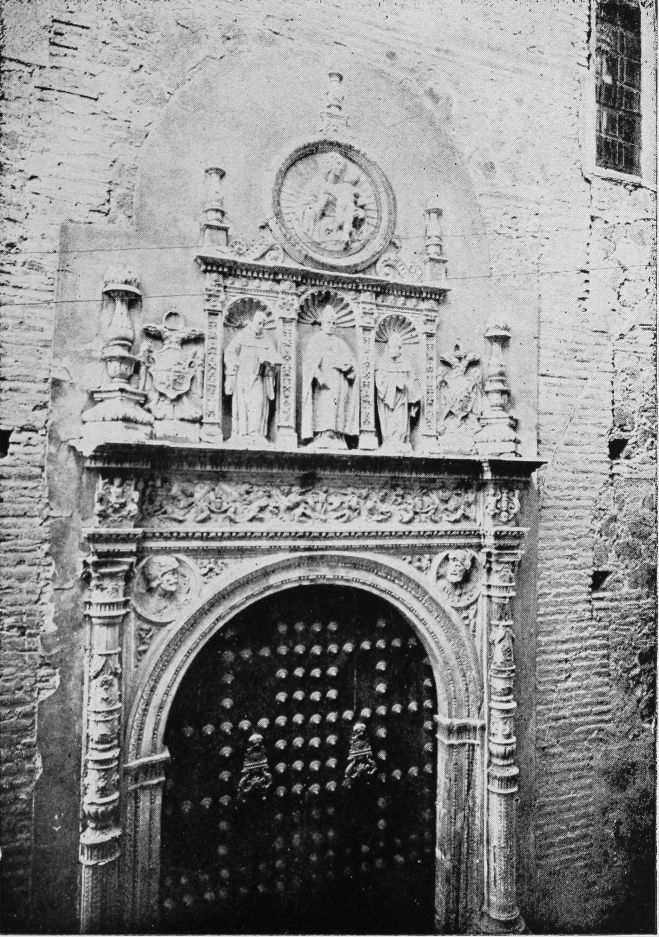
PORCH OF THE CHURCH AND CONVENT OF SAN CLEMENTE
Plate 404
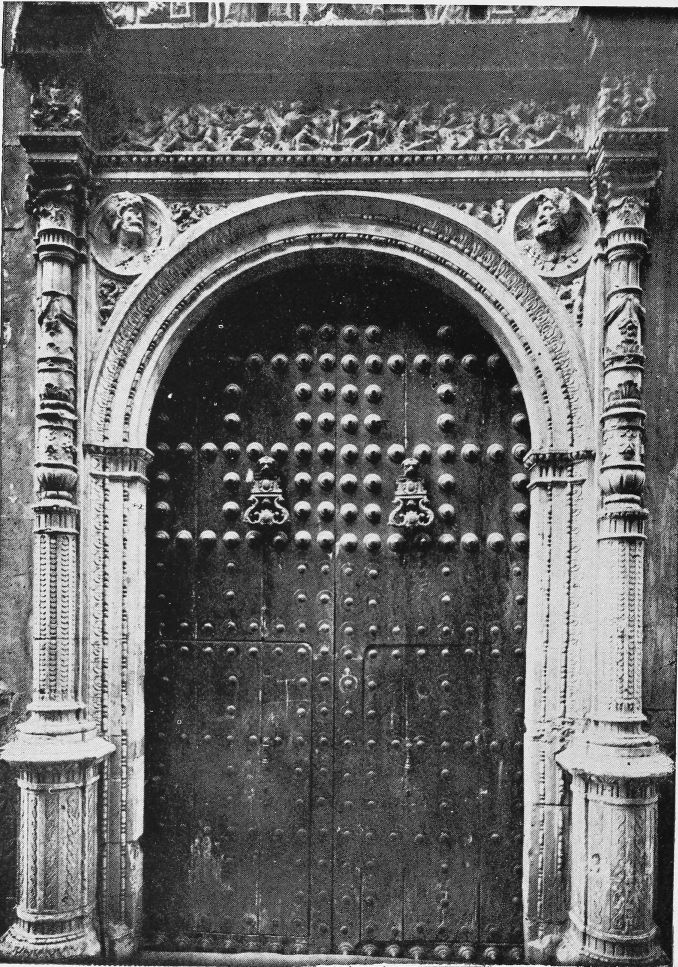
PORCH OF THE CHURCH AND CONVENT OF SAN CLEMENTE
Plate 405
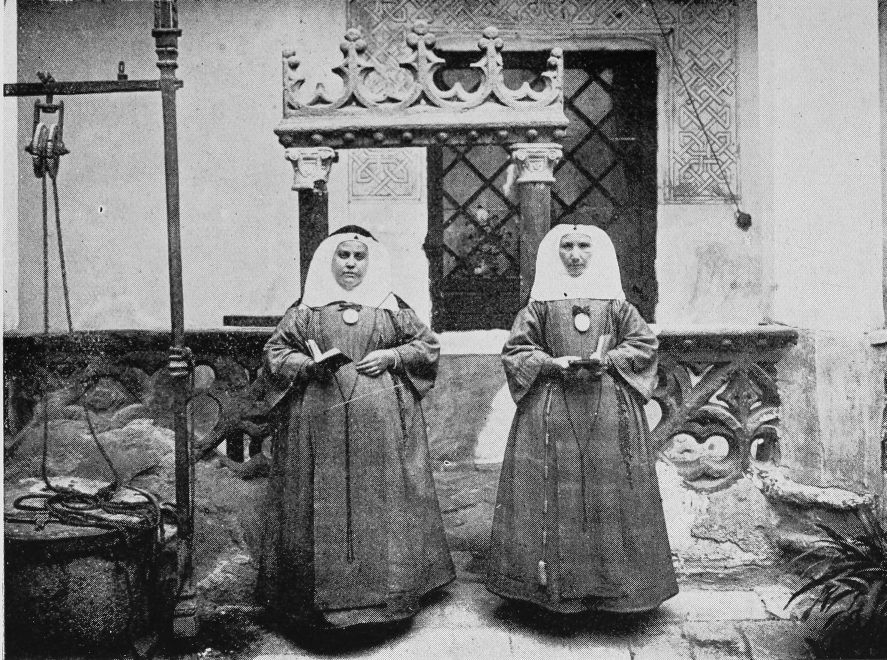
DETAIL OF THE INTERIOR OF THE CONVENT OF SAN CLEMENTE
Plate 406
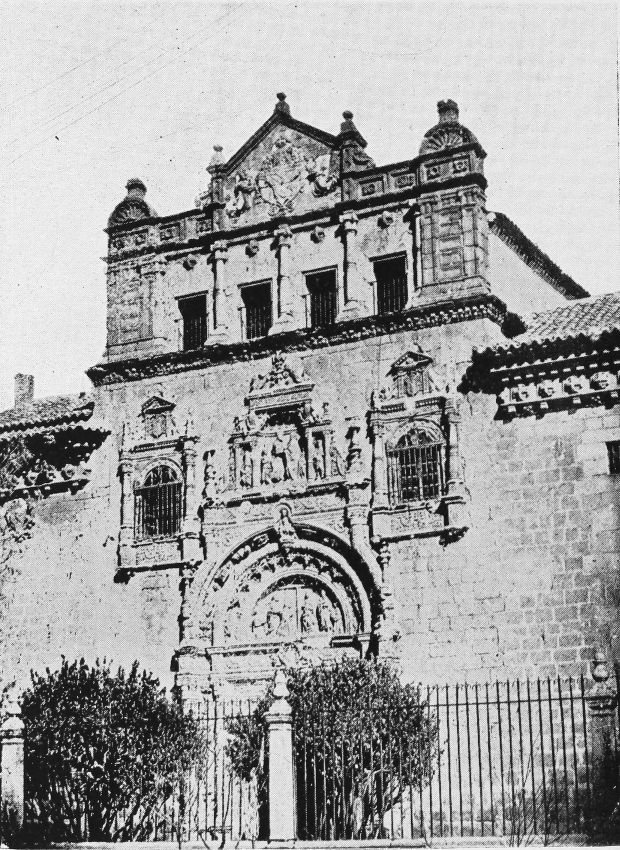
PORTAL OF SANTA CRUZ
Plate 407
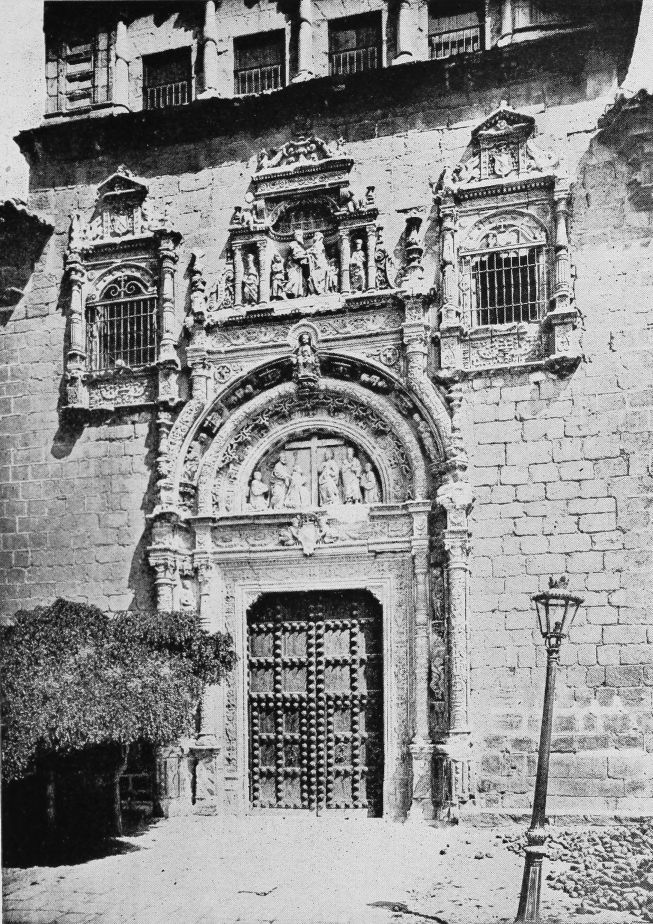
PORTAL OF SANTA CRUZ
Plate 408
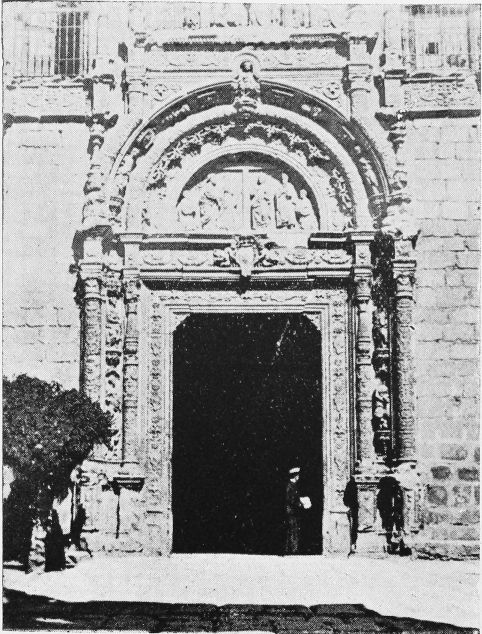
PORCH OF SANTA CRUZ
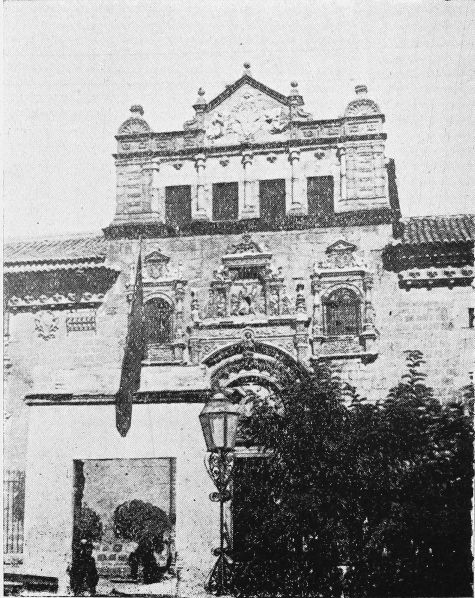
THE HOSPITAL OF SANTA CRUZ
Plate 409
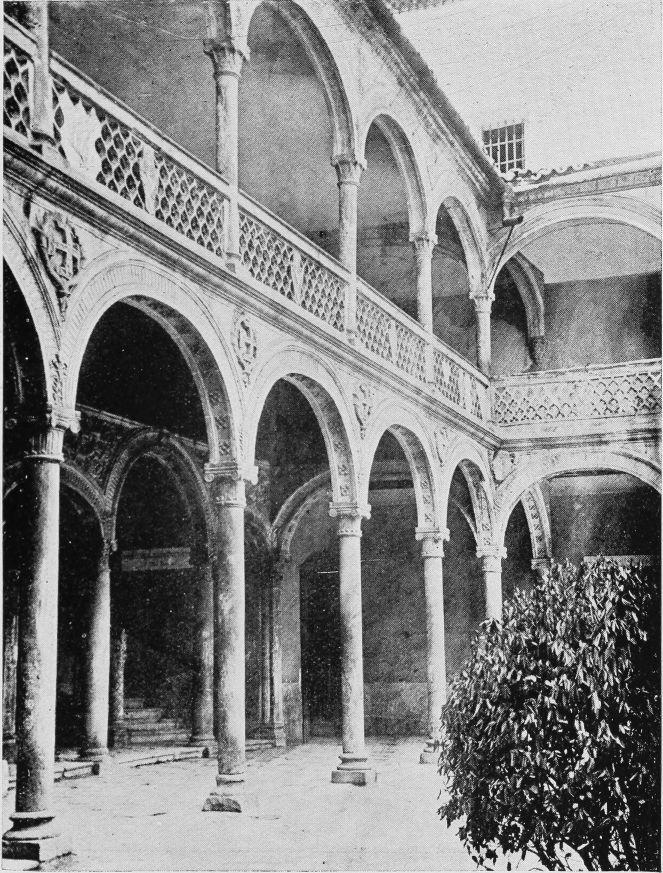
COURT OF SANTA CRUZ
Plate 410
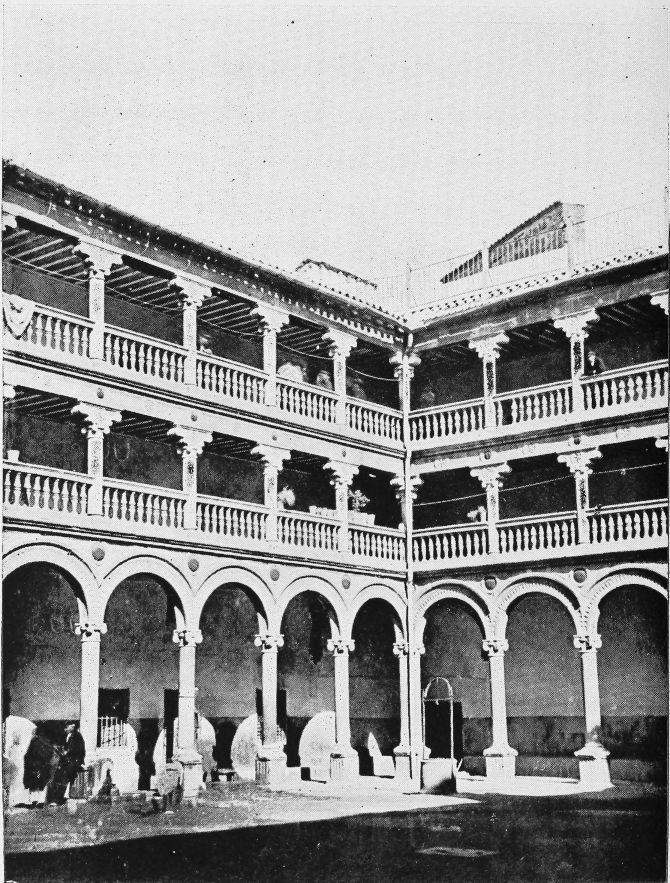
COURTYARD OF THE HOSPITAL
Plate 411
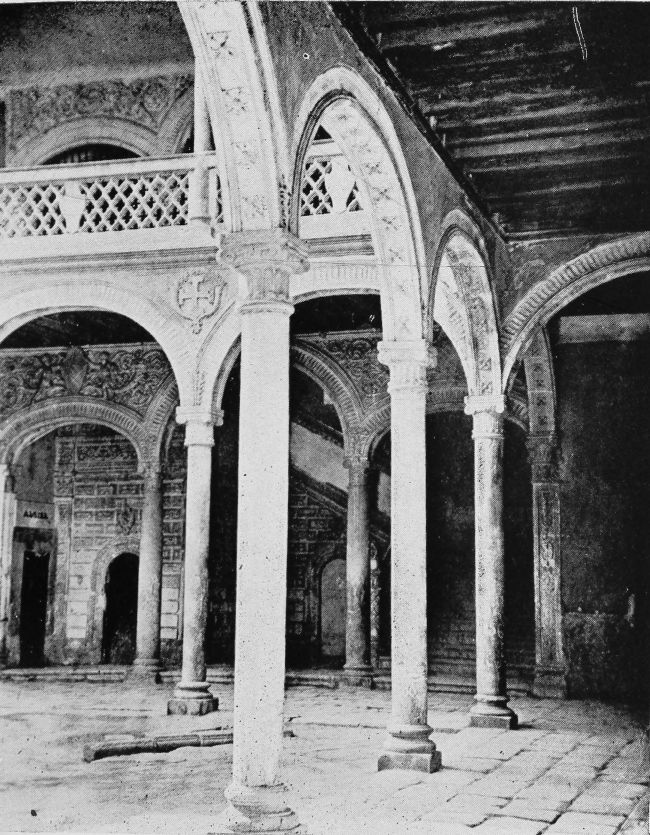
COURT OF SANTA CRUZ
Plate 412
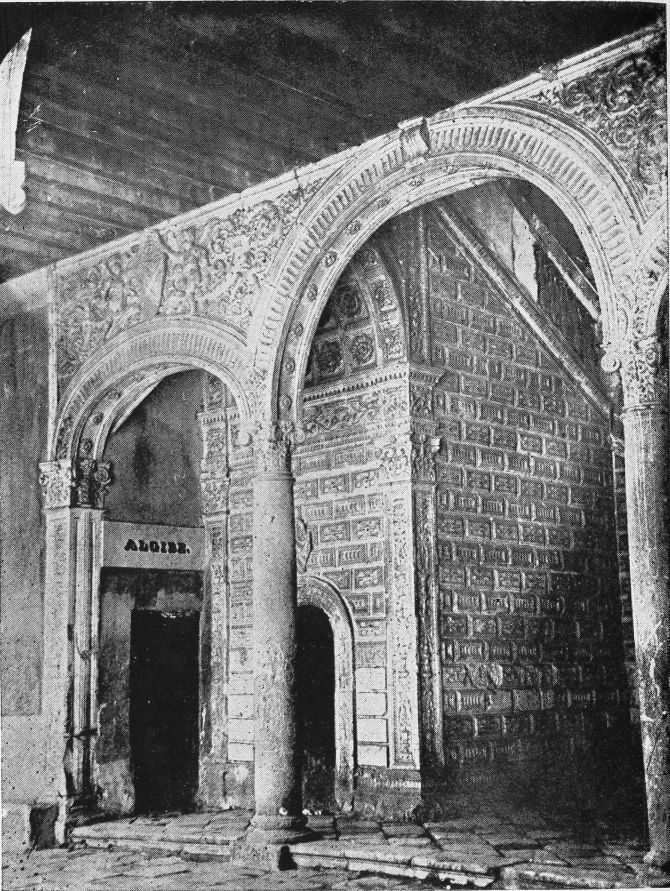
COURT OF SANTA CRUZ
Plate 413
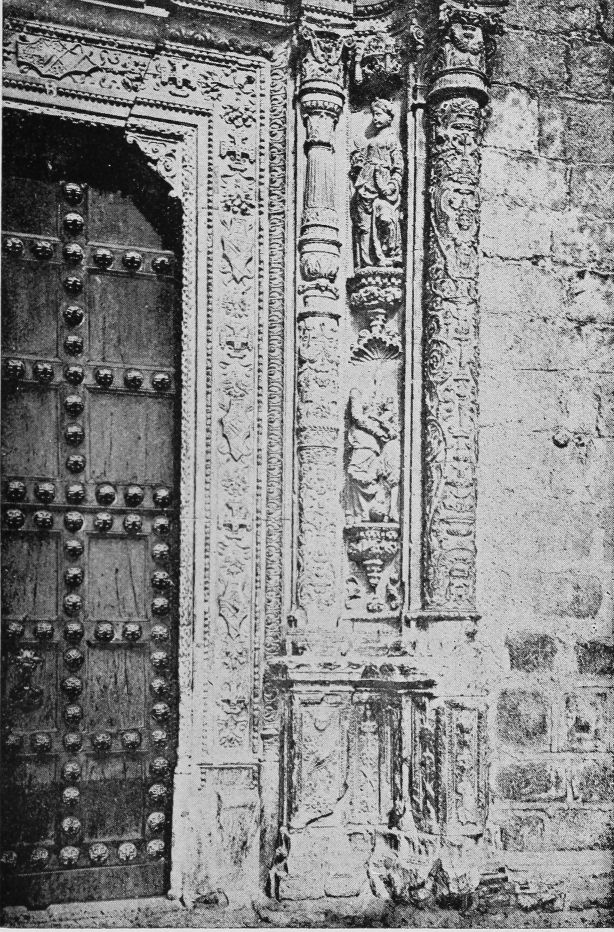
DETAIL OF THE PORTAL OF THE HOSPITAL OF SANTA CRUZ
Plate 414
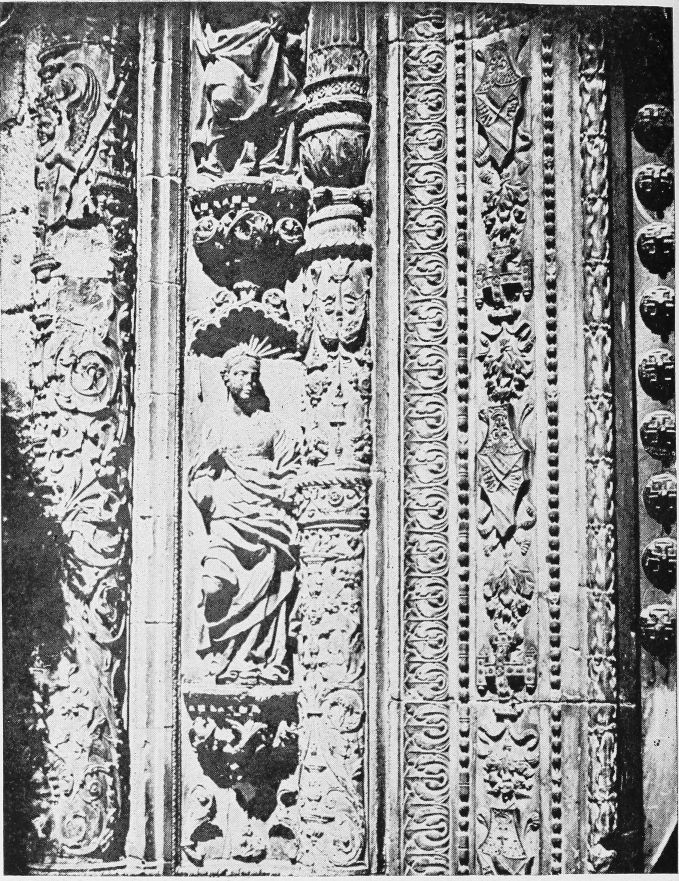
DETAILS OF SANTA CRUZ
Plate 415
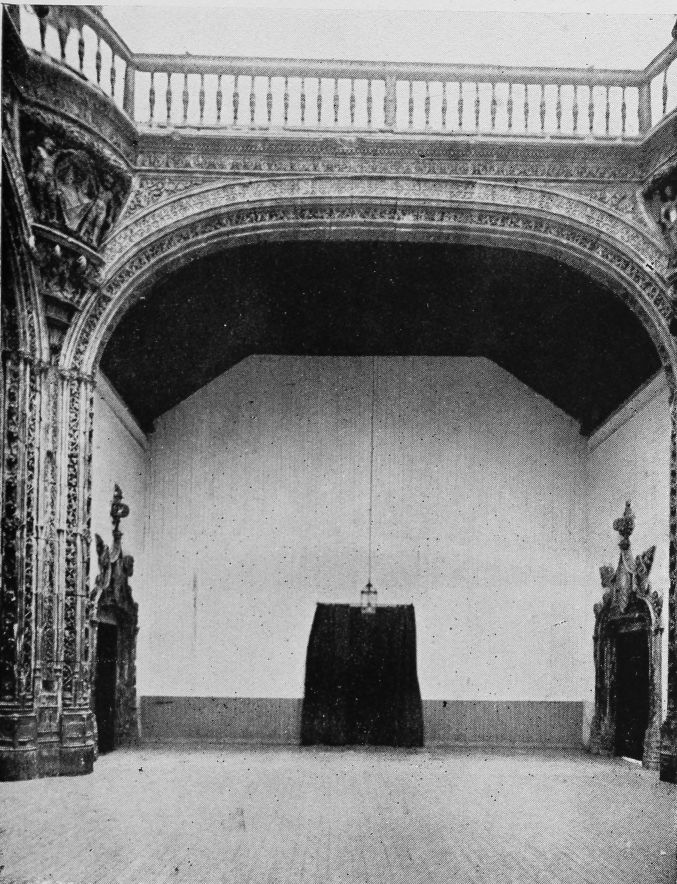
HOSPITAL OF SANTA CRUZ
Plate 416
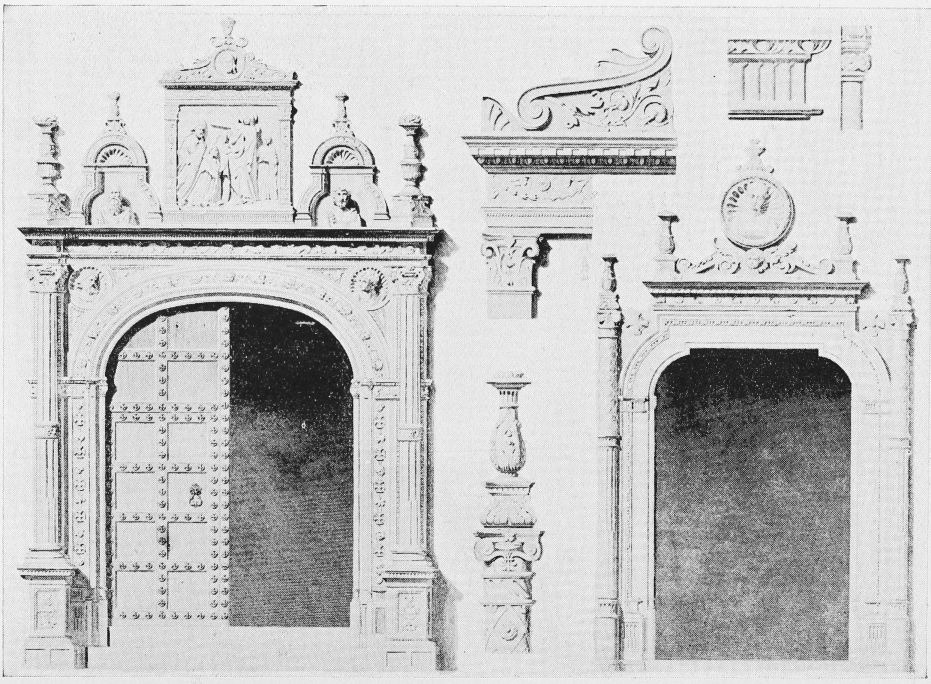
PORTALS IN THE VESTIBULE OF THE ANCIENT HOSPITAL OF SANTA CRUZ
Plate 417
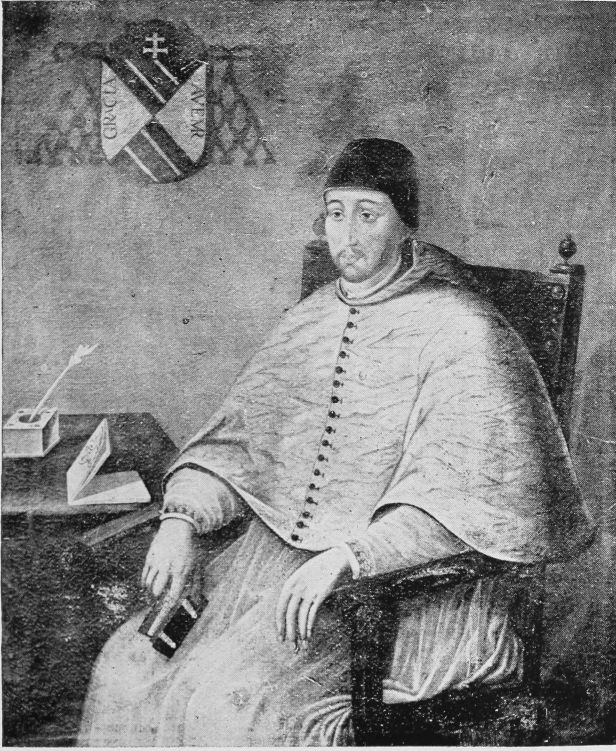
HOSPITAL OF SANTA CRUZ. PORTRAIT OF THE FOUNDER, CARDINAL MENDOZA
Plate 418
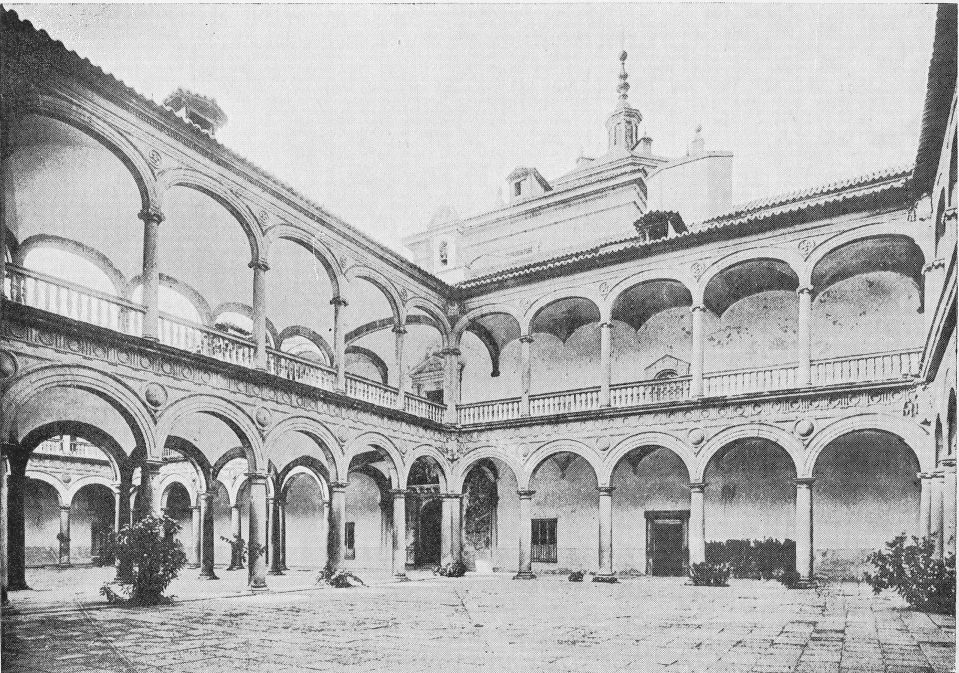
HOSPITAL DE AFUERA. THE COURT
Plate 419
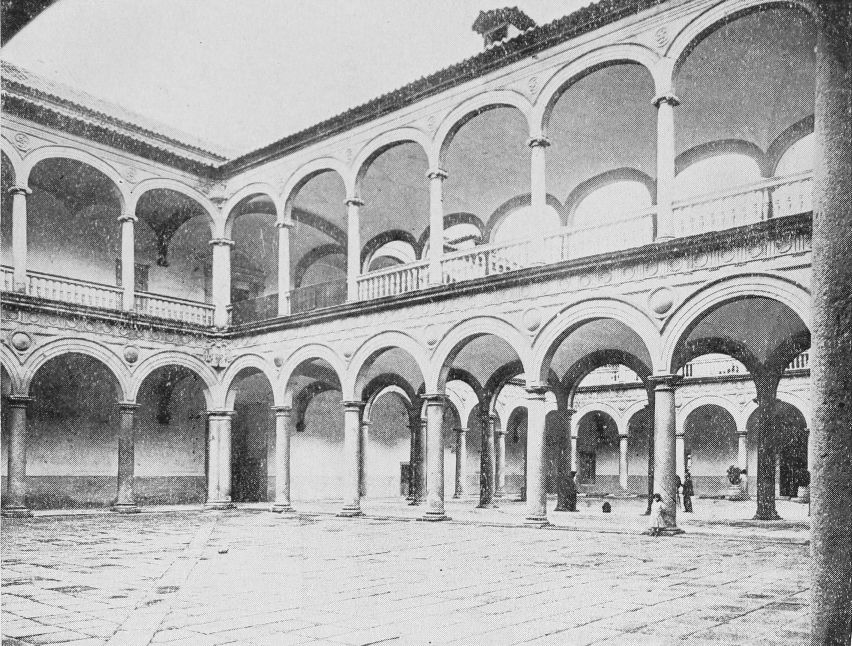
HOSPITAL DE AFUERA
Plate 420
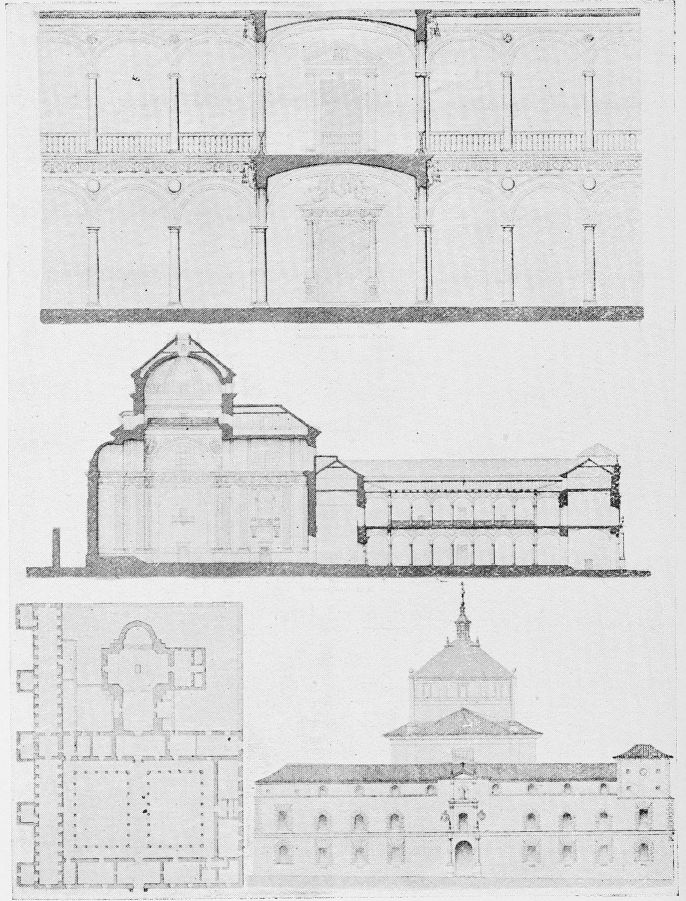
HOSPITAL OF ST. JOHN BAPTIST
Plate 421
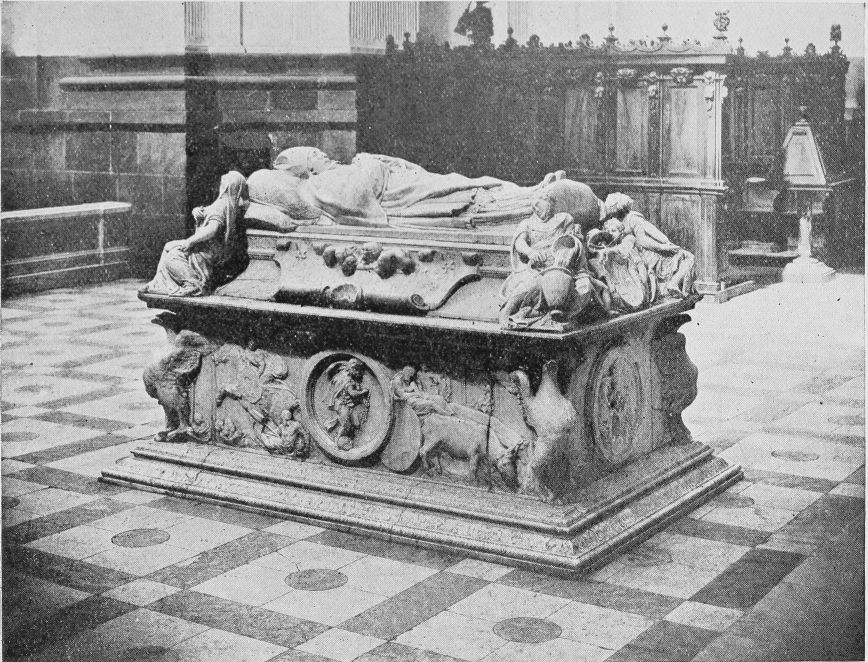
HOSPITAL DE AFUERA. SEPULCHRE OF CARDINAL TAVERA. 1557. ALONZO
BERRUGUETE
Plate 422
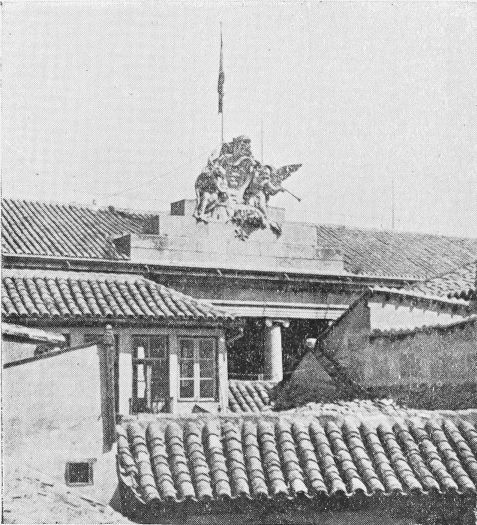
THE UNIVERSITY
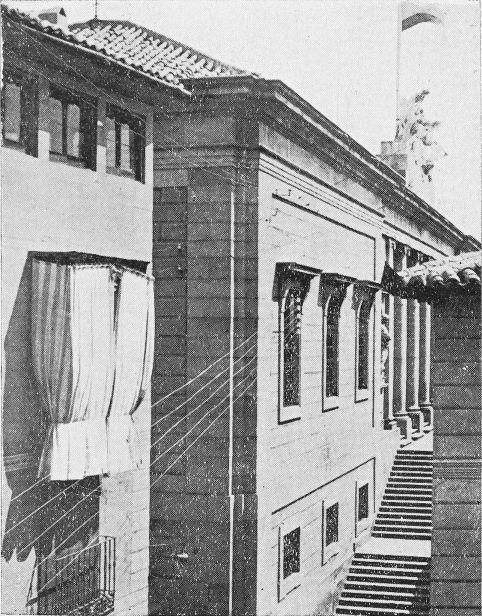
THE UNIVERSITY
Plate 423
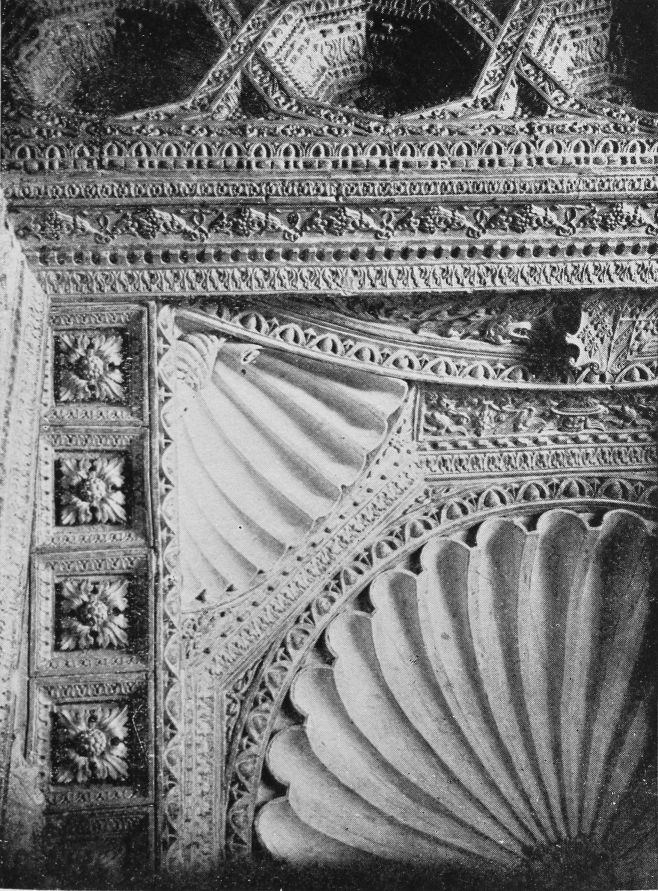
DETAILS OF THE HOUSE OF MUNÁRRIZ
Plate 424
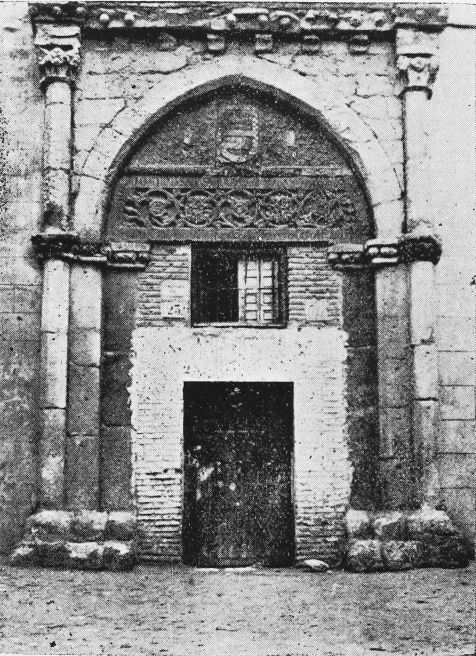
GATE OF AL MARDÓM
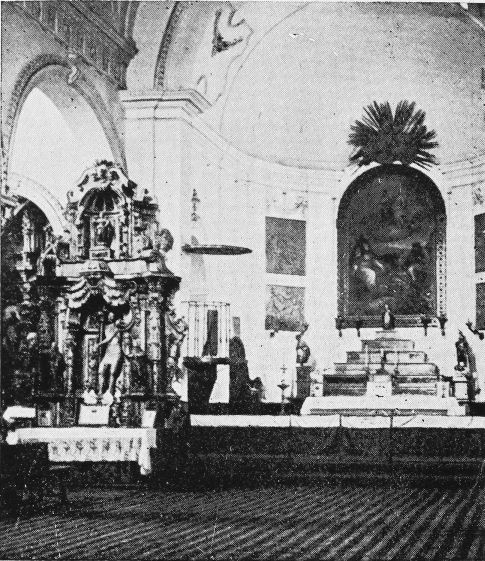
ALTAR OF THE CHURCH OF SAN JUSTO
Plate 425
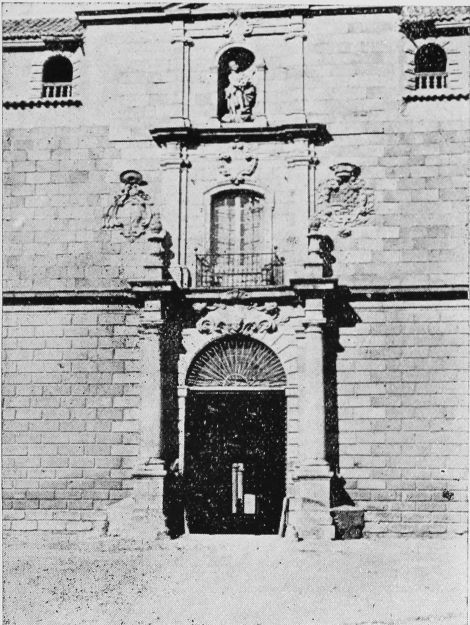
PORTAL OF THE ARCHBISHOP’S PALACE
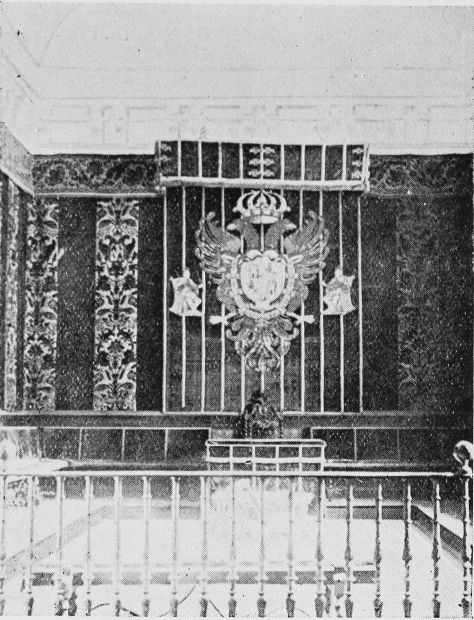
IN THE TOWN HALL
Plate 426
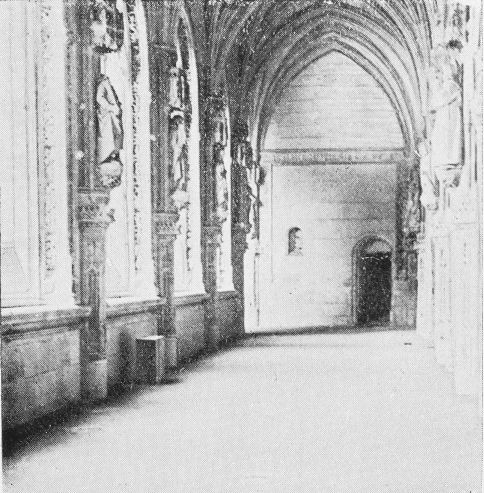
CLOISTERS OF SAN JUAN DE LOS REYES
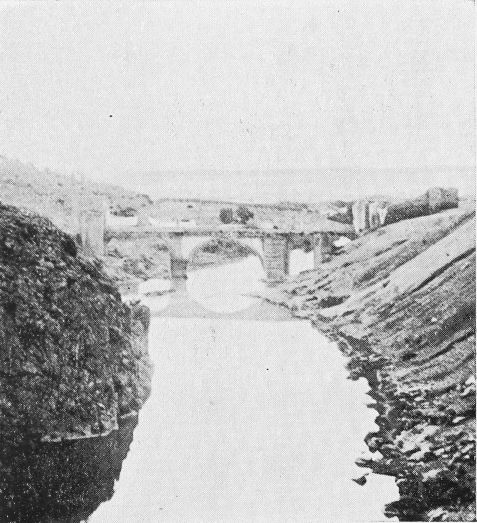
VIEW OF ST. MARTIN’S BRIDGE, LOOKING DOWN THE RIVER
Plate 427
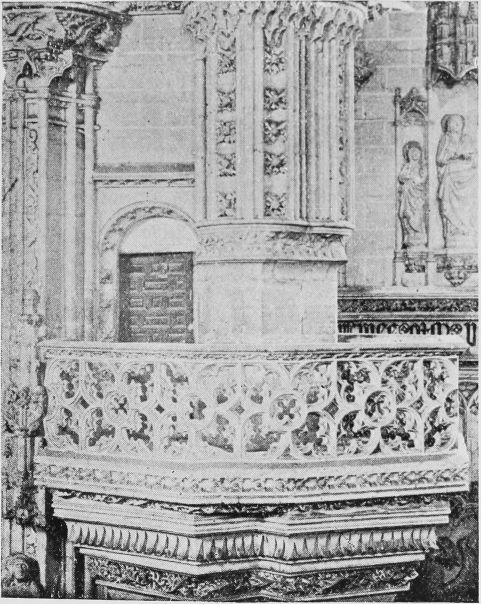
GALLERY OF SAN JUAN DE LOS REYES
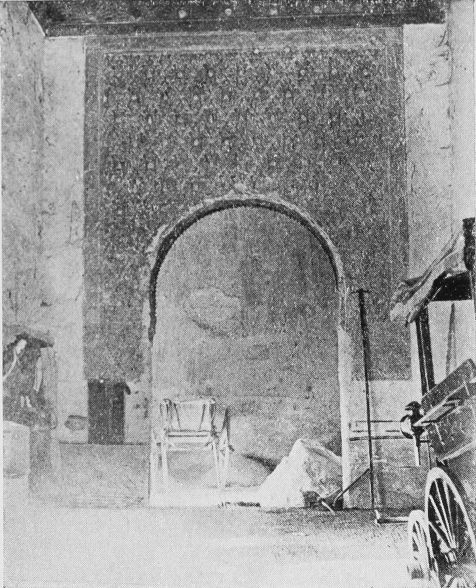
A MOORISH WORKSHOP
Plate 428
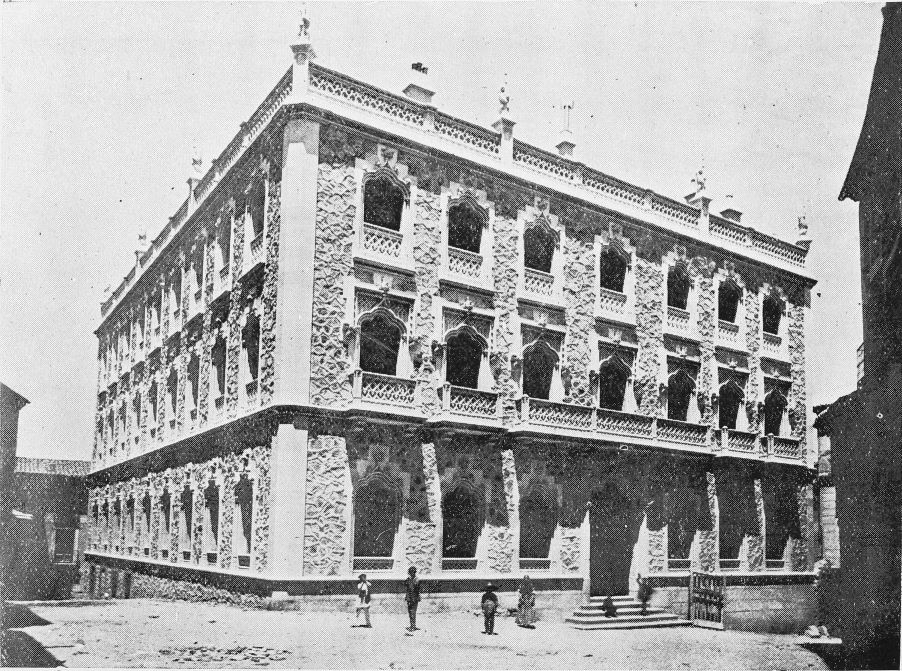
HOTEL CASTILLA
Plate 429
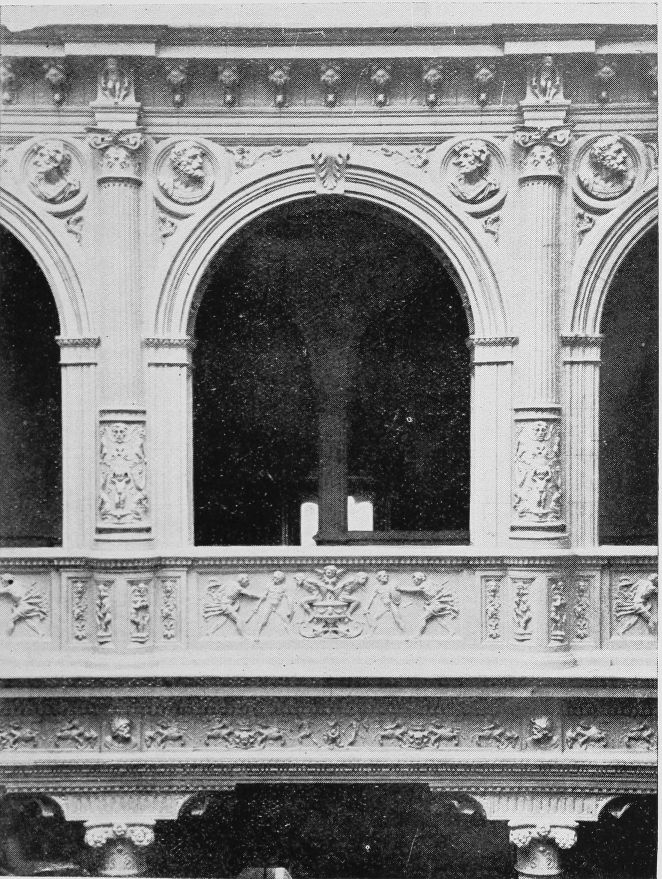
DETAIL OF THE COURTYARD OF THE HOTEL CASTILLA
Plate 430
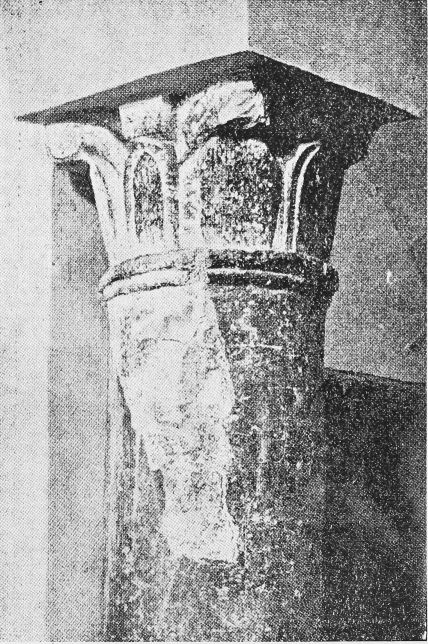
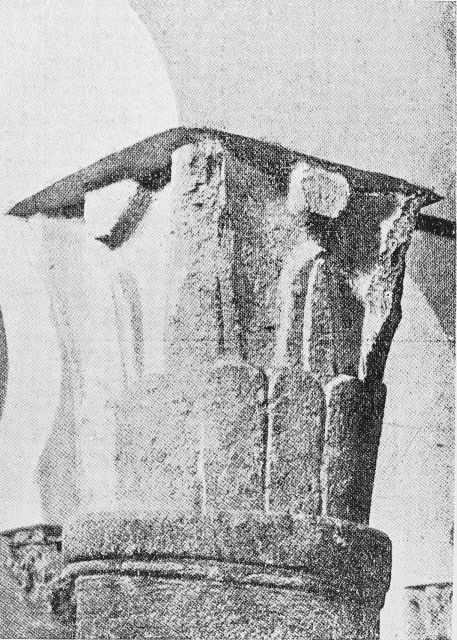
VISIGOTH CAPITALS IN THE CHURCH OF SAN SEBASTIAN
Plate 431
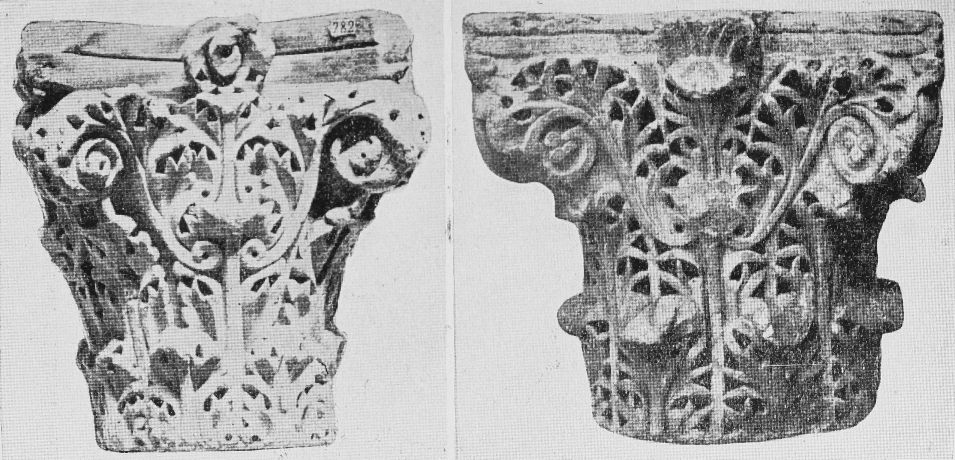
NATIONAL ARCHÆOLOGICAL MUSEUM
|
CAPITAL, FOURTH CENTURY
AFTER THE HEGIRA |
|
CAPITAL OF SANTIAGO DE LOS CABALLEROS
NEAR THE ALCAZAR.
FOURTH CENTURY
AFTER THE HEGIRA |
Plate 432
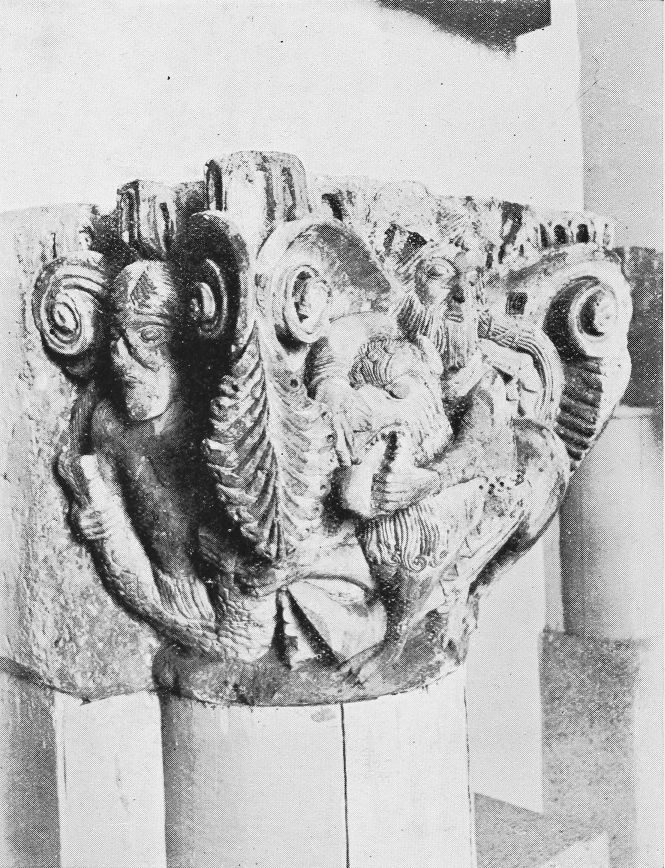
CAPITAL IN THE ARCHÆOLOGICAL MUSEUM
Plate 433
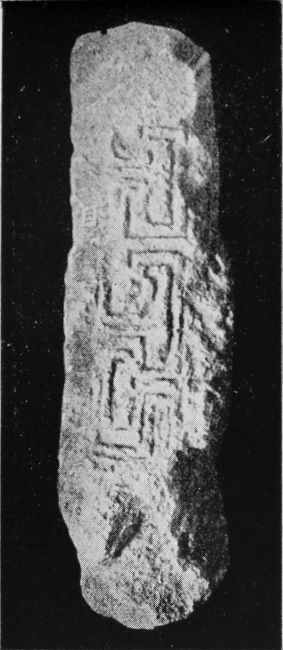
FRAGMENT OF DADO FOUND NEAR THE BASILICA OF SANTA LEOCADIA
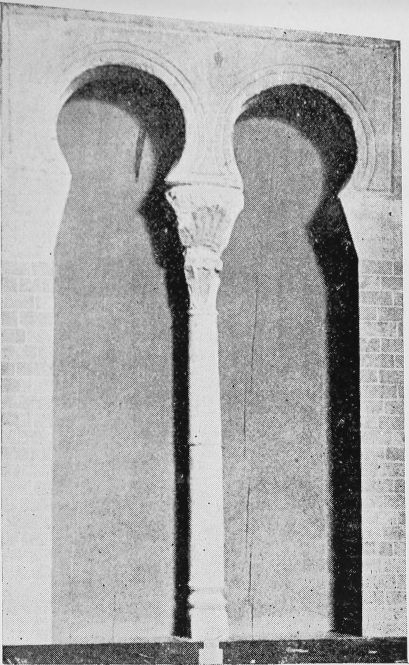
WINDOW OF SAN GINÉS
NATIONAL ARCHÆOLOGICAL MUSEUM
Plate 434
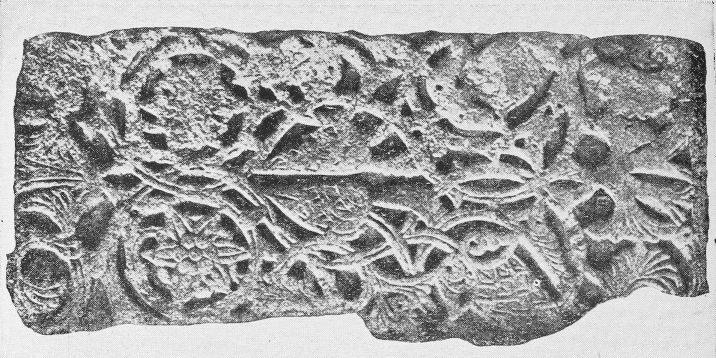
NATIONAL ARCHÆOLOGICAL MUSEUM. DECORATIVE TABLE IN WHITE MARBLE,
BELONGING TO THE ALJAMA MOSQUE OF TOLEDO
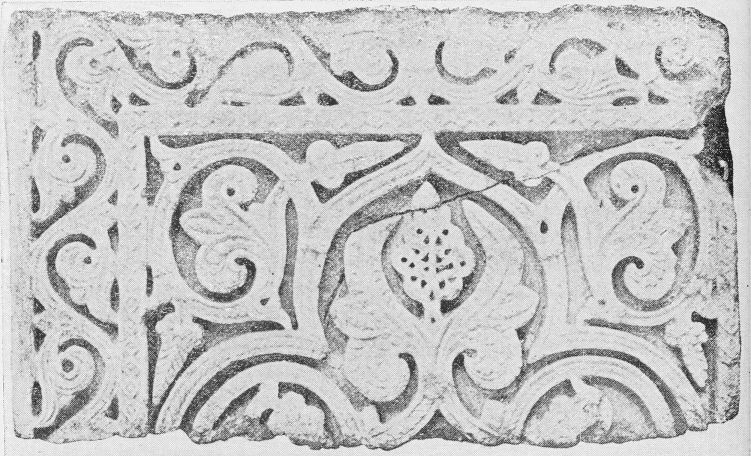
NATIONAL ARCHÆOLOGICAL MUSEUM. DECORATIVE FRAGMENT FOUND AT THE
“MIRADERO.” CARVED IN WHITE MARBLE
Plate 435
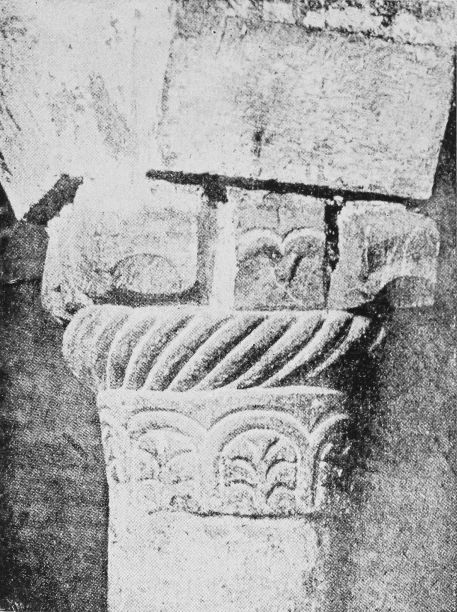
CAPITAL IN THE SOUTH-WEST ANGLE, BELONGING TO THE OLD MOSQUE, NOW THE
HERMITAGE OF SANTO CRISTO DE LA LUZ
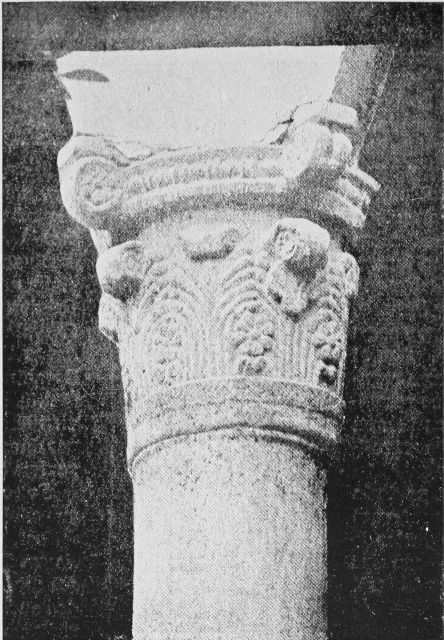
THE FIFTH OF THE VISIGOTH CAPITALS OF THE HOSPITAL OF SANTA CRUZ
Plate 436
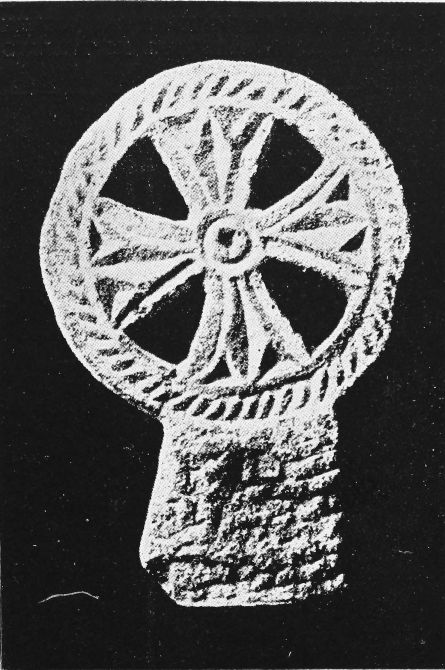
NATIONAL ARCHÆOLOGICAL MUSEUM. SKY-LIGHT OR ORNAMENT FOUND AT TOLEDO
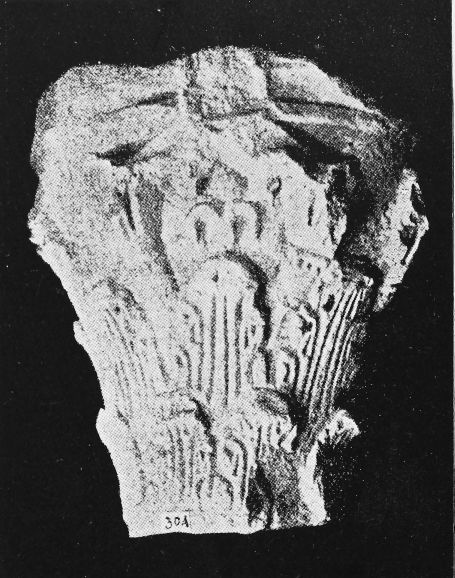
VISIGOTH CAPITAL IN THE PROVINCIAL MUSEUM
Plate 437
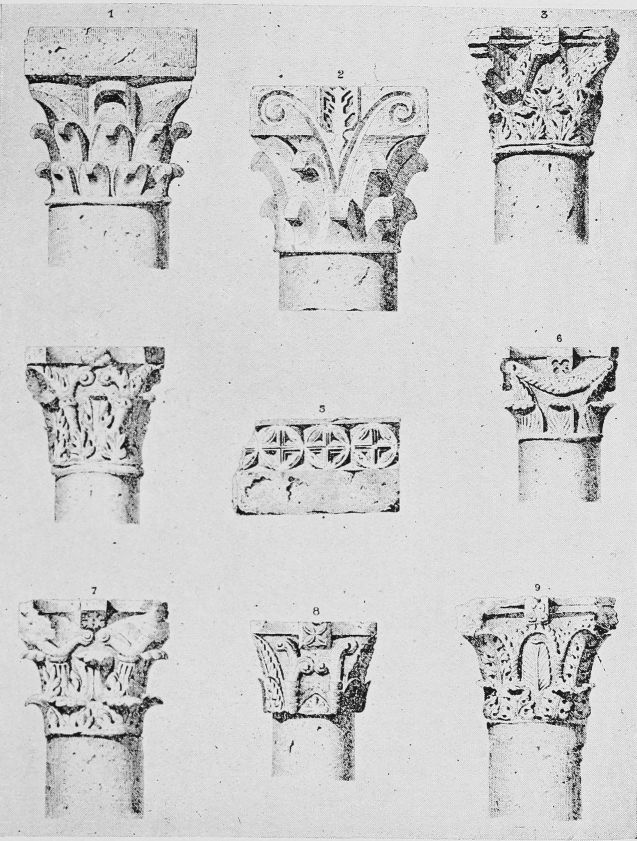
ARCHITECTURAL FRAGMENTS OF THE VISIGOTH PERIOD IN THE PARISH CHURCH OF
SAN ROMÁN
Plate 438
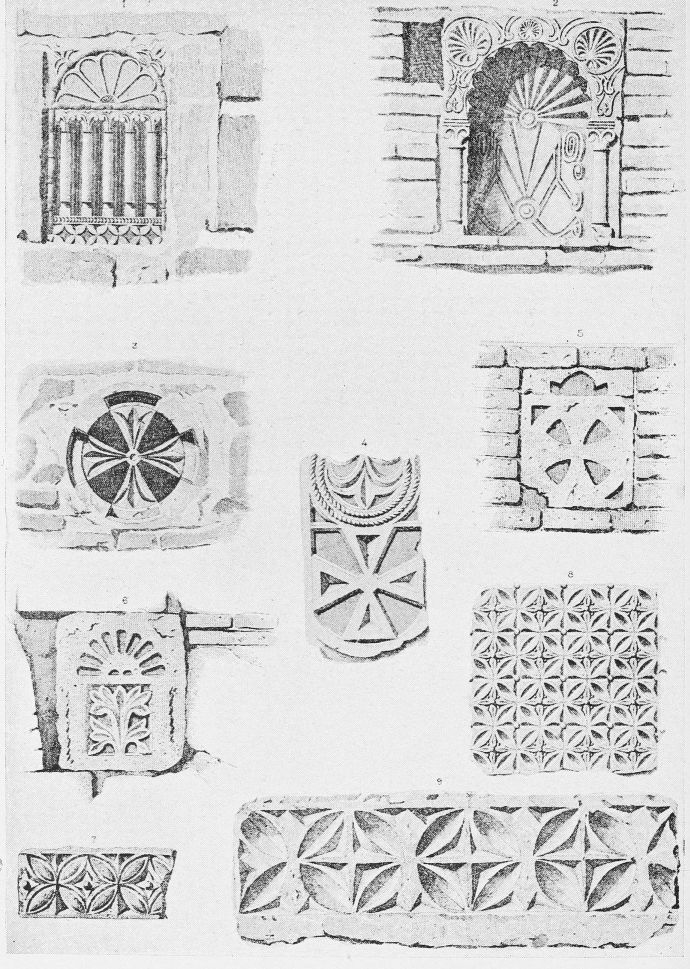
ARCHITECTURAL PIECES OF THE VISIGOTH PERIOD EXISTING IN THE CITY
Plate 439
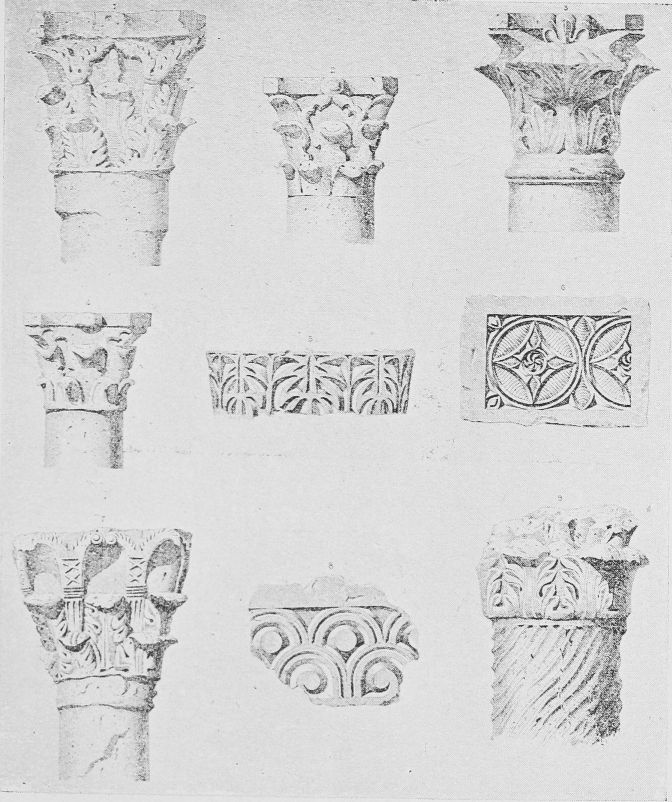
ARCHITECTURAL FRAGMENTS OF THE VISIGOTH PERIOD
Plate 440
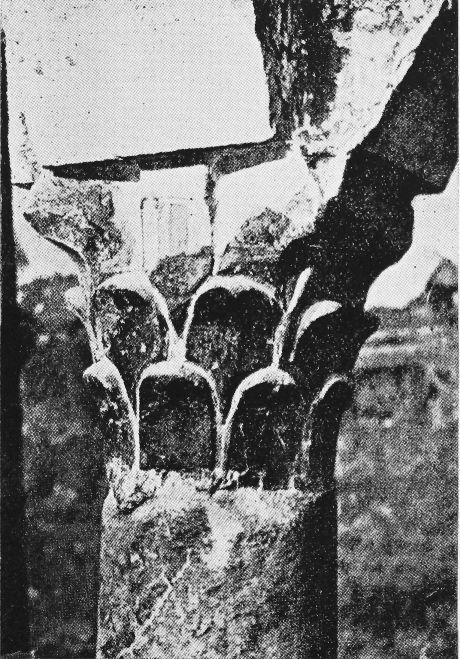
CAPITAL OF THE SOUTH-EAST ANGLE BELONGING TO THE ANCIENT MOSQUE, NOW THE
HERMITAGE OF SANTO CRISTO DE LA LUZ
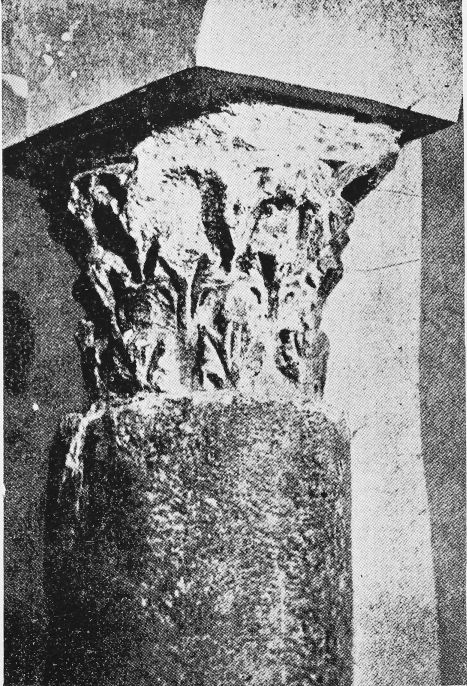
VISIGOTH CAPITAL OF THE OLD PARISH CHURCH OF SAN SEBASTIAN
Plate 441
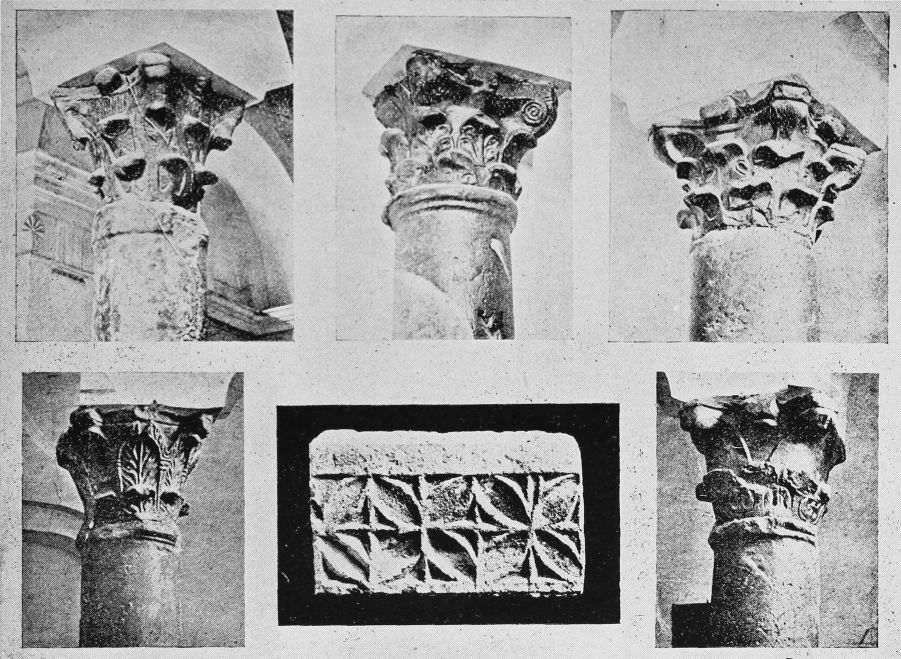
NATIONAL ARCHÆOLOGICAL MUSEUM. VISIGOTH CAPITALS OF THE CHURCH OF SANTA
EULALIA. FRAGMENT OF THE DADO OF THE BASILICA OF SANTO LEOCADIA
Plate 442
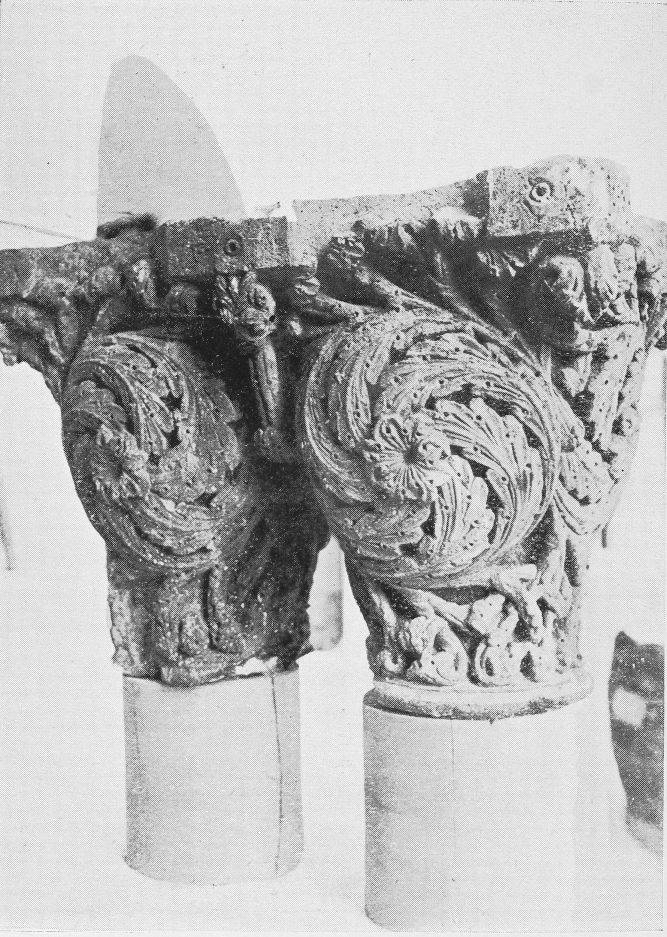
CAPITALS IN THE ARCHÆOLOGICAL MUSEUM
Plate 443
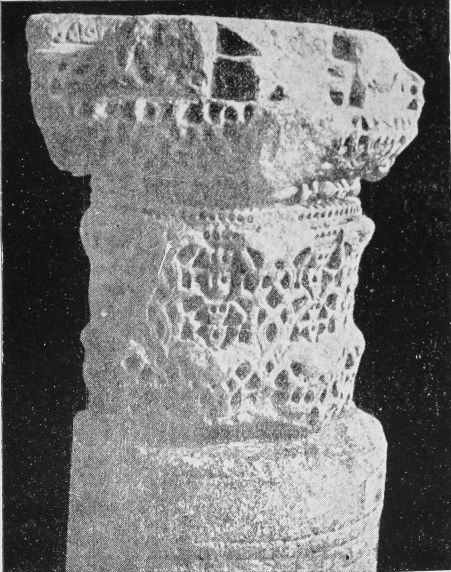
PROVINCIAL MUSEUM. CAPITAL OF THE FOURTH CENTURY AFTER THE HEGIRA
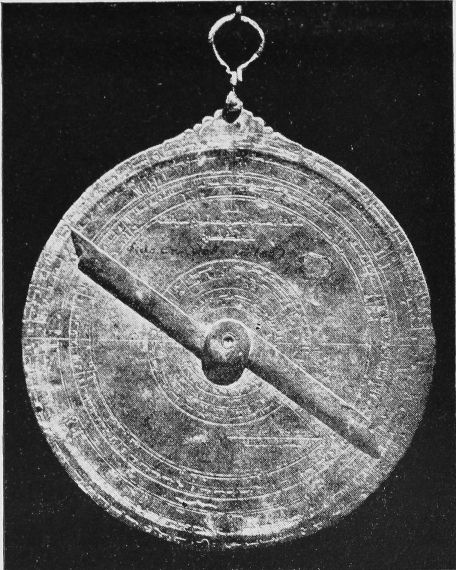
NATIONAL ARCHÆOLOGICAL MUSEUM. ARAB ASTROLABE MADE AT TOLEDO IN THE YEAR
459 AFTER THE HEGIRA (A.D. 1067)
Plate 444
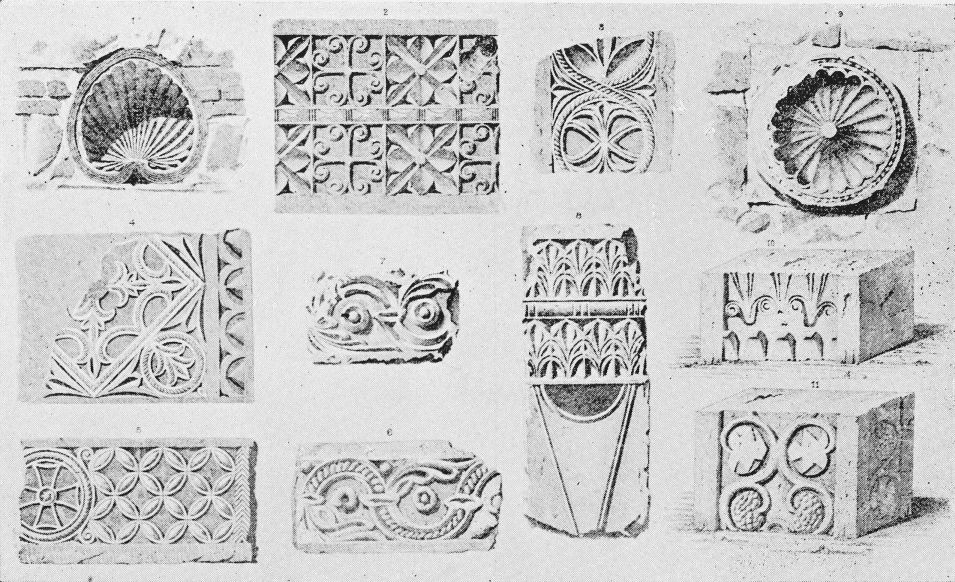
ARCHITECTURAL FRAGMENTS OF THE VISIGOTH PERIOD
Plate 445
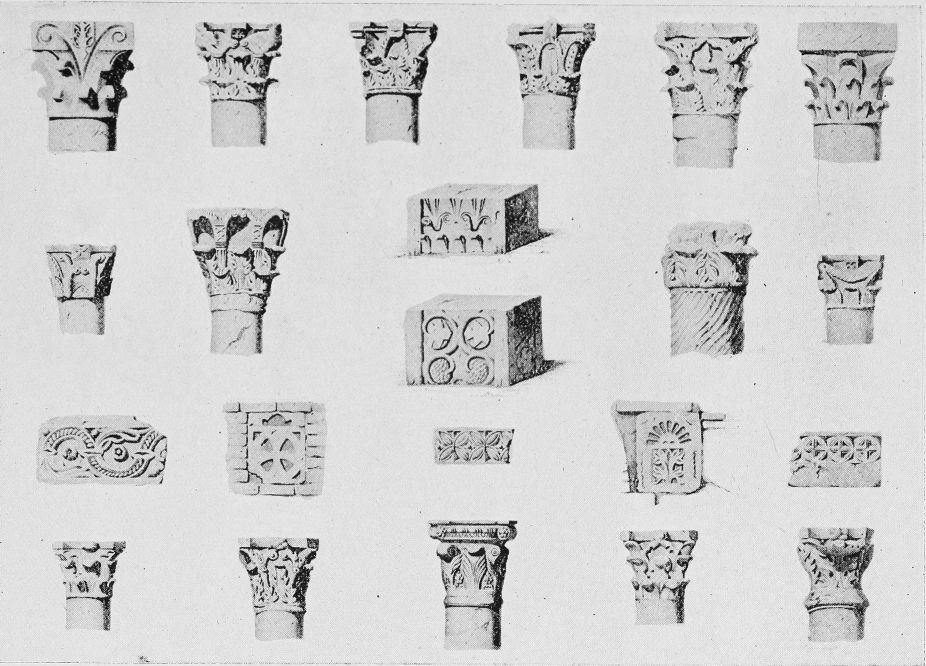
ARCHITECTURAL FRAGMENTS ANTERIOR TO THE MAHOMETAN IRRUPTION, No. 1
Plate 446
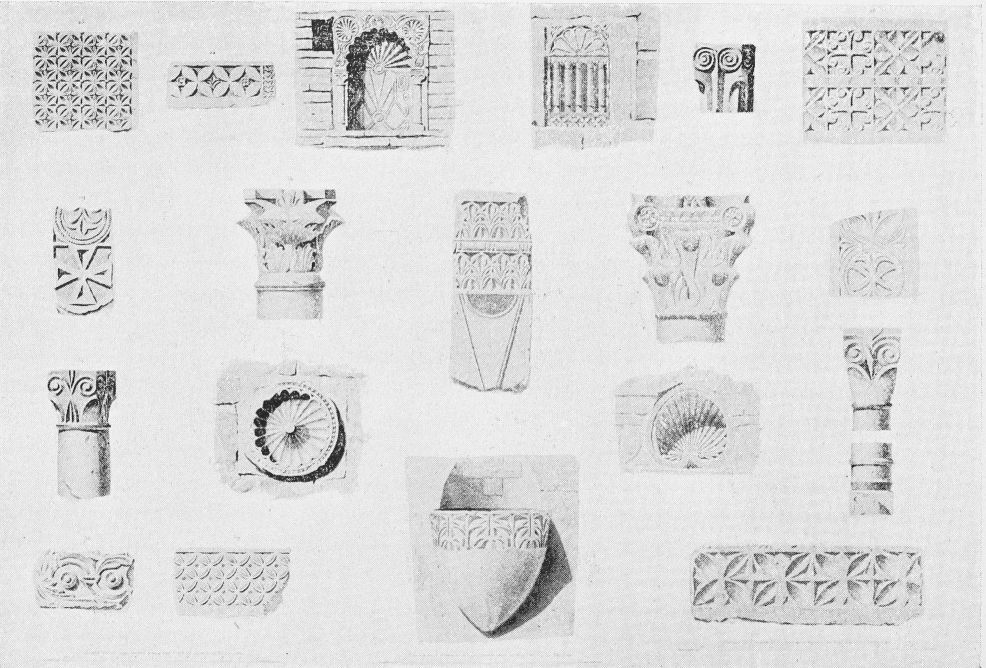
ARCHITECTURAL PARTS AND DECORATIVE REMAINS ANTERIOR TO THE MAHOMETAN
IRRUPTION, No. 2
Plate 447
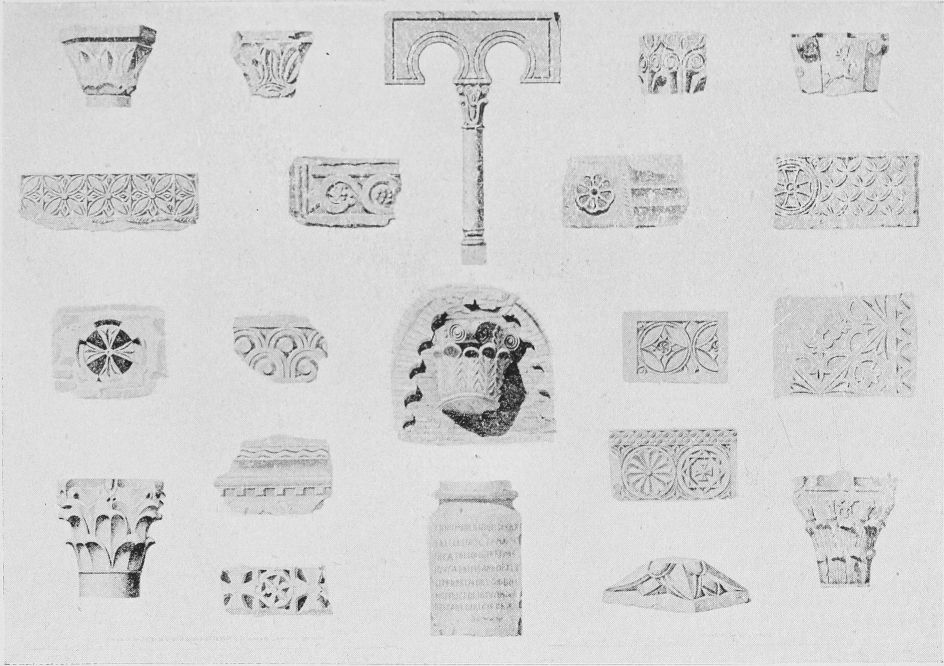
ARCHITECTURAL PARTS AND DECORATIVE FRAGMENTS ANTERIOR TO THE MAHOMETAN
IRRUPTION, No. 3
Plate 448
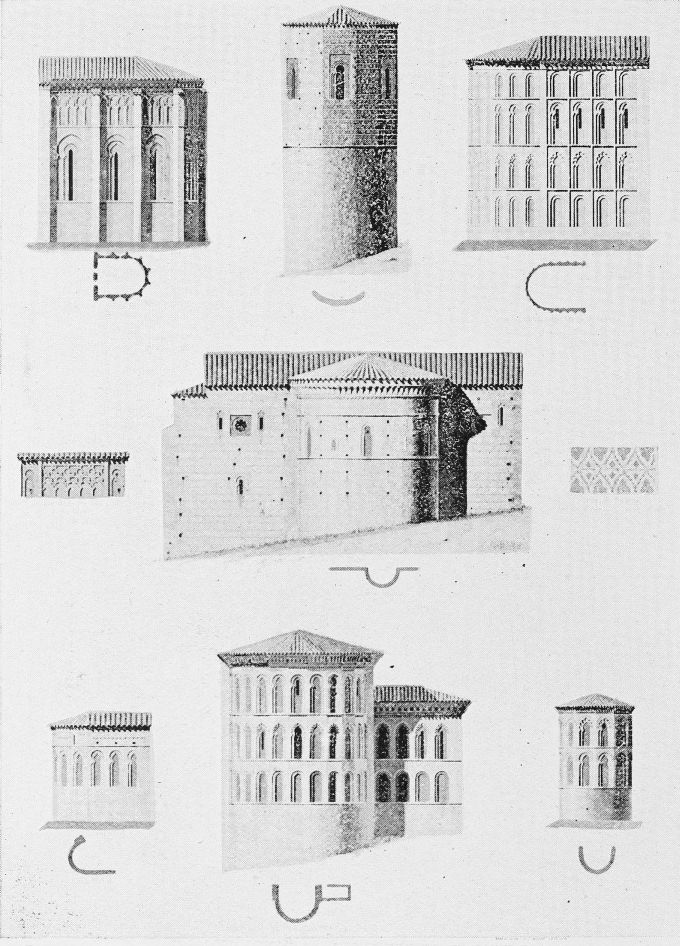
ARCHES OF VARIOUS CHURCHES OF THE FOURTEENTH AND FIFTEENTH CENTURIES
Plate 449
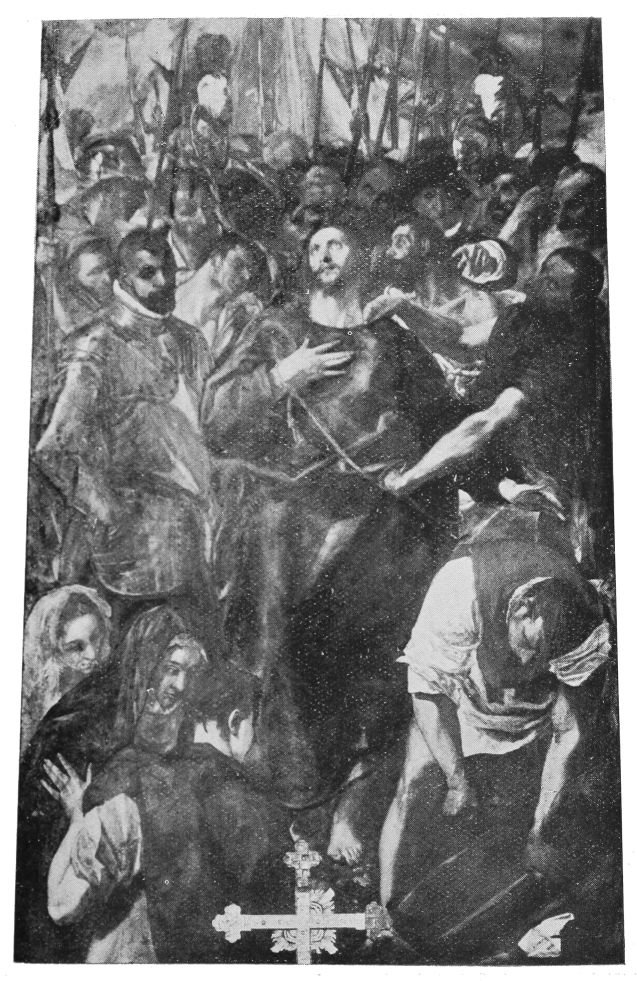
DENUDATION OF OUR LORD BEFORE THE CRUCIFIXION
EL GRECO
SACRISTY OF THE CATHEDRAL
Plate 450
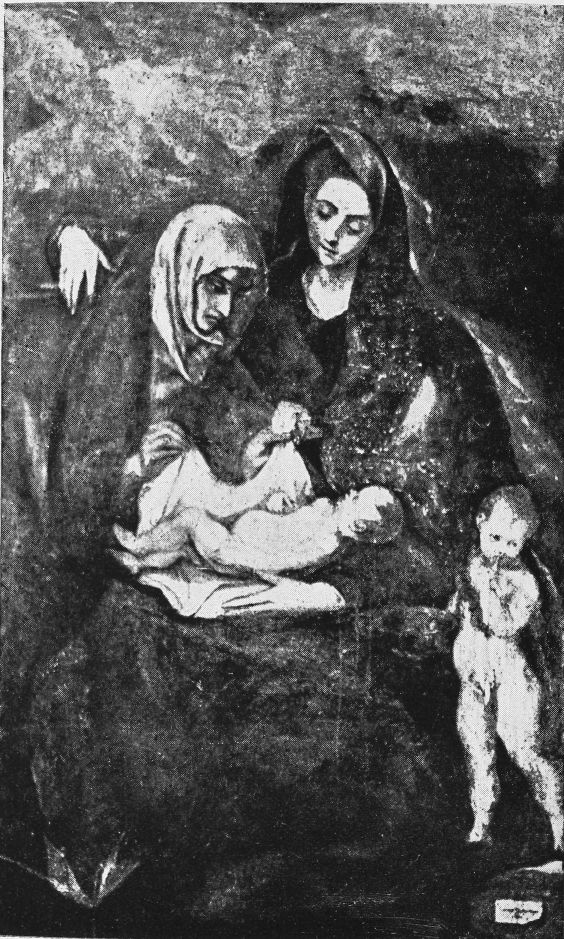
THE VIRGIN, ST. ANNE, THE CHILD JESUS AND ST. JOHN
EL GRECO
CHAPEL OF ST. ANNE
Plate 451
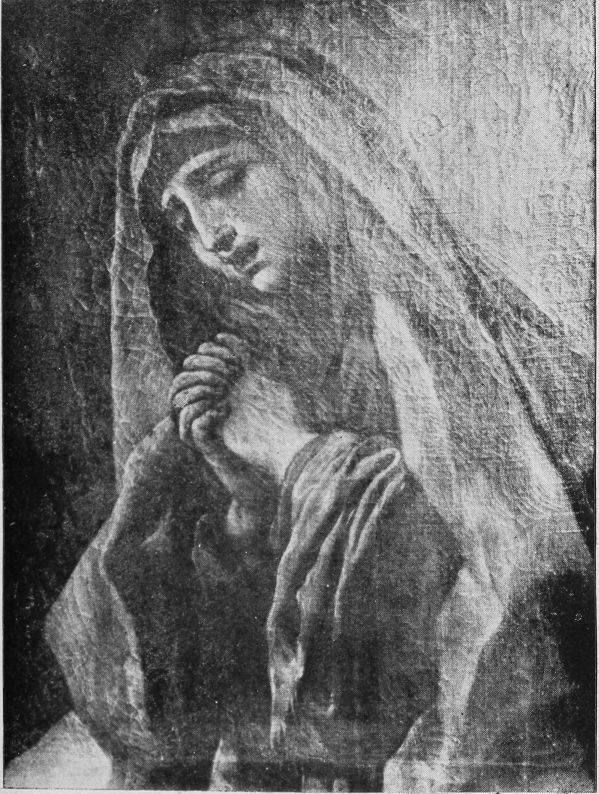
OUR LADY OF SORROWS
EL GRECO
SACRISTY OF THE NEW KINGS, IN THE CATHEDRAL
Plate 452
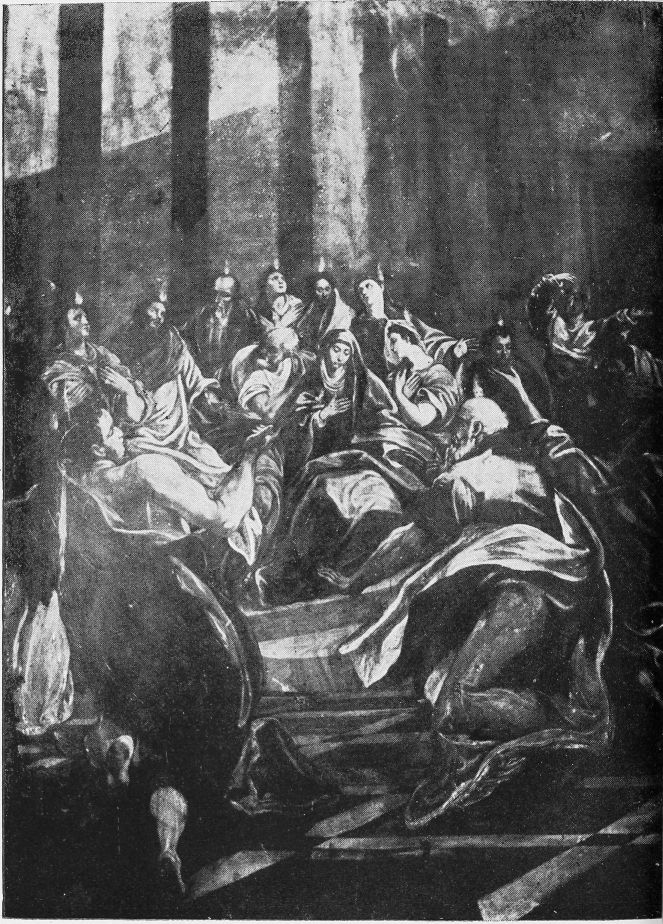
PENTECOST
EL GRECO
CHURCH OF THE TRINITY
Plate 453
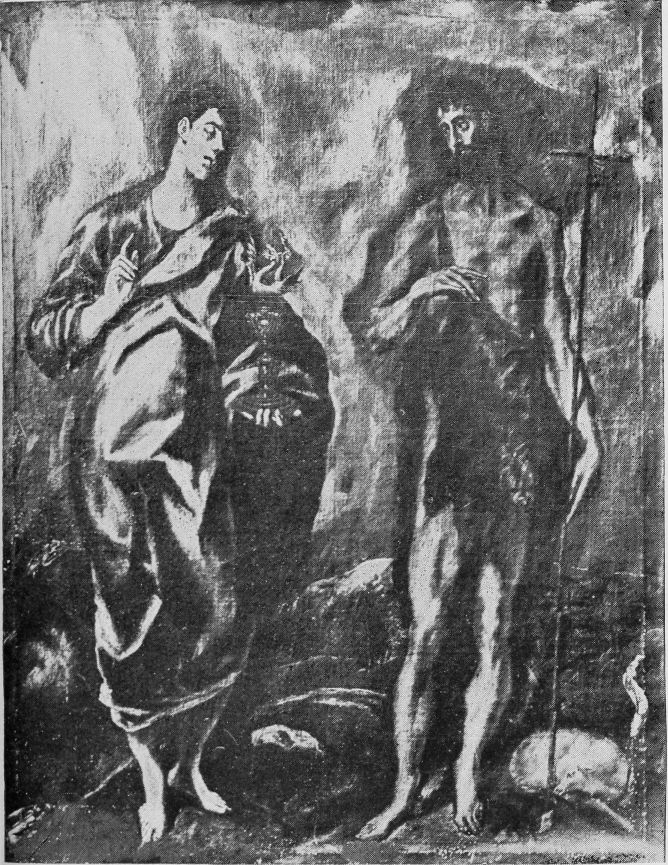
JESUS AND ST. JOHN
EL GRECO
CHURCH OF ST. JOHN THE BAPTIST
Plate 454
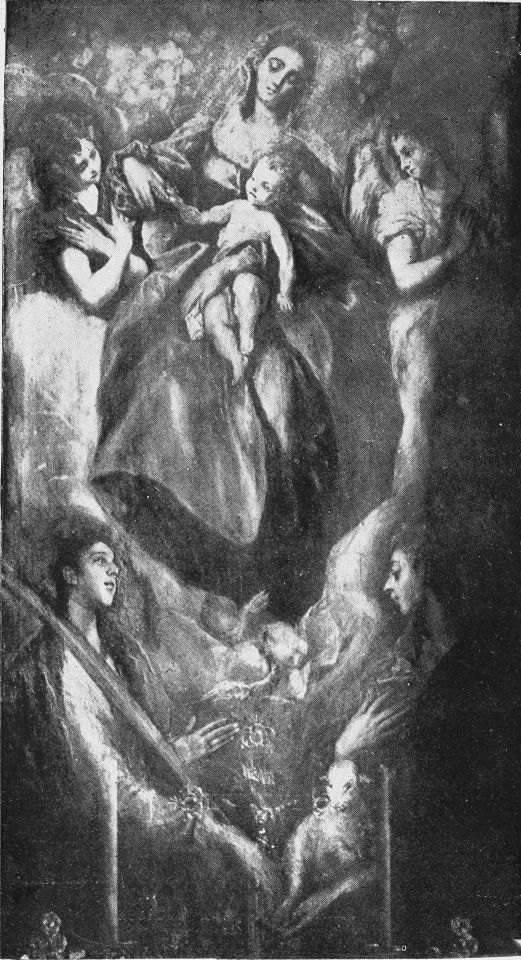
THE ASSUMPTION
EL GRECO
CHAPEL OF SAN JOSÉ
Plate 455
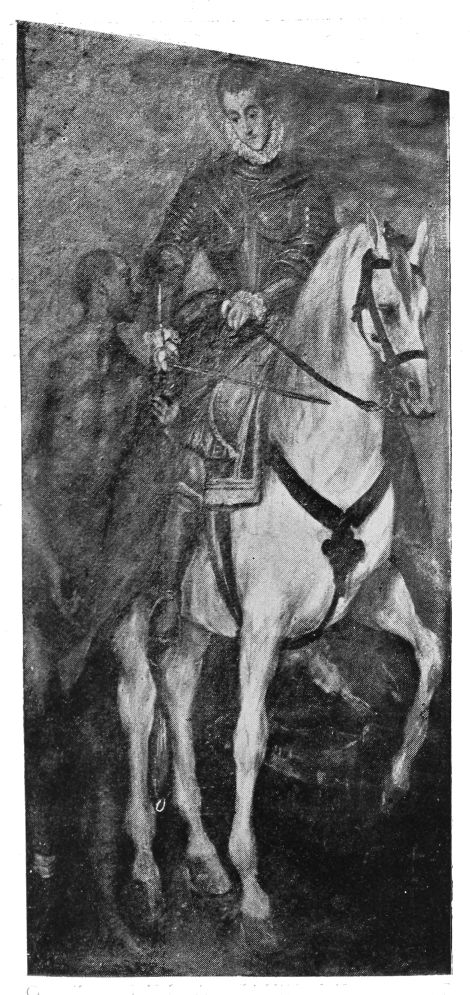
ST. MARTIN
EL GRECO
CHAPEL OE SAN JOSÉ
Plate 456
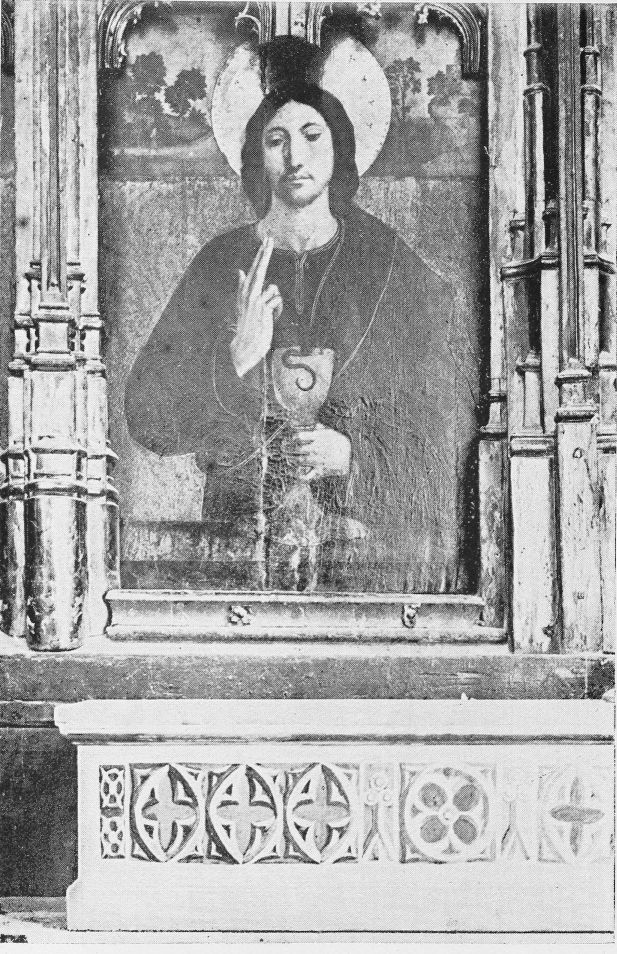
THE HOLY EUCHARIST. BY EL GRECO CHURCH OF SAN JOSÉ
Plate 457
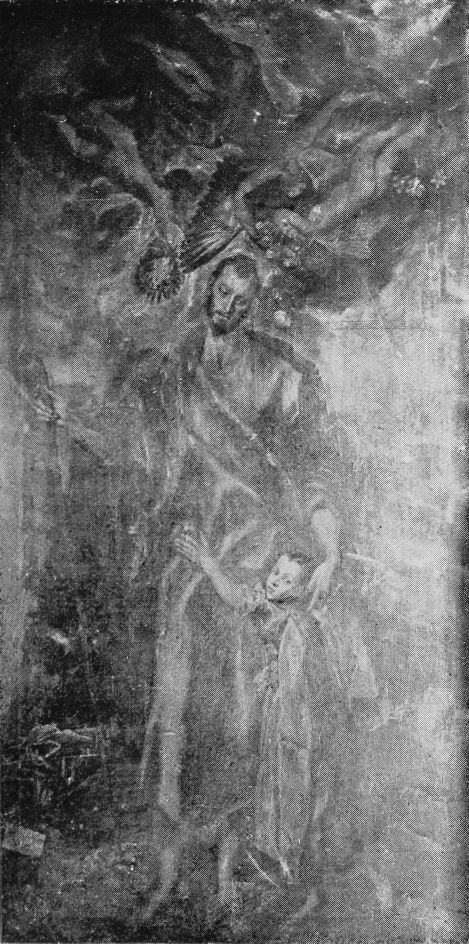
SAN JOSÉ AND THE CHILD JESUS
EL GRECO
PARISH CHURCH OF THE MAGDALENE
Plate 458
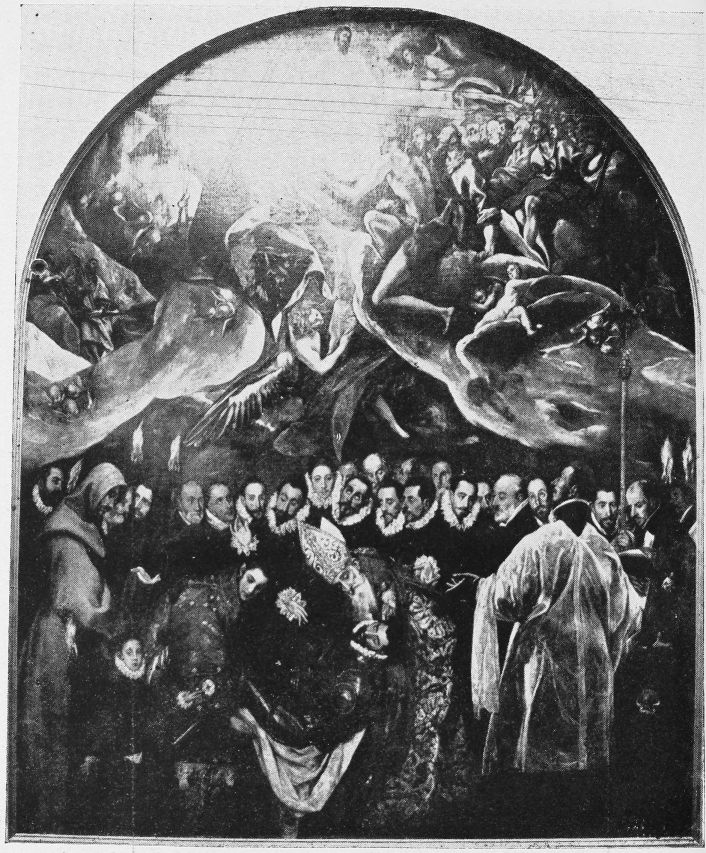
THE INTERMENT OF COUNT DE ORGAZ
EL GRECO
CHURCH OF SANTO TOMÉ
Plate 459
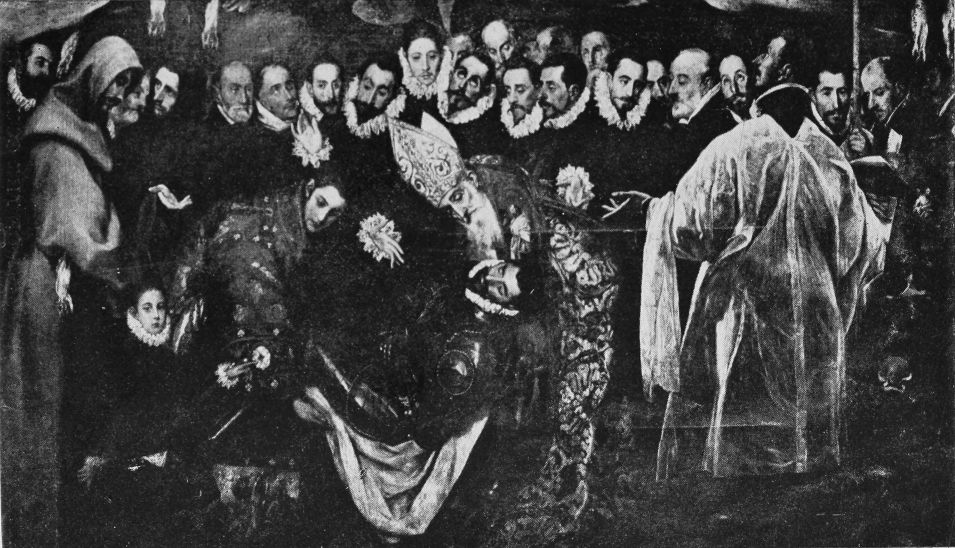
DETAIL OF THE INTERMENT OF COUNT DE ORGAZ
EL GRECO
Plate 460
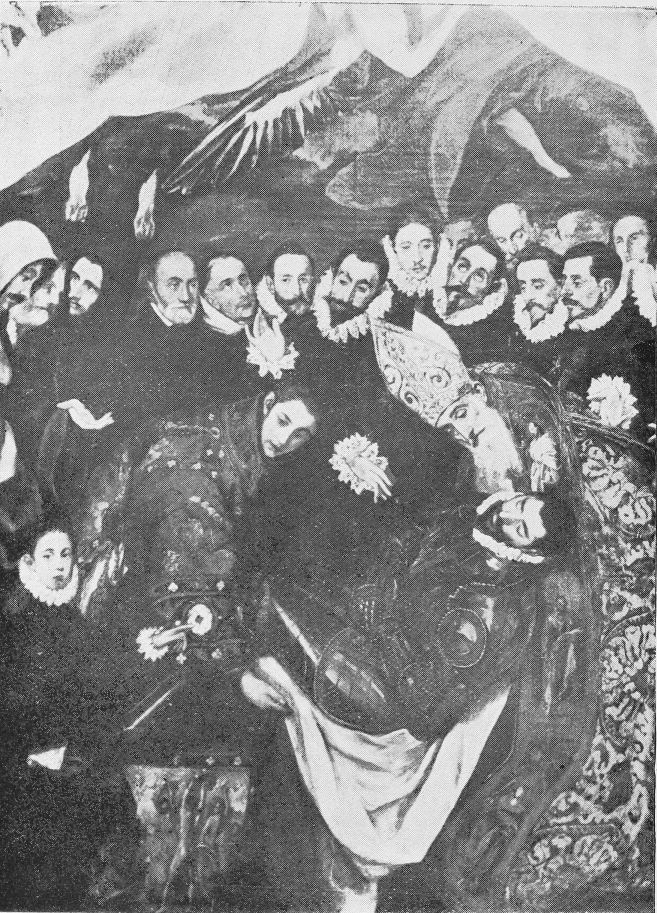
FRAGMENT OF THE INTERMENT OF THE COUNT DE ORGAZ
EL GRECO
Plate 461
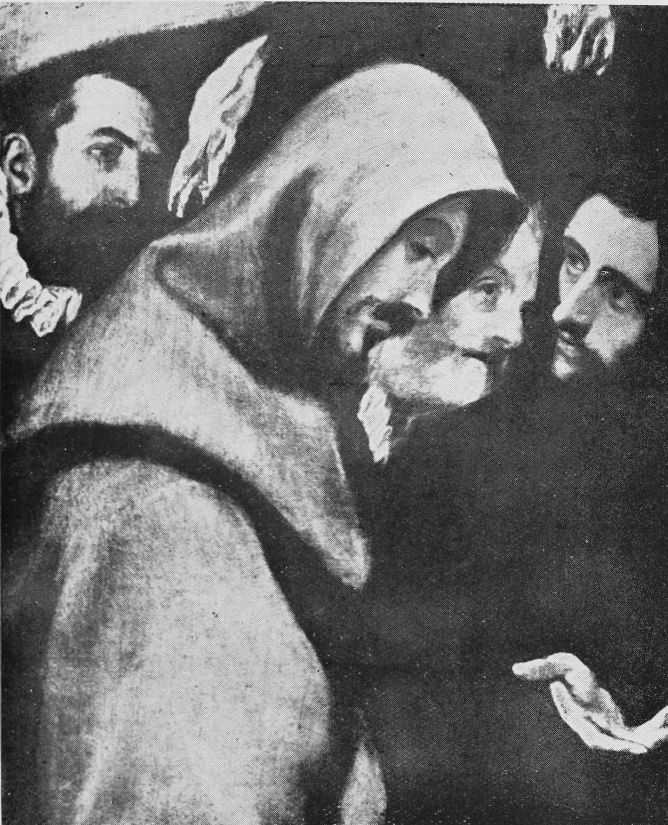
FRAGMENT OF THE INTERMENT OF THE COUNT DE ORGAZ
EL GRECO
Plate 462
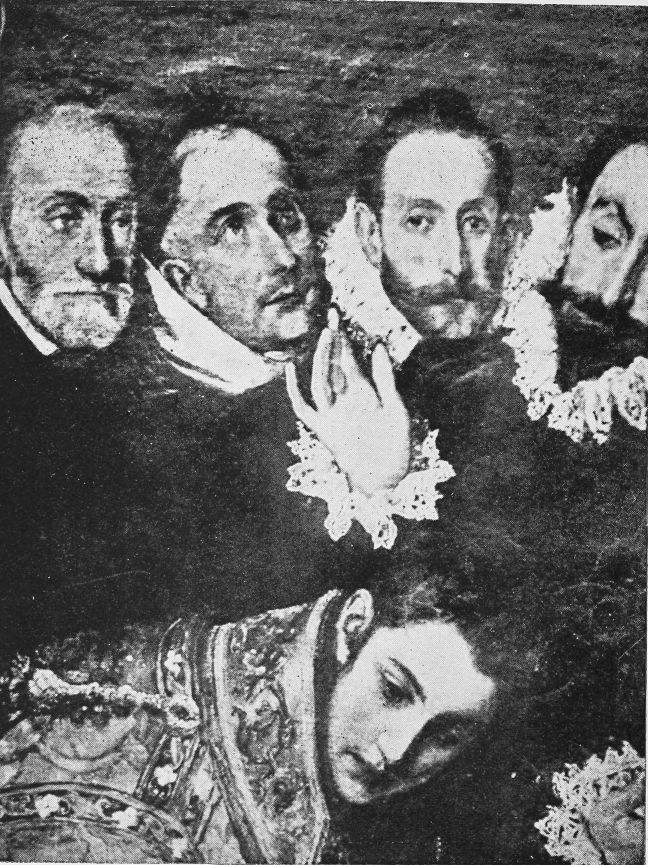
FRAGMENT OF THE INTERMENT OF THE COUNT DE ORGAZ
EL GRECO
Plate 463
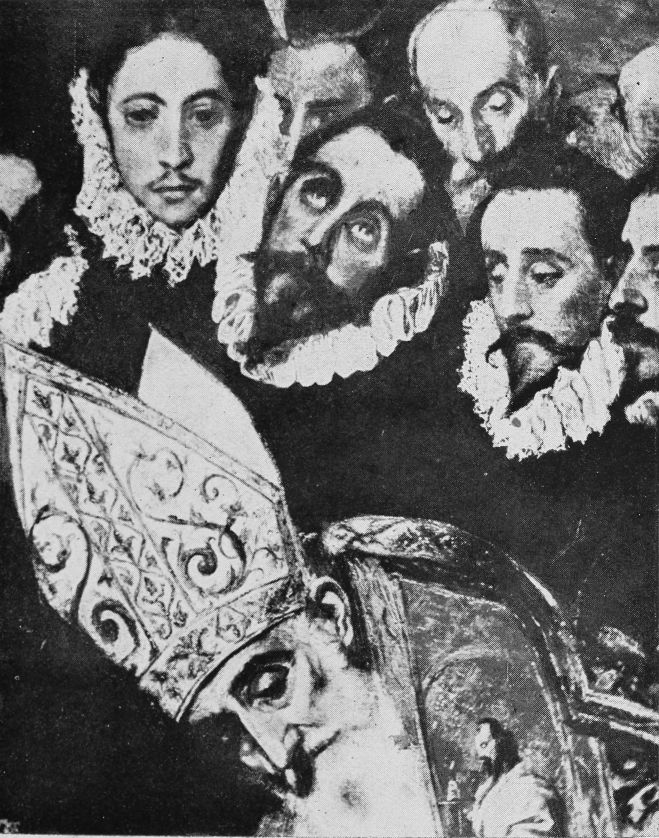
FRAGMENT OF THE INTERMENT OF THE COUNT DE ORGAZ
EL GRECO
Plate 464
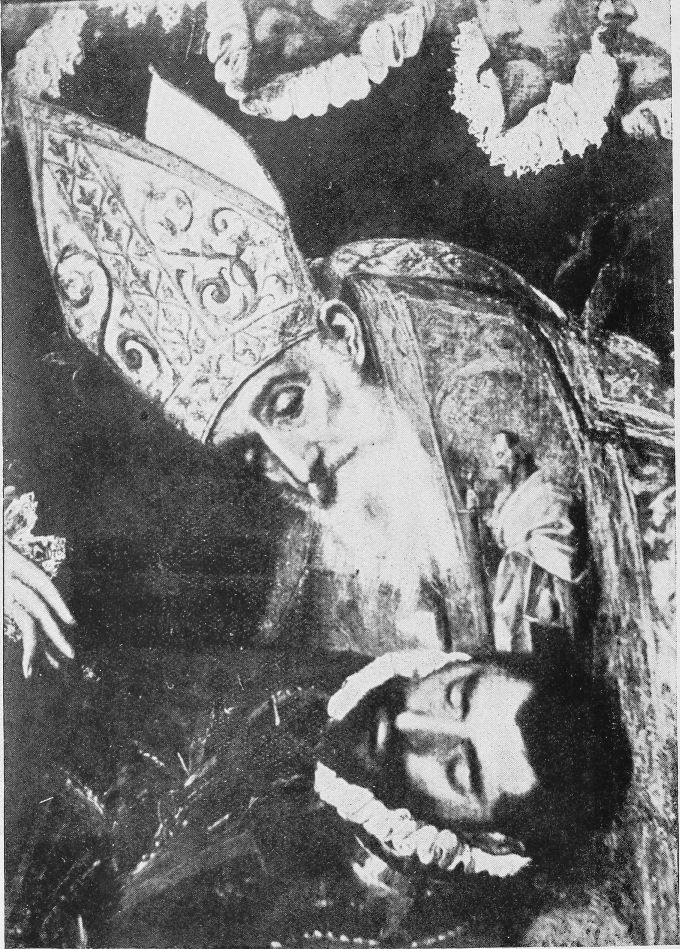
FRAGMENT OF THE INTERMENT OF THE COUNT DE ORGAZ
Plate 465
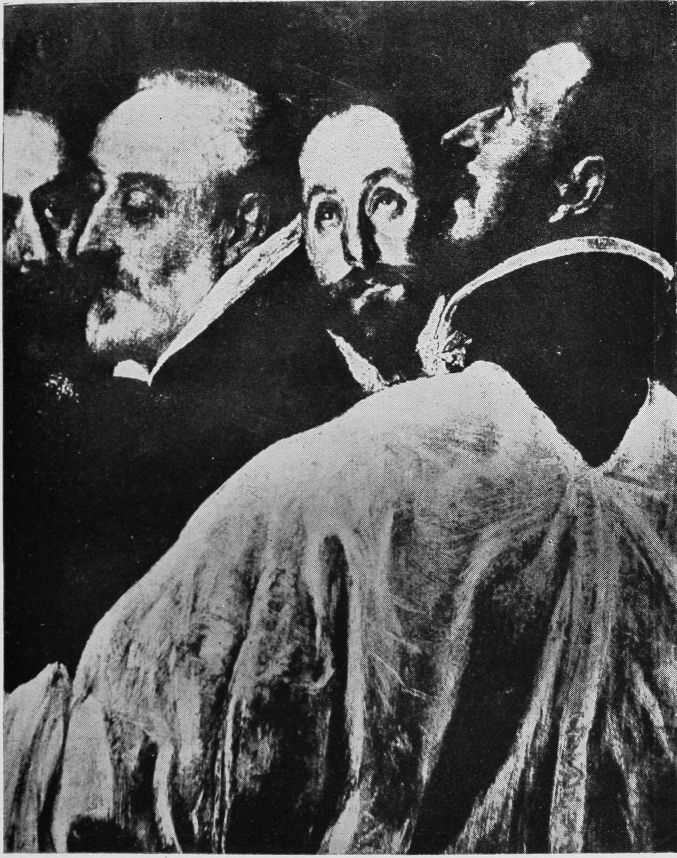
FRAGMENT OF THE INTERMENT OF THE COUNT DE ORGAZ
EL GRECO
Plate 466
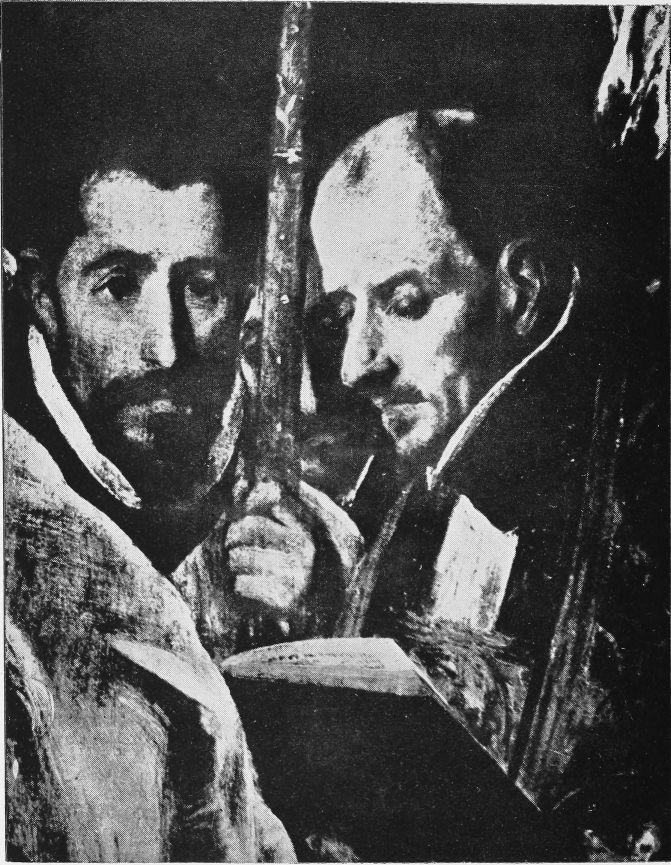
FRAGMENT OF THE INTERMENT OF THE COUNT DE ORGAZ
EL GRECO
Plate 467
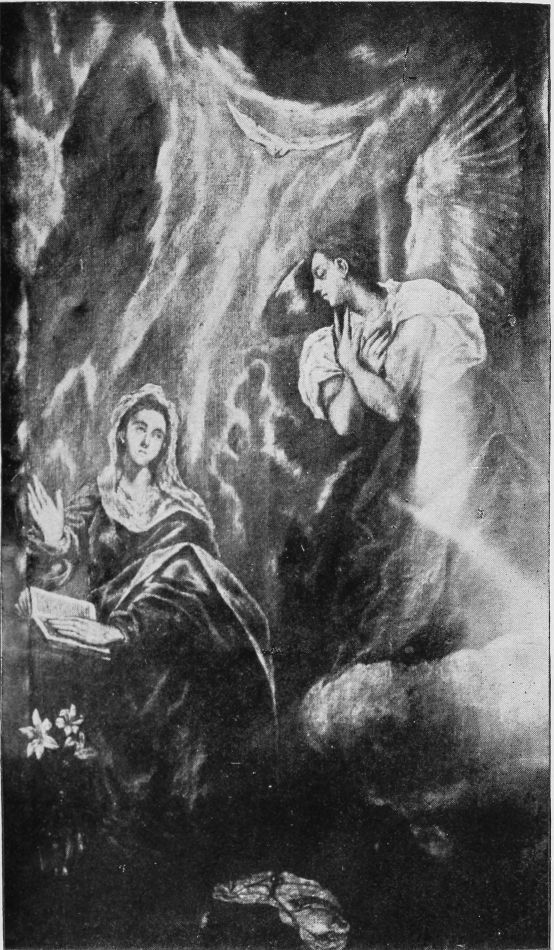
THE ANNUNCIATION
EL GRECO
PARISH CHURCH OF SAN NICHOLÁS
Plate 468
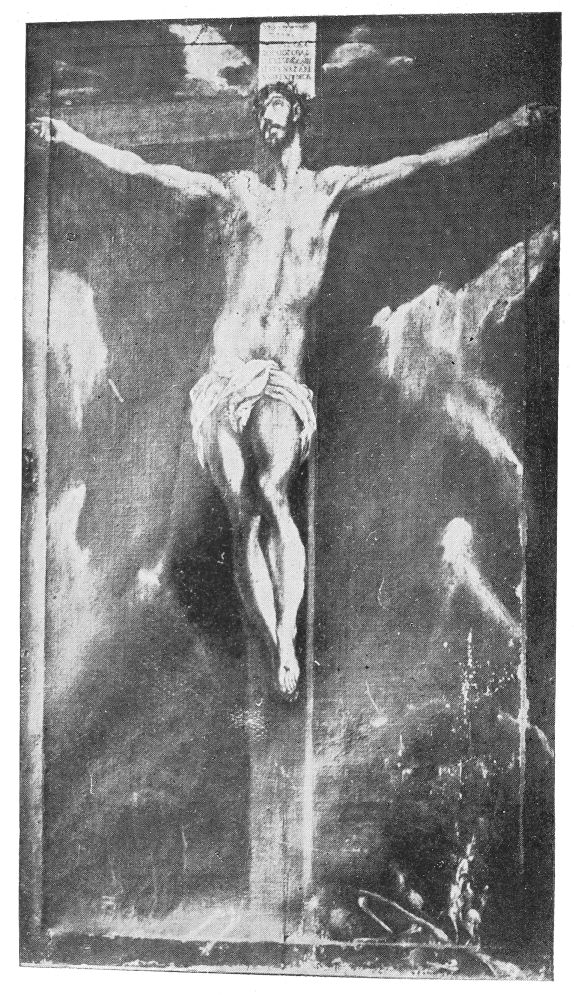
THE CRUCIFIXION
EL GRECO
SAN NICHOLÁS
Plate 469
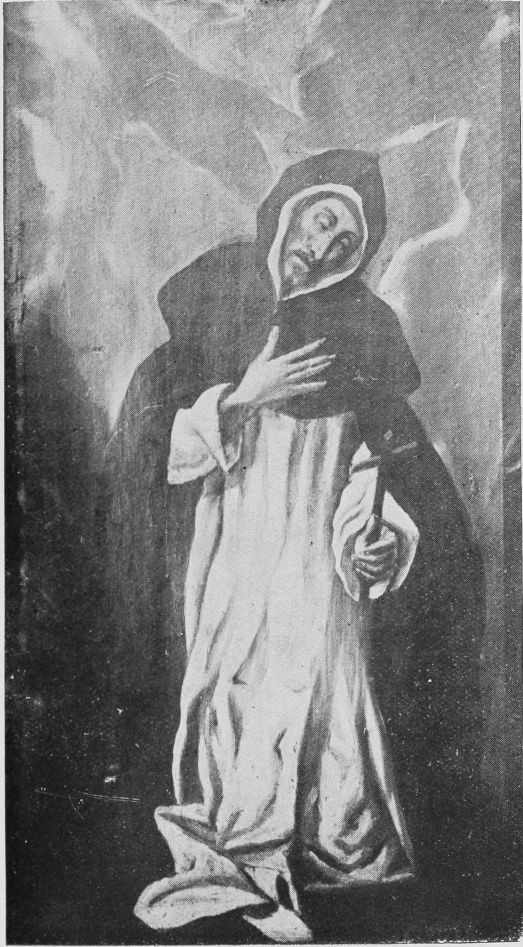
SAN PEDRO NOLASCO
EL GRECO
PARISH CHURCH OF SAN NICHOLÁS
Plate 470
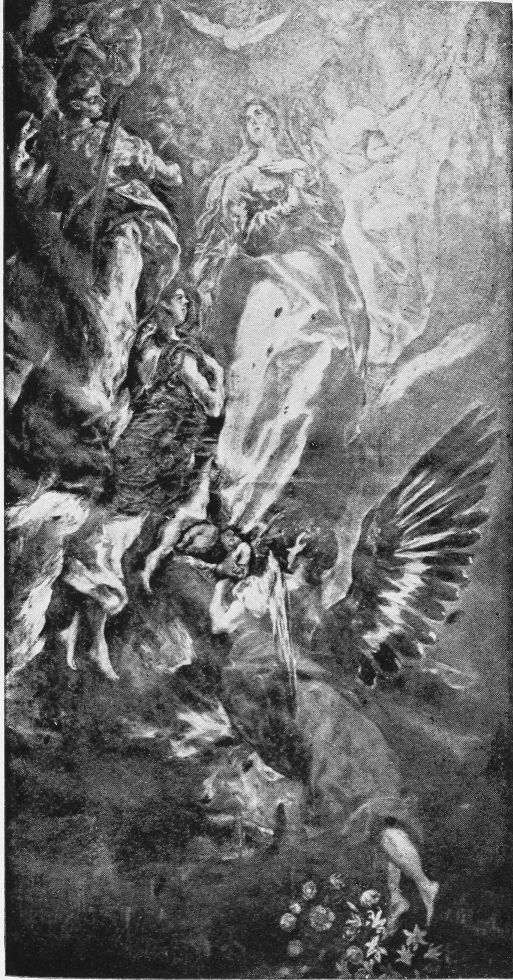
THE ASSUMPTION
EL GRECO
PARISH CHURCH OF SAN VICENTE
Plate 471
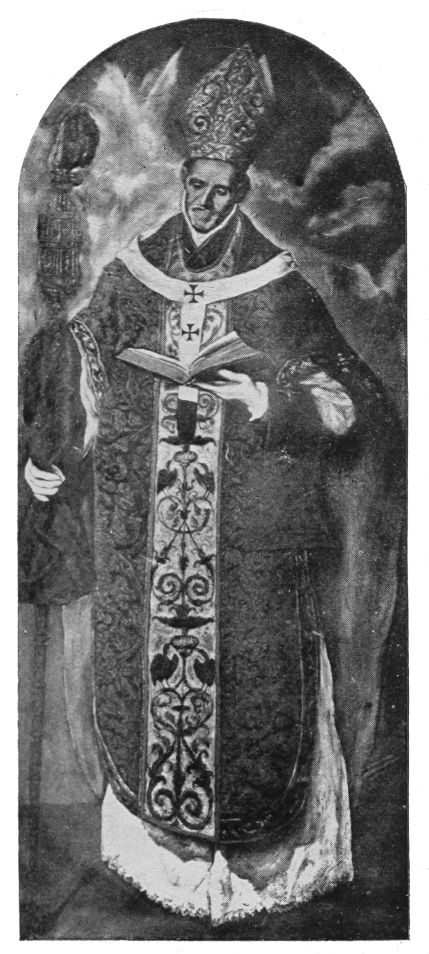
SAN EUGENIO
EL GRECO
PARISH CHURCH OF SAN VICENTE
Plate 472
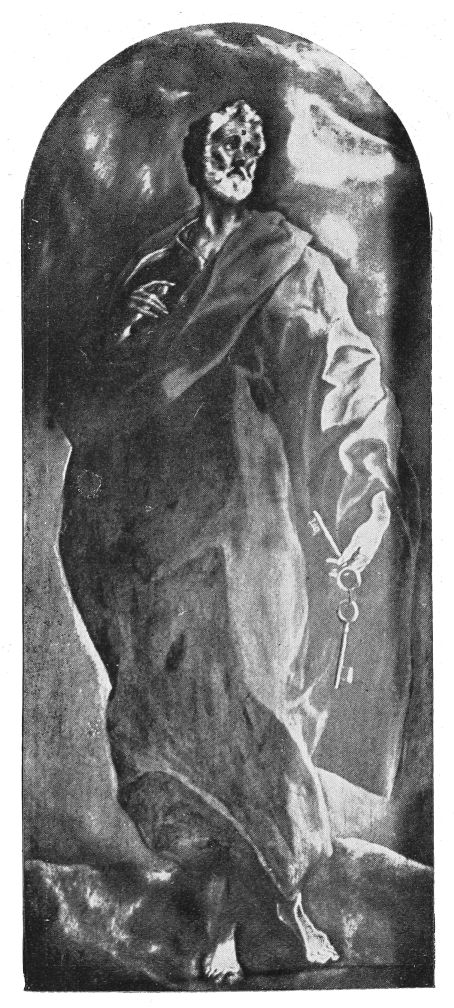
ST. PETER
EL GRECO
PARISH CHURCH OF SAN VICENTE
Plate 473
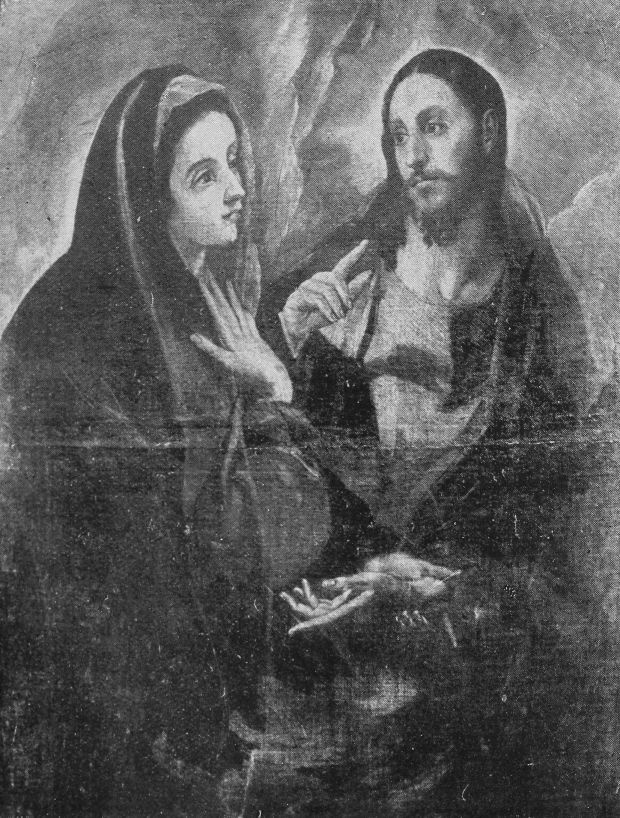
JESUS AND THE VIRGIN
EL GRECO
PARISH CHURCH OF SAN VICENTE
Plate 474
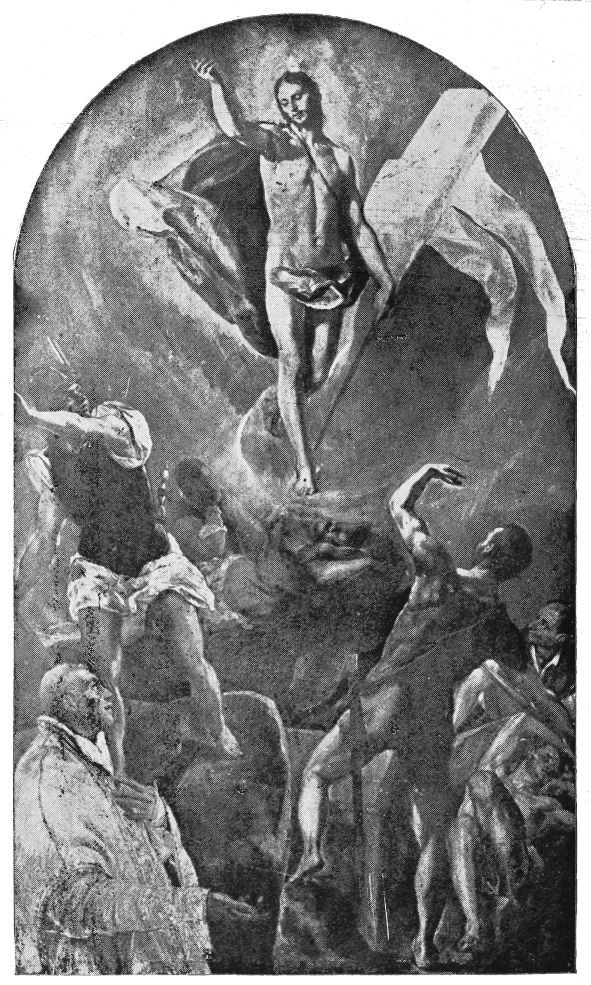
THE ASCENSION
EL GRECO
SANTO DOMINGO EL ANTIGUA
Plate 475
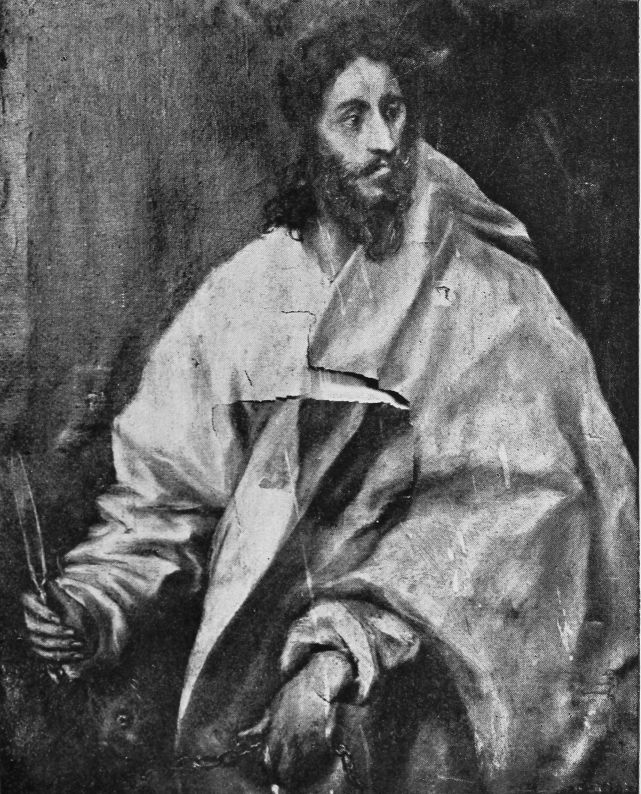
A SAINT (? SANTO DOMINGO EL ANTIGUA)
EL GRECO
Plate 476
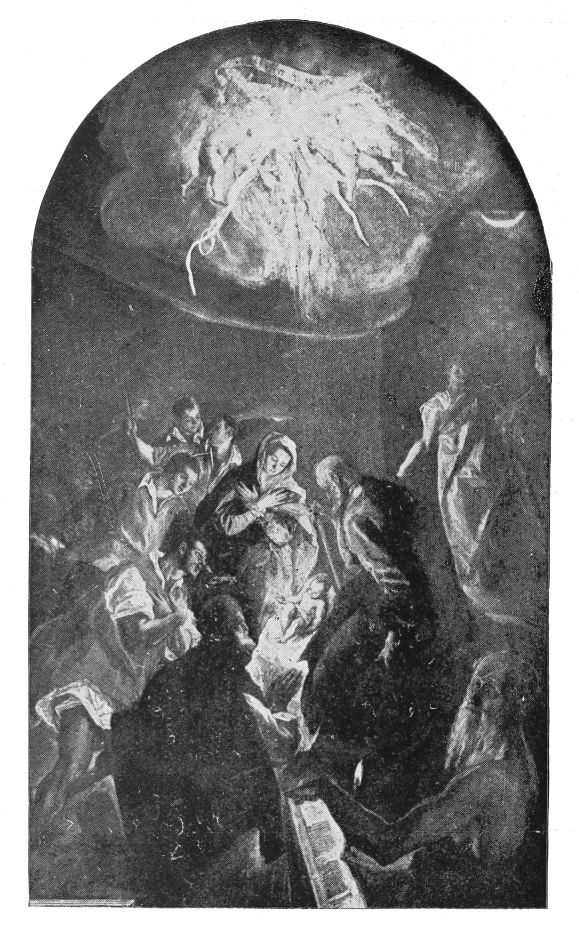
THE BIRTH OF JESUS
EL GRECO
SANTO DOMINGO EL ANTIGUA
Plate 477
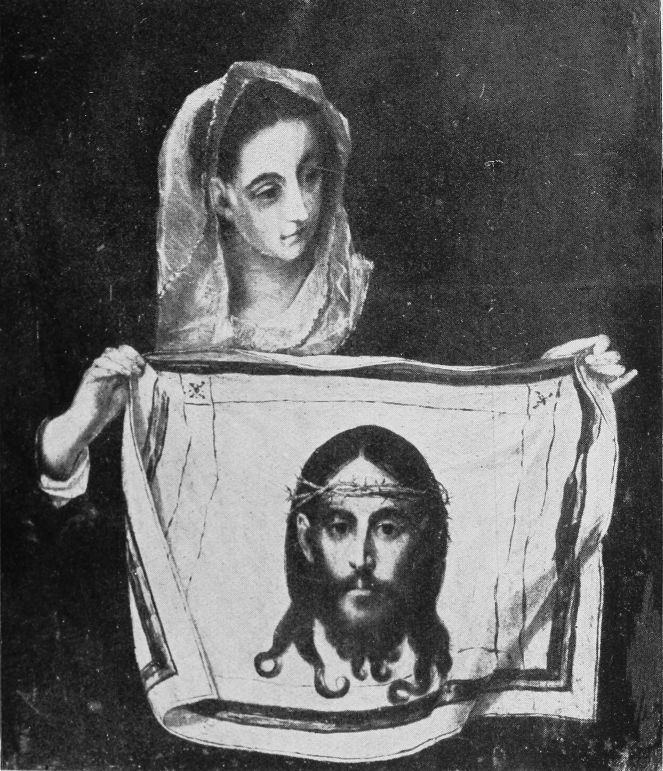
SANTA VERONICA WITH THE SUDARIUM
EL GRECO
SANTO DOMINGO EL ANTIGUA
Plate 478
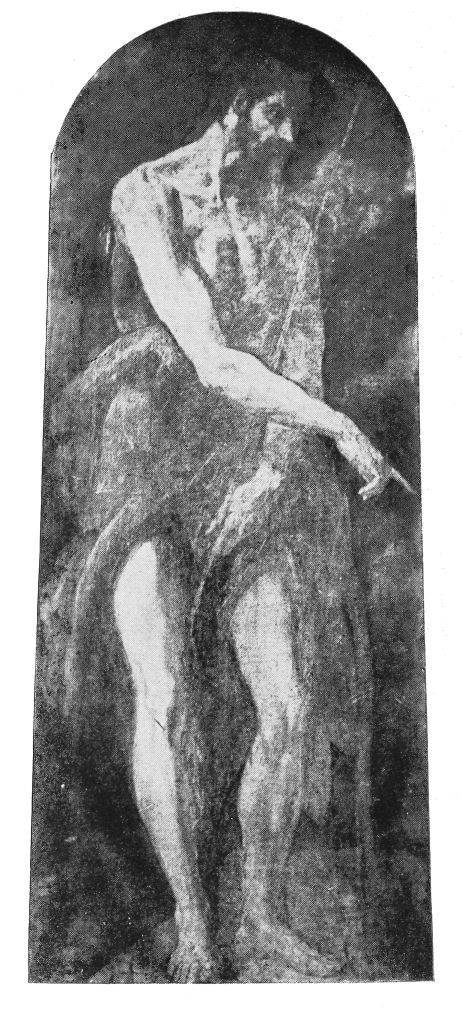
ST. JOHN BAPTIST
EL GRECO
SANTO DOMINGO EL ANTIGUA
Plate 479
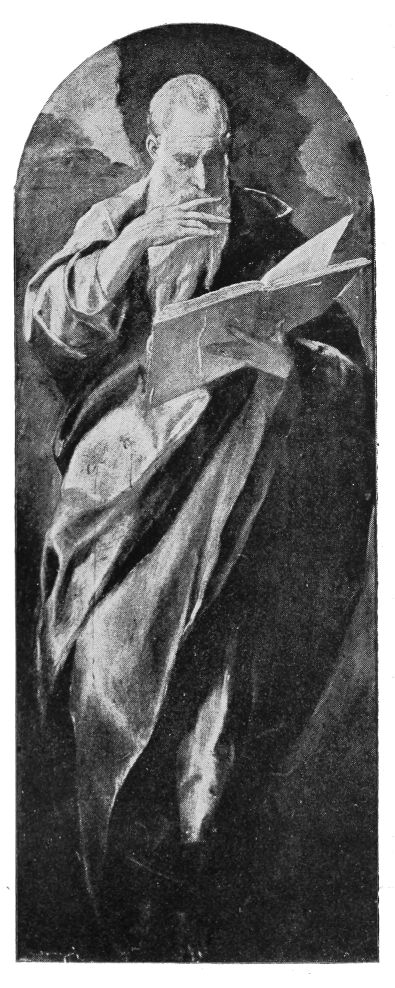
ST. JOHN THE EVANGELIST
EL GRECO
CHURCH OF SANTO DOMINGO
Plate 480
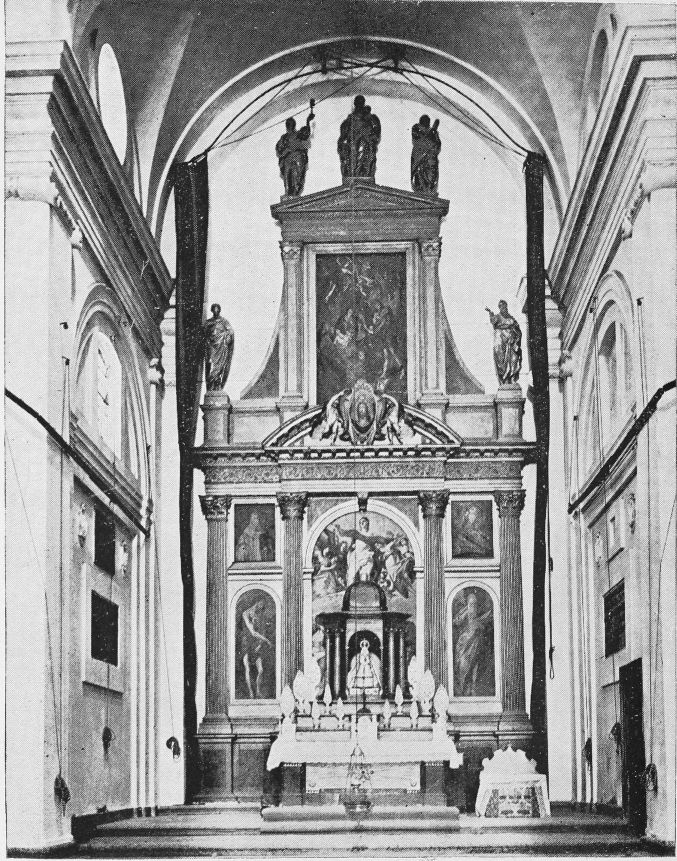
ALTAR-PIECE OF THE CONVENT OF SANTO DOMINGO
EL GRECO
Plate 481
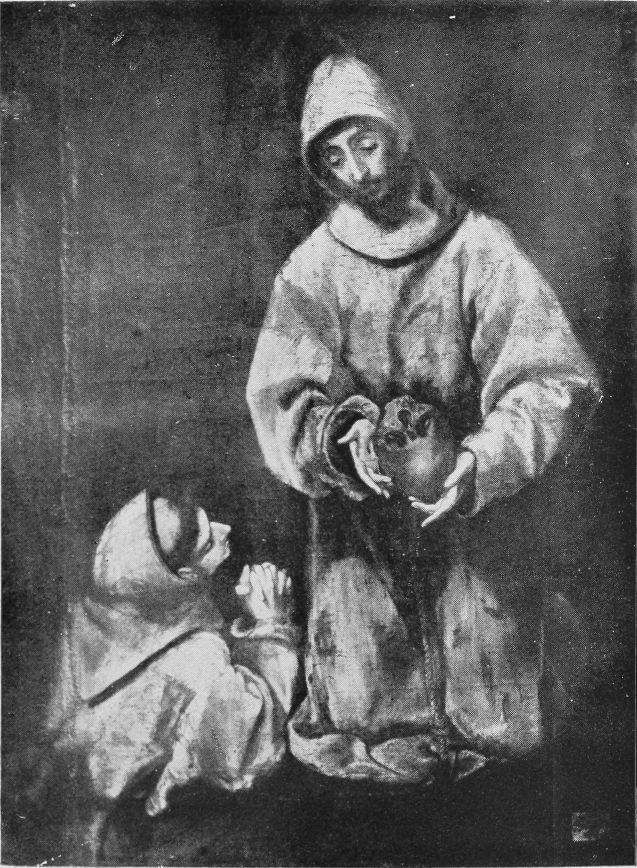
ST. FRANCIS OF ASSISI
EL GRECO
COLLEGE OF NOBLE LADIES
Plate 482
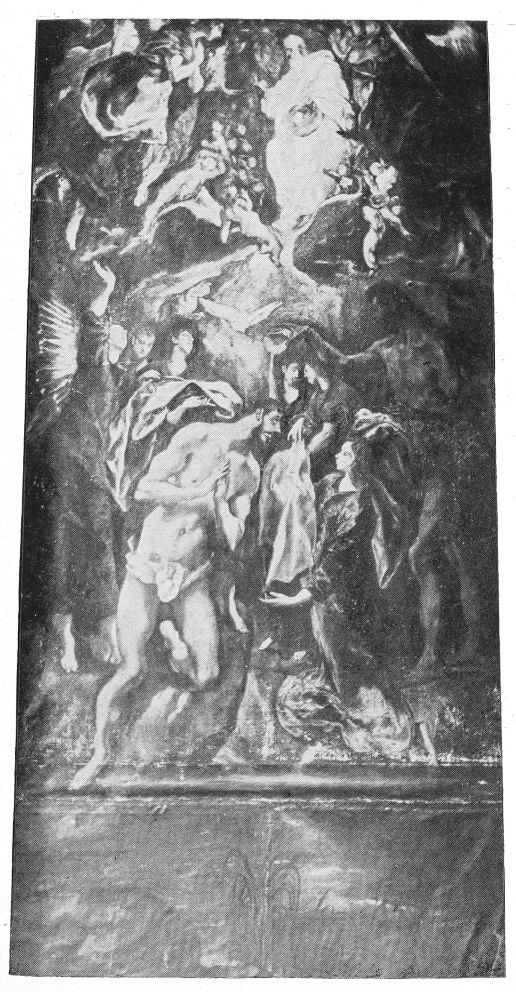
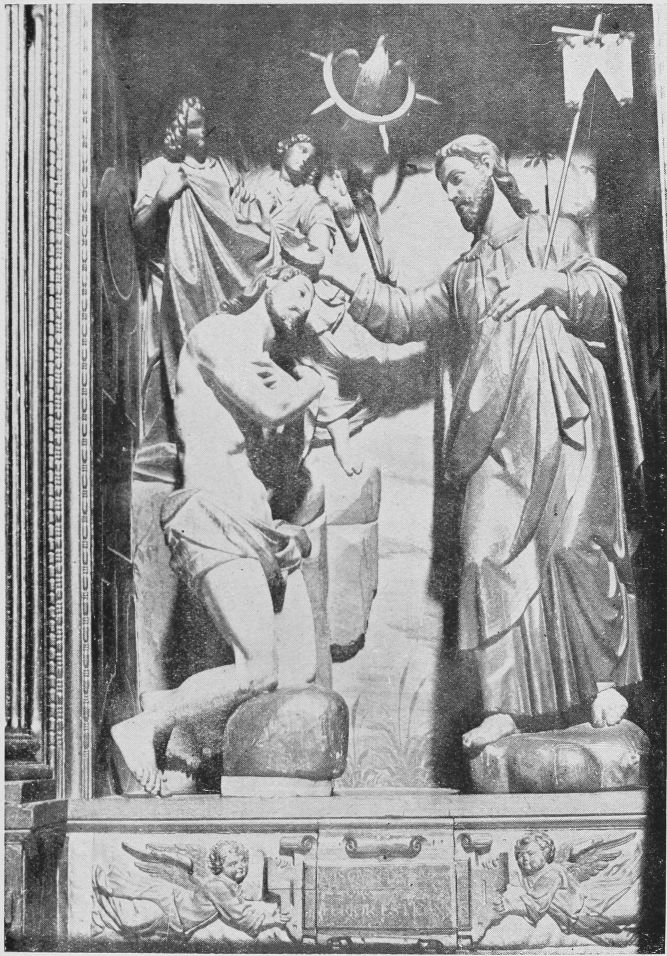
THE BAPTISM OF JESUS
EL GRECO
HOSPITAL OF ST. JOHN BAPTIST
Plate 483
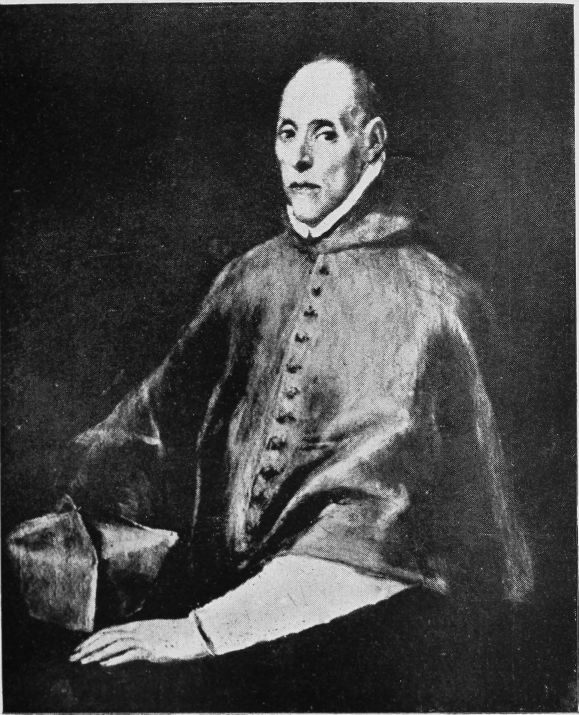
PORTRAIT OF CARDINAL TAVERA
EL GRECO
HOSPITAL OF ST. JOHN BAPTIST
Plate 484
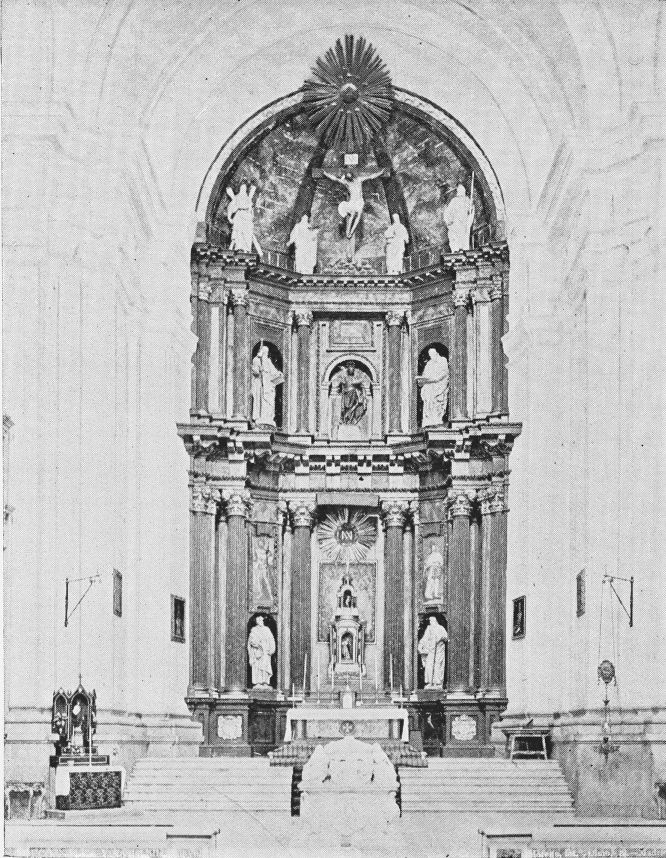
VIEW OF THE HIGH ALTAR OF THE TAVERA HOSPITAL
EL GRECO
Plate 485
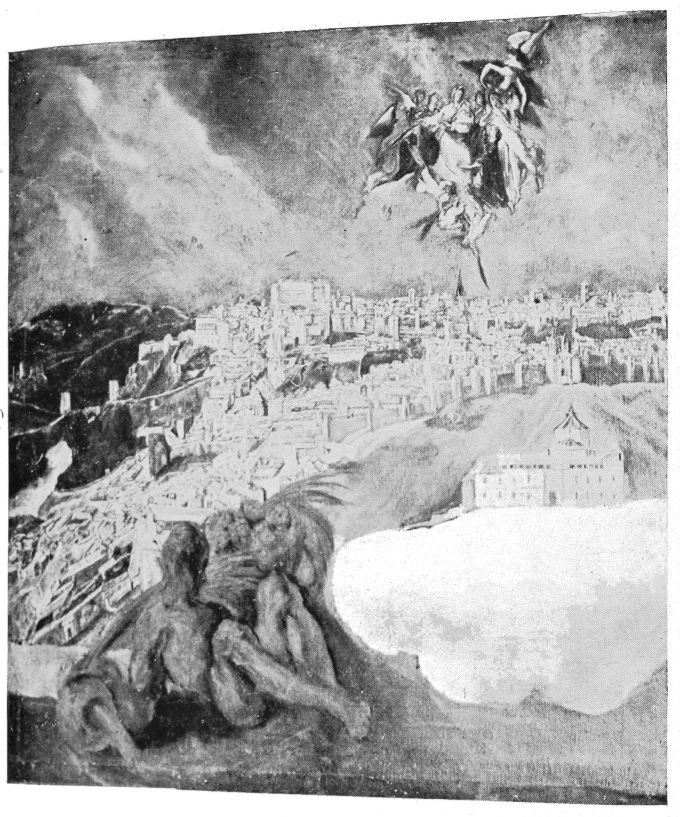
GENERAL VIEW OF TOLEDO (LEFT HALF)
EL GRECO
PROVINCIAL MUSEUM
Plate 486
GENERAL VIEW OF TOLEDO (RIGHT HALF)
EL GRECO
PROVINCIAL MUSEUM
Plate 487
VIEW OF TOLEDO
EL GRECO
PROVINCIAL MUSEUM
Plate 488
PORTRAIT OF ANTONIO COVARRUBIAS
EL GRECO
PROVINCIAL MUSEUM
Plate 489
PORTRAIT OF THE SON OF COVARRUBIAS
EL GRECO
PROVINCIAL MUSEUM
Plate 490
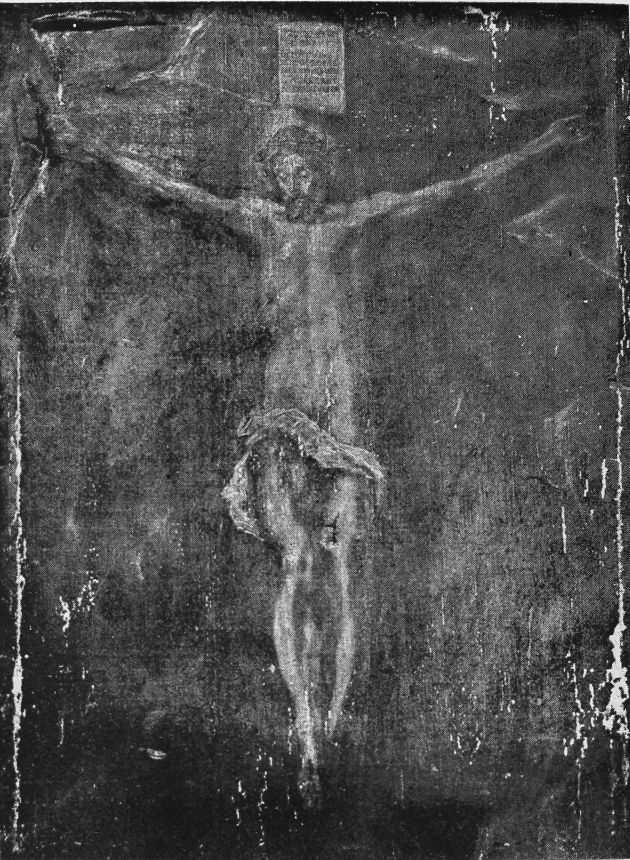
THE CRUCIFIXION
EL GRECO
PROVINCIAL MUSEUM
Plate 491
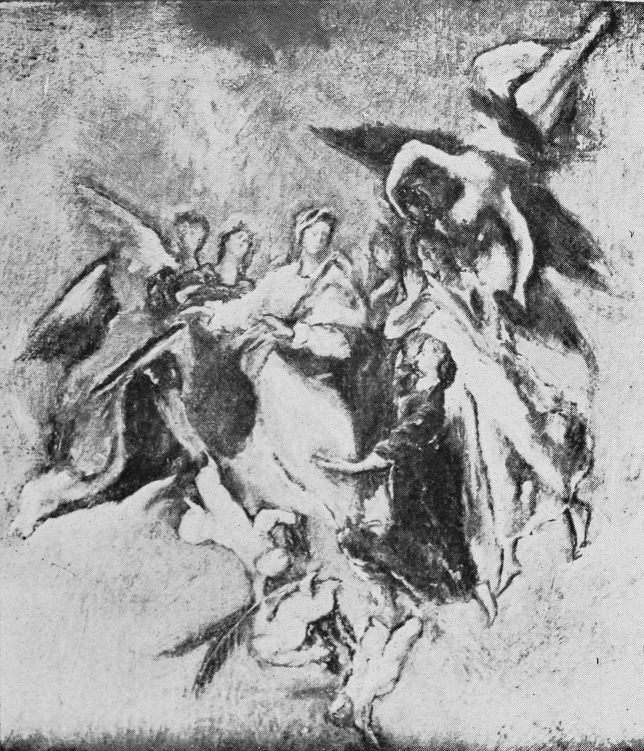
ALLEGORY OF THE VIRGIN
EL GRECO
PROVINCIAL MUSEUM
Plate 492
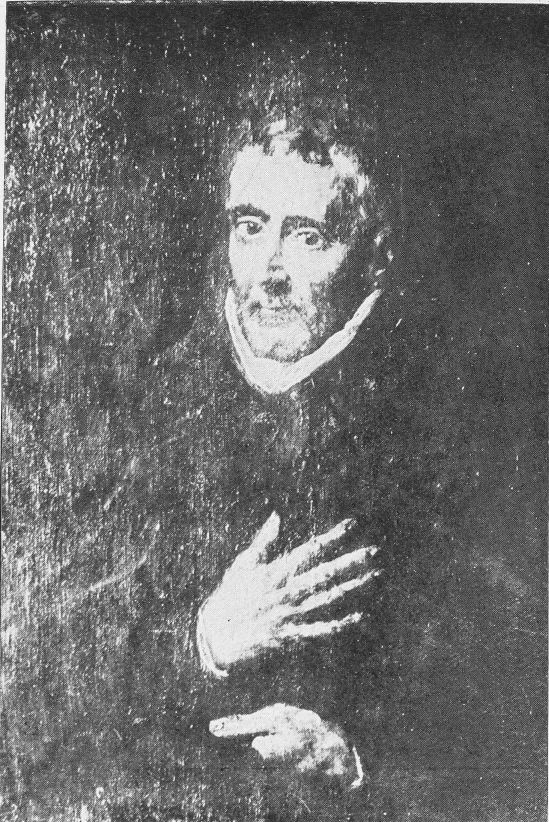
PORTRAIT OF JUAN DE AVILA
EL GRECO
PROVINCIAL MUSEUM
Plate 493
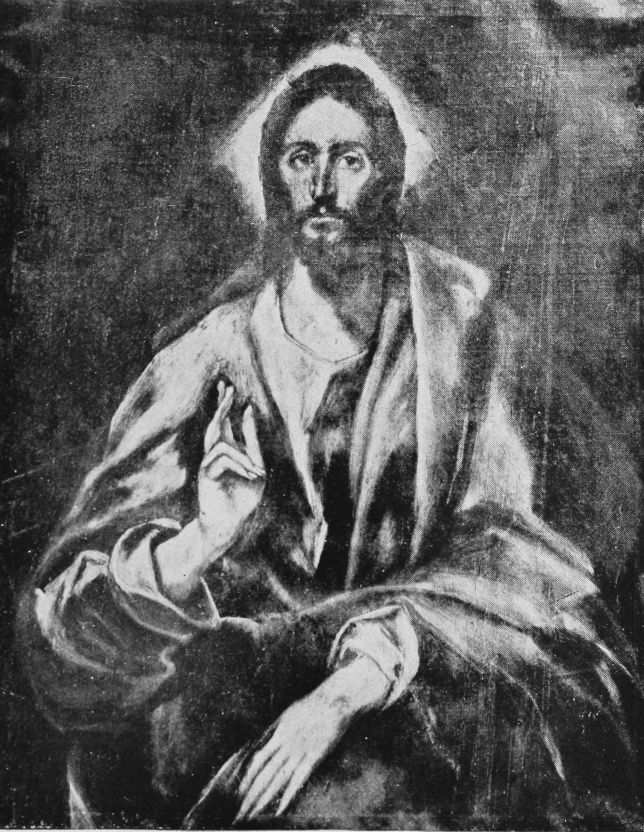
OUR SAVIOUR
EL GRECO
PROVINCIAL MUSEUM
Plate 494
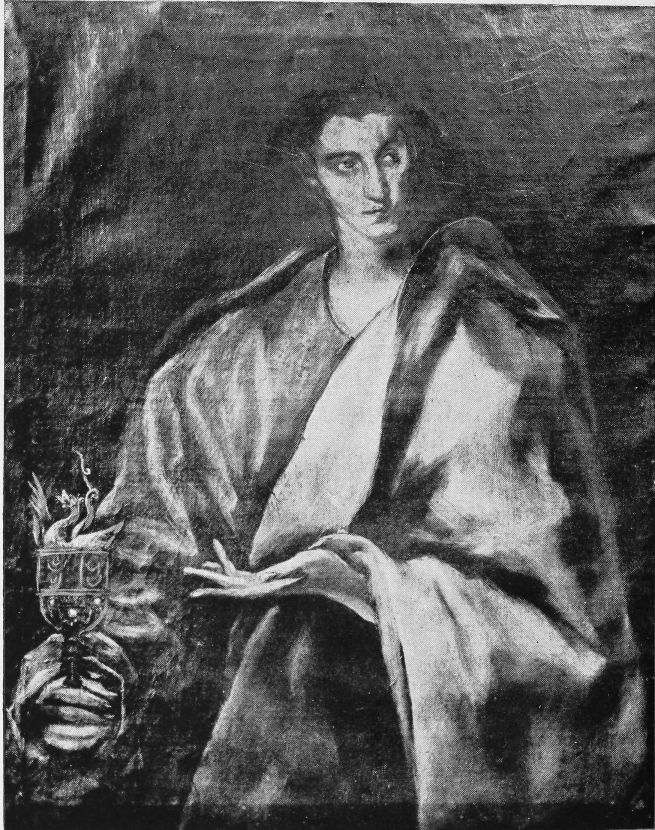
ST. JOHN THE EVANGELIST
EL GRECO
PROVINCIAL MUSEUM
Plate 495
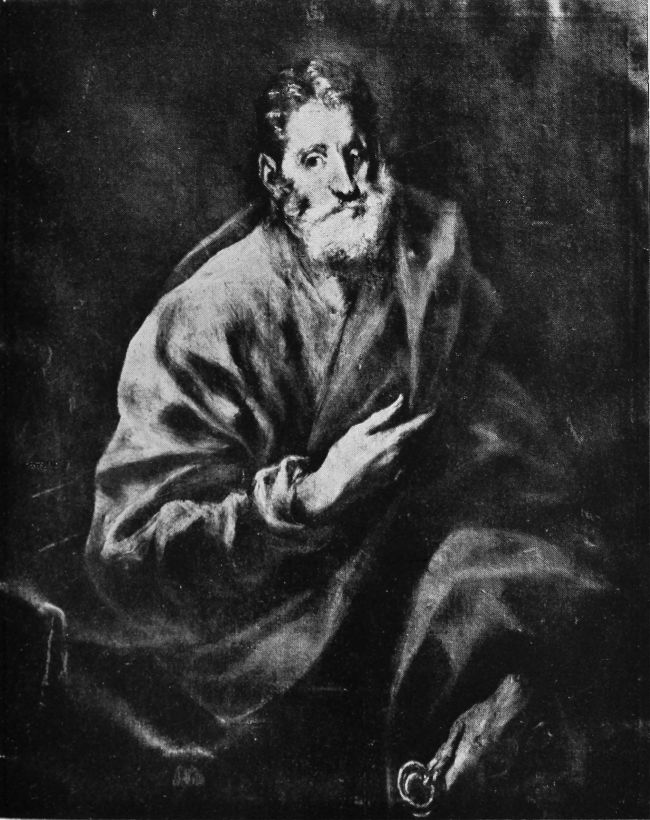
ST. PETER
EL GRECO
PROVINCIAL MUSEUM
Plate 496
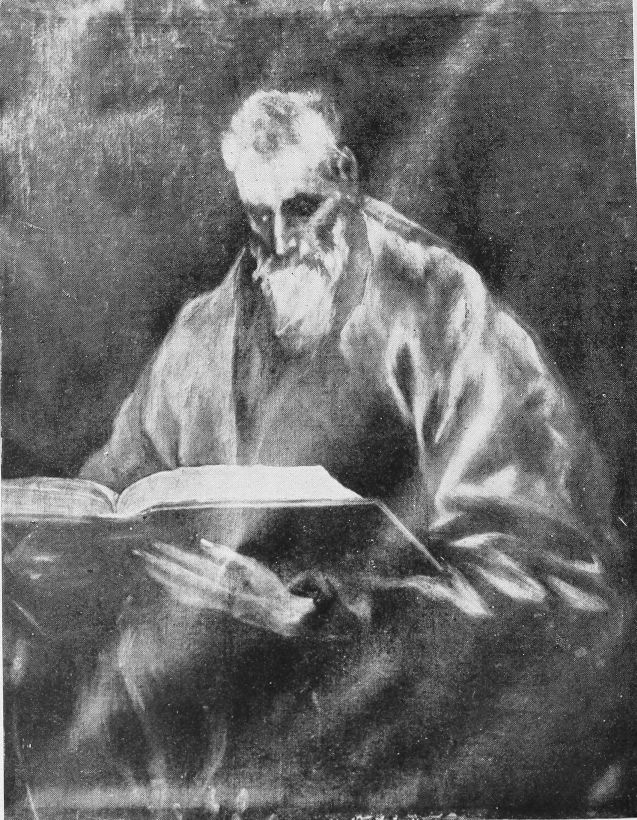
ST. MATTHIAS
EL GRECO
PROVINCIAL MUSEUM
Plate 497
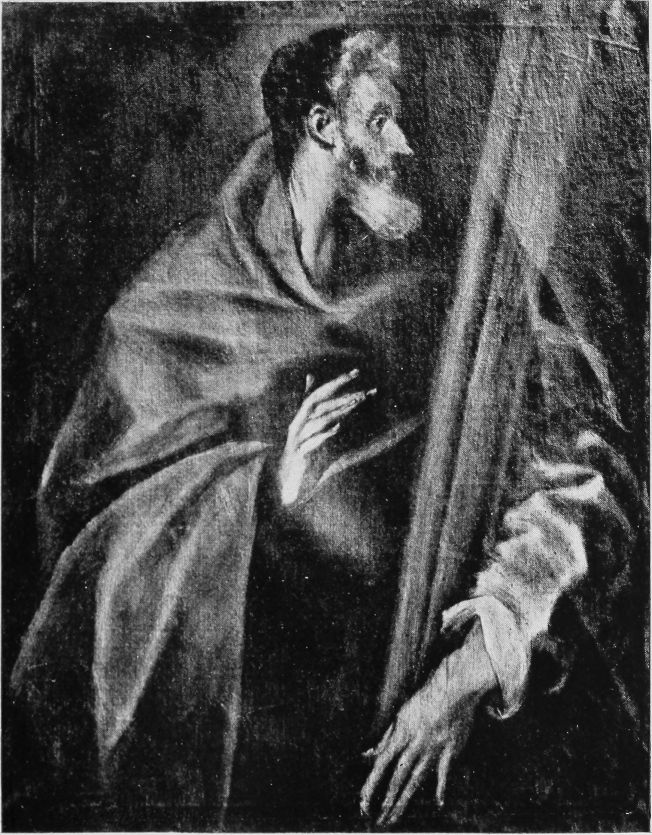
ST. PHILIP
EL GRECO
PROVINCIAL MUSEUM
Plate 498
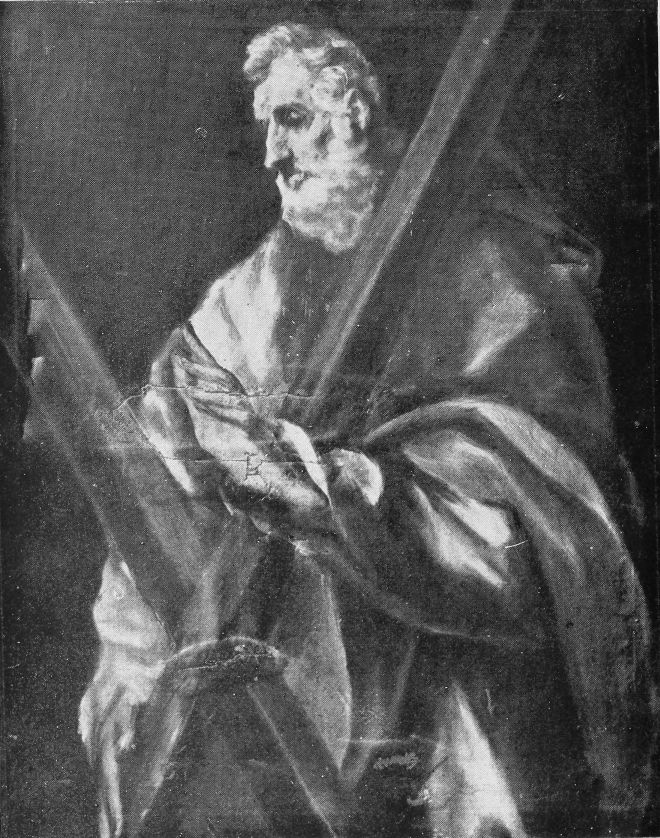
ST. ANDREW
EL GRECO
PROVINCIAL MUSEUM
Plate 499
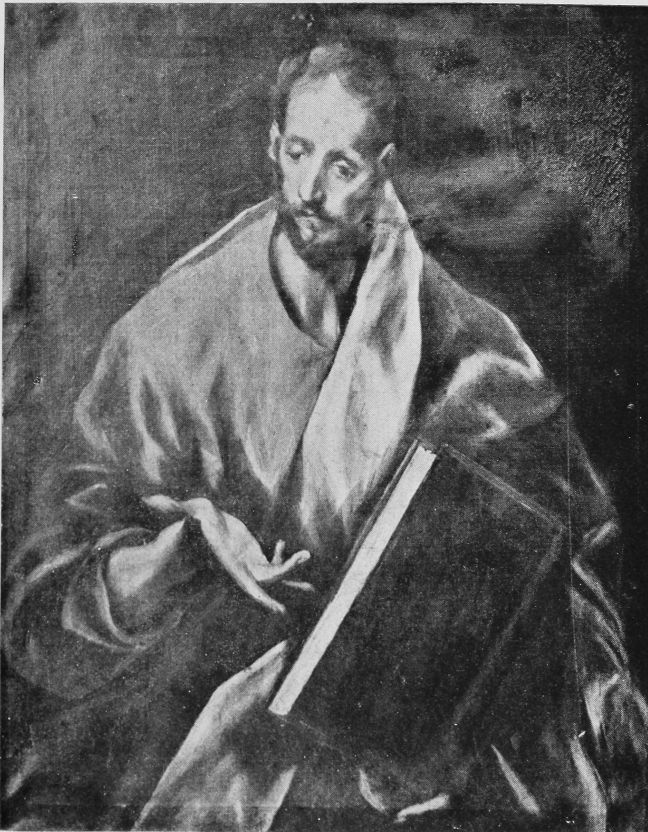
ST. THOMAS
EL GRECO
PROVINCIAL MUSEUM
Plate 500
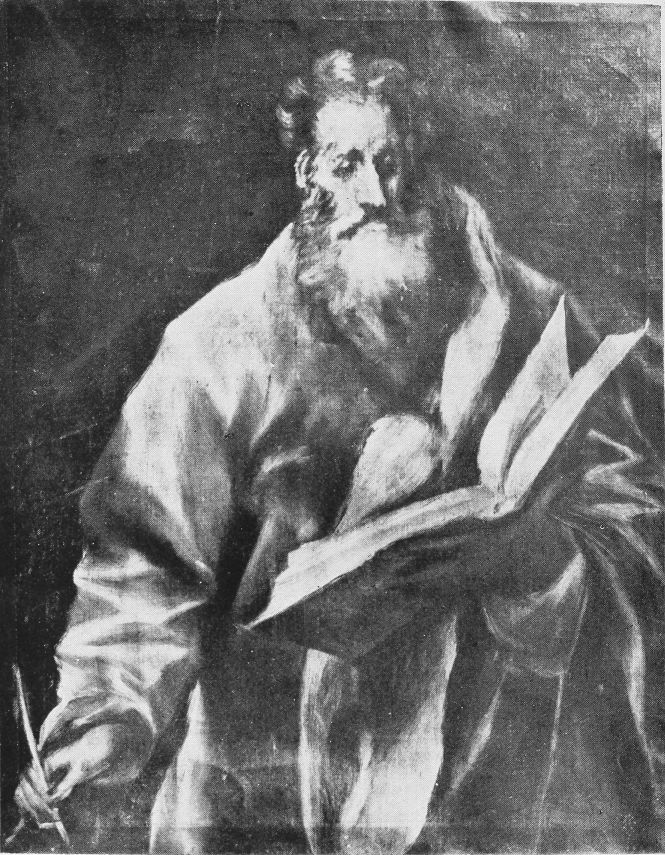
ST. SIMON
EL GRECO
PROVINCIAL MUSEUM
Plate 501
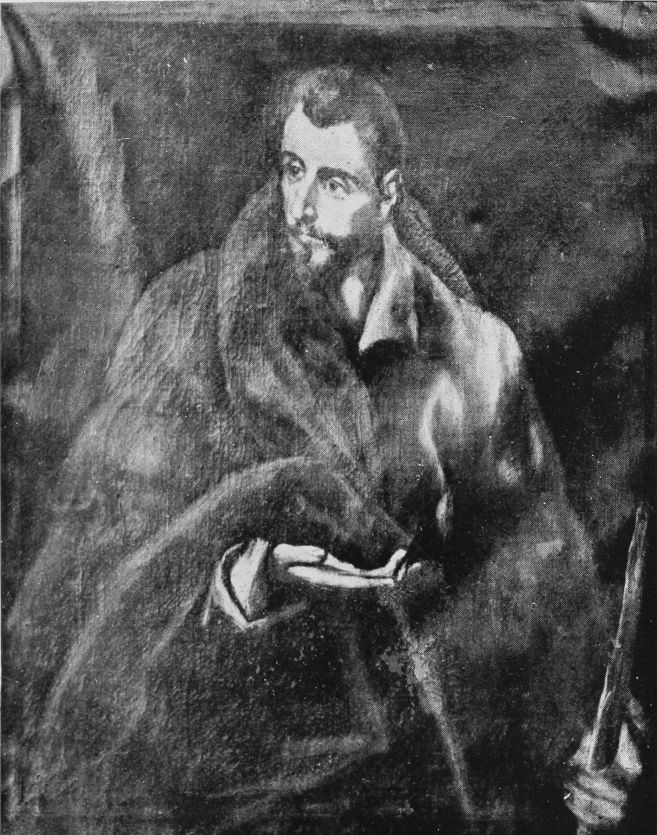
ST. MATTHEW
EL GRECO
PROVINCIAL MUSEUM
Plate 502
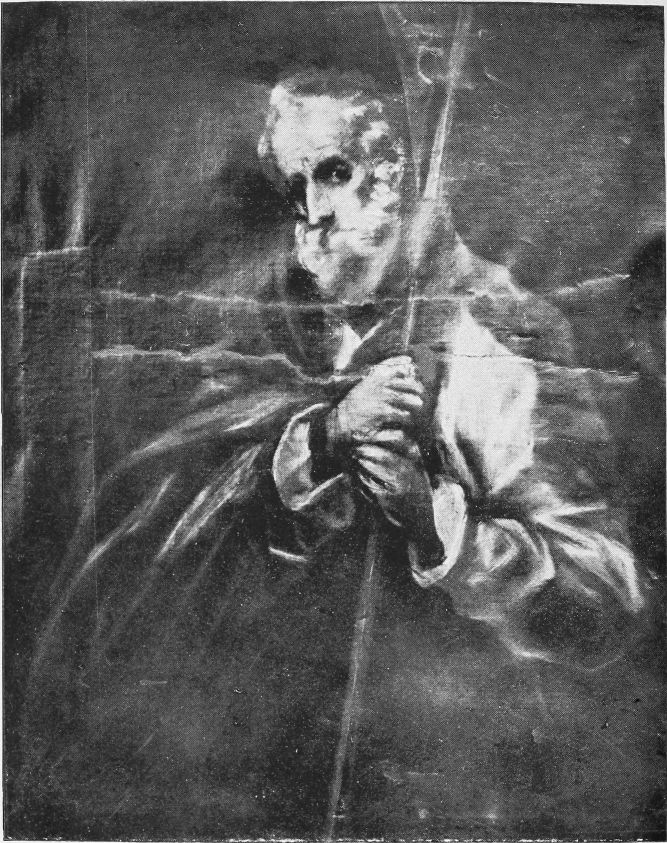
ST. JUDE TADEO
EL GRECO
PROVINCIAL MUSEUM
Plate 503
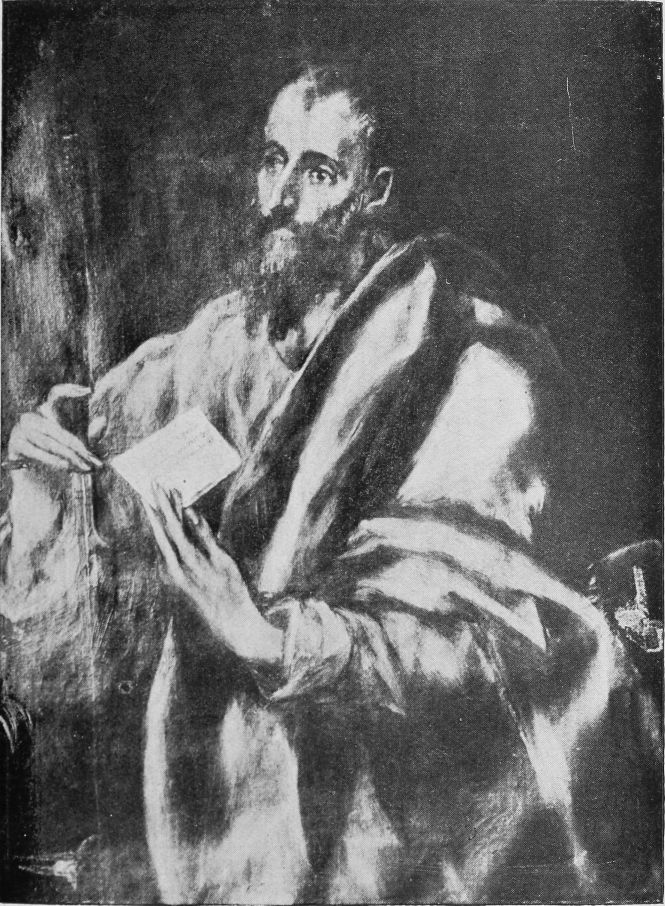
AN APOSTLE
EL GRECO
PROVINCIAL MUSEUM
Plate 504
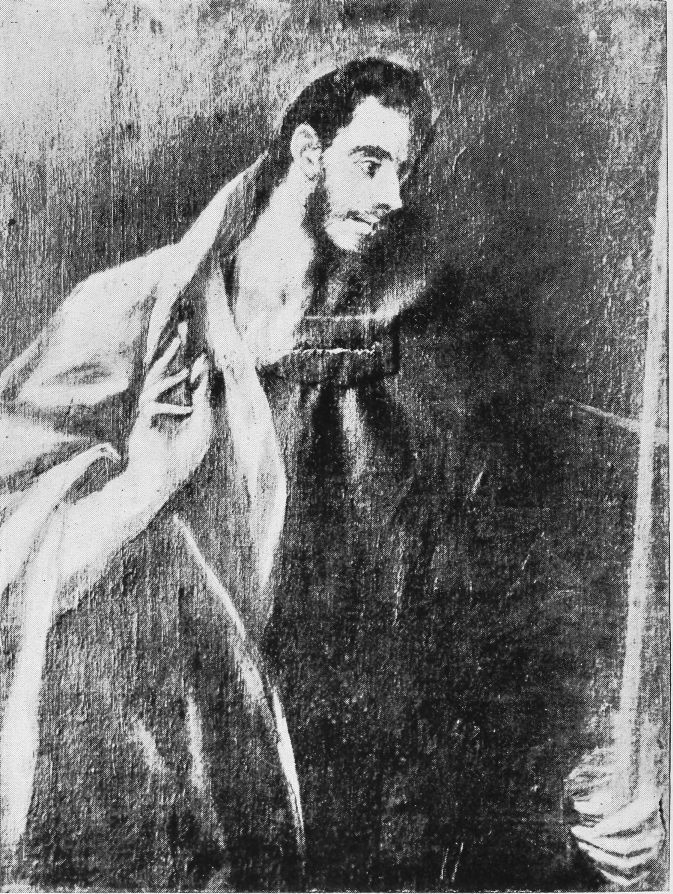
AN APOSTLE
EL GRECO
PROVINCIAL MUSEUM
Plate 505
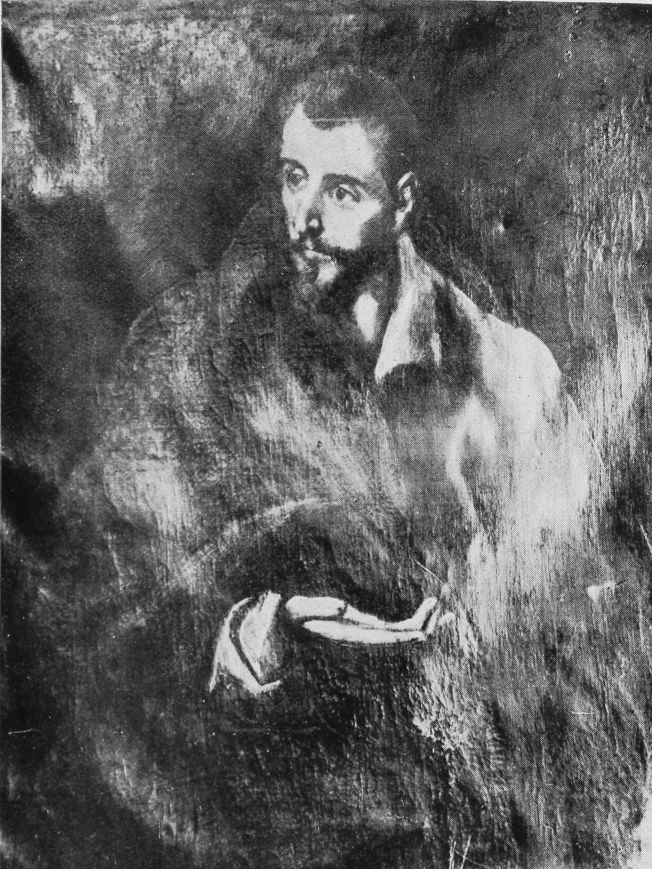
AN APOSTLE
EL GRECO
PROVINCIAL MUSEUM
Plate 506
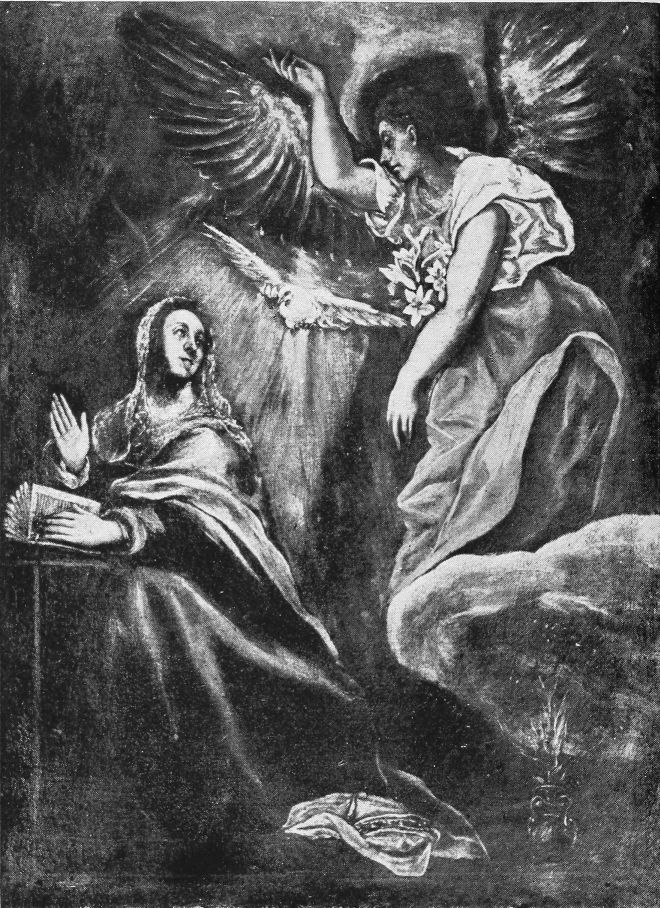
THE ANNUNCIATION
EL GRECO
Plate 507
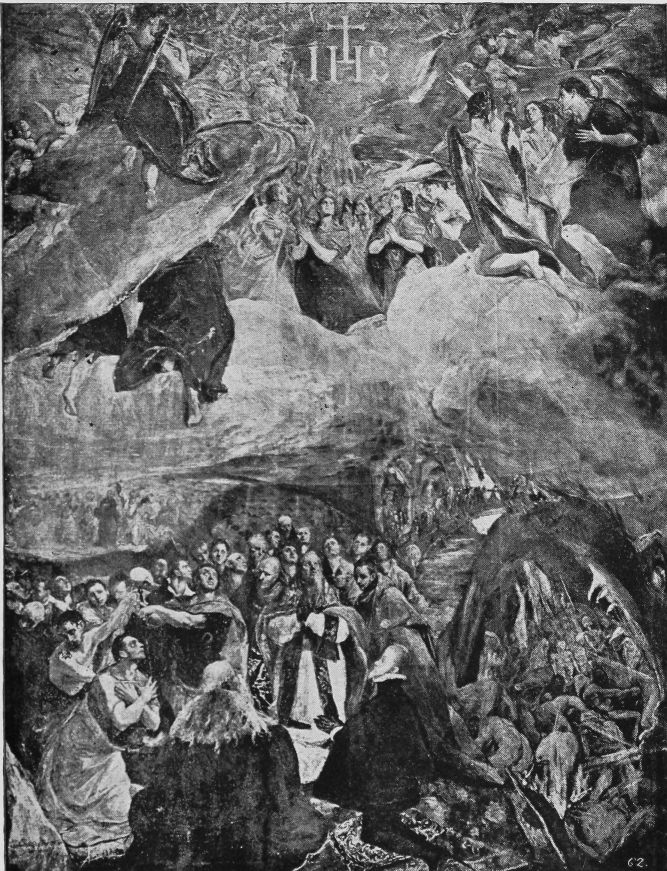
THE DREAM OF PHILIP II.
EL GRECO
CHAPTER HALL OF THE ESCORIAL
Plate 508
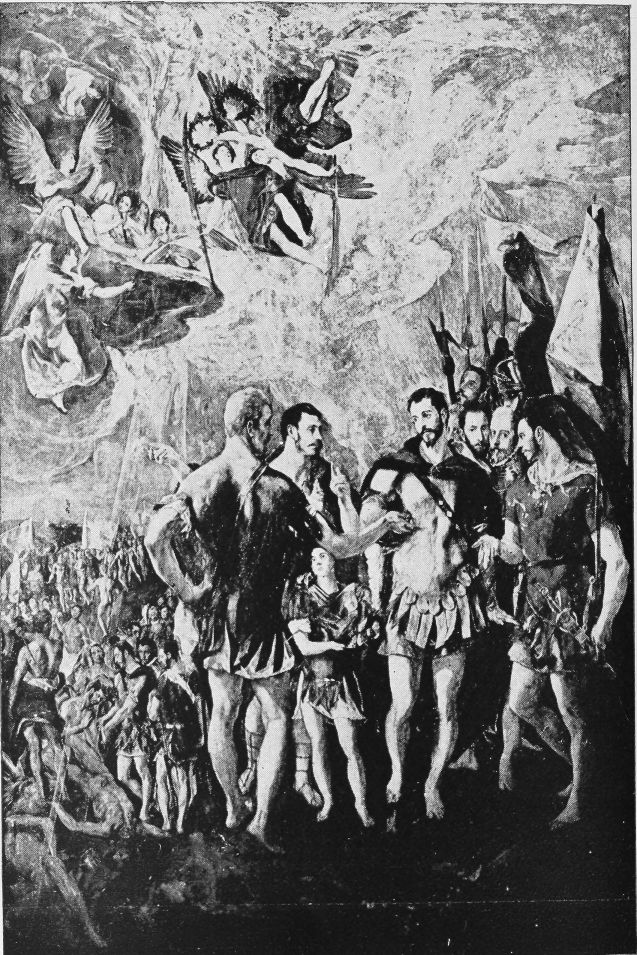
ST. MAURICE AND THE THEBAN LEGION
EL GRECO
CHAPTER HALL OF THE ESCORIAL
Plate 509
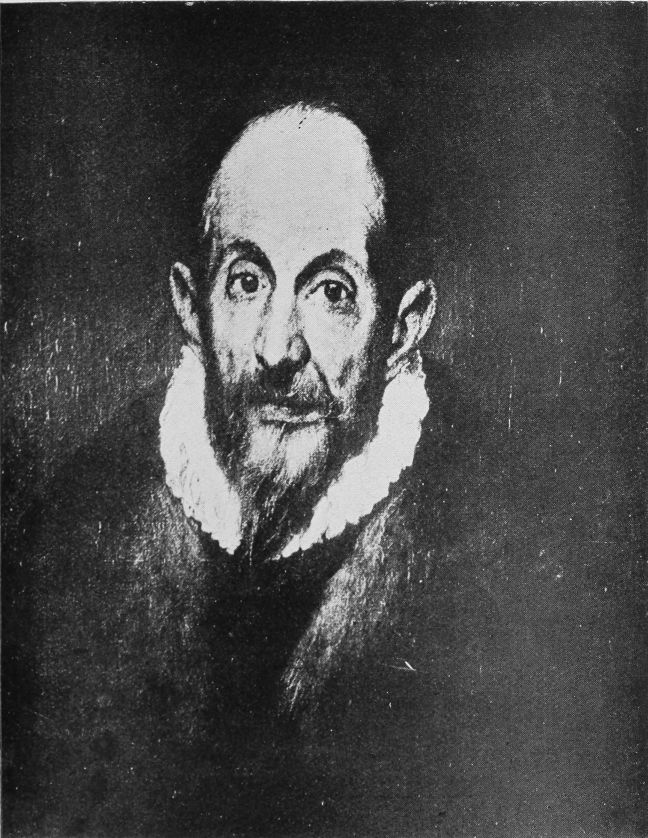
PORTRAIT OF EL GRECO BY HIMSELF
SEÑOR A. DE BERUETE, MADRID
Plate 510
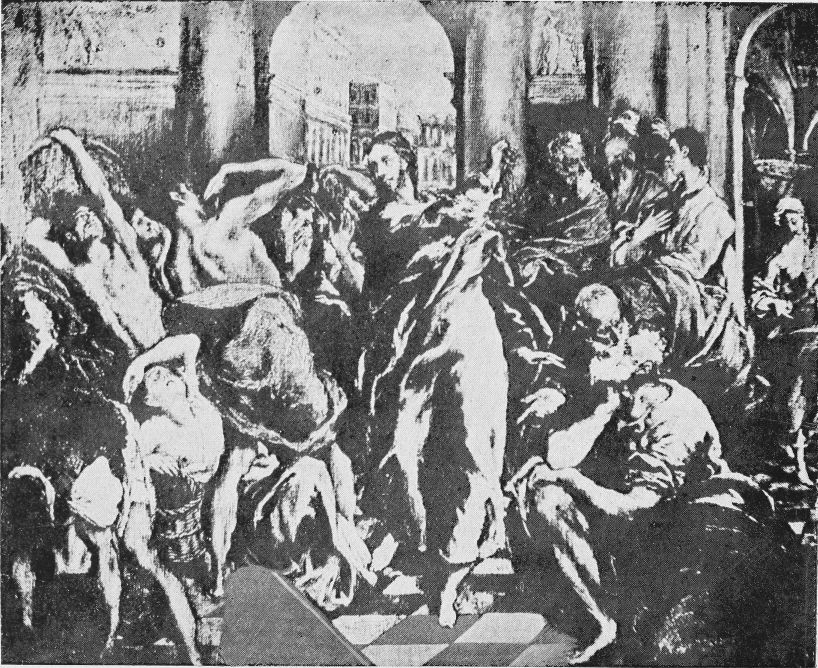
CHRIST DRIVING THE MONEY-CHANGERS FROM THE TEMPLE
EL GRECO
SEÑOR DE BERUETE, MADRID
Plate 511
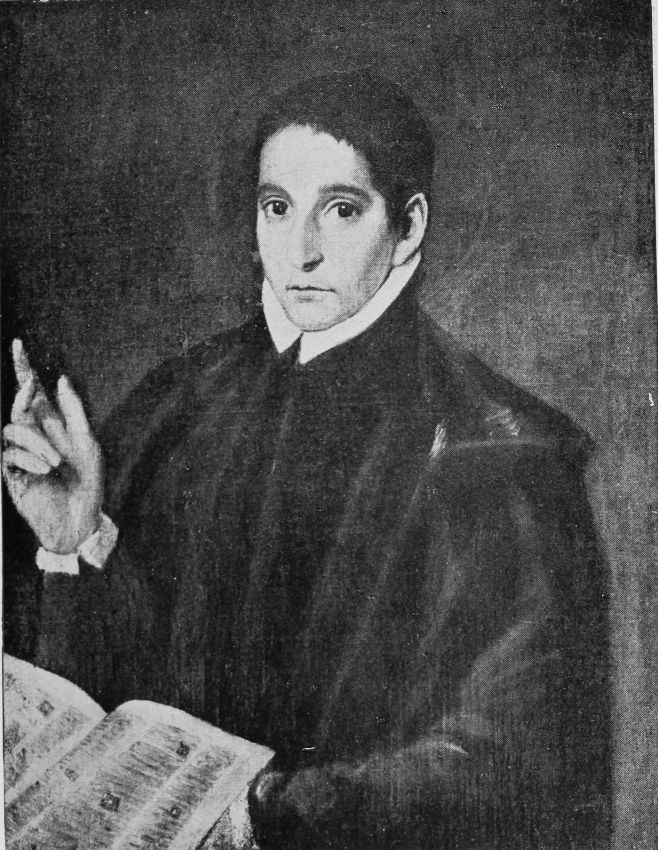
PORTRAIT OF A STUDENT (EL GRECO?)
EL GRECO
DON PABLO BOSCH, MADRID
THE
SPANISH SERIES
Edited by ALBERT F. CALVERT
A new and important series of volumes, dealing with Spain in its various
aspects, its history, its cities and monuments. Each volume will be
complete in itself in a uniform binding, and the number and excellence
of the reproductions from pictures will justify the claim that these
books comprise the most copiously illustrated series that has yet been
issued, some volumes having over 300 pages of reproductions of pictures,
etc.
Crown 8vo Price 3/6 net
| 1 | Goya | with 600 illustrations |
| 2 | Toledo | ” | 510 | ” |
| 3 | Madrid | ” | 450 | ” |
| 4 | Seville | ” | 300 | ” |
| 5 | Murillo | ” | 165 | ” |
| 6 | Cordova | ” | 160 | ” |
| 7 | El Greco | ” | 140 | ” |
| 8 | Velazquez | ” | 142 | ” |
| 9 | The Prado | ” | 223 | ” |
| 10 | The Escorial | ” | 278 | ” |
| 11 | Royal Palaces of Spain | ” | 200 | ” |
| 12 | Granada and Alhambra | ” | 460 | ” |
| 13 | Spanish Arms and Armour | ” | 386 | ” |
| 14 | Leon, Burgos and Salamanca | ” | 462 | ” |
| 15 | Valladolid, Oviedo,
Segovia Zamora, Avila and Zaragoza | ” | 390 | ” |
UNIFORM WITH THIS VOLUME
MURILLO
A BIOGRAPHY AND APPRECIATION. ILLUSTRATED BY OVER 165 REPRODUCTIONS FROM
PHOTOGRAPHS OF HIS MOST CELEBRATED PICTURES
While the names of Murillo and Velazquez are inseparably linked in the
history of Art as Spain’s immortal contribution to the small band of
world-painters, the great Court-Painter to Philip IV. has ever received
the lion’s share of public attention. Many learned and critical works
have been written about Murillo, but whereas Velazquez has been
familiarised to the general reader by the aid of small, popular
biographies, the niche is still empty which it is hoped that this book
will fill.
In this volume the attempt has been made to show the painter’s art in
its relation to the religious feeling of the age in which he lived, and
his own feeling towards his art. Murillo was the product of his
religious era, and of his native province, Andalusia. To Europe in his
lifetime he signified little or nothing. He painted to the order of the
religious houses in his immediate vicinity; his works were immured in
local monasteries and cathedrals, and, passing immediately out of
circulation, were forgotten or never known.
UNIFORM WITH THIS VOLUME
SPANISH ARMS AND ARMOUR
A HISTORICAL AND DESCRIPTIVE ACCOUNT OF THE ROYAL ARMOURY AT MADRID.
ILLUSTRATED WITH 386 REPRODUCTIONS FROM PHOTOGRAPHS. DEDICATED BY
SPECIAL PERMISSION TO H.M. QUEEN MARIA CRISTINA OF SPAIN
Although several valuable and voluminous catalogues of the Spanish Royal
Armoury have, from time to time, been compiled, this “finest collection
of armour in the world” has been subjected so often to the disturbing
influences of fire, removal, and re-arrangement, that no hand catalogue
of the Museum is available, and this book has been designed to serve
both as a historical souvenir of the institution and a record of its
treasures.
The various exhibits with which the writer illustrates his narrative are
reproduced to the number of nearly 400 on art paper, and the selection
of weapons and armour has been made with a view not only to render the
series interesting to the general reader, but to present a useful text
book for the guidance of artists, sculptors, antiquaries, costumiers,
and all who are engaged in the reproduction or representation of
European armoury.
UNIFORM WITH THIS VOLUME
THE ESCORIAL
A HISTORICAL AND DESCRIPTIVE ACCOUNT OF THE SPANISH ROYAL PALACE,
MONASTERY AND MAUSOLEUM. ILLUSTRATED WITH PLANS AND 278 REPRODUCTIONS
FROM PICTURES AND PHOTOGRAPHS
The Royal Palace, Monastery, and Mausoleum of El Escorial, which rears
its gaunt, grey walls in one of the bleakest but most imposing districts
in the whole of Spain, was erected to commemorate a victory over the
French in 1557. It was occupied and pillaged by the French two and
a-half centuries later, and twice it has been greatly diminished by
fire; but it remains to-day, not only the incarnate expression of the
fanatic religious character and political genius of Philip II., but the
greatest mass of wrought granite which exists on earth, the leviathan of
architecture, the eighth wonder of the world.
In the text of this book the author has endeavoured to reconstitute the
glories and tragedies of the living past of the Escorial, and to
represent the wonders of the stupendous edifice by reproductions of over
two hundred and seventy of the finest photographs and pictures
obtainable. Both as a review and a pictorial record it is hoped that the
work will make a wide appeal among all who are interested in the
history, the architecture, and the art of Spain.
UNIFORM WITH THIS VOLUME
TOLEDO
A HISTORICAL AND DESCRIPTIVE ACCOUNT OF THE “CITY OF GENERATIONS,” WITH
510 ILLUSTRATIONS
The origin of Imperial Toledo, “the crown of Spain, the light of the
world, free from the time of the mighty Goths,” is lost in the
impenetrable mists of antiquity. Mighty, unchangeable, invincible, the
city has been described by Wörmann as “a gigantic open-air museum of the
architectural history of early Spain, arranged upon a lofty and
conspicuous table of rock.”
But while some writers have declared that Toledo is a theatre with the
actors gone and only the scenery left, the author does not share the
opinion. He believes that the power and virility upon which Spain built
up her greatness is reasserting itself. The machinery of the theatre of
Toledo is rusty, the pulleys are jammed from long disuse, but the
curtain is rising steadily if slowly, and already can be heard the
tuning-up of fiddles in its ancient orchestra.
In this belief the author of this volume has not only set forth the
story of Toledo’s former greatness, but has endeavoured to place before
his readers a panorama of the city as it appears to-day, and to show
cause for his faith in the greatness of the Toledo of the future.
UNIFORM WITH THIS VOLUME
SEVILLE
A HISTORICAL AND DESCRIPTIVE ACCOUNT, WITH 300 ILLUSTRATIONS
Seville, which has its place in mythology as the creation of Hercules,
and was more probably founded by the Phœnicians, which became
magnificent under the Roman rule, was made the capital of the Goths,
became the centre of Moslem power and splendour, and fell before the
military prowess of St. Ferdinand, is still the Queen of Andalusia, the
foster-mother of Velazquez and Murillo, the city of poets and pageantry
and love.
Seville is always gay, and responsive and fascinating to the receptive
visitor, and all sorts of people go there with all sorts of motives. The
artist repairs to the Andalusian city to fill his portfolio; the lover
of art makes the pilgrimage to study Murillo in all his glory. The
seasons of the Church attract thousands from reasons of devotion or
curiosity. And of all these myriad visitors, who go with their minds
full of preconceived notions, not one has yet confessed to being
disappointed in Seville.
The author has here attempted to convey in the illustrations an
impression of this laughing city where all is gaiety and mirth and
ever-blossoming roses, where the people pursue pleasure as the serious
business of life in an atmosphere of exhilarating enjoyment.
UNIFORM WITH THIS VOLUME
THE PRADO
A GUIDE AND HANDBOOK TO THE ROYAL PICTURE GALLERY OF MADRID. ILLUSTRATED
WITH 221 REPRODUCTIONS FROM PHOTOGRAPHS OF OLD MASTERS. DEDICATED BY
SPECIAL PERMISSION TO H.R.H. PRINCESS HENRY OF BATTENBERG
This volume is an attempt to supplement the accurate but formal notes
contained in the official catalogue of a picture gallery which is
considered the finest in the world. It has been said that the day one
enters the Prado for the first time is an important event like marriage,
the birth of a child, or the coming into an inheritance; an experience
of which one feels the effects to the day of one’s death.
The excellence of the Madrid gallery is the excellence of exclusion; it
is a collection of magnificent gems. Here one becomes conscious of a
fresh power in Murillo, and is amazed anew by the astonishing apparition
of Velazquez; here is, in truth, a rivalry of miracles of art.
The task of selecting pictures for reproduction from what is perhaps the
most splendid gallery of old masters in existence, was one of no little
difficulty, but it is believed that the collection is representative,
and that the letterpress will form a serviceable companion to the
visitor to The Prado.
UNIFORM WITH THIS VOLUME
GRANADA AND THE ALHAMBRA
A BRIEF HISTORY OF THE MOSLEM RULE IN SPAIN, TOGETHER WITH A PARTICULAR
ACCOUNT OF THE CONSTRUCTION, THE ARCHITECTURE, AND THE DECORATION OF THE
MOORISH PALACE, WITH 460 ILLUSTRATIONS. DEDICATED BY SPECIAL PERMISSION
TO H.I.M. THE EMPRESS EUGÉNIE
This volume is the third and abridged edition of a work which the author
was inspired to undertake by the surpassing loveliness of the Alhambra,
and by his disappointment in the discovery that no such thing as an even
moderately adequate illustrated souvenir of “this glorious sanctuary of
Spain” was obtainable. Keenly conscious of the want himself, he essayed
to supply it, and the result is a volume that has been acclaimed with
enthusiasm alike by critics, artists, architects, and archæologists.
In his preface to the first edition, Mr. Calvert wrote: “The Alhambra
may be likened to an exquisite opera which can only be appreciated to
the full when one is under the spell of its magic influence. But as the
witchery of an inspired score can be recalled by the sound of an air
whistled in the street, so—it is my hope—the pale ghost of the Moorish
fairy-land may live again in the memories of travellers through the
medium of this pictorial epitome.”
UNIFORM WITH THIS VOLUME
EL GRECO
A BIOGRAPHY AND APPRECIATION. ILLUSTRATED BY REPRODUCTIONS OF OVER 140
OF HIS PICTURES
In a Series such as this, which aims at presenting every aspect of
Spain’s eminence in art and in her artists, the work of Domenico
Theotocópuli must be allotted a volume to itself. “El Greco,” as he is
called, who reflects the impulse, and has been said to constitute the
supreme glory of the Venetian era, was a Greek by repute, a Venetian by
training, and a Toledan by adoption. His pictures in the Prado are still
catalogued among those of the Italian School, but foreigner as he was,
in his heart he was more Spanish than the Spaniards.
El Greco is typically, passionately, extravagantly Spanish, and with his
advent, Spanish painting laid aside every trace of Provincialism, and
stepped forth to compel the interest of the world. Neglected for many
centuries, and still often misjudged, his place in art is an assured
one. It is impossible to present him as a colourist in a work of this
nature, but the author has got together reproductions of no fewer than
140 of his pictures—a greater number than has ever before been
published of El Greco’s works.
UNIFORM WITH THIS VOLUME
VELAZQUEZ
A BIOGRAPHY AND APPRECIATION. ILLUSTRATED WITH 142 REPRODUCTIONS FROM
PHOTOGRAPHS OF HIS MOST CELEBRATED PICTURES
Diego Rodriguez de Silva y Velazquez—“our Velazquez,” as Palomino
proudly styles him—has been made the subject of innumerable books in
every European language, yet the Editor of this Spanish Series feels
that it would not be complete without the inclusion of yet another
contribution to the broad gallery of Velazquez literature.
The great Velazquez, the eagle in art—subtle, simple, incomparable—the
supreme painter, is still a guiding influence of the art of to-day. This
greatest of Spanish artists, a master not only in portrait painting, but
in character and animal studies, in landscapes and historical subjects,
impressed the grandeur of his superb personality upon all his work.
Spain, it has been said, the country whose art was largely borrowed,
produced Velazquez, and through him Spanish art became the light of a
new artistic life.
The author cannot boast that he has new data to offer, but he has put
forward his conclusions with modesty; he has reproduced a great deal
that is most representative of the artist’s work; and he has endeavoured
to keep always in view his object to present a concise, accurate, and
readable life of Velazquez.
UNIFORM WITH THIS VOLUME
ROYAL PALACES OF SPAIN
A HISTORICAL AND DESCRIPTIVE ACCOUNT OF THE SEVEN PRINCIPAL PALACES OF
THE SPANISH KINGS. PROFUSELY ILLUSTRATED
Spain is beyond question the richest country in the world in the number
of its Royal Residences, and while few are without artistic importance,
all are rich in historical memories. Thus, from the Alcazar at Seville,
which is principally associated with Pedro the Cruel, to the Retiro,
built to divert the attention of Philip IV. from his country’s decay;
from the Escorial, in which the gloomy mind of Philip II. is perpetuated
in stone, to La Granja, which speaks of the anguish and humiliation of
Christina before Sergeant Garcia and his rude soldiery; from Aranjuéz to
Rio Frio, and from El Pardo, darkened by the agony of a good king, to
Miramar, to which a widowed Queen retired to mourn: all the history of
Spain, from the splendid days of Charles V. to the present time, is
crystallised in the Palaces that constitute the patrimony of the Crown.
The Royal Palaces of Spain are open to visitors at stated times, and it
is hoped that this volume, with its wealth of illustrations, will serve
the visitor both as a guide and a souvenir.
UNIFORM WITH THIS VOLUME
VALLADOLID, OVIEDO, SEGOVIA, ZAMORA, AVILA AND ZARAGOZA
A HISTORICAL AND DESCRIPTIVE ACCOUNT, WITH 390 ILLUSTRATIONS
The glory of Valladolid has departed, but the skeleton remains, and
attached to its ancient stones are the memories that Philip II. was born
here, that here Cervantes lived, and Christopher Columbus died. In this
one-time capital of Spain, in the Plaza Mayor, the fires of the Great
Inquisition were first lighted, and here Charles V. laid the foundation
of the Royal Armoury, which was afterwards transferred to Madrid.
More than seven hundred years have passed since Oviedo was the proud
capital of the Kingdoms of Las Asturias, Leon, and Castile. Segovia,
though no longer great, has still all the appurtenances of greatness,
and with her granite massiveness and austerity, she remains an
aristocrat even among the aristocracy of Spanish cities. Zamora, which
has a history dating from time almost without date, was the key of Leon
and the centre of the endless wars between the Moors and the Christians,
which raged round it from the eighth to the eleventh centuries.
In this volume the author has striven to re-create the ancient greatness
of these six cities, and has preserved their memories in a wealth of
excellent and interesting illustrations.
UNIFORM WITH THIS VOLUME
LEON, BURGOS AND SALAMANCA
A HISTORICAL AND DESCRIPTIVE ACCOUNT, WITH 462 ILLUSTRATIONS
In Leon, once the capital of the second kingdom in Spain; in Burgos,
which boasts one of the most magnificent cathedrals in Spain, and the
custodianship of the bones of the Cid; and in Salamanca, with its
university, which is one of the oldest in Europe, the author has
selected three of the most interesting relics of ancient grandeur in
this country of departed greatness.
Leon to-day is nothing but a large agricultural village, torpid, silent,
dilapidated; Burgos, which still retains traces of the Gotho-Castilian
character, is a gloomy and depleting capital: and Salamanca is a city of
magnificent buildings, a broken hulk, spent by the storms that from time
to time have devastated her.
Yet apart from the historical interest possessed by these cities, they
still make an irresistible appeal to the artist and the antiquary. They
are content with their stories of old-time greatness and their
cathedrals, and these ancient architectural splendours, undisturbed by
the touch of a modernising and renovating spirit, continue to attract
the visitor.
UNIFORM WITH THIS VOLUME
MADRID
A HISTORICAL AND DESCRIPTIVE ACCOUNT OF THE SPANISH CAPITAL, WITH 450
ILLUSTRATIONS
Madrid is at once one of the most interesting and most maligned cities
in Europe. It stands at an elevation of 2,500 feet above the sea level,
in the centre of an arid, treeless, waterless, and wind-blown plain; but
whatever may be thought of the wisdom of selecting a capital in such a
situation, one cannot but admire the uniqueness of its position, and the
magnificence of its buildings, and one is forced to admit that, having
fairly entered the path of progress, Madrid bids fair to become one of
the handsomest and most prosperous of European cities.
The splendid promenades, the handsome buildings, and the spacious
theatres combine to make Madrid one of the first cities of the world,
and the author has endeavoured with the aid of the camera, to place
every feature and aspect of the Spanish metropolis before the reader.
Some of the illustrations reproduced here have been made familiar to the
English public by reason of the interesting and stirring events
connected with the Spanish Royal Marriage, but the greater number were
either taken by the author, or are the work of photographers specially
employed to obtain new views for the purpose of this volume.
UNIFORM WITH THIS VOLUME
GOYA
A BIOGRAPHY AND APPRECIATION. ILLUSTRATED BY REPRODUCTIONS OF 600 OF HIS
PICTURES
The last of the old masters and the first of the moderns, as he has been
called, Francisco José de Goya y Lucientes is not so familiarised to
English readers as his genius deserves. He was born at a time when the
tradition of Velazquez was fading, and the condition of Spanish painting
was debased almost beyond hope of salvation; he broke through the
academic tradition of imitation; “he, next to Velazquez, is to be
accounted as the man whom the Impressionists of our time have to thank
for their most definite stimulus, their most immediate inspiration.”
The genius of Goya was a robust, imperious, and fulminating genius; his
iron temperament was passionate, dramatic, and revolutionary; he painted
a picture as he would have fought a battle. He was an athletic, warlike,
and indefatigable painter; a naturalist like Velazquez; fantastic like
Hogarth; eccentric like Rembrandt; the last flame-coloured flash of
Spanish genius.
It is impossible to reproduce his colouring; but in the reproductions of
his works the author has endeavoured to convey to the reader some idea
of Goya’s boldness of style, his mastery of frightful shadows and
mysterious lights, and his genius for expressing all terrible emotions.
UNIFORM WITH THIS VOLUME
CORDOVA
A HISTORICAL AND DESCRIPTIVE ACCOUNT OF THE ANCIENT CITY WHICH THE
CARTHAGINIANS STYLED THE “GEM OF THE SOUTH,” WITH 160 ILLUSTRATIONS
Gay-looking, vivacious in its beauty, silent, ill-provided, depopulated,
Cordova was once the pearl of the West, the city of cities, Cordova of
the thirty suburbs and three thousand mosques; to-day she is no more
than an overgrown village, but she still remains the most Oriental town
in Spain.
Cordova, once the centre of European civilisation, under the Moors the
Athens of the West, the successful rival of Baghdad and Damascus, the
seat of learning and the repository of the arts, has shrunk to the
proportions of a third-rate provincial town; but the artist, the
antiquary and the lover of the beautiful, will still find in its streets
and squares and patios a mysterious spell that cannot be resisted.
BY ALBERT F. CALVERT
LIFE OF CERVANTES
A NEW LIFE OF THE GREAT SPANISH AUTHOR TO COMMEMORATE THE TERCENTENARY
OF THE PUBLICATION OF “DON QUIXOTE,” WITH NUMEROUS PORTRAITS AND
REPRODUCTIONS FROM EARLY EDITIONS OF “DON QUIXOTE”
Size Crown 8 vo. 150 pp. Price 3/6 net
PRESS NOTICES
“A popular and accessible account of the career of Cervantes.”—Daily
Chronicle.
“A very readable and pleasant account of one of the great writers of all
time.”—Morning Leader.
“Mr. Calvert is entitled to the gratitude of book-lovers for his
industrious devotion at one of our greatest literary
shrines.”—Birmingham Post.
“It is made trebly interesting by the very complete set of Cervantes’
portraits it contains, and by the inclusion of a valuable
bibliography.”—Black and White.
“We recommend the book to all those to whom Cervantes is more than a
mere name.”—Westminster Gazette.
“A most interesting résumé of all facts up to the present time
known.”—El Nervion de Bilbao, Spain.
“The most notable work dedicated to the immortal author of Don Quixote
that has been published in England.”—El Graduador, Spain.
“Although the book is written in English no Spaniard could have written
it with more conscientiousness and enthusiasm.”—El Defensor de
Granada, Spain.
BY ALBERT F. CALVERT
THE ALHAMBRA
OF GRANADA, BEING A BRIEF HISTORY OF THE MOSLEM RULE IN SPAIN FROM THE
REIGN OF MOHAMMED THE FIRST TO THE FINAL EXPULSION OF THE MOORS,
TOGETHER WITH A PARTICULAR ACCOUNT OF THE CONSTRUCTION, THE ARCHITECTURE
AND THE DECORATION OF THE MOORISH PALACE, WITH 80 COLOURED PLATES AND
NEARLY 300 BLACK AND WHITE ILLUSTRATIONS (NEW EDITION). DEDICATED BY
PERMISSION TO H.M. KING ALFONSO XIII.
Size 10 x 7½. Price £2 2s. net
PRESS NOTICES
“It is hardly too much to say that this is one of the most magnificent
books ever issued from the English Press.”—Building World.
“One is really puzzled where to begin and when to stop in praising the
illustrations.”—Bookseller.
“The most complete record of this wonder of architecture which has ever
been contemplated, much less attempted.”—British Architect.
“A treasure to the student of decorative art.”—Morning Advertiser.
“Mr. Calvert has given us a Book Beautiful.”—Western Daily Press.
“It is the last word on the subject, no praise is too
high.”—Nottingham Express.
“May be counted among the more important art books which have been
published during recent years.”—The Globe.
“Has a pride of place that is all its own among the books of the
month.”—Review of Reviews.
“Has in many respects surpassed any books on the Alhambra which up to
the present have appeared in our own country or abroad.”—El Graduador,
Spain.
“It is one of the most beautiful books of modern times.”—Ely Gazette.
“One of the most artistic productions of the year.”—Publishers’
Circular.
“The most beautiful book on the Alhambra issued in England.”—Sphere.
“The standard work on a splendid subject.”—Daily Telegraph.
“A remarkable masterpiece of book production.”—Eastern Daily Press.
“A perfect treasure of beauty and delight.”—Keighley News.
“A magnificent work.”—Melbourne Age, Australia.
“Immense collection of fine plates.”—The Times.
“A standard work, the compilation of which would credit a life’s
labour.”—Hull Daily Mail.
BY ALBERT F. CALVERT
MOORISH REMAINS IN SPAIN
BEING A BRIEF RECORD OF THE ARABIAN CONQUEST AND OCCUPATION OF THE
PENINSULA, WITH A PARTICULAR ACCOUNT OF THE MOHAMMEDAN ARCHITECTURE AND
DECORATION IN THE CITIES OF CORDOVA, SEVILLE AND TOLEDO, WITH MANY
COLOURED PLATES, AND OVER 400 BLACK AND WHITE ILLUSTRATIONS, DIAGRAMS,
ETC., DEDICATED BY PERMISSION TO H.M. KING ALFONSO XIII.
Crown 4to. (7½ × 10 ins.) Price £2 2s. net
PRESS NOTICES
“The making of this book must surely have been a veritable labour of
love; and love’s labour has certainly not been lost.”—Pall Mall
Gazette.
“The best age of Moorish architecture in Spain is shown with remarkable
vividness and vitality.”—The Scotsman.
“A most gorgeous book.... We cheerfully admit Mr. Calvert into the ranks
of those whom posterity will applaud for delightful yet unprofitable
work.”—Outlook.
“A large and sumptuous volume.”—Tribune.
“The illustrations are simply marvels of reproduction.”—Dundee
Advertiser.
“One of the books to which a simple literary review cannot pretend to do
justice.”—Spectator.
“A special feature of a work of peculiar interest and value are the
illustrations.”—Newcastle Chronicle.
“The illustrations are given with a minuteness and faithfulness of
detail, and colour, which will be particularly appreciated and
acknowledged by those who are most acquainted with the subject
themselves.”—Liverpool Post.
“It is impossible to praise too highly the care with which the
illustrations have been prepared.”—Birmingham Daily Post.
“It is illustrated with so lavish a richness of colour that to turn its
pages gives one at first almost the same impression of splendour as one
receives in wandering from hall to hall of the Alcazar of Seville; and
this is probably the highest compliment we could pay to the book or its
author.”—Academy.
“It is certainly one of the most interesting books of the
year.”—Crown.
“The occasional delicacy of design and harmony of colour can scarcely be
surpassed ... a valuable and profusely illustrated volume.”—Guardian.
“An excellent piece of work.”—The Times.
“Mr. Calvert has performed a useful work.”—Daily Telegraph.
“A truly sumptuous volume.”—The Speaker.
“Mr. Calvert has given a very complete account of the evolution of
Moresco art.”—The Connoisseur.


