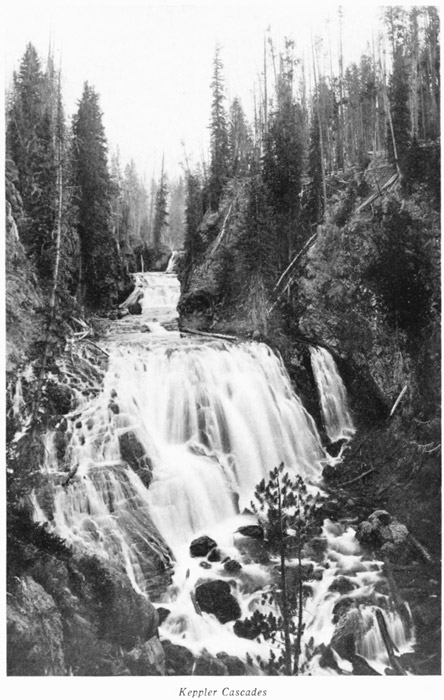
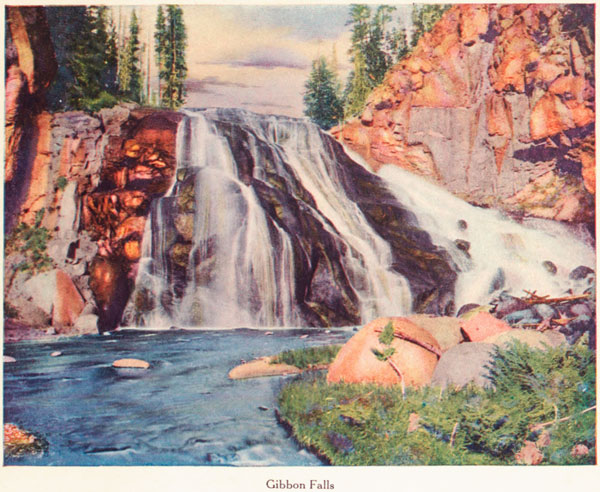
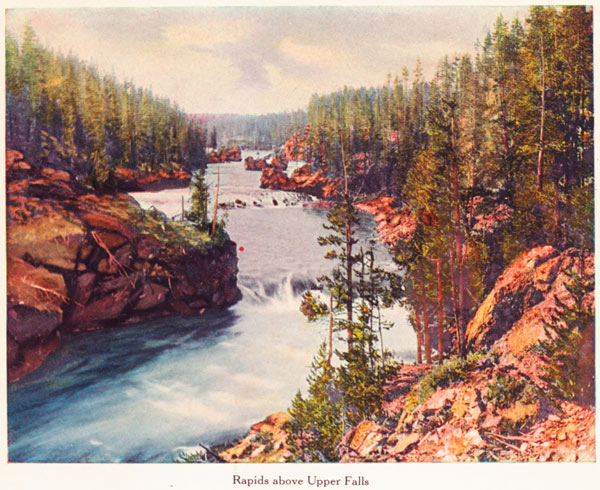
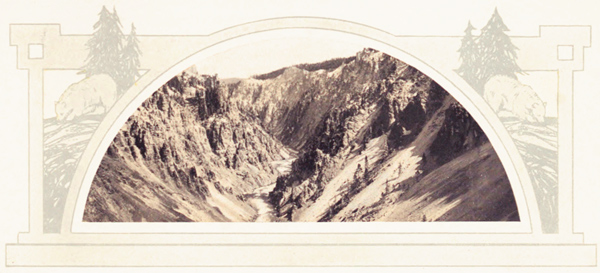
Nature has lavished her gifts on the region of the Yellowstone—wild woodland, crystal
rivers, gorgeous canyons and sparkling cascades—all under the guard of mountain sentinels
around whose lofty heads group every form of cloud castle that vagrant winds can build.
But of all the wonders that God in His mysterious way has there worked to perform, none
is so strange—so startling—as the geysers.
To count them, great and small, would be like counting the stars, and to measure in
words their awful power, or picture their splendor of sparkle and symmetry—that, no one
can do. They must be seen to be appreciated, and once seen—the memory and mystery of them will
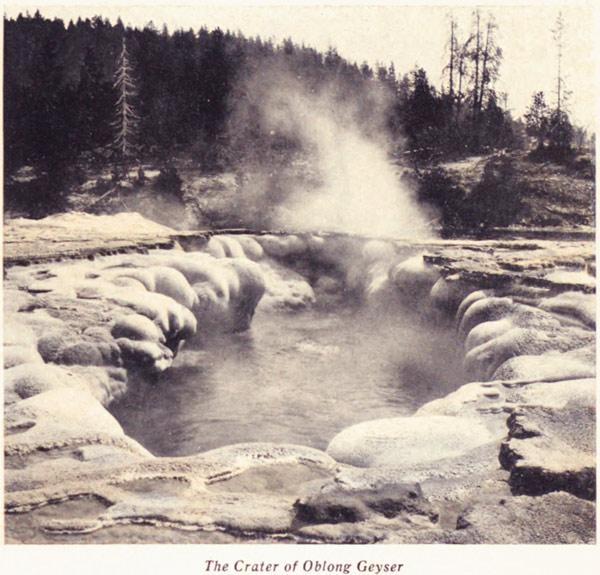
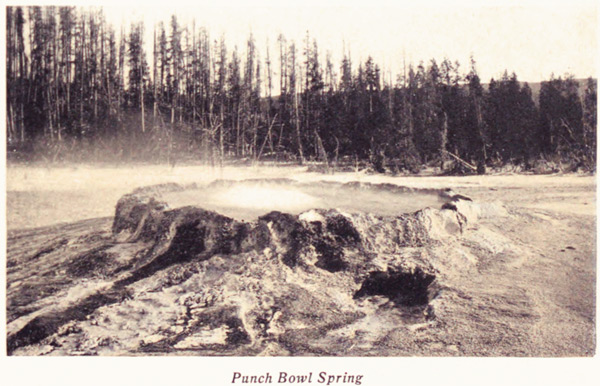
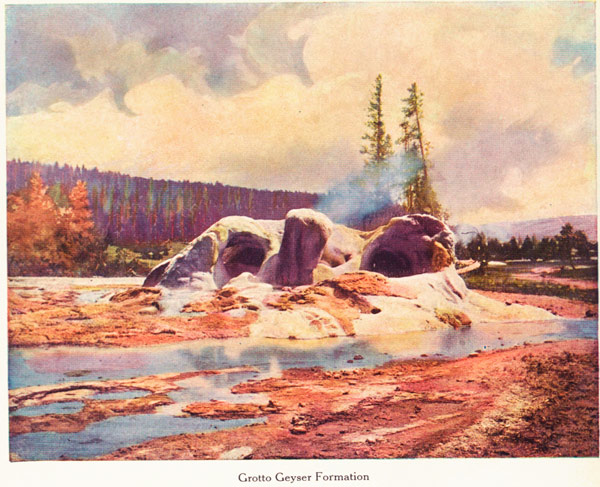
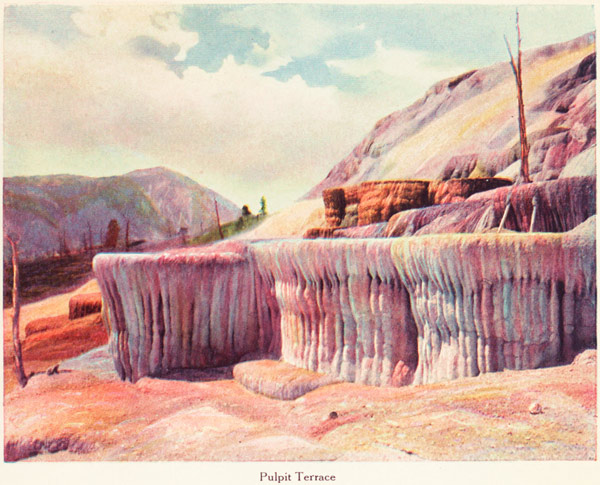
linger to the end of the longest life. They are as different as geysers can be. There are dead geysers—dead
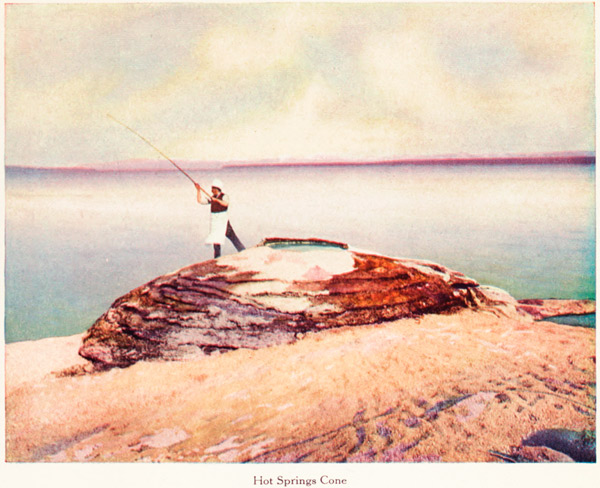
from bursted throats—mere boiling pools now—shaped to resemble a variety of familiar things;
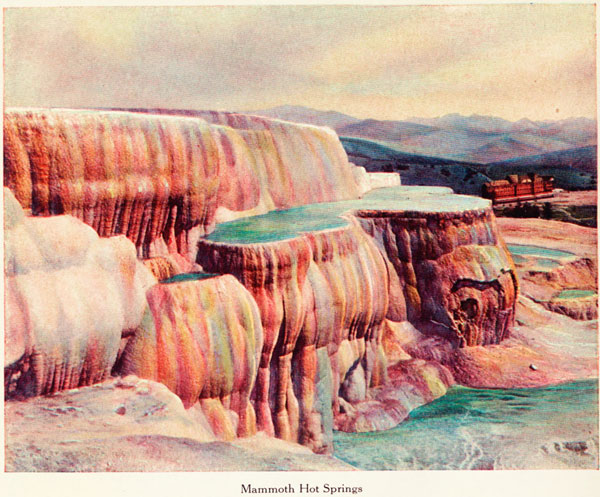
with depths that the eye cannot sound, and colors—blues, greens, purples, reds—down their deep sides
and in the wonderful tracery about their rims, so blended, so beautiful that one may well believe that all
the paints on the palette of the Master were commingled in their decoration.
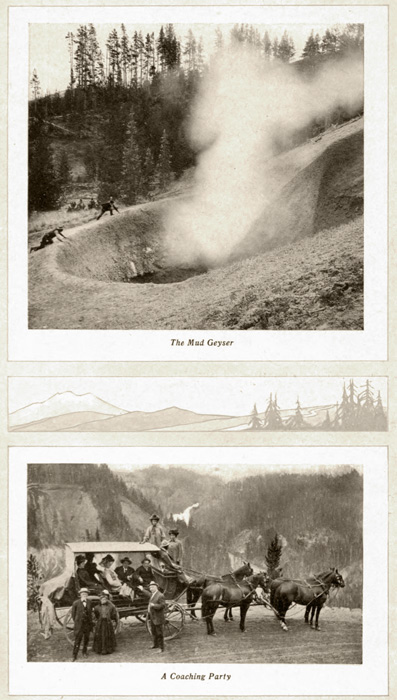
One blubbers and gurgles and grumbles awhile, and then with an angry roar lifts a great column of
mud into the air. Another steams and growls through an orifice hundreds of feet wide in seeming angry
spite that years ago it blew out its throat and ceased to gush forever.
[A]
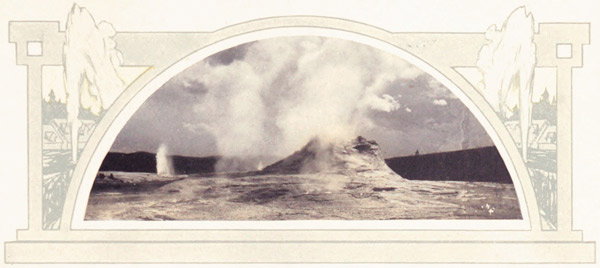
But the geysers that most attract
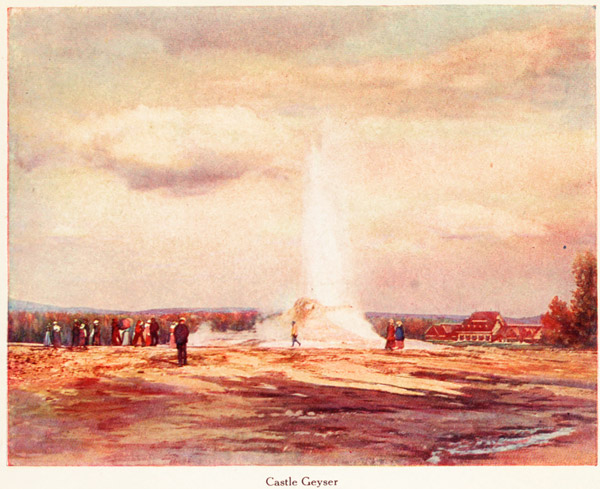
are the regular-timed spouting wonders—the Giant and Giantess, Old Faithful, the Grand, the Fountain,
the Castle and others whose names mark the geography of the Park.
The Geysers
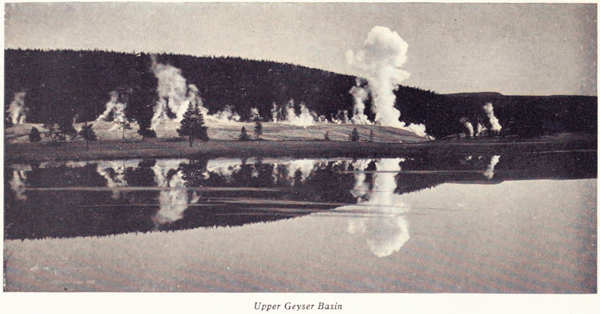
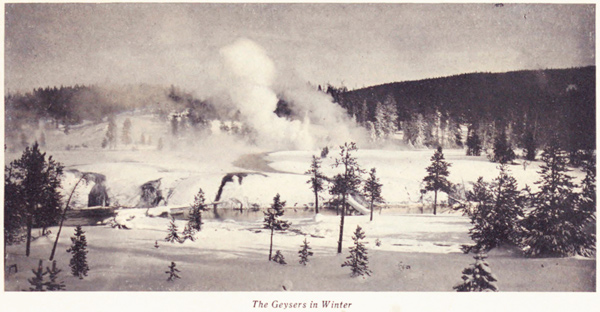
They are variously located in three distinct basins which are far enough apart to give the traveler by
stage a few geysers with each day's entertainment. These basins are great wastes of a white deposition
called in Park vernacular "the formation" under which must be boiling one of the mighty cauldrons of the
earth, for one can feel under foot a tremble, and can hear through a hundred orifices the hiss of steam and
the angry murmur of the waters below.
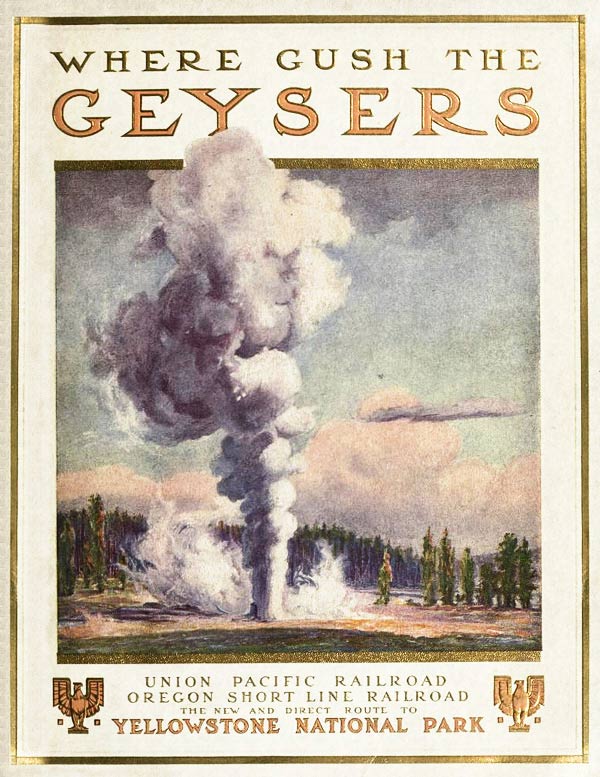
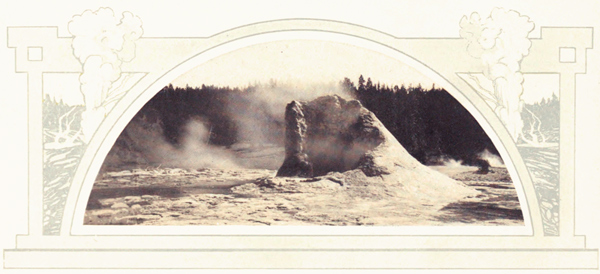
The coming and going of the geysers is an astonishing and awe-inspiring spectacle, and so accurately
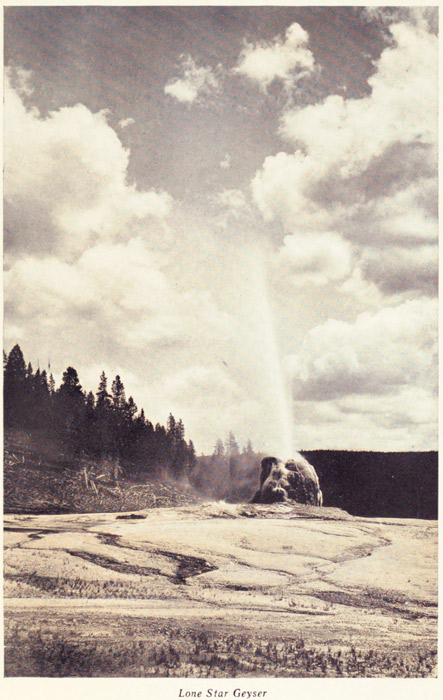
timed and so certain to perform are they, that no one need miss the experience. The geyser passive is a
hole at the summit of a cone. The cone rises gradually from the plane of the formation and, ragged and
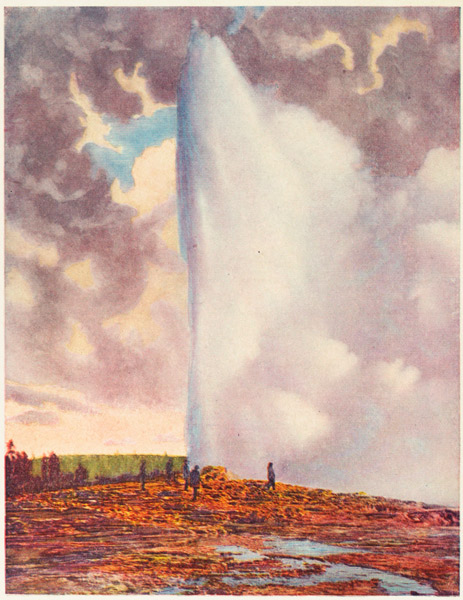
deep, growls hoarsely and steams fitfully. Thus it is a moment before its time for activity, and then comes
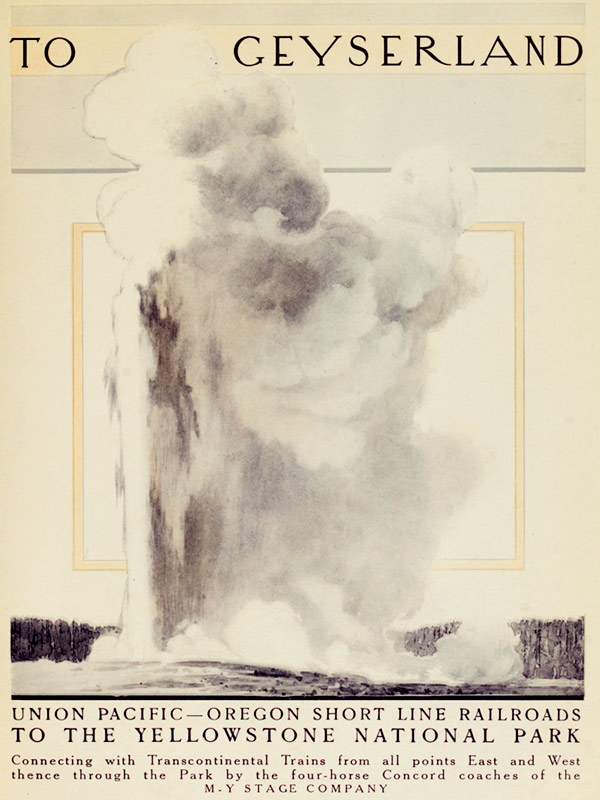
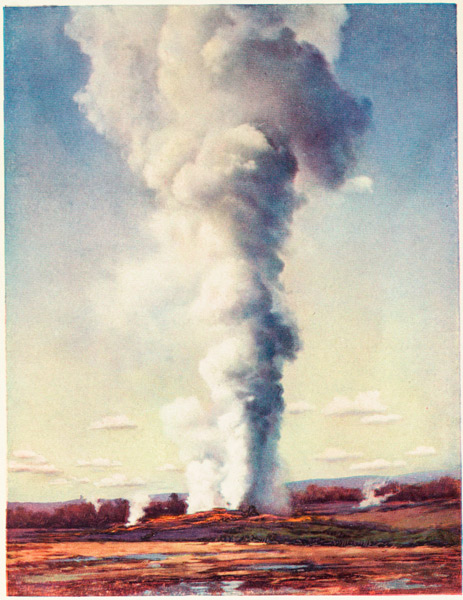
the geyser active. There is a loud preliminary roar and then suddenly, with a rush and power almost
terrifying, a white obelisk of scalding, steaming water is lifted into the air sometimes 250 feet, and there
held scintillating and glistening in the sun until the play is over, when it sinks gradually back from whence
it came, and the fitful growling and steaming begins anew.
Every geyser has a time of its own and there are thousands of them, varying in size from the little
growler that sputters and spits a thimbleful from its tiny throat, to the Giant that three times a month plays
for ninety minutes, 250 feet high.
How old the geysers are, recorded time does not tell, but one or two of the wise men, who are always
measuring the duration of things by some system of calculation, have determined by multiplying the
deposition from each eruption by the height of the cone, that the Giant, for instance, has been playing
some thousands of years.
If those who come and go across the land every year on pleasure bent only knew how curious and
beautiful geysers are, the National Park would count its visitors by multitudes.
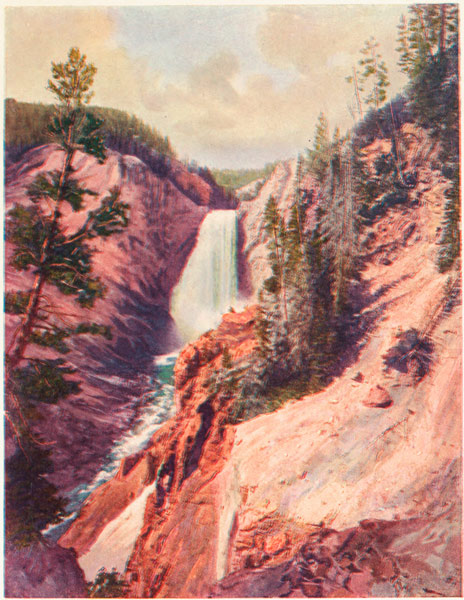
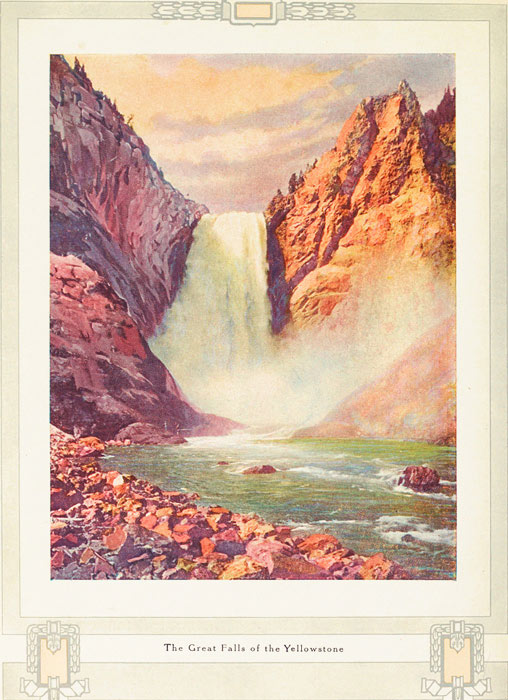
The Great Falls From Below
larger
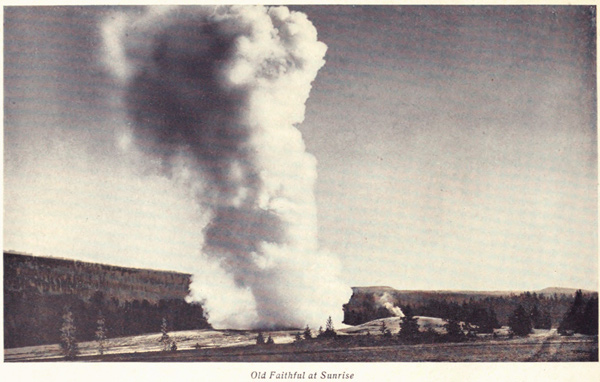
Old Faithful at Sunrise
larger