Footnotes, which appeared at the bottom of the page, have been
resequenced numerically for uniqueness and moved to follow the paragraph
within which they are referenced.
Errors, when reasonably attributable to the printer, have been corrected.
The corrections appear as words underlined with a light gray. The original
text will be shown when the mouse is over the word. Please see the
transcriber’s note at the end of this text for details.
BY THE SAME AUTHOR.
I.
RALPH DARNELL. New and Cheaper Edition, with Frontispiece.
Crown 8vo, cloth, price 6s.
II.
THE CONFESSIONS OF A THUG. New and Cheaper Edition, with
Frontispiece. Crown 8vo, cloth, price 6s.
‘A story so powerfully and graphically told does not soon lose its hold on the
imagination.’—Daily News.
III.
TARA: A Mahratta Tale. New and Cheaper Edition, with Frontispiece.
Crown 8vo, cloth, price 6s.
‘We recommend it to all who care to know something of native life in India on
its nobler side, as a book of very high calibre.’—Spectator.
IV.
A NOBLE QUEEN: A Romance of Indian History. 3 Vols. crown 8vo,
cloth.
V.
SEETA. 3 Vols. crown 8vo, cloth.
London: C. KEGAN PAUL & CO., 1 Paternoster Square.
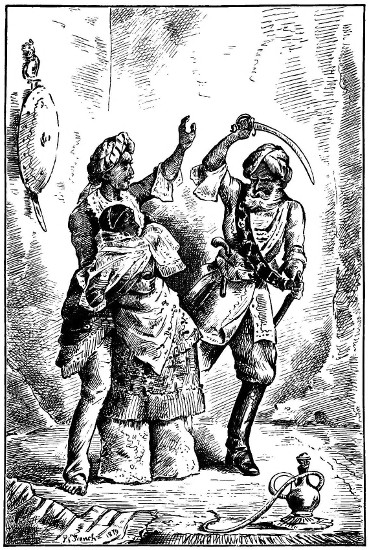
Tippoo Sultaun. P. 397
TIPPOO SULTAUN;
A TALE OF THE MYSORE WAR.
BY THE LATE
COLONEL MEADOWS TAYLOR.
SECOND EDITION.
LONDON:
C. KEGAN PAUL & CO., 1 PATERNOSTER SQUARE.
1880.
COLSTON AND SON, PRINTERS, EDINBURGH.
[The Rights of Translation and of Reproduction are reserved.]
TO
WILLIAM NEWNHAM, Esq.,
MY BEST AND EARLIEST FRIEND IN INDIA,
THIS VOLUME
IS WITH GRATEFUL ESTEEM
DEDICATED.
1
TIPPOO SULTAUN.
CHAPTER I.
Towards the close of a day of intense heat, about the
middle of the month of June, 1788, a party consisting
of many persons might be seen straggling over the plain
which extends southwards from the Fort of Adoni, and
which almost entirely consists of the black alluvial deposit
familiarly known in India under the name of ‘cotton soil.’
The leader was a man perhaps about fifty years of age; he
rode a powerful Dekhan horse of great spirit, but whose usual
fiery comportment was tamed by the severe exertion he had
undergone, from the miry roads through which he had travelled
the greater part of the day. Indeed he began to show evident
symptoms of weariness, and extricated himself from every succeeding
muddy hollow—and they were very frequent—with less power.
His handsome housings too were soiled with dirt; and the figure
of his rider, which merits some description, was splashed from
head to foot.
It has been already stated that he was a man of advanced age.
His face, which was wrapped up, as well as his head, in thick
folds of muslin, in order to protect them from the scorching heat
of the sun, showed a dark complexion much pitted with the
smallpox; but his eyes were very large, and of that intense black
which is but rarely seen even among the natives of India, and
which appeared to flash with a sudden light when any stumble of
his gallant horse provoked an impatient jerk of the bridle, and a
volley of curses upon the mud and the road, if such it could be
called. His dress was of cloth-of-gold,—a suit which had been
once magnificent, but which, soiled and tarnished as it was, he
had chosen perhaps to wear as a mark of his rank, and thus to
2ensure respect from the people of the country, which might have
been denied to money alone. It was open at the breast, and
under the shirt of muslin worn within the alkhaluk, or upper
garment, a broad rough chest could be seen,—a fair earnest of
the power of him we describe.
A handsome shawl was girded around his waist, and his somewhat
loose trousers were thrust into a pair of yellow leather boots,
which appeared to be of Persian workmanship. Over his shoulder
was a gold belt which supported a sword; but this in reality was
confined to the waist by the shawl we have mentioned, and
appeared more for ornament than use. A bright steel axe with a
steel handle hung at his saddle-bow on the right hand; and the
butt-end of a pistol, much enriched with chased silver, peeped
forth on the left, among the fringe of the velvet covering of the
soft saddle upon which he rode. A richly ornamented shield
was bound to his back by a soft leather strap passing over his
chest; and the shield itself, which hung low, rested between his
back and the cantle of the saddle, and partly served as a
support.
In truth, soiled and bespattered as he was, Abdool Rhyman
Khan was a striking figure in those broad plains, and in his own
person appeared a sufficient protection to those who followed
him. But he was not the only armed person of the party. Six
or seven horsemen immediately followed him,—his own retainers;
not mounted so well nor dressed so expensively as the Khan
himself, but still men of gallant bearing; and the party, could
they have kept together, would have presented a very martial and
imposing appearance.
At some distance behind the horsemen was a palankeen,
apparently heavily laden; for the bearers, though there were as
many as sixteen, changed very frequently, and could but ill
struggle through the muddy road into which at every step they
sunk deeply; nor did the cheering exclamations of those who
were not under the poles of the palankeen appear to have much
effect in quickening the pace of those who carried it; and it was
very evident that they were nearly exhausted, and not fit to travel
much further.
In the rear of all was a string of five camels, which required
the constant attention of the drivers to prevent their slipping and
falling under their burdens; and with these were a number of
persons, some on foot carrying loads, and a few mounted on
ponies, who were the servants of the Khan, and were urging on
the beasts, and those laden with the cooking utensils, as rapidly
as it was possible to proceed in the now fast-closing darkness.
3Behind all were two led horses of much beauty, whose attendant
grooms conducted them through the firmest parts of the road.
‘Alla! Alla!’ cried one of those mounted on a stout pony,—he
was in fact the cook of the Khan,—‘that I, Zoolficar, should
ever have been seduced to leave the noble city of Hyderabad,
and to travel this unsainted road at such a time of year! Ai
Moula Ali,’ he continued, invoking his patron saint, ‘deliver us
speedily from this darkness! grant that no rain may fall upon
this already impassable road! I should never survive a night in
this jungle. What say you, Daood Khan—are we ever to reach
the munzil?[1] are we ever to be released from this jehanum,
where we are enduring torment before our time? Speak, O
respectable man! thou saidst thou knew’st the country.’
‘So I do, O coward! What is the use of filling our ears with these
fretful complaints? Hath not the munificence of the Khan provided
thee with a stout beast, which, with the blessing of the
Prophet, will carry thee quickly to thy journey’s end? Was it
not the Khan’s pleasure to pass Adoni, where we might have
rested comfortably for the night? and are we who eat his salt to
grumble at what he does, when we saw that the Khanum[2] Sahib
(may her name be honoured!) was willing to travel on? Peace,
then! for it is hard to attend to thy prating and pick one’s way
among these cursed thorns.’
‘Well, I am silent,’ replied the other; ‘but my mind misgives
me that we never reach the munzil, and shall be obliged to put
up in one of these wretched villages, where the kafir inhabitants
never kill meat; and we shall have to eat dry bread or perhaps
dry rice, which is worse, after this fatigue.’
‘Ah, thou art no soldier, Zoolfoo,’ cried another fellow who
was walking beside him, ‘or thou wouldst not talk thus. How
wouldst thou like to have nothing for two days, and then perhaps
a stale crust or a handful of cold rice, and be glad to thank the
Provider of good for that,—how wouldst thou?’
‘No more, I pray thee, good Nasur!’ cried the cook, visions of
starvation apparently overpowering him,—‘no more, I beseech
thee! Methinks thy words have already had a bad effect on the
lower part of my stomach, and that it begins to reproach me for
a lack of its usual sustenance. I tell thee, man, I can put to myself
no idea of starvation at all. I was never able to keep the
Rumzan (for which I pray to be pardoned), and am obliged to
pay heavily every year for some one to keep it for me,—may
grace abound to him! I pray Alla and the Prophet, that the
Khan may strike off somewhere in search of a roof for the night.’
4The Khan had stopped: the increasing darkness, or rather
gloom,—for there was still somewhat of daylight remaining, and
the sun had not long set,—the muttering of thunder, and the more
and more vivid flashes of lightning proceeding from an intensely
black and heavy cloud which occupied the whole of the horizon
before him, were enough to cause anxiety as to his proceeding
further or not.
A hard or tolerably firm road would have relieved this, but the
track upon which they journeyed became almost worse as he proceeded;
and the man he had sent on some little distance in
advance, to observe the best passage for the horses, appeared to
be guiding his with increased difficulty.
‘I was an ass, and the son of an ass, to leave Adoni,’ muttered
the Khan; ‘but it is of no use to regret this now:—what had
better be done is the question. My poor Motee,’ he continued,
addressing his horse, ‘thou too art worn out, and none of thy old
fire left in thee. How, my son, wouldst thou carry me yet
further?’ and he patted his neck.
The noble beast appeared to understand him, for he replied to
the caress by a low whinny, which he followed up by a loud
neigh, and looked, as he neighed, far and wide over the plain.
‘Ay, thou see’st nothing, Motee; true it is, there is no village
in sight: yet surely one cannot be far off, where if they will admit
us, we may get food and shelter. What thinkest thou, Ibrahim,’
he continued, addressing one of his retainers, ‘are we near any
habitation?’
‘Peer O Moorshid,’ replied the man, ‘I know not; I never
travelled this road before, except once many years ago, and then
I was with the army; we did not think much of the road then.’
‘True, friend,’ answered the Khan, ‘but now we have need to
think. By the soul of Mohamed, the cloud beyond us threatens
much, and I fear for the Khanum; she is ill used to such
travelling as this; but she is a soldier’s wife now, and I must teach
her to bear rough work.’
‘The Palkee will be with us presently, and I doubt not the
bearers well know the country, Khodawund,’ said another of the
horsemen.
‘True, I had not thought of them; perhaps when it arrives, it
would be advisable to stop a little to take breath, and then again
set forward.’
A few moments brought the bearers and their burden to where
the Khan stood; and a few hurried questions were put to them
by him as to the distance to the next village, the road, and the
accommodation they were likely to find for so large a party.
5‘Huzrut!’ said the Naik of the bearers, ‘you have but little
choice; we did not think the road would have been so bad as
this, or we would never have left the town or allowed you to
proceed; but here we are, and we must help to extricate you
from the difficulty into which we have brought you. To return
is impossible; there is no village at which you could rest, as you
know. Before us are two; one not far off, over yonder rising
ground—my lord can even see the trees,—and another beyond
that, about a coss and a half; to which, if the lady can bear
the journey, we will take her, as there is a good bazaar and every
accommodation. My lord will reward us with a sheep if we
carry her safely?’
‘Surely, surely,’ said the Khan, ‘ye shall have two; and we
will travel a short stage to-morrow, as ye must be tired. So what
say you, my soul?’ he cried to the inmate of the palankeen;
‘you have the choice of a comfortable supper and a dry lodging,
or no supper and perhaps no roof over your head; you see what
it is to follow the fortunes of a soldier.’
‘Let no thought of me trouble you,’ replied a low and sweet
voice from the palankeen; ‘let the bearers and yourself decide,
I am content anywhere.’
‘How say you then, Gopal?’
‘Let us smoke a pipe all round, and we will carry you to the
large village,’ replied the Naik.
‘’Tis well,—do not be long about it; I doubt not we shall be
all the better for a short rest.’
Fire was quickly kindled; every one dismounted from his
beast, and all collected into groups. Tobacco was soon found,
the hookas lighted, and the gurgling sound of half-a-dozen of
them arose among the party.
A smoke of tobacco in this manner gives almost new life to a
native of India. The trouble of the journey or the work is for
awhile forgotten; and after a fresh girding up of the loins and
invocation of the Prophet or their patron goddess (as the parties
may be Hindoo or Mohamedan), the undertaking is resumed
with fresh spirit. After a short pause, the whole party was again
in motion.
No one had, however, observed the extremely threatening
appearance of the sky. The cloud, which had been still, now
began to rise gently;—a few small clouds were seen as it were to
break away from the mass and scurry along the face of the
heavens, apparently close to their heads, and far below the larger
ones which hung heavily above them. These were followed very
quickly by others: the lightning increased in vividness at every
6flash; and what was at first confined to the cloud which has
been mentioned, now spread itself gradually all over the heavens!
behind—above—around—became one blaze of light, as it were
at a signal given by a rocket thrown up from behind the cloud
before them. In spite of appearances, however, they hurried
on.
‘It will be a wild night,’ observed the Khan, replacing and
binding tighter the muslin about his head and face.
As he spoke he pointed to the horizon, where was seen a dull
reddish cloud. To an unpractised eye it looked like one of the
dusky evening clouds; but on closer and more attentive observation,
it was clearly seen to rise, and at the same time to be
extending right and left very rapidly.
‘I beg to represent,’ said Daood Khan, who had come from
behind, ‘that there is a group of trees yonder not far from the
road, and, if my memory serves me well, there should be an old
hut in it; will my lord go thither?’
‘It is well spoken, Daood,’ said his master, ‘lead on.’
There was no wind—not a breath—but all was quite still; not
even a cricket or grasshopper chirped among the grass: it seemed
as though nature could scarcely breathe, so intense was the
closeness.
‘Alla! Alla! I shall choke if there is no wind,’ said the fat
cook, fanning himself with the end of a handkerchief.
‘You will have enough presently,’ said Nasur.
‘Inshalla!’ exclaimed one of the camel drivers, ‘the Toofans[3]
of the Carnatic are celebrated.’
‘Alas!’ sighed the cook, and wished himself anywhere but in
the Carnatic.
At last a low moaning was heard,—a distant sound, as if of
rushing water. The rack above them redoubled its pace, and
went fearfully fast: every instant increased the blackness on each
side and behind. They could no longer see any separate clouds
above, but one dense brown black ropy mass, hurrying onward,
impelled by the mighty wind. Soon nothing was visible but a
bright line all round the horizon, except in front, where the wall
of red dust, which proved that the previous rains had not extended
far beyond where they were, every moment grew higher
and higher, and came nearer and nearer.
They increased their speed to gain the trees, which were
discernible a quarter of a mile before them. ‘Once there,’ said
the Khan, ‘we can make some shelter for ourselves with the
walls of the tents passed round the trees.’
7No one replied to him; each was thinking of the storm, and
what would happen when it came. The horses even felt the
oppression, and snorted violently at intervals, as though they
wished to throw it off.
At last, a few leaves flew up in the air: and some lapwings,
which had been nestling under the stones by the wayside, rose
and made a long flight to leeward with loud screamings, as though
to avoid the wind.
One little whirlwind succeeded to another; small quantities of
leaves and dry grass were everywhere seen flying along near the
ground over the plain. The body of dust approached nearer,
and seemed to swallow up everything in it. They anxiously
watched its progress, in the hope that it would lessen in fury ere
it approached them, for they could see the trees through the
gloom against the bright line of the horizon, apparently at a great
distance, disappearing one by one.
Meanwhile the roaring increased; the roar of the wind and
that of the thunder were fearfully mingled together. Amidst
this there arose a shrill scream from the palankeen; the fair
inmate had no longer been able to bear the evident approach of
the tempest.
The Khan was at her side in a moment. ‘Cheer thee, my
rose!’ he cried; ‘a little further and we shall reach a friendly
grove of trees. The road is harder now, so exert yourselves,’
he continued to the bearers; ‘five rupees, if you reach the trees
ere the wind is upon us!’
The men redoubled their pace, but in vain; they still wanted
half the quarter of the mile when the storm burst. With one
fearful flash of lightning, so as almost to blind them, and to cause
the whole to stagger backward, a blast met them, which if they
had withstood they had been more than men. The palankeen
rocked to and fro, tottered under their failing support, and fell
at last heavily to the ground. There was no mischief done, but
it was impossible to proceed further; they must abide the storm
where they stood in the open plain.
And now it came in pitiless earnest. As if the whole power
of the winds of heaven had been collected and poured forth
bodily upon one spot, and that where they stood,—so did it
appear to them; while the dust, increasing in volume every
instant, was so choking, that no one dared to open his mouth
to speak a word. The horses and camels instinctively turned
their backs to the wind, and stood motionless; and the men
at last, forcing the camels to sit down, crouched behind them
to obtain some kind of shelter from the raging storm.
8Thus they remained for some time; at last a drop of rain fell—another,
and another. They could not see it coming amidst
the dust, and it was upon them ere they were aware of it: they
were drenched in an instant. Now, indeed, began a strife of
elements. The thunder roared without ceasing one moment:
there was no thunder for any particular flash—it was a continued
flare, a continued roar. The wind, the rain, and the thunder
made a fearful din, and even the stout heart of the Khan sunk
within him. ‘It cannot last,’ he said;—but it did. The country
appeared at last like a lake shown irregularly by the blue flare
of the lightning.
Two hours, or nearly so, did they endure all this: the tempest
moderated at length, and they proceeded. It was now quite dark.
‘Where is Ibrahim?’ asked one suddenly.
‘Ay, where is he?’ said another. Several shouted his name;
but there was no reply.
‘Ibrahim!’ cried the Khan, ‘what of him? He must be
gone to the trees; go, one of ye, and call him if he be there,’
The man diverged from the road, and was soon lost in the
darkness; but in a short time an exclamation of surprise or of
terror, they could not say which, came clearly towards them.
The Khan stopped. In another instant the man had rejoined
them.
‘Alla! Alla!’ cried he, gasping for breath, ‘come and see!’
‘See what?’ shouted the Khan.
‘Ibrahim!’ was his only reply, and they followed him rapidly.
They could hardly distinguish what it was that the man
pointed out; but what appeared like a heap at first in the darkness,
soon resolved itself into the form of a man and horse.
The Khan dismounted and approached; he called to him by
name, but there was no answer. He felt the body—it was quite
dead; horse and man had fallen beneath the stroke of the lightning.
‘We can do nothing now,’ said the Khan. ‘Alas! that so
good a man, and one who has so often fought beside me, should
have thus fallen! Praise be to Alla, what an escape we have
had!’
‘It was his destiny,’ said another,—‘who could have averted
it?’
And they rode on, but slowly, for the road was undistinguishable
from the ground on each side, except where a hedge of
thorns had been placed to fence in some field. Here those who
were on foot fared very badly, for the thorns which had fallen,
or had been broken off from branches, had mixed with the mud,
9and sorely hurt their naked feet. The rain continued to pour in
torrents; and the incessant flare of the lightning, which revealed
the track every now and then, seemed to sweep the ground
before them, nearly blinding both horse and man: it showed at
times for an instant the struggles both were making in the now
deeper mire.
They reached the smaller village at last; there were only three
or four miserable houses, and in the state they were, there was
but little inducement to remain in want of food and shelter till
the morning; so taking with them, much against his inclination,
one of the villagers as a guide whom they could understand, as
he was a Mohamedan, and some rags soaked with oil tied on
the end of a stick to serve as a torch, they once more set
forward.
They had now scarcely three miles to travel, but these seemed
interminable. The rude torch could not withstand the deluge
of rain which poured upon it, and after a struggle for life it went
out. There remained only the light of the lightning. The
guide, however, was of use; now threatened, now encouraged
by the Khan, he showed where the firmest footing was to be
obtained, and piloted the little cavalcade through the almost sea
of mud and water, in a manner which showed them that they
would have fared but ill without his aid.
At last, O welcome sight! a light was seen to glimmer for
awhile amidst the gloom; it disappeared, twinkled again, appeared
to flit at a little distance, and was seen no more.
‘What was that, Rahdaree?’[4] asked the Khan; ‘one would
think it was some wild spirit’s lamp abroad on this unblessed
night.’
‘It is the village, noble sir,’ said the man simply; ‘we have
no evil spirits here.’
‘Ul-humd-ul-illa! we are near our home then; it cannot be
far now.’
‘Not a cannon-shot; we have a small river to cross, and then
we reach the village.’
‘A river!’
‘Yes, noble Khan, a small one; there is no water to signify.’
But the Khan’s mind misgave him. ‘It must be full,’ he
said to himself, ‘after this rain; how can it be otherwise? Every
hollow we have passed has become a roaring stream; but we
shall see. Ya, Moula Ali!’ he exclaimed aloud, ‘I vow a gift
to all the priests of thy shrine, if thou wilt protect me and mine
through this night.’
10They had not gone much further before the dull sound of the
river was heard but too plainly, even above the wind and the
thunder, which now roared only at intervals. One and all were
fairly terrified; and that there should be such an end to their
really manful struggles through the tempest disheartened them:
but no one spoke till they arrived at the brink, where through
the gloom could be seen a muddy torrent rushing along with
fearful rapidity.
‘It is not deep,’ said the guide; ‘it is fordable.’
‘Dog of a kafir!’ cried the Khan, ‘thou hast deceived us, to
get us away from thy miserable village. By Alla! thou deservest
to be put to death for this inhospitality.’
‘My life is in your hands, O Khan!’ returned the man;
‘behold, to prove my words, I will venture in if any one will
accompany me; alone it is useless to attempt it. Will no one
go with me?’
But one and all hesitated; the gloom, the uncertainty, and
the dread of death alike prevailed.
‘Cowards!’ exclaimed the Khan, ‘dare ye not do for him
whose salt you eat that which this poor fellow is ready to undertake
because I only reproached him with inhospitality? Cowards
and faithless! ye are worse than women.’
‘I am no woman or coward,’ said Daood Khan doggedly.
‘Come,’ he added to the guide, ‘as thou art ready to go, give
me thy hand and step in, in the name of the Most Merciful!’
‘Bismilla! Daood, thou hast a stout heart—I will remember
thee for this. Step on in the name of Alla and the twelve
Imaums! Halloo when thou art on the other side.’
They entered the water carefully, holding tightly each other’s
hand, and each planting his foot firmly ere he ventured to withdraw
the other. The torrent was frightfully rapid, and it required
all the power of two very strong men to bear up against it; but
at length the shallow water was gained, and a joyful shout from
the other side told to the Khan and his expectant party that the
passage had been made in safety.
‘Now make haste and get a torch, and bring some people with
you,’ shouted the Khan; ‘meanwhile we will make preparations
for crossing.’
Not much time elapsed before a few persons were seen approaching
the river’s bank from the village, bearing several
torches, which in despite of the wind and the rain, being all fed
with oil, blazed brightly, and cast their light far and wide.
The Khan had been endeavouring to persuade his wife to
trust herself to his horse, instead of to the palankeen, in crossing
11the river; and after some representation of its superior safety,
he had succeeded. She was standing by him, closely veiled,
when the torches appeared on the other side.
What she saw, however, of the stream, as revealed fully by the
light, caused an instant change in her resolution: she was terrified
by the waters; and indeed they were very awful to look on, as
the muddy, boiling mass hurried past, appearing, as was the
case, to increase in volume every moment.
‘There is no time to lose,’ shouted the villagers, observing
there was irresolution among the party; ‘the water is rising fast—it
will soon be impassable.’
‘The horse, the horse, my soul!’ cried the Khan in despair;
‘the bearers will never carry you through that torrent.’
‘I dare not, I should faint in the midst; even now my heart
is sick within me, and my eyes fail me as I look on the waters,’
replied the lady.
‘Khodawund!’ said the Naik of the bearers, ‘trust her to us;
on our lives, she reaches the other side safely.’
‘Be it so then, Gopal; I trust thee and thy party; only land
her safely, and thou shalt be well rewarded.’
The lady again entered the palankeen; both doors were
opened in case of danger. The stoutest of the bearers were
selected, and the Naik put himself at the head. ‘Jey, Bhowanee!’
cried one and all, and they entered the raging waters.
‘Shabash! Shabash! Wah-wah! Wah-wah!’ resounded from
the villagers, and from the Khan’s attendants, as the gallant
fellows bore up stoutly against the torrent. Oil was poured upon
the torches, and the river blazed under the light. The Khan was
close behind on his gallant horse, which, snorting and uneasy,
was very difficult to guide. There was not a heart on either
bank that did not beat with almost fearful anxiety, for the water
appeared to reach the palankeen, and it required the exertions of
all the men to keep it and those who carried it steady.
‘Kuburdar! kuburdar![5] a little to the right!—now to the
left!—well done! well done!’ were the cries which animated
and cheered them; and the passage was accomplished all but a
few yards, when the water suddenly deepened—the leading
bearers sank almost up to their chests. Trials were made on
either side, but the water was deeper than where they stood; the
eddy had scooped out the hollow since Daood had crossed.
‘Have a care, my sons!’ cried the Naik, whose clear voice
was heard far above the din. ‘Raise the palankeen on your
shoulders. Gently! first you in front—now those behind!
12Shabash! now let every man look to his footing, and Jey
Kalee!’
They advanced as they shouted the invocation; but careful
as they were, who could see beneath those muddy waters?
There was a stone—a large one—on which the leading bearer
placed his foot. It was steady when he first tried it; but as he
withdrew the other, it rolled over beneath his weight and what
he bore: he tottered, stumbled, made a desperate effort to
recover himself, but in vain: he fell headlong into the current.
The palankeen could not be supported, and but one wild
piercing shriek was heard from the wife of the Khan as it plunged
into the water.
‘Ya, Alla! Alla!’ cried the Khan in his agony—for he had
seen all—‘she is lost to me for ever!’ And throwing himself
from his horse, encumbered as he was, he would have been
drowned, but for one of the bearers, who supported him to the
brink, and, assisted by the rest who immediately recovered the
palankeen, bore him rapidly to the village.
CHAPTER II.
The confusion which ensued is indescribable. The few persons
on the bank of the river rushed hither and thither without any
definite object; and screams from some women, who had followed
the men from the village out of curiosity, rent the air, and added
to the wildness of the scene.
On a sudden an exclamation broke from a youth who stood
not far off; and before they could turn to see what had occasioned
it, he had darted from the spot, and precipitated himself
into the waters.
Cries of ‘He will be lost! he will be lost!’ flew from mouth to
mouth; and a dozen turbans were unwound and thrown to him
from the brink, as he still struggled with the current, supporting
the slight and inanimate form of her who was supposed to have
been swept down the stream at first.
Without waiting for a moment to answer the numberless
queries which were showered upon him by the spectators, or to
ascertain whether the senseless form he bore had life in it or not,
he hastily covered the features from view; and, declining the
assistance of some old crones who thronged around him, he
13pressed through them and hurried with the utmost rapidity to his
home.
Those who partly carried and partly supported the Khan himself
conducted him to the chowrie or public apartment for travellers;
and seating him upon such carpets and pillows as could
most readily be found, they proceeded to divest him of his wet
garments, arms, and boots, with an officious zeal, which, in spite
of the protestations of his servant Daood, all persisted in exerting.
The Khan suffered all patiently, apparently with almost
unconsciousness, only at times uttering low moans and interjections,
which showed his thoughts to be absorbed in the fate of
her he deemed lost for ever. Gradually, however, the kind
attentions of his servant, whose sobs could not be repressed as he
bent over him in his attempts to remove his inner vest, which the
others had hesitated to touch, recalled his wandering senses; and,
staring wildly about him, he demanded to know where he was.
Instantly, however, a fresh recollection of the scene which had
passed flashed into his mind, and all the words he could find
utterance for were an incoherent demand of Daood if the
Khanum had been found.
‘Alas, Peer O Moorshid!’ was the reply, ‘your slave saw
nothing; he assisted my lord here and—’
‘Was she not instantly rescued? What were all of ye doing
that she ever passed from your sight?’ exclaimed the Khan.
‘Holy Alla! give her back to me or I shall go mad,’ he continued,
starting up and rushing from the spot into the air, followed
by his attendant and a few of the others who lingered about.
Distractedly the Khan hurried to the river-side, and in the
misery of despair began to search for the body of his wife. He
ran from place to place, shouting her name; he looked everywhere
for any trace of her remains, while his faithful attendant in
vain besought him to withdraw from the spot, for that further
search was unavailing. His words were unheeded: all the Khan
saw, through the almost inky darkness, was the faint glimmer of
the wild waters hurrying past him; and the only sounds he heard
were their dull and sullen roar, above which arose the shouts of
his servants on the other side, and at intervals a shrill neigh from
one of the horses. Two or three persons only remained about
the river-side, and these seemed unacquainted with what had
occurred; all who had seen it had dispersed when the young
man bore off the insensible girl he had rescued. After some
time of fruitless search the Khan silently relinquished it, and
sadly and slowly turned towards the village.
Meanwhile the young man we have mentioned carried the
14lady with the utmost speed he was able to his own home, a
respectable house situated on the other side of the village from
where the Khan was: without ceremony he entered the zenana,
still bearing her in his arms, to the astonishment of an elderly
dame, his mother, and several other women, servants and others
who happened to be there, and to whom the news of the disaster
was being brought piecemeal, as first one and then another hurried
in with parts of the story.
‘Holy Prophet! what hast thou brought, Kasim Ali?’ cried
his mother;—‘a woman! By your soul say how is this,—where
didst thou get her?—wet, too!’
‘’Tis the Khan’s wife, and she is dead!’ cried many at once.
‘I care not what she is,’ cried the young man; ‘by the blessing
of Alla I saw her and brought her out of the water; she is still
warm, and perhaps not dead; see what ye can do speedily to
recover her. She is as beautiful as a Peri, and—— but no matter,
ye can do nothing while I am here, so I leave you.’
Whatever Kasim’s thoughts might have been, he had sense
enough not to give them utterance; and, leaving the fair creature
to their care, he again hurried forth, to see whether he could
render further assistance to the unfortunate travellers.
Left among the women of the house, the Khan’s wife became
an object of the deepest interest to these really kind people.
Her wet clothes were removed; cloths were heated and applied
to her body; she was rubbed and kneaded all over; the wet was
wrung from her hair; and after awhile they had the satisfaction
of hearing a gentle sigh escape her,—another and another at
intervals.
‘Holy Alla!’ cried one of the women at last, ‘she has opened
her eyes.’
The light was apparently too much for them, for she shut them
again and relapsed into stupor; but the respiration continued,
and the alarm that she had died ceased to exist. Gradually, very
gradually, she regained consciousness; and ere many hours had
elapsed she was in a deep sleep, freed from all anxiety regarding
her lord, whom on her first recovery she had presumed was lost.
The Khan and Daood had scarcely again reached the chowrie,
when a large body of men with torches, shouting joyfully,
approached it. Daood’s heart leaped to his mouth. ‘She cannot
have been saved!’ he cried, as he advanced to meet them.
‘Ul-humd-ul-illa!’ cried a dozen voices, ‘she has, and is in the
Patél’s[6] house.’
Without any ceremony they broke in upon the unfortunate
15Khan, who sat, or rather lay, absorbed in his grief. Alone, the
memory of his wife had come vividly over him; and when he
raised his head, on their intrusion, his wet cheek very plainly told
that his manly sorrow had found vent.
‘Ul-humd-ul-illa!’ cried Daood, panting for breath.
‘Ul-humd-ul-illa!’ echoed Kasim.
‘Do not mock me, I pray you,’ said the Khan sadly, ‘for grief
is devouring my heart, and I am sad even to tears. And yet
your faces have joy in them,—speak! she cannot live! that would
be too much to hope. Speak, and tell truth!’
‘Weep not, noble Khan,’ said Kasim; ‘she lives, by the
blessing of Alla,—she is safe in my own mother’s apartments;
and such rude care as we can give her, or such accommodation
as our poor house affords, she shall have.’
The Khan started to his feet. ‘Thou dost not mock me
then, youth? Ya Alla! I did not deserve this! Who saved her?
By the soul of the Prophet, any recompense in the power of
Abdool Rhyman, even to half his wealth, shall be his who
rescued her!’
‘He stands before thee, O Khan!’ cried Daood, who had recovered
his speech; ‘it was that brave fellow who rushed into
the water and rescued her, even while my lord was being carried
hither.’
In an instant rank and power were forgotten, and the Khan,
impelled by his emotion, ere Kasim could prevent him, had
folded him in a sincere and grateful embrace. Nay, he would
have fallen at his feet, but the young Kasim, disengaging himself,
prevented it and drew back.
‘Not so, protector of the poor!’ he cried; ‘your slave has but
done what any man would do in a like case. Kasim Ali Patél
would have disgraced himself had he turned from that helpless
being as she lay in such peril on the bank.’
The Khan was struck with admiration of the young man, who
with excited looks and proud yet tempered bearing drew himself
up as he uttered the last words; and indeed the young Patél was
a noble figure to look on.
He had not attempted to change his clothes since his rescue
of the lady, but had thrown off his upper garment; he was therefore
naked to the waist, and his body was only partially covered
by the dark blanket he had cast over his shoulders. His tall and
muscular frame was fully developed; and the broad chest, long
and full arms, and narrow waist, showed the power which existed
to be called into exertion when opportunity required. Nor was
his countenance less worthy of remark. Although he had hardly
16attained manhood, yet the down on his upper lip and chin, which
was darkening fast, proved that perhaps twenty years had passed
over him, and added not a little to his manly appearance. His
dark expressive eyes, which glistened proudly as the Khan regarded
him, a high aquiline nose, large nostrils expanding from
the excitement he had been in, exquisitely white and regular
teeth, and, added to all, a fair skin—far fairer than the generality
of his countrymen could boast,—showed that he was perhaps of
gentle blood, which indeed his courteous manner would have
inclined most observers to determine.
‘Thou art a noble fellow, youth!’ cried the Khan, ‘and I
would again meet thee as a brother; embrace me therefore, for
by the soul of my father I could love thee as one. But tell me,—you
saved her?—how?—and is she safe in your house?’
A few words explained all: the eddy in its force had cast the
lady upon a bank below, almost immediately after her immersion,
and fortunately with her head above the water. Had she not
been terrified by the shock so as to lose her consciousness, she
would have been able to drag herself upon the dry land, though
she could not have got to shore, as part of the river flowed round
the bank on which she had been cast. Thus she had continued
in very imminent danger until rescued; for any wave or slight
rise of the water must have carried her down the stream; and
who in that darkness and confusion would ever again have seen
her?
Gradually therefore the Khan was brought to comprehend the
whole matter; and, as it ought, his thankfulness towards the
young Kasim increased at every explanation. It is not to be
supposed, however, that he was the less anxious about her who
had been saved; he had been with some difficulty restrained
from at once proceeding to the Patél’s house, and desisted only
when Daood and his companion declared that such a proceeding
would be attended with risk to the lady. She too had been
assured that he was safe, they said; and in this comforting certainty,
overcome by fatigue and excitement, she had fallen
asleep.
‘But that is no reason why my lord should not come to my
poor abode,’ said Kasim; ‘this open room is ill-suited to so
damp a night, and my lord has been wet.’
‘I need but little pressing,’ he replied, and rose to accompany
him.
Arrived at the house, which, though only a large cabin, was
yet of superior extent and comfort of appearance to the rest in
the village, the Khan found that every preparation the inmates
17had in their power had been made for him. A carpet was spread,
and upon it was laid a comfortable cotton mattress; this was
covered with a clean fine sheet, and some very luxurious pillows
placed against the wall invited him to repose.
Fatigue rapidly asserted its mastery over even the Khan’s iron
frame. He had been assured by Kasim’s mother that his lady
slept sweetly, and, an ample repast concluded, he attempted for
a time to converse with the young Patél, but without much
success.
The young man took in truth but little interest in the replies.
The Khan himself was abstracted; sleep gradually overpowered
him, and he sunk down upon the bedding in total unconsciousness
after a short time.
After seeing him covered, so as to prevent the cold and damp
coming to him, the young Patél left him to the care of Daood,
and withdrew. His own bedding was in an inner room of the
house, near to the apartments of the women, and his mother
heard him gently pass to it, and joined him ere he had lain down.
‘My blessings on thee, my brave boy!’ cried the old lady,
melting into tears at the mingled thoughts of what might have
been her son’s danger, and his gallant conduct; ‘my blessing and
the blessing of Allah on thee for this! thou art thy father’s son
indeed, and would that he were alive to have greeted thee as
I do!’
‘It is of no use regretting the dead now, mother: what I did
I am glad of,—and yet I could not have done otherwise; though
I thought of thee, mother, when I cast myself into the raging
waters: thou wouldst have mourned if Allah had not rescued me
and her. But tell me,’ he continued, to avert the old lady’s
exclamations at the very thought of his death, ‘tell me, by your
soul,—say, who is she? she is fair as a Peri, fair as a Houri of
the blessed Paradise; tell me if thou knowest whether she is his
wife, or—or—’
‘His daughter, thou wouldst say, my son.’
‘Ay, why not?’
‘I understand thy thoughts, but they must pass away from thee.
She is no daughter of his. She hath but newly used the missee;[7]
she must be his wife. Hast thou not asked the servants?’
7. A powder which women apply to their teeth only after marriage.
‘I have not, mother; but art thou sure of this?’
‘I am.’
‘Then a bright vision has faded from my eyes,’ said Kasim
despondingly: ‘the brightest vision I have yet seen in my young
life. It seemed to be the will of Allah that she should be mine;
18for she had been lost to the world and to him, only that I saved
her!’
‘Forbid such thoughts,’ said his mother quietly, for she knew
the fiery yet gentle spirit of the young man, and how easily she
might offend where she only intended kindness. ‘She can be
nothing to thee, Kasim.’
‘Her fate is with mine, mother: from the moment I was impelled
to rescue her from the waters, I felt that my life was connected
with hers. I knew not, as she lay on the sand-bank, that
she was beautiful or young; and I could not have hesitated, had
there been a thousand devils in my path, or the raging waters of
the Toombuddra.’
‘Alas! my son,’ she replied, ‘these are but the fantasies of a
young spirit. It was thy generous nature, believe me, which impelled
thee to rescue her, not thy destiny.’
But the young man only sighed; and after awhile, finding that
her words had but little power to remove the feelings which the
events of the night had excited, she blessed him and retired to
her repose.
Left to himself, Kasim in vain tried to court sleep to his eyelids.
Do what he would, think of what he would, lie how he
would,—the scene of the Khan’s advance across the flood,—the
waters hurrying by,—the rough eddies caused by the resistance
to it made by the bearers, upon which the light of the torches
rested and flashed,—their excited cries, which rung in his ears,—their
every step which seemed before his eyes,—till the last, when
all fell,—and then that one wild shriek! Again the despairing
shout of the Khan, and the eager assistance rendered to him
when he cast himself into the river,—the hurried search for the
body, and the exertions of the bearers to raise the palankeen in
hopes that it might be in it,—their despair when it was not,—the
renewed search, for some moments unsuccessful,—then the
glimpse of her lying on the bank, and his own efforts,—all were
vivid, so vivid that he seemed to enact over again the part he
had performed, and again to bear the lifeless yet warm and
beautiful body to his home with desperate speed.
‘I saw she was beautiful, O how beautiful!’ he said; ‘I felt
how exquisite her form. I saw her youthful countenance,—hardly
fifteen can she be,—and she the bride of that old man! Monstrous!
But it is my destiny: who can overcome that? Prince
and noble, the beggar and the proud, all have their destiny; this
will be mine, and I must follow it. Ya Alla, that it may be a
kind one!’
He lay long musing thus: at last there was a noise as though
19of talking in his mother’s apartment. He heard a strange voice—it
must be the lady’s: he arose, crept gently to the door of
the room, and listened. He was right: her pure, girl-like and
silvery tones came upon his ears like music; he drank in every
word with eagerness,—he hardly breathed, lest he should lose
a sound.
He heard her tell her little history; how she had been sought
in marriage by many, since he to whom she was betrothed in
childhood had died: how her parents had refused her to many,
until the Khan, whose family were neighbours, and who had
returned from Mysore a man of wealth and rank, hearing of her
beauty, had sought her in marriage. Then she related how
grandly it had been celebrated; how much money he had spent;
what processions there had been through the noble city of Hyderabad;
what rich clothes and jewels he had given her; and how
he was now taking her with him to his new country, where he
was a soldier of rank, and served the great Tippoo. All this she
described very vividly; and with the lightheartedness and vivacity
of girlhood; but at the end of all she sighed.
‘For all the rank and pomp, she is unhappy,’ thought Kasim.
Then he heard his mother say, ‘But thou sighest, Khanum,
and yet hast all that ever thy most sanguine fancy could have
wished for.’
‘Ay, mother,’ was the reply, ‘I sigh sometimes. I have left
my home, my mother, sisters, father, and many friends, and I go
whither I know no one,—no, not one. I have new friends to
make, new thoughts to entertain, new countries to see; and can
you wonder that I should sigh for the past, or indeed for the
future?’
‘Alla bless thee!’ said the old lady; and Kasim heard that
she had blessed her, and had taken the evil from her by passing
her hands over her head, and cracking the joints of her fingers
against her own temples.
‘Thou wilt be happy,’ continued his mother; ‘thou art light-hearted
for thine own peace,—thou art very, very beautiful, and
thy lord will love thee: thou wilt have (may Alla grant many to
thee!) children, of beauty like unto thine own; and therefore do
not sigh, but think thou hast a bright destiny, which indeed is
evident. Thy lord is young and loves thee,—that I am assured
of, for I have spoken with him.’
‘With him, mother?’
‘Ay, with him; he came a little while ago to the screen to ask
after thee, and spoke tenderly: young, wealthy, and a soldier too,
ah! thou art fortunate, my daughter.’
20‘But he is not young, mother,’ she said artlessly. Kasim was
sure there was regret in the tone.
‘Why then, well,’ said the old lady, ‘thou wilt look up to him
with reverence, and as every woman should do to her lord. But
enough now; thou hast eaten, so now sleep again. May Alla
give thee sweet rest and a fortunate waking!’
Kasim heard no more, though he listened. His mother busied
herself in arranging her carpet, and then all was still. He
thought for awhile, and his spirit was not easy within him: he
arose, passed through the outer chamber, where the Khan still
slept, and his servants around him, and opening the door very
gently passed on into the open air.
CHAPTER III.
It was now midnight, and the storm had passed away. In the
bright heavens, studded with stars, through which the glorious
moon glided, almost obliterating them by her lustre, there existed
no sign of the tempest by which it had so lately been overcast.
The violent wind had completely lulled, if indeed we except the
gentlest breath, which was hardly enough to stir lazily here and
there the leaves of an enormous Peepul-tree that occupied an
open space in front of the Patél’s house, and which also appeared
sleeping in the soft light; while on every wet leaf the rays of the
moon rested, causing them to glisten like silver against the sky.
The tree cast a still shadow beyond, partly underneath which the
servants of the Khan and the bearers of the palankeen all lay
confusedly,—so many inanimate forms, wrapped in their white
sheets, and reposing upon such straw or other material as they
had been able to collect, to protect them from the damp ground.
In the broad light, the camels of the Khan were sitting in a
circle around a heap of fodder, into which every now and then
they thrust their noses, selecting such morsels as they chose from
the heap; while the tiny bell which hung around the neck of each
tinkled gently, scarcely disturbing the stillness which reigned
around. Beyond, the moonlight rested upon the white dome and
minarets of the small village mosque, which appeared above the
roofs of the houses; and the Hindoo temple also caught a share
of her beams, revealing its curious pyramidical form at some
distance, among a small grove of acacia trees. Far away in the
21east the cloud which had passed over still showed itself,—its top
glistening brightly against the deep blue of the sky: while from
it issued frequent flickerings of lightning, which played about it
for an instant and disappeared; and a low and very distinct muttering
of thunder succeeded, showing that the tempest was still
proceeding on its threatening yet fertilising course. The cloud
and the distance all seemed in one, for the light of the moon
did not appear to illuminate much beyond Kasim’s immediate
vicinity.
He stood for a moment, and gazed around, and into the sky at
the glorious orb. She looked so mild, so peaceful, riding in
silence; whilst all around was so mellowed and softened by the
blessed light, that, in spite of his habitual indifference to such
scenes—an indifference common to all his countrymen—he could
not help feeling that his heart was softened too.
The natives of India are perhaps heedless of natural beauties,
but if there be any to which they are not indifferent, it is those of
the glorious moonlights which are seen in the East, so unlike
those of any other country. There, at almost every season, but
particularly in the warmest, it is impossible for nature to supply
anything more worthy of exquisite enjoyment than the moonlight
nights; there is something so soft, so dreamy, in the bright but
silvery light, so refreshing, from the intense glare of the sun
during the day,—so inviting to quiet contemplation, or to the
enjoyment of society, with whomsoever it may chance to be,—that
it is no wonder if the majority of Asiatics, both Mahomedans
and Hindoos, should love it beyond the day, or appreciate more
keenly the beauties it reveals. There, too, moonlight in those
seasons has no drawbacks, no dangers; there are no dews to
harm, nor cold to chill; and if there be a time when one can
enjoy warmth without oppression, light without glare, and both in
moderation, it is at the time of full moon in most months of the
year in India.
After regarding with some feelings of envy perhaps the sleeping
groups, Kasim sauntered leisurely towards the river’s bank, his
limbs mechanically obeying the action of his thoughts. The
stream was still swollen and muddy, but it had subsided greatly,
and the bank upon which the lady had been thrown was now
no longer an island. Kasim walked there. ‘It was here,’ he
said, ‘that she lay: another moment, perhaps, and she would
have been swept away into eternity! I should have felt for the
Khan, but I should have been more at rest in my heart than
I am now.’
Kasim Ali, or Meer Kasim Ali, as he was also called, for he
22was a Syud, was the only son of the Patél of——; indeed the
only child, for his sisters had died while they were very young.
His father was of an old and highly respectable family of long
descent, which had won renown under the Mahomedan sovereigns
of Bejapoor in their wars with the infidels of the Carnatic, and had
been rewarded for their services by the hereditary Patélship or
chief magistracy, and possession of one or two villages, with a
certain percentage upon the collections of the district in which
they were situated. They had also been presented with some
grants of land to a considerable extent, and the family had been
of importance and wealth far superior to what it was at the period
of our history. The troublous times between the end of the
Bejapoor dynasty and the subsequent struggles of the Mahratta
powers, the Nizam, and Hyder Ali, for the districts in which their
possessions lay, had alienated many of them, and caused them to
pass into other and stronger hands.
The family however was still respectable, and held a good rank
among those of the surrounding country. Syud Noor-ud-deen,
the father of Kasim, was much respected, and had at one time
served under the banner of Nizam Ali in his wars against the
Mahratta powers, and had been instrumental in guarding the
south-western frontiers of his kingdom against their incursions.
But his death, which had occurred some years before the time
of which we were speaking, had still more reduced the consequence
of the family; and his widow and only son could not be expected
to retain that influence which had resulted partly from the station
and partly from the unexceptionable conduct of the old Patél.
Still there were many who looked forward to the rapid rise of
the young man, and to the hope that he would in those stirring
times speedily retrieve the fortunes of the house. On the one
hand were the Mahrattas, restless, greedy of conquest; among
whom a man who had any address, and could collect a few horsemen
together, was one day an adventurer whom no one knew,—another,
a leader and commander of five hundred horse. On the
other was the Nizam, whose armies, ill-paid and ill-conducted,
were generally worsted in all engagements; but who still struggled
on against his enemies, and in whose service titles were readily to
be won, sometimes, but rarely, accompanied by more substantial
benefits. Again, in the south, the magnificent power of Hyder
Ali had sprung out of the ancient and dilapidated kingdom of
Mysore, and bid fair, under his successor Tippoo, to equal or to
surpass the others.
As Kasim Ali grew to manhood, his noble appearance, his
great strength, skill in all martial exercises and accomplishments,
23his respectable acquirements as a Persian scholar, and his known
bravery,—for he had distinguished himself greatly in several
encounters with the marauders and thieves of the district,—had
caused a good deal of speculation among the families of the
country as to whose side he would espouse of the three Powers
we have mentioned.
Nor was he in any haste to quit his village: naturally of a
quiet, contemplative turn of mind, fond of reading and study, he
had gradually filled his imagination with romantic tales, which,
while they assisted to develop his susceptible temperament, also
induced a superstitious reliance upon destiny, in which he even
exceeded the prevailing belief of his sect.
His mother, who read his feelings, had repeatedly besought him
to allow her to negotiate for the hand of many of the daughters of
families of his own rank in the neighbourhood, and even extended
her inquiries to those of the many partly decayed noble families
of Adoni; but no one that she could hear of, however beautiful
by description or high by birth or lineage, had any charms in the
eyes of the young Kasim, who always declared he chose to remain
free and unshackled, to make his choice wherever his destiny
should, as he said, guide him.
It is not wonderful, then, that upon one thus mentally constituted,
and whose imagination waited as it were an exciting cause,
the events of the night should have had effects such as have been
noted:—but we have digressed.
‘Ay,’ thought Kasim, ‘her beauty is wondrous,—even as I
saw it here by the light of the torches, as I wrung the wet from
her long silky hair, and when, lifeless as she appeared, I laid
her down by my mother,—it was very wondrous. What then
to see her eyes open—her lips move—to hear her speak—to
see her breathe, to see her move! and what to sit with her,
beneath the light of a moon like this, and to know that she
could only live for and love but one! to lie beside her on some
shady terrace—to hear no sound but her voice—to drink in her
words like the waters of the blessed well of Paradise—to worship
her on the very knees of my heart! This,’ cried the enthusiast,
‘this would be Heaven before its time,—this, one of the seventy
Houris, whom the Prophet (may his name be honoured!) has
promised to the lot of every true believer who doeth his law.
But I have no hope—none! What if the Khan be old, he is
yet her lord, her lawful lord; and shall the son of Noor-ud-deen,
that light of the faith and brave among the brave, shall he disgrace
his name by treachery to him upon whom he hath exercised
hospitality? No, by Alla, no,’ cried the young man aloud,
24‘I will not; better that I should perish than hold such thoughts;
but, Alla help me! I am weak indeed.’
And thus arguing with himself, exerting the better principle,
which ever had been strong within him, Kasim returned to the
house, entered it as gently as he had quitted it, and unknown
to any one reached his chamber; there, soothed by his ramble
in the calm air and the tone of his later reflections, he sank at
last into slumber.
But his dreams were disturbed, as often follows exciting causes;
and visions, now happy now perplexing, of the fair inmate of his
house flitted across his mind while he slept; they were indefinite
shadows perhaps, but he did not wake so calmly in the
morning as he had gone to rest; and his heart was neither so
light, nor his spirit so free of care, as before. Nevertheless he
repeated the morning prayer with fervour, and commended himself
to the blessed Alla, to work out his destiny as best he pleased.
It was late ere the Khan rose, for fatigue had oppressed him,
and he had slept heavily. It was reported to his anxious inquiries
that the lady had arisen, bathed, and was well; nor could
the Khan’s impatience to behold once more one who was really
dear to him be longer delayed. The apartment where his wife
rested was made private, and in a few moments he was in her
presence.
How thankful was he to see her well—nay with hardly a trace
of any suffering upon her! Her eyes were as bright, her smile
as sunny and beautiful, as they had ever been. Her hair, which
she had washed in the bath, and which was not yet dry, hung
over her shoulders and back in luxuriant masses; and if its
quantity, and the manner in which it was disposed accidentally
about her face, caused her fair skin to seem paler than usual,
it only heightened the interest her appearance excited.
‘Alla bless thee!’ said the Khan, much moved, as he seated
himself by her,—for she had risen upon his entrance,—‘Alla
bless thee! it is more to Abdool Rhyman to see thee thus, than
to have the empire of Hind at his feet. And thou art well?’
‘Well indeed, my lord,—thanks to him who protected me in
the tempest,’ she said, looking up devoutly; ‘and thanks to her
who, since I was brought hither, has not ceased to tend me as a
daughter.’
‘Ay, fairest,’ said her lord, ‘what do we not owe to the inmates
of this house, and indeed to all this village? without their aid we
had been lost.’
‘I have an indistinct remembrance of some danger,’ said the
lady; ‘I think I recollect the palankeen entering the waters, and
25their frightful appearance, and that I shut my eyes; and I think
too,’ she added after a pause, and passing her hand across her
eyes, ‘that it seemed to slip, and I shrieked; and then I knew
nothing of what followed, till I awoke all wet, and the women
were rubbing me and taking my clothes off. And then I remember
waking again, and speaking to the kind lady who had
so watched me; and I think I asked her how I had been brought
here; but she made light of it, would not let me speak much,
and so I went to sleep again, for I was weary. They said too
thou wert well;—yet,’ she continued after a pause, ‘something
tells me that all was not right, that there was danger. But my
memory is very confused—very.’
‘No wonder, my pearl, my rose!’ cried the Khan; ‘and how
I bless that good lady for keeping the truth from thee! as thou
wert then, the remembrance of it might have been fatal. And
so thou dost not know that thou wert nearly lost to me for ever,—that
I had seen thee plunged beneath that roaring flood,
and little hoped ever to have been greeted by that sweet smile
again?’
‘Alas, no!’ said the lady shuddering; ‘and was I indeed in
such peril? who then saved me?—it was thou surely, my noble
lord! and I have been hitherto unmindful of it,’ she cried, bowing
her head to his feet? ‘how insensible must thou not have
thought me!’
‘Not so, beloved, not so,’ was the eager reply of the Khan as
he raised her up; ‘I had not that happiness. I cast myself, it
is true, into the waters after thee when the bearers fell, but it
was useless. I should have been lost, encumbered as I was
with my arms, only for the bearers who saved me. No, even as
Alla sends visitations of evil, so does he most frequently in his
wisdom find a path of extrication from them; there was a youth—a
noble fellow, a very Roostum, and by Alla a Mejnoon in
countenance,—who saw the accident. His quick eye saw thy
lifeless form cast up by the boiling water, and he rescued thee at
the peril of his own life,—a valuable one too, fairest, for he is
the son of a widow, the only son, and the head of the family,—in
a word the son of her who has tended thee so gently—’
‘Holy Prophet!’ exclaimed the lady, ‘was I in this peril, and
so rescued? At the peril of his own life too,—and he a widow’s
son, thou saidst? What if he had been lost?’ And she fell to
musing silently.
Gradually however (for the Khan did not hazard a reply) her
bosom heaved: a tear welled over one of her eyelids, and fell
upon her hand unnoticed,—another, and another. The Khan
26let them have their course. ‘They will soothe her better than
my words,’ he thought, and thought truly.
After awhile she spoke again; it was abruptly, and showed her
thoughts had been with her deliverer.
‘Thou wilt reward him, noble Khan,’ she said; ‘mine is but
a poor life, ’tis true, but of some worth in thy sight, I know,—and
of much in that of those I have left behind. My mother!
it would have been a sore blow to thee to have heard of thy
rose’s death so soon after parting.’
‘Reward him, Ameena!’ cried the Khan, ‘ay, with half my
wealth, would he take it; but he is of proud blood and a long
ancestry, though he is but a Patél, and such an offer would be an
insult. Think—thou art quick-witted, and speak thy thought freely.’
‘He would not take money?’ thou saidst.
‘No, no,—I dare not offer it.’
‘Jewels perhaps, for his mother,—he may have all mine; thou
knowest there are some of value.’
‘He would set no value upon them; to him they are of no use,
for he is not married.’
‘Not married! and so beautiful!’ she said, musing aloud.
‘Nor to his mother,’ continued the Khan, who had not heard
her exclamation,—‘she is an old woman. No, jewels would not
do, though they are better than money.’
‘Horses, arms,—they might gratify him, if he is a soldier.’
‘Ay, that is better, for he is a soldier from head to heel. But
of what use would they be to him without service in which to
exercise them? Here there are no enemies but plunderers now
and then; but—I have it now,’ he continued joyfully after a
pause,—‘service! ay, that is his best reward,—to that I can help
him. By the Prophet, I was a fool not to have thought of this
sooner. He will be a rare addition to Tippoo’s Pagha. I am
much mistaken, too, in a few months, if he have an opportunity
(and, by the blessing of the Prophet, it is seldom wanting against
either the English or Hindoo Kafirs), if he do not win himself
not only renown, but a command perhaps like my own. Tippoo
Sultaun is no respecter of persons.’
‘Ay, my noble lord, such an offer would be worthy of thy
generosity and his acceptance,’ was the lady’s reply: ‘and he
could easily follow us to the city.’
‘And why not accompany us? I for one should be glad of
his society, for he is a scholar as well as a soldier, and that is
more than I am. Besides one of my men fell last night, and his
place is vacant.’
27‘Fell! was drowned?’ she exclaimed.
‘No, my pearl, his hour was come; he fell by the hand of Alla,
struck by lightning.’
‘Ay, it was very fearful,’ she said shuddering, ‘I remember
that;—who fell, didst thou say?’
‘Ibrahim.’
‘Alas! it was he that twice saved thy life.’
‘It was; but this was his destiny, thou knowest: it had been
written, and who could have averted it? What sayest thou, shall
I offer the Patél the place.’
‘Not Ibrahim’s, since thou askest me,’ she said; ‘as he is of
gentle blood, ask him to accompany thee; or say, “Come to
Abdool Rhyman at Seringapatam, the leader of a thousand horse,”—which
thou wilt. Say thou wilt give him service in thine own
risala, and hear his determination.’
‘Well spoken, my rose!’ said the blunt soldier; ‘verily I owe
him the price of thy glorious beauty and thy love, both of which
were lost to me, but for him, for ever. So Alla keep thee! I
will not disturb thee again till evening, and advise thee to rest
thyself from all thy many fatigues and alarms—Alla Hafiz!’
‘A very Roostum! a Mejnoon in countenance,’ thought the
fair creature, as, shutting her eyes, she threw herself back against
the pillows; ‘a noble fellow, my lord called him, and a scholar,—how
many perfections! A widow’s son,—very dear to her he
must be,—she will not part with him.’
Again there was another train of thought. ‘He must have
seen my face,—holy Prophet! I was not able to conceal that;
he carried me too in his arms, and I was insensible; what if my
dress was disordered?’ and she blushed unconsciously, and drew
it instinctively around her. ‘And he must have seen me too in
the broad light when he entered this room: what could he have
thought of me? they say I am beautiful.’ And a look she
unthinkingly cast upon a small mirror, which, set in a ring, she
wore upon her thumb, appeared to confirm the thought, for a
gentle smile passed over her countenance for an instant. ‘What
could he have thought of me?’ she added. But her speculations
as to his thoughts by some unaccountable means to her appeared
to disturb her own; and, after much unsatisfactory reasoning,
she fell into a half dose, a dreamy state, when the scenes of the
night before—the storm—the danger—the waters—and her own
rescue, flitted before her fancy; and perhaps it is not strange,
that in them a figure which she believed to be a likeness of
the young Patél occupied a prominent and not a disagreeable
situation.
CHAPTER IV.
28
It was now evening: the gentle breeze which came over the
simosa-grove loaded the air with the rich perfume of the blossoms.
Cattle, returning from the distant pastures, lowed as they approached
the village; and a noisy herd of goats, driven by a few
half-naked boys, kept up an incessant bleating. Far in the west
the sun had set in brilliancy; and a few light and exquisitely
tinted clouds floated away towards the rocky range of the Adoni
fortress, whose rugged outlines could be seen sharply defined
against the sky. There were many beauties there, but they only
remained to the living.
The grave of the Khan’s retainer had been filled in, and the
long narrow mound raised on the top: one by one, those who
had attended the funeral turned away and retired; but the Khan
and Kasim, anxious to pay the last marks of respect to the deceased,
stayed till all had been smoothed down, and the place
swept. Garlands of flowers were strewn upon the grave,—they
left the dead to its corruption, and returned home.
But among soldiers, especially Asiatics,—whose belief in
fatality, while it leads them to be often reckless of life, yet when
a stroke of sorrow comes teaches them resignation—death makes
perhaps but little impression, unless any one near or dear is
stricken down. The Khan and his host, having partaken of the
hearty meal supplied by the Patél, and most exquisitely cooked
by the stout functionary we have before alluded to, and having
each been supplied with that soother of many mortal ills a good
hooka, had already almost forgotten the ceremony they had assisted
in, and were well disposed to become excellent friends, and to
detail to each other passages in their lives, which they would for
ever have remained ignorant of but for the fortuitous circumstances
in which they had been placed.
And it was after a recital of his own deeds, which, however
modestly given, could not fail of having impressed Kasim with a
high sense of his gallant conduct, that the Khan said, ‘My
brother, I was an adventurer, as you might be; young and active,
hairbrained perhaps, and ready for any exciting employment, with
only my arms and an indifferent horse, I entered the service of
Hyder Ali. You see me now the commander of a thousand
horse, having won a reputation at the sword’s point second to
none in his gallant army. Why shouldst thou not have the same
29fate,—thou who hast personal attractions, greater power, and
scholarship to aid thee—all of infinite value to an adventurer?
What sayest thou then, wilt thou serve him whom I serve,—Tippoo,
the lion of war, the upholder of the Faith? Speak, O
Patél, for I love thee, and can help thee in this matter.’
‘My lord draws a bright picture to dazzle mine understanding,’
he answered; ‘I have dreamed of such things, of attaining
to giddy eminences even of rank and power; but they are no
more, I well know, than the false visions of youth, the brighter
and more alluring as they are the more deceptive and unattainable.’
‘By my beard, by your salt, I say no!’ cried the Khan; ‘I
have said nothing but what is a matter of every-day occurrence
in the army. What was Hyder’s origin?—lower, infinitely lower
than thine own. Thy ancestry was noble,—his can be traced
back a few generations, beginning with a Punjabee Fakeer, and
descending (not much improved i’ faith) to his father Hyder,
whose mother was only the daughter of a cloth-weaver of Allund,
somewhere by Koolburgah. It is destiny, young man, destiny
which will guide thee—which, on thy high and broad forehead,
shines as brightly as if thy future history were already written
there in letters of gold."
‘My lord’s words are enticing, very enticing,’ said the youth,
‘and ever have I felt that the inactive life I am leading was a
shame on me in these times; but I like not the service of the
Nizam, and the Mahrattas are infidels; I would not shame my
faith by consorting with them.’
‘Bravely spoken! hadst thou come to Tippoo Sultaun mounted
and armed as thou shouldst be,—even alone and unbefriended as
I did to his father,—he would have enrolled thee upon handsome
pay at once in his own Pagha.[8] With me, thou wilt have the
benefit of a friend; and I swear to thee upon this my beard, and
thy salt,’ cried the Khan generously, ‘I will be a friend and a
brother to thee, even as thou hast been one to me, and her who
is as dear to me as my own life’s blood. I owe this to thee for
her life,—for the risk of thine own, when we were nothing to thee,
by Alla, but as the dust of the earth,—I owe it for thine hospitality;
I desire thee for a companion and a friend; and,
above all, my spirit is vexed to see one like thee hiding here in
his village, and marring his own destiny by sloth and inaction.
Dost thou think that service will come to seek thee, if thou
dost not seek it?’
The young man felt the spirit-stirring address of the rough but
30kind soldier deeply, but he still hesitated: the Khan tried to
guess his thoughts.
‘Dost thou think,’ he said, ‘that I have sweet words at my
command wherewith to entice thee? Ay, that is my mistake, and
I have spoken too freely to one who has never yet known contradiction
nor received advice.’
‘Not so, not so, noble Khan, almost my father!’ cried Kasim;
‘I beseech thee not to think me thus haughty or impatient. By
your beard, I am not—I thought but of my mother—of the suddenness
of this—of my own—’
‘Poverty, perhaps,’ said the Khan; ‘do not be ashamed to
own it. Thou wouldst go to service as a cavalier, as thou art,
gallantly armed and mounted,—is it not so?’
‘It is: I would not serve on foot, nor have I money to buy a
horse such as I would ride into battle.’
‘Right! thou art right, by the Prophet, but let not this trouble
thee. We spoke of thee this morning: we dare not offer thee
money—nay, be not impatient—we dare not offer thee jewels,
else both were thine. We could offer thee honourable service;
and, if thou wilt accept it, as my brother thou art entitled to look
to me thine elder, thou knowest, for such matters as thou needest.
With me are two horses, the best of the Dekhan blood, beside
mine own Motee: him thou canst not have: but either of the
others, or both, are thine; and if they do not suit thee, there are
others at the city where thou shalt be free to choose. See, I have
conquered all thy scruples.’
The young man was much affected, and the Khan’s kindness
fairly brought the tears to his eyes. ‘Such service as I can do
thee, O generous being,’ he exclaimed, ‘I vow here under mine
own roof and by the head of my mother,—I will follow thee to the
death. Such honourable service as I would alone have ever
accepted is in my power, and I accept it with gratitude to thee and
thine, whom the Prophet shield with his choicest care!’
‘It were well that your arrangements were quickly concluded,
for I cannot wait beyond to-morrow,’ said the Khan.
‘It will be ample for my slender preparations,’ replied the
youth. ‘I will break this to my mother now.’
‘You do right, Meer Sahib; I honour thee for thy consideration;
and I too will to the Khanum: she will be glad to hear
that her deliverer and her lord are now friends and brothers in
service.’
Kasim sought his mother; she was with her guest as he passed
the door of the inner chamber; so he desired a girl who was without
31to inform his mother he desired to speak with her in his own
apartment.
There was not much to tell her, and yet he knew that it would
grieve the old lady. ‘But I cannot continue thus,’ he thought
aloud; ‘the fortunes of our house have fallen, and the Khan’s
words bear conviction with them. I can retrieve them,—I may
perhaps retrieve them, I should rather say; and, after all, she will
rejoice to hear of me, and the fortune and rank I shall, by the
blessing of Alla, speedly win; and then—’ but here his thoughts
became quite inexpressible, even to himself; for there rushed
suddenly before his imagination such a tide of processions,
soldiery elephants, wars, camps, as almost bewildered him; while
here and there a figure mingled with all, which, had he been
closely questioned, he must have admitted was that of the fair
Ameena. But his mother interrupted what we will say he was
striving to put from him, by entering and standing before him.
‘Thou didst send for me, my son,’ she said; ‘what news
hast thou to tell? Was the Khan pleased with the Zeafut?[9]
was the meat well cooked? By the Prophet, he hath a glorious
cook; what dishes he sent into the Khanum, of which we have
been partaking! By thine eyes, I have not tasted such since—since—’
But while the old lady was trying to remember when she had
last eaten of such savoury messes as she spoke of, her son gently
interrupted her, and said gravely, as he rose and seated her in
his own place, ‘Mother, I have much to tell thee, so collect thy
thoughts and listen.’
She was attentive in a moment, and eagerly looked for what
he should say,—with not a little apprehension perhaps, for there
was sadness, nay even a quivering, perceptible in the tone with
which he spoke.
Her grief was uncontrollable at first:—yet he gradually unfolded
all his hopes—his previous determination to enter service
when he could with honour—his desires for an active life—and
his great chances of speedy advancement under the patronage
of his friend;—and he laid them before his mother with a natural
eloquence, under which her first sudden shock of grief fast
yielded. Kasim saw his opportunity, and continued,—
‘So much as thou lovest me, mother, wilt thou not have pride
when I write to thee that I command men, that I have fought
with the infidel English, that I have been rewarded, that I am
honoured? Wilt thou not feel, and then say,—“If I had prevented
him, there would have been none of this.” And doth it
32not behove every believer now to draw his sword in defence of
the faith? Look around:—the English are masters of Bengal
and Oude; they hold Mahamed Ali of the Carnatic and him of
Oude in a base thraldom; they thirst for conquest, and are as
brave as they are cunning;—the Mahrattas have taken Hindostan
and the Dekhan, and are every day making encroachments upon
Nizam Ali’s power, which totters upon an insecure foundation;—and
do not the eyes of every true believer turn to Tippoo, a man
who has raised himself to be a monarch? I say, mother, I
believe it to be my destiny to follow his fortunes: I have long
thought so, and have eagerly watched the time when I should be
able to join him. It has come, and dost thou love thy son so
little, as to stand in the way of fame, honour, wealth, everything
that is dear to me as a man, and as thy son?’
The old lady could not reply: but she arose and cast herself
upon the manly breast of her son, and though she sobbed bitterly
and long, yet at last she told him in accents broken by her
emotion she was convinced that he was acting wisely, and that
her prayers night and day would be for his welfare.
And her mind once being reconciled to the thought of parting
with him, she made every preparation with alacrity. Such few
garments as were necessary, and were the best among his not
over-abundant stock, were put aside and looked over; and one
or two showy handkerchiefs and scarfs which she possessed, with
deep gold borders to them, were added to his wardrobe. ‘I
shall not want them,’ she said; ‘I am old, and ought not to
think of finery.’
Nor did Kasim neglect his own affairs; having made the communication
to his mother, he at once sought the Kurnum, or
accountant of the village, and disclosed his intentions to that
worthy functionary. Though somewhat surprised at his sudden
decision, he did not wonder at its being made; and, as he was
a rich man, he liberally tendered a loan of money to enable
Kasim to live respectably, until such time as he should receive
pay from his new master. He despatched a messenger for his
uncle, his mother’s brother, who arrived at night; and early the
next morning he had concluded every arrangement for the management
of his little property and the care of his mother.
These matters being arranged to his satisfaction, Kasim sought
the Khan with a light heart and sincere pleasure upon his countenance.
He found him busied inspecting his horses, and greeted
him heartily.
‘Well,’ asked the Khan, ‘how fared you with the lady your
mother after you left me?’
33‘Well, excellently well,’ was the reply; ‘she made some
opposition at first, but was reasonable in the end.’
‘Good! then I have no blame on my head,’ he said laughing;
‘but tell me, when shalt thou be prepared?’
‘Now, Khan Sahib, even now am I ready; speak the word,
and I attend you at once.’
‘Why then delay, Kasim? Bismilla! let us go at once; the
Khanum is well, and if thy good mother can but give us a plain
kicheree[10] we will set off soon; the day is cloudy and there will
be no heat.’
‘I will go bid her prepare it: and when I have put on some
travelling garment better than this, Khan Sahib, and got out my
arms, as soon as thou wilt we may be in our saddles. I am
already impatient to see the road.’
The meal was soon despatched by master and servant—the
camels loaded—the horses saddled. No one saw the farewell
Kasim took of his mother; but it was observed that his cheek
was wet when he came out of his house accoutred and armed,—a
noble figure indeed, and one which drew forth an exclamation
of surprise and gratification from the Khan.
CHAPTER V.
And in truth, accoutred as he was, and dressed in better clothes
than he had hitherto worn, Meer Kasim Ali was one on whom
the eye of man could not rest for a moment without admiration,
nor that of a woman without love. He wore a dark purple silk
vest, bordered round the throat and openings at the chest with
broad gold lace and handsome gold pointed buttons; a crimson
waistband with a deep gold border was around his loins, in which
were stuck several daggers of various forms and very beautifully
chased silver handles; and on his shoulder was a broad gold
belt or baldric, somewhat tarnished it is true, but still handsome.
This supported a long sword, with a half basket-hilt inlaid with
gold and lined with crimson velvet; the scabbard was of the same,
ornamented and protected at the end by a deep and richly chased
ferule. At his back was a shield much covered with gilding and
brass bosses.
34‘By Alla and the twelve Imaums!’ cried the Khan, ‘thou art
worthy to look on, and a jewel of price in the eye of an old
soldier. But there are the steeds,—take thy choice; the chesnut
is called Yacoot;[11] he is hot, but a gallant beast, and perfect
in his paces. The other I call Hyder, after him who was my
first master; he is steadier perhaps, and not so active: say which
wilt thou have?’
‘I think, with your permission, Khan Sahib, I will mount
Yacoot;’ and so saying, he approached him and bounded into
the saddle.
‘Alla, what a seat!’ cried the Khan in an ecstasy of admiration,
after Kasim had mounted, and the horse had made several
wonderful bounds: ‘he does not move,—no, not a hair’s-breadth!
even I should have been disturbed by that. Inshalla! he is a
good horseman. Enough, Meer Sahib,’ he cried, ‘enough now;
Yacoot is a young beast and a fiery devil, but I think after all he
will suit thee better than the other.’
‘I think Yacoot and I shall be very good friends when we
know each other better,’ said Kasim; ‘but see, the Khanum
waits, and the bearers are ready. Put the palankeen close
up to the door that it may be more convenient,’ he added to
them.
They obeyed; and in a few moments a figure enveloped from
head to foot, but whose tinkling anklets were delicious music in
the ears of Kasim, emerged from the threshold of the house, and
instantly entered the palankeen. Another followed, and busied
herself for a few moments in arranging the interior of the vehicle.
This was Kasim’s mother, whose heart, almost too full for
utterance, had much difficulty in mustering words sufficient to bid
her lovely guest farewell.
‘May Alla keep you!’ said the old lady, blinded by her tears;
‘you are young, and proud and beautiful, but you will sometimes
think perhaps of the old Patélne. Remember all I have told you
of my son; and that as the Khan is a father to him, so you are
his mother:—ye have now the care of him, not I. May Alla
keep thee! for my old eyes can hardly hope to see thee again;’
and she blessed her.
‘Willingly, mother,’ she replied; ‘all that constant solicitude
for his welfare can effect, I will do; and while I have life I will
remember thee, thy care and kindness. Alla Hafiz! do you too
remember Ameena.’
The old lady had no reply to give; she shut the door of the
palankeen with trembling hands—and the bearers, understanding
35the signal, advanced, raised it to their shoulders, and bore it
rapidly forward
‘Come,’ cried the Khan, who had mounted; ‘delay not,
Kasim.’
‘Not a moment—a few last words with my mother, and I
follow thee.’
She was standing at the door; he rode up to her and stooped
down from the horse gently. ‘Thy blessing, mother, again,’ he
said—‘thy last blessing on thy son.’
She gave it; and hastily searching for a rupee, she drew a
handkerchief from her bosom, and folding it in it, tied it around
his arm. ‘My blessing, the blessing of the holy Alla and of the
Imaum Zamin be upon thee, my son! May thy footsteps lead
thee into happiness—may thy destiny be great! May I again see
my son ere I die, that mine eyes may greet him as a warrior, and
one that has won fame!’
‘I thank thee, mother; but saidst thou aught to her of me?’
‘I told her much of thee and of thy temper from thy youth up: it
appeared to interest her, and she hath promised to befriend thee.’
‘Enough, dear mother! remember my last words—to have the
trees I planted looked to and carefully tended, and the tomb
protected. Inshalla! I will return to see them grown up, and
again be reminded of the spot where I saved her life.’
And so saying, and not trusting himself to speak to many who
would have crowded around him for a last word, the young man
turned his horse, and, striking his heels sharply into its flank, the
noble animal bounding forward bore him away after his future
companions, followed by the blessings and dim and streaming
eyes of most who were assembled around the door of his mother’s
home.
The old lady heeded not that her veil had dropped from her
face; there was but one object which occupied her vision of the
many that were before her eyes, and that was the martial figure
of her son as it rapidly disappeared before her. She lost sight of
him as he passed the gate of the village; again she saw him beyond.
There was a slight ascent, up which the party, now united,
were rapidly advancing: he reached them. She saw him exchange
greeting with the Khan, as he checked his bounding
steed, fall in by his side, apparently in familiar converse, and for
a short time more the whole were brightly before her, as a gleam
of sunlight shone forth, glancing brightly from their spear-heads
and the bosses on their shields, and upon the gay colours of their
dresses. A bright omen she thought it was of the future. But
they had now attained the summit. Kasim and the Khan disappeared
36gradually behind it; then the attendants—the palankeen—the
servants—the camels, one by one were lost to her
gaze. Suddenly the place was void; she shook the blinding
stream from her eyes, and looked again—but there was no one
there; her son and his companions had passed away, she
thought for ever. Then only, she perceived that she was unveiled,
and hastily retreating into her now lonely and cheerless
abode, for the while gave herself up to that violent grief which
she had been ill able to repress as he left her.
‘Ay, now thou lookest like a gentleman, as thou art in very
truth,’ said the Khan, after they had ridden some miles. ‘What
sayest thou, Meer Sahib, hast thou been instructed in the use of
the arms thou wearest? Canst thou do thy qusrut[12]—use a mugdoor[13]—play
with a sword and shield? and what sort of a marksman
art thou?’
‘As a marksman, Khan, I have pretty good practice at the
deer which roam our plains and devastate our corn-fields; as to
the rest, thou knowest I am but a village youth.’
‘Modestly spoken, Meer Sahib. Now take Dilawur Ali’s
matchlock, and kill me one of those deer yonder;’ and he
pointed to a herd which was quietly browsing at some distance:
‘we will put it on a camel, and it will be a supper for us.’
‘I will try, Khan Sahib,’ returned Kasim joyfully and eagerly;
‘only stay here, and dismount if you will, lest they should see
you; and if I can get within shot, thou shalt have the deer.’
‘Give him thy gun then,’ said the Khan to his retainer; ‘is it
properly charged?’
The palankeen was put down, and all waited the issue with
much interest and anxiety.
The Khan went to the palankeen. ‘Look out, my rose,’ he
said; ‘I have dared the Patél to shoot a deer, and he is gone to
do it. Look, see how he creeps onward, like a cat or a panther.’
The lady looked out. It was very exciting to her to see the
motions of the young man; and, if it may be believed, she actually
put up a mental prayer for his success. ‘Ya Alla, give him a
steady hand!’ she said inwardly, and looked the more.
‘He will be near them soon,’ said the Khan, shading his eyes
with his hands; ‘there is a nulla yonder which will afford him
cover; canst thou see? Mashalla! this is better than shooting
one oneself.’
‘They have seen him!’ cried the lady, as one of the deer which
had been lying down got up and gazed warily about. They will
be off ere he can get within shot.’
37‘Not so, by your eyes!’ cried the Khan; ‘he has crouched
down. See! raise thyself a little higher; look at him crawling.’
Kasim’s progress was slow, and had he been alone he would
have given up the pursuit; but he knew the Khan was observing
him, perhaps Ameena. It was enough,—he crept stealthily
on.
‘He will never get near them,’ said the fat cook. ‘Who is he—a
village Patél—that he should shoot? Ay, now, at my city
we have the real shooting; there, over the plains of Surroo
Nuggur, thousands of antelopes are bounding with no one to
molest them, except Nizam Ali, who goes out with the nobles and
shoots a hundred sometimes in a day. I was once there, and
killed—’
‘With thy knife, O Zoolfoo, and roasted it afterwards I suppose,’
said Nasur: ‘don’t tell us lies; thou knowest thou never hadst a
gun in thy hand since thou wast born.’
‘That is another lie,’ retorted Zoolfoo. ‘By the beard of
Moula Ali, if I was yonder I would have fired long ago: we
shall have no venison for supper I see plainly enough. See how
he is crawling on the ground as a frog would,—can’t he walk upright
like a man?’
‘He knows well enough what he is doing, you father of owls,’
was the reply. ‘Inshalla! we shall all eat venison to-night, and
thou wilt have to cook us kabobs and curries.’
‘Venison and méthee-ke-bajee make a good curry,’ mused the
cook; ‘and kabobs are also good, dried in the sun and
seasoned.’
‘Look! he is going to shoot,’ cried the Khan; ‘which will it
be? I wager thee a new dooputta[14] he does not kill.’
‘Kubool! I agree,’ said the lady; he will kill by the blessing
of Alla,—I feel sure he will.’
But Kasim’s gun went down.
‘He is too far off yet,’ she said: and he was. He saw a
mound at a little distance from him, and tried to reach it,
crawling on as before.
But the deer saw him. He observed their alarm, and lay
motionless. They all got up and looked:—he did not move.
The buck trotted forward a few paces, saw what it was, and ere
the young man could get his gun to his shoulder as he lay, he
had turned.
‘I told you so,’ cried the Khan; ‘they are off, and I have
won.’
‘There is yet a chance,’ said Ameena anxiously.
38‘I said he would not kill,’ said the cook; ‘we shall have no
venison.’
They were all wrong. Kasim saw there was no chance
unless he rose and fired; so he rose instantly. The deer
regarded him for an instant, turned as with one motion, and fled
bounding away.
‘There is yet a chance,’ cried Ameena again, as she saw the
gun pointed. ‘Holy Alla! he has won my wager!’ she added,
clapping her hands.
He had, and won it well. As the herd bounded on, he
waited till the buck was clear of the rest. He fired; and springing
high into the air it rolled forward on the ground; and while
it yet struggled, Kasim had drawn his knife across the throat,
pronouncing the formula.
‘Shookr Alla!’ cried the cook, ‘it is Hulal[15] at any rate.’
‘Shabash!’ exclaimed the Khan, ‘he has done it:—he is
as good as his word,—he is a rare marksman. So thou hast
won thy wager, Pearee,’[16] he added. ‘Well, I vow to thee a
Benares dooputta: thou shalt have one in memory of the
event.’
She would not, however, have forgotten it without.
‘Go, some of ye,’ continued the Khan, ‘and take the lightest
laden of the camels, for the Syud is beckoning to us: bring the
game hither speedily.’
The deer was soon brought, and laid near the palankeen,
where the Khan stood. The bright eye was already glazed and
suffused with blood.
‘Ay, now thou canst see it,’ he said to the lady, who,
closely veiled, yet had apertures for her eyes through which
she could observe distinctly. ‘Is it not a noble beast?—fat,
too, by the Prophet! It was a good shot at that
distance.’
‘It was partly accident, Khan Sahib,’ replied Kasim.
‘Not so, by your beard, not so, Patél; it was no chance. I
should be very sorry to stand for thee to shoot at even further
than it was.’
‘I should be very sorry to shoot at my lord, or any one but an
enemy,’ he returned, ‘seeing that I rarely miss my mark whether
on foot or on horseback.’
‘I believe thee,’ returned the Khan; ‘but where is that lazy
cook?’ he cried, after he had mounted.
‘Hazir!’[17] cried Zoolfoo, urging on his pony from behind as
fast as he could, for it shied at everything it saw. ‘Your slave is
39coming,’ he shouted, as the Khan grew impatient. And at last,
joining his hands together, he was in his presence.
‘Kya Hookum?’ he asked, ‘what orders has my lord for
his slave?’
‘See that there is a good curry this evening; and if thou canst
get méthee, put it in;—dost thou hear?’
‘My lord and the Meer Sahib shall say they have never eaten
such,’ said the functionary joyfully! ‘Inshalla! it will be one fit
for the Huzoor himself.’
He fell back. ‘I thought,’ he said, ‘how it would be,—venison
and méthee; yes, I had thought as much: my lord has
a good taste.’ And the idea of méthee and venison comforted
him for the rest of the day’s journey.
And now the party rode on merrily, though not fast. The
Khan became more and more pleased with his new friend every
hour that they rode together. Kasim’s stores of learning were
not extensive; but so far as he possessed knowledge of books he
unfolded it to the Khan. He recited pieces of Hafiz,—passages
from the Shah Namah, of which he had read selections. He
repeated tales from the Ikhlak-i-Hindee, from the Bostan, and
ghuzuls[18] from the earlier Oordoo poets; until the Khan, who
had never thought of these accomplishments himself, and who
knew none who possessed them, was fairly astonished.
But after a few hours’ ride they were near the village they were
to rest at. ‘If thou knowest any one in it,’ said the Khan, ‘we
shall be able to get a good place for the night.’
‘I knew the Patél well, Khan Sahib; he was my father’s
friend. I will gallop on, and secure such a place as may be
fitting for you and the Khanum to rest in.’
When they arrived, they found the Patél with Kasim Ali ready
to receive them at the door of a neat but small mosque which
was in the village. A few tent walls were placed across the open
part, to screen them from the weather and the public gaze,—then
carpets spread; and soon some were resting themselves, while
others wandered into the bazaars or were employed in various
offices for the Khan. Particularly the cook, who, after sending
for a village butcher to skin and cut up the deer, selected some
prime parts of the meat, which he proceeded to dress after the
following fashion, and which we cordially recommend to all
uninitiated.
The meat was cut into small pieces, and each piece covered
with the ingredients for seasoning the dish, which had been
ground with water to the consistence of paste. Then some
40butter and onions were put into a pan, and the onions fried till
they were brown. Into this was placed the meat, some salt, and
sour curds or butter-milk: then it was suffered to simmer gently,
while Zoolfoo every now and then stirred it with great assiduity.
When it was partly done, the vegetables were added; and in a
short time most savoury steams succeeded, saluting the hungry
noses of a few lean and half-starved village dogs; these, attracted
by the savour, prowled about with watering chops in the vicinity
of the fireplace, much cursed by the cook, and frequently pelted
with stones as they ventured a little nearer. Many kites were
wheeling and screaming overhead, and a good many crows sat
upon the nearest stones,—upon the wall and other slight elevations,—apparently,
by their constant chattering and croakings,
speculating upon their probable share.
‘May your mothers and sisters be destroyed!’ cried the cook,
at length fairly perplexed between the dogs, the kites, and the
crows, each of which watched the slightest inattention in order to
attempt to carry off anything they could see: ‘may they be
destroyed and dishonoured! Ya Alla!’ he continued in exclamation,
as he saw a dog coolly seize hold of and run away with
part of the leg of the deer, ‘Ya Alla! that is Jumal Khan’s
portion;—drop it, you base-born!—drop it, you son of a vile
mother!’ and he flung a stone after the delinquent, which
had happily effect on his hinder portion, and made him limp
off on three legs, howling, and without his booty. ‘Ha! I hit
you, did I? that will teach you to steal!’ and he picked up
the meat.
‘But, holy Prophet, I am ruined!’ he again exclaimed. And
indeed it was provoking enough to see several kites in succession
making stoops at the little board upon which he had been cutting
up the meat for the kabob; at every stoop carrying off large
pieces, which, holding in their talons, they fairly ate as they
sailed over him, screaming apparently in exultation.
‘Holy Prophet! that I should have eaten such dirt at the
hands of these animals. Ho! Meer Sahib!’ he continued to
Kasim who approached, ‘wilt thou keep watch here while I cook
the dinner? for if thou dost not there will be none left; one
brute had carried off this leg which I have just rescued, and while
I was about that, the kites ate up the kabob.’
The Syud could not help laughing at the worthy functionary’s
distress.
‘Well, as there is no one near, Zoolfoo, I will sit here;’ and
he seated himself upon a log of wood not far from him. ‘Now
we will see if any of these sons of unchaste mothers will come
41near thee: thou deservest this for what thou art doing for us
there, which smelleth well.’
‘It is a dish for a prince, Meer Sahib,’ said the cook, giving
the contents of the pot an affectionate stir. ‘I say it is a dish
for the Huzoor, and such an one as I have often cooked for his
zenana.’
‘Then thou wast in the kitchen of Nizam Ali?’
‘Even so, Meer Sahib; there is plenty to eat, but little pay;
so I left the Huzoor to follow the fortunes of the Khan,—may
his prosperity increase!’
‘Ay, he is a noble fellow, Zoolfoo, and a generous one;—see
what he hath done for me already.’
‘Thou didst enough for him,’ said the cook drily. ‘Knowest
thou that the Khanum is a bride, and that she is only fourteen or
fifteen, and as beautiful as the moon at the full?’
‘Is she?’ said Kasim carelessly.
‘Is she!’ retorted the cook; ‘I saw her three months ago,
for she was a neighbour of mine. I have known her for years,
but that she does not know.’
‘Indeed! that is very extraordinary,’ said Kasim absently.
‘Not at all,’ replied the cook; ‘my sister was servant in their
house for some years,—nay, is there still. She told me all about
this marriage; it was very splendid.’
‘Indeed!’ Kasim again.
‘Ay, truly; and the maiden was very loth to be married to
one so old. But she was of age to be married, and her parents
did not like to refuse when such a man as Abdool Rhyman
offered for her—Khan they call him, but he was only the son of
a soldier of the Huzoor’s—quite a poor man. They said—indeed
Nasur told me—that he has two other wives at Seringapatam, but
he has no child.’
‘That is very odd,’ said Kasim.
‘Very,’ returned the cook. But their conversation was
suddenly interrupted by one of the men, who approached, and
relieved Kasim of his watch.
CHAPTER VI.
They rested in the town of Bellary the next day; and as there
was an alarm of parties of Mahratta horse being abroad, though
they could hear of no one having suffered from them, the Khan
42on account of the baggage he had with him, determined on
travelling the eastern road by Nundidroog; from thence he
could reach the city, either by Bangalore, or the western road, as
best suited him. But no enemy appeared, though several alarms
were given by the people.
At one place, however, after some days’ travel, they heard that
a party of horse had passed the day before; and at the stage
after, they kept a watch all night,—with some need in fact, for a
marauding party of great strength were undoubtedly in their
vicinity, as was plainly to be seen by the conflagration of a small
village at some coss distant, which could easily be distinguished
from the town wherein they rested for the night.
‘This looks like danger,’ said the Khan, as from the tower in
the middle of the village he and Kasim looked forth over the
wide plain;—‘the rascals yonder are at their old work. Strange
that there are none of our horse hereabouts to check them, and
indeed I marvel that the rogues dare venture so far into Tippoo’s
country.’
‘If it were day we could see their number,’ replied Kasim;
‘as it is, we must take heart,—Inshalla! our destiny is not so
bad as to cause us to eat dirt at the hands of those thieves.’
‘If I were alone, Kasim, I tell thee I would now put myself at
the head of ye all, and we would reconnoitre that village; perhaps
it may only have been a chance fire after all.’
But soon after, one or two persons mounted on ponies arrived,
bringing the news that their village had been attacked in the
evening; and that, after the robbers had taken all they could,
they had set fire to several houses and gone off in a southerly
direction—it was supposed towards Gootee.
‘Our very road!’ said the Khan; ‘but let us not fear: we had
better travel on slowly, for it is probable that they have hastened
on, and long ere this are beyond the pass. In that case there is
but little fear of our overtaking them.’
‘I will stand by you and the Khanum to the death,’ said
Kasim, ‘and that thou well knowest. They said there were not
more than fifty fellows, and I dare say their fears exaggerated
them one-half at least. But if I might suggest anything, I would
bring to your consideration the propriety of hiring a few young
fellows from this village; they will be able to protect the baggage,
and at least assist us should there be any danger.’
‘A good thought, Kasim; see thou to it when the dawn breaks—nay
now, if thou canst find any. I will remain here and watch.’
Kasim descended the tower, and at the foot found some of the
very men he wanted; they were half-naked figures, sitting around
43the fire they had kindled; their heavy matchlocks leaned against
the wall, and their waists were girded round with powder-horns,
small pouches filled with balls, and other matters necessary for
their use. There were two or three armed with swords and
shields, and the whole group had a wild and picturesque appearance,
as the fire, upon which they had thrown some straw at the
young man’s approach, blazed up, illuminating the foot of the
tower and the house near it, and causing the shadows of the men
to dance about in distorted figures. Two or three were sitting
upon their hams, between whom a coarse hooka went its round,
and was every now and then replenished; whilst the rest stood
warming themselves over the blaze, or lounged about at no
great distance.
‘Salaam Aliekoom!’ said Kasim, as he approached them;
‘say which among you is the chief?’
‘Aliekoom salaam!’ returned one, advancing. ‘I am the
Naik of these worthy men. Say what you want; command us—we
are your servants. What see ye from the tower?’
‘Nothing but the blazing village,’ said Kasim.
‘The fellows have not left a roof-tree standing, they say,’
rejoined the Naik; ‘but the place was not defended, for the
young men were all absent; and it is supposed the Mahrattas
had news of this before they attacked it—they are arrant
cowards.’
‘You have found them so, then?’
‘We have; we have twice beaten them off during the last few
days, and killed one or two of them.’
‘Mashalla! thou art a sharp fellow; what do they call thee?’
‘Nursingha is my name; I am the nephew of the Patél.’
‘Good! Then what sayest thou, Nursingha, to accompanying
our party for a few days, until we are well past the hills, or
indeed to Balapoor; thou shalt have a rupee a-day and thy food,
and six of thy men half, if thou wilt.’
‘What say you, brothers?’ cried Nursingha to the rest; ‘what
say you to the stranger’s offer? They seem men of substance,
and they are the Government servants—we can hardly refuse.’
‘What are we to do?’ asked one.
‘Fight, if there is necessity,’ said Kasim; ‘canst thou do that?’
‘There is not a better shot in the Carnatic that Lingoo
yonder,’ said the Naik.
‘He may shoot well and not fight well,’ returned Kasim.
‘I never feared Moosulman or Mahratta yet!’ said Lingoo.
‘Crowed like a good cock!’ cried Kasim; ‘but thou art on
thine own dunghill.’
44‘I have fought with Hyder Ali many a time; and he who has
done that may call himself a soldier,’ retorted Lingoo.
‘Well, so much the better; but say, what will ye do? here are
ten or twelve; half that number is enough to protect the village,
especially as the Mahrattas are gone on; will ye come?’
‘Pay us half our due here first,’ said the man, ‘and we are
ready—six of us. Have I said well, brethren?’
‘Ay, that is it,’ cried several. ‘How know we that the gentlemen
would not take us on, and send us back empty-handed, as
the last did?’
‘By Alla, that was shameful!’ cried Kasim; ‘fear not, ye
shall have half your money.’
‘Kasim, O Kasim Ali!’ cried a voice from the top of the
tower, interrupting him,—it was the Khan’s, and he spoke
hurriedly,—‘Kasim, come up quickly!’
‘Holy Prophet, what can it be?’ said Kasim, turning to the
tower, followed by several of the men. They were soon at the
summit.
‘What see you yonder?’ asked the Khan, pointing to a light
which was apparently not very far off.
‘It is only a watchfire in the fields of the next village,’ said
the Naik. But as he spoke there broke forth a blaze of brilliant
light, which at once shot up to the heavens, illuminating a few
clouds that were floating gently along, apparently near the
earth.
‘That is no watchfire,’ cried Kasim, as it increased in volume
every moment; ‘it is either a house which has accidentally
caught fire, or the Mahrattas are there. Watch, all of ye; if
there are horsemen, the light will soon show them.’
‘There again!’ exclaimed several at once, as a bright flame
burst out from another corner of the village, and was followed by
others, in various directions. ‘It must be the Mahrattas and
yet none are seen!’
‘They are among the houses,’ said the Khan; ‘they will not
come out till they are obliged.’
He was right; for while all were watching anxiously the progress
of the flames, which they could see spreading from house
to house, there rushed forth in a tumultuous manner from the
opposite side a body of perhaps twenty horsemen, whose long
spears, the points of which every instant flashed through the
gloom, proved them to be the Mahratta party.
‘Base sons of dogs!’ cried the Khan; ‘cowards, and sons of
impure mothers!—to attack defenceless people in that way!—to
burn their houses over their heads at night! Oh for a score of
45my own risala,—ay, for as many more as we are now, and those
rogues should pay dearly for this!’
‘Who will follow Kasim Ali?’ cried the young man. ‘By the
soul of the Prophet, we are no thieves, and our hearts are strong.
I say one of us is a match for two of those cowards: who will
follow me?’
‘I!’—‘and I!’—‘and I!’ cried several; and turned to follow
the young man, who had his foot on the steps ready to descend.
‘Stop, I command you!’ cried the Khan; ‘this is no time to
risk anything: look yonder,—you thought there were but twenty;
if there is one, there are more than fifty.’
They looked again, and beheld a fearful sight. The now
blazing village was upon a gentle slope, hardly a mile from them;
the light caused the gloom of night to appear absolute darkness.
In the midst of this there was one glowing spot, upon which
every eye rested in intense anxiety. Around the ill-fated village
was an open space, upon which bright ground were the dark
figures of the Mahratta horsemen in constant motion; while the
black forms of persons on foot—evidently the miserable inhabitants,
in vain striving to escape—became, as they severally appeared,
objects of fearful interest. Now many would rush from among
the houses, pursued by the horsemen; several would disappear in
the gloom, and they supposed had escaped; whilst others but
too plainly fell, either by the spear-thrusts or under the sword-cuts
of the horsemen. They could even see the flash of the sword
when the weapon descended; and sometimes a faint shriek,
which was heard at an interval of time after a thrust or blow had
been seen, plainly proved that it had been successful.
‘By Alla, this is hard to bear!’ exclaimed Kasim; ‘to see
those poor creatures butchered in cold blood, and yet have no
means of striking a blow in their defence!’
‘It would be impossible for us to do any good,’ said the Khan;
‘suppose they were to come on here after they had finished
yonder. I see nothing to prevent them.’
‘Inshalla! Khan, they will come; but what thinkest thou,
Nursingha?’
‘They owe us a grudge, and may make the attempt. Nay, it
is more than probable, for they are stronger than ever, and they
cannot reckon on your being here.’
‘We had as well be fully prepared,’ said the Khan; ‘have ye
any jinjalls?’[19]
‘Run then and bring them here,—also what powder ye can find;
46bring the Patél himself too, and alarm the village. Kasim,’ he
continued, ‘wait thou here; there is an apartment in the tower,—thither
I will bring the Khanum, and what valuables we have
with us. I do not fear danger, but we had better be prepared.’
In a short time the Khan returned, conducting his wife; she
was veiled from head to foot, and Kasim heard them distinctly
speaking as they were coming up the stairs.
‘Not there, not there!’ said the lady; ‘alone, and in that dark
place, I should give way to fears; let me ascend, I pray thee,—I
am a soldier’s daughter, and can bear to look on what men and
soldiers can do.’
‘No, no, my life, my soul!’ returned the Khan, ‘it is not fit
for thee; if they should fire upon us, there will be danger;
besides there are many men,—thou wouldst not like it; remember
too I am near thee, and once the village is alarmed thou
wilt have many companions.’
‘I am not afraid,’ she said; ‘I had rather be with men than
women at such a time.’
‘Well, well, Ameena, rest thou here now at all events; should
there be need thou canst join us hereafter.’
The Khan a moment afterwards was on the top of the tower.
‘Seest thou aught more, Kasim?’ he asked.
‘Nothing,—the village continues to burn, and the men are
there; but either the people have escaped, or they are dead, for
none come out now.’
‘Sound the alarm!’ cried the Khan to some men below, who,
bearing a large tambourine drum and a brass horn, had assembled
ready for the signal. ‘If the horsemen hear it, it will tell them
we are on the alert.’
The deep tone of the drum and the shrill and wild quivering
notes of the horn soon aroused the villagers from their sleep, and
numbers were seen flying to the tower for refuge, believing the
Mahrattas were truly upon the skirts of the village. The Patél
was among the rest, accompanied by his family. He was soon
upon the tower, and was roughly saluted by the Khan.
‘Thou art a worthy man for a Patél!’ cried he; ‘but for me,
thy village might have shared the fate of that one yonder. Look,
base-born! shouldest thou like to see it burning as that is?
Why wert thou not here to watch, O unfortunate?’
‘I—I did not know—’ stammered the Patél.
‘Not know! well at any rate thou knowest now; but as thou
art here, do something for thyself, in Alla’s name. Where is thy
gun, thy sword?’
‘I can only use a gun, noble sir; and that perhaps to some
47purpose. Run, Paproo,’ he said to a man near him; ‘bring my
gun hither. Now we are awake, the Khan shall see, if there is
occasion, that we can fight as well as sleep.’
‘ had as well go down,’ said Kasim, ‘and prepare the men
below: the women and children can get into the tower; those
whom it will not contain must remain at the foot in these houses.
It will be hard if any harm reaches them there.’
In a short time all was arranged: the women and children,
whose cries had been distracting, were in places of safety, and as
quiet as the neighbourhood of the Mahratta horse, the sudden
alarm, and the natural discordance of their own language (the
Canarese) would allow them; and on the summit of the tower
about twenty men, for whom there was ample room, were posted,
all well armed with matchlocks. The two jinjalls were loaded, a
good many men were stationed around the foot of the tower, and
all were ready to give whatever should come a very warm reception.
The fire of the village burned lower and lower, and at last
became only a dull red glow, with occasionally a burst of sparks.
While they speculated upon the route of the horsemen, who had
disappeared, a few of the wretched inhabitants of the village which
had been destroyed came running to the foot of the tower.
‘Defend yourselves! defend yourselves!’ they cried with loud
voices; ‘the Mahrattas are upon you—they will be here immediately!’
‘Admit one of them,’ said the Khan; ‘let us question him.’
The man said he had passed the horsemen, who were trying to
get across a small rivulet, the bed of which was deep mud; they
had not been able to find the ford, and were searching for it;
but they knew of the village, were elated with success, and
determined to attack it.
‘They shall have something for their trouble then,’ said the
Khan; ‘they know not that Abdool Rhyman Khan is here, and
they will buy a lesson: let them come, in the name of the Most
Merciful!’
‘Away, some of ye!’ cried the Patél to those below; ‘watch
at the outskirts! and, hark ye, they will come by the north side,—there
is an old house there, close to the gate,—when they are
near, fire the thatch; as it burns, we shall be able to see and
mark them.’
‘I thank thee for that,’ said Kasim; ‘now let all be as silent
as possible. Listen for every sound,—we shall hear their horses’
feet.’
There was not a word spoken. Even the women were still,
48and the children; now and then only the wail of an infant would
be heard from below. All looked with straining eyes towards the
north side, and the best marksmen were placed there under the
direction of Kasim.
‘Thou art pretty sure of one,’ said the Khan to him; ‘I wish
I could shoot as well as thou.’
‘A steady hand and aim, Khan Sahib;—do not hurry; if not
the man, at least thou canst hit the horse. Inshalla! we shall
have some sport.’
‘I had better take one of the jinjalls; the Feringhees (may
they be accursed!) have sorely plagued us often by firing a cannon
full of balls at us; so give me a few, I pray. I will ram them
down into the piece, and it will be less liable to miss than a
single bullet.’
‘Mashalla! a wise thought,’ said Kasim, handing him some
balls; and a scattered fire of praises ran from mouth to mouth at
the Khan’s ingenuity: ‘we shall now see whether we are to eat
dirt or not.’
They were now all silent for awhile.
‘Hark!’ said Kasim at length; ‘what is that?’
They all listened more attentively; the village dogs—first one,
then all—barked and howled fearfully.
‘They come!’ cried the Khan; ‘I have been too long with
bodies of horse not to know the tramp.’
‘Now every man look to his aim!’ cried Kasim cheerfully;
‘half of ye only fire. And you below, fire if you see them.’
Almost as he spoke, they saw the light; at first they were
uncertain whether the spies had fired the old house or not—it
burned so gently; but by degrees the flame crept along the outside
and round the edges; then it disappeared under the thatch,
and again blazed up a little. The noise increased, though they
could see no one in the gloom, but they could hear very distinctly.
‘If one of those owls would but pull away a little of the old
roof, it would blaze up,’ said the Patél. ‘By Crishna, look! they
have even guessed my thoughts. Look, noble Khan!’
They saw one of the scouts advance from under the cover of
some of the houses, and pull violently at one of the projecting
rude rafters; and instantly the flame appear beneath.
‘Another pull, good fellow, and thou hast earned five rupees!’
cried the Khan in an ecstasy, as he held the butt of the wall-piece;
‘another pull, and we shall have a blaze like day.’
It seemed as if the fellow had heard the Khan’s exclamation,
for he tugged in very desperation; they heard the roof crack;
49at last it fell in; and the sudden blaze, illuminating all around
vividly, fell on the wild yet picturesque group which was rapidly
advancing over the open space before the village.
CHAPTER VII.
The Mahratta horsemen did not perceive the snare which had
been laid for them: they concluded that the fire was accidental
(and opportune, since it showed them the way to their plunder),
and on they came at a fast gallop,—fifty perhaps: wild figures
they would have been deemed at any time,—how much more so
when, brandishing their long spears, and with loud shouts, they
dashed forward! The light shone broad on their muffled faces
and on the gay red housings of their saddles, and glanced from
their spear-points and other weapons.
‘Hurree Bōl!’ cried the leader to his men, turning round on
his saddle, waving his sword, which all could see was dim with
blood.
‘Hurree! Hurree Bōl!’ arose the cry from fifty hoarse voices,
which mingled with the quick trampling of the horses.
‘Now!’ cried the Khan.
‘Wait one instant, for the sake of Alla!—let them come up,’
exclaimed Kasim.
They were close to the burning hut, when Kasim, whose
matchlock had been steadily aimed, resting upon the parapet,
fired. The leader reeled back in his saddle, waved his sword
wildly in the air, and fell.
‘Bismilla-ir-ruhman-ir—!’ shouted the Khan; the rest of the
invocation being lost in the loud report of the cannon. With it
were the flashes and reports of a dozen other matchlocks; and as
the smoke cleared away, they could plainly see four of the men on
the ground struggling, and two or three others apparently badly
hit supporting themselves in their saddles.
‘Give me another gun, another gun!’ cried Kasim; ‘there is
no time to load. Another gun, I say! Will no one hand me
one?’ he continued, vainly endeavouring to load his own quickly.
‘Do you not hear?’ exclaimed a female voice near him; and
as he turned to look, he saw a figure snatch one from a villager,
and hand it to him: as she did so, her veil dropped—it was
Ameena!
50‘Come on, ye base born!’ cried the Khan, who was pointing
the remaining jinjall at the group, which, staggered by their loss,
had halted for a moment. ‘Come on, ye sons of dogs,—come
on ye kafirs and idol-worshippers,—come and taste of death from
the hands of true believers! Ha! do ye hesitate? then ye shall
have it again, by Alla!’ and he fired. ‘Look you, Meer Sahib,’
he cried in exultation; ‘two are down—another! by the Prophet,
well shot!’
‘Here is another gun, Meer Sahib,’ said the same sweet voice;
and the lady handed him one.
‘What, thou here, my pearl! Shabash! thou shouldst have
shot too if thou couldst hit. So, thou wouldst not remain below;
no wonder, with those screaming women: and thou art welcome
here too, if thou darest to look on, and see those murdering
villains go down like sparrows. Another, by Alla! See, the
dog fairly rolls over and over! Why do ye not come, O valiant
eaters of dirt? By your souls, come on,—we have more for ye!’
‘They have had enough, I think, Khan,’ said Kasim; ‘they
are drawing off.’
And they were indeed. The plundering band, unprovided
with matchlocks, could make little impression on a village so
well defended, and hastily turned about their horses; those who
had remained below were informed of this by the Patél, who had
descended; and, led by him, quickly advanced to the edge of the
village, from whence they could fire without exposing themselves.
‘Who will strike a blow with Kasim Patél?’ cried the youth,
who was not now to be controlled. ‘Come, who will?—there
are the horses saddled below.’
In vain was it that the Khan held him for an instant, and he
heard the voice of gentle entreaty from the lady: he hurried down
the steps, followed by several of the Khan’s men, and throwing
themselves on their horses they dashed after the fugitives.
They soon cleared the village, and what followed was intensely
watched by the Khan and Ameena.
‘Holy Alla, protect the youth!’ ejaculated the lady.
‘Ameen!’ cried the Khan; ‘look! he is upon them now, and
Dilawur-Ali, Moedeen, and Fazel after him. See—one goes
down beneath that cut!’ for they saw the sword of Kasim flash
in the light. ‘He is by another; the fellow cuts at him.
Well parried, by the Prophet! now give it him! A curse on
the darkness,’ he continued after a pause, as, shading his eyes
with his hand, he endeavoured to pierce the thick gloom. ‘Canst
thou see, Ameena?’
‘No, my lord. I lost him as you did—Alla be his shield!’
51‘To be sure he is: what could those cowards do against such
an arm and such a heart? I tell thee, girl, we had eaten dirt
but for him.’
Ameena sighed; she remembered the excited cries of the
young man and his flashing eyes, as she handed him the gun.
‘He is a brave youth,’ she said.
A few scattered shots here and there, which were further and
further removed every moment, showed that the marauders were
retreating, and soon the men began to return one by one; in a
few minutes they saw Kasim Ali and his companions approaching
quietly, which assured them there was no more danger, and that
the party had retired beyond the limits of safe pursuit.
‘Come down and meet them, fairest,’ said the Khan; ‘they
who have fought so well for us deserve a warm welcome.’
As Kasim and his companions rode up, they were greeted with
hearty congratulations on their success, and all crowded round
him so thickly, that he had much ado to force his way to where
the Khan stood. But he reached him after some little elbowing
and good-humoured remonstrance; and just at that moment, a
torch which had been lighted was raised above the heads of the
crowd; it disclosed his figure, apparently covered with blood.
‘Holy Alla, he is wounded!’ exclaimed the lady; ‘he will
bleed to death!’ and she moved as though she would have
advanced.
‘Tut, tut, foolish one!’ cried the Khan, holding her back;
‘it ought to be gladness to thee to see the blood of thine enemies
and mine. Thou art not hurt, Kasim?’
‘A trifle, I believe, Khan—a slight wound on my chest from
one of the rascals, which hath bled somewhat and stained my
clothes; but he paid dearly for the blood he drew.’
‘I’ll warrant he did; and as for thy wound, we must see to it.
I have some skill in such matters, and perhaps the Khanum will
be able to find an old sheet or something to tie it up. So sit
down here; and do thou, Ameena, search for some rags. Well,
so thou canst give an account of some of them, Kasim?’
‘Of two, Khan Sahib; one fellow I cut down as we started—he
is living, I think—the other fought better.’
‘And is dead for his pains; well, I do not begrudge thee this
cut, it will do thee no harm. See, here is the Khanum with the
rags—never mind her, this is no time for ceremony with such as
thou. Ho! Daood, Zoolficar, some water here! and do you,
Kasim, take off that vest, we shall soon see what has happened.
A trifle, a trifle, after all. Alla be praised!’ he continued, when
the garment was removed, and the broad and muscular chest
52of the young man exposed to view; ‘a few days will heal
it up.’
But Ameena thought otherwise; she had heard of wounds, but
this was the first she had seen; and a gash which, though not
deep, extended half across the chest of the young man, was
in her eyes a more serious matter than her lord appeared to think.
She felt very faint and sick as she looked upon it, but rallied on
perceiving that Kasim considered it a trifle, as indeed it was, and
readily assisted to bind it up.
She was very near him, and it was exquisite pleasure to feel her
gentle touch upon his shoulder, as she assisted to hold the bandages
which the Khan passed round his chest; he fancied too
that once her glance met his, and he could not help trying to catch
it again: he succeeded at last, through the veil. Her lustrous
dark eyes flashed very brightly; he could not see their expression,
but it was certain to him that they had sought his own, and met
them.
‘We want still another handkerchief, or something, to tie
over all,’ said the Khan when he had finished; ‘hast thou one,
Ameena?’
‘I have—here it is,’ she replied; ungirding one from around
her waist. ‘The Meer Sahib is welcome to it.’
‘I owe a thousand obligations,’ returned Kasim; ‘if I were
your brother you could not have done more for me: how unworthy
am I to receive such attention—I who am but your
servant!’
‘Do not say so,’ cried both at once; ‘thou art far more than
this to us.’
‘Ah!’ thought Kasim, ‘I am but a moth playing around a
lamp, tempted by bright and dazzling light, and hardly as yet
warned. I am a fool to think on her; but can I ever forget her
face as she stood yonder and cheered me by her presence?—the
second time I have seen it, but perhaps not the last.’ The Khan
roused him from his reverie.
‘Lie down,’ he said; ‘there will be the less flow of blood.’
Kasim obeyed readily; for the same fair hands that had helped
to bind his wound had also spread a soft mattress for him, and
placed a pillow for his head. Perhaps the loss of blood had
affected him a little, for in a few moments he felt drowsy and
gradually fell asleep; and Ameena sate watching him at a little
distance, for the Khan had gone to see what had been done with
the bodies of those who had fallen.
But, as is often the case after violent excitement, his sleep,
though at first heavy and profound, did not long continue thus.
53Perhaps too the wound pained him, for he was restless, and moved
impatiently from side to side.
The Khan was long absent, and Ameena still kept her watch;
she might have withdrawn, yet there was something so exciting
and novel to her in her position—it was a source of such quiet
delight to her to watch the features of him who had saved her
life, and now had been wounded in her defence,—and she was so
thickly veiled that he could not see her even were he awake—that
she remained.
Rapidly her mind brought before her the events of the last few
days. Her own young life in the world had hardly begun, and yet
more dangers had been present to her than she had ever pictured
to herself, rife as her imagination had been upon the subject when
she left her home. She had been already rescued from death,
now perhaps from violence; and he who had been the sole instrument
of her protection in the one case, and who had fought
under her own eyes in the second, lay before her. She had
hardly heard him speak, yet she thought she could remember
every word he had spoken; and then came vividly to her remembrance
the glance, the earnest hurried glance, which told her would
have dwelt longer had it dared. And as she remembered this,
her heart fluttered under sensations very new and almost painful
to her; she could not define them,—but involuntarily she drew
nearer to the sleeping youth and watched the more.
She saw his brow contracted as if with pain; and, as he every
now and then stirred and the light fell on his features, she could
observe his lips move as though he spoke, but she could not
catch a word. For a few minutes it was thus, but at last he spoke
interruptedly; it was of war, of the fight he had lately been
engaged in; and she could distinguish a few words, defiance to
the marauders, encouragement to the men around. Then there
was another pause, and he slept peacefully, even as a child.
‘May he rest safely, O Alla!’ she said.
But again he dreamed; sounds escaped him,—low mutterings
which were undistinguishable; she bent her ear even closer;—she
could not hear aught for awhile that she understood, but at length
there was one word which made her very soul bound within her,
and caused in the moment a feeling of choking and oppression in
her throat almost unbearable,—‘Ameena!’ it was repeated twice
distinctly, yet very softly.
‘Holy Alla! he knows my name!’ she said mentally; ‘he
thinks of me—I am present to his sleeping fancies amidst war
and turmoil which still pursue him. How could he have heard
my name?’
54But the voice of the Khan was heard at some little distance,
and interrupted her chain of questions. ‘He must not find me
here,’ she thought, rising hastily, and gently stealing from the
spot into the place which had been screened off for her occupation.
Indeed for the last few moments hidden thoughts had
suddenly sprung forth, and she could hardly await unconcernedly,
beside the sleeping youth, him who now sought her.
The Khan passed Kasim. ‘He sleeps well,’ he said to Daood,
who was with him; ‘hath any one watched by him?’
‘No one, Khodawund: the men were all with my lord.’
‘That was ill; one of ye should have remained; where is that
idle cook? he hath no need of rest; let him sit up here, if he
can keep his eyes open; and do ye all take what sleep ye can,
for we shall start, Inshalla! ere noon to-morrow.’
‘You are to remain with Kasim Sahib,’ said Daood to the cook,
rousing him, ‘and not to stir till morning breaks, or he awakes—dost
thou hear?’
‘I do, good Daood; but methinks thou mightest sit with me
too, seeing that it is near morning. By thy beard, I do not like
being alone.’
‘O coward! thou art not alone; see, thou hast the hero of the
night lying beside thee—one who has slain some men since he
last ate; whereas thou hast not even slain a fowl. I tell thee
there is no danger: yonder is my bedding—I shall not be far off
if thou wantest me.’
Soon all was silent around, even the village dogs had ceased to
bark; the clamour of women and of crying frightened children
had subsided; and, except the watchfires in several parts, which
threw up their strong red glare against the sky, around which
most of the villagers were assembled in groups, nothing indicated
that any conflict or alarm had taken place. Scattered about, the
Khan’s attendants and servants lay wrapped in their sheets in
deep sleep. The horses even, apparently secure of rest, had lain
down, and all was still, except one of the horses which had been
captured, which every now and then sent up a shrill neigh that
sounded far and near in the stillness of the night. But above, on
the tower, the Patél and several of his best men still kept watch.
Kasim slept still restlessly, and often sighed and muttered in
his sleep. ‘His thoughts are with the battle,’ thought Zoolficar;
‘they say it was a brave sight to see the Mahrattas go down one
by one before his aim: he shot them as he would deer in the
jungle—may their mothers be polluted! Alla! Alla! guide us
safely now; this is the third alarm we have had in this accursed
country—but hark! What was that he said?—Ameena! again
55Ameena!—the Khanum—why should he dream of her? Poor
youth, he would have been a fitter mate for her than that man of
camps and battles. But it may not be of her he dreams—perhaps
he has some one he loves of the same name. Ay, it is very
likely; so dream on, Meer Sahib, may thy slumbers be lighter!’
But they were not; after little more than an hour’s restless
slumber, he awoke, and found the worthy functionary by his side.
‘How! thou here, Zoolfoo! art thou not sleepy?’
‘It was my lord’s order that I should watch you, noble sir, and
I only obey it. Methinks you have rested but indifferently, for
your sleep has been disturbed, and you have been speaking.’
‘Ah well, I have but few secrets,’ he said gaily, ‘so I fear not
for the words; and in truth this cut is rather painful, and too
tightly bandaged. See if thou canst find a barber, Zoolfoo; I
will have these straps undone.’
‘If my lord will trust me,’ replied Zoolfoo, ‘I will ease his pain.
Ere I was a cook I was a barber; and Hyderabad is not an indifferent
place to learn how to dress wounds. Mashalla! our
young men are rare hands at street brawls.’
‘Well, do thy best—at this hour it will be hard to find any
one.’
Zoolfoo was as good as his word. In a short time the bandages
were arranged more easily, as the bleeding had stopped in
a great measure, and Kasim found himself refreshed by the
change. A hooka too was not to be despised, and this Zoolfoo
soon brought from among his stores.
Gradually Kasim lead him to talk of his city, of his home, of
his family; he earnestly wished to know more particulars of the
Khanum, of her early life, and her ill-assorted marriage. Zoolfoo
mentioned his sister.
‘Ay, her who thou saidst was servant in the Khanum’s
family.’
‘The same: she was the Khanum’s nurse for awhile, and she
is very fond of her.’
‘Why did she not bring her then?’
‘She wished to come, but the Khan said she would be a trouble
on the road, and he left her behind; but—’
‘Perhaps the Khanum did not wish it?’
‘Not wish it? Sir, she was grieved to part with her, for
she had tended her from her birth, and loved her as her own
daughter.’
‘Then you have often heard of her?’
‘I have, a thousand times. My sister was her own attendant,
and never quitted her till the hour of her departure.’
56‘Know you then how she came to marry the Khan? You said
once before that he was of no family.’
‘I will tell you,’ said the cook. ‘Her father is a Munsubdar,[20]
of Nizam Ali’s court nominally he has good pay, and one or two
villages to support his rank; but he was expensive in his youth,
for he was a gay man, and perhaps not over scrupulous. Gradually
the difficulties of the Government caused all the salaries of the
officers to fall into arrears. Then came with that a train of distresses;
the elephant was sold, some jewels pledged,—then some
horses went, and their servants were discharged. There were
heavy mortgages made upon the villages, and other difficulties
occurred; the interest accumulated, and the creditors grew very
clamorous; some more jewels were sold, and they were quieted
for awhile; but lately they were in distress, I heard,—indeed my
sister told me her pay and that of other servants had been reduced,
and that the family denied themselves many luxuries to which
they had been accustomed. This daughter, Ameena, was marriageable,
and her great beauty was known; they had many offers
for her, but they looked high; they thought the Huzoor[21] himself
might ask for her, and that the fortunes of the house might rise;
and while this was going on, the Khan Sahib, who had his emissaries
abroad to look out for a beautiful wife, heard of her. He
offered himself immediately; his low birth was not thought of,
for he had great wealth and bestowed it liberally, and finally the
marriage took place with much pomp. The poor child was
dazzled; and you see her here, Meer Sahib, exposed to all the
vicissitudes of travelling in unsettled times,—one day drowned,—another,
attacked by those villainous Mahrattas,—whom your
worship has freed us of,—when, rose as she is, she never ought
to have left the zenankhana of a youthful and valiant lord.’
20. A nobleman who holds an office in a native court.
Kasim sighed involuntarily. ‘It was a base thing,’ he said, ‘to
sell one so fair and young.’
‘It was, Meer Sahib,—you have rightly called it a sale; for the
Khan had to pay off a heavy mortgage upon two of the villages,
which has restored the family to affluence: however the thing is
done now, and there is no helping it. I pity the poor Khanum,
however, for she has to face two old wives, who will not thank
the Khan for bringing one so young and beautiful to his house.’
‘You should keep a watch over her yourself, Zoolfoo.’
‘I will, so may Alla give me power!’ he said earnestly; ‘she
does not know me as yet, but I will soon contrive to let her know,
and thus I may be able to serve her at a pinch.’
‘And, remember, I am ever ready to aid you,’ said the young
57man; ‘I have saved her life once, and, by the blessing of Alla,
no harm shall come to so fair a creature while I have power to
help her.’
Just then the morning, which had been long in breaking,
showed pretty plainly; and Kasim arose, and performing his
ablutions, cried with a loud voice the Azan, or call to prayers.
This too aroused the Khan, and joined by several others, they
repeated, as indeed was their wont, their prayers together.
‘I am as stout as ever, Khan Sahib, I thank you,’ answered
Kasim in reply to the many inquiries of the former; ‘the wound
pained me a trifle, and your good Zoolficar, who is very expert,
loosened the bandages for me; since then it has been quite easy.
But how say you—march or halt, which shall it be?’
‘Let us take counsel of the Patél, he seems a decent fellow,’
returned the Khan, ‘and abide by his advice,—he knows the
country.’
He was summoned, and the result of the consultation was
advice to them to depart immediately. ‘I am disinterested,
noble sirs,’ he said; ‘for if otherwise, my own fears would prompt
me to make you stay by me; but after your conduct last night
I put myself and my village out of consideration.’
‘And the men, Meer Sahib?’
‘I had half engaged them yesterday, when the alarm was given;
how say you, Patél, can we have them?’
‘Surely, surely! half of those I have shall accompany you; for
I fear no further molestation.’
They were summoned, and at once expressed their readiness
to go; after this, the preparations were soon completed, a hasty
meal of kicheree[22] was cooked and eaten, and, girding up their
loins carefully—seeing that their arms were properly loaded—making
every preparation for defence, if necessary,—the party
assembled to start.
Nine of the Mahrattas had fallen in the attack; of these, two
lived, desperately wounded; five horses had been secured, two
had been killed, and the remainder had been carried off by the
horsemen.
The horses the Khan appropriated to his own use, and generously
gave what plunder was found upon them and on the bodies
to be divided among the sufferers of the village they had seen
burned, directing the Patél to account for the sum. He had in
vain attempted to press it upon Kasim.
Now, therefore, our travellers are once more upon the wide
plains, moving warily and close together: altogether they are
58twelve good horsemen, and, with the six or seven villagers, armed
with long matchlocks, and the grooms mounted on the ponies
which the servants had ridden, present a very formidable appearance;
while the dry gravelly road allows them to push forward at
a good pace without interruption.
The road from Bellary to the Mysore country appears flat, but
in reality is not so; the land rises in long and gentle undulations
some thousand feet in the course of about one hundred miles,—that
is, from the town of Bellary to where it enters a rugged pass
between some mountains, one side of which is formed by the
rough and stony back of the fort of Pencondah. As the traveller
advances from Bellary, he sees these undulations, each of many
miles perhaps in length; and when arrived at the top of one,
expecting to descend, he finds another spread out before him,
perhaps of equal length, the summit of which he must reach in
like manner. The difference this causes in the climate is most
remarkable; a few days’ travel produces an entire revolution;
and from the steaming heat of the Carnatic, at Bellary and above
it, the traveller as he proceeds southward breathes a purer, cooler,
and more genial atmosphere.
The heat which had existed where we began our narrative, and
which rendered travelling irksome, had now given place to coolness,
which even at near midday made them glad to wrap shawls or
other warm garments around them; and thus, while it invigorated
man and beast, enabled them to push on rapidly without fatigue.
They had travelled for two days without alarm, and were within
an easy distance of the entrance of the pass, when, on arriving
at the top of one of the summits we have mentioned, they saw
with some alarm a body of horse before them, scattered, and
apparently on the same track as themselves.
‘It is the Mahrattas!’ cried the Khan.
‘True,’ said Kasim; ‘but I fear them not now—we are too
strong; see, the rogues turn!’
‘They do,’ said the Khan; ‘but never fear, let us spread out a
little on each side; they think us some small party, whom they
can plunder with impunity.’ The little manœuvre was done, and
had an instant effect. The Mahratta horsemen, who were coming
down about a mile distant at the gallop, suddenly halted, held a
hurried consultation for awhile, and then struck off to the right,
down a road which lead to the westward, and, having gone a
good distance, quite out of shot, again halted.
‘They are wary fellows,’ said Kasim, ‘and have profited by our
former lesson; but as we pass them we will fire a shot or two:
that will teach them their distance, or I am mistaken.’
59It was done, and had the desired effect; the horsemen moved
further away, though they travelled in a parallel line. Shots were,
however, discharged from time to time; and the whole party, including
the lady, were amused at their consternation, as they
scattered at every discharge.
Gradually, as they neared the pass, the Mahrattas dropped
behind; and after they had entered the rocky valley, the first
turn shut them from their view altogether.
‘Now we are properly on our own ground,’ said the Khan, ‘and
soon we shall see one of the frontier posts; there we shall be
secure from all alarms, and from thence to the city there is no
fear.’
As he said, after a short travel further, they approached a
strong village, well garrisoned; and here, after their many perils
and escapes, they rested safely for three days ere they pursued
their journey; indeed Kasim’s wound needed rest.
The information the Khan gave was acted upon, and a party of
horse scoured the country in every direction, but without success;
the marauders had made their escape, and were no more seen.
CHAPTER VIII.
Leaving for the present the Khan and his companions to pursue
their way to Seringapatam, we claim the usual privilege of writers
to transport our readers where, and as suddenly, as we please,
and
‘To take up our wings and be off to the west.’
To the perfect understanding of the events connected with this
veritable history, therefore, we feel ourselves obliged to retrograde
a few years, and to leave the glowing climate of the East for
a while, to breathe in idea the colder yet more congenial air of
England.
It was on the evening, then, of a wet and sleety day of December
1785, that a large and merry family group sat around a cheerful
fire in the comfortable drawing-room of the rectory of Alston, in
——shire. It consisted of the rector, his lady, and two sons, one
of whom, Edward, had returned from college for the vacation, and
who was a youth of perhaps eighteen years of age; his brother
Charles was somewhat younger, of that awkward period of life,
between school and college, which is not often productive of
60much gratification to the possessor, and which all desire to see
changed,—fond mothers, perhaps, again to childhood,—fathers, to
manhood,—and sisters, to anything more agreeable and ornamental
than the awkwardness and mauvaise honte peculiarly attendant
upon that epoch in life.
There were three girls, one between Edward and Charles, and
another some years younger; a third, as yet a child. Anywhere,
any individual of the family would have been very remarkable for
good looks; but here, when all were assembled together, they
were a sight round that cheerful blazing fire which caused the eye
of the mother to glisten with something like a tear of pleasure as
she looked around the circle, and the heart of the father to swell
with proud satisfaction.
Mr. Compton, the rector, the second son of a baronet of the
county, had early been destined to the Church. In addition to a
very handsome private fortune bequeathed to him by his father,
the rich living of Alston had been secured to him while he was at
college, and he had succeeded to it as soon as he was of age to
be ordained. He had married early in life the sister of an old
friend and college chum, also a baronet of a neighbouring county,
and the union had proved one of continued happiness. With
an ample fortune, gentle and refined tastes and pursuits,—an
excellent musician, a tolerable painter, a good classic, and with
literary abilities above an ordinary standard,—Mr. Compton had
resources within himself which ensured him a placid and equable
enjoyment of life. A sincere and pious man, his ministry was a
blessing to his numerous parishioners; and his society, where so
much intelligence and accomplishment prevailed, was eagerly
sought for by all the families of the county neighbourhood.
With no remarkable strength of character, Mrs. Compton was
yet an admirable woman; she was possessed of but few accomplishments,
but then those were not the days when youth was
crammed with knowledge; she had, however, a fair share for a
lady of that period. Perhaps her talent for music had partly
attracted the notice, and helped, with her amiable disposition and
great personal charms, to win the admiration, and eventually to
secure the affections of her husband. In her career as a mother
she had been kind and loving, even beyond a mother’s usual
fondness; and if at times her excess of affection had overpowered
the sense of her duty in checking the foibles of her children, yet
she had so gentle and admirable a monitor at her side, one whose
advice and example she esteemed the most precious blessings
vouchsafed to her, that she had been enabled not only to bring
up her children in perfect obedience to her, and in strict moral
61and religious principles, but in that complete harmony of intercourse
among themselves, the result of judicious training and
pure example.
In truth so completely united a family, though perhaps not of
rare occurrence, is not so often to be seen as might be desirable
to society; and the young Comptons were noted through the
neighbourhood for their extreme good-breeding, and for the
devoted affection they bore one another.
Happy indeed as we know the family to have been,—as it must
needs have been from its constitution,—it had suffered already
one stroke of sorrow, which, mingling as it ever will in all the
affairs of life, and with those who apparently are farthest removed
from its influence, had come in a shape and at a time but little
expected by any.
Their eldest son, Herbert, was a high-spirited yet fine-tempered
youth. He was destined by his father for the Church, in the
offices of which he himself felt such satisfaction, that no employment
or pursuit in life, he thought, could equal the gratification
afforded by them. Herbert, however, had from the first shown
an unconquerable repugnance to the sacred calling. It had been
proposed to him on his leaving school, preparatory to his entering
on his college course; and though he had gone through one or
two terms at Oxford with credit, yet he continued to implore his
father so strongly not to persist in destining him to this profession
that at last Mr. Compton yielded, and the plan was abandoned.
Nor was Mrs. Compton surprised to hear a declaration made
with much fear and hesitation, that a military life of all others
was that in which he felt assured he should succeed best, as it
was most consonant to his high spirit and daring character.
Much entreaty was used—kind, gentle, loving entreaty—by
both his parents, especially his mother, to whom it was an agonising
thought that her first-born, her boy of whom she was so
proud, should embrace a profession which would expose him to
other than the ordinary dangers of life. All was however of no
avail; and at the age of eighteen, or thereabouts, his father,
whose family influence was great, was enabled to purchase for
him a commission in a regiment of the line.
There was at that time no immediate cause to suppose that the
regiment would be called out on active service; and as that to
which he had been appointed was after a short time quartered in
their own neighbourhood, they had the gratification of seeing
Herbert happy, fond of his corps and his duties, beloved by his
brother officers, and studying all the details of science connected
with his new profession; and indeed his noble appearance in his
62uniform, and his now gay cheerful disposition—so different from
what his deportment had been while in uncertainty about himself
and his future career—in a great degree reconciled his parents
to the change in their plans for his life.
Promotion, if the means were at hand, was no difficult matter
to obtain in those days; and Mr. Compton, by the advice of a
relative, a general officer who had assisted him in obtaining the
commission in the first instance, had purchased Herbert on as
far as a company, and was waiting for a favourable opportunity
for exchanging him into a cavalry regiment. But while the negotiations
for purchase were proceeding, sudden orders arrived for
the regiment to proceed on foreign service,—to India in fact,
where the increased possessions of the East India Company required
additional protection.
This news was a thunderbolt to the family, coming as it did so
unexpectedly. It might have been foreseen and thought of; but
it had not, for Herbert was with them, and that was enough; and
any idea of his leaving them, if distantly contemplated, had never
been allowed to dwell in their hearts. It was in vain that
Mrs. Compton besought Herbert, in the agony of her maternal
affection, to resign, to exchange, to ask for leave of absence, to
carry into effect the negotiations which had been pending.
The young man loved his mother with an intensity of affection,
but he saw also to yield to its dictates in this instance would be
to forfeit his honour and the obligations of his duty. Mr.
Compton forbore to urge him at all; his fine feelings at once told
him that the young man was right; and though it was a sore trial
to part with one so dear, to relinquish him to the chances of
hard service in so distant and then unknown a land, yet he did
not murmur; and in many a secret prayer in his closet, and daily
in his family worship, commended him, as a father’s affection
only can prompt prayer for a child, to the protection of that
merciful Providence which had as yet bestowed on him and his
unnumbered blessings.
But there was yet another on whom this unlooked-for blow
fell even more heavily than on those we had mentioned. Amy
Hayward, the only daughter of a gentleman of fortune, whose
estate joined the fields and extensive lawns and grounds which
formed the glebe of the rectory, had from the earliest times she
could remember been the companion and playmate of all the
Comptons. Her two brothers had shared the intimacy with her,
and whenever the boys were at their respective homes, there was
a daily intercourse kept up between them,—daily meetings,
rambles in Beechwood Park, fishing in the brawling trout-stream
63which ran through it, nutting in its noble woods, and a thousand
other joyous amusements peculiar to a happy country
childhood.
We say country childhood, for we feel that there is the widest
difference between that and a childhood spent in a town. With
the former there is a store of remembrances of gentle pleasures,
of those natural delights which are so inseparable to boyhood or
girlhood,—when the first gushes of the deep-seated springs of
feeling are expanded among the beauties of natural scenes, in
themselves peaceful, and speaking quiet to the heart, ever too
prone to excitement when full vent is given to joyous spirits;—where
every occupation is fraught with delights, which, if the
faintest remembrance remains in after life, are treasured up as the
purest perhaps of all the pleasurable impressions the heart has
ever known.
How different is the town boy! he is a man before his time;
and in that one word how much meaning is there! How much
less innocence—how many cares! his amusements lack the ease
of hilarity and freedom; he sees the dull monotonous streets
teeming with spectacles of vice or misery,—the endless form of
busy man ever before him, instead of bright skies, the green
recesses of the woods, the fresh balmy air, the thousand exquisite
creations of nature, ever appealing to his best sympathies. A city
can teach him little that can remain to benefit his understanding,
or invigorate its keenest and most delicious enjoyment, a complete
appreciation of nature in all her forms; but, on the contrary, it
may induce a callousness, which too often grows upon him in
after life, and causes those simple pleasures to be despised or unnoticed,
in which, after all, perhaps, are contained the germs of
the purest enjoyment.
Amy was a few years younger than Herbert; beautiful as a
child, that beauty had grown up with her, and appeared to
increase. But her features were not regular, nor could she
properly be called handsome; and yet if large, lustrous, loving
eyes, a fair and bright complexion, and long and light brown
curling hair, with a small figure, in which roundness, activity, and
extreme grace were combined, can be called beauty, she possessed
it eminently. Her face too, which was ever varying in expression
and lighted up with intelligence, was a fair index to her mind,—full
of affection and keen perception of beauty. If Herbert had not
the latter quality so enthusiastically as she had, he at least had
sufficient with cultivation to make him a tolerable draughtsman;
and Beechwood Park contained so many natural charms, that, as
they grew up, there was scarcely a point of blue and distant
64landscape, rocky brawling stream, or quiet glade, which they had
not sketched in company.
We have said they had been inseparable from childhood—ay,
from the earliest times; though the young Comptons and Haywards
joined in all their pastimes, yet Herbert had ever a quiet
stroll with Amy. Her garden, her greenhouse, her rabbits, her
fowls, her gold and silver fish—all were of as much interest to
him for her sake as to herself. And so it had continued: childish
cares and pastimes had given place to more matured amusements
and pursuits, and the intercourse of the elders of the
families continued to be so harmonious, that no interruption had
ever occurred to their constant society.
If Herbert or Amy had been questioned on the subject, they
could hardly have said that as yet they loved; but it would be
unnatural to suppose that, knowing and appreciating each other
as they did, they should not have loved, and that ardently.
The fire had been kindled long ago, and slumbered only for
a passing breath of excitement to fan it into a bright and enduring
flame.
It was, then, on the day which followed a night of intense
anguish to all—that on which no longer any opposition had been
made to Herbert’s departure, and they were beginning to bear to
talk of it with some calmness, that Mr. Compton said to his lady,
as they sat after breakfast, ‘You had better write this sad news
to the Haywards, my love; they have always felt such an interest
in Herbert’s welfare, that they ought to hear this from ourselves,
before it is carried there by the servants, and perhaps broken
abruptly to them.’
‘I will be the bearer of the news myself,’ said Herbert, starting
up; ‘no one ought to tell it but me; and it would distress you,
dear mother, to write it; besides, I promised to go over to Amy,
either yesterday or to-day, to sketch with her, as she wants to see
the new style I have learned.’
‘Thank you, my kind darling,’ she replied; ‘you have indeed
saved me the necessity of inflicting a pang on them, and one on
myself too. And you must screw up your courage to the sticking-place
when you mention it to Amy,’ she added almost gaily, with
some emphasis on the name; ‘poor child, she will grieve to hear
it indeed!’
‘Yes, she will be sorry, very sorry, I know,’ said Herbert; ‘but
it can’t be helped now, and I must put as good a face as I can
upon the matter to them all. I will be as gay as I can,’ he said,
taking up his hat and opening the door, ‘and will not be long
away.’
65Poor fellow! the last words were tremulous enough for a gay
captain to utter, and his mother and father thought so too.
‘It will be unexpected to them,’ he said after a painful pause.
‘Very indeed, dearest,’ was the only reply she could make, for
her tears were flowing silently and fast.
CHAPTER IX.
For the convenience of the families, a gravel walk had been
made through the rectory fields to the little river which divided
them from the park. Across this Mr. Hayward had thrown a
very elegant rustic bridge, the joint design of Amy and Herbert,
to replace a rude yet picturesque one formed of planks with siderails,
which had existed previously.
Over this, Herbert rapidly passed onwards into the park; and
avoiding the walk, which had been carried by a considerable
detour through some beautiful glades, struck at once across the
sward, in a direct line for the house.
At any other time, the extreme beauty of the day, and of the
park under its influence, would not have failed to attract the
attention of the young man, and to have caused him to stop more
than once to admire for the hundredth time some noble avenues
of beech and oak—some picturesquely-grouped herd of deer or
flock of sheep, or some exquisite effect of light and shade as the
soft floating clouds transiently caused it. He would perhaps
have sauntered gently; but now he hurried on, wrapt in his own
reflections, and they were not of the most agreeable or intelligible
kind. The flocks of sheep as he passed, fled startled at his quick
approach, while the deer raised themselves from their recumbent
postures and gazed wonderingly at him, whom they almost knew.
‘By Heaven!’ he exclaimed, as he reached the hall-door and
rang for admittance, ‘I hardly know what I am come about, or
what to say. But it must be done,—so I will let things take
their chance. I can invent no plan of proceeding which will
spare them pain or myself either. No,—better leave it to the
force of circumstances.’
‘Is any one at home, Edward?’ he said to the footman who
answered the bell.
‘Yes, sir, Master and Miss Amy are in the study.’
‘Thank you;’ and he passed on with a beating heart.
66‘Well, noble captain, what news?’ ‘Ah, I am so glad you are
come, Herbert, I want you so much,’ were the greetings of the
father and daughter, in their hearty, unformal, and affectionate
manner. ‘Mamma tried to persuade me to go out with her to
pay a visit to the Somervilles,’ continued Amy, ‘but I would not,
for I felt somehow or other that you would come, and, as I said,
I want you. You have been such a truant of late, that I was
really beginning to be half angry with you. So ponder well
on the escape you have made of my wrath by this opportune
appearance.’
Herbert said something about his duties, only half intelligible
to himself.
‘Yes,’ continued the light-hearted girl, ‘those duties are horrid
things; ever since you have been a soldier, we have seen nothing
of you at all, and I am very much disposed to be very angry with
your colonel and all your regiment for not giving you perpetual
leave of absence. I declare I have no companion now, for you
know the boys are both at college. He is very naughty not to
come oftener,—is he not, papa?’
‘Perhaps Herbert is right, my love, in not humouring so giddy
a girl as yourself. But here he is now, so make the most of him,
for there may be another week or fortnight of duty which he has
come to tell you of.’
How near he had guessed the truth,—unconsciously—only so
far short of its sad reality!
Herbert winced. ‘I am sure if I had but known that I was
wanted, I would have come,’ he said hesitatingly; ‘but the truth
is, I have been occupied both at home and at the barracks for the
last few days by some business which I could not leave.’
‘Well, your being here proves that to be all over, and so you
are not to think of going away to-day,’ said Amy. ‘I want you
to help me with a drawing I am doing for Lady Somerville; and
as she is a great connoisseur, it must be as good as our united
heads and fingers can make it; and before we sit down to that,
I wish you to run down to the river with me, and sketch a
group of rocks, hazel-bushes, and reeds, which I want for the
foreground of my picture. Now, no excuses, Herbert, though
you look as if you were going to begin some,—I will not hear
them. Wait here with papa, till I put on my bonnet and get
my sketch-book.
‘Now, don’t let him go, I pray you, papa,’ she continued, looking
back from the door she had just opened, ‘for I shall not be
five minutes away.’
‘You hear your doom, Herbert,’ said Mr. Hayward gaily; ‘so
67come, sit down, tell me all about your regiment, and how this
exchange of yours prospers. A dashing young fellow like you
ought to be in the cavalry, and I hope to hear of your soon
exchanging the scarlet for the blue.’
‘That is all off, I am sorry to say, sir,’ replied Herbert.
‘Off! what do you mean? Surely your father told me that he
had lodged the money for the exchange, and that the matter had
only to pass through the forms of the War Office.’
‘So he had; but an event has happened which has put an end
to all our hopes upon the subject.’
‘What, is the man dead?’
‘No, sir, he is well enough, but—’ and Herbert hesitated.
‘But what, Herbert? If there is anything that I can do,—you
know there can be no ceremony between us.’
‘No, no, sir, I well know that; and—’
‘Why what is the matter with the boy?’ cried Mr. Hayward,
observing that Herbert seemed to be struggling with some strong
emotion; ‘has anything happened?’
‘You may as well know it at once,’ replied Herbert, mastering
his feelings. ‘I am come on purpose to tell it to you, lest you
should hear it in some out-of-the-way manner. My regiment is
ordered abroad, and I am to go, of course.’
‘Well, I am glad to hear it,’ said Mr. Hayward; ‘you will
have a pleasant continental frolic, and see something of the
world;—and sorry too, since we shall lose you for a time.’
‘But our destination is not the continent, but India,’ said
Herbert sadly.
‘Good God! you don’t mean that,’ exclaimed Mr. Hayward,
rising. ‘Pardon me, my dear boy, that I should have spoken
lightly on a subject which is so distressing. India! that indeed
is a sad word: can nothing be done to prevent this? cannot you
exchange? cannot—’
‘I would not if I were able, dear sir,’ said Herbert. ‘I feel
this to be my duty; I could not in any honour leave the regiment
at such a time, without a suspicion of the basest motives being
attached to my character.’
‘Tut, tut, Herbert! the thing is done every day, so let not
that distress or prevent you.’
Herbert shook his head.
‘I say it is, I could tell you a dozen instances.’
‘Perhaps you might, where the only enemy was the climate;
but our possessions in the East are menaced, and the service
will be active. I learned this when the news came to the regiment;
and as none of the officers have attempted an exchange,
68except one or two whose characters are not high, I feel that I
cannot.’
‘And you are right, Herbert,’ said Mr. Hayward, after a pause,
‘you are right. God help your parents! your poor mother—this
will be a sad blow to her!’ and he paused, as a tear glistened in
his eyes.
‘It was at first, certainly, sir; but they are already more composed,
and are beginning to bear to talk of it.’
‘And how soon are you to go? The Government will give
you some time, surely, for preparation.’
‘Very little, I am sorry to say. We march for Dover on Monday,
and sail, we hear, in ten days or a fortnight.’
‘Monday! Bless me, and to-day is Thursday; this is the
worse news of all. Poor Amy, what will she say?’
‘Yes, sir,’ said Herbert, ‘I want your advice, whether to mention
it to her myself or not. I cannot refuse to accompany her
now; indeed, you saw she would take no denial. I will do
exactly as you please.’
‘Why, it is an unpleasant matter to any of us to think or speak of,
and I really do not know what to say. But as you are the person
concerned, and can give her every information yourself,’ continued
Mr. Hayward, after a pause, ‘perhaps you had better talk it over
with her. Break it as gently as you can, however, for it would be
useless to deny to you that she will be very sorry to hear it.’
‘Come, Herbert!’ cried Amy, opening the door; ‘I have
been longer away than I thought. Come, here are books and
paper, and my stool for you to carry; so make haste.’
‘You will be discreet with her, Herbert,’ said Mr. Hayward
gently, giving his hand.
Herbert could only press it in acknowledgment. In a
moment afterwards they were gone.
Mr. Hayward turned to the window involuntarily, to watch
them as they descended the gentle slope of the lawn. There
was a vague thought in his mind that they had better not have
gone; but as he could find no reason for the idea, he dismissed
it. He was a benevolent, simple-hearted man; he had had
neither the necessity nor the inclination to study character, and
could not at once estimate the effect such a communication as his
daughter was about to receive would have upon her; nor did it
at once strike him that the long and intimate association she had
held with Herbert could have produced any tenderer feeling than
she had ever expressed or appeared to entertain. Her mother,
had she been there, might have judged differently; but, as Mr.
Hayward soliloquised, as their retreating figures were lost to his
69view behind a low shrubbery, ‘Matters must take their own course
now; it is too late to recall them.’
Onwards they went; leaving the broad walk which led by the
side of the lawn and shrubberies, they at once struck across the
park, down one of the noble glades of beech-trees from whence
the place took its name. The day was bright and warm—one of
those blessed days of June, when all nature seems to put forward
her choicest productions for the gratification and admiration of
man—when cowslip and daisy, buttercup and wild anemone, with
a thousand other flowers of lowly pretensions yet of exquisite
beauty, have opened their bright blossoms to the sunlight, and
are wooing it in silent thankfulness.
The verdant carpet beneath them was full of these, glowing in
their freshest bloom; the sheep and lambs, dotted here and there
upon every slope, lazily cropped the short, soft herbage; and the
tinkling of their bells and the faint bleating of the lambs, now
distant, now near, mingled with the hum of the many bees which
busily drew their loads of sweets, roaming from flower to flower.
Butterflies of many hues, their gorgeous wings glaring in the
bright light, fluttered swiftly along, coquetting as it were with the
flowers, and enjoying in their full vigour the sunny brightness of
their short lives.
There was no wind, and yet a freshness in the air which tempered
the heat of the sun; the beech-trees, with their shining
leaves, appeared sleeping in the sunlight, and as if resting,
during the short period there might be allowed them, from their
almost ceaseless waving. Far around them the park stretched
away into broad glades, some ended by woods, others presenting
peeps of blue and dim distance; while through all there was a
vapour floating, sufficient only to take off the harshness from
every outline, whether of tree or distance, and to blend the whole
harmoniously into that soft dreamy appearance, so exquisite and
so soothing to behold.
‘How lovely the park is to-day, Herbert!’ said Amy, ‘is it
not? Every step we take seems to present a new picture which
ought to be drawn. Look now at that group of sheep and deer
almost intermixed; the deer have chosen the fern which is
partly under that magnificent beech, the sheep are all among
them, and their young lambs enjoying their merry gambols; the
light is falling in that beautiful chequered manner which I strive
in vain to represent; and yet how great are the masses, how perfect
the unstudied composition, how exquisite the colour! The
brightest and warmest green, spangled with flowers, is before us;
this is broken by the shadows: beyond the tree there is a delicious
70grey, melting imperceptibly into the most tender blue. Is it not
a picture now, Herbert?’
‘A lovely one indeed, Amy; a study worthy of Berghem or
Cuyp. What exquisite perceptions of nature must they have
had! their pictures, and those of many of the same class, how
simple! and yet painted with the most consummate art and
nicest finish. Scarcely a flower escapes them, yet there is not
one too many represented, nor one in any way interfering with
the harmony of their colouring. I often long for such power;
for we only can appreciate their skill and genius, by our own
awkward attempts to imitate them. Indeed, when I look on the
works of any of these great masters, my own appear so contemptible
in my eyes, that I am tempted to forswear the gentle
craft altogether.’
‘Indeed, you are to do no such thing, Herbert, but help me
to sketch, and to blunder on through many a drawing yet, I
have no idea of being put out of conceit of my own performances,
for which I have a high respect, I assure you. But come,
if we stay loitering by every old beech-tree and group of sheep
or deer, I shall get no sketch done in time for you to copy on
my drawing, and shall be obliged perhaps to listen to some
terrible excuses of duty or business. So come, we have yet a
good way to walk.’
Beguiling the way, little more than a quarter of a mile, by
gentle converse upon familiar, yet to them interesting subjects,
they reached the busy, murmuring river,—now stealing quietly
under a bank,—now chafed in its passage over a few stones,—here
eddying past a rock and covered with white foam,—there
widening out into a little pool, partly natural, partly artificial, the
glassy surface of which was broken into circles by the rapid rising
of the trout, which eagerly leaped after the flies that sported
upon it.
There was a small pathway beside the stream which had been
the work of all the boys some years ago; in some places it wound
through thickets of alder and hazel, which met above it, forming
a green alcove impervious to the sun; again, under some mossy
bank or wide-spreading ash, where a rustic seat had been erected.
Further as it advanced, it led round a projecting bank to a little
open bay surrounded by rocks, one of which jutted out boldly
into the stream that brawled noisily past it; and the open space,
once a level spot of greensward, had been laid out irregularly in
a little garden, which now bloomed with many sweet and beautiful
flowers, of kinds despised perhaps nowadays, but not the
less lovely for all that. Tall hollyhocks there were, and roses;
71and honeysuckles had been trained up against the rocks, with
jessamine, clematis, and other creepers, which poured forth their
fragrance on the air.
Many a time had the little circles of Beechwood and Alston
united here, and many a joyous pic-nic and dance had occupied
hours which could never be forgotten by any.
It was a lovely spot indeed; the rocky bank around the little
circle was, as we have said, covered with creepers; festoons of
ivy hung from above, and over all nodded some ash or other
forest-trees, mingled with underwood and fern. On the opposite
side of the river, worn away by the water which had run past
it for countless years, the bank was high and steep, covered with
ivy and drooping fern; all sorts of little peering wild flowers
lurked among its recesses, with mosses whose colours glistened
like emerald and gold; above it grew two or three noble ashes
and beeches, whose feathery foliage descended in minute and
graceful sprays down to the bank, and waved with every breath
of wind.
A tiny summer-house, or hermitage as they had called it, made
of pine-logs and thatched with heath, stood in the corner formed
by the projection round which they were passing; and thither
they directed their steps, for it commanded a view of the whole
of the little amphitheatre, the rock, the river, and the bank beyond.
Though there was a kind of garden, yet there was nothing
artificial in its appearance; the few flowers looked almost like the
spontaneous growth of the spot, and did not interfere with the
perfectly wild yet beautiful character of the scene, which otherwise
was as nature in one of her bountiful moods had fashioned
and left it,—a nook wherein man might worship her the more
devoutly. The whole glowed under the bright beams of the
noonday sun, and there was not a breath of wind to disturb the
complete serenity and dreamy effect of the place.
‘Now sit down here, Herbert,’ said Amy, ‘and begin yonder
by that ivy. You are to draw me all the jutting rock, the water
eddying round it, the reeds here by the brink, and give me a bit
of distance beyond; and I do not think,’ she added with enthusiasm,
‘that the world could show a lovelier spot to-day than our
little hermitage. I only wish I could grasp it all, and put it upon
my paper as I see it: do not you often feel so?’
‘Indeed I do, Amy, and am vexed at my own clumsy attempts
to imitate nature; but I will do my best for you to-day. I may
not soon again have such an opportunity’.
‘You mean there will not be such another delicious day,
Herbert; but I do not despair now of the weather.’
72Herbert was silent; he had thought his remark might have
led to the subject he did not know how to break. He looked
at his companion, and he felt how hard it would be to leave one
so beautiful, nay, so loved as she was. He had never spoken to
her of love; but now the hour approached when he was to leave
her, and there were feelings within him struggling for expression
which he could ill restrain; his thoughts oppressed him, and
though he continued to sketch he was silent.
‘You are very dull and absent to-day, Herbert,’ she said at
length, as she continued looking over his shoulder; ‘but you
are drawing that foliage and the old rock very nicely, so I must
not scold you;’ and again she continued to converse. She tried
many topics, she spoke eloquently and feelingly of her boundless
love of nature, she told him what she had been reading, asked
him a thousand questions about his duties, his regiment, his
companions,—all of which he answered mechanically; for his
heart was too busy for him to heed the replies his tongue gave.
‘Upon my word, I do not know what to make of you to-day,
Herbert,’ she cried, laughing, as he had given some absurd reply
to one of her questions or sallies which was not in any way
relative to it. ‘You draw most meritoriously, and better than
ever I saw you before, but my words fall on heedless ears; for
I am sure you have neither heard nor understood a word of
what I have been saying this hour past. Now make haste,—a
few touches will finish that, and you can add figures afterwards
if you like. I am sure you are unwell. If you are so, I insist
on your giving up the drawing.’
‘I shall never again have such an opportunity, dear Amy,’ he
said; ‘not at least for a long time, so I had better do all I can
now.’ There was much sadness in his tone.
‘What do you mean by that? this is the second time I have
heard you say it,’ she replied anxiously; ‘you surely cannot be
going to leave us again; the regiment has only been here two
months, and—tell me, I beseech you, Herbert,’ she continued as
he looked up from the drawing, and distress was very visible
upon his countenance; ‘tell me what you have to say. Why
do you look so sad?’
‘Because, dear Amy, I have news which will pain you,—that
is, I think it will,—for we have ever been so linked together:
you have guessed the truth,—I am indeed to leave,—and that
so soon that my own brain is confused by the sudden orders we
have received.’
She turned as pale as death, and her lips quivered; all the
misery and danger she had ever heard of foreign service rushed
73at once overwhelmingly into her thoughts. She tried to speak,
but could not.
‘It must be told sooner or later,’ he thought, laying down
the sketch and drawing towards her; he continued, though with
much difficulty in preserving his composure,—
‘The regiment is ordered upon service, Amy, and after many
thoughts I find I have no alternative but to accompany it. We
march for Dover in a few days; the transports, we hear, will
meet us there; and after we have embarked, the convoy fleet
for India will join us at Portsmouth or Plymouth.’
‘For India!’ were the only words the poor girl could utter,
as she sunk helpless and fainting upon the seat.
CHAPTER X.
‘Amy, dear Amy!’ cried the young man, agonised by her bitter
sobs, which ceased not, though he had raised her up, and supporting
her hardly-sensible form strove to console her, but in
vain. ‘Amy, speak to me! one word, only one word, and you
will be better: call me by my name—anything—only do not
look so utterly wretched, nor sob so bitterly. God knows I
have enough to bear in leaving you so suddenly, but this misery
is worst of all. Dear Amy, look up! say that you will try to
conquer this, and I shall have the less to reproach myself with
for having told you of so much.’ But she spoke not; she could
not utter one word for the choking sensation in her throat. She
passed her hand over it often, tried in vain to swallow, and gasped
in the attempt.
‘Good God, you are ill!’ exclaimed Herbert hurriedly;
‘what can be done? what can I get? My own Amy!—dearest,
dearest!—do not look so.’ But his entreaties were of no avail
against her overpowering grief; she had struggled with the hysterical
feeling till she could no longer oppose it, and yielded to
its influence.
Distracted, Herbert knew not what to do. Aid there was
none nearer than the house, and he could not leave her—he
dared not. He raised her gently, and bore her like a child to
the river’s brink. He unloosed her bonnet, and sprinkled water
on her face; it revived her; and after some time and difficulty
he succeeded in making her drink a little from his closed hands.
74She recovered gradually, but lay sobbing still bitterly upon the
grass, weakened and exhausted by the violence of her emotions.
Herbert continued to hang over her in the greatest anxiety, and
to implore her to speak in the tenderest epithets. He had not
discovered how dear she was to him till he had heard his fate;
and he had tried to argue himself out of the belief, but without
avail. His high sense of honour then came to his aid, and he
thought that it would be wrong to declare such feelings to her
when he might never return; and fervently as he loved her, he
could have spared her the bitterness of that lingering hope which
is so akin to despair.
But in those moments he had forgotten all; thoughts of the
past and for the future, all centred in intense affection for the
helpless being before him, whose artless mind had not attempted
any disguise of her devoted love for her companion of so many
years.
At last she recovered sufficiently to raise herself up; and this,
the first sign of consciousness she had given, was rapture to
Herbert. He bent down to her, and attempted to lift her to her
feet. She was passive in his hands, even as a weak child; and
partly supporting, partly carrying her, he led her to the hermitage.
There he seated her on the rustic bench, and kneeling down
beside her, while one arm was passed round her,—for she could
not have sat alone without support,—he poured forth with the
impetuosity and tenderness of his disposition his vows of love,
and his entreaties for some token that he had not angered her by
his abruptness.
‘But one word, my Amy! but one word, dearest!—one word,
that in those far distant lands I may feed on it in my heart, while
your beautiful face is present to my imagination. Dearest, we
have loved each other with more than children’s love from infancy;
we have never expressed it, but now the trial has come, and
you will not be the one to deny yours at such a time. O Amy,
speak to me one word to assure me that I may call you mine for
ever!’
Much more he said, and more passionately, but her hand was
not withdrawn from his, nor did she remove herself from him.
A tear at last forced its way from her closed eyelids, for she dared
not to open them. Soon others followed; they fell hot and
fast upon his hand for a little while; and at length, as she strove
to speak, but could not, she was no longer able to control her
emotion, and she fell upon his neck and wept aloud.
The young man strained her to his heart, and as he wiped the
fast-falling tears from her eyes, he poured such consolation as he
75could find words to utter into her perturbed heart. She did
not question his love,—she had no doubt of that; but there was
one all-engrossing thought—his absence—beneath which even her
light and joyous spirit quailed; and while it caused her to shiver
in very apprehension of perils which her thoughts could not
define, she clung the closer to him, and strove to shut out the
evils with which her mental visions were overcast.
The trying test of coming absence, of dangers to be braved,
hardships to be endured, had at once broken down all barriers of
formality, and opened to them the state of each other’s affections
in that perfect confidence, that pure reliance,—the gentle growth
of years, it is true,—but which had at once expanded without a
check, and would endure for ever.
Who can tell the exquisite pleasure of such a first embrace?
Pure love, such as theirs, had little of the dross of passion in it.
The knowledge that years must elapse ere they could meet again,
the silent dread that it might never be, put a thought of possession
far from them; and in the perfect purity and ecstasy of feeling of
those moments,—in the indulgence of thoughts, new, yet so inexpressibly
sweet to them,—it is no wonder in that sequestered and
lovely spot, that hours should have passed, and time should have
been unheeded; nor was it until the lengthened shadows warned
them of the decline of the day, that they could speak of parting,
or of the object of their visit.
The sketch had lain on the ground unheeded. Amy took it
up. ‘It will be to me the silent witness of what has this day
happened,’ she said, ‘and the dearest treasure I possess, Herbert,
when you are gone from me. Now one little favour I beg, that
you will sketch in ourselves,—me, as I lay fainting on the bank
yonder, and you as you bent over me; for I think it was there
and then I first heard you say you loved me, Herbert. To me it
will be a comfort and a solace till you return, and then we will
come here together, and you shall see that not a shrub or flower
has been altered. Four years you said, dearest! they will soon
pass, and I confess I have hope beyond what I thought I should
ever have possessed. Four years! methinks in anticipation they
are already gone, and we sit here,—you a bronzed soldier with a
thousand tales for me to hear, and I will sit at your feet and
listen, your unchanged and unchangeable Amy.’
Herbert regarded her with intense admiration, for her sadness
had passed away; and though tears trembled in her bright eyes
with every word she spoke, there was a joyous tone in her voice
and in her expression; and his spirit caught that hope from hers
which, under other circumstances, would have been denied him.
76‘Willingly, most willingly, dearest,’ he said, taking the drawing
from her; and in a few moments he had sketched in the figures;—she,
raising herself up, had recovered consciousness, and he,
bending anxiously over her, had implored her to speak to him.
There was such force and tenderness in the attitudes that it told
the simple story at a glance.
‘It is too plain, Herbert,’ she said half reproachfully; ‘I shall
not dare to show any one your boldest and by far most beautiful
sketch; nay, you are even making a likeness of me, which is too
bad; but I need not fear, for no one shall ever see it but myself.
My last look shall be of it at night, and with that my last thought
shall be with you. Now that is enough; I will not have another
touch, lest you spoil it; give it me, let me carry it home, and
miser-like lock it up from every one but myself.’
‘You may have it if you will, dearest, but I must beg it for
to-night at least. I will make a small sketch from it, and will
bring it over early to-morrow.’
‘It is only upon your promise not to keep it longer than to-morrow
morning that you may have it, Herbert. I am nearly
inclined to make you stay at Beechwood to copy it, lest anything
should befall it; but I am not selfish enough to detain you from
those who love you as dearly as I do.’
Slowly they retraced their steps through every bowery path and
open glade; the blossoms of the lime and horse-chestnut filled
the air with luscious sweetness, and their broad shadows were
flung wide over the richly-coloured sward. They wandered on,
hardly heeding the luxuriant beauty of the landscape, with their
arms twined round each other, while they spoke in those gentle,
murmuring tones, which, though low, were yet distinct, and of which
every word was striven to be remembered for years afterwards.
‘My father must know all,’ said Amy, as they approached the
house; ‘we have nothing to fear from him, and therefore nothing
to conceal; but I dare not speak, Herbert, so—’
‘I do not flinch from the trial, dearest,’ was his reply. ‘If you
can bear it, I would rather you were present, but—’
‘No, no, no! I could not bear it, Herbert,’ replied the blushing
girl; ‘and I had better not be present, I know, for we should
both lose courage. No, you must tell all to papa; and leave me
to my own solitude for a while, for indeed I require it. And now
here we are at home; I need not say—for you know papa as well
as I do—conceal nothing, for we have nothing to conceal.’
She ran lightly on through the hall, and up the broad staircase.
Herbert followed her beautiful figure till he could see it no
longer; then listened till he heard the door of her chamber close
77after her. ‘She has gone to pray for herself and me,’ he thought,
and thought truly. The study-door was before him; his heart
beat very fast, and his hand almost trembled as he placed it upon
the handle; but his resolution was made in an instant, and he
passed in.
Mr. Hayward laid down the book he had been reading, and
took the spectacles from his nose as Herbert entered. ‘You are
a pretty pair of truants,’ he said cheerfully; ‘an hour or two
indeed! why ’tis just six o’clock! and where is Amy?’
‘She is gone to her room, sir, for a short time; she said she
would not be long absent.’
‘And what have you been about? Come, let me see. You
know I am a great admirer of your spirited sketches, Herbert; so
hand me your day’s work, which ought to be an elaborate affair,
considering the time you have been about it.’ And he replaced
his spectacles.
Herbert blushed crimson; he felt his face glowing painfully;
he had forgotten the roll of paper, which he had kept in his hand,
and he could not deny that it was the sketch Mr. Hayward wished
to see. He hesitated a little, grew somewhat indecisive in his
speech: and, as the old gentlemen was beginning to suspect the
truth, Herbert had told all, and stood before him glowing with
manly emotion and proud feelings of rectitude. There was
nothing to conceal, Amy had said, so he concealed nothing.
He told him how he had intended not to have spoken to her;
but how, overcome by the anguish of seeing her so prostrated by
grief, he had revealed to her all his feelings, even at the risk of
her displeasure. ‘Amy loves me, sir,’ he continued proudly;
‘nor does she seek to deny it. We have too long shared each
other’s thoughts for any reserve to exist between us; and to you
we fearlessly commit ourselves, in frank confession of our fault,
if we have committed any.’
Mr. Hayward only mused for a moment; he loved Herbert
too well, and had known him too long, to hesitate. ‘May God
bless you both, my dear boy!’ he cried, rising from his chair,
and extending his arms to embrace the young man. ‘May God
bless you! If there had not been this dreadful absence to contemplate,
I should have counted this one of the happiest moments
of my life; as it is, I am thankful that Amy is loved by such an
one as you, Herbert; but where is she? I can remain no longer
without seeing you together.’ He rang the bell.
‘Tell Miss Hayward that I want her here as soon as possible,’
said the old gentleman to the servant.
A few minutes only elapsed, during which neither spoke. At
78last her light footstep was heard on the stairs; descending
slowly it passed over the hall so lightly that even Herbert’s ear
could hardly detect it; he fancied it hesitated at the door, and
he flew to open it; and the smile of joy, of triumph, which met
her hurried glance, served in some measure to assure her; her
father stood with open arms, and lips quivering with emotion.
‘God bless you! God bless you!’ was all he could utter, as she
rushed into them, and sobbing, hid her burning face in his
bosom; nor did she venture to withdraw it for long, nor he to
disturb her; the gush of joy which welled from his heart, as he
strained her to it, was too pure to relinquish easily.
‘If I have been wrong, dear father, forgive me!’ was all she
was able to utter, after a silence of some moments.
‘Nay, I have nothing to forgive, my sweet pet,’ he said: ‘I
had looked for this happiness only as a consummation of my
dearest wishes, and it is now as unexpected as grateful. But I
will keep you no longer, Herbert,’ he said to him, ‘nor must
Amy either, for there are others who have stronger claims upon
you than we have, and I dare not detain you from them. I wish
however, and Amy will second the wish I know, that you would
come over to-morrow as early as you can, and give us a quiet
day and evening together; it will be as much a source of gratification
to you to dwell on when you are away, as it will be to us;
so say, will you come?’
At any time the invitation would have been welcome, but now
the imploring looks of the fair girl were arguments which could
not be resisted.
‘I will be with you as early as I can,’ Herbert replied, ‘as
soon as I can complete a task I have here, and I will not leave
you till night; so for the present farewell, and I beg you to procure
me the forgiveness, and I will add the blessing, of her whom
I hope to call a second mother.’
‘You need have no doubts,’ said Mr. Hayward; ‘you have
nothing to apprehend, but, on the contrary, I can assure you
that this subject will be one of great delight to her; so once
more, God bless you!’
Amy followed him to the hall-door, apparently to shut it after
him, but she passed out with him, after a moment’s coquetting
with the handle. ‘You will not fail, dear Herbert? I could not
bear disappointment now,’ she said to him, her eyes filling and
sparkling like violets with dew-drops hanging in them.
‘Nor for worlds would I give you one moment’s pain, dearest;
fear not, I shall be with you soon after noon to-morrow. Good-bye,
and God bless you!’
79Perhaps it was that they had approached very nigh each other
as they spoke, and he could not resist the tempting opportunity,
or perhaps,—but it is of no use to speculate,—certain it is that he
drew her to him gently, and imprinted one fervent kiss on her
lips. She did not chide him, but felt the more cheerful afterwards
that she had received it.
Herbert hurried home, and instantly sought his parents; he
told them all, nor concealed from them one thought by which he
had been actuated, nor one struggle against his love which he
had failed to overcome. They were both much affected, for
indeed it was a solemn thing to contemplate the plighting of
their son’s faith with Amy, on the eve of such a separation. Yet
they were gratified; and in their prayers that night, and ever
afterwards, they commended the beloved pair to the guardianship
and protection of Him whom they worshipped in spirit and
in truth.
CHAPTER XI.
The morrow came—a bright and joyous day, on which the spirit
of beauty and of love revelled in every natural creation, and was
abroad over the whole earth,—a day of dreamy, voluptuous
repose, when one feels only fitted to hold silent converse with
nature in intense admiration of the glorious perfection of her
works.
The sun was almost overpoweringly bright, and the world
abroad rejoiced in his beams. Man everywhere should have
rejoiced too; yet there were some hearts which his effulgence
could not illumine, which his cheering influence could not enliven.
The breakfast-table at the rectory was a silent one, where heretofore
all had been joyous and cheerful; for it was useless to struggle
against the grief which pervaded the whole family. Mr. Compton
and Herbert strove the most manfully and with best success to
cheer the rest and themselves, but Mrs. Compton dared not
look at any one; and she sat silently, with quivering lips, and
eyes filled with tears, of which she was unconscious, except as
those drops, starting from the pure fountain of a mother’s love,
ran down upon her cheek, and were hastily brushed away. Her
eyes were now fixed upon vacancy, and again wandered to her
son, and were withdrawn only when it became agony to repress
the emotion she felt.
80Who can fathom the depth of a mother’s love for such a son,
one on whom she had doated, even to weakness, from his birth?
We dare not attempt to depict it, nor can it be expressed; but it
has been felt by millions, and will continue to be so while the
tenderest and holiest feelings of love are continued as blessings
to us.
Herbert fulfilled his appointment faithfully; ere he had passed
the little bridge many paces, the maiden met him, for she had
long sat and watched for him; and they strolled on, away through
the most sequestered glades of the park, resting at whiles on hillocks
of thyme and mossy banks, which courted occupation as
they wandered by. Time flew lightly, and in that perfect bliss
which can be only known once,—so pure are the sensations, that
the heart does not hope to feel them again; and which, if once
enjoyed, remain indelibly impressed upon it for ever.
They wandered on; they had no thought for anything around
them, no eyes to behold beauties, except in the luxury of their
own thoughts. Their minds were like stringed instruments in
perfect unison,—each touch by the one was responded to by the
other with harmony. They spoke of the future with confidence,
with that pure hope only known to the young who have never felt
the agony of hope deferred. There was no cloud now over their
bright future. Four years! to look back on it was nothing; they
could remember the occurrences of four years ago as though
they were yesterday, and those to come they thought would pass
as fast.
He spoke to her of the gorgeous East, of the temples,
the palaces, the almost fairy-land he was to see, and they
pictured to themselves a land so bright and fair that they longed
to roam over it in company. He promised her letters,—not
cold formal ones written at a sitting, but daily records of his
thoughts, and minute descriptions of the varied scenes he should
pass through. He promised sketches too, by every opportunity,
of everything about him,—of his tent, his room, even of his table
where he should sit and hold conversations with her in writing,
as well as of the scenery and magnificent remains of the country.
And in this exquisite converse all care for the time had passed
away from them; for though the feeling of parting did often float
through their minds, yet it would have been hard had it been
allowed to damp the buoyancy of two such naturally cheerful
hearts as theirs; and they entered the drawing-room of Beechwood
together, glowing with such pleasure, and with such joyous
expressions upon their faces, that Mrs. Hayward, who had been
long waiting for them, and had expected a far different scene,
81was affected with joy instead of sorrow; and though the result
was much the same, yet her equanimity was soon restored, and
the hearty blessing and greeting she gave the pair, as they
advanced to receive it, gratified her benevolent and loving
heart.
Herbert stayed with them till the night was far spent; there
was perfect confidence and perfect love among the party; and if
these are seldom vouchsafed together in life’s pilgrimage, they
make the period of that intercourse so marked in its purity of
character that it is the better appreciated and the longer
remembered.
But sadness came at length,—the dreaded day of departure
drew nigh;—the Sabbath, Herbert’s last day with his parents, was
held sacred by both families; and as they now had a common
interest in him who was about to leave, they passed it together at
the rectory. There is little pleasure in dwelling upon a scene
so sad,—in depicting the sorrow of those who were assembled.
Mr. and Mrs. Hayward did the utmost their kind hearts could
suggest to comfort their friends, and in some measure succeeded;
but the time passed heavily, the conversation, however it was
directed, only tended to the same point,—but that was too painful
a one to be discussed freely, and was only alluded to with
difficulty. Mrs. Compton tried in vain to sit out the evening in
the drawing-room, and at length was obliged to retire to her
own chamber, where she was followed and tended by her friend
and Amy with true affection.
Poor Amy! she had a hard part to bear. To conceal her own
miserable feelings, in order that she might not be an additional
weight upon the already oppressed spirits of others, was a task
she was barely equal to; yet she strove well to master her grief,
and to all appearance hers was the only light heart of the party.
Herbert had promised to accompany her home through the park,
so that she would be spared the misery of bidding him farewell
before others, even though they might be her own parents, and
this also consoled her.
In their evening worship, Mr. Compton took occasion to
allude to Herbert’s departure; his prayer was beautiful and
simple, and in fervent supplication he earnestly commended him
to the Almighty’s care and protection. The bitter sobs of Mrs.
Compton could throughout be heard above his own tremulous
voice, but he persevered manfully, and all of that assembly arose
more calm and more reconciled to what was now inevitable.
Mr. Hayward’s carriage was soon afterwards at the door; it
was announced in the drawing-room, and he and Mrs. Hayward
82arose to depart. They were both deeply affected; as may well
be imagined Herbert was so too, and spoke with difficulty; but
they blessed him, and gave him their fervent wishes for success,
and a safe return within the time he had appointed, as warmly as
if he had been one of their own children.
‘I have only one last favour to beg, dear Mrs. Hayward,’ he
said, as he handed her into the carriage, ‘that you will allow
Amy to walk home under my escort; I shall feel very thankful,
if you will consent.’
‘I will not refuse you, Herbert,’ she said: ‘be gentle to her,
for she loves you very deeply; never disappoint her in writing,
for I am well convinced your letters will be her life while you are
away. I will endeavour to make every allowance for the delay
which needs must occur in the transmission of letters from such
a distance; but still you must be punctual and regular. Remember,
these are my last and only commands upon you; take
Amy with you now, but do not keep her out late, for the dews
are heavy and may hurt you both. Now God bless you!’
‘My letters shall be my best answers to your commands,’ said
Herbert; ‘believe me, I shall not miss a single opportunity of
sending many to you all, for you will never be absent from my
thoughts. The time will soon pass, and I hope and trust we
shall all again be reunited in this dear spot—till then good-bye!
good-bye!’
‘Mrs. Hayward says I may escort Amy home through the park,
sir,’ said Herbert to Mr. Hayward, who was following; ‘we shall
hardly lose our way in this beautiful moonlight, and I hope you
have no objection?’
‘Not if you promise you will not be late, Herbert; but I leave
her to your own discretion; I have not the heart to part you
to-night; so farewell, my brave boy! I trust we shall see you
back soon a colonel at least. You will not forget to write punctually,
as well for our sake as for Amy’s.’
‘I have already promised Mrs. Hayward that,’ said Herbert,
‘and most faithfully will I fulfil it.’
‘Then I will say no more, but again farewell, and God bless
you!’
He wrung Herbert’s hand warmly, and with cordial sincerity,
and stepping into the carriage, it drove rapidly away.
‘Now, dearest,’ said Herbert, ‘at least we can have a few
moments which we can call our own—moments to be the food of
years; when every word, however trivial, that one has uttered,
will be to the other the most precious in the stock of our hearts
remembrances. Come, let us stroll gently on.’
83She took his arm, and they wandered onwards towards the
park. The moon was nigh the full, and her bright orb shed a
mellow light on all around. A few fleecy clouds floated near her
in the deep blue heaven, but not enough to dim her lustre, and
her beams illuminated while they softened every object in the
well-known pathway.
The perfect silence which reigned around them, only broken at
intervals by the faint tinkling of the sheep bells here and there,
or the feeble bleat of a lamb, was soothing to them; and the
wide glades of the park, seen dimly in the distance, appeared to
melt away into air, more like the momentary visions of dreams
than the realities they had been accustomed to for years. They
had much to say to each other; for they were young, ardent,
confiding—loving with the intenseness of a first and sincere
attachment, the gentle growth of years; yet theirs was not the
language of passion, but those sobered, chastened, and now
sorrowful feelings, which were the result at once of their long
attachment and their dread of parting; and they lingered on, nor
knew how swiftly time was flying, and that their sad farewell must
be spoken at last. They walked up to the house several times,
and thought to leave each other; but always some new word was
spoken, some train of thought aroused, which carried them away
again, forgetful of their promises not to delay.
Nor could Amy’s buoyant heart support her to the last as it had
done through the day,—indeed through the last few days; bitter
were her sobs as she clung to the manly form of him she loved,—bitter
and more violent, as the clock of the out-offices struck an
hour—she did not, could not count it,—which seemed to be a
last warning to her to leave him; she almost longed to do so, and
yet had not the power; nor could Herbert bring himself to utter
the wish for her to go.
They stood before the hall-door, irresolute, as the clock struck;
and gently, in as soothing words as he could frame his thoughts
to utterance, he reminded her of his promise to her mother and
of her strict injunctions. ‘It was only from my promise that we
have enjoyed these exquisite moments,’ he said, ‘and I would
not vex her, Amy.’ But still they lingered; she was helpless as a
child, her tears fell very fast, and convulsive sobs shook her sadly.
Herbert supported her with one arm, while he wiped away her
tears, and kissed the beautiful face which, upturned to his, had
lost its cheerful expression, and now wore one of such mental
anguish as had never before visited it, that he almost reproached
himself for having caused it. It required all his self-possession to
restrain a violent outbreak of passionate emotion; for his heart
84was full even to bursting, and could he have shed tears, he
thought it would have relieved him, but they were denied him.
They could speak but little; all he could utter were words of
consolation, which, repeated again and again almost unintelligibly,
fell on heedless ears, for the misery of her mind repelled them.
But it could not last; sooner or later he must leave her, and he
felt that every moment was causing her additional pain, while no
immediate alleviation could follow.
He drew her gently towards the door; she understood his
meaning, and acquiesced, by making no resistance; they ascended
the steps together; the door had been left unfastened on purpose
to receive her, and he felt this delicate mark of kindness in her
parents deeply; it seemed even to comfort Amy that she should
be able to reach her chamber unobserved.
‘Go and pray for me, as you pray for yourself, dearest! it will
soothe you more than my words or feeble consolations,’ he said, as
opening the door he led her within it; ‘soon I will join my
prayers to yours, and ascending together to Him who is alone
able to grant them, they will bring us that peace which indeed
passes understanding. Go! may He who looks down from yonder
bright and glorious heaven upon us, bless you for ever, my angel,
and keep you in safety!’
He could not add more, nor did she dare to reply, though
some indistinct murmurs escaped her; he clasped her to his
heart in one ardent embrace; kissed her forehead—her eyes—her
lips in passionate fervour; and then disengaging her from him,—for
she did not, could not oppose it,—he led her softly within the
hall; and not daring to hazard a second glance upon her, he
gently closed the door, and with an almost bursting heart rushed
from the house.
He did not go far thus. Nature, who will not be denied vent
for such bitter feelings as his were, and which had been so long
and so ill repressed, demanded relief; and overcome by emotion,
his temples throbbing as though they would burst, with a choking
sensation in his throat, which caused him to breathe with difficulty,
he threw himself upon a rustic seat by the side of the walk. For
awhile the agony he suffered was almost insupportable, but
afterwards a passionate burst of tears, which he could not check
or repress, came to his relief. He leaned his head upon his
hand and sobbed bitterly for many minutes; but he arose at last,
in some degree soothed by the effort nature had made to relieve
the sorrow which had well-nigh overpowered him.
Herbert left his home the next morning amidst the unrestrained
and bitter grief of all. All his mother’s previous resolutions failed
85her; for a while she refused to be comforted; dread, that he was
going from her for ever, oppressed her with a weight which she
could not throw off by the most strenuous mental exertions. Mr.
Compton strove to console her, and Herbert was as cheerful as
he could be under the circumstances. But it was all of no use;
deep affection would find its vent, and no wonder, when all had
been so knit together in the ties of love as that family.
But after breakfast, which they had vainly tried to eat, and the
viands which had been provided remained untasted upon the
table, the carriage was announced. To each of his brothers and
his younger sisters Herbert bade a tender farewell, promising
them all sorts of presents and drawings from eastern climates;
but who shall paint his last moments with his dear and honoured
mother? It would be profanation of such feelings to attempt
their delineation—they can be felt only, never described. Mute
with sorrow, Mrs. Compton could not speak to him, as he folded
her in a last embrace; and as he tore himself away from her, and
hurried to the carriage, she tottered to the window, and supporting
herself by the side panel, with eyes dim with weeping and now
almost blinded by her tears, she watched him as long as sight of
him was spared her. She saw him throw himself into the carriage—his
father attending him to it—the door shut—the orders given
to proceed; but ere the postilion could urge his horses forward,
she had sunk senseless upon the ground.
The regiment marched that day towards Dover, where his
father joined Herbert in a few days. Here they were detained
only as long as was sufficient to provide the requisite necessaries
to the regiment for a hot climate, and the duties of furnishing
these to his men kept Herbert continually employed. He had
some idea at one time of returning home, even for a day or two,
but the remembrance of the pangs which both his mother and
Amy had suffered was too fresh in his mind to allow of his indulging
in so selfish and indeed a useless gratification. He had
his father with him, whose presence was not only a solace, but
who prevented, as much as was in his power, Herbert’s giving
way to the grief which at times he could not repress, and which
endured in despite of him.
At length the day arrived for the embarkation, and a gallant
but painful sight it was to see so many brave fellows leaving their
native land, their homes, their parents, children, and other perhaps
dearer ties—prepared to shed their blood in their country’s
cause—to brave the perils of an unknown land and dangerous
climate for her sake. Yet, as the regiment moved towards the
pier from the barracks in open column, headed by their band,
86playing the most lively marches, to which the firm and measured
tread of the men formed a noble accompaniment, there could not
be seen a sorrowful face among the whole; for their colours were
unfurled, and floated proudly to the breeze; and as each man’s
eye rested upon those emblems of their national honour which he
had sworn to guard, it glistened with that undefinable sensation
of glowing pride which soldiers only know, and feel most deeply
on an occasion like this.
The regiment was attended by all the other officers of the
garrison, and the inhabitants of the town, and was loudly cheered
as they passed along. The boats waited beside the pier: each
division was marched in an orderly manner into its respective
boats, and at a signal given the oars were dipped at once, and the
whole mimic fleet stretched at their utmost speed towards the
ships, which lay at some distance from the shore.
Three hearty English cheers followed them, led regularly by an
officer of distinction, who stood upon a capstan for the purpose;
while the band of his corps, which was stationed upon the pier,
played the slow march of the departing regiment with admirable
expression. The three cheers were as heartily returned from the
boats, and the gallant corps sped quickly on to their vessels.
Mr. Compton accompanied his son on board, and stayed as long
as it was possible. The anchors of the fleet were a-peak, their
topsails loosed, when they arrived on board; and when the men
were somewhat settled, and order restored, the signal was made
for sailing; soon the anchors were at the cat-heads, the topsails
sheeted home, and the vast fabrics began their march over the
deep, to be continued through storm or calm to the end. But
as sail after sail was set, the vessels began to move the faster,
until it was no longer possible to retain the boat which was
towing astern, in which he was to return; he was aware that every
indulgence had been shown him in having been allowed to remain
so long, and he could make no opposition to its being ordered
alongside.
‘May He who alone is able to protect you, Herbert,’ he said,
as he wrung his hand, ‘keep you in health! You go, I am well
aware, to many dangers, but I leave you in confident hope that
we may meet again; and my most fervent supplications shall
ever be for you. Be careful of yourself; you are strong, active,
temperate,—blessings which you cannot prize too highly. And
now embrace me, my dear boy—I dare speak no more.’
He left the deck: Herbert watched him down the side safely
into the boat; the rope was cast off, and in another instant it
was dancing in the wake of the vessel astern; the boatmen set
87their sail, and soon the tiny bark was dancing merrily along over
the waters. Herbert gazed till it became a speck, and then disappeared;
but Mr. Compton saw the tall vessels, which had
spread every sail to court a gentle and favourable wind, longer,
and he watched the last faint glitter of their white canvas with
straining eyes and an aching heart, till he could see them no
longer upon the blue horizon.
We must now return to a point in our narrative from which
we have very widely digressed, in order to put our readers in
possession of what we have detailed of the history of Herbert
Compton; and we will return to the happy party which was assembled
round the cheerful fire at Alston Rectory.
Besides the family, Amy was there; and, since the events we
have detailed, she was often at Alston for days together: she was
bright and joyous as ever, indeed much improved in personal
appearance. Little more than a year had elapsed since Herbert
had left them, but the letters he had written had been so regularly
received, that the miserable apprehensions which all had indulged
on his departure were completely dispelled; they knew that he
was happy, and enjoyed excellent health, that he had formed
pleasant friendships, and liked the country, which he described
with eloquence. Still, as he had gone on service soon after his
arrival, they were anxious, and looked eagerly for news.
‘Come, let us have a glee, girls,’ said Mr. Compton, after a
game of forfeits had been played with all its pleasant, noisy fun,
which seems now to have abandoned us; ‘come, we must have
some music. Get you to the harpsichord, Amy, and I will help
out my own bass with my violoncello.’
‘What shall we sing, sir?’ answered Amy, gaily, going at once
to the instrument; ‘here are all kinds,—comic, lively, and grave.
Ah! I have hit at once upon Herbert’s favourite,—“When winds
breathe soft.”’
‘Very good; you could not have anything better; and we
all know that your heart will be in your song;—but, let
us see.’
The parts were soon arranged; Amy led the glee, the delicious
harmony of which appeared to float in the air above their heads,
so perfectly was it sung by voices, excellent in themselves, and
attuned by constant practice. Others followed; for as they had
begun with glees, so they agreed to continue.
At last, after a pause, Mr. Compton, patting her cheek, said,—‘Well,
88you have sung so well, Amy, that I think I shall have a
letter for my pet to-night.’
‘A letter!—for me? Ah, sir, from whom? not from Herbert?’
‘Indeed I hope so, my darling,’ added Mrs. Compton; ‘you
know we were disappointed by the last packet, and Mr. Compton
heard yesterday from his London agent, saying that a Bombay
vessel had arrived with letters, and that he would forward ours
the next day.’
‘I am so happy! dear, dear Mrs. Compton,’ cried the joyful
girl, throwing her arms around her, and kissing her; ‘I feel so
very happy! And when will the letters come?’
‘I expect the boy every moment with the bag,’ she replied;
‘he should have been here before this; but perhaps the post is
late at —— to-day, on account of the weather.’
‘Then we shall have a delightful evening, indeed,’ said Amy;
‘shall we not, boys and girls? Herbert’s letters to all of you
shall be read first, and then I will read just such scraps of mine
as I please. You know how I love to tyrannise over you, and
tempt you with a great deal that you must not see.’
‘Well, here is the bag!’ cried Edward, taking it from the
servant, who just then entered. ‘Now we shall see!’ and he
opened it. ‘What! only one?—that is a disappointment! It is
for you, father.’
‘Ah, from my agents I see; perhaps the letters have not been
delivered; but we shall hear all about it.’ They crowded round
him, but poor Amy’s heart sunk within her; she almost sickened
lest there should be no news of Herbert.
‘Dear Sir,’ read Mr. Compton, ‘we are sorry to inform you
that there were no letters for you or for Miss Hayward, per Ocean
from Bombay, and we are sorry to add that the general news is
not so favourable as we could wish—’
‘Look to Amy! look to Amy!’ cried Mrs. Compton, suddenly
and anxiously.
It was indeed necessary,—for she had fainted. It was long ere
she recovered; she had naturally a powerful mind, but it had
been suddenly, perhaps unadvisedly, excited; and when such
disappointment ensued, she had not been able to bear up against
it, the more so as this was the second she had experienced
within a short time, and there was no doubt from the previous
public information, that severe fighting had been apprehended, in
which Herbert’s regiment must take a part.
In vain was it that Mr. and Mrs. Hayward tried to console her,—they
had felt the disappointment as keenly as Amy; for the
time, therefore, all were sad, and the evening which had begun so
89cheerfully, was concluded in painful and almost silent apprehension;
nor did the accounts which appeared in the newspapers
some days afterwards convey to them any alleviation of their
fears.
CHAPTER XII.
It is now necessary to revisit Abdool Rhyman Khan and his
party, whom we left at a small village in the pass leading behind
Pencondah, and in their company to travel awhile through those
districts which lay between them and the city whither they were
bound.
There were no dangers now in their path, no attacks from the
Mahrattas to be apprehended, nor was there the irksome heat
which oppressed and wearied them before. A few showers had
already fallen, the earth had put on its verdant covering, and
travelling was now a pleasure more than a fatigue. The Khan
had intended proceeding by easy stages, but the news he had
heard of rumours of fresh wars, of the personal activity of Tippoo
among the army, which was always the forerunner of some
campaign, made him more than usually solicitous to press forward.
So on the fifth day they were at Balapoor; and leaving the
lady to the care of the servants to rest for awhile, the Khan,
accompanied by Kasim, rode forward to the town and fort of
Nundidgroog, where he knew some of his own men were
stationed.
‘Do you see that pile of rocks yonder?’ said the Khan to
Kasim, as they rode along.
‘I do; why do you ask?’
‘Because,’ he replied, ‘that is a place well worth seeing, and
one which was a rare favourite of Hyder Ali’s—may his memory
be honoured!’
‘Why? Had he a summer-house there?’
‘Yes, there is a sort of a house there, to be sure,’ returned the
Khan laughing; ‘but not one of pleasure, I should think. Many
a poor wretch has been in it, who would have given the wealth of
the world, had he possessed it, to have got out again.’
‘It is a prison then?’
‘It is, and one from which but few return alive.’
‘How so? You do not mean to say that they are murdered?’
90‘I mean to tell you plainly, that you had better not get into it;
few of our people have ever been sent there, for it is reserved for
the kafir English—may their tribe be accursed!—and a few of
them are now and then thrown from the top, to terrify the rest
into submission to the Sultaun’s will, and to become a feast for
the kites and crows. Look! I suppose some of them have
been cast over lately, for there are vultures wheeling in the air
overhead, and making stoops as if they would alight.’
Kasim shuddered; he thought it a base death for any one to
die, to be thrown from thence—to reach the bottom haply alive!—and
to be left to struggle there maimed and helpless—to linger
till death came, accelerated perhaps by the jackals or vultures.
‘Have you ever seen this, Khan?’ asked Kasim.
‘Never, but I know those who have: the office of executioner
is no enviable one to a soldier; and he who has this post, though
as arrant a coward as can well be in the field, yet can stand by
and see brave men hurled over these rocks; for, to do them
justice, the English are brave as lions and their courage cannot
be quelled: we learned that at Perambaukum, to our cost.’
‘Ay, I have heard of that. Report states it to have been a
good battle.’
‘Mashalla! you may say so; and, blessed be Alla! the arms
of the true believers were victorious over the infidels; yet they
fought well, and, though a handful of men, defied our utmost
attacks and continued charges.’
‘Then you were there, Ali Khan?’
‘Yes. I was then in the Pagha—the Royal Guard; and I
was desired by Hyder (peace be on his name!) to protect Tippoo
Sahib, who led the charges. He fought like a tiger as he is, and
many of the infidels tasted of death at his hand; but one of
them, as we charged and overthrew their last square, made a
thrust with his bayonet at the young prince, which—praise to
Mahomed!—I parried; and in return, caused him to taste of
death. The young man never forgot that deed, and some others
I was fortunate enough to perform before him, and I am what
I am.’
‘Then, like those of his rank, he does not forget benefits?’
‘Never; he is faithful to those he loves, but a bitter foe to
those who provoke him. Above all, the English are his detestation;
he sees their restless love of intrigue and power; he knows
how they have sown dissensions in Bengal, and wrested many
fair provinces from the sway of the true believers; he fears their
abilities and knowledge of the arts of war; and though he has
some French in his service, yet he can see plainly enough that
91they have not the powers of the others either to contrive or to
execute. Above all, he fears the prophecy about him by a holy
man whom he consulted, which no doubt you have heard.’
‘No, indeed, I have not.’
‘Not heard that? Ajaib! it is very strange; but how could
you, after all. Know then, that as he sat one day in one of the
innermost apartments of the palace in the garden of the Deria
Doulut—where no one could by any possibility have access to
him, and where he was engaged in study—there was heard a
voice conversing with him, and his was gradually raised till it
became furious, as, Inshalla! it often does to the terror of his
enemies.’
‘Taajoob!’ exclaimed Kasim, ‘who was it?’
‘Willa alum! (God knows),’ replied the Khan. ‘But listen:
it is said the Mushaek[23]—for so he appeared to be—cried to him
with a loud voice, and bade him beware of the English Feringhees,
for they were plotting against him; and that though the day was
far distant, yet danger threatened him from them which could
not be avoided. Then some say that the being (may Alla forgive
me if he hears it!) upbraided the Sultaun with many errors of
faith, and with being given to idolatry in private, and with doing
magic, to the hurt of his own soul; and it was this which made
him so angry.’
‘Alla knows!’ said the Khan mysteriously; ‘Alla knows!
Some people say it was a Fakeer named Shah Yoonoos, who had
wandered in unknown to anybody, and had reached the Sultaun’s
chamber; but others say it was one of the spirits of the air (over
whom it is known he has power) who had taken that form to
visit him by day. But Alla only knows the truth, after all.
Certain it is, however, that he does perform rites which I, as a
humble and pious Mahomedan, would object to.’
‘Did no one try to seize the intruder?’
‘Many, so it is said; but he passed forth from among them all,
and has not been seen since.’
‘Most extraordinary, certainly! I marvel not now, Khan,
that he should be so suspicious of the English. I for one long
to have a blow with them, and to see how they fight.’
‘Inshalla! the opportunity will not be long wanting; you will
have it ere you have been long with us. But among our people
here we shall learn something, for they have always the quickest
information from the capital.’
Shortly afterwards they rode into the outer court of the Temple
92of Nundi, at the town under the fort of Nundidroog, and the
scene which presented itself to the eyes of Kasim was as novel as
it was interesting.
The court was a large square, contained in a sort of piazza
formed by a colonnade of huge square blocks of granite placed in
three rows, about twelve feet asunder, each piece probably sixteen
feet in height; across these at the top, to form a roof, were
transverse pieces of equal length. The spaces between the
pillars thus placed, formed excellent stalls for horses, and the
enormous area was thus converted into one huge stable,—where
of old the Brahmin priests had wandered, dispensing charitable
aid to the wretched, or instructing those who thirsted for knowledge.
In the centre were a few gay tents, and many camels were
sitting and standing around them; several elephants too were
busied with huge piles of leafy branches before them, selecting
the tenderest morsels, and brushing away flies with others.
Around were groups of men,—some lying under a rude screen,
formed of three spears tied together, with a cloth thrown over
them; others lounging and swaggering about, gaily dressed, and
armed to the teeth; many were gathered into knots, and, either
sitting upon spread carpets or standing together, were occupied
in smoking, or listening to some itinerant musicians or storytellers.
In various parts were little booths, where coarse confectionery
was sold; and many a portly-bellied group of money-changers,
with their keen and shrewd eyes, were sitting on the
ground, naked to the waist, with heaps of courees and pice[24]
spread before them. There were women selling fruit out of
baskets and sacks, others hawking about sour curds; with a
thousand other busy, bustling occupations going on with vigour,
for which the presence of the cavalry found full employment.
Before them, and above the piazzas, appeared the richly
ornamented and curious high pyramidical roofs of the temples,
and their massive and decorated gateway; and above all frowned
the bare rock of the fort,—a naked mass of about eight hundred
feet perpendicular, arising from a rugged and woody slope of an
equal height. The walls around the summit, which were built
upon the very giddy verge, were bristling with cannon, and the
numbers of men about showed that it possessed many defenders.
All these objects, assisted by the bright colours of the costumes,
the caparisons of the horses, camels, and elephants,
some of which were already equipped for travel, formed a picture
which, glowing under the slanting beams of an afternoon
93sun, caused the young man’s heart to bound with delight as
they entered the large square and rode onwards among the
motley crowd.
‘What think you of my fine fellows, Kasim?’ said the Khan,
as they passed various groups of stout, soldier-like men. ‘Inshalla!
they are worth looking at.’
‘Ul-humd-ul-illa! they most truly are,’ replied the young man,
who was, to say the truth, somewhat bewildered by the excitement
of the scene. ‘And do you really command all these, O
Khan?’
‘Most of them, I daresay, are my youths, Kasim; but I have
no doubt some of the garrison of the fort are here also, and it
would be difficult to distinguish them. But these are not all;
Mashalla! and praise to the Sultaun’s bounty, we have as many
more at least—nay, three times as many—at the city. But there
is surely more activity than usual going on, and this looks marvellously
like the preparations for a march; so let us press on
to the tent yonder, for there shall we find Hubeeb Oolla Khan,
or Shekh Jaffur Sahib, my Jemadars, who will answer my queries.
I marvel none of my rogues have yet found me out.’
‘Why, they can hardly see your face, Khan,’ said Kasim; ‘and
I daresay they little expect you to drop, as it were, from the
clouds thus suddenly among them.’
‘Perhaps not; but here we are at the tent: dismount, and let
us enter together.’
As he spoke, the Khan alighted, and unfolding the muslin
scarf which had been tied about his face, he was instantly recognised
by a number of the men who were lounging about in front
of it, and who now crowded round him with congratulations.
‘The Khan Sahib is come!’ shouted several to their companions.
‘My lord’s footsteps are welcome!’ cried those who were
nearest. ‘Inshalla! victory waits upon them.’
‘It is a fortunate hour that has brought him,’ cried another,
who pressed forward, and bowed before him. ‘What are my
lord’s wishes? let him order his slave Dilawur Ali to perform
them.’
‘Ha! art thou there, friend?’ said the Khan. ‘Well, since
thou wishest for employment, go on, and tell the Jemadar Sahib
that I am here. Which of the officers is with you?’
‘Jaffur Sahib, Khodawund! he will have rare news for my
lord;’ and he departed.
‘This looks like a march,’ said the Khan to another: ‘say,
is it so?’
94‘It is, protector of the poor! but we know but little of the
true cause as yet, though many rumours are afloat; the most
prevalent is—’
But here he was interrupted by the Jemadar himself, who had
hurried from his tent, and now advanced towards them. The
two leaders embraced cordially.
‘Ul-humd-ul-illa! you are welcome, Khan Sahib,’ said Jaffur;
‘but do not remain here: come, I pray you, to your servant’s
tent, and rest after your journey.’
He went in, and was soon seated upon the soft cushions of
the Jemadar’s musnud. Kasim followed, but, uncertain how to
act, he continued standing, until he was desired by the Khan to
be seated near him. This, together with the Khan’s marked
attention to the young man, appeared rather to disconcert the
Jemadar, who regarded the new comer with some suspicion, and
Kasim could not help imagining with some dislike. I shall have
an enemy in this man, thought Kasim for an instant; but again,
he reflected that he had nothing to fear, and soon ceased to regard
the furtive looks of the Jemadar, which were cast upon him
from time to time, as the Khan appealed to him in support of
his opinions or remarks during the conversation, which naturally
turned upon the movements of the corps of cavalry he commanded.
It was true that the corps was about to move: all the outposts,
except a few of those immediately upon the Mahratta frontier,
had been called in, and had joined within the past day or two;
and the morrow had been fixed for the departure of the whole
from Nundidroog towards the capital. For the reason of this
many rumours were in circulation: the Jemadar said that a sudden
rupture with the English was one; that there was only to be
a muster of the cavalry was another; and after that was finished
the Sultaun intended to go a-hunting into the forest bordering
upon Coorg. But there was a third, which had been confirmed
by news that day received from the city, that some very angry
messages had passed between the Rajah of Travancore and the
Sultaun, and that both had ordered musters of their forces.
This the Jemadar thought the most likely of all, as he knew
there had been negotiations pending between the Sultaun and
the Rajah relative to some forts which had been taken possession
of in a manner that did not appear warrantable by the latter.
For the present, the Khan and Kasim were the guests of the
Jemadar; and having partaken of refreshment, they set out to
procure a resting place for the night, or one where they should
be able to have their tents pitched.
95As they went forth, many were the hearty greetings which
saluted the Khan; every veteran especially, whose bronzed and
furrowed face showed that the scorching heats of summer had for
many a year passed over him in constant and active employment;
and many a man, whose deeply-scarred face or breast gave a sure
proof of often tried courage, met him with that hearty familiarity,
and yet scrupulous deference, which, while it yielded nothing to
the man, yet showed submission to authority and high respect
for rank. All were unanimous in rejoicing that the Khan had
returned, in such terms as, while it gratified Kasim to think
he had become the friend and companion of one so honoured
and beloved, caused him also to suspect that the Jemadar Jaffur
Sahib was not much liked among them.
Nor indeed was he. Sprung from the lowest rank of the
people, he possessed ferocity of character, which had early
attracted the notice of the Sultaun, and he had risen rapidly to
the station he held. He had also been a ready instrument in his
hand to effect any cruelty he willed; and if war was to be carried
into any district where Mahomedanism had not advanced, and
forcible conversions of the inhabitants were to be made, or if any
of the unoffending people were to be hung because they would
not become converts, Jaffur Sahib was generally selected, as well
from his address as a soldier, as from his unscrupulous character,
from among the others of the same stamp who abounded about
the person of the Sultaun. He was born at Arcot, and inherited
all the narrow prejudice and extreme bigotry peculiar to his
townsmen, and hated all English with a malignity, in which
perhaps he was only excelled through all that host by the Sultaun
himself.
The presence of Kasim, in such intimate association with his
commander, immediately became a source of vexation to him;
and as suddenly as he had seen him, he had conceived a violent
aversion to him. He saw generous courage, honesty, and faithfulness
written upon the brow of the young man; and as none
of these found any place in his own heart, so did he at once
dislike the fancied possessor of them; for he knew the Khan’s
generous nature, and how easily all the authority he had by
incessant intrigues possessed himself of, might be reduced in a
moment by one who, after becoming acquainted with the details
of the service, could not fail of observing that many abuses existed
under his fostering care. The Khan had not mentioned Kasim
to him, nor could he divine in what capacity he attended upon
his person, and he burned with curiosity to discover. When the
Khan was gone, therefore, he addressed himself to his chief
96Sontaburdar, or bearer of a silver club, whose name was Madar
Sahib, a man who had followed his fortunes, and often shared
whatever spoil was wrung from the unfortunate whom they could
get into their power. There was something too in his retainer’s
face which seemed to expect the question; and at the slight turn
of his master towards him, who had been musing ‘with the finger
of deliberation placed between the teeth of vexation,’ he folded
his hands and bent himself to listen. They were alone, for every
one else had followed the Khan when he went out.
‘The curses of the Shietan upon the old fool,’ he said; ‘could
not he have kept away for a day longer? I tell thee, Madar,
this appearance of his is not only a thousand rupees out of my
pocket, but the loss to me of all the honour, credit, and influence
which a short campaign would have given. I say a curse on
him.’
‘Ameen!’ said his servant; ‘my lord’s star is unfortunate
to-day; but, Inshalla! it will brighten.’
‘And then that smooth-faced boy that he has brought with
him,’ he continued, not heeding the other’s remark, ‘I’ll warrant,
his prime favourite. Knowest thou aught of him?’
‘Nothing, Khodawund; but I can inquire.’
‘Do so,—see what hath brought them together. Perhaps he
is the brother of this new wife he has married—the old dotard!
if so, we may soon expect to get our leave to depart, Madar, for
the old Khan will use his utmost influence to secure a good place
near himself for his pet.’
‘Alla forbid! my lord has no cause to think so as yet; but I
go, and will soon bring the information.’
While this colloquy was going on, the Khan and Kasim had
gone forward to seek for a place of temporary refuge; and after
examining many parts of the broken cloisters, all of which afforded
but indifferent shelter, Dilawur Ali, who had been looking about,
suddenly returned.
‘I have found a place, O Khan,’ he cried; ‘come and see; it
is clean, and if we had any kanats,[25] we could make it comfortable
enough for a night’s lodging.’
They followed him onwards to the end of the large square;
and entering through a small doorway, found themselves in a
square court, in the centre of which was a cistern of water, which
could be approached by easy steps for the convenience of bathers.
There was a deep cloister all round, supported upon carved
pillars of wood, which afforded ample accommodation for the
Khan’s party. It was the upper part of the outside, however,
97which attracted their attention and admiration; and indeed the
exquisite design and ornaments of the screen would merit a
description at our hands, if anything so intricate could be described
so as to give any idea of the building, but it consisted
of a regular number of highly ornamented niches in the most
florid Hindoo style, each niche containing some many-armed
image of Hindoo veneration, male or female, in grotesque attitudes.
The whole was of pure white stucco, and contrasted
brightly with the dark green of some noble tamarind-trees which
nodded over it, their light feathery sprays mingling with the
innumerable angles and pinnacles of the architecture. Above
these rose the tall summits of the temples, and again the naked
grey mass of the huge granite rock frowned over all, appearing to
overhang the scene.
‘Ay, this will do right well,’ cried the Khan; ‘we have not been
in such comfortable quarters for many days. The camels will
soon be here, and then a place can be screened off and made
private. Often as I have been at the fort, I never discovered
this quiet spot before: truly the kafir who built it had wisdom;
and for once (may the Prophet pardon me!) I honour one of the
accursed race. What sayest thou, Kasim?’
‘I doubt not that forgiveness will be easily granted for an
offence so slight, Khan Sahib. I confess that I for one have
many friends among the unbelievers; and, though I hate their
idolatry, yet I cannot help loving their gentle dispositions, and
admiring their genius, which after all is the gift of Alla to them
as much as to us.’
‘You must not give vent to such opinions as those, Kasim,’
replied the Khan; ‘must he, Dilawur Ali? for at the city there is
nought breathed but destruction of the infidels of all denominations;
and if thou wouldst not make enemies, thou must chime
in with the prevailing humour, or keep thy thoughts to thyself.’
‘Good advice, noble Khan,’ said Dilawur Ali; ‘there are
quick ears enough to hear, and ready tongues enough to convey
to the Sultaun (may his prosperity increase!) whatever malice or
spite may dictate to bad hearts; and we need not go very far from
this place to find many. Thou must pardon this freedom of
speech,’ he continued to the young man; ‘but I am an old
soldier, and the Khan Sahib can tell you that I have fought
beside him, and I have often known a young man ruined by indiscretions
of which he was not aware.’
‘I thank you much for your speech,’ said Kasim, ‘and desire
your friendship. Inshalla! we shall know each other well ere long.’
‘Inshalla!’ replied the other; ‘when the Khan Sahib is settled
98here for the night safely, if you will come to my tent, I will give
you such information regarding this our service,—for I presume
you have joined it,—as may be of use to you hereafter.’
‘Ay, go to him, Kasim,’ said the Khan; ‘Dilawur Ali is a
Syud, a worthy man, and religious too,—in all respects fit for thy
company. From him thou wilt learn many things which I could
not tell thee, and which will not be lost upon thee.’
As they spoke, the palankeen of the Khan was seen approaching,—the
bearers with some difficulty threading their way through
the crowd. Kasim ran to meet it, and conduct it to the spot
where the Khan was; and for the first time for many days, nay
since the attack upon the village, he caught a glimpse of the fair
inmate; for the doors were slightly open as it approached; and
though, as a good Mussulman ought to do, he would have turned
away his head from any other, yet he could not resist the opportunity
of looking through the crevice; and he thought that, if
perchance her eye should rest on his, a moment’s glance would
satisfy him, and would assure him that he was not forgotten.
The bearers were about to make a wrong turn as they came up,
and Kasim called loudly to them. Ameena heard his voice;
and the temptation to steal a passing glance at him (who we must
own had been more in her thoughts than her lord might have
liked could he have seen them) caused her to withdraw from her
face the end of her garment with which she had covered it for an
instant, that she might see the better; she would not have done
so perhaps, could she have guessed that he was looking for her.
But as it happened, some obstruction in the way of the bearers
obliged them to stop so close to him, that the palankeen brushed
his person, and they could have spoken, so near were they.
Their eyes met once more; his in admiration which he could
not conceal, hers in confusion which impelled her instantly to
cover her face, but not before she had seen that the scarf she had
given him to bind up his wound still occupied a prominent place
upon his breast. ‘He has not thrown it away,’ she said to herself.
She little knew how he valued it.
Her palankeen was carried on through the door into the place
we have described. The others had departed, and she was alone
with her lord, who, bidding her his usual hearty and kind welcome,
opened the doors wide, and displayed to her the view which
had surprised and delighted the others previously; and she broke
out into a burst of girlish admiration at a sight she so little expected
when her palankeen entered the gloomy doorway.
CHAPTER XIII.
99
Madar waited for a while, until he saw that the Khan’s servants
had arrived; when, taking his silver stick of office with him, he
sought their little separate encampment, which, busy as it had
seemed elsewhere, was now swallowed up in the mass that occupied
the space around them. He lurked about the busy and
tired men for some time, not hazarding a remark to any one,
lest he should meet with a sharp repulse, which indeed was to be
expected; seeing that after a long march, men who must provide
and cook their dinners, have much more to do than to hold conversations
with prying inquirers.
At last, seeing Daood, the Khan’s attendant, busy preparing
his master’s hooka, he advanced towards him, and seated himself
upon his hams close to him.
‘Salaam Aliekoom, brother!’ said he.
‘Salaam!’ was the only reply Daood chose to give.
‘Mashalla! the Khan has returned in good health.’
‘Shookr Khoda! he has.’
‘Inshalla! he will long continue so.’
‘Inshalla!’
‘And so he has married a young wife! Well, the Khan is a
powerful man,—a youth, yet.’
‘Inshalla, brother!’ and Daood continued his employment
most assiduously, humming a popular tune.
‘The brother of the Khanum is a fine-looking youth—may his
prosperity increase!’
Daood looked at the speaker with no amicable eyes. ‘Who,
in the name of the Sheitan, art thou, O unlucky man? How
darest thou, even in thy speech, to allude to the Khanum, and
what mean these questions? Go! stay not here, or it may be
that some of our folks may lay a stick over thee; and haply
myself, if thou stayest much longer. Go, I tell thee; or thou
mayst chance to eat dirt.’
Madar saw plainly enough there was little to be gained by
conversation with Daood, so he left him; and after a while tried a
groom who was busy with one of the Khan’s horses.
With him he was more successful, and soon he learned the
history of the young man and the events which had occurred
during their march from Hyderabad. Stored with these, he was
preparing to depart, when he was roughly accosted by Kasim and
Dilawur Ali, who had observed him in conversation with the
100groom; for Dilawur Ali well knew the character of the man
to be of the worst kind, and that the inquiries he was making
were to gratify the curiosity of his master, or perhaps to serve
worse purposes.
Dilawur Ali was an officer who commanded a Duffa or division
of the corps, and a man of some authority; so he cared little,
now that his commander had arrived, either for the man or his
master. For he was secure in the Khan’s favour, and well knew
that the Jemadar dared not complain to him, even should his
servant receive ill usage, or at any rate hard words. So he cried
out lustily, ‘Ho! Madar Sahib, what seekest thou among the
newly-arrived servants of the Khan? By the soul of the Prophet,
thine appearance is like a bird of ill-omen,—like the first vulture
to a dying sheep. What has he been asking of thee?’ he said to
the groom; ‘speak, and fear not.’
‘May I be your sacrifice,’ replied the man; ‘he did but ask
about the Patél Sahib yonder,’ for so Kasim continued to be
called among them.
‘And what wouldst thou know about me, O base-born!’ cried
Kasim; ‘what am I to thee or to thy master?’
‘Nothing, nothing, noble sir; only my master (may his prosperity
increase!) bid me ask, in order that he might know something
of one whose appearance is so like that of a youth brave
in war; and he saw too that your worship had been wounded,
and naturally wished to know whether the Khan Sahib (may his
name be exalted!) had been in any danger on the way down,
which may Alla avert!’
‘Thy words are smooth for once,’ said Dilawur Ali, ‘and well
calculated to disarm suspicion; but I know thee well, Madar
Sahib, and thy master too, and I warn thee of both, Kasim. In
the present case there may be no harm meant, and perhaps it is
unjust to accuse or to suspect thee; but thou hadst as well take
the hint, for, Inshalla! we are neither fathers of owls or of jackasses,
and can see and hear as far as other people: dost thou
understand?’
‘I will tell thee more plainly, Madar Sahib,’ said the young
Patél,—whose blood was fired by the thought that any one should
be so soon prying into his affairs in the camp,—‘that if ever I
catch thee about this encampment of ours, or tampering with
any of my lord the Khan’s servants, I will break every bone in
thy skin: dost thou hear?’
‘My lord!’ began the fellow.
‘Nay, no more,’ continued Kasim, ‘or I may be tempted to
give way to wrath; begone, in the name of the devils on whose
101errand thou camest. I like thee not, by Alla! thy face is like an
executioner’s,—a fellow who would give a brave man a cup of
poison, or stab him from behind with a knife, and boast he had
done some valiant deed.’
Some others who were standing by caught the words of the
young man, and laughed loudly at the truth he had so unwittingly
told; and their taunts, added to the previous ones he had been
obliged to hear, caused Madar to slink off as fast as possible,
followed by the jeers and abuse of those who had joined in the
laugh against him.
‘He is off like a maimed cur!’ cried one. ‘You have eaten
dirt!’ cried another. ‘Alla give thee a good digestion of it, and
appetite for more the next time thou comest!’
‘Let us seize him and cut off his beard and mustachios! such
an impotent coward and prying rascal is not worthy to wear the
emblems of manhood—let him be shaven like an eunuch!’ cried
a masculine virago, the wife of a camel-driver, setting her arms
a-kimbo, who thought it a fair opportunity to join in. ‘Return,
O Madar Sahib, that I may spit on thy beard!’
Madar did not apparently choose to accept this polite invitation,
for he thought it possible that the first threat might be
attempted, and the shout of laughter which followed the latter
part of the speech caused him to quicken his pace considerably;
and only once looking behind him, to throw a glance of hate
towards those by whom he had been menaced, he pursued his
way, and was soon lost in the crowd.
‘There goes a spiteful heart,’ said Kasim; ‘didst thou see the
look he cast behind him?’
‘Ay, brother,’ replied Dilawur Ali; ‘thou hast said truly, he
has a spiteful heart, and I could tell thee many a tale of his
iniquity; but I am half sorry that we did not speak him fair.’
‘I am not: I would rather have an open enemy than one
under the garb of civility or friendship.’
‘The scoundrel will tell all he has heard, and as much more
as he can invent, to the Jemadar yonder.’
‘And what of that?’ said Kasim; ‘what have I to fear?’
‘This is no place to speak of him,’ said his friend; ‘come to
my tent, I will tell thee much of him.’
And truly the account the worthy Syud gave of the Jemadar
was not calculated in any way to allay fear, if any had existed in
Kasim’s heart: for it was one of deceit, of villainy often successful,
of constant intrigue, and of cruel revenge; but the young
man’s fearless spirit only made light of these, which might have
disquieted a more experienced person; and he asked gaily,
102‘But what makest thee think that he bears me any enmity? we
have as yet hardly seen each other.’
‘I know it from his vile face, Kasim. While the Khan often
spoke to thee kindly in his presence, his eyes wandered to thee
with a bad expression, and they no sooner left thee than he and
that Sontaburdar of his exchanged furtive glances. I was watching
them, for I saw at once he would be jealous of thee.’
‘He may do his worst,’ said Kasim, ‘I care not.’ But in spite
of this expression, his heart was not quite so free of care about
what had happened as it had been before he had heard Dilawur
Ali’s stories.
Madar returned, burning with spiteful and revengeful feelings,
and with much excitement visible in his countenance, he rushed
into his master’s presence and flung his turban on the ground,
while he gnashed his teeth in rage.
‘What news hast thou, Madar? What has been done to thee?
speak, good man. What has happened?’
‘Judge if I have not cause to be revenged, Khodawund: I am
less than a dog; and may my grave be unblessed if I do not
avenge the insults I have suffered both for myself and you, O my
lord!’
‘Why, what has happened?’
‘I tell you, you have been reviled by that son of perdition
Dilawur Ali, and the boy whom that old fool the Khan has
brought with him. Hear, Jemadar Sahib, what they said; they
said they would—Inshalla!’ and Madar twisted up his mustachios
fiercely as he spoke, ‘defile your beard, and throw dirt
on it; they called you a coward and less than man. They said
they did not value you a broken couree; and they threatened to
beat me, to break every bone in my skin; and set up a vile
woman, one without shame, with an uncovered face, to abuse me
in vile terms, to call me an eunuch, and to threaten to shave my
beard and mustachios; and this before a thousand others, loochas
and shodas[26] like themselves. But I will be revenged. Ya
Alla! ya Hoosein! ya Hyder!’ he cried, as he took up his
turban which he had thrown down in his passion, and began to
tie it awry upon his head. ‘I will be revenged!’
‘They said this?—Ah, Kumbukht!’—cried the Jemadar,
who had heard out his servant’s tale with some difficulty,—‘they
said it,—and thou hadst ears to hear it? Alla! Alla! am
I a sheep or a cow to bear this?—I who am, Inshalla! a tiger,
an eater of men’s hearts,—before whom men’s livers turn to
water,—that I should be obliged to devour such abomination!
103What ho! Furashes! any one without there! go, bring Dilawur
Ali, Duffadar, and— But no,’ he said mentally, checking the
torrent of passion; ‘it cannot be so. I have no authority now
to punish, and they would defy me; the Khan would take fire
in a moment if he heard I had been inquiring into the station of
this proud youth,—whom, Inshalla! I will yet humble.’
‘Go,’ he continued to the servants, who had suddenly entered
the tent; ‘when I want you I will call again; at present I would
be alone with Madar.’
‘And so thou heardest all this abuse of me, and ate dirt thyself,
and had not the heart to say a word or strike a blow in
return! I could spit on thee, coward!’
‘May I be your sacrifice, Khodawund, I was helpless; what
could I have done in that crowd? had I only returned a word,
the woman whom they set up would have poured filthy abuse
on me.’
‘They shall rue the day that they uttered the words thou hast
repeated: Madar, they shall wish their tongues had never said
them, and that their hearts had eaten them, ere they had birth:
Ul-humd-ul-illa! I have yet power, and can crush that butterfly,
whose gay bearing is only for a season,—but not yet—not yet.’
‘And who is this proud fool?’ he continued after a pause to
Madar, who had been drinking in every word of his master’s
soliloquy with greedy ears, and rejoicing in the hope of speedy
revenge. ‘Who saidst thou he is?’
‘A Patél, noble sir,—a miserable Patél of a village, Alla knows
where,—a man whose mother, Inshalla! is vile.’
‘I care not for his mother,—who is he? and how comes he
with the Khan? Tell me, or I will beat thee with my shoe!’
‘My lord,—Khodawund!—be not angry, but listen: he is the
Patél of a village where the Khan and his young wife were
nearly drowned; he saved the lady, and he fought afterwards
against some Mahrattas when they attacked the village where the
Khan was resting for the night, and was wounded in his defence.’
‘And this is all, Madar?’
‘It is, protector of the poor! it is all; they say the Patél is
a Roostum—a hero—a man who killed fourteen Mahrattas with
his own hand, who—’
‘Bah!’ cried Jaffur impatiently, ‘and thou art a fool to believe
them;’ and he fell to musing. ‘He must have seen her face,’
he said at length aloud.
‘He must,’ echoed his attendant; ‘they say he carried her in
his arms from the river.’
‘Khoob! and what said they of her beauty?’
104‘That she is as fair as the full moon in the night of Shub-i-Barāt.’
‘Khoob! and he has seen her again, I doubt not, since then.’
‘Willa alum!’ said Madar, raising his thumbs to his ears.
‘How should your slave know? but it is likely,—people cannot
conceal their faces when they are travelling.’
‘No, nor, Inshalla! wish to do so! but we shall see,—take
care that you mention not abroad what occurred this evening,—they
will forget it.’
‘But my lord will not!’
‘I never forget an insult till I have had its exchange, and that
thou well knowest, Madar. Begone! make it known without
that I may now be visited. We will consider of this matter.’
But we must return to the Khan, whose active furashes had
encircled several of the pillars of the cloisters with high tent
walls, swept out the inclosures thus made, spread the carpets,
and converted what was before open arches and naked walls and
floors into a comfortable apartment, perfectly secure from observation.
Ameena took possession of it, and was soon joined by her
lord, who, in truth, was in nowise sorry after the fatigues of the
day to enjoy first a good dinner, and afterwards the luxury of a
soft cotton mattress, and to have his limbs gently kneaded by
the tiny hands of his fair wife, while she amused him with a fairy
tale, or one of those stories of intrigue and love which are so
common among the Easterns.
The cool air of the Mysore country had apparently invigorated
her, and the languor which the heat and the fatigue of constant
travelling had caused in the Carnatic had entirely disappeared,
and given place to her usual lively and joyous expression.
She had thrown a deep orange-coloured shawl, with a very richly-worked
border, around her, to protect her from the night breeze
that blew chilly over the tent walls, which did not reach to the
roof of the building they were in, and it fell in heavy folds around
her, appearing to make her light figure almost more slender from
the contrast. She was inexpressively lovely, as she now bent
playfully over the Khan, employed in her novel vocation, and
again desisting, began afresh some other story wherewith to beguile
the time till the hour of repose arrived.
‘Alla bless thee, Ameena!’ said the Khan, after one of her
lively sallies, when her face had brightened, and her eyes sparkled
at some point of her tale,—‘Alla bless thee! thou art truly lovely
to-night: the Prophet (may his name be honoured!) could have
seen no brighter Houris in Paradise (when the will of Alla called
him there) than thou art.’
105‘I am my lord’s slave,’ said the lady, ‘and to please him is my
sole endeavour day and night. Happy is my heart when it tells
me I have succeeded—how much more when I am honoured
with such a remark from thine own lips, O my lord! And as to
my beauty’—and here she threw a glance into the little mirror
she wore upon her thumb,—‘my lord surely flatters me; he must
have seen far fairer faces than mine.’
‘Never, never, by the Prophet!’ cried the Khan, with energy;
‘never, I swear by thine own eyes, never. I have but one regret,
Ameena, and that cannot be mended or altered now.’
Ameena’s heart suddenly failed her, for Kasim came to her
remembrance, and she thought for an instant that he might
suspect.
‘Regret! what dost thou regret?’ she asked hesitatingly.
‘Anything that thy poor slave hath done? anything—’
‘Nothing, fairest, on thy part; it was for myself.’
Her heart was suddenly relieved of a load. ‘For thyself?’ she
said gaily; ‘what dost thou regret, Khan Sahib?’
‘That I am not twenty years younger, for thy sake, Ameena,’
he said with much feeling. ‘Methinks now, to see these grey
hairs and this grey beard,’ and he touched them as he spoke, ‘so
near thy soft and waving tresses, I seem more like a father to thee
than a husband: and yet thou art mine, Ameena. I would thou
wert older, fair one!’
‘And if I were, I should not be so fair,’ she said artlessly.
‘I care not, so that we had grown old together; at least I
should have seen thy beauty, and the remembrance of it would
have been with me.’
Ameena sighed; her thoughts wandered to Kasim’s noble
figure and youthful yet expressive countenance; in spite of herself
and almost unconsciously she drew her hand across her eyes,
as if to shut something ideal from her sight.
The Khan heard her sigh; he would rather not have heard it,
though his own remark he knew had provoked it. ‘I have said
the truth, Ameena, and thou wouldst rather I were a younger
man,’ he said, looking at her intently. ‘But what matter? these
idle words do but pain thee. It is our destiny, sweet one, and
we must work it out together.’
‘Ay, it is our destiny,’ she said.
‘The will of Alla!’ continued the Khan, looking up devoutly,
‘which hath joined two beings together so unsuited in age, but
not in temper I think, Ameena. Thou art not as others, wilful
and perverse—heavy burdens—hard to carry—and from which
there is no deliverance; but a sweet and lovely flower, which a
106monarch might wear in his heart and be proud of. So thou truly
art to Rhyman Khan, and ever wilt be, even though enemies
should come between us.’
‘Enemies! my lord,’ she said with surprise in her tone; ‘I
never had an enemy, even in my own home: and I am here with
thee in a strange land, where I know no one who could be mine
enemy!’
‘May Alla put them far from thee, fairest!’ he replied affectionately;
‘and yet sometimes I fear that thou mayst have to
encounter enmity.’
‘I have heard it said by my honoured father, Khan, that as the
blessed Prophet had many enemies, and as the martyrs Hassan
and Hoosein came to their sad deaths by them, it is the lot of all
to have some one inimical; but he meant men, whose occupations
and cares call them into the world,—not women, like me,
who, knowing no one but my servants, cannot make enemies of
them if I am kind.’
‘But I mean those who would be jealous of thy beauty, and
seek thus to injure thee,—from these I alone fear,’ replied her
husband.
‘I fear not, Khan,’ she said, simply and confidently, ‘neither
for thee nor myself. I cannot think that thou couldst ever give
thy Ameena cause for jealousy, or any one else cause of jealousy
of her. Alla help me! I should die if such could be—’
‘Nay, there thou shalt be safe,’ he said, interrupting her; ‘for
never, never shalt thou have cause to say of Rhyman Khan that
he was false to thee. I am a soldier, and one whose honour has
known neither stain nor spot; and yet—’
He had stopped suddenly and appeared to think; and, while
he thought, suddenly an idea flashed into her mind,—could she
have already a rival? She could not bear it to rest there for an
instant, ere she threw it off in words.
‘Speak, O Khan!’ she cried; ‘thou hast none but me who
claims thy love? thou hast not belied thyself to one who has
here none to protect her?—no father—no mother—none but
thee! Oh, my lord!—thou canst not have deceived the child
who trusted thee and never asked of thee aught?’ She was
very excited.
‘I have not deceived thee, Ameena; but I have not told thee
all my history,—I have not told thee as yet what sooner or later
thou must know. I have not told thee how that for years I pined
for the love of woman, such pure child-like love as thine, and
found nought after a short intercourse but bitter words and a
constant seeking after wealth which I had not to bestow,—how I
107have had to bear constant upbraiding from those out of whose
families I chose them, because I would not spend my substance
upon wasteful parents,—upon sons whose very existence was a
disgrace to them. Hadst thou known this, Ameena, thou wouldst
not marvel that I sought one like thee in a distant land,—one
who, removed from every tie, and with no one to sow dissension
between us, should learn to love and trust Rhyman Khan as,
Inshalla! he ought to be loved and trusted.’
She knew not how to reply; on the one hand the concealment
of other ties which the Khan had kept secret so long and now
revealed so unexpectedly, and the undefined dread of the hate of
rivals, smote her to the very heart; on the other, her attention
was powerfully arrested by the bold truthfulness of his disclosure;
she was affected by the picture of desolation he had drawn of his
own state, and his disappointments, and she was soothed to think
that all he had sought for years was centred in her. She was
silent,—she could not speak under such conflicting thoughts.
‘Thou hast not told me all,’ she said at length; ‘thou hast not
said how many—’ she could not finish the sentence.
‘There are two, dearest Ameena,—two, on each of whom I
fixed hopes which have been broken in many ways. I have
never had a child to bless me; and where love should have been,
and mildness like thine to compensate for such a disappointment,
rancour has come and ill-temper, and with them despair to me,—hopelessness
of that quiet peace which my mind seeks when
war and its perils and excitements are past. When disappointment
came with the first, I thought a second might perchance be
more to me than she had been: alas! I soon was undeceived,
and bitterly too, Ameena. But, after all, who can say there are
no flowers to be pulled in the rugged pathways of their lives?
Had this not happened, I should never have known thee, my rose,—never
have seen that look of pity which thy beauteous eyes
wear now! It is from these I fear thou wilt have to bear some
jealousies, some enmity; and canst thou brave somewhat for the
love of Rhyman Khan? Continue to be to me as thou art now,
and my wealth, my power, nay my life-blood itself, are thine, as
freely as thou carest to use them. Now thou knowest all, and a
heavy weight is gone from my heart, which had long abode there.
Speak,—art thou content?’
‘I would I had known this earlier,’ she said sadly, after a while;
‘but as it is, I am thankful to hear it even now. My lord knows
well that I am but a child, and no match for the intrigues of
those who are more versed in the world’s wisdom. I feel that it
has saddened and sobered me; and where I had hoped in my
108bright fancy to roam as I listed in the garden of thy love,
unchecked and unheeded by any one but thyself, I must cover
myself with the veil of discretion and deliberation, and take heed
to my steps lest I fall into the snares which jealousy will not fail
to place for me.’
‘Alla forbid!’ cried the Khan fervently; ‘thou hast no cause
to fear them.’
‘I know not,’ she replied; ‘but I can scarcely hope that there
may be friendship between me and those whom you describe;
there may be a show for a while, but the end will be bitterness.’
And the poor girl wept; for she had suddenly been disturbed
upon her height of security, or at all events of unmolested
occupation, and even in a few minutes she could not help
expecting some rude collision which would perhaps cast her
down headlong. And her own peaceful home—its freedom from
care, its loving affection, its harmless pleasures—rose so vividly
to her mind, that she could not help for the time regretting
bitterly that she had left it, to endure such a prospect as appeared
to open before her. Nor did the Khan disturb, except by a
caress or a well-timed word of cheerful hope, the thoughts which
he knew must be passing in her heart, but to which he could not
respond in a manner to make her forget them on the instant;
they must have their vent, he thought, and thought wisely. She
lay down and wept, till sleep gradually asserted its mastery over
her wearied form and rudely-excited thoughts.
‘She shall never come to harm, so help me Alla and his holy
prophet!’ said the Khan mentally, as he bent over her and
gently drew some covering upon her without disturbing her;
‘she shall never know harm or evil, as long as the arm or power
of Rhyman Khan can shield her! She still sobs,’ he said, as
every now and then a sob broke softly from her, like to that
from a child who has cried itself to sleep, and her bosom heaved
under the oppression. ‘I would to Alla I had not caused her
this pain! and yet it was inevitable. Their jealousy and malice
will be great I know, and their power is great, but, Inshalla!
there will be no fear of their machinations, and I will soon teach
her to despise them; they too will cease to use them when they
see them of no avail and unheeded.’
CHAPTER XIV.
109
The day after, the Khan’s Risala halted at Bangalore, from
whence it was ordered to escort some treasure, military stores,
and many English prisoners to the capital.
The Khan having now taken the command, he was enabled
to employ Kasim in many useful offices, both as a scribe and
in the execution of his orders; and he was delighted to find
in him one whom he could trust, and whose advice was often of
use in matters that perplexed his own uninventive mind. And
although he held no situation as yet in the Government service,
nor was enrolled in the regiment, yet he gradually became looked
up to, even during the few days he had been with it, by the
subordinate officers, who naturally wished to curry favour with
one so much in association with their chief; accordingly Kasim
was courted by almost all—feasted and made much of. Some,
indeed, regarded him with jealousy, at the head of whom was
the person we have already named, Jaffur Sahib; and as their
opinions became known to one another, they gradually formed
a party, which, though its numbers were small, made up for that
deficiency in bitter dislike.
The most prominent of these, besides Jaffur Sahib himself,
was Naser-oo-deen, the chief accountant and secretary of the
regiment,—one of those corrupt and wily scoundrels so often to
be found in the persons of those who have been educated in the
daily observance of schemes and fraud: for his father had filled
a high situation as moonshee or secretary near the person of
Hyder Ali; and it is impossible for any one to fill a similar place
in any native court, without having daily opportunities of improvement
in the arts of intrigue, falsehood, and corruption.
He was also a constant associate of Jaffur Sahib; and in many
a plan for cheating the Government by false musters of men, and
extra charges for grain and forage, they had been nearly associated,—indeed,
had divided the spoil between them.
Naser-oo-deen had also been the agent for the supply of
forage and other necessaries to a large number of the Khan’s
horses which were in the Risala; and as he seldom looked after
these accounts himself, there had been a very handsome profit
to be gained from them by the subordinates. It was probable
that upon the first ground, therefore—that is, so far as the regiment
was concerned—Kasim and the Moonshee would never
have come in contact with each other; but they were not long
110in doing so when the private interests of the Khan were in
question.
For want of occupation Kasim had solicited some employment
from the Khan, who had desired him to look after his
own horses, and to examine the accounts the Moonshee should
furnish of their expenditure; and for this office Kasim was well
fitted, not only from his knowledge of writing, but from his
experience as a Patél of the prices of grain and forage. The
accounts had used to be daily submitted to the Khan, and
during his absence they had accumulated to a large amount.
Occupied in other duties and affairs, the Khan could not afford
time to hear them read, and gave them over for examination to
his young friend, who, in the careful scrutiny he made of them,
and his readiness in comprehending their intricate nature, convinced
the Moonshee that he had to deal with a person of no
ordinary exactitude and ability.
Kasim, in his inspection of the documents, had much occasion
to suspect that the rates and quantities charged were far greater
than the truth; but he did not dare at first to make any accusation
against a man of the Moonshee’s apparent probity and respectability.
He had seen enough, however, to put him on his
guard for the future, and there was soon ample reason to confirm
his suspicions that all was not as fair as the accounts showed.
While they were at Bangalore he made a daily memorandum of
the prices of grain in the several bazaars, and inquiries also of
the men who rode the Khan’s horses in the regiment, and of the
grooms also, as to the quantities used; and on comparing them
with the memorandums furnished to him by the Moonshee, the
deceit was too flagrant to pass unnoticed. Accordingly he sought
that worthy, and, without any accusation, ventured to point out
some inaccuracies, as he supposed they must be, in the accounts,
as compared with the market rates. These the Moonshee
tried to support with all the effrontery he was able to
muster for some time; but Kasim was steady, and in the end
triumphed. It was, however, an offence which rankled deeply
in the Moonshee’s mind, and in an evening converse with
his friend the Jemadar, he alluded to the matter in no very
amiable humour.
‘Things have come to a pretty pass since the Khan has
brought that boy with him!’ said he indignantly to the Jemadar
when they were alone.
‘How? has he interfered with you, as he appears to wish to
do with everyone else?’
‘To be sure he has—it seems he can read; and the old fool,
111without thinking about it, gave him all my accounts of the Pagha
to look over, instead of signing and passing them at once.’
‘And he discovered—’
‘No, nothing in them, Alla be praised! so that there is a good
round sum to divide between us; but he evidently suspected the
rates of grain, which, believe me, Jemadar, you put too high.’
‘Not a whit, not a whit, since we have got the money.’
‘But I say it was, for it led the young prying fellow to ask the
prices of grain in the bazaars, and of forage too; and, as it seems
he is a Patél, he knows more about the matter than we do ourselves;
so, when I gave him the accounts to-day, he showed me
a memorandum of every day’s nerrikh,[27] and began comparing it
as simply as possible with the account and showing the difference.
By the Prophet! I could have struck him for his pretence of ingenuousness,
and his seeming unconsciousness that he was detecting
me. I tried to bully him, Jemadar Sahib, and said I had
eaten the Khan’s salt longer than he had, and was not to be suspected
by a boy; but it would not do; he told me not to be
angry, that he might be mistaken, and that he would show the
accounts to the Khan if I liked; but this you know would not
have answered my purpose, for the old fellow would have fired
up in a moment.’
‘And what did you do? you surely did not alter them?’
‘Why, what else could I do, Jemadar? I at last pretended to
see the mistake and make fresh accounts.’
‘In other words, O cowardly fool! you ate dirt; you allowed
him to obtain a mastery over you which you will never regain.
You call yourself a Moonshee!—a man of letters! Shame on
you, I say, to allow yourself to be dictated to by a boy! Had I
a beard like yours, I would cut it off for very shame.’
‘But, Jemadar—’ he interposed.
‘I tell thee I can hear nothing; I know this will not end here—the
fellow’s prying should have been stopped at once; and his
suspicions will never rest, believe me, till he has found out the
whole; and at any rate we shall lose money.’
‘We shall, certainly.’
‘How much?’
‘Two hundred rupees, I dare say.’
‘Alla! Alla! so much! and the worst is that our trade is
stopped.’
‘I fear so; how can it be otherwise, as he observes the rates?’
‘Could you get him to take the accounts himself, Moonshee
Sahib, we might find him out ourselves overcharging in a few
112days, and so they would fall back to us, and he would be
ruined.’
‘Alla knows!’ sighed the Moonshee; ‘at any rate it is worth
trying; I will see to it. I am only afraid your turn will come
next.’
‘I’ll tell you what, Naser, the thought is not to be borne.
What! lose my monthly gains, without which this service is
nothing to me!—Inshalla! no. If there is a Kasim Ali Patél,
there is at least a Shekh Jaffur Jemadar. I tell thee, man, I was
not born to eat dirt at his hands, but he at mine; and if I cannot
see into the depths of futurity like the Sultaun (may his name be
honoured!), yet I can see far enough to behold this boy’s disgrace
at my hands. Dost thou hear—at my hands? thou shouldst
know by this time that I rarely fail of my purpose.’
‘May Alla grant it!’ said the Moonshee piously.
‘I tell thee,’ he continued, ‘I hated him from the first, because
I found he would stand between me and the Khan. He abused
me in hearing of all the camp; those words have gone forth
among the men, and as I look in their faces I fancy that the
remembrance of them comes into their heart, and that they
exult over me. I tell thee this is not to be borne, and I will have
an exchange for it, or I will see why; dost thou understand?’
‘I do.’
‘And thou must aid me.’
‘Surely—with my pen, with my advice, my—’
‘Bah! thy advice—who asked for it? who wants that of a fool
who could not defend his own papers? when I have occasion
for thee in this matter I will tell thee, and see that thou doest it;
and—’
‘My lord is not angry with his poor servant?’ said the Moonshee
cringingly.
‘I have good cause to be so, but must eat my vexation for the
present. Go! you have your dismissal.’ He mused for a while
after the Moonshee had left him, and then called to Madar, who
waited without.
‘Have you discovered anything more about the Khan’s wife,
Madar?’ he asked.
‘Nothing, my lord, except that she is very beautiful.’
‘That you said before: nothing between her and the Patél?’
‘I have been thinking of it, Madar; you might contrive something.
I tell thee I hate that boy more and more; it is only this
moment that I have heard from Naser-oo-deen Moonshee that
his accounts have been suspected by him.’
‘Does the Khan know of it?’
‘No, not as yet; but there is no security for us, and there is
no saying what may happen, for this boy holds a sword over us.’
‘I understand,—my lord will trust me; and depend on it that,
sooner or later, I find a way of helping him to revenge these
insults.’
It was thus to screen their own iniquity, of which they were
conscious, that these schemes were being undertaken against
the peace of two individuals who had never harmed any of the
plotters; and in the course of our history we shall follow them
to their conclusions.
The consciousness of his own evil practices and corruption, as
regarded the public service, made the Jemadar jealous of any one
who should usurp the place he had held with the Khan; not
because the Khan liked him, but because, being indolent by
nature, and unacquainted with the details of the private economy
of his Risalas, the Khan was glad enough to find that any one
would undertake that for him, which he could not bring his mind
to take any interest in, or indeed to understand. And if Kasim
had succeeded in detecting the Moonshee, what might not he
have to fear, whose peculations were even of a more daring
nature, and, extended to the men, the horses, and the establishment
of the corps! The Jemadar brooded over these thoughts
incessantly; and his avaricious and miserly spirit could as ill
brook the idea of pecuniary loss, as his proud and revengeful
heart the prospect of disgrace, and the insult he had been told
by his emissary that he had already received.
After a few days’ halt at Bangalore, for the purpose of preparing
carriages for the removal of the English prisoners to the
capital, and the collection of some of the revenue of the district,
which was also to be escorted thither, the morning arrived on
which they were to set out, and each corps was drawn up in
front of the Mysore gate of the fortress; while the Khan,
attended by Kasim and some others, rode into it in order to
receive the prisoners, and the Khan his last orders from the
Governor.
While he was employed in his audience, Kasim rode hither
and thither, observing with delight the impregnable strength of
the fortress,—the cannon, the arms and appearance of the disciplined
114garrison, and the few French soldiers and officers who
were lounging about. He had never before seen a European;
and their appearance, their tight-fighting and ungraceful dress,
inspired him with no very exalted idea of their prowess.
‘Can these be the men,’ he thought, ‘to whom the Sultaun
trusts, instead of to the brave hearts and sturdy arms of the men
of Islam? but so I am told, and I am to see more at the capital.
Well, it is strange that they should have the talents for such contrivances
in war, as never enter into our hearts: our only defence
is a strong arm and a good sword and shield; and if we had not
to fight against the English kafirs, we should not require these
French, who after all are only infidels too. But here come the
prisoners, I suppose,’ he added, as a few soldiers, horse and foot,
with drawn swords, advanced from behind an adjacent wall; ‘the
brave kafirs, as all call them, and hate them because they are so
brave; I confess I do not, and only because they are the Sultaun’s
enemies, and infidels into the bargain.’
His curiosity was raised to the highest pitch to see these unhappy
men, who, in defiance of the treaty of 1784, were kept in
the fortresses of the country without a hope of deliverance, and
cut off from any chance of communication with their countrymen
on the coast. Among the few with whom Kasim had associated,
‘the English’ were the continued subject of conversation; their
religion, their manners, and their persons were ridiculed and
held up to scorn by all, but their bravery none could deny; and
that man held himself far exalted above his fellows who had
entered into personal combat with or slain one of them. Many
were the tales then in circulation,—some exaggerations of reality,
others stern scenes of hard fighting,—which even figurative language
failed to exalt above their due estimation.
In company with the Khan, with Dilawur Ali and with others,
Kasim had heard many of these relations; and indeed, whenever
he listened in the camp, either to itinerant story-tellers, or
to those gathered around a watchfire, the English were alike the
theme of execration for their religion and their falsehood, or on
rare occasions praised for their devoted bravery. No wonder
then was it that he watched for their coming with very eager
anxiety: figuring to himself what they might be, he thought to
have seen them a martial-looking people, and that in their persons
he should realise his own ideas of what a warrior ought to
be,—tall and finely formed, haughty in appearance, with an eye
of fire and an arm of iron.
One by one the prisoners came before him, and some of them
heavily chained, others free; but all men on whose faces the
115rigour of captivity had set its seal. Melancholy and pale, many
of them wasted by sickness, and by mental and bodily sufferings,
they were shadows of what they had been; their clothes hung in
rags about them, and, though not dirty, they were of a colour
which proved that they themselves had washed them from time
to time; a few of them had worn-out uniform coats upon them,
whose stained and discoloured appearance fitted well with the
wretched condition of their wearers. Their step was slow and
weak, and those who wore fetters with difficulty moved at all;
none of them spoke, but many of them gazed around upon the
walls, and looked up into the bright heavens, and smiled, as
though they were glad that motion and air were once more
allowed to refresh their cramped and emaciated limbs and
weary spirits.
In spite of his previous determination to hate them with the
same spirit as that of his companions, Kasim felt he could not;
there would, in spite of his efforts to repress it, arise a feeling of
pity, that men whom he doubted not were as brave as the race
was represented to be, should exhibit so sorrowful an appearance,—one
which told a forcible tale of unalleviated misery. Following
those on foot were several in small doolies, whose emaciated
and ghastly looks told of their sickness and unfitness for removal.
He had expected a feeling of triumph to arise in his heart as
he should behold the infidel English captives; but there was
something so touching in the appearance of the melancholy
procession, that he felt none; he could much rather have wept
as he looked on it, than joined in any expression of ill-will
towards the prisoners.
As they advanced, a few boys who were near hooted the
captives, and abused them in obscene language. This they did
not appear to deign to notice; at last one boy, more bold than
the rest, took up a stone, and accompanying it with a savage
oath, flung it against the prisoner nearest to him, and, having
struck him, was greeted with a loud shout of joy by his companions.
Almost ere he was aware of his own intention, and impelled
by the wanton insult upon one so helpless, Kasim violently
urged his horse across the open space up to the boy—who,
having been successful in his first fling, had picked up another
stone with a similar intention—and struck him severely several
times with the whip he had in his hand. Screaming with pain,
the boy ran off to a distance; and his associates, terrified at the
punishment their companion had received, dispersed at once.
Kasim could not resist speaking to the prisoner on whose
116behalf he had acted; and riding up to him, he hoped, not
knowing whether he should be understood, that he was not
hurt, adding, that he had punished the young miscreant who
had thrown the stone.
The voice was one of kindness, and it was long since one like
it had sounded in the young Englishman’s ears.
‘I am not hurt,’ he said, in good Hindostanee; ‘and if I had
been, an act of kindness such as yours would have amply repaid
me for receiving it. Gallant soldier! you, it would seem, have
not been taught as your countrymen to hate the English. Do
not, however, speak to me: an act of courtesy to one of us may
chance to bring disgrace upon you, and I would not have you
receive that return for your kindness. May God protect you!’
They passed on, and Kasim remained in the same spot, gazing
after him; his tall figure and proud air, his pale but handsome
face and deeply-expressive blue eyes,—such as Kasim had never
seen before,—his fluent speech and manly tone,—above all, his
last words, ‘May God protect you!’ affected him powerfully.
‘God protect you!’ he repeated; ‘he believes then in Alla;
how can he be an infidel? He said, “Alla Hafiz!” and he spoke
like a Mussulman; why should he be hated? I will see him
again. By Alla! such a man is worth knowing, and I may be
able to befriend him; surely he is a man of rank.’
But here his surmises were put an end to by Dilawur Ali, who,
riding up to him, bade him accompany him, for the Khan was
ready to proceed.
‘Then you saw the kafirs,—may their end be perdition!’ said
the rough soldier.
‘I did, brother,’ returned Kasim; ‘miserable enough they
look, and as if they could hardly move; how are they to travel?’
‘There are covered carts for some, Meer Sahib, for they cannot
bear the sun,—doolies for others who are weak; and one or two,
who are officers I hear, are to be allowed an elephant,—but
we shall see.’ And they rode rapidly through the gate of
the fort.
‘I thought he was an officer,’ exclaimed Kasim; ‘I thought
he was more than one of the lower rank;’ as the Englishman
with whom he had spoken was desired to mount an elephant
which bore a handsome umbara.[29]
‘Nothing; but I spoke a few words to him, and it struck me
he was a man of breeding and rank.’
‘You had better beware, Kasim,’ said his companion; ‘acts
117may be misinterpreted, and men like you never want enemies to
assist others in thinking ill of them.’
‘Thank you for your advice,’ said Kasim; ‘but I have done
or said nothing that I am ashamed of.’ Kasim afterwards mentioned
what he had done to the Khan, who could not help
praising the young soldier’s action.
‘By the Prophet, well done!’ he cried, as Kasim related
the incident; ‘I am glad the young Haram-zada was soundly
whipped; he will know how to throw stones another time. I
have fought against the Feringhees, and hate them; and yet, in
such a case, I think I should have acted as thou didst, Kasim.
Hast thou spoken to the Feringhee since?’
‘No: Dilawur Ali seemed to think I had done wrong even
in addressing him at all; but I should like much to speak with
him; they say he is a Sirdar of rank.’
‘I hear he has accepted the Sultaun’s offer of pardon, and
that he will serve in the army; so at least the Governor of the
fort hoped; but we shall see. I doubt it, for the Feringhees are
very obstinate, and Tippoo has gained over none as yet by fair
means.’
‘Then there are some in the army?’
‘A few only who have been honoured with the rite of Islam;
but they are of the lowest grade, and he does not trust them.
Go you then, when we have pitched the camp, and ask this
Feringhee whether he will serve with us under the banner of
the lion of the Faith.’
CHAPTER XV.
Kasim hardly need be desired to do this; he longed to have
some amicable conversation with one who had already excited
such interest in his heart, and, as soon as possible after his few
duties were discharged, he went to the tents which had been
pitched for the English, and sought out his acquaintance. They
met with pleasure; on Kasim’s part, with the result of the interest
he had felt,—on the other’s with joy that among so many enemies
there was one from whom he had received kindness, and who
now again sought him.
‘I little thought to have seen you again,’ said the officer (for
so in truth he was), ‘and this visit is a proof to me that we are
not enemies.’
118‘No, certainly,’ said Kasim; ‘I have no enmity towards you.’
‘Perhaps then you can inform me and my poor comrades why
we are being removed to the capital; to us it is inexplicable.’
‘You are to enter the service of the Sultaun, we hear,’ replied
Kasim; and from the flush of indignation which rose in the
other’s pallid face, he could see how that idea was spurned by
him.
‘Never!’ he cried, ‘never! and the Sultaun knows this full
well; months, nay years ago, he offered the alternative between
this and death, and we spurned it with contempt. He will try us
again, and receive the same answer; and then, perhaps, he may
relieve us by death from this imprisonment, which is worse.’
‘Then it has been severe?’
‘What! are you in the Sultaun’s service, and know not of our
condition?’
‘I am not in his service,’ said Kasim; ‘chance threw me into
the society of the officer with whom I travel to the city. I may
enter it there, which my friend wishes me to do, if it can be
effected advantageously.’
‘Do not enter it, I beseech you,’ cried the Englishman with
sudden enthusiasm; ‘with so tender and gallant a heart, thou
couldst not serve one who is a tiger in nature, one whose glory
it is to be savage and merciless as his namesake. Rather fly
from hence; bear these letters from me to Madras,—they will
ensure thee reward—service—anything thou choosest to ask;
take them, and the blessing of Heaven go with thee! thou wilt
have succoured the unfortunate, and given news of their existence
to many who have long ago mourned us as dead.’
‘Feringhee!’ said Kasim earnestly, ‘thy gallant bearing has
won my regard, and my friendly feeling will ever be towards
thee; but I abhor thy race, and long for the time when I shall
strike a blow against them in fair and open field. I enter the
service of the Sultaun at the city, whither we go; and this is
answer enough to thy request; ask me not, therefore, to do what
I should be ashamed of a week hence. I will speak to my commander
about thy letters, and doubt not that they will be forwarded.’
‘The only gleam of hope which has broken on me for years
has again faded from my sight,’ said the young officer with deep
melancholy. ‘I well know that no letters will be forwarded from
me. If thy master, or he who will be so, has denied my existence,
and broken his solemn treaties in my detention, and that
of the other poor fellows who are with me, thinkest thou he will
allow me to write word that I am here?’
119‘And is it so?’ said Kasim; ‘I believe thee; thine enemies
even say that the English never lie. If it be possible to forward
thy letters, I will do it, and ask thee far them; and now farewell!
If Kasim Ali Patél can ever help thee, ask for him when thou
art in trouble or danger; if he is near thee, he will do his utmost
in thy behalf;’ so saying Kasim left him, and returned to the
Khan.
‘I thought it would be as thou hast related,’ said he to Kasim,
as the latter detailed the conversation; ‘such a man is neither to
be bribed nor threatened. Even their bitterest enemies must
say of these unbelievers that they are faithful to death. May
Alla help him! for I fear the Sultaun’s displeasure at this, his
last rejection of rank and service, may be fatal to him and
to the rest; men’s determinations, however, do not hold out
always with the fear of death before their eyes—but we shall see.
Whatever is written in his destiny he must accomplish.’
‘Ameen!’ said Kasim: ‘I pray it may be favourable, for I
honour him though he is a kafir.’
On the fifth day afterwards they approached the city. Kasim,
with delight that his journey was ended, and that he should enter
on his service without delay; the Khan, with mingled feelings of
joy at returning to his master and his old companions in arms,
and of vexation at the thoughts of his two wives, and the reception
Ameena was sure to meet with from them. This, in truth,
was a source of the most lively uneasiness to him, for he could
not but see that, say what he would to comfort her, the spirit of
Ameena had considerably drooped since the night at Nundidroog,
when he told her of their existence. Still he hoped the
best; and he said to himself, ‘If they cannot agree, I shall only
have to get a separate house, and live away from them.’
‘Behold the city!’ cried many an one of those who led the
force, as, on reaching the brow of a slight eminence, the broad
valley of the river Cavery burst upon them; in the centre of
which, though still some miles distant, appeared Seringapatam,
amidst groves of trees, and surrounded by richly-cultivated lands,
watered by the river. Not much of the fort, or the buildings
within it, could be seen; but the tall minarets of a large mosque,
two enormous Hindoo pagodas and some other smaller ones,
and the white-terraced roofs of the palaces, appeared above the
trees; and as they approached nearer, the walls and defences of
the fort could be distinguished from the ground upon which it
was built.
Passing several redoubts which commanded the road, they
reached the river, and fording its uneven and rocky channel
120with some difficulty, they continued on towards the fort itself,
whose long lines of rampart, high walls, bastions, and cavaliers,
from which cannon peeped in every direction, filled Kasim with
astonishment and delight.
As they rode onwards through the bazaar of the outer town,
they saw at the end of the street a cavalcade approaching, evidently
that of a person of rank. A number of spearmen preceded
it, running very fast, and shouting the titles of a person
who was advancing at a canter, followed by a brilliant group,
clad in gorgeous apparel, cloth-of-gold, and the finest muslins,
and many in chain-armour, which glittered brightly in the sun.
Ere Kasim could ask who it was, the cortége was near the
head of his corps, which drew off to one side to allow it to pass.
As the company advanced, the Khan dashed his heels into the
flanks of his charger, and flew to meet it: Kasim saw him halt
suddenly, and present the hilt of his sword to one who, from his
appearance and the humility of the Khan’s attitude, he felt
assured could be no other than the Sultaun.
Just then one of those bulls which the belief of the Hindoos
teaches them are incarnations of divinity, and which roam at
large in every bazaar, happened to cross the road lazily before
the royal party. The attendant spearmen strove to drive it on;
but not accustomed to being interfered with so rudely, it resisted
their shouts and blows with the butt-end of their spears, and
menaced them with its horns. There ensued some little noise,
and Kasim, who was watching the Sultaun, saw him observe it.
‘A spear, a spear!’ he heard him cry; and as one of the
attendants handed him one, he exclaimed to his suite, ‘Now,
friends, for a hunt’! Yonder fellow menaces us, by the Prophet!
Who will strike a blow for Islam, and help me to destroy this pet
of the idolaters?—may their mothers be defiled! Follow me!’
And so saying, he urged his noble horse onwards.
The bull seeing himself pursued, turned for an instant with
the intention of flight, but it was too late; as it turned the spear
of the Sultaun was buried in its side, and it staggered on, the
blood pouring in torrents from the gaping wound, while it bellowed
with pain. One or two of the attendants followed his
example; and the Sultaun continued to plunge his weapon into
the unresisting animal as fast as he could draw it out, until at
last it fell, groaning heavily, having only run a few yards.
‘Shabash, shabash! (Well done, well done!) who could have
done that but the Sultaun? Inshalla! he is the victorious—he
is the slayer of man and beast!—he is the brave in war, and the
skilful in hunting!’ cried all the attendants and courtiers. But
121there were many others near, who vented their hate in silent
yet bitter curses—Brahmins, to whom the slaughter of the sacred
animal was impiety not to be surpassed.
‘Ha!’ cried the Sultaun, looking upon the group, one of
whom had disgust plainly marked upon his countenance; ‘ha!
thou dost not like this. By the soul of Mahomed we will make
thee like it! Seize me that fellow, Furashes!’ he cried fiercely,
‘and smear his face with the bull’s blood; that will teach him to
look with an evil eye on his monarch’s amusements.’
The order was obeyed literally; and, ere the man knew what
was said, he was seized by a number of the powerful attendants;
his face was smeared with the warm blood, and some of it forced
into his mouth.
‘Enough!’ cried the Sultaun, leaning back in his saddle as
he watched the scene, and laughing immoderately, pointed to
the really ludicrous but disgusting appearance of the Brahmin,
who, covered with blood and dirt, was vainly striving to sputter
forth the abomination which had been forced into his mouth,
and to wipe the blood from his face. ‘Enough! bring him
before us. Now make a lane in front, and give me a spear.
Away with thee!’ he cried to the Brahmin, ‘I will give thee a
fair start; but if I overtake thee before yonder turning, thou art
a dead man, by Alla!’
The man turned at once, and fled with the utmost speed that
terror could lend him; the Sultaun waited a while, then shouted
his favourite cry of ‘Alla yar!’ and, followed by his attendants,
darted at full speed after the fugitive. The Brahmin, however,
escaped down the narrow turning, and the brilliant party rode
on, laughing heartily at their amusement.
Kasim watched all he saw with disgust; for, though a Mohamedan,
and a sincere one, he had never heard of a sacred bull
being destroyed; and there was something so wanton and cruel
in the act of its destruction, that it involuntarily brought to his
memory the words of the young Englishman, and his character
of the Sultaun. But he had not time for much reflection, for
the corps was once more in motion, and he became absorbed in
admiration and wonder at all he saw—the extent and wealth of
the bazaars—the crowds of people—the numbers of soldiers of
gallant bearing—the elephants moving to and fro—and beyond
all the fort, the interior of which he now longed to see; but the
Khan turned off to the left, having passed the town, and after
riding a short distance they entered the camp without the walls,
and halted within its precincts.
Leaving Kasim with his tents, which had arrived, and were
122being pitched for the accommodation of Ameena, the Khan,
accompanied only by his servant Daood, rode into the fort, to
his own house, in order to break the news of his marriage to his
wives, and to prepare them for their new associate. ‘There is
sure to be a storm,’ he said, ‘and it may as well burst upon me
at once.’
Alighting therefore at the door, where he was welcomed affectionately
by his servants, the news quickly spread through the
house that the Khan was come. He only delayed while he
washed his feet and face, to cleanse them from the dust of the
road" as well as to refresh himself a little ere he passed on into
the zenana.
The two ladies, who had expected his arrival, and who had
employed a person abroad to inform them of it, were sitting on a
musnud smoking at one end of the room, with their backs to the
door. As he entered, the gurgling of their hookas became
doubly loud; a few slave girls were standing about the apartment,
who made low salaams as he approached them; but the
ladies neither rose nor took the slightest notice of him.
The Khan was surprised at seeing them together, as when he
had left them they were bitter enemies, and he stopped suddenly
in his approach. It was evident at once to him that they had
heard of his marriage, and made common cause against him; he
was justly enraged at this, and at the want of respect, nay insult,
with which they now received him.
‘Kummoo-bee! Hoormut-bee!’ he cried; ‘women! do ye
not see me? Where is your respect? How dare ye sit as I
approach? Am I a man, or am I less than a dog, that ye take
no more notice of me than if I were a stone? Speak, ye ill
conditioned!’
‘Ill-conditioned!’ cried Kummoo-bee, who, though the
youngest wife, was the worst-tempered, and who led the reply;
‘ill-conditioned! Alla, Alla! a man who has no shame—a man
who is perjured—a man who is less than a man—a poor, pitiful,
unblest coward! Yes,’ she exclaimed, her voice rising with her
passion as she proceeded, ‘a namurd! a fellow who has not the
spirit of a flea, to dare to come into the presence of women who,
Inshalla! are daughters of men of family! to dare to approach
us, and tell us that he has come, and brought with him a vile
woman—an unchaste—’
‘Hold!’ cried the Khan, roused to fury as the words fell on
his ear, advancing and seizing a slipper which was on the ground;
‘dare to say that again, and I will beat thee!’
‘Yes, beat us, beat us!’ cried both breathlessly at once;
123‘beat us, and our cup of shame will be full. Beat us, and you
will do a valiant deed, and one that your new mistress will
approve of,’ cried Hoormut.
‘Alla, Alla! an old man, one with white hairs, to bring a new
mistress to his wives’ house! Shame, shame!’ vociferated
Kummoo.
‘I tell thee, woman, she is my wife!’ roared the Khan. ‘Ye
will receive her as such this evening; and cool your tempers in
the meanwhile, or by Alla and the apostle, I swear that I will
send ye both to your relations, and they may keep ye or not, as
they please, for I will not; so bethink ye what ye do; this is my
house, and, Inshalla! I will be its master;’ and so saying, and
not waiting to hear any reply, he left the apartment.
CHAPTER XVI.
It was early in the fifth month after Herbert Compton had seen
the shores of his native land grow dim in his aching sight, that
the bold western coast of the peninsula of India met the earnest
and watchful gaze of all who were assembled upon the deck of
the noble vessel which bore them over the blue and sparkling sea.
All that day, before a fresh and lively breeze, the ship had
careered onwards to her haven, dashing from her bows the white
and hissing foam, which spread itself around her, and mingled in
her wake; while, startled from their gambols in the deep, many
a shoal of sprightly flying-fish, rising from under the very bows,
would take a long flight to leeward, and disappear within the
limpid breast of their mother ocean.
Above, the sky was blue, and without a cloud to dim its
brightness; and that pureness gave to the sea an intensity of
colour which is unknown save where those cloudless skies exist.
The fresh wind had curled the sea into graceful waves, which
threw their white crests upwards to the sky as they broke, in
seeming playfulness, or rejoicing in their gladness. Away through
the glassy depths darted the gaudy dolphin and merry porpesse,
now chasing each other with many an eager bound, now in a
shoal together leaping far above the crystal billows, or appearing
to reach the summits of the lucid waves, and, as they broke,
sinking down to rest for an instant among their sparkling foam,
only to renew the sport in endless variety upon others.
124Scattered around them was the fleet, some vessels near, others
far distant; some nearly buried under the load of canvas which
was stretched to court the wind—others, under a less quantity,
gracefully surmounting every wave, and at times showing their
brightly coppered sides amongst the white foam in which they
were encircled. They were like living beings, urging their way
over the bright ocean; for at that distance no human form could
be distinctly descried upon their decks, and their rapid progress
seemed to be an act of their own gigantic power.
‘Land! land on the lee bow!’ was the joyful cry heard
towards noon from the main-topgallant cross-trees. ‘Land!’
was re-echoed by all on deck, and each turned to congratulate
his fellow-voyagers upon the happy news. Even as they looked,
a wreath of white smoke burst from the side of the leading
frigate, and mingled with the blue wave; while, with the report
which followed, the joyful and long-looked-for signal of land flew
to the mast-head, and was repeated by the fleet far and near.
Now every gaze was turned from the deck, and men looked
with straining eyes to pierce the haze of the horizon, as if the
land lay still above it; and soon there appeared a darker blue
outline of rugged form visible; for a while, to an unpractised
eye, it was only that of a mist or distant cloud; but it became
gradually firmer and more decided, and ere an hour had elapsed,
there was no doubt that it was the land of their destination—the
land in which many were to die—many to suffer privation and
hardship, in war, in captivity, in weary sickness—from which
few were destined to return, except with ruined health, bronzed
features, and altered tempers from those which in youth and
ardent hope they now bore with them.
Few, however, had thoughts of the future; the day was bright
and joyful, and, as they neared the shore, it appeared to smile a
welcome upon them. The naked precipices of the Ghats reared
themselves out of the dark and endless forests which the brilliant
sun and soft warm atmosphere softened with tender tints; and
as many a one longed to roam far away among those recesses,
little thought they how there lurked the demon of deadly fever,
who would have smitten them with death had they ventured to
intrude upon his solitary domain—solitary, except to the wild
elephant, the bison, the bear, and the serpent, which roamed
unmolested everywhere, and shared it with him.
As they neared the coast, many a white sail of picturesque
form could be seen gliding along it; others, issuing from little
harbours and creeks, whose shores were clothed with groves of
tall palm-trees, which all had heard of, but none as yet had seen.
125As the fleet was descried from the shore, little boats shot out,
spreading their wide sails, and as they neared the ships, became
objects of intense interest. They would now first see a native of
that noble land—a Hindoo, one who worshipped idols, whose
faith and manners had been undisturbed for ages; while in the
West had spread new faiths, new systems, where everything was
daily advancing in civilisation. Fearlessly did the tiny boat
advance upon the ship, giving a signal for a rope; and as it was
thrown, one of its dark-skinned crew leaped into the chains, and
was on deck in a instant—an object of wonder and admiration to
those who for the first time beheld him. Tall and finely formed,
his figure was a model of symmetry, his eyes large and lustrous,
his features regular and amiable in expression, his body naked,
except a white cloth around his loins, and a small cap upon his
head, quilted in curious patterns.
He had brought fish, he said, to those who, from having made
a few voyages, had picked up some few words of his native
tongue; and had a few plantains, some eggs and butter,
vegetables of the country, and sour curds—all delicious luxuries
to those who had long been confined to the usual shipboard
fare with dry biscuit. Soon his stock was disposed of, and
descending the side, the rope was cast off, and once more his
little barque danced over the sparkling waves towards the shore.
They were yet far from Bombay; and as evening approached,
the signal-gun and requisite flags warned the fleet to take in sail
and stand out to some distance from the shore.
The sun went down in glory. As he descended, a few light
clouds formed about him, and the wind dropped to a gentle
whispering breeze, but just enough to fill the sails, and the fleet
glided onwards in quietness.
As the sun sank, the heavens became one mass of gold, almost
too brilliant to look upon! and the clouds, tinged with reddish
tints, could only be distinguished by the dazzling colours of their
edges. At last it disappeared into a sea of waving, restless,
molten gold; and as the waters gradually and lingeringly gave
up their brightness, and the beams of light faded from the sails
of the ships, the heavens became a mass of most gorgeous
colours—crimson, and gold, and purple, fading into dim greenish
yellows and tender violet tints on each side; which, as the mind
strove to remember them for ever, and the eye to fix them there,
but appeared for a while, then faded away, and were no more
seen.
Gradually but swiftly night clothed all objects in gloom, and
the horizon and sky appeared to blend into one; except in the
126west, where, so long as light remained, its restless and ever-varying
form showed against the last lingering light of day.
For a while all watched the beauty of the heavens, spangled with
brightly-gleaming stars, and fanned by a gentle and cool wind,
which, blowing from the shore, brought with it, they fancied,
perfumes of flowers such as those with which they could imagine
nature in her profusion had decked the land of which they had
had a transient, yet exquisite glimpse. Then, one by one, they
dropped the cheerful converse into which they had fallen in
groups, and, as the night advanced, sank into gentle slumbers,
rocked by the easy motion of their vessel,—to dream of the
glories which the coming morrow pictured to their excited
imaginations; or of a home, humble perhaps, but endeared by
a thousand remembrances of love, of parental affection, of
wandering in cool and shady places, beside streams whose murmurings
sounded gently in their ears.
Herbert’s were thus. A feverish vision of palaces amidst
gardens, where the graceful palm-tree and acacia waved over
fountains which played unceasingly, and threw up a soft and
almost noiseless spray into the air, and where he wandered
amidst forms clad in such oriental garbs as his fancy supplied,
gorgeous and dazzling with gold and gems—gradually faded
from him, and was succeeded by one of peaceful delight.
He seemed to wander once more with Amy, amidst the green
and mossy glades of Beechwood: again the well-known path
beside the stream was threaded,—his arm was around her, and
the familiar converse they had held sounded in his ears,—reply
and question, even as they had uttered them together. He had
drawn her closer and closer to him as they proceeded, and, as
he strained her to his heart in one long and ardent embrace, he
thought the murmur of the stream was louder, and he awoke:—it
was only the ceaseless splash of the waters against the vessel’s
side, which came audibly to him through his open port-hole, and
which at once dispelled the illusion.
But he composed himself again, to endeavour to recall the
fleeting vision, to hear again the words of ideal converse, to
hold in thrilling embrace the loved form which only then had
been present with him. Vain and futile effort! and strange
power of dreams, which enables us often to hold communings
with those beloved—though thousands of miles intervene. How
strongly does the mind in such moments supply the thoughts and
words of two, amid scenes sometimes familiar, more often ideal,
and yet palpable in sleep, but dissipated by waking fancy, and
often leaving no traces of their existence upon the memory but
127a confused phantasy, which imagination strives to embody in
vain!
Herbert lay restless for a while, and failing of his purpose, he
roused himself, looked out over the waters which glistened
faintly under the rays of a waning moon; and feeling the air to
be fresh, as though it were near the dawn, he arose, dressed
himself, and went on deck, in order to watch for the first break
of morning over the land they were approaching.
The scattered ships had approached each other during the
night, and stood on under easy sail; dreamy they looked,—even
as giant spectres walking over the deep. There were some from
whose white sails the moon’s faint light was reflected, and which
glistened under her beams. Others, dark and deeply in shadow,
showing no token of the busy life which existed within, or the
watchful care which guided them onwards.
Gradually a faint gleam shot up into the eastern sky, a paler
colour than the deep blue which had previously existed; it increased,
and the lustre of the stars was dimmed. Soon, as all
gazed to welcome it, a blush of pink succeeded; and as the day
sprang into existence, the frigate’s signal-gun boomed over the
quiet sea. The joyous day grew into being rapidly; hues of
golden, of crimson, flashed upwards, and spread themselves over
the sky, revealing by degrees the long and broken line of mountains,
which, in parts obscured by the mists floating upon them,
and again clear and sharp against the brilliant sky, continued as
far as the eye could reach from north to south. Light mists
covered the coast and the foot of the mountains, and concealed
both from their longing gaze; but as the sun arose in dazzling
brilliancy, and the red blush of his morning beams rested upon
the ships, the sea, the mountain peaks and naked precipices,
the clouds seemed gradually to rise from their slumber, until,
broken by his power, they floated upwards slowly, as if nature
were purposely lifting her veil from the scene and revealing her
beauties by degrees.
They were soon at the entrance of the harbour of Bombay.
The islands which guard it rose like fairy creations from the
breast of the ocean, wooded and smiling under the light of the
sun. Away to the right were the noble range of Ghats,—their
peaked and broken summits presenting forms strange to eyes
used only to the green and swelling eminences of verdant
England; the grounds below them were covered with everlasting
forests, and the shore lined by groves of palms, from among
which peeped many a white temple with conical roof, or mosque
with slender minarets. Before them stretched out the magnificent
128harbour, studded with bold and lofty islands, among
which the mysterious Elephanta and gloomy Carinjah reared
their giant forms and wooded sides, bounded by the town and
fort of Bombay, which arose from the water’s edge, and whose
white and terraced houses and noble fortifications gleamed
brightly in the sunlight.
Many a tall ship lay there, resting from her travel over the
deep, and craft of every description shot here and there over the
waters. An Arab dhow, with her high and pointed stern, the
pavilion upon it gaily painted—her decks crowded with men
clad in the loose robes and heavy turbans of Arabia, and her
huge square sail set to catch the breeze—sailed near them.
Many gaily-painted Pattamars, with their lateen sails as white as
snow, mingled with the fleet; while others of smaller size could
be seen stretching across the harbour from the Mahratta continent,
bearing their daily supplies of market produce for the
populous town.
It was a scene of novel yet exquisite beauty; and, lighted up
by the powerful beams of an eastern sun, could not fail of making
a lasting impression upon those who, after their weary voyage,
saw their eastern home burst upon them in such splendour; nor
was there one of all the numerous host contained in those vessels
who could look upon it without feelings of mingled emotion.
From the General who commanded,—who, remembering the
brilliant career which others had run, hoped in the coming wars
to win fame and wealth,—to the lowest private, whose imagination
revelled in fancied scenes of excitement far removed from
his ordinary dull routine of duty, or of dissipation, which the cold
climate of England could not afford,—all were excited far beyond
their usual wont; and exclamations of surprise, of wonder, or of
gratification, as things new or beautiful or strange passed under
their observation, arose from the various groups upon the deck.
Herbert Compton had left England without contracting a particular
friendship for any of his brother officers; his close connection
and constant intercourse with his own family, and latterly
his attachment, had prevented this; but he had not the less
observed a cheerful and friendly intercourse with all. He was
pained, however, to see how, during the voyage, and the constant
and unrestricted intercourse of which the space of a vessel was
naturally productive, many of them showed tempers and dispositions
which debarred him from joining in such intimate association
as their absence from home and residence in a foreign land
ought to have engendered.
He was grieved to see, also, how some gave themselves up to
129intemperance, as if to drown in wine the memory of things they
should have held most dear;—how others betook themselves to
cards or dice, to pass away the monotonous hours of their long
voyage; how these and other vices had already changed many
whom he had at first been inclined to esteem sincerely, and
forced him to contract gradually the association which he fain
would have had intimate and general.
But there were nevertheless two with whom, though his intercourse
had been slight at first, yet it had steadily progressed, and
who returned his advances towards a sincere and unreserved
friendship with corresponding warmth. One, Philip Dalton, was
his equal in rank, and slightly his senior in age, and in the regiment.
The other, Charles Balfour, his ensign, a youth even
younger than himself, a fair and sprightly fellow, whose joyous
spirit nothing could daunt, and over whom care had not as yet
flung even a shadow of her sobering mantle.
Dalton was grave and religious, it might be even tinctured
with superstition, at least with a belief in destiny; and while his
spirit recoiled at once from those thoughtless or vicious companions
by whom he was surrounded, whom he shunned the
more as he perceived the uncontrolled licence they were prepared
to give to their passions upon landing, and whose only
conversation consisted in the prospects of indulgence which were
opening upon them,—he soon grew into intimate association
with Herbert, as well from a similarity of tastes and disgust
of the others’ wild revelry, as from seeing at once that he possessed
a deep religious feeling, and gave expression to his
sincere thoughts upon the subject, when it was openly ridiculed
or sneered at among the others.
The three were standing in a group by themselves, and Herbert’s
busy and skilful pencil was rapidly sketching outlines of
the mountains and views of the harbour as they successively
presented themselves, with the new and curious forms of the
boats and vessels around them.
‘I envy you that talent, Herbert,’ said Dalton; ‘how valuable
it would be to me, who feel that I shall so lack occupation that
the time will often hang heavy on my hands; and how gratifying
to those we love to send them even scraps of scenes in which
we live and move!’
‘Nay, Philip, you have never tried to use your pencil; I would
have given you fifty lessons while we have been on board, but
you have never expressed the wish. Here is Charles, who is
already a tolerable proficient, and who sketches with most meritorious
perseverance.’
130‘It is well for him, Herbert; it will help to keep him from
vicious and corrupt society, and on his return to our dear England,
you will both have the pleasure of comparing your graphic
notes, and talking over these beautiful scenes together. But
with me it is different: I feel even now that yonder glorious
land will be my grave, that the name of Philip Dalton will live
only for a while, and that some fatal shot or deadly fever will free
me from this earthly existence.’
‘Nonsense, Philip!’ cried both at once; ‘why should you be
so gloomy amidst so bright and joyous a scene? As for me,’
continued Balfour, ‘I intend to defy bullet-shots and jungle-fevers,
to become a major or a colonel at least, to serve my
time out here, and then go home and marry some one. I don’t
intend to get bilious or brown or ugly, but to keep my own
tolerable looks for ten years at all events. That bright land is an
earnest to me of success; and as it now smiles upon us a hearty
welcome, so do I feel my spirits rise within me proportionately.
Why should I forbid them?’
‘Ay, why should you, Charles?’ said Dalton; ‘I would that
mine were as light as yours, but they are not so, nor ever have
been; and I am thankful too for this, for I have been led to
think more deeply of serious matters than I otherwise should
have done, and thus in some degree to prepare for the change
which must soon come to me. Your career will, I hope, be
very different, and I trust that your own bright hopes will be
fulfilled; but remember, that though the sky and land are bright
and fair, fairer than our England, yet death strikes many more
of our race here than there, and that we have to encounter
dangers in the field—active and brave enemies—so that we had
need to be prepared whenever the blow comes, either by a shot
upon the battle-field, or by the slower but equally fatal disease.
Is it not so, Herbert?’
‘It is, Philip; and yet I would not allow, were I you, such dismal
phantasies and thoughts to possess me. Surely, when God
has thrown around us such beauties as these, our hearts should
bid us rejoice, and enjoy them as they are sent, and we ought
not to think gloomily upon the future, which may lead us insensibly
into discontent and repining. Let us only continue this
our unreserved and sincere friendship, whatever may be our
position, and I feel confident that we possess in it the elements
of much happiness, perhaps of mutual assistance in many difficulties.’
‘With all my heart and soul I promise it, Herbert,’ cried
Dalton, and he was followed with equal enthusiasm by Balfour.
131‘There will arise many adverse parties in the regiment, I foresee,
but we need know none; singly, we might be obliged to
belong to one or other—united, we may be thought singular,
but we are safe, and I for one am ready to brave all obloquy
on this score in your society.’
‘Then we are agreed, Philip,’ said Herbert; ‘if it be possible
we will live together; it will take some time perhaps to arrange
this, but if it can be done, are you willing?’
‘Perfectly.’
‘And you, Charles?’
‘Certainly; there is nothing I should like better than to
be near you both always, for I feel that my wild spirits
might lead me to do things in company with many of the
rest, who are very pleasant fellows, that I should feel ashamed
of afterwards.’
‘This is, then, a happy termination to our voyage,’ said Herbert;
‘one unlooked for at its commencement, one which already
is a comfort to me; for I am assured that, whether we are safe in
barracks, or in the danger of service, in action or in sickness, we
shall be much to one another, and that we shall have always
some one near us on whom we can rely in any strait.’
‘I confess that many of my gloomy thoughts have passed
away already,’ said Philip; ‘but let us for the present keep our
own counsel, lest we be denounced as a party even before we go
on shore. There, your sketch will do, Herbert; it is capital! And
now put up your book, for I suspect we are not far from our
anchorage, as the frigates are shortening sail; at any rate, you
should look about you.’
They had sailed gradually on under the light morning breeze,
which was fast falling, and hardly served to carry them to their
resting-place; but still they moved, and thus the enjoyment they
felt at the novelty of the scene around them was insensibly prolonged.
The fleet had now all drawn together, and many greetings
were exchanged between friends on board different vessels,
who had been unavoidably separated during the voyage. The
ships one by one shortened sail, and as they watched with
anxiety the movements of the leading frigate, they heard at last
the splash of her anchor as it plunged from her bows; simultaneously
a wreath of smoke burst from her sides, and the first
gun of her cheering salute awoke the echoes of the islands and
shores of the harbour; ere it was finished her sails were furled,
and she lay peacefully upon the smooth water, ‘a thing of life,’
seemingly enjoying rest after her long and ceaseless travel. Her
consort followed her example—then the ships of the fleet in rotation;
132and the fort and vessels in the harbour saluted in return,
a joyful earnest of a hearty welcome.
Many a telescope was directed to the crowds of people who
lined the shores, the piers, and the fortifications, and many were
the speculations upon their varied appearance and costumes.
All, at that distance, appeared bright and clean and cheerful,
and the inmates of the vessels longed fervently to set foot upon
the land once more. As they anchored, each ship became surrounded
by boats; and the shrill cries of vendors of fruit, vegetables,
fresh bread, with eggs and other refreshments, resounded
on all sides,—a din which almost bewildered them.
Their turn came to be visited by the staff-officers from shore;
their men were paraded, and each company, headed by its officer,
was inspected. They were shocked by the appearance of their
inspectors—sallow and pale—as if disease of the worst kind possessed
them; they seemed more like men who had just arisen
from their death-beds, than any in active performance of very
onerous and fatiguing duties.
‘To this must we come, you see, Charles,’ said Philip Dalton,
as the staff-officer, having inspected his company and complimented
him upon its appearance, passed on to another; ‘pale
faces, death-like looks, seem to be the lot of all here who
attain to blue coats, cocked hats and plumes. It was but just
now that you said you would preserve yours, in spite of all
climate; you see the result of time and hot weather better than
I can tell you.’
‘I cannot bear to think of it,’ said Charles; ‘but surely all
cannot be so, Philip? However, we shall see when we get
ashore. When are we to land?’
‘This evening, I believe; they are preparing our barracks for
us; till then we must admire at a distance.’
‘More than we shall on shore, I daresay,’ said his companion,
and so indeed it proved.
The landing in the close warm evening,—the march through
the Fort over the dusty roads,—the aspect of the narrow streets
and oddly fashioned houses,—the heat, the flies, the smells of
various kinds, some not the most fragrant,—particularly that of
fish under the process of drying,—the discomfort of their first
night on shore, passed in beds but ill adapted to defy the attacks
of their bitter foes the musquitoes, completely dispelled all the
romance which they had hoped would be attendant on a landing
in the gorgeous East, but which they discovered, with no small
chagrin, existed only in their imaginations. All their beautiful
gardens and gilded palaces, their luxurious couches and airy
133fountains, had passed away, and given place to the bare and dull
reality of a barrack-room; not half so comfortable, they thought,
as their old quarters in England, to which many of their thoughts
wandered painfully.
CHAPTER XVII.
Gradually, however, all became more and more indifferent to
these discomforts, and the few days which passed in the barracks,
previous to their second embarkation, were as fully occupied as
soldiers’ time usually is when preparations for service, and that
too of an active and spirit-stirring kind, are undertaken.
The close of the year 1782 had brought with it an event of
the most important magnitude to the British interests in India.
When Madras was in a state of famine, its treasury exhausted,
and its means even of defence at the lowest ebb, Hyder Ali, the
most formidable and untiring foe the English had ever known,
constantly victorious over the ill-commanded armies of the
southern Presidency, and holding a position which, in case of a
successful blow early in the next campaign, would render him
master of the field, died at Chittoor.
The relief which this event gave to the minds of the public
functionaries in the south was great; and a blow upon the
army which had obeyed Hyder, might have been struck with
advantage in the absence of any leader on whom it could have
relied: that opportunity, however, was allowed to pass. Tippoo,
the enterprising son of the deceased chief, was enabled to join
it; and he assumed the command, and inheritance of his father’s
dominions, without opposition—nay, amidst the rejoicings of his
future subjects. He had been employed in directing a successful
opposition to the British invasion of his dominions from the
westward, which had made much progress; and he had nearly
succeeded in his object, when the news of his father’s death was
secretly conveyed to him. In order now to establish his authority,
it was absolutely necessary that he should cross the peninsula,
and proceed at once to Chittoor, where his father had died, and
where the army lay. This absence from his command, which
was longer protracted than the invaders had calculated upon,
gave them renewed courage, and the war against the Mysore
dominions was prosecuted by the Bombay force with a vigour
134and success which had long been strangers to the operations of
the English.
During the time which Tippoo necessarily consumed in consolidating
his authority in the eastern part of his dominions, and
providing for the invasion there menaced by the force of the
Madras Presidency, the Bombay army, which had been driven
by him into the fort of Paniané, had received reinforcements,
and in return was enabled to beat back its assailants, and to
advance with some success once more into the enemy’s country,
though from a more northern position, whither it had proceeded
by sea. Before, however, any expedition of magnitude, or that
promised a permanent occupation of the country, could be undertaken
from Merjee (now the position of the Bombay force) it was
necessary that it should be reinforced largely—in fact reconstituted;
and the opportune arrival of the large body of European
troops, to which Herbert Compton and his companions belonged,
enabled the Government to effect this in an efficient
manner.
There were two ways also in which the dominions of Mysore
could be assaulted; the one through the natural road, or gap,
eastward from the town of Calicut, in the midst of which was
situated the strong fort of Palghatcherry, and which led immediately
into the rich provinces of Coimbatoor and Barah Mahal,
bordering on the English possessions to the eastward; and
another, by any one of the passes which led upwards from the
level country between the Ghats and the sea, into the kingdom
of Mysore. The southern route had been often attempted;
but from the difficulty of the road, the dense jungles, and the
facility with which the invading forces could be met by the
Mysore armies, attacks had never more than partially succeeded.
It was hoped that, when once the army reached the table-land
above the mountains, it would not only hold a superior and
commanding position for further operations towards the capital,
in case of previous success, but it would possess the incalculable
advantage of a cool and salubrious climate, of so much importance
to the health—nay, existence—of the European troops.
Accordingly, when it was known at Bombay that the force had
been enabled to escape from the fort of Paniané, where, as we
have mentioned, it had been beleagured by Tippoo in person—that
it had sailed—re-landed at Merjee, and was in condition to
resume operations—it was determined that the whole of the disposable
force, including the newly-arrived troops, should be sent to
join it, and that operations should be commenced without delay.
Already prepared for active service, Herbert’s regiment was
135one of the first which sailed again from the island: its complete
equipment, and the health and spirit of the officers and men, led
the Government to place every dependence on its exertions in
the coming arduous contest. It was followed on the same day
by others; and three or four days of delightful sailing down the
beautiful coast brought the armament to its desired haven, and
the troops landed amidst the cheers and hearty welcome of their
future brethren in arms.
A very few days served to make preparations for the campaign:
bullocks and stores had already been collected, with a
few elephants to assist the guns in their ascent of the passes;
and, after the plans for the campaign had been determined by
the leaders—Mathews, Macleod, Humberstone, and Shaw—the
army moved from its camp toward its destination.
There was necessarily much of romance in the early campaigns
in India: the country was unknown, and imagination
peopled it with warlike races far different from the peaceable
inhabitants of the coasts—men in whom the pride of possession,
of high rank, of wealth, of fierce bigotry and hatred of the
Christians, uniting, made them no less the objects of curiosity,
than worthy enemies of the gallant bands which sought them in
war. Those who were new to the country, and who, in the close
atmosphere and thick jungles of the coast, saw little to realise
their dreams of eastern beauty, looked to the wall of mountains
spread out before them, with the utmost ardour of impatience to
surmount them. Beyond them, they should see the splendour
of Asiatic pomp, the palaces, the gardens, the luxuries of which
they had heard; beyond them, they should meet the foes they
sought in the fair field; there, there was not only honour to be
won, but riches—wealth unbounded, the sack of towns, the spoil
of treasuries, which, if they might believe the reports diligently
circulated throughout the army, only waited their coming to fall
into their possession; above all, they burned to revenge the
defeat and destruction of Bailie’s detachment in the west, which
was vaunted of by their enemies, and to retrieve the dishonour
with which that defeat had tarnished the hitherto unsullied reputation
of the British.
The spies brought them word that the passes were ill-defended,
that the rich city of Bednore, with its surrounding territory, was
unprotected, that its governor, an officer of Tippoo’s, and a forcibly-converted
Hindoo, sought earnestly an opportunity to revenge
his own dishonour, in surrendering this the key of his master’s
dominions into the hands of his enemies. It is no wonder then,
that, urged on by cupidity, and inflamed by an ardent zeal to
136carry the instructions he had received into effect, the commander,
Mathews, looked to the realisation of his hopes with a certainty
which shut out the necessity of securing himself against reverses,
and hurried blindly on to what at first looked so brightly, but
which soon clouded over, and led to the miserable fate of many.
It was a subject of painful anxiety to Herbert and his companions,
so long as the destination of their regiment was unknown;
for the army had to separate—part of it to reduce the
forts and hold the country below the passes (a service which
none of them liked in anticipation), and the other to press on
through the open country to Bednore, the present object of their
most ardent hopes. The strong fort of Honoor, however, which
lay not far from their place of rendezvous, could not be passed;
and to try the temper of the troops, and to strike terror into the
country, it was assaulted and carried by storm, with the spirit of
men whom no common danger could appal, and who, in this their
first enterprise, showed that they had only to be led with determination
in order to perform prodigies of valour. Nor was there
any check given to their rapacity; the place was plundered, and
thus their appetites were whetted both with blood and spoil for
their ensuing service.
Now, indeed, shone out the true spirit of many an one whom
Herbert and his companions had even respected hitherto; and
they saw rapacity and lust possessing them, to the extinction of
every moral feeling; while unbridled revelry, habitual disregard
of temperance, and indulgence in excesses, hurried many to the
grave whom even the bullet and the sword spared. They were
thankful to be thus knit in those bonds of friendship which the
conduct of their associates only drew the closer. They lived in
the same tents, marched together, fought together, and found
that many of their duties were lighter, and their marches and
watches the shorter, for the companionship they had made for
themselves.
The commander, Mathews, a man of deep religious feeling,
quite amounting to superstition, had early remarked the appearance
of Philip Dalton; his high bearing, his steady conduct, the
grave expression of his face, impressed him with a sense of his
assimilation to himself in thought; and the excellent appearance
of his men, and his attention to their comforts, with a high
estimate of him as a soldier. Nor did Herbert escape his
observation, nor the evident friendship which existed between
them. On inquiry he found that both bore the highest character,
though their habits of exclusiveness and hauteur were
sneered at; yet, perceiving the cause, they rose the higher in his
137opinion on that account. For some time he weighed between
the two; but gradually leaning to the side of Dalton, he at last
determined to offer to him the post of aide-de-camp and secretary,
which he accepted; and this, though productive of temporary
separations between the friends, still gave them ample opportunities
of association.
A few days after the storm and capture of Honoor, in which
Herbert’s regiment had borne a conspicuous part, and he, as
commander of the light company, had been noticed by the
general in orders, the army reached the foot of the pass, above
which the fort of Hussainghurry reared its head, and from
which it took its name. Of the defences of the pass all were
in fact ignorant, but the native spies had represented them as
weak and easily to be surmounted, and they were implicitly
believed. A few straggling parties of the enemy had been met
with during the day, and driven up the pass, without any prisoners
having been made from whom an idea of the opposition to be
encountered could be gained or extorted. The way, however,
lay before them; the army was in the highest spirits; and, though
the only road discernible was a rugged path, almost perpendicular,
up the side of the immense mountain, yet to them there was
nought to be dreaded—the morrow would see them on the
head of the ascent, breathing a purer air, with the broad plains
of India before them, to march whither they listed.
It was night ere the army was safely encamped at the foot of
the pass; the regiments had taken up their ground in the order
they were to ascend, and Herbert’s company was in the van;
upon it would rest, if not the fate of the day, at least the brunt
of the ascent. Philip Dalton sought him after his duties were
over, the final orders had been given, and the various officers
had been warned for the performance of their several parts in the
coming struggle.
‘I am afraid you will have hot work to-morrow, Herbert,’ he
said, as he entered his little tent, where sat his friend writing very
earnestly. ‘I tried all I could to get the regiment another
place, or at least to have the force march right in front, but it
could not be done. Somehow or other the general had more
than ordinary confidence in the light company of the —th, and
was pleased to express a very flattering opinion of my friend;
so—’
‘Make no apologies, dear Philip; all is as it should be—as I
wish it; I would not have it otherwise for the world. My gallant
fellows are ready for the fray, and you know they are not easily
daunted; besides, what is there to be afraid of? The people we
138have seen as yet have fled before us, panic-stricken, ever since the
affair of Honoor, and I for one anticipate nothing but a pleasant
walk up the mountain, or a scramble rather, for the road does not
look over smooth.’
‘There will be hot work, nevertheless, Herbert; we have the
best information as to the defences of the pass; they are insignificant,
it is true, but every rock is a defence, and a shelter
from whence the steady fire of these fellows may be fatal; and
we hear of a scarped wall or something of the kind at the top,
which we cannot very clearly make out. Would that I understood
the language of the country, and could make inquiries
myself; it appears to me that those who pretend to know it
make but a lamentable hand of it, and guess at half they ought
to know.’
‘It matters not, Philip—there is the road; we are to get to
the top if we can. I presume no other orders will be necessary.’
‘None.’
‘Then trust me for the rest. I have a little memorandum
here, which I was writing, and which, if you will wait with me
for a while, I will finish. It is only in case anything happens, you
know,’ he added gaily, ‘there are a few things I would wish to
be done.’
‘I will not disturb you, so write on; I too had a similar errand,—ours
is but an interchange of commissions.’
‘There, my few words are soon finished,’ said Herbert; ‘these
are addressed to you, Philip, but they are to be opened in case
only of accident. Here are a few letters that I have written in my
desk, which, with all my sketches, you must send home for me,
or take with you if you go; for the rest, this will tell you fully all
I wish to have done.’
‘It is safe with me, Herbert, if I am safe myself, of which I
have small hope.’
‘Ah, so you said at Honoor; yet who exposed himself more,
or fought better, nay hand to hand with some of the natives,
than yourself? I shall use your own word destiny, and argue
against you.’
‘Nevertheless, I am more impressed than ever with the
certainty that I stand before you for the last time, Herbert. I
shall not seek danger, however; indeed, my post near the
general precludes my doing so of my own accord; but in case
of accident, here are my few memorandums; put them in your
desk, where they can remain safely.’
‘And so now, having deposited our mutual last commands
with each other, let us not think on the morrow, Philip, but as
139one in which we may win honour. If God wills it, we may meet
when all is over, and we are quietly encamped upon the top, and
fight all our battles over again. I am glad, at all events, that I
shall have Charles Balfour with me.’
‘Ah! how is that?’
‘Why, the picquets are ordered to join the advance guard,
which is my company; he commands them to-day, and is
yonder bivouacking under a tree, I believe; I was going to
him when you came. Poor boy, I believe he is alone; will
you come?’
‘With all my heart.’
They took their way through the busy camp, where numerous
watch-fires were gleaming, and groups of native soldiery gathered
round them, warming themselves from the cold night air and
dew which was fast falling. The spot on which the army rested
was an open space at the very foot of the pass, surrounded by
dense jungle, and mountains whose bulk appeared magnified by
the dusk. Although the stars shone brightly, the fires which
blazed around caused everything to appear dark, except in their
immediate vicinity, where the light fell on many a swarthy group,
among whom the rude hooka went its busy round, as they sat
and discussed the chances of plunder on the morrow, or the
events of the past day. Everywhere arose the busy hum of men,
the careless laugh, the shout for a friend or comrade, many a
profane oath and jest, and often the burden of a song to which
a rude chorus was sung by others. The large mess-tent of the
regiment, with its doors wide open, displayed by the glare within
a group of choice spirits, who, over the bottle they could not
forsake, fought their battles over again, coolly discussed the
chances of promotion, and openly boasted of the plunder they
had acquired, and their thirst for more. Herbert and his friend
could almost guess from the gesticulations the nature of the
conversation, and could see that the men who held those orgies
were drowning in wine the cares and thoughts which the events
of the coming day might otherwise press on them. They turned
away to where the watchful sentinels, placed double, native and
European, paced upon their narrow walk, and where, around the
embers of fires which had been lighted, the picquets lay wrapped
in their coats, taking the rest which should fit them for the
morrow’s arduous strife.
‘Who comes there?’ challenged the nearest sentry, one of his
own company.
‘A friend—Captain Compton; do you know where Mr.
Balfour is?’
140‘Yonder, sir; the officer of the native regiment is with him;
they are sitting under the tree near yon fire.’
Thither they proceeded—it was but a few steps off.
‘Ah! this is kind of you, Herbert and Philip, to come to
cheer my watch; not that it is lonely, for Mr. Wheeler here, who
shares it with me, has a store of coffee and other matters very
agreeable to discuss; but it was kind of you to come to me.
Now be seated, camp fashion, upon the ground, and let us talk
over the affairs of to-morrow; we are likely, it appears, to have
some work.’
‘How do you know? have you any late news?’ asked Philip.
‘Mr. Wheeler can tell you better than I; but a short time ago
the sentry yonder challenged in the direction of the pass, and,
no answer being returned, I took a corporal’s guard and made
a little expedition, which was in some degree successful; for we
caught two fellows who looked marvellously like spies, but who,
on being interrogated by my friend here, swore lustily they were
deserters, who had come to give information. From them we
learned that at least twenty thousand of Tippoo’s valiant troops
were prepared to make this a second Thermopylæ, that we
should have to storm entrenchments, and perform prodigies of
valour, and that we might possibly get near the top; but as to
surmounting it, that was out of the question: was it not so, Mr.
Wheeler?’
‘It was as you have said: these fellows were very likely put
forward to give this news, in order that we might be deterred
from our attack, and thereby give them time to throw up some
breastworks or stockades, at which they are expert enough. I
fancy, however, the intelligence will have but little effect upon
the general.’
‘What have you done with the prisoners? Sent them to
headquarters, of course, Philip? I thought you must have seen
them ere this.’
‘No, indeed, I have not; but it is time I should. I may be
wanted, too, and I must bid you farewell. If I can, I will be
with you early; if not, and we are spared, we shall meet to-morrow
on the summit. So once more, God bless you both!’
‘God bless you! God bless you!’ both repeated sincerely
and affectionately, as they wrung his hand. It might be they
should never meet again; but they were young, and soldiers,
among whom such thoughts are seldom expressed, though they
are often felt.
Herbert as yet had formed no acquaintance with the officers
of the native army. Taught by the tone prevalent among those
141of his own at that period, to consider them of a lower grade, he
was both surprised and gratified to find Mr. Wheeler a man of
very general information. In particular he found him to be excellent
authority on many matters connected with the usages and
customs of the native troops, which to Herbert’s military eye had
appeared quite out of rule; and the sensible explanations he
gave of these and many other circumstances, not only amused
Herbert and his companion during their watch, but threw
much light on the objects and chances of success in their
undertaking.
‘Then you think the general has considered the end without
the means to accomplish what he has in view?’ said Herbert,
questioning him upon a remark he hazarded.
‘I do; I think too (and the thought is not original, but one
of high authority that I could mention, only it is discreet not to
do so) that the Government is wrong in the precipitancy with
which they have urged this on, and are injuring it daily. Our
force is not sufficient to keep any country against Tippoo’s
whole army, which, whatever others may say of it, is in a very
respectable state of discipline; and if we succeed in reaching
Bednore, we shall hardly get out of it with whole bones. Have
we men to occupy the passes, to take forts, to secure the country,
and to fight Tippoo besides?’
‘We have little force enough certainly,’ said Herbert; ‘but
then most are Europeans.’
‘Ay, but they are difficult to support, and helpless if not supported.
It is the fashion for you gentlemen of the royal army to
cry down our poor fellows, who after all fight well and do all the
drudgery. We may never meet again, Captain Herbert, but you
will remember the words of a poor Sub of native infantry, who,
because he knows more of the native character than your
general, and more of the country, is very much disposed to prophesy
a disastrous end to what is just now very brilliant.’
‘I hope you are wrong; nevertheless, what is chalked out for
us we must do; we ought to have no opinions but those of our
superiors.’
‘Ah, well! that is the acmé of discipline to which I fear we
shall never attain,’ said the lieutenant, laughing. ‘I, for one, am
willing to play my part in what is before us; for I am too inured
by this time to hard blows and desultory fighting to care much
for the passage of a ghat, where, after all, the resistance to
be apprehended may only be from a few fellows behind a wall
with rusty matchlocks.’
‘You are right, Mr. Wheeler,’ said young Balfour; ‘I want to
142see my good fellows show the army the way to get up a hill;
you, Herbert, will answer for their doing the thing in style.’
‘I can, Charles; but remember you are not to be rash. As
your superior officer, I shall beg of you to use discretion with
your valour. Do I not advise well, Mr. Wheeler?’
‘You do indeed, sir; I wish many higher than you in rank
could think as calmly while they act as bravely. But here comes
the field-officer of the night; we must be on the alert, Mr. Balfour.
Good night, Captain Compton! we may renew this acquaintance.’
‘I shall be delighted to do so whenever you please; you know
where to find me, in the lines of the —th; I am seldom absent.
And now, dear Charles, tell me before you go if I can do anything
for you, in case of accident to-morrow? Dalton and I
have exchanged little memorandums, which I felt to be necessary,
as we are to bear the brunt of the business.’
‘Ah, there is really no danger, Herbert: you see Mr. Wheeler
says there is none; besides—’
‘Do not say so, Charles; wherever bullets are flying, there is
danger. I do not mean—God forbid I should think of any danger
to you—but it is our duty to consider such matters, that we may
be able to meet them calmly.’
‘You are right, you are right, dear Herbert; I am glad you
have spoken to me, for I dared not have mentioned it to you or
Dalton. But in case I am—in case, you know, of any accident—you
will write home about me, Herbert. You will find the
direction pasted inside my desk—to my—my—mother—’
Poor boy! the sudden thought of her, linked with that of his
own possible death, was too much for a heart overflowing with
affection for his only parent. He struggled for a while with his
feelings, and then, able to control them no longer, burst into
tears.
Herbert did not check them. It was but for a moment, however;
he quickly rallied. ‘This is a weakness which I little
thought to have displayed, Herbert; but just then my thoughts
were too much for me. Will you do what I asked?’
‘That will I, most cheerfully, if I live, Charles.’
‘And just tell them,’ he continued gaily, ‘what sort of a fellow
I have been. It will be a comfort for them to know perhaps that—but
enough!—you know all. Wheeler has got his men ready,
and yonder are the rounds: so good night! to-morrow we spend
for a time, at all events, in company. I am glad you spoke to me—I
feel all the lighter for it already.’
‘Good night, Charles! get some rest if you can after the
143rounds are past, you will need it; and all appears safe and quiet
now around us.’
Herbert slowly returned towards his tent, picking his way
amidst the prostrate forms of the native followers, which everywhere
covered the ground, wrapped in deep sleep. All was now
still, except the spot he had left, where the usual words of the
guards challenging the rounds arose shrill and clear upon the
night air; and the ‘Pass Grand Round—all is well!’ gave a sense
of security, which, in the midst of a watchful enemy’s country,
was doubly acceptable. Once he thought, as he listened, that
the challenge was answered from the pass by the shrill and
quivering blast of the brass horn of the country; and he looked,
lest there should be any stir discernible. But all was still; the
giant form of the mountain apparently slept in the calm night
air; a few mists were wreathing themselves about its summit,
which was sharply defined against the deep blue sky glistening
with stars; and here and there the bright twinkle of a distant
watch-fire far above him showed that the enemy kept their watch
too as carefully as their assailants.
The camp was quite hushed; here and there the sharp bark
of a dog arose, but was as instantly silenced; or the screams and
howlings of a pack of jackals, as they prowled about the outskirts
of the camp in search of offal, awoke the echoes of the
mountains. The drowsy tinklings of the cattle-bells, with their
varied tones, and the shrill chirrupings of innumerable grasshoppers,
were sounds which never ceased: but they were
peaceful, and invited that repose which all needed and were
enjoying.
CHAPTER XVIII.
Long ere the morning’s dawn had broken, the bugle’s cheerful
note had sounded the reveillé; from the headquarter tents the
first blast arose, and its prolonged echoes rang through the
mountains—now retiring far away among the dense woods—now
returning and swelling upon the ear more near and more distinct
than it had been at first. One by one the regiments took it up,
and were followed by their drums and fifes, making the solitudes,
which hitherto had known only the growl of the bear, the shrieking
howl of the hyæna, or the bellow of the wild bison, resound
with the inspiring and martial sounds.
144Soon all were prepared; the regiments fell into the various
places allotted to them; the light artillery, to which were harnessed
the strongest and most active bullocks—each piece
having an elephant behind to urge it over the roughest or most
inaccessible places—brought up the rear. Each man was as
lightly equipped as possible, that he might not be distressed by
climbing; and, as a last order, might be heard the words ‘Fix
bayonets, with cartridge prime and load!’ pass from regiment to
regiment, succeeded by the rattling of the muskets and jingling
sound of ramrods, as each sent home the ball which he firmly
hoped might in its discharge bear with it the life of one of his
enemies.
Herbert and his young friend Balfour had long been ready,
and waiting for the signal to advance at the head of the column;
their men were impatient, and their blood was chilled with the
long detention which the preparation of so large a body necessarily
occasioned. They were standing around a fire which one
of the men had kindled with some dry leaves and sticks gathered
from the adjacent thickets. All about them was obscure; for the
thick vapour which had wreathed itself about the mountain-tops
early in the night, had now descended, and occupied the whole of
the narrow valleys in dense volumes, so that nothing could be seen
beyond their immediate vicinity; they could only hear the bugle-sounds,
as they arose one by one, and the measured tramp of
many feet as the corps moved to take up their various positions.
‘This is very tiresome, Herbert,’ said Balfour; ‘I wish we were
off. I think we could do much under cover of this darkness;
we might surprise the fellows above, and be at the top before
they knew what we were about.’
‘I rather think we shall wait for daylight; but what is your
opinion, Mr. Wheeler?’ he said to the young man who had just
joined them.
‘I think with you. The general most likely has heard that
this fog will rise with the daylight, and screen us half way up,
perhaps better than the night; but here is Captain Dalton, who
looks as if he had orders for the advanced guard.’
‘Where is your captain?’ they heard him ask of one of the
sergeants; ‘I have orders for him.’
‘Yonder, sir,’ replied the man, whose concluding words were
unheeded in the cry of ‘Here, here, by the fire!’ which arose from
the trio around it.
‘Well, Philip, are we to move on? I suppose there will be no
signal?’ asked Herbert, as Dalton rode up.
‘Not yet, not yet; we are to wait till daylight,’ returned the
145other; ‘the fellows who came in last night have offered to lead
up two detachments, so that the whole force can advance and the
columns support each other.’
‘That is well, so far; but we are still to have the main path, I
hope.’
‘Oh yes, and the native company will lead the other—yours
perhaps, Mr. Wheeler.’
‘Yes, mine; and I am glad to hear it. Now, Captain
Compton, we have a fair chance; natives against Englishmen in
fair emulation.’
‘Ah, here are the fellows! Will you take charge of one,
Herbert? and you, Mr. Wheeler, of the other? If either of you
find they have led you wrong, you are at liberty to shoot them
upon the spot. Will you explain that fully to them, if you
please?—though indeed they ought to know it pretty well
already. And now good-bye, boys, and good success to ye all!
the —th never yet yielded, and you have the post of honour to-day—so
remember!’
These few words were received with a hearty shout by the
sections around, and Dalton departed to deliver the other commands
with which he was charged.
The short time which elapsed before the signal for advance,
was passed by Herbert and his companions in examination of
the men who were to lead them.
With very different feelings had these men sought the English
camp. The one a Nair, a Hindoo of high birth, forcibly converted
to the religion of Mahomedanism, burned for an opportunity
of revenge. The other, a Mahomedan—a fellow in whose
heart grew and flourished every base passion, more particularly
that of gain, which had led him to proffer his services to the
English commander for gold.
They had both been promised reward, which, while the one
indignantly scorned, the other bargained for with the rapacity
of his nature; the one was willing to hazard his life for his
revenge, the other for the gold which had been promised. How
different was to be the fate of the two!
Now in the presence of the two young English leaders, both
were confronted and examined. The young Nair, a fellow of
high and haughty bearing, ill brooked the searching and suspicious
questions of the English officer; but he gave, nevertheless,
clear and distinct information about the road, free from every
taint of suspicion.
‘What is to be thy reward?’ asked Wheeler at last.
‘My revenge for the insult upon my faith. I was a Nair once,
146yet am now a vile Mussulman. I need say no more, and it concerns
thee not.’
‘Thou art haughty enough, methinks,’ returned his questioner.
‘As thyself,’ was his only reply.
‘By Jove, he is a fine fellow!’ said Herbert, who guessed at the
conversation; ‘let me have him with me.’
‘As you will. Now let us see what account the other can give
of himself. What is to be thy reward, good fellow?’
‘I was promised two hundred rupees for this service. My lord
will surely see his slave gets the money?’
‘That depends upon thy conduct: if thou art false, I swear
to thee I will shoot thee like a dog. I like not thy face.’
‘Your slave’s life is in your hands—may I be your sacrifice
this moment—I will lead you safely; ask him yonder whether I
will or no.’
‘I cannot answer for him,’ said the Nair haughtily; ‘he guides
you for gain: give me the post of danger. I know he is a coward
at heart; let him take the back way, he will show it for fear of
his life: I will fight for my revenge.’
‘So be it then, Captain Compton; as yours is the main column,
take you the best man. I leave you my orderly, who speaks
enough English to interpret a little between you and your guide.
And now to our posts, for the day dawns, I suspect.’
‘How?’
‘Did you not feel a breath of wind? That tells us that the
new day has awakened; you will soon hear the bugle.’
Nor did they wait long. The long-expected sound arose from
the centre of the force; it was answered by the others in front
and rear; and the column, like a huge snake, began its steep
and tortuous ascent in perfect silence.
Herbert had received orders not to hurry, and with some difficulty
restrained the ardour of his men, and the impatience of his
young friend, who, with himself, was with the leading section of
the advance. Long they climbed up the narrow and rugged pass,
which, though a rough one, possessed the form of a road, and
as yet no obstacle had been met with. The mist still hung upon
the mountain; but the gentle wind which had arisen was swaying
it to and fro, causing it to wheel in eddies about them; and
the now increasing light showed them the track, and gave them
glimpses of the deep and precipitous ravines, upon the very
edges of which they were proceeding,—giddy depths, into which
the eye strove to penetrate, but filled with the whirling mists
which, though in motion, had not yet arisen.
For nearly an hour did they proceed thus slowly, in order that
147the rear corps might fully support them; and they could hear
the steps of the column on their right marching parallel with
themselves at no great distance among the forest trees. At
length the head of the column approached a rock, which formed
an acute angle with the road. Motioning with his hand for them
to advance slowly, the young Nair drew his sword and ran lightly
on. They saw him crouch down and disappear.
‘He will betray us!’ cried Balfour; ‘on—after him!’ And he
would have obeyed the impulse of his ardour but for his captain.
‘Be still an instant, I will answer for his fidelity,’ exclaimed
Herbert. He had hardly spoken, ere the young man was seen
again, waving his sword.
‘Now, my lads, follow me!’ cried Herbert, dashing forward.
‘Promotion to the first who enters the defences!’
Ere the enemy could hear the cheer which followed these
words, their assailants were upon them. Turning the angle,
they beheld a wall of strong masonry, with loop-holes for
musketry, one side of which was built against a precipitous
rock—the other open. One or two matchlocks were discharged
ineffectually from the rampart, but this was no check to them:
hurrying on, they crowded through the side opening, where
they were met by a few determined fellows, who opposed them
for an instant. Vain endeavour! The deadly bayonet was
doing its work; and a few slight sword-cuts only served to inflame
those who received them to more deadly revenge. The
Nair fought nobly. Cheered on by the soldiers, who took delight
in his prowess, he threw himself headlong upon several of
the defenders of the place in succession; and, though he too
was slightly wounded, yet his deeply-planted sword-cuts told the
strength of arm which inflicted them, and the deep hate and
revenge which urged him on.
Now, indeed, ensued a scene of excitement and spirited exertion
difficult to describe. The few musket-shots which had been
fired, proved to those in the rear that the work had begun in
earnest, and every one now strove to be the first to mingle in it.
The column pressed on, disregarding order and formation, which
indeed was little necessary, but which was preserved by the
officers as far as possible. The gallant Macleod was soon with
the leading sections, animating the men by his gestures and his
cheers. They needed not this, however, for Herbert was there,
and young Balfour, who emulated his example; and all hurried
after the fugitives, from ascent to ascent, with various effect.
Now one of their number would fall by a shot—now one of the
Europeans, as the retreating enemy turned and fired. Now a
148wreath of smoke would burst from among the bushes and crags
above them, and the bullets would sing harmlessly over their
heads, or rattle among the stones around them:—again this
would be answered by the steady fire of a section, which was
given ere the men rushed forward with the more sure and deadly
bayonet.
Herbert and his men, guided by the Nair, still fought on in
the front, toiling up many a steep ascent: one by one the works
which guarded them were carried; and though in many cases
obstinately disputed for a few moments, yet eventually abandoned—their
defenders, panic-stricken, hurried after the horde
of fugitives which now pressed up the pass before them.
At length a steeper acclivity appeared in view, the sides of
which were lined with a more numerous body of men than had
hitherto been seen; and the sun, which now broke over the
mountain’s brow for the first time, glanced from their steel
spears and bright musket-barrels.
‘Let us take breath for a moment,’ cried Macleod, ‘and do all
of ye load; there will be tough work yonder—the last, if I mistake
not, of this affair. The enemy has mustered his strength,
and awaits our coming: we are within shot, yet they do not fire.
You have behaved nobly, Captain Herbert, and your guide is a
gallant fellow. Mr. Balfour too seems to have had his share, as
appears by his sword. But come, we are enough together now,
and the rest are pressing on us. Follow me, gentlemen, for the
honour of Scotland!’
Waving his sword above his head, which flashed brightly in the
sunlight, he dashed on, followed by the Nair and the others,
upon whom the momentary rest had had a good effect. Their
aim was more deadly, their footsteps firmer and more rapid.
Urged on by his impetuosity, the gallant Colonel did not heed
the motions of the Nair, who, fatigued by his exertions, vainly
strove to keep pace with the commander. He hurried on,
followed by nearly the whole of Herbert’s company and the
young Balfour, up the broad ascent which invited their progress,
but which it was apparent, from the position of the defenders,
would be hotly contested. It was in vain that the Nair
stormed, nay raved, in his own tongue: who heeded him? or if
they did, who understood him?
‘There is no road, there is no road there!’ he cried. ‘Ah
fools, ye will be lost if ye persevere! Follow me! I will lead
ye—I know the way!’
Fortunately at that moment Herbert happened to cast his
eyes behind him. He had missed the young Nair with the
149advance, and had thought he was killed: he now saw his gesticulations,
and that the orderly was beside him. A sudden
thought flashed upon him that there was no road, from the confidence
with which the attacking party was about to be received;
and hurrying back to them, he eagerly demanded the cause of
his cries.
‘No road there!’ ‘no road!’ ‘he know the road!’ ‘he show
the road!’ was the answer he got through the orderly. But to
turn any portion of his men, who heard nothing and saw nothing
but the fierce contest which had begun only a few paces above
them, was a matter of no small difficulty: a steady sergeant or
two of a different regiment and some of his own men at last saw
his intentions; and, with their aid, he found himself at the head
of a small body, which was being increased every instant.
The Nair surveyed them half doubtfully. ‘They will be
enough!’ he said in his own tongue, and dashed down a
narrow path which led from the main road.
Following this in breathless haste for a few moments, and in
fearful anxiety lest he should be betrayed, Herbert called to the
men to keep together; and as they began again to ascend, he
saw the nature of the Nair’s movement. The wall which was
being attacked by the main body, was built on one side up to a
steep precipice, the edge of a fearful chasm; on the other to a
large and high rock of great extent, which flanked the wall and
defied assault from the front, but could evidently be turned by
the path by which they were now proceeding. How his heart
bounded with joy therefore, when, after a few moments of hard
climbing, he found himself, with a greater number of men than
he had expected, on the top of the rock within the enemy’s
position!
Pausing for an instant to take breath, he saw the desperate but
unavailing struggle which was going on below him, in the vain
attempts being made by the troops to scale the wall. What
could they do against a high wall, with a precipitous rock on
either hand, and a murderous fire in front? many had fallen,
and others fell as he looked on. He could bear it no longer;
he had scarcely fifty men with him,—in the redoubt were hundreds.
‘Give them one steady volley, boys!’ he cried to his
men. ‘Wait for the word—Fire!—Now on them with the
steel!’
Secure in their position, the enemy little expected this discharge,
by which some dozen of their number fell; and as they
cast a hurried glance up to the rock, it was plain by their great
consternation how admirably had the surprise been effected.
150Numbers in an instant threw away their arms and betook themselves
to flight, while others, irresolute, hesitated. The British
below soon saw their comrades above, and saluted them with a
hearty cheer, while they redoubled their efforts to get over the
wall; in this there was a sally-port; and, as the small party
dashed down into the enclosure amidst the confusion and hand-to-hand
conflict which ensued, one of them contrived to open it.
Eagerly the assailants rushed in, and few of those who remained
asked or received quarter.
Herbert’s eye was fascinated, however, by the Nair, his guide,
who from the first descent from the rock had singled out one of
the defenders of the redoubt, evidently a man of some rank. He
saw him rush upon him waving his reddened sword;—he saw the
other defend himself gallantly against the attack;—even the
soldiers paused to see the issue of the contest. The Nair was
not fresh, but he was reckless, and pressed his opponent so hard
that he retired, though slowly, along the rampart. Their shields
showed where many a desperate cut was caught, and both were
bleeding from slight wounds. By degrees they approached the
platform of the precipice, beyond which was only a blue depth,
an abyss which made the brain giddy to look on. Ere they were
aware of it, the combatants, urging their utmost fury, and apparently
not heeding their situation, approached the edge,
exchanging cuts with redoubled violence; and now one, now the
other, reeled under the blows.
On a sudden Herbert saw—and as he saw it he sprang forward,
with many others, to prevent the consequences they feared—the
chief, who had his back to the edge, turn round and look at his
position. The next instant his sword and shield were thrown
away, he had drawn a dagger from his girdle and rushed upon
the Nair his adversary. A desperate struggle ensued; they saw
the fatal use made of the knife; but still the Nair, dropping his
sword, struggled fiercely on. As they approached the edge the
suspense became fearful, for no one dared venture near the combatants;
in another instant they tottered on the brink, still struggling;—another—and
a portion of the earth gave way under their
feet, and they fell! They saw for an instant a hand grasp a twig
which projected,—that disappeared, and they were gone for
ever! Herbert and many others rushed to the spot, and,
shading their eyes, looked over the precipice; they saw them
descending, bounding from every jutting pinnacle of rock, till
their aching sight could follow them no longer.
‘It was a deadly hate which must have prompted that
man’s exertions this day,’ said a voice beside him, as
151Herbert turned away sickened from the spot—it was Philip
Dalton.
‘May that Being into whose presence he has gone be merciful
to him!’ said Herbert, ‘for he has fought well and bravely to-day,
and guided us faithfully; without his aid, who could have
discovered the narrow path by which I was enabled to turn this
position?’
‘You, Herbert? I thought it must be you, when I heard how
it had been done. I envy you, while I admire your courage;
you have saved the army; we should have lost many men at that
wall but for your well-timed diversion.’
‘Then you saw it?’
‘I did; I was with the General, down there, when the welcome
red coats appeared on the rock yonder; he hailed your appearance
like that of an angel deliverer, and exclaimed that Heaven
had sent you.’
‘Not Heaven, Philip, but the poor fellow who lies in yonder
chasm. I would to Heaven he had lived!’
‘Do not think of him, Herbert, but as one who has fought
nobly and died bravely—an honourable end at any time; but
have you seen Charles Balfour?’
‘He was with me, surely,’ said Herbert; ‘but no, now that I
remember, I think he went on with the Colonel and the rest.
Good God! he must have been in all that hot work: you saw
nothing of him as you passed the sally-port?’
‘No, but let us go and look; the bugles are sounding a halt,
and you have done enough to-day; so trouble yourself no further;
we have gained the ascent, and the enemy is flying in all
directions.’
As they spoke, they passed through the sally-port into the
open space beyond, where many a poor fellow lay writhing in his
death-agony, vainly crying for water, which was not immediately
to be found. Many men of Herbert’s own company, faces
familiar to him from long companionship, lay now blue and cold
in death, their glazed and open eyes turned upwards to the
bright sun, which to them shone no longer. His favourite
sergeant in particular attracted his notice, who was vainly endeavouring
to raise himself up to breathe, on account of the blood
which nearly choked him.
‘I am sorry to see this, Sadler,’ said Herbert kindly, as he
seated him upright.
‘Do not think of me, sir,’ said the poor fellow; ‘Mr. Balfour
is badly hurt. I was with him till I received the shot, but they
have taken him yonder behind the rock.’
152‘Then I must leave you, and will send some one to you;’
and Herbert and Dalton hurried on.
Behind the rock, almost on the brink of the precipice, and
below the wall, there was a shady place, formed by the rock itself
and by the spreading branches of a Peepul-tree which rustled
gently over it. This served for a kind of hospital; and the
surgeons of the force, as one by one they came up, lent their aid
to dress the wounds of such as offered themselves.
There, supported by two men of his company, and reclining
upon the ground with such props as could be hastily arranged
around him, lay Charles Balfour—his fair and handsome features
disfigured by a gaping wound in his cheek, and wearing the
ghastly colour and pinched expression which is ever attendant
upon mortal gun-shot wounds. Both saw at once that there was
no hope; but he was still alive, and, as he heard footsteps
approaching, his dim and already glazed eye turned to meet the
sound, and a faint smile passed over his countenance, evidently
of recognition of his companions. They knelt down by him
gently, and each took the hand he offered.
‘I thought,’—he said with much difficulty and very faintly,—‘I
thought I should have died without seeing you; and I am
thankful, so thankful that you have come! Now, I go in peace.
A few moments more, and I shall see you and this bright earth
and sky no more. You will write, Herbert, to—to—’ He could
not say—mother.
‘I will, I will do all you say, dear Charles; now do not speak—it
hurts you.’
‘No, it does not pain me; but I am dying, Herbert, and all is
fast becoming dim and cold. It is pleasant to talk to you
while life lasts. You will tell her that I died fighting like a man—that
no one passed me in the struggle, not even yourself.’
Herbert could not answer, but he pressed his hand warmly.
‘Thank you, thank you. Now pray for me!—both of you; I
will pray too myself.’
Reverently they removed their caps from their brows, and, as
they knelt by him, offered up in fervency prayers, unstudied
perhaps and even incoherent, but gushing fresh from the purest
springs of their hearts, and with the wide and glorious scene
which was spread out before them for their temple. As they still
prayed in silence, each felt a tremulous shiver of the hand they
held in theirs; they looked upon the sufferer: a slight convulsion
passed across his face—it was not repeated—he was dead!
Both were brave soldiers; both had borne honourable parts in
that day’s fight; yet now, as their eyes met, overcome by their
153emotions, both wept. Herbert passionately; for his mind had
been worked up to a pitch of excitement which, when it found
vent at all, was not to be repressed. But after awhile he arose,
and found Dalton looking out over the magnificent prospect;
the tears were glistening in his eyes it was true,
but there was an expression of hope upon his manly features,
which showed that he thought Charles’s change had been for
the better.
They stood almost upon the verge of the precipice; far, far
below them was a giddy depth, the sides of which were clothed
with wood, and were blue from extreme distance. Mountains of
every strange and varied form, whose naked tops displayed bright
hues of colour, rose in their precipices out of eternal forests, and
formed combinations of beautiful forms not to be expressed by
words—now gracefully sweeping down into endless successions
of valleys, now presenting a bold and rugged outline, or a flat top
with perpendicular sides of two or three thousand feet, which descended
into some gloomy depth, where a streamlet might be
seen chafing in its headlong course, though its roar was not even
heard. There were many scathed and shattered peaks, the remains
of former convulsions, which, rearing themselves above,
and surrounded by mist, looked like a craggy island in a sea;
and again beyond, the vapours had arisen in parts and floated
gracefully along upon the mountain side, disclosing glimpses of
blue and indistinct distance to which the mind could hardly penetrate—a
sea of mountains of all forms, of all hues, blended together
in one majestic whole, and glowing under the fervent light
of the brilliant sun; and they looked forth over this with heart
softened from the pride of conquest, more fitted to behold it, to
drink in its exquisite beauty, from the scene they had just
witnessed, than if in the exultation of victory they had gazed
upon it from the rock above.
‘Methinks it would take from the bitterness of death,’ said
Herbert, ‘to part from life amidst such scenery, which of itself
creates an involuntary wish to rise above the earth, to behold and
commune with the Author and Creator of it; and if the taste of
this, which we are permitted here, be so exquisite, what will be
the fulness of reality? Poor Charles! his fate was early and unlooked
for; yet with his pure spirit, in the hour of conquest, and
here, without pain too, we may well think there was bitterness in
his death.’
‘There is never bitterness in death, if we look at it steadily,
Herbert, and consider it as a change to an existence far more
glorious. Charles has passed away from us,—the first of our
154little company, in this strange and gorgeous land,—perhaps not
the last; but come, we may be wanted.’
And saying this, they turned from the spot, giving a few necessary
orders for the care of the body of their friend; and with
some cheering words to the poor wounded fellows, who were
brought in every moment, they passed on to the other duties
which required their presence.
CHAPTER XIX.
On the summit of the Hussainghurry pass, if the traveller turns
aside from the beaten track into the thin brushwood to the left
and near the edge of the mountain, from whence he will behold
an indescribably sublime prospect, there are a few ruined tombs.
They are those of the officers and men who fell in the assault,
and who lie near the scene of their triumph,—sad yet honourable
memorials of the event which even now is sung and described by
the bards of the country in rude but expressive language.
Beyond these again is another, beneath a shady Neem-tree,
which is in better preservation, and, by the hut near it, has evidently
been taken under the care of an old Fakeer. He will
always supply the thirsty traveller with a cup of cool water after
his weary ascent, and though he could originally have had no
interest in the tomb, has yet inherited the occupation of the spot
from others before him, whom either death swept from the face
of the earth, or, having rested there for awhile, have wandered
into other and far-distant lands.
That tomb is Charles Balfour’s; and whether it is that more
than ordinary interest existed at the period in the fate of him who
lies there,—whether any tradition of his youth and virtues
descended with time—from its being apart from the others, or
from the shade the tree afforded—that it has been selected from
the rest, and held in sanctity,—we know not; yet so it is.
Annually, a few flowers and a lighted lamp are offered up upon it,
and often a love-sick maiden, or a mother beseeching health for
her child or a propitious return to her absent husband, brings a
lamp and a garland with her, and in a few simple prayers beseeches
the spirit of him who rests there to aid her requests.
Certain it is they could not pray to the spirit of a purer being;
and if the act itself be questionable, at least we cannot refuse, to
155the emotion which prompts it, our mental tribute of sincere
sympathy.
Herbert and Dalton selected the spot themselves; and in the
evening, after they had completed the few necessary preparations
for the funeral, as the red glow of the declining sun was lingering
upon the mountain-peaks, gilding the naked precipices till they
shone like fire, and the huge mountains were flinging their purple
shadows over the deep valleys and chasms, making their depths
even more profound and gloomy,—the slow and sad funereal train
which bore Charles Balfour to his grave issued from the camp,
followed by most of the officers in the force and the men of his
regiment; for the youngest officer in it had been a favourite with
all, and his daring bravery on that day had caused a double
regret for his early fate.
What more affecting sight exists than a soldier’s funeral? the
cap and sword, and belt and gloves upon the coffin, speak to the
heart more than studied eulogy or the pomp of nodding plumes
and silent mutes; the head which proudly bore the one, the arm
which wielded the other, are stiff and cold. Earth has claimed
her own; and it goes to its last narrow resting-place, not in the
triumphal procession of hearses and lines of carriages, but with
the solemn wail of the music for the dead, and with slow and
measured tramp, so full of contrast to the vigorous and decisive
step of military movement.
The mournful procession passed onward till it reached the
grave; the funeral party which preceded the coffin performed
its simple movement in silence; and as the lane was formed, and
the men bowed their heads upon the butts of their muskets,
many a big tear could be seen coursing down the cheeks of those
who had fought beside him who had passed from among them
for ever!
Soon all was finished: the rattle of musketry resounded in the
still evening through the mountains; it died gradually away;
again and again it was repeated; and the last honours being paid
to their departed brother, all separated, and returned in groups
to the camp, soon to forget, even amidst other excitements than
those of action or constant service, the solemnity of the scene
they had been engaged in.
Philip and Herbert remained however till the grave was filled
in and stones and thorns were piled upon it; and by this time
evening had far advanced, and spread her dusky mantle over the
sublime scenery. All beyond the pass gradually became a dark
void, wherein nothing was discernible save here and there a dim
twinkling light, which showed where a shepherd kept his watch,
156or a few wood-cutters cooked their evening meal after the labours
of the day. They could not remain long; the chill breeze which
arose as night advanced, though it was pleasant to their relaxed
frames, warned them to retire to the shelter of their tent; and if
their evening there was spent sadly, at least they had the satisfaction
of thinking that all the honours of a soldier’s death had been
shown to their young friend, and that he lay in a grave which
would be unmolested for ever.
It is far from our intention to follow seriatim the operations of
this campaign, which are already matters of history, except as
they are necessary to the explanation of the positions into which
the fate of Herbert Compton led him. It has been already stated
that the rich town of Bednore, the capital of the province in which
the army now was, had been from the first the object of the present
campaign; accordingly Mathews, the day after the assault of
the pass, pressed onwards with his whole force to Hyderghur, a
strong fort on the way to Bednore. This place quickly yielded;
and the governor, having been offered terms by the English
commander, agreed to them, and delivered over the whole of the
districts dependent upon the fortress. The fortress of Anantpoor
soon followed, and the country was quickly occupied by small
detachments, and the inhabitants yielded apparently quiet possession
to their conquerors. Bednore was next approached; and
as the minarets and white-terraced houses appeared to the view
of the army, and it was known that its governor had deserted his
post, all were clamorous to be led at once against it, both because
it was to be their resting-place, after their fatiguing service, and
was described to be full of treasure, which would become their
lawful spoil.
The possession of it was the more urgent, because only six
rounds of ammunition remained to each man in the whole army;
with this miserable provision, no operation of any magnitude
could be undertaken; there was no prospect of immediate supplies
from Bombay; the communication from the coast was very
irregular, but Bednore was before them; and, reckless almost of
consequences, it was attacked and carried by escalade, with all
the ardour of desperate men. The reduction of the forts of the
country followed, and, in a mistaken idea, perhaps, all were
occupied with small detachments; thus the army was rendered
inefficient, and, in a great measure, the execution of these services
gave notoriously such profit to the officers engaged in them, on
account of the plunder they obtained, that they were with difficulty
recalled. The dreams all had entertained of riches appeared to
be realised, the spirit of rapacity pervaded all ranks, and each
157man was anxious to secure what he could of the golden
harvest.
During the month of February, these and other operations
below the passes took place; and when the army, or such part of
it as could be assembled at Bednore, was collected, it was the
general expectation that the immense booty would be divided,
and, at all events, that the army would receive its pay, which to
most of the troops was considerably in arrear. Herbert, however,
had been prevented, by a wound received at the storm of Anantpoor,
from taking any part with his regiment in the operations
we have alluded to; he had received a severe sword-cut upon
his right arm, which, though it did not confine him to his bed,
yet rendered it impossible for him to accompany the regiment;
and after the possession of Bednore, he remained there with the
other sick and wounded. Dalton, on the contrary, continued to
be most actively employed, and in all the affairs of the campaign
bore a conspicuous part.
His constant association with the General gave him opportunities
of observing his character narrowly. While he admired the
courage and the perseverance with which he laboured to carry
out to the letter the instructions of the Government, he could not
but see that his blind reliance upon fate, his neglect of the most
ordinary means of gaining intelligence, and of providing stores
and supplies for his army,—while he denied them the power of
purchasing for themselves by withholding their pay, which he had
ample means to discharge,—would sooner or later be the causes
of ruin to the expedition, which, so long as it was not menaced
by the armies of Mysore, held efficient possession of the territory
it had gained.
Nor was it to be doubted that Tippoo, with the whole resources
of his kingdom at his perfect command, would make a
decisive attempt for the recovery of this, his favourite and most
fertile province. Dalton had repeatedly urged these considerations
upon his commander with the utmost earnestness, but
without effect, and the events which followed their return to
Bednore were of a character to excite his most lively apprehensions.
No sooner had the chief commanders of the army re-assembled
at Bednore, from their various expeditions, than a division of the
plunder, or at any rate an issue of pay, was insisted upon by
them, and by some of the officers; for the sum which had been
collected was notoriously very large. The whole amount of the
lately-collected revenue of the district had been seized in the
Bednore treasury; and this, with the property and jewels, the
158plunder of the various forts, might have been considered available
in part to the public service. With an obstinacy, however,
peculiar to his character, Mathews refused any distribution; the
small advances doled out to the officers and the men were dissipated
as fast as given, and were totally inadequate to their
wants; and a general spirit of discontent, little short of absolute
mutiny, arose throughout the army.
After many scenes of violent recrimination, of mutual threats,
of forcible suspension from the functions of their office between
the General and his subordinates, the latter declared to him in
the presence of Dalton and others of his staff, that they felt themselves
perfectly justified, for the safety of the army and the
furtherance of the public interests, to proceed at once to Bombay,
and in person to expose his conduct.
Having come to this determination, Mathews made no attempt
to shake it. Convinced, though mistakenly, that he was acting
for the public good, he formally granted them the permission
they would otherwise have taken, and requested Captain Dalton
would hold himself in readiness to proceed with the three commanders,
as the bearer of his despatches, which contained his
reasons for acting as he had done, his requests for further aid,
and instructions as to his ultimate proceedings.
This was a somewhat sudden blow to Dalton, who would have
far preferred remaining with the General, to whom he felt a strong
attachment, which was increased by the difficulties and dangers
by which he saw him encompassed; and for a while he endeavoured
to make a change in his determination.
There were others, he said, of the staff much more fit to execute
the orders than himself; men who were acquainted with the
authorities at the Presidency, and with the language of the
country, so necessary in a rapid journey to and from the coast.
But the General continued inflexible; his confidence in the manly
and independent character of Dalton was not to be shaken, and
Philip himself soon saw that it was useless to press him upon the
point.
Once he suggested that his friend Herbert should fulfil the
mission, and the mention of his name thus casually led to a
request on the part of the General that he would undertake
Captain Dalton’s duties during his absence. This was satisfactory
to both of them, to Philip particularly, for he felt assured
in the talent and excellent military knowledge of Herbert, which
he was daily increasing by study, that the General would have
advice upon which he could depend.
‘Then, Philip, you will be back within a month?’ said
159Herbert, as they sat together the evening before his departure.
‘I think so. Macleod and Humberstone are very friendly to
me, though we go upon opposite errands, for which I would to
God no necessity existed; and they are determined to get back
as soon as possible; indeed, you know it is absolutely necessary,
for things cannot go on much longer in this state.’
‘No, indeed. I regret sincerely that matters are thus; what
in the world can make the old man so obstinate?’
‘I know not; it is in vain that I have represented the absolute
necessity for a distribution of money, or for a prize-committee, in
order that the army may know something of what was secured
here and elsewhere. It is in vain; the old man is absorbed in
the contemplation of this wealth; it occupies his thoughts incessantly;
and, though it is not his, yet I verily believe he cannot
make up his mind to part with it, merely because it is wealth.’
‘It is most strange; one of those curious anomalies in human
conduct which we often see without being able to give any satisfactory
reason for it. I hope, however, the Government will
decide the matter, and soon send you back to us, Philip.’
‘Indeed, I hope so too. I very much suspect the General will
be superseded, for in truth he is little fitted to command; but
you will be able to judge of this yourself in a day or two.’
‘Well, I shall see; at any rate he shall have my opinion upon
the state of the fortifications, which I have often mentioned to
you.’
‘And I to him; but he relies so implicitly upon his fate, and
is so sure of aid, which seems to me like a hope in a miraculous
intervention in his favour, that I ceased to urge it.’
‘There is no use in our speaking more now upon this vexatious
subject, Philip, and I pray you to execute my commissions in
Bombay. Here are a few letters for England, and some drawings
among them; one for Charles’s poor mother, and a sketch of the
place where he fell, and his last resting-place, which please
despatch for me. Perhaps you can get them into the Government
packets; if so, they will be safer than in the ship’s letter-bags.
Here too is a packet of drawings of all our late scenes and
skirmishes, till my wound prevented my sketching any more,
which you may have an opportunity of sending by a private hand;
and if not, any of the captains will take it for me, I have no
doubt.’
‘I will arrange all for you safely, Herbert. I have written
some letters myself, and they can all go together. I doubt not I
shall be able to get one of the secretaries to forward them, and
160your drawings besides, which are not very large. Anything
more?’
‘Nothing, except these trifling purchases.’
‘Certainly, I will bring the contents of the list without fail.
So now good-bye, and God bless you till we meet again! which I
hope will not be further distant than three weeks or a month.
Take care of the old commander; and if you can persuade him
into parting with some money, and into vigilance and exertion,
you will not only be cleverer than I am, but will deserve the
thanks of all parties.’
‘I will try at all events. So good-bye! Don’t forget my
letters, whatever you do, for there are those in our merry England
who look for them with almost feverish impatience. God bless
you!’
They wrung each other’s hands with warm affection, and even
the tears started to Herbert’s eyes. He thought then that he
should be alone, to meet any vicissitudes which might arise, and
he could not repress a kind of presentiment of evil, vague and
indefinite. If he had been Dalton, he would have expressed it;
but his was a differently constituted temperament, and he was
silent. Another warm and hearty shake of the hand, and Philip
was gone.
The rest of that evening and night was sad enough to Herbert,
and many anxious thoughts for the future rose up in his mind.
Dalton was only to be absent a month; but in that time what
might not happen? The army was inefficient, from being broken
up into detachments, and the best commanders were about to
leave; the authority would devolve upon others who were untried
in such situations; disaffection and party spirit were at a high
pitch. Should the enemy hear of this, and attack them, he feared
they could but ill resist.
However, he thought he could do much by forcible entreaty
with the general, whom he was now in a condition to advise;
and, as he said, these thoughts are but the effect of circumstances
after all. For how often is it that they who are departing
on a journey in the prospect of novelty and occupation of
thought, have spirits lighter and more buoyant than those who,
remaining, can not only imagine dangers for the absent, but are
oppressed with anxieties for their safe progress, and lest evils
should come in which their aid and sympathy will be wanting!
But sad thoughts will soon pass away under the action of a
well-regulated mind: and Herbert, in his ensuing duties, found
much to occupy his, and prevent it from dwelling upon ideal
evils. They were not, however, without foundation.
161But a few days had elapsed after the departure of his friend,
ere Herbert began to suggest plans to the commander for the
general safety. Young as he was, he put them forward with
much diffidence, and only when they were supported by another
officer of the staff who could not blind his eyes to the critical
state of the army. Leaving for a while the vexatious subject of
money, upon which the general could not be approached without
giving way to passionate expressions, they gradually endeavoured
to lead his attention to the state of the fortifications, which,
ruinous and neglected as they were, could not afford defence
against any ordinarily resolute enemy. They next endeavoured to
organise some system of intelligence; for of what was passing
within twenty miles of Bednore—nay, even the state of their own
detachments—they had no knowledge whatever. They urged
upon their infatuated commander the necessity of establishing
some order and discipline in the army, which from neglect, inactivity,
and poverty, was becoming riotous and unmanageable.
But all was in vain. The more apparent the difficulties of his
situation were made to him, the more he tried to shut his eyes
against them; and when driven by absolute conviction to confess
the peril, which daily increased, though as yet no enemy
threatened, he declared that he had reliance in Almighty power
to send succour, to perplex the councils of his enemies, to distract
their attention from one who, having carried conquest so far,
was destined (though certainly in some strait at present) to rise
out of all his troubles triumphant, to confound his enemies and
those who sought to dispossess him of his situation.
It was in very despair therefore that Herbert and the others,
who had aided him in his plans, were at length obliged to desist
from further importunity, and to settle down into a kind of dogged
resolution to bear with resignation whatever might be hidden
behind the dark veil of the future; and all hoped that news
would speedily arrive of the supercession of the general, and the
appointment of some other more competent person.
It will be remembered that two persons came into the English
camp on the night before the storming of the pass. The fate of
one will be fresh in the reader’s memory. The other performed
his part well: he led the column he guided steadily on one side
of all the entrenchments, by narrow bypaths and difficult places:
it reached the top in time to intercept the fugitives, who, driven
from redoubt to redoubt, and finally from the last, as we have
already mentioned, fled panic-stricken, and were destroyed in
great numbers by the second column, which intercepted many of
them at the summit of the pass.
162This guide, whose name was Jaffar Sahib, therefore, received
his full reward, and more; and as he was assumed to be faithful,
so the general kept him about his person, and lent a ready ear to
his suggestions. By him he had been informed of some secret
stores of treasure, which he had added to the general stock.
By him he was told of the terror with which his presence and
conquest had inspired Tippoo and his armies, who would not
dare to attack him; and if the unfortunate general ever ventured
to express a doubt of the security of his position, he was flattered
into the belief that there was no fear, and was told, in the
language of Oriental hyperbole, that it was impregnable.
The interpreter between them was the general’s personal servant,
who—not proof against a heavy bribe, and greater promises—had
lent himself to the deep designs of the other.
It was long before suspicion of this person entered the mind
of Herbert; but a remark that fell from the general one day,
that he had the best information of the proceedings of the enemy,
when it was very evident he had none at all, led him to suspect
that Jaffar Sahib was exercising with the general a fatal and as
yet unknown influence. The man’s conduct, however, was so
guarded, his civility and his apparent readiness to oblige so great,
that it was long before Herbert’s suspicion led him to adopt any
course to detect him.
But expressions, however light, will sometimes remain upon
the memory, and oftentimes obtrude themselves upon our notice
when least expected. During a nightly reverie, when the scenes
of the short campaign were vividly present to his imagination,
he remembered the tone of contempt in which the gallant Nair
had spoken of Jaffar Sahib; and though he had not understood
the words, yet he could not help thinking there was more implied
in them than Wheeler had noticed. Early the next day he
sought that officer, with whom he had been in constant association,
and mentioned his doubts to him.
Mr. Wheeler readily repeated the words which the Nair had
used; and remembering his tone of contempt, he was gradually
led to think with Herbert that there was ground for extreme
suspicion and watchfulness. Nothing, however, could be discovered
against the man; and though they set others to watch
his movements, they could not ascertain that he held communication
with any one but the general’s own servants, among
whom he lived.
The first three days of April had passed, and as yet there was
no news of the issue of the appeal to Bombay. All were anxious
upon the subject, and party-spirit ran higher and higher in consequence.
163 They had soon, however, matter for sterner contemplation.
On the fourth morning, early, there arose a slight
rumour that Tippoo’s army was approaching. Three similar
ones had been heard before, but nothing had followed; and
Herbert flew with the intelligence to the general, accompanied by
Wheeler; for their suspicions were roused to the utmost against
Jaffar Sahib.
‘Impossible!’ said the general when he had heard the news.
‘I have the most positive information that Tippoo is at Seringapatam,
and purposes advancing in the opposite direction to meet
the Madras army. Who is the author of this groundless rumour,
gentlemen?’
‘It was prevalent,’ they said, ‘in the bazaar.’
‘Some scheme of the grain-merchants to raise the price of
grain, I have no doubt. But here is Jaffar Sahib, the faithful
fellow to whom we owe much of our success, and who would be
the first to give this information if it were true: ask him, if you
please, Mr. Wheeler, what he thinks.’
Wheeler put the question, and the man laughed confidently.
‘It is a lie,—it is a lie! Look you, sir, as you speak my
language so well, perhaps you can read it also. Here are letters
which I have daily received from Seringapatam, through a friend,
who thus risks his life in the service of the brave English. They
contain the daily records of the bazaar there, and the movements
of the troops.’
‘We will have them read by a scribe, if you please, general,’
said Wheeler. ‘If thou art faithless, as I suspect,’ he continued
to the man, ‘thou shalt hang on the highest tree in the fort!’
‘My life is in your hands,’ he replied in his usual subdued
tone; ‘I am not afraid that you should read.’
The letters were read, and were, as he described them to be,
daily accounts from the capital, where the army was said to be
quiet. The last letter was only four days old, the time which
the post usually occupied.
‘Now, gentlemen, are you satisfied?’ cried the general in
triumph. ‘Have I not always told you that I possessed the
most exact information through this my faithful servant? Contradict,
I pray you, this absurd rumour, and believe me that there
is no danger.’
But the next morning, as the day broke, a cloud of irregular
cavalry was seen by those on the look-out, advancing from the
southward; and amidst the confusion and alarm which followed,
no efforts were made to check them—none to defend the outer
lines of fortification, which would have enabled the English to
164have strengthened their position within. A few skirmishes occurred,
in ineffectual attempts to retain their ground, and before
noon the place was formally invested by the regular infantry and
very efficient artillery of Tippoo’s army.
Herbert and Wheeler made every search for Jaffar Sahib, but
he was nowhere to be found. In the confusion, he and the general’s
servant, who had been his confidant and associate, had escaped.
Then only broke upon the unfortunate general a bitter prospect,
and a sense of the misery he had brought upon himself and
others. But instead of yielding to any despair, the courage and
discipline of the army rose with the danger which threatened its
very existence: animosities were forgotten: and while the siege
of the fort was vigorously pressed by Tippoo, and with the most
efficient means, its defenders exerted themselves with the intrepidity
and spirit of English soldiers to repel their assailants.
With their insufficient means of defence, however—with broken
and ruined walls—the gradual failure of ammunition and of food—their
exertions at length relaxed; and after a vigorous assault,
directed by Tippoo in person, they were forced to relinquish the
outer walls, and retire within the citadel, where they were now
closer and closer pressed, and without any chance of escape or
relief. In this condition, and having done all that brave men
could for the defence of their honour and of their post, the
general was induced to offer a capitulation. The deputation was
received with courtesy by Tippoo, the officers complimented on
their valorous defence of an almost untenable post; and the
articles of capitulation having been drawn up, they returned to
their companions. The conditions were accepted with some
modifications, after a day or two’s negotiation, and the 30th of
April was fixed as that on which they should march out with the
honours of war; and after that, they should move with their
private property to the coast. It was destined, however, to be
otherwise.
By the articles of capitulation it was specified that all treasure
in possession of the garrison was to be given up—that, though
the private property of the officers and men was to be respected,
yet all public stores and treasure were to be surrendered in good
faith.
But the officers and men, whose means of subsistence—now
that the army was to be broken up and disorganised, upon
becoming prisoners of war—would entirely depend upon the
charity of their conquerors, were little inclined to trust to so
questionable a source; and the evening before the capitulation
was to be carried into effect, a large body of the garrison, in a
165state of mutiny, surrounded the abode of the general, and with
tumultuous cries demanded pay.
Herbert was with the old man, assisting him to pack up such
articles as could most easily be carried away, when the demand
was made. It was in vain that, by the general’s order, he
attempted to reason with the men to show them the dishonour
of touching anything of what had been promised in exchange for
their lives. They would listen to no reason.
‘We are starving,’ they cried, ‘and there is treasure yonder:
we will have it!’
But at last they were satisfied, on receiving the assurance of a
month’s pay to each man, and reluctantly the general surrendered
the keys of the treasury.
The regiments were engaged in receiving the money, when
some one bolder than the rest exclaimed, ‘Why not have it all,
boys? We may as well have it, as let it go to the enemy.’
The cry acted at once upon their excited spirits. ‘Let us
have it all!’ was repeated by hundreds; and ere they could be
prevented, the contents of the treasury were plundered and distributed
amongst them. Officers and men alike were laden with
the spoil in jewels and money.
It was with bitter regret that this was seen by Herbert and
many others, whose high sense of honour forbade their sharing
in the work of plunder. It would be impossible, they thought,
to conceal such an event from the Mysore chief; and as it was
a direct breach of the articles they had solemnly agreed to, they
but too justly anticipated a severe retribution for the act.
It was even so. On the morrow, as they marched out with
the melancholy honours of war, a wasted band, worn out with
fatigue and privation, they were surrounded by Tippoo’s troops,
while others took possession of the fort. The keys of the magazines
and treasures had been given up with the rest, and there
was an immediate search made for the valuables, of which the
place was well known to be full—to Tippoo personally; for, as
may have been anticipated, the guide Jaffar was the means of
the intelligence which he possessed, and through whom he had
been informed of every event which happened; though his share
in the previous British success he had kept concealed from the
Sultaun: indeed it was known to none except the British.
Disappointed at the issue of the examination, the English were
at once suspected, and denounced by Jaffar. They were surrounded
and rudely searched: on most was found a portion of
the missing money and jewels; and, as it but too well fell in
with Tippoo’s humour, and gratified his hate against them, they
166were one and all decreed to captivity—which, from the horrors
all had heard related of it, was in prospect worse than death.
CHAPTER XX.
Abdool Rhyman Khan, as may be imagined, quitted his wives
in no very pleasant mood. Tired by his long march, and without
having tasted food since the morning, the bitter insult he had
received, their disrespect and their abuse, were the more aggravating,
and sank deeply into his heart. Although not a man of
wrath habitually, or one indeed who could be easily excited, he
was now in very truth enraged, and felt that he would have given
worlds for any object on which he could have vented the fury
that possessed him.
‘Alla! Alla!’ he exclaimed, as he ground his teeth in vexation;
‘that I should have been born to eat this abomination;
that I, who have a grey beard, should be thus taunted by my
women, and called a coward, one less than a man! I who,
Mashalla! have slain men, even Feringhees!—that I should
have to bear this—Ya Hyder! Ya Hoosein!—but I am a fool
to be thus excited. Let them only fail to receive Ameena as she
ought to be received—let me but have a pretext for what I have
long desired, and now threatened, and they will see whether my
words are truth or lies. Too long have I borne this,—first one,
then the other—now Kummoo, now Hoormut—now one’s
mother, now the other’s brothers and cousins; but, Inshalla!
this is the last dirt I eat at their hands—faithless and ungrateful!
I will send them back to their homes; I have often threatened it,
and now will do it.’
His horse awaited him at the door, and springing into the
saddle, he urged him furiously on through the Fort gate, into the
plain beyond; and here—for the rapid motion was a relief to
him—he lunged him round and round; now exciting him to
speed, now turning him rapidly from one side to another, as
though in pursuit of an imaginary enemy. This he did for some
time, while his groom and Daood looked quietly on; the latter
attributing to its true cause the Khan’s excitement, the former
wondering what could possess his master to ride so furiously after
the long journey the horse had already performed that morning.
The Khan at last desisted—either from feeling his temper
167cooling, or from observing that his horse was tired—and turning
first towards the encampment, he proceeded a short distance;
but apparently remembering something, he retraced his steps
towards the Fort; indeed he had forgotten to report the arrival
of his corps to the officer whose duty it was to receive the intelligence.
As he passed his house, he saw one of the women-servants, who
used to go on errands or make purchases in the bazaar, issue
from the door-way, and covering her face, dart on before him,
apparently to elude his observation.
‘Ha! by the Prophet, I will know what that jade is after,’
muttered the Khan to himself, as he dashed his heels into his
charger’s flanks, and was up with her in a moment. ‘Where
goest thou?’ he cried; ‘Kulloo, think not to conceal thyself;
I saw thy face as thou camest out of the door; what errand hast
thou now?’
‘May I be your sacrifice, Khan!’ said the woman; ‘I am
only sent for the Khanum Kummoo’s mother,—may her prosperity
increase!’
‘May her lot be perdition rather!’ cried the Khan; ‘an old
devil,—but never mind me; go thy way; I know why she is
called. May the Prophet give them grace of their consultation!’
he added ironically; ‘tell thy mistress that; and tell her too,’ he
continued, speaking between his teeth, and looking back after he
had gone a little way, ‘tell her to remember my words, which I
will perform if there be occasion, so help me Alla and his Prophet—now
begone!’
The woman was right glad to escape, and the Khan pursued
his way to the office where he had to make his report, and to
ascertain what was to be done with the prisoners whom he had
escorted from Bangalore. This necessarily occupied some time:
the officer was an intimate friend, and the Khan had not only
much to learn, but much also to communicate. His own
marriage, his journey, his double escape, and the gallantry of his
young friend Kasim Ali were mentioned, and excited the utmost
praise, with many expressions of wonder from the hearers; and
all were anxious to see, and become acquainted with, the hero of
so much adventure.
‘And what news have you from Hyderabad for us, Khan
Sahib?’ said his friend, whose name was Meer Saduk, a favourite
and confidential officer of the Sultaun; ‘what news for the
Sultaun? may his greatness increase! I hope you were able to
gather the intentions of the court there, or at any rate can give
us some idea of them.’
168The Khan’s journey to Hyderabad had not entirely been of a
private description. A native of the place, when he asked leave
to proceed there to see his family, he had been requested by the
Sultaun to ascertain as far as he could the politics of the State,
and the part the Nizam personally was likely to play in the drama
of Indian intrigue and diplomacy; and he had performed his
mission with more tact than could have been anticipated from his
open and blunt nature.
‘I have news,’ he replied, ‘Meer Sahib, which will gratify
the Sultaun, I think; and from such good sources too, that I am
inclined to place the utmost dependence upon them. No sooner
was it known that I, as an officer of the Sircar Khodadad,[30] had
arrived in the city, than I was sought by several of the nobles
and Munsubdars of the court, who in truth were friendly to the
last degree, when I did not well know how I should have fared
with them; and it appeared from their speech that the Huzoor
himself was well inclined to be friendly. This is all I can tell
you, Meer Sahib, and you must not press me, for I have sworn
to tell the rest to the Sultaun only; after he has heard it, I will
let you know.’
‘Enough, Khan, I am content; the Sultaun will be at the
Doulut Bagh to-night, and to-morrow also; wilt thou come this
evening?’
‘Pardon me, not to-night; I am tired, and have to arrange my
house after my journey; but, Inshalla! to-morrow evening, when
I shall present my young Roostum, and solicit employment for
him. Being the bearer of good news, I may be successful; but
in any case I think Kasim Ali would be welcome.’
‘There is not a doubt of it,’ replied his friend. ‘I go to the
Durbar to-night, and will tell of thy adventurous journey; this
will whet the Sultaun’s curiosity to see the young Syud.’
The friends then separated. In spite of this amicable interview,
the Khan’s temper, which had been so violently chafed,
was not completely soothed: the memory of the abuse which
had been poured upon him still rankled at his heart, and he was
at a loss what to tell Ameena of his interview with his wives, and
of her having to meet them that evening.
The nearer he approached his tents in the camp, the more
oppressive these thoughts became; and alternately blaming
himself for having visited his wives so early after his arrival, and
mentally threatening them with punishment should they continue
insubordinate, he had gradually worked himself up to a pitch of ill
169temper, but little less than that in which he had left his house,
and which he was ready to discharge upon any one.
The opportunity was not long wanting; for, as he entered his
outer tent, which was used by Kasim and the Moonshees, as
well as by any visitor or friends, he heard a violent altercation,
in which Kasim’s voice and that of the Moonshee, Naser-oo-deen,
were very prominent.
‘I tell thee thou art a cheat and a rogue!’ Kasim was
exclaiming with vehemence; ‘this is the second time I have
detected thee, and therefore instantly alter these accounts and
repay the money, or I will tell the Khan.’
‘I am no cheat nor rogue, any more than thyself, thou
nameless base-born!’ retorted the Moonshee, whose remaining
words were lost in the violent passion of the other.
‘Base-born! dog! thou shalt rue this,’ cried Kasim; ‘thou
shalt not escape me, by Alla! I will beat thee with a shoe.’
And a scuffle ensued.
‘Hold!’ exclaimed the Khan, who now rushed into the tent
and parted them; ‘what is the meaning of all this?’
‘Khodawund!’ cried both at once.
‘Do thou speak, Naser-oo-deen,’ said the Khan; ‘thou art
the oldest. What is the meaning of this disturbance? is this
the bazaar? hast thou, an old man, no shame? Hast thou too
lost all respect, Kasim Ali?’
‘Judge if I have not cause to be angry, O Khan, at being
called a rogue and a cheat by that boy," said the Moonshee;
‘have I not cause to be enraged when my character is thus
taken away?’
‘Wherefore didst thou say this, Kasim, to a respectable man
like him? these words are improper from such a youth as thou art.’
‘Khan Sahib,’ said Kasim, ‘you have hitherto trusted me
implicitly; is it not so? you have never doubted me?’
‘Never; go on.’
‘Alla is my witness!’ he continued; ‘I know no other
motive in this but your welfare and prosperity, which first led
me to inquire, in consequence of my suspicion. Since the
Moonshee has provoked it, and my lord is present, know then
why I called him rogue and cheat. At Bangalore, by making
notes of the prices in the bazaars, I detected him in overcharging
for grain and forage to an immense amount in the week’s
account; I found the papers here, while my lord was absent,
and for lack of other occupation I began looking over the items.
I see the same thing again attempted—he swears he will not
alter the papers, and I was angry; he called me base-born—’
170‘Yes, I heard that, Kasim; but say, hast thou proof of
all this?’
‘Behold the daily memorandum I made of the rates, Khan,
village after village, and day after day, written as I made the
inquiry; the grain and forage was I know bought from the very
people from whose lips I had the rates. Call them if you like—they
are the bazaar merchants.’
‘And so thou wouldst have cheated me, Naser-oo-deen,’ said
the Khan, his choler rising rapidly and obstructing his speech,
and looking wrathfully at the trembling Moonshee; ‘thou who
owest me so much, to cheat me! Alla! Alla! have I deserved
this? To what amount was the fraud, Kasim?’
‘A hundred rupees or more, Khan, at least, even upon this
week’s account; I could not tell exactly without making up the
whole difference.’
‘I doubt it not, I doubt it not; and if this for one week or a
little more, what for the whole time since thou hast had this
place—the sole control of my horses’ expenditure! what—’
‘My lord! my lord!’ ejaculated the Moonshee, ‘be not so
angry; your slave is terrified—he dares not speak; he has not
cheated, he has never given a false account.’
But his looks belied his words; he stood a convicted rogue,
even while he tried thus weakly to assert his innocence; for he
trembled much, and his lips were blue from terror.
‘We will soon see that,’ said the Khan deliberately. ‘Go!’
he said to Daood, who stood by, ‘bring two grooms with whips;
let us see whether they cannot bring this worthy man to a very
different opinion.’
It was not needed, however; the Moonshee, terrified almost
to speechlessness, and not heeding the interference Kasim was
earnestly making in his behalf, prostrated himself on the ground
at the Khan’s feet.
‘I will pay! I will pay all!’ he cried; ‘I confess my false
accounts. Do with me what thou wilt, but oh! save my
character; I am a respectable man.’
‘Good!’ said the Khan; ‘all of ye who are present hear that
he has confessed himself a thief before he was touched, and that
he says he is a respectable man. Ye will bear me witness in this—a
respectable man—Ya Moula Ali!’
All answered that they would. ‘Take him then,’ he said to
Daood and some of the Furashes who stood near, ‘take him
from my sight; put him on an ass, with his face to the tail;
blacken his face, and show him in the bazaar. If any one recognises
the respectable Naser-oo-deen, and asks after his health,
171say that he is taking the air by my order, for having cheated me.
Enough—begone!’
The order did not need repetition; amidst his cries and protestations
against the sudden sentence, the Moonshee was carried
off; and in a few minutes, his face blackened, and set on an ass
with his face to the tail, he was the sport of the idlers and vagabonds
in the camp. He had richly deserved his punishment,
however; for with a short-sighted cunning he had imagined that
he could brazen out his false accounts, and that, as he had
declared that any division of the spoil was at an end from the
previous detection, he had made himself now sure of the whole.
He had thought too that Kasim, contented with his first detection
of overcharge, would not have continued his system of
inquiry. Thus he was doubly disappointed.
Having vented his long pent-up rage, the Khan soon cooled
down into his usual pleasant deportment, begging Kasim to
explain to him minutely the whole of the Moonshee’s system
of false accounts. This Kasim did clearly, and showed him how
much cause there was to suspect far greater delinquencies, for
months, nay years past; indeed, it was but too apparent that the
Khan had been defrauded of large sums, and that the Moonshee’s
gains must have been enormous.
‘And this might have gone on for ever, Kasim, but for thy
penetration,’ said the Khan. ‘Well, thou hast added another to
the very good reasons I already have for aiding thee. Our
reception is to take place to-morrow evening, against which time
get thy best apparel ready; or stay—I have a better thought;
wait here, and I will return instantly.’ He did so, and brought
with him a superb suit of cloth-of-gold, quite new.
‘There,’ he said,‘take that, Kasim, and wear it to-morrow; it
is the best kumkhab[31] of Aurungabad, and was made for one of
my marriage-dresses. Nay, no words, for thou hast saved me far
more than the cost of it in the detection of yon scoundrel; and
now prepare thyself. This may not fit thee, thou canst have it
altered. I shall remove the Khanum to my house to-night, and
sleep there; but come by the third watch of the day to-morrow;
they will show thee where it is, and I will be ready to accompany
thee. Inshalla! I have that news for the Sultaun which shall
make him propitious towards us both.’ And so saying, he left
him, and went through the enclosure which separated the tents,
into that which was appropriated to Ameena.
From a window in the tent, which was screened by transparent
blinds, so that the inmates could look out without being seen,
172Ameena was sitting and gazing on the plain, which swarmed with
men, elephants, horses, and camels, hurrying to an fro. Beyond
was the Fort, from the gate of which every now and then issued
a gay cavalcade,—an elephant, bearing some officer of rank, surrounded
by spearmen and running footmen,—or a troop of gaily-dressed
horsemen, who, as they advanced, spread over the plain,
and amused themselves with feats of horsemanship, pursuing each
other in mock combat, or causing their horses to perform bounds
and caracoles, to the admiration of the beholders.
‘A gallant sight! is it not, fairest? and a gallant and noble
patron of soldiers do we serve—one who hath not his equal in
Hind. Say, didst thou ever see such at thy city?’
‘No, in truth,’ said Ameena, who had risen to receive her lord;
‘but thou knowest we lived in a quiet street of the city, so that
few cavaliers passed that way; nevertheless, we have brave
soldiers there also. I would I could live among such scenes
always,’ she added; ‘it is pleasant to sit and look out on men of
such gallant bearing.’
‘I am afraid thou wilt not see so much within the Fort,’ said
the Khan; ‘nevertheless, my house is in the main thoroughfare,
and there are always men passing.’
‘And when are we to remove there, my lord?’ asked Ameena
timidly, for she feared the introduction to the wives more than
she dared express. ‘Methinks I should live as well here as there;
and I have been now so much accustomed to the tents, that a
house would appear a confinement to me.’
‘Why, fairest, thou shouldest remain in them, only that they
want repair very much, and we have prospect of immediate
service; besides, the house is all prepared for thee, and I long to
make my rose mistress of what is hers in right; so we will go
thither this afternoon. Zoolfoo has orders to prepare our evening
meal.’
‘And they—’ she could not say wives—
‘Fear not; they will be prepared to receive thee with honour.
I have spoken with them, and bidden them be ready to welcome
thee.’
‘Alla bless them!’ said Ameena, the tears starting to her eyes;
‘and will they be kind to one whom they ought to hate? Alla
bless them! I did not look for this, but expected much misery.’
‘Fear not,’ said the Khan, who winced under her artless remark,
yet dared not undeceive her. ‘Fear not, they will be kind
to thee; Inshalla! ye will be sisters together.’ Alas, he had but
little hope of this, though he said it. But it is necessary to revert
to the ladies themselves.
173The Khan’s two wives sat in anxious expectation of the arrival
of the lady for whom they had dispatched the servant; they had
held a hurried colloquy together after the Khan’s departure in
the morning, and had come to the resolution of abiding by the
advice of the mother of Kummoobee, who was the wife of the
head Kazee of Seringapatam, a wealthy but corrupt man, who, of
good family himself, had married the daughter of a poor gentleman
of long descent but of extreme poverty. She inherited all
her father’s pride of birth, and had married her daughter to the
Khan, only because of his rank and known wealth; for she
despised his low origin, which had become known to her—indeed
it was not sought to be concealed.
As the ladies waited, they heard the sound of bearers, and in
a few moments the jingle of the anklets and heavy tread of the
old lady, as she advanced along the open verandah of the court
which led to their apartment. They rose to welcome her, and
the next moment she entered, and advanced towards her daughter—almost
starting as she saw the Khan’s other wife, knowing that
they had been enemies; but returning her salaam very courteously,
she proceeded to take the evil from her daughter by
cracking her knuckles over her. Having done this, and embraced,
she was led to the musnud; and being seated thereon, and her
daughter’s hooka given to her, she drew a long breath as if she
had exerted herself very much, and looking from one to the other
(for the slaves had been ordered out of the room), demanded to
know what they had to say to her.
‘We have news for thee, mother,’ said Kummoo-bee pettishly.
‘Ay, news, rare news!’ added the other, who seemed as spiteful
as suppressed anger could make her.
‘Ajaib!’ said the old lady, looking from one to the other,
‘wonderful news? By your souls, tell me what news: what has
happened that I know not of?’
‘Of the Khan,’ said Kummoo, edging nearer to her mother.
‘Ay, listen,’ said the other; ‘Mashalla! it is worth hearing.’
‘Of the Khan? most wonderful! Is he dead?—have ye all his
money?’
‘No!’ ejaculated Kummoo passionately; ‘it would be well
for us and him if he were dead. Dead! no, he is returned, and
well.’
‘Well!’ said the old lady, apparently relieved, ‘there is nothing
very wonderful in this—nothing particular to marvel at, that I
see; if I had known I was to have been called from home only
to hear this, I can tell you, you would have waited long. I had
a thousand things to do when Kulloo came for me; I was going
174to cook a dish, and then I had the woman with bangles for my
arms, and then the silversmith was coming, and—’
‘Alla! Alla! how shall I tell this shame?’ cried her daughter,
interrupting her; ‘how shall I utter the words, to make it fit for
thee to hear or my tongue to utter? Alas! mother, he has
returned, and brought a woman with him,—a woman who,
Inshalla! is vile and ugly, and unchaste, and low-born, and
who—’
‘Punah-i-Khoda, a woman! thou didst not say a woman!
Another wife?’ cried the old lady, interrupting the torrent of
foul names, which, once the subject of them had been named,
followed rapidly enough.
‘So he says, mother,’ cried Hoormut, ‘another wife. He dared
not write this to either of us; he dared not tell us how he had
misused us, how he had cheated us; he dared not tell us this;
and we heard it only from my cousin, who discovered it at Nundidroog,
and wrote to the family.’
‘I will throw ashes on his beard—I will fill his mouth with
earth! I will spit on him!’ cried the old lady, who, having
looked from the one to the other, was now excited to fury at
this sudden intelligence; ‘Ya Alla Kereem! What dirt has he
not eaten? What abomination have ye also to bear, O my
daughters? Married again? another wife? a young one, I’ll
warrant, the old lecher! Oh shame, shame on his grey hairs!
may dogs defile them! And beautiful, too, I have no doubt! Is
there no law? is there no justice? Inshalla! we will see to that.
Is he to throw dirt on the family of the chief Kazee, and cause
his daughter to eat grief? is he to mock us, to cheat us, to bring
his vile women before our very faces, without we turn and strike
again? Are we cows and sheep? Inshalla, no! but persons of
good family, of a hundred descents; while he—pah! he is a
poor, pitiful, low-born, ill-bred wretch!’ And she paused, fairly
exhausted from want of breath.
‘Ay, mother,’ said Kummoo-bee, ‘and what is more, he has
threatened to bring her here to-night—here, into this very house—to
make us see her and welcome her—pah! I could cry with
passion.’
‘Here? it is a lie!’ roared the old lady; ‘it is a lie! this is
some trick of yours, or joke; I will not believe that. Is he mad
to do it?’
‘It is the truth, however,’ said Hoormut; ‘and what is more,
he swore by Alla and the Prophet’s beard, if we did not receive
her kindly, he would send us both home to our parents, and let
them support us, for he would not.’
175‘At least I need not care about that’ said Kummoo, pointedly
and spitefully; ‘Inshalla! I shall always find food and clothes
there; my people, Mashalla! are not poor.’
With the other it was different; for her family were poor,
and had been ruinously extravagant; and even their mutual
dilemma could not prevent this expression of spite from her
richer sister-wife.
‘I should like to know,’ retorted Hoormut, tartly, ‘who could
not?’
At any other time a quarrel would have resulted to a certainty.
But now Kummoo’s mother spoke again, fortunately for the
general peace.
‘So he threatened that, did he? And what said ye?’ added
the old lady, more calmly; for, in truth, the sudden vision of her
daughter’s return to her house, which the words she had just
heard caused, were not by any means agreeable.
‘Mother, we could say nothing, for he left us,’ replied her
daughter; ‘and we have sent for you to ask your advice as to
what we should do,’ said Kummoo, wiping her eyes with the end
of her doputta.
‘Humph!’ said the old lady, after a pause, and some most
vigorous pulls at the hooka, ending in a discharge of smoke
through her nostrils; ‘do you know whether the girl is beautiful?’
‘We hear she is,’ said Hoormut very reluctantly, and with an
indignant toss of her head, which was repeated by the other lady.
‘Then there is no use to resist, my daughters. The old fool
is bewitched with her, and all you can do is to bear the insult—for
such it is—until you can revenge it. Ay, revenge it: Thou
art no daughter of mine, Kummoo, if thou canst bear this like a
mean-spirited thing. I never suffered any one to come between
me and thy father; he tried it more than once, but, Mashalla!
he got tired of that.’
‘And so thou wouldst have me bear it, mother,’ said Kummoo,
bursting into a torrent of tears, the effects of her vexation. ‘I
had expected different advice from thee. How can I bear to
meet the vile creature, whom I could spit upon and beat with a
shoe? how to lose my power, influence, money, clothes, jewels,
attendants—all of which will be lavished on this child? How
can I eat the dirt which the very seeing her will occasion?
Mother, I tell thee true, I cannot and I will not bear it. I will
appeal to my father, and to the Sultaun, if he will not hear me.’
‘Patience, my child, patience!’ said the old lady, soothingly.
‘Not so fast—all in good time; it is better to eat dirt for one
night than all thy life. Why shouldst thou be afraid? Mashalla!
176thou art beautiful—thou art of perfect form—thou art not old.
Inshalla! wait therefore; let this novelty wear off, and he will
return to thee—to both of you, Inshalla! Inshalla! Meanwhile
I will consult thy father. I will see if the law can avail thee
aught. But for the present—for the sake of the Prophet—keep
thy temper. Wouldst thou not eat dirt for ever—both of ye, I
say—if he turned ye out to your homes? What would not be
said? Verily, that ye were vile and worthless, and that he had
detected you in his absence. Therefore wait: Inshalla and the
Prophet! we will be revenged. I who am your mother say this,
on him and her we will have our exchange for this, if charms or
spells, or, what is better, women’s wit, can effect this.’
‘Quickly then, mother, by your soul! devise something. I
shall live in misery till thou dost, and we will aid thee. Is it not
so, sister?’
‘I promise to do all ye wish of me,’ returned Hoormut; ‘I
am in your hands. Alas! I have now no mother whom I can
consult; you are my only mother, lady!’ And she began to sob.
‘Do not cry, daughter,’ said the dame, rising majestically;
‘Inshalla! we shall prosper yet. Alla Hafiz! I go to think over
the matter, and consult my faithful Ummun; she is wise, and to
her I am indebted for many a charm, without which it would
have fared ill with me. I will send her to-morrow, and thou
canst tell her what happened when he brought her, and what she
is like;’ and so saying, she left them.
‘Since we are to see her,’ said Kummoo, who had been hiding
her vexation by looking out of the window to watch her mother’s
departure, ‘and to behold her triumph over us, we must only
eat our own vexation, and make the best of the matter; let us
prepare the room—the Khan has ordered the repast—we will get
some garlands and salute them. If we are not to be revenged at
once by insulting them both, at least let us pretend civility, which
may blind them to our ultimate purposes.’
‘Excellent advice, sister!’ said Hoormut, who, though the
elder, yet had lost much of her authority to the younger and far
handsomer Kummoo; ‘let us make a rejoicing of it—sing and
play to them, and put on our best clothes; we shall not fail to
please the Khan.’
‘Best clothes!’ echoed Kummoo, ‘alas! the time for those
is gone. We may even have to wear her cast-off suits for want
of better. No more clothes, no more jewels!’ she added
pettishly; ‘but what matters it? revenge will follow. Hoormut,
thy advice is good; we will prepare for the marriage-feast.
Pah! I have no patience to mention it.’
177And so they did. A clean covering was put upon the musnud;
the crimson velvet pillows of state occasions laid upon it; the
Khan’s gold Pāndān and Uttrdān set out, and their costly
hookas arranged near them. All the slaves were desired to
put on clean clothes; and they themselves, dressed in their
most sumptuous apparel and adorned with all their jewels, were
seated about the time of evening in the room which on that
morning had been the scene of so violent an altercation.
Trembling for the issue of the event, but cheered by the
Khan to the utmost of his power, the gentle Ameena accompanied
him about dusk to his abode in the Fort. The palankeen
was set down in the court-yard; and the bearers having retired,
she essayed to get out of it, but could hardly support her
trembling limbs. One or two of the women servants, however,
kindly assisted her, and a cup of cool water refreshed her. The
Khan too had now arrived; and veiling herself closely, she
followed him into the apartment which had been prepared.
The Khan had been uncertain what would be the issue, until
he reached the room; but he had determined, if necessary, to
carry his threat into execution. A glance, however, assured him
that all was right. The ladies rose courteously, made them low
salaams, and advanced to meet them; and as he led forward
the shrinking girl, they took her kindly by the hand with many
warm welcomes and blessings, and, despite of her protestations
to the contrary, seated her upon the place of honour and themselves
at her feet. This done, a slave advanced with a tray of
garlands of the sweet Moteea, one of which they hung around
her neck, while they again salaamed to her, and the slaves one by
one did the same. The Khan too underwent these ceremonies
with delight, for he had little expected such a greeting.
The ladies at last were seated, and Kummoo said, ‘Let us, I
pray thee, sister, see the face of which report hath spoken so
warmly; unveil, I beseech thee, that we may look on our new
sister.’
‘It is not worth seeing,’ said the timid girl, throwing back the
end of her doputta; ‘nevertheless your kindness and welcome is
so great that I cannot refuse you.’
‘Ya Alla!’ cried one and all, ‘how beautiful!’ for they were
really struck with her appearance, and could not restrain their
sincere expression of admiration at her loveliness. ‘Mashalla!
the Khan has good taste.’
Kummoo, the principal speaker, and the youngest of the two
wives, was beautiful too; but her flashing eyes, full person, and
rather dark skin, though her features were regular, could but ill
178stand a comparison with the gentle beauty, exquisite though
small proportions, and fair skin of Ameena; and the Khan’s
eye, which wandered from one to the other for a few moments,
rested at last on Ameena with a look so full of admiration, that
it did not—could not—escape Kummoo’s notice. She of course
said nothing, but the venom of her heart arose with more bitterness
than ever.
‘Ay, she is fair, Kummoo-bee,’ said the Khan, ‘and gentle as
she is fair; I am thankful that ye seem already to love her as a
sister. Inshalla! ye will be friends and sisters in truth, when ye
know each other better.’
‘Inshalla-ta-Alla!’ said Kummoo-bee reverently; ‘the Khanum
(may her house be honoured!) is welcome; how sayest thou,
Hoormut? hast thou no welcome for the lady?’
‘By your head and eyes, you speak well, sister. If the love
of such an unknown and unworthy person as I am be worth
anything, the Khanum is welcome to it.’
‘I am grateful,’ said Ameena; ‘ye are more than kind to one
who hath no claim on ye; but I am alone here, and my people
are far distant—very far. Your love will be precious to me
during the years Alla may cast our lots together.’
There was something very touching in her sad and gentle tone;
and as the old Khan’s heart had been moved by his wives’ unexpected
kindness, he well nigh blubbered aloud.
‘Ameena!’ he said, ‘Ameena! Alla, who hears ye say these
words of affection, will give ye grace to abide by them.’
‘But come,’ said Kummoo, who thought these protestations
of love going rather too far, ‘we have some of our singers for
thee to hear, lady: we of the south call them good, but we
hear rare things of the Dāmnees of Hyderabad. Call them in,’
she added to an attendant.
They came in, and, having tuned their instruments, began one
of the usual songs of congratulation; it was followed by others,
while the party sat and conversed cheerily on the adventures of
the journey. An ample repast was shortly after spread; and at
the end of the evening Ameena retired to her new apartments,
believing, in her simplicity and goodness, that her sister-wives
loved her in real truth, and enjoying those sweet sensations
which ensue whenever doubt and mistrust have been removed
from the heart. If the Khan felt any of his own doubts remaining,
he did not seek to disturb Ameena’s security by imparting
them to her; and for the first time since she had heard of the
existence of her sister-wives, Ameena felt happy.
CHAPTER XXI.
179
Kasim attended closely to the advice of the Khan, and spared
no pains, on the day which was to fix his fate and rank in the
service, to adorn his person to the best advantage. The splendid
brocade suit which the Khan had given him—of crimson
silk, with large gold flowers upon it, the most expensive the
looms of Aurungabad could produce—he had found to fit him so
nearly, that it required but few alterations, which were easily
made.
This, therefore, he was able to wear. Around his head was a
mundeel, or turban of gauze and gold in alternate stripes. The
colour of the gauze was green, which marked his descent as a
Syud; and it was an additional reason, beyond his own pride in
the matter, for thus openly showing it, that the Sultaun, in his
zeal for the Faith, was particularly partial to the nobly-descended
race. The mundeel was of the richest and most expensive kind,
and its costly fabric suited well with the appearance of the brocade
suit. He had bound it, too, in the most approved and
genteel form—that worn by the nobility of the Dekhan, and
which is called nashtalik.
Under his chin, and tied on the top of his head, so as to
protect the ears, he wore a Benares handkerchief—the gift of his
mother—of purple and silver, the glittering ends of which fluttered
in the breeze as he walked, while the colour contrasted well with
his fair skin. His waist was girded by a crimson muslin doputta,
or scarf, with gold ends nearly a foot long, richly embroidered,
which hung down on one side, and were displayed to the best
advantage. A pair of tight-fitting trousers of yellow mushroo, or
thick satin, striped with crimson, completed a costume which for
its splendour could not well be surpassed, and which displayed
his striking figure and handsome face to the best advantage.
The baldric, which held his father’s trusty sword, was tarnished
to be sure, but that was a mark of its having seen service; and
it was the more honourable in appearance on that account. Its
gold inlaid half-basket hilt had been newly polished, and the
crimson velvet scabbard renewed; and it looked, as indeed it
was, a handsome as well as most formidable weapon, from its
great length and breadth. Two or three daggers, with richly
chased and ornamented handles, occupied a conspicuous place
in his girdle; his shield hung loosely at his back; and thus
accoutred, he mounted the gallant horse which the Khan had
180provided for him, and which had not only been more richly
caparisoned than usual, but decked with a profusion of silver
ornaments, and took his way into the Fort.
Many an eye was turned towards him as he passed along; for
the proud animal he rode, apparently aware that the appearance
of his rider warranted more than usual exertion, and excited by
the clashing and jingling of the silver ornaments and tiny bells
around his neck and upon his crupper, bounded to and fro,
curvetted and pranced, as much to show off his own unexceptionable
shape, as to display his rider’s admirable and easy horsemanship
to the best advantage.
‘A gallant cavalier!’ cried one, as he passed near the gate of
the Fort, loud enough for Kasim to hear it; ‘five hundred rupees
would not buy his suit of clothes. Mashalla! this is the place
after all where soldiers are patronised, and come to spend their
money in adorning their persons.’
‘Ay, brother,’ said the man he was with; ‘knowest thou who
that is? it is Kasim Ali Patél—he who saved Rhyman Khan’s
life on—’
Kasim lost the rest of the sentence as he passed on; but it
proved to him, and not unpleasantly, that the only action he had
as yet performed worthy of note was known.
‘If my fate favour me, it shall not be the last. Ya Nusseeb!’
he cried, apostrophising his fate, ‘thou art darkly hidden; but if
it be the will of Alla, thou shalt yet shine brightly out.’
‘Alla kereem! what a beautiful youth!’ exclaimed a bevy of
dancing girls, whose gaily-ornamented bullock-carriage obstructed
the gateway of the Fort, and who in all the pride of gay and
glittering apparel, and impudence of fair and pretty faces (their
lustrous eyes even made more so by the use of soorméh), were
proceeding to the Sultaun’s Durbar.
‘Alla, what a beautiful youth!’ cried one; ‘wilt thou not come
and visit us?’
‘Shall we see thee at the Durbar?’ cried two others.
‘I am stricken with love at once,’ said a fourth.
‘What a coat! what a horse! what eyes!’ cried first one, and
then another; until Kasim, whose horse had become uneasy at
this volley of words, and at the jingling and clashing of the bells
around the bullock’s necks or attached to the posts and crimson
curtains of the car—and had curvetted once or twice, so as to
cause a few faint shrieks, and afterwards a burst of merry laughter
from the fair ones—bounded on, and freed him from them.
Passing hastily through the gateway, he rode on into the Fort—first
through an open space, where cannon-balls in heaps,
181cannon mounted on carriages, and soldiers moving in all directions,
showed the efficient state of the Fort for defence. Beyond
this was the bazaar—long streets of goodly houses, the lower
parts of which were shops, and where all sorts of grain, rich
clothes, tobacco, brazen pans, and arms of all kinds, were exposed
for sale.
As he rode along slowly through the crowd—among which his
appearance attracted much notice and many flattering comments—he
could not but observe that every house was gaudily ornamented
with paintings, which were a proof, if any was needed, in
what hatred the English were held by all.
Here were represented a row of white-faced Feringhees, their
hands tied behind them, and with their faces half blackened;
while others were seated on asses, with their faces to the tail.
Again there were some being torn to pieces by tigers, while men
of the true faith looked on and applauded; others were under
the feet or chained to the legs of elephants, one to each leg,
while the beast was depicted at his utmost speed, his trunk raised
into the air, and the Mahout evading him with a huge ankoos.
Again another row were undergoing the rite of Mahomedanism
at the hands of the Kazee; others were suffering torture; several
appeared drawn up in a line, whose heads were all falling to the
ground under one vigorous blow of the executioner—a man of
the true faith, with a huge beard and mustachios curling up to
his eyes, while streams of gore, very red and much higher and
thicker than the sufferers themselves, gushed from the bodies.
Here again were a group of ten or twelve seated round a table,
each with a fierce regimental cocked-hat upon his head, a very
red and drunken face, and his right hand upraised grasping a
huge glass filled with red wine; while others, overcome by inebriation,
were sprawling under the table, and wallowing among the
swine and dogs which lay at the feet of those who were yet able
to preserve their equilibrium.
Kasim was amused at all this; and if he could not enter into
the general hatred with all the zest of one of Tippoo’s soldiers,
perhaps it was that the remembrance of the young Englishman
whom we have mentioned rose in his mind, as he looked on
these disgusting and indecent pictures of his race, with far different
feelings than they were calculated to engender in a Syud and
a true believer.
As he passed on, the tall minarets of the mosque built by
Hyder Ali Khan towered above him, which, pierced from top to
bottom with pigeon-holes, after the manner of those in Arabia,
were surrounded by thousands of pigeons of all colours and
182kinds, wheeling hither and thither in the air in immense flocks,
whilst others sat quietly cooing in the niches and enjoying their
abode unmolested. Soon afterwards he emerged from the narrow
street into the square, the Futteh Mydan, or plain of victory, on
one side of which was the long line of the Sultaun’s palace, presenting
nothing to the observer but a line of dead wall with many
windows, whose closed shutters showed they were the Zenana.
Around the gate, however, were many guards dressed in the
striped tiger-skin-pattern calico in use among his bodyguard of
regular infantry, interspersed with men in richer dresses and
armour,—those of the irregular troops who were permitted to
share the watch over the monarch’s abode. In the centre of the
square were a number of men under instruction, whose evolutions,
with the words of command, were quite new to Kasim, and
inspired him with great admiration. At the other side of the
square the venerable forms of the ancient Hindoo temples reared
their huge conical and richly ornamented roofs; and around
their massy gates and in the courts lounged many a sleek and
well-fed Brahmin, whose closely shaven and shining head, and body
naked to the waist—having only a long white muslin cloth tied
around his loins, with its end thrown over his shoulder—proved
him to be in the service of the enshrined divinity, whose worship
was not forbidden by the fanatical ruler of the Fort—nay, it was
even whispered, shared in by him.
The Khan’s house was not far from the temple, in one of the
chief streets; and having announced his arrival to the gate-keeper,
Kasim continued riding up and down before it till the
Khan should issue forth to accompany him.
This was then the place where Ameena was secured, he
thought; the gentle, lovely being on whose fair face his eye had
rested only a few times; yet each glance, however short its
duration had been, was treasured up in the inmost shrine of
his heart. As long as she remained in the camp, he might have
an opportunity of seeing her, even though for a moment, and
of displaying the scarf she had given to him—a mute evidence
which would prove to her she was not forgotten; for he had
continued to wear it tied around his chest as at first, even though
his slight wound was so far healed as to require nothing but a
bandage underneath his vest.
It had been even a comfort to him to watch the arrival of her
palankeen daily in the camp, and before that to busy himself in
writing the despatch for the Furashes, who prepared the tents
for her reception. Sometimes, as she got out of her palankeen,
he would catch a glimpse of her muffled figure, or hear the chink
183of her gold anklets, and even this would be pleasant to him.
But now there was no hope; she had passed within those walls
which had, he thought, for ever shut her from his sight; and
while his memory was busy with the past, he strove, under the
weight of obligation with which the Khan had loaded him, and
which that day would be augmented, to drive away the thoughts
of his fair wife, not, however, with the success which ought to
have attended his efforts.
Indeed, the beautiful image of her face was too deeply fixed
upon his memory; and the fears that her lot, so young and
gentle-tempered as she was, in the companionship of her lord’s
older and ill-tempered wives, would not be a happy one, made
him again determine that in need or danger she might rely on
one who would be true to her. Every now and then he cast up
his eyes to the lattices to see if perchance any one looked out
from thence; but there was no one, and he continued his slow
pace to and fro.
In a short time, however, his reverie was interrupted by the
cheerful voice of the Khan, who, fully armed, was splendidly
dressed in a suit of bright chain-armour over a tunic of cloth-of-gold;
a highly-polished steel cap glittered on his head, from the
sides of which to his neck descended lappets of chain-links
strengthened with scales; his long straight sword was suspended
in an embroidered baldric, and his waist was girded by a green
and gold scarf similar to that Kasim wore. He greeted Kasim
heartily.
‘By the Prophet! thou art no disgrace to me, and the
Ulkhaluk becomes thee; a green mundeel too—that is well, as
thou art a Syud, and hast a right to wear it. I would thou
hadst a pair of Persian boots like mine—but no—better as thou
art; they would not fit thee, nor suit thy dress. So now let us
see thee make my Yacoot bound a little.’
As Kasim complied with his request, the delight of the Khan
and his retainers, who had now assembled, was extreme; and
cries of ‘Shabash! shabash! Wah wah! Wah wah!’ rewarded
his exertions; indeed Kasim’s horsemanship, like that of most
Dekhanie’s, was perfect; and he sat his excited horse with the
ease and grace of one who was completely at home upon his
back, in spite of his extreme spirit and violence.
As the Khan prepared to mount, Kasim happened once more
to cast his eyes up toward the lattices which looked into the
street: they were guarded with transparent blinds, but nevertheless
he thought he could distinguish one or more female
figures behind each, and his heart beat very rapidly as he thought—nay
184was sure—that Ameena beheld him; it was not an unpleasant
thought that she looked upon him, richly dressed and
accoutred as he was, and had seen him exhibit his spirited horsemanship
to the Khan.
Again he looked—and for a moment, with an apparent pretence
of arranging the blind, the corner was drawn inwards: a
face which was new to him—dark, yet very beautiful—appeared;
and a pair of large flashing eyes threw a glance towards him,
which met his. It was not Ameena’s, and he was disappointed;
but he could not the less remember afterwards the glance he had
received from eyes so bold and so commanding, and the older
yet beautiful face and remarkable expression, and involuntarily
sought it again. The Khan, however, at the moment he saw it,
called to him to proceed; and the spearmen and running footmen
and grooms having arranged themselves in front, they set
forward at a quick pace, followed by the Khan’s retainers, who
were almost as well mounted, though not so richly clothed, as
themselves; those in front shouting the Khan’s titles, and clearing
the way, often with rude blows of the heavy spear-shafts.
They retraced Kasim’s steps through the bazaars, where the
profusion of salaams and compliments which greeted them,
showed how greatly the Khan was respected and esteemed; and
the various cries of the Fakeers, who appealed to him by name
as they solicited charity, and mentioned many of his valiant acts
in high-flown and laudatory terms, proved how well his brave
deeds were known to all. Kasim also came in for his share;
and as his connection with the Khan was mentioned truly, and
the subsequent engagement with the Mahrattas, it was plain that
it had become known to those rapid acquirers of topics for
gossip, the Fakeers, and had already become the common talk
of the bazaars.
Issuing from the Fort, they escaped from this in a great
measure; yet here and there along the road sat a half-naked
Fakeer, or Kalundur, with his high-pointed felt cap, and quilted
chequered gown of many colours, who, with a sheet spread before
him, upon which was a cup, solicited the alms of the true
believers, alternately with prayers, threats, or abuse, as the quality
of the passers-by warranted. Instead of taking the road to the
right, which led to the camp, they struck off to the left, and after
a few minutes’ ride arrived at the gate of the garden of the
Duria-i-Doulut, or Sea of Wealth, by the river side, where, for the
day, the Sultaun held his court.
This palace, which had been erected by his father many years
before, stood in the centre of a garden of great beauty, which,
185from the richness of the soil and plentiful supply of water, brought
from the river by a deep water-course, flourished in the utmost
luxuriance. Large trees, mango and tamarind, walnut, and the
sweet-scented chumpa, with many other forest kinds distinguished
for their beauty of growth, or the fragrance or luxuriance of their
foliage and blossom, with large clumps of feathering bamboos,
overshadowed the broad walks and long green alleys, and in the
hottest weather formed an almost impervious shade, while the
coolness was increased by the constant irrigation and consequent
evaporation from the ground.
Passing through the gate, the Khan and Kasim rode down the
avenue, at the end of which was the palace; they could not see
the extent of it, nor was there anything remarkable in the outward
appearance which corresponded at all with the splendour
within. The building was two storeys high, the lower of which
was occupied by kitchens, halls for servants, and long corridors—the
upper contained the rooms of state; a projecting roof, which
was supported by carved wooden pillars, formed a deep verandah,
which was occupied by a crowd of persons—servants, and those
who attended either with petitions or upon business, and whose
rich and gay dresses contrasted well with the dark foliage which
almost swept the ground near them.
‘Behold the triumph of art!’ cried the Khan, as they dismounted
and approached the building, and Kasim could see that
the walls were covered with paintings; ‘there are not such
paintings in Hind, thanks to Hyder Ali Khan—may his place in
Heaven be blessed, and his grave honoured! Behold the whole
of the rout of the kafir English at Perambaukum, where, praise
be to Alla! the arms of the true believers were completely
victorious, and thousands of the kafirs tasted of death at their
hands. Yonder is Baillie and his troops; you can see Baillie in
the centre. Mashalla! he was a great man: so indeed he and
the other leaders appeared, for they were much larger than the
troops. Yonder are the valiant Assud Illahee of the great Hyder,
the disciplined troops before which the English battalions are
only as chaff; behold, they are advancing to the attack, and bear
down all before them. There are the guns too pouring fire on
the devoted Feringhees, and the rockets flying in the air, which
overwhelm them with confusion. In the midst of the fire the
cavalry of the Sircar, led on by the young Tippoo, are charging,
and Hyder himself is animating the attack by his presence on his
elephant. And look there,’ he continued, pointing to another
part of the wall, after Kasim had expressed his admiration at the
rare skill of the artist, who had delineated so many figures; ‘that
186is the end of the affair, as the end of all like affairs ever will be:
the kafirs are being cut to pieces, while their blood is poured out
upon the earth like water.’ This indeed was pretty evident from
the prostrate forms of the Europeans, and the figures of the
Mahomedans hacking at them with swords rather larger than
themselves; while large daubs of red paint showed how indeed
the blood had been poured forth like water. The figures, being
all in profile, had considerably exercised the ingenuity of the
artist to express what he meant.
‘Alla kureem!’ ejaculated Kasim at last, who was mightily
struck with the magnitude of the drawings, the lines of charging
cavalry, all with their fore feet in the air—the bodies of infantry,
which marched in all kinds of lines to the attack with their right
legs uplifted—the smoke of the guns that obscured everything—the
rockets flying in the air with fiery tails—the elephants, and
the General’s officers, some of whom were bigger than the
elephants they rode—the horses and their riders—the whole
battle, of which, from the peculiarity of the perspective, it was
difficult to say whether it was on the earth or in the sky,—‘Alla,
kureem! it was a great battle, and this is a wonderful picture—may
the designer’s prosperity increase!’
‘Ay, you may well say that,’ continued the Khan; ‘and
behold, here are the Feringhees in captivity, all wounded, but
enduring life; there they are, brought before Hyder the victorious,
who, seated on his throne, allows the officers to live, while
the soldiers he orders to be dispatched to the regions of perdition
by the executioner. Yonder are a row kneeling in terror,
while the sword is brandished behind them which shall cause
them to taste the bitterness of death. There again are others
under torture, and those who are spared by the clemency of the
exalted in rank, going into a deserved captivity!’
‘Those we brought were then some of them,’ said Kasim.
‘No, I think not. I rather believe they were all discharged,
or most of them, at the peace, four years ago. These are some
who, if I mistake not, were taken at Bednore, when Mathews
was surrounded, and obliged to yield himself to the Sultaun;
however we shall soon know, for I have heard that judgment is
to be done on them to-day. But come, the Durbar is open, we
have much to do and to see; others are pressing on before us,
and we shall lose our place.
So saying, he led the way by one side of the building to a
flight of broad stairs under the cover of a verandah, and they
ascended amidst the crowd of courtiers and military officers who
were thronging to the Durbar; for proclamation was being made
187as they waited without, and the cries of the Chobdars of
‘Durbar-i-Aum! Durbar-i-Aum!’ announced to all that the
Sultaun had taken his seat. The head of the stairs opened at
once into the hall of audience, so that when they reached the top
the scene burst fully upon them. To the Khan there was
nothing new in it; but to Kasim, who had never seen anything
grander than his own village, or at most the town of Adoni, the
effect was dazzling and overpowering.
The room was large, but low in its proportions. The walls
were of that beautiful stucco which is only to be seen in perfection
in the south of India, and which, from its high polish and
exquisite whiteness, so nearly resembles the purest marble. This
was wrought into most elaborate designs of arabesque work; and
the sharp edges of every flower, leaf, and line were picked out
with a faint line of pure vermilion, here and there relieved with
gold, which gave a peculiar but agreeable effect to the ornament.
In the niches and compartments into which the walls were
divided, upon the deep cornices, and especially around the open
arched windows, the patterns were more intricate and delicate
than elsewhere. The windows themselves were without frames,
and were open to the garden, which in all its beauty and luxuriance
could be seen through them; and they admitted the cool
breeze to play through the room, which otherwise, from its
crowded state, would have been insufferably hot. Heavy purdahs,
or gilded curtains of crimson cloth, hung above them,
which could be let down so as to exclude the air completely if
required. The ceiling was covered with fret-work and arabesque
patterns of stucco in chequers, from the intersections of which
depended a small stalactite, decorated like the walls with red and
gold; this, while it caused a heavy effect to the room, was nevertheless
extremely rich and handsome. The floor was covered
with rich carpets to about one half of its length, where commenced
a white muslin cloth, on which none dared to venture
but those whose rank or station about the monarch entitled them
to that honour.
At the further end of the room was a raised dais, which was
covered, like the floor, with white muslin; but in the centre of it
was a square carpet of rich purple velvet, surrounded with soft
cushions, also of velvet, upon which sat Tippoo, alike the pride
and the dread of those by whom he was surrounded.
Kasim easily distinguished the bull-slayer of the previous day
in the person before him; but he was dressed with extreme
plainness in white muslin, and would not have been taken for the
Sultaun by a stranger, except from the place he occupied, and
188the large and peculiarly-formed turban, with which every one was
familiar from description.
On each side of him knelt two fair and rosy-faced youths,
dressed in gorgeous apparel, the children of Europeans captured
on various occasions, who, forcibly converted to Mahomedanism,
always attended the Sultaun, and waved chowrees, formed of the
white tail of the Tibet cow, with gold handles, on all sides of
him, to drive away the flies. On each side of the dais, in semicircles,
sat the officers of state and of the army, in their various
costumes, leaving an open space in the centre, through which
those passed who desired to present their nuzzurs to the Sultaun.
Some French officers were there in glittering uniforms, but
whose tight-fitting clothes, bare heads and feet, without boots
or shoes, looked meanly amidst the turbaned heads and more
graceful costume of the courtiers. Behind all were a number
of the royal Chelas, or bodyguard, splendidly dressed, and
armed to the teeth, whose formidable appearance completely
awed the assembly, if indeed the presence of the Sultaun himself
was not sufficient to produce that effect.
The figure of the Sultaun was of middle height, and stout;
his complexion was darker than that of most of those who surrounded
him, and he sat with an affected air of royalty, which,
though it at first impressed the spectator with awe, yet that
passed away in a great measure upon the contemplation of his
face, which wanted the dignity of expression that his body
assumed. His eyes were full and prominent, but the whites
of them were of a dull yellowish tint, which, with their restless
and suspicious expression, gave them a disagreeable look,
and one which bespoke a mind of perpetual but not profound
thought; his nose was small and straight, and, with his mouth,
would have been good-looking, except for the habitual sneer
which sat on both; his eyebrows and mustachios were trimmed
most carefully into arched lines, and he wore no beard. In his
hand there was a large rosary of beautiful pearls, with emeralds
at the regular distances, which he kept perpetually counting
mechanically with the fingers of his right hand. Before him
lay a straight sword of small size, the hilt of which was inlaid
with gold and turquoise stones; and near him stood a gold
spitting-cup, inlaid with precious stones, into which he incessantly
discharged the saliva engendered by the quantity of pān
he chewed, the red colour of which appeared upon his lips
and teeth in a disagreeable manner; and a chased gold writing-case,
containing some reed pens, ink, paper, and a pair of
scissors to cut it to the sizes required, lay near his left hand.
189The ceremony of presentation and of obeisance went on
rapidly; almost all offered their nuzzurs of gold or silver,
which the Sultaun took, and deposited beside him until there
had accumulated a goodly heap, Kasim, at the distance he
then was, could catch nothing of the conversation which was
going on; for in spite of the loud cries of ‘Khamosh! Khamosh!’
from the attendants, there was more noise in the
assembly than he thought befitting the presence of the Sultaun.
After waiting some little time, and having advanced nearer and
nearer to the musnud, the Sultaun’s eye fell upon the Khan,
who in truth was a remarkable figure, even among that richly-dressed
assembly, being the only one who wore armour. As
the Sultaun’s eye met his, the Khan advanced, and bidding
Kasim remain where he was till he should be called, he performed
his obeisance, presenting, with the handle of his sword
upon an embroidered handkerchief, his nuzzur of five gold
mohurs, which the Sultaun received most propitiously.
‘We welcome thee back, Khan Sahib, most heartily,’ said the
Sultaun; ‘and it is pleasant in our eyes to see an old friend
return in health; but thou art thin, friend, the effects of the
journey perhaps. Praise be to Alla! his servant, unworthy of
the honour, hath been given power of dreams such as no one
else hath enjoyed since the days of the Apostle, on whose
memory be peace! We dreamed last night—and the blessed
planets were in a most auspicious conjunction, as we learned
upon inquiry this morning as soon as we arose, which assures
the matter to us—that we should see the face of an old friend,
and receive a new servant, who should eclipse all the young
men of our court in gallant bearing, bravery, and intelligence.’
As he looked around when he had said this, all those within
hearing cried, ‘Ameen! Ameen! who is favoured of Alla like
unto the Sultaun? may he live a hundred years! whose knowledge
is equal to his? not that even of Aflatoon or Sikundur.’
‘Ay,’ he continued, ‘behold it hath come true; here has
the Khan, as it were, dropped from the clouds, and with him
a young man, who, Inshalla! is one whose bravery is great.
Bring him forward, O Khan, that our fortunate glance may
rest on him.’
‘May I be your sacrifice, Huzrut!’ said the Khan, ‘he is
unworthy the honour; nevertheless, I offer him unto your
service, and can answer that he hath as stout an arm and as
brave a heart as he looks to have. Mashalla! I have seen
both tried, in circumstances of great peril to myself.’
‘Good!’ said the Sultaun, before whom Kasim had performed
190the Tusleemât, or three obeisances, and now stood with folded
hands. ‘Good! by the Prophet, a fine youth! there is truth
on his forehead—his destiny is good.’
‘Ul-humd-ul-illa! who can discern character like the Sultaun?’
cried several; ‘behold all things, even men’s hearts, are open
to him.’
‘He hath lucky marks about his face, only known to us,’ continued
the Sultaun; ‘and the planets are auspicious to-day. A
Syud too, his services will therefore be good, and beneficial to
himself and us.’
‘Ul-humd-ul-illa!’ cried the court in ecstasy; ‘what wisdom!
what penetration! what gracious words! they should be written
in a book.’
‘Wilt thou take service, youth?’ he continued to Kasim; ‘art
thou willing to strike a blow for the lion of the Faith?’
‘Huzrut! your slave is willing to the death,’ cried Kasim
enthusiastically; ‘prove him; he will not be unworthy of such
exalted patronage.’
‘Thou shalt be tried ere long, fear not. Enrol him,’ he continued
to a Moonshee; ‘let his pay be twelve hoons, with
allowance for a horse: hast thou one?’
‘The Khan’s generosity has already furnished me with one,’
said Kasim.
‘Good! thy business shall be to attend my person, and our
friend the Khan will tell thee of thy duties. Enough! you have
your dismissal.’
‘I beg to represent that the Khan escorted some kafir prisoners
from Bangalore,’ said an officer who was sitting near the Sultaun;
‘would your Highness like—’
‘True, true!’ replied the Sultaun; ‘we had forgotten that;’
and he added, as the expression of his countenance changed,
‘Command silence, and let them be brought into the presence.’
CHAPTER XXII.
There hardly needed the order to be given that silence should
be observed: as the words the Sultaun spoke fell upon the ears
of the assembly, and they observed the sudden change in his
countenance, the busy tongues ceased directly; there continued
191a little talking and some bustle towards the end of the room, but
as the Chobdars called silence, and went hither and thither to
enforce it, all became hushed except the Sultaun himself, who
was inquiring from the secretaries whether any despatches had
accompanied the prisoners from Bangalore.
‘Huzrut!’ said the Khan, again advancing, ‘they are in the
possession of your slave, who craves pardon that in the confusion
of presenting his nuzzur, he forgot to deliver them.’ And he laid
the packets at the Sultaun’s feet, who instantly tore open the
envelope, and selecting one of the enclosures directed to himself,
fell to perusing it with great attention.
‘This speaks well of the prisoners,’ he said at length to Syud
Ghuffoor, who sat near him; ‘the Killadar of Bangalore writes
that one of them, a captain, is a man of knowledge, well versed
in the science of war and tactics; that he understands fortification
and gunnery, so that he is worthy of being offered our clement
protection. Inshalla! therefore, though we need no instruction
in these matters,—thanks be to Alla, who hath implanted a
natural knowledge of them in our heart, which is not surpassed
by any of the whoreson Feringhees—’
And all around interrupting him, cried ‘Ameen! Ameen!’
‘Inshalla!’ he continued, ‘as this is an auspicious day, we will
offer life and service. If he accept it, well; if not, I will send
him to hell, where thousands of his accursed and mother-defiled
race await his coming: are not these good words?’
‘Excellent—excellent words! They are not worthy to live!
the race is accursed of Alla!’ cried several; ‘the Sultaun’s
clemency is great!’
As this ceased, the tramp of many feet was heard on the
wooden staircase, and as the noise approached nearer, Kasim,
who had been watching the Sultaun narrowly with intense
interest, could see that he was far from being at ease; he fidgeted
upon his musnud, the rosary passed twice as fast as usual through
his fingers, his eyes winked sharply, and he stroked his mustachios
from time to time, either with exultation or inquietude,
Kasim could not distinguish which; at length the prisoners
reached the head of the stairs, and their escort appeared to wait
there for commands.
‘Bid the officer advance,’ said the Sultaun; ‘the rest may be
withdrawn for the present, we will send for them when this man
is disposed of.’
The order was obeyed, and all were withdrawn but one, who,
being desired to come forward through the lane which was opened
for him to the foot of the musnud, advanced slowly, but with
192erect and manly gait and proud bearing, nigh to where the
Sultaun sat.
‘Salaam to the light of the world, to the sun of Islam! Perform
thine obeisance here, and prostrate thyself on the ground,’ said a
Chobdar who accompanied the prisoner.
‘I will salute him as I would salute my own monarch,’ said the
prisoner, in a voice audible to all, and in good Hindostanee, but
spoken with rather a foreign pronunciation: and still advancing,
he had placed one foot upon the white cloth which has been
already mentioned.
‘Kafir!’ cried the Chobdar, striking him, ‘son of perdition,
keep back! dare not to advance a step beyond the carpet;
prostrate thyself to the Sultaun, and implore his clemency.’
The Englishman turned in an instant, at the blow he had
received, and raised his arm to strike again; the Sultaun observed
the action and spoke.
‘Hold!’ he cried; ‘do not strike, O Feringhee, and do some
of ye seize that officious rascal, and give him ten blows upon his
back with a cane.’
The fellow was seized and hustled out, while the Englishman
continued standing where he had been arrested.
‘Advance!’ cried the Sultaun.
Some of those near tried to persuade him not to allow the
Englishman to approach.
‘Pah!’ he exclaimed, ‘I have caused the deaths of too many
with arms in their hands, to fear this unarmed wretch. Advance
then, that we may speak with thee conveniently; be not afraid, we
will do thee no harm.’
‘I fear thee not, O Sultaun,’ said Herbert Compton (for so in
very truth it was), advancing, and bowing stiffly yet respectfully,
‘I fear thee not; what canst thou do to me that I should fear thee?’
‘I could order thee to be put to death this instant,’ said the
Sultaun sharply; while others cried out fiercely that the speech
was insolent, and reviled him.
Herbert looked round him proudly, and many a one among
the crowd of flatterers quailed as his clear blue eye rested on
them. ‘I am not insolent!’ he exclaimed; ‘if my speech is
plain and honest, take ye a lesson from it, cowards! who could
insult one so helpless as I am;’ and he drew himself up to his
full height and folded his arms, awaiting what the Sultaun should
say to him. His dress was mean, of the coarsest white cotton
cloth of the country; his head was bare, and so were his feet;
but in spite of this, there was a dignity in his appearance which
inspired involuntary respect, nay awe to many.
193The time which had elapsed had but little altered him, and if
indeed there was a change, it was for the better! his appearance
was more manly, his frame more strongly knit. His face was
thinner and paler than when we last parted with him at the
capitulation of Bednore, from whence, with the rest of his comrades,
he had been hurried into captivity; but four years had
passed since then, and his weary imprisonment, chequered by no
event save the death or murder of a companion or a fellow-captive,
would have utterly worn down a spirit less buoyant and
intrepid than Herbert’s.
Mathews had perished by poison almost before his eyes; he
had been accused of having buried treasure, and persisting in the
denial of this, he had been tortured by confinement in irons,
denied food, subjected to privations of all kinds, which failing in
their effect to force a confession of what had not taken place, he
had been poisoned by the Sultaun’s order. Numbers had been
destroyed; numbers had died of hopelessness, of the climate, of
disease engendered by inaction; many had been released at the
peace of 1784, but still Herbert and a few of his comrades and
fellow-prisoners remained, and had lingered on their wretched
existence in the various prisons and forts of the country; for
Tippoo hoped that long captivity and hardships at one time, and
again indulgence and relaxation, would induce them to accede to
his terms of service, which were offered from time to time, with
alternate threats of death and promises of immense rewards.
Herbert’s situation near the person of the General, and the
plans of fortifications, books on the same, works on mathematics,
on engineering, and his many drawings, all of which had been
seized with him, had early marked him as an officer of superior
attainment, and one whose services would be highly valuable.
The others who were confined with him were for the most part
men of the artillery, of whose experience and excellent skill as
marksmen Tippoo had too often seen the fatal results to his own
army not to be very anxious to get them to join him.
A few of the captives, from time to time, dazzled by promises
which were never fulfilled and weary of imprisonment, had
voluntarily become renegades, and others had been violently
converted to Mahomedanism; these served in the army, and,
though dissolute in their habits, were yet useful and brave when
occasion needed; and the value of their services only made
Tippoo more anxious to secure those of a higher grade and more
extensive acquirements and education. With Herbert, and those
who accompanied him, his many attempts had been vain; and
while his desire to accomplish his ends became the more violent
194from their continued opposition, there now existed a necessity for
urging their compliance, which will presently be made manifest.
But we have digressed.
‘Peace!’ cried the Sultaun, ‘we have not sent for thee, O
Feringhee, to hear thy bold speech, but to advise thee as one
who is a friend to thee, and has a true interest in thy welfare.’
‘Dost thou understand the condescending speech of the
Sultaun, or shall one of the Franceese interpret it for thee?’
asked one of the Moonshees officiously.
‘Peace!’ again cried the Sultaun, ‘he understands me well
enough; if he does not, he will say so; and now, Captain
Compton, since thus it is written is thy name, we have sent for
thee from the Fort, not as a common criminal and one whose
end is perdition, but with honour; we had thee seated on an
elephant, lodged in a good tent, supplied with excellent food, and
now thou art admitted into the presence, thou shouldest bow in
acknowledgment of the condescension shown thee; nay, thou
wouldst have done so, we are persuaded, but thy manners are
not formed upon the model of those of the true believers. Now
our good friend the Killadar writes to us that, weary of confinement,
and induced by a sense of the obligations thou and thy
companions are under to me, thou art in a frame of mind to
accept our munificent offers of entertaining thee in our service,
of raising thee to rank, of admitting thee to share—’
‘Stop!’ cried Herbert suddenly, while, as he spoke, the Sultaun
fairly started at the suddenness of the interruption to his harangue
and the boldness of the tone. ‘Stop! when we are on equal
terms thou canst offer me service; it is a mockery to tempt me
with promises thou wouldst not fulfil.’
‘By the gracious Alla and his Prophet, I would,’ cried the
Sultaun eagerly: ‘say then, wilt thou serve me? thou shalt have
rank, power, wealth, women—’
‘I am in your hands, a helpless captive, O Sultaun,’ replied
Herbert; ‘and therefore I cannot but hear whatever thou choosest
to say to me: but if thou art a man and a soldier, insult me
no more with such words. Nay, be not impatient, but listen.
When Mathews was poisoned by thy order,—nay, start not! thou
knowest well it is the truth,—I was given the choice of life, and
thy service, or death upon refusal,—I chose death. Year after
year I have seen those die around me whom I loved; I have
courted death by refusal of thy base and dishonourable offers:
thou hast not dared to destroy me. My life, a miserable one to
me, is now of no value; those whom I love in my own land have
long mourned me as dead. It is well that it is so—I am honoured
195in death. Alive, and in thy service, I should be dead to
them, but dishonoured: therefore I prefer death. I ask it from
thee as a favour; I have no wish to live: bid yonder fellow strike
my head from my body before thine eyes. As thou lovest to look
on blood, thou wilt see how a man, and an Englishman, can bear
death. Strike! I defy thee.’
‘Beat him on the mouth with a shoe! gag the kafir son of
perdition! send him to hell!’ roared many voices; ‘let him die!’
while scowling looks and threatening gestures met him on all
sides.
‘Peace!’ exclaimed the Sultaun, who seeing that his words
were not heard amidst the hubbub, rose from his seat and commanded
silence. ‘Peace! by Alla I swear,’ he cried, when the
assembly was still once more, ‘if any one disturbs this conference
by word or deed, I will disgrace him.’ And then turning to
Herbert, who with glowing cheek and glistening eye stood awaiting
what he thought would be his doom, ‘Fool, O fool!’ he cried,
‘art thou mad? wilt thou be a fool? Thy race mourn thee as
dead; there is a new life open to thee, a life of honourable service,
of rank and wealth, of a new and true faith. Once more, as a
friend, as one who will greet thee as a brother, who will raise thee
to honour, who will confide in thee, I do advise thee to comply.
Thou shalt share the command of my armies—we will fight together:
thou art wise—we will consult together: thou art skilled
in science, in which, praise be to Alla! I am a proficient, and we
will study together. Alla kureem, wilt thou not listen to reason?
Wilt thou refuse the golden path which thine own destiny has
opened to thee? Let me not hear thy answer now. Go! thou
shalt be lodged well, fed from my own table; in three days I will
again hear thy determination.’
‘Were it three years, my answer would be the same,’ cried
Herbert, whose chest heaved with excitement, and who with some
difficulty had heard out the Sultaun’s address. ‘I defy thee! I
spurn thy base and dishonourable offers, with indignation which
I have not words to express. When thou canst give me back the
murdered Mathews, whose blood is on thy head—when thou
canst restore to life those whom thou hast murdered, thrown from
rocks, strangled—when thou canst do this, I will serve thee.
For the rest, I abhor thy base and unholy faith.’
‘Hog! son of a defiled mother! vilest son of hell!’ screamed
the Sultaun, almost speechless with passion, ‘dost thou dare to
revile the faith? Do ye hear him friends? do ye hear the kafir’s
words? Have ye ears, and do not avenge me? have ye swords,
and do not use them?’
196Fifty swords flashed from their scabbards as he spoke, and
many were uplifted to strike the daring and reckless speaker,
when Kasim, who had been listening with the most intense interest,
and remembering his promise of succour, while he felt
the high sense of honour which prompted the Englishman’s
defiance of the Sultaun, rushed forward, and with uplifted arm
stayed the descent of the weapons, which would have deluged the
floor with blood, and committed murder on an innocent person.
‘Hold!’ he exclaimed, with the utmost power of his strong
voice,—‘are ye men? are ye soldiers? to cut down a man unarmed,
and who is helpless as a woman? Have you no regard
for honour, or for truth, when you hear it spoken?
‘Rash and foolish youth!’ cried the Sultaun; ‘is this thy first
act of service? An act of disrespect and rebellion. And yet I
thank thee for one thing—though he whom thou hast saved will
curse thee for it—I thank thee for his life, which I have now to
torture.’
‘Thy death, kafir Feringhee,’ he continued to Herbert, ‘under
the swords of the Moslims would have been sweet and that of a
soldier—it shall now be a bitter one. Away with him to the
Droog; no matter how he is carried thither, the meanest tattoo,
the meanest dooly is enough. Here, do thou, Jaffar Sahib, see
this done; travel night and day till it is accomplished: see him
and his vile companions, or such of them as will now dare to
refuse my offers, flung from the rock by Kowul Droog, and
hasten back to report that they are dead. Begone!’
‘Farewell, brave friend,’ said Herbert to Kasim, as they laid
hold on him roughly, and with violent abuse urged his departure;
‘if we meet not again on earth, there is a higher and a better
world, where men of all creeds will meet, but where yonder tiger
will never come. Farewell!’
‘Say, have I not acquitted myself of my promise to thee?’
cried Kasim passionately, for he too was held by the Khan
and others.
‘Thou hast,’ was the reply. ‘May God reward thy intentions—’
His last words were lost in the exclamations, threats,
and obscene abuse of those who dragged him away.
The Sultaun re-seated himself on the musnud, and the tumultuous
heaving of the assembly was after a short while once more
stilled. No one spoke, no one dared to interrupt the current of
the monarch’s thoughts, whatever they might be. All had their
eyes fixed upon Kasim, who, held by the Khan and another,
waited expecting his doom in silence, but not with dread: yet
his thoughts were in a whirl of excitement; and the remembrance
197of his mother, Ameena, the Englishman, and the acts of his
own life, flashed through his mind, till he could hardly distinguish
one from the other. But Kasim’s earnest gaze was all the while
fixed upon the monarch, who for a few moments was absorbed in
a reverie, in which indecision and a feeling of mercy toward the
young Englishman appeared to be struggling with the fiercely
excited passion which still trembled about the corners of his
mouth and his chin in convulsive twitchings. After a little time
it passed away, and left only that stern expression which was
habitual to him when a sneer did not occupy his features. His
eyes had been fixed on vacancy; but on a sudden he raised
them up, and they met those of Kasim, who, still held by the
Khan, stood close to him.
‘Ai Kumbukht!’ he exclaimed. ‘O unfortunate, what hast
thou done? By Alla I would have loved thee, only for thy rashness.
Knowest thou the peril of coming between the tiger and
his prey? Knowest thou that I have but to speak, and, ere thou
couldst say thy belief, thy young blood would moisten the grass
yonder? Knowest thou this, and yet didst thou dare to brave
me? Alla kureem! what dirt has not been ordained for me to
eat to-day? Whose unlucky face could I have seen this morning
when I awoke? Speak, slave! thou art not a spy of the kafir
English, that thou wentest beside thyself in his behalf whom we
have doomed to death?’
‘May I be your sacrifice, O Sultaun!’ cried Kasim, joining
his hands and addressing Tippoo, ‘I am no spy—I am not faith-less—thou
hast the power to strike my head from my body—bid
it be done; your slave is ready to die.’
‘Then why didst thou behave thus?’ said Tippoo.
‘The Englishman was helpless—he was unarmed—he was my
friend—for I rescued him from insult at Bangalore,’ replied
Kasim; ‘he told me his history, and I grieved for him: he besought
me not to enter thy service, O Sultaun, but to join his
race. I was free to have done so; but I despised them, and
longed to fight against them under the banner of the lion of
Islam. I swore to befriend him, however, if ever I could; the
time came sooner than I expected, and in an unlooked for form;
and I had been faithless, craven, and vile, had I failed him when
he could not strike a blow in his own defence. This is the truth,
O Sultaun! punish me if thou wilt—I am thy slave.’
‘Unhappy boy,’ said the Khan to him in a whisper, ‘thou hast
spoken too boldly. Alla help thee, for there is no hope for thee
that I can see. See, he speaks to thee.’
‘Kasim Ali,’ said the Sultaun, ‘had one of these who know me
198dared to do what thou hast done, I would have destroyed him;
had any one dared to have spoken as boldly as thou hast done,
I would have disgraced him for disrespect. Thou art young—thou
art brave; thou hast truth on thy forehead and in thy words,
and we love it. Go! thou art pardoned: and yet for warning’s
sake thou must suffer punishment, lest the example should
spread in our army, which—thanks to Alla! who hath given
his servant the wisdom to direct and discipline it after a
fashion, the perfection of which is not to be met with upon
the earth—’
Here he paused, and looked around, and all the courtiers cried
‘Ameen! Ameen! listen to the words of wisdom, to the oracle
of the faith of Islam!’
‘For example’s sake,’ continued the Sultaun gravely, ‘thou
must be punished. We had thy pay written down at twelve
hoons—it shall be ten; thou wast to be near my person—thou
shalt serve under the Khan, as he may think fit. If thou art
valiant, we shall hear of thee with pleasure, and reward thee; and
remember our eyes, which are as all-seeing as those of Alla and
the angels, will ever be fixed upon thee. Remember this, and
tremble while thou thinkest upon it!’
Kasim saluted the monarch profoundly and drew back; he
had been rebuked, but mildly, and the honest face of the Khan
was once more overjoyed.
‘Inshalla! thy destiny is great,’ he whispered; ‘now had I, or
any one else here, got by any accident into such a scrape, we
should have been heavily fined, degraded, and Alla only knows
what else; but thou hast come off triumphant, and, as for the
loss of the money, thou needest not mind. Alla grant, too, there
may soon be an opportunity of winning fame. Inshalla! we will
yet fight together.’
Just then the loud cries of ‘Khamoosh! Khamoosh!’ again
resounded through the hall, and the Sultaun once more spoke.
‘Let every officer inspect his cushoon[32] minutely during the
ensuing month,’ he said; ‘let the officers of cavalry look well to
their horses: let those who have the charge of our invincible
artillery look to their carriages and bullocks: let all the departments
of the army be in readiness to move at the shortest notice:
for we hear of wars against our detachments in Canara, and that
the infidel Nairs (may their lot be perdition!) have again taken
up arms, and are giving trouble to our troops. Therefore it was
revealed to us in a dream, which we have chronicled as it appeared,
and with which we will now delight the ears of our people.’
199And feeling under him for a manuscript, he began to read it with
pompous gravity.
‘On the night before last, soon after this child of clay lay
down to rest, an angel of light appeared to him, even like unto
the angel Gabriel, as he manifested himself unto the blessed
Apostle (may his memory be honoured!) and of whom this mortal
is an unworthy imitator; and the angel said,—“The Nairs in thy
dominions are becoming troublesome, therefore shalt thou destroy
them utterly; their abominations and the loose conduct of
their women are offences against the Most High, therefore they
shall be punished,—they shall be all honoured with Islamism.”
And so saying the angel vanished, and this servant awoke, and
recorded the dream as he had heard it.’
‘Ajaib! Ajaib! Karamut! Karamut![33] The Sultaun is the
friend of Alla—the Sultaun is the apostle of Alla!’ burst from
the assembly, with many other ejaculations equally devout and
flattering.
‘Yes, my friends, even thus doth the providence of Alla overshadow
us,’ continued the Sultaun, ‘and enable us to avert the
evils which the infidels would bring upon the true faith. Inshalla!
however, we will teach them a lesson, and one which they will
remember while they have being. I have read you my dream,
and behold, in confirmation of it, this morning’s post brought
letters from Arshed Beg Khan, our governor, which informs us
of the disorders, and that he is making head against them with
all the force he can muster: therefore we would have you all
prepared should reinforcements be needed. And now, Rhyman
Khan,’ he added, ‘what news hast thou for us from the court of
Nizam Ali Khan?’
‘Shall I speak it out, Protector of the Universe, or wilt thou
hear it in thy closet?’ said the Khan advancing.
‘Here, friend, here; what secrets have I that my friends about
me should not know? Mashalla! in the Sircar Khodadad all is
as open as daylight.’
Amidst the murmur of applause which this speech produced,
the Khan hemmed audibly, to ensure silence, and proceeded.
‘I beg to represent,’ said he, ‘that Nizam Ali Khan is
favourable to the Sircar—entirely favourable. The English
pressed him to give up the province of Guntoor, which he is
bound to do by treaty; but he is unwilling (and no wonder) to
comply; things have advanced to almost a quarrel between them,
and if he was sure of the feeling of this Sircar, I would pledge
my life on it that he would declare war to-morrow, and thus the
200two Sircars could fight under the banner of Islam, and exterminate
the unbelievers. But, Inshalla! there will be more proof
than my poor words; for I heard from good authority that the
Huzoor was about to select an ambassador, a man of tact and
knowledge, who will explain all his wishes satisfactorily,’
‘An ambassador! sayest thou, Khan? By Alla, rare news!
He is then in earnest, and with his aid what may not be done?
he can bring a lakh of men—cavalry too—into the field, and he
has infantry besides. Alla grant he may come soon! let us only
chastise these infidel Nairs, and thus make a step towards the
extermination of unbelief from Hind. Let the Durbar be closed!’
he cried suddenly and abruptly after a short silence; and rising,
he retired into one of the smaller rooms, where, alone, he
meditated over those wild schemes of conquest which were
eventually his ruin.
CHAPTER XXIII.
Dragged away by his relentless guards, Herbert Compton had
no leisure allowed him to speak with his companions; even the
last miserable gratification of a hurried farewell was denied him;
and as he passed them, a melancholy group, some standing or leaning
against the building, others sitting upon the grass in dejected
attitudes, he strove to speak; but every word was a signal for
fresh insult, and he was pushed, struck with shoes, spit upon by
the rabble of the courtiers’ servants and grooms, to whom the
sufferings of a kafir Feringhee were the highest sport that could
be afforded.
A sad spectacle was Herbert’s renewed captivity, in insult and
suffering, to those of his fellow-countrymen who beheld it. They
had seen him and several others of their body brought from
Bangalore in decency, if not with honour; during their journey
the utmost indulgence had been shown them, and all their hearts
had been buoyant with excitement when Herbert alone had been
sent for into the Durbar, for they were well assured that upon his
fate would turn the issue of their life or death, continued captivity
or release.
There had been many among them who had, in the buoyancy of
hope anticipated a release; before whose minds visions of home, of
return to those beloved, to those who had mourned them dead, had
201been rapidly and vividly passing; who, when a ray of hope had
darted in upon their cheerless thoughts, had allowed it to
illuminate and warm them till it had induced even extravagances
of behaviour. Some had exulted to their more staid companions;
others had sung or whistled joyfully; and the mockery of their
guards and of the bystanders only served to excite them the
more, and to cause them to anticipate their triumph by words
and gestures not to be misunderstood by those to whom they
were addressed. But when Herbert passed out, ruffled, insulted,
dragged away without being allowed to exchange a word with
them—apparently led to death, and followed by the jeers and
scoffings of the crowd who thirsted for his blood—then did hope
forsake them, and the memory of the deaths of former companions
by poison, by torture, or by the executioner, came upon
them suddenly, and caused a revulsion of feeling which had an
almost deadly effect on the most sanguine. The more sober and
less excited exchanged glances and a few words with each other,
expressive of their awful situation, and that their last hope had
fled.
They were, in bodies of three and four, led before the Sultaun
in the evening Durbar, and, like Herbert, offered the alternative
of death, or service and life. A few were found to prefer the
latter, but by far the greater part braved the tyrant’s wrath, and
in despair chose to die.
That evening saw the return of a melancholy band to the fort
of Nundidroog, the rigours of the captivity of which had been
known to them before by report, as also the fate there of many a
brave fellow European and native, boasted to them by their
guards in the various forts and prisons in which they had been
confined. Nor was it as if they had been led to death at once;
those who could speak a few words of the language of the country
had implored this of the Sultaun, but had been refused with
exultation; and they had to endure a long march of many days,
with every hardship and indignity which the unconcealed wrath
and spite of the Sultaun, descending almost in a redoubled degree
to his subordinate officers, could inflict upon them. Their food
was of the coarsest description; bad water, where it could be
found, was given them to drink; miserable doolies, in which it
was impossible to lie at full length, or even to sit, and open so
that the sun beat in on them, were given to some: they were
carried too by the inhabitants of the villages, who were pressed
from stage to stage, in order that they might travel with the utmost
expedition; and as these men were unaccustomed to carry
loads in that way, the exhausted men they bore were jolted, until
202excess of fatigue often caused faintness and even death. Blest
were those who died thus! they were spared the misery the survivors
had to endure.
Nor was the person under whose charge they travelled, Jaffar
Sahib, one likely to make any amelioration in their condition;
he had received his last orders from Tippoo at the evening Durbar,
relative to Herbert Compton (in regard to whom his instructions
were somewhat different to those the Sultaun had given in
the morning), and also to the rest of the prisoners; and well
mounted himself, and accompanied by an escort of his own
risala, the Jemadar hurried on, travelling the whole day, with but
short rests, when the exhaustion of some of the prisoners, or at
times the want of a relay of bearers, caused an unavoidable stoppage.
Everywhere it was made known that the Feringhees were
going to death; and while crowds from many of the villages and
towns flocked to see them as they passed by, they were everywhere
met by bitter insults, abuse, and derision.
It was a bitter cup to quaff for Herbert Compton, who, in spite
of all, was not cast down. His stout heart, on the contrary,
prepared for death by long suffering and abandonment of all
hope, looked to the termination of his journey with joyful feelings
as the time when he should be released from his earthly troubles.
Indeed, since the capitulation of Bednore, after they were all led
away into captivity,—the frequent disappearance of his comrades
and brother officers telling their untimely fates,—he had daily
prepared himself for death, not knowing in what hour or by what
manner he should be summoned to it. This had lasted so long,
that the dim visions of hope which had now and then broken the
gloom in which his future was wrapped, so far as life was concerned,
were at an end; now a hope of death succeeded, which
amounted to a certainty, and was even pleasant in contemplation.
At first, how bitter, how agonising had been his thoughts of
home, of his parents—worst of all, of Amy, whom he could not
help picturing to himself as worn down by sorrow, broken in
spirit, and mourning his absence, most likely his death, in vain.
His mother too, alas! what a world of thought was there not in
her name who had so loved him, and whose tender nature could
ill have borne so rude a shock as that of his death, for he was
sure they must long ago have abandoned all hope of his being
alive. And when at the peace some captives were given up, and
it was told that the others were dead, though it was well known
in India that there were many retained, yet they would be ignorant
of this in England, and would conclude he was dead also. Thus
he looked to the future, with a hope, a certainty of reunion in
203death with those he had best loved on earth, and this made him
cheerful and calm, when many around him either held the stern
silence of despair or mournfully bewailed their fate.
As they passed Bangalore the governor visited them, by order
of the Sultaun; he had known Herbert, and supplied him with
Hindostanee books, which was done by Tippoo’s order, that he
might in the solitude and ennui of prison-life learn the language
of the country, which would fit him for the duties for which he
designed him. He was grieved to see him, and advised him to
comply with the Sultaun’s request, which Tippoo, knowing that
he had been kind to the young Englishman, and thinking he
might be able to turn him aside from his purpose, had advanced
to him. The brave soldier, who not long afterwards met a
warrior’s death in defence of the fortress, used his utmost persuasion
to alter Herbert’s resolution, but in vain,—it was deeply
rooted; the alternative proposed was too dishonourable in prospect,
and the event so nigh at hand too welcome, for his resolution
to be shaken. He bade Herbert farewell, with an expression
of deep feeling and interest which gratified him, and which his
friend did not seek to disguise. With one or two of the captives,
however, the governor was more successful; the near approach
of death, and the inability to look on it continuously for many
days, was more than they could bear, and they yielded to solicitation
which they little hoped would have been used. There
were still a few, however, whom the example of Herbert, and
their own strong and faithful hearts kept steady to their purpose,
men who preferred death to dishonour in the service of their
country’s foe.
The Killadar caused nearly two days to be spent in the
negotiations with the prisoners, in despite of the inquiry of Jaffar
Sahib, who pretended to be full of zeal in the execution of the
Sultaun’s orders; but on the third morning after their arrival,
there was no longer pretence for delay, and the party again set
forward.
The day after Herbert knew they should arrive at the fort of
Nundidroog, and their place of execution was then but at a short
distance. Another day, thought he, and all will be over!
Already the dark grey mass of the fort appeared above the
plain as they approached it; its immense height and precipitous
sides rose plainly into view. That evening they passed over the
large tank to the southward of the fort on the Bangalore road;
and as its huge bulk appeared to sleep peacefully reflected on the
waters, making its perpendicular sides and immense height the
more apparent, Herbert thought the death to which he was
204doomed would be easy and sudden, and that it was a more
merciful one than that of Mathews, or the lingering torment or
strangulation of so many others.
Herbert observed during the journey that the officer who commanded
the large party which escorted them kept aloof from him
in particular; he had seen him address the others, and heard
from them that he endeavoured to reason them into acceptance
of the Sultaun’s offers; to himself he had never spoken, but concealed
his face from him; he had, however, seen it several times,
and on each occasion was inclined to think that it was familiar
to him; but, on reflection, he could discover no clue to the
supposition in his mind, and he vainly strove to dismiss the idea
from his thoughts.
The town of Nundidroog was in sight; it was evening, the
mountain flung its broad shadow over the plain under the declining
rays of the sun, and the warm red light of an Indian sunset
covered every object with splendour. The herds of cattle, and
of sheep and goats, were hastening home from their pasture
with loud lowings and bleatings, and the simple melody of the
shepherd’s pipe arose, now far away, now near, from the various
herds they passed. On their left towered the huge rock almost
above their heads; its fortifications, built on the giddy verge full
eight hundred feet above the brushwood and rocky declivity out of
which it rose naked, appeared ready to topple over the precipice.
There was one huge round bastion in particular, on the very edge
of the steepest and highest part, and Herbert speculated whether
or no that was the spot; he was looking so intently at it that he
did not heed the approach on his right hand of the leader of the
party, who, speaking to him suddenly, almost startled him by the
familiar accent of his voice.
‘Dost thou see yonder bastion, Feringhee?’ said the officer,
pointing to it—‘yonder round one, from which the flag of the
Sultaun floats proudly upon the evening wind?’
‘I do,’ replied Herbert; ‘it is a giddy place.’
‘Many a kafir Feringhee,’ continued the man, ‘has been flung
from thence, while a prayer for mercy was on his lips, and his
last shrieks grew fainter and fainter as he descended to perdition:
many an unworthy Moslim and kafir Hindoo, taken in arms
against the true believers, have wished they had never been born,
or had never seen your accursed race, when he was taken to the
edge and hurled over it.’
‘Death will be easy from thence,’ said Herbert calmly. ‘I can
look on it, and think on it with pleasure; is that the place
where—’
205‘No,’ cried the man exultingly interrupting him, ‘that is too
good for thee and thy obstinate companions. Dost thou see
yonder lotos-shaped hill?’ And he pointed to one around which
the evening vapour was wreathing itself in soft fleecy masses,
while the red sunlight lighted up its rugged sides and narrow
top.
‘I see it,’ said Herbert.
‘Beneath it,’ continued the man, ‘there is a rock; thou wilt see
it to-morrow—till then farewell.’
‘Stay!’ cried Herbert, ‘tell me, if thou wilt—for it matters
little to one so near death—tell me who thou art; surely I have
met thee ere now; thy voice is familiar to my ears.’
‘Thou shalt know to-morrow,’ was the only reply the man
gave, as he touched the flanks of his horse and galloped to the
head of the detachment.
The wearied prisoners were glad when they reached the
ancient Hindoo cloisters, where we have before seen the Khan
and Ameena with his risala encamped; and though the evening
wind, which had arisen sharply, blew chill around them and
whistled through the ruined arches and pillars, they were glad to
eat their humble meal of coarse flour cakes and a little sour
curds; and wrapping themselves in the horse-cloths which were
flung to them out of pity by the grooms, they lay down on the
hard ground, each with a stone for his pillow, and exhausted
nature claiming its repose, they slept soundly.
But Herbert only for a while; he had dreamed vividly and yet
confusedly of many things, and at last awoke, fevered and unrefreshed.
A jar of water was beside them; he arose, drank
some, which revived him, and sat down on a broken pillar, for he
could not sleep again; thought was too busy within him. There
was no one stirring except the men on watch, who lazily paced
to and fro close to him, talking in short sentences: he strove to
listen to their conversation.
‘And do you think he knows where it is? they say the Feringhees
buried it when the place was taken,’ said one.
‘Willa Alum!’[34] said the other, ‘the Jemadar says he does, and
that he will make him tell where it is before—’
Here Herbert lost the rest, and they did not return to the
subject again, but wandered away to others which to him had no
interest. The night was very chill, and a keen wind blew, raising
the fine dust which had accumulated in the place, and
blowing it sharply against his face; there was something
melancholy in the sound, as it whistled and moaned through the
206ruins, and through the branches of an old blasted peepul-tree
which, blanched with age, stood out a ghastly object against the
dark sky. At length, after some time of weary watching, a cock
in the town crew; another answered his call; and as Herbert
looked into the east, the grey flush of dawn was apparent, and he
was glad the day had come, though it was to be, as he thought,
his last.
The whole party were soon astir, the unhappy sleepers aroused,
and, as one by one they awoke to consciousness, with the light
that greeted them, miserable thoughts of death poured into their
hearts, and occupied them to the exclusion of every other idea.
One sat motionless, and apparently stupefied, as though he had
eaten opium; another prayed aloud wildly, yet fervently; others
laughed and spoke with a feverish excitement; and there were
one or two who blasphemed and cursed, while they bewailed
their early and fearful fate.
For some hours they waited in the cloisters, and the sun was
high and bright, ere a body of men on foot, the soldiers of the
country, armed with sword and matchlock, marched into it. It
was plain that their escort was to be changed, and that the
respectable men who had been with them were no longer to
accompany them, but had given place to some of the lowest
description of Tippoo’s troops, who were usually composed of
the unclean castes of the country. Their appearance was forbidding,
and in vain the prisoners looked for a glance of pity
from the half-naked and savage-looking band to whom they were
given over; they appeared used to the scenes which were to
ensue, and regarded the miserable Englishmen with a cold stare
of indifferent curiosity.
But little communication passed between the prisoners; Herbert
had for some days spoken to them, and advised them to
prepare for death by prayer and penitent confession to God; he
had reasoned with several, who had from the first shown a foolhardy
and light demeanour, on the madness of attempting indifference
to their fate; but as the time drew near, he was too
fully occupied with his own overpowering thoughts to attend to
the others, and he had withdrawn to as far a distance as possible
from them, where he sat moodily, and contemplated with bitter
thoughts his approaching death.
While he was thus occupied the Jemadar entered the court,
and having given some orders to the men who remained behind,
he directed the legs of the prisoners to be tied. This having
been executed, they were placed in the doolies, and the whole
again proceeded.
207Passing the outskirts of the town of Nundidroog, they travelled
for two or three miles through the avenues of mango-trees, which
in parts line the road: could they have had thought for anything
around them, they would have admired the varied prospect presented
to them by the rugged rocky hills, and their picturesque
and ever-varying outlines: but one idea absorbed all others, and
they were borne along in a kind of unconscious state; they could
see nothing but death, even though the bright sun was in their
eyes, and the glad and joyful face of nature was spread out before
them.
At length the leading men turned off the road by a by-path
towards a huge pile of rocks in the plain, about half a mile
distant, and the others followed; it was plain to all that this was
their destination. Then it flashed across their minds that the rock
was not high enough to cause death instantaneously; and while
some demanded in haughty words of expostulation to be taken to
the fort itself, or to the summit of the conical mountain, which
arose precipitously on the right hand,—others besought the same
with piteous and plaintive entreaty, in very abjectness compared
with their former conduct. They might as well have spoken to
the wind which blew over them in soft and cool breezes as if to
soothe their excited and fevered frames. Ignorant of the only
language of which the Europeans could speak a few words, the
rude soldiers listened with indifference, or replied with obscene
jests and mocking gestures and tones.
They reached the foot of the rocks; the bearers were directed
to put down the doolies, and the prisoners were dragged from
them with violence. A few clung with fearful cries to the wretched
vehicle, which had been their wearisome abode for so many days,
and one or two resisted, with frantic efforts, to the utmost of their
power, the endeavours of their guards to lead them up the narrow
pathway; they were even wounded in their struggles; but the men
they had to deal with were far stronger than the attenuated Europeans,
and had been accustomed to the work too long to heed cries
or screams; they were the far-famed guard of the rock, even now
remembered, who had been selected for their fierce behaviour,
strength, and savage deportment, to carry into execution the
decrees of the Sultaun.
All the while they had been accompanied by the Jemadar, who,
having ridden in advance of the party, now awaited their coming
at the top of the rock. Herbert was the first who arrived there,
led by the rope which, tied to both his arms, was held by one of
the guards, while others with drawn swords walked on each side
of and behind him. He had been cast down in heart since the
208morning, and faint and sick at heart; but now his spirit seemed
nerved within him. One plunge, he thought, and all would be
over; then he should be released from this worse than death.
Prayer too was in his heart and on his lips, and his soul was
comforted, as he stepped firmly upon the level space above and
looked around him.
The Jemadar was there, and a few other soldiers; the terrace
was a naked rock, which was heated by the sun so that it scorched
his bare feet. There were a few bushes growing around it, and
on one side were two mud houses, the one close, the other open
for the guard. Besides these, there was a hut of reeds, which
was used as a place for keeping water.
‘Thou art welcome, captain,’ said the Jemadar with mock
politeness. ‘Art thou ready to taste of the banquet of death?’
‘Lead on,’ said Herbert firmly, ‘and molest me not by thy
words. I am ready.’
‘Not so fast, sir; the Sultaun’s orders must first be obeyed.
Say, art thou ready to take his service, or dost thou refuse?’
‘I have already told him my determination, and will waste no
words upon such as thee,’ was Herbert’s reply.
‘It is well!’ said the Jemadar, ‘thou wilt learn ere long to
speak differently:’ and he turned away from him to where
several of the others were now standing. He regarded them
for a few minutes steadily and exultingly, as one by one the
miserable beings were led up; and some, unable from mental
and bodily exhaustion to support themselves, sunk down on the
rock almost insensible.’
There was one youth, a noble and vigorous fellow. Herbert
had remembered him when he was first brought to Bangalore
from some distant fortress—high-spirited and full of fire, which
even captivity had not tamed. But the long and rapid journey, the
bad food, the exposure to scorching heat and chilling dew, had
brought on dysentery, which had exhausted him nigh to death.
He was almost carried by the guards, and set down apart from
the rest. His languid and sunken eye and pallid cheek told of
his sickness; but there was a look of hope in the glance which
he cast upwards now and then, and a gentle movement of his
lips, which showed that his spirit was occupied in prayer.
The Jemadar’s eye rested on him. ‘Let him be the first—he
will die else!’ he cried to some of the guards, who, having
divested themselves of their arms, stood ready to do his bidding.
A cry of horror burst from the group of Englishmen. There
were two or three of the strong men who struggled firmly with
their captors, as their gallant hearts prompted them to strike a
209blow, for their suffering comrade. But, bound and guarded,
what could they do?
They saw the young man lifted up by two of the executioners,
and borne rapidly to the further edge of the rock, not twenty
yards from them. He uttered no cry; but looking towards
them sadly, he bade them farewell for ever, with a glance even
more eloquent than words. Another instant, and he was hurled
from the brink by those who carried him.
Almost unconsciously each bent forward to catch even a passing
sound, should any arise; and there was a dead silence for a
few moments, as the men who had done their work leaned over
the edge to see if it had been surely effected. But none arose:
the sufferer had been quickly released from his earthly pain.
‘Dost thou see that, Captain Compton?’ said the Jemadar.
‘Thy turn will come.’
‘Now,’ was the reply; ‘I am ready,’ And Herbert hoped that
his turn would be the next. His energies were knit, and his spirit
prepared for the change.
‘Not yet,’ said the Jemadar: ‘I would speak with thee first.
Lead the rest away into the house yonder,’ he continued to the
guard, ‘loose them, and lock the door.’ It was done, and Herbert
alone remained outside.
‘Listen!’ he said, addressing Herbert, ‘does thou remember
me?’
‘I said before that I thought I knew thee; but what has that
to do with death?’ said Herbert. ‘I am ready to die; bid thy
people do their office.’
‘That will not be for many days,’ he replied; ‘I have a long
reckoning to settle with thee.’
‘For what? I have never harmed thee.’
‘When Mathews was in Bednore, and there was alarm of the
Sultaun’s coming, thou didst suspect me, thou and another.
Thou didst insult and threaten to hang me. We are even now,—dost
thou understand?’
‘What! Jaffar Sahib, the guide, the man who betrayed the salt
he ate?’
‘Even so. Ye were owls, fools, and fell into the snare laid for
you.’
‘Has thy resentment slumbered so long then?’ said Herbert.
‘I pity thee: thy own heart must be a hell to thee.’
‘Kafir! dare to speak so again, and I will spit on thee.’
‘It would befit thee to do so; but I am silent,’ was Herbert’s
reply.
‘Where is the money that thou and that old fool, who is now
210in perdition, buried in Bednore? Lead me to it, and I will save
thy life. The coast is near, and thou canst escape. Fear not to
speak,—those around do not understand us.’
‘Thy master has been told by me, by Mathews, who lost his
life in that cause, and by every one, that there was none but what
he found. We hid no money—thou well knowest this: why dost
thou torment me?’
‘Thou wilt remember it in three or four days, perhaps,’ said
the man; ‘till then I shall not ask thee again. Go to the company
of thy people.’
Herbert’s mind had been strung up to its purpose, and he
coveted death at that moment as the dearest boon which could
have been granted. But it was denied him; and he could only
gather from the leader of the party that further suffering was in
store for him. In spite of his utmost exertions to repel the
feeling, despondence came over him,—a sickening and sinking
of his heart, which his utmost exertion of mind could not repel.
The day passed away, and the night fell. As the gloom spread
over their narrow chamber, the men, whom the light had kept
silent or cheering each other, now gave way to superstitious
terrors; and, as they huddled together in a group, some cried out
that there were hideous spectres about them; others prayed aloud;
and those who were hard of heart blasphemed, and made no
repentance. As night advanced, some yelled in mental agony
and terror, and the thought of those who were to die on the morrow
appalled every heart. None slept.
Four days passed thus; on every morning a new victim was
taken, while the rest were forced to look on. Sometimes he
went gladly and rejoicing, sometimes he had to be torn from his
companions, who in vain strove to protect him: two suffered
passively—two made desperate resistance, and their parting
shrieks long rang in the ears of the survivors. On the fourth day
the Jemadar arrived. ‘Come forth,’ he said to Herbert, ‘I
would speak to thee. Wilt thou be obdurate, O fool? wilt thou
longer refuse to tell of the money, and the Sultaun’s benevolence?
Bethink thee.’
‘Thou couldst not grant me a greater favour than death,’ said
Herbert; ‘therefore why are these things urged? If there was
money hidden thou shouldst have it; I know it is thy god. But
there is none, therefore let me die. I tell thee once for all, I
spurn thy master’s offers with loathing.’
‘Dost thou know what this death is?’ said the Jemadar; ‘thou
shalt see,’ And he called to several of the guards who stood
around. Herbert thought, as they led him to the brink, that his
211time was come. ‘I come, I come, Amy!’ he cried aloud—‘at
length I come! O God, be merciful to me!’
They led him passively to the brink; the Jemadar stood there
already; it was a dizzy place, and Herbert’s eyes swam as he surveyed
it.
‘Thou art not to die, Feringhee,’ said the Jemadar; ‘but look
over. Behold what will be thy fate!’
Herbert obeyed mechanically, and the men held him fast on
the very verge, or the temptation would have been strong to have
ridden himself of life. He looked down: the hot and glaring
sunlight fell full on the mangled remains of his comrades, which
lay in a confused heap at the bottom: a hundred vultures were
scrambling over each other to get at them, and the bodies were
snatched to and fro by their united efforts. The Jemadar heaved
a fragment of rock over, which, rebounding from the side,
crashed among the brushwood and the obscene birds; they arose
screaming at being disturbed, and two or three jackals skulked
away through the brushwood. But Herbert saw not these;
the first glance and the putrid smell which came up had sickened
him, weak and excited as he was, and he fainted.
CHAPTER XXIV.
‘He has fainted, or is dead,’ cried the men who held him, to the
Jemadar, who was busied in heaving over another fragment of
rock. ‘He has fainted; shall we fling him over?’
‘For your lives do not!’ cried the Jemadar; ‘draw back from
thence—let us see what is the matter.’
They obeyed him, and laid Herbert down softly upon the
rock, while the Jemadar stood over him. His hand was powerless
and cold, his face quite pale, and he looked as though he
were dead.
‘He has cheated us,’ said the Jemadar to those around;
‘surely he is dead. Who prates now of the valour of the
Feringhees? Even this leader among them could not look on a
few dead bodies without fainting like a woman: Thooh! I spit
on the kafirs: I marvel that the Sultaun so desires him to enter
the service, and is at such trouble about him.’
‘He will die,’ said one of the men; ‘his hand grows colder
and colder.’
212‘He must not die yet, Pochul,’ said Jaffar Sahib; ‘what would
the Sultaun say to us? Away! get some water; he may revive.
This is only a faint, the effect of terror; he will soon speak
again.’
The man obeyed the order, and brought water. They dashed
some on Herbert’s face, and opening his lips, poured some between
his tightly closed teeth. But it was in vain; he moved
not, nor showed signs of life for a long while; and was it not
that his body continued warm, they would have thought him
dead. At length he sighed, and opening his eyes, gazed wildly
around him. The effort was greeted with a shout from those
about him, which he appeared not to hear, but sank back again
insensible. Again they essayed to revive him as they best could;
and after a long time partially succeeded as before; but it was
only to see him relapse again and again. Once or twice he
spoke, but incoherently.
For some hours he continued thus. At last a violent shivering
commenced; and seeing him so affected (for the Jemadar
had left them for a while, having given the men strict orders to
look carefully to Herbert, and to remove him to their guardhouse),
as they were aware he was a person of more than ordinary
consequence, they used what means they could to alleviate
his sufferings. One lent him his rozaee, or quilted counterpane;
another kneaded his limbs or chafed his hands; a third heated
cloths and applied them to his back and head. But it was in
vain: the shivering continued, accompanied at times with
dreadful sickness. After being in this state for awhile, he broke
into a violent heat—a burning, exhausting heat—which excited
him furiously. Now he raved wildly: he spoke sometimes in
English, sometimes in Hindostanee; and as none of the men
around him understood either, they held a hurried consultation
among themselves, and came to the resolution of selecting one
of the prisoners to remain with him, and minister to his wants.
The office was gladly accepted by the man they chose, whose
name was Bolton, and whom they fixed on because he had been
seen in conversation with Herbert more than the rest, and could
speak a few words of their language, Canarese, which he had
learned where he had been last confined.
All that night was passed by the unfortunate young man in
violent raving, the consequence of the raging fever which consumed
him. He tossed incessantly to and fro in the small
corded bed upon which he had been laid; now yelling forth, in
the agony he suffered from his head, which he held with both
his hands; and now moaning piteously, so that even the rough
213guards felt compassion for the young and helpless Englishman.
‘Water!’ was the only coherent word he could utter; the rest
was a continued unintelligible muttering, in which some English
words and names were sometimes faintly discernible.
Poor Bolton did what he could, but it was in vain; and when
the Jemadar returned in the morning for the purpose of adding
another victim to his last, he found Herbert in such a state
as to alarm him; for the Sultaun had sworn he would have
life for life if aught happened to him.
‘He must be removed instantly,’ he said. ‘Away, one of ye,
for a dooly! Bring it to the foot of the rock—we will carry
him down thither, and he must be removed to the town.’
In the end too he was merciful, for he took Bolton with
him to attend on Herbert while he should live; it could not
be long, he thought, for he raved incessantly, until exhaustion
ensued, and he gained fresh strength for further frantic efforts.
And they left the fatal rock soon afterwards, the only two of
that numerous company alive; nor was the fate of the rest long
protracted. They were murdered as the rest had been; and
the bleached bones and skulls, and fragments of clothes which
had no shape to tell to whom they had belonged—for they had
been stripped from the dead by the beaks of vultures and teeth
of jackals—proved to those who long afterwards looked on the
place, that the tales they had heard of the horrors of that fatal
rock, and which they had in part disbelieved, were not unfounded.
It was on a mild and balmy evening that Herbert awoke to
consciousness, about a week after he had been removed. He
looked languidly around him, for he was so weak that even the
effort he made to raise himself caused a giddy faintness; and
for an instant the remembrance of his last conscious moment
upon the brink of the precipice flashed across his mind, and he
shuddered at the recollection of what he had seen. Again he
looked around, but he was not upon the rock; the fatal and
wretched abode in which he had passed five days—such days
of enduring agony as he could not have believed it possible to
sustain—with its bare walls scrawled all over with the names of
its miserable inhabitants, and their care-worn, despairing, and
almost maniac faces, were around him no longer. He lay in
the open air, under the shade of a wide-spreading peepul-tree,
upon a mound of earth surrounding a tomb; which, from its
clean white-washed state, and the garlands of flowers which
hung upon it, was evidently that of a Mahomedan saint or holy
martyr. At a short distance was a small mosque, exquisitely
white and clean, behind which rose some noble tamarind-trees,
214and with them cocoa-nut and plantains, which formed an appropriate
background to the pureness of the building, their foliage
partly shaded and intermingled with the minarets and ornamented
pinnacles of the mosque. Before it was a little garden,
where flourished luxuriantly a pomegranate-tree or two, covered
with their bright scarlet blossoms—a few marigolds and cockscombs,
intermixed with mint and other sweet herbs, which appeared
to be cultivated with care. The space around the tomb
and before the mosque, and for a considerable extent all round,
was carefully swept; and the branches of the peepul and tamarind-trees,
which met and interweaved high above, formed a
cover impenetrable by the rays of the fiercest sun at noon-day;
but it was now evening, and the red light streamed in a flood
between the stems of the trees, lighting up the gnarled branches
of the peepul and the thick foliage beyond. Innumerable parroquets
and minas screamed and twittered in the branches above
him, and flew from place to place restlessly: but the only sound
of man was from one drawing water for the garden, by the aid of
the lever and bucket common to Mysore, whose monotonous yet
not unmusical song and mellow voice ceased only to allow the
delicious sound of the rush of water to reach Herbert’s ear, as
the bucket was emptied from time to time into the reservoir
which supplied the garden.
He lay in a half unconscious state, in that dreamy languor,
which, when fierce fever has subsided, is almost painful from its
vagueness; when the mind, striving to recall the past, wanders
away into thoughts which have no reference to it, but which lose
themselves in a maze of unreal illusions too subtle and shifting
to be followed, and yet too pleasant to excite aught but tranquil
images and soothing effects.
The sun sank in glory,—in such glory behind the mountains
beyond as Herbert had never before witnessed, save once, when
he was at sea, and the land which held him a prisoner, and was
his living grave, appeared in sight. As the evening fell, and the
golden tints of the west faded, giving place to the rich hues of
crimson and purple which spread over it, the sonorous voice of
the Muezzin, from a corner of the enclosure, proclaimed the
evening worship; and in the melancholy yet melodious tone of
the invitation, called the Believers to prayer. A few devout
answered to it, and advancing from one side, performed their
ablutions at a little fountain which cast up a tiny thread of spray
into the air; this done, they entered the mosque, and, marshalled
in a row, went through, with apparent fervour, the various forms
and genuflexions prescribed by their belief.
215Afterwards two advanced towards Herbert,—one, a venerable
man in the garb of a Fakeer, the other a gentleman of respectable
appearance, who, from the sword he carried under his arm, might
be an officer.
Herbert heard one say, ‘Most likely he is dead now; he was
dying when we last saw him, and his attendant went with Jaffar
Sahib to purchase his winding-sheet; poor fellow, he was unwilling
to go, but the Jemadar forced him away.’
‘I have hope,’ said the old Fakeer, ‘the medicine I gave him
(praised be the power of Alla!) has rarely failed in such cases,
and if the paroxysm is past he will recover.’
Herbert heard this and strove to speak; his lips moved, but
no words followed above a whisper: he was weaker than an infant.
But now the Fakeer advanced to him and felt his hand
and head; they were cool and moist, and Herbert turned to look
on them with a heart full of gratitude at the kindness and interest
which their words and looks expressed.
‘Ya Ruhman! ya Salaam! Oh he lives! he is free from the
disease (blessed be the power of Alla!)—he is once more among
the living. Therefore rejoice, O Feringhee,’ exclaimed the Fakeer,
‘and bless Alla that thou livest! for He hath been merciful
to thee. Six days hast thou lain in yonder serai, and the breath
was in thy nostrils, but it hath now returned to thy heart, so be
thankful.’
‘I am grateful for thy kindness, Shah Sahib,’ said Herbert,
speaking very faintly,—for he had learned the usual appellation
of all respectable Fakeers long before—‘Alla will reward thee;
I pray thee tell me who thou art, and where I am. Methinks
I was—’
‘Trouble not thyself to think on the past,’ he replied; ‘it was
not destined to be, and thy life is for the present safe; thou art
in the garden of the poor slave of Alla and the apostle, Sheikh
Furreed, of Balapoor.’
‘A worthy Fakeer, and one on whom the power to work
miracles hath descended in this degenerate time,’ said his companion;
‘one who may well be called “Wullee,” and who will
be honoured in death.’
‘I have an indifferent skill in medicine,’ said the Fakeer; ‘but
to the rest I have no pretensions, Khan Sahib; but we should
not speak to the youth; let him be quiet; the air will revive
him; and when they return he shall be carried back to the serai.’
They left him; and ere long he heard footsteps approaching;
a figure was running towards him—he could not surely be mistaken—it
was an English face: he came nearer—it was Bolton.
216The poor fellow sobbed with very joy when he saw his officer
released, as it were, from the jaws of death; he hung over him,
and bathed his hand with tears; he little expected ever to have
heard him speak again. Now his officer lived, and while a load
of sorrow was removed from his heart, he blessed God that He
had been so merciful.
‘I have carried you forth day by day in my arms, and laid you
yonder,’ said the faithful fellow, as he lifted him up like a child:
‘they said you would die, and I thought if you were sensible
before that time came, you would like to be in this shady cool
place, where the light would not be too strong for you, the fresh
air would play over you, and you could look around upon the
green trees and gardens ere you went hence.’
Herbert could only press his hand in silence, for his heart was
too full to speak; indeed he was too weak also; for in being
carried to the serai once more, he fainted, and it was long ere he
recovered. But that night a few mouthfuls of rice-milk were
given him, and he slept peacefully,—that noiseless, almost breathless
sleep, which is attendant on extreme weakness, when dreams
and pleasant phantasies flit before the imagination like shadows
chasing each other over beautiful prospects, when the day is
bright and soft. Herbert’s visions were of home, of walks in the
twilight with Amy, of her soft words, of the plashing of the river
in their well-known haunts, sacred to him by the dearest and
holiest ties,—and he woke in the morning refreshed and
strengthened.
He could now speak; he could converse with the soldier who
had watched over him so devotedly, and he learned from him
all that had occurred.
‘You were delirious, sir,’ he said; ‘and I was sent for from
among the rest; poor fellows! I hear they are all murdered.
I thought you had been struck by the sun, for you were bareheaded;
perhaps it was so, for you were quite mad and very
violent. They brought you here in the dooly, which was sent
for by the Jemadar, and at first no one would receive you. You
lay raving in the bazaar, and people avoided you as they would
have done a devil,—they even called you one. But the good
Fakeer who lives here saw you by chance, and took you away
from them, and he has watched you and given you various medicines,
which have made you, I fear, very weak, sir; but you are
better now.’
‘So they were all murdered?’ said Herbert, his thoughts reverting
to the past.
‘They were, sir; but why think of that now? it will distress
217you—you should not; there are brighter things in store for you,
depend on it.’
‘Alas!’ said Herbert, ‘I fear not, Bolton; but since God has
spared me from that death, and protected me through this dreadful
illness, of which I have a confused remembrance, surely it is
not too much to hope.’
And he did hope, and from his soul he breathed a fervent
prayer; for through the future there appeared a glimmering ray
of hope on which his mind loved to rest, though clouds and dark
vapours of doubt and uncertainty would rise up occasionally and
obscure it. Day by day, however, he recovered strength, and the
old Fakeer sate by him often, and beguiled the time with tales and
legends of the mighty of the earth who were dead and gone. It
was a dreamy existence, to live weak and helpless among those
shady groves, to lie for hours listening to the ever-sighing trees,
as the wind rustled through their thick foliage, watching the
birds of varied plumage as they flitted among their branches, while
his ear was filled with wild legends of love, of war, of crime, or
of revenge.
But this had an end—it was too bright, too peaceful to last.
When a week had elapsed, the Jemadar who had avoided him
studiously during his recovery, came to him with the Fakeer; for
knowing Herbert’s detestation of him, he had not dared to
venture alone.
‘The Jemadar hath news for thee, my son,’ said the old man;
‘fear not, he will not harm thee—I would not let him do so. He
hath shown me the Sultaun’s letter to him, which arrived a short
time ago by an express.’
‘Listen, Feringhee!’ said Jaffar Sahib; ‘the Shah Sahib will
bear me witness that there is no wrong intended thee; my royal
master doth but seek his own, and still asketh thee for the treasure.’
‘Shah Sahib,’ said Herbert, ‘hear me say, and be witness, that
as Alla, whom we both worship, sees my heart, that it is pure of
deceit,—I know nought of it. Unlike those who loaded themselves
with money, and plundered the treasury at Bednore, I and
a few others never touched it. Canst thou not believe that, to
save my life, I would have told if I had known aught of it?’
‘I believe that thou wouldst, my son, but—’
‘There must have been lakhs of money and jewels buried there
or destroyed,’ said the Jemadar; ‘else, where is the treasure?
Every one was searched, and yet not half was found that I myself
saw there before—’
‘Before what?’ asked the Fakeer, whose curiosity was raised.
‘Let him tell his own tale of shame if he can,’ said Herbert;
218‘I would not so humble him, though he is my enemy, for some
reason that I know not of.’
‘Thou knowest well I have cause to be so,’ said the Jemadar,
with bitter rancour in his tone; ‘but this is foolishness; here is
the Sultaun’s letter; thou must either tell of the treasure, or go
again into confinement;—tell of it, and thou wilt be freed and
sent on an embassy to thine own people,—refuse, and the alternative
is thy doom. Choose then—in this at least there is no
tyranny.’
‘Alas! I am but mocked,’ said Herbert sadly; ‘I have given
thee my answer so many times, that this is but torment, exciting
hope that makes me dream of joy I can never realise. My own
people—alas! to them I am dead long ago, and— But why
speculate? I tell thee, before this holy witness, my kind and
benevolent friend, that I have no other reply to give than that
thou knowest.’
‘It is well, Sahib,—thy fate is cast; the old prison at Bangalore
awaits thee, where, if Alla give thee long life, thou art fortunate,
but where speedy death will be thy most probable fate.’
‘It will be welcome,’ said Herbert; ‘but while I have life, I
will remember thee, O Fakeer, who hast been to me a friend in
bitter adversity, when to all others I was accursed. When am I
to travel?’
‘To-morrow,’ replied the Jemadar; ‘the letter is peremptory, if
thou art strong enough to bear the journey.’
‘He is not,’ said the Fakeer, ‘he is still weak. On my head
be the blame of his remaining longer.’
‘No,’ said Herbert, ‘I am feeble, it is true, but let it be as the
Sultaun wills. I am too long accustomed to hardship to resist
or object, and thou, my friend, wouldst only bring down his
wrath upon thee by keeping me here: yet think, when I am gone,
from this our short acquaintance, that our race can be grateful,
and when thou hearest us reviled, say that we are not as our
slanderers speak of us. For myself, while I have life, I will
remember thee as a kind and dear friend; and if Alla wills it, we
may meet again.’
‘If Alla wills it?—Ya Moojeeb![35] ya Kubeer![36] ya Moota-alee![37]
grant that it may be that we may meet again.’
And, full of regret, of pain at parting with his old and true
friend,—even shedding tears, for he was weak in body and in
mind, as he left those quiet, peaceful groves and green shades,—with
the memory of his fearful illness, his kind nursing, and the
devotion of their possessor fresh and vivid in his thoughts,—Herbert
219left the place the next day, accompanied by his comrade in
captivity, whose only hope now was, that they should never again
be separated. In the secrecy of friendship, he had procured a
pen and paper from the old Fakeer, and had written a few lines
to the Governor of Madras, stating who he was, and that he still
lived; this the old man promised to send whenever an opportunity
occurred; but he was over-cautious, Herbert thought,
and there was but little hope that it would ever reach its destination.
The journey did not fatigue him as he had expected; in
contrast to the hurried travel in coming, they returned to
Bangalore in three days, and Herbert was even stronger and
better for the exertion. He expected once more his old cell,
and the company of books, even sometimes a word with his
kind friend the Killadar; but there was another trial in store for
him, of which he could have had no idea—it was terrible in
contemplation.
It would seem as if the capricious mind of the Sultaun was
never settled to one point about Herbert; order after order was
revoked, and others substituted; the last, which met him at
Bangalore, was that Herbert should be taken to a solitary mountain
fortress beyond Mysore, in a region which was known to be
inclement, and from whence tidings of his existence could never
find their way. He had been passive in the hands of his captors
now for years, and this fresh mark of tyranny was nothing new,
nor the changes in the Sultaun’s designs for him to be wondered
at. A few days’ delay occurred at Bangalore, where some suits
of coarse but thickly quilted clothes were given to him, two or
three blankets, a counterpane, and a few other necessaries; and
he once more journeyed onwards. A bitter pang to him was the
loss of his faithful friend and attendant Bolton, who was not
permitted to accompany him. They separated in sorrow, but
they exchanged written memoranda of each other’s history, to be
made known to their countrymen in case either had ever an
opportunity.
Herbert travelled many days; following at first the road to
Seringapatam, the party struck off to the left when near the city;
there he was rid of the hateful presence of the Jemadar, who to
the last urged him to confess the existence of the treasure, and
repeated his offers of conniving at his flight, should he disclose
it.
At length a blue wall of mountains appeared in the far
distance; their bases were wreathed with vapours, which rolled
along their sides but never appeared to reach the summit. Day
220after day, as they approached them nearer, their giant forms
displayed themselves in grander and more majestic beauty.
What had appeared chasms and rents in their sides, when
the light rested on them, now revealed valleys and thickly
wooded glens, into which imagination strove to penetrate, in
speculation of their real loveliness.
At length they reached the pass, which from the table-land of
Mysore descends into the plain of Coimbatoor; and from thence
the boundless prospect which met Herbert’s eye filled his mind
with delight and rapture. The blue distance melted into the
sky, by a succession of the tenderest tints: away through the
plains rolled the Bhowanee, a silver thread glittering amidst the
most exquisite colours. The huge mountains were on his right,—blue
and vast—their rugged sides, here hewn into deep chasms,
and again clothed with woods of a luxuriance which he had never
before seen equalled. In the distance of the lofty chain, one
mountain of peculiar form, whose sides were naked precipices,
stood out boldly against the blue plain. The soldiers pointed to
it exultingly, and when he asked them the reason, he was told
that it was his destination.
They descended; everywhere the same noble views, the same
glory of the works of Heaven, which Herbert worshipped in his
heart, met his gaze. Having passed along the foot of the mountains
for two days, and approached them nearer and nearer, they
began to ascend. Below the rugged pass, the mighty forests, the
huge bamboos, the giant creepers, and their lovely flowers, had
filled Herbert’s mind with wonder and awe; as he ascended, this
gave place to feelings of delight. The path was rugged and
stony, and the pony he rode (for which the dooly had been
exchanged beneath the pass) climbed but slowly, and he was
obliged to rest him occasionally, while he turned round to enjoy
the mighty prospect. How grand it was to see the high table-land
of Mysore breaking into the plain in mountains of four
thousand feet high, of every conceivable form, and bathed in the
bright light of an Indian sun, while the boundless plains stretched
away from their feet!
As he ascended, the air blew cooler and cooler, and plants and
beautiful flowers new to him grew profusely by the wayside; at
last he saw—he could not be mistaken—some fern! How his
heart bounded as he plucked it, and kissed its well-remembered
form. A little higher there was a bed of blue flowers peering
from among the luxuriant shrubs; they had familiar faces,—he
stopped, and dismounting ran to them. They were violets,—the
same as those with which he had a thousand times filled his
221Amy’s lap in summer time, when they were children;—how full
his heart was!
Further on, a brake of brambles met his eye; the ripe black
fruit was a luxury to him, such as he had not dreamed of; and
below them a bed of wild strawberries, the same as they had
grown in the Beechwood groves and round the Hermitage. He
was now near the summit; the air was cold and fresh like that of
England, the sky was bluer than below, and a few light fleecy
clouds floated about the mountain-top, veiling its beauty. They
still advanced, and he was in rapture: he could not speak, his
thoughts could only find vent in thanksgiving. A familiar
flower caught his eye in a bush above his head; it was woodbine—the
same, and as fragrant, as in England. Herbert’s heart
was already full to overflowing, and thoughts of the past increased
by these simple objects were too powerful for him to bear calmly;
he could resist nature’s best relief no longer, and wept—tears
which soothed him as they flowed; and while he sate down, and
with dim and streaming eyes gazed over the almost boundless
prospect, he felt that if he could have passed away to another
existence with those feelings, it would have been bliss.
CHAPTER XXV.
Some years have now elapsed since Philip Dalton parted from his
friend Herbert at Bednore, upon the mission of the unfortunate
Mathews; and it becomes necessary to revert to him for a while,
in order to present successively the various events which belong
to our history, in such a manner as may best serve to fix them
upon the reader’s attention, and which from their connection,
though at considerable distances of time, it is needful to follow
to the end in their true order.
Philip’s journey to the coast was rapid, but he had time once
more to tread the ground which was the scene of that spirited
conflict, once more to visit the grave of his young companion,
which was undisturbed; and he saw with satisfaction that the
simple monument which they had ordered to be erected over it,
to preserve it from being molested as well as to mark the place,
was in a state of forwardness and would soon be finished. In a
few days more the party were at the coast, and finding vessels
there belonging to the Government, they embarked, and with the
222soft and favourable breezes of the season, soon reached their destination
in safety.
Here now ensued a scene of bitter contention among the
friends of both parties, and opinions ran high on both sides.
While the one urged the incompetency, the neglect of orders and
caution, and the obstinacy of Mathews, in not listening to the
advice of those well calculated by their rank and experience to
give it, there were also those who argued, that in all his acts
Mathews was fully justified,—that, should disaster come, the
Government of the island was alone to blame, in having directed
him to undertake operations of such magnitude with means so
insignificant, which, though they had been eminently successful,
he could not be expected to maintain without large and speedy
reinforcements.
Before the council, however, the affairs were argued with calmness
and temper; the letters of Mathews certainly threw no light
upon his position, his means of defence or intelligence of the
enemy; and though Philip Dalton defended his commander with
zeal and temper, he was forced to acknowledge that there were
many points on which he, in common with others, had offered
advice that had been disregarded—points, the neglect of which
could not be otherwise than injurious to the discipline of the
army, which had already suffered in a great degree.
The arguments against Mathews finally prevailed, and the
orders for his supercession in the command were given to Macleod,
who, with Shaw and Humberstone, already mentioned, took a
speedy departure from Bombay. A severe indisposition prevented
Philip’s accompanying them, as he had intended; for
Macleod, aware of his talent, zeal, and military skill, had offered
him the same office on his own staff which he had filled with
Mathews, and he had accepted it; and as the Government had
promised a reinforcement, which the commanders represented as
absolutely necessary to enable them to hold the ground they had
acquired, there was an opportunity for proceeding with troops.
This, besides being more agreeable to Philip, would enable him
to be of use to the officer who was nominated to the command,
from his knowledge of the road and of the country.
But he was destined never to proceed: the three commanders,
who had sailed from Bombay in a small armed vessel belonging
to the Government, were attacked off the Mahratta fort of
Gheriah by some heavy Mahratta vessels, for which they were no
match. The officers defended themselves and their charge
bravely, and made a determined though ineffectual resistance, in
which one of their number, the gallant Humberstone, lost his life;
223the others, with the crew and vessel, were carried into Gheriah,
and it was not until after a long lapse of time that their release
was effected. When the news of this disaster reached Bombay,
it retarded the preparations for embarkation which were being
made for the troops; and ere many weeks had passed, the sad
intelligence of the disaster at Bednore completed the distress and
consternation of the Presidency.
From the few that escaped, who magnified the terrors of the
event, and described in fearful terms the miseries endured by the
prisoners,—and from the reports of the cruelties exercised upon
them, which had long been prevalent, and were known to be well
founded—Philip had despaired of ever gaining intelligence of his
friend Herbert; and while he wrote to his family, whose direction
he was in possession of, to inform them of the sad event, and to
tell them that Herbert was known to have been in good health
when he was taken with the rest, he could give them but little
hope as to the final issue; indeed upon this point he was quite
silent, as, having no hope himself, he was unable to impart any
to them.
He did not, however, write for several months after the intelligence
had been received at Bombay; for the letters he had
dispatched for Herbert immediately on his arrival would, he
hoped, prevent his family from being over anxious; and he
thought that perhaps news might arrive of the prisoners, of their
health and condition, which would be acceptable, or that some
treaty might be arranged between the English and Mysore
Governments which would put an end to their captivity; indeed
it was in the latter confident hope that he wrote, when all prospect
of an immediate release was out of the question.
The letters which Herbert had dispatched had reached England,
and by them his family were informed of the issue of the
war as far as the capture of Bednore; and he then wrote in the
highest spirits, like a young and gallant soldier, of the prospects
of the campaign, made light of his wound, and was eagerly looking
for fresh encounters with the enemy, in which distinction and
promotion were to be won. This account greatly soothed his
parents and Amy, who was especially tormented by agonising
fears and apprehensions regarding him, in spite of his often
repeated but playful assurances that he was safe and well.
‘He cannot be safe,’ she used to argue to herself, ‘when there
are such desperate engagements as that of which he writes us
word, and where he has too the baneful climate to contend
against; but God is over all, and to Him I commit the future in
hope and confidence.’
224And so she continued—a vague dread of future misery striving
for mastery in her heart with deep religious reliance; and during
this struggle her parents became, from her altered appearance, so
anxious for her, that they would fain have removed her to one of
the watering-places for change of air and scene.
She firmly opposed the proposal, for she clung with increasing
attachment to her home, and apparently to the pursuits which
Herbert had shared with her. But if they looked at her sketches,
there used to be little advance made from day to day; she would
sit for hours seemingly engaged on them, whilst her eye was
fixed upon vacancy, or gazing upon the familiar spots she was
delineating, where she had often watched his figure, or realising
to her tenacious memory all the words she had heard him speak
there.
And thus the time passed; her companionship with the family
of Herbert increased, and she would spend days in conversing
with them, especially with Mrs. Compton, about him, listening to
every tale of his life,—to every incident even of his childhood
with delight, and an interest which appeared to increase in their
repetition. But the suspense after the receipt of his last letter—the
one dispatched by Philip Dalton—grew day by day more
insupportable; several vessels arrived, but there was no intelligence
from Herbert. Many of the newspapers of the day mentioned
the expedition, with some criticisms upon its object, and prophesied
an ill termination to its exertions: and at length, when
the ship arrived by which she had expected a long despatch, and
there was none, and the letter was read from Mr. Herbert’s agent,
as we have before recorded, wherein he stated broadly that there
was bad news from India—the poor girl’s brain reeled under the
shock of having her worst fears confirmed. Her active and
already excited mind in an instant presented to her the being in
whose existence her own was wrapped up, as if in death, ghastly,
with disfiguring wounds; and the thought, suddenly as it had
come into her mind, for the time paralyzed her faculties; her body
was not strong enough to resist its influence, and, yielding at
once, she had fainted under the overpowering weight of her
misery. News, however, there was of Herbert, which in some
measure relieved their worst fears and gave room for hope;
although sickening in its uncertainty, it gave room for hope, to
which every member of both families clung with the tenacity
naturally inspired by their affection.
The newspapers gave such accounts as could be gained of the
disaster, and the name of Herbert was mentioned among those
who were known to be in captivity. But they nowhere saw that
225of Dalton, whom Herbert had so constantly mentioned in his
letters, and they concluded that he had been killed in one of the
engagements: this was an additional source of pain to them, that
Herbert had lost his dearest friend.
However in a few months after, the first letter from Philip
arrived at the rectory, and despite its melancholy tone, it gave
the family good reason to hope. Philip was one who could not
believe implicitly in the constant ill-treatment said to be exercised
by the Sultaun upon his prisoners, and he could plainly see that
such statements were encouraged by the Government, in order to
induce those favourable to their cause to lend their aid in the
struggle. And perceiving this, he wrote that he hoped the treaties
about to be drawn up between the two nations would be productive
not only of Herbert’s release, but of that of his fellow-captives;—he
undeceived them, too (which was necessary), as to the
natives of the country being savage, assuring them, on the contrary,
that they were polite and courteous; and as the hopes of
peace continued to be confirmed from time to time by Philip,
who wrote by every opportunity, as well as by the papers, they
remained in a most pitiable state of excitement, which was
doomed to be bitterly disappointed.
The peace of 1784 came. Many a man whose existence had
been despaired of by his long-expecting and wretched family reappeared,
and that of the rectory now looked forward with
intense eagerness to the receipt of letters from Herbert or from
Philip Dalton, announcing their reunion, and the prospect of
their speedy return home.
Alas! while others rejoiced, they were plunged into deeper
despair than ever; for, as Herbert’s name did not appear in the
lists of those who had been given up, Philip did not immediately
write his bitter disappointment that his dear friend was not among
their number.
Who could paint the withering effect of this miserable intelligence
upon the unhappy Amy? She had striven, and successfully,
against her own despairing heart; whilst a ray of hope
broke in upon her gloomy future, she cherished it, and strove to
dispel the clouds which doubt would, in spite of her exertions,
accumulate before her. She was cheerful, and when Mrs. Compton
mourned her son’s early fate in bitter grief, and almost
refused comfort, Amy would soothe her, and raise her to hope
again. But from the last news there was no comfort to be gained.
Had Herbert been alive, he would have been given up like the
rest; and though it was suspected at the time that many prisoners
were retained by Tippoo in defiance of the articles of treaty, still that
226was so uncertain, so vague and wretched a hope, that it was
abandoned as even sinful to indulge in, and Herbert was
mourned as dead.
It was happy perhaps for Amy that her own grief was in a
measure diverted by the long illness of Mrs. Compton, whom
the violence of the affliction brought to the very verge of the
grave. For many months did the gentle and patient girl minister
to her who was to have been her mother, with a devotion of
affection which hardly found its equal in that of her own daughter.
From no one’s hand did the sufferer take the remedies prescribed
so readily as from Amy’s; none could smooth the pillow of the
languid invalid like Amy—none read to her so sweetly, none conversed
with her upon their favourite subject—him who was lost
to them both—so eloquently and so devotedly as Amy. And her
beauty, which had grown up with her years, until it was now surpassingly
bright—her meek and cheerful resignation, after the
first pang of sorrow was over—her unceasing and untiring benevolence—made
her an object of peculiar interest to the neighbourhood
of all ranks, to whom her sad story and early trials
were known.
Calm and cheerful as she usually was in the society of her
family and at the rectory, no one but her mother knew the
bitter bursts of grief to which nature would force her sometimes,
when the memory of him they thought dead was more prominently
excited. Herbert was constantly the subject of their
conversation; for this Amy loved, and it often soothed her to
hear him spoken of or alluded to. But it was not this that
affected her; it was often the merest trifle and sudden thought,
the sight of a flower, a word or tone from Charles, who now
strongly resembled his brother, that caused these paroxysms,
which, violent as they were, prostrated her for the time, only to
rise with renewed cheerfulness, resignation, and affection for
those she loved.
They continued to hear from Philip Dalton, who, restless under
the belief that Herbert still lived, spared neither money nor pains
to get information. As time flew on, it became known that some
Europeans were in confinement, and Philip had dispatched one
or two trusty emissaries to endeavour to discover Herbert. All
had, however, ended in disappointment, and he was baffled in
every inquiry. He did not assert to Herbert’s family that he
lived, but from time to time he renewed the supposition. After
the lapse of nearly four years, they heard from him that he was
about to return home on leave, and that he would take the
earliest opportunity of visiting the rectory. His coming was
227earnestly and impatiently expected for many months; for how
much should they not have to hear of their long-lost Herbert
from his most devoted friend! how many particulars of their short
service together and its fatal result, which, though the themes of
many letters, were incomplete in comparison with what they
should hear from him in person!
At length his arrival in England was announced by him, and
though he could not say when he should be at liberty, he declared
it would not be long ere he performed his promise. Philip had
thought it better thus to leave them in uncertainty, lest, having
their attention fixed upon any particular day, the contemplation
of the excitement which would necessarily follow would be more
than the female part of the families could endure.
But he did not, he could not delay long; he was impatient to
communicate his suspicions, his hopes that Herbert existed, which
every day’s experience and reflection told him were reasonable;
and hardly a fortnight had elapsed, ere he took the mail to the
town of ——, where the regiment had been quartered, and where
he had now a friend. Leaving his portmanteau at the barracks,
he took with him a change of linen, and late in the afternoon
rode his friend’s horse over to the rectory.
It was a lovely autumn evening; the twilight had begun to
deepen the shadows of the luxuriant woods of the park, and the
rectory groves appeared dark and solemn at that hour. A few
leaves had already fallen upon the smooth and beautifully kept
entrance avenue, which passed under some huge elms, on whose
tops the noisy rooks still sat cawing, or rising suddenly with
eccentric and rapid flights large bodies of the colony sailed
through the air, alighting only to dispossess others of a more
favoured place or one more coveted. Beyond a turning in the
avenue, the house opened upon his view—an old edifice of red
brick, of the age of Elizabeth; the large oblong windows of the
drawing-room, with their diamond panes, were a blaze of light;
and even as he rode along he could distinguish the forms of many
within, and the cheerful notes of music came to him through the
open casement.
A pale elderly lady lay on the sofa working—he felt sure it was
Herbert’s mother. There were several standing round a pianoforte:
he listened for a while with deep pleasure, as the sounds of
music now rose, now fell upon the evening air, and affected him
the more powerfully as the air was one he well remembered
Herbert to have often sung, and now the place he had occupied
there was vacant, perhaps for ever.
As he listened, the voice of a female arose in a solo part, so
228liquid, so melodious, so exquisitely modulated, that he drew closer
to hear it better. Could it be that of Amy? he thought, or one
of Herbert’s sisters, of whom he had heard him speak so often
that he fancied he almost knew them?—Ellen perhaps, his favourite;
but it was useless to speculate—he should soon know all.
The solo ceased; again arose a full swell of voices, attuned by
constant practice, and assisted by the instrument and a bass violin,
which was played by an elderly gentleman. It lasted for a while,
then ceased entirely—the party broke up cheerfully, and the
sound of their merry voices caught his ear—a change, perhaps
an abrupt one, from the melody he had heard, which he would
have wished had been followed by silence, for his feelings were
mournful, and the image of his lost friend was painfully vivid to
his imagination; they might have arrived together he thought.
Again he cast his eyes around him; the house, with its deeply
embayed windows and quaint projections, was covered with roses
and creepers, which entwined thickly around the drawing-room;
beside there were a pear-tree and a large fig-tree which were
trained over the wall, and almost hid it with their luxuriant foliage,
showing here and there the large black crossbeams which appeared
through the masonry of the wall, and added to its venerable
appearance. Before the house there was a flower-garden,
which bloomed with a profusion of flowers, whose rich perfume
arose in the evening air. On one side a long conservatory, and
beyond it a thick and closely kept hedge that partly screened a
wall which led to other gardens. On the other side was a
lawn, close and mossy-looking, which stretched a short distance
to a sunken fence, beyond which was a field with a few single trees,
and the deep woods of the park made up the distance. The hall-door
was low and deeply screened by a porch, around which
roses and clematis flourished in luxuriance.
Dismounting from his horse he rang the bell, which was quickly
answered; and desiring the servant to inform Mr. Compton
that a gentleman wished to speak to him, he remained in the
porch.
‘Who can it be?’ said some, as the servant announced the
message. In another instant it had flashed into the minds of all
that it might be Captain Dalton; and with him came the memory
of poor Herbert, now to be so freely awakened.
‘If it should be he, Maria,’ said Mr. Compton to his lady, who
at the announcement had risen from the sofa, ‘can you bear to
see him?’
‘Yes, love—yes, here—but with you only. Go into the
dining-room, my children, we will call you after a while.’
229They obeyed instantly, and Mr. Compton hurried into the
hall to receive the stranger, while his lady prayed fervently for
support in the coming interview; for she trembled exceedingly,
and her conflicting emotions almost overpowered her.
The servant was holding Philip’s horse, and he himself was
pacing slowly up and down the narrow porch. As Mr. Compton
advanced, Philip turned to meet him; and his first glance assured
him that the friend of his lost son was before him.
‘You need not mention your name, my dear sir,’ said the old
gentleman, as he clasped his hand most warmly and affectionately
in his own, while his trembling voice showed how deeply he
was agitated; ‘I am convinced that I now welcome our long-expected
and already very dear Captain Dalton. We have been
long expecting you and I need hardly say how anxiously we
have looked for the arrival of one who was so dear to—’ and he
hesitated for an instant; but mastering his emotion, he continued—‘to
our poor Herbert, from whom we heard so much of you.
God bless you, sir! that you have come to us so soon, when
you must have had so many claims upon you from your own
family.’
‘I thank you, sir, heartily, for this warm welcome,’ said Philip.
‘But before I proceed further, tell me candidly whether Mrs.
Compton is able to see me. That I have seen you, will be a
comfort to me, and for the present I will leave you, and give her
time for any preparation she may wish to make.’
‘By no means: she is already aware that this visit could be
from no other but yourself, and she will be better when she has
seen you. You must make some allowances for a mother’s grief—a
fond mother’s too—Captain Dalton.’
‘I know all, sir,’ said Philip, pressing his hand; ‘and Miss
Hayward?’
‘She is fortunately not with us to-night,’ replied Mr. Compton,
‘and we will speak upon the subject with her parents before we
tell her that you are come.’
They were at the drawing-room door, and Philip’s heart beat
faster than he had ever remembered it to beat before. The suspense
and anxiety he was in, as to the issue of his meeting with
Mrs. Compton, almost overcame his habitual self-possession;
and he would have given worlds could he have ensured her
equanimity, which was little to be expected. She, too, was not
less excited; and a feeling of faintness came over her as she
heard the hand of her husband upon the lock. She made a
strong effort, however, to repel it, and the next moment he and
Dalton were before her.
230‘This is Captain Dalton, Maria,’ were all the words Mr. Compton
had time to utter ere his lady advanced to meet him. It
needed not his words to assure her that the tall, manly, and
soldier-like figure of the young man was Philip; and as she
eagerly took his proffered hand, while her eyes were full of tears,
she in vain strove to speak. She read in the expression of his
fine features, as she looked into his face, that her own grief was
reciprocated, and she could no longer restrain the utterance of
her feelings, nor the impulse of her affectionate heart. She
threw herself into his arms, as she would have done into her own
son’s, and wept; the tears and bitter sobs of a mother’s grief
could not be restrained, and she yielded to them freely.
For a while his reserved demeanour, under which was concealed
as kind a heart as ever beat, struggled with his awakened
sensibilities; but nature asserted her power; Philip’s tears
mingled with hers, and she could feel them falling fast upon her
cheek, though silently, as he bent over and supported her. Mr.
Compton did not interrupt them; he was too glad to see her
emotion find so natural and easy a vent, for he had anticipated
a much more violent effect. Mrs. Compton soon rallied.
‘You will forgive this welcome of one who is so dear to us,
Captain Dalton,’ she said, speaking with difficulty; ‘but you
know that with you are associated many, many painful recollections.
Bear with me,—I shall be calm soon. I feel that my
heart has already been relieved and is lighter.’
Philip could not then say much in reply; but soon their conversation
flowed more naturally and calmly; and ere long the
rest of the family were admitted, and he was introduced and
received as a brother among them.
Gradually their conversation turned upon him they thought
dead. Philip had to answer a thousand questions, and to give
the minutest particulars to the eager and loving inquirers; and
though the tears of all flowed silently and fast, even as they
spoke, yet Mrs. Compton felt, when she retired to rest at a late
hour, as if some portion of the load which had oppressed her
had been removed, and she fervently blessed God who had sent
her such a friend and comforter.
CHAPTER XXVI.
231
The first constraint of ceremony having been broken, and the
subject so near to the hearts of all touched upon even on the first
night of their acquaintance, as every succeeding day passed they
became more attached to each other—the parents, to one they
looked upon and loved as a son—the children, to their poor
brother’s friend and dearest companion. Day by day the subject
of poor Herbert’s fate was the theme of conversation; they were
never weary of it, and Philip unfolded to them gently but unreservedly
his convictions that Herbert still lived—confined perhaps
in some lonely hill-fort, away from the capital of Mysore, or
engaged in the hated service of the ruler of the country. For
many others were known to have submitted to Tippoo’s will in
this respect, in the hope that some opportunity would be afforded
for escape, or some action with their countrymen would facilitate
their desertion.
Poor Amy! the bitterest trial she had endured since the news
of Herbert’s captivity, and next to his supposed death, was the
meeting with Philip, and receiving from his own hands the little
packet which Herbert had entrusted to him in case of his death,
and which he had retained. For many days she could not see
him; but at length she fixed a day and hour, and he walked over
to Beechwood. He had not seen her except at church, where
he had caught a glimpse of her graceful figure, dressed in simple
mourning: this only excited his curiosity to know more of one
whom his poor friend had loved with such intensity of affection—a
love so faithfully reciprocated.
Mrs. Hayward received the young soldier, and in a short conversation
with him justly estimated the strength and delicacy of
his feelings; it was impossible for any one to have been more
deeply aware of the difficult part he had to perform, nor to have
evinced more tenderness in the manner in which he executed it.
‘I would not have pressed Miss Hayward upon the subject,’
he said; ‘I would not willingly distress her, nor excite thoughts
which must violently affect her; but I made a promise solemnly
to Herbert, and I have come to fulfil it: and it will be a gratification
to me if I am allowed to do so. Still, if she declines an
interview with me, I would leave the packet with you, Mrs. Hayward—convinced
that it will be in safe hands, and it can be
delivered or not to Miss Hayward as you please.’
‘If you will remain here, Captain Dalton, I will see Amy, and
232state what you say to her,’ replied the old lady, ‘but I can promise
nothing: she is usually calm and strong-minded, but your
coming may have such an effect upon her as to unfit her for receiving
you. You shall, however, soon know the truth.’ And
so saying she left the room.
Philip looked around. There were books, Italian and Spanish
poets open upon the table, with some beautiful embroidery, which
showed that Amy must have been there when he was announced.
On a side table was an unfinished landscape—a large tree, a few
sheep, and a mossy bank, beautifully painted; and the colours
and water which stood near it proved that she had lately been
engaged upon it. Philip went to examine it, and while admiring
the freedom and vigour of the drawing, and the keen
perception of nature evident in the colouring, the door gently
opened, and a lady entered, whose appearance caused in his heart
a thrill of excitement, and a confusion in his address which he
had little expected.
‘Miss Hayward, I presume,’ he said, advancing to her with
hesitation; for her beauty, the sweet expression of her face, and
her mild blue eyes, fixed his attention, and rendered his manner
involuntarily constrained.
Amy could not reply, her heart was full even to choking; she
had in vain tried to compose herself when his name was announced;
but unable to do so, she had left the room; and it was only on
hearing the message her mother had delivered, that she determined
to see the friend of her Herbert, to speak to him who had
received his last message for her; and she came down alone to
meet him. She had, however, taxed her powers of endurance to
the utmost: the sight of the tall and manly figure of Philip,
his dark and expressive features—bronzed somewhat by an
eastern sun, yet preserving the ruddy glow of health—his soldier-like
form and bearing—all caused at first a rush of remembrances
almost too powerful to endure; and her imagination, despite of
her efforts not to yield to such thoughts, could not help picturing
to herself how Herbert would have been improved—how he would
have looked, how he would have met her after their long absence!
She could not speak to Dalton, but trembled exceedingly, and
would have fallen; but, seeing her agitation, he assisted her to a
seat; she sank into it, and, unable to speak, buried her face in
her hands. Philip sat silent for a while, but he saw that further
delay would only be a protraction of her misery.
‘Miss Hayward,’ he said very respectfully, ‘I am the bearer
of a small packet for you, which I promised to deliver; if
you will receive it from my hands, I shall be gratified, as
233you will have enabled me to fulfil a promise I have looked on
as sacred.’
Again Amy endeavoured to reply, but her words failed her,
and her hand trembled so much as she stretched it out to him,
that he feared the consequences of her emotion.
‘I implore you to be calm, Miss Hayward; shall I ring for
water—for your mother? can I do aught to assist you?’ he
continued, as he gave her the little packet, which she received
with extreme agitation, and not daring to look at him.
‘No, I thank you, Captain Dalton,’ she said at length, after a
severe effort to repress her feelings, in which she partly succeeded.
‘I am better now, and will hear whatever he—whatever
you have to say—it will be better than to delay.’
But Philip feared the result, and urged that her mother at
least should be present.
‘No,’ she replied, ‘it is better thus; with her I should fail,
alone, I think, I can be firm; therefore proceed.’
And he obeyed her: he told her of their last service—of the
events of the war; and when she appeared to listen calmly, he
mentioned their last few days’ intercourse, their last interview,
their farewell, and their mutual promises in case of the death of
either. There was no message in particular to herself—the
packet would explain all, he said; he had been desired to mention
to her the events that had occurred before he received it,
and he was thankful he had been spared to deliver the message
himself.
Amy listened patiently, and grew calmer as he proceeded; he
could not see her features, for her hand covered them as she
leaned back; but at length, before he ceased, he could perceive
that his simple narrative had soothed her; for a silent tear forced
its way between her slender fingers, and trickled over her fair
hand; she appeared not to be aware of it, and others followed
rapidly; nature had yielded her most gentle remedy for a
troubled spirit—silent tears, which flow without pain or sobbings.
He did not disturb her thoughts, which appeared entirely to
absorb her, and he fancied that she prayed mentally, for her lips
moved. He arose, and stealing to the door, opened it very
gently and quitted the apartment; it was enough that he had
seen and spoken to her. Mrs. Compton stood without, anxiously
awaiting the issue, should there have been occasion for her aid;
he told her how touchingly, how beautifully she had heard him;
and the mother was glad that Dalton had seen her, that the crisis
had passed so calmly.
‘She will be better for this hereafter,’ she said, and judged
234rightly. Amy was more cheerful, and more equably so from that
day.
Mrs. Hayward accompanied Philip to her husband’s study, to
bear him the happy tidings that had so rejoiced her; and here
they long and earnestly talked over Philip’s hopes, his almost
certainty that Herbert lived. There was much which appeared to
both Mr. and Mrs. Hayward improbable in what he thought—much
that they could not understand, from their ignorance of the
habits of the natives, and of their highly civilised and cultivated
character. In the end, however, they could not but encourage
the glimmering of hope which had entered their minds—dimmed,
it is true, by doubts and fears, but still abiding there. It would
have been cruel, however, to have mentioned this to Amy, and
for the present she was ignorant of it.
Amy sat long so absorbed in thought that she had not noticed
the departure of Philip Dalton; and when she spoke, not daring
to withdraw her hands from her eyes, and received no answer, she
looked around and saw that she was alone. Then she thanked
Philip in her heart for his tender consideration of her, and long
remembered the act, simple as it was, with gratitude. She held
the packet she had received, and once more dared to look on the
well-known handwriting. She knew that it could be of no later
date than the letters she had already in her possession; but it
was not opened, it was to be given her only in case of his death;
and her mind was oppressed with feelings of awe, as she almost
hesitated to break the seal and peruse its contents. It is a
period for solemn thought when we open a letter from one known
to be dead—to think that the hand which traced the characters
is cold and powerless, that the mind whose thoughts are there
recorded is no longer constituted as ours. This carries us
involuntarily into a deep train of thought and speculation, vague
and indefinite—leading to no end but a vain striving for knowledge
of what is better hidden in futurity. Or if the writing be
that of one dear or familiar to us, how many reminiscences
crowd instantly into the mind! tokens of affection, in which
nature is prolific, soothing the thoughts of the survivor, while they
hallow the memory of the dead.
Amy’s packet was precious indeed; Herbert had written to
her gravely and thoughtfully, yet here and there with passionate
love, as though he had at times failed in checking the expression
of feelings to which, when she received the letter, he could no
longer respond. He had enclosed a little locket, which contained
his hair, and implored her with an earnestness which his
strong sense of honour prompted, but which cost him pain to
235write and her to peruse, while she honoured his memory in death,
not to refuse that station in life to which she would be solicited
by many. She appreciated these expressions with a just sense of
the feelings under which he had written them; but while she
read them, she more strongly than ever clung to his memory
with grateful and devoted, yet mournful affection. And could
Philip have seen her as she rose from the perusal of that letter,
with eyes dim and glistening with tears, and advancing to the
window, look forth in her calm and gentle beauty over the broad
and glowing landscape—he might have worshipped her in his
heart as a personification of one of those pure beings who do
service in heaven, and who, touched with our infirmities, can be
supposed to feel in some degree the sorrows of an earthly
existence.
From that day forth there was no reserve on Philip’s part
towards the Beechwood family, with whom he was ever a welcome
and a sought-for guest. His own affairs, and a visit to his
elder brother (for his mother, his only surviving parent, had died
while he was in India), occupied him for a month after his
departure from the rectory; and when this period had arrived,
he was only too glad to avail himself of the pressing invitations
of both families to return and spend some time alternately with
them. The young Haywards too had returned home; the one
from Scotland, where he had been on a visit; the other from
Oxford, where he was studying for a degree.
CHAPTER XXVII.
In this delightful society Philip’s time flew rapidly and happily;
he was fond of the chase and of shooting, and in the noble stud
of Beechwood, and over its broad manors and preserves, there
were ample resources for both pursuits, and the young men
became intimate and inseparable companions. Among themselves
they often talked of Herbert as of a departed brother, and
Philip at length unreservedly opened his heart to them on the
subject which, except one of later growth, was nearest to it.
Our hearts often take strong impressions from the veriest
trifles;—how much more when they are assisted or coloured by
adventitious circumstances! As Philip listened to the sweet
voice he had heard singing as he rode up to the rectory on the
236evening he first arrived there, his sensibilities had been powerfully
excited towards the songstress, either because she might be
the affianced, or the sister of his friend.
He had been introduced to all the family in succession on that
evening, and he was at once struck with the beauty of one of the
young ladies, and her great likeness to his friend; she had the
same large and expressive blue eye, regular features, and brown
hair, falling upon her shoulders in luxuriant curling tresses; she
was taller in proportion than he was, but her figure was remarkable
for its grace and beauty of contour. He then hoped she
might be the songstress; why, he could hardly have told.
He heard her repeat the air to which he had first listened, for
it was often afterwards sung by the small but well-trained band,
and distinguished by the name of Captain Dalton’s favourite;
night after night did Philip sit listening with increasing delight to
Ellen’s rich voice as she sang either alone or in parts. Indeed
she was a thorough mistress of the art, in which she had from the
first been well grounded; and her execution evinced a pure taste,
which, entering into the spirit of the composer, sought rather to
draw gratification from giving expression to his thoughts, than to
indulge in the poor vanity of exhibiting her own powers. She
was by no means insensible to the marked pleasure which her
singing gave to the young soldier; and from this commencement,
there gradually sprang up a warm and increasing attachment,
which her parents observed with sincere pleasure.
Philip found, on a further knowledge of her character, that she
possessed many tastes and feelings in common with his own; and
he observed with delight her extensive charity, her visits with
Amy to the sick and poor of the neighbourhood, and their close
and affectionate friendship. Somehow or other, he oftener spoke
to her than to the rest, and she listened (so he thought) with more
interest than the others to his tales of foreign climes and hard
service; he oftener found something to do for her, oftener walked
with her, or escorted her and Amy upon their charitable visits.
A thousand kindnesses passed between them, which in others
would have been forgotten, but with them were treasured up, and
remembered vividly when they were separated.
We do not intend to be the chroniclers of this tale of mutual
attachment, which steadily increased, and—as there was no opposition
from her parents, but on the contrary the utmost desire
that it should progress steadily and uninterruptedly—was in the
end successful. Philip waited, however, until he had known her
for nearly a year; and when he felt sure that his offer would be
accepted, he made it, and was rewarded. The gentle and lovely
237girl had long been his, and she now gave herself up to the ardent
feelings of her loving heart.
They were married: early in the spring of the year succeeding
the one in which Philip had arrived, the joyous bridal took place—on
one of those bright and sunny days when hardly a cloud
dims the serenity of the sky, when the buds are just bursting into
life, and nature, having rested through the winter, is about to
resume her robe of luxuriant foliage, ere she rejoices in the
genial sun and the warm winds of summer.
Amy consented, with much fear and many doubts of her ability,
to go through her simple duties as one of the bride’s-maids;
and she appeared that day in more than her usual beauty, having
thrown off her garb of mourning. Ellen’s sisters, and Philip’s
only one, were the others; and as the joyous procession wound
down the broad aisle of the old church, and the light streaming
through the painted windows rested upon the group collected
around the altar, assuredly on a gayer bridal party, or one whose
hearts were more linked together by affection, the bright and
glowing sun never shone. Nevertheless, there were a few among
them on whom the hand of sorrow had lain heavily, and who, if
they did not join in the exuberant joy of the rest, were as sincere
and as fervent in their prayers and wishes for the happiness of
those who plighted their vows in their presence.
Some months—nearly a year—passed, and, what Philip had
wished so much, the purchase of a majority in a regiment then
in India, was at last within his attainment; for he had not concealed
from Mr. Compton nor from his wife, that he still looked
to that land for distinction and advancement in his profession,
and also for the chance of sooner or later discovering a clue to
the fate of him whom all still mourned. The handsome portion
which he had received with Ellen had enabled him to meet the
outlay for this advancement with perfect convenience, and in a
short time he was gazetted as Major in the —th, then serving in
the Madras Presidency; and being anxious to join his regiment,
he prepared without delay.
This was, however, productive of another incident in the family
circle of Beechwood. In the mind of the youngest of Amy’s
brothers, Philip’s wild tales of adventure—of battles, of marches,
of the gorgeous country, and its curious and interesting inhabitants—of
their ceremonies and their various faiths—of tiger
and wild-boar hunts—had excited a restless curiosity to behold
them, and to become an actor in the stirring scenes
which were every day taking place. But when Philip spoke
of Herbert, and of his own hope that he would be eventually
238recovered, Charles Hayward’s enthusiasm was warmed by his
affection, and his waking thoughts and dreams were alike incessantly
occupied with speculations upon the subject, which unfitted
him for study, and rendered him restless and uneasy. Long
before Philip had declared his intention of returning to India,
Charles had determined upon requesting his father’s permission
to enter the army in a regiment serving as near the scene of Herbert’s
disappearance as possible.
Charles, too, loved his sister with an intensity which would
have urged him to make any sacrifice for her sake, and it was
anguish to him to see her bowed down by mental suffering, and
clinging with fond tenacity to the memory of the dead, when his
own exertions, guided by the experience of their friend Dalton,
might, under the aid of Providence, be instrumental in restoring
her to her usual health and joyous spirits. It was true she had
expressed no thought or hope of Herbert’s existence to any of
them; and the youth, as he roamed with her through the park,
or sat with her in her own little study, where she was surrounded
by precious memorials of Herbert, often longed to tell her of
Philip’s suspicions, and his own wild yearnings towards that
distant land.
Had he done so, there is little doubt that she would have
disclosed to him, sooner than she did, the hope she secretly
cherished, that Herbert still existed and would return. No sooner
had Philip openly declared his intention of revisiting India, than
Charles’ determination was formed to break the matter at once
to his father, and to proceed with Philip, should no opposition be
made—some objections he certainly anticipated, but he thought
he could overcome them. Before he broached the subject to
his parents, he held a long and anxious conversation with Philip,
and was delighted to find that he not only coincided in his views,
but was prepared to aid them by his interest in the purchase of
an ensigncy in the regiment to which he now belonged, in which
there was a vacant commission.
His proposal, as he had anticipated, was met by many objections
and much distress on the part of his parents and sister.
Loving him tenderly as she did, Amy could not bear the thought
which at first obtruded upon her, that India would be his grave,
as it had been that of Herbert. But the young man was resolute;
and, after exhausting all his arguments, he called Philip Dalton
to his aid, who not only promised to be a guardian to him, but
declared he would let slip no opportunity of bettering his station
and prospects in his profession. All opposition, therefore, ceased
gradually, partly because Charles appeared to relish the prospects
239of a military life more than any other, and partly because there
appeared a likelihood of rapid advancement in the regiment while
it remained on its eastern service.
The day at last arrived when he was to leave home for his long
absence; to all it was a source of bitter grief, but the most so to
his mother and to Amy; and ere the hour came when he was to
depart from them, Amy led him away from the house, and,
wandering together, they talked over the future—to him bright
with promise—a contrast, and a sad one to hers, which was so
overcast. They wandered on through the parks, and by the
stream, where years before she had roamed with Herbert. Charles
knew that she must be thinking of him whose fate was wrapt in
mystery, and he longed to know and to share all her thoughts
and feelings on the subject. Gradually he led her to speak of
Herbert; and as their conversation warmed, the devoted girl
could no longer refrain from unburdening her heart, and confessing
the hopes which only her God, to whom she addressed them
night and morning in fervent prayer, knew to exist.
Still, however, Charles was sorely perplexed, and his judgment
and affection were at variance; but the latter prevailed
under her artless confidence, and he told her in hesitation and
fear of Philip Dalton’s hopes of the chances of Herbert’s life,
spoke to her of the folly of cherishing hope only because they had
not heard he was dead, but nevertheless declared how this had
preyed on his mind till it almost amounted to an earnest of
success.
She listened with breathless interest to his narrative—it was too
much in accordance with her own thoughts to be slighted. She
did not blame her brother that he had kept it from her, and she
could not have borne it from Dalton: now she believed all—not
rashly, however—for her mind was strong and tempered by
affliction; but there was more room for hope than ever, and she felt
as though the hand of Providence was discernible in the matter,
guiding her brother onward in the track of her lost Herbert.
Now that their most secret thoughts were in common, she felt that
she could part with Charles more easily; and he left her at last
in their little summer-house, where she loved to sit, and where
they had been conversing—afflicted, yet with hope in her heart.
His mother bade him farewell, with many tears and many
prayers for his safety; and, accompanied by his father and his
elder brother, Charles was rapidly whirled away from his home,
to enter upon the life of danger and adventure he had chosen for
himself. In another week, he, with Philip Dalton and his wife, had
left their native shores for a long and perhaps perilous absence.
240Six months had now passed at Seringapatam, during much of
which time Kasim Ali had been absent on the various duties
connected with his new situation. He had risen in rank, and
from the steadiness of his conduct, the Khan would have been
glad to have kept Kasim always with him; but this was impossible,
for the Sultaun’s eye was upon him, although, remembering
the scene in the Durbar, he had wished to see little of one who
had behaved so boldly before him, yet whom he respected from
the lucky appearances he believed Kasim to possess, and which
he had given himself credit for having discovered. He would
often say to his favourite, Syud Sahib, that he was sure Kasim
Ali, notwithstanding he was in disgrace, would be of service to
him in the end, and that it was better he should be checked at
first, and thus inspired with a thirst for distinguishing himself,
than spoiled by too early notice or promotion.
But he had nevertheless given a strong proof of his reliance
on the young man’s ability and courage. Hardly a month had
passed after his disgrace, and Kasim was fast sinking into a state
of apathy at his dim prospects, which at first were so brilliant,
when the Sultaun entrusted him with a mission requiring much
delicacy and tact in its execution. It will be remembered that
the Khan had stated in the Durbar, that he had heard of an
embassy to Seringapatam being meditated at the Nizam’s court;
and this Tippoo so earnestly desired, that his restless mind was
in a constant state of irritation upon the subject. Could he only
detach the Nizam from the alliance of the hated English—could
the Afghan monarch only see the two great Mahomedan powers
of the south united in a close alliance—his would pour his hardy
followers upon their northern possessions—there might be a
second battle of Paniput! And, with such a result, what was
to prevent the northern army joining with the Nizam’s—with
his own—and, falling in one overwhelming mass upon the
English possessions,—their driving the hated race into the
sea for ever? A month passed, and still no embassy arrived,
nor was there any intelligence of one; to gain news therefore
of the Nizam’s court, he dispatched Kasim, attended only by a
horseman or two, to travel by rapid marches to Hyderabad, and
to discover, as far as lay in his power, the sentiments of the
Court and the feeling of the people.
Kasim was gratified beyond expression by the selection of
him above others of known sagacity for such a mission, and he
determined to spare neither exertion nor zeal in his master’s
cause, in order to regain his favour. By the most rapid marches
he traversed the nearest road to Bellary—that to the westward of
241Nundidroog; and resting only a night at his own humble but
not less dear home, where he found his mother well and his
affairs continuing prosperous, he pushed on to Hyderabad; where,
as soon as he arrived, he set himself to work to gain information.
For nearly three months did he wait there, expecting with
anxiety the determination of the vacillating prince. At one time
he heard that an embassy would soon set off, and that a nobleman
was appointed ambassador; this was again contradicted,
and it was rumoured that the Nizam had entered into a fresh
league with the English. But in the end there was no doubt
that an embassy would be sent to try the temper of the Mysore
chief; and Kasim, hearing from undoubted authority the name
of the gentleman who had been nominated, Ali Reza, waited on
him, disclosed the subject of his mission, and having given such
an account as he was able of the Sultaun’s anxiety, received in
return the purport of the proposed embassy, which was in effect
what Tippoo looked for. Having obtained this, and being
assured by Ali Reza that they should meet again in a short
time, Kasim left Hyderabad, and, with the same expedition,
returned to Seringapatam. Again, on his way, he stayed with
his mother; again he visited the spot, which continued dear
to him from the memorable night’s adventure,—the trees were
growing up, and the tomb of the poor soldier was neatly kept.
He had to answer a thousand questions to his mother respecting
their journey and Ameena, of whom Kasim could now tell her
nothing, except that the Khan, whenever he inquired after her
health, said she was well and happy.
CHAPTER XXVIII.
The Sultaun was delighted at the news he received, which, while
it surpassed his expectations, apparently confirmed him in his
immediate plans of action. As the rainy season of 1788 closed,
large bodies of troops were despatched to Coimbatoor, for the
purpose of prosecuting the war against the rebellious Nairs, who,
in the jungles and forests of Malabar, continued to defy the
governor’s power, and the forces from time to time sent against
them. Among the latter was Kasim, soon after his return from
the mission to Hyderabad, from the success of which he had
hoped to have re-occupied his place near the Sultaun’s
242person: but the wrong he had done had not been entirely
forgiven or forgotten.
Nor was the Khan his companion; he was detached with the
other half of the Khan’s risala, which was commanded by
Dilawur Ali, an officer somewhat like the Khan himself, but
older—one of Hyder Ali’s earliest adherents, who had been
spared through many a hard fight and rough service; to him
Kasim was of the utmost use, both as an excellent secretary,
and an intelligent and upright adviser.
The Sultaun took the field in person against the Nairs in
January of the ensuing year, and prosecuted the war against
them with the utmost energy. In one fort alone, two thousand
of them capitulated, who were converted, under the threat of
death if they refused the rite of Islam: complying therefore,
they publicly ate of beef, which, abhorrent as it was to them,
they were obliged to partake of. The war prospered, and, ere
the rains had set in, the territory was subdued by the ravages of
the Mysore army; for the war had been proclaimed a holy one
by the Sultaun, who, with mad fanaticism, everywhere destroyed
temples, broke their images and plundered their treasures.
Those Nairs who would not accept the conversion offered,
were hunted like wild beasts and destroyed in thousands.
The army at Coimbatoor heard of these events one by one as
they happened, and of the marriage of the Sultaun’s son to the
beautiful daughter of the lady ruler of Cannanore; and he soon
afterwards arrived in triumph at Coimbatoor, having left a large
detachment to complete the destruction of the Nairs.
Great were the rejoicings upon the victories that had been
gained; the army had tasted blood, and, like their tiger leader,
thirsted for more. Here was celebrated the Mohurrum, the
sacred anniversary of the deaths of Hassan and Hoosein, with
all the pomp and with all the zeal to which an army of fanatical
Mahomedans could be excited by the example of their bigoted
Sultaun. At this time was issued the proclamation that the
kingly Noubut was to be performed five times on every Friday,
because that day was the sabbath of the faithful—the day on
which the flood happened—the day on which the Heaven was
created. The Sultaun and his astrologers observed the aspect of
the stars; and in a fortunate hour when the Moon was in Taurus,
Mercury and Venus in Virgo, the Sun in Leo, Saturn in Aquarius,
and Venus in opposition to Libra, it was proclaimed with pomp
in the mosques that the music would be played and royal state
observed. Then the deep tones of the huge kettle-drums burst
from the neighbourhood of the Sultaun’s tent, and the assembled
243army broke into loud acclamations and hoarse cries of ‘Deen!
Deen! the Sultaun is the apostle! the Sultaun is the conqueror!’
A few days afterwards the long looked-for embassy arrived
from Hyderabad, and Kasim once more welcomed his friends.
They were presented to the Sultaun in a full durbar of his
officers, native and European, with all the pomp of regal state.
They were at once disgusted with the assumed consequence of
one whose state was less than that of their prince; but they
presented the splendid Koran they had been entrusted with,
upon which it was said that the Nizam had sworn to aid Tippoo
with his whole army and power against the English. The letters
they bore were cautious and dignified; yet, through the overwhelming
flow of Eastern compliment, could be discovered the
hidden meaning which Tippoo had so long and so earnestly
expected. The ambassadors were dismissed for the present with
honour, and the whole army rejoiced that such an alliance would
be entered into.
A long conference did Tippoo hold that night, with the officers
whom he habitually consulted, upon the subject of the embassy.
He had long been solicitous of allying himself by marriage with
the princely family of the Dekhan, but had never had an opportunity
of proposing it; now, when the Nizam had sought him—when,
humbled by the English and in dread of the Mahratta
power, that prince had asked aid against both from his brother in
the faith—he thought he could make that a condition of compliance.
It had been his favourite project for years, and he was
now determined to urge it.
It was in vain that those who wished his cause well, advised
him bluntly and honestly to forego his request for the present;
there were others who listened to his rhapsodies about the stars,
to the records of his dreams, until they were carried on to support
the demand; and it was made as proudly by the vain and inflated
Sultaun, as his receipt of the embassy had been ostentatious and
offensive.
But the Nizam’s ambassadors were men of sound judgment;
they knew that their prince had lowered himself already in sending
the embassy to a self-constituted Sultaun—a low-born upstart;
and, men of high family themselves, they could well appreciate
the situation in which he would feel himself placed by the proposal.
They answered the demand in cold and haughty terms,
and, requesting their dismissal, soon after left his camp.
It was in vain that the Sultaun’s best friends urged their recall
as of vital importance to himself,—and to the cause of Islam, the
ambassadors were allowed to proceed on their return to Hyderabad.
244The Sultaun’s message was received with indignation by
the Nizam, whose pride instantly rose against the degradation of
the proposed matrimonial connection. An embassy from Tippoo,
which followed, was dismissed with a flat refusal; and the Nizam,
throwing himself now entirely into the cause of the English,
pressed them for the execution of the treaty of 1768, which involved
the conquest of Mysore.
Those who were near the Sultaun when he received the reply,
for he had waited the issue of his demand ere he commenced the
operations he had long ago determined upon, saw how nearly the
refusal had touched his pride, and expected some outbreak of
violent passion. But he stifled his feelings for the time; or perhaps,
in the pride of possessing the fine army he commanded,
and the slavish adoration which it paid him, he did not heed the
slight. He was only heard to say, ‘Well, it is a matter of no
consequence; we, who are the chosen of Alla, will alone do the
work which lies before us, marked out so plainly that we cannot
deviate from it. Inshalla! alone we will do what Nizam Ali
Khan will wonder at in his zenana, as he sits smoking like an
eunuch. Ya, kureem Alla! thou art witness that thy servant’s
name has been left out from among those who are not to be
attacked; Nizam Ali and the base infidel English have done
this. But let them beware; thou canst revenge me on them
both if thou wilt!’
His army too felt the slight which had been offered, and in
their mad zeal might have been led to the gates of Hyderabad or
those of Madras, but that was not the Sultaun’s plan; he had
resolved on one which had been sketched out by his father, and
which he thought he had now matured. The possession of
Travancore had long been coveted by his father, but he had
been repulsed in his attacks upon it; and as many of the conquered
Nairs had taken refuge in the Travancore territory, the
Sultaun now demanded that they should be given up as rebellious
subjects. This being indignantly refused, as he expected, he at
length marched from Coimbatoor at the head of thirty-five thousand
men, the flower of his army.
The Khan had arrived with the remainder of the corps from
Seringapatam, and had brought Ameena with him, to the disgust
and chagrin of his other wives, who, during his stay, had vainly
endeavoured to begin their scheme of tormenting the gentle girl.
She had hitherto been unmolested, and as happy as it was possible
for her to be with these companions, and such others as she became
acquainted with from time to time.
The friends were now once more united, and looked forward
245with ardour to sharing the events and dangers of the campaign
together. Kasim, in the daily march, often watched the well-known
palankeen of Ameena to its destination, and, as often as
etiquette permitted, inquired after her. He heard she was well,
and it would have been pleasant to him could he have known the
truth—that he was often the subject of interesting conversation
between her and her lord, and that she remembered him gratefully
and vividly.
Through the plain which extends westward to the ocean, between
the huge and precipitous Neelgherries on the one hand,
and the lofty and many-peaked Animallee range on the other, the
host of Tippoo poured. Day by day saw an advance of many
miles; and the season being favourable, they marched on without
a check. The Sultaun was always at the head of the column
of march, sometimes on foot with a musket on his shoulder, showing
an example to his regular infantry who followed in order,
relating his dreams, and pretending to inspiration among his
sycophants who marched with him. At other times he appeared
surrounded by his irregular cavalry, whom of old he had led
against the English at Perambaukum,—a gorgeous-looking force,
consisting of men of all descriptions—the small and wiry Mahratta,
the more robust Mahomedan, men from Afghanistan and
from the north of India, whom the splendid service and brilliant
reputation of the Sultaun had tempted from their distant homes.
Sometimes he would be seen to dash out from among them as
they rode along—a wild and picturesque-looking band—and
turning his horse in the plain, would soon be followed by the
most active and best-mounted of his officers, whose bright costumes,
armour, and gaudy trappings glistened in the sun as they rode at
one another. Then would ensue some mock combat or skirmish,
in which the Sultaun bore an active and often a victorious part,
and in which hard blows were by no means of rare occurrence.
Ever foremost in these mock encounters were Kasim Ali and the
Khan his commander; the former however was always the most
conspicuous. He was usually dressed in a suit of chain-armour,
which had been given him by the Khan, and which he wore over
his usual silk or satin quilted vest; on his head was a round
steel cap, surmounted by a steel spike, and around it was always
tied a shawl of the gayest red or yellow, or else a mundeel or
other scarf of gold or silver tissue. He usually carried a long
tilting-lance of bamboo, with a stuffed ball at the end, from which
depended a number of small streamers of various colours; or else
his small inlaid matchlock, with which from time to time he shot
at birds, or deer as they bounded along in the thickets which
246lined the road. He had expended all the money he could spare
in purchasing handsome trappings for his horse; and indeed the
Khan’s noble gift well became his silver ornaments and the gay
red, yellow, and green khogeer,[38] the seat of which was of crimson
velvet, with a deep fringe cut into points, and hanging far below
its belly.
Tippoo often noticed the young Kasim since his mission to
Hyderabad, and as he attended the Khan (who was always
among the crowd of officers near the person of the Sultaun) he
frequently had an opportunity of joining in these melées, in which
he was dreaded by many for his strength, perfect mastery of his
weapons, and beautiful horsemanship. Indeed the Sultaun had
himself, on more than one occasion, crossed spears with the
young Patél, and been indebted for victory to the courtesy of his
antagonist rather than his own prowess. He never addressed to
him more than a word or two during these mock encounters,
noticing him however to the old Khan, by whom the gracious
speeches were related to Kasim in his tent.
Kasim had been more than usually fortunate one morning, a
few days after they had left Coimbatoor; he had engaged rather
roughly with another officer, and had overthrown him, and the
Sultaun expressed himself with more than usual warmth to the
Khan.
‘By the Prophet, we must forgive thy young friend,’ he said,
‘and promote him; didst thou see how he overthrew Surmust
Khan just now, Khan Sahib? there are few who could do that.
We had much ado to persuade the Khan that it was accidental;
thou must tell the youth to be more discreet in future; we would
have no man his enemy but ourselves.’
‘May your condescension increase!’ cried the Khan; ‘I will
tell the youth; but did my lord ever see him shoot?’
‘Ha! can he do that also, Khan? could he hit me yonder
goat, thinkest thou?’ exclaimed Tippoo, as he pointed to one, the
patriarch of a herd, browsing among some craggy rocks at a short
distance, and which, interrupted in its morning’s meal, was
bleating loudly, as it looked over the glittering and busy host
which was approaching.
‘It is a long shot,’ said the Khan, putting his forefinger
between his teeth and considering; ‘nevertheless, I think he
could.’
‘Wilt thou hold me a wager he does?’ cried the Sultaun;
‘I will bet thee a pair of English pistols against that old one of
thine, he does not hit it.’
247‘May your favour never be less upon your servant! I accept
it,’ cried the Khan; and he turned round to seek Kasim, who
was behind among the other officers. The Sultaun stopped, and
those around him cried out, ‘A wager! a wager! Inshalla, the
Sultaun will win, his destiny is great!’
Kasim was brought from the rear after some little time, to
where the Sultaun stood awaiting him; the Khan had not told
him why, and he appeared to ask for orders. All was soon
explained to him; but the distance was great, and he doubted
his power; however, not daring to disobey, he addressed himself
to his task. The goat continued steady, and after a long aim he
fired. It was successful; the animal lost its footing, rolled from
its high place, and ere any one of the grooms could reach it with
a knife, or pronounce the blessing before they cut its throat, it
was dead: the ball had broken its neck. ‘Mashalla! Wonderful!’
passed from mouth to mouth, while some wondered at, and
others envied the young Patél’s success.
‘It must have been chance,’ cried the Sultaun good-humouredly;
‘even we, who are by the blessing of Alla a sure shot, could not
have done that. Nevertheless thou hast won the pistols, Khan,
and shalt have them. But what say you, my friends, to a hunt;
yonder are the Animallee hills, and it is strange if we find no
game. We will prove thee again, young sir, ere we believe thy
dexterity.’
‘A hunt, a hunt!’ cried all; and the words were taken up and
passed from rank to rank, from regiment to regiment, down the
long column, until all knew of it, and were prepared to bear their
part in the royal sport. Preparations were begun as soon as the
army arrived at its halting-place; men were sent forward for
information of game; all the inhabitants of the country round
were collected by the irregular horse to assist in driving it towards
one spot, where it might be attacked.
For a day previously, under the active superintendence of the
royal huntsman, the beaters, with parties of matchlock and rocket-men,
took up positions all round a long and narrow valley; its
sides were thickly clothed with wood, but it had an open space
at the bottom through which it was possible to ride, though with
some difficulty, on account of the long and rank grass. The
ground was soft and marshy in places, and had been, at one time,
cultivated with rice, as appeared by the square levels constructed
so as to contain water. Large clumps of bamboos arose to an
enormous height here and there, their light foliage waving in the
wind, and giving them the appearance of huge bunches of
feathers among the other dense trees by which they were surrounded.
248Where the ground was not marshy, it was covered with
short sward, in some places green, in others parched by the heat
of the sun. The sides of the valley arose steeply for five or six
hundred feet, sometimes presenting a richly coloured declivity,
from which hung the graceful leaf of the wild plantain, creepers
innumerable, smaller bamboos, and other light and graceful
foliage, amongst which was mingled the huge leaf and sturdy
stem of the teak.
Far above the head of the valley—terminated by an abrupt
rock, over which a rivulet flung itself in a broken waterfall—hill
after hill, mountain after mountain towered into the fleecy mists
and clouds—not so lofty as the Neelgherries, which, in the distance
on the right, appeared like a huge blue wall, except where
the sun glistened upon a precipice of many thousand feet in
height, or where a vast chasm or jutting shoulder threw a broad
shadow over the rest—but still very lofty, and wooded almost to
the summit. A strong body of infantry had been placed across
the mouth of the valley, with directions to throw up stockades in
the elephant paths; and what game it was possible to drive in
from the plain had thus been compelled to enter, and lay, it was
thought, securely in the valley. One or two elephants had been
seen, which gave hope of more.
Upon the back of that noble white-faced elephant Hyder
(which was taken at the siege of Seringapatam, and still adorns,
if he be not recently dead, the processions of the present Nizam),
in a howdah of richly chased and carved silver, lined with blue
velvet, sat Tippoo—his various guns and rifles supported by a
rail in front of him, and ready to his hand. Only one favourite
attendant accompanied him, who was in the khowass, or seat
behind, and had charge of his powder and bullets. The Sultaun’s
dress was quite plain, and, except for his peculiar turban,
he could not have been distinguished.
His cortége was gorgeous beyond imagination. As soon as
the usual beat of the kettle-drums had announced that he had
mounted his elephant, all who had others allowed them hurried
after him, dressed in their gayest clothes and brightest colours.
Fifty or sixty elephants were there of that company, all rushing
along close together in a body at a rapid pace; around them was
a cloud of irregular cavalry, who, no longer fettered by any kind
of discipline, rode tumultuously, shouting, brandishing spears
and matchlocks, and occasionally firing their pistols in the air.
The hoarse kettle-drums sent forth their dull booming sound,
mingled with the trampling of the horses, and at times the shrill
trumpeting of the elephants. The army had cast aside its uniform
249for the day; officers and men were dressed in their gayest
and most picturesque apparel—turbans and waistbands, and
vests of every hue, and armed with weapons of all kinds, swords
and shields, matchlocks and heavy broad-bladed spears; such as
had not these, brought their own muskets and ammunition.
Thousands had gone on before, and were seen crowding the
sides of the entrance to the valley, but kept back by the exertions
of the huntsmen, in order that the Sultaun should enter first,
and take up his position in the most open place, while the game
should be gradually aroused and driven towards him. From the
shape of the valley, and its almost perpendicular sides, it was
impossible to surround it so as to make a simultaneous advance
from all sides.
One of the Sultaun’s own elephants had been sent for the
Khan and Kasim, who were desired to keep as near him as the
crowd would allow. They reached the entrance of the glen at
last, and by the streamlet they met the chief huntsman, who was
ready to lead them to the spot they should occupy, but the Sultaun
would not permit this.
‘Let us advance together,’ he cried; ‘I see the end of the
glen is occupied by men, so nothing can escape us. Bismilla!
let the signal be given to proceed.’
It had been previously agreed upon; and the discharge of a
small field-piece, which had been dragged to the spot, awoke a
thousand echoes in the quiet glen, and the merry thousands with
one hoarse shout rushed forward.
CHAPTER XXIX.
It was a heart-stirring and magnificent sight to see the advance
of that mighty hunting party into the glen. Scarcely a quarter of
a mile across, the numerous elephants and horsemen were so
closed together that it was impossible for anything to escape the
line which now slowly but steadily advanced. The distance from
the mouth to the waterfall was not more than three-quarters of a
mile, and nearly straight, so that the greater part of the intervening
distance could be seen distinctly—in some places presenting
a thick and impenetrable jungle, in others open, as we have
before stated. Along the most abrupt sides, and in advance of
the royal party, men were stationed, who, as the line advanced,
250discharged rockets, which whizzing into the air descended at a
short distance among the trees and brushwood, and urged on the
game to the end, where it was met by other discharges. Hundreds
of men bore large flat drums, which they beat incessantly
with sticks; and from time to time the broken and monotonous
sound of the kettle-drums which accompanied Tippoo, and showed
where he was, mingled with the din of shouts, screams, halloos,
the shrill blasts of the collery horn, the shriller trumpetings of the
elephants, and the neighings of the wild and frightened horses.
All these noises collectively reverberated through the narrow
glen, and from the echoes there arose one vast chaos of stunning
sound, the effect of which was assisted by the clear air, while it
produced the wildest excitement among the hunters.
At first no game was seen, except the wild hog of the country,
which in hundreds arose from their resting-places, ran hither and
thither confusedly among the crowd,—sometimes upsetting and
seriously wounding a man or two; or a timid deer occasionally,
unable to escape up the sides and terrified by the din, tried to
break the line and perished in the attempt. Innumerable peafowl
arose, and with loud screaming flew onwards, or alighted
upon the sides of the glen, and thus escaped; and birds of every
plumage darted from tree to tree; large flocks of parroquets flew
screaming into the air, and after wheeling rapidly once or twice
alighted further on, or rising high took at once a flight over the
shoulder of the glen and disappeared.
At length two huge black bears were roused from their den
among some rocks which overhung the little stream, and with
loud roars, which were heard by all, strove to pass through the
line; they were met by the swords and shields of fifty men upon
whom they rushed, and, though they strove gallantly for their
lives and wounded several, they were cut to pieces.
The party had now proceeded about half way, and there was
before the Sultaun’s elephant a patch of dry rank grass which
reached above its middle—even above old Hyder’s, who far exceeded
all the rest in height; it was of small extent, however,
and was already half surrounded by elephants with their gay
howdahs and more gaily dressed riders.
‘Hold!’ cried the Sultaun, ‘we would try this alone, or with
only a few; it is a likely place. Come, Khan, and you Meer
Sahib, and you Syud Ghuffoor, see what ye can do to help us;
now, Kasim Ali, prove to me that thou canst shoot—Bismilla!’
‘Bismilla!’ cried one and all, and the Mahouts urging on the
noble beasts, they entered the long grass together. They had
not gone many yards, when Hyder, who led, raised his white
251trunk high into the air, giving at the same time one of those low
growls which proved there was something concealed before him.
‘Shabash, Hyder!’ cried the Sultaun, ‘thou shalt eat goor for
this; get on, my son, get on!’
The noble beast seemed almost to understand him, for he
quickened his pace even without the command of the Mahout.
At that moment a rocket, discharged from the side, whizzed
through the grass before them. The effect was instantaneous;
two beautiful tigers arose at once. One of them stood for an
instant, looking proudly around him, and lashing his tail as he
surveyed the line of elephants, several of which were restless and
cowardly; the other tried to sneak off, but was stopped by a shot
which turned him; and with a terrific roar, which sounded clear
far above the din of the beaters, it charged the nearest elephant.
It was beaten off, however, receiving several shots, and was then
followed by a crowd of the hunters.
Kasim and the Khan had a mind to pursue it too, but the
former’s attention was at once attracted to the Sultaun, who,
having fired and wounded the other tiger, had been charged by
it, and had just fired again; he had missed, however, and the
animal, excited to fury, had sprung at old Hyder—a far different
foe to that his companion had attacked. Hyder had received
the onset firmly, and as the tiger strove to fasten upon his
shoulders had kicked him off; but at the second charge, when
the Sultaun could not fire, the tiger had seized the elephant’s leg,
and was tearing it with all the energy of rage, which now defied
his exertions to shake him off.
In vain did the Sultaun try to fire; he could see the tiger only
for a moment at a time, and as Hyder was no longer steady, he
again missed his aim. Kasim was, however, near, and with others
was anxiously watching his opportunity to fire; but ere he could
do so, one of the men on foot, a stout brawny soldier, with
sword drawn and his buckler on his arm, and to whom death had
no terror in comparison with gaining distinction under the Sultaun’s
own eye, dashed at the tiger, and dealt him a fierce blow
on the loins. The blood gushed forth, and the brute, instantly
quitting his hold, turned upon the man with a roar which appalled
all hearts; the latter met him manfully, but was unskilful, or the
beast was too powerful. All was the work of an instant: the
tiger and the man rolled upon the ground,—but only one arose;
the lacerated and bleeding body of the brave fellow lay there, his
features turned upwards to the sun, and his eyes fixed in the
leaden stare of death. Now was Kasim’s opportunity; as the
tiger looked around him for an instant to make another spring—he
252fired; the brute reeled a few paces to the foot of the Sultaun’s
elephant, fell back, and his dying struggles were shortened by
the vigorous kicks of the old elephant, who bandied the carcass
between his legs like a football.
‘Bus! bus! old Hyder,’ cried the Sultaun, who had been
soundly shaken. ‘Enough! enough! he is dead—thanks to thy
friend yonder;—what! not satisfied yet? Well, then, this to
please thee,’ and he fired again. It was apparently sufficient, for
the noble beast became once more composed.
While the Mahout[39] dismounted to examine the elephant’s
wounds, the Sultaun made some hurried inquiries regarding the
man who had been killed. No one, however, knew him; so
directing his body to be borne to the rear, and the Mahout having
reported that there was no injury of consequence done to
Hyder, the Sultaun, and with him the whole line, once more
pressed forward.
As he passed Kasim, the Sultaun now greeted him heartily.
‘Thou didst me good service, youth,’ he cried; ‘but for thee my
poor Hyder would have been sorely hurt. Enough—look sharp!
there may be more work for thy gun yet.’
So indeed there was: at every step, as they advanced, the
quantity of game appeared to increase; another bear was aroused,
and, after producing a vast deal of merriment and shouting, was
slain as the former ones had been. Several hyænas were speared
or shot; guns were discharged in all directions at the deer and
hogs which were everywhere running about, and bullets were
flying, much to the danger of those engaged in the wild and
animated scene: indeed one or two men were severely wounded
during the day.
Suddenly, when they had nearly reached the head of the glen,
the Sultaun, who was leading, stopped; the others hastened after
him, as fast as the thick crowd would allow, and all beheld a
sight which raised their excitement to the utmost. Before them,
on a small open spot, under a rock, close to the right side of the
glen, stood three elephants; one a huge male, the others a female
and her calf, of small stature.
No one spoke—all were breathless with anxiety; for it was
impossible to say whether it would be advisable to attack the
large elephant where he stood, or to allow him to advance. The
latter seemed to be the most prevalent opinion; and the Sultaun
awaited his coming, while he hallooed to those in advance to urge
him on. The noble monarch of the forest stood awaiting his
foes—his brethren, who were thus trained to act against him.
253His small red eye twinkled with excitement; his looks were
savage, and he appeared almost resolved upon a rush, to endeavour
to break the line and escape, or perish. He did not
move, but stood holding a twig in his trunk, as if in very excess
of thought he had torn it down and still held it. However, there
was no time for consideration. As the Sultaun raised his gun to
his shoulder several shots were fired, and the noble beast, impelled
by rage and agony, rushed at once upon the nearest
elephant among his enemies. A shower of balls met him, but he
heeded them not: he was maddened, and could see or feel only
his own revenge. In vain the Mahout of the elephant that was
attacked strove to turn his beast, which had been suddenly paralysed
by fear; but the wild one appeared to have no revengeful
feelings against his fellow. While they all looked on, without
being able to afford the least aid, the wild elephant had seized in
his trunk the Mahout of the one he had attacked, wheeled him
round high in the air, and dashed him upon the ground. A cry
of horror burst from all present, and a volley of bullets were
rained upon him; it had the effect of making him drop the body:
but though sorely wounded, he did not fall, and retreating, he
passed from their sight into the thick jungle.
‘Pursue! pursue!’ cried Tippoo from his elephant. ‘Ya
Mahomed! are our beards to be defiled by such a brute?
Inshalla! we will have him yet. A hundred rupees to him
who shoots him dead.’
The crowd hurried on; their excitement had reached almost a
kind of madness; and the reward offered by the Sultaun, and the
hope of his favour, had operated as a powerful stimulus. Everyone
scrambled to be first, horsemen and foot, and those who
rode the elephants, all in confusion, and shouting more tumultuously
than ever. All other game was disregarded in the superior
excitement; even two panthers, who, roused at last, savagely
charged everybody and everything they came near, were hardly
regarded, and were killed after a desperate battle by those in the
rear. Those in the van still hurried on—the Sultaun leading,
the Khan and Kasim as near to him as etiquette would allow,
and the rest everywhere around them.
They were close to the top of the glen; the murmur of the
fall could sometimes be heard when the shouting ceased for an
instant, and its white and sparkling foam glistened through the
branches of some noble teak-trees which stood around the little
basin. The ground underneath them was quite clear, so that
the elephants could advance easily.
‘He is there—I see him!’ cried the Sultaun, aiming at the
254wounded elephant, and firing. ‘Holy Alla, he comes! be ready—Fire!’
The noble animal came thundering on with his trunk uplifted,
roaring fearfully, followed by two others, one a large female, who
had a small calf with her, not larger than a buffalo; the other
a male not nearly grown. It was a last and desperate effort to
break the line; the blood was streaming from fifty wounds in his
sides, and he was already weak; with that one effort he had
hoped to have saved himself and the female, but in vain. As
he came on, the Khan cried hurriedly to Kasim, ‘Above the
eye! above the eye! you are sure of him there.’ He was met
by a shower of balls, several of which hit him in the head. He
seemed to stagger for a moment; his trunk, which had been
raised high in the air, dropped, and he fell; his limbs quivered
for an instant, and then he lay still in death. Kasim’s bullet
had been too truly aimed.
‘Shabash, Shabash! he is dead!’ shouted the Sultaun, wild
with excitement; ‘now for the rest. Spare the young one; now
for the female—beware, she will be savage!’
But she was not so at first; she retreated as far as the rock
would allow her, and placing herself between her enemies and
her calf, which, unconscious of danger, still strove to suck her
milk, she tried to protect it from the shot, that hit her almost
every time. Now and then she would utter low plaintive moans,
which if those who fired at her possessed any feeling, would have
pleaded with them to leave her unmolested. At times, goaded
on by maddening pain, she charged the line, but only to be
driven back foiled and disheartened.
‘Ya Alla!’ cried Kasim, ‘will they not let her go free—she
and the young one? Listen, Khan, to her moans. By the
Prophet I will not fire—I cannot.’
But the others continued the attack; and it was evident that
she could not hold out much longer. She made one more
desperate effort, but was beaten back by loud shouts and rockets,
and her moans, and the cries of the calf, became more piteous
than ever.
‘For the sake of Alla put her out of pain!’ said the Khan.
‘Aim now again just over the eye, in the temple; be steady, the
shot is sure to kill. Now! see they are going to fire again at
her.’
Kasim raised his unerring matchlock: the firing had ceased at
the moment—all were loading. One sharp crack was heard, and
the poor beast sank down without a moan or a struggle.
A crowd rushed forward to seize the calf, which was pushing
255its mother with its proboscis and head, as if to raise her up,
uttering even more touching and piteous cries than ever. Alas!
to no purpose. It had by a miracle escaped the shower of balls,
and was strong enough to give much trouble to its captors ere it
was secured. The Sultaun, who had looked on in silence, now
dismounted to examine it; and all his officers and courtiers,
Mahomedan and Hindoo, followed his example. The scene was
a striking one, as that splendidly-dressed group stood beneath
the shade of the noble teak-trees, by the waterfall and the clear
stream which murmured over shining pebbles. Behind them was
the rock, a sheer precipice of fifty feet, covered with flowers and
creepers and beautiful mosses; by it lay the dead female, and
near her the male elephant, whose length some were measuring
and registering.
Already more than one had tried the temper of his sword upon
the dead elephant’s carcass, and the Sultaun stepped forward to
see the exercise, which requires a strong and steady hand, and a
fair cut, or the sword would bend or break.
Many had performed the feat with various success—none
better than our friend Kasim; and many others were awaiting
their turn, when the young elephant, bound and secured, was
brought before the Sultaun. Instantly it appeared to Kasim that
his eye lighted up with the same cruel expression he had once or
twice noticed, and his countenance to appear as if a sudden
thought had struck him.
‘Bind it fast!’ he cried to the attendants, ‘tie it so that it
cannot move.’ For the poor thing was bleating and crying out
loudly at its rude usage, while its innocent face and tremblings
expressed terror most strongly. The order was obeyed—it was
bound with ropes to two adjacent trees.
‘Now,’ cried the Sultaun, looking around him proudly, and
drawing his light but keen blade, ‘by the blessing of the Prophet
we are counted to have some skill in our Qusrut—let us prove
it!’ So saying, and while a shudder at the cruelty of the act ran
round the circle, and the Hindoos present trembled at the impiety,
he bared his arm, and advancing, poised himself on one
foot, while the glittering blade was uplifted above his head. At
last it descended; but being weakly aimed, the back of the poor
beast yielded to the blow, while it screamed with the pain.
Almost human was that scream! The Sultaun tried again and
again, losing temper at every blow, but with no better success.
‘Curse on the blade!’ he cried, throwing it upon the ground;
‘it is not sharp enough, or we should have cut the beast in two
pieces at a blow.’ Several stepped forward and offered their
256swords; he took one and looked around—his eye was full of
wanton mischief. ‘Now Ramah, Seit,’ he cried to a portly
Hindoo banker who was near, ‘thou shalt try.’
‘May I be your sacrifice,’ said the banker, joining his hands,
and advancing terror-stricken, your slave is no soldier; he never
used a sword in his life.’
‘Peace!’ exclaimed the Sultaun, stamping on the ground,
‘dost thou dare to disobey? Take the sword, O son of perdition,
and strike for thy life, else it shall be worse for thee.’
‘But your slave is a Hindoo,’ urged the trembling banker, ‘to
whom shedding the blood of an elephant is damnable.’
‘It is right it should be so,’ cried Tippoo, whose most dangerous
passion, bigotry, was instantly aroused by the speech;
‘what say ye, my friends? this is a kafir, an enemy of the true
faith; why should he not be made to help himself on to perdition?’
and he laughed a low, chuckling, brutal laugh, which
many remembered long after.
‘A wise speech! Ah, rare words! Whose speech is like the
Sultaun’s?’ cried most of those around; ‘let him obey orders or
die!’
‘Therefore take the sword, most holy Sahoukar,’ continued
the Sultaun, with mock politeness, ‘and strike thy best.’
The poor man, in very dread of his life, which indeed had
been little worth had he disobeyed—advanced and made a
feeble stroke, amidst many protestations of want of skill. His
excuses were received with shouts of laughter and derision by the
ribald soldiery, who, with many of his flatterers, now surrounded
the Sultaun, and urged him on. The man was forced to repeat
the blow many times, nor was there a Hindoo present who was
not compelled to take a part in the inhuman barbarity.
Why dwell on the scene further? The miserable animal was
hacked at by the strong and by the weak—bleating and moaning
the while in tones of pain and agony, which grew fainter and
fainter, until death released it from its tormentors. Then only
did the Sultaun remount his elephant; and the human tiger,
sated for that day with blood, hunted no more.
‘By Alla and his Prophet!’ said Kasim to the Khan as they
returned, and unable any longer to keep his indignant silence,
‘should there be a repetition of this, I vow to thee I will forswear
his service. This is the second instance I have seen of
his cruelty: hast thou forgotten the bull?’
‘I have not,’ said the Khan; ‘I well remember it; but this
is the worst thing he has ever done, and is the effect of the
refusal of the marriage. He is ever thus after being violently
257provoked; but it is much if Alla does not repay him for it with
reverses—we shall see.’
Their horses were at the entrance of the glen, and alighting
from their elephant, they mounted them, and rode on towards
the camp, which, with its innumerable white tents, could be seen
from the elevated ground on which they then stood, at about two
miles distant, backed by the blue distance, and the noble range of
the Neelgherry mountains. Here and there groves of date or
palm-trees studded the plain, and in places were seen dense
jungles, between which were open patches of cultivation, and
little villages with their white temples or mosques. The thousands
who had come out for the sport were now returning, some
in crowds together, singing a wild song in chorus, others in
smaller groups chatting upon the events of the day. Here and
there was a palankeen, its bearers crying their monotonous song
as they moved, bearing to the camp either some one too indolent
or too grand to ride on horseback, or else the fair inhabitant of
the Sultaun’s or some other harem, who had been allowed to see
as much as was possible of the amusement of the royal hunt.
‘That is surely the Khanum’s palankeen,’ said Kasim, as its
well-known appearance met his view at a turn of the road.
‘Yes,’ said the Khan, ‘she has been dull of late, and I begged
her to come out; she could have seen nothing, however, and ’tis
well she could not, for that butchery was horrible. Bah! how
the creature bleated!’
‘I wish it had not been, Khan, but there is no use speaking
of it now. But how is it that the Khanum is unattended in such
a crowd as this? Some loocha[40] or shoda[40] might insult her, or
say something disagreeable.’
‘By the Prophet! well remarked—the horsemen must have
lost her; let us ride up and see.’ They urged their horses into
a canter, and were soon with her.
‘How is this?’ cried the Khan to the Naik of the bearers;
‘how comes it that thou art alone?’
‘Khodawund!’ replied the man, ‘we lost the escort, and so
thought we had better return by ourselves, for we knew not
where to look for them in such a crowd.’
‘We had better stay by the palankeen ourselves, Khan Sahib,’
said Kasim; and Ameena well remembered the tones of his
voice, though she had not heard it for some months; ‘it is not
safe that the lady should be here alone.’
‘Be it so then, Kasim; we will not leave her.’
In a few minutes, however, the Sultaun, who they thought
258was before, but who had lingered behind to shoot deer, advanced
rapidly on horseback at the head of the brilliant group of his
officers;—a gay sight were they, as the afternoon sun glanced
from spear and sword, from shield, matchlock, and steel cap, and
from their fluttering scarfs of gay colours and gold and silver
tissue. A band of spearmen, bearing the heavy broad-bladed
spears of the Carnatic ornamented with gay tassels, preceded
him, calling out his titles in extravagant terms, and running at
their full speed. Behind him was the crowd of officers and
attendants, checking their gaily caparisoned and plunging
horses; and quite in the rear, followed the whole of the elephants,
their bells jingling in a confused clash, and urged on by
their drivers at their fullest speed to keep pace with the horses.
The Sultaun sat his beautiful grey Arab with the ease and grace
of a practised cavalier, now checking the ardent creature and
nearly throwing him backwards, now urging him on to make
bounds and leaps, which showed how admirably he had been
taught his paces, and displayed his own and his rider’s figure to
the best advantage.
‘By Alla, ’tis a gallant sight, Kasim!’ said the Khan; for they
had drawn up to one side, as the cavalcade came thundering on
over a level and open spot, to let it pass; ‘looking at them, a
soldier’s eye glistens and his heart swells; does not thine do
so? Look out, my pearl!’ he cried to Ameena; ‘veil thyself
and look out—the Sultaun comes.’
‘My heart beats,’ said Kasim, ‘but not as it would were he
who rides yonder a man whom I could love as well as fear.’
‘Inshalla!’ cried the Khan, ‘thou wilt forget to-day’s work ere
long, and then thou wilt love the Lion of the Faith, the terrible in
war, even as I do. Inshalla! what Sultaun is there on the earth
like him, the favoured of Alla, before whom the infidels are as
chaff in the wind? But see, he beckons to me; so remain thou
with the Khanum, and bring her into camp.’ And so saying, the
Khan gave the rein to his impatient charger, and bounded onwards
to meet the Sultaun, who appeared to welcome him kindly.
Kasim saw the Khan draw up beside him; joining his hands
as if speaking to him; and as the wild and glittering group
hurried by, horses and elephants intermingled, he lost sight
of him among the crowd, and the cavalcade rapidly disappeared
behind a grove of trees.
And now she, who for many months had often filled his
dreams by night, and been the almost constant companion
of his thoughts by day, was alone with him. He had seen her
fair and tiny hand shut the door of the palankeen, which was
259an impenetrable screen to his longing eyes; and he would have
given anything he possessed for one glance—to have heard one
word, though he dared not have spoken to her.
And in truth, the thoughts of the fair inmate of the vehicle,
which was being borne along at the utmost speed of the bearers,
were busied also in a variety of speculations upon her young
guardian. Did he remember her still? had he still the handkerchief
with which his wound had been bound? for he had never
returned it. Did he remember how she handed him matchlock
after matchlock, to fire upon the wild Mahrattas, and cried with
the rest Shabash! when they said his aim was true? She had
not forgotten the most trivial incident; for her heart, in the lack
of society, had brooded on these occurrences; they were associated
too, in her youthful mind, with the appearance of one so
noble and gallant, of whom she heard such constant and florid
encomiums from the Khan her husband, that it would have been
strange had she not dwelt on this remembrance with more than
friendship for the author of them. But the current of these
thoughts—when his noble figure was present to her imagination—as
he had dashed on hotly in pursuit of the Mahrattas,—was
suddenly and rudely interrupted by a hubbub, the reason of
which she could not at first comprehend.
The bearers were proceeding rapidly, when, at a turning of the
cross road which they had taken for shortness, they perceived an
elephant, one of the royal procession, which, either maddened by
the excitement of the hunt, or goaded to desperation by its
driver, was running hither and thither upon the road in the
wildest manner. The Mahout repeatedly drove his sharp
ankoos[41] into its lacerated head; but this appeared to enrage,
and make it the more restive, instead of compelling it to go forward,
as was evidently his wish.
41. Pointed goads with which elephants are driven.
The bearers stopped suddenly, and appeared irresolute; to
attempt to pass the infuriated animal was madness, and yet what
to do immediately was difficult to determine, for the road was
bounded by a thick and impenetrable hedge of the prickly pear.
It was in vain that Kasim shouted to the Mahout to go on, for
he did not immediately comprehend the cause of the elephant’s behaviour;
the obstinate beast could not be moved in the direction
required—it was impossible to force him through the hedge, and
it was frightful to see his behaviour, and to hear the wild screams
and trumpetings he uttered when struck with the sharp goad.
Kasim saw there was danger, but he had little time for thought;
he however drew his sword, and had just ordered the bearers to
260retreat behind the corner, when the elephant, which by a sudden
turn had seen what was behind, uplifted its trunk, and with a
loud cry dashed forward.
Kasim was brave and cool; and yet there was something so
frightful in the desperate rush of the maddened animal, that his
heart almost failed him; nor could he discover whether it was
himself or the palankeen that was the object of the elephant’s
attack; but he had confidence in the activity of his horse,—his
sword was in his hand, and he little feared for himself. The
elephant’s advance was instantaneous; Kasim saw the palankeen
was his object, and dashing forward almost as he reached it, he
struck with his whole force at the brute’s trunk, which was just
within reach. The blow and pain turned the animal from his
purpose, but his huge bulk grazed the palankeen, which, with its
terrified bearers, fell heavily and rudely to the ground, and rolled
upon its side.
Kasim heard the scream of Ameena (who had been unable
to discover the cause of the alarm, and was afraid to open the
door) the moment the shock was given, and throwing himself
from his horse he hurried to her assistance, for he was certain
she must be severely hurt. This was no time for ceremony; in
an instant the palankeen was set upright, the door opened, and
seeing the fair girl lying, as he thought, senseless within, he cried
out for water, while he supported her inanimate figure, and
poured forth a torrent of passionate exclamations which he could
not restrain.
But no water was there to be had, and it was fortunate that the
lady had received no serious injury; she was stunned and extremely
terrified; but a few moments of rest, and the consciousness
of Kasim’s presence, revived her. Instantly a thought of
her situation, and her own modesty, caused her to cover herself
hurriedly with her veil, which had become disarranged; and, not
daring to look upon Kasim, whose incoherent inquiries were
sounding in her ears, she implored him in a few broken sentences
to leave her, and to have her carried onwards. He obeyed,
though he would have given worlds to have heard her voice
longer, broken and agitated as it was; he withdrew sadly, yet
respectfully; and the danger being past—for the elephant had
fled madly down the road by which they had come—they pursued
their way to the camp.
CHAPTER XXX.
261
‘But he saw my face—he must have seen it,’ cried Ameena; as,
after relating the adventure to her lord, she was lying upon the
soft cushions which had been spread for her. ‘I was not sensible,
and he thought I must be hurt. Ah, what wilt thou not think of
me, my lord!’ And she hid her burning face in her hands upon
the pillow.
‘What matter, fairest?’ replied the Khan, as, bending over her
with much concern in his countenance, he parted the hair upon
her forehead and kissed it tenderly. ‘What matter? had it been
another, indeed, who had opened thy palankeen, the officious
rascal should have paid dearly for his temerity: but Kasim—why
should it concern thee? did he not save thy life? and is he not
my friend? and now again have we not cause to be thankful to
him? Let this not distress thee therefore, but praise Alla, as I
do, that thou art safe.’
It was not, however, the simple gaze of Kasim upon her face
that had disturbed the agitated girl, though in confessing this to
her lord she sought ease from other thoughts which were engrossing
her. He had seen her face; happy were it if that had been
the only result of the accident; but the passionate words which
in his anxiety for her he had uttered, had fallen upon her ears,
and but too readily accorded with her own previous thoughts;
she remembered, too, as she looked around with returning consciousness
after the shock, how she had seen his expressive eyes,
lighted up with enthusiasm and anxiety, gazing on her; and she
had read in them, even had he not spoken, that he loved her.
And when she repeated to her husband again and again that
Kasim had looked upon her face, that was all she dared to tell
him of what had happened.
Poor Ameena! the Khan’s constant theme of conversation had
been Kasim Ali, as from time to time any new feat of arms, of
horsemanship, any new weapon or gay dress he had worn, attracted
his attention; he would delight to relate all to her minutely, to
recount how adroitly he had foiled such an one, how handsome
he had looked, and to dwell upon these themes with expressions
of praise and satisfaction at Kasim’s daily proving himself more
and more worthy of his patronage. Often would he foretell an
exalted station for the young man, from the Sultaun’s early selection
of him to fulfil so delicate a mission as that to Hyderabad;
and on that very day, when he had been beckoned by the Sultaun,
262it was to hear the praises of Kasim Ali, to be asked whether it
was not he who had won the reward he had offered; and, upon
his answering in the affirmative, the Sultaun had graciously bidden
him bring Kasim to the morning Durbar, when he should be
enrolled once more among his personal attendants.
Ameena was obliged to listen to all this; and after listening,
she would brood over these discourses upon his noble qualities,
until her heart grew sick at the thought that to her none such
would ever be—and her dearest hopes, for one to love her in
whom should be united all those qualities which she heard he
possessed, had long ago been blighted for ever. She needed no
new event to remind her of Kasim’s first service, nor to impress
more strongly upon her mind his noble but melancholy features;
which, except when lighted up by the hot excitement of battle,
habitually wore a sad expression. And yet the last adventure had
come, like the first, unsought and unexpected, and the consequences
were sad to both. In Ameena, producing an inward
shame, a consciousness of harbouring thoughts she dared not
reveal—a vain striving between her honour to her lord and her
love for the young man his friend. In Kasim, a burning passion—which,
as it exists in Asiatics, is almost irrepressible—struggling
with his high feelings of rectitude, of respect, nay of affection for
him he served, which was hardly to be endured.
And thus it continued, producing misery in both; except in
forgetfulness, there was indeed no alleviation; and that was
impossible, for they thought of little else than of each other,
through the long hours of the days and nights which followed.
The Sultaun had ordered the Khan to bring Kasim Ali before
him in the morning after the usual march, but it was in vain that
his messengers sought him, to apprise him of the order; he had
been seen to ride off after the arrival of the Khanum, and was
not to be found. In truth, the young man felt himself unable
to meet the Khan with any composure after what had happened,
and he also dreaded (if Ameena had heard the expressions he
uttered) that she was offended. He had no possible means of
ascertaining this—of imploring her not to denounce him to the
Khan, as faithless and treacherous; and under the influence of
these mingled and agitating feelings, the young man continued
to ride hither and thither as if without a purpose—now in some
level spot urging his horse into a furious gallop, to gain release
from the thoughts which almost maddened him—again allowing
him to walk slowly, while he brooded over the exquisite beauty
and gentleness of her whom he had twice saved from injury, perhaps
from destruction.
263But the hour for evening prayer drew nigh, and he turned his
horse towards the camp: its many fires were everywhere twinkling
upon the fast darkening plain, and the deep sounds of the
evening kettle-drums, mingled with the dull and distant murmur
of thousands of voices, were borne clearly upon the evening
wind.
He quickened his pace, and as the sonorous and musical
voices of the Muezzins among the army, proclaiming the Azan,[42]
called the faithful into their various groups for prayer, he rode
up to the Khan’s tent, where the usual number had their carpets
spread, and awaited the proper moment for commencement.
Kasim joined them, but the act of supplication had little effect
in quieting his agitation; the idea that Ameena might have
told all that had passed precluded every other thought, and
caused a feeling of apprehension, from which he could not release
himself.
When the prayer was ended, the Khan addressed him in his
usual kind and hearty manner, and calling him into his private
tent, poured out his thanks, and those of Ameena, for his timely
and gallant assistance in her late extreme danger. As he spoke,
Kasim at once saw there was no cause for suspicion; and as the
dread of detection passed from his heart, a feeling of tumultuous
joy, that his words had not been ill received by her to whom he
had addressed them, on the instant filled its place, and for a
while disturbed those high principles which hitherto had been
the rule of his conduct.
‘And now,’ said the Khan, after he had fairly overwhelmed
the young man with thanks, ‘I have news, and good news for
thee! thou art ordered to attend the morning Durbar, and I
suspect for thy good. The Sultaun (may his condescension
increase!) has looked once more with an eye of favour upon
thee; he means to give thee a command among his guards, and to
attach thee to his person. I shall lose thee therefore, Kasim,
but thou wilt ever find me as sincere and devoted a friend as
thou hast hitherto done. We may soon be separated, but so
long as we march thus day after day, indeed so long as this campaign
continues, we may at least associate together as we have
been accustomed to do.’
Kasim could hardly reply intelligibly to the Khan’s kind
expressions. That he had been exerting his influence with the
Sultaun on his account, he could have no doubt; and this, with
the affectionate friendship he had professed, again very powerfully
brought all the young man’s best feelings to his aid, and he went
264from his presence late in the evening, with a determination to
seek Ameena no more, and, if possible, to drive all concern for
her from his heart. Vain thought! Away from the Khan, his
excited imagination still dwelt upon her, and his visions that night
of their mutual happiness almost appeared to him an earnest
that they would be ultimately realised.
He accompanied the Khan as usual during the march, for the
army proceeded the next morning on its way, and at its early
close he rode with him to the place where the Sultaun held his
morning Durbar, in some anxiety as to what would happen.
The tents of the monarch had not been pitched, for under the
thick shade of some enormous tamarind-trees there was found
ample space for the assembly; and pillows had been placed, and
soft carpets spread for his reception. One by one the different
leaders and officers of rank arrived, and dismounting ranged
themselves about the place which had been set apart for the
Sultaun: their gay dresses somewhat sobered in colour by the
deep shade the trees cast upon them, and contrasting powerfully
with the green foliage, which descended in heavy masses close
to the ground. On the outskirts of the spot the grooms led
about their chargers, whose loud and impatient neighings resounded
through the grove. On one side the busy camp could
be seen, as division after division of horse and foot arrived in
turn, and took up their ground in regular order.
At last the Sultaun’s kettle-drums were heard, and in a few
minutes he galloped up at the head of a crowd of attendants,
and immediately dismounting, advanced into the centre of the
group, and returned the low obeisances of those who hastened to
offer them. There were a few reports to be listened to, one or
two summary and fearful punishments to be inflicted; and these
done, the Sultaun turned to Rhyman Khan, who stood near
him.
‘Where is the young man?’ he said; ‘we have thought much
of him during the night, and our dreams have confirmed the
previous visions we have mentioned regarding him. Therefore
let him be brought, we would fain do justice in his case: this is
a fortunate day and hour, as we have read by the stars; and the
planetary influences are propitious.’
Kasim was at hand, and amidst the crowd of courtiers, sycophants,
and parasites, who would have given all they possessed
to have been so noticed, he advanced, performed the Tusleemât,
and then stood with his hands folded in an attitude of humility
and attention.
‘Youth!’ cried the Sultaun, ‘we have heard that it was thou
265who killed the mad elephant yesterday, when our royal hand
trembled and our gun missed fire. We offered a reward for that
deed—dost thou claim it?’
‘May I be your sacrifice!’ replied Kasim, ‘I know not; what
can I say?—let the Khan answer for me.’
‘He has already told me all,’ cried the Sultaun, ‘therefore we
have sent for thee. Hear, then, and reflect on what we say to
thee. Thou shalt be raised higher than thou wast before, and
we will arrange thy pay hereafter. It will be thy business to
attend on and accompany us; and in the coming battles, in
which by the aid of the Prophet we intend to eclipse our former
achievements, which are known to all—’
Here he looked around, and cries of ‘Wonderful! The Sultaun
is great and valiant! he eats mountains and drinks rivers! before
his eye the livers of his enemies melt into water!’ passed from
mouth to mouth.
‘Therefore,’ he continued, after a pause, ‘do thy service well
and boldly, and it shall be good for thee that thou hast eaten the
salt of Tippoo. Thou art Jemadar from this time forth, O Kasim
Ali! and hear all of ye that it is so ordered.’
The congratulations of all fell upon the gladdened ears of the
young Patél, who, in truth, as he bowed lowly and fell back
among the crowd, was somewhat bewildered by his new honour,
so great and so unexpected. Now he should rank with the men
of consequence,—nay, he was one himself; and he felt, as was
natural, proud and elated at his promotion.
The Khan’s joy knew no bounds. ‘I thought,’ he said, ‘thou
wouldest be taken into favour, and have thy pay increased, but
this is most excellent. By Alla! Kasim, say or think what thou
wilt, the Sultaun has a rare discrimination. Wilt thou now forget
the scene of yesterday, and the young elephant?’
‘I shall never forget it,’ said Kasim, ‘but I pray Alla it may
never be repeated.’
‘Ameen!’ responded the Khan; ‘yet listen—the Sultaun
speaks.’
And the voice of the Sultaun was again heard, interrupting
the Khan. ‘Proclaim silence!’ he cried to the attendants; and
after the loud cries of ‘Khamoosh! khamoosh!’ had in some
degree subsided, he addressed the assembled officers, whose
number was every moment increased by other wild and martial
figures from the camp, who crowded behind the rest on tiptoe to
hear his address.
‘Ye all know,’ he said, ‘how the infidel Rajah of Travancore—who
has his portion already with the accursed—has allowed
266our rebellious and infidel subjects the Nairs to have shelter in his
territory. We have demanded them from him, and have met
with insult and scorn in his replies; are we, who are the chosen
of Alla, to bear this patiently?’
‘Let him die! let him be sent to hell!’ cried the assembly
with one voice, their passions suddenly aroused by this abrupt
address.
‘Stay!’ continued Tippoo—his visage becoming inflamed, and
his eye glistening like that of a tiger’s chafing into fury,—‘we,
by the favour of Alla, possess accurate knowledge of the councils
of the unbelievers and of the kafir English. We know that
this miserable Rajah is upheld by them in his contumacy; but
we have ere now humbled their pride. Baillie and Mathews,
with their hosts—where are they? and we will, Inshalla! humble
them again, and drive them into the sea! They have threatened
us with war if we attack the wall which this Rajah hath built upon
our subjects’ territory, and over which we have a right to pass to
Cochin, whither it is our pleasure to go. Say, therefore, my
friends, shall there be peace? Shall we, who wear swords on our
thighs, eat dirt at the hands of these lying and damnable kafirs?
or shall—’
The remainder of his speech was lost. The cry for war was as
one voice. He had appealed to the fierce passions of his officers,
who saw only victory in prospect, and they had responded as
warmly as he could wish.
‘Be it so,’ cried the Sultaun, when the tumult was stilled; ‘in
a few days we shall see this wonderful wall, of which we hear
things that would produce terror in any mind less strong or
valiant than our own; and then, Inshalla-ta-Alla! we will see
what can be done by the army of the Government, which is the
gift of Alla, led by him who is an apostle sent to scourge all
kafirs and sceptics. You have your dismissal now;—go, and
prepare your men for this service. Mashalla! victory awaits our
footsteps!’
In a few days afterwards the army arrived within sight of the
wall; it was of considerable height and thickness, had a broad
and deep ditch in front, and presented a formidable obstacle to
the invading army. It is probable that, had Tippoo attacked the
wall at once, he might have carried it by escalade; but he was
evidently uncertain as to the result of his negotiations; he hesitated
for a time to strike a blow which must inevitably embroil
him with the English, and therefore drew off a short distance to
the northward; where, engaged in correspondence with the
English and Travancore Governments, he passed most of his
267time, thus allowing his enemy every opportunity to increase his
force and prepare for resistance.
Kasim’s post near the Sultaun’s person led him into daily and
close communication with the monarch, and he gradually gained
an insight into his extraordinary character. Sometimes, when he
uttered the noblest and loftiest sentiments of honour, he would
love and respect him; again some frivolous or ridiculous idea
would get possession of his imagination, and drive him into the
commission of a thousand absurdities and terrible cruelties. It
was no uncommon thing to see beyond the precincts of the camp
a row of miserable Hindoos hanging upon trees, who had defied
the Sultaun’s efforts at conversion, and had preferred death rather
than change the religion of their fathers. For Shekh Jaffur had
arrived in camp with a division of the army which was ordered to
join from the Canarese provinces, where he had been particularly
active against the Nairs; and to him Tippoo delegated the direction
of the torture and punishment of those Hindoos, whom, on
the slightest pretext, either of rebellion, disobedience, or denial
of supplies, they could get into their hands. With this duty
Kasim Ali had no concern; but he observed that under the other
it flourished, and that day after day some wretched beings were
dragged before the monarch, whose death appeared to stay his
appetite for slaughter till the negotiation should end, as he
expected, by his letting loose his army upon the defenders of
Travancore.
But month after month passed, and the season was advancing;
the immense preparations of the English, the Nizam, and the
Mahrattas, to join in one common league for his destruction were
everywhere reported; it was necessary for him to strike some
blow, else, after the preparations he had made and the threats he
had promulgated, his conduct would appear in a weak and
puerile light to his enemies. To Kasim Ali this state of inactivity
was insupportable; he had hoped from the Sultaun’s
address that the army would at once have been led to battle, and
he was disappointed beyond expression when, after a trifling
skirmish before the wall, the whole drew off to that ground it was
destined to occupy for so long. Instead of active employment
in the field, in the excitement of which he might for the time
forget Ameena, or strengthen his resolution to think no more of
her with love—there was absolute stagnation.
The life he led was entirely the opposite of what he wished it,
and during the days of idleness and inactivity he had little else
to do than dream of her. But he refrained from seeking her,
even when opportunity was afforded by the return of his old
268friend the cook Zoolficar, who, having been left at Seringapatam
by the Khan, had been sent for upon the misconduct and discharge
of the one he had brought with him.
His arrival was heartily welcomed both by the Khan and
Ameena; by the first, because he could once more enjoy his
excellent cookery and most favourite concoctions; by the lady,
because his sister, the old servant of her family at Hyderabad,
who had joined the worthy functionary at Seringapatam, accompanied
him to the camp. She was gladly welcomed by Ameena,
who, among the women that attended upon her, had no one to
whom she cared to open her heart; for they were all natives of the
south, with whom she had little communion of thought and
feeling, and who spoke her language indifferently.
With Meeran, however, almost a new existence commenced;
while alone the most part of the day—when the Khan’s duties
and attendance upon the Sultaun kept him away from her—she
had few occupations except her own thoughts, which were sad
enough; yet in Meeran’s society, humble though she was, she
could ever find topics of conversation—of her home, her family,
her friends and acquaintance; old subjects long gone by were
revived and dwelt upon with all the zest of fresh occurrences;
and the incidents of her travel to the city, and every event
connected with herself since she left her home, were repeated
again and again with that minuteness which is commonly the
result of a want of other occupation.
It hardly needed the very quick penetration common to a
woman whose wits had been sharpened by a residence in such a
city as Hyderabad, to discover very soon that her young and
beautiful mistress was unhappy; and Meeran heard so often of
the young Patél, as Ameena still called him, and found that she
so evidently delighted to speak of him and his acts, that she very
naturally concluded that much of her unhappiness was attributable
to the young man, however innocent he might be of the
cause. For, after speaking of him, and describing his noble
appearance as she had seen it on several occasions, and repeating
the constant eulogiums of her lord, Ameena would often
involuntarily find a tear starting to her eye, or a deep-drawn
sigh heave forth, which she fain would have suppressed, but
could not.
Now Meeran had from the first, and while there was yet a
chance of averting the evil, protested against the giving away of
her child (for so she called Ameena) to a man as old as the
Khan for a sum of money; and though she had every respect
for him, yet she could see no harm, after a little consideration,
269and the overcoming a few scruples, of striving to help the lovers.
She had nursed Ameena at her own breast, she had tended her
from infancy, had been the confidant of all her secrets, and, if
the truth were known, had helped the young girl to form exactly
such an idea of a lover as it appeared Kasim was—young, gallant,
handsome, and of a fine generous temper.
Kasim had renewed his acquaintance with the good-natured
Zoolficar, and on several occasions the man had come to his
little tent upon one excuse or another; sometimes to talk over
their journey, sometimes to cook him a dish he liked, when the
Khan was employed elsewhere, and they did not dine together.
Often had their conversation fallen upon Ameena; and though
at first the mention of her name had been avoided by the young
Jemadar, yet the theme was so pleasant a one, that he insensibly
dwelt upon it more and more. Soon Kasim heard from the cook
that his sister was with his young mistress, and that she was
happier in the society of her old nurse than she had been before
her arrival.
Habitual indulgence in conversation about her naturally begat a
craving in the young man to know all the particulars of Ameena’s
daily existence. The most trifling circumstances appeared to
be welcome to him; and it was not long ere Zoolficar, finding
that he could not give the information so greedily looked for as
minutely as was required, proposed that his sister should supply
it. This, however pleasant, was nevertheless a matter of more
difficulty, and one that required concealment; for it would have
been at once fatal to Ameena’s reputation, had her favourite
servant been seen in private conversation with one like Kasim
Ali. Despite of obstacles, however, they contrived to meet; and
on the first of these interviews the nurse saw clearly enough how
passionately devoted Kasim was to her fair mistress, and how
precious to him was every detail of her life, of her meek and
gentle temper, and of her loving disposition. The nurse would
often bewail her unhappy destiny, in being cut off from all
chance of real happiness in company with the Khan; and she
could appreciate, from the evident agitation of the young man,
and his half-suppressed exclamations, how difficult it was for him
to withhold an open declaration of his thoughts. Yet she could
not help seeing that through all this there was nothing breathed
of dishonour to the Khan, no wish to meet her whom she was
sure he so passionately loved.
It was not until after some time and many such conversations
with the young Jemadar, that Meeran dared to mention to
Ameena that she had seen him. She had heard from Kasim
270the account of his protection of her from the enraged elephant,
and he had confessed what he had then uttered.
‘She knows of his love, then,’ said Meeran mentally, ‘and she
dares not mention it to her old nurse. We shall see whether
this humour will last long. Inshalla! they shall yet be happy in
each other’s society.’
She could not appreciate the nice morality either of Kasim or
her young mistress: she knew that neither was happy, and believed
she had in her power the means of making both so.
‘Could they but meet,’ she used to say, ‘they might speak to
each other, and even half the words that I hear, spoken by one
to the other, would set their hearts at rest for ever.’
But Ameena grew really angry with the woman, that she had
dared to think of such a step, much less to speak of it. Meeran
bore all good-humouredly, but she determined to persevere, convinced
that she was acting for their mutual good.
Time passed on; the army advanced nearer to the wall, and
at length the Sultaun, tired of inactivity or protracted negotiation,
determined to strike the first blow in the strife, which it was useless
to disguise to himself was fast approaching; and could he
but possess himself of Travancore, his operations against the
English would be materially aided. His resolution was, however,
suddenly and unexpectedly made. Kasim with some men
had been directed to examine a part of the defence where the
wall joined a precipice, some miles from the camp, and to report
the practicability of its assault. His statement confirmed the
Sultaun’s previous intentions, and he gave orders for the attacking
parties—ten thousand of the flower of his army—to prepare
for immediate action.
Kasim was aware that his post would be one of danger, for the
Sultaun was determined to lead the attack in person, and it was
more than probable that he would be bravely opposed by the
defenders of the lines; among these were many of the fugitive
Nairs, who burned for an opportunity of revenging upon the
Sultaun’s army the many insults and oppressions they had
suffered.
Much, however, was hoped from so powerful an attack on an
undefended point; and the Sultaun’s order was delivered to the
army on the afternoon of Kasim’s report. The divisions for the
assault were ordered under arms after evening prayer, and all
were in readiness, and exulting that ere that time on the morrow
the barrier before them would be overcome, and the dominions
of their enemy open to plunder.
The night was bright and clear and cool: there was no wind,
271and the melancholy and shrill notes of the collery horn came up
sharp upon the ear from all parts of the wall before them, which
extended for miles on either side. Lights were twinkling here
and there upon it, showing that the watchers did not sleep, and
sometimes the flash and report of a musket or matchlock appeared
or was heard, fired by one or other of the parties. The
camp of the Sultaun was alive with preparation, and the busy
hum of men arose high into the still air. Soon all was completed;
and when it was no longer doubtful that darkness veiled
their preparations, the mass of men moved slowly out of the
camp, and led by Kasim, took their way to the place he had
discovered.
CHAPTER XXXI.
The huge column moved slowly and silently onwards, aided by
the light of a brilliant moon. The Sultaun, at its head, sometimes
on foot, at others on horseback, or in bad places upon his
elephant, cheered on his men and officers with words he knew
would best arouse their zeal and spirit. There was hardly need,
however, for the army proceeded as fast as the nature of the
ground would permit. All night they marched, but slowly
enough, through the narrow and rugged road, and sometimes
through the thick jungles; and often the Sultaun would turn to
Kasim, and question him about the path, evidently thinking that
he had lost it, and that the expedition would be in vain. But
the young Jemadar was sure of the way; the guides he had
taken with him when he explored the path in the first instance
were also confident; and as morning broke, the dull grey light
disclosed the precipitous rock which was their object, close
before them.
‘Art thou sure this is the place, Kasim Ali?’ said the Sultaun,
as he rode backwards and forwards, vainly endeavouring to find
the path which led to the summit. ‘Art thou sure? By the
Prophet, it will be worse for thee if thou hast led us wrong!’
‘May I be your sacrifice,’ said Kasim, ‘this is the place. Let
the army halt here for a short time; your slave will take a few of
the pioneers and see if it be clear of the enemy; but it is not
probable they would defend it, so far from the gate, and in this
wild jungle.’
‘I will accompany thee,’ replied the Sultaun; and despite the
272entreaties of the numerous officers by whom he was surrounded,
he rode after Kasim. A strong body of infantry supported them
in case of danger.
There was however none: the path, which was concealed from
view by a large tree, and ran up between two high rocks, was undefended.
A few men might have disputed it against a host,
but the Sultaun’s threatening disposition of troops in front of the
gate, which was many miles distant, had drawn all the defenders
to that spot; and where the wall terminated against the rock
there was no one left to guard it.
Accompanied by a few of the household slaves, sword in hand,
Kasim advanced slowly and cautiously up the path. There was
perfect silence, except when a jungle fowl, scared from its roost
by the unusual sound of men’s feet, flew with a loud whirr into
the dense thickets beyond the pass; or when the ravens, aroused
from the trees below, flew before them from bush to bush, croaking
their dismal welcome to the feast they seemed to anticipate.
They gained the top without interruption; and Kasim, sending
word to the Sultaun (who had not ventured with the leading
party up the pass) that all was safe, went on to the edge of the
precipice, and looked over the scene before him.
The night mists still lay quietly in the hollows, looking like
unruffled lakes in the dim light; and here and there a huge rock,
like the one on which he stood, was surrounded by them, and
appeared like an island. Immediately below him all was clear,
and the long columns and crowds of persons—the elephants
moving majestically about, and horsemen here and there appearing
where the jungle was thin or open—was a sight at which the
young soldier’s blood danced briskly through his veins; for all
were now pressing forward towards the pass, and he hoped that
the leading divisions would soon be at the summit. Away to
the left, the line of wall, with its bastions and towers, which so
long had been their object of desire, stretched over the undulating
ground; but it was deserted, except at a distant point,
where two or three faintly twinkling lights showed that a watch
was kept.
‘By the Prophet, thy road is a rare one, Kasim Ali!’ said the
Sultaun, who had come up to him unobserved, and touched his
shoulder; ‘the army will soon be up, though it is somewhat
narrow. Dost thou see any one stirring on the wall?’
‘No one, my lord; they have all been deceived by the troops
before the gate, and imagine the attack is to be made there.’
‘Yes,’ said the Sultaun, ‘we are unrivalled in such stratagems;
it was ourself who planned the ambuscade which ended in the
273discomfiture of Baillie and his kafirs; and we have ever exercised
the talent which Alla hath confided to us, among many others,
of military skill, in which we surpass the English and French—may
their races be defiled!’
How long the Sultaun might have continued the theme of his
own praises, which was always a most pleasant one to him, it is
impossible to say, but his harangue was rather rudely interrupted
by two shots, discharged in quick succession from a distant part
of the wall before them, one of which whistled over their heads
(for they were standing upon the crest of the rock)—the other
struck the ground a little below them.
‘Ha! so the rogues are awake,’ cried Kasim; ‘I beseech you,
my lord, to turn back, and not to expose yourself to danger.
Your slave will lead the way, and send these infidels to perdition.’
‘Inshalla!’ cried the Sultaun, yielding to the solicitations of
all around him, and retiring a few paces, ‘Inshalla! many will
see the angel of death ere night. On with ye! victory is before—cry
Alla Yar! and set on them. Think that ye fight for the
faith, and that your Sultaun is beholding your deeds of prowess.’
‘Alla Yar! Deen! Deen!’ was now shouted by the hoarse
voices of the crowd which occupied the top of the rock, and the
cry flew from division to division down the pass and into the
plain; thousands shouted ‘Alla Yar! Alla Yar!’ the Sultaun’s
war-cry, and strained every nerve to press onwards.
The shout of the army was answered by several single shots
from the same spot as before; and an officer of the regular
infantry, who had been standing on the very brink of the precipitous
rock, was seen to toss his arms wildly into the air, and,
ere he could be caught by several who rushed to his assistance,
had fallen headlong into the thicket below.
‘Follow Kasim Ali Patél!’ cried the daring young man—for
he was the foremost, and the path was not at first apparent to
the rest. Drawing his sword and putting his arm through the
loops of his shield, he dashed down it, followed by a hundred of
those who waited the signal of attack.
They scrambled down the side of the declivity on to the wall—there
was nothing that could be called a path for soldiers—and
it was still so dusk that objects could but ill be discerned. Once
on the wall, however, all was fair before them: the parapet was
broad enough for three or four men to pass abreast; but Kasim
and the rest were obliged to wait a while ere they were joined by
a sufficient number to press on.
‘We shall have hot work ere long,’ said the officer who had
274accompanied Kasim, ‘and this is no place for infantry to fight in—a
narrow wall, with a deep ditch on the one hand, and a thick
jungle, with only a narrow path through it on the other. By
Alla, I like it not.’
‘Art thou a coward?’ said Kasim, turning on him with some
contempt in his voice; ‘thou hadst better in that case go to the
rear. Fie on thee to speak thus! do we not eat the Sultaun’s
salt? Come on, in the name of the Prophet! there are enough
of us—more are coming every moment, and the top of the rock
is already crowded.’
‘Thou shalt see I am no coward,’ cried the officer, darting
forward; but he was stopped by another deadly shot, and fell on
his face without uttering a word or cry.
His fate did not, however, check the assault. ‘Alla Yar!
Alla Yar!’ was still the shout, and the whole body hurried on,
impelled forward by the pressure from the rear. There was no
retreating; on the one hand was the impassable ditch, on the
other the jungle—here and there open, and with paths through
it running parallel to the wall, by which many rapidly advanced.
They saw nothing of the defenders, though from time to time a
fatal shot struck the dense mass, and one of their number fell
headlong from the narrow path, or sinking down wounded, was
thrown over by his comrades. The thick jungle hid the defenders
of the wall, who retreated as the others advanced; for
they were as yet too few to offer any resistance. But gradually
the noise of the shouting and firing was heard along the line of
wall, and its defenders hurried along to the right to meet their
enemies, judging that their flank had been turned, and that there
was little hope of retaining their post if the Sultaun’s army should
succeed in advancing. In this manner parties joined together
and gradually succeeded in arresting the rapid approach of their
enemies, who had now to fight for every foot of ground. Tower
after tower was desperately disputed; the day was advancing,
many of the men were already exhausted by their long night
march, and to stop or retreat was impossible.
‘At this rate we shall never reach the gate,’ cried the Sultaun,
who had entered a tower which had just been taken, and where
Kasim and many others were taking breath for an instant ere
they recommenced their advance. ‘We shall never gain the
gate—it must now be nearly three coss from us;’ and he looked
from one to the other of those assembled.
‘And the men are very weary,’ said Kasim, for he spoke boldly.
‘Ya, Alla kureem!’ exclaimed the Sultaun, ‘dost thou despair,
Kasim Ali?’
275‘Alla forbid!’ was his reply; ‘by the favour of the Prophet we
shall prevail; but my lord sees that it is tedious work, for the
kafirs have heard the firing and are collecting more and more in
every tower; and though they pay dearly for their temerity in
resisting the power of the Lion of the Faith, as these unblessed
bodies testify, yet the taking of every succeeding tower is a work
of more labour, and many of the faithful have tasted of death.’
‘A thought strikes me,’ said the Sultaun; ‘what if the wall
were thrown down? we should then possess a breach, by which
we could enter or go out at pleasure.’
‘A wise thought! Excellent advice! What great wisdom!’
was repeated by the whole circle, while the Sultaun stood by
silent, apparently in further consideration upon the subject.
‘Yes,’ he continued, after holding his forefinger between his
teeth in an attitude of deliberation for some time,—‘yes, it is a
good thought; and we charge you, Syud,’ he added, to his relative,
‘with its execution; collect the pioneers, heave over the
battlements into the ditch, fill it up level with the plain. Inshalla!
there will be a broad road soon. Be quick about it; and
now, sirs, let us lose no more time, but press on; our swords are
hardly red with the blood of the infidels, and they appear to be
collecting yonder in some force.’
‘But,’ said the Syud, ‘this is a pioneer’s work: in the name of
the Prophet, leave me not with them.’
‘I have spoken,’ replied the Sultaun, frowning. ‘Enough! see
my command obeyed, and be quick about it.’
‘We may need the road too soon,’ said a voice: but, although
they tried hard, they could not discover whose it was.
Once more then they resolutely set forward, and the Sultaun
was on foot among his men, who were full of animation as he
often spoke to them, and reminded them that those who fell were
martyrs, who would be translated to Paradise, and those who
survived would win honour and renown. But it was easy to see
that, tired and exhausted as they were, the men had not their first
spirit; and some hours of constant fighting, with no water to
refresh them, had been more than they could support; the opposition
every moment became more and more certain and effective,
and each step was disputed.
Meanwhile the road over the ditch progressed but slowly. The
Syud had thought himself offended by being left behind to see it
done, and looked sulkily on without attempting to hasten the
operation. The pioneers were too few to effect anything rapidly;
indeed it would have been impossible to have done what the
Sultaun had ordered, even had the whole force joined in the
276work; for the ditch was wide and deep, full of thorns, briars,
matted creepers, and bamboos, which had been planted on purpose
to offer a hindrance to an enemy. A few stones only had
been displaced, though the work had gone on nearly an hour,
when it was suddenly and rudely interrupted.
The advancing party had proceeded hardly half-a-mile, with
much labour, when on a turn of the wall they perceived a square
building filled with the enemy, who in considerable numbers had
taken post there, and were evidently determined to dispute it hotly.
‘Ah! had we now some of my good guns,’ cried the Sultaun,
as he beheld their preparations for defence, ‘we would soon dislodge
those unblessed kafirs. By Alla, they have a gun too!
there must be some one yonder who understands fighting better
than those we have yet seen.’
‘May their mothers be defiled!’ cried a gasconading commander
of a battalion of infantry, who was well known for his
boasting. ‘Who are they that dare oppose us? my men are
fresh’ (for they had just come up from the rear), ‘and if I am
ordered I will go and bring the fellow’s head who is pointing the
gun yonder.’
‘Ameen!’ said the Sultaun, quietly; ‘be it so—thou hast
volunteered—go! Stir not thou, Kasim Ali, but remain here;
we may require thee.’
The officer addressed his men for a few moments, formed them
as compactly as he could on the narrow wall, and placing himself
at their head, with loud cries of ‘Alla Yar!’ they dashed on,
followed by many who had collected during the pause. Those
in the enclosure reserved their fire till they were near.
‘They have no ammunition,’ cried the Sultaun; ‘Ya Fukr-oo-deen!
Ya Nathur Wullee! I vow a covering for both your
tombs if they take the place.’ But as he made the invocation,
they saw (for all were looking from the tower where they had
stayed in intense eagerness) one of the men inside the enclosure
lift a match to the gun, and apply it;—it would not ignite.
‘Ya Futteh-O!’ cried Kasim, snatching a matchlock from a
fellow who stood near, and aiming; ‘it is a long shot, but, Bismilla!’
and he fired.
The man was raising his hand again when the shot struck him;
he fell back into the arms of those behind him.
‘Another, for the sake of the Prophet, or it will be too late!’
cried Kasim, not heeding the cries of ‘Shabash! Shabash!’
which all poured forth.
It was indeed too late: the success of the first shot had gained
the advancing party a moment, but ere he could be sure of his
277aim a second time, the fatal match was applied, and with the
explosion half of the leading division fell as one man.
‘May perdition light on them!’ cried the Sultaun, in agony;
‘may hell be their portion! My men waver too. Ya Kubeer!
Ya Alla kureem! Support them—Ya Mahomed!—against the
infidels!’
But his wild invocations were of no use; the commander of
the party had fallen; and the men, having fired a volley at random,
turned and fled as hastily as they could on that narrow,
crowded way.
‘Cowards!’ exclaimed Kasim. ‘Ah, had I here fifty of the
youth of my country, and their good swords—Inshalla! we
would see whether we were to eat this abomination.’
The Sultaun was speechless with rage for some moments.
‘Order on the next corps!’ he shouted at last; ‘that unworthy
one shall be disgraced. Before my very eyes to behave thus!
Do not stay to fire,’ he cried to its commander who came up;
‘upon them with the steel! were ye English, ye would carry the
place—ye are of the true faith, will ye not fight better? Ya
Karwa Owlea! Ya Baba Boodun! grant me your prayers.’
‘Let me head this attack,’ cried Kasim, for others appeared to
hang back; ‘on my head and eyes be it—I will carry the place
or die in the effort!’
‘Remain here!’ exclaimed the Sultaun fiercely; ‘art thou, too,
rebellious? remain and shoot if thou wilt, we may need thee.
Let them go whose duty it is.’
‘Jo Hookum!’ exclaimed the officer who had been addressed;
‘I will either carry it or die.’
Again the advance was made, while those in the tower kept up
an incessant fire, the Sultaun himself aiming frequently; but
they had now to face men emboldened by success. The division
was allowed to advance nearly to the same place as the former
had done; and again the fatal cannon, loaded almost to the
muzzle with grape, was fired. A loud shout from the enemy
followed. The execution was terrible; the survivors hesitated
for a moment, then turned and fled, leaving a heap of mangled
and writhing forms between them and the enemy. At this
moment too, a body of men from an eminence on the flank, who
had hitherto been concealed, poured in a destructive volley,
which added to the terror. The retreating body met another
which was hurrying on to their assistance, and the confusion
became irretrievable. Blows and bayonet-thrusts were even exchanged
on the narrow wall, and many a man fell wounded or
maimed by the hands of his fellow-soldiers, while only the powerful
278could keep possession of the passage. On a sudden arose a
cry of ‘The road! the road!’ and as if the means of escape were
thus open, the whole, for a great distance down the wall, turned
and fled.
The Sultaun saw the action; it was in vain that he tore his
hair, threw his turban on the ground, raved, swore, implored the
assistance of the Prophet and all the saints in one breath, and in
the next wildly invoked the vengeance of Heaven upon his
coward army. It was in vain that he threw himself, accompanied
by Kasim and his personal attendants, into the crowd, and upon
the narrow path strove to withstand the torrent which poured
backwards. It was in vain that he shouted—screamed till he
was hoarse: his voice was lost in the mighty hubbub, in the cries
of thousands, the oaths, the groans, and rattle of musketry from
behind. It was in vain that, drawing his sword in despair, he
cut fiercely at, and desperately wounded, many of the fugitives,
and implored those around him to do the same. He was at last
overpowered, and accompanied by Kasim and a few of the
strongest of his slaves, he was borne on with the crowd. No one
heeded him; in the mêlée he had lost his turban, by which he
was usually known, and he became undistinguishable to his
soldiery from one of themselves.
Thus it was that the throwing down of the wall was interrupted;
the cry from the panic-stricken multitude, re-echoed by the
advancing troops, rose almost instantaneously upon the air with a
deafening sound. ‘The road! the road!’ all shouted, and
hurried to where they expected to have seen it completed. The
narrow stream met from two opposite directions, pouring on,
urged by the energy of despair from behind. The two extremes
met; there was no time for thought—not a second;
those who were first had hardly looked into the ditch, and seen
there only a heap of stones instead of a road, and those thirty
feet below them, ere, with one wild cry to Alla, they were pushed
into it by those behind, whose turn was to come next. A few
there were—men of desperate strength—who clung to the battlements
with the tenacity of despair; a few who, drawing their
swords, turned and tried to cut their way through the mass.
Vain effort! force was met by force, for the danger was not
perceived till the men were on the brink and were pushed over;
those in the rear thought they had escaped, and no warning cry
was heard, or, if heard, attended to or understood.
The multitude poured on. Ten thousand men had to pass by
that place. Those who leaped, lay at the bottom, many maimed,
others crushed and entangled amidst the thorny briars and thick
279grasses. The mass at the bottom of the ditch gradually increased;
and a road arose, not of the ruins of the wall, but a
mass of human bodies: those uppermost struggling in agony for
life, those underneath already at rest in death—a quiet foundation
for the superincumbent structure.
The Sultaun and his companions were hurried on. Kasim
had a dread of what he should see—a sickening feeling, as the
shrieks and imprecations which arose from that horrible spot fell
upon his ear as they approached; they could do nothing however,
for to turn was impossible; to leap from the walls into the midst
of the enemy would have been death, for they pursued the flying
army with exulting shouts, and pressed close upon the flanks and
rear with their long spears. By the road there was a chance of
life—a chance only—and that was clung to as a reality at that
moment.
They reached the brink. ‘Way for the Sultaun! aid the
Sultaun! rescue your King!’ shouted Kasim with his utmost
energy, while he dealt blows right and left, as did also the others
with him, to stay the crowd even for an instant. The Sultaun
looked down on the horrible heap, which, wildly agitated, was
heaving with the convulsions of those beneath it; he appeared to
turn sick and stagger, and Kasim observed it.
‘For your life,’ cried he, ‘Lall Khan and some more of ye,
keep together, or he is lost! Now leap with me!’ and as the
Sultaun still hesitated, Kasim seized him by the arm and threw
himself from the brink.
Now began a fresh struggle—one for life or death, in which
only the strongest prevailed. For an instant Kasim was stunned
by the shock, but he saw Lall Khan trying to help on the Sultaun,
whose features wore the hue of despair, and he made a mighty
effort to aid him. The footing upon the heaving mass was
unsteady and insecure; in the wild despair of death, the struggling
beings below clung to the legs of those above them, and thus the
weak were drawn down to destruction. But Kasim Ali and those
who followed him were powerful men, and raising the almost
senseless body of the Sultaun in their arms, and spurning many a
feeble and exhausted wretch beneath their feet, they bore it with
immense exertions across the ditch.
There remained, however, the counterscarp to surmount.
Here many a man who had passed across the ditch failed to
ascend, for it was of rock, and so rugged and inclining inwards
as to afford no footing. It was vain attempting to raise the
Sultaun to the top, without he made some exertion, and Kasim
shouted his danger in his ear, while he pointed to the place.
280The Sultaun at last comprehended the peril, and being raised
by Kasim and the others on the shoulders of the tallest of his
slaves, he twice essayed to mount the bank, and twice fell back
among the writhing and crushed wretches at the foot, upon whom
they were standing.
The second time he was raised he was evidently much hurt,
and could not stand; what was to be done? Motioning to the
others—for to speak was impossible—Kasim mounted by their
aid to the top; and the Sultaun being once more lifted, was
received by the young man, who supported him a few steps, and
then laying him down, groaning heavily, he flew to the rescue of
those who had so nobly aided him.
One by one they had ascended by his and their mutual aid,
and the generous fellow had stretched his hand to several despairing
wretches, who were weak with their efforts and previous
fatigue, and rescued them from death; when, seeing the enemy
now lining the wall and about to fire upon the bank opposite to
where he stood, he turned away in order to remove the Sultaun,
who still lay where he had placed him, out of danger. He had
gone but a few paces, when he heard a sharp discharge of matchlocks,
and felt a cold stinging pain in his shoulder and all down
his back; the next instant a deadly sickness, which precluded
thought, overpowered his faculties, and he sank to the ground in
utter insensibility.
CHAPTER XXXII.
While the principal division of the army was displaying its
choicest manœuvres in front of the gate of the wall, now and
then venturing within shot, and giving and receiving a distant
volley, the noise of the firing came faintly to those engaged, and,
as it was expected, caused no sensation, except of anxiety for
the moment when their victorious Sultaun should arrive, driving
before him the infidel defenders; and when the gates should be
opened, and the mass of cavalry should rush in to complete
their rout and destruction. Many a man there anticipated the
pleasure of slaughtering the flying foe, of hunting them like wild
beasts, of the fierce gratifications of lust and unchecked plunder;
but hours passed and no victorious army appeared; the defenders
of the fort called to them to come on, with insulting gestures and
obscene abuse, and shook their swords and matchlocks at them
281in defiance. This was hardly to be borne, and yet they who
mocked them were beyond their reach; at length, as they looked,
several horsemen approached them with desperate speed, their
horses panting with fatigue and heat. The Khan and many
others rode to meet them.
‘Ya Alla kureem,’ cried all, ‘what news? where are the
army and the Sultaun? why do you look so wildly?’
‘Alas!’ answered one who was well known to the Khan as a
leader of note, ‘the army is defeated, and we much fear the
Sultaun is lost; he was in the van leading on the attack with
Syud Sahib, Hussein Ali, Bakir Sahib, and the young Patél, who
was fighting, we heard, like a tiger, when Alla only knows how the
army took a panic and fled.’
‘And you were within the walls?’ cried many voices.
‘We were, and had marched some miles. Alas! it would
have been better had we never entered.’
‘And how did you escape?’
‘The ditch was already filled with our companions,’ said the
horseman, ‘and we scrambled over their bodies; I found a horse
near, and have ridden for my life to tell the news.’
They asked no more questions, and each looked at his fellow
with silent shame and vexation that this should have been the
end of all their hopes. One by one the leaders drew off, and in
a short time division after division left the ground, and returned
towards the camp; a few only daring to meet the discomfited
host, which soon began to pour by hundreds into it, exhausted,
humbled, full of shame and mortification.
Among the first was the Sultaun; for the elephants had, at a
little distance, kept a parallel line with the wall. One was easily
procured for him, and having been lifted upon it, he was rapidly
borne to the camp; but he was unattended, and arrived at his
tents almost unknown and unobserved.
But the loud nagara soon sounded, and men knew that he was
safe; and though it was the signal that the Durbar was open,
and that he expected their presence, few went to him, or cared to
meet him in the temper which they knew must possess him.
The Khan was among the first who entered; his low salaam was
almost disregarded, and he took his seat, pitying the Sultaun’s
shame and mortification, which was fully expressed on his sullen
countenance.
One by one, however, the leaders of the divisions which had
remained behind entered, and took their places in silence; none
dared to speak; and the restless eyes of the monarch, the whites
of which were yellow and bloodshot, wandered from one to
282another round the assembly, as if searching for some pretext to
break forth into the rage which evidently possessed him, and
which was augmented by the pain of the sprain of his ankle.
There was a dead silence, so unusual in his Durbar; and the
words which were spoken by the attendants to one another were
uttered in a whisper. Now and then the Sultaun rubbed his ankle
impatiently, and knit his brows when a severe paroxysm of pain
passed through it: or else he sat silent, looking round and round;—the
bravest of those present used to say afterwards that they
waited to see who would be first sacrificed to his vengeance.
The silence was insupportable; at last Nedeem Khan, his favourite
and chief flatterer, ventured to speak.
‘May Alla and the Prophet ease the pain thou art suffering,
O Sultaun!’ he said; ‘can your slave do aught to relieve it?’
‘Oh, rare bravery to speak!’ cried the Sultaun with bitterness;
‘thou wert not with me, Nedeem Khan, to partake of the abomination
we have eaten this day at the hands of our own friends
and those infidel Hindoos—may their ends be damnation! No,
thou didst volunteer to be with the division without the gate, that
thy fine clothes and fine horse might be seen by the defenders of
the wall. Verily thy destiny is great, that thou wert not among
that crowd, nor struggling with that heap of— Pah! where is
Kasim Ali Patél?’ he continued after a pause; ‘why is he not
present? and Lall Khan also?’
‘Kasim Ali Jemadar Huzrut!’ cried Lall Khan advancing,
‘has not been seen since—’
‘Not been seen!’ thundered the Sultaun, attempting to rise,
and sinking back in pain,—‘not been seen! and thou to tell me
this! Oh kumbukht! By Alla, Lall Khan, hadst thou not too
aided me, thou shouldest have been scourged till the skin was cut
from thy back. Begone! thou and thy companions—seek him,
dead or alive, and bring him hither to me.’
‘Asylum of the world! he lies, if he be killed, among the dead
upon the edge of the ditch, and the enemy is in possession of the
walls, and—’
‘Begone!’ roared the Sultaun; ‘if he was in hell thou
shouldest bring him. Begone! thou art a coward, Lall
Khan.’
‘Huzrut!’ said the old Khan, rising and joining his hands,
hardly able to speak, for his grief was choking him; ‘if your
slave has his dismissal, he will accompany Lall Khan in search
of—’ He could not finish the speech, and the big tears rolled
down his rough visage upon his beard.
‘Go, Rhyman Khan,’ said the Sultaun, evidently touched by
283his emotion; ‘may you be successful.’ And again he relapsed
into silence, as the two officers departed on their almost hopeless
errand.
‘The tiger will have blood ere he is pacified,’ whispered
Bakir Sahib, who had arrived, and now sat near Nedeem. ‘I
pray Alla it may be none of this assembly!’
‘Will they find Kasim Ali?’ asked the other.
‘Willa Alum,’ responded his friend, ‘I think not; but he
will be no loss to us.’
‘None—but what is this?’
As he spoke there was a noise without, and suddenly a man,
evidently a Hindoo, rushed bare-headed into the assembly,
crying out, ‘Daad! Daad! Daad!’[43] and advancing threw himself
on the ground, and lay at full length motionless before the
Sultaun.
‘What ho, Furashes! Chobdars!’ roared the Sultaun, his face
quivering with rage; ‘what is this hog—this defiled father of
abomination? were ye asleep to allow our Durbar to be polluted
by his presence? who and what art thou?’ he cried to the
trembling wretch, who had been roughly raised by the Furashes;
‘speak! art thou drunk?’
‘You are my father and mother—you are my Sultaun—you
are my god!’ cried the man; ‘I am a poor Brahmin; I am
not drunk—I have been plundered—I have been beaten by a
devil they call Jaffar Sahib; he seeks my life, and I have fled
to your throne for mercy.’
‘Thou shalt have it,’ said the Sultaun quietly, with his low
chuckling laugh, which not even his officers could listen to
without feeling their blood curdle; ‘thou shalt have it. Away
with him, Furashes!’ he cried, raising his shrill voice, ‘away
with him! I see an elephant yonder; chain him to its foot,
and let him be dragged to and fro before the place he has defiled.’
The wretched man listened wildly to his sentence—he could
not understand it; he looked on the Sultaun with a trembling
smile, and then with a feigned laugh round the assembly;
nought met his eye but stern and inexorable faces; there were
many who felt the horrible injustice of the act, but none pitied
the fate of the Brahmin after the event of the morning.
‘Do ye not hear?’ cried the Sultaun again; and, ere he could
say a word, the Brahmin was borne shrieking out of the tent.
All listened fearfully, and soon they heard the shrill scream of
the elephant, as, after the wretched man had been bound to his
284foot, the noble and tender-hearted animal—it was old Hyder—was
unwillingly goaded into a desperate run, and, dashing
forward, soon put an end to his sufferings. They looked, and
saw something apparently without form jerked along at the end
of a chain by the foot of the elephant at every step he took in
the rapid pace into which he had been urged.
‘The Durbar is closed,’ said the Sultaun after a time, during
which he had not spoken, but continued moodily to watch the
door of the tent for the elephant, as it passed to and fro. ‘Ye
have your dismissal, sirs, we would be alone.’
They were glad to escape from his presence.
‘I said how it would be, Khan,’ said Bakir Sahib, as they
passed out; ‘Alla knows what would have happened if that
Brahmin had not rushed in.’
‘Alla knows!’ said the other; ‘I trembled for myself, for he
was savage to me. After all it was the Brahmin’s fate—it was
written—who could have averted it?’
The glaring day waned fast. Kasim had been wounded about
mid-day, and still lay near the same spot, enduring almost insufferable
agony. At first he had been insensible, but when he
recovered and was enabled to look around him, the place was
deserted, except by a few of the enemy at a distance, who were
busily employed in stripping the dead and wounded of their
arms and clothes. He found his sword, his shield, and daggers
were gone,—his turban and waistband, and upper garment also:
his head and his body were bare, for they had thought him dead,
and the fierce rays of the burning sun descended in unmitigated
fury upon him, increasing to an agonising degree the torment of
thirst.
‘Water! water!’ he cried to those whom he saw afar off;
‘Water, for the sake of your mothers and your children!—will
ye suffer me to die?’
Alas! they heard him not; they were too busy in their work
of plunder; and if they had, it would have been only to return,
and with a thrust of a spear or a sword to have ended his
sufferings. To him death would have been welcome, for his
agony was past enduring, and he had no hope of alleviation till
he died. But his voice was too weak for them to hear; and if
he exerted it there came a rush of blood into his mouth which
almost choked him.
He tried to move, to drag himself under the shade of a bush
which was at a short distance; it was impossible,—the pain he
suffered became excruciating; and, after making several desperate
but ineffectual attempts, he fainted. This temporary oblivion, at
285least, brought absence from pain, and was welcome,—but it did
not last; and as the returning life-blood poured through his
heart, his agony of body was renewed, and thoughts too rapid
and too vague to assume decisive forms—a weak delirium, in
which his mother, Ameena, his friend, the Sultaun, the dreadful
passage of the ditch, and the heaps of struggling forms—were
incoherently mingled in wild confusion. Now his distempered
fancy caused him to imagine that he again bore on the Sultaun,—now
his form would seem to change into Ameena’s, and he
would shout his despair, and cry the war-cry of the faith as he
strove for life and mastery among the thousands who fiercely
struggled with him; but his fancied shouts were only low moans,
which from time to time escaped him, as he lay to all appearance
dead.
And again the thirst, the heat, and the pain slowly but surely
brought on frenzy—fierce ravings of battle and hot contest; and
words of encouragement to those around him: defiance of the
enemy, with wild invocations of Alla and the Prophet, broke
from his lips in faint murmurs, though passionately uttered; he
thought them shouts, but they could scarcely have been heard
by one standing over him. At times the sweat poured from him
in streams, or stood in big drops on his brow; again his frame
would seem to dry up, till he thought it would crack and burst.
In a lucid moment he found he had dragged himself, during a
paroxysm of delirium, under the shade of the bush; it was
grateful to him, and soothed his burning head and skin; and
with the coolness came visions of quiet shady groves—of fountains,
whose ceaseless plashings, mingling with the gentle rustling
of leafy boughs, were music in his ears—of bubbling springs,
whose waters flowed up to his lips and were dashed thence by
malignant forms which his excited brain created. By turns
despair and hope possessed him, but in his quiet moments he
prayed to Alla for death, for release from suffering, and from
the deadly sickness caused by a burning throat and loss of
blood. He could feel that he had been shot through the body,
and he wondered how it was possible to retain life in such a state.
As often as he looked for a moment over the open space, he
saw in hundreds the horrible birds of prey, ravens and kites, and
the filthy and powerful vultures, tearing the hardly cold bodies,
and disputing with each other over their sickening banquet, while
others wheeled and screamed above them ready to take the place
of any who should be driven by the rest from their meal.
Wherever he looked, it was the same; there were hundreds of
the obscene birds, struggling, scrambling, fighting with each
286other, while thousands of crows, in clamorous and incessant
flight, hovered over, alighting where chance threw in their way
a coveted morsel; and now and then some prying raven would
approach him with long hops, croaking to his fellows, his keen
black eye glistening brightly in anticipation, and would hardly
be scared away by the faint gestures and cries of the sufferer.
The night fell gently—that night, which many an one would
spend in luxury, in the enjoyment of voluptuous pleasures, surrounded
by objects which enthral the senses, lying upon the
softest carpets, while burning incense filled the air with rich
perfume, and the soft sighs of women and the gentle tinkling
of their anklets sounded in their ears—that night he would pass
in terror, surrounded by the ghastly forms of the dead.
The sun sank in glory, the hues of the brilliant west faded
dimly on his aching sight, and from the east over the wooded
hills the yellow moon arose, dim at first, and seemingly striving
to maintain the waning daylight. Soon, however, that faded
away, and the melancholy and quivering wail of the brass horn,
and the deep sound of the evening kettle-drums from the wall,
showed that the enemy were setting their night-watch. The
gorged birds of prey flapped their broad wings heavily in their
short flights to the nearest trees, to roost there till the morrow
should break, enabling them to recommence their glutting and
bloody feast.
They were succeeded by beasts of prey: one by one jackals
issued from the jungle, and looking carefully around, first one
and then another raised his nose into the air, and as he sniffed
the banquet, sent forth a howl or shriek which ran through the
unfortunate Kasim’s veins like ice. Now he could see many,
many, running to and fro in the moon’s bright light, and their
cries and screams increased fearfully. To his excited and delirious
spirit—for his senses fled and returned at intervals—the
place he thought was the hell he had read of, and the howls like
those of the damned. Now stalked abroad the stealthy wolf, and
the gaunt and fierce hyæna mingled his horrible howl with those
of the innumerable jackals which hurried on in packs to the
ditch; and Kasim could hear the distant bayings of others as
they answered the invitation from afar. How he prayed for
death! Had he possessed a weapon, he would have rid himself
of life; but he had to endure all, and he shrank into the bush
as far as he could, to screen himself from the notice of the wild
animals, lest he should be torn in pieces by them ere he was
dead. Some even came and sniffed at him, and their bright and
wild eyes glared upon him; but seeing that he yet lived, they
287passed on to where in the ditch carcases lay in heaps inviting
them to feast.
On a sudden, while he lay in utter despair, he thought he
heard the clashing sound of an elephant’s bells, and the peculiar
and monotonous cry of palankeen-bearers. Could it be? or was
it only a mockery of his senses, such as had raised water to his
lips and spread before him delicious and juicy fruits? He
listened in fearful suspense; he did not hear it for a time, and
hope, which had arisen strong within him, was dying away, when
it came again on the soft night breeze that had just arisen, and
he could hear it clearly above the yells and howls of the beasts
around him, who were fighting savagely over the dead.
Alla! how he panted, as the welcome sound came nearer and
nearer; and how his spirit sank within him as he thought it
might only be travellers by some by-road he knew not of. Now
his faculties were all sharply alive; had he possessed the power
of motion, how gladly would he have hurried to meet them; he
tried to move, to raise himself, and fell back helpless. ‘Alas!’
he said aloud, ‘it is but a delusion; they will pass me, and the
light of morning will never shine on Kasim Ali alive.’ His own
voice seemed awful in the solitude, but he could speak now,
although very faintly, and if they passed near him he was
determined to exert his utmost energy in one cry, should it even
be his last effort.
A horse’s neigh now rang shrill and clear in the distance, and
the clash of the elephant’s bells became more and more distinct.
They were coming!—they were surely coming—perhaps for him—perhaps
it was the Khan—perhaps the Sultaun had thought of
him—how tumultuous were his thoughts!
Now he even thought he could hear voices, and presently there
was another loud snorting neigh, for the horses had smelt the
dead afar off. He crawled out from his hiding-place, and looked
with intense expectation; there was a twinkling light far away
among the jungle. It blazed up.
‘Ya Alla kureem! it is a torch—they come, they come!’ cried
the poor fellow. He heard a confused sound of voices, for the
yells of the beasts had ceased: he could see many slinking off
into the thickets, and there was perfect silence. Now the red
light illumined the trees at a little distance—they were descending
one side of a hollow towards him—he could track their progress
by the light upon the trees—he lost it for a time, as they
ascended the other side—again it gleamed brightly, and on a
sudden burst like a meteor upon his glance, as the body of
men, with several torches, the elephant, the palankeen, and
288some horsemen appeared for a moment on an open spot pressing
towards him.
He could not be mistaken: but Kasim now dreaded lest the
garrison should make a sally over the ditch; he looked there—all
was dark, but in the distance a few lights on the wall were
hurrying to and fro, as though the alarm was given, and a shrill
blast of the collery horn was borne to his ear. ‘They will not
come!’ he thought, and thought truly; they would not have
dared to face the ghastly spectacle in the ditch.
The voices were real, and the lights were but a short distance
from him: the party had stopped to consult, and the poor fellow’s
heart beat wildly with suspense lest they should advance no
further; he could not hear what they said, but on a sudden a cry
arose from several, ‘Kasim Ali! Kasim Ali! ho!’ which resounded
far and wide among the still jungle.
He strove to repeat it, but the blood gushed into his throat:
he fell back in despair. They came nearer and nearer, shouting
his name.
‘It was near this spot,’ said one; ‘I am sure of it, for here is
a corpse, and here another: let us look further.’ And they
continued to track the way of the fugitives by the dead.
‘Kasim Ali! Kasim Ali! ho, hote!’ shouted a voice which
thrilled to Kasim’s very soul, for it was the Khan’s: how well he
knew it—an angel’s would have been less welcome. One torch-bearer
was advancing, hardly fifty paces from him; he waited an
instant, then summoning his resolution, ‘Ho! hote!’ he cried,
with all his remaining power. The sound was very faint, but it
was heard.
‘Some one answered!’ shouted the torch-bearer.
‘Where? for the sake of Alla,’ cried the Khan from his
horse.
‘Yonder, in front.’
‘Quick, run!’ was the reply, and all hurried on, looking to
the right and left.
Kasim could not speak, but he waved his arm; as they came
close to him, the broad glare of the torch fell on him, and he
was seen.
All rushed towards him, and the old Khan, throwing himself
recklessly from his horse, ran eagerly to his side and gazed in his
face. Kasim’s eye was dim, and his face and body were covered
with blood; but the features were well known to him, and the
old soldier, unable to repress his emotion, fell on his knees beside
him, and raising his clasped hands wept aloud.
‘Shookur-khoda! Ul-humd-ul-illa!’ he cried at last when he
289could speak, ‘he lives! my friends, he lives! I vow a gift to
thee, O Moula Ali, and to thee, O Burhanee Sahib, for this joy;
I vow Fatehas at your shrines, and to feed a hundred Fakeers in
your names.’
‘Do not speak, Kasim Ali, my son, my heart’s life. Inshalla!
you will live. Inshalla! we will tend thee as a child. Do not
stir hand or foot:’ (Kasim had clasped the Khan’s hand, and
was endeavouring to raise it to his lips:) ‘no thanks, no thanks—not
a word! art thou not dear to us? Ay, by Alla and his
apostle! Gently now, my friends, gently; so, raise him up—now
the palankeen here, ’tis the Khanum’s own, Kasim—never
heed his blood,’ he added, as some of the bearers strove to put
their waistbands under him. ‘Aistee, aistee![44]—kubardar![45]—well
done! Art thou easy, Kasim? are the pillows right?—what,
too low? thou canst not breathe?—now, are they better?—nay,
speak not, I understand thy smile;’ and truly it was one of
exquisite pleasure which overspread his face.
‘What, water?’ he continued, as Kasim motioned to his open
mouth, ‘Ya, Alla! he can have had none here all day. Quick,
bring the soraee and cup! There,’ he said, filling a cup with the
sparkling and cool fluid, ‘Bismilla, drink!’
The fevered Kasim clutched it as though it had contained the
water of Paradise; cup after cup was given him, and he was
refreshed. The flower of life, which had well nigh withered, was
revived once more, and hope again sprang up in his breast.
‘Go on with easy steps,’ cried the Khan to the bearers, ‘I will
give you a sheep to-morrow if ye carry him well and quickly.’
‘On our head and eyes be it,’ said the chief of the bearers,
and they set forward.
The men on the wall fired a few random shots at the party,
but they were too distant to aim with effect, and it proceeded
rapidly. The journey of some miles was a severe trial to the exhausted
Kasim, and they were several times obliged to rest; but
they reached the summit of the last declivity after some hours,
and the welcome sight of the huge camp below, the white tents
gleaming brightly in the moonlight, among which hundreds of
watchfires were sparkling, greeted the longing eyes of Kasim.
In a few minutes more they had arrived at the Khan’s own tent,
and he was lifted from the palankeen into the interior, and laid
on a soft bedding which had been prepared within. The place
was cleared of those who had crowded round, and although
Kasim’s eyes were dizzy, and the tent reeled before him, he was
conscious that the gentle voices which were around him, the
290shrouded forms which knelt by him, and the soft hands which
washed the hard and clotted blood from him, were those of
Ameena’s women.
CHAPTER XXXIII.
The excitement of the day had prevented the Sultaun from
feeling the pain of the severe sprain until late, when it became
insupportable: in vain it was fomented and rubbed; that seemed
only to increase the swelling and stiffness; but when he heard
that Kasim had arrived in the camp badly wounded, he could
not withstand the desire of seeing him to whom he owed the
preservation of his life; accordingly he was lifted into a chair,
and, entirely unattended, directed his bearers to carry him to the
Khan’s tent, where he sent orders for his chief physician to
meet him.
Such an honour was entirely unlooked for by the Khan and
his household; nevertheless he was received with respect, carried
into the tent where Kasim was, and set down by the side of the
sufferer, who lay almost in a state of insensibility, showing consciousness
only at intervals. The women servants who had been
fomenting the wound, and had arisen at his entrance, now resumed
their occupation; for though Daood and his other men
had offered their services, the Khan had thought truly that there
was more lightness and softness in the hand of woman; and
Ameena’s nurse, Meeran, had set the example to the rest, aided
by the instructions of her brother Zoolficar, who was busy preparing
a poultice of herbs for the wound.
The Sultaun regarded Kasim intently before he spoke to the
Khan, and several times stooping down felt his pulse and head.
‘Inshalla! he will yet live,’ he said; ‘we, the chosen of the
Prophet, are counted to have much skill in the treatment of
wounds, and therefore we say, Inshalla! he will live; his pulse is
strong and firm, and he is not going to die.’
‘Alla forbid,’ echoed all around.
‘Whose advice hast thou got for him, Khan?’ asked the
Sultaun.
‘None as yet, Asylum of the World! My Khanum’s women
here have been fomenting the wound, and a slave of mine who
has skill in such matters, for he was a barber once, is preparing
a poultice.’
291‘We desire to know what is in it,’ said the Sultaun; ‘there is
much in having lucky herbs boiled under the influence of salutary
planets; send for him.’ The replies of Zoolficar were deemed
satisfactory by the Sultaun, who desired him to proceed with the
work. The Hukeem too shortly afterwards attended, and began
carefully to examine the patient; he had evidently but little hope,
and shook his head with a melancholy air when he had made his
survey.
‘There is no hope of his life,’ said the old man. ‘I have seen
many shot, but a man never survived such a wound—his liver is
pierced, and he must die.’
‘I tell thee no! Moorad-ali,’ said the Sultaun; ‘we have had
dreams about him of late, his destiny we know is linked with our
own, and we are alive—Inshalla! we shall yet see him on horseback.’
‘Inshalla-ta-Alla,’ said the Hukeem, ‘in him alone is the
power, and we will do what we can to aid any merciful interference
he may make.’ But his directions for an application were
little different from the mixture of the cook, which was shortly
afterwards applied. The Sultaun waited a while in the hope of
hearing Kasim speak, but he continued to lie breathing heavily
and slightly groaning, when additional pain caused a pang.
‘We can do no good,’ he said to the Khan; ‘let us leave him
to the care of Alla, who will restore him to us if it be his destiny.
Come then with me to the morning Durbar; we will summon the
leaders, and settle some plan for the future, which we were too
disturbed to arrange yesterday.’
The Khan followed him, charging the women strictly with the
care of the poor sufferer until he returned; he was soon afterwards
engaged in deliberation with the Sultaun and his officers.
One of two alternatives presented themselves to Tippoo; either
to abandon the undertaking suddenly, and while the English
should think him engaged there to fall upon their territory with
fire and sword,—or to send for heavy guns from Seringapatam,
and breach the barrier, when an assault, such as could not be
withstood by the besieged, might be made with success. The
latter was in the end adopted; the army serving in Malabar was
desired to join the Sultaun by long forced marches; heavy batteries
of guns were ordered directly from the city; and his
officers, from his manner and the eagerness with which he entered
into the matter, saw how intent he was on providing for the
emergency.
The pain Tippoo had suffered the whole night was intense;
but the excitement of the Durbar, the dictation of the letters to
292his officers, and the deliberation, had prevented him from betraying
it more than by an impatient gesture or ill-suppressed
oath. At last he could bear it no longer, and sank back upon
his musnud, cursing terribly the infidels who had caused his
defeat and suffering; but he rallied again immediately, and
started up to a sitting posture, while he exposed and pointed
to his ankle, which he had hitherto kept concealed under a shawl.
‘Ye see what pain and grief are devouring us,’ he cried, ‘and
we call upon ye to revenge it.’
‘We are ready—on our head and eyes be it!’ cried all.
‘For every throb of pain,’ continued the Sultaun, speaking in
suppressed rage from between his closed teeth, while he held his
ankle, ‘we will have a kafir’s life; we will hunt them like beasts,
we will utterly despoil their country. Ya, Alla Mousoof! we
swear before thee and this company, that we will resent this
affront upon thy people to the death—that we will not leave this
camp, pressing as are our necessities elsewhere, till we have sent
thousands of these kafirs to perdition; and ye are witness, my
friends, of this.’
‘And I swear to aid thee, O Sultaun!’ cried the Khan with
enthusiasm, ‘and to revenge that poor boy if he dies.’ ‘And I!
and I!’ cried all, as they started to their feet in the wild spirit of
the moment; ‘the kafirs shall be utterly destroyed.’
‘I am satisfied now,’ cried the Sultaun; ‘what has happened
was the will of Alla, and was pre-ordained; whatever a man’s fate
is, that he must suffer;’ and the assembly assented by a general
‘Ameen!’ ‘However, Inshalla!’ he continued, ‘we have seen
the last reverse; and we are assured by comforting thoughts that
the army of the faith will be henceforth victorious. Ye have
your dismissal now, for we are in much pain and would consult
our physician.’
During the absence of the Khan, the attentions of the women
to poor Kasim had been incessant, and everything was done that
kindness could suggest to procure any alleviation of his pain.
His wound was fomented, his limbs kneaded, his still parched
and fevered lips moistened with cool sherbet. Meeran had
striven to comfort her young mistress for some time, but in vain:
she had not been able to repress her emotions when he was
brought in wounded, although she dared not in presence of her
lord give full vent to her feelings; but when she knew that he
had left the tent with the Sultaun, she could no longer restrain
herself, and gave way to a burst of grief, which would have
proved to Meeran, had she not before known of her love for
him, how deep and true it was.
293‘I must see him, Meeran,’ she said at length; ‘the Khan is
gone now, and canst thou not devise some means? Quick!
think and act promptly.’
‘I will send away the women, my rose,—thou shalt see him,’
said the attendant; ‘when I cough slightly do thou come in;
they say he cannot speak, and lies with his eyes shut.’
‘Ya, Alla kureem!’ cried Ameena; ‘what if he should die ere I
see him? Oh grant him life,—thou wilt not take one so young and
so brave. Quick, good nurse! I am sick at heart with impatience.’
Meeran found but little difficulty in sending away the women
upon some trifling errands, for Kasim slept, or appeared to dose;
so taking their place by his side, she coughed slightly, and Ameena,
who had been waiting anxiously behind the screen which divided
the tents, withdrew it hastily and entered.
She advanced with a throbbing heart; she could hardly support
herself, as well from her despair of his life as of her own
feelings of love for him, which would now brook no control; her
mind was a chaos of thoughts, in which that of his death and
her own misery were the most prominent and most wretched.
Nor was the sight before her, as she drew near Kasim, at all
calculated to allay her fears; he lay to all appearance dead; his
eyes were closed, and his breathing was so slight that it scarcely
disturbed the sheet which was thrown over him; the ruddy
brown of his features had changed to a death-like hue, and his
eyes were sunken.
Ameena was more shocked than she had anticipated, and it
was with difficulty that she could prevent herself from falling to
the ground when she first saw his features, so deadly was the
sickness which seemed to strike at her heart; but she rallied after
an instant of irresolution, and advancing sat down by her nurse,
who gently fanned the sleeper.
‘He sleeps,’ she whispered; ‘Zoolficar has bound up the wound,
his remedies are always sure, and there is luck with his hand.
Alla kureem! I have hope.’
‘Alas! I have none, Unna,’ said Ameena; ‘I cannot look on
those altered features and hope. Holy Alla! see how he looks
now—what will happen?’ and she gasped in dread, and put her
hand before her eyes.
‘It was nothing—nothing, my life, but a slight spasm, some
pain he felt in his asleep, or perchance a dream; but it is past;
look again, he is smiling!’
His features were indeed pleasant to behold. Even in a few
minutes a change had come over them; he had been dreaming,
and the excitement and pain of one had been followed, as is often
294the case, by another of an opposite nature—one of those delirious
visions of gardens and fountains which had mocked him as he
lay on the battle-field again arose before him, and he fancied that
Ameena was beside him, and they roamed together. They saw
his lips moving, as though he were speaking, yet no sound came,
except an indistinct muttering; but Ameena, whose whole soul
was wrapt in watching him, fancied that the motion of his lips
expressed her name, and mingled emotions of joy and shame
struggled within her for mastery.
Again the peaceful vision had passed away, and his brow contracted;
his nervous arms were raised above the covering over
him, and his hands were firmly clenched; he ground his teeth
till the blood curdled in their veins, and his lips moved rapidly.
‘Oh that I could wake him, Unna!’ said Ameena; ‘that I could
soothe him with words—that I dared to speak to him. Hush!
what does he say?’
‘Water! water!’ whispered Kasim hoarsely. The rest they
could not hear, but it was enough for Ameena; a jar of cool
sherbet stood close to her; with a trembling hand she poured
out some into the silver cup and held it to his lips. She only
thought of his pain, and that she might alleviate it, and Meeran
did not prevent the action. The cool metal was grateful to
Kasim’s dry and heated lips; they were partly open, and as she
allowed a little of the delicious beverage to find its way into them,
the frown from his brow passed away, the rigid muscles of his
face relaxed, and as she softly strove to repeat the action, his eyes
opened gently and gazed upon her.
For an instant, to his distempered fancy, her beauty appeared
like that of a houri, and he imagined that he then tasted the
cup of heavenly sherbet with which the faithful are welcomed to
Paradise; but as he looked longer, the features became familiar
to him, and the eyes—those soft and liquid eyes—rested on him
with an expression of sympathy and concern which they could
not conceal. For an instant he strove to speak—‘Ameena!’ The
name trembled on his lips, but he could not utter it; he suddenly
raised himself up a little, and coughed; it was followed by a rush
of blood, which seemed almost to choke him.
Ameena could see no more; her sight failed her, and she sank
down beside him unconsciously. Meeran, however, had seen all;
she raised her up, and partly carrying, partly supporting her, led
her away, while she called to her brother, who stood at the tent-door
to watch, to come to Kasim’s assistance.
‘Thou must keep a stouter heart within thee, my pearl!’ she
said to Ameena, after having with much assiduity recovered her
295‘Holy Alla! suppose the Khan had come in then, when thou wert
lying fainting beside him—what would he not have thought? I
shall never be able to let thee see him again if thou canst not be
more firm.’
‘Alas!’ sighed Ameena, ‘I shall see him but little again; his
breath is in his nostrils, and there is no hope: this night—to-morrow—a
few hours—and he will cease to live, and then I shall
have no friend.’
‘Put thy trust in Alla!’ said the nurse, looking up devoutly;
‘if thy destiny is linked with his, as I firmly believe it is, there
will be life and many happy days for you both.’ But her words
failed to cheer the lady, who wept unceasingly, and would not
be comforted.
Days passed, however, and Kasim Ali lived; his spirit of life
within him would one while appear to be on the verge of extinction,
and again it would revive, and enable him to exchange a few
words with those by whom he was tended. It was in vain that
he entreated the Khan to allow him to be removed to his own
tent; his request was unheeded or refused, and he remained.
Gradually he regained some strength; and with this, a power of
conversing, which he was only allowed to exert at intervals by the
physicians, and by the kind old cook, who, with the Khan’s
servant Daood and Ameena’s nurse, were his chief attendants.
As he lay, weak and emaciated, he would love to speak with
Meeran of her who he knew had visited him on the first night of
his wound, and to hear of her anxious inquiries after his progress
towards recovery.
To Ameena the days passed slowly and painfully; sometimes,
when the Khan spoke of Kasim, it was with hope,—at others, as
if no power on earth could save him; but she believed her nurse
more than him, for her hope never failed, and she was assured by
Zoolficar that the crisis had passed favourably, that all tendency
to fever had left him, and, though his recovery would be slow, yet
that it was sure; and on this hope she lived. Day and night her
thoughts were filled with the one subject, and she conversed
upon it freely with the Khan, who loved to speak of Kasim, without
exciting any surprise in his mind.
And often would she steal softly on tiptoe to the place where
Kasim lay asleep, at such times as she knew he was attended only
by Meeran; and looking upon his wasted features, to satisfy herself
that he was advancing towards recovery, she would put up a
fervent prayer that it might be speedy. But Kasim knew not of
these visits, for Ameena had strictly charged her nurse not to
mention them, lest they should excite him or he should look for
296their continuance. Often would the old nurse rally her upon her
caution, and urge that it would gratify Kasim, and aid his recovery,
to speak with her, but Ameena was resolute.
‘I should fail in my purpose,’ she would say. ‘Meeran, I dare
not risk it; to look on him daily, even for an instant, is happiness
to me which thou knowest not of, and such as I may
indulge in without shame; but to speak to him, knowing his
feelings and mine, would be to approach the brink of a giddy
precipice, from whence we might fall to perdition. Am I not the
Khan’s wife? he is old—I cannot love him, Meeran, but I honour
him, and while he lives I will be true to him.’
‘Alla send thee power, my child!’ Meeran would reply; ‘thou
art but a child, it is true, but thou hast the faith and honour of
an older woman, and Alla will reward thee.’
But it was a sore temptation to Ameena, and as she gradually
became habituated to her silent and stealthy visits, the thought
rose up in her heart that it would be pleasant to sit by him for
a while, to watch his gentle and refreshing slumbers, even to tend
him as Meeran and the others did, above all, to listen to his
converse; but she put these thoughts from her by a violent
effort, and when once conquered they returned with less force.
Nor did Kasim occupy a less dangerous position; but his
principle of honour was high, and, experiencing the constant
kindness of the Khan, shown daily in a thousand acts, could he
plot against his honour? His passion had imperceptibly given
place during his long and great weakness to a purer feeling,
which his best reflections and gratitude to his benefactor daily
strengthened.
Weeks, nay months, passed. Kasim’s recovery was slow and
painful; it was long ere he could even sit up, and speak without
pain and spitting of blood. But as his strength enabled him to
do so, he was allowed to sit for a while, then to crawl about, a
shadow of his former self! He was pitied by all, and there was
hardly a man in that camp who did not feel an interest in the life
and recovery of the Patél. Often, too, would the Sultaun visit
him, and overpower him with thanks for his preservation; and
he showed proofs of his gratitude, in advancing him to higher
rank, and to a place of trust near his own person.
But the life of dull inaction that he led was irksome to Kasim
Ali; the noise of the cannon thundered in his ear, and from the
Khan’s tent he could see the batteries day after day playing upon
the wall, that had hitherto defied them. There was now a huge
breach, through which the whole army might have marched, with
little chance of opposition; the ditch became gradually filled up
297by the rubbish, and the fire of the besiegers was but faintly
returned by those within; still, however, at times they showed
a bold front, and often sallying forth, would do mischief to the
advanced posts of the army.
Day after day reports of the progress of the siege, the camp
gossip, the arrival of the remains of that splendid embassy which
the Sultaun had sent to Constantinople, and the failure of its
purpose, and the immense sums it had cost, were retailed to
Kasim by the Khan and others; but he was helpless, and, though
he longed again to mix in the strife and to strike a blow for the
faith, the power was denied him.
Meanwhile the Sultaun had been a severe sufferer; the sprain
of his foot was acutely painful, and subsided only after a tedious
confinement, during which his temper had been more than
usually capricious. The failure of his noble embassy to Turkey,
the immense sum it had cost him, without any equivalent, except
a letter of compliment from the Sultaun of Constantinople, the
true value of which he could justly appreciate—the continued
preparations of the English, the Mahrattas, and the Nizam, and
their united power—pressed on him with force and occupied his
thoughts by day and his dreams by night.
He had summoned the heaviest of his artillery from Seringapatam,
and in time he had completed a breach, some hundred
yards in extent, which invited attack; at length it was made.
Opposition there was none, and the army, thirsting for revenge
and plunder, poured upon the now defenceless territory of
Travancore. Impelled by a smarting sense of the degradation
they had suffered in the attack on the wall, and in the subsequent
delay which had occurred before the storming of the breach, the
army now gave itself up to frightful excesses. The inhabitants
were hunted like wild beasts, shot and speared by the merciless
soldiery—their women and children destroyed, or sent into a
captivity, to which death would have been preferable. Thousands
were forcibly made to profess the faith, and amidst the jeers of
the rabble were publicly fed with beef and forced to destroy
cows, which they had hitherto venerated.
But the necessities of his position began at length to press hard
upon the mind of the Sultaun; he was far from his capital; in
his present condition he was unable to strike a blow against his
enemies; and, though he had endeavoured to mislead the English
by plausible letters, and protestations of undiminished friendship,
yet he could not disguise from himself that there was a stern
array of preparation against him, which required to be met by
decisive and vigorous operations.
298‘They shall see—the kafir English!’—he exclaimed in his
Durbar, after the receipt of a letter from his capital, which
warned him of danger; ‘they shall see whether the Lion of the
Faith is to be braved or not. Mashalla! we have hitherto been
victorious, and the stars show our position yet to be firm; our
dreams continue good, our army is faithful and brave, and those
who remember the triumphs of Perambaukum and of Bednore
will yet strike a blow for the Sultaun.’
These addresses were frequent, and the army was in daily
expectation of being ordered to return, but as yet it did not
move; the most sagacious of his officers, however, urged it at
last with such force upon the Sultaun’s notice, that he could no
longer delay. ‘We must utterly destroy the wall,’ he replied to
them; ‘then we will return.’
And this was done. It was a magnificent sight to see that
whole army, headed by the Sultaun himself, advance to the
various positions upon the wall, which had been previously
assigned, for the purpose of razing it to the ground. As the
morning broke, the various divisions, without arms, moved to
their posts, where pickaxes and shovels had been already prepared
for them. All the camp-followers, the merchants, grain-sellers,
money-changers, men of all grades, of all castes, were
required to join in the work, and in the enthusiasm of the
moment rushed to it eagerly. The Sultaun himself, dressed in
gorgeous apparel, and surrounded by his courtiers, his chiefs and
slaves, quitted his tent amidst a discharge of cannon which rent
the air, the sound of kettle-drums and cymbals, and the shouts of
assembled thousands, ‘Alla Yar! Alla Yar! Deen! Deen!’
Tippoo rode on Hyder, his favourite elephant: the umbaree
he sat on was of silver gilt, the cushions of crimson velvet, and
the curtains of the finest cloth with gold fringes. The housings
of the noble beast, of crimson velvet trimmed with green, swept
the ground. Around him were all his officers, on a crowd of
elephants and horses, decked with their richest trappings, and
wearing cloth-of-gold or muslin dresses, with turbans of the gayest
colours, red and pink, white, lilac, or green, sometimes twisted
into each other.
The Sultaun dismounted from his elephant, for which a road
had been made across the ditch, and seizing a pickaxe ascended
the wall. For a while he stood alone, high upon a pinnacle of a
tower, in the sight of his whole army, whose shouts rose to the
skies, with pride in his heart and exultation flashing from his
eye: his favourite astrologer was beneath him, busied with calculations.
299‘Is it the time, Sheikh?’ he asked: ‘surely it is near?’
‘My art tells me it will be in a few minutes,’ was the reply.
There was a breathless silence; at length the Sultaun’s arm
was uplifted to strike—the fortunate moment had arrived!
‘Bismilla-ir-ruhman-ir-raheem, in the name of the most clement
and merciful! Strike, O Sultaun!’ cried the Sheikh.
The blow descended, and a shout arose, which mingling with
the cannon and the drums, almost deafened the hearers; while
each man of that great host applied himself to the task and tore
down portions of the wall. Gradually, but rapidly, the long extent
within sight disappeared, and in six days the whole for nearly
twenty miles had been so destroyed as to make it useless for any
purpose of defence. This completed, the army began to retrace
its steps toward the capital, soon to enter upon new and fiercer
scenes.
CHAPTER XXXIV.
We must not linger by the way, but at once proceed to the city,
where the army has arrived a few days. And now there is bustle,
activity and life, where of late all was dull and spiritless. Its
arrival has brought gladness to many, but none to her whom we
now introduce to the reader.
‘And thou hast seen him, Sozun?’ said Kummoo, the Khan’s
wife who has been before mentioned, to her servant, who had
always enjoyed her confidence—a woman with a cunning visage
and deep-set twinkling eyes; ‘thou hast seen him—and how
looked he? They say he was terribly wounded, and even now
is pale and emaciated.’
‘They say truly, Khanum,’ said the woman; ‘your slave
watched for him at the door of his house, and pretending to
be a beggar asked alms of him in the name of the Beebee
Muriam and Moula Ali of Hyderabad; and when he asked me
if I were of Hyderabad, I said yes,—may Alla pardon the lie—and
he flung me a few pice; lo, here they are. Yes, lady, he is
pale, very pale: he looks not as if he could live.’
‘Ya Alla spare him!’ cried the lady: ‘when I last saw him he
was a gallant youth; he was then going with the Khan to the
Durbar; and as I beheld him urging his noble courser to curvet
and bound before this window, my liver turned to water, and, as I
live, his image hath been in my heart ever since.’
300‘Toba! Toba! for shame! Beebee,’ said the woman in a mock
accent of reproof. ‘How can you say so—and you a married
woman?’
‘And if I am married,’ cried the lady, while her large lustrous
eyes flashed with the sudden light of passion, and her bosom
heaved rapidly, ‘if I am married, what of that? Have I a husband,
or one that is less than a man? Have I children, have I
love? have I even a companion? Have I not hate where there
should be love—barrenness, where children should have blessed
me—a rival, whose beauty is the only theme I hear, to insult me?
Have I not all these, Sozunbee? Thou hast had children—they
have loved thee, their merry prattle hath sounded in thine ears,
they have sucked their life from thee. Thou wast ground by
poverty, and yet wast happy—thou hast told it me a thousand
times. I am rich, young, and beautiful; yet my lord hath no
pleasure in me, and I am a reproach among women. Why should
I honour him, Sozun? I love—why should I not be beloved?
Ya Alla kureem! why should I not be beloved?’
‘It is possible,’ said the dame.
‘Possible!’ echoed the lady, panting with excitement; ‘I tell
thee it must be. Listen, Sozun—thou canst be secret; if thou
art not, were I turned into the street to-morrow I would dog thee
to thy death, and thou well knowest my power is equal to my
determination. I love that youth: he is noble, his large eyes
speak love, his form is beautiful—Mejnoon’s was not more fair.
I could sit and gaze into his eyes, and drink in the intoxication
of this passion for ever. Dost thou hear? He must know this;
he must feel that I will peril life, fame, all for him. Thou must
tell him this, and bring him here, or take me to him,—I care not
which.’
‘There will be peril in it, my rose,’ said Sozun.
‘And if there is, dost thou think that would deter me?’ cried
Kummoo, in a tone of bitter scorn; ‘were there a thousand
more perils than thou, whose blood is now cold, canst see or
imagine in my path, I could see none. If thy heart burned as
mine doth, Sozunbee,’ she added, after a pause, ‘thou wouldst
think on no peril—thou wouldst only see a heaven of bliss at
the end—the path between would be all darkness and indifference
to thee.’
‘I have felt it,’ said the woman with a sigh.
‘Thou?’
‘Yes, Beebee. I thought no one would have ever known it
but he and I; and he long ago died on the battle-field. Thou
hast surprised me into confessing shame.’
301‘Then thou wast successful?’
‘Even so,’ replied the woman, covering her burning face from
the earnest gaze of her mistress. ‘I was young as thou art; he
loved me, and we met.’
‘Then by that love, by the memory of that hour, I conjure
thee, Sozunbee, as thou art a woman, and hast loved, aid me in
this, and my gratitude shall know no bounds; aid me, and I will
bless thee awake and asleep—aid me, or I shall go mad. I have
endured thus long without speaking, and methinks as I now
speak my brain becomes hot, and it is harder to bear than if I
had been silent.’
‘I will, Khanum, I will,’ cried the woman; ‘I will do thy
bidding, and only watch my opportunity. At times he walks on
the northern rampart alone—I will meet him there.’
‘Give him these, then, and thou needest not speak much; he
is learned, and will understand them. There is a clove, that will
tell him I have long loved; there is a pepper-corn, to bid him
reply quickly. Now begone; come to me when thou hast seen
him, but not till then. I shall burn with impatience, but I can
wait. May Alla speed thee!’
The woman took her departure, and Kummoo, looking from
her lattice window, watched her across the large square, till she
disappeared behind some buildings.
‘Ya Alla, should he despise me, should he spurn me!’ she
thought; ‘should he— But no, he will not; he is young, he will
hear I am beautiful, and his blood will burn as mine does now.
Then he shall know what woman’s love is, and we will fly
together, whither I care not.’
‘Kummoo, sister!’ said a voice behind her, at which she
started, and the blood rushed to her face.
‘Why, Hoormut, is it thou? How thou didst startle me. I
thought—but no matter: what seekest thou?’
‘Hast thou seen Ameena since she arrived?’
‘No—why dost thou ask me of one so hateful? Dost thou
think I would go to seek her?’
‘I know thou wouldst not; but I heard that she had received
rich presents from the old dotard, and I went to see them. It
was true, they are superb.’
‘Holy prophet! what are they? Presents! and we have not
even clothes fit to wear.’
‘There were shawls and brocades, and jewels too,’ returned
Hoormut; ‘and a goldsmith sat in the verandah making gold
anklets, whose weight must be immense. I tell thee we are fools
302to bear this, and to preserve a civil demeanour to them. Hast
thou seen the Khan of late?’
‘No,’ replied Kummoo, ‘we are thrown by and neglected now,
for her. It was to be expected that it would come to this, when
we received her as if she was welcome, instead of making
the Khan eat dirt as he deserved.’
‘And yet thy mother counselled that it should be so.’
‘She did; she thought that by means of the law we might get
rid of her; but it seems there is no hope, for a man may have
four wives lawfully, and this was a regular marriage; the Khan
has the papers. But my mother will aid us; trust me that she
loves me too well not to resent the insult which has been offered
me. By the Prophet, that should be her palankeen crossing the
square! it may be coming hither. It is—it is!’ she exclaimed,
as she looked from the window; ‘it has stopped at the gate. She
must have news for us, that she comes out from home.’
The old lady’s heavy tread was soon heard on the stairs, and
both flew to meet her at the door. As she entered she embraced
both cordially, and they led her to the seat of honour.
A hooka was quickly brought, and as soon as she had taken
breath, she began to smoke and to speak.
‘And art thou well, Kummoo-bee?’ she said to her daughter.
‘Thou art thin: Mashalla! time was when thou wert fatter.
Sozun came to me a short time ago, and said thou wert low-spirited,
so I have come to see thee.’
‘I have little to do but eat vexation,’ said Kummoo with a
pout; ‘have I not a rival? and is not that enough to make my
days unhappy and my nights sleepless?’
‘And one who is loaded with rich gifts, while we are denied
new clothes,’ said Hoormut, joining in. ‘O mother, canst thou
listen to our shame and not aid us? once thou didst promise
thou wouldst.’
‘It is her beauty which makes that old dotard fond of her,’
said Kummoo. ‘For she has no spirit—she is like a sheep; if
that were blighted, he would shake her off at once.’
‘Is there no means of turning him from her?’ said Hoormut,
drawing nearer; ‘you, my mother, once said you had a woman
servant who was wise and could command spells; could she not
aid us?’
‘She is ill,’ said the old lady; ‘then she was well. She
was preparing the incantations necessary for her purpose when
the Khan left this on service; they have been neglected since
then, but she may be able to resume them. I will inquire
of her.’
303‘Couldst thou not send for her, mother?’ said Kummoo.
‘She is ill—nevertheless she may come. Yes, let the palankeen
go, and here is my ring: let her know that she is
wanted.’
Kummo hurried to the door, and dispatched a slave with the
ring and a message in her mother’s name: they soon heard the
bearers depart.
Not much conversation passed till the return of the palankeen,
for the subject was not an agreeable one to any of them, and the
ladies had nothing but their own fancied insults and neglects to
reflect upon. At last the palankeen arrived, and they soon had
the satisfaction to behold the old woman hobble into the room,
supporting herself on a stick.
Kummoo and the other flew to assist her. ‘Welcome, mother!’
cried both; ‘your coming is happiness, may your steps be
fortunate!’
‘Alla kureem!’ sighed the old woman, as she sank down on
some soft cushions which had been spread for her. ‘Alla
kureem! I bless the Prophet and the Imaums and the spirits of
good that I am here in safety; it is a fearful thing for one so old
to venture forth. Art thou well, Kummoo-bee?’ she asked,
peering into her face with her yellow eyes, and into Hoormut’s
also, who now sat by her.
‘As well as may be, mother,’ said the girl, ‘when I am not
loved nor honoured in my house; hast thou no charm to preserve
the love of men—none to destroy a rival?’
‘Then this is why thou wouldst see me,’ exclaimed the old
woman; ‘in trouble only Kureena is sure to be sent for and
consulted; is it not so?’
‘Thou knowest, for my mother says she has told it you, of the
shame, the neglect, the insult, and bitterness which we endure
daily. We have no honour as wives—we are as faded flowers,
thrown aside for a fresh one which he hath lately taken to his
bosom.’
‘Thou art not faded, Kummoo,’ said the crone, patting her
cheek; ‘thy hand is soft and warm, thine eye is lustrous and full
of fire, thou art not faded.’
‘No, Mashalla! I am not; but cease this trifling: wilt thou
aid us? hast thou spells? hast thou blighting, withering curses,
to fall on one who has despoiled us of our honour and made us a
mockery among women?’
‘Ay, Alla knows!’ joined in Hoormut-bee; ‘wherever I go I
am taunted with this shame; one tells me the Khan’s new wife is
beautiful—another speaks of the magnificent gifts she has received,
304and I feel that I could eat my very fingers for shame.
Mother, for the sake of the Prophet, aid us!’
‘Thou seest the strait they are in, Kureena,’ said Kummoo’s
mother.
‘Can they do like me?’ cried the old woman in a cracked
tone; ‘can they keep fasts and do penances to fit them for the
work, to make the spells sure? can they dare to be present
while these are said in the silence of the night, and when the
spirits who obey them are hovering near to receive them?’
The women shuddered; superstitious terror for the moment
asserted its full sway over them: but Kummoo’s was a daring
spirit.
‘I can, mother!’ she cried, striking her breast; ‘I dare to
follow thee, were there a thousand devils in my path, so that I
had my revenge.’
The woman peered into her face. ‘I thought I had been
stout-hearted myself,’ she said; ‘but, young and ignorant as thou
art of this matter, I should have trembled; thou dost not fear?’
‘I know no dread when I have a purpose before me,’ said the
lady proudly; ‘art thou thus minded, Hoormut-bee?’
‘Inshalla! I will do as thou dost,’ returned the other;
‘whither thou leadest, I will follow.’
‘Enough!’ cried the crone; ‘can we be alone here when the
time comes, of which I will forewarn ye?’
‘We can,’ said Kummoo, ‘without a chance of interruption.’
‘Good—but no, it will be better done yonder, at thy mother’s:
there all can be prepared.’
‘It will be less dangerous there,’ said the old lady; ‘thou
canst do thy work in the closet which is off the private room.
And when, Kureena-bee, shalt thou be ready?’
‘In a month, perhaps: the spell is a heavy one to work, and
requires preparation and thought, lest anything should be
omitted. Ye must send Fatehas to the shrine, feed Fakeers in
your presence, eat cooling victuals, and abstain as much as may
be from meat. Thus ye will be prepared; but on me will fall
the sore fast and penance: it is hard for an old woman to endure,
but ye are in an evil strait, and I were ungrateful for years of
protection from your house, Kummoo-bee, and for the salt I have
eaten, did I refuse you my aid. And now bid me depart, for I
have much to do ere night.’
‘Not till you have eaten,’ cried Kummoo; ‘Mashalla! are we
inhospitable?’
‘Not a mouthful, not a taste,’ said the old woman rising.
‘No food must pass my lips, save what is cooked by my own
305hands till the spell is finished; the vow is upon me, and I must
begone.’
‘Alla Hafiz!’ then cried both the ladies, leading her to the
door, ‘we trust to thee, mother; do not forget us.’ In a few
minutes the sound of the bearers was heard, as they rapidly
traversed the street below them.
‘She is as true as a soldier’s sword,’ said Kummoo’s mother,
who had been almost a silent listener to the conversation; ‘she
will not disappoint ye. Many a time hath she protected thee,
Kummoo, from the evil eye, when it was upon thee—many a
time wrought a spell for me, by which thy father’s love returned
when I had fancied it was grown cold; and thou hast more
courage than ever I possessed—thy work will be the surer.’
‘Inshalla!’ said Kummoo, ‘I feel as though I had that hated
girl within my grasp, and could crush her.’
‘Hush!’ said her mother, ‘thou shouldst not hate so.’
‘I hate as I love, mother; and those who reject the one, provoke
the other; thou shouldst know me by this time.’
Her mother was silent; she knew well the temper of her
daughter, and her uncontrollable passions. ‘It is their destiny,’
she thought, ‘let them work it out; I dare not oppose it.’ And
when the palankeen returned, she took her leave.
Meanwhile the object of this unprovoked hate was daily
becoming more and more precious to the Khan. Returned
from active service, while his risala continued absent under the
command of his two subordinates, in the seclusion of the zenana
he delighted to pass most of his time in Ameena’s company, and
his sole study seemed to be to provide for her comfort, to deck
her with the costliest robes, to have jewels made for her of extreme
value, to get up entertainments, to which the other wives
were sometimes, but rarely invited; he could not bear the
remembrance of the bitter days he had passed with them, when
Ameena, in her beauty and purity, and mild and gentle disposition,
was before him.
Ameena’s beauty too now appeared to increase daily; for in
the cool and shady zenana her complexion had assumed a more
delicate tint, and her skin become softer and more polished. It
was ravishing to the Khan to behold her, as she moved about
the court of her zenana, tending her few flowers, that bloomed
beside a small fountain which always threw up a tiny column of
spray, or ministering to the wants of her various favourites.
Above her the broad matted leaves of the plantain mingled
with the lighter sprays of the cocoa-nut and betel-palm, and a
huge tamarind-tree threw its broad shadow over all, forming that
306refreshing green light so grateful to the eye. The walls of the
court were kept carefully white-washed, and the area spread with
the finest gravel.
On two sides there were open rooms, supported upon rows of
pillars and arabesque arches, which were carved and painted in
quaint devices; costly carpets were spread upon their floors, and
in the centre was placed a musnud, covered with white muslin,
upon which rested soft cushions of crimson velvet. On a perch
was a gorgeous looree, whose brilliant plumage glittered in hues
of gold and blue and scarlet; and there were two or three cages
hanging within, wrapped round with muslin cloths, and gaily
decorated with coloured beads and bells, from which larks poured
their merry song, now trilling their own joyous notes, now
imitating a hundred sounds of other birds with which they had
become familiar. A young gazelle, with a collar of red velvet
about its neck, with tiny bells sown to it and fastened around its
fore legs above its knees, frisked here and there in merry play;
and high above the trees soared a number of beautiful pigeons,
enjoying the bright and glowing sun and the fresh air in which
they sported.
These were daily sights, and the Khan would lie beholding
Ameena’s graceful actions, now and then bursting out into a
torrent of praise of her beauty, and now joining in her tasks of
feeding her birds or her pigeons, or would call them for her
when they appeared to fly far away from her gentle voice. And
their time passed peacefully on, marked by no occurrence whereby
they could remember its flight—a continued stream of quiet
pleasure, down which the Khan suffered himself to glide, enjoying
the peaceful contrast to the life of turmoil he had passed
in the camp; the more so as it showed to him the character of
Ameena in its true light, that of domestic intercourse, freed from
the interruption of others.
Kasim Ali too was his constant guest and companion; his
wound had healed after tedious months of suffering; long after
the army had arrived at Seringapatam he was unable to resume
any duty or his attendance upon the Sultaun, and his time was
passed mostly in company with the Khan, assisting him in the
business of his risala, writing letters for him, or examining his
accounts. He still retained too the happiness of occasional
intercourse with Ameena, by means of the old servant; and
as often as he received fruit, or any delicacy she thought acceptable
to his weak condition, the gift was accompanied by kind
messages, which Meeran would fain persuade him meant more
than was apparent.
307To Kasim Ali her love was too precious a thought to part with
easily, and he clung to it with all the ardour of his soul, for he
felt himself alone among that host. He possessed acquaintances,
it was true, but they were either the wild and debauched characters
of the army, whom he had met now and then on service,
and in his attendance at the Durbar, with whom he had no
congeniality of feeling—or the friends of the Khan, elderly men,
who looked on him as a youth of inexperience, and with whom
it would be beneath their importance to associate. But Kasim
was content as it was. In the business the Khan provided for
him there was enough of employment, and his weak state and
constant ill health prevented him from seeking other society.
Day after day he was seen in the Khan’s Durbar, acting as his
secretary, and fulfilling the duties of that important trust far more
efficiently than the Mutsuddees[46] whom the Khan had hitherto
employed.
We have before mentioned the extensive system of peculation
practised by Jaffar Sahib, of whom indeed we have long lost
sight; but as he was employed in a different sphere from the
persons who belong to our history, we have not thought it worth
our while to follow him into his career of oppression and spoliation,
where he revelled in all the opportunities of gratifying his
worst passions; nor was he a singular instance in the army of the
Sultaun. Bigots in faith, zealots in the practice of it, there was
no greater enjoyment to hundreds than the destruction of the
Hindoos in those provinces of Malabar which had gradually been
driven into rebellion, and afterwards conquered by the Sultaun,
as we have already mentioned.
Employed with a portion of the risala, he had carried out to
the letter the instructions which the Sultaun had personally communicated
to him. Burn, slay, destroy, convert, were the reiterated
orders, and they were literally obeyed. Jaffar Sahib had
been with the camp only for a few days, when the storming of the
breach was expected; and that having taken place, he was sent,
with the rest of his own character, to finish the work in the
defenceless territories of Travancore. But he had at last been
withdrawn from thence, and was now attached to the large cavalry
force which held possession of the plain of Coimbatoor, and
guarded the passes into the table-land of Mysore.
To the Jemadar’s system of deception, however, Kasim Ali
fancied he had at length gained a clue, when it was prominently
brought to his notice by the Khan himself, who, much disturbed
upon the subject, one day handed him a letter he had received
308from the Bukhshee[47] of the army, who, it seemed, had detected
the false accounts the Jemadar had furnished.
‘The worst of all is,’ said the Khan, after they had spoken a
long while upon the subject, ‘the demand which the Government
will make upon me for the arrears of this peculation, for it would
appear that it has gone on for a long time.’
‘For years, Khan Sahib,’ replied Kasim; ‘here they give you
the dates. I think I had better go over to the Bukhshee, and
get access to the whole of the accounts which have been made
out; we may perhaps detect the whole matter, and trace it to its
source.’
‘A wise thought, Kasim—I will go with thee. But that the
honour of Rhyman Khan is too well known, this might brand me
for ever with infamy.’
They went. The Khan was too well known to have such a
request refused; and day after day did he, with Kasim and
secretaries, pore over the accounts, sometimes thinking they had
discovered the cheat, at others almost despairing, so cleverly had
the matter been managed. The delay and consequent vexation
was beginning to have a serious effect on the Khan; when, after
a day of severer toil than usual, Kasim had no doubt remaining
that the whole of the papers had been written by the Moonshee,
whose disgrace we have mentioned, though the handwriting was
feigned and altered in all; and he mentioned his suspicion to the
Khan.
This seemed to throw a new light upon the subject; they knew
that the Moonshee was still attached to the person of Jaffar
Sahib as a kind of secretary, for he could not write himself, and
it became a matter of paramount importance to separate him if
possible from the Jemadar; nor was this difficult to manage. A
few men of the risala always remained with the Khan, under the
charge of Dilawur Ali Duffadar, the rough old soldier we have
before mentioned. He bore the Jemadar no very good will, and
readily undertook to carry off the Moonshee, unknown to his
protector, and bring him to the city.
Accordingly, he took his departure the following morning with
six resolute fellows, and by rapid marches soon gained the
camp. Here, however, it was no easy task to apprehend the
person they sought, for he kept constantly with the Jemadar, and
it was necessary he should not know of the proceeding; but they
succeeded at last. The Moonshee was decoyed to the outskirts
of the camp by one of the men disguised as a Fakeer, where they
were met by the Duffadar and his mounted party, and in
309spite of his prayers, protestations, and threats, he was carried
rapidly towards the city.
The rage of Jaffar Sahib was excessive when he fancied himself
deserted by his dependent; no one could tell how he had disappeared
or whither he had gone; the last known of him was
that he had been seen in the company of a Fakeer, going in a
certain direction. Jaffar Sahib was seriously uneasy at his supposed
defection, not only because he had now no one on whom
he could depend to transact his intricate business, but because
this man knew more of his secret transactions than he cared to
entrust to any one else, and which if divulged would be his ruin.
The arrival of the Moonshee was a source of true joy to the
Khan and Kasim; at first, as might be expected, he knew, or
pretended to know, nothing about the matter; but the suspicion
was so strong against him, that the Khan, by a short mode of
doing justice often practised in India, directed that no water
should be given to him till he confessed the whole.
The threat was in the end sufficient; the fellow held out most
vehemently for about a day, and then, overcome by terror at their
determination, and threats that this was only the commencement
of his punishments, declared he would confess all; and he unfolded
secretly to the Khan and Kasim the whole of the deceits
which had been practised from the first. Every account was
gone through, and a fearful array of peculation registered against
the Jemadar, who was written to, to make the best of his way to
the city to answer the complaint against him. Ere the messenger
reached the camp, however, the Jemadar had arrived at the city;
for his active emissaries had traced the arrival of Dilawur Ali
and his party, and their sudden departure, and it was evident
that they must have carried off the Moonshee.
CHAPTER XXXV.
The detection of his long concealed and successful peculations
was a thunderbolt to the Jemadar. The Khan refused to see
him, or to hear any exculpation he had to urge; and then, knowing
the influence Kasim Ali possessed with his commander, he
sought him, and implored him to use his influence with the Khan
for pardon and for silence on the subject; he became abject, he
310even threw himself at the young man’s feet, and when these
failed, offered him a bribe to accede to his terms. It wanted but
this to excite Kasim Ali’s full indignation: he had despised the
man for his meanness, but the insult aroused him, and he spurned
the offer fiercely.
‘Cheat and rogue!’ he cried, ‘many a man is whipped through
the bazaars for less than this. Inshalla! I shall live to see this
done upon thee. I have not forgotten thee, and thou art too
well known in the army for any good men to feel regret at thy
fate. Men say that thou art a devil, and not a man. By Alla
I believe them. Begone! wert thou the Sultaun’s son I would
spurn thee.’
There was no one near, and the Jemadar eyed Kasim as the
thought flashed into his mind that a thrust of his sword or dagger
would silence him for ever, and that without his aid the Khan
would easily be persuaded to drop the prosecution. Kasim was
weak too, and might easily be overcome, and his hand stole to
his sword-hilt; but the string which secured it to the scabbard
was fast, and he could not draw it; with a muttered curse he
clutched a long knife he wore in his girdle, and, on pretence of
repeating his request, advanced a step; his eye glistened like that
of a tiger about to spring; another moment might have been fatal
to Kasim Ali, but he saw the action, and instantly seizing his
sword which lay before him he started to his feet.
‘I see thy cowardly intention, Jemadar,’ he said; ‘as yet, I
will not draw this weapon, which would be polluted by a coward’s
blood; but advance one step, and by Alla and the Apostle thou
mayest say the Kulma, for thou diest. Begone! in the name of
the Prophet, and seek not thine own death.’
The coward attempted to stammer out an excuse, to protest
that he had been misunderstood; but he could say nothing intelligible,
and he slunk away defeated and mortified, with deadly
hate rankling at his heart and urging him to revenge.
‘That I should have been foiled by that boy!’ he said aloud
as he quitted the house; ‘that I should have been destined to
devour such abomination! that I, Jaffar Sahib, should have been
thus trampled upon! Ya Ali! ya Hoosein! grant me power of
revenge. Yea, his blood will hardly wipe out the insult I have
suffered. Yes, tell him so,’ he cried to a woman who he thought
watched him; ‘tell him so—tell him Jaffar Sahib curses him, and,
as there is a light in heaven, will have his revenge for what has
happened.’
‘Jaffar Sahib!’ cried the woman, rushing forward; ‘thou canst
not be he? thou canst not be he whom I thought dead years ago?’
311‘Begone! I know thee not; thou art one of his followers, and
I curse thee;’ and flinging her off, for she had clung to his arm,
so violently that she stumbled against a stone and fell, he strode
on at a rapid pace.
She arose slowly, and looked after him as he hurried on.
‘Holy Prophet!’ she said, as she brushed away the dust and her
loose hair from her eyes, ‘it must be he; his look when he was
excited, his very tones, his name too, all are his. Jaffar Sahib!
that name hath not sounded in mine ears since we met last, when
the bright moon was above us, and the trees casting their deep
shade over us veiled that from her prying glare which even now
shames me to remember. Holy Alla! he did not remember
Sozun! how should he? Years have passed since we were young,
and they have not been without effect; and to meet thus, when I
had thought him dead long, long ago, and mourned him in my
heart! Ya Alla! what destiny is this before me? Be it what it
may,’ she continued, walking a few paces, ‘I will see him, and he
shall know that Sozun still lives.’
Jaffar Sahib had but one resource left; and as he hurried
along his mind became resolutely bent upon attempting it. To
urge the Khan again was impossible, and against Kasim his
desire of revenge became more wild and implacable every moment.
‘My only refuge is in the Sultaun; I will go to him and
confess my fault. If I am fortunate—and who shall dare to say
that the destiny of Jaffar Sahib is evil?—there is no worse to be
apprehended than if I were proceeded against publicly. I may
be fortunate and prevent all.’ And thus saying and meditating
how he should open his statement, he arrived before the gate of
the palace, and entered it hastily; being well known no opposition
was made to him, and he passed on to the appartment of those
who waited upon the Sultaun, for he well knew that at that hour
he must be alone, or in consultation with Purnea, or Kishun Rao,
his advisers and ministers.
‘Is the Sultaun alone, Abdool Hoosein?’ he said, addressing
the monarch’s chief and confidential attendant, who, with a
crowd of others, waited without.
‘He is engaged in writing,’ said the functionary; ‘it would be
as much as my life is worth to disturb him. This day he has
received letters which have sorely distressed him, and he is not
in his right senses.’
‘I must see him,’ said the Jemadar; ‘my business is of the
utmost importance.’
‘You must write then, for it is impossible for me to mention
it,’ returned the man doggedly.
312‘Abdool Hoosein,’ said Jaffar Sahib, taking him aside, ‘thou
knowest we have been friends hitherto, and, Inshalla! mean to
continue so. I cannot write what I have to say—it would be
impossible; but here is a trifle;’ and he slipped a gold coin into
his hand.
‘It is not enough,’ said the attendant, glancing his eye from
the money to the giver, for he well knew with whom he had to
deal; ‘it is not enough—take it back.’
‘Nay, be not hasty,’ returned the other; ‘here is more, but I
have no gold.’
‘’Tis the worse for thee, Jaffar Sahib; I do not move under
three gold pieces, and no one else dares to—’
‘Take them then in the name of the Shitan,’ cried the Jemadar.
‘Go! say that I am here, and have a petition to make.’
‘The Sultaun thinks thou art at the camp,’ said the attendant;
‘’twas but yesterday he spoke of thee.’
‘He will soon know why I am here,’ replied the Jemadar;
‘but begone! I have neither time nor inclination to bandy words
with thee.’
The man went and returned. ‘Go,’ he said, ‘in the name of
Sheikh Suddoo, the father of mischief; I would not be present
at your interview with the Sultaun for much. Away! he hath
sent for thee.’
How the heart of the coward beat as he heard these words;
but there was now no means of retreat, and he proceeded.
The Sultaun sat in a small room which communicated with the
private apartments of the palace; the walls were plain, but the
ceiling was richly painted and ornamented, and the casements
and shutters of the windows also. On the floor there was spread
a clean white calico covering; and at one end, upon a carpet
supported by cushions, surrounded by heaps of papers, and holding
in his left hand a stiff leather case, which supported the
paper on which he was writing, sat the Sultaun.
Jaffar Sahib hesitated for a moment at the door, for he had
looked through a chink, and seen that there was a frown on the
Sultaun’s brow, and that peculiar expression about his mouth
which was always the precursor of mischief; but there was no
time allowed him for reflection. The Sultaun had heard and
called to him; and the Jemadar, hastily entering, at once threw
himself at full length flat on the ground before him, with his arms
and legs extended, and lay there motionless and silent.
‘Why, Madur-bukht, what ails thee? in the name of the Prophet
speak and tell; we thought thee at the camp. Why hast
thou come here without leave? why hast thou transgressed
313orders, and the regulations of our army, which were drawn up
with our own wisdom and are perfect models of military knowledge.
Speak, O Kumbukht! O man without a destiny! why
art thou come?’
‘Pardon, O Asylum of the World!’ cried the Jemadar, not
daring to look up; ‘thy slave’s fault is great, and his liver is
turned to water; I crave forgiveness ere I can tell my errand.
My lord is generous—he will forgive magnanimously and will not
punish the error of his slave.’
‘Get up, in the name of the Prophet! and tell thy tale; do
not lie snivelling there like a Hindoo: by Alla! thou remindest
me of the Brahmin who said thou hadst plundered him, and whom
we—but no matter. Get up! or by the Apostle I will prick thee
with my sword;’ and he drew it.
‘Alla and the Prophet be my refuge, and the saints Hassan and
Hoosein!’ cried the man, rising up and joining his hands, while
he trembled fearfully; ‘if thou art against me, O Sultaun, I have
no refuge in the world; may I be your sacrifice! I will speak
the truth; why should I tell a lie?’
‘Speak, then, and say it, Madur-Bukhta!’ cried the Sultaun
impatiently; ‘dost thou think that we, the beloved of Alla, on
whom rest the cares and protection of this kingdom, and of the
true faith in Hind—dost thou think that we have nought to do
but listen to thy prating? Quick!’
‘Huzrut!’ said the Jemadar, his agitation almost denying him
utterance; ‘thou mayest order me to be blown away from a gun,
if what I say be not true.’
‘Well!’ exclaimed the Sultaun, ‘what more?’
‘I am disgraced—my character is gone—I have no friend—no,
not one. Rhyman Khan and his minion Kasim Ali have
leagued together to blast my reputation and to ruin me.’
‘Hold!’ cried Tippoo; ‘the one is a man I am proud to call
my friend, the other saved my life; beware how thou namest
them.’
‘May I be your sacrifice! thou mayest hang me if it be not
the truth; listen and judge:—when I was with the camp, engaged
in the Sircar’s affairs, my Moonshee, a humble man,
disappeared; your slave thought he had been murdered, and
became uneasy; he discovered in a few days that the Khan had
sent a party of the risala and carried him away privately; since
then he and Kasim Ali have kept him here, tortured him, and
made him draw up a declaration that your slave had made false
accounts.’
‘Ha!’ said the Sultaun; ‘but go on.’
314‘Yes, false accounts, protector of the poor! I who have fed
on the Sircar’s bounty, I who have eaten the Sircar’s salt, who am
a Khanazad,[48]—that I should do so base an act!’
‘Peace!’ exclaimed the Sultaun; ‘I see by thine eye, Jaffar
Sahib, that thou art guilty; there is no hiding truth from me.
As I slept one night, the dream is recorded, the angel Gabriel
appeared to me. “Thou art a Sultaun,” he said, “and the
destinies of thousands and millions are in thy hands; thou shalt
be able from henceforth to detect a lie at once,” and so saying
he vanished; and I, who am a child of clay, and not worthy of
the honour, feel that he said truly. Dost thou not tremble as I
read thy heart in thine eye, and see that thou art a thief? yes,
thou dost wince—the thief of the Sircar Khodadad.[49] Shall I
have thee taken into the square, Kumbukht, and set in a high
place, and a proclamation made that thou art a thief? Toba!
Toba! wert thou not content with the plunder of the infidels,
but thou must needs steal from us? Ya Alla kureem! grant us
patience to bear this.’
‘Enough! enough, O fountain of mercy!’ said the trembling
wretch; ‘enough; I beseech you by my long and faithful service
to forgive me, to pardon the past, to keep me from shame. I am
your slave, I lick the dust of your feet! Holy Alla! be my aid,
and ye saints and martyrs in whose name I have slain and
despoiled infidels!’
‘Who is this grovelling wretch?’ said Meer Sadik the Dewan,
and Kishun Rao the Treasurer, who then entered.
‘Ay, who is he? ye may well ask,’ replied the Sultaun; ‘one
who, Inshalla! has owned himself to be a thief,—to have taken
the Sircar’s money,—to have been unfaithful to his salt.’ And
then, though the miserable Jemadar pleaded hard for mercy, he
told all he had guessed at, and invented the rest, joking the
while upon the affair, at the expense of the culprit, who could
have borne wrath, but not the cold and bitter irony of the Sultaun,
and those who heard it.
‘Alla! Alla! this is worse than death,’ he cried at length;
‘bid me be blown away from a gun, it will be an end to all
misery and persecution.’
‘Not so fast, Jaffar Sahib,’ said the Sultaun; ‘we intend,
Inshalla! to make thee pay back the money thou hast taken, and
to keep thee alive to serve us and eat our salt. What say ye,
sirs?’ he cried to the others.
‘I beg to represent,’ said Kishun Rao, ‘that your slave hath
learned with grief of the peculation which has been discovered in
315the department of the paymaster, from the false accounts of the
risalas and the infantry, and was about making a report upon the
subject; but enough; here is one culprit, let him smart for it,
and the rest will be more careful.’
‘Not so! Rao Sahib,’ said the Sultaun; ‘not so; this man we
will pardon, because we have the memory of many of his services
in our heart, where, Shookr Khoda! the services of each man of
our invincible army is treasured up; this time we will spare his
fame. Dost thou hear?’ he cried to Jaffar Sahib; ‘thou art
free to go, and we shall desire Abdool Rhyman Khan to suspend
his proceedings; but thou shalt pay to our treasurer two thousand
hoons[50] by to-morrow at this time, if not, it will be worse for
thee.’
‘I call the Prophet to witness,’ cried Jaffar Sahib, ‘I have not
half the quarter of that sum; five hundred I might perhaps—’
‘Peace!’ exclaimed the Sultaun; ‘how darest thou to swear
to a lie in the presence of the friend of the Apostle? I have
spoken.’
‘I have it not—where am I to find such a sum?’
‘In hell!’ roared the Sultaun, ‘where I will send thee to seek
it, if thou delayest one moment beyond the time. Begone! Look
thou to this, Kishun Rao—we have spoken, and we will be
obeyed; we shall expect thy report punctually.’
Jaffar Sahib silently made his obeisance, and retired burning
with shame and anger, and renewed threats against Kasim, the
author of all. Alone he could have borne the Sultaun’s irony
and bitter words, but that others should know of his detection
and disgrace was more than he could endure. He did not wait
to speak to those in the ante-chamber, but hurried at once to his
temporary lodging in the bazaar.
‘We have sent for you, my friends,’ said the Sultaun to his
ministers, after a short pause, ‘to advise with us regarding
momentous affairs which press upon our notice; not that we
need advice—for, by the blessing of the Prophet! whose agent
we are upon earth, and the favour of the Most High, we receive
such intimations of our destiny in dreams, and by secret and
holy communings with the saints, that our path is clearly marked
out for us; but there are, nevertheless, matters which we have
heard of within the last few days that disturb our rest. The kafir
Feringhees of Madras have written to us, and remonstrated
sharply for our attack upon Travancore; they have the insolence
to demand satisfaction for it, and the price of what was destroyed.
Vain arrogance! they should know us better, than
316to think a mere threat could disturb the ruler of the kingdom
which Alla hath given into our hand. They are making mighty
preparations for war; they have incited the kafir Mahrattas (may
their end be perdition!) and the imbecile ruler of Hyderabad to
join against me. Nay, be not surprised; for though these have
been the reports of the bazaars for months, yet we did not
believe them; but here are the proofs:’ and he handed to them
the letters he had received, containing the intelligence, which
they perused in silence.
‘And now listen,’ he continued, his mean features lighting up
with a sudden excitement; ‘listen to the revelation we have had
from Alla himself. These letters arrived but yesterday; and as
we lay cogitating upon their contents, and praying to Alla to
enable us to devise some means of extrication from the difficulty,
our eyes closed and we fell asleep. Soon, however, gorgeous
visions began to crowd upon us, and shapes of glory, which,
though almost indefinite, yet hovered around, filling the mind
with wondrous delight; as we looked, we heard a voice which
said, “Art thou hungry, O Sultaun?” and then I bowed down
and cried, saying, “I lack food, O Alla! but it is revenge for the
blood of the martyrs shed in thy cause, and I am hungry for aid,
that all thine enemies may be subdued, and the banner of the
faith float proudly over the realms of Hind, even as it did of
yore under the power of Delhi;” and then, even as I finished
speaking, three trays, whose surface sparkled with the light of
Heaven, and upon which were piled fresh dates, the food of the
true believers in paradise, descended to me, and the angel said,—“Eat,
O beloved of the Apostle! and thou wilt be able to discern
the hidden meaning of this vision:” and I ate; and lo! there
came light into my heart, and I know that the three trays of
dates were the dominions of the three confederates my enemies,
and they were sweet to the taste, even as victory is sweet to the
soldier.’
‘Ajaib! most wonderful! most extraordinary!’ echoed the two
listeners, who were provoked enough at this puerile harangue.
‘Inshalla! there is no fear.’
‘Fear!’ cried the Sultaun bitterly; ‘fear! no, there is no
fear; there is joy that at last we shall have them in our power.
In a few months the King of the Afghans will rise in our favour,
and, leagued with the Rajah of Nipaul, and the rulers of Joudhpoor
and Jynuggur, who shall be able to withstand them? The
French will rise with ten thousand men; our valiant troops are a
lakh and more. Pressed on all sides, our enemies will fall; and
then for revenge and plunder!’ As he spoke his eyes flashed
317fire, his action was high and restless, and even that sedate
counsellor the Dewan caught a portion of his excitement.
‘Upon them then,’ he cried, ‘in the name of Alla! Syud
Sahib is below the passes with all the cavalry. Bangalore hath a
gallant commander, and the garrison is staunch and true; there
is plenty of powder and ball; to the north are all the Droogs,[51]
for the Mahrattas and Nizam to break their force against. Inshalla
then! unfurl the standard of the faith in Durbar this
night, and cry Alla Yar! He who is faithful to his creed and his
Sultaun will follow thee to the death.’
‘Asylum of the World!’ said an attendant, entering; ‘these
letters have just arrived, and are said to contain news from the
army; there hath been fighting.’ And he laid them at Tippoo’s
feet.
‘Ha!’ cried the Sultaun exultingly, taking them up and
tearing the covers off as he looked at the seal; ‘Syud Sahib!
then the English must have advanced. Now listen, my friends,
to news of victory. Inshalla! the Syud is a brave man and
a skilful general—’ But, as he read silently, they saw his
features change in expression; his brow contract; his lips
become compressed; a nervous twitching of his face commenced,
which always expressed his violent agitation, and they
exchanged significant glances with each other. At last he was
no longer able to bear his vexation, and broke out into a paroxysm
of rage.
‘Ya Futteh-o! Ya Alla Mousoof! A hog, and not a man,
hath done this—a coward and a fool! not Syud Sahib, but
Syud Ahmuk!—beaten—disgraced—foiled by the kafir English—forced
to retire beyond the Bhowanee, and he is now close
upon the Guzalhuttee pass. O saints and martyrs! grant me
patience to read, to hear all;’ and he read on. ‘Reinforcements?
infantry and guns?—that they may be led into evil,
and lost to me! Never, by the Prophet! never, by the soul of
my father!—may his sepulchre be honoured! Thou mayest
even fight it out, Syud, or return disgraced; thou shalt have the
option. What think you, sirs?’
‘It is heavy news,’ said Meer Sadik, ‘and enough to ruffle my
lord’s temper; but the Syud is wary and cautious. Perhaps
the English force is overwhelming, and he has wisely retired
before it, drawing them into a snare, from whence it will be
impossible to escape.’
‘Ha! thinkest thou so? By Alla! a good thought; he shall
have the men and the guns; we will write the order now
318to the commanders of the Cushoons[52] to attend the evening
Durbar.’
52. His division of regular infantry were so called.
‘I beg to represent,’ said Kishun Rao, ‘that in such an undertaking
there is no one like thyself, O Sultaun; under thine own
eye all will go well; without thee, there is fear and hesitation, for
the responsibility is great.’
‘Well spoken,’ responded the monarch; ‘we have—blessed be
the Dispenser of Wisdom!—such military skill, that before it the
genius of the kafir English is nothing, and their livers become
water. Was it not so in Baillie’s affair? Inshalla! then, we
will lead this expedition, and there will be many such.’
‘And,’ continued the Rao, ‘what is there to prevent the
victorious army, when it has driven the English beyond the
boundary, to follow them to the gate of Madras—to burn, to
slay, to plunder, and destroy all? The French, their bitter
enemies, will rise upon them; and when the success is noised
abroad, the Mahrattas, who hate them, and the Nizam, who is
now under their power, will cast them off; and then what is
to prevent the army of the Sircar Khodadad from driving them
into the sea, and, with the power thus gained, of turning upon
the faithless Nizam and destroying his power utterly? then shall
Madras be the seaport of the Sultaun, and he may pitch his
tents on the plain of Surroonuggur, and take his pleasure in the
palace of the proud ruler of Hyderabad.’
‘Mashalla! Mashalla! Inspiration! Inspiration!’ exclaimed
the Sultaun in rapture; ‘it shall be done; the thing is easy.
Our dreams forewarned us of this, and behold, our destiny points
to it. One victory gained, and the Mahrattas are on our side;
Sindia and his power can be thrown into the scale: then with the
Afghans, the Rohillas, the brave men of the Dekhan, the Assud
Illahee, and the French—Ya Futteh-o! thou wilt grant victory,
and our power will reach a pitch such as men will wonder at and
admire.’
‘But stay, whose letter is this by the same post?’ and he
opened the envelope. The look of exultation at once gave way
to passion. ‘Here is another coward, another traitor!—Palghatcherry
has fallen! the place we ourselves saw provisioned and
garrisoned with the best troops;—shame on them! shame on
them! they are women, not men. By Alla! I have women in
the Mahal who would have died ere they had suffered a kafir to
enter. Now there is a road opened from sea to sea, and the
infidel English will not be slow to avail themselves of it. Yet
this does but hasten our intentions. Ye have your leave now to
319retire, my friends. Go, and say there will be a Durbar to-night,—no,
to-morrow at noon; for, by the blessing of the Prophet! ere
then a new dream may be vouchsafed for our guidance, Khoda
Hafiz!’
They withdrew with many obeisances, and the strange being
was left to his meditations, and to the wild visions of conquest,
which the words of the Rao had resolved into matters apparently
within his grasp.
Jaffar Sahib reached his abode with feelings it would be difficult
to describe; the money was but a trifle to him in amount, for in
his career of rapacity and plunder he had amassed thousands;
but it was so lent out among bankers, suttlers, the men of the
risala, and those of the bazaar, that he feared he should hardly
be able to raise it in time to meet the Sultaun’s demand, and
without it he had little hope that mercy would be extended
to him. As he dismounted from his horse, his attendant Madar
met him.
‘A woman is within,’ he said, pointing to the door of the
apartment; ‘she came here a short while ago, and would take no
denial, saying she would wait for thee.’
‘A woman! in the name of the Shitan what doth she want?—is
she young and fair?’
‘Willa-alum!’ replied the man, grinning, ‘your worship will
see; she is veiled from head to foot.’
‘Most strange! Away with ye all from hence, it may be the
matter is private, and we would be alone.’ As he spoke, he
entered the door. There was a small room at the back of the
open shop he had hired; a door led from that into a small court,
where was a shed for cooking or bathing, and a low verandah.
There was no one in the room; he opened the door, and looked
around. Close beside it, in the verandah, sat a woman, veiled
from head to foot in a thick sheet; she appeared to be trembling
violently, for the covering was much agitated.
‘Who, in the name of Satan, art thou,’ cried the Jemadar, ‘who
comest at this unseasonable hour?’ She did not reply, and he
spoke again more roughly.
‘Alla be merciful to me! Jaffar,’ she exclaimed, throwing herself
at his feet, and clasping his knees, while she cast the veil
from her, ‘it is indeed thou! hast thou forgotten Sozun?’
‘Sozun! Sozun!’ he repeated, as he drew his hand across his
forehead, ‘she of Salem? Holy Alla! hast thou risen from the
dead? is this a dream?’
‘No! no! look on me. My features are wasted, but I am the
same; thou didst spurn me a while ago like a dog, and my heart
320was broken. There was kindness between us once, Jaffar!’ and
she sighed deeply.
‘I knew thee not,’ he said, raising her up, and, for the moment
yielding to a softer feeling, caressed her. ‘I had been maddened!
insulted by that dog of a Patél, Kasim Ali. I knew thee not,
Sozun.’
‘Ha! dost thou know him?’
‘To my cost; he and his dotard patron, Rhyman Khan, have
despoiled me of money—villified my character; but enough, ’tis
no affair of thine. Why dost thou ask?’
‘I have too a reckoning to settle with him, but let it pass; we
will speak of that which once was pleasant to us. Thou hast not
forgotten me then, Jaffar?’
‘Alla is my witness—never! But canst thou come hither this
night at dusk, unobserved? then we will speak of past times uninterruptedly;
now I have affairs of moment to settle, and must
begone.’
‘I will come surely,’ was the reply; ‘thy voice is music in
mine ears after so long a separation.’
‘Follow me then, and I will dismiss thee openly before my
servants; but be sure thou dost not fail to-night.’
CHAPTER XXXVI.
Looking from her latticed chamber sat Kummoo-bee, her heart
beating so that its pulsations seemed audible to her own ear, her
bosom heaving as though it would almost burst the bounds of
the light boddice which enclosed it, and her eye flashing brightly,
as she thought upon the sure success of her mission. Little she
heeded the soft and chastening light which the moon’s rays cast
upon every object around, silvering the tall white minarets of the
mosque, till they stood out in perfect relief against the deep blue
of the sky, and resting upon the sharp pinnacles of the ancient
temples, where all else was lost in shadow. The large courts
around them, into which she looked in the day-time, then filled
with busy throngs, were now deserted, save by the broad giant
shadows which the temple and the trees around it cast across
them. Now and then the shrouded form of a Brahmin would
pass noiselessly through them, the moon’s light resting brightly
321upon the white drapery around him; but as he hurried on the
deep black shadow seemed to enshroud him, and he was no
longer discernible within its influence.
As Kummoo sat thus, she would idly speculate, with vacant eye
fixed upon some figure in the square beyond, or listen to the
hoarse and distant noubut, which, as the night advanced, beat at
the tomb of the Sultaun’s father, or to the wailing and quivering
sound of the brass horns which arose from the camp, when the
watch was being relieved. She heeded not the luscious perfume
of orange-flowers and tube-roses, which, loading the air, came in
at her open window from the garden beneath; but her whole
senses were absorbed in one object, which she rather wooed than
strove to turn away from her mental vision; at times too a tear
would fill her large lustrous eye, and, welling over the lid, trickle
down her face unheeded—a tear of burning passion—no soother
to her excited mind, but rather aggravating those feelings which
had now become almost too painful to be borne.
‘What can delay her?’ she said, speaking half aloud to herself;
‘by this time I might have been with him. Ya, Fatima, aid
me! my liver is burnt with passion, and the air which comes
to me seems hot—hot with my own breath; I can bear this no
longer. Why does she tarry?—she is old, or she might be dallying
with him. What if she were? but no, that cannot be—she
dared not. She knows well I would tear her limb from limb if
she harboured even a thought of his love; and she is faithful too.
I must wait; he was away perhaps—he may have been here—here,
under this roof, where he little dreamed there existed one
whose greatest happiness would be to die at his feet. Holy
Alla! who is that?’ she cried, as a long train of musing into
which she had fallen was suddenly interrupted by the opening of
her chamber door. ‘Who comes?’
‘Sozunbee,’ was the reply.
‘Sozunbee!’ she said, while the blood poured through her
frame in wild pulsations; ‘and ’tis thou at last! Hither, quick!
quick! sit here, and tell me all. I have long, long looked for
thee; why hast thou tarried? I am ready now—even now;
come, let us haste—what? thou dost not speak! Woman! hast
thou done my bidding?—hast thou seen him?—if not, tell me,
and I shall be cool—now I am burning!—Ya Alla kureem, burning!’
and she fanned herself violently, while her articulation
showed that her mouth was quite parched. ‘Speak! why dost
thou not speak?’
‘I have seen him,’ was the reply.
‘Well! Oh for patience to listen! By Alla! thou canst never
322have loved, Sozunbee, or thou wouldst know what it is to have
fire within thee—fire!—wilt thou not quench it?’
‘It will be hard for thee to hear all, lady; shall I tell it?’
‘All—all! thou sawest him—well! why dost thou hesitate?’
‘I would spare thee pain; go now to rest, thou wilt be calm
to-morrow.’
‘Pain! what dost thou mean? Pain!—he cannot—’ she
almost gasped in a hoarse whisper, while her eyes flashed so that
Sozun could hardly bear their intense gaze; ‘he cannot have
denied me! he dare not have flung aside love like mine! Holy
Prophet! Sozun, thou dost jest!’ and she laughed wildly.
‘May the holy Mother of Ali, and the Lady Murium, and the
saints aid thee, my life!’ said the woman, rising and passing her
hands over her head, to withdraw the evil from her. ‘May they
give thee peace! As I live I saw him and spoke with him, but
thou must be calm ere I tell it thee.’
‘I am calm—see, I am quite calm,’ she said, making a violent
effort to swallow; ‘feel my hand—it is cool—I can listen.’
But her hand belied her words; it burned as though she were
in a fever, and the quick and strong pulsations of her blood were
distinctly perceptible; to delay, however, was but to excite her
more.
‘I went,’ said Sozun, ‘to his abode; long I watched at the
door: men came and went; the Khan was there; there was
haste and bustle, and much deliberation. At last all departed;
a Khitmutgar[53] observed me, and asked me what I did there?
I said I would speak with the Syud, that I had a matter to tell
him of; he went in, and I followed. I was closely veiled.
“Wait here,” said the man, “I will inform him.” I waited; the
moments were like hours. “Go in,” said the man when he
returned, “he is alone.” I trembled as I proceeded, and found
myself in his small apartment ere I was aware. The Syud was
writing. “Stop! who art thou?” he asked, and his words
were sweet as the sound of children’s voices at play. I salaamed
thrice.’
‘Quick! quick! good Sozun, what said he?’ asked the lady
eagerly. ‘I care not what thou didst.’
‘Thou shalt hear. “I am your slave,” said I, “and bring thee a
message—wilt thou listen?” "Say on," he replied, “I hear thee;
sit down and speak; hast thou any complaint?” "No, no!" I
said, “I have none; cease writing, and listen.” He did so: then
I untied the corner of my dooputta, and gave him what thou
hadst sent. “Dost thou understand the tokens?” I asked.
323‘Beebee! he looked sorrowfully on them. “They speak of
love,” he said; “why hast thou brought them to one who is
dying?”
‘“She is fair,” I said—“most lovely. Her eyes are large,
her lips are red; in beauty she is like a rose when it opens to
meet the morning sun which drinks the fragrant dew from its
cup. She has seen thee, O Syud, and her liver has become
water.”
‘“What misfortune is around me?” he said. There was no
anger in his tone, but sorrow. “I have no love now but for one;
but let that pass. Go to her who sent thee: say I pity her—say,
as we have never met, and I know her not, so let her turn her
thoughts to another; she will see many in the Durbar.”
‘He had thought thee one of the palace dancers; thou
knowest they are high and proud, and men account themselves
fortunate to win a smile from them: I eagerly undeceived him.
‘“She is no Tuwaif,” I said; “she is a householder, and as far
above them in beauty as the moon is above a star.”’
‘And what said he, Sozun?’
‘Then he grew grave, my pearl, and said sternly,—“Such love is
sinful—it is impure; bid her forget it. She hath a lord—what
am I to her? Why hath she looked on me with eyes of passion?
Begone! say to her, Kasim Ali Patél is no man of dishonour,
but pure and unstained; as yet, no dissolute or debauched
gallant. Away! thou art an offence to me.” Beebee! I tried
to speak; he would hear nought. “Begone! begone!” alone
sounded in mine ears, and his eyes were so large and so severe
that I trembled.’
‘And was this all, Sozun? was this all? Ah fool! ah fool!
why didst thou not say I was a Tuwaif—anything—a slave—he
would have heard thee. Ah fool! couldst thou not have pleaded
for me in words—hot, burning words, such as would have
inflamed his heart, dried up the cold dew of his virtue, and
turned him to me with a love as violent as mine own? Couldst
thou not have said that I live upon his look?—one look I had,
only one, which mine own thoughts have magnified into years of
intercourse—couldst thou not tell him that I am one who will
brook no control? Ya Rehman Alla! couldst thou—’
‘But he said he loved another,’ interrupted Sozun, vainly
endeavouring to stem the torrent of her mistress’s words.
‘What, another! O woman, thou didst not say so—thou didst
not dare to say it. He loves another! Then he can love, if he
has loved another. Who is she? couldst thou discover her, O
dull one? A Tuwaif perhaps—some vile and worthless one,
324some scum of perdition! No, he is too noble for that.—Water,
Sozun, water! By Alla, I choke! Enough—now take the vessel.
Thou saidst another. Ha! if it were she! if it were she! What
dost thou think?’
‘Who?’
‘Ameena! it must be—it can be no other. She is beautiful,
very beautiful; he hath saved her life, twice saved it. They
have been in camps together, and he must have met her, and
then— Dost thou not see all, Sozun, clear to thine eye as daylight?
Does it not all open gradually upon thee, as when the
dawn of morning dispels the darkness, objects that were before
dim and shadowy assume palpable forms?’
‘There is suspicion surely, Khanum, but we have never heard
aught breathed against her.’
‘No, she hath been discreet; but may it not be so? I ask
thee calmly, when Alla knows my heart is on fire.’
‘It may, but—’
‘Enough! enough! we will watch: and she who was born to
be my curse—she who hath thrown me from my seat of pride,
and intruded between me and my rights—may perchance be
rudely thrown from her elevation. Grant it, O Prophet! O ye
saints and holy men, grant it! Yes, we will watch now, Sozun;
wilt thou not aid me?’
‘To the last.’
‘Enough then now; this hath calmed me somewhat for the
while: revenge is dimly seen in the distance, but it will come, it
will come! Now lie down beside me and sleep; the night is far
spent, I am weary of watching, and my heart aches, Sozun.’
‘Alla keep thee, lady!’ returned the other; ‘I will watch
beside thee for a while, for I feel not sleepy, and the air is
pleasant.’
And she watched silently, for her thoughts were busy with the
events of that night—her strange meeting with Jaffar, his now
apparently reckless character, and the threats he had held out
against the young Patél; for she had been with him long, and if
they had not renewed the passionate love of former years, he had
caressed her, and vowed to befriend the only being for whom he
had ever felt affection.
The fresh breeze of night, laden with perfume from tree and
flower, poured in gentle whispers through the casement, murmuring
and sighing above it amidst the slender leaves of the
palms. Abroad all was still, except now and then the bark of a
dog, or the call of the sentinels upon the walls to each other that
all was well. Gradually the moon’s glorious light crept round to
325the window, and stealing into the room, it wandered over the
recumbent figure of the lady till it rested upon her face. ‘She
sleeps now,’ thought Sozun, ‘or the light would disturb her;
peacefully too! and oh, how lovely her features and those long
lashes appear, as the light plays among them, and kisses them
in very wantonness. I would he could see her now—he, with
those glorious eyes so full of expression, into which no woman
could look without love! her fate is in the power of her destiny.
May it be propitious! Our paths are dark and rugged before us,
yet we must walk on without a light or a guide. And now I will
to rest also, for mind and body are both weary.’
Men poured into the Fort from every side the following morning,
both officers and men; for the order had gone forth for all
to hear the determination of the Sultaun upon the crisis.
Elephants and horses, gay palankeens, their bearers striving with
each other for precedence, proceeded to the Durbar, exerting
their utmost speed with loud cries; and glittering armour, cloth
of gold and silver, and the most brilliant silks, satins and muslins,
shone in the bright sun, as the turbans, the vests, or the scarfs of
the wearers. Rumour had gone forth that the Sultaun himself
would proceed against the infidels, and every man was eager to
be led to war and plunder—victory in the one, and rich booty
in the other, being his by anticipation.
Crowds hurried on. The hall of audience in the palace had
long been filled, and the people reached from the entrance far
beyond into the courtyard. Cries of ‘Deen! Deen! Alla Yar!
Alla Yar!’ rose perpetually from among the mass, and mingled
with the sound of the kettle-drum and shrill pipes, which continued
playing while the Durbar was open. The Sultaun was
seated upon his throne, over which, suspended by a fine wire,
so as to appear really to flutter over him, was hung a golden
bird, whose wings and tail, set with precious gems, glittered as
the wind stirred it to and fro. This was the Humma, or sacred
bird of Paradise, whose shadow, so long as it falls upon a
monarch, prevents his sustaining any injury, and to which many
miraculous powers were ascribed by the lower order of soldiery,
or those who had risen from it. Around Tippoo—some engaged
in fanning him, others gently moving peacocks’ feathers or tails
of the Thibet cow to and fro, to prevent the flies from settling on
him—were a number of fair and youthful creatures, whose ruddy
or pale cheeks showed their origin to have been in the cold and
distant climate of the West. They were all dressed sumptuously as
women, they had been instructed in the arts of music and
dancing, and were thus held up to the scorn of the people
326generally, who were taught, by frequent allusions to them, that
all English were effeminate cowards, fit only to be dressed as
women, and to be engaged in such frivolous occupations. Some
of the boys were young, and had known no other existence than
that debased slavery. These took pride in their gorgeous dresses,
and moved about to display them; others, apparently over-powered
by shame at their disgraceful situation, hung down
their heads and strove to conceal their faces from the prying
glances of the spectators. A miserable lot was theirs: many of
them retaining a vivid remembrance of their countrymen, their
faith, and their freedom, were obliged to perform a routine of
bitterly degrading duties, dancing and singing before the Sultaun
for the amusement of the Court; and although many of the spectators
pitied the poor boys and their sad fate, yet no one dared
to utter a word of sympathy in their behalf, while there were too
many who rejoiced in their abject condition.
Seated near the monarch were his sons, three fine youths;
and in double and treble rows from the throne, the officers of the
army, of the state, his own flatterers and sycophants, and a host
of others, as closely packed as it was possible to stand or sit.
From time to time some of the boys would perform a dance
before him, or a few jesters, buffoons or actors, exhibit some
ribald scene: the more their language was indecent and keenly
directed against the English, the more applause it received from
those present, particularly from the Sultaun, who encouraged
them by words and promises of liberal reward; while shouts of
laughter would resound through the hall at any successful sally or
witty allusion.
The moments were, however, precious; and when the Sultaun
observed that the hall was full, the dancers and jesters were
dismissed, and silence commanded. The order was obeyed, and
all looked with impatience to hear the real result of their
monarch’s deliberation, in regard to the matter of peace or war,
which had so long appeared to be doubtful. For a while he appeared
to meditate: then, partly raising himself up, he selected
a small paper from among the heap before him, and, ere he read
it, spoke to those immediately around him.
‘We, whose government is the gift of Alla,’ he said, ‘desire
no concealment in our affairs; therefore listen, O ye faithful, and
my friends—we are about to read you a revelation which was
vouchsafed to us last night, and which on awaking we recorded;
it hath since pleased the author of power to afford our mind a
clue to the unravelment of the mystery, and this too we will
unfold to you. As we lay asleep soon after midnight, we
327thought we stood on the shore of the sea, and afar off sailed
many great and powerful ships which bore the colours of the
English. As we looked, behold a little cloud arose, and soon
there was a mighty wind, before which all was scattered, and
those who were on the seashore awaiting their arrival returned to
their homes dejected and dispirited. These were the kafir
Feringhees (may their graves be unblessed!)—they are helpless
now; and, by the favour of the Prophet, as they have provoked
a war by their own imprudence and bad faith, they shall find
that the men of Islam are ready and willing to fight for their
faith.’
‘We are ready! we are ready!’ cried the assembly with one
voice; ‘lead us to battle! we are your children—we will fight
with you to the death.’
‘Listen further,’ he continued; ‘there was yet another vision
more wonderful than the last vouchsafed to us, which proves that
all those Moosulmans who fight against us in the armies of the
English become hogs when they are stricken with death.’
‘They deserve it—they are faithless and treacherous—they sin
against the holy Prophet (may his grave have rest!)—so may
their ends be perdition and unholy!’ shouted many of those who
listened, while the rest cried, ‘A miracle! a miracle! that such
revelations should be made to our Father and our Sultaun!’
‘But that was not all,’ continued Tippoo; ‘for, to prove his
words, the angel withdrew a film from before mine eyes, and I
beheld a most extraordinary spectacle—one which filled me with
amazement: before me stood a man with a hog’s head, who,
when he saw me, advanced to meet me. “Who art thou?” I
said. “I am one of the true faith of Islam,” he cried, “but I
no longer desire to be called one, for I fought against it under
the banners of the infidels, and now I suffer for my indiscretion
and faithlessness. I am, as you see, a hog; and these men have
all been transformed into hogs; they also were killed in the
various engagements with the kafirs; we are in the dreary land
of spirits, and thine is permitted to hold communion with ours
here, in order that the glory of the faith may be upheld, and the
terror of our example made known among thine armies.”
‘Then methought all became dark and dreary, and a cold wind
blew, and before us were shadowy objects which the eye could
not determine at first; but as we looked upon the scene, dim
forms were seen advancing towards us in lines, even like unto
regiments, and the spirit which had spoken to us began to manœuvre
them after the manner of the English, with whose system
it appeared to be acquainted. But, O my friends, as I looked,
328all had hogs’ faces! and the words of him they obeyed sounded
like grunts in our ears. Wherefore we beseech you to consider
this thing, and whether it is better to live and die in a natural
state—the beloved and chosen of Alla—or whether ye would also
be hogs, and wallow in the filth of your own abomination, like
unto the Christians and those who serve them?’
‘Miracles! miracles!’ shouted the assembly; ‘the Sultaun is
the beloved of Alla! To him alone are now revealed visions
and wonderful dreams! for him we will fight, and for the faith!’
‘Ay, ye say right,’ cried Tippoo; ‘very wonderful are the manifestations
of Alla to his servant; therefore we shall this day begin
our march, for we have heard that the kafirs are below the passes:
Inshalla! a few days will bring us up to them, and then we will
see whether their pride and haughtiness cannot be humbled. Let
us, therefore, join together and send these infidels to the regions
of perdition; and if ye be crowned with victory, ye will be full of
honour and renown, and become the envy of the world; while to
those who fall, martyrs in the cause of Islam, hear what the
Prophet (blessed be his name!) hath promised. “They shall enter
into pleasant places, where many rivers flow, and curious fountains
send forth most murmuring streams, near which they shall repose
themselves on soft beds, adorned with gold and precious stones,
under the shadow of the trees of Paradise, which shall continually
yield all manner of delicious fruits. And they shall enjoy beautiful
women, pure and clean, having black eyes and countenances
always fresh and white as polished pearls, who shall love none
but themselves, with whom they shall enjoy the perpetual pleasures
of love, and solace themselves in their company with amorous
delights to all eternity; drinking with them most delicious liquors
without ever being overcharged by them, which shall be administered
by beautiful boys, who shall be continually running round
their beds to serve them up to them in cups of gold and glasses
fixed on diamonds.”’
‘We will follow the good path!’ cried hundreds, with flashing
eyes and fierce gestures; ‘show us the infidels, and we will fall on
them and annihilate them for ever!’
‘Bismilla, so be it!’ returned the Sultaun; ‘every man to his
post! pay shall be issued to all, and to-morrow we shall advance.
The planets are in a fortunate conjunction, and the kafirs shall
tremble once more at our terrible war-cry of Alla Yar.’
CHAPTER XXXVII.
329
‘Nay, cheer thee, beloved! thou must be now as thou wert ever
wont to be, stout of heart and fearless for the future,’ said Rhyman
Khan to his fair wife, as, on the evening of that day, he sat with her
in their quiet secluded apartments, with the moon’s broad light
playing on the slightly agitated fountain before them, and the
cool wind rustling amidst the leaves above their heads. ‘Thou
must not fear; what is there to dread? Hast thou not thine own
nurse with thee, and my household, who are devoted to thee?
hast thou not these apartments, where no one dares to intrude
without thine especial leave, and a guard of my most faithful men
around thee? why shouldst thou fear?’
‘My lord,’ she said, looking up to him—and it was hard to
resist those pleading eyes—‘I know I am not worthy to share the
fate of one who is honoured in the councils of the Sultaun, and
who is respected in the assemblies of the great; yet, if thou art
ill, who will tend thee like Ameena? if thou art wounded, who
will soothe thy pain? Thou wouldst have no one to cheer thy
dulness; even the Patél would fail thee—thou wouldst think of
Ameena!’
‘But the English, fairest—men affect to despise them, but the
Sultaun well knows their power, though he denies it to all, and
scoffs at it (I pray Alla, he may feel it not soon)—’tis the English
I dread for thee. Fighting with them is not like fighting with
the infidel Hindoos, who are slaughtered like sheep, but the war
of men against men—the shock of contending armies—the roar
of artillery—the rattle of musketry; this thy gentle heart cannot
bear.’
‘Bid me go before thee into the battle—bid me attend thee as
thy servant—bind a turban on my brow and a sword to my waist,
and see if Ameena will not follow thee to the death!’ she cried,
hastily rising. ‘If the Mahratta women have done this many a
time, thinkest thou that a Moghul of the old and proud blood of
Delhi dares not?’
A sudden cry of admiration broke from the Khan. She had
arisen from her seat and advanced towards him; her always soft
and loving eye was filled with a daring and flashing light; her
bosom heaved, and her slight and beautiful form was drawn up
to its full height, as she stood almost panting, when she ceased
to speak.
‘By Alla and the Prophet, thou art fit to be a soldier’s wife!’
330he cried, starting to his feet; ‘one who feels so keenly a soldier’s
honour and his fame, ought to share it with him. I had not
thought that this spirit dwelt within thee. Come to me, girl—henceforth
thou needst not fear; come evil or good, thou shalt
share it with Rhyman Khan. I swear by thine eyes I will not
leave thee; art thou content now?’
‘Thou art too kind!’ she murmured, as she bowed her head
upon his shoulder; ‘thou knowest I have none here but thyself,
and my home is afar off; thou art father, mother, husband—all
to me. I bless thee that thou hast heard my prayer, and that I
am not to be left tormented by a thousand fears for thee, and
dreads (may they be visionary!) of coming evil.’
‘Of evil, Ameena?’
‘Ay, my lord; hast thou not felt often, upon the eve of some
event in thy life, when, as yet, it had not burst from the womb
of futurity, an unknown, undefinable sense of dread which pervaded
thy senses, causing thought to be painfully acute, and to run
into a thousand channels too intricate to follow for a moment, till
it was lost in vague, oppressive conjecture leading to no end?’
‘Never, Ameena; I have never troubled myself to think much,
but have been content to take events as it pleased Alla to send
them.’
‘I may be wrong then,’ she returned; ‘these may be the offsprings
of my own imagination only, and not common to others.
It is well it is so; they are not enviable.’
‘There will be danger, Ameena,’ said the Khan, who misapprehended
her; ‘bethink thee again upon going with me into
the rough camp; remember, Kasim Ali will be here, and will
protect thee, as he hath done before.’
‘Oh no! no! I would not stay—I would not stay with him,
but go with thee, my noble lord,’ she said, averting her burning
face from him; ‘for the sake of the Prophet do not mention that
again; thou hast already said thou wouldst let me accompany
thee.’
‘Bismilla! then be it so; yet why turnest thou away? art thou
angry that I doubted thy firmness? I never doubted that,
girl, since the night when we looked from the tower upon the
burning village and those fierce Mahrattas; dost thou remember
them?’
Alas! she remembered but too well; and even then the
temptation had arisen within her to remain where Kasim Ali was,
to be left under his care; but she had put it back with a struggle,
and the Khan’s doubt of her bravery had rallied her spirit, and
with it her best feelings had come to her aid.
331‘I remember, Khan,’ she said carelessly; ‘but I would now
prepare the few things I shall require, and warn Meeran to accompany
me.’
‘Go then; I had told the Patél he would have to look after thee,
and, strange enough, he thought thou wouldst be better with me
as he was not to go. Perhaps he may be in the Dewan Khana,
I will go there and seek him.’
Ameena was left alone; how strange it was, she thought, that
Kasim should have advised what she herself had suggested;
perhaps his dread had been the same as hers, and the very idea
brought painful blushes to her face, and led her into a reverie
which well nigh upset her resolutions; it would be so easy to
change her determination, to confess her fears, to have him near
her, to rely on him in all dangers; this would be happiness. But
Ameena’s virtue was strong, far stronger than her servant’s, who
at first almost reproached her for the voluntary loss of the opportunity,
which, as she said, destiny had presented. Meeran’s
sophistry was unable, however, to contend with the honest
purpose of her youthful mistress, and she at length, but not
without some difficulty, yielded to her whim, of which she protested
she would be tired enough when the English cannon
roared in her ears, and the balls whizzed through the camp.
Ameena might not, perhaps, have held out long against the
combined effects of her own inclination and the terrible stories
her nurse told her of the furious English; but there was little
time for discussion—they were to move on the morrow; preparations
for absence, though small, had to be made that night,
and long ere noon the following day the army had left the city,
for a longer absence than was at first contemplated.
But it is beyond our province to follow with the minuteness
essential to history every event connected with the campaign,
and we assume to ourselves, upon the precedents of many
veterans who have toiled before us in the field of literary pursuit,
the right of slightly sketching those details of historical occurrence
which, however necessary to the historian, can be omitted, or
merely glanced at, in a tale of the present character.
The Sultaun, at the head of his noble army, proceeded down
the Guzulhuttee pass, the one in the angle formed where the
grand range of the Neelgherries joins the table-land of Mysore,
and where a tributary of the Bhowanee pours its rapid waters into
the plain. On their right, as we have described when we took
Herbert Compton to his lonely prison on the Neelgherries, rose
their vast and blue chain, stretching far away into the distance; on
the left, the wide plain, and the table-land breaking away into it
332in a series of giant ravines and gloomy depths. But for these the
monarch had no eyes; a gloomy presentiment of evil appeared
to possess him, and the constant succession of messengers with
bad tidings, of the news of fall after fall of strongholds, forts,
towns, and whole districts before the slight force of the English,
inspired him with a dread which the confidence of the officers
around him could not restore. Still if he could strike a decisive
blow, he thought all would yet be well; and the fame and terror
of the lion of Mysore, once more spread through the country,
and reaching the ears of the English and their confederates the
Nizam and the Mahrattas, would divert them from their alliance
or convert them into positive friends.
The Bhowanee was full, but the army crossed in basket-boats,
and, in the action which followed, met their enemies in such
force and spirit, that the issue of the conflict compelled the
English commander to draw off his force during the night, and
to retreat, in the hope of effecting a junction with the commander-in-chief,
whose force was daily expected. His movement
was aided, as if providentially, by a violent rain, which, falling in
the Sultaun’s camp, caused confusion not easily to be remedied
in the morning, when the escape of the English was known.
Frantic with rage, Tippoo ordered an immediate pursuit, which,
though gallantly performed by his troops, was ineffectual, as well
from the nature of the ground, and the protection afforded to
the English by the thick prickly pear-hedges, as from the resolute
determination and patience with which it was met. At the small
village of Shawoor the English commander determined to make
a stand, for his men were worn out by fatigue and excitement;
and this place—where as memorable a display of obstinate British
valour against overwhelming odds as took place at Korygaum
or Seetabuldee might have occurred, was not fated to be so distinguished.
A false rumour arose of the advance of the main
body of the army under Meadows, which, while it gave new
energy to the English, inspired the Sultaun with dread; a
vigorous charge by the English cavalry determined the day and
the campaign; and the Sultaun, dispirited by this and by the
death of a favourite and gallant officer of rank, drew off his
troops; he could not be persuaded to resume the attack, but
retreated southwards towards Errode, on the river Cavery.
Meanwhile the two English armies had united, and now advanced
upon the Sultaun, who again retreated towards Coimbatoor;
but imagining danger in that quarter, he turned again
northwards, and falling upon the town of Darapoor, in which
were some English sick and details, he captured it, and exacted
333a fearful revenge for his defeats and vexation. From hence,
hearing of the advance of the English in the direction of Salem,
and knowing the passes into Mysore in that direction to be easy
and unguarded—in fact, only a series of undulations—he hurried
thither, accompanied by all his cavalry, leaving a large body of
his best infantry to hold the English in check, and, if necessary,
to occupy the high and rugged passes that led directly to the
capital.
The English armies were in possession of the country around
the Tapoor pass, which leads from the fine town of Salem and
farther to the south from Trichinopoly into Mysore; and it was
evident to the Sultaun that their territories to the south must be
inefficiently protected, considering the large amount of force
which had been dispatched for the invasion of his dominions.
His whole mind was now bent upon striking a blow in the rear
of the advanced force, which should turn their attention from
their meditated object to the defence of positions and districts;
by this means time would be wasted, and the season for active
operation pass away. Acting, therefore, upon this suggestion, he
dexterously avoided the English army, though passing within
sight of it; and leaving the magnificent range of the Shevaroy
mountains to the left, he took the direct road through the beautiful
valley in which Salem is situated to Trichinopoly. It was on
the noble temple of Seringham that his fury first fell; and by the
desecration of its sacred images, the plunder and forcible conversion
of its priests, and the uncontrolled licence given to his
bigoted soldiery to mutilate and destroy, a spirit of revenge was
actively aroused against him in the minds of his Hindoo adherents,
which had long been excited by his acts of horrible oppression
and cruelty to their unhappy brethren the Nairs.
From Seringham ruin and devastation was mercilessly carried
through Coromandel: each man had licence to plunder as he
listed, and neither youth nor age was spared; the savage Pindharees
of later years were not more destructive than the army of
Islam, led on by its champion; and, although repulsed from the
fort of Tiagar by a mere handful of British soldiers, yet that of
Trinomallee was less fortunate in its defence, and on its unhappy
garrison and inhabitants were vented in cruelties and tortures all
the spleen that mortified vanity and ill success could prompt.
Tippoo had hoped too to arouse the ancient animosity of the
French against the English, and to have involved them in the
war; but his overtures for assistance were rejected or evaded by
the Governor of Pondicherry, and his negotiations for an embassy
to the Court of Louis XVI met with no encouragement. Foiled
334in these attempts, he renewed his correspondence with many
English officers, in the same hollow strain of attempted complaint
and wonder at the commencement of hostilities that had before
proved unsuccessful. But he had more able diplomatists and
more wary commanders to deal with now than formerly; and
having been unable to put into execution his threat of burning
Madras, he abandoned the design, and hurried to meet the storm
which now threatened to burst forth from the Nizam and the
Mahrattas on the north, and from the English on the east; for
Lord Cornwallis was already at Vellore, and the army assembled
there were prepared to advance. But the Sultaun, although the
force with him used the most strenuous exertions, failed to arrive
in time to occupy the passes, and the English ascended to the
table-land of Mysore without opposition.
During the period of our tale hitherto, the Sultaun had been
separated from the ladies of his harem, which had remained in
Bangalore, nor had he held much communication with them for
some years. The places of his lawful wives were supplied from
time to time as caprice willed the change, by numbers—some
rudely torn from their families by his agents—others captives
taken from among the Nairs and Hindoos of the coast, where his
excesses had been most dreadful, to remain in favour for a while,
and to be flung aside when their novelty palled upon his senses.
But the mother of his children and his own mother remained
dear to him—dear as any could be to one of so cold and
heartless a temperament, which warmed only at the trumpet-call
of bigotry, and felt none of those endearments common to men
of all ranks in the intercourse of their families. His anxiety was
excited upon their account from the near approach of the English,
which he was unable to check, though he several times
attempted it by distant cannonades and threatening displays of
large bodies of cavalry. It was therefore absolutely necessary
that they should be removed; and having sent orders for them to
prepare, the next day, at the head of his whole army, he escorted
them from the fort to his encampment, and preparation was made
for sending the harem on to the capital.
But while these stirring events proceeded in the camp, and
men’s minds were gradually filled with alarm at the progress of
the English and the formidable nature of their attack, events
had occurred at the city which demand that we should notice
them.
The army had left some days, and all was quiet within the fort,
which but a short time before had resounded with the continuous
beating of the Sultaun’s kettle-drums, the exercise of the soldiery,
335and the bustle of the thousands attendant upon the Sultaun.
But the work of the arsenals and foundries continued in full
vigour, and it was plain to see that if the worst was feared, there
was at least preparation made to meet it. In the midst of this,
however, with which he had no concern, Kasim Ali, formed for the
active occupation of the camp, led a life of inaction, from which
he saw no hope of release until he should once more resume his
post near the Sultaun, and lead into battle against the English his
own gallant fellows, who had often sworn to follow him to the
death.
There was one, however, to whom his every movement was an
object of intense interest, and who, tormented by a thousand
contending passions, now vowed revenge against him because her
suit had been rejected, now implored her attendant again and
again to go to him. But after her first refusal, Sozun had no
mind to encounter the stern looks of the young Patél, and as
often as she was sent, she would return with a lie that he had
repulsed her.
It was night—quite dark, for the heavens were overcast with
thick clouds, and the wind sighed and moaned within the trees
above the Khan’s dwelling; every now and then a gust would
whistle round the apartment where the lady Kummoo sat, shaking
the latticed windows and shutters which were carefully closed.
She was alone with Sozun, and the theme had long been Kasim
Ali and her wild, ungovernable passion for him.
‘I tell thee I will bear this no longer, Sozun,’ she said, as she
arose, and opening the shutter looked forth. ‘The night is dark—it
is fit for the venture; no one will see us, or if they do, we
shall not be known.’
‘Holy Alla!’ exclaimed the woman, ‘thou wilt not go to him,
Khanum?’
‘Ay will I, Sozun; my heart burns, my soul is on fire! can I
bear this for weeks and months? am I a stone? I tell thee nay;
but a daring, loving woman, whose thoughts, night and day, are
fixed on one object; it is now within my grasp, and the moment
urges. Come, I am ready; take thy sheet and wrap thyself—thou
knowest the way.’
‘It is in vain for thee to go, Khanum; wilt thou eat shame?
hast thou no pride?—a woman to seek him who spurns her
love!’
‘Peace, fool! he has not seen me yet. Come, and delay no
longer. I command thee; the way is short, and methinks I am
already in his embrace. Quick! see, I am ready.’
‘If thy absence should be discovered, lady?’
336‘I care not; I will say boldly I go to my mother; come, why
dost thou delay?’
Sozun knew her mistress’s character too well to dare a refusal,
and she wrapped herself closely and preceded her. As they
descended the stairs they met a servant. ‘I go to my mother’s
for a while—let no one follow me,’ said the lady, and passed on.
In a few moments they had quitted the house and were in the
open street.
‘Lend me thine arm, Sozun,’ said the lady in a whisper: ‘I
tremble much, and the night is dark, very dark; I did not think
it would be so fearful. Alla! how the clouds scurry along the
heavens, and how the wind moans and sighs.’
‘We had better return, Khanum.’
‘No, no, not for worlds! I must see him;—quick! give me
thine arm and lead on!’
Hastily traversing a few streets, Sozun stopped at a small door
in a wall. ‘This is the place,’ she whispered; and as she said
it she felt the arm within hers shake as if with ague.
‘For the sake of the Prophet, let us turn back—it is not too
late—I have not knocked—thou art not fit to meet him,’ said the
woman in broken sentences.
‘Peace, fool! in a few moments I shall see him; dare I not
this? Knock, and say he expects us.’
Thou art a bold woman, thought Sozun, and she knocked
loudly. The door was opened instantly; two men stood within.
‘We are expected,’ said Sozun, in a disguised voice, without
waiting to be questioned, and they proceeded.
‘The Patél hath good company,’ said one fellow.
‘I marvel at this,’ said the other; ‘I have served him long,
and have never known the like of this before.’
The women lost the rest as they passed hastily on. Kummoo’s
knees could hardly support her, but she followed Sozun mechanically,
her heart beating violently, and her thoughts striving to
arrange a few sentences for the interview; vain effort! they rose
one upon another in wild confusion, defying retention.
Sozun knew the way; she entered the open verandah and
looked through the door into the next apartment; Kasim was
there, reading, as she had first seen him. ‘That is he,’ she
whispered gently; ‘enter!’
Kummoo was a bold and daring woman, but now her heart
almost failed her—for a moment only, however—and she entered
and stood before him.
‘Who art thou?’ he cried; ‘and who has dared to admit
thee?’
337She could not reply; a few broken words escaped her; and
unable any longer to stand or to control herself, she fell at his
feet, and clasping his knees sobbed aloud.
‘Thou art fair—very beautiful,’ he said, as he raised her up
and gazed upon her features, for her veil had fallen; ‘who art
thou?’
‘One who has loved thee long! I saw thee once—I have lived
upon thy look,’ she said confusedly.
‘Thou art not a tuwaif; thy speech is not like theirs.’
‘I am not.’
‘Thou art a wife then, or thou wouldst not wear that ring?’
‘Why should I tell a lie?—I am; my lord is old—he is absent—he
loves me not—he has neglected and thrown me aside for
another. I have seen thee, O Patél, and my liver is become
water; I have come to thee—pity me and love me, as I would
love thee!’
Kasim was sorely tempted; her beauty, her large lustrous eyes
sparkling with passion, shone upon him; she hung on him; her
hand, as it touched his, was hot and trembling. He raised her
up and caressed her, and she threw herself upon his broad chest
and again sobbed—it was with passion.
Then, even then, a thought flashed into his mind, quicker than
light; could she be the Khan’s wife; could he be the man, old,
absent, who had flung her aside for another? his heart felt as
though it made a mighty bound within his bosom. ‘Tell
me,’ he cried, ‘by your soul—say, for my mind misgives me—tell
me, art thou not the wife of Rhyman Khan?’
She could not reply—she burned—her mouth became parched
and her eyes swam.
‘Speak,’ he cried, ‘for the sake of Alla!’ But no reply came;
confusion was evident on her countenance; as he held her from
him, suddenly her head drooped, and her form relaxed within
his grasp; had he not supported her she would have fallen; for
the sense of sudden detection had overpowered her already too
excited feelings, and she had fainted.
‘Holy Prophet! what is to be done?—she is insensible,’
exclaimed Kasim aloud; he was heard by Sozun, who entered.
‘Tell me, by your soul, if she is the Khan’s wife?’ he cried in
agitation not to be repressed.
‘What matter if she is, Patél? she loves you, your destiny is
bright; shall I retire?’
‘It is as I thought then. Holy Alla! I bless thee that this
was spared me! See, she is recovering; yonder is water—take
her hence speedily, her secret will die with me; assure her of
338this, and tell her the Khan is my friend and benefactor.’ And
so saying, he opened a small door and disappeared.
‘He is gone,’ said Sozun, as her lady recovered and looked
wildly around her: it was enough. They did not wait more
than a few minutes; then Kummoo returned to her distasteful
home, filled with rage and shame, and burning for revenge.
CHAPTER XXXVIII.
Months had passed, and Herbert Compton remained in the
lonely fastness to which he had been doomed. He had no hope
of release—none of escape. As he looked forth over the vast
plain beneath his feet, he could see the interminable forests
spread out before him, through which he well knew there was
no path, or, if any, one known to the inhabitants only of the
hills—intricate, and utterly unattainable by himself. The Fort
itself occupied a round knoll on the very verge of the range, and
jutted out, a bold promontory, into the plain, forming evidently
one of the extreme angles of the chain of mountains upon which
he was; its sides were dizzy precipices of five thousand feet
almost perpendicular to the bottom, where they rested amidst
forests, the waving even of which could not be seen from the top.
Looking eastward was the plain of Coimbatoor, stretching away
to a dim horizon, where, at the distance of a hundred miles, were
seen the rocky ranges of the Barah Mahal hills, broken at first,
but gradually appearing to unite and form a continuous chain
away to the left, till, increasing in height in the immense
circle, they joined the huge mass on part of which stood his
prison.
Through this the Bhowanee, the Baraudee, and several other
streams which escaped from the mountains, wound their silent
course, glistening in the bright sun like silver threads, away to
the broader Cavery, a faint glimmer of which might now and then
be seen, as the early rays of the morning sun shone upon the
plain. Away to the south and west the mountains recommenced
with the triangular peak of Dindigul, which could sometimes be
seen, and continued, range over range, of every form, of every
hue with which a brilliant sun, acting upon a dry, a damp, or a
hot atmosphere, could clothe them—hues of sombre grey, of
violet, of brilliant purple, till in the nearer range of the Animallee
hills they assumed more positive colours and forms.
339To the west lay the broad valley, filled with wood, the only
road to the sea; and thence Herbert’s sad thoughts often
wandered in vivid remembrance of the past, to the land where
those most dear to him on earth mourned him as dead. He
could not think that they could retain any hope that he lived;
years had fled since they had heard of him, and he was become
to them as one in the grave; one for whom—when any trivial
incident, a word, a look, a tone, recalls the dead to present
association—regrets, mingled with hopes for the future, are the
spontaneous expressions of undying affections, and a tear is
silently dropped, the overflow of some heart which clings to the
memory of the dead with fondness which even time does not
impair.
To the north and west Herbert looked across the tremendous
chasm through which the military road now winds its gradual
and easy ascent up to Coonoor, upon the verdant and sunny hills
beyond. It was clothed with wood here and there, as though
planted with the most consummate taste, occupying now the side,
now the gorge of a tiny valley, through which a small stream
leaped from rock to rock, till, joining some larger one, it dashed
down the precipitous sides of the chasm, into the foaming stream
of the Baraudee, the roar of which sometimes reached his ear.
At times he could distinguish noble herds of elk browsing upon
the smooth, verdant sides of the declivities, and would watch
their motions for hours with curious interest; or huge herds of
buffalos, tended by a few herdsmen, who appeared to be the only
inhabitants of those lovely regions, where the cool climate of his
beloved country was joined to the brightness and radiance of an
eastern sun.
But though he lived amidst the most exquisite scenery that it
is possible to conceive, it was but a poor compensation for liberty;
true, under the rigour of a burning climate, captivity would have
been more difficult and painful of endurance than here, where he
might almost fancy himself in his own land; and could he have
enjoyed the happiness of wandering about as he listed over those
beauteous hills, through the valleys and beside their bounding
streams, it would have sufficed to him to have thus dreamed
away his existence. Poor Herbert! his guards might have set
him free; for escape from those mountains, through untrodden
and pestilential jungles, into a country where death would await
him if he were discovered, was guarantee enough that he would
have remained; but they were answerable for him with their
lives, and every kindness consistent with his safety was shown
him; and though their food was coarse barley bread, rice, and
340the flesh of elk or wild hog, or jungle game,—yet his health and
strength seemed to increase, and he had never felt greater vigour.
There were often changes in the little garrison: new comers
brought such spices and condiments as were needed, and among
them at last arrived one who spoke a few words of Hindostanee.
That he should be able to speak intelligibly with any one was a subject
of inexpressible delight to Herbert; but soon a new hope sprung
up in his heart, which though slowly admitted, yet was, or might
be, practicable—escape. Without a guide it was a useless risk of
life to attempt it; with one who knew the country and the roads,
either to the coast or to Madras, it was a matter, he thought, of
difficult but not impossible attainment. Long he watched his
opportunity to converse with his friend, for the man, he thought,
was civil and obliging beyond his fellows; but he was evidently
afraid to speak before them, lest he should at once be suspected
and dismissed; but the time came at length.
Herbert, as was his wont, lay upon the green sward on the
highest point of the Fort, basking in the warm sun, watching the
shadows which chased each other over the beauteous and many-hued
plain—now sailing over what appeared endless forests—now
dimming the sparkle of the Bhowanee for a moment, which again
glittered brightly as the shade passed away: again they appeared
to creep up the face of some precipitous hill, or hang among its
woods, while the sunlight toyed with the green slopes and mossy
banks. Sometimes he speculated idly upon the scene below, and
tried to make out the forms of villages among the groves which
everywhere appeared amidst the cultivated parts. All was quite
still, and not even a leaf rustled to disturb the silence; only the
drowsy hum of a bee was heard now and then, as one flew by to
its nest under a precipice, laden with sweets. Suddenly, as he
listened, he thought he heard the roll of musketry: it was very
faint, but it came to a soldier’s ear with distinctness enough to be
heard. He started to his feet, and listened with painful eagerness,
while his eye travelled in the direction of the sound. His
whole action was so sudden, and his attitude so wrapt, that his
attendant, who had been basking beside him, was thrown completely
off his guard.
‘What dost thou hear, Sahib?’ he said eagerly in Hindostanee.
‘What dost thou see?’
‘Hush!’ cried Herbert; ‘listen! there was a gun, and then
musketry; hark—a gun again! What can that mean?’
‘Alla knows!’ said the man; ‘but it is even so. Look! was
that smoke? By Alla, it is; at Coimbatoor too—thou canst see
the minarets of the mosque gleaming brightly.’
341‘Thou speakest well in thy new tongue,’ said Herbert. ‘Why
hast thou not spoken to me before?’
‘I dared not: even now do not, for the sake of your faith and
mine, venture by word or sign to speak to me before the others,
or it may cost me my life.’
‘I will be discreet, and risk nothing; where are they?’
‘Some are hunting, some are at the house. Enough—listen!’
The sound came again. ‘Dost thou not see the smoke?’
inquired he.
‘No, I see none,’ said Herbert, straining his eyes.
‘The Sultaun must be there, and they are firing,’ said the
man. ‘It is wonderful that sound should come thus far.’
For some time they continued to hear it; for Ahmed, Herbert’s
acquaintance, called his associates, and they all listened and
speculated, but could come to no conclusion; and then the
wind arose, and they heard no more. But they were evidently
perplexed, and continued to speak of it during the evening. At
last one went out, and returned with an expression of wonder
upon his countenance: he spoke to his companions, and some
got up and followed him. Soon these sent for the rest, and they
took Herbert with them.
It was quite dark. Near them a few objects were distinguishable
when the eye became accustomed to the darkness, but overhead
the sky was quite overcast and black; and though there
was no wind, yet the cold air of night was chill and piercing at
that height. They advanced to the place where they had been
in the morning; it was within a stone’s throw of the brink of the
precipice, which descended full four thousand feet before it met
even any of the projecting buttresses which appeared to support
the mighty fabric. With difficulty they could see to the edge;
beyond that all was black—a vast void, into the depths of which
the eye strove to penetrate, as the mind into illimitable space and
eternity, and felt as if it were thrust back and checked for its presumption
by the awful profundity. It seemed to Herbert as
though the ground they trod had no support, and was sinking
into the gloomy abyss. There seemed to be no horizon, no sky.
Instinctively the group closed together, and seemingly awe-stricken
spoke hardly above their breath.
‘We saw it awhile ago,’ said one to another of those who had
just arrived with Herbert.
‘What did ye see?’
‘Lights,—sparks in that black darkness. Look carefully, ye
may see them again.’
‘There! there!’ cried several. ‘Look! what can they be?
342Herbert saw where they pointed; in the direction where he had
heard the firing in the morning, and in the middle of the void
before him, for an instant or two were several bright flashes; he
rubbed his eyes, which ached from gazing, and from the effect
even of those transient flashes. Again he looked and listened;
there was no sound except the sigh of the night breeze in a tree
near him; but again there were flashes in the same place. And
now, while they gazed, a light arose, soared in a little circle into
the air, and descended. Another and another. Herbert knew
what they were, and his heart bounded within him with a quickness
of pulsation it had not known for years. If they should be
his countrymen!
His guards turned to one another, and spoke rapidly among
themselves with eager gestures. At last Ahmed addressed
him.
‘They bid me ask you,’ he said, ‘what this is; you Europeans
know all things. Hath the sky such lights?’
‘No, it is a siege,’ said Herbert, ‘and the lights are shells and
cannon. Is the Sultaun at war?’
‘I know not, but will ask.’ And Herbert heard the word
Feringhee in the answer. He was sure that his countrymen were
near, and his heart yearned to them.
‘There have been rumours of war,’ said Ahmed, ‘and we
heard that the English were in the Barah Mahal; but they cannot
have got so far, for the Sultaun had marched in person with
the whole of the army.’
Herbert thought otherwise. He could imagine nothing but
victory for the arms he had once borne, and for the cause in which
he would gladly have died. After watching long they withdrew
from the spot chilled and wearied, and all lay down to rest. But
Herbert could not sleep; his thoughts were too engrossing for
sleep. Escape was now possible, and long he deliberated
whether it was not practicable alone. On the south, east, and
north sides of the Droog were huge precipices, as we have
already mentioned; the only access to it was from the west, by
which he had come. Even were he to escape from the fort,
could he venture to descend any of the passes to the plain?
Narrow paths, which at the bottom branched out into endless
ramification, led he knew not whither through dense forests that
extended for miles and miles, the abode of pestilence and of wild
beasts innumerable. The thought was appalling; and the more
he weighed the risk in his mind, the less chance did there
appear of success. Could it be that Ahmed would assist him?
the obstacle of language had been broken through; and no
343sooner did his busy thoughts suggest the idea, than his mind
clung to it. Ahmed was poor, he could not refuse money, and
he would offer him anything he chose to demand—thousands, for
liberty! He waited till his watch came, and when all were
asleep and breathing heavily, he called him by name in a loud
whisper.
‘Ahmed! Ahmed!’
He was dozing even on his watch, and did not hear at first.
Herbert was in agony lest the others should awake.
Ahmed answered at last. ‘What dost thou require?’ he
said.
‘Come here, I would speak to thee secretly.’ He arose and
crossed the hut; it was a good sign. He seated himself close
to Herbert; perhaps he had too been thinking of the escape.
‘Ahmed,’ said the young man, ‘thou hast been kind to me:
I love thee, for thou hast spoken to me: thou art my friend. Wilt
thou then aid me?’
‘They say you English are deceitful and faithless,’ replied
the man.
‘They wrong us—by thy head, they wrong us. Our enemies
alone say so; we are faithful even to death. Wilt thou trust one,
and that one me?’
The man moved, but spoke not.
‘Wilt thou aid me?’ continued Herbert, for he perceived he
was listened to. ‘Behold, I trust thee in thus speaking to thee,
and am utterly in thy power; if it is thy will, thou canst denounce
me to thine associates even now. See how I trust thee—thou
wilt not betray me. For years I have languished in captivity. I
have a father, mother, brethren, sisters—one other, too, even
dearer than they. They think me dead, and the old have long
mourned with bitter grief, even the grief of parents for a firstborn
and beloved. Hast thou no heart for this to plead for me
within thee?’
Again the man writhed, but spoke not.
‘Hast thou no tenderness, that I may appeal to it? Hast thou
no father—mother—wife—who, if thou wert dead, would mourn
for thee, but who, living, rejoice for thee?’
‘I have all,’ was the reply.
‘I have not the last,’ said Herbert sadly, ‘that was a pang
spared me. Yet there is one who in blighted hope, and crushed
and withered affection, mourns me as long since numbered with
the dead. Thou canst restore peace where there is sorrow, hope
where there is despair.’
‘I cannot aid thee, Sahib.’
344‘Thou canst! thou canst! My countrymen are yonder; I
feel that they are,—they must be victorious, else they had not
penetrated so far. Guide me to them, and thou wilt earn my
gratitude, and with it a competence for life. Thou knowest the
passes; to me the attempt unaided would be death.’
‘It would indeed: alone I would not attempt them for a kingdom,
even with my knowledge; but I feel for thee, Feringhee;
thy looks are gentle, thy speech is soft; thou art not as I have
been told the English are: I will believe thou art to be trusted.’
‘Oh believe it, believe it, Ahmed! my life will be in thy hands;
thou canst guide me to liberty or to death; I am ready to trust
thee. Can I say more?’
‘Enough, Sahib; I rely upon thee. I swear by Alla and the
Prophet to guide thee safely to Coimbatoor—if it be true that thy
countrymen are there: further than that, if they are not there, I
should but lead thee into death and fall a sacrifice myself. But
listen, I risk much; my parents live—they love me: I have too a
wife and a child—they are dependent upon me. If we are detected,
the vengeance of the Sultaun will fall on them, and that is
fearful. Thou seest I have an equal risk with thyself;—now wilt
thou trust me?’
‘Thou hast, brave fellow! and I estimate thy generosity as that
of a brother; but we have spoken of no reward.’
‘Nor will I,’ said the man; ‘you are noble; your words—your
appearance, even in those rags, is noble. I trust to you.’
‘Gallant fellow! thy confidence shall be well repaid. If I live,
thou shalt know no poverty, but wealth to the end of thy life, and
honourable service, if thou choosest it. But enough—when shall
we make the attempt?’
‘The relief is expected to-morrow, or the day after; the men
will bring us news, and upon that we will arrange all.’
By evening the next day the expected relief came. The news
was true: the English besieged Coimbatoor, but with indifferent
success; it was said that the Sultaun was out, and victorious even
to the gates of Madras; the men were exulting over the discomfiture
of the English.
‘Darest thou now attempt it?’ asked Ahmed that evening;
‘the news of thy people is bad.’
‘I will, should I perish in the attempt.’
‘Then I will lead thee out to-morrow, on pretence of taking
thee with me to hunt. I have already said thou shouldst have
recreation, and they have agreed to allow it. Enough now; but
gird up thy loins tightly and be ready, for we shall have far to go,
and to tarry by the way is death.’
345The morrow dawned,—a cloudy and damp day; the mighty
mists lay still in the hollows and ravines, obscuring everything.
Ahmed was in despair. ‘Through those clouds,’ he said, ‘we
can never penetrate, but should be lost among the precipices.’
Long before noon, however, the wind arose, and stirring the vast
volumes of cloud from their repose, caused them to boil up from
the abysses around them, and gradually to melt into air.
‘Come!’ said Ahmed to Herbert, whose heart bounded, and
his eye sparkled, as he heard the summons,—‘Come, the men are
about to return; we will see them a little way, and then turn on
ourselves. Come! they are departing.’
He obeyed eagerly, and soon the Fort was left behind; and
the narrow neck which connects the place to the main body of
the chain—an awful precipice on each hand—was passed in safety.
Soon they plunged deeper and deeper into the woods by a narrow
path, descending till they reached one branch of the Baraudee,
which, foaming and dashing amidst rocks, brawled on its way to
the plain. Here they divided; the party ascending the green
slope before them, and Herbert and his companion turning up
the stream, apparently in search of game.
‘Lie down! lie down!’ cried Ahmed; ‘Shookur Alla! they
are gone, and there is yet day enough for us. Ere evening we
must be on the edge of the range, and the morrow will see us far
below it. Canst thou bear fatigue?’
‘Any: look at me—I am stronger than thou art.’
The man regarded him earnestly, and read full well in the
clear eye and open brow, ruddy cheek, and firmly knit frame, a
defiance of danger. ‘I fear not for thee,’ he said; ‘Alla Akbar!
the victory will be ours.’
A while they lay concealed among the long fern, and then
rising up, Ahmed looked carefully around him; the party was
long out of sight, and they proceeded with light hearts and
buoyant steps.
Ahmed had not overrated his knowledge of the mountains; he
led Herbert along the edge of the stream for a while, and as they
went along Herbert pulled wild flowers,—the flowers of his own
England. Woodbine and wild rose, archis and wild hyacinth,
and the graceful cyclamen, and fern and violets; and the more
familiar buttercup and wild anemone. ‘They know not that
such a paradise exists in this land,’ he said, ‘and these shall be
my tokens; even as the spies brought grapes and figs to the
children of Israel in the desert.’
Hardly now he heeded the lovely scenery that was around him
everywhere, among which the round top of his old prison occupied
346a conspicuous place, clothed with wood to its very summit; and
its precipitous sides rising out of the huge chasm that now lay
between him and it, at the bottom of which roared the Baraudee,
leaping from ledge to ledge in foam, in an endless succession of
cataracts. Now and then they would catch glimpses of the blue
plain beyond which melted into the horizon; and the deep and
gloomy ravine on their right hand presented an endless variety of
views, of such exquisite beauty, that Herbert would often stop
breathless to contemplate in admiration of their loveliness, for
which his companion appeared to have no eyes.
They had now travelled for some hours, and the road had been
a toilsome one, owing to the constantly recurring deep valleys
which broke into the ravine we have mentioned.
It was now evening; the sun was sinking into the west amidst
clouds of glory, and the huge shadows of the mountains were
fast creeping over the plain. The precipices of Hulleekul-droog
shone like gold under the red light, which, resting upon the vast
forests and hanging woods, caused them to glow with a thousand
rich tints; and wherever a small oozing of water spread itself
down a naked rock, it glittered so that the eye could hardly
behold it.
‘Art thou fatigued, Sahib?’ asked Ahmed; ‘thou hast borne
this well, and like a man. By Alla! I had thought thy race were
as soft as women.’
‘No! I can endure yet a good hour,’ said Herbert gaily.
‘’Tis well! then we will push on. Why hast thou burthened
thyself with those flowers? fling them away—thou wilt be the
lighter.’
‘Not so, my friend; these are the flowers of my own land, and
I take them to my comrades; thou dost not know—thou canst
not feel how dearly such things are prized in a distant
land—bringing with them, as they do, remembrances of past
time, and of those who shared it. On with thee! behold I
follow.’
Hardly a mile further, on the very summit of the mountain,
ere it declined into the plain, they reached a rock, beside which
was a tiny footpath, hardly perceptible. ‘This is our resting
place for the night,’ said Ahmed; ‘many a time have I slept here,
with a load of tobacco on my shoulders for the mountaineers,
who are a curious people.’
‘Ay, indeed!’
‘Yes, I will tell thee all about them: but lay thyself down
beneath this rock, and it will shelter thee from the cold wind. I
will get some sticks, and we will have a fire; I should like a
347smoke, too, after this travel.’ And so saying, he disencumbered
himself of his arms, and turned off to a short distance.
Herbert lay for a while looking out on the glorious prospect, in
a sense of the most delicious security and enjoyment. What
exquisite visions were floating before his eyes, as, shutting them,
he allowed the ideas to crowd into his soul!—visions of home, of
love, of Amy, of his parents! Suddenly, however, there was a
loud roar, the crash of which seemed to paralyse his heart: it
was followed by a scream so shrill and piercing, that he never
forgot it to his dying day. Hastily snatching up the sword which
lay before him, he drew it, and hurried to the spot from whence
it had proceeded—but his brave guide was gone for ever!
CHAPTER XXXIX.
There are few on earth, who in the chequered track of their
earthly pilgrimage—often cheered by the glowing beams of a
sunny mind, often obscured by despondency, often hurried on
by impatience and querulousness, and yearning with vain desire
to penetrate the veil of the hidden future—who do not recall to
memory some crisis when the happiness they sought has been
apparently within their reach—when the hand, stretched forth to
grasp the cup, has been dashed down by a rude but irresistible
force, which taught them in that moment how vain was their
power, how little their strivings to attain their end, when compared
with the Providence which held it in disposal. Providence,
fate, destiny, chance—call it what we will—there is an overruling
power, visible in the meanest events of our lives, which, if
we follow it up to its source in our own hearts, cannot fail to
impress us with awe—with a feeling of littleness, often mortifying,
and hard for proud minds to bear,—a feeling that there is a
power guiding, and often suddenly and rudely checking us, in
the midst of a career which we have marked out for good—certainly
for gratification—but which may not be accordant with the
purposes of our being. Happy is the possessor of that temperament
who, even in the midst of disappointment—when a murmur at
misfortune, blighted hope, prolonged sickness, or blasted ambition
rises to his lips—can say, ‘It is for my good—it is the
hand of Providence—I bow to its correction in humility.’
348But it was difficult for Herbert Compton to be reasonable
under so bitter a disappointment; wild with excitement, he roamed
hither and thither without fear, for in that moment he had no
thought of danger. The poor fellow who had perilled his all for
him—the safety of his parents, of his wife—who had so trusted
him as to commit without hesitation his future destiny into his
hands—whose last act was one of careful kindness and solicitude—was
gone for ever! The happiness, the exquisite enjoyment
of a meeting with his countrymen, which he had tasted in
anticipation, had been dashed from his hand in one moment!
How often, while there was light, did he awake the echoes of
the mountains with the name of Ahmed! He roamed everywhere,
tried to track the animal who had carried off his poor friend
by the trail of his body through the fern, and succeeded for a
short distance, but lost it again irretrievably. He returned to
the spot where they had first stopped; the whole was a hideous
dream, which in vain he tried to shut out from his thoughts.
Vain indeed was the effort! the tiger’s roar and Ahmed’s piercing
scream rang in his ears, and often he would start, as he thought
they were repeated, during the fearful hours which ensued. As
the night closed, the wind arose, and with it clouds came up out of
the west, filled with cold driving rain; the ledge he was under
afforded but slight protection, and yet it sheltered him enough
to allow of a smouldering fire, which after many efforts he
kindled.
The storm increased; dark masses of clouds hurried past,
apparently close to his head, and the blast groaned and whistled
through the ravines and around the peaks and precipices. Of
the mountains he could see nothing, for the same black darkness
which had surrounded Hulleekul-droog the night before, now
enveloped him; there was only the little light of the fire, as the
leaves and dead fern blazed up at times under the effect of an
eddy of wind, and then utter darkness fell again. Hour after
hour passed in deliberation as to his future conduct. Dare he
attempt the passage of those fearful jungles alone? Encounter
wild beasts, thread trackless forests, where there was no path,
and which were filled with rank grass and reeds, thorny rattans,
matted creepers, dank and noisome swamps, the abode of deadly
pestilence? For the time he was free; but even if he gained the
plain, did not a more terrible captivity await him perhaps in a hot
and parching dungeon, where the fresh air and the beauteous face of
nature would never be felt or seen? But he was not to be
daunted; he thought he knew the direction,—his countrymen
were before him, and the path was distinct enough, he supposed,
349for him to track it: this idea consoled him, and he fell asleep for
a while, till the morning broke.
He awakened only to endure fresh disappointment; he was
surrounded by dense mists, which, though sometimes they would
partially clear away, filled the space before him so completely that
he could see nought but a thick boiling mass, fearfully agitated
by the wind, now rising up as though to overwhelm him, now
sinking and displaying for an instant the bluff top of Hulleekul-droog
or a part of its precipitous sides, or at an immeasurable and
giddy depth the bottom of the chasm, with the Baraudee roaring
and flashing among the darkness.
He was in despair, but he was calmer; even the utter hopelessness
of attempting to proceed down a precipitous mountain-side
into a trackless forest, enveloped in cloud, caused a revulsion
of feeling, and a sense that there was an unseen but sensibly-felt
protection afforded him—that the very obstacles in his path
probably preserved him from following it on to destruction.
There was no other course left but to return—perhaps to
captivity, for suspicion might be aroused against him,—to a life of
wearisome endurance, but still with beautiful nature for a companion,
in whose ever-varying and glorious features there was ever
something new to contemplate and to adore.
Ahmed’s sword, shield, and matchlock lay on the ground: he
took them with him, vowing they should never part from him;
the latter was useless for defence, for the charge was wet, and the
powder-horn and bullet-pouches had been around the waist of the
dead. The flowers he had gathered too lay beside them: they
were faded now—fitting types of his withered hope; that day he
was to have rejoiced over them with his countrymen! Alas! when
would such an event now come; the future was a dreary blank
before him, where so lately all had been bright and sunny; and
with a sad heart, but with feelings subdued from the excitement
of the past evening, he began to retrace his steps. This was no
easy task, for the rain, which had cleared away for an hour or so
after daylight, now began again to pour in torrents, and he was
chilled to the heart. But the very difficulties before him caused
him to summon all his energies to meet them, and he strove
manfully and conquered. His worst suffering was faintness for
want of food; for the cakes they had brought with them Ahmed
had tied in a handkerchief about his back, which he had not
removed.
As the night set in gloomily and dark, Herbert Compton, well
nigh exhausted by hunger, fatigue, and cold, toiled up the steep
and rugged path which led to the Fort from the stream below;
350and though often missing the way, which in the darkness caused
by the thick wood over his head was almost undiscernible, he at
last crossed the narrow neck already mentioned, and soon after
saw the welcome lights of the garrison huts twinkling among the
trees above him. This lent him fresh energy, and in a few
minutes he arrived before them. Hungry, wet and cold,
he did not consider for a moment the probable issue of
his reception, and entered that habitation where he had used
to reside.
There was a group sitting smoking around a blazing fire, who
started to their feet suddenly, as he thus unceremoniously presented
himself; and after gazing earnestly at him for a moment,
all simultaneously dashed towards him and seized him. Herbert
did not struggle in their hands, nor could he answer the rapid
and almost unintelligible inquiries for their missing companion
which were poured forth in a torrent. In a few moments too they
saw Ahmed’s sword and shield, and their dark frowns and menacing
looks were bent upon him, and the hand of more than one
stole to the weapon by his side as if to inflict summary revenge
on him who they might well suppose had destroyed their absent
friend. Gradually, however, Herbert’s calm and sorrowful manner
impressed them with a sense of his innocence; and as they
became more reasonable in their behaviour, he described as well
as he was able, and mostly by signs, the event which had happened,
and pointed in the direction of the place.
Sorrow was on all their faces, and many wept, for Ahmed had
been a favourite among them; and while one of them set refreshment
before the weary Herbert, the rest conversed in groups
upon the subject. Although he could understand but little of
what passed, he could see that it was their intention to put his
innocence to the proof, by conducting them to the spot where
the event had happened. He was right: they allowed him to
rest that night without molestation, but by daylight he was
awakened, and he found the majority of the little garrison, twelve
or fourteen men, equipped for the expedition, each with his
match lighted; after a hasty meal they proceeded.
The morning was clear and fine, and the air fresh and bracing:
the errand upon which he was going was a sad one to Herbert,
and yet there was a melancholy satisfaction in finding perhaps
the body of the unfortunate Ahmed, and at any rate the cheering
excitement of vigorous exercise, in a rapid walk over the beautiful
hills. There were no traces of the storm of the day before, except
an increased freshness and odour of the wild flowers: here
and there vast masses of white vapour were hanging softly upon
351the precipices of the droog, or resting in the abysses at its foot.
Herbert proceeded at a rapid pace before the rest.
There was evidently much surprise excited among them at
the direction which he took, and many significant glances were
exchanged from time to time; nor were these the less decided
when they arrived at the rock and little footpath: several appeared
at once to conclude that escape had been Ahmed’s
object, and they pointed significantly to the plain and to the
path which led to it. Here was the place, however, and having
explained as well as he could their arrival, and Ahmed’s intention
of lighting a fire, Herbert led them to the long fern whither
he had gone for materials for the purpose.
They were all armed, and every man blew his match, and
looked carefully as he proceeded; it was evident now that they
believed him. The chief among them was in advance; he was
a capital shot, and Herbert had often seen him hit the smallest
marks when they practised for their amusement at the Fort.
The trail of the body was quickly found, and these expert
hunters at once traced it, where Herbert could see no mark,
much further than he had any idea the tiger would have gone.
Here and there, too, a bit of rag fluttered upon a thorny bush,
which was a plain indication that they were right.
At last, as they proceeded more and more carefully, a crow
suddenly arose from among some tall fern with a hoarse and
startling croak, and, hovering over the spot, aroused many others;
some vultures and kites, too, flew up and wheeled around, screaming
discordantly; and a jackal skulked off into a near thicket,
evidently disturbed from his repast.
‘He is there!’ said the leader of the party in a low tone; and
a hasty colloquy took place among them for a moment: all
seemed brave fellows, and again they advanced without hesitation.
They had scarcely gone many steps when some torn apparel
met their eye, and a few steps further, lying amongst the fern,
were the mangled remains of their poor comrade; his features
were all gone, but the powder-horn and bullet-pouches were
around his waist, and to his back was fastened the handkerchief,
which still contained the cakes he had tied up in it. With a
passionate burst of grief most of them darted to the spot, and
looked on the sad spectacle—most sad to Herbert, who, overcome
by bitter thoughts, gave full vent to emotions he did not
seek to repress.
But they were not long inactive; a search for the tiger seemed
determined on, and they proceeded in a body round and round
352the place. They had not gone far, however, when they heard a
growl, a low harsh growl, which made the blood run cold in
Herbert’s veins; they stood for a moment, and it was repeated.
It appeared close to them, and one fired in the direction. It
was enough: with a roar which rent the air, the noble brute
bounded forth from his lair of fern, his yellow-streaked sides
shining in the bright sun: for an instant he regarded them with
glaring eyes,—then turned and fled.
There was a precipice a little beyond: he stopped at the edge
and looked over; it was evidently too high to leap, and as he
hesitated on the brink one man fired;—the shot was well aimed.
The tiger turned again, roared most fearfully, but immediately
after staggered to the edge of the cliff; his hind quarters appeared
paralysed and fell over, but he still held on by his claws, though
they slipped every moment. The leader saw his opportunity,
raised his gun and fired. Herbert heard the ball crash into the
skull—saw the grim head quiver for a moment, the paws relax
their hold, and the whole frame slip. All darted forward and
looked over: it was a fearfully giddy place; the blue depth was
filled with boiling mist—the tiger’s body was descending rapidly,
turning over and over; at last it hit a projection and bounded
away, till the mist appeared to rise and hide it from their view.
‘Enough!’ cried the leader, ‘let us depart.’
They returned to the dead; it was impossible to remove the
remains, they were so mutilated; but they hastily dug a shallow
place with their broad hunting-knives and laid them in it, covering
the spot with thorns and large heavy stones. Then all lay
down on the brow of the mountain and rested for a while; and
Herbert was glad when they set out on their return homewards,
for the spot was filled with too many bitter regrets for the dead,
and for the untoward accident that once more had thrown him back
into captivity, which now appeared endless; for as they passed
the rock and pathway, they pointed to it and to the plain, and
shook their heads—some laughing, others with frowns and threatening
gestures, which told him plainly that to attempt to escape
would be death. Henceforth his life became a blank.
It was not long after Philip Dalton and his wife reached India
with their companion young Hayward, that the aggressions of
Tippoo Sultaun upon the Rajah of Travancore, and his known
detention of prisoners since the peace of 1784, together with
many insults upon the frontiers for which no satisfaction was ever
obtained, determined Lord Cornwallis to declare war against
353him; and once this had been done in a formal manner, every
nerve was strained by the Government of India to meet the
exigency in a decisive and efficient manner.
It is foreign to our tale to describe every event of the war,
which has already been so much more efficiently done in the
histories of the period; besides we have a pleasant licence in
such matters, without which it would be impossible for us to
conduct our readers to any satisfactory conclusion of our history.
We shall therefore only state that, availing himself of the undefended
state of the passes, and while the Sultaun was occupied
with his fruitless negotiations with the French, Lord Cornwallis
ascended into Mysore, and, ere he could be opposed by any
force, had advanced considerably towards the strong fort of Bangalore.
There were partial engagements for some days between
the Mysore cavalry, led often by the Sultaun in person, and the
English; but they were attended by no decisive result, and did
not operate in any way to check the invasion.
Bangalore fell: the siege and the heroic defence of its brave
governor are themes which are still sung in the country, and will
never pass from the memory of its inhabitants while there remains
one of its itinerant bards, who, with two brass wires stretched
between two gourds at each end of a stick, perambulate the
towns and villages for a scanty and hard-earned subsistence.
The Sultaun retreated upon his capital, and to capture that
was the object of the campaign; but ere the army could advance,
it was thought necessary to reduce some small forts in the neighbourhood,
and to throw into them garrisons of such Hindoo
inhabitants of the country, who had welcomed the English invasion
and already assisted it against the Sultaun, as would keep
them from the occupation of the Sultaun’s troops.
From his interest with the higher ranks of the army, and his
talent and efficiency, Philip Dalton had, in the opening of the
campaign, been appointed to the general staff of the army, while
Charles Hayward remained with his regiment; they continued,
however, together, both inhabiting the same tent, and as their
history was known to many, they were objects of peculiar interest.
Indeed poor Herbert’s fate was one in which the sympathies of
all were powerfully excited, and many were the sincere aspirations
that the issue of the war might restore him and others, both
English and native, to sorrowing and despairing relatives.
The reduction of the small forts we have alluded to was a
service of no great difficulty; and when the army lay encamped
near Balapoor—one of them—while arrangements were being
made for its occupation, it was common for the officers to examine
354such places or objects of interest as the neighbourhood
of their camp afforded. Pre-eminent among these was the
famous rock whence prisoners used to be flung, and of which
mention has already been made as connected with Herbert
Compton.
No one, whether European or native, could approach this spot
without feelings of horror; for the lonely rock stood alone in the
plain; and the fearful use to which it had been devoted, both by
Hyder and Tippoo, was fresh in the memory of all. A few in
the force had seen and examined it, and Philip Dalton and
Charles rode thither accompanied by a few mounted orderlies on
the very first opportunity of leisure.
A silent feeling of sickening apprehension grew upon them as
they approached it, and a thought would force itself upon Philip,
despite of his hopes and prayers to the contrary, that Herbert’s
fate might have been the dreadful one experienced by the hundreds
whose whitened bones and skulls lay around the foot of
the rock; but he did not mention this to his companion, and
they rode on in silence. At length they reached the rock, and,
leaving their horses below, ascended to the top, where still stood,
though somewhat dilapidated, the small hut or house we have
once mentioned. But this did not attract their notice at first;
the fatal brink, which had witnessed the frantic death-struggles of
so many, was the spot to which they were led by the orderlies,
who had a hundred marvellous tales to tell of events that
happened there, and of the tremendous strength of those whose
business it was to hurl the victims from the precipice. They
looked over, too, and saw the bones and skulls scattered at the
bottom, and shreds of white calico and red cloth fluttering among
the bushes—the sad evidence of the fate of brave soldiers who
had perished there. There was nothing there to induce them to
remain, and Philip and his young friend turned away sickened
from the spot.
‘And this is the place where the unfortunate persons were confined,’
said an orderly, who, pushing open a rude and half-broken
door, ushered them into a mean and dilapidated apartment.
‘Good God! it is covered with the names of poor fellows who
have died here,’ exclaimed Philip; ‘what if his should be here?
we must not leave an inch unexamined, Charles.’
‘Why, do you think he was ever here?’ asked the young man
in an agitated tone.
‘God forbid! but it is our duty to look; we may possibly gain
a clue.’
And they fell to examining the walls with careful scrutiny. It
355was a painful task; there were many names; the hands which
had written them were now dry bones bleaching without, or had
long ago mouldered into dust; many were the humble prayers
written there, and obscene words and curses mingled with them
in strange combination. Many a direction, too, for parents and
wives and children of those who were dead, in case others might
visit the spot, and bear them to the far west.
‘Heavens!’ exclaimed young Hayward suddenly; ‘Come here,
Philip! quick!’
Dalton darted across the apartment, and Charles pointed to a
small writing scratched in the plaster with a pin or nail; it was
plain even to his swimming eyes and sickened heart.
‘Herbert Compton.
‘May 24, 17—. Many have been thrown from this abode of
death; I have waited my turn; it will come to-morrow; it will
deliver me from a life of misery and—’
There was no more—a stone flung against the wall had hit the
rest and obliterated it.
Philip sank down and groaned aloud. That there should be
such an end to his hopes, which this proved to have had foundation,
was hard indeed to bear. Awhile Charles strove to comfort
him, but both their hearts were sick, and they were poor comforters
one to another.
‘There may be further trace of him,’ said Philip; ‘let us look
around.’
They did so. For a while they found nothing, but at length a
joyful cry again broke forth from Charles. ‘God be praised!’
he said, ‘come here and read, Philip.’
The writing on the wall was rough and misshapen, but
they were characters of blessed hope to both; the words were
these:—
‘Captin Comtin was taking awey from this horible pleace
verry ill, on the day of—
‘John Simpson.’
‘God be praised for this!’ exclaimed Philip, as he fell on his
knees and blessed Him aloud; ‘there is yet hope, for assuredly
he did not perish here, Charles.’
CHAPTER XL.
356
‘These are too precious to remain here, Charles,’ said Philip;
‘we must remove them.’ It was easily done: with their pen-knives
they carefully cut round the plaster of each inscription,
and then separated it from the wall without difficulty; they were
precious relics, and the young men long gazed on them, with
that depth of feeling which such memorials were well calculated
to excite. ‘Ah! Philip, if we could only trace him further,’ said
Charles.
‘We thought not of this when we came hither,’ he replied,
‘and we should be thankful; it is just possible that some one in
the town may have heard tidings of him if he were really ill, and
we will go thither and inquire.’
They did not tarry on the rock for an instant; their horses
awaited them at the bottom, and the distance between the rock
and the small town being quickly traversed, they arrived in the
bazaar. Philip directly made for the Chouree, where the former
Kotwal and others sat engaged in their functions of superintending
the market, and directing the issues of grain and forage
to the followers of the British army.
They were received courteously by the functionary, who was
all civility to his late conquerors: Philip at once opened the
cause of his visit, and expressed his anxiety for intelligence, however
vague, of his lost friend.
The Kotwal racked his brains, or appeared to do so; he could
remember nothing about the rock or its victims, being fearful lest
he should compromise himself by some unlucky remark or confession.
‘So many had perished there,’ he said; ‘it was the
Sultaun’s order, and in Balapoor they never knew anything about
them.’
‘But was no one ever brought here?’ asked Philip.
‘Really he could not remember, so many went and came;
how could he, the Kotwal, who saw a thousand new faces every
day, retain a recollection of any? Prisoners too in hundreds
passed by—sometimes remaining there for a day, but he never
saw them; he had no curiosity, he had other business; he was
in fact the Kotwal, upon whom rested all the affairs of the
town.’
Philip was in despair. ‘Can you get me no information?’ he
said; ‘I do not speak the native language, and to me inquiry is
useless.’
357‘Of course, if my lord wished it,’ he would make every inquiry;
and in truth he began in earnest with those about him; none,
however, could remember anything but vague descriptions of
prisoners passing and repassing; and Philip, after a long and
patient investigation which led to no result, was about to depart,
disappointed and vexed, when a man entered who had been
absent on some message; he was one of the labourers, or scouts
of the village, and the Kotwal immediately said to Philip, ‘If any
one can give you the information you seek, it is this man, for it
was his business to attend upon the Sultaun’s people who came
hither with prisoners.’
He was immediately questioned, and gave ready answers; he
perfectly remembered a Feringhee who was brought ill, and long
remained at the Fakeer’s Tukea,[54] beyond the town, lying upon
the Chubootra;[55] they were told he was an officer, and an order
came to him from the Sultaun himself, brought by Jaffar Sahib
Jemadar.
‘Surely, surely!’ cried the Kotwal, whose memory appeared
wonderfully refreshed; ‘’tis strange I should have forgotten him,
seeing that he was often fed from my house; women you know,
Sahib, have tender hearts, even for those of a different faith, and
we knew nothing of the brave English then.’
‘Canst thou guide me to this Fakeer?’ said Philip to the man,
who could speak indifferent Hindostanee.
‘Certainly,’ he replied; ‘’tis but a short distance.’ And so
saying he took up his long staff. Philip rose to depart.
‘I will accompany you, sir,’ said the Kotwal; ‘the old Sein[56]
is very curious in his behaviour to strangers, and may not be
civil; besides he hath been ill of late.’
‘I thank you,’ returned Philip, ‘but I would prefer going alone.
I have no doubt the old man will be reasonable, even to a
Feringhee. Salaam!’
Guided by the scout, who ran before their horses, they were
quickly at the garden we have before mentioned. It had been
respected by all; the little mosque was as purely clean, the space
around it as neatly swept as ever: the flowers bloomed around
the tiny fountain, and the noble trees overshadowed all as closely
as when, sick and exhausted, Herbert Compton lay beneath their
shade, and blessed God that he had found such a refuge and such
a friend as the old Fakeer.
The venerable old man sat in his usual spot under the tamarind-tree;
before him was his Koran, which he read in a monotonous
358tone; his face was very thin, and he looked weak and
attenuated by sickness.
‘Salaam, Baba!’ said Philip advancing, ‘we are English
officers, who would speak to thee.’
‘Salaam Aliekoom!’ returned the old man benignantly, ‘ye
are welcome; the turn of destiny hath allowed us to say that to
those whom we have called kafirs; but ye are welcome to the
old Fakeer—all are welcome who come in peace and good will.
What seek ye?’
‘Father,’ said Philip, much touched by the benevolence of his
tone and appearance, ‘thou art no bigot, and wilt aid us if thou
canst. I seek a lost friend, as dear to me as a brother; I know
not if it be the same, but I have heard that one of my race was
tended by thee, and remained ill with thee for long; it may be
he; didst thou know his name?’
‘Holy Alla!’ cried the old man eagerly, ‘art thou aught to
him who loved me as a son?’
‘Alas! I know not his name, father.’
‘His name! it was—’ and he fell to musing, his forefinger
between his teeth. ‘I cannot remember it now,’ he said, ‘though
it is daily on my lips. Ka— Ka—’
‘Compton?’ said Philip.
‘The same! the same!’ cried the old man; ‘the same—Compton—Captain
Compton; the name is music to me, Sahib;
I loved that youth, for he was gentle, and often told me of your
cool and beautiful land in the distant west, where the sun goes
down in glory; and he taught me to love the race I heard reviled
and persecuted.’
‘Alla will reward thee!’ said Philip; ‘but canst thou tell me
anything respecting his fate?’
‘Alas! nothing; for a month he was with me, ill, very ill—we
thought he would die; but the prayers of the old Fakeer were
heard, and the medicines of his hand were blessed; and once
more he spoke with reason and grew calm, and the fever left
him; then, when his strength returned, an order from the Sultaun
arrived, and it was a bold bad man that brought it, and he was
taken away from me, and never since that have I gained any
tidings of him. May his destiny have been good! my prayers
have been night and day for him to that being who is your God
and mine.’
Philip was much touched, and poured out his thanks to the
old man most sincerely and with a full heart. ‘Alas! I fear all
trace of him is lost,’ he said.
‘Say not so, my son; I dread—but I hope. The Sultaun is
359not always cruel—he is just; his death was never intended—his
life was too valuable for that; he is most likely at Seringapatam,
whither ye are proceeding they say—I would not despair. And
now listen: Alla hath sent thee hither, thou who wast his friend;
he gave me a letter, a packet which he wrote here in secret; I
would ere this have delivered it in thy camp, but I am grown
very feeble and infirm of late, the effect of illness, and I could
not walk so far, wilt thou receive it? to me it has been a
memorial of the young man, and I have looked on it often, and
remembered his beautiful features, and his gratitude when I
risked this my little possession, which to me is a paradise, in
taking it from him.’
Eagerly, most eagerly Philip implored to see it, and the Fakeer
rising attempted to walk to his humble residence, but with difficulty.
Philip and Charles flew to his aid, and leaning on them,
as he glanced from one to the other with evident pleasure, the
old man reached the door. ‘Remain here,’ he said, ‘the dwelling
is low—ye are better here. I will return to you.’ He did so
in a few minutes, bearing the packet.
Philip took it with a delight he had no words to express, and
was well nigh overpowered by his emotion as the familiar handwriting
met his eye. ‘There can be no doubt,’ he said,
‘that it was he—I would swear to his handwriting among a
thousand.’
‘Do not open it here,’ said the Fakeer; ‘but sit and speak to
me of him and his parents, and his beloved, for I heard all,’
continued the old man with a sigh, ‘and pitied his sad fate.’
Philip told him all, and they talked for hours over the lost
one; he told him how he had gone to England and married his
sister; how the youth beside them was her brother of whom he
had heard; and then the old man blessed the youth. ‘Thou
wilt not be the worse that I have done so,’ he said; while a tear
filled his eye—rested there for a while—then welling over,
trickled down his furrowed cheek and was lost in his white beard.
Long, long they talked together, and the day was fast declining
ere they left him, promising to return whenever they could;
they took away the precious packet with them, to pore over its
contents together in Philip’s tent.
They opened it with eager anxiety; it was addressed ‘To any
English officer.’ There were a few lines from Herbert, informing
whomsoever should receive it that he was alive, and imploring
him to forward it to the Government; and a few more descriptive
of his captivity, of his escape from the rock, and his uncertainty
for the future.
360There were letters too to be forwarded, one to his father, one
to Amy; another for Philip himself, which he opened impatiently.
It was short—he said he dared not write much.
He described his various trials and sufferings, and the kindness
of the old Fakeer, without whose aid he must have perished:
he besought him not to despair of finding him alive, even though
years should intervene between that time and when the letter
should reach him.
‘Nor will I despair, dear Herbert,’ cried Philip; ‘never, never!
The hand of Providence is clearly discernible through all this
chain of events; it will lead us, Charles, to the close. Yet we
must be secret: these letters must not be delivered, nor must
our present success be known in England till we can confirm the
glad tidings, or for ever despair.’
There was not a day while the army remained there that the
friends did not visit the old Fakeer. They could not prevail
on him to accept money; but there were articles which were of
use to him—cloth, and blankets, and other trivial things, which
he received gladly. They left him with sorrow, and with little
hope that they should ever renew their intercourse with him. Yet
they met again.
The progress of the army was slow; for the forage, except in
a few places, had been destroyed, and the draught and carriage
bullocks died by hundreds. The Nizam’s force, too, had joined
the British army, and it presented a most gorgeous Eastern display,
far more imposing than any Philip had yet seen. Men of
all nations of the East, and tribes of India, the courtly Persian,
the reckless Afghan, the wild Beloche, the sturdy Pathan, the
more slender and effeminate Dukhanee, the chivalrous Rajpoot
and hardy Mahrattas, all were mingled in a wild confusion—men
hardly belonging to any corps, and clustered round every
leader’s standard, apparently as fancy, or caprice, or hope of
plunder dictated. The force was utterly inefficient, however,
for the purposes of the war, for the leader had no control
over it, nor could he supply it with food; and his fidelity to the
English cause, if not the Nizam’s also, was questionable.
At every day’s march the distress of the army increased.
Men were upon the lowest rations; the cavalry were almost
inefficient from the starvation and weakness of their horses, and
the active and irregular cloud of the Nizam’s horse consumed
what little forage was left in the country, long ere it could be
collected by the English. The leaves of mango and other trees,
where they could be procured, were even gladly devoured by the
starved cattle in lieu of other food. Nevertheless, in spite of
361these discouraging prospects, the army advanced by slow
marches; and as the heat was moderate—for the height of the
table-land of Mysore, from three to four thousand feet, gives it a
temperate climate at all seasons of the year—the troops, long
accustomed only to the enervating climate of Coromandel, gained
fresh vigour and health as they proceeded.
Meanwhile the advance of the English, though he often
affected to despise it, was a source of the greatest alarm to the
Sultaun. In vain had he consulted the stars, in vain tried
magical arts. They still proceeded, and drew nearer to his
capital daily. Nevertheless he heard accounts of the distress
and famine prevalent in the English camp; and could he only
gain time, even by negotiation or by retreat, he might protract
the campaign so that the English would be obliged to retreat,
and he would then pour upon them his whole force and annihilate
them for ever. Night after night was occupied in discussions
with his chief advisers, Meer Sadik, Kishun Rao and Purnea,
but their counsel was hardly listened to in the wild schemes
which were revolving in his mind.
‘Our government is the gift of God!’ he would cry. ‘Are
kafirs who heap abuse on the name of Mohamed his apostle to
subdue it? Are we not blessed with holy dreams, with visions
of conquest, and of possessing the five kingdoms of Hind? Are
all these for naught? I tell ye nay, but true and holy revelations,
even such as were made to Mohamed, whose shadow upon earth
we are. Here we have daily written them—records of our
thoughts—prophecies of our greatness, which as they become
fulfilled we will read to ye. Ah, ye sceptics! Let the kafirs
advance—they come into the snare. Ha, ha! their cattle are
dying. How, Jaffar Sahib?’—he was present—‘thou didst see
them.’
‘Peer-o-Moroshid! they are,’ replied Jaffar Sahib; ‘they can
hardly drag the guns: even the men are harnessed, and work like
beasts.’
‘They will get tired of that, perhaps, soon. Let them come
on, I say, even to the gates of the town. I fear not—why should
I fear? my destiny is bright.’
‘But why not give up the prisoners, Asylum of the Earth?
May your generosity increase!’ said Meer Sadik, whose dauntless
spirit spoke out before the Sultaun. ‘Dost thou not break faith
in keeping them?’
‘By Alla and the Prophet, thou art bold to say that, Meer
Sadik. No! never shall they be wrested from me: rather would
I kill them with my own hand. Have they not broken faith, to
362make war on us without a cause—to destroy our country, to
enter into a league against us? We swear before ye, sirs, not
one shall return alive.’
Tippoo retained Jaffar always about his person. He was spy,
plotter, adviser, executioner, by turns. That night—shortly
before the action which followed at Arikéra—they were alone in
the Sultaun’s tent. All had left him, and he was uneasy and
fretful. No wonder, for his thoughts at night were terrible, and
he could not bear to be alone. He had summoned one of his
favourite ladies from the city, and sought in her society a respite
from his thoughts. All was in vain: he could not shut out from
himself his danger, though he scoffed at it openly.
‘And thou hast seen him, Jaffar, and spoken with him?’
‘I have: he is a conceited, arrogant Dukhanee—a man to be
despised—a man whose rapacity is not to be satisfied.’
‘And what said he?’
‘He was haughty at first, and it was hard to hear how he
spoke of thee, O Sultaun!’
The monarch gnashed his teeth. ‘Ya Alla! grant me power
to chastise those who mock thy favourite,’ he cried, looking up
devoutly. ‘But thou gavest the letter?’
‘I did.’
‘And the bills for money?’
‘Yes; he said he would forward that to the Prince at Hyderabad.’
‘And will he fight against me? will he not come over at once
and desert them?’
‘He dare not; but he will be neutral, I think. But he is well
where he is: his presence is a burthen to the kafir Feringhees;
they wish him—anywhere. His men devour the forage, and
they starve. Ha! ha! ha!’
‘Good, Jaffar. Now listen; those prisoners, Jaffar—the boys—the
cursed Feringhees know of them and the others.’
‘Let them not trouble you, Light of the Earth! Your poor
slave has, Inshalla! done some service.’
‘How! wouldst thou return them?’
‘Return them! no, by your head and eyes, no! What, eat so
much abomination! Darest thou trust me? I am your slave,
there can be no fear. I have eaten your salt, I am the child of
your house; command me, and I will do thine orders.’
‘What dost thou advise?’
‘For the boys? they are young, they are but women—nay
worse. Why shouldst thou hesitate?’
‘Speak thy mind fully, Jaffar.’
363‘Death!’ said the other in a hollow tone, as if he feared the
very echo of the words.
‘Good,’ said the Sultaun, but his lip quivered as he spoke;
‘thou wilt require a warrant. Write one, I will seal it.’
‘I cannot write, O Sultaun.’
‘Pah! why are men such fools? Give me the inkstand.
There, go now—even now. Let it be done silently, the people
must not know of it. One by one—thou knowest, and spill no
blood. Enough, begone! thou must return to-morrow by this
time, I have more work for thee.’
‘On my head and eyes be it,’ he said, and departed from the
tent.
The Sultaun could not bear to be alone; he arose and entered
the inner apartments. The lady was alone; she was very
beautiful and very fair for her country. Her soft melting eye
spoke of other love than that of the cold Sultaun’s, and its expression
was much heightened by the deep black tinge she had
given to her eyelids. Her dress was the purest white muslin
woven with silver flowers, which she had thrown over her gracefully,
and which partially covered a petticoat of most gorgeous
cloth-of-gold. The floor of the tent was covered with fine white
calico, and on one side was a low couch, on the other a crimson
satin mattress, which formed a dais, furnished with pillows of
blue velvet. She arose and made a graceful salutation, but did
not speak; for his brow was knit into a frown which she feared,
and he was not safe when he looked so.
He threw himself upon the dais, and buried his face in his
hands. He was long silent, but she dared not address him.
He spoke at last to himself, and she could hear every word in
the still silence.
‘It is my destiny,’ he said gloomily—‘the destiny of my house.
The Brahmin who warned me—he who spoke out against me
fearless of death, and now lives in the dungeon yonder, he told
me of the Feringhees. Whence is their mighty power? They
roll on, a fierce tide against me. Is there no hope? Ah, for one
hour of his presence who was ever victorious over them—my
father! but he is gone for ever, and I am alone—ay, alone.’
The girl was touched; she drew nearer to him.
‘Men of Islam!’ he resumed, after a pause, ‘will ye not fight
for me? Why should I fear? Alla Akbar! Assud Ali is false;
he has taken the money and the letter. Pah! I have humbled
myself to that proud Nizam Ali—to him who trampled on me
and scorned my alliance. But no matter, we may be even with
him yet. Assud Ali is false to his cause, and will aid mine. Ya
364Alla kureem, that he may! Then the Mahrattas will follow:
they are wily—they keep aloof—they will see how the game goes,
and join the winners. Why should I fear? Zeman Shah in the
north with the Afghans; then the men of Delhi and the Rohillas,
the hill tribes. The French are now wary and cool, but they will
rise: one action over, and all is safe. Then conquest comes,
and these hateful sons of Satan are driven away for ever.’
At last he was silent. There were visions of gorgeous triumphs
passing through his heart, which defied words to express them.
He looked up, and his eyes met those of the lady. ‘Come
hither,’ he said, ‘and sit by me. Thine eyes are full of love;
they are not like those of men abroad. When I look into theirs,
I read distrust, faithlessness; I doubt them all, Fureeda. They
know of many things which, were they to tell the Feringhees—But
no: they dare not. What thinkest thou, child—how goes
the game?’
‘I am your slave,’ she said, ‘but I will tell the truth. Men
say thou dost not fight, and they are gloomy. Why are not the
troops of the Sircar led on against the kafirs? Why are they
kept in idleness, retreating day by day? Where are thy valiant
cushoons—all thy artillery—all thy invincible and thundering
cavalry? Arouse thee, O my lord! Let even a slave’s voice aid
that of thy mother—thy wife—those who would fain see the
glory of the Faith exalted, and the tiger of Mysore rend to pieces
the kafir English. Art thou a man and a soldier to bear this?
By Alla! were I one, and in thy place,’ she said, her eye flashing,
‘I would mount my horse and cry Bismilla! as I led my warriors
to victory. Art thou a coward?’
‘Coward! sayest thou this to me?’ cried the Sultaun, gnashing
his teeth, as his small dagger flashed from its scabbard in his
girdle, and was upraised to strike.
The lady trembled, but bowed low before him. ‘Strike!’ she
said; ‘I can die at thy feet. The lonely Fureeda will not be
missed upon the earth; all who loved me are dead, thou well
knowest, and my spirit yearns to be with theirs. Strike! I am
ready.’
‘And dost thou think me a coward, Fureeda?’ he exclaimed,
as his hand dropped.
‘Alla and the Prophet forbid! I know thou art brave, but
men complain. They tell thee not of it, but they complain that
the old fire is quenched within thee. I, who fear not, tell thee
this truth.’
‘It is not, by Alla! I will show them it is not. We will see
what the morrow brings. The night is gloomy and hot; there
365may be rain—in that they will be helpless; then we will set on
them, and cry Alla Yar! Now get thee to thy bed. The night
advances and we would be alone, for visions press on us which
we would record for those destined to follow our steps.’
She left him, and lay down on the bed, but could not sleep.
The night was oppressive, and she watched him. He wrote
awhile; then she saw him put aside his paper and lie down—sleep
had come to him. She arose, took a light shawl and threw
it over him gently. Then she sat down and watched him.
Presently the thunder muttered in the distance, and flash after
flash of blue lightning penetrated through the tent, dimming the
light of the lamp which burned beside him. The thunder came
nearer and nearer, and the loud patter of heavy rain upon the
canvas of the tent she thought would have awakened him; but
he slept on. She was naturally terrified at thunder, but she did
not relinquish her watch, for he was restless and disturbed in his
sleep. Now and then he muttered names, and she could hear
him when the roar of the thunder ceased for an instant or two.
Soon his dreams were more distinct, and she shuddered as she
listened.
‘Jaffar!’ he said, ‘Jaffar! away with them to the rock—No,
not yet!—do not kill them yet; there are two I love—spare
them! do not spill blood—remember I told thee not. Kafirs,
sons of defiled mothers, we will set on them to-morrow, Inshalla!
Inshalla!—Coward! we are no coward.’ Then after awhile his
sleep was more uneasy, she saw his brows knit and his hands
clench fast. ‘Do not approach! Alla, Alla! they come. Aid
me—holy Prophet, aid me, all ye saints!—Mathews! away, old
man! I did not kill thee—it was not my orders. Away, or by
Alla I will strike— Your faces are cold and blue; are the English
so in death? Go, go, ye are devils from hell. Go! I will
not come;—by Alla, I will not! Go! my destiny is yet bright
and clear.’
Then he was quiet for a while, but big drops of sweat stood on
his brow. She would have given worlds to wake him; she wondered
the thunder did not, for peal after peal crashed overhead.
Once more he spoke: it was very hurried and low, and she
could hear a word only now and then. ‘Again, Mathews? kafir
Feringhee! I tell thee it was not my order—the poison was not
for thee. I will not come—there are devils with thee—hundreds!
Why didst thou bring them from the rock? Why do ye look on
me with your dead eyes? Away—I will strike!—old man, come
no nearer! Ha! thy lips move, thou—’
There was a crash of thunder which seemed to rend the earth—a
366flash of lightning which almost blinded her. Fureeda
cowered to the ground as the Sultaun started up, his eyes glaring,
and his hands clenched and thrust out before him, as he looked
wildly around.
‘They are gone,’ he said. ‘Holy Alla, what thunder! that is
better than their voices. What! thou here, Fureeda? Did I
speak, girl?’
‘My lord was restless in his sleep, but I heard no words.’ She
dared not tell the truth.
‘Enough—it is well. Alla aids us with this rain and storm;
they will be in confusion, and we will set on them early. As the
day dawns thou shalt see, girl, that we are no coward.’
CHAPTER XLI.
It was truly an awful night; the wind howled in fierce blasts over
the plain, driving with it cold and piercing rain, which benumbed
men who had only been accustomed to the heat of the Carnatic
and the coast; the bullocks and horses of the cavalry, exhausted
by dearth of food, could no longer struggle through the mud,
and fell in great numbers to rise no more. Then men applied
their shoulders to the wheels, and laid hold of the drag-ropes of
the guns with wild energy, and urged them on with loud shouts
and cries. Everywhere the most appalling confusion existed, for
the enemy was in front, at a short distance, and, with their knowledge
of the ground and of the country, what might not be
effected during such a night?
But it was too wild even for the enemy to venture forth to an
attack, which might after all be doubtful. The thunder roared
and crashed overhead in stunning peals; men shouted, but were
not heard; there was no road to be discovered, and infantry
and cavalry, often mingled together, floundered on in the inky
darkness.
Amongst the rest the commander vainly strove to track the
road, but soon lost it, and with his staff wandered they knew not
whither, while parties of the enemies’ horse were everywhere
abroad. It was a fearful risk for one on whom so much depended.
They halted, at length, upon a rising ground, but could distinguish
only wild groups of struggling figures, as the vivid
lightning disclosed them for instants only at a time everywhere
367around them. Sometimes it appeared as if the enemy were
surrounding them, for the deep booming sound of their kettle-drums
and the wild shrill neighing of horses came clearly upon
the blast at intervals; and in the distance they often thought
they could see masses of troops marshalled in array, and the
lightning flashing from the points of spears and bayonets.
Their situation was very precarious, and Philip and some
others essayed to find the way back to the point from which they
had set out, and after much difficulty they succeeded. Plunging
through a ploughed field alone, he found a road beyond, and
venturing slowly and cautiously, heard, through the din of thunder
and roar of the wind, the welcome sound of English voices. It
was enough, he retraced his steps to the place where he had left
his general, by the glare of the lightning, and gave him the
welcome news; he was eagerly followed, and once more the
commander was placed in safety.
The wind and the rain ceased; gradually the storm passed
onwards, and a few stars shone out here and there, gradually
heralding the brilliant dawn. It broke at length to the expectant
eyes of that wearied army, and in a short time the confusion of
the night before was restored; men repaired to their proper
standards, and discipline was once more restored.
With the earliest dawn the Sultaun had been astir, and, calling
to him the leaders upon whom he most depended, he gave orders
for an assault upon the exhausted English. ‘They will be our
prey,’ he said; ‘let them come on, let them fall into the trap which
destiny has marked out for them. Shookr Alla! they have come
so far that to retreat is impossible—they must advance into our
hands. Go, in the name of the Most Mighty, go and conquer!
your destiny is bright; this day will be a fair one for the honour
of Islam, a day which men shall record in history, and the nations
of the West tremble at when they hear it.’
The leaders wondered what had so suddenly changed his
resolution of not giving battle, for the day before he had been
obstinately bent upon retreat into the city; but they were glad,
for the troops were loud in their murmurs, and retreat day after day
before a weakened enemy was fast undermining any notions of
discipline or subordination which still remained. They obeyed
his various orders with alacrity; and as the light became broader
and clearer, and the English army could be descried, a shower of
rockets was directed against it, which, although annoying, was of
little effect.
The Sultaun looked on from a rising ground; before him the
two armies were spread out, his own cushoons in large masses,
368for the while inactive, with the long lines and columns of the
English opposed to them, and the artillery vainly endeavouring
to get the guns into position; the cattle were exhausted, and
could hardly move. He saw the annoyance the rockets caused,
and exulted.
‘Shabash! Shabash! give them more; ride, Khan Sahib,’ he
said to an officer near him, ‘and tell them not to spare the
rockets and the shot. Mashalla! they fall into the midst of the
kafirs and kill many; tell them they shall be rewarded well. Ha!
they are about to charge. Holy Alla! look at the miserable
horses, tottering as they move; they think to overwhelm the true
believers—Ha! ha! ha! See, they advance—Dogs, kafirs, come
on, ye defiled, to your destruction! Now, Rhyman Khan, upon
them and annihilate them! Oh for Kasim Ali Patél! he would
have led the charge. Ha! there is no need—they turn! they
turn! the cowards—the less than men—the faint-hearted!’
But his exultation was soon checked, for when the lines of redcoats
advanced he saw his own cushoons retire, and one fell into
confusion. Assud Ali and his cloud of cavalry were close upon
them—the Sultaun was in agony. ‘If he is true to me he will
not charge,’ he cried. ‘Alla! Alla! turn his heart; holy saints
and martyrs, let him not destroy them! I vow coverings to your
tombs and offerings. He will charge now—he moves; Alla
Kereen, I cannot look at it.’
‘He is steady,’ exclaimed one near him; ‘he stirs not.’
‘Enough, enough! the bait has taken, and we are safe. Ha,
ha, ha! Inshalla! there is no mind like ours, for, with the
blessing of Alla, it is all-powerful over our enemies. Assud Ali
will earn this day a hopeful reputation—may Alla give him a
good digestion of it! And now, since the crisis is past, give
orders to retire. We have checked the Feringhees, we have
turned their boasted cavalry. Ye saw, sirs, they dared not attack;
Alla Akbar! we will retire into the city; let them come on, we
shall be ready to meet them.’
And he retreated that day to his fortified position under the
guns of the fort; the English took up his late position upon the
field, and advanced even beyond it; but the distress in the army
was frightful, and there was no prospect of relief. Abercromby,
who, it had been hoped, would have joined it, was not to be
heard of, nor were the Mahrattas; there was no forage—every
blade of grass, even the trees, had been destroyed; most of the
wells and tanks were poisoned by branches of Euphorbium
thrown into them; the cattle grew weaker and weaker, and died
by hundreds. No man had hope that, before the efficient army
369of the Sultaun, and against a strong fort, there could be any
possible hope of victory, and all looked anxiously for the decision
of him who led them on.
It was on the evening of that day that Philip Dalton and
Charles Hayward ascended a small hill near the camp, and
looked forth over the glorious view which was spread out before
them. A few miles distant was the city, the tall minarets of the
mosque in the fort, and here and there a small dome, with
clusters of white-terraced houses, sparkling among the thick
groves which surrounded them; the long lines of the regular
walls of the fort, and their tall cavaliers, could be seen; and in
the plain before them redoubts were everywhere thrown up,
between which the gay tents of the huge army glittered in the
evening sun; for a flood of golden light poured upon the city
and the camp from the declining sun; and as the light evening
clouds sailed slowly on, the view was chequered by soft
shadows, which added to the beauty of the scene. The broad
Cavery glittered where waters stood deep in pools, and its broad
and rocky bed could be seen around the fort and town, and
stretching far away to the western hills; there was no bridge
across the river, but with his telescope Philip could make out
the ruins of that which had been destroyed. In all directions
columns of white smoke were ascending, straight into the air,
from the burning villages, which had been fired, lest they should
afford protection or shelter to the enemy.
Both were long silent, as they sat looking upon the prospect,
for their thoughts were sad; and the hope which had filled their
hearts when they had left Bangalore victorious, trusting soon to
be before Seringapatam and to see the Sultaun humbled, and the
captives of years brought forth in triumph, had now given place
to despair; for the delay even of a day was perilous to the whole
army, and already the determination had been made of destroying
the battering train, and retreating until a better system of supply
for the army could be organised, and the strength of the exhausted
cattle restored.
‘Poor fellow!’ said Philip—he was thinking of Herbert
Compton as the city lay before him; ‘if he be immured in a
dungeon yonder, he will have heard our firing, he will have
known of our advance, and we cannot conceive the state of
anxiety and suspense he must be in, and how dreadful will be his
disappointment.’
‘Are we then to retreat, Philip?’
‘I believe it is so determined,’ he replied. ‘For the public
cause it is good, for we shall have gained experience; but we
370shall return soon, I trust, Charles. I hope and trust in a short
time, when forage is more plentiful; and for you, proud Sultaun,’
he said, looking towards the city, ‘there is a severe reckoning in
store. Oh, my poor Herbert! if thou art there, may God preserve
you to a deliverance at our hands!’
But now the evening was fast closing in, and the fires of the
Sultaun’s army were sparkling in the dusky plain; gradually but
quickly the city was fading before their sight, and the quiet pools
of the Cavery, wherein the deep yellow and orange of the sky was
reflected, shone more brightly amidst the gloom around them:
there was no use in staying longer, and they arose and returned
to the camp. In a few days, having destroyed the noble battering-train,
the army retreated towards Bangalore.
The Sultaun sat on the high cavalier which stands at the southeast
angle of the fort, surrounded by his officers; the busy camp
of the English was within sight, in which it was plain that there
was a movement; he was gloomy and dispirited, in spite of the
force around him, which was ostentatiously displayed; there was
a secret misgiving in his heart, a dread of private treachery, of
the unfaithfulness of the army, though one and all had sworn to
defend their trust; the men around him hardly spoke but in
whispers.
‘They will be upon us soon,’ said the Khan to Kasim, who
stood by him, ‘and the thunder of the English cannon will be
heard for the first time at Seringapatam. Ya Alla avert it! for
their destiny is great.’
‘Shame on thee, Khan!’ cried the young man; ‘let them
come—I for one will welcome a stroke against the kafirs: I have
not drawn a sword for months, and am tired of this inactivity.’
‘Thou art not strong yet, Kasim.’
‘As I ever was, Khan; feel my arm, its sinews are as firmly
knit as ever; let them come, I say, and Alla defend the right!
are we not the children of the faith, and they are infidels?’
‘Kasim Ali! where is Kasim Ali?’ cried the voice of the
Sultaun. He answered and stepped forward.
‘Look through this,’ continued the monarch, handing his telescope
to the young man; ‘tell me what thou seest, for by Alla,
I cannot believe mine own eyes.’
‘Cowards!’ cried the young man after a moment; ‘they retreat;
their backs are towards us.’
‘Alla Hu Akbar! Ya Alla kureem!’ cried the Sultaun; ‘then
our prayers have been listened to. Ha! ha! ha! they turn—the
cowards—the kafir dogs! They are gone—away, after them,
my friends—dog their steps to the very gates of Madras.
371Inshalla! our hunt will be Cornwallis! A jaghire to him who
brings us his head! Now are our dreams come true; our visions
wherein we have trusted. Be not deceived, my friends; behold
the proofs that I am the favoured of the Prophet, and that though
sometimes the power of prophecy is withdrawn from us, yet the
light which is within us burns still and will never be extinguished.
Away, ye of the household cavalry! Kasim Ali, Rhyman Khan,
away after them!—yet stay—go not too far; prudence and
wariness have won us this victory; we must not abuse it. Ye
must return in three days, when we will determine upon future
operations. Begone!’
But as they prepared hastily for the service, the movement
was countermanded, to the bitter disappointment of Kasim Ali;
for the Sultaun feared risking his best horse against the combined
forces of the English and the Nizam’s cavalry, and ordered them
to remain; nor was there for a considerable period any movement
of interest. Strange it was that he made no attack upon the
retiring English, nor any effort to retake Bangalore, his once
favourite fortress; but the danger for the moment had passed
away, and, though the thunder growled and the lightning flashed
in the far distance, there appeared no immediate risk of the
approach of the tempest.
The campaign had been an arduous one for poor Ameena, who
had far overrated her strength; indeed the rapid marches made
by the Sultaun, whose personal activity was wonderful, had sorely
tried the Khan himself; and he had been selected for the duty
of escorting the ladies of the harem from Bangalore to the
capital. He had therefore had no part in the late movements of
the campaign, but remained at his post without the city, accompanied
by the young Patél, who was sufficiently recovered to
bear once more his active share in the command of the body of
horse to which he had been appointed.
But as soon as the immediate alarm of the British advance
and siege of the fort was over, they returned to their old ways of
life; the Khan to the enjoyment of the repose of his zenana, and
to the society of Ameena, whose health, owing to fatigue and
over-exertion, had been indifferent; and Kasim to his daily
attendance at the Sultaun’s Durbar, where he soon grew to
be familiar with the strange and perplexing character he served.
So long as the hurry and bustle of the arriving and departing
troops, the preparations for siege, and the constant alarms of the
English continued, the minds of all were filled with speculations
as to the issue of the war—some swayed by hope, some by fear.
Kummoo was like the rest, and because the objects of her hate
372were absent, she was powerless; but when once more all was
fairly tranquil, her thoughts returned rapidly into their old
channels; and as the Khan never now visited her, but, contented
with Ameena, merely sent cold inquiries as to the state of her
health, she detested her sister-wife more than ever, and perhaps
with better cause than at first, since the effect was more
lasting.
From time to time she had urged her mother and her old
servant to aid her in preparing the charms and spells which were
to work Ameena’s ruin; and after long delays, caused partly by
the timidity of the old woman to begin, her deferred selection
of lucky and unlucky days, and often by her scruples of conscience—for
she believed firmly in her own power—a night
was determined on when they were to attend and assist in the
ceremony.
Meanwhile, and especially as the day drew near, the attention
of the two wives was more and more turned upon Ameena.
Gradually they had removed from her the thought that they were
inimical to her, and at the time we speak of she could not have
supposed that they, whose professions of friendship and acts of
kindness were constant, harboured any thought of ill towards
her. If the old woman herself had seen the innocent and
beautiful being against whom she was plotting, it is probable her
heart would have relented towards one whose thoughts were
purity and innocence, and whose only sin was often an indulgence
in thoughts of one—more tender than befitted her condition—whom
she had loved from the first. And yet there was
every excuse for her; the Khan was old, and weak in many
points; and, though a brave soldier, so superstitious that the
merest trifles affected him powerfully, and much of his time was
spent in averting by ceremonies (for which he had to pay heavily)
glances of the evil eye which he fancied had been cast on him
when any pain or ache affected a frame already shaken by the
wars of years.
Ameena could not love him, though he was kind and indulgent
to her; she honoured, tended, respected him, as a child would
do a father; but love, such as the young feel for each other in
that clime, she felt not for him, and she had much ado to repress
the feelings which her own heart, aided by her fond old nurse
Meeran, constantly prompted for Kasim. Poor Ameena! she
tried to be happy and cheerful; but she was like a fair bird in a
gilded cage, which, though it often pours forth its songs in seeming
joyousness still pines for liberty and the free company of its
mates.
373It was with mingled feelings of awe and superstitious terror
that the Khan’s two wives betook themselves to the house of
Kummoo’s mother, on the day assigned for the incantation. As
their food had been cooked by their own women in their own
private apartments, they had been able to practise the requisite
abstinence from the various spices, condiments, and particular
descriptions of food which had been interdicted by the
old woman. They had bathed as often as had been directed,
and observed all the injunctions to perfect purity of body that
had been laid upon them. The night was dark and gloomy, and
was well suited for their walk to and from the house unobserved.
They hardly spoke, as, closely veiled, and under the
guidance of Sozun, they entered the house and at once passed on
to the inner apartments.
‘Do not delay,’ said Kummoo’s mother; ‘I am unclean; ye
will be defiled if ye stay here; she is within, in the chamber.’
They obeyed her, and entered it. It was a small square room;
the floor was of beaten clay, and had been most carefully swept;
the walls and roof were quite bare, and there was nothing whatever
in the apartment. The old woman sat at the head of a
square figure, divided into many compartments, traced on the
floor, in which were written many Arabic characters and ciphers;
the figure was a rude imitation of a man, in square lines and
crosses; and the silence, the dim light of a miserable lamp, and
the crouching figure of the old crone, who was mumbling some
words as her beads passed rapidly through her fingers, inspired
them with dread.
‘Soh! ye are come at last, children,’ she said, in answer to
their benediction; ‘are ye pure from all taint? In the name of
Soleemān! of Pharoon! of Shudad! of Israeel! of Ulleekun and
Mulleeckun! I conjure ye to say the truth. If ye are not, beware!
for the evil of this will fall upon ye.’
‘We are pure, O mother! we have eaten only what thou hast
directed, and bathed as it was necessary.’
‘Good! Now attend: here is a knife, and I have here a white
fowl; one of you must behead it and scatter the blood over the
charm.’
Both hesitated and trembled.
‘Shame on ye, cowards!’ cried the crone. ‘Shame! without
this the charm is vain—the offering is vain! Without this, do
ye think they will attend to hear your commands?’
‘Who, mother?’
‘Who?—Muleeka, Hamoos, Mublut, Yoosuf, the deputies of
the Shitan, Mullik Yeitshan, Shekh Suddoo, the Father of Mischief.
374Obey! I tell ye the time passes, and your livers will dry
up instead of hers, if ye refuse to do this.’
Both again hesitated, but Kummoo was daring; she at last
seized the knife and the fowl, and, in very desperation, at one
stroke severed the head from the body.
‘Hold it fast! hold it fast!’ cried the crone, for its convulsive
motions could hardly be restrained; ‘it bleeds well—that is a
good sign; so now hold it there: let the blood sprinkle over all.
They are present now; I feel they drink the blood.’ And she
continued her incantation in a low tone, while her hearers were
paralysed with fear.
At length she broke out aloud, and desired them to repeat the
words, ‘Ai Boodboo! Ai Shekh Suddoo! Ai Nursoo! Ai Numrood!
Ai Murdood! and ye who are present, having drunk
blood, enter into her—into Ameena—and possess her! Let her
have no rest by night or by day! As in each of your names I
pierce this lime with five needles, so may your sharp stings pierce
her heart! as they rot by the acid, so may her liver consume
within her! Ameen! Ameen! Ameen! Ameen! Ameen!’
And as she pronounced each Ameen! she stuck a needle through
the green lime she held in her hand. ‘Enough!’ she cried; ‘it
is done! Leave this at her door, or at her bedside, that she
may see it when she rises in the morning. You will soon hear
of her, Inshalla!’
They were glad to escape from the place, for guilt was in their
hearts, and terror of the demons whom they believed to have
been present. They did not even stay with the old lady, but
hurried home as fast as was possible in the darkness. When all
were asleep, Kummoo stole softly into the outer apartment of
that where Ameena was, and deposited the charmed lime at the
threshold of the door, surrounding it with a circle of red powder,
as she had been directed: the door opened inwards, so there was
no fear that it would be displaced.
CHAPTER XLII.
We fear we can hardly convey to our readers any adequate sense
of the terror with which, as she arose in the morning, and opening
the door, essayed to go forth to her ablutions for morning
prayer, Ameena regarded the fatal sign which lay before her;
375a faint cry which she had uttered roused the Khan, who darting
to her side, beheld with equal or indeed greater dismay than hers,
the dreadful sight.
A matter so trifling and absurd would even, to the most uneducated
person in this enlightened land, only furnish matter for
ridicule; but to Ameena and her husband, who with their
countrymen generally were deeply imbued with the belief of jins,
fairies, spirits of the air, and other supernatural agents and devils,
supposed to be at the command of any who choose by study or
penance to qualify themselves for the exercise of power over
them, the sight was one of horror: the thought that their
deaths were desired, the death of both, or certainly of one, first
struck upon their hearts; a dull but a deadly blow it was to
Ameena, to whom the first sight of the awful spectacle gave a
terrible earnest that she was the person for whom it was intended.
The Khan could give her no comfort. She had no friend but
her old nurse Meeran, who, even more superstitious than Ameena,
and herself mistress as she thought of many potent charms, well
knew the power which had directed such an one as that before
them.
I would not assert that men of station, respectability, and education
in India, among the Mahomedans, are not many of them
free from the debasing belief in charms and witchcraft, even
though their existence is allowed by the Koran; but no one will
be hardy enough to deny that by far the greater part dare not
disbelieve it; that many practise it in secret, if not themselves,
at least by aid of Fakeers and old women; and that in their
harems, among their ladies, to doubt the existence of it would be
as sinful as to doubt that of the Prophet himself. But it must
be remembered that the Khan was a man born in the lower
grade of society, that he had been a reckless soldier of fortune,
was ignorant, and, though he had risen to high rank and wealth,
was far from having shaken off the superstitions with which he
had begun life.
All that day dismay was in the household; all seemed equally
struck with consternation; and the authors of the evil gave to
Ameena their most hearty sympathy, while they exulted over the
deed, and saw that the arrow drove home to her very heart. In
the general consultation which ensued, they gave it as their opinion
that it could have been intended for no other than Ameena, and
that her evil destiny had led her to look upon it.
Kasim Ali was sent for by the Khan, and with better sense
than the rest, tried to argue him out of a belief that there was any
danger, to assure him that no one could have ill-will to one so
376pure, so innocent, and so unknown as his wife. But his heart
misgave him as to the author of the evil; he dared not, however,
mention this, and there was no cause for suspicion except in his
own thoughts.
Devoted to the Khan, and more than ever anxious for Ameena,
of whose declining health, under the horrible ideas that she was
possessed by devils, which preyed on her, he constantly heard
through the faithful Zoolfoo from Meeran, Kasim Ali spared no
pains to give such ease as he could impart by the performance
and directions of those ceremonies which were prescribed to be
used in such cases. The most holy Fakeers were consulted;
they made expeditions and offered Fateehas[57] at all the saints’
and martyrs’ tombs within reach, in her name. Puleetas or
lamp-charms were burned in her name, and she was fumigated
with the smoke. Charmed words were written by holy Fakeers
and Moolas, which she sometimes ate among her food; at
others they were washed off the paper into water which she
drank.
57. Offerings for the remission of sins and favour of Heaven.
Many of these ceremonies were so curious that we are almost
tempted to describe them minutely; but as they would occupy
much space (and, alas! we are restricted to pages and lines), we
are compelled to abandon them to imagination; in truth they are
so ridiculous and puerile, that perhaps they might only provoke
risibility, especially in our fair readers, if we should relate them
very gravely, and almost insist on their belief in their efficacy.
But all these efforts brought no relief to poor Ameena; sometimes
she would rally awhile, and might be seen tending her few
flowers, feeding her birds or her pigeons; and though with wasted
and pallid features, and a hollow short cough, from which she
could obtain no respite, she tried to throw off the dreadful
weight at her heart, and would sometimes partially succeed, it
would again return with redoubled force, and prostrating her
strength reduce her, by the slow fever which came with it, to a
state of weakness which prevented all motion. The poor girl
would lie for hours in her open verandah, gazing up into the
depths of the clear sky above her, in no pain, but with an intense
yearning to be at rest for ever, to join the society of the angels
and Peris, whom she fancied hovered there ready to receive her.
How often she pined for home—to lie on her honoured mother’s
breast, and breathe away her life in happy repose; and often she
implored the Khan to send her thither.
‘It is impossible,’ he said, ‘to travel; the English hold the
frontiers, the fierce marauding Mahrattas and the Nizam’s forces
377occupy the roads, and it would be madness to attempt so
hazardous an undertaking.’
No! she was to hope; such illnesses were long, but, Inshalla!
there was hope. Inshalla! the charms, the spells, the exorcisms
would take effect, and she would rise again to be his own Ameena.
But, alas! we grieve to write it, that in one who possessed so
many noble qualities, courage, frankness, honesty, sincerity, there
should be one terrible failing—a vice rather—which, though not
openly discernible, lurked at his heart, and ere long broke forth
to the peril of poor Ameena.
Her wasted cheek, the hollow dull eye, though sometimes the
large and expressive orbs flashed with a light almost painful to
look on, and which to those around her was an earnest that the
malignant spirits lurked still within her, caused gradually in the
Khan an absence of affection, of solicitude—nay, of that love
which he had once delighted to show. He was a sensualist;
and in Ameena’s faded beauty—for like a withered flower there
were only the lineaments traceable of what existed in the full
vigour of health; and in her wasted and enfeebled form, there
was no enjoyment, no attraction. His change to her was gradual,
very gradual, but it was perceptible. It would have been merciful,
perhaps, had it come at once; it would have prevented days
and nights of wretchedness which had no power of alleviation;
and with the horrible thoughts and ideas which haunted her, the
miserable one of being gradually deserted came upon her slowly,
but too surely.
While she lay burned by consuming fever, pallid, exhausted,
reduced almost to a skeleton, with parched lips and mouth, there
moved around her bedside, ministering to her trifling wants with
a mock gratification and assiduity, the work of a fiend glutting
over the ruin she had caused, the noble form of Kummoo, her
features full of beauty, her eyes flashing with love, her every
motion one of grace and dignity. She always dressed with the
most scrupulous care, generally in the purest white muslin, which,
transparent as it was, when she wound it about the upper part of
her perfect form, disclosed enough to attract notice, if not desire.
She would study the times when the Khan was likely to arrive in
his zenana, and, always contriving to be there before him, would
rise to depart when he entered.
For a long time he permitted this, only returning the distant
salutation she gave him; but gradually he spoke to her, asked
after her health, then bade her remain, and so it continued from
time to time, until they conversed gaily together.
And at first poor Ameena was glad that they were friends, and
378that there was a chance that the harmony of intercourse might be
restored which once must have existed between them; but she
never heard that he visited Kummoo in her own apartments, or
that they met elsewhere than before her; she could not have
objected had he done so, for Kummoo was his wife as well as
she; but she often sighed for the past, and that her lot had not
been cast with one, who with her and her alone would have gone
through the pilgrimage allotted them upon earth, and in whose
love she could have been blest.
Her trial came at last; she heard from Meeran, who had long
discerned the approaching intimacy, and detected its gradual
development, than the Khan had visited Kummoo in her apartments,
that he had dined with her, and spent the evening in her
company. She was glad at first, a feeling she had been trying to
reason herself into by degrees; but Meeran in her zeal and love
was indignant, and sought, but happily with no effect, to inflame
her mistress’s jealousy. Poor Ameena! jealousy she never felt—that
pang was in mercy spared her; she smiled at her nurse’s
fears, told her that she looked to greater happiness from this—to
sweeter intercourse with her sister-wife, and to a friendship which
the Khan would share with both. Alas! these were dreams
which cheated her pure and sunny mind, where no evil thought
ever intruded—which was full of love and innocence.
But when neglect came—when a day passed and the Khan
did not visit her—when she heard that he was constantly in
Kummoo’s society—when messages came from the lady to inquire
after her health, and stated that because the Khan was with
her she could not attend her; when day after day elapsed and
she saw him not—and when he came his stay was short, his
questions hurried and abrupt; and though in her meek and
gentle nature she never complained, yet his demeanour would
show that he was conscious of having wronged her, and he would
be formal, and she fancied even cold—then the arrow which had
been shot to her very heart of hearts rankled deeply, and, in the
utter prostration of her intellect before the misery she suffered,
she prayed earnestly for death, in the hope that ere many weeks
or days she would be numbered with the dead, and her place
among the children of earth become vacant for ever!
How Kummoo exulted in the success of her scheme! she
heaped presents upon the old woman by whose aid she had
effected it; she gave her jewels from her own stores, clothes of
costly price, which the hag treasured up, though the grave was
yawning to receive her, and which she vowed to expend in distributions
to Fakeers and holy saints for the repose of Kummoo’s
379soul, and her acceptation with Alla. Day after day brought
confirmations of the evil work: the bolt had struck—the barb
rankled, and could not be withdrawn: Ameena was ill—she
wasted away—she burned with fever.
‘Ha! ha!’ cried the hag, ‘did I not say, when your hand
trembled at the sacrifice (it was well ye did it and the blood
poured forth freely), that it was accepted—that they drank it?
Ha! ye slaves to my will, Iblees and his legions, ye Musoo and
Shekh Suddoo, and ye legions of Chooraeel! and ye nine sons
of Satan! I thank ye all: abide within her; ye are not to come
forth till the exorcism of a more powerful than I am is performed—and
where will they find that one, my pearl and my ruby?’
And then by her counsel Kummoo had put herself in the way
of the Khan; and as she bade her to wait patiently the working
of the spell, so did she; not taking offence at fancied slights, but
adorning herself with jewels, and disclosing her beauteous face to
him from time to time. And when there was appearance that
he relented, the old woman bade her prepare a feast for him, and
gave her a powder to mingle with his food—a charm which should
turn his heart, were it of stone, and cause it to become as wax in
the hand of the moulder. A spell she had prepared in secret,
the ingredients of which were only known to those students of
her mystic art who had devoted years to its accomplishment.
She was successful: all went right. The Khan partook of her
food; she sang and played to him, and displayed the witchery of
her charms. He had never thought her so lovely; she was his
wife, his own Kummoo, once more such as she had been when
he took her from her home to his; and a bright field of enjoyment
was spread out before them, wherein were flowers blooming,
and no shadow to dim their brilliancy. Then came new clothes
and jewels, and money and rich gifts, and the old woman partook
of all, and laughed in her heart that she, and she alone, knew the
depths of the human mind, whose own passions and not her
demons were working the issue which she contemplated.
When is it, however, that guilt is satisfied by one step to gain
an end desired? The very progress, the watching the slow process
of the machinery of the plot, only causes insatiate desires
to accelerate its motion, endless yearnings after the end; fears
and doubts of success alternate with guilty terrors, which turn
back again and meet the desires for completion. Now that
Kummoo had gained her purpose, that the Khan was her daily
companion, that Ameena, sick to death, neglected and thrown
aside, mourned over her lost happiness, and was regarded as one
in whom even devils abode, one whose fate it was to linger for
380a while, and then to pass away from the memories of men, even
now Kummoo longed for her death, and looked to it impatiently.
Once the devil within her had suggested poison, but she put that
back with a strenuous effort. ‘It cannot last long,’ she thought;
but it did, for Ameena lingered.
The thought constantly arose that Ameena would recover, that
again she would see her in her hated beauty: the power she had
gained over the Khan would then melt away, and her former
state of degradation would be renewed. She held long conversations
with Sozun, who, bad as she was, dared not even follow
her mistress’s thoughts of crime. Hoormut had gained nothing
by the spell, for she was still neglected, and the wretched state of
Ameena stung her conscience bitterly: often she longed to disclose
all; but the dread of the shame and punishment which
would have followed, and the vengeance of the reckless woman
who had led her on, deterred her. It was enough for her that
the mischief which was fast progressing had been done; she
would aid its fulfilment no further.
Kasim Ali had been unavoidably absent for some time; the
Sultaun’s possessions in the Barah Mahal had gradually fallen
before the forces of the English under Maxwell and Floyd, and
one by one the strongholds had been reduced. Kistna Gherry
still held out, and had earnestly applied for succours of money
and men. The young and daring Kasim was the man on whom
the Sultaun’s eye rested for the performance of this feat—for it
was one—to conduct a large force through the ground occupied
by a powerful enemy. Kasim burned for distinction, and he
fulfilled his trust manfully; for though pursued hard both by
Maxwell and Floyd, at the head of the English cavalry, he eluded
them, and, having attained his object, returned into Mysore with
but little loss.
It was during his absence that the Khan’s change towards
Ameena had become visible; and on his return, in reply to his
anxious queries as to whether she lived, he was told of her still
precarious state, and her fresh cause for misery. Alas! Kasim
Ali could not aid her, except by constant messages of kindness
through Zoolficar, and proffers of service, even to death, should
she require or command them. How often did he long to remonstrate
with the Khan upon his behaviour, to implore him to
allow her to depart to her own home, but he dared not; that
would have been impossible.
Months had passed: the English army, recruited and invigorated
381by the fine climate and the luxurious forage of Mysore, and,
joined by the Nizam’s troops under a new and more honest commander,
and also by the Mahrattas, once more advanced upon
the capital, in a far different condition to that in which they had
before essayed its capture, and fought a battle within sight of their
destination. As they proceeded, fort after fort fell before them.
The impregnable Nundidroog, commanded by as brave an officer
as the Sultaun possessed, Lutf Ali Beg, fell, and few of the garrison
escaped. It would have taken the Sultaun months to reduce
it with his whole army—which a single detachment of the English
effected. Savundroog—‘the abode of death’—where the Sultaun
exulted that the English went, for he knew its impregnable
strength and the deadly jungles by which it was surrounded,—that
too fell by a coup de main. He could not credit it; he raved
like a wild beast when the news was brought; but that did not
alter the loss, and it was followed by other reverses day after
day. It was true that the success of his son Futteh Hyder
against Gurrumcoondah, which had been taken by the Nizam’s
troops, and which contained the family of his relation, Meer
Sahib, revived him for a while; but the resolute and rapid
approach of the English army upon his capital was not to be disguised,
and their unvaried success smote hard at his heart, and
daunted his army. But there were other causes for dismay on
both sides.
Men had begun to ask among themselves, soon after the battle
of Arikhéra, as day after day they attended the Durbar, and the
band of beautiful English boys, upon whose dancing their eyes
had rested in admiration, and to whose delicious voices they had
used to listen, did not appear—what had become of them? The
many others, too, who had long languished in confinement, and
whom they had used to mock and deride—where were they?
And then speculation and conjecture arose, and would not be
still, for there went suspicion abroad that they had been destroyed,
and it was right. Despite of the Sultaun’s care, there
were those who told openly in their drunkenness that they had
strangled them, and that Jaffar Sahib Jemadar had looked on,
and while he mocked their cries, had encouraged their destroyers:
many others too had been secretly murdered in the lonely hill-forts,
where they were confined, and even in the secret prisons
and apartments of the palace.
Men openly talked of the butchery; and though they hated
the English, yet they were men and soldiers, and abhorred the
secret murders and the concealment; and all pitied and mourned
over the fate of the poor boys, dreading the vengeance of the
382English when the reckoning should come, and there should be
few to meet it. Discontent openly showed itself everywhere:
there was a feverish excitement among the troops, a restless
desire that the English should arrive, and their suspense be
dispelled either by victory or defeat.
The twenty-fifth day of January 1792 was one long remembered
by those who witnessed it. The English army, led by its
noble commander, now more like a triumphal procession than a
slow invasion, had arrived on the distant heights, and were
rapidly pouring from them upon the plain which led to the city;
and the Sultaun, dreading an immediate attack, had ordered out
the whole of his force, which in glittering array lined the fort-walls,
the esplanade before it, the banks of the river, and the redoubts
and batteries beyond. It was a gorgeous spectacle: that English
host in long narrow and compact columns, their bayonets
glancing in the sun, as they moved with measured tread to the
sound of their martial music. Everywhere around in wild disorder
were crowds of the Nizam’s and the Mahratta horse,
accompanied by numbers of elephants, many of the men in
bright armour, with gay scarfs wound round their steel caps;
others in coats-of-mail, or thickly-quilted satin tunics; many in
gorgeous cloth of gold or silver, their horses’ trappings of velvet
or fine cloth; most in white, with gay scarfs and turbans—the
whole everywhere restless, clamorous—thousands careering
about, firing matchlocks as they advanced; now dashing out to
the front and brandishing their spears, without any order,
discipline or command, and crying shouts of abuse, or the
various war cries of their respective faiths.
Under the walls was the Sultaun’s army—a vast concourse,
arrayed in their regiments, and in fair order at their various
posts. Everywhere among them moved richly caparisoned
elephants and horses, whose riders were as gaily dressed as those
of the advancing army. The walls of the fort, the minarets of
the mosque, the terraced houses, the trees, every rising ground,
were covered with the inhabitants of the fort and the city,
looking at the advancing stream of their enemies, which appeared
to flow on without resistance. Above all glowed a sun dazzlingly
bright, but now declining fast, whose slanting beams lighted up
the scene, catching the various objects, and causing them to
glitter even more than if they had come from above. The
waters of the river—the plain covered with burning villages—whereon
one army was in motion, the other waiting to receive
them—the fort, the batteries, the mosque and temples, glowed
with a brilliance and exciting effect, which the circumstances of
383the thousands present were not likely to efface from their remembrance.
CHAPTER XLIII.
After witnessing the gradual wasting and feverish excitement of
her young mistress for some weeks, the faithful Meeran could no
longer bear to see her wretched condition. She knew how
devotedly Kasim Ali loved her, and she determined, as her last
resource, to make an appeal to his generosity, if not to his love,
to implore him to rescue her from the condition she was in, and
to assist her to escape, or at once take her under his roof.
It was late in the evening before that on which the English
arrived before the fort, that she betook herself to Kasim’s abode.
She had openly declared her intention to Ameena; indeed she
had spoken to her of it for days before, and endeavoured gradually
to prepare her to abandon the Khan and fly to her home—distant
though it was—or to seek at once the protection of the
Patél. His mother too, whose village, though many days’ journey
distant, she thought it possible she might be able to reach, and
she felt assured would receive her, after resting there for a while,
she could pursue her journey to Hyderabad; and Ameena
timidly, distrustfully, and yet anxiously, had at last given permission
to her to go and ascertain if it were possible.
Meeran had placed Zoolficar upon the watch to note the
return of the young Patél from his tour of duty to rest for the
night; and when she was apprised of that, she bade her young
mistress farewell for the while, and telling her to be of good
cheer, that she would soon return with joyful news, she departed.
Zoolfoo awaited her without, and in a few minutes they had
arrived at the Patél’s abode. Anxiously they looked around, lest
any one should observe them, but there was only one woman at
some distance, whom they hardly heeded; they opened the door
of the court-yard, which they found unfastened, and leaving it in
the same state (for they knew not why it was opened), they
passed on to the Patél. He was wearied with his day’s attendance
on the Sultaun, and lay reclining on his carpet, reading as
usual, which was a solace to him, after the empty compliment,
the lies, the inflated vanity of the Sultaun’s words, and more
frequently of late his querulous remarks and violent bursts of
384passion. They hesitated for a minute; but he had heard the
noise in the verandah, and, supposing it to be his servants, desired
them to enter.
‘It is I, Khodawund,’ said Zoolfoo, ‘and I have brought my
sister—she would speak with thee.’
‘Holy Prophet! what hath happened?’ cried the young man,
starting up in great agitation; ‘she is not worse?’
‘No, my lord; she is, praise be to Alla! better,’ answered
Meeran; ‘I think her more cheerful than she hath been for
many days. She arose to the evening prayer and walked
about the court-yard; the wind was cool, and refreshed her.
But ah! Patél, she is not what she was;’ and Meeran burst into
tears.
‘I know, nurse; I know she is not; thy brother here hath daily
brought me word of her—news which Alla, who sees my heart,
knows that I think on day and night; in my dreams she is before
me, in my waking thoughts I see her, sometimes lovely as
when I first beheld her, and now dim-eyed and wasted. Alas!
that such should be her destiny; alas! that so fair a flower should
wither under the blighting chill of neglect. Would to Alla
I could aid her! my life, my heart’s blood should be hers if
she—’
‘I knew it! I knew it!’ cried the nurse, in an ecstasy of
delight, as she had listened to the young man, and now suddenly
interrupted him; ‘I knew it! Thou canst aid her, Patél Sahib—thou
canst save her, O Jemadar, and thou wilt! thou wilt!’
And she cast herself at his feet and sobbed aloud.
‘Rise, Meeran, this is unseemly,’ said Kasim gently; ‘again
I swear to thee, if I can aid her, even by peril of my life, I will
do it.’
‘Listen then, Meer Sahib,’ she continued, rising and wiping
her eyes; ‘I have gained her consent—I have spoken to her
already—I have told her thou art willing, that thou wilt aid her
in flight—and assist her beyond the city, from whence she can
escape to thy mother’s, and wait there till thou canst be freed
from hence, or that she can rest there till she has strength to go
on. Wilt thou not aid her? By the head of thy mother, by thy
hopes of paradise, I conjure thee to do it, O Patél!’
‘But the Khan,’ said Kasim, ‘will he not let her go?—the
enemy is in the path, but were it Satan I would face him for
her.’
‘The Khan?’ cried the nurse,—‘thooh! I spit on him for a
man; his days are wasted in dalliance with her who, as sure as
Alla rules above us, is the author of this calamity. Speak to
385him? No, by the Prophet!—she hath asked him a thousand
times, and I have too. “The enemy is out,” saith he, “the
English kafirs, who would make a captive of her; it would be
madness,” Bah! they do not war against women as he does.
No! there is no hope from him?’
‘But will he not relent towards her?’
‘Alla is my witness, no! for a week he hath not seen her,
and the poor soul is cut to the heart by the neglect; she is
an angel or a peri, Meer Sahib, or she could not bear this
indignity.’
Kasim sighed. ‘Has she strength?’ he said after a while.
‘Ay, enough for that; her body is weak but her spirit is stout;
if once she was bent on escape, it would turn her mind from the
thought of the curse, and she would recover as soon as she had
escaped from these accursed walls.’
‘Alas!’ sighed Kasim, ‘how dare I leave my post at such
a moment, when the English are upon us, and every man must
be true to his salt? Why was not this said a week sooner?’
‘Thou wert long absent, Meer Sahib, and since thou hast returned
there has not been a day, hardly an hour, when I have
not spoken to her of this.’
‘Stay!’ he cried, a sudden thought seeming to strike him; ‘her
father lives, does he not?’
‘Inshalla! Meer Sahib, who does not know Roostum Ali Beg
at Hyderabad—the bravest amongst its warriors?’
‘Then he will be among the advancing army, surely,’ cried the
young man; ‘and what matter if he is not? they will receive his
daughter, and I will conduct her to them.’
‘To whom, Meer Sahib, to whom?’ she asked eagerly.
‘To the troops of Nizam Ali Khan, who attend the English,—they
will be before the city to-morrow.’
‘Shookr Alla!’ cried the woman, lifting up her hands and eyes
in ecstasy, ‘Shookr Alla! Oh, how I bless thee, Meer Sahib,
for the news; that will lend her courage, that will make her
beauteous eye flash again and her cheek glow; even should her
father not be there, there will be a hundred others to whom the
daughter of Roostum Ali Beg will be as a daughter. Ya Alla
kureem! there is hope, there is hope at last; the day hath long
been gloomy, but the evening is bright.’
‘Rather say the night, sister,’ said the cook; ‘let this pass as
a hideous dream which hath occupied our senses; let us awake
to a bright morning, to share days of happiness with the
Khanum, and to pray Alla that his devout Syud may soon be
joined to her.’
386‘Ameen!’ said the nurse: but Kasim could not speak, his
thoughts were too busy.
‘I will prepare all,’ he said, after a while, ‘a dooly and bearers
shall he ready here; she must go at night. Dare she come here?
will she, nurse?—will she speak one word to me ere she leaves
us? wilt thou conduct her hither?’
‘On my head and eyes be it!’ said Meeran; ‘on my head and
eyes!’
‘Then remember when I send to thee, come quickly; all will
be prepared, and I will myself give her over to the leader of the
Dakhan troops; if she will go to my mother’s, she will become
a daughter to her; and I—but no matter, let that be as it is
written in our destiny. Go now, ye have tarried long.’
Ere they arose to depart, a female figure, which had been
seated at the door, drinking in every word of their discourse with
greedy ears, arose rapidly, and gliding away to the edge of the
verandah, stepped from it into the court-yard, and squatted behind
a thick bush of Méhndee which grew there. The joyful
pair passed on, and, after allowing a few moments to elapse, she
arose and followed them. That woman was Sozun.
A few nights after, in a small chamber in the house of Kummoo’s
mother, adjoining the one which we have before mentioned,
sat Kummoo and the wretched old woman her accomplice; they
spoke in low tones and whispers, and in dread, for the cannon of
the English roared without, and was answered in loud peals from
the walls of the Fort. The siege had begun now two days; the
issue of the night-attack of the 6th of February, and its effect
upon the Sultaun’s army, causing nearly one-half of its number to
desert and fly from a service they had long detested, is well known.
On the following morning twenty-three thousand were missing,
and among them hundreds of the Europeans, upon whom he had
placed such reliance; they preferred surrendering themselves into
the hands of a generous enemy, to the service of a blood-stained
and capricious monster. The rest of the army had retired within
the walls, and, faithful to their cause, had determined to defend
them to the last.
There was an awful din without; the roar of cannon, the incessant
rattle of musketry, the hissing sound of shells as they
descended and burst, came full on the ears of the guilty pair, and
the old woman cowered to the ground in fright.
‘Knoweth Hoormut-bee of this? why is she not here?’ she
asked, after a long silence.
387‘She knoweth it, mother,’ said Kummoo, ‘but she is a coward,
a pitiful coward, and dared not venture forth when shot is flying;
but it is late—come—why dost thou delay? thou saidst all was
ready.’
‘But the cannon, daughter—the noise—my heart is appalled.’
‘Ay, who is the coward now? once thou didst call me a
coward, Kureena; behold I am now ready. What are the
cannon to us? arise and come, I say; I see thou hast prepared
the figure—come, time passes, and the Khan expects me; he
will be returned ere this from the Durbar.’
‘She will die without it, daughter. Munoo and Shekh Suddoo
came to me in my dreams last night,’ said the hag, ‘and they
told me she would die; this new ceremony is useless.’
‘I will not believe it. By Alla! thou liest, nurse; she was
better, and I—I hate her. Come, here is gold for thee—thou
lovest it—come!’ And she disengaged a gold ring from her
wrist, and forced it upon the other’s, while she seized her arm
and dragged her along.
‘My blessings on thee, Khanum—the blessings of the old
woman who is nigh death!’ she said; ‘this will feed a hundred
Fakeers, this will purchase a hundred readings of the Koran for
me when I am dead; my blessings on thee, daughter!’
‘Come quickly!’ cried Kummoo, ‘come quickly! why tarriest
thou—the materials have been ready these many days. Enter
now—I follow thee.’
She did so, and closed the door.
The room was the one we have before mentioned; a magic
figure, of a different form to the first, was drawn on the clay
floor—a square, divided into compartments, with figures in each,
or marks intended to represent them. The old hag as she
entered made three low obeisances to each side of the figure, and,
placing herself at the head, began a low monotonous chant,
which was intended to be a chapter of the Koran read backwards,
rocking the while to and fro; it was, in truth, mere unintelligible
gibberish. After awhile she untied some earth and ashes from
the corner of her doputta, and pouring water upon them, gradually
increased her tone, kneading the mixture into a stiff clay.
Soon she changed the incantation into the names of the many
demons she had invoked before, and her tones became wilder
and wilder as she formed the clay into the rude image of a
human being. This done, she rested awhile, mumbling to herself
with her eyes shut; and at length, taking from her cloth a
number of small pegs of wood, she drove them into the head, the
388arms, the body, the legs and feet of the image, accompanying
each with curses at which even Kummoo shuddered.
‘Hast thou the shroud, daughter?’ she said as she finished;
‘behold the image is ready; a bonny image it is—the ashes of a
kafir Hindoo, burned at the full moon, the earth of the grave of
a woman who died in child-birth—I had much ado to find one—kneaded
together. Hast thou the shroud?’
‘Here it is, mother.’
‘Ay, that will do, ’tis like a pretty corpse now. Take it away
with thee, fair one, to thy home, to the embraces of thy lord.
Mark! in three days there will be a young corpse in thy house,
and remember to call me to the washing—’tis an old woman’s
business, and I love to look on such. Ha! ha! away! delay not—place
it at her door, its head to the east, that she may see it in
the morning ere the sun rises—away!’
Kummoo’s brain was in a whirl, and she obeyed almost without
speaking in reply; she hurried home through the thronged streets,
little heeding any one—not even the shot which whistled above—and
she reached her abode undiscovered.
For many nights Ameena had not slept so soundly or so
refreshingly as on that when the plot intended to cause her death
was proceeding to its completion. What if the cannon thundered
without—she heard it not, she was secure in Kasim’s faith; a
day more—nay, the next night—she was to leave that roof, she
hoped for ever! Meeran had been busily occupied in removing
her mistress’s jewels to Kasim’s house, where a comfortable dooly
was already prepared for her, and two stout ponies for herself
and her brother; a few articles of clothing too, and some
of the rich garments which the Khan had presented to Ameena
in the days of their pleasant intercourse; there were many
that she abandoned with a sigh, but it was impossible to take
all.
The dreams of the sleeper were fresh and balmy visions; now
she thought she wandered through groves, where the rich scent
of tube-roses perfumed the air, and the song of birds was sweet
to the charmed ear—by fountains, whose murmuring plash
mingled with the sighs of the soft wind among the trees above
them. Kasim Ali was beside her, pouring forth a tale of love, of
devotion, to which she listened with delight and rapture. Again
she was with her mother, her dear mother; and as she lay in her
arms and wept tears of joy after their long separation, which were
kissed from her cheeks as fast as they trickled over them—she
felt a joy, a sense of security in her soul, which was delicious
389beyond expression. She fancied her mother spoke to her, and
she awoke.
‘Alla and the twelve holy Imaums keep thee this day! my
rose of beauty!’ said old Meeran, advancing; and kissing her
forehead, she passed her hands over Ameena’s head to take the
evil from it; ‘my blessing, and the blessing of holy angels and
saints be on thee! how brightly thou didst smile in thy sleep!
Alla bless thee, and the lady Muriam, the mother of Jesus! there
is no sadness in thy face now.’
‘None, dear nurse, none. I had such happy dreams, even
when you awoke me. I thought, but no matter—’ And she hid
her face in the pillow.
‘Ay, thou wert smiling in thy sleep, fairest, and my heart was
glad; art thou strong to-day? remember it is to-night we go.’
Ameena blushed deeply. ‘I remember,’ she said; ‘I am
strong, I will meet him.’
‘Bless thee, my daughter, he is noble, and worthy of thee;
now listen and lie here for a while, it will rest thee; thou shalt
rise towards afternoon. I have prepared all yonder, I and my
good Zoolfoo. Ya Alla kureem! Ya Moula Ali! Ya Boorhanee
Sahib! grant that the issue of this be favourable; now turn thee,
fairest, and sleep again: may sweet visions be present to thee,
for there is no longer aught to fear.’
Meeran left her: she had arisen early, and as she approached
the door of her mistress’s room, her eye caught the fatally intended
image, which had been laid there; for a moment she was
staggered, and her heart failed her, as she remembered its fearful
import, but instantly she rallied. ‘I bless thee, O gracious Alla!
that she hath not seen this,’ she said; ‘to me it will do no hurt,
nor to her, for I will remove it.’ But at first she hesitated to
touch so foul a thing as that which in its corpse-clothes lay before
her. ‘Bismilla hir-ruh man-ir-ruhcem! in the name of the most
clement and merciful!’ she cried, in very desperation, as seizing
the figure at last, and hiding it under her doputta, she hurried
forth into the open air. ‘It would be well to lay it at her own
door,’ she thought, as she passed near that of Kummoo-bee; ‘but
no, better to destroy it.’
She passed out into the street, the fresh grey dawn was breaking,
and only an occasional firing disturbed the silence, except
the howling of the dogs, which was dreadful. She looked for a
dunghill; there was one not far off, occupied by a dozen dogs
snarling at each other, and quarrelling for soft places among the
ashes. With a volley of abuse and a few stones they fled, and
Meeran proceeded to do her errand. ‘May all the curses which
390were said over this image,’ she cried aloud, ‘descend upon the
authors of it! may they dwell in their bones, their livers, their
blood, and their flesh, Ameen! Ameen! Ameen!’ She then
spat on the face of the image, and throwing it on the ground with
volleys of abuse, not of the most decent character, she trampled
it to atoms under her feet, and pounded them with a stone till
not a fragment remained entire; then taking up the dust, she
threw it to the four quarters of the heavens; and then, and then
only, felt satisfied that the spell was broken. Her return to her
happy smiling mistress was the dearest proof she could have
obtained that she was right.
‘Art thou sure, Sozun?—this is no lie of thine?—thou dost
not dream?’
‘As I told thee, Jaffar, I heard it with my own ears; as I
passed along they entered his house. I had before suspected,
and followed them, for I knew the place, and that he would be
at home, and then he said as I have told thee.’
‘And they have arranged for to-night?’
‘Ay! at eight she will be there in his embrace.’
‘Oh rare! rare!’ cried Jaffar, ‘the virtuous Kasim! the virtuous
Syud! on whom the dancers cast their glances in vain. Oh
rare! rare!’ and he laughed heartily, and with a triumphant
sound. ‘What fortune!’ he continued, ‘both at once! both!
who have wronged me of money, of credit, of rank. Ya Alla
Mousoof! I shall be even with them. At eight, Sozun?’
‘At eight. I heard it from Meeran, whom I have dogged
these three days. I heard her say it to her brother.’
‘Good! I will prevent it; now go, fair one, for to me thou art
ever fair, Sozun, and beloved—come hither at ten, I shall be
alone till morning; there will be confusion in the house, and
thou wilt not be missed.’ And thus saying, he took up his
sword and passed forth on his errand.
The Khan was at his post, in a cavalier near the rampart;
Jaffar ascended it: the men were working two heavy guns, and
some French officers directed them from time to time; as he
mounted the steps a shot was fired.
‘Shabash Monseer!’ cried the Khan, ‘well aimed, by Alla!
it hit a man yonder—I saw him go down. Ha, Jaffar Sahib,
welcome; come and see the sport; stand here; so now, they are
preparing another.’
‘I would speak to thee privately, Khan; descend a few steps,
there, we shall be unheard.’
391‘Ha! a message from the Sultaun. Well, I attend thee,’ and
he descended. ‘Now speak; what is it?’
Jaffar regarded him for an instant, and chuckled; it was the
laugh of the devil within him. ‘Pardon the question,’ he said,
‘I would ask after thy house; thy wife is sick, I have heard?’
‘Ay, truly; but by my beard I understand thee not, Jaffar;
dost thou mock me?’
‘No, by Alla! Hath she been really ill? At the point of
death?’
He laughed again—but slightly. ‘They say Kasim Ali Patél
saved her life once, Khan Sahib.’
‘Why dost thou ask? away with thy ribald jokes, Jaffar—I like
it not. Thou knowest I will not brook insult, least of all from
thee.’
‘Pah!’ said the other, ‘I mean no insult; I mean well to thee.’
‘Well?’
‘Ay, well! Art thou sure thy wife was ill? was there no pretence?
no deception of thee, to gain her own ends?’
‘Pretence! deception!’
‘Ay—why dost thou repeat my words? Did Kasim Ali ever
perform ceremonies for her—for her, thy wife, Ameena?’
‘Kasim Ali—for Ameena? Dog! how darest thou name her
before me?’
‘Dog in thy teeth!’ cried the other fiercely; ‘I tell thee, old
man, I am thy friend, else I would have blood for that word.
Khan Sahib, listen: thou art old—thou hast untarnished fame—men
love thee—I, whom thou hast sneered at and reviled, love
thee—I would not see thee wronged.’
‘Wronged!’
‘Ay, wronged! cannot such things be?—Old men have young
wives—what is the consequence? Old man, I say, look to thine
house to-night, for one will leave it to return no more.’
The Khan gasped for breath, and tottered to the wall of the
cavalier, which prevented his falling; he rallied after an instant,
and with his sword uplifted rushed upon Jaffar.
‘Strike!’ said the latter, as he drew himself up proudly, ‘if
thou canst strike one who speaks only for thy good!’
‘For my good—O Alla!’ groaned the Khan, dropping the
point of his sword; ‘messenger of evil! say that thou hast lied,
and I will forgive thee—I will bless thee!’
‘I cannot; by the holy Kaaba of Mecca, I swear it is too
true.’
‘True! blessed Prophet! give me patience; what! of Kasim
Ali?—of my son?’
392‘Ay, and Ameena; thou hast been a dupe, Khan Sahib, as
many another. Ha! ha!’
‘Do not laugh,’ said the miserable Khan, ‘do not laugh—it is
mockery to laugh; how didst thou hear this? tell me—I am
calm, I can listen.’
‘No matter how; wilt thou abide the proof? I will accompany
thee at the hour.’
‘Whither?’
‘To the Patél’s house; darest thou come?’
‘Now! now!’ shouted the Khan in frenzy, ‘let me have immediate
proof.’
‘No, no! there has been no harm done yet—there may not be
any meant. Wilt thou come with me at night?’
‘I will.’
‘Till then be calm. I may be wrong—I pray Alla I may be,
for I honour the Patél; if we are wrong, we will say it is a visit;
dost thou agree?’
The Khan was stupefied. ‘What didst thou say?’ he asked,
‘I did not hear thee.’
Jaffar repeated his question.
‘I will come; thou wilt find me here, Jaffar—here, at my
post, like a soldier; if indeed by that time I am—But no
matter—if I am alive I will accompany thee.’
‘Farewell then, Alla keep thee!’
The Khan remained leaning against the cavalier; the shot was
whistling around him, but he heard it not; there was no sound
in his ears but one, the low but distinct ‘Ay, and Ameena!’
which Jaffar had uttered; he would have given worlds could they
have been recalled.
CHAPTER XLIV.
‘Come, my child! my sweet one, my rose! Now, come! What
fear is there? Thou art closely veiled: all are in consternation,
and men and women run hither and thither abroad, making vows
and vain prayers that this firing may cease. Come! no one sees
us. Zoolfoo waits without to protect thee; he is armed, in case
of insult by the way—but of that there is no fear. Come! he
expects thee. Even now his heart is burning for thee! why dost
thou fear? thou art now strong.’
393So spoke Meeran, as, when the evening fell, with passionate
entreaty she implored her mistress at once to summon courage
and accompany her. But the poor girl was greatly agitated; she
had several times essayed to move, but had sunk down again
upon the low bed on which she sat, closely muffled in a long
white sheet.
‘Alla help me! I cannot, nurse—it is impossible. Go—say
to him I shall die here—I am content to die!’ and she pressed
her hand on her heart, in a vain attempt to still its throbbings.
‘I have no strength to walk; my knees tremble; my heart fails
me; there is no hope.’ And she burst into tears.
‘They will do her good,’ thought Meeran; ‘her heart is too full.’
Awhile she waited; then recollecting that there was cool sherbet
without, she ran for it. ‘Drink!’ she said, ‘drink!—no, that is
not enough.’ For Ameena had but moistened her lips with it—she
could not swallow. ‘Drink! and thou wilt be better.
Drink all, and thy heart will cool. So, now, Shabash! art thou
not better, fairest?’
‘I am, dear nurse,’ said Ameena—‘more composed perhaps
than before; but it is useless—I cannot go. Hark! the din
without is terrible.’
‘This is folly, my child—folly. Where is thy courage? Art
thou not a Moghul? Many a woman among them has wielded
weapons ere now. What would thy father say if he saw thee?
Come—fie on this coward heart of thine! Dost thou not remember
when the Mahrattas were upon ye? thou hast often told
me thou hadst no fear.’
Ameena was much agitated: it was not with fear—she was
brave and fearless—but it was shame, an overwhelming sense of
modesty, which she imagined she was about to outrage. What
if he loved her?—he was a stranger to her, or should have been
so; his home was not hers: her fair and precious fame was
blasted for ever, should she be seen with him, or be known to
have gone to his abode. But Meeran’s taunts had roused her a
little, for, with all her meekness and gentleness, there was as
proud a spirit within her as ever roused to trumpet-call. She
arose and made a step: the action was nothing—the effort of her
mind was immense.
‘Shookr Khoda! Bismilla—ir-ruhman—ir-ruheem!’ said
Meeran, seizing her arm, and supporting her tottering frame;
‘come on—quick! quick!—so now lean on me. Holy Alla! how
thou tremblest! Remember the curse!—Away from this spot,
and thou art free. Think of that in thy heart, and be firm. ’Tis
well—see, the moon even is propitious—she hath veiled her light
394for an instant. Bismilla! thy destiny has opened brightly; now
dost thou fear?’
‘Not so much—my heart is stiller; but, O nurse, what will he
say?’
‘He will adore thee, he will love thee, he will pity thee!
Come, canst thou not think he burns to meet thee?—that his
spirit is with thine now—even now?’ As she spoke they passed
out through one little court after another which belonged to the
zenana. They went on to a small door which led into the street.
Meeran coughed slightly—the signal was answered. They
opened the door and went out. Zoolfoo was there, armed with
sword and buckler; only that he was rather too stout, he would
have looked quite martial.
‘Keep close behind us!’ said Meeran; ‘close—we will lead.
When we have entered the Patél’s door, go thou round to the
other, where the ponies are. All is prepared—is it not?’
‘They are there even now,’ said Zoolfoo, ‘and the Patél waits.
Bismilla! walk fast—I pray for ye as I go.’
They hurried on: the open fresh cool air had revived Ameena,
and though she still trembled exceedingly, and her heart was in
a tumult of conflicting feelings, she suffered herself to be led
rather than walked, at as rapid a pace as Meeran thought it
possible for one so weak to maintain. Ameena knew the house
was near, but moments seemed like hours as they proceeded.
There were many people in the streets, hurrying about confusedly,
and many forms of shrouded women, like her own, some
alone, others in company, walking very fast—soldiers, horsemen
and artillery, proceeding to their destinations on and near the
walls. Cries, oaths, the rattle and creaking of the artillery-wheels,
and, above all, the roar of the cannon, resounded in
Ameena’s ears, and the din and confusion almost stunned her;
but Meeran cheered her on, and she felt stronger as she proceeded.
Two persons were watching for her whom she little thought of;
they were her husband and Jaffar.
‘There!—dost thou see, Khan? dost thou see? They come,
by Alla!’ the latter whispered.
‘Where, Jaffar? where? I see them not.’
‘No, I was cheated! they turned off; they cannot be yonder—they
would go to the door at once.’
The Khan breathed again. He was standing with Jaffar at
the corner of a street, nearly opposite Kasim’s abode; they
were in the deep shadow of a high wall, and could not well be
observed. The poor Khan panted and gasped for breath; his
395soul was on fire; revenge burned there, and suspicion of wrong.
Sometimes during the day he thought he would fly to Ameena
and implore her forgiveness—implore her to remain—throw
himself at her feet and kiss them. Then again his passion arose
at the thought that she should have been false—so false to have
used so long a deception, as to have estranged him from her—driven
him to another. Above all his revenge burned against
Kasim Ali; his son he had fondly called him—his adopted—who
would have inherited his wealth—he for whom he had been ever
anxious. It was a base return to make, to seduce from him the
tender being whom he had so long loved. But his thoughts were
incoherent—a chaos of wild passion; he could not reason—he
did not attempt it. Proof of their guilt was all he looked for,
and often he prayed to Alla that it might not come. There was
one spot on which his gaze was steadfast—the angle of the street
which led into that where was Kasim’s abode. He looked
neither right nor left, nor up to the glorious planet that sailed on
in her sea of deep azure, but straight on, sometimes clearly,
sometimes dimly; and then he would fiercely dash away the
tears which arose unconsciously to his eyes.
‘Look! look! Khan,’ said Jaffar in a hoarse whisper; ‘again
two figures! and now a man! see! he’s fat—’tis her brother!
And one leads the other on. Oh the vile one, thus to pander to
a man—her nose should be cut off! She hesitates, by Alla! the
other drags her in—no—she stops—the cook passes on—shall
I cut him down?’
‘Ameena!’ gasped the Khan in a low husky voice, stretching
his arms out to her; ‘Ameena, enter not!—away, home!—pass
on!—anything—’tis his door—’tis the Patél’s—thou hast no
business there! thou hast—She hears not—Ya Alla kureem; she
hath gone in of her own accord, and firmly.’
He had only spoken in a hoarse whisper, but he thought he
had shouted those broken sentences.
‘Art thou satisfied, Khan? am I thy friend now?’ said Jaffar
in a tone of triumph. ‘Wilt thou see more?—follow, the door
is open; softly, thou shalt see all; thou knowest the place; they
will be in the inner room. Come, come! thou mayest yet prevent
it.’
‘Prevent what?’ said the Khan abstractedly. He was bewildered;
he could hardly speak, his mouth was so parched.
‘Come and see! come! we may be late.’ And Jaffar seized
his arm and dragged him across the road; the door was ajar;
they entered.
How slowly had sped the dull hours to Kasim Ali that evening!
396he had prepared all for the reception of Ameena, and had
secured one of the posterns which led towards the river, by some
of the men of his own risala, who he knew were faithful; they
awaited his coming; there was personal danger, but it was
nothing in comparison with her safety. There was no firing on
that side, for there was no attack; but few men were there, and
he would not be noticed in the confusion. His heart yearned to
the poor invalid. Ameena his—under his roof—driven from the
Khan by unkindness! he dared not think of what bliss might be
hidden from them behind the veil of the future, but which could
not follow now. Yet he should see her, should welcome her—speak
to her. Oh! it was more than he had ever dared to hope. He
was restless and impatient! now he paced his small chamber,—examined
a hundred times the dooly which was there, arranged
the pillows, and smoothed the soft bedding.
Again he tried to read—absurd! his ear was alive to every
sound. At last the door of the court opened gently; he hardly
breathed; something white entered—another form—and it was
closed carefully. Both advanced towards him; he dared not
show himself, lest they should retreat; the figures swam before
his eyes. One lingered, but the other urged her on, and spoke
cheerily. Still nearer they came—nearer—the foot of one was
on the step; she appeared to totter—the woman behind caught
her, and called his name; he darted to her, and, raising the
slight form she supported in his nervous grasp, bore it into the
inner apartment, and laid it upon his own soft cushions.
‘Ameena! Ameena! speak to me,’ he murmured in her ear;
‘mine own, now and for ever! Ameena! look on me. Holy
Alla! how thou art changed!’
Her veil had fallen from her face, and her pallid features and
hollow eyes met his view; they were shut, and she dared not open
them; but his voice was music in her ears, and she sought by no
word or gesture to restrain his speech.
‘Holy Alla! how thou art changed!—so sunken, so pale! but
never heed, thou art safe now,—safe for ever. Now thou wilt
know no pain or care, for I am to thee even as the tree of the
forest to the creeper. Art thou well, fairest? strong enough
to proceed? if not, rest here; thou wilt not be missed. I will
tend thee—love thee: my whole soul is in thine, fairest! Oh,
thou knowest not, Ameena, how I love thee, and have loved thee
for years! Alla bless thee! thou art mine own confiding one,
and I pray Alla bless thee for having trusted me!’
‘Dost thou hear that, Khan?’ whispered Jaffar; for they had
stolen into the apartment. ‘Dost thou see?’
397The Khan panted hard and quick—so quick that his breath
hardly came at times: it was marvellous they heard him not.
His hand grasped his sword; he looked through a chink in the
door with eyes that glared like a tiger’s and were starting from
their sockets.
‘Dost thou believe now?’ said Jaffar again, in a low devilish
whisper. ‘Ha! was I true? Look! he takes her hand—he
fondles her! canst thou bear that? art thou a man? The woman
is present too—Toba! toba[58]!’
‘This is no time for dalliance,’ said Meeran. ‘Arise, Beebee!
the dooly is ready. Come, we lose time; thou wilt follow, Patél
Sahib?’
‘I will. Arise, beloved!’ and he raised her to her feet.
‘Behold I attend thee; yet ere thou goest, one look, I implore
thee—one kiss—the first—the last, perhaps, Kasim Ali will ever
press on thy beauteous lips; one kind look, to say this presumption
is forgiven.’
It was granted: the gentle being, as he supported her to the
conveyance with his arm around her, turned on him a look so
full of love from those glorious eyes glistening in lustrous beauty—a
look of joy, of love, of gratitude, of passion, blended—that a
delicious thrill shot through his frame; he clasped her to his
heart; his lips were fastened to hers in a kiss which for the time
gave them but one breath, one being; their souls mingled together
in that sweet communion.
‘Dost thou hear him, Khan?’ whispered Jaffar, ‘Ya Alla!
that look of love! and now—’
The demon had done his work. In a frenzy, like a maddened
beast, the Khan dashed through the door, which opened
inwards. His sword was naked, and flashed as it was high upraised
in his nervous and passionate grasp. A wild shriek burst
from Meeran, and she fled.
‘Devils!’ he shouted in a voice of fury, ‘Devils! Dog of a
Patél! Rhyman Khan hath seen ye!’
The sword was quivering above his head, and it descended
blindly, to annihilate, he thought, both at a blow. Kasim Ali
stretched forth his arm to stay it; he was too late: the blood of
Ameena, who was senseless, gushed forth over him, and her head
fell back upon his bosom. Kasim tried to get at his sword,
while he held the lifeless form on his arm; he tore it desperately
down from the nail on which it hung above him, expecting
another blow momentarily; it came not. His sword was tied
to the scabbard, and the knot of the cord would not open; all
398was the work of an instant; he turned, ready to ward off another
blow, and beheld a sight in which horror and pity struggled with
revenge for mastery.
The Khan’s sword was on the ground, his hands were clasped,
his eyes staring and fixed upon Ameena; the sight of blood had
calmed his fury.
‘Miserable man, what hast thou done?’ said Kasim hurriedly.
The Khan could not reply. He rolled his blood-shoot eyes
upon Kasim, and waving his hand turned and fled.
‘Ha! ha! ha!’ laughed a voice he knew to be Jaffar’s. He
laid Ameena down, and looked at her with dim eyes—she seemed
dead.
‘I will revenge thee!’ he cried, and darted after them.
He saw them pass the small door, close it violently; and when
he had opened it, and dashed on into the open street, he saw
them not, but taking the way opposite to theirs, he fled down it
at his utmost speed.
A moment after him a woman with breathless haste entered by
the same door. ‘O Alla! grant,’ she exclaimed, ‘thou who
didst soften my heart, grant I may not be too late. I vow offerings
to thee, O holy saint of Sérah! O Mullik Rhyan! if I be
in time. Something hath happened; Jaffar and the Khan fled
past me. Alla, Alla! how he looked!’
She hurried through the courts, traversed the little verandah,
and darted into the room; her sight for an instant failed her;
there was a pool of blood on the white musnud, and the lady lay
there—her white sheet and long hair dabbled in it. For an
instant her heart was sick, but she rallied herself. ‘If there is
only life! Meeran, Meeran, where art thou? Holy Prophet!
if there be only life, I vow to be her slave for ever! Lady, dear
lady, dost thou hear? Meeran, Meeran, where art thou?’
‘Who calls?’ said Meeran, advancing terror-stricken from the
other door in the court before them.
‘It is I, Sozun; haste hither! we may yet save her. Quick!
is thy heart so cowardly?’
‘How camest thou here, Sozun?’
‘No matter, I will tell thee—so raise her up.’
‘Ya Mousoof Alla! Ya Beebee Muriam! what a gash!’
exclaimed both, turning their heads away from the horrid sight
for an instant. ‘But she is warm,’ said Meeran. ‘Apostle of
Alla! there may be life. Hold her, while I run for my brother—he
is without.’
He came quickly; for a long time they doubted if she would
revive, and her first breath was hailed with a burst of joy.
399‘I know a secure place,’ said Sozun; ‘she is not safe here.
She will be discovered by the Khan, and he will kill her.’
‘Art thou to be trusted, Sozun?’ said Meeran; ‘it was thou
who didst cause this murder, and I mistrust thee.’
‘Alla who sees my heart knows how true it is,’ said the woman,
‘and how bitter is my repentance. Ye may leave this poor
flower if ye will; but never while Sozun hath life will she depart
from her, come weal, come woe.’ And as she said it she looked
up fervently; and when Meeran saw that her eyes glistened with
tears which fell over on her cheeks—that her features were quivering,
and her lips moved in silent prayer, then she believed her,
and yielded to the necessity of the moment.
Zoolficar, with their assistance, bound up the wound, which
had cut deeply into the shoulder and neck, and had bled much,
and they now laid the lady in the dooly. Only that she sighed
now and then, she would have been thought to be dead; but
there was life, and while life was in the nostrils there was hope.
The bearers, who had been ready without from the first, were
now called; and preceded by Sozun, they went on till they
stopped at an obscure house behind the principal bazaar, in an
unfrequented part of the Fort. The lady still lived, when they
lifted her out of the dooly and laid here upon as soft and easy a
bed as the house afforded.
Kasim Ali passed a wild and restless night—in comparison of
which, that upon the battle-field, when the jackal and hyena had
howled around him, was remembered with pleasure. He searched
every corner of the Fort, every ravelin, every bastion, the most
miserable purlieus of the bazaar, which rung with wild shouts of
revelry, of drunkenness and debauchery. He went into the
thickest and hottest of the fire, where shot and shells and the
deadly grape whistled around him. He examined every group of
men, but saw neither the Khan nor Jaffar. Twice he returned to
his house—once ere he had been long absent, dreading to behold
again that beauteous form lying in its blood and disfigured by
the gaping wound. It was not there—that misery, he thought,
was spared him by the kind Meeran and her brother. ‘They
have taken it away to bury,’ he thought; but where he knew not—the
morning would reveal. Her blood lay there, clotted upon
the white muslin, a horrible evidence of the crime that had been
committed. He sought not to remove it; but it reminded him
of the state of his own garments, which were saturated. He
changed them, and again sallied out.
400He returned towards morning, and wrote a few lines to the
only other friend he possessed, a Moolah of the mosque in the
Fort, to whom he had willed that his little property should be
given, in case of his death and the Khan’s, in trust for his
mother; they were a few lines only, to tell of his fate; and for
the second time he went forth, to seek death in the hot battle.
He found it not, however, all that night; and sick at heart, as
the morning broke over the beleaguered city, he entered the
court of the mosque, from the tall minarets of which the Muezzin
was proclaiming the morning prayer. ‘It will calm me,’ he said,
‘to join in it.’
As he entered he met his friend the Moolah. He could not
resist the impulse, his spirit was oppressed, and he again requested
the Moolah’s kind administration of his property in case
of his death, and the remission of its proceeds to his mother.
Such requests were not uncommon at that period, and death was
too busy in the Fort for every man not to prepare for his own
end. The Sultaun arrived soon after from his early circuit of the
walls, attended by his chief officers, and the morning prayer
commenced.
It was finished, and men arose and were preparing to depart.
‘Stay!’ cried the Sultaun, ‘we would speak to all.’ And as he
cast his eye around, ‘Ye all here love me,’ he said, in so melancholy
a tone that most were touched by it. ‘Ye, Kummur-ud-deen,
Syud Sahib, Syud Ghuffoor, Bakir Sahib, and thou Kasim
Ali, who once saved me, ye are all here. Alas! there are but
few remaining like you. How many have been faithless, who
have eaten my salt for years! Listen—our glory is gone—the
light of the earth, the star of Islam is quenched. No more
triumphs to the Faith—all is dark before us. Hear ye what we
have come to; we asked for peace at the hands of the infidels—we
asked the cause of this unjustifiable attack—why we were
insulted and bearded in our very capital; but no answer is
returned. The insatiate thirst of power and conquest is apparent
in the reply of the kafir Cornwallis. Listen.’
There was perfect silence: every man felt that the Sultaun’s
spirit was broken, and melancholy was upon every face, as he unfolded
a letter, and, mounting a step of the pulpit, began to read.
It was short, and there were few ceremonious expressions: to
resign half his territories, to pay the cost of the war, and to surrender
his sons as hostages, were the humiliating terms proposed;
and as they heard it, a burst of indignation arose from the
assembly, which rung through the lofty arches and fretted roof of
the mosque.
401‘I thank you, friends and brothers,’ he said; ‘ye feel
for me—I bless ye, that ye have hearts for the unfortunate.
But will you bear this? Will ye, whose victorious arms have
ere now vanquished the kafirs, will ye submit to these insults?’
‘If all in this fort were as true as we are,’ cried Syud Ghuffoor,
‘there would be no fear; but, alas! the faint-hearted tremble for
their lives, as every English shot strikes the wall, and there are
thousands such.’
‘Alla be merciful to me!’ said the Sultaun, bowing his head;
‘are they so faithless? What say ye, sirs?’
Many replied, but only a few could answer for the men, and
then many wept passionately. The grief of those strong warriors
was moving to look on.
‘And are we to die here—to die like dogs, like wild beasts in
a cage?’ broke out the Sultaun frantically, and throwing his
turban on the ground; ‘to have our children torn from us, our
wives defiled before our eyes? to be plundered of our kingdom—torn
from our throne—humbled in the dust? Are we to bear
this from kafirs, from hogs too? Holy Alla, and Mahomed the
Apostle, are we to suffer this indignity? are we to be so beaten
down? Sirs, have ye no hearts? Where is your vaunted
bravery? Ye have eaten my salt, ye have grown rich where ye
were poor—have ye no gratitude? have ye no faith?’
‘We have! we have!’ cried one and all of that assembly.
‘We will die at your feet; our lives are in your hand.’
‘The infidels are before ye—they for whose presence ye have
often longed, to prove your prowess. Will ye swear before Alla,
and here in his house, to be faithful to me his servant, to your
Sultaun?’
Then arose the oaths of all, in hoarse tones, as they waved
their arms on high, and swore to be faithful till death.
‘’Tis well!’ he said, ‘else ye had been kafirs, fit only to herd
with the vile. I bless ye, O my friends. Alla, who sees my
aching heart, knows that I believe you true—true to the last—true
in prosperity, true now in adversity; while I—I have often
deceived ye, often been capricious. Will ye forgive me? I am
no Sultaun now, but a poor worm before Alla, meaner than yourselves.
Will ye forgive me?’
Then the passionate gestures and exclamations of devotion to
him by the enthusiasts knew no bounds; and their wild and
frantic cries and expressions of service unto death—to the
shedding of their hearts’ blood—broke forth without control.
Those without, and the soldiery, caught up the wild excitement,
402thronged into the mosque, and filled the steps and the court,
uttering violent exclamations.
‘Blessed be Alla! your old fire is still within you,’ cried
Tippoo; ‘and were I but rid of Cornwallis, that host yonder
would disperse like smoke before the sun: we might pursue them
to annihilation. Will no one rid me of him? Will no one lead
a sortie from the fort, and dashing at his tent, ere he be suspected,
bear him or his head hither? I vow a reward, such as it
hath not entered into any one’s thoughts to conceive, to him who
doeth this: and those who fall ye well know are martyrs, and
when they taste of death are translated into paradise, to the
seventy virgins and undying youth.’
Unknown to each other, and from opposite sides, two men
dashed forward eagerly to claim that service of danger. The one
was Kasim Ali, the other a man from whose blood-shot eyes and
haggard features—upon which anguish and despair were fearfully
written—all shrank back as he passed them: it was Rhyman
Khan.
CHAPTER XLV.
‘Kasim! Kasim Ali! thou art not fit for this service; thou art
weak—thy cheek is pale. Go, youth!’ cried the Sultaun, ‘there
are a hundred others ready.’
‘Not so, Light of Islam!’ replied the young man. ‘I was the
first—it is my destiny—I claim the service; if it be written that
I am to fall this day, the shot would reach me even in thy palace.
I am not weak, but strong as ever I was; behold my arm.’ And
he bared it to the elbow; the muscles stood out in bold projections
as he clenched his hand. ‘Behold I am strong—I am full
of power, therefore let it be so; Inshalla! your slave will be
fortunate; there is no fear.’
‘It is my right,’ cried Rhyman Khan. The hollow tone of his
voice as it fell on the Sultaun’s ear caused even him to start. ‘I
was before him, bid me go instead; he is young and should be
spared; the old soldier is ripe for death.’
‘Prophet of Alla! what ails thee?’ said the Sultaun to him.
‘Why dost thou stare so, and roll thine eyes, Rhyman Khan?
art thou ill?’
‘I am well,’ he answered, ‘quite well. Ha! ha! quite well;
but as I am thy slave, and have eaten thy salt for years, could I
403hear thy words unmoved? By Alla, no! therefore let me go, it
is my right, for I am his elder.’
‘Go, both of ye,’ continued Tippoo; ‘you have been friends,
nay more, father and son; take whom ye will with ye. Go—may
Alla shield ye both from danger! Go—if ye fall, your
places will be indeed vacant, but your memories will dwell in the
hearts of those who love brave deeds, and ye will die as martyrs
in the cause of the faith; and this is a death that all covet; but
we will pray for your success. Inshalla! victory awaits you, and
honour and my gratitude when ye return. Go! ye have my
prayers, and those of every true believer who will behold ye.’
Both saluted him profoundly, and then turning, their eyes met.
‘Come!’ said the Khan, ‘we delay.’ There was a burst of
admiration from the assembly—a shout which rose and spread
abroad to those without. ‘Who will follow Rhyman Khan?’ he
cried aloud; ‘whoever will, let him meet me at the southern
gate in half-an-hour;’ and so saying, he hurried rapidly in the
direction of his home.
All was confusion there, for the lady Ameena, with Sozun and
Meeran, were missing; he ordered his best horse to be prepared
for action, and, without speaking, he passed into the apartments
of Ameena and fastened the door.
They were as she had left them—nothing had been disturbed:
her larks were singing cheerily; her looree, which knew him well,
fluttered its bright wings, and screaming tried to fly to him; her
gazelle ran up with a merry frisk, and rubbed its nose against his
hand, and butted gently with its forehead, gazing at him with its
large soft eyes. Her flowers were fresh and bright, and their
odour was sweet in the cool morning air. His eye wandered
around: every well-remembered object was there; but she whose
joyous smile and sweet tones had made a heaven of the place,
where was she? dead and cold he thought, disfigured in death
by his own hand. He cast himself frantically on the bed, which
remained in disorder even as she had left it, and groaned aloud.
How long he lay there he knew not: he had no thought of
present time, only of the past, the blissful past, which floated
before his mental vision, a bitter mockery. Some one knocked;
it recalled him to his senses.
‘They wait,’ said Daood, ‘the Patél and a hundred others; he
has sent for thee.’
‘I come,’ cried the Khan, ‘I come: it was well he remembered
me; he seeks death as I do,’ he added mentally.
‘The lady Kummoo would speak to thee,’ said a slave, as he
passed out.
404‘Tell her I go to death!’ he replied sternly; ‘tell her I follow
Ameena—away!’ The girl stared at him as though the words
had stunned her, gazed after him as he passed on, saw him spring
quickly into his saddle, and dashing his heels into his noble
charger, bound onwards at a desperate speed.
‘’Tis well thou art come, Khan,’ said Kasim Ali, ‘we have
waited for thee.’
‘Hush! why seekest thou death? thou art not fitted to die,
Kasim.’
‘More fit than thou, old man,’ was his reply. ‘Come, they
wait—they remark thee; when we are before the judgment thou
wilt know all. Come!’
The Khan laughed scornfully, for he remembered the kiss.
‘Come, my friends,’ he cried; ‘follow Rhyman Khan for the
faith and for Islam: Bismilla! open the gate.’
‘For the faith! for Islam!’ cried the devoted band as the
heavy door opened, and emerging from the shadow of the gate
and wall, the sunlight glanced upon their naked weapons, gay
apparel, and excited horses, and they dashed in a fearful race
toward the camp.
‘Show us the tent of the great commander!’ cried Kasim to
a sentinel who stared at them as they passed, evidently taking
them to be a body of the Nizam’s horse.
‘Yonder!’ said the man, pointing to one at some distance.
‘Follow Kasim Ali! Follow Rhyman Khan!’ were the cries
of the leaders, both urging their horses to full speed in reckless
emulation. They had been observed, however: a staff-officer
had watched them from the first, and suspected their intention;
now he could not be mistaken; he flew to a picquet of native
soldiers, and drew them up across the very path of the rapidly-advancing
horsemen. Kasim marked the action, as the muskets
obeyed the word of command; he saw the bright sun glance on
a line of levelled barrels, and heard the sharp rattle which
followed; his horse stumbled; as it fell, he saw the Khan toss
his arms wildly into the air and reel in his seat, and the next
moment his affrighted charger was flying riderless through the
camp! He saw no more, he felt stunned for an instant, and his
dead horse lay on his leg—causing exquisite pain; he extricated
himself and tried to rise—his leg failed him, and he fell again to
the ground—it was broken. Again he looked around, a number
of men and horses lay confusedly together. Some writhing in
pain and crying out for mercy, while the rest of the band were
flying confusedly to the Fort.
The Sepoys who had fired ran up, headed by an English
405officer. Kasim had lost his sword; it lay at a little distance, and
he could not recover it. One of the men, seeing that he lived,
raised his bayonet as he approached to kill him. He shut his
eyes, and repeated the Kulma.
‘Hold!’ cried a voice, ‘do not kill him—he is an officer;
raise him up and disarm him.’
‘Thou art a prisoner,’ said the officer to Kasim; ‘do not
resist—art thou wounded?’
‘My leg is broken,’ said Kasim; ‘kill me, I am not fit to live,
I have no desire for life.’
‘Poor fellow!’ said the officer, ‘he is in great pain. Lift him
up, some of ye, and take him to my tent; he is evidently an
officer, by his dress, and the rich caparisons of his horse.’
‘Yonder lies my leader!’ said Kasim, pointing to the Khan;
‘raise me, and let me look upon him once more. We were friends
in life until yesterday—in death we should not have been
divided.’
They were touched by his words, and obeyed him. The Khan
lay on his face, quite dead. They turned the body: Kasim
looked upon the familiar features—they were already sharp and
livid; there was a small hole in the forehead, from which a few
drops of black blood had oozed; his death had been instant as
thought. Kasim heeded not the pain he suffered, he felt as
though his heart were bursting; and throwing himself beside the
body, wept passionately.
After a while he tried to rise, and they assisted him. ‘That
was a gallant soldier!’ he said to the officer; ‘let him be buried
as one, by men of my faith.’
‘I will answer for it,’ said a native officer, stepping forward;
‘thou shalt hear this evening that the rites of our faith have been
performed over him. If he was an enemy, yet he was a brother
in the faith of Islam.’
‘Enough! I thank thee, friend,’ replied Kasim. ‘Now lead
on—I care not whether I live or die, since those I lived for are
gone from the earth.’
But the officer’s curiosity had been excited by his words and
his appearance, which was eminently prepossessing. He was
removed gently to his tent, and a bedding laid on the ground.
A surgeon, a friend of the officer, was sent for; Kasim’s leg was
examined; the thigh was badly fractured above the knee, but
the operation was skilfully performed, and in a manner which
surprised Kasim. It was bound up, and he was soon in comparative
ease. How little he had expected such kindness! And
when he contrasted it with what would have been an Englishman’s
406fate within the Fort, his heart was softened from the bigotry it
had previously entertained.
The officer was Philip Dalton. He had long thought on the
possibility of saving some captive, that he might gain information
of the English prisoners, and he tended Kasim kindly. In a few
days they were better friends; the cold reserve of Kasim had worn
off before the frank manner of the Englishman, and they now
conversed freely of the war, of their own vicissitudes and adventures,
and of the present chances of success. Kasim soon perceived
that all hope for the Sultaun was at an end, from the
vigour of the attack and the efficiency of the army, and he knew
that within the Fort existed dread and discontent. After a while
Philip asked him of the prisoners—at first warily, and only hinting
at their existence. But Kasim was faithful to his Sultaun,
though he could have told him of the fearful murders which had
been openly mentioned among the army, to avenge which they
supposed the English thirsted. Yet he did not reveal them, even
though he knew from Philip’s own lips that the English had been
informed of them by the hundreds who had deserted on the
night of the first attack. Often Philip would ask him whether
he had ever known any of the prisoners; whether he had ever
spoken with them when on guard over them, or perchance
escorting them from station to station: for he knew that the
captives were frequently removed, lest they should attack those
who attended them.
And when Kasim related to him his interference in behalf of
an English prisoner at Bangalore, and his attempt to protect him
in the Sultaun’s Durbar, risking his life for him ere yet he was
himself in service, Philip’s cheek glowed, and his heart throbbed,
in a silent conviction that it was Herbert himself.
‘Was he tall, and brown-haired? and had he very large blue
eyes?’ he asked anxiously.
Kasim recollected himself: it was a long time ago, and his
memory appeared to have been impaired by the late events; he
had only seen him in times of great excitement. But after a long
reflection, he thought it was the same; however, the prisoner’s
features had made little impression upon him.
‘Poor youth!’ added Kasim, ‘I saw him no more.’
‘How! what became of him?’
‘He was doomed to die. While I was held back by men—for
I was excited—I saw him dragged away. I heard the Sultaun
give the fatal mandate to Jaffar,—a man whose heart is
blacker than that of Satan.’
‘He of whom thou hast told me so much of late?’
407‘Ay, the same. I heard mention made of the fatal rock, and
the young Englishman was dragged forth, spat upon and insulted.
Yet even then he spoke to me, and said that my action would be
remembered in the judgment. Alas! I had no power to rescue
him, and he must have died.’
‘Gallant fellow!’ cried Philip, ‘the pain of that thought I can
save thee; he died not there.’
‘How dost thou know? what was he to thee, Sahib?’
‘He was dear as a brother to me—he was my friend. I
married his sister, after years of absence from my native land.
When we took Balapoor, I went to the rock thou knowest of—it
was in curiosity only. His name was written there, and that
renewed the hope which had never been dead within our hearts:
for one of the miserable victims had written that he had been
taken away ill; and by a chance, sent by Providence, we
traced him to a worthy Fakeer’s Tukea,—thou mayest remember
it?’
‘I do; a cool shady place, where the wearied wayfarer is ever
welcomed.’
‘The kind old man tended him, administered medicine to
him. He recovered, and we heard that he was taken away by
that same Jaffar whom thou hast mentioned—whither, he could
not tell.’
‘Alas! then I fear there is no hope of his life. Jaffar is a
devil, yet in such a matter he dare not act without the Sultaun’s
order. I remember,’ he added after a pause, ‘a conversation
between them about an Englishman—it was before the siege;
there was no one else present. Tippoo spoke of one who was
skilled in fortification, in the arts of war and of gunnery, far above
the French adventurers in his service, who after all are but pretenders
to science. Could this be thy brother?’
‘It is! it is!’ cried Philip, catching at the idea in desperation;
‘it must be, he was eminently skilled in all. Your last words
determine the idea that it was he. By your soul, tell me if you
know aught of him.’
‘Alas! no,’ said the young man. ‘Yet they concealed nothing:
Jaffar said it was useless; that he had sent trusty messengers to
him to the fort, through the jungles, at the peril of their lives,
with offers of mercy, pardon, wealth, if he would take service in
the army. He had spurned all; and then the Sultaun grew
furious, and swore he might die there.’
‘Did he mention the fort, the place where it was, in what
direction?’ asked Philip eagerly.
‘No, and I know not, Sahib; it is not in this district. If he
408be still alive, he is in one of those lonely posts away to the west—in
Coorg, or on the frontiers of Malabar, a little spot on the
top of some lonely peak, piercing the sky, which is ever wrapped
in clouds and mists, with its base surrounded by jungles, to traverse
which days and weeks are required—garrisoned by the rude
and barbarous infidels of the mountains, whose speech and appearance
are hardly human. It is a horrible fate to think on,
Sahib,’ he said, shuddering; ‘better that he should have died
long ago. But, after all, it may not be your friend.’
‘Perhaps not,’ said Philip, sighing; ‘and yet I have hope;
and when the Fort is stormed, and yon proud Sultaun brought to
the reckoning he deserves, it will be hard if we gain not news of
him we seek.’
‘May Alla grant it, Sahib! Thou hast bound me to thee by
the kindness thou hast shown a stranger and an enemy, and I
will rejoice, even as thou dost, that thy friend and brother
should be saved. But, alas! I have little hope. Yet when I
recover, and this war is over, if I live I will search for thee and
rescue him.’
‘God bless thee!’ cried Philip; ‘I believe thee. Thou hast
now known that we are not the miscreants which the bigots of
the faith would represent us to be; and if thou canst bring me
even news of his death, it will be a melancholy satisfaction, and
will still the restless hopes which have so long gnawed at our
hearts and excited us, only to be cast down into utter despair.’
Days passed of constant success on the part of the English: their
cannon played night and day upon the breaches, till they were
almost practicable. Those in the Fort looked on in sullen
despair, and abandoned themselves to a blind reliance on their
destiny. It was in vain that Tippoo made the most passionate
appeals to them to sally out and cut the English army to pieces;
it was in vain he read to them the humiliating demands of the
allies; in vain he raved, as he saw the groves of his favourite and
beautiful gardens levelled with the earth, and transported to construct
fascines and gabions for new parallels and trenches. The
sorties were weak, and driven back with loss, and with the remembrance
of the fatal issue of that led by Rhyman Khan and
Kasim Ali, no one dared to hazard a similar attempt, though
rewards beyond thought were offered by the frantic monarch.
The murmurs within gradually increased, as the breaches widened
daily, and men looked to the issue of the storm in fearful dread.
Women shrieked in the streets, and men were everywhere seen
409offering vain sacrifices of sheep and fowls to the senseless idols
of the temple, that the firing might cease.
At length it did; the Sultaun in despair yielding to terms of
which he could not then estimate the leniency. The firing
ceased, and though the maddened English could hardly be
restrained from rushing into the Fort and searching its most
secret apartments and hiding-places for their unhappy countrymen,
they were kept back, and the negotiations proceeded.
The event is already matter of history, and we are not historians.
Although even his children had gone from him as
hostages into the British camp, in a paroxysm of passion the
Sultaun desperately refused the cession of Coorg to its rightful
owner, whom he had dispossessed—one of the terms of the treaty,
but which he well knew, if yielded, would open a road into the
heart of his dominions at any time. The stern resolution of the
English commander—the presence of his victorious army, the
threats of which were openly stated to him by his officers—the
general discontent and dread which pervaded all, in spite of his
appeals to their pride, their bigotry, and their courage—the repair
of the breach while the English cannon ceased—all conspired
to check their spirit. He sullenly yielded to a destiny he could
not avert, and accepting the conditions, he delivered up those
captives who were known to be in the Fort and province.
With what agonising apprehension did Philip Dalton and
Charles Hayward fly from body to body of these men—some
grown aged and careworn from misery and long confinement, while
others, having been forcibly converted to the faith of Islam, now
openly abjured its tenets, and flung away their turbans and other
emblems of their degraded condition. Alas! Herbert Compton
was not among them, nor could any one tell of his fate, though
his name was remembered vividly; and it was known among
them from Bolton, who was dead, that he had not perished at the
rock of Hyder.
Now therefore, for the Sultaun again and again protested that
he had given up all, and that Herbert had died soon after his
escape from the rock, Philip and young Hayward abandoned all
hope. True, for a while they thought that one of the strongholds
of Coorg might contain their poor friend; but there too they
were disappointed; and there was no longer a straw floating upon
the waters of expectation at which they could catch in desperation;
and hope, which had been for years buoyant, sank within
them for ever.
The news of the victory reached England; the nation rejoiced
at the triumph, that their bitterest enemy in the East had been
410humbled and despoiled of his fair provinces, and that the political
horizon of their already increasing possessions was once more
clear. But there were two families among the many who
mourned for those who had met a soldier’s death, which, though
the bereavement was not a present one, yet felt it as acutely as if
it had been recent; nay more so, since their hopes had been so
long excited. They knew not that Amy had ever thought there
was hope of Herbert’s life; but long ere letters came, when it
was known that the army was in Mysore, they saw her look for
every succeeding dispatch with more and more impatience, and a
feverish anxiety she could not conceal. And when the end
came, they knew, from her agonised burst of bitter grief, that she
too had lingered in hope even as they had.
But Amy’s was a strong mind, and one which her affliction,
though deep and heavy to bear, had never driven into repining.
She looked with earnest hope to the future; and in reliance on
the Divine power and wisdom, which she had early practised,
and which never failed her in her need, she drew from that pure
source consolation, which those who loved her most dearly could
not impart; she had lived on a life of meek and cheerful piety,
almost adored by the neighbourhood, and in sweet intercourse
with those around her, whose constant care for her was amply
repaid by her devoted affection.
CHAPTER XLVI.
The Sultaun was not humbled by the issue of the campaign,
though for a time his resources were straitened. On the contrary,
he burned with revenge for the indignity which he had
suffered, superadded to the fierce hate for the English which he
had ever retained, and which rose now to a degree of ferocity
he could hardly restrain. The demand of three millions and a
half sterling made for the expenses of the war—for which, and
the relinquishment of the territory he had agreed to resign, his
children were held as hostages—he met partly by a payment
from his own treasury, partly by a demand upon his army and
his civil officers, and the residue was directed to be raised in the
provinces, where means were employed for the purpose at which
humanity shudders. Mild as had been his civil administration
previously, and flourishing as was the cultivation of his whole
country under the admirable administration of Purneah, his
411finance minister—often in marked contrast to the desolation
of the English provinces, where the rule of Englishmen was
not understood, nor their information as yet equal to the
complexity of revenue affairs—there now ensued a remarkable
contrast. As the oppression and forced contribution proceeded
with horrible rigour, thousands fled into the English possessions,
where they were received and protected; and this, while it did
not check the infatuated persecution of many of his people, in
whose welfare lay his own safety, added fresh cause for his hatred
of those from whose protecting sway he could not withdraw them.
Meanwhile his restless mind embraced every subject which
came, or which he fancied could come, within his grasp;
astrology and magic, with all their absurd and debasing rites,
were studied with greater avidity and attention than ever under
the guidance of some who had pretensions to those sciences,
both Brahmins and Mahomedans. From them he drew the
most magnificent auguries of his future brilliant destiny; the
past, he said, was but a cloud which, as he had ascertained from
the stars, had hung over him from his birth; it was now dissipated,
melted into thin air before the bright beams of the rising
sun of his destiny. Physic, too, absorbed his attention; to perfection
in which he made vast pretensions by aid of a thermometer,
the true use of which he declared he had discovered
by a revelation from the angel Gabriel, with whom he seemed to
have established in his dreams a perfect confidence. It is only
necessary, he would say, for a sick man to hold the bulb in his
hand, and then, as the mercury rose or fell, so was the disease
hot or cold; and according to its scale of progression, so should
the remedies, differing in potency, be applied. Often he would,
in his caprice, remark upon the altered look of any one present
in his court; and in spite of their protestations of perfect health,
apply the test, and administer a remedy upon the spot, which it
would have been death almost to refuse.
The news of the revolutionary movement of 1789-90 in France,
also, for which he had been gradually prepared by the adventurers
in his service, infected him with a restless desire of imitation,
which ran into the most ludicrous and often mischievous
channels. As the French names of years and months were
altered, so were his. A new era was instituted; and this being
in direct opposition to the precepts of the Koran, which direct
an implicit observance of them, he had recourse to his dreams
and visions once more, by which it was for the while established.
In all departments of finance, of the army, of agriculture, of
justice, there were perpetual alterations, sometimes undoubtedly
412with good effect, at others the most puerile and absurd. Words
of command, invented from the Persian language, were given
to his army, and new orders for their regulation and discipline
constantly promulgated. He contemplated a fleet to exterminate
the English one; which, having before defeated the French,
had prevented them from sending such succour to his aid as he had
expected. One hundred ships of immense force was to be the
complement; of these, forty were directed to be commenced at
Tellicherry, Mangalore, and his other ports on the western coast;
and officers were appointed to them, commanders and admirals,
who had never even seen the sea, had no conception what a
ship was, save from the descriptions of others. Some of these
men were sent to superintend their completion, others retained
at court for instruction in the science of navigation and naval
warfare; in which, as in his military pretensions, his dreams,
visions, and assumed revelations, alone assisted him.
He was merchant and money-lender by turns; and huge warehouses,
which still exist in the Fort of Seringapatam, long open
rooms in the palace, capable of containing vast quantities of
merchandise, were filled with every description of goods, which
in time he forgot entirely, and so they remained till his death.
By his system of banking, and of regulating, as he imagined, in
his own person the exchanges of his dominions, he put a stop to
the operations of the bankers of his capital, by whose assistance
alone he was able to administer his affairs; nor would they
resume their business until he agreed to abandon this one of the
thousand schemes which were on foot for fame and aggrandisement.
New and perplexing laws were for ever being coined in the
fertile mint of his own brain; new interpretations of the Koran,
which he pretended to receive by inspiration, when in reality he
understood not a word of its language, and very indifferently
Persian, in which the commentaries upon it were written. The
penal enactments against the lower classes of his Hindoo subjects
were horrible; the meanest offences, the wearing of any
scrap of green, the sacred colour of Mahomed, about their persons,
or the transgression of any one of his arbitrary rules, was
punished with death, or obscene mutilations, to which death
would have been far preferable. These were often done in his
own presence; and with Jaffar Sahib, Madar (who had once
been his servant, but who had risen in rank), and many others,
he was at no loss for instruments to carry them into execution.
He would call himself the Tiger of the Faith—the beloved friend
of Mahomed; and while he arrogated to himself the last title,
413the impiety of which shocked the religious among his officers, he
acted up to the first not only in words, but in deeds, such as we
have alluded to cursorily, by dressing his infantry in cotton
jackets printed in tiger’s stripes,—by sitting on the effigy of one
for a throne, and by having two large ones chained in the courtyard
of his palace, who were often made the executioners of his
terrible will.
Many are the tales, too, even now very current in the country,
of the ludicrous effects of his inspirations regarding particular
people, whom, for some fancied lucky termination or commencement
of their name, or some meaning he chose to attach to it, a
fortunate horoscope, or even from lucky personal marks, he
would select from the meanest ranks, to fill offices for which
they were alike unfitted by education, talents, or acquirements,
and who, when their incapacity was detected, were mercilessly
disgraced. It has been said of him by an eminent historian,[59]
whose account of the period is a vivid romance from first to last,
that ‘his were the pranks of a monkey, with the abominations of
a monster’; and indeed it is impossible to give an idea of his
character in juster terms.
Kasim Ali was again with him, and, rewarded, for his exertions
on the day we have mentioned, had risen to a high rank
among his officers. Unable to walk when the army broke up
from before Seringapatam, Philip Dalton had persuaded him to
travel by the easy stages at which the army proceeded, as well
for the change which his weakened condition required, as for the
continued attendance of the English surgeon under whose care
he was placed. To this he had agreed, for in truth the representations
of the noble-hearted Englishman had set many matters
before him in a new light, and he now looked upon acts of the
Sultaun with abhorrence which he had before considered as justifiable,
nay, meritorious, when exercised upon infidels, whether
Hindoos or English; and having accompanied Philip to Bangalore,
he parted from him there with regret, and with a strong
sense of his kind and generous behaviour, promising that should
he ever discover any clue to the fate of poor Herbert, he would
write; for the nations being now on good terms, the communications
were open, and he could do so with safety.
For a long while, however, he was unfit to move; he made a
report of his escape to the Sultaun, and receiving in return an
honorary dress for his gallant behaviour, he was assured that his
rank remained to him—nay, was increased; and having solicited
leave of absence, he returned to his village to regain, in its quiet
414seclusion, the strength and peace of mind he had lost. Of
Ameena he never thought but as one dead; for though he had
written to his friend the Moola to endeavour to trace her fate,
and to discover where she had been buried, in order that he
might have the melancholy satisfaction of erecting a tomb over
her remains, yet she could not be traced, nor her attendants, who
were supposed to have escaped to the Nizam’s army in the confusion
which ensued after the siege, and her body to have been
buried in some obscure place during the night on which she had
been cut down. The Moola wrote word that the matter was not
known, except perhaps to a few of the Khan’s servants, who had
not divulged it.
Kasim found, too, that he had been declared heir to most of
the Khan’s wealth, which was large; there was a handsome provision
made for his two wives, besides their dower upon marriage,
and it was said their families were satisfied with the will, which,
regularly drawn up, had been deposited long before his death
with responsible executors. In it a large sum was assigned to
Ameena; but as she did not appear, it was kept in trust for her
should it ever be claimed. Hoormut, the elder wife, had gone
to her relations, at some distance from the city; and it was said
that Kummoo, whose beauty was much spoken of, had been
transferred to the Sultaun’s zenana, the laxity of the morality of
which would, Kasim thought, exactly suit her.
Kasim was thus raised to a handsome independence of station,
and he spared no pains to make his mother’s declining years as
happy as was possible. A new and handsome abode was erected
for her; his village walls were rebuilt, and strengthened against
perhaps troublous times to come. A new mosque was built;
and a neat serai, near the soldiers’ tomb, marked the spot in
which he had rescued Ameena. This was his favourite resort,
where of an evening, spreading a carpet beneath the trees, he
would remain, in conversation with those he loved and respected,
the elders of his village, both Hindoo and Mahomedan, or else
in silent and sad thought on the past,—on the happiness which
had been so rudely dashed from his lips. His health continued
very indifferent, and from time to time his leave of absence was
renewed; however, at length he could delay no longer, and he
once more resumed his attendance at the court of the Sultaun.
It was not, however, with the same feelings of indifference that
he now regarded the monstrous acts of the Sultaun; his mind
had been purged from the dross of bigotry by his residence in
the English camp, where, besides Philip Dalton’s society, there
were many others who, either out of curiosity or to while away a
415tedious hour of ennui, would come to the pallet-side of the
Jemadar, and listen to his conversation; relating in turn tales of
their own green land, which to Kasim’s senses appeared a paradise.
Jaffar Sahib was an offence in his sight; and his increased
favour with the Sultaun, his constant attendance on his person
and at the Durbar, his now fearful reputation, and the memory
of the past (for Kasim felt sure he was connected with that fatal
night and Ameena’s death), as well as the fate of the young
Englishmen,—all caused a total revulsion of feeling towards the
monarch, and he felt his situation becoming daily more distasteful
to him, in spite of the splendid prospects which were undoubtedly
in the distance. Kasim, too, was a good Mussulman;
he was regular in his prayers, and hated innovations; and the
endless capricious changes, the blasphemous conduct of the
Sultaun, and his pretensions to supernatural power—his devotion
to unholy and magical rites, which were openly mentioned,
and, above all, his acts of cruelty and tyranny—determined him,
and some others of his own character, to abandon a service in
which their high notions of justice, decency, and piety were daily
outraged.
By the partition treaty, also, the territory in which were
situated the villages of Kasim Ali had been transferred to the
Nizam, and he at last found it impossible to serve two masters.
As long as he remained at home, the authorities dreaded him,
and were quiet; but after a time a system of annoyance commenced,
of which he had such frequent accounts, that he was
soon left no resource between selling his patrimony and cleaving
for ever to the ruler of Mysore, or abandoning his service and
retiring into seclusion. Had the Sultaun’s conduct not shocked
him by its levity and brutality, he might have sold his villages,
and withdrawn his family into Mysore; but he shrank from that,
and, having converted his property into bills on Hyderabad,
Adoni, or other towns which were readily negotiable in the
district he belonged to, he prepared himself for a journey, and
formally tendered his resignation to the Sultaun in open Durbar.
There were many of his friends who had advised him to ask
for leave, and write his intention of not returning from his own
home; but he thought this a cowardly manner of proceeding,
and determined that his memory should not be reproached with
cowardice, and that it should remain as it stood, high among
those who were honoured in the army. At an evening Durbar,
therefore, when all were present, and many eyes fixed on him
(for his resolution was known), he arose, stepped forward, and
having made the tusleemat, said to the Sultaun,—
416‘Your slave would make a petition, if he is permitted?’
‘Surely,’ said the Sultaun; ‘what did Kasim Ali ever say that
was not welcome?’
‘My lord,’ he began, ‘it is hard for one who hath received
benefits at thy hands, and who in a bright prospect before him—the
glorious career of the lion of the faith—seeth no end but
advancement, to shut it out from his sight, and to deny himself
the pleasure of seeing day by day the Light of Islam—the Lion
of the Faith. O Sultaun! be merciful to thy servant, and forgive
the request he makes, that he may retire from thy service
into the obscurity and quiet he has long coveted. It is well
known to all this assembly, that thy slave is one to whom the
stirring events of life have no charm—the intrigues, the factions,
the wavering politics of a court, no attraction. If I have hitherto
preserved my place here, it has been by kindness and forbearance,
not by merit. Another far more fitted than I am will
succeed me, and I shall be content in the administration of my
property, which, distant as it is, requires my constant attention
and care.’
Tippoo stared at him, and Kasim felt uncomfortable; he could
not remember that any one had ever made such a request before,
and he could not foresee the result. Yet the Sultaun had been
in good humour all the day and he hoped for the best.
‘What do I hear, Kasim Ali—that thou wouldst leave my
service?’
‘Even so, Huzrut! When thou wast in peril of thy life, mine
was risked freely, though others hung back. I, and he that is
gone—may his memory live in honour!—led those into the
English camp who might have ended the war, had Alla so willed
it. In adversity I stood by thee, and I have not quitted thee
since, for these six years. Thou art now prosperous: the French
are thy friends; thou art courted by the nations of Hind; thou
art at peace with the English—long may this continue—thou art
prosperous everywhere; and now when all is fair and bright
around thee, I would in the season of joy take my leave, grateful
for a thousand benefactions from the liberal hand of him who
has not ceased to uphold me since I was a youth.’
‘Thou art joking, Kasim Ali,’ said Tippoo; ‘and yet thou
hast a serious face. By your soul, say this is not meant!’
‘It is in very truth, O Prince! I have long meditated it. I
waited only till my lord’s mind was happy and free from care to
announce it, for I would not have my memory linked with painful
recollections, but with pleasant thoughts.’
The Sultaun’s brow darkened. ‘Thou art considerate, young
417man!’ he said bitterly. ‘When I was happy and merry in my
heart, thou must needs mar all by this news. By Alla! I would
rather thou hadst told it when the storm within me was at the
highest; but no matter; thou hast served us well and faithfully—we
shall long remember it; nor would we detain any one
against his will. We have (blessed be the Prophet!) hundreds
in our valiant army to fill vacant places. Therefore go—thou
hast thy leave. Yet thou shalt not have it to say I was churlish
in this; thou art dismissed with honour. Bring hither two
shawls, a turban, and an ornament for the head—also a noble
horse from my stables, and a sword and shield from the private
armoury,’ he cried to an attendant. ‘Ye shall see, sirs, how
Tippoo estimates greatness, and how he rewards it.’
Kasim was much moved: he had expected a stormy scene, an
absolute refusal; he had prepared himself for it, and for flight if
necessary; now he could have cried like a child; all the Sultaun’s
caprice, cruelty, and impiety were forgotten. There sate before
him the benefactor and the steady friend of years. He continued
gazing on him, and often he felt the tears rush to his eyes, as
though they would have had vent. The attendant entered
with a tray; upon it were a pair of magnificent shawls of
Cashmere, a superb mundeel, and a jewel of great value for the
forehead. The Sultaun examined them with the air of a merchant.
‘They are a handsome pair, and worthy of him,’ he said;
‘and this too is rich, and the diamonds of good water.
Approach, Kasim Ali!’
He obeyed: the Sultaun arose, cast over his shoulders the
rich shawls, took the turban and jewel from the tray, and presented
him with them. ‘Embrace me,’ he said,—‘I love thee:
I shall ever remember thee gratefully, Kasim Ali; and thou wilt
not forget the poor servant of Alla, Tippoo Sultaun: should his
enemies revile him, there will be one whose tongue will speak his
praise. Shouldst thou ever feel disposed to return, thy place is
open to thee; or if as a guest, thou art ever welcome. Go—may
Alla keep thee!’
‘Never will I forget thee, O benefactor!’ cried Kasim, completely
overcome; ‘never will I allow a word to be said against
thee; and in my home—in the wide world—wherever I go, men
shall know of the generosity of the lion of Mysore. I go—my
prayers are for thee and thy prosperity night and day.’
Kasim made low obeisances as he passed out of the audience-hall;
he cast a last look round the well-known place; what
scenes he had witnessed there, of joy and misery, frantic enthusiasm
and fierce bigotry, torture, and even death! Dreams,
418visions, lewd and vile torrents of abuse against the English;
poems, letters of war, of intrigue, of policy, of every conceivable
kind. Enough! they were gone for ever, and he was glad that
the feverish existence was at an end; henceforth before him was
the peaceful and quiet existence he had so long coveted.
The horse, richly caparisoned, stood at the palace-gate, and
men bearing the sword and shield. Kasim bounded into the
saddle, and before the admiring spectators, many of them his
kind friends, caused him to curvet and bound to show how perfectly
the animal was trained; and then saluting them he rode
on. Next morning he was on his way beyond the Fort.
That night Jaffar was alone with the Sultaun; they had conversed
long on various matters. At last Jaffar exclaimed, ‘May
I be your sacrifice! it was wrong to let Kasim Ali go.’
‘Why?’ said Tippoo.
‘He knows too much,’ was the reply.
‘But he is faithful, Jaffar?’
The fellow laughed. ‘He is a good friend to the English.’
‘To the English?’
‘Ay! remember how often he has spoken in their favour, how
often he has bearded others who reviled them. May I be your
sacrifice! he is unfaithful, or why should he leave thee?’
The Sultaun was struck by the remark. ‘If I thought so,’ he
said quickly.
‘Why should he for months have been collecting his money?’
continued Jaffar; ‘every rupee he could collect has gone to
Hyderabad, bills, hoondees, gold, all except what he has with
him; he has ground the uttermost couree from those who owed
him anything.’
‘Is this true?’
‘Ay, by your head! shall I bring the Sahoukars who gave
them?’
‘Ya Alla!’ cried the Sultaun, ‘what a serpent have I been
nourishing! Thou saidst to Hyderabad?’
‘Ay, he will go to Sikundur Jah, and fill his ears with tales of
thee for the English, and give them a plan of this fort. Was he
not always with the engineers?’
‘Enough, good fellow,’ said the Sultaun sternly; ‘he must not
reach the city—dost thou understand?’
‘I will not lose a moment; the men will have to travel fast,
but they can overtake him.’
‘Will they dare attack him? methinks there are few who
would attempt that, even among thy devils.’
‘There are some of them who would attack hell itself and its
419king Satan,’ said the man with a grin, ‘when they have had
bhang enough; trust me, it shall be done. He escaped me
once,’ said Jaffar, as he went out; ‘he will be lucky if he does so
again; we shall be even at last.’
Kasim Ali rode on gaily; with him were a number of men
who had previously obtained leave of absence, and had stayed for
the advantage of his society and safe conduct, for he was respected
by all. They were proceeding, some on horseback,
others on ponies, to various parts of the north of Mysore; some
to his own district, some to Hyderabad. The road was light
under their horses’ feet, and coss after coss passed almost without
their knowledge, as they conversed freely and merrily together.
At the point where the river Madoor crosses the road to Bangalore
there is a good deal of thick jungle, but they heeded not the
pass, though it was noted for robbers; they were too formidable
a party to be attacked. As they proceeded carelessly, a shot
whistled from among some bushes to the left—it went harmless;
another, and Kasim felt a sting in his left arm, and he saw a man
fall.
‘Upon them!’ he cried, drawing his sword; ‘upon the sons
of defiled mothers!’ and he dashed into the jungle, followed by
the best mounted; ten or twelve men were flying at their utmost
speed—but they had a poor chance before those determined
horsemen. Kasim cut at two as he passed them; they were not
killed but badly wounded; three others were despatched.
‘I know that rascal’s face,’ said one of his companions, as the
prisoners were brought up; ‘it is one of Jaffar’s devils.’
‘Ay, and this is another,’ said Kasim; ‘he was in the Durbar
yesterday morning.’
‘Tell us why thou hast done this?’ he said; ‘why didst thou
attack me? what have I ever done to harm thee?’
‘Nothing,’ said one sullenly; ‘it was the Sultaun’s order.’
‘Thou liest!’ cried Kasim, striking him.
‘Do not beat me,’ he replied; ‘but behold, here is the order
to give us horses to overtake thee, shouldst thou have gone on.
We knew not that thou hadst tarried in the city last night; we
arose and came on to the last village; they told us there thou
hadst not passed, and we waited for thee. Behold! this is the
Sultaun’s seal.’
It was truly so—his private seal: Kasim well knew it; he
shuddered as he looked on it. ‘Why should there have been
such black treachery?’
420‘Go!’ said he to the man, recollecting himself, ‘thou are but
the instrument of others; go—may Alla give thee a better heart!
Tell thy master I recognise his work; and bid him say to the
Sultaun, or say it thyself—the love that was between us is broken
for ever. Go!’
‘Let us press on, my friends,’ said Kasim, ‘not by the road,
but by bye-paths. Though I know not what vengeance I have
provoked, ye see I am not safe.’
They did so, and it was well that they travelled fast, for the
baffled tiger raved at the loss of his prey, and many men pursued
Kasim and his companions, but in vain.
CHAPTER XLVII.
The morning of the twenty-sixth of April 1798 was a scene of
universal excitement in the fort of Seringapatam. As the day
advanced, crowds of men collected in the great square before the
palace; soldiers in their gayest costumes, horsemen, and caparisoned
elephants, which always waited upon the Sultaun and his
officers. The roofs of the houses around, those of the palace
particularly, the old temples, and the flat terraces of its courts
and dhurrumsalas, even the trees were crowded with human
beings, on the gay colours of whose dresses a brighter sun had
never shone. There arose from the mighty mass of garrulous
beings a vast hubbub of sounds, increased by the Sultaun’s loud
kettle-drums, the martial music of the band of a French regiment,
the shrill blasts of the collery horns, neighings of horses and
trumpetings of elephants, as they were urged hither and thither.
No one in this soberly-dressed land can have an idea of the
gorgeous appearance of these spectacles; for an eastern crowd,
from the endless variety of its bright colours, and the picturesqueness
and grace of its costumes,—its gaily caparisoned horses,
elephants, and camels,—is of all others in the world the most
beautiful and impressive.
In the centre of the square was an open space, kept by French
soldiers; in the middle of this stood a small tree, which had
been uprooted and planted there; but already its leaves had
faded and drooped. It was covered with gay ribbons of all
colours and of gold and silver tissue, which fluttered in the fresh
breeze and glittered in the sun: this was surmounted by a spear,
421on which was the red cap of liberty, the fearful emblem of the
French revolution.
Around it were many French officers, some dressed fantastically
and crowned with wreaths of green leaves, others in brilliant
uniforms, their plumes and feathers waving. Many of them
spoke with excited gestures from time to time, and swore round
oaths at the Sultaun’s delay; for the sun had climbed high into
the heaven, and no shade was there to save them from its now
scorching beams.
The amicable issue of the embassy to Paris, sent by Tippoo in
1788, had been exaggerated by the envoys to enhance their consequence;
and the French officers in his service had by every
possible means in their power kept this feeling alive. When the
revolution broke out, the roar of which faintly reached the Sultaun
of Mysore, it was represented to him by those of the French
nation who were there, in such terms of extravagant eulogium,
while its bloody cruelties were concealed, or, if mentioned, declared
to be acts of retributive justice, that the Sultaun’s mind,
itself a restless chaos of crude ideas of perpetual changes and
progression, eagerly caught at the frenzied notions of liberty
which the Frenchmen preached. At the same time it is almost
impossible to conceive how an Asiatic monarch born to despotism
could have endured such an anomaly as his position presents—one
who with the most petty jealousy and suspicion resisted any
restriction of, or interference with, his absolute will and direction
of all affairs, even to the most minute and unimportant of his
government, whether civil or military.
From time to time, allured by the certainty of good pay in his
army, many needy adventurers came to him from the Isle of
France, who were entertained at once, and assumed, if they did
not possess it, a knowledge of military affairs. These kept up a
constant correspondence with their parent country; and willing
to humour the Sultaun, while indulging their own spleen, they
poured into his ready ear the most virulent abuse of the English,
and constant false statements of their losses by sea and land;
while the accounts of French superiority and French victory were
related in tones of exaggerated triumph.
Ripaud, an adventurer with more pretension and address than
others, having arrived at Mangalore, and discerning the bent of
the court from Tippoo’s authorities there, represented himself to
be an envoy from the French republic, and was invited at once
to the capital. It may well be supposed that he did not underrate
his own assumed influence, nor the immense advantages of
an embassy in return; and one was sent by Tippoo, which,
422meeting with various adventures by the way, returned at last, not
with the mighty force he had been led to expect, but with a few
needy officers, the chief of whom was Chapuis, men who determined
to raise for themselves at his court a power equal to that
of Perron at the court of Sindia, and of Raymond at that of the
Nizam.
This was a feverish period for India, when those two mighty
nations, England and France, were striving for supremacy. True,
the power of the English was immeasurably more concentrated
and effective, and their resolute and steady valour more highly
appreciated than the brilliant but eccentric character of the
French. Still, however, the latter power had increased extraordinarily
since the last war with Tippoo; and 45,000 men at
Sindia’s court, over whom Perron held absolute sway, and 14,000
under Raymond at Hyderabad, were pledged by their leaders to
aggrandize the power of their nation, and to disseminate the
principles of the revolution.
Chapuis had laboured hard to effect his object; a man of
talent and quick-witted, he had at once assumed a mental superiority
over the Sultaun, which he maintained. He had flattered,
cajoled, and threatened by turns; he had written to the French
Government in his behalf—he had promised unlimited supplies
of men and ammunition—he had bewildered the Sultaun’s mind
with the sophistries of the revolution, with vague notions of
liberty, equality, and the happiness which was to follow upon the
earth from the adoption of these principles by all ranks—he had
told him of the rapid rise of Buonaparte, of his magnificent victories,
and inflamed him with visions of conquest even more
vast than those of the French general.
The French expedition to Egypt became known, their successes
and their subjugation of the country. That seemed but the
stepping-stone to greater achievements. Alexander with a few
Greeks had penetrated into India and had subdued all in his
path. Buonaparte, with his victorious armies, far outnumbering
the Greeks, was at a point from whence he could make an immediate
descent upon Bombay; then would Perron lead Sindia
into his alliance—Raymond, the Nizam. The Mahrattas, a
wavering power, would side with the strongest. Zeman Shah
and his hardy Afghans had already promised co-operation, so
had the Rajpoots, and the men of Delhi and those of Nipal;
last of all Tippoo himself, who had single-handed already met and
defeated the English in the field. All were to join in one crusade
against the infidel, the detested English, and expel them for ever
from India. It is no wonder that the wild and restless ambition
423of the Sultaun was excited, his intrigues more and more frequent,
and, as success seemingly lay within his grasp, that he himself
was more open and unguarded.
‘Join but our society,’ Chapuis would say to him, ‘you league
yourself with us,—you identify yourself with the French republic,—its
interests become yours,—your welfare its most anxious care.
You become the friend, the brother of Buonaparte, and at once
attach him to you by a bond which no vicissitudes can dissever.’
And he yielded, though with dread, for he knew not the meaning
of the wild ceremony they proposed, of destroying the symbols
of royalty, and reducing himself to a level with the meanest of
his subjects; it was a thing abhorrent to his nature, one which
he dared not disclose even to his intimates, but to which he
yielded, drawn on by the blindest ambition that ever urged a
human being to destruction.
The Frenchmen had long waited; at length there arose a
shout, and the kettle-drums and loud nagaras from the palace
proclaimed that the Sultaun was advancing. He approached
slowly, dressed in the plainest clothes; no jewel was in his
turban, only his rosary around his neck, a string of pearls without
a price, for each bead had been exchanged for another when one
more valuable could be purchased. A lane was formed through
the crowd, and his slaves, headed by Jaffar, his confidential
officer, preceded him, forcing the people back by rude blows of
their sheathed sabres, and shouting his titles in extravagant
terms.
All hailed the spectacle as one to exult in, though they could
not understand it; but to the Sultaun it was one of bitter humiliation,
his feelings at which he could hardly repress. He passed
on, the crowd making reverence to him as he moved; he did
not return their salutation, his eyes were downcast, and he bit
his lips almost till the blood came. Before him was the place
where he was going to a moral death—to abjure his power over
men—to allow himself to be on equality with the meanest, to
hold authority over them, not of inherent right, but by their
sufferance. Had any one known his intention, and spoken one
word to him in remonstrance, he would have turned; but the
men were before him to whom he had sworn obedience, and he
proceeded. Chapuis advanced, he saw his agitation, and in a
few hurried words implored him to be firm, reminding him of
the issue at stake, and this rallied him.
He led him to the tree; there was an altar beneath, as if for
sacrifice; a small fire burned on it, and its thin blue smoke rose
among the branches, and melted away into air; a perfume was
424thrown from time to time into the flame, which spread itself abroad
as the smoke was dissipated.
Chapuis and some others officiated as priests of the mysteries,
and they knelt before the altar, while one made a passionate invocation
to liberty, which another tried in vain to explain to the
Sultaun. It was finished: they arose, and Chapuis advanced
toward him. ‘Hast thou the emblems?’ he said.
The Sultaun took them from an attendant, the feather of gold
tinsel he always wore in his turban, and an ornament of trifling
value for the head.
‘These are all,’ he said; ‘be quick.’
‘They will be nothing without your Highness’s own turban,’
replied Chapuis; ‘placed in that, your people will understand the
ceremony; otherwise it is vain. Your Highness remembers your
promise and mine. I have performed mine; see that thou, O
Sultaun, dost not fail!’
The others echoed his words, and urged the Sultaun to
obey.
Hesitating and almost trembling, he did so.
‘They will not understand,’ he said to himself, ‘they cannot
comprehend this mummery; they cannot hear what the Frenchmen
say, much less understand their broken language.’
He took the turban from his brows, and gave it into Chapuis’
hand. The officer placed in it the tinsel feather, and threw it
contemptuously into the fire. An attendant raised and unfurled
a scarlet chuttree, or umbrella, over the monarch’s head: that too
was remarked.
‘It must follow,’ said Chapuis to him; ‘that is a regal emblem,—there
must be none left of the abomination.’ He caught it
from the attendant and flung it on the fire.
There arose a deep murmur of indignation from the multitude
to see their monarch’s turban taken from his head and burned;
to see his chuttree forcibly taken and destroyed was more than
they could bear without an expression of excitement, and cries of
indignation rent the air.
‘To hell with the Feringhees!—cut them down!—what impiety
is this? What insult to the Sultaun?’ And many drew
their swords and raised them on high to strike. The Frenchmen
were in imminent peril, but they were firm.
It was a grand and striking scene—that excited crowd—those
fierce gestures—gleaming weapons—and those hoarse shouts and
threats. In the centre, the group on which all eyes were fixed,
the bare-headed Sultaun, and those few needy adventurers,
reckless and unprincipled, who had gained a mastery over one
425whose smallest gesture would have caused their instant annihilation.
‘Peace!’ he cried, raising his arm; ‘it is our will—it is decreed.’
The multitude was hushed, but many a muttered threat
was spoken, many a prayer for the dire omen to be averted, many
an expression of pity for the position of one whom all feared and
many even venerated.
And truly, to see that degradation done to one who knew not
its meaning, who, bareheaded before his people, and under a
fierce sun, stood and looked on at the destruction of the emblems
of his power—might have caused pity for his condition; but it
did not in those who stood around him; the act sealed their own
power—they had no thought of pity.
As the last fragments burned to ashes in the blaze of the fire,
Chapuis lowered the spear on which was the cap, and presented
it to the monarch. ‘Wear it!’ he said, ‘consecrated as it is in
the smoke of those emblems which are destroyed for ever; wear
it—an earnest of the victories thou wilt gain.’
The Sultaun put it on. Chapuis seized a tri-coloured flag
which an officer bore near him, and waved it above his head. It
was the signal agreed on: the artillerymen were at their posts on the
ramparts, and the roar of two thousand and three hundred cannon
proclaimed that Tippoo, the Light of the Faith, the Lion of Islam,
the Sultaun of Mysore, was now citizen Tippoo of the French
Republic, one and indivisible.
Then followed the coarse salutations of the French soldiery,
who, excited by liquor and by the event, rushed around the Sultaun,
and seized his hand, shaking it in rude familiarity; his cup
of humiliation was full, and he returned to his palace in bitter
mortification and anger. There were many of his officers who,
deeply touched by the mockery of the exhibition, remonstrated
with him, and advised him to revoke the act by a solemn scene
in the mosque, attended by all his army and the high religious
functionaries. But it was impossible to arouse him to the act—to
shake off the domination to which he had subjected himself;
and while it was whispered abroad that the Sultaun had become
a Feringhee, those who wished well to his cause saw that he had
with his own hands struck a vital blow at its interests.
It was happy for the British cause in India that a nobleman
was appointed to the responsible station of Governor-General,
who, from the moment he undertook the office, and during his
passage out to India, bent his whole mind to the complete investigation
of the politics of the country he came to govern. He
was happy in having those with him who could afford him an
426insight into the designs and wishes of the native princes, and
there is no doubt that Lord Mornington resolved to act upon
many suggestions he received even before he arrived. To the
intrigues of the Sultaun his notice had been particularly attracted,
and the designs of the French were too obvious to be unnoticed
for a moment. By a chain of events, which are points of history,
the Sultaun’s intrigues with the French Government of the
Mauritius became known; the proclamations of its governor were
received at Calcutta, and though doubted at first, from the continued
expressions of friendship made by the Sultaun, yet their
authenticity was established beyond a doubt by subsequent inquiries.
After the scene in the fort which we have mentioned, Tippoo
abandoned himself to the councils of his French officers. He
was admitted by them, as a proof of brotherhood, to a participation
in the secrets of the correspondence held between Chapuis,
Raymond, and Perron. Buonaparte was successful in Egypt,
and it was debated only when the time should be fixed for
the army of Tippoo to be set in motion and to overwhelm
Madras. The army itself was full of confidence, and great
attention had been paid to its discipline by the French; all
branches were more perfectly efficient than they had ever been.
The Sultaun had now no apprehension about the fort, for he had
been surrounding it with another wall and ditch, and the gates
had been strengthened by outworks. There never was a time
when all his prospects were so bright, when the political condition
of India suggested movement—when all the native princes,
by one exertion on his part, might be incited to make common
cause against the English, and when, by the proposed expedition
against Manilla, the British forces would be much reduced, both
at Madras and in Bengal. It was at this hazardous moment that
the genius of Lord Mornington, guided by the sound views of
the political agents at the various courts, decided upon the line
of action to be pursued. The French interest in India was to be
annihilated at all hazards; therefore, after a preparatory treaty
with the Nizam, an English force, by rapid marches, arrived at
Hyderabad, and joining the subsidiary force there, surrounded the
French camp, which was found to be in a state of previous
mutiny against its officers. The whole submitted; and a blow,
moral as well as physical, was struck against the French influence,
from which it never recovered.
The effect of this news at Seringaptam may be imagined; and
when it was followed up by that of the glorious victory of Nelson
at the mouth of the Nile, the Sultaun’s spirit fell. It was in
427vain that he wrote apparently sincere letters to the Governor-General,
and at the same moment dispatched camel-loads of
treasure to Sindia to urge him to move southwards; the one
estimated the true worth of the correspondence, and the wily
Mahratta, though he took the money, yet stirred not a foot; he
had too much at stake to be led into a quarrel of which he could
not see any probable termination. Tippoo’s ambassadors at the
courts of Sindia and Holkar, of the Peshwa, of the Rajah of
Berar, all wrote word that these potentates would join the cause;
but their letters were cold and wary, and the Sultaun discovered
too late that he must abide the brunt of the blow himself.
His dread of the English was vented daily in his Durbar, in
compositions the most abominable that his fertile brain could
invent. Besides his pretended supernatural revelations, letters
were read, purporting to be from Delhi, from Calcutta, from
Lucknow, describing the atrocious conduct of the English, the
forced conversion of Mahommedans to Christianity, the violation
of females of rank by the soldiery, the plunder and sack of towns
given up to rapine; and after reading them, Tippoo would give
vent to frantic prayers that judgment might come upon them.
In this, however, as in many other instances, he overreached the
mark he aimed at. A few of the flatterers around him, at every
succeeding story, swore to spread it abroad; and while they
applauded, pretended to feel excitement; but they ridiculed them
in secret, and they were soon listened to, except by the most
bigoted, with contempt.
Thus passed the whole of 1798, a year of anxious suspense to
the British in India, when their power rested in a balance which
a hair might have turned. During this period the mind of
Tippoo presents a humiliating spectacle; now raving for conquest,
now sunk in despair and dread at the slow but certain preparations
of the English—at times prosecuting, with all the bigotry
and savageness of his nature, conversions of the Hindoos in
various parts of his dominions, and at others bowing down in
slavish obedience to the dictates of the Brahmins, and offering
up in the temples of the fort sacrifices in secret for the discomfiture
of his enemies; while in the retired apartments of the
palace magical rites were held—abominable orgies, at which he
himself assisted, to relate which as we have heard them told,
would be to defile our pages with obscenities too gross to be
repeated.
In the midst of this mental darkness there would break out
gleams of kindly feeling towards his sons, his officers, oftentimes
to a sick servant; and upon the lady Fureeda he lavished such
428love as his heart, cold by nature, possessed, and whom his secret
sufferings, absolute prostration of intellect at times when fresh
disastrous news reached him, would inspire with a compassion she
would fain have expressed in words, in those consolings which to
a fond and wounded spirit are acceptable and bearable only from
a woman.
There was another on whom his memory rested, and whom he
besought, now by threats, now by immense rewards, to join his
cause—it was Herbert Compton. His existence was known
only to Jaffar and the Sultaun; the latter had, during the lapse of
years and while the repairs of his fort proceeded, offered him
rank, power, women, all that his imagination could suggest to
dazzle a young man, but in vain; he had threatened him with
death, but this was equally vain. Herbert had looked on death
too long to fear it; and despite of the climate, the weary life he
led had grown almost insupportable, and he saw no relief from
it; death would have been welcome to him, but he was suffered
to live on. Even the visits of Jaffar were events which, however
trying to him at the time, and exciting to one so secluded, were
yet looked back upon with pleasure from the very thought they
created. Sometimes the Sultaun would relent towards him, and
seem on the point of releasing him and others; but the shame of
the act, the indignant remonstrance that he dreaded from the
British, and the advice of Jaffar himself, deterred him. Thus
the poor fellow lingered on almost without hope or fear, and in
the end, amidst other more stirring and anxious matters, his
existence was almost forgotten.
How often too would Tippoo’s thoughts revert to Kasim Ali,
his conduct to whom, in spite of the treachery denounced by
Jaffar, would sometimes rise up in judgment against his conscience.
To do him justice, however, it should be mentioned
that, when the emissaries of Jaffar returned foiled and with
Kasim’s message, he did make inquiries in the bazaars relative to
the money which Jaffar had told him Kasim Ali had remitted to
Hyderabad; and he found all his statements so completely
established, that they confirmed in his mind at the time the conviction
that Kasim had been false to him, and that his falsehood
had been long meditated, and at last successfully executed.
But this wore off at length; and for one so esteemed, nay loved,
there remained a painful impression that injustice had been done;
to say the truth, when all around him were suspected, the
flatterers and courtiers from their habitual subserviency, and his
elder and more trusted officers from their blunt advice and open
condemnation of many of his schemes and proceedings, he often
429longed for the presence of the young Patél, who would in his
own person have united the qualities he most needed—sincere
affection, joined to a mild demeanour and an honest heart.
Early in 1799 it was impossible to disguise from himself that
the time had come when he should either make resistance
against the English invasion—for his attack upon Madras had
long been abandoned as impracticable even by the French—or
he should march forth at the head of his army and oppose them.
He determined on the latter course; and leaving his trusty
commanders, Syud Sahib and Poornea, in charge of the Fort, he
marched, on a day when his astrologers and his own calculations
of lucky and unlucky days promised an uninterrupted career of
prosperity and victory, to meet the Bombay army, which was
approaching through Coorg, at the head of fifty thousand men,
the flower of his troops. Once in the field, his ancient vigour
and courage revived; his army was in the highest efficiency; the
Bombay force he knew could not be a fifth of his own; and by
selecting his own ground, which he should be enabled to do, he
might practise the same manœuvre as he had done at Perambaukum
with Baillie, and, by drawing them into an ambuscade,
destroy them. His low estimation, however, of the English, was
fated to be corrected; and though at Sedaseer, where he met the
Bombay army, he led in person several desperate charges upon
the British, and though under his eye his troops fought well, and
were driven back with loss, only to advance again and again in a
series of desperate onsets for five hours, yet he was defeated.
Losing all presence of mind and confidence in his army, although
there was every chance of success had he persevered in his
attacks on Lieut.-General Stuart’s corps, he retreated from the
scene of action upon the capital, to draw from thence fresh troops
with which he might oppose the march of the grand army from
the East.
And now began that gloomy thought for the future, that utter
despair of his life which continued to the last, chequered only
by fits of the wildest excitement, by blind reliance at times upon
vain rites and ceremonies, and forced hilarity, which, the effect
of despair, was even more fearful to behold. The great drama
of his fate was rapidly drawing to a close—a gorgeous spectacle,
with mighty men and armies for actors, and the people of India
for spectators.
CHAPTER XLVIII.
430
The morning of the twenty-seventh of March broke with unclouded
splendour; the army of the Sultaun were expecting
their enemies with impatience, and the result was looked to with
confidence. Tippoo had been urged by Chapuis to take up a
position upon the Madoor, in the same pass as that where Kasim
Ali had been attacked; but the Frenchmen had lost very considerably
the influence they possessed since the news of their
defeat in Egypt, and the discomfiture of Raymond at Hyderabad,
and he determined to pursue the bent of his own inclination,
both as to the ground he should select and the disposition of his
troops. Since daylight he had been on horseback, indefatigable
in marshalling his army. The ground he had selected was commanding,
and covered the road. Malvilly, he knew, was the
destination of the English on that day; and as it was one marked
by a particularly auspicious conjunction of the planets, he determined
on trying the result of a general action. When a few
attempted to dissuade him that morning from opposing the
English, lest by a defeat he should dispirit his troops and unfit
them for the siege which all felt sure must follow, he flew into a
violent passion.
‘Are we cowards,’ he said, ‘that we should retire before the
kafirs and cowardly English? No! let them come on—the base-born
rascals! let them come on and taste of death! if our
father—may his name be ever honoured!—could overwhelm the
English in the field, should we not follow so exalted an example?
No, by the Prophet! we will not retire; the day is fortunate—the
planets are in good conjunction. If ye are cowards, and like
not the English shot—go! your absence is better than your
presence.’
But all swore to fight to the last drop of blood, and the Sultaun’s
disposition was made. Soon after sunrise all were at
their posts—the heavy guns in the centre, the infantry behind.
Two corps, one of them the favourite Kureem Cushoon, were
pushed forward upon the flanks, and hundreds of rocket-men
were interspersed with the line. It was a gallant and inspiring
sight to see that huge force drawn up in steady array, determined
upon retrieving their fame that day, and fighting for Islam and
for their Sultaun.
They had waited long: the Sultaun had heard from scouts
that the English had left their camp long before dawn, and their
431coming was looked for with eagerness. ‘They will fly,’ he cried,
‘when they see the array; the sons of dogs and swine will not
dare to face the true believers.’
‘Yes,’ said Nedeem Khan and Nusrut Ali, favourites who
were always near him, ‘it will be as my lord says, we shall have
no fighting. Will they dare to advance against these cannon,
and the various divisions which are drawn up in such wonderful
order that not even a rat could get between?’
‘Infatuation!’ said Meer Ghuffoor to Abdool Wahab; ‘for all
the boastings of those young coxcombs, thou wilt see them turn
and fly. I have served the English, and know them well.
Ere an hour elapses after the first shot, we shall be in full
retreat.’
‘I trust not, Meer Sahib,’ said the other; ‘but what is that
yonder?’
‘’Tis they! ’tis they!’ cried the Sultaun. ‘Now upon them,
my sons! upon them, and let us see ye do brave deeds. Your
Sultaun is beholding you!’
It was indeed a beautiful sight to behold. The Sultaun was
on a high ground, and could see all. A few English red-coats
were first seen—then more; the sun glanced from their bright
bayonets and musket-barrels as they proceeded. Gradually
column after column came on; though they were still at
some distance, there was a halt perceived, and considerable
bustle.
‘They retreat! they retreat!’ cried the Sultaun, in an ecstasy
of joy, clapping his hands and laughing in his excitement. It
was changed in an instant, when, after a short disposition of the
troops, the English army advanced; but it appeared such a mere
handful of men, when compared with his own force, that his
derision grew even louder. ‘Ha! ha!’ he cried, ‘they have left
half their army to keep their baggage. They hold me cheap
indeed to attempt to attack me with the few that are yonder!
But it is well: Inshalla! ye will see, sirs, ye will see! What
troops are those on the left?’ he asked after a while, as he examined
them with a telescope; ‘what green standard is that?
Dare the infidels to use the sacred colour?’
Just then the breeze unfurled the standard to its full width,
and, as all descried the white crescent and ball beneath it, a cry
of exultation burst from the Sultaun.
‘’Tis the standard of Sikundur Jah! ’Tis they—the effeminate
Dekhanees!—men who are no better than eunuchs. Advancing
upon my own Cutcherie too—upon the Kureem Cushoon! Inshalla!
Inshalla! let them come. The renegades from the
432faith, advancing against the favoured of the Prophet! Holy
Mohamed confound them!’
The English army halted: its long columns deployed into
lines steadily and gracefully; it was a beautiful sight in that
bright sun. There was a large opening in the line, and Tippoo
rode forward, urging his cavalry to break through and attack the
general, who with his staff was beyond. ‘Ah! had I Kasim Ali
and my brave old Rhyman Khan now, they would shame ye!’
he cried to those who he fancied were tardy in movement; but
they did their duty—they charged.
‘Steady, men!’ cried the officer at the head of the regiment
nearest the point of danger—it was Philip Dalton; ‘let them
come near.’
The cavalry thundered on—a grand picturesque mass—shouting
their cries of ‘Deen! deen!’ and ‘Alla Yar!’ The English
were not to be daunted; they were steady as rocks, and awaited
the word, ‘Present—fire!’ The effect was deadly. As the
smoke cleared away, the flying mass was seen in wild confusion,
and before the line a heap of men and horses struggling. A few
daring fellows had, however, dashed through the interval, and
fell gallantly fighting in the rear.
Meanwhile the Sultaun’s infantry advanced steadily and firmly;
he cheered them on, putting himself at their head even within
shot, and then he turned to watch his favourite division. It was
composed of picked men: their arms, dress, discipline, were all
superior to the rest of the army; they were advancing against
the Nizam’s troops, and were confident of victory. The Sultaun
was in an ecstasy of delight. Little imagined he then to whom
he was opposed; that one led the troops, which he expected
would fly like dust before the whirlwind, to whom fear was unknown—who
bore within him the germ of that renown which
has raised him to the proudest, the most glorious pinnacle of
heroic fame—Wellesley! Wellington! What heart so callous
that does not bound at those illustrious names, recalling with
them victories upon victories to his remembrance—not the result
of fortuitous circumstances, but of devoted bravery, of admirable
foresight, of consummate skill, of patience and fortitude under
every privation through a long series of years—the most splendid
array of triumph that ever the world beheld, which, already so
glorious, will yet increase in after times to a renown more brilliant
than we can at present estimate.
‘Now ye will see them run!—now they will fly! Forward,
my brave fellows! forward to victory! I vow every man a
month’s pay, and a jaghire to their commander. Look! they
433halt—not a man wavering! it is a gallant sight. They will fire!—then
upon them with the steel. Shookr Alla! how many have
fallen!’ he exclaimed, as the division fired, and many of those
opposed to it fell. ‘Now charge!—charge, for the love of Alla!—why
do ye wait? ye lose time. Alla! Alla! the enemy fire in
turn! Merciful Prophet! how many have tasted of death!
Never heed, however—now is the time!—while they are loading,
upon them!—upon them! Ya Kubeer! Ya Hyder!’
It was fearful to look on him: his hands were clasped together,
his eyes strained, his features quivering with excitement and
anxiety. On the issue of a moment was victory or ruin.
‘Curse them!’ he cried; ‘curse them! they waver. Holy
Prophet! why dost thou not turn them? Alla! Alla! why dost
thou not blast the infidels? They waver! the Feringhees are
upon them!—they fly!—now there is no hope—Prophet of Alla,
spare them!’
It was a sight which curdled his blood: his favourite corps
turned—they dared not abide the charge of the British and
Nizam’s division, led by the gallant Wellesley; and the cavalry,
headed by his old enemy Floyd, dashed out upon them. Hundreds
went down before that terrible charge: the Cushoon,
which had so lately inspired confidence, turned as one man, and
in an instant became a confused rabble, flying for their lives; in
the midst of whom were the English cavalry, riding down the
fugitives, while they cut at them with their long swords.
The Sultaun gazed breathless and stupefied for a few moments:
no one dared to speak. At last he turned, his face wore a
ghastly expression of horror, at which his attendants shuddered.
For an instant he looked back; the cavalry thundered on—other
portions of his troops were giving way before them. He
could look no more, but dashing his heels into the flanks of
his charger, fled from the field.
‘Shabash! Shabash! well done, gallant fellow!’ cried many
English officers, surrounding a richly-dressed native, apparently
of rank, who, clad in a magnificent suit of chain-armour over a
cloth-of-gold vest, with a bright steel cap on his head, and upon
a noble chesnut horse, now rode up at full gallop, accompanied
by many of his risala, as martial in appearance as himself, and
equally well mounted. Their swords were red with blood, and
their faces flushed and excited with conquest. ‘Well done!
well done! ye have earned the good-will of the General, and ye
will be rewarded.’
‘I thank you,’ he said; ‘you are kind, and flatter our poor
services; but can you tell me where Colonel Dalton is?’
434‘He is yonder,’ said an officer; ‘come, I will lead you to him.’
The action was now over. Philip had borne an honourable
part, and was attending to his wounded men when Kasim rode
up to him.
‘Behold!’ he said, showing his sword, ‘I have fulfilled my promise;
I am faithful to the salt I eat; thou wilt testify to that?’
‘Noble fellow! I will indeed; thou hast distinguished thyself
before the army. Come, I will lead thee to the General,—he
will love to look on one so brave and devoted.’
‘They were my old companions,’ said Kasim, ‘but I knew
them not; my heart was steeled against them; had I wavered, I
was disgraced for ever. Ye suspected me, but now I am free of
taint.’
‘Thou art indeed, and thou wilt see how grateful an English
commander can be. Come!’
That night Kasim, Philip Dalton, and many others were in
the General’s tent; they had been asking him about the road.
He seemed to think a while.
‘Will ye take my advice?’ he asked, ‘the advice of one who
is not worthy to give it?’
‘Say on,’ replied the General.
‘Abandon this road, then,’ said Kasim; ‘there is a ford at
Sosillay, two easy marches from hence; it is deep, but the water
is now low and it will be practicable. I will guide you to it, if
you will trust me. You will cross the river there—forage is
plentiful, the other bank is clear of troops, and ye can hurry on
and surprise the city.’
‘Is this true?’ said the General.
‘By your head and eyes—by your salt, it is!’
‘Will any one answer for you? it is a fearful risk.’
Kasim looked round; his eyes met Philip’s. ‘Come,’ he said,
‘if thou art for a ride, come this night and I will show it thee: I
and my men will escort thee: Wilt thou trust me?’
‘To the death!’ said Philip.
‘I believe him,’ said the General; ‘and he will see that this
great service shall be rewarded. Nevertheless I should like to
know more about the ford, and if it can be reconnoitered.
Will you make the report, colonel? you can take an escort of
cavalry.’
‘With pleasure; you shall know early to-morrow.’
‘And I will accompany you,’ said another officer; ‘it will be a
pleasant ride.’
‘Come, gentlemen,’ said Kasim, ‘we lose time, and we have a
long ride before us.’
435The Sultaun, plunged into despair, had retired westward.
The army had collected, but thousands were missing, killed, or
had deserted from his standard. Still there was hope: his
officers were yet faithful; the forage of the north bank of the
Cavery was utterly destroyed; and the active Poornea, at the
head of the irregular cavalry, was out burning villages and setting
fire to the grass of the wide plains. If the English should
advance, they would be drawn on to defeat as before. There
was still hope: his plans of defence were being matured: troops
poured into the Fort from all sides, and provisions for a year.
He had treasure too, and there was no fear. What could the
English, with their small amount of artillery, effect against the
hundreds of cannon in the Fort and the new fortifications?
‘Let them come on!’ he would say; ‘with that fort before, and
a bare country behind them, let us see how long they will stay!’
And his words were echoed by his sycophants; but it was easy to
see, for all that, how dread gnawed at his heart.
On the evening of the fourth day after the action, he was in
his tent of audience. He was confident, for no news had been
heard of the English army, and it had not advanced upon the
road as he had expected. He hoped it had retreated, or was
stationary for want of forage; and he was even asserting broadly
that it had.
Suddenly a messenger entered with dismay upon his face.
Tippoo knew not what to think. All his officers were present,
and every one trembled, though they knew not what to expect.
‘Speak, Madur-bukhta!’ cried Tippoo fiercely; ‘what hast
thou to say?’
‘May I be your sacrifice! May I be pardoned,’ stammered
the man; ‘the English—the kafirs—have crossed the river!’
‘Crossed the river?’ echoed all; ‘how? where?’
‘Dog!’ cried the Sultaun, ‘if thou liest, I will have thee torn
asunder. Where did they cross?’
‘At Sosillay.’
‘At Sosillay! Who has been the traitor? Is any one missing?’
‘May I be your sacrifice!’ said an officer, ‘it must be Kasim Ali
Patél. He was seen hewing down the true believers at Malvilly.’
‘Kasim Ali!’ gasped the Sultaun; ‘Alla help me! then all is
lost.’ And he sank down on his musnud in stupor.
Long he remained so, only at times repeating ‘Kasim Ali’
and ‘Sosillay!’
Hardly any one spoke except in whispers. After some delay,
436sherbet was brought to him, and he seemed to revive. He sat
up, passed his hand across his forehead, as though his brain was
bewildered; then he arose, and looked around him; his face was
wan and careworn; those few minutes appeared to have done the
work of years. Many burst into tears.
‘Ye weep,’ he said, ‘ye weep; why should ye weep for one
abandoned of Alla? I have no hope now. Why stay ye with a
man who is doomed? why link your fate to a drowning wretch,
who hath not even a straw upon the whirlpool of his fate to
clutch at? Go! ye have served me well—ye have fought for me,
bled for me. Go—may Alla keep ye! Ye have been my friends,
my companions. I have been harsh, often cruel. Will ye
pardon me? will ye pardon a poor slave of Alla? Go! I—I—have
ever loved ye, and now—’
He was interrupted: an officer, with streaming eyes, rushed
from a side of the tent, and throwing himself at the Sultaun’s feet,
clasped his knees and sobbed passionately aloud.
Tippoo could endure no more. He who had been by turns
bitter in sarcasm, brutal in mirth, cruel, proud, exacting, unfeeling,
tyrannical, overbearing among his subjects, was now humbled.
He appeared to struggle for a moment; but, unable to quell the
wild tumult within him, he burst into tears—the first he had ever
been seen to shed.
Then ensued a scene which words cannot paint—a scene of
passionate raving, of tears, of oaths, of fidelity to death. Men
embraced one another, and swore to die side by side. Those
who had cherished animosities for years, cast themselves on each
other’s breasts, and forgot enmity in the bond of general affliction.
All swore before Alla and the Prophet, by the Sultaun’s head and
the salt they ate, that they would die as martyrs; they determined
to retreat upon the city, and to fight under its walls to
death.
The army retired, and awaited the onset, but they were disappointed;
the English army passed three miles to the left, in
glittering array, and encamped at the opposite side of the Fort to
that on which the former attack had been made, and for the time
the Sultaun exulted in his safety.
Days passed: the thunder of cannon ceased not night or day,
and the hearts of all were appalled. No mercy was expected
from the British. Death would have been welcome at first; but
its gradual approach, and the stern progression of the English to
victory, could not be shut out from men’s eyes. All the redoubts
beyond the Fort had been carried long ago; even the French,
upon whom the eye of the Sultaun rested in hope, were beaten
437back by the native troops of his enemies, though they fought
bravely. Then he felt how he had been cajoled, deceived,
betrayed into destruction. To all his letters to the English
commander there was but one reply—send the money and the
hostages, and the cannon shall cease, but not before. At this
his proud heart rebelled; there were those around him who still
ridiculed the idea of danger, but he well knew its reality. Day
by day the mosque resounded with his frantic prayers; the
Moolas to this day tell how impious they were—how he raved,
prayed, cursed by turns, till those who heard believed that a
judgment would follow them.
He held no communication with his family, for his presence
in the zenana was ever a signal for an outburst of grief. He
lived in his hall of audience, or in a small room off it, where most
part of the day and night was passed in vain astrological calculations,
or those horrible magical rites we have before alluded to;
at other times he was upon the walls, directing cannon, and firing
with his own hand.
The breach became practicable; the guns on both sides of it
had long been silenced, and men looked on at the work of
destruction, and heard the storm of shot, shells, and grape which
poured through it, in sullen despair. The brave Meer Ghuffoor,
who was devoted to the Sultaun, saw that it could not be
defended much longer; when the day dawned he went to the
monarch, to try to rouse him to a sense of his danger: it was
vain.
‘There is nothing between thee and thine enemies, O my
Sultaun!’ said the Syud; ‘nothing to prevent the storm. Their
men are ready in the trenches, and have been there since it was
light; I have watched them. The walls are gone. If your slave
is permitted, he will commence a wall and a ditch across the
inside that cannot be breached, and it will stop them.’
‘Go, Syud, we fear not,’ said the Sultaun; ‘we have hope in
other things; events will happen which thou knowest not of.
The English will be blasted this day—withered from the face of
the earth. Already we have ordered Fateehas for to-morrow. Go,
old man! we feel for thy zeal, but there is no fear; Mars is yet
in the circle of planets.’
‘Thou wilt never see to-morrow,’ said the Syud prophetically,
‘unless what I advise is done. I will do it; I have sought
death these many days, but it comes not—I may find it there.’
‘Go then, in the name of the Shitan, go!’ cried the Sultaun
hastily; ‘trouble me no more. Do as thou wilt, but trouble me
not.—So, Runga Swamee! what news? hast thou prepared all?’
438‘Alas!’ said the Syud as he went out, ‘I shudder at his communion
with those Brahmin infidels. I would to Alla I were
with my old brethren in arms; but that is now impossible, and
death alone will be honourable to the old soldier.’
‘All is prepared, O Sultaun,’ replied the Brahmin; ‘we wait
for the men—thou hast them ready?’
‘Ay, there are twelve dogs, sons of unchaste mothers, swine!—take
them.’
‘The goddess will be pleased, O Sultaun—she will drink their
blood. To-night, to-night she will put fear into their hearts; she
will send rain—the river will fill—they will be cut off.’
‘Ha! ha! ha!’ laughed the Sultaun, ‘and twelve base-born
Feringhees will go to hell. Who is without—Jaffar?’
‘Refuge of the world! I am here.’
‘Hast thou obeyed the orders I gave thee yesterday?’
‘Protector of the poor! I have; not one lives now—Feringhee,
Moslim, or Hindoo; the prisoners died in the night. It
was hard work, there were so many, but it was done,’ and he
chuckled. ‘There were twelve spared—the last twelve.’
‘Good: if the Fort is taken, the kafirs will look in vain for
their brethren. Now go thou to the prison, take the twelve sons
of perdition who were captured in the sortie, bind them hand
and foot, and convey them to the temple. Thou art ready,
Runga Swamee? As the sun rises, their blood must flow, one
by one. The men are ready, the priests wait, the swords
are sharp—what more? Enough—go! thou understandest,
Jaffar?’
‘Ay, my lord.’
‘Hast thou sent for him—for Compton?’
‘The men go to-morrow.’
‘Good: when he comes he shall be the next offering, if thou
wantest more, Pundit.’
‘I am thankful,’ replied the man: ‘thou wilt gain much favour
for this and thy gifts to Brahmins—thirty thousand years of protection
for every offering.’
‘Inshalla!’ said the Sultaun; ‘go! time flies.’
It was noon, the day was bright and hot, and a strong mirage
flickered upon the white tents of the English camp, the parched
ground around them, and the black and rocky bed of the river.
In the camp many men were moving about, and marching to
and fro. The Sultaun was looking at them with his telescope,
but saw nothing to excite alarm. He was gayer than usual, for
he had seen his face in a jar of oil, and the reflection had been
fortunate.
439‘Rain will fall to-night in the hills,’ he said to a favourite near
him, Rajah Khan, as he observed some heavy masses of white
fleecy clouds in the west, which hung over the nearer hills and
shrouded the distant peaks. ‘The Brahmins are right, the sacrifice
has done good; after all, only a few Feringhees have gone
to hell before their time—ha! ha!’
‘May your prosperity increase!’ said the officer; ‘they have
deserved their death.’
As he spoke a man rushed up the steps of the cavalier. Tears
were in his eyes, and his manner was wild.
‘What has happened, O fool?’ said the Sultaun; ‘hast thou
seen the devil?’
‘Khodawund!’ said the soldier, speaking with difficulty, ‘the
Syud, the holy Meer Ghuffoor is dead.’
‘Merciful Alla!’ cried Tippoo, ‘art thou sure of this?’
‘Alas! quite sure, Light of the World! I carried him away:
behold his blood.’
‘It was his destiny,’ said the Sultaun gloomily; ‘it was once
said his fate was linked with mine,—let it come. His death was
that of a soldier, may mine be the same! Go! let him be buried
with honour. We will dine here,’ he added to an attendant;
‘we feel hot within, and this air from the water is cool.’
His light repast was soon finished, and again he sat looking
towards the trenches. He thought there were many men in
them; as if by mutual consent, the firing had ceased on both
sides, and no sound arose except the busy hum of the city: in
the English camp all was still as death. He speculated for a
while idly upon the unusual quietness, and looked again. On a
sudden a man climbed upon the mound of the trench; he was
tall and noble in appearance; his height was exaggerated by his
position—he looked a giant. The Sultaun’s heart sank within
him; he could not be mistaken in those features—it was Baird,
whom he had so often reviled. ‘He comes to revenge the old
man,’ he muttered—‘to revenge Mathews!’
It was a noble sight to see that one man stand thus alone in
front of both armies: he appeared to look at the Fort for an instant,
then drew his sword from its scabbard, and as it came
forth it flashed in the sunlight. He waved it high in the air.
Another leaped to his side: he was a native, and wore a steel
cap and glittering chain-armour; a shield hung on his arm, and
he waved a broad sabre. They leaped together from the mound,
followed by hundreds, who with loud cheers dashed on in regular
order.
‘Prophet of Alla!’ cried the Sultaun, ‘they come—Baird and
440Kasim Ali! Look to the breach! every man to the breach!
defend it with your lives!’
He was hurrying away, when a thought appeared to strike
him. ‘Stay!’ he cried, ‘bring water; we have eaten, and are
unclean; we would not die like a kafir, but one for whom the
Apostle waits ere he enters Paradise. I come, O Mohamed!
I come quickly now.’
CHAPTER XLIX.
‘To the breach! to the breach!’ was now the cry far and wide;
those who loved the Sultaun hurried there to die, to stop
with their bodies the ascent of the devoted English—a living
wall in place of that which had been torn down.
It was a sight on which men looked with throbbing hearts and
aching eyes from both sides—those in the English camp, and
those in the Fort. There were but few cannon to stop the English;
all upon the breach had been dismounted, and no one
dared show himself upon the dismantled defences to plant others.
But as the British advanced, a storm of shot and rockets met
them, which was enough to have turned more daring men. Many
went down before it, many writhed and struggled; the column
was like a march of ants where a human foot has just trodden,
some hurrying on, a few turning to carry away a wounded and
disabled comrade.
‘They are drunk!’ cried the Sultaun; ‘the hogs—the kafirs—they
have been plied with wine. Be firm, brothers, and fear
not, though they are desperate. Be firm, ye with the long spears,
and do ye of the Kureem Kutcheree regain your lost fame!
Remember, we are present,—a hundred rupees for every Feringhee!
Look to your aim—they cannot pass the ditch.’
Such broken sentences escaped him from time to time, as he
fired upon the enemy with his own hand, often with deadly aim;
but though the resistance made was desperate, what was able to
withstand the hot ardour of this assault? Man after man went
down before the strong arm of Baird, who toiled like a knight of
old in the breach, cheering on his men with loud cries of revenge
for the murdered. Kasim fought beside him, and equalled the
deeds of the British leader.
441‘They bear charmed lives!’ cried the Sultaun, dashing to the
ground the gun he had just fired; ‘twice have I struck down the
men close to them, but the balls harmed them not.’
‘Retire, I beseech you, O Prince!’ cried Rajah Khan and a
hundred others around him; ‘this is no place for you; on our
lives be it we drive them back.’
‘No; I will die here,’ said Tippoo doggedly; ‘they shall pass
into the Fort over my body; but the ditch is yet before them—they
cannot pass it unless it is filled as it was at— Bah! why
should I have thought of that scene?’
This passed in a moment: the struggle on the breach was over—the
defenders and their enemies lay there in heaps; still there
was the ditch to cross, which was wide and deep; for an instant
even Baird was staggered, and his men ran right and left seeking
for a passage. Kasim Ali and he were close together; there was
a scaffolding, and a plank over it leading to the rampart on the
other side: it was enough, the way was found, and hundreds
poured over it quicker than thought.
It was the last sight the Sultaun saw—everything else swam
before his eyes; he looked stupefied, and said, hurriedly and
gloomily, ‘It is finished—where are my bearers? take me to the
palace—the women must die—every one: we would not have
them defiled by the kafirs. Come! haste! or we are too late.’
They led him to his palankeen, mingling with the fugitives,
who in the passage between the two walls were rushing on to the
small postern where it had been left; men had been sent for it,
but what bearers could struggle against that frantic crowd? As
they hurried on, Rajah Khan vainly endeavoured to persuade
him to fly by the river-gate; Poornea and his son were out, he
said, and they might yet escape to the fastnesses of the west.
‘Peace! cried the Sultaun; ‘the women are sacred—they
must die first; then we will throw ourselves upon the kafirs, cry
Alla Yar, and die. May hell be their portion!’ he exclaimed
suddenly, as he stumbled and fell. They raised him—a shot had
struck him; he was sick to death, but they were strong men, and
they urged him on, supporting him. Another cry he uttered—they
saw blood pour from his back—he was wounded once more;
but the gate was close at hand, and they strained every nerve to
reach it. Hundreds were struggling there: the fierce English
were behind, advancing with loud oaths and cheers, maddened
by excited revenge, slaughter, lust, and hope of plunder. A
fearful thing is a strife like that, when men become monsters,
thirsting for blood.
They reached the palankeen, and laid the Sultaun in it.
442‘Water! water!’ he gasped; ‘air! I am choking! take me out,
take me out, I shall die here! Water! for the love of Alla,
water! one drop! one drop!’
‘Remember the murdered, give no quarter,’ cried many whose
bayonets were already reeking with blood. ‘Here is a gate, we
shall be inside directly—hurrah!’
‘They come, Huzrut,’ said Rajah Khan, trying to rouse the
dying man; ‘they come, they are near, let us tell them who thou
art, they will spare thee.’
‘Spare me!’ he cried, rousing himself at the last words. ‘No!
they burn for revenge, and I should be hung like a dog; no! I
will die here.’ He was very faint, and spoke feebly.
‘Here is a prince—I’ll be the first!’ cried a soldier, dashing
into the gateway and snatching rudely at the rosary which was
around the Sultaun’s neck.
It rallied the expiring lamp of life. ‘Dog of a kafir! son of
an unchaste mother!’ cried the Sultaun, gnashing his teeth as he
seized a sword which lay by him, ‘get thee to hell!’ and he
struck at him with all his might; it was the last effort of life, but
it was not fatal.
‘Damnation!’ muttered the man, setting his teeth with the
pain of the wound, as he raised his musket.
He fired, the ball pierced the skull, the Sultaun’s eyes glared
for an instant, quivered in their sockets, then his head fell, and
he was dead. The lion of the faith, the refuge of the world, had
gone to his account!
‘Well met, noble Kasim,’ cried Philip Dalton, as heading his
party he dashed down the cavalier which had first been gained,
and was now in the body of the place; ‘keep with me; thou
knowest the prisons?’
‘Every one, colonel; but haste! they may even now be destroying
them.’
Philip shuddered, there was no time for thought. Many men
were around him, and they rushed on, led by Kasim Ali, whose
reddened sword, and armour sprinkled with blood, showed how
he had been employed.
Eagerly, and with excitement which hardly admitted thought,
so engrossing was it, did those two and Charles Hayward search
every part of the Fort, and every place where it was possible that
prisoners could have been concealed: they found none. And
when the palace was opened they rushed into its most secret
prisons and burst them open; they found traces of recent
habitation by Englishmen; and while their fears were horribly
confirmed, their last hopes for Herbert Compton departed.
443‘Ah! could I but meet the villain Jaffar!’ cried Kasim, as
they gave up further search, for it was now dark; ‘if indeed he
be alive, then would we wring from him the fate of your poor
friend. Inshalla! he may be found: I know his haunts, and
will watch them all night; I will come to thee in the morning.’
‘I shall be here with my regiment,’ Dalton said sadly; ‘but I
have no hope, for that cowardly villain will have fled long ere
now with his ill-gotten wealth.’
The morning broke gloomily after that fearful day and night;
for during the latter there had been appalling alarms, shots,
screams from terrified, plundered, and often violated women;
there were many dreadful excesses, but they were checked. As
the day advanced, order was restored once more, and the
moderation of the English in their victory, their justice, and
protection of all, is yet sung and said through the country by
wandering minstrels.
The Sultaun’s body had been discovered where he had fallen;
his faithful attendant lay beside him, with others who had fought
with him to the last. They were brought into the palace, and
recognised by the women with unfeigned and bitter grief. Of all
that host of secluded women, two only truly mourned his fate.
The one was his mother, the other Fureeda, who could with
difficulty be torn from his body, as they took it away for burial.
Her love had grown with misfortune; for in her society he had
found rest from care and from his own restless mind; of late he
had visited no other, and, despite of his vices, she had felt
security with him, whom no one else looked on without fear; and
as his fate approached, she foresaw it, pitied, and loved him.
The last rites of the faith had been performed upon the body.
The grave clothes, which, brought from Mekha, had been for
years in his possession, were put on with the requisite ceremonies,
ablutions, and fumigations; the sheet, filled with flowers,
was laid over the body; the attendant Moolas chanted thrice
those parts of the Koran, the ‘Soora e fateeha,’ and the ‘Qool
hoo Alla!’ They were about to raise it, to place it in the coffin,
when two women again rushed in; the one was old, wrinkled,
and grey—it was his nurse; she beat her bare and withered
breasts, and, kneeling beside the corpse, showed them to it with
passionate exclamations. ‘Thou hast sucked them,’ she cried,
‘when I was young, and they were full of milk! Alas! alas!
that I should have lived to say I bestow it on thee.’
The other was Fureeda; she spoke not, but sobbed bitterly, as
she looked on the pinched and sharpened features, and livid face
of him who had till the last clung to her with affection.
444They were removed with difficulty, and the procession passed
out slowly, the Moolas chanting the funeral service with slow
and melancholy cadences. The conquerers of the dead awaited
his coming, and, in silent homage to their illustrious enemy,
lifted their plumed hats from their brows, as the body passed on
to its last resting-place beside the noble Hyder. The troops,
which had the day before been arrayed in arms against him, now
paid the last honours to his death; and through a street of
British soldiers, resting upon their firearms reversed, while their
bands played the dead march in Saul, the procession wound its
way. Without in the street were thousands of men, who, frantic
in their grief, cried aloud to Alla; and women, who beat their
breasts, and wailed, or else uttered piercing shrieks of woe, flung
dust into the air, and, casting loose their hair, strove to prostrate
themselves before the body of the dead. The solemn chant
proceeded; each verse sung by the Moolas, who in their flowing
robes preceded the coffin, was repeated by all around. The body
was surrounded by all the officers of Tippoo’s late army who had
survived, and those of the Nizam’s force, on foot; and there was
one of his sons on horseback, who sat in a kind of stupor at the
overwhelming affliction.
The day had been gloomy, and was close and hot; not a
breath of wind stirred the trees, and heavy lurid masses of clouds
hung over the city, from whence at times a low muttering growl
of thunder would break, and seemingly rattle all over the heavens.
Men felt heavily the weight of the atmosphere, and every now
and then looked up at the threatening mass which hung above
them.
Through the plain, which extends to the mausoleum of Hyder,
the multitude poured; and as the procession gradually approached
its goal, the frantic cries of the people increased, almost drowning
the melancholy dead march and the chant which arose, now
one, now the other, and sometimes both blended into a wild harmony
upon the still air. Then there was a momentary silence,
only to be succeeded by bursts of grief even more violent than
before. The thunder appeared to increase in loudness every
moment, while flashes of lightning darted across the heavens from
side to side.
The procession reached the burial-place; the grenadiers formed
a street, rested upon their firearms reversed, and the body passed
on. The band now ceased, and the bier being laid down, the
body was taken from it, preparatory to being laid in the grave.
The Moola (for one alone now officiated) raised his voice in the
chant of the first creed; it was a powerful one, but now sounded
445thin and small among that vast assembly; he had said only a
few words, when a flash of lightning burst from above, nearly
blinding them, and a peal of thunder followed, so crashing, so
stunning, that the stoutest hearts quailed under it. It died away,
and as it receded far into the east, the melancholy tone of the
Moola’s voice, which had been drowned in it, again arose clear
and distinct, like the distant wail of a trumpet.
The heavens were still for a while; but as the body was laid
in its last narrow resting-place, its face to the west, and as
the Moolas chanted out ‘Salāam wo Aliekoom wo Ruhmut
Ullāāh!’[60] again a crashing peal burst forth, and their words
were lost in the deafening roar. Now peal after peal rolled from
the clouds. As yet there was no rain nor wind, and the black
mass appeared almost to descend upon the tall palm-trees which
waved above, and flashes of lightning so vivid that the heavens
blazed under the light, darted from it, and played fearfully
around. Men looked at each other in awe and wonder, and
felt their own littleness, when the mighty lay cold in death before
them, and the thunder of his Creator roared, seemingly as in
deprecation of the deeds of his life.
The companies formed on each side of the grave to pay their
last tribute of respect to a soldier’s memory, and the word was
given—‘Fire!’ The rattle which followed seemed to be taken
up by the sky; away rolled the awful echoes into the far west,
and, lost for a moment among the huge crags and mountains of
the Ghâts, seemed to return with double force to meet the peals
of artillery and volleys of musketry which broke from the Fort
and the British army. The bands struck up again, but they
were dimly heard; and, as all returned to the sound of their
merry music, it seemed a mockery amidst the din and turmoil of
that tempest.
But we must carry our readers back to Herbert Compton, over
whom years had passed, chequered by no events save the visits
of Jaffar Sahib, to urge upon him compliance with the Sultaun’s
demands for assistance, plans of fortifications, or military instructions.
The Sultaun had from the first taken it into his head that
Herbert was a man of education and skill beyond his fellows;
and as every idea was esteemed a revelation from Providence, he
had clung to this one with all the obstinacy of his nature, for he
had a necessity for the aid Herbert might have given. Often he
would forget him for months. Once or twice, provoked by his
446obstinate refusals, he had issued orders for his death, and revoked
as fast as he had written them. Herbert had lingered on upon
those mountains, the cold and mists of which, exaggerated to the
Sultaun, made him suppose that the place was the one where hardship
would be the greatest, and life the most difficult to bear. But
he knew not of that glorious climate, of its cool, fresh, elastic, invigorating
breezes; of its exquisite scenery; of the thousands of
wild flowers, and green hills and hanging woods; deep wooded
glens, in which brawled clear and sparkling rivers, now chafing over
a pebbly bed, now creeping still under some golden mossy bank,
covered with wild thyme and violets, from among which peered
the modest primrose, the graceful cyclamen and tall fern, which
nodded over the sparkling water. He knew not what ecstasy it
was to Herbert to lie at length upon the soft sward, and to listen
to the melody of the blackbird, which in the joy of its heart trilled
its liquid song, and was answered joyously by its mate—or to see
the lark, high in air, wheeling around in wide circles, till it was
lost to sight, the same as he had used to listen to with Amy in
the groves of Beechwood. Herbert’s thoughts were often carried
back to the past, remembering with the minutest exactitude every
tone, every word of their sweet converse.
It was an unreal life, with none of the world’s occurrences
before him; from his high prison he looked forth over a wide
country, but he could only speculate idly upon what was passing
in the world. He had no hope of deliverance,—for ever since
the first siege of the city, of which he heard after the English had
departed, he had ceased to think of liberty except in death. He
had no hope that his life, his intellect, which he felt to be strong
and vigorous, would ever be called into the action they were
fitted for;—nor his kind heart, his affectionate sympathies find
again objects on which to fix. He had no companion but nature,
upon whose varying face he could always look with delight, while
he listened to the brawling streams, the murmurs of the waving
woods—those sweet voices with which she peoples her solitudes.
Yet latterly he had found a companion. One of the guards
brought a dog; Herbert attached it to himself, and the man gave
it him when he went away. He could speak to it—he could
speak English to it; and as they would sit upon a sunny bank
together, he listening idly to the murmuring plash of waters, the
hum of bees, watching the bright flies, as they sported in the
sunbeams, or the butterflies flying from flower to flower—drinking
in the loveliness of the prospects, whether over the vast blue
plains and endless ranges of mountains, or inwards, among the
quiet peaceful valleys and swelling hills—he would, after musing
447a while, speak to his favourite of her he loved, of his home, of
his mother; and often, when tears started to his eyes, and his
voice faltered, the dog would look at him wistfully, and whine
gently as he scratched him with his paw; he seemed to know
there was something wrong, and he thus expressed his sympathy;
and when Herbert arose to go, he would run in wide circles
upon the mountain-side, chasing the larks from their nests, tearing
the grass with his teeth, and barking so joyfully that Herbert’s
spirit would be gladdened too.
But who can tell his yearnings for home—for the sight of a
face beside those of his guards—for one word from a countryman?
If ever he should escape, what tidings might be in store for him—of
the changes, the events of years? Escape! alas that was
impossible. Everywhere the same rugged sides presented themselves,
everywhere the same vast forests below, to enter which
was death, and beyond them the territory of the Sultaun. He
often longed to make a second attempt to be free, but his better
thoughts proved its utter impracticability.
One day a few showers had fallen, and the air was soft and
balmy; the dry winds of May had already abated, and the
summer was beginning to burst forth. Herbert was lying upon
the spot which we have once mentioned in Hulleekul Droog;
his little garden was freshened by the late rain, and the odour of
the flowers came to him gratefully, as he looked over the wide
prospect, now so familiar, yet, for all that, presenting in colour,
in effect, perpetually new features.
The Naik of his guard came to him. ‘Arise!’ he said, ‘I
have news for thee.’
‘Speak!’ said Herbert—‘what news? is Jaffar coming again?
is he arrived?’
‘Not so,’ said the man, ‘thou art to travel.’
Herbert’s heart sank within him.
‘To travel!’ he said anxiously; ‘has the Sultaun sent for me?’
‘No,’ said the man, ‘he has not—he is dead. The English
have taken the city, and the Sultaun is no more.’
‘Merciful Providence!’ cried Herbert aloud in his own tongue;
‘is this true, or is it a dream? killed, didst thou say?’
‘Ay, Sahib,’ said the man, dashing a tear from his eye; ‘he
was a great man, and has died like a soldier! Wilt thou come?
thy countrymen will look for thee now, and perhaps the act of
taking thee to them will give me favour in their eyes. As to this
post, it will be abandoned—no one will need it; and if we
remain here, no one will remember us. What dost thou think?’
But he spoke to one who heeded not his words—they hardly
448fell upon his ear. Herbert had knelt down, and on the spot
where his first vision of escape had come to him, where he now
heard he was free, he poured forth thoughts that were too big for
words—incoherently, perhaps—what matter? they rose out of a
grateful, glowing heart, and ascended to the throne of Him who
looked into it and saw the feelings there, while the words that
expressed them passed away upon the sighing wind unheeded.
Herbert arose. ‘Art thou ready?’ he said.
‘To-morrow morning, Sahib; ere the dawn breaks—there is a
moon—we will set out. In four days, if we travel fast, we shall
be at the city.’
‘Have you seen the poor fellow who has been just brought into
camp upon a cot, Dalton?’ said an officer of the staff, who
lounged into Philip’s tent, about noon, some days after the above.
‘It seems he was confined in a hill-fort, and the garrison have
brought him in. Poor fellow! he is in a high fever; for they
rested by the way in the jungles, and there he took it. But —— is
looking after him; they have taken him into the hospital.’
‘Some native, I suppose,’ said Philip, looking up; he was
writing to his wife.
‘No—an Englishman; it was supposed there were none left,
but—’
‘Good heavens!’ cried Philip, seizing his cap, and rushing
precipitately from the tent. ‘If it should be he!—merciful Providence!—if—’
He flew across the camp; the officer looked after him in
wonder. ‘What can he mean?’ he said aloud. He saw Philip
run at full speed to the hospital tent, and he followed him there
more leisurely and looked in. Philip was kneeling beside the
bed of the sufferer, whose hands were clasped in his; the tears
were streaming down his cheeks, and he was striving to speak.
The other’s eyes were upraised, while his lips moved as if in
prayer, and a look of silent thankfulness, of joy, of perfect peace
and happiness was upon his handsome features, which he could
hardly have conceived expressible by any emotions. He looked
for a few minutes, and then hurried away to hide his own. ‘It
must be Captain Compton,’ he said, ‘so long missing; I will not
disturb them.’
It was indeed. In that silent grasp of the hand,—in the long,
earnest, loving embrace which had preceded it,—in the recognition
449at once of the friend, and even brother, of his early years,
Herbert had already forgotten all his sufferings. He had caught
a branch upon the shore he had so long floated past, and leaped
upon it; and now secure, could even in that moment follow the
frail raft which had so long borne his sad fortunes, and gradually
lose sight of it in the visions which opened before him.
Not long did he remain on that humble pallet; removed to
Philip’s tent, and in his company and that of Charles Hayward,
he felt, as they told him of the events of the past, that it was like
one of those blissful fancies which had cheated him so often.
He fell asleep, and dreamed of joy and peace, vaguely and
indefinitely, and awoke refreshed by rest, and the prescriptions of
the surgeon who attended him; he gazed around, and his eyes
met the happy faces and joyful looks of his friends,—then, then
only, did he feel it all to be true.
CONCLUSION.
Day by day Herbert made progress towards recovery, and with
peace of mind returned strength and vigour. He had been ill
for nearly a fortnight before the time we speak of, and had been
tended with that constant and unremitting solicitude by his dear
friends and brothers, which can easily be imagined, but not easily
described. There was another too, the brave Kasim Ali, who
had been quickly summoned to Philip’s tent after the arrival of
the lost one, and who had rejoiced in his recovery with joy as
genuine as the others.
‘How often I told you to hope, Sahib,’ he would exclaim, as
he looked on the joy of the friends, and their love for each other.
‘How often I said he was not dead; that the Sultaun (may his
sepulchre be honoured!) would not destroy him.’
And then they would shake their heads, and think that if the
Sultaun had been alive, how little would have been the chance of
their ever meeting again upon earth.
‘You appear to cling to his memory with fondness,’ said
Dalton, in reply to a burst of praise which Kasim had uttered;
‘yet he used you ill, and would have killed you.’
450‘I do,’ he replied; ‘he was a great man—such an one as Hind
will never see again. He had great ambition, wonderful ability,
perseverance, and the art of leading men’s hearts more than they
were aware of, or cared to acknowledge; he had patient application,
and nothing was done without his sanction, even to the
meanest affairs, and the business of his dominions was vast. You
will allow he was brave, and died like a soldier. He was kind
and considerate to his servants, and a steady friend to those he
loved. Mashalla! he was a great man.’
‘Yet he was treacherous to you, Meer Sahib,’ said Philip.
‘Ay, and had he not been so, ye might now have been far
from hence. Ye see, sirs, the power of destiny, which, working
even by such mean instruments as myself and Jaffar, has wrought
great ends.’
‘What treachery?’ said Herbert. ‘I have wondered to see
thee here in the English camp, but thought thou mightest
have been admitted to protection like the rest of the Sultaun’s
officers.’
‘It is a long tale,’ said Kasim, ‘but your brother, the colonel,
knows much of it already, and he will tell it to you.’
‘Not so,’ said Philip, ‘tell it yourself, I should only blunder
in the narration;’ and he added, ‘since we have been together,
I have never asked after the lady you loved, Meer Sahib;
it is a painful question, perhaps, and may awaken thoughts and
feelings long since dead. You smile—I rejoice to see it.’
‘You know, Sahib, we Moslems are not given to speaking of
our wives or families,’ said Kasim, ‘and therefore I have never
mentioned her; but she lives, I rejoice to say, and is as beautiful
to my eyes as ever.’
‘Come!’ said Herbert, ‘if it be a tale of love, let me hear it;
I have talked long enough, and can listen patiently.’
Kasim then related his adventures, from the time he had appeared
a youth in Tippoo’s Durbar, to that in which, wearied by
his cruelties and uneven temper, he had left him, and had so
narrowly escaped assassination.
‘I reached my village,’ he continued, ‘and long remained in
secrecy, enjoying the quiet of my own home. I read my favourite
poets, wrote verses, and a history of my own adventures, to pass
the time; but in truth, after so much excitement, I at length
grew tired of the dull life, and looked around me for employment.
The administration of the affairs and collection of the revenue of
my district happened then to be vacated by the person who had
held the offices, and, as I understood the duties perfectly, I
solicited and obtained the situation by help of a douceur to the
451minister: in its duties, and in the suppression of the disorders of
the country, I found ample employment. Still I had never
visited the city of Hyderabad, and as I had need to go there to
arrange some matters with the minister regarding the revenue
collections, I determined upon a short visit, and was courteously
received both by him and by the Prince, who spoke much to me
of the Sultaun’s character, and the wild schemes of conquest
which he meditated.
‘I was delighted with the city, and the polite and courtly
character of its nobles, and I remained longer than I had intended.
One day I was riding towards the minister’s house, in
order to take my leave of him, previously to my departure, when
a woman, rather old, but decently dressed as a servant, whose
features at first sight appeared familiar to me, ran towards me in
the open street, and catching hold of the rein of my horse uttered
a loud cry of joy. The horse was a spirited one, and began to
curvet and bound, and she dared not approach me. I saw her
speak to my groom; and when she had learned where I lived,
she told him she would come in the evening, waved her hand to
me, and darted down a narrow street. All that day I wondered
much who she could be; I could not by any effort recall her
name to my memory, and though I had an engagement with a
friend, I waited at home till late.
‘About dark a woman came, closely veiled, leading another.
Both, as they entered, threw themselves at my feet, and kissed
them repeatedly, uttering expressions of joy; they could not
speak intelligibly for some time, nor would they unveil, though I
could hear from their voices that they were aged. At length one
playfully pulled the veil from the other’s head, and to my joy and
surprise I beheld Meeran. I recognised her instantly, and,
raising her up, embraced her cordially. Sahib, the other was
Sozun.
‘I was, as you may suppose, breathless to know Ameena’s fate.
Was she alive? or did that hated place I remembered hold her
mortal remains? “Speak, I conjure you,” I cried, “for I burn
with impatience.”
‘“She lives, Meer Sahib,” said Meeran; “she lives, blessed
be Alla and Moula Ali, and the Apostle and the Lady Muriam!
to whom we have offered up Fateehas for her recovery on
every anniversary of that event. Ah, Meer Sahib, it is before me
now!”
‘“Alive!” I cried; "but perhaps she is another’s; some nobleman
hath heard of her beauty, and hath sought her in second
marriage?"
452‘“No, by your soul!” cried Sozun; “she lives, and thinks but
of you. She is as beautiful as a houri; the years that have passed
now seem but as hours; her skin is as fair, her eye as bright, her
form as round and perfect as ever.”
‘“And the wound?” I asked.
‘“Ah! it was a horrible gash,” said Meeran, shuddering, ‘and
it was long before it healed; she will show you the place if—if—"
‘“Come,” said I, “come! I burn to see her. I am not
married; I never should have married, perhaps. Come! it
is my destiny. Ya Alla kureem, how it hath been worked
out!”
‘They led the way joyfully: her mother had been advised of
my presence in the city by Meeran in the morning, and, closely
veiled, she sat in her private apartment, awaiting me. Her husband
was absent on some military duty, so I had to arrange all
with her.
‘How my heart beat as I entered the house! To be once
more under the same roof with her who had loved me so long
and so truly—to be there in the hope that ere many hours should
elapse she would be mine—mine for ever! Sahib, I had fought
and bled on a battle-field, yet I never felt so agitated as I did at
that moment.
‘A cry of joy from the old lady welcomed me. “Blessed be
Alla!” she said, as she embraced me like a son; “blessed be his
name, that thou art here! Oh that my lord were here, to
welcome thee, and greet thee as a son!”
‘“And Ameena,” I said, “tell me, by your soul, how is she?
Doth she still remember Kasim Ali? I am rich, I am high in
rank; I have left the Sultaun’s service, and am now in that of
your own Government. What delay need there be? Let me, I
beseech you, speak to her, and send for the Moola to read the
Nika.”
‘“Fie!” said the old lady, “that would be indecent haste.”
‘“What, after years of absence, mother? nay, say not so, but
tell her I am here.”
‘“Wait,” she said; “I will return immediately.”
‘I arose and walked about, burning with love, with hope, with
joy. The passion which for years had been smothered within
me broke out as freshly, as strongly as when I had first seen her.
The memory of that kiss was as if it still lingered on my lips. I
heard a movement, a sort of hesitation at the door; I thought
the old lady would come in. A figure entered, veiled from head
to foot; it was a useless precaution—my heart told me that it was
453Ameena. I rushed towards her, caught her tottering form in my
arms, removed the veil from her lovely features, and in a
moment more strained her to my heart in an embrace which she
did not resist; and in a kiss which united our souls once more, I
pledged to her my faith and love for ever.
‘Yes, she was as fair as ever; even more beautiful in the
mature charms of womanhood, than had been the girl I bore
from the dreadful waters, or preserved from the maddened
elephant. There was more fulness in her form, more fire in the
large and soft eye, which, filled with tears, rested on me. She
clung to me as though I should never part from her again, and
her hand trembled in mine.
‘I understood her. “I will not go from thee, fairest! most
beloved!” I cried; “more even than the bulbul to the rose!
more than Mejnoon to Leila will I be to thee!”
‘Her mother entered soon after; she saw Ameena unveiled
and in my arms. She gently chid her, but she did so no longer
when the fair and gentle creature bent on her an imploring look,
and nestled closer to my bosom.
‘The next evening the Moola came: all had been prepared in
the meanwhile, and such a marriage as mine wanted no long
ceremony—it was that only of the Koran. Some friends were
sent for: in their presence I wrote a settlement upon Ameena,
and received an assignment of all her property; it was little
needed, for henceforth our lot was to be together for good or
for evil. There was a screen put up in the apartment; the
ladies came behind it; I heard the rustle of their garments, and
the tinkling of their anklets—it was like delicious music. The
few prayers were quickly read, the witnesses signed and sealed
the papers, and they left me. I heard the old lady bless her
daughter, and the servants join in a fervent Ameen! In a few
moments the screen was withdrawn, and I was alone with
Ameena. Sirs, the true believer when he enters Paradise, and
is welcomed by the beauteous houris that await his coming, is
not more blessed than I was then. Hours flew, and still we
talked over the past, and the miseries and sufferings of that
dreadful time.
‘“Tell me,” I said, “how you escaped, and show me the
place—the wound.”
‘She bared her beauteous neck, modestly and shrinkingly. I
looked on the wound and kissed it; it was on her shoulder, and
had reached the back of her neck. A heavy gold necklace and
chain, she said, had saved her life; but for that she must have
been killed.
454‘“But,” she continued, “I knew nothing until I found myself
in a small hut; Sozun was there, and Meeran. I shrank from
Sozun, for I knew her to have been an evil woman; but she was
vehement in her protestations of affection, and I believed her.
I knew not till long after how nearly she had been connected
with my fate; but she has been faithful, and that is long since
forgiven and forgotten in her constancy. The house belonged
to her daughter, and her husband was a foot-soldier in the army;
they were kind and good to me, and the faithful Zoolfoo bound
up my wound; indeed he sewed it up, which gave me great
pain; but I was soon strong again, and I inquired for the Khan
and for you; they said you had both fallen, and I mourned you
as dead. Afterwards when the Sultaun capitulated, and there
was peace, I followed my protector as a humble woman, and
attended by Meeran and Sozun, under pretence of making
offerings at a shrine, we escaped from the Fort, and entered that
of the troops of the Dekhan: although my father had not
accompanied them, yet I found his intimate friend Sikundur
Beg, with whose daughters I had been a playmate. He was a
father to me, gave me his palankeen to travel hither, and in my
own home I speedily recovered.”
‘I should weary you, sirs,’ continued Kasim after a pause,
‘were I to tell you of her daily increasing love, and the joy I
felt in her society. I wrote word to my mother that I had met
her and was married; and the old lady, transported with joy,
actually travelled up to the city to greet her daughter. I was
fortunate in meeting with a good deputy in the person of my
excellent uncle, and I remained at the city with Ameena’s family.
Her father arrived in due time from his post, and there never
was a happier circle united on this earth than ours. I became
known in the city: there was talk of a war with the Sultaun, and
I was offered the command of a risala of horse, and received a
title from the Government; they are common, but I was
honoured. “Distinguish thyself,” said the minister, “thou shalt
have a jaghire[61] for life.” Sirs, ye know the rest. He has given
me two villages near my own, the revenue of which, with my
patrimony, and the command of five hundred horse, most of
which are my own, makes me easy for life. My mother (she
has old-fashioned notions) sometimes hints that the marriage
was not regular, that I should even now ask the young daughter
of a nobleman of high rank, and go through all the forms
with her; but I am content, sirs, with one wife, and I wish to
Alla that all my countrymen were so too; for I am well assured
455that to one alone can a man give all his love, and that
where more than one is, there ensue those jealousies, envies,
wild passions, evil, and sin, which were well-nigh fatal to my
Ameena.’
‘Thou art a noble fellow!’ exclaimed both; and Charles
Hayward too—for he also had been a listener—added his praise;
‘and believe me,’ added Dalton, ‘thou wilt often be remembered,
and thy wife too, when we are far away in our own land.
If it be not beyond the bounds of politeness, carry her our
affections and warmest wishes for years of happiness with
thee. I would that my wife could have known her! she must
have loved one so sorely tried, yet so pure in heart. Thou
wilt see her at Bangalore, Meer Sahib, and will tell thy wife
of her.’
The tears started to Kasim Air’s eyes: he brushed them away
hastily. ‘I am a fool,’ said he; ‘but if any one, when I served
him who ruled yonder, had told me that I should have loved
Englishmen, I would have quarrelled with him even to bloodshed;
and now I should be unhappy indeed if I carried not
away your esteem. I thank you for your interest in Ameena. I
will tell her much of you and your fortunes; and when you are
in your own green and beautiful land, and you wander beneath
cool shady groves and beside murmuring rivers, or when you are
in the peaceful society of your own homes, something will
whisper in your hearts that Kasim Ali and Ameena speak of you
with love. I pray you then remember us kindly, and now bid
me depart to-day,’ he said—but his voice trembled. ‘I have
spoken long, and the Captain is weary.’
Dalton’s regiment moved soon after, and Kasim and his risala
accompanied it; they marched by easy stages, and soon the
invalid was able once more to mount a horse, and to enjoy a
gallop with the dashing Risaldar, whose horsemanship was
beyond all praise. At Bangalore they halted some time, it was
to be a station for the Mysore field-force, and Dalton’s regiment
was to belong to it. His wife had arrived from Madras, and the
deeply attached brother and sister were once more united after
so long and painful an absence. Kasim saw her there; and
though he thought it profanation to gaze on one so fair, yet he
often paid his respectful homage to her while he stayed, and told
the wondering Ameena, and in after days his children, of the
fair skin, golden hair, and deep blue eyes of the English lady;
and as he would dwell in rapture upon the theme, they thought
that the angels of Paradise could not be fairer.
When Kasim Ali could stay no longer, he came to take his
456leave. ‘I shall pass the old Fakeer,’ he said; ‘have you
any message for him? the old man still lives, and prays for
you.’
‘We will go to him,’ said Philip; ‘’tis but a day’s ride.’
Herbert agreed readily, and they set out that day.
The old man’s joy at seeing them cannot be told; the certainty
that his poor efforts were estimated with gratitude, were to him
more than gold or precious stones; but his declining years were
made happy by an annuity, which was regularly paid, and he
wanted no more the casual charity of passing travellers.
And there, beneath those beauteous trees, which even now
remain, and which no one can pass without admiration, the friends
parted, with sincere regret, and a regard which never diminished,
though they never met again. The martial and picturesque
companions of the Risaldar awaited him; Philip and Herbert
watched him as he bounded into his saddle, and soon the
gay and glittering group was lost behind the trees at a little
distance.
About three weeks after the Fort had fallen, two men, one
driving a heavily-laden pony, passed out of the gate of the Fort,
and took their way towards the river; the rain had fallen much
during that and the previous day, but there was as yet no more
water than usual in the river.
‘Come on, Madar!’ said one whom our readers will easily
recognise; ‘that beast goes as slow as if he had an elephant’s
load; come on! we are lucky to get across, for there is no water
in the river.’
‘I tell thee the brute will never travel, Jaffar; the load is too
heavy. Why wouldst thou not buy the other?’
‘I could not afford it,’ he said; ‘one is enough; come on!’
The pony was laden with gold and silver bars and heavy stuffs,
cloth of gold and silver, the plunder of years, and more especially
of that night when the Sultaun was killed, for Jaffar knew the
places where the silver and gold utensils were kept, and he had
laden himself with the spoil.
‘He! he! he!’ said he chuckling, ‘we will go to Madras and
live with the kafir Feringhees; no one will know us there, and
we can trade with this money.’
‘Good!’ said Madar, ‘it is a wise thought; may your prosperity
increase!’
They were now on the edge of the river. Opposite the Fort
it is broad, and the bed, one sheet of rock, has been worn
into thousands of deep holes and gulleys by the impetuous
stream. It was no easy matter to get the over-laden beast
457across these, and he often stumbled and fell against the sharp
rocks.
‘The curses of the Shitan light on thee!’ cried Jaffar to the
animal, as it lay down at last, groaning heavily, and he screwed
its tail desperately to urge it on. ‘Wilt thou not get up? Help
me, Madar, to raise it.’
They did so by their united strength, but ere it had gone
a few paces it fell again. Jaffar was in despair. There was no
resource but to unload it, and carry the burden piece by
piece to the bank. They were doing this when a loud roaring
was heard.
‘What was that?’ said Madar.
‘Nothing, fool,’ said the other; ‘the wind, I dare say,’
It was not—it was the roaring of the mighty river, as it poured
down beyond the sharp turn above the Fort—a wall of water
three feet high—foaming, boiling, roaring, dashing high into the
air—a vast brown, thick, muddy mass, overwhelming everything
in its course. Madar fled at once to the bank.
Jaffar cursed aloud; the bundles had been tied up with
scrupulous care, lest the money should fall out, and it was hard
to lose all after years of toil. He tugged desperately at the
knots—they would not come untied; he drew his sword and cut
fiercely at them, bars of gold fell out; he seized as much as he
could hold in his hands, and turned to fly. Some men were on
the shore with Madar hallooing to him; he could not hear their
words, but he thought they pointed to a rock higher than the
rest; he got upon it, or in another instant the roaring flood
would have overwhelmed him. He was safe for a minute; the
waters were rising gradually but fearfully fast; he clutched the
rock, he screamed, he prayed wildly; the rush of the boiling
waters appeared to increase; his brain grew dizzy; then he tried
to scramble up higher—to stand upright. In attempting this his
foot slipped; those on the bank saw him toss his arms wildly
into the air, and the next instant he was gone! The fearful tide
rolled on in its majesty, but there was no sign of a living thing
upon its turbid waters.
Herbert did not long wait at Bangalore. Letters to England
had now preceded him more than a month; they had gone in a
ship of war, which was some guarantee for their safe arrival.
There was danger on the seas, but he thought not of that.
Home—Amy was before him, more vividly than it is possible
for us to paint; the days seemed to pass as weeks, as the gallant
fleet sailed along, for home bounded their prospect; ere five
458months had passed they anchored at the Nore. Philip Dalton
and Charles were soon to follow.
It was on a bright warm day, early in December, that a travelling
carriage, with four horses, was seen driving at desperate speed
into the town of——; it stopped at the inn.
‘Horses on to my father’s—to Alston,’ cried a gentleman
within; ‘quick, quick!’ The landlord looked at him for a
moment; it was not Mr. Compton’s son, the clergyman; no, this
was a darker, taller, handsomer person than him; he looked
again, and then exclaimed, ‘It cannot be!—surely it cannot be
Captain Compton?’
‘Yes, I am he,’ was the reply; ‘but pray be quick!’
‘Hurrah!’ cried the jolly landlord, throwing up his cap into
the air; ‘hurrah for the Captain! three cheers for Captain
Compton, and God bless him! You shall have a barrel of ale,
my lads, to-day, for this joy. I little thought to have ever seen
you alive again, sir.’
‘Thank you, thank you,’ said Herbert; ‘I will come soon and
see you; now drive on, boys, at full speed;’ and away they
dashed.
An anxious party was assembled that day at the old Rectory;
in trembling expectation of the sound of wheels, all
felt nervous and agitated, and some laughed and cried by
turns.
Poor Amy! it is difficult to describe her feelings of joy, of
silent thankfulness. Her beauty was more radiant than ever;
the purity of her complexion, with the exquisite expression of her
eyes, was more striking, far more, than that of the lively and
joyous girl of six years ago.
There was one who heard the sound of wheels long before the
rest—it was Amy; the others watched her; her face, which had
been flushed and deadly pale by turns, was lighted up on a sudden
with a joy so intense that they almost feared for the consequences.
On a sudden she appeared to listen more earnestly,
then she arose, but no one followed her; she went to the door,
passed into the hall, seemed to gaze vacantly around, returned,
sank into a chair, and pressing her hand to her heart, panted
for breath. Soon after a carriage at full speed dashed past
the house; a man opened the door—jumped out almost ere
it had stopped—hurried with breathless haste into the hall—passed
a crowd of servants who were sobbing with joy, and
in another instant he was in the room. Amy sprang to meet
him with outstretched arms, and uttering a low cry of joy
459threw herself into his embrace, and was strained to his heart
in silent rapture. Others hung round him, sobbing too, but
their tears were those of joy and gratitude; the past was even
then forgotten, for they beheld their long-lost Herbert safe,
and knew, as he pressed to his the faithful heart which had
so long loved him, that their past sorrow would soon be turned
into rejoicing.
THE END.
COLSTON AND SON, PRINTERS, EDINBURGH.
460STANDARD WORKS OF FICTION.
Crown 8vo, with a Frontispiece, cloth.
Price Six Shillings Each.
I.
CASTLE BLAIR: A Story of Youthful Lives. By
Flora L. Shaw. New and Cheaper Edition.
‘From beginning to end, the book is full of life and amusement.’—Times.
II.
GENTLE and SIMPLE. By Margaret Agnes Paul. New
and Cheaper Edition.
‘One of the few books which can be read through with unalloyed enjoyment.’—Guardian.
III.
THE ORDEAL of RICHARD FEVEREL. By George
Meredith. New and Cheaper Edition.
IV.
BLUE ROSES; or Helen Malinofska’s Marriage. By
the Author of ‘Vera,’ &c. New and Cheaper Edition.
‘A very beautiful and touching book.‘—Times.
V.
HERMANN AGHA: An Eastern Narrative. By
W. Gifford Palgrave. Third and Cheaper Edition.
‘A very captivating book.‘—Guardian.
VI.
A PAIR of BLUE EYES. By Thomas Hardy. New and
Cheaper Edition.
‘A really powerful story, well proportioned in its parts, of varied and deep
interest.‘—Spectator.
VII.
MALCOLM. By George MacDonald. Fourth Edition.
‘Rich in exquisite descriptions.... The host of beautiful images
with which Mr. MacDonald delights his readers.’—Pall Mall Gazette.
VIII.
MARQUIS of LOSSIE. By George MacDonald. Second
and Cheaper Edition.
IX.
ST. GEORGE and ST. MICHAEL. By George MacDonald.
Second and Cheaper Edition.
‘The character of the great inventor is drawn with considerable skill, and we
may point it out as achieving what Lord Lytton attempted, but did not accomplish,
in his "Last of the Barons."’—Academy.
461X.
RALPH DARNELL. By the late Colonel Meadows Taylor.
New and Cheaper Edition.
XI.
THE CONFESSIONS of a THUG. By the late Colonel
Meadows Taylor. New and Cheaper Edition.
‘A story so powerfully and graphically told does not soon lose its hold on the
imagination.’—Daily News.
XII.
TARA. A Mahratta Tale. By the late Colonel Meadows
Taylor. New and Cheaper Edition.
‘We recommend it to all who care to know something of native life in India
on its nobler side, as a book of very high calibre.’—Spectator.
XIII.
ISRAEL MORT, OVERMAN. By John Saunders. New
Edition.
‘Conceived with no little power and originality.’—Times.
XIV.
KITTY. By Miss Betham Edwards.
‘Lively and clever.... There is a certain dash in every description; the
dialogue is bright and sparkling.’—Athenæum.
XV.
PANDURANG HARI; or, Memoirs of a Hindoo. With
a Preface by Sir H. Bartle L. Frere, G.C.S.I., C.B.
‘We advise our readers to read it absolutely through. If they do this they
cannot fail to be both amused and interested.’—Times.
XVI.
GIDEON’S ROCK. By Katherine Saunders.
‘Especially worthy of commendation.’—Queen.
XVII.
JOAN MERRYWEATHER. By Katherine Saunders.
‘Of rare interest and power.’—Edinburgh Daily Review.
XVIII.
MARGARET and ELIZABETH. By Katherine Saunders.
‘A very beautiful story.’—Pall Mall Gazette.
XIX.
BY STILL WATERS. By Edward Garrett.
‘It has more than pleased, it has charmed us.’—Nonconformist.
London: C. KEGAN PAUL & CO., 1 Paternoster Square.
Transcriber’s Note
Errors in the text have been corrected where they are reasonably attributable
to the printer or editor, or where the same word appears as expected elsewhere.
Where the issue can be attributed to the idiosynchronies of the author or
the era, the text as printed has been retained. Punctuation is frequently
missing at the end of sentences and especially paragraphs, and has been
supplied here. The use of quotation marks is also erratic at times, and
where the voices can be followed, they have been disambiguated.
Corrections made to the text appear underlined as corrected text.
The original text appears when the mouse hovers on the
underlined word or phrase. The details of each correction are noted below.
p. 34
Khan Sa[b/h]ib
Corrected.
p. 36
anxiety.[’]
Removed.
[‘]They will
Removed
p. 37
[‘]he will kill
Removed.
p. 41
cooked for his zenana[,/,]
Corrected.
p. 44
rushed forth in a tumult[u]ous manner
Added.
p. 47
we can fight as well as sleep.[’]
Added.
p. 61
Nor was Mrs. Compton su[r]prised> to hear
Added.
other tha[t/n] the ordinary dangers of life.
Corrected.
p. 71
have such an opportunity[’].
Added.
p. 73
[‘]what can be done?
Added.
p. 80
but daily records of hi[s] thoughts,
Added.
p. 88
‘Then we shall have a deligh[t]ful evening,
Added.
p. 100
or at any[ ]rate hard words.
Added.
‘And what wouldst thou know about me, O base-born![’]
Added.
p. 101
of villa[i]ny often successful,
Added.
p. 131
at any[ ]rate, you
Added.
p. 136
their ensuing service[.]
Added.
p. 138
[‘]I will not disturb you,
Added.
p. 149
[“\‘]Wait for the word—Fire!
Corrected.
p. 165
as let it go to the enemy.[”/’]
Corrected.
p. 170
my horses’ expenditure! what—[”/’]
Corrected
p. 171
so that the i[m/n]mates could look out
Corrected.
p. 185
his admiration at the [r]are skill
Added.
p. 197
‘Kasim Ali[./,]’ said the Sultaun[./,] ‘had one of these
Corrected.
p. 214
striving to recal[l] the past
Added.
genuflexions prescribed by their belief[.]
Added.
p. 218
is thy doom[,/.] Choose then—in this
Added.
may meet again[,/.]
Corrected.
p. 221
in the Beechwood groves and round the Hermitage[,/.] He
Corrected.
p. 228
a field with a few single t[er/re]es,
Transposed
p. 244
The S[a/u]ltaun’s message
Corrected.
p. 249
distance could be seen disti[cn/nc]tly—in some places
Transposed.
p. 274
and the whole body hurried on[./,]
Corrected.
p. 276
of a battalion of infant[r]y
Added.
p. 285
[th ers/others] wheeled and screamed
Corrected.
[oth/the] obscene birds,
Corrected.
p. 301
‘I will, Khanum, I will,’ cried the woman; [‘]I will
Added.
p. 305
was before him[.]
Added.
p. 307
he revelled in all the opportun[it]ies>
Added.
p. 311
and he passed on to the [appartment] of those
Sic.
p. 312
‘[’]Tis the worse for thee,
Added.
and no one else dares to—[”/’]
Corrected.
p. 315
sharply for our att[t]ack upon Travancore;
Added.
p. 320
despoiled me of money—[villified] my character;
Sic.
forgott[o/e]n me then, Jaffar?’
Corrected.
the light [boddice] which enclosed it,
Sic.
p. 341
got up and followed him[,/.] Soon these sent
Corrected.
p. 356
said Philip; [‘]we must remove them.’
Added.
p. 359
[‘]but sit and speak to me
Added.
p. 360
the distress of the army increased[.]
Added.
p. 389
that she hath not seen this,[’] she said;
Added.
p. 405
A surgeon, a friend of the officer, was sent for[,]; Kasim’s leg was