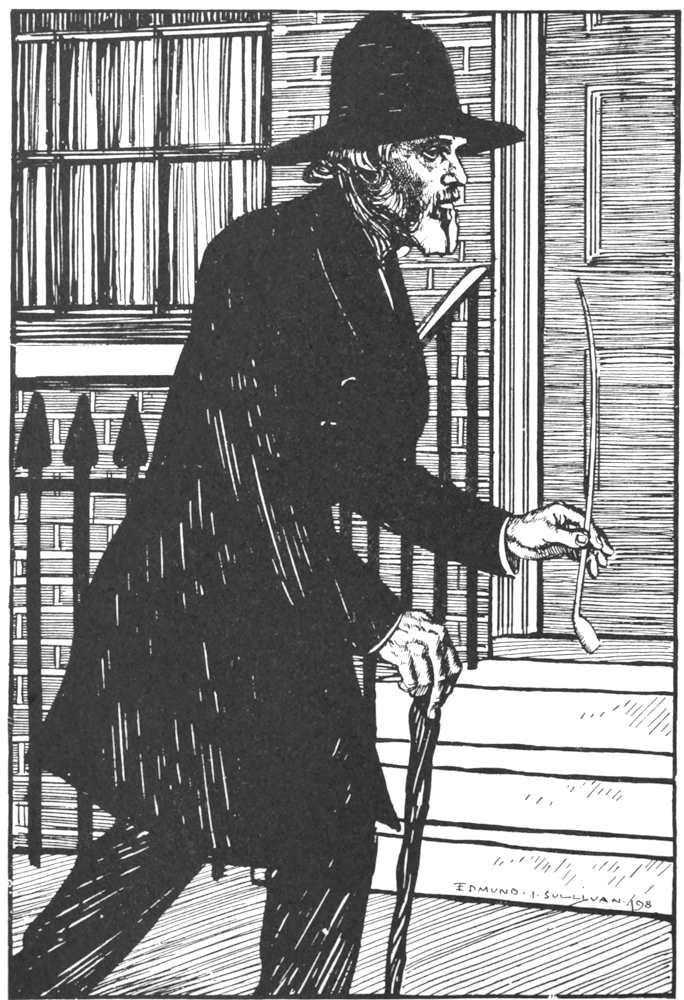
Rhymes and Sketches, with Cover Design
in Nursery Colours.
By G. K. CHESTERTON.
“One of the cleverest collections of this kind
I have ever come across.”—The Sketch.
“Very good and very humorous.”—Black and
White.
“We only wish for one addition to the book:
more—of everything.”—The Bookman.
“The Bookman,” like Oliver Twist,
“asks for more.”
Uniform with the Above.
Nonsense Rhymes.
By COSMO MONKHOUSE.
Illustrated by G. K. CHESTERTON.
“The most diverting Christmas book of verses
we have seen.”—Literature.
Mr. Brimley Johnson’s publications include
the “Novels of Jane Austen”—Hampshire
Edition, with an entirely novel method of
illustration; the dainty “York Library”—selections
from Lamb, Southey, and Spencer;
Lady Duff Gordon’s “Letters from Egypt”—with
an Introduction by George Meredith;
“Letters from John Chinaman”; “From the
Abyss,” by an Inhabitant; “The Gospel
Manuscripts”; “Latter Day Parables”—being
Dreams and Allegories by Modern
Hands; Centenary Edition of “Mrs. Caudle’s
Curtain Lectures,” and “The Wonderful
Story of Dunder Van Haelden,” by Edward
Chesterton.
BY THE SAME AUTHOR.
The Defendant.
BY
G. K. CHESTERTON.
Crown 8vo, 2s. 6d. net.
A Few Notices.
“Clever and humorous ... will interest anybody
who can enjoy a paradox neatly put.”—Scotsman.
“Really one cannot help agreeing with such an
engaging advocate.”—Morning Leader.
“We heartily commend Mr. Chesterton’s many
novel points of view to the earnest consideration
of our readers. ‘The Defendant’ is a book that
will be read with both pleasure and profit.”—Aberdeen
Journal.
“His style is limpid and lucid.”—Sunday Sun.
“He is always on the side of the high-spirited,
the Quixotic, and the things of the mind.”—Daily
Chronicle.
“Bright and brilliant.”—The Star.
“Mr. Chesterton is one of the most brilliant
of the younger journalists.”—Observer.
“At once marked by originality of thought and
distinction of style.”—Sunday Times.
“G. K. Chesterton is a master of paradox.”—Dundee
Advertiser.
“A series of breezy and thoughtful essays.”—Christian.
“Mr. G. K. Chesterton is always interesting
and amusing.”—Echo.
“Time and again in reading it we have had to
lay it down and lie back in our chair and laugh.
And yet, perhaps, its dominant note is its noble
seriousness.”—Sheffield Telegraph.
“Sufficiently epigrammatic to be piquant.”—County
Gentleman.
“The excruciating joy of reading the Essays.”—Daily
News.
“Mr. Chesterton has a style that is all his own,
a pretty wit and a happy knack of putting things,
combined with a dry humour that never fails to
make the most unlikely subject interesting.”—Aberdeen
Journal.
Second Edition Ready.
MORE MATTER. HALF PRICE.
R. BRIMLEY JOHNSON, 8, York Buildings, Adelphi, W.C.
A Monthly Journal for Bookreaders, Bookbuyers, and Booksellers.
The Bookman is edited by Dr. Robertson Nicoll, and is published during the
first week of every month, price 6d. net. It is the only monthly magazine devoted
exclusively to the interests of book readers. The Bookman chronicles the literary
life of the day in pictures as well as letterpress, and is the best illustrated guide to the
best books of the day. The Bookman makes appeal to every one who is interested
in current literature. It is not a dry-as-dust magazine for specialists. Every line and
every picture it contains is of peculiar interest to the great and ever-increasing public
that delights in books.
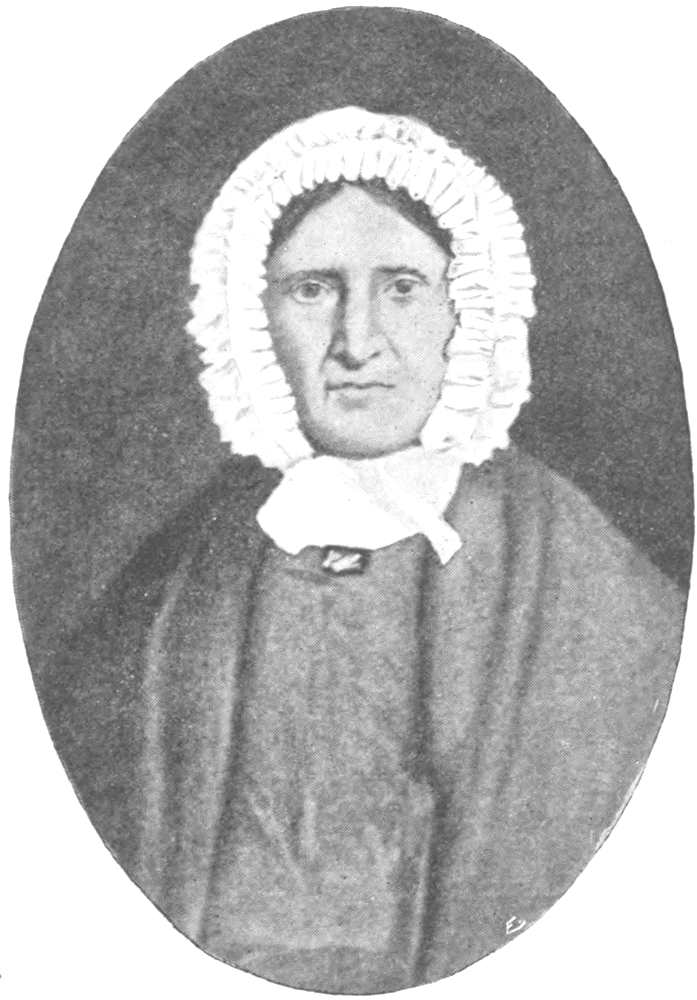
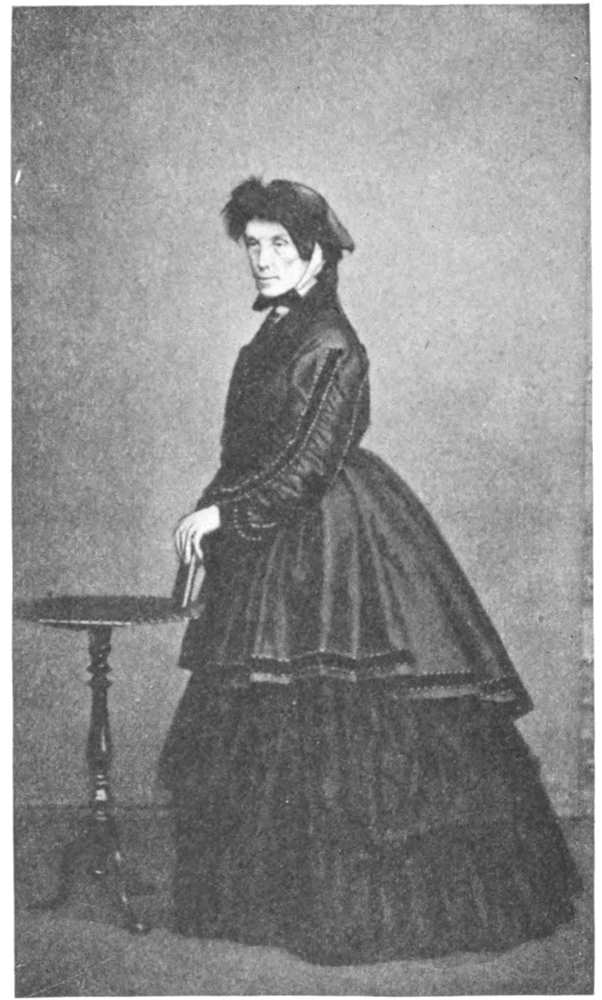
THOMAS CARLYLE’S MOTHER
(Reproduced by kind permission of Mr. Alexander Carlyle)
There are few cultivated
people who do not pretend
to have read Mr. Lecky’s “History
of Rationalism in Europe.” That
very able work covers the whole of
one very important side of modern
development. But the picture of
the real progress, the real mental and
moral improvement of our species
during the last few centuries, will
not be complete until Mr. Lecky
publishes a companion volume entitled
“The History of Irrationalism
in Europe.” The two tendencies,
acting together, have been responsible
for the whole advancement of
the Western world. Rationalism is,
of course, that power which makes
people invent sewing machines, understand Euclid, reform vestries,
pull out teeth, and number the fixed stars. Irrationalism is that other
force, if possible more essential, which makes men look at sunsets,
laugh at jokes, go on crusades, write poems, enter monasteries, and
jump over hay-cocks. Rationalism is the beneficent attempt to make
our institutions and theories fit the world we live in, as clothes fit the
wearer. Irrationalism is the beneficent reminder that, at the best,
they do not fit. Irrationalism
exists to
point out that that
eccentric old gentleman,
“The World,” is
such a curiously shaped
old gentleman that the
most perfect coats and
waistcoats have an extraordinary
way of
leaving parts of him
out, sometimes whole
legs and arms, the existence of which the tailor had not suspected.
And as surely as there arises a consistent theory of life which seems
to give a whole plan of it, there will appear within a score or two
of years a great Irrationalist to tell the world of strange seas and
forests which are nowhere down on the map. The great movement
of the eighteenth and nineteenth centuries, which rose to its height
in the French Revolution and the Positivist philosophy, was the
last great Rationalistic synthesis. The inevitable Irrationalist who
followed it was Thomas
Carlyle. This is the
first and most essential
view of his position.
From a photo by J. Patrick, Edinburgh
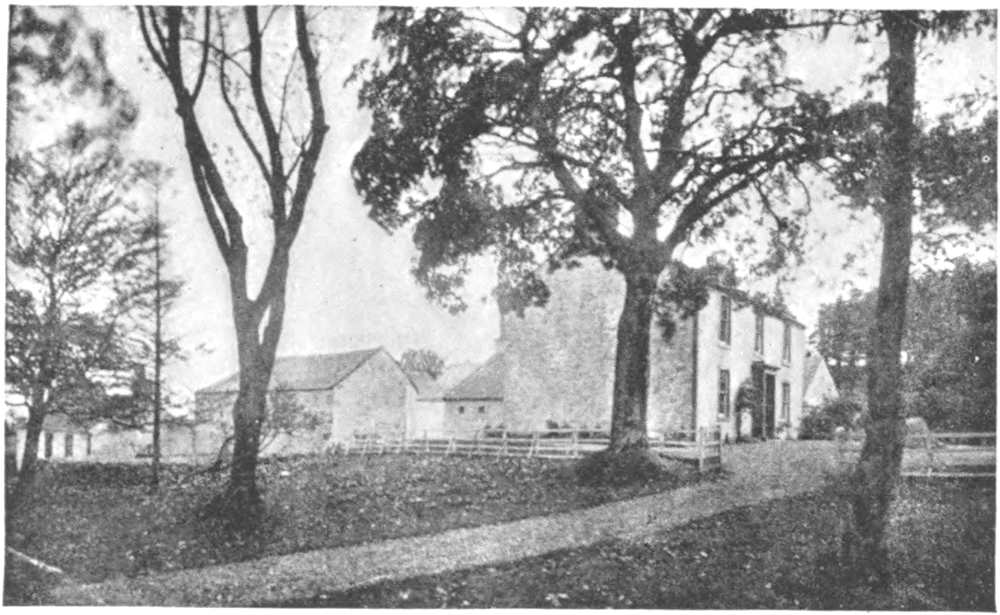
ARCH HOUSE, ECCLEFECHAN
The Birthplace of Thomas Carlyle
From a photo by G. G. Napier, M.A.
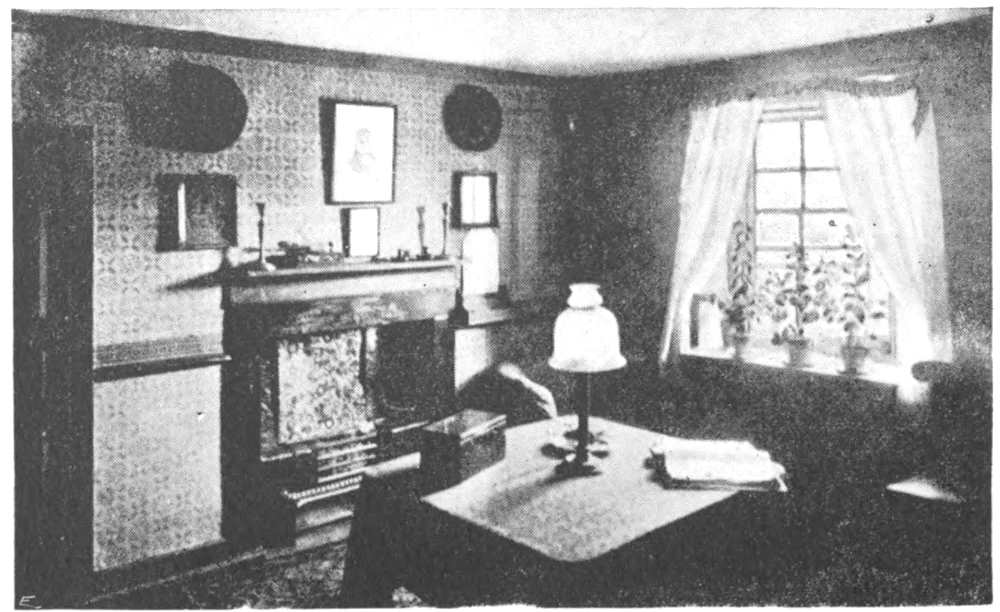
THE ROOM AT ARCH HOUSE IN WHICH CARLYLE WAS BORN
ECCLEFECHAN, DUMFRIESSHIRE
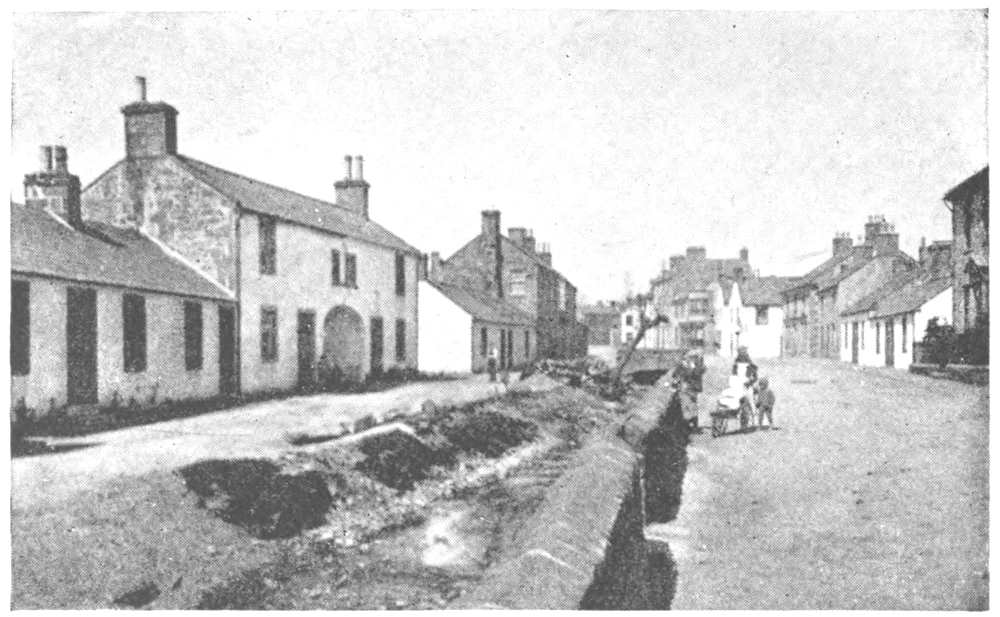
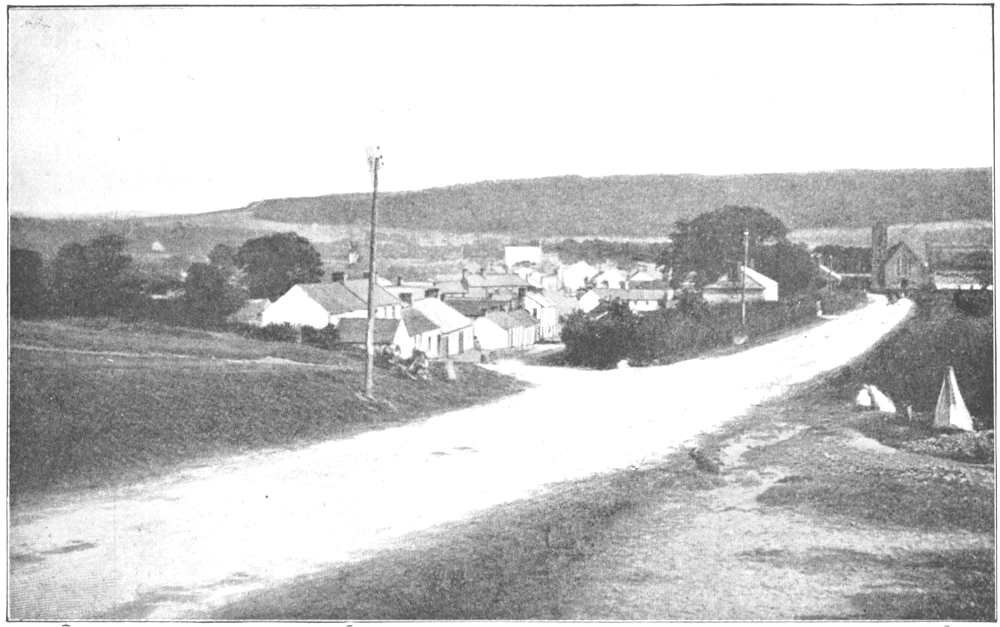
Carlyle’s native village, and the Entepfuhl of “Sartor Resartus”
(Reproduced from “Letters of Thomas Carlyle to his Youngest Sister,” by kind permission of
Messrs. Chapman and Hall)
From a photo by G. G. Napier, M.A.
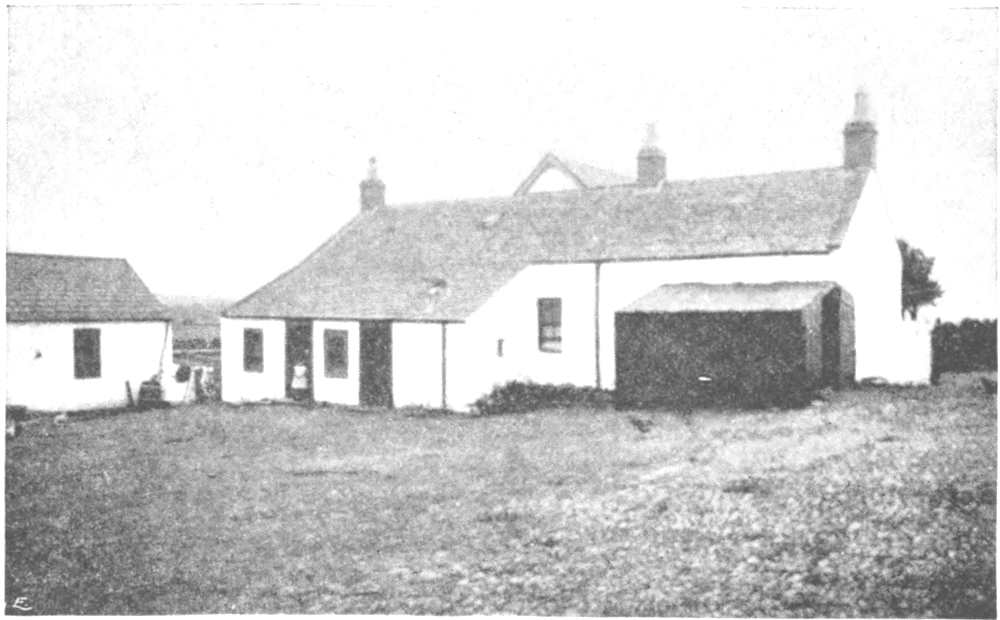
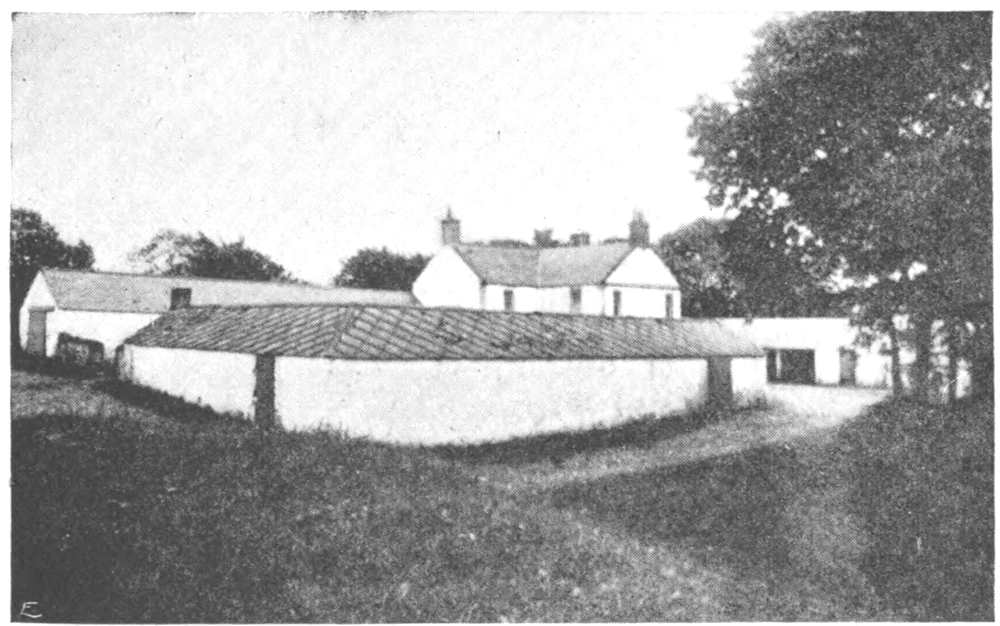
MAINHILL FARM
The Home of Carlyle’s Parents from 1815 to 1825
From a photo by J. Patrick, Edinburgh
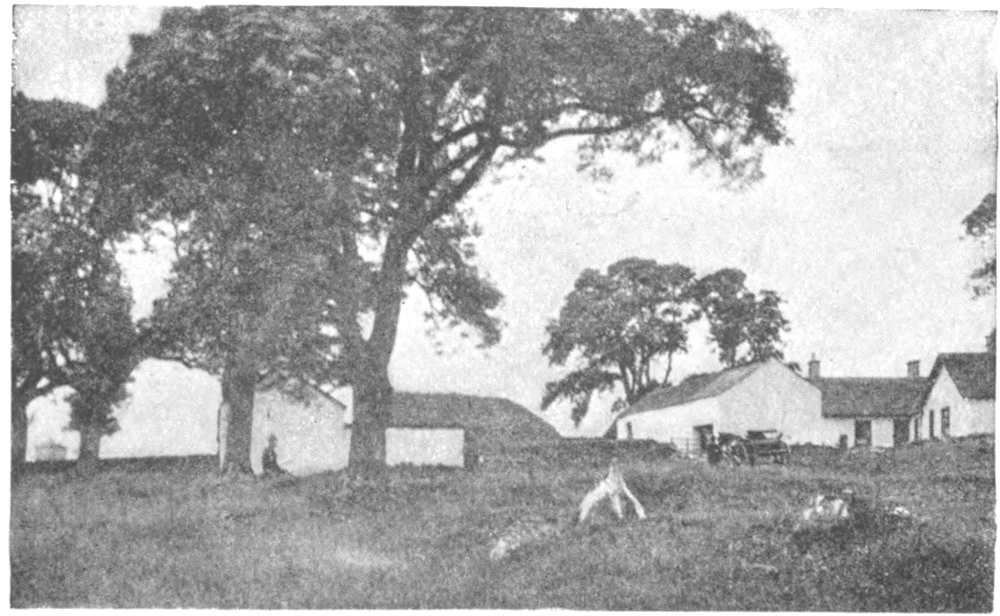
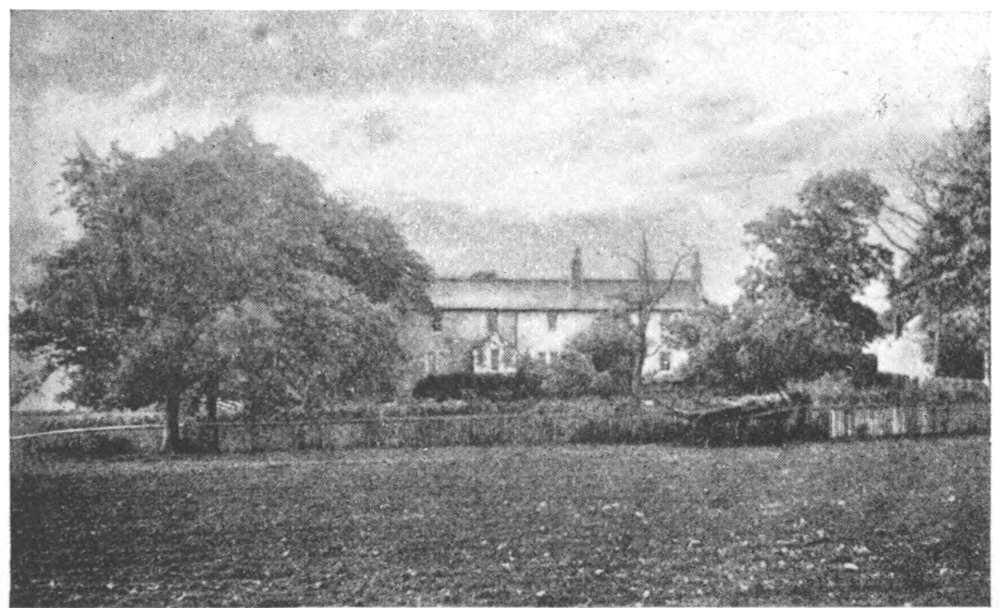
HODDAM HILL
Where Carlyle lived in 1825
THOMAS CARLYLE
From a
portrait by
Daniel Maclise, R.A.
now in the
Victoria
and
Albert
Museum
Rischgitz Collection
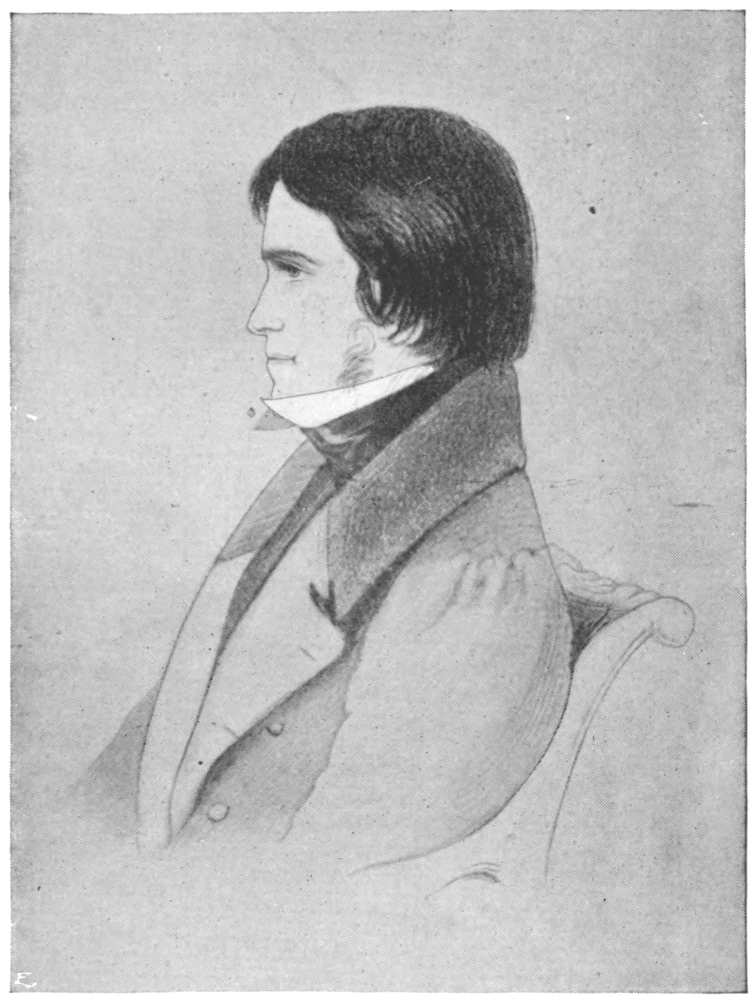
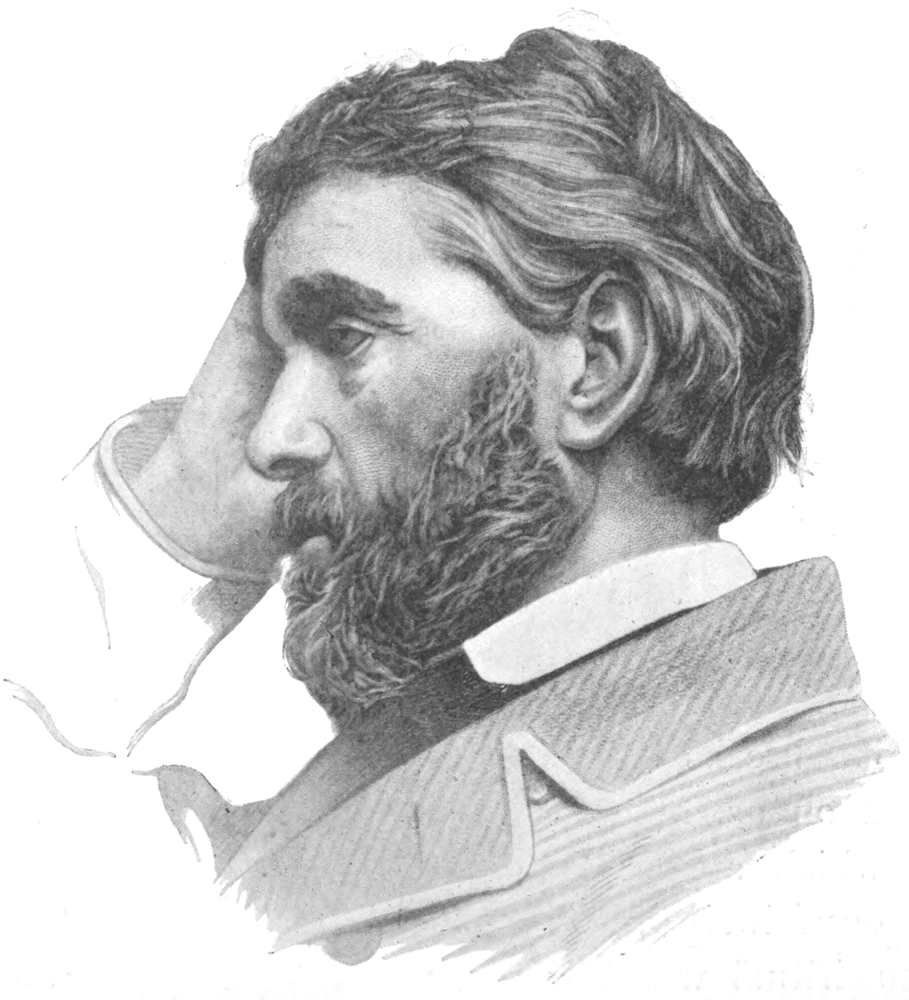
A PORTRAIT OF CARLYLE
ENGRAVED BY
F. CROLL FROM A
DAGUERREOTYPE BY
BEARD
Rischgitz Collection
In order to explain
the matter more
clearly, it is necessary
to recur to our image
of the old gentleman
whom no tailor could
fit. Not only do the
tailors tend to think
that clothes can be
made to fit the old
gentleman, but they
tend very often to think
that the whole question
is a question of
clothes. Thus, for instance,
the Popes and
Bolingbrokes of the
earlier eighteenth
century tried to make
man a purer symbol
of civilisation. They tried to pluck from him altogether his love of
the savage and primeval, as they might have plucked off a shaggy wig
from the old gentleman in order to put on a powdered one. A bystander
of the name of Byron, who was indeed none other than the
inevitable Irrationalist, startled them by pointing out that the shaggy
object was not a wig at all, but the poor old gentleman’s own hair;
that, in other words, the love of the savage, the primeval, the lonely
and unsociable, was a part of man, and it was their business to recognise
it. Then arose
the new fashion in cosmic
clothes, which did
recognise this natural
element. Rousseau
and Shelley took the
old gentleman in hand,
and provided him
with spring-like garments,
coloured like
the clouds of morning.
But one of their
principles was the absolute principle of equality. Finding, therefore,
that the old gentleman was wearing a curiously shaped hat, compounded
of crown, coronet, and mitre, the great hat of Godhood,
kinghood, and superiority, they proceeded, in order to make him
more natural, to knock it off; and to them suddenly appeared the
inevitable Irrationalist, a Scotch gentleman from Dumfriesshire, who,
addressing them politely, said, “You believe that that regal object
you are knocking off is his hat: believe me, gentlemen, it is his head.
Such mistakes will occur after a hasty inspection, but that kingship is
really a part of the old gentleman, and it is your business to recognise
it.” As Byron had come, just as the classic edifice of polite deism had
been completed, to point out that the fact remained that he, Byron, did
prefer walking by the seashore to taking tea in the garden, so Carlyle
appeared, just as the austere temple of political equality was erected,
to point out that the fact remained that he did think many people
a great deal better than himself, and very many people a great deal
worse. Thus, then, as the asserter of the natural character of kingship
against the natural character of equality, it is that Thomas Carlyle
primarily stands twenty-one years after his death.
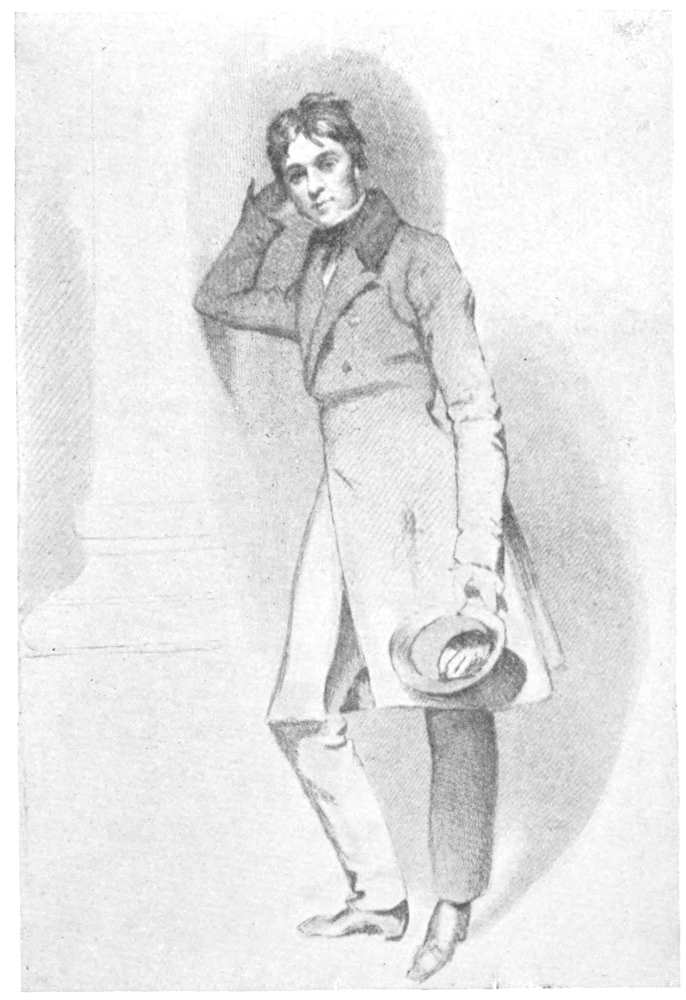
THOMAS CARLYLE
From a sketch by Count
D’Orsay (1839)
Rischgitz Collection
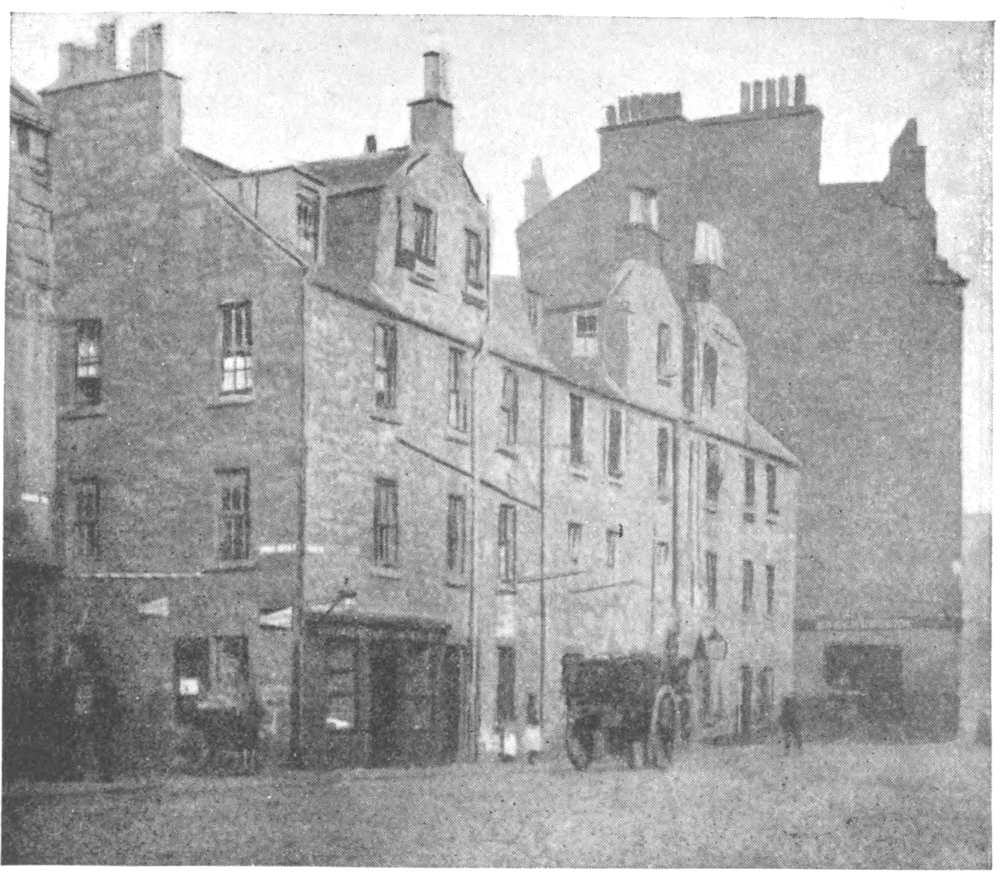
CARLYLE’S FIRST
EDINBURGH
LODGING IN SIMON
SQUARE
From a photograph by
Mr. Thomas Clark,
Edinburgh
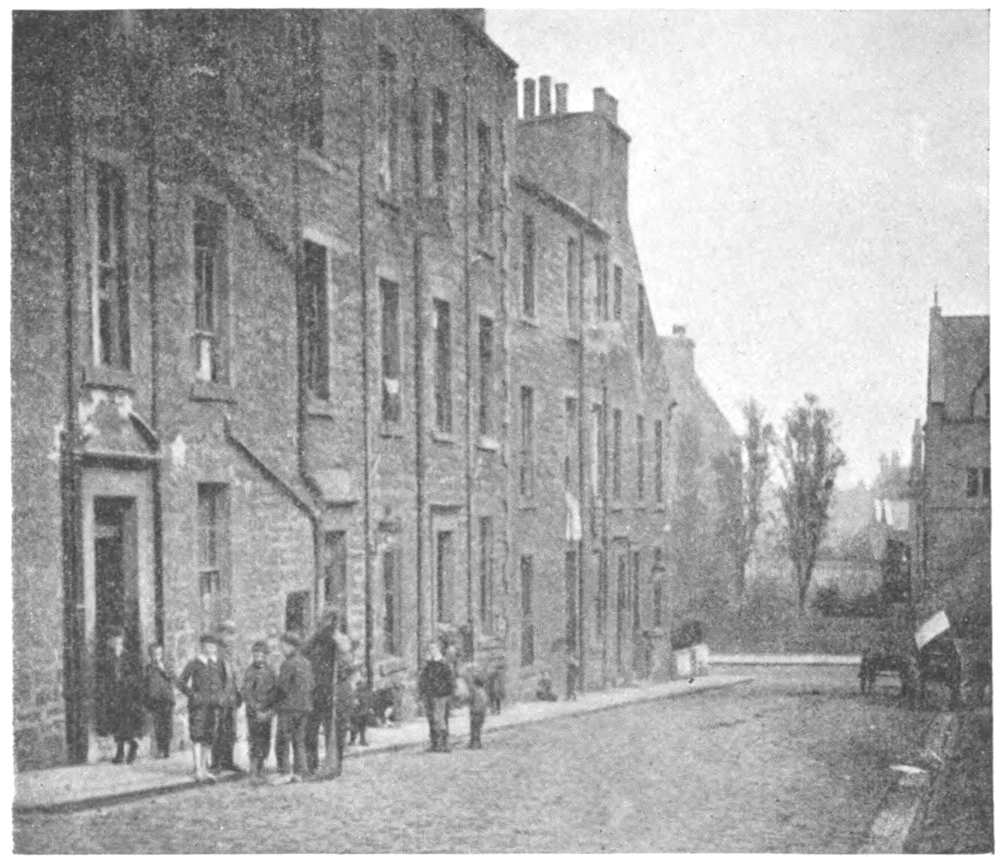
1, MORAY STREET
(NOW SPEY
STREET), LEITH
WALK, EDINBURGH
From a photograph by
Mr. Thomas Clark,
Edinburgh
Now I do not think, as I shall show later, that Carlyle ever really
understood the true doctrine of equality; but it is certainly at
least equally true that the egalitarians and the ordinary opponents
of Carlyle have never done the least justice to Carlyle’s doctrine
of hero-worship. The usual theory is that he believed in a race of
arrogant strong men, brutally self-sufficient and brazenly indifferent
to ethical limits, and that he wanted these men to frighten and
dominate the populace as a keeper or a doctor frightens and dominates
the lunatic in a cell. It is not too much to say that there is scarcely
a trace in Carlyle’s works of this barbarous and ridiculous idea. If
there be a trace of it here and there, it is mere explosion of personal
ill-temper, and has nothing whatever in common with Carlyle’s
deliberate theory of the hero. His theory of the hero was that he was
a man whom men followed, not because they could not help fearing,
but because they could not help loving him. His theory, right or
wrong, was that when a man was your superior you were acting
naturally in looking up to him, and were therefore happy; that you
were acting unnaturally in equalising yourself with him, and were
therefore unhappy. Most people, except those solemn persons who
are called with some humour free-thinkers, would agree, for instance,
that the worship of God was a human function, and therefore gave
pleasure to the performer of it, like eating or taking exercise. Now
Carlyle held, rightly or wrongly, that the worship of man, of the great
man, was also a human function, and therefore gave pleasure to the
performer of it. It all depends upon whether we do take an egalitarian
or an aristocratic view of the spiritual world. If the spiritual world is
based upon equality, then, no doubt, to keep a man in an inferior
position must spiritually depress and degrade him; but if beings in
the spiritual world have higher and lower functions, it is obvious that
it is equally depressing and degrading to a man to take him out of his
position and make him either a citizen or an emperor.
THOMAS CARLYLE
From a photo by the
London Stereoscopic Co.
From a photo by G. G. Napier, M.A.
MRS. CARLYLE’S BIRTHPLACE
Dr. Welsh’s House at Haddington.
From a photo by R. Milliken, Kirkcaldy.
THE HOUSE IN WHICH CARLYLE LIVED WHILST TEACHING
AT KIRKCALDY SCHOOL
Moreover, the real practical truth that underlay Carlyle’s gospel
of the hero has in other ways been misunderstood. The general
idea is that Carlyle thought that, if a man were only able, everything
was to be excused to him. If Carlyle, even at any moment,
thought this, it can only be said that for that moment Carlyle was
a fool, as many able men may happen to be. But, as a matter of
fact, what Carlyle meant was something much sounder. To say
that any man may tyrannise so long as he is able, is as ridiculous
as saying that any man may knock people down so long as he is
six feet high. But in urging this very obvious fact the opponents of
Carlyle too often forget
a simpler truth at the
back of the Carlyle
gospel. It is that, while
in one sense the same
moral test is to be applied
to all men, there
does remain in ordinary
charitable practice a
very great difference
between the people who
consider it necessary to
see some definite thing
done before they die,
and the people who cheerfully admit that two hundred years will
scarcely bring what they require, and that meanwhile they desire to
do nothing. A Tolstoian anarchist who thinks that men should be
morally persuaded for the next two or three centuries to give up
every kind of physical
compulsion may, it is
quite conceivable, be
more right than the
English Home Secretary
who finds himself
responsible for the suppression
of a riot in
Manchester; but surely
it is patently ridiculous
to say that it is just as
much to the anarchist’s
credit that he avoids
shooting Manchester
workmen as it would
be to the Home Secretary’s
credit if he
avoided shooting them.
It would be equally
ridiculous to say that,
if the Home Secretary
conceived it necessary
to shoot them, from a
sense of responsibility,
that his action, even if
wrong, was really as
wrong as the conduct of a Tolstoian who should shoot them without
any reason at all. In this sense, therefore, there is really a different
test, and a perfectly fair one, for men of action and for men of
abstract theories and remote hopes.
From a photo by G. G. Napier, M.A.
SCOTSBRIG
A farm in the neighbourhood of Ecclefechan to which the Carlyles removed
from Mainhill in 1826
From a photo by J. Patrick, Edinburgh
TEMPLAND, NEAR THORNHILL, DUMFRIESSHIRE
Thomas Carlyle married Jane Baillie Welsh on October 17th, 1826, at
Templand, Mrs. Welsh’s residence
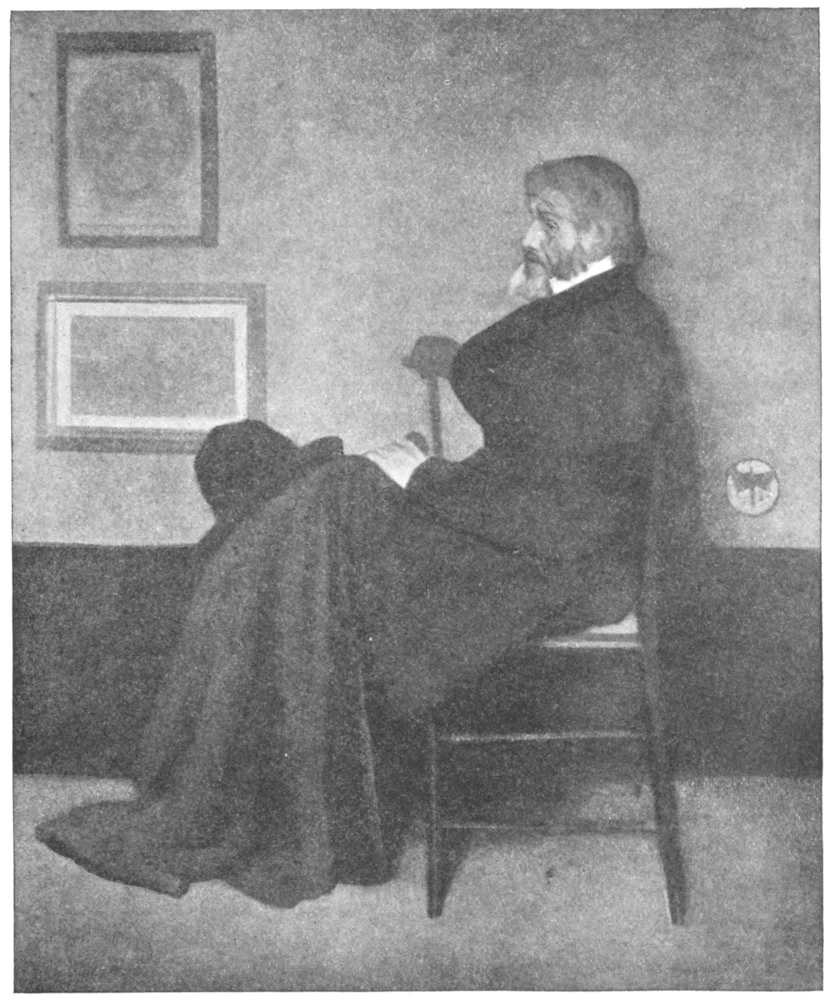
From the painting by J. McNeill Whistler
THOMAS CARLYLE
(Reproduced by kind permission of Messrs. T. & R. Annan & Sons, by courtesy
of the Glasgow Corporation)
From a photo, by Mr. Thomas Clark, Edinburgh
21, COMELY BANK, EDINBURGH
Carlyle and his wife lived at Comely Bank for eighteen months after their marriage
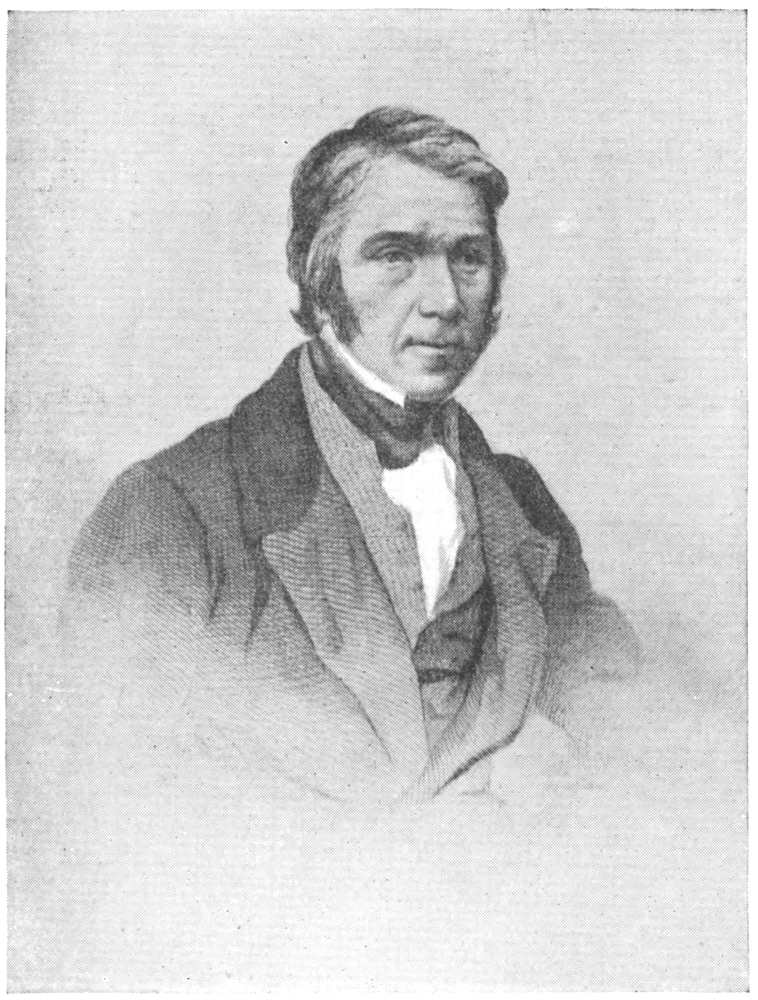
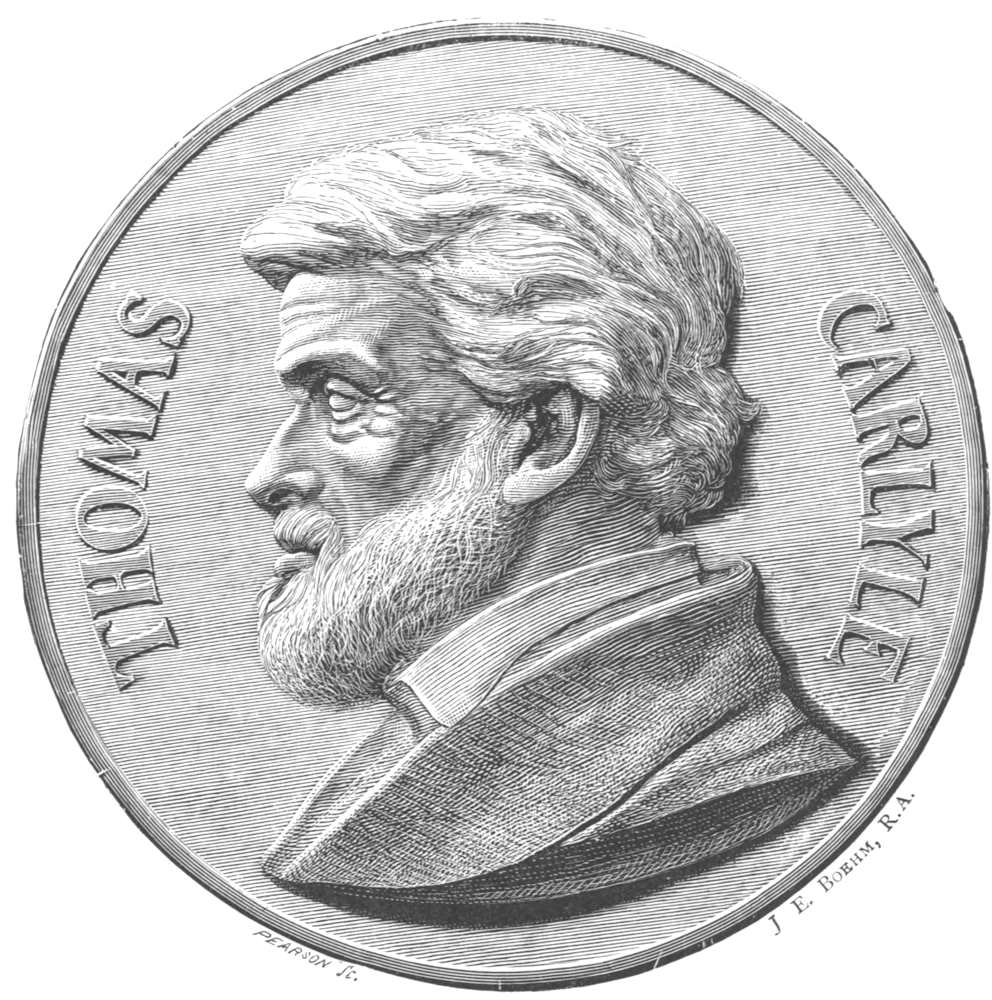
From a wood engraving by Pearson of Sir J. E. Boehm’s gold medallion
THOMAS CARLYLE
(Reproduced by kind permission of Messrs. Chapman and Hall)
Now, it must definitely be set to the credit of men like Cromwell
and Mirabeau, that they were undoubtedly opposed to and embarrassed
by men whose projects, even in their own eyes, were scarcely
a part of practical
politics. These men
exist in every country
and in every age. They
are wilfully and eternally
in opposition.
They do not agree
sufficiently with the
active powers even to
argue with them with
any profit. Their ideal
is so far away that
they do not even desire
it with any immediate hunger. They count it a pleasant and natural
thing to live and die in revolt. They are ready to be critics, they
are ready to be martyrs, they are emphatically not ready to be
rulers. In this way Cromwell, considering how he might make some
English polity out of a chaos of English parties, had to argue for
hours together with Fifth Monarchy men, to whom the vital question
was whether the children of malignants should not be slain, and
whether a man who was caught swearing should not be stoned to
death. In this way Mirabeau, striving to keep the tradition of
French civilisation intact amid a hundred essential reforms, found
his way blocked by men who insisted on discussing whether in the
ideal commonwealth men would believe in immortality, or go through
a rite of marriage. Now, while fully granting that both types have an
eternal value, it is certainly not just that precisely the same ethical
test should be applied to Cromwell and the Fifth Monarchy men,
to Mirabeau and the worshipper of pure reason. It is not just that we
should judge in precisely the same way the pace of a butcher’s cart
which is obliged to get to Pimlico, and the pace of a butcher’s
cart which is designed at some time or other to reach the site of
the Garden of Eden. It is not just that we should judge in the same
way the man who is simply anxious to erect a parish pump, and
the opponent of the pump,
who looks forward to a
day when there shall not
only be no pump, but no
parish. The man of action,
then, really has in this
sane and limited sense a
claim to a peculiar kind
of allowance, in that it is
of vital necessity to him
that a certain limited
grievance should be removed.
It is easy enough
to be the man who lives
in a contented impotence;
the man who luxuriates in
an endless and satisfied
defeat. He does not desire
to be effective; he only
desires to be right. He
does not desire passionately
that something should be
done; he only desires that
it should be triumphantly proved to be necessary.
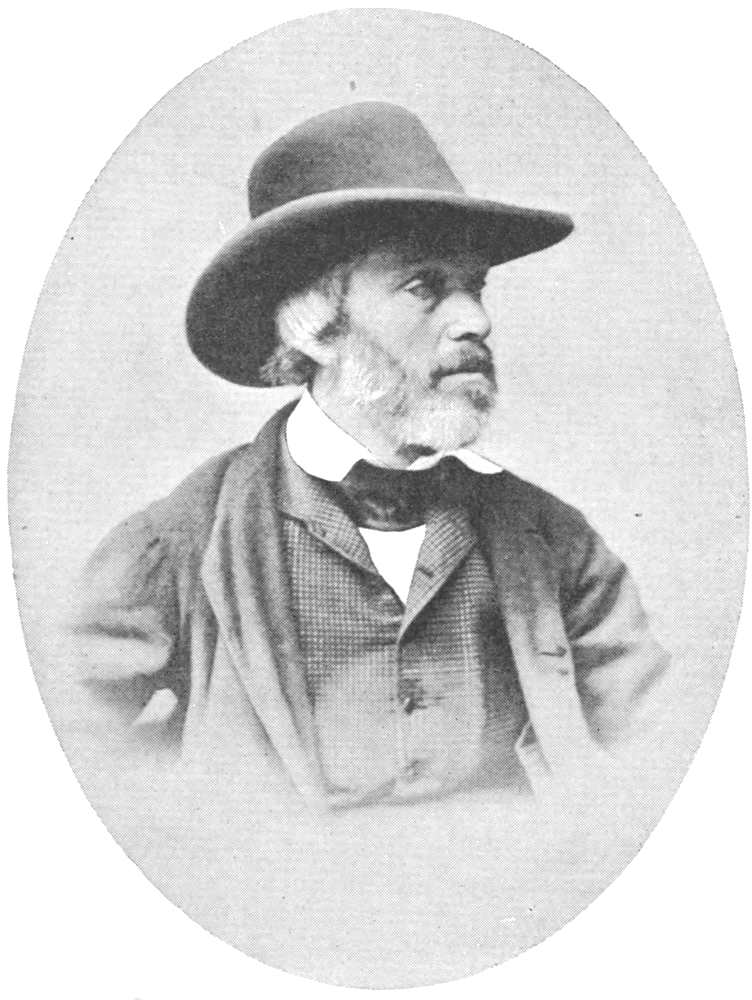
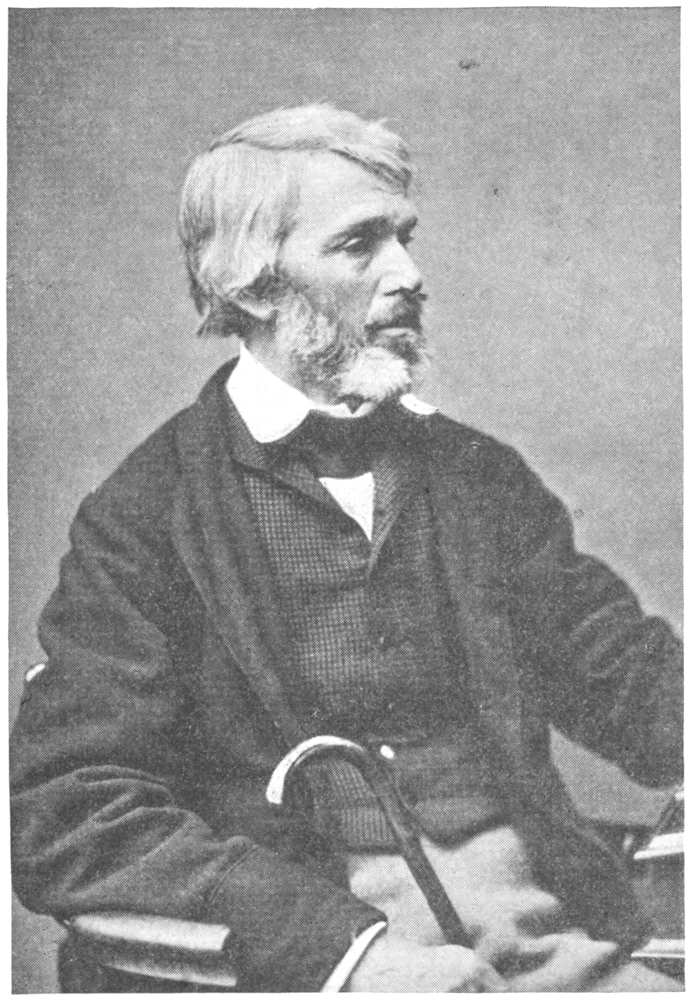
From a photo by the London Stereoscopic Co.
THOMAS CARLYLE, ABOUT 1860
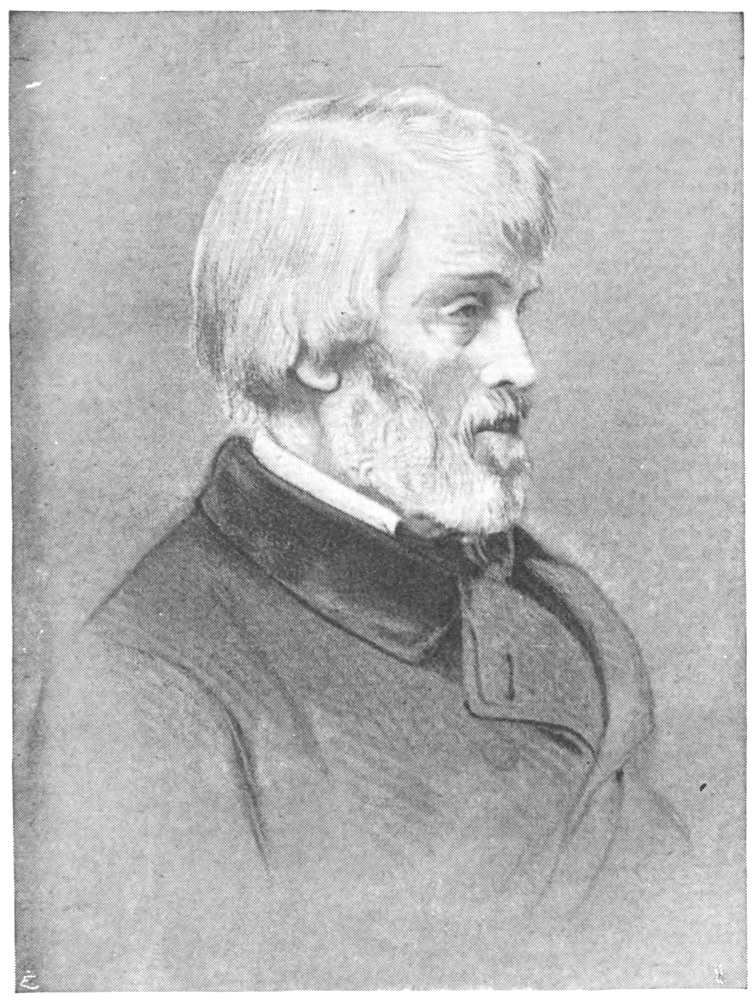
From a photo by Elliott & Fry
THOMAS CARLYLE, 1865
This is the real contribution of Carlyle to the philosophy of the
man of action. He revealed, entirely justly, and entirely to the
profit of us all, the pathos of the practical man. He made us
feel, what is profoundly true, that the tragedy of the death of Mary,
Queen of Scots, is nothing to the tragedy of the death of Elizabeth;
that the tragedy of the death of Charles I. is nothing to the
tragedy of the death of Cromwell. A man like Charles I. died
triumphantly; he did not indeed die as a martyr, but he died
as something which is much more awful and exceptional—a consistent
man. He was worse than a tyrant, he was a logician. But
a man like Cromwell is in a much harder case, for he does not
wish to die and be a spectacle, but to live and be a force. He has
to break altogether with the splendid logic of martyrdom. He
has to eat his own words for breakfast, dinner, and supper. He has
to outlive a hundred incarnations, and always reject the last; his
progress is like that unnerving initiation in the wild tale of Tom
Moore’s, in which the disciple had to climb up a stone stairway
into the sky, every step of which fell away the moment his foot
had left it. This is the only genuine truth that Carlyle brought
from his study of strong men. If ever he said that we must
blindly obey the strong
man, he was merely
angry and personal,
and untrue to his
essentially generous
and humane spirit.
When he said that we
must reverence the
strong man he sometimes
expressed himself
with a certain
heated confusion, and
left it doubtful whether
he meant that we
should reverence the
strong man as we respect
Christ, or merely
as we respect Sandow.
But we should all
agree with him in his
essential and eternal contribution—that
we should
pity the strong man more
than an idiot or a cripple.
A PORTRAIT OF CARLYLE TAKEN IN 1879
Rischgitz Collection
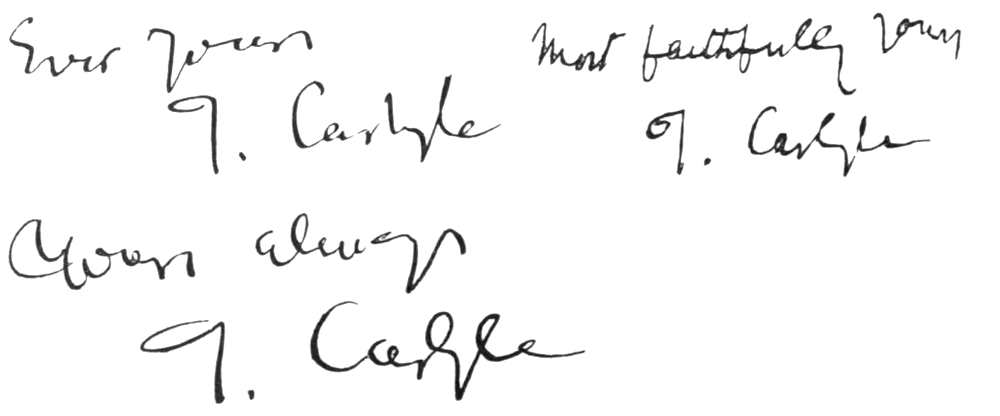
FACSIMILES OF
CARLYLE’S SIGNATURE
(Reproduced by kind
permission of Messrs.
Chapman & Hall)
It may be said that
there is a certain inconsistency
between these
two justifications of
Carlyle’s hero-worship:
that we cannot at the
same time respect a man
because he is above us in
a definite spiritual order,
and because he is in what
is popularly called a hole;
that we cannot at once
reverence Mirabeau because
he was strong and
because he was weak.
This kind of inconsistency
does exist in Carlyle; it
is, I may say with all reverence and with all certainty, the eternal and
inevitable inconsistency which characterises those who receive divine
revelations. The larger world, which our systems attempt to explain
and chiefly succeed
in hiding, must, when
it breaks through
upon us, take forms
which appear to be
conflicting. The
spiritual world is so
rich that it is varied;
so varied that it is inconsistent.
That is
why so many saints
and great doctors of
religion have pinned
their faith to paradoxes
like the “Credo Quia
Impossibile,” the great
theological paradoxes
which are so much
more dazzling and
daring than the paradoxes
of the modern flâneur. The supreme glory of Carlyle was
that he heard the veritable voices of the Cosmos. He left it to
others to attune them into an orchestra. Sometimes the truth he
heard was this truth, that some men are to be commanded and
some obeyed; sometimes that deeper and more democratic truth
that all men are above all things to be pitied.
From a photo by J. Patrick, Edinburgh
CRAIGENPUTTOCK
Carlyle’s residence from 1828 to 1834
From a photo by J. Patrick, Edinburgh
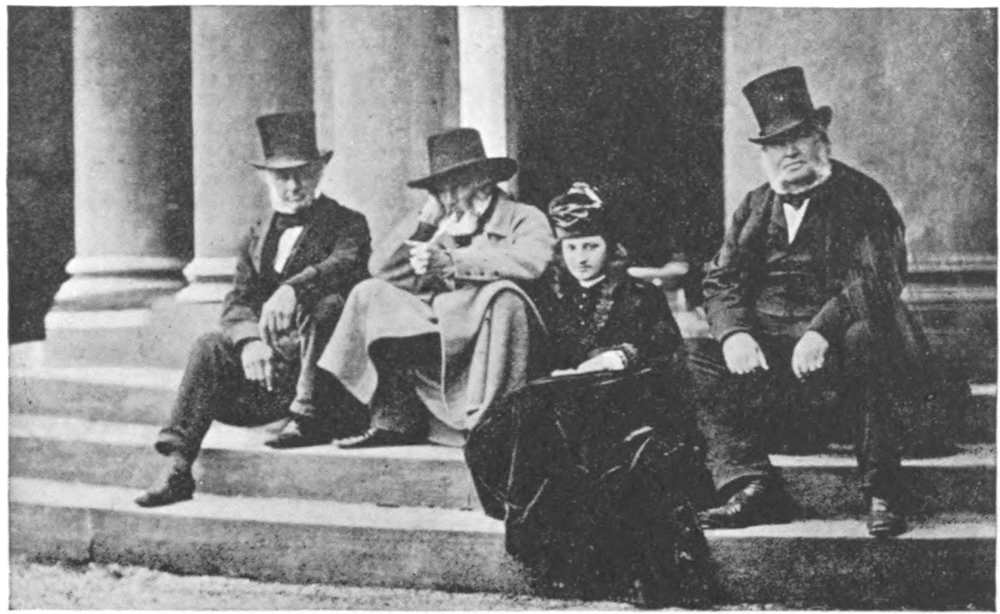
PORTRAIT GROUP TAKEN AT KIRKCALDY
Thomas Carlyle, his niece, his brother, and Provost Swan
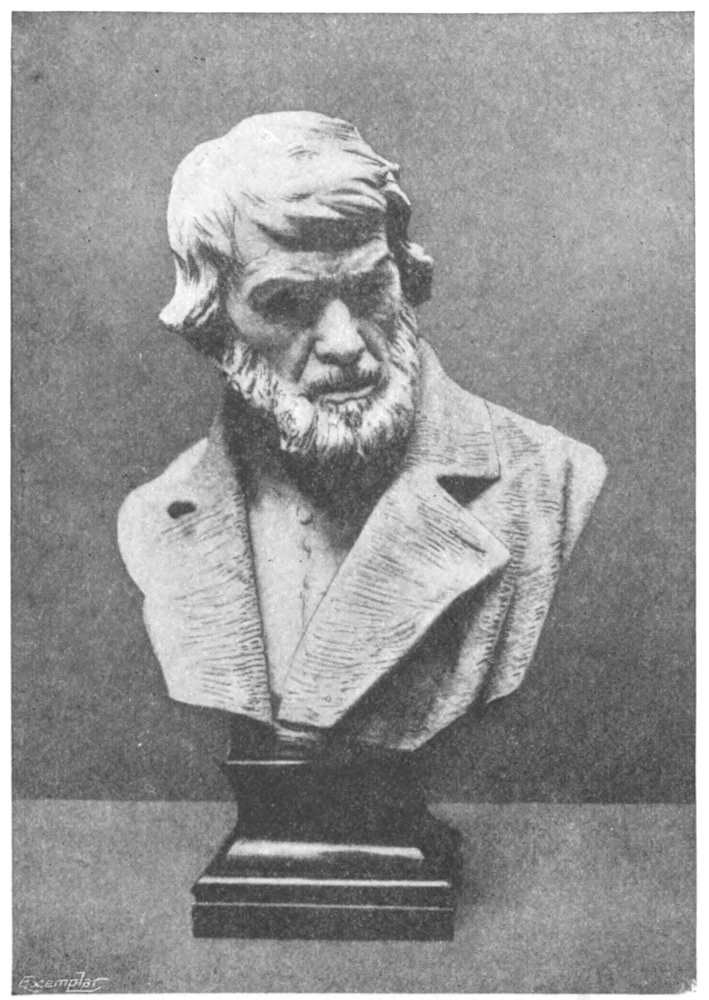
From a terra-cotta bust in the National Portrait Gallery,
by Sir J. E. Boehm, R.A.
THOMAS CARLYLE
(Reproduced from “Past and Present.” by kind permission
of Messrs. J. M. Dent & Co.)
It will be found relevant to what I have to say hereafter to remark
at this point that I do
not myself accept
Carlyle’s conception of
the spiritual world as
exhaustive. I believe
in the essence of the
old doctrine of equality,
because it appears to
me to result from all
conceptions of the
divinity of man. Of
course there are inequalities,
and obvious
ones, but though they are not insignificant positively, they are
insignificant comparatively. If men are all really the images of God,
to talk about their differences has its significance, but only about the
same significance which may be found in talking about the respective
heights of twenty men, all of whom have received the Victoria Cross,
or the respective length of the moustaches of twenty men, all of whom
have died to save their fellow-creatures. In comparison with the
point in which they are equal, the point in which they are unequal
is not merely decidedly, but almost infinitely, insignificant. But my
reason for indicating my own opinion on the matter, at this point,
is a definite one. Carlyle’s
view of equality does not
happen to be mine; but it has
an absolute right to be stated
justly, and to be stated from
Carlyle’s point of view. It was
not a brutal fear or a mean
worship of force; it was a
serious belief that some found
blessedness in commanding,
and some in obeying. Now
this kind of intellectual justice
was the one great quality
which was lacking in Carlyle
himself. He would not consent
to listen to Rousseau’s gospel,
as I have suggested that we
should listen to Carlyle’s gospel.
He would not put Rousseau’s
gospel from Rousseau’s point
of view. And consequently to
the end of his days he never
understood any gospel except
Carlyle’s gospel.
From a photo by J. Patrick, Edinburgh
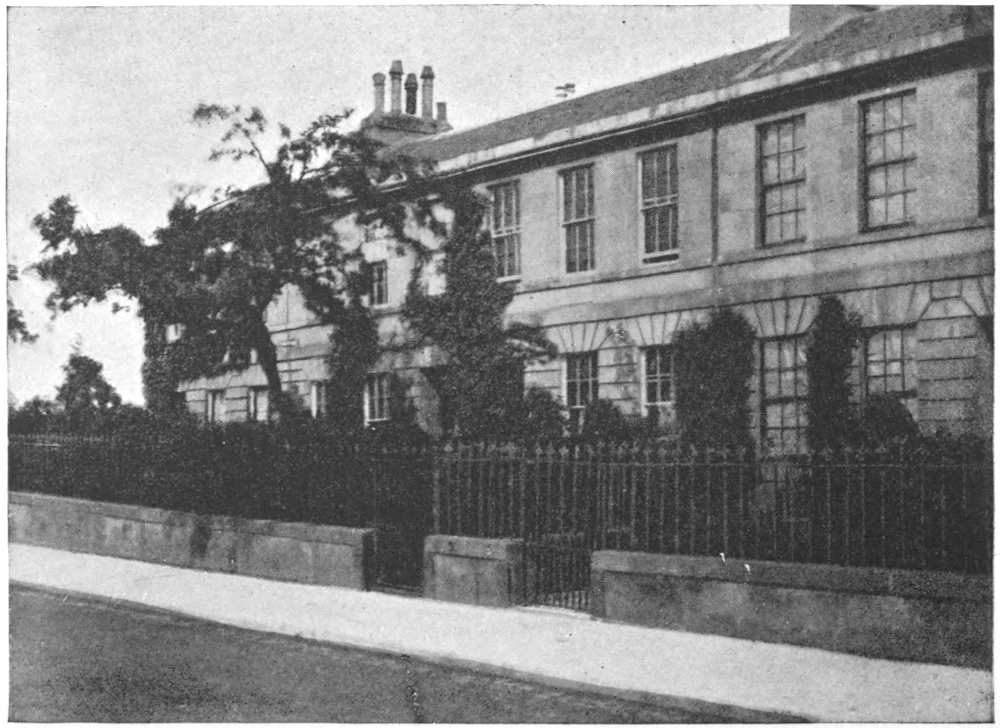
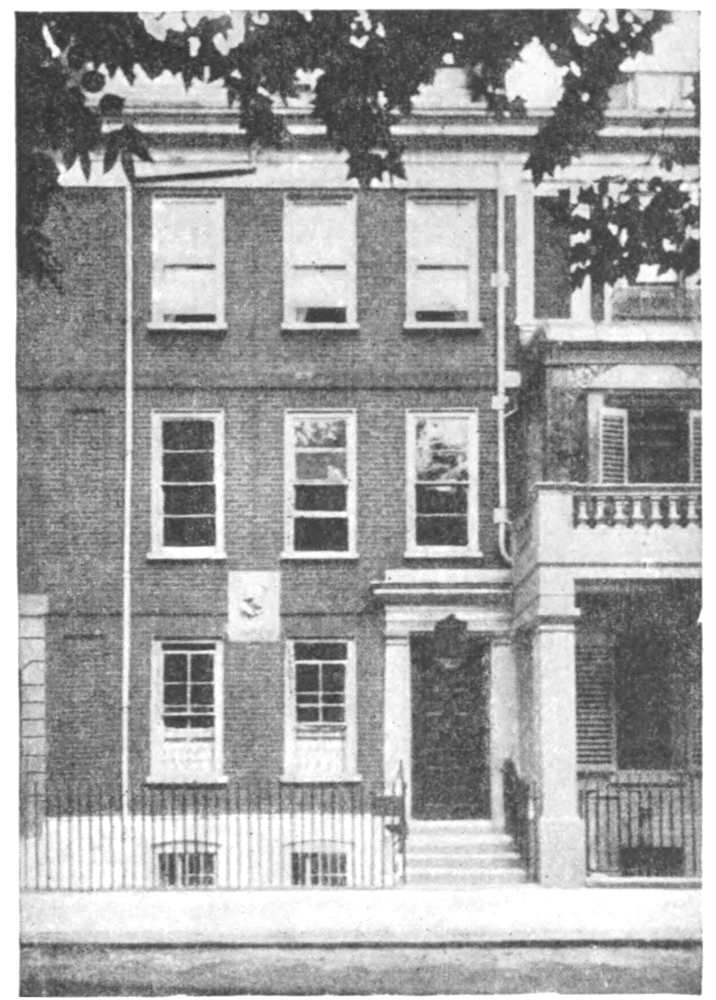
CARLYLE’S HOUSE AT 5 (now 24), CHEYNE
ROW, CHELSEA
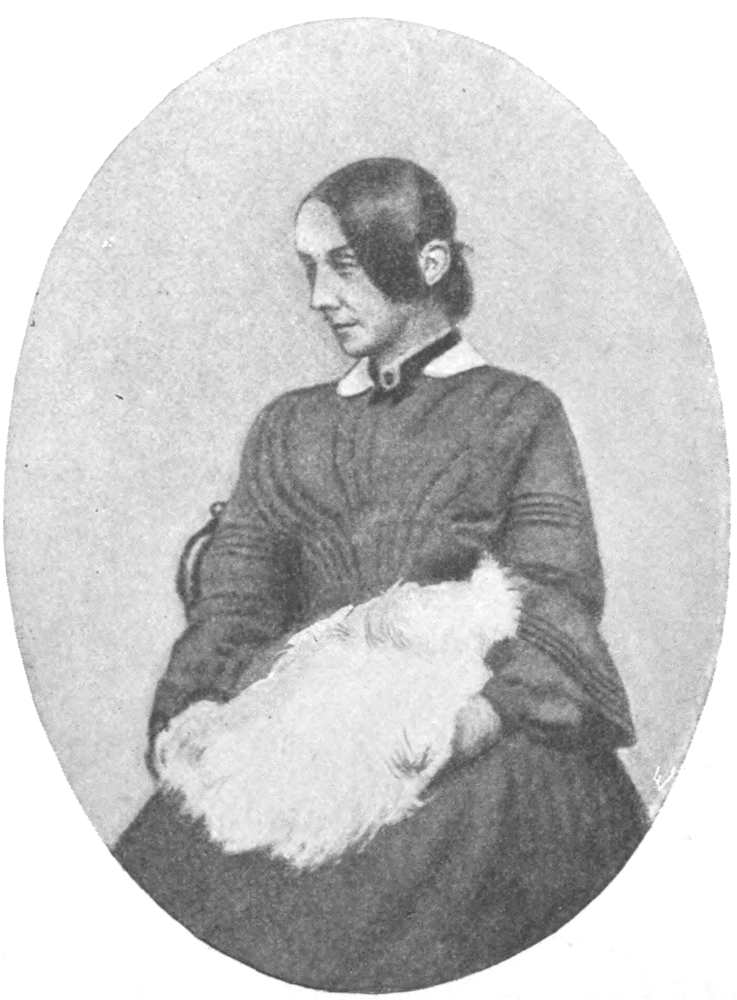
JANE WELSH CARLYLE
(Reproduced by kind permission of Messrs. Chapman and Hall)
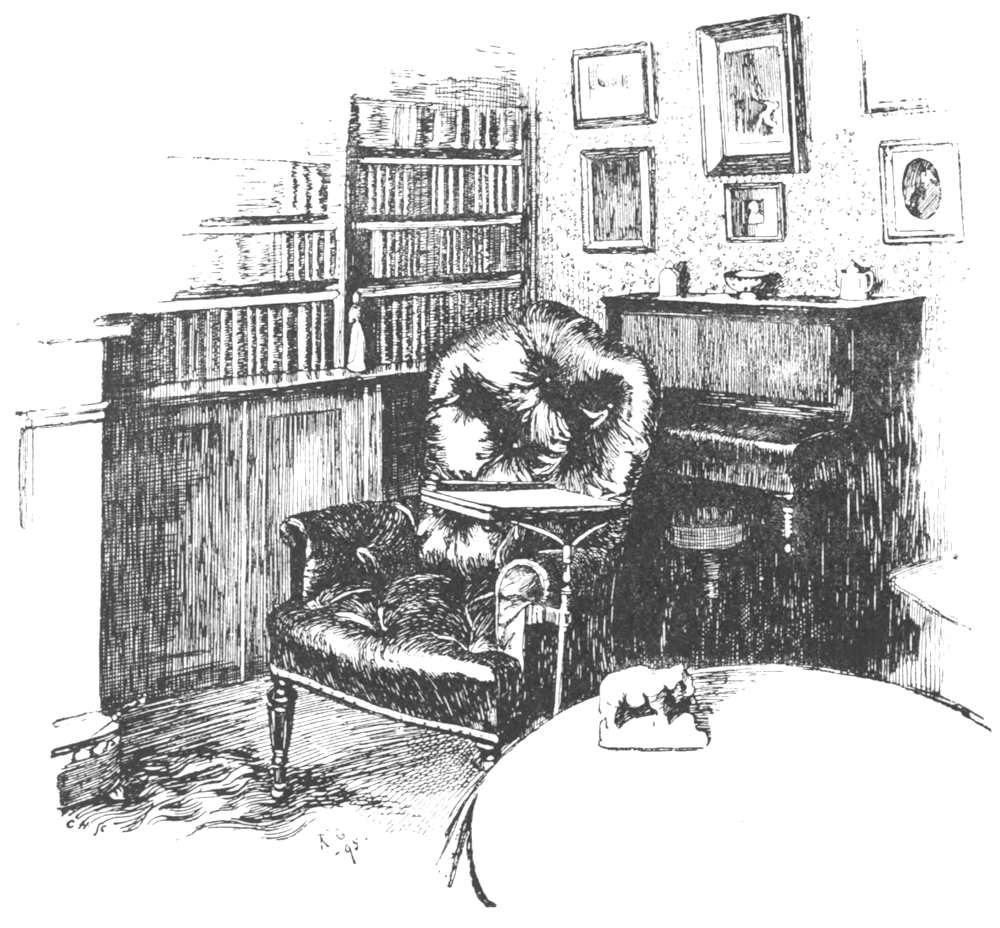
CORNER
IN
DRAWING-ROOM
AT 5,
CHEYNE
ROW, with Carlyle’s
Reading Chair,
given him
by John Forster
Drawn by R.
Gray from a
photograph by
C. Baly (1881)
(Reproduced
from Reginald
Blunt’s “The
Carlyles’ Chelsea
Home,” by kind
permission of
the author)
When a literary man is known
to have been almost a monster of
industry, when he has produced a
colossal epic like “Frederick the
Great” on the dullest of all earthly
subjects—Germany in the eighteenth
century—when he has piled up all
the complicated material of the
history of the French Revolution,
lost it, and by a portent of heroism
piled it all up again; when he has
achieved such masterpieces of
research as the discovery of
sense in Cromwell’s speeches,
and good qualities in Frederick
of Prussia: when an author
has done all this, it may seem a
singular comment upon him to
say that his main characteristic
was a lack of patience. But
this was in reality the chief
weakness, in fact the only real
weakness, of Carlyle as a moralist.
It is very much easier to
have what may be called moral
patience or mental patience than to have something which may best
be described as spiritual patience. Carlyle was patient with facts, dates,
documents, intolerably wearisome memoirs; but he was not patient
with the soul of man. He was not patient with ideas, theories,
tendencies, outside his own philosophy. He never understood, and
therefore persistently undervalued, the real meaning of the idea of
liberty, which is a faith in the growth and life of the human mind;
vague indeed in its nature, but transcending in its magnitude even
our faith in our own faiths. He was something of a Tory, something
of a Sans-culotte, something of a Puritan, something of an Imperialist,
something of a Socialist; but he was never, even for a single moment,
a Liberal. He did not believe as the Liberal believes, first indeed
in his own truth, which in his eyes is pure truth, but beyond that
also in that mightier truth which is made up of a million lies.
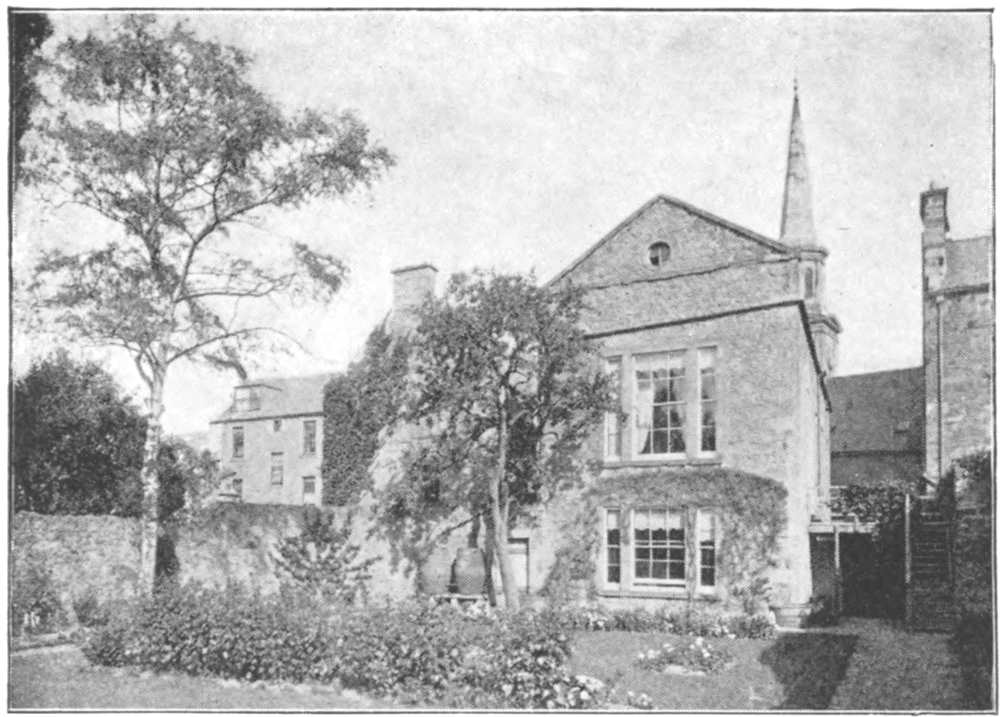
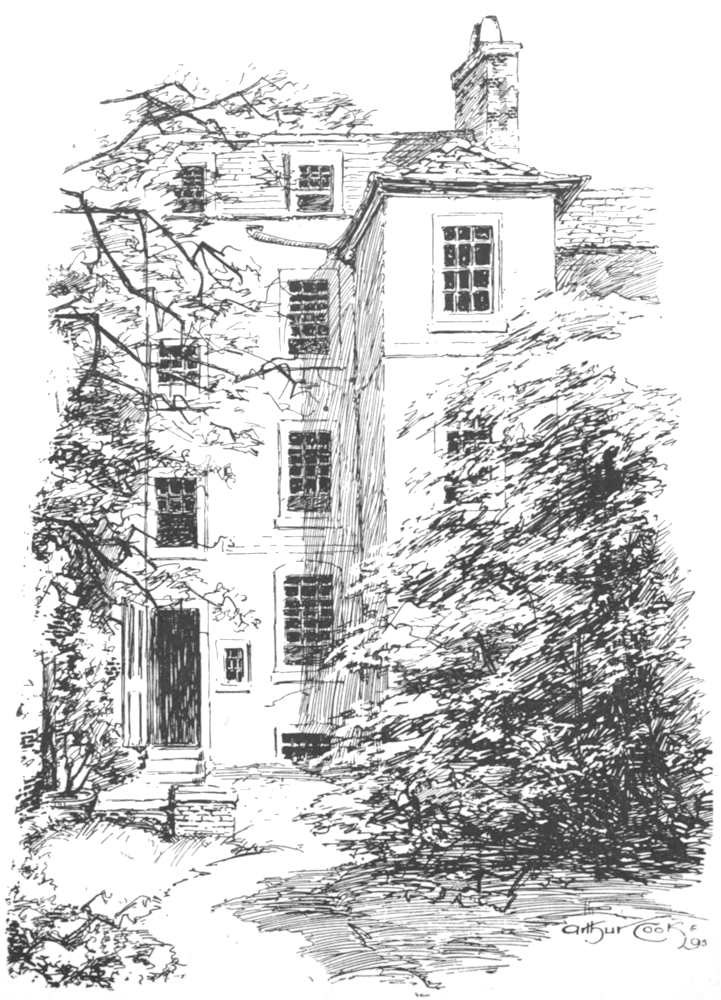
THE
GARDEN
AT
No. 5,
CHEYNE
ROW
From a drawing by E. J. Sullivan
THOMAS CARLYLE
(Reproduced from the illustrated “Sartor Resartus,” by kind permission of
Messrs. George Bell & Sons)
From a photo in possession of
W. Robertson Nicoll, LL.D.
MRS. CARLYLE ABOUT 1864
And this spiritual impatience of Carlyle has left its peculiar mark
in the only defect which can really
be found in his historical works.
Of the astonishing power and humour
and poignancy of those historical
works I think it scarcely necessary
to speak. A man must have a very
poor literary sense who can read one
of Carlyle’s slighter sketches, such as
“The Diamond Necklace,” and not
feel that he has at the same time
to deal with one of the greatest
satirists, one of the greatest mystics,
and incomparably one of the finest
story-tellers in the world. No historian
ever realised so strongly the
recondite and ill-digested fact that
history has consisted of human beings,
each isolated, each vacillating, each
living in an eternal present; or, in
other words, that history has not
consisted of crowds, or kings, or Acts
of Parliament, or systems of government, or articles of belief. And
Carlyle has, moreover, introduced into the philosophy of history one
element which had been absent from it since the writing of the Old
Testament—the element of something which can only be called humour
in the just government of the universe. “He that sitteth in the heavens
shall laugh them to scorn, the Lord shall have them in derision,” is a
note that is struck again in Carlyle for the first time after two
thousand years. It is the note of the sarcasm of Providence. Any
one who will read those admirable chapters of Carlyle on Chartism
will realise that, while all other humanitarians were insisting upon
the cruelty or the inconsistency or the barbarism of neglecting the
problem of labour,
Carlyle is rather filled
with a kind of almost
celestial astonishment
at the absurdity of
neglecting it.
From a photo by G. G. Napier M.A.
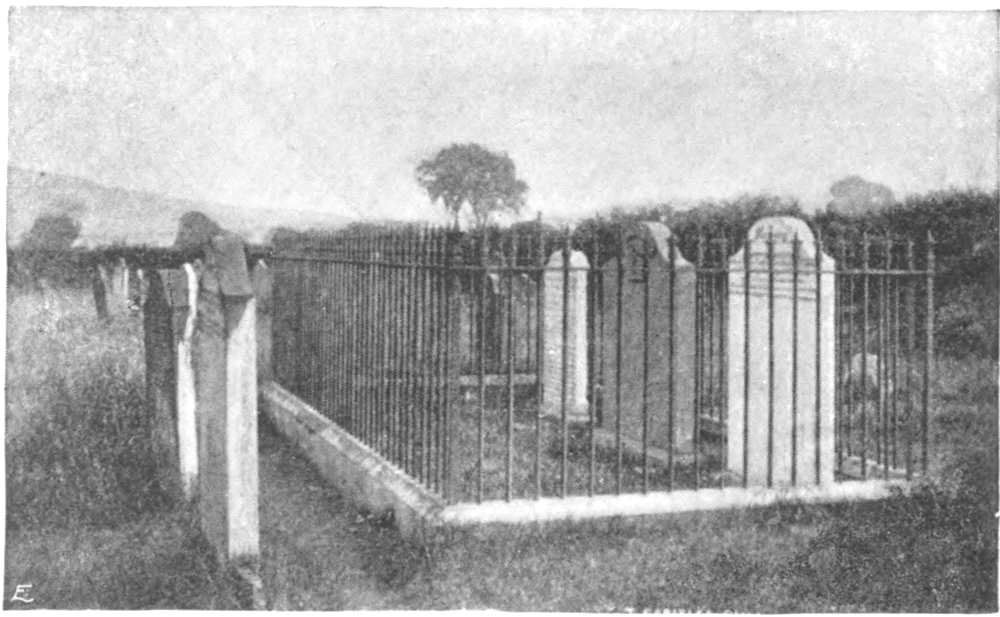
CARLYLE’S GRAVE AT ECCLEFECHAN
Thomas Carlyle died on February 5th, 1881
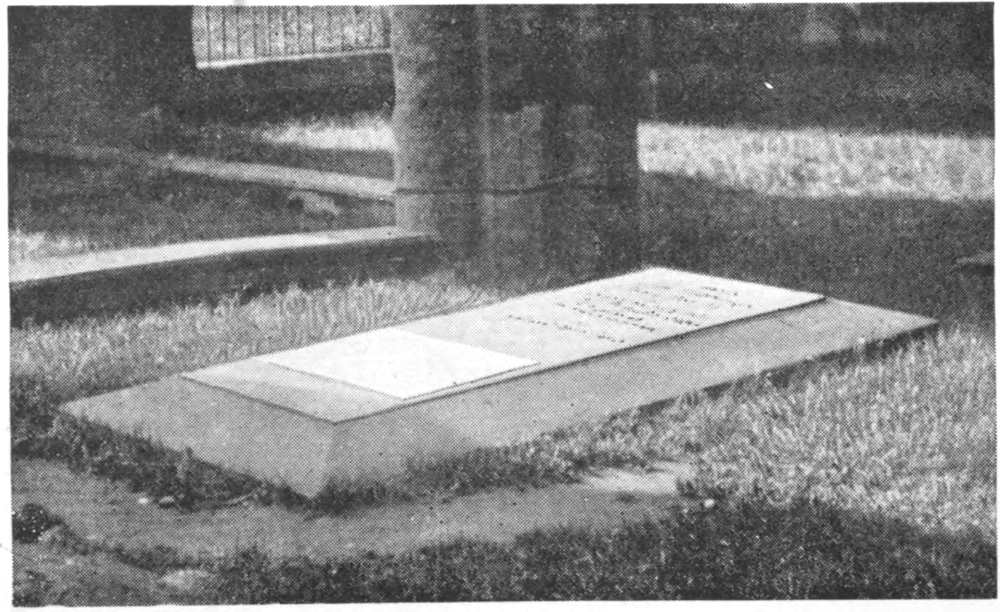
From a photo by J. F. Gordon, Haddington
MRS. CARLYLE’S GRAVE IN HADDINGTON CHURCH
Mrs. Carlyle died on April 21st, 1866
But a definite
defect there is, as I
have suggested, in
Carlyle, considered as
an historian, and it
flows directly from that
real moral defect in his nature, an impatience with other men’s ideas.
In judging of men as men, he was not only quick and graphic and
correct, but in the main essentially genial and magnanimous. Only a
very superficial critic will think that Carlyle was misanthropic because
he was surly. There is very much more real sympathy with human
problems and temptations in a page of this shaggy old malcontent
than in whole libraries of constitutional history by dapper and polite
rationalists, who treat men as automata, and put their virtues and
vices into separate
pigeonholes. If I had
made a mistake or
committed a sin that
had any sort of human
character about it, I
would very much
rather fall into the
hands of Carlyle than
into the hands of
Mr. Hallam or Mr.
James Mill. But while
Carlyle did realise the fact that every man carries about with him his
own life and atmosphere, he did not realise that other truth, that every
man carries about with him his own theory of the world. Each one
of us is living in a separate Cosmos. The theory of life held by
one man never corresponds exactly to that held by another. The
whole of a man’s opinions, morals, tastes, manners, hobbies, work
back eventually to some picture of existence itself which, whether it
be a paradise or a battle-field, or a school or a chaos, is not precisely
the same picture of existence which lies at the back of any other brain.
Carlyle had not fully realised that it was a case of one man, one
Cosmos. Consequently, he devoted himself to asking what place any
man, say Robespierre or Shelley, occupied in Carlyle’s Cosmos. It
never occurred to him sufficiently clearly to ask what place Shelley
occupied in Shelley’s Cosmos, or Robespierre in Robespierre’s Cosmos.
Not feeling the need of this, he never studied, he never really listened
to, Shelley’s philosophy or Robespierre’s philosophy. Here, after a
somewhat long circuit, we have arrived at the one serious deficiency
in Carlyle’s histories, a neglect to realise the importance of theory
and of alternative theories in human affairs.
From the portrait painted by Sir J. E. Millais, P.R.A., for Mr. J. A. Froude in 1877
THOMAS CARLYLE
In the National Portrait Gallery. Rischgitz Collection.
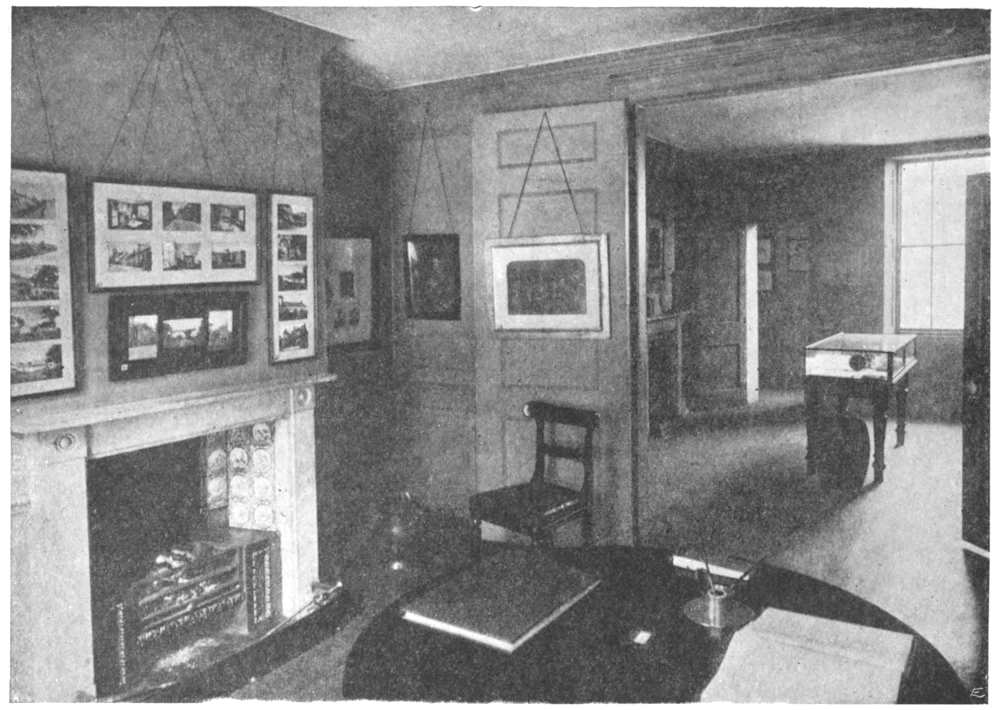
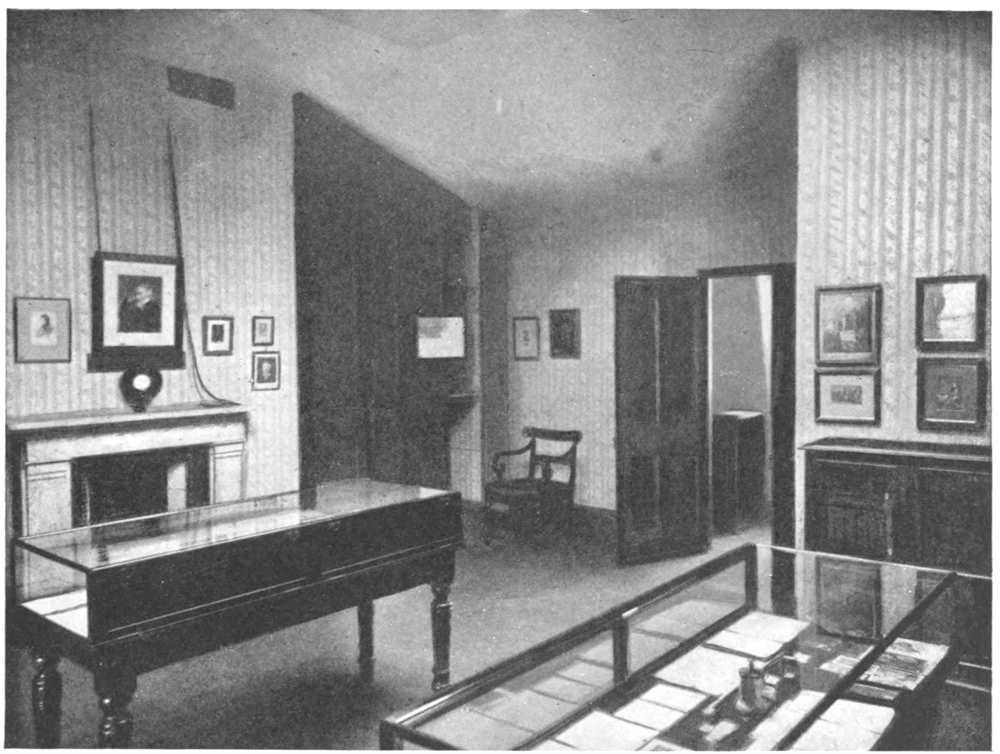
THE GROUND-FLOOR ROOMS AT 5, CHEYNE ROW (1900)
(Reproduced from Reginald Blunt’s “Historical Handbook to Chelsea,” by kind permission of the author)
From a photo by Robert Tait
THE GARRET STUDY AT CHEYNE ROW (1857)
(Reproduced from Reginald Blunt’s “The Carlyles’ Chelsea Home,” by kind permission of the author)
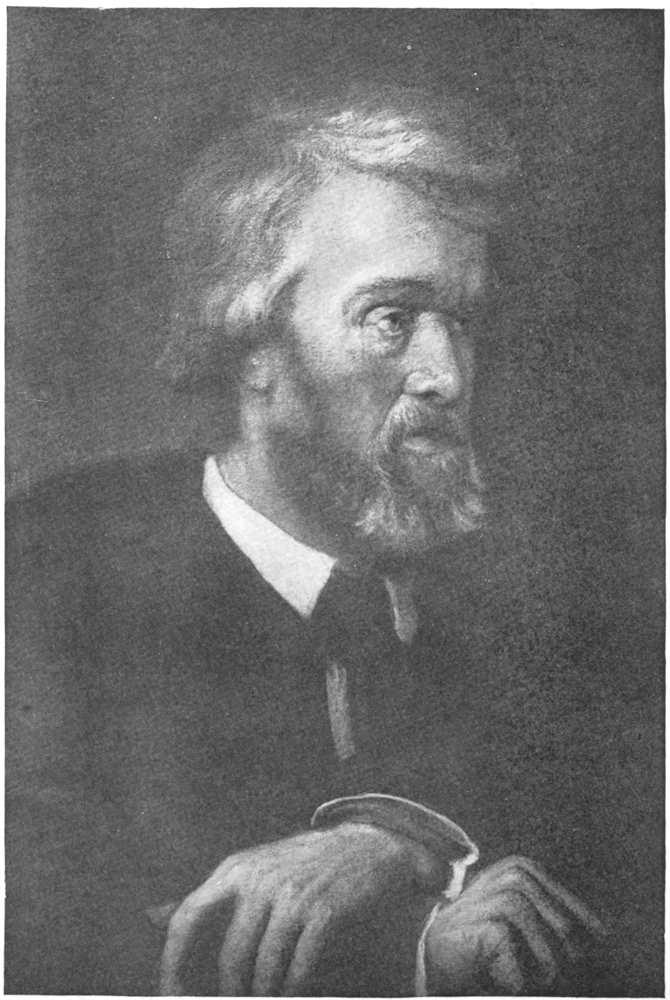
Photo by Frederick Hollyer
THOMAS CARLYLE, ÆT. 73
From the painting by G. F. Watts, R.A., now in the National Portrait Gallery
THE SOUND-PROOF STUDY AT CHEYNE ROW IN 1900, SHOWING THE DOUBLE WALLS
(Reproduced from Reginald Blunt’s “Historical Handbook to Chelsea,” by kind permission
of the author)
The standing example of this is the “History of the French Revolution.”
Carlyle’s conception of the French Revolution is simply and
absolutely that of an elemental outbreak, an explosion of nature in
history, an earthquake in the moral world. Human nature, Carlyle
seems to tell us, had been stifled more and more in the wrappings
of artificiality, until, when its condition had just passed the tolerable,
gagged, blinded, deaf, and ignorant of what it really wanted, by a
gigantic muscular effort it burst its bonds.
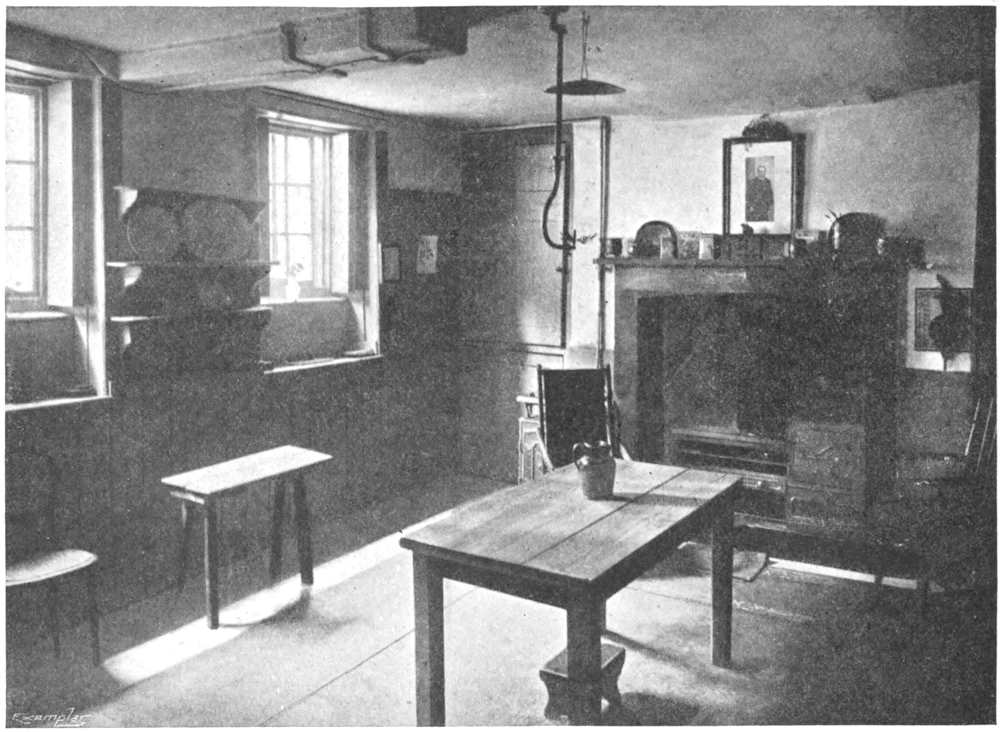
THE KITCHEN AT No. 5, CHEYNE ROW (1900)
(Reproduced from Reginald Blunt’s “Historical Handbook to Chelsea,” by kind permission of the author)
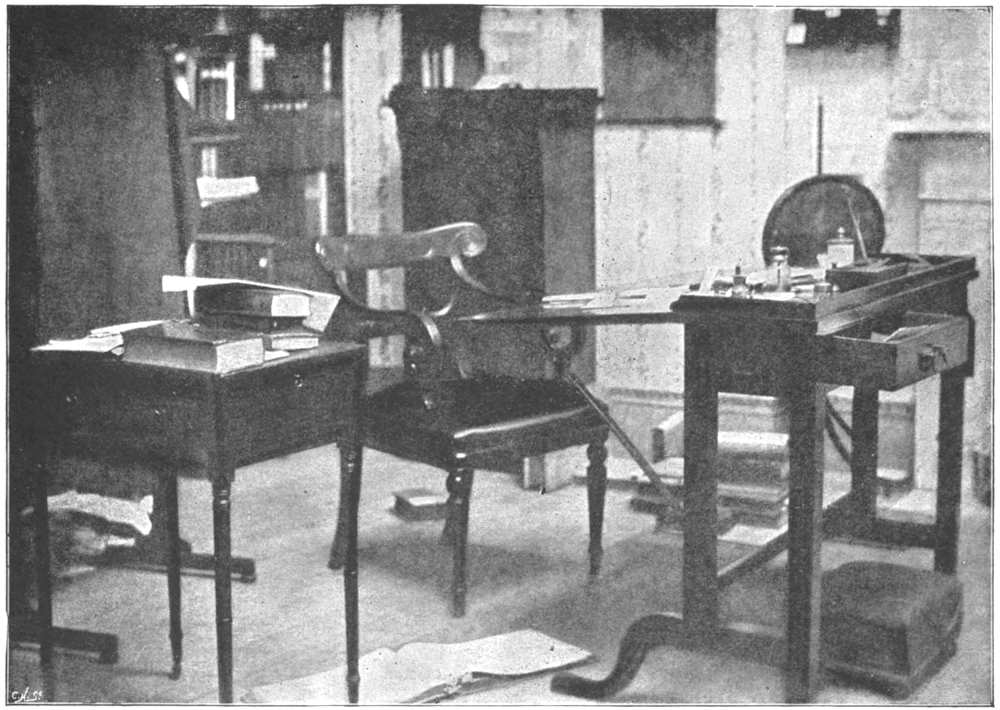
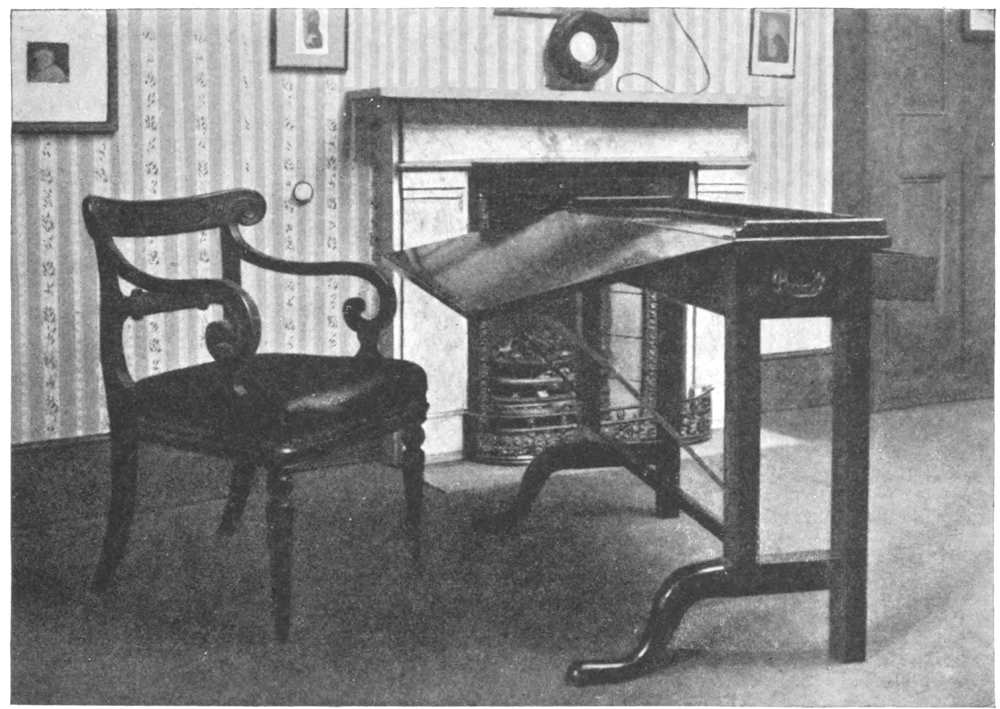
CARLYLE’S WRITING-DESK AND CHAIR
(Reproduced by kind permission of Mr. Reginald Blunt)
So far as it goes, that is perfectly true of the French Revolution;
but only so far as it goes. The French Revolution was
a sudden starting from slumber of that terrible spirit of man
which sleeps through the greater number of the centuries; and
Carlyle appreciates this, and describes it more powerfully and
fearfully than any human historian, because this idea of the spirit
of man breaking through formulae and building again on fundamentals
was a part of his own philosophical theory, and therefore
he understood it. But he never, as I have said, took any real
trouble to understand other people’s philosophical theories. And
he did not realise the other fact about the French Revolution—the
fact that it was not merely an elementary outbreak, but was
also a great doctrinal movement. It is an astonishing thing that
Carlyle’s “French Revolution” contrives to be as admirable and as
accurate a history as it is, while from one end to the other there is
hardly a suggestion that he comprehended the moral and political
theories which were the guiding stars of the French Revolutionists.
It was not necessary that he should agree with them, but it was
necessary that he should be interested in them; nay, in order that
he should write a perfect history of their developments, it was necessary
that he should admire them. The truly impartial historian is
not he who is enthusiastic for neither side in a historic struggle:
that method was adopted by the rationalistic historians of the
Hallam type, and resulted in the dullest and thinnest and most
essentially false chronicles that were ever compiled about mankind.
The truly impartial historian is he who is enthusiastic for both sides.
He holds in his heart a hundred fanaticisms. The truly philosophical
historian does not patronise Cromwell and pat the King on the head,
as Hallam does; the true philosophical historian could ride after
Cromwell like an Ironside and adore the King like a Cavalier.
The only history that is worth knowing, or worth striving to
know, is the history of the human head and the human heart, and
of what great loves it has been enamoured: truth in the sense of
the absolute justice is a thing for which fools look in history and
wise men in the Day of Judgment. It is the glory of Carlyle
that he did realise that the intellectual impartiality of the rationalist
historian was merely emotional ignorance. It was his only defect
that he extended his sympathy, in cases like that of the French
Revolution, only to headlong men and impetuous actions, and
not to great schools of revolutionary doctrine and faith. He made
somewhat the same mistake with regard to the Middle Ages,
touching which his contributions are unequalled in picturesqueness
and potency. He conceived the mediæval period in Europe as a
barbaric verity, “a rude, stalwart age”; he did not realise what is
more and more unfolding itself to all serious historians, that the
mediæval period in Europe was a civilisation based upon a certain
scheme of moral science of almost unexampled multiplicity and
stringency, a scheme in which the colours of a lacquey’s coat could
be traced back to a system of astronomy, and the smallest bye-law
for a village green had some relation to great ecclesiastical and
moral mysteries. It is remarkable that we always call a rival civilisation
savage: the Chinese call us barbarians, and we call them
barbarians. The Middle Ages were a rival civilisation, based upon
moral science, to ours based upon physical science. Most modern
historians have abused this great civilisation for being barbarous:
Carlyle had made one great stride beyond them in so far that he
admired it for being barbarous. But his fatal strain of intellectual
impatience prevented him from getting on to the right
side of Catholic dogmas, just as it prevented him from getting on
to the right side of Jacobin dogmas. He never really discovered
what other people meant by Apostolic Succession, or Liberty, or
Equality, or Fraternity.
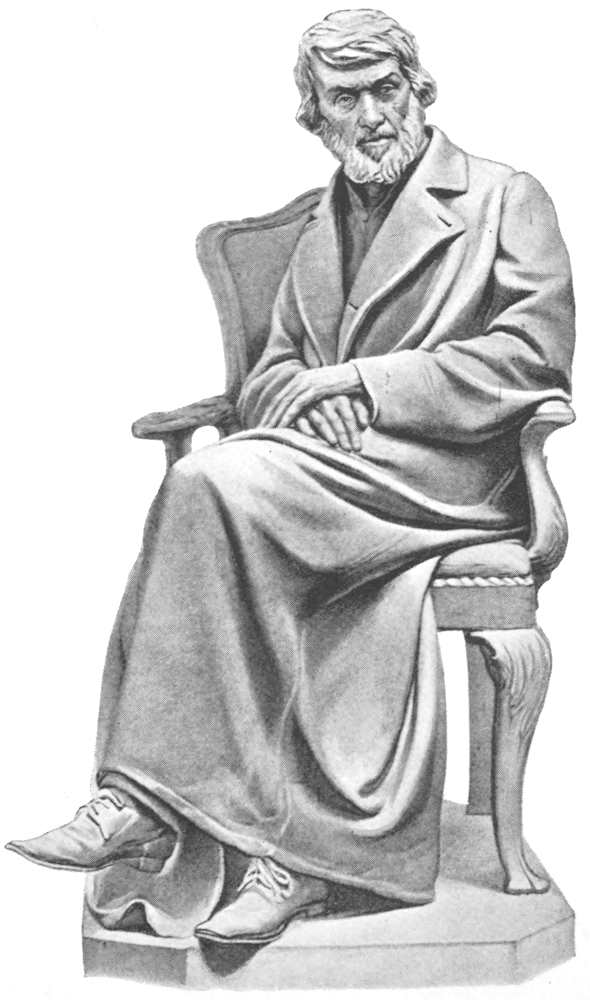
STATUE OF CARLYLE
By Sir J. E. Boehm, R.A. In the Gardens on the Chelsea Embankment
Rischgitz Collection.
Probably his few mistakes
arose from his unfortunate
tendency to find
“shams.” Some have supposed
this to be the essence
and value of his message; it
was in truth its worst pitfall
and disaster. A man is
almost always wrong when
he sets about to prove the
unreality and uselessness of
anything: he is almost invariably
right when he sets
about to prove the reality
and value of anything. I
have a quite different and
much more genuine right to
say that bull’s-eyes are nice
than I have to say liquorice
is nasty: I have found out
the meaning of the first
and not of the second.
And if a man goes on a
tearing hunt after shams, as
Carlyle did, it is probable
that he will find little
or nothing real. He is tearing off the branches to find the
tree.
I have said all that is to be said against Carlyle’s work almost
designedly: for he is one of those who are so great that we rather
need to blame them for the sake of our own independence than
praise them for the sake of their fame. He came and spoke a word,
and the chatter of rationalism stopped, and the sums would no
longer work out and be ended. He was a breath of Nature turning
in her sleep under the load of civilisation, a stir in the very stillness
of God to tell us He was still there.
In a house which his father, a mason, had built with his own hands,
Thomas Carlyle was born on December 4th, 1795. His mother, Margaret
Aitken, “a woman of the fairest descent, that of the pious, the just and
wise,” was the second wife of James Carlyle, and Thomas was the eldest of
their nine children.
In the Entepfuhl of Sartor Resartus Carlyle has pictured his native
village. It consisted of a single street, down the side of which ran an open
brook. “With amazement,” he writes, “I began to discover that Entepfuhl
stood in the middle of a country, of a world.... It was then that,
independently of Schiller’s Wilhelm Tell, I made this not quite insignificant
reflection (so true also in spiritual things): ‘Any road, this simple
Entepfuhl road, will lead you to the end of the world!’” The room
at Arch House in which he was born now contains some interesting
mementoes. On the mantelpiece are two turned wooden candlesticks, a
gift of John Sterling, sent from Rome; the table provides a resting-place
for his study-lamp and his tea-caddy. Most of the furniture came from
Cheyne Row.
Carlyle came up from Ecclefechan to attend Edinburgh University when
he was scarcely fourteen years of age, and with a companion, Tom Smail,
journeyed the entire distance on foot. They secured a clean-looking and
cheap lodging in Simon Square, a poor neighbourhood on the south side of
Edinburgh, off Nicholson Street. After residing in various parts of the old
town, Carlyle removed in 1821 to better quarters, and the most interesting of
his various abodes in Edinburgh was at 1, Moray Street (now Spey Street),
Leith Walk. Here he commenced his literary work in earnest, and began
to regard life from a brighter standpoint. Leith Walk is described in Sartor
Resartus as the Rue Saint-Thomas de l’Enfer. “All at once,” he writes, “there
rose a thought in me, and I asked myself, ‘What art thou afraid of?...’
It is from this hour that I incline to date my spiritual new birth or baphometic
fire-baptism; perhaps I directly thereupon began to be a man.”
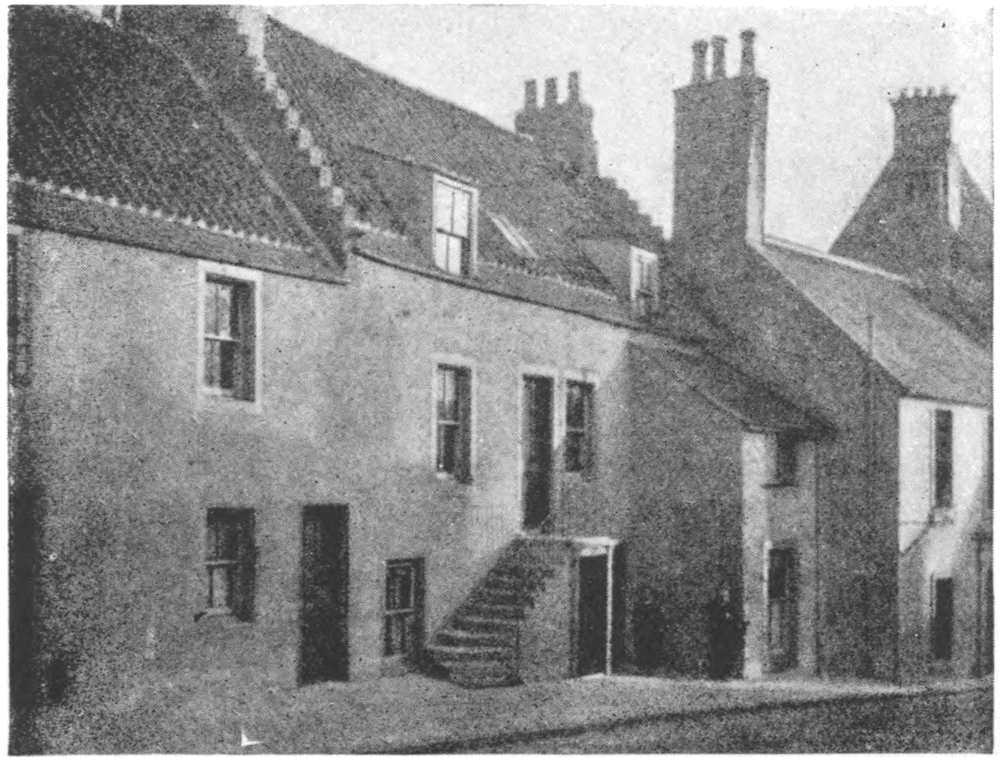
The house in
which Carlyle
lived whilst
teaching at
Kirkcaldy school
It was at Kirkcaldy that Carlyle first met Edward Irving, the master of a
rival school in the town. They became intimate friends. “But for Irving,”
he says, “I had never known what the communion of man with man means.”
It was here, too, that he made the acquaintance of Miss Margaret Gordon,
the “Blumine” of Sartor Resartus. Carlyle describes the town in the
Reminiscences: “Kirkcaldy itself ... was a solidly diligent, yet by no means
a panting, puffing, or in any way gambling ‘Lang Toun.’ I, in particular,
always rather liked the people—though from the distance, chiefly; chagrined
and discouraged by the sad trade one had!”
In 1815 the Carlyles moved to Mainhill Farm, and here he “first learned
German, studied Faust in a dry ditch, and completed his translation of
Wilhelm Meister!” Ten years later Carlyle took possession of Hoddam
Hill Farm, his mother going with him as housekeeper, and his brother Alick
as practical farmer. Here they remained until 1826. “With all its manifold
petty troubles,” says Carlyle, in the Reminiscences, “this year at Hoddam
Hill has a rustic beauty and dignity to me; and lies now like a not ignoble
russet-coated idyll in my memory.”
The abrupt termination of Carlyle’s tenancy of Hoddam Hill occurred
simultaneously with the expiration of his father’s lease of Mainhill, and in
1826 the family removed to Scotsbrig, that excellent “‘shell of a house’ for
farming purposes,” where Carlyle’s parents spent the remainder of their lives.
In this unpretentious home Carlyle passed many restful holidays among his
own people.
“In the ancient county-town of Haddington,” he writes, “on July 14th,
1801, there was born to a lately wedded pair a little daughter, whom they
named Jane Baillie Welsh, and whose subsequent and final name (her own
common signature for many years) was Jane Welsh Carlyle.... Oh, she
was noble, very noble, in that early as in all other periods, and made the
ugliest and dullest into something beautiful! I look back on it as if through
rainbows—the bit of sunshine hers, the tears my own.”
Mrs. Carlyle, in her Early Letters, mentions her father’s home at Haddington
where she was born. “It is my native place still! and after all, there is much
in it that I love. I love the bleaching green, where I used to caper, and roll,
and tumble, and make gowan necklaces and chains of dandelion stalks, in the
days of my ‘wee existence.’”
Carlyle’s marriage with Jane Baillie Welsh took place on October 17th,
1826, at Templand, where Mrs. Welsh then resided. The ceremony was of
the quietest description, his brother John Carlyle being the only person present
besides Miss Welsh’s family.
For eighteen months after their marriage the Carlyles lived at 21, Comely
Bank, the “trim little cottage, far from all the uproar and putrescence
(material and spiritual) of the reeky town, the sound of which we hear not,
and only see over the knowe the reflection of its gaslights against the dusky
sky.” It was during this time that Carlyle contributed essays to the Edinburgh
and Foreign Quarterly Reviews. In 1828 a removal was made to Mr. Welsh’s
manor at Craigenputtock, where in the solitude “almost druidical” Sartor
Resartus was written. “Poor Puttock!” he exclaims in one of his letters,
“Castle of many chagrins; peatbog castle, where the devil never slumbers nor
sleeps! very touching art thou to me when I look on thy image here.” In this
lonely spot, cut off from all social intercourse, the Carlyles remained until
1834, when, after “six years’ imprisonment on the Dumfriesshire moor,” they
moved to Chelsea and took up their residence at No. 5, Cheyne Row, in the
house which was to be their home until death.
After a week’s wearisome house-hunting in London under the guidance of
Leigh Hunt, Carlyle sent a long description of the proposed new residence to
his wife, of which the following is an extract:—“We are called ‘Cheyne Row’
proper (pronounced Chainie Row) and are a ‘genteel neighbourhood,’ two old
ladies on the one side, unknown character on the other, but with ‘pianos’ as
Hunt said. The street is flag-pathed, sunk-storied, iron-railed, all old-fashioned
and tightly done up.... The house itself is eminent, antique,
wainscoted to the very ceiling, and has been all new painted and repaired.... On
the whole a most massive, roomy, sufficient old house, with places, for
example, to hang, say, three dozen hats or cloaks on, and as many crevices
and queer old presses and shelved closets as would gratify the most covetous
Goody—rent £35! I confess I am strongly tempted.”
The brightest and happiest part of Carlyle’s day was the early evening.
“Home between five and six, with mud mackintoshes off, and the nightmares
locked up for a while, I tried for an hour’s sleep before my (solitary, dietetic,
altogether simple) bit of dinner; but first always came up for half an hour to
the drawing-room and her; where a bright, kindly fire was sure to be burning
(candles hardly lit, all in trustful chiaroscuro).... This was the one bright
portion of my black day. Oh, those evening half-hours, how beautiful and
blessed they were!”
The garden at Cheyne Row was much appreciated by the Carlyles, who
turned to the best advantage this “poor sooty patch.” Mrs. Carlyle writes:
“Behind we have a garden (so called in the language of flattery) in the worst
of order, but boasting of two vines which produced two bunches of grapes in
the season, which ‘might be eaten,’ and a walnut tree, from which I gathered
almost sixpence-worth of walnuts.” Here stood the quaint china barrels she
often referred to as “noblemen’s seats,” but Carlyle generally used one of the
kitchen chairs by preference. He found the garden “of admirable comfort
in the smoking way,” and sometimes in summer would have his writing-table
placed under an awning stretched for that purpose, and with a tray full of books
at his side would work there when the heat drove him from his garret study.
The construction of this sound-proof study was proposed as far back as
1843, but not until ten years later was the enterprise put into practical execution.
On August 11th, 1853, Carlyle wrote to his sister: “At length, after
deep deliberation, I have fairly decided to have a top story put upon the house,
one big apartment, twenty feet square, with thin double walls, light from the
top, etc., and artfully ventilated, into which no sound can come; and all the
cocks in nature may crow round it without my hearing a whisper of them!”
The scheme looked promising on paper, but the result was “irremediably
somewhat of a failure.” Although the noises in the immediate neighbourhood
were excluded, sounds in the distance, “evils that he knew not of” in
the lower rooms, became painfully audible; nevertheless he occupied the
room as his study until 1865, and here, “whirled aloft by angry elements,”
he completed what Dr. Garnett named well “His Thirteen Years’ War
with Frederick.” His writing-table and arm-chair stood near the centre, and
within easy reach was the little mahogany table for the books he happened
to be using—or such of them as were not on the floor.
Carlyle bequeathed his writing-table to Sir James Stephen. “I know,”
he wrote in his will, “he will accept it as a distinguished mark of my esteem.
He knows that it belonged to my father-in-law and his daughter, and that I
have written all my books upon it, except only Schiller, and that for fifty
years and upwards that are now passed I have considered it among the most
precious of my possessions.”
It was into the ground-floor room—at that time spoken of as the
“parlour”—that Edward Irving was ushered when he paid his one visit
to Cheyne Row, in autumn 1834. “I recollect,” writes Carlyle in the
Reminiscences, “how he complimented her (as well he might) on the pretty
little room she had made for her husband and self; and, running his eye over
her dainty bits of arrangement, ornamentations (all so frugal, simple, full
of grace, propriety, and ingenuity as they ever were), said, smiling: ‘You
are like an Eve, and make a little Paradise wherever you are.’”
No description of Carlyle’s Chelsea home would be complete without
mention of the kitchen where Mrs. Carlyle made marmalade “pure as liquid
amber, in taste and look almost poetically delicate”; and where, too, she
stirred Leigh Hunt’s endlessly admirable morsel of Scotch porridge.
Readers of the Letters and Memorials will obtain many glimpses of this
apartment and its occupants. The fittings were very old-fashioned, especially
the open kitchen-range with its “kettle-crane” and “movable
niggards.” The dresser which stood there in 1834 remains against the
south wall; the table still stands in the centre, and there is a sink in
the corner beside the disconnected pump.
When Carlyle was resting at Dumfries, after the exhaustion of his
triumphant Inaugural Address upon his installation as Lord Rector of
Edinburgh University, he received the announcement of his wife’s sudden
death whilst driving in her carriage in Hyde Park on April 21st, 1866.
The effect of the calamity upon him was terrible. “There is no spirit
in me to write,” he said, “though I try it sometimes.”
Mrs. Carlyle was buried in Haddington Church. “I laid her in the grave
of her father,” writes Carlyle in the Reminiscences, “according to covenant
of forty years back, and all was ended. In the nave of old Abbey Kirk,
long a ruin, now being saved from further decay, with the skies looking
down on her, there sleeps my little Jeannie, and the light of her face will
never shine on me more.”
The inscription on Carlyle’s tombstone is very simple: the family crest
(two wyverns), the family motto (Humilitate), and then these few words:—
“Here rests Thomas Carlyle, who was born at Ecclefechan,
4th December, 1795, and died at 24, Cheyne Row, Chelsea,
London, on Saturday, 5th February, 1881.
“No monument,” writes Froude, “is needed for one who has made an
eternal memorial for himself in the hearts of all to whom truth is the
dearest of possessions.”
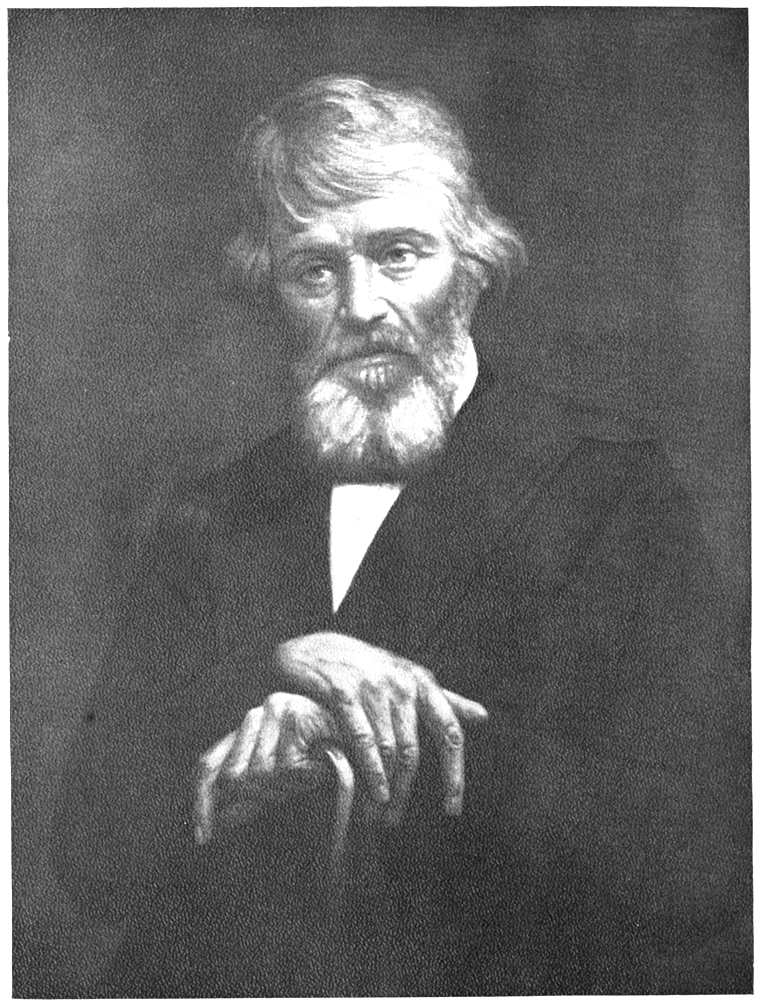
This portrait is now in the Victoria and Albert Museum. “Carlyle,”
writes David Hannay in the Magazine of Art, “already the author of
Sartor Resartus, stands leaning against the traditional pillar with the conventional
air of colourless good breeding. There is neither line in his
face nor light in his eye.”
“He (D’Orsay) has contrived,” says the same writer, “to make Carlyle
look like the hero of a lady’s novel—an excellent young man with a curl
in his upper lip and a well-combed head of hair.”
The medallion has been reproduced from a wood engraving by Pearson.
It was presented to Carlyle in 1875, on his eightieth birthday, by friends and
admirers in Edinburgh.
“Professor Diogenes Teufelsdröckh, of Weissnichtwo, is nothing if he
is not Carlyle in disguise, the projection of the Scotchman’s individuality
upon a half-humorous, half-philosophical German background.”—Ernest
Rhys: Introductory Note to Sartor Resartus.
“Mr. Whistler, in the Glasgow Corporation Art Galleries, has distinctly
succeeded in making the face of Carlyle interesting. He has avoided anything
like exaggeration. He has not tried to make capital out of the rugged
mass of the hair, or to give a wild-man-of-the-woods look to the face by laying
stress on its deep lines and stern contours. The head is noble, quiet, and
sad. The artist has tried to paint a serious portrait rather than to give a
‘view,’ and he has succeeded.”—David Hannay in the Magazine of Art.
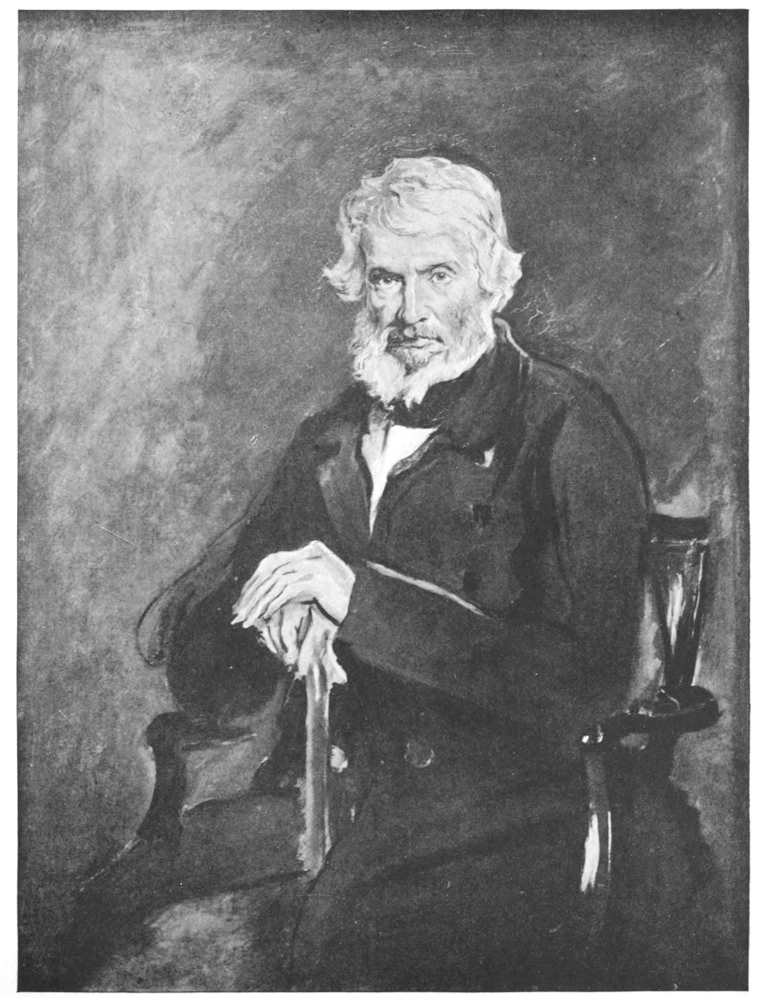
This portrait, executed for John Forster, who was very pleased with it,
is now in the National Portrait Gallery. Carlyle himself describes it as
“a delirious-looking mountebank, full of violence, awkwardness, atrocity,
and stupidity, without recognisable likeness to anything I have ever known
in any feature of me. Fait in fatis. What care I, after all? Forster is
much content.”
From the
portrait painted
by Sir J. E.
Millais, P.R.A.
The picture by Millais, also in the National Portrait Gallery, was painted
in 1877 for Mr. J. A. Froude. His opinion of it was as follows:—“And yet
under Millais’s hands the old Carlyle stood again upon the canvas as I had
not seen him for thirty years. The inner secret of the features had been
evidently caught. There was a likeness which no sculptor, no photographer,
had yet equalled or approached. Afterwards, I knew not how, it seemed to
fade away. Millais grew dissatisfied with his work, and, I believe, never
completed it.”
In the gardens on the Chelsea Embankment stands a statue of Thomas
Carlyle in bronze by the late Sir Edgar Boehm, which was placed there by
subscription in 1882. Mr. Froude considered it “as satisfactory a likeness
in face and figure as could be rendered in sculpture; and the warm regard
which had grown up between the artist and Carlyle had enabled Boehm to
catch with more than common success the shifting changes of his expression.”
THOMAS CARLYLE’S WORKS.
The only complete editions of CARLYLE
are those published by
Messrs. CHAPMAN & HALL,
INCLUDING
THE CENTENARY EDITION.
Edited, with Introductions, by H. D. TRAILL, D.C.L.
In 30 volumes, square crown 8vo. Price 3s. 6d. per Volume.
The Centenary Edition is the most complete edition of Carlyle’s Works yet issued, containing
several essays and minor writings never before published in a collected form. The volumes are printed on
light paper, and bound in dark blue cloth. The illustrations consist mainly of photogravure and steel
portraits, the majority of which, including some of Thomas Carlyle, have never appeared in any existing
edition; maps and plans.
THE PEOPLE’S EDITION.
In 37 volumes, small crown 8vo, red cloth. Separate volumes, 1s.
THE CHELSEA EDITION.
In special red cloth binding, 11 volumes, with gilt tops, £1 5s. net.
AND THE NEW
EDINBURGH EDITION
(ON INDIA PAPER),
Price 2s. net, cloth; 2s. 6d. net, leather.
VOLUMES NOW READY.
THE FRENCH REVOLUTION. Complete in 1 vol.
SARTOR RESARTUS: On Heroes, Hero-Worship, and the Heroic in
History: Past and Present. 1 vol.
THE LIFE OF SCHILLER AND THE LIFE OF JOHN STERLING.
1 vol.
SEND TWOPENCE FOR ILLUSTRATED BOOKLET
giving a life of Carlyle and full particulars of all the
copyright editions of his works.
CHAPMAN & HALL Ltd., 11, Henrietta Street, Covent Garden, W.C.
A MAGAZINE DE LUXE FOR BOOK READERS.
Every reader of
these lines is a book
buyer and a book reader.
We want every reader
of these lines to become a reader of
“THE BOOKMAN.” If you
are not acquainted with “THE
BOOKMAN,” will you kindly
send a postcard to the Publishers
for a specimen copy, which will
gladly be forwarded to all readers
of this Booklet.
“THE BOOKMAN” is
edited by Dr. Robertson Nicoll, and
is published during the first week of
every month, price 6d. net. “THE
BOOKMAN” is the only monthly
magazine devoted exclusively to the
interests of book readers. “THE
BOOKMAN” is the only periodical
which in any adequate way
chronicles the literary life of the
day in pictures as well as letterpress.
“THE BOOKMAN” has already
the largest circulation of any purely
literary paper published in the kingdom,
and its sales have increased
enormously during the last twelve
months. “THE BOOKMAN” is
the best illustrated guide to the best
books of the day.
“THE BOOKMAN” makes
appeal to everyone who is interested
in the literature of the day. “THE
BOOKMAN” is not a dry-as-dust
magazine for specialists. Every line
and every picture it contains is of
peculiar interest to the great and
ever-increasing public that delights
in books. “THE BOOKMAN”
is the periodical for those who want
to keep in touch with the books most
worth reading and with the authors
most worth knowing.
“THE BOOKMAN” contains
each month a separate plate
portrait, printed by the finest process
of half-tone photogravure. These
portraits, forming as they do a
unique Gallery of Famous Modern
Authors, have been immensely appreciated,
and many readers of
“THE BOOKMAN” have the
complete series framed on their
walls. Among the plates which
have given greatest satisfaction are
portraits of Carlyle, Tennyson,
Browning, Dickens, Scott, Thackeray,
Jane Austen, Ruskin, Robert
Louis Stevenson, George Macdonald,
Thomas Hardy, Alexandre Dumas,
Tolstoy, Swinburne, J. M. Barrie,
Herbert Spencer, A. Conan Doyle,
Alfred Austin, George Eliot, Matthew
Arnold, etc., etc.
“THE BOOKMAN” contains
each month an article on some
prominent author of the day, written
by an eminent critic and magnificently
illustrated throughout, articles
on topics of literary interest by well-known
writers, reviews of the best
new books written by the first
authorities, several pages of the
freshest literary news, reports as to
the best selling books of the month,
articles on new writers of promise,
etc., etc. “THE BOOKMAN”
thus fulfils in a manner never before
attempted the requirements of the
great book-loving public. “THE
BOOKMAN” is published during
the first week of every month,
price 6d. net.