Numbers refer to paragraphs. See Table of Contents for the
titles of the various chapters.
Action of magnets upon each other,
32.
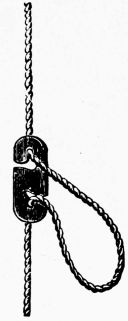
Adjuster, for lamp cords,
151.
Air pressure, effect of spark upon,
155.
Aluminum-leaf, for electroscopes,
5.
Alternating current,
129,
130;
system of wiring for, 144.
Amalgamation of zincs,
47.
Amber, electrification upon,
3.
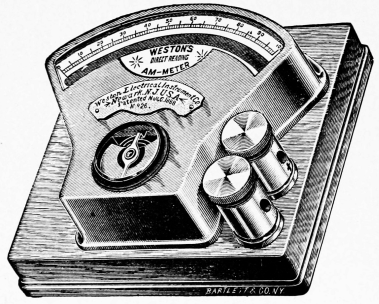
Ammeter, the,
74;
how placed in circuit, 77.
Ampere, the,
72.
Annunciators,
177.
Anode,
79,
82.
Apparatus for electrical measurements,
Chap. VI.
Appliances, for distribution of currents,
141;
for electric railways, 167;
for heating by electricity, 147.
Arc, the electric,
152.
Arc lamp, the,
153;
how light is produced by, Chap. XXII.;
double carbon, 153;
hand-feed focussing, 153;
for search-lights, 153;
short, for basements, 153;
single carbon, 153;
for theater use, 153.
Armature, of dynamo,
127,
129;
of electromagnets, 98;
of horseshoe magnet, 26;
of motors, 161;
uses of, 39.
Artificial magnets,
25.
Astatic, detectors,
94;
galvanometer, 73;
needles, 94.
Aurora borealis,
23.
Automatic, current interrupters,
104,
115;
gas lighters, 174;
program clocks, 172.
Automobiles,
169;
controllers for, 169;
motors for, 169;
steering of, 169;
storage batteries for, 169.
Bamboo filaments,
149.
Bar magnets,
27;
magnetic figures of, 38.
Batteries, large plunge,
54;
plunge, 53;
secondary, 86;
storage, and how they work, Chap. IX.
Bell, the electric, and some of its uses,
Chap. XV.;
electric, 116;
magneto testing, 117;
trembling, etc., 116.
Bell transmitter,
120.
Belts, electricity generated by friction upon,
1.
Benjamin Franklin,
18.
Bichromate of potash cells,
51, etc.
Binding-posts,
Chap. V.;
common forms of, 63.
Blasting, by electricity,
147;
electric machines for, 147.
Bluestone cell,
56.
Boats, electric,
168.
Boilers, use of in central stations,
170.
Bones, photographed by x-rays,
Chap. XXIII.
Boosters,
136.
Brushes,
129.
Bunsen cells,
56a.
Burner, automatic,
174;
for gas-lights, 174;
ratchet, 174.
Buzzers, electric,
118.
Cables and wires,
143.
Call boxes, electric,
173.
Carbon, in arc lamps,
152,
153;
filament, 149;
transmitter, 123.
Carpet, electricity generated upon,
1.
Cars, electric,
164;
controllers for, 165;
heating by electricity, 167;
overhead system for, 166;
underground system for, 166.
Cat, electricity generated upon,
1.
Cathode, definition of,
79;
rays, 157.
Cells, Bunsen,
56a;
bichromate of potash, 51;
closed circuit, 50;
dry, 58;
Edison-Lelande, 59;
electricity generated by, Chap. III.;
Fuller, 55;
Gonda, 57;
gravity, 56;
Grenet, 52;
Leclanché, 57;
open circuit, 50;
plates and poles of, 45a;
polarization of, 48;
simple, 45, 49;
single-fluid, 49;
two-fluid, 49;
various voltaic, Chap. IV.
Central stations,
170;
a word about, Chap. XXVI.
Chain lightning,
19.
Chafing-dishes, electrical,
147.
Charging condensers,
15.
Chemical action, and electricity,
81.
Chemical effects of electric current,
Chap. VII.
Chemical meters,
78.
Church organs, pumped by motors,
162.
Circuits, electric,
50;
for lamps, 144.
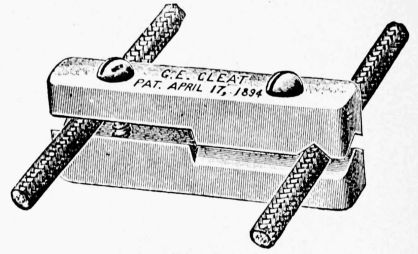
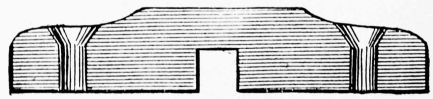
Cleats, porcelain,
141;
wooden, 141.
Clocks, automatic electric,
172.
Closed circuit cells,
50.
Coils, induction, and how they work,
Chap. XIII.;
induction, construction of, 104;
method of joining, 98;
primary and secondary, 103;
resistance, 69;
rotation of, 95;
of transformers, 135.
Collectors on dynamos,
129.
Commutators,
129.
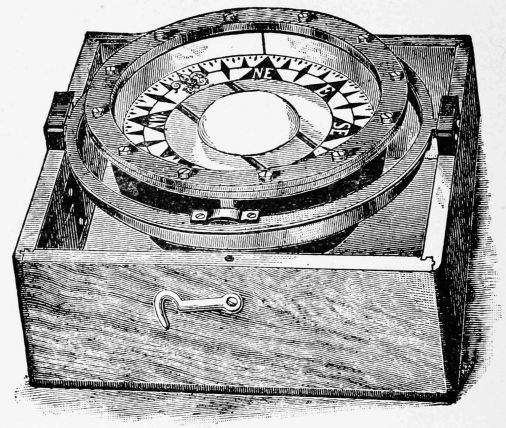
Compasses, magnetic,
31.
Compound, magnets,
28;
wound dynamo, 131.
Condensation of static electricity,
15.
Condensers,
15;
for induction coils, 104.
Conductors, and insulators,
4,
138.
Conduits, electric,
140.
Connections, electrical,
60;
for telegraph lines, 111.
Controllers, for automobiles,
169;
for electric cars, 165.
Copper sulphate, effects of current on,
82;
formula of, 79.
Copper voltameters,
75.
Cords, adjustable for lamps,
151.
Coulomb, the,
76.
Crater of hot carbons,
152.
Crookes tubes,
156,
158.
Current, detectors,
93;
direction of in cell, 46;
from magnet and coil, 100;
from two coils, 102;
induced, 127;
of induction coils, 105;
interrupters, automatic, 104, 115;
local, 47;
primary and secondary, 102;
transformation of, Chap. XVIII.;
transmission of, 134.
Currents, and motion,
160;
how distributed for use, Chap. XIX.
Current strength,
71;
measurement of, 73;
unit of, 72.
Cylinder electric machines,
9.
Daniell cell,
56.
D'Arsonval galvanometer,
73.
Declination,
41.
Decorative incandescent lamps,
151.
Dental, lamps,
151;
outfits, 176.
Detectors, astatic,
94;
current, 93.
Diamagnetic bodies,
29.
Diaphragm for telephones,
120.
Dip, of magnetic needle,
42.
Direct current,
129,
130.
Direction of current in cell,
46.
Discharging condensers,
15.
Disruptive discharges,
154.
Distribution of currents for use,
Chap. XIX.
Door opener, electric,
175.
Dots and dashes,
110.
Drill press, run by motor,
162.
Dry cells,
58.
Dynamo, the,
126;
alternating current, 130;
commutator of, 129;
compound wound, 131;
direct current, 130;
lamps connected to, 132;
series wound, 131;
shunt wound, 131;
used as motor, 161;
use of in central stations, 170;
used with water power, 170.
Dynamos, electricity generated by,
Chap. XVII.;
types of, 130;
various machines, 132;
winding of, 131.
Dynamotors,
137.
Earth, inductive influence of,
43;
lines of force about, 40, 42.
Ebonite, electricity by friction upon,
3,
4.
Edison-Lelande cells,
59.
Electric, automobiles,
169;
bell, and some of its uses, Chap. XV.;
boats, 168;
buzzers, 118;
cars, 164;
conduits, 140;
fans, 162;
flat-irons, 146;
gas lighters, 174;
griddles, 147;
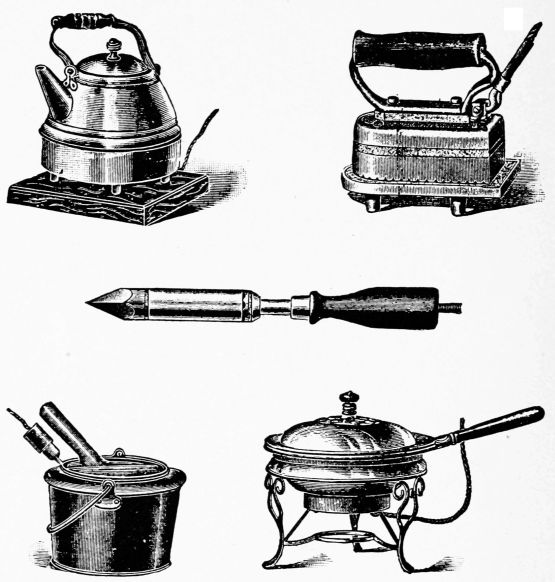
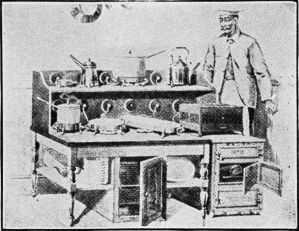
kitchen, 147;
lights, arc, Chap. XXII.;
lights, incandescent, Chap. XXI.;
machines, static, 7 to 13;
machines, uses of, 14;
motor, the, 161;
motor, and how it does work, Chap. XXIV.;
soldering irons, 146;
telegraph, and how it sends messages, Chap. XIV.;
telephone, and how it transmits speech, Chap. XVI.;
welding, 146.
Electric current, and work,
133;
and chemical action, 81;
chemical effects of, Chap. VII.;
how distributed for use, Chap. XIX.;
magnetic effects of, Chap. XI.;
how transformed, Chap. XVIII.
Electrical, connections,
60;
horse-power, 77;
measurements, Chap. VI.;
resistance, 68;
resistance, unit of, 69;
units, Chap. VI.
Electricity, about frictional,
Chap. I.;
and chemical action, 81;
atmospheric, 18;
heat produced by, Chap. XX.;
history of, 3;
how generated upon cat, 1;
how generated by dynamos, Chap. XVII.;
how generated by heat, Chap. X.;
how generated by induction, Chap. XII.;
how generated by voltaic cell, Chap. III.;
origin of name, 2.
Electrification, kinds of,
6;
laws of, 7.
Electrolysis,
79.
Electrolyte,
79.
Electromagnetic induction,
99.
Electromagnetism,
91.
Electromagnets,
96;
forms of, 97.
Electro-mechanical gong,
116.
Electromotive force, defined,
65,
71;
measurement of, 67;
of polarization, 85;
of static electricity, 17;
unit of, 66.
Electrophorus, the,
8.
Electroplating,
82.
Electroscopes,
5.
Electrotyping,
83.
Experiments, early, with currents,
44;
some simple, 1.
External resistance,
68.
Fan motors,
162.
Field, magnetic,
37.
Field-magnets,
129.
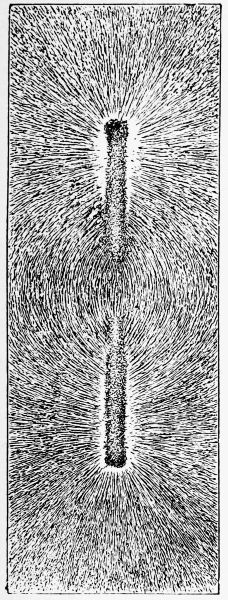
Figures, magnetic,
38.
Filaments, carbon,
149;
bamboo, etc., 149.
Fire, St. Elmo's,
22.
Flat-irons, electric,
147.
Floor mains,
139.
Fluoroscope,
158.
Force, and induced currents,
101;
lines of magnetic, 38;
lines of about a wire, 92, 96;
lines of about a magnet, 37, 38.
Frictional electricity, about,
Chap. I.;
location of charge of, 4;
sparks from, 4.
Fuller cell, the,
55.
Fuse, link,
142;
plug, 142;
ribbons, 142;
wire, 142.
Fusible rosettes,
142.
Galvani, early experiments of,
44.
Galvanometers,
73;
astatic, 73;
considered as motor, 161;
D'Arsonval, 73;
tangent, 73.
Galvanoscope,
73;
astatic, 94.
Gas lighters, electric,
174.
Geissler tubes,
156.
Generators, electric,
126.
Glass, electricity generated upon,
4.
Glue pots, electric,
147.
Gold-leaf, for electroscopes,
5.
Gold plating,
82.
Gonda cell,
57.
Gong, electro-mechanical,
116.
Gravity cell, the,
56;
replaced by dynamotors, 137.
Grenet cell,
52.
Griddles, electric,
147.
Guard, for lamps,
151.
Heat, how generated by electricity,
Chap. X.;
and magnetism, 35;
and resistance, 145.
Heat lightning,
19.
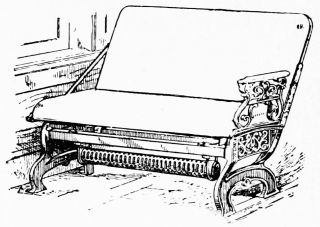
Heaters, for cars,
167.
History of electricity,
3.
Horse-power, electrical,
77.
Horseshoe, permanent magnets,
26;
electromagnets, 97, 98.
Human body, bones of, photographed by x-rays,
Chap. XXIII.
Hydrogen, action of in cell,
48;
attraction of for oxygen, 85.
Incandescence,
148.
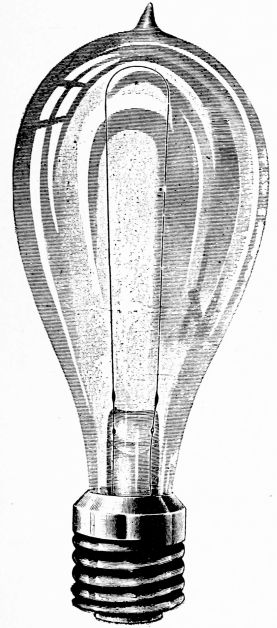
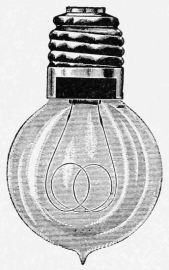
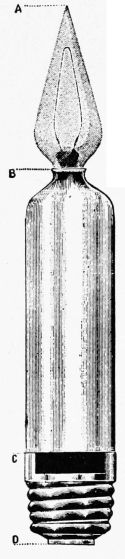
Incandescent lamp,
149;
candle-power of, 150;
current for, 150;
light produced by, Chap. XXI.;
construction of, 149;
uses of, 151.
Inclination of magnetic needle,
42.
Indicating push-button,
61.
Induced currents,
127;
and lines of force, 101;
by rotary motion, 128;
of induction coils, 105;
of transformers, 135.
Induced magnetism,
36.
Induction, electricity generated by,
Chap. XII.;
electromagnetic, 99.
Induction coils, condensers for,
104;
construction of, 104;
currents of, 105;
how they work, Chap. XIII.;
in telephone work, 124;
uses of, 106.
Inductive influence of earth,
43.
Influence machines for medical purposes,
13.
Ink writing registers,
114.
Insulating tubing,
141.
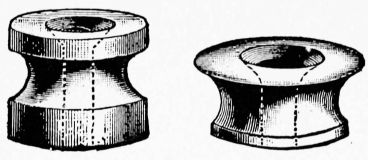
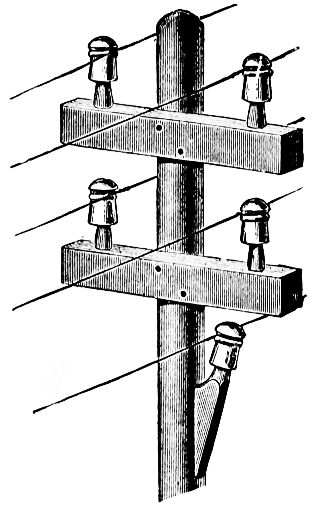
Insulators,
141;
and conductors, 4, 138;
feeder-wire, 167;
for poles, 167;
porcelain, 141.
Internal resistance,
68.
Interrupters, automatic current,
104,
115.
Ions,
80.
Iron, electricity upon, by friction,
4.
Jar, Leyden,
15.
Jarring magnets, effects of,
33.
Keeper of magnets,
26.
Keys, telegraph,
109.
Kinds of electrification,
6.
Kitchen, electric,
147.
Knife switch,
62.
Lamp, incandescent, candle-power of,
150;
cord, adjustable, 151;
current for, 150;
dental, 151;
for desks, 151;
for throat, 151;
guard for, 151;
incandescent, 149;
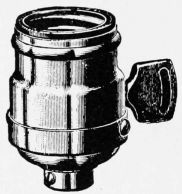
socket, 151;
with half shade, 151.
Lamp, the arc,
153;
how light is produced by, Chap. XXII.;
double carbon, 153;
hand-feed focussing, 153;
for search-lights, 153;
single carbon, 153;
short, for basements, 153;
for theater use, 153.
Lamp circuits, alternating system,
144.
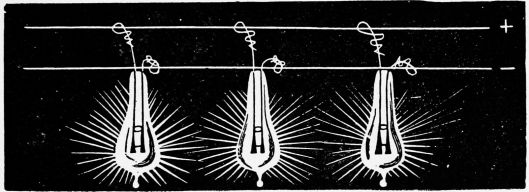
Lamps, in parallel,
144;
lamps in series, 144;
three-wire system, 144;
two-wire system, 144.
Laws, of electrification,
7;
of magnetic attraction, 32;
of resistance, 70.
Leaf electroscopes,
5.
Leclanché cell,
57.
Leyden, battery,
16;
jar, 15.
Light, how produced by arc lamp,
Chap. XXII.;
how produced by incandescent lamp, Chap. XXI.
Lightning,
19;
rods, 21.
Line, telegraph,
Chap. XIV.;
connections for, 111;
operation of, 112.
Line suspension, for trolley-wires,
167.
Line wire,
111.
Lines of force, conductors of,
39,
96;
about the earth, 40, 42;
and induced currents, 101;
about a magnet, 38;
about a wire, 92.
Local currents,
47.
Magnetic, bodies,
29;
declination, 41;
effects of electric current, Chap. XI.;
field, 37;
figure of one bar magnet, 38;
figure of two bar magnets, 38;
figure of horseshoe magnet, 38;
needle, dip of, 42;
needles and compasses, 31.
Magnetism, and heat,
35;
induced, 36;
laws of, 32;
residual, 34;
retentivity, 34;
temporary, 36;
terrestrial, 40;
theory of, 33.
Magneto, signal bells,
117;
testing bells, 117;
transmitter, 120.
Magnets, action upon each other,
32;
artificial, 25;
bar, 27;
compound, 28;
effects of jarring, 33;
electro, 96;
electro, forms of, 97;
horseshoe, 26;
and magnetism, about, Chap. II.;
making of, 30;
natural, 24.
Mains, electric,
139.
Man-holes, in conduits,
140.
Measurements, electric,
Chap. VI.;
of current strength, 73;
of E.M.F., 67.
Meters, chemical,
78;
permanent record, 77.
Microphone, the,
122.
Motion and currents,
160.
Motor, acting like dynamo,
163;
armature of, 161;
controlling speed of, 165;
electric, 161;
electric, and how it does work, Chap. XXIV.;
fans, 162;
for automobiles, 169;
for boats, 168;
for pumping bellows, 162;
for running drill press, 162;
parts of, 162;
starting boxes for, 163;
uses of, 162.
Motor-dynamos,
136.
Mouldings, for wires,
141.
Name, electricity, origin of,
2.
Natural magnets,
24.
Needles, astatic,
94;
dipping, 42;
magnetic, 31.
Negative electrification,
5.
Non-conductors,
4.
North pole, magnetic of earth,
40;
of magnets, 26.
Northern lights,
23.
Ohm, the,
69.
Open circuit cells,
50.
Openers, for doors,
175.
Outfits, dental,
175.
Overhead trolley system,
166.
Oxygen, attraction for hydrogen,
85.
Parallel arrangement of lamps,
144.
Peltier effect,
89.
Pendant, electric,
151.
Pith-ball electroscope,
5.
Plate electrical machine,
10.
Plates of cells,
45a.
Plunge batteries,
53;
large, 54.
Polarity of coils,
95.
Polarization,
84;
electromotive force of, 85;
of cells, 48.
Pole-changing switch,
62.
Poles, of cells,
45a;
of horseshoe magnet, 26.
Positive electrification,
6.
Potential, defined,
65.
Push-buttons,
Chap. V.;
indicating, 61;
modifications of, 61;
table clamp, 61.
Quantity of electricity,
76;
unit of, 76.
Rays, cathode,
157;
x-rays, 158.
Receiver, telephone,
121.
Reflectors, for lamps,
151.
Registers, ink writing,
114.
Relay, the,
113.
Residual magnetism,
34.
Resistance, coils and boxes,
69;
electrical, 68;
external, 68;
and heat, 145;
internal, 68;
laws of, 70;
unit of, 69.
Retentivity,
34.
Risers, in buildings,
139.
Rods, lightning,
21.
Roentgen, Prof.,
158.
Rosette, fusible,
142.
Running-gear, of automobiles,
169.
Safety, devices,
142;
fuse, 142;
fuse link, 142;
fuse plug, 142;
fuse ribbon, 142;
fuse wire, 142.
Search-lights,
153;
signals sent by, 153.
Secondary batteries,
86;
uses of, 87.
Series arrangement of lamps,
144.
Series wound dynamo,
131.
Service wires,
139.
Shunt-wound dynamo,
131.
Signal bells, magneto,
117.
Simple cell, the,
45,
49.
Single-fluid cells,
49.
Single-point switch,
62.
Single-stroke bell,
116.
Socket, for incandescent lamps,
151.
Soldering irons, electric,
147.
Sounders, telegraph,
110;
home-made, 110.
Spark, effect of air pressure on,
155.
Sparks, from cells,
17;
from frictional electricity, 4.
St. Elmo's fire,
22.
Starting boxes, for motors,
163.
Static electric machines,
8.
Static electricity, condensation of,
15;
electromotive force of, 17;
to test presence of, 5;
uses of, 14.
Steam engines, in central stations,
170.
Steel, inductive influence of earth upon,
43;
retentivity of, 26.
Storage batteries, the, and how they work,
Chap. IX.;
for automobiles, 169;
for boats, 168;
for natural sources of power, 87.
Stoves, electric,
147.
Strength of current,
71;
measurement of, 73;
unit of, 72.
Switchboards,
62.
Switches,
Chap. V.;
knife, 62;
pole-changing, 62;
single point, 62;
for trolley lines, 167.
Table clamp-push,
61.
Tangent galvanometer,
73.
Teakettles, electric,
147.
Telegraph, electric, and how it sends messages,
Chap. XIV.;
ink writing registers, 114;
keys, 109;
relay, 113;
sounders, 110.
Telegraph line,
107,
108;
operation of, 112;
simple connections of, 111.
Telephone, the, and how it transmits speech,
Chap. XVI.;
receiver, 121;
transmitter, 120;
use of induction coil with, 124;
various forms of, 125.
Temporary magnetism,
36.
Terrestrial magnetism,
40.
Theory of magnetism,
33.
Thermoelectricity,
88.
Thermopiles,
90.
Three-wire system,
144.
Throat, lamp for,
151.
Thunder,
20.
Toepler-Holtz machines,
11.
Transformers,
135.
Transforming electric current,
Chap. XVIII.;
for electric welding, 146.
Transmission of currents,
134.
Transmitter, Bell,
120;
carbon, 123.
Trembling bell,
116.
Trolley-wires,
164;
-poles, 164;
-wheels, 164.
Tubes, Crookes,
156,
158;
Geissler, 156;
vacuum, 156.
Two-fluid cells,
49.
Two-wire system,
144.
Underground trolley system 166;
conduits for, 166.
Unit, of current strength,
72;
of electromotive force, 66;
of quantity, 76;
of resistance, 69.
Units, electrical,
Chap. VI.
Uses, of armatures,
39;
of electricity, miscellaneous, Chap. XXVII.;
of induction coils, 106;
of motors, 162;
of storage batteries, 87.
Vacuum-tubes,
156.
Variation, angle of,
41.
Volt, the,
66.
Volta,
66;
early experiments of, 44.
Voltaic cell, electricity generated by,
Chap. III.
Voltaic pile,
44.
Voltameters,
75;
copper, 75;
water, 75.
Voltmeters,
67,
77.
Water, decomposition of,
79;
power, source of energy, 170;
voltameters, 73.
Watt, the,
77.
Wattmeters,
77.
Welding, electric,
146.
Wimshurst electric machine,
12.
Wires and cables,
143.
Wiring, for alternating system,
144;
three-wire system, 144;
two-wire system, 144.
Work, and electric current,
133.
X-ray photographs,
159.
X-rays,
156;
and how the bones of the human body are photographed, Chap. XXIII.
Yokes,
97,
98.
Zincs, amalgamation of,
47.
THINGS A BOY SHOULD KNOW
ABOUT ELECTRICITY.
By THOMAS M. ST. JOHN, Met. E.
The book contains 180 pages, and 260 illustrations; it measures
5 x 7½ in., and is bound in cloth.
PRICE, POST-PAID, $1.00.
CONTENTS: Chapter I. About Frictional Electricity.—II. About Magnets
and Magnetism.—III. How Electricity is Generated by the Voltaic Cell.—IV.
Various Voltaic Cells.—V. About Push-Buttons, Switches and Binding-Posts.—VI.
Units and Apparatus for Electrical Measurements.—VII. Chemical Effects
of the Electric Current.—VIII. How Electroplating and Electrotyping are
Done.—IX. The Storage Battery and How it Works.—X. How Electricity is
Generated by Heat.—XI. Magnetic Effects of the Electric Current.—XII. How
Electricity is Generated by Induction.—XIII. How the Induction Coil Works.—XIV.
The Electric Telegraph, and How it Sends Messages.—XV. The Electric
Bell and Some of its Uses.—XVI. The Telephone, and How it Transmits Speech.—XVII.
How Electricity is Generated by Dynamos.—XVIII. How the Electric
Current is Transformed.—XIX. How Electric Currents are Distributed for
Use.—XX. How Heat is Produced by the Electric Current.—XXI. How Light
is Produced by the Incandescent Lamp.—XXII. How Light is Produced by the
Arc Lamp.—XXIII. X-Rays, and How the Bones of the Human Body are Photographed.—XXIV.
The Electric Motor and How it Does Work.—XXV. Electric
Cars, Boats and Automobiles.—XXVI. A Word About Central Stations.—XXVII.
Miscellaneous Uses of Electricity.
This book explains, in simple, straightforward language, many
things about electricity; things in which the American boy is intensely
interested; things he wants to know; things he should
know.
It is free from technical language and rhetorical frills, but it
tells how things work, and why they work.
It is brimful of illustrations—the best that can be had—illustrations
that are taken directly from apparatus and machinery,
and that show what they are intended to show.
This book does not contain experiments, or tell how to make
apparatus; our other books do that. After explaining the simple
principles of electricity, it shows how these principles are used
and combined to make electricity do every-day work.
Everyone Should Know About Electricity.
A VERY APPROPRIATE PRESENT
Third Edition
————————
How Two Boys Made Their Own
Electrical Apparatus.
Containing complete directions for making all kinds of simple
electrical apparatus for the study of elementary electricity. By
Professor Thomas M. St. John, New York City.
The book measures 5 × 7½ in., and is beautifully bound in
cloth. It contains 141 pages and 125 illustrations. Complete
directions are given for making 152 different pieces of Apparatus
for the practical use of students, teachers, and others who wish
to experiment.
PRICE, POST-PAID, $1.00.
The shocking coils, telegraph instruments, batteries, electromagnets,
motors, etc., etc., are so simple in construction that any
boy of average ability can make them; in fact, the illustrations
have been made directly from apparatus constructed by young boys.
The author has been working along this line for several years, and
he has been able, with the help of boys, to devise a complete line of
simple electrical apparatus.
THE APPARATUS IS SIMPLE because the designs and
methods of construction have been worked out practically
in the school-room, absolutely no machine-work
being required.
THE APPARATUS IS PRACTICAL because it has been
designed for real use in the experimental study of
elementary electricity.
THE APPARATUS IS CHEAP because most of the parts
can be made of old tin cans and cracker boxes, bolts,
screws, wires and wood.
Address, THOMAS M. ST. JOHN,
407 West 51st Street,
New York.
How Two Boys Made Their Own
Electrical Apparatus.
CONTENTS: Chapter I. Cells and Batteries.—II. Battery Fluids and Solutions.—III.
Miscellaneous Apparatus and Methods of Construction.—IV.
Switches and Cut-Outs.—V. Binding-Posts and Connectors.—VI. Permanent
Magnets,—VII. Magnetic Needles and Compasses.—VIII. Yokes and Armatures.—IX.
Electro-Magnets.—X. Wire-Winding Apparatus.—XI. Induction
Coils and Their Attachments.—XII. Contact Breakers and Current Interrupters.—XIII.
Current Detectors and Galvanometers.—XIV. Telegraph Keys
and Sounders.—XV. Electric Bells and Buzzers.—XVI. Commutators and Current
Reversers.—XVII. Resistance Coils.—XVIII. Apparatus for Static Electricity.—XIX.
Electric Motors.—XX. Odds and Ends.—XXI. Tools and Materials.
"The author of this book is a teacher and wirier of great ingenuity,
and we imagine that the effect of such a book as this falling into juvenile
hands must be highly stimulating and beneficial. It is full of explicit
details and instructions in regard to a great variety of apparatus, and the
materials required are all within the compass of very modest pocket-money.
Moreover, it is systematic and entirely without rhetorical frills,
so that the student can go right along without being diverted from good
helpful work that will lead him to build useful apparatus and make him
understand what he is about. The drawings are plain and excellent. We
heartily commend the book."—Electrical Engineer.
"Those who visited the electrical exhibition last May cannot have
failed to notice on the south gallery a very interesting exhibit, consisting,
as it did, of electrical apparatus made by boys. The various devices there
shown, comprising electro-magnets, telegraph keys and sounders, resistance
coils, etc., were turned out by boys following the instructions given
in the book with the above title, which is unquestionably one of the most
practical little works yet written that treat of similar subjects, for with
but a limited amount of mechanical knowledge, and by closely following
the instructions given, almost any electrical device may be made at very
small expense. That such a book fills a long-felt want may be inferred
from the number of inquiries we are constantly receiving from persons
desiring to make their own induction coils and other apparatus."—Electricity.
"At the electrical show in New York last May one of the most interesting
exhibits was that of simple electrical apparatus made by the boys
in one of the private schools in the city. This apparatus, made by boys of
thirteen to fifteen years of age, was from designs by the author of this
clever little book, and it was remarkable to see what an ingenious use had
been made of old tin tomato-cans, cracker-boxes, bolts, screws, wire, and
wood. With these simple materials telegraph instruments, coils, buzzers,
current detectors, motors, switches, armatures, and an almost endless
variety of apparatus were made, In this book Mr. St. John has given
directions in simple language for making and using these devices, and has
illustrated these directions with admirable diagrams and cuts. The little
volume is unique, and will prove exceedingly helpful to those of our
young readers who are fortunate enough to possess themselves of a copy.
For schools where a course of elementary science is taught, no better text-book
in the first-steps in electricity is obtainable."—The Great Round
World.
Exhibit of Experimental Electrical Apparatus
AT THE ELECTRICAL SHOW, MADISON SQUARE GARDEN, NEW YORK.
While only 40 pieces of simple apparatus were shown in this exhibit, it gave visitors something of an idea
of what young boys can do if given proper designs.
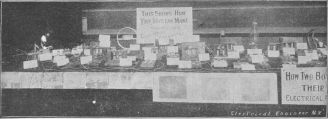
"HOW TWO BOYS MADE THEIR OWN ELECTRICAL APPARATUS"
Gives Proper Designs—Designs for over 150 Things.
Fun With Photography
BOOK AND COMPLETE OUTFIT.
PHOTOGRAPHY is now an educational amusement, and to
many it is the most fascinating of all amusements. The magic of
sunshine, the wonders of nature, and the beauties of art are tools
in the hand of the amateur photographer.
A great many things can be done with this outfit, and it will give
an insight into this most popular pastime.
THE OUTFIT contains everything necessary for making ordinary prints—together
with other articles to be used in various ways. The following things
are included: One Illustrated Book of Instructions, called "Fun With Photography;"
1 Package of Sensitized Paper; 1 Printing Frame, including Glass,
Back, and Spring; 1 Set of Masks for Printing Frame; 1 Set of Patterns for
Fancy Shapes; 1 Book of Negatives (Patent Pending) Ready for Use; 6 Sheets
of Blank Negative Paper; 1 Alphabet Sheet; 1 Package of Card Mounts; 1
Package of Folding Mounts; 1 Package of "Fixo."
CONTENTS OF BOOK:—Chapter I. Introduction.—Photography.—Magic
Sunshine.—The Outfit.—II. General Instructions.—The Sensitized Paper.—How
the Effects are Produced.—Negatives.—Prints.—Printing Frames.—Our
Printing Frame.—Putting Negatives in Printing Frame.—Printing.—Developing.—Fixing.—Drying.—Trimming.—Fancy
Shapes.—Mounting.—III. Negatives
and How to Make Them.—The Paper.—Making Transparent Paper.—Making
the Negatives.—Printed Negatives.—Perforated Negatives.—Negatives
Made from Magazine Pictures.—Ground Glass Negatives.—IV. Nature Photography.—Aids
to Nature Study.—Ferns and Leaves.—Photographing Leaves.—Perforating
Leaves.—Drying Leaves, Ferns, etc., for Negatives.—Flowers.—V.
Miscellaneous Photographs.—Magnetic Photographs.—Combination Pictures.—Initial
Pictures.—Name Plates.—Christmas, Easter and Birthday Cards.
The Book and Complete Outfit will be sent, by mail or
express, Charges Prepaid, upon receipt of 65 Cents, by
THOMAS M. ST. JOHN, 407 W. 51st St., New York.
Fun With Magnetism.
BOOK AND COMPLETE OUTFIT FOR SIXTY-ONE
EXPERIMENTS IN MAGNETISM. . .
Children like to do experiments; and in this way, better than in
any other, a practical knowledge of the elements of magnetism may be
obtained.
These experiments, although arranged to amuse boys and girls,
have been found to be very useful in the class-room to supplement
the ordinary exercises given in text-books of science.
To secure the best possible quality of apparatus, the horseshoe
magnets were made at Sheffield, England, especially for these sets.
They are new and strong. Other parts of the apparatus have also
been selected and made with great care, to adapt them particularly
to these experiments.—From the author's preface.
CONTENTS.—Experiments With Horseshoe Magnet.—Experiments
With Magnetized Needles.—Experiments With Needles, Corks, Wires, Nails,
etc.—Experiments With Bar Magnets.—Experiments With Floating Magnets.—Miscellaneous
Experiments.—Miscellaneous Illustrations showing what very
small children can do with the Apparatus.—Diagrams showing how Magnetized
Needles may be used by little children to make hundreds of pretty designs
upon paper.
AMUSING EXPERIMENTS.—Something for Nervous People to
Try.—The Jersey Mosquito.—The Stampede.—The Runaway.—The Dog-fight.—The
Whirligig.—The Naval Battle.—A String of Fish.—A Magnetic Gun.—A
Top Upsidedown.—A Magnetic Windmill.—A Compass Upsidedown.—The
Magnetic Acrobat.—The Busy Ant-hill.—The Magnetic Bridge.—The Merry-go-Round.—The
Tight-rope Walker.—A Magnetic Motor Using Attractions and
Repulsions.
The Book and Complete Outfit will be sent, Post-paid,
upon receipt of 35 Cents, by
THOMAS M. ST. JOHN, 407 W. 51st St., New York.
FUN WITH SHADOWS
BOOK AND COMPLETE OUTFIT FOR SHADOW PICTURES,
PANTOMIMES, ENTERTAINMENTS, Etc., Etc.
Shadow Making has been a very popular amusement
for several centuries. There is a great deal of fun
and instruction in it, and its long life is due to the fact
that it has always been a source of keen delight to grown
people as well as to children.
In getting material together for this little book, the
author has been greatly aided by English, French and
American authors, some of whom are professional shadowists.
It has been the author's special effort to get the
subject and apparatus into a practical, cheap form for
boys and girls.
THE OUTFIT contains everything necessary for all ordinary shadow
pictures, shadow entertainments, shadow plays, etc. The following articles
are included:
One book of Instructions called "Fun with Shadows"; 1 Shadow Screen;
2 Sheets of Tracing Paper; 1 Coil of Wire for Movable Figures; 1 Cardboard
Frame for Circular Screen; 1 Cardboard House for Stage Scenery; 1 Jointed
Wire Fish-pole and Line; 2 Bent Wire Scenery Holders; 4 Clamps for Screen;
1 Wire Figure Support; 1 Wire for Oar; 2 Spring Wire Table Clamps; 1 Wire
Candlestick Holder; 5 Cardboard Plates containing the following printed figures
that should be cut out with shears: 12 Character Hats; 1 Boat; 1 Oar-blade; 1
Fish; 1 Candlestick; 1 Cardboard Plate containing printed parts for making
movable figures.
CONTENTS OF BOOK: One Hundred Illustrations and Diagrams, including
Ten Full-page Book Plates, together with Six Full-page Plates on Cardboard.
Chapter I. Introduction.—II. General Instructions.—III. Hand Shadows of
Animals.—IV. Hand Shadows of Heads, Character Faces, etc.—V. Moving
Shadow Figures and How to Make Them.—VI. Shadow Pantomimes.—VII.
Miscellaneous Shadows.
The Book and Complete Outfit will be sent, POST-PAID,
upon receipt of 35 cents, by
THOMAS M. ST. JOHN, 407 West 51st St., New York City.
Fun With Electricity.
BOOK AND COMPLETE OUTFIT FOR SIXTY
EXPERIMENTS IN ELECTRICITY. . . .
Enough of the principles of electricity are brought out to make
the book instructive as well as amusing. The experiments are
systematically arranged, and make a fascinating science course. No
chemicals, no danger.
The book is conversational and not at all "schooly," Harry and
Ned being two boys who perform the experiments and talk over the
results as they go along.
"The book reads like a story."—"An appropriate present for a
boy or girl."—"Intelligent parents will appreciate 'Fun With Electricity.'"—"Very
complete, because it contains both book and
apparatus."—"There is no end to the fun which a boy or girl can
have with this fascinating amusement."
THERE IS FUN IN THESE EXPERIMENTS.—Chain Lightning.—An
Electric Whirligig.—The Baby Thunderstorm.—A Race with Electricity.—An
Electric Frog Pond.—An Electric Ding-Dong.—The Magic Finger.—Daddy
Long-Legs.—Jumping Sally.—An Electric Kite.—Very Shocking.—Condensed
Lightning.—An Electric Fly-Trap.—The Merry Pendulum.—An
Electric Ferry-Boat.—A Funny Piece of Paper.—A Joke on the Family Cat.—Electricity
Plays Leap-Frog.—Lightning Goes Over a Bridge.—Electricity
Carries a Lantern.—And 40 Others.
The OUTFIT contains 20 different articles. The BOOK OF INSTRUCTION
measures 5 x 7½ inches, and has 38 illustrations, 55 pages, good paper
and clear type.
The Book, and Complete Outfit will be sent, by mail or
express, Charges Prepaid, upon receipt of 65 Cents, by
THOMAS M. ST. JOHN, 407 W. 51st St., New York.
Fun With Puzzles.
BOOK, KEY, AND COMPLETE OUTFIT FOR
FOUR HUNDRED PUZZLES. . .
The BOOK measures 5 × 7½ inches. It is well printed, nicely
bound, and contains 15 chapters, 80 pages, and 128 illustrations.
The KEY is illustrated. It is bound with the book, and contains
the solution of every puzzle. The COMPLETE OUTFIT
is placed in a neat box with the book. It consists of numbers,
counters, figures, pictures, etc., for doing the puzzles.
CONTENTS: Chapter (1) Secret Writing. (2) Magic Triangles, Squares,
Rectangles, Hexagons, Crosses, Circles, etc. (3) Dropped Letter and Dropped
Word Puzzles. (4) Mixed Proverbs, Prose and Rhyme. (5) Word Diamonds,
Squares, Triangles, and Rhomboids. (6) Numerical Enigmas. (7) Jumbled
Writing and Magic Proverbs. (8) Dissected Puzzles. (9) Hidden and Concealed
Words. (10) Divided Cakes, Pies, Gardens, Farms, etc. (11) Bicycle and Boat
Puzzles. (12) Various Word and Letter Puzzles. (13) Puzzles with Counters.
(14) Combination Puzzles. (15) Mazes and Labyrinths.
"Fun With Puzzles" is a book that every boy and girl should
have. It is amusing, instructive,—educational. It is just the thing
to wake up boys and girls and make them think. They like it,
because it is real fun. This sort of educational play should be given
in every school-room and in every home.
"Fun With Puzzles" will puzzle your friends, as well as yourself;
it contains some real brain-splitters. Over 300 new and original
puzzles are given, besides many that are hundreds of years old.
Secret Writing. Among the many things that "F. W. P." contains,
is the key to secret writing. It shows you a very simple way
to write letters to your friends, and it is simply impossible for others
to read what you have written, unless they know the secret. This,
alone is a valuable thing for any boy or girl who wants to have
some fun.
The Book, Key, and Complete Outfit will be sent, postpaid,
upon receipt of 35 cents, by
THOMAS M. ST. JOHN, 407 West 51st St., New York City.
Fun With Soap-Bubbles.
BOOK AND COMPLETE OUTFIT FOR FANCY
BUBBLES AND FILMS. . . .
THE OUTFIT contains everything necessary for thousands of beautiful
bubbles and films. All highly colored articles have been carefully avoided, as
cheap paints and dyes are positively dangerous in children's mouths. The
outfit contains the following articles:
One Book of Instructions, called "Fun With Soap-Bubbles," 1 Metal Base for
Bubble Stand, 1 Wooden Rod for Bubble Stand, 3 Large Wire Rings for
Bubble Stand, 1 Small Wire Ring, 3 Straws, 1 Package of Prepared Soap, 1
Bubble Pipe, 1 Water-proof Bubble Horn. The complete outfit is placed in
a neat box with the book. (Extra Horns, Soap, etc., furnished at slight cost.)
CONTENTS OF BOOK.—Twenty-one Illustrations.—Introduction.—The
Colors of Soap-bubbles.—The Outfit.—Soap Mixture.—Useful Hints.—Bubbles
Blown With Pipes.—Bubbles Blown With Straws.—Bubbles Blown With
the Horn.—Floating Bubbles.—Baby Bubbles.—Smoke Bubbles.—Bombshell
Bubbles.—Dancing Bubbles.—Bubble Games.—Supported Bubbles.—Bubble
Cluster.—Suspended Bubbles.—Bubble Lamp Chimney.—Bubble Lenses.—Bubble
Basket.—Bubble Bellows.—To Draw a Bubble Through a Ring.—Bubble
Acorn.—Bubble Bottle.—A Bubble Within a Bubble.—Another
Way.—Bubble Shade.—Bubble Hammock.—Wrestling Bubbles.—A Smoking
Bubble.—Soap Films.—The Tennis Racket Film.—Fish-net Film.—Pan-shaped
Film.—Bow and Arrow Film.—Bubble Dome.—Double Bubble Dome.—Pyramid
Bubbles.—Turtle-back Bubbles.—Soap-bubbles and Frictional Electricity.
————————
"There is nothing more beautiful than the airy-fairy soap-bubble with its
everchanging colors."
————————
THE BEST POSSIBLE AMUSEMENT FOR OLD
AND YOUNG.
————————
The Book and Complete Outfit will be sent, POST-PAID,
upon receipt of 35 cents, by
THOMAS M. ST. JOHN, 407 West 51st St., New York City.
The Study of Elementary Electricity and
Magnetism by Experiment.
By THOMAS M. ST. JOHN, Met. E.
The book contains 220 pages and 168 illustrations;
it measures 5 × 7½ in. and is bound in green cloth.
PRICE, POST-PAID, $1.25.
This book is designed as a text-book for amateurs,
students, and others who wish to take up a systematic
course of elementary electrical experiments at home or in
school. Full directions are given for . . . . . . .
Two Hundred Simple Experiments.
The experiments are discussed by the author, after the
student has been led to form his own opinion about the
results obtained and the points learned.
In selecting the apparatus for the experiments in this
book, the author has kept constantly in mind the fact
that the average student will not buy the expensive
pieces usually described in text-books.
The two hundred experiments given can be performed with
simple apparatus; in fact, the student should make at least a part
of his own apparatus, and for the benefit of those who wish to do
this, the author has given, throughout the work, explanations
that will aid in the construction of certain pieces especially
adapted to these experiments. For those who have the author's
"How Two Boys Made Their Own Electrical Apparatus," constant
references have been made to it as the "Apparatus Book,"
as this contains full details for making almost all kinds of simple
apparatus needed in "The Study of Elementary Electricity and
Magnetism by Experiment."
If you wish to take up a systematic course of
experiments—experiments that may be performed
with simple, inexpensive apparatus,—this
book will serve as a valuable guide.
Condensed List of Apparatus
FOR
"The Study of Elementary Electricity
and Magnetism by Experiment."
————————
Number 1. Steel Needles; package of twenty-five.—2. Flat
Cork.—3. Candle.—4-15. Annealed Iron Wires; assorted lengths.—16.
Horseshoe Magnet; best quality; English.—17. Iron Filings.—18.
Parts for Compass.—19, 20. Wire Nails; soft steel.—21,
22. Spring Steel; for bar magnets.—23. Iron Ring.—24.
Sifter; for iron filings.—25. Spring Steel; for flexible magnet.—26,
27. Ebonite Sheets; with special surface.—28. Ebonite Rod.—29.
Ebonite Rod; short.—30. Flannel Cloth.—31. Tissue Paper.—32.
Cotton Thread.—33. Silk Thread.—34. Support Base.—35.
Support Rod.—36. Support Wire.—37. Wire Swing.—38.
Sheet of Glass.—39. Hairpin.—40. Circular Conductor.—41.
Circular Conductor.—42. Electrophorus Cover.—43. Insulating
Table.—44. Insulated Copper Wire.—45. Rubber Band.—46.
Bent Wire Clamps.—47. Cylindrical Conductor.—48. Discharger;
for condenser.—49. Aluminum-Leaf.—50. Wires.
51. Dry Cell.—52. Mercury.—53. Insulated Copper Wire; for
connections.—54. Spring Connectors; two dozen.—55. Parts for
Key.—56. Metal Connecting Plates.—57. Parts for Current
Reverser.—58. Parts for Galvanoscope.—59. Parts for Astatic
Galvanoscope.—60-63. Zinc Strips.—64. Carbon Rod.—65, 66.
Glass Tumblers.—67, 68. Copper Strips.—69. Galvanized Iron
Nail.—70, 71. Wooden Cross-Pieces.—72. Brass Screws; one
dozen.—73. Porous Cup.—74. Zinc Rod.—75. Copper Plate.—76.
Iron Strip.—77, 78. Lead Strips.—79. Parts for Resistance
Coil.—80. Parts for Wheatstone's Bridge.—81. German-Silver
Wire; Size No. 30.—82. German-Silver Wire; No. 28.—83—85.
Plate Binding-Posts.—86. Copper Sulphate.—87. Copper Burs;
one dozen.—88. Combination Rule.—89. Coil of Wire; on spool
for electromagnet.—90. Coil of Wire; on spool for electromagnet.—91.
Carbon Rod.—92, 93. Soft Iron Cores with Screws.—94.
Combined Base and Yoke.—95. Combination Connecting Plates.—96.
Long Iron Core.—97. Round Bar Magnet, 5 × 3/8 in.—98.
Thin Electromagnet.—99. Degree-Card; for galvanoscope.—100.
Scale for Bridge.—101, 102. Soft Iron Cores with Heads.—103,
104. Flat Bar Magnets; these are 6 × ½ × ¼ in.; highly polished
steel; poles marked.—105. Compass.
Illustrated Price Catalogue upon Application.
Electrical Apparatus For Sale
A COMPLETE ELECTRIC AND MAGNETIC
CABINET FOR STUDENTS, SCHOOLS AND
AMATEURS. SIX EXTRAORDINARY OFFERS
This Cabinet of Electrical Experiments contains three main
parts: (A) Apparatus; (B) Text-Book; (C) Apparatus List.
(A) The Apparatus furnished consists of one hundred and five
pieces. Over three hundred separate articles are used in making
up this set. Most of it is ready for use when received. Seven
pieces, however, are not assembled; but the parts can be readily
finished and put together. (Sold, also, all pieces assembled.)
(B) The Text-Book—called "The Study of Elementary Electricity
and Magnetism by Experiment"—gives full directions for
two hundred experiments. (See table of contents, etc.) Price,
post-paid, $1.25.
(C) The Apparatus List is an illustrated book devoted entirely
to this special set of apparatus. Not given with first offer.
THE APPARATUS IS SIMPLE because the designs and
methods of construction have been worked out with
great care.
THE APPARATUS IS PRACTICAL because it has been
designed for real use in "The Study of Elementary
Electricity and Magnetism by Experiment."
THE APPARATUS IS CHEAP because the various parts
are so designed that they can be turned out in quantity
by machinery.
| 1st Offer: Pieces 1 to 50 | $1.00 |
| 2d Offer: Pieces 51 to 105, with part (C) | 3.50 |
| 3d Offer: Pieces 1 to 105, with part (C) | 4.00 |
| 4th Offer: Complete Cabinet, parts (A), (B), (C) | 5.00 |
| 5th Offer: Apparatus only, all pieces assembled | 4.60 |
| 6th Offer: Complete Cabinet, all pieces assembled | 5.60 |
————————
Express charges must be paid by you. Estimates given.
————————
A "Special Catalogue," pertaining to the above, with complete
price-list, will be mailed upon application.
THOMAS M. ST. JOHN, 407 West 51st St., New York City
Fun With Telegraphy
BOOK AND COMPLETE OUTFIT.
TELEGRAPHY is of the greatest importance to all civilized nations, and
upon it depend some of the world's most important enterprises. Every boy
and girl can make practical use of telegraphy in one way or another, and the
time it takes to learn it will be well spent.
THE OUTFIT.—Mr. St. John has worked for a number of years to produce a
telegraph outfit that would be simple, cheap, and practical for those who wish
to make a study of telegraphy. After making and experimenting with nearly
one hundred models, many of which were good, he has at last perfected an
instrument so simple, original, and effective that it is now being made in large
quantities.
The sounders are so designed that they will work properly with any dry cell
of ordinary strength, and this is a great advantage for practice lines. Dry
batteries are cheap and clean, and there are no dangers from acids.
The outfit consists of the following articles, placed in a neat box: One Book
of Instruction, called "Fun With Telegraphy"; one Telegraph "Key"; one
Telegraph "Sounder"; Insulated Copper Wires for connections. The "key"
and "sounder" are mounted, with proper "binding-posts," upon a base of
peculiar construction, which aids in giving a large volume of sound.
CONTENTS OF BOOK.—Telegraphy.—The Outfit.—A Complete Telegraph
Line.—Connections.—The Telegraph Key.—The Sounder.—The Battery.—A
Practice Line.—A Two-instrument Line.—Operation of Line.—The Morse Telegraph
Alphabet.—Aids to Learning Alphabet.—Cautions.—Office Calls.—Receiving
Messages.—Remember.—Extra Parts.
ABOUT BATTERIES.—For those who cannot easily secure batteries, we
will furnish small dry cells, post-paid, at 15 cents each, in order to deliver the
outfits complete to our customers. This price barely covers the total cost to
us, postage alone being 6 cents.
FUN WITH TELEGRAPHY, including Book, Key, Sounder,
and Wire (no battery), post-paid, 50 cents, by
THOMAS M. ST. JOHN, 848 Ninth Ave., New York
Tool Sets for Students
The following tool sets have been arranged especially for those who wish to
make use of the designs contained in "How Two Boys Made Their Own Electrical
Apparatus," "Real Electric Toy-Making for Boys," "Electric Instrument-Making,"
etc. It is very poor economy to waste valuable time and
energy in order to save the cost of a few extra tools.
NOTE.—Save money by buying your tools in sets. We do not pay express
or freight charges at the special prices below.
FOR $1.00.—One Steel Punch; round, knurled head.—One light Hammer;
polished, nickel-plated, varnished handle.—One Iron Clamp; japanned, 2¼ in.—One
Screw-Driver; tempered and polished blade, cherry stained hardwood
handle, nickel ferrule.—One Wrench; retinned skeleton frame, gilt adjusting
wheel.—One Awl; tempered steel point, turned and stained wood handle, with
ferrule.—One Vise; full malleable, nicely retinned, 1-3/8 in. jaws, full malleable
screw with spring.—One pair Steel Pliers; 4 in. long, polished tool steel, unbreakable,
best grooved jaw.—One pair of Shears; carbonized steel blades,
hardened edge, nickel-plated, heavy brass nut and bolt.—One File; triangular,
good steel.—One File Handle; good wood, brass ferrule.—One Foot Rule;
varnished wood, has English and metric system.—One Soldering Set; contains
soldering iron, solder, resin, sal ammoniac, and directions. One Center-Punch;
finely tempered steel.
FOR $2.00.—All that is contained in the $1.00 set of tools, together with the
following: One pair of Tinner's Shears; cut, 2¾ in., cast iron, hardened, suitable
for cutting thin metal.—One Hollow Handle Tool Set; very useful; polished
handle holds 10 tools, gimlet, brad-awls, chisel, etc.—One Try Square;
6-in. blue steel blade, marked in 1/8s, strongly riveted.—One 1-lb. Hammer;
full size, polished head, wedged varnished hardwood handle.—One Hack Saw;
steel frame, 9½-in. polished steel blade, black enamel handle; very useful.
FOR $3.50.—Two Steel Punches; different sizes, one solid round, knurled
head, polished; the other, point and head brightly polished, full nickel, center
part knurled.—One Light Hammer; polished and nickel plated, varnished
handle.—One regular Machinist's Hammer; ball peen, solid cast steel, with
varnished hardwood handle; a superior article.—Two Iron Clamps; one opens
2¼ in., the other 3 in., japanned.—One Screw-Driver; tempered and polished
blade, firmly set in cherry stained hardwood handle with nickel ferrule.—One
Wrench; retinned, skeleton frame, gilt adjusting wheel.—One Awl; tempered
steel blade, ground to point, firmly set in turned and stained handle with ferrule.—One
Steel Vise; 2¼-in., jaws, steel screw, bright polished jaws and handle;
a good strong vise.—One pair of Steel Pliers; 6 in. long, bright steel, flat
nose, 2 wire-cutters, practically unbreakable.—One pair of Shears; carbonized
steel blades, hardened edges, nickel plated, heavy brass nut and bolt.—One
File; triangular and of good steel.—One File Handle; good wood, with brass
ferrule.—One Foot Rule; varnished wood, has both the English and metric systems.—One
Soldering Set; contains soldering iron, solder, resin, sal ammoniac,
and directions; a very handy article.—One Center-Punch; finely tempered
steel.—One pair of Tinner's Shears; these are best grade, inlaid steel cutting
edges, polished and tempered, japanned handles; thoroughly reliable.—One
Hollow Handle Tool Set; very useful; the polished handle holds 10 tools, gimlet,
chisel, brad-awl, etc.—One Try Square; 6-in. blue steel blade, marked both
sides in 1/8s, strongly riveted with brass rivets.—One Hack Saw; steel frame,
9½-in. polished steel blade, black enamel handle; very useful for sawing small
pieces of wood.
FOR $5.00 will be included everything in the $3.50 offer, and the following:
One Glue-Pot; medium size, with brush and best wood glue; inside pot
has hinge cover.—One Ratchet Screw-Driver; great improvement over ordinary
screw-drivers; well made and useful.—One Hand Drill; frame malleable iron;
hollow screw top holding 6 drills; bores from 1-16 to 3-16-in. holes; solid gear
teeth; 3-jawed nickel plated chuck; a superior tool, and almost a necessity.
GIVE THE BOY A SET OF TOOLS
————————
THOMAS M. ST. JOHN, 848 Ninth Ave., New York
REAL ELECTRIC TOY-MAKING
FOR BOYS
By THOMAS M. ST. JOHN, Met. E.
This book contains 140 pages and over one hundred
original drawings, diagrams, and full-page plates.
It measures 5 x 7½ in., and is bound in cloth.
Price, post-paid, $1.00
CONTENTS: Chapter I. Toys Operated by Permanent
Magnets.—II. Toys Operated by Static Electricity.—III. Making
Electromagnets for Toys.—IV. Electric Batteries.—V. Circuits
and Connections.—VI. Toys Operated by Electromagnets.
VII. Making Solenoids for Toys.—VIII. Toys Operated by
Solenoids.—IX. Electric Motors.—X. Power, Speed, and Gearing.—XI.
Shafting and Bearings.—XII. Pulleys and Winding-Drums.—XIII.
Belts and Cables.—XIV. Toys Operated by
Electric Motors.—XV. Miscellaneous Electric Toys.—XVI. Tools.—XVII.
Materials.—XVIII. Various Aids to Construction.
While planning this book, Mr. St. John definitely decided that
he would not fill it with descriptions of complicated, machine-made
instruments and apparatus, under the name of "Toy-Making,"
for it is just as impossible for most boys to get the
parts for such things as it is for them to do the required machine
work even after they have the raw materials.
Great care has been taken in designing the toys which are
described in this book, in order to make them so simple that
any boy of average ability can construct them out of ordinary
materials. The author can personally guarantee the designs,
for there is no guesswork about them. Every toy was made,
changed, and experimented with until it was as simple as possible;
the drawings were then made from the perfected models.
As the result of the enormous amount of work and experimenting
which were required to originate and perfect so many new
models, the author feels that this book may be truly called
"Real Electric Toy-Making for Boys."
Every Boy Should Make Electrical Toys.
The Electric Shooting Game
A MOST ORIGINAL AND FASCINATING GAME
PATENT APPLIED FOR AND COPYRIGHTED
SHOOTING BY ELECTRICITY
————————
The Electric Shooting Game is an entirely new
idea, and one that brings into use that most mysterious
something—electricity. The game is so simple that small
children can play it, and as there are no batteries, acids,
or liquids of any kind, there is absolutely no danger.
The electricity is of such a nature that it is perfectly
harmless—but very active.
The "game-preserve" is neat and attractive, being
printed in colors, and the birds and animals are well
worth hunting. Each has a fixed value—and some of
them must not be shot at all—so there is ample opportunity
for a display of skill in bringing down those which
count most.
"Electric bullets" are actually shot from the "electric
gun" by electricity. This instructive game will furnish
a vast amount of amusement to all.
The "Game-Preserve,"—the "Electric Gun,"—the "Shooting-Box,"—the
"Electric Bullets,"—in fact, the entire
electrical outfit, together with complete illustrated directions,
will be sent in a neat box, Post-Paid, upon receipt
of 50 cents, by
THOMAS M. ST. JOHN, 848 Ninth Ave., New York
Transcriber's Note:
Obvious punctuation errors were corrected.
Page 46, "turnnd" changed to "turned" (be turned to 1)
Page 66, word "a" added to text (in a glass jar)
 EDITION